window.__IS_SSR__=true
window.__INITIAL_STATE__={
"attachmentsReducer": {
"audio_0": {
"type": "attachments",
"id": "audio_0",
"imgSizes": {
"kqedFullSize": {
"file": "https://ww2.kqed.org/news/wp-content/themes/KQED-unified/img/audio_bgs/background0.jpg"
}
}
},
"audio_1": {
"type": "attachments",
"id": "audio_1",
"imgSizes": {
"kqedFullSize": {
"file": "https://ww2.kqed.org/news/wp-content/themes/KQED-unified/img/audio_bgs/background1.jpg"
}
}
},
"audio_2": {
"type": "attachments",
"id": "audio_2",
"imgSizes": {
"kqedFullSize": {
"file": "https://ww2.kqed.org/news/wp-content/themes/KQED-unified/img/audio_bgs/background2.jpg"
}
}
},
"audio_3": {
"type": "attachments",
"id": "audio_3",
"imgSizes": {
"kqedFullSize": {
"file": "https://ww2.kqed.org/news/wp-content/themes/KQED-unified/img/audio_bgs/background3.jpg"
}
}
},
"audio_4": {
"type": "attachments",
"id": "audio_4",
"imgSizes": {
"kqedFullSize": {
"file": "https://ww2.kqed.org/news/wp-content/themes/KQED-unified/img/audio_bgs/background4.jpg"
}
}
},
"placeholder": {
"type": "attachments",
"id": "placeholder",
"imgSizes": {
"thumbnail": {
"file": "https://cdn.kqed.org/wp-content/uploads/2024/12/KQED-Default-Image-816638274-2000x1333-1-160x107.jpg",
"width": 160,
"height": 107,
"mimeType": "image/jpeg"
},
"medium": {
"file": "https://cdn.kqed.org/wp-content/uploads/2024/12/KQED-Default-Image-816638274-2000x1333-1-800x533.jpg",
"width": 800,
"height": 533,
"mimeType": "image/jpeg"
},
"medium_large": {
"file": "https://cdn.kqed.org/wp-content/uploads/2024/12/KQED-Default-Image-816638274-2000x1333-1-768x512.jpg",
"width": 768,
"height": 512,
"mimeType": "image/jpeg"
},
"large": {
"file": "https://cdn.kqed.org/wp-content/uploads/2024/12/KQED-Default-Image-816638274-2000x1333-1-1020x680.jpg",
"width": 1020,
"height": 680,
"mimeType": "image/jpeg"
},
"1536x1536": {
"file": "https://cdn.kqed.org/wp-content/uploads/2024/12/KQED-Default-Image-816638274-2000x1333-1-1536x1024.jpg",
"width": 1536,
"height": 1024,
"mimeType": "image/jpeg"
},
"fd-lrg": {
"file": "https://cdn.kqed.org/wp-content/uploads/2024/12/KQED-Default-Image-816638274-2000x1333-1-1536x1024.jpg",
"width": 1536,
"height": 1024,
"mimeType": "image/jpeg"
},
"fd-med": {
"file": "https://cdn.kqed.org/wp-content/uploads/2024/12/KQED-Default-Image-816638274-2000x1333-1-1020x680.jpg",
"width": 1020,
"height": 680,
"mimeType": "image/jpeg"
},
"fd-sm": {
"file": "https://cdn.kqed.org/wp-content/uploads/2024/12/KQED-Default-Image-816638274-2000x1333-1-800x533.jpg",
"width": 800,
"height": 533,
"mimeType": "image/jpeg"
},
"post-thumbnail": {
"file": "https://cdn.kqed.org/wp-content/uploads/2024/12/KQED-Default-Image-816638274-2000x1333-1-672x372.jpg",
"width": 672,
"height": 372,
"mimeType": "image/jpeg"
},
"twentyfourteen-full-width": {
"file": "https://cdn.kqed.org/wp-content/uploads/2024/12/KQED-Default-Image-816638274-2000x1333-1-1038x576.jpg",
"width": 1038,
"height": 576,
"mimeType": "image/jpeg"
},
"xxsmall": {
"file": "https://cdn.kqed.org/wp-content/uploads/2024/12/KQED-Default-Image-816638274-2000x1333-1-160x107.jpg",
"width": 160,
"height": 107,
"mimeType": "image/jpeg"
},
"xsmall": {
"file": "https://cdn.kqed.org/wp-content/uploads/2024/12/KQED-Default-Image-816638274-2000x1333-1-672x372.jpg",
"width": 672,
"height": 372,
"mimeType": "image/jpeg"
},
"small": {
"file": "https://cdn.kqed.org/wp-content/uploads/2024/12/KQED-Default-Image-816638274-2000x1333-1-672x372.jpg",
"width": 672,
"height": 372,
"mimeType": "image/jpeg"
},
"xlarge": {
"file": "https://cdn.kqed.org/wp-content/uploads/2024/12/KQED-Default-Image-816638274-2000x1333-1-1020x680.jpg",
"width": 1020,
"height": 680,
"mimeType": "image/jpeg"
},
"full-width": {
"file": "https://cdn.kqed.org/wp-content/uploads/2024/12/KQED-Default-Image-816638274-2000x1333-1-1920x1280.jpg",
"width": 1920,
"height": 1280,
"mimeType": "image/jpeg"
},
"guest-author-32": {
"file": "https://cdn.kqed.org/wp-content/uploads/2025/01/KQED-Default-Image-816638274-1333x1333-1-160x160.jpg",
"width": 32,
"height": 32,
"mimeType": "image/jpeg"
},
"guest-author-50": {
"file": "https://cdn.kqed.org/wp-content/uploads/2025/01/KQED-Default-Image-816638274-1333x1333-1-160x160.jpg",
"width": 50,
"height": 50,
"mimeType": "image/jpeg"
},
"guest-author-64": {
"file": "https://cdn.kqed.org/wp-content/uploads/2025/01/KQED-Default-Image-816638274-1333x1333-1-160x160.jpg",
"width": 64,
"height": 64,
"mimeType": "image/jpeg"
},
"guest-author-96": {
"file": "https://cdn.kqed.org/wp-content/uploads/2025/01/KQED-Default-Image-816638274-1333x1333-1-160x160.jpg",
"width": 96,
"height": 96,
"mimeType": "image/jpeg"
},
"guest-author-128": {
"file": "https://cdn.kqed.org/wp-content/uploads/2025/01/KQED-Default-Image-816638274-1333x1333-1-160x160.jpg",
"width": 128,
"height": 128,
"mimeType": "image/jpeg"
},
"detail": {
"file": "https://cdn.kqed.org/wp-content/uploads/2025/01/KQED-Default-Image-816638274-1333x1333-1-160x160.jpg",
"width": 160,
"height": 160,
"mimeType": "image/jpeg"
},
"kqedFullSize": {
"file": "https://cdn.kqed.org/wp-content/uploads/2024/12/KQED-Default-Image-816638274-2000x1333-1.jpg",
"width": 2000,
"height": 1333
}
}
},
"arts_13970285": {
"type": "attachments",
"id": "arts_13970285",
"meta": {
"index": "attachments_1716263798",
"site": "arts",
"id": "13970285",
"found": true
},
"title": "unassimilable bianca mabute-louie",
"publishDate": 1736889176,
"status": "inherit",
"parent": 13970282,
"modified": 1736891097,
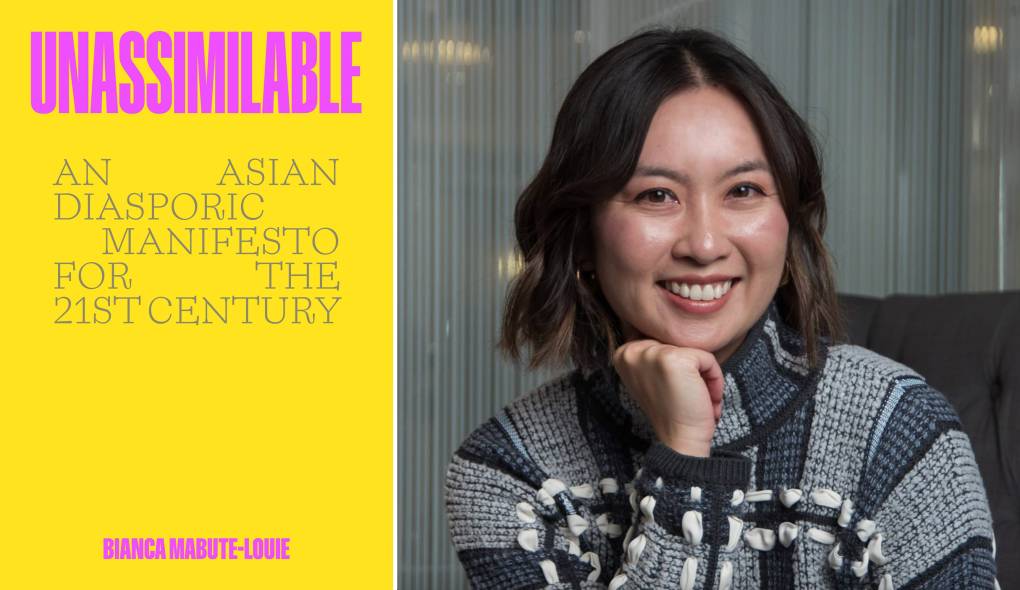
"caption": "In 'Unassimilable,' sociologist Bianca Mabute-Louie encourages readers to rethink the idea that immigrants should seek validation from predominantly white institutions. ",
"credit": "Left: Harper Collins, right: courtesy of the author",
"altTag": "A composite image. On the left, a bright yellow book cover with pink text that reads 'Unassimilable.' On the right, a photo of the author smiling.",
"description": null,
"imgSizes": {
"medium": {
"file": "https://cdn.kqed.org/wp-content/uploads/sites/2/2025/01/unassimilable-bianca-mabute-louie-800x463.jpg",
"width": 800,
"height": 463,
"mimeType": "image/jpeg"
},
"large": {
"file": "https://cdn.kqed.org/wp-content/uploads/sites/2/2025/01/unassimilable-bianca-mabute-louie-1020x590.jpg",
"width": 1020,
"height": 590,
"mimeType": "image/jpeg"
},
"thumbnail": {
"file": "https://cdn.kqed.org/wp-content/uploads/sites/2/2025/01/unassimilable-bianca-mabute-louie-160x93.jpg",
"width": 160,
"height": 93,
"mimeType": "image/jpeg"
},
"medium_large": {
"file": "https://cdn.kqed.org/wp-content/uploads/sites/2/2025/01/unassimilable-bianca-mabute-louie-768x444.jpg",
"width": 768,
"height": 444,
"mimeType": "image/jpeg"
},
"1536x1536": {
"file": "https://cdn.kqed.org/wp-content/uploads/sites/2/2025/01/unassimilable-bianca-mabute-louie-1536x888.jpg",
"width": 1536,
"height": 888,
"mimeType": "image/jpeg"
},
"2048x2048": {
"file": "https://cdn.kqed.org/wp-content/uploads/sites/2/2025/01/unassimilable-bianca-mabute-louie-2048x1185.jpg",
"width": 2048,
"height": 1185,
"mimeType": "image/jpeg"
},
"post-thumbnail": {
"file": "https://cdn.kqed.org/wp-content/uploads/sites/2/2025/01/unassimilable-bianca-mabute-louie-672x372.jpg",
"width": 672,
"height": 372,
"mimeType": "image/jpeg"
},
"twentyfourteen-full-width": {
"file": "https://cdn.kqed.org/wp-content/uploads/sites/2/2025/01/unassimilable-bianca-mabute-louie-1038x576.jpg",
"width": 1038,
"height": 576,
"mimeType": "image/jpeg"
},
"full-width": {
"file": "https://cdn.kqed.org/wp-content/uploads/sites/2/2025/01/unassimilable-bianca-mabute-louie-1920x1111.jpg",
"width": 1920,
"height": 1111,
"mimeType": "image/jpeg"
},
"kqedFullSize": {
"file": "https://cdn.kqed.org/wp-content/uploads/sites/2/2025/01/unassimilable-bianca-mabute-louie.jpg",
"width": 2429,
"height": 1405
}
},
"isLoading": false,
"fetchFailed": false
},
"arts_13969684": {
"type": "attachments",
"id": "arts_13969684",
"meta": {
"index": "attachments_1716263798",
"site": "arts",
"id": "13969684",
"found": true
},
"title": "241125-UndercoverCrabInfluencer-35-BL",
"publishDate": 1734638957,
"status": "inherit",
"parent": 0,
"modified": 1734641094,
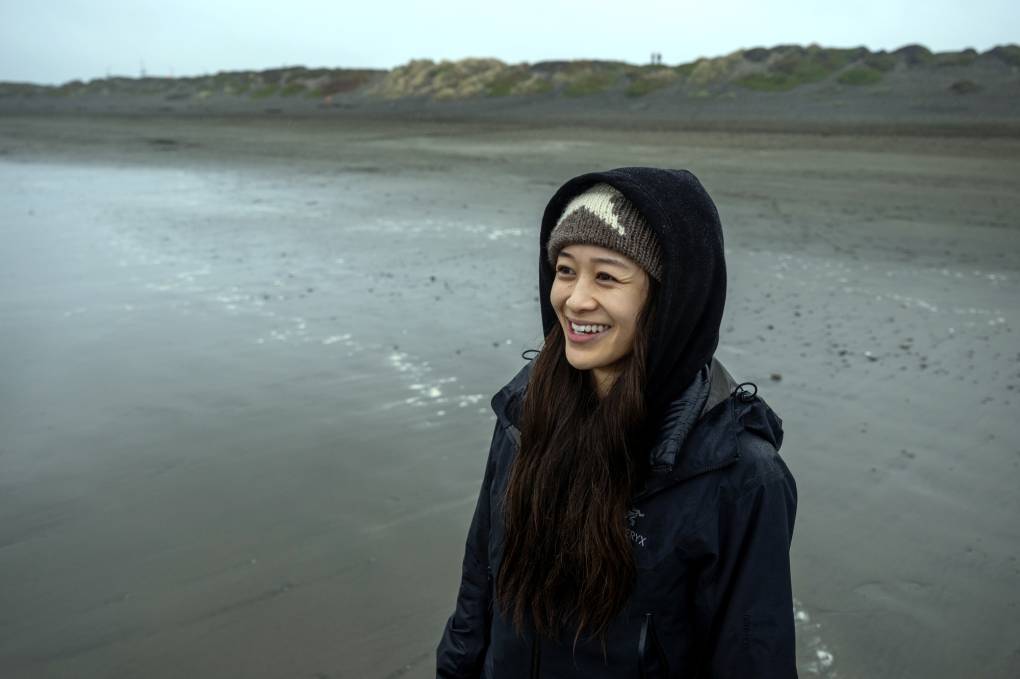
"caption": "Kaitlyn Bui spends her days fishing for Dungeness crab at Ocean Beach in San Francisco. A Sunset District resident, Bui started posting fishing videos in 2023 and now has a large following on TikTok and Instagram.",
"credit": "Beth LaBerge/KQED",
"altTag": "A woman on the beach bundled up in a raincoat and winter beanie smiles as she gazes out toward the sea.",
"description": null,
"imgSizes": {
"medium": {
"file": "https://cdn.kqed.org/wp-content/uploads/sites/2/2024/12/241125-UndercoverCrabInfluencer-35-BL-800x533.jpg",
"width": 800,
"height": 533,
"mimeType": "image/jpeg"
},
"large": {
"file": "https://cdn.kqed.org/wp-content/uploads/sites/2/2024/12/241125-UndercoverCrabInfluencer-35-BL-1020x679.jpg",
"width": 1020,
"height": 679,
"mimeType": "image/jpeg"
},
"thumbnail": {
"file": "https://cdn.kqed.org/wp-content/uploads/sites/2/2024/12/241125-UndercoverCrabInfluencer-35-BL-160x107.jpg",
"width": 160,
"height": 107,
"mimeType": "image/jpeg"
},
"medium_large": {
"file": "https://cdn.kqed.org/wp-content/uploads/sites/2/2024/12/241125-UndercoverCrabInfluencer-35-BL-768x511.jpg",
"width": 768,
"height": 511,
"mimeType": "image/jpeg"
},
"1536x1536": {
"file": "https://cdn.kqed.org/wp-content/uploads/sites/2/2024/12/241125-UndercoverCrabInfluencer-35-BL-1536x1023.jpg",
"width": 1536,
"height": 1023,
"mimeType": "image/jpeg"
},
"post-thumbnail": {
"file": "https://cdn.kqed.org/wp-content/uploads/sites/2/2024/12/241125-UndercoverCrabInfluencer-35-BL-672x372.jpg",
"width": 672,
"height": 372,
"mimeType": "image/jpeg"
},
"twentyfourteen-full-width": {
"file": "https://cdn.kqed.org/wp-content/uploads/sites/2/2024/12/241125-UndercoverCrabInfluencer-35-BL-1038x576.jpg",
"width": 1038,
"height": 576,
"mimeType": "image/jpeg"
},
"full-width": {
"file": "https://cdn.kqed.org/wp-content/uploads/sites/2/2024/12/241125-UndercoverCrabInfluencer-35-BL-1920x1279.jpg",
"width": 1920,
"height": 1279,
"mimeType": "image/jpeg"
},
"kqedFullSize": {
"file": "https://cdn.kqed.org/wp-content/uploads/sites/2/2024/12/241125-UndercoverCrabInfluencer-35-BL.jpg",
"width": 2000,
"height": 1332
}
},
"isLoading": false,
"fetchFailed": false
},
"arts_13966428": {
"type": "attachments",
"id": "arts_13966428",
"meta": {
"index": "attachments_1716263798",
"site": "arts",
"id": "13966428",
"found": true
},
"title": "giant robot",
"publishDate": 1728594462,
"status": "inherit",
"parent": 13966390,
"modified": 1728594536,
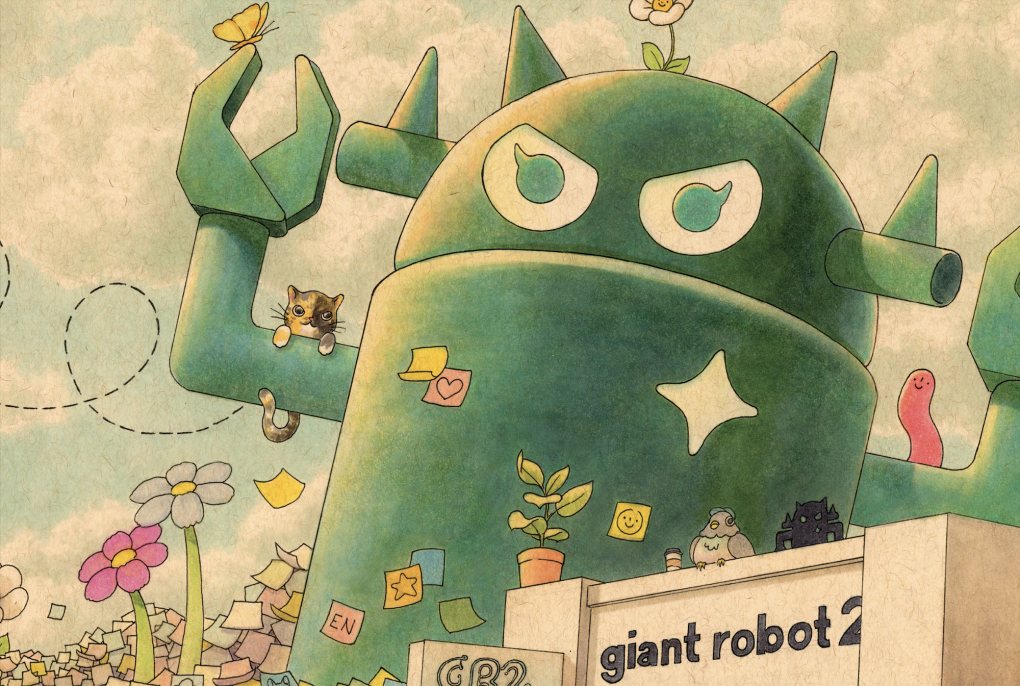
"caption": "‘Giant Robot: Thirty Years of Defining Asian American Pop Culture.’",
"credit": "Robot Factory Incorporated/Drawn & Quarterly",
"altTag": "An illustration of an angry robot rampaging through a street.",
"description": null,
"imgSizes": {
"medium": {
"file": "https://cdn.kqed.org/wp-content/uploads/sites/2/2024/10/giant-robot-800x538.png",
"width": 800,
"height": 538,
"mimeType": "image/png"
},
"large": {
"file": "https://cdn.kqed.org/wp-content/uploads/sites/2/2024/10/giant-robot-1020x686.png",
"width": 1020,
"height": 686,
"mimeType": "image/png"
},
"thumbnail": {
"file": "https://cdn.kqed.org/wp-content/uploads/sites/2/2024/10/giant-robot-160x108.png",
"width": 160,
"height": 108,
"mimeType": "image/png"
},
"medium_large": {
"file": "https://cdn.kqed.org/wp-content/uploads/sites/2/2024/10/giant-robot-768x516.png",
"width": 768,
"height": 516,
"mimeType": "image/png"
},
"1536x1536": {
"file": "https://cdn.kqed.org/wp-content/uploads/sites/2/2024/10/giant-robot-1536x1033.png",
"width": 1536,
"height": 1033,
"mimeType": "image/png"
},
"post-thumbnail": {
"file": "https://cdn.kqed.org/wp-content/uploads/sites/2/2024/10/giant-robot-672x372.png",
"width": 672,
"height": 372,
"mimeType": "image/png"
},
"twentyfourteen-full-width": {
"file": "https://cdn.kqed.org/wp-content/uploads/sites/2/2024/10/giant-robot-1038x576.png",
"width": 1038,
"height": 576,
"mimeType": "image/png"
},
"full-width": {
"file": "https://cdn.kqed.org/wp-content/uploads/sites/2/2024/10/giant-robot-1920x1291.png",
"width": 1920,
"height": 1291,
"mimeType": "image/png"
},
"kqedFullSize": {
"file": "https://cdn.kqed.org/wp-content/uploads/sites/2/2024/10/giant-robot.png",
"width": 2000,
"height": 1345
}
},
"isLoading": false,
"fetchFailed": false
},
"arts_13966498": {
"type": "attachments",
"id": "arts_13966498",
"meta": {
"index": "attachments_1716263798",
"site": "arts",
"id": "13966498",
"found": true
},
"title": "Joyce Tang_photo credit Kevin Kwok",
"publishDate": 1728676992,
"status": "inherit",
"parent": 13966489,
"modified": 1728677330,
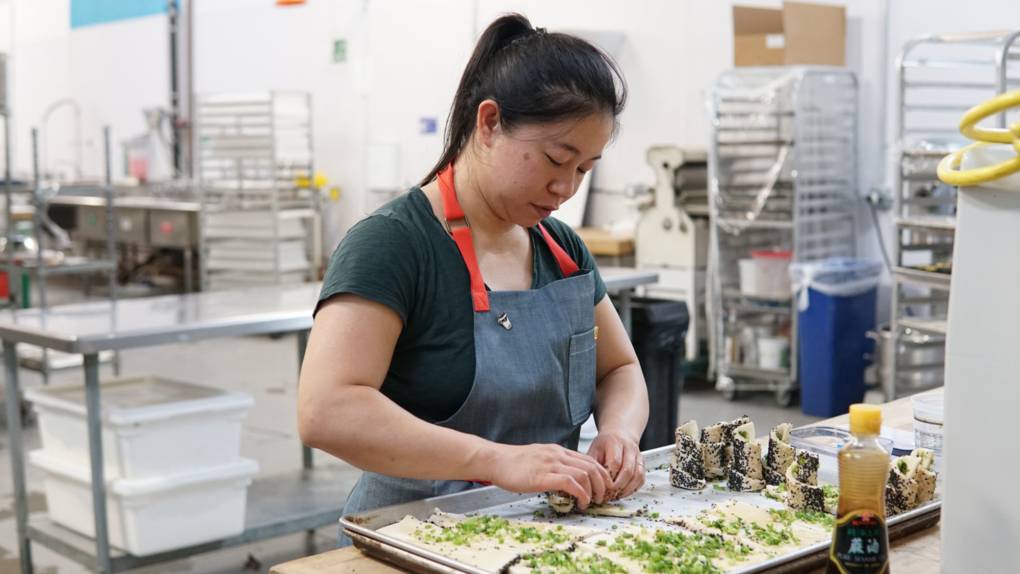
"caption": "Bake Sum pastry chef Joyce Tang prepares green onion croissants, one of her signature items. Tang will be one of the six Asian American chefs featured in a new workshop series hosted by Edge on the Square in San Francisco Chinatown.",
"credit": "Kevin Kwok",
"altTag": "In a bakery kitchen, an Asian woman rolls up pieces of dough covered with chopped scallions.",
"description": null,
"imgSizes": {
"medium": {
"file": "https://cdn.kqed.org/wp-content/uploads/sites/2/2024/10/Joyce-Tang_photo-credit-Kevin-Kwok-800x450.jpg",
"width": 800,
"height": 450,
"mimeType": "image/jpeg"
},
"large": {
"file": "https://cdn.kqed.org/wp-content/uploads/sites/2/2024/10/Joyce-Tang_photo-credit-Kevin-Kwok-1020x574.jpg",
"width": 1020,
"height": 574,
"mimeType": "image/jpeg"
},
"thumbnail": {
"file": "https://cdn.kqed.org/wp-content/uploads/sites/2/2024/10/Joyce-Tang_photo-credit-Kevin-Kwok-160x90.jpg",
"width": 160,
"height": 90,
"mimeType": "image/jpeg"
},
"medium_large": {
"file": "https://cdn.kqed.org/wp-content/uploads/sites/2/2024/10/Joyce-Tang_photo-credit-Kevin-Kwok-768x432.jpg",
"width": 768,
"height": 432,
"mimeType": "image/jpeg"
},
"1536x1536": {
"file": "https://cdn.kqed.org/wp-content/uploads/sites/2/2024/10/Joyce-Tang_photo-credit-Kevin-Kwok-1536x864.jpg",
"width": 1536,
"height": 864,
"mimeType": "image/jpeg"
},
"post-thumbnail": {
"file": "https://cdn.kqed.org/wp-content/uploads/sites/2/2024/10/Joyce-Tang_photo-credit-Kevin-Kwok-672x372.jpg",
"width": 672,
"height": 372,
"mimeType": "image/jpeg"
},
"twentyfourteen-full-width": {
"file": "https://cdn.kqed.org/wp-content/uploads/sites/2/2024/10/Joyce-Tang_photo-credit-Kevin-Kwok-1038x576.jpg",
"width": 1038,
"height": 576,
"mimeType": "image/jpeg"
},
"full-width": {
"file": "https://cdn.kqed.org/wp-content/uploads/sites/2/2024/10/Joyce-Tang_photo-credit-Kevin-Kwok-1920x1080.jpg",
"width": 1920,
"height": 1080,
"mimeType": "image/jpeg"
},
"kqedFullSize": {
"file": "https://cdn.kqed.org/wp-content/uploads/sites/2/2024/10/Joyce-Tang_photo-credit-Kevin-Kwok.jpg",
"width": 2000,
"height": 1125
}
},
"isLoading": false,
"fetchFailed": false
},
"arts_13965151": {
"type": "attachments",
"id": "arts_13965151",
"meta": {
"index": "attachments_1716263798",
"site": "arts",
"id": "13965151",
"found": true
},
"title": "Japantown.ThriftShop.MAIN",
"publishDate": 1726781657,
"status": "inherit",
"parent": 13964383,
"modified": 1727218697,
"caption": "Classic Loot is a specialty clothing shop in San Jose's Japantown. From left, employees Prizzy Bosuego, Ayla Duong, owner Tam Tran and Annie Ng pose for a photo inside the store, showcasing a side of Silicon Valley fashion that is far removed the region's overrepresented tech sensibilities.",
"credit": "Gina Castro/KQED",
"altTag": "Four women pose in a store with pink walls and racks of clothing",
"description": null,
"imgSizes": {
"medium": {
"file": "https://cdn.kqed.org/wp-content/uploads/sites/2/2024/09/Japantown.ThriftShop.MAIN_-800x530.jpg",
"width": 800,
"height": 530,
"mimeType": "image/jpeg"
},
"large": {
"file": "https://cdn.kqed.org/wp-content/uploads/sites/2/2024/09/Japantown.ThriftShop.MAIN_-1020x675.jpg",
"width": 1020,
"height": 675,
"mimeType": "image/jpeg"
},
"thumbnail": {
"file": "https://cdn.kqed.org/wp-content/uploads/sites/2/2024/09/Japantown.ThriftShop.MAIN_-160x106.jpg",
"width": 160,
"height": 106,
"mimeType": "image/jpeg"
},
"medium_large": {
"file": "https://cdn.kqed.org/wp-content/uploads/sites/2/2024/09/Japantown.ThriftShop.MAIN_-768x508.jpg",
"width": 768,
"height": 508,
"mimeType": "image/jpeg"
},
"1536x1536": {
"file": "https://cdn.kqed.org/wp-content/uploads/sites/2/2024/09/Japantown.ThriftShop.MAIN_-1536x1017.jpg",
"width": 1536,
"height": 1017,
"mimeType": "image/jpeg"
},
"post-thumbnail": {
"file": "https://cdn.kqed.org/wp-content/uploads/sites/2/2024/09/Japantown.ThriftShop.MAIN_-672x372.jpg",
"width": 672,
"height": 372,
"mimeType": "image/jpeg"
},
"twentyfourteen-full-width": {
"file": "https://cdn.kqed.org/wp-content/uploads/sites/2/2024/09/Japantown.ThriftShop.MAIN_-1038x576.jpg",
"width": 1038,
"height": 576,
"mimeType": "image/jpeg"
},
"full-width": {
"file": "https://cdn.kqed.org/wp-content/uploads/sites/2/2024/09/Japantown.ThriftShop.MAIN_-1920x1271.jpg",
"width": 1920,
"height": 1271,
"mimeType": "image/jpeg"
},
"kqedFullSize": {
"file": "https://cdn.kqed.org/wp-content/uploads/sites/2/2024/09/Japantown.ThriftShop.MAIN_.jpg",
"width": 2000,
"height": 1324
}
},
"isLoading": false,
"fetchFailed": false
},
"arts_13963613": {
"type": "attachments",
"id": "arts_13963613",
"meta": {
"index": "attachments_1716263798",
"site": "arts",
"id": "13963613",
"found": true
},
"title": "four kings - hella hungry - featured - juliana yamada",
"publishDate": 1725403765,
"status": "inherit",
"parent": 0,
"modified": 1725490019,
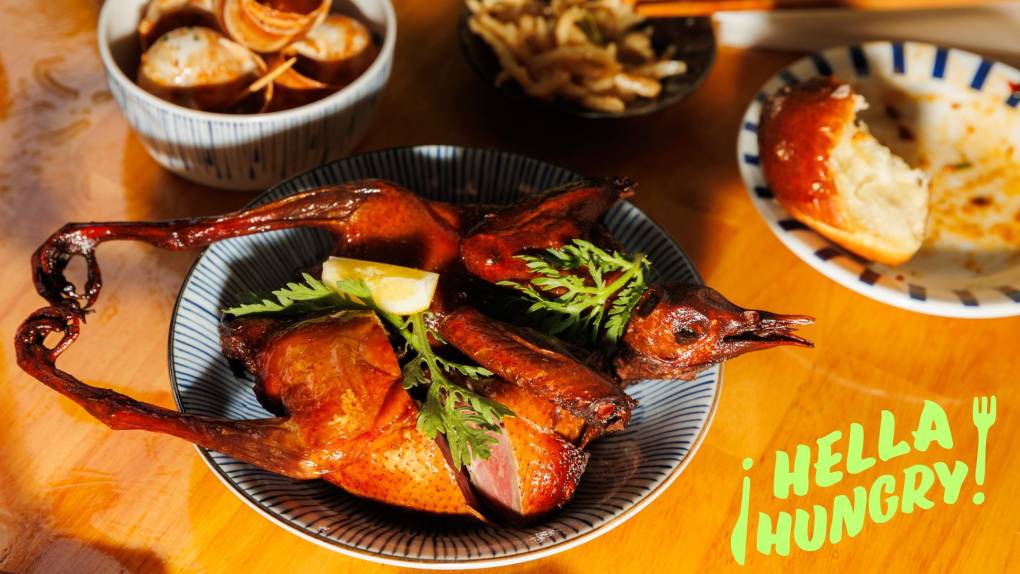
"caption": "The fried squab at Four Kings in San Francisco Chinatown on July 29, 2024. The dish, which takes a week to prepare and is only available in limited quantities, is one of the restaurant's biggest draws.",
"credit": "Juliana Yamada for KQED",
"altTag": "Spread of Cantonese dishes including whole fried squab with head and feet attached.",
"description": null,
"imgSizes": {
"medium": {
"file": "https://cdn.kqed.org/wp-content/uploads/sites/2/2024/09/four-kings-hella-hungry-featured-juliana-yamada-800x450.jpg",
"width": 800,
"height": 450,
"mimeType": "image/jpeg"
},
"large": {
"file": "https://cdn.kqed.org/wp-content/uploads/sites/2/2024/09/four-kings-hella-hungry-featured-juliana-yamada-1020x574.jpg",
"width": 1020,
"height": 574,
"mimeType": "image/jpeg"
},
"thumbnail": {
"file": "https://cdn.kqed.org/wp-content/uploads/sites/2/2024/09/four-kings-hella-hungry-featured-juliana-yamada-160x90.jpg",
"width": 160,
"height": 90,
"mimeType": "image/jpeg"
},
"medium_large": {
"file": "https://cdn.kqed.org/wp-content/uploads/sites/2/2024/09/four-kings-hella-hungry-featured-juliana-yamada-768x432.jpg",
"width": 768,
"height": 432,
"mimeType": "image/jpeg"
},
"1536x1536": {
"file": "https://cdn.kqed.org/wp-content/uploads/sites/2/2024/09/four-kings-hella-hungry-featured-juliana-yamada-1536x864.jpg",
"width": 1536,
"height": 864,
"mimeType": "image/jpeg"
},
"post-thumbnail": {
"file": "https://cdn.kqed.org/wp-content/uploads/sites/2/2024/09/four-kings-hella-hungry-featured-juliana-yamada-672x372.jpg",
"width": 672,
"height": 372,
"mimeType": "image/jpeg"
},
"twentyfourteen-full-width": {
"file": "https://cdn.kqed.org/wp-content/uploads/sites/2/2024/09/four-kings-hella-hungry-featured-juliana-yamada-1038x576.jpg",
"width": 1038,
"height": 576,
"mimeType": "image/jpeg"
},
"kqedFullSize": {
"file": "https://cdn.kqed.org/wp-content/uploads/sites/2/2024/09/four-kings-hella-hungry-featured-juliana-yamada.jpg",
"width": 1920,
"height": 1080
}
},
"isLoading": false,
"fetchFailed": false
},
"arts_13962762": {
"type": "attachments",
"id": "arts_13962762",
"meta": {
"index": "attachments_1716263798",
"site": "arts",
"id": "13962762",
"found": true
},
"title": "Viridian1_crop",
"publishDate": 1723768577,
"status": "inherit",
"parent": 13962759,
"modified": 1723768749,
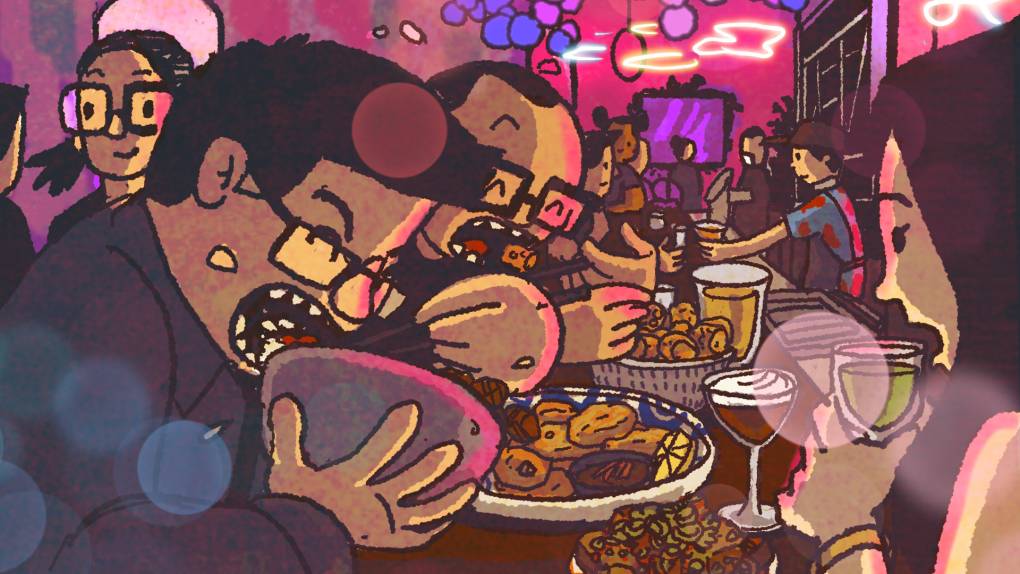
"caption": "At Viridian, we filled every available inch of our assigned counter space with plates and bowls piled high with food. The Oakland bar is best known for its cocktails.",
"credit": "Thien Pham",
"altTag": "Illustration: Two men devour a spread of food while seated inside a neon-lit cocktail bar.",
"description": null,
"imgSizes": {
"medium": {
"file": "https://cdn.kqed.org/wp-content/uploads/sites/2/2024/08/Viridian1_crop-800x450.jpg",
"width": 800,
"height": 450,
"mimeType": "image/jpeg"
},
"large": {
"file": "https://cdn.kqed.org/wp-content/uploads/sites/2/2024/08/Viridian1_crop-1020x574.jpg",
"width": 1020,
"height": 574,
"mimeType": "image/jpeg"
},
"thumbnail": {
"file": "https://cdn.kqed.org/wp-content/uploads/sites/2/2024/08/Viridian1_crop-160x90.jpg",
"width": 160,
"height": 90,
"mimeType": "image/jpeg"
},
"medium_large": {
"file": "https://cdn.kqed.org/wp-content/uploads/sites/2/2024/08/Viridian1_crop-768x432.jpg",
"width": 768,
"height": 432,
"mimeType": "image/jpeg"
},
"1536x1536": {
"file": "https://cdn.kqed.org/wp-content/uploads/sites/2/2024/08/Viridian1_crop-1536x864.jpg",
"width": 1536,
"height": 864,
"mimeType": "image/jpeg"
},
"post-thumbnail": {
"file": "https://cdn.kqed.org/wp-content/uploads/sites/2/2024/08/Viridian1_crop-672x372.jpg",
"width": 672,
"height": 372,
"mimeType": "image/jpeg"
},
"twentyfourteen-full-width": {
"file": "https://cdn.kqed.org/wp-content/uploads/sites/2/2024/08/Viridian1_crop-1038x576.jpg",
"width": 1038,
"height": 576,
"mimeType": "image/jpeg"
},
"kqedFullSize": {
"file": "https://cdn.kqed.org/wp-content/uploads/sites/2/2024/08/Viridian1_crop.jpg",
"width": 1920,
"height": 1080
}
},
"isLoading": false,
"fetchFailed": false
},
"arts_13957246": {
"type": "attachments",
"id": "arts_13957246",
"meta": {
"index": "attachments_1716263798",
"site": "arts",
"id": "13957246",
"found": true
},
"parent": 13957194,
"imgSizes": {
"twentyfourteen-full-width": {
"file": "https://cdn.kqed.org/wp-content/uploads/sites/2/2024/05/SeijiOda-1038x576.jpg",
"width": 1038,
"mimeType": "image/jpeg",
"height": 576
},
"thumbnail": {
"file": "https://cdn.kqed.org/wp-content/uploads/sites/2/2024/05/SeijiOda-160x107.jpg",
"width": 160,
"mimeType": "image/jpeg",
"height": 107
},
"post-thumbnail": {
"file": "https://cdn.kqed.org/wp-content/uploads/sites/2/2024/05/SeijiOda-672x372.jpg",
"width": 672,
"mimeType": "image/jpeg",
"height": 372
},
"kqedFullSize": {
"file": "https://cdn.kqed.org/wp-content/uploads/sites/2/2024/05/SeijiOda.jpg",
"width": 1350,
"height": 900
},
"large": {
"file": "https://cdn.kqed.org/wp-content/uploads/sites/2/2024/05/SeijiOda-1020x680.jpg",
"width": 1020,
"mimeType": "image/jpeg",
"height": 680
},
"medium": {
"file": "https://cdn.kqed.org/wp-content/uploads/sites/2/2024/05/SeijiOda-800x533.jpg",
"width": 800,
"mimeType": "image/jpeg",
"height": 533
},
"medium_large": {
"file": "https://cdn.kqed.org/wp-content/uploads/sites/2/2024/05/SeijiOda-768x512.jpg",
"width": 768,
"mimeType": "image/jpeg",
"height": 512
}
},
"publishDate": 1715009346,
"modified": 1715009430,
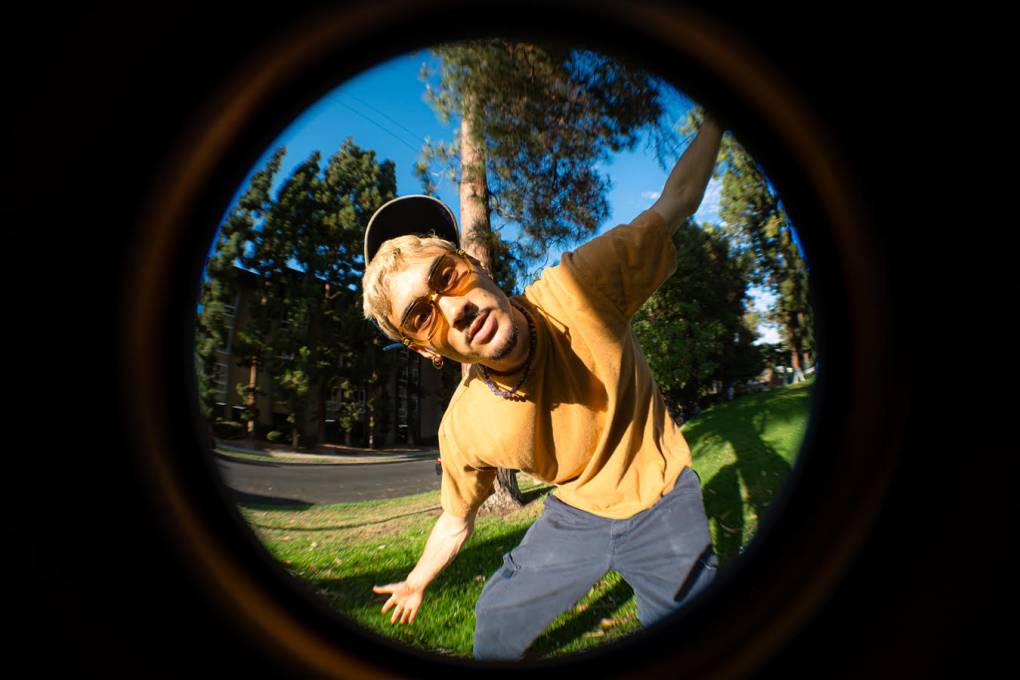
"caption": "Seiji Oda is Oakland's latest rap innovator who is making waves with his \"lofi hyphy\" blend.",
"description": null,
"title": "SeijiOda",
"credit": "Courtesy Seiji Oda",
"status": "inherit",
"altTag": "a young artist playfully poses in front of trees",
"isLoading": false,
"fetchFailed": false
},
"arts_13955194": {
"type": "attachments",
"id": "arts_13955194",
"meta": {
"index": "attachments_1716263798",
"site": "arts",
"id": "13955194",
"found": true
},
"parent": 0,
"imgSizes": {
"twentyfourteen-full-width": {
"file": "https://cdn.kqed.org/wp-content/uploads/sites/2/2024/04/240401-EAST-BAY-FORAGING-WALKING-TOUR-MD06-KQED-2-1038x576.jpg",
"width": 1038,
"mimeType": "image/jpeg",
"height": 576
},
"thumbnail": {
"file": "https://cdn.kqed.org/wp-content/uploads/sites/2/2024/04/240401-EAST-BAY-FORAGING-WALKING-TOUR-MD06-KQED-2-160x107.jpg",
"width": 160,
"mimeType": "image/jpeg",
"height": 107
},
"post-thumbnail": {
"file": "https://cdn.kqed.org/wp-content/uploads/sites/2/2024/04/240401-EAST-BAY-FORAGING-WALKING-TOUR-MD06-KQED-2-672x372.jpg",
"width": 672,
"mimeType": "image/jpeg",
"height": 372
},
"kqedFullSize": {
"file": "https://cdn.kqed.org/wp-content/uploads/sites/2/2024/04/240401-EAST-BAY-FORAGING-WALKING-TOUR-MD06-KQED-2.jpg",
"width": 2000,
"height": 1333
},
"large": {
"file": "https://cdn.kqed.org/wp-content/uploads/sites/2/2024/04/240401-EAST-BAY-FORAGING-WALKING-TOUR-MD06-KQED-2-1020x680.jpg",
"width": 1020,
"mimeType": "image/jpeg",
"height": 680
},
"1536x1536": {
"file": "https://cdn.kqed.org/wp-content/uploads/sites/2/2024/04/240401-EAST-BAY-FORAGING-WALKING-TOUR-MD06-KQED-2-1536x1024.jpg",
"width": 1536,
"mimeType": "image/jpeg",
"height": 1024
},
"full-width": {
"file": "https://cdn.kqed.org/wp-content/uploads/sites/2/2024/04/240401-EAST-BAY-FORAGING-WALKING-TOUR-MD06-KQED-2-1920x1280.jpg",
"width": 1920,
"mimeType": "image/jpeg",
"height": 1280
},
"medium": {
"file": "https://cdn.kqed.org/wp-content/uploads/sites/2/2024/04/240401-EAST-BAY-FORAGING-WALKING-TOUR-MD06-KQED-2-800x533.jpg",
"width": 800,
"mimeType": "image/jpeg",
"height": 533
},
"medium_large": {
"file": "https://cdn.kqed.org/wp-content/uploads/sites/2/2024/04/240401-EAST-BAY-FORAGING-WALKING-TOUR-MD06-KQED-2-768x512.jpg",
"width": 768,
"mimeType": "image/jpeg",
"height": 512
}
},
"publishDate": 1712018428,
"modified": 1714415103,
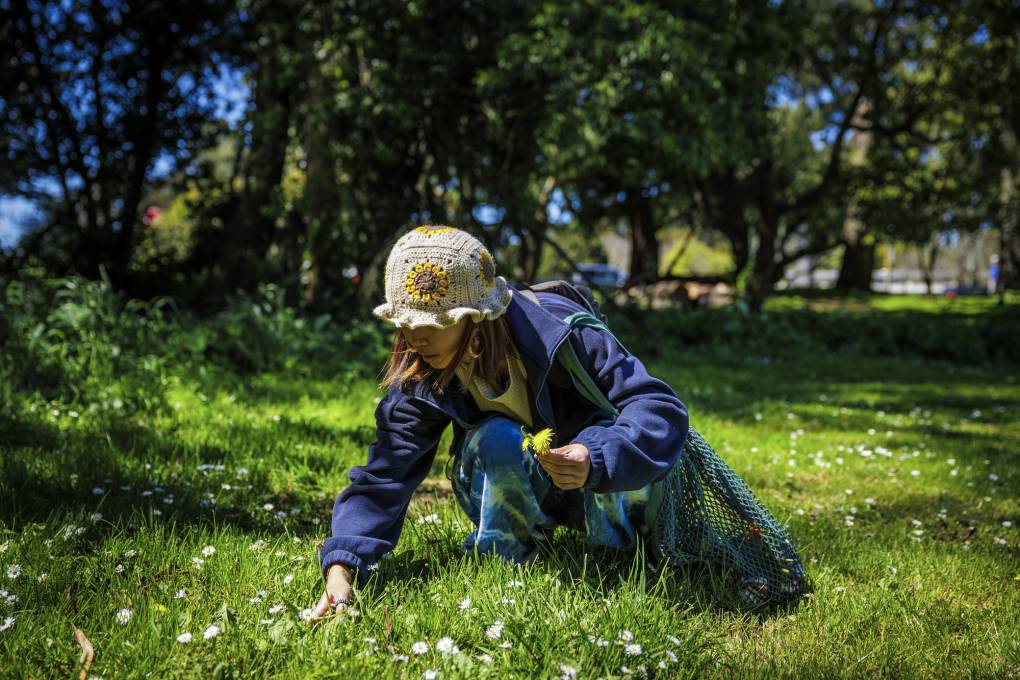
"caption": "Cindy Li gathers edible plants in Golden Gate Park in San Francisco on Apr. 1, 2024.",
"description": null,
"title": "Cindy Li forages in Golden Gate Park in San Francisco on Apr. 1, 2024.",
"credit": "Martin do Nascimento/KQED",
"status": "inherit",
"altTag": "A young Asian American woman in a knitted hat and blue jacket is picking flowers in a field of grass.",
"isLoading": false,
"fetchFailed": false
},
"arts_13956601": {
"type": "attachments",
"id": "arts_13956601",
"meta": {
"index": "attachments_1716263798",
"site": "arts",
"id": "13956601",
"found": true
},
"parent": 13956017,
"imgSizes": {
"twentyfourteen-full-width": {
"file": "https://cdn.kqed.org/wp-content/uploads/sites/2/2024/04/Colucci-spread_courtesy-of-cafe-colucci-1038x576.jpg",
"width": 1038,
"mimeType": "image/jpeg",
"height": 576
},
"thumbnail": {
"file": "https://cdn.kqed.org/wp-content/uploads/sites/2/2024/04/Colucci-spread_courtesy-of-cafe-colucci-160x90.jpg",
"width": 160,
"mimeType": "image/jpeg",
"height": 90
},
"post-thumbnail": {
"file": "https://cdn.kqed.org/wp-content/uploads/sites/2/2024/04/Colucci-spread_courtesy-of-cafe-colucci-672x372.jpg",
"width": 672,
"mimeType": "image/jpeg",
"height": 372
},
"kqedFullSize": {
"file": "https://cdn.kqed.org/wp-content/uploads/sites/2/2024/04/Colucci-spread_courtesy-of-cafe-colucci.jpg",
"width": 1920,
"height": 1080
},
"large": {
"file": "https://cdn.kqed.org/wp-content/uploads/sites/2/2024/04/Colucci-spread_courtesy-of-cafe-colucci-1020x574.jpg",
"width": 1020,
"mimeType": "image/jpeg",
"height": 574
},
"1536x1536": {
"file": "https://cdn.kqed.org/wp-content/uploads/sites/2/2024/04/Colucci-spread_courtesy-of-cafe-colucci-1536x864.jpg",
"width": 1536,
"mimeType": "image/jpeg",
"height": 864
},
"medium": {
"file": "https://cdn.kqed.org/wp-content/uploads/sites/2/2024/04/Colucci-spread_courtesy-of-cafe-colucci-800x450.jpg",
"width": 800,
"mimeType": "image/jpeg",
"height": 450
},
"medium_large": {
"file": "https://cdn.kqed.org/wp-content/uploads/sites/2/2024/04/Colucci-spread_courtesy-of-cafe-colucci-768x432.jpg",
"width": 768,
"mimeType": "image/jpeg",
"height": 432
}
},
"publishDate": 1713984302,
"modified": 1713984490,
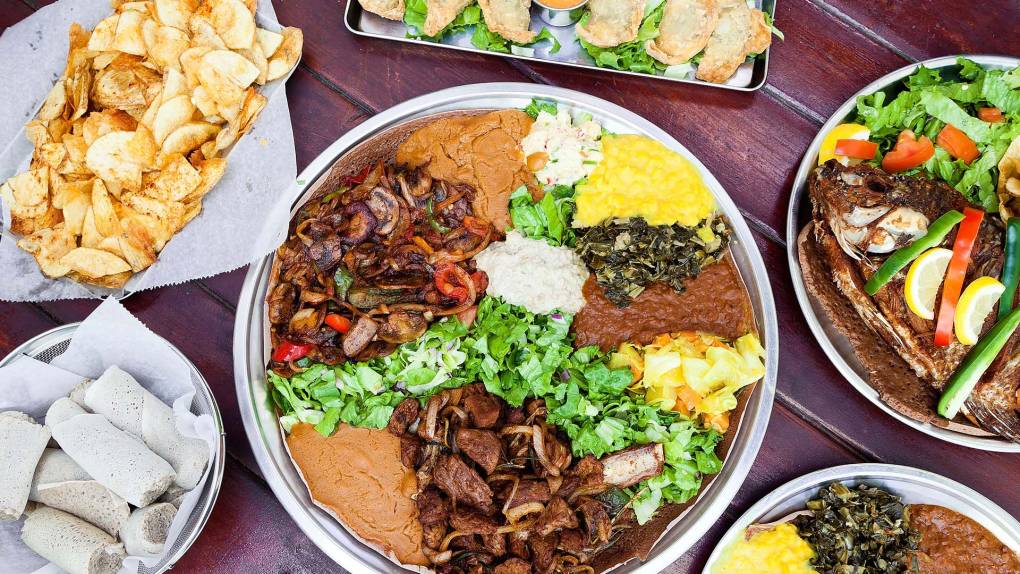
"caption": "At the first-ever POC Food & Wine Festival Oakland's Cafe Colucci will be on hand to rep the cuisine of the Ethiopian diaspora.",
"description": null,
"title": "Colucci spread_courtesy of cafe colucci",
"credit": "Courtesy of Cafe Colucci",
"status": "inherit",
"altTag": "A sumptuous spread of Ethiopian dishes, including a large round platter lined with injera.",
"isLoading": false,
"fetchFailed": false
},
"arts_13955445": {
"type": "attachments",
"id": "arts_13955445",
"meta": {
"index": "attachments_1716263798",
"site": "arts",
"id": "13955445",
"found": true
},
"parent": 13955444,
"imgSizes": {
"twentyfourteen-full-width": {
"file": "https://cdn.kqed.org/wp-content/uploads/sites/2/2024/04/Photo-By-Amy-Guan-@Amyguan-1038x576.jpg",
"width": 1038,
"mimeType": "image/jpeg",
"height": 576
},
"thumbnail": {
"file": "https://cdn.kqed.org/wp-content/uploads/sites/2/2024/04/Photo-By-Amy-Guan-@Amyguan-160x128.jpg",
"width": 160,
"mimeType": "image/jpeg",
"height": 128
},
"post-thumbnail": {
"file": "https://cdn.kqed.org/wp-content/uploads/sites/2/2024/04/Photo-By-Amy-Guan-@Amyguan-672x372.jpg",
"width": 672,
"mimeType": "image/jpeg",
"height": 372
},
"kqedFullSize": {
"file": "https://cdn.kqed.org/wp-content/uploads/sites/2/2024/04/Photo-By-Amy-Guan-@Amyguan-scaled.jpg",
"width": 2560,
"height": 2048
},
"2048x2048": {
"file": "https://cdn.kqed.org/wp-content/uploads/sites/2/2024/04/Photo-By-Amy-Guan-@Amyguan-2048x1638.jpg",
"width": 2048,
"mimeType": "image/jpeg",
"height": 1638
},
"large": {
"file": "https://cdn.kqed.org/wp-content/uploads/sites/2/2024/04/Photo-By-Amy-Guan-@Amyguan-1020x816.jpg",
"width": 1020,
"mimeType": "image/jpeg",
"height": 816
},
"1536x1536": {
"file": "https://cdn.kqed.org/wp-content/uploads/sites/2/2024/04/Photo-By-Amy-Guan-@Amyguan-1536x1229.jpg",
"width": 1536,
"mimeType": "image/jpeg",
"height": 1229
},
"full-width": {
"file": "https://cdn.kqed.org/wp-content/uploads/sites/2/2024/04/Photo-By-Amy-Guan-@Amyguan-1920x1536.jpg",
"width": 1920,
"mimeType": "image/jpeg",
"height": 1536
},
"medium": {
"file": "https://cdn.kqed.org/wp-content/uploads/sites/2/2024/04/Photo-By-Amy-Guan-@Amyguan-800x640.jpg",
"width": 800,
"mimeType": "image/jpeg",
"height": 640
},
"medium_large": {
"file": "https://cdn.kqed.org/wp-content/uploads/sites/2/2024/04/Photo-By-Amy-Guan-@Amyguan-768x614.jpg",
"width": 768,
"mimeType": "image/jpeg",
"height": 614
}
},
"publishDate": 1712263651,
"modified": 1712268591,
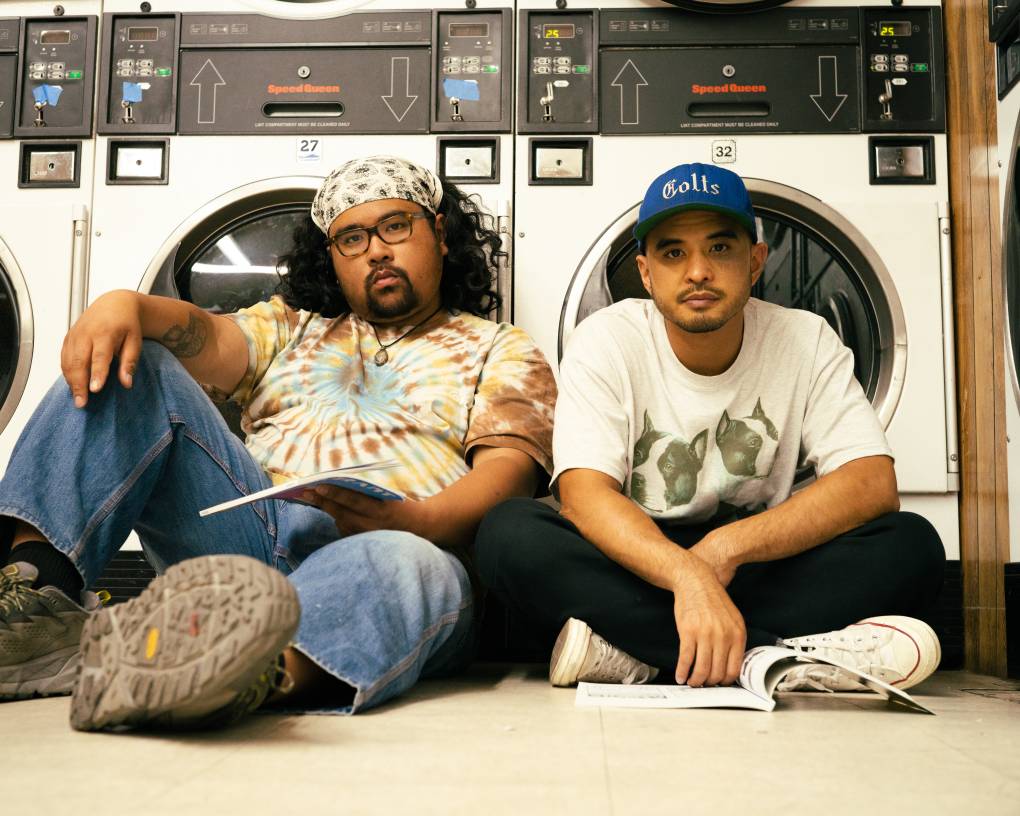
"caption": "Tall Tee, which consists of Joog Mac (left) and Flex (right), are releasing the first video for their upcoming debut album.",
"description": null,
"title": "Photo By Amy Guan @Amyguan",
"credit": "Amy Guan",
"status": "inherit",
"altTag": "two young musicians sit in front of a washing machines at a laundromat",
"isLoading": false,
"fetchFailed": false
},
"arts_13953492": {
"type": "attachments",
"id": "arts_13953492",
"meta": {
"index": "attachments_1716263798",
"site": "arts",
"id": "13953492",
"found": true
},
"parent": 13953477,
"imgSizes": {
"twentyfourteen-full-width": {
"file": "https://cdn.kqed.org/wp-content/uploads/sites/2/2024/03/GettyImages-1998834315-1038x576.jpg",
"width": 1038,
"mimeType": "image/jpeg",
"height": 576
},
"thumbnail": {
"file": "https://cdn.kqed.org/wp-content/uploads/sites/2/2024/03/GettyImages-1998834315-160x107.jpg",
"width": 160,
"mimeType": "image/jpeg",
"height": 107
},
"post-thumbnail": {
"file": "https://cdn.kqed.org/wp-content/uploads/sites/2/2024/03/GettyImages-1998834315-672x372.jpg",
"width": 672,
"mimeType": "image/jpeg",
"height": 372
},
"kqedFullSize": {
"file": "https://cdn.kqed.org/wp-content/uploads/sites/2/2024/03/GettyImages-1998834315.jpg",
"width": 1600,
"height": 1066
},
"large": {
"file": "https://cdn.kqed.org/wp-content/uploads/sites/2/2024/03/GettyImages-1998834315-1020x680.jpg",
"width": 1020,
"mimeType": "image/jpeg",
"height": 680
},
"1536x1536": {
"file": "https://cdn.kqed.org/wp-content/uploads/sites/2/2024/03/GettyImages-1998834315-1536x1023.jpg",
"width": 1536,
"mimeType": "image/jpeg",
"height": 1023
},
"medium": {
"file": "https://cdn.kqed.org/wp-content/uploads/sites/2/2024/03/GettyImages-1998834315-800x533.jpg",
"width": 800,
"mimeType": "image/jpeg",
"height": 533
},
"medium_large": {
"file": "https://cdn.kqed.org/wp-content/uploads/sites/2/2024/03/GettyImages-1998834315-768x512.jpg",
"width": 768,
"mimeType": "image/jpeg",
"height": 512
}
},
"publishDate": 1709749373,
"modified": 1709749499,
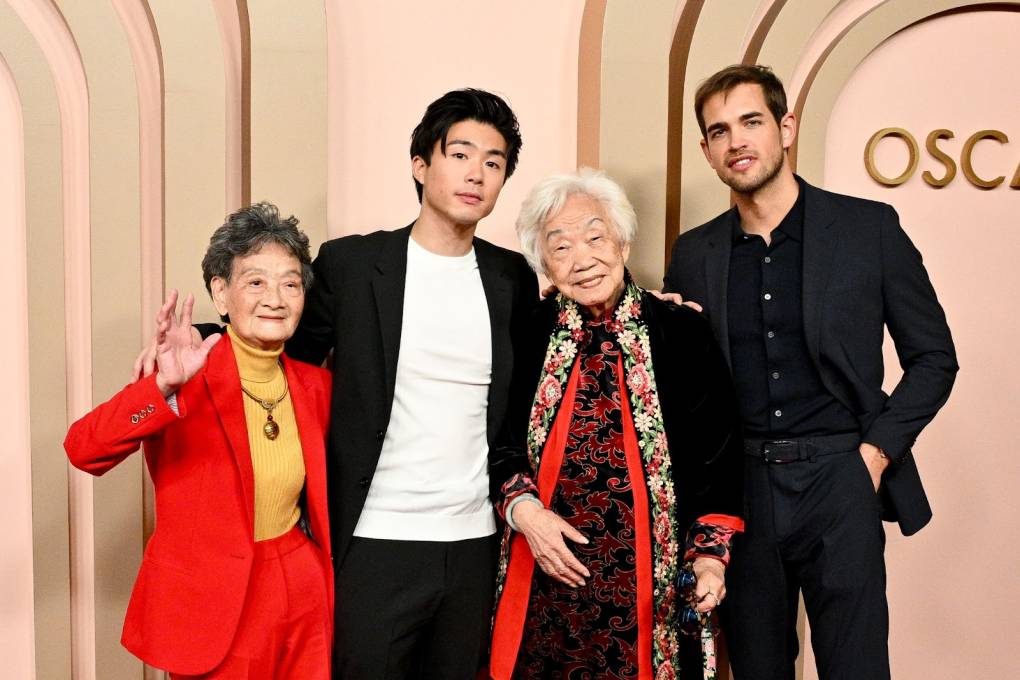
"caption": "From left, Chang Li Hua, Sean Wang, Yi Yan Fuei and Sam Davis at the 96th Oscars Nominee Luncheon at the Beverly Hilton on Feb. 12 in Beverly Hills, California. Wang’s documentary short Nǎi Nai & Wài Pó is nominated for an Academy Award.",
"description": null,
"title": "GettyImages-1998834315",
"credit": "Michael Buckner/Penske Media via Getty Images",
"status": "inherit",
"altTag": "Two young men pose with two elderly Chinese women at an Academy Awards event",
"isLoading": false,
"fetchFailed": false
}
},
"audioPlayerReducer": {
"postId": "stream_live",
"isPaused": true,
"isPlaying": false,
"pfsActive": false,
"pledgeModalIsOpen": true,
"playerDrawerIsOpen": false,
"liveAudioPlayStartedAt": 0,
"liveAudioPlayContext": ""
},
"authorsReducer": {
"ralexandra": {
"type": "authors",
"id": "11242",
"meta": {
"index": "authors_1716337520",
"id": "11242",
"found": true
},
"name": "Rae Alexandra",
"firstName": "Rae",
"lastName": "Alexandra",
"slug": "ralexandra",
"email": "ralexandra@kqed.org",
"display_author_email": true,
"staff_mastheads": [],
"title": "Reporter/Producer",
"bio": "Rae Alexandra is a Reporter/Producer for KQED Arts & Culture, and the creator/author of the \u003ca href=\"https://www.kqed.org/arts/program/rebel-girls-from-bay-area-history\">Rebel Girls From Bay Area History\u003c/a> and \u003ca href=\"https://www.kqed.org/bizarrebayarea\">Bizarre Bay Area\u003c/a> series. Her debut book, \u003ca href=\"https://citylights.com/politics-current-events-history/unsung-heroines35-women-who-changed/\">Unsung Heroines: 35 Women Who Changed the Bay Area\u003c/a> was published by City Lights in March 2026. In 2023, Rae was awarded an SPJ Excellence in Journalism Award for Arts & Culture. Rae was born and raised in Wales and subsequently — even after two decades in Northern California — still uses phrases that regularly baffle her coworkers.",
"avatar": "https://secure.gravatar.com/avatar/edfee8176c80cc0a382b051190f5341997df378a934a5774dcb0977732dfd401?s=600&d=blank&r=g",
"twitter": null,
"bluesky": null,
"facebook": null,
"instagram": null,
"linkedin": null,
"sites": [
{
"site": "arts",
"roles": [
"subscriber"
]
},
{
"site": "news",
"roles": [
"subscriber"
]
},
{
"site": "pop",
"roles": [
"subscriber"
]
},
{
"site": "bayareabites",
"roles": [
"subscriber"
]
},
{
"site": "science",
"roles": [
"subscriber"
]
}
],
"headData": {
"title": "Rae Alexandra | KQED",
"description": "Reporter/Producer",
"ogImgSrc": "https://secure.gravatar.com/avatar/edfee8176c80cc0a382b051190f5341997df378a934a5774dcb0977732dfd401?s=600&d=blank&r=g",
"twImgSrc": "https://secure.gravatar.com/avatar/edfee8176c80cc0a382b051190f5341997df378a934a5774dcb0977732dfd401?s=600&d=blank&r=g"
},
"isLoading": false,
"link": "/author/ralexandra"
},
"aproehl": {
"type": "authors",
"id": "11296",
"meta": {
"index": "authors_1716337520",
"id": "11296",
"found": true
},
"name": "Ariana Proehl",
"firstName": "Ariana",
"lastName": "Proehl",
"slug": "aproehl",
"email": "aproehl@KQED.org",
"display_author_email": true,
"staff_mastheads": [
"news"
],
"title": "Culture Reporter, KQED",
"bio": "Ariana Proehl is a Culture Reporter and Host.",
"avatar": "https://secure.gravatar.com/avatar/c96b24567eb5bb3a4f8bb295ed53e232?s=600&d=blank&r=g",
"twitter": "ArianaProehl",
"facebook": null,
"instagram": null,
"linkedin": null,
"sites": [
{
"site": "arts",
"roles": []
},
{
"site": "news",
"roles": []
},
{
"site": "education",
"roles": []
},
{
"site": "forum",
"roles": []
}
],
"headData": {
"title": "Ariana Proehl | KQED",
"description": "Culture Reporter, KQED",
"ogImgSrc": "https://secure.gravatar.com/avatar/c96b24567eb5bb3a4f8bb295ed53e232?s=600&d=blank&r=g",
"twImgSrc": "https://secure.gravatar.com/avatar/c96b24567eb5bb3a4f8bb295ed53e232?s=600&d=blank&r=g"
},
"isLoading": false,
"link": "/author/aproehl"
},
"edayu": {
"type": "authors",
"id": "11391",
"meta": {
"index": "authors_1716337520",
"id": "11391",
"found": true
},
"name": "Eda Yu",
"firstName": "Eda",
"lastName": "Yu",
"slug": "edayu",
"email": "eda.cyu@gmail.com",
"display_author_email": false,
"staff_mastheads": [],
"title": "KQED Contributor",
"bio": "Eda Yu is a freelance writer and arts and culture journalist born and raised in Los Angeles, California. Her work centers the intersection of culture and identity, and her writing has appeared on platforms like VICE, Paper Magazine, and Complex. Follow her latest on Instagram and Twitter @edacyu.",
"avatar": "https://secure.gravatar.com/avatar/6dac2abe6c01e7b538d29f9c902136eb?s=600&d=blank&r=g",
"twitter": null,
"facebook": null,
"instagram": "https://www.instagram.com/edacyu/",
"linkedin": null,
"sites": [
{
"site": "arts",
"roles": [
"contributor"
]
}
],
"headData": {
"title": "Eda Yu | KQED",
"description": "KQED Contributor",
"ogImgSrc": "https://secure.gravatar.com/avatar/6dac2abe6c01e7b538d29f9c902136eb?s=600&d=blank&r=g",
"twImgSrc": "https://secure.gravatar.com/avatar/6dac2abe6c01e7b538d29f9c902136eb?s=600&d=blank&r=g"
},
"isLoading": false,
"link": "/author/edayu"
},
"ltsai": {
"type": "authors",
"id": "11743",
"meta": {
"index": "authors_1716337520",
"id": "11743",
"found": true
},
"name": "Luke Tsai",
"firstName": "Luke",
"lastName": "Tsai",
"slug": "ltsai",
"email": "ltsai@kqed.org",
"display_author_email": true,
"staff_mastheads": [
"arts"
],
"title": "Food Editor",
"bio": "Luke Tsai is KQED's food editor and resident stinky tofu connoisseur. Prior to KQED, he was an editor at Eater SF, \u003cem>San Francisco \u003c/em>magazine, and the \u003cem>East Bay Express\u003c/em>, and his work has also appeared in TASTE, the \u003cem>San Francisco Chronicle\u003c/em>, and the \u003cem>Best Food Writing\u003c/em> anthology. When he isn't writing or editing, you'll find him eating most everything he can get his hands on.",
"avatar": "https://secure.gravatar.com/avatar/1e59b45bf191526e7339d6ba46e33a57b2030d25c27660ecc64ea3cb863e34f7?s=600&d=blank&r=g",
"twitter": "theluketsai",
"bluesky": null,
"facebook": null,
"instagram": null,
"linkedin": null,
"sites": [
{
"site": "",
"roles": [
"editor"
]
},
{
"site": "arts",
"roles": [
"administrator"
]
},
{
"site": "news",
"roles": [
"editor",
"contributor"
]
},
{
"site": "bayareabites",
"roles": [
"editor"
]
},
{
"site": "food",
"roles": [
"editor"
]
}
],
"headData": {
"title": "Luke Tsai | KQED",
"description": "Food Editor",
"ogImgSrc": "https://secure.gravatar.com/avatar/1e59b45bf191526e7339d6ba46e33a57b2030d25c27660ecc64ea3cb863e34f7?s=600&d=blank&r=g",
"twImgSrc": "https://secure.gravatar.com/avatar/1e59b45bf191526e7339d6ba46e33a57b2030d25c27660ecc64ea3cb863e34f7?s=600&d=blank&r=g"
},
"isLoading": false,
"link": "/author/ltsai"
},
"achazaro": {
"type": "authors",
"id": "11748",
"meta": {
"index": "authors_1716337520",
"id": "11748",
"found": true
},
"name": "Alan Chazaro",
"firstName": "Alan",
"lastName": "Chazaro",
"slug": "achazaro",
"email": "agchazaro@gmail.com",
"display_author_email": true,
"staff_mastheads": [],
"title": "Food Writer and Reporter",
"bio": "Alan Chazaro is the author of \u003cem>This Is Not a Frank Ocean Cover Album\u003c/em> (Black Lawrence Press, 2019), \u003cem>Piñata Theory\u003c/em> (Black Lawrence Press, 2020), and \u003cem>Notes from the Eastern Span of the Bay Bridge\u003c/em> (Ghost City Press, 2021). He is a graduate of June Jordan’s Poetry for the People program at UC Berkeley and a former Lawrence Ferlinghetti Fellow at the University of San Francisco. He writes about sports, food, art, music, education, and culture while repping the Bay on \u003ca href=\"https://twitter.com/alan_chazaro\">Twitter\u003c/a> and \u003ca href=\"https://www.instagram.com/alan_chazaro/?hl=en\">Instagram\u003c/a> at @alan_chazaro.",
"avatar": "https://secure.gravatar.com/avatar/ea8b6dd970fc5c29e7a188e7d5861df7?s=600&d=blank&r=g",
"twitter": "alan_chazaro",
"facebook": null,
"instagram": null,
"linkedin": null,
"sites": [
{
"site": "arts",
"roles": [
"contributor"
]
},
{
"site": "news",
"roles": [
"editor"
]
}
],
"headData": {
"title": "Alan Chazaro | KQED",
"description": "Food Writer and Reporter",
"ogImgSrc": "https://secure.gravatar.com/avatar/ea8b6dd970fc5c29e7a188e7d5861df7?s=600&d=blank&r=g",
"twImgSrc": "https://secure.gravatar.com/avatar/ea8b6dd970fc5c29e7a188e7d5861df7?s=600&d=blank&r=g"
},
"isLoading": false,
"link": "/author/achazaro"
},
"tpham": {
"type": "authors",
"id": "11753",
"meta": {
"index": "authors_1716337520",
"id": "11753",
"found": true
},
"name": "Thien Pham",
"firstName": "Thien",
"lastName": "Pham",
"slug": "tpham",
"email": "thiendog@gmail.com",
"display_author_email": false,
"staff_mastheads": [],
"title": "KQED Contributor",
"bio": null,
"avatar": "https://secure.gravatar.com/avatar/a5b4729969ad46d88e7b9ec9dd4f3fa6af84dd0fa8fa91f01d8d9481694999bc?s=600&d=blank&r=g",
"twitter": null,
"bluesky": null,
"facebook": null,
"instagram": null,
"linkedin": null,
"sites": [
{
"site": "arts",
"roles": [
"contributor"
]
}
],
"headData": {
"title": "Thien Pham | KQED",
"description": "KQED Contributor",
"ogImgSrc": "https://secure.gravatar.com/avatar/a5b4729969ad46d88e7b9ec9dd4f3fa6af84dd0fa8fa91f01d8d9481694999bc?s=600&d=blank&r=g",
"twImgSrc": "https://secure.gravatar.com/avatar/a5b4729969ad46d88e7b9ec9dd4f3fa6af84dd0fa8fa91f01d8d9481694999bc?s=600&d=blank&r=g"
},
"isLoading": false,
"link": "/author/tpham"
},
"omayeda": {
"type": "authors",
"id": "11872",
"meta": {
"index": "authors_1716337520",
"id": "11872",
"found": true
},
"name": "Olivia Cruz Mayeda",
"firstName": "Olivia Cruz",
"lastName": "Mayeda",
"slug": "omayeda",
"email": "omayeda@kqed.org",
"display_author_email": false,
"staff_mastheads": [],
"title": "Reporter",
"bio": "Olivia Cruz Mayeda is a journalist covering style, culture and reparations in the Bay Area, a place that has been home to her family for over 100 years. Her writing has also appeared in the \u003cem>San Francisco Chronicle\u003c/em> and \u003cem>El Tecolote\u003c/em>.",
"avatar": "https://secure.gravatar.com/avatar/a8c0baa30219ce1071a9474f4c14141f?s=600&d=blank&r=g",
"twitter": null,
"facebook": null,
"instagram": null,
"linkedin": null,
"sites": [
{
"site": "arts",
"roles": [
"contributor"
]
}
],
"headData": {
"title": "Olivia Cruz Mayeda | KQED",
"description": "Reporter",
"ogImgSrc": "https://secure.gravatar.com/avatar/a8c0baa30219ce1071a9474f4c14141f?s=600&d=blank&r=g",
"twImgSrc": "https://secure.gravatar.com/avatar/a8c0baa30219ce1071a9474f4c14141f?s=600&d=blank&r=g"
},
"isLoading": false,
"link": "/author/omayeda"
}
},
"pagesReducer": {
"arts_tag_asian-american": {
"type": "terms",
"id": "arts_4672",
"meta": {
"index": "terms_1716263798",
"site": "arts",
"id": "4672",
"score": 8.79375
},
"featImg": null,
"name": "Asian American",
"description": null,
"taxonomy": "tag",
"headData": {
"twImgId": null,
"twTitle": null,
"ogTitle": null,
"ogImgId": null,
"twDescription": null,
"description": null,
"title": "Asian American Archives | KQED Arts",
"ogDescription": null
},
"ttid": 4684,
"slug": "asian-american",
"isLoading": false,
"title": "Asian American",
"pageMeta": {
"site": "arts",
"WpPageTemplate": "page-topic-editorial",
"currentPage": 2
},
"blocks": [
{
"blockName": "kqed/post-list",
"attrs": {
"layout": "cardArticle2",
"query": "posts/arts?tag=asian-american",
"seeMore": false,
"paginated": true,
"page": 2
}
},
{
"blockName": "kqed/ad"
}
]
}
},
"pfsSessionReducer": {},
"postsReducer": {
"stream_live": {
"type": "live",
"id": "stream_live",
"audioUrl": "https://streams.kqed.org/kqedradio",
"title": "Live Stream",
"excerpt": "Live Stream information currently unavailable.",
"link": "/radio",
"featImg": "",
"label": {
"name": "KQED Live",
"link": "/"
}
},
"stream_kqedNewscast": {
"type": "posts",
"id": "stream_kqedNewscast",
"audioUrl": "https://www.kqed.org/.stream/anon/radio/RDnews/newscast.mp3?_=1",
"title": "KQED Newscast",
"featImg": "",
"label": {
"name": "88.5 FM",
"link": "/"
}
},
"arts_13970282": {
"type": "posts",
"id": "arts_13970282",
"meta": {
"index": "posts_1716263798",
"site": "arts",
"id": "13970282",
"score": null,
"sort": [
1736891118000
]
},
"guestAuthors": [],
"slug": "bianca-mabute-louie-unassimilable-book-review",
"title": "Bianca Mabute-Louie’s ‘Unassimilable’ Reframes Immigration and Belonging",
"publishDate": 1736891118,
"format": "standard",
"headTitle": "Bianca Mabute-Louie’s ‘Unassimilable’ Reframes Immigration and Belonging | KQED",
"labelTerm": {
"term": 140,
"site": "arts"
},
"content": "\u003cp>\u003cem>Unassimilable\u003c/em>, \u003ca href=\"https://biancaml.com/book-unassimilable/\">Bianca Mabute-Louie\u003c/a>’s debut book, opens with a scene in the San Marino Library — a quiet, wealthy suburb in the San Gabriel Valley (known to locals as the SGV). The scholar and activist recounts a visit to the library the summer after college, when she overheard an older white woman mutter, staring at her, “My ancestors were immigrants too, but they assimilated. Unlike them — they come over, take over, don’t even bother learning the language…They’re everywhere now.”\u003c/p>\n\u003cp>This scene felt familiar to me. I’d attended San Marino High School my freshman year, and experienced firsthand how the longstanding white population grappled with the town’s \u003ca href=\"https://www.bloomberg.com/news/articles/2012-08-27/how-an-exclusive-los-angeles-suburb-lost-its-whiteness\">relatively recent shift\u003c/a> into an Asian majority. But reading the scene in \u003cem>Unassimilable\u003c/em> brought up questions I hadn’t considered before. Many Asian Americans in the SGV, especially those whose families arrived within the last 60 years, might not be interested in assimilating into white America. But what if we didn’t see that as a bad thing? What if, instead of something to be ashamed of, our refusal to assimilate could be a source of pride?\u003c/p>\n\u003cp>A mix of poignant memoir, intensive research and sharp socio-political commentary, \u003cem>Unassimilable\u003c/em> follows Mabute-Louie’s journey of racial reckoning. Born to immigrant parents from Hong Kong in Monterey Park, the author describes the pressure she felt to prove herself at “Predominantly White Institutions” (or PWIs, as she calls them) throughout her adolescence. She found pockets of belonging in her Chinese immigrant church community, but truly came of age in the Bay Area — where she found empowerment in her identity while earning her master’s degree in Asian American Studies at San Francisco State University. Through these experiences, \u003cem>Unassimilable\u003c/em> offers a window into the many different ways people navigate assimilation in this country. Yet it encourages us to reject traditional narratives of belonging through acceptance and achievement at PWIs.\u003c/p>\n\u003cp>Mabute-Louie interweaves moving personal anecdotes with compelling statistics and quotes from writers like Audre Lorde and Frantz Fanon, which makes \u003cem>Unassimilable\u003c/em> an approachable read for anyone interested in race and immigration. In the first chapter, she establishes SGV’s position in America, painting a vivid picture of how the area (and Monterey Park specifically) transformed into the nation’s first and largest “ethnoburb.” By tracking the ebbs and flows of U.S. immigration policy, Mabute-Louie reports how the landmark Hart-Celler Act of 1965 led to a rapid influx of socioeconomically diverse Chinese and Vietnamese immigrants and refugees. They created a self-sustaining ecosystem of Asian grocery stores and businesses in the greater Los Angeles area, where one could easily survive — if not thrive — without ever learning English. [aside postid='news_12021150']\u003c/p>\n\u003cp>But Mabute-Louie’s feelings towards her hometown shifted as she started attending predominantly white private schools in Pasadena, which she skillfully captured throughout the second chapter. Without the “safety and comfort of the ethnoburb,” as Mabute-Louie put it, she started to code switch, develop internalized racism and — the thing I related to the most — feel embarrassed by her family’s lack of assimilation. (Mabute-Louie recounts a specific experience when her Popo haggled loudly in Cantonese at Saks Fifth Avenue that perfectly illustrates these feelings.)\u003c/p>\n\u003cp>[ad fullwidth]\u003c/p>\n\u003cp>For me, the book hit close to home — I also went to predominantly white private schools, and discovered my passion for Asian American community advocacy at UC Berkeley. Through my many drives from San Gabriel to Pasadena for school, I distinctly remember a shift occurring in me. Despite the fondness with which I thought of 99 Ranch, or the fact that I really didn’t learn English until first grade, I began to view the ethnoburb that raised me, which I now hold in the highest regard, with shame and distaste. [aside postid='arts_13970148']\u003c/p>\n\u003cp>Reading \u003cem>Unassimilable\u003c/em> finally allowed me to put into words how attending PWIs spurred my assimilation. Mabute-Louie astutely captured this unique dichotomy when recounting her refusal to attend the majority-Asian UC Irvine, or any UC in general. “I arrogantly thought of myself as above it,” she writes. In high school, I similarly dreaded going to UC Berkeley — my backup school, despite its reputation as one of the best universities in the world — when my first choices rejected me.\u003c/p>\n\u003cp>Ironically, UC Berkeley’s history of Asian American activism allowed me to finally unlearn these ideals. Mabute-Louie had a similar racial reckoning during her undergraduate studies at Mills College — where she began to understand the intersections of race, class and privilege throughout the Black Lives Matter movements of the 2010s — as well as at San Francisco State University. During the protests, Mabute-Louie noticed a pronounced “silence, which I perceived as apathy, among many of my East Asian friends in Asian ethnoburbs,” she recalls. From there, Mabute-Louie began exploring themes of anti-Blackness, building cross-cultural solidarity and rejecting U.S. imperialism and colonialism — all focal points in her research today as a PhD candidate at Rice University.\u003c/p>\n\u003cp>From beginning to end, \u003cem>Unassimilable\u003c/em> is a formidable read that pushes us to reject acceptance in this country as “aspirational.” Instead, the work envisions a future — and a present — where we define ourselves, our belonging and our power in its unabashed entirety.\u003c/p>\n\u003chr>\n\u003cp>\u003c/p>\n\u003cp>\u003cem>On Feb. 5, Bianca Mabute-Louie will be in conversation about ‘Unassimilable’ with Michelle Mijung Kim at the UC Berkeley Ethnic Studies Library, with a poetry reading by Terisa Siagatonu. \u003ca href=\"https://biancaml.com/tour/\">Details here\u003c/a>.\u003c/em>\u003c/p>\n\n",
"blocks": [],
"excerpt": "In her debut book, the sociologist rejects the idea that immigrants should seek validation from white institutions.",
"status": "publish",
"parent": 0,
"modified": 1736891118,
"stats": {
"hasAudio": false,
"hasVideo": false,
"hasChartOrMap": false,
"iframeSrcs": [],
"hasGoogleForm": false,
"hasGallery": false,
"hasHearkenModule": false,
"hasPolis": false,
"paragraphCount": 12,
"wordCount": 954
},
"headData": {
"title": "Bianca Mabute-Louie’s ‘Unassimilable’ Reframes Immigration and Belonging | KQED",
"description": "In her debut book, the sociologist rejects the idea that immigrants should seek validation from white institutions.",
"ogTitle": "",
"ogDescription": "",
"ogImgId": "",
"twTitle": "",
"twDescription": "",
"twImgId": "",
"schema": {
"@context": "https://schema.org",
"@type": "Article",
"headline": "Bianca Mabute-Louie’s ‘Unassimilable’ Reframes Immigration and Belonging",
"datePublished": "2025-01-14T13:45:18-08:00",
"dateModified": "2025-01-14T13:45:18-08:00",
"image": "https://cdn.kqed.org/wp-content/uploads/2020/02/KQED-OG-Image@1x.png"
}
},
"sticky": false,
"nprStoryId": "kqed-13970282",
"templateType": "standard",
"featuredImageType": "standard",
"excludeFromSiteSearch": "Include",
"articleAge": "0",
"path": "/arts/13970282/bianca-mabute-louie-unassimilable-book-review",
"audioTrackLength": null,
"parsedContent": [
{
"type": "contentString",
"content": "\u003cdiv class=\"post-body\">\u003cp>\u003cp>\u003cem>Unassimilable\u003c/em>, \u003ca href=\"https://biancaml.com/book-unassimilable/\">Bianca Mabute-Louie\u003c/a>’s debut book, opens with a scene in the San Marino Library — a quiet, wealthy suburb in the San Gabriel Valley (known to locals as the SGV). The scholar and activist recounts a visit to the library the summer after college, when she overheard an older white woman mutter, staring at her, “My ancestors were immigrants too, but they assimilated. Unlike them — they come over, take over, don’t even bother learning the language…They’re everywhere now.”\u003c/p>\n\u003cp>This scene felt familiar to me. I’d attended San Marino High School my freshman year, and experienced firsthand how the longstanding white population grappled with the town’s \u003ca href=\"https://www.bloomberg.com/news/articles/2012-08-27/how-an-exclusive-los-angeles-suburb-lost-its-whiteness\">relatively recent shift\u003c/a> into an Asian majority. But reading the scene in \u003cem>Unassimilable\u003c/em> brought up questions I hadn’t considered before. Many Asian Americans in the SGV, especially those whose families arrived within the last 60 years, might not be interested in assimilating into white America. But what if we didn’t see that as a bad thing? What if, instead of something to be ashamed of, our refusal to assimilate could be a source of pride?\u003c/p>\n\u003cp>A mix of poignant memoir, intensive research and sharp socio-political commentary, \u003cem>Unassimilable\u003c/em> follows Mabute-Louie’s journey of racial reckoning. Born to immigrant parents from Hong Kong in Monterey Park, the author describes the pressure she felt to prove herself at “Predominantly White Institutions” (or PWIs, as she calls them) throughout her adolescence. She found pockets of belonging in her Chinese immigrant church community, but truly came of age in the Bay Area — where she found empowerment in her identity while earning her master’s degree in Asian American Studies at San Francisco State University. Through these experiences, \u003cem>Unassimilable\u003c/em> offers a window into the many different ways people navigate assimilation in this country. Yet it encourages us to reject traditional narratives of belonging through acceptance and achievement at PWIs.\u003c/p>\n\u003cp>Mabute-Louie interweaves moving personal anecdotes with compelling statistics and quotes from writers like Audre Lorde and Frantz Fanon, which makes \u003cem>Unassimilable\u003c/em> an approachable read for anyone interested in race and immigration. In the first chapter, she establishes SGV’s position in America, painting a vivid picture of how the area (and Monterey Park specifically) transformed into the nation’s first and largest “ethnoburb.” By tracking the ebbs and flows of U.S. immigration policy, Mabute-Louie reports how the landmark Hart-Celler Act of 1965 led to a rapid influx of socioeconomically diverse Chinese and Vietnamese immigrants and refugees. They created a self-sustaining ecosystem of Asian grocery stores and businesses in the greater Los Angeles area, where one could easily survive — if not thrive — without ever learning English. \u003c/p>\u003c/div>",
"attributes": {
"named": {},
"numeric": []
}
},
{
"type": "component",
"content": "",
"name": "aside",
"attributes": {
"named": {
"postid": "news_12021150",
"label": ""
},
"numeric": []
}
},
{
"type": "contentString",
"content": "\u003cdiv class=\"post-body\">\u003cp>\u003c/p>\n\u003cp>But Mabute-Louie’s feelings towards her hometown shifted as she started attending predominantly white private schools in Pasadena, which she skillfully captured throughout the second chapter. Without the “safety and comfort of the ethnoburb,” as Mabute-Louie put it, she started to code switch, develop internalized racism and — the thing I related to the most — feel embarrassed by her family’s lack of assimilation. (Mabute-Louie recounts a specific experience when her Popo haggled loudly in Cantonese at Saks Fifth Avenue that perfectly illustrates these feelings.)\u003c/p>\n\u003cp>\u003c/p>\u003c/div>",
"attributes": {
"named": {},
"numeric": []
}
},
{
"type": "component",
"content": "",
"name": "ad",
"attributes": {
"named": {
"label": "fullwidth"
},
"numeric": [
"fullwidth"
]
}
},
{
"type": "contentString",
"content": "\u003cdiv class=\"post-body\">\u003cp>\u003c/p>\n\u003cp>For me, the book hit close to home — I also went to predominantly white private schools, and discovered my passion for Asian American community advocacy at UC Berkeley. Through my many drives from San Gabriel to Pasadena for school, I distinctly remember a shift occurring in me. Despite the fondness with which I thought of 99 Ranch, or the fact that I really didn’t learn English until first grade, I began to view the ethnoburb that raised me, which I now hold in the highest regard, with shame and distaste. \u003c/p>\u003c/div>",
"attributes": {
"named": {},
"numeric": []
}
},
{
"type": "component",
"content": "",
"name": "aside",
"attributes": {
"named": {
"postid": "arts_13970148",
"label": ""
},
"numeric": []
}
},
{
"type": "contentString",
"content": "\u003cdiv class=\"post-body\">\u003cp>\u003c/p>\n\u003cp>Reading \u003cem>Unassimilable\u003c/em> finally allowed me to put into words how attending PWIs spurred my assimilation. Mabute-Louie astutely captured this unique dichotomy when recounting her refusal to attend the majority-Asian UC Irvine, or any UC in general. “I arrogantly thought of myself as above it,” she writes. In high school, I similarly dreaded going to UC Berkeley — my backup school, despite its reputation as one of the best universities in the world — when my first choices rejected me.\u003c/p>\n\u003cp>Ironically, UC Berkeley’s history of Asian American activism allowed me to finally unlearn these ideals. Mabute-Louie had a similar racial reckoning during her undergraduate studies at Mills College — where she began to understand the intersections of race, class and privilege throughout the Black Lives Matter movements of the 2010s — as well as at San Francisco State University. During the protests, Mabute-Louie noticed a pronounced “silence, which I perceived as apathy, among many of my East Asian friends in Asian ethnoburbs,” she recalls. From there, Mabute-Louie began exploring themes of anti-Blackness, building cross-cultural solidarity and rejecting U.S. imperialism and colonialism — all focal points in her research today as a PhD candidate at Rice University.\u003c/p>\n\u003cp>From beginning to end, \u003cem>Unassimilable\u003c/em> is a formidable read that pushes us to reject acceptance in this country as “aspirational.” Instead, the work envisions a future — and a present — where we define ourselves, our belonging and our power in its unabashed entirety.\u003c/p>\n\u003chr>\n\u003cp>\u003c/p>\n\u003cp>\u003cem>On Feb. 5, Bianca Mabute-Louie will be in conversation about ‘Unassimilable’ with Michelle Mijung Kim at the UC Berkeley Ethnic Studies Library, with a poetry reading by Terisa Siagatonu. \u003ca href=\"https://biancaml.com/tour/\">Details here\u003c/a>.\u003c/em>\u003c/p>\n\n\u003c/div>\u003c/p>",
"attributes": {
"named": {},
"numeric": []
}
}
],
"link": "/arts/13970282/bianca-mabute-louie-unassimilable-book-review",
"authors": [
"11391"
],
"programs": [
"arts_140"
],
"categories": [
"arts_1",
"arts_73"
],
"tags": [
"arts_4672",
"arts_7446",
"arts_10278",
"arts_769"
],
"featImg": "arts_13970285",
"label": "arts_140"
},
"arts_13969644": {
"type": "posts",
"id": "arts_13969644",
"meta": {
"index": "posts_1716263798",
"site": "arts",
"id": "13969644",
"score": null,
"sort": [
1734644065000
]
},
"guestAuthors": [],
"slug": "dungeness-crab-fishing-influencer-tiktok-san-francisco-ocean-beach",
"title": "Meet the San Francisco Influencer Getting Gen Z Girls Excited About Crab Fishing",
"publishDate": 1734644065,
"format": "standard",
"headTitle": "Meet the San Francisco Influencer Getting Gen Z Girls Excited About Crab Fishing | KQED",
"labelTerm": {},
"content": "\u003cp>[dropcap]O[/dropcap]n a rainy, windswept afternoon in November, Kaitlyn Bui stands near the water’s edge on Ocean Beach, casting a reel into the sea.\u003c/p>\n\u003cp>It’s a few weeks into the recreational crab fishing season here in the Bay Area, and \u003ca href=\"https://www.sfchronicle.com/bayarea/article/crab-season-19964429.php\">at least a month\u003c/a> before any local Dungeness crabs will hit the markets. So Bui is out here doing the same thing all the fishermen in San Francisco are trying to do — catch some fresh \u003ca href=\"https://www.kqed.org/news/12015975/yes-you-can-still-catch-fresh-local-dungeness-crab-for-thanksgiving\">Dungeness for Thanksgiving\u003c/a>. She looks like any other veteran crabber: rain jacket and winter beanie, waterproof waders tucked into fishing boots. Layers upon layers upon layers.\u003c/p>\n\u003cp>But if you’re active on certain corners of the Bay Area’s social media ecosystem (say, foodie Instagram or outdoorsy TikTok), then you might recognize Bui for who she is: the most popular crab fishing influencer in the Bay. The Crab-fluencer-in-Chief of Ocean Beach, if you will. She has more than 200,000 followers on \u003ca href=\"https://www.instagram.com/kaitlynbui/\">Instagram\u003c/a>, and she’s even bigger on \u003ca href=\"https://www.tiktok.com/@kaitlyn_bui?lang=en\">TikTok\u003c/a>, where she’s amassed more than 440,000 followers and over 13 million likes. All told, Bui has done well enough that she’s able to make a full-time job of it.\u003c/p>\n\u003cp>On her social media accounts, Bui’s videos of herself fishing — almost exclusively for Dungeness crabs, almost always on Ocean Beach — routinely garner millions of views. Many of them hit the same basic beats: Here’s Bui \u003ca href=\"https://www.instagram.com/reel/C23TD9-P8zZ/\">going to the market\u003c/a> to buy some fresh squid or mackerel to use as bait. There she is on the beach pulling in a crab that’s \u003ca href=\"https://wildlife.ca.gov/Fishing/Ocean/Regulations/Fishing-Map/San-Francisco#dungeness\">too small to keep\u003c/a>, so she gives it a little piece of squid as a snack before releasing it back into the sea. Now, finally, she catches a keeper, which she brings back home to her mom, who cooks it up to feed the family. End scene.\u003c/p>\n\u003cfigure id=\"attachment_13969681\" class=\"wp-caption alignnone\" style=\"max-width: 2000px\">\u003cimg loading=\"lazy\" decoding=\"async\" class=\"size-full wp-image-13969681\" src=\"https://cdn.kqed.org/wp-content/uploads/sites/2/2024/12/241125-UndercoverCrabInfluencer-03-BL.jpg\" alt=\"A woman on the beach fishes with a fishing pole on a foggy day.\" width=\"2000\" height=\"1332\" srcset=\"https://cdn.kqed.org/wp-content/uploads/sites/2/2024/12/241125-UndercoverCrabInfluencer-03-BL.jpg 2000w, https://cdn.kqed.org/wp-content/uploads/sites/2/2024/12/241125-UndercoverCrabInfluencer-03-BL-800x533.jpg 800w, https://cdn.kqed.org/wp-content/uploads/sites/2/2024/12/241125-UndercoverCrabInfluencer-03-BL-1020x679.jpg 1020w, https://cdn.kqed.org/wp-content/uploads/sites/2/2024/12/241125-UndercoverCrabInfluencer-03-BL-160x107.jpg 160w, https://cdn.kqed.org/wp-content/uploads/sites/2/2024/12/241125-UndercoverCrabInfluencer-03-BL-768x511.jpg 768w, https://cdn.kqed.org/wp-content/uploads/sites/2/2024/12/241125-UndercoverCrabInfluencer-03-BL-1536x1023.jpg 1536w, https://cdn.kqed.org/wp-content/uploads/sites/2/2024/12/241125-UndercoverCrabInfluencer-03-BL-1920x1279.jpg 1920w\" sizes=\"auto, (max-width: 2000px) 100vw, 2000px\">\u003cfigcaption class=\"wp-caption-text\">Bui reels in her fishing line on a rainy, windswept day in late November 2024. \u003ccite>(Beth LaBerge/KQED)\u003c/cite>\u003c/figcaption>\u003c/figure>\n\u003cp>The videos’ popularity has less to do with the fishing itself and more to do with Bui’s ebullient personality. Her trademark catchphrases are “oh my goodness” and “holy cow,” both of which she’s prone to saying, breathlessly and in full sincerity, multiple times in a single video. And when she does catch a crab — or, more recently, a \u003ca href=\"https://www.tiktok.com/@kaitlyn_bui/video/7416109523129142571?lang=en\">huge striped bass\u003c/a> — she’s so giddy, she can hardly contain herself.\u003c/p>\n\u003cp>[ad fullwidth]\u003c/p>\n\u003cp>Bui’s tagline on social media is “undercover crab fisherman” — because, as she explains, she doesn’t really look like anyone’s idea of a fisherman, much less a serious crab fisherman. She’s a young Asian American woman in a hobby that’s dominated by older men. She’s petite and unintimidating in stature — “5’3” on a good, sunny day,” she likes to say. And, to set her apart even from the food (and food-adjacent) influencers, she doesn’t even \u003ci>eat \u003c/i>the crabs she catches. (She does love eating crab, she explains, but feels squeamish about eating creatures she’s seen alive — so she just brings them home for her family to enjoy.)\u003c/p>\n\u003cblockquote class=\"tiktok-embed\" style=\"max-width: 605px;min-width: 325px\" cite=\"https://www.tiktok.com/@kaitlyn_bui/video/7199812444674346283\" data-video-id=\"7199812444674346283\">\n\u003csection>\u003ca title=\"@kaitlyn_bui\" href=\"https://www.tiktok.com/@kaitlyn_bui?refer=embed\" target=\"_blank\" rel=\"noopener\">@kaitlyn_bui\u003c/a> Do you want to see how my mom cooks the crab??😗🦀 \u003ca title=\"crab\" href=\"https://www.tiktok.com/tag/crab?refer=embed\" target=\"_blank\" rel=\"noopener\">#crab\u003c/a> \u003ca title=\"crabfishing\" href=\"https://www.tiktok.com/tag/crabfishing?refer=embed\" target=\"_blank\" rel=\"noopener\">#crabfishing\u003c/a> \u003ca title=\"crabbing\" href=\"https://www.tiktok.com/tag/crabbing?refer=embed\" target=\"_blank\" rel=\"noopener\">#crabbing\u003c/a> \u003ca title=\"dungenesscrab\" href=\"https://www.tiktok.com/tag/dungenesscrab?refer=embed\" target=\"_blank\" rel=\"noopener\">#dungenesscrab\u003c/a> \u003ca title=\"fisherwoman\" href=\"https://www.tiktok.com/tag/fisherwoman?refer=embed\" target=\"_blank\" rel=\"noopener\">#fisherwoman\u003c/a> \u003ca title=\"fishingvlog\" href=\"https://www.tiktok.com/tag/fishingvlog?refer=embed\" target=\"_blank\" rel=\"noopener\">#fishingvlog\u003c/a> \u003ca title=\"♬ original sound - Kaitlyn Bui\" href=\"https://www.tiktok.com/music/original-sound-7199812547816704814?refer=embed\" target=\"_blank\" rel=\"noopener\">♬ original sound – Kaitlyn Bui\u003c/a>\u003c/section>\n\u003c/blockquote>\n\u003cp>[tiktok]\u003c/p>\n\u003cp>Those differences make Bui’s videos appealingly down-to-earth. And they’re helping to spark a new interest in Dungeness crab fishing in her tens of thousands of young, Gen Z followers — especially among young women who may not have had any previous interest in fishing.\u003c/p>\n\u003cp>“I try to make it look fun,” she says. “If it looks miserable, people aren’t going to want to do that. And there’s enough miserable stuff out there.”\u003c/p>\n\u003cfigure id=\"attachment_13969682\" class=\"wp-caption alignnone\" style=\"max-width: 2000px\">\u003cimg loading=\"lazy\" decoding=\"async\" class=\"size-full wp-image-13969682\" src=\"https://cdn.kqed.org/wp-content/uploads/sites/2/2024/12/241125-UndercoverCrabInfluencer-07-BL.jpg\" alt=\"A fisherman shows off her snare trap, which is made to look like Hello Kitty.\" width=\"2000\" height=\"1332\" srcset=\"https://cdn.kqed.org/wp-content/uploads/sites/2/2024/12/241125-UndercoverCrabInfluencer-07-BL.jpg 2000w, https://cdn.kqed.org/wp-content/uploads/sites/2/2024/12/241125-UndercoverCrabInfluencer-07-BL-800x533.jpg 800w, https://cdn.kqed.org/wp-content/uploads/sites/2/2024/12/241125-UndercoverCrabInfluencer-07-BL-1020x679.jpg 1020w, https://cdn.kqed.org/wp-content/uploads/sites/2/2024/12/241125-UndercoverCrabInfluencer-07-BL-160x107.jpg 160w, https://cdn.kqed.org/wp-content/uploads/sites/2/2024/12/241125-UndercoverCrabInfluencer-07-BL-768x511.jpg 768w, https://cdn.kqed.org/wp-content/uploads/sites/2/2024/12/241125-UndercoverCrabInfluencer-07-BL-1536x1023.jpg 1536w, https://cdn.kqed.org/wp-content/uploads/sites/2/2024/12/241125-UndercoverCrabInfluencer-07-BL-1920x1279.jpg 1920w\" sizes=\"auto, (max-width: 2000px) 100vw, 2000px\">\u003cfigcaption class=\"wp-caption-text\">Bui shows off her Hello Kitty snare trap. \u003ccite>(Beth LaBerge/KQED)\u003c/cite>\u003c/figcaption>\u003c/figure>\n\u003cp>Back on the water, Bui — who grew up on Taraval Street, just steps away from Ocean Beach — demonstrates her fishing technique: Like all the other fishermen on the beach, she’s fishing for crabs using a snare trap, essentially a little cage that she stuffs full of frozen squid. (On this particular outing, she’s using a Hello Kitty snare made for her by a local craftsman, \u003ca href=\"https://www.crabslayer.com/\">Ken the Crab Slayer\u003c/a> — one of the perks of being a high-profile influencer.) Attached to the snare are six plastic loops; if a crab reaches its claw in to try to eat the bait, it’ll get caught in the loops so you can reel it in.\u003c/p>\n\u003cp>Bui casts the reel out, sets the rod down into the long pole she’s dug into the sand, and waits for a few minutes before pulling in the line. If a crab has taken the bait, she reels it in. If not, she casts the reel out again and starts the whole process over again. Rinse and repeat, often for four or five hours in the cold and wind.About three hours in, Bui has only caught two little crabs that are too small to keep. But the lack of success doesn’t seem to have sunk her spirits at all.\u003c/p>\n\u003cp>“Who wants to be inside and warm?” she quips, cackling. “Where’s the sense of adventure in that?”\u003c/p>\n\u003cfigure id=\"attachment_13969685\" class=\"wp-caption alignnone\" style=\"max-width: 2000px\">\u003cimg loading=\"lazy\" decoding=\"async\" class=\"size-full wp-image-13969685\" src=\"https://cdn.kqed.org/wp-content/uploads/sites/2/2024/12/241125-UndercoverCrabInfluencer-40-47-BL.jpg\" alt=\"Left: A fisherman holds up her fishing line with a crab that she caught on the end. Right: She measures the crab to see if it's large enough to keep.\" width=\"2000\" height=\"1235\" srcset=\"https://cdn.kqed.org/wp-content/uploads/sites/2/2024/12/241125-UndercoverCrabInfluencer-40-47-BL.jpg 2000w, https://cdn.kqed.org/wp-content/uploads/sites/2/2024/12/241125-UndercoverCrabInfluencer-40-47-BL-800x494.jpg 800w, https://cdn.kqed.org/wp-content/uploads/sites/2/2024/12/241125-UndercoverCrabInfluencer-40-47-BL-1020x630.jpg 1020w, https://cdn.kqed.org/wp-content/uploads/sites/2/2024/12/241125-UndercoverCrabInfluencer-40-47-BL-160x99.jpg 160w, https://cdn.kqed.org/wp-content/uploads/sites/2/2024/12/241125-UndercoverCrabInfluencer-40-47-BL-768x474.jpg 768w, https://cdn.kqed.org/wp-content/uploads/sites/2/2024/12/241125-UndercoverCrabInfluencer-40-47-BL-1536x948.jpg 1536w, https://cdn.kqed.org/wp-content/uploads/sites/2/2024/12/241125-UndercoverCrabInfluencer-40-47-BL-1920x1186.jpg 1920w\" sizes=\"auto, (max-width: 2000px) 100vw, 2000px\">\u003cfigcaption class=\"wp-caption-text\">(Left) Kaitlyn Bui holds up a Dungeness crab she caught and later released. (Right) She measures the crab to see if it meets the 5¾ inch minimum requirement. It doesn’t. \u003ccite>(Beth LaBerge/KQED)\u003c/cite>\u003c/figcaption>\u003c/figure>\n\u003cp>[dropcap]N[/dropcap]ot every social media influencer has a compelling superhero (or supervillain?) origin story, but Bui remembers hers as clear as day.\u003c/p>\n\u003cp>Back in 2020, Bui had never tried crab fishing, or even really thought about doing it. (“I didn’t grow up in a very outdoorsy family,” she explains.) At the time, she was a pre-med student at UC Riverside in the thick of yet another semester of pandemic Zoom school. While staying at her parents’ house in the Outer Sunset, she started taking leisurely walks from Taraval down to Ocean Beach, mostly just to keep herself from going stir-crazy.\u003c/p>\n\u003cp>It was November, so the recreational Dungeness crab season had just gotten underway, and the beach was packed with fishermen. When she approached one of the old-timers, he explained that everyone was fishing for crabs, and he showed her the snare traps he was using to catch them.\u003c/p>\n\u003cp>Bui was fascinated. But at the end of the conversation, she recalls, the fisherman said something that stuck in her craw. “He was like, ‘It’s okay, though. Cute little girls like you don’t need to learn this. You can make friends with someone who’ll catch them for you.”\u003c/p>\n\u003cp>To Bui, it felt like a dare. “I was thinking, ‘I’ll show him. I’ll show him how I get the crabs!’” She went home, binged on crab fishing videos on YouTube and bought a bunch of gear. Then she went back down to Ocean Beach and fished all week, until she finally reeled in her first Dungeness. Just like that, she was hooked. “Everybody should have a chance to try this,” she remembers thinking.\u003c/p>\n\u003cdiv class=\"mceTemp\">\u003c/div>\n\u003cfigure id=\"attachment_13969686\" class=\"wp-caption alignnone\" style=\"max-width: 2000px\">\u003cimg loading=\"lazy\" decoding=\"async\" class=\"size-full wp-image-13969686\" src=\"https://cdn.kqed.org/wp-content/uploads/sites/2/2024/12/241125-UndercoverCrabInfluencer-50-BL.jpg\" alt=\"A fisherman holds up a Dungeness crab holding a piece of squid in its claw.\" width=\"2000\" height=\"1332\" srcset=\"https://cdn.kqed.org/wp-content/uploads/sites/2/2024/12/241125-UndercoverCrabInfluencer-50-BL.jpg 2000w, https://cdn.kqed.org/wp-content/uploads/sites/2/2024/12/241125-UndercoverCrabInfluencer-50-BL-800x533.jpg 800w, https://cdn.kqed.org/wp-content/uploads/sites/2/2024/12/241125-UndercoverCrabInfluencer-50-BL-1020x679.jpg 1020w, https://cdn.kqed.org/wp-content/uploads/sites/2/2024/12/241125-UndercoverCrabInfluencer-50-BL-160x107.jpg 160w, https://cdn.kqed.org/wp-content/uploads/sites/2/2024/12/241125-UndercoverCrabInfluencer-50-BL-768x511.jpg 768w, https://cdn.kqed.org/wp-content/uploads/sites/2/2024/12/241125-UndercoverCrabInfluencer-50-BL-1536x1023.jpg 1536w, https://cdn.kqed.org/wp-content/uploads/sites/2/2024/12/241125-UndercoverCrabInfluencer-50-BL-1920x1279.jpg 1920w\" sizes=\"auto, (max-width: 2000px) 100vw, 2000px\">\u003cfigcaption class=\"wp-caption-text\">Kaitlyn Bui feeds each undersized Dungeness crab a small piece of squid before releasing it. \u003ccite>(Beth LaBerge/KQED)\u003c/cite>\u003c/figcaption>\u003c/figure>\n\u003cp>Two more years passed, though, before Bui posted her first crab fishing video. By then, she was getting ready to move down to Riverside to start medical school through their feeder program. But she had started questioning her career choice. While she’d dreamed of becoming a doctor ever since she was a child — when her mother was diagnosed with thyroid cancer — she wasn’t enjoying her classes. In fact, she’d started doing content creation on the side, as a fashion influencer, posting videos on how to style cargo pants and low-rise trousers, just as a creative outlet.\u003c/p>\n\u003cp>Meanwhile, Bui says, none of her friends in college even believed her when she told them how she’d started crab fishing. So she decided to make a video to prove it — a \u003ca href=\"https://www.tiktok.com/@kaitlyn_bui/video/7195027421895085355?lang=en\">two-minute-long vlog\u003c/a> in which Bui baits her trap with squid, casts out her reel, gets her pants soaked in the process and, finally, catches a keeper, all with her trademark ebullience. She posted the video on TikTok last January, on the same account where she’d been posting her fashion content. She didn’t promote it, or even tell much of anyone she was doing it, she says, because she felt some sense of shame about being an influencer instead of, say, saving the world as a doctor. (“As Bay Area kids, we’re taught to shoot for the moon and land on the moon,” she says.)\u003c/p>\n\u003cp>That first video immediately went viral, with more than a million views. She posted a second crab fishing video and then a third, and those went viral too. In fact, of the first 10 fishing videos that Bui posted, eight of them all logged well over a million views. Brand partnership offers started trickling in. At that point, Bui thought to herself, “Is this, like, a \u003ci>job\u003c/i> now?”\u003c/p>\n\u003cp>As it turns out, it was. She gave up her medical school plans for good, and she’s been doing crab fishing content creation full-time ever since. In the pre-med student to crab fishing influencer pipeline, she is (probably) one of one.\u003c/p>\n\u003cfigure id=\"attachment_13969709\" class=\"wp-caption alignnone\" style=\"max-width: 2000px\">\u003cimg loading=\"lazy\" decoding=\"async\" class=\"size-full wp-image-13969709\" src=\"https://cdn.kqed.org/wp-content/uploads/sites/2/2024/12/241125-UndercoverCrabInfluencer-21-BL_qed.jpg\" alt=\"A fisherman holds her fishing pole as she walks back in from the edge of the water.\" width=\"2000\" height=\"1333\" srcset=\"https://cdn.kqed.org/wp-content/uploads/sites/2/2024/12/241125-UndercoverCrabInfluencer-21-BL_qed.jpg 2000w, https://cdn.kqed.org/wp-content/uploads/sites/2/2024/12/241125-UndercoverCrabInfluencer-21-BL_qed-800x533.jpg 800w, https://cdn.kqed.org/wp-content/uploads/sites/2/2024/12/241125-UndercoverCrabInfluencer-21-BL_qed-1020x680.jpg 1020w, https://cdn.kqed.org/wp-content/uploads/sites/2/2024/12/241125-UndercoverCrabInfluencer-21-BL_qed-160x107.jpg 160w, https://cdn.kqed.org/wp-content/uploads/sites/2/2024/12/241125-UndercoverCrabInfluencer-21-BL_qed-768x512.jpg 768w, https://cdn.kqed.org/wp-content/uploads/sites/2/2024/12/241125-UndercoverCrabInfluencer-21-BL_qed-1536x1024.jpg 1536w, https://cdn.kqed.org/wp-content/uploads/sites/2/2024/12/241125-UndercoverCrabInfluencer-21-BL_qed-1920x1280.jpg 1920w\" sizes=\"auto, (max-width: 2000px) 100vw, 2000px\">\u003cfigcaption class=\"wp-caption-text\">Bui says hosting her own travel show would be a ‘bucket list’ item. \u003ccite>(Beth LaBerge/KQED)\u003c/cite>\u003c/figcaption>\u003c/figure>\n\u003cp>Bui certainly isn’t the only fishing influencer in the Bay Area — though, just two years in, she already has the most popular account focused almost exclusively on crab fishing. Right from the start, however, Bui saw that her approach was fundamentally different from most of the other big, prominent influencers in the space — accounts like \u003ca href=\"https://www.youtube.com/@FishermansLife\">Fisherman’s Life\u003c/a>, which has more than a million subscribers on YouTube. First of all, Bui says, almost all of the popular fishing influencers are men, and their videos are mostly instructional — the expert guidance of a trained professional teaching you how to do a thing.\u003c/p>\n\u003cp>Bui enjoys watching those videos too, but, as she explains, “I’m definitely not trying to teach anybody. If anything, I’m constantly learning, still, and just trying to make sure I’m doing everything by the book.” She comes at it from the perspective of an eager, self-effacing enthusiast — and it’s that contagious enthusiasm that has made her videos such a hit.\u003c/p>\n\u003cp>\u003cspan style=\"color: #2b2b2b;font-weight: 400\">\u003cb>\u003cstrong>\u003cspan style=\"font-weight: 400\">[aside postID='arts_13923127,arts_13951914,arts_13969477']\u003c/span>\u003c/strong>\u003c/b>\u003c/span>What she noticed right away, too, is that many of the comments posted in response to her videos were written by young Gen Z girls — the same young women who’d been following her for her fashion content, some of them as young as high school or middle school age.\u003c/p>\n\u003cp>“A lot of girls were saying that they wanted to try crab fishing, but they were so scared,” Bui says. “And I was just like, ‘Go do it!’ Girls \u003ci>could \u003c/i>do it. My own excitement and curiosity pushed all that other stuff aside.”\u003c/p>\n\u003cp>Indeed, the whole Dungeness crabbing scene, both as a \u003ca href=\"https://eastbayexpress.com/shell-shocked-1/\">vocation\u003c/a> and as a hobby, is predominantly male and middle-aged or older. Bui hopes her videos will encourage other young women to take up crab fishing — to “invite others to be in this space” who haven’t felt welcome there before. “I hope it makes them feel a little bit more empowered to try it out.” She’s one of a small but growing number of \u003ca href=\"https://www.instagram.com/anniesfishtales/?hl=en\">women\u003c/a> \u003ca href=\"https://www.instagram.com/glitterandgills/?hl=en\">in the Bay Area\u003c/a> who are using their platform as influencers to make the local fishing scene feel a little bit more inclusive and diverse.\u003c/p>\n\u003cp>After all, Bui says, “There’s no textbook guidelines for being a content creator, let alone an Asian woman fishing content creator.” Why not try to make a difference?\u003c/p>\n\u003cfigure id=\"attachment_13969707\" class=\"wp-caption alignnone\" style=\"max-width: 2000px\">\u003cimg loading=\"lazy\" decoding=\"async\" class=\"size-full wp-image-13969707\" src=\"https://cdn.kqed.org/wp-content/uploads/sites/2/2024/12/kaitlyn-with-crabs.jpg\" alt='A woman in a trucker hat that reads \"Crabby\" holds up two large Dungeness crabs.' width=\"2000\" height=\"2500\" srcset=\"https://cdn.kqed.org/wp-content/uploads/sites/2/2024/12/kaitlyn-with-crabs.jpg 2000w, https://cdn.kqed.org/wp-content/uploads/sites/2/2024/12/kaitlyn-with-crabs-800x1000.jpg 800w, https://cdn.kqed.org/wp-content/uploads/sites/2/2024/12/kaitlyn-with-crabs-1020x1275.jpg 1020w, https://cdn.kqed.org/wp-content/uploads/sites/2/2024/12/kaitlyn-with-crabs-160x200.jpg 160w, https://cdn.kqed.org/wp-content/uploads/sites/2/2024/12/kaitlyn-with-crabs-768x960.jpg 768w, https://cdn.kqed.org/wp-content/uploads/sites/2/2024/12/kaitlyn-with-crabs-1229x1536.jpg 1229w, https://cdn.kqed.org/wp-content/uploads/sites/2/2024/12/kaitlyn-with-crabs-1638x2048.jpg 1638w, https://cdn.kqed.org/wp-content/uploads/sites/2/2024/12/kaitlyn-with-crabs-1920x2400.jpg 1920w\" sizes=\"auto, (max-width: 2000px) 100vw, 2000px\">\u003cfigcaption class=\"wp-caption-text\">Bui had better luck on an earlier outing. Here, she holds up the two large crabs that she caught. \u003ccite>(Kaitlyn Bui)\u003c/cite>\u003c/figcaption>\u003c/figure>\n\u003cp>[dropcap]T[/dropcap]here are, of course, limitations to a full-time content creator posting videos of the same style of crab fishing on the same stretch of Ocean Beach over and over again — though, one year in, Bui’s enthusiasm has mostly managed to keep things fresh.\u003c/p>\n\u003cp>Still, she’s started branching out into making videos about \u003ca href=\"https://www.tiktok.com/@kaitlyn_bui/video/7416109523129142571?lang=en\">other kinds of fishing\u003c/a> too. When Bui was on vacation in Hawaii with her family this past summer, she connected with the local fishing guide behind a popular Instagram account, \u003ca href=\"https://www.instagram.com/alohafishinghawaii/\">Aloha Fishing Hawaii\u003c/a>. He took her out casting for bonefish (a.k.a. the seventh-fastest fish in the world!), using tiny live crabs as bait as a nod to the influencer’s “crab girl” alter-ego. The two-part video she posted about the adventure is classic Kaitlyn Bui content: There are four or five “\u003ca href=\"https://www.instagram.com/reel/C9dIGIaiFGr/\">holy cows\u003c/a>” in the first five seconds, and the viewer is left with a sense of fun and genuine wonder, culminating in the moment when Bui — spoiler alert! — \u003ca href=\"https://www.instagram.com/reel/C9h-Kg6iCoW/\">reels in the dang fish\u003c/a>.\u003c/p>\n\u003cp>Given Bui’s natural charisma in these videos, it’s easy to imagine a possible next phase for her career, a couple years down the road, as a travel show host on Netflix or the Discovery Channel — a sort of seafood-focused, Asian American Anthony Bourdain for Gen Z.\u003c/p>\n\u003cp>The prospect has crossed Bui’s mind. A show like that, on a big national platform, would be a “bucket list” item, she says. In each episode, maybe she would travel to a different location and join a local fisherman to catch whichever sea creature is the regional delicacy — and then she’d go home with them for dinner. “I would see how those families cook it and enjoy it together,” she says. “I think that’s a centuries-old way of respecting your family that’s getting kind of rare these days.”\u003c/p>\n\u003cfigure id=\"attachment_13969683\" class=\"wp-caption alignnone\" style=\"max-width: 2000px\">\u003cimg loading=\"lazy\" decoding=\"async\" class=\"size-full wp-image-13969683\" src=\"https://cdn.kqed.org/wp-content/uploads/sites/2/2024/12/241125-UndercoverCrabInfluencer-30-BL.jpg\" alt=\"Overhead drone photo of a fisherman wading into the choppy waters on the edge of the beach.\" width=\"2000\" height=\"1333\" srcset=\"https://cdn.kqed.org/wp-content/uploads/sites/2/2024/12/241125-UndercoverCrabInfluencer-30-BL.jpg 2000w, https://cdn.kqed.org/wp-content/uploads/sites/2/2024/12/241125-UndercoverCrabInfluencer-30-BL-800x533.jpg 800w, https://cdn.kqed.org/wp-content/uploads/sites/2/2024/12/241125-UndercoverCrabInfluencer-30-BL-1020x680.jpg 1020w, https://cdn.kqed.org/wp-content/uploads/sites/2/2024/12/241125-UndercoverCrabInfluencer-30-BL-160x107.jpg 160w, https://cdn.kqed.org/wp-content/uploads/sites/2/2024/12/241125-UndercoverCrabInfluencer-30-BL-768x512.jpg 768w, https://cdn.kqed.org/wp-content/uploads/sites/2/2024/12/241125-UndercoverCrabInfluencer-30-BL-1536x1024.jpg 1536w, https://cdn.kqed.org/wp-content/uploads/sites/2/2024/12/241125-UndercoverCrabInfluencer-30-BL-1920x1280.jpg 1920w\" sizes=\"auto, (max-width: 2000px) 100vw, 2000px\">\u003cfigcaption class=\"wp-caption-text\">Bui wades into the choppy waters at Ocean Beach. \u003ccite>(Beth LaBerge/KQED)\u003c/cite>\u003c/figcaption>\u003c/figure>\n\u003cp>Meanwhile, she hopes the videos she’s posting on TikTok and Instagram now are, in their own way, honoring \u003ci>her\u003c/i> family. In addition to the way she catches the crabs, she often documents how her mother cooks them — stir-fried with ginger and scallions, or roasted, Bay Area-style, with a boatload of garlic and butter. And as our region’s number one Gen Z crab-fluencer, she’s also passing on those traditions — and that spark of fun and excitement — to a new generation.\u003c/p>\n\u003cp>Back on the beach, Bui stays out at the edge of the water, fishing in the rain, until dark — when her mother calls to tell her to come home. At the end of the day, all she has to show for her efforts are a couple more too-small crabs that she release back into the sea. But a few days later, she’s back at it again, and this time she’s rewarded with two good-sized keepers — a feast for the family.\u003c/p>\n\u003cp>[ad floatright]\u003c/p>\n\u003cp>“I never get anything right on the first try,” she says. “I’m definitely a try four, try five type of girl.”\u003c/p>\n\u003chr>\n\n",
"blocks": [],
"excerpt": "Kaitlyn Bui might be the Bay Area's most popular 'undercover' Dungeness crab fisherman.",
"status": "publish",
"parent": 0,
"modified": 1734654031,
"stats": {
"hasAudio": false,
"hasVideo": false,
"hasChartOrMap": false,
"iframeSrcs": [],
"hasGoogleForm": false,
"hasGallery": false,
"hasHearkenModule": false,
"hasPolis": false,
"paragraphCount": 36,
"wordCount": 2687
},
"headData": {
"title": "Meet the SF Influencer Getting Gen Z Girls Excited About Dungeness Crab Fishing | KQED",
"description": "Kaitlyn Bui might be the Bay Area's most popular 'undercover' Dungeness crab fisherman.",
"ogTitle": "Meet the San Francisco Influencer Getting Gen Z Girls Excited About Crab Fishing",
"ogDescription": "",
"ogImgId": "",
"twTitle": "Meet the San Francisco Influencer Getting Gen Z Girls Excited About Crab Fishing",
"twDescription": "",
"twImgId": "",
"socialTitle": "Meet the SF Influencer Getting Gen Z Girls Excited About Dungeness Crab Fishing %%page%% %%sep%% KQED",
"schema": {
"@context": "https://schema.org",
"@type": "Article",
"headline": "Meet the San Francisco Influencer Getting Gen Z Girls Excited About Crab Fishing",
"datePublished": "2024-12-19T13:34:25-08:00",
"dateModified": "2024-12-19T16:20:31-08:00",
"image": "https://cdn.kqed.org/wp-content/uploads/2020/02/KQED-OG-Image@1x.png"
}
},
"source": "Food",
"sourceUrl": "https://www.kqed.org/food",
"sticky": false,
"nprStoryId": "kqed-13969644",
"excludeFromSiteSearch": "Include",
"articleAge": "0",
"path": "/arts/13969644/dungeness-crab-fishing-influencer-tiktok-san-francisco-ocean-beach",
"audioTrackLength": null,
"parsedContent": [
{
"type": "contentString",
"content": "\u003cdiv class=\"post-body\">\u003cp>\u003cp>\u003c/p>\u003cp>\u003cspan class=\"utils-parseShortcode-shortcodes-__dropcapShortcode__dropcap\">O\u003c/span>\u003c/p>\u003cp>n a rainy, windswept afternoon in November, Kaitlyn Bui stands near the water’s edge on Ocean Beach, casting a reel into the sea.\u003c/p>\n\u003cp>It’s a few weeks into the recreational crab fishing season here in the Bay Area, and \u003ca href=\"https://www.sfchronicle.com/bayarea/article/crab-season-19964429.php\">at least a month\u003c/a> before any local Dungeness crabs will hit the markets. So Bui is out here doing the same thing all the fishermen in San Francisco are trying to do — catch some fresh \u003ca href=\"https://www.kqed.org/news/12015975/yes-you-can-still-catch-fresh-local-dungeness-crab-for-thanksgiving\">Dungeness for Thanksgiving\u003c/a>. She looks like any other veteran crabber: rain jacket and winter beanie, waterproof waders tucked into fishing boots. Layers upon layers upon layers.\u003c/p>\n\u003cp>But if you’re active on certain corners of the Bay Area’s social media ecosystem (say, foodie Instagram or outdoorsy TikTok), then you might recognize Bui for who she is: the most popular crab fishing influencer in the Bay. The Crab-fluencer-in-Chief of Ocean Beach, if you will. She has more than 200,000 followers on \u003ca href=\"https://www.instagram.com/kaitlynbui/\">Instagram\u003c/a>, and she’s even bigger on \u003ca href=\"https://www.tiktok.com/@kaitlyn_bui?lang=en\">TikTok\u003c/a>, where she’s amassed more than 440,000 followers and over 13 million likes. All told, Bui has done well enough that she’s able to make a full-time job of it.\u003c/p>\n\u003cp>On her social media accounts, Bui’s videos of herself fishing — almost exclusively for Dungeness crabs, almost always on Ocean Beach — routinely garner millions of views. Many of them hit the same basic beats: Here’s Bui \u003ca href=\"https://www.instagram.com/reel/C23TD9-P8zZ/\">going to the market\u003c/a> to buy some fresh squid or mackerel to use as bait. There she is on the beach pulling in a crab that’s \u003ca href=\"https://wildlife.ca.gov/Fishing/Ocean/Regulations/Fishing-Map/San-Francisco#dungeness\">too small to keep\u003c/a>, so she gives it a little piece of squid as a snack before releasing it back into the sea. Now, finally, she catches a keeper, which she brings back home to her mom, who cooks it up to feed the family. End scene.\u003c/p>\n\u003cfigure id=\"attachment_13969681\" class=\"wp-caption alignnone\" style=\"max-width: 2000px\">\u003cimg loading=\"lazy\" decoding=\"async\" class=\"size-full wp-image-13969681\" src=\"https://cdn.kqed.org/wp-content/uploads/sites/2/2024/12/241125-UndercoverCrabInfluencer-03-BL.jpg\" alt=\"A woman on the beach fishes with a fishing pole on a foggy day.\" width=\"2000\" height=\"1332\" srcset=\"https://cdn.kqed.org/wp-content/uploads/sites/2/2024/12/241125-UndercoverCrabInfluencer-03-BL.jpg 2000w, https://cdn.kqed.org/wp-content/uploads/sites/2/2024/12/241125-UndercoverCrabInfluencer-03-BL-800x533.jpg 800w, https://cdn.kqed.org/wp-content/uploads/sites/2/2024/12/241125-UndercoverCrabInfluencer-03-BL-1020x679.jpg 1020w, https://cdn.kqed.org/wp-content/uploads/sites/2/2024/12/241125-UndercoverCrabInfluencer-03-BL-160x107.jpg 160w, https://cdn.kqed.org/wp-content/uploads/sites/2/2024/12/241125-UndercoverCrabInfluencer-03-BL-768x511.jpg 768w, https://cdn.kqed.org/wp-content/uploads/sites/2/2024/12/241125-UndercoverCrabInfluencer-03-BL-1536x1023.jpg 1536w, https://cdn.kqed.org/wp-content/uploads/sites/2/2024/12/241125-UndercoverCrabInfluencer-03-BL-1920x1279.jpg 1920w\" sizes=\"auto, (max-width: 2000px) 100vw, 2000px\">\u003cfigcaption class=\"wp-caption-text\">Bui reels in her fishing line on a rainy, windswept day in late November 2024. \u003ccite>(Beth LaBerge/KQED)\u003c/cite>\u003c/figcaption>\u003c/figure>\n\u003cp>The videos’ popularity has less to do with the fishing itself and more to do with Bui’s ebullient personality. Her trademark catchphrases are “oh my goodness” and “holy cow,” both of which she’s prone to saying, breathlessly and in full sincerity, multiple times in a single video. And when she does catch a crab — or, more recently, a \u003ca href=\"https://www.tiktok.com/@kaitlyn_bui/video/7416109523129142571?lang=en\">huge striped bass\u003c/a> — she’s so giddy, she can hardly contain herself.\u003c/p>\n\u003cp>\u003c/p>\u003c/div>",
"attributes": {
"named": {},
"numeric": []
}
},
{
"type": "component",
"content": "",
"name": "ad",
"attributes": {
"named": {
"label": "fullwidth"
},
"numeric": [
"fullwidth"
]
}
},
{
"type": "contentString",
"content": "\u003cdiv class=\"post-body\">\u003cp>\u003c/p>\n\u003cp>Bui’s tagline on social media is “undercover crab fisherman” — because, as she explains, she doesn’t really look like anyone’s idea of a fisherman, much less a serious crab fisherman. She’s a young Asian American woman in a hobby that’s dominated by older men. She’s petite and unintimidating in stature — “5’3” on a good, sunny day,” she likes to say. And, to set her apart even from the food (and food-adjacent) influencers, she doesn’t even \u003ci>eat \u003c/i>the crabs she catches. (She does love eating crab, she explains, but feels squeamish about eating creatures she’s seen alive — so she just brings them home for her family to enjoy.)\u003c/p>\n\u003cblockquote class=\"tiktok-embed\" style=\"max-width: 605px;min-width: 325px\" cite=\"https://www.tiktok.com/@kaitlyn_bui/video/7199812444674346283\" data-video-id=\"7199812444674346283\">\n\u003csection>\u003ca title=\"@kaitlyn_bui\" href=\"https://www.tiktok.com/@kaitlyn_bui?refer=embed\" target=\"_blank\" rel=\"noopener\">@kaitlyn_bui\u003c/a> Do you want to see how my mom cooks the crab??😗🦀 \u003ca title=\"crab\" href=\"https://www.tiktok.com/tag/crab?refer=embed\" target=\"_blank\" rel=\"noopener\">#crab\u003c/a> \u003ca title=\"crabfishing\" href=\"https://www.tiktok.com/tag/crabfishing?refer=embed\" target=\"_blank\" rel=\"noopener\">#crabfishing\u003c/a> \u003ca title=\"crabbing\" href=\"https://www.tiktok.com/tag/crabbing?refer=embed\" target=\"_blank\" rel=\"noopener\">#crabbing\u003c/a> \u003ca title=\"dungenesscrab\" href=\"https://www.tiktok.com/tag/dungenesscrab?refer=embed\" target=\"_blank\" rel=\"noopener\">#dungenesscrab\u003c/a> \u003ca title=\"fisherwoman\" href=\"https://www.tiktok.com/tag/fisherwoman?refer=embed\" target=\"_blank\" rel=\"noopener\">#fisherwoman\u003c/a> \u003ca title=\"fishingvlog\" href=\"https://www.tiktok.com/tag/fishingvlog?refer=embed\" target=\"_blank\" rel=\"noopener\">#fishingvlog\u003c/a> \u003ca title=\"♬ original sound - Kaitlyn Bui\" href=\"https://www.tiktok.com/music/original-sound-7199812547816704814?refer=embed\" target=\"_blank\" rel=\"noopener\">♬ original sound – Kaitlyn Bui\u003c/a>\u003c/section>\n\u003c/blockquote>\n\u003cp>\u003c/p>\u003c/div>",
"attributes": {
"named": {},
"numeric": []
}
},
{
"type": "component",
"content": "",
"name": "tiktok",
"attributes": {
"named": {
"label": ""
},
"numeric": []
}
},
{
"type": "contentString",
"content": "\u003cdiv class=\"post-body\">\u003cp>\u003c/p>\n\u003cp>Those differences make Bui’s videos appealingly down-to-earth. And they’re helping to spark a new interest in Dungeness crab fishing in her tens of thousands of young, Gen Z followers — especially among young women who may not have had any previous interest in fishing.\u003c/p>\n\u003cp>“I try to make it look fun,” she says. “If it looks miserable, people aren’t going to want to do that. And there’s enough miserable stuff out there.”\u003c/p>\n\u003cfigure id=\"attachment_13969682\" class=\"wp-caption alignnone\" style=\"max-width: 2000px\">\u003cimg loading=\"lazy\" decoding=\"async\" class=\"size-full wp-image-13969682\" src=\"https://cdn.kqed.org/wp-content/uploads/sites/2/2024/12/241125-UndercoverCrabInfluencer-07-BL.jpg\" alt=\"A fisherman shows off her snare trap, which is made to look like Hello Kitty.\" width=\"2000\" height=\"1332\" srcset=\"https://cdn.kqed.org/wp-content/uploads/sites/2/2024/12/241125-UndercoverCrabInfluencer-07-BL.jpg 2000w, https://cdn.kqed.org/wp-content/uploads/sites/2/2024/12/241125-UndercoverCrabInfluencer-07-BL-800x533.jpg 800w, https://cdn.kqed.org/wp-content/uploads/sites/2/2024/12/241125-UndercoverCrabInfluencer-07-BL-1020x679.jpg 1020w, https://cdn.kqed.org/wp-content/uploads/sites/2/2024/12/241125-UndercoverCrabInfluencer-07-BL-160x107.jpg 160w, https://cdn.kqed.org/wp-content/uploads/sites/2/2024/12/241125-UndercoverCrabInfluencer-07-BL-768x511.jpg 768w, https://cdn.kqed.org/wp-content/uploads/sites/2/2024/12/241125-UndercoverCrabInfluencer-07-BL-1536x1023.jpg 1536w, https://cdn.kqed.org/wp-content/uploads/sites/2/2024/12/241125-UndercoverCrabInfluencer-07-BL-1920x1279.jpg 1920w\" sizes=\"auto, (max-width: 2000px) 100vw, 2000px\">\u003cfigcaption class=\"wp-caption-text\">Bui shows off her Hello Kitty snare trap. \u003ccite>(Beth LaBerge/KQED)\u003c/cite>\u003c/figcaption>\u003c/figure>\n\u003cp>Back on the water, Bui — who grew up on Taraval Street, just steps away from Ocean Beach — demonstrates her fishing technique: Like all the other fishermen on the beach, she’s fishing for crabs using a snare trap, essentially a little cage that she stuffs full of frozen squid. (On this particular outing, she’s using a Hello Kitty snare made for her by a local craftsman, \u003ca href=\"https://www.crabslayer.com/\">Ken the Crab Slayer\u003c/a> — one of the perks of being a high-profile influencer.) Attached to the snare are six plastic loops; if a crab reaches its claw in to try to eat the bait, it’ll get caught in the loops so you can reel it in.\u003c/p>\n\u003cp>Bui casts the reel out, sets the rod down into the long pole she’s dug into the sand, and waits for a few minutes before pulling in the line. If a crab has taken the bait, she reels it in. If not, she casts the reel out again and starts the whole process over again. Rinse and repeat, often for four or five hours in the cold and wind.About three hours in, Bui has only caught two little crabs that are too small to keep. But the lack of success doesn’t seem to have sunk her spirits at all.\u003c/p>\n\u003cp>“Who wants to be inside and warm?” she quips, cackling. “Where’s the sense of adventure in that?”\u003c/p>\n\u003cfigure id=\"attachment_13969685\" class=\"wp-caption alignnone\" style=\"max-width: 2000px\">\u003cimg loading=\"lazy\" decoding=\"async\" class=\"size-full wp-image-13969685\" src=\"https://cdn.kqed.org/wp-content/uploads/sites/2/2024/12/241125-UndercoverCrabInfluencer-40-47-BL.jpg\" alt=\"Left: A fisherman holds up her fishing line with a crab that she caught on the end. Right: She measures the crab to see if it's large enough to keep.\" width=\"2000\" height=\"1235\" srcset=\"https://cdn.kqed.org/wp-content/uploads/sites/2/2024/12/241125-UndercoverCrabInfluencer-40-47-BL.jpg 2000w, https://cdn.kqed.org/wp-content/uploads/sites/2/2024/12/241125-UndercoverCrabInfluencer-40-47-BL-800x494.jpg 800w, https://cdn.kqed.org/wp-content/uploads/sites/2/2024/12/241125-UndercoverCrabInfluencer-40-47-BL-1020x630.jpg 1020w, https://cdn.kqed.org/wp-content/uploads/sites/2/2024/12/241125-UndercoverCrabInfluencer-40-47-BL-160x99.jpg 160w, https://cdn.kqed.org/wp-content/uploads/sites/2/2024/12/241125-UndercoverCrabInfluencer-40-47-BL-768x474.jpg 768w, https://cdn.kqed.org/wp-content/uploads/sites/2/2024/12/241125-UndercoverCrabInfluencer-40-47-BL-1536x948.jpg 1536w, https://cdn.kqed.org/wp-content/uploads/sites/2/2024/12/241125-UndercoverCrabInfluencer-40-47-BL-1920x1186.jpg 1920w\" sizes=\"auto, (max-width: 2000px) 100vw, 2000px\">\u003cfigcaption class=\"wp-caption-text\">(Left) Kaitlyn Bui holds up a Dungeness crab she caught and later released. (Right) She measures the crab to see if it meets the 5¾ inch minimum requirement. It doesn’t. \u003ccite>(Beth LaBerge/KQED)\u003c/cite>\u003c/figcaption>\u003c/figure>\n\u003cp>\u003c/p>\u003cp>\u003cspan class=\"utils-parseShortcode-shortcodes-__dropcapShortcode__dropcap\">N\u003c/span>\u003c/p>\u003cp>ot every social media influencer has a compelling superhero (or supervillain?) origin story, but Bui remembers hers as clear as day.\u003c/p>\n\u003cp>Back in 2020, Bui had never tried crab fishing, or even really thought about doing it. (“I didn’t grow up in a very outdoorsy family,” she explains.) At the time, she was a pre-med student at UC Riverside in the thick of yet another semester of pandemic Zoom school. While staying at her parents’ house in the Outer Sunset, she started taking leisurely walks from Taraval down to Ocean Beach, mostly just to keep herself from going stir-crazy.\u003c/p>\n\u003cp>It was November, so the recreational Dungeness crab season had just gotten underway, and the beach was packed with fishermen. When she approached one of the old-timers, he explained that everyone was fishing for crabs, and he showed her the snare traps he was using to catch them.\u003c/p>\n\u003cp>Bui was fascinated. But at the end of the conversation, she recalls, the fisherman said something that stuck in her craw. “He was like, ‘It’s okay, though. Cute little girls like you don’t need to learn this. You can make friends with someone who’ll catch them for you.”\u003c/p>\n\u003cp>To Bui, it felt like a dare. “I was thinking, ‘I’ll show him. I’ll show him how I get the crabs!’” She went home, binged on crab fishing videos on YouTube and bought a bunch of gear. Then she went back down to Ocean Beach and fished all week, until she finally reeled in her first Dungeness. Just like that, she was hooked. “Everybody should have a chance to try this,” she remembers thinking.\u003c/p>\n\u003cdiv class=\"mceTemp\">\u003c/div>\n\u003cfigure id=\"attachment_13969686\" class=\"wp-caption alignnone\" style=\"max-width: 2000px\">\u003cimg loading=\"lazy\" decoding=\"async\" class=\"size-full wp-image-13969686\" src=\"https://cdn.kqed.org/wp-content/uploads/sites/2/2024/12/241125-UndercoverCrabInfluencer-50-BL.jpg\" alt=\"A fisherman holds up a Dungeness crab holding a piece of squid in its claw.\" width=\"2000\" height=\"1332\" srcset=\"https://cdn.kqed.org/wp-content/uploads/sites/2/2024/12/241125-UndercoverCrabInfluencer-50-BL.jpg 2000w, https://cdn.kqed.org/wp-content/uploads/sites/2/2024/12/241125-UndercoverCrabInfluencer-50-BL-800x533.jpg 800w, https://cdn.kqed.org/wp-content/uploads/sites/2/2024/12/241125-UndercoverCrabInfluencer-50-BL-1020x679.jpg 1020w, https://cdn.kqed.org/wp-content/uploads/sites/2/2024/12/241125-UndercoverCrabInfluencer-50-BL-160x107.jpg 160w, https://cdn.kqed.org/wp-content/uploads/sites/2/2024/12/241125-UndercoverCrabInfluencer-50-BL-768x511.jpg 768w, https://cdn.kqed.org/wp-content/uploads/sites/2/2024/12/241125-UndercoverCrabInfluencer-50-BL-1536x1023.jpg 1536w, https://cdn.kqed.org/wp-content/uploads/sites/2/2024/12/241125-UndercoverCrabInfluencer-50-BL-1920x1279.jpg 1920w\" sizes=\"auto, (max-width: 2000px) 100vw, 2000px\">\u003cfigcaption class=\"wp-caption-text\">Kaitlyn Bui feeds each undersized Dungeness crab a small piece of squid before releasing it. \u003ccite>(Beth LaBerge/KQED)\u003c/cite>\u003c/figcaption>\u003c/figure>\n\u003cp>Two more years passed, though, before Bui posted her first crab fishing video. By then, she was getting ready to move down to Riverside to start medical school through their feeder program. But she had started questioning her career choice. While she’d dreamed of becoming a doctor ever since she was a child — when her mother was diagnosed with thyroid cancer — she wasn’t enjoying her classes. In fact, she’d started doing content creation on the side, as a fashion influencer, posting videos on how to style cargo pants and low-rise trousers, just as a creative outlet.\u003c/p>\n\u003cp>Meanwhile, Bui says, none of her friends in college even believed her when she told them how she’d started crab fishing. So she decided to make a video to prove it — a \u003ca href=\"https://www.tiktok.com/@kaitlyn_bui/video/7195027421895085355?lang=en\">two-minute-long vlog\u003c/a> in which Bui baits her trap with squid, casts out her reel, gets her pants soaked in the process and, finally, catches a keeper, all with her trademark ebullience. She posted the video on TikTok last January, on the same account where she’d been posting her fashion content. She didn’t promote it, or even tell much of anyone she was doing it, she says, because she felt some sense of shame about being an influencer instead of, say, saving the world as a doctor. (“As Bay Area kids, we’re taught to shoot for the moon and land on the moon,” she says.)\u003c/p>\n\u003cp>That first video immediately went viral, with more than a million views. She posted a second crab fishing video and then a third, and those went viral too. In fact, of the first 10 fishing videos that Bui posted, eight of them all logged well over a million views. Brand partnership offers started trickling in. At that point, Bui thought to herself, “Is this, like, a \u003ci>job\u003c/i> now?”\u003c/p>\n\u003cp>As it turns out, it was. She gave up her medical school plans for good, and she’s been doing crab fishing content creation full-time ever since. In the pre-med student to crab fishing influencer pipeline, she is (probably) one of one.\u003c/p>\n\u003cfigure id=\"attachment_13969709\" class=\"wp-caption alignnone\" style=\"max-width: 2000px\">\u003cimg loading=\"lazy\" decoding=\"async\" class=\"size-full wp-image-13969709\" src=\"https://cdn.kqed.org/wp-content/uploads/sites/2/2024/12/241125-UndercoverCrabInfluencer-21-BL_qed.jpg\" alt=\"A fisherman holds her fishing pole as she walks back in from the edge of the water.\" width=\"2000\" height=\"1333\" srcset=\"https://cdn.kqed.org/wp-content/uploads/sites/2/2024/12/241125-UndercoverCrabInfluencer-21-BL_qed.jpg 2000w, https://cdn.kqed.org/wp-content/uploads/sites/2/2024/12/241125-UndercoverCrabInfluencer-21-BL_qed-800x533.jpg 800w, https://cdn.kqed.org/wp-content/uploads/sites/2/2024/12/241125-UndercoverCrabInfluencer-21-BL_qed-1020x680.jpg 1020w, https://cdn.kqed.org/wp-content/uploads/sites/2/2024/12/241125-UndercoverCrabInfluencer-21-BL_qed-160x107.jpg 160w, https://cdn.kqed.org/wp-content/uploads/sites/2/2024/12/241125-UndercoverCrabInfluencer-21-BL_qed-768x512.jpg 768w, https://cdn.kqed.org/wp-content/uploads/sites/2/2024/12/241125-UndercoverCrabInfluencer-21-BL_qed-1536x1024.jpg 1536w, https://cdn.kqed.org/wp-content/uploads/sites/2/2024/12/241125-UndercoverCrabInfluencer-21-BL_qed-1920x1280.jpg 1920w\" sizes=\"auto, (max-width: 2000px) 100vw, 2000px\">\u003cfigcaption class=\"wp-caption-text\">Bui says hosting her own travel show would be a ‘bucket list’ item. \u003ccite>(Beth LaBerge/KQED)\u003c/cite>\u003c/figcaption>\u003c/figure>\n\u003cp>Bui certainly isn’t the only fishing influencer in the Bay Area — though, just two years in, she already has the most popular account focused almost exclusively on crab fishing. Right from the start, however, Bui saw that her approach was fundamentally different from most of the other big, prominent influencers in the space — accounts like \u003ca href=\"https://www.youtube.com/@FishermansLife\">Fisherman’s Life\u003c/a>, which has more than a million subscribers on YouTube. First of all, Bui says, almost all of the popular fishing influencers are men, and their videos are mostly instructional — the expert guidance of a trained professional teaching you how to do a thing.\u003c/p>\n\u003cp>Bui enjoys watching those videos too, but, as she explains, “I’m definitely not trying to teach anybody. If anything, I’m constantly learning, still, and just trying to make sure I’m doing everything by the book.” She comes at it from the perspective of an eager, self-effacing enthusiast — and it’s that contagious enthusiasm that has made her videos such a hit.\u003c/p>\n\u003cp>\u003cspan style=\"color: #2b2b2b;font-weight: 400\">\u003cb>\u003cstrong>\u003cspan style=\"font-weight: 400\">\u003c/p>\u003c/div>",
"attributes": {
"named": {},
"numeric": []
}
},
{
"type": "component",
"content": "",
"name": "aside",
"attributes": {
"named": {
"postid": "arts_13923127,arts_13951914,arts_13969477",
"label": ""
},
"numeric": []
}
},
{
"type": "contentString",
"content": "\u003cdiv class=\"post-body\">\u003cp>\u003c/span>\u003c/strong>\u003c/b>\u003c/span>What she noticed right away, too, is that many of the comments posted in response to her videos were written by young Gen Z girls — the same young women who’d been following her for her fashion content, some of them as young as high school or middle school age.\u003c/p>\n\u003cp>“A lot of girls were saying that they wanted to try crab fishing, but they were so scared,” Bui says. “And I was just like, ‘Go do it!’ Girls \u003ci>could \u003c/i>do it. My own excitement and curiosity pushed all that other stuff aside.”\u003c/p>\n\u003cp>Indeed, the whole Dungeness crabbing scene, both as a \u003ca href=\"https://eastbayexpress.com/shell-shocked-1/\">vocation\u003c/a> and as a hobby, is predominantly male and middle-aged or older. Bui hopes her videos will encourage other young women to take up crab fishing — to “invite others to be in this space” who haven’t felt welcome there before. “I hope it makes them feel a little bit more empowered to try it out.” She’s one of a small but growing number of \u003ca href=\"https://www.instagram.com/anniesfishtales/?hl=en\">women\u003c/a> \u003ca href=\"https://www.instagram.com/glitterandgills/?hl=en\">in the Bay Area\u003c/a> who are using their platform as influencers to make the local fishing scene feel a little bit more inclusive and diverse.\u003c/p>\n\u003cp>After all, Bui says, “There’s no textbook guidelines for being a content creator, let alone an Asian woman fishing content creator.” Why not try to make a difference?\u003c/p>\n\u003cfigure id=\"attachment_13969707\" class=\"wp-caption alignnone\" style=\"max-width: 2000px\">\u003cimg loading=\"lazy\" decoding=\"async\" class=\"size-full wp-image-13969707\" src=\"https://cdn.kqed.org/wp-content/uploads/sites/2/2024/12/kaitlyn-with-crabs.jpg\" alt='A woman in a trucker hat that reads \"Crabby\" holds up two large Dungeness crabs.' width=\"2000\" height=\"2500\" srcset=\"https://cdn.kqed.org/wp-content/uploads/sites/2/2024/12/kaitlyn-with-crabs.jpg 2000w, https://cdn.kqed.org/wp-content/uploads/sites/2/2024/12/kaitlyn-with-crabs-800x1000.jpg 800w, https://cdn.kqed.org/wp-content/uploads/sites/2/2024/12/kaitlyn-with-crabs-1020x1275.jpg 1020w, https://cdn.kqed.org/wp-content/uploads/sites/2/2024/12/kaitlyn-with-crabs-160x200.jpg 160w, https://cdn.kqed.org/wp-content/uploads/sites/2/2024/12/kaitlyn-with-crabs-768x960.jpg 768w, https://cdn.kqed.org/wp-content/uploads/sites/2/2024/12/kaitlyn-with-crabs-1229x1536.jpg 1229w, https://cdn.kqed.org/wp-content/uploads/sites/2/2024/12/kaitlyn-with-crabs-1638x2048.jpg 1638w, https://cdn.kqed.org/wp-content/uploads/sites/2/2024/12/kaitlyn-with-crabs-1920x2400.jpg 1920w\" sizes=\"auto, (max-width: 2000px) 100vw, 2000px\">\u003cfigcaption class=\"wp-caption-text\">Bui had better luck on an earlier outing. Here, she holds up the two large crabs that she caught. \u003ccite>(Kaitlyn Bui)\u003c/cite>\u003c/figcaption>\u003c/figure>\n\u003cp>\u003c/p>\u003cp>\u003cspan class=\"utils-parseShortcode-shortcodes-__dropcapShortcode__dropcap\">T\u003c/span>\u003c/p>\u003cp>here are, of course, limitations to a full-time content creator posting videos of the same style of crab fishing on the same stretch of Ocean Beach over and over again — though, one year in, Bui’s enthusiasm has mostly managed to keep things fresh.\u003c/p>\n\u003cp>Still, she’s started branching out into making videos about \u003ca href=\"https://www.tiktok.com/@kaitlyn_bui/video/7416109523129142571?lang=en\">other kinds of fishing\u003c/a> too. When Bui was on vacation in Hawaii with her family this past summer, she connected with the local fishing guide behind a popular Instagram account, \u003ca href=\"https://www.instagram.com/alohafishinghawaii/\">Aloha Fishing Hawaii\u003c/a>. He took her out casting for bonefish (a.k.a. the seventh-fastest fish in the world!), using tiny live crabs as bait as a nod to the influencer’s “crab girl” alter-ego. The two-part video she posted about the adventure is classic Kaitlyn Bui content: There are four or five “\u003ca href=\"https://www.instagram.com/reel/C9dIGIaiFGr/\">holy cows\u003c/a>” in the first five seconds, and the viewer is left with a sense of fun and genuine wonder, culminating in the moment when Bui — spoiler alert! — \u003ca href=\"https://www.instagram.com/reel/C9h-Kg6iCoW/\">reels in the dang fish\u003c/a>.\u003c/p>\n\u003cp>Given Bui’s natural charisma in these videos, it’s easy to imagine a possible next phase for her career, a couple years down the road, as a travel show host on Netflix or the Discovery Channel — a sort of seafood-focused, Asian American Anthony Bourdain for Gen Z.\u003c/p>\n\u003cp>The prospect has crossed Bui’s mind. A show like that, on a big national platform, would be a “bucket list” item, she says. In each episode, maybe she would travel to a different location and join a local fisherman to catch whichever sea creature is the regional delicacy — and then she’d go home with them for dinner. “I would see how those families cook it and enjoy it together,” she says. “I think that’s a centuries-old way of respecting your family that’s getting kind of rare these days.”\u003c/p>\n\u003cfigure id=\"attachment_13969683\" class=\"wp-caption alignnone\" style=\"max-width: 2000px\">\u003cimg loading=\"lazy\" decoding=\"async\" class=\"size-full wp-image-13969683\" src=\"https://cdn.kqed.org/wp-content/uploads/sites/2/2024/12/241125-UndercoverCrabInfluencer-30-BL.jpg\" alt=\"Overhead drone photo of a fisherman wading into the choppy waters on the edge of the beach.\" width=\"2000\" height=\"1333\" srcset=\"https://cdn.kqed.org/wp-content/uploads/sites/2/2024/12/241125-UndercoverCrabInfluencer-30-BL.jpg 2000w, https://cdn.kqed.org/wp-content/uploads/sites/2/2024/12/241125-UndercoverCrabInfluencer-30-BL-800x533.jpg 800w, https://cdn.kqed.org/wp-content/uploads/sites/2/2024/12/241125-UndercoverCrabInfluencer-30-BL-1020x680.jpg 1020w, https://cdn.kqed.org/wp-content/uploads/sites/2/2024/12/241125-UndercoverCrabInfluencer-30-BL-160x107.jpg 160w, https://cdn.kqed.org/wp-content/uploads/sites/2/2024/12/241125-UndercoverCrabInfluencer-30-BL-768x512.jpg 768w, https://cdn.kqed.org/wp-content/uploads/sites/2/2024/12/241125-UndercoverCrabInfluencer-30-BL-1536x1024.jpg 1536w, https://cdn.kqed.org/wp-content/uploads/sites/2/2024/12/241125-UndercoverCrabInfluencer-30-BL-1920x1280.jpg 1920w\" sizes=\"auto, (max-width: 2000px) 100vw, 2000px\">\u003cfigcaption class=\"wp-caption-text\">Bui wades into the choppy waters at Ocean Beach. \u003ccite>(Beth LaBerge/KQED)\u003c/cite>\u003c/figcaption>\u003c/figure>\n\u003cp>Meanwhile, she hopes the videos she’s posting on TikTok and Instagram now are, in their own way, honoring \u003ci>her\u003c/i> family. In addition to the way she catches the crabs, she often documents how her mother cooks them — stir-fried with ginger and scallions, or roasted, Bay Area-style, with a boatload of garlic and butter. And as our region’s number one Gen Z crab-fluencer, she’s also passing on those traditions — and that spark of fun and excitement — to a new generation.\u003c/p>\n\u003cp>Back on the beach, Bui stays out at the edge of the water, fishing in the rain, until dark — when her mother calls to tell her to come home. At the end of the day, all she has to show for her efforts are a couple more too-small crabs that she release back into the sea. But a few days later, she’s back at it again, and this time she’s rewarded with two good-sized keepers — a feast for the family.\u003c/p>\n\u003cp>\u003c/p>\u003c/div>",
"attributes": {
"named": {},
"numeric": []
}
},
{
"type": "component",
"content": "",
"name": "ad",
"attributes": {
"named": {
"label": "floatright"
},
"numeric": [
"floatright"
]
}
},
{
"type": "contentString",
"content": "\u003cdiv class=\"post-body\">\u003cp>\u003c/p>\n\u003cp>“I never get anything right on the first try,” she says. “I’m definitely a try four, try five type of girl.”\u003c/p>\n\u003chr>\n\n\u003c/div>\u003c/p>",
"attributes": {
"named": {},
"numeric": []
}
}
],
"link": "/arts/13969644/dungeness-crab-fishing-influencer-tiktok-san-francisco-ocean-beach",
"authors": [
"11743"
],
"categories": [
"arts_1",
"arts_12276"
],
"tags": [
"arts_4672",
"arts_22386",
"arts_10278",
"arts_22088",
"arts_1297",
"arts_2098",
"arts_1146",
"arts_2137",
"arts_8017"
],
"featImg": "arts_13969684",
"label": "source_arts_13969644"
},
"arts_13966390": {
"type": "posts",
"id": "arts_13966390",
"meta": {
"index": "posts_1716263798",
"site": "arts",
"id": "13966390",
"score": null,
"sort": [
1729522821000
]
},
"guestAuthors": [],
"slug": "giant-robot-magazine-30-year-anniversary-book-review-asian-american-pop-culture",
"title": "‘Giant Robot’ Is a Pop Culture Tome That’ll Take You Back to a Pre-Internet Age",
"publishDate": 1729522821,
"format": "standard",
"headTitle": "‘Giant Robot’ Is a Pop Culture Tome That’ll Take You Back to a Pre-Internet Age | KQED",
"labelTerm": {
"term": 140,
"site": "arts"
},
"content": "\u003cp>Roving through the back of my magazine collection recently, I found a much-treasured copy of the second issue of short-lived Beastie Boys fanzine, \u003cem>Grand Royal\u003c/em>. It dates to 1995. I remember excitedly buying it in an X-Large store in New York City and poring over every single page. Looking at it in 2024 however, took me aback. That zine now stands as a screaming monument to how much longer our attention spans were before the internet lived in our pockets.\u003c/p>\n\u003cp>I mention this because opening \u003cem>Giant Robot: Thirty Years of Defining Asian American Pop Culture\u003c/em> for the first time gave me a similar sensation. The new hardcover collection of \u003cem>Giant Robot\u003c/em> magazine’s highlights from the last three decades might look like a coffee table book on the outside, but on the inside, it’s a reflection of how we used to read. Page after page of densely packed text with minimal images to break up a font that often feels unreasonably small for pages of this size. (It all makes sense: \u003cem>Giant Robot\u003c/em> did, after all, start life in 1994 as a fanzine.)\u003c/p>\n\u003cp>[aside postid='arts_13966153']Facing down \u003cem>Giant Robot\u003c/em>’s nearly 500 pages for the first time would be an intimidating exercise if not for the thoughtfulness of the book’s editors. Eric Nakamura, Francine Yulo, Tracy Hurren, Megan Tan and Tom Devlin clearly anticipated the attention span challenge and adapted accordingly. As such, the content here is split into color-coded categories — identity, cinema, comics and manga, music, travel, food, fashion, sports, toys, and art — thereby making it easy to locate your passion of choice and dive in with intention.\u003c/p>\n\u003cp>The cinema section contains the most recognizable names in the book, thanks to interviews with the likes of Chow Yun-Fat, \u003ca href=\"https://www.kqed.org/arts/13926277/michelle-yeoh-called-out-sexism-in-hollywood-will-it-help-close-the-gender-gap\">Michelle Yeoh\u003c/a>, \u003ca href=\"https://www.kqed.org/arts/13915798/in-thor-love-and-thunder-waititis-familiar-strains-feel-familiar-and-strained\">Taika Waititi\u003c/a>, \u003ca href=\"https://www.kqed.org/arts/13955458/dev-patels-monkey-man-is-a-political-allegory-bathed-in-blood\">Dev Patel\u003c/a>, \u003ca href=\"https://www.kqed.org/arts/13750397/now-playing-johnnie-tos-crime-wave\">John Woo\u003c/a>, \u003ca href=\"https://www.kqed.org/arts/13915702/mr-malcolms-list-susan-allain-regency-romance-london\">Freida Pinto\u003c/a>, \u003ca href=\"https://www.kqed.org/news/tag/george-takei\">George Takei\u003c/a> and \u003cem>Spirited Away\u003c/em> legend \u003ca href=\"https://www.kqed.org/arts/13934544/the-boy-and-the-heron-hayao-miyazaki-animation-anime-dream\">Hayao Miyazaki\u003c/a>. My personal favorite, however, is a Q&A with \u003ca href=\"https://www.npr.org/sections/codeswitch/2015/02/06/384307677/whats-so-cringe-worthy-about-long-duk-dong-in-sixteen-candles\">Gedde Watanabe\u003c/a> (who played Long Duk Dong in \u003cem>Sixteen Candles\u003c/em>), in which he bluntly shares his feelings about the \u003ca href=\"https://www.kqed.org/arts/11815363/seoul-searching-transplants-80s-teen-movies-to-summer-camp-in-south-korea\">problematic character\u003c/a> he’s most famous for.\u003c/p>\n\u003cp>The music section sees stars like Yeah Yeah Yeahs and Money Mark rubbing shoulders with more obscure artists. The 2007 remembrance here of Lance Hahn — San Francisco punk rock treasure, J Church vocalist and former \u003cem>Giant Robot\u003c/em> contributor — almost knocked me down with a wave of bittersweet nostalgia. (The story also includes Bay Area folks from \u003ca href=\"https://www.kqed.org/arts/13804539/jawbreaker-plays-first-show-in-21-years-video-photos-setlist\">Jawbreaker\u003c/a>, \u003ca href=\"https://www.kqed.org/arts/11782160/the-five-weirdest-records-i-ever-bought-at-aquarius-records-r-i-p\">Aquarius Records\u003c/a> and \u003ca href=\"https://www.kqed.org/arts/13833821/nofxs-fat-mike-under-fire-for-tasteless-joke-about-las-vegas-massacre\">Fat Wreck Chords\u003c/a> sharing quotes about Hahn’s life.)\u003c/p>\n\u003cfigure id=\"attachment_13966425\" class=\"wp-caption aligncenter\" style=\"max-width: 1498px\">\u003cimg loading=\"lazy\" decoding=\"async\" class=\"size-full wp-image-13966425\" src=\"https://cdn.kqed.org/wp-content/uploads/sites/2/2024/10/chinatown.png\" alt=\"The page of a magazine headlined 'The OG of American Chinatowns.’\" width=\"1498\" height=\"2000\" srcset=\"https://cdn.kqed.org/wp-content/uploads/sites/2/2024/10/chinatown.png 1498w, https://cdn.kqed.org/wp-content/uploads/sites/2/2024/10/chinatown-800x1068.png 800w, https://cdn.kqed.org/wp-content/uploads/sites/2/2024/10/chinatown-1020x1362.png 1020w, https://cdn.kqed.org/wp-content/uploads/sites/2/2024/10/chinatown-160x214.png 160w, https://cdn.kqed.org/wp-content/uploads/sites/2/2024/10/chinatown-768x1025.png 768w, https://cdn.kqed.org/wp-content/uploads/sites/2/2024/10/chinatown-1150x1536.png 1150w\" sizes=\"(max-width: 1498px) 100vw, 1498px\">\u003cfigcaption class=\"wp-caption-text\">A 1998 story about the history of San Francisco’s Chinatown, as seen in ‘Giant Robot: Thirty Years of Defining Asian American Pop Culture.’ \u003ccite>(Robot Factory Incorporated/Drawn & Quarterly)\u003c/cite>\u003c/figcaption>\u003c/figure>\n\u003cp>The Hahn profile is just one of the ways \u003cem>Giant Robot\u003c/em> reflects Bay Area culture, despite having always been based in Los Angeles. \u003ca href=\"https://www.kqed.org/arts/tag/chinatown\">San Francisco’s Chinatown\u003c/a> garners an article titled “The OG of American Chinatowns,” complete with an entire profile of Mr. Bing’s dive bar. There is a recollection of the student-led \u003ca href=\"https://www.youtube.com/watch?v=As_P3DueKrY\">San Francisco State University strike of 1968\u003c/a>. UC Berkeley radicals Richard Aoki, Harvey Dong, Steve Louie and Vicci Wong are also interviewed about historical Bay Area activism.\u003c/p>\n\u003cp>[ad fullwidth]\u003c/p>\n\u003cp>So too are there Bay Area figures peppered throughout. \u003ca href=\"https://www.kqed.org/pop/20739/hollywood-so-white-margaret-cho-other-bay-area-locals-on-the-epidemic-of-invisibility\">Margaret Cho\u003c/a> contributes a particularly hilarious 1996 column titled “White Guys That Like Asian Girls.“ (Quote: “Andrew McCarthy is everything Asian girls like about white guys. Quietly handsome, not overly masculine, sweaty-palmed, neatly dressed in blues and grays and, when we want, really good at looking bewildered.”)\u003c/p>\n\u003cp>[aside postid='arts_13965937']Then there’s the food section: so gloriously anarchic, it almost defies description. Just know that it includes a defense of MSG, a guide to Asian liquor, recipes that the Filipino inmates at L.A. County Jail made after hours in 2002, and a 1995 article about something called the “Cambodian Doughnut Cartel.”\u003c/p>\n\u003cp>So, yes. Do not let the enormity of \u003cem>Giant Robot: Thirty Years of Defining Asian American Pop Culture\u003c/em> turn you off. Having this portable collection of \u003cem>Giant Robot\u003c/em>’s back catalog isn’t just a treat, it also reflects how print media has changed and evolved during the age of the internet. (Unsurprisingly, those pages crammed with text dissipate as the years pass.) Even more importantly, this collection stands as an indispensable documentation of Asian American contributions to the culture, both mainstream and underground, over a very long period of time.\u003c/p>\n\u003cp>Best of all? It’s so entertaining, it’ll make you want to read like it’s still the ’90s.\u003c/p>\n\u003chr>\n\u003cp>\u003cem>‘\u003ca href=\"https://www.giantrobot.com/collections/giant-robot-magazine/products/preorder-giant-robot-thirty-years-of-defining-asian-american-pop-culture-hardcover-signed\">Giant Robot: Thirty Years of Defining Asian American Pop Culture\u003c/a>’ edited by Eric Nakamura, Francine Yulo, Tracy Hurren, Megan Tan and Tom Devlin is out on Oct. 21, 2024, from \u003ca href=\"https://drawnandquarterly.com/books/giant-robot-thirty-years-of-defining-asian-american-pop-culture/\">Drawn & Quarterly\u003c/a>.\u003c/em>\u003c/p>\n\u003cp>\u003c/p>\n\u003cp>\u003cem>Eric Nakamura will be at San Francisco’s \u003ca href=\"https://www.silversprocket.net/events/in-store-events-at-1018-valencia-st/\">Silver Sprocket\u003c/a> (1018 Valencia St.) for a booksigning on Oct. 26, 2024. He’ll also be in conversation with illustrator Felicia Chiao, artist Windy Chien and Jawbreaker drummer Adam Pfahler.\u003c/em>\u003c/p>\n\n",
"blocks": [],
"excerpt": "A book of the Asian American magazine’s best pop-culture content is brimming with Bay Area treasures.",
"status": "publish",
"parent": 0,
"modified": 1729721658,
"stats": {
"hasAudio": false,
"hasVideo": false,
"hasChartOrMap": false,
"iframeSrcs": [],
"hasGoogleForm": false,
"hasGallery": false,
"hasHearkenModule": false,
"hasPolis": false,
"paragraphCount": 14,
"wordCount": 863
},
"headData": {
"title": "Book Review: ‘Giant Robot’ Is 30 Years of Pop Culture Gifts | KQED",
"description": "A book of the Asian American magazine’s best pop-culture content is brimming with Bay Area treasures.",
"ogTitle": "‘Giant Robot’ Is a Pop Culture Tome That’ll Take You Back to a Pre-Internet Age",
"ogDescription": "",
"ogImgId": "",
"twTitle": "‘Giant Robot’ Is a Pop Culture Tome That’ll Take You Back to a Pre-Internet Age",
"twDescription": "",
"twImgId": "",
"socialTitle": "Book Review: ‘Giant Robot’ Is 30 Years of Pop Culture Gifts %%page%% %%sep%% KQED",
"schema": {
"@context": "https://schema.org",
"@type": "Article",
"headline": "‘Giant Robot’ Is a Pop Culture Tome That’ll Take You Back to a Pre-Internet Age",
"datePublished": "2024-10-21T08:00:21-07:00",
"dateModified": "2024-10-23T15:14:18-07:00",
"image": "https://cdn.kqed.org/wp-content/uploads/2020/02/KQED-OG-Image@1x.png"
}
},
"sticky": false,
"nprStoryId": "kqed-13966390",
"templateType": "standard",
"featuredImageType": "standard",
"excludeFromSiteSearch": "Include",
"articleAge": "0",
"path": "/arts/13966390/giant-robot-magazine-30-year-anniversary-book-review-asian-american-pop-culture",
"audioTrackLength": null,
"parsedContent": [
{
"type": "contentString",
"content": "\u003cdiv class=\"post-body\">\u003cp>\u003cp>Roving through the back of my magazine collection recently, I found a much-treasured copy of the second issue of short-lived Beastie Boys fanzine, \u003cem>Grand Royal\u003c/em>. It dates to 1995. I remember excitedly buying it in an X-Large store in New York City and poring over every single page. Looking at it in 2024 however, took me aback. That zine now stands as a screaming monument to how much longer our attention spans were before the internet lived in our pockets.\u003c/p>\n\u003cp>I mention this because opening \u003cem>Giant Robot: Thirty Years of Defining Asian American Pop Culture\u003c/em> for the first time gave me a similar sensation. The new hardcover collection of \u003cem>Giant Robot\u003c/em> magazine’s highlights from the last three decades might look like a coffee table book on the outside, but on the inside, it’s a reflection of how we used to read. Page after page of densely packed text with minimal images to break up a font that often feels unreasonably small for pages of this size. (It all makes sense: \u003cem>Giant Robot\u003c/em> did, after all, start life in 1994 as a fanzine.)\u003c/p>\n\u003cp>\u003c/p>\u003c/div>",
"attributes": {
"named": {},
"numeric": []
}
},
{
"type": "component",
"content": "",
"name": "aside",
"attributes": {
"named": {
"postid": "arts_13966153",
"label": ""
},
"numeric": []
}
},
{
"type": "contentString",
"content": "\u003cdiv class=\"post-body\">\u003cp>Facing down \u003cem>Giant Robot\u003c/em>’s nearly 500 pages for the first time would be an intimidating exercise if not for the thoughtfulness of the book’s editors. Eric Nakamura, Francine Yulo, Tracy Hurren, Megan Tan and Tom Devlin clearly anticipated the attention span challenge and adapted accordingly. As such, the content here is split into color-coded categories — identity, cinema, comics and manga, music, travel, food, fashion, sports, toys, and art — thereby making it easy to locate your passion of choice and dive in with intention.\u003c/p>\n\u003cp>The cinema section contains the most recognizable names in the book, thanks to interviews with the likes of Chow Yun-Fat, \u003ca href=\"https://www.kqed.org/arts/13926277/michelle-yeoh-called-out-sexism-in-hollywood-will-it-help-close-the-gender-gap\">Michelle Yeoh\u003c/a>, \u003ca href=\"https://www.kqed.org/arts/13915798/in-thor-love-and-thunder-waititis-familiar-strains-feel-familiar-and-strained\">Taika Waititi\u003c/a>, \u003ca href=\"https://www.kqed.org/arts/13955458/dev-patels-monkey-man-is-a-political-allegory-bathed-in-blood\">Dev Patel\u003c/a>, \u003ca href=\"https://www.kqed.org/arts/13750397/now-playing-johnnie-tos-crime-wave\">John Woo\u003c/a>, \u003ca href=\"https://www.kqed.org/arts/13915702/mr-malcolms-list-susan-allain-regency-romance-london\">Freida Pinto\u003c/a>, \u003ca href=\"https://www.kqed.org/news/tag/george-takei\">George Takei\u003c/a> and \u003cem>Spirited Away\u003c/em> legend \u003ca href=\"https://www.kqed.org/arts/13934544/the-boy-and-the-heron-hayao-miyazaki-animation-anime-dream\">Hayao Miyazaki\u003c/a>. My personal favorite, however, is a Q&A with \u003ca href=\"https://www.npr.org/sections/codeswitch/2015/02/06/384307677/whats-so-cringe-worthy-about-long-duk-dong-in-sixteen-candles\">Gedde Watanabe\u003c/a> (who played Long Duk Dong in \u003cem>Sixteen Candles\u003c/em>), in which he bluntly shares his feelings about the \u003ca href=\"https://www.kqed.org/arts/11815363/seoul-searching-transplants-80s-teen-movies-to-summer-camp-in-south-korea\">problematic character\u003c/a> he’s most famous for.\u003c/p>\n\u003cp>The music section sees stars like Yeah Yeah Yeahs and Money Mark rubbing shoulders with more obscure artists. The 2007 remembrance here of Lance Hahn — San Francisco punk rock treasure, J Church vocalist and former \u003cem>Giant Robot\u003c/em> contributor — almost knocked me down with a wave of bittersweet nostalgia. (The story also includes Bay Area folks from \u003ca href=\"https://www.kqed.org/arts/13804539/jawbreaker-plays-first-show-in-21-years-video-photos-setlist\">Jawbreaker\u003c/a>, \u003ca href=\"https://www.kqed.org/arts/11782160/the-five-weirdest-records-i-ever-bought-at-aquarius-records-r-i-p\">Aquarius Records\u003c/a> and \u003ca href=\"https://www.kqed.org/arts/13833821/nofxs-fat-mike-under-fire-for-tasteless-joke-about-las-vegas-massacre\">Fat Wreck Chords\u003c/a> sharing quotes about Hahn’s life.)\u003c/p>\n\u003cfigure id=\"attachment_13966425\" class=\"wp-caption aligncenter\" style=\"max-width: 1498px\">\u003cimg loading=\"lazy\" decoding=\"async\" class=\"size-full wp-image-13966425\" src=\"https://cdn.kqed.org/wp-content/uploads/sites/2/2024/10/chinatown.png\" alt=\"The page of a magazine headlined 'The OG of American Chinatowns.’\" width=\"1498\" height=\"2000\" srcset=\"https://cdn.kqed.org/wp-content/uploads/sites/2/2024/10/chinatown.png 1498w, https://cdn.kqed.org/wp-content/uploads/sites/2/2024/10/chinatown-800x1068.png 800w, https://cdn.kqed.org/wp-content/uploads/sites/2/2024/10/chinatown-1020x1362.png 1020w, https://cdn.kqed.org/wp-content/uploads/sites/2/2024/10/chinatown-160x214.png 160w, https://cdn.kqed.org/wp-content/uploads/sites/2/2024/10/chinatown-768x1025.png 768w, https://cdn.kqed.org/wp-content/uploads/sites/2/2024/10/chinatown-1150x1536.png 1150w\" sizes=\"(max-width: 1498px) 100vw, 1498px\">\u003cfigcaption class=\"wp-caption-text\">A 1998 story about the history of San Francisco’s Chinatown, as seen in ‘Giant Robot: Thirty Years of Defining Asian American Pop Culture.’ \u003ccite>(Robot Factory Incorporated/Drawn & Quarterly)\u003c/cite>\u003c/figcaption>\u003c/figure>\n\u003cp>The Hahn profile is just one of the ways \u003cem>Giant Robot\u003c/em> reflects Bay Area culture, despite having always been based in Los Angeles. \u003ca href=\"https://www.kqed.org/arts/tag/chinatown\">San Francisco’s Chinatown\u003c/a> garners an article titled “The OG of American Chinatowns,” complete with an entire profile of Mr. Bing’s dive bar. There is a recollection of the student-led \u003ca href=\"https://www.youtube.com/watch?v=As_P3DueKrY\">San Francisco State University strike of 1968\u003c/a>. UC Berkeley radicals Richard Aoki, Harvey Dong, Steve Louie and Vicci Wong are also interviewed about historical Bay Area activism.\u003c/p>\n\u003cp>\u003c/p>\u003c/div>",
"attributes": {
"named": {},
"numeric": []
}
},
{
"type": "component",
"content": "",
"name": "ad",
"attributes": {
"named": {
"label": "fullwidth"
},
"numeric": [
"fullwidth"
]
}
},
{
"type": "contentString",
"content": "\u003cdiv class=\"post-body\">\u003cp>\u003c/p>\n\u003cp>So too are there Bay Area figures peppered throughout. \u003ca href=\"https://www.kqed.org/pop/20739/hollywood-so-white-margaret-cho-other-bay-area-locals-on-the-epidemic-of-invisibility\">Margaret Cho\u003c/a> contributes a particularly hilarious 1996 column titled “White Guys That Like Asian Girls.“ (Quote: “Andrew McCarthy is everything Asian girls like about white guys. Quietly handsome, not overly masculine, sweaty-palmed, neatly dressed in blues and grays and, when we want, really good at looking bewildered.”)\u003c/p>\n\u003cp>\u003c/p>\u003c/div>",
"attributes": {
"named": {},
"numeric": []
}
},
{
"type": "component",
"content": "",
"name": "aside",
"attributes": {
"named": {
"postid": "arts_13965937",
"label": ""
},
"numeric": []
}
},
{
"type": "contentString",
"content": "\u003cdiv class=\"post-body\">\u003cp>Then there’s the food section: so gloriously anarchic, it almost defies description. Just know that it includes a defense of MSG, a guide to Asian liquor, recipes that the Filipino inmates at L.A. County Jail made after hours in 2002, and a 1995 article about something called the “Cambodian Doughnut Cartel.”\u003c/p>\n\u003cp>So, yes. Do not let the enormity of \u003cem>Giant Robot: Thirty Years of Defining Asian American Pop Culture\u003c/em> turn you off. Having this portable collection of \u003cem>Giant Robot\u003c/em>’s back catalog isn’t just a treat, it also reflects how print media has changed and evolved during the age of the internet. (Unsurprisingly, those pages crammed with text dissipate as the years pass.) Even more importantly, this collection stands as an indispensable documentation of Asian American contributions to the culture, both mainstream and underground, over a very long period of time.\u003c/p>\n\u003cp>Best of all? It’s so entertaining, it’ll make you want to read like it’s still the ’90s.\u003c/p>\n\u003chr>\n\u003cp>\u003cem>‘\u003ca href=\"https://www.giantrobot.com/collections/giant-robot-magazine/products/preorder-giant-robot-thirty-years-of-defining-asian-american-pop-culture-hardcover-signed\">Giant Robot: Thirty Years of Defining Asian American Pop Culture\u003c/a>’ edited by Eric Nakamura, Francine Yulo, Tracy Hurren, Megan Tan and Tom Devlin is out on Oct. 21, 2024, from \u003ca href=\"https://drawnandquarterly.com/books/giant-robot-thirty-years-of-defining-asian-american-pop-culture/\">Drawn & Quarterly\u003c/a>.\u003c/em>\u003c/p>\n\u003cp>\u003c/p>\n\u003cp>\u003cem>Eric Nakamura will be at San Francisco’s \u003ca href=\"https://www.silversprocket.net/events/in-store-events-at-1018-valencia-st/\">Silver Sprocket\u003c/a> (1018 Valencia St.) for a booksigning on Oct. 26, 2024. He’ll also be in conversation with illustrator Felicia Chiao, artist Windy Chien and Jawbreaker drummer Adam Pfahler.\u003c/em>\u003c/p>\n\n\u003c/div>\u003c/p>",
"attributes": {
"named": {},
"numeric": []
}
}
],
"link": "/arts/13966390/giant-robot-magazine-30-year-anniversary-book-review-asian-american-pop-culture",
"authors": [
"11242"
],
"programs": [
"arts_140"
],
"categories": [
"arts_1",
"arts_73",
"arts_76",
"arts_74",
"arts_69",
"arts_75",
"arts_13238",
"arts_22313"
],
"tags": [
"arts_4672",
"arts_10278",
"arts_7970",
"arts_769",
"arts_585",
"arts_914"
],
"featImg": "arts_13966428",
"label": "arts_140"
},
"arts_13966489": {
"type": "posts",
"id": "arts_13966489",
"meta": {
"index": "posts_1716263798",
"site": "arts",
"id": "13966489",
"score": null,
"sort": [
1728678162000
]
},
"guestAuthors": [],
"slug": "asian-american-chefs-msg-event-series-sf-chinatown-edge-on-the-square",
"title": "Asian American Chefs Talk MSG (Making, Sharing, Gathering) in SF Chinatown",
"publishDate": 1728678162,
"format": "standard",
"headTitle": "Asian American Chefs Talk MSG (Making, Sharing, Gathering) in SF Chinatown | KQED",
"labelTerm": {},
"content": "\u003cp>You don’t have to go far back to remember when MSG was the most vilified ingredient in America. At the peak of this hysteria, in the ’80s and ’90s, the flavor enhancer was frequently \u003ca href=\"https://www.smithsonianmag.com/arts-culture/its-the-umami-stupid-why-the-truth-about-msg-is-so-easy-to-swallow-180947626/\">maligned\u003c/a> as a grotesque transmitter of heart palpitations, migraine headaches and assorted other maladies — though, curiously, only when consumed in Chinese takeout and not, say, a \u003ca href=\"https://www.bonappetit.com/story/give-msg-a-chance\">bag of Doritos\u003c/a>. These days, of course, these sentiments have largely been debunked as \u003ca href=\"https://www.npr.org/sections/health-shots/2023/09/12/1197874002/umami-savory-taste-history\">bad science\u003c/a> (undergirded by a healthy dose of \u003ca href=\"https://www.cnn.com/2020/01/18/asia/chinese-restaurant-syndrome-msg-intl-hnk-scli/index.html\">racism\u003c/a>), and a new generation of young Asian American chefs have proudly taken up the MSG banner. (One \u003ca href=\"https://www.foodandwine.com/cook-with-msg-8421862\">trendy Cantonese American restaurant\u003c/a> in Brooklyn incorporates it into almost every dish.)\u003c/p>\n\u003cp>It’s with a knowing and pointed wink, then, that \u003ca href=\"https://www.edgeonthesquare.org/\">Edge on the Square\u003c/a>, a contemporary art hub in San Francisco Chinatown, named its new series of food workshops “MSG\u003ci>” \u003c/i>— only in this case, the letters stand for “making,” “sharing” and “gathering\u003ci>.\u003c/i>” And while monosodium glutamate itself won’t be a primary subject of discussion, those kinds of broader cultural narratives around Asian Americans and food very much \u003ci>are\u003c/i>.\u003c/p>\n\u003cp>In other words, says Edge on the Square head curator Candace Huey, “If food is your primary point of contact about this culture, what types of myths and stereotypes can we dispel?”\u003c/p>\n\u003cp>Toward that end, \u003ca href=\"https://www.edgeonthesquare.org/msg\">\u003ci>MSG: Making, Sharing, Gathering\u003c/i>\u003c/a> will feature six talented Asian American chefs, cookbook authors and pop-up entrepreneurs from around San Francisco and the East Bay, each of whom have their own particular relationships to food nostalgia, the Asian diaspora and, in some cases, San Francisco Chinatown itself. Joyce Tang, the Chinese American pastry chef behind Oakland’s \u003ca href=\"https://www.instagram.com/bakesumpastries/?hl=en\">Bake Sum\u003c/a>, will kick off the series on \u003ca href=\"https://www.edgeonthesquare.org/joyce-tang\">Saturday, Oct. 19\u003c/a>.\u003c/p>\n\u003cfigure id=\"attachment_13966499\" class=\"wp-caption alignnone\" style=\"max-width: 2000px\">\u003cimg loading=\"lazy\" decoding=\"async\" class=\"size-full wp-image-13966499\" src=\"https://cdn.kqed.org/wp-content/uploads/sites/2/2024/10/Joyce-Tang_@thejoycetang_1.jpg\" alt=\"A box of assorted pastries with Asian American flavors.\" width=\"2000\" height=\"1984\" srcset=\"https://cdn.kqed.org/wp-content/uploads/sites/2/2024/10/Joyce-Tang_@thejoycetang_1.jpg 2000w, https://cdn.kqed.org/wp-content/uploads/sites/2/2024/10/Joyce-Tang_@thejoycetang_1-800x794.jpg 800w, https://cdn.kqed.org/wp-content/uploads/sites/2/2024/10/Joyce-Tang_@thejoycetang_1-1020x1012.jpg 1020w, https://cdn.kqed.org/wp-content/uploads/sites/2/2024/10/Joyce-Tang_@thejoycetang_1-160x159.jpg 160w, https://cdn.kqed.org/wp-content/uploads/sites/2/2024/10/Joyce-Tang_@thejoycetang_1-768x762.jpg 768w, https://cdn.kqed.org/wp-content/uploads/sites/2/2024/10/Joyce-Tang_@thejoycetang_1-1536x1524.jpg 1536w, https://cdn.kqed.org/wp-content/uploads/sites/2/2024/10/Joyce-Tang_@thejoycetang_1-1920x1905.jpg 1920w\" sizes=\"(max-width: 2000px) 100vw, 2000px\">\u003cfigcaption class=\"wp-caption-text\">A box of assorted pastries from Bake Sum in Oakland. \u003ccite>(Courtesy of Joyce Tang)\u003c/cite>\u003c/figcaption>\u003c/figure>\n\u003cp>Future editions will star Tracy Goh of the Malaysian restaurant \u003ca href=\"https://www.kqed.org/arts/13953078/curry-puff-malaysian-damansara-sf-noe-valley\">Damansara\u003c/a> (Dec. 8), chef Babo Waheed of \u003ca href=\"https://www.instagram.com/babosconceptkitchen/\">Babo’s Kitchen\u003c/a> (Jan. 18), James Beard Award–winning cookbook author \u003ca href=\"https://eatchofood.com/\">Kristina Cho\u003c/a> (Feb. 8), \u003ca href=\"https://www.instagram.com/batikandbaker/?hl=en\">Batik and Baker’s\u003c/a> Audrey Tang (April 12) and Taiwanese dumpling specialist Henry Hsu of \u003ca href=\"https://www.instagram.com/eatoramasama/?hl=en\">Oramasama Dumplings\u003c/a> (May 18).\u003c/p>\n\u003cp>[ad fullwidth]\u003c/p>\n\u003cp>The workshops are meant to provide a critical lens on how food acts as an “identity marker” and how it helps shape the narrative of Asian America, Huey explains. “We’re thinking about questions related to immigrants and the different threads of colonization, as well as when you move through the pathway of diaspora, how that changes the rituals and the practices related to food preparation.”\u003c/p>\n\u003cp>\u003cspan style=\"font-weight: 400\">\u003cspan style=\"color: #2b2b2b;font-weight: 400\">[aside postID='arts_13962284,arts_13953078,arts_13924997']\u003c/span>\u003c/span>“Edge’s mission is always about how we can shift the narrative and how art” — and, in this case, food — “can be a vehicle for this widening of the aperture,” Huey says.\u003c/p>\n\u003cp>Each session will be different, but at the most basic level, there will always be a personal storytelling component and a Q&A. Each chef will share samples of their food (either cooked while guests watch or prepared ahead of time) that connect in some way to the story of their immigrant experience or their cultural heritage.\u003c/p>\n\u003cp>For the inaugural workshop, Bake Sum’s Tang will pass out a small box of pastries to help elucidate her theme of “Past, Present and Future.” Attendees will receive a green onion croissant that evokes Tang’s childhood memories of eating green onion pancakes in Chinatown, an okonomiyaki Danish that speaks to the present day and her interpretation of a mooncake, which points toward the future of Asian American diasporic cooking.\u003c/p>\n\u003cp>Guests will sit at long banquet tables inside the gallery, in the heart of Chinatown, surrounded by the artwork in Edge on the Square’s current exhibition, \u003ca href=\"https://www.edgeonthesquare.org/walking-stories\">\u003ci>Walking Stories\u003c/i>\u003c/a> — which, fittingly, is also centered on stories and storytellers.\u003c/p>\n\u003cfigure id=\"attachment_13963121\" class=\"wp-caption alignnone\" style=\"max-width: 2000px\">\u003cimg loading=\"lazy\" decoding=\"async\" class=\"size-full wp-image-13963121\" src=\"https://cdn.kqed.org/wp-content/uploads/sites/2/2024/08/HighFive_2000.jpg\" alt=\"image of crowd holding banners under Chinatown lanterns and an image of a projection on a building front\" width=\"2000\" height=\"864\" srcset=\"https://cdn.kqed.org/wp-content/uploads/sites/2/2024/08/HighFive_2000.jpg 2000w, https://cdn.kqed.org/wp-content/uploads/sites/2/2024/08/HighFive_2000-800x346.jpg 800w, https://cdn.kqed.org/wp-content/uploads/sites/2/2024/08/HighFive_2000-1020x441.jpg 1020w, https://cdn.kqed.org/wp-content/uploads/sites/2/2024/08/HighFive_2000-160x69.jpg 160w, https://cdn.kqed.org/wp-content/uploads/sites/2/2024/08/HighFive_2000-768x332.jpg 768w, https://cdn.kqed.org/wp-content/uploads/sites/2/2024/08/HighFive_2000-1536x664.jpg 1536w, https://cdn.kqed.org/wp-content/uploads/sites/2/2024/08/HighFive_2000-1920x829.jpg 1920w\" sizes=\"(max-width: 2000px) 100vw, 2000px\">\u003cfigcaption class=\"wp-caption-text\">Scene from ‘Under the Same Sun,’ a previous event hosted by Edge on the Square. \u003ccite>(Henrik Kam)\u003c/cite>\u003c/figcaption>\u003c/figure>\n\u003cp>Tickets for the workshops are pay-what-you-can, with a suggested donation of $20 — though Linda Lui, the art hub’s communications director, stresses that they don’t want the cost to deter anyone from coming. Past Edge on the Square events, like a mahjong night and a concept barter shop, have drawn college students, prominent Asian American intellectuals and activists, and the local “popo” who walks past the Chinatown gallery every night.\u003c/p>\n\u003cp>While the \u003ci>MSG \u003c/i>series itself will run through May, that won’t be the end of the project. Edge on the Square is also collaborating with the \u003ca href=\"https://www.goodmedicinefilms.com/forever-chinatown\">Emmy-nominated\u003c/a> San Francisco director James Q. Chan, who will be on hand to film the workshops, with plans to turn them into a six-part documentary series.\u003c/p>\n\u003chr>\n\u003cp>\u003c/p>\n\u003cp>\u003ci>The \u003c/i>\u003ca href=\"https://www.edgeonthesquare.org/msg\">MSG: Making, Sharing, Gathering\u003c/a>\u003ci> workshops will be held approximately once a month, through May 2025, at Edge on the Square (800 Grant Ave., San Francisco). Tickets for each session will be released online 30 days in advance. The first workshop, featuring Joyce Tang of Bake Sum, will be on Saturday, Oct. 19, 4–5 p.m. Tickets are pay-what-you-can, but must be \u003c/i>\u003ca href=\"https://www.edgeonthesquare.org/joyce-tang\">\u003ci>reserved ahead of time\u003c/i>\u003c/a>\u003ci>, as seating is extremely limited.\u003c/i>\u003c/p>\n\n",
"blocks": [],
"excerpt": "Six prominent chefs will share their stories — and tasty food — at Edge on the Square.",
"status": "publish",
"parent": 0,
"modified": 1728679139,
"stats": {
"hasAudio": false,
"hasVideo": false,
"hasChartOrMap": false,
"iframeSrcs": [],
"hasGoogleForm": false,
"hasGallery": false,
"hasHearkenModule": false,
"hasPolis": false,
"paragraphCount": 15,
"wordCount": 891
},
"headData": {
"title": "Asian American Chefs Talk MSG (Making, Sharing, Gathering) in SF Chinatown | KQED",
"description": "Six prominent chefs will share their stories — and tasty food — at Edge on the Square.",
"ogTitle": "",
"ogDescription": "",
"ogImgId": "",
"twTitle": "",
"twDescription": "",
"twImgId": "",
"schema": {
"@context": "https://schema.org",
"@type": "Article",
"headline": "Asian American Chefs Talk MSG (Making, Sharing, Gathering) in SF Chinatown",
"datePublished": "2024-10-11T13:22:42-07:00",
"dateModified": "2024-10-11T13:38:59-07:00",
"image": "https://cdn.kqed.org/wp-content/uploads/2020/02/KQED-OG-Image@1x.png"
}
},
"source": "Food",
"sourceUrl": "https://www.kqed.org/food",
"sticky": false,
"nprStoryId": "kqed-13966489",
"excludeFromSiteSearch": "Include",
"articleAge": "0",
"path": "/arts/13966489/asian-american-chefs-msg-event-series-sf-chinatown-edge-on-the-square",
"audioTrackLength": null,
"parsedContent": [
{
"type": "contentString",
"content": "\u003cdiv class=\"post-body\">\u003cp>\u003cp>You don’t have to go far back to remember when MSG was the most vilified ingredient in America. At the peak of this hysteria, in the ’80s and ’90s, the flavor enhancer was frequently \u003ca href=\"https://www.smithsonianmag.com/arts-culture/its-the-umami-stupid-why-the-truth-about-msg-is-so-easy-to-swallow-180947626/\">maligned\u003c/a> as a grotesque transmitter of heart palpitations, migraine headaches and assorted other maladies — though, curiously, only when consumed in Chinese takeout and not, say, a \u003ca href=\"https://www.bonappetit.com/story/give-msg-a-chance\">bag of Doritos\u003c/a>. These days, of course, these sentiments have largely been debunked as \u003ca href=\"https://www.npr.org/sections/health-shots/2023/09/12/1197874002/umami-savory-taste-history\">bad science\u003c/a> (undergirded by a healthy dose of \u003ca href=\"https://www.cnn.com/2020/01/18/asia/chinese-restaurant-syndrome-msg-intl-hnk-scli/index.html\">racism\u003c/a>), and a new generation of young Asian American chefs have proudly taken up the MSG banner. (One \u003ca href=\"https://www.foodandwine.com/cook-with-msg-8421862\">trendy Cantonese American restaurant\u003c/a> in Brooklyn incorporates it into almost every dish.)\u003c/p>\n\u003cp>It’s with a knowing and pointed wink, then, that \u003ca href=\"https://www.edgeonthesquare.org/\">Edge on the Square\u003c/a>, a contemporary art hub in San Francisco Chinatown, named its new series of food workshops “MSG\u003ci>” \u003c/i>— only in this case, the letters stand for “making,” “sharing” and “gathering\u003ci>.\u003c/i>” And while monosodium glutamate itself won’t be a primary subject of discussion, those kinds of broader cultural narratives around Asian Americans and food very much \u003ci>are\u003c/i>.\u003c/p>\n\u003cp>In other words, says Edge on the Square head curator Candace Huey, “If food is your primary point of contact about this culture, what types of myths and stereotypes can we dispel?”\u003c/p>\n\u003cp>Toward that end, \u003ca href=\"https://www.edgeonthesquare.org/msg\">\u003ci>MSG: Making, Sharing, Gathering\u003c/i>\u003c/a> will feature six talented Asian American chefs, cookbook authors and pop-up entrepreneurs from around San Francisco and the East Bay, each of whom have their own particular relationships to food nostalgia, the Asian diaspora and, in some cases, San Francisco Chinatown itself. Joyce Tang, the Chinese American pastry chef behind Oakland’s \u003ca href=\"https://www.instagram.com/bakesumpastries/?hl=en\">Bake Sum\u003c/a>, will kick off the series on \u003ca href=\"https://www.edgeonthesquare.org/joyce-tang\">Saturday, Oct. 19\u003c/a>.\u003c/p>\n\u003cfigure id=\"attachment_13966499\" class=\"wp-caption alignnone\" style=\"max-width: 2000px\">\u003cimg loading=\"lazy\" decoding=\"async\" class=\"size-full wp-image-13966499\" src=\"https://cdn.kqed.org/wp-content/uploads/sites/2/2024/10/Joyce-Tang_@thejoycetang_1.jpg\" alt=\"A box of assorted pastries with Asian American flavors.\" width=\"2000\" height=\"1984\" srcset=\"https://cdn.kqed.org/wp-content/uploads/sites/2/2024/10/Joyce-Tang_@thejoycetang_1.jpg 2000w, https://cdn.kqed.org/wp-content/uploads/sites/2/2024/10/Joyce-Tang_@thejoycetang_1-800x794.jpg 800w, https://cdn.kqed.org/wp-content/uploads/sites/2/2024/10/Joyce-Tang_@thejoycetang_1-1020x1012.jpg 1020w, https://cdn.kqed.org/wp-content/uploads/sites/2/2024/10/Joyce-Tang_@thejoycetang_1-160x159.jpg 160w, https://cdn.kqed.org/wp-content/uploads/sites/2/2024/10/Joyce-Tang_@thejoycetang_1-768x762.jpg 768w, https://cdn.kqed.org/wp-content/uploads/sites/2/2024/10/Joyce-Tang_@thejoycetang_1-1536x1524.jpg 1536w, https://cdn.kqed.org/wp-content/uploads/sites/2/2024/10/Joyce-Tang_@thejoycetang_1-1920x1905.jpg 1920w\" sizes=\"(max-width: 2000px) 100vw, 2000px\">\u003cfigcaption class=\"wp-caption-text\">A box of assorted pastries from Bake Sum in Oakland. \u003ccite>(Courtesy of Joyce Tang)\u003c/cite>\u003c/figcaption>\u003c/figure>\n\u003cp>Future editions will star Tracy Goh of the Malaysian restaurant \u003ca href=\"https://www.kqed.org/arts/13953078/curry-puff-malaysian-damansara-sf-noe-valley\">Damansara\u003c/a> (Dec. 8), chef Babo Waheed of \u003ca href=\"https://www.instagram.com/babosconceptkitchen/\">Babo’s Kitchen\u003c/a> (Jan. 18), James Beard Award–winning cookbook author \u003ca href=\"https://eatchofood.com/\">Kristina Cho\u003c/a> (Feb. 8), \u003ca href=\"https://www.instagram.com/batikandbaker/?hl=en\">Batik and Baker’s\u003c/a> Audrey Tang (April 12) and Taiwanese dumpling specialist Henry Hsu of \u003ca href=\"https://www.instagram.com/eatoramasama/?hl=en\">Oramasama Dumplings\u003c/a> (May 18).\u003c/p>\n\u003cp>\u003c/p>\u003c/div>",
"attributes": {
"named": {},
"numeric": []
}
},
{
"type": "component",
"content": "",
"name": "ad",
"attributes": {
"named": {
"label": "fullwidth"
},
"numeric": [
"fullwidth"
]
}
},
{
"type": "contentString",
"content": "\u003cdiv class=\"post-body\">\u003cp>\u003c/p>\n\u003cp>The workshops are meant to provide a critical lens on how food acts as an “identity marker” and how it helps shape the narrative of Asian America, Huey explains. “We’re thinking about questions related to immigrants and the different threads of colonization, as well as when you move through the pathway of diaspora, how that changes the rituals and the practices related to food preparation.”\u003c/p>\n\u003cp>\u003cspan style=\"font-weight: 400\">\u003cspan style=\"color: #2b2b2b;font-weight: 400\">\u003c/p>\u003c/div>",
"attributes": {
"named": {},
"numeric": []
}
},
{
"type": "component",
"content": "",
"name": "aside",
"attributes": {
"named": {
"postid": "arts_13962284,arts_13953078,arts_13924997",
"label": ""
},
"numeric": []
}
},
{
"type": "contentString",
"content": "\u003cdiv class=\"post-body\">\u003cp>\u003c/span>\u003c/span>“Edge’s mission is always about how we can shift the narrative and how art” — and, in this case, food — “can be a vehicle for this widening of the aperture,” Huey says.\u003c/p>\n\u003cp>Each session will be different, but at the most basic level, there will always be a personal storytelling component and a Q&A. Each chef will share samples of their food (either cooked while guests watch or prepared ahead of time) that connect in some way to the story of their immigrant experience or their cultural heritage.\u003c/p>\n\u003cp>For the inaugural workshop, Bake Sum’s Tang will pass out a small box of pastries to help elucidate her theme of “Past, Present and Future.” Attendees will receive a green onion croissant that evokes Tang’s childhood memories of eating green onion pancakes in Chinatown, an okonomiyaki Danish that speaks to the present day and her interpretation of a mooncake, which points toward the future of Asian American diasporic cooking.\u003c/p>\n\u003cp>Guests will sit at long banquet tables inside the gallery, in the heart of Chinatown, surrounded by the artwork in Edge on the Square’s current exhibition, \u003ca href=\"https://www.edgeonthesquare.org/walking-stories\">\u003ci>Walking Stories\u003c/i>\u003c/a> — which, fittingly, is also centered on stories and storytellers.\u003c/p>\n\u003cfigure id=\"attachment_13963121\" class=\"wp-caption alignnone\" style=\"max-width: 2000px\">\u003cimg loading=\"lazy\" decoding=\"async\" class=\"size-full wp-image-13963121\" src=\"https://cdn.kqed.org/wp-content/uploads/sites/2/2024/08/HighFive_2000.jpg\" alt=\"image of crowd holding banners under Chinatown lanterns and an image of a projection on a building front\" width=\"2000\" height=\"864\" srcset=\"https://cdn.kqed.org/wp-content/uploads/sites/2/2024/08/HighFive_2000.jpg 2000w, https://cdn.kqed.org/wp-content/uploads/sites/2/2024/08/HighFive_2000-800x346.jpg 800w, https://cdn.kqed.org/wp-content/uploads/sites/2/2024/08/HighFive_2000-1020x441.jpg 1020w, https://cdn.kqed.org/wp-content/uploads/sites/2/2024/08/HighFive_2000-160x69.jpg 160w, https://cdn.kqed.org/wp-content/uploads/sites/2/2024/08/HighFive_2000-768x332.jpg 768w, https://cdn.kqed.org/wp-content/uploads/sites/2/2024/08/HighFive_2000-1536x664.jpg 1536w, https://cdn.kqed.org/wp-content/uploads/sites/2/2024/08/HighFive_2000-1920x829.jpg 1920w\" sizes=\"(max-width: 2000px) 100vw, 2000px\">\u003cfigcaption class=\"wp-caption-text\">Scene from ‘Under the Same Sun,’ a previous event hosted by Edge on the Square. \u003ccite>(Henrik Kam)\u003c/cite>\u003c/figcaption>\u003c/figure>\n\u003cp>Tickets for the workshops are pay-what-you-can, with a suggested donation of $20 — though Linda Lui, the art hub’s communications director, stresses that they don’t want the cost to deter anyone from coming. Past Edge on the Square events, like a mahjong night and a concept barter shop, have drawn college students, prominent Asian American intellectuals and activists, and the local “popo” who walks past the Chinatown gallery every night.\u003c/p>\n\u003cp>While the \u003ci>MSG \u003c/i>series itself will run through May, that won’t be the end of the project. Edge on the Square is also collaborating with the \u003ca href=\"https://www.goodmedicinefilms.com/forever-chinatown\">Emmy-nominated\u003c/a> San Francisco director James Q. Chan, who will be on hand to film the workshops, with plans to turn them into a six-part documentary series.\u003c/p>\n\u003chr>\n\u003cp>\u003c/p>\n\u003cp>\u003ci>The \u003c/i>\u003ca href=\"https://www.edgeonthesquare.org/msg\">MSG: Making, Sharing, Gathering\u003c/a>\u003ci> workshops will be held approximately once a month, through May 2025, at Edge on the Square (800 Grant Ave., San Francisco). Tickets for each session will be released online 30 days in advance. The first workshop, featuring Joyce Tang of Bake Sum, will be on Saturday, Oct. 19, 4–5 p.m. Tickets are pay-what-you-can, but must be \u003c/i>\u003ca href=\"https://www.edgeonthesquare.org/joyce-tang\">\u003ci>reserved ahead of time\u003c/i>\u003c/a>\u003ci>, as seating is extremely limited.\u003c/i>\u003c/p>\n\n\u003c/div>\u003c/p>",
"attributes": {
"named": {},
"numeric": []
}
}
],
"link": "/arts/13966489/asian-american-chefs-msg-event-series-sf-chinatown-edge-on-the-square",
"authors": [
"11743"
],
"programs": [
"arts_140"
],
"categories": [
"arts_1",
"arts_12276",
"arts_22313"
],
"tags": [
"arts_4672",
"arts_2654",
"arts_21727",
"arts_22101",
"arts_10278",
"arts_1297",
"arts_1146",
"arts_585"
],
"featImg": "arts_13966498",
"label": "source_arts_13966489"
},
"arts_13964383": {
"type": "posts",
"id": "arts_13964383",
"meta": {
"index": "posts_1716263798",
"site": "arts",
"id": "13964383",
"score": null,
"sort": [
1727193652000
]
},
"guestAuthors": [],
"slug": "silicon-valley-fashion-isnt-just-patagonia-bros",
"title": "Silicon Valley Fashion Isn’t Just Patagonia Bros",
"publishDate": 1727193652,
"format": "standard",
"headTitle": "Silicon Valley Fashion Isn’t Just Patagonia Bros | KQED",
"labelTerm": {
"term": 22322,
"site": "arts"
},
"content": "\u003cp>\u003cem>KQED’s \u003ca href=\"https://www.kqed.org/siliconvalleyunseen\">Silicon Valley Unseen\u003c/a> is a series of photo essays, original reporting and underreported histories that survey the tech capital’s overlooked communities and subcultures from a local perspective.\u003c/em>\u003c/p>\n\u003cp>Hey Siri, what defines Silicon Valley fashion?\u003c/p>\n\u003cp>If you Google the phrase, you’ll get some obvious responses: “basic male,” “tech worker aesthetic,” “‘tech bro’ hoodie wardrobe.” But perhaps the most revealing result you’ll get is itself a question, one asked for years now: “Do people lack fashion sense in Silicon Valley?”\u003c/p>\n\u003cp>Look, I’m not here to defend Silicon Valley’s fashion choices. But I can’t help but notice two things. First off, Silicon Valley style seems inextricably linked to tech culture, thereby erasing any other local presence, as if only tech workers wear clothes around here. And secondly, the tech workers being ridiculed are often white, well-off, middle-aged men — not exactly the best barometer of fashion.\u003c/p>\n\u003cfigure id=\"attachment_13964340\" class=\"wp-caption aligncenter\" style=\"max-width: 2000px\">\u003cimg loading=\"lazy\" decoding=\"async\" class=\"size-full wp-image-13964340\" src=\"https://cdn.kqed.org/wp-content/uploads/sites/2/2024/09/20240913_JAPANTOWNTHRIFTSHOP-8-KQED.jpg\" alt=\"\" width=\"2000\" height=\"1333\" srcset=\"https://cdn.kqed.org/wp-content/uploads/sites/2/2024/09/20240913_JAPANTOWNTHRIFTSHOP-8-KQED.jpg 2000w, https://cdn.kqed.org/wp-content/uploads/sites/2/2024/09/20240913_JAPANTOWNTHRIFTSHOP-8-KQED-800x533.jpg 800w, https://cdn.kqed.org/wp-content/uploads/sites/2/2024/09/20240913_JAPANTOWNTHRIFTSHOP-8-KQED-1020x680.jpg 1020w, https://cdn.kqed.org/wp-content/uploads/sites/2/2024/09/20240913_JAPANTOWNTHRIFTSHOP-8-KQED-160x107.jpg 160w, https://cdn.kqed.org/wp-content/uploads/sites/2/2024/09/20240913_JAPANTOWNTHRIFTSHOP-8-KQED-768x512.jpg 768w, https://cdn.kqed.org/wp-content/uploads/sites/2/2024/09/20240913_JAPANTOWNTHRIFTSHOP-8-KQED-1536x1024.jpg 1536w, https://cdn.kqed.org/wp-content/uploads/sites/2/2024/09/20240913_JAPANTOWNTHRIFTSHOP-8-KQED-1920x1280.jpg 1920w\" sizes=\"(max-width: 2000px) 100vw, 2000px\">\u003cfigcaption class=\"wp-caption-text\">Jesson Ny thrifts at Classic Loot. \u003ccite>(Gina Castro/KQED)\u003c/cite>\u003c/figcaption>\u003c/figure>\n\u003cp>Sure, there’s Santana Row — Silicon Valley’s Beverly Hills-esque shopping area — gleaming with high-end luxury brands and a Tesla dealership. It’s where you’ll find all the stereotypical tech-mogul outfits. That side of Silicon Valley is real.\u003c/p>\n\u003cp>[ad fullwidth]\u003c/p>\n\u003cp>But there are nooks around here where the norm is not “Patagucci.” Cultivated by punk rockers, skaters, hip-hop heads, nightclub-goers, Chicano lowrider clubs, strip mall addicts, anime convention-goers and more, the styles around Silicon Valley vary just as much as its diverse population.\u003c/p>\n\u003cfigure id=\"attachment_13964347\" class=\"wp-caption aligncenter\" style=\"max-width: 2000px\">\u003cimg loading=\"lazy\" decoding=\"async\" class=\"size-full wp-image-13964347\" src=\"https://cdn.kqed.org/wp-content/uploads/sites/2/2024/09/20240913_JAPANTOWNTHRIFTSHOP-27-KQED.jpg\" alt=\"\" width=\"2000\" height=\"1333\" srcset=\"https://cdn.kqed.org/wp-content/uploads/sites/2/2024/09/20240913_JAPANTOWNTHRIFTSHOP-27-KQED.jpg 2000w, https://cdn.kqed.org/wp-content/uploads/sites/2/2024/09/20240913_JAPANTOWNTHRIFTSHOP-27-KQED-800x533.jpg 800w, https://cdn.kqed.org/wp-content/uploads/sites/2/2024/09/20240913_JAPANTOWNTHRIFTSHOP-27-KQED-1020x680.jpg 1020w, https://cdn.kqed.org/wp-content/uploads/sites/2/2024/09/20240913_JAPANTOWNTHRIFTSHOP-27-KQED-160x107.jpg 160w, https://cdn.kqed.org/wp-content/uploads/sites/2/2024/09/20240913_JAPANTOWNTHRIFTSHOP-27-KQED-768x512.jpg 768w, https://cdn.kqed.org/wp-content/uploads/sites/2/2024/09/20240913_JAPANTOWNTHRIFTSHOP-27-KQED-1536x1024.jpg 1536w, https://cdn.kqed.org/wp-content/uploads/sites/2/2024/09/20240913_JAPANTOWNTHRIFTSHOP-27-KQED-1920x1280.jpg 1920w\" sizes=\"(max-width: 2000px) 100vw, 2000px\">\u003cfigcaption class=\"wp-caption-text\">Denim for sale at Classic Loot. The store features a mix of used and new clothes, as well as other handmade items from local artisans. \u003ccite>(Gina Castro/KQED)\u003c/cite>\u003c/figcaption>\u003c/figure>\n\u003cp>Tam Tran, a first-generation Vietnamese American, is among them. Born in San Francisco in the ’80s, she moved to San Jose at age four and has gone back and forth between the cities ever since. After a career in graphic design, the fashionable millennial started a pop-up version of \u003ca href=\"https://www.instagram.com/classicloot/?hl=en\">Classic Loot\u003c/a> in 2012. Her passion eventually turned into a quirky, glittery thrift shop in San Jose’s Japantown filled with vintage goods and hard-to-find collectibles, like a double-stacked Japanese claw machine.\u003c/p>\n\u003cp>Unfortunately, like many adults in Silicon Valley who don’t work in tech, Tran recently had to move out of the area due to the high cost of living.\u003c/p>\n\u003cp>“It became unlivable,” she said. “I tried getting apartments out there, but it’s an arm and a leg to live in a box.”\u003c/p>\n\u003cfigure id=\"attachment_13964485\" class=\"wp-caption aligncenter\" style=\"max-width: 2560px\">\u003cimg loading=\"lazy\" decoding=\"async\" class=\"size-full wp-image-13964485\" src=\"https://cdn.kqed.org/wp-content/uploads/sites/2/2024/09/20240913_JapantownThriftShop-30-scaled.jpg\" alt=\"\" width=\"2560\" height=\"1707\" srcset=\"https://cdn.kqed.org/wp-content/uploads/sites/2/2024/09/20240913_JapantownThriftShop-30-scaled.jpg 2560w, https://cdn.kqed.org/wp-content/uploads/sites/2/2024/09/20240913_JapantownThriftShop-30-800x533.jpg 800w, https://cdn.kqed.org/wp-content/uploads/sites/2/2024/09/20240913_JapantownThriftShop-30-1020x680.jpg 1020w, https://cdn.kqed.org/wp-content/uploads/sites/2/2024/09/20240913_JapantownThriftShop-30-160x107.jpg 160w, https://cdn.kqed.org/wp-content/uploads/sites/2/2024/09/20240913_JapantownThriftShop-30-768x512.jpg 768w, https://cdn.kqed.org/wp-content/uploads/sites/2/2024/09/20240913_JapantownThriftShop-30-1536x1024.jpg 1536w, https://cdn.kqed.org/wp-content/uploads/sites/2/2024/09/20240913_JapantownThriftShop-30-2048x1365.jpg 2048w, https://cdn.kqed.org/wp-content/uploads/sites/2/2024/09/20240913_JapantownThriftShop-30-1920x1280.jpg 1920w\" sizes=\"(max-width: 2560px) 100vw, 2560px\">\u003cfigcaption class=\"wp-caption-text\">Leyna Huynh shops at Classic Loot, which has been in San Jose’s Japantown for seven years.\u003c/figcaption>\u003c/figure>\n\u003cp>That hasn’t stopped Tran from running her speciality shop. If anything, being away from Silicon Valley makes her appreciate the region’s culture more than ever (she especially misses \u003ca href=\"https://www.kqed.org/arts/13961537/san-jose-night-market-vietnamese-grand-century-mall\">the area’s vibrant Vietnamese food circuit\u003c/a>).\u003c/p>\n\u003cp>While juggling many roles and holding down her shop, Tran reflected on what she most enjoys about thrifting in the Valley.\u003c/p>\n\u003cp>\u003ci>This interview has been edited for length and clarity.\u003c/i>\u003c/p>\n\u003cp>\u003cimg loading=\"lazy\" decoding=\"async\" class=\"aligncenter size-full wp-image-13965311\" src=\"https://cdn.kqed.org/wp-content/uploads/sites/2/2024/09/SVU.LogoBreak.computer.jpg\" alt=\"\" width=\"800\" height=\"78\" srcset=\"https://cdn.kqed.org/wp-content/uploads/sites/2/2024/09/SVU.LogoBreak.computer.jpg 800w, https://cdn.kqed.org/wp-content/uploads/sites/2/2024/09/SVU.LogoBreak.computer-160x16.jpg 160w, https://cdn.kqed.org/wp-content/uploads/sites/2/2024/09/SVU.LogoBreak.computer-768x75.jpg 768w\" sizes=\"(max-width: 800px) 100vw, 800px\">\u003c/p>\n\u003cp>\u003cb>ALAN CHAZARO: Tell us about your clothing shop, Classic Loot.\u003c/b>\u003c/p>\n\u003cp>\u003cb>TAM TRAN:\u003c/b> Classic Loot is a whole lot of everything. We’re an actual team now, but I started off doing pop-up events, table events, just selling vintage jewelry. That was back in 2012 when vintage wasn’t a major thing like it is today. I remember getting comments from people freaking out that everything [we sold] was used and worn. But now we’re a shop in Japantown, and we’ve been here for seven years. Everything blossomed from selling vintage clothing to handmade goods and art, to brand new stuff. It’s just a collection of everything I think is dope. And I’m honored to have a great team, girls who are a lot younger and know all the trends and cool things happening. They recommend what we should have, and then we get it. That’s the joy and freedom of having a small business.\u003c/p>\n\u003cfigure id=\"attachment_13964349\" class=\"wp-caption alignnone\" style=\"max-width: 2000px\">\u003cimg loading=\"lazy\" decoding=\"async\" class=\"size-full wp-image-13964349\" src=\"https://cdn.kqed.org/wp-content/uploads/sites/2/2024/09/20240913_JAPANTOWNTHRIFTSHOP-35-KQED.jpg\" alt=\"\" width=\"2000\" height=\"1333\" srcset=\"https://cdn.kqed.org/wp-content/uploads/sites/2/2024/09/20240913_JAPANTOWNTHRIFTSHOP-35-KQED.jpg 2000w, https://cdn.kqed.org/wp-content/uploads/sites/2/2024/09/20240913_JAPANTOWNTHRIFTSHOP-35-KQED-800x533.jpg 800w, https://cdn.kqed.org/wp-content/uploads/sites/2/2024/09/20240913_JAPANTOWNTHRIFTSHOP-35-KQED-1020x680.jpg 1020w, https://cdn.kqed.org/wp-content/uploads/sites/2/2024/09/20240913_JAPANTOWNTHRIFTSHOP-35-KQED-160x107.jpg 160w, https://cdn.kqed.org/wp-content/uploads/sites/2/2024/09/20240913_JAPANTOWNTHRIFTSHOP-35-KQED-768x512.jpg 768w, https://cdn.kqed.org/wp-content/uploads/sites/2/2024/09/20240913_JAPANTOWNTHRIFTSHOP-35-KQED-1536x1024.jpg 1536w, https://cdn.kqed.org/wp-content/uploads/sites/2/2024/09/20240913_JAPANTOWNTHRIFTSHOP-35-KQED-1920x1280.jpg 1920w\" sizes=\"(max-width: 2000px) 100vw, 2000px\">\u003cfigcaption class=\"wp-caption-text\">Stickers for sale at Classic Loot. The shop also features a double-stacked Japanese claw machine, where customers can try their luck at winning small items. \u003ccite>(Gina Castro/KQED)\u003c/cite>\u003c/figcaption>\u003c/figure>\n\u003cp>\u003cb>What’s your connection to Silicon Valley? You were born in San Francisco, but moved to San Jose at a young age. Where do you feel most rooted, especially in terms of fashion?\u003c/b>\u003c/p>\n\u003cp>I definitely spend more of my time in San Jose, but most of my adult life has also been inspired by San Francisco. I attended the San Francisco Art Institute for graphic design. Over there, people talk down on [Silicon Valley], like our fashion is lame, or whatever. During that period, there wasn’t social media quite yet, so people [outside of San Francisco] didn’t always get the same recognition. But because of social media nowadays, you can really be anywhere and be the dopest kid. It doesn’t matter where you’re from.\u003c/p>\n\u003cp>I moved back to San Jose after graduating. I became a graphic designer for a while, freelancing and doing commercial real estate. It was boring and terrible, but it paid the bills. Actually, I would never change it for anything, because what I learned professionally, I apply it to Classic Loot to this day. But I didn’t like to work for “the man.” So I went to a garage sale and started buying stuff and selling it on Instagram. I quit the day job I had and moved into my mom’s house and started hustling.\u003c/p>\n\u003cp>\u003cb>There’s a popular opinion that Silicon Valley is fashion-less. People always joke about tech workers wearing Patagonia vests. But what does local style look like to you as an insider?\u003c/b>\u003c/p>\n\u003cp>From an outsider’s perspective I can see how it might not seem like we have much going on down here besides the tech world. But we have the coolest kids who come here and we get to see how they express their fashion sense. Because of the markets and events we go to, we get to see that type of crowd all over this area. The scene is small and niche, but once you’re tapped in, you really appreciate everyone’s way of expressing themselves differently through clothes.\u003c/p>\n\u003cp>The girls who work [at Classic Loot], they’re really an inspiration for me and the customers. I’m in my late 30s, so to see the younger generation experimenting every day is really cool. They like to mix new trends with things that I wore when I was growing up, and I love that.\u003c/p>\n\u003cfigure id=\"attachment_13964343\" class=\"wp-caption alignnone\" style=\"max-width: 2000px\">\u003cimg loading=\"lazy\" decoding=\"async\" class=\"size-full wp-image-13964343\" src=\"https://cdn.kqed.org/wp-content/uploads/sites/2/2024/09/20240913_JAPANTOWNTHRIFTSHOP-16-KQED.jpg\" alt=\"\" width=\"2000\" height=\"1333\" srcset=\"https://cdn.kqed.org/wp-content/uploads/sites/2/2024/09/20240913_JAPANTOWNTHRIFTSHOP-16-KQED.jpg 2000w, https://cdn.kqed.org/wp-content/uploads/sites/2/2024/09/20240913_JAPANTOWNTHRIFTSHOP-16-KQED-800x533.jpg 800w, https://cdn.kqed.org/wp-content/uploads/sites/2/2024/09/20240913_JAPANTOWNTHRIFTSHOP-16-KQED-1020x680.jpg 1020w, https://cdn.kqed.org/wp-content/uploads/sites/2/2024/09/20240913_JAPANTOWNTHRIFTSHOP-16-KQED-160x107.jpg 160w, https://cdn.kqed.org/wp-content/uploads/sites/2/2024/09/20240913_JAPANTOWNTHRIFTSHOP-16-KQED-768x512.jpg 768w, https://cdn.kqed.org/wp-content/uploads/sites/2/2024/09/20240913_JAPANTOWNTHRIFTSHOP-16-KQED-1536x1024.jpg 1536w, https://cdn.kqed.org/wp-content/uploads/sites/2/2024/09/20240913_JAPANTOWNTHRIFTSHOP-16-KQED-1920x1280.jpg 1920w\" sizes=\"(max-width: 2000px) 100vw, 2000px\">\u003cfigcaption class=\"wp-caption-text\">Classic Loot owner Tam Tran poses for a photo in her thrift store. Though born in San Francisco, she grew up in San Jose, and is proud to represent the region’s under appreciated fashion community. \u003ccite>(Gina Castro/KQED)\u003c/cite>\u003c/figcaption>\u003c/figure>\n\u003cp>\u003cb>Where do you find your inspiration in Silicon Valley as a thrifter?\u003c/b>\u003c/p>\n\u003cp>There are tons of Savers, Goodwills, those kinds of places around here. But those are hit or miss, because it’s thrifting. Japantown has a few small businesses with a local feel. There are lots of \u003ca href=\"https://www.kqed.org/arts/13952476/san-jose-japantown-photo-night-cukui\">young entrepreneurs here with cool brands\u003c/a>. JUBO. Cukui. Headliners. We all support each other. Another heavy hitter is \u003ca href=\"https://www.instagram.com/blackandbrownsj/\">Black and Brown\u003c/a>. They have a solid curation of secondhand stuff like us, but with a different feel.\u003c/p>\n\u003cp>Also, one of our friends at \u003ca href=\"https://www.instagram.com/popupsj/?hl=en\">Pop Up SJ\u003c/a> has vendors come to The Garden at the [Berryessa] Flea [Market]. That’s \u003ca href=\"https://midpenpost.org/2024/06/30/san-joses-pop-up-sj-brings-local-vintage-community-together/\">a cool vintage market event\u003c/a>. Everyone is dressed to impress there. It’s an event to go thrifting there, but it’s also like a runway for our little area. They have some of the coolest vintage clothing finds there, and it’s close to BART.\u003c/p>\n\u003cp>But don’t sleep on the [West Wind] \u003ca href=\"https://www.sanjose.org/attraction/west-wind-capitol-flea-market\">Flea Market on Capitol\u003c/a>. That’s the best one. It’s the smaller flea market, but it’s where the good stuff is for the cheapest prices. We do team bonding there and thrift together sometimes. It used to be our hidden place, but that changed after \u003ca href=\"https://www.tiktok.com/discover/capital-flea-market-san-jose\">TikTok blew up the spot\u003c/a>.\u003c/p>\n\u003cp>\u003cb>San Jose seems to have a thing for expensive brands, which you can find at Santana Row and Valley Fair — the high-end stuff that gives more of an L.A. vibe, as opposed to the grungy and artistic ethos often associated with San Francisco or Oakland. \u003c/b>\u003c/p>\n\u003cp>Yeah, I feel like San Jose gets the reputation of being more bougie. Personally, I don’t set foot into a mall anymore. I try to shop small and stay within the thrift shops here. And I don’t really support the big box stuff online either.\u003c/p>\n\u003cfigure id=\"attachment_13964351\" class=\"wp-caption alignnone\" style=\"max-width: 2000px\">\u003cimg loading=\"lazy\" decoding=\"async\" class=\"size-full wp-image-13964351\" src=\"https://cdn.kqed.org/wp-content/uploads/sites/2/2024/09/20240913_JAPANTOWNTHRIFTSHOP-41-KQED.jpg\" alt=\"\" width=\"2000\" height=\"1309\" srcset=\"https://cdn.kqed.org/wp-content/uploads/sites/2/2024/09/20240913_JAPANTOWNTHRIFTSHOP-41-KQED.jpg 2000w, https://cdn.kqed.org/wp-content/uploads/sites/2/2024/09/20240913_JAPANTOWNTHRIFTSHOP-41-KQED-800x524.jpg 800w, https://cdn.kqed.org/wp-content/uploads/sites/2/2024/09/20240913_JAPANTOWNTHRIFTSHOP-41-KQED-1020x668.jpg 1020w, https://cdn.kqed.org/wp-content/uploads/sites/2/2024/09/20240913_JAPANTOWNTHRIFTSHOP-41-KQED-160x105.jpg 160w, https://cdn.kqed.org/wp-content/uploads/sites/2/2024/09/20240913_JAPANTOWNTHRIFTSHOP-41-KQED-768x503.jpg 768w, https://cdn.kqed.org/wp-content/uploads/sites/2/2024/09/20240913_JAPANTOWNTHRIFTSHOP-41-KQED-1536x1005.jpg 1536w, https://cdn.kqed.org/wp-content/uploads/sites/2/2024/09/20240913_JAPANTOWNTHRIFTSHOP-41-KQED-1920x1257.jpg 1920w\" sizes=\"(max-width: 2000px) 100vw, 2000px\">\u003cfigcaption class=\"wp-caption-text\">Silicon Valley is often associated with high-end products, especially because of Santana Row and Westfield Valley Fair. Though these Gucci sneakers are for sale at Classic Loot, the store mostly focuses on quirky trends and offers all sorts of finds. \u003ccite>(Gina Castro/KQED)\u003c/cite>\u003c/figcaption>\u003c/figure>\n\u003cp>\u003cb>You showcase your local vendors very prominently on \u003c/b>\u003ca href=\"https://www.classicloot.com/vendor\">\u003cb>your website\u003c/b>\u003c/a>\u003cb>. How do you go about finding these vendors and what are you generally looking for in a potential vendor or thrifter to work with?\u003c/b>\u003c/p>\n\u003cp>Sometimes we just go out to markets and see booths and tables whose aesthetic would match what we have going on. But most times they contact us through Instagram. We have a vendor manager and she goes out scouting for people, or people come in and apply to be with us. It’s not just thrifting, we deal with artists, too. I was in their shoes at one point, making stuff to sell at other stores. Starting off on eBay or Etsy, you sometimes just end up with 5 cents after paying all the fees. I wish I had a mentor back then. So we want to provide that opportunity, and to help newcomers with the process. A lot of artisans are great but don’t necessarily know the business side of things. Price points, materials, marketing. We like to exchange tips and help them get started.\u003c/p>\n\u003cfigure id=\"attachment_13964345\" class=\"wp-caption alignnone\" style=\"max-width: 2000px\">\u003cimg loading=\"lazy\" decoding=\"async\" class=\"size-full wp-image-13964345\" src=\"https://cdn.kqed.org/wp-content/uploads/sites/2/2024/09/20240913_JAPANTOWNTHRIFTSHOP-18-KQED.jpg\" alt=\"\" width=\"2000\" height=\"1333\" srcset=\"https://cdn.kqed.org/wp-content/uploads/sites/2/2024/09/20240913_JAPANTOWNTHRIFTSHOP-18-KQED.jpg 2000w, https://cdn.kqed.org/wp-content/uploads/sites/2/2024/09/20240913_JAPANTOWNTHRIFTSHOP-18-KQED-800x533.jpg 800w, https://cdn.kqed.org/wp-content/uploads/sites/2/2024/09/20240913_JAPANTOWNTHRIFTSHOP-18-KQED-1020x680.jpg 1020w, https://cdn.kqed.org/wp-content/uploads/sites/2/2024/09/20240913_JAPANTOWNTHRIFTSHOP-18-KQED-160x107.jpg 160w, https://cdn.kqed.org/wp-content/uploads/sites/2/2024/09/20240913_JAPANTOWNTHRIFTSHOP-18-KQED-768x512.jpg 768w, https://cdn.kqed.org/wp-content/uploads/sites/2/2024/09/20240913_JAPANTOWNTHRIFTSHOP-18-KQED-1536x1024.jpg 1536w, https://cdn.kqed.org/wp-content/uploads/sites/2/2024/09/20240913_JAPANTOWNTHRIFTSHOP-18-KQED-1920x1280.jpg 1920w\" sizes=\"(max-width: 2000px) 100vw, 2000px\">\u003cfigcaption class=\"wp-caption-text\">Classic Loot employee Annie Ng wears a heart choker. Shop owner Tam Tran is intentional about creating a work environment that is intergenerational, funky and “woman-powered.” \u003ccite>(Gina Castro/KQED)\u003c/cite>\u003c/figcaption>\u003c/figure>\n\u003cp>\u003cb>Silicon Valley has a reputation as a male-dominated space. In contrast, your shop has a very strong, feminine energy. I’ve also heard you use the word “woman-powered.” What does that represent for you?\u003c/b>\u003c/p>\n\u003cp>When you walk into our store, it’s super pink and glittery. Guys come in and kind of creep back out and we’re like “no, no, no, we have a little section for you in the back, we promise!” We have a very small curation of masculine items, because girls can dress masculine, too. We’re predominantly all women here. It’s a sisterhood. It’s not just about the skills or the knowledge, but matching the energy. My whole thing as a designer is that you spend a lot of time at work, so if you fucking hate the people there, it won’t last. I really appreciate taking care of your people, because they will take care of you. Having this small business, we can create a space for each other. That’s the beauty of it.\u003c/p>\n\u003cp>\u003cimg loading=\"lazy\" decoding=\"async\" class=\"alignnone size-full wp-image-13965311\" src=\"https://cdn.kqed.org/wp-content/uploads/sites/2/2024/09/SVU.LogoBreak.computer.jpg\" alt=\"\" width=\"800\" height=\"78\" srcset=\"https://cdn.kqed.org/wp-content/uploads/sites/2/2024/09/SVU.LogoBreak.computer.jpg 800w, https://cdn.kqed.org/wp-content/uploads/sites/2/2024/09/SVU.LogoBreak.computer-160x16.jpg 160w, https://cdn.kqed.org/wp-content/uploads/sites/2/2024/09/SVU.LogoBreak.computer-768x75.jpg 768w\" sizes=\"(max-width: 800px) 100vw, 800px\">\u003c/p>\n\u003cp>[ad floatright]\u003c/p>\n\u003cp>\u003ci>Classic Loot (570 N. 6th St., San Jose) is open Monday–Friday from 12 to 8 p.m., and Saturday and Sunday from 11 a.m. to 8 p.m.\u003c/i>\u003c/p>\n\n",
"blocks": [],
"excerpt": "A small business owner in San Jose’s Japantown shares her secrets about style and thrifting.",
"status": "publish",
"parent": 0,
"modified": 1727218839,
"stats": {
"hasAudio": false,
"hasVideo": false,
"hasChartOrMap": false,
"iframeSrcs": [],
"hasGoogleForm": false,
"hasGallery": false,
"hasHearkenModule": false,
"hasPolis": false,
"paragraphCount": 35,
"wordCount": 1993
},
"headData": {
"title": "Silicon Valley Fashion Isn’t Just Patagonia Bros | KQED",
"description": "A small business owner in San Jose’s Japantown shares her secrets about style and thrifting.",
"ogTitle": "",
"ogDescription": "",
"ogImgId": "",
"twTitle": "",
"twDescription": "",
"twImgId": "",
"schema": {
"@context": "https://schema.org",
"@type": "Article",
"headline": "Silicon Valley Fashion Isn’t Just Patagonia Bros",
"datePublished": "2024-09-24T09:00:52-07:00",
"dateModified": "2024-09-24T16:00:39-07:00",
"image": "https://cdn.kqed.org/wp-content/uploads/2020/02/KQED-OG-Image@1x.png"
}
},
"sticky": false,
"nprStoryId": "kqed-13964383",
"templateType": "standard",
"featuredImageType": "standard",
"excludeFromSiteSearch": "Include",
"articleAge": "0",
"path": "/arts/13964383/silicon-valley-fashion-isnt-just-patagonia-bros",
"audioTrackLength": null,
"parsedContent": [
{
"type": "contentString",
"content": "\u003cdiv class=\"post-body\">\u003cp>\u003cp>\u003cem>KQED’s \u003ca href=\"https://www.kqed.org/siliconvalleyunseen\">Silicon Valley Unseen\u003c/a> is a series of photo essays, original reporting and underreported histories that survey the tech capital’s overlooked communities and subcultures from a local perspective.\u003c/em>\u003c/p>\n\u003cp>Hey Siri, what defines Silicon Valley fashion?\u003c/p>\n\u003cp>If you Google the phrase, you’ll get some obvious responses: “basic male,” “tech worker aesthetic,” “‘tech bro’ hoodie wardrobe.” But perhaps the most revealing result you’ll get is itself a question, one asked for years now: “Do people lack fashion sense in Silicon Valley?”\u003c/p>\n\u003cp>Look, I’m not here to defend Silicon Valley’s fashion choices. But I can’t help but notice two things. First off, Silicon Valley style seems inextricably linked to tech culture, thereby erasing any other local presence, as if only tech workers wear clothes around here. And secondly, the tech workers being ridiculed are often white, well-off, middle-aged men — not exactly the best barometer of fashion.\u003c/p>\n\u003cfigure id=\"attachment_13964340\" class=\"wp-caption aligncenter\" style=\"max-width: 2000px\">\u003cimg loading=\"lazy\" decoding=\"async\" class=\"size-full wp-image-13964340\" src=\"https://cdn.kqed.org/wp-content/uploads/sites/2/2024/09/20240913_JAPANTOWNTHRIFTSHOP-8-KQED.jpg\" alt=\"\" width=\"2000\" height=\"1333\" srcset=\"https://cdn.kqed.org/wp-content/uploads/sites/2/2024/09/20240913_JAPANTOWNTHRIFTSHOP-8-KQED.jpg 2000w, https://cdn.kqed.org/wp-content/uploads/sites/2/2024/09/20240913_JAPANTOWNTHRIFTSHOP-8-KQED-800x533.jpg 800w, https://cdn.kqed.org/wp-content/uploads/sites/2/2024/09/20240913_JAPANTOWNTHRIFTSHOP-8-KQED-1020x680.jpg 1020w, https://cdn.kqed.org/wp-content/uploads/sites/2/2024/09/20240913_JAPANTOWNTHRIFTSHOP-8-KQED-160x107.jpg 160w, https://cdn.kqed.org/wp-content/uploads/sites/2/2024/09/20240913_JAPANTOWNTHRIFTSHOP-8-KQED-768x512.jpg 768w, https://cdn.kqed.org/wp-content/uploads/sites/2/2024/09/20240913_JAPANTOWNTHRIFTSHOP-8-KQED-1536x1024.jpg 1536w, https://cdn.kqed.org/wp-content/uploads/sites/2/2024/09/20240913_JAPANTOWNTHRIFTSHOP-8-KQED-1920x1280.jpg 1920w\" sizes=\"(max-width: 2000px) 100vw, 2000px\">\u003cfigcaption class=\"wp-caption-text\">Jesson Ny thrifts at Classic Loot. \u003ccite>(Gina Castro/KQED)\u003c/cite>\u003c/figcaption>\u003c/figure>\n\u003cp>Sure, there’s Santana Row — Silicon Valley’s Beverly Hills-esque shopping area — gleaming with high-end luxury brands and a Tesla dealership. It’s where you’ll find all the stereotypical tech-mogul outfits. That side of Silicon Valley is real.\u003c/p>\n\u003cp>\u003c/p>\u003c/div>",
"attributes": {
"named": {},
"numeric": []
}
},
{
"type": "component",
"content": "",
"name": "ad",
"attributes": {
"named": {
"label": "fullwidth"
},
"numeric": [
"fullwidth"
]
}
},
{
"type": "contentString",
"content": "\u003cdiv class=\"post-body\">\u003cp>\u003c/p>\n\u003cp>But there are nooks around here where the norm is not “Patagucci.” Cultivated by punk rockers, skaters, hip-hop heads, nightclub-goers, Chicano lowrider clubs, strip mall addicts, anime convention-goers and more, the styles around Silicon Valley vary just as much as its diverse population.\u003c/p>\n\u003cfigure id=\"attachment_13964347\" class=\"wp-caption aligncenter\" style=\"max-width: 2000px\">\u003cimg loading=\"lazy\" decoding=\"async\" class=\"size-full wp-image-13964347\" src=\"https://cdn.kqed.org/wp-content/uploads/sites/2/2024/09/20240913_JAPANTOWNTHRIFTSHOP-27-KQED.jpg\" alt=\"\" width=\"2000\" height=\"1333\" srcset=\"https://cdn.kqed.org/wp-content/uploads/sites/2/2024/09/20240913_JAPANTOWNTHRIFTSHOP-27-KQED.jpg 2000w, https://cdn.kqed.org/wp-content/uploads/sites/2/2024/09/20240913_JAPANTOWNTHRIFTSHOP-27-KQED-800x533.jpg 800w, https://cdn.kqed.org/wp-content/uploads/sites/2/2024/09/20240913_JAPANTOWNTHRIFTSHOP-27-KQED-1020x680.jpg 1020w, https://cdn.kqed.org/wp-content/uploads/sites/2/2024/09/20240913_JAPANTOWNTHRIFTSHOP-27-KQED-160x107.jpg 160w, https://cdn.kqed.org/wp-content/uploads/sites/2/2024/09/20240913_JAPANTOWNTHRIFTSHOP-27-KQED-768x512.jpg 768w, https://cdn.kqed.org/wp-content/uploads/sites/2/2024/09/20240913_JAPANTOWNTHRIFTSHOP-27-KQED-1536x1024.jpg 1536w, https://cdn.kqed.org/wp-content/uploads/sites/2/2024/09/20240913_JAPANTOWNTHRIFTSHOP-27-KQED-1920x1280.jpg 1920w\" sizes=\"(max-width: 2000px) 100vw, 2000px\">\u003cfigcaption class=\"wp-caption-text\">Denim for sale at Classic Loot. The store features a mix of used and new clothes, as well as other handmade items from local artisans. \u003ccite>(Gina Castro/KQED)\u003c/cite>\u003c/figcaption>\u003c/figure>\n\u003cp>Tam Tran, a first-generation Vietnamese American, is among them. Born in San Francisco in the ’80s, she moved to San Jose at age four and has gone back and forth between the cities ever since. After a career in graphic design, the fashionable millennial started a pop-up version of \u003ca href=\"https://www.instagram.com/classicloot/?hl=en\">Classic Loot\u003c/a> in 2012. Her passion eventually turned into a quirky, glittery thrift shop in San Jose’s Japantown filled with vintage goods and hard-to-find collectibles, like a double-stacked Japanese claw machine.\u003c/p>\n\u003cp>Unfortunately, like many adults in Silicon Valley who don’t work in tech, Tran recently had to move out of the area due to the high cost of living.\u003c/p>\n\u003cp>“It became unlivable,” she said. “I tried getting apartments out there, but it’s an arm and a leg to live in a box.”\u003c/p>\n\u003cfigure id=\"attachment_13964485\" class=\"wp-caption aligncenter\" style=\"max-width: 2560px\">\u003cimg loading=\"lazy\" decoding=\"async\" class=\"size-full wp-image-13964485\" src=\"https://cdn.kqed.org/wp-content/uploads/sites/2/2024/09/20240913_JapantownThriftShop-30-scaled.jpg\" alt=\"\" width=\"2560\" height=\"1707\" srcset=\"https://cdn.kqed.org/wp-content/uploads/sites/2/2024/09/20240913_JapantownThriftShop-30-scaled.jpg 2560w, https://cdn.kqed.org/wp-content/uploads/sites/2/2024/09/20240913_JapantownThriftShop-30-800x533.jpg 800w, https://cdn.kqed.org/wp-content/uploads/sites/2/2024/09/20240913_JapantownThriftShop-30-1020x680.jpg 1020w, https://cdn.kqed.org/wp-content/uploads/sites/2/2024/09/20240913_JapantownThriftShop-30-160x107.jpg 160w, https://cdn.kqed.org/wp-content/uploads/sites/2/2024/09/20240913_JapantownThriftShop-30-768x512.jpg 768w, https://cdn.kqed.org/wp-content/uploads/sites/2/2024/09/20240913_JapantownThriftShop-30-1536x1024.jpg 1536w, https://cdn.kqed.org/wp-content/uploads/sites/2/2024/09/20240913_JapantownThriftShop-30-2048x1365.jpg 2048w, https://cdn.kqed.org/wp-content/uploads/sites/2/2024/09/20240913_JapantownThriftShop-30-1920x1280.jpg 1920w\" sizes=\"(max-width: 2560px) 100vw, 2560px\">\u003cfigcaption class=\"wp-caption-text\">Leyna Huynh shops at Classic Loot, which has been in San Jose’s Japantown for seven years.\u003c/figcaption>\u003c/figure>\n\u003cp>That hasn’t stopped Tran from running her speciality shop. If anything, being away from Silicon Valley makes her appreciate the region’s culture more than ever (she especially misses \u003ca href=\"https://www.kqed.org/arts/13961537/san-jose-night-market-vietnamese-grand-century-mall\">the area’s vibrant Vietnamese food circuit\u003c/a>).\u003c/p>\n\u003cp>While juggling many roles and holding down her shop, Tran reflected on what she most enjoys about thrifting in the Valley.\u003c/p>\n\u003cp>\u003ci>This interview has been edited for length and clarity.\u003c/i>\u003c/p>\n\u003cp>\u003cimg loading=\"lazy\" decoding=\"async\" class=\"aligncenter size-full wp-image-13965311\" src=\"https://cdn.kqed.org/wp-content/uploads/sites/2/2024/09/SVU.LogoBreak.computer.jpg\" alt=\"\" width=\"800\" height=\"78\" srcset=\"https://cdn.kqed.org/wp-content/uploads/sites/2/2024/09/SVU.LogoBreak.computer.jpg 800w, https://cdn.kqed.org/wp-content/uploads/sites/2/2024/09/SVU.LogoBreak.computer-160x16.jpg 160w, https://cdn.kqed.org/wp-content/uploads/sites/2/2024/09/SVU.LogoBreak.computer-768x75.jpg 768w\" sizes=\"(max-width: 800px) 100vw, 800px\">\u003c/p>\n\u003cp>\u003cb>ALAN CHAZARO: Tell us about your clothing shop, Classic Loot.\u003c/b>\u003c/p>\n\u003cp>\u003cb>TAM TRAN:\u003c/b> Classic Loot is a whole lot of everything. We’re an actual team now, but I started off doing pop-up events, table events, just selling vintage jewelry. That was back in 2012 when vintage wasn’t a major thing like it is today. I remember getting comments from people freaking out that everything [we sold] was used and worn. But now we’re a shop in Japantown, and we’ve been here for seven years. Everything blossomed from selling vintage clothing to handmade goods and art, to brand new stuff. It’s just a collection of everything I think is dope. And I’m honored to have a great team, girls who are a lot younger and know all the trends and cool things happening. They recommend what we should have, and then we get it. That’s the joy and freedom of having a small business.\u003c/p>\n\u003cfigure id=\"attachment_13964349\" class=\"wp-caption alignnone\" style=\"max-width: 2000px\">\u003cimg loading=\"lazy\" decoding=\"async\" class=\"size-full wp-image-13964349\" src=\"https://cdn.kqed.org/wp-content/uploads/sites/2/2024/09/20240913_JAPANTOWNTHRIFTSHOP-35-KQED.jpg\" alt=\"\" width=\"2000\" height=\"1333\" srcset=\"https://cdn.kqed.org/wp-content/uploads/sites/2/2024/09/20240913_JAPANTOWNTHRIFTSHOP-35-KQED.jpg 2000w, https://cdn.kqed.org/wp-content/uploads/sites/2/2024/09/20240913_JAPANTOWNTHRIFTSHOP-35-KQED-800x533.jpg 800w, https://cdn.kqed.org/wp-content/uploads/sites/2/2024/09/20240913_JAPANTOWNTHRIFTSHOP-35-KQED-1020x680.jpg 1020w, https://cdn.kqed.org/wp-content/uploads/sites/2/2024/09/20240913_JAPANTOWNTHRIFTSHOP-35-KQED-160x107.jpg 160w, https://cdn.kqed.org/wp-content/uploads/sites/2/2024/09/20240913_JAPANTOWNTHRIFTSHOP-35-KQED-768x512.jpg 768w, https://cdn.kqed.org/wp-content/uploads/sites/2/2024/09/20240913_JAPANTOWNTHRIFTSHOP-35-KQED-1536x1024.jpg 1536w, https://cdn.kqed.org/wp-content/uploads/sites/2/2024/09/20240913_JAPANTOWNTHRIFTSHOP-35-KQED-1920x1280.jpg 1920w\" sizes=\"(max-width: 2000px) 100vw, 2000px\">\u003cfigcaption class=\"wp-caption-text\">Stickers for sale at Classic Loot. The shop also features a double-stacked Japanese claw machine, where customers can try their luck at winning small items. \u003ccite>(Gina Castro/KQED)\u003c/cite>\u003c/figcaption>\u003c/figure>\n\u003cp>\u003cb>What’s your connection to Silicon Valley? You were born in San Francisco, but moved to San Jose at a young age. Where do you feel most rooted, especially in terms of fashion?\u003c/b>\u003c/p>\n\u003cp>I definitely spend more of my time in San Jose, but most of my adult life has also been inspired by San Francisco. I attended the San Francisco Art Institute for graphic design. Over there, people talk down on [Silicon Valley], like our fashion is lame, or whatever. During that period, there wasn’t social media quite yet, so people [outside of San Francisco] didn’t always get the same recognition. But because of social media nowadays, you can really be anywhere and be the dopest kid. It doesn’t matter where you’re from.\u003c/p>\n\u003cp>I moved back to San Jose after graduating. I became a graphic designer for a while, freelancing and doing commercial real estate. It was boring and terrible, but it paid the bills. Actually, I would never change it for anything, because what I learned professionally, I apply it to Classic Loot to this day. But I didn’t like to work for “the man.” So I went to a garage sale and started buying stuff and selling it on Instagram. I quit the day job I had and moved into my mom’s house and started hustling.\u003c/p>\n\u003cp>\u003cb>There’s a popular opinion that Silicon Valley is fashion-less. People always joke about tech workers wearing Patagonia vests. But what does local style look like to you as an insider?\u003c/b>\u003c/p>\n\u003cp>From an outsider’s perspective I can see how it might not seem like we have much going on down here besides the tech world. But we have the coolest kids who come here and we get to see how they express their fashion sense. Because of the markets and events we go to, we get to see that type of crowd all over this area. The scene is small and niche, but once you’re tapped in, you really appreciate everyone’s way of expressing themselves differently through clothes.\u003c/p>\n\u003cp>The girls who work [at Classic Loot], they’re really an inspiration for me and the customers. I’m in my late 30s, so to see the younger generation experimenting every day is really cool. They like to mix new trends with things that I wore when I was growing up, and I love that.\u003c/p>\n\u003cfigure id=\"attachment_13964343\" class=\"wp-caption alignnone\" style=\"max-width: 2000px\">\u003cimg loading=\"lazy\" decoding=\"async\" class=\"size-full wp-image-13964343\" src=\"https://cdn.kqed.org/wp-content/uploads/sites/2/2024/09/20240913_JAPANTOWNTHRIFTSHOP-16-KQED.jpg\" alt=\"\" width=\"2000\" height=\"1333\" srcset=\"https://cdn.kqed.org/wp-content/uploads/sites/2/2024/09/20240913_JAPANTOWNTHRIFTSHOP-16-KQED.jpg 2000w, https://cdn.kqed.org/wp-content/uploads/sites/2/2024/09/20240913_JAPANTOWNTHRIFTSHOP-16-KQED-800x533.jpg 800w, https://cdn.kqed.org/wp-content/uploads/sites/2/2024/09/20240913_JAPANTOWNTHRIFTSHOP-16-KQED-1020x680.jpg 1020w, https://cdn.kqed.org/wp-content/uploads/sites/2/2024/09/20240913_JAPANTOWNTHRIFTSHOP-16-KQED-160x107.jpg 160w, https://cdn.kqed.org/wp-content/uploads/sites/2/2024/09/20240913_JAPANTOWNTHRIFTSHOP-16-KQED-768x512.jpg 768w, https://cdn.kqed.org/wp-content/uploads/sites/2/2024/09/20240913_JAPANTOWNTHRIFTSHOP-16-KQED-1536x1024.jpg 1536w, https://cdn.kqed.org/wp-content/uploads/sites/2/2024/09/20240913_JAPANTOWNTHRIFTSHOP-16-KQED-1920x1280.jpg 1920w\" sizes=\"(max-width: 2000px) 100vw, 2000px\">\u003cfigcaption class=\"wp-caption-text\">Classic Loot owner Tam Tran poses for a photo in her thrift store. Though born in San Francisco, she grew up in San Jose, and is proud to represent the region’s under appreciated fashion community. \u003ccite>(Gina Castro/KQED)\u003c/cite>\u003c/figcaption>\u003c/figure>\n\u003cp>\u003cb>Where do you find your inspiration in Silicon Valley as a thrifter?\u003c/b>\u003c/p>\n\u003cp>There are tons of Savers, Goodwills, those kinds of places around here. But those are hit or miss, because it’s thrifting. Japantown has a few small businesses with a local feel. There are lots of \u003ca href=\"https://www.kqed.org/arts/13952476/san-jose-japantown-photo-night-cukui\">young entrepreneurs here with cool brands\u003c/a>. JUBO. Cukui. Headliners. We all support each other. Another heavy hitter is \u003ca href=\"https://www.instagram.com/blackandbrownsj/\">Black and Brown\u003c/a>. They have a solid curation of secondhand stuff like us, but with a different feel.\u003c/p>\n\u003cp>Also, one of our friends at \u003ca href=\"https://www.instagram.com/popupsj/?hl=en\">Pop Up SJ\u003c/a> has vendors come to The Garden at the [Berryessa] Flea [Market]. That’s \u003ca href=\"https://midpenpost.org/2024/06/30/san-joses-pop-up-sj-brings-local-vintage-community-together/\">a cool vintage market event\u003c/a>. Everyone is dressed to impress there. It’s an event to go thrifting there, but it’s also like a runway for our little area. They have some of the coolest vintage clothing finds there, and it’s close to BART.\u003c/p>\n\u003cp>But don’t sleep on the [West Wind] \u003ca href=\"https://www.sanjose.org/attraction/west-wind-capitol-flea-market\">Flea Market on Capitol\u003c/a>. That’s the best one. It’s the smaller flea market, but it’s where the good stuff is for the cheapest prices. We do team bonding there and thrift together sometimes. It used to be our hidden place, but that changed after \u003ca href=\"https://www.tiktok.com/discover/capital-flea-market-san-jose\">TikTok blew up the spot\u003c/a>.\u003c/p>\n\u003cp>\u003cb>San Jose seems to have a thing for expensive brands, which you can find at Santana Row and Valley Fair — the high-end stuff that gives more of an L.A. vibe, as opposed to the grungy and artistic ethos often associated with San Francisco or Oakland. \u003c/b>\u003c/p>\n\u003cp>Yeah, I feel like San Jose gets the reputation of being more bougie. Personally, I don’t set foot into a mall anymore. I try to shop small and stay within the thrift shops here. And I don’t really support the big box stuff online either.\u003c/p>\n\u003cfigure id=\"attachment_13964351\" class=\"wp-caption alignnone\" style=\"max-width: 2000px\">\u003cimg loading=\"lazy\" decoding=\"async\" class=\"size-full wp-image-13964351\" src=\"https://cdn.kqed.org/wp-content/uploads/sites/2/2024/09/20240913_JAPANTOWNTHRIFTSHOP-41-KQED.jpg\" alt=\"\" width=\"2000\" height=\"1309\" srcset=\"https://cdn.kqed.org/wp-content/uploads/sites/2/2024/09/20240913_JAPANTOWNTHRIFTSHOP-41-KQED.jpg 2000w, https://cdn.kqed.org/wp-content/uploads/sites/2/2024/09/20240913_JAPANTOWNTHRIFTSHOP-41-KQED-800x524.jpg 800w, https://cdn.kqed.org/wp-content/uploads/sites/2/2024/09/20240913_JAPANTOWNTHRIFTSHOP-41-KQED-1020x668.jpg 1020w, https://cdn.kqed.org/wp-content/uploads/sites/2/2024/09/20240913_JAPANTOWNTHRIFTSHOP-41-KQED-160x105.jpg 160w, https://cdn.kqed.org/wp-content/uploads/sites/2/2024/09/20240913_JAPANTOWNTHRIFTSHOP-41-KQED-768x503.jpg 768w, https://cdn.kqed.org/wp-content/uploads/sites/2/2024/09/20240913_JAPANTOWNTHRIFTSHOP-41-KQED-1536x1005.jpg 1536w, https://cdn.kqed.org/wp-content/uploads/sites/2/2024/09/20240913_JAPANTOWNTHRIFTSHOP-41-KQED-1920x1257.jpg 1920w\" sizes=\"(max-width: 2000px) 100vw, 2000px\">\u003cfigcaption class=\"wp-caption-text\">Silicon Valley is often associated with high-end products, especially because of Santana Row and Westfield Valley Fair. Though these Gucci sneakers are for sale at Classic Loot, the store mostly focuses on quirky trends and offers all sorts of finds. \u003ccite>(Gina Castro/KQED)\u003c/cite>\u003c/figcaption>\u003c/figure>\n\u003cp>\u003cb>You showcase your local vendors very prominently on \u003c/b>\u003ca href=\"https://www.classicloot.com/vendor\">\u003cb>your website\u003c/b>\u003c/a>\u003cb>. How do you go about finding these vendors and what are you generally looking for in a potential vendor or thrifter to work with?\u003c/b>\u003c/p>\n\u003cp>Sometimes we just go out to markets and see booths and tables whose aesthetic would match what we have going on. But most times they contact us through Instagram. We have a vendor manager and she goes out scouting for people, or people come in and apply to be with us. It’s not just thrifting, we deal with artists, too. I was in their shoes at one point, making stuff to sell at other stores. Starting off on eBay or Etsy, you sometimes just end up with 5 cents after paying all the fees. I wish I had a mentor back then. So we want to provide that opportunity, and to help newcomers with the process. A lot of artisans are great but don’t necessarily know the business side of things. Price points, materials, marketing. We like to exchange tips and help them get started.\u003c/p>\n\u003cfigure id=\"attachment_13964345\" class=\"wp-caption alignnone\" style=\"max-width: 2000px\">\u003cimg loading=\"lazy\" decoding=\"async\" class=\"size-full wp-image-13964345\" src=\"https://cdn.kqed.org/wp-content/uploads/sites/2/2024/09/20240913_JAPANTOWNTHRIFTSHOP-18-KQED.jpg\" alt=\"\" width=\"2000\" height=\"1333\" srcset=\"https://cdn.kqed.org/wp-content/uploads/sites/2/2024/09/20240913_JAPANTOWNTHRIFTSHOP-18-KQED.jpg 2000w, https://cdn.kqed.org/wp-content/uploads/sites/2/2024/09/20240913_JAPANTOWNTHRIFTSHOP-18-KQED-800x533.jpg 800w, https://cdn.kqed.org/wp-content/uploads/sites/2/2024/09/20240913_JAPANTOWNTHRIFTSHOP-18-KQED-1020x680.jpg 1020w, https://cdn.kqed.org/wp-content/uploads/sites/2/2024/09/20240913_JAPANTOWNTHRIFTSHOP-18-KQED-160x107.jpg 160w, https://cdn.kqed.org/wp-content/uploads/sites/2/2024/09/20240913_JAPANTOWNTHRIFTSHOP-18-KQED-768x512.jpg 768w, https://cdn.kqed.org/wp-content/uploads/sites/2/2024/09/20240913_JAPANTOWNTHRIFTSHOP-18-KQED-1536x1024.jpg 1536w, https://cdn.kqed.org/wp-content/uploads/sites/2/2024/09/20240913_JAPANTOWNTHRIFTSHOP-18-KQED-1920x1280.jpg 1920w\" sizes=\"(max-width: 2000px) 100vw, 2000px\">\u003cfigcaption class=\"wp-caption-text\">Classic Loot employee Annie Ng wears a heart choker. Shop owner Tam Tran is intentional about creating a work environment that is intergenerational, funky and “woman-powered.” \u003ccite>(Gina Castro/KQED)\u003c/cite>\u003c/figcaption>\u003c/figure>\n\u003cp>\u003cb>Silicon Valley has a reputation as a male-dominated space. In contrast, your shop has a very strong, feminine energy. I’ve also heard you use the word “woman-powered.” What does that represent for you?\u003c/b>\u003c/p>\n\u003cp>When you walk into our store, it’s super pink and glittery. Guys come in and kind of creep back out and we’re like “no, no, no, we have a little section for you in the back, we promise!” We have a very small curation of masculine items, because girls can dress masculine, too. We’re predominantly all women here. It’s a sisterhood. It’s not just about the skills or the knowledge, but matching the energy. My whole thing as a designer is that you spend a lot of time at work, so if you fucking hate the people there, it won’t last. I really appreciate taking care of your people, because they will take care of you. Having this small business, we can create a space for each other. That’s the beauty of it.\u003c/p>\n\u003cp>\u003cimg loading=\"lazy\" decoding=\"async\" class=\"alignnone size-full wp-image-13965311\" src=\"https://cdn.kqed.org/wp-content/uploads/sites/2/2024/09/SVU.LogoBreak.computer.jpg\" alt=\"\" width=\"800\" height=\"78\" srcset=\"https://cdn.kqed.org/wp-content/uploads/sites/2/2024/09/SVU.LogoBreak.computer.jpg 800w, https://cdn.kqed.org/wp-content/uploads/sites/2/2024/09/SVU.LogoBreak.computer-160x16.jpg 160w, https://cdn.kqed.org/wp-content/uploads/sites/2/2024/09/SVU.LogoBreak.computer-768x75.jpg 768w\" sizes=\"(max-width: 800px) 100vw, 800px\">\u003c/p>\n\u003cp>\u003c/p>\u003c/div>",
"attributes": {
"named": {},
"numeric": []
}
},
{
"type": "component",
"content": "",
"name": "ad",
"attributes": {
"named": {
"label": "floatright"
},
"numeric": [
"floatright"
]
}
},
{
"type": "contentString",
"content": "\u003cdiv class=\"post-body\">\u003cp>\u003c/p>\n\u003cp>\u003ci>Classic Loot (570 N. 6th St., San Jose) is open Monday–Friday from 12 to 8 p.m., and Saturday and Sunday from 11 a.m. to 8 p.m.\u003c/i>\u003c/p>\n\n\u003c/div>\u003c/p>",
"attributes": {
"named": {},
"numeric": []
}
}
],
"link": "/arts/13964383/silicon-valley-fashion-isnt-just-patagonia-bros",
"authors": [
"11748"
],
"series": [
"arts_22322"
],
"categories": [
"arts_1",
"arts_76"
],
"tags": [
"arts_4672",
"arts_1696",
"arts_10278",
"arts_1084",
"arts_3001",
"arts_22058"
],
"featImg": "arts_13965151",
"label": "arts_22322"
},
"arts_13962284": {
"type": "posts",
"id": "arts_13962284",
"meta": {
"index": "posts_1716263798",
"site": "arts",
"id": "13962284",
"score": null,
"sort": [
1725475357000
]
},
"guestAuthors": [],
"slug": "four-kings-hong-kong-restaurant-san-francisco-chinatown-hella-hungry-interview",
"title": "This Hong Kong-Inspired Hot Spot Abounds With Cantonese Soul",
"publishDate": 1725475357,
"format": "standard",
"headTitle": "This Hong Kong-Inspired Hot Spot Abounds With Cantonese Soul | KQED",
"labelTerm": {},
"content": "\u003cp>[dropcap]I[/dropcap]’ve never actually been to Hong Kong. How fortunate, then, that a multiverse portal to a 1990s Cantopop-themed iteration of the island city has ripped through the Bay Area’s space-time continuum.\u003c/p>\n\u003cp>On a hilly, jam-packed street in San Francisco’s Chinatown, Four Kings beckons. Led by chefs Franky Ho and Mike Long and their partners Lucy Li and Millie Boonkokua, the five-month-old restaurant is where the past, present and future of San Franciscan Cantonese food abounds.\u003c/p>\n\u003cp>Nightly, not one but \u003ci>two\u003c/i> queues of curious locals overflow down opposite ends of the tiny block. Once seated inside, you’ll quickly surrender to the temptations of the casually upscale hot spot’s culinary éclat and abundance.\u003c/p>\n\u003cp>This is where you go when you want to feast on HK favorites — saucy pork chop rice, succulent black pepper steak and fusion offerings like mapo spaghetti or XO escargot — while industrial kitchen appliances hum around you, longtime friends chatter nearby and the immortal Wong Ka Kui croons over the speakers. If you’re savvy, you’ll enjoy a glass of monkey-picked oolong tea, a boozy Chinese almond milk highball or a crisp Taiwanese lager brewed with discarded bread crusts while observing the bustling energy from an intimately tight spot at the counter.\u003c/p>\n\u003cfigure id=\"attachment_13961953\" class=\"wp-caption alignnone\" style=\"max-width: 2000px\">\u003cimg loading=\"lazy\" decoding=\"async\" class=\"size-full wp-image-13961953\" src=\"https://cdn.kqed.org/wp-content/uploads/sites/2/2024/08/20240729-HELLAHUNGRYFOURKINGS-JY-012-KQED.jpg\" alt=\"\" width=\"2000\" height=\"1333\" srcset=\"https://cdn.kqed.org/wp-content/uploads/sites/2/2024/08/20240729-HELLAHUNGRYFOURKINGS-JY-012-KQED.jpg 2000w, https://cdn.kqed.org/wp-content/uploads/sites/2/2024/08/20240729-HELLAHUNGRYFOURKINGS-JY-012-KQED-800x533.jpg 800w, https://cdn.kqed.org/wp-content/uploads/sites/2/2024/08/20240729-HELLAHUNGRYFOURKINGS-JY-012-KQED-1020x680.jpg 1020w, https://cdn.kqed.org/wp-content/uploads/sites/2/2024/08/20240729-HELLAHUNGRYFOURKINGS-JY-012-KQED-160x107.jpg 160w, https://cdn.kqed.org/wp-content/uploads/sites/2/2024/08/20240729-HELLAHUNGRYFOURKINGS-JY-012-KQED-768x512.jpg 768w, https://cdn.kqed.org/wp-content/uploads/sites/2/2024/08/20240729-HELLAHUNGRYFOURKINGS-JY-012-KQED-1536x1024.jpg 1536w, https://cdn.kqed.org/wp-content/uploads/sites/2/2024/08/20240729-HELLAHUNGRYFOURKINGS-JY-012-KQED-1920x1280.jpg 1920w\" sizes=\"(max-width: 2000px) 100vw, 2000px\">\u003cfigcaption class=\"wp-caption-text\">The pork chop rice with tomato egg — Four Kings’ take on a classic Hong Kong cha chaan teng–style dish. \u003ccite>(Juliana Yamada for KQED)\u003c/cite>\u003c/figcaption>\u003c/figure>\n\u003cp>And just when you’ve finally begun to settle in and appreciate the restaurant’s funkier elements (unframed posters of Cantopop celebrities, golden maneki-neko playfully waving their paws, a kitschy array of knickknacks bathed in neon-lit perfection), a plate of fried squab arrives to recenter your attention.\u003c/p>\n\u003cp>[ad fullwidth]\u003c/p>\n\u003cp>That squab is the headlining draw at Four Kings, and, like the rest of the menu here, it’s both an ode to and a deviation from traditional Cantonese fare. The malt-sugar-brushed bird comes with its claws and beak intact, and you’ll need to properly angle it with your hands to get a piece of thigh — the best part, I’m told.\u003c/p>\n\u003cfigure id=\"attachment_13961950\" class=\"wp-caption alignnone\" style=\"max-width: 2000px\">\u003cimg loading=\"lazy\" decoding=\"async\" class=\"size-full wp-image-13961950\" src=\"https://cdn.kqed.org/wp-content/uploads/sites/2/2024/08/20240729-HELLAHUNGRYFOURKINGS-JY-001-KQED.jpg\" alt=\"\" width=\"2000\" height=\"1333\" srcset=\"https://cdn.kqed.org/wp-content/uploads/sites/2/2024/08/20240729-HELLAHUNGRYFOURKINGS-JY-001-KQED.jpg 2000w, https://cdn.kqed.org/wp-content/uploads/sites/2/2024/08/20240729-HELLAHUNGRYFOURKINGS-JY-001-KQED-800x533.jpg 800w, https://cdn.kqed.org/wp-content/uploads/sites/2/2024/08/20240729-HELLAHUNGRYFOURKINGS-JY-001-KQED-1020x680.jpg 1020w, https://cdn.kqed.org/wp-content/uploads/sites/2/2024/08/20240729-HELLAHUNGRYFOURKINGS-JY-001-KQED-160x107.jpg 160w, https://cdn.kqed.org/wp-content/uploads/sites/2/2024/08/20240729-HELLAHUNGRYFOURKINGS-JY-001-KQED-768x512.jpg 768w, https://cdn.kqed.org/wp-content/uploads/sites/2/2024/08/20240729-HELLAHUNGRYFOURKINGS-JY-001-KQED-1536x1024.jpg 1536w, https://cdn.kqed.org/wp-content/uploads/sites/2/2024/08/20240729-HELLAHUNGRYFOURKINGS-JY-001-KQED-1920x1280.jpg 1920w\" sizes=\"(max-width: 2000px) 100vw, 2000px\">\u003cfigcaption class=\"wp-caption-text\">Salted egg squash croquettes. \u003ccite>(Juliana Yamada for KQED)\u003c/cite>\u003c/figcaption>\u003c/figure>\n\u003cp>Having grown up in Chinatown after immigrating from China, Ho is serving heat in the neighborhood where he was raised by his grandmother and mother, who still regularly drops off homemade soup at the restaurant in the mornings. While working as a chef at Mister Jiu’s, he struck up a friendship with Long, who brings his Los Angeles flare and memories of living in Hong Kong to Four Kings, which the duo started as a pop-up last year. With Li running the business end and Boonkokua greeting guests as the hostess, the team of four has overtaken San Francisco’s dining scene like a monsoon.\u003c/p>\n\u003cp>Built on a shared sense of childhood nostalgia, migratory friendships and the comfort of home away from home, Four Kings has an anima — a deep soulfulness — that can only be unlocked after living abroad, after tasting a homeland. It’s hot mustard jellyfish salad and sweet red bean shaved ice for the soul.\u003c/p>\n\u003cp>Four Kings isn’t the traditional dining experience you might encounter in the historic center of Chinatown. Instead, it’s like being inside the culinary fever dream of first-generation Cantonese millennials — where plates of sensory-overloading goodness keep piling up in front of you, and where you’re lavished with attention as the royal guest of honor.\u003c/p>\n\u003cp>\u003ci>This interview has been edited for length and clarity.\u003c/i>\u003c/p>\n\u003cp style=\"text-align: center\">********\u003c/p>\n\u003cfigure id=\"attachment_13961956\" class=\"wp-caption alignnone\" style=\"max-width: 2000px\">\u003cimg loading=\"lazy\" decoding=\"async\" class=\"size-full wp-image-13961956\" src=\"https://cdn.kqed.org/wp-content/uploads/sites/2/2024/08/20240729-HELLAHUNGRYFOURKINGS-JY-022-KQED.jpg\" alt=\"\" width=\"2000\" height=\"1333\" srcset=\"https://cdn.kqed.org/wp-content/uploads/sites/2/2024/08/20240729-HELLAHUNGRYFOURKINGS-JY-022-KQED.jpg 2000w, https://cdn.kqed.org/wp-content/uploads/sites/2/2024/08/20240729-HELLAHUNGRYFOURKINGS-JY-022-KQED-800x533.jpg 800w, https://cdn.kqed.org/wp-content/uploads/sites/2/2024/08/20240729-HELLAHUNGRYFOURKINGS-JY-022-KQED-1020x680.jpg 1020w, https://cdn.kqed.org/wp-content/uploads/sites/2/2024/08/20240729-HELLAHUNGRYFOURKINGS-JY-022-KQED-160x107.jpg 160w, https://cdn.kqed.org/wp-content/uploads/sites/2/2024/08/20240729-HELLAHUNGRYFOURKINGS-JY-022-KQED-768x512.jpg 768w, https://cdn.kqed.org/wp-content/uploads/sites/2/2024/08/20240729-HELLAHUNGRYFOURKINGS-JY-022-KQED-1536x1024.jpg 1536w, https://cdn.kqed.org/wp-content/uploads/sites/2/2024/08/20240729-HELLAHUNGRYFOURKINGS-JY-022-KQED-1920x1280.jpg 1920w\" sizes=\"(max-width: 2000px) 100vw, 2000px\">\u003cfigcaption class=\"wp-caption-text\">A full house of customers. Since opening in the spring of 2024, Four Kings has been one of San Francisco’s buzziest restaurants. \u003ccite>(Juliana Yamada for KQED)\u003c/cite>\u003c/figcaption>\u003c/figure>\n\u003cp>\u003cb>Alan Chazaro: Cantopop music is a major element at Four Kings. How did you get into that genre and how does it fit with your concept? Also, any Cantopop recommendations?\u003c/b>\u003c/p>\n\u003cp>\u003cb>Mike Long:\u003c/b> Cantopop is huge for Cantonese kids. Our parents play it all the time on TVB — that’s the channel for Cantonese stuff. Beyond is my favorite group.\u003c/p>\n\u003cp>\u003cb>Lucy Li: \u003c/b>Our name, Four Kings, references the Four Heavenly Kings, which is a specific group of Cantopop stars from the ’90s. They’re not an actual group, but they were dubbed as the four. It’s like Britney or Christina, but this is for four men in Cantopop [Jacky Cheung, Andy Lau, Leon Lai and Aaron Kwok]. Out of those four, I like Jacky Cheung’s music the best.\u003c/p>\n\u003cp>When we used to all hang out before we worked together, we would always listen to a Chinese playlist, and then we just kept adding to it. So that’s what started it. We were like, oh, we should just play this at our future restaurant because we like it so much.\u003c/p>\n\u003cp>\u003cb>Millie Boonkokua::\u003c/b> We have \u003ca href=\"https://open.spotify.com/playlist/7m5GmSTmYNqJ0VpZFyPG6A?si=c8282f11eef64212&nd=1&dlsi=d4a6f3ea1bdf4a88\">a Cantopop playlist\u003c/a> that we’re happy to share with customers if they ask about it at the restaurant.\u003c/p>\n\u003cp>\u003c!-- iframe plugin v.4.3 wordpress.org/plugins/iframe/ -->\u003cbr>\n\u003ciframe style=\"border-radius:12px\" src=\"https://open.spotify.com/embed/playlist/7m5GmSTmYNqJ0VpZFyPG6A?utm_source=generator\" width=\"100%\" height=\"352\" frameborder=\"0\" allowfullscreen allow=\"autoplay; clipboard-write; encrypted-media; fullscreen; picture-in-picture\" loading=\"lazy\" scrolling=\"yes\" class=\"iframe-class\">\u003c/iframe>\u003c/p>\n\u003cp>\u003cb>How are you all feeling a few months into your successful opening? You entered this endeavor as friends and life partners, so I’m sure there have been plenty of highlights and struggles in running your first food business in San Francisco.\u003c/b>\u003c/p>\n\u003cp>\u003cb>Mike:\u003c/b> The struggle has always been there, and it’s probably going to keep going, but the reward has definitely been amazing. We spent a lot of time in our careers working for other people, and Franky and I transitioned from fine dining to where we’re at now. That has always been a goal of ours, to open a more low-key, casual, approachable spot. But the whole journey has been really good. It really helps to have this team right here: Lucy, Millie, Franky. Each one of us brings a different strength to this team. Without it, this isn’t doable. It’s a lot easier to do it together.\u003c/p>\n\u003cp>\u003cb>Lucy:\u003c/b> It might look like we have a big team from the outside, but it’s really just the four of us. I’m doing press and accounting. I have no PR training. Millie is doing everything. She’s making drinks and serving. Mike and Franky are in the kitchen. Mike \u003ca href=\"https://www.itsfourkings.com/menu\">designed our menu\u003c/a>. And we love our staff. They’re amazing, and we can’t do this without them.\u003c/p>\n\u003cp>\u003cb>Franky:\u003c/b> Yes, I agree. [Group laughs].\u003c/p>\n\u003cp>\u003cb>Millie: \u003c/b>I just want to say, as the person who does the hosting and works the front every day, I just feel overwhelmed with joy. I get to be the one who physically opens our door every night, and sometimes there are 40 people or more waiting outside. It really is just a feeling of joy.\u003c/p>\n\u003cfigure id=\"attachment_13962301\" class=\"wp-caption alignnone\" style=\"max-width: 2560px\">\u003cimg loading=\"lazy\" decoding=\"async\" class=\"size-full wp-image-13962301\" src=\"https://cdn.kqed.org/wp-content/uploads/sites/2/2024/08/20240729-HellaHungryFourKings-JY-003-scaled.jpg\" alt=\"\" width=\"2560\" height=\"1707\" srcset=\"https://cdn.kqed.org/wp-content/uploads/sites/2/2024/08/20240729-HellaHungryFourKings-JY-003-scaled.jpg 2560w, https://cdn.kqed.org/wp-content/uploads/sites/2/2024/08/20240729-HellaHungryFourKings-JY-003-800x533.jpg 800w, https://cdn.kqed.org/wp-content/uploads/sites/2/2024/08/20240729-HellaHungryFourKings-JY-003-1020x680.jpg 1020w, https://cdn.kqed.org/wp-content/uploads/sites/2/2024/08/20240729-HellaHungryFourKings-JY-003-160x107.jpg 160w, https://cdn.kqed.org/wp-content/uploads/sites/2/2024/08/20240729-HellaHungryFourKings-JY-003-768x512.jpg 768w, https://cdn.kqed.org/wp-content/uploads/sites/2/2024/08/20240729-HellaHungryFourKings-JY-003-1536x1024.jpg 1536w, https://cdn.kqed.org/wp-content/uploads/sites/2/2024/08/20240729-HellaHungryFourKings-JY-003-2048x1365.jpg 2048w, https://cdn.kqed.org/wp-content/uploads/sites/2/2024/08/20240729-HellaHungryFourKings-JY-003-1920x1280.jpg 1920w\" sizes=\"(max-width: 2560px) 100vw, 2560px\">\u003cfigcaption class=\"wp-caption-text\">KQED Arts Reporter Alan Chazaro eats the hot mustard jellyfish salad. \u003ccite>(Juliana Yamada for KQED)\u003c/cite>\u003c/figcaption>\u003c/figure>\n\u003cp>\u003cb>When I visited, I could definitely feel that vibe of deep friendship and teamwork. You all seem to be doing multiple things at once.\u003c/b>\u003c/p>\n\u003cp>\u003cb>Mike:\u003c/b> The big ethos of our restaurant is that no one person is doing just one specific task. We want our kitchen to kind of operate in a way where each person gets each other’s back and everyone’s able to flow into helping one another out. A lot of traditional restaurants have a disconnect between front and back of the house. But for us, in a way, we’re like, hey, they’re a little busy right now. We’re going to help run food. And that’s kind of also what we want to encourage, that engagement with our guests and being able to drop off some food, check in on everyone.\u003c/p>\n\u003cp>\u003cb>What did you all learn from running a pop-up together?\u003c/b>\u003c/p>\n\u003cp>\u003cb>Franky:\u003c/b> Our pop-up was extremely busy. There were long lines and we would run out of food. We were very short-staffed.\u003c/p>\n\u003cp>\u003cb>Lucy:\u003c/b> It was just the four of us [laughs].\u003c/p>\n\u003cp>\u003cb>Mike: \u003c/b>Yeah, and the dishwasher had to be downstairs. So with running up and down the stairs to do that on top of cooking and serving, it was pretty rough. We were a little…\u003c/p>\n\u003cp>\u003cb>Lucy:\u003c/b> Very slammed. But the reception, seeing people line up, was a good indicator of like, okay, maybe we’re doing something right. And then seeing continued interest only further confirmed that. That energy we had during the pop-up never went away. It just kept increasing.\u003c/p>\n\u003cp>\u003cb>I love pop-ups. A lot can be learned and creatively developed at that stage.\u003c/b>\u003c/p>\n\u003cp>\u003cb>Mike: \u003c/b>With our pop-up, we had this idea of doing a Cantonese izakaya–style concept. But I think initially, it was a hard image for a lot of people to think about. But by doing our pop-up slowly, people began to recognize what we were trying to do. And it’s the same for ourselves, too, right? It allows us to start actually seeing what we had planned.\u003c/p>\n\u003cp>Up until now, even with the brick-and-mortar, we are still trying to realize that goal. It wasn’t until our opening night and seeing guests here that it really felt like we hit it. That’s when we felt like, okay, this is the spot where we want to be. A lot of energy and people just having a good time in a casual neighborhood spot. Sharing small-plate foods, enjoying everything. I think it’s through the pop-up phase that we were able to learn all that.\u003c/p>\n\u003cfigure id=\"attachment_13961955\" class=\"wp-caption alignnone\" style=\"max-width: 2000px\">\u003cimg loading=\"lazy\" decoding=\"async\" class=\"size-full wp-image-13961955\" src=\"https://cdn.kqed.org/wp-content/uploads/sites/2/2024/08/20240729-HELLAHUNGRYFOURKINGS-JY-016-KQED.jpg\" alt=\"\" width=\"2000\" height=\"1333\" srcset=\"https://cdn.kqed.org/wp-content/uploads/sites/2/2024/08/20240729-HELLAHUNGRYFOURKINGS-JY-016-KQED.jpg 2000w, https://cdn.kqed.org/wp-content/uploads/sites/2/2024/08/20240729-HELLAHUNGRYFOURKINGS-JY-016-KQED-800x533.jpg 800w, https://cdn.kqed.org/wp-content/uploads/sites/2/2024/08/20240729-HELLAHUNGRYFOURKINGS-JY-016-KQED-1020x680.jpg 1020w, https://cdn.kqed.org/wp-content/uploads/sites/2/2024/08/20240729-HELLAHUNGRYFOURKINGS-JY-016-KQED-160x107.jpg 160w, https://cdn.kqed.org/wp-content/uploads/sites/2/2024/08/20240729-HELLAHUNGRYFOURKINGS-JY-016-KQED-768x512.jpg 768w, https://cdn.kqed.org/wp-content/uploads/sites/2/2024/08/20240729-HELLAHUNGRYFOURKINGS-JY-016-KQED-1536x1024.jpg 1536w, https://cdn.kqed.org/wp-content/uploads/sites/2/2024/08/20240729-HELLAHUNGRYFOURKINGS-JY-016-KQED-1920x1280.jpg 1920w\" sizes=\"(max-width: 2000px) 100vw, 2000px\">\u003cfigcaption class=\"wp-caption-text\">KQED Arts Reporter Alan Chazaro waits in line outside the Chinatown restaurant with Four Kings co-owner Lucy Li. \u003ccite>(Juliana Yamada for KQED)\u003c/cite>\u003c/figcaption>\u003c/figure>\n\u003cp>\u003cb>And you’re doing it all in San Francisco’s Chinatown, the neighborhood where Franky grew up. How does it feel being there and what’s your relationship with this community? \u003c/b>\u003c/p>\n\u003cp>\u003cb>Franky:\u003c/b> It’s been nice coming back and having a restaurant where [my family and I] first immigrated to [from Guangdong province of China]. We really like the neighborhood. We try to support a lot of the local producers and the produce people. We get a lot of our live seafood from Chinatown, and our noodles are all made in Chinatown. We weren’t specifically looking to be in Chinatown, but we just somehow ended up in the perfect space.\u003c/p>\n\u003cp>\u003cb>\u003cspan style=\"font-weight: 400\">[aside postID='arts_13961696,arts_13950866,arts_13924997']\u003c/span>Mike: \u003c/b>Our building used to be an old shrimp company. When our landlord took over the space years ago, his wife wanted to build a Kumon. The space downstairs became a restaurant prior to us taking over. I definitely feel very honored to be in Chinatown. Being in this space, you see more and more of the culture. Just walking from the parking lot [beneath Portsmouth Square] to the restaurant, you see all the grandmas and grandpas playing chess and cards in the park. It’s dope to see everyday.\u003c/p>\n\u003cp>\u003cb>Lucy:\u003c/b> It’s a vibrant community.\u003c/p>\n\u003cp>\u003cb>Mike:\u003c/b> Yeah. It gives you glimpses of the vibes of being in Hong Kong. Especially if you go down Stockton Street. When I think about Hong Kong, it’s walking down crowded streets. It’s hot, it’s humid. And then you have AC blasting from the storefronts, and they’re just selling random knickknacks. Sometimes when you walk down Chinatown in San Francisco, you hit those same feelings.\u003c/p>\n\u003cp>\u003cb>Have you been back to Hong Kong recently? \u003c/b>\u003ca href=\"https://video.kqed.org/video/crackdown-1710973659/\">\u003cb>The government has implemented new national security laws\u003c/b>\u003c/a>\u003cb>. What’s the political climate there right now?\u003c/b>\u003c/p>\n\u003cp>\u003cb>Mike:\u003c/b> Lucy and I actually went [a year ago]. Politics isn’t necessarily what you see on the streets. It doesn’t really affect tourism, doesn’t affect visitors. But you do see it in the families. like for me and my relatives. There’s a divide between people who are pro-China and people who are in support of the youth movements for liberation and democracy. So you definitely see the tension within families, but not necessarily out in the streets.\u003c/p>\n\u003cp>\u003cb>Do you all have any go-to spots in Chinatown or nearby? How is being here a source of culinary inspiration?\u003c/b>\u003c/p>\n\u003cp>\u003cb>Mike:\u003c/b> We go out in Chinatown all the time. Every Monday night after service, after a long week, we take our staff to eat dinner at like 2 a.m., and the only spot that’s open, which happens, in our opinion, to be the best place in Chinatown is \u003ca href=\"https://maps.app.goo.gl/Q3TFUs2W6LRwHMQS6\">Taishan Cuisine\u003c/a> on Broadway. We also go to Hon’s Wun-Tun around the corner. They have two locations. But yeah, we definitely eat out in Chinatown for sure.\u003c/p>\n\u003cfigure id=\"attachment_13961957\" class=\"wp-caption alignnone\" style=\"max-width: 2000px\">\u003cimg loading=\"lazy\" decoding=\"async\" class=\"size-full wp-image-13961957\" src=\"https://cdn.kqed.org/wp-content/uploads/sites/2/2024/08/20240729-HELLAHUNGRYFOURKINGS-JY-027-KQED.jpg\" alt=\"\" width=\"2000\" height=\"1333\" srcset=\"https://cdn.kqed.org/wp-content/uploads/sites/2/2024/08/20240729-HELLAHUNGRYFOURKINGS-JY-027-KQED.jpg 2000w, https://cdn.kqed.org/wp-content/uploads/sites/2/2024/08/20240729-HELLAHUNGRYFOURKINGS-JY-027-KQED-800x533.jpg 800w, https://cdn.kqed.org/wp-content/uploads/sites/2/2024/08/20240729-HELLAHUNGRYFOURKINGS-JY-027-KQED-1020x680.jpg 1020w, https://cdn.kqed.org/wp-content/uploads/sites/2/2024/08/20240729-HELLAHUNGRYFOURKINGS-JY-027-KQED-160x107.jpg 160w, https://cdn.kqed.org/wp-content/uploads/sites/2/2024/08/20240729-HELLAHUNGRYFOURKINGS-JY-027-KQED-768x512.jpg 768w, https://cdn.kqed.org/wp-content/uploads/sites/2/2024/08/20240729-HELLAHUNGRYFOURKINGS-JY-027-KQED-1536x1024.jpg 1536w, https://cdn.kqed.org/wp-content/uploads/sites/2/2024/08/20240729-HELLAHUNGRYFOURKINGS-JY-027-KQED-1920x1280.jpg 1920w\" sizes=\"(max-width: 2000px) 100vw, 2000px\">\u003cfigcaption class=\"wp-caption-text\">Line cook Brenda Lau plates a dessert. \u003ccite>(Juliana Yamada for KQED)\u003c/cite>\u003c/figcaption>\u003c/figure>\n\u003cp>\u003cb>Have other chefs or business owners in the area stopped by since you’ve moved in?\u003c/b>\u003c/p>\n\u003cp>\u003cb>Lucy: \u003c/b>One of our big inspirations in the Bay Area is actually \u003ca href=\"https://sf.eater.com/2022/6/8/23160058/chome-izakaya-san-francisco-mission\">Chome\u003c/a>. They’re a Japanese izakaya [in the Mission], and we’ve been there plenty. They actually came to eat at Four Kings since we opened, and it was really cute. We love Chome.\u003c/p>\n\u003cp>\u003cb>Franky:\u003c/b> R & G Lounge has stopped by. They’re right near to us.\u003c/p>\n\u003cp>\u003cb>Mike:\u003c/b> Mow Lee [Shing Kee & Company]. They’re very established and do Chinese charcuterie plates just up the street. The owner’s son has eaten here. There has been a lot of support in general.\u003c/p>\n\u003cp>\u003cb>Franky, you’ve been in Chinatown the longest. How has the area changed over time?\u003c/b>\u003c/p>\n\u003cp>\u003cb>Franky: \u003c/b>It changed a lot for a while, but I feel like it’s back to where it was when [my family and I] first immigrated here. We’re getting a lot more people again, and all the vendors are busy, the streets are busy. I feel like a couple of years ago it was pretty dead. And a lot of restaurants and businesses were closing, but it seems like it’s back to where it was from what I remember. I see a lot of the younger generations coming back to hang out in Chinatown.\u003c/p>\n\u003cp>\u003ca href=\"https://www.itsfourkings.com/about\">\u003cb>Your amazing website\u003c/b>\u003c/a>\u003cb> lists Franky as being better than “a walking encyclopedia of Chinese food knowledge.” So I humbly ask, what defines Cantonese food for you, Franky?\u003c/b>\u003c/p>\n\u003cp>\u003cb>Franky:\u003c/b> There’s a few descriptions and explanations for Cantonese food. In China, Cantonese food is pure food. They don’t add a lot of seasoning. Everything is fresh. That’s why many things are steamed or blanched. But when you move towards Hong Kong or Macau, Cantonese food becomes fusion food. A mixture of French cuisine. British influences. It can be more flavorful.\u003c/p>\n\u003cp>\u003cb>What dish do you serve at Four Kings that most embodies your version of Cantonese food?\u003c/b>\u003c/p>\n\u003cp>\u003cb>Mike:\u003c/b> The pork chop rice. The inspiration for ours comes from cha chaan teng, which are the Hong Kong-style cafes we go to. One of our favorite orders that we get there is this big pork chop on either rice or spaghetti. And that’s kind of our take on it for our restaurant. We really needed to be able to bring something that’s nostalgic. It hits home for us and for a lot of young Cantonese kids, too.\u003c/p>\n\u003cp>\u003cb>Lucy:\u003c/b> The dish also takes inspiration from Japanese katsudon.\u003c/p>\n\u003cp>\u003cb>Mike: \u003c/b>Yeah, so we bread it with panko and deep-fry our pork chops after we brine it for a few days. And then we serve it with a tomato egg slurry versus the traditional sauce.\u003c/p>\n\u003cp>\u003cb>Franky:\u003c/b> I also really like our take on a Hong Kong version of a Sichuan fish dish, which is fermented mustard greens and fried fish. I guess we do a San Francisco version of it. And we add butter, which is from the French influence.\u003c/p>\n\u003cp>\u003cb>Mike:\u003c/b> The fried squab is also an easy answer.\u003c/p>\n\u003cfigure id=\"attachment_13962300\" class=\"wp-caption alignnone\" style=\"max-width: 2560px\">\u003cimg loading=\"lazy\" decoding=\"async\" class=\"size-full wp-image-13962300\" src=\"https://cdn.kqed.org/wp-content/uploads/sites/2/2024/08/20240729-HellaHungryFourKings-JY-019-scaled.jpg\" alt=\"\" width=\"2560\" height=\"1707\" srcset=\"https://cdn.kqed.org/wp-content/uploads/sites/2/2024/08/20240729-HellaHungryFourKings-JY-019-scaled.jpg 2560w, https://cdn.kqed.org/wp-content/uploads/sites/2/2024/08/20240729-HellaHungryFourKings-JY-019-800x533.jpg 800w, https://cdn.kqed.org/wp-content/uploads/sites/2/2024/08/20240729-HellaHungryFourKings-JY-019-1020x680.jpg 1020w, https://cdn.kqed.org/wp-content/uploads/sites/2/2024/08/20240729-HellaHungryFourKings-JY-019-160x107.jpg 160w, https://cdn.kqed.org/wp-content/uploads/sites/2/2024/08/20240729-HellaHungryFourKings-JY-019-768x512.jpg 768w, https://cdn.kqed.org/wp-content/uploads/sites/2/2024/08/20240729-HellaHungryFourKings-JY-019-1536x1024.jpg 1536w, https://cdn.kqed.org/wp-content/uploads/sites/2/2024/08/20240729-HellaHungryFourKings-JY-019-2048x1365.jpg 2048w, https://cdn.kqed.org/wp-content/uploads/sites/2/2024/08/20240729-HellaHungryFourKings-JY-019-1920x1280.jpg 1920w\" sizes=\"(max-width: 2560px) 100vw, 2560px\">\u003cfigcaption class=\"wp-caption-text\">Fried squab hanging in the kitchen. \u003ccite>(Juliana Yamada for KQED)\u003c/cite>\u003c/figcaption>\u003c/figure>\n\u003cp>\u003cb>For those who don’t know, what exactly is squab, and why isn’t it more commonly served in the U.S.?\u003c/b>\u003c/p>\n\u003cp>\u003cb>Franky:\u003c/b> I feel like a lot of people don’t really eat squab because they’re pigeons. But a good amount of fine dining restaurants use them.\u003c/p>\n\u003cp>\u003cb>Mike: \u003c/b>There aren’t any farms for squab. So the general price for it is pretty expensive. And I guess for most people to get a smaller bird for that price, it’s not ideal. Hence, it’s a harder protein to sell at a restaurant because it always comes with a higher price tag.\u003c/p>\n\u003cp>\u003cb>Lucy: \u003c/b>Franky, you have a personal connection to squab.\u003c/p>\n\u003cp>\u003cb>Franky:\u003c/b> Yeah, so in my hometown in China, we’re famous for our squab. Our dialect is squab, or “squab speak” in Chinese. Most banquets will serve one fried squab per person. We wanted to bring that here. We also really want people to eat it with their hands, to just devour it.\u003c/p>\n\u003cp>\u003cb>Mike:\u003c/b> The squab is ideal for our restaurant concept because we want to serve smaller plates for our size [the building is narrow]. It’s my favorite course from a Cantonese banquet. All the kids always fight for the squab.\u003c/p>\n\u003chr>\n\u003cp>[ad floatright]\u003c/p>\n\u003cp>\u003ci>Four Kings (710 Commercial St., San Francisco) is open Thurs. through Mon. from 6 to 11 p.m. \u003c/i>\u003ca href=\"https://www.opentable.com/restref/client/?restref=1329550&lang=en-US&ot_source=Restaurant%20website&corrid=ba87a81d-b5c9-4732-9555-dbc3fd2783f1\">\u003ci>Reservations\u003c/i>\u003c/a>\u003ci> are recommended up to three weeks in advance; walk-in counter seating is available on a limited basis. Fried squab is offered in small quantities on a first-come, first-served basis.\u003c/i>\u003c/p>\n\n",
"blocks": [],
"excerpt": "Four Kings buzzes with funky ebullience and inventive spirit in SF Chinatown — and there’s fried squab.",
"status": "publish",
"parent": 0,
"modified": 1727131728,
"stats": {
"hasAudio": false,
"hasVideo": false,
"hasChartOrMap": false,
"iframeSrcs": [],
"hasGoogleForm": false,
"hasGallery": false,
"hasHearkenModule": false,
"hasPolis": false,
"paragraphCount": 63,
"wordCount": 2969
},
"headData": {
"title": "Four Kings Abounds With Cantonese Soul in SF Chinatown | KQED",
"description": "Four Kings buzzes with funky ebullience and inventive spirit in SF Chinatown — and there’s fried squab.",
"ogTitle": "This Hong Kong-Inspired Hot Spot Abounds With Cantonese Soul",
"ogDescription": "",
"ogImgId": "",
"twTitle": "This Hong Kong-Inspired Hot Spot Abounds With Cantonese Soul",
"twDescription": "",
"twImgId": "",
"socialTitle": "Four Kings Abounds With Cantonese Soul in SF Chinatown %%page%% %%sep%% KQED",
"schema": {
"@context": "https://schema.org",
"@type": "Article",
"headline": "This Hong Kong-Inspired Hot Spot Abounds With Cantonese Soul",
"datePublished": "2024-09-04T11:42:37-07:00",
"dateModified": "2024-09-23T15:48:48-07:00",
"image": "https://cdn.kqed.org/wp-content/uploads/2020/02/KQED-OG-Image@1x.png"
}
},
"source": "¡Hella Hungry!",
"sourceUrl": "https://www.kqed.org/hellahungry",
"sticky": false,
"nprStoryId": "kqed-13962284",
"excludeFromSiteSearch": "Include",
"articleAge": "0",
"path": "/arts/13962284/four-kings-hong-kong-restaurant-san-francisco-chinatown-hella-hungry-interview",
"audioTrackLength": null,
"parsedContent": [
{
"type": "contentString",
"content": "\u003cdiv class=\"post-body\">\u003cp>\u003cp>\u003c/p>\u003cp>\u003cspan class=\"utils-parseShortcode-shortcodes-__dropcapShortcode__dropcap\">I\u003c/span>\u003c/p>\u003cp>’ve never actually been to Hong Kong. How fortunate, then, that a multiverse portal to a 1990s Cantopop-themed iteration of the island city has ripped through the Bay Area’s space-time continuum.\u003c/p>\n\u003cp>On a hilly, jam-packed street in San Francisco’s Chinatown, Four Kings beckons. Led by chefs Franky Ho and Mike Long and their partners Lucy Li and Millie Boonkokua, the five-month-old restaurant is where the past, present and future of San Franciscan Cantonese food abounds.\u003c/p>\n\u003cp>Nightly, not one but \u003ci>two\u003c/i> queues of curious locals overflow down opposite ends of the tiny block. Once seated inside, you’ll quickly surrender to the temptations of the casually upscale hot spot’s culinary éclat and abundance.\u003c/p>\n\u003cp>This is where you go when you want to feast on HK favorites — saucy pork chop rice, succulent black pepper steak and fusion offerings like mapo spaghetti or XO escargot — while industrial kitchen appliances hum around you, longtime friends chatter nearby and the immortal Wong Ka Kui croons over the speakers. If you’re savvy, you’ll enjoy a glass of monkey-picked oolong tea, a boozy Chinese almond milk highball or a crisp Taiwanese lager brewed with discarded bread crusts while observing the bustling energy from an intimately tight spot at the counter.\u003c/p>\n\u003cfigure id=\"attachment_13961953\" class=\"wp-caption alignnone\" style=\"max-width: 2000px\">\u003cimg loading=\"lazy\" decoding=\"async\" class=\"size-full wp-image-13961953\" src=\"https://cdn.kqed.org/wp-content/uploads/sites/2/2024/08/20240729-HELLAHUNGRYFOURKINGS-JY-012-KQED.jpg\" alt=\"\" width=\"2000\" height=\"1333\" srcset=\"https://cdn.kqed.org/wp-content/uploads/sites/2/2024/08/20240729-HELLAHUNGRYFOURKINGS-JY-012-KQED.jpg 2000w, https://cdn.kqed.org/wp-content/uploads/sites/2/2024/08/20240729-HELLAHUNGRYFOURKINGS-JY-012-KQED-800x533.jpg 800w, https://cdn.kqed.org/wp-content/uploads/sites/2/2024/08/20240729-HELLAHUNGRYFOURKINGS-JY-012-KQED-1020x680.jpg 1020w, https://cdn.kqed.org/wp-content/uploads/sites/2/2024/08/20240729-HELLAHUNGRYFOURKINGS-JY-012-KQED-160x107.jpg 160w, https://cdn.kqed.org/wp-content/uploads/sites/2/2024/08/20240729-HELLAHUNGRYFOURKINGS-JY-012-KQED-768x512.jpg 768w, https://cdn.kqed.org/wp-content/uploads/sites/2/2024/08/20240729-HELLAHUNGRYFOURKINGS-JY-012-KQED-1536x1024.jpg 1536w, https://cdn.kqed.org/wp-content/uploads/sites/2/2024/08/20240729-HELLAHUNGRYFOURKINGS-JY-012-KQED-1920x1280.jpg 1920w\" sizes=\"(max-width: 2000px) 100vw, 2000px\">\u003cfigcaption class=\"wp-caption-text\">The pork chop rice with tomato egg — Four Kings’ take on a classic Hong Kong cha chaan teng–style dish. \u003ccite>(Juliana Yamada for KQED)\u003c/cite>\u003c/figcaption>\u003c/figure>\n\u003cp>And just when you’ve finally begun to settle in and appreciate the restaurant’s funkier elements (unframed posters of Cantopop celebrities, golden maneki-neko playfully waving their paws, a kitschy array of knickknacks bathed in neon-lit perfection), a plate of fried squab arrives to recenter your attention.\u003c/p>\n\u003cp>\u003c/p>\u003c/div>",
"attributes": {
"named": {},
"numeric": []
}
},
{
"type": "component",
"content": "",
"name": "ad",
"attributes": {
"named": {
"label": "fullwidth"
},
"numeric": [
"fullwidth"
]
}
},
{
"type": "contentString",
"content": "\u003cdiv class=\"post-body\">\u003cp>\u003c/p>\n\u003cp>That squab is the headlining draw at Four Kings, and, like the rest of the menu here, it’s both an ode to and a deviation from traditional Cantonese fare. The malt-sugar-brushed bird comes with its claws and beak intact, and you’ll need to properly angle it with your hands to get a piece of thigh — the best part, I’m told.\u003c/p>\n\u003cfigure id=\"attachment_13961950\" class=\"wp-caption alignnone\" style=\"max-width: 2000px\">\u003cimg loading=\"lazy\" decoding=\"async\" class=\"size-full wp-image-13961950\" src=\"https://cdn.kqed.org/wp-content/uploads/sites/2/2024/08/20240729-HELLAHUNGRYFOURKINGS-JY-001-KQED.jpg\" alt=\"\" width=\"2000\" height=\"1333\" srcset=\"https://cdn.kqed.org/wp-content/uploads/sites/2/2024/08/20240729-HELLAHUNGRYFOURKINGS-JY-001-KQED.jpg 2000w, https://cdn.kqed.org/wp-content/uploads/sites/2/2024/08/20240729-HELLAHUNGRYFOURKINGS-JY-001-KQED-800x533.jpg 800w, https://cdn.kqed.org/wp-content/uploads/sites/2/2024/08/20240729-HELLAHUNGRYFOURKINGS-JY-001-KQED-1020x680.jpg 1020w, https://cdn.kqed.org/wp-content/uploads/sites/2/2024/08/20240729-HELLAHUNGRYFOURKINGS-JY-001-KQED-160x107.jpg 160w, https://cdn.kqed.org/wp-content/uploads/sites/2/2024/08/20240729-HELLAHUNGRYFOURKINGS-JY-001-KQED-768x512.jpg 768w, https://cdn.kqed.org/wp-content/uploads/sites/2/2024/08/20240729-HELLAHUNGRYFOURKINGS-JY-001-KQED-1536x1024.jpg 1536w, https://cdn.kqed.org/wp-content/uploads/sites/2/2024/08/20240729-HELLAHUNGRYFOURKINGS-JY-001-KQED-1920x1280.jpg 1920w\" sizes=\"(max-width: 2000px) 100vw, 2000px\">\u003cfigcaption class=\"wp-caption-text\">Salted egg squash croquettes. \u003ccite>(Juliana Yamada for KQED)\u003c/cite>\u003c/figcaption>\u003c/figure>\n\u003cp>Having grown up in Chinatown after immigrating from China, Ho is serving heat in the neighborhood where he was raised by his grandmother and mother, who still regularly drops off homemade soup at the restaurant in the mornings. While working as a chef at Mister Jiu’s, he struck up a friendship with Long, who brings his Los Angeles flare and memories of living in Hong Kong to Four Kings, which the duo started as a pop-up last year. With Li running the business end and Boonkokua greeting guests as the hostess, the team of four has overtaken San Francisco’s dining scene like a monsoon.\u003c/p>\n\u003cp>Built on a shared sense of childhood nostalgia, migratory friendships and the comfort of home away from home, Four Kings has an anima — a deep soulfulness — that can only be unlocked after living abroad, after tasting a homeland. It’s hot mustard jellyfish salad and sweet red bean shaved ice for the soul.\u003c/p>\n\u003cp>Four Kings isn’t the traditional dining experience you might encounter in the historic center of Chinatown. Instead, it’s like being inside the culinary fever dream of first-generation Cantonese millennials — where plates of sensory-overloading goodness keep piling up in front of you, and where you’re lavished with attention as the royal guest of honor.\u003c/p>\n\u003cp>\u003ci>This interview has been edited for length and clarity.\u003c/i>\u003c/p>\n\u003cp style=\"text-align: center\">********\u003c/p>\n\u003cfigure id=\"attachment_13961956\" class=\"wp-caption alignnone\" style=\"max-width: 2000px\">\u003cimg loading=\"lazy\" decoding=\"async\" class=\"size-full wp-image-13961956\" src=\"https://cdn.kqed.org/wp-content/uploads/sites/2/2024/08/20240729-HELLAHUNGRYFOURKINGS-JY-022-KQED.jpg\" alt=\"\" width=\"2000\" height=\"1333\" srcset=\"https://cdn.kqed.org/wp-content/uploads/sites/2/2024/08/20240729-HELLAHUNGRYFOURKINGS-JY-022-KQED.jpg 2000w, https://cdn.kqed.org/wp-content/uploads/sites/2/2024/08/20240729-HELLAHUNGRYFOURKINGS-JY-022-KQED-800x533.jpg 800w, https://cdn.kqed.org/wp-content/uploads/sites/2/2024/08/20240729-HELLAHUNGRYFOURKINGS-JY-022-KQED-1020x680.jpg 1020w, https://cdn.kqed.org/wp-content/uploads/sites/2/2024/08/20240729-HELLAHUNGRYFOURKINGS-JY-022-KQED-160x107.jpg 160w, https://cdn.kqed.org/wp-content/uploads/sites/2/2024/08/20240729-HELLAHUNGRYFOURKINGS-JY-022-KQED-768x512.jpg 768w, https://cdn.kqed.org/wp-content/uploads/sites/2/2024/08/20240729-HELLAHUNGRYFOURKINGS-JY-022-KQED-1536x1024.jpg 1536w, https://cdn.kqed.org/wp-content/uploads/sites/2/2024/08/20240729-HELLAHUNGRYFOURKINGS-JY-022-KQED-1920x1280.jpg 1920w\" sizes=\"(max-width: 2000px) 100vw, 2000px\">\u003cfigcaption class=\"wp-caption-text\">A full house of customers. Since opening in the spring of 2024, Four Kings has been one of San Francisco’s buzziest restaurants. \u003ccite>(Juliana Yamada for KQED)\u003c/cite>\u003c/figcaption>\u003c/figure>\n\u003cp>\u003cb>Alan Chazaro: Cantopop music is a major element at Four Kings. How did you get into that genre and how does it fit with your concept? Also, any Cantopop recommendations?\u003c/b>\u003c/p>\n\u003cp>\u003cb>Mike Long:\u003c/b> Cantopop is huge for Cantonese kids. Our parents play it all the time on TVB — that’s the channel for Cantonese stuff. Beyond is my favorite group.\u003c/p>\n\u003cp>\u003cb>Lucy Li: \u003c/b>Our name, Four Kings, references the Four Heavenly Kings, which is a specific group of Cantopop stars from the ’90s. They’re not an actual group, but they were dubbed as the four. It’s like Britney or Christina, but this is for four men in Cantopop [Jacky Cheung, Andy Lau, Leon Lai and Aaron Kwok]. Out of those four, I like Jacky Cheung’s music the best.\u003c/p>\n\u003cp>When we used to all hang out before we worked together, we would always listen to a Chinese playlist, and then we just kept adding to it. So that’s what started it. We were like, oh, we should just play this at our future restaurant because we like it so much.\u003c/p>\n\u003cp>\u003cb>Millie Boonkokua::\u003c/b> We have \u003ca href=\"https://open.spotify.com/playlist/7m5GmSTmYNqJ0VpZFyPG6A?si=c8282f11eef64212&nd=1&dlsi=d4a6f3ea1bdf4a88\">a Cantopop playlist\u003c/a> that we’re happy to share with customers if they ask about it at the restaurant.\u003c/p>\n\u003cp>\u003c!-- iframe plugin v.4.3 wordpress.org/plugins/iframe/ -->\u003cbr>\n\u003ciframe style=\"border-radius:12px\" src=\"https://open.spotify.com/embed/playlist/7m5GmSTmYNqJ0VpZFyPG6A?utm_source=generator\" width=\"100%\" height=\"352\" frameborder=\"0\" allowfullscreen allow=\"autoplay; clipboard-write; encrypted-media; fullscreen; picture-in-picture\" loading=\"lazy\" scrolling=\"yes\" class=\"iframe-class\">\u003c/iframe>\u003c/p>\n\u003cp>\u003cb>How are you all feeling a few months into your successful opening? You entered this endeavor as friends and life partners, so I’m sure there have been plenty of highlights and struggles in running your first food business in San Francisco.\u003c/b>\u003c/p>\n\u003cp>\u003cb>Mike:\u003c/b> The struggle has always been there, and it’s probably going to keep going, but the reward has definitely been amazing. We spent a lot of time in our careers working for other people, and Franky and I transitioned from fine dining to where we’re at now. That has always been a goal of ours, to open a more low-key, casual, approachable spot. But the whole journey has been really good. It really helps to have this team right here: Lucy, Millie, Franky. Each one of us brings a different strength to this team. Without it, this isn’t doable. It’s a lot easier to do it together.\u003c/p>\n\u003cp>\u003cb>Lucy:\u003c/b> It might look like we have a big team from the outside, but it’s really just the four of us. I’m doing press and accounting. I have no PR training. Millie is doing everything. She’s making drinks and serving. Mike and Franky are in the kitchen. Mike \u003ca href=\"https://www.itsfourkings.com/menu\">designed our menu\u003c/a>. And we love our staff. They’re amazing, and we can’t do this without them.\u003c/p>\n\u003cp>\u003cb>Franky:\u003c/b> Yes, I agree. [Group laughs].\u003c/p>\n\u003cp>\u003cb>Millie: \u003c/b>I just want to say, as the person who does the hosting and works the front every day, I just feel overwhelmed with joy. I get to be the one who physically opens our door every night, and sometimes there are 40 people or more waiting outside. It really is just a feeling of joy.\u003c/p>\n\u003cfigure id=\"attachment_13962301\" class=\"wp-caption alignnone\" style=\"max-width: 2560px\">\u003cimg loading=\"lazy\" decoding=\"async\" class=\"size-full wp-image-13962301\" src=\"https://cdn.kqed.org/wp-content/uploads/sites/2/2024/08/20240729-HellaHungryFourKings-JY-003-scaled.jpg\" alt=\"\" width=\"2560\" height=\"1707\" srcset=\"https://cdn.kqed.org/wp-content/uploads/sites/2/2024/08/20240729-HellaHungryFourKings-JY-003-scaled.jpg 2560w, https://cdn.kqed.org/wp-content/uploads/sites/2/2024/08/20240729-HellaHungryFourKings-JY-003-800x533.jpg 800w, https://cdn.kqed.org/wp-content/uploads/sites/2/2024/08/20240729-HellaHungryFourKings-JY-003-1020x680.jpg 1020w, https://cdn.kqed.org/wp-content/uploads/sites/2/2024/08/20240729-HellaHungryFourKings-JY-003-160x107.jpg 160w, https://cdn.kqed.org/wp-content/uploads/sites/2/2024/08/20240729-HellaHungryFourKings-JY-003-768x512.jpg 768w, https://cdn.kqed.org/wp-content/uploads/sites/2/2024/08/20240729-HellaHungryFourKings-JY-003-1536x1024.jpg 1536w, https://cdn.kqed.org/wp-content/uploads/sites/2/2024/08/20240729-HellaHungryFourKings-JY-003-2048x1365.jpg 2048w, https://cdn.kqed.org/wp-content/uploads/sites/2/2024/08/20240729-HellaHungryFourKings-JY-003-1920x1280.jpg 1920w\" sizes=\"(max-width: 2560px) 100vw, 2560px\">\u003cfigcaption class=\"wp-caption-text\">KQED Arts Reporter Alan Chazaro eats the hot mustard jellyfish salad. \u003ccite>(Juliana Yamada for KQED)\u003c/cite>\u003c/figcaption>\u003c/figure>\n\u003cp>\u003cb>When I visited, I could definitely feel that vibe of deep friendship and teamwork. You all seem to be doing multiple things at once.\u003c/b>\u003c/p>\n\u003cp>\u003cb>Mike:\u003c/b> The big ethos of our restaurant is that no one person is doing just one specific task. We want our kitchen to kind of operate in a way where each person gets each other’s back and everyone’s able to flow into helping one another out. A lot of traditional restaurants have a disconnect between front and back of the house. But for us, in a way, we’re like, hey, they’re a little busy right now. We’re going to help run food. And that’s kind of also what we want to encourage, that engagement with our guests and being able to drop off some food, check in on everyone.\u003c/p>\n\u003cp>\u003cb>What did you all learn from running a pop-up together?\u003c/b>\u003c/p>\n\u003cp>\u003cb>Franky:\u003c/b> Our pop-up was extremely busy. There were long lines and we would run out of food. We were very short-staffed.\u003c/p>\n\u003cp>\u003cb>Lucy:\u003c/b> It was just the four of us [laughs].\u003c/p>\n\u003cp>\u003cb>Mike: \u003c/b>Yeah, and the dishwasher had to be downstairs. So with running up and down the stairs to do that on top of cooking and serving, it was pretty rough. We were a little…\u003c/p>\n\u003cp>\u003cb>Lucy:\u003c/b> Very slammed. But the reception, seeing people line up, was a good indicator of like, okay, maybe we’re doing something right. And then seeing continued interest only further confirmed that. That energy we had during the pop-up never went away. It just kept increasing.\u003c/p>\n\u003cp>\u003cb>I love pop-ups. A lot can be learned and creatively developed at that stage.\u003c/b>\u003c/p>\n\u003cp>\u003cb>Mike: \u003c/b>With our pop-up, we had this idea of doing a Cantonese izakaya–style concept. But I think initially, it was a hard image for a lot of people to think about. But by doing our pop-up slowly, people began to recognize what we were trying to do. And it’s the same for ourselves, too, right? It allows us to start actually seeing what we had planned.\u003c/p>\n\u003cp>Up until now, even with the brick-and-mortar, we are still trying to realize that goal. It wasn’t until our opening night and seeing guests here that it really felt like we hit it. That’s when we felt like, okay, this is the spot where we want to be. A lot of energy and people just having a good time in a casual neighborhood spot. Sharing small-plate foods, enjoying everything. I think it’s through the pop-up phase that we were able to learn all that.\u003c/p>\n\u003cfigure id=\"attachment_13961955\" class=\"wp-caption alignnone\" style=\"max-width: 2000px\">\u003cimg loading=\"lazy\" decoding=\"async\" class=\"size-full wp-image-13961955\" src=\"https://cdn.kqed.org/wp-content/uploads/sites/2/2024/08/20240729-HELLAHUNGRYFOURKINGS-JY-016-KQED.jpg\" alt=\"\" width=\"2000\" height=\"1333\" srcset=\"https://cdn.kqed.org/wp-content/uploads/sites/2/2024/08/20240729-HELLAHUNGRYFOURKINGS-JY-016-KQED.jpg 2000w, https://cdn.kqed.org/wp-content/uploads/sites/2/2024/08/20240729-HELLAHUNGRYFOURKINGS-JY-016-KQED-800x533.jpg 800w, https://cdn.kqed.org/wp-content/uploads/sites/2/2024/08/20240729-HELLAHUNGRYFOURKINGS-JY-016-KQED-1020x680.jpg 1020w, https://cdn.kqed.org/wp-content/uploads/sites/2/2024/08/20240729-HELLAHUNGRYFOURKINGS-JY-016-KQED-160x107.jpg 160w, https://cdn.kqed.org/wp-content/uploads/sites/2/2024/08/20240729-HELLAHUNGRYFOURKINGS-JY-016-KQED-768x512.jpg 768w, https://cdn.kqed.org/wp-content/uploads/sites/2/2024/08/20240729-HELLAHUNGRYFOURKINGS-JY-016-KQED-1536x1024.jpg 1536w, https://cdn.kqed.org/wp-content/uploads/sites/2/2024/08/20240729-HELLAHUNGRYFOURKINGS-JY-016-KQED-1920x1280.jpg 1920w\" sizes=\"(max-width: 2000px) 100vw, 2000px\">\u003cfigcaption class=\"wp-caption-text\">KQED Arts Reporter Alan Chazaro waits in line outside the Chinatown restaurant with Four Kings co-owner Lucy Li. \u003ccite>(Juliana Yamada for KQED)\u003c/cite>\u003c/figcaption>\u003c/figure>\n\u003cp>\u003cb>And you’re doing it all in San Francisco’s Chinatown, the neighborhood where Franky grew up. How does it feel being there and what’s your relationship with this community? \u003c/b>\u003c/p>\n\u003cp>\u003cb>Franky:\u003c/b> It’s been nice coming back and having a restaurant where [my family and I] first immigrated to [from Guangdong province of China]. We really like the neighborhood. We try to support a lot of the local producers and the produce people. We get a lot of our live seafood from Chinatown, and our noodles are all made in Chinatown. We weren’t specifically looking to be in Chinatown, but we just somehow ended up in the perfect space.\u003c/p>\n\u003cp>\u003cb>\u003cspan style=\"font-weight: 400\">\u003c/p>\u003c/div>",
"attributes": {
"named": {},
"numeric": []
}
},
{
"type": "component",
"content": "",
"name": "aside",
"attributes": {
"named": {
"postid": "arts_13961696,arts_13950866,arts_13924997",
"label": ""
},
"numeric": []
}
},
{
"type": "contentString",
"content": "\u003cdiv class=\"post-body\">\u003cp>\u003c/span>Mike: \u003c/b>Our building used to be an old shrimp company. When our landlord took over the space years ago, his wife wanted to build a Kumon. The space downstairs became a restaurant prior to us taking over. I definitely feel very honored to be in Chinatown. Being in this space, you see more and more of the culture. Just walking from the parking lot [beneath Portsmouth Square] to the restaurant, you see all the grandmas and grandpas playing chess and cards in the park. It’s dope to see everyday.\u003c/p>\n\u003cp>\u003cb>Lucy:\u003c/b> It’s a vibrant community.\u003c/p>\n\u003cp>\u003cb>Mike:\u003c/b> Yeah. It gives you glimpses of the vibes of being in Hong Kong. Especially if you go down Stockton Street. When I think about Hong Kong, it’s walking down crowded streets. It’s hot, it’s humid. And then you have AC blasting from the storefronts, and they’re just selling random knickknacks. Sometimes when you walk down Chinatown in San Francisco, you hit those same feelings.\u003c/p>\n\u003cp>\u003cb>Have you been back to Hong Kong recently? \u003c/b>\u003ca href=\"https://video.kqed.org/video/crackdown-1710973659/\">\u003cb>The government has implemented new national security laws\u003c/b>\u003c/a>\u003cb>. What’s the political climate there right now?\u003c/b>\u003c/p>\n\u003cp>\u003cb>Mike:\u003c/b> Lucy and I actually went [a year ago]. Politics isn’t necessarily what you see on the streets. It doesn’t really affect tourism, doesn’t affect visitors. But you do see it in the families. like for me and my relatives. There’s a divide between people who are pro-China and people who are in support of the youth movements for liberation and democracy. So you definitely see the tension within families, but not necessarily out in the streets.\u003c/p>\n\u003cp>\u003cb>Do you all have any go-to spots in Chinatown or nearby? How is being here a source of culinary inspiration?\u003c/b>\u003c/p>\n\u003cp>\u003cb>Mike:\u003c/b> We go out in Chinatown all the time. Every Monday night after service, after a long week, we take our staff to eat dinner at like 2 a.m., and the only spot that’s open, which happens, in our opinion, to be the best place in Chinatown is \u003ca href=\"https://maps.app.goo.gl/Q3TFUs2W6LRwHMQS6\">Taishan Cuisine\u003c/a> on Broadway. We also go to Hon’s Wun-Tun around the corner. They have two locations. But yeah, we definitely eat out in Chinatown for sure.\u003c/p>\n\u003cfigure id=\"attachment_13961957\" class=\"wp-caption alignnone\" style=\"max-width: 2000px\">\u003cimg loading=\"lazy\" decoding=\"async\" class=\"size-full wp-image-13961957\" src=\"https://cdn.kqed.org/wp-content/uploads/sites/2/2024/08/20240729-HELLAHUNGRYFOURKINGS-JY-027-KQED.jpg\" alt=\"\" width=\"2000\" height=\"1333\" srcset=\"https://cdn.kqed.org/wp-content/uploads/sites/2/2024/08/20240729-HELLAHUNGRYFOURKINGS-JY-027-KQED.jpg 2000w, https://cdn.kqed.org/wp-content/uploads/sites/2/2024/08/20240729-HELLAHUNGRYFOURKINGS-JY-027-KQED-800x533.jpg 800w, https://cdn.kqed.org/wp-content/uploads/sites/2/2024/08/20240729-HELLAHUNGRYFOURKINGS-JY-027-KQED-1020x680.jpg 1020w, https://cdn.kqed.org/wp-content/uploads/sites/2/2024/08/20240729-HELLAHUNGRYFOURKINGS-JY-027-KQED-160x107.jpg 160w, https://cdn.kqed.org/wp-content/uploads/sites/2/2024/08/20240729-HELLAHUNGRYFOURKINGS-JY-027-KQED-768x512.jpg 768w, https://cdn.kqed.org/wp-content/uploads/sites/2/2024/08/20240729-HELLAHUNGRYFOURKINGS-JY-027-KQED-1536x1024.jpg 1536w, https://cdn.kqed.org/wp-content/uploads/sites/2/2024/08/20240729-HELLAHUNGRYFOURKINGS-JY-027-KQED-1920x1280.jpg 1920w\" sizes=\"(max-width: 2000px) 100vw, 2000px\">\u003cfigcaption class=\"wp-caption-text\">Line cook Brenda Lau plates a dessert. \u003ccite>(Juliana Yamada for KQED)\u003c/cite>\u003c/figcaption>\u003c/figure>\n\u003cp>\u003cb>Have other chefs or business owners in the area stopped by since you’ve moved in?\u003c/b>\u003c/p>\n\u003cp>\u003cb>Lucy: \u003c/b>One of our big inspirations in the Bay Area is actually \u003ca href=\"https://sf.eater.com/2022/6/8/23160058/chome-izakaya-san-francisco-mission\">Chome\u003c/a>. They’re a Japanese izakaya [in the Mission], and we’ve been there plenty. They actually came to eat at Four Kings since we opened, and it was really cute. We love Chome.\u003c/p>\n\u003cp>\u003cb>Franky:\u003c/b> R & G Lounge has stopped by. They’re right near to us.\u003c/p>\n\u003cp>\u003cb>Mike:\u003c/b> Mow Lee [Shing Kee & Company]. They’re very established and do Chinese charcuterie plates just up the street. The owner’s son has eaten here. There has been a lot of support in general.\u003c/p>\n\u003cp>\u003cb>Franky, you’ve been in Chinatown the longest. How has the area changed over time?\u003c/b>\u003c/p>\n\u003cp>\u003cb>Franky: \u003c/b>It changed a lot for a while, but I feel like it’s back to where it was when [my family and I] first immigrated here. We’re getting a lot more people again, and all the vendors are busy, the streets are busy. I feel like a couple of years ago it was pretty dead. And a lot of restaurants and businesses were closing, but it seems like it’s back to where it was from what I remember. I see a lot of the younger generations coming back to hang out in Chinatown.\u003c/p>\n\u003cp>\u003ca href=\"https://www.itsfourkings.com/about\">\u003cb>Your amazing website\u003c/b>\u003c/a>\u003cb> lists Franky as being better than “a walking encyclopedia of Chinese food knowledge.” So I humbly ask, what defines Cantonese food for you, Franky?\u003c/b>\u003c/p>\n\u003cp>\u003cb>Franky:\u003c/b> There’s a few descriptions and explanations for Cantonese food. In China, Cantonese food is pure food. They don’t add a lot of seasoning. Everything is fresh. That’s why many things are steamed or blanched. But when you move towards Hong Kong or Macau, Cantonese food becomes fusion food. A mixture of French cuisine. British influences. It can be more flavorful.\u003c/p>\n\u003cp>\u003cb>What dish do you serve at Four Kings that most embodies your version of Cantonese food?\u003c/b>\u003c/p>\n\u003cp>\u003cb>Mike:\u003c/b> The pork chop rice. The inspiration for ours comes from cha chaan teng, which are the Hong Kong-style cafes we go to. One of our favorite orders that we get there is this big pork chop on either rice or spaghetti. And that’s kind of our take on it for our restaurant. We really needed to be able to bring something that’s nostalgic. It hits home for us and for a lot of young Cantonese kids, too.\u003c/p>\n\u003cp>\u003cb>Lucy:\u003c/b> The dish also takes inspiration from Japanese katsudon.\u003c/p>\n\u003cp>\u003cb>Mike: \u003c/b>Yeah, so we bread it with panko and deep-fry our pork chops after we brine it for a few days. And then we serve it with a tomato egg slurry versus the traditional sauce.\u003c/p>\n\u003cp>\u003cb>Franky:\u003c/b> I also really like our take on a Hong Kong version of a Sichuan fish dish, which is fermented mustard greens and fried fish. I guess we do a San Francisco version of it. And we add butter, which is from the French influence.\u003c/p>\n\u003cp>\u003cb>Mike:\u003c/b> The fried squab is also an easy answer.\u003c/p>\n\u003cfigure id=\"attachment_13962300\" class=\"wp-caption alignnone\" style=\"max-width: 2560px\">\u003cimg loading=\"lazy\" decoding=\"async\" class=\"size-full wp-image-13962300\" src=\"https://cdn.kqed.org/wp-content/uploads/sites/2/2024/08/20240729-HellaHungryFourKings-JY-019-scaled.jpg\" alt=\"\" width=\"2560\" height=\"1707\" srcset=\"https://cdn.kqed.org/wp-content/uploads/sites/2/2024/08/20240729-HellaHungryFourKings-JY-019-scaled.jpg 2560w, https://cdn.kqed.org/wp-content/uploads/sites/2/2024/08/20240729-HellaHungryFourKings-JY-019-800x533.jpg 800w, https://cdn.kqed.org/wp-content/uploads/sites/2/2024/08/20240729-HellaHungryFourKings-JY-019-1020x680.jpg 1020w, https://cdn.kqed.org/wp-content/uploads/sites/2/2024/08/20240729-HellaHungryFourKings-JY-019-160x107.jpg 160w, https://cdn.kqed.org/wp-content/uploads/sites/2/2024/08/20240729-HellaHungryFourKings-JY-019-768x512.jpg 768w, https://cdn.kqed.org/wp-content/uploads/sites/2/2024/08/20240729-HellaHungryFourKings-JY-019-1536x1024.jpg 1536w, https://cdn.kqed.org/wp-content/uploads/sites/2/2024/08/20240729-HellaHungryFourKings-JY-019-2048x1365.jpg 2048w, https://cdn.kqed.org/wp-content/uploads/sites/2/2024/08/20240729-HellaHungryFourKings-JY-019-1920x1280.jpg 1920w\" sizes=\"(max-width: 2560px) 100vw, 2560px\">\u003cfigcaption class=\"wp-caption-text\">Fried squab hanging in the kitchen. \u003ccite>(Juliana Yamada for KQED)\u003c/cite>\u003c/figcaption>\u003c/figure>\n\u003cp>\u003cb>For those who don’t know, what exactly is squab, and why isn’t it more commonly served in the U.S.?\u003c/b>\u003c/p>\n\u003cp>\u003cb>Franky:\u003c/b> I feel like a lot of people don’t really eat squab because they’re pigeons. But a good amount of fine dining restaurants use them.\u003c/p>\n\u003cp>\u003cb>Mike: \u003c/b>There aren’t any farms for squab. So the general price for it is pretty expensive. And I guess for most people to get a smaller bird for that price, it’s not ideal. Hence, it’s a harder protein to sell at a restaurant because it always comes with a higher price tag.\u003c/p>\n\u003cp>\u003cb>Lucy: \u003c/b>Franky, you have a personal connection to squab.\u003c/p>\n\u003cp>\u003cb>Franky:\u003c/b> Yeah, so in my hometown in China, we’re famous for our squab. Our dialect is squab, or “squab speak” in Chinese. Most banquets will serve one fried squab per person. We wanted to bring that here. We also really want people to eat it with their hands, to just devour it.\u003c/p>\n\u003cp>\u003cb>Mike:\u003c/b> The squab is ideal for our restaurant concept because we want to serve smaller plates for our size [the building is narrow]. It’s my favorite course from a Cantonese banquet. All the kids always fight for the squab.\u003c/p>\n\u003chr>\n\u003cp>\u003c/p>\u003c/div>",
"attributes": {
"named": {},
"numeric": []
}
},
{
"type": "component",
"content": "",
"name": "ad",
"attributes": {
"named": {
"label": "floatright"
},
"numeric": [
"floatright"
]
}
},
{
"type": "contentString",
"content": "\u003cdiv class=\"post-body\">\u003cp>\u003c/p>\n\u003cp>\u003ci>Four Kings (710 Commercial St., San Francisco) is open Thurs. through Mon. from 6 to 11 p.m. \u003c/i>\u003ca href=\"https://www.opentable.com/restref/client/?restref=1329550&lang=en-US&ot_source=Restaurant%20website&corrid=ba87a81d-b5c9-4732-9555-dbc3fd2783f1\">\u003ci>Reservations\u003c/i>\u003c/a>\u003ci> are recommended up to three weeks in advance; walk-in counter seating is available on a limited basis. Fried squab is offered in small quantities on a first-come, first-served basis.\u003c/i>\u003c/p>\n\n\u003c/div>\u003c/p>",
"attributes": {
"named": {},
"numeric": []
}
}
],
"link": "/arts/13962284/four-kings-hong-kong-restaurant-san-francisco-chinatown-hella-hungry-interview",
"authors": [
"11748"
],
"series": [
"arts_22307"
],
"categories": [
"arts_1",
"arts_12276"
],
"tags": [
"arts_4672",
"arts_2654",
"arts_21727",
"arts_10278",
"arts_1297",
"arts_17573",
"arts_1050",
"arts_8805",
"arts_1146"
],
"featImg": "arts_13963613",
"label": "source_arts_13962284"
},
"arts_13962759": {
"type": "posts",
"id": "arts_13962759",
"meta": {
"index": "posts_1716263798",
"site": "arts",
"id": "13962759",
"score": null,
"sort": [
1723769069000
]
},
"guestAuthors": [],
"slug": "viridian-asian-american-cocktail-bar-late-night-food-oakland",
"title": "We Hung Out With the Cool Kids at This Vibe-y Asian American Cocktail Bar",
"publishDate": 1723769069,
"format": "aside",
"headTitle": "We Hung Out With the Cool Kids at This Vibe-y Asian American Cocktail Bar | KQED",
"labelTerm": {},
"content": "\u003cfigure id=\"attachment_13962763\" class=\"wp-caption alignnone\" style=\"max-width: 1920px\">\u003cimg loading=\"lazy\" decoding=\"async\" class=\"size-full wp-image-13962763\" src=\"https://cdn.kqed.org/wp-content/uploads/sites/2/2024/08/Viridian1.jpg\" alt=\"\" width=\"1920\" height=\"1920\" srcset=\"https://cdn.kqed.org/wp-content/uploads/sites/2/2024/08/Viridian1.jpg 1920w, https://cdn.kqed.org/wp-content/uploads/sites/2/2024/08/Viridian1-800x800.jpg 800w, https://cdn.kqed.org/wp-content/uploads/sites/2/2024/08/Viridian1-1020x1020.jpg 1020w, https://cdn.kqed.org/wp-content/uploads/sites/2/2024/08/Viridian1-160x160.jpg 160w, https://cdn.kqed.org/wp-content/uploads/sites/2/2024/08/Viridian1-768x768.jpg 768w, https://cdn.kqed.org/wp-content/uploads/sites/2/2024/08/Viridian1-1536x1536.jpg 1536w\" sizes=\"(max-width: 1920px) 100vw, 1920px\">\u003cfigcaption class=\"wp-caption-text\">At Viridian, we filled every available inch of our assigned counter space with plates and bowls piled high with food. The Oakland bar is best known for its cocktails. \u003ccite>(Thien Pham)\u003c/cite>\u003c/figcaption>\u003c/figure>\n\u003cp>\u003ca href=\"https://www.kqed.org/arts/tag/the-midnight-diners\">\u003ci>The Midnight Diners\u003c/i>\u003c/a>\u003ci> is a regular collaboration between KQED food editor Luke Tsai and graphic novelist \u003c/i>\u003ca href=\"https://www.instagram.com/thiendog/?hl=en\">\u003ci>Thien Pham\u003c/i>\u003c/a>\u003ci>. Follow them each week as they explore the hot pot restaurants, taco carts and 24-hour casino buffets that make up the Bay Area’s after-hours dining scene.\u003c/i>\u003c/p>\n\u003cp>The list of Bay Area hotspots that I don’t feel cool enough to frequent is too long to enumerate, but suffice it to say that \u003ca href=\"https://www.instagram.com/viridianbar/\">Viridian\u003c/a>, Uptown Oakland’s sleek Asian American cocktail bar, is near the top. With its pulsing electronic music, purple-pink neon glow, abundance of paper lanterns and psychedelic light show projected onto the walls, the vibe at Viridian is somewhere between a moody Wong Kar-wai film set (one of the owners’ \u003ca href=\"https://sf.eater.com/2020/2/3/21119819/viridian-uptown-oakland-bar-cocktails-desserts-asian-photos\">stated inspirations\u003c/a>) and a particularly stylish rave.\u003c/p>\n\u003cp>The main thing you notice, though, is how impeccably cool and well-dressed everyone is, from the bar staff to the patrons. Viridian draws an ethnically diverse crowd, but the clientele does skew young (20s and 30s), and it especially skews toward the demographic I’ve always referred to as the Cool Asian, in every single strand: good-looking Cool Asians in designer black-framed glasses, in muscle shirts or showing off intricate full sleeve tattoos. Cool Asians wearing trucker hats or vintage Japanese denim.\u003c/p>\n\u003cp>The one thing that made us feel we hadn’t come to the wrong place at 9 o’clock on a Friday night? The fact that the bar also serves some of Oakland’s best late-night food.\u003c/p>\n\u003cp>To be fair, Viridian only qualifies as a late-night restaurant if you’re grading on a bit of a \u003ca href=\"https://www.kqed.org/arts/13951382/chinese-skewers-are-the-last-bastion-of-late-night-dining-in-the-bay\">Bay Area curve\u003c/a>. The bar is always open late, so you can stay and nibble at your plate of garlic noodles for as long as you like. But the latest the kitchen ever stays open is 10 p.m., and that’s only on weekends. During our recent visit, a server started politely collecting last-call orders at 9:30 sharp.\u003c/p>\n\u003cp>[ad fullwidth]\u003c/p>\n\u003cp>Not that it mattered much: We appeared to be the only customers in the entire bustling, fully packed bar who had ordered any food whatsoever. No one else had purchased even a single lonely bowl of tater tots. Meanwhile, in typical fashion, we’d filled every available inch of our assigned counter space with plates and bowls piled high with braised meats and pickled greens.\u003c/p>\n\u003cp>Anyway, I get it. The vibes at Viridian are great, and the cocktails are spectacular — and I say this as someone who’d never describe themselves as a cocktail person. The signature Tomato Beef, a magically crystal-clear tequila drink that tastes like the purest essence of a ripe summer tomato, might be my favorite cocktail in the Bay Area. For a change of pace, this time I tried the Cafe Sữa Đáddy, a jet-black iced coffee concoction topped with a thick, fluffy cloud of egg foam. It was dangerously sweet and smooth.\u003c/p>\n\u003cp>What we’re here to tell you, though, is that you shouldn’t skip out on the food — that, in fact, Viridian is well worth a dinner or after-dinner-snack visit even if you don’t drink at all.\u003c/p>\n\u003cfigure id=\"attachment_13962765\" class=\"wp-caption alignnone\" style=\"max-width: 1920px\">\u003cimg loading=\"lazy\" decoding=\"async\" class=\"size-full wp-image-13962765\" src=\"https://cdn.kqed.org/wp-content/uploads/sites/2/2024/08/Viridian2.jpg\" alt=\"Exterior facade of Viridian cocktail bar at night, lit up inside in purple neon.\" width=\"1920\" height=\"1920\" srcset=\"https://cdn.kqed.org/wp-content/uploads/sites/2/2024/08/Viridian2.jpg 1920w, https://cdn.kqed.org/wp-content/uploads/sites/2/2024/08/Viridian2-800x800.jpg 800w, https://cdn.kqed.org/wp-content/uploads/sites/2/2024/08/Viridian2-1020x1020.jpg 1020w, https://cdn.kqed.org/wp-content/uploads/sites/2/2024/08/Viridian2-160x160.jpg 160w, https://cdn.kqed.org/wp-content/uploads/sites/2/2024/08/Viridian2-768x768.jpg 768w, https://cdn.kqed.org/wp-content/uploads/sites/2/2024/08/Viridian2-1536x1536.jpg 1536w\" sizes=\"(max-width: 1920px) 100vw, 1920px\">\u003cfigcaption class=\"wp-caption-text\">The vibe at Viridian is somewhere between a moody Wong Kar-wai film set and a particularly stylish rave. \u003ccite>(Thien Pham)\u003c/cite>\u003c/figcaption>\u003c/figure>\n\u003cp>This is at least the third or fourth permutation that Viridian’s distinctly Asian American food program has gone through. When the bar first opened in early 2020, just a month before the start of the pandemic, it served almost exclusively desserts — elegant pandan custard pies and Thai tea tiramisu. It went through a period when the kitchen mostly served fancy reinterpretations of dim sum, and then various stretches when every intricately plated dish would have looked right at home at any three-star palace of fine dining.\u003c/p>\n\u003cp>The current food menu, which launched just a few weeks ago, is probably the simplest, most bar-snacky edition yet, leaning toward homey diasporic Asian flavors in a way we found especially enjoyable. There was piping-hot “mala spice chicken tempura,” which turned out to be spicy chicken nuggets, essentially, served with a carrot-flecked sweet chili dipping sauce — but such a tasty rendition that McDonald’s really should have consulted with \u003ci>them\u003c/i> before launching its own tepid version. There were tater tots served with a sour cream, chili crisp and chive dip. It wasn’t anything fancy, but a must-order for anyone who likes munching on hot, crunchy carbs when they drink.\u003c/p>\n\u003cp>\u003cspan style=\"font-weight: 400\">\u003cspan style=\"color: #2b2b2b;font-weight: 400\">[aside postID='arts_13962340,arts_13961997,arts_13956218']\u003c/span>\u003c/span>Our favorite dish might have been the huge mound of cucumbers that came coated with a thick layer of fiery, extra-crunchy chili crunch — the ideal bar snack. As delicious as it was, the portion was so abundant that we still wound up taking half of it home.\u003c/p>\n\u003cp>Meanwhile, the best thing to order if you want a hearty \u003ci>dinner-\u003c/i>dinner, or to just sample a few different things, is the donburi. The rice bowl comes topped with a generous portion of mirin-glazed pork, crushed peanuts, pickled mustard greens topped with pork floss, and fresh cilantro. Taken all together, it was just like eating a deconstructed gua bao (pork belly bun) — pure comfort to my Taiwanese American soul.\u003c/p>\n\u003cp>We must have looked like we were having a good time, because toward the end of the night, one of those Cool Asians (black dress, tattoos) sitting just down the counter from us leaned over to ask what we’d recommend from the food menu. She and her date had already eaten before they came, but they’d noticed how delicious we made everything look when we were eating it. (This is, in the end, our one specialized skill.) So, we talked up the cucumbers, and the donburi, and the chicken, and…\u003c/p>\n\u003cp>“So everything’s good,” she said, laughing. And you could tell she believed us, too.\u003c/p>\n\u003chr>\n\u003cp>[ad floatright]\u003c/p>\n\u003cp>\u003ci>\u003ca href=\"https://www.viridianbar.com/\">Viridian\u003c/a> is open Fri.–Sat. 5 p.m.–2 a.m. and Wed., Thu. and Sun. 5 p.m.–midnight at 2216 Broadway in Oakland. The kitchen closes at 9 p.m. except for on Fridays and Saturdays, when it’s open until 10 p.m. \u003c/i>\u003c/p>\n\n",
"blocks": [],
"excerpt": "Oakland's Viridian isn’t best known for its food. But maybe it should be.",
"status": "publish",
"parent": 0,
"modified": 1726786286,
"stats": {
"hasAudio": false,
"hasVideo": false,
"hasChartOrMap": false,
"iframeSrcs": [],
"hasGoogleForm": false,
"hasGallery": false,
"hasHearkenModule": false,
"hasPolis": false,
"paragraphCount": 17,
"wordCount": 1110
},
"headData": {
"title": "Viridian Is an Asian American Cocktail Bar That Serves Great Food | KQED",
"description": "Oakland's Viridian isn’t best known for its food. But maybe it should be.",
"ogTitle": "We Hung Out With the Cool Kids at This Vibe-y Asian American Cocktail Bar",
"ogDescription": "",
"ogImgId": "",
"twTitle": "We Hung Out With the Cool Kids at This Vibe-y Asian American Cocktail Bar",
"twDescription": "",
"twImgId": "",
"socialTitle": "Viridian Is an Asian American Cocktail Bar That Serves Great Food %%page%% %%sep%% KQED",
"schema": {
"@context": "https://schema.org",
"@type": "Article",
"headline": "We Hung Out With the Cool Kids at This Vibe-y Asian American Cocktail Bar",
"datePublished": "2024-08-15T17:44:29-07:00",
"dateModified": "2024-09-19T15:51:26-07:00",
"image": "https://cdn.kqed.org/wp-content/uploads/2020/02/KQED-OG-Image@1x.png"
}
},
"source": "The Midnight Diners",
"sourceUrl": "https://www.kqed.org/arts/tag/the-midnight-diners",
"sticky": false,
"nprStoryId": "kqed-13962759",
"excludeFromSiteSearch": "Include",
"articleAge": "0",
"path": "/arts/13962759/viridian-asian-american-cocktail-bar-late-night-food-oakland",
"audioTrackLength": null,
"parsedContent": [
{
"type": "contentString",
"content": "\u003cdiv class=\"post-body\">\u003cp>\u003cfigure id=\"attachment_13962763\" class=\"wp-caption alignnone\" style=\"max-width: 1920px\">\u003cimg loading=\"lazy\" decoding=\"async\" class=\"size-full wp-image-13962763\" src=\"https://cdn.kqed.org/wp-content/uploads/sites/2/2024/08/Viridian1.jpg\" alt=\"\" width=\"1920\" height=\"1920\" srcset=\"https://cdn.kqed.org/wp-content/uploads/sites/2/2024/08/Viridian1.jpg 1920w, https://cdn.kqed.org/wp-content/uploads/sites/2/2024/08/Viridian1-800x800.jpg 800w, https://cdn.kqed.org/wp-content/uploads/sites/2/2024/08/Viridian1-1020x1020.jpg 1020w, https://cdn.kqed.org/wp-content/uploads/sites/2/2024/08/Viridian1-160x160.jpg 160w, https://cdn.kqed.org/wp-content/uploads/sites/2/2024/08/Viridian1-768x768.jpg 768w, https://cdn.kqed.org/wp-content/uploads/sites/2/2024/08/Viridian1-1536x1536.jpg 1536w\" sizes=\"(max-width: 1920px) 100vw, 1920px\">\u003cfigcaption class=\"wp-caption-text\">At Viridian, we filled every available inch of our assigned counter space with plates and bowls piled high with food. The Oakland bar is best known for its cocktails. \u003ccite>(Thien Pham)\u003c/cite>\u003c/figcaption>\u003c/figure>\n\u003cp>\u003ca href=\"https://www.kqed.org/arts/tag/the-midnight-diners\">\u003ci>The Midnight Diners\u003c/i>\u003c/a>\u003ci> is a regular collaboration between KQED food editor Luke Tsai and graphic novelist \u003c/i>\u003ca href=\"https://www.instagram.com/thiendog/?hl=en\">\u003ci>Thien Pham\u003c/i>\u003c/a>\u003ci>. Follow them each week as they explore the hot pot restaurants, taco carts and 24-hour casino buffets that make up the Bay Area’s after-hours dining scene.\u003c/i>\u003c/p>\n\u003cp>The list of Bay Area hotspots that I don’t feel cool enough to frequent is too long to enumerate, but suffice it to say that \u003ca href=\"https://www.instagram.com/viridianbar/\">Viridian\u003c/a>, Uptown Oakland’s sleek Asian American cocktail bar, is near the top. With its pulsing electronic music, purple-pink neon glow, abundance of paper lanterns and psychedelic light show projected onto the walls, the vibe at Viridian is somewhere between a moody Wong Kar-wai film set (one of the owners’ \u003ca href=\"https://sf.eater.com/2020/2/3/21119819/viridian-uptown-oakland-bar-cocktails-desserts-asian-photos\">stated inspirations\u003c/a>) and a particularly stylish rave.\u003c/p>\n\u003cp>The main thing you notice, though, is how impeccably cool and well-dressed everyone is, from the bar staff to the patrons. Viridian draws an ethnically diverse crowd, but the clientele does skew young (20s and 30s), and it especially skews toward the demographic I’ve always referred to as the Cool Asian, in every single strand: good-looking Cool Asians in designer black-framed glasses, in muscle shirts or showing off intricate full sleeve tattoos. Cool Asians wearing trucker hats or vintage Japanese denim.\u003c/p>\n\u003cp>The one thing that made us feel we hadn’t come to the wrong place at 9 o’clock on a Friday night? The fact that the bar also serves some of Oakland’s best late-night food.\u003c/p>\n\u003cp>To be fair, Viridian only qualifies as a late-night restaurant if you’re grading on a bit of a \u003ca href=\"https://www.kqed.org/arts/13951382/chinese-skewers-are-the-last-bastion-of-late-night-dining-in-the-bay\">Bay Area curve\u003c/a>. The bar is always open late, so you can stay and nibble at your plate of garlic noodles for as long as you like. But the latest the kitchen ever stays open is 10 p.m., and that’s only on weekends. During our recent visit, a server started politely collecting last-call orders at 9:30 sharp.\u003c/p>\n\u003cp>\u003c/p>\u003c/div>",
"attributes": {
"named": {},
"numeric": []
}
},
{
"type": "component",
"content": "",
"name": "ad",
"attributes": {
"named": {
"label": "fullwidth"
},
"numeric": [
"fullwidth"
]
}
},
{
"type": "contentString",
"content": "\u003cdiv class=\"post-body\">\u003cp>\u003c/p>\n\u003cp>Not that it mattered much: We appeared to be the only customers in the entire bustling, fully packed bar who had ordered any food whatsoever. No one else had purchased even a single lonely bowl of tater tots. Meanwhile, in typical fashion, we’d filled every available inch of our assigned counter space with plates and bowls piled high with braised meats and pickled greens.\u003c/p>\n\u003cp>Anyway, I get it. The vibes at Viridian are great, and the cocktails are spectacular — and I say this as someone who’d never describe themselves as a cocktail person. The signature Tomato Beef, a magically crystal-clear tequila drink that tastes like the purest essence of a ripe summer tomato, might be my favorite cocktail in the Bay Area. For a change of pace, this time I tried the Cafe Sữa Đáddy, a jet-black iced coffee concoction topped with a thick, fluffy cloud of egg foam. It was dangerously sweet and smooth.\u003c/p>\n\u003cp>What we’re here to tell you, though, is that you shouldn’t skip out on the food — that, in fact, Viridian is well worth a dinner or after-dinner-snack visit even if you don’t drink at all.\u003c/p>\n\u003cfigure id=\"attachment_13962765\" class=\"wp-caption alignnone\" style=\"max-width: 1920px\">\u003cimg loading=\"lazy\" decoding=\"async\" class=\"size-full wp-image-13962765\" src=\"https://cdn.kqed.org/wp-content/uploads/sites/2/2024/08/Viridian2.jpg\" alt=\"Exterior facade of Viridian cocktail bar at night, lit up inside in purple neon.\" width=\"1920\" height=\"1920\" srcset=\"https://cdn.kqed.org/wp-content/uploads/sites/2/2024/08/Viridian2.jpg 1920w, https://cdn.kqed.org/wp-content/uploads/sites/2/2024/08/Viridian2-800x800.jpg 800w, https://cdn.kqed.org/wp-content/uploads/sites/2/2024/08/Viridian2-1020x1020.jpg 1020w, https://cdn.kqed.org/wp-content/uploads/sites/2/2024/08/Viridian2-160x160.jpg 160w, https://cdn.kqed.org/wp-content/uploads/sites/2/2024/08/Viridian2-768x768.jpg 768w, https://cdn.kqed.org/wp-content/uploads/sites/2/2024/08/Viridian2-1536x1536.jpg 1536w\" sizes=\"(max-width: 1920px) 100vw, 1920px\">\u003cfigcaption class=\"wp-caption-text\">The vibe at Viridian is somewhere between a moody Wong Kar-wai film set and a particularly stylish rave. \u003ccite>(Thien Pham)\u003c/cite>\u003c/figcaption>\u003c/figure>\n\u003cp>This is at least the third or fourth permutation that Viridian’s distinctly Asian American food program has gone through. When the bar first opened in early 2020, just a month before the start of the pandemic, it served almost exclusively desserts — elegant pandan custard pies and Thai tea tiramisu. It went through a period when the kitchen mostly served fancy reinterpretations of dim sum, and then various stretches when every intricately plated dish would have looked right at home at any three-star palace of fine dining.\u003c/p>\n\u003cp>The current food menu, which launched just a few weeks ago, is probably the simplest, most bar-snacky edition yet, leaning toward homey diasporic Asian flavors in a way we found especially enjoyable. There was piping-hot “mala spice chicken tempura,” which turned out to be spicy chicken nuggets, essentially, served with a carrot-flecked sweet chili dipping sauce — but such a tasty rendition that McDonald’s really should have consulted with \u003ci>them\u003c/i> before launching its own tepid version. There were tater tots served with a sour cream, chili crisp and chive dip. It wasn’t anything fancy, but a must-order for anyone who likes munching on hot, crunchy carbs when they drink.\u003c/p>\n\u003cp>\u003cspan style=\"font-weight: 400\">\u003cspan style=\"color: #2b2b2b;font-weight: 400\">\u003c/p>\u003c/div>",
"attributes": {
"named": {},
"numeric": []
}
},
{
"type": "component",
"content": "",
"name": "aside",
"attributes": {
"named": {
"postid": "arts_13962340,arts_13961997,arts_13956218",
"label": ""
},
"numeric": []
}
},
{
"type": "contentString",
"content": "\u003cdiv class=\"post-body\">\u003cp>\u003c/span>\u003c/span>Our favorite dish might have been the huge mound of cucumbers that came coated with a thick layer of fiery, extra-crunchy chili crunch — the ideal bar snack. As delicious as it was, the portion was so abundant that we still wound up taking half of it home.\u003c/p>\n\u003cp>Meanwhile, the best thing to order if you want a hearty \u003ci>dinner-\u003c/i>dinner, or to just sample a few different things, is the donburi. The rice bowl comes topped with a generous portion of mirin-glazed pork, crushed peanuts, pickled mustard greens topped with pork floss, and fresh cilantro. Taken all together, it was just like eating a deconstructed gua bao (pork belly bun) — pure comfort to my Taiwanese American soul.\u003c/p>\n\u003cp>We must have looked like we were having a good time, because toward the end of the night, one of those Cool Asians (black dress, tattoos) sitting just down the counter from us leaned over to ask what we’d recommend from the food menu. She and her date had already eaten before they came, but they’d noticed how delicious we made everything look when we were eating it. (This is, in the end, our one specialized skill.) So, we talked up the cucumbers, and the donburi, and the chicken, and…\u003c/p>\n\u003cp>“So everything’s good,” she said, laughing. And you could tell she believed us, too.\u003c/p>\n\u003chr>\n\u003cp>\u003c/p>\u003c/div>",
"attributes": {
"named": {},
"numeric": []
}
},
{
"type": "component",
"content": "",
"name": "ad",
"attributes": {
"named": {
"label": "floatright"
},
"numeric": [
"floatright"
]
}
},
{
"type": "contentString",
"content": "\u003cdiv class=\"post-body\">\u003cp>\u003c/p>\n\u003cp>\u003ci>\u003ca href=\"https://www.viridianbar.com/\">Viridian\u003c/a> is open Fri.–Sat. 5 p.m.–2 a.m. and Wed., Thu. and Sun. 5 p.m.–midnight at 2216 Broadway in Oakland. The kitchen closes at 9 p.m. except for on Fridays and Saturdays, when it’s open until 10 p.m. \u003c/i>\u003c/p>\n\n\u003c/div>\u003c/p>",
"attributes": {
"named": {},
"numeric": []
}
}
],
"link": "/arts/13962759/viridian-asian-american-cocktail-bar-late-night-food-oakland",
"authors": [
"11743",
"11753"
],
"series": [
"arts_22316"
],
"categories": [
"arts_1",
"arts_12276"
],
"tags": [
"arts_4672",
"arts_22055",
"arts_10278",
"arts_1297",
"arts_8805",
"arts_1143",
"arts_21928"
],
"featImg": "arts_13962762",
"label": "source_arts_13962759"
},
"arts_13957194": {
"type": "posts",
"id": "arts_13957194",
"meta": {
"index": "posts_1716263798",
"site": "arts",
"id": "13957194",
"score": null,
"sort": [
1715095813000
]
},
"parent": 0,
"labelTerm": {
"site": "arts"
},
"blocks": [],
"publishDate": 1715095813,
"format": "standard",
"title": "Seiji Oda Is Reshaping Bay Area Rap With Lo-Fi, Minimalist Hyphy",
"headTitle": "Seiji Oda Is Reshaping Bay Area Rap With Lo-Fi, Minimalist Hyphy | KQED",
"content": "\u003cp>\u003ca href=\"https://www.instagram.com/seijioda/?hl=en\">Seiji Oda\u003c/a> is adept at remixing the energy around him. Over the past few years, the Oakland-raised artist — who is of Japanese, Irish and Panamanian heritage — has been at the forefront of pushing a new kind of Bay Area sound, a saucy combination of Northern California rap, \u003ca href=\"https://www.kqed.org/arts/13924014/seiji-odas-anri-city-pop-003-celebrates-lunar-new-year-with-a-ride-through-japantown\">Japanese City Pop\u003c/a> and free-flowing jazz. He’s dubbed it “lofi // HYPHY.”\u003c/p>\n\u003cp>On social media, he’s gone viral for \u003ca href=\"https://www.instagram.com/p/C0-E7hTSazq/?hl=en\">popping his collar while sitting on a tree branch\u003c/a>, \u003ca href=\"https://www.instagram.com/p/C6b8tBJPs0c/?hl=en\">dancing in a Japanese garden\u003c/a> or \u003ca href=\"https://www.instagram.com/p/C6NoYJLL2uE/?hl=en\">going stupid beneath a waterfall\u003c/a> — all while his raps casually slap in the background. In each clip, he summons the holy spirit of a mid-aughts hyphy ghost while somehow remaining as chill as \u003ca href=\"https://www.youtube.com/watch?v=f932UdEg4p8\">Lofi Girl studying at a desk\u003c/a>.\u003c/p>\n\u003cp>[aside postID='arts_13955802']His music is a bottled-up version of big Bay Area energy, taking the form of a peaceful bonsai tree. There isn’t really a category to describe Seiji Oda’s vibe, either. Hyphy heart whispering? Gentle gigging? Serene smeezing? Acoustic turfing? Going dumb in acapella? Therapeutic thizzing?\u003c/p>\n\u003cp>“Growing up, I was listening to Bay music,” he says. “Mac Dre, that type of shit. But when I got into making music, it was the more melodic stuff like jazz. That kind of sparked my interest in melding that with Bay music.”\u003c/p>\n\u003cp>Seiji Oda’s latest track, “a gentle gigg,” delivers exactly that: a cool minimalism and tranquility distilled into lo-fi hyphy. The Jake Chapman-produced single — which has already accumulated thousands of views, and been shared by SZA, G-Eazy and SiR — evokes E-40’s “Tell Me When To Go” while floating over a soundscape of gentle bells and flutes, stripped-down drums and a hint of mobb music bass.\u003c/p>\n\u003cp>[ad fullwidth]\u003c/p>\n\u003cp>https://www.youtube.com/watch?v=KwFJ4cH51-s\u003c/p>\n\u003cp>Like much of Seiji Oda’s output, the track blends the Bay’s famously uptempo street ethos alongside elements of nature and gratitude. His lyrics underscore the Bay’s contrasting discrepancies, too: “I got friends who went to Berklee School of Music / I got friends who let that glock spill on you for talking stupid / I got homies that’s hella hyphy born after the hyphy movement / I got OGs who teach peace and started revolutions.”\u003c/p>\n\u003cp>It’s audio proof that Seiji Oda has been quietly nurturing his aura, and he supplies it in abundance — a playerish kind of positivity inspired by anime, international travel, vintage clothing, retro Japanese vocals, Oakland sideshows and much more. Now, others seem to be catching on.\u003c/p>\n\u003cp>[aside postID='arts_13953009']“I feel like the reason I make art is to give people an oasis in the world,” he says. “I really want to create a soundscape; that’s the goal. I’m always positive, and very simply myself. I’m not trying to be anything other than that.”\u003c/p>\n\u003cp>“The industry tries to lump Asian artists into one vague genre, [but] we’re not all gonna fit on the Jasmine or Tapioca playlist,” he continues. “I wanna show the young life we can do anything, not just what people expect of us.”\u003c/p>\n\u003cp>\u003c/p>\n\u003cp>He’s certainly on his way to doing that, and is currently establishing himself as one of the region’s most promising, original talents. As he sagely reminds us on his latest track: “We all got game, so each one teach one / we all different.”\u003c/p>\n\n",
"stats": {
"hasVideo": true,
"hasChartOrMap": false,
"hasAudio": false,
"hasPolis": false,
"wordCount": 605,
"hasGoogleForm": false,
"hasGallery": false,
"hasHearkenModule": false,
"iframeSrcs": [],
"paragraphCount": 12
},
"modified": 1715094724,
"excerpt": "Oakland-raised Seiji Oda is going viral with quirky, lovable videos backed by his meditative hyphy tracks.",
"headData": {
"twImgId": "",
"twTitle": "",
"ogTitle": "",
"ogImgId": "",
"twDescription": "",
"description": "Oakland-raised Seiji Oda is going viral with quirky, lovable videos backed by his meditative hyphy tracks.",
"title": "Seiji Oda Is Reshaping Bay Area Rap With Lo-Fi, Minimalist Hyphy | KQED",
"ogDescription": "",
"schema": {
"@context": "https://schema.org",
"@type": "Article",
"headline": "Seiji Oda Is Reshaping Bay Area Rap With Lo-Fi, Minimalist Hyphy",
"datePublished": "2024-05-07T08:30:13-07:00",
"dateModified": "2024-05-07T08:12:04-07:00",
"image": "https://cdn.kqed.org/wp-content/uploads/2020/02/KQED-OG-Image@1x.png"
}
},
"guestAuthors": [],
"slug": "seiji-oda-bay-area-rap-lo-fi-minimalist-hyphy",
"status": "publish",
"templateType": "standard",
"excludeFromSiteSearch": "Include",
"featuredImageType": "standard",
"sticky": false,
"articleAge": "0",
"path": "/arts/13957194/seiji-oda-bay-area-rap-lo-fi-minimalist-hyphy",
"audioTrackLength": null,
"parsedContent": [
{
"type": "contentString",
"content": "\u003cdiv class=\"post-body\">\u003cp>\u003cp>\u003ca href=\"https://www.instagram.com/seijioda/?hl=en\">Seiji Oda\u003c/a> is adept at remixing the energy around him. Over the past few years, the Oakland-raised artist — who is of Japanese, Irish and Panamanian heritage — has been at the forefront of pushing a new kind of Bay Area sound, a saucy combination of Northern California rap, \u003ca href=\"https://www.kqed.org/arts/13924014/seiji-odas-anri-city-pop-003-celebrates-lunar-new-year-with-a-ride-through-japantown\">Japanese City Pop\u003c/a> and free-flowing jazz. He’s dubbed it “lofi // HYPHY.”\u003c/p>\n\u003cp>On social media, he’s gone viral for \u003ca href=\"https://www.instagram.com/p/C0-E7hTSazq/?hl=en\">popping his collar while sitting on a tree branch\u003c/a>, \u003ca href=\"https://www.instagram.com/p/C6b8tBJPs0c/?hl=en\">dancing in a Japanese garden\u003c/a> or \u003ca href=\"https://www.instagram.com/p/C6NoYJLL2uE/?hl=en\">going stupid beneath a waterfall\u003c/a> — all while his raps casually slap in the background. In each clip, he summons the holy spirit of a mid-aughts hyphy ghost while somehow remaining as chill as \u003ca href=\"https://www.youtube.com/watch?v=f932UdEg4p8\">Lofi Girl studying at a desk\u003c/a>.\u003c/p>\n\u003cp>\u003c/p>\u003c/div>",
"attributes": {
"named": {},
"numeric": []
}
},
{
"type": "component",
"content": "",
"name": "aside",
"attributes": {
"named": {
"postid": "arts_13955802",
"label": ""
},
"numeric": []
}
},
{
"type": "contentString",
"content": "\u003cdiv class=\"post-body\">\u003cp>His music is a bottled-up version of big Bay Area energy, taking the form of a peaceful bonsai tree. There isn’t really a category to describe Seiji Oda’s vibe, either. Hyphy heart whispering? Gentle gigging? Serene smeezing? Acoustic turfing? Going dumb in acapella? Therapeutic thizzing?\u003c/p>\n\u003cp>“Growing up, I was listening to Bay music,” he says. “Mac Dre, that type of shit. But when I got into making music, it was the more melodic stuff like jazz. That kind of sparked my interest in melding that with Bay music.”\u003c/p>\n\u003cp>Seiji Oda’s latest track, “a gentle gigg,” delivers exactly that: a cool minimalism and tranquility distilled into lo-fi hyphy. The Jake Chapman-produced single — which has already accumulated thousands of views, and been shared by SZA, G-Eazy and SiR — evokes E-40’s “Tell Me When To Go” while floating over a soundscape of gentle bells and flutes, stripped-down drums and a hint of mobb music bass.\u003c/p>\n\u003cp>\u003c/p>\u003c/div>",
"attributes": {
"named": {},
"numeric": []
}
},
{
"type": "component",
"content": "",
"name": "ad",
"attributes": {
"named": {
"label": "fullwidth"
},
"numeric": [
"fullwidth"
]
}
},
{
"type": "contentString",
"content": "\u003cdiv class=\"post-body\">\u003cp>\u003c/p>\u003c/p>\u003cp>\u003cspan class='utils-parseShortcode-shortcodes-__youtubeShortcode__embedYoutube'>\n \u003cspan class='utils-parseShortcode-shortcodes-__youtubeShortcode__embedYoutubeInside'>\n \u003ciframe\n loading='lazy'\n class='utils-parseShortcode-shortcodes-__youtubeShortcode__youtubePlayer'\n type='text/html'\n src='//www.youtube.com/embed/KwFJ4cH51-s'\n title='//www.youtube.com/embed/KwFJ4cH51-s'\n allowfullscreen='true'\n style='border:0;'>\u003c/iframe>\n \u003c/span>\n \u003c/span>\u003c/p>\u003cp>\u003cp>Like much of Seiji Oda’s output, the track blends the Bay’s famously uptempo street ethos alongside elements of nature and gratitude. His lyrics underscore the Bay’s contrasting discrepancies, too: “I got friends who went to Berklee School of Music / I got friends who let that glock spill on you for talking stupid / I got homies that’s hella hyphy born after the hyphy movement / I got OGs who teach peace and started revolutions.”\u003c/p>\n\u003cp>It’s audio proof that Seiji Oda has been quietly nurturing his aura, and he supplies it in abundance — a playerish kind of positivity inspired by anime, international travel, vintage clothing, retro Japanese vocals, Oakland sideshows and much more. Now, others seem to be catching on.\u003c/p>\n\u003cp>\u003c/p>\u003c/div>",
"attributes": {
"named": {},
"numeric": []
}
},
{
"type": "component",
"content": "",
"name": "aside",
"attributes": {
"named": {
"postid": "arts_13953009",
"label": ""
},
"numeric": []
}
},
{
"type": "contentString",
"content": "\u003cdiv class=\"post-body\">\u003cp>“I feel like the reason I make art is to give people an oasis in the world,” he says. “I really want to create a soundscape; that’s the goal. I’m always positive, and very simply myself. I’m not trying to be anything other than that.”\u003c/p>\n\u003cp>“The industry tries to lump Asian artists into one vague genre, [but] we’re not all gonna fit on the Jasmine or Tapioca playlist,” he continues. “I wanna show the young life we can do anything, not just what people expect of us.”\u003c/p>\n\u003cp>\u003c/p>\n\u003cp>He’s certainly on his way to doing that, and is currently establishing himself as one of the region’s most promising, original talents. As he sagely reminds us on his latest track: “We all got game, so each one teach one / we all different.”\u003c/p>\n\n\u003c/div>\u003c/p>",
"attributes": {
"named": {},
"numeric": []
}
}
],
"link": "/arts/13957194/seiji-oda-bay-area-rap-lo-fi-minimalist-hyphy",
"authors": [
"11748"
],
"categories": [
"arts_1",
"arts_69"
],
"tags": [
"arts_22013",
"arts_4672",
"arts_8505",
"arts_6975",
"arts_21673",
"arts_17464",
"arts_1143",
"arts_974"
],
"featImg": "arts_13957246",
"label": "arts"
},
"arts_13956751": {
"type": "posts",
"id": "arts_13956751",
"meta": {
"index": "posts_1716263798",
"site": "arts",
"id": "13956751",
"score": null,
"sort": [
1714416690000
]
},
"parent": 0,
"labelTerm": {},
"blocks": [],
"publishDate": 1714416690,
"format": "standard",
"title": "A New Foraging Walking Tour With Asian American Roots Springs to Life",
"headTitle": "A New Foraging Walking Tour With Asian American Roots Springs to Life | KQED",
"content": "\u003cp>It was dark out when Cindy Li’s mother first taught her how to forage. But they weren’t hunting for clusters of mushrooms in the moonlit depths of forests with bespoke baskets.\u003c/p>\n\u003cp>They were going through people’s trash.\u003c/p>\n\u003cp>“‘Look out for a long stick,’” Li remembers her mother telling her from the front seat of her Toyota as a 5-year-old Li pressed up against the window from her car seat.\u003c/p>\n\u003cp>23 years later, Li is trimming the shaggy tops of a wild fennel plant on a side street in San Francisco. It’s a sunny spring morning, and her shoulder bag is already full with tender bunches of miner’s lettuce, fiery orange nasturtium blossoms and stinging nettle, carefully wrapped in a dish cloth.\u003c/p>\n\u003cp>In May, Li will debut a series of \u003ca href=\"https://docs.google.com/forms/d/e/1FAIpQLSezqZbZOgehSQoSuwd8P9n1TK-4VH_jNL-jqGhg7C-B8qD8SQ/viewform\">foraging walking tour\u003c/a>s and post-walk eating fests, which will include versions in San Francisco and the East Bay — and already have a 20-person waitlist.\u003c/p>\n\u003cp>[ad fullwidth]\u003c/p>\n\u003cp>“The foraging world tends to be mostly white male–dominated,” Li says. “I’m really excited that I’m starting to see more younger people of color like me.”\u003c/p>\n\u003cp>Li’s foraging knowledge is intergenerational, she says, supplemented by learning from other foragers and research she’s done on her own. Over the past three years, she’s built up a popular social media account, “\u003ca href=\"https://www.instagram.com/cindydoedee/?hl=en\">cindydoedee\u003c/a>,” where she shares that knowledge with her followers in videos like “\u003ca href=\"https://www.instagram.com/p/C6KL6VFLoCv/?hl=en\">10 common edible plants to forage in San Francisco\u003c/a>” and “\u003ca href=\"https://www.instagram.com/p/C0w0janvkRP/?hl=en\">how to identify strawberry fruit tree (Arbutus unedo\u003c/a>).”\u003c/p>\n\u003cfigure id=\"attachment_13955150\" class=\"wp-caption alignnone\" style=\"max-width: 2000px\">\u003cimg loading=\"lazy\" decoding=\"async\" class=\"size-full wp-image-13955150\" src=\"https://cdn.kqed.org/wp-content/uploads/sites/2/2024/04/240401-EAST-BAY-FORAGING-WALKING-TOUR-MD09-KQED.jpg\" alt=\"A spread of edible plants arranged on a rough wood surface.\" width=\"2000\" height=\"1333\" srcset=\"https://cdn.kqed.org/wp-content/uploads/sites/2/2024/04/240401-EAST-BAY-FORAGING-WALKING-TOUR-MD09-KQED.jpg 2000w, https://cdn.kqed.org/wp-content/uploads/sites/2/2024/04/240401-EAST-BAY-FORAGING-WALKING-TOUR-MD09-KQED-800x533.jpg 800w, https://cdn.kqed.org/wp-content/uploads/sites/2/2024/04/240401-EAST-BAY-FORAGING-WALKING-TOUR-MD09-KQED-1020x680.jpg 1020w, https://cdn.kqed.org/wp-content/uploads/sites/2/2024/04/240401-EAST-BAY-FORAGING-WALKING-TOUR-MD09-KQED-160x107.jpg 160w, https://cdn.kqed.org/wp-content/uploads/sites/2/2024/04/240401-EAST-BAY-FORAGING-WALKING-TOUR-MD09-KQED-768x512.jpg 768w, https://cdn.kqed.org/wp-content/uploads/sites/2/2024/04/240401-EAST-BAY-FORAGING-WALKING-TOUR-MD09-KQED-1536x1024.jpg 1536w, https://cdn.kqed.org/wp-content/uploads/sites/2/2024/04/240401-EAST-BAY-FORAGING-WALKING-TOUR-MD09-KQED-1920x1280.jpg 1920w\" sizes=\"(max-width: 2000px) 100vw, 2000px\">\u003cfigcaption class=\"wp-caption-text\">A spread of nettle, Bermuda buttercups, nasturtium and other plants foraged in Golden Gate Park. \u003ccite>(Martin do Nascimento/KQED)\u003c/cite>\u003c/figcaption>\u003c/figure>\n\u003cp>I accompany Li on a preview of her San Francisco walking tour in early April. On the menu is magnolia blossom and nettle tea, miner’s lettuce and nasturtium leaf pesto and strawberry tree fruit over ice cream.\u003c/p>\n\u003cp>“Look at all of this free food!” Li exclaims as we enter a clearing in Golden Gate Park.\u003c/p>\n\u003cp>Where a novice like me sees dirt, a circle of eucalyptus trees and patches of grass, Li sees tea, dinner and dessert.\u003c/p>\n\u003cp>With slices of orange preserved in resin dangling from her ears and a hat crocheted with sunflowers tucked over her head, Li looks completely at home in her foraging world.\u003c/p>\n\u003cp>But Li didn’t always feel like she could forage in the open.\u003c/p>\n\u003cp>Back in L.A., where she grew up, a five-year-old Li and her mother would search around their neighborhood on Sunday nights — the day before trash pickup when bins were choked with trash and loaded on the edge of driveways. That was also when the cover of darkness would keep Li and her mother out of sight from wary, white neighbors.\u003c/p>\n\u003cfigure id=\"attachment_13956115\" class=\"wp-caption alignnone\" style=\"max-width: 2000px\">\u003cimg loading=\"lazy\" decoding=\"async\" class=\"size-full wp-image-13956115\" src=\"https://cdn.kqed.org/wp-content/uploads/sites/2/2024/04/240401-EAST-BAY-FORAGING-WALKING-TOUR-MD01-KQED-1.jpg\" alt=\"A woman in a knitted hat gazes upwards while standing in a grassy, wooded area.\" width=\"2000\" height=\"1333\" srcset=\"https://cdn.kqed.org/wp-content/uploads/sites/2/2024/04/240401-EAST-BAY-FORAGING-WALKING-TOUR-MD01-KQED-1.jpg 2000w, https://cdn.kqed.org/wp-content/uploads/sites/2/2024/04/240401-EAST-BAY-FORAGING-WALKING-TOUR-MD01-KQED-1-800x533.jpg 800w, https://cdn.kqed.org/wp-content/uploads/sites/2/2024/04/240401-EAST-BAY-FORAGING-WALKING-TOUR-MD01-KQED-1-1020x680.jpg 1020w, https://cdn.kqed.org/wp-content/uploads/sites/2/2024/04/240401-EAST-BAY-FORAGING-WALKING-TOUR-MD01-KQED-1-160x107.jpg 160w, https://cdn.kqed.org/wp-content/uploads/sites/2/2024/04/240401-EAST-BAY-FORAGING-WALKING-TOUR-MD01-KQED-1-768x512.jpg 768w, https://cdn.kqed.org/wp-content/uploads/sites/2/2024/04/240401-EAST-BAY-FORAGING-WALKING-TOUR-MD01-KQED-1-1536x1024.jpg 1536w, https://cdn.kqed.org/wp-content/uploads/sites/2/2024/04/240401-EAST-BAY-FORAGING-WALKING-TOUR-MD01-KQED-1-1920x1280.jpg 1920w\" sizes=\"(max-width: 2000px) 100vw, 2000px\">\u003cfigcaption class=\"wp-caption-text\">Li has built up an enthusiastic following for the foraging videos she posts on social media. \u003ccite>(Martin do Nascimento/KQED)\u003c/cite>\u003c/figcaption>\u003c/figure>\n\u003cp>Li remembers looking for old discarded brooms whose handles could be repurposed as a trellis for the long winding vines of cucumbers in their family garden. And when Li’s mother was making stir-fry and needed a lemon, Li would get on a bike her dad bought her from Walmart — spray-painted black because Li didn’t like that it was pink — and go out into the neighborhood to find one.\u003c/p>\n\u003cp>For Li, this very practical kind of foraging has always been wrapped up in her parents’ immigrant experience.\u003c/p>\n\u003cp>“I grew up with parents who immigrated from China,” Li says. “And they grew up during the Cultural Revolution, where they were foraging mostly for survival.”\u003c/p>\n\u003cp>Li’s parents became highly familiar with plant species out of necessity, but they also love and respect the natural world deeply, says Li. On Li’s social media, she posts videos of herself eating passion fruits from her dad’s massive garden and harvesting honey from a wild beehive he found in his basement.\u003c/p>\n\u003cfigure id=\"attachment_13956774\" class=\"wp-caption alignnone\" style=\"max-width: 2000px\">\u003cimg loading=\"lazy\" decoding=\"async\" class=\"size-full wp-image-13956774\" src=\"https://cdn.kqed.org/wp-content/uploads/sites/2/2024/04/bounty.jpg\" alt=\"A colorful spread of edible plants and flowers, arranged on a white tablecloth.\" width=\"2000\" height=\"1333\" srcset=\"https://cdn.kqed.org/wp-content/uploads/sites/2/2024/04/bounty.jpg 2000w, https://cdn.kqed.org/wp-content/uploads/sites/2/2024/04/bounty-800x533.jpg 800w, https://cdn.kqed.org/wp-content/uploads/sites/2/2024/04/bounty-1020x680.jpg 1020w, https://cdn.kqed.org/wp-content/uploads/sites/2/2024/04/bounty-160x107.jpg 160w, https://cdn.kqed.org/wp-content/uploads/sites/2/2024/04/bounty-768x512.jpg 768w, https://cdn.kqed.org/wp-content/uploads/sites/2/2024/04/bounty-1536x1024.jpg 1536w, https://cdn.kqed.org/wp-content/uploads/sites/2/2024/04/bounty-1920x1280.jpg 1920w\" sizes=\"(max-width: 2000px) 100vw, 2000px\">\u003cfigcaption class=\"wp-caption-text\">The bounty. \u003ccite>(Olivia Cruz Mayeda/KQED)\u003c/cite>\u003c/figcaption>\u003c/figure>\n\u003cp>“I spent most of my childhood in the backyard getting to know plants really well,” she says.\u003c/p>\n\u003cp>Li wants to share those deeper, complicated food histories that are also her family history with folks in the Bay Area.\u003c/p>\n\u003cp>“Foraging has a very complicated history, especially when it comes to race and culture in this country, Li said. “There are not a lot of foragers of color or Asian American foragers and that has a lot to do with foraging actually being an act that is banned in a lot of places today.”\u003c/p>\n\u003cp>The modern foraging scene is white-dominated, says Li, because anti-foraging laws have been historically rooted in racism, colonization and capitalism. Anti-foraging laws enacted since the early colonial period in the U.S. have \u003ca href=\"https://ir.lawnet.fordham.edu/cgi/viewcontent.cgi?article=2740&context=ulj\">disenfranchised Native folks\u003c/a> and later, during slavery, targeted Black folks, too.\u003c/p>\n\u003cp>With that legacy and its continued impacts in mind, Li wants to help other people of color reclaim these practices, together.\u003c/p>\n\u003cfigure id=\"attachment_13956775\" class=\"wp-caption alignnone\" style=\"max-width: 2000px\">\u003cimg loading=\"lazy\" decoding=\"async\" class=\"size-full wp-image-13956775\" src=\"https://cdn.kqed.org/wp-content/uploads/sites/2/2024/04/strawberry-tree-fruits.jpg\" alt=\"Red berries arranged on top of bowls of whipped cream and ice cream.\" width=\"2000\" height=\"1333\" srcset=\"https://cdn.kqed.org/wp-content/uploads/sites/2/2024/04/strawberry-tree-fruits.jpg 2000w, https://cdn.kqed.org/wp-content/uploads/sites/2/2024/04/strawberry-tree-fruits-800x533.jpg 800w, https://cdn.kqed.org/wp-content/uploads/sites/2/2024/04/strawberry-tree-fruits-1020x680.jpg 1020w, https://cdn.kqed.org/wp-content/uploads/sites/2/2024/04/strawberry-tree-fruits-160x107.jpg 160w, https://cdn.kqed.org/wp-content/uploads/sites/2/2024/04/strawberry-tree-fruits-768x512.jpg 768w, https://cdn.kqed.org/wp-content/uploads/sites/2/2024/04/strawberry-tree-fruits-1536x1024.jpg 1536w, https://cdn.kqed.org/wp-content/uploads/sites/2/2024/04/strawberry-tree-fruits-1920x1280.jpg 1920w\" sizes=\"(max-width: 2000px) 100vw, 2000px\">\u003cfigcaption class=\"wp-caption-text\">Strawberry tree fruits are delicious with ice cream. \u003ccite>(Olivia Cruz Mayeda/KQED)\u003c/cite>\u003c/figcaption>\u003c/figure>\n\u003cp>“I would love for people to walk away with a sense of abundance in the place that they live,” she says.\u003c/p>\n\u003cp>In Berkeley, Li snags a small handful of red fruits from the upper branches of a strawberry tree. They’re berry-red like the kind of strawberry that grows in patches on the ground, but they’re not juicy — they’re custardy, smooth and subtly sweet.\u003c/p>\n\u003cp>“They’d be great with vanilla ice cream,” she says.\u003c/p>\n\u003cp>Later, Li and I sit down at the table and dig our chopsticks into a foraged pesto that’s peppery from wild nasturtiums and tangy from mustard weed.\u003c/p>\n\u003cp>And it’s the best pesto I’ve ever had.\u003c/p>\n\u003chr>\n\u003cp>\u003c/p>\n\u003cp>\u003ci>Signups for Cindy Li’s guided foraging walks can be found on this \u003c/i>\u003ca href=\"https://docs.google.com/forms/d/e/1FAIpQLSezqZbZOgehSQoSuwd8P9n1TK-4VH_jNL-jqGhg7C-B8qD8SQ/viewform?usp=send_form\">\u003ci>Google sign-up sheet\u003c/i>\u003c/a>\u003ci>. Walks are offered at sliding scale from $5-$50, in addition to free community walks.\u003c/i>\u003c/p>\n\n",
"stats": {
"hasVideo": false,
"hasChartOrMap": false,
"hasAudio": false,
"hasPolis": false,
"wordCount": 1039,
"hasGoogleForm": false,
"hasGallery": false,
"hasHearkenModule": false,
"iframeSrcs": [],
"paragraphCount": 30
},
"modified": 1714416933,
"excerpt": "Cindy Li forages tea, dinner and dessert — and explains why there aren’t many foragers of color in the Bay.",
"headData": {
"twImgId": "",
"twTitle": "A New Foraging Walking Tour With Asian American Roots Springs to Life",
"socialTitle": "A Foraging Walking Tour With Asian American Roots in Berkeley and SF %%page%% %%sep%% KQED",
"ogTitle": "A New Foraging Walking Tour With Asian American Roots Springs to Life",
"ogImgId": "",
"twDescription": "",
"description": "Cindy Li forages tea, dinner and dessert — and explains why there aren’t many foragers of color in the Bay.",
"title": "A Foraging Walking Tour With Asian American Roots in Berkeley and SF | KQED",
"ogDescription": "",
"schema": {
"@context": "https://schema.org",
"@type": "Article",
"headline": "A New Foraging Walking Tour With Asian American Roots Springs to Life",
"datePublished": "2024-04-29T11:51:30-07:00",
"dateModified": "2024-04-29T11:55:33-07:00",
"image": "https://cdn.kqed.org/wp-content/uploads/2020/02/KQED-OG-Image@1x.png"
}
},
"guestAuthors": [],
"slug": "foraging-walking-tour-asian-american-sf-east-bay",
"status": "publish",
"sourceUrl": "https://www.kqed.org/food",
"excludeFromSiteSearch": "Include",
"sticky": false,
"source": "Food",
"articleAge": "0",
"nprStoryId": "kqed-13956751",
"path": "/arts/13956751/foraging-walking-tour-asian-american-sf-east-bay",
"audioTrackLength": null,
"parsedContent": [
{
"type": "contentString",
"content": "\u003cdiv class=\"post-body\">\u003cp>\u003cp>It was dark out when Cindy Li’s mother first taught her how to forage. But they weren’t hunting for clusters of mushrooms in the moonlit depths of forests with bespoke baskets.\u003c/p>\n\u003cp>They were going through people’s trash.\u003c/p>\n\u003cp>“‘Look out for a long stick,’” Li remembers her mother telling her from the front seat of her Toyota as a 5-year-old Li pressed up against the window from her car seat.\u003c/p>\n\u003cp>23 years later, Li is trimming the shaggy tops of a wild fennel plant on a side street in San Francisco. It’s a sunny spring morning, and her shoulder bag is already full with tender bunches of miner’s lettuce, fiery orange nasturtium blossoms and stinging nettle, carefully wrapped in a dish cloth.\u003c/p>\n\u003cp>In May, Li will debut a series of \u003ca href=\"https://docs.google.com/forms/d/e/1FAIpQLSezqZbZOgehSQoSuwd8P9n1TK-4VH_jNL-jqGhg7C-B8qD8SQ/viewform\">foraging walking tour\u003c/a>s and post-walk eating fests, which will include versions in San Francisco and the East Bay — and already have a 20-person waitlist.\u003c/p>\n\u003cp>\u003c/p>\u003c/div>",
"attributes": {
"named": {},
"numeric": []
}
},
{
"type": "component",
"content": "",
"name": "ad",
"attributes": {
"named": {
"label": "fullwidth"
},
"numeric": [
"fullwidth"
]
}
},
{
"type": "contentString",
"content": "\u003cdiv class=\"post-body\">\u003cp>\u003c/p>\n\u003cp>“The foraging world tends to be mostly white male–dominated,” Li says. “I’m really excited that I’m starting to see more younger people of color like me.”\u003c/p>\n\u003cp>Li’s foraging knowledge is intergenerational, she says, supplemented by learning from other foragers and research she’s done on her own. Over the past three years, she’s built up a popular social media account, “\u003ca href=\"https://www.instagram.com/cindydoedee/?hl=en\">cindydoedee\u003c/a>,” where she shares that knowledge with her followers in videos like “\u003ca href=\"https://www.instagram.com/p/C6KL6VFLoCv/?hl=en\">10 common edible plants to forage in San Francisco\u003c/a>” and “\u003ca href=\"https://www.instagram.com/p/C0w0janvkRP/?hl=en\">how to identify strawberry fruit tree (Arbutus unedo\u003c/a>).”\u003c/p>\n\u003cfigure id=\"attachment_13955150\" class=\"wp-caption alignnone\" style=\"max-width: 2000px\">\u003cimg loading=\"lazy\" decoding=\"async\" class=\"size-full wp-image-13955150\" src=\"https://cdn.kqed.org/wp-content/uploads/sites/2/2024/04/240401-EAST-BAY-FORAGING-WALKING-TOUR-MD09-KQED.jpg\" alt=\"A spread of edible plants arranged on a rough wood surface.\" width=\"2000\" height=\"1333\" srcset=\"https://cdn.kqed.org/wp-content/uploads/sites/2/2024/04/240401-EAST-BAY-FORAGING-WALKING-TOUR-MD09-KQED.jpg 2000w, https://cdn.kqed.org/wp-content/uploads/sites/2/2024/04/240401-EAST-BAY-FORAGING-WALKING-TOUR-MD09-KQED-800x533.jpg 800w, https://cdn.kqed.org/wp-content/uploads/sites/2/2024/04/240401-EAST-BAY-FORAGING-WALKING-TOUR-MD09-KQED-1020x680.jpg 1020w, https://cdn.kqed.org/wp-content/uploads/sites/2/2024/04/240401-EAST-BAY-FORAGING-WALKING-TOUR-MD09-KQED-160x107.jpg 160w, https://cdn.kqed.org/wp-content/uploads/sites/2/2024/04/240401-EAST-BAY-FORAGING-WALKING-TOUR-MD09-KQED-768x512.jpg 768w, https://cdn.kqed.org/wp-content/uploads/sites/2/2024/04/240401-EAST-BAY-FORAGING-WALKING-TOUR-MD09-KQED-1536x1024.jpg 1536w, https://cdn.kqed.org/wp-content/uploads/sites/2/2024/04/240401-EAST-BAY-FORAGING-WALKING-TOUR-MD09-KQED-1920x1280.jpg 1920w\" sizes=\"(max-width: 2000px) 100vw, 2000px\">\u003cfigcaption class=\"wp-caption-text\">A spread of nettle, Bermuda buttercups, nasturtium and other plants foraged in Golden Gate Park. \u003ccite>(Martin do Nascimento/KQED)\u003c/cite>\u003c/figcaption>\u003c/figure>\n\u003cp>I accompany Li on a preview of her San Francisco walking tour in early April. On the menu is magnolia blossom and nettle tea, miner’s lettuce and nasturtium leaf pesto and strawberry tree fruit over ice cream.\u003c/p>\n\u003cp>“Look at all of this free food!” Li exclaims as we enter a clearing in Golden Gate Park.\u003c/p>\n\u003cp>Where a novice like me sees dirt, a circle of eucalyptus trees and patches of grass, Li sees tea, dinner and dessert.\u003c/p>\n\u003cp>With slices of orange preserved in resin dangling from her ears and a hat crocheted with sunflowers tucked over her head, Li looks completely at home in her foraging world.\u003c/p>\n\u003cp>But Li didn’t always feel like she could forage in the open.\u003c/p>\n\u003cp>Back in L.A., where she grew up, a five-year-old Li and her mother would search around their neighborhood on Sunday nights — the day before trash pickup when bins were choked with trash and loaded on the edge of driveways. That was also when the cover of darkness would keep Li and her mother out of sight from wary, white neighbors.\u003c/p>\n\u003cfigure id=\"attachment_13956115\" class=\"wp-caption alignnone\" style=\"max-width: 2000px\">\u003cimg loading=\"lazy\" decoding=\"async\" class=\"size-full wp-image-13956115\" src=\"https://cdn.kqed.org/wp-content/uploads/sites/2/2024/04/240401-EAST-BAY-FORAGING-WALKING-TOUR-MD01-KQED-1.jpg\" alt=\"A woman in a knitted hat gazes upwards while standing in a grassy, wooded area.\" width=\"2000\" height=\"1333\" srcset=\"https://cdn.kqed.org/wp-content/uploads/sites/2/2024/04/240401-EAST-BAY-FORAGING-WALKING-TOUR-MD01-KQED-1.jpg 2000w, https://cdn.kqed.org/wp-content/uploads/sites/2/2024/04/240401-EAST-BAY-FORAGING-WALKING-TOUR-MD01-KQED-1-800x533.jpg 800w, https://cdn.kqed.org/wp-content/uploads/sites/2/2024/04/240401-EAST-BAY-FORAGING-WALKING-TOUR-MD01-KQED-1-1020x680.jpg 1020w, https://cdn.kqed.org/wp-content/uploads/sites/2/2024/04/240401-EAST-BAY-FORAGING-WALKING-TOUR-MD01-KQED-1-160x107.jpg 160w, https://cdn.kqed.org/wp-content/uploads/sites/2/2024/04/240401-EAST-BAY-FORAGING-WALKING-TOUR-MD01-KQED-1-768x512.jpg 768w, https://cdn.kqed.org/wp-content/uploads/sites/2/2024/04/240401-EAST-BAY-FORAGING-WALKING-TOUR-MD01-KQED-1-1536x1024.jpg 1536w, https://cdn.kqed.org/wp-content/uploads/sites/2/2024/04/240401-EAST-BAY-FORAGING-WALKING-TOUR-MD01-KQED-1-1920x1280.jpg 1920w\" sizes=\"(max-width: 2000px) 100vw, 2000px\">\u003cfigcaption class=\"wp-caption-text\">Li has built up an enthusiastic following for the foraging videos she posts on social media. \u003ccite>(Martin do Nascimento/KQED)\u003c/cite>\u003c/figcaption>\u003c/figure>\n\u003cp>Li remembers looking for old discarded brooms whose handles could be repurposed as a trellis for the long winding vines of cucumbers in their family garden. And when Li’s mother was making stir-fry and needed a lemon, Li would get on a bike her dad bought her from Walmart — spray-painted black because Li didn’t like that it was pink — and go out into the neighborhood to find one.\u003c/p>\n\u003cp>For Li, this very practical kind of foraging has always been wrapped up in her parents’ immigrant experience.\u003c/p>\n\u003cp>“I grew up with parents who immigrated from China,” Li says. “And they grew up during the Cultural Revolution, where they were foraging mostly for survival.”\u003c/p>\n\u003cp>Li’s parents became highly familiar with plant species out of necessity, but they also love and respect the natural world deeply, says Li. On Li’s social media, she posts videos of herself eating passion fruits from her dad’s massive garden and harvesting honey from a wild beehive he found in his basement.\u003c/p>\n\u003cfigure id=\"attachment_13956774\" class=\"wp-caption alignnone\" style=\"max-width: 2000px\">\u003cimg loading=\"lazy\" decoding=\"async\" class=\"size-full wp-image-13956774\" src=\"https://cdn.kqed.org/wp-content/uploads/sites/2/2024/04/bounty.jpg\" alt=\"A colorful spread of edible plants and flowers, arranged on a white tablecloth.\" width=\"2000\" height=\"1333\" srcset=\"https://cdn.kqed.org/wp-content/uploads/sites/2/2024/04/bounty.jpg 2000w, https://cdn.kqed.org/wp-content/uploads/sites/2/2024/04/bounty-800x533.jpg 800w, https://cdn.kqed.org/wp-content/uploads/sites/2/2024/04/bounty-1020x680.jpg 1020w, https://cdn.kqed.org/wp-content/uploads/sites/2/2024/04/bounty-160x107.jpg 160w, https://cdn.kqed.org/wp-content/uploads/sites/2/2024/04/bounty-768x512.jpg 768w, https://cdn.kqed.org/wp-content/uploads/sites/2/2024/04/bounty-1536x1024.jpg 1536w, https://cdn.kqed.org/wp-content/uploads/sites/2/2024/04/bounty-1920x1280.jpg 1920w\" sizes=\"(max-width: 2000px) 100vw, 2000px\">\u003cfigcaption class=\"wp-caption-text\">The bounty. \u003ccite>(Olivia Cruz Mayeda/KQED)\u003c/cite>\u003c/figcaption>\u003c/figure>\n\u003cp>“I spent most of my childhood in the backyard getting to know plants really well,” she says.\u003c/p>\n\u003cp>Li wants to share those deeper, complicated food histories that are also her family history with folks in the Bay Area.\u003c/p>\n\u003cp>“Foraging has a very complicated history, especially when it comes to race and culture in this country, Li said. “There are not a lot of foragers of color or Asian American foragers and that has a lot to do with foraging actually being an act that is banned in a lot of places today.”\u003c/p>\n\u003cp>The modern foraging scene is white-dominated, says Li, because anti-foraging laws have been historically rooted in racism, colonization and capitalism. Anti-foraging laws enacted since the early colonial period in the U.S. have \u003ca href=\"https://ir.lawnet.fordham.edu/cgi/viewcontent.cgi?article=2740&context=ulj\">disenfranchised Native folks\u003c/a> and later, during slavery, targeted Black folks, too.\u003c/p>\n\u003cp>With that legacy and its continued impacts in mind, Li wants to help other people of color reclaim these practices, together.\u003c/p>\n\u003cfigure id=\"attachment_13956775\" class=\"wp-caption alignnone\" style=\"max-width: 2000px\">\u003cimg loading=\"lazy\" decoding=\"async\" class=\"size-full wp-image-13956775\" src=\"https://cdn.kqed.org/wp-content/uploads/sites/2/2024/04/strawberry-tree-fruits.jpg\" alt=\"Red berries arranged on top of bowls of whipped cream and ice cream.\" width=\"2000\" height=\"1333\" srcset=\"https://cdn.kqed.org/wp-content/uploads/sites/2/2024/04/strawberry-tree-fruits.jpg 2000w, https://cdn.kqed.org/wp-content/uploads/sites/2/2024/04/strawberry-tree-fruits-800x533.jpg 800w, https://cdn.kqed.org/wp-content/uploads/sites/2/2024/04/strawberry-tree-fruits-1020x680.jpg 1020w, https://cdn.kqed.org/wp-content/uploads/sites/2/2024/04/strawberry-tree-fruits-160x107.jpg 160w, https://cdn.kqed.org/wp-content/uploads/sites/2/2024/04/strawberry-tree-fruits-768x512.jpg 768w, https://cdn.kqed.org/wp-content/uploads/sites/2/2024/04/strawberry-tree-fruits-1536x1024.jpg 1536w, https://cdn.kqed.org/wp-content/uploads/sites/2/2024/04/strawberry-tree-fruits-1920x1280.jpg 1920w\" sizes=\"(max-width: 2000px) 100vw, 2000px\">\u003cfigcaption class=\"wp-caption-text\">Strawberry tree fruits are delicious with ice cream. \u003ccite>(Olivia Cruz Mayeda/KQED)\u003c/cite>\u003c/figcaption>\u003c/figure>\n\u003cp>“I would love for people to walk away with a sense of abundance in the place that they live,” she says.\u003c/p>\n\u003cp>In Berkeley, Li snags a small handful of red fruits from the upper branches of a strawberry tree. They’re berry-red like the kind of strawberry that grows in patches on the ground, but they’re not juicy — they’re custardy, smooth and subtly sweet.\u003c/p>\n\u003cp>“They’d be great with vanilla ice cream,” she says.\u003c/p>\n\u003cp>Later, Li and I sit down at the table and dig our chopsticks into a foraged pesto that’s peppery from wild nasturtiums and tangy from mustard weed.\u003c/p>\n\u003cp>And it’s the best pesto I’ve ever had.\u003c/p>\n\u003chr>\n\u003cp>\u003c/p>\n\u003cp>\u003ci>Signups for Cindy Li’s guided foraging walks can be found on this \u003c/i>\u003ca href=\"https://docs.google.com/forms/d/e/1FAIpQLSezqZbZOgehSQoSuwd8P9n1TK-4VH_jNL-jqGhg7C-B8qD8SQ/viewform?usp=send_form\">\u003ci>Google sign-up sheet\u003c/i>\u003c/a>\u003ci>. Walks are offered at sliding scale from $5-$50, in addition to free community walks.\u003c/i>\u003c/p>\n\n\u003c/div>\u003c/p>",
"attributes": {
"named": {},
"numeric": []
}
}
],
"link": "/arts/13956751/foraging-walking-tour-asian-american-sf-east-bay",
"authors": [
"11872"
],
"programs": [
"arts_140"
],
"categories": [
"arts_1",
"arts_12276"
],
"tags": [
"arts_4672",
"arts_10278",
"arts_1297",
"arts_585"
],
"featImg": "arts_13955194",
"label": "source_arts_13956751"
},
"arts_13956017": {
"type": "posts",
"id": "arts_13956017",
"meta": {
"index": "posts_1716263798",
"site": "arts",
"id": "13956017",
"score": null,
"sort": [
1714149075000
]
},
"guestAuthors": [],
"slug": "poc-food-festival-san-francisco-berkeley",
"title": "A New Bay Area Food Festival Celebrates Chefs of Color and Diasporic Unity",
"publishDate": 1714149075,
"format": "standard",
"headTitle": "A New Bay Area Food Festival Celebrates Chefs of Color and Diasporic Unity | KQED",
"labelTerm": {},
"content": "\u003cp>You’re at a food and wine festival in the Bay Area. But instead of the usual Chardonnay and chicken pairing, you’re drinking arak — an anise seed–based Palestinian spirit — and eating hearty Ethiopian sambussas in a space that is designated for diasporic, cross-communal celebration.\u003c/p>\n\u003cp>You might sip on \u003ca href=\"https://www.instagram.com/drinkkace/\">a Filipino and Taiwanese tea\u003c/a> founded by a pair of young AAPI entrepreneurs while enjoying bites from \u003ca href=\"https://www.kqed.org/event/1610\">Chef Nelson German — the Dominican savant behind Oakland’s alaMar and Sobre Mesa\u003c/a>. And since true nourishment requires more than just food and beverages, you can sneak off for a CBD sound bath, or keep your energy balanced at an R&B Soul Lounge, before returning for the afterparty.\u003c/p>\n\u003cp>That’s a snippet of the vision that San Francisco event organizer Gina Mariko Rosales has in mind for the first-ever \u003ca href=\"https://www.pocfoodandwine.com/\">POC Food and Wine Festival\u003c/a>.\u003c/p>\n\u003cp>“We want people to know up front that it’s a diverse space, and you’re welcome here,” Rosales says. “We’re already battling in the wine space. It doesn’t feel comfortable or safe for some people, and I knew I needed to create and name it so people would feel it’s a space for them. This is a celebration of the global majority. You gotta have big balls to do this shit. It’s not an easy feat.”\u003c/p>\n\u003cp>Having co-founded UNDISCOVERED SF’s Creative Night Market in SOMA Pilipinas, and with nearly a decade of experience working as an event specialist with Google, Rosales believes she has the savvy and background to execute such an ambitious three-day festival.\u003c/p>\n\u003cp>[ad fullwidth]\u003c/p>\n\u003cp>“I had a huge desire to build a multicultural space to come together and meet each other, share resources, create collaborations that didn’t exist and expand our reach and make it bigger than any one cultural group. We need a space to come together,” she continues.\u003c/p>\n\u003cfigure id=\"attachment_13956309\" class=\"wp-caption alignnone\" style=\"max-width: 1024px\">\u003cimg loading=\"lazy\" decoding=\"async\" class=\"size-full wp-image-13956309\" src=\"https://cdn.kqed.org/wp-content/uploads/sites/2/2024/04/ginamariko-pocfoodandwine-3.jpg\" alt=\"A woman in a red jacket stands before a lavish spread of drinks, appetizers and flowers.\" width=\"1024\" height=\"683\" srcset=\"https://cdn.kqed.org/wp-content/uploads/sites/2/2024/04/ginamariko-pocfoodandwine-3.jpg 1024w, https://cdn.kqed.org/wp-content/uploads/sites/2/2024/04/ginamariko-pocfoodandwine-3-800x534.jpg 800w, https://cdn.kqed.org/wp-content/uploads/sites/2/2024/04/ginamariko-pocfoodandwine-3-1020x680.jpg 1020w, https://cdn.kqed.org/wp-content/uploads/sites/2/2024/04/ginamariko-pocfoodandwine-3-160x107.jpg 160w, https://cdn.kqed.org/wp-content/uploads/sites/2/2024/04/ginamariko-pocfoodandwine-3-768x512.jpg 768w\" sizes=\"(max-width: 1024px) 100vw, 1024px\">\u003cfigcaption class=\"wp-caption-text\">The festival is the brainchild of San Francisco event planner Gina Mariko Rosales. \u003ccite>(Melissa De Mata)\u003c/cite>\u003c/figcaption>\u003c/figure>\n\u003cp>In all, the bodacious festival will include seven events happening across two venues in Berkeley and San Francisco from Thursday, May 2, through Sunday, May 5 (with Friday, May 3, as an off-day). The inaugural festivities will comprise a who’s who of Bay Area foodmakers and small business owners of color, all gathered at one intentional table.\u003c/p>\n\u003cp>The festival will kick off with a “Palestinian Family Meal” featuring one of the Bay Area’s most notable Palestinian chefs in Reem Assil (of \u003ca href=\"https://www.instagram.com/reemscalifornia/\">Reem’s\u003c/a>). Assil’s dishes — an array of mezzes, flatbreads, sweets and more served for large group enjoyment — will be paired with\u003ca href=\"https://www.terahwineco.com/\"> Terah Wine Co.\u003c/a> and Terra Sancta, a local winemaker and an importer of Middle Eastern wines and arak, respectively.\u003c/p>\n\u003cp>The opening night dinner underscores a mindful awareness to serve more than just good food. Rosales believes it’s also an opportunity to empower, uplift and educate around the various, complex politics that different Bay Area groups — often working in solidarity — must combat.\u003c/p>\n\u003cfigure id=\"attachment_13956598\" class=\"wp-caption alignleft\" style=\"max-width: 1920px\">\u003cimg loading=\"lazy\" decoding=\"async\" class=\"size-full wp-image-13956598\" src=\"https://cdn.kqed.org/wp-content/uploads/sites/2/2024/04/Alanna-Hale_ShishBarak_LambDumplings_021.jpg\" alt=\"A bowl of Palestinian lamb dumplings in yogurt sauce, presented in a pale yellow bowl.\" width=\"1920\" height=\"2259\" srcset=\"https://cdn.kqed.org/wp-content/uploads/sites/2/2024/04/Alanna-Hale_ShishBarak_LambDumplings_021.jpg 1920w, https://cdn.kqed.org/wp-content/uploads/sites/2/2024/04/Alanna-Hale_ShishBarak_LambDumplings_021-800x941.jpg 800w, https://cdn.kqed.org/wp-content/uploads/sites/2/2024/04/Alanna-Hale_ShishBarak_LambDumplings_021-1020x1200.jpg 1020w, https://cdn.kqed.org/wp-content/uploads/sites/2/2024/04/Alanna-Hale_ShishBarak_LambDumplings_021-160x188.jpg 160w, https://cdn.kqed.org/wp-content/uploads/sites/2/2024/04/Alanna-Hale_ShishBarak_LambDumplings_021-768x904.jpg 768w, https://cdn.kqed.org/wp-content/uploads/sites/2/2024/04/Alanna-Hale_ShishBarak_LambDumplings_021-1305x1536.jpg 1305w, https://cdn.kqed.org/wp-content/uploads/sites/2/2024/04/Alanna-Hale_ShishBarak_LambDumplings_021-1741x2048.jpg 1741w\" sizes=\"(max-width: 1920px) 100vw, 1920px\">\u003cfigcaption class=\"wp-caption-text\">For the festival’s Saturday main event, Reem’s will serve shish barak — lamb dumplings in yogurt sauce. \u003ccite>(Courtesy of Alanna Hale)\u003c/cite>\u003c/figcaption>\u003c/figure>\n\u003cp>“Food is an entryway to culture,” Rosales says. “Everyone wants good food. That’s how you get people in, and then it’s up to you to teach a lesson.”\u003c/p>\n\u003cp>Other festival highlights will include Saturday’s “Main Dish,” a palate-friendly carousel of curated food-and-wine pairings from 14 participating chefs. Featured dishes include \u003ca href=\"https://www.instagram.com/cheftudavidphu\">Chef Tu David Phu\u003c/a>’s banh khot (a rich Vietnamese pancake) with caviar and velarde truffle, \u003ca href=\"https://www.instagram.com/tacossincero\">Tacos Sincero\u003c/a>’s charred sweet potato tostada with lime aioli, and salsa verde, and \u003ca href=\"https://www.instagram.com/tartsdefeybesse/\">Tarts de Feybesse\u003c/a>’s iÎle flottante — floating meringue in a custardy creme anglaise, infused with flavors from the Philippines.\u003c/p>\n\u003cp>The concept is to expose festival goers with as many diverse foodmakers as possible from the Bay Area’s impressive scene.\u003c/p>\n\u003cp>“Putting Ethiopia and the greater continent of Africa on the culinary map has always been our mission,” a representative for one participant, Oakland’s \u003ca href=\"https://www.instagram.com/cafecolucci/\">Cafe Colucci\u003c/a>, told KQED via email. “This is an opportunity to show our greater Bay Area community the power and importance of our diverse food environment.”\u003c/p>\n\u003cp>\u003cspan style=\"font-weight: 400\">[aside postID='arts_13954899,arts_13956178,arts_13929494']\u003c/span>A “Brown Is Beautiful” afterparty and a “Closing Family Meal” with \u003ca href=\"https://www.instagram.com/bigbadwolfsf/?hl=en\">Big Bad Wolf\u003c/a> — a popular cannabis-infused pop-up from first-generation Korean American chef Haeji Chun — will close out the festivities.\u003c/p>\n\u003cp>Think of that \u003ca href=\"https://www.youtube.com/watch?v=aQ1aEaRyR5A\">T.W.D.Y song, “Player’s Holiday”\u003c/a> — but add in lentil dips, old-world vino, DJs, marketplace vendors, diasporic snacks, CBD goods and botanicals distributed for and by people of color in an effort to heal and connect.\u003c/p>\n\u003cp>“The heart of what we want to get at with this festival is sharing culture. But this is also about Brown and Black joy,” says Rosales. “We need and deserve spaces where we are taken care of. We deserve nice things. We deserve beautiful experiences. We don’t always have to be struggling and hustling.”\u003c/p>\n\u003chr>\n\u003cp>\u003c/p>\n\u003cp>\u003cem>\u003ca href=\"https://www.pocfoodandwine.com/events/\">The POC Food and Wine Festival\u003c/a> will take place from Thursday, May 2, through Sunday, May 5, at \u003ca href=\"https://www.fouronenine.com/\">Four One Nine\u003c/a> (419 10th St.) in San Francisco and \u003ca href=\"https://cielcreativespace.com/\">Ciel Creative Space\u003c/a> (935 Carleton St.) in Berkeley. \u003ca href=\"https://www.pocfoodandwine.com/tickets/\">Sliding-scale ticket options\u003c/a> are available. Attendees can select single events, entire days, the complete weekend package or the VIP package, depending on their budgets.\u003c/em>\u003c/p>\n\n",
"blocks": [],
"excerpt": "The first-ever 'POC Food and Wine Festival' features an array of foodmakers, winemakers and merchants of color.",
"status": "publish",
"parent": 0,
"modified": 1726701625,
"stats": {
"hasAudio": false,
"hasVideo": false,
"hasChartOrMap": false,
"iframeSrcs": [],
"hasGoogleForm": false,
"hasGallery": false,
"hasHearkenModule": false,
"hasPolis": false,
"paragraphCount": 19,
"wordCount": 967
},
"headData": {
"title": "A New Bay Area Food Festival Celebrates Chefs of Color and Diasporic Unity | KQED",
"description": "The first-ever 'POC Food and Wine Festival' features an array of foodmakers, winemakers and merchants of color.",
"ogTitle": "",
"ogDescription": "",
"ogImgId": "",
"twTitle": "",
"twDescription": "",
"twImgId": "",
"schema": {
"@context": "https://schema.org",
"@type": "Article",
"headline": "A New Bay Area Food Festival Celebrates Chefs of Color and Diasporic Unity",
"datePublished": "2024-04-26T09:31:15-07:00",
"dateModified": "2024-09-18T16:20:25-07:00",
"image": "https://cdn.kqed.org/wp-content/uploads/2020/02/KQED-OG-Image@1x.png"
}
},
"source": "Food",
"sourceUrl": "https://www.kqed.org/food",
"sticky": false,
"nprStoryId": "kqed-13956017",
"excludeFromSiteSearch": "Include",
"articleAge": "0",
"path": "/arts/13956017/poc-food-festival-san-francisco-berkeley",
"audioTrackLength": null,
"parsedContent": [
{
"type": "contentString",
"content": "\u003cdiv class=\"post-body\">\u003cp>\u003cp>You’re at a food and wine festival in the Bay Area. But instead of the usual Chardonnay and chicken pairing, you’re drinking arak — an anise seed–based Palestinian spirit — and eating hearty Ethiopian sambussas in a space that is designated for diasporic, cross-communal celebration.\u003c/p>\n\u003cp>You might sip on \u003ca href=\"https://www.instagram.com/drinkkace/\">a Filipino and Taiwanese tea\u003c/a> founded by a pair of young AAPI entrepreneurs while enjoying bites from \u003ca href=\"https://www.kqed.org/event/1610\">Chef Nelson German — the Dominican savant behind Oakland’s alaMar and Sobre Mesa\u003c/a>. And since true nourishment requires more than just food and beverages, you can sneak off for a CBD sound bath, or keep your energy balanced at an R&B Soul Lounge, before returning for the afterparty.\u003c/p>\n\u003cp>That’s a snippet of the vision that San Francisco event organizer Gina Mariko Rosales has in mind for the first-ever \u003ca href=\"https://www.pocfoodandwine.com/\">POC Food and Wine Festival\u003c/a>.\u003c/p>\n\u003cp>“We want people to know up front that it’s a diverse space, and you’re welcome here,” Rosales says. “We’re already battling in the wine space. It doesn’t feel comfortable or safe for some people, and I knew I needed to create and name it so people would feel it’s a space for them. This is a celebration of the global majority. You gotta have big balls to do this shit. It’s not an easy feat.”\u003c/p>\n\u003cp>Having co-founded UNDISCOVERED SF’s Creative Night Market in SOMA Pilipinas, and with nearly a decade of experience working as an event specialist with Google, Rosales believes she has the savvy and background to execute such an ambitious three-day festival.\u003c/p>\n\u003cp>\u003c/p>\u003c/div>",
"attributes": {
"named": {},
"numeric": []
}
},
{
"type": "component",
"content": "",
"name": "ad",
"attributes": {
"named": {
"label": "fullwidth"
},
"numeric": [
"fullwidth"
]
}
},
{
"type": "contentString",
"content": "\u003cdiv class=\"post-body\">\u003cp>\u003c/p>\n\u003cp>“I had a huge desire to build a multicultural space to come together and meet each other, share resources, create collaborations that didn’t exist and expand our reach and make it bigger than any one cultural group. We need a space to come together,” she continues.\u003c/p>\n\u003cfigure id=\"attachment_13956309\" class=\"wp-caption alignnone\" style=\"max-width: 1024px\">\u003cimg loading=\"lazy\" decoding=\"async\" class=\"size-full wp-image-13956309\" src=\"https://cdn.kqed.org/wp-content/uploads/sites/2/2024/04/ginamariko-pocfoodandwine-3.jpg\" alt=\"A woman in a red jacket stands before a lavish spread of drinks, appetizers and flowers.\" width=\"1024\" height=\"683\" srcset=\"https://cdn.kqed.org/wp-content/uploads/sites/2/2024/04/ginamariko-pocfoodandwine-3.jpg 1024w, https://cdn.kqed.org/wp-content/uploads/sites/2/2024/04/ginamariko-pocfoodandwine-3-800x534.jpg 800w, https://cdn.kqed.org/wp-content/uploads/sites/2/2024/04/ginamariko-pocfoodandwine-3-1020x680.jpg 1020w, https://cdn.kqed.org/wp-content/uploads/sites/2/2024/04/ginamariko-pocfoodandwine-3-160x107.jpg 160w, https://cdn.kqed.org/wp-content/uploads/sites/2/2024/04/ginamariko-pocfoodandwine-3-768x512.jpg 768w\" sizes=\"(max-width: 1024px) 100vw, 1024px\">\u003cfigcaption class=\"wp-caption-text\">The festival is the brainchild of San Francisco event planner Gina Mariko Rosales. \u003ccite>(Melissa De Mata)\u003c/cite>\u003c/figcaption>\u003c/figure>\n\u003cp>In all, the bodacious festival will include seven events happening across two venues in Berkeley and San Francisco from Thursday, May 2, through Sunday, May 5 (with Friday, May 3, as an off-day). The inaugural festivities will comprise a who’s who of Bay Area foodmakers and small business owners of color, all gathered at one intentional table.\u003c/p>\n\u003cp>The festival will kick off with a “Palestinian Family Meal” featuring one of the Bay Area’s most notable Palestinian chefs in Reem Assil (of \u003ca href=\"https://www.instagram.com/reemscalifornia/\">Reem’s\u003c/a>). Assil’s dishes — an array of mezzes, flatbreads, sweets and more served for large group enjoyment — will be paired with\u003ca href=\"https://www.terahwineco.com/\"> Terah Wine Co.\u003c/a> and Terra Sancta, a local winemaker and an importer of Middle Eastern wines and arak, respectively.\u003c/p>\n\u003cp>The opening night dinner underscores a mindful awareness to serve more than just good food. Rosales believes it’s also an opportunity to empower, uplift and educate around the various, complex politics that different Bay Area groups — often working in solidarity — must combat.\u003c/p>\n\u003cfigure id=\"attachment_13956598\" class=\"wp-caption alignleft\" style=\"max-width: 1920px\">\u003cimg loading=\"lazy\" decoding=\"async\" class=\"size-full wp-image-13956598\" src=\"https://cdn.kqed.org/wp-content/uploads/sites/2/2024/04/Alanna-Hale_ShishBarak_LambDumplings_021.jpg\" alt=\"A bowl of Palestinian lamb dumplings in yogurt sauce, presented in a pale yellow bowl.\" width=\"1920\" height=\"2259\" srcset=\"https://cdn.kqed.org/wp-content/uploads/sites/2/2024/04/Alanna-Hale_ShishBarak_LambDumplings_021.jpg 1920w, https://cdn.kqed.org/wp-content/uploads/sites/2/2024/04/Alanna-Hale_ShishBarak_LambDumplings_021-800x941.jpg 800w, https://cdn.kqed.org/wp-content/uploads/sites/2/2024/04/Alanna-Hale_ShishBarak_LambDumplings_021-1020x1200.jpg 1020w, https://cdn.kqed.org/wp-content/uploads/sites/2/2024/04/Alanna-Hale_ShishBarak_LambDumplings_021-160x188.jpg 160w, https://cdn.kqed.org/wp-content/uploads/sites/2/2024/04/Alanna-Hale_ShishBarak_LambDumplings_021-768x904.jpg 768w, https://cdn.kqed.org/wp-content/uploads/sites/2/2024/04/Alanna-Hale_ShishBarak_LambDumplings_021-1305x1536.jpg 1305w, https://cdn.kqed.org/wp-content/uploads/sites/2/2024/04/Alanna-Hale_ShishBarak_LambDumplings_021-1741x2048.jpg 1741w\" sizes=\"(max-width: 1920px) 100vw, 1920px\">\u003cfigcaption class=\"wp-caption-text\">For the festival’s Saturday main event, Reem’s will serve shish barak — lamb dumplings in yogurt sauce. \u003ccite>(Courtesy of Alanna Hale)\u003c/cite>\u003c/figcaption>\u003c/figure>\n\u003cp>“Food is an entryway to culture,” Rosales says. “Everyone wants good food. That’s how you get people in, and then it’s up to you to teach a lesson.”\u003c/p>\n\u003cp>Other festival highlights will include Saturday’s “Main Dish,” a palate-friendly carousel of curated food-and-wine pairings from 14 participating chefs. Featured dishes include \u003ca href=\"https://www.instagram.com/cheftudavidphu\">Chef Tu David Phu\u003c/a>’s banh khot (a rich Vietnamese pancake) with caviar and velarde truffle, \u003ca href=\"https://www.instagram.com/tacossincero\">Tacos Sincero\u003c/a>’s charred sweet potato tostada with lime aioli, and salsa verde, and \u003ca href=\"https://www.instagram.com/tartsdefeybesse/\">Tarts de Feybesse\u003c/a>’s iÎle flottante — floating meringue in a custardy creme anglaise, infused with flavors from the Philippines.\u003c/p>\n\u003cp>The concept is to expose festival goers with as many diverse foodmakers as possible from the Bay Area’s impressive scene.\u003c/p>\n\u003cp>“Putting Ethiopia and the greater continent of Africa on the culinary map has always been our mission,” a representative for one participant, Oakland’s \u003ca href=\"https://www.instagram.com/cafecolucci/\">Cafe Colucci\u003c/a>, told KQED via email. “This is an opportunity to show our greater Bay Area community the power and importance of our diverse food environment.”\u003c/p>\n\u003cp>\u003cspan style=\"font-weight: 400\">\u003c/p>\u003c/div>",
"attributes": {
"named": {},
"numeric": []
}
},
{
"type": "component",
"content": "",
"name": "aside",
"attributes": {
"named": {
"postid": "arts_13954899,arts_13956178,arts_13929494",
"label": ""
},
"numeric": []
}
},
{
"type": "contentString",
"content": "\u003cdiv class=\"post-body\">\u003cp>\u003c/span>A “Brown Is Beautiful” afterparty and a “Closing Family Meal” with \u003ca href=\"https://www.instagram.com/bigbadwolfsf/?hl=en\">Big Bad Wolf\u003c/a> — a popular cannabis-infused pop-up from first-generation Korean American chef Haeji Chun — will close out the festivities.\u003c/p>\n\u003cp>Think of that \u003ca href=\"https://www.youtube.com/watch?v=aQ1aEaRyR5A\">T.W.D.Y song, “Player’s Holiday”\u003c/a> — but add in lentil dips, old-world vino, DJs, marketplace vendors, diasporic snacks, CBD goods and botanicals distributed for and by people of color in an effort to heal and connect.\u003c/p>\n\u003cp>“The heart of what we want to get at with this festival is sharing culture. But this is also about Brown and Black joy,” says Rosales. “We need and deserve spaces where we are taken care of. We deserve nice things. We deserve beautiful experiences. We don’t always have to be struggling and hustling.”\u003c/p>\n\u003chr>\n\u003cp>\u003c/p>\n\u003cp>\u003cem>\u003ca href=\"https://www.pocfoodandwine.com/events/\">The POC Food and Wine Festival\u003c/a> will take place from Thursday, May 2, through Sunday, May 5, at \u003ca href=\"https://www.fouronenine.com/\">Four One Nine\u003c/a> (419 10th St.) in San Francisco and \u003ca href=\"https://cielcreativespace.com/\">Ciel Creative Space\u003c/a> (935 Carleton St.) in Berkeley. \u003ca href=\"https://www.pocfoodandwine.com/tickets/\">Sliding-scale ticket options\u003c/a> are available. Attendees can select single events, entire days, the complete weekend package or the VIP package, depending on their budgets.\u003c/em>\u003c/p>\n\n\u003c/div>\u003c/p>",
"attributes": {
"named": {},
"numeric": []
}
}
],
"link": "/arts/13956017/poc-food-festival-san-francisco-berkeley",
"authors": [
"11748"
],
"programs": [
"arts_140"
],
"categories": [
"arts_1",
"arts_12276"
],
"tags": [
"arts_2438",
"arts_4672",
"arts_1270",
"arts_21727",
"arts_10278",
"arts_22068",
"arts_2855",
"arts_1297",
"arts_1720",
"arts_14985",
"arts_21682",
"arts_1146",
"arts_585"
],
"featImg": "arts_13956601",
"label": "source_arts_13956017"
},
"arts_13955444": {
"type": "posts",
"id": "arts_13955444",
"meta": {
"index": "posts_1716263798",
"site": "arts",
"id": "13955444",
"score": null,
"sort": [
1712350821000
]
},
"parent": 0,
"labelTerm": {},
"blocks": [],
"publishDate": 1712350821,
"format": "standard",
"title": "Tall Tee’s New Track Is Prime for Your Summer Barbecue Playlist",
"headTitle": "Tall Tee’s New Track Is Prime for Your Summer Barbecue Playlist | KQED",
"content": "\u003cp>\u003cspan style=\"font-weight: 400\">If you like to two-step shuffle with a red cup in your hand, then \u003ca href=\"https://www.instagram.com/tallteesound/\">Tall Tee\u003c/a> might be the next addition to your spring barbecue playlist. Two Filipino American DJs-turned-vocalists, Jon “Joog” Macapinlac and Alexander “Flex” Lim, lead the funky band, which has been igniting Bay Area dance floors since emerging from their DJ collective, Cheat Day. (The duo also has\u003c/span>\u003cspan style=\"font-weight: 400\"> \u003ca href=\"https://www.undiscoveredsf.com/blog/2019/10/17/living-room-sf-the-not-so-new-kids-on-the-block\">a panoply of individual creative efforts\u003c/a>, including a distribution of \u003ca href=\"https://www.kqed.org/arts/13923081/purity-wine-richmond-new-years-eve-party-inclusive-natural-winery\">natural wines\u003c/a> and \u003ca href=\"https://www.kqed.org/arts/13914042/smax-okonomiyaki-chopped-cheese-asian-american-pop-up-vallejo-san-francisco\">chopped cheese sandwiches\u003c/a>.)\u003c/span>\u003c/p>\n\u003cp>\u003cspan style=\"font-weight: 400\">For the past few years, \u003ca href=\"https://tallteesound.bandcamp.com/\">the emergent group\u003c/a> has been gaining underground traction with their playful, up-tempo rhythms that twirl with a mixture of retro boogie and smooth, player vocals. Even though they have yet to release an album — one is scheduled for later this year — Tall Tee’s niche following has patiently anticipated their full-length debut since the two homies first recorded a track together at San Francisco State University in 2018.\u003c/span>\u003c/p>\n\u003cp>https://www.youtube.com/watch?v=XiglhPxeQzs\u003c/p>\n\u003cp>\u003cspan style=\"font-weight: 400\">On April 10, they’re delivering the musical goods. The pair will host a watch party for “So Fly” — their first official single off Tall Tee’s upcoming album, which is also the first song they ever recorded together at SFSU.\u003c/span>\u003c/p>\n\u003cp>\u003cspan style=\"font-weight: 400\">“Instead of just releasing the video online, we wanted to make it more communal,” says Flex. “This is really a thank you to those who have pushed us over the years. We wanted to extend that sentiment in person to everyone who has been involved with us.”\u003c/span>\u003c/p>\n\u003cp>[ad fullwidth]\u003c/p>\n\u003cp>\u003cspan style=\"font-weight: 400\">The premiere will take place at \u003ca href=\"https://www.instagram.com/thisisbabas.house/?hl=en\">Baba’s House\u003c/a> — a quirky, neon-lit Asian snack shop ensconced on the second story of a historic building in downtown Oakland. In a time of digitized streaming and online clout chasing, it’s always refreshing to see any genuine efforts to build community and have fun IRL. [aside postid='arts_13955372']\u003c/span>\u003c/p>\n\u003cp>\u003cspan style=\"font-weight: 400\">The track is — as the name suggests — about being fly. More importantly, it’s an ode to the sweat and grind that goes into remaining fly in the Bay Area, a place that is notoriously vibrant but expensive as hell for artists to thrive in. Flex, a lifelong San Franciscan, and Joog, a Vallejo kid, are simply trying to sustain the good vibes that they were able to simmer in during the hyphy movement, when tall tees could be copped at any Bay Area liquor store worth its malt. \u003c/span>\u003c/p>\n\u003cp>\u003cspan style=\"font-weight: 400\">“There’s effort and hustle to look fly,” Flex says. “We wanted to be the antithesis of a tuxedo, and what’s more opposite than a tall tee?”\u003c/span>\u003c/p>\n\u003chr>\n\u003cp>\u003c/p>\n\u003cp>\u003cem>\u003ca href=\"https://www.instagram.com/tallteesound/\">Tall Tee\u003c/a> premiere their debut music video in person at \u003ca href=\"https://www.instagram.com/thisisbabas.house/?hl=en\">Baba’s House\u003c/a> (410 15th St, Oakland) on April 10 at 8:30 p.m. The event includes a photo booth by Good Mother Gallery and DJ set by Jon Reyes. Tall Tee’s ‘So Fly’ video will be available to watch online on April 15.\u003c/em>\u003c/p>\n\n",
"stats": {
"hasVideo": true,
"hasChartOrMap": false,
"hasAudio": false,
"hasPolis": false,
"wordCount": 517,
"hasGoogleForm": false,
"hasGallery": false,
"hasHearkenModule": false,
"iframeSrcs": [],
"paragraphCount": 10
},
"modified": 1712350821,
"excerpt": "The funky duo premieres their ‘So Fly’ music video at Oakland’s Asian American snack shop, Baba’s House.",
"headData": {
"twImgId": "",
"twTitle": "",
"ogTitle": "",
"ogImgId": "",
"twDescription": "",
"description": "The funky duo premieres their ‘So Fly’ music video at Oakland’s Asian American snack shop, Baba’s House.",
"title": "Tall Tee’s New Track Is Prime for Your Summer Barbecue Playlist | KQED",
"ogDescription": "",
"schema": {
"@context": "https://schema.org",
"@type": "Article",
"headline": "Tall Tee’s New Track Is Prime for Your Summer Barbecue Playlist",
"datePublished": "2024-04-05T14:00:21-07:00",
"dateModified": "2024-04-05T14:00:21-07:00",
"image": "https://cdn.kqed.org/wp-content/uploads/2020/02/KQED-OG-Image@1x.png"
}
},
"guestAuthors": [],
"slug": "tall-tee-so-fly-video-release-oakland",
"status": "publish",
"templateType": "standard",
"excludeFromSiteSearch": "Include",
"featuredImageType": "standard",
"sticky": false,
"source": "The Do List",
"articleAge": "0",
"path": "/arts/13955444/tall-tee-so-fly-video-release-oakland",
"audioTrackLength": null,
"parsedContent": [
{
"type": "contentString",
"content": "\u003cdiv class=\"post-body\">\u003cp>\u003cp>\u003cspan style=\"font-weight: 400\">If you like to two-step shuffle with a red cup in your hand, then \u003ca href=\"https://www.instagram.com/tallteesound/\">Tall Tee\u003c/a> might be the next addition to your spring barbecue playlist. Two Filipino American DJs-turned-vocalists, Jon “Joog” Macapinlac and Alexander “Flex” Lim, lead the funky band, which has been igniting Bay Area dance floors since emerging from their DJ collective, Cheat Day. (The duo also has\u003c/span>\u003cspan style=\"font-weight: 400\"> \u003ca href=\"https://www.undiscoveredsf.com/blog/2019/10/17/living-room-sf-the-not-so-new-kids-on-the-block\">a panoply of individual creative efforts\u003c/a>, including a distribution of \u003ca href=\"https://www.kqed.org/arts/13923081/purity-wine-richmond-new-years-eve-party-inclusive-natural-winery\">natural wines\u003c/a> and \u003ca href=\"https://www.kqed.org/arts/13914042/smax-okonomiyaki-chopped-cheese-asian-american-pop-up-vallejo-san-francisco\">chopped cheese sandwiches\u003c/a>.)\u003c/span>\u003c/p>\n\u003cp>\u003cspan style=\"font-weight: 400\">For the past few years, \u003ca href=\"https://tallteesound.bandcamp.com/\">the emergent group\u003c/a> has been gaining underground traction with their playful, up-tempo rhythms that twirl with a mixture of retro boogie and smooth, player vocals. Even though they have yet to release an album — one is scheduled for later this year — Tall Tee’s niche following has patiently anticipated their full-length debut since the two homies first recorded a track together at San Francisco State University in 2018.\u003c/span>\u003c/p>\u003c/p>\u003cp>\u003cspan class='utils-parseShortcode-shortcodes-__youtubeShortcode__embedYoutube'>\n \u003cspan class='utils-parseShortcode-shortcodes-__youtubeShortcode__embedYoutubeInside'>\n \u003ciframe\n loading='lazy'\n class='utils-parseShortcode-shortcodes-__youtubeShortcode__youtubePlayer'\n type='text/html'\n src='//www.youtube.com/embed/XiglhPxeQzs'\n title='//www.youtube.com/embed/XiglhPxeQzs'\n allowfullscreen='true'\n style='border:0;'>\u003c/iframe>\n \u003c/span>\n \u003c/span>\u003c/p>\u003cp>\u003cp>\u003cspan style=\"font-weight: 400\">On April 10, they’re delivering the musical goods. The pair will host a watch party for “So Fly” — their first official single off Tall Tee’s upcoming album, which is also the first song they ever recorded together at SFSU.\u003c/span>\u003c/p>\n\u003cp>\u003cspan style=\"font-weight: 400\">“Instead of just releasing the video online, we wanted to make it more communal,” says Flex. “This is really a thank you to those who have pushed us over the years. We wanted to extend that sentiment in person to everyone who has been involved with us.”\u003c/span>\u003c/p>\n\u003cp>\u003c/p>\u003c/div>",
"attributes": {
"named": {},
"numeric": []
}
},
{
"type": "component",
"content": "",
"name": "ad",
"attributes": {
"named": {
"label": "fullwidth"
},
"numeric": [
"fullwidth"
]
}
},
{
"type": "contentString",
"content": "\u003cdiv class=\"post-body\">\u003cp>\u003c/p>\n\u003cp>\u003cspan style=\"font-weight: 400\">The premiere will take place at \u003ca href=\"https://www.instagram.com/thisisbabas.house/?hl=en\">Baba’s House\u003c/a> — a quirky, neon-lit Asian snack shop ensconced on the second story of a historic building in downtown Oakland. In a time of digitized streaming and online clout chasing, it’s always refreshing to see any genuine efforts to build community and have fun IRL. \u003c/p>\u003c/div>",
"attributes": {
"named": {},
"numeric": []
}
},
{
"type": "component",
"content": "",
"name": "aside",
"attributes": {
"named": {
"postid": "arts_13955372",
"label": ""
},
"numeric": []
}
},
{
"type": "contentString",
"content": "\u003cdiv class=\"post-body\">\u003cp>\u003c/span>\u003c/p>\n\u003cp>\u003cspan style=\"font-weight: 400\">The track is — as the name suggests — about being fly. More importantly, it’s an ode to the sweat and grind that goes into remaining fly in the Bay Area, a place that is notoriously vibrant but expensive as hell for artists to thrive in. Flex, a lifelong San Franciscan, and Joog, a Vallejo kid, are simply trying to sustain the good vibes that they were able to simmer in during the hyphy movement, when tall tees could be copped at any Bay Area liquor store worth its malt. \u003c/span>\u003c/p>\n\u003cp>\u003cspan style=\"font-weight: 400\">“There’s effort and hustle to look fly,” Flex says. “We wanted to be the antithesis of a tuxedo, and what’s more opposite than a tall tee?”\u003c/span>\u003c/p>\n\u003chr>\n\u003cp>\u003c/p>\n\u003cp>\u003cem>\u003ca href=\"https://www.instagram.com/tallteesound/\">Tall Tee\u003c/a> premiere their debut music video in person at \u003ca href=\"https://www.instagram.com/thisisbabas.house/?hl=en\">Baba’s House\u003c/a> (410 15th St, Oakland) on April 10 at 8:30 p.m. The event includes a photo booth by Good Mother Gallery and DJ set by Jon Reyes. Tall Tee’s ‘So Fly’ video will be available to watch online on April 15.\u003c/em>\u003c/p>\n\n\u003c/div>\u003c/p>",
"attributes": {
"named": {},
"numeric": []
}
}
],
"link": "/arts/13955444/tall-tee-so-fly-video-release-oakland",
"authors": [
"11748"
],
"programs": [
"arts_140"
],
"categories": [
"arts_1"
],
"tags": [
"arts_4672",
"arts_4435",
"arts_1720",
"arts_1143",
"arts_1334"
],
"featImg": "arts_13955445",
"label": "source_arts_13955444"
},
"arts_13953477": {
"type": "posts",
"id": "arts_13953477",
"meta": {
"index": "posts_1716263798",
"site": "arts",
"id": "13953477",
"score": null,
"sort": [
1709829025000
]
},
"parent": 0,
"labelTerm": {
"site": "arts"
},
"blocks": [],
"publishDate": 1709829025,
"format": "standard",
"title": "Sean Wang — and his Grandmas — Will Rep Fremont at the Oscars",
"headTitle": "Sean Wang — and his Grandmas — Will Rep Fremont at the Oscars | KQED",
"content": "\u003cp>Sean Wang is having an awesome start to his year. The 30-year-old filmmaker from Fremont is nominated for his first Academy Award at this weekend’s Oscars ceremony for Best Documentary Short Film. Wang’s 17-minute documentary \u003cem>Nǎi Nai & Wài Pó\u003c/em> (\u003cem>Grandma & Grandma\u003c/em>), available to stream on on Disney+ and Hulu, sweetly captures the daily routines of his two grandmothers who live together in Fremont.\u003c/p>\n\u003cp>Before getting that golden news from the Academy, Wang debuted his first feature film, \u003cem>\u003ca href=\"https://www.focusfeatures.com/article/didi_date-announcement\">Dìdi\u003c/a>\u003c/em>, at the Sundance Festival. A coming-of-age story that Wang calls “a love letter to the Bay Area, Fremont especially,” \u003cem>Dìdi\u003c/em> won two festival awards and was picked up by Focus Features, which will give it a limited theatrical release this summer.\u003c/p>\n\u003cp>I caught up with Wang over Zoom to talk about life since the Oscar nod, his filmmaker origin story in the Bay (“everything traces back to skateboarding”) and more.\u003c/p>\n\u003cp>\u003cem>Interview has been edited for length and clarity.\u003c/em>\u003c/p>\n\u003cp>\u003cstrong>Ariana Proehl: A lot of people have seen \u003ca href=\"https://www.youtube.com/watch?v=iCNMXENmOpk\">the reaction video\u003c/a> of you and your family receiving news of your Oscar nomination. What’s the ride been like since then?\u003c/strong>\u003c/p>\n\u003cp>\u003cstrong>Sean Wang\u003c/strong>: So surreal. This experience has overlapped with premiering my first feature film, so it’s two incredible experiences happening at the same time. It really is beyond my wildest dreams. And to get to do it with my grandmothers and have them really enjoy this process – and feel like we’re giving them a core memory at 96 and 86 years old – there’s no real downside.\u003c/p>\n\u003cp>https://www.youtube.com/watch?v=7fBvvRBlDHc\u003c/p>\n\u003cp>\u003cstrong>And how are your Nǎi Nai and Wài Pó feeling about everything? Are they excited to have their glam moment at the Oscars?\u003c/strong>\u003c/p>\n\u003cp>Yeah, they’re getting styled by \u003ca href=\"https://www.instagram.com/reel/C3tDpLppEhZ/?utm_source=ig_web_copy_link&igsh=MzRlODBiNWFlZA==\">Rodarte and Shirley Kurata\u003c/a>, who was a costume designer for \u003cem>Everything Everywhere All at Once\u003c/em>. So we’re giving them a Hollywood night that, hopefully, we’ll remember forever.\u003c/p>\n\u003cp>\u003cstrong>That’s huge! Have they become local celebrities around Fremont?\u003c/strong>\u003c/p>\n\u003cp>They don’t leave the house much, so I don’t think they’re getting stopped on the street or at the Chinese supermarket, but certainly within the cultural circles that I am a part of. At the [Oscars] luncheon, people were like, “Oh my God, it’s the grandmas!” And so that’s a very strange but cool experience to have them be noticed and seen like that.\u003c/p>\n\u003cp>[ad fullwidth]\u003c/p>\n\u003cp>\u003cstrong>Flashing back a little bit on your history, I’m curious when you first realized you wanted to be a filmmaker, and how you went about exploring that while growing up in Fremont?\u003c/strong>\u003c/p>\n\u003cp>Everything traces back to skateboarding for me. I’m a younger sibling; all of my cousins in the States are older than me. For a lot of my early years, my interests and my identity was looking at them and what they liked. But then I discovered skating when I was 12 or 13 years old, and that was just a very pure love. It was something that was really my own.\u003c/p>\n\u003cp>Through skating, I got into photography and videos and filming my friends. I started making \u003ca href=\"https://youtu.be/bJxl7xJh46I?si=HWYSsNh_yxeCqiLV\">little documentaries\u003c/a>, and that was like a buzz for me. I was excited about putting it on YouTube, but I didn’t really have the language for it – that it was “filmmaking.” I just really loved doing it.\u003c/p>\n\u003cp>https://www.youtube.com/watch?v=bJxl7xJh46I\u003c/p>\n\u003cp>When I graduated high school, that was the first real fork in the road, where it’s like, \u003cem>okay, is there a career doing this\u003c/em>? Growing up in Fremont, there just isn’t that language. I didn’t know any other filmmakers. There were no examples that I could really follow. But I knew that whatever this was, it was a very pure love. I ended up at De Anza [Community College] for two years, and the intention was to transfer to a film school and that’s what happened.\u003c/p>\n\u003cp>\u003cstrong>Let’s talk about your Oscar-nominated film. There’s a part when Wài Pó says, “in the future, you can show your children what we were like.” That really struck me. My family just laid my grandmother to rest a few weeks ago. So watching your grandmothers made me think about my own, and it’s really cool that you’ll get to have this memory of them after they are gone. I’m guessing that was at least part of the motivation and inspiration behind it? Did you go into it thinking about a short film, or were you just wanting to capture memories?\u003c/strong>\u003c/p>\n\u003cp>Thank you for sharing that with me. It was both, I think. The catalyst for the film was just wanting to film them and make \u003cem>something\u003c/em>. I moved to New York City after I graduated college and lived there for about 5 or 6 years. Then in the spring of 2021, I moved home to the Bay Area, and in that period of living with them, there was so much joy. I really got to see my grandmothers and experience day-to-day life with them.\u003c/p>\n\u003cfigure id=\"attachment_13953491\" class=\"wp-caption aligncenter\" style=\"max-width: 1600px\">\u003cimg loading=\"lazy\" decoding=\"async\" class=\"size-full wp-image-13953491\" src=\"https://cdn.kqed.org/wp-content/uploads/sites/2/2024/03/NaiNaiWaiPo-Film-Still-Edit.jpg\" alt=\"\" width=\"1600\" height=\"1208\" srcset=\"https://cdn.kqed.org/wp-content/uploads/sites/2/2024/03/NaiNaiWaiPo-Film-Still-Edit.jpg 1600w, https://cdn.kqed.org/wp-content/uploads/sites/2/2024/03/NaiNaiWaiPo-Film-Still-Edit-800x604.jpg 800w, https://cdn.kqed.org/wp-content/uploads/sites/2/2024/03/NaiNaiWaiPo-Film-Still-Edit-1020x770.jpg 1020w, https://cdn.kqed.org/wp-content/uploads/sites/2/2024/03/NaiNaiWaiPo-Film-Still-Edit-160x121.jpg 160w, https://cdn.kqed.org/wp-content/uploads/sites/2/2024/03/NaiNaiWaiPo-Film-Still-Edit-768x580.jpg 768w, https://cdn.kqed.org/wp-content/uploads/sites/2/2024/03/NaiNaiWaiPo-Film-Still-Edit-1536x1160.jpg 1536w\" sizes=\"(max-width: 1600px) 100vw, 1600px\">\u003cfigcaption class=\"wp-caption-text\">From left, filmmaker Sean Wang’s ‘Wài Pó,’ Chang Li Hua, and ‘Nǎi Nai,’ Yi Yan Fuei, in a still from the Oscar-nominated documentary short film ‘Nǎi Nai & Wài Pó.’ \u003ccite>(Courtesy Disney+)\u003c/cite>\u003c/figcaption>\u003c/figure>\n\u003cp>But there was also this extreme anger and helplessness that a lot of people were feeling at that time with Covid, and with the rise in anti-Asian violence that was happening to people like my grandmothers, and people in our community. As a filmmaker, anytime I feel those emotions that are so visceral, it challenges me to ask, “Where are these emotions coming from? And how can we use that and create art?”\u003c/p>\n\u003cp>The antidote to the anger was their joy. I wanted to make a film that was a container for all of their humanity, their joy, their silliness, their infectious, childlike energy, but also their pain and their lives that they lived before they were my grandmothers. And create a holistic portrait of that to show just how human they are, in a way that I felt people were overlooking in our society.\u003c/p>\n\u003cp>But to what you were saying, at the end of the day, there was this home video mentality that we brought to it, where I just wanted to remember them and remember this moment that I had with them. So even if nobody watched it, it was still a memento and a time capsule for myself and my family.\u003c/p>\n\u003cfigure id=\"attachment_13953493\" class=\"wp-caption aligncenter\" style=\"max-width: 1600px\">\u003cimg loading=\"lazy\" decoding=\"async\" class=\"size-full wp-image-13953493\" src=\"https://cdn.kqed.org/wp-content/uploads/sites/2/2024/03/NaiNaiWaiPo_Foreheads-Edited.jpg\" alt=\"\" width=\"1600\" height=\"1204\" srcset=\"https://cdn.kqed.org/wp-content/uploads/sites/2/2024/03/NaiNaiWaiPo_Foreheads-Edited.jpg 1600w, https://cdn.kqed.org/wp-content/uploads/sites/2/2024/03/NaiNaiWaiPo_Foreheads-Edited-800x602.jpg 800w, https://cdn.kqed.org/wp-content/uploads/sites/2/2024/03/NaiNaiWaiPo_Foreheads-Edited-1020x768.jpg 1020w, https://cdn.kqed.org/wp-content/uploads/sites/2/2024/03/NaiNaiWaiPo_Foreheads-Edited-160x120.jpg 160w, https://cdn.kqed.org/wp-content/uploads/sites/2/2024/03/NaiNaiWaiPo_Foreheads-Edited-768x578.jpg 768w, https://cdn.kqed.org/wp-content/uploads/sites/2/2024/03/NaiNaiWaiPo_Foreheads-Edited-1536x1156.jpg 1536w\" sizes=\"(max-width: 1600px) 100vw, 1600px\">\u003cfigcaption class=\"wp-caption-text\">Sean Wang touches foreheads with Nǎi Nai in a still from his documentary short film ‘Nǎi Nai & Wài Pó.’ \u003ccite>(Courtesy Disney+)\u003c/cite>\u003c/figcaption>\u003c/figure>\n\u003cp>\u003cstrong>Do you have a favorite scene from the film? \u003c/strong>\u003c/p>\n\u003cp>There’s a shot in the end montage, where me and Nǎi Nai are touching foreheads. That shot always makes me emotional. I always thank [producer] Sam [Davis] for capturing that. I edited the movie too, so there were moments in the edit that always gutted me. There’s a moment where Wài Pó was talking about, “I’m not afraid of death.” You can tell she’s thinking about mortality in those moments and you can see it in her eyes – not just the pain, but the humanity. And she takes a little sigh, and that moment always gutted me.\u003c/p>\n\u003cp>[ad alignright]\u003cstrong>What’s the feeling amongst your family in terms of this accomplishment, and all the excitement going into the Oscars? \u003c/strong>\u003c/p>\n\u003cp>They’re all excited. We were able to get tickets for the whole family, so it’s really a proper family affair. I feel like I’m the grandmothers’ “plus one” in all of this. As long as they’re having a good time and they feel taken care of, I’ll feel like I’m having a good time. At the end of the day, we’ve already won because this experience has been so special.\u003c/p>\n\u003cp>\u003cstrong>If you take home the Oscar, is there a favorite spot in the Bay Area where you and your family would go to celebrate?\u003c/strong>\u003c/p>\n\u003cp>That’s a good question. Growing up, we used to go out to dinner at Darda Seafood in Milpitas all the time. We haven’t been in years. But that was like a family tradition. Maybe we’ll bring that back for this one.\u003c/p>\n\u003cp>\u003cimg loading=\"lazy\" decoding=\"async\" class=\"aligncenter size-full wp-image-12127869\" src=\"https://cdn.kqed.org/wp-content/uploads/sites/2/2016/09/Q.Logo_.Break_.jpg\" alt=\"\" width=\"800\" height=\"78\" srcset=\"https://cdn.kqed.org/wp-content/uploads/sites/2/2016/09/Q.Logo_.Break_.jpg 800w, https://cdn.kqed.org/wp-content/uploads/sites/2/2016/09/Q.Logo_.Break_-400x39.jpg 400w, https://cdn.kqed.org/wp-content/uploads/sites/2/2016/09/Q.Logo_.Break_-768x75.jpg 768w\" sizes=\"(max-width: 800px) 100vw, 800px\">\u003c/p>\n\u003cp>[ad floatright]\u003c/p>\n",
"stats": {
"hasVideo": true,
"hasChartOrMap": false,
"hasAudio": false,
"hasPolis": false,
"wordCount": 1508,
"hasGoogleForm": false,
"hasGallery": false,
"hasHearkenModule": false,
"iframeSrcs": [],
"paragraphCount": 28
},
"modified": 1709920636,
"excerpt": "The director of 'Nǎi Nai & Wài Pó' was a skate-video kid from Fremont — now he's nominated at the Academy Awards.",
"headData": {
"twImgId": "",
"twTitle": "",
"ogTitle": "",
"ogImgId": "",
"twDescription": "",
"description": "The director of 'Nǎi Nai & Wài Pó' was a skate-video kid from Fremont — now he's nominated at the Academy Awards.",
"title": "Sean Wang — and his Grandmas — Will Rep Fremont at the Oscars | KQED",
"ogDescription": "",
"schema": {
"@context": "https://schema.org",
"@type": "Article",
"headline": "Sean Wang — and his Grandmas — Will Rep Fremont at the Oscars",
"datePublished": "2024-03-07T08:30:25-08:00",
"dateModified": "2024-03-08T09:57:16-08:00",
"image": "https://cdn.kqed.org/wp-content/uploads/2020/02/KQED-OG-Image@1x.png"
}
},
"guestAuthors": [],
"slug": "sean-wang-and-his-grandmas-will-rep-fremont-at-the-oscars",
"status": "publish",
"templateType": "standard",
"audioUrl": "https://traffic.omny.fm/d/clips/0af137ef-751e-4b19-a055-aaef00d2d578/ffca7e9f-6831-41c5-bcaf-aaef00f5a073/cb7421b8-1bbf-47ff-a28e-b12d01130f10/audio.mp3",
"excludeFromSiteSearch": "Include",
"featuredImageType": "standard",
"sticky": false,
"articleAge": "0",
"path": "/arts/13953477/sean-wang-and-his-grandmas-will-rep-fremont-at-the-oscars",
"audioTrackLength": null,
"parsedContent": [
{
"type": "contentString",
"content": "\u003cdiv class=\"post-body\">\u003cp>\u003cp>Sean Wang is having an awesome start to his year. The 30-year-old filmmaker from Fremont is nominated for his first Academy Award at this weekend’s Oscars ceremony for Best Documentary Short Film. Wang’s 17-minute documentary \u003cem>Nǎi Nai & Wài Pó\u003c/em> (\u003cem>Grandma & Grandma\u003c/em>), available to stream on on Disney+ and Hulu, sweetly captures the daily routines of his two grandmothers who live together in Fremont.\u003c/p>\n\u003cp>Before getting that golden news from the Academy, Wang debuted his first feature film, \u003cem>\u003ca href=\"https://www.focusfeatures.com/article/didi_date-announcement\">Dìdi\u003c/a>\u003c/em>, at the Sundance Festival. A coming-of-age story that Wang calls “a love letter to the Bay Area, Fremont especially,” \u003cem>Dìdi\u003c/em> won two festival awards and was picked up by Focus Features, which will give it a limited theatrical release this summer.\u003c/p>\n\u003cp>I caught up with Wang over Zoom to talk about life since the Oscar nod, his filmmaker origin story in the Bay (“everything traces back to skateboarding”) and more.\u003c/p>\n\u003cp>\u003cem>Interview has been edited for length and clarity.\u003c/em>\u003c/p>\n\u003cp>\u003cstrong>Ariana Proehl: A lot of people have seen \u003ca href=\"https://www.youtube.com/watch?v=iCNMXENmOpk\">the reaction video\u003c/a> of you and your family receiving news of your Oscar nomination. What’s the ride been like since then?\u003c/strong>\u003c/p>\n\u003cp>\u003cstrong>Sean Wang\u003c/strong>: So surreal. This experience has overlapped with premiering my first feature film, so it’s two incredible experiences happening at the same time. It really is beyond my wildest dreams. And to get to do it with my grandmothers and have them really enjoy this process – and feel like we’re giving them a core memory at 96 and 86 years old – there’s no real downside.\u003c/p>\u003c/p>\u003cp>\u003cspan class='utils-parseShortcode-shortcodes-__youtubeShortcode__embedYoutube'>\n \u003cspan class='utils-parseShortcode-shortcodes-__youtubeShortcode__embedYoutubeInside'>\n \u003ciframe\n loading='lazy'\n class='utils-parseShortcode-shortcodes-__youtubeShortcode__youtubePlayer'\n type='text/html'\n src='//www.youtube.com/embed/7fBvvRBlDHc'\n title='//www.youtube.com/embed/7fBvvRBlDHc'\n allowfullscreen='true'\n style='border:0;'>\u003c/iframe>\n \u003c/span>\n \u003c/span>\u003c/p>\u003cp>\u003cp>\u003cstrong>And how are your Nǎi Nai and Wài Pó feeling about everything? Are they excited to have their glam moment at the Oscars?\u003c/strong>\u003c/p>\n\u003cp>Yeah, they’re getting styled by \u003ca href=\"https://www.instagram.com/reel/C3tDpLppEhZ/?utm_source=ig_web_copy_link&igsh=MzRlODBiNWFlZA==\">Rodarte and Shirley Kurata\u003c/a>, who was a costume designer for \u003cem>Everything Everywhere All at Once\u003c/em>. So we’re giving them a Hollywood night that, hopefully, we’ll remember forever.\u003c/p>\n\u003cp>\u003cstrong>That’s huge! Have they become local celebrities around Fremont?\u003c/strong>\u003c/p>\n\u003cp>They don’t leave the house much, so I don’t think they’re getting stopped on the street or at the Chinese supermarket, but certainly within the cultural circles that I am a part of. At the [Oscars] luncheon, people were like, “Oh my God, it’s the grandmas!” And so that’s a very strange but cool experience to have them be noticed and seen like that.\u003c/p>\n\u003cp>\u003c/p>\u003c/div>",
"attributes": {
"named": {},
"numeric": []
}
},
{
"type": "component",
"content": "",
"name": "ad",
"attributes": {
"named": {
"label": "fullwidth"
},
"numeric": [
"fullwidth"
]
}
},
{
"type": "contentString",
"content": "\u003cdiv class=\"post-body\">\u003cp>\u003c/p>\n\u003cp>\u003cstrong>Flashing back a little bit on your history, I’m curious when you first realized you wanted to be a filmmaker, and how you went about exploring that while growing up in Fremont?\u003c/strong>\u003c/p>\n\u003cp>Everything traces back to skateboarding for me. I’m a younger sibling; all of my cousins in the States are older than me. For a lot of my early years, my interests and my identity was looking at them and what they liked. But then I discovered skating when I was 12 or 13 years old, and that was just a very pure love. It was something that was really my own.\u003c/p>\n\u003cp>Through skating, I got into photography and videos and filming my friends. I started making \u003ca href=\"https://youtu.be/bJxl7xJh46I?si=HWYSsNh_yxeCqiLV\">little documentaries\u003c/a>, and that was like a buzz for me. I was excited about putting it on YouTube, but I didn’t really have the language for it – that it was “filmmaking.” I just really loved doing it.\u003c/p>\u003c/p>\u003cp>\u003cspan class='utils-parseShortcode-shortcodes-__youtubeShortcode__embedYoutube'>\n \u003cspan class='utils-parseShortcode-shortcodes-__youtubeShortcode__embedYoutubeInside'>\n \u003ciframe\n loading='lazy'\n class='utils-parseShortcode-shortcodes-__youtubeShortcode__youtubePlayer'\n type='text/html'\n src='//www.youtube.com/embed/bJxl7xJh46I'\n title='//www.youtube.com/embed/bJxl7xJh46I'\n allowfullscreen='true'\n style='border:0;'>\u003c/iframe>\n \u003c/span>\n \u003c/span>\u003c/p>\u003cp>\u003cp>When I graduated high school, that was the first real fork in the road, where it’s like, \u003cem>okay, is there a career doing this\u003c/em>? Growing up in Fremont, there just isn’t that language. I didn’t know any other filmmakers. There were no examples that I could really follow. But I knew that whatever this was, it was a very pure love. I ended up at De Anza [Community College] for two years, and the intention was to transfer to a film school and that’s what happened.\u003c/p>\n\u003cp>\u003cstrong>Let’s talk about your Oscar-nominated film. There’s a part when Wài Pó says, “in the future, you can show your children what we were like.” That really struck me. My family just laid my grandmother to rest a few weeks ago. So watching your grandmothers made me think about my own, and it’s really cool that you’ll get to have this memory of them after they are gone. I’m guessing that was at least part of the motivation and inspiration behind it? Did you go into it thinking about a short film, or were you just wanting to capture memories?\u003c/strong>\u003c/p>\n\u003cp>Thank you for sharing that with me. It was both, I think. The catalyst for the film was just wanting to film them and make \u003cem>something\u003c/em>. I moved to New York City after I graduated college and lived there for about 5 or 6 years. Then in the spring of 2021, I moved home to the Bay Area, and in that period of living with them, there was so much joy. I really got to see my grandmothers and experience day-to-day life with them.\u003c/p>\n\u003cfigure id=\"attachment_13953491\" class=\"wp-caption aligncenter\" style=\"max-width: 1600px\">\u003cimg loading=\"lazy\" decoding=\"async\" class=\"size-full wp-image-13953491\" src=\"https://cdn.kqed.org/wp-content/uploads/sites/2/2024/03/NaiNaiWaiPo-Film-Still-Edit.jpg\" alt=\"\" width=\"1600\" height=\"1208\" srcset=\"https://cdn.kqed.org/wp-content/uploads/sites/2/2024/03/NaiNaiWaiPo-Film-Still-Edit.jpg 1600w, https://cdn.kqed.org/wp-content/uploads/sites/2/2024/03/NaiNaiWaiPo-Film-Still-Edit-800x604.jpg 800w, https://cdn.kqed.org/wp-content/uploads/sites/2/2024/03/NaiNaiWaiPo-Film-Still-Edit-1020x770.jpg 1020w, https://cdn.kqed.org/wp-content/uploads/sites/2/2024/03/NaiNaiWaiPo-Film-Still-Edit-160x121.jpg 160w, https://cdn.kqed.org/wp-content/uploads/sites/2/2024/03/NaiNaiWaiPo-Film-Still-Edit-768x580.jpg 768w, https://cdn.kqed.org/wp-content/uploads/sites/2/2024/03/NaiNaiWaiPo-Film-Still-Edit-1536x1160.jpg 1536w\" sizes=\"(max-width: 1600px) 100vw, 1600px\">\u003cfigcaption class=\"wp-caption-text\">From left, filmmaker Sean Wang’s ‘Wài Pó,’ Chang Li Hua, and ‘Nǎi Nai,’ Yi Yan Fuei, in a still from the Oscar-nominated documentary short film ‘Nǎi Nai & Wài Pó.’ \u003ccite>(Courtesy Disney+)\u003c/cite>\u003c/figcaption>\u003c/figure>\n\u003cp>But there was also this extreme anger and helplessness that a lot of people were feeling at that time with Covid, and with the rise in anti-Asian violence that was happening to people like my grandmothers, and people in our community. As a filmmaker, anytime I feel those emotions that are so visceral, it challenges me to ask, “Where are these emotions coming from? And how can we use that and create art?”\u003c/p>\n\u003cp>The antidote to the anger was their joy. I wanted to make a film that was a container for all of their humanity, their joy, their silliness, their infectious, childlike energy, but also their pain and their lives that they lived before they were my grandmothers. And create a holistic portrait of that to show just how human they are, in a way that I felt people were overlooking in our society.\u003c/p>\n\u003cp>But to what you were saying, at the end of the day, there was this home video mentality that we brought to it, where I just wanted to remember them and remember this moment that I had with them. So even if nobody watched it, it was still a memento and a time capsule for myself and my family.\u003c/p>\n\u003cfigure id=\"attachment_13953493\" class=\"wp-caption aligncenter\" style=\"max-width: 1600px\">\u003cimg loading=\"lazy\" decoding=\"async\" class=\"size-full wp-image-13953493\" src=\"https://cdn.kqed.org/wp-content/uploads/sites/2/2024/03/NaiNaiWaiPo_Foreheads-Edited.jpg\" alt=\"\" width=\"1600\" height=\"1204\" srcset=\"https://cdn.kqed.org/wp-content/uploads/sites/2/2024/03/NaiNaiWaiPo_Foreheads-Edited.jpg 1600w, https://cdn.kqed.org/wp-content/uploads/sites/2/2024/03/NaiNaiWaiPo_Foreheads-Edited-800x602.jpg 800w, https://cdn.kqed.org/wp-content/uploads/sites/2/2024/03/NaiNaiWaiPo_Foreheads-Edited-1020x768.jpg 1020w, https://cdn.kqed.org/wp-content/uploads/sites/2/2024/03/NaiNaiWaiPo_Foreheads-Edited-160x120.jpg 160w, https://cdn.kqed.org/wp-content/uploads/sites/2/2024/03/NaiNaiWaiPo_Foreheads-Edited-768x578.jpg 768w, https://cdn.kqed.org/wp-content/uploads/sites/2/2024/03/NaiNaiWaiPo_Foreheads-Edited-1536x1156.jpg 1536w\" sizes=\"(max-width: 1600px) 100vw, 1600px\">\u003cfigcaption class=\"wp-caption-text\">Sean Wang touches foreheads with Nǎi Nai in a still from his documentary short film ‘Nǎi Nai & Wài Pó.’ \u003ccite>(Courtesy Disney+)\u003c/cite>\u003c/figcaption>\u003c/figure>\n\u003cp>\u003cstrong>Do you have a favorite scene from the film? \u003c/strong>\u003c/p>\n\u003cp>There’s a shot in the end montage, where me and Nǎi Nai are touching foreheads. That shot always makes me emotional. I always thank [producer] Sam [Davis] for capturing that. I edited the movie too, so there were moments in the edit that always gutted me. There’s a moment where Wài Pó was talking about, “I’m not afraid of death.” You can tell she’s thinking about mortality in those moments and you can see it in her eyes – not just the pain, but the humanity. And she takes a little sigh, and that moment always gutted me.\u003c/p>\n\u003cp>\u003c/p>\u003c/div>",
"attributes": {
"named": {},
"numeric": []
}
},
{
"type": "component",
"content": "",
"name": "ad",
"attributes": {
"named": {
"label": "alignright"
},
"numeric": [
"alignright"
]
}
},
{
"type": "contentString",
"content": "\u003cdiv class=\"post-body\">\u003cp>\u003cstrong>What’s the feeling amongst your family in terms of this accomplishment, and all the excitement going into the Oscars? \u003c/strong>\u003c/p>\n\u003cp>They’re all excited. We were able to get tickets for the whole family, so it’s really a proper family affair. I feel like I’m the grandmothers’ “plus one” in all of this. As long as they’re having a good time and they feel taken care of, I’ll feel like I’m having a good time. At the end of the day, we’ve already won because this experience has been so special.\u003c/p>\n\u003cp>\u003cstrong>If you take home the Oscar, is there a favorite spot in the Bay Area where you and your family would go to celebrate?\u003c/strong>\u003c/p>\n\u003cp>That’s a good question. Growing up, we used to go out to dinner at Darda Seafood in Milpitas all the time. We haven’t been in years. But that was like a family tradition. Maybe we’ll bring that back for this one.\u003c/p>\n\u003cp>\u003cimg loading=\"lazy\" decoding=\"async\" class=\"aligncenter size-full wp-image-12127869\" src=\"https://cdn.kqed.org/wp-content/uploads/sites/2/2016/09/Q.Logo_.Break_.jpg\" alt=\"\" width=\"800\" height=\"78\" srcset=\"https://cdn.kqed.org/wp-content/uploads/sites/2/2016/09/Q.Logo_.Break_.jpg 800w, https://cdn.kqed.org/wp-content/uploads/sites/2/2016/09/Q.Logo_.Break_-400x39.jpg 400w, https://cdn.kqed.org/wp-content/uploads/sites/2/2016/09/Q.Logo_.Break_-768x75.jpg 768w\" sizes=\"(max-width: 800px) 100vw, 800px\">\u003c/p>\n\u003cp>\u003c/p>\u003c/div>",
"attributes": {
"named": {},
"numeric": []
}
},
{
"type": "component",
"content": "",
"name": "ad",
"attributes": {
"named": {
"label": "floatright"
},
"numeric": [
"floatright"
]
}
},
{
"type": "contentString",
"content": "\u003cdiv class=\"post-body\">\u003cp>\u003c/p>\n\u003c/div>\u003c/p>",
"attributes": {
"named": {},
"numeric": []
}
}
],
"link": "/arts/13953477/sean-wang-and-his-grandmas-will-rep-fremont-at-the-oscars",
"authors": [
"11296"
],
"categories": [
"arts_1",
"arts_74",
"arts_235"
],
"tags": [
"arts_3701",
"arts_4672",
"arts_3114",
"arts_10342",
"arts_10278",
"arts_3852",
"arts_7496",
"arts_3698",
"arts_1442"
],
"featImg": "arts_13953492",
"label": "arts"
}
},
"podcastsReducer": {
"isFetching": false,
"fetchFailed": false,
"hasFetched": false,
"podcasts": {}
},
"radioProgramsReducer": {
"isFetching": false,
"fetchFailed": false,
"hasFetched": false,
"radioPrograms": {}
},
"radioSearchSegmentsReducer": {},
"programsReducer": {
"all-things-considered": {
"id": "all-things-considered",
"title": "All Things Considered",
"info": "Every weekday, \u003cem>All Things Considered\u003c/em> hosts Robert Siegel, Audie Cornish, Ari Shapiro, and Kelly McEvers present the program's trademark mix of news, interviews, commentaries, reviews, and offbeat features. Michel Martin hosts on the weekends.",
"airtime": "MON-FRI 1pm-2pm, 4:30pm-6:30pm\u003cbr />SAT-SUN 5pm-6pm",
"imageSrc": "https://cdn.kqed.org/wp-content/uploads/2024/04/All-Things-Considered-Podcast-Tile-360x360-1.jpg",
"officialWebsiteLink": "https://www.npr.org/programs/all-things-considered/",
"meta": {
"site": "news",
"source": "npr"
},
"link": "/radio/program/all-things-considered"
},
"american-suburb-podcast": {
"id": "american-suburb-podcast",
"title": "American Suburb: The Podcast",
"tagline": "The flip side of gentrification, told through one town",
"info": "Gentrification is changing cities across America, forcing people from neighborhoods they have long called home. Call them the displaced. Now those priced out of the Bay Area are looking for a better life in an unlikely place. American Suburb follows this migration to one California town along the Delta, 45 miles from San Francisco. But is this once sleepy suburb ready for them?",
"imageSrc": "https://cdn.kqed.org/wp-content/uploads/2024/04/American-Suburb-Podcast-Tile-703x703-1.jpg",
"officialWebsiteLink": "/news/series/american-suburb-podcast",
"meta": {
"site": "news",
"source": "kqed",
"order": 19
},
"link": "/news/series/american-suburb-podcast/",
"subscribe": {
"npr": "https://rpb3r.app.goo.gl/RBrW",
"apple": "https://itunes.apple.com/WebObjects/MZStore.woa/wa/viewPodcast?mt=2&id=1287748328",
"tuneIn": "https://tunein.com/radio/American-Suburb-p1086805/",
"rss": "https://ww2.kqed.org/news/series/american-suburb-podcast/feed/podcast",
"google": "https://podcasts.google.com/feed/aHR0cHM6Ly9mZWVkcy5tZWdhcGhvbmUuZm0vS1FJTkMzMDExODgxNjA5"
}
},
"baycurious": {
"id": "baycurious",
"title": "Bay Curious",
"tagline": "Exploring the Bay Area, one question at a time",
"info": "KQED’s new podcast, Bay Curious, gets to the bottom of the mysteries — both profound and peculiar — that give the Bay Area its unique identity. And we’ll do it with your help! You ask the questions. You decide what Bay Curious investigates. And you join us on the journey to find the answers.",
"imageSrc": "https://cdn.kqed.org/wp-content/uploads/2024/04/Bay-Curious-Podcast-Tile-703x703-1.jpg",
"imageAlt": "KQED Bay Curious",
"officialWebsiteLink": "/news/series/baycurious",
"meta": {
"site": "news",
"source": "kqed",
"order": 3
},
"link": "/podcasts/baycurious",
"subscribe": {
"apple": "https://podcasts.apple.com/us/podcast/bay-curious/id1172473406",
"npr": "https://www.npr.org/podcasts/500557090/bay-curious",
"rss": "https://ww2.kqed.org/news/category/bay-curious-podcast/feed/podcast",
"amazon": "https://music.amazon.com/podcasts/9a90d476-aa04-455d-9a4c-0871ed6216d4/bay-curious",
"stitcher": "https://www.stitcher.com/podcast/kqed/bay-curious",
"spotify": "https://open.spotify.com/show/6O76IdmhixfijmhTZLIJ8k"
}
},
"bbc-world-service": {
"id": "bbc-world-service",
"title": "BBC World Service",
"info": "The day's top stories from BBC News compiled twice daily in the week, once at weekends.",
"airtime": "MON-FRI 9pm-10pm, TUE-FRI 1am-2am",
"imageSrc": "https://cdn.kqed.org/wp-content/uploads/2024/04/BBC-World-Service-Podcast-Tile-360x360-1.jpg",
"officialWebsiteLink": "https://www.bbc.co.uk/sounds/play/live:bbc_world_service",
"meta": {
"site": "news",
"source": "BBC World Service"
},
"link": "/radio/program/bbc-world-service",
"subscribe": {
"apple": "https://itunes.apple.com/us/podcast/global-news-podcast/id135067274?mt=2",
"tuneIn": "https://tunein.com/radio/BBC-World-Service-p455581/",
"rss": "https://podcasts.files.bbci.co.uk/p02nq0gn.rss"
}
},
"californiareport": {
"id": "californiareport",
"title": "The California Report",
"tagline": "California, day by day",
"info": "KQED’s statewide radio news program providing daily coverage of issues, trends and public policy decisions.",
"imageSrc": "https://cdn.kqed.org/wp-content/uploads/2024/04/The-California-Report-Podcast-Tile-703x703-1.jpg",
"imageAlt": "KQED The California Report",
"officialWebsiteLink": "/californiareport",
"meta": {
"site": "news",
"source": "kqed",
"order": 8
},
"link": "/californiareport",
"subscribe": {
"apple": "https://podcasts.apple.com/us/podcast/kqeds-the-california-report/id79681292",
"amazon": "https://music.amazon.com/podcasts/26099305-72af-4542-9dde-ac1807fe36d5/kqed-s-the-california-report",
"npr": "https://www.npr.org/podcasts/432285393/the-california-report",
"stitcher": "https://www.stitcher.com/podcast/kqedfm-kqeds-the-california-report-podcast-8838",
"rss": "https://ww2.kqed.org/news/tag/tcram/feed/podcast"
}
},
"californiareportmagazine": {
"id": "californiareportmagazine",
"title": "The California Report Magazine",
"tagline": "Your state, your stories",
"info": "Every week, The California Report Magazine takes you on a road trip for the ears: to visit the places and meet the people who make California unique. The in-depth storytelling podcast from the California Report.",
"airtime": "FRI 4:30pm-5pm, 6:30pm-7pm, 11pm-11:30pm",
"imageSrc": "https://cdn.kqed.org/wp-content/uploads/2024/04/The-California-Report-Magazine-Podcast-Tile-703x703-1.jpg",
"imageAlt": "KQED The California Report Magazine",
"officialWebsiteLink": "/californiareportmagazine",
"meta": {
"site": "news",
"source": "kqed",
"order": 10
},
"link": "/californiareportmagazine",
"subscribe": {
"apple": "https://podcasts.apple.com/us/podcast/the-california-report-magazine/id1314750545",
"google": "https://podcasts.google.com/feed/aHR0cHM6Ly9mZWVkcy5tZWdhcGhvbmUuZm0vS1FJTkM3NjkwNjk1OTAz",
"npr": "https://www.npr.org/podcasts/564733126/the-california-report-magazine",
"stitcher": "https://www.stitcher.com/podcast/kqed/the-california-report-magazine",
"rss": "https://ww2.kqed.org/news/tag/tcrmag/feed/podcast"
}
},
"city-arts": {
"id": "city-arts",
"title": "City Arts & Lectures",
"info": "A one-hour radio program to hear celebrated writers, artists and thinkers address contemporary ideas and values, often discussing the creative process. Please note: tapes or transcripts are not available",
"imageSrc": "https://ww2.kqed.org/radio/wp-content/uploads/sites/50/2018/05/cityartsandlecture-300x300.jpg",
"officialWebsiteLink": "https://www.cityarts.net/",
"airtime": "SUN 1pm-2pm, TUE 10pm, WED 1am",
"meta": {
"site": "news",
"source": "City Arts & Lectures"
},
"link": "https://www.cityarts.net",
"subscribe": {
"tuneIn": "https://tunein.com/radio/City-Arts-and-Lectures-p692/",
"rss": "https://www.cityarts.net/feed/"
}
},
"closealltabs": {
"id": "closealltabs",
"title": "Close All Tabs",
"tagline": "Your irreverent guide to the trends redefining our world",
"info": "Close All Tabs breaks down how digital culture shapes our world through thoughtful insights and irreverent humor.",
"imageSrc": "https://cdn.kqed.org/wp-content/uploads/2025/02/CAT_2_Tile-scaled.jpg",
"imageAlt": "KQED Close All Tabs",
"officialWebsiteLink": "/podcasts/closealltabs",
"meta": {
"site": "news",
"source": "kqed",
"order": 1
},
"link": "/podcasts/closealltabs",
"subscribe": {
"apple": "https://podcasts.apple.com/us/podcast/close-all-tabs/id214663465",
"rss": "https://feeds.megaphone.fm/KQINC6993880386",
"amazon": "https://music.amazon.com/podcasts/92d9d4ac-67a3-4eed-b10a-fb45d45b1ef2/close-all-tabs",
"spotify": "https://open.spotify.com/show/6LAJFHnGK1pYXYzv6SIol6?si=deb0cae19813417c"
}
},
"code-switch-life-kit": {
"id": "code-switch-life-kit",
"title": "Code Switch / Life Kit",
"info": "\u003cem>Code Switch\u003c/em>, which listeners will hear in the first part of the hour, has fearless and much-needed conversations about race. Hosted by journalists of color, the show tackles the subject of race head-on, exploring how it impacts every part of society — from politics and pop culture to history, sports and more.\u003cbr />\u003cbr />\u003cem>Life Kit\u003c/em>, which will be in the second part of the hour, guides you through spaces and feelings no one prepares you for — from finances to mental health, from workplace microaggressions to imposter syndrome, from relationships to parenting. The show features experts with real world experience and shares their knowledge. Because everyone needs a little help being human.\u003cbr />\u003cbr />\u003ca href=\"https://www.npr.org/podcasts/510312/codeswitch\">\u003cem>Code Switch\u003c/em> offical site and podcast\u003c/a>\u003cbr />\u003ca href=\"https://www.npr.org/lifekit\">\u003cem>Life Kit\u003c/em> offical site and podcast\u003c/a>\u003cbr />",
"airtime": "SUN 9pm-10pm",
"imageSrc": "https://cdn.kqed.org/wp-content/uploads/2024/04/Code-Switch-Life-Kit-Podcast-Tile-360x360-1.jpg",
"meta": {
"site": "radio",
"source": "npr"
},
"link": "/radio/program/code-switch-life-kit",
"subscribe": {
"apple": "https://podcasts.apple.com/podcast/1112190608?mt=2&at=11l79Y&ct=nprdirectory",
"google": "https://podcasts.google.com/feed/aHR0cHM6Ly93d3cubnByLm9yZy9yc3MvcG9kY2FzdC5waHA_aWQ9NTEwMzEy",
"spotify": "https://open.spotify.com/show/3bExJ9JQpkwNhoHvaIIuyV",
"rss": "https://feeds.npr.org/510312/podcast.xml"
}
},
"commonwealth-club": {
"id": "commonwealth-club",
"title": "Commonwealth Club of California Podcast",
"info": "The Commonwealth Club of California is the nation's oldest and largest public affairs forum. As a non-partisan forum, The Club brings to the public airwaves diverse viewpoints on important topics. The Club's weekly radio broadcast - the oldest in the U.S., dating back to 1924 - is carried across the nation on public radio stations and is now podcasting. Our website archive features audio of our recent programs, as well as selected speeches from our long and distinguished history. This podcast feed is usually updated twice a week and is always un-edited.",
"airtime": "THU 10pm, FRI 1am",
"imageSrc": "https://cdn.kqed.org/wp-content/uploads/2024/04/Commonwealth-Club-Podcast-Tile-360x360-1.jpg",
"officialWebsiteLink": "https://www.commonwealthclub.org/podcasts",
"meta": {
"site": "news",
"source": "Commonwealth Club of California"
},
"link": "/radio/program/commonwealth-club",
"subscribe": {
"apple": "https://itunes.apple.com/us/podcast/commonwealth-club-of-california-podcast/id976334034?mt=2",
"google": "https://podcasts.google.com/feed/aHR0cDovL3d3dy5jb21tb253ZWFsdGhjbHViLm9yZy9hdWRpby9wb2RjYXN0L3dlZWtseS54bWw",
"tuneIn": "https://tunein.com/radio/Commonwealth-Club-of-California-p1060/"
}
},
"forum": {
"id": "forum",
"title": "Forum",
"tagline": "The conversation starts here",
"info": "KQED’s live call-in program discussing local, state, national and international issues, as well as in-depth interviews.",
"airtime": "MON-FRI 9am-11am, 10pm-11pm",
"imageSrc": "https://cdn.kqed.org/wp-content/uploads/2024/04/Forum-Podcast-Tile-703x703-1.jpg",
"imageAlt": "KQED Forum with Mina Kim and Alexis Madrigal",
"officialWebsiteLink": "/forum",
"meta": {
"site": "news",
"source": "kqed",
"order": 9
},
"link": "/forum",
"subscribe": {
"apple": "https://podcasts.apple.com/us/podcast/kqeds-forum/id73329719",
"google": "https://podcasts.google.com/feed/aHR0cHM6Ly9mZWVkcy5tZWdhcGhvbmUuZm0vS1FJTkM5NTU3MzgxNjMz",
"npr": "https://www.npr.org/podcasts/432307980/forum",
"stitcher": "https://www.stitcher.com/podcast/kqedfm-kqeds-forum-podcast",
"rss": "https://feeds.megaphone.fm/KQINC9557381633"
}
},
"freakonomics-radio": {
"id": "freakonomics-radio",
"title": "Freakonomics Radio",
"info": "Freakonomics Radio is a one-hour award-winning podcast and public-radio project hosted by Stephen Dubner, with co-author Steve Levitt as a regular guest. It is produced in partnership with WNYC.",
"imageSrc": "https://ww2.kqed.org/news/wp-content/uploads/sites/10/2018/05/freakonomicsRadio.png",
"officialWebsiteLink": "http://freakonomics.com/",
"airtime": "SUN 1am-2am, SAT 3pm-4pm",
"meta": {
"site": "radio",
"source": "WNYC"
},
"link": "/radio/program/freakonomics-radio",
"subscribe": {
"npr": "https://rpb3r.app.goo.gl/4s8b",
"apple": "https://itunes.apple.com/us/podcast/freakonomics-radio/id354668519",
"tuneIn": "https://tunein.com/podcasts/WNYC-Podcasts/Freakonomics-Radio-p272293/",
"rss": "https://feeds.feedburner.com/freakonomicsradio"
}
},
"fresh-air": {
"id": "fresh-air",
"title": "Fresh Air",
"info": "Hosted by Terry Gross, \u003cem>Fresh Air from WHYY\u003c/em> is the Peabody Award-winning weekday magazine of contemporary arts and issues. One of public radio's most popular programs, Fresh Air features intimate conversations with today's biggest luminaries.",
"airtime": "MON-FRI 7pm-8pm",
"imageSrc": "https://cdn.kqed.org/wp-content/uploads/2024/04/Fresh-Air-Podcast-Tile-360x360-1.jpg",
"officialWebsiteLink": "https://www.npr.org/programs/fresh-air/",
"meta": {
"site": "radio",
"source": "npr"
},
"link": "/radio/program/fresh-air",
"subscribe": {
"npr": "https://rpb3r.app.goo.gl/4s8b",
"apple": "https://itunes.apple.com/WebObjects/MZStore.woa/wa/viewPodcast?s=143441&mt=2&id=214089682&at=11l79Y&ct=nprdirectory",
"tuneIn": "https://tunein.com/radio/Fresh-Air-p17/",
"rss": "https://feeds.npr.org/381444908/podcast.xml"
}
},
"here-and-now": {
"id": "here-and-now",
"title": "Here & Now",
"info": "A live production of NPR and WBUR Boston, in collaboration with stations across the country, Here & Now reflects the fluid world of news as it's happening in the middle of the day, with timely, in-depth news, interviews and conversation. Hosted by Robin Young, Jeremy Hobson and Tonya Mosley.",
"airtime": "MON-THU 11am-12pm",
"imageSrc": "https://cdn.kqed.org/wp-content/uploads/2024/04/Here-And-Now-Podcast-Tile-360x360-1.jpg",
"officialWebsiteLink": "http://www.wbur.org/hereandnow",
"meta": {
"site": "news",
"source": "npr"
},
"link": "/radio/program/here-and-now",
"subsdcribe": {
"apple": "https://itunes.apple.com/WebObjects/MZStore.woa/wa/viewPodcast?mt=2&id=426698661",
"tuneIn": "https://tunein.com/radio/Here--Now-p211/",
"rss": "https://feeds.npr.org/510051/podcast.xml"
}
},
"hidden-brain": {
"id": "hidden-brain",
"title": "Hidden Brain",
"info": "Shankar Vedantam uses science and storytelling to reveal the unconscious patterns that drive human behavior, shape our choices and direct our relationships.",
"imageSrc": "https://ww2.kqed.org/radio/wp-content/uploads/sites/50/2018/05/hiddenbrain.jpg",
"officialWebsiteLink": "https://www.npr.org/series/423302056/hidden-brain",
"airtime": "SUN 7pm-8pm",
"meta": {
"site": "news",
"source": "NPR"
},
"link": "/radio/program/hidden-brain",
"subscribe": {
"apple": "https://itunes.apple.com/us/podcast/hidden-brain/id1028908750?mt=2",
"tuneIn": "https://tunein.com/podcasts/Science-Podcasts/Hidden-Brain-p787503/",
"rss": "https://feeds.npr.org/510308/podcast.xml"
}
},
"how-i-built-this": {
"id": "how-i-built-this",
"title": "How I Built This with Guy Raz",
"info": "Guy Raz dives into the stories behind some of the world's best known companies. How I Built This weaves a narrative journey about innovators, entrepreneurs and idealists—and the movements they built.",
"imageSrc": "https://ww2.kqed.org/news/wp-content/uploads/sites/10/2018/05/howIBuiltThis.png",
"officialWebsiteLink": "https://www.npr.org/podcasts/510313/how-i-built-this",
"airtime": "SUN 7:30pm-8pm",
"meta": {
"site": "news",
"source": "npr"
},
"link": "/radio/program/how-i-built-this",
"subscribe": {
"npr": "https://rpb3r.app.goo.gl/3zxy",
"apple": "https://itunes.apple.com/us/podcast/how-i-built-this-with-guy-raz/id1150510297?mt=2",
"tuneIn": "https://tunein.com/podcasts/Arts--Culture-Podcasts/How-I-Built-This-p910896/",
"rss": "https://feeds.npr.org/510313/podcast.xml"
}
},
"hyphenacion": {
"id": "hyphenacion",
"title": "Hyphenación",
"tagline": "Where conversation and cultura meet",
"info": "What kind of no sabo word is Hyphenación? For us, it’s about living within a hyphenation. Like being a third-gen Mexican-American from the Texas border now living that Bay Area Chicano life. Like Xorje! Each week we bring together a couple of hyphenated Latinos to talk all about personal life choices: family, careers, relationships, belonging … everything is on the table. ",
"imageSrc": "https://cdn.kqed.org/wp-content/uploads/2025/03/Hyphenacion_FinalAssets_PodcastTile.png",
"imageAlt": "KQED Hyphenación",
"officialWebsiteLink": "/podcasts/hyphenacion",
"meta": {
"site": "news",
"source": "kqed",
"order": 15
},
"link": "/podcasts/hyphenacion",
"subscribe": {
"apple": "https://podcasts.apple.com/us/podcast/hyphenaci%C3%B3n/id1191591838",
"spotify": "https://open.spotify.com/show/2p3Fifq96nw9BPcmFdIq0o?si=39209f7b25774f38",
"youtube": "https://www.youtube.com/c/kqedarts",
"amazon": "https://music.amazon.com/podcasts/6c3dd23c-93fb-4aab-97ba-1725fa6315f1/hyphenaci%C3%B3n",
"rss": "https://feeds.megaphone.fm/KQINC2275451163"
}
},
"jerrybrown": {
"id": "jerrybrown",
"title": "The Political Mind of Jerry Brown",
"tagline": "Lessons from a lifetime in politics",
"info": "The Political Mind of Jerry Brown brings listeners the wisdom of the former Governor, Mayor, and presidential candidate. Scott Shafer interviewed Brown for more than 40 hours, covering the former governor's life and half-century in the political game – and Brown has some lessons he'd like to share. ",
"imageSrc": "https://cdn.kqed.org/wp-content/uploads/2024/04/The-Political-Mind-of-Jerry-Brown-Podcast-Tile-703x703-1.jpg",
"imageAlt": "KQED The Political Mind of Jerry Brown",
"officialWebsiteLink": "/podcasts/jerrybrown",
"meta": {
"site": "news",
"source": "kqed",
"order": 18
},
"link": "/podcasts/jerrybrown",
"subscribe": {
"npr": "https://www.npr.org/podcasts/790253322/the-political-mind-of-jerry-brown",
"apple": "https://itunes.apple.com/us/podcast/id1492194549",
"rss": "https://ww2.kqed.org/news/series/jerrybrown/feed/podcast/",
"tuneIn": "http://tun.in/pjGcK",
"stitcher": "https://www.stitcher.com/podcast/kqed/the-political-mind-of-jerry-brown",
"spotify": "https://open.spotify.com/show/54C1dmuyFyKMFttY6X2j6r?si=K8SgRCoISNK6ZbjpXrX5-w",
"amazon": "https://music.amazon.com/podcasts/44420f75-3b0e-4301-ab3b-16da6b09e543/the-political-mind-of-jerry-brown"
}
},
"latino-usa": {
"id": "latino-usa",
"title": "Latino USA",
"airtime": "MON 1am-2am, SUN 6pm-7pm",
"info": "Latino USA, the radio journal of news and culture, is the only national, English-language radio program produced from a Latino perspective.",
"imageSrc": "https://ww2.kqed.org/radio/wp-content/uploads/sites/50/2018/04/latinoUsa.jpg",
"officialWebsiteLink": "http://latinousa.org/",
"meta": {
"site": "news",
"source": "npr"
},
"link": "/radio/program/latino-usa",
"subscribe": {
"npr": "https://rpb3r.app.goo.gl/xtTd",
"apple": "https://itunes.apple.com/WebObjects/MZStore.woa/wa/viewPodcast?s=143441&mt=2&id=79681317&at=11l79Y&ct=nprdirectory",
"tuneIn": "https://tunein.com/radio/Latino-USA-p621/",
"rss": "https://feeds.npr.org/510016/podcast.xml"
}
},
"marketplace": {
"id": "marketplace",
"title": "Marketplace",
"info": "Our flagship program, helmed by Kai Ryssdal, examines what the day in money delivered, through stories, conversations, newsworthy numbers and more. Updated Monday through Friday at about 3:30 p.m. PT.",
"airtime": "MON-FRI 4pm-4:30pm, MON-WED 6:30pm-7pm",
"imageSrc": "https://cdn.kqed.org/wp-content/uploads/2024/04/Marketplace-Podcast-Tile-360x360-1.jpg",
"officialWebsiteLink": "https://www.marketplace.org/",
"meta": {
"site": "news",
"source": "American Public Media"
},
"link": "/radio/program/marketplace",
"subscribe": {
"apple": "https://itunes.apple.com/WebObjects/MZStore.woa/wa/viewPodcast?s=143441&mt=2&id=201853034&at=11l79Y&ct=nprdirectory",
"tuneIn": "https://tunein.com/radio/APM-Marketplace-p88/",
"rss": "https://feeds.publicradio.org/public_feeds/marketplace-pm/rss/rss"
}
},
"masters-of-scale": {
"id": "masters-of-scale",
"title": "Masters of Scale",
"info": "Masters of Scale is an original podcast in which LinkedIn co-founder and Greylock Partner Reid Hoffman sets out to describe and prove theories that explain how great entrepreneurs take their companies from zero to a gazillion in ingenious fashion.",
"airtime": "Every other Wednesday June 12 through October 16 at 8pm (repeats Thursdays at 2am)",
"imageSrc": "https://cdn.kqed.org/wp-content/uploads/2024/04/Masters-of-Scale-Podcast-Tile-360x360-1.jpg",
"officialWebsiteLink": "https://mastersofscale.com/",
"meta": {
"site": "radio",
"source": "WaitWhat"
},
"link": "/radio/program/masters-of-scale",
"subscribe": {
"apple": "http://mastersofscale.app.link/",
"rss": "https://rss.art19.com/masters-of-scale"
}
},
"mindshift": {
"id": "mindshift",
"title": "MindShift",
"tagline": "A podcast about the future of learning and how we raise our kids",
"info": "The MindShift podcast explores the innovations in education that are shaping how kids learn. Hosts Ki Sung and Katrina Schwartz introduce listeners to educators, researchers, parents and students who are developing effective ways to improve how kids learn. We cover topics like how fed-up administrators are developing surprising tactics to deal with classroom disruptions; how listening to podcasts are helping kids develop reading skills; the consequences of overparenting; and why interdisciplinary learning can engage students on all ends of the traditional achievement spectrum. This podcast is part of the MindShift education site, a division of KQED News. KQED is an NPR/PBS member station based in San Francisco. You can also visit the MindShift website for episodes and supplemental blog posts or tweet us \u003ca href=\"https://twitter.com/MindShiftKQED\">@MindShiftKQED\u003c/a> or visit us at \u003ca href=\"/mindshift\">MindShift.KQED.org\u003c/a>",
"imageSrc": "https://cdn.kqed.org/wp-content/uploads/2024/04/Mindshift-Podcast-Tile-703x703-1.jpg",
"imageAlt": "KQED MindShift: How We Will Learn",
"officialWebsiteLink": "/mindshift/",
"meta": {
"site": "news",
"source": "kqed",
"order": 12
},
"link": "/podcasts/mindshift",
"subscribe": {
"apple": "https://podcasts.apple.com/us/podcast/mindshift-podcast/id1078765985",
"google": "https://podcasts.google.com/feed/aHR0cHM6Ly9mZWVkcy5tZWdhcGhvbmUuZm0vS1FJTkM1NzY0NjAwNDI5",
"npr": "https://www.npr.org/podcasts/464615685/mind-shift-podcast",
"stitcher": "https://www.stitcher.com/podcast/kqed/stories-teachers-share",
"spotify": "https://open.spotify.com/show/0MxSpNYZKNprFLCl7eEtyx"
}
},
"morning-edition": {
"id": "morning-edition",
"title": "Morning Edition",
"info": "\u003cem>Morning Edition\u003c/em> takes listeners around the country and the world with multi-faceted stories and commentaries every weekday. Hosts Steve Inskeep, David Greene and Rachel Martin bring you the latest breaking news and features to prepare you for the day.",
"airtime": "MON-FRI 3am-9am",
"imageSrc": "https://cdn.kqed.org/wp-content/uploads/2024/04/Morning-Edition-Podcast-Tile-360x360-1.jpg",
"officialWebsiteLink": "https://www.npr.org/programs/morning-edition/",
"meta": {
"site": "news",
"source": "npr"
},
"link": "/radio/program/morning-edition"
},
"onourwatch": {
"id": "onourwatch",
"title": "On Our Watch",
"tagline": "Deeply-reported investigative journalism",
"info": "For decades, the process for how police police themselves has been inconsistent – if not opaque. In some states, like California, these proceedings were completely hidden. After a new police transparency law unsealed scores of internal affairs files, our reporters set out to examine these cases and the shadow world of police discipline. On Our Watch brings listeners into the rooms where officers are questioned and witnesses are interrogated to find out who this system is really protecting. Is it the officers, or the public they've sworn to serve?",
"imageSrc": "https://cdn.kqed.org/wp-content/uploads/2024/04/On-Our-Watch-Podcast-Tile-703x703-1.jpg",
"imageAlt": "On Our Watch from NPR and KQED",
"officialWebsiteLink": "/podcasts/onourwatch",
"meta": {
"site": "news",
"source": "kqed",
"order": 11
},
"link": "/podcasts/onourwatch",
"subscribe": {
"apple": "https://podcasts.apple.com/podcast/id1567098962",
"google": "https://podcasts.google.com/feed/aHR0cHM6Ly9mZWVkcy5ucHIub3JnLzUxMDM2MC9wb2RjYXN0LnhtbD9zYz1nb29nbGVwb2RjYXN0cw",
"npr": "https://rpb3r.app.goo.gl/onourwatch",
"spotify": "https://open.spotify.com/show/0OLWoyizopu6tY1XiuX70x",
"tuneIn": "https://tunein.com/radio/On-Our-Watch-p1436229/",
"stitcher": "https://www.stitcher.com/show/on-our-watch",
"rss": "https://feeds.npr.org/510360/podcast.xml"
}
},
"on-the-media": {
"id": "on-the-media",
"title": "On The Media",
"info": "Our weekly podcast explores how the media 'sausage' is made, casts an incisive eye on fluctuations in the marketplace of ideas, and examines threats to the freedom of information and expression in America and abroad. For one hour a week, the show tries to lift the veil from the process of \"making media,\" especially news media, because it's through that lens that we see the world and the world sees us",
"airtime": "SUN 2pm-3pm, MON 12am-1am",
"imageSrc": "https://ww2.kqed.org/radio/wp-content/uploads/sites/50/2018/04/onTheMedia.png",
"officialWebsiteLink": "https://www.wnycstudios.org/shows/otm",
"meta": {
"site": "news",
"source": "wnyc"
},
"link": "/radio/program/on-the-media",
"subscribe": {
"apple": "https://itunes.apple.com/us/podcast/on-the-media/id73330715?mt=2",
"tuneIn": "https://tunein.com/radio/On-the-Media-p69/",
"rss": "http://feeds.wnyc.org/onthemedia"
}
},
"pbs-newshour": {
"id": "pbs-newshour",
"title": "PBS NewsHour",
"info": "Analysis, background reports and updates from the PBS NewsHour putting today's news in context.",
"airtime": "MON-FRI 3pm-4pm",
"imageSrc": "https://cdn.kqed.org/wp-content/uploads/2024/04/PBS-News-Hour-Podcast-Tile-360x360-1.jpg",
"officialWebsiteLink": "https://www.pbs.org/newshour/",
"meta": {
"site": "news",
"source": "pbs"
},
"link": "/radio/program/pbs-newshour",
"subscribe": {
"apple": "https://itunes.apple.com/us/podcast/pbs-newshour-full-show/id394432287?mt=2",
"tuneIn": "https://tunein.com/radio/PBS-NewsHour---Full-Show-p425698/",
"rss": "https://www.pbs.org/newshour/feeds/rss/podcasts/show"
}
},
"perspectives": {
"id": "perspectives",
"title": "Perspectives",
"tagline": "KQED's series of daily listener commentaries since 1991",
"info": "KQED's series of daily listener commentaries since 1991.",
"imageSrc": "https://cdn.kqed.org/wp-content/uploads/2025/01/Perspectives_Tile_Final.jpg",
"imageAlt": "KQED Perspectives",
"officialWebsiteLink": "/perspectives/",
"meta": {
"site": "radio",
"source": "kqed",
"order": 14
},
"link": "/perspectives",
"subscribe": {
"apple": "https://podcasts.apple.com/us/podcast/id73801135",
"npr": "https://www.npr.org/podcasts/432309616/perspectives",
"rss": "https://ww2.kqed.org/perspectives/category/perspectives/feed/",
"google": "https://podcasts.google.com/feed/aHR0cHM6Ly93dzIua3FlZC5vcmcvcGVyc3BlY3RpdmVzL2NhdGVnb3J5L3BlcnNwZWN0aXZlcy9mZWVkLw"
}
},
"planet-money": {
"id": "planet-money",
"title": "Planet Money",
"info": "The economy explained. Imagine you could call up a friend and say, Meet me at the bar and tell me what's going on with the economy. Now imagine that's actually a fun evening.",
"airtime": "SUN 3pm-4pm",
"imageSrc": "https://ww2.kqed.org/radio/wp-content/uploads/sites/50/2018/04/planetmoney.jpg",
"officialWebsiteLink": "https://www.npr.org/sections/money/",
"meta": {
"site": "news",
"source": "npr"
},
"link": "/radio/program/planet-money",
"subscribe": {
"npr": "https://rpb3r.app.goo.gl/M4f5",
"apple": "https://itunes.apple.com/us/podcast/planet-money/id290783428?mt=2",
"tuneIn": "https://tunein.com/podcasts/Business--Economics-Podcasts/Planet-Money-p164680/",
"rss": "https://feeds.npr.org/510289/podcast.xml"
}
},
"politicalbreakdown": {
"id": "politicalbreakdown",
"title": "Political Breakdown",
"tagline": "Politics from a personal perspective",
"info": "Political Breakdown is a new series that explores the political intersection of California and the nation. Each week hosts Scott Shafer and Marisa Lagos are joined with a new special guest to unpack politics -- with personality — and offer an insider’s glimpse at how politics happens.",
"airtime": "THU 6:30pm-7pm",
"imageSrc": "https://cdn.kqed.org/wp-content/uploads/2024/04/Political-Breakdown-2024-Podcast-Tile-703x703-1.jpg",
"imageAlt": "KQED Political Breakdown",
"officialWebsiteLink": "/podcasts/politicalbreakdown",
"meta": {
"site": "radio",
"source": "kqed",
"order": 5
},
"link": "/podcasts/politicalbreakdown",
"subscribe": {
"apple": "https://podcasts.apple.com/us/podcast/political-breakdown/id1327641087",
"amazon": "https://music.amazon.com/podcasts/e0c2d153-ad36-4c8d-901d-f1da6a724824/political-breakdown",
"npr": "https://www.npr.org/podcasts/572155894/political-breakdown",
"stitcher": "https://www.stitcher.com/podcast/kqed/political-breakdown",
"spotify": "https://open.spotify.com/show/07RVyIjIdk2WDuVehvBMoN",
"rss": "https://ww2.kqed.org/news/tag/political-breakdown/feed/podcast"
}
},
"possible": {
"id": "possible",
"title": "Possible",
"info": "Possible is hosted by entrepreneur Reid Hoffman and writer Aria Finger. Together in Possible, Hoffman and Finger lead enlightening discussions about building a brighter collective future. The show features interviews with visionary guests like Trevor Noah, Sam Altman and Janette Sadik-Khan. Possible paints an optimistic portrait of the world we can create through science, policy, business, art and our shared humanity. It asks: What if everything goes right for once? How can we get there? Each episode also includes a short fiction story generated by advanced AI GPT-4, serving as a thought-provoking springboard to speculate how humanity could leverage technology for good.",
"airtime": "SUN 2pm",
"imageSrc": "https://cdn.kqed.org/wp-content/uploads/2024/04/Possible-Podcast-Tile-360x360-1.jpg",
"officialWebsiteLink": "https://www.possible.fm/",
"meta": {
"site": "news",
"source": "Possible"
},
"link": "/radio/program/possible",
"subscribe": {
"apple": "https://podcasts.apple.com/us/podcast/possible/id1677184070",
"spotify": "https://open.spotify.com/show/730YpdUSNlMyPQwNnyjp4k"
}
},
"pri-the-world": {
"id": "pri-the-world",
"title": "PRI's The World: Latest Edition",
"info": "Each weekday, host Marco Werman and his team of producers bring you the world's most interesting stories in an hour of radio that reminds us just how small our planet really is.",
"airtime": "MON-FRI 2pm-3pm",
"imageSrc": "https://cdn.kqed.org/wp-content/uploads/2024/04/The-World-Podcast-Tile-360x360-1.jpg",
"officialWebsiteLink": "https://www.pri.org/programs/the-world",
"meta": {
"site": "news",
"source": "PRI"
},
"link": "/radio/program/pri-the-world",
"subscribe": {
"apple": "https://itunes.apple.com/us/podcast/pris-the-world-latest-edition/id278196007?mt=2",
"tuneIn": "https://tunein.com/podcasts/News--Politics-Podcasts/PRIs-The-World-p24/",
"rss": "http://feeds.feedburner.com/pri/theworld"
}
},
"radiolab": {
"id": "radiolab",
"title": "Radiolab",
"info": "A two-time Peabody Award-winner, Radiolab is an investigation told through sounds and stories, and centered around one big idea. In the Radiolab world, information sounds like music and science and culture collide. Hosted by Jad Abumrad and Robert Krulwich, the show is designed for listeners who demand skepticism, but appreciate wonder. WNYC Studios is the producer of other leading podcasts including Freakonomics Radio, Death, Sex & Money, On the Media and many more.",
"airtime": "SUN 12am-1am, SAT 2pm-3pm",
"imageSrc": "https://ww2.kqed.org/radio/wp-content/uploads/sites/50/2018/04/radiolab1400.png",
"officialWebsiteLink": "https://www.wnycstudios.org/shows/radiolab/",
"meta": {
"site": "science",
"source": "WNYC"
},
"link": "/radio/program/radiolab",
"subscribe": {
"apple": "https://itunes.apple.com/us/podcast/radiolab/id152249110?mt=2",
"tuneIn": "https://tunein.com/radio/RadioLab-p68032/",
"rss": "https://feeds.wnyc.org/radiolab"
}
},
"reveal": {
"id": "reveal",
"title": "Reveal",
"info": "Created by The Center for Investigative Reporting and PRX, Reveal is public radios first one-hour weekly radio show and podcast dedicated to investigative reporting. Credible, fact based and without a partisan agenda, Reveal combines the power and artistry of driveway moment storytelling with data-rich reporting on critically important issues. The result is stories that inform and inspire, arming our listeners with information to right injustices, hold the powerful accountable and improve lives.Reveal is hosted by Al Letson and showcases the award-winning work of CIR and newsrooms large and small across the nation. In a radio and podcast market crowded with choices, Reveal focuses on important and often surprising stories that illuminate the world for our listeners.",
"airtime": "SAT 4pm-5pm",
"imageSrc": "https://ww2.kqed.org/radio/wp-content/uploads/sites/50/2018/04/reveal300px.png",
"officialWebsiteLink": "https://www.revealnews.org/episodes/",
"meta": {
"site": "news",
"source": "npr"
},
"link": "/radio/program/reveal",
"subscribe": {
"apple": "https://itunes.apple.com/us/podcast/reveal/id886009669",
"tuneIn": "https://tunein.com/radio/Reveal-p679597/",
"rss": "http://feeds.revealradio.org/revealpodcast"
}
},
"rightnowish": {
"id": "rightnowish",
"title": "Rightnowish",
"tagline": "Art is where you find it",
"info": "Rightnowish digs into life in the Bay Area right now… ish. Journalist Pendarvis Harshaw takes us to galleries painted on the sides of liquor stores in West Oakland. We'll dance in warehouses in the Bayview, make smoothies with kids in South Berkeley, and listen to classical music in a 1984 Cutlass Supreme in Richmond. Every week, Pen talks to movers and shakers about how the Bay Area shapes what they create, and how they shape the place we call home.",
"imageSrc": "https://cdn.kqed.org/wp-content/uploads/2024/04/Rightnowish-Podcast-Tile-500x500-1.jpg",
"imageAlt": "KQED Rightnowish with Pendarvis Harshaw",
"officialWebsiteLink": "/podcasts/rightnowish",
"meta": {
"site": "arts",
"source": "kqed",
"order": 16
},
"link": "/podcasts/rightnowish",
"subscribe": {
"npr": "https://www.npr.org/podcasts/721590300/rightnowish",
"rss": "https://ww2.kqed.org/arts/programs/rightnowish/feed/podcast",
"apple": "https://podcasts.apple.com/us/podcast/rightnowish/id1482187648",
"stitcher": "https://www.stitcher.com/podcast/kqed/rightnowish",
"google": "https://podcasts.google.com/feed/aHR0cHM6Ly9mZWVkcy5tZWdhcGhvbmUuZm0vS1FJTkMxMjU5MTY3NDc4",
"spotify": "https://open.spotify.com/show/7kEJuafTzTVan7B78ttz1I"
}
},
"science-friday": {
"id": "science-friday",
"title": "Science Friday",
"info": "Science Friday is a weekly science talk show, broadcast live over public radio stations nationwide. Each week, the show focuses on science topics that are in the news and tries to bring an educated, balanced discussion to bear on the scientific issues at hand. Panels of expert guests join host Ira Flatow, a veteran science journalist, to discuss science and to take questions from listeners during the call-in portion of the program.",
"airtime": "FRI 11am-1pm",
"imageSrc": "https://cdn.kqed.org/wp-content/uploads/2024/04/Science-Friday-Podcast-Tile-360x360-1.jpg",
"officialWebsiteLink": "https://www.wnycstudios.org/shows/science-friday",
"meta": {
"site": "news",
"source": "npr"
},
"link": "/radio/program/science-friday",
"subscribe": {
"apple": "https://itunes.apple.com/WebObjects/MZStore.woa/wa/viewPodcast?s=143441&mt=2&id=73329284&at=11l79Y&ct=nprdirectory",
"tuneIn": "https://tunein.com/radio/Science-Friday-p394/",
"rss": "http://feeds.wnyc.org/science-friday"
}
},
"snap-judgment": {
"id": "snap-judgment",
"title": "Snap Judgment",
"tagline": "Real stories with killer beats",
"info": "The Snap Judgment radio show and podcast mixes real stories with killer beats to produce cinematic, dramatic radio. Snap's musical brand of storytelling dares listeners to see the world through the eyes of another. This is storytelling... with a BEAT!! Snap first aired on public radio stations nationwide in July 2010. Today, Snap Judgment airs on over 450 public radio stations and is brought to the airwaves by KQED & PRX.",
"airtime": "SAT 1pm-2pm, 9pm-10pm",
"imageSrc": "https://cdn.kqed.org/wp-content/uploads/2024/05/Snap-Judgment-Podcast-Tile-703x703-1.jpg",
"imageAlt": "KQED Snap Judgment",
"officialWebsiteLink": "https://snapjudgment.org",
"meta": {
"site": "arts",
"source": "kqed",
"order": 4
},
"link": "https://snapjudgment.org",
"subscribe": {
"apple": "https://podcasts.apple.com/us/podcast/snap-judgment/id283657561",
"npr": "https://www.npr.org/podcasts/449018144/snap-judgment",
"stitcher": "https://www.pandora.com/podcast/snap-judgment/PC:241?source=stitcher-sunset",
"spotify": "https://open.spotify.com/show/3Cct7ZWmxHNAtLgBTqjC5v",
"rss": "https://snap.feed.snapjudgment.org/"
}
},
"soldout": {
"id": "soldout",
"title": "SOLD OUT: Rethinking Housing in America",
"tagline": "A new future for housing",
"info": "Sold Out: Rethinking Housing in America",
"imageSrc": "https://cdn.kqed.org/wp-content/uploads/2024/04/Sold-Out-Podcast-Tile-703x703-1.jpg",
"imageAlt": "KQED Sold Out: Rethinking Housing in America",
"officialWebsiteLink": "/podcasts/soldout",
"meta": {
"site": "news",
"source": "kqed",
"order": 13
},
"link": "/podcasts/soldout",
"subscribe": {
"npr": "https://www.npr.org/podcasts/911586047/s-o-l-d-o-u-t-a-new-future-for-housing",
"apple": "https://podcasts.apple.com/us/podcast/introducing-sold-out-rethinking-housing-in-america/id1531354937",
"rss": "https://feeds.megaphone.fm/soldout",
"spotify": "https://open.spotify.com/show/38dTBSk2ISFoPiyYNoKn1X",
"stitcher": "https://www.stitcher.com/podcast/kqed/sold-out-rethinking-housing-in-america",
"tunein": "https://tunein.com/radio/SOLD-OUT-Rethinking-Housing-in-America-p1365871/"
}
},
"spooked": {
"id": "spooked",
"title": "Spooked",
"tagline": "True-life supernatural stories",
"info": "",
"imageSrc": "https://cdn.kqed.org/wp-content/uploads/2024/10/Spooked-Podcast-Tile-703x703-1.jpg",
"imageAlt": "KQED Spooked",
"officialWebsiteLink": "https://spookedpodcast.org/",
"meta": {
"site": "news",
"source": "kqed",
"order": 7
},
"link": "https://spookedpodcast.org/",
"subscribe": {
"apple": "https://podcasts.apple.com/us/podcast/spooked/id1279361017",
"npr": "https://www.npr.org/podcasts/549547848/snap-judgment-presents-spooked",
"spotify": "https://open.spotify.com/show/76571Rfl3m7PLJQZKQIGCT",
"rss": "https://feeds.simplecast.com/TBotaapn"
}
},
"tech-nation": {
"id": "tech-nation",
"title": "Tech Nation Radio Podcast",
"info": "Tech Nation is a weekly public radio program, hosted by Dr. Moira Gunn. Founded in 1993, it has grown from a simple interview show to a multi-faceted production, featuring conversations with noted technology and science leaders, and a weekly science and technology-related commentary.",
"airtime": "FRI 10pm",
"imageSrc": "https://cdn.kqed.org/wp-content/uploads/2024/04/Tech-Nation-Radio-Podcast-Tile-360x360-1.jpg",
"officialWebsiteLink": "http://technation.podomatic.com/",
"meta": {
"site": "science",
"source": "Tech Nation Media"
},
"link": "/radio/program/tech-nation",
"subscribe": {
"rss": "https://technation.podomatic.com/rss2.xml"
}
},
"ted-radio-hour": {
"id": "ted-radio-hour",
"title": "TED Radio Hour",
"info": "The TED Radio Hour is a journey through fascinating ideas, astonishing inventions, fresh approaches to old problems, and new ways to think and create.",
"airtime": "SUN 3pm-4pm, SAT 10pm-11pm",
"imageSrc": "https://ww2.kqed.org/radio/wp-content/uploads/sites/50/2018/04/tedRadioHour.jpg",
"officialWebsiteLink": "https://www.npr.org/programs/ted-radio-hour/?showDate=2018-06-22",
"meta": {
"site": "news",
"source": "npr"
},
"link": "/radio/program/ted-radio-hour",
"subscribe": {
"npr": "https://rpb3r.app.goo.gl/8vsS",
"apple": "https://itunes.apple.com/WebObjects/MZStore.woa/wa/viewPodcast?s=143441&mt=2&id=523121474&at=11l79Y&ct=nprdirectory",
"tuneIn": "https://tunein.com/radio/TED-Radio-Hour-p418021/",
"rss": "https://feeds.npr.org/510298/podcast.xml"
}
},
"thebay": {
"id": "thebay",
"title": "The Bay",
"tagline": "Local news to keep you rooted",
"info": "Host Devin Katayama walks you through the biggest story of the day with reporters and newsmakers.",
"imageSrc": "https://cdn.kqed.org/wp-content/uploads/2024/04/The-Bay-Podcast-Tile-703x703-1.jpg",
"imageAlt": "KQED The Bay",
"officialWebsiteLink": "/podcasts/thebay",
"meta": {
"site": "radio",
"source": "kqed",
"order": 2
},
"link": "/podcasts/thebay",
"subscribe": {
"apple": "https://podcasts.apple.com/us/podcast/the-bay/id1350043452",
"amazon": "https://music.amazon.com/podcasts/d800ea4c-7a2c-42f2-b861-edaf78a5db0b/the-bay",
"npr": "https://www.npr.org/podcasts/586725995/the-bay",
"stitcher": "https://www.stitcher.com/podcast/kqed/the-bay",
"spotify": "https://open.spotify.com/show/4BIKBKIujizLHlIlBNaAqQ",
"rss": "https://feeds.megaphone.fm/KQINC8259786327"
}
},
"thelatest": {
"id": "thelatest",
"title": "The Latest",
"tagline": "Trusted local news in real time",
"info": "",
"imageSrc": "https://cdn.kqed.org/wp-content/uploads/2025/05/The-Latest-2025-Podcast-Tile-703x703-1.jpg",
"imageAlt": "KQED The Latest",
"officialWebsiteLink": "/thelatest",
"meta": {
"site": "news",
"source": "kqed",
"order": 6
},
"link": "/thelatest",
"subscribe": {
"apple": "https://podcasts.apple.com/us/podcast/the-latest-from-kqed/id1197721799",
"npr": "https://www.npr.org/podcasts/1257949365/the-latest-from-k-q-e-d",
"spotify": "https://open.spotify.com/show/5KIIXMgM9GTi5AepwOYvIZ?si=bd3053fec7244dba",
"rss": "https://feeds.megaphone.fm/KQINC9137121918"
}
},
"theleap": {
"id": "theleap",
"title": "The Leap",
"tagline": "What if you closed your eyes, and jumped?",
"info": "Stories about people making dramatic, risky changes, told by award-winning public radio reporter Judy Campbell.",
"imageSrc": "https://cdn.kqed.org/wp-content/uploads/2024/04/The-Leap-Podcast-Tile-703x703-1.jpg",
"imageAlt": "KQED The Leap",
"officialWebsiteLink": "/podcasts/theleap",
"meta": {
"site": "news",
"source": "kqed",
"order": 17
},
"link": "/podcasts/theleap",
"subscribe": {
"apple": "https://podcasts.apple.com/us/podcast/the-leap/id1046668171",
"npr": "https://www.npr.org/podcasts/447248267/the-leap",
"stitcher": "https://www.stitcher.com/podcast/kqed/the-leap",
"spotify": "https://open.spotify.com/show/3sSlVHHzU0ytLwuGs1SD1U",
"rss": "https://ww2.kqed.org/news/programs/the-leap/feed/podcast"
}
},
"the-moth-radio-hour": {
"id": "the-moth-radio-hour",
"title": "The Moth Radio Hour",
"info": "Since its launch in 1997, The Moth has presented thousands of true stories, told live and without notes, to standing-room-only crowds worldwide. Moth storytellers stand alone, under a spotlight, with only a microphone and a roomful of strangers. The storyteller and the audience embark on a high-wire act of shared experience which is both terrifying and exhilarating. Since 2008, The Moth podcast has featured many of our favorite stories told live on Moth stages around the country. For information on all of our programs and live events, visit themoth.org.",
"airtime": "SAT 8pm-9pm and SUN 11am-12pm",
"imageSrc": "https://ww2.kqed.org/radio/wp-content/uploads/sites/50/2018/04/theMoth.jpg",
"officialWebsiteLink": "https://themoth.org/",
"meta": {
"site": "arts",
"source": "prx"
},
"link": "/radio/program/the-moth-radio-hour",
"subscribe": {
"apple": "https://itunes.apple.com/us/podcast/the-moth-podcast/id275699983?mt=2",
"tuneIn": "https://tunein.com/radio/The-Moth-p273888/",
"rss": "http://feeds.themoth.org/themothpodcast"
}
},
"the-new-yorker-radio-hour": {
"id": "the-new-yorker-radio-hour",
"title": "The New Yorker Radio Hour",
"info": "The New Yorker Radio Hour is a weekly program presented by the magazine's editor, David Remnick, and produced by WNYC Studios and The New Yorker. Each episode features a diverse mix of interviews, profiles, storytelling, and an occasional burst of humor inspired by the magazine, and shaped by its writers, artists, and editors. This isn't a radio version of a magazine, but something all its own, reflecting the rich possibilities of audio storytelling and conversation. Theme music for the show was composed and performed by Merrill Garbus of tUnE-YArDs.",
"airtime": "SAT 10am-11am",
"imageSrc": "https://cdn.kqed.org/wp-content/uploads/2024/04/The-New-Yorker-Podcast-Tile-360x360-1.jpg",
"officialWebsiteLink": "https://www.wnycstudios.org/shows/tnyradiohour",
"meta": {
"site": "arts",
"source": "WNYC"
},
"link": "/radio/program/the-new-yorker-radio-hour",
"subscribe": {
"apple": "https://itunes.apple.com/us/podcast/id1050430296",
"tuneIn": "https://tunein.com/podcasts/WNYC-Podcasts/New-Yorker-Radio-Hour-p803804/",
"rss": "https://feeds.feedburner.com/newyorkerradiohour"
}
},
"the-sam-sanders-show": {
"id": "the-sam-sanders-show",
"title": "The Sam Sanders Show",
"info": "One of public radio's most dynamic voices, Sam Sanders helped launch The NPR Politics Podcast and hosted NPR's hit show It's Been A Minute. Now, the award-winning host returns with something brand new, The Sam Sanders Show. Every week, Sam Sanders and friends dig into the culture that shapes our lives: what's driving the biggest trends, how artists really think, and even the memes you can't stop scrolling past. Sam is beloved for his way of unpacking the world and bringing you up close to fresh currents and engaging conversations. The Sam Sanders Show is smart, funny and always a good time.",
"airtime": "FRI 12-1pm AND SAT 11am-12pm",
"imageSrc": "https://cdn.kqed.org/wp-content/uploads/2025/11/The-Sam-Sanders-Show-Podcast-Tile-400x400-1.jpg",
"officialWebsiteLink": "https://www.kcrw.com/shows/the-sam-sanders-show/latest",
"meta": {
"site": "arts",
"source": "KCRW"
},
"link": "https://www.kcrw.com/shows/the-sam-sanders-show/latest",
"subscribe": {
"rss": "https://feed.cdnstream1.com/zjb/feed/download/ac/28/59/ac28594c-e1d0-4231-8728-61865cdc80e8.xml"
}
},
"the-splendid-table": {
"id": "the-splendid-table",
"title": "The Splendid Table",
"info": "\u003cem>The Splendid Table\u003c/em> hosts our nation's conversations about cooking, sustainability and food culture.",
"imageSrc": "https://cdn.kqed.org/wp-content/uploads/2024/04/The-Splendid-Table-Podcast-Tile-360x360-1.jpg",
"officialWebsiteLink": "https://www.splendidtable.org/",
"airtime": "SUN 10-11 pm",
"meta": {
"site": "radio",
"source": "npr"
},
"link": "/radio/program/the-splendid-table"
},
"this-american-life": {
"id": "this-american-life",
"title": "This American Life",
"info": "This American Life is a weekly public radio show, heard by 2.2 million people on more than 500 stations. Another 2.5 million people download the weekly podcast. It is hosted by Ira Glass, produced in collaboration with Chicago Public Media, delivered to stations by PRX The Public Radio Exchange, and has won all of the major broadcasting awards.",
"airtime": "SAT 12pm-1pm, 7pm-8pm",
"imageSrc": "https://ww2.kqed.org/radio/wp-content/uploads/sites/50/2018/04/thisAmericanLife.png",
"officialWebsiteLink": "https://www.thisamericanlife.org/",
"meta": {
"site": "news",
"source": "wbez"
},
"link": "/radio/program/this-american-life",
"subscribe": {
"apple": "https://itunes.apple.com/WebObjects/MZStore.woa/wa/viewPodcast?s=143441&mt=2&id=201671138&at=11l79Y&ct=nprdirectory",
"rss": "https://www.thisamericanlife.org/podcast/rss.xml"
}
},
"tinydeskradio": {
"id": "tinydeskradio",
"title": "Tiny Desk Radio",
"info": "We're bringing the best of Tiny Desk to the airwaves, only on public radio.",
"airtime": "SUN 8pm and SAT 9pm",
"imageSrc": "https://cdn.kqed.org/wp-content/uploads/2025/04/300x300-For-Member-Station-Logo-Tiny-Desk-Radio-@2x.png",
"officialWebsiteLink": "https://www.npr.org/series/g-s1-52030/tiny-desk-radio",
"meta": {
"site": "news",
"source": "npr"
},
"link": "/radio/program/tinydeskradio",
"subscribe": {
"rss": "https://feeds.npr.org/g-s1-52030/rss.xml"
}
},
"wait-wait-dont-tell-me": {
"id": "wait-wait-dont-tell-me",
"title": "Wait Wait... Don't Tell Me!",
"info": "Peter Sagal and Bill Kurtis host the weekly NPR News quiz show alongside some of the best and brightest news and entertainment personalities.",
"airtime": "SUN 10am-11am, SAT 11am-12pm, SAT 6pm-7pm",
"imageSrc": "https://cdn.kqed.org/wp-content/uploads/2024/04/Wait-Wait-Podcast-Tile-300x300-1.jpg",
"officialWebsiteLink": "https://www.npr.org/programs/wait-wait-dont-tell-me/",
"meta": {
"site": "news",
"source": "npr"
},
"link": "/radio/program/wait-wait-dont-tell-me",
"subscribe": {
"npr": "https://rpb3r.app.goo.gl/Xogv",
"apple": "https://itunes.apple.com/WebObjects/MZStore.woa/wa/viewPodcast?s=143441&mt=2&id=121493804&at=11l79Y&ct=nprdirectory",
"tuneIn": "https://tunein.com/radio/Wait-Wait-Dont-Tell-Me-p46/",
"rss": "https://feeds.npr.org/344098539/podcast.xml"
}
},
"weekend-edition-saturday": {
"id": "weekend-edition-saturday",
"title": "Weekend Edition Saturday",
"info": "Weekend Edition Saturday wraps up the week's news and offers a mix of analysis and features on a wide range of topics, including arts, sports, entertainment, and human interest stories. The two-hour program is hosted by NPR's Peabody Award-winning Scott Simon.",
"airtime": "SAT 5am-10am",
"imageSrc": "https://cdn.kqed.org/wp-content/uploads/2024/04/Weekend-Edition-Podcast-Tile-360x360-1.jpg",
"officialWebsiteLink": "https://www.npr.org/programs/weekend-edition-saturday/",
"meta": {
"site": "news",
"source": "npr"
},
"link": "/radio/program/weekend-edition-saturday"
},
"weekend-edition-sunday": {
"id": "weekend-edition-sunday",
"title": "Weekend Edition Sunday",
"info": "Weekend Edition Sunday features interviews with newsmakers, artists, scientists, politicians, musicians, writers, theologians and historians. The program has covered news events from Nelson Mandela's 1990 release from a South African prison to the capture of Saddam Hussein.",
"airtime": "SUN 5am-10am",
"imageSrc": "https://cdn.kqed.org/wp-content/uploads/2024/04/Weekend-Edition-Podcast-Tile-360x360-1.jpg",
"officialWebsiteLink": "https://www.npr.org/programs/weekend-edition-sunday/",
"meta": {
"site": "news",
"source": "npr"
},
"link": "/radio/program/weekend-edition-sunday"
}
},
"racesReducer": {},
"racesGenElectionReducer": {},
"racesGenElection2026Reducer": {},
"radioSchedulesReducer": {},
"listsReducer": {
"posts/arts?tag=asian-american": {
"isFetching": false,
"latestQuery": {
"from": 12,
"size": 12
},
"vitalsOnly": false,
"totalRequested": 12,
"isLoading": false,
"isLoadingMore": true,
"total": {
"value": 64,
"relation": "eq"
},
"items": [
"arts_13970282",
"arts_13969644",
"arts_13966390",
"arts_13966489",
"arts_13964383",
"arts_13962284",
"arts_13962759",
"arts_13957194",
"arts_13956751",
"arts_13956017",
"arts_13955444",
"arts_13953477"
],
"complete": true
}
},
"recallGuideReducer": {
"intros": {},
"policy": {},
"candidates": {}
},
"savedArticleReducer": {
"articles": [],
"status": {}
},
"newslettersReducer": {
"isFetching": false,
"fetchFailed": false,
"hasFetched": false,
"newsletters": {},
"isSubscribing": false,
"isUnsubscribing": false,
"subscribedNewsletters": {}
},
"termsReducer": {
"about": {
"name": "About",
"type": "terms",
"id": "about",
"slug": "about",
"link": "/about",
"taxonomy": "site"
},
"arts": {
"name": "Arts & Culture",
"grouping": [
"arts",
"pop",
"trulyca"
],
"description": "KQED Arts provides daily in-depth coverage of the Bay Area's music, art, film, performing arts, literature and arts news, as well as cultural commentary and criticism.",
"type": "terms",
"id": "arts",
"slug": "arts",
"link": "/arts",
"taxonomy": "site"
},
"artschool": {
"name": "Art School",
"parent": "arts",
"type": "terms",
"id": "artschool",
"slug": "artschool",
"link": "/artschool",
"taxonomy": "site"
},
"bayareabites": {
"name": "KQED food",
"grouping": [
"food",
"bayareabites",
"checkplease"
],
"parent": "food",
"type": "terms",
"id": "bayareabites",
"slug": "bayareabites",
"link": "/food",
"taxonomy": "site"
},
"bayareahiphop": {
"name": "Bay Area Hiphop",
"type": "terms",
"id": "bayareahiphop",
"slug": "bayareahiphop",
"link": "/bayareahiphop",
"taxonomy": "site"
},
"campaign21": {
"name": "Campaign 21",
"type": "terms",
"id": "campaign21",
"slug": "campaign21",
"link": "/campaign21",
"taxonomy": "site"
},
"careers": {
"name": "Careers",
"type": "terms",
"id": "careers",
"slug": "careers",
"link": "/careers",
"taxonomy": "site"
},
"checkplease": {
"name": "KQED food",
"grouping": [
"food",
"bayareabites",
"checkplease"
],
"parent": "food",
"type": "terms",
"id": "checkplease",
"slug": "checkplease",
"link": "/food",
"taxonomy": "site"
},
"education": {
"name": "Education",
"grouping": [
"education"
],
"type": "terms",
"id": "education",
"slug": "education",
"link": "/education",
"taxonomy": "site"
},
"elections": {
"name": "Elections",
"type": "terms",
"id": "elections",
"slug": "elections",
"link": "/elections",
"taxonomy": "site"
},
"events": {
"name": "Events",
"type": "terms",
"id": "events",
"slug": "events",
"link": "/events",
"taxonomy": "site"
},
"event": {
"name": "Event",
"alias": "events",
"type": "terms",
"id": "event",
"slug": "event",
"link": "/event",
"taxonomy": "site"
},
"filmschoolshorts": {
"name": "Film School Shorts",
"type": "terms",
"id": "filmschoolshorts",
"slug": "filmschoolshorts",
"link": "/filmschoolshorts",
"taxonomy": "site"
},
"food": {
"name": "KQED food",
"grouping": [
"food",
"bayareabites",
"checkplease"
],
"type": "terms",
"id": "food",
"slug": "food",
"link": "/food",
"taxonomy": "site"
},
"forum": {
"name": "Forum",
"relatedContentQuery": "posts/forum?",
"parent": "news",
"type": "terms",
"id": "forum",
"slug": "forum",
"link": "/forum",
"taxonomy": "site"
},
"futureofyou": {
"name": "Future of You",
"grouping": [
"science",
"futureofyou"
],
"parent": "science",
"type": "terms",
"id": "futureofyou",
"slug": "futureofyou",
"link": "/futureofyou",
"taxonomy": "site"
},
"jpepinheart": {
"name": "KQED food",
"relatedContentQuery": "posts/food,bayareabites,checkplease",
"parent": "food",
"type": "terms",
"id": "jpepinheart",
"slug": "jpepinheart",
"link": "/food",
"taxonomy": "site"
},
"liveblog": {
"name": "Live Blog",
"type": "terms",
"id": "liveblog",
"slug": "liveblog",
"link": "/liveblog",
"taxonomy": "site"
},
"livetv": {
"name": "Live TV",
"parent": "tv",
"type": "terms",
"id": "livetv",
"slug": "livetv",
"link": "/livetv",
"taxonomy": "site"
},
"lowdown": {
"name": "The Lowdown",
"relatedContentQuery": "posts/lowdown?",
"parent": "news",
"type": "terms",
"id": "lowdown",
"slug": "lowdown",
"link": "/lowdown",
"taxonomy": "site"
},
"mindshift": {
"name": "Mindshift",
"parent": "news",
"description": "MindShift explores the future of education by highlighting the innovative – and sometimes counterintuitive – ways educators and parents are helping all children succeed.",
"type": "terms",
"id": "mindshift",
"slug": "mindshift",
"link": "/mindshift",
"taxonomy": "site"
},
"news": {
"name": "News",
"grouping": [
"news",
"forum"
],
"type": "terms",
"id": "news",
"slug": "news",
"link": "/news",
"taxonomy": "site"
},
"newsletters": {
"name": "newsletters",
"type": "terms",
"id": "newsletters",
"slug": "newsletters",
"link": "/newsletters",
"taxonomy": "site"
},
"perspectives": {
"name": "Perspectives",
"parent": "radio",
"type": "terms",
"id": "perspectives",
"slug": "perspectives",
"link": "/perspectives",
"taxonomy": "site"
},
"podcasts": {
"name": "Podcasts",
"type": "terms",
"id": "podcasts",
"slug": "podcasts",
"link": "/podcasts",
"taxonomy": "site"
},
"pop": {
"name": "Pop",
"parent": "arts",
"type": "terms",
"id": "pop",
"slug": "pop",
"link": "/pop",
"taxonomy": "site"
},
"pressroom": {
"name": "Pressroom",
"type": "terms",
"id": "pressroom",
"slug": "pressroom",
"link": "/pressroom",
"taxonomy": "site"
},
"quest": {
"name": "Quest",
"parent": "science",
"type": "terms",
"id": "quest",
"slug": "quest",
"link": "/quest",
"taxonomy": "site"
},
"radio": {
"name": "Radio",
"grouping": [
"forum",
"perspectives"
],
"description": "Listen to KQED Public Radio – home of Forum and The California Report – on 88.5 FM in San Francisco, 89.3 FM in Sacramento, 88.3 FM in Santa Rosa and 88.1 FM in Martinez.",
"type": "terms",
"id": "radio",
"slug": "radio",
"link": "/radio",
"taxonomy": "site"
},
"root": {
"name": "KQED",
"image": "https://ww2.kqed.org/app/uploads/2020/02/KQED-OG-Image@1x.png",
"imageWidth": 1200,
"imageHeight": 630,
"headData": {
"title": "KQED | News, Radio, Podcasts, TV | Public Media for Northern California",
"description": "KQED provides public radio, television, and independent reporting on issues that matter to the Bay Area. We’re the NPR and PBS member station for Northern California."
},
"type": "terms",
"id": "root",
"slug": "root",
"link": "/root",
"taxonomy": "site"
},
"science": {
"name": "Science",
"grouping": [
"science",
"futureofyou"
],
"description": "KQED Science brings you award-winning science and environment coverage from the Bay Area and beyond.",
"type": "terms",
"id": "science",
"slug": "science",
"link": "/science",
"taxonomy": "site"
},
"stateofhealth": {
"name": "State of Health",
"parent": "science",
"type": "terms",
"id": "stateofhealth",
"slug": "stateofhealth",
"link": "/stateofhealth",
"taxonomy": "site"
},
"support": {
"name": "Support",
"type": "terms",
"id": "support",
"slug": "support",
"link": "/support",
"taxonomy": "site"
},
"thedolist": {
"name": "The Do List",
"parent": "arts",
"type": "terms",
"id": "thedolist",
"slug": "thedolist",
"link": "/thedolist",
"taxonomy": "site"
},
"trulyca": {
"name": "Truly CA",
"grouping": [
"arts",
"pop",
"trulyca"
],
"parent": "arts",
"type": "terms",
"id": "trulyca",
"slug": "trulyca",
"link": "/trulyca",
"taxonomy": "site"
},
"tv": {
"name": "TV",
"type": "terms",
"id": "tv",
"slug": "tv",
"link": "/tv",
"taxonomy": "site"
},
"voterguide": {
"name": "Voter Guide",
"parent": "elections",
"alias": "elections",
"type": "terms",
"id": "voterguide",
"slug": "voterguide",
"link": "/voterguide",
"taxonomy": "site"
},
"guiaelectoral": {
"name": "Guia Electoral",
"parent": "elections",
"alias": "elections",
"type": "terms",
"id": "guiaelectoral",
"slug": "guiaelectoral",
"link": "/guiaelectoral",
"taxonomy": "site"
},
"arts_tag_asian-american": {
"isLoading": true
},
"arts_4672": {
"type": "terms",
"id": "arts_4672",
"meta": {
"index": "terms_1716263798",
"site": "arts",
"id": "4672",
"found": true
},
"relationships": {},
"featImg": null,
"name": "Asian American",
"description": null,
"taxonomy": "tag",
"headData": {
"twImgId": null,
"twTitle": null,
"ogTitle": null,
"ogImgId": null,
"twDescription": null,
"description": null,
"title": "Asian American Archives | KQED Arts",
"ogDescription": null
},
"ttid": 4684,
"slug": "asian-american",
"isLoading": false,
"link": "/arts/tag/asian-american"
},
"source_arts_13969644": {
"type": "terms",
"id": "source_arts_13969644",
"meta": {
"override": true
},
"name": "Food",
"link": "https://www.kqed.org/food",
"isLoading": false
},
"source_arts_13966489": {
"type": "terms",
"id": "source_arts_13966489",
"meta": {
"override": true
},
"name": "Food",
"link": "https://www.kqed.org/food",
"isLoading": false
},
"source_arts_13962284": {
"type": "terms",
"id": "source_arts_13962284",
"meta": {
"override": true
},
"name": "¡Hella Hungry!",
"link": "https://www.kqed.org/hellahungry",
"isLoading": false
},
"source_arts_13962759": {
"type": "terms",
"id": "source_arts_13962759",
"meta": {
"override": true
},
"name": "The Midnight Diners",
"link": "https://www.kqed.org/arts/tag/the-midnight-diners",
"isLoading": false
},
"source_arts_13956751": {
"type": "terms",
"id": "source_arts_13956751",
"meta": {
"override": true
},
"name": "Food",
"link": "https://www.kqed.org/food",
"isLoading": false
},
"source_arts_13956017": {
"type": "terms",
"id": "source_arts_13956017",
"meta": {
"override": true
},
"name": "Food",
"link": "https://www.kqed.org/food",
"isLoading": false
},
"source_arts_13955444": {
"type": "terms",
"id": "source_arts_13955444",
"meta": {
"override": true
},
"name": "The Do List",
"isLoading": false
},
"arts_140": {
"type": "terms",
"id": "arts_140",
"meta": {
"index": "terms_1716263798",
"site": "arts",
"id": "140",
"found": true
},
"relationships": {},
"name": "The Do List",
"slug": "the-do-list",
"taxonomy": "program",
"description": null,
"featImg": "https://cdn.kqed.org/wp-content/uploads/sites/2/2015/11/The-Do-LIst-logo-2014-horizontal-015.png",
"headData": {
"title": "The Do List Archives | KQED Arts",
"description": null,
"ogTitle": null,
"ogDescription": null,
"ogImgId": null,
"twTitle": null,
"twDescription": null,
"twImgId": null
},
"ttid": 141,
"isLoading": false,
"link": "/arts/program/the-do-list"
},
"arts_1": {
"type": "terms",
"id": "arts_1",
"meta": {
"index": "terms_1716263798",
"site": "arts",
"id": "1",
"found": true
},
"relationships": {},
"featImg": null,
"name": "Arts",
"description": null,
"taxonomy": "category",
"headData": {
"twImgId": null,
"twTitle": null,
"ogTitle": null,
"ogImgId": null,
"twDescription": null,
"description": null,
"title": "Arts Archives | KQED Arts",
"ogDescription": null
},
"ttid": 1,
"slug": "arts",
"isLoading": false,
"link": "/arts/category/arts"
},
"arts_73": {
"type": "terms",
"id": "arts_73",
"meta": {
"index": "terms_1716263798",
"site": "arts",
"id": "73",
"found": true
},
"relationships": {},
"featImg": null,
"name": "Books",
"description": null,
"taxonomy": "category",
"headData": {
"twImgId": null,
"twTitle": null,
"ogTitle": null,
"ogImgId": null,
"twDescription": null,
"description": null,
"title": "Books Archives | KQED Arts",
"ogDescription": null
},
"ttid": 74,
"slug": "literature",
"isLoading": false,
"link": "/arts/category/literature"
},
"arts_7446": {
"type": "terms",
"id": "arts_7446",
"meta": {
"index": "terms_1716263798",
"site": "arts",
"id": "7446",
"found": true
},
"relationships": {},
"featImg": null,
"name": "book review",
"description": null,
"taxonomy": "tag",
"headData": {
"twImgId": null,
"twTitle": null,
"socialTitle": "Bay Area's Literary Lens: KQED Unpacks Top Reads & Hidden Gems",
"ogTitle": null,
"ogImgId": null,
"twDescription": null,
"description": "Bay Area's literary scene comes alive on KQED! Dive into reviews of local authors, uncover regional voices, and explore themes that resonate with the Bay Area.",
"metaRobotsNoIndex": "index",
"title": "Bay Area's Literary Lens: KQED Unpacks Top Reads & Hidden Gems",
"ogDescription": null
},
"ttid": 7458,
"slug": "book-review",
"isLoading": false,
"link": "/arts/tag/book-review"
},
"arts_10278": {
"type": "terms",
"id": "arts_10278",
"meta": {
"index": "terms_1716263798",
"site": "arts",
"id": "10278",
"found": true
},
"relationships": {},
"featImg": null,
"name": "featured-arts",
"description": null,
"taxonomy": "tag",
"headData": {
"twImgId": null,
"twTitle": null,
"ogTitle": null,
"ogImgId": null,
"twDescription": null,
"description": null,
"title": "featured-arts Archives | KQED Arts",
"ogDescription": null
},
"ttid": 10290,
"slug": "featured-arts",
"isLoading": false,
"link": "/arts/tag/featured-arts"
},
"arts_769": {
"type": "terms",
"id": "arts_769",
"meta": {
"index": "terms_1716263798",
"site": "arts",
"id": "769",
"found": true
},
"relationships": {},
"featImg": null,
"name": "review",
"description": null,
"taxonomy": "tag",
"headData": {
"twImgId": null,
"twTitle": null,
"ogTitle": null,
"ogImgId": null,
"twDescription": null,
"description": null,
"title": "review Archives | KQED Arts",
"ogDescription": null
},
"ttid": 787,
"slug": "review",
"isLoading": false,
"link": "/arts/tag/review"
},
"arts_21866": {
"type": "terms",
"id": "arts_21866",
"meta": {
"index": "terms_1716263798",
"site": "arts",
"id": "21866",
"found": true
},
"relationships": {},
"featImg": null,
"name": "Arts and Culture",
"description": null,
"taxonomy": "interest",
"headData": {
"twImgId": null,
"twTitle": null,
"ogTitle": null,
"ogImgId": null,
"twDescription": null,
"description": null,
"title": "Arts and Culture Archives | KQED Arts",
"ogDescription": null
},
"ttid": 21878,
"slug": "arts-and-culture",
"isLoading": false,
"link": "/arts/interest/arts-and-culture"
},
"arts_21868": {
"type": "terms",
"id": "arts_21868",
"meta": {
"index": "terms_1716263798",
"site": "arts",
"id": "21868",
"found": true
},
"relationships": {},
"featImg": null,
"name": "California",
"description": null,
"taxonomy": "interest",
"headData": {
"twImgId": null,
"twTitle": null,
"ogTitle": null,
"ogImgId": null,
"twDescription": null,
"description": null,
"title": "California Archives | KQED Arts",
"ogDescription": null
},
"ttid": 21880,
"slug": "california",
"isLoading": false,
"link": "/arts/interest/california"
},
"arts_21878": {
"type": "terms",
"id": "arts_21878",
"meta": {
"index": "terms_1716263798",
"site": "arts",
"id": "21878",
"found": true
},
"relationships": {},
"featImg": null,
"name": "Immigration",
"description": null,
"taxonomy": "interest",
"headData": {
"twImgId": null,
"twTitle": null,
"ogTitle": null,
"ogImgId": null,
"twDescription": null,
"description": null,
"title": "Immigration Archives | KQED Arts",
"ogDescription": null
},
"ttid": 21890,
"slug": "immigration",
"isLoading": false,
"link": "/arts/interest/immigration"
},
"arts_12276": {
"type": "terms",
"id": "arts_12276",
"meta": {
"index": "terms_1716263798",
"site": "arts",
"id": "12276",
"found": true
},
"relationships": {},
"featImg": null,
"name": "Food",
"description": null,
"taxonomy": "category",
"headData": {
"twImgId": null,
"twTitle": null,
"ogTitle": null,
"ogImgId": null,
"twDescription": null,
"description": "Explore the Bay Area culinary scene through KQED's food stories, recipes, dining experiences, and stories from the diverse tastemakers that define the Bay's cuisines.",
"title": "Bay Area Food Archives, Articles, News, and Reviews | KQED",
"ogDescription": null
},
"ttid": 12288,
"slug": "food",
"isLoading": false,
"link": "/arts/category/food"
},
"arts_22386": {
"type": "terms",
"id": "arts_22386",
"meta": {
"index": "terms_1716263798",
"site": "arts",
"id": "22386",
"found": true
},
"relationships": {},
"name": "Dungeness crab",
"slug": "dungeness-crab",
"taxonomy": "tag",
"description": null,
"featImg": null,
"headData": {
"title": "Dungeness crab | KQED Arts",
"description": null,
"ogTitle": null,
"ogDescription": null,
"ogImgId": null,
"twTitle": null,
"twDescription": null,
"twImgId": null
},
"ttid": 22398,
"isLoading": false,
"link": "/arts/tag/dungeness-crab"
},
"arts_22088": {
"type": "terms",
"id": "arts_22088",
"meta": {
"index": "terms_1716263798",
"site": "arts",
"id": "22088",
"found": true
},
"relationships": {},
"featImg": null,
"name": "Fishing",
"description": null,
"taxonomy": "tag",
"headData": {
"twImgId": null,
"twTitle": null,
"ogTitle": null,
"ogImgId": null,
"twDescription": null,
"description": null,
"title": "Fishing Archives | KQED Arts",
"ogDescription": null
},
"ttid": 22100,
"slug": "fishing",
"isLoading": false,
"link": "/arts/tag/fishing"
},
"arts_1297": {
"type": "terms",
"id": "arts_1297",
"meta": {
"index": "terms_1716263798",
"site": "arts",
"id": "1297",
"found": true
},
"relationships": {},
"featImg": null,
"name": "food",
"description": null,
"taxonomy": "tag",
"headData": {
"twImgId": null,
"twTitle": null,
"ogTitle": null,
"ogImgId": null,
"twDescription": null,
"description": null,
"title": "food Archives | KQED Arts",
"ogDescription": null
},
"ttid": 1309,
"slug": "food",
"isLoading": false,
"link": "/arts/tag/food"
},
"arts_2098": {
"type": "terms",
"id": "arts_2098",
"meta": {
"index": "terms_1716263798",
"site": "arts",
"id": "2098",
"found": true
},
"relationships": {},
"featImg": null,
"name": "instagram",
"description": null,
"taxonomy": "tag",
"headData": {
"twImgId": null,
"twTitle": null,
"ogTitle": null,
"ogImgId": null,
"twDescription": null,
"description": null,
"title": "instagram Archives | KQED Arts",
"ogDescription": null
},
"ttid": 2110,
"slug": "instagram",
"isLoading": false,
"link": "/arts/tag/instagram"
},
"arts_1146": {
"type": "terms",
"id": "arts_1146",
"meta": {
"index": "terms_1716263798",
"site": "arts",
"id": "1146",
"found": true
},
"relationships": {},
"featImg": null,
"name": "San Francisco",
"description": null,
"taxonomy": "tag",
"headData": {
"twImgId": null,
"twTitle": null,
"ogTitle": null,
"ogImgId": null,
"twDescription": null,
"description": null,
"title": "San Francisco Archives | KQED Arts",
"ogDescription": null
},
"ttid": 701,
"slug": "san-francisco",
"isLoading": false,
"link": "/arts/tag/san-francisco"
},
"arts_2137": {
"type": "terms",
"id": "arts_2137",
"meta": {
"index": "terms_1716263798",
"site": "arts",
"id": "2137",
"found": true
},
"relationships": {},
"featImg": null,
"name": "social media",
"description": null,
"taxonomy": "tag",
"headData": {
"twImgId": null,
"twTitle": null,
"ogTitle": null,
"ogImgId": null,
"twDescription": null,
"description": null,
"title": "social media Archives | KQED Arts",
"ogDescription": null
},
"ttid": 2149,
"slug": "social-media",
"isLoading": false,
"link": "/arts/tag/social-media"
},
"arts_8017": {
"type": "terms",
"id": "arts_8017",
"meta": {
"index": "terms_1716263798",
"site": "arts",
"id": "8017",
"found": true
},
"relationships": {},
"featImg": null,
"name": "tiktok",
"description": null,
"taxonomy": "tag",
"headData": {
"twImgId": null,
"twTitle": null,
"ogTitle": null,
"ogImgId": null,
"twDescription": null,
"description": null,
"title": "tiktok Archives | KQED Arts",
"ogDescription": null
},
"ttid": 8029,
"slug": "tiktok",
"isLoading": false,
"link": "/arts/tag/tiktok"
},
"arts_21865": {
"type": "terms",
"id": "arts_21865",
"meta": {
"index": "terms_1716263798",
"site": "arts",
"id": "21865",
"found": true
},
"relationships": {},
"featImg": null,
"name": "Food and Drink",
"description": null,
"taxonomy": "interest",
"headData": {
"twImgId": null,
"twTitle": null,
"ogTitle": null,
"ogImgId": null,
"twDescription": null,
"description": null,
"title": "Food and Drink Archives | KQED Arts",
"ogDescription": null
},
"ttid": 21877,
"slug": "food-and-drink",
"isLoading": false,
"link": "/arts/interest/food-and-drink"
},
"arts_21863": {
"type": "terms",
"id": "arts_21863",
"meta": {
"index": "terms_1716263798",
"site": "arts",
"id": "21863",
"found": true
},
"relationships": {},
"featImg": null,
"name": "News",
"description": null,
"taxonomy": "interest",
"headData": {
"twImgId": null,
"twTitle": null,
"ogTitle": null,
"ogImgId": null,
"twDescription": null,
"description": null,
"title": "News Archives | KQED Arts",
"ogDescription": null
},
"ttid": 21875,
"slug": "news",
"isLoading": false,
"link": "/arts/interest/news"
},
"arts_21859": {
"type": "terms",
"id": "arts_21859",
"meta": {
"index": "terms_1716263798",
"site": "arts",
"id": "21859",
"found": true
},
"relationships": {},
"featImg": null,
"name": "San Francisco",
"description": null,
"taxonomy": "interest",
"headData": {
"twImgId": null,
"twTitle": null,
"ogTitle": null,
"ogImgId": null,
"twDescription": null,
"description": null,
"title": "San Francisco Archives | KQED Arts",
"ogDescription": null
},
"ttid": 21871,
"slug": "san-francisco",
"isLoading": false,
"link": "/arts/interest/san-francisco"
},
"arts_76": {
"type": "terms",
"id": "arts_76",
"meta": {
"index": "terms_1716263798",
"site": "arts",
"id": "76",
"found": true
},
"relationships": {},
"featImg": null,
"name": "Fashion/Design",
"description": null,
"taxonomy": "category",
"headData": {
"twImgId": null,
"twTitle": null,
"ogTitle": null,
"ogImgId": null,
"twDescription": null,
"description": null,
"title": "Fashion/Design Archives | KQED Arts",
"ogDescription": null
},
"ttid": 77,
"slug": "design",
"isLoading": false,
"link": "/arts/category/design"
},
"arts_74": {
"type": "terms",
"id": "arts_74",
"meta": {
"index": "terms_1716263798",
"site": "arts",
"id": "74",
"found": true
},
"relationships": {},
"featImg": null,
"name": "Movies",
"description": null,
"taxonomy": "category",
"headData": {
"twImgId": null,
"twTitle": null,
"ogTitle": null,
"ogImgId": null,
"twDescription": null,
"description": null,
"title": "Movies Archives | KQED Arts",
"ogDescription": null
},
"ttid": 75,
"slug": "movies",
"isLoading": false,
"link": "/arts/category/movies"
},
"arts_69": {
"type": "terms",
"id": "arts_69",
"meta": {
"index": "terms_1716263798",
"site": "arts",
"id": "69",
"found": true
},
"relationships": {},
"featImg": null,
"name": "Music",
"description": null,
"taxonomy": "category",
"headData": {
"twImgId": null,
"twTitle": null,
"ogTitle": null,
"ogImgId": null,
"twDescription": null,
"description": null,
"title": "Music Archives | KQED Arts",
"ogDescription": null
},
"ttid": 70,
"slug": "music",
"isLoading": false,
"link": "/arts/category/music"
},
"arts_75": {
"type": "terms",
"id": "arts_75",
"meta": {
"index": "terms_1716263798",
"site": "arts",
"id": "75",
"found": true
},
"relationships": {},
"featImg": null,
"name": "Pop Culture",
"description": null,
"taxonomy": "category",
"headData": {
"twImgId": null,
"twTitle": null,
"ogTitle": null,
"ogImgId": null,
"twDescription": null,
"description": null,
"title": "Pop Culture Archives | KQED Arts",
"ogDescription": null
},
"ttid": 76,
"slug": "popculture",
"isLoading": false,
"link": "/arts/category/popculture"
},
"arts_13238": {
"type": "terms",
"id": "arts_13238",
"meta": {
"index": "terms_1716263798",
"site": "arts",
"id": "13238",
"found": true
},
"relationships": {},
"featImg": null,
"name": "Sports",
"description": null,
"taxonomy": "category",
"headData": {
"twImgId": null,
"twTitle": null,
"ogTitle": null,
"ogImgId": null,
"twDescription": null,
"description": null,
"title": "Sports Archives | KQED Arts",
"ogDescription": null
},
"ttid": 13250,
"slug": "sports",
"isLoading": false,
"link": "/arts/category/sports"
},
"arts_22313": {
"type": "terms",
"id": "arts_22313",
"meta": {
"index": "terms_1716263798",
"site": "arts",
"id": "22313",
"found": true
},
"relationships": {},
"name": "The Do List",
"slug": "the-do-list",
"taxonomy": "category",
"description": null,
"featImg": null,
"headData": {
"title": "The Do List | KQED Arts",
"description": null,
"ogTitle": null,
"ogDescription": null,
"ogImgId": null,
"twTitle": null,
"twDescription": null,
"twImgId": null
},
"ttid": 22325,
"isLoading": false,
"link": "/arts/category/the-do-list"
},
"arts_7970": {
"type": "terms",
"id": "arts_7970",
"meta": {
"index": "terms_1716263798",
"site": "arts",
"id": "7970",
"found": true
},
"relationships": {},
"featImg": null,
"name": "magazines",
"description": null,
"taxonomy": "tag",
"headData": {
"twImgId": null,
"twTitle": null,
"ogTitle": null,
"ogImgId": null,
"twDescription": null,
"description": null,
"title": "magazines Archives | KQED Arts",
"ogDescription": null
},
"ttid": 7982,
"slug": "magazines",
"isLoading": false,
"link": "/arts/tag/magazines"
},
"arts_585": {
"type": "terms",
"id": "arts_585",
"meta": {
"index": "terms_1716263798",
"site": "arts",
"id": "585",
"found": true
},
"relationships": {},
"featImg": null,
"name": "thedolist",
"description": null,
"taxonomy": "tag",
"headData": {
"twImgId": null,
"twTitle": null,
"ogTitle": null,
"ogImgId": null,
"twDescription": null,
"description": null,
"title": "thedolist Archives | KQED Arts",
"ogDescription": null
},
"ttid": 590,
"slug": "thedolist",
"isLoading": false,
"link": "/arts/tag/thedolist"
},
"arts_914": {
"type": "terms",
"id": "arts_914",
"meta": {
"index": "terms_1716263798",
"site": "arts",
"id": "914",
"found": true
},
"relationships": {},
"featImg": null,
"name": "zines",
"description": null,
"taxonomy": "tag",
"headData": {
"twImgId": null,
"twTitle": null,
"ogTitle": null,
"ogImgId": null,
"twDescription": null,
"description": null,
"title": "zines Archives | KQED Arts",
"ogDescription": null
},
"ttid": 932,
"slug": "zines",
"isLoading": false,
"link": "/arts/tag/zines"
},
"arts_21879": {
"type": "terms",
"id": "arts_21879",
"meta": {
"index": "terms_1716263798",
"site": "arts",
"id": "21879",
"found": true
},
"relationships": {},
"featImg": null,
"name": "Entertainment",
"description": null,
"taxonomy": "interest",
"headData": {
"twImgId": null,
"twTitle": null,
"ogTitle": null,
"ogImgId": null,
"twDescription": null,
"description": null,
"title": "Entertainment Archives | KQED Arts",
"ogDescription": null
},
"ttid": 21891,
"slug": "entertainment",
"isLoading": false,
"link": "/arts/interest/entertainment"
},
"arts_2654": {
"type": "terms",
"id": "arts_2654",
"meta": {
"index": "terms_1716263798",
"site": "arts",
"id": "2654",
"found": true
},
"relationships": {},
"featImg": null,
"name": "chinatown",
"description": null,
"taxonomy": "tag",
"headData": {
"twImgId": null,
"twTitle": null,
"ogTitle": null,
"ogImgId": null,
"twDescription": null,
"description": null,
"title": "chinatown Archives | KQED Arts",
"ogDescription": null
},
"ttid": 2666,
"slug": "chinatown",
"isLoading": false,
"link": "/arts/tag/chinatown"
},
"arts_21727": {
"type": "terms",
"id": "arts_21727",
"meta": {
"index": "terms_1716263798",
"site": "arts",
"id": "21727",
"found": true
},
"relationships": {},
"featImg": null,
"name": "chinese food",
"description": null,
"taxonomy": "tag",
"headData": {
"twImgId": null,
"twTitle": null,
"ogTitle": null,
"ogImgId": null,
"twDescription": null,
"description": null,
"title": "chinese food Archives | KQED Arts",
"ogDescription": null
},
"ttid": 21739,
"slug": "chinese-food",
"isLoading": false,
"link": "/arts/tag/chinese-food"
},
"arts_22101": {
"type": "terms",
"id": "arts_22101",
"meta": {
"index": "terms_1716263798",
"site": "arts",
"id": "22101",
"found": true
},
"relationships": {},
"featImg": null,
"name": "Event",
"description": null,
"taxonomy": "tag",
"headData": {
"twImgId": null,
"twTitle": null,
"ogTitle": null,
"ogImgId": null,
"twDescription": null,
"description": null,
"title": "Event Archives | KQED Arts",
"ogDescription": null
},
"ttid": 22113,
"slug": "event",
"isLoading": false,
"link": "/arts/tag/event"
},
"arts_21870": {
"type": "terms",
"id": "arts_21870",
"meta": {
"index": "terms_1716263798",
"site": "arts",
"id": "21870",
"found": true
},
"relationships": {},
"featImg": null,
"name": "Events",
"description": null,
"taxonomy": "interest",
"headData": {
"twImgId": null,
"twTitle": null,
"ogTitle": null,
"ogImgId": null,
"twDescription": null,
"description": null,
"title": "Events Archives | KQED Arts",
"ogDescription": null
},
"ttid": 21882,
"slug": "events",
"isLoading": false,
"link": "/arts/interest/events"
},
"arts_22322": {
"type": "terms",
"id": "arts_22322",
"meta": {
"index": "terms_1716263798",
"site": "arts",
"id": "22322",
"found": true
},
"relationships": {},
"name": "Silicon Valley Unseen",
"slug": "silicon-valley-unseen",
"taxonomy": "series",
"description": null,
"featImg": null,
"headData": {
"title": "Silicon Valley Unseen | KQED Arts",
"description": null,
"ogTitle": null,
"ogDescription": null,
"ogImgId": null,
"twTitle": null,
"twDescription": null,
"twImgId": null
},
"ttid": 22334,
"isLoading": false,
"link": "/arts/series/silicon-valley-unseen"
},
"arts_1696": {
"type": "terms",
"id": "arts_1696",
"meta": {
"index": "terms_1716263798",
"site": "arts",
"id": "1696",
"found": true
},
"relationships": {},
"featImg": null,
"name": "fashion",
"description": null,
"taxonomy": "tag",
"headData": {
"twImgId": null,
"twTitle": null,
"ogTitle": null,
"ogImgId": null,
"twDescription": null,
"description": null,
"title": "fashion Archives | KQED Arts",
"ogDescription": null
},
"ttid": 1708,
"slug": "fashion",
"isLoading": false,
"link": "/arts/tag/fashion"
},
"arts_1084": {
"type": "terms",
"id": "arts_1084",
"meta": {
"index": "terms_1716263798",
"site": "arts",
"id": "1084",
"found": true
},
"relationships": {},
"featImg": null,
"name": "San Jose",
"description": null,
"taxonomy": "tag",
"headData": {
"twImgId": null,
"twTitle": null,
"ogTitle": null,
"ogImgId": null,
"twDescription": null,
"description": null,
"title": "San Jose Archives | KQED Arts",
"ogDescription": null
},
"ttid": 1101,
"slug": "san-jose",
"isLoading": false,
"link": "/arts/tag/san-jose"
},
"arts_3001": {
"type": "terms",
"id": "arts_3001",
"meta": {
"index": "terms_1716263798",
"site": "arts",
"id": "3001",
"found": true
},
"relationships": {},
"featImg": null,
"name": "silicon valley",
"description": null,
"taxonomy": "tag",
"headData": {
"twImgId": null,
"twTitle": null,
"ogTitle": null,
"ogImgId": null,
"twDescription": null,
"description": null,
"title": "silicon valley Archives | KQED Arts",
"ogDescription": null
},
"ttid": 3013,
"slug": "silicon-valley",
"isLoading": false,
"link": "/arts/tag/silicon-valley"
},
"arts_22058": {
"type": "terms",
"id": "arts_22058",
"meta": {
"index": "terms_1716263798",
"site": "arts",
"id": "22058",
"found": true
},
"relationships": {},
"featImg": null,
"name": "thrift stores",
"description": null,
"taxonomy": "tag",
"headData": {
"twImgId": null,
"twTitle": null,
"ogTitle": null,
"ogImgId": null,
"twDescription": null,
"description": null,
"title": "thrift stores Archives | KQED Arts",
"ogDescription": null
},
"ttid": 22070,
"slug": "thrift-stores",
"isLoading": false,
"link": "/arts/tag/thrift-stores"
},
"arts_21874": {
"type": "terms",
"id": "arts_21874",
"meta": {
"index": "terms_1716263798",
"site": "arts",
"id": "21874",
"found": true
},
"relationships": {},
"featImg": null,
"name": "Peninsula",
"description": null,
"taxonomy": "interest",
"headData": {
"twImgId": null,
"twTitle": null,
"ogTitle": null,
"ogImgId": null,
"twDescription": null,
"description": null,
"title": "Peninsula Archives | KQED Arts",
"ogDescription": null
},
"ttid": 21886,
"slug": "peninsula",
"isLoading": false,
"link": "/arts/interest/peninsula"
},
"arts_21861": {
"type": "terms",
"id": "arts_21861",
"meta": {
"index": "terms_1716263798",
"site": "arts",
"id": "21861",
"found": true
},
"relationships": {},
"featImg": null,
"name": "South Bay",
"description": null,
"taxonomy": "interest",
"headData": {
"twImgId": null,
"twTitle": null,
"ogTitle": null,
"ogImgId": null,
"twDescription": null,
"description": null,
"title": "South Bay Archives | KQED Arts",
"ogDescription": null
},
"ttid": 21873,
"slug": "south-bay",
"isLoading": false,
"link": "/arts/interest/south-bay"
},
"arts_22307": {
"type": "terms",
"id": "arts_22307",
"meta": {
"index": "terms_1716263798",
"site": "arts",
"id": "22307",
"found": true
},
"relationships": {},
"name": "¡Hella Hungry!",
"slug": "hella-hungry",
"taxonomy": "series",
"description": null,
"featImg": null,
"headData": {
"title": "¡Hella Hungry! | KQED Arts",
"description": null,
"ogTitle": null,
"ogDescription": null,
"ogImgId": null,
"twTitle": null,
"twDescription": null,
"twImgId": null
},
"ttid": 22319,
"isLoading": false,
"link": "/arts/series/hella-hungry"
},
"arts_17573": {
"type": "terms",
"id": "arts_17573",
"meta": {
"index": "terms_1716263798",
"site": "arts",
"id": "17573",
"found": true
},
"relationships": {},
"featImg": null,
"name": "hella hungry",
"description": null,
"taxonomy": "tag",
"headData": {
"twImgId": null,
"twTitle": null,
"socialTitle": "From Tamales to Trendy Toasts: Hella Hungry Tours Bay Area Flavors",
"ogTitle": null,
"ogImgId": null,
"twDescription": null,
"description": "KQED's food blog, Hella Hungry, dives into the Bay Area's diverse culinary scene. Discover hidden gems, meet passionate chefs, and explore the stories behind the flavors.",
"metaRobotsNoIndex": "index",
"title": "From Tamales to Trendy Toasts: Hella Hungry Tours Bay Area Flavors",
"ogDescription": null
},
"ttid": 17585,
"slug": "hella-hungry",
"isLoading": false,
"link": "/arts/tag/hella-hungry"
},
"arts_1050": {
"type": "terms",
"id": "arts_1050",
"meta": {
"index": "terms_1716263798",
"site": "arts",
"id": "1050",
"found": true
},
"relationships": {},
"featImg": null,
"name": "interview",
"description": null,
"taxonomy": "tag",
"headData": {
"twImgId": null,
"twTitle": null,
"ogTitle": null,
"ogImgId": null,
"twDescription": null,
"description": null,
"title": "interview Archives | KQED Arts",
"ogDescription": null
},
"ttid": 1067,
"slug": "interview",
"isLoading": false,
"link": "/arts/tag/interview"
},
"arts_8805": {
"type": "terms",
"id": "arts_8805",
"meta": {
"index": "terms_1716263798",
"site": "arts",
"id": "8805",
"found": true
},
"relationships": {},
"featImg": null,
"name": "late night",
"description": null,
"taxonomy": "tag",
"headData": {
"twImgId": null,
"twTitle": null,
"ogTitle": null,
"ogImgId": null,
"twDescription": null,
"description": null,
"title": "late night Archives | KQED Arts",
"ogDescription": null
},
"ttid": 8817,
"slug": "late-night",
"isLoading": false,
"link": "/arts/tag/late-night"
},
"arts_22316": {
"type": "terms",
"id": "arts_22316",
"meta": {
"index": "terms_1716263798",
"site": "arts",
"id": "22316",
"found": true
},
"relationships": {},
"name": "The Midnight Diners",
"slug": "midnight-diners",
"taxonomy": "series",
"description": null,
"featImg": null,
"headData": {
"title": "The Midnight Diners | KQED Arts",
"description": null,
"ogTitle": null,
"ogDescription": null,
"ogImgId": null,
"twTitle": null,
"twDescription": null,
"twImgId": null
},
"ttid": 22328,
"isLoading": false,
"link": "/arts/series/midnight-diners"
},
"arts_22055": {
"type": "terms",
"id": "arts_22055",
"meta": {
"index": "terms_1716263798",
"site": "arts",
"id": "22055",
"found": true
},
"relationships": {},
"featImg": null,
"name": "cocktails",
"description": null,
"taxonomy": "tag",
"headData": {
"twImgId": null,
"twTitle": null,
"ogTitle": null,
"ogImgId": null,
"twDescription": null,
"description": null,
"title": "cocktails Archives | KQED Arts",
"ogDescription": null
},
"ttid": 22067,
"slug": "cocktails",
"isLoading": false,
"link": "/arts/tag/cocktails"
},
"arts_1143": {
"type": "terms",
"id": "arts_1143",
"meta": {
"index": "terms_1716263798",
"site": "arts",
"id": "1143",
"found": true
},
"relationships": {},
"featImg": null,
"name": "Oakland",
"description": null,
"taxonomy": "tag",
"headData": {
"twImgId": null,
"twTitle": null,
"ogTitle": null,
"ogImgId": null,
"twDescription": null,
"description": null,
"title": "Oakland Archives | KQED Arts",
"ogDescription": null
},
"ttid": 692,
"slug": "oakland",
"isLoading": false,
"link": "/arts/tag/oakland"
},
"arts_21928": {
"type": "terms",
"id": "arts_21928",
"meta": {
"index": "terms_1716263798",
"site": "arts",
"id": "21928",
"found": true
},
"relationships": {},
"featImg": null,
"name": "The Midnight Diners",
"description": "The Midnight Diners is a regular collaboration between KQED food editor Luke Tsai and artist Thien Pham. Follow them each week as they explore the hot pot restaurants, taco carts and 24-hour casino buffets that make up the Bay Area’s after-hours dining scene.",
"taxonomy": "tag",
"headData": {
"twImgId": null,
"twTitle": null,
"ogTitle": null,
"ogImgId": null,
"twDescription": null,
"description": "The Midnight Diners is a regular collaboration between KQED food editor Luke Tsai and artist Thien Pham. Follow them each week as they explore the hot pot restaurants, taco carts and 24-hour casino buffets that make up the Bay Area’s after-hours dining scene.",
"title": "The Midnight Diners Archives | KQED Arts",
"ogDescription": null
},
"ttid": 21940,
"slug": "the-midnight-diners",
"isLoading": false,
"link": "/arts/tag/the-midnight-diners"
},
"arts_21871": {
"type": "terms",
"id": "arts_21871",
"meta": {
"index": "terms_1716263798",
"site": "arts",
"id": "21871",
"found": true
},
"relationships": {},
"featImg": null,
"name": "East Bay",
"description": null,
"taxonomy": "interest",
"headData": {
"twImgId": null,
"twTitle": null,
"ogTitle": null,
"ogImgId": null,
"twDescription": null,
"description": null,
"title": "East Bay Archives | KQED Arts",
"ogDescription": null
},
"ttid": 21883,
"slug": "east-bay",
"isLoading": false,
"link": "/arts/interest/east-bay"
},
"arts_21860": {
"type": "terms",
"id": "arts_21860",
"meta": {
"index": "terms_1716263798",
"site": "arts",
"id": "21860",
"found": true
},
"relationships": {},
"featImg": null,
"name": "Oakland",
"description": null,
"taxonomy": "interest",
"headData": {
"twImgId": null,
"twTitle": null,
"ogTitle": null,
"ogImgId": null,
"twDescription": null,
"description": null,
"title": "Oakland Archives | KQED Arts",
"ogDescription": null
},
"ttid": 21872,
"slug": "oakland",
"isLoading": false,
"link": "/arts/interest/oakland"
},
"arts_22013": {
"type": "terms",
"id": "arts_22013",
"meta": {
"index": "terms_1716263798",
"site": "arts",
"id": "22013",
"found": true
},
"relationships": {},
"featImg": null,
"name": "anime",
"description": null,
"taxonomy": "tag",
"headData": {
"twImgId": null,
"twTitle": null,
"ogTitle": null,
"ogImgId": null,
"twDescription": null,
"description": null,
"title": "anime Archives | KQED Arts",
"ogDescription": null
},
"ttid": 22025,
"slug": "anime",
"isLoading": false,
"link": "/arts/tag/anime"
},
"arts_8505": {
"type": "terms",
"id": "arts_8505",
"meta": {
"index": "terms_1716263798",
"site": "arts",
"id": "8505",
"found": true
},
"relationships": {},
"featImg": null,
"name": "bay area hip-hop",
"description": null,
"taxonomy": "tag",
"headData": {
"twImgId": null,
"twTitle": null,
"ogTitle": null,
"ogImgId": null,
"twDescription": null,
"description": null,
"title": "bay area hip-hop Archives | KQED Arts",
"ogDescription": null
},
"ttid": 8517,
"slug": "bay-area-hip-hop",
"isLoading": false,
"link": "/arts/tag/bay-area-hip-hop"
},
"arts_6975": {
"type": "terms",
"id": "arts_6975",
"meta": {
"index": "terms_1716263798",
"site": "arts",
"id": "6975",
"found": true
},
"relationships": {},
"featImg": null,
"name": "Hyphy",
"description": null,
"taxonomy": "tag",
"headData": {
"twImgId": null,
"twTitle": null,
"ogTitle": null,
"ogImgId": null,
"twDescription": null,
"description": null,
"title": "Hyphy Archives | KQED Arts",
"ogDescription": null
},
"ttid": 6987,
"slug": "hyphy",
"isLoading": false,
"link": "/arts/tag/hyphy"
},
"arts_21673": {
"type": "terms",
"id": "arts_21673",
"meta": {
"index": "terms_1716263798",
"site": "arts",
"id": "21673",
"found": true
},
"relationships": {},
"featImg": null,
"name": "japanese american",
"description": null,
"taxonomy": "tag",
"headData": {
"twImgId": null,
"twTitle": null,
"ogTitle": null,
"ogImgId": null,
"twDescription": null,
"description": null,
"title": "japanese american Archives | KQED Arts",
"ogDescription": null
},
"ttid": 21685,
"slug": "japanese-american",
"isLoading": false,
"link": "/arts/tag/japanese-american"
},
"arts_17464": {
"type": "terms",
"id": "arts_17464",
"meta": {
"index": "terms_1716263798",
"site": "arts",
"id": "17464",
"found": true
},
"relationships": {},
"featImg": null,
"name": "Mac Dre",
"description": null,
"taxonomy": "tag",
"headData": {
"twImgId": null,
"twTitle": null,
"ogTitle": null,
"ogImgId": null,
"twDescription": null,
"description": null,
"title": "Mac Dre Archives | KQED Arts",
"ogDescription": null
},
"ttid": 17476,
"slug": "mac-dre",
"isLoading": false,
"link": "/arts/tag/mac-dre"
},
"arts_974": {
"type": "terms",
"id": "arts_974",
"meta": {
"index": "terms_1716263798",
"site": "arts",
"id": "974",
"found": true
},
"relationships": {},
"featImg": null,
"name": "rap",
"description": null,
"taxonomy": "tag",
"headData": {
"twImgId": null,
"twTitle": null,
"ogTitle": null,
"ogImgId": null,
"twDescription": null,
"description": null,
"title": "rap Archives | KQED Arts",
"ogDescription": null
},
"ttid": 992,
"slug": "rap",
"isLoading": false,
"link": "/arts/tag/rap"
},
"arts_21872": {
"type": "terms",
"id": "arts_21872",
"meta": {
"index": "terms_1716263798",
"site": "arts",
"id": "21872",
"found": true
},
"relationships": {},
"featImg": null,
"name": "Berkeley",
"description": null,
"taxonomy": "interest",
"headData": {
"twImgId": null,
"twTitle": null,
"ogTitle": null,
"ogImgId": null,
"twDescription": null,
"description": null,
"title": "Berkeley Archives | KQED Arts",
"ogDescription": null
},
"ttid": 21884,
"slug": "berkeley",
"isLoading": false,
"link": "/arts/interest/berkeley"
},
"arts_2438": {
"type": "terms",
"id": "arts_2438",
"meta": {
"index": "terms_1716263798",
"site": "arts",
"id": "2438",
"found": true
},
"relationships": {},
"featImg": null,
"name": "African diaspora",
"description": null,
"taxonomy": "tag",
"headData": {
"twImgId": null,
"twTitle": null,
"ogTitle": null,
"ogImgId": null,
"twDescription": null,
"description": null,
"title": "African diaspora Archives | KQED Arts",
"ogDescription": null
},
"ttid": 2450,
"slug": "african-diaspora",
"isLoading": false,
"link": "/arts/tag/african-diaspora"
},
"arts_1270": {
"type": "terms",
"id": "arts_1270",
"meta": {
"index": "terms_1716263798",
"site": "arts",
"id": "1270",
"found": true
},
"relationships": {},
"featImg": null,
"name": "Berkeley",
"description": null,
"taxonomy": "tag",
"headData": {
"twImgId": null,
"twTitle": null,
"ogTitle": null,
"ogImgId": null,
"twDescription": null,
"description": null,
"title": "Berkeley Archives | KQED Arts",
"ogDescription": null
},
"ttid": 1282,
"slug": "berkeley",
"isLoading": false,
"link": "/arts/tag/berkeley"
},
"arts_22068": {
"type": "terms",
"id": "arts_22068",
"meta": {
"index": "terms_1716263798",
"site": "arts",
"id": "22068",
"found": true
},
"relationships": {},
"featImg": null,
"name": "festivals",
"description": null,
"taxonomy": "tag",
"headData": {
"twImgId": null,
"twTitle": null,
"ogTitle": null,
"ogImgId": null,
"twDescription": null,
"description": null,
"title": "festivals Archives | KQED Arts",
"ogDescription": null
},
"ttid": 22080,
"slug": "festivals",
"isLoading": false,
"link": "/arts/tag/festivals"
},
"arts_2855": {
"type": "terms",
"id": "arts_2855",
"meta": {
"index": "terms_1716263798",
"site": "arts",
"id": "2855",
"found": true
},
"relationships": {},
"featImg": null,
"name": "Filipino",
"description": null,
"taxonomy": "tag",
"headData": {
"twImgId": null,
"twTitle": null,
"ogTitle": null,
"ogImgId": null,
"twDescription": null,
"description": null,
"title": "Filipino Archives | KQED Arts",
"ogDescription": null
},
"ttid": 2867,
"slug": "filipino",
"isLoading": false,
"link": "/arts/tag/filipino"
},
"arts_1720": {
"type": "terms",
"id": "arts_1720",
"meta": {
"index": "terms_1716263798",
"site": "arts",
"id": "1720",
"found": true
},
"relationships": {},
"featImg": null,
"name": "local music",
"description": null,
"taxonomy": "tag",
"headData": {
"twImgId": null,
"twTitle": null,
"ogTitle": null,
"ogImgId": null,
"twDescription": null,
"description": null,
"title": "local music Archives | KQED Arts",
"ogDescription": null
},
"ttid": 1732,
"slug": "local-music",
"isLoading": false,
"link": "/arts/tag/local-music"
},
"arts_14985": {
"type": "terms",
"id": "arts_14985",
"meta": {
"index": "terms_1716263798",
"site": "arts",
"id": "14985",
"found": true
},
"relationships": {},
"featImg": null,
"name": "mexican food",
"description": null,
"taxonomy": "tag",
"headData": {
"twImgId": null,
"twTitle": null,
"ogTitle": null,
"ogImgId": null,
"twDescription": null,
"description": null,
"title": "mexican food Archives | KQED Arts",
"ogDescription": null
},
"ttid": 14997,
"slug": "mexican-food",
"isLoading": false,
"link": "/arts/tag/mexican-food"
},
"arts_21682": {
"type": "terms",
"id": "arts_21682",
"meta": {
"index": "terms_1716263798",
"site": "arts",
"id": "21682",
"found": true
},
"relationships": {},
"featImg": null,
"name": "palestine",
"description": null,
"taxonomy": "tag",
"headData": {
"twImgId": null,
"twTitle": null,
"ogTitle": null,
"ogImgId": null,
"twDescription": null,
"description": null,
"title": "palestine Archives | KQED Arts",
"ogDescription": null
},
"ttid": 21694,
"slug": "palestine",
"isLoading": false,
"link": "/arts/tag/palestine"
},
"arts_4435": {
"type": "terms",
"id": "arts_4435",
"meta": {
"index": "terms_1716263798",
"site": "arts",
"id": "4435",
"found": true
},
"relationships": {},
"featImg": null,
"name": "Do List",
"description": null,
"taxonomy": "tag",
"headData": {
"twImgId": null,
"twTitle": null,
"ogTitle": null,
"ogImgId": null,
"twDescription": null,
"description": null,
"title": "Do List Archives | KQED Arts",
"ogDescription": null
},
"ttid": 4447,
"slug": "do-list",
"isLoading": false,
"link": "/arts/tag/do-list"
},
"arts_1334": {
"type": "terms",
"id": "arts_1334",
"meta": {
"index": "terms_1716263798",
"site": "arts",
"id": "1334",
"found": true
},
"relationships": {},
"featImg": null,
"name": "the do list",
"description": null,
"taxonomy": "tag",
"headData": {
"twImgId": null,
"twTitle": null,
"ogTitle": null,
"ogImgId": null,
"twDescription": null,
"description": null,
"title": "the do list Archives | KQED Arts",
"ogDescription": null
},
"ttid": 1346,
"slug": "the-do-list",
"isLoading": false,
"link": "/arts/tag/the-do-list"
},
"arts_235": {
"type": "terms",
"id": "arts_235",
"meta": {
"index": "terms_1716263798",
"site": "arts",
"id": "235",
"found": true
},
"relationships": {},
"featImg": null,
"name": "News",
"description": null,
"taxonomy": "category",
"headData": {
"twImgId": null,
"twTitle": null,
"ogTitle": null,
"ogImgId": null,
"twDescription": null,
"description": null,
"title": "News Archives | KQED Arts",
"ogDescription": null
},
"ttid": 236,
"slug": "news",
"isLoading": false,
"link": "/arts/category/news"
},
"arts_3701": {
"type": "terms",
"id": "arts_3701",
"meta": {
"index": "terms_1716263798",
"site": "arts",
"id": "3701",
"found": true
},
"relationships": {},
"featImg": null,
"name": "academy awards",
"description": null,
"taxonomy": "tag",
"headData": {
"twImgId": null,
"twTitle": null,
"ogTitle": null,
"ogImgId": null,
"twDescription": null,
"description": null,
"title": "academy awards Archives | KQED Arts",
"ogDescription": null
},
"ttid": 3713,
"slug": "academy-awards",
"isLoading": false,
"link": "/arts/tag/academy-awards"
},
"arts_3114": {
"type": "terms",
"id": "arts_3114",
"meta": {
"index": "terms_1716263798",
"site": "arts",
"id": "3114",
"found": true
},
"relationships": {},
"featImg": null,
"name": "Disney",
"description": null,
"taxonomy": "tag",
"headData": {
"twImgId": null,
"twTitle": null,
"ogTitle": null,
"ogImgId": null,
"twDescription": null,
"description": null,
"title": "Disney Archives | KQED Arts",
"ogDescription": null
},
"ttid": 3126,
"slug": "disney",
"isLoading": false,
"link": "/arts/tag/disney"
},
"arts_10342": {
"type": "terms",
"id": "arts_10342",
"meta": {
"index": "terms_1716263798",
"site": "arts",
"id": "10342",
"found": true
},
"relationships": {},
"featImg": null,
"name": "editorspick",
"description": null,
"taxonomy": "tag",
"headData": {
"twImgId": null,
"twTitle": null,
"ogTitle": null,
"ogImgId": null,
"twDescription": null,
"description": null,
"title": "editorspick Archives | KQED Arts",
"ogDescription": null
},
"ttid": 10354,
"slug": "editorspick",
"isLoading": false,
"link": "/arts/tag/editorspick"
},
"arts_3852": {
"type": "terms",
"id": "arts_3852",
"meta": {
"index": "terms_1716263798",
"site": "arts",
"id": "3852",
"found": true
},
"relationships": {},
"featImg": null,
"name": "filmmaking",
"description": null,
"taxonomy": "tag",
"headData": {
"twImgId": null,
"twTitle": null,
"ogTitle": null,
"ogImgId": null,
"twDescription": null,
"description": null,
"title": "filmmaking Archives | KQED Arts",
"ogDescription": null
},
"ttid": 3864,
"slug": "filmmaking",
"isLoading": false,
"link": "/arts/tag/filmmaking"
},
"arts_7496": {
"type": "terms",
"id": "arts_7496",
"meta": {
"index": "terms_1716263798",
"site": "arts",
"id": "7496",
"found": true
},
"relationships": {},
"featImg": null,
"name": "Fremont",
"description": null,
"taxonomy": "tag",
"headData": {
"twImgId": null,
"twTitle": null,
"ogTitle": null,
"ogImgId": null,
"twDescription": null,
"description": null,
"title": "Fremont Archives | KQED Arts",
"ogDescription": null
},
"ttid": 7508,
"slug": "fremont",
"isLoading": false,
"link": "/arts/tag/fremont"
},
"arts_3698": {
"type": "terms",
"id": "arts_3698",
"meta": {
"index": "terms_1716263798",
"site": "arts",
"id": "3698",
"found": true
},
"relationships": {},
"featImg": null,
"name": "oscars",
"description": null,
"taxonomy": "tag",
"headData": {
"twImgId": null,
"twTitle": null,
"ogTitle": null,
"ogImgId": null,
"twDescription": null,
"description": null,
"title": "oscars Archives | KQED Arts",
"ogDescription": null
},
"ttid": 3710,
"slug": "oscars",
"isLoading": false,
"link": "/arts/tag/oscars"
},
"arts_1442": {
"type": "terms",
"id": "arts_1442",
"meta": {
"index": "terms_1716263798",
"site": "arts",
"id": "1442",
"found": true
},
"relationships": {},
"featImg": null,
"name": "skateboarding",
"description": null,
"taxonomy": "tag",
"headData": {
"twImgId": null,
"twTitle": null,
"ogTitle": null,
"ogImgId": null,
"twDescription": null,
"description": null,
"title": "skateboarding Archives | KQED Arts",
"ogDescription": null
},
"ttid": 1454,
"slug": "skateboarding",
"isLoading": false,
"link": "/arts/tag/skateboarding"
}
},
"userPermissionsReducer": {
"wpLoggedIn": false
},
"eventsReducer": {},
"fssReducer": {},
"tvDailyScheduleReducer": {},
"tvWeeklyScheduleReducer": {},
"tvPrimetimeScheduleReducer": {},
"tvMonthlyScheduleReducer": {},
"userAccountReducer": {
"user": {
"email": null,
"emailStatus": "EMAIL_UNVALIDATED",
"loggedStatus": "LOGGED_OUT",
"loggingChecked": false,
"articles": [],
"firstName": null,
"lastName": null,
"phoneNumber": null,
"fetchingMembership": false,
"membershipError": false,
"memberships": [
{
"id": null,
"startDate": null,
"firstName": null,
"lastName": null,
"familyNumber": null,
"memberNumber": null,
"memberSince": null,
"expirationDate": null,
"pfsEligible": false,
"isSustaining": false,
"membershipLevel": "Prospect",
"membershipStatus": "Non Member",
"lastGiftDate": null,
"renewalDate": null,
"lastDonationAmount": null
}
]
},
"authModal": {
"isOpen": false,
"view": "LANDING_VIEW"
},
"error": null
},
"youthMediaReducer": {},
"checkPleaseReducer": {
"filterData": {
"region": {
"key": "Restaurant Region",
"filters": [
"Any Region"
]
},
"cuisine": {
"key": "Restaurant Cuisine",
"filters": [
"Any Cuisine"
]
}
},
"restaurantDataById": {},
"restaurantIdsSorted": [],
"error": null
},
"userAgentReducer": {
"userAgent": "Mozilla/5.0 AppleWebKit/537.36 (KHTML, like Gecko; compatible; ClaudeBot/1.0; +claudebot@anthropic.com)",
"isBot": true
},
"requestOutcomesReducer": {
"notFound": []
}
}