window.__IS_SSR__=true
window.__INITIAL_STATE__={
"attachmentsReducer": {
"audio_0": {
"type": "attachments",
"id": "audio_0",
"imgSizes": {
"kqedFullSize": {
"file": "https://ww2.kqed.org/news/wp-content/themes/KQED-unified/img/audio_bgs/background0.jpg"
}
}
},
"audio_1": {
"type": "attachments",
"id": "audio_1",
"imgSizes": {
"kqedFullSize": {
"file": "https://ww2.kqed.org/news/wp-content/themes/KQED-unified/img/audio_bgs/background1.jpg"
}
}
},
"audio_2": {
"type": "attachments",
"id": "audio_2",
"imgSizes": {
"kqedFullSize": {
"file": "https://ww2.kqed.org/news/wp-content/themes/KQED-unified/img/audio_bgs/background2.jpg"
}
}
},
"audio_3": {
"type": "attachments",
"id": "audio_3",
"imgSizes": {
"kqedFullSize": {
"file": "https://ww2.kqed.org/news/wp-content/themes/KQED-unified/img/audio_bgs/background3.jpg"
}
}
},
"audio_4": {
"type": "attachments",
"id": "audio_4",
"imgSizes": {
"kqedFullSize": {
"file": "https://ww2.kqed.org/news/wp-content/themes/KQED-unified/img/audio_bgs/background4.jpg"
}
}
},
"placeholder": {
"type": "attachments",
"id": "placeholder",
"imgSizes": {
"thumbnail": {
"file": "https://cdn.kqed.org/wp-content/uploads/2024/12/KQED-Default-Image-816638274-2000x1333-1-160x107.jpg",
"width": 160,
"height": 107,
"mimeType": "image/jpeg"
},
"medium": {
"file": "https://cdn.kqed.org/wp-content/uploads/2024/12/KQED-Default-Image-816638274-2000x1333-1-800x533.jpg",
"width": 800,
"height": 533,
"mimeType": "image/jpeg"
},
"medium_large": {
"file": "https://cdn.kqed.org/wp-content/uploads/2024/12/KQED-Default-Image-816638274-2000x1333-1-768x512.jpg",
"width": 768,
"height": 512,
"mimeType": "image/jpeg"
},
"large": {
"file": "https://cdn.kqed.org/wp-content/uploads/2024/12/KQED-Default-Image-816638274-2000x1333-1-1020x680.jpg",
"width": 1020,
"height": 680,
"mimeType": "image/jpeg"
},
"1536x1536": {
"file": "https://cdn.kqed.org/wp-content/uploads/2024/12/KQED-Default-Image-816638274-2000x1333-1-1536x1024.jpg",
"width": 1536,
"height": 1024,
"mimeType": "image/jpeg"
},
"fd-lrg": {
"file": "https://cdn.kqed.org/wp-content/uploads/2024/12/KQED-Default-Image-816638274-2000x1333-1-1536x1024.jpg",
"width": 1536,
"height": 1024,
"mimeType": "image/jpeg"
},
"fd-med": {
"file": "https://cdn.kqed.org/wp-content/uploads/2024/12/KQED-Default-Image-816638274-2000x1333-1-1020x680.jpg",
"width": 1020,
"height": 680,
"mimeType": "image/jpeg"
},
"fd-sm": {
"file": "https://cdn.kqed.org/wp-content/uploads/2024/12/KQED-Default-Image-816638274-2000x1333-1-800x533.jpg",
"width": 800,
"height": 533,
"mimeType": "image/jpeg"
},
"post-thumbnail": {
"file": "https://cdn.kqed.org/wp-content/uploads/2024/12/KQED-Default-Image-816638274-2000x1333-1-672x372.jpg",
"width": 672,
"height": 372,
"mimeType": "image/jpeg"
},
"twentyfourteen-full-width": {
"file": "https://cdn.kqed.org/wp-content/uploads/2024/12/KQED-Default-Image-816638274-2000x1333-1-1038x576.jpg",
"width": 1038,
"height": 576,
"mimeType": "image/jpeg"
},
"xxsmall": {
"file": "https://cdn.kqed.org/wp-content/uploads/2024/12/KQED-Default-Image-816638274-2000x1333-1-160x107.jpg",
"width": 160,
"height": 107,
"mimeType": "image/jpeg"
},
"xsmall": {
"file": "https://cdn.kqed.org/wp-content/uploads/2024/12/KQED-Default-Image-816638274-2000x1333-1-672x372.jpg",
"width": 672,
"height": 372,
"mimeType": "image/jpeg"
},
"small": {
"file": "https://cdn.kqed.org/wp-content/uploads/2024/12/KQED-Default-Image-816638274-2000x1333-1-672x372.jpg",
"width": 672,
"height": 372,
"mimeType": "image/jpeg"
},
"xlarge": {
"file": "https://cdn.kqed.org/wp-content/uploads/2024/12/KQED-Default-Image-816638274-2000x1333-1-1020x680.jpg",
"width": 1020,
"height": 680,
"mimeType": "image/jpeg"
},
"full-width": {
"file": "https://cdn.kqed.org/wp-content/uploads/2024/12/KQED-Default-Image-816638274-2000x1333-1-1920x1280.jpg",
"width": 1920,
"height": 1280,
"mimeType": "image/jpeg"
},
"guest-author-32": {
"file": "https://cdn.kqed.org/wp-content/uploads/2025/01/KQED-Default-Image-816638274-1333x1333-1-160x160.jpg",
"width": 32,
"height": 32,
"mimeType": "image/jpeg"
},
"guest-author-50": {
"file": "https://cdn.kqed.org/wp-content/uploads/2025/01/KQED-Default-Image-816638274-1333x1333-1-160x160.jpg",
"width": 50,
"height": 50,
"mimeType": "image/jpeg"
},
"guest-author-64": {
"file": "https://cdn.kqed.org/wp-content/uploads/2025/01/KQED-Default-Image-816638274-1333x1333-1-160x160.jpg",
"width": 64,
"height": 64,
"mimeType": "image/jpeg"
},
"guest-author-96": {
"file": "https://cdn.kqed.org/wp-content/uploads/2025/01/KQED-Default-Image-816638274-1333x1333-1-160x160.jpg",
"width": 96,
"height": 96,
"mimeType": "image/jpeg"
},
"guest-author-128": {
"file": "https://cdn.kqed.org/wp-content/uploads/2025/01/KQED-Default-Image-816638274-1333x1333-1-160x160.jpg",
"width": 128,
"height": 128,
"mimeType": "image/jpeg"
},
"detail": {
"file": "https://cdn.kqed.org/wp-content/uploads/2025/01/KQED-Default-Image-816638274-1333x1333-1-160x160.jpg",
"width": 160,
"height": 160,
"mimeType": "image/jpeg"
},
"kqedFullSize": {
"file": "https://cdn.kqed.org/wp-content/uploads/2024/12/KQED-Default-Image-816638274-2000x1333-1.jpg",
"width": 2000,
"height": 1333
}
}
},
"arts_13915929": {
"type": "attachments",
"id": "arts_13915929",
"meta": {
"index": "attachments_1716263798",
"site": "arts",
"id": "13915929",
"found": true
},
"parent": 13915838,
"imgSizes": {
"twentyfourteen-full-width": {
"file": "https://ww2.kqed.org/app/uploads/sites/2/2022/07/Screen-Shot-2022-07-11-at-12.21.29-PM-1038x576.png",
"width": 1038,
"mimeType": "image/png",
"height": 576
},
"thumbnail": {
"file": "https://ww2.kqed.org/app/uploads/sites/2/2022/07/Screen-Shot-2022-07-11-at-12.21.29-PM-160x105.png",
"width": 160,
"mimeType": "image/png",
"height": 105
},
"post-thumbnail": {
"file": "https://ww2.kqed.org/app/uploads/sites/2/2022/07/Screen-Shot-2022-07-11-at-12.21.29-PM-672x372.png",
"width": 672,
"mimeType": "image/png",
"height": 372
},
"kqedFullSize": {
"file": "https://ww2.kqed.org/app/uploads/sites/2/2022/07/Screen-Shot-2022-07-11-at-12.21.29-PM.png",
"width": 2544,
"height": 1676
},
"2048x2048": {
"file": "https://ww2.kqed.org/app/uploads/sites/2/2022/07/Screen-Shot-2022-07-11-at-12.21.29-PM-2048x1349.png",
"width": 2048,
"mimeType": "image/png",
"height": 1349
},
"large": {
"file": "https://ww2.kqed.org/app/uploads/sites/2/2022/07/Screen-Shot-2022-07-11-at-12.21.29-PM-1020x672.png",
"width": 1020,
"mimeType": "image/png",
"height": 672
},
"1536x1536": {
"file": "https://ww2.kqed.org/app/uploads/sites/2/2022/07/Screen-Shot-2022-07-11-at-12.21.29-PM-1536x1012.png",
"width": 1536,
"mimeType": "image/png",
"height": 1012
},
"full-width": {
"file": "https://ww2.kqed.org/app/uploads/sites/2/2022/07/Screen-Shot-2022-07-11-at-12.21.29-PM-1920x1265.png",
"width": 1920,
"mimeType": "image/png",
"height": 1265
},
"medium": {
"file": "https://ww2.kqed.org/app/uploads/sites/2/2022/07/Screen-Shot-2022-07-11-at-12.21.29-PM-800x527.png",
"width": 800,
"mimeType": "image/png",
"height": 527
},
"medium_large": {
"file": "https://ww2.kqed.org/app/uploads/sites/2/2022/07/Screen-Shot-2022-07-11-at-12.21.29-PM-768x506.png",
"width": 768,
"mimeType": "image/png",
"height": 506
}
},
"publishDate": 1657567312,
"modified": 1657567402,
"caption": "A huddle of Rockford Peaches, as seen in 1992's 'A League of Their Own.'",
"description": null,
"title": "A huddle of Rockford Peaches, as seen in 1992's 'A League of Their Own.'",
"credit": null,
"status": "inherit",
"altTag": null,
"isLoading": false,
"fetchFailed": false
},
"arts_13914246": {
"type": "attachments",
"id": "arts_13914246",
"meta": {
"index": "attachments_1716263798",
"site": "arts",
"id": "13914246",
"found": true
},
"parent": 13914214,
"imgSizes": {
"twentyfourteen-full-width": {
"file": "https://ww2.kqed.org/app/uploads/sites/2/2022/05/023_KQEDArts_WarriorsFinalsTShirts_05272022-1038x576.jpg",
"width": 1038,
"mimeType": "image/jpeg",
"height": 576
},
"thumbnail": {
"file": "https://ww2.kqed.org/app/uploads/sites/2/2022/05/023_KQEDArts_WarriorsFinalsTShirts_05272022-160x107.jpg",
"width": 160,
"mimeType": "image/jpeg",
"height": 107
},
"post-thumbnail": {
"file": "https://ww2.kqed.org/app/uploads/sites/2/2022/05/023_KQEDArts_WarriorsFinalsTShirts_05272022-672x372.jpg",
"width": 672,
"mimeType": "image/jpeg",
"height": 372
},
"kqedFullSize": {
"file": "https://ww2.kqed.org/app/uploads/sites/2/2022/05/023_KQEDArts_WarriorsFinalsTShirts_05272022.jpg",
"width": 1920,
"height": 1280
},
"large": {
"file": "https://ww2.kqed.org/app/uploads/sites/2/2022/05/023_KQEDArts_WarriorsFinalsTShirts_05272022-1020x680.jpg",
"width": 1020,
"mimeType": "image/jpeg",
"height": 680
},
"1536x1536": {
"file": "https://ww2.kqed.org/app/uploads/sites/2/2022/05/023_KQEDArts_WarriorsFinalsTShirts_05272022-1536x1024.jpg",
"width": 1536,
"mimeType": "image/jpeg",
"height": 1024
},
"medium": {
"file": "https://ww2.kqed.org/app/uploads/sites/2/2022/05/023_KQEDArts_WarriorsFinalsTShirts_05272022-800x533.jpg",
"width": 800,
"mimeType": "image/jpeg",
"height": 533
},
"medium_large": {
"file": "https://ww2.kqed.org/app/uploads/sites/2/2022/05/023_KQEDArts_WarriorsFinalsTShirts_05272022-768x512.jpg",
"width": 768,
"mimeType": "image/jpeg",
"height": 512
}
},
"publishDate": 1654037578,
"modified": 1654038543,
"caption": "Elva Arreola prints Warriors finals t-shirts at Brand Marinade screen printing shop in San Leandro on May 27, 2022.",
"description": null,
"title": "023_KQEDArts_WarriorsFinalsTShirts_05272022",
"credit": "Beth LaBerge/KQED",
"status": "inherit",
"altTag": null,
"isLoading": false,
"fetchFailed": false
},
"arts_13913459": {
"type": "attachments",
"id": "arts_13913459",
"meta": {
"index": "attachments_1716263798",
"site": "arts",
"id": "13913459",
"found": true
},
"parent": 13913451,
"imgSizes": {
"twentyfourteen-full-width": {
"file": "https://ww2.kqed.org/app/uploads/sites/2/2022/05/BJBoyd.MAIN_-1038x576.jpg",
"width": 1038,
"mimeType": "image/jpeg",
"height": 576
},
"thumbnail": {
"file": "https://ww2.kqed.org/app/uploads/sites/2/2022/05/BJBoyd.MAIN_-160x90.jpg",
"width": 160,
"mimeType": "image/jpeg",
"height": 90
},
"post-thumbnail": {
"file": "https://ww2.kqed.org/app/uploads/sites/2/2022/05/BJBoyd.MAIN_-672x372.jpg",
"width": 672,
"mimeType": "image/jpeg",
"height": 372
},
"kqedFullSize": {
"file": "https://ww2.kqed.org/app/uploads/sites/2/2022/05/BJBoyd.MAIN_.jpg",
"width": 1267,
"height": 713
},
"large": {
"file": "https://ww2.kqed.org/app/uploads/sites/2/2022/05/BJBoyd.MAIN_-1020x574.jpg",
"width": 1020,
"mimeType": "image/jpeg",
"height": 574
},
"medium": {
"file": "https://ww2.kqed.org/app/uploads/sites/2/2022/05/BJBoyd.MAIN_-800x450.jpg",
"width": 800,
"mimeType": "image/jpeg",
"height": 450
},
"medium_large": {
"file": "https://ww2.kqed.org/app/uploads/sites/2/2022/05/BJBoyd.MAIN_-768x432.jpg",
"width": 768,
"mimeType": "image/jpeg",
"height": 432
}
},
"publishDate": 1652770596,
"modified": 1652852475,
"caption": "BJ Boyd (right) with his wife Tatiana and daughter Bria. A graduate of Palo Alto High School, Boyd has been through the rosters of various Double-A and Triple-A teams, waiting expectantly for his chance at the major leagues.",
"description": null,
"title": "BJBoyd.MAIN",
"credit": "Courtesy the Boyd Family",
"status": "inherit",
"altTag": "A young couple holds their toddler on the sidelines of a baseball field",
"isLoading": false,
"fetchFailed": false
},
"arts_13912382": {
"type": "attachments",
"id": "arts_13912382",
"meta": {
"index": "attachments_1716263798",
"site": "arts",
"id": "13912382",
"found": true
},
"parent": 13912380,
"imgSizes": {
"twentyfourteen-full-width": {
"file": "https://ww2.kqed.org/app/uploads/sites/2/2022/04/ld_imilla_07_custom-105ea5da1b821d390bbb7c6cf713ba8be4624525-2-1038x576.jpg",
"width": 1038,
"mimeType": "image/jpeg",
"height": 576
},
"thumbnail": {
"file": "https://ww2.kqed.org/app/uploads/sites/2/2022/04/ld_imilla_07_custom-105ea5da1b821d390bbb7c6cf713ba8be4624525-2-160x160.jpg",
"width": 160,
"mimeType": "image/jpeg",
"height": 160
},
"post-thumbnail": {
"file": "https://ww2.kqed.org/app/uploads/sites/2/2022/04/ld_imilla_07_custom-105ea5da1b821d390bbb7c6cf713ba8be4624525-2-672x372.jpg",
"width": 672,
"mimeType": "image/jpeg",
"height": 372
},
"kqedFullSize": {
"file": "https://ww2.kqed.org/app/uploads/sites/2/2022/04/ld_imilla_07_custom-105ea5da1b821d390bbb7c6cf713ba8be4624525-2-scaled-e1650914726888.jpg",
"width": 1920,
"height": 1920
},
"2048x2048": {
"file": "https://ww2.kqed.org/app/uploads/sites/2/2022/04/ld_imilla_07_custom-105ea5da1b821d390bbb7c6cf713ba8be4624525-2-2048x2048.jpg",
"width": 2048,
"mimeType": "image/jpeg",
"height": 2048
},
"large": {
"file": "https://ww2.kqed.org/app/uploads/sites/2/2022/04/ld_imilla_07_custom-105ea5da1b821d390bbb7c6cf713ba8be4624525-2-1020x1020.jpg",
"width": 1020,
"mimeType": "image/jpeg",
"height": 1020
},
"1536x1536": {
"file": "https://ww2.kqed.org/app/uploads/sites/2/2022/04/ld_imilla_07_custom-105ea5da1b821d390bbb7c6cf713ba8be4624525-2-1536x1536.jpg",
"width": 1536,
"mimeType": "image/jpeg",
"height": 1536
},
"full-width": {
"file": "https://ww2.kqed.org/app/uploads/sites/2/2022/04/ld_imilla_07_custom-105ea5da1b821d390bbb7c6cf713ba8be4624525-2-1920x1920.jpg",
"width": 1920,
"mimeType": "image/jpeg",
"height": 1920
},
"medium": {
"file": "https://ww2.kqed.org/app/uploads/sites/2/2022/04/ld_imilla_07_custom-105ea5da1b821d390bbb7c6cf713ba8be4624525-2-800x800.jpg",
"width": 800,
"mimeType": "image/jpeg",
"height": 800
},
"medium_large": {
"file": "https://ww2.kqed.org/app/uploads/sites/2/2022/04/ld_imilla_07_custom-105ea5da1b821d390bbb7c6cf713ba8be4624525-2-768x768.jpg",
"width": 768,
"mimeType": "image/jpeg",
"height": 768
}
},
"publishDate": 1650909845,
"modified": 1650914815,
"caption": "Members of the all-female skate crew ImillaSkate in Cochabamba, Bolivia. The athletes wear polleras, skirts traditionally worn by Bolivia's Indigenous Aymara and Quechua women, when they skate at tournaments. \"Many girls who see us skating feel proud to see us dressed [this way],\" says skater Fabiola Gonzales. \"Even our own families feel proud we're showing our traditions.\"",
"description": "Imilla Skate is a female skateboarding team from Cochabamba. They started this movement in 2019.\nImilla means girl or young lady in Quechua and Aymara (most representative native languages in Bolivia). \n“We want to motivate the female skateboarding scenario in Bolivia so this sport can grow and we can get more spaces to practice, so we can participate in sports tournaments around the world as other athletes do. Another thing we want to do is to show that no matter how you look, how old you are or what’s your gender, you can be part of the skate community and feel the freedom of skateboarding. We believe that everyone deserves respect and we must get rid of discrimination and mistreatment towards people who are different from you. Diversity makes beauty”.",
"title": "Members of the all-female skate crew ImillaSkate in Cochabamba, Bolivia. The athletes wear polleras, skirts traditionally worn by Bolivia's Indigenous Aymara and Quechua women, when they skate at tournaments. \"Many girls who see us skating feel proud to see us dressed [this way],\" says skater Fabiola Gonzales. \"Even our own families feel proud we're showing our traditions.\"",
"credit": null,
"status": "inherit",
"altTag": "Six young women stand in a row, determined expressions on their faces, mountains visible in the distance.",
"isLoading": false,
"fetchFailed": false
},
"arts_13911649": {
"type": "attachments",
"id": "arts_13911649",
"meta": {
"index": "attachments_1716263798",
"site": "arts",
"id": "13911649",
"found": true
},
"parent": 13911589,
"imgSizes": {
"twentyfourteen-full-width": {
"file": "https://ww2.kqed.org/app/uploads/sites/2/2022/04/Tricycle.Splash.Thumbnail-1038x576.jpg",
"width": 1038,
"mimeType": "image/jpeg",
"height": 576
},
"thumbnail": {
"file": "https://ww2.kqed.org/app/uploads/sites/2/2022/04/Tricycle.Splash.Thumbnail-160x90.jpg",
"width": 160,
"mimeType": "image/jpeg",
"height": 90
},
"post-thumbnail": {
"file": "https://ww2.kqed.org/app/uploads/sites/2/2022/04/Tricycle.Splash.Thumbnail-672x372.jpg",
"width": 672,
"mimeType": "image/jpeg",
"height": 372
},
"kqedFullSize": {
"file": "https://ww2.kqed.org/app/uploads/sites/2/2022/04/Tricycle.Splash.Thumbnail.jpg",
"width": 2084,
"height": 1172
},
"2048x2048": {
"file": "https://ww2.kqed.org/app/uploads/sites/2/2022/04/Tricycle.Splash.Thumbnail-2048x1152.jpg",
"width": 2048,
"mimeType": "image/jpeg",
"height": 1152
},
"large": {
"file": "https://ww2.kqed.org/app/uploads/sites/2/2022/04/Tricycle.Splash.Thumbnail-1020x574.jpg",
"width": 1020,
"mimeType": "image/jpeg",
"height": 574
},
"1536x1536": {
"file": "https://ww2.kqed.org/app/uploads/sites/2/2022/04/Tricycle.Splash.Thumbnail-1536x864.jpg",
"width": 1536,
"mimeType": "image/jpeg",
"height": 864
},
"full-width": {
"file": "https://ww2.kqed.org/app/uploads/sites/2/2022/04/Tricycle.Splash.Thumbnail-1920x1080.jpg",
"width": 1920,
"mimeType": "image/jpeg",
"height": 1080
},
"medium": {
"file": "https://ww2.kqed.org/app/uploads/sites/2/2022/04/Tricycle.Splash.Thumbnail-800x450.jpg",
"width": 800,
"mimeType": "image/jpeg",
"height": 450
},
"medium_large": {
"file": "https://ww2.kqed.org/app/uploads/sites/2/2022/04/Tricycle.Splash.Thumbnail-768x432.jpg",
"width": 768,
"mimeType": "image/jpeg",
"height": 432
}
},
"publishDate": 1649396758,
"modified": 1649396790,
"caption": "A competitor in Thee Parkside's annual tricycle races gets doused with a bucket of water, mid-ride.",
"description": null,
"title": "Tricycle.Splash.Thumbnail",
"credit": "Instagram/@theeparkside",
"status": "inherit",
"altTag": "A white adult on a tricycle gets splashed with a bucket of water by a referee.",
"isLoading": false,
"fetchFailed": false
},
"arts_13910778": {
"type": "attachments",
"id": "arts_13910778",
"meta": {
"index": "attachments_1716263798",
"site": "arts",
"id": "13910778",
"found": true
},
"parent": 13910698,
"imgSizes": {
"thumbnail": {
"file": "https://ww2.kqed.org/app/uploads/sites/2/2022/03/Stomper.Thumbnail-160x90.jpg",
"width": 160,
"mimeType": "image/jpeg",
"height": 90
},
"kqedFullSize": {
"file": "https://ww2.kqed.org/app/uploads/sites/2/2022/03/Stomper.Thumbnail.jpg",
"width": 579,
"height": 326
}
},
"publishDate": 1647558143,
"modified": 1647558160,
"caption": null,
"description": null,
"title": "Stomper.Thumbnail",
"credit": "Courtesy Pendarvis Harshaw",
"status": "inherit",
"altTag": null,
"isLoading": false,
"fetchFailed": false
},
"arts_13910117": {
"type": "attachments",
"id": "arts_13910117",
"meta": {
"index": "attachments_1716263798",
"site": "arts",
"id": "13910117",
"found": true
},
"parent": 13910116,
"imgSizes": {
"twentyfourteen-full-width": {
"file": "https://ww2.kqed.org/app/uploads/sites/2/2022/03/quincy-isaiah-solomon-hughes_0-1038x576.jpg",
"width": 1038,
"mimeType": "image/jpeg",
"height": 576
},
"thumbnail": {
"file": "https://ww2.kqed.org/app/uploads/sites/2/2022/03/quincy-isaiah-solomon-hughes_0-160x107.jpg",
"width": 160,
"mimeType": "image/jpeg",
"height": 107
},
"post-thumbnail": {
"file": "https://ww2.kqed.org/app/uploads/sites/2/2022/03/quincy-isaiah-solomon-hughes_0-672x372.jpg",
"width": 672,
"mimeType": "image/jpeg",
"height": 372
},
"kqedFullSize": {
"file": "https://ww2.kqed.org/app/uploads/sites/2/2022/03/quincy-isaiah-solomon-hughes_0.jpg",
"width": 1584,
"height": 1055
},
"large": {
"file": "https://ww2.kqed.org/app/uploads/sites/2/2022/03/quincy-isaiah-solomon-hughes_0-1020x679.jpg",
"width": 1020,
"mimeType": "image/jpeg",
"height": 679
},
"1536x1536": {
"file": "https://ww2.kqed.org/app/uploads/sites/2/2022/03/quincy-isaiah-solomon-hughes_0-1536x1023.jpg",
"width": 1536,
"mimeType": "image/jpeg",
"height": 1023
},
"medium": {
"file": "https://ww2.kqed.org/app/uploads/sites/2/2022/03/quincy-isaiah-solomon-hughes_0-800x533.jpg",
"width": 800,
"mimeType": "image/jpeg",
"height": 533
},
"medium_large": {
"file": "https://ww2.kqed.org/app/uploads/sites/2/2022/03/quincy-isaiah-solomon-hughes_0-768x512.jpg",
"width": 768,
"mimeType": "image/jpeg",
"height": 512
}
},
"publishDate": 1646359988,
"modified": 1646360040,
"caption": "Quincy Isaiah and Solomon Hughes in 'Winning Time: The Rise of the Lakers Dynasty.'",
"description": null,
"title": "quincy-isaiah-solomon-hughes_0",
"credit": "Warrick Page/HBO",
"status": "inherit",
"altTag": null,
"isLoading": false,
"fetchFailed": false
},
"arts_13909706": {
"type": "attachments",
"id": "arts_13909706",
"meta": {
"index": "attachments_1716263798",
"site": "arts",
"id": "13909706",
"found": true
},
"parent": 13909705,
"imgSizes": {
"twentyfourteen-full-width": {
"file": "https://ww2.kqed.org/app/uploads/sites/2/2022/02/gettyimages-1154919819_custom-4d3aafe911ad67de1cd5a5d350e0e4c1a1c2bf86-1038x576.jpg",
"width": 1038,
"mimeType": "image/jpeg",
"height": 576
},
"thumbnail": {
"file": "https://ww2.kqed.org/app/uploads/sites/2/2022/02/gettyimages-1154919819_custom-4d3aafe911ad67de1cd5a5d350e0e4c1a1c2bf86-160x104.jpg",
"width": 160,
"mimeType": "image/jpeg",
"height": 104
},
"post-thumbnail": {
"file": "https://ww2.kqed.org/app/uploads/sites/2/2022/02/gettyimages-1154919819_custom-4d3aafe911ad67de1cd5a5d350e0e4c1a1c2bf86-672x372.jpg",
"width": 672,
"mimeType": "image/jpeg",
"height": 372
},
"kqedFullSize": {
"file": "https://ww2.kqed.org/app/uploads/sites/2/2022/02/gettyimages-1154919819_custom-4d3aafe911ad67de1cd5a5d350e0e4c1a1c2bf86-scaled-e1645660048904.jpg",
"width": 1920,
"height": 1252
},
"2048x2048": {
"file": "https://ww2.kqed.org/app/uploads/sites/2/2022/02/gettyimages-1154919819_custom-4d3aafe911ad67de1cd5a5d350e0e4c1a1c2bf86-2048x1336.jpg",
"width": 2048,
"mimeType": "image/jpeg",
"height": 1336
},
"large": {
"file": "https://ww2.kqed.org/app/uploads/sites/2/2022/02/gettyimages-1154919819_custom-4d3aafe911ad67de1cd5a5d350e0e4c1a1c2bf86-1020x665.jpg",
"width": 1020,
"mimeType": "image/jpeg",
"height": 665
},
"1536x1536": {
"file": "https://ww2.kqed.org/app/uploads/sites/2/2022/02/gettyimages-1154919819_custom-4d3aafe911ad67de1cd5a5d350e0e4c1a1c2bf86-1536x1002.jpg",
"width": 1536,
"mimeType": "image/jpeg",
"height": 1002
},
"full-width": {
"file": "https://ww2.kqed.org/app/uploads/sites/2/2022/02/gettyimages-1154919819_custom-4d3aafe911ad67de1cd5a5d350e0e4c1a1c2bf86-1920x1252.jpg",
"width": 1920,
"mimeType": "image/jpeg",
"height": 1252
},
"medium": {
"file": "https://ww2.kqed.org/app/uploads/sites/2/2022/02/gettyimages-1154919819_custom-4d3aafe911ad67de1cd5a5d350e0e4c1a1c2bf86-800x522.jpg",
"width": 800,
"mimeType": "image/jpeg",
"height": 522
},
"medium_large": {
"file": "https://ww2.kqed.org/app/uploads/sites/2/2022/02/gettyimages-1154919819_custom-4d3aafe911ad67de1cd5a5d350e0e4c1a1c2bf86-768x501.jpg",
"width": 768,
"mimeType": "image/jpeg",
"height": 501
}
},
"publishDate": 1645659580,
"modified": 1645660178,
"caption": "Members of the World Cup-winning U.S. women's team take part in a ticker tape parade for the women's World Cup champions in July 2019 in New York.",
"description": null,
"title": "Members of the World Cup-winning U.S. women's team take part in a ticker tape parade for the women's World Cup champions in July 2019 in New York.",
"credit": "JOHANNES EISELE/AFP via Getty Images",
"status": "inherit",
"altTag": "A group of smiling women, all wearing sunglasses, black outfits and matching white and orange sneakers, crouch together, smiling and waving their arms, as ticker tape falls all around them.",
"isLoading": false,
"fetchFailed": false
},
"arts_13909461": {
"type": "attachments",
"id": "arts_13909461",
"meta": {
"index": "attachments_1716263798",
"site": "arts",
"id": "13909461",
"found": true
},
"parent": 13909460,
"imgSizes": {
"twentyfourteen-full-width": {
"file": "https://ww2.kqed.org/app/uploads/sites/2/2022/02/image-from-ios_custom-1492dcda346a8388d28a68ee002da7da6f11387e-1038x576.jpg",
"width": 1038,
"mimeType": "image/jpeg",
"height": 576
},
"thumbnail": {
"file": "https://ww2.kqed.org/app/uploads/sites/2/2022/02/image-from-ios_custom-1492dcda346a8388d28a68ee002da7da6f11387e-160x99.jpg",
"width": 160,
"mimeType": "image/jpeg",
"height": 99
},
"post-thumbnail": {
"file": "https://ww2.kqed.org/app/uploads/sites/2/2022/02/image-from-ios_custom-1492dcda346a8388d28a68ee002da7da6f11387e-672x372.jpg",
"width": 672,
"mimeType": "image/jpeg",
"height": 372
},
"kqedFullSize": {
"file": "https://ww2.kqed.org/app/uploads/sites/2/2022/02/image-from-ios_custom-1492dcda346a8388d28a68ee002da7da6f11387e-scaled-e1644957929301.jpg",
"width": 1920,
"height": 1192
},
"2048x2048": {
"file": "https://ww2.kqed.org/app/uploads/sites/2/2022/02/image-from-ios_custom-1492dcda346a8388d28a68ee002da7da6f11387e-2048x1271.jpg",
"width": 2048,
"mimeType": "image/jpeg",
"height": 1271
},
"large": {
"file": "https://ww2.kqed.org/app/uploads/sites/2/2022/02/image-from-ios_custom-1492dcda346a8388d28a68ee002da7da6f11387e-1020x633.jpg",
"width": 1020,
"mimeType": "image/jpeg",
"height": 633
},
"1536x1536": {
"file": "https://ww2.kqed.org/app/uploads/sites/2/2022/02/image-from-ios_custom-1492dcda346a8388d28a68ee002da7da6f11387e-1536x954.jpg",
"width": 1536,
"mimeType": "image/jpeg",
"height": 954
},
"full-width": {
"file": "https://ww2.kqed.org/app/uploads/sites/2/2022/02/image-from-ios_custom-1492dcda346a8388d28a68ee002da7da6f11387e-1920x1192.jpg",
"width": 1920,
"mimeType": "image/jpeg",
"height": 1192
},
"medium": {
"file": "https://ww2.kqed.org/app/uploads/sites/2/2022/02/image-from-ios_custom-1492dcda346a8388d28a68ee002da7da6f11387e-800x497.jpg",
"width": 800,
"mimeType": "image/jpeg",
"height": 497
},
"medium_large": {
"file": "https://ww2.kqed.org/app/uploads/sites/2/2022/02/image-from-ios_custom-1492dcda346a8388d28a68ee002da7da6f11387e-768x477.jpg",
"width": 768,
"mimeType": "image/jpeg",
"height": 477
}
},
"publishDate": 1644957187,
"modified": 1644957989,
"caption": "A positive drug test denied U.S. sprinter Sha'Carri Richardson a chance to compete in the Tokyo Games; Russian skater Kamila Valieva has had an entirely different experience.",
"description": null,
"title": "A positive drug test denied U.S. sprinter Sha'Carri Richardson a chance to compete in the Tokyo Games; Russian skater Kamila Valieva has had a different experience.",
"credit": "Jonathan Ferrey/Getty Images; Matthew Stockman/Getty Images",
"status": "inherit",
"altTag": null,
"isLoading": false,
"fetchFailed": false
},
"arts_13909206": {
"type": "attachments",
"id": "arts_13909206",
"meta": {
"index": "attachments_1716263798",
"site": "arts",
"id": "13909206",
"found": true
},
"parent": 13909205,
"imgSizes": {
"twentyfourteen-full-width": {
"file": "https://ww2.kqed.org/app/uploads/sites/2/2022/02/kamila-valieva-doping-test-figure-skating-olympics_wide-5c5bae30938c828faaa361acdc20556e1fa025c1-1038x576.jpg",
"width": 1038,
"mimeType": "image/jpeg",
"height": 576
},
"thumbnail": {
"file": "https://ww2.kqed.org/app/uploads/sites/2/2022/02/kamila-valieva-doping-test-figure-skating-olympics_wide-5c5bae30938c828faaa361acdc20556e1fa025c1-160x90.jpg",
"width": 160,
"mimeType": "image/jpeg",
"height": 90
},
"post-thumbnail": {
"file": "https://ww2.kqed.org/app/uploads/sites/2/2022/02/kamila-valieva-doping-test-figure-skating-olympics_wide-5c5bae30938c828faaa361acdc20556e1fa025c1-672x372.jpg",
"width": 672,
"mimeType": "image/jpeg",
"height": 372
},
"kqedFullSize": {
"file": "https://ww2.kqed.org/app/uploads/sites/2/2022/02/kamila-valieva-doping-test-figure-skating-olympics_wide-5c5bae30938c828faaa361acdc20556e1fa025c1-scaled-e1644518913336.jpg",
"width": 1920,
"height": 1080
},
"2048x2048": {
"file": "https://ww2.kqed.org/app/uploads/sites/2/2022/02/kamila-valieva-doping-test-figure-skating-olympics_wide-5c5bae30938c828faaa361acdc20556e1fa025c1-2048x1152.jpg",
"width": 2048,
"mimeType": "image/jpeg",
"height": 1152
},
"large": {
"file": "https://ww2.kqed.org/app/uploads/sites/2/2022/02/kamila-valieva-doping-test-figure-skating-olympics_wide-5c5bae30938c828faaa361acdc20556e1fa025c1-1020x574.jpg",
"width": 1020,
"mimeType": "image/jpeg",
"height": 574
},
"1536x1536": {
"file": "https://ww2.kqed.org/app/uploads/sites/2/2022/02/kamila-valieva-doping-test-figure-skating-olympics_wide-5c5bae30938c828faaa361acdc20556e1fa025c1-1536x864.jpg",
"width": 1536,
"mimeType": "image/jpeg",
"height": 864
},
"full-width": {
"file": "https://ww2.kqed.org/app/uploads/sites/2/2022/02/kamila-valieva-doping-test-figure-skating-olympics_wide-5c5bae30938c828faaa361acdc20556e1fa025c1-1920x1080.jpg",
"width": 1920,
"mimeType": "image/jpeg",
"height": 1080
},
"medium": {
"file": "https://ww2.kqed.org/app/uploads/sites/2/2022/02/kamila-valieva-doping-test-figure-skating-olympics_wide-5c5bae30938c828faaa361acdc20556e1fa025c1-800x450.jpg",
"width": 800,
"mimeType": "image/jpeg",
"height": 450
},
"medium_large": {
"file": "https://ww2.kqed.org/app/uploads/sites/2/2022/02/kamila-valieva-doping-test-figure-skating-olympics_wide-5c5bae30938c828faaa361acdc20556e1fa025c1-768x432.jpg",
"width": 768,
"mimeType": "image/jpeg",
"height": 432
}
},
"publishDate": 1644518303,
"modified": 1644518978,
"caption": "Kamila Valieva of Team ROC reacts during the free skating team event at the Beijing 2022 Winter Olympics. Despite finishing first, Valieva and her teammates have yet to receive their medals.",
"description": null,
"title": "Kamila Valieva of Team ROC reacts during the free skating team event at the Beijing 2022 Winter Olympics. Despite finishing first, Valieva and her teammates have yet to receive their medals.",
"credit": null,
"status": "inherit",
"altTag": "A figure skater, in black and red costume and red gloves pauses on the ice, one hand raised to her forehead.",
"isLoading": false,
"fetchFailed": false
},
"arts_13909080": {
"type": "attachments",
"id": "arts_13909080",
"meta": {
"index": "attachments_1716263798",
"site": "arts",
"id": "13909080",
"found": true
},
"parent": 13909079,
"imgSizes": {
"twentyfourteen-full-width": {
"file": "https://ww2.kqed.org/app/uploads/sites/2/2022/02/gettyimages-1369077691-0a222ce9b325b5168e1f1c867818786ce524070e-1038x576.jpg",
"width": 1038,
"mimeType": "image/jpeg",
"height": 576
},
"thumbnail": {
"file": "https://ww2.kqed.org/app/uploads/sites/2/2022/02/gettyimages-1369077691-0a222ce9b325b5168e1f1c867818786ce524070e-160x120.jpg",
"width": 160,
"mimeType": "image/jpeg",
"height": 120
},
"post-thumbnail": {
"file": "https://ww2.kqed.org/app/uploads/sites/2/2022/02/gettyimages-1369077691-0a222ce9b325b5168e1f1c867818786ce524070e-672x372.jpg",
"width": 672,
"mimeType": "image/jpeg",
"height": 372
},
"kqedFullSize": {
"file": "https://ww2.kqed.org/app/uploads/sites/2/2022/02/gettyimages-1369077691-0a222ce9b325b5168e1f1c867818786ce524070e-scaled-e1644267500761.jpg",
"width": 1920,
"height": 1440
},
"2048x2048": {
"file": "https://ww2.kqed.org/app/uploads/sites/2/2022/02/gettyimages-1369077691-0a222ce9b325b5168e1f1c867818786ce524070e-2048x1536.jpg",
"width": 2048,
"mimeType": "image/jpeg",
"height": 1536
},
"large": {
"file": "https://ww2.kqed.org/app/uploads/sites/2/2022/02/gettyimages-1369077691-0a222ce9b325b5168e1f1c867818786ce524070e-1020x765.jpg",
"width": 1020,
"mimeType": "image/jpeg",
"height": 765
},
"1536x1536": {
"file": "https://ww2.kqed.org/app/uploads/sites/2/2022/02/gettyimages-1369077691-0a222ce9b325b5168e1f1c867818786ce524070e-1536x1152.jpg",
"width": 1536,
"mimeType": "image/jpeg",
"height": 1152
},
"full-width": {
"file": "https://ww2.kqed.org/app/uploads/sites/2/2022/02/gettyimages-1369077691-0a222ce9b325b5168e1f1c867818786ce524070e-1920x1440.jpg",
"width": 1920,
"mimeType": "image/jpeg",
"height": 1440
},
"medium": {
"file": "https://ww2.kqed.org/app/uploads/sites/2/2022/02/gettyimages-1369077691-0a222ce9b325b5168e1f1c867818786ce524070e-800x600.jpg",
"width": 800,
"mimeType": "image/jpeg",
"height": 600
},
"medium_large": {
"file": "https://ww2.kqed.org/app/uploads/sites/2/2022/02/gettyimages-1369077691-0a222ce9b325b5168e1f1c867818786ce524070e-768x576.jpg",
"width": 768,
"mimeType": "image/jpeg",
"height": 576
}
},
"publishDate": 1644267050,
"modified": 1644267615,
"caption": "Kamila Valieva strikes a pose on the ice during the women's free skate team event. She is the first woman to land a quad jump in Olympic history.",
"description": "BEIJING, CHINA - FEBRUARY 07: Kamila Valieva of Team ROC skates during the Women Single Skating Free Skating Team Event on day three of the Beijing 2022 Winter Olympic Games at Capital Indoor Stadium on February 07, 2022 in Beijing, China. (Photo by Matthew Stockman/Getty Images)",
"title": "Kamila Valieva strikes a pose on the ice during the women's free skate team event. She is the first woman to land a quad jump in Olympic history.",
"credit": "Matthew Stockman/Getty Images",
"status": "inherit",
"altTag": null,
"isLoading": false,
"fetchFailed": false
},
"arts_13908999": {
"type": "attachments",
"id": "arts_13908999",
"meta": {
"index": "attachments_1716263798",
"site": "arts",
"id": "13908999",
"found": true
},
"parent": 13908958,
"imgSizes": {
"twentyfourteen-full-width": {
"file": "https://ww2.kqed.org/app/uploads/sites/2/2022/02/Screen-Shot-2022-02-03-at-3.43.35-PM-1038x576.png",
"width": 1038,
"mimeType": "image/png",
"height": 576
},
"thumbnail": {
"file": "https://ww2.kqed.org/app/uploads/sites/2/2022/02/Screen-Shot-2022-02-03-at-3.43.35-PM-160x105.png",
"width": 160,
"mimeType": "image/png",
"height": 105
},
"post-thumbnail": {
"file": "https://ww2.kqed.org/app/uploads/sites/2/2022/02/Screen-Shot-2022-02-03-at-3.43.35-PM-672x372.png",
"width": 672,
"mimeType": "image/png",
"height": 372
},
"kqedFullSize": {
"file": "https://ww2.kqed.org/app/uploads/sites/2/2022/02/Screen-Shot-2022-02-03-at-3.43.35-PM.png",
"width": 2338,
"height": 1532
},
"2048x2048": {
"file": "https://ww2.kqed.org/app/uploads/sites/2/2022/02/Screen-Shot-2022-02-03-at-3.43.35-PM-2048x1342.png",
"width": 2048,
"mimeType": "image/png",
"height": 1342
},
"large": {
"file": "https://ww2.kqed.org/app/uploads/sites/2/2022/02/Screen-Shot-2022-02-03-at-3.43.35-PM-1020x668.png",
"width": 1020,
"mimeType": "image/png",
"height": 668
},
"1536x1536": {
"file": "https://ww2.kqed.org/app/uploads/sites/2/2022/02/Screen-Shot-2022-02-03-at-3.43.35-PM-1536x1006.png",
"width": 1536,
"mimeType": "image/png",
"height": 1006
},
"full-width": {
"file": "https://ww2.kqed.org/app/uploads/sites/2/2022/02/Screen-Shot-2022-02-03-at-3.43.35-PM-1920x1258.png",
"width": 1920,
"mimeType": "image/png",
"height": 1258
},
"medium": {
"file": "https://ww2.kqed.org/app/uploads/sites/2/2022/02/Screen-Shot-2022-02-03-at-3.43.35-PM-800x524.png",
"width": 800,
"mimeType": "image/png",
"height": 524
},
"medium_large": {
"file": "https://ww2.kqed.org/app/uploads/sites/2/2022/02/Screen-Shot-2022-02-03-at-3.43.35-PM-768x503.png",
"width": 768,
"mimeType": "image/png",
"height": 503
}
},
"publishDate": 1643931846,
"modified": 1643931886,
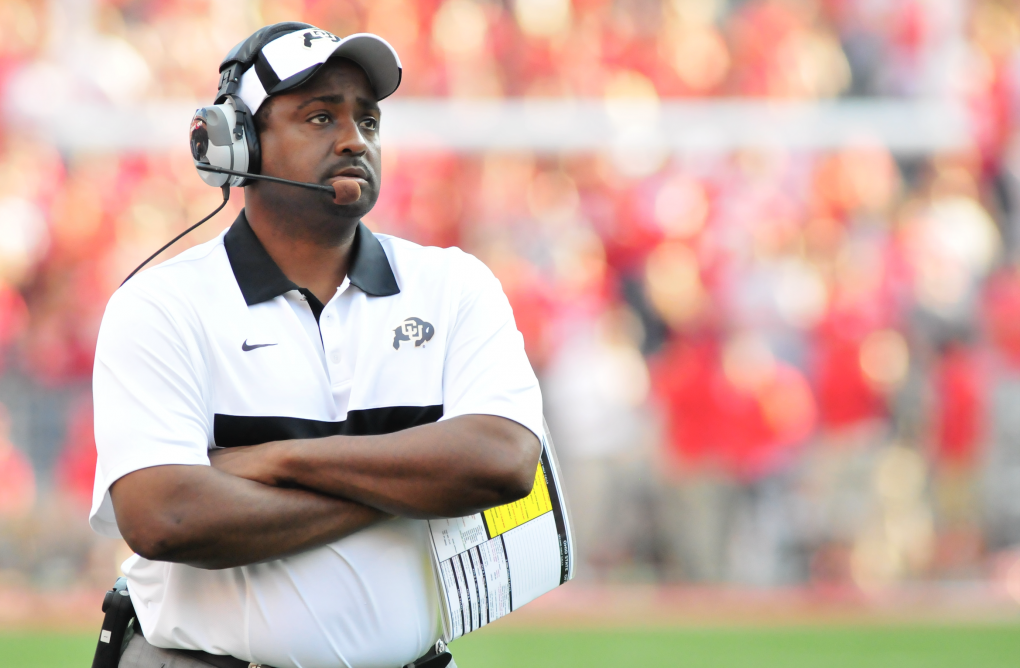
"caption": "Jon Embree, pictured here when he was head coach for the Ohio State Buckeyes, recently parted ways with the San Francisco 49ers after reportedly being asked to take a 60% pay cut.",
"description": null,
"title": "Jon Embree, pictured here when he was head coach for the Ohio State Buckeyes, recently parted ways with the San Francisco 49ers after reportedly being asked to take a 60% pay cut.",
"credit": "David Dermer/ Diamond Images/ Getty Images",
"status": "inherit",
"altTag": "A Black coach stands, arms folded, headphones on, watching the field closely. Packed stands are blurred out in the distance.",
"isLoading": false,
"fetchFailed": false
}
},
"audioPlayerReducer": {
"postId": "stream_live",
"isPaused": true,
"isPlaying": false,
"pfsActive": false,
"pledgeModalIsOpen": true,
"playerDrawerIsOpen": false,
"liveAudioPlayStartedAt": 0,
"liveAudioPlayContext": ""
},
"authorsReducer": {
"byline_arts_13914214": {
"type": "authors",
"id": "byline_arts_13914214",
"meta": {
"override": true
},
"slug": "byline_arts_13914214",
"name": "Nick Lozito",
"isLoading": false
},
"byline_arts_13913451": {
"type": "authors",
"id": "byline_arts_13913451",
"meta": {
"override": true
},
"slug": "byline_arts_13913451",
"name": "Nick Lozito",
"isLoading": false
},
"byline_arts_13912380": {
"type": "authors",
"id": "byline_arts_13912380",
"meta": {
"override": true
},
"slug": "byline_arts_13912380",
"name": "Malaka Gharib",
"isLoading": false
},
"byline_arts_13909705": {
"type": "authors",
"id": "byline_arts_13909705",
"meta": {
"override": true
},
"slug": "byline_arts_13909705",
"name": "Rachel Treisman",
"isLoading": false
},
"byline_arts_13909460": {
"type": "authors",
"id": "byline_arts_13909460",
"meta": {
"override": true
},
"slug": "byline_arts_13909460",
"name": "Bill Chappell",
"isLoading": false
},
"byline_arts_13909205": {
"type": "authors",
"id": "byline_arts_13909205",
"meta": {
"override": true
},
"slug": "byline_arts_13909205",
"name": "Bill Chappell",
"isLoading": false
},
"byline_arts_13909079": {
"type": "authors",
"id": "byline_arts_13909079",
"meta": {
"override": true
},
"slug": "byline_arts_13909079",
"name": "Nell Clark",
"isLoading": false
},
"byline_arts_13908958": {
"type": "authors",
"id": "byline_arts_13908958",
"meta": {
"override": true
},
"slug": "byline_arts_13908958",
"name": "Scott Neuman",
"isLoading": false
},
"ralexandra": {
"type": "authors",
"id": "11242",
"meta": {
"index": "authors_1716337520",
"id": "11242",
"found": true
},
"name": "Rae Alexandra",
"firstName": "Rae",
"lastName": "Alexandra",
"slug": "ralexandra",
"email": "ralexandra@kqed.org",
"display_author_email": true,
"staff_mastheads": [],
"title": "Reporter/Producer",
"bio": "Rae Alexandra is a Reporter/Producer for KQED Arts & Culture, and the creator/author of the \u003ca href=\"https://www.kqed.org/arts/program/rebel-girls-from-bay-area-history\">Rebel Girls From Bay Area History\u003c/a> and \u003ca href=\"https://www.kqed.org/bizarrebayarea\">Bizarre Bay Area\u003c/a> series. Her debut book, \u003ca href=\"https://citylights.com/politics-current-events-history/unsung-heroines35-women-who-changed/\">Unsung Heroines: 35 Women Who Changed the Bay Area\u003c/a> was published by City Lights in March 2026. In 2023, Rae was awarded an SPJ Excellence in Journalism Award for Arts & Culture. Rae was born and raised in Wales and subsequently — even after two decades in Northern California — still uses phrases that regularly baffle her coworkers.",
"avatar": "https://secure.gravatar.com/avatar/edfee8176c80cc0a382b051190f5341997df378a934a5774dcb0977732dfd401?s=600&d=blank&r=g",
"twitter": null,
"bluesky": null,
"facebook": null,
"instagram": null,
"linkedin": null,
"sites": [
{
"site": "arts",
"roles": [
"subscriber"
]
},
{
"site": "news",
"roles": [
"subscriber"
]
},
{
"site": "pop",
"roles": [
"subscriber"
]
},
{
"site": "bayareabites",
"roles": [
"subscriber"
]
},
{
"site": "science",
"roles": [
"subscriber"
]
}
],
"headData": {
"title": "Rae Alexandra | KQED",
"description": "Reporter/Producer",
"ogImgSrc": "https://secure.gravatar.com/avatar/edfee8176c80cc0a382b051190f5341997df378a934a5774dcb0977732dfd401?s=600&d=blank&r=g",
"twImgSrc": "https://secure.gravatar.com/avatar/edfee8176c80cc0a382b051190f5341997df378a934a5774dcb0977732dfd401?s=600&d=blank&r=g"
},
"isLoading": false,
"link": "/author/ralexandra"
},
"ogpenn": {
"type": "authors",
"id": "11491",
"meta": {
"index": "authors_1716337520",
"id": "11491",
"found": true
},
"name": "Pendarvis Harshaw",
"firstName": "Pendarvis",
"lastName": "Harshaw",
"slug": "ogpenn",
"email": "ogpenn@gmail.com",
"display_author_email": false,
"staff_mastheads": [
"arts"
],
"title": "Community Engagement Reporter",
"bio": "Pendarvis Harshaw is an educator, host and writer with KQED Arts.",
"avatar": "https://secure.gravatar.com/avatar/972b77ee8e3f346ae2b00622661187fbfabd059b5693bbdc1475ea7a722fd4cd?s=600&d=blank&r=g",
"twitter": null,
"bluesky": null,
"facebook": null,
"instagram": "ogpenn",
"linkedin": null,
"sites": [
{
"site": "arts",
"roles": [
"administrator"
]
},
{
"site": "news",
"roles": [
"editor"
]
},
{
"site": "bayareabites",
"roles": [
"author"
]
},
{
"site": "hiphop",
"roles": [
"editor"
]
}
],
"headData": {
"title": "Pendarvis Harshaw | KQED",
"description": "Community Engagement Reporter",
"ogImgSrc": "https://secure.gravatar.com/avatar/972b77ee8e3f346ae2b00622661187fbfabd059b5693bbdc1475ea7a722fd4cd?s=600&d=blank&r=g",
"twImgSrc": "https://secure.gravatar.com/avatar/972b77ee8e3f346ae2b00622661187fbfabd059b5693bbdc1475ea7a722fd4cd?s=600&d=blank&r=g"
},
"isLoading": false,
"link": "/author/ogpenn"
},
"jsorapuru": {
"type": "authors",
"id": "11792",
"meta": {
"index": "authors_1716337520",
"id": "11792",
"found": true
},
"name": "Julian E.J. Sorapuru",
"firstName": "Julian",
"lastName": "Sorapuru",
"slug": "jsorapuru",
"email": "jsorapuru@kqed.org",
"display_author_email": true,
"staff_mastheads": [],
"title": "Arts & Culture Reporter",
"bio": "Julian E.J. Sorapuru is an Arts & Culture Intern at KQED. Prior to joining KQED Arts, he interned at both POLITICO, covering transportation policy, and \u003cem>The Times-Picayune\u003c/em>, covering government and politics in his hometown of New Orleans, LA. Julian was the first and only Black male Editor-in-Chief in the 119 year history of the University of San Francisco's student newspaper, the\u003cem> San Francisco Foghorn\u003c/em>. He currently resides in San Francisco, CA and enjoys soccer, photography, and reading.",
"avatar": "https://secure.gravatar.com/avatar/e4d0156d1244f96b87927aa011d794a8?s=600&d=blank&r=g",
"twitter": "JulianSorapuru",
"facebook": null,
"instagram": null,
"linkedin": null,
"sites": [
{
"site": "arts",
"roles": [
"editor"
]
}
],
"headData": {
"title": "Julian E.J. Sorapuru | KQED",
"description": "Arts & Culture Reporter",
"ogImgSrc": "https://secure.gravatar.com/avatar/e4d0156d1244f96b87927aa011d794a8?s=600&d=blank&r=g",
"twImgSrc": "https://secure.gravatar.com/avatar/e4d0156d1244f96b87927aa011d794a8?s=600&d=blank&r=g"
},
"isLoading": false,
"link": "/author/jsorapuru"
}
},
"pagesReducer": {
"arts_category_sports": {
"type": "terms",
"id": "arts_13238",
"meta": {
"index": "terms_1716263798",
"site": "arts",
"id": "13238",
"score": 12.071877
},
"featImg": null,
"name": "Sports",
"description": null,
"taxonomy": "category",
"headData": {
"twImgId": null,
"twTitle": null,
"ogTitle": null,
"ogImgId": null,
"twDescription": null,
"description": null,
"title": "Sports Archives | KQED Arts",
"ogDescription": null
},
"ttid": 13250,
"slug": "sports",
"isLoading": false,
"title": "Sports",
"pageMeta": {
"site": "arts",
"WpPageTemplate": "page-topic-editorial",
"currentPage": 13
},
"blocks": [
{
"blockName": "kqed/post-list",
"attrs": {
"layout": "cardArticle2",
"query": "posts/arts?category=sports",
"seeMore": false,
"paginated": true,
"page": 13
}
},
{
"blockName": "kqed/ad"
}
]
}
},
"pfsSessionReducer": {},
"postsReducer": {
"stream_live": {
"type": "live",
"id": "stream_live",
"audioUrl": "https://streams.kqed.org/kqedradio",
"title": "Live Stream",
"excerpt": "Live Stream information currently unavailable.",
"link": "/radio",
"featImg": "",
"label": {
"name": "KQED Live",
"link": "/"
}
},
"stream_kqedNewscast": {
"type": "posts",
"id": "stream_kqedNewscast",
"audioUrl": "https://www.kqed.org/.stream/anon/radio/RDnews/newscast.mp3?_=1",
"title": "KQED Newscast",
"featImg": "",
"label": {
"name": "88.5 FM",
"link": "/"
}
},
"arts_13915838": {
"type": "posts",
"id": "arts_13915838",
"meta": {
"index": "posts_1716263798",
"site": "arts",
"id": "13915838",
"score": null,
"sort": [
1657810838000
]
},
"parent": 0,
"labelTerm": {
"site": "arts"
},
"blocks": [],
"publishDate": 1657810838,
"format": "standard",
"title": "Why We Still Need ‘A League of Their Own’ 30 Years On",
"headTitle": "Why We Still Need ‘A League of Their Own’ 30 Years On | KQED",
"content": "\u003cp>This month marks 30 years since \u003cem>A League of Their Own\u003c/em> first hit movie theaters. Starring Geena Davis and directed by Penny Marshall, the movie introduced 1992 audiences to the \u003ca href=\"https://en.wikipedia.org/wiki/All-American_Girls_Professional_Baseball_League\">All-American Girls Professional Baseball League\u003c/a>, put together in 1943 when male athletes were in short supply because of World War II. In the movie, the league’s story is told through the eyes of a fictionalized version of the Rockford Peaches—a real-life team that, in their day, won more league championships than any of their peers.\u003c/p>\n\u003cp>Three decades on, \u003cem>League\u003c/em> remains worthy of repeat viewings because of how much heart it has. It’s a story about how working on a team can make you a stronger and more empathetic person. It’s about female solidarity and women supporting women—something mainstream cinema does not have a great track record of portraying. It’s a film that’s imbued with a gratitude for the female athletes who broke boundaries in the 1940s, and did so with grace. The movie also remains steeped in wish fulfillment, because women’s professional baseball existed for such a short period of time. (The AAGPBL was cast aside in 1954 despite five new teams joining the league as soon as the war ended.)\u003c/p>\n\u003cp>https://www.youtube.com/watch?v=kZihpHXsGLE\u003c/p>\n\u003cp>\u003cem>League\u003c/em> somehow also succeeds in highlighting the appalling sexism female ball-players faced, but in a humorous way. Quite a feat given that the women of the AAGPBL were subject to mandatory attendance in charm school, makeup and hair length requirements, and a deeply impractical uniform that consisted of a mini dress and satin shorts. In the movie, the women simply roll their eyes, grit their teeth and get on with the task at hand, eyes trained on the bigger picture.\u003c/p>\n\u003cp>[aside postid='pop_28980']If there is a criticism to be leveled at \u003cem>A League of Their Own\u003c/em>, it’s in its lack of diversity. The movie failed to reflect the number of queer women who played for the AAGPBL, and it failed to adequately explain why women of color were excluded from the league. (It’s worth remembering that legendary pitcher \u003ca href=\"https://en.wikipedia.org/wiki/Mamie_Johnson\" target=\"_blank\" rel=\"noopener noreferrer\">Mamie Johnson\u003c/a> was rejected because she was Black. She wound up playing alongside men in the \u003ca href=\"https://en.wikipedia.org/wiki/Negro_league_baseball\" target=\"_blank\" rel=\"noopener noreferrer\">Negro Leagues\u003c/a>.)\u003c/p>\n\u003cp>[ad fullwidth]\u003c/p>\n\u003cp>A \u003cem>League of Their Own\u003c/em> reboot coming to Amazon Prime this August, courtesy of \u003cem>Broad City\u003c/em>’s Abbi Jacobson and producer Will Graham, promises to fill in the gaps left by the original movie. Hopes are already high for the series. Penny Marshall was consulted and gave her blessing, and Rosie O’Donnell—who originally played third baseman Doris Murphy—returns in the new series as a bartender named Vi.\u003c/p>\n\u003cp>https://www.youtube.com/watch?v=hwp_N4CPZpU\u003c/p>\n\u003cp>In revisiting the story of the AAGPBL, it’s impossible not to think about the bold individuals who made up the teams. In its 11 years of operation, the league introduced America to 600 female ball-players from all over America (as well as from Canada and Cuba)—including a handful from the Bay Area.\u003c/p>\n\u003cp>There was Dorothy “Dottie” Stolze from Alameda who, in 1942, left her office job to work as an aircraft mechanic as part of the war effort. She was later recruited to the AAGPBL after grabbing headlines while playing softball with her Alameda team. In her pro baseball life, Stolze played with the Muskegon Lassies (1946–1949), Racine Belles (1949), Peoria Redwings (1950–1951) \u003cem>and\u003c/em> Grand Rapids Chicks (1952). She is considered one of the most versatile players in AAGPBL history, playing every position on the field except pitcher. After her retirement from baseball, Stolze became a P.E. teacher and lifelong supporter of the Oakland A’s.\u003c/p>\n\u003cp>There was also Jerre DeNoble from Oakland, an outfielder who played for the Peoria Redwings and Grand Rapids Chicks. DeNoble’s brothers were more interested in music than sports, so her father played ball with her instead. DeNoble’s career was cut short because of shoulder and leg injuries, as well as a broken finger.\u003c/p>\n\u003cfigure id=\"attachment_13915841\" class=\"wp-caption aligncenter\" style=\"max-width: 800px\">\u003cimg loading=\"lazy\" decoding=\"async\" class=\"size-medium wp-image-13915841\" src=\"https://ww2.kqed.org/app/uploads/sites/2/2022/07/GettyImages-73858958-800x619.jpg\" alt=\"\" width=\"800\" height=\"619\" srcset=\"https://cdn.kqed.org/wp-content/uploads/sites/2/2022/07/GettyImages-73858958-800x619.jpg 800w, https://cdn.kqed.org/wp-content/uploads/sites/2/2022/07/GettyImages-73858958-1020x789.jpg 1020w, https://cdn.kqed.org/wp-content/uploads/sites/2/2022/07/GettyImages-73858958-160x124.jpg 160w, https://cdn.kqed.org/wp-content/uploads/sites/2/2022/07/GettyImages-73858958-768x594.jpg 768w, https://cdn.kqed.org/wp-content/uploads/sites/2/2022/07/GettyImages-73858958-1536x1188.jpg 1536w, https://cdn.kqed.org/wp-content/uploads/sites/2/2022/07/GettyImages-73858958-2048x1584.jpg 2048w, https://cdn.kqed.org/wp-content/uploads/sites/2/2022/07/GettyImages-73858958-1920x1485.jpg 1920w\" sizes=\"(max-width: 800px) 100vw, 800px\">\u003cfigcaption class=\"wp-caption-text\">The original, real-life Rockford Peaches of the All American Girls Baseball League in 1944. \u003ccite>(Mark Rucker/Transcendental Graphics, Getty Images)\u003c/cite>\u003c/figcaption>\u003c/figure>\n\u003cp>Claire “Buttons” Lobrovich was an outfielder hailing from Campbell, who played for the Kenosha Comets and Rockford Peaches in 1947 and ’48. She helped the Peaches take home the AAGPBL Championship Title in ’48. After her retirement from pro baseball, she returned to softball, playing for the Stockton Vikingettes and Los Gatos Elliots. Lobrovich married a semi-professional ball player named John Kumpotich in 1951, and lived to be 88.\u003c/p>\n\u003cp>[aside postid='arts_13876835']Finally, there was Dolores “Dodie” Wilson from Stockton, an outfielder for the Peoria Redwings and Chicago Colleens in ’47 and ’48 respectively. She played 79 games with a respectable batting average of .217, and was a fan favorite thanks to her stunning good looks. Wilson was inducted into Stockton’s Athletic Hall of Fame in 1977, and the west diamond in Stockton’s \u003ca href=\"https://yellow.place/en/oak-park-pony-baseball-softball-stockton-usa\" target=\"_blank\" rel=\"noopener noreferrer\">Oak Park Softball Complex\u003c/a> is named after her.\u003c/p>\n\u003cp>\u003cem>A League of Their Own\u003c/em> is a story that remains worth telling. And not just because the women who played professional baseball in the 1940s will always deserve a spotlight. It’s a story worth telling as long as female, trans and nonbinary athletes continue to face sexist and discriminatory battles. (\u003ca href=\"https://www.lgbtmap.org/equality-maps/sports_participation_bans\" target=\"_blank\" rel=\"noopener noreferrer\">Sixteen states\u003c/a> are currently enforcing bans on transgender students from participating in sports.) It’s a story worth telling as long as women’s teams are being paid significantly less than men’s. (In 2019, \u003ca href=\"https://www.forbes.com/sites/andrewzimbalist/2019/04/10/female-athletes-are-undervalued-in-both-money-and-media-terms/?sh=75bd827213ed\" target=\"_blank\" rel=\"noopener noreferrer\">NBA players received 50% of league revenue, while WNBA players received around 25%\u003c/a>.)\u003c/p>\n\u003cp>\u003c/p>\n\u003cp>In 2022 then, \u003cem>A League of Their Own\u003c/em> is a pertinent reminder that athletes facing discrimination can no longer simply roll their eyes and grit their teeth. As \u003ca href=\"https://www.kqed.org/arts/13909705/the-u-s-national-womens-soccer-team-wins-24-million-in-equal-pay-settlement\" target=\"_blank\" rel=\"noopener noreferrer\">the U.S. Women’s National Soccer team has so doggedly proven\u003c/a>, the only way to create change is to demand it.\u003c/p>\n\n",
"stats": {
"hasVideo": true,
"hasChartOrMap": false,
"hasAudio": false,
"hasPolis": false,
"wordCount": 1026,
"hasGoogleForm": false,
"hasGallery": false,
"hasHearkenModule": false,
"iframeSrcs": [],
"paragraphCount": 14
},
"modified": 1705006619,
"excerpt": "The classic comedy turns 30 this month, just in time for an Abbi Jacobson reboot on Amazon Prime.",
"headData": {
"twImgId": "",
"twTitle": "",
"ogTitle": "",
"ogImgId": "",
"twDescription": "",
"description": "The classic comedy turns 30 this month, just in time for an Abbi Jacobson reboot on Amazon Prime.",
"title": "Why We Still Need ‘A League of Their Own’ 30 Years On | KQED",
"ogDescription": "",
"schema": {
"@context": "https://schema.org",
"@type": "Article",
"headline": "Why We Still Need ‘A League of Their Own’ 30 Years On",
"datePublished": "2022-07-14T08:00:38-07:00",
"dateModified": "2024-01-11T12:56:59-08:00",
"image": "https://cdn.kqed.org/wp-content/uploads/2020/02/KQED-OG-Image@1x.png"
}
},
"guestAuthors": [],
"slug": "a-league-of-their-own-1992-abbi-jacobson-amazon-prime-penny-marshall-madonna",
"status": "publish",
"templateType": "standard",
"excludeFromSiteSearch": "Include",
"featuredImageType": "standard",
"sticky": false,
"path": "/arts/13915838/a-league-of-their-own-1992-abbi-jacobson-amazon-prime-penny-marshall-madonna",
"audioTrackLength": null,
"parsedContent": [
{
"type": "contentString",
"content": "\u003cdiv class=\"post-body\">\u003cp>\u003cp>This month marks 30 years since \u003cem>A League of Their Own\u003c/em> first hit movie theaters. Starring Geena Davis and directed by Penny Marshall, the movie introduced 1992 audiences to the \u003ca href=\"https://en.wikipedia.org/wiki/All-American_Girls_Professional_Baseball_League\">All-American Girls Professional Baseball League\u003c/a>, put together in 1943 when male athletes were in short supply because of World War II. In the movie, the league’s story is told through the eyes of a fictionalized version of the Rockford Peaches—a real-life team that, in their day, won more league championships than any of their peers.\u003c/p>\n\u003cp>Three decades on, \u003cem>League\u003c/em> remains worthy of repeat viewings because of how much heart it has. It’s a story about how working on a team can make you a stronger and more empathetic person. It’s about female solidarity and women supporting women—something mainstream cinema does not have a great track record of portraying. It’s a film that’s imbued with a gratitude for the female athletes who broke boundaries in the 1940s, and did so with grace. The movie also remains steeped in wish fulfillment, because women’s professional baseball existed for such a short period of time. (The AAGPBL was cast aside in 1954 despite five new teams joining the league as soon as the war ended.)\u003c/p>\u003c/p>\u003cp>\u003cspan class='utils-parseShortcode-shortcodes-__youtubeShortcode__embedYoutube'>\n \u003cspan class='utils-parseShortcode-shortcodes-__youtubeShortcode__embedYoutubeInside'>\n \u003ciframe\n loading='lazy'\n class='utils-parseShortcode-shortcodes-__youtubeShortcode__youtubePlayer'\n type='text/html'\n src='//www.youtube.com/embed/kZihpHXsGLE'\n title='//www.youtube.com/embed/kZihpHXsGLE'\n allowfullscreen='true'\n style='border:0;'>\u003c/iframe>\n \u003c/span>\n \u003c/span>\u003c/p>\u003cp>\u003cp>\u003cem>League\u003c/em> somehow also succeeds in highlighting the appalling sexism female ball-players faced, but in a humorous way. Quite a feat given that the women of the AAGPBL were subject to mandatory attendance in charm school, makeup and hair length requirements, and a deeply impractical uniform that consisted of a mini dress and satin shorts. In the movie, the women simply roll their eyes, grit their teeth and get on with the task at hand, eyes trained on the bigger picture.\u003c/p>\n\u003cp>\u003c/p>\u003c/div>",
"attributes": {
"named": {},
"numeric": []
}
},
{
"type": "component",
"content": "",
"name": "aside",
"attributes": {
"named": {
"postid": "pop_28980",
"label": ""
},
"numeric": []
}
},
{
"type": "contentString",
"content": "\u003cdiv class=\"post-body\">\u003cp>If there is a criticism to be leveled at \u003cem>A League of Their Own\u003c/em>, it’s in its lack of diversity. The movie failed to reflect the number of queer women who played for the AAGPBL, and it failed to adequately explain why women of color were excluded from the league. (It’s worth remembering that legendary pitcher \u003ca href=\"https://en.wikipedia.org/wiki/Mamie_Johnson\" target=\"_blank\" rel=\"noopener noreferrer\">Mamie Johnson\u003c/a> was rejected because she was Black. She wound up playing alongside men in the \u003ca href=\"https://en.wikipedia.org/wiki/Negro_league_baseball\" target=\"_blank\" rel=\"noopener noreferrer\">Negro Leagues\u003c/a>.)\u003c/p>\n\u003cp>\u003c/p>\u003c/div>",
"attributes": {
"named": {},
"numeric": []
}
},
{
"type": "component",
"content": "",
"name": "ad",
"attributes": {
"named": {
"label": "fullwidth"
},
"numeric": [
"fullwidth"
]
}
},
{
"type": "contentString",
"content": "\u003cdiv class=\"post-body\">\u003cp>\u003c/p>\n\u003cp>A \u003cem>League of Their Own\u003c/em> reboot coming to Amazon Prime this August, courtesy of \u003cem>Broad City\u003c/em>’s Abbi Jacobson and producer Will Graham, promises to fill in the gaps left by the original movie. Hopes are already high for the series. Penny Marshall was consulted and gave her blessing, and Rosie O’Donnell—who originally played third baseman Doris Murphy—returns in the new series as a bartender named Vi.\u003c/p>\u003c/p>\u003cp>\u003cspan class='utils-parseShortcode-shortcodes-__youtubeShortcode__embedYoutube'>\n \u003cspan class='utils-parseShortcode-shortcodes-__youtubeShortcode__embedYoutubeInside'>\n \u003ciframe\n loading='lazy'\n class='utils-parseShortcode-shortcodes-__youtubeShortcode__youtubePlayer'\n type='text/html'\n src='//www.youtube.com/embed/hwp_N4CPZpU'\n title='//www.youtube.com/embed/hwp_N4CPZpU'\n allowfullscreen='true'\n style='border:0;'>\u003c/iframe>\n \u003c/span>\n \u003c/span>\u003c/p>\u003cp>\u003cp>In revisiting the story of the AAGPBL, it’s impossible not to think about the bold individuals who made up the teams. In its 11 years of operation, the league introduced America to 600 female ball-players from all over America (as well as from Canada and Cuba)—including a handful from the Bay Area.\u003c/p>\n\u003cp>There was Dorothy “Dottie” Stolze from Alameda who, in 1942, left her office job to work as an aircraft mechanic as part of the war effort. She was later recruited to the AAGPBL after grabbing headlines while playing softball with her Alameda team. In her pro baseball life, Stolze played with the Muskegon Lassies (1946–1949), Racine Belles (1949), Peoria Redwings (1950–1951) \u003cem>and\u003c/em> Grand Rapids Chicks (1952). She is considered one of the most versatile players in AAGPBL history, playing every position on the field except pitcher. After her retirement from baseball, Stolze became a P.E. teacher and lifelong supporter of the Oakland A’s.\u003c/p>\n\u003cp>There was also Jerre DeNoble from Oakland, an outfielder who played for the Peoria Redwings and Grand Rapids Chicks. DeNoble’s brothers were more interested in music than sports, so her father played ball with her instead. DeNoble’s career was cut short because of shoulder and leg injuries, as well as a broken finger.\u003c/p>\n\u003cfigure id=\"attachment_13915841\" class=\"wp-caption aligncenter\" style=\"max-width: 800px\">\u003cimg loading=\"lazy\" decoding=\"async\" class=\"size-medium wp-image-13915841\" src=\"https://ww2.kqed.org/app/uploads/sites/2/2022/07/GettyImages-73858958-800x619.jpg\" alt=\"\" width=\"800\" height=\"619\" srcset=\"https://cdn.kqed.org/wp-content/uploads/sites/2/2022/07/GettyImages-73858958-800x619.jpg 800w, https://cdn.kqed.org/wp-content/uploads/sites/2/2022/07/GettyImages-73858958-1020x789.jpg 1020w, https://cdn.kqed.org/wp-content/uploads/sites/2/2022/07/GettyImages-73858958-160x124.jpg 160w, https://cdn.kqed.org/wp-content/uploads/sites/2/2022/07/GettyImages-73858958-768x594.jpg 768w, https://cdn.kqed.org/wp-content/uploads/sites/2/2022/07/GettyImages-73858958-1536x1188.jpg 1536w, https://cdn.kqed.org/wp-content/uploads/sites/2/2022/07/GettyImages-73858958-2048x1584.jpg 2048w, https://cdn.kqed.org/wp-content/uploads/sites/2/2022/07/GettyImages-73858958-1920x1485.jpg 1920w\" sizes=\"(max-width: 800px) 100vw, 800px\">\u003cfigcaption class=\"wp-caption-text\">The original, real-life Rockford Peaches of the All American Girls Baseball League in 1944. \u003ccite>(Mark Rucker/Transcendental Graphics, Getty Images)\u003c/cite>\u003c/figcaption>\u003c/figure>\n\u003cp>Claire “Buttons” Lobrovich was an outfielder hailing from Campbell, who played for the Kenosha Comets and Rockford Peaches in 1947 and ’48. She helped the Peaches take home the AAGPBL Championship Title in ’48. After her retirement from pro baseball, she returned to softball, playing for the Stockton Vikingettes and Los Gatos Elliots. Lobrovich married a semi-professional ball player named John Kumpotich in 1951, and lived to be 88.\u003c/p>\n\u003cp>\u003c/p>\u003c/div>",
"attributes": {
"named": {},
"numeric": []
}
},
{
"type": "component",
"content": "",
"name": "aside",
"attributes": {
"named": {
"postid": "arts_13876835",
"label": ""
},
"numeric": []
}
},
{
"type": "contentString",
"content": "\u003cdiv class=\"post-body\">\u003cp>Finally, there was Dolores “Dodie” Wilson from Stockton, an outfielder for the Peoria Redwings and Chicago Colleens in ’47 and ’48 respectively. She played 79 games with a respectable batting average of .217, and was a fan favorite thanks to her stunning good looks. Wilson was inducted into Stockton’s Athletic Hall of Fame in 1977, and the west diamond in Stockton’s \u003ca href=\"https://yellow.place/en/oak-park-pony-baseball-softball-stockton-usa\" target=\"_blank\" rel=\"noopener noreferrer\">Oak Park Softball Complex\u003c/a> is named after her.\u003c/p>\n\u003cp>\u003cem>A League of Their Own\u003c/em> is a story that remains worth telling. And not just because the women who played professional baseball in the 1940s will always deserve a spotlight. It’s a story worth telling as long as female, trans and nonbinary athletes continue to face sexist and discriminatory battles. (\u003ca href=\"https://www.lgbtmap.org/equality-maps/sports_participation_bans\" target=\"_blank\" rel=\"noopener noreferrer\">Sixteen states\u003c/a> are currently enforcing bans on transgender students from participating in sports.) It’s a story worth telling as long as women’s teams are being paid significantly less than men’s. (In 2019, \u003ca href=\"https://www.forbes.com/sites/andrewzimbalist/2019/04/10/female-athletes-are-undervalued-in-both-money-and-media-terms/?sh=75bd827213ed\" target=\"_blank\" rel=\"noopener noreferrer\">NBA players received 50% of league revenue, while WNBA players received around 25%\u003c/a>.)\u003c/p>\n\u003cp>\u003c/p>\n\u003cp>In 2022 then, \u003cem>A League of Their Own\u003c/em> is a pertinent reminder that athletes facing discrimination can no longer simply roll their eyes and grit their teeth. As \u003ca href=\"https://www.kqed.org/arts/13909705/the-u-s-national-womens-soccer-team-wins-24-million-in-equal-pay-settlement\" target=\"_blank\" rel=\"noopener noreferrer\">the U.S. Women’s National Soccer team has so doggedly proven\u003c/a>, the only way to create change is to demand it.\u003c/p>\n\n\u003c/div>\u003c/p>",
"attributes": {
"named": {},
"numeric": []
}
}
],
"link": "/arts/13915838/a-league-of-their-own-1992-abbi-jacobson-amazon-prime-penny-marshall-madonna",
"authors": [
"11242"
],
"categories": [
"arts_1",
"arts_7862",
"arts_74",
"arts_13238"
],
"tags": [
"arts_10092",
"arts_10342",
"arts_12322"
],
"featImg": "arts_13915929",
"label": "arts"
},
"arts_13914214": {
"type": "posts",
"id": "arts_13914214",
"meta": {
"index": "posts_1716263798",
"site": "arts",
"id": "13914214",
"score": null,
"sort": [
1654095647000
]
},
"parent": 0,
"labelTerm": {
"site": "arts"
},
"blocks": [],
"publishDate": 1654095647,
"format": "standard",
"title": "Meet the East Bay Shop Cranking Out Warriors T-Shirts for the Finals",
"headTitle": "Meet the East Bay Shop Cranking Out Warriors T-Shirts for the Finals | KQED",
"content": "\u003cp>Jeremy Castro couldn’t stand watching Warriors fans \u003ca href=\"https://www.youtube.com/watch?v=g6NbSFIH7tU\" rel=\"noopener noreferrer\" target=\"_blank\">throw their gold promotional shirts\u003c/a> at NBA analyst and noted Warriors hater Charles Barkley on national TV. After all, he’s trying to cut waste from his San Leandro screen printing shop.\u003c/p>\n\u003cp>“That’s not what they’re for,” says Castro, a day after the Warriors eliminated the Dallas Mavericks and fans unleashed on Barkley outside of San Francisco’s Chase Center.\u003c/p>\n\u003cp>It’s a Friday afternoon, and in the humming warehouse of Castro’s shop \u003ca href=\"https://www.instagram.com/brandmarinade/?hl=en\" rel=\"noopener noreferrer\" target=\"_blank\">Brand Marinade\u003c/a>, production has started on the NBA Finals variation of “Gold Blooded” shirts that will be draped over 18,000 seats before each Warriors home game. Golden State faces the Boston Celtics in search of its fourth title in eight seasons, with Game 1 on Thursday, June 2, at Chase Center.\u003c/p>\n\u003cp>In the world of sports merchandising, Brand Marinade is a relatively small, local operation working around the clock to meet demand for its largest contract yet. Rooted in the Bay Area with a hip-hop background, the company is a natural fit with the Warriors—even while navigating supply issues and reacting quickly to wins and losses. \u003c/p>\n\u003cfigure id=\"attachment_13914243\" class=\"wp-caption aligncenter\" style=\"max-width: 800px\">\u003cimg loading=\"lazy\" decoding=\"async\" src=\"https://ww2.kqed.org/app/uploads/sites/2/2022/05/006_KQEDArts_WarriorsFinalsTShirts_05272022-800x533.jpg\" alt=\"\" width=\"800\" height=\"533\" class=\"size-medium wp-image-13914243\" srcset=\"https://cdn.kqed.org/wp-content/uploads/sites/2/2022/05/006_KQEDArts_WarriorsFinalsTShirts_05272022-800x533.jpg 800w, https://cdn.kqed.org/wp-content/uploads/sites/2/2022/05/006_KQEDArts_WarriorsFinalsTShirts_05272022-1020x680.jpg 1020w, https://cdn.kqed.org/wp-content/uploads/sites/2/2022/05/006_KQEDArts_WarriorsFinalsTShirts_05272022-160x107.jpg 160w, https://cdn.kqed.org/wp-content/uploads/sites/2/2022/05/006_KQEDArts_WarriorsFinalsTShirts_05272022-768x512.jpg 768w, https://cdn.kqed.org/wp-content/uploads/sites/2/2022/05/006_KQEDArts_WarriorsFinalsTShirts_05272022-1536x1024.jpg 1536w, https://cdn.kqed.org/wp-content/uploads/sites/2/2022/05/006_KQEDArts_WarriorsFinalsTShirts_05272022.jpg 1920w\" sizes=\"(max-width: 800px) 100vw, 800px\">\u003cfigcaption class=\"wp-caption-text\">Rich Diaz prepares Warriors finals t-shirts to print on the sleeve at Brand Marinade screen printing shop in San Leandro on May 27, 2022. \u003ccite>(Beth LaBerge/KQED)\u003c/cite>\u003c/figcaption>\u003c/figure>\n\u003cp>“Having people wear something with pride is my passion,” says Castro, 45, who believes an arena flooded in gold can provide a home-court advantage. He may be right: the Warriors are 9-0 at home this postseason.\u003c/p>\n\u003cp>[ad fullwidth]\u003c/p>\n\u003cp>It takes five days for Castro’s team to print 20,000 shirts—two-plus days if they work through the night, rotating shifts. But, as he puts it, “The energy from the shirts is exponential.”\u003c/p>\n\u003ch2>Predicting Wins and Losses\u003c/h2>\n\u003cp>If you’re struggling to find an extra-large gold shirt this summer, Todd Schneiderman is to blame. His Nashville-based company, Something Inked, is the Warriors’ promotions partner. In January, the vice president of sales evaluated the national sports landscape and purchased large quantities of color shirts. The Warriors’ gold shirts could have easily been gold Michigan Wolverines championship shirts, or gold Nashville Predators playoff shirts, or gold Indiana Pacers… (actually, never mind). This year, blue shirts expected to be printed for the Los Angeles Clippers, who missed the playoffs, ended up with Mavericks fans for the series against the Warriors.\u003c/p>\n\u003cp>The promotional shirts are extra large because, as Castro explains, “A fat guy can squeeze into it, a small person can swear it into a dress or to bed, women can cut it up as a halter top. Then you don’t have to deal with the size issue, which is the biggest challenge with T-shirts.”\u003c/p>\n\u003cfigure id=\"attachment_13914238\" class=\"wp-caption aligncenter\" style=\"max-width: 800px\">\u003cimg loading=\"lazy\" decoding=\"async\" src=\"https://ww2.kqed.org/app/uploads/sites/2/2022/05/003_KQEDArts_WarriorsFinalsTShirts_05272022-800x533.jpg\" alt=\"\" width=\"800\" height=\"533\" class=\"size-medium wp-image-13914238\" srcset=\"https://cdn.kqed.org/wp-content/uploads/sites/2/2022/05/003_KQEDArts_WarriorsFinalsTShirts_05272022-800x533.jpg 800w, https://cdn.kqed.org/wp-content/uploads/sites/2/2022/05/003_KQEDArts_WarriorsFinalsTShirts_05272022-1020x680.jpg 1020w, https://cdn.kqed.org/wp-content/uploads/sites/2/2022/05/003_KQEDArts_WarriorsFinalsTShirts_05272022-160x107.jpg 160w, https://cdn.kqed.org/wp-content/uploads/sites/2/2022/05/003_KQEDArts_WarriorsFinalsTShirts_05272022-768x512.jpg 768w, https://cdn.kqed.org/wp-content/uploads/sites/2/2022/05/003_KQEDArts_WarriorsFinalsTShirts_05272022-1536x1024.jpg 1536w, https://cdn.kqed.org/wp-content/uploads/sites/2/2022/05/003_KQEDArts_WarriorsFinalsTShirts_05272022.jpg 1920w\" sizes=\"(max-width: 800px) 100vw, 800px\">\u003cfigcaption class=\"wp-caption-text\">An employee folds Warriors finals t-shirts at Brand Marinade screen printing shop in San Leandro on May 27, 2022. \u003ccite>(Beth LaBerge/KQED)\u003c/cite>\u003c/figcaption>\u003c/figure>\n\u003cp>Like a Las Vegas odds-maker, Schneiderman projects game outcomes to help printers have enough time to produce inventory while limiting waste. During the West finals, after the Warriors took a 3-0 series lead, Castro printed a “pre-buy” batch of shirts in case the Warriors lost Game 4—they did—and the series returned to Chase Center for Game 5. The risk is that if the Warriors had won Game 4 to end the series, shirts made for Game 5 would likely have been given away at Finals watch parties. The biggest risk, of course, is printing championship apparel in advance for a team that loses the title. Those shirts are trashed or shipped to other countries.\u003c/p>\n\u003cp>“I am kind of numb to it at this point,” says Schneiderman of having production determined by a Stephen Curry three-pointer or Draymond Green blocked shot. “It’s more of a sick-to-the-stomach feeling. The same thing happened with the Grizzlies, when the Warriors had that crap game (prompting a Game 6 at Chase Center).”\u003c/p>\n\u003cp>Schneiderman couldn’t procure enough gold shirts for the entire playoffs, so fans received black “Gold Blooded” shirts for the first two rounds. “It didn’t have the same effect,” he admits. \u003c/p>\n\u003cp>For Warriors shirt orders, Schneiderman typically works with Blue Frog, a shop in San Leandro. When Blue Frog had a backlog of orders, the print company outsourced much of the Warriors project to Brand Marinade. Castro, who founded Brand Marinade in 2009 and had never received an order this large, put less time-sensitive orders on hold and jumped at the chance.\u003c/p>\n\u003cfigure id=\"attachment_13914241\" class=\"wp-caption aligncenter\" style=\"max-width: 800px\">\u003cimg loading=\"lazy\" decoding=\"async\" src=\"https://ww2.kqed.org/app/uploads/sites/2/2022/05/027_KQEDArts_WarriorsFinalsTShirts_05272022-800x533.jpg\" alt=\"\" width=\"800\" height=\"533\" class=\"size-medium wp-image-13914241\" srcset=\"https://cdn.kqed.org/wp-content/uploads/sites/2/2022/05/027_KQEDArts_WarriorsFinalsTShirts_05272022-800x533.jpg 800w, https://cdn.kqed.org/wp-content/uploads/sites/2/2022/05/027_KQEDArts_WarriorsFinalsTShirts_05272022-1020x680.jpg 1020w, https://cdn.kqed.org/wp-content/uploads/sites/2/2022/05/027_KQEDArts_WarriorsFinalsTShirts_05272022-160x107.jpg 160w, https://cdn.kqed.org/wp-content/uploads/sites/2/2022/05/027_KQEDArts_WarriorsFinalsTShirts_05272022-768x512.jpg 768w, https://cdn.kqed.org/wp-content/uploads/sites/2/2022/05/027_KQEDArts_WarriorsFinalsTShirts_05272022-1536x1024.jpg 1536w, https://cdn.kqed.org/wp-content/uploads/sites/2/2022/05/027_KQEDArts_WarriorsFinalsTShirts_05272022.jpg 1920w\" sizes=\"(max-width: 800px) 100vw, 800px\">\u003cfigcaption class=\"wp-caption-text\">Jeremy Castro, the owner of Brand Marinade, poses for a portrait at the screen printing shop in San Leandro on May 27, 2022. \u003ccite>(Beth LaBerge/KQED)\u003c/cite>\u003c/figcaption>\u003c/figure>\n\u003ch2>An East Bay Operation\u003c/h2>\n\u003cp>Over the past decade, Castro estimates 50% of local print shops have closed or left the Bay Area for cheaper rent. Supply-chain bottlenecks, compounded by the coronavirus shutdown and subsequent restrictions, have put a premium on printing locally to reduce delivery time.\u003c/p>\n\u003cp>On Friday in San Leandro, an eight-color, 10-station press prints the new “Gold Blooded” design—provided by the Warriors—to the front of the gold shirts. The freshly printed logo is then cured with a dryer, after which the shirts are stacked and moved to another press that prints a shoulder sleeve logo of that round’s playoff sponsor. Before the shirts leave the warehouse, they’re folded and boxed for distribution at Chase Center, where they’re neatly placed on seats before fans enter the arena. \u003c/p>\n\u003cp>On a high shelf in the warehouse, Castro points to a small screen printer once used by his uncle to teach inmates at San Quentin State Prison. Castro was gifted the printer, and as an Alameda High School math teacher in 2003, he used it to make spirit week shirts for the campus.\u003c/p>\n\u003cp>The Alameda native has been hooked by the power of apparel ever since.\u003c/p>\n\u003cfigure id=\"attachment_13914239\" class=\"wp-caption aligncenter\" style=\"max-width: 800px\">\u003cimg loading=\"lazy\" decoding=\"async\" src=\"https://ww2.kqed.org/app/uploads/sites/2/2022/05/018_KQEDArts_WarriorsFinalsTShirts_05272022-800x533.jpg\" alt=\"\" width=\"800\" height=\"533\" class=\"size-medium wp-image-13914239\" srcset=\"https://cdn.kqed.org/wp-content/uploads/sites/2/2022/05/018_KQEDArts_WarriorsFinalsTShirts_05272022-800x533.jpg 800w, https://cdn.kqed.org/wp-content/uploads/sites/2/2022/05/018_KQEDArts_WarriorsFinalsTShirts_05272022-1020x680.jpg 1020w, https://cdn.kqed.org/wp-content/uploads/sites/2/2022/05/018_KQEDArts_WarriorsFinalsTShirts_05272022-160x107.jpg 160w, https://cdn.kqed.org/wp-content/uploads/sites/2/2022/05/018_KQEDArts_WarriorsFinalsTShirts_05272022-768x512.jpg 768w, https://cdn.kqed.org/wp-content/uploads/sites/2/2022/05/018_KQEDArts_WarriorsFinalsTShirts_05272022-1536x1024.jpg 1536w, https://cdn.kqed.org/wp-content/uploads/sites/2/2022/05/018_KQEDArts_WarriorsFinalsTShirts_05272022.jpg 1920w\" sizes=\"(max-width: 800px) 100vw, 800px\">\u003cfigcaption class=\"wp-caption-text\">Screens for Too Short line a shelf at Brand Marinade screen printing shop in San Leandro on May 27, 2022. \u003ccite>(Beth LaBerge/KQED)\u003c/cite>\u003c/figcaption>\u003c/figure>\n\u003cp>In 2020, when Mali Watkins, a Black man, was wrestled to the ground and arrested by Alameda police for dancing in the street, Castro printed “Dancing In The Street For Justice” shirts in protest. During the coronavirus quarantine that same year, he converted shirt inventory to masks and donated them throughout Oakland with NFL star Marshawn Lynch. When wildfires ravaged the state, Castro donated color-coded shirts to help organize volunteers.\u003c/p>\n\u003cp>Brand Marinade’s high-profile clients include Lynch, whose Beast Mode apparel is synonymous with Oakland culture; Oakland rapper Too Short; and Ruff Ryders, the label of the late East Coast rapper DMX. An influx of prospective corporate contracts gives Castro hope that he’ll reach a goal of 50 employees, and move out of the 15,000-square-foot warehouse.\u003c/p>\n\u003ch2>The Championship Grind\u003c/h2>\n\u003cp>If Golden State reaches a potential title-clinching game, Castro plans to hold a staff viewing party in the warehouse. Should the Warriors prevail, Brand Marinade would start 36 consecutive hours of printing to meet the demands of retail, as well as a victory parade.\u003c/p>\n\u003cfigure id=\"attachment_13914240\" class=\"wp-caption aligncenter\" style=\"max-width: 800px\">\u003cimg loading=\"lazy\" decoding=\"async\" src=\"https://ww2.kqed.org/app/uploads/sites/2/2022/05/021_KQEDArts_WarriorsFinalsTShirts_05272022-800x533.jpg\" alt=\"\" width=\"800\" height=\"533\" class=\"size-medium wp-image-13914240\" srcset=\"https://cdn.kqed.org/wp-content/uploads/sites/2/2022/05/021_KQEDArts_WarriorsFinalsTShirts_05272022-800x533.jpg 800w, https://cdn.kqed.org/wp-content/uploads/sites/2/2022/05/021_KQEDArts_WarriorsFinalsTShirts_05272022-1020x680.jpg 1020w, https://cdn.kqed.org/wp-content/uploads/sites/2/2022/05/021_KQEDArts_WarriorsFinalsTShirts_05272022-160x107.jpg 160w, https://cdn.kqed.org/wp-content/uploads/sites/2/2022/05/021_KQEDArts_WarriorsFinalsTShirts_05272022-768x512.jpg 768w, https://cdn.kqed.org/wp-content/uploads/sites/2/2022/05/021_KQEDArts_WarriorsFinalsTShirts_05272022-1536x1024.jpg 1536w, https://cdn.kqed.org/wp-content/uploads/sites/2/2022/05/021_KQEDArts_WarriorsFinalsTShirts_05272022.jpg 1920w\" sizes=\"(max-width: 800px) 100vw, 800px\">\u003cfigcaption class=\"wp-caption-text\">Employees fold piles of Warriors finals t-shirts at Brand Marinade screen printing shop in San Leandro on May 27, 2022. \u003ccite>(Beth LaBerge/KQED)\u003c/cite>\u003c/figcaption>\u003c/figure>\n\u003cp>Manager Nick Hankins is one of the few Brand Marinade employees who has experienced the championship grind, having worked for a Sacramento shop that produced postseason gear during the San Francisco Giants’ 2012 championship run.\u003c/p>\n\u003cp>As for keeping a positive attitude through the arduous and often monotonous process, workers rely on “jokes, music and snacks,” Hankins says.\u003c/p>\n\u003cp>[ad floatright]\u003c/p>\n\u003cp>“It can be physically challenging on the production side,” he adds. “This is one of the biggest projects anyone has seen here.”\u003c/p>\n\n",
"stats": {
"hasVideo": false,
"hasChartOrMap": false,
"hasAudio": false,
"hasPolis": false,
"wordCount": 1346,
"hasGoogleForm": false,
"hasGallery": false,
"hasHearkenModule": false,
"iframeSrcs": [],
"paragraphCount": 24
},
"modified": 1705006779,
"excerpt": "Rooted in the Bay, Brand Marinade works around the clock to make Warriors T-shirts for the NBA Finals.",
"headData": {
"twImgId": "",
"twTitle": "As the Warriors Win, This East Bay T-Shirt Shop Goes Into Overtime",
"socialTitle": "As the Warriors Win, This East Bay T-Shirt Shop Goes Into Overtime %%page%% %%sep%% KQED",
"ogTitle": "As the Warriors Win, This East Bay T-Shirt Shop Goes Into Overtime",
"ogImgId": "",
"twDescription": "",
"description": "Rooted in the Bay, Brand Marinade works around the clock to make Warriors T-shirts for the NBA Finals.",
"title": "As the Warriors Win, This East Bay T-Shirt Shop Goes Into Overtime | KQED",
"ogDescription": "",
"schema": {
"@context": "https://schema.org",
"@type": "Article",
"headline": "Meet the East Bay Shop Cranking Out Warriors T-Shirts for the Finals",
"datePublished": "2022-06-01T08:00:47-07:00",
"dateModified": "2024-01-11T12:59:39-08:00",
"image": "https://cdn.kqed.org/wp-content/uploads/2020/02/KQED-OG-Image@1x.png"
}
},
"guestAuthors": [],
"slug": "warriors-t-shirts-nba-finals-brand-marinade",
"status": "publish",
"templateType": "standard",
"nprByline": "Nick Lozito",
"excludeFromSiteSearch": "Include",
"featuredImageType": "standard",
"sticky": false,
"showOnAuthorArchivePages": "No",
"WpOldSlug": "meet-the-hayward-shop-cranking-out-warriors-t-shirts-for-the-finals",
"path": "/arts/13914214/warriors-t-shirts-nba-finals-brand-marinade",
"audioTrackLength": null,
"parsedContent": [
{
"type": "contentString",
"content": "\u003cdiv class=\"post-body\">\u003cp>\u003cp>Jeremy Castro couldn’t stand watching Warriors fans \u003ca href=\"https://www.youtube.com/watch?v=g6NbSFIH7tU\" rel=\"noopener noreferrer\" target=\"_blank\">throw their gold promotional shirts\u003c/a> at NBA analyst and noted Warriors hater Charles Barkley on national TV. After all, he’s trying to cut waste from his San Leandro screen printing shop.\u003c/p>\n\u003cp>“That’s not what they’re for,” says Castro, a day after the Warriors eliminated the Dallas Mavericks and fans unleashed on Barkley outside of San Francisco’s Chase Center.\u003c/p>\n\u003cp>It’s a Friday afternoon, and in the humming warehouse of Castro’s shop \u003ca href=\"https://www.instagram.com/brandmarinade/?hl=en\" rel=\"noopener noreferrer\" target=\"_blank\">Brand Marinade\u003c/a>, production has started on the NBA Finals variation of “Gold Blooded” shirts that will be draped over 18,000 seats before each Warriors home game. Golden State faces the Boston Celtics in search of its fourth title in eight seasons, with Game 1 on Thursday, June 2, at Chase Center.\u003c/p>\n\u003cp>In the world of sports merchandising, Brand Marinade is a relatively small, local operation working around the clock to meet demand for its largest contract yet. Rooted in the Bay Area with a hip-hop background, the company is a natural fit with the Warriors—even while navigating supply issues and reacting quickly to wins and losses. \u003c/p>\n\u003cfigure id=\"attachment_13914243\" class=\"wp-caption aligncenter\" style=\"max-width: 800px\">\u003cimg loading=\"lazy\" decoding=\"async\" src=\"https://ww2.kqed.org/app/uploads/sites/2/2022/05/006_KQEDArts_WarriorsFinalsTShirts_05272022-800x533.jpg\" alt=\"\" width=\"800\" height=\"533\" class=\"size-medium wp-image-13914243\" srcset=\"https://cdn.kqed.org/wp-content/uploads/sites/2/2022/05/006_KQEDArts_WarriorsFinalsTShirts_05272022-800x533.jpg 800w, https://cdn.kqed.org/wp-content/uploads/sites/2/2022/05/006_KQEDArts_WarriorsFinalsTShirts_05272022-1020x680.jpg 1020w, https://cdn.kqed.org/wp-content/uploads/sites/2/2022/05/006_KQEDArts_WarriorsFinalsTShirts_05272022-160x107.jpg 160w, https://cdn.kqed.org/wp-content/uploads/sites/2/2022/05/006_KQEDArts_WarriorsFinalsTShirts_05272022-768x512.jpg 768w, https://cdn.kqed.org/wp-content/uploads/sites/2/2022/05/006_KQEDArts_WarriorsFinalsTShirts_05272022-1536x1024.jpg 1536w, https://cdn.kqed.org/wp-content/uploads/sites/2/2022/05/006_KQEDArts_WarriorsFinalsTShirts_05272022.jpg 1920w\" sizes=\"(max-width: 800px) 100vw, 800px\">\u003cfigcaption class=\"wp-caption-text\">Rich Diaz prepares Warriors finals t-shirts to print on the sleeve at Brand Marinade screen printing shop in San Leandro on May 27, 2022. \u003ccite>(Beth LaBerge/KQED)\u003c/cite>\u003c/figcaption>\u003c/figure>\n\u003cp>“Having people wear something with pride is my passion,” says Castro, 45, who believes an arena flooded in gold can provide a home-court advantage. He may be right: the Warriors are 9-0 at home this postseason.\u003c/p>\n\u003cp>\u003c/p>\u003c/div>",
"attributes": {
"named": {},
"numeric": []
}
},
{
"type": "component",
"content": "",
"name": "ad",
"attributes": {
"named": {
"label": "fullwidth"
},
"numeric": [
"fullwidth"
]
}
},
{
"type": "contentString",
"content": "\u003cdiv class=\"post-body\">\u003cp>\u003c/p>\n\u003cp>It takes five days for Castro’s team to print 20,000 shirts—two-plus days if they work through the night, rotating shifts. But, as he puts it, “The energy from the shirts is exponential.”\u003c/p>\n\u003ch2>Predicting Wins and Losses\u003c/h2>\n\u003cp>If you’re struggling to find an extra-large gold shirt this summer, Todd Schneiderman is to blame. His Nashville-based company, Something Inked, is the Warriors’ promotions partner. In January, the vice president of sales evaluated the national sports landscape and purchased large quantities of color shirts. The Warriors’ gold shirts could have easily been gold Michigan Wolverines championship shirts, or gold Nashville Predators playoff shirts, or gold Indiana Pacers… (actually, never mind). This year, blue shirts expected to be printed for the Los Angeles Clippers, who missed the playoffs, ended up with Mavericks fans for the series against the Warriors.\u003c/p>\n\u003cp>The promotional shirts are extra large because, as Castro explains, “A fat guy can squeeze into it, a small person can swear it into a dress or to bed, women can cut it up as a halter top. Then you don’t have to deal with the size issue, which is the biggest challenge with T-shirts.”\u003c/p>\n\u003cfigure id=\"attachment_13914238\" class=\"wp-caption aligncenter\" style=\"max-width: 800px\">\u003cimg loading=\"lazy\" decoding=\"async\" src=\"https://ww2.kqed.org/app/uploads/sites/2/2022/05/003_KQEDArts_WarriorsFinalsTShirts_05272022-800x533.jpg\" alt=\"\" width=\"800\" height=\"533\" class=\"size-medium wp-image-13914238\" srcset=\"https://cdn.kqed.org/wp-content/uploads/sites/2/2022/05/003_KQEDArts_WarriorsFinalsTShirts_05272022-800x533.jpg 800w, https://cdn.kqed.org/wp-content/uploads/sites/2/2022/05/003_KQEDArts_WarriorsFinalsTShirts_05272022-1020x680.jpg 1020w, https://cdn.kqed.org/wp-content/uploads/sites/2/2022/05/003_KQEDArts_WarriorsFinalsTShirts_05272022-160x107.jpg 160w, https://cdn.kqed.org/wp-content/uploads/sites/2/2022/05/003_KQEDArts_WarriorsFinalsTShirts_05272022-768x512.jpg 768w, https://cdn.kqed.org/wp-content/uploads/sites/2/2022/05/003_KQEDArts_WarriorsFinalsTShirts_05272022-1536x1024.jpg 1536w, https://cdn.kqed.org/wp-content/uploads/sites/2/2022/05/003_KQEDArts_WarriorsFinalsTShirts_05272022.jpg 1920w\" sizes=\"(max-width: 800px) 100vw, 800px\">\u003cfigcaption class=\"wp-caption-text\">An employee folds Warriors finals t-shirts at Brand Marinade screen printing shop in San Leandro on May 27, 2022. \u003ccite>(Beth LaBerge/KQED)\u003c/cite>\u003c/figcaption>\u003c/figure>\n\u003cp>Like a Las Vegas odds-maker, Schneiderman projects game outcomes to help printers have enough time to produce inventory while limiting waste. During the West finals, after the Warriors took a 3-0 series lead, Castro printed a “pre-buy” batch of shirts in case the Warriors lost Game 4—they did—and the series returned to Chase Center for Game 5. The risk is that if the Warriors had won Game 4 to end the series, shirts made for Game 5 would likely have been given away at Finals watch parties. The biggest risk, of course, is printing championship apparel in advance for a team that loses the title. Those shirts are trashed or shipped to other countries.\u003c/p>\n\u003cp>“I am kind of numb to it at this point,” says Schneiderman of having production determined by a Stephen Curry three-pointer or Draymond Green blocked shot. “It’s more of a sick-to-the-stomach feeling. The same thing happened with the Grizzlies, when the Warriors had that crap game (prompting a Game 6 at Chase Center).”\u003c/p>\n\u003cp>Schneiderman couldn’t procure enough gold shirts for the entire playoffs, so fans received black “Gold Blooded” shirts for the first two rounds. “It didn’t have the same effect,” he admits. \u003c/p>\n\u003cp>For Warriors shirt orders, Schneiderman typically works with Blue Frog, a shop in San Leandro. When Blue Frog had a backlog of orders, the print company outsourced much of the Warriors project to Brand Marinade. Castro, who founded Brand Marinade in 2009 and had never received an order this large, put less time-sensitive orders on hold and jumped at the chance.\u003c/p>\n\u003cfigure id=\"attachment_13914241\" class=\"wp-caption aligncenter\" style=\"max-width: 800px\">\u003cimg loading=\"lazy\" decoding=\"async\" src=\"https://ww2.kqed.org/app/uploads/sites/2/2022/05/027_KQEDArts_WarriorsFinalsTShirts_05272022-800x533.jpg\" alt=\"\" width=\"800\" height=\"533\" class=\"size-medium wp-image-13914241\" srcset=\"https://cdn.kqed.org/wp-content/uploads/sites/2/2022/05/027_KQEDArts_WarriorsFinalsTShirts_05272022-800x533.jpg 800w, https://cdn.kqed.org/wp-content/uploads/sites/2/2022/05/027_KQEDArts_WarriorsFinalsTShirts_05272022-1020x680.jpg 1020w, https://cdn.kqed.org/wp-content/uploads/sites/2/2022/05/027_KQEDArts_WarriorsFinalsTShirts_05272022-160x107.jpg 160w, https://cdn.kqed.org/wp-content/uploads/sites/2/2022/05/027_KQEDArts_WarriorsFinalsTShirts_05272022-768x512.jpg 768w, https://cdn.kqed.org/wp-content/uploads/sites/2/2022/05/027_KQEDArts_WarriorsFinalsTShirts_05272022-1536x1024.jpg 1536w, https://cdn.kqed.org/wp-content/uploads/sites/2/2022/05/027_KQEDArts_WarriorsFinalsTShirts_05272022.jpg 1920w\" sizes=\"(max-width: 800px) 100vw, 800px\">\u003cfigcaption class=\"wp-caption-text\">Jeremy Castro, the owner of Brand Marinade, poses for a portrait at the screen printing shop in San Leandro on May 27, 2022. \u003ccite>(Beth LaBerge/KQED)\u003c/cite>\u003c/figcaption>\u003c/figure>\n\u003ch2>An East Bay Operation\u003c/h2>\n\u003cp>Over the past decade, Castro estimates 50% of local print shops have closed or left the Bay Area for cheaper rent. Supply-chain bottlenecks, compounded by the coronavirus shutdown and subsequent restrictions, have put a premium on printing locally to reduce delivery time.\u003c/p>\n\u003cp>On Friday in San Leandro, an eight-color, 10-station press prints the new “Gold Blooded” design—provided by the Warriors—to the front of the gold shirts. The freshly printed logo is then cured with a dryer, after which the shirts are stacked and moved to another press that prints a shoulder sleeve logo of that round’s playoff sponsor. Before the shirts leave the warehouse, they’re folded and boxed for distribution at Chase Center, where they’re neatly placed on seats before fans enter the arena. \u003c/p>\n\u003cp>On a high shelf in the warehouse, Castro points to a small screen printer once used by his uncle to teach inmates at San Quentin State Prison. Castro was gifted the printer, and as an Alameda High School math teacher in 2003, he used it to make spirit week shirts for the campus.\u003c/p>\n\u003cp>The Alameda native has been hooked by the power of apparel ever since.\u003c/p>\n\u003cfigure id=\"attachment_13914239\" class=\"wp-caption aligncenter\" style=\"max-width: 800px\">\u003cimg loading=\"lazy\" decoding=\"async\" src=\"https://ww2.kqed.org/app/uploads/sites/2/2022/05/018_KQEDArts_WarriorsFinalsTShirts_05272022-800x533.jpg\" alt=\"\" width=\"800\" height=\"533\" class=\"size-medium wp-image-13914239\" srcset=\"https://cdn.kqed.org/wp-content/uploads/sites/2/2022/05/018_KQEDArts_WarriorsFinalsTShirts_05272022-800x533.jpg 800w, https://cdn.kqed.org/wp-content/uploads/sites/2/2022/05/018_KQEDArts_WarriorsFinalsTShirts_05272022-1020x680.jpg 1020w, https://cdn.kqed.org/wp-content/uploads/sites/2/2022/05/018_KQEDArts_WarriorsFinalsTShirts_05272022-160x107.jpg 160w, https://cdn.kqed.org/wp-content/uploads/sites/2/2022/05/018_KQEDArts_WarriorsFinalsTShirts_05272022-768x512.jpg 768w, https://cdn.kqed.org/wp-content/uploads/sites/2/2022/05/018_KQEDArts_WarriorsFinalsTShirts_05272022-1536x1024.jpg 1536w, https://cdn.kqed.org/wp-content/uploads/sites/2/2022/05/018_KQEDArts_WarriorsFinalsTShirts_05272022.jpg 1920w\" sizes=\"(max-width: 800px) 100vw, 800px\">\u003cfigcaption class=\"wp-caption-text\">Screens for Too Short line a shelf at Brand Marinade screen printing shop in San Leandro on May 27, 2022. \u003ccite>(Beth LaBerge/KQED)\u003c/cite>\u003c/figcaption>\u003c/figure>\n\u003cp>In 2020, when Mali Watkins, a Black man, was wrestled to the ground and arrested by Alameda police for dancing in the street, Castro printed “Dancing In The Street For Justice” shirts in protest. During the coronavirus quarantine that same year, he converted shirt inventory to masks and donated them throughout Oakland with NFL star Marshawn Lynch. When wildfires ravaged the state, Castro donated color-coded shirts to help organize volunteers.\u003c/p>\n\u003cp>Brand Marinade’s high-profile clients include Lynch, whose Beast Mode apparel is synonymous with Oakland culture; Oakland rapper Too Short; and Ruff Ryders, the label of the late East Coast rapper DMX. An influx of prospective corporate contracts gives Castro hope that he’ll reach a goal of 50 employees, and move out of the 15,000-square-foot warehouse.\u003c/p>\n\u003ch2>The Championship Grind\u003c/h2>\n\u003cp>If Golden State reaches a potential title-clinching game, Castro plans to hold a staff viewing party in the warehouse. Should the Warriors prevail, Brand Marinade would start 36 consecutive hours of printing to meet the demands of retail, as well as a victory parade.\u003c/p>\n\u003cfigure id=\"attachment_13914240\" class=\"wp-caption aligncenter\" style=\"max-width: 800px\">\u003cimg loading=\"lazy\" decoding=\"async\" src=\"https://ww2.kqed.org/app/uploads/sites/2/2022/05/021_KQEDArts_WarriorsFinalsTShirts_05272022-800x533.jpg\" alt=\"\" width=\"800\" height=\"533\" class=\"size-medium wp-image-13914240\" srcset=\"https://cdn.kqed.org/wp-content/uploads/sites/2/2022/05/021_KQEDArts_WarriorsFinalsTShirts_05272022-800x533.jpg 800w, https://cdn.kqed.org/wp-content/uploads/sites/2/2022/05/021_KQEDArts_WarriorsFinalsTShirts_05272022-1020x680.jpg 1020w, https://cdn.kqed.org/wp-content/uploads/sites/2/2022/05/021_KQEDArts_WarriorsFinalsTShirts_05272022-160x107.jpg 160w, https://cdn.kqed.org/wp-content/uploads/sites/2/2022/05/021_KQEDArts_WarriorsFinalsTShirts_05272022-768x512.jpg 768w, https://cdn.kqed.org/wp-content/uploads/sites/2/2022/05/021_KQEDArts_WarriorsFinalsTShirts_05272022-1536x1024.jpg 1536w, https://cdn.kqed.org/wp-content/uploads/sites/2/2022/05/021_KQEDArts_WarriorsFinalsTShirts_05272022.jpg 1920w\" sizes=\"(max-width: 800px) 100vw, 800px\">\u003cfigcaption class=\"wp-caption-text\">Employees fold piles of Warriors finals t-shirts at Brand Marinade screen printing shop in San Leandro on May 27, 2022. \u003ccite>(Beth LaBerge/KQED)\u003c/cite>\u003c/figcaption>\u003c/figure>\n\u003cp>Manager Nick Hankins is one of the few Brand Marinade employees who has experienced the championship grind, having worked for a Sacramento shop that produced postseason gear during the San Francisco Giants’ 2012 championship run.\u003c/p>\n\u003cp>As for keeping a positive attitude through the arduous and often monotonous process, workers rely on “jokes, music and snacks,” Hankins says.\u003c/p>\n\u003cp>\u003c/p>\u003c/div>",
"attributes": {
"named": {},
"numeric": []
}
},
{
"type": "component",
"content": "",
"name": "ad",
"attributes": {
"named": {
"label": "floatright"
},
"numeric": [
"floatright"
]
}
},
{
"type": "contentString",
"content": "\u003cdiv class=\"post-body\">\u003cp>\u003c/p>\n\u003cp>“It can be physically challenging on the production side,” he adds. “This is one of the biggest projects anyone has seen here.”\u003c/p>\n\n\u003c/div>\u003c/p>",
"attributes": {
"named": {},
"numeric": []
}
}
],
"link": "/arts/13914214/warriors-t-shirts-nba-finals-brand-marinade",
"authors": [
"byline_arts_13914214"
],
"categories": [
"arts_1",
"arts_76",
"arts_13238"
],
"tags": [
"arts_5786",
"arts_10342",
"arts_10278",
"arts_9346",
"arts_1635",
"arts_4506",
"arts_3298"
],
"featImg": "arts_13914246",
"label": "arts"
},
"arts_13913451": {
"type": "posts",
"id": "arts_13913451",
"meta": {
"index": "posts_1716263798",
"site": "arts",
"id": "13913451",
"score": null,
"sort": [
1652886029000
]
},
"parent": 0,
"labelTerm": {
"site": "arts"
},
"blocks": [],
"publishDate": 1652886029,
"format": "standard",
"title": "Why Can’t BJ Boyd Get His Shot?",
"headTitle": "Why Can’t BJ Boyd Get His Shot? | KQED",
"content": "\u003cp>BJ Boyd is soaking up his last few days in Palo Alto on a recent May afternoon. Two-year-old daughter Bria is climbing on daddy while he’s on the phone. When wife Tatiana returns in the evening, the family will enjoy a walk around the neighborhood.\u003c/p>\n\u003cp>Once he finalizes his dual citizenship documentation, Boyd plans to return to Mexico for the regular season with the \u003ca href=\"http://acereros.com.mx/\" rel=\"noopener noreferrer\" target=\"_blank\">Acereros de Monclova\u003c/a>, a team of former MLB All-Stars, Gold Glove winners and castoffs. It’s the first time the Palo Alto High School graduate has ventured outside of the United States during an athletic career that includes stints with the Oakland A’s and Minnesota Twins organizations, broken up by a season playing football at Foothill College in Los Altos.\u003c/p>\n\u003cp>A week earlier, Boyd was playing preseason games in the Mexican League, a rough equivalent to Triple-A baseball. On his Acereros roster were Pablo Sandoval, the 2012 World Series hero for the San Francisco Giants; Chris Carter, the former Oakland A’s prospect who led the American League in home runs in 2016; and Bruce Maxwell, the former A’s catcher who in 2017 was the first MLB player to kneel during the national anthem in protest of police brutality.\u003c/p>\n\u003cp>[aside postID='arts_13910698']After a recent team photoshoot in front of the Monclova stadium, Boyd got a glimpse of the steel town (Acereros translates to “Steelers”) while riding in the back of a truck. Monclova, a three-hour drive south of the Texas border, is a long way from Palo Alto, where Tatiana is expecting the couple’s second child in September. She recently resigned from her job with the school district to care for Bria full-time.\u003c/p>\n\u003cp>“It takes a special family dynamic to want to go through this,” said Tatiana, who plans to visit BJ in June and July. “The 2-year-old takes it hard when Dad leaves. I was excited because I wanted to visit and experience something new. You only live once, and why not?”\u003c/p>\n\u003cp>[ad fullwidth]\u003c/p>\n\u003cp>https://www.instagram.com/p/CdeJadEOWxh/\u003c/p>\n\u003ch2>‘I Have to Leave the States to Make More Money’\u003c/h2>\n\u003cp>The Mexican League contract is the biggest of Boyd’s career. The team provides players with shared apartments—humble dwellings for professional athletes looking to jump-start careers.\u003c/p>\n\u003cp>“If I can play with these big leaguers here, I can play with them in the States,” said the burly left-handed hitter who batted .319 with 15 homers in Double-A last season with the Minnesota Twins organization. “Some of my teammates ask, ‘How did you not get a shot?’ It is what it is.”\u003c/p>\n\u003cp>The “shot” Boyd seeks is in the majors, where a declining percentage of Black players—from a high of 18% in the 1980s to around 7% last season—leads Boyd wondering if more than stats have kept him from opportunities. He isn’t alone. In 2020, after police killings of unarmed Black civilians led to national protests, a group of Black baseball players formed the \u003ca href=\"https://www.playersalliance.org/\" rel=\"noopener noreferrer\" target=\"_blank\">Players Alliance\u003c/a>, aimed at growing diversity and equity in the game. MLB has pledged to donate up to $150 million over 10 years to the organization. \u003c/p>\n\u003cp>“It doesn’t add up for me as an African American player that I have to leave the States to make more money,” Boyd said. “There’s a reason Bruce is in the (Mexican) league. He took a knee.”\u003c/p>\n\u003cfigure id=\"attachment_13913456\" class=\"wp-caption aligncenter\" style=\"max-width: 800px\">\u003cimg loading=\"lazy\" decoding=\"async\" src=\"https://ww2.kqed.org/app/uploads/sites/2/2022/05/BJBoyd.TraderJoes-800x571.jpg\" alt=\"A sign mounted at Trader Joe's across from Palo Alto High School in 2012, congratulating BJ Boyd on his signing with the Oakland A's.\" width=\"800\" height=\"571\" class=\"size-medium wp-image-13913456\" srcset=\"https://cdn.kqed.org/wp-content/uploads/sites/2/2022/05/BJBoyd.TraderJoes-800x571.jpg 800w, https://cdn.kqed.org/wp-content/uploads/sites/2/2022/05/BJBoyd.TraderJoes-1020x728.jpg 1020w, https://cdn.kqed.org/wp-content/uploads/sites/2/2022/05/BJBoyd.TraderJoes-160x114.jpg 160w, https://cdn.kqed.org/wp-content/uploads/sites/2/2022/05/BJBoyd.TraderJoes-768x548.jpg 768w, https://cdn.kqed.org/wp-content/uploads/sites/2/2022/05/BJBoyd.TraderJoes-1536x1097.jpg 1536w, https://cdn.kqed.org/wp-content/uploads/sites/2/2022/05/BJBoyd.TraderJoes.jpg 1574w\" sizes=\"(max-width: 800px) 100vw, 800px\">\u003cfigcaption class=\"wp-caption-text\">A sign mounted at Trader Joe’s across from Palo Alto High School in 2012, congratulating BJ Boyd on his signing with the Oakland A’s. \u003ccite>(Nina Thorsen/KQED)\u003c/cite>\u003c/figcaption>\u003c/figure>\n\u003ch2>A Brush With the A’s, and a Return to Football\u003c/h2>\n\u003cp>After being drafted by the A’s in 2012, Boyd proved a consistent hitter during his first five seasons in the lower minor leagues—taking buses from town to town, living with host families. The center fielder’s breakout season came in 2017 when, while playing with Double-A Midland, he was in contention for the Texas League batting title and finished third, hitting .323.\u003c/p>\n\u003cp>He played in 2018 with Triple-A Nashville, one level below the A’s, and hit .271 with 49 RBIs. But with a crowded outfield in Oakland, Boyd didn’t like his chances of making the MLB roster in spring training. After seven minor-league seasons, and with his college football eligibility intact, Boyd returned to the other sport he excelled at in his youth.\u003c/p>\n\u003cp>As a teenager, Boyd jumped at the A’s signing bonus instead of pursuing college football. “The instant money was right there, and I didn’t come from money,” Boyd said. It’s a decision he regrets after years in the minors of getting passed for opportunities he feels he deserved. When the A’s drafted dual-sport athlete Kyler Murray in 2018, Boyd wasn’t surprised when the Heisman Trophy-winning quarterback turned down the A’s offer for instant stardom in the NFL.\u003c/p>\n\u003cp>Dual sport athletes were once more common, with Bo Jackson and Deion Sanders setting the standard for NFL-MLB crossovers in the 1980s and 1990s. Jackson is the only player to become an MLB All-Star and NFL Pro Bowl player. Sanders once played in an NFL game and MLB playoff game on the same day. Over the last 20 years, however, as professional teams invest more money in players and athletes become more specialized, the trend has fallen off.\u003c/p>\n\u003cp>Even more uncommon is what Boyd attempted. At age 26, the 230-pounder was eight years older than many of his Foothill teammates. He brought “a sense of maturity that the young guys followed,” assistant coach Brandon Younger said. Working as a security guard at night, Boyd took classes during the day. On the football field, the running back totaled 653 total yards and six touchdowns for an Owls team that finished the 2019 regular season unbeaten.\u003c/p>\n\u003cfigure id=\"attachment_13913458\" class=\"wp-caption aligncenter\" style=\"max-width: 800px\">\u003cimg loading=\"lazy\" decoding=\"async\" src=\"https://ww2.kqed.org/app/uploads/sites/2/2022/05/BJBoyd.night_-800x503.jpg\" alt=\"A young couple holds their toddler daughter on the baseball field at night. \" width=\"800\" height=\"503\" class=\"size-medium wp-image-13913458\" srcset=\"https://cdn.kqed.org/wp-content/uploads/sites/2/2022/05/BJBoyd.night_-800x503.jpg 800w, https://cdn.kqed.org/wp-content/uploads/sites/2/2022/05/BJBoyd.night_-1020x641.jpg 1020w, https://cdn.kqed.org/wp-content/uploads/sites/2/2022/05/BJBoyd.night_-160x101.jpg 160w, https://cdn.kqed.org/wp-content/uploads/sites/2/2022/05/BJBoyd.night_-768x482.jpg 768w, https://cdn.kqed.org/wp-content/uploads/sites/2/2022/05/BJBoyd.night_-1536x965.jpg 1536w, https://cdn.kqed.org/wp-content/uploads/sites/2/2022/05/BJBoyd.night_-1920x1206.jpg 1920w, https://cdn.kqed.org/wp-content/uploads/sites/2/2022/05/BJBoyd.night_.jpg 2009w\" sizes=\"(max-width: 800px) 100vw, 800px\">\u003cfigcaption class=\"wp-caption-text\">‘He’s always made something out of nothing,” says wife Tatiana (left) of BJ Boyd. The couple are currently expecting their second child together. \u003ccite>(Courtesy the Boyd Family)\u003c/cite>\u003c/figcaption>\u003c/figure>\n\u003ch2>‘Home Run After Home Run’\u003c/h2>\n\u003cp>“He didn’t grow up with a lot,” said Tatiana, who as a child lived blocks away from BJ in north Palo Alto. The two began dating when she returned from college. “He’s always had to make something out of nothing, always looking for the next thing to do to get better as a person.”\u003c/p>\n\u003cp>As for Tatiana, “She’s the reason why I get to play,” Boyd said.\u003c/p>\n\u003cp>Shortly after the football season, Tatiana gave birth to Bria. When the coronavirus struck in 2020, the MLB season was postponed and Foothill’s football season was canceled. BJ and Tatiana got married in September 2020 in Carmel, at a time when Boyd was unsure of his athletic future. He resumed coaching youth baseball teams—Top Tier and Swagger Athletics—in the South Bay, and worked out with a personal trainer to stay prepared for his next professional opportunity. (Boyd continues to work with area youth; in February, he joined Oakland native and former MLB All-Star Tyson Ross in hosting a free baseball clinic at the \u003ca href=\"https://www.riekes.org/athletic-fitness\" rel=\"noopener noreferrer\" target=\"_blank\">Riekes Center\u003c/a> in Menlo Park.)\u003c/p>\n\u003cp>In 2021, Boyd gave baseball another chance. After a brief stint with an independent league team, the Twins signed him to a minor-league deal. The outfielder established himself as one the league’s best hitters with Double-A Wichita. And for the first time in his career, he was driving the ball out of the park. “He was hitting home run after home run,” recalls Tatiana, who flew to the Midwest with Bria to catch the hot hitting in person. “He knew he was back and he wanted to stay back. He was on fire and it was so much fun to watch.” Boyd’s previous season high for homers was eight; he equaled that total over a nine-game span in August alone. \u003c/p>\n\u003cp>Boyd was called up to Triple-A St. Paul, where his hitting fell off. Despite his impressive Double-A statistics, coming after two years away from baseball, Boyd didn’t receive MLB calls once the owners’ lockout ended this spring. Then Monclova offered.\u003c/p>\n\u003cfigure id=\"attachment_13913457\" class=\"wp-caption aligncenter\" style=\"max-width: 600px\">\u003cimg loading=\"lazy\" decoding=\"async\" src=\"https://ww2.kqed.org/app/uploads/sites/2/2022/05/BJBoyd.Acereros.jpg\" alt=\"A man in a blue baseball uniform runs the bases on the baseball diamond.\" width=\"600\" height=\"600\" class=\"size-full wp-image-13913457\" srcset=\"https://cdn.kqed.org/wp-content/uploads/sites/2/2022/05/BJBoyd.Acereros.jpg 600w, https://cdn.kqed.org/wp-content/uploads/sites/2/2022/05/BJBoyd.Acereros-160x160.jpg 160w\" sizes=\"(max-width: 600px) 100vw, 600px\">\u003cfigcaption class=\"wp-caption-text\">BJ Boyd in uniform for the Acereros, in Monclova, where he hopes to join a roster that includes Bay Area favorites Pablo Sandoval and Josh Reddick. \u003ccite>(Courtesy the Boyd Family)\u003c/cite>\u003c/figcaption>\u003c/figure>\n\u003ch2>A League in Need of His Hitting\u003c/h2>\n\u003cp>“For me, going to Mexico, I feel way better,” said Boyd, who hopes to join an active roster that includes former A’s Gold Glove winner Josh Reddick. “People make jokes and say it’s an exile league. They take care of their players better than the minor leagues. They pay better than the States.”\u003c/p>\n\u003cp>As the current MLB season rolls along, Boyd can’t help but notice paltry offensive stats across the league. The A’s, who once drafted Boyd, currently have a .199 team batting average. The Arizona Diamondbacks are hitting .203. The \u003ca href=\"https://www.baseball-reference.com/leagues/majors/2022-standard-batting.shtml\" rel=\"noopener noreferrer\" target=\"_blank\">league average is .234\u003c/a>, on pace to be the worst average in its 152-year history.\u003c/p>\n\u003cp>Boyd’s ability to hit for a high average is a skill that, in recent years, has been devalued by MLB teams whose analytics say batters should swing for the fences, or not at all. But with MLB hitters struggling at historic levels—perhaps because of a \u003ca href=\"https://bleacherreport.com/articles/10034259-mlbs-ball-controversy-could-define-the-2022-season\" rel=\"noopener noreferrer\" target=\"_blank\">controversial alteration to the baseballs\u003c/a>—Boyd could draw the attention of teams in need of a bat.\u003c/p>\n\u003cp>“If it comes I would definitely take it,” Boyd said of an MLB offer. “But I’d rather stay in Mexico than go back to the minor leagues. I’ve already been to Triple-A and Double-A. I’ve already proven myself. But why didn’t I get my chance? That’s my question to the MLB.”\u003c/p>\n\u003cp>[ad floatright]\u003c/p>\n\u003cp>\u003cimg loading=\"lazy\" decoding=\"async\" src=\"https://ww2.kqed.org/app/uploads/sites/2/2017/03/Q.Logo_.Break_-400x39.jpg\" alt=\"\" width=\"400\" height=\"39\" class=\"aligncenter size-full wp-image-12904247\" srcset=\"https://cdn.kqed.org/wp-content/uploads/sites/2/2017/03/Q.Logo_.Break_-400x39.jpg 400w, https://cdn.kqed.org/wp-content/uploads/sites/2/2017/03/Q.Logo_.Break_-400x39-160x16.jpg 160w, https://cdn.kqed.org/wp-content/uploads/sites/2/2017/03/Q.Logo_.Break_-400x39-240x23.jpg 240w, https://cdn.kqed.org/wp-content/uploads/sites/2/2017/03/Q.Logo_.Break_-400x39-375x37.jpg 375w\" sizes=\"(max-width: 400px) 100vw, 400px\">\u003c/p>\n\n",
"stats": {
"hasVideo": false,
"hasChartOrMap": false,
"hasAudio": false,
"hasPolis": false,
"wordCount": 1735,
"hasGoogleForm": false,
"hasGallery": false,
"hasHearkenModule": false,
"iframeSrcs": [],
"paragraphCount": 26
},
"modified": 1705006838,
"excerpt": "The Palo Alto-raised outfielder hits well, with good stats and plenty of drive. So why's he playing in Mexico?",
"headData": {
"twImgId": "",
"twTitle": "",
"ogTitle": "",
"ogImgId": "",
"twDescription": "",
"description": "The Palo Alto-raised outfielder hits well, with good stats and plenty of drive. So why's he playing in Mexico?",
"title": "Why Can’t BJ Boyd Get His Shot? | KQED",
"ogDescription": "",
"schema": {
"@context": "https://schema.org",
"@type": "Article",
"headline": "Why Can’t BJ Boyd Get His Shot?",
"datePublished": "2022-05-18T08:00:29-07:00",
"dateModified": "2024-01-11T13:00:38-08:00",
"image": "https://cdn.kqed.org/wp-content/uploads/2020/02/KQED-OG-Image@1x.png"
}
},
"guestAuthors": [],
"slug": "bj-boyd-baseball-palo-alto-mlb",
"status": "publish",
"templateType": "standard",
"nprByline": "Nick Lozito",
"excludeFromSiteSearch": "Include",
"featuredImageType": "standard",
"sticky": false,
"showOnAuthorArchivePages": "No",
"WpOldSlug": "why-cant-bj-boyd-get-his-shot",
"path": "/arts/13913451/bj-boyd-baseball-palo-alto-mlb",
"audioTrackLength": null,
"parsedContent": [
{
"type": "contentString",
"content": "\u003cdiv class=\"post-body\">\u003cp>\u003cp>BJ Boyd is soaking up his last few days in Palo Alto on a recent May afternoon. Two-year-old daughter Bria is climbing on daddy while he’s on the phone. When wife Tatiana returns in the evening, the family will enjoy a walk around the neighborhood.\u003c/p>\n\u003cp>Once he finalizes his dual citizenship documentation, Boyd plans to return to Mexico for the regular season with the \u003ca href=\"http://acereros.com.mx/\" rel=\"noopener noreferrer\" target=\"_blank\">Acereros de Monclova\u003c/a>, a team of former MLB All-Stars, Gold Glove winners and castoffs. It’s the first time the Palo Alto High School graduate has ventured outside of the United States during an athletic career that includes stints with the Oakland A’s and Minnesota Twins organizations, broken up by a season playing football at Foothill College in Los Altos.\u003c/p>\n\u003cp>A week earlier, Boyd was playing preseason games in the Mexican League, a rough equivalent to Triple-A baseball. On his Acereros roster were Pablo Sandoval, the 2012 World Series hero for the San Francisco Giants; Chris Carter, the former Oakland A’s prospect who led the American League in home runs in 2016; and Bruce Maxwell, the former A’s catcher who in 2017 was the first MLB player to kneel during the national anthem in protest of police brutality.\u003c/p>\n\u003cp>\u003c/p>\u003c/div>",
"attributes": {
"named": {},
"numeric": []
}
},
{
"type": "component",
"content": "",
"name": "aside",
"attributes": {
"named": {
"postid": "arts_13910698",
"label": ""
},
"numeric": []
}
},
{
"type": "contentString",
"content": "\u003cdiv class=\"post-body\">\u003cp>After a recent team photoshoot in front of the Monclova stadium, Boyd got a glimpse of the steel town (Acereros translates to “Steelers”) while riding in the back of a truck. Monclova, a three-hour drive south of the Texas border, is a long way from Palo Alto, where Tatiana is expecting the couple’s second child in September. She recently resigned from her job with the school district to care for Bria full-time.\u003c/p>\n\u003cp>“It takes a special family dynamic to want to go through this,” said Tatiana, who plans to visit BJ in June and July. “The 2-year-old takes it hard when Dad leaves. I was excited because I wanted to visit and experience something new. You only live once, and why not?”\u003c/p>\n\u003cp>\u003c/p>\u003c/div>",
"attributes": {
"named": {},
"numeric": []
}
},
{
"type": "component",
"content": "",
"name": "ad",
"attributes": {
"named": {
"label": "fullwidth"
},
"numeric": [
"fullwidth"
]
}
},
{
"type": "contentString",
"content": "\u003cdiv class=\"post-body\">\u003cp>\u003c/p>\u003c/p>\u003c/div>",
"attributes": {
"named": {},
"numeric": []
}
},
{
"type": "component",
"content": "",
"name": "instagramLink",
"attributes": {
"named": {
"instagramUrl": "https://www.instagram.com/p/CdeJadEOWxh/"
},
"numeric": []
}
},
{
"type": "contentString",
"content": "\u003cdiv class=\"post-body\">\u003cp>\u003ch2>‘I Have to Leave the States to Make More Money’\u003c/h2>\n\u003cp>The Mexican League contract is the biggest of Boyd’s career. The team provides players with shared apartments—humble dwellings for professional athletes looking to jump-start careers.\u003c/p>\n\u003cp>“If I can play with these big leaguers here, I can play with them in the States,” said the burly left-handed hitter who batted .319 with 15 homers in Double-A last season with the Minnesota Twins organization. “Some of my teammates ask, ‘How did you not get a shot?’ It is what it is.”\u003c/p>\n\u003cp>The “shot” Boyd seeks is in the majors, where a declining percentage of Black players—from a high of 18% in the 1980s to around 7% last season—leads Boyd wondering if more than stats have kept him from opportunities. He isn’t alone. In 2020, after police killings of unarmed Black civilians led to national protests, a group of Black baseball players formed the \u003ca href=\"https://www.playersalliance.org/\" rel=\"noopener noreferrer\" target=\"_blank\">Players Alliance\u003c/a>, aimed at growing diversity and equity in the game. MLB has pledged to donate up to $150 million over 10 years to the organization. \u003c/p>\n\u003cp>“It doesn’t add up for me as an African American player that I have to leave the States to make more money,” Boyd said. “There’s a reason Bruce is in the (Mexican) league. He took a knee.”\u003c/p>\n\u003cfigure id=\"attachment_13913456\" class=\"wp-caption aligncenter\" style=\"max-width: 800px\">\u003cimg loading=\"lazy\" decoding=\"async\" src=\"https://ww2.kqed.org/app/uploads/sites/2/2022/05/BJBoyd.TraderJoes-800x571.jpg\" alt=\"A sign mounted at Trader Joe's across from Palo Alto High School in 2012, congratulating BJ Boyd on his signing with the Oakland A's.\" width=\"800\" height=\"571\" class=\"size-medium wp-image-13913456\" srcset=\"https://cdn.kqed.org/wp-content/uploads/sites/2/2022/05/BJBoyd.TraderJoes-800x571.jpg 800w, https://cdn.kqed.org/wp-content/uploads/sites/2/2022/05/BJBoyd.TraderJoes-1020x728.jpg 1020w, https://cdn.kqed.org/wp-content/uploads/sites/2/2022/05/BJBoyd.TraderJoes-160x114.jpg 160w, https://cdn.kqed.org/wp-content/uploads/sites/2/2022/05/BJBoyd.TraderJoes-768x548.jpg 768w, https://cdn.kqed.org/wp-content/uploads/sites/2/2022/05/BJBoyd.TraderJoes-1536x1097.jpg 1536w, https://cdn.kqed.org/wp-content/uploads/sites/2/2022/05/BJBoyd.TraderJoes.jpg 1574w\" sizes=\"(max-width: 800px) 100vw, 800px\">\u003cfigcaption class=\"wp-caption-text\">A sign mounted at Trader Joe’s across from Palo Alto High School in 2012, congratulating BJ Boyd on his signing with the Oakland A’s. \u003ccite>(Nina Thorsen/KQED)\u003c/cite>\u003c/figcaption>\u003c/figure>\n\u003ch2>A Brush With the A’s, and a Return to Football\u003c/h2>\n\u003cp>After being drafted by the A’s in 2012, Boyd proved a consistent hitter during his first five seasons in the lower minor leagues—taking buses from town to town, living with host families. The center fielder’s breakout season came in 2017 when, while playing with Double-A Midland, he was in contention for the Texas League batting title and finished third, hitting .323.\u003c/p>\n\u003cp>He played in 2018 with Triple-A Nashville, one level below the A’s, and hit .271 with 49 RBIs. But with a crowded outfield in Oakland, Boyd didn’t like his chances of making the MLB roster in spring training. After seven minor-league seasons, and with his college football eligibility intact, Boyd returned to the other sport he excelled at in his youth.\u003c/p>\n\u003cp>As a teenager, Boyd jumped at the A’s signing bonus instead of pursuing college football. “The instant money was right there, and I didn’t come from money,” Boyd said. It’s a decision he regrets after years in the minors of getting passed for opportunities he feels he deserved. When the A’s drafted dual-sport athlete Kyler Murray in 2018, Boyd wasn’t surprised when the Heisman Trophy-winning quarterback turned down the A’s offer for instant stardom in the NFL.\u003c/p>\n\u003cp>Dual sport athletes were once more common, with Bo Jackson and Deion Sanders setting the standard for NFL-MLB crossovers in the 1980s and 1990s. Jackson is the only player to become an MLB All-Star and NFL Pro Bowl player. Sanders once played in an NFL game and MLB playoff game on the same day. Over the last 20 years, however, as professional teams invest more money in players and athletes become more specialized, the trend has fallen off.\u003c/p>\n\u003cp>Even more uncommon is what Boyd attempted. At age 26, the 230-pounder was eight years older than many of his Foothill teammates. He brought “a sense of maturity that the young guys followed,” assistant coach Brandon Younger said. Working as a security guard at night, Boyd took classes during the day. On the football field, the running back totaled 653 total yards and six touchdowns for an Owls team that finished the 2019 regular season unbeaten.\u003c/p>\n\u003cfigure id=\"attachment_13913458\" class=\"wp-caption aligncenter\" style=\"max-width: 800px\">\u003cimg loading=\"lazy\" decoding=\"async\" src=\"https://ww2.kqed.org/app/uploads/sites/2/2022/05/BJBoyd.night_-800x503.jpg\" alt=\"A young couple holds their toddler daughter on the baseball field at night. \" width=\"800\" height=\"503\" class=\"size-medium wp-image-13913458\" srcset=\"https://cdn.kqed.org/wp-content/uploads/sites/2/2022/05/BJBoyd.night_-800x503.jpg 800w, https://cdn.kqed.org/wp-content/uploads/sites/2/2022/05/BJBoyd.night_-1020x641.jpg 1020w, https://cdn.kqed.org/wp-content/uploads/sites/2/2022/05/BJBoyd.night_-160x101.jpg 160w, https://cdn.kqed.org/wp-content/uploads/sites/2/2022/05/BJBoyd.night_-768x482.jpg 768w, https://cdn.kqed.org/wp-content/uploads/sites/2/2022/05/BJBoyd.night_-1536x965.jpg 1536w, https://cdn.kqed.org/wp-content/uploads/sites/2/2022/05/BJBoyd.night_-1920x1206.jpg 1920w, https://cdn.kqed.org/wp-content/uploads/sites/2/2022/05/BJBoyd.night_.jpg 2009w\" sizes=\"(max-width: 800px) 100vw, 800px\">\u003cfigcaption class=\"wp-caption-text\">‘He’s always made something out of nothing,” says wife Tatiana (left) of BJ Boyd. The couple are currently expecting their second child together. \u003ccite>(Courtesy the Boyd Family)\u003c/cite>\u003c/figcaption>\u003c/figure>\n\u003ch2>‘Home Run After Home Run’\u003c/h2>\n\u003cp>“He didn’t grow up with a lot,” said Tatiana, who as a child lived blocks away from BJ in north Palo Alto. The two began dating when she returned from college. “He’s always had to make something out of nothing, always looking for the next thing to do to get better as a person.”\u003c/p>\n\u003cp>As for Tatiana, “She’s the reason why I get to play,” Boyd said.\u003c/p>\n\u003cp>Shortly after the football season, Tatiana gave birth to Bria. When the coronavirus struck in 2020, the MLB season was postponed and Foothill’s football season was canceled. BJ and Tatiana got married in September 2020 in Carmel, at a time when Boyd was unsure of his athletic future. He resumed coaching youth baseball teams—Top Tier and Swagger Athletics—in the South Bay, and worked out with a personal trainer to stay prepared for his next professional opportunity. (Boyd continues to work with area youth; in February, he joined Oakland native and former MLB All-Star Tyson Ross in hosting a free baseball clinic at the \u003ca href=\"https://www.riekes.org/athletic-fitness\" rel=\"noopener noreferrer\" target=\"_blank\">Riekes Center\u003c/a> in Menlo Park.)\u003c/p>\n\u003cp>In 2021, Boyd gave baseball another chance. After a brief stint with an independent league team, the Twins signed him to a minor-league deal. The outfielder established himself as one the league’s best hitters with Double-A Wichita. And for the first time in his career, he was driving the ball out of the park. “He was hitting home run after home run,” recalls Tatiana, who flew to the Midwest with Bria to catch the hot hitting in person. “He knew he was back and he wanted to stay back. He was on fire and it was so much fun to watch.” Boyd’s previous season high for homers was eight; he equaled that total over a nine-game span in August alone. \u003c/p>\n\u003cp>Boyd was called up to Triple-A St. Paul, where his hitting fell off. Despite his impressive Double-A statistics, coming after two years away from baseball, Boyd didn’t receive MLB calls once the owners’ lockout ended this spring. Then Monclova offered.\u003c/p>\n\u003cfigure id=\"attachment_13913457\" class=\"wp-caption aligncenter\" style=\"max-width: 600px\">\u003cimg loading=\"lazy\" decoding=\"async\" src=\"https://ww2.kqed.org/app/uploads/sites/2/2022/05/BJBoyd.Acereros.jpg\" alt=\"A man in a blue baseball uniform runs the bases on the baseball diamond.\" width=\"600\" height=\"600\" class=\"size-full wp-image-13913457\" srcset=\"https://cdn.kqed.org/wp-content/uploads/sites/2/2022/05/BJBoyd.Acereros.jpg 600w, https://cdn.kqed.org/wp-content/uploads/sites/2/2022/05/BJBoyd.Acereros-160x160.jpg 160w\" sizes=\"(max-width: 600px) 100vw, 600px\">\u003cfigcaption class=\"wp-caption-text\">BJ Boyd in uniform for the Acereros, in Monclova, where he hopes to join a roster that includes Bay Area favorites Pablo Sandoval and Josh Reddick. \u003ccite>(Courtesy the Boyd Family)\u003c/cite>\u003c/figcaption>\u003c/figure>\n\u003ch2>A League in Need of His Hitting\u003c/h2>\n\u003cp>“For me, going to Mexico, I feel way better,” said Boyd, who hopes to join an active roster that includes former A’s Gold Glove winner Josh Reddick. “People make jokes and say it’s an exile league. They take care of their players better than the minor leagues. They pay better than the States.”\u003c/p>\n\u003cp>As the current MLB season rolls along, Boyd can’t help but notice paltry offensive stats across the league. The A’s, who once drafted Boyd, currently have a .199 team batting average. The Arizona Diamondbacks are hitting .203. The \u003ca href=\"https://www.baseball-reference.com/leagues/majors/2022-standard-batting.shtml\" rel=\"noopener noreferrer\" target=\"_blank\">league average is .234\u003c/a>, on pace to be the worst average in its 152-year history.\u003c/p>\n\u003cp>Boyd’s ability to hit for a high average is a skill that, in recent years, has been devalued by MLB teams whose analytics say batters should swing for the fences, or not at all. But with MLB hitters struggling at historic levels—perhaps because of a \u003ca href=\"https://bleacherreport.com/articles/10034259-mlbs-ball-controversy-could-define-the-2022-season\" rel=\"noopener noreferrer\" target=\"_blank\">controversial alteration to the baseballs\u003c/a>—Boyd could draw the attention of teams in need of a bat.\u003c/p>\n\u003cp>“If it comes I would definitely take it,” Boyd said of an MLB offer. “But I’d rather stay in Mexico than go back to the minor leagues. I’ve already been to Triple-A and Double-A. I’ve already proven myself. But why didn’t I get my chance? That’s my question to the MLB.”\u003c/p>\n\u003cp>\u003c/p>\u003c/div>",
"attributes": {
"named": {},
"numeric": []
}
},
{
"type": "component",
"content": "",
"name": "ad",
"attributes": {
"named": {
"label": "floatright"
},
"numeric": [
"floatright"
]
}
},
{
"type": "contentString",
"content": "\u003cdiv class=\"post-body\">\u003cp>\u003c/p>\n\u003cp>\u003cimg loading=\"lazy\" decoding=\"async\" src=\"https://ww2.kqed.org/app/uploads/sites/2/2017/03/Q.Logo_.Break_-400x39.jpg\" alt=\"\" width=\"400\" height=\"39\" class=\"aligncenter size-full wp-image-12904247\" srcset=\"https://cdn.kqed.org/wp-content/uploads/sites/2/2017/03/Q.Logo_.Break_-400x39.jpg 400w, https://cdn.kqed.org/wp-content/uploads/sites/2/2017/03/Q.Logo_.Break_-400x39-160x16.jpg 160w, https://cdn.kqed.org/wp-content/uploads/sites/2/2017/03/Q.Logo_.Break_-400x39-240x23.jpg 240w, https://cdn.kqed.org/wp-content/uploads/sites/2/2017/03/Q.Logo_.Break_-400x39-375x37.jpg 375w\" sizes=\"(max-width: 400px) 100vw, 400px\">\u003c/p>\n\n\u003c/div>\u003c/p>",
"attributes": {
"named": {},
"numeric": []
}
}
],
"link": "/arts/13913451/bj-boyd-baseball-palo-alto-mlb",
"authors": [
"byline_arts_13913451"
],
"categories": [
"arts_1",
"arts_13238"
],
"tags": [
"arts_10092",
"arts_10342",
"arts_8273",
"arts_5792",
"arts_1551",
"arts_1315",
"arts_4506",
"arts_13802"
],
"featImg": "arts_13913459",
"label": "arts"
},
"arts_13912380": {
"type": "posts",
"id": "arts_13912380",
"meta": {
"index": "posts_1716263798",
"site": "arts",
"id": "13912380",
"score": null,
"sort": [
1650915175000
]
},
"parent": 0,
"labelTerm": {
"site": "arts"
},
"blocks": [],
"publishDate": 1650915175,
"format": "standard",
"title": "PHOTOS: How This Bolivian All-Female Skate Crew is Celebrating Their Indigenous Roots",
"headTitle": "PHOTOS: How This Bolivian All-Female Skate Crew is Celebrating Their Indigenous Roots | KQED",
"content": "\u003cp>No matter where skaters are in the world, you’ll likely find them wearing baggy jeans and faded T-shirts.\u003c/p>\n\u003cp>Not so for this all-female skate crew in Cochabamba, Bolivia. They pair their Vans sneakers with their mom’s and grandma’s \u003cem>polleras\u003c/em> — colorful, layered skirts worn by the country’s Indigenous Aymara and Quechua population.\u003c/p>\n\u003cp>[aside postid='arts_13899344']And they’re not just doing it for the fashion. The crew—called ImillaSkate (\u003cem>imilla\u003c/em> means “young girl” in the Aymara and Quechua languages)—want to pay homage to their heritage and call out the persecution that the Aymara and Quechua people, majority ethnic groups in Bolivia, have long faced. During Spanish colonial rule, land in Bolivia was taken from Indigenous people, leaving them \u003ca href=\"https://www.ohchr.org/EN/NewsEvents/Pages/DisplayNews.aspx?NewsID=27620&LangID=E\" target=\"_blank\" rel=\"noopener noreferrer\">impoverished and marginalized\u003c/a>. Over the years, many women in these groups \u003ca href=\"https://journals.sagepub.com/doi/full/10.1177/0306422016685969\" target=\"_blank\" rel=\"noopener noreferrer\">abandoned their cultural costumes\u003c/a> to avoid discrimination.\u003c/p>\n\u003cp>“By skating in \u003cem>polleras\u003c/em>, we want to show that girls and women can do anything, no matter how you look or how people see you,” says Daniela Santiváñez, who founded \u003ca href=\"https://www.instagram.com/imillaskate/?hl=en\" target=\"_blank\" rel=\"noopener noreferrer\">ImillaSkate\u003c/a> with two friends in 2019. “The message is to be yourself and be proud of who you are.”\u003c/p>\n\u003cp>Skateboarding is a big part of that. “It teaches you confidence, self-love, to get up from falls—and to be authentic, too,” she adds.\u003c/p>\n\u003cfigure id=\"attachment_13912371\" class=\"wp-caption aligncenter\" style=\"max-width: 800px\">\u003cimg loading=\"lazy\" decoding=\"async\" class=\"size-medium wp-image-13912371\" src=\"https://ww2.kqed.org/app/uploads/sites/2/2022/04/ld_imillaskate_012_custom-5e892166f726316085c060815dcc027a246d7a60-1-800x800.jpg\" alt=\"An older woman wearing a sun hat and feminine skirt and top looks down at her feet as she stands on a skateboard. At her side is a younger woman wearing a backwards baseball cap, baggy athletic jacket and blue sneakers.\" width=\"800\" height=\"800\">\u003cfigcaption class=\"wp-caption-text\">Skater Huara Medina Montaño, 24, teaches a fellow skater’s mother how to ride a skateboard.\u003c/figcaption>\u003c/figure>\n\u003cp>Award-winning Brazilian photographer \u003ca href=\"https://luisadorr.com/about\" target=\"_blank\" rel=\"noopener noreferrer\">Luisa Dörr\u003c/a>, who discovered the young women on Instagram, captured their vibe in a series of intimate portraits taken over two weeks in September and October 2021.\u003c/p>\n\u003cp>[ad fullwidth]\u003c/p>\n\u003cp>[aside postid='arts_13898794']“I was fascinated by their passion for their culture and the need to preserve it,” says Dörr. “Skating was just the excuse to bring up other issues.”\u003c/p>\n\u003cp>The nine crew members, most in their 20s, meet regularly to practice. It’s especially important to them to wear traditional dress at public events.\u003c/p>\n\u003cp>“At first, I used to feel a little awkward” about wearing the \u003cem>pollera\u003c/em> while skating, says ImillaSkate member Susan Meza. But now, she adds, she understands “the object of doing it and I feel more comfortable and free.”\u003c/p>\n\u003cp>Here’s a selection from Dörr’s photo series.\u003c/p>\n\u003cfigure id=\"attachment_13912405\" class=\"wp-caption aligncenter\" style=\"max-width: 800px\">\u003cimg loading=\"lazy\" decoding=\"async\" class=\"size-medium wp-image-13912405\" src=\"https://ww2.kqed.org/app/uploads/sites/2/2022/04/ld_imillaskate_021_custom-42f3ee609e2388b990d784de9d458e108210791f-2-800x800.jpg\" alt=\"Six girls practice skateboarding on a ramp. Mountains and the city serve as a dramatic backdrop.\" width=\"800\" height=\"800\" srcset=\"https://cdn.kqed.org/wp-content/uploads/sites/2/2022/04/ld_imillaskate_021_custom-42f3ee609e2388b990d784de9d458e108210791f-2-800x800.jpg 800w, https://cdn.kqed.org/wp-content/uploads/sites/2/2022/04/ld_imillaskate_021_custom-42f3ee609e2388b990d784de9d458e108210791f-2-1020x1020.jpg 1020w, https://cdn.kqed.org/wp-content/uploads/sites/2/2022/04/ld_imillaskate_021_custom-42f3ee609e2388b990d784de9d458e108210791f-2-160x160.jpg 160w, https://cdn.kqed.org/wp-content/uploads/sites/2/2022/04/ld_imillaskate_021_custom-42f3ee609e2388b990d784de9d458e108210791f-2-768x768.jpg 768w, https://cdn.kqed.org/wp-content/uploads/sites/2/2022/04/ld_imillaskate_021_custom-42f3ee609e2388b990d784de9d458e108210791f-2-1536x1536.jpg 1536w, https://cdn.kqed.org/wp-content/uploads/sites/2/2022/04/ld_imillaskate_021_custom-42f3ee609e2388b990d784de9d458e108210791f-2-2048x2048.jpg 2048w, https://cdn.kqed.org/wp-content/uploads/sites/2/2022/04/ld_imillaskate_021_custom-42f3ee609e2388b990d784de9d458e108210791f-2-1920x1920.jpg 1920w\" sizes=\"(max-width: 800px) 100vw, 800px\">\u003cfigcaption class=\"wp-caption-text\">This skate park is a favorite place to practice. The athletes say the view is amazing, and the park is calm because it’s far from the city.\u003c/figcaption>\u003c/figure>\n\u003cfigure id=\"attachment_13912373\" class=\"wp-caption aligncenter\" style=\"max-width: 800px\">\u003cimg loading=\"lazy\" decoding=\"async\" class=\"size-medium wp-image-13912373\" src=\"https://ww2.kqed.org/app/uploads/sites/2/2022/04/ld_imilla_05_custom-c97d0b0b70f21ff8070836a838ebb35f4d631ce9-1-800x800.jpg\" alt=\"Girls in traditional Bolivian attire, wearing their hair in long braids, skateboard together in a park, trees in the distance.\" width=\"800\" height=\"800\">\u003cfigcaption class=\"wp-caption-text\">Crew members skate in Pairumani Park on the outskirts of Cochabamba—one of their favorite spots because of its beauty.\u003c/figcaption>\u003c/figure>\n\u003cfigure id=\"attachment_13912375\" class=\"wp-caption aligncenter\" style=\"max-width: 800px\">\u003cimg loading=\"lazy\" decoding=\"async\" class=\"size-medium wp-image-13912375\" src=\"https://ww2.kqed.org/app/uploads/sites/2/2022/04/ld_imilla_10_custom-2c796f5aca60a2772cd28457ea7a1a3eb49d0b00-1-800x800.jpg\" alt=\"A young, determined looking woman sits elegantly at the feet of an older woman resting in a wheelchair.\" width=\"800\" height=\"800\">\u003cfigcaption class=\"wp-caption-text\">Skater Luisa Zurita, 32, wears her grandmother’s traditional pollera skirt while her grandmother styles her hair. “We dress like this to promote the acceptance of our [Indigenous] culture within Bolivian society,” says fellow ImillaSkate member Huara Medina Montaño. “Dressing [this way] symbolizes strength, security, elegance.”\u003c/figcaption>\u003c/figure>\n\u003cfigure id=\"attachment_13912377\" class=\"wp-caption aligncenter\" style=\"max-width: 800px\">\u003cimg loading=\"lazy\" decoding=\"async\" class=\"size-medium wp-image-13912377\" src=\"https://ww2.kqed.org/app/uploads/sites/2/2022/04/ld_custom-d2b677963231b390f891c1c00008e7c3e7fbc1d9-1-800x400.jpg\" alt=\"\" width=\"800\" height=\"400\" srcset=\"https://cdn.kqed.org/wp-content/uploads/sites/2/2022/04/ld_custom-d2b677963231b390f891c1c00008e7c3e7fbc1d9-1-800x400.jpg 800w, https://cdn.kqed.org/wp-content/uploads/sites/2/2022/04/ld_custom-d2b677963231b390f891c1c00008e7c3e7fbc1d9-1-1020x510.jpg 1020w, https://cdn.kqed.org/wp-content/uploads/sites/2/2022/04/ld_custom-d2b677963231b390f891c1c00008e7c3e7fbc1d9-1-160x80.jpg 160w, https://cdn.kqed.org/wp-content/uploads/sites/2/2022/04/ld_custom-d2b677963231b390f891c1c00008e7c3e7fbc1d9-1-768x384.jpg 768w, https://cdn.kqed.org/wp-content/uploads/sites/2/2022/04/ld_custom-d2b677963231b390f891c1c00008e7c3e7fbc1d9-1-1536x768.jpg 1536w, https://cdn.kqed.org/wp-content/uploads/sites/2/2022/04/ld_custom-d2b677963231b390f891c1c00008e7c3e7fbc1d9-1-2048x1024.jpg 2048w, https://cdn.kqed.org/wp-content/uploads/sites/2/2022/04/ld_custom-d2b677963231b390f891c1c00008e7c3e7fbc1d9-1-1920x960.jpg 1920w\" sizes=\"(max-width: 800px) 100vw, 800px\">\u003cfigcaption class=\"wp-caption-text\">Left: Deysi Tacuri Lopez, 27, gets her hair styled by Joselin Brenda Mamani Tinta. Traditionally, Indigenous women in Bolivia wear their hair in two long plaits. Right: A detail of the hairstyle. “Pollera women give extra importance to their hair,” says Tinta. Her grandmother told her that brushing hair gets rid of bad energy.\u003c/figcaption>\u003c/figure>\n\u003cfigure id=\"attachment_13912395\" class=\"wp-caption aligncenter\" style=\"max-width: 800px\">\u003cimg loading=\"lazy\" decoding=\"async\" class=\"size-medium wp-image-13912395\" src=\"https://ww2.kqed.org/app/uploads/sites/2/2022/04/ld_imillaskate_014_custom-940ff80a9320380a8fd68aea50f6ae52ee8ee884-2-800x800.jpg\" alt=\"A young woman in traditional Bolivian hat, skirt and braids sits on a dusty car, skateboard resting between her legs.\" width=\"800\" height=\"800\" srcset=\"https://cdn.kqed.org/wp-content/uploads/sites/2/2022/04/ld_imillaskate_014_custom-940ff80a9320380a8fd68aea50f6ae52ee8ee884-2-800x800.jpg 800w, https://cdn.kqed.org/wp-content/uploads/sites/2/2022/04/ld_imillaskate_014_custom-940ff80a9320380a8fd68aea50f6ae52ee8ee884-2-1020x1020.jpg 1020w, https://cdn.kqed.org/wp-content/uploads/sites/2/2022/04/ld_imillaskate_014_custom-940ff80a9320380a8fd68aea50f6ae52ee8ee884-2-160x160.jpg 160w, https://cdn.kqed.org/wp-content/uploads/sites/2/2022/04/ld_imillaskate_014_custom-940ff80a9320380a8fd68aea50f6ae52ee8ee884-2-768x768.jpg 768w, https://cdn.kqed.org/wp-content/uploads/sites/2/2022/04/ld_imillaskate_014_custom-940ff80a9320380a8fd68aea50f6ae52ee8ee884-2-1536x1536.jpg 1536w, https://cdn.kqed.org/wp-content/uploads/sites/2/2022/04/ld_imillaskate_014_custom-940ff80a9320380a8fd68aea50f6ae52ee8ee884-2-2048x2048.jpg 2048w, https://cdn.kqed.org/wp-content/uploads/sites/2/2022/04/ld_imillaskate_014_custom-940ff80a9320380a8fd68aea50f6ae52ee8ee884-2-1920x1920.jpg 1920w\" sizes=\"(max-width: 800px) 100vw, 800px\">\u003cfigcaption class=\"wp-caption-text\">Luisa Zurita started skateboarding in 2016. At first, her family didn’t approve of her engaging in the sport. But they changed their minds after her grandmother saw Luisa skating on a TV program. When she realized it was her granddaughter’s passion, her grandmother gave her the blessing to keep skating.\u003c/figcaption>\u003c/figure>\n\u003cfigure id=\"attachment_13912381\" class=\"wp-caption aligncenter\" style=\"max-width: 800px\">\u003cimg loading=\"lazy\" decoding=\"async\" class=\"size-medium wp-image-13912381\" src=\"https://ww2.kqed.org/app/uploads/sites/2/2022/04/ld_imilla_06_custom-f3a254ecb8dbe64afb0cf195f402a7d331ca966a-800x800.jpg\" alt=\"A young woman with closed eyes rests her right arm and head on a skateboard deck, as she lies on the ground, a serene expression on her face.\" width=\"800\" height=\"800\" srcset=\"https://cdn.kqed.org/wp-content/uploads/sites/2/2022/04/ld_imilla_06_custom-f3a254ecb8dbe64afb0cf195f402a7d331ca966a-800x800.jpg 800w, https://cdn.kqed.org/wp-content/uploads/sites/2/2022/04/ld_imilla_06_custom-f3a254ecb8dbe64afb0cf195f402a7d331ca966a-1020x1020.jpg 1020w, https://cdn.kqed.org/wp-content/uploads/sites/2/2022/04/ld_imilla_06_custom-f3a254ecb8dbe64afb0cf195f402a7d331ca966a-160x160.jpg 160w, https://cdn.kqed.org/wp-content/uploads/sites/2/2022/04/ld_imilla_06_custom-f3a254ecb8dbe64afb0cf195f402a7d331ca966a-768x768.jpg 768w, https://cdn.kqed.org/wp-content/uploads/sites/2/2022/04/ld_imilla_06_custom-f3a254ecb8dbe64afb0cf195f402a7d331ca966a-1536x1536.jpg 1536w, https://cdn.kqed.org/wp-content/uploads/sites/2/2022/04/ld_imilla_06_custom-f3a254ecb8dbe64afb0cf195f402a7d331ca966a-2048x2048.jpg 2048w, https://cdn.kqed.org/wp-content/uploads/sites/2/2022/04/ld_imilla_06_custom-f3a254ecb8dbe64afb0cf195f402a7d331ca966a-1920x1920.jpg 1920w\" sizes=\"(max-width: 800px) 100vw, 800px\">\u003cfigcaption class=\"wp-caption-text\">Daniela Santiváñez, 25, is the co-founder of ImillaSkate. She says the group’s aim is to “grow” the sport in Bolivia and advocate for “more spaces to practice so we can participate in sports tournaments around the world as other athletes do.”\u003c/figcaption>\u003c/figure>\n\u003cfigure id=\"attachment_13912384\" class=\"wp-caption aligncenter\" style=\"max-width: 800px\">\u003cimg loading=\"lazy\" decoding=\"async\" class=\"size-medium wp-image-13912384\" src=\"https://ww2.kqed.org/app/uploads/sites/2/2022/04/ld-2_custom-29a26e7fb03d7de9b6c05ba118c799bb83b52cc2-800x400.jpg\" alt=\"\" width=\"800\" height=\"400\" srcset=\"https://cdn.kqed.org/wp-content/uploads/sites/2/2022/04/ld-2_custom-29a26e7fb03d7de9b6c05ba118c799bb83b52cc2-800x400.jpg 800w, https://cdn.kqed.org/wp-content/uploads/sites/2/2022/04/ld-2_custom-29a26e7fb03d7de9b6c05ba118c799bb83b52cc2-1020x510.jpg 1020w, https://cdn.kqed.org/wp-content/uploads/sites/2/2022/04/ld-2_custom-29a26e7fb03d7de9b6c05ba118c799bb83b52cc2-160x80.jpg 160w, https://cdn.kqed.org/wp-content/uploads/sites/2/2022/04/ld-2_custom-29a26e7fb03d7de9b6c05ba118c799bb83b52cc2-768x384.jpg 768w, https://cdn.kqed.org/wp-content/uploads/sites/2/2022/04/ld-2_custom-29a26e7fb03d7de9b6c05ba118c799bb83b52cc2-1536x768.jpg 1536w, https://cdn.kqed.org/wp-content/uploads/sites/2/2022/04/ld-2_custom-29a26e7fb03d7de9b6c05ba118c799bb83b52cc2-2048x1024.jpg 2048w, https://cdn.kqed.org/wp-content/uploads/sites/2/2022/04/ld-2_custom-29a26e7fb03d7de9b6c05ba118c799bb83b52cc2-1920x960.jpg 1920w\" sizes=\"(max-width: 800px) 100vw, 800px\">\u003cfigcaption class=\"wp-caption-text\">Left: Skater Miriam Estefanny Morales, 23, at La Cancha market in the city of Cochabamba. In addition to the pollera skirt, she wears a traditional hat as part of the Indigenous women’s attire. Right: Members of the crew look at braided hair extensions at La Cancha market.\u003c/figcaption>\u003c/figure>\n\u003cfigure id=\"attachment_13912396\" class=\"wp-caption aligncenter\" style=\"max-width: 800px\">\u003cimg loading=\"lazy\" decoding=\"async\" class=\"size-medium wp-image-13912396\" src=\"https://ww2.kqed.org/app/uploads/sites/2/2022/04/ld-3_custom-3e4634e757344600e5990d0b55f46ea6693bc342-1-800x400.jpg\" alt=\"\" width=\"800\" height=\"400\" srcset=\"https://cdn.kqed.org/wp-content/uploads/sites/2/2022/04/ld-3_custom-3e4634e757344600e5990d0b55f46ea6693bc342-1-800x400.jpg 800w, https://cdn.kqed.org/wp-content/uploads/sites/2/2022/04/ld-3_custom-3e4634e757344600e5990d0b55f46ea6693bc342-1-1020x510.jpg 1020w, https://cdn.kqed.org/wp-content/uploads/sites/2/2022/04/ld-3_custom-3e4634e757344600e5990d0b55f46ea6693bc342-1-160x80.jpg 160w, https://cdn.kqed.org/wp-content/uploads/sites/2/2022/04/ld-3_custom-3e4634e757344600e5990d0b55f46ea6693bc342-1-768x384.jpg 768w, https://cdn.kqed.org/wp-content/uploads/sites/2/2022/04/ld-3_custom-3e4634e757344600e5990d0b55f46ea6693bc342-1-1536x768.jpg 1536w, https://cdn.kqed.org/wp-content/uploads/sites/2/2022/04/ld-3_custom-3e4634e757344600e5990d0b55f46ea6693bc342-1-2048x1024.jpg 2048w, https://cdn.kqed.org/wp-content/uploads/sites/2/2022/04/ld-3_custom-3e4634e757344600e5990d0b55f46ea6693bc342-1-1920x960.jpg 1920w\" sizes=\"(max-width: 800px) 100vw, 800px\">\u003cfigcaption class=\"wp-caption-text\">Left: ImillaSkate athletes show off their matching high-top Vans. Right: Deysi Tacuri Lopez wears the medals she won from skate competitions in Chile and Bolivia. She started skating 7 years ago.\u003c/figcaption>\u003c/figure>\n\u003cp>\u003cimg loading=\"lazy\" decoding=\"async\" class=\"size-medium wp-image-13912409 aligncenter\" src=\"https://ww2.kqed.org/app/uploads/sites/2/2022/04/ld_imillaskate_011_custom-71b7d37f44bc8cd502773d60857fff2c12bd1042-2-800x802.jpg\" alt=\"A woman in traditional Bolivian dress and hat stands beneath a tree, skateboard resting behind her head, on her shoulders.\" width=\"800\" height=\"802\" srcset=\"https://cdn.kqed.org/wp-content/uploads/sites/2/2022/04/ld_imillaskate_011_custom-71b7d37f44bc8cd502773d60857fff2c12bd1042-2-800x802.jpg 800w, https://cdn.kqed.org/wp-content/uploads/sites/2/2022/04/ld_imillaskate_011_custom-71b7d37f44bc8cd502773d60857fff2c12bd1042-2-1020x1022.jpg 1020w, https://cdn.kqed.org/wp-content/uploads/sites/2/2022/04/ld_imillaskate_011_custom-71b7d37f44bc8cd502773d60857fff2c12bd1042-2-160x160.jpg 160w, https://cdn.kqed.org/wp-content/uploads/sites/2/2022/04/ld_imillaskate_011_custom-71b7d37f44bc8cd502773d60857fff2c12bd1042-2-768x770.jpg 768w, https://cdn.kqed.org/wp-content/uploads/sites/2/2022/04/ld_imillaskate_011_custom-71b7d37f44bc8cd502773d60857fff2c12bd1042-2-1533x1536.jpg 1533w, https://cdn.kqed.org/wp-content/uploads/sites/2/2022/04/ld_imillaskate_011_custom-71b7d37f44bc8cd502773d60857fff2c12bd1042-2-2044x2048.jpg 2044w, https://cdn.kqed.org/wp-content/uploads/sites/2/2022/04/ld_imillaskate_011_custom-71b7d37f44bc8cd502773d60857fff2c12bd1042-2-1920x1924.jpg 1920w\" sizes=\"(max-width: 800px) 100vw, 800px\">\u003c/p>\n\u003cfigure id=\"attachment_13912410\" class=\"wp-caption aligncenter\" style=\"max-width: 800px\">\u003cimg loading=\"lazy\" decoding=\"async\" class=\"size-medium wp-image-13912410\" src=\"https://ww2.kqed.org/app/uploads/sites/2/2022/04/ld_imillaskate_002a_custom-19a1a56065cd09eb3177567cde26171dc4b00863-2-800x803.jpg\" alt=\"A young woman floats on her back in green water, her dress and braids floating around her.\" width=\"800\" height=\"803\" srcset=\"https://cdn.kqed.org/wp-content/uploads/sites/2/2022/04/ld_imillaskate_002a_custom-19a1a56065cd09eb3177567cde26171dc4b00863-2-800x803.jpg 800w, https://cdn.kqed.org/wp-content/uploads/sites/2/2022/04/ld_imillaskate_002a_custom-19a1a56065cd09eb3177567cde26171dc4b00863-2-1020x1024.jpg 1020w, https://cdn.kqed.org/wp-content/uploads/sites/2/2022/04/ld_imillaskate_002a_custom-19a1a56065cd09eb3177567cde26171dc4b00863-2-160x161.jpg 160w, https://cdn.kqed.org/wp-content/uploads/sites/2/2022/04/ld_imillaskate_002a_custom-19a1a56065cd09eb3177567cde26171dc4b00863-2-768x771.jpg 768w, https://cdn.kqed.org/wp-content/uploads/sites/2/2022/04/ld_imillaskate_002a_custom-19a1a56065cd09eb3177567cde26171dc4b00863-2-1530x1536.jpg 1530w, https://cdn.kqed.org/wp-content/uploads/sites/2/2022/04/ld_imillaskate_002a_custom-19a1a56065cd09eb3177567cde26171dc4b00863-2-2040x2048.jpg 2040w, https://cdn.kqed.org/wp-content/uploads/sites/2/2022/04/ld_imillaskate_002a_custom-19a1a56065cd09eb3177567cde26171dc4b00863-2-1920x1928.jpg 1920w\" sizes=\"(max-width: 800px) 100vw, 800px\">\u003cfigcaption class=\"wp-caption-text\">Ellinor Buitrago Méndez, 25, says that wearing the pollera while skateboarding sends the message to women that they can do whatever they like while preserving who they are.\u003c/figcaption>\u003c/figure>\n\u003cfigure id=\"attachment_13912407\" class=\"wp-caption aligncenter\" style=\"max-width: 800px\">\u003cimg loading=\"lazy\" decoding=\"async\" class=\"size-medium wp-image-13912407\" src=\"https://ww2.kqed.org/app/uploads/sites/2/2022/04/ld_imillaskate_015_custom-ea1e2ef2bbcb62f53988b3fe15c4927ec3a8d791-1-800x800.jpg\" alt=\"A young woman in traditional Bolivian dress and hat sits elegantly on a green lawn, surrounded by trees.\" width=\"800\" height=\"800\" srcset=\"https://cdn.kqed.org/wp-content/uploads/sites/2/2022/04/ld_imillaskate_015_custom-ea1e2ef2bbcb62f53988b3fe15c4927ec3a8d791-1-800x800.jpg 800w, https://cdn.kqed.org/wp-content/uploads/sites/2/2022/04/ld_imillaskate_015_custom-ea1e2ef2bbcb62f53988b3fe15c4927ec3a8d791-1-1020x1020.jpg 1020w, https://cdn.kqed.org/wp-content/uploads/sites/2/2022/04/ld_imillaskate_015_custom-ea1e2ef2bbcb62f53988b3fe15c4927ec3a8d791-1-160x160.jpg 160w, https://cdn.kqed.org/wp-content/uploads/sites/2/2022/04/ld_imillaskate_015_custom-ea1e2ef2bbcb62f53988b3fe15c4927ec3a8d791-1-768x768.jpg 768w, https://cdn.kqed.org/wp-content/uploads/sites/2/2022/04/ld_imillaskate_015_custom-ea1e2ef2bbcb62f53988b3fe15c4927ec3a8d791-1-1536x1536.jpg 1536w, https://cdn.kqed.org/wp-content/uploads/sites/2/2022/04/ld_imillaskate_015_custom-ea1e2ef2bbcb62f53988b3fe15c4927ec3a8d791-1-2048x2048.jpg 2048w, https://cdn.kqed.org/wp-content/uploads/sites/2/2022/04/ld_imillaskate_015_custom-ea1e2ef2bbcb62f53988b3fe15c4927ec3a8d791-1-1920x1920.jpg 1920w\" sizes=\"(max-width: 800px) 100vw, 800px\">\u003cfigcaption class=\"wp-caption-text\">Ellinor Buitrago Méndez wears a pollera and a traditional hat with her red Vans. Fellow skater Medina says “some of the girls inherited their polleras from their mothers and grandmothers,” but each girl styles them differently according to their own personal taste.\u003c/figcaption>\u003c/figure>\n\u003cfigure id=\"attachment_13912411\" class=\"wp-caption aligncenter\" style=\"max-width: 800px\">\u003cimg loading=\"lazy\" decoding=\"async\" class=\"size-medium wp-image-13912411\" src=\"https://ww2.kqed.org/app/uploads/sites/2/2022/04/ld_imilla_11_custom-b070c9cf356bb3dd3a6af03da8d2799dd46fff6d-1-800x800.jpg\" alt=\"Five girls dance enthusiastically, their skirts swaying. Tree branches shield them from the sun.\" width=\"800\" height=\"800\" srcset=\"https://cdn.kqed.org/wp-content/uploads/sites/2/2022/04/ld_imilla_11_custom-b070c9cf356bb3dd3a6af03da8d2799dd46fff6d-1-800x800.jpg 800w, https://cdn.kqed.org/wp-content/uploads/sites/2/2022/04/ld_imilla_11_custom-b070c9cf356bb3dd3a6af03da8d2799dd46fff6d-1-1020x1020.jpg 1020w, https://cdn.kqed.org/wp-content/uploads/sites/2/2022/04/ld_imilla_11_custom-b070c9cf356bb3dd3a6af03da8d2799dd46fff6d-1-160x160.jpg 160w, https://cdn.kqed.org/wp-content/uploads/sites/2/2022/04/ld_imilla_11_custom-b070c9cf356bb3dd3a6af03da8d2799dd46fff6d-1-768x768.jpg 768w, https://cdn.kqed.org/wp-content/uploads/sites/2/2022/04/ld_imilla_11_custom-b070c9cf356bb3dd3a6af03da8d2799dd46fff6d-1-1536x1536.jpg 1536w, https://cdn.kqed.org/wp-content/uploads/sites/2/2022/04/ld_imilla_11_custom-b070c9cf356bb3dd3a6af03da8d2799dd46fff6d-1-2048x2048.jpg 2048w, https://cdn.kqed.org/wp-content/uploads/sites/2/2022/04/ld_imilla_11_custom-b070c9cf356bb3dd3a6af03da8d2799dd46fff6d-1-1920x1920.jpg 1920w\" sizes=\"(max-width: 800px) 100vw, 800px\">\u003cfigcaption class=\"wp-caption-text\">The girls dance at Pairumani Park on the outskirts of Cochabamba. “We are all unique and our differences make the world such a rich place,” says Daniela Santiváñez. “We should respect everyone for who they are. We want to show how beautiful Bolivia’s culture is.”\u003c/figcaption>\u003c/figure>\n\u003cp>\u003c/p>\n\u003cp>\u003cem>Grace Widyatmadja and Ben de la Cruz photo edited this piece.\u003c/em>\u003c/p>\n\u003cdiv class=\"fullattribution\">Copyright 2022 NPR. To see more, \u003ca href=\"https://www.npr.org\" target=\"_blank\" rel=\"noopener noreferrer\">visit NPR\u003c/a>.\u003cimg decoding=\"async\" src=\"https://www.google-analytics.com/__utm.gif?utmac=UA-5828686-4&utmdt=PHOTOS%3A+How+this+Bolivian+all-female+skate+crew+is+celebrating+their+Indigenous+roots&utme=8(APIKey)9(MDAxOTAwOTE4MDEyMTkxMDAzNjczZDljZA004)\">\u003c/div>\n\n",
"stats": {
"hasVideo": false,
"hasChartOrMap": false,
"hasAudio": false,
"hasPolis": false,
"wordCount": 901,
"hasGoogleForm": false,
"hasGallery": false,
"hasHearkenModule": false,
"iframeSrcs": [],
"paragraphCount": 14
},
"modified": 1705006937,
"excerpt": "The young women skateboard while wearing polleras, colorful, layered skirts worn by their country's Indigenous women.",
"headData": {
"twImgId": "",
"twTitle": "",
"ogTitle": "",
"ogImgId": "",
"twDescription": "",
"description": "The young women skateboard while wearing polleras, colorful, layered skirts worn by their country's Indigenous women.",
"title": "PHOTOS: How This Bolivian All-Female Skate Crew is Celebrating Their Indigenous Roots | KQED",
"ogDescription": "",
"schema": {
"@context": "https://schema.org",
"@type": "Article",
"headline": "PHOTOS: How This Bolivian All-Female Skate Crew is Celebrating Their Indigenous Roots",
"datePublished": "2022-04-25T12:32:55-07:00",
"dateModified": "2024-01-11T13:02:17-08:00",
"image": "https://cdn.kqed.org/wp-content/uploads/2020/02/KQED-OG-Image@1x.png"
}
},
"guestAuthors": [],
"slug": "photos-how-this-bolivian-all-female-skate-crew-is-celebrating-their-indigenous-roots",
"status": "publish",
"nprApiLink": "http://api.npr.org/query?id=1084492602&apiKey=MDAxOTAwOTE4MDEyMTkxMDAzNjczZDljZA004",
"templateType": "standard",
"nprStoryDate": "Sun, 17 Apr 2022 07:00:00 -0400",
"excludeFromSiteSearch": "Include",
"nprLastModifiedDate": "Mon, 18 Apr 2022 14:23:53 -0400",
"featuredImageType": "standard",
"nprHtmlLink": "https://www.npr.org/sections/goatsandsoda/2022/04/17/1084492602/photos-how-this-bolivian-all-female-skate-crew-is-celebrating-their-indigenous-r?ft=nprml&f=1084492602",
"nprImageAgency": "Luisa Dörr",
"nprStoryId": "1084492602",
"nprByline": "Malaka Gharib",
"sticky": false,
"showOnAuthorArchivePages": "No",
"nprRetrievedStory": "1",
"nprPubDate": "Mon, 18 Apr 2022 14:23:00 -0400",
"path": "/arts/13912380/photos-how-this-bolivian-all-female-skate-crew-is-celebrating-their-indigenous-roots",
"audioTrackLength": null,
"parsedContent": [
{
"type": "contentString",
"content": "\u003cdiv class=\"post-body\">\u003cp>\u003cp>No matter where skaters are in the world, you’ll likely find them wearing baggy jeans and faded T-shirts.\u003c/p>\n\u003cp>Not so for this all-female skate crew in Cochabamba, Bolivia. They pair their Vans sneakers with their mom’s and grandma’s \u003cem>polleras\u003c/em> — colorful, layered skirts worn by the country’s Indigenous Aymara and Quechua population.\u003c/p>\n\u003cp>\u003c/p>\u003c/div>",
"attributes": {
"named": {},
"numeric": []
}
},
{
"type": "component",
"content": "",
"name": "aside",
"attributes": {
"named": {
"postid": "arts_13899344",
"label": ""
},
"numeric": []
}
},
{
"type": "contentString",
"content": "\u003cdiv class=\"post-body\">\u003cp>And they’re not just doing it for the fashion. The crew—called ImillaSkate (\u003cem>imilla\u003c/em> means “young girl” in the Aymara and Quechua languages)—want to pay homage to their heritage and call out the persecution that the Aymara and Quechua people, majority ethnic groups in Bolivia, have long faced. During Spanish colonial rule, land in Bolivia was taken from Indigenous people, leaving them \u003ca href=\"https://www.ohchr.org/EN/NewsEvents/Pages/DisplayNews.aspx?NewsID=27620&LangID=E\" target=\"_blank\" rel=\"noopener noreferrer\">impoverished and marginalized\u003c/a>. Over the years, many women in these groups \u003ca href=\"https://journals.sagepub.com/doi/full/10.1177/0306422016685969\" target=\"_blank\" rel=\"noopener noreferrer\">abandoned their cultural costumes\u003c/a> to avoid discrimination.\u003c/p>\n\u003cp>“By skating in \u003cem>polleras\u003c/em>, we want to show that girls and women can do anything, no matter how you look or how people see you,” says Daniela Santiváñez, who founded \u003ca href=\"https://www.instagram.com/imillaskate/?hl=en\" target=\"_blank\" rel=\"noopener noreferrer\">ImillaSkate\u003c/a> with two friends in 2019. “The message is to be yourself and be proud of who you are.”\u003c/p>\n\u003cp>Skateboarding is a big part of that. “It teaches you confidence, self-love, to get up from falls—and to be authentic, too,” she adds.\u003c/p>\n\u003cfigure id=\"attachment_13912371\" class=\"wp-caption aligncenter\" style=\"max-width: 800px\">\u003cimg loading=\"lazy\" decoding=\"async\" class=\"size-medium wp-image-13912371\" src=\"https://ww2.kqed.org/app/uploads/sites/2/2022/04/ld_imillaskate_012_custom-5e892166f726316085c060815dcc027a246d7a60-1-800x800.jpg\" alt=\"An older woman wearing a sun hat and feminine skirt and top looks down at her feet as she stands on a skateboard. At her side is a younger woman wearing a backwards baseball cap, baggy athletic jacket and blue sneakers.\" width=\"800\" height=\"800\">\u003cfigcaption class=\"wp-caption-text\">Skater Huara Medina Montaño, 24, teaches a fellow skater’s mother how to ride a skateboard.\u003c/figcaption>\u003c/figure>\n\u003cp>Award-winning Brazilian photographer \u003ca href=\"https://luisadorr.com/about\" target=\"_blank\" rel=\"noopener noreferrer\">Luisa Dörr\u003c/a>, who discovered the young women on Instagram, captured their vibe in a series of intimate portraits taken over two weeks in September and October 2021.\u003c/p>\n\u003cp>\u003c/p>\u003c/div>",
"attributes": {
"named": {},
"numeric": []
}
},
{
"type": "component",
"content": "",
"name": "ad",
"attributes": {
"named": {
"label": "fullwidth"
},
"numeric": [
"fullwidth"
]
}
},
{
"type": "contentString",
"content": "\u003cdiv class=\"post-body\">\u003cp>\u003c/p>\n\u003cp>\u003c/p>\u003c/div>",
"attributes": {
"named": {},
"numeric": []
}
},
{
"type": "component",
"content": "",
"name": "aside",
"attributes": {
"named": {
"postid": "arts_13898794",
"label": ""
},
"numeric": []
}
},
{
"type": "contentString",
"content": "\u003cdiv class=\"post-body\">\u003cp>“I was fascinated by their passion for their culture and the need to preserve it,” says Dörr. “Skating was just the excuse to bring up other issues.”\u003c/p>\n\u003cp>The nine crew members, most in their 20s, meet regularly to practice. It’s especially important to them to wear traditional dress at public events.\u003c/p>\n\u003cp>“At first, I used to feel a little awkward” about wearing the \u003cem>pollera\u003c/em> while skating, says ImillaSkate member Susan Meza. But now, she adds, she understands “the object of doing it and I feel more comfortable and free.”\u003c/p>\n\u003cp>Here’s a selection from Dörr’s photo series.\u003c/p>\n\u003cfigure id=\"attachment_13912405\" class=\"wp-caption aligncenter\" style=\"max-width: 800px\">\u003cimg loading=\"lazy\" decoding=\"async\" class=\"size-medium wp-image-13912405\" src=\"https://ww2.kqed.org/app/uploads/sites/2/2022/04/ld_imillaskate_021_custom-42f3ee609e2388b990d784de9d458e108210791f-2-800x800.jpg\" alt=\"Six girls practice skateboarding on a ramp. Mountains and the city serve as a dramatic backdrop.\" width=\"800\" height=\"800\" srcset=\"https://cdn.kqed.org/wp-content/uploads/sites/2/2022/04/ld_imillaskate_021_custom-42f3ee609e2388b990d784de9d458e108210791f-2-800x800.jpg 800w, https://cdn.kqed.org/wp-content/uploads/sites/2/2022/04/ld_imillaskate_021_custom-42f3ee609e2388b990d784de9d458e108210791f-2-1020x1020.jpg 1020w, https://cdn.kqed.org/wp-content/uploads/sites/2/2022/04/ld_imillaskate_021_custom-42f3ee609e2388b990d784de9d458e108210791f-2-160x160.jpg 160w, https://cdn.kqed.org/wp-content/uploads/sites/2/2022/04/ld_imillaskate_021_custom-42f3ee609e2388b990d784de9d458e108210791f-2-768x768.jpg 768w, https://cdn.kqed.org/wp-content/uploads/sites/2/2022/04/ld_imillaskate_021_custom-42f3ee609e2388b990d784de9d458e108210791f-2-1536x1536.jpg 1536w, https://cdn.kqed.org/wp-content/uploads/sites/2/2022/04/ld_imillaskate_021_custom-42f3ee609e2388b990d784de9d458e108210791f-2-2048x2048.jpg 2048w, https://cdn.kqed.org/wp-content/uploads/sites/2/2022/04/ld_imillaskate_021_custom-42f3ee609e2388b990d784de9d458e108210791f-2-1920x1920.jpg 1920w\" sizes=\"(max-width: 800px) 100vw, 800px\">\u003cfigcaption class=\"wp-caption-text\">This skate park is a favorite place to practice. The athletes say the view is amazing, and the park is calm because it’s far from the city.\u003c/figcaption>\u003c/figure>\n\u003cfigure id=\"attachment_13912373\" class=\"wp-caption aligncenter\" style=\"max-width: 800px\">\u003cimg loading=\"lazy\" decoding=\"async\" class=\"size-medium wp-image-13912373\" src=\"https://ww2.kqed.org/app/uploads/sites/2/2022/04/ld_imilla_05_custom-c97d0b0b70f21ff8070836a838ebb35f4d631ce9-1-800x800.jpg\" alt=\"Girls in traditional Bolivian attire, wearing their hair in long braids, skateboard together in a park, trees in the distance.\" width=\"800\" height=\"800\">\u003cfigcaption class=\"wp-caption-text\">Crew members skate in Pairumani Park on the outskirts of Cochabamba—one of their favorite spots because of its beauty.\u003c/figcaption>\u003c/figure>\n\u003cfigure id=\"attachment_13912375\" class=\"wp-caption aligncenter\" style=\"max-width: 800px\">\u003cimg loading=\"lazy\" decoding=\"async\" class=\"size-medium wp-image-13912375\" src=\"https://ww2.kqed.org/app/uploads/sites/2/2022/04/ld_imilla_10_custom-2c796f5aca60a2772cd28457ea7a1a3eb49d0b00-1-800x800.jpg\" alt=\"A young, determined looking woman sits elegantly at the feet of an older woman resting in a wheelchair.\" width=\"800\" height=\"800\">\u003cfigcaption class=\"wp-caption-text\">Skater Luisa Zurita, 32, wears her grandmother’s traditional pollera skirt while her grandmother styles her hair. “We dress like this to promote the acceptance of our [Indigenous] culture within Bolivian society,” says fellow ImillaSkate member Huara Medina Montaño. “Dressing [this way] symbolizes strength, security, elegance.”\u003c/figcaption>\u003c/figure>\n\u003cfigure id=\"attachment_13912377\" class=\"wp-caption aligncenter\" style=\"max-width: 800px\">\u003cimg loading=\"lazy\" decoding=\"async\" class=\"size-medium wp-image-13912377\" src=\"https://ww2.kqed.org/app/uploads/sites/2/2022/04/ld_custom-d2b677963231b390f891c1c00008e7c3e7fbc1d9-1-800x400.jpg\" alt=\"\" width=\"800\" height=\"400\" srcset=\"https://cdn.kqed.org/wp-content/uploads/sites/2/2022/04/ld_custom-d2b677963231b390f891c1c00008e7c3e7fbc1d9-1-800x400.jpg 800w, https://cdn.kqed.org/wp-content/uploads/sites/2/2022/04/ld_custom-d2b677963231b390f891c1c00008e7c3e7fbc1d9-1-1020x510.jpg 1020w, https://cdn.kqed.org/wp-content/uploads/sites/2/2022/04/ld_custom-d2b677963231b390f891c1c00008e7c3e7fbc1d9-1-160x80.jpg 160w, https://cdn.kqed.org/wp-content/uploads/sites/2/2022/04/ld_custom-d2b677963231b390f891c1c00008e7c3e7fbc1d9-1-768x384.jpg 768w, https://cdn.kqed.org/wp-content/uploads/sites/2/2022/04/ld_custom-d2b677963231b390f891c1c00008e7c3e7fbc1d9-1-1536x768.jpg 1536w, https://cdn.kqed.org/wp-content/uploads/sites/2/2022/04/ld_custom-d2b677963231b390f891c1c00008e7c3e7fbc1d9-1-2048x1024.jpg 2048w, https://cdn.kqed.org/wp-content/uploads/sites/2/2022/04/ld_custom-d2b677963231b390f891c1c00008e7c3e7fbc1d9-1-1920x960.jpg 1920w\" sizes=\"(max-width: 800px) 100vw, 800px\">\u003cfigcaption class=\"wp-caption-text\">Left: Deysi Tacuri Lopez, 27, gets her hair styled by Joselin Brenda Mamani Tinta. Traditionally, Indigenous women in Bolivia wear their hair in two long plaits. Right: A detail of the hairstyle. “Pollera women give extra importance to their hair,” says Tinta. Her grandmother told her that brushing hair gets rid of bad energy.\u003c/figcaption>\u003c/figure>\n\u003cfigure id=\"attachment_13912395\" class=\"wp-caption aligncenter\" style=\"max-width: 800px\">\u003cimg loading=\"lazy\" decoding=\"async\" class=\"size-medium wp-image-13912395\" src=\"https://ww2.kqed.org/app/uploads/sites/2/2022/04/ld_imillaskate_014_custom-940ff80a9320380a8fd68aea50f6ae52ee8ee884-2-800x800.jpg\" alt=\"A young woman in traditional Bolivian hat, skirt and braids sits on a dusty car, skateboard resting between her legs.\" width=\"800\" height=\"800\" srcset=\"https://cdn.kqed.org/wp-content/uploads/sites/2/2022/04/ld_imillaskate_014_custom-940ff80a9320380a8fd68aea50f6ae52ee8ee884-2-800x800.jpg 800w, https://cdn.kqed.org/wp-content/uploads/sites/2/2022/04/ld_imillaskate_014_custom-940ff80a9320380a8fd68aea50f6ae52ee8ee884-2-1020x1020.jpg 1020w, https://cdn.kqed.org/wp-content/uploads/sites/2/2022/04/ld_imillaskate_014_custom-940ff80a9320380a8fd68aea50f6ae52ee8ee884-2-160x160.jpg 160w, https://cdn.kqed.org/wp-content/uploads/sites/2/2022/04/ld_imillaskate_014_custom-940ff80a9320380a8fd68aea50f6ae52ee8ee884-2-768x768.jpg 768w, https://cdn.kqed.org/wp-content/uploads/sites/2/2022/04/ld_imillaskate_014_custom-940ff80a9320380a8fd68aea50f6ae52ee8ee884-2-1536x1536.jpg 1536w, https://cdn.kqed.org/wp-content/uploads/sites/2/2022/04/ld_imillaskate_014_custom-940ff80a9320380a8fd68aea50f6ae52ee8ee884-2-2048x2048.jpg 2048w, https://cdn.kqed.org/wp-content/uploads/sites/2/2022/04/ld_imillaskate_014_custom-940ff80a9320380a8fd68aea50f6ae52ee8ee884-2-1920x1920.jpg 1920w\" sizes=\"(max-width: 800px) 100vw, 800px\">\u003cfigcaption class=\"wp-caption-text\">Luisa Zurita started skateboarding in 2016. At first, her family didn’t approve of her engaging in the sport. But they changed their minds after her grandmother saw Luisa skating on a TV program. When she realized it was her granddaughter’s passion, her grandmother gave her the blessing to keep skating.\u003c/figcaption>\u003c/figure>\n\u003cfigure id=\"attachment_13912381\" class=\"wp-caption aligncenter\" style=\"max-width: 800px\">\u003cimg loading=\"lazy\" decoding=\"async\" class=\"size-medium wp-image-13912381\" src=\"https://ww2.kqed.org/app/uploads/sites/2/2022/04/ld_imilla_06_custom-f3a254ecb8dbe64afb0cf195f402a7d331ca966a-800x800.jpg\" alt=\"A young woman with closed eyes rests her right arm and head on a skateboard deck, as she lies on the ground, a serene expression on her face.\" width=\"800\" height=\"800\" srcset=\"https://cdn.kqed.org/wp-content/uploads/sites/2/2022/04/ld_imilla_06_custom-f3a254ecb8dbe64afb0cf195f402a7d331ca966a-800x800.jpg 800w, https://cdn.kqed.org/wp-content/uploads/sites/2/2022/04/ld_imilla_06_custom-f3a254ecb8dbe64afb0cf195f402a7d331ca966a-1020x1020.jpg 1020w, https://cdn.kqed.org/wp-content/uploads/sites/2/2022/04/ld_imilla_06_custom-f3a254ecb8dbe64afb0cf195f402a7d331ca966a-160x160.jpg 160w, https://cdn.kqed.org/wp-content/uploads/sites/2/2022/04/ld_imilla_06_custom-f3a254ecb8dbe64afb0cf195f402a7d331ca966a-768x768.jpg 768w, https://cdn.kqed.org/wp-content/uploads/sites/2/2022/04/ld_imilla_06_custom-f3a254ecb8dbe64afb0cf195f402a7d331ca966a-1536x1536.jpg 1536w, https://cdn.kqed.org/wp-content/uploads/sites/2/2022/04/ld_imilla_06_custom-f3a254ecb8dbe64afb0cf195f402a7d331ca966a-2048x2048.jpg 2048w, https://cdn.kqed.org/wp-content/uploads/sites/2/2022/04/ld_imilla_06_custom-f3a254ecb8dbe64afb0cf195f402a7d331ca966a-1920x1920.jpg 1920w\" sizes=\"(max-width: 800px) 100vw, 800px\">\u003cfigcaption class=\"wp-caption-text\">Daniela Santiváñez, 25, is the co-founder of ImillaSkate. She says the group’s aim is to “grow” the sport in Bolivia and advocate for “more spaces to practice so we can participate in sports tournaments around the world as other athletes do.”\u003c/figcaption>\u003c/figure>\n\u003cfigure id=\"attachment_13912384\" class=\"wp-caption aligncenter\" style=\"max-width: 800px\">\u003cimg loading=\"lazy\" decoding=\"async\" class=\"size-medium wp-image-13912384\" src=\"https://ww2.kqed.org/app/uploads/sites/2/2022/04/ld-2_custom-29a26e7fb03d7de9b6c05ba118c799bb83b52cc2-800x400.jpg\" alt=\"\" width=\"800\" height=\"400\" srcset=\"https://cdn.kqed.org/wp-content/uploads/sites/2/2022/04/ld-2_custom-29a26e7fb03d7de9b6c05ba118c799bb83b52cc2-800x400.jpg 800w, https://cdn.kqed.org/wp-content/uploads/sites/2/2022/04/ld-2_custom-29a26e7fb03d7de9b6c05ba118c799bb83b52cc2-1020x510.jpg 1020w, https://cdn.kqed.org/wp-content/uploads/sites/2/2022/04/ld-2_custom-29a26e7fb03d7de9b6c05ba118c799bb83b52cc2-160x80.jpg 160w, https://cdn.kqed.org/wp-content/uploads/sites/2/2022/04/ld-2_custom-29a26e7fb03d7de9b6c05ba118c799bb83b52cc2-768x384.jpg 768w, https://cdn.kqed.org/wp-content/uploads/sites/2/2022/04/ld-2_custom-29a26e7fb03d7de9b6c05ba118c799bb83b52cc2-1536x768.jpg 1536w, https://cdn.kqed.org/wp-content/uploads/sites/2/2022/04/ld-2_custom-29a26e7fb03d7de9b6c05ba118c799bb83b52cc2-2048x1024.jpg 2048w, https://cdn.kqed.org/wp-content/uploads/sites/2/2022/04/ld-2_custom-29a26e7fb03d7de9b6c05ba118c799bb83b52cc2-1920x960.jpg 1920w\" sizes=\"(max-width: 800px) 100vw, 800px\">\u003cfigcaption class=\"wp-caption-text\">Left: Skater Miriam Estefanny Morales, 23, at La Cancha market in the city of Cochabamba. In addition to the pollera skirt, she wears a traditional hat as part of the Indigenous women’s attire. Right: Members of the crew look at braided hair extensions at La Cancha market.\u003c/figcaption>\u003c/figure>\n\u003cfigure id=\"attachment_13912396\" class=\"wp-caption aligncenter\" style=\"max-width: 800px\">\u003cimg loading=\"lazy\" decoding=\"async\" class=\"size-medium wp-image-13912396\" src=\"https://ww2.kqed.org/app/uploads/sites/2/2022/04/ld-3_custom-3e4634e757344600e5990d0b55f46ea6693bc342-1-800x400.jpg\" alt=\"\" width=\"800\" height=\"400\" srcset=\"https://cdn.kqed.org/wp-content/uploads/sites/2/2022/04/ld-3_custom-3e4634e757344600e5990d0b55f46ea6693bc342-1-800x400.jpg 800w, https://cdn.kqed.org/wp-content/uploads/sites/2/2022/04/ld-3_custom-3e4634e757344600e5990d0b55f46ea6693bc342-1-1020x510.jpg 1020w, https://cdn.kqed.org/wp-content/uploads/sites/2/2022/04/ld-3_custom-3e4634e757344600e5990d0b55f46ea6693bc342-1-160x80.jpg 160w, https://cdn.kqed.org/wp-content/uploads/sites/2/2022/04/ld-3_custom-3e4634e757344600e5990d0b55f46ea6693bc342-1-768x384.jpg 768w, https://cdn.kqed.org/wp-content/uploads/sites/2/2022/04/ld-3_custom-3e4634e757344600e5990d0b55f46ea6693bc342-1-1536x768.jpg 1536w, https://cdn.kqed.org/wp-content/uploads/sites/2/2022/04/ld-3_custom-3e4634e757344600e5990d0b55f46ea6693bc342-1-2048x1024.jpg 2048w, https://cdn.kqed.org/wp-content/uploads/sites/2/2022/04/ld-3_custom-3e4634e757344600e5990d0b55f46ea6693bc342-1-1920x960.jpg 1920w\" sizes=\"(max-width: 800px) 100vw, 800px\">\u003cfigcaption class=\"wp-caption-text\">Left: ImillaSkate athletes show off their matching high-top Vans. Right: Deysi Tacuri Lopez wears the medals she won from skate competitions in Chile and Bolivia. She started skating 7 years ago.\u003c/figcaption>\u003c/figure>\n\u003cp>\u003cimg loading=\"lazy\" decoding=\"async\" class=\"size-medium wp-image-13912409 aligncenter\" src=\"https://ww2.kqed.org/app/uploads/sites/2/2022/04/ld_imillaskate_011_custom-71b7d37f44bc8cd502773d60857fff2c12bd1042-2-800x802.jpg\" alt=\"A woman in traditional Bolivian dress and hat stands beneath a tree, skateboard resting behind her head, on her shoulders.\" width=\"800\" height=\"802\" srcset=\"https://cdn.kqed.org/wp-content/uploads/sites/2/2022/04/ld_imillaskate_011_custom-71b7d37f44bc8cd502773d60857fff2c12bd1042-2-800x802.jpg 800w, https://cdn.kqed.org/wp-content/uploads/sites/2/2022/04/ld_imillaskate_011_custom-71b7d37f44bc8cd502773d60857fff2c12bd1042-2-1020x1022.jpg 1020w, https://cdn.kqed.org/wp-content/uploads/sites/2/2022/04/ld_imillaskate_011_custom-71b7d37f44bc8cd502773d60857fff2c12bd1042-2-160x160.jpg 160w, https://cdn.kqed.org/wp-content/uploads/sites/2/2022/04/ld_imillaskate_011_custom-71b7d37f44bc8cd502773d60857fff2c12bd1042-2-768x770.jpg 768w, https://cdn.kqed.org/wp-content/uploads/sites/2/2022/04/ld_imillaskate_011_custom-71b7d37f44bc8cd502773d60857fff2c12bd1042-2-1533x1536.jpg 1533w, https://cdn.kqed.org/wp-content/uploads/sites/2/2022/04/ld_imillaskate_011_custom-71b7d37f44bc8cd502773d60857fff2c12bd1042-2-2044x2048.jpg 2044w, https://cdn.kqed.org/wp-content/uploads/sites/2/2022/04/ld_imillaskate_011_custom-71b7d37f44bc8cd502773d60857fff2c12bd1042-2-1920x1924.jpg 1920w\" sizes=\"(max-width: 800px) 100vw, 800px\">\u003c/p>\n\u003cfigure id=\"attachment_13912410\" class=\"wp-caption aligncenter\" style=\"max-width: 800px\">\u003cimg loading=\"lazy\" decoding=\"async\" class=\"size-medium wp-image-13912410\" src=\"https://ww2.kqed.org/app/uploads/sites/2/2022/04/ld_imillaskate_002a_custom-19a1a56065cd09eb3177567cde26171dc4b00863-2-800x803.jpg\" alt=\"A young woman floats on her back in green water, her dress and braids floating around her.\" width=\"800\" height=\"803\" srcset=\"https://cdn.kqed.org/wp-content/uploads/sites/2/2022/04/ld_imillaskate_002a_custom-19a1a56065cd09eb3177567cde26171dc4b00863-2-800x803.jpg 800w, https://cdn.kqed.org/wp-content/uploads/sites/2/2022/04/ld_imillaskate_002a_custom-19a1a56065cd09eb3177567cde26171dc4b00863-2-1020x1024.jpg 1020w, https://cdn.kqed.org/wp-content/uploads/sites/2/2022/04/ld_imillaskate_002a_custom-19a1a56065cd09eb3177567cde26171dc4b00863-2-160x161.jpg 160w, https://cdn.kqed.org/wp-content/uploads/sites/2/2022/04/ld_imillaskate_002a_custom-19a1a56065cd09eb3177567cde26171dc4b00863-2-768x771.jpg 768w, https://cdn.kqed.org/wp-content/uploads/sites/2/2022/04/ld_imillaskate_002a_custom-19a1a56065cd09eb3177567cde26171dc4b00863-2-1530x1536.jpg 1530w, https://cdn.kqed.org/wp-content/uploads/sites/2/2022/04/ld_imillaskate_002a_custom-19a1a56065cd09eb3177567cde26171dc4b00863-2-2040x2048.jpg 2040w, https://cdn.kqed.org/wp-content/uploads/sites/2/2022/04/ld_imillaskate_002a_custom-19a1a56065cd09eb3177567cde26171dc4b00863-2-1920x1928.jpg 1920w\" sizes=\"(max-width: 800px) 100vw, 800px\">\u003cfigcaption class=\"wp-caption-text\">Ellinor Buitrago Méndez, 25, says that wearing the pollera while skateboarding sends the message to women that they can do whatever they like while preserving who they are.\u003c/figcaption>\u003c/figure>\n\u003cfigure id=\"attachment_13912407\" class=\"wp-caption aligncenter\" style=\"max-width: 800px\">\u003cimg loading=\"lazy\" decoding=\"async\" class=\"size-medium wp-image-13912407\" src=\"https://ww2.kqed.org/app/uploads/sites/2/2022/04/ld_imillaskate_015_custom-ea1e2ef2bbcb62f53988b3fe15c4927ec3a8d791-1-800x800.jpg\" alt=\"A young woman in traditional Bolivian dress and hat sits elegantly on a green lawn, surrounded by trees.\" width=\"800\" height=\"800\" srcset=\"https://cdn.kqed.org/wp-content/uploads/sites/2/2022/04/ld_imillaskate_015_custom-ea1e2ef2bbcb62f53988b3fe15c4927ec3a8d791-1-800x800.jpg 800w, https://cdn.kqed.org/wp-content/uploads/sites/2/2022/04/ld_imillaskate_015_custom-ea1e2ef2bbcb62f53988b3fe15c4927ec3a8d791-1-1020x1020.jpg 1020w, https://cdn.kqed.org/wp-content/uploads/sites/2/2022/04/ld_imillaskate_015_custom-ea1e2ef2bbcb62f53988b3fe15c4927ec3a8d791-1-160x160.jpg 160w, https://cdn.kqed.org/wp-content/uploads/sites/2/2022/04/ld_imillaskate_015_custom-ea1e2ef2bbcb62f53988b3fe15c4927ec3a8d791-1-768x768.jpg 768w, https://cdn.kqed.org/wp-content/uploads/sites/2/2022/04/ld_imillaskate_015_custom-ea1e2ef2bbcb62f53988b3fe15c4927ec3a8d791-1-1536x1536.jpg 1536w, https://cdn.kqed.org/wp-content/uploads/sites/2/2022/04/ld_imillaskate_015_custom-ea1e2ef2bbcb62f53988b3fe15c4927ec3a8d791-1-2048x2048.jpg 2048w, https://cdn.kqed.org/wp-content/uploads/sites/2/2022/04/ld_imillaskate_015_custom-ea1e2ef2bbcb62f53988b3fe15c4927ec3a8d791-1-1920x1920.jpg 1920w\" sizes=\"(max-width: 800px) 100vw, 800px\">\u003cfigcaption class=\"wp-caption-text\">Ellinor Buitrago Méndez wears a pollera and a traditional hat with her red Vans. Fellow skater Medina says “some of the girls inherited their polleras from their mothers and grandmothers,” but each girl styles them differently according to their own personal taste.\u003c/figcaption>\u003c/figure>\n\u003cfigure id=\"attachment_13912411\" class=\"wp-caption aligncenter\" style=\"max-width: 800px\">\u003cimg loading=\"lazy\" decoding=\"async\" class=\"size-medium wp-image-13912411\" src=\"https://ww2.kqed.org/app/uploads/sites/2/2022/04/ld_imilla_11_custom-b070c9cf356bb3dd3a6af03da8d2799dd46fff6d-1-800x800.jpg\" alt=\"Five girls dance enthusiastically, their skirts swaying. Tree branches shield them from the sun.\" width=\"800\" height=\"800\" srcset=\"https://cdn.kqed.org/wp-content/uploads/sites/2/2022/04/ld_imilla_11_custom-b070c9cf356bb3dd3a6af03da8d2799dd46fff6d-1-800x800.jpg 800w, https://cdn.kqed.org/wp-content/uploads/sites/2/2022/04/ld_imilla_11_custom-b070c9cf356bb3dd3a6af03da8d2799dd46fff6d-1-1020x1020.jpg 1020w, https://cdn.kqed.org/wp-content/uploads/sites/2/2022/04/ld_imilla_11_custom-b070c9cf356bb3dd3a6af03da8d2799dd46fff6d-1-160x160.jpg 160w, https://cdn.kqed.org/wp-content/uploads/sites/2/2022/04/ld_imilla_11_custom-b070c9cf356bb3dd3a6af03da8d2799dd46fff6d-1-768x768.jpg 768w, https://cdn.kqed.org/wp-content/uploads/sites/2/2022/04/ld_imilla_11_custom-b070c9cf356bb3dd3a6af03da8d2799dd46fff6d-1-1536x1536.jpg 1536w, https://cdn.kqed.org/wp-content/uploads/sites/2/2022/04/ld_imilla_11_custom-b070c9cf356bb3dd3a6af03da8d2799dd46fff6d-1-2048x2048.jpg 2048w, https://cdn.kqed.org/wp-content/uploads/sites/2/2022/04/ld_imilla_11_custom-b070c9cf356bb3dd3a6af03da8d2799dd46fff6d-1-1920x1920.jpg 1920w\" sizes=\"(max-width: 800px) 100vw, 800px\">\u003cfigcaption class=\"wp-caption-text\">The girls dance at Pairumani Park on the outskirts of Cochabamba. “We are all unique and our differences make the world such a rich place,” says Daniela Santiváñez. “We should respect everyone for who they are. We want to show how beautiful Bolivia’s culture is.”\u003c/figcaption>\u003c/figure>\n\u003cp>\u003c/p>\n\u003cp>\u003cem>Grace Widyatmadja and Ben de la Cruz photo edited this piece.\u003c/em>\u003c/p>\n\u003cdiv class=\"fullattribution\">Copyright 2022 NPR. To see more, \u003ca href=\"https://www.npr.org\" target=\"_blank\" rel=\"noopener noreferrer\">visit NPR\u003c/a>.\u003cimg decoding=\"async\" src=\"https://www.google-analytics.com/__utm.gif?utmac=UA-5828686-4&utmdt=PHOTOS%3A+How+this+Bolivian+all-female+skate+crew+is+celebrating+their+Indigenous+roots&utme=8(APIKey)9(MDAxOTAwOTE4MDEyMTkxMDAzNjczZDljZA004)\">\u003c/div>\n\n\u003c/div>\u003c/p>",
"attributes": {
"named": {},
"numeric": []
}
}
],
"link": "/arts/13912380/photos-how-this-bolivian-all-female-skate-crew-is-celebrating-their-indigenous-roots",
"authors": [
"byline_arts_13912380"
],
"categories": [
"arts_1",
"arts_75",
"arts_13238"
],
"tags": [
"arts_1962",
"arts_1442"
],
"featImg": "arts_13912382",
"label": "arts"
},
"arts_13911589": {
"type": "posts",
"id": "arts_13911589",
"meta": {
"index": "posts_1716263798",
"site": "arts",
"id": "13911589",
"score": null,
"sort": [
1649422816000
]
},
"guestAuthors": [],
"slug": "sfmoma-soapbox-derby-san-francisco-wacky-races-pops-mint-parkside-tricycle-mclaren-park",
"title": "5 Wacky San Francisco Races to Rival SFMOMA's Soapbox Derby",
"publishDate": 1649422816,
"format": "aside",
"headTitle": "5 Wacky San Francisco Races to Rival SFMOMA’s Soapbox Derby | KQED",
"labelTerm": {
"site": "arts"
},
"content": "\u003cfigure id=\"attachment_13911650\" class=\"wp-caption aligncenter\" style=\"max-width: 800px\">\u003ca href=\"https://ww2.kqed.org/app/uploads/sites/2/2022/04/Screen-Shot-2022-04-07-at-5.05.13-PM-1.png\">\u003cimg loading=\"lazy\" decoding=\"async\" class=\"size-medium wp-image-13911650\" src=\"https://ww2.kqed.org/app/uploads/sites/2/2022/04/Screen-Shot-2022-04-07-at-5.05.13-PM-1-800x570.png\" alt=\"A referee in a black and white shirt splashes an adult competitor in a tricycle race with a bucket of water.\" width=\"800\" height=\"570\" srcset=\"https://cdn.kqed.org/wp-content/uploads/sites/2/2022/04/Screen-Shot-2022-04-07-at-5.05.13-PM-1-800x570.png 800w, https://cdn.kqed.org/wp-content/uploads/sites/2/2022/04/Screen-Shot-2022-04-07-at-5.05.13-PM-1-1020x726.png 1020w, https://cdn.kqed.org/wp-content/uploads/sites/2/2022/04/Screen-Shot-2022-04-07-at-5.05.13-PM-1-160x114.png 160w, https://cdn.kqed.org/wp-content/uploads/sites/2/2022/04/Screen-Shot-2022-04-07-at-5.05.13-PM-1-768x547.png 768w, https://cdn.kqed.org/wp-content/uploads/sites/2/2022/04/Screen-Shot-2022-04-07-at-5.05.13-PM-1-1536x1094.png 1536w, https://cdn.kqed.org/wp-content/uploads/sites/2/2022/04/Screen-Shot-2022-04-07-at-5.05.13-PM-1-2048x1458.png 2048w, https://cdn.kqed.org/wp-content/uploads/sites/2/2022/04/Screen-Shot-2022-04-07-at-5.05.13-PM-1-1920x1367.png 1920w\" sizes=\"(max-width: 800px) 100vw, 800px\">\u003c/a>\u003cfigcaption class=\"wp-caption-text\">A competitor in Thee Parkside’s annual tricycle races gets doused with a bucket of water, mid-ride. \u003ccite>(Instagram/@theeparkside)\u003c/cite>\u003c/figcaption>\u003c/figure>\n\u003cp>As you may have noticed, San Francisco is gearing up \u003cem>hard\u003c/em> for this Sunday’s \u003ca href=\"https://www.sfmoma.org/exhibition/2022-soapbox-derby-at-mclaren-park/\" target=\"_blank\" rel=\"noopener noreferrer\">SFMOMA Soapbox Derby at McLaren Park\u003c/a>. The wacky race—announced live by KQED Arts’ own \u003ca href=\"https://www.kqed.org/author/ogpenn\" target=\"_blank\" rel=\"noopener noreferrer\">Pendarvis Harshaw\u003c/a>—was inspired by a similar \u003ca href=\"https://www.kqed.org/news/11910363/wacky-homemade-cars-will-soon-roll-down-the-hill-in-sfs-mclaren-park-again\" target=\"_blank\" rel=\"noopener noreferrer\">1975 event in which artists hurled themselves down a hill\u003c/a> in vehicles of their own making. (The materials back then included everything from bread to vibrators.)\u003c/p>\n\u003cp>Let’s not forget, however, that beyond the SFMOMA event, Bay Area residents have a long and rich history of participating in foolish races on wheels—usually for nothing more than the glory of it.\u003c/p>\n\u003cp>Here are five of the best.\u003c/p>\n\u003ch2>The Illegal Soapbox Society’s Bernal Hill Races\u003c/h2>\n\u003cp>https://www.youtube.com/watch?v=uYCAF5EnVi0\u003c/p>\n\u003cp>Back before the internet existed, unusual humans who wanted to connect and bond with other unusual humans were forced to regularly leave their homes and endanger themselves physically. San Francisco’s Illegal Soapbox Society formed in 1992 to facilitate this, holding races down Bernal Hill every third Sunday between the months of May and October.\u003c/p>\n\u003cp>[ad fullwidth]\u003c/p>\n\u003cp>[aside postid='arts_13910308']The competing soapboxes were officially divided into three categories: cars with hard wheels, cars with tires and “customized kiddie carts.” But \u003ca href=\"https://www.sfgate.com/sports/article/It-s-All-Downhill-From-Here-Soapbox-racers-2840221.php\" target=\"_blank\" rel=\"noopener noreferrer\">one 1997 \u003cem>SFGate \u003c/em>article\u003c/a> also reported the participation of “a lowrider Safeway shopping cart that throws flames, smoke and water; a wooden pallet on wheels; a lawn chair; a two-man bobsled called Amphetamine Reptile; and a one-man chopped skateboard that functions as a luge.”\u003c/p>\n\u003cp>Though initially inspired by the 1975 SFMOMA Soapbox Derby, the Bernal offshoot took on a life of its own, with a distinctly ’90s flavor—even appearing in a 1994 episode of \u003cem>The Real World\u003c/em>. “This is mostly the bike messenger crowd,” \u003cem>SFGate\u003c/em> observed, “drinking beer from cans in bags, enticed by the opportunity to see contact between skin and asphalt.” Fittingly, the legacy of the races lives on today at the Mission District bar Zeitgeist, which still has souvenir posters from the races on display.\u003c/p>\n\u003ch2>The Mint’s Memorial Day Tricycle Race\u003c/h2>\n\u003cp>https://www.youtube.com/watch?v=mZRNYrAuGeU\u003c/p>\n\u003cp>The year was 1972, the starting point was the Mint on Market Street, and the competition was fierce. It was the first annual Memorial Day Tricycle Race—an event that would ultimately run for over two decades. The colorful and chaotic fundraiser involved scores of two-person teams—sometimes in costume, sometimes in drag, sometimes in almost nothing at all—racing between bars all over the city. One person sat on the tricycle while the other pushed, and wherever the duos landed en route, they got free drinks.\u003c/p>\n\u003cp>The race was thought up by Mint employee Les Balmain and Mint owner Charlotte Coleman, who owned a wealth of legendary gay bars in the city, including Twin Peaks. In its 21 years, the Memorial Day Tricycle Race raised thousands of dollars for both AIDS- and guide dog-related charities. Media coverage of the tricycle race peaked in 1976 when Jimmy Carter’s 26-year-old son Chip took part, and repeatedly asked onlookers to “vote for daddy.” Carter is reported to have continued even after his handlebars fell off.\u003c/p>\n\u003ch2>The Rambler Cup Relay Race\u003c/h2>\n\u003cfigure id=\"attachment_13911625\" class=\"wp-caption aligncenter\" style=\"max-width: 800px\">\u003cimg loading=\"lazy\" decoding=\"async\" class=\"size-medium wp-image-13911625\" src=\"https://ww2.kqed.org/app/uploads/sites/2/2022/04/Rambler-Race-800x480.jpg\" alt=\"\" width=\"800\" height=\"480\" srcset=\"https://cdn.kqed.org/wp-content/uploads/sites/2/2022/04/Rambler-Race-800x480.jpg 800w, https://cdn.kqed.org/wp-content/uploads/sites/2/2022/04/Rambler-Race-1020x612.jpg 1020w, https://cdn.kqed.org/wp-content/uploads/sites/2/2022/04/Rambler-Race-160x96.jpg 160w, https://cdn.kqed.org/wp-content/uploads/sites/2/2022/04/Rambler-Race-768x461.jpg 768w, https://cdn.kqed.org/wp-content/uploads/sites/2/2022/04/Rambler-Race-1536x921.jpg 1536w, https://cdn.kqed.org/wp-content/uploads/sites/2/2022/04/Rambler-Race-2048x1229.jpg 2048w, https://cdn.kqed.org/wp-content/uploads/sites/2/2022/04/Rambler-Race-1920x1152.jpg 1920w\" sizes=\"(max-width: 800px) 100vw, 800px\">\u003cfigcaption class=\"wp-caption-text\">Illustrations that accompanied the San Francisco Examiner’s report about 1894’s Rambler Relay race that traveled from San Francisco to Oakland via San Jose. \u003ccite>(SF Examiner)\u003c/cite>\u003c/figcaption>\u003c/figure>\n\u003cp>On Apr. 9, 1894, the \u003cem>San Francisco Examiner\u003c/em> provided an exhaustive summary about this then-popular relay bicycle race that ran from San Francisco to Oakland via San Jose. Seven local bicycle clubs took part in the 100-mile course, starting out from Ninth and Market. “There was a strong armed man behind every racer,” the paper reported, “and when [the] whistle blew, those brawny gentlemen shoved and the seven men shot down Market Street like seven skyrockets.”\u003c/p>\n\u003cp>[aside postid='arts_13909983']The race lasted five hours and 22 minutes, causing disruption, excitement and a plethora of injury along the way. The \u003cem>Examiner\u003c/em> described racers colliding with two dogs, a cow and a human bystander, and made it abundantly clear that nobody in this race had any regard for anything else going on around them. “What made Magill so late at the end of the sixth relay was his attempt to ride under the legs of a moving horse,” it noted at one point. “Magill went down, rubbed his skinned knees and rode off with the loss of some minutes and some cuticle.”\u003c/p>\n\u003cp>“All of Oakland” came out to see the Garden City Club cross the finish line first.\u003c/p>\n\u003ch2>The Pop’s/Parkside Independence Day Tricycle Race\u003c/h2>\n\u003cp>https://www.youtube.com/watch?v=6gqqz4dJQB4\u003c/p>\n\u003cp>There were a combination of factors that swiftly made Pop’s one of the Mission District’s greatest dives after it first opened in 2003. Strong drinks, hedonistic patrons, an abnormally flattering photo booth and, yes, the annual Fourth of July tricycle races. Just grown humans, most of them drunk, riding children’s tricycles, trying to weave around tiny orange cones on the York Street side of the bar. Looking on—loudly—were the Pop’s patrons who were either too long-limbed, too drunk or too sensible to participate, who instead spilled out of the bar to holler from the sidelines.\u003c/p>\n\u003cp>After Malia Spanyol sold Pop’s in 2014, the tricycle races moved to her other venue, Thee Parkside, and added another component: \u003ca href=\"https://www.instagram.com/p/Bk5wAOKFsUZ/\" target=\"_blank\" rel=\"noopener noreferrer\">ladies’ arm wrestling\u003c/a>.\u003c/p>\n\u003ch2>Bring Your Own Big Wheel Race\u003c/h2>\n\u003cp>https://www.youtube.com/watch?v=GFJgs7b_zgU\u003c/p>\n\u003cp>It all started calmly enough. In 2000, a man named John Brumit decided to ride a children’s big wheel toy down the Lombard St. wiggle because: San Francisco. After Brumit drew a small crowd, he decided to perform the hilarious stunt every year. This, of course, grew into a full-blown race in 2007 because—again—San Francisco.\u003c/p>\n\u003cp>[ad floatright]\u003c/p>\n\u003cp>The anarchy that ensued that year was enough to get the calamitous competition moved in 2008, to the \u003cem>real\u003c/em> crookedest street in San Francisco—the Vermont Street wiggle near 20th Street in Potrero Hill. That’s where the race happens annually to this day—including Sunday, Apr. 17 beginning at 2pm. To register and check the rules (no rubber wheels!), visit \u003ca href=\"https://bringyourownbigwheel.com/bring-your-own-big-wheel-is-currently-a-go-for-2022/\" target=\"_blank\" rel=\"noopener noreferrer\">BringYourOwnWheel.com\u003c/a>.\u003c/p>\n\n",
"blocks": [],
"excerpt": "From flame-throwing shopping carts to drunken tricycle races, this city's always offered a deranged race for everyone. ",
"status": "publish",
"parent": 0,
"modified": 1726771222,
"stats": {
"hasAudio": false,
"hasVideo": true,
"hasChartOrMap": false,
"iframeSrcs": [],
"hasGoogleForm": false,
"hasGallery": false,
"hasHearkenModule": false,
"hasPolis": false,
"paragraphCount": 17,
"wordCount": 1106
},
"headData": {
"title": "5 Wacky San Francisco Races to Rival SFMOMA's Soapbox Derby | KQED",
"description": "From flame-throwing shopping carts to drunken tricycle races, this city's always offered a deranged race for everyone. ",
"ogTitle": "",
"ogDescription": "",
"ogImgId": "",
"twTitle": "",
"twDescription": "",
"twImgId": "",
"schema": {
"@context": "https://schema.org",
"@type": "Article",
"headline": "5 Wacky San Francisco Races to Rival SFMOMA's Soapbox Derby",
"datePublished": "2022-04-08T06:00:16-07:00",
"dateModified": "2024-09-19T11:40:22-07:00",
"image": "https://cdn.kqed.org/wp-content/uploads/2020/02/KQED-OG-Image@1x.png"
}
},
"sticky": false,
"templateType": "standard",
"featuredImageType": "standard",
"excludeFromSiteSearch": "Include",
"path": "/arts/13911589/sfmoma-soapbox-derby-san-francisco-wacky-races-pops-mint-parkside-tricycle-mclaren-park",
"audioTrackLength": null,
"parsedContent": [
{
"type": "contentString",
"content": "\u003cdiv class=\"post-body\">\u003cp>\u003cfigure id=\"attachment_13911650\" class=\"wp-caption aligncenter\" style=\"max-width: 800px\">\u003ca href=\"https://ww2.kqed.org/app/uploads/sites/2/2022/04/Screen-Shot-2022-04-07-at-5.05.13-PM-1.png\">\u003cimg loading=\"lazy\" decoding=\"async\" class=\"size-medium wp-image-13911650\" src=\"https://ww2.kqed.org/app/uploads/sites/2/2022/04/Screen-Shot-2022-04-07-at-5.05.13-PM-1-800x570.png\" alt=\"A referee in a black and white shirt splashes an adult competitor in a tricycle race with a bucket of water.\" width=\"800\" height=\"570\" srcset=\"https://cdn.kqed.org/wp-content/uploads/sites/2/2022/04/Screen-Shot-2022-04-07-at-5.05.13-PM-1-800x570.png 800w, https://cdn.kqed.org/wp-content/uploads/sites/2/2022/04/Screen-Shot-2022-04-07-at-5.05.13-PM-1-1020x726.png 1020w, https://cdn.kqed.org/wp-content/uploads/sites/2/2022/04/Screen-Shot-2022-04-07-at-5.05.13-PM-1-160x114.png 160w, https://cdn.kqed.org/wp-content/uploads/sites/2/2022/04/Screen-Shot-2022-04-07-at-5.05.13-PM-1-768x547.png 768w, https://cdn.kqed.org/wp-content/uploads/sites/2/2022/04/Screen-Shot-2022-04-07-at-5.05.13-PM-1-1536x1094.png 1536w, https://cdn.kqed.org/wp-content/uploads/sites/2/2022/04/Screen-Shot-2022-04-07-at-5.05.13-PM-1-2048x1458.png 2048w, https://cdn.kqed.org/wp-content/uploads/sites/2/2022/04/Screen-Shot-2022-04-07-at-5.05.13-PM-1-1920x1367.png 1920w\" sizes=\"(max-width: 800px) 100vw, 800px\">\u003c/a>\u003cfigcaption class=\"wp-caption-text\">A competitor in Thee Parkside’s annual tricycle races gets doused with a bucket of water, mid-ride. \u003ccite>(Instagram/@theeparkside)\u003c/cite>\u003c/figcaption>\u003c/figure>\n\u003cp>As you may have noticed, San Francisco is gearing up \u003cem>hard\u003c/em> for this Sunday’s \u003ca href=\"https://www.sfmoma.org/exhibition/2022-soapbox-derby-at-mclaren-park/\" target=\"_blank\" rel=\"noopener noreferrer\">SFMOMA Soapbox Derby at McLaren Park\u003c/a>. The wacky race—announced live by KQED Arts’ own \u003ca href=\"https://www.kqed.org/author/ogpenn\" target=\"_blank\" rel=\"noopener noreferrer\">Pendarvis Harshaw\u003c/a>—was inspired by a similar \u003ca href=\"https://www.kqed.org/news/11910363/wacky-homemade-cars-will-soon-roll-down-the-hill-in-sfs-mclaren-park-again\" target=\"_blank\" rel=\"noopener noreferrer\">1975 event in which artists hurled themselves down a hill\u003c/a> in vehicles of their own making. (The materials back then included everything from bread to vibrators.)\u003c/p>\n\u003cp>Let’s not forget, however, that beyond the SFMOMA event, Bay Area residents have a long and rich history of participating in foolish races on wheels—usually for nothing more than the glory of it.\u003c/p>\n\u003cp>Here are five of the best.\u003c/p>\n\u003ch2>The Illegal Soapbox Society’s Bernal Hill Races\u003c/h2>\u003c/p>\u003cp>\u003cspan class='utils-parseShortcode-shortcodes-__youtubeShortcode__embedYoutube'>\n \u003cspan class='utils-parseShortcode-shortcodes-__youtubeShortcode__embedYoutubeInside'>\n \u003ciframe\n loading='lazy'\n class='utils-parseShortcode-shortcodes-__youtubeShortcode__youtubePlayer'\n type='text/html'\n src='//www.youtube.com/embed/uYCAF5EnVi0'\n title='//www.youtube.com/embed/uYCAF5EnVi0'\n allowfullscreen='true'\n style='border:0;'>\u003c/iframe>\n \u003c/span>\n \u003c/span>\u003c/p>\u003cp>\u003cp>Back before the internet existed, unusual humans who wanted to connect and bond with other unusual humans were forced to regularly leave their homes and endanger themselves physically. San Francisco’s Illegal Soapbox Society formed in 1992 to facilitate this, holding races down Bernal Hill every third Sunday between the months of May and October.\u003c/p>\n\u003cp>\u003c/p>\u003c/div>",
"attributes": {
"named": {},
"numeric": []
}
},
{
"type": "component",
"content": "",
"name": "ad",
"attributes": {
"named": {
"label": "fullwidth"
},
"numeric": [
"fullwidth"
]
}
},
{
"type": "contentString",
"content": "\u003cdiv class=\"post-body\">\u003cp>\u003c/p>\n\u003cp>\u003c/p>\u003c/div>",
"attributes": {
"named": {},
"numeric": []
}
},
{
"type": "component",
"content": "",
"name": "aside",
"attributes": {
"named": {
"postid": "arts_13910308",
"label": ""
},
"numeric": []
}
},
{
"type": "contentString",
"content": "\u003cdiv class=\"post-body\">\u003cp>The competing soapboxes were officially divided into three categories: cars with hard wheels, cars with tires and “customized kiddie carts.” But \u003ca href=\"https://www.sfgate.com/sports/article/It-s-All-Downhill-From-Here-Soapbox-racers-2840221.php\" target=\"_blank\" rel=\"noopener noreferrer\">one 1997 \u003cem>SFGate \u003c/em>article\u003c/a> also reported the participation of “a lowrider Safeway shopping cart that throws flames, smoke and water; a wooden pallet on wheels; a lawn chair; a two-man bobsled called Amphetamine Reptile; and a one-man chopped skateboard that functions as a luge.”\u003c/p>\n\u003cp>Though initially inspired by the 1975 SFMOMA Soapbox Derby, the Bernal offshoot took on a life of its own, with a distinctly ’90s flavor—even appearing in a 1994 episode of \u003cem>The Real World\u003c/em>. “This is mostly the bike messenger crowd,” \u003cem>SFGate\u003c/em> observed, “drinking beer from cans in bags, enticed by the opportunity to see contact between skin and asphalt.” Fittingly, the legacy of the races lives on today at the Mission District bar Zeitgeist, which still has souvenir posters from the races on display.\u003c/p>\n\u003ch2>The Mint’s Memorial Day Tricycle Race\u003c/h2>\u003c/p>\u003cp>\u003cspan class='utils-parseShortcode-shortcodes-__youtubeShortcode__embedYoutube'>\n \u003cspan class='utils-parseShortcode-shortcodes-__youtubeShortcode__embedYoutubeInside'>\n \u003ciframe\n loading='lazy'\n class='utils-parseShortcode-shortcodes-__youtubeShortcode__youtubePlayer'\n type='text/html'\n src='//www.youtube.com/embed/mZRNYrAuGeU'\n title='//www.youtube.com/embed/mZRNYrAuGeU'\n allowfullscreen='true'\n style='border:0;'>\u003c/iframe>\n \u003c/span>\n \u003c/span>\u003c/p>\u003cp>\u003cp>The year was 1972, the starting point was the Mint on Market Street, and the competition was fierce. It was the first annual Memorial Day Tricycle Race—an event that would ultimately run for over two decades. The colorful and chaotic fundraiser involved scores of two-person teams—sometimes in costume, sometimes in drag, sometimes in almost nothing at all—racing between bars all over the city. One person sat on the tricycle while the other pushed, and wherever the duos landed en route, they got free drinks.\u003c/p>\n\u003cp>The race was thought up by Mint employee Les Balmain and Mint owner Charlotte Coleman, who owned a wealth of legendary gay bars in the city, including Twin Peaks. In its 21 years, the Memorial Day Tricycle Race raised thousands of dollars for both AIDS- and guide dog-related charities. Media coverage of the tricycle race peaked in 1976 when Jimmy Carter’s 26-year-old son Chip took part, and repeatedly asked onlookers to “vote for daddy.” Carter is reported to have continued even after his handlebars fell off.\u003c/p>\n\u003ch2>The Rambler Cup Relay Race\u003c/h2>\n\u003cfigure id=\"attachment_13911625\" class=\"wp-caption aligncenter\" style=\"max-width: 800px\">\u003cimg loading=\"lazy\" decoding=\"async\" class=\"size-medium wp-image-13911625\" src=\"https://ww2.kqed.org/app/uploads/sites/2/2022/04/Rambler-Race-800x480.jpg\" alt=\"\" width=\"800\" height=\"480\" srcset=\"https://cdn.kqed.org/wp-content/uploads/sites/2/2022/04/Rambler-Race-800x480.jpg 800w, https://cdn.kqed.org/wp-content/uploads/sites/2/2022/04/Rambler-Race-1020x612.jpg 1020w, https://cdn.kqed.org/wp-content/uploads/sites/2/2022/04/Rambler-Race-160x96.jpg 160w, https://cdn.kqed.org/wp-content/uploads/sites/2/2022/04/Rambler-Race-768x461.jpg 768w, https://cdn.kqed.org/wp-content/uploads/sites/2/2022/04/Rambler-Race-1536x921.jpg 1536w, https://cdn.kqed.org/wp-content/uploads/sites/2/2022/04/Rambler-Race-2048x1229.jpg 2048w, https://cdn.kqed.org/wp-content/uploads/sites/2/2022/04/Rambler-Race-1920x1152.jpg 1920w\" sizes=\"(max-width: 800px) 100vw, 800px\">\u003cfigcaption class=\"wp-caption-text\">Illustrations that accompanied the San Francisco Examiner’s report about 1894’s Rambler Relay race that traveled from San Francisco to Oakland via San Jose. \u003ccite>(SF Examiner)\u003c/cite>\u003c/figcaption>\u003c/figure>\n\u003cp>On Apr. 9, 1894, the \u003cem>San Francisco Examiner\u003c/em> provided an exhaustive summary about this then-popular relay bicycle race that ran from San Francisco to Oakland via San Jose. Seven local bicycle clubs took part in the 100-mile course, starting out from Ninth and Market. “There was a strong armed man behind every racer,” the paper reported, “and when [the] whistle blew, those brawny gentlemen shoved and the seven men shot down Market Street like seven skyrockets.”\u003c/p>\n\u003cp>\u003c/p>\u003c/div>",
"attributes": {
"named": {},
"numeric": []
}
},
{
"type": "component",
"content": "",
"name": "aside",
"attributes": {
"named": {
"postid": "arts_13909983",
"label": ""
},
"numeric": []
}
},
{
"type": "contentString",
"content": "\u003cdiv class=\"post-body\">\u003cp>The race lasted five hours and 22 minutes, causing disruption, excitement and a plethora of injury along the way. The \u003cem>Examiner\u003c/em> described racers colliding with two dogs, a cow and a human bystander, and made it abundantly clear that nobody in this race had any regard for anything else going on around them. “What made Magill so late at the end of the sixth relay was his attempt to ride under the legs of a moving horse,” it noted at one point. “Magill went down, rubbed his skinned knees and rode off with the loss of some minutes and some cuticle.”\u003c/p>\n\u003cp>“All of Oakland” came out to see the Garden City Club cross the finish line first.\u003c/p>\n\u003ch2>The Pop’s/Parkside Independence Day Tricycle Race\u003c/h2>\u003c/p>\u003cp>\u003cspan class='utils-parseShortcode-shortcodes-__youtubeShortcode__embedYoutube'>\n \u003cspan class='utils-parseShortcode-shortcodes-__youtubeShortcode__embedYoutubeInside'>\n \u003ciframe\n loading='lazy'\n class='utils-parseShortcode-shortcodes-__youtubeShortcode__youtubePlayer'\n type='text/html'\n src='//www.youtube.com/embed/6gqqz4dJQB4'\n title='//www.youtube.com/embed/6gqqz4dJQB4'\n allowfullscreen='true'\n style='border:0;'>\u003c/iframe>\n \u003c/span>\n \u003c/span>\u003c/p>\u003cp>\u003cp>There were a combination of factors that swiftly made Pop’s one of the Mission District’s greatest dives after it first opened in 2003. Strong drinks, hedonistic patrons, an abnormally flattering photo booth and, yes, the annual Fourth of July tricycle races. Just grown humans, most of them drunk, riding children’s tricycles, trying to weave around tiny orange cones on the York Street side of the bar. Looking on—loudly—were the Pop’s patrons who were either too long-limbed, too drunk or too sensible to participate, who instead spilled out of the bar to holler from the sidelines.\u003c/p>\n\u003cp>After Malia Spanyol sold Pop’s in 2014, the tricycle races moved to her other venue, Thee Parkside, and added another component: \u003ca href=\"https://www.instagram.com/p/Bk5wAOKFsUZ/\" target=\"_blank\" rel=\"noopener noreferrer\">ladies’ arm wrestling\u003c/a>.\u003c/p>\n\u003ch2>Bring Your Own Big Wheel Race\u003c/h2>\u003c/p>\u003cp>\u003cspan class='utils-parseShortcode-shortcodes-__youtubeShortcode__embedYoutube'>\n \u003cspan class='utils-parseShortcode-shortcodes-__youtubeShortcode__embedYoutubeInside'>\n \u003ciframe\n loading='lazy'\n class='utils-parseShortcode-shortcodes-__youtubeShortcode__youtubePlayer'\n type='text/html'\n src='//www.youtube.com/embed/GFJgs7b_zgU'\n title='//www.youtube.com/embed/GFJgs7b_zgU'\n allowfullscreen='true'\n style='border:0;'>\u003c/iframe>\n \u003c/span>\n \u003c/span>\u003c/p>\u003cp>\u003cp>It all started calmly enough. In 2000, a man named John Brumit decided to ride a children’s big wheel toy down the Lombard St. wiggle because: San Francisco. After Brumit drew a small crowd, he decided to perform the hilarious stunt every year. This, of course, grew into a full-blown race in 2007 because—again—San Francisco.\u003c/p>\n\u003cp>\u003c/p>\u003c/div>",
"attributes": {
"named": {},
"numeric": []
}
},
{
"type": "component",
"content": "",
"name": "ad",
"attributes": {
"named": {
"label": "floatright"
},
"numeric": [
"floatright"
]
}
},
{
"type": "contentString",
"content": "\u003cdiv class=\"post-body\">\u003cp>\u003c/p>\n\u003cp>The anarchy that ensued that year was enough to get the calamitous competition moved in 2008, to the \u003cem>real\u003c/em> crookedest street in San Francisco—the Vermont Street wiggle near 20th Street in Potrero Hill. That’s where the race happens annually to this day—including Sunday, Apr. 17 beginning at 2pm. To register and check the rules (no rubber wheels!), visit \u003ca href=\"https://bringyourownbigwheel.com/bring-your-own-big-wheel-is-currently-a-go-for-2022/\" target=\"_blank\" rel=\"noopener noreferrer\">BringYourOwnWheel.com\u003c/a>.\u003c/p>\n\n\u003c/div>\u003c/p>",
"attributes": {
"named": {},
"numeric": []
}
}
],
"link": "/arts/13911589/sfmoma-soapbox-derby-san-francisco-wacky-races-pops-mint-parkside-tricycle-mclaren-park",
"authors": [
"11242"
],
"categories": [
"arts_1",
"arts_7862",
"arts_13238"
],
"tags": [
"arts_10342",
"arts_10278",
"arts_9075",
"arts_1146",
"arts_1381"
],
"featImg": "arts_13911649",
"label": "arts"
},
"arts_13910698": {
"type": "posts",
"id": "arts_13910698",
"meta": {
"index": "posts_1716263798",
"site": "arts",
"id": "13910698",
"score": null,
"sort": [
1647564630000
]
},
"parent": 0,
"labelTerm": {},
"blocks": [],
"publishDate": 1647564630,
"format": "aside",
"title": "Maybe They Should Just Trade Stomper Too",
"headTitle": "Maybe They Should Just Trade Stomper Too | KQED",
"content": "\u003cfigure id=\"attachment_13910779\" class=\"wp-caption aligncenter\" style=\"max-width: 800px\">\u003cimg loading=\"lazy\" decoding=\"async\" class=\"size-full wp-image-13910779\" src=\"https://ww2.kqed.org/app/uploads/sites/2/2022/03/Stomper.MAIN_.jpg\" alt=\"Five different baseball mascots pose around Pen Harshaw\" width=\"800\" height=\"600\" srcset=\"https://cdn.kqed.org/wp-content/uploads/sites/2/2022/03/Stomper.MAIN_.jpg 800w, https://cdn.kqed.org/wp-content/uploads/sites/2/2022/03/Stomper.MAIN_-160x120.jpg 160w, https://cdn.kqed.org/wp-content/uploads/sites/2/2022/03/Stomper.MAIN_-768x576.jpg 768w\" sizes=\"(max-width: 800px) 100vw, 800px\">\u003cfigcaption class=\"wp-caption-text\">The author poses with Stomper at the 2008 MLB All-Star Game, at the old Yankee Stadium in the Bronx. \u003ccite>(Courtesy Pendarvis Harshaw)\u003c/cite>\u003c/figcaption>\u003c/figure>\n\u003cp>\u003cspan style=\"font-size: 4.6875em;float: left;line-height: 0.733em;padding: 0.05em 0.1em 0 0;font-family: times, serif, georgia\">H\u003c/span>as anyone checked on the A’s mascot, Stomper?\u003c/p>\n\u003cp>Asking because his team, the Oakland Athletics, is at it again.\u003c/p>\n\u003cp>\u003cimg loading=\"lazy\" decoding=\"async\" class=\"alignright size-thumbnail wp-image-13833985\" src=\"https://ww2.kqed.org/arts/wp-content/uploads/sites/2/2018/05/OGPenn.Cap_-160x184.jpg\" alt=\"\" width=\"160\" height=\"184\" srcset=\"https://cdn.kqed.org/wp-content/uploads/sites/2/2018/05/OGPenn.Cap_-160x184.jpg 160w, https://cdn.kqed.org/wp-content/uploads/sites/2/2018/05/OGPenn.Cap_.jpg 180w\" sizes=\"(max-width: 160px) 100vw, 160px\">\u003c/p>\n\u003cp>You know their M.O.: trading their star players to top-tier contenders, instead of paying them the big long-term contracts they deserve, \u003cem>and\u003c/em> simultaneously planning an escape route to relocate the entire franchise because their new stadium plan isn’t panning out exactly as they wish.\u003c/p>\n\u003cp>It’s kind of masterful how this franchise has committed to mediocrity and distanced itself from the claim that it’s “Rooted in Oakland,” again and again.\u003c/p>\n\u003cp>[ad fullwidth]\u003c/p>\n\u003cp>The headlines this week—”\u003ca href=\"https://www.sfchronicle.com/sports/shea/article/A-s-ignite-the-mother-of-all-baseball-fire-17001721.php\" target=\"_blank\" rel=\"noopener noreferrer\">A’s Ignite Mother of All Baseball Fire Sales with Matt Olson, Chris Bassitt Trades\u003c/a>,” to quote the \u003cem>San Francisco Chronicle\u003c/em>—give us long-suffering fans another example of why the team being represented by a white elephant—an unwanted gift—is an all-too-apt, self-fulfilling prophecy.\u003c/p>\n\u003cp>So yeah, someone check on Stomper, and make sure he’s OK.\u003c/p>\n\u003cp>https://www.youtube.com/watch?v=YJCm7ytjA8Q\u003c/p>\n\u003cp>He’s seen this scheme every six or seven years. The team gets some great young prospects and raises their skill levels and name recognition over a few seasons. The team plays well—sometimes even making it to the playoffs—only to fall short and leave fans wondering if it will ever find that one piece it always seems to need to turn into a serious title contender.\u003c/p>\n\u003cp>But during the offseason, and sometimes even mid-season, instead of buying in, the A’s front office sells out. They get rid of talented players and replace them with more prospects, journeymen, and utility players in order to keep the payroll low. There’s a whole movie about it.\u003c/p>\n\u003cp>https://www.youtube.com/watch?v=ZTTwenD0_9g\u003c/p>\n\u003cp>After this offseason, when \u003ca href=\"https://www.npr.org/2022/03/11/1085979676/major-league-baseballs-lockout-ends-after-both-sides-reach-a-deal\" target=\"_blank\" rel=\"noopener noreferrer\">Major League Baseball’s owners locked out their players\u003c/a> over labor disagreements, I see things haven’t changed much.\u003c/p>\n\u003cp>Just this week, the team got rid of superstar third baseman Matt Chapman, sending him across the northern border to Toronto. His corner-mate over at first, Matt Olson, was sent south to the Atlanta Braves. One of the team’s top pitchers, Chris Bassitt? Sent to the New York Mets.\u003c/p>\n\u003cp>These names follow behind the likes of all-stars Marcus Semien, Josh Donaldson, and many more who came through The Town bearing gifts, only to be passed to the next team.\u003c/p>\n\u003cp>Who could forget when \u003ca href=\"https://bleacherreport.com/articles/2147547-oakland-athletics-yoenis-cespedes-t-shirt-giveaway-becomes-awkward-after-trade\" target=\"_blank\" rel=\"noopener noreferrer\">Yoenis Cespedes\u003c/a> was traded just before his T-shirt giveaway game at the Coliseum? [\u003cem>Damn, you’re killing me. This one was heartbreaking.—Ed.\u003c/em>]\u003c/p>\n\u003cp>Yeah, \u003ca href=\"https://www.mercurynews.com/2022/03/14/kurtenbach-dont-give-the-as-your-money-they-dont-know-what-to-do-with-it/\" target=\"_blank\" rel=\"noopener noreferrer\">there’s plenty of reasons not to give the A’s your money\u003c/a>.\u003c/p>\n\u003cfigure id=\"attachment_13910783\" class=\"wp-caption aligncenter\" style=\"max-width: 604px\">\u003cimg loading=\"lazy\" decoding=\"async\" class=\"size-full wp-image-13910783\" src=\"https://ww2.kqed.org/app/uploads/sites/2/2022/03/Stomper.Pen_.2007.jpg\" alt=\"Pen Harshaw with the A's mascot, a giant elephant, poses for the camera\" width=\"604\" height=\"453\" srcset=\"https://cdn.kqed.org/wp-content/uploads/sites/2/2022/03/Stomper.Pen_.2007.jpg 604w, https://cdn.kqed.org/wp-content/uploads/sites/2/2022/03/Stomper.Pen_.2007-160x120.jpg 160w\" sizes=\"(max-width: 604px) 100vw, 604px\">\u003cfigcaption class=\"wp-caption-text\">The author with Stomper at Children’s Hospital in Oakland, circa 2007. \u003ccite>(Courtesy Pendarvis Harshaw)\u003c/cite>\u003c/figcaption>\u003c/figure>\n\u003cp>\u003cspan style=\"font-size: 4.6875em;float: left;line-height: 0.733em;padding: 0.05em 0.1em 0 0;font-family: times, serif, georgia\">E\u003c/span>specially when you consider all they’ve done to move closer to downtown—a move that isn’t looking too promising after \u003ca href=\"https://www.courthousenews.com/proposed-oakland-as-stadium-faces-setback-from-state-panel/\" target=\"_blank\" rel=\"noopener noreferrer\">this week’s vote\u003c/a> by the Seaport Planning Advisory Committee, who recommended that the San Francisco Bay Conservation and Development Commission maintain the Howard Terminal waterfront site for maritime use. It’s not the final straw for the plan, but it means that the future of the A’s in Oakland boils down to yet another hearing, this time on June 2.\u003c/p>\n\u003cp>In an interview, team president Dave Kaval told ABC 7’s Casey Pratt of a backup plan: The team is \u003ca href=\"https://twitter.com/CaseyPrattABC7/status/1504235503645691910?s=20&t=5oaMn6X3cqZaLDx-QEDs5g\" target=\"_blank\" rel=\"noopener noreferrer\">getting close to picking a site for a stadium in Vegas\u003c/a>, because, you know, this is business.\u003c/p>\n\u003cp>I bet it’d be hot as hell in that elephant suit in Vegas. Really, has anyone checked on Stomper? I’m worried about him. No one has seen more players come and go than my gray pachyderm friend.\u003c/p>\n\u003cp>He was there for the crazy joy and playoff heartbreak of the 2012 and 2013 seasons (damn you, Verlander). In 2002, he was in the building for Tejada’s MVP season and the 20-game winning streak. For the evolution of Hudson, Mulder and Zito. And for the emergence of the latest crop of stars the team didn’t hold onto.\u003c/p>\n\u003cp>https://twitter.com/i/status/1111380040124502016\u003c/p>\n\u003cp>Stomper is just a youngster in baseball history terms, making his first appearance in 1997—a down period when it really needed his help. But he’s part of the \u003ca href=\"https://www.britannica.com/topic/Oakland-Athletics\" target=\"_blank\" rel=\"noopener noreferrer\">Athletics’ history\u003c/a> that starts in Philadelphia in 1901, where the team got the “white elephant” tag soon after its inception.\u003c/p>\n\u003cp>John McGraw, an early manager of the then-New York Giants baseball team, said the Athletics, who were ironically signing big-name players at the time, wouldn’t make any money and would have a big “white elephant” on their hands.\u003c/p>\n\u003cp>The team flipped the insult, adopting it as a mark of pride, and ran with it as their mascot.\u003c/p>\n\u003cp>[aside postID='arts_13839115']\u003cspan style=\"font-size: 4.6875em;float: left;line-height: 0.733em;padding: 0.05em 0.1em 0 0;font-family: times, serif, georgia\">P\u003c/span>layers notoriously have pre- and post-game rituals. They eat specific meals or write messages on their cleats. It’s reported that former A’s star \u003ca href=\"https://bleacherreport.com/articles/375113-top-mlb-superstitions-and-rituals\" target=\"_blank\" rel=\"noopener noreferrer\">Mark McGuire\u003c/a> wore the same jockstrap from his high school days, up until it was stolen.\u003c/p>\n\u003cp>So I really think we should get Stomper on the phone. Because if I were that big smiling elephant, I’d feel some sort of guilt about seeing so many players come and go. I’d feel like \u003cem>I\u003c/em> was the reason the A’s have had so much turnover. Not the insufficient, anarchic business model that leaves fans unfulfilled, no matter how hard we cheer for the team. It’s like the Babe Ruth curse. Baseball superstitions aren’t about logical conclusions.\u003c/p>\n\u003cp>Nope, let’s address the elephant in the room—we can look past the \u003ca href=\"https://www.postnewsgroup.com/billionaire-john-fisher-linked-to-privatization-of-schools-and-port-of-oakland/\" target=\"_blank\" rel=\"noopener noreferrer\">many issues\u003c/a> of billionaire team owner John Fisher, but we can’t look past the fact the mascot of the team is obviously bringing the A’s some bad energy.\u003c/p>\n\u003cp>[ad floatright]\u003c/p>\n\u003cp>Check on Stomper. He might be next on the trading block—because it’d be easier to get rid of him than to throw out an owner and president who obviously don’t care about The Town.\u003c/p>\n\n",
"stats": {
"hasVideo": true,
"hasChartOrMap": false,
"hasAudio": false,
"hasPolis": false,
"wordCount": 1087,
"hasGoogleForm": false,
"hasGallery": false,
"hasHearkenModule": false,
"iframeSrcs": [],
"paragraphCount": 27
},
"modified": 1705007076,
"excerpt": "At this point, writes Pendarvis Harshaw, what have the Oakland A's got to lose—besides even more goodwill?",
"headData": {
"twImgId": "",
"twTitle": "Maybe They Should Just Trade Stomper Too",
"socialTitle": "Maybe the Oakland A's Should Just Trade Stomper Too %%page%% %%sep%% KQED",
"ogTitle": "Maybe the Oakland A's Should Just Trade Stomper Too",
"ogImgId": "",
"twDescription": "At this point, writes Pendarvis Harshaw, what have the Oakland A's got to lose—besides even more goodwill?",
"description": "At this point, writes Pendarvis Harshaw, what have the A's got to lose—besides even more goodwill?",
"socialDescription": "At this point, writes Pendarvis Harshaw, what have the A's got to lose—besides even more goodwill?",
"title": "Maybe the Oakland A's Should Just Trade Stomper Too | KQED",
"ogDescription": "At this point, writes Pendarvis Harshaw, what have the A's got to lose—besides even more goodwill?",
"schema": {
"@context": "https://schema.org",
"@type": "Article",
"headline": "Maybe They Should Just Trade Stomper Too",
"datePublished": "2022-03-17T17:50:30-07:00",
"dateModified": "2024-01-11T13:04:36-08:00",
"image": "https://cdn.kqed.org/wp-content/uploads/2020/02/KQED-OG-Image@1x.png"
}
},
"guestAuthors": [],
"slug": "billy-beane-what-are-you-doing-man",
"status": "publish",
"sourceUrl": "https://www.kqed.org/artscommentary",
"templateType": "standard",
"excludeFromSiteSearch": "Include",
"featuredImageType": "standard",
"sticky": false,
"source": "Commentary",
"path": "/arts/13910698/billy-beane-what-are-you-doing-man",
"audioTrackLength": null,
"parsedContent": [
{
"type": "contentString",
"content": "\u003cdiv class=\"post-body\">\u003cp>\u003cfigure id=\"attachment_13910779\" class=\"wp-caption aligncenter\" style=\"max-width: 800px\">\u003cimg loading=\"lazy\" decoding=\"async\" class=\"size-full wp-image-13910779\" src=\"https://ww2.kqed.org/app/uploads/sites/2/2022/03/Stomper.MAIN_.jpg\" alt=\"Five different baseball mascots pose around Pen Harshaw\" width=\"800\" height=\"600\" srcset=\"https://cdn.kqed.org/wp-content/uploads/sites/2/2022/03/Stomper.MAIN_.jpg 800w, https://cdn.kqed.org/wp-content/uploads/sites/2/2022/03/Stomper.MAIN_-160x120.jpg 160w, https://cdn.kqed.org/wp-content/uploads/sites/2/2022/03/Stomper.MAIN_-768x576.jpg 768w\" sizes=\"(max-width: 800px) 100vw, 800px\">\u003cfigcaption class=\"wp-caption-text\">The author poses with Stomper at the 2008 MLB All-Star Game, at the old Yankee Stadium in the Bronx. \u003ccite>(Courtesy Pendarvis Harshaw)\u003c/cite>\u003c/figcaption>\u003c/figure>\n\u003cp>\u003cspan style=\"font-size: 4.6875em;float: left;line-height: 0.733em;padding: 0.05em 0.1em 0 0;font-family: times, serif, georgia\">H\u003c/span>as anyone checked on the A’s mascot, Stomper?\u003c/p>\n\u003cp>Asking because his team, the Oakland Athletics, is at it again.\u003c/p>\n\u003cp>\u003cimg loading=\"lazy\" decoding=\"async\" class=\"alignright size-thumbnail wp-image-13833985\" src=\"https://ww2.kqed.org/arts/wp-content/uploads/sites/2/2018/05/OGPenn.Cap_-160x184.jpg\" alt=\"\" width=\"160\" height=\"184\" srcset=\"https://cdn.kqed.org/wp-content/uploads/sites/2/2018/05/OGPenn.Cap_-160x184.jpg 160w, https://cdn.kqed.org/wp-content/uploads/sites/2/2018/05/OGPenn.Cap_.jpg 180w\" sizes=\"(max-width: 160px) 100vw, 160px\">\u003c/p>\n\u003cp>You know their M.O.: trading their star players to top-tier contenders, instead of paying them the big long-term contracts they deserve, \u003cem>and\u003c/em> simultaneously planning an escape route to relocate the entire franchise because their new stadium plan isn’t panning out exactly as they wish.\u003c/p>\n\u003cp>It’s kind of masterful how this franchise has committed to mediocrity and distanced itself from the claim that it’s “Rooted in Oakland,” again and again.\u003c/p>\n\u003cp>\u003c/p>\u003c/div>",
"attributes": {
"named": {},
"numeric": []
}
},
{
"type": "component",
"content": "",
"name": "ad",
"attributes": {
"named": {
"label": "fullwidth"
},
"numeric": [
"fullwidth"
]
}
},
{
"type": "contentString",
"content": "\u003cdiv class=\"post-body\">\u003cp>\u003c/p>\n\u003cp>The headlines this week—”\u003ca href=\"https://www.sfchronicle.com/sports/shea/article/A-s-ignite-the-mother-of-all-baseball-fire-17001721.php\" target=\"_blank\" rel=\"noopener noreferrer\">A’s Ignite Mother of All Baseball Fire Sales with Matt Olson, Chris Bassitt Trades\u003c/a>,” to quote the \u003cem>San Francisco Chronicle\u003c/em>—give us long-suffering fans another example of why the team being represented by a white elephant—an unwanted gift—is an all-too-apt, self-fulfilling prophecy.\u003c/p>\n\u003cp>So yeah, someone check on Stomper, and make sure he’s OK.\u003c/p>\u003c/p>\u003cp>\u003cspan class='utils-parseShortcode-shortcodes-__youtubeShortcode__embedYoutube'>\n \u003cspan class='utils-parseShortcode-shortcodes-__youtubeShortcode__embedYoutubeInside'>\n \u003ciframe\n loading='lazy'\n class='utils-parseShortcode-shortcodes-__youtubeShortcode__youtubePlayer'\n type='text/html'\n src='//www.youtube.com/embed/YJCm7ytjA8Q'\n title='//www.youtube.com/embed/YJCm7ytjA8Q'\n allowfullscreen='true'\n style='border:0;'>\u003c/iframe>\n \u003c/span>\n \u003c/span>\u003c/p>\u003cp>\u003cp>He’s seen this scheme every six or seven years. The team gets some great young prospects and raises their skill levels and name recognition over a few seasons. The team plays well—sometimes even making it to the playoffs—only to fall short and leave fans wondering if it will ever find that one piece it always seems to need to turn into a serious title contender.\u003c/p>\n\u003cp>But during the offseason, and sometimes even mid-season, instead of buying in, the A’s front office sells out. They get rid of talented players and replace them with more prospects, journeymen, and utility players in order to keep the payroll low. There’s a whole movie about it.\u003c/p>\u003c/p>\u003cp>\u003cspan class='utils-parseShortcode-shortcodes-__youtubeShortcode__embedYoutube'>\n \u003cspan class='utils-parseShortcode-shortcodes-__youtubeShortcode__embedYoutubeInside'>\n \u003ciframe\n loading='lazy'\n class='utils-parseShortcode-shortcodes-__youtubeShortcode__youtubePlayer'\n type='text/html'\n src='//www.youtube.com/embed/ZTTwenD0_9g'\n title='//www.youtube.com/embed/ZTTwenD0_9g'\n allowfullscreen='true'\n style='border:0;'>\u003c/iframe>\n \u003c/span>\n \u003c/span>\u003c/p>\u003cp>\u003cp>After this offseason, when \u003ca href=\"https://www.npr.org/2022/03/11/1085979676/major-league-baseballs-lockout-ends-after-both-sides-reach-a-deal\" target=\"_blank\" rel=\"noopener noreferrer\">Major League Baseball’s owners locked out their players\u003c/a> over labor disagreements, I see things haven’t changed much.\u003c/p>\n\u003cp>Just this week, the team got rid of superstar third baseman Matt Chapman, sending him across the northern border to Toronto. His corner-mate over at first, Matt Olson, was sent south to the Atlanta Braves. One of the team’s top pitchers, Chris Bassitt? Sent to the New York Mets.\u003c/p>\n\u003cp>These names follow behind the likes of all-stars Marcus Semien, Josh Donaldson, and many more who came through The Town bearing gifts, only to be passed to the next team.\u003c/p>\n\u003cp>Who could forget when \u003ca href=\"https://bleacherreport.com/articles/2147547-oakland-athletics-yoenis-cespedes-t-shirt-giveaway-becomes-awkward-after-trade\" target=\"_blank\" rel=\"noopener noreferrer\">Yoenis Cespedes\u003c/a> was traded just before his T-shirt giveaway game at the Coliseum? [\u003cem>Damn, you’re killing me. This one was heartbreaking.—Ed.\u003c/em>]\u003c/p>\n\u003cp>Yeah, \u003ca href=\"https://www.mercurynews.com/2022/03/14/kurtenbach-dont-give-the-as-your-money-they-dont-know-what-to-do-with-it/\" target=\"_blank\" rel=\"noopener noreferrer\">there’s plenty of reasons not to give the A’s your money\u003c/a>.\u003c/p>\n\u003cfigure id=\"attachment_13910783\" class=\"wp-caption aligncenter\" style=\"max-width: 604px\">\u003cimg loading=\"lazy\" decoding=\"async\" class=\"size-full wp-image-13910783\" src=\"https://ww2.kqed.org/app/uploads/sites/2/2022/03/Stomper.Pen_.2007.jpg\" alt=\"Pen Harshaw with the A's mascot, a giant elephant, poses for the camera\" width=\"604\" height=\"453\" srcset=\"https://cdn.kqed.org/wp-content/uploads/sites/2/2022/03/Stomper.Pen_.2007.jpg 604w, https://cdn.kqed.org/wp-content/uploads/sites/2/2022/03/Stomper.Pen_.2007-160x120.jpg 160w\" sizes=\"(max-width: 604px) 100vw, 604px\">\u003cfigcaption class=\"wp-caption-text\">The author with Stomper at Children’s Hospital in Oakland, circa 2007. \u003ccite>(Courtesy Pendarvis Harshaw)\u003c/cite>\u003c/figcaption>\u003c/figure>\n\u003cp>\u003cspan style=\"font-size: 4.6875em;float: left;line-height: 0.733em;padding: 0.05em 0.1em 0 0;font-family: times, serif, georgia\">E\u003c/span>specially when you consider all they’ve done to move closer to downtown—a move that isn’t looking too promising after \u003ca href=\"https://www.courthousenews.com/proposed-oakland-as-stadium-faces-setback-from-state-panel/\" target=\"_blank\" rel=\"noopener noreferrer\">this week’s vote\u003c/a> by the Seaport Planning Advisory Committee, who recommended that the San Francisco Bay Conservation and Development Commission maintain the Howard Terminal waterfront site for maritime use. It’s not the final straw for the plan, but it means that the future of the A’s in Oakland boils down to yet another hearing, this time on June 2.\u003c/p>\n\u003cp>In an interview, team president Dave Kaval told ABC 7’s Casey Pratt of a backup plan: The team is \u003ca href=\"https://twitter.com/CaseyPrattABC7/status/1504235503645691910?s=20&t=5oaMn6X3cqZaLDx-QEDs5g\" target=\"_blank\" rel=\"noopener noreferrer\">getting close to picking a site for a stadium in Vegas\u003c/a>, because, you know, this is business.\u003c/p>\n\u003cp>I bet it’d be hot as hell in that elephant suit in Vegas. Really, has anyone checked on Stomper? I’m worried about him. No one has seen more players come and go than my gray pachyderm friend.\u003c/p>\n\u003cp>He was there for the crazy joy and playoff heartbreak of the 2012 and 2013 seasons (damn you, Verlander). In 2002, he was in the building for Tejada’s MVP season and the 20-game winning streak. For the evolution of Hudson, Mulder and Zito. And for the emergence of the latest crop of stars the team didn’t hold onto.\u003c/p>\u003c/p>\u003c/div>",
"attributes": {
"named": {},
"numeric": []
}
},
{
"type": "component",
"content": "",
"name": "singleTwitterStatus",
"attributes": {
"named": {
"id": "1111380040124502016"
},
"numeric": []
}
},
{
"type": "contentString",
"content": "\u003cdiv class=\"post-body\">\u003cp>\n\u003cp>Stomper is just a youngster in baseball history terms, making his first appearance in 1997—a down period when it really needed his help. But he’s part of the \u003ca href=\"https://www.britannica.com/topic/Oakland-Athletics\" target=\"_blank\" rel=\"noopener noreferrer\">Athletics’ history\u003c/a> that starts in Philadelphia in 1901, where the team got the “white elephant” tag soon after its inception.\u003c/p>\n\u003cp>John McGraw, an early manager of the then-New York Giants baseball team, said the Athletics, who were ironically signing big-name players at the time, wouldn’t make any money and would have a big “white elephant” on their hands.\u003c/p>\n\u003cp>The team flipped the insult, adopting it as a mark of pride, and ran with it as their mascot.\u003c/p>\n\u003cp>\u003c/p>\u003c/div>",
"attributes": {
"named": {},
"numeric": []
}
},
{
"type": "component",
"content": "",
"name": "aside",
"attributes": {
"named": {
"postid": "arts_13839115",
"label": ""
},
"numeric": []
}
},
{
"type": "contentString",
"content": "\u003cdiv class=\"post-body\">\u003cp>\u003cspan style=\"font-size: 4.6875em;float: left;line-height: 0.733em;padding: 0.05em 0.1em 0 0;font-family: times, serif, georgia\">P\u003c/span>layers notoriously have pre- and post-game rituals. They eat specific meals or write messages on their cleats. It’s reported that former A’s star \u003ca href=\"https://bleacherreport.com/articles/375113-top-mlb-superstitions-and-rituals\" target=\"_blank\" rel=\"noopener noreferrer\">Mark McGuire\u003c/a> wore the same jockstrap from his high school days, up until it was stolen.\u003c/p>\n\u003cp>So I really think we should get Stomper on the phone. Because if I were that big smiling elephant, I’d feel some sort of guilt about seeing so many players come and go. I’d feel like \u003cem>I\u003c/em> was the reason the A’s have had so much turnover. Not the insufficient, anarchic business model that leaves fans unfulfilled, no matter how hard we cheer for the team. It’s like the Babe Ruth curse. Baseball superstitions aren’t about logical conclusions.\u003c/p>\n\u003cp>Nope, let’s address the elephant in the room—we can look past the \u003ca href=\"https://www.postnewsgroup.com/billionaire-john-fisher-linked-to-privatization-of-schools-and-port-of-oakland/\" target=\"_blank\" rel=\"noopener noreferrer\">many issues\u003c/a> of billionaire team owner John Fisher, but we can’t look past the fact the mascot of the team is obviously bringing the A’s some bad energy.\u003c/p>\n\u003cp>\u003c/p>\u003c/div>",
"attributes": {
"named": {},
"numeric": []
}
},
{
"type": "component",
"content": "",
"name": "ad",
"attributes": {
"named": {
"label": "floatright"
},
"numeric": [
"floatright"
]
}
},
{
"type": "contentString",
"content": "\u003cdiv class=\"post-body\">\u003cp>\u003c/p>\n\u003cp>Check on Stomper. He might be next on the trading block—because it’d be easier to get rid of him than to throw out an owner and president who obviously don’t care about The Town.\u003c/p>\n\n\u003c/div>\u003c/p>",
"attributes": {
"named": {},
"numeric": []
}
}
],
"link": "/arts/13910698/billy-beane-what-are-you-doing-man",
"authors": [
"11491"
],
"categories": [
"arts_1",
"arts_13238"
],
"tags": [
"arts_16989",
"arts_10092",
"arts_2767",
"arts_10342",
"arts_10278",
"arts_1551",
"arts_5489",
"arts_4506"
],
"featImg": "arts_13910778",
"label": "source_arts_13910698"
},
"arts_13910116": {
"type": "posts",
"id": "arts_13910116",
"meta": {
"index": "posts_1716263798",
"site": "arts",
"id": "13910116",
"score": null,
"sort": [
1646416857000
]
},
"parent": 0,
"labelTerm": {
"site": "arts"
},
"blocks": [],
"publishDate": 1646416857,
"format": "standard",
"title": "In HBO’s ‘Winning Time,’ The Lakers Are Underdogs on Their Way to Greatness",
"headTitle": "In HBO’s ‘Winning Time,’ The Lakers Are Underdogs on Their Way to Greatness | KQED",
"content": "\u003cp>With 17 championship victories since 1949, the Lakers are to the NBA what the Dallas Cowboys are to the NFL: America’s team.\u003c/p>\n\u003cp>But HBO’s new dramatic miniseries \u003ci>Winning Time: The Rise of the Lakers Dynasty\u003c/i> takes us back to a time before the Lakers were loved (and hated) the world over. This was before basketball was “hip, young, and sexy,” as legendary Lakers owner Dr. Jerry Buss (played by John C. Reilly) puts it at the beginning of the first episode.\u003c/p>\n\u003cp>Premiering on March 6, \u003ci>Winning Time\u003c/i> begins in 1979, when the music was great and the haircuts were terrible. Directed by executive producer Adam McKay, the pilot has a vintage look to it, like it was shot on film\u003ci>\u003cspan style=\"font-weight: 400\">—\u003c/span>\u003c/i>grainy frames and all. The style works well with the sparkly, smoke-filled aesthetic of Los Angeles at the turn of the decade. \u003ci>Winning Time\u003c/i> has a lot of the trappings of McKay’s other darkly comedic work dealing with real-world plots, such as \u003ci>Vice\u003c/i> and \u003ci>The Big Short\u003c/i>. Buss often breaks the fourth wall, and McKay lavishes the viewer with stylized montages of real-life historical context. His unconventional approach works well to explain the rise of the NBA and the Lakers to their current heights.\u003c/p>\n\u003cp>https://youtu.be/WqbWwKx1nBU\u003c/p>\n\u003cp>The central plot of the pilot revolves around Buss raising the funds to buy the Lakers from the previous team owner while Magic Johnson (Quincy Isaiah) decides whether to enter the NBA draft or return to college.\u003c/p>\n\u003cp>[ad fullwidth]\u003c/p>\n\u003cp>The two main characters have great chemistry. Reilly is the freewheeling, ever-optimistic Buss, who compares basketball to great sex: “It’s always moving, it’s rhythmic, it’s up close and personal.” And Isaiah is a wide-eyed, smooth-talking Johnson, who isn’t quite “Magic” yet, though he already has the signature smile.\u003c/p>\n\u003cp>It’s Isaiah’s performance as the basketball legend that anchors the show and lends it some of it’s more meaningful moments. Despite his confident demeanor, you can tell the 19-year-old Magic is insecure as he contemplates how much his life will change if he goes pro. \u003ci>Winning Time\u003c/i>’s pilot has a lot to comment on when it comes to how race, class and gender intersected at this formative time in the NBA’s history, when the association was in danger of going bankrupt. However, the show doesn’t take itself too seriously, and there are plenty of funny moments provided by a tightly-written script. A scene that pokes fun at the racially coded language used to compare Magic to his rival and friend Larry Bird stands out, and the antics of the hot-headed Lakers head coach Jerry West (Jason Clarke) are appropriately petulant. [aside postid='arts_13910010']\u003c/p>\n\u003cp>The episode moves right along, like the Showtime Lakers on a fast break, making the hour-long runtime feel almost too short. You don’t have to be a basketball fan to enjoy this show. Magic’s story has classic fish-out-of-water and coming-of-age story elements as the budding star navigates anxieties and fears surrounding the prospect of fame.\u003c/p>\n\u003cp>The show promises a stylized glimpse into ’80s Hollywood, with portrayals of Paula Abdul (Carina Conti), Jack Nicholson (Max E. Williams) and Richard Pryor (Mike Epps) still to come. It will be interesting to see how \u003ci>Winning Time\u003c/i> handles the portrayal of Magic’s AIDS diagnosis in 1991, and to witness how this early version of Magic evolves into the man who became the face of the Lakers franchise.\u003c/p>\n\u003cp>This is ultimately a show about a player, an organization—a whole sport, even—on the verge of greatness. After the first episode, it feels like \u003ci>Winning Time\u003c/i> itself may also be on the verge of something big.\u003c/p>\n\u003cp>\u003cimg loading=\"lazy\" decoding=\"async\" class=\"aligncenter size-medium wp-image-12127869\" src=\"https://ww2.kqed.org/app/uploads/sites/2/2016/09/Q.Logo_.Break_-800x78.jpg\" alt=\"\" width=\"800\" height=\"78\" srcset=\"https://cdn.kqed.org/wp-content/uploads/sites/2/2016/09/Q.Logo_.Break_.jpg 800w, https://cdn.kqed.org/wp-content/uploads/sites/2/2016/09/Q.Logo_.Break_-400x39.jpg 400w, https://cdn.kqed.org/wp-content/uploads/sites/2/2016/09/Q.Logo_.Break_-768x75.jpg 768w\" sizes=\"(max-width: 800px) 100vw, 800px\">\u003c/p>\n\u003cp>\u003c/p>\n\u003cp>Winning Time\u003cem> premieres Sunday, March 6 at 9pm with subsequent episodes airing every Sunday on HBO Max.\u003c/em>\u003c/p>\n\n",
"stats": {
"hasVideo": false,
"hasChartOrMap": false,
"hasAudio": false,
"hasPolis": false,
"wordCount": 675,
"hasGoogleForm": false,
"hasGallery": false,
"hasHearkenModule": false,
"iframeSrcs": [],
"paragraphCount": 13
},
"modified": 1705007127,
"excerpt": "The show offers a stylized glimpse into 1980s Hollywood, and tells the story of Magic Johnson's rise.",
"headData": {
"twImgId": "",
"twTitle": "",
"ogTitle": "",
"ogImgId": "",
"twDescription": "",
"description": "The show offers a stylized glimpse into 1980s Hollywood, and tells the story of Magic Johnson's rise.",
"title": "In HBO’s ‘Winning Time,’ The Lakers Are Underdogs on Their Way to Greatness | KQED",
"ogDescription": "",
"schema": {
"@context": "https://schema.org",
"@type": "Article",
"headline": "In HBO’s ‘Winning Time,’ The Lakers Are Underdogs on Their Way to Greatness",
"datePublished": "2022-03-04T10:00:57-08:00",
"dateModified": "2024-01-11T13:05:27-08:00",
"image": "https://cdn.kqed.org/wp-content/uploads/2020/02/KQED-OG-Image@1x.png"
}
},
"guestAuthors": [],
"slug": "in-hbos-winning-time-the-lakers-are-underdogs-on-their-way-to-greatness",
"status": "publish",
"templateType": "standard",
"excludeFromSiteSearch": "Include",
"featuredImageType": "standard",
"sticky": false,
"path": "/arts/13910116/in-hbos-winning-time-the-lakers-are-underdogs-on-their-way-to-greatness",
"audioTrackLength": null,
"parsedContent": [
{
"type": "contentString",
"content": "\u003cdiv class=\"post-body\">\u003cp>\u003cp>With 17 championship victories since 1949, the Lakers are to the NBA what the Dallas Cowboys are to the NFL: America’s team.\u003c/p>\n\u003cp>But HBO’s new dramatic miniseries \u003ci>Winning Time: The Rise of the Lakers Dynasty\u003c/i> takes us back to a time before the Lakers were loved (and hated) the world over. This was before basketball was “hip, young, and sexy,” as legendary Lakers owner Dr. Jerry Buss (played by John C. Reilly) puts it at the beginning of the first episode.\u003c/p>\n\u003cp>Premiering on March 6, \u003ci>Winning Time\u003c/i> begins in 1979, when the music was great and the haircuts were terrible. Directed by executive producer Adam McKay, the pilot has a vintage look to it, like it was shot on film\u003ci>\u003cspan style=\"font-weight: 400\">—\u003c/span>\u003c/i>grainy frames and all. The style works well with the sparkly, smoke-filled aesthetic of Los Angeles at the turn of the decade. \u003ci>Winning Time\u003c/i> has a lot of the trappings of McKay’s other darkly comedic work dealing with real-world plots, such as \u003ci>Vice\u003c/i> and \u003ci>The Big Short\u003c/i>. Buss often breaks the fourth wall, and McKay lavishes the viewer with stylized montages of real-life historical context. His unconventional approach works well to explain the rise of the NBA and the Lakers to their current heights.\u003c/p>\u003c/p>\u003cp>\u003cspan class='utils-parseShortcode-shortcodes-__youtubeShortcode__embedYoutube'>\n \u003cspan class='utils-parseShortcode-shortcodes-__youtubeShortcode__embedYoutubeInside'>\n \u003ciframe\n loading='lazy'\n class='utils-parseShortcode-shortcodes-__youtubeShortcode__youtubePlayer'\n type='text/html'\n src='//www.youtube.com/embed/WqbWwKx1nBU'\n title='//www.youtube.com/embed/WqbWwKx1nBU'\n allowfullscreen='true'\n style='border:0;'>\u003c/iframe>\n \u003c/span>\n \u003c/span>\u003c/p>\u003cp>\u003cp>The central plot of the pilot revolves around Buss raising the funds to buy the Lakers from the previous team owner while Magic Johnson (Quincy Isaiah) decides whether to enter the NBA draft or return to college.\u003c/p>\n\u003cp>\u003c/p>\u003c/div>",
"attributes": {
"named": {},
"numeric": []
}
},
{
"type": "component",
"content": "",
"name": "ad",
"attributes": {
"named": {
"label": "fullwidth"
},
"numeric": [
"fullwidth"
]
}
},
{
"type": "contentString",
"content": "\u003cdiv class=\"post-body\">\u003cp>\u003c/p>\n\u003cp>The two main characters have great chemistry. Reilly is the freewheeling, ever-optimistic Buss, who compares basketball to great sex: “It’s always moving, it’s rhythmic, it’s up close and personal.” And Isaiah is a wide-eyed, smooth-talking Johnson, who isn’t quite “Magic” yet, though he already has the signature smile.\u003c/p>\n\u003cp>It’s Isaiah’s performance as the basketball legend that anchors the show and lends it some of it’s more meaningful moments. Despite his confident demeanor, you can tell the 19-year-old Magic is insecure as he contemplates how much his life will change if he goes pro. \u003ci>Winning Time\u003c/i>’s pilot has a lot to comment on when it comes to how race, class and gender intersected at this formative time in the NBA’s history, when the association was in danger of going bankrupt. However, the show doesn’t take itself too seriously, and there are plenty of funny moments provided by a tightly-written script. A scene that pokes fun at the racially coded language used to compare Magic to his rival and friend Larry Bird stands out, and the antics of the hot-headed Lakers head coach Jerry West (Jason Clarke) are appropriately petulant. \u003c/p>\u003c/div>",
"attributes": {
"named": {},
"numeric": []
}
},
{
"type": "component",
"content": "",
"name": "aside",
"attributes": {
"named": {
"postid": "arts_13910010",
"label": ""
},
"numeric": []
}
},
{
"type": "contentString",
"content": "\u003cdiv class=\"post-body\">\u003cp>\u003c/p>\n\u003cp>The episode moves right along, like the Showtime Lakers on a fast break, making the hour-long runtime feel almost too short. You don’t have to be a basketball fan to enjoy this show. Magic’s story has classic fish-out-of-water and coming-of-age story elements as the budding star navigates anxieties and fears surrounding the prospect of fame.\u003c/p>\n\u003cp>The show promises a stylized glimpse into ’80s Hollywood, with portrayals of Paula Abdul (Carina Conti), Jack Nicholson (Max E. Williams) and Richard Pryor (Mike Epps) still to come. It will be interesting to see how \u003ci>Winning Time\u003c/i> handles the portrayal of Magic’s AIDS diagnosis in 1991, and to witness how this early version of Magic evolves into the man who became the face of the Lakers franchise.\u003c/p>\n\u003cp>This is ultimately a show about a player, an organization—a whole sport, even—on the verge of greatness. After the first episode, it feels like \u003ci>Winning Time\u003c/i> itself may also be on the verge of something big.\u003c/p>\n\u003cp>\u003cimg loading=\"lazy\" decoding=\"async\" class=\"aligncenter size-medium wp-image-12127869\" src=\"https://ww2.kqed.org/app/uploads/sites/2/2016/09/Q.Logo_.Break_-800x78.jpg\" alt=\"\" width=\"800\" height=\"78\" srcset=\"https://cdn.kqed.org/wp-content/uploads/sites/2/2016/09/Q.Logo_.Break_.jpg 800w, https://cdn.kqed.org/wp-content/uploads/sites/2/2016/09/Q.Logo_.Break_-400x39.jpg 400w, https://cdn.kqed.org/wp-content/uploads/sites/2/2016/09/Q.Logo_.Break_-768x75.jpg 768w\" sizes=\"(max-width: 800px) 100vw, 800px\">\u003c/p>\n\u003cp>\u003c/p>\n\u003cp>Winning Time\u003cem> premieres Sunday, March 6 at 9pm with subsequent episodes airing every Sunday on HBO Max.\u003c/em>\u003c/p>\n\n\u003c/div>\u003c/p>",
"attributes": {
"named": {},
"numeric": []
}
}
],
"link": "/arts/13910116/in-hbos-winning-time-the-lakers-are-underdogs-on-their-way-to-greatness",
"authors": [
"11792"
],
"categories": [
"arts_1",
"arts_75",
"arts_13238"
],
"tags": [
"arts_10278",
"arts_11186",
"arts_5787"
],
"featImg": "arts_13910117",
"label": "arts"
},
"arts_13909705": {
"type": "posts",
"id": "arts_13909705",
"meta": {
"index": "posts_1716263798",
"site": "arts",
"id": "13909705",
"score": null,
"sort": [
1645660459000
]
},
"parent": 0,
"labelTerm": {
"site": "arts",
"term": 137
},
"blocks": [],
"publishDate": 1645660459,
"format": "standard",
"title": "The U.S. National Women's Soccer Team Wins $24 Million in Equal Pay Settlement",
"headTitle": "The U.S. National Women’s Soccer Team Wins $24 Million in Equal Pay Settlement | KQED",
"content": "\u003cp>The U.S. Women’s National Soccer team has reached a proposed settlement in its class action equal pay lawsuit against the U.S. Soccer Federation.\u003c/p>\n\u003cp>“We are pleased to announce that, contingent on the negotiation of a new collective bargaining agreement, we will have resolved our longstanding dispute over equal pay and proudly stand together in a shared commitment to advancing equality in soccer,” both parties said in a \u003ca href=\"https://www.ussoccer.com/stories/2022/02/us-soccer-uswnt-players-reach-agreement-to-resolve-longstanding-equal-pay-dispute\" target=\"_blank\" rel=\"noopener noreferrer\">joint statement\u003c/a> on Tuesday.\u003c/p>\n\u003cp>[aside postid='news_11840355']U.S. Soccer has agreed to pay a lump sum of $22 million in back pay to the players, \u003ca href=\"https://www.espn.com/soccer/united-states-usaw/story/4599482/uswntus-soccer-federation-settle-equal-pay-lawsuit-for-%2424-million\" target=\"_blank\" rel=\"noopener noreferrer\">ESPN reports\u003c/a>, which will be distributed in a manner proposed by players and approved by the court. The federation will also put $2 million into a fund for USWNT players’ post-career goals and charitable efforts, with each player able to apply for up to $50,000.\u003c/p>\n\u003cp>The federation has also promised to provide an equal rate of pay between the men’s and women’s national senior teams in all friendlies and tournaments, including the World Cup.\u003c/p>\n\u003cp>But “getting to this day has not been easy,” as the parties noted in their statement.\u003c/p>\n\u003ch3>How the lawsuit started\u003c/h3>\n\u003cp>The lengthy legal dispute dates back to a \u003ca href=\"https://www.npr.org/sections/thetwo-way/2016/03/31/472522790/members-of-u-s-women-s-national-team-file-federal-equal-pay-complaint\" target=\"_blank\" rel=\"noopener noreferrer\">federal equal pay complaint\u003c/a> filed by five high-profile members of the women’s national team in 2016. They said each member of the women’s team was paid thousands of dollars less than the men at nearly every level of competition.\u003c/p>\n\u003cp>[ad fullwidth]\u003c/p>\n\u003cp>Twenty-eight players then sued U.S. Soccer in March 2019, alleging that female players were consistently paid less than their male counterparts despite superior performance on the field.\u003c/p>\n\u003cp>The lawsuit came months after the U.S. men’s soccer team failed to qualify for the World Cup in 2018—and just before the women’s team went on to win its second consecutive tournament in 2019, to the crowd’s \u003ca href=\"https://www.npr.org/2019/07/07/739305526/four-peat-u-s-womens-soccer-team-wins-world-cup-title\" target=\"_blank\" rel=\"noopener noreferrer\">celebratory chants\u003c/a> of “Equal pay!”\u003c/p>\n\u003cp>[aside postid='pop_110334']In May 2020, a federal judge \u003ca href=\"https://www.npr.org/2020/05/02/849492863/federal-judge-dismisses-u-s-womens-soccer-team-s-equal-pay-claim\" target=\"_blank\" rel=\"noopener noreferrer\">dismissed the women’s claim\u003c/a> that they were paid less for the same work—along with other key parts of the suit, pointing to differences in the structure of the men’s and women’s contracts (which they had agreed to in collective bargaining). Other aspects of the suit related to working conditions were settled out of court in December.\u003c/p>\n\u003cp>Several of the players filed an appeal on the equal pay claims in July 2021, saying the judge had not looked at rates of pay and the fact that \u003ca href=\"https://www.espn.com/soccer/united-states-usaw/story/4071258/uswnt-lawsuit-versus-us-soccer-explained-defining-the-pay-gapswhats-at-stake-for-both-sides\" target=\"_blank\" rel=\"noopener noreferrer\">women had to win more often\u003c/a> than men in order to receive bonuses.\u003c/p>\n\u003ch3>It’s not quite final yet\u003c/h3>\n\u003cp>The settlement is contingent on the ratification of a new collective bargaining agreement by the USWNT Players Association. The players and the federation are operating under a “memorandum of understanding” that runs through the end of March, \u003ca href=\"https://theathletic.com/news/uswnt-players-reach-settlement-with-us-soccer-for-total-of-24-million-in-pay-discrimination-lawsuit/BXmnGmymxK4b/\" target=\"_blank\" rel=\"noopener noreferrer\">\u003cem>The Athletic \u003c/em>\u003c/a>\u003ca href=\"https://theathletic.com/news/uswnt-players-reach-settlement-with-us-soccer-for-total-of-24-million-in-pay-discrimination-lawsuit/BXmnGmymxK4b/\">reports\u003c/a>. The district court will be able to schedule final approval of the settlement once the agreement has been ratified.\u003c/p>\n\u003cp>“After the parties finalize the settlement agreement, they plan to advise the district court of the settlement, and then seek a limited remand from this Court under Federal Rule of the Appellate Procedure 12.1 so that the district court can consider the settlement,” the parties said in a joint motion filed in the U.S. Court of Appeals for the Ninth Circuit on Tuesday.\u003c/p>\n\u003cp>ESPN reports that settlement talks accelerated in recent weeks, ahead of a scheduled March 7 hearing (which the parties have asked the court to postpone while they finalize the settlement agreement).\u003c/p>\n\u003ch3>The players foresee a lasting impact\u003c/h3>\n\u003cp>The agreement falls short of the more than $66 million that the players had sought in back pay but still amounts to a significant victory for the team.\u003c/p>\n\u003cp>[aside postid='news_11759612']“We feel like this is a huge win—obviously contingent upon the ratification of the CBA—but it will have equal pay on everything moving forward,” Megan Rapinoe, captain of the Seattle-based OL Reign and the women’s national team, told \u003cem>The Athletic\u003c/em>. “It’s honestly kind of surreal. I feel like I need to take a step back. We’ve all been in the trenches of it for so long. I think I honestly don’t even understand how monumental this is.”\u003c/p>\n\u003cp>In their statement, the team and federation honored the legacy of USWNT leaders who helped make this moment possible as well as those who will follow.\u003c/p>\n\u003cp>They said they look forward to continuing working together to “grow women’s soccer and advance opportunities for young girls and women in the United States and across the globe.”\u003c/p>\n\u003chr>\n\u003cp>\u003c/p>\n\u003cp>\u003cem>A version of this story first appeared in \u003c/em>\u003ca href=\"https://www.npr.org/live-updates/russia-ukraine-nord-stream-pipeline#the-u-s-national-womens-soccer-team-wins-24-million-in-equal-pay-settlement\" target=\"_blank\" rel=\"noopener noreferrer\">\u003cem>the \u003c/em>Morning Edition\u003cem> live blog\u003c/em>\u003c/a>\u003cem>.\u003c/em>\u003c/p>\n\u003cdiv class=\"fullattribution\">\u003cem>Copyright 2022 NPR. To see more, \u003ca href=\"https://www.npr.org\" target=\"_blank\" rel=\"noopener noreferrer\">visit NPR\u003c/a>.\u003cimg decoding=\"async\" src=\"https://www.google-analytics.com/__utm.gif?utmac=UA-5828686-4&utmdt=The+U.S.+national+women%27s+soccer+team+wins+%2424+million+in+equal+pay+settlement&utme=8(APIKey)9(MDAxOTAwOTE4MDEyMTkxMDAzNjczZDljZA004)\">\u003c/em>\u003c/div>\n\n",
"stats": {
"hasVideo": false,
"hasChartOrMap": false,
"hasAudio": false,
"hasPolis": false,
"wordCount": 830,
"hasGoogleForm": false,
"hasGallery": false,
"hasHearkenModule": false,
"iframeSrcs": [],
"paragraphCount": 20
},
"modified": 1705007161,
"excerpt": "The team filed a class action lawsuit against the U.S. Soccer Federation in 2019.",
"headData": {
"twImgId": "",
"twTitle": "",
"ogTitle": "",
"ogImgId": "",
"twDescription": "",
"description": "The team filed a class action lawsuit against the U.S. Soccer Federation in 2019.",
"title": "The U.S. National Women's Soccer Team Wins $24 Million in Equal Pay Settlement | KQED",
"ogDescription": "",
"schema": {
"@context": "https://schema.org",
"@type": "Article",
"headline": "The U.S. National Women's Soccer Team Wins $24 Million in Equal Pay Settlement",
"datePublished": "2022-02-23T15:54:19-08:00",
"dateModified": "2024-01-11T13:06:01-08:00",
"image": "https://cdn.kqed.org/wp-content/uploads/2020/02/KQED-OG-Image@1x.png"
}
},
"guestAuthors": [],
"slug": "the-u-s-national-womens-soccer-team-wins-24-million-in-equal-pay-settlement",
"status": "publish",
"nprApiLink": "http://api.npr.org/query?id=1082272202&apiKey=MDAxOTAwOTE4MDEyMTkxMDAzNjczZDljZA004",
"templateType": "standard",
"nprStoryDate": "Tue, 22 Feb 2022 09:27:28 -0500",
"excludeFromSiteSearch": "Include",
"nprLastModifiedDate": "Tue, 22 Feb 2022 09:36:21 -0500",
"featuredImageType": "standard",
"nprHtmlLink": "https://www.npr.org/2022/02/22/1082272202/women-soccer-contracts-equal-pay-settlement-uswnt?ft=nprml&f=1082272202",
"nprImageAgency": "AFP via Getty Images",
"nprStoryId": "1082272202",
"nprByline": "Rachel Treisman",
"sticky": false,
"nprImageCredit": "Johannes Eisele",
"showOnAuthorArchivePages": "No",
"nprRetrievedStory": "1",
"nprPubDate": "Tue, 22 Feb 2022 09:36:00 -0500",
"path": "/arts/13909705/the-u-s-national-womens-soccer-team-wins-24-million-in-equal-pay-settlement",
"audioTrackLength": null,
"parsedContent": [
{
"type": "contentString",
"content": "\u003cdiv class=\"post-body\">\u003cp>\u003cp>The U.S. Women’s National Soccer team has reached a proposed settlement in its class action equal pay lawsuit against the U.S. Soccer Federation.\u003c/p>\n\u003cp>“We are pleased to announce that, contingent on the negotiation of a new collective bargaining agreement, we will have resolved our longstanding dispute over equal pay and proudly stand together in a shared commitment to advancing equality in soccer,” both parties said in a \u003ca href=\"https://www.ussoccer.com/stories/2022/02/us-soccer-uswnt-players-reach-agreement-to-resolve-longstanding-equal-pay-dispute\" target=\"_blank\" rel=\"noopener noreferrer\">joint statement\u003c/a> on Tuesday.\u003c/p>\n\u003cp>\u003c/p>\u003c/div>",
"attributes": {
"named": {},
"numeric": []
}
},
{
"type": "component",
"content": "",
"name": "aside",
"attributes": {
"named": {
"postid": "news_11840355",
"label": ""
},
"numeric": []
}
},
{
"type": "contentString",
"content": "\u003cdiv class=\"post-body\">\u003cp>U.S. Soccer has agreed to pay a lump sum of $22 million in back pay to the players, \u003ca href=\"https://www.espn.com/soccer/united-states-usaw/story/4599482/uswntus-soccer-federation-settle-equal-pay-lawsuit-for-%2424-million\" target=\"_blank\" rel=\"noopener noreferrer\">ESPN reports\u003c/a>, which will be distributed in a manner proposed by players and approved by the court. The federation will also put $2 million into a fund for USWNT players’ post-career goals and charitable efforts, with each player able to apply for up to $50,000.\u003c/p>\n\u003cp>The federation has also promised to provide an equal rate of pay between the men’s and women’s national senior teams in all friendlies and tournaments, including the World Cup.\u003c/p>\n\u003cp>But “getting to this day has not been easy,” as the parties noted in their statement.\u003c/p>\n\u003ch3>How the lawsuit started\u003c/h3>\n\u003cp>The lengthy legal dispute dates back to a \u003ca href=\"https://www.npr.org/sections/thetwo-way/2016/03/31/472522790/members-of-u-s-women-s-national-team-file-federal-equal-pay-complaint\" target=\"_blank\" rel=\"noopener noreferrer\">federal equal pay complaint\u003c/a> filed by five high-profile members of the women’s national team in 2016. They said each member of the women’s team was paid thousands of dollars less than the men at nearly every level of competition.\u003c/p>\n\u003cp>\u003c/p>\u003c/div>",
"attributes": {
"named": {},
"numeric": []
}
},
{
"type": "component",
"content": "",
"name": "ad",
"attributes": {
"named": {
"label": "fullwidth"
},
"numeric": [
"fullwidth"
]
}
},
{
"type": "contentString",
"content": "\u003cdiv class=\"post-body\">\u003cp>\u003c/p>\n\u003cp>Twenty-eight players then sued U.S. Soccer in March 2019, alleging that female players were consistently paid less than their male counterparts despite superior performance on the field.\u003c/p>\n\u003cp>The lawsuit came months after the U.S. men’s soccer team failed to qualify for the World Cup in 2018—and just before the women’s team went on to win its second consecutive tournament in 2019, to the crowd’s \u003ca href=\"https://www.npr.org/2019/07/07/739305526/four-peat-u-s-womens-soccer-team-wins-world-cup-title\" target=\"_blank\" rel=\"noopener noreferrer\">celebratory chants\u003c/a> of “Equal pay!”\u003c/p>\n\u003cp>\u003c/p>\u003c/div>",
"attributes": {
"named": {},
"numeric": []
}
},
{
"type": "component",
"content": "",
"name": "aside",
"attributes": {
"named": {
"postid": "pop_110334",
"label": ""
},
"numeric": []
}
},
{
"type": "contentString",
"content": "\u003cdiv class=\"post-body\">\u003cp>In May 2020, a federal judge \u003ca href=\"https://www.npr.org/2020/05/02/849492863/federal-judge-dismisses-u-s-womens-soccer-team-s-equal-pay-claim\" target=\"_blank\" rel=\"noopener noreferrer\">dismissed the women’s claim\u003c/a> that they were paid less for the same work—along with other key parts of the suit, pointing to differences in the structure of the men’s and women’s contracts (which they had agreed to in collective bargaining). Other aspects of the suit related to working conditions were settled out of court in December.\u003c/p>\n\u003cp>Several of the players filed an appeal on the equal pay claims in July 2021, saying the judge had not looked at rates of pay and the fact that \u003ca href=\"https://www.espn.com/soccer/united-states-usaw/story/4071258/uswnt-lawsuit-versus-us-soccer-explained-defining-the-pay-gapswhats-at-stake-for-both-sides\" target=\"_blank\" rel=\"noopener noreferrer\">women had to win more often\u003c/a> than men in order to receive bonuses.\u003c/p>\n\u003ch3>It’s not quite final yet\u003c/h3>\n\u003cp>The settlement is contingent on the ratification of a new collective bargaining agreement by the USWNT Players Association. The players and the federation are operating under a “memorandum of understanding” that runs through the end of March, \u003ca href=\"https://theathletic.com/news/uswnt-players-reach-settlement-with-us-soccer-for-total-of-24-million-in-pay-discrimination-lawsuit/BXmnGmymxK4b/\" target=\"_blank\" rel=\"noopener noreferrer\">\u003cem>The Athletic \u003c/em>\u003c/a>\u003ca href=\"https://theathletic.com/news/uswnt-players-reach-settlement-with-us-soccer-for-total-of-24-million-in-pay-discrimination-lawsuit/BXmnGmymxK4b/\">reports\u003c/a>. The district court will be able to schedule final approval of the settlement once the agreement has been ratified.\u003c/p>\n\u003cp>“After the parties finalize the settlement agreement, they plan to advise the district court of the settlement, and then seek a limited remand from this Court under Federal Rule of the Appellate Procedure 12.1 so that the district court can consider the settlement,” the parties said in a joint motion filed in the U.S. Court of Appeals for the Ninth Circuit on Tuesday.\u003c/p>\n\u003cp>ESPN reports that settlement talks accelerated in recent weeks, ahead of a scheduled March 7 hearing (which the parties have asked the court to postpone while they finalize the settlement agreement).\u003c/p>\n\u003ch3>The players foresee a lasting impact\u003c/h3>\n\u003cp>The agreement falls short of the more than $66 million that the players had sought in back pay but still amounts to a significant victory for the team.\u003c/p>\n\u003cp>\u003c/p>\u003c/div>",
"attributes": {
"named": {},
"numeric": []
}
},
{
"type": "component",
"content": "",
"name": "aside",
"attributes": {
"named": {
"postid": "news_11759612",
"label": ""
},
"numeric": []
}
},
{
"type": "contentString",
"content": "\u003cdiv class=\"post-body\">\u003cp>“We feel like this is a huge win—obviously contingent upon the ratification of the CBA—but it will have equal pay on everything moving forward,” Megan Rapinoe, captain of the Seattle-based OL Reign and the women’s national team, told \u003cem>The Athletic\u003c/em>. “It’s honestly kind of surreal. I feel like I need to take a step back. We’ve all been in the trenches of it for so long. I think I honestly don’t even understand how monumental this is.”\u003c/p>\n\u003cp>In their statement, the team and federation honored the legacy of USWNT leaders who helped make this moment possible as well as those who will follow.\u003c/p>\n\u003cp>They said they look forward to continuing working together to “grow women’s soccer and advance opportunities for young girls and women in the United States and across the globe.”\u003c/p>\n\u003chr>\n\u003cp>\u003c/p>\n\u003cp>\u003cem>A version of this story first appeared in \u003c/em>\u003ca href=\"https://www.npr.org/live-updates/russia-ukraine-nord-stream-pipeline#the-u-s-national-womens-soccer-team-wins-24-million-in-equal-pay-settlement\" target=\"_blank\" rel=\"noopener noreferrer\">\u003cem>the \u003c/em>Morning Edition\u003cem> live blog\u003c/em>\u003c/a>\u003cem>.\u003c/em>\u003c/p>\n\u003cdiv class=\"fullattribution\">\u003cem>Copyright 2022 NPR. To see more, \u003ca href=\"https://www.npr.org\" target=\"_blank\" rel=\"noopener noreferrer\">visit NPR\u003c/a>.\u003cimg decoding=\"async\" src=\"https://www.google-analytics.com/__utm.gif?utmac=UA-5828686-4&utmdt=The+U.S.+national+women%27s+soccer+team+wins+%2424+million+in+equal+pay+settlement&utme=8(APIKey)9(MDAxOTAwOTE4MDEyMTkxMDAzNjczZDljZA004)\">\u003c/em>\u003c/div>\n\n\u003c/div>\u003c/p>",
"attributes": {
"named": {},
"numeric": []
}
}
],
"link": "/arts/13909705/the-u-s-national-womens-soccer-team-wins-24-million-in-equal-pay-settlement",
"authors": [
"byline_arts_13909705"
],
"categories": [
"arts_1",
"arts_13238"
],
"tags": [
"arts_7470",
"arts_4506"
],
"affiliates": [
"arts_137"
],
"featImg": "arts_13909706",
"label": "arts_137"
},
"arts_13909460": {
"type": "posts",
"id": "arts_13909460",
"meta": {
"index": "posts_1716263798",
"site": "arts",
"id": "13909460",
"score": null,
"sort": [
1644958087000
]
},
"parent": 0,
"labelTerm": {
"site": "arts",
"term": 137
},
"blocks": [],
"publishDate": 1644958087,
"format": "standard",
"title": "Sha'Carri Richardson Sees a Double Standard in Allowing Kamila Valieva to Compete",
"headTitle": "Sha’Carri Richardson Sees a Double Standard in Allowing Kamila Valieva to Compete | KQED",
"content": "\u003cp>U.S. sprinter Sha’Carri Richardson is calling out Olympic and anti-doping officials, after Russian skater Kamila Valieva was \u003ca href=\"https://www.npr.org/2022/02/14/1080501383/russian-figure-skater-kamila-valieva-olympics-2022\" target=\"_blank\" rel=\"noopener noreferrer\">allowed to compete\u003c/a> despite testing positive for a banned drug.\u003c/p>\n\u003cp>[aside postid='arts_13909205']“Can we get a solid answer on the difference” between their situations? Richardson \u003ca href=\"https://twitter.com/itskerrii/status/1493209274457153536\" target=\"_blank\" rel=\"noopener noreferrer\">asked on Twitter\u003c/a>, after mediators ruled that Valieva should be allowed to skate in the women’s individual competition in Beijing.\u003c/p>\n\u003cp>“The only difference I see is I’m a Black young lady,” Richardson said.\u003c/p>\n\u003cp>“It’s all in the skin,” she added.\u003c/p>\n\u003cp>https://twitter.com/itskerrii/status/1493209274457153536\u003c/p>\n\u003cp>[ad fullwidth]\u003c/p>\n\u003cp>Richardson won the 100-meter race at the U.S. Olympic trials early last summer, but after it was revealed that she had tested positive for THC, the intoxicant in marijuana, she was denied a chance to compete at the Tokyo Olympics.\u003c/p>\n\u003cp>THC is on the World Anti-Doping Agency’s \u003ca href=\"https://www.wada-ama.org/en/prohibited-list?q=cannabis\" target=\"_blank\" rel=\"noopener noreferrer\">list of prohibited substances\u003c/a>—but so is trimetazidine, the drug that was found in Valieva’s test sample. The heart drug is believed to be able to boost athletes’ endurance and blood efficiency. In other words, it can boost athletic performance, while THC does not.\u003c/p>\n\u003cp>Richardson pointed out that difference \u003ca href=\"https://twitter.com/itskerrii/status/1493243694266396674\" target=\"_blank\" rel=\"noopener noreferrer\">in her tweets\u003c/a> responding to the ruling on Valieva’s eligibility at the Winter Olympics.\u003c/p>\n\u003cp>[aside postid='arts_13899840']Richardson, who like Valieva was favored to win a medal in her sport, also noted a stark difference in how their positive tests were handled. While the Russian star failed a test that was submitted in December, she somehow avoided a suspension.\u003c/p>\n\u003cp>News of the positive test only began to trickle out after Valieva helped her team win a gold medal in Beijing. In contrast, Richardson said, her drug test result quickly became public knowledge. “My name & talent was slaughtered to the people,” she added.\u003c/p>\n\u003cp>Valieva is being allowed to compete in Beijing under a cloud of suspicion—and in an extraordinary move, the International Olympic Committee\u003ca href=\"https://olympics.com/ioc/news/ioc-eb-decides-no-medal-ceremonies-following-cas-decision-on-the-case-of-roc-skater\" target=\"_blank\" rel=\"noopener noreferrer\"> says that \u003c/a>if the Russian star wins, a medal ceremony won’t take place until a doping investigation is completed. That could thrust the singles competition into the same limbo that has \u003ca href=\"https://www.npr.org/2022/02/10/1079829894/doping-scandal-olympics-russian-skater\" target=\"_blank\" rel=\"noopener noreferrer\">held up medals for the team event\u003c/a>, in which Russia took gold and the U.S. silver.\u003c/p>\n\u003cp>Richardson’s suspension just before the Tokyo Olympics triggered an outpouring of support for her and criticism for anti-doping rules, particularly because cannabis has shed much of the stigma it once carried. Dozens of U.S. states have legalized its use to some degree.\u003c/p>\n\u003cp>Dr. Michael Joyner, a physician and researcher on exercise physiology at the Mayo Clinic in Minnesota, \u003ca href=\"https://www.npr.org/2021/07/03/1012907963/what-to-know-about-olympic-marijuana-bans\" target=\"_blank\" rel=\"noopener noreferrer\">told NPR last July\u003c/a> that he was surprised at how weak the scientific evidence is for banning cannabis in athletes.\u003c/p>\n\u003cp>[aside postid='pop_97017']“I think this is a legacy of just kind of poor regulation in terms of not specifically saying what drug is banned for which event,” he said, “and also this sort of reefer madness sort of holdover.”\u003c/p>\n\u003cp>Cannabis remains on the list of banned substances that the World Anti-Doping Agency released shortly after the Tokyo Olympics. But the agency \u003ca href=\"https://www.npr.org/2021/09/15/1037286650/wada-world-anti-doping-review-ban-cannabis-shacarri-richardson\" target=\"_blank\" rel=\"noopener noreferrer\">said in September\u003c/a> that it will review the ban, citing “requests from a number of stakeholders” in international athletics.\u003c/p>\n\u003chr>\n\u003cp>\u003c/p>\n\u003cp>This story originally appeared in the \u003ca href=\"https://www.npr.org/live-updates/russia-troops-ukraine-border#shacarri-richardson-would-like-a-word-after-valieva-is-allowed-to-compete-at-the-olympics\" target=\"_blank\" rel=\"noopener noreferrer\">\u003cem>Morning Edition\u003c/em> live blog\u003c/a>.\u003c/p>\n\u003cdiv class=\"fullattribution\">\u003cem>Copyright 2022 NPR. To see more, \u003ca href=\"https://www.npr.org\" target=\"_blank\" rel=\"noopener noreferrer\">visit NPR\u003c/a>.\u003cimg decoding=\"async\" src=\"https://www.google-analytics.com/__utm.gif?utmac=UA-5828686-4&utmdt=Sha%27Carri+Richardson+sees+a+double+standard+in+allowing+Kamila+Valieva+to+compete&utme=8(APIKey)9(MDAxOTAwOTE4MDEyMTkxMDAzNjczZDljZA004)\">\u003c/em>\u003c/div>\n\n",
"stats": {
"hasVideo": false,
"hasChartOrMap": false,
"hasAudio": false,
"hasPolis": false,
"wordCount": 580,
"hasGoogleForm": false,
"hasGallery": false,
"hasHearkenModule": false,
"iframeSrcs": [],
"paragraphCount": 17
},
"modified": 1705007189,
"excerpt": "Valieva is still competing in Beijing despite testing positive for trimetazidine. THC got Richardson excluded.",
"headData": {
"twImgId": "",
"twTitle": "",
"ogTitle": "",
"ogImgId": "",
"twDescription": "",
"description": "Valieva is still competing in Beijing despite testing positive for trimetazidine. THC got Richardson excluded.",
"title": "Sha'Carri Richardson Sees a Double Standard in Allowing Kamila Valieva to Compete | KQED",
"ogDescription": "",
"schema": {
"@context": "https://schema.org",
"@type": "Article",
"headline": "Sha'Carri Richardson Sees a Double Standard in Allowing Kamila Valieva to Compete",
"datePublished": "2022-02-15T12:48:07-08:00",
"dateModified": "2024-01-11T13:06:29-08:00",
"image": "https://cdn.kqed.org/wp-content/uploads/2020/02/KQED-OG-Image@1x.png"
}
},
"guestAuthors": [],
"slug": "shacarri-richardson-sees-a-double-standard-in-allowing-kamila-valieva-to-compete",
"status": "publish",
"nprApiLink": "http://api.npr.org/query?id=1080694770&apiKey=MDAxOTAwOTE4MDEyMTkxMDAzNjczZDljZA004",
"templateType": "standard",
"nprStoryDate": "Tue, 15 Feb 2022 08:44:10 -0500",
"excludeFromSiteSearch": "Include",
"nprLastModifiedDate": "Tue, 15 Feb 2022 11:11:35 -0500",
"featuredImageType": "standard",
"nprHtmlLink": "https://www.npr.org/2022/02/15/1080694770/shacarri-richardson-kamila-valieva-doping?ft=nprml&f=1080694770",
"nprImageAgency": "Jonathan Ferrey/Getty Images; Matthew Stockman/Getty Images",
"nprStoryId": "1080694770",
"nprByline": "Bill Chappell",
"sticky": false,
"showOnAuthorArchivePages": "No",
"nprRetrievedStory": "1",
"nprPubDate": "Tue, 15 Feb 2022 11:02:00 -0500",
"path": "/arts/13909460/shacarri-richardson-sees-a-double-standard-in-allowing-kamila-valieva-to-compete",
"audioTrackLength": null,
"parsedContent": [
{
"type": "contentString",
"content": "\u003cdiv class=\"post-body\">\u003cp>\u003cp>U.S. sprinter Sha’Carri Richardson is calling out Olympic and anti-doping officials, after Russian skater Kamila Valieva was \u003ca href=\"https://www.npr.org/2022/02/14/1080501383/russian-figure-skater-kamila-valieva-olympics-2022\" target=\"_blank\" rel=\"noopener noreferrer\">allowed to compete\u003c/a> despite testing positive for a banned drug.\u003c/p>\n\u003cp>\u003c/p>\u003c/div>",
"attributes": {
"named": {},
"numeric": []
}
},
{
"type": "component",
"content": "",
"name": "aside",
"attributes": {
"named": {
"postid": "arts_13909205",
"label": ""
},
"numeric": []
}
},
{
"type": "contentString",
"content": "\u003cdiv class=\"post-body\">\u003cp>“Can we get a solid answer on the difference” between their situations? Richardson \u003ca href=\"https://twitter.com/itskerrii/status/1493209274457153536\" target=\"_blank\" rel=\"noopener noreferrer\">asked on Twitter\u003c/a>, after mediators ruled that Valieva should be allowed to skate in the women’s individual competition in Beijing.\u003c/p>\n\u003cp>“The only difference I see is I’m a Black young lady,” Richardson said.\u003c/p>\n\u003cp>“It’s all in the skin,” she added.\u003c/p>\u003c/p>\u003c/div>",
"attributes": {
"named": {},
"numeric": []
}
},
{
"type": "component",
"content": "",
"name": "singleTwitterStatus",
"attributes": {
"named": {
"id": "1493209274457153536"
},
"numeric": []
}
},
{
"type": "contentString",
"content": "\u003cdiv class=\"post-body\">\u003cp>\n\u003cp>\u003c/p>\u003c/div>",
"attributes": {
"named": {},
"numeric": []
}
},
{
"type": "component",
"content": "",
"name": "ad",
"attributes": {
"named": {
"label": "fullwidth"
},
"numeric": [
"fullwidth"
]
}
},
{
"type": "contentString",
"content": "\u003cdiv class=\"post-body\">\u003cp>\u003c/p>\n\u003cp>Richardson won the 100-meter race at the U.S. Olympic trials early last summer, but after it was revealed that she had tested positive for THC, the intoxicant in marijuana, she was denied a chance to compete at the Tokyo Olympics.\u003c/p>\n\u003cp>THC is on the World Anti-Doping Agency’s \u003ca href=\"https://www.wada-ama.org/en/prohibited-list?q=cannabis\" target=\"_blank\" rel=\"noopener noreferrer\">list of prohibited substances\u003c/a>—but so is trimetazidine, the drug that was found in Valieva’s test sample. The heart drug is believed to be able to boost athletes’ endurance and blood efficiency. In other words, it can boost athletic performance, while THC does not.\u003c/p>\n\u003cp>Richardson pointed out that difference \u003ca href=\"https://twitter.com/itskerrii/status/1493243694266396674\" target=\"_blank\" rel=\"noopener noreferrer\">in her tweets\u003c/a> responding to the ruling on Valieva’s eligibility at the Winter Olympics.\u003c/p>\n\u003cp>\u003c/p>\u003c/div>",
"attributes": {
"named": {},
"numeric": []
}
},
{
"type": "component",
"content": "",
"name": "aside",
"attributes": {
"named": {
"postid": "arts_13899840",
"label": ""
},
"numeric": []
}
},
{
"type": "contentString",
"content": "\u003cdiv class=\"post-body\">\u003cp>Richardson, who like Valieva was favored to win a medal in her sport, also noted a stark difference in how their positive tests were handled. While the Russian star failed a test that was submitted in December, she somehow avoided a suspension.\u003c/p>\n\u003cp>News of the positive test only began to trickle out after Valieva helped her team win a gold medal in Beijing. In contrast, Richardson said, her drug test result quickly became public knowledge. “My name & talent was slaughtered to the people,” she added.\u003c/p>\n\u003cp>Valieva is being allowed to compete in Beijing under a cloud of suspicion—and in an extraordinary move, the International Olympic Committee\u003ca href=\"https://olympics.com/ioc/news/ioc-eb-decides-no-medal-ceremonies-following-cas-decision-on-the-case-of-roc-skater\" target=\"_blank\" rel=\"noopener noreferrer\"> says that \u003c/a>if the Russian star wins, a medal ceremony won’t take place until a doping investigation is completed. That could thrust the singles competition into the same limbo that has \u003ca href=\"https://www.npr.org/2022/02/10/1079829894/doping-scandal-olympics-russian-skater\" target=\"_blank\" rel=\"noopener noreferrer\">held up medals for the team event\u003c/a>, in which Russia took gold and the U.S. silver.\u003c/p>\n\u003cp>Richardson’s suspension just before the Tokyo Olympics triggered an outpouring of support for her and criticism for anti-doping rules, particularly because cannabis has shed much of the stigma it once carried. Dozens of U.S. states have legalized its use to some degree.\u003c/p>\n\u003cp>Dr. Michael Joyner, a physician and researcher on exercise physiology at the Mayo Clinic in Minnesota, \u003ca href=\"https://www.npr.org/2021/07/03/1012907963/what-to-know-about-olympic-marijuana-bans\" target=\"_blank\" rel=\"noopener noreferrer\">told NPR last July\u003c/a> that he was surprised at how weak the scientific evidence is for banning cannabis in athletes.\u003c/p>\n\u003cp>\u003c/p>\u003c/div>",
"attributes": {
"named": {},
"numeric": []
}
},
{
"type": "component",
"content": "",
"name": "aside",
"attributes": {
"named": {
"postid": "pop_97017",
"label": ""
},
"numeric": []
}
},
{
"type": "contentString",
"content": "\u003cdiv class=\"post-body\">\u003cp>“I think this is a legacy of just kind of poor regulation in terms of not specifically saying what drug is banned for which event,” he said, “and also this sort of reefer madness sort of holdover.”\u003c/p>\n\u003cp>Cannabis remains on the list of banned substances that the World Anti-Doping Agency released shortly after the Tokyo Olympics. But the agency \u003ca href=\"https://www.npr.org/2021/09/15/1037286650/wada-world-anti-doping-review-ban-cannabis-shacarri-richardson\" target=\"_blank\" rel=\"noopener noreferrer\">said in September\u003c/a> that it will review the ban, citing “requests from a number of stakeholders” in international athletics.\u003c/p>\n\u003chr>\n\u003cp>\u003c/p>\n\u003cp>This story originally appeared in the \u003ca href=\"https://www.npr.org/live-updates/russia-troops-ukraine-border#shacarri-richardson-would-like-a-word-after-valieva-is-allowed-to-compete-at-the-olympics\" target=\"_blank\" rel=\"noopener noreferrer\">\u003cem>Morning Edition\u003c/em> live blog\u003c/a>.\u003c/p>\n\u003cdiv class=\"fullattribution\">\u003cem>Copyright 2022 NPR. To see more, \u003ca href=\"https://www.npr.org\" target=\"_blank\" rel=\"noopener noreferrer\">visit NPR\u003c/a>.\u003cimg decoding=\"async\" src=\"https://www.google-analytics.com/__utm.gif?utmac=UA-5828686-4&utmdt=Sha%27Carri+Richardson+sees+a+double+standard+in+allowing+Kamila+Valieva+to+compete&utme=8(APIKey)9(MDAxOTAwOTE4MDEyMTkxMDAzNjczZDljZA004)\">\u003c/em>\u003c/div>\n\n\u003c/div>\u003c/p>",
"attributes": {
"named": {},
"numeric": []
}
}
],
"link": "/arts/13909460/shacarri-richardson-sees-a-double-standard-in-allowing-kamila-valieva-to-compete",
"authors": [
"byline_arts_13909460"
],
"categories": [
"arts_1",
"arts_13238"
],
"tags": [
"arts_3077",
"arts_3920",
"arts_4506"
],
"affiliates": [
"arts_137"
],
"featImg": "arts_13909461",
"label": "arts_137"
},
"arts_13909205": {
"type": "posts",
"id": "arts_13909205",
"meta": {
"index": "posts_1716263798",
"site": "arts",
"id": "13909205",
"score": null,
"sort": [
1644519216000
]
},
"parent": 0,
"labelTerm": {
"site": "arts",
"term": 137
},
"blocks": [],
"publishDate": 1644519216,
"format": "standard",
"title": "Olympic Figure Skaters' Medals Are in Limbo Over a (New) Russian Doping Scandal",
"headTitle": "Olympic Figure Skaters’ Medals Are in Limbo Over a (New) Russian Doping Scandal | KQED",
"content": "\u003cp>Medalists in team figure skating still haven’t received their prizes at the Beijing Olympics, because of an apparent failed doping test. Russian media report that the athlete in question is Kamila Valieva, who made history by landing two quadruple jumps.\u003c/p>\n\u003cp>Reports surfaced on Wednesday that Valieva, 15, tested positive for a heart drug called trimetazidine, which can boost athletes’ endurance and blood efficiency. Russian media outlets report that Valieva submitted the sample in question before winning last month’s European championship.\u003c/p>\n\u003cp>[aside postid='arts_13909079']Valieva returned to the ice Thursday after missing practice on Wednesday. Her absence had led to speculation that she might have been suspended—but Olga Ermolina, a press officer of the Russian Figure Skating Federation, told media outlets that Valieva is not under an Olympic suspension. That implies Valieva will compete in the women’s single competition, which begins on Tuesday.\u003c/p>\n\u003cp>The teams’ medal ceremony for the Russian Olympic Committee (who won gold), the U.S. (silver) and Japan (bronze) was called off on Tuesday because of what officials describe as a “legal issue.” As of Thursday, the medals remain in limbo. If Russia’s win is thrown out, fourth-place Canada would gain a spot on the podium and the U.S. would rise to take the gold.\u003c/p>\n\u003cp>The high-profile case is a test of the Olympics’ ideals of the fairness and integrity of sport, according to USOPC board chairwoman Susanne Lyons.\u003c/p>\n\u003cp>[ad fullwidth]\u003c/p>\n\u003cp>“While we don’t have all the information on this situation, the reality is that the whole credibility of the Olympic Movement and the Paralympic Movement stands teetering on the edge,” Lyons said in a statement sent to NPR.\u003c/p>\n\u003cp>Aside from the timing of the test, another complication could be Valieva’s age. At 15, she is a “protected person,” as defined by the \u003ca href=\"https://www.wada-ama.org/sites/default/files/resources/files/2021_wada_code.pdf\" target=\"_blank\" rel=\"noopener noreferrer\">World Anti-Doping Code\u003c/a>. That lowers the potential punishment for minor athletes who are confirmed to be doping to a minimum of a reprimand and a maximum of a two-year ban. And under the code, officials are not required to publicly identify such athletes.\u003c/p>\n\u003cp>[aside postid='news_11651348']The \u003ca href=\"https://www.usada.org/spirit-of-sport/education/pl-major-changes-sos-winter-2013-2014/\" target=\"_blank\" rel=\"noopener noreferrer\">U.S. Anti-Doping Agency\u003c/a> says trimetazidine was added to the WADA Prohibited List in 2014—initially as a stimulant banned only during competition. But for 2015, \u003ca href=\"https://www.usada.org/wp-content/uploads/wada-2015-prohibited-list-en.pdf\" target=\"_blank\" rel=\"noopener noreferrer\">it was classified\u003c/a> as a metabolic modulator and banned both during and outside of competition.\u003c/p>\n\u003cp>Trimetazidine has previously been linked to athletes from Russia, which remains under sanctions stemming from its \u003ca href=\"https://www.npr.org/sections/thetorch/2016/07/18/486481634/russia-should-be-barred-from-rio-olympics-world-anti-doping-agency-says\" target=\"_blank\" rel=\"noopener noreferrer\">state-sanctioned program\u003c/a> of using drugs to cheat in sports.\u003c/p>\n\u003cp>At the Winter Olympics in Pyeongchang, trimetazidine was detected in Russian bobsledder Nadezhda Sergeeva. In that case, \u003ca href=\"https://www.npr.org/sections/thetorch/2018/02/24/588486348/russian-bobsledder-disqualified-for-doping-court-says\" target=\"_blank\" rel=\"noopener noreferrer\">Sergeeva was disqualified\u003c/a> and her two-person team’s results were thrown out.\u003c/p>\n\u003cp>Also in 2018, Russian curler Alexander Krushelnitsky’s team was stripped of its bronze medal after he tested positive for meldonium—another drug that increases blood flow. It’s banned under the same section of the WADA \u003ca href=\"https://www.wada-ama.org/sites/default/files/resources/files/2022list_final_en.pdf\" target=\"_blank\" rel=\"noopener noreferrer\">prohibited list\u003c/a> as trimetazidine.\u003c/p>\n\u003cp>\u003c/p>\n\u003cp>Krushelnitsky received a four-year ban. Sergeeva was initially hit with the same punishment, but the Court of Arbitration for Sport reduced her ban to two years, despite her previously testing positive for meldonium. Sergeeva is \u003ca href=\"https://olympics.com/beijing-2022/olympic-games/en/results/bobsleigh/athlete-profile-n1056098-nadezhda-sergeeva.htm\" target=\"_blank\" rel=\"noopener noreferrer\">competing in the Beijing Games\u003c/a>; she took her first training runs on Thursday.\u003c/p>\n\u003cdiv class=\"fullattribution\">\u003cem>Copyright 2022 NPR. To see more, \u003ca href=\"https://www.npr.org\" target=\"_blank\" rel=\"noopener noreferrer\">visit NPR\u003c/a>.\u003cimg decoding=\"async\" src=\"https://www.google-analytics.com/__utm.gif?utmac=UA-5828686-4&utmdt=Olympic+figure+skaters%27+medals+are+in+limbo+over+a+%28new%29+Russian+doping+scandal&utme=8(APIKey)9(MDAxOTAwOTE4MDEyMTkxMDAzNjczZDljZA004)\">\u003c/em>\u003c/div>\n\n",
"stats": {
"hasVideo": false,
"hasChartOrMap": false,
"hasAudio": false,
"hasPolis": false,
"wordCount": 571,
"hasGoogleForm": false,
"hasGallery": false,
"hasHearkenModule": false,
"iframeSrcs": [],
"paragraphCount": 14
},
"modified": 1705007212,
"excerpt": "Reports have surfaced that Kamila Valieva, 15, tested positive for a heart drug called trimetazidine.",
"headData": {
"twImgId": "",
"twTitle": "",
"ogTitle": "",
"ogImgId": "",
"twDescription": "",
"description": "Reports have surfaced that Kamila Valieva, 15, tested positive for a heart drug called trimetazidine.",
"title": "Olympic Figure Skaters' Medals Are in Limbo Over a (New) Russian Doping Scandal | KQED",
"ogDescription": "",
"schema": {
"@context": "https://schema.org",
"@type": "Article",
"headline": "Olympic Figure Skaters' Medals Are in Limbo Over a (New) Russian Doping Scandal",
"datePublished": "2022-02-10T10:53:36-08:00",
"dateModified": "2024-01-11T13:06:52-08:00",
"image": "https://cdn.kqed.org/wp-content/uploads/2020/02/KQED-OG-Image@1x.png"
}
},
"guestAuthors": [],
"slug": "olympic-figure-skaters-medals-are-in-limbo-over-a-new-russian-doping-scandal",
"status": "publish",
"nprApiLink": "http://api.npr.org/query?id=1079829894&apiKey=MDAxOTAwOTE4MDEyMTkxMDAzNjczZDljZA004",
"templateType": "standard",
"nprStoryDate": "Thu, 10 Feb 2022 10:23:58 -0500",
"excludeFromSiteSearch": "Include",
"nprLastModifiedDate": "Thu, 10 Feb 2022 10:53:02 -0500",
"featuredImageType": "standard",
"nprHtmlLink": "https://www.npr.org/2022/02/10/1079829894/doping-scandal-olympics-russian-skater?ft=nprml&f=1079829894",
"nprImageAgency": "Getty Images",
"nprStoryId": "1079829894",
"nprByline": "Bill Chappell",
"sticky": false,
"nprImageCredit": "Lintao Zhang",
"showOnAuthorArchivePages": "No",
"nprRetrievedStory": "1",
"nprPubDate": "Thu, 10 Feb 2022 10:33:00 -0500",
"path": "/arts/13909205/olympic-figure-skaters-medals-are-in-limbo-over-a-new-russian-doping-scandal",
"audioTrackLength": null,
"parsedContent": [
{
"type": "contentString",
"content": "\u003cdiv class=\"post-body\">\u003cp>\u003cp>Medalists in team figure skating still haven’t received their prizes at the Beijing Olympics, because of an apparent failed doping test. Russian media report that the athlete in question is Kamila Valieva, who made history by landing two quadruple jumps.\u003c/p>\n\u003cp>Reports surfaced on Wednesday that Valieva, 15, tested positive for a heart drug called trimetazidine, which can boost athletes’ endurance and blood efficiency. Russian media outlets report that Valieva submitted the sample in question before winning last month’s European championship.\u003c/p>\n\u003cp>\u003c/p>\u003c/div>",
"attributes": {
"named": {},
"numeric": []
}
},
{
"type": "component",
"content": "",
"name": "aside",
"attributes": {
"named": {
"postid": "arts_13909079",
"label": ""
},
"numeric": []
}
},
{
"type": "contentString",
"content": "\u003cdiv class=\"post-body\">\u003cp>Valieva returned to the ice Thursday after missing practice on Wednesday. Her absence had led to speculation that she might have been suspended—but Olga Ermolina, a press officer of the Russian Figure Skating Federation, told media outlets that Valieva is not under an Olympic suspension. That implies Valieva will compete in the women’s single competition, which begins on Tuesday.\u003c/p>\n\u003cp>The teams’ medal ceremony for the Russian Olympic Committee (who won gold), the U.S. (silver) and Japan (bronze) was called off on Tuesday because of what officials describe as a “legal issue.” As of Thursday, the medals remain in limbo. If Russia’s win is thrown out, fourth-place Canada would gain a spot on the podium and the U.S. would rise to take the gold.\u003c/p>\n\u003cp>The high-profile case is a test of the Olympics’ ideals of the fairness and integrity of sport, according to USOPC board chairwoman Susanne Lyons.\u003c/p>\n\u003cp>\u003c/p>\u003c/div>",
"attributes": {
"named": {},
"numeric": []
}
},
{
"type": "component",
"content": "",
"name": "ad",
"attributes": {
"named": {
"label": "fullwidth"
},
"numeric": [
"fullwidth"
]
}
},
{
"type": "contentString",
"content": "\u003cdiv class=\"post-body\">\u003cp>\u003c/p>\n\u003cp>“While we don’t have all the information on this situation, the reality is that the whole credibility of the Olympic Movement and the Paralympic Movement stands teetering on the edge,” Lyons said in a statement sent to NPR.\u003c/p>\n\u003cp>Aside from the timing of the test, another complication could be Valieva’s age. At 15, she is a “protected person,” as defined by the \u003ca href=\"https://www.wada-ama.org/sites/default/files/resources/files/2021_wada_code.pdf\" target=\"_blank\" rel=\"noopener noreferrer\">World Anti-Doping Code\u003c/a>. That lowers the potential punishment for minor athletes who are confirmed to be doping to a minimum of a reprimand and a maximum of a two-year ban. And under the code, officials are not required to publicly identify such athletes.\u003c/p>\n\u003cp>\u003c/p>\u003c/div>",
"attributes": {
"named": {},
"numeric": []
}
},
{
"type": "component",
"content": "",
"name": "aside",
"attributes": {
"named": {
"postid": "news_11651348",
"label": ""
},
"numeric": []
}
},
{
"type": "contentString",
"content": "\u003cdiv class=\"post-body\">\u003cp>The \u003ca href=\"https://www.usada.org/spirit-of-sport/education/pl-major-changes-sos-winter-2013-2014/\" target=\"_blank\" rel=\"noopener noreferrer\">U.S. Anti-Doping Agency\u003c/a> says trimetazidine was added to the WADA Prohibited List in 2014—initially as a stimulant banned only during competition. But for 2015, \u003ca href=\"https://www.usada.org/wp-content/uploads/wada-2015-prohibited-list-en.pdf\" target=\"_blank\" rel=\"noopener noreferrer\">it was classified\u003c/a> as a metabolic modulator and banned both during and outside of competition.\u003c/p>\n\u003cp>Trimetazidine has previously been linked to athletes from Russia, which remains under sanctions stemming from its \u003ca href=\"https://www.npr.org/sections/thetorch/2016/07/18/486481634/russia-should-be-barred-from-rio-olympics-world-anti-doping-agency-says\" target=\"_blank\" rel=\"noopener noreferrer\">state-sanctioned program\u003c/a> of using drugs to cheat in sports.\u003c/p>\n\u003cp>At the Winter Olympics in Pyeongchang, trimetazidine was detected in Russian bobsledder Nadezhda Sergeeva. In that case, \u003ca href=\"https://www.npr.org/sections/thetorch/2018/02/24/588486348/russian-bobsledder-disqualified-for-doping-court-says\" target=\"_blank\" rel=\"noopener noreferrer\">Sergeeva was disqualified\u003c/a> and her two-person team’s results were thrown out.\u003c/p>\n\u003cp>Also in 2018, Russian curler Alexander Krushelnitsky’s team was stripped of its bronze medal after he tested positive for meldonium—another drug that increases blood flow. It’s banned under the same section of the WADA \u003ca href=\"https://www.wada-ama.org/sites/default/files/resources/files/2022list_final_en.pdf\" target=\"_blank\" rel=\"noopener noreferrer\">prohibited list\u003c/a> as trimetazidine.\u003c/p>\n\u003cp>\u003c/p>\n\u003cp>Krushelnitsky received a four-year ban. Sergeeva was initially hit with the same punishment, but the Court of Arbitration for Sport reduced her ban to two years, despite her previously testing positive for meldonium. Sergeeva is \u003ca href=\"https://olympics.com/beijing-2022/olympic-games/en/results/bobsleigh/athlete-profile-n1056098-nadezhda-sergeeva.htm\" target=\"_blank\" rel=\"noopener noreferrer\">competing in the Beijing Games\u003c/a>; she took her first training runs on Thursday.\u003c/p>\n\u003cdiv class=\"fullattribution\">\u003cem>Copyright 2022 NPR. To see more, \u003ca href=\"https://www.npr.org\" target=\"_blank\" rel=\"noopener noreferrer\">visit NPR\u003c/a>.\u003cimg decoding=\"async\" src=\"https://www.google-analytics.com/__utm.gif?utmac=UA-5828686-4&utmdt=Olympic+figure+skaters%27+medals+are+in+limbo+over+a+%28new%29+Russian+doping+scandal&utme=8(APIKey)9(MDAxOTAwOTE4MDEyMTkxMDAzNjczZDljZA004)\">\u003c/em>\u003c/div>\n\n\u003c/div>\u003c/p>",
"attributes": {
"named": {},
"numeric": []
}
}
],
"link": "/arts/13909205/olympic-figure-skaters-medals-are-in-limbo-over-a-new-russian-doping-scandal",
"authors": [
"byline_arts_13909205"
],
"categories": [
"arts_1",
"arts_13238"
],
"tags": [
"arts_3920",
"arts_4506"
],
"affiliates": [
"arts_137"
],
"featImg": "arts_13909206",
"label": "arts_137"
},
"arts_13909079": {
"type": "posts",
"id": "arts_13909079",
"meta": {
"index": "posts_1716263798",
"site": "arts",
"id": "13909079",
"score": null,
"sort": [
1644267777000
]
},
"parent": 0,
"labelTerm": {
"site": "arts",
"term": 137
},
"blocks": [],
"publishDate": 1644267777,
"format": "standard",
"title": "Kamila Valieva, 15, is the First Woman to Land a Quad in Olympic History",
"headTitle": "Kamila Valieva, 15, is the First Woman to Land a Quad in Olympic History | KQED",
"content": "\u003cp>At 15, Kamila Valieva’s hobbies include \u003ca href=\"https://olympics.com/beijing-2022/olympic-games/en/results/figure-skating/athlete-profile-n1057109-kamila-valieva.htm\" target=\"_blank\" rel=\"noopener noreferrer\">dancing, drawing\u003c/a>—and setting world records.\u003c/p>\n\u003cp>On Monday, the teenage elite athlete landed one of the hardest jumps in figure skating—a jump that is so difficult, no other woman had ever landed it at an Olympics before—then she did it a second time.\u003c/p>\n\u003cp>The 15-year-old skater for the Russian Olympic Committee team landed a storied quadruple jump twice during the free skate portion of the team event Monday. Her performance helped her team nab the gold medal, the United States won silver, and Japan took the bronze medal.\u003c/p>\n\u003cp>[aside postid='news_11651002']Quadruple jumps require at least four, but fewer than five, revolutions and although they’ve become increasingly a staple in elite men’s figure skating, one had never been successfully accomplished by a woman at the Olympics before Valieva’s showing in Beijing.\u003c/p>\n\u003cp>She landed a quad salchow first, a jump in which a skater must lift off the ice with the inside edge of one skate, execute four revolutions in midair, then land cleanly on the outside edge of their other foot. Next, Valieva completed a quad toe loop with a triple-toe combination. She attempted a third quad but fell on the landing.\u003c/p>\n\u003cp>[ad fullwidth]\u003c/p>\n\u003cp>Valieva performed a difficult triple axle as well, making her only the fourth woman to ever land that jump at a Winter Olympics.\u003c/p>\n\u003cp>Valieva also completed quad jumps during the \u003ca href=\"https://olympics.com/en/news/skating-kamila-valieva-record-rostelecom-cup\" target=\"_blank\" rel=\"noopener noreferrer\">ISU Grand Prix Rostelecom Cup \u003c/a>in November of last year, where she set a world record score. She holds nine world records in the sport.\u003c/p>\n\u003cp>https://twitter.com/ISU_Figure/status/1464663616183955456\u003c/p>\n\u003cp>\u003cstrong>Other news from the Olympics this weekend\u003c/strong>\u003c/p>\n\u003cp>American alpine ski star Mikaela Shiffrin suffered a rare fall during the giant slalom, knocking her out of one of her best events. She still has \u003ca href=\"https://www.npr.org/2022/02/06/1078715845/mikaela-shiffrin-out-of-giant-slalom-event-after-fall\" target=\"_blank\" rel=\"noopener noreferrer\">four more Olympic events.\u003c/a>\u003c/p>\n\u003cp>“The snow was just incredible to ski on. Oh my gosh, it’s just really nice, but if you do any small errors, you really can’t get away with it,” Shiffrin said after the fall. “As you can see, I got the worst of it on that turn.”\u003c/p>\n\u003cp>The \u003ca href=\"https://www.npr.org/2022/02/07/1078735278/beijing-olympics-fake-snow-ski-snowboard\" target=\"_blank\" rel=\"noopener noreferrer\">snow is all man-made this year\u003c/a>, and athletes are getting adjusted to its feel and consistency, all while competing on the highest levels.\u003c/p>\n\u003cp>It’s relatively novel now, but artificial snow at the Olympics might soon be entirely the norm. Past Olympics in Pyeongchang, Sochi and Vancouver deployed artificial snow after unseasonably un-snowy weather. As climate change intensifies, experts say human-made snow is likely going to be a part of all future Olympic alpine events.\u003c/p>\n\u003cp>[aside postid='arts_13908958']Members of the U.S. figure skating team celebrated their silver medals in the team event without \u003ca href=\"https://www.npr.org/2022/02/07/1078732688/u-s-figure-skate-vincent-zhou-tests-positive-at-2022-olympics\" target=\"_blank\" rel=\"noopener noreferrer\">American men’s figure skater Vincent Zhou\u003c/a>, who tested positive for COVID-19, officials announced Monday. Zhou helped earn the medals by competing in the team event on Sunday, before his positive test. He announced Monday that he will be unable to compete in the men’s competition and will have to isolate until he tests negative on two consecutive PCR tests.\u003c/p>\n\u003cp>Chinese tennis star Peng Shuai appeared in a carefully managed interview during the Olympics last week, her first sit-down interview since last November when \u003ca href=\"https://www.npr.org/sections/goatsandsoda/2021/11/03/1051873031/chinese-tennis-athlete-accuses-former-top-communist-party-official-of-sexual-ass\" target=\"_blank\" rel=\"noopener noreferrer\">she accused retired Chinese Vice Premier Zhang Gaoli\u003c/a> of sexual assault during an on-and-off-again relationship. In the interview with French sports magazine\u003cem> L’Equipe\u003c/em>, Shuai denied accusing Zhang of assault and announced she is retiring from professional tennis.\u003c/p>\n\u003cp>As \u003ca href=\"https://www.npr.org/2022/02/06/1078729140/peng-shuai-the-chinese-tennis-star-denies-sexual-assault-by-government-leader\" target=\"_blank\" rel=\"noopener noreferrer\">NPR’s Emily Feng reports\u003c/a>, fans and officials globally became concerned about Peng’s personal safety and freedom after she published her accusation against Zhang on social media, then disappeared for a while and couldn’t be reached by tennis officials outside China. Zhang is a top Communist Party official and was crucial in securing Beijing’s bid for the 2022 Winter Olympic Games.\u003c/p>\n\u003chr>\n\u003cp>\u003c/p>\n\u003cp>This story originally appeared in the \u003ca href=\"https://www.npr.org/live-updates/morning-edition-2022-02-07#shes-the-1st-woman-to-land-a-quad-in-olympic-history-and-shes-only-15\" target=\"_blank\" rel=\"noopener noreferrer\">\u003cem>Morning Edition \u003c/em>live blog\u003c/a>.\u003c/p>\n\u003cdiv class=\"fullattribution\">\u003cem>Copyright 2022 NPR. To see more, \u003ca href=\"https://www.npr.org\" target=\"_blank\" rel=\"noopener noreferrer\">visit NPR\u003c/a>.\u003cimg decoding=\"async\" src=\"https://www.google-analytics.com/__utm.gif?utmac=UA-5828686-4&utmdt=At+15%2C+Kamila+Valieva+just+became+the+1st+woman+to+land+a+quad+in+Olympic+history&utme=8(APIKey)9(MDAxOTAwOTE4MDEyMTkxMDAzNjczZDljZA004)\">\u003c/em>\u003c/div>\n\n",
"stats": {
"hasVideo": false,
"hasChartOrMap": false,
"hasAudio": false,
"hasPolis": false,
"wordCount": 687,
"hasGoogleForm": false,
"hasGallery": false,
"hasHearkenModule": false,
"iframeSrcs": [],
"paragraphCount": 18
},
"modified": 1705007230,
"excerpt": "The Russian athlete landed one of the hardest jumps in figure skating—twice.",
"headData": {
"twImgId": "",
"twTitle": "",
"ogTitle": "",
"ogImgId": "",
"twDescription": "",
"description": "The Russian athlete landed one of the hardest jumps in figure skating—twice.",
"title": "Kamila Valieva, 15, is the First Woman to Land a Quad in Olympic History | KQED",
"ogDescription": "",
"schema": {
"@context": "https://schema.org",
"@type": "Article",
"headline": "Kamila Valieva, 15, is the First Woman to Land a Quad in Olympic History",
"datePublished": "2022-02-07T13:02:57-08:00",
"dateModified": "2024-01-11T13:07:10-08:00",
"image": "https://cdn.kqed.org/wp-content/uploads/2020/02/KQED-OG-Image@1x.png"
}
},
"guestAuthors": [],
"slug": "kamila-valieva-15-just-became-the-1st-woman-to-land-a-quad-in-olympic-history",
"status": "publish",
"nprApiLink": "http://api.npr.org/query?id=1078858615&apiKey=MDAxOTAwOTE4MDEyMTkxMDAzNjczZDljZA004",
"templateType": "standard",
"nprStoryDate": "Mon, 07 Feb 2022 12:30:17 -0500",
"excludeFromSiteSearch": "Include",
"nprLastModifiedDate": "Mon, 07 Feb 2022 13:11:42 -0500",
"featuredImageType": "standard",
"nprHtmlLink": "https://www.npr.org/2022/02/07/1078858615/kamila-valieva-quad-winter-olympics?ft=nprml&f=1078858615",
"nprImageAgency": "Getty Images",
"nprStoryId": "1078858615",
"nprByline": "Nell Clark",
"sticky": false,
"nprImageCredit": "Matthew Stockman",
"showOnAuthorArchivePages": "No",
"nprRetrievedStory": "1",
"nprPubDate": "Mon, 07 Feb 2022 13:11:00 -0500",
"path": "/arts/13909079/kamila-valieva-15-just-became-the-1st-woman-to-land-a-quad-in-olympic-history",
"audioTrackLength": null,
"parsedContent": [
{
"type": "contentString",
"content": "\u003cdiv class=\"post-body\">\u003cp>\u003cp>At 15, Kamila Valieva’s hobbies include \u003ca href=\"https://olympics.com/beijing-2022/olympic-games/en/results/figure-skating/athlete-profile-n1057109-kamila-valieva.htm\" target=\"_blank\" rel=\"noopener noreferrer\">dancing, drawing\u003c/a>—and setting world records.\u003c/p>\n\u003cp>On Monday, the teenage elite athlete landed one of the hardest jumps in figure skating—a jump that is so difficult, no other woman had ever landed it at an Olympics before—then she did it a second time.\u003c/p>\n\u003cp>The 15-year-old skater for the Russian Olympic Committee team landed a storied quadruple jump twice during the free skate portion of the team event Monday. Her performance helped her team nab the gold medal, the United States won silver, and Japan took the bronze medal.\u003c/p>\n\u003cp>\u003c/p>\u003c/div>",
"attributes": {
"named": {},
"numeric": []
}
},
{
"type": "component",
"content": "",
"name": "aside",
"attributes": {
"named": {
"postid": "news_11651002",
"label": ""
},
"numeric": []
}
},
{
"type": "contentString",
"content": "\u003cdiv class=\"post-body\">\u003cp>Quadruple jumps require at least four, but fewer than five, revolutions and although they’ve become increasingly a staple in elite men’s figure skating, one had never been successfully accomplished by a woman at the Olympics before Valieva’s showing in Beijing.\u003c/p>\n\u003cp>She landed a quad salchow first, a jump in which a skater must lift off the ice with the inside edge of one skate, execute four revolutions in midair, then land cleanly on the outside edge of their other foot. Next, Valieva completed a quad toe loop with a triple-toe combination. She attempted a third quad but fell on the landing.\u003c/p>\n\u003cp>\u003c/p>\u003c/div>",
"attributes": {
"named": {},
"numeric": []
}
},
{
"type": "component",
"content": "",
"name": "ad",
"attributes": {
"named": {
"label": "fullwidth"
},
"numeric": [
"fullwidth"
]
}
},
{
"type": "contentString",
"content": "\u003cdiv class=\"post-body\">\u003cp>\u003c/p>\n\u003cp>Valieva performed a difficult triple axle as well, making her only the fourth woman to ever land that jump at a Winter Olympics.\u003c/p>\n\u003cp>Valieva also completed quad jumps during the \u003ca href=\"https://olympics.com/en/news/skating-kamila-valieva-record-rostelecom-cup\" target=\"_blank\" rel=\"noopener noreferrer\">ISU Grand Prix Rostelecom Cup \u003c/a>in November of last year, where she set a world record score. She holds nine world records in the sport.\u003c/p>\u003c/p>\u003c/div>",
"attributes": {
"named": {},
"numeric": []
}
},
{
"type": "component",
"content": "",
"name": "singleTwitterStatus",
"attributes": {
"named": {
"id": "1464663616183955456"
},
"numeric": []
}
},
{
"type": "contentString",
"content": "\u003cdiv class=\"post-body\">\u003cp>\n\u003cp>\u003cstrong>Other news from the Olympics this weekend\u003c/strong>\u003c/p>\n\u003cp>American alpine ski star Mikaela Shiffrin suffered a rare fall during the giant slalom, knocking her out of one of her best events. She still has \u003ca href=\"https://www.npr.org/2022/02/06/1078715845/mikaela-shiffrin-out-of-giant-slalom-event-after-fall\" target=\"_blank\" rel=\"noopener noreferrer\">four more Olympic events.\u003c/a>\u003c/p>\n\u003cp>“The snow was just incredible to ski on. Oh my gosh, it’s just really nice, but if you do any small errors, you really can’t get away with it,” Shiffrin said after the fall. “As you can see, I got the worst of it on that turn.”\u003c/p>\n\u003cp>The \u003ca href=\"https://www.npr.org/2022/02/07/1078735278/beijing-olympics-fake-snow-ski-snowboard\" target=\"_blank\" rel=\"noopener noreferrer\">snow is all man-made this year\u003c/a>, and athletes are getting adjusted to its feel and consistency, all while competing on the highest levels.\u003c/p>\n\u003cp>It’s relatively novel now, but artificial snow at the Olympics might soon be entirely the norm. Past Olympics in Pyeongchang, Sochi and Vancouver deployed artificial snow after unseasonably un-snowy weather. As climate change intensifies, experts say human-made snow is likely going to be a part of all future Olympic alpine events.\u003c/p>\n\u003cp>\u003c/p>\u003c/div>",
"attributes": {
"named": {},
"numeric": []
}
},
{
"type": "component",
"content": "",
"name": "aside",
"attributes": {
"named": {
"postid": "arts_13908958",
"label": ""
},
"numeric": []
}
},
{
"type": "contentString",
"content": "\u003cdiv class=\"post-body\">\u003cp>Members of the U.S. figure skating team celebrated their silver medals in the team event without \u003ca href=\"https://www.npr.org/2022/02/07/1078732688/u-s-figure-skate-vincent-zhou-tests-positive-at-2022-olympics\" target=\"_blank\" rel=\"noopener noreferrer\">American men’s figure skater Vincent Zhou\u003c/a>, who tested positive for COVID-19, officials announced Monday. Zhou helped earn the medals by competing in the team event on Sunday, before his positive test. He announced Monday that he will be unable to compete in the men’s competition and will have to isolate until he tests negative on two consecutive PCR tests.\u003c/p>\n\u003cp>Chinese tennis star Peng Shuai appeared in a carefully managed interview during the Olympics last week, her first sit-down interview since last November when \u003ca href=\"https://www.npr.org/sections/goatsandsoda/2021/11/03/1051873031/chinese-tennis-athlete-accuses-former-top-communist-party-official-of-sexual-ass\" target=\"_blank\" rel=\"noopener noreferrer\">she accused retired Chinese Vice Premier Zhang Gaoli\u003c/a> of sexual assault during an on-and-off-again relationship. In the interview with French sports magazine\u003cem> L’Equipe\u003c/em>, Shuai denied accusing Zhang of assault and announced she is retiring from professional tennis.\u003c/p>\n\u003cp>As \u003ca href=\"https://www.npr.org/2022/02/06/1078729140/peng-shuai-the-chinese-tennis-star-denies-sexual-assault-by-government-leader\" target=\"_blank\" rel=\"noopener noreferrer\">NPR’s Emily Feng reports\u003c/a>, fans and officials globally became concerned about Peng’s personal safety and freedom after she published her accusation against Zhang on social media, then disappeared for a while and couldn’t be reached by tennis officials outside China. Zhang is a top Communist Party official and was crucial in securing Beijing’s bid for the 2022 Winter Olympic Games.\u003c/p>\n\u003chr>\n\u003cp>\u003c/p>\n\u003cp>This story originally appeared in the \u003ca href=\"https://www.npr.org/live-updates/morning-edition-2022-02-07#shes-the-1st-woman-to-land-a-quad-in-olympic-history-and-shes-only-15\" target=\"_blank\" rel=\"noopener noreferrer\">\u003cem>Morning Edition \u003c/em>live blog\u003c/a>.\u003c/p>\n\u003cdiv class=\"fullattribution\">\u003cem>Copyright 2022 NPR. To see more, \u003ca href=\"https://www.npr.org\" target=\"_blank\" rel=\"noopener noreferrer\">visit NPR\u003c/a>.\u003cimg decoding=\"async\" src=\"https://www.google-analytics.com/__utm.gif?utmac=UA-5828686-4&utmdt=At+15%2C+Kamila+Valieva+just+became+the+1st+woman+to+land+a+quad+in+Olympic+history&utme=8(APIKey)9(MDAxOTAwOTE4MDEyMTkxMDAzNjczZDljZA004)\">\u003c/em>\u003c/div>\n\n\u003c/div>\u003c/p>",
"attributes": {
"named": {},
"numeric": []
}
}
],
"link": "/arts/13909079/kamila-valieva-15-just-became-the-1st-woman-to-land-a-quad-in-olympic-history",
"authors": [
"byline_arts_13909079"
],
"categories": [
"arts_1",
"arts_13238"
],
"tags": [
"arts_4506"
],
"affiliates": [
"arts_137"
],
"featImg": "arts_13909080",
"label": "arts_137"
},
"arts_13908958": {
"type": "posts",
"id": "arts_13908958",
"meta": {
"index": "posts_1716263798",
"site": "arts",
"id": "13908958",
"score": null,
"sort": [
1643932044000
]
},
"parent": 0,
"labelTerm": {
"site": "arts",
"term": 137
},
"blocks": [],
"publishDate": 1643932044,
"format": "standard",
"title": "Why a 20-year Effort by the NFL Hasn't Led to More Minorities in Top Coaching Jobs",
"headTitle": "Why a 20-year Effort by the NFL Hasn’t Led to More Minorities in Top Coaching Jobs | KQED",
"content": "\u003cp>Nearly two decades ago, with few coaches of color in the NFL, the league knew that something had to be done.\u003c/p>\n\u003cp>Spurred on by the Pittsburgh Steelers’ Dan Rooney—then the team’s owner and a longtime trailblazer for diversity in the league—the National Football League adopted a policy that now colloquially bears his name. The Rooney Rule, which took effect in 2003, sought to correct inequities at the top of pro football’s hierarchy by requiring teams to interview minority candidates for head coaching vacancies.\u003c/p>\n\u003cp>It has been nearly 20 years, and the NFL has lost yardage. As the league prepares for the Super Bowl later this month, Mike Tomlin of the Steelers is the only Black head coach. The \u003ca href=\"https://www.npr.org/2022/02/02/1077365060/washington-commanders-football-team-new-name\" target=\"_blank\" rel=\"noopener noreferrer\">Washington Commanders\u003c/a>‘ Ron Rivera, who is Latino, and the New York Jets’ Robert Saleh, of Lebanese descent, are the only other nonwhites in top coaching positions among the league’s 32 franchises.\u003c/p>\n\u003cp>Brian Flores, who led the Miami Dolphins to their first back-to-back winning seasons in decades, and David Culley, who had been the Houston Texans’ head coach, were fired in January. Both are Black. Earlier this week, Flores \u003ca href=\"https://www.espn.com/nfl/story/_/id/33194862/brian-flores-sues-nfl-others-former-miami-dolphins-coach-alleges-racism-hiring-practices\" target=\"_blank\" rel=\"noopener noreferrer\">filed a class action suit\u003c/a> against the NFL, the Dolphins, the Denver Broncos and the New York Giants. His lawsuit alleges discrimination in his firing and in his interviews for the head coaching jobs with the other teams.\u003c/p>\n\u003cp>Yesterday, news broke that the San Francisco 49ers had fired assistant head coach and tight ends coach Jon Embree, who is Black. Former NFL player Solomon Wilcots reported that the team let Embree go after he refused to take a 60% pay cut. Embree had been with the Niners since 2017.\u003c/p>\n\u003cp>[ad fullwidth]\u003c/p>\n\u003cp>https://twitter.com/SolomonsWisdom/status/1488931331220377606\u003c/p>\n\u003cp>Meanwhile, top coaching positions that opened up at the end of the season are rapidly being filled—by more white candidates. The Bears recently hired Matt Eberflus, the Broncos picked up Nathaniel Hackett and the Giants brought on Brian Daboll. Some Black candidates are thought to be in serious contention for the few slots still up for grabs. But any such hires would barely move the needle on the NFL’s dismal diversity numbers.\u003c/p>\n\u003cp>\u003cimg loading=\"lazy\" decoding=\"async\" class=\"size-medium wp-image-13908985 aligncenter\" src=\"https://ww2.kqed.org/app/uploads/sites/2/2022/02/Screen-Shot-2022-02-03-at-3.01.07-PM-800x469.png\" alt=\"\" width=\"800\" height=\"469\" srcset=\"https://cdn.kqed.org/wp-content/uploads/sites/2/2022/02/Screen-Shot-2022-02-03-at-3.01.07-PM-800x469.png 800w, https://cdn.kqed.org/wp-content/uploads/sites/2/2022/02/Screen-Shot-2022-02-03-at-3.01.07-PM-1020x598.png 1020w, https://cdn.kqed.org/wp-content/uploads/sites/2/2022/02/Screen-Shot-2022-02-03-at-3.01.07-PM-160x94.png 160w, https://cdn.kqed.org/wp-content/uploads/sites/2/2022/02/Screen-Shot-2022-02-03-at-3.01.07-PM-768x450.png 768w, https://cdn.kqed.org/wp-content/uploads/sites/2/2022/02/Screen-Shot-2022-02-03-at-3.01.07-PM-1536x901.png 1536w, https://cdn.kqed.org/wp-content/uploads/sites/2/2022/02/Screen-Shot-2022-02-03-at-3.01.07-PM.png 1750w\" sizes=\"(max-width: 800px) 100vw, 800px\">\u003c/p>\n\u003ch3>It’s not the rule, it’s the people\u003c/h3>\n\u003cp>Doug Williams, the first African American quarterback to win a Super Bowl, tells NPR that he would give the Rooney Rule a D.\u003c/p>\n\u003cp>“But it’s not the rule that’s not working, it’s the people,” says Williams, who is now senior adviser to the Washington Commanders. “It’s not just football, it’s America as a whole.”\u003c/p>\n\u003cp>Williams and others say they are tired of watching good, qualified head coach candidates of color passed over—year after year.\u003c/p>\n\u003cp>Take Eric Bieniemy. He spent eight years as an NFL running back in the 1990s before moving to the sidelines. As offensive coordinator for the Kansas City Chiefs, he has helped propel one of the league’s top-ranked teams for the last four seasons. The Chiefs lost by three points in overtime to the Super Bowl-bound Cincinnati Bengals. A Chiefs win would have had the team playing for a championship for the third time in as many years. Yet, in nearly a dozen interviews across the league over the past few years, Bieniemy hasn’t managed to garner a head coaching position.\u003c/p>\n\u003cp>[aside postid='arts_13863975']John Feinstein, author of \u003cem>Raise a Fist, Take a Knee: Race and the Illusion of Progress in Modern Sports, \u003c/em>tells NPR that in an interview for the book, Bieniemy told him\u003cem> “\u003c/em>some of those guys were legitimately looking at me as a possible head coach. Other guys were just, you know, carrying out their Rooney Rule … obligations, and you can tell, when you walk into the room, which is which.”\u003c/p>\n\u003cp>Jim Caldwell has had greater success in his coaching career—until recently. He’s been on the coaching staff of two Super Bowl champion clubs and was head coach of the Indianapolis Colts from 2009 to 2011 and the Detroit Lions from 2014 to 2017. Despite his resume, Caldwell has been passed over for head coaching jobs with several franchises since he was let go by the Lions five years ago.\u003c/p>\n\u003cp>Jonathan Beane, the NFL’s chief diversity and inclusion officer, acknowledges that the Rooney Rule has fallen short of its ultimate goal, but he credits the policy with getting more minority candidates in front of hiring panels. “When you have more candidates from different backgrounds that are part of the process and actually are in the room to compete for roles, the opportunity of a diverse candidate getting hired goes up,” he tells NPR.\u003c/p>\n\u003cp>Feinstein says the problem with that thinking is that too often the rule is simply about checking a box to prove compliance. “I think for a lot of the NFL, the Rooney Rule is simply there so they can say, ‘Hey, we interviewed Brian Flores; hey, we interviewed Eric Bieniemy,'” he says. “And until that attitude changes, you can require five [minority candidate] interviews for every opening” and it still won’t make a difference.\u003c/p>\n\u003cfigure id=\"attachment_13908959\" class=\"wp-caption aligncenter\" style=\"max-width: 800px\">\u003cimg loading=\"lazy\" decoding=\"async\" class=\"size-medium wp-image-13908959\" src=\"https://ww2.kqed.org/app/uploads/sites/2/2022/02/ap22017084592848_wide-e7cc0a42b3b5ce4e7d357542e8a3291e8f9839f7-800x450.jpg\" alt=\"\" width=\"800\" height=\"450\" srcset=\"https://cdn.kqed.org/wp-content/uploads/sites/2/2022/02/ap22017084592848_wide-e7cc0a42b3b5ce4e7d357542e8a3291e8f9839f7-800x450.jpg 800w, https://cdn.kqed.org/wp-content/uploads/sites/2/2022/02/ap22017084592848_wide-e7cc0a42b3b5ce4e7d357542e8a3291e8f9839f7-1020x574.jpg 1020w, https://cdn.kqed.org/wp-content/uploads/sites/2/2022/02/ap22017084592848_wide-e7cc0a42b3b5ce4e7d357542e8a3291e8f9839f7-160x90.jpg 160w, https://cdn.kqed.org/wp-content/uploads/sites/2/2022/02/ap22017084592848_wide-e7cc0a42b3b5ce4e7d357542e8a3291e8f9839f7-768x432.jpg 768w, https://cdn.kqed.org/wp-content/uploads/sites/2/2022/02/ap22017084592848_wide-e7cc0a42b3b5ce4e7d357542e8a3291e8f9839f7-1536x864.jpg 1536w, https://cdn.kqed.org/wp-content/uploads/sites/2/2022/02/ap22017084592848_wide-e7cc0a42b3b5ce4e7d357542e8a3291e8f9839f7-2048x1152.jpg 2048w, https://cdn.kqed.org/wp-content/uploads/sites/2/2022/02/ap22017084592848_wide-e7cc0a42b3b5ce4e7d357542e8a3291e8f9839f7-1920x1080.jpg 1920w\" sizes=\"(max-width: 800px) 100vw, 800px\">\u003cfigcaption class=\"wp-caption-text\">Pittsburgh Steelers head coach Mike Tomlin watches from the sideline during the first half of an NFL wild-card playoff game against the Kansas City Chiefs in January. Tomlin is currently the league’s only Black head coach. \u003ccite>(AP Photo/Ed Zurga)\u003c/cite>\u003c/figcaption>\u003c/figure>\n\u003ch3>There are few owners of color in the NFL\u003c/h3>\n\u003cp>The NFL has only two owners of color, Kim Pegula, who is Asian American and co-owns the Buffalo Bills with her billionaire husband, and Jacksonville Jaguars owner Shahid Khan, who was born in Pakistan.\u003c/p>\n\u003cp>Many of the owners simply perceive a white coach as the safe choice, says Jodi Balsam, a former counsel for operations and litigation at the NFL.\u003c/p>\n\u003cp>“I don’t think there’s a single NFL owner out there who thinks to himself, ‘I won’t hire somebody who’s Black,'” Balsam tells NPR. But there are “risk averse” owners, she concedes. “When it comes to hiring at the senior-most levels, they tend to revert to what they’re comfortable with … and they perceive hiring somebody who’s Black as risky.”\u003c/p>\n\u003cp>[aside postid='arts_13905474']To be sure, the current record on minority hires for the top coaching job is a low-water mark for the league. Things were better at the end of the 2010-2011 season, and again in 2017-2018, with a quarter of the head coaching positions held by minorities. But there have been other lows, too: the Detroit Lions were fined $200,000 for violating the policy soon after it took effect. And nearly a decade later, in 2012, there were no minority hires to fill a slew of head coach vacancies and general manager positions.\u003c/p>\n\u003cp>The Rooney Rule has been tweaked and expanded since it was introduced in 2003. Now it requires teams to interview at least two external minority candidates for head coaching jobs and one external minority candidate for offensive and defensive coordinator positions. After much discussion, a provision was also approved that grants teams who hire minority candidates a pair of future third-round draft picks. And owners agreed to eliminate clauses that prevented coordinators already under contract from interviewing for head coaching jobs with other teams. Top front office jobs, such as general manager, were also included under the rule.\u003c/p>\n\u003cp>The NFL commissioner has \u003ca href=\"https://www.acslaw.org/wp-content/uploads/old-uploads/originals/documents/Proxmire_Issue_Brief.pdf\" target=\"_blank\" rel=\"noopener noreferrer\">wide latitude\u003c/a> in meting out fines to teams that violate the policy. But whatever penalty might be imposed, it would likely be overshadowed by the public relations hit a franchise would take.\u003c/p>\n\u003cp>The Flores suit and the current round of hiring have placed renewed scrutiny on teams. It comes after the league struggled to respond to “take a knee” protests against police brutality that began in 2016. NFL Commissioner Roger Goodell initially said players had to stand during the national anthem. Years later, he backtracked, offering an implicit apology to former San Francisco 49ers quarterback Colin Kaepernick, who was effectively shut out of the league after becoming the public face of those protests. More recently, Jon Gruden was \u003ca href=\"https://www.npr.org/2021/10/12/1045182590/raiders-coach-jon-gruden-resigns-after-reports-of-derogatory-language-in-emails\" target=\"_blank\" rel=\"noopener noreferrer\">forced to resign\u003c/a> as head coach of the Las Vegas Raiders after years of emails he’d written surfaced that contained racist, misogynistic and homophobic language.\u003c/p>\n\u003cfigure id=\"attachment_13908962\" class=\"wp-caption aligncenter\" style=\"max-width: 800px\">\u003cimg loading=\"lazy\" decoding=\"async\" class=\"size-medium wp-image-13908962\" src=\"https://ww2.kqed.org/app/uploads/sites/2/2022/02/gettyimages-613006826_custom-f97a5013d911721d6d056c2efd00c749ed8f41c5-800x533.jpg\" alt=\"\" width=\"800\" height=\"533\" srcset=\"https://cdn.kqed.org/wp-content/uploads/sites/2/2022/02/gettyimages-613006826_custom-f97a5013d911721d6d056c2efd00c749ed8f41c5-800x533.jpg 800w, https://cdn.kqed.org/wp-content/uploads/sites/2/2022/02/gettyimages-613006826_custom-f97a5013d911721d6d056c2efd00c749ed8f41c5-1020x679.jpg 1020w, https://cdn.kqed.org/wp-content/uploads/sites/2/2022/02/gettyimages-613006826_custom-f97a5013d911721d6d056c2efd00c749ed8f41c5-160x107.jpg 160w, https://cdn.kqed.org/wp-content/uploads/sites/2/2022/02/gettyimages-613006826_custom-f97a5013d911721d6d056c2efd00c749ed8f41c5-768x511.jpg 768w, https://cdn.kqed.org/wp-content/uploads/sites/2/2022/02/gettyimages-613006826_custom-f97a5013d911721d6d056c2efd00c749ed8f41c5-1536x1023.jpg 1536w, https://cdn.kqed.org/wp-content/uploads/sites/2/2022/02/gettyimages-613006826_custom-f97a5013d911721d6d056c2efd00c749ed8f41c5-2048x1364.jpg 2048w, https://cdn.kqed.org/wp-content/uploads/sites/2/2022/02/gettyimages-613006826_custom-f97a5013d911721d6d056c2efd00c749ed8f41c5-1920x1279.jpg 1920w\" sizes=\"(max-width: 800px) 100vw, 800px\">\u003cfigcaption class=\"wp-caption-text\">Eli Harold (from left), Colin Kaepernick and Eric Reid of the San Francisco 49ers kneel in protest during the national anthem prior to a game against the Arizona Cardinals at Levi’s Stadium on Oct. 6, 2016, in Santa Clara. \u003ccite>(Thearon W. Henderson/Getty Images)\u003c/cite>\u003c/figcaption>\u003c/figure>\n\u003cp>“I think the racial reckoning has heightened everybody’s awareness for this and made it an open discussion,” says Richard Lapchick, the director of the Institute for Diversity and Ethics in Sport at the University of Central Florida. “But just discussing it doesn’t change anything.”\u003c/p>\n\u003ch3>The NFL and NBA have different cultures\u003c/h3>\n\u003cp>For a study in contrasts, compare the NFL’s record since the Rooney Rule went into effect to what’s happened in the National Basketball Association over the same period. In both leagues, about 70% of the players are Black. But the NFL’s one African American head coach represents barely 3% of those top slots. The NBA this season has \u003ca href=\"https://www.nytimes.com/2021/11/01/sports/basketball/nba-black-coaches-diversity.html?partner=slack&smid=sl-share\" target=\"_blank\" rel=\"noopener noreferrer\">13 Black head coaches\u003c/a> spread among 30 teams—or 43%. (The NBA’s figure has has been as high as 48% in the 2012-2013 season and as low as 23% in 2020-2021.)\u003c/p>\n\u003cp>Many credit the leadership of the late David Stern, who was NBA commissioner for three decades until 2014, for shaping an inclusive culture in the basketball league.\u003c/p>\n\u003cp>Stern was “very aggressive about letting owners know that he thought minority leadership in the league was very important,” Feinstein says.\u003c/p>\n\u003cp>[aside postid='arts_13884595']That didn’t happen overnight. And it was helped along by a “very different” relationship between owners and players, says Scott Brooks, the director of research at the Global Sport Institute at Arizona State University.\u003c/p>\n\u003cp>Brooks says the NBA has managed a cultural shift that has so far eluded the NFL.\u003c/p>\n\u003cp>While the NFL is focusing on numbers, “the NBA, they’re beyond numbers,” he tells NPR. “They’re thinking about the relationships with the athletes. How this makes the athletes feel.”\u003c/p>\n\u003cp>He says it also helps that on-court legend Michael Jordan is among several owners and co-owners of color in the league.\u003c/p>\n\u003ch3>Problems in the NFL pipeline\u003c/h3>\n\u003cp>The road to NFL head coach can be a long and winding one. But there are some common paths. Consider the teams in this year’s Super Bowl: The Los Angeles Rams’ head coach Sean McVay and the Cincinnati Bengals’ Zac Taylor are both white and have similar resumes.\u003c/p>\n\u003cp>McVay and Taylor played Division I college football and held a variety of positions on their way to the head coach job — most notably as offensive coordinators, a position widely seen as a conduit to the top coaching job. In recent weeks, too, two of the three hires for head coaching positions, Hackett and Daboll, previously worked as offensive coordinators. Notably, \u003ca href=\"https://www.theatlantic.com/ideas/archive/2020/01/nfl-owners-have-problem-coaches-color/604771/\" target=\"_blank\" rel=\"noopener noreferrer\">few minorities hold key offensive coordinator positions\u003c/a>.\u003c/p>\n\u003cp>For those coaches who are former players, more quarterbacks—from either the college or the pro level—have managed to make the switch and get on a career path to the top.\u003c/p>\n\u003cp>African Americans, however, have long been discouraged from becoming quarterbacks—a position that has traditionally been dominated by white players. “In the ’60s and ’70s, almost every Black quarterback coming out of college was told to change positions,” says Feinstein\u003cem>. “\u003c/em>The excuse usually was because you’re fast and the underlying notion was, well, because you’re not smart enough.”\u003c/p>\n\u003cp>That’s changing, though, with an influx of Black starting quarterbacks in the league, says Brooks. “Will that give us more Blacks and nonwhites in these other positions? … That remains to be seen.”\u003c/p>\n\u003cp>[ad floatright]\u003c/p>\n\u003cp>Beane, the NFL’s diversity officer, is optimistic that the recent expansion of the Rooney Rule will have an impact on the number of minorities on the sidelines. “I have to be hopeful,” he says.\u003c/p>\n\u003cdiv class=\"fullattribution\">\u003cem>This story includes reporting from KQED’s Rae Alexandra. Copyright 2022 NPR. To see more, \u003ca href=\"https://www.npr.org\" target=\"_blank\" rel=\"noopener noreferrer\">visit NPR\u003c/a>.\u003cimg decoding=\"async\" src=\"https://www.google-analytics.com/__utm.gif?utmac=UA-5828686-4&utmdt=Why+a+20-year+effort+by+the+NFL+hasn%27t+led+to+more+minorities+in+top+coaching+jobs&utme=8(APIKey)9(MDAxOTAwOTE4MDEyMTkxMDAzNjczZDljZA004)\">\u003c/em>\u003c/div>\n\n",
"stats": {
"hasVideo": false,
"hasChartOrMap": false,
"hasAudio": false,
"hasPolis": false,
"wordCount": 2126,
"hasGoogleForm": false,
"hasGallery": false,
"hasHearkenModule": false,
"iframeSrcs": [],
"paragraphCount": 38
},
"modified": 1705007240,
"excerpt": "The Rooney Rule set out to correct inequities in the NFL. But there are still few minorities in head coaching positions.",
"headData": {
"twImgId": "",
"twTitle": "",
"ogTitle": "",
"ogImgId": "",
"twDescription": "",
"description": "The Rooney Rule set out to correct inequities in the NFL. But there are still few minorities in head coaching positions.",
"title": "Why a 20-year Effort by the NFL Hasn't Led to More Minorities in Top Coaching Jobs | KQED",
"ogDescription": "",
"schema": {
"@context": "https://schema.org",
"@type": "Article",
"headline": "Why a 20-year Effort by the NFL Hasn't Led to More Minorities in Top Coaching Jobs",
"datePublished": "2022-02-03T15:47:24-08:00",
"dateModified": "2024-01-11T13:07:20-08:00",
"image": "https://cdn.kqed.org/wp-content/uploads/2020/02/KQED-OG-Image@1x.png"
}
},
"guestAuthors": [],
"slug": "why-a-20-year-effort-by-the-nfl-hasnt-led-to-more-minorities-in-top-coaching-jobs",
"status": "publish",
"nprApiLink": "http://api.npr.org/query?id=1075520411&apiKey=MDAxOTAwOTE4MDEyMTkxMDAzNjczZDljZA004",
"templateType": "standard",
"nprStoryDate": "Thu, 03 Feb 2022 13:23:18 -0500",
"excludeFromSiteSearch": "Include",
"nprLastModifiedDate": "Thu, 03 Feb 2022 15:03:43 -0500",
"featuredImageType": "standard",
"nprHtmlLink": "https://www.npr.org/2022/02/03/1075520411/rooney-rule-nfl?ft=nprml&f=1075520411",
"nprImageAgency": "AP",
"nprStoryId": "1075520411",
"nprByline": "Scott Neuman",
"sticky": false,
"nprImageCredit": "Ed Zurga",
"showOnAuthorArchivePages": "No",
"nprRetrievedStory": "1",
"nprPubDate": "Thu, 03 Feb 2022 15:03:00 -0500",
"path": "/arts/13908958/why-a-20-year-effort-by-the-nfl-hasnt-led-to-more-minorities-in-top-coaching-jobs",
"audioTrackLength": null,
"parsedContent": [
{
"type": "contentString",
"content": "\u003cdiv class=\"post-body\">\u003cp>\u003cp>Nearly two decades ago, with few coaches of color in the NFL, the league knew that something had to be done.\u003c/p>\n\u003cp>Spurred on by the Pittsburgh Steelers’ Dan Rooney—then the team’s owner and a longtime trailblazer for diversity in the league—the National Football League adopted a policy that now colloquially bears his name. The Rooney Rule, which took effect in 2003, sought to correct inequities at the top of pro football’s hierarchy by requiring teams to interview minority candidates for head coaching vacancies.\u003c/p>\n\u003cp>It has been nearly 20 years, and the NFL has lost yardage. As the league prepares for the Super Bowl later this month, Mike Tomlin of the Steelers is the only Black head coach. The \u003ca href=\"https://www.npr.org/2022/02/02/1077365060/washington-commanders-football-team-new-name\" target=\"_blank\" rel=\"noopener noreferrer\">Washington Commanders\u003c/a>‘ Ron Rivera, who is Latino, and the New York Jets’ Robert Saleh, of Lebanese descent, are the only other nonwhites in top coaching positions among the league’s 32 franchises.\u003c/p>\n\u003cp>Brian Flores, who led the Miami Dolphins to their first back-to-back winning seasons in decades, and David Culley, who had been the Houston Texans’ head coach, were fired in January. Both are Black. Earlier this week, Flores \u003ca href=\"https://www.espn.com/nfl/story/_/id/33194862/brian-flores-sues-nfl-others-former-miami-dolphins-coach-alleges-racism-hiring-practices\" target=\"_blank\" rel=\"noopener noreferrer\">filed a class action suit\u003c/a> against the NFL, the Dolphins, the Denver Broncos and the New York Giants. His lawsuit alleges discrimination in his firing and in his interviews for the head coaching jobs with the other teams.\u003c/p>\n\u003cp>Yesterday, news broke that the San Francisco 49ers had fired assistant head coach and tight ends coach Jon Embree, who is Black. Former NFL player Solomon Wilcots reported that the team let Embree go after he refused to take a 60% pay cut. Embree had been with the Niners since 2017.\u003c/p>\n\u003cp>\u003c/p>\u003c/div>",
"attributes": {
"named": {},
"numeric": []
}
},
{
"type": "component",
"content": "",
"name": "ad",
"attributes": {
"named": {
"label": "fullwidth"
},
"numeric": [
"fullwidth"
]
}
},
{
"type": "contentString",
"content": "\u003cdiv class=\"post-body\">\u003cp>\u003c/p>\u003c/p>\u003c/div>",
"attributes": {
"named": {},
"numeric": []
}
},
{
"type": "component",
"content": "",
"name": "singleTwitterStatus",
"attributes": {
"named": {
"id": "1488931331220377606"
},
"numeric": []
}
},
{
"type": "contentString",
"content": "\u003cdiv class=\"post-body\">\u003cp>\n\u003cp>Meanwhile, top coaching positions that opened up at the end of the season are rapidly being filled—by more white candidates. The Bears recently hired Matt Eberflus, the Broncos picked up Nathaniel Hackett and the Giants brought on Brian Daboll. Some Black candidates are thought to be in serious contention for the few slots still up for grabs. But any such hires would barely move the needle on the NFL’s dismal diversity numbers.\u003c/p>\n\u003cp>\u003cimg loading=\"lazy\" decoding=\"async\" class=\"size-medium wp-image-13908985 aligncenter\" src=\"https://ww2.kqed.org/app/uploads/sites/2/2022/02/Screen-Shot-2022-02-03-at-3.01.07-PM-800x469.png\" alt=\"\" width=\"800\" height=\"469\" srcset=\"https://cdn.kqed.org/wp-content/uploads/sites/2/2022/02/Screen-Shot-2022-02-03-at-3.01.07-PM-800x469.png 800w, https://cdn.kqed.org/wp-content/uploads/sites/2/2022/02/Screen-Shot-2022-02-03-at-3.01.07-PM-1020x598.png 1020w, https://cdn.kqed.org/wp-content/uploads/sites/2/2022/02/Screen-Shot-2022-02-03-at-3.01.07-PM-160x94.png 160w, https://cdn.kqed.org/wp-content/uploads/sites/2/2022/02/Screen-Shot-2022-02-03-at-3.01.07-PM-768x450.png 768w, https://cdn.kqed.org/wp-content/uploads/sites/2/2022/02/Screen-Shot-2022-02-03-at-3.01.07-PM-1536x901.png 1536w, https://cdn.kqed.org/wp-content/uploads/sites/2/2022/02/Screen-Shot-2022-02-03-at-3.01.07-PM.png 1750w\" sizes=\"(max-width: 800px) 100vw, 800px\">\u003c/p>\n\u003ch3>It’s not the rule, it’s the people\u003c/h3>\n\u003cp>Doug Williams, the first African American quarterback to win a Super Bowl, tells NPR that he would give the Rooney Rule a D.\u003c/p>\n\u003cp>“But it’s not the rule that’s not working, it’s the people,” says Williams, who is now senior adviser to the Washington Commanders. “It’s not just football, it’s America as a whole.”\u003c/p>\n\u003cp>Williams and others say they are tired of watching good, qualified head coach candidates of color passed over—year after year.\u003c/p>\n\u003cp>Take Eric Bieniemy. He spent eight years as an NFL running back in the 1990s before moving to the sidelines. As offensive coordinator for the Kansas City Chiefs, he has helped propel one of the league’s top-ranked teams for the last four seasons. The Chiefs lost by three points in overtime to the Super Bowl-bound Cincinnati Bengals. A Chiefs win would have had the team playing for a championship for the third time in as many years. Yet, in nearly a dozen interviews across the league over the past few years, Bieniemy hasn’t managed to garner a head coaching position.\u003c/p>\n\u003cp>\u003c/p>\u003c/div>",
"attributes": {
"named": {},
"numeric": []
}
},
{
"type": "component",
"content": "",
"name": "aside",
"attributes": {
"named": {
"postid": "arts_13863975",
"label": ""
},
"numeric": []
}
},
{
"type": "contentString",
"content": "\u003cdiv class=\"post-body\">\u003cp>John Feinstein, author of \u003cem>Raise a Fist, Take a Knee: Race and the Illusion of Progress in Modern Sports, \u003c/em>tells NPR that in an interview for the book, Bieniemy told him\u003cem> “\u003c/em>some of those guys were legitimately looking at me as a possible head coach. Other guys were just, you know, carrying out their Rooney Rule … obligations, and you can tell, when you walk into the room, which is which.”\u003c/p>\n\u003cp>Jim Caldwell has had greater success in his coaching career—until recently. He’s been on the coaching staff of two Super Bowl champion clubs and was head coach of the Indianapolis Colts from 2009 to 2011 and the Detroit Lions from 2014 to 2017. Despite his resume, Caldwell has been passed over for head coaching jobs with several franchises since he was let go by the Lions five years ago.\u003c/p>\n\u003cp>Jonathan Beane, the NFL’s chief diversity and inclusion officer, acknowledges that the Rooney Rule has fallen short of its ultimate goal, but he credits the policy with getting more minority candidates in front of hiring panels. “When you have more candidates from different backgrounds that are part of the process and actually are in the room to compete for roles, the opportunity of a diverse candidate getting hired goes up,” he tells NPR.\u003c/p>\n\u003cp>Feinstein says the problem with that thinking is that too often the rule is simply about checking a box to prove compliance. “I think for a lot of the NFL, the Rooney Rule is simply there so they can say, ‘Hey, we interviewed Brian Flores; hey, we interviewed Eric Bieniemy,'” he says. “And until that attitude changes, you can require five [minority candidate] interviews for every opening” and it still won’t make a difference.\u003c/p>\n\u003cfigure id=\"attachment_13908959\" class=\"wp-caption aligncenter\" style=\"max-width: 800px\">\u003cimg loading=\"lazy\" decoding=\"async\" class=\"size-medium wp-image-13908959\" src=\"https://ww2.kqed.org/app/uploads/sites/2/2022/02/ap22017084592848_wide-e7cc0a42b3b5ce4e7d357542e8a3291e8f9839f7-800x450.jpg\" alt=\"\" width=\"800\" height=\"450\" srcset=\"https://cdn.kqed.org/wp-content/uploads/sites/2/2022/02/ap22017084592848_wide-e7cc0a42b3b5ce4e7d357542e8a3291e8f9839f7-800x450.jpg 800w, https://cdn.kqed.org/wp-content/uploads/sites/2/2022/02/ap22017084592848_wide-e7cc0a42b3b5ce4e7d357542e8a3291e8f9839f7-1020x574.jpg 1020w, https://cdn.kqed.org/wp-content/uploads/sites/2/2022/02/ap22017084592848_wide-e7cc0a42b3b5ce4e7d357542e8a3291e8f9839f7-160x90.jpg 160w, https://cdn.kqed.org/wp-content/uploads/sites/2/2022/02/ap22017084592848_wide-e7cc0a42b3b5ce4e7d357542e8a3291e8f9839f7-768x432.jpg 768w, https://cdn.kqed.org/wp-content/uploads/sites/2/2022/02/ap22017084592848_wide-e7cc0a42b3b5ce4e7d357542e8a3291e8f9839f7-1536x864.jpg 1536w, https://cdn.kqed.org/wp-content/uploads/sites/2/2022/02/ap22017084592848_wide-e7cc0a42b3b5ce4e7d357542e8a3291e8f9839f7-2048x1152.jpg 2048w, https://cdn.kqed.org/wp-content/uploads/sites/2/2022/02/ap22017084592848_wide-e7cc0a42b3b5ce4e7d357542e8a3291e8f9839f7-1920x1080.jpg 1920w\" sizes=\"(max-width: 800px) 100vw, 800px\">\u003cfigcaption class=\"wp-caption-text\">Pittsburgh Steelers head coach Mike Tomlin watches from the sideline during the first half of an NFL wild-card playoff game against the Kansas City Chiefs in January. Tomlin is currently the league’s only Black head coach. \u003ccite>(AP Photo/Ed Zurga)\u003c/cite>\u003c/figcaption>\u003c/figure>\n\u003ch3>There are few owners of color in the NFL\u003c/h3>\n\u003cp>The NFL has only two owners of color, Kim Pegula, who is Asian American and co-owns the Buffalo Bills with her billionaire husband, and Jacksonville Jaguars owner Shahid Khan, who was born in Pakistan.\u003c/p>\n\u003cp>Many of the owners simply perceive a white coach as the safe choice, says Jodi Balsam, a former counsel for operations and litigation at the NFL.\u003c/p>\n\u003cp>“I don’t think there’s a single NFL owner out there who thinks to himself, ‘I won’t hire somebody who’s Black,'” Balsam tells NPR. But there are “risk averse” owners, she concedes. “When it comes to hiring at the senior-most levels, they tend to revert to what they’re comfortable with … and they perceive hiring somebody who’s Black as risky.”\u003c/p>\n\u003cp>\u003c/p>\u003c/div>",
"attributes": {
"named": {},
"numeric": []
}
},
{
"type": "component",
"content": "",
"name": "aside",
"attributes": {
"named": {
"postid": "arts_13905474",
"label": ""
},
"numeric": []
}
},
{
"type": "contentString",
"content": "\u003cdiv class=\"post-body\">\u003cp>To be sure, the current record on minority hires for the top coaching job is a low-water mark for the league. Things were better at the end of the 2010-2011 season, and again in 2017-2018, with a quarter of the head coaching positions held by minorities. But there have been other lows, too: the Detroit Lions were fined $200,000 for violating the policy soon after it took effect. And nearly a decade later, in 2012, there were no minority hires to fill a slew of head coach vacancies and general manager positions.\u003c/p>\n\u003cp>The Rooney Rule has been tweaked and expanded since it was introduced in 2003. Now it requires teams to interview at least two external minority candidates for head coaching jobs and one external minority candidate for offensive and defensive coordinator positions. After much discussion, a provision was also approved that grants teams who hire minority candidates a pair of future third-round draft picks. And owners agreed to eliminate clauses that prevented coordinators already under contract from interviewing for head coaching jobs with other teams. Top front office jobs, such as general manager, were also included under the rule.\u003c/p>\n\u003cp>The NFL commissioner has \u003ca href=\"https://www.acslaw.org/wp-content/uploads/old-uploads/originals/documents/Proxmire_Issue_Brief.pdf\" target=\"_blank\" rel=\"noopener noreferrer\">wide latitude\u003c/a> in meting out fines to teams that violate the policy. But whatever penalty might be imposed, it would likely be overshadowed by the public relations hit a franchise would take.\u003c/p>\n\u003cp>The Flores suit and the current round of hiring have placed renewed scrutiny on teams. It comes after the league struggled to respond to “take a knee” protests against police brutality that began in 2016. NFL Commissioner Roger Goodell initially said players had to stand during the national anthem. Years later, he backtracked, offering an implicit apology to former San Francisco 49ers quarterback Colin Kaepernick, who was effectively shut out of the league after becoming the public face of those protests. More recently, Jon Gruden was \u003ca href=\"https://www.npr.org/2021/10/12/1045182590/raiders-coach-jon-gruden-resigns-after-reports-of-derogatory-language-in-emails\" target=\"_blank\" rel=\"noopener noreferrer\">forced to resign\u003c/a> as head coach of the Las Vegas Raiders after years of emails he’d written surfaced that contained racist, misogynistic and homophobic language.\u003c/p>\n\u003cfigure id=\"attachment_13908962\" class=\"wp-caption aligncenter\" style=\"max-width: 800px\">\u003cimg loading=\"lazy\" decoding=\"async\" class=\"size-medium wp-image-13908962\" src=\"https://ww2.kqed.org/app/uploads/sites/2/2022/02/gettyimages-613006826_custom-f97a5013d911721d6d056c2efd00c749ed8f41c5-800x533.jpg\" alt=\"\" width=\"800\" height=\"533\" srcset=\"https://cdn.kqed.org/wp-content/uploads/sites/2/2022/02/gettyimages-613006826_custom-f97a5013d911721d6d056c2efd00c749ed8f41c5-800x533.jpg 800w, https://cdn.kqed.org/wp-content/uploads/sites/2/2022/02/gettyimages-613006826_custom-f97a5013d911721d6d056c2efd00c749ed8f41c5-1020x679.jpg 1020w, https://cdn.kqed.org/wp-content/uploads/sites/2/2022/02/gettyimages-613006826_custom-f97a5013d911721d6d056c2efd00c749ed8f41c5-160x107.jpg 160w, https://cdn.kqed.org/wp-content/uploads/sites/2/2022/02/gettyimages-613006826_custom-f97a5013d911721d6d056c2efd00c749ed8f41c5-768x511.jpg 768w, https://cdn.kqed.org/wp-content/uploads/sites/2/2022/02/gettyimages-613006826_custom-f97a5013d911721d6d056c2efd00c749ed8f41c5-1536x1023.jpg 1536w, https://cdn.kqed.org/wp-content/uploads/sites/2/2022/02/gettyimages-613006826_custom-f97a5013d911721d6d056c2efd00c749ed8f41c5-2048x1364.jpg 2048w, https://cdn.kqed.org/wp-content/uploads/sites/2/2022/02/gettyimages-613006826_custom-f97a5013d911721d6d056c2efd00c749ed8f41c5-1920x1279.jpg 1920w\" sizes=\"(max-width: 800px) 100vw, 800px\">\u003cfigcaption class=\"wp-caption-text\">Eli Harold (from left), Colin Kaepernick and Eric Reid of the San Francisco 49ers kneel in protest during the national anthem prior to a game against the Arizona Cardinals at Levi’s Stadium on Oct. 6, 2016, in Santa Clara. \u003ccite>(Thearon W. Henderson/Getty Images)\u003c/cite>\u003c/figcaption>\u003c/figure>\n\u003cp>“I think the racial reckoning has heightened everybody’s awareness for this and made it an open discussion,” says Richard Lapchick, the director of the Institute for Diversity and Ethics in Sport at the University of Central Florida. “But just discussing it doesn’t change anything.”\u003c/p>\n\u003ch3>The NFL and NBA have different cultures\u003c/h3>\n\u003cp>For a study in contrasts, compare the NFL’s record since the Rooney Rule went into effect to what’s happened in the National Basketball Association over the same period. In both leagues, about 70% of the players are Black. But the NFL’s one African American head coach represents barely 3% of those top slots. The NBA this season has \u003ca href=\"https://www.nytimes.com/2021/11/01/sports/basketball/nba-black-coaches-diversity.html?partner=slack&smid=sl-share\" target=\"_blank\" rel=\"noopener noreferrer\">13 Black head coaches\u003c/a> spread among 30 teams—or 43%. (The NBA’s figure has has been as high as 48% in the 2012-2013 season and as low as 23% in 2020-2021.)\u003c/p>\n\u003cp>Many credit the leadership of the late David Stern, who was NBA commissioner for three decades until 2014, for shaping an inclusive culture in the basketball league.\u003c/p>\n\u003cp>Stern was “very aggressive about letting owners know that he thought minority leadership in the league was very important,” Feinstein says.\u003c/p>\n\u003cp>\u003c/p>\u003c/div>",
"attributes": {
"named": {},
"numeric": []
}
},
{
"type": "component",
"content": "",
"name": "aside",
"attributes": {
"named": {
"postid": "arts_13884595",
"label": ""
},
"numeric": []
}
},
{
"type": "contentString",
"content": "\u003cdiv class=\"post-body\">\u003cp>That didn’t happen overnight. And it was helped along by a “very different” relationship between owners and players, says Scott Brooks, the director of research at the Global Sport Institute at Arizona State University.\u003c/p>\n\u003cp>Brooks says the NBA has managed a cultural shift that has so far eluded the NFL.\u003c/p>\n\u003cp>While the NFL is focusing on numbers, “the NBA, they’re beyond numbers,” he tells NPR. “They’re thinking about the relationships with the athletes. How this makes the athletes feel.”\u003c/p>\n\u003cp>He says it also helps that on-court legend Michael Jordan is among several owners and co-owners of color in the league.\u003c/p>\n\u003ch3>Problems in the NFL pipeline\u003c/h3>\n\u003cp>The road to NFL head coach can be a long and winding one. But there are some common paths. Consider the teams in this year’s Super Bowl: The Los Angeles Rams’ head coach Sean McVay and the Cincinnati Bengals’ Zac Taylor are both white and have similar resumes.\u003c/p>\n\u003cp>McVay and Taylor played Division I college football and held a variety of positions on their way to the head coach job — most notably as offensive coordinators, a position widely seen as a conduit to the top coaching job. In recent weeks, too, two of the three hires for head coaching positions, Hackett and Daboll, previously worked as offensive coordinators. Notably, \u003ca href=\"https://www.theatlantic.com/ideas/archive/2020/01/nfl-owners-have-problem-coaches-color/604771/\" target=\"_blank\" rel=\"noopener noreferrer\">few minorities hold key offensive coordinator positions\u003c/a>.\u003c/p>\n\u003cp>For those coaches who are former players, more quarterbacks—from either the college or the pro level—have managed to make the switch and get on a career path to the top.\u003c/p>\n\u003cp>African Americans, however, have long been discouraged from becoming quarterbacks—a position that has traditionally been dominated by white players. “In the ’60s and ’70s, almost every Black quarterback coming out of college was told to change positions,” says Feinstein\u003cem>. “\u003c/em>The excuse usually was because you’re fast and the underlying notion was, well, because you’re not smart enough.”\u003c/p>\n\u003cp>That’s changing, though, with an influx of Black starting quarterbacks in the league, says Brooks. “Will that give us more Blacks and nonwhites in these other positions? … That remains to be seen.”\u003c/p>\n\u003cp>\u003c/p>\u003c/div>",
"attributes": {
"named": {},
"numeric": []
}
},
{
"type": "component",
"content": "",
"name": "ad",
"attributes": {
"named": {
"label": "floatright"
},
"numeric": [
"floatright"
]
}
},
{
"type": "contentString",
"content": "\u003cdiv class=\"post-body\">\u003cp>\u003c/p>\n\u003cp>Beane, the NFL’s diversity officer, is optimistic that the recent expansion of the Rooney Rule will have an impact on the number of minorities on the sidelines. “I have to be hopeful,” he says.\u003c/p>\n\u003cdiv class=\"fullattribution\">\u003cem>This story includes reporting from KQED’s Rae Alexandra. Copyright 2022 NPR. To see more, \u003ca href=\"https://www.npr.org\" target=\"_blank\" rel=\"noopener noreferrer\">visit NPR\u003c/a>.\u003cimg decoding=\"async\" src=\"https://www.google-analytics.com/__utm.gif?utmac=UA-5828686-4&utmdt=Why+a+20-year+effort+by+the+NFL+hasn%27t+led+to+more+minorities+in+top+coaching+jobs&utme=8(APIKey)9(MDAxOTAwOTE4MDEyMTkxMDAzNjczZDljZA004)\">\u003c/em>\u003c/div>\n\n\u003c/div>\u003c/p>",
"attributes": {
"named": {},
"numeric": []
}
}
],
"link": "/arts/13908958/why-a-20-year-effort-by-the-nfl-hasnt-led-to-more-minorities-in-top-coaching-jobs",
"authors": [
"byline_arts_13908958"
],
"categories": [
"arts_1",
"arts_13238"
],
"tags": [
"arts_11272",
"arts_2558",
"arts_5787",
"arts_2565",
"arts_4506"
],
"affiliates": [
"arts_137"
],
"featImg": "arts_13908999",
"label": "arts_137"
}
},
"podcastsReducer": {
"isFetching": false,
"fetchFailed": false,
"hasFetched": false,
"podcasts": {}
},
"radioProgramsReducer": {
"isFetching": false,
"fetchFailed": false,
"hasFetched": false,
"radioPrograms": {}
},
"radioSearchSegmentsReducer": {},
"programsReducer": {
"all-things-considered": {
"id": "all-things-considered",
"title": "All Things Considered",
"info": "Every weekday, \u003cem>All Things Considered\u003c/em> hosts Robert Siegel, Audie Cornish, Ari Shapiro, and Kelly McEvers present the program's trademark mix of news, interviews, commentaries, reviews, and offbeat features. Michel Martin hosts on the weekends.",
"airtime": "MON-FRI 1pm-2pm, 4:30pm-6:30pm\u003cbr />SAT-SUN 5pm-6pm",
"imageSrc": "https://cdn.kqed.org/wp-content/uploads/2024/04/All-Things-Considered-Podcast-Tile-360x360-1.jpg",
"officialWebsiteLink": "https://www.npr.org/programs/all-things-considered/",
"meta": {
"site": "news",
"source": "npr"
},
"link": "/radio/program/all-things-considered"
},
"american-suburb-podcast": {
"id": "american-suburb-podcast",
"title": "American Suburb: The Podcast",
"tagline": "The flip side of gentrification, told through one town",
"info": "Gentrification is changing cities across America, forcing people from neighborhoods they have long called home. Call them the displaced. Now those priced out of the Bay Area are looking for a better life in an unlikely place. American Suburb follows this migration to one California town along the Delta, 45 miles from San Francisco. But is this once sleepy suburb ready for them?",
"imageSrc": "https://cdn.kqed.org/wp-content/uploads/2024/04/American-Suburb-Podcast-Tile-703x703-1.jpg",
"officialWebsiteLink": "/news/series/american-suburb-podcast",
"meta": {
"site": "news",
"source": "kqed",
"order": 19
},
"link": "/news/series/american-suburb-podcast/",
"subscribe": {
"npr": "https://rpb3r.app.goo.gl/RBrW",
"apple": "https://itunes.apple.com/WebObjects/MZStore.woa/wa/viewPodcast?mt=2&id=1287748328",
"tuneIn": "https://tunein.com/radio/American-Suburb-p1086805/",
"rss": "https://ww2.kqed.org/news/series/american-suburb-podcast/feed/podcast",
"google": "https://podcasts.google.com/feed/aHR0cHM6Ly9mZWVkcy5tZWdhcGhvbmUuZm0vS1FJTkMzMDExODgxNjA5"
}
},
"baycurious": {
"id": "baycurious",
"title": "Bay Curious",
"tagline": "Exploring the Bay Area, one question at a time",
"info": "KQED’s new podcast, Bay Curious, gets to the bottom of the mysteries — both profound and peculiar — that give the Bay Area its unique identity. And we’ll do it with your help! You ask the questions. You decide what Bay Curious investigates. And you join us on the journey to find the answers.",
"imageSrc": "https://cdn.kqed.org/wp-content/uploads/2024/04/Bay-Curious-Podcast-Tile-703x703-1.jpg",
"imageAlt": "KQED Bay Curious",
"officialWebsiteLink": "/news/series/baycurious",
"meta": {
"site": "news",
"source": "kqed",
"order": 3
},
"link": "/podcasts/baycurious",
"subscribe": {
"apple": "https://podcasts.apple.com/us/podcast/bay-curious/id1172473406",
"npr": "https://www.npr.org/podcasts/500557090/bay-curious",
"rss": "https://ww2.kqed.org/news/category/bay-curious-podcast/feed/podcast",
"amazon": "https://music.amazon.com/podcasts/9a90d476-aa04-455d-9a4c-0871ed6216d4/bay-curious",
"stitcher": "https://www.stitcher.com/podcast/kqed/bay-curious",
"spotify": "https://open.spotify.com/show/6O76IdmhixfijmhTZLIJ8k"
}
},
"bbc-world-service": {
"id": "bbc-world-service",
"title": "BBC World Service",
"info": "The day's top stories from BBC News compiled twice daily in the week, once at weekends.",
"airtime": "MON-FRI 9pm-10pm, TUE-FRI 1am-2am",
"imageSrc": "https://cdn.kqed.org/wp-content/uploads/2024/04/BBC-World-Service-Podcast-Tile-360x360-1.jpg",
"officialWebsiteLink": "https://www.bbc.co.uk/sounds/play/live:bbc_world_service",
"meta": {
"site": "news",
"source": "BBC World Service"
},
"link": "/radio/program/bbc-world-service",
"subscribe": {
"apple": "https://itunes.apple.com/us/podcast/global-news-podcast/id135067274?mt=2",
"tuneIn": "https://tunein.com/radio/BBC-World-Service-p455581/",
"rss": "https://podcasts.files.bbci.co.uk/p02nq0gn.rss"
}
},
"californiareport": {
"id": "californiareport",
"title": "The California Report",
"tagline": "California, day by day",
"info": "KQED’s statewide radio news program providing daily coverage of issues, trends and public policy decisions.",
"imageSrc": "https://cdn.kqed.org/wp-content/uploads/2024/04/The-California-Report-Podcast-Tile-703x703-1.jpg",
"imageAlt": "KQED The California Report",
"officialWebsiteLink": "/californiareport",
"meta": {
"site": "news",
"source": "kqed",
"order": 8
},
"link": "/californiareport",
"subscribe": {
"apple": "https://podcasts.apple.com/us/podcast/kqeds-the-california-report/id79681292",
"amazon": "https://music.amazon.com/podcasts/26099305-72af-4542-9dde-ac1807fe36d5/kqed-s-the-california-report",
"npr": "https://www.npr.org/podcasts/432285393/the-california-report",
"stitcher": "https://www.stitcher.com/podcast/kqedfm-kqeds-the-california-report-podcast-8838",
"rss": "https://ww2.kqed.org/news/tag/tcram/feed/podcast"
}
},
"californiareportmagazine": {
"id": "californiareportmagazine",
"title": "The California Report Magazine",
"tagline": "Your state, your stories",
"info": "Every week, The California Report Magazine takes you on a road trip for the ears: to visit the places and meet the people who make California unique. The in-depth storytelling podcast from the California Report.",
"airtime": "FRI 4:30pm-5pm, 6:30pm-7pm, 11pm-11:30pm",
"imageSrc": "https://cdn.kqed.org/wp-content/uploads/2024/04/The-California-Report-Magazine-Podcast-Tile-703x703-1.jpg",
"imageAlt": "KQED The California Report Magazine",
"officialWebsiteLink": "/californiareportmagazine",
"meta": {
"site": "news",
"source": "kqed",
"order": 10
},
"link": "/californiareportmagazine",
"subscribe": {
"apple": "https://podcasts.apple.com/us/podcast/the-california-report-magazine/id1314750545",
"google": "https://podcasts.google.com/feed/aHR0cHM6Ly9mZWVkcy5tZWdhcGhvbmUuZm0vS1FJTkM3NjkwNjk1OTAz",
"npr": "https://www.npr.org/podcasts/564733126/the-california-report-magazine",
"stitcher": "https://www.stitcher.com/podcast/kqed/the-california-report-magazine",
"rss": "https://ww2.kqed.org/news/tag/tcrmag/feed/podcast"
}
},
"city-arts": {
"id": "city-arts",
"title": "City Arts & Lectures",
"info": "A one-hour radio program to hear celebrated writers, artists and thinkers address contemporary ideas and values, often discussing the creative process. Please note: tapes or transcripts are not available",
"imageSrc": "https://ww2.kqed.org/radio/wp-content/uploads/sites/50/2018/05/cityartsandlecture-300x300.jpg",
"officialWebsiteLink": "https://www.cityarts.net/",
"airtime": "SUN 1pm-2pm, TUE 10pm, WED 1am",
"meta": {
"site": "news",
"source": "City Arts & Lectures"
},
"link": "https://www.cityarts.net",
"subscribe": {
"tuneIn": "https://tunein.com/radio/City-Arts-and-Lectures-p692/",
"rss": "https://www.cityarts.net/feed/"
}
},
"closealltabs": {
"id": "closealltabs",
"title": "Close All Tabs",
"tagline": "Your irreverent guide to the trends redefining our world",
"info": "Close All Tabs breaks down how digital culture shapes our world through thoughtful insights and irreverent humor.",
"imageSrc": "https://cdn.kqed.org/wp-content/uploads/2025/02/CAT_2_Tile-scaled.jpg",
"imageAlt": "KQED Close All Tabs",
"officialWebsiteLink": "/podcasts/closealltabs",
"meta": {
"site": "news",
"source": "kqed",
"order": 1
},
"link": "/podcasts/closealltabs",
"subscribe": {
"apple": "https://podcasts.apple.com/us/podcast/close-all-tabs/id214663465",
"rss": "https://feeds.megaphone.fm/KQINC6993880386",
"amazon": "https://music.amazon.com/podcasts/92d9d4ac-67a3-4eed-b10a-fb45d45b1ef2/close-all-tabs",
"spotify": "https://open.spotify.com/show/6LAJFHnGK1pYXYzv6SIol6?si=deb0cae19813417c"
}
},
"code-switch-life-kit": {
"id": "code-switch-life-kit",
"title": "Code Switch / Life Kit",
"info": "\u003cem>Code Switch\u003c/em>, which listeners will hear in the first part of the hour, has fearless and much-needed conversations about race. Hosted by journalists of color, the show tackles the subject of race head-on, exploring how it impacts every part of society — from politics and pop culture to history, sports and more.\u003cbr />\u003cbr />\u003cem>Life Kit\u003c/em>, which will be in the second part of the hour, guides you through spaces and feelings no one prepares you for — from finances to mental health, from workplace microaggressions to imposter syndrome, from relationships to parenting. The show features experts with real world experience and shares their knowledge. Because everyone needs a little help being human.\u003cbr />\u003cbr />\u003ca href=\"https://www.npr.org/podcasts/510312/codeswitch\">\u003cem>Code Switch\u003c/em> offical site and podcast\u003c/a>\u003cbr />\u003ca href=\"https://www.npr.org/lifekit\">\u003cem>Life Kit\u003c/em> offical site and podcast\u003c/a>\u003cbr />",
"airtime": "SUN 9pm-10pm",
"imageSrc": "https://cdn.kqed.org/wp-content/uploads/2024/04/Code-Switch-Life-Kit-Podcast-Tile-360x360-1.jpg",
"meta": {
"site": "radio",
"source": "npr"
},
"link": "/radio/program/code-switch-life-kit",
"subscribe": {
"apple": "https://podcasts.apple.com/podcast/1112190608?mt=2&at=11l79Y&ct=nprdirectory",
"google": "https://podcasts.google.com/feed/aHR0cHM6Ly93d3cubnByLm9yZy9yc3MvcG9kY2FzdC5waHA_aWQ9NTEwMzEy",
"spotify": "https://open.spotify.com/show/3bExJ9JQpkwNhoHvaIIuyV",
"rss": "https://feeds.npr.org/510312/podcast.xml"
}
},
"commonwealth-club": {
"id": "commonwealth-club",
"title": "Commonwealth Club of California Podcast",
"info": "The Commonwealth Club of California is the nation's oldest and largest public affairs forum. As a non-partisan forum, The Club brings to the public airwaves diverse viewpoints on important topics. The Club's weekly radio broadcast - the oldest in the U.S., dating back to 1924 - is carried across the nation on public radio stations and is now podcasting. Our website archive features audio of our recent programs, as well as selected speeches from our long and distinguished history. This podcast feed is usually updated twice a week and is always un-edited.",
"airtime": "THU 10pm, FRI 1am",
"imageSrc": "https://cdn.kqed.org/wp-content/uploads/2024/04/Commonwealth-Club-Podcast-Tile-360x360-1.jpg",
"officialWebsiteLink": "https://www.commonwealthclub.org/podcasts",
"meta": {
"site": "news",
"source": "Commonwealth Club of California"
},
"link": "/radio/program/commonwealth-club",
"subscribe": {
"apple": "https://itunes.apple.com/us/podcast/commonwealth-club-of-california-podcast/id976334034?mt=2",
"google": "https://podcasts.google.com/feed/aHR0cDovL3d3dy5jb21tb253ZWFsdGhjbHViLm9yZy9hdWRpby9wb2RjYXN0L3dlZWtseS54bWw",
"tuneIn": "https://tunein.com/radio/Commonwealth-Club-of-California-p1060/"
}
},
"forum": {
"id": "forum",
"title": "Forum",
"tagline": "The conversation starts here",
"info": "KQED’s live call-in program discussing local, state, national and international issues, as well as in-depth interviews.",
"airtime": "MON-FRI 9am-11am, 10pm-11pm",
"imageSrc": "https://cdn.kqed.org/wp-content/uploads/2024/04/Forum-Podcast-Tile-703x703-1.jpg",
"imageAlt": "KQED Forum with Mina Kim and Alexis Madrigal",
"officialWebsiteLink": "/forum",
"meta": {
"site": "news",
"source": "kqed",
"order": 9
},
"link": "/forum",
"subscribe": {
"apple": "https://podcasts.apple.com/us/podcast/kqeds-forum/id73329719",
"google": "https://podcasts.google.com/feed/aHR0cHM6Ly9mZWVkcy5tZWdhcGhvbmUuZm0vS1FJTkM5NTU3MzgxNjMz",
"npr": "https://www.npr.org/podcasts/432307980/forum",
"stitcher": "https://www.stitcher.com/podcast/kqedfm-kqeds-forum-podcast",
"rss": "https://feeds.megaphone.fm/KQINC9557381633"
}
},
"freakonomics-radio": {
"id": "freakonomics-radio",
"title": "Freakonomics Radio",
"info": "Freakonomics Radio is a one-hour award-winning podcast and public-radio project hosted by Stephen Dubner, with co-author Steve Levitt as a regular guest. It is produced in partnership with WNYC.",
"imageSrc": "https://ww2.kqed.org/news/wp-content/uploads/sites/10/2018/05/freakonomicsRadio.png",
"officialWebsiteLink": "http://freakonomics.com/",
"airtime": "SUN 1am-2am, SAT 3pm-4pm",
"meta": {
"site": "radio",
"source": "WNYC"
},
"link": "/radio/program/freakonomics-radio",
"subscribe": {
"npr": "https://rpb3r.app.goo.gl/4s8b",
"apple": "https://itunes.apple.com/us/podcast/freakonomics-radio/id354668519",
"tuneIn": "https://tunein.com/podcasts/WNYC-Podcasts/Freakonomics-Radio-p272293/",
"rss": "https://feeds.feedburner.com/freakonomicsradio"
}
},
"fresh-air": {
"id": "fresh-air",
"title": "Fresh Air",
"info": "Hosted by Terry Gross, \u003cem>Fresh Air from WHYY\u003c/em> is the Peabody Award-winning weekday magazine of contemporary arts and issues. One of public radio's most popular programs, Fresh Air features intimate conversations with today's biggest luminaries.",
"airtime": "MON-FRI 7pm-8pm",
"imageSrc": "https://cdn.kqed.org/wp-content/uploads/2024/04/Fresh-Air-Podcast-Tile-360x360-1.jpg",
"officialWebsiteLink": "https://www.npr.org/programs/fresh-air/",
"meta": {
"site": "radio",
"source": "npr"
},
"link": "/radio/program/fresh-air",
"subscribe": {
"npr": "https://rpb3r.app.goo.gl/4s8b",
"apple": "https://itunes.apple.com/WebObjects/MZStore.woa/wa/viewPodcast?s=143441&mt=2&id=214089682&at=11l79Y&ct=nprdirectory",
"tuneIn": "https://tunein.com/radio/Fresh-Air-p17/",
"rss": "https://feeds.npr.org/381444908/podcast.xml"
}
},
"here-and-now": {
"id": "here-and-now",
"title": "Here & Now",
"info": "A live production of NPR and WBUR Boston, in collaboration with stations across the country, Here & Now reflects the fluid world of news as it's happening in the middle of the day, with timely, in-depth news, interviews and conversation. Hosted by Robin Young, Jeremy Hobson and Tonya Mosley.",
"airtime": "MON-THU 11am-12pm",
"imageSrc": "https://cdn.kqed.org/wp-content/uploads/2024/04/Here-And-Now-Podcast-Tile-360x360-1.jpg",
"officialWebsiteLink": "http://www.wbur.org/hereandnow",
"meta": {
"site": "news",
"source": "npr"
},
"link": "/radio/program/here-and-now",
"subsdcribe": {
"apple": "https://itunes.apple.com/WebObjects/MZStore.woa/wa/viewPodcast?mt=2&id=426698661",
"tuneIn": "https://tunein.com/radio/Here--Now-p211/",
"rss": "https://feeds.npr.org/510051/podcast.xml"
}
},
"hidden-brain": {
"id": "hidden-brain",
"title": "Hidden Brain",
"info": "Shankar Vedantam uses science and storytelling to reveal the unconscious patterns that drive human behavior, shape our choices and direct our relationships.",
"imageSrc": "https://ww2.kqed.org/radio/wp-content/uploads/sites/50/2018/05/hiddenbrain.jpg",
"officialWebsiteLink": "https://www.npr.org/series/423302056/hidden-brain",
"airtime": "SUN 7pm-8pm",
"meta": {
"site": "news",
"source": "NPR"
},
"link": "/radio/program/hidden-brain",
"subscribe": {
"apple": "https://itunes.apple.com/us/podcast/hidden-brain/id1028908750?mt=2",
"tuneIn": "https://tunein.com/podcasts/Science-Podcasts/Hidden-Brain-p787503/",
"rss": "https://feeds.npr.org/510308/podcast.xml"
}
},
"how-i-built-this": {
"id": "how-i-built-this",
"title": "How I Built This with Guy Raz",
"info": "Guy Raz dives into the stories behind some of the world's best known companies. How I Built This weaves a narrative journey about innovators, entrepreneurs and idealists—and the movements they built.",
"imageSrc": "https://ww2.kqed.org/news/wp-content/uploads/sites/10/2018/05/howIBuiltThis.png",
"officialWebsiteLink": "https://www.npr.org/podcasts/510313/how-i-built-this",
"airtime": "SUN 7:30pm-8pm",
"meta": {
"site": "news",
"source": "npr"
},
"link": "/radio/program/how-i-built-this",
"subscribe": {
"npr": "https://rpb3r.app.goo.gl/3zxy",
"apple": "https://itunes.apple.com/us/podcast/how-i-built-this-with-guy-raz/id1150510297?mt=2",
"tuneIn": "https://tunein.com/podcasts/Arts--Culture-Podcasts/How-I-Built-This-p910896/",
"rss": "https://feeds.npr.org/510313/podcast.xml"
}
},
"hyphenacion": {
"id": "hyphenacion",
"title": "Hyphenación",
"tagline": "Where conversation and cultura meet",
"info": "What kind of no sabo word is Hyphenación? For us, it’s about living within a hyphenation. Like being a third-gen Mexican-American from the Texas border now living that Bay Area Chicano life. Like Xorje! Each week we bring together a couple of hyphenated Latinos to talk all about personal life choices: family, careers, relationships, belonging … everything is on the table. ",
"imageSrc": "https://cdn.kqed.org/wp-content/uploads/2025/03/Hyphenacion_FinalAssets_PodcastTile.png",
"imageAlt": "KQED Hyphenación",
"officialWebsiteLink": "/podcasts/hyphenacion",
"meta": {
"site": "news",
"source": "kqed",
"order": 15
},
"link": "/podcasts/hyphenacion",
"subscribe": {
"apple": "https://podcasts.apple.com/us/podcast/hyphenaci%C3%B3n/id1191591838",
"spotify": "https://open.spotify.com/show/2p3Fifq96nw9BPcmFdIq0o?si=39209f7b25774f38",
"youtube": "https://www.youtube.com/c/kqedarts",
"amazon": "https://music.amazon.com/podcasts/6c3dd23c-93fb-4aab-97ba-1725fa6315f1/hyphenaci%C3%B3n",
"rss": "https://feeds.megaphone.fm/KQINC2275451163"
}
},
"jerrybrown": {
"id": "jerrybrown",
"title": "The Political Mind of Jerry Brown",
"tagline": "Lessons from a lifetime in politics",
"info": "The Political Mind of Jerry Brown brings listeners the wisdom of the former Governor, Mayor, and presidential candidate. Scott Shafer interviewed Brown for more than 40 hours, covering the former governor's life and half-century in the political game – and Brown has some lessons he'd like to share. ",
"imageSrc": "https://cdn.kqed.org/wp-content/uploads/2024/04/The-Political-Mind-of-Jerry-Brown-Podcast-Tile-703x703-1.jpg",
"imageAlt": "KQED The Political Mind of Jerry Brown",
"officialWebsiteLink": "/podcasts/jerrybrown",
"meta": {
"site": "news",
"source": "kqed",
"order": 18
},
"link": "/podcasts/jerrybrown",
"subscribe": {
"npr": "https://www.npr.org/podcasts/790253322/the-political-mind-of-jerry-brown",
"apple": "https://itunes.apple.com/us/podcast/id1492194549",
"rss": "https://ww2.kqed.org/news/series/jerrybrown/feed/podcast/",
"tuneIn": "http://tun.in/pjGcK",
"stitcher": "https://www.stitcher.com/podcast/kqed/the-political-mind-of-jerry-brown",
"spotify": "https://open.spotify.com/show/54C1dmuyFyKMFttY6X2j6r?si=K8SgRCoISNK6ZbjpXrX5-w",
"amazon": "https://music.amazon.com/podcasts/44420f75-3b0e-4301-ab3b-16da6b09e543/the-political-mind-of-jerry-brown"
}
},
"latino-usa": {
"id": "latino-usa",
"title": "Latino USA",
"airtime": "MON 1am-2am, SUN 6pm-7pm",
"info": "Latino USA, the radio journal of news and culture, is the only national, English-language radio program produced from a Latino perspective.",
"imageSrc": "https://ww2.kqed.org/radio/wp-content/uploads/sites/50/2018/04/latinoUsa.jpg",
"officialWebsiteLink": "http://latinousa.org/",
"meta": {
"site": "news",
"source": "npr"
},
"link": "/radio/program/latino-usa",
"subscribe": {
"npr": "https://rpb3r.app.goo.gl/xtTd",
"apple": "https://itunes.apple.com/WebObjects/MZStore.woa/wa/viewPodcast?s=143441&mt=2&id=79681317&at=11l79Y&ct=nprdirectory",
"tuneIn": "https://tunein.com/radio/Latino-USA-p621/",
"rss": "https://feeds.npr.org/510016/podcast.xml"
}
},
"marketplace": {
"id": "marketplace",
"title": "Marketplace",
"info": "Our flagship program, helmed by Kai Ryssdal, examines what the day in money delivered, through stories, conversations, newsworthy numbers and more. Updated Monday through Friday at about 3:30 p.m. PT.",
"airtime": "MON-FRI 4pm-4:30pm, MON-WED 6:30pm-7pm",
"imageSrc": "https://cdn.kqed.org/wp-content/uploads/2024/04/Marketplace-Podcast-Tile-360x360-1.jpg",
"officialWebsiteLink": "https://www.marketplace.org/",
"meta": {
"site": "news",
"source": "American Public Media"
},
"link": "/radio/program/marketplace",
"subscribe": {
"apple": "https://itunes.apple.com/WebObjects/MZStore.woa/wa/viewPodcast?s=143441&mt=2&id=201853034&at=11l79Y&ct=nprdirectory",
"tuneIn": "https://tunein.com/radio/APM-Marketplace-p88/",
"rss": "https://feeds.publicradio.org/public_feeds/marketplace-pm/rss/rss"
}
},
"masters-of-scale": {
"id": "masters-of-scale",
"title": "Masters of Scale",
"info": "Masters of Scale is an original podcast in which LinkedIn co-founder and Greylock Partner Reid Hoffman sets out to describe and prove theories that explain how great entrepreneurs take their companies from zero to a gazillion in ingenious fashion.",
"airtime": "Every other Wednesday June 12 through October 16 at 8pm (repeats Thursdays at 2am)",
"imageSrc": "https://cdn.kqed.org/wp-content/uploads/2024/04/Masters-of-Scale-Podcast-Tile-360x360-1.jpg",
"officialWebsiteLink": "https://mastersofscale.com/",
"meta": {
"site": "radio",
"source": "WaitWhat"
},
"link": "/radio/program/masters-of-scale",
"subscribe": {
"apple": "http://mastersofscale.app.link/",
"rss": "https://rss.art19.com/masters-of-scale"
}
},
"mindshift": {
"id": "mindshift",
"title": "MindShift",
"tagline": "A podcast about the future of learning and how we raise our kids",
"info": "The MindShift podcast explores the innovations in education that are shaping how kids learn. Hosts Ki Sung and Katrina Schwartz introduce listeners to educators, researchers, parents and students who are developing effective ways to improve how kids learn. We cover topics like how fed-up administrators are developing surprising tactics to deal with classroom disruptions; how listening to podcasts are helping kids develop reading skills; the consequences of overparenting; and why interdisciplinary learning can engage students on all ends of the traditional achievement spectrum. This podcast is part of the MindShift education site, a division of KQED News. KQED is an NPR/PBS member station based in San Francisco. You can also visit the MindShift website for episodes and supplemental blog posts or tweet us \u003ca href=\"https://twitter.com/MindShiftKQED\">@MindShiftKQED\u003c/a> or visit us at \u003ca href=\"/mindshift\">MindShift.KQED.org\u003c/a>",
"imageSrc": "https://cdn.kqed.org/wp-content/uploads/2024/04/Mindshift-Podcast-Tile-703x703-1.jpg",
"imageAlt": "KQED MindShift: How We Will Learn",
"officialWebsiteLink": "/mindshift/",
"meta": {
"site": "news",
"source": "kqed",
"order": 12
},
"link": "/podcasts/mindshift",
"subscribe": {
"apple": "https://podcasts.apple.com/us/podcast/mindshift-podcast/id1078765985",
"google": "https://podcasts.google.com/feed/aHR0cHM6Ly9mZWVkcy5tZWdhcGhvbmUuZm0vS1FJTkM1NzY0NjAwNDI5",
"npr": "https://www.npr.org/podcasts/464615685/mind-shift-podcast",
"stitcher": "https://www.stitcher.com/podcast/kqed/stories-teachers-share",
"spotify": "https://open.spotify.com/show/0MxSpNYZKNprFLCl7eEtyx"
}
},
"morning-edition": {
"id": "morning-edition",
"title": "Morning Edition",
"info": "\u003cem>Morning Edition\u003c/em> takes listeners around the country and the world with multi-faceted stories and commentaries every weekday. Hosts Steve Inskeep, David Greene and Rachel Martin bring you the latest breaking news and features to prepare you for the day.",
"airtime": "MON-FRI 3am-9am",
"imageSrc": "https://cdn.kqed.org/wp-content/uploads/2024/04/Morning-Edition-Podcast-Tile-360x360-1.jpg",
"officialWebsiteLink": "https://www.npr.org/programs/morning-edition/",
"meta": {
"site": "news",
"source": "npr"
},
"link": "/radio/program/morning-edition"
},
"onourwatch": {
"id": "onourwatch",
"title": "On Our Watch",
"tagline": "Deeply-reported investigative journalism",
"info": "For decades, the process for how police police themselves has been inconsistent – if not opaque. In some states, like California, these proceedings were completely hidden. After a new police transparency law unsealed scores of internal affairs files, our reporters set out to examine these cases and the shadow world of police discipline. On Our Watch brings listeners into the rooms where officers are questioned and witnesses are interrogated to find out who this system is really protecting. Is it the officers, or the public they've sworn to serve?",
"imageSrc": "https://cdn.kqed.org/wp-content/uploads/2024/04/On-Our-Watch-Podcast-Tile-703x703-1.jpg",
"imageAlt": "On Our Watch from NPR and KQED",
"officialWebsiteLink": "/podcasts/onourwatch",
"meta": {
"site": "news",
"source": "kqed",
"order": 11
},
"link": "/podcasts/onourwatch",
"subscribe": {
"apple": "https://podcasts.apple.com/podcast/id1567098962",
"google": "https://podcasts.google.com/feed/aHR0cHM6Ly9mZWVkcy5ucHIub3JnLzUxMDM2MC9wb2RjYXN0LnhtbD9zYz1nb29nbGVwb2RjYXN0cw",
"npr": "https://rpb3r.app.goo.gl/onourwatch",
"spotify": "https://open.spotify.com/show/0OLWoyizopu6tY1XiuX70x",
"tuneIn": "https://tunein.com/radio/On-Our-Watch-p1436229/",
"stitcher": "https://www.stitcher.com/show/on-our-watch",
"rss": "https://feeds.npr.org/510360/podcast.xml"
}
},
"on-the-media": {
"id": "on-the-media",
"title": "On The Media",
"info": "Our weekly podcast explores how the media 'sausage' is made, casts an incisive eye on fluctuations in the marketplace of ideas, and examines threats to the freedom of information and expression in America and abroad. For one hour a week, the show tries to lift the veil from the process of \"making media,\" especially news media, because it's through that lens that we see the world and the world sees us",
"airtime": "SUN 2pm-3pm, MON 12am-1am",
"imageSrc": "https://ww2.kqed.org/radio/wp-content/uploads/sites/50/2018/04/onTheMedia.png",
"officialWebsiteLink": "https://www.wnycstudios.org/shows/otm",
"meta": {
"site": "news",
"source": "wnyc"
},
"link": "/radio/program/on-the-media",
"subscribe": {
"apple": "https://itunes.apple.com/us/podcast/on-the-media/id73330715?mt=2",
"tuneIn": "https://tunein.com/radio/On-the-Media-p69/",
"rss": "http://feeds.wnyc.org/onthemedia"
}
},
"pbs-newshour": {
"id": "pbs-newshour",
"title": "PBS NewsHour",
"info": "Analysis, background reports and updates from the PBS NewsHour putting today's news in context.",
"airtime": "MON-FRI 3pm-4pm",
"imageSrc": "https://cdn.kqed.org/wp-content/uploads/2024/04/PBS-News-Hour-Podcast-Tile-360x360-1.jpg",
"officialWebsiteLink": "https://www.pbs.org/newshour/",
"meta": {
"site": "news",
"source": "pbs"
},
"link": "/radio/program/pbs-newshour",
"subscribe": {
"apple": "https://itunes.apple.com/us/podcast/pbs-newshour-full-show/id394432287?mt=2",
"tuneIn": "https://tunein.com/radio/PBS-NewsHour---Full-Show-p425698/",
"rss": "https://www.pbs.org/newshour/feeds/rss/podcasts/show"
}
},
"perspectives": {
"id": "perspectives",
"title": "Perspectives",
"tagline": "KQED's series of daily listener commentaries since 1991",
"info": "KQED's series of daily listener commentaries since 1991.",
"imageSrc": "https://cdn.kqed.org/wp-content/uploads/2025/01/Perspectives_Tile_Final.jpg",
"imageAlt": "KQED Perspectives",
"officialWebsiteLink": "/perspectives/",
"meta": {
"site": "radio",
"source": "kqed",
"order": 14
},
"link": "/perspectives",
"subscribe": {
"apple": "https://podcasts.apple.com/us/podcast/id73801135",
"npr": "https://www.npr.org/podcasts/432309616/perspectives",
"rss": "https://ww2.kqed.org/perspectives/category/perspectives/feed/",
"google": "https://podcasts.google.com/feed/aHR0cHM6Ly93dzIua3FlZC5vcmcvcGVyc3BlY3RpdmVzL2NhdGVnb3J5L3BlcnNwZWN0aXZlcy9mZWVkLw"
}
},
"planet-money": {
"id": "planet-money",
"title": "Planet Money",
"info": "The economy explained. Imagine you could call up a friend and say, Meet me at the bar and tell me what's going on with the economy. Now imagine that's actually a fun evening.",
"airtime": "SUN 3pm-4pm",
"imageSrc": "https://ww2.kqed.org/radio/wp-content/uploads/sites/50/2018/04/planetmoney.jpg",
"officialWebsiteLink": "https://www.npr.org/sections/money/",
"meta": {
"site": "news",
"source": "npr"
},
"link": "/radio/program/planet-money",
"subscribe": {
"npr": "https://rpb3r.app.goo.gl/M4f5",
"apple": "https://itunes.apple.com/us/podcast/planet-money/id290783428?mt=2",
"tuneIn": "https://tunein.com/podcasts/Business--Economics-Podcasts/Planet-Money-p164680/",
"rss": "https://feeds.npr.org/510289/podcast.xml"
}
},
"politicalbreakdown": {
"id": "politicalbreakdown",
"title": "Political Breakdown",
"tagline": "Politics from a personal perspective",
"info": "Political Breakdown is a new series that explores the political intersection of California and the nation. Each week hosts Scott Shafer and Marisa Lagos are joined with a new special guest to unpack politics -- with personality — and offer an insider’s glimpse at how politics happens.",
"airtime": "THU 6:30pm-7pm",
"imageSrc": "https://cdn.kqed.org/wp-content/uploads/2024/04/Political-Breakdown-2024-Podcast-Tile-703x703-1.jpg",
"imageAlt": "KQED Political Breakdown",
"officialWebsiteLink": "/podcasts/politicalbreakdown",
"meta": {
"site": "radio",
"source": "kqed",
"order": 5
},
"link": "/podcasts/politicalbreakdown",
"subscribe": {
"apple": "https://podcasts.apple.com/us/podcast/political-breakdown/id1327641087",
"amazon": "https://music.amazon.com/podcasts/e0c2d153-ad36-4c8d-901d-f1da6a724824/political-breakdown",
"npr": "https://www.npr.org/podcasts/572155894/political-breakdown",
"stitcher": "https://www.stitcher.com/podcast/kqed/political-breakdown",
"spotify": "https://open.spotify.com/show/07RVyIjIdk2WDuVehvBMoN",
"rss": "https://ww2.kqed.org/news/tag/political-breakdown/feed/podcast"
}
},
"possible": {
"id": "possible",
"title": "Possible",
"info": "Possible is hosted by entrepreneur Reid Hoffman and writer Aria Finger. Together in Possible, Hoffman and Finger lead enlightening discussions about building a brighter collective future. The show features interviews with visionary guests like Trevor Noah, Sam Altman and Janette Sadik-Khan. Possible paints an optimistic portrait of the world we can create through science, policy, business, art and our shared humanity. It asks: What if everything goes right for once? How can we get there? Each episode also includes a short fiction story generated by advanced AI GPT-4, serving as a thought-provoking springboard to speculate how humanity could leverage technology for good.",
"airtime": "SUN 2pm",
"imageSrc": "https://cdn.kqed.org/wp-content/uploads/2024/04/Possible-Podcast-Tile-360x360-1.jpg",
"officialWebsiteLink": "https://www.possible.fm/",
"meta": {
"site": "news",
"source": "Possible"
},
"link": "/radio/program/possible",
"subscribe": {
"apple": "https://podcasts.apple.com/us/podcast/possible/id1677184070",
"spotify": "https://open.spotify.com/show/730YpdUSNlMyPQwNnyjp4k"
}
},
"pri-the-world": {
"id": "pri-the-world",
"title": "PRI's The World: Latest Edition",
"info": "Each weekday, host Marco Werman and his team of producers bring you the world's most interesting stories in an hour of radio that reminds us just how small our planet really is.",
"airtime": "MON-FRI 2pm-3pm",
"imageSrc": "https://cdn.kqed.org/wp-content/uploads/2024/04/The-World-Podcast-Tile-360x360-1.jpg",
"officialWebsiteLink": "https://www.pri.org/programs/the-world",
"meta": {
"site": "news",
"source": "PRI"
},
"link": "/radio/program/pri-the-world",
"subscribe": {
"apple": "https://itunes.apple.com/us/podcast/pris-the-world-latest-edition/id278196007?mt=2",
"tuneIn": "https://tunein.com/podcasts/News--Politics-Podcasts/PRIs-The-World-p24/",
"rss": "http://feeds.feedburner.com/pri/theworld"
}
},
"radiolab": {
"id": "radiolab",
"title": "Radiolab",
"info": "A two-time Peabody Award-winner, Radiolab is an investigation told through sounds and stories, and centered around one big idea. In the Radiolab world, information sounds like music and science and culture collide. Hosted by Jad Abumrad and Robert Krulwich, the show is designed for listeners who demand skepticism, but appreciate wonder. WNYC Studios is the producer of other leading podcasts including Freakonomics Radio, Death, Sex & Money, On the Media and many more.",
"airtime": "SUN 12am-1am, SAT 2pm-3pm",
"imageSrc": "https://ww2.kqed.org/radio/wp-content/uploads/sites/50/2018/04/radiolab1400.png",
"officialWebsiteLink": "https://www.wnycstudios.org/shows/radiolab/",
"meta": {
"site": "science",
"source": "WNYC"
},
"link": "/radio/program/radiolab",
"subscribe": {
"apple": "https://itunes.apple.com/us/podcast/radiolab/id152249110?mt=2",
"tuneIn": "https://tunein.com/radio/RadioLab-p68032/",
"rss": "https://feeds.wnyc.org/radiolab"
}
},
"reveal": {
"id": "reveal",
"title": "Reveal",
"info": "Created by The Center for Investigative Reporting and PRX, Reveal is public radios first one-hour weekly radio show and podcast dedicated to investigative reporting. Credible, fact based and without a partisan agenda, Reveal combines the power and artistry of driveway moment storytelling with data-rich reporting on critically important issues. The result is stories that inform and inspire, arming our listeners with information to right injustices, hold the powerful accountable and improve lives.Reveal is hosted by Al Letson and showcases the award-winning work of CIR and newsrooms large and small across the nation. In a radio and podcast market crowded with choices, Reveal focuses on important and often surprising stories that illuminate the world for our listeners.",
"airtime": "SAT 4pm-5pm",
"imageSrc": "https://ww2.kqed.org/radio/wp-content/uploads/sites/50/2018/04/reveal300px.png",
"officialWebsiteLink": "https://www.revealnews.org/episodes/",
"meta": {
"site": "news",
"source": "npr"
},
"link": "/radio/program/reveal",
"subscribe": {
"apple": "https://itunes.apple.com/us/podcast/reveal/id886009669",
"tuneIn": "https://tunein.com/radio/Reveal-p679597/",
"rss": "http://feeds.revealradio.org/revealpodcast"
}
},
"rightnowish": {
"id": "rightnowish",
"title": "Rightnowish",
"tagline": "Art is where you find it",
"info": "Rightnowish digs into life in the Bay Area right now… ish. Journalist Pendarvis Harshaw takes us to galleries painted on the sides of liquor stores in West Oakland. We'll dance in warehouses in the Bayview, make smoothies with kids in South Berkeley, and listen to classical music in a 1984 Cutlass Supreme in Richmond. Every week, Pen talks to movers and shakers about how the Bay Area shapes what they create, and how they shape the place we call home.",
"imageSrc": "https://cdn.kqed.org/wp-content/uploads/2024/04/Rightnowish-Podcast-Tile-500x500-1.jpg",
"imageAlt": "KQED Rightnowish with Pendarvis Harshaw",
"officialWebsiteLink": "/podcasts/rightnowish",
"meta": {
"site": "arts",
"source": "kqed",
"order": 16
},
"link": "/podcasts/rightnowish",
"subscribe": {
"npr": "https://www.npr.org/podcasts/721590300/rightnowish",
"rss": "https://ww2.kqed.org/arts/programs/rightnowish/feed/podcast",
"apple": "https://podcasts.apple.com/us/podcast/rightnowish/id1482187648",
"stitcher": "https://www.stitcher.com/podcast/kqed/rightnowish",
"google": "https://podcasts.google.com/feed/aHR0cHM6Ly9mZWVkcy5tZWdhcGhvbmUuZm0vS1FJTkMxMjU5MTY3NDc4",
"spotify": "https://open.spotify.com/show/7kEJuafTzTVan7B78ttz1I"
}
},
"science-friday": {
"id": "science-friday",
"title": "Science Friday",
"info": "Science Friday is a weekly science talk show, broadcast live over public radio stations nationwide. Each week, the show focuses on science topics that are in the news and tries to bring an educated, balanced discussion to bear on the scientific issues at hand. Panels of expert guests join host Ira Flatow, a veteran science journalist, to discuss science and to take questions from listeners during the call-in portion of the program.",
"airtime": "FRI 11am-1pm",
"imageSrc": "https://cdn.kqed.org/wp-content/uploads/2024/04/Science-Friday-Podcast-Tile-360x360-1.jpg",
"officialWebsiteLink": "https://www.wnycstudios.org/shows/science-friday",
"meta": {
"site": "news",
"source": "npr"
},
"link": "/radio/program/science-friday",
"subscribe": {
"apple": "https://itunes.apple.com/WebObjects/MZStore.woa/wa/viewPodcast?s=143441&mt=2&id=73329284&at=11l79Y&ct=nprdirectory",
"tuneIn": "https://tunein.com/radio/Science-Friday-p394/",
"rss": "http://feeds.wnyc.org/science-friday"
}
},
"snap-judgment": {
"id": "snap-judgment",
"title": "Snap Judgment",
"tagline": "Real stories with killer beats",
"info": "The Snap Judgment radio show and podcast mixes real stories with killer beats to produce cinematic, dramatic radio. Snap's musical brand of storytelling dares listeners to see the world through the eyes of another. This is storytelling... with a BEAT!! Snap first aired on public radio stations nationwide in July 2010. Today, Snap Judgment airs on over 450 public radio stations and is brought to the airwaves by KQED & PRX.",
"airtime": "SAT 1pm-2pm, 9pm-10pm",
"imageSrc": "https://cdn.kqed.org/wp-content/uploads/2024/05/Snap-Judgment-Podcast-Tile-703x703-1.jpg",
"imageAlt": "KQED Snap Judgment",
"officialWebsiteLink": "https://snapjudgment.org",
"meta": {
"site": "arts",
"source": "kqed",
"order": 4
},
"link": "https://snapjudgment.org",
"subscribe": {
"apple": "https://podcasts.apple.com/us/podcast/snap-judgment/id283657561",
"npr": "https://www.npr.org/podcasts/449018144/snap-judgment",
"stitcher": "https://www.pandora.com/podcast/snap-judgment/PC:241?source=stitcher-sunset",
"spotify": "https://open.spotify.com/show/3Cct7ZWmxHNAtLgBTqjC5v",
"rss": "https://snap.feed.snapjudgment.org/"
}
},
"soldout": {
"id": "soldout",
"title": "SOLD OUT: Rethinking Housing in America",
"tagline": "A new future for housing",
"info": "Sold Out: Rethinking Housing in America",
"imageSrc": "https://cdn.kqed.org/wp-content/uploads/2024/04/Sold-Out-Podcast-Tile-703x703-1.jpg",
"imageAlt": "KQED Sold Out: Rethinking Housing in America",
"officialWebsiteLink": "/podcasts/soldout",
"meta": {
"site": "news",
"source": "kqed",
"order": 13
},
"link": "/podcasts/soldout",
"subscribe": {
"npr": "https://www.npr.org/podcasts/911586047/s-o-l-d-o-u-t-a-new-future-for-housing",
"apple": "https://podcasts.apple.com/us/podcast/introducing-sold-out-rethinking-housing-in-america/id1531354937",
"rss": "https://feeds.megaphone.fm/soldout",
"spotify": "https://open.spotify.com/show/38dTBSk2ISFoPiyYNoKn1X",
"stitcher": "https://www.stitcher.com/podcast/kqed/sold-out-rethinking-housing-in-america",
"tunein": "https://tunein.com/radio/SOLD-OUT-Rethinking-Housing-in-America-p1365871/"
}
},
"spooked": {
"id": "spooked",
"title": "Spooked",
"tagline": "True-life supernatural stories",
"info": "",
"imageSrc": "https://cdn.kqed.org/wp-content/uploads/2024/10/Spooked-Podcast-Tile-703x703-1.jpg",
"imageAlt": "KQED Spooked",
"officialWebsiteLink": "https://spookedpodcast.org/",
"meta": {
"site": "news",
"source": "kqed",
"order": 7
},
"link": "https://spookedpodcast.org/",
"subscribe": {
"apple": "https://podcasts.apple.com/us/podcast/spooked/id1279361017",
"npr": "https://www.npr.org/podcasts/549547848/snap-judgment-presents-spooked",
"spotify": "https://open.spotify.com/show/76571Rfl3m7PLJQZKQIGCT",
"rss": "https://feeds.simplecast.com/TBotaapn"
}
},
"tech-nation": {
"id": "tech-nation",
"title": "Tech Nation Radio Podcast",
"info": "Tech Nation is a weekly public radio program, hosted by Dr. Moira Gunn. Founded in 1993, it has grown from a simple interview show to a multi-faceted production, featuring conversations with noted technology and science leaders, and a weekly science and technology-related commentary.",
"airtime": "FRI 10pm",
"imageSrc": "https://cdn.kqed.org/wp-content/uploads/2024/04/Tech-Nation-Radio-Podcast-Tile-360x360-1.jpg",
"officialWebsiteLink": "http://technation.podomatic.com/",
"meta": {
"site": "science",
"source": "Tech Nation Media"
},
"link": "/radio/program/tech-nation",
"subscribe": {
"rss": "https://technation.podomatic.com/rss2.xml"
}
},
"ted-radio-hour": {
"id": "ted-radio-hour",
"title": "TED Radio Hour",
"info": "The TED Radio Hour is a journey through fascinating ideas, astonishing inventions, fresh approaches to old problems, and new ways to think and create.",
"airtime": "SUN 3pm-4pm, SAT 10pm-11pm",
"imageSrc": "https://ww2.kqed.org/radio/wp-content/uploads/sites/50/2018/04/tedRadioHour.jpg",
"officialWebsiteLink": "https://www.npr.org/programs/ted-radio-hour/?showDate=2018-06-22",
"meta": {
"site": "news",
"source": "npr"
},
"link": "/radio/program/ted-radio-hour",
"subscribe": {
"npr": "https://rpb3r.app.goo.gl/8vsS",
"apple": "https://itunes.apple.com/WebObjects/MZStore.woa/wa/viewPodcast?s=143441&mt=2&id=523121474&at=11l79Y&ct=nprdirectory",
"tuneIn": "https://tunein.com/radio/TED-Radio-Hour-p418021/",
"rss": "https://feeds.npr.org/510298/podcast.xml"
}
},
"thebay": {
"id": "thebay",
"title": "The Bay",
"tagline": "Local news to keep you rooted",
"info": "Host Devin Katayama walks you through the biggest story of the day with reporters and newsmakers.",
"imageSrc": "https://cdn.kqed.org/wp-content/uploads/2024/04/The-Bay-Podcast-Tile-703x703-1.jpg",
"imageAlt": "KQED The Bay",
"officialWebsiteLink": "/podcasts/thebay",
"meta": {
"site": "radio",
"source": "kqed",
"order": 2
},
"link": "/podcasts/thebay",
"subscribe": {
"apple": "https://podcasts.apple.com/us/podcast/the-bay/id1350043452",
"amazon": "https://music.amazon.com/podcasts/d800ea4c-7a2c-42f2-b861-edaf78a5db0b/the-bay",
"npr": "https://www.npr.org/podcasts/586725995/the-bay",
"stitcher": "https://www.stitcher.com/podcast/kqed/the-bay",
"spotify": "https://open.spotify.com/show/4BIKBKIujizLHlIlBNaAqQ",
"rss": "https://feeds.megaphone.fm/KQINC8259786327"
}
},
"thelatest": {
"id": "thelatest",
"title": "The Latest",
"tagline": "Trusted local news in real time",
"info": "",
"imageSrc": "https://cdn.kqed.org/wp-content/uploads/2025/05/The-Latest-2025-Podcast-Tile-703x703-1.jpg",
"imageAlt": "KQED The Latest",
"officialWebsiteLink": "/thelatest",
"meta": {
"site": "news",
"source": "kqed",
"order": 6
},
"link": "/thelatest",
"subscribe": {
"apple": "https://podcasts.apple.com/us/podcast/the-latest-from-kqed/id1197721799",
"npr": "https://www.npr.org/podcasts/1257949365/the-latest-from-k-q-e-d",
"spotify": "https://open.spotify.com/show/5KIIXMgM9GTi5AepwOYvIZ?si=bd3053fec7244dba",
"rss": "https://feeds.megaphone.fm/KQINC9137121918"
}
},
"theleap": {
"id": "theleap",
"title": "The Leap",
"tagline": "What if you closed your eyes, and jumped?",
"info": "Stories about people making dramatic, risky changes, told by award-winning public radio reporter Judy Campbell.",
"imageSrc": "https://cdn.kqed.org/wp-content/uploads/2024/04/The-Leap-Podcast-Tile-703x703-1.jpg",
"imageAlt": "KQED The Leap",
"officialWebsiteLink": "/podcasts/theleap",
"meta": {
"site": "news",
"source": "kqed",
"order": 17
},
"link": "/podcasts/theleap",
"subscribe": {
"apple": "https://podcasts.apple.com/us/podcast/the-leap/id1046668171",
"npr": "https://www.npr.org/podcasts/447248267/the-leap",
"stitcher": "https://www.stitcher.com/podcast/kqed/the-leap",
"spotify": "https://open.spotify.com/show/3sSlVHHzU0ytLwuGs1SD1U",
"rss": "https://ww2.kqed.org/news/programs/the-leap/feed/podcast"
}
},
"the-moth-radio-hour": {
"id": "the-moth-radio-hour",
"title": "The Moth Radio Hour",
"info": "Since its launch in 1997, The Moth has presented thousands of true stories, told live and without notes, to standing-room-only crowds worldwide. Moth storytellers stand alone, under a spotlight, with only a microphone and a roomful of strangers. The storyteller and the audience embark on a high-wire act of shared experience which is both terrifying and exhilarating. Since 2008, The Moth podcast has featured many of our favorite stories told live on Moth stages around the country. For information on all of our programs and live events, visit themoth.org.",
"airtime": "SAT 8pm-9pm and SUN 11am-12pm",
"imageSrc": "https://ww2.kqed.org/radio/wp-content/uploads/sites/50/2018/04/theMoth.jpg",
"officialWebsiteLink": "https://themoth.org/",
"meta": {
"site": "arts",
"source": "prx"
},
"link": "/radio/program/the-moth-radio-hour",
"subscribe": {
"apple": "https://itunes.apple.com/us/podcast/the-moth-podcast/id275699983?mt=2",
"tuneIn": "https://tunein.com/radio/The-Moth-p273888/",
"rss": "http://feeds.themoth.org/themothpodcast"
}
},
"the-new-yorker-radio-hour": {
"id": "the-new-yorker-radio-hour",
"title": "The New Yorker Radio Hour",
"info": "The New Yorker Radio Hour is a weekly program presented by the magazine's editor, David Remnick, and produced by WNYC Studios and The New Yorker. Each episode features a diverse mix of interviews, profiles, storytelling, and an occasional burst of humor inspired by the magazine, and shaped by its writers, artists, and editors. This isn't a radio version of a magazine, but something all its own, reflecting the rich possibilities of audio storytelling and conversation. Theme music for the show was composed and performed by Merrill Garbus of tUnE-YArDs.",
"airtime": "SAT 10am-11am",
"imageSrc": "https://cdn.kqed.org/wp-content/uploads/2024/04/The-New-Yorker-Podcast-Tile-360x360-1.jpg",
"officialWebsiteLink": "https://www.wnycstudios.org/shows/tnyradiohour",
"meta": {
"site": "arts",
"source": "WNYC"
},
"link": "/radio/program/the-new-yorker-radio-hour",
"subscribe": {
"apple": "https://itunes.apple.com/us/podcast/id1050430296",
"tuneIn": "https://tunein.com/podcasts/WNYC-Podcasts/New-Yorker-Radio-Hour-p803804/",
"rss": "https://feeds.feedburner.com/newyorkerradiohour"
}
},
"the-sam-sanders-show": {
"id": "the-sam-sanders-show",
"title": "The Sam Sanders Show",
"info": "One of public radio's most dynamic voices, Sam Sanders helped launch The NPR Politics Podcast and hosted NPR's hit show It's Been A Minute. Now, the award-winning host returns with something brand new, The Sam Sanders Show. Every week, Sam Sanders and friends dig into the culture that shapes our lives: what's driving the biggest trends, how artists really think, and even the memes you can't stop scrolling past. Sam is beloved for his way of unpacking the world and bringing you up close to fresh currents and engaging conversations. The Sam Sanders Show is smart, funny and always a good time.",
"airtime": "FRI 12-1pm AND SAT 11am-12pm",
"imageSrc": "https://cdn.kqed.org/wp-content/uploads/2025/11/The-Sam-Sanders-Show-Podcast-Tile-400x400-1.jpg",
"officialWebsiteLink": "https://www.kcrw.com/shows/the-sam-sanders-show/latest",
"meta": {
"site": "arts",
"source": "KCRW"
},
"link": "https://www.kcrw.com/shows/the-sam-sanders-show/latest",
"subscribe": {
"rss": "https://feed.cdnstream1.com/zjb/feed/download/ac/28/59/ac28594c-e1d0-4231-8728-61865cdc80e8.xml"
}
},
"the-splendid-table": {
"id": "the-splendid-table",
"title": "The Splendid Table",
"info": "\u003cem>The Splendid Table\u003c/em> hosts our nation's conversations about cooking, sustainability and food culture.",
"imageSrc": "https://cdn.kqed.org/wp-content/uploads/2024/04/The-Splendid-Table-Podcast-Tile-360x360-1.jpg",
"officialWebsiteLink": "https://www.splendidtable.org/",
"airtime": "SUN 10-11 pm",
"meta": {
"site": "radio",
"source": "npr"
},
"link": "/radio/program/the-splendid-table"
},
"this-american-life": {
"id": "this-american-life",
"title": "This American Life",
"info": "This American Life is a weekly public radio show, heard by 2.2 million people on more than 500 stations. Another 2.5 million people download the weekly podcast. It is hosted by Ira Glass, produced in collaboration with Chicago Public Media, delivered to stations by PRX The Public Radio Exchange, and has won all of the major broadcasting awards.",
"airtime": "SAT 12pm-1pm, 7pm-8pm",
"imageSrc": "https://ww2.kqed.org/radio/wp-content/uploads/sites/50/2018/04/thisAmericanLife.png",
"officialWebsiteLink": "https://www.thisamericanlife.org/",
"meta": {
"site": "news",
"source": "wbez"
},
"link": "/radio/program/this-american-life",
"subscribe": {
"apple": "https://itunes.apple.com/WebObjects/MZStore.woa/wa/viewPodcast?s=143441&mt=2&id=201671138&at=11l79Y&ct=nprdirectory",
"rss": "https://www.thisamericanlife.org/podcast/rss.xml"
}
},
"tinydeskradio": {
"id": "tinydeskradio",
"title": "Tiny Desk Radio",
"info": "We're bringing the best of Tiny Desk to the airwaves, only on public radio.",
"airtime": "SUN 8pm and SAT 9pm",
"imageSrc": "https://cdn.kqed.org/wp-content/uploads/2025/04/300x300-For-Member-Station-Logo-Tiny-Desk-Radio-@2x.png",
"officialWebsiteLink": "https://www.npr.org/series/g-s1-52030/tiny-desk-radio",
"meta": {
"site": "news",
"source": "npr"
},
"link": "/radio/program/tinydeskradio",
"subscribe": {
"rss": "https://feeds.npr.org/g-s1-52030/rss.xml"
}
},
"wait-wait-dont-tell-me": {
"id": "wait-wait-dont-tell-me",
"title": "Wait Wait... Don't Tell Me!",
"info": "Peter Sagal and Bill Kurtis host the weekly NPR News quiz show alongside some of the best and brightest news and entertainment personalities.",
"airtime": "SUN 10am-11am, SAT 11am-12pm, SAT 6pm-7pm",
"imageSrc": "https://cdn.kqed.org/wp-content/uploads/2024/04/Wait-Wait-Podcast-Tile-300x300-1.jpg",
"officialWebsiteLink": "https://www.npr.org/programs/wait-wait-dont-tell-me/",
"meta": {
"site": "news",
"source": "npr"
},
"link": "/radio/program/wait-wait-dont-tell-me",
"subscribe": {
"npr": "https://rpb3r.app.goo.gl/Xogv",
"apple": "https://itunes.apple.com/WebObjects/MZStore.woa/wa/viewPodcast?s=143441&mt=2&id=121493804&at=11l79Y&ct=nprdirectory",
"tuneIn": "https://tunein.com/radio/Wait-Wait-Dont-Tell-Me-p46/",
"rss": "https://feeds.npr.org/344098539/podcast.xml"
}
},
"weekend-edition-saturday": {
"id": "weekend-edition-saturday",
"title": "Weekend Edition Saturday",
"info": "Weekend Edition Saturday wraps up the week's news and offers a mix of analysis and features on a wide range of topics, including arts, sports, entertainment, and human interest stories. The two-hour program is hosted by NPR's Peabody Award-winning Scott Simon.",
"airtime": "SAT 5am-10am",
"imageSrc": "https://cdn.kqed.org/wp-content/uploads/2024/04/Weekend-Edition-Podcast-Tile-360x360-1.jpg",
"officialWebsiteLink": "https://www.npr.org/programs/weekend-edition-saturday/",
"meta": {
"site": "news",
"source": "npr"
},
"link": "/radio/program/weekend-edition-saturday"
},
"weekend-edition-sunday": {
"id": "weekend-edition-sunday",
"title": "Weekend Edition Sunday",
"info": "Weekend Edition Sunday features interviews with newsmakers, artists, scientists, politicians, musicians, writers, theologians and historians. The program has covered news events from Nelson Mandela's 1990 release from a South African prison to the capture of Saddam Hussein.",
"airtime": "SUN 5am-10am",
"imageSrc": "https://cdn.kqed.org/wp-content/uploads/2024/04/Weekend-Edition-Podcast-Tile-360x360-1.jpg",
"officialWebsiteLink": "https://www.npr.org/programs/weekend-edition-sunday/",
"meta": {
"site": "news",
"source": "npr"
},
"link": "/radio/program/weekend-edition-sunday"
}
},
"racesReducer": {},
"racesGenElectionReducer": {},
"racesGenElection2026Reducer": {},
"racesGenElection2026PresidentialReducer": {},
"radioSchedulesReducer": {},
"listsReducer": {
"posts/arts?category=sports": {
"isFetching": false,
"latestQuery": {
"from": 144,
"size": 12
},
"vitalsOnly": false,
"totalRequested": 12,
"isLoading": false,
"isLoadingMore": true,
"total": {
"value": 170,
"relation": "eq"
},
"items": [
"arts_13915838",
"arts_13914214",
"arts_13913451",
"arts_13912380",
"arts_13911589",
"arts_13910698",
"arts_13910116",
"arts_13909705",
"arts_13909460",
"arts_13909205",
"arts_13909079",
"arts_13908958"
],
"complete": true
}
},
"recallGuideReducer": {
"intros": {},
"policy": {},
"candidates": {}
},
"savedArticleReducer": {
"articles": [],
"status": {}
},
"newslettersReducer": {
"isFetching": false,
"fetchFailed": false,
"hasFetched": false,
"newsletters": {},
"isSubscribing": false,
"isUnsubscribing": false,
"subscribedNewsletters": {}
},
"termsReducer": {
"about": {
"name": "About",
"type": "terms",
"id": "about",
"slug": "about",
"link": "/about",
"taxonomy": "site"
},
"arts": {
"name": "Arts & Culture",
"grouping": [
"arts",
"pop",
"trulyca"
],
"description": "KQED Arts provides daily in-depth coverage of the Bay Area's music, art, film, performing arts, literature and arts news, as well as cultural commentary and criticism.",
"type": "terms",
"id": "arts",
"slug": "arts",
"link": "/arts",
"taxonomy": "site"
},
"artschool": {
"name": "Art School",
"parent": "arts",
"type": "terms",
"id": "artschool",
"slug": "artschool",
"link": "/artschool",
"taxonomy": "site"
},
"bayareabites": {
"name": "KQED food",
"grouping": [
"food",
"bayareabites",
"checkplease"
],
"parent": "food",
"type": "terms",
"id": "bayareabites",
"slug": "bayareabites",
"link": "/food",
"taxonomy": "site"
},
"bayareahiphop": {
"name": "Bay Area Hiphop",
"type": "terms",
"id": "bayareahiphop",
"slug": "bayareahiphop",
"link": "/bayareahiphop",
"taxonomy": "site"
},
"campaign21": {
"name": "Campaign 21",
"type": "terms",
"id": "campaign21",
"slug": "campaign21",
"link": "/campaign21",
"taxonomy": "site"
},
"careers": {
"name": "Careers",
"type": "terms",
"id": "careers",
"slug": "careers",
"link": "/careers",
"taxonomy": "site"
},
"checkplease": {
"name": "KQED food",
"grouping": [
"food",
"bayareabites",
"checkplease"
],
"parent": "food",
"type": "terms",
"id": "checkplease",
"slug": "checkplease",
"link": "/food",
"taxonomy": "site"
},
"education": {
"name": "Education",
"grouping": [
"education"
],
"type": "terms",
"id": "education",
"slug": "education",
"link": "/education",
"taxonomy": "site"
},
"elections": {
"name": "Elections",
"type": "terms",
"id": "elections",
"slug": "elections",
"link": "/elections",
"taxonomy": "site"
},
"events": {
"name": "Events",
"type": "terms",
"id": "events",
"slug": "events",
"link": "/events",
"taxonomy": "site"
},
"event": {
"name": "Event",
"alias": "events",
"type": "terms",
"id": "event",
"slug": "event",
"link": "/event",
"taxonomy": "site"
},
"filmschoolshorts": {
"name": "Film School Shorts",
"type": "terms",
"id": "filmschoolshorts",
"slug": "filmschoolshorts",
"link": "/filmschoolshorts",
"taxonomy": "site"
},
"food": {
"name": "KQED food",
"grouping": [
"food",
"bayareabites",
"checkplease"
],
"type": "terms",
"id": "food",
"slug": "food",
"link": "/food",
"taxonomy": "site"
},
"forum": {
"name": "Forum",
"relatedContentQuery": "posts/forum?",
"parent": "news",
"type": "terms",
"id": "forum",
"slug": "forum",
"link": "/forum",
"taxonomy": "site"
},
"futureofyou": {
"name": "Future of You",
"grouping": [
"science",
"futureofyou"
],
"parent": "science",
"type": "terms",
"id": "futureofyou",
"slug": "futureofyou",
"link": "/futureofyou",
"taxonomy": "site"
},
"jpepinheart": {
"name": "KQED food",
"relatedContentQuery": "posts/food,bayareabites,checkplease",
"parent": "food",
"type": "terms",
"id": "jpepinheart",
"slug": "jpepinheart",
"link": "/food",
"taxonomy": "site"
},
"liveblog": {
"name": "Live Blog",
"type": "terms",
"id": "liveblog",
"slug": "liveblog",
"link": "/liveblog",
"taxonomy": "site"
},
"livetv": {
"name": "Live TV",
"parent": "tv",
"type": "terms",
"id": "livetv",
"slug": "livetv",
"link": "/livetv",
"taxonomy": "site"
},
"lowdown": {
"name": "The Lowdown",
"relatedContentQuery": "posts/lowdown?",
"parent": "news",
"type": "terms",
"id": "lowdown",
"slug": "lowdown",
"link": "/lowdown",
"taxonomy": "site"
},
"mindshift": {
"name": "Mindshift",
"parent": "news",
"description": "MindShift explores the future of education by highlighting the innovative – and sometimes counterintuitive – ways educators and parents are helping all children succeed.",
"type": "terms",
"id": "mindshift",
"slug": "mindshift",
"link": "/mindshift",
"taxonomy": "site"
},
"news": {
"name": "News",
"grouping": [
"news",
"forum"
],
"type": "terms",
"id": "news",
"slug": "news",
"link": "/news",
"taxonomy": "site"
},
"newsletters": {
"name": "newsletters",
"type": "terms",
"id": "newsletters",
"slug": "newsletters",
"link": "/newsletters",
"taxonomy": "site"
},
"perspectives": {
"name": "Perspectives",
"parent": "radio",
"type": "terms",
"id": "perspectives",
"slug": "perspectives",
"link": "/perspectives",
"taxonomy": "site"
},
"podcasts": {
"name": "Podcasts",
"type": "terms",
"id": "podcasts",
"slug": "podcasts",
"link": "/podcasts",
"taxonomy": "site"
},
"pop": {
"name": "Pop",
"parent": "arts",
"type": "terms",
"id": "pop",
"slug": "pop",
"link": "/pop",
"taxonomy": "site"
},
"pressroom": {
"name": "Pressroom",
"type": "terms",
"id": "pressroom",
"slug": "pressroom",
"link": "/pressroom",
"taxonomy": "site"
},
"quest": {
"name": "Quest",
"parent": "science",
"type": "terms",
"id": "quest",
"slug": "quest",
"link": "/quest",
"taxonomy": "site"
},
"radio": {
"name": "Radio",
"grouping": [
"forum",
"perspectives"
],
"description": "Listen to KQED Public Radio – home of Forum and The California Report – on 88.5 FM in San Francisco, 89.3 FM in Sacramento, 88.3 FM in Santa Rosa and 88.1 FM in Martinez.",
"type": "terms",
"id": "radio",
"slug": "radio",
"link": "/radio",
"taxonomy": "site"
},
"root": {
"name": "KQED",
"image": "https://ww2.kqed.org/app/uploads/2020/02/KQED-OG-Image@1x.png",
"imageWidth": 1200,
"imageHeight": 630,
"headData": {
"title": "KQED | News, Radio, Podcasts, TV | Public Media for Northern California",
"description": "KQED provides public radio, television, and independent reporting on issues that matter to the Bay Area. We’re the NPR and PBS member station for Northern California."
},
"type": "terms",
"id": "root",
"slug": "root",
"link": "/root",
"taxonomy": "site"
},
"science": {
"name": "Science",
"grouping": [
"science",
"futureofyou"
],
"description": "KQED Science brings you award-winning science and environment coverage from the Bay Area and beyond.",
"type": "terms",
"id": "science",
"slug": "science",
"link": "/science",
"taxonomy": "site"
},
"stateofhealth": {
"name": "State of Health",
"parent": "science",
"type": "terms",
"id": "stateofhealth",
"slug": "stateofhealth",
"link": "/stateofhealth",
"taxonomy": "site"
},
"support": {
"name": "Support",
"type": "terms",
"id": "support",
"slug": "support",
"link": "/support",
"taxonomy": "site"
},
"thedolist": {
"name": "The Do List",
"parent": "arts",
"type": "terms",
"id": "thedolist",
"slug": "thedolist",
"link": "/thedolist",
"taxonomy": "site"
},
"trulyca": {
"name": "Truly CA",
"grouping": [
"arts",
"pop",
"trulyca"
],
"parent": "arts",
"type": "terms",
"id": "trulyca",
"slug": "trulyca",
"link": "/trulyca",
"taxonomy": "site"
},
"tv": {
"name": "TV",
"type": "terms",
"id": "tv",
"slug": "tv",
"link": "/tv",
"taxonomy": "site"
},
"voterguide": {
"name": "Voter Guide",
"parent": "elections",
"alias": "elections",
"type": "terms",
"id": "voterguide",
"slug": "voterguide",
"link": "/voterguide",
"taxonomy": "site"
},
"guiaelectoral": {
"name": "Guia Electoral",
"parent": "elections",
"alias": "elections",
"type": "terms",
"id": "guiaelectoral",
"slug": "guiaelectoral",
"link": "/guiaelectoral",
"taxonomy": "site"
},
"arts_category_sports": {
"isLoading": true
},
"arts_13238": {
"type": "terms",
"id": "arts_13238",
"meta": {
"index": "terms_1716263798",
"site": "arts",
"id": "13238",
"found": true
},
"relationships": {},
"featImg": null,
"name": "Sports",
"description": null,
"taxonomy": "category",
"headData": {
"twImgId": null,
"twTitle": null,
"ogTitle": null,
"ogImgId": null,
"twDescription": null,
"description": null,
"title": "Sports Archives | KQED Arts",
"ogDescription": null
},
"ttid": 13250,
"slug": "sports",
"isLoading": false,
"link": "/arts/category/sports"
},
"source_arts_13910698": {
"type": "terms",
"id": "source_arts_13910698",
"meta": {
"override": true
},
"name": "Commentary",
"link": "https://www.kqed.org/artscommentary",
"isLoading": false
},
"arts_1": {
"type": "terms",
"id": "arts_1",
"meta": {
"index": "terms_1716263798",
"site": "arts",
"id": "1",
"found": true
},
"relationships": {},
"featImg": null,
"name": "Arts",
"description": null,
"taxonomy": "category",
"headData": {
"twImgId": null,
"twTitle": null,
"ogTitle": null,
"ogImgId": null,
"twDescription": null,
"description": null,
"title": "Arts Archives | KQED Arts",
"ogDescription": null
},
"ttid": 1,
"slug": "arts",
"isLoading": false,
"link": "/arts/category/arts"
},
"arts_7862": {
"type": "terms",
"id": "arts_7862",
"meta": {
"index": "terms_1716263798",
"site": "arts",
"id": "7862",
"found": true
},
"relationships": {},
"featImg": null,
"name": "History",
"description": null,
"taxonomy": "category",
"headData": {
"twImgId": null,
"twTitle": null,
"ogTitle": null,
"ogImgId": null,
"twDescription": null,
"description": null,
"title": "History Archives | KQED Arts",
"ogDescription": null
},
"ttid": 7874,
"slug": "history",
"isLoading": false,
"link": "/arts/category/history"
},
"arts_74": {
"type": "terms",
"id": "arts_74",
"meta": {
"index": "terms_1716263798",
"site": "arts",
"id": "74",
"found": true
},
"relationships": {},
"featImg": null,
"name": "Movies",
"description": null,
"taxonomy": "category",
"headData": {
"twImgId": null,
"twTitle": null,
"ogTitle": null,
"ogImgId": null,
"twDescription": null,
"description": null,
"title": "Movies Archives | KQED Arts",
"ogDescription": null
},
"ttid": 75,
"slug": "movies",
"isLoading": false,
"link": "/arts/category/movies"
},
"arts_10092": {
"type": "terms",
"id": "arts_10092",
"meta": {
"index": "terms_1716263798",
"site": "arts",
"id": "10092",
"found": true
},
"relationships": {},
"featImg": null,
"name": "Baseball",
"description": null,
"taxonomy": "tag",
"headData": {
"twImgId": null,
"twTitle": null,
"ogTitle": null,
"ogImgId": null,
"twDescription": null,
"description": null,
"title": "Baseball Archives | KQED Arts",
"ogDescription": null
},
"ttid": 10104,
"slug": "baseball",
"isLoading": false,
"link": "/arts/tag/baseball"
},
"arts_10342": {
"type": "terms",
"id": "arts_10342",
"meta": {
"index": "terms_1716263798",
"site": "arts",
"id": "10342",
"found": true
},
"relationships": {},
"featImg": null,
"name": "editorspick",
"description": null,
"taxonomy": "tag",
"headData": {
"twImgId": null,
"twTitle": null,
"ogTitle": null,
"ogImgId": null,
"twDescription": null,
"description": null,
"title": "editorspick Archives | KQED Arts",
"ogDescription": null
},
"ttid": 10354,
"slug": "editorspick",
"isLoading": false,
"link": "/arts/tag/editorspick"
},
"arts_12322": {
"type": "terms",
"id": "arts_12322",
"meta": {
"index": "terms_1716263798",
"site": "arts",
"id": "12322",
"found": true
},
"relationships": {},
"featImg": null,
"name": "films",
"description": null,
"taxonomy": "tag",
"headData": {
"twImgId": null,
"twTitle": null,
"ogTitle": null,
"ogImgId": null,
"twDescription": null,
"description": null,
"title": "films Archives | KQED Arts",
"ogDescription": null
},
"ttid": 12334,
"slug": "films",
"isLoading": false,
"link": "/arts/tag/films"
},
"arts_76": {
"type": "terms",
"id": "arts_76",
"meta": {
"index": "terms_1716263798",
"site": "arts",
"id": "76",
"found": true
},
"relationships": {},
"featImg": null,
"name": "Fashion/Design",
"description": null,
"taxonomy": "category",
"headData": {
"twImgId": null,
"twTitle": null,
"ogTitle": null,
"ogImgId": null,
"twDescription": null,
"description": null,
"title": "Fashion/Design Archives | KQED Arts",
"ogDescription": null
},
"ttid": 77,
"slug": "design",
"isLoading": false,
"link": "/arts/category/design"
},
"arts_5786": {
"type": "terms",
"id": "arts_5786",
"meta": {
"index": "terms_1716263798",
"site": "arts",
"id": "5786",
"found": true
},
"relationships": {},
"featImg": null,
"name": "Basketball",
"description": null,
"taxonomy": "tag",
"headData": {
"twImgId": null,
"twTitle": null,
"ogTitle": null,
"ogImgId": null,
"twDescription": null,
"description": null,
"title": "Basketball Archives | KQED Arts",
"ogDescription": null
},
"ttid": 5798,
"slug": "basketball",
"isLoading": false,
"link": "/arts/tag/basketball"
},
"arts_10278": {
"type": "terms",
"id": "arts_10278",
"meta": {
"index": "terms_1716263798",
"site": "arts",
"id": "10278",
"found": true
},
"relationships": {},
"featImg": null,
"name": "featured-arts",
"description": null,
"taxonomy": "tag",
"headData": {
"twImgId": null,
"twTitle": null,
"ogTitle": null,
"ogImgId": null,
"twDescription": null,
"description": null,
"title": "featured-arts Archives | KQED Arts",
"ogDescription": null
},
"ttid": 10290,
"slug": "featured-arts",
"isLoading": false,
"link": "/arts/tag/featured-arts"
},
"arts_9346": {
"type": "terms",
"id": "arts_9346",
"meta": {
"index": "terms_1716263798",
"site": "arts",
"id": "9346",
"found": true
},
"relationships": {},
"featImg": null,
"name": "golden state warriors",
"description": null,
"taxonomy": "tag",
"headData": {
"twImgId": null,
"twTitle": null,
"ogTitle": null,
"ogImgId": null,
"twDescription": null,
"description": null,
"title": "golden state warriors Archives | KQED Arts",
"ogDescription": null
},
"ttid": 9358,
"slug": "golden-state-warriors",
"isLoading": false,
"link": "/arts/tag/golden-state-warriors"
},
"arts_1635": {
"type": "terms",
"id": "arts_1635",
"meta": {
"index": "terms_1716263798",
"site": "arts",
"id": "1635",
"found": true
},
"relationships": {},
"featImg": null,
"name": "San Leandro",
"description": null,
"taxonomy": "tag",
"headData": {
"twImgId": null,
"twTitle": null,
"ogTitle": null,
"ogImgId": null,
"twDescription": null,
"description": null,
"title": "San Leandro Archives | KQED Arts",
"ogDescription": null
},
"ttid": 1647,
"slug": "san-leandro",
"isLoading": false,
"link": "/arts/tag/san-leandro"
},
"arts_4506": {
"type": "terms",
"id": "arts_4506",
"meta": {
"index": "terms_1716263798",
"site": "arts",
"id": "4506",
"found": true
},
"relationships": {},
"featImg": null,
"name": "Sports",
"description": null,
"taxonomy": "tag",
"headData": {
"twImgId": null,
"twTitle": null,
"ogTitle": null,
"ogImgId": null,
"twDescription": null,
"description": null,
"title": "Sports Archives | KQED Arts",
"ogDescription": null
},
"ttid": 4518,
"slug": "sports",
"isLoading": false,
"link": "/arts/tag/sports"
},
"arts_3298": {
"type": "terms",
"id": "arts_3298",
"meta": {
"index": "terms_1716263798",
"site": "arts",
"id": "3298",
"found": true
},
"relationships": {},
"featImg": null,
"name": "warriors",
"description": null,
"taxonomy": "tag",
"headData": {
"twImgId": null,
"twTitle": null,
"ogTitle": null,
"ogImgId": null,
"twDescription": null,
"description": null,
"title": "warriors Archives | KQED Arts",
"ogDescription": null
},
"ttid": 3310,
"slug": "warriors",
"isLoading": false,
"link": "/arts/tag/warriors"
},
"arts_8273": {
"type": "terms",
"id": "arts_8273",
"meta": {
"index": "terms_1716263798",
"site": "arts",
"id": "8273",
"found": true
},
"relationships": {},
"featImg": null,
"name": "football",
"description": null,
"taxonomy": "tag",
"headData": {
"twImgId": null,
"twTitle": null,
"ogTitle": null,
"ogImgId": null,
"twDescription": null,
"description": null,
"title": "football Archives | KQED Arts",
"ogDescription": null
},
"ttid": 8285,
"slug": "football",
"isLoading": false,
"link": "/arts/tag/football"
},
"arts_5792": {
"type": "terms",
"id": "arts_5792",
"meta": {
"index": "terms_1716263798",
"site": "arts",
"id": "5792",
"found": true
},
"relationships": {},
"featImg": null,
"name": "Los Gatos",
"description": null,
"taxonomy": "tag",
"headData": {
"twImgId": null,
"twTitle": null,
"ogTitle": null,
"ogImgId": null,
"twDescription": null,
"description": null,
"title": "Los Gatos Archives | KQED Arts",
"ogDescription": null
},
"ttid": 5804,
"slug": "los-gatos",
"isLoading": false,
"link": "/arts/tag/los-gatos"
},
"arts_1551": {
"type": "terms",
"id": "arts_1551",
"meta": {
"index": "terms_1716263798",
"site": "arts",
"id": "1551",
"found": true
},
"relationships": {},
"featImg": null,
"name": "oakland a's",
"description": null,
"taxonomy": "tag",
"headData": {
"twImgId": null,
"twTitle": null,
"ogTitle": null,
"ogImgId": null,
"twDescription": null,
"description": null,
"title": "oakland a's Archives | KQED Arts",
"ogDescription": null
},
"ttid": 1563,
"slug": "oakland-as",
"isLoading": false,
"link": "/arts/tag/oakland-as"
},
"arts_1315": {
"type": "terms",
"id": "arts_1315",
"meta": {
"index": "terms_1716263798",
"site": "arts",
"id": "1315",
"found": true
},
"relationships": {},
"featImg": null,
"name": "Palo Alto",
"description": null,
"taxonomy": "tag",
"headData": {
"twImgId": null,
"twTitle": null,
"ogTitle": null,
"ogImgId": null,
"twDescription": null,
"description": null,
"title": "Palo Alto Archives | KQED Arts",
"ogDescription": null
},
"ttid": 1327,
"slug": "palo-alto",
"isLoading": false,
"link": "/arts/tag/palo-alto"
},
"arts_13802": {
"type": "terms",
"id": "arts_13802",
"meta": {
"index": "terms_1716263798",
"site": "arts",
"id": "13802",
"found": true
},
"relationships": {},
"featImg": null,
"name": "Tyson Ross",
"description": null,
"taxonomy": "tag",
"headData": {
"twImgId": null,
"twTitle": null,
"ogTitle": null,
"ogImgId": null,
"twDescription": null,
"description": null,
"title": "Tyson Ross Archives | KQED Arts",
"ogDescription": null
},
"ttid": 13814,
"slug": "tyson-ross",
"isLoading": false,
"link": "/arts/tag/tyson-ross"
},
"arts_75": {
"type": "terms",
"id": "arts_75",
"meta": {
"index": "terms_1716263798",
"site": "arts",
"id": "75",
"found": true
},
"relationships": {},
"featImg": null,
"name": "Pop Culture",
"description": null,
"taxonomy": "category",
"headData": {
"twImgId": null,
"twTitle": null,
"ogTitle": null,
"ogImgId": null,
"twDescription": null,
"description": null,
"title": "Pop Culture Archives | KQED Arts",
"ogDescription": null
},
"ttid": 76,
"slug": "popculture",
"isLoading": false,
"link": "/arts/category/popculture"
},
"arts_1962": {
"type": "terms",
"id": "arts_1962",
"meta": {
"index": "terms_1716263798",
"site": "arts",
"id": "1962",
"found": true
},
"relationships": {},
"featImg": null,
"name": "feminism",
"description": null,
"taxonomy": "tag",
"headData": {
"twImgId": null,
"twTitle": null,
"ogTitle": null,
"ogImgId": null,
"twDescription": null,
"description": null,
"title": "feminism Archives | KQED Arts",
"ogDescription": null
},
"ttid": 1974,
"slug": "feminism",
"isLoading": false,
"link": "/arts/tag/feminism"
},
"arts_1442": {
"type": "terms",
"id": "arts_1442",
"meta": {
"index": "terms_1716263798",
"site": "arts",
"id": "1442",
"found": true
},
"relationships": {},
"featImg": null,
"name": "skateboarding",
"description": null,
"taxonomy": "tag",
"headData": {
"twImgId": null,
"twTitle": null,
"ogTitle": null,
"ogImgId": null,
"twDescription": null,
"description": null,
"title": "skateboarding Archives | KQED Arts",
"ogDescription": null
},
"ttid": 1454,
"slug": "skateboarding",
"isLoading": false,
"link": "/arts/tag/skateboarding"
},
"arts_9075": {
"type": "terms",
"id": "arts_9075",
"meta": {
"index": "terms_1716263798",
"site": "arts",
"id": "9075",
"found": true
},
"relationships": {},
"featImg": null,
"name": "pops",
"description": null,
"taxonomy": "tag",
"headData": {
"twImgId": null,
"twTitle": null,
"ogTitle": null,
"ogImgId": null,
"twDescription": null,
"description": null,
"title": "pops Archives | KQED Arts",
"ogDescription": null
},
"ttid": 9087,
"slug": "pops",
"isLoading": false,
"link": "/arts/tag/pops"
},
"arts_1146": {
"type": "terms",
"id": "arts_1146",
"meta": {
"index": "terms_1716263798",
"site": "arts",
"id": "1146",
"found": true
},
"relationships": {},
"featImg": null,
"name": "San Francisco",
"description": null,
"taxonomy": "tag",
"headData": {
"twImgId": null,
"twTitle": null,
"ogTitle": null,
"ogImgId": null,
"twDescription": null,
"description": null,
"title": "San Francisco Archives | KQED Arts",
"ogDescription": null
},
"ttid": 701,
"slug": "san-francisco",
"isLoading": false,
"link": "/arts/tag/san-francisco"
},
"arts_1381": {
"type": "terms",
"id": "arts_1381",
"meta": {
"index": "terms_1716263798",
"site": "arts",
"id": "1381",
"found": true
},
"relationships": {},
"featImg": null,
"name": "SFMOMA",
"description": null,
"taxonomy": "tag",
"headData": {
"twImgId": null,
"twTitle": null,
"ogTitle": null,
"ogImgId": null,
"twDescription": null,
"description": null,
"title": "SFMOMA Archives | KQED Arts",
"ogDescription": null
},
"ttid": 1393,
"slug": "sfmoma",
"isLoading": false,
"link": "/arts/tag/sfmoma"
},
"arts_16989": {
"type": "terms",
"id": "arts_16989",
"meta": {
"index": "terms_1716263798",
"site": "arts",
"id": "16989",
"found": true
},
"relationships": {},
"featImg": null,
"name": "arts commentary",
"description": null,
"taxonomy": "tag",
"headData": {
"twImgId": null,
"twTitle": null,
"ogTitle": null,
"ogImgId": null,
"twDescription": null,
"description": null,
"title": "arts commentary Archives | KQED Arts",
"ogDescription": null
},
"ttid": 17001,
"slug": "arts-commentary",
"isLoading": false,
"link": "/arts/tag/arts-commentary"
},
"arts_2767": {
"type": "terms",
"id": "arts_2767",
"meta": {
"index": "terms_1716263798",
"site": "arts",
"id": "2767",
"found": true
},
"relationships": {},
"featImg": null,
"name": "commentary",
"description": null,
"taxonomy": "tag",
"headData": {
"twImgId": null,
"twTitle": null,
"ogTitle": null,
"ogImgId": null,
"twDescription": null,
"description": null,
"title": "commentary Archives | KQED Arts",
"ogDescription": null
},
"ttid": 2779,
"slug": "commentary",
"isLoading": false,
"link": "/arts/tag/commentary"
},
"arts_5489": {
"type": "terms",
"id": "arts_5489",
"meta": {
"index": "terms_1716263798",
"site": "arts",
"id": "5489",
"found": true
},
"relationships": {},
"featImg": null,
"name": "oakland coliseum",
"description": null,
"taxonomy": "tag",
"headData": {
"twImgId": null,
"twTitle": null,
"ogTitle": null,
"ogImgId": null,
"twDescription": null,
"description": null,
"title": "oakland coliseum Archives | KQED Arts",
"ogDescription": null
},
"ttid": 5501,
"slug": "oakland-coliseum",
"isLoading": false,
"link": "/arts/tag/oakland-coliseum"
},
"arts_11186": {
"type": "terms",
"id": "arts_11186",
"meta": {
"index": "terms_1716263798",
"site": "arts",
"id": "11186",
"found": true
},
"relationships": {},
"featImg": null,
"name": "HBO Max",
"description": null,
"taxonomy": "tag",
"headData": {
"twImgId": null,
"twTitle": null,
"ogTitle": null,
"ogImgId": null,
"twDescription": null,
"description": null,
"title": "HBO Max Archives | KQED Arts",
"ogDescription": null
},
"ttid": 11198,
"slug": "hbo-max",
"isLoading": false,
"link": "/arts/tag/hbo-max"
},
"arts_5787": {
"type": "terms",
"id": "arts_5787",
"meta": {
"index": "terms_1716263798",
"site": "arts",
"id": "5787",
"found": true
},
"relationships": {},
"featImg": null,
"name": "NBA",
"description": null,
"taxonomy": "tag",
"headData": {
"twImgId": null,
"twTitle": null,
"ogTitle": null,
"ogImgId": null,
"twDescription": null,
"description": null,
"title": "NBA Archives | KQED Arts",
"ogDescription": null
},
"ttid": 5799,
"slug": "nba",
"isLoading": false,
"link": "/arts/tag/nba"
},
"arts_7470": {
"type": "terms",
"id": "arts_7470",
"meta": {
"index": "terms_1716263798",
"site": "arts",
"id": "7470",
"found": true
},
"relationships": {},
"featImg": null,
"name": "equal pay",
"description": null,
"taxonomy": "tag",
"headData": {
"twImgId": null,
"twTitle": null,
"ogTitle": null,
"ogImgId": null,
"twDescription": null,
"description": null,
"title": "equal pay Archives | KQED Arts",
"ogDescription": null
},
"ttid": 7482,
"slug": "equal-pay",
"isLoading": false,
"link": "/arts/tag/equal-pay"
},
"arts_137": {
"type": "terms",
"id": "arts_137",
"meta": {
"index": "terms_1716263798",
"site": "arts",
"id": "137",
"found": true
},
"relationships": {},
"featImg": "https://ww2.kqed.org/app/uploads/sites/2/2014/04/logo-npr-lg1.png",
"name": "NPR",
"description": null,
"taxonomy": "affiliate",
"headData": {
"twImgId": null,
"twTitle": null,
"ogTitle": null,
"ogImgId": null,
"twDescription": null,
"description": null,
"title": "NPR Archives | KQED Arts",
"ogDescription": null
},
"ttid": 138,
"slug": "npr",
"isLoading": false,
"link": "/arts/affiliate/npr"
},
"arts_3077": {
"type": "terms",
"id": "arts_3077",
"meta": {
"index": "terms_1716263798",
"site": "arts",
"id": "3077",
"found": true
},
"relationships": {},
"featImg": null,
"name": "cannabis",
"description": null,
"taxonomy": "tag",
"headData": {
"twImgId": null,
"twTitle": null,
"ogTitle": null,
"ogImgId": null,
"twDescription": null,
"description": null,
"title": "cannabis Archives | KQED Arts",
"ogDescription": null
},
"ttid": 3089,
"slug": "cannabis",
"isLoading": false,
"link": "/arts/tag/cannabis"
},
"arts_3920": {
"type": "terms",
"id": "arts_3920",
"meta": {
"index": "terms_1716263798",
"site": "arts",
"id": "3920",
"found": true
},
"relationships": {},
"featImg": null,
"name": "Olympics",
"description": null,
"taxonomy": "tag",
"headData": {
"twImgId": null,
"twTitle": null,
"ogTitle": null,
"ogImgId": null,
"twDescription": null,
"description": null,
"title": "Olympics Archives | KQED Arts",
"ogDescription": null
},
"ttid": 3932,
"slug": "olympics",
"isLoading": false,
"link": "/arts/tag/olympics"
},
"arts_11272": {
"type": "terms",
"id": "arts_11272",
"meta": {
"index": "terms_1716263798",
"site": "arts",
"id": "11272",
"found": true
},
"relationships": {},
"featImg": null,
"name": "BLM",
"description": null,
"taxonomy": "tag",
"headData": {
"twImgId": null,
"twTitle": null,
"ogTitle": null,
"ogImgId": null,
"twDescription": null,
"description": null,
"title": "BLM Archives | KQED Arts",
"ogDescription": null
},
"ttid": 11284,
"slug": "blm",
"isLoading": false,
"link": "/arts/tag/blm"
},
"arts_2558": {
"type": "terms",
"id": "arts_2558",
"meta": {
"index": "terms_1716263798",
"site": "arts",
"id": "2558",
"found": true
},
"relationships": {},
"featImg": null,
"name": "colin kaepernick",
"description": null,
"taxonomy": "tag",
"headData": {
"twImgId": null,
"twTitle": null,
"ogTitle": null,
"ogImgId": null,
"twDescription": null,
"description": null,
"title": "colin kaepernick Archives | KQED Arts",
"ogDescription": null
},
"ttid": 2570,
"slug": "colin-kaepernick",
"isLoading": false,
"link": "/arts/tag/colin-kaepernick"
},
"arts_2565": {
"type": "terms",
"id": "arts_2565",
"meta": {
"index": "terms_1716263798",
"site": "arts",
"id": "2565",
"found": true
},
"relationships": {},
"featImg": null,
"name": "nfl",
"description": null,
"taxonomy": "tag",
"headData": {
"twImgId": null,
"twTitle": null,
"ogTitle": null,
"ogImgId": null,
"twDescription": null,
"description": null,
"title": "nfl Archives | KQED Arts",
"ogDescription": null
},
"ttid": 2577,
"slug": "nfl",
"isLoading": false,
"link": "/arts/tag/nfl"
}
},
"userPermissionsReducer": {
"wpLoggedIn": false
},
"eventsReducer": {},
"fssReducer": {},
"tvDailyScheduleReducer": {},
"tvWeeklyScheduleReducer": {},
"tvPrimetimeScheduleReducer": {},
"tvMonthlyScheduleReducer": {},
"userAccountReducer": {
"user": {
"email": null,
"emailStatus": "EMAIL_UNVALIDATED",
"loggedStatus": "LOGGED_OUT",
"loggingChecked": false,
"articles": [],
"firstName": null,
"lastName": null,
"phoneNumber": null,
"fetchingMembership": false,
"membershipError": false,
"memberships": [
{
"id": null,
"startDate": null,
"firstName": null,
"lastName": null,
"familyNumber": null,
"memberNumber": null,
"memberSince": null,
"expirationDate": null,
"pfsEligible": false,
"isSustaining": false,
"membershipLevel": "Prospect",
"membershipStatus": "Non Member",
"lastGiftDate": null,
"renewalDate": null,
"lastDonationAmount": null
}
]
},
"authModal": {
"isOpen": false,
"view": "LANDING_VIEW"
},
"error": null
},
"youthMediaReducer": {},
"checkPleaseReducer": {
"filterData": {
"region": {
"key": "Restaurant Region",
"filters": [
"Any Region"
]
},
"cuisine": {
"key": "Restaurant Cuisine",
"filters": [
"Any Cuisine"
]
}
},
"restaurantDataById": {},
"restaurantIdsSorted": [],
"error": null
},
"userAgentReducer": {
"userAgent": "Mozilla/5.0 AppleWebKit/537.36 (KHTML, like Gecko; compatible; ClaudeBot/1.0; +claudebot@anthropic.com)",
"isBot": true
},
"requestOutcomesReducer": {
"notFound": []
}
}