window.__IS_SSR__=true
window.__INITIAL_STATE__={
"attachmentsReducer": {
"audio_0": {
"type": "attachments",
"id": "audio_0",
"imgSizes": {
"kqedFullSize": {
"file": "https://ww2.kqed.org/news/wp-content/themes/KQED-unified/img/audio_bgs/background0.jpg"
}
}
},
"audio_1": {
"type": "attachments",
"id": "audio_1",
"imgSizes": {
"kqedFullSize": {
"file": "https://ww2.kqed.org/news/wp-content/themes/KQED-unified/img/audio_bgs/background1.jpg"
}
}
},
"audio_2": {
"type": "attachments",
"id": "audio_2",
"imgSizes": {
"kqedFullSize": {
"file": "https://ww2.kqed.org/news/wp-content/themes/KQED-unified/img/audio_bgs/background2.jpg"
}
}
},
"audio_3": {
"type": "attachments",
"id": "audio_3",
"imgSizes": {
"kqedFullSize": {
"file": "https://ww2.kqed.org/news/wp-content/themes/KQED-unified/img/audio_bgs/background3.jpg"
}
}
},
"audio_4": {
"type": "attachments",
"id": "audio_4",
"imgSizes": {
"kqedFullSize": {
"file": "https://ww2.kqed.org/news/wp-content/themes/KQED-unified/img/audio_bgs/background4.jpg"
}
}
},
"placeholder": {
"type": "attachments",
"id": "placeholder",
"imgSizes": {
"thumbnail": {
"file": "https://cdn.kqed.org/wp-content/uploads/2024/12/KQED-Default-Image-816638274-2000x1333-1-160x107.jpg",
"width": 160,
"height": 107,
"mimeType": "image/jpeg"
},
"medium": {
"file": "https://cdn.kqed.org/wp-content/uploads/2024/12/KQED-Default-Image-816638274-2000x1333-1-800x533.jpg",
"width": 800,
"height": 533,
"mimeType": "image/jpeg"
},
"medium_large": {
"file": "https://cdn.kqed.org/wp-content/uploads/2024/12/KQED-Default-Image-816638274-2000x1333-1-768x512.jpg",
"width": 768,
"height": 512,
"mimeType": "image/jpeg"
},
"large": {
"file": "https://cdn.kqed.org/wp-content/uploads/2024/12/KQED-Default-Image-816638274-2000x1333-1-1020x680.jpg",
"width": 1020,
"height": 680,
"mimeType": "image/jpeg"
},
"1536x1536": {
"file": "https://cdn.kqed.org/wp-content/uploads/2024/12/KQED-Default-Image-816638274-2000x1333-1-1536x1024.jpg",
"width": 1536,
"height": 1024,
"mimeType": "image/jpeg"
},
"fd-lrg": {
"file": "https://cdn.kqed.org/wp-content/uploads/2024/12/KQED-Default-Image-816638274-2000x1333-1-1536x1024.jpg",
"width": 1536,
"height": 1024,
"mimeType": "image/jpeg"
},
"fd-med": {
"file": "https://cdn.kqed.org/wp-content/uploads/2024/12/KQED-Default-Image-816638274-2000x1333-1-1020x680.jpg",
"width": 1020,
"height": 680,
"mimeType": "image/jpeg"
},
"fd-sm": {
"file": "https://cdn.kqed.org/wp-content/uploads/2024/12/KQED-Default-Image-816638274-2000x1333-1-800x533.jpg",
"width": 800,
"height": 533,
"mimeType": "image/jpeg"
},
"post-thumbnail": {
"file": "https://cdn.kqed.org/wp-content/uploads/2024/12/KQED-Default-Image-816638274-2000x1333-1-672x372.jpg",
"width": 672,
"height": 372,
"mimeType": "image/jpeg"
},
"twentyfourteen-full-width": {
"file": "https://cdn.kqed.org/wp-content/uploads/2024/12/KQED-Default-Image-816638274-2000x1333-1-1038x576.jpg",
"width": 1038,
"height": 576,
"mimeType": "image/jpeg"
},
"xxsmall": {
"file": "https://cdn.kqed.org/wp-content/uploads/2024/12/KQED-Default-Image-816638274-2000x1333-1-160x107.jpg",
"width": 160,
"height": 107,
"mimeType": "image/jpeg"
},
"xsmall": {
"file": "https://cdn.kqed.org/wp-content/uploads/2024/12/KQED-Default-Image-816638274-2000x1333-1-672x372.jpg",
"width": 672,
"height": 372,
"mimeType": "image/jpeg"
},
"small": {
"file": "https://cdn.kqed.org/wp-content/uploads/2024/12/KQED-Default-Image-816638274-2000x1333-1-672x372.jpg",
"width": 672,
"height": 372,
"mimeType": "image/jpeg"
},
"xlarge": {
"file": "https://cdn.kqed.org/wp-content/uploads/2024/12/KQED-Default-Image-816638274-2000x1333-1-1020x680.jpg",
"width": 1020,
"height": 680,
"mimeType": "image/jpeg"
},
"full-width": {
"file": "https://cdn.kqed.org/wp-content/uploads/2024/12/KQED-Default-Image-816638274-2000x1333-1-1920x1280.jpg",
"width": 1920,
"height": 1280,
"mimeType": "image/jpeg"
},
"guest-author-32": {
"file": "https://cdn.kqed.org/wp-content/uploads/2025/01/KQED-Default-Image-816638274-1333x1333-1-160x160.jpg",
"width": 32,
"height": 32,
"mimeType": "image/jpeg"
},
"guest-author-50": {
"file": "https://cdn.kqed.org/wp-content/uploads/2025/01/KQED-Default-Image-816638274-1333x1333-1-160x160.jpg",
"width": 50,
"height": 50,
"mimeType": "image/jpeg"
},
"guest-author-64": {
"file": "https://cdn.kqed.org/wp-content/uploads/2025/01/KQED-Default-Image-816638274-1333x1333-1-160x160.jpg",
"width": 64,
"height": 64,
"mimeType": "image/jpeg"
},
"guest-author-96": {
"file": "https://cdn.kqed.org/wp-content/uploads/2025/01/KQED-Default-Image-816638274-1333x1333-1-160x160.jpg",
"width": 96,
"height": 96,
"mimeType": "image/jpeg"
},
"guest-author-128": {
"file": "https://cdn.kqed.org/wp-content/uploads/2025/01/KQED-Default-Image-816638274-1333x1333-1-160x160.jpg",
"width": 128,
"height": 128,
"mimeType": "image/jpeg"
},
"detail": {
"file": "https://cdn.kqed.org/wp-content/uploads/2025/01/KQED-Default-Image-816638274-1333x1333-1-160x160.jpg",
"width": 160,
"height": 160,
"mimeType": "image/jpeg"
},
"kqedFullSize": {
"file": "https://cdn.kqed.org/wp-content/uploads/2024/12/KQED-Default-Image-816638274-2000x1333-1.jpg",
"width": 2000,
"height": 1333
}
}
},
"science_1978259": {
"type": "attachments",
"id": "science_1978259",
"meta": {
"index": "attachments_1716263798",
"site": "science",
"id": "1978259",
"found": true
},
"parent": 0,
"imgSizes": {
"thumbnail": {
"file": "https://ww2.kqed.org/app/uploads/sites/35/2022/01/juno-flies-by-ganymede-nasa-jpl-caltech-swri-msss-Kalleheikki-Kannisto-160x90.jpg",
"width": 160,
"mimeType": "image/jpeg",
"height": 90
},
"post-thumbnail": {
"file": "https://ww2.kqed.org/app/uploads/sites/35/2022/01/juno-flies-by-ganymede-nasa-jpl-caltech-swri-msss-Kalleheikki-Kannisto-672x372.jpg",
"width": 672,
"mimeType": "image/jpeg",
"height": 372
},
"kqedFullSize": {
"file": "https://ww2.kqed.org/app/uploads/sites/35/2022/01/juno-flies-by-ganymede-nasa-jpl-caltech-swri-msss-Kalleheikki-Kannisto.jpg",
"width": 800,
"height": 450
},
"medium_large": {
"file": "https://ww2.kqed.org/app/uploads/sites/35/2022/01/juno-flies-by-ganymede-nasa-jpl-caltech-swri-msss-Kalleheikki-Kannisto-768x432.jpg",
"width": 768,
"mimeType": "image/jpeg",
"height": 432
}
},
"publishDate": 1642796013,
"modified": 1644613448,
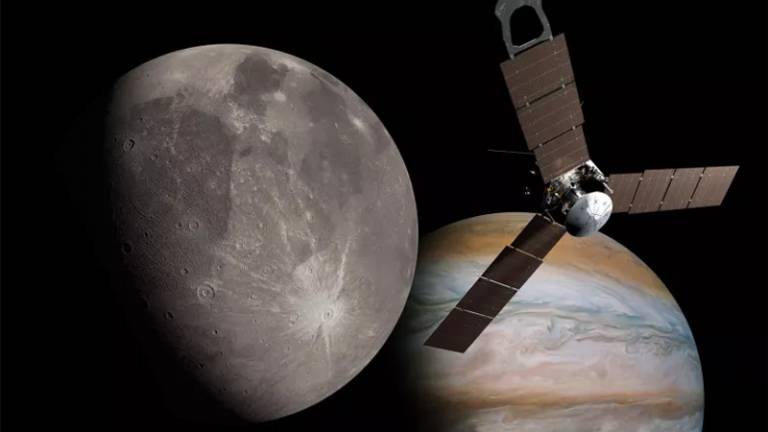
"caption": "Montage depicting NASA's Juno spacecraft during its June 7, 2021, close flyby of Jupiter's moon Ganymede.",
"description": "Montage depicting NASA's Juno spacecraft during its June 7, 2021 close flyby of Jupiter's moon, Ganymede",
"title": "juno flies by ganymede-nasa-jpl-caltech-swri-msss-Kalleheikki Kannisto",
"credit": "NASA/JPL-Caltech/SwRI/MSSS/Kalleheikki Kannisto",
"status": "inherit",
"altTag": "This is an artist's rendering of the spacecraft Juno, the planet Jupiter, and Jupiter's largest moon, Ganymede. Juno looks like a ceiling fan with three flat blades and a silver cylinder in the center. It's in the foreground, with Jupiter behind it, a planet shown in bands of rust, blue-grey and pinkish brown. To the left of the spacecraft is Ganymede, shown as a planet with dark and light grey patches, pockmarked by craters.",
"isLoading": false,
"fetchFailed": false
},
"science_1978427": {
"type": "attachments",
"id": "science_1978427",
"meta": {
"index": "attachments_1716263798",
"site": "science",
"id": "1978427",
"found": true
},
"parent": 1978423,
"imgSizes": {
"twentyfourteen-full-width": {
"file": "https://ww2.kqed.org/app/uploads/sites/35/2022/02/RS25852_GettyImages-464555674-qut-1038x576.jpg",
"width": 1038,
"mimeType": "image/jpeg",
"height": 576
},
"thumbnail": {
"file": "https://ww2.kqed.org/app/uploads/sites/35/2022/02/RS25852_GettyImages-464555674-qut-160x105.jpg",
"width": 160,
"mimeType": "image/jpeg",
"height": 105
},
"post-thumbnail": {
"file": "https://ww2.kqed.org/app/uploads/sites/35/2022/02/RS25852_GettyImages-464555674-qut-672x372.jpg",
"width": 672,
"mimeType": "image/jpeg",
"height": 372
},
"kqedFullSize": {
"file": "https://ww2.kqed.org/app/uploads/sites/35/2022/02/RS25852_GettyImages-464555674-qut.jpg",
"width": 1920,
"height": 1260
},
"large": {
"file": "https://ww2.kqed.org/app/uploads/sites/35/2022/02/RS25852_GettyImages-464555674-qut-1020x669.jpg",
"width": 1020,
"mimeType": "image/jpeg",
"height": 669
},
"1536x1536": {
"file": "https://ww2.kqed.org/app/uploads/sites/35/2022/02/RS25852_GettyImages-464555674-qut-1536x1008.jpg",
"width": 1536,
"mimeType": "image/jpeg",
"height": 1008
},
"medium": {
"file": "https://ww2.kqed.org/app/uploads/sites/35/2022/02/RS25852_GettyImages-464555674-qut-800x525.jpg",
"width": 800,
"mimeType": "image/jpeg",
"height": 525
},
"medium_large": {
"file": "https://ww2.kqed.org/app/uploads/sites/35/2022/02/RS25852_GettyImages-464555674-qut-768x504.jpg",
"width": 768,
"mimeType": "image/jpeg",
"height": 504
}
},
"publishDate": 1644363181,
"modified": 1644370265,
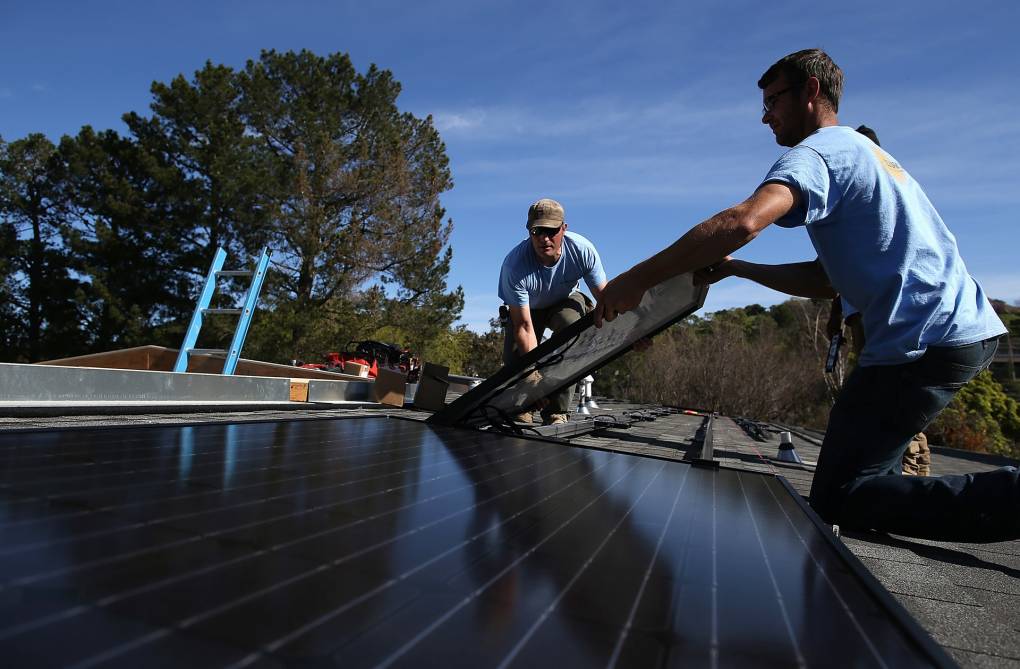
"caption": "SolarCraft workers Joel Overly (left) and Craig Powell install a solar panel on the roof of a home in San Rafael in 2015. ",
"description": "SolarCraft workers Joel Overly (L) and Craig Powell (R) install a solar panel on the roof of a home in San Rafael in 2015. ",
"title": "Government Report Cites Solar Industry Supports More Jobs Than Coal Industry",
"credit": "Justin Sullivan/Getty Images",
"status": "inherit",
"altTag": "The sun glints off of a large, dark rectangular solar panel on a roof in San Rafael, with a large tree and blue sky in the background. Two workers hold a new panel at an angle to the roof, ready to slot it into place.",
"isLoading": false,
"fetchFailed": false
},
"science_1978393": {
"type": "attachments",
"id": "science_1978393",
"meta": {
"index": "attachments_1716263798",
"site": "science",
"id": "1978393",
"found": true
},
"parent": 1978374,
"imgSizes": {
"twentyfourteen-full-width": {
"file": "https://ww2.kqed.org/app/uploads/sites/35/2022/02/P1100180-1038x576.jpg",
"width": 1038,
"mimeType": "image/jpeg",
"height": 576
},
"thumbnail": {
"file": "https://ww2.kqed.org/app/uploads/sites/35/2022/02/P1100180-160x105.jpg",
"width": 160,
"mimeType": "image/jpeg",
"height": 105
},
"post-thumbnail": {
"file": "https://ww2.kqed.org/app/uploads/sites/35/2022/02/P1100180-672x372.jpg",
"width": 672,
"mimeType": "image/jpeg",
"height": 372
},
"kqedFullSize": {
"file": "https://ww2.kqed.org/app/uploads/sites/35/2022/02/P1100180.jpg",
"width": 2048,
"height": 1341
},
"large": {
"file": "https://ww2.kqed.org/app/uploads/sites/35/2022/02/P1100180-1020x668.jpg",
"width": 1020,
"mimeType": "image/jpeg",
"height": 668
},
"1536x1536": {
"file": "https://ww2.kqed.org/app/uploads/sites/35/2022/02/P1100180-1536x1006.jpg",
"width": 1536,
"mimeType": "image/jpeg",
"height": 1006
},
"full-width": {
"file": "https://ww2.kqed.org/app/uploads/sites/35/2022/02/P1100180-1920x1257.jpg",
"width": 1920,
"mimeType": "image/jpeg",
"height": 1257
},
"medium": {
"file": "https://ww2.kqed.org/app/uploads/sites/35/2022/02/P1100180-800x524.jpg",
"width": 800,
"mimeType": "image/jpeg",
"height": 524
},
"medium_large": {
"file": "https://ww2.kqed.org/app/uploads/sites/35/2022/02/P1100180-768x503.jpg",
"width": 768,
"mimeType": "image/jpeg",
"height": 503
}
},
"publishDate": 1644011241,
"modified": 1644024414,
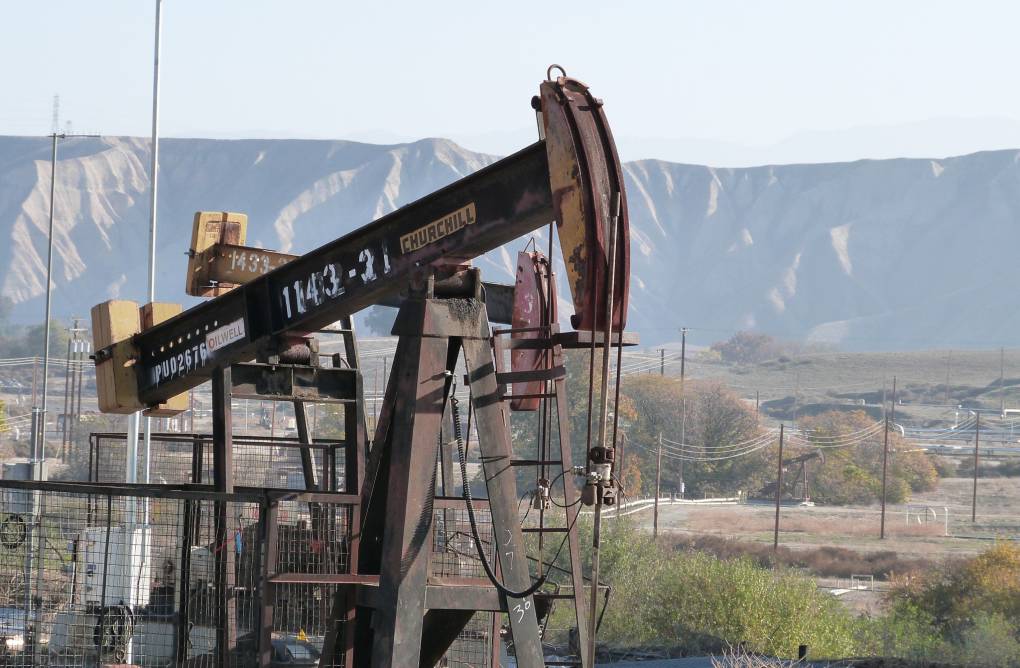
"caption": "A pump jack in Chevron's Kern River Oil Field, near Bakersfield, on Nov 23, 2021. ",
"description": "A Pump jack in Chevron's Kern River Oil Field, near Bakersfield. ",
"title": "oil wastewater",
"credit": "Liza Gross/Inside Climate News",
"status": "inherit",
"altTag": "A large, rusty metal pump jack, with the Bluffs in the background, in Chevron's Kern River Oil Field, near Bakersfield, California.",
"isLoading": false,
"fetchFailed": false
},
"science_1978341": {
"type": "attachments",
"id": "science_1978341",
"meta": {
"index": "attachments_1716263798",
"site": "science",
"id": "1978341",
"found": true
},
"title": "KJ1_0474 (1)",
"publishDate": 1643758187,
"status": "inherit",
"parent": 1978337,
"modified": 1643764044,
"caption": "Snow melts into a creek flowing into the South Fork American River, close to the location of the second media snow survey of the 2022 season at Phillips Station in the Sierra Nevada Mountains, Feb. 1, 2022. The survey is held approximately 90 miles east of Sacramento off Highway 50 in El Dorado County.",
"credit": "Kenneth James/California Department of Water Resources",
"altTag": "An apline creek running over a dark greanite slabe with white snow to the left and right. Green evergreens and white snow covered mountain peaks in the background.",
"description": null,
"imgSizes": {
"medium": {
"file": "https://cdn.kqed.org/wp-content/uploads/sites/35/2022/02/KJ1_0474-1-800x533.jpg",
"width": 800,
"height": 533,
"mimeType": "image/jpeg"
},
"large": {
"file": "https://cdn.kqed.org/wp-content/uploads/sites/35/2022/02/KJ1_0474-1-1020x680.jpg",
"width": 1020,
"height": 680,
"mimeType": "image/jpeg"
},
"thumbnail": {
"file": "https://cdn.kqed.org/wp-content/uploads/sites/35/2022/02/KJ1_0474-1-160x107.jpg",
"width": 160,
"height": 107,
"mimeType": "image/jpeg"
},
"medium_large": {
"file": "https://cdn.kqed.org/wp-content/uploads/sites/35/2022/02/KJ1_0474-1-768x512.jpg",
"width": 768,
"height": 512,
"mimeType": "image/jpeg"
},
"1536x1536": {
"file": "https://cdn.kqed.org/wp-content/uploads/sites/35/2022/02/KJ1_0474-1-1536x1024.jpg",
"width": 1536,
"height": 1024,
"mimeType": "image/jpeg"
},
"2048x2048": {
"file": "https://cdn.kqed.org/wp-content/uploads/sites/35/2022/02/KJ1_0474-1-2048x1365.jpg",
"width": 2048,
"height": 1365,
"mimeType": "image/jpeg"
},
"post-thumbnail": {
"file": "https://cdn.kqed.org/wp-content/uploads/sites/35/2022/02/KJ1_0474-1-672x372.jpg",
"width": 672,
"height": 372,
"mimeType": "image/jpeg"
},
"twentyfourteen-full-width": {
"file": "https://cdn.kqed.org/wp-content/uploads/sites/35/2022/02/KJ1_0474-1-1038x576.jpg",
"width": 1038,
"height": 576,
"mimeType": "image/jpeg"
},
"full-width": {
"file": "https://cdn.kqed.org/wp-content/uploads/sites/35/2022/02/KJ1_0474-1-1920x1280.jpg",
"width": 1920,
"height": 1280,
"mimeType": "image/jpeg"
},
"kqedFullSize": {
"file": "https://cdn.kqed.org/wp-content/uploads/sites/35/2022/02/KJ1_0474-1-e1774039477229.jpg",
"width": 2000,
"height": 1333
}
},
"isLoading": false,
"fetchFailed": false
},
"science_1994152": {
"type": "attachments",
"id": "science_1994152",
"meta": {
"index": "attachments_1716263798",
"site": "science",
"id": "1994152",
"found": true
},
"title": "DL902_Flying_Termites_Take_a_Dangerous_Journey_to_a_New_Life_V3-KQED",
"publishDate": 1725493735,
"status": "inherit",
"parent": 1978298,
"modified": 1725493735,
"caption": null,
"credit": null,
"altTag": null,
"description": null,
"imgSizes": {
"medium": {
"file": "https://cdn.kqed.org/wp-content/uploads/sites/35/2022/02/DL902_Flying_Termites_Take_a_Dangerous_Journey_to_a_New_Life_V3-KQED-800x450.jpg",
"width": 800,
"height": 450,
"mimeType": "image/jpeg"
},
"large": {
"file": "https://cdn.kqed.org/wp-content/uploads/sites/35/2022/02/DL902_Flying_Termites_Take_a_Dangerous_Journey_to_a_New_Life_V3-KQED-1020x574.jpg",
"width": 1020,
"height": 574,
"mimeType": "image/jpeg"
},
"thumbnail": {
"file": "https://cdn.kqed.org/wp-content/uploads/sites/35/2022/02/DL902_Flying_Termites_Take_a_Dangerous_Journey_to_a_New_Life_V3-KQED-160x90.jpg",
"width": 160,
"height": 90,
"mimeType": "image/jpeg"
},
"medium_large": {
"file": "https://cdn.kqed.org/wp-content/uploads/sites/35/2022/02/DL902_Flying_Termites_Take_a_Dangerous_Journey_to_a_New_Life_V3-KQED-768x432.jpg",
"width": 768,
"height": 432,
"mimeType": "image/jpeg"
},
"1536x1536": {
"file": "https://cdn.kqed.org/wp-content/uploads/sites/35/2022/02/DL902_Flying_Termites_Take_a_Dangerous_Journey_to_a_New_Life_V3-KQED-1536x864.jpg",
"width": 1536,
"height": 864,
"mimeType": "image/jpeg"
},
"post-thumbnail": {
"file": "https://cdn.kqed.org/wp-content/uploads/sites/35/2022/02/DL902_Flying_Termites_Take_a_Dangerous_Journey_to_a_New_Life_V3-KQED-672x372.jpg",
"width": 672,
"height": 372,
"mimeType": "image/jpeg"
},
"twentyfourteen-full-width": {
"file": "https://cdn.kqed.org/wp-content/uploads/sites/35/2022/02/DL902_Flying_Termites_Take_a_Dangerous_Journey_to_a_New_Life_V3-KQED-1038x576.jpg",
"width": 1038,
"height": 576,
"mimeType": "image/jpeg"
},
"kqedFullSize": {
"file": "https://cdn.kqed.org/wp-content/uploads/sites/35/2022/02/DL902_Flying_Termites_Take_a_Dangerous_Journey_to_a_New_Life_V3-KQED.jpg",
"width": 1920,
"height": 1080
}
},
"isLoading": false,
"fetchFailed": false
},
"science_1978313": {
"type": "attachments",
"id": "science_1978313",
"meta": {
"index": "attachments_1716263798",
"site": "science",
"id": "1978313",
"found": true
},
"parent": 1978311,
"imgSizes": {
"twentyfourteen-full-width": {
"file": "https://ww2.kqed.org/app/uploads/sites/35/2022/01/RS53297_GettyImages-55826441-qut-1038x576.jpg",
"width": 1038,
"mimeType": "image/jpeg",
"height": 576
},
"thumbnail": {
"file": "https://ww2.kqed.org/app/uploads/sites/35/2022/01/RS53297_GettyImages-55826441-qut-160x106.jpg",
"width": 160,
"mimeType": "image/jpeg",
"height": 106
},
"post-thumbnail": {
"file": "https://ww2.kqed.org/app/uploads/sites/35/2022/01/RS53297_GettyImages-55826441-qut-672x372.jpg",
"width": 672,
"mimeType": "image/jpeg",
"height": 372
},
"kqedFullSize": {
"file": "https://ww2.kqed.org/app/uploads/sites/35/2022/01/RS53297_GettyImages-55826441-qut.jpg",
"width": 1920,
"height": 1267
},
"large": {
"file": "https://ww2.kqed.org/app/uploads/sites/35/2022/01/RS53297_GettyImages-55826441-qut-1020x673.jpg",
"width": 1020,
"mimeType": "image/jpeg",
"height": 673
},
"1536x1536": {
"file": "https://ww2.kqed.org/app/uploads/sites/35/2022/01/RS53297_GettyImages-55826441-qut-1536x1014.jpg",
"width": 1536,
"mimeType": "image/jpeg",
"height": 1014
},
"medium": {
"file": "https://ww2.kqed.org/app/uploads/sites/35/2022/01/RS53297_GettyImages-55826441-qut-800x528.jpg",
"width": 800,
"mimeType": "image/jpeg",
"height": 528
},
"medium_large": {
"file": "https://ww2.kqed.org/app/uploads/sites/35/2022/01/RS53297_GettyImages-55826441-qut-768x507.jpg",
"width": 768,
"mimeType": "image/jpeg",
"height": 507
}
},
"publishDate": 1643408162,
"modified": 1643411944,
"caption": "A predawn glow silhouettes a tree on Bethel Island, one of the residential islands surrounded by levees that hold back the higher waters of the Sacramento-San Joaquin River Delta, on Sept. 29, 2005, west of Stockton. ",
"description": null,
"title": "California Levee System Vulnerable To Natural Disasters",
"credit": "David McNew/Getty Images",
"status": "inherit",
"altTag": "A tree shrouded in fog in the foreground with an orange, yellow sunrise in the background.",
"isLoading": false,
"fetchFailed": false
},
"science_1978290": {
"type": "attachments",
"id": "science_1978290",
"meta": {
"index": "attachments_1716263798",
"site": "science",
"id": "1978290",
"found": true
},
"parent": 1978289,
"imgSizes": {
"twentyfourteen-full-width": {
"file": "https://ww2.kqed.org/app/uploads/sites/35/2022/01/RS53295_GettyImages-1237841912-qut-1038x576.jpg",
"width": 1038,
"mimeType": "image/jpeg",
"height": 576
},
"thumbnail": {
"file": "https://ww2.kqed.org/app/uploads/sites/35/2022/01/RS53295_GettyImages-1237841912-qut-160x106.jpg",
"width": 160,
"mimeType": "image/jpeg",
"height": 106
},
"post-thumbnail": {
"file": "https://ww2.kqed.org/app/uploads/sites/35/2022/01/RS53295_GettyImages-1237841912-qut-672x372.jpg",
"width": 672,
"mimeType": "image/jpeg",
"height": 372
},
"kqedFullSize": {
"file": "https://ww2.kqed.org/app/uploads/sites/35/2022/01/RS53295_GettyImages-1237841912-qut.jpg",
"width": 1920,
"height": 1277
},
"large": {
"file": "https://ww2.kqed.org/app/uploads/sites/35/2022/01/RS53295_GettyImages-1237841912-qut-1020x678.jpg",
"width": 1020,
"mimeType": "image/jpeg",
"height": 678
},
"1536x1536": {
"file": "https://ww2.kqed.org/app/uploads/sites/35/2022/01/RS53295_GettyImages-1237841912-qut-1536x1022.jpg",
"width": 1536,
"mimeType": "image/jpeg",
"height": 1022
},
"medium": {
"file": "https://ww2.kqed.org/app/uploads/sites/35/2022/01/RS53295_GettyImages-1237841912-qut-800x532.jpg",
"width": 800,
"mimeType": "image/jpeg",
"height": 532
},
"medium_large": {
"file": "https://ww2.kqed.org/app/uploads/sites/35/2022/01/RS53295_GettyImages-1237841912-qut-768x511.jpg",
"width": 768,
"mimeType": "image/jpeg",
"height": 511
}
},
"publishDate": 1643312402,
"modified": 1643331919,
"caption": "A little girl receives a COVID-19 vaccine during an LA Care Health Plan immunization clinic at Los Angeles Mission College in the Sylmar neighborhood of Los Angeles, on Jan. 19, 2022.",
"description": null,
"title": "US-HEALTH-VIRUS-EPIDEMIC",
"credit": "Robyn Beck/AFP via Getty Images",
"status": "inherit",
"altTag": "A little girl comforts another girl by placing her hand on her neck as a nurse prepares to administer a shot.",
"isLoading": false,
"fetchFailed": false
},
"science_1978236": {
"type": "attachments",
"id": "science_1978236",
"meta": {
"index": "attachments_1716263798",
"site": "science",
"id": "1978236",
"found": true
},
"parent": 1978235,
"imgSizes": {
"twentyfourteen-full-width": {
"file": "https://ww2.kqed.org/app/uploads/sites/35/2022/01/RS53143_003_Science_Burlingame_DrMollyPhelps_01182022-qut-1038x576.jpg",
"width": 1038,
"mimeType": "image/jpeg",
"height": 576
},
"thumbnail": {
"file": "https://ww2.kqed.org/app/uploads/sites/35/2022/01/RS53143_003_Science_Burlingame_DrMollyPhelps_01182022-qut-160x107.jpg",
"width": 160,
"mimeType": "image/jpeg",
"height": 107
},
"post-thumbnail": {
"file": "https://ww2.kqed.org/app/uploads/sites/35/2022/01/RS53143_003_Science_Burlingame_DrMollyPhelps_01182022-qut-672x372.jpg",
"width": 672,
"mimeType": "image/jpeg",
"height": 372
},
"kqedFullSize": {
"file": "https://ww2.kqed.org/app/uploads/sites/35/2022/01/RS53143_003_Science_Burlingame_DrMollyPhelps_01182022-qut.jpg",
"width": 1920,
"height": 1280
},
"large": {
"file": "https://ww2.kqed.org/app/uploads/sites/35/2022/01/RS53143_003_Science_Burlingame_DrMollyPhelps_01182022-qut-1020x680.jpg",
"width": 1020,
"mimeType": "image/jpeg",
"height": 680
},
"1536x1536": {
"file": "https://ww2.kqed.org/app/uploads/sites/35/2022/01/RS53143_003_Science_Burlingame_DrMollyPhelps_01182022-qut-1536x1024.jpg",
"width": 1536,
"mimeType": "image/jpeg",
"height": 1024
},
"medium": {
"file": "https://ww2.kqed.org/app/uploads/sites/35/2022/01/RS53143_003_Science_Burlingame_DrMollyPhelps_01182022-qut-800x533.jpg",
"width": 800,
"mimeType": "image/jpeg",
"height": 533
},
"medium_large": {
"file": "https://ww2.kqed.org/app/uploads/sites/35/2022/01/RS53143_003_Science_Burlingame_DrMollyPhelps_01182022-qut-768x512.jpg",
"width": 768,
"mimeType": "image/jpeg",
"height": 512
}
},
"publishDate": 1642640936,
"modified": 1642640982,
"caption": "Dr. Molly Phelps poses for a portrait in Burlingame on Jan. 18, 2021.",
"description": null,
"title": "RS53143_003_Science_Burlingame_DrMollyPhelps_01182022-qut",
"credit": "Beth LaBerge/KQED",
"status": "inherit",
"altTag": "A woman with red hair sits at the end of a brown bench, a playground and sunshine in the background.",
"isLoading": false,
"fetchFailed": false
},
"science_1978186": {
"type": "attachments",
"id": "science_1978186",
"meta": {
"index": "attachments_1716263798",
"site": "science",
"id": "1978186",
"found": true
},
"parent": 1978180,
"imgSizes": {
"twentyfourteen-full-width": {
"file": "https://ww2.kqed.org/app/uploads/sites/35/2022/01/DEEP_901_Australian_Walking_Sticks_Are_Three_Times_Weirder_Than_You_Think_KQED-1038x576.jpeg",
"width": 1038,
"mimeType": "image/jpeg",
"height": 576
},
"thumbnail": {
"file": "https://ww2.kqed.org/app/uploads/sites/35/2022/01/DEEP_901_Australian_Walking_Sticks_Are_Three_Times_Weirder_Than_You_Think_KQED-160x90.jpeg",
"width": 160,
"mimeType": "image/jpeg",
"height": 90
},
"post-thumbnail": {
"file": "https://ww2.kqed.org/app/uploads/sites/35/2022/01/DEEP_901_Australian_Walking_Sticks_Are_Three_Times_Weirder_Than_You_Think_KQED-672x372.jpeg",
"width": 672,
"mimeType": "image/jpeg",
"height": 372
},
"kqedFullSize": {
"file": "https://ww2.kqed.org/app/uploads/sites/35/2022/01/DEEP_901_Australian_Walking_Sticks_Are_Three_Times_Weirder_Than_You_Think_KQED.jpeg",
"width": 1920,
"height": 1080
},
"large": {
"file": "https://ww2.kqed.org/app/uploads/sites/35/2022/01/DEEP_901_Australian_Walking_Sticks_Are_Three_Times_Weirder_Than_You_Think_KQED-1020x574.jpeg",
"width": 1020,
"mimeType": "image/jpeg",
"height": 574
},
"1536x1536": {
"file": "https://ww2.kqed.org/app/uploads/sites/35/2022/01/DEEP_901_Australian_Walking_Sticks_Are_Three_Times_Weirder_Than_You_Think_KQED-1536x864.jpeg",
"width": 1536,
"mimeType": "image/jpeg",
"height": 864
},
"medium": {
"file": "https://ww2.kqed.org/app/uploads/sites/35/2022/01/DEEP_901_Australian_Walking_Sticks_Are_Three_Times_Weirder_Than_You_Think_KQED-800x450.jpeg",
"width": 800,
"mimeType": "image/jpeg",
"height": 450
},
"medium_large": {
"file": "https://ww2.kqed.org/app/uploads/sites/35/2022/01/DEEP_901_Australian_Walking_Sticks_Are_Three_Times_Weirder_Than_You_Think_KQED-768x432.jpeg",
"width": 768,
"mimeType": "image/jpeg",
"height": 432
}
},
"publishDate": 1641434870,
"modified": 1641434937,
"caption": "Australian walking stick insect nymph ",
"description": "Australian walking stick insect nymph ",
"title": "DEEP_901_Australian_Walking_Sticks_Are_Three_Times_Weirder_Than_You_Think_KQED",
"credit": "Josh Cassidy/KQED",
"status": "inherit",
"altTag": null,
"isLoading": false,
"fetchFailed": false
},
"science_1978206": {
"type": "attachments",
"id": "science_1978206",
"meta": {
"index": "attachments_1716263798",
"site": "science",
"id": "1978206",
"found": true
},
"parent": 0,
"imgSizes": {
"thumbnail": {
"file": "https://ww2.kqed.org/app/uploads/sites/35/2022/01/2200Neos-CNEOS-jpl-160x90.jpg",
"width": 160,
"mimeType": "image/jpeg",
"height": 90
},
"post-thumbnail": {
"file": "https://ww2.kqed.org/app/uploads/sites/35/2022/01/2200Neos-CNEOS-jpl-672x372.jpg",
"width": 672,
"mimeType": "image/jpeg",
"height": 372
},
"kqedFullSize": {
"file": "https://ww2.kqed.org/app/uploads/sites/35/2022/01/2200Neos-CNEOS-jpl.jpg",
"width": 800,
"height": 450
},
"medium_large": {
"file": "https://ww2.kqed.org/app/uploads/sites/35/2022/01/2200Neos-CNEOS-jpl-768x432.jpg",
"width": 768,
"mimeType": "image/jpeg",
"height": 432
}
},
"publishDate": 1641589764,
"modified": 1641866297,
"caption": "Diagram of the orbits of 2,200 near-Earth asteroids and the planets of the inner solar system. The double NEA Didymos is highlighted. ",
"description": "Diagram of the orbits of 2200 near-Earth asteroids and the planets of the inner solar system. The double NEA Didymos is highlighted as the target destination of NASA's proposed Double-Asteroid Redirect Test mission, or DART. ",
"title": "2200Neos-CNEOS-jpl",
"credit": "NASA/JPL-Caltech",
"status": "inherit",
"altTag": null,
"isLoading": false,
"fetchFailed": false
},
"science_1978209": {
"type": "attachments",
"id": "science_1978209",
"meta": {
"index": "attachments_1716263798",
"site": "science",
"id": "1978209",
"found": true
},
"parent": 1978191,
"imgSizes": {
"twentyfourteen-full-width": {
"file": "https://ww2.kqed.org/app/uploads/sites/35/2022/01/RS52994_Newark-digital-photo-update-qut-1038x576.jpg",
"width": 1038,
"mimeType": "image/jpeg",
"height": 576
},
"thumbnail": {
"file": "https://ww2.kqed.org/app/uploads/sites/35/2022/01/RS52994_Newark-digital-photo-update-qut-160x107.jpg",
"width": 160,
"mimeType": "image/jpeg",
"height": 107
},
"post-thumbnail": {
"file": "https://ww2.kqed.org/app/uploads/sites/35/2022/01/RS52994_Newark-digital-photo-update-qut-672x372.jpg",
"width": 672,
"mimeType": "image/jpeg",
"height": 372
},
"kqedFullSize": {
"file": "https://ww2.kqed.org/app/uploads/sites/35/2022/01/RS52994_Newark-digital-photo-update-qut.jpg",
"width": 1920,
"height": 1280
},
"large": {
"file": "https://ww2.kqed.org/app/uploads/sites/35/2022/01/RS52994_Newark-digital-photo-update-qut-1020x680.jpg",
"width": 1020,
"mimeType": "image/jpeg",
"height": 680
},
"1536x1536": {
"file": "https://ww2.kqed.org/app/uploads/sites/35/2022/01/RS52994_Newark-digital-photo-update-qut-1536x1024.jpg",
"width": 1536,
"mimeType": "image/jpeg",
"height": 1024
},
"medium": {
"file": "https://ww2.kqed.org/app/uploads/sites/35/2022/01/RS52994_Newark-digital-photo-update-qut-800x533.jpg",
"width": 800,
"mimeType": "image/jpeg",
"height": 533
},
"medium_large": {
"file": "https://ww2.kqed.org/app/uploads/sites/35/2022/01/RS52994_Newark-digital-photo-update-qut-768x512.jpg",
"width": 768,
"mimeType": "image/jpeg",
"height": 512
}
},
"publishDate": 1641591785,
"modified": 1641598550,
"caption": "The area on which a new housing development would sit is a mosaic of wetlands and upland habitat. A slough runs through the area connecting it to the bay. ",
"description": "Aerial photo looking over wetlands in Newark, CA.",
"title": "RS52994_Newark digital photo update-qut",
"credit": "Courtesy of Derell Licht of Citizens Committee to Complete the Refuge/Creative Commons",
"status": "inherit",
"altTag": "Photo showing the wetlands in jeopardy in Newark.",
"isLoading": false,
"fetchFailed": false
},
"science_1978095": {
"type": "attachments",
"id": "science_1978095",
"meta": {
"index": "attachments_1716263798",
"site": "science",
"id": "1978095",
"found": true
},
"parent": 1978094,
"imgSizes": {
"twentyfourteen-full-width": {
"file": "https://ww2.kqed.org/app/uploads/sites/35/2021/12/MountainLion_19077N_2016_0110-1038x576.jpg",
"width": 1038,
"mimeType": "image/jpeg",
"height": 576
},
"thumbnail": {
"file": "https://ww2.kqed.org/app/uploads/sites/35/2021/12/MountainLion_19077N_2016_0110-160x120.jpg",
"width": 160,
"mimeType": "image/jpeg",
"height": 120
},
"post-thumbnail": {
"file": "https://ww2.kqed.org/app/uploads/sites/35/2021/12/MountainLion_19077N_2016_0110-672x372.jpg",
"width": 672,
"mimeType": "image/jpeg",
"height": 372
},
"kqedFullSize": {
"file": "https://ww2.kqed.org/app/uploads/sites/35/2021/12/MountainLion_19077N_2016_0110.jpg",
"width": 2048,
"height": 1536
},
"large": {
"file": "https://ww2.kqed.org/app/uploads/sites/35/2021/12/MountainLion_19077N_2016_0110-1020x765.jpg",
"width": 1020,
"mimeType": "image/jpeg",
"height": 765
},
"1536x1536": {
"file": "https://ww2.kqed.org/app/uploads/sites/35/2021/12/MountainLion_19077N_2016_0110-1536x1152.jpg",
"width": 1536,
"mimeType": "image/jpeg",
"height": 1152
},
"full-width": {
"file": "https://ww2.kqed.org/app/uploads/sites/35/2021/12/MountainLion_19077N_2016_0110-1920x1440.jpg",
"width": 1920,
"mimeType": "image/jpeg",
"height": 1440
},
"medium": {
"file": "https://ww2.kqed.org/app/uploads/sites/35/2021/12/MountainLion_19077N_2016_0110-800x600.jpg",
"width": 800,
"mimeType": "image/jpeg",
"height": 600
},
"medium_large": {
"file": "https://ww2.kqed.org/app/uploads/sites/35/2021/12/MountainLion_19077N_2016_0110-768x576.jpg",
"width": 768,
"mimeType": "image/jpeg",
"height": 576
}
},
"publishDate": 1640303808,
"modified": 1641254982,
"caption": "Two mountain lions, likely a mother and her cub, inspect the site of a camera trap set by the California Department of Fish and Wildlife. ",
"description": "Two mountain lions stand under the shade of forest. ",
"title": "MountainLion_19077N_2016_0110",
"credit": "California Department of Fish and Wildlife",
"status": "inherit",
"altTag": "Forest carnivores return after wildfires",
"isLoading": false,
"fetchFailed": false
}
},
"audioPlayerReducer": {
"postId": "stream_live",
"isPaused": true,
"isPlaying": false,
"pfsActive": false,
"pledgeModalIsOpen": true,
"playerDrawerIsOpen": false,
"liveAudioPlayStartedAt": 0,
"liveAudioPlayContext": ""
},
"authorsReducer": {
"byline_science_1978423": {
"type": "authors",
"id": "byline_science_1978423",
"meta": {
"override": true
},
"slug": "byline_science_1978423",
"name": "Anne Marshall-Chalmers and Dan Gearino\u003cbr>Inside Climate News",
"isLoading": false
},
"byline_science_1978374": {
"type": "authors",
"id": "byline_science_1978374",
"meta": {
"override": true
},
"slug": "byline_science_1978374",
"name": "Liza Gross, Inside Climate News",
"isLoading": false
},
"ben-burress": {
"type": "authors",
"id": "6180",
"meta": {
"index": "authors_1716337520",
"id": "6180",
"found": true
},
"name": "Ben Burress",
"firstName": "Ben",
"lastName": "Burress",
"slug": "ben-burress",
"email": "bburress@chabotspace.org",
"display_author_email": false,
"staff_mastheads": [],
"title": null,
"bio": "\u003cstrong>Benjamin Burress\u003c/strong> has been a staff astronomer at Chabot Space & Science Center since July 1999. He graduated from Sonoma State University in 1985 with a bachelor’s degree in physics (and minor in astronomy), after which he signed on for a two-year stint in the Peace Corps, where he taught physics and mathematics in the African nation of Cameroon. From 1989-96 he served on the crew of NASA’s Kuiper Airborne Observatory at Ames Research Center in Mountain View, CA. From 1996-99, he was Head Observer at the Naval Prototype Optical Interferometer program at Lowell Observatory in Flagstaff, AZ.\r\n\r\nRead his \u003ca href=\"http://science.kqed.org/quest/author/ben-burress/\">previous contributions\u003c/a> to \u003ca href=\"http://science.kqed.org/quest/\">QUEST\u003c/a>, a project dedicated to exploring the Science of Sustainability.",
"avatar": "https://secure.gravatar.com/avatar/8263bffa345b7e4923a0b8b9f0f6a161?s=600&d=blank&r=g",
"twitter": null,
"facebook": null,
"instagram": null,
"linkedin": null,
"sites": [
{
"site": "science",
"roles": [
"editor"
]
},
{
"site": "quest",
"roles": [
"subscriber"
]
}
],
"headData": {
"title": "Ben Burress | KQED",
"description": null,
"ogImgSrc": "https://secure.gravatar.com/avatar/8263bffa345b7e4923a0b8b9f0f6a161?s=600&d=blank&r=g",
"twImgSrc": "https://secure.gravatar.com/avatar/8263bffa345b7e4923a0b8b9f0f6a161?s=600&d=blank&r=g"
},
"isLoading": false,
"link": "/author/ben-burress"
},
"gabriela-quiros": {
"type": "authors",
"id": "6186",
"meta": {
"index": "authors_1716337520",
"id": "6186",
"found": true
},
"name": "Gabriela Quirós",
"firstName": "Gabriela",
"lastName": "Quirós",
"slug": "gabriela-quiros",
"email": "gquiros@kqed.org",
"display_author_email": false,
"staff_mastheads": [],
"title": "Supervising Producer",
"bio": "Gabriela Quirós is the \u003cstrong>supervising producer for KQED's web science video series \u003ca href=\"https://www.kqed.org/deeplook\">Deep Look\u003c/a>\u003c/strong>. She joined KQED as a TV producer when its science series QUEST started in 2006 and has covered everything from Alzheimer’s to bee die-offs to dark energy.\r\n\r\nShe won a 2022 AAAS Kavli Science Journalism Award with a team of her Deep Look colleagues. She has won six regional Emmys as a video producer and has shared eight more as the coordinating producer of Deep Look. The episode she produced about \u003ca href=\"https://www.kqed.org/science/728086/how-mosquitoes-use-six-needles-to-suck-your-blood\">How Mosquitoes Use Six Needles to Suck Your Blood\u003c/a> won a Webby \"People's Voice\" award. She has also earned awards from the Jackson Hole Wildlife Film Festival, the Society of Professional Journalists and the Society of Environmental Journalists.\r\n\r\nHer videos for KQED have also aired on NOVA scienceNOW and the PBS NewsHour, and appeared on NPR.org.\r\n\r\nAs an independent filmmaker, she produced and directed the hour-long documentary \u003ca href=\"http://lpbp.org/beautiful-sin-qa-with-producer-gabriela-quiros/\">\u003cem>Beautiful Sin\u003c/em>\u003c/a>, about the surprising story of how Costa Rica became the only country in the world to outlaw in vitro fertilization. The film aired in 2015 on public television stations throughout the U.S., and in Costa Rica.\r\n\r\nShe started her journalism career as a newspaper reporter in Costa Rica, where she grew up. She won the National Science Journalism Award there for a series of articles about organic agriculture, and developed a life-long interest in health reporting. She moved to the Bay Area in 1996 to study documentary filmmaking at the University of California, Berkeley, where she received master’s degrees in journalism and Latin American studies.",
"avatar": "https://secure.gravatar.com/avatar/6d82c20152affd1b434c31a904c40809?s=600&d=blank&r=g",
"twitter": "gabrielaquirosr",
"facebook": null,
"instagram": null,
"linkedin": null,
"sites": [
{
"site": "science",
"roles": []
},
{
"site": "quest",
"roles": [
"ef_view_calendar",
"ef_view_story_budget"
]
}
],
"headData": {
"title": "Gabriela Quirós | KQED",
"description": "Supervising Producer",
"ogImgSrc": "https://secure.gravatar.com/avatar/6d82c20152affd1b434c31a904c40809?s=600&d=blank&r=g",
"twImgSrc": "https://secure.gravatar.com/avatar/6d82c20152affd1b434c31a904c40809?s=600&d=blank&r=g"
},
"isLoading": false,
"link": "/author/gabriela-quiros"
},
"dventon": {
"type": "authors",
"id": "11088",
"meta": {
"index": "authors_1716337520",
"id": "11088",
"found": true
},
"name": "Danielle Venton",
"firstName": "Danielle",
"lastName": "Venton",
"slug": "dventon",
"email": "dventon@kqed.org",
"display_author_email": true,
"staff_mastheads": [
"science"
],
"title": "Science reporter",
"bio": "Danielle Venton is a reporter for KQED Science. She covers wildfires, space and oceans (though she is prone to sea sickness).\r\n\r\nBefore joining KQED in 2015, Danielle was a staff reporter at KRCB in Sonoma County and a freelancer. She studied science communication at UC Santa Cruz and formerly worked at CERN in Geneva, Switzerland where she wrote about computing. She lives in Sonoma County and enjoys backpacking.",
"avatar": "https://secure.gravatar.com/avatar/37b292b5c40c8d93959c4f48d73b5286f41b7abd8588277e941905a3ed4c801c?s=600&d=blank&r=g",
"twitter": "DanielleVenton",
"bluesky": null,
"facebook": null,
"instagram": null,
"linkedin": null,
"sites": [
{
"site": "arts",
"roles": [
"contributor"
]
},
{
"site": "news",
"roles": [
"editor"
]
},
{
"site": "futureofyou",
"roles": [
"editor"
]
},
{
"site": "science",
"roles": [
"editor"
]
},
{
"site": "liveblog",
"roles": [
"contributor"
]
}
],
"headData": {
"title": "Danielle Venton | KQED",
"description": "Science reporter",
"ogImgSrc": "https://secure.gravatar.com/avatar/37b292b5c40c8d93959c4f48d73b5286f41b7abd8588277e941905a3ed4c801c?s=600&d=blank&r=g",
"twImgSrc": "https://secure.gravatar.com/avatar/37b292b5c40c8d93959c4f48d73b5286f41b7abd8588277e941905a3ed4c801c?s=600&d=blank&r=g"
},
"isLoading": false,
"link": "/author/dventon"
},
"mseely": {
"type": "authors",
"id": "11095",
"meta": {
"index": "authors_1716337520",
"id": "11095",
"found": true
},
"name": "Mike Seely",
"firstName": "Mike",
"lastName": "Seely",
"slug": "mseely",
"email": "mseely@kqed.org",
"display_author_email": false,
"staff_mastheads": [
"science"
],
"title": "Producer",
"bio": "Mike is a Digital Media Producer for KQED Science and Post Production Coordinator for \u003ca href=\"https://www.youtube.com/user/KQEDDeepLook\" target=\"_blank\" rel=\"noopener noreferrer\">Deep Look\u003c/a>. Prior to his work at KQED, he worked independently for 15 years as a director, producer and cinematographer of documentary films about art, science, and social issues, collaborating with independent directors, corporate clients, non-profits, digital and broadcast networks. Previous to filmmaking life, he majored in biology as an undergrad at Oberlin College, and worked as a wildlife biologist on bird and seal population studies in California. He also holds an M.A. in Documentary Film Production from Stanford University.",
"avatar": "https://secure.gravatar.com/avatar/f9c5c6f7135a7c3fc0ce85114f7b05dd18e0b71af78a2d6770a1b09a921d8425?s=600&d=blank&r=g",
"twitter": null,
"bluesky": null,
"facebook": null,
"instagram": null,
"linkedin": null,
"sites": [
{
"site": "arts",
"roles": [
"subscriber"
]
},
{
"site": "science",
"roles": [
"author"
]
}
],
"headData": {
"title": "Mike Seely | KQED",
"description": "Producer",
"ogImgSrc": "https://secure.gravatar.com/avatar/f9c5c6f7135a7c3fc0ce85114f7b05dd18e0b71af78a2d6770a1b09a921d8425?s=600&d=blank&r=g",
"twImgSrc": "https://secure.gravatar.com/avatar/f9c5c6f7135a7c3fc0ce85114f7b05dd18e0b71af78a2d6770a1b09a921d8425?s=600&d=blank&r=g"
},
"isLoading": false,
"link": "/author/mseely"
},
"kevinstark": {
"type": "authors",
"id": "11608",
"meta": {
"index": "authors_1716337520",
"id": "11608",
"found": true
},
"name": "Kevin Stark",
"firstName": "Kevin",
"lastName": "Stark",
"slug": "kevinstark",
"email": "kstark@kqed.org",
"display_author_email": true,
"staff_mastheads": [
"science"
],
"title": "Senior Editor",
"bio": "Kevin is a senior editor for KQED Science, managing the station's health and climate desks. His journalism career began in the Pacific Northwest, and he later became a lead reporter for the San Francisco Public Press. His work has appeared in Pacific Standard magazine, the Energy News Network, the Center for Investigative Reporting's Reveal and WBEZ in Chicago. Kevin joined KQED in 2019, and has covered issues related to energy, wildfire, climate change and the environment.",
"avatar": "https://secure.gravatar.com/avatar/365aaa4b597d3a8374f67504ff0facd323d7906e8eb4be0a7efd2427408e802c?s=600&d=blank&r=g",
"twitter": "starkkev",
"bluesky": null,
"facebook": null,
"instagram": null,
"linkedin": null,
"sites": [
{
"site": "",
"roles": [
"editor"
]
},
{
"site": "news",
"roles": [
"editor"
]
},
{
"site": "science",
"roles": [
"administrator"
]
}
],
"headData": {
"title": "Kevin Stark | KQED",
"description": "Senior Editor",
"ogImgSrc": "https://secure.gravatar.com/avatar/365aaa4b597d3a8374f67504ff0facd323d7906e8eb4be0a7efd2427408e802c?s=600&d=blank&r=g",
"twImgSrc": "https://secure.gravatar.com/avatar/365aaa4b597d3a8374f67504ff0facd323d7906e8eb4be0a7efd2427408e802c?s=600&d=blank&r=g"
},
"isLoading": false,
"link": "/author/kevinstark"
},
"eromero": {
"type": "authors",
"id": "11746",
"meta": {
"index": "authors_1716337520",
"id": "11746",
"found": true
},
"name": "Ezra David Romero",
"firstName": "Ezra David",
"lastName": "Romero",
"slug": "eromero",
"email": "eromero@kqed.org",
"display_author_email": true,
"staff_mastheads": [
"news",
"science"
],
"title": "Climate Reporter",
"bio": "Ezra David Romero is a climate reporter for KQED News. He covers the absence and excess of water in the Bay Area — think sea level rise, flooding and drought. For nearly a decade he’s covered how warming temperatures are altering the lives of Californians. He’s reported on farmers worried their pistachio trees aren’t getting enough sleep, families desperate for water, scientists studying dying giant sequoias, and alongside firefighters containing wildfires. His work has appeared on local stations across California and nationally on public radio shows like Morning Edition, Here and Now, All Things Considered and Science Friday. ",
"avatar": "https://secure.gravatar.com/avatar/c76404d287c10ed40224227551ac36e24352c7306f106632caf6fead76f8801f?s=600&d=blank&r=g",
"twitter": "ezraromero",
"bluesky": null,
"facebook": null,
"instagram": null,
"linkedin": null,
"sites": [
{
"site": "arts",
"roles": [
"editor"
]
},
{
"site": "news",
"roles": [
"editor"
]
},
{
"site": "science",
"roles": [
"editor"
]
},
{
"site": "liveblog",
"roles": [
"author"
]
}
],
"headData": {
"title": "Ezra David Romero | KQED",
"description": "Climate Reporter",
"ogImgSrc": "https://secure.gravatar.com/avatar/c76404d287c10ed40224227551ac36e24352c7306f106632caf6fead76f8801f?s=600&d=blank&r=g",
"twImgSrc": "https://secure.gravatar.com/avatar/c76404d287c10ed40224227551ac36e24352c7306f106632caf6fead76f8801f?s=600&d=blank&r=g"
},
"isLoading": false,
"link": "/author/eromero"
}
},
"pagesReducer": {
"science_category_news": {
"type": "terms",
"id": "science_40",
"meta": {
"index": "terms_1716263798",
"site": "science",
"id": "40",
"score": 10.811016
},
"featImg": null,
"name": "News",
"description": null,
"taxonomy": "category",
"headData": {
"twImgId": null,
"twTitle": null,
"ogTitle": null,
"ogImgId": null,
"twDescription": null,
"description": null,
"title": "News Archives | KQED Science",
"ogDescription": null
},
"ttid": 42,
"slug": "news",
"isLoading": false,
"title": "News",
"pageMeta": {
"site": "science",
"WpPageTemplate": "page-topic-editorial",
"currentPage": 65
},
"blocks": [
{
"blockName": "kqed/post-list",
"attrs": {
"layout": "cardArticle2",
"query": "posts/science?category=news",
"seeMore": false,
"paginated": true,
"page": 65
}
},
{
"blockName": "kqed/ad"
}
]
}
},
"pfsSessionReducer": {},
"postsReducer": {
"stream_live": {
"type": "live",
"id": "stream_live",
"audioUrl": "https://hls.kqed.org/hls/kqed_app/playlist.m3u8",
"title": "Live Stream",
"excerpt": "Live Stream information currently unavailable.",
"link": "/radio",
"featImg": "",
"label": {
"name": "KQED Live",
"link": "/"
}
},
"stream_kqedNewscast": {
"type": "posts",
"id": "stream_kqedNewscast",
"audioUrl": "https://www.kqed.org/.stream/anon/radio/RDnews/newscast.mp3?_=1",
"title": "KQED Newscast",
"featImg": "",
"label": {
"name": "88.5 FM",
"link": "/"
}
},
"science_1978509": {
"type": "posts",
"id": "science_1978509",
"meta": {
"index": "posts_1716263798",
"site": "science",
"id": "1978509",
"score": null,
"sort": [
1644616534000
]
},
"parent": 0,
"labelTerm": {},
"blocks": [],
"publishDate": 1644616534,
"format": "standard",
"title": "Juno Spacecraft Captures Sounds As It Flies Past Jupiter's Moon",
"headTitle": "Juno Spacecraft Captures Sounds As It Flies Past Jupiter’s Moon | KQED",
"content": "\u003cp>\u003cspan style=\"font-weight: 400\">Last June, \u003c/span>\u003ca href=\"https://www.nasa.gov/mission_pages/juno/main/index.html\">\u003cspan style=\"font-weight: 400\">NASA’s Juno\u003c/span>\u003c/a>\u003cspan style=\"font-weight: 400\"> spacecraft \u003c/span>\u003ca href=\"https://www.jpl.nasa.gov/news/see-the-first-images-nasas-juno-took-as-it-sailed-by-ganymede\">\u003cspan style=\"font-weight: 400\">whizzed past Jupiter’s largest moon\u003c/span>\u003c/a>\u003cspan style=\"font-weight: 400\">, Ganymede, zipping along at over 40,000 miles per hour. Juno swung within 645 miles of the moon’s surface — the closest any spacecraft has come to it in two decades. \u003c/span>\u003c/p>\n\u003cp>\u003cspan style=\"font-weight: 400\">As it flew by, Juno raked the moon for data with its cameras and host of scientific instruments. \u003c/span>\u003c/p>\n\u003cp>\u003cspan style=\"font-weight: 400\">One instrument in particular, called “Waves,” has delivered something beyond the dazzling imagery we’ve come to expect from solar system exploration: a 50-second sweep of \u003c/span>\u003ci>\u003cspan style=\"font-weight: 400\">magnetic \u003c/span>\u003c/i>\u003cspan style=\"font-weight: 400\">measurements, later \u003c/span>\u003ca href=\"https://www.youtube.com/watch?v=_09R6jIo74U\">\u003cspan style=\"font-weight: 400\">converted to audio\u003c/span>\u003c/a>\u003cspan style=\"font-weight: 400\"> frequencies.\u003c/span>\u003c/p>\n\u003cp>https://www.youtube.com/watch?v=_09R6jIo74U\u003c/p>\n\u003cp>\u003cspan style=\"font-weight: 400\">The dynamic whistles and whirs of the soundtrack \u003c/span>\u003cspan style=\"font-weight: 400\">off\u003c/span>\u003cspan style=\"font-weight: 400\">er a rare opportunity to imagine ourselves exploring deep space in person, via the telepresence of a robot. \u003c/span>\u003c/p>\n\u003cp>\u003cspan style=\"font-weight: 400\">We’ve heard direct recordings of sound from different places in the solar system before, like the \u003c/span>\u003ca href=\"https://esamultimedia.esa.int/images/huygens_alien_winds_descent.mp3\">\u003cspan style=\"font-weight: 400\">atmosphere of Saturn’s moon Titan\u003c/span>\u003c/a>\u003cspan style=\"font-weight: 400\"> as the Huygens probe descended, or the \u003c/span>\u003ca href=\"https://mars.nasa.gov/resources/25714/perseverance-rovers-supercam-records-wind-on-mars/\">\u003cspan style=\"font-weight: 400\">winds of Mars\u003c/span>\u003c/a>\u003cspan style=\"font-weight: 400\"> heard by the Perseverance rover. \u003c/span>\u003c/p>\n\u003cp>\u003cspan style=\"font-weight: 400\">But in this case, \u003c/span>\u003ca href=\"https://www.jpl.nasa.gov/news/nasas-juno-spacecraft-hears-jupiters-moon\">\u003cspan style=\"font-weight: 400\">Juno’s “ear,”\u003c/span>\u003c/a>\u003cspan style=\"font-weight: 400\"> the Waves instrument, measures the properties of magnetic fields the spacecraft passes through, giving us the chance to hear something normally inaccessible to human senses. \u003c/span>\u003c/p>\n\u003cfigure id=\"attachment_1978258\" class=\"wp-caption alignright\" style=\"max-width: 480px\">\u003ca href=\"https://ww2.kqed.org/app/uploads/sites/35/2022/01/ganymede-060721-NASA-JPL-Caltech-SwRI-MSSS-Thomas-Thomopoulos.jpg\">\u003cimg loading=\"lazy\" decoding=\"async\" class=\"size-full wp-image-1978258\" src=\"https://ww2.kqed.org/app/uploads/sites/35/2022/01/ganymede-060721-NASA-JPL-Caltech-SwRI-MSSS-Thomas-Thomopoulos.jpg\" alt=\"Jupiter's moon, Ganymede, etches a curve of white against a black sky. The planet's surface is a crisscrossing network of dun-colored streaks, punctuated by white sparks. \" width=\"480\" height=\"480\" srcset=\"https://cdn.kqed.org/wp-content/uploads/sites/35/2022/01/ganymede-060721-NASA-JPL-Caltech-SwRI-MSSS-Thomas-Thomopoulos.jpg 480w, https://cdn.kqed.org/wp-content/uploads/sites/35/2022/01/ganymede-060721-NASA-JPL-Caltech-SwRI-MSSS-Thomas-Thomopoulos-160x160.jpg 160w\" sizes=\"(max-width: 480px) 100vw, 480px\">\u003c/a>\u003cfigcaption class=\"wp-caption-text\">Close-up image of Jupiter’s largest moon, Ganymede, captured by NASA’s Juno spacecraft during its June 7, 2021, flyby. \u003ccite>(NASA/JPL-Caltech/SwRI/MSSS/Thomas Thomopoulos)\u003c/cite>\u003c/figcaption>\u003c/figure>\n\u003ch2>\u003cb>Moonlighting at Ganymede\u003c/b>\u003c/h2>\n\u003cp>\u003cspan style=\"font-weight: 400\">Juno’s primary mission is to explore the planet \u003c/span>\u003ca href=\"https://solarsystem.nasa.gov/planets/jupiter/overview/\">\u003cspan style=\"font-weight: 400\">Jupiter\u003c/span>\u003c/a>\u003cspan style=\"font-weight: 400\">, but NASA often takes advantage of serendipitous encounters to explore more. On June 8, 2021, the close flyby of Ganymede created an opportunity for some side work beyond the mission routine. \u003c/span>\u003c/p>\n\u003cp>\u003ca href=\"https://solarsystem.nasa.gov/moons/jupiter-moons/ganymede/in-depth/\">\u003cspan style=\"font-weight: 400\">Ganymede \u003c/span>\u003c/a>\u003cspan style=\"font-weight: 400\">is the largest moon in the solar system and the only one to possess a significant global enveloping magnetic field — a magnetic field that extends from the moon into space. This is a feature that even the planets Venus and Mars\u003c/span> \u003cspan style=\"font-weight: 400\">do not possess. If Ganymede orbited the sun instead of Jupiter, it would be considered a planet, larger even than Mercury. \u003c/span>\u003c/p>\n\u003cp>\u003cspan style=\"font-weight: 400\">Ganymede’s mystery runs below its icy, cratered, cracked surface. Hidden beneath that frosty shell may be an \u003c/span>\u003ca href=\"https://scitechdaily.com/first-evidence-of-water-vapor-at-jupiters-moon-ganymede-may-hold-more-water-than-all-of-earths-oceans/\">\u003cspan style=\"font-weight: 400\">ocean\u003c/span>\u003c/a>\u003cspan style=\"font-weight: 400\">, one that contains more water than all of Earth’s. This alone ranks Ganymede as prime real estate for the search for extraterrestrial life, like other tantalizing moons where we have detected the presence of liquid water — Jupiter’s \u003c/span>\u003ca href=\"https://solarsystem.nasa.gov/moons/jupiter-moons/europa/in-depth/\">\u003cspan style=\"font-weight: 400\">Europa \u003c/span>\u003c/a>\u003cspan style=\"font-weight: 400\">and Saturn’s \u003c/span>\u003ca href=\"https://solarsystem.nasa.gov/missions/cassini/science/enceladus/\">\u003cspan style=\"font-weight: 400\">Enceladus\u003c/span>\u003c/a>\u003cspan style=\"font-weight: 400\">. \u003c/span>\u003c/p>\n\u003cfigure id=\"attachment_1978261\" class=\"wp-caption alignleft\" style=\"max-width: 800px\">\u003ca href=\"https://ww2.kqed.org/app/uploads/sites/35/2022/01/pia22949NASA-JPL-Caltech-SwRI-MSSS-Kevin-M.-Gill.jpg\">\u003cimg loading=\"lazy\" decoding=\"async\" class=\"size-medium wp-image-1978261\" src=\"https://ww2.kqed.org/app/uploads/sites/35/2022/01/pia22949NASA-JPL-Caltech-SwRI-MSSS-Kevin-M.-Gill-800x778.jpg\" alt=\"\" width=\"800\" height=\"778\" srcset=\"https://cdn.kqed.org/wp-content/uploads/sites/35/2022/01/pia22949NASA-JPL-Caltech-SwRI-MSSS-Kevin-M.-Gill-800x778.jpg 800w, https://cdn.kqed.org/wp-content/uploads/sites/35/2022/01/pia22949NASA-JPL-Caltech-SwRI-MSSS-Kevin-M.-Gill-1020x992.jpg 1020w, https://cdn.kqed.org/wp-content/uploads/sites/35/2022/01/pia22949NASA-JPL-Caltech-SwRI-MSSS-Kevin-M.-Gill-160x156.jpg 160w, https://cdn.kqed.org/wp-content/uploads/sites/35/2022/01/pia22949NASA-JPL-Caltech-SwRI-MSSS-Kevin-M.-Gill-768x747.jpg 768w, https://cdn.kqed.org/wp-content/uploads/sites/35/2022/01/pia22949NASA-JPL-Caltech-SwRI-MSSS-Kevin-M.-Gill-1536x1493.jpg 1536w, https://cdn.kqed.org/wp-content/uploads/sites/35/2022/01/pia22949NASA-JPL-Caltech-SwRI-MSSS-Kevin-M.-Gill-2048x1991.jpg 2048w, https://cdn.kqed.org/wp-content/uploads/sites/35/2022/01/pia22949NASA-JPL-Caltech-SwRI-MSSS-Kevin-M.-Gill-1920x1866.jpg 1920w\" sizes=\"(max-width: 800px) 100vw, 800px\">\u003c/a>\u003cfigcaption class=\"wp-caption-text\">Image of Jupiter captured by NASA’s Juno spacecraft. \u003ccite>(NASA/JPL-Caltech/SwRI/MSSS/Kevin M. Gill)\u003c/cite>\u003c/figcaption>\u003c/figure>\n\u003cp>\u003cspan style=\"font-weight: 400\">Juno’s batch of flyby data most likely won’t discover extraterrestrials, but magnetic and other data collected by instruments like Waves may provide insights into the ocean lurking beneath Ganymede’s crust, such as its depth, volume, salinity and other properties. \u003c/span>\u003c/p>\n\u003ch2>\u003cb>Juno’s day job\u003c/b>\u003c/h2>\n\u003cp>\u003cspan style=\"font-weight: 400\">NASA launched Juno a decade ago on a \u003c/span>\u003ca href=\"https://solarsystem.nasa.gov/missions/juno/overview/\">\u003cspan style=\"font-weight: 400\">mission to explore Jupiter\u003c/span>\u003c/a>\u003cspan style=\"font-weight: 400\">, to give us our first-ever look at the gas giant’s mysterious polar regions, and to probe its interior by measuring its magnetic and gravitational fields. \u003c/span>\u003c/p>\n\u003cp>\u003cspan style=\"font-weight: 400\">Since arriving in 2016, Juno has circled the giant planet on an elongated orbit that sends it buzzing close to Jupiter’s polar regions every 53 days, cruising to within 2,100 miles of its cloud tops, arguably one of the most stunning vista points in the solar system. \u003c/span>\u003c/p>\n\u003cp>\u003cspan style=\"font-weight: 400\">From this vantage, Juno has captured thousands of \u003c/span>\u003ca href=\"https://www.missionjuno.swri.edu/junocam/processing?featured=1\">\u003cspan style=\"font-weight: 400\">captivating images\u003c/span>\u003c/a>\u003cspan style=\"font-weight: 400\"> of Jupiter’s colorful cloud belts, swirling storm systems and auroras. And we have glimpsed processes and structures of the planet’s interior that may help scientists understand how Jupiter originally formed and evolved. \u003c/span>\u003c/p>\n\u003cfigure id=\"attachment_1978260\" class=\"wp-caption aligncenter\" style=\"max-width: 1742px\">\u003cimg loading=\"lazy\" decoding=\"async\" class=\"size-full wp-image-1978260\" src=\"https://ww2.kqed.org/app/uploads/sites/35/2022/01/pia22692_hires-Enhanced-Image-by-Gerald-Eichst%C3%A4dt-and-Sean-Doran-NASA-JPL-Caltech-SwRI-MSSS.jpg\" alt=\"\" width=\"1742\" height=\"1742\" srcset=\"https://cdn.kqed.org/wp-content/uploads/sites/35/2022/01/pia22692_hires-Enhanced-Image-by-Gerald-Eichstädt-and-Sean-Doran-NASA-JPL-Caltech-SwRI-MSSS.jpg 1742w, https://cdn.kqed.org/wp-content/uploads/sites/35/2022/01/pia22692_hires-Enhanced-Image-by-Gerald-Eichstädt-and-Sean-Doran-NASA-JPL-Caltech-SwRI-MSSS-800x800.jpg 800w, https://cdn.kqed.org/wp-content/uploads/sites/35/2022/01/pia22692_hires-Enhanced-Image-by-Gerald-Eichstädt-and-Sean-Doran-NASA-JPL-Caltech-SwRI-MSSS-1020x1020.jpg 1020w, https://cdn.kqed.org/wp-content/uploads/sites/35/2022/01/pia22692_hires-Enhanced-Image-by-Gerald-Eichstädt-and-Sean-Doran-NASA-JPL-Caltech-SwRI-MSSS-160x160.jpg 160w, https://cdn.kqed.org/wp-content/uploads/sites/35/2022/01/pia22692_hires-Enhanced-Image-by-Gerald-Eichstädt-and-Sean-Doran-NASA-JPL-Caltech-SwRI-MSSS-768x768.jpg 768w, https://cdn.kqed.org/wp-content/uploads/sites/35/2022/01/pia22692_hires-Enhanced-Image-by-Gerald-Eichstädt-and-Sean-Doran-NASA-JPL-Caltech-SwRI-MSSS-1536x1536.jpg 1536w\" sizes=\"(max-width: 1742px) 100vw, 1742px\">\u003cfigcaption class=\"wp-caption-text\">Images of Jupiter’s turbulent cloud and storm systems during a close flyby of the gas giant world by NASA’s Juno spacecraft. \u003ccite>(NASA/JPL-Caltech/SwRI/MSSS/Gerald Eichstädt and Sean Doran)\u003c/cite>\u003c/figcaption>\u003c/figure>\n\u003cp>\u003cspan style=\"font-weight: 400\">For example, some of Juno’s major discoveries include: insights into a mysterious magnetic anomaly near Jupiter’s equator, called the \u003c/span>\u003ca href=\"https://www.jpl.nasa.gov/images/pia25035-mapping-jupiters-great-blue-spot\">\u003cspan style=\"font-weight: 400\">Great Blue Spot\u003c/span>\u003c/a>\u003cspan style=\"font-weight: 400\">; similarities in patterns between \u003c/span>\u003ca href=\"https://www.jpl.nasa.gov/images/pia25037-vortices-on-jupiter-and-earth\">\u003cspan style=\"font-weight: 400\">Jupiter’s swirling cyclones\u003c/span>\u003c/a>\u003cspan style=\"font-weight: 400\"> and vortices in Earth’s oceans; and detailed imagery of the thin \u003c/span>\u003ca href=\"https://www.nasa.gov/centers/goddard/multimedia/largest/rings.html\">\u003cspan style=\"font-weight: 400\">ring of dust encircling Jupiter\u003c/span>\u003c/a>\u003cspan style=\"font-weight: 400\"> and its relationship to the two tiny moons Metis and Adrastea. \u003c/span>\u003c/p>\n\u003ch2>\u003cb>The Future of Juno\u003c/b>\u003c/h2>\n\u003cp>\u003cspan style=\"font-weight: 400\">NASA has extended Juno’s mission through September 2025, so more discoveries about the king of planets and its entourage of amazing moons are sure to come. Whether the solar-powered spacecraft will survive Jupiter’s deadly radiation belts until then remains to be seen, but for now we can continue to enjoy the grand vista.\u003c/span>\u003c/p>\n\u003cp>[ad fullwidth]\u003c/p>\n\u003cp>\u003c/p>\n",
"stats": {
"hasVideo": true,
"hasChartOrMap": false,
"hasAudio": false,
"hasPolis": false,
"wordCount": 800,
"hasGoogleForm": false,
"hasGallery": false,
"hasHearkenModule": false,
"iframeSrcs": [],
"paragraphCount": 17
},
"modified": 1704846314,
"excerpt": "As the Juno spacecraft flew by Ganymede, Jupiter's largest moon, it raked for data with its cameras and host of scientific instruments. ",
"headData": {
"twImgId": "",
"twTitle": "",
"ogTitle": "",
"ogImgId": "",
"twDescription": "",
"description": "As the Juno spacecraft flew by Ganymede, Jupiter's largest moon, it raked for data with its cameras and host of scientific instruments. ",
"title": "Juno Spacecraft Captures Sounds As It Flies Past Jupiter's Moon | KQED",
"ogDescription": "",
"schema": {
"@context": "https://schema.org",
"@type": "Article",
"headline": "Juno Spacecraft Captures Sounds As It Flies Past Jupiter's Moon",
"datePublished": "2022-02-11T13:55:34-08:00",
"dateModified": "2024-01-09T16:25:14-08:00",
"image": "https://cdn.kqed.org/wp-content/uploads/2020/02/KQED-OG-Image@1x.png"
}
},
"guestAuthors": [],
"slug": "juno-spacecraft-captures-sounds-as-it-flies-past-jupiters-moon",
"status": "publish",
"excludeFromSiteSearch": "Include",
"sticky": false,
"source": "Astronomy",
"path": "/science/1978509/juno-spacecraft-captures-sounds-as-it-flies-past-jupiters-moon",
"audioTrackLength": null,
"parsedContent": [
{
"type": "contentString",
"content": "\u003cdiv class=\"post-body\">\u003cp>\u003cp>\u003cspan style=\"font-weight: 400\">Last June, \u003c/span>\u003ca href=\"https://www.nasa.gov/mission_pages/juno/main/index.html\">\u003cspan style=\"font-weight: 400\">NASA’s Juno\u003c/span>\u003c/a>\u003cspan style=\"font-weight: 400\"> spacecraft \u003c/span>\u003ca href=\"https://www.jpl.nasa.gov/news/see-the-first-images-nasas-juno-took-as-it-sailed-by-ganymede\">\u003cspan style=\"font-weight: 400\">whizzed past Jupiter’s largest moon\u003c/span>\u003c/a>\u003cspan style=\"font-weight: 400\">, Ganymede, zipping along at over 40,000 miles per hour. Juno swung within 645 miles of the moon’s surface — the closest any spacecraft has come to it in two decades. \u003c/span>\u003c/p>\n\u003cp>\u003cspan style=\"font-weight: 400\">As it flew by, Juno raked the moon for data with its cameras and host of scientific instruments. \u003c/span>\u003c/p>\n\u003cp>\u003cspan style=\"font-weight: 400\">One instrument in particular, called “Waves,” has delivered something beyond the dazzling imagery we’ve come to expect from solar system exploration: a 50-second sweep of \u003c/span>\u003ci>\u003cspan style=\"font-weight: 400\">magnetic \u003c/span>\u003c/i>\u003cspan style=\"font-weight: 400\">measurements, later \u003c/span>\u003ca href=\"https://www.youtube.com/watch?v=_09R6jIo74U\">\u003cspan style=\"font-weight: 400\">converted to audio\u003c/span>\u003c/a>\u003cspan style=\"font-weight: 400\"> frequencies.\u003c/span>\u003c/p>\u003c/p>\u003cp>\u003cspan class='utils-parseShortcode-shortcodes-__youtubeShortcode__embedYoutube'>\n \u003cspan class='utils-parseShortcode-shortcodes-__youtubeShortcode__embedYoutubeInside'>\n \u003ciframe\n loading='lazy'\n class='utils-parseShortcode-shortcodes-__youtubeShortcode__youtubePlayer'\n type='text/html'\n src='//www.youtube.com/embed/_09R6jIo74U'\n title='//www.youtube.com/embed/_09R6jIo74U'\n allowfullscreen='true'\n style='border:0;'>\u003c/iframe>\n \u003c/span>\n \u003c/span>\u003c/p>\u003cp>\u003cp>\u003cspan style=\"font-weight: 400\">The dynamic whistles and whirs of the soundtrack \u003c/span>\u003cspan style=\"font-weight: 400\">off\u003c/span>\u003cspan style=\"font-weight: 400\">er a rare opportunity to imagine ourselves exploring deep space in person, via the telepresence of a robot. \u003c/span>\u003c/p>\n\u003cp>\u003cspan style=\"font-weight: 400\">We’ve heard direct recordings of sound from different places in the solar system before, like the \u003c/span>\u003ca href=\"https://esamultimedia.esa.int/images/huygens_alien_winds_descent.mp3\">\u003cspan style=\"font-weight: 400\">atmosphere of Saturn’s moon Titan\u003c/span>\u003c/a>\u003cspan style=\"font-weight: 400\"> as the Huygens probe descended, or the \u003c/span>\u003ca href=\"https://mars.nasa.gov/resources/25714/perseverance-rovers-supercam-records-wind-on-mars/\">\u003cspan style=\"font-weight: 400\">winds of Mars\u003c/span>\u003c/a>\u003cspan style=\"font-weight: 400\"> heard by the Perseverance rover. \u003c/span>\u003c/p>\n\u003cp>\u003cspan style=\"font-weight: 400\">But in this case, \u003c/span>\u003ca href=\"https://www.jpl.nasa.gov/news/nasas-juno-spacecraft-hears-jupiters-moon\">\u003cspan style=\"font-weight: 400\">Juno’s “ear,”\u003c/span>\u003c/a>\u003cspan style=\"font-weight: 400\"> the Waves instrument, measures the properties of magnetic fields the spacecraft passes through, giving us the chance to hear something normally inaccessible to human senses. \u003c/span>\u003c/p>\n\u003cfigure id=\"attachment_1978258\" class=\"wp-caption alignright\" style=\"max-width: 480px\">\u003ca href=\"https://ww2.kqed.org/app/uploads/sites/35/2022/01/ganymede-060721-NASA-JPL-Caltech-SwRI-MSSS-Thomas-Thomopoulos.jpg\">\u003cimg loading=\"lazy\" decoding=\"async\" class=\"size-full wp-image-1978258\" src=\"https://ww2.kqed.org/app/uploads/sites/35/2022/01/ganymede-060721-NASA-JPL-Caltech-SwRI-MSSS-Thomas-Thomopoulos.jpg\" alt=\"Jupiter's moon, Ganymede, etches a curve of white against a black sky. The planet's surface is a crisscrossing network of dun-colored streaks, punctuated by white sparks. \" width=\"480\" height=\"480\" srcset=\"https://cdn.kqed.org/wp-content/uploads/sites/35/2022/01/ganymede-060721-NASA-JPL-Caltech-SwRI-MSSS-Thomas-Thomopoulos.jpg 480w, https://cdn.kqed.org/wp-content/uploads/sites/35/2022/01/ganymede-060721-NASA-JPL-Caltech-SwRI-MSSS-Thomas-Thomopoulos-160x160.jpg 160w\" sizes=\"(max-width: 480px) 100vw, 480px\">\u003c/a>\u003cfigcaption class=\"wp-caption-text\">Close-up image of Jupiter’s largest moon, Ganymede, captured by NASA’s Juno spacecraft during its June 7, 2021, flyby. \u003ccite>(NASA/JPL-Caltech/SwRI/MSSS/Thomas Thomopoulos)\u003c/cite>\u003c/figcaption>\u003c/figure>\n\u003ch2>\u003cb>Moonlighting at Ganymede\u003c/b>\u003c/h2>\n\u003cp>\u003cspan style=\"font-weight: 400\">Juno’s primary mission is to explore the planet \u003c/span>\u003ca href=\"https://solarsystem.nasa.gov/planets/jupiter/overview/\">\u003cspan style=\"font-weight: 400\">Jupiter\u003c/span>\u003c/a>\u003cspan style=\"font-weight: 400\">, but NASA often takes advantage of serendipitous encounters to explore more. On June 8, 2021, the close flyby of Ganymede created an opportunity for some side work beyond the mission routine. \u003c/span>\u003c/p>\n\u003cp>\u003ca href=\"https://solarsystem.nasa.gov/moons/jupiter-moons/ganymede/in-depth/\">\u003cspan style=\"font-weight: 400\">Ganymede \u003c/span>\u003c/a>\u003cspan style=\"font-weight: 400\">is the largest moon in the solar system and the only one to possess a significant global enveloping magnetic field — a magnetic field that extends from the moon into space. This is a feature that even the planets Venus and Mars\u003c/span> \u003cspan style=\"font-weight: 400\">do not possess. If Ganymede orbited the sun instead of Jupiter, it would be considered a planet, larger even than Mercury. \u003c/span>\u003c/p>\n\u003cp>\u003cspan style=\"font-weight: 400\">Ganymede’s mystery runs below its icy, cratered, cracked surface. Hidden beneath that frosty shell may be an \u003c/span>\u003ca href=\"https://scitechdaily.com/first-evidence-of-water-vapor-at-jupiters-moon-ganymede-may-hold-more-water-than-all-of-earths-oceans/\">\u003cspan style=\"font-weight: 400\">ocean\u003c/span>\u003c/a>\u003cspan style=\"font-weight: 400\">, one that contains more water than all of Earth’s. This alone ranks Ganymede as prime real estate for the search for extraterrestrial life, like other tantalizing moons where we have detected the presence of liquid water — Jupiter’s \u003c/span>\u003ca href=\"https://solarsystem.nasa.gov/moons/jupiter-moons/europa/in-depth/\">\u003cspan style=\"font-weight: 400\">Europa \u003c/span>\u003c/a>\u003cspan style=\"font-weight: 400\">and Saturn’s \u003c/span>\u003ca href=\"https://solarsystem.nasa.gov/missions/cassini/science/enceladus/\">\u003cspan style=\"font-weight: 400\">Enceladus\u003c/span>\u003c/a>\u003cspan style=\"font-weight: 400\">. \u003c/span>\u003c/p>\n\u003cfigure id=\"attachment_1978261\" class=\"wp-caption alignleft\" style=\"max-width: 800px\">\u003ca href=\"https://ww2.kqed.org/app/uploads/sites/35/2022/01/pia22949NASA-JPL-Caltech-SwRI-MSSS-Kevin-M.-Gill.jpg\">\u003cimg loading=\"lazy\" decoding=\"async\" class=\"size-medium wp-image-1978261\" src=\"https://ww2.kqed.org/app/uploads/sites/35/2022/01/pia22949NASA-JPL-Caltech-SwRI-MSSS-Kevin-M.-Gill-800x778.jpg\" alt=\"\" width=\"800\" height=\"778\" srcset=\"https://cdn.kqed.org/wp-content/uploads/sites/35/2022/01/pia22949NASA-JPL-Caltech-SwRI-MSSS-Kevin-M.-Gill-800x778.jpg 800w, https://cdn.kqed.org/wp-content/uploads/sites/35/2022/01/pia22949NASA-JPL-Caltech-SwRI-MSSS-Kevin-M.-Gill-1020x992.jpg 1020w, https://cdn.kqed.org/wp-content/uploads/sites/35/2022/01/pia22949NASA-JPL-Caltech-SwRI-MSSS-Kevin-M.-Gill-160x156.jpg 160w, https://cdn.kqed.org/wp-content/uploads/sites/35/2022/01/pia22949NASA-JPL-Caltech-SwRI-MSSS-Kevin-M.-Gill-768x747.jpg 768w, https://cdn.kqed.org/wp-content/uploads/sites/35/2022/01/pia22949NASA-JPL-Caltech-SwRI-MSSS-Kevin-M.-Gill-1536x1493.jpg 1536w, https://cdn.kqed.org/wp-content/uploads/sites/35/2022/01/pia22949NASA-JPL-Caltech-SwRI-MSSS-Kevin-M.-Gill-2048x1991.jpg 2048w, https://cdn.kqed.org/wp-content/uploads/sites/35/2022/01/pia22949NASA-JPL-Caltech-SwRI-MSSS-Kevin-M.-Gill-1920x1866.jpg 1920w\" sizes=\"(max-width: 800px) 100vw, 800px\">\u003c/a>\u003cfigcaption class=\"wp-caption-text\">Image of Jupiter captured by NASA’s Juno spacecraft. \u003ccite>(NASA/JPL-Caltech/SwRI/MSSS/Kevin M. Gill)\u003c/cite>\u003c/figcaption>\u003c/figure>\n\u003cp>\u003cspan style=\"font-weight: 400\">Juno’s batch of flyby data most likely won’t discover extraterrestrials, but magnetic and other data collected by instruments like Waves may provide insights into the ocean lurking beneath Ganymede’s crust, such as its depth, volume, salinity and other properties. \u003c/span>\u003c/p>\n\u003ch2>\u003cb>Juno’s day job\u003c/b>\u003c/h2>\n\u003cp>\u003cspan style=\"font-weight: 400\">NASA launched Juno a decade ago on a \u003c/span>\u003ca href=\"https://solarsystem.nasa.gov/missions/juno/overview/\">\u003cspan style=\"font-weight: 400\">mission to explore Jupiter\u003c/span>\u003c/a>\u003cspan style=\"font-weight: 400\">, to give us our first-ever look at the gas giant’s mysterious polar regions, and to probe its interior by measuring its magnetic and gravitational fields. \u003c/span>\u003c/p>\n\u003cp>\u003cspan style=\"font-weight: 400\">Since arriving in 2016, Juno has circled the giant planet on an elongated orbit that sends it buzzing close to Jupiter’s polar regions every 53 days, cruising to within 2,100 miles of its cloud tops, arguably one of the most stunning vista points in the solar system. \u003c/span>\u003c/p>\n\u003cp>\u003cspan style=\"font-weight: 400\">From this vantage, Juno has captured thousands of \u003c/span>\u003ca href=\"https://www.missionjuno.swri.edu/junocam/processing?featured=1\">\u003cspan style=\"font-weight: 400\">captivating images\u003c/span>\u003c/a>\u003cspan style=\"font-weight: 400\"> of Jupiter’s colorful cloud belts, swirling storm systems and auroras. And we have glimpsed processes and structures of the planet’s interior that may help scientists understand how Jupiter originally formed and evolved. \u003c/span>\u003c/p>\n\u003cfigure id=\"attachment_1978260\" class=\"wp-caption aligncenter\" style=\"max-width: 1742px\">\u003cimg loading=\"lazy\" decoding=\"async\" class=\"size-full wp-image-1978260\" src=\"https://ww2.kqed.org/app/uploads/sites/35/2022/01/pia22692_hires-Enhanced-Image-by-Gerald-Eichst%C3%A4dt-and-Sean-Doran-NASA-JPL-Caltech-SwRI-MSSS.jpg\" alt=\"\" width=\"1742\" height=\"1742\" srcset=\"https://cdn.kqed.org/wp-content/uploads/sites/35/2022/01/pia22692_hires-Enhanced-Image-by-Gerald-Eichstädt-and-Sean-Doran-NASA-JPL-Caltech-SwRI-MSSS.jpg 1742w, https://cdn.kqed.org/wp-content/uploads/sites/35/2022/01/pia22692_hires-Enhanced-Image-by-Gerald-Eichstädt-and-Sean-Doran-NASA-JPL-Caltech-SwRI-MSSS-800x800.jpg 800w, https://cdn.kqed.org/wp-content/uploads/sites/35/2022/01/pia22692_hires-Enhanced-Image-by-Gerald-Eichstädt-and-Sean-Doran-NASA-JPL-Caltech-SwRI-MSSS-1020x1020.jpg 1020w, https://cdn.kqed.org/wp-content/uploads/sites/35/2022/01/pia22692_hires-Enhanced-Image-by-Gerald-Eichstädt-and-Sean-Doran-NASA-JPL-Caltech-SwRI-MSSS-160x160.jpg 160w, https://cdn.kqed.org/wp-content/uploads/sites/35/2022/01/pia22692_hires-Enhanced-Image-by-Gerald-Eichstädt-and-Sean-Doran-NASA-JPL-Caltech-SwRI-MSSS-768x768.jpg 768w, https://cdn.kqed.org/wp-content/uploads/sites/35/2022/01/pia22692_hires-Enhanced-Image-by-Gerald-Eichstädt-and-Sean-Doran-NASA-JPL-Caltech-SwRI-MSSS-1536x1536.jpg 1536w\" sizes=\"(max-width: 1742px) 100vw, 1742px\">\u003cfigcaption class=\"wp-caption-text\">Images of Jupiter’s turbulent cloud and storm systems during a close flyby of the gas giant world by NASA’s Juno spacecraft. \u003ccite>(NASA/JPL-Caltech/SwRI/MSSS/Gerald Eichstädt and Sean Doran)\u003c/cite>\u003c/figcaption>\u003c/figure>\n\u003cp>\u003cspan style=\"font-weight: 400\">For example, some of Juno’s major discoveries include: insights into a mysterious magnetic anomaly near Jupiter’s equator, called the \u003c/span>\u003ca href=\"https://www.jpl.nasa.gov/images/pia25035-mapping-jupiters-great-blue-spot\">\u003cspan style=\"font-weight: 400\">Great Blue Spot\u003c/span>\u003c/a>\u003cspan style=\"font-weight: 400\">; similarities in patterns between \u003c/span>\u003ca href=\"https://www.jpl.nasa.gov/images/pia25037-vortices-on-jupiter-and-earth\">\u003cspan style=\"font-weight: 400\">Jupiter’s swirling cyclones\u003c/span>\u003c/a>\u003cspan style=\"font-weight: 400\"> and vortices in Earth’s oceans; and detailed imagery of the thin \u003c/span>\u003ca href=\"https://www.nasa.gov/centers/goddard/multimedia/largest/rings.html\">\u003cspan style=\"font-weight: 400\">ring of dust encircling Jupiter\u003c/span>\u003c/a>\u003cspan style=\"font-weight: 400\"> and its relationship to the two tiny moons Metis and Adrastea. \u003c/span>\u003c/p>\n\u003ch2>\u003cb>The Future of Juno\u003c/b>\u003c/h2>\n\u003cp>\u003cspan style=\"font-weight: 400\">NASA has extended Juno’s mission through September 2025, so more discoveries about the king of planets and its entourage of amazing moons are sure to come. Whether the solar-powered spacecraft will survive Jupiter’s deadly radiation belts until then remains to be seen, but for now we can continue to enjoy the grand vista.\u003c/span>\u003c/p>\n\u003cp>\u003c/p>\u003c/div>",
"attributes": {
"named": {},
"numeric": []
}
},
{
"type": "component",
"content": "",
"name": "ad",
"attributes": {
"named": {
"label": "fullwidth"
},
"numeric": [
"fullwidth"
]
}
},
{
"type": "contentString",
"content": "\u003cdiv class=\"post-body\">\u003cp>\u003c/p>\n\u003cp>\u003c/p>\n\u003c/div>\u003c/p>",
"attributes": {
"named": {},
"numeric": []
}
}
],
"link": "/science/1978509/juno-spacecraft-captures-sounds-as-it-flies-past-jupiters-moon",
"authors": [
"6180"
],
"categories": [
"science_28",
"science_40",
"science_4450"
],
"tags": [
"science_4414",
"science_1056",
"science_5180"
],
"featImg": "science_1978259",
"label": "source_science_1978509"
},
"science_1978423": {
"type": "posts",
"id": "science_1978423",
"meta": {
"index": "posts_1716263798",
"site": "science",
"id": "1978423",
"score": null,
"sort": [
1644415256000
]
},
"parent": 0,
"labelTerm": {
"site": "science"
},
"blocks": [],
"publishDate": 1644415256,
"format": "image",
"title": "California Utilities Have Donated $1.67 Million to Grassroots Groups Fighting Rooftop Solar Power",
"headTitle": "California Utilities Have Donated $1.67 Million to Grassroots Groups Fighting Rooftop Solar Power | KQED",
"content": "\u003cp>In the fight over California’s rooftop solar policy, a coalition that claims to represent lower-income consumers, seniors and environmental leaders is running ads warning about a cost shift that forces consumers to subsidize solar for people who live in mansions.\u003c/p>\n\u003cp>This message, from Affordable Clean Energy for All, is meant to influence the debate as California regulators consider rules that would sharply reduce the financial benefits of owning rooftop systems.\u003c/p>\n\u003cp>But Affordable Clean Energy for All is not a grassroots movement. It is a public relations campaign sponsored by big utility companies that stand to benefit from policies that hurt rooftop solar. Many of the 100-plus groups that make up the coalition have received charitable donations or other financial support from the utilities. Few of them wanted to talk about the campaign when contacted by Inside Climate News.\u003c/p>\n\u003cp>The utilities’ campaign is using what watchdog groups say is a familiar playbook from across the country, with community groups providing a relatable face for advocacy messages that align with those of the utilities. If the result is a policy that hurts rooftop solar, that could be a big setback for California’s push to get to net-zero emissions, an effort that is counting on a continued expansion of solar and other customer-owned energy systems.\u003c/p>\n\u003cp>But even as some environmentalists question the coalition’s motives, the group’s message resonates with some consumers because there is little dispute that upper- and middle-income households have gotten a disproportionately large share of solar subsidies.\u003c/p>\n\u003cp>[ad fullwidth]\u003c/p>\n\u003cp>Nonetheless, many community groups say inequities can be addressed in a way that accelerates building rooftop solar and energy storage, with an emphasis on helping people who struggle the most to pay utility bills and are more likely than others to feel the effects of a changing climate.\u003c/p>\n\u003cp>It is “poppycock” for the utilities to claim to be the ones standing up for equity, said the Rev. Ambrose Carroll, a pastor of an Oakland church and executive director of Green the Church, a nonprofit that works with Black churches on environmental issues.\u003c/p>\n\u003cp>“It is very disingenuous and it is a move of power to, on a whim, decide to co-sign for the name of equity and put its name onto something,” Carroll said.\u003c/p>\n\u003cp>His organization is one of the co-founders of the Coalition for Environmental Equity and Economics, or CEEE, which sees rooftop solar as an essential part of democratizing the energy system.\u003c/p>\n\u003cp>For groups like his, Affordable Clean Energy for All is pure “Astroturf,” or fake grassroots, and the latest of many examples of utilities using their philanthropy to nudge community groups to take stances that may be contrary to the groups’ interests.\u003c/p>\n\u003cp>\u003ca href=\"https://ww2.kqed.org/app/uploads/sites/35/2022/02/ICN_AffordableCleanEnergy-graphic.png\">\u003cimg loading=\"lazy\" decoding=\"async\" class=\"aligncenter size-full wp-image-1978425\" src=\"https://ww2.kqed.org/app/uploads/sites/35/2022/02/ICN_AffordableCleanEnergy-graphic.png\" alt=\"\" width=\"650\" height=\"678\" srcset=\"https://cdn.kqed.org/wp-content/uploads/sites/35/2022/02/ICN_AffordableCleanEnergy-graphic.png 650w, https://cdn.kqed.org/wp-content/uploads/sites/35/2022/02/ICN_AffordableCleanEnergy-graphic-160x167.png 160w\" sizes=\"(max-width: 650px) 100vw, 650px\">\u003c/a>\u003cbr>\nIndeed, there has been a pattern of groups who represent lower-income consumers and communities of color agreeing to sign on as supporters for utilities’ agendas, said Esperanza Vielma, executive director of the Environmental Justice Coalition for Water. Her organization is another co-founder of CEEE.\u003c/p>\n\u003cp>“I’m not blaming those people who are part of that coalition,” she said, about Affordable Clean Energy for All. “I am blaming [the utilities] for using them.”\u003c/p>\n\u003cp>In an emailed statement made on behalf of Affordable Clean Energy for All, spokesperson Kathy Fairbanks called the Astroturf label “ridiculous,” and said that each coalition member chose to join “based on the best interests of the constituencies they represent. To suggest otherwise is offensive and demeaning to these organizations.”\u003c/p>\n\u003cp>“Our coalition was established to educate and engage diverse organizations whose memberships are negatively impacted by the state’s 25-year-old rooftop subsidy,” Fairbanks said.\u003c/p>\n\u003cp>She added that the coalition’s members support rooftop solar. “This policy discussion has never been about whether rooftop solar will or should continue in California. It’s about how much the subsidies should be and who should pay for them,” she said.\u003c/p>\n\u003cp>Affordable Energy for All has sponsored television and radio ads, and a website, FixtheCostShift.com.\u003c/p>\n\u003cp>“A major flaw in California policy is forcing consumers who can’t afford rooftop solar to subsidize wealthier homeowners who can,” a narrator says in a television ad showing a mansion with solar panels, followed by images of beleaguered consumers.\u003c/p>\n\u003cp>The coalition spent nearly $840,000 on television and radio ads to air in California from mid-January through late February, according to data compiled by Kantar/CMAG. Christine Arena, a former public relations and marketing executive and founder of a social media impact company, said that figure isn’t unusual, but called it an “aggressive” messaging campaign.\u003c/p>\n\u003ch2>‘A big step backward’\u003c/h2>\n\u003cp>California is the nation’s leader in rooftop solar and home to influential solar business and advocacy groups.\u003c/p>\n\u003cp>The state helped to build its market for rooftop solar with decades of incentive programs. One long-standing incentive is “net metering,” which means that customers with rooftop solar can sell excess electricity back to the grid and receive a utility bill credit.\u003c/p>\n\u003cp>California utility regulators have said that the continued growth of rooftop solar has meant that consumers with solar are paying low utility bills, which leads to a shift in which non-solar customers are paying more to help cover the costs of maintaining the grid. The Public Advocates Office, an independent consumer advocate within the California Public Utilities Commission, has estimated that current solar policies lead to billions of dollars of subsidies for rooftop solar owners that are paid for by other consumers.\u003c/p>\n\u003cp>Most of the benefits have gone to middle- or upper-income households, but solar is becoming more accessible to people with lower incomes, according to several studies, including one issued last year by Lawrence Berkeley National Laboratory.\u003c/p>\n\u003cp>The California Public Utilities Commission has spent the last few years working on new rules that would aim to reduce or eliminate this cost shift. In December, the panel released a proposed decision that would cut the rates paid to rooftop solar owners for excess electricity and impose a new monthly charge on them that would be the highest in the country.\u003c/p>\n\u003cp>The proposal is in line with what the state’s major electric utilities — Pacific Gas & Electric, San Diego Gas & Electric and Southern California Edison — have long wanted. Utilities have campaigned against rooftop solar because they view it as competition.\u003c/p>\n\u003cp>But the backlash has been strong, with environmental and business groups saying the plan would decimate the rooftop solar industry and damage the push under California law to get to net-zero emissions by 2045. Former Gov. Arnold Schwarzenegger is among the people urging the commission to reject the proposal. In a recent New York Times op-ed, he said the PUC proposal would make “solar more expensive for everyone” and do “nothing to help our most vulnerable.” He also said it represented “a big step backward” in meeting the state’s emissions goals.\u003c/p>\n\u003cp>Groups representing the solar industry and environmental advocates have said in filings that the utilities and the Public Advocates Office are overestimating the cost shift and are not grasping the importance of rooftop solar as part of a broader strategy to reduce emissions. The solar and environmental groups have proposed their own revisions to net metering rules, which they say would reduce the cost shift while doing less harm to the solar industry.\u003c/p>\n\u003cp>The commission’s proposal would cause lasting damage to the industry. The market research firm Wood Mackenzie issued a report last month saying the California plan will make rooftop solar much more expensive for customers, which would cut the state’s rooftop solar market in half by 2024 compared to what it would have been otherwise.\u003c/p>\n\u003cp>Gov. Gavin Newsom said he has concerns about the commission’s proposal. He can’t order changes by the commission, which is an independent body, but he did appoint four of the five members, and his comments are likely to have an influence.\u003c/p>\n\u003cp>Last week, the commission said it would not vote on the proposal at its Feb. 10 meeting and that the issue was being put on hold until further notice. This is because one of the commissioners has asked for extra time to review the voluminous testimony and consider making changes to the plan.\u003c/p>\n\u003cp>It is in this context — a controversial proposal for rooftop solar in the place where rooftop solar is popular — that utilities are working to convince officials and the public that their side is the one standing up for people who struggle to pay utility bills, while the solar industry wants to protect its bottom line.\u003c/p>\n\u003ch2>Charitable donations worth $1.67 million to coalition members\u003c/h2>\n\u003cp>Affordable Clean Energy for All announced its formation in a news release on Feb. 24, 2021, describing itself as a “diverse group of clean energy, seniors, faith-based, community and business groups.”\u003c/p>\n\u003cp>The initial release quoted leaders of two groups in the coalition, the California Alliance for Retired Americans and Asians in Energy. It didn’t mention the names of the electricity utilities. (Susie Y. Wong, founder and president of Asians in Energy, said in an email that the organization was an early coalition supporter and is now “neutral” and listening to both sides of the debate.)\u003c/p>\n\u003cp>Gil Jaramillo, executive director of the Tulare Kings Hispanic Chamber of Commerce in California’s Central Valley, recalls that he started receiving emails from the coalition about a year ago. Its stated mission — to protect lower-income energy consumers — sounded worthy of support, so he signed on, he said.\u003c/p>\n\u003cp>Fairbanks, the spokesperson for Affordable Clean Energy, is a partner in a Sacramento public relations firm that says one of its specialties is “grassroots advocacy.” PG&E and Southern California Edison have paid the firm hundreds of thousands of dollars in the past two years, according to lobbying disclosure forms.\u003c/p>\n\u003cp>Affordable Clean Energy for All didn’t highlight its ties to utilities, but it didn’t hide them either. The three utilities were all listed as members of the organization, among a list of more than 100 organizations.\u003c/p>\n\u003cp>In a July hearing before the public utilities commission, Carla Peterman, an executive vice president for PG&E, said under cross-examination that she was aware of Affordable Clean Energy for All and that her company had donated to the group. Asked about donations by PG&E to the organizations that are members of the coalition, she said she didn’t have that information available.\u003c/p>\n\u003cp>But the donations are public record. A review of the most recent disclosures by utilities of their charitable giving, from 2020, shows that 71 members of the coalition received $1.67 million in donations or some other form of financial support from at least one of the electric utilities.\u003c/p>\n\u003cp>Fifty-three members did not receive money from the utilities, at least not in 2020.\u003c/p>\n\u003cp>The financial ties between the utilities and the members of the coalition are well known by organizations that are part of the case before the commission, and have been reported by the media, including in a Los Angeles Times story in November about the broader debate.\u003c/p>\n\u003cp>The number of members has fluctuated and now is about 125, which includes members listed on the coalition’s website and organizations that are not listed as members but whose leaders signed a Feb. 2 letter to the commission.\u003c/p>\n\u003cp>Contacted for comment, the utilities referred questions to Fairbanks.\u003c/p>\n\u003ch2>‘Voice to the voiceless’\u003c/h2>\n\u003cp>Over several days, Inside Climate News contacted nearly all of the social justice and community advocacy groups listed as coalition members. Most did not respond, though a few either said they didn’t want to discuss their involvement or referred requests for comment to Fairbanks.\u003c/p>\n\u003cp>The Rev. Frank Jackson Jr., chair and CEO of Village Solutions Foundation, a coalition member based in Southern California, emailed a statement saying Affordable Clean Energy for All provides a “voice to the voiceless,” adding that while his organization supports rooftop solar, “it’s wrong that people from low-income, our most vulnerable, least able to afford it, communities are paying more in their electric bills to cover the costs for who can, most afford, to take advantage of the benefits of solar panels.”\u003c/p>\n\u003cp>When asked whether Southern California Edison’s recent $50,000 donation to his group influenced his support for the coalition, Jackson said that it was not a factor and that his sole motivation for joining was to relieve the strain of rising utility bills on the lower-income and senior populations he serves.\u003c/p>\n\u003cp>Similarly, The Arc of Riverside County’s executive director, Erin Stream, stated in an email that her organization supports ideas that create a more affordable life for the developmentally disabled people they serve, adding that any further questions should go to Fairbanks.\u003c/p>\n\u003ch2>Disparate views on equity and energy\u003c/h2>\n\u003cp>In addition to community groups, Affordable Clean Energy for All includes heavyweights of the business community, like the California Chamber of Commerce, and labor unions, like the International Brotherhood of Electrical Workers, whose employees work for the utilities.\u003c/p>\n\u003cp>The coalition and the utilities are far from alone in supporting big changes to net metering. The Natural Resources Defense Council, a leading environmental advocacy organization, and The Utility Reform Network, a consumer advocate, are among the other prominent groups that say there is a harmful cost shift taking place.\u003c/p>\n\u003cp>On the other side are solar business groups and other environmental advocates, including the California Solar and Storage Association and the Sierra Club, and several coalitions of community groups. The largest coalition is Save California Solar, which includes hundreds of individuals and groups. (Fairbanks, in her emailed statement, noted that utility companies haven’t given only to Affordable Clean Energy for All members. Southern California Edison, she said, had contributed funding to three organizations aligned with Save California Solar.)\u003c/p>\n\u003cp>Both sides have made the case that their views would bring more equity to the energy system.\u003c/p>\n\u003cp>At the same time, some community organizations have not fully embraced either side and are talking in a more nuanced way about how to make the energy system more equitable.\u003c/p>\n\u003cp>“The communities we organize with and advocate alongside speak on their own behalf,” said a letter released last year by nine environmental justice organizations, including the California Environmental Justice Alliance. “Our voices will not be co-opted by external parties and interests that do not directly represent us or speak for us.”\u003c/p>\n\u003ch2>Hiding behind community groups?\u003c/h2>\n\u003cp>Utilities have shown a pattern of using charitable donations to encourage community groups to support the utilities’ policy priorities.\u003c/p>\n\u003cp>The Energy and Policy Institute, a watchdog group, has investigated these practices, including in a 2019 report, “Strings Attached: How Utilities Use Charitable Giving to Influence Politics and Increase Investor Profits.” The authors found dozens of examples of well-respected community groups that received money from utilities and then took actions to support the utilities.\u003c/p>\n\u003cp>The report did not look closely at California, but David Pomerantz, executive director of the Energy and Policy Institute, said he sees the signs of a familiar dynamic in the rooftop solar debate.\u003c/p>\n\u003cp>Utilities “hide behind groups whom they’re paying to speak on their behalf,” he said.\u003c/p>\n\u003cp>Ambrose Carroll, the executive director of Green the Church, said he and his organization view rooftop solar as essential for building a fairer energy system. But he added that solar policy is not near the top of the list of concerns in the Black church and Black communities.\u003c/p>\n\u003cp>“Nowhere in our conversation, nowhere on the ground level, are people looking around and saying, ‘Well, there are people in other communities getting solar and now our bills are going up.’”\u003c/p>\n\u003cp>He warns that any group should be careful about claiming to speak for a community, and that people should be skeptical when powerful companies are saying they are the ones who have a community’s best interests at heart.\u003c/p>\n\u003cp>[ad floatright]\u003c/p>\n\u003cp>\u003cem>\u003ca href=\"https://insideclimatenews.org/\">Inside Climate News\u003c/a> is a nonprofit, independent news organization that covers climate, energy and the environment. \u003ca href=\"https://insideclimatenews.org/newsletter/\">Sign up for the ICN newsletter here.\u003c/a>\u003c/em>\u003c/p>\n\n",
"stats": {
"hasVideo": false,
"hasChartOrMap": false,
"hasAudio": false,
"hasPolis": false,
"wordCount": 2756,
"hasGoogleForm": false,
"hasGallery": false,
"hasHearkenModule": false,
"iframeSrcs": [],
"paragraphCount": 61
},
"modified": 1704846316,
"excerpt": "Dozens of organizations in the coalition received charitable contributions in 2020 worth $1.67 million from big California utilities that see solar as the competition.",
"headData": {
"twImgId": "",
"twTitle": "",
"ogTitle": "",
"ogImgId": "",
"twDescription": "",
"description": "Dozens of organizations in the coalition received charitable contributions in 2020 worth $1.67 million from big California utilities that see solar as the competition.",
"title": "California Utilities Have Donated $1.67 Million to Grassroots Groups Fighting Rooftop Solar Power | KQED",
"ogDescription": "",
"schema": {
"@context": "https://schema.org",
"@type": "Article",
"headline": "California Utilities Have Donated $1.67 Million to Grassroots Groups Fighting Rooftop Solar Power",
"datePublished": "2022-02-09T06:00:56-08:00",
"dateModified": "2024-01-09T16:25:16-08:00",
"image": "https://cdn.kqed.org/wp-content/uploads/2020/02/KQED-OG-Image@1x.png"
}
},
"guestAuthors": [],
"slug": "california-utilities-have-donated-1-67-million-to-grassroots-groups-fighting-rooftop-solar-power",
"status": "publish",
"nprByline": "Anne Marshall-Chalmers and Dan Gearino\u003cbr>Inside Climate News",
"excludeFromSiteSearch": "Include",
"sticky": false,
"showOnAuthorArchivePages": "No",
"path": "/science/1978423/california-utilities-have-donated-1-67-million-to-grassroots-groups-fighting-rooftop-solar-power",
"audioTrackLength": null,
"parsedContent": [
{
"type": "contentString",
"content": "\u003cdiv class=\"post-body\">\u003cp>\u003cp>In the fight over California’s rooftop solar policy, a coalition that claims to represent lower-income consumers, seniors and environmental leaders is running ads warning about a cost shift that forces consumers to subsidize solar for people who live in mansions.\u003c/p>\n\u003cp>This message, from Affordable Clean Energy for All, is meant to influence the debate as California regulators consider rules that would sharply reduce the financial benefits of owning rooftop systems.\u003c/p>\n\u003cp>But Affordable Clean Energy for All is not a grassroots movement. It is a public relations campaign sponsored by big utility companies that stand to benefit from policies that hurt rooftop solar. Many of the 100-plus groups that make up the coalition have received charitable donations or other financial support from the utilities. Few of them wanted to talk about the campaign when contacted by Inside Climate News.\u003c/p>\n\u003cp>The utilities’ campaign is using what watchdog groups say is a familiar playbook from across the country, with community groups providing a relatable face for advocacy messages that align with those of the utilities. If the result is a policy that hurts rooftop solar, that could be a big setback for California’s push to get to net-zero emissions, an effort that is counting on a continued expansion of solar and other customer-owned energy systems.\u003c/p>\n\u003cp>But even as some environmentalists question the coalition’s motives, the group’s message resonates with some consumers because there is little dispute that upper- and middle-income households have gotten a disproportionately large share of solar subsidies.\u003c/p>\n\u003cp>\u003c/p>\u003c/div>",
"attributes": {
"named": {},
"numeric": []
}
},
{
"type": "component",
"content": "",
"name": "ad",
"attributes": {
"named": {
"label": "fullwidth"
},
"numeric": [
"fullwidth"
]
}
},
{
"type": "contentString",
"content": "\u003cdiv class=\"post-body\">\u003cp>\u003c/p>\n\u003cp>Nonetheless, many community groups say inequities can be addressed in a way that accelerates building rooftop solar and energy storage, with an emphasis on helping people who struggle the most to pay utility bills and are more likely than others to feel the effects of a changing climate.\u003c/p>\n\u003cp>It is “poppycock” for the utilities to claim to be the ones standing up for equity, said the Rev. Ambrose Carroll, a pastor of an Oakland church and executive director of Green the Church, a nonprofit that works with Black churches on environmental issues.\u003c/p>\n\u003cp>“It is very disingenuous and it is a move of power to, on a whim, decide to co-sign for the name of equity and put its name onto something,” Carroll said.\u003c/p>\n\u003cp>His organization is one of the co-founders of the Coalition for Environmental Equity and Economics, or CEEE, which sees rooftop solar as an essential part of democratizing the energy system.\u003c/p>\n\u003cp>For groups like his, Affordable Clean Energy for All is pure “Astroturf,” or fake grassroots, and the latest of many examples of utilities using their philanthropy to nudge community groups to take stances that may be contrary to the groups’ interests.\u003c/p>\n\u003cp>\u003ca href=\"https://ww2.kqed.org/app/uploads/sites/35/2022/02/ICN_AffordableCleanEnergy-graphic.png\">\u003cimg loading=\"lazy\" decoding=\"async\" class=\"aligncenter size-full wp-image-1978425\" src=\"https://ww2.kqed.org/app/uploads/sites/35/2022/02/ICN_AffordableCleanEnergy-graphic.png\" alt=\"\" width=\"650\" height=\"678\" srcset=\"https://cdn.kqed.org/wp-content/uploads/sites/35/2022/02/ICN_AffordableCleanEnergy-graphic.png 650w, https://cdn.kqed.org/wp-content/uploads/sites/35/2022/02/ICN_AffordableCleanEnergy-graphic-160x167.png 160w\" sizes=\"(max-width: 650px) 100vw, 650px\">\u003c/a>\u003cbr>\nIndeed, there has been a pattern of groups who represent lower-income consumers and communities of color agreeing to sign on as supporters for utilities’ agendas, said Esperanza Vielma, executive director of the Environmental Justice Coalition for Water. Her organization is another co-founder of CEEE.\u003c/p>\n\u003cp>“I’m not blaming those people who are part of that coalition,” she said, about Affordable Clean Energy for All. “I am blaming [the utilities] for using them.”\u003c/p>\n\u003cp>In an emailed statement made on behalf of Affordable Clean Energy for All, spokesperson Kathy Fairbanks called the Astroturf label “ridiculous,” and said that each coalition member chose to join “based on the best interests of the constituencies they represent. To suggest otherwise is offensive and demeaning to these organizations.”\u003c/p>\n\u003cp>“Our coalition was established to educate and engage diverse organizations whose memberships are negatively impacted by the state’s 25-year-old rooftop subsidy,” Fairbanks said.\u003c/p>\n\u003cp>She added that the coalition’s members support rooftop solar. “This policy discussion has never been about whether rooftop solar will or should continue in California. It’s about how much the subsidies should be and who should pay for them,” she said.\u003c/p>\n\u003cp>Affordable Energy for All has sponsored television and radio ads, and a website, FixtheCostShift.com.\u003c/p>\n\u003cp>“A major flaw in California policy is forcing consumers who can’t afford rooftop solar to subsidize wealthier homeowners who can,” a narrator says in a television ad showing a mansion with solar panels, followed by images of beleaguered consumers.\u003c/p>\n\u003cp>The coalition spent nearly $840,000 on television and radio ads to air in California from mid-January through late February, according to data compiled by Kantar/CMAG. Christine Arena, a former public relations and marketing executive and founder of a social media impact company, said that figure isn’t unusual, but called it an “aggressive” messaging campaign.\u003c/p>\n\u003ch2>‘A big step backward’\u003c/h2>\n\u003cp>California is the nation’s leader in rooftop solar and home to influential solar business and advocacy groups.\u003c/p>\n\u003cp>The state helped to build its market for rooftop solar with decades of incentive programs. One long-standing incentive is “net metering,” which means that customers with rooftop solar can sell excess electricity back to the grid and receive a utility bill credit.\u003c/p>\n\u003cp>California utility regulators have said that the continued growth of rooftop solar has meant that consumers with solar are paying low utility bills, which leads to a shift in which non-solar customers are paying more to help cover the costs of maintaining the grid. The Public Advocates Office, an independent consumer advocate within the California Public Utilities Commission, has estimated that current solar policies lead to billions of dollars of subsidies for rooftop solar owners that are paid for by other consumers.\u003c/p>\n\u003cp>Most of the benefits have gone to middle- or upper-income households, but solar is becoming more accessible to people with lower incomes, according to several studies, including one issued last year by Lawrence Berkeley National Laboratory.\u003c/p>\n\u003cp>The California Public Utilities Commission has spent the last few years working on new rules that would aim to reduce or eliminate this cost shift. In December, the panel released a proposed decision that would cut the rates paid to rooftop solar owners for excess electricity and impose a new monthly charge on them that would be the highest in the country.\u003c/p>\n\u003cp>The proposal is in line with what the state’s major electric utilities — Pacific Gas & Electric, San Diego Gas & Electric and Southern California Edison — have long wanted. Utilities have campaigned against rooftop solar because they view it as competition.\u003c/p>\n\u003cp>But the backlash has been strong, with environmental and business groups saying the plan would decimate the rooftop solar industry and damage the push under California law to get to net-zero emissions by 2045. Former Gov. Arnold Schwarzenegger is among the people urging the commission to reject the proposal. In a recent New York Times op-ed, he said the PUC proposal would make “solar more expensive for everyone” and do “nothing to help our most vulnerable.” He also said it represented “a big step backward” in meeting the state’s emissions goals.\u003c/p>\n\u003cp>Groups representing the solar industry and environmental advocates have said in filings that the utilities and the Public Advocates Office are overestimating the cost shift and are not grasping the importance of rooftop solar as part of a broader strategy to reduce emissions. The solar and environmental groups have proposed their own revisions to net metering rules, which they say would reduce the cost shift while doing less harm to the solar industry.\u003c/p>\n\u003cp>The commission’s proposal would cause lasting damage to the industry. The market research firm Wood Mackenzie issued a report last month saying the California plan will make rooftop solar much more expensive for customers, which would cut the state’s rooftop solar market in half by 2024 compared to what it would have been otherwise.\u003c/p>\n\u003cp>Gov. Gavin Newsom said he has concerns about the commission’s proposal. He can’t order changes by the commission, which is an independent body, but he did appoint four of the five members, and his comments are likely to have an influence.\u003c/p>\n\u003cp>Last week, the commission said it would not vote on the proposal at its Feb. 10 meeting and that the issue was being put on hold until further notice. This is because one of the commissioners has asked for extra time to review the voluminous testimony and consider making changes to the plan.\u003c/p>\n\u003cp>It is in this context — a controversial proposal for rooftop solar in the place where rooftop solar is popular — that utilities are working to convince officials and the public that their side is the one standing up for people who struggle to pay utility bills, while the solar industry wants to protect its bottom line.\u003c/p>\n\u003ch2>Charitable donations worth $1.67 million to coalition members\u003c/h2>\n\u003cp>Affordable Clean Energy for All announced its formation in a news release on Feb. 24, 2021, describing itself as a “diverse group of clean energy, seniors, faith-based, community and business groups.”\u003c/p>\n\u003cp>The initial release quoted leaders of two groups in the coalition, the California Alliance for Retired Americans and Asians in Energy. It didn’t mention the names of the electricity utilities. (Susie Y. Wong, founder and president of Asians in Energy, said in an email that the organization was an early coalition supporter and is now “neutral” and listening to both sides of the debate.)\u003c/p>\n\u003cp>Gil Jaramillo, executive director of the Tulare Kings Hispanic Chamber of Commerce in California’s Central Valley, recalls that he started receiving emails from the coalition about a year ago. Its stated mission — to protect lower-income energy consumers — sounded worthy of support, so he signed on, he said.\u003c/p>\n\u003cp>Fairbanks, the spokesperson for Affordable Clean Energy, is a partner in a Sacramento public relations firm that says one of its specialties is “grassroots advocacy.” PG&E and Southern California Edison have paid the firm hundreds of thousands of dollars in the past two years, according to lobbying disclosure forms.\u003c/p>\n\u003cp>Affordable Clean Energy for All didn’t highlight its ties to utilities, but it didn’t hide them either. The three utilities were all listed as members of the organization, among a list of more than 100 organizations.\u003c/p>\n\u003cp>In a July hearing before the public utilities commission, Carla Peterman, an executive vice president for PG&E, said under cross-examination that she was aware of Affordable Clean Energy for All and that her company had donated to the group. Asked about donations by PG&E to the organizations that are members of the coalition, she said she didn’t have that information available.\u003c/p>\n\u003cp>But the donations are public record. A review of the most recent disclosures by utilities of their charitable giving, from 2020, shows that 71 members of the coalition received $1.67 million in donations or some other form of financial support from at least one of the electric utilities.\u003c/p>\n\u003cp>Fifty-three members did not receive money from the utilities, at least not in 2020.\u003c/p>\n\u003cp>The financial ties between the utilities and the members of the coalition are well known by organizations that are part of the case before the commission, and have been reported by the media, including in a Los Angeles Times story in November about the broader debate.\u003c/p>\n\u003cp>The number of members has fluctuated and now is about 125, which includes members listed on the coalition’s website and organizations that are not listed as members but whose leaders signed a Feb. 2 letter to the commission.\u003c/p>\n\u003cp>Contacted for comment, the utilities referred questions to Fairbanks.\u003c/p>\n\u003ch2>‘Voice to the voiceless’\u003c/h2>\n\u003cp>Over several days, Inside Climate News contacted nearly all of the social justice and community advocacy groups listed as coalition members. Most did not respond, though a few either said they didn’t want to discuss their involvement or referred requests for comment to Fairbanks.\u003c/p>\n\u003cp>The Rev. Frank Jackson Jr., chair and CEO of Village Solutions Foundation, a coalition member based in Southern California, emailed a statement saying Affordable Clean Energy for All provides a “voice to the voiceless,” adding that while his organization supports rooftop solar, “it’s wrong that people from low-income, our most vulnerable, least able to afford it, communities are paying more in their electric bills to cover the costs for who can, most afford, to take advantage of the benefits of solar panels.”\u003c/p>\n\u003cp>When asked whether Southern California Edison’s recent $50,000 donation to his group influenced his support for the coalition, Jackson said that it was not a factor and that his sole motivation for joining was to relieve the strain of rising utility bills on the lower-income and senior populations he serves.\u003c/p>\n\u003cp>Similarly, The Arc of Riverside County’s executive director, Erin Stream, stated in an email that her organization supports ideas that create a more affordable life for the developmentally disabled people they serve, adding that any further questions should go to Fairbanks.\u003c/p>\n\u003ch2>Disparate views on equity and energy\u003c/h2>\n\u003cp>In addition to community groups, Affordable Clean Energy for All includes heavyweights of the business community, like the California Chamber of Commerce, and labor unions, like the International Brotherhood of Electrical Workers, whose employees work for the utilities.\u003c/p>\n\u003cp>The coalition and the utilities are far from alone in supporting big changes to net metering. The Natural Resources Defense Council, a leading environmental advocacy organization, and The Utility Reform Network, a consumer advocate, are among the other prominent groups that say there is a harmful cost shift taking place.\u003c/p>\n\u003cp>On the other side are solar business groups and other environmental advocates, including the California Solar and Storage Association and the Sierra Club, and several coalitions of community groups. The largest coalition is Save California Solar, which includes hundreds of individuals and groups. (Fairbanks, in her emailed statement, noted that utility companies haven’t given only to Affordable Clean Energy for All members. Southern California Edison, she said, had contributed funding to three organizations aligned with Save California Solar.)\u003c/p>\n\u003cp>Both sides have made the case that their views would bring more equity to the energy system.\u003c/p>\n\u003cp>At the same time, some community organizations have not fully embraced either side and are talking in a more nuanced way about how to make the energy system more equitable.\u003c/p>\n\u003cp>“The communities we organize with and advocate alongside speak on their own behalf,” said a letter released last year by nine environmental justice organizations, including the California Environmental Justice Alliance. “Our voices will not be co-opted by external parties and interests that do not directly represent us or speak for us.”\u003c/p>\n\u003ch2>Hiding behind community groups?\u003c/h2>\n\u003cp>Utilities have shown a pattern of using charitable donations to encourage community groups to support the utilities’ policy priorities.\u003c/p>\n\u003cp>The Energy and Policy Institute, a watchdog group, has investigated these practices, including in a 2019 report, “Strings Attached: How Utilities Use Charitable Giving to Influence Politics and Increase Investor Profits.” The authors found dozens of examples of well-respected community groups that received money from utilities and then took actions to support the utilities.\u003c/p>\n\u003cp>The report did not look closely at California, but David Pomerantz, executive director of the Energy and Policy Institute, said he sees the signs of a familiar dynamic in the rooftop solar debate.\u003c/p>\n\u003cp>Utilities “hide behind groups whom they’re paying to speak on their behalf,” he said.\u003c/p>\n\u003cp>Ambrose Carroll, the executive director of Green the Church, said he and his organization view rooftop solar as essential for building a fairer energy system. But he added that solar policy is not near the top of the list of concerns in the Black church and Black communities.\u003c/p>\n\u003cp>“Nowhere in our conversation, nowhere on the ground level, are people looking around and saying, ‘Well, there are people in other communities getting solar and now our bills are going up.’”\u003c/p>\n\u003cp>He warns that any group should be careful about claiming to speak for a community, and that people should be skeptical when powerful companies are saying they are the ones who have a community’s best interests at heart.\u003c/p>\n\u003cp>\u003c/p>\u003c/div>",
"attributes": {
"named": {},
"numeric": []
}
},
{
"type": "component",
"content": "",
"name": "ad",
"attributes": {
"named": {
"label": "floatright"
},
"numeric": [
"floatright"
]
}
},
{
"type": "contentString",
"content": "\u003cdiv class=\"post-body\">\u003cp>\u003c/p>\n\u003cp>\u003cem>\u003ca href=\"https://insideclimatenews.org/\">Inside Climate News\u003c/a> is a nonprofit, independent news organization that covers climate, energy and the environment. \u003ca href=\"https://insideclimatenews.org/newsletter/\">Sign up for the ICN newsletter here.\u003c/a>\u003c/em>\u003c/p>\n\n\u003c/div>\u003c/p>",
"attributes": {
"named": {},
"numeric": []
}
}
],
"link": "/science/1978423/california-utilities-have-donated-1-67-million-to-grassroots-groups-fighting-rooftop-solar-power",
"authors": [
"byline_science_1978423"
],
"categories": [
"science_31",
"science_33",
"science_16",
"science_40",
"science_4450"
],
"tags": [
"science_4414",
"science_4122",
"science_138",
"science_1066"
],
"featImg": "science_1978427",
"label": "science"
},
"science_1978374": {
"type": "posts",
"id": "science_1978374",
"meta": {
"index": "posts_1716263798",
"site": "science",
"id": "1978374",
"score": null,
"sort": [
1644229165000
]
},
"parent": 0,
"labelTerm": {
"site": "science"
},
"blocks": [],
"publishDate": 1644229165,
"format": "image",
"title": "A California Water Board Assures the Public That Oil Wastewater Is Safe for Irrigation, but Experts Say the Evidence Is Scant ",
"headTitle": "A California Water Board Assures the Public That Oil Wastewater Is Safe for Irrigation, but Experts Say the Evidence Is Scant | KQED",
"content": "\u003cp>After years of controversy, the Central Valley Regional Water Quality Control Board assured the public in the fall that eating California crops grown with oil field wastewater “creates no identifiable increased health risks,” based on studies commissioned as part of an extensive Food Safety Project.\u003c/p>\n\u003cp>Yet a review of the science and interviews with a public health scientist affiliated with the project and other experts show that there is scant evidence to support the board’s safety claims.\u003c/p>\n\u003cp>[pullquote size='small' align='right' citation='Clay Rodgers, assistant executive officer, Central Valley Regional Water Quality Control Board']‘The commitment I made to our board was that if we ever discovered that there was an effect on people consuming crops grown with this, we would stop it immediately.’[/pullquote]The “neutral, third-party consultant” the board retained to conduct the studies, GSI Environmental, has regularly worked for the oil industry. That work includes marshaling evidence to help Chevron, Kern County’s biggest provider of produced water, and other oil giants defend their interests in high-stakes lawsuits around the country and globe.\u003c/p>\n\u003cp>GSI did not tell water board officials about its ties to the oil industry, which shared the roughly $3.4 million in costs for the firm’s studies and related work with the water districts that benefit from the distribution of wastewater from oil extraction, known as “produced water.”\u003c/p>\n\u003cp>One member of the board’s Food Safety Expert Panel that reviewed GSI’s studies was nominated by Chevron and initially paid by the oil industry, and a second panel member worked as a consultant for an oil company selling produced water.\u003c/p>\n\u003cp>Still, the expert panel’s own review concluded that GSI’s studies could not answer fundamental safety questions about irrigating crops with produced water.\u003c/p>\n\u003cp>[pullquote size='small' align='left' citation='Hollin Kretzmann, senior attorney, Center for Biological Diversity, Climate Law Institute']‘This is an industry from top to bottom that’s used to getting its way, whether that’s drilling in neighborhoods, or disposing of the wastewater in unlined pits, or using that wastewater for unsafe purposes.’[/pullquote]Thomas Borch of Colorado State University, a leading expert on treating and reusing produced water for crop irrigation who was not involved in the project, said that based on the data GSI had and the way they designed the experiments, “they were not able to draw the conclusions they did. Period.”\u003c/p>\n\u003cp>Robert Scofield, who led the work for GSI, said in a statement via email that his firm agreed with the water board that the studies were performed in “the most technically sound manner.”\u003c/p>\n\u003cp>Clay Rodgers, the water board official who oversaw the Food Safety Project, said he promised the board that if any evidence were ever discovered that produced water was harming people consuming crops, “we would stop it immediately.”\u003c/p>\n\u003cp>Under the water board’s direction, GSI compiled a list of hundreds of chemicals used in oil operations, then focused on those that might pose health risks. But an absence of information to assess safety dogged the project from the start. Many of the chemicals had never been studied before, or lacked critical details about their use, the board’s panel of experts noted, because the oil companies said doing so would reveal trade secrets.\u003c/p>\n\u003cp>“Already there was a data gap there because some of those chemicals don’t have reliable toxicity information,” said John Fleming, senior scientist with the Center for Biological Diversity’s Climate Law Institute.\u003c/p>\n\u003cp>The findings of the board and its expert panel found no food safety or public health concern, said David Ansolabehere, general manager of the Cawelo Water District, which has taken produced water from Chevron for decades. “Cawelo will continue to test the water based on the regional board’s permit requirements.”\u003c/p>\n\u003cfigure id=\"attachment_1978392\" class=\"wp-caption alignright\" style=\"max-width: 800px\">\u003ca href=\"https://ww2.kqed.org/app/uploads/sites/35/2022/02/P1100035.jpg\">\u003cimg loading=\"lazy\" decoding=\"async\" class=\"size-medium wp-image-1978392\" src=\"https://ww2.kqed.org/app/uploads/sites/35/2022/02/P1100035-800x534.jpg\" alt=\"White steam rises off gray water at a Cawelo Water District reservoir filled with wastewater from Chevron's Kern River Oil Field. In the foreground and behind the oval reservoir are brown fields. A long pipeline extends from the far right of the photo to the edge of the reservoir.\" width=\"800\" height=\"534\" srcset=\"https://cdn.kqed.org/wp-content/uploads/sites/35/2022/02/P1100035-800x534.jpg 800w, https://cdn.kqed.org/wp-content/uploads/sites/35/2022/02/P1100035-1020x681.jpg 1020w, https://cdn.kqed.org/wp-content/uploads/sites/35/2022/02/P1100035-160x107.jpg 160w, https://cdn.kqed.org/wp-content/uploads/sites/35/2022/02/P1100035-768x513.jpg 768w, https://cdn.kqed.org/wp-content/uploads/sites/35/2022/02/P1100035-1536x1026.jpg 1536w, https://cdn.kqed.org/wp-content/uploads/sites/35/2022/02/P1100035-1920x1283.jpg 1920w, https://cdn.kqed.org/wp-content/uploads/sites/35/2022/02/P1100035.jpg 2048w\" sizes=\"(max-width: 800px) 100vw, 800px\">\u003c/a>\u003cfigcaption class=\"wp-caption-text\">Steam rises from a Cawelo Water District reservoir filled with wastewater from Chevron’s Kern River Oil Field. Chevron treats the wastewater, then transfers it via pipeline to the reservoir, where it’s blended with surface water and/or groundwater and sent to irrigation canals. \u003ccite>(Liza Gross/Inside Climate News)\u003c/cite>\u003c/figcaption>\u003c/figure>\n\u003cp>Chevron tested for all additives used in the Kern River field for which a testing method approved by the Environmental Protection Agency exists, said Jonathan Harshman, communications advisor for Chevron’s San Joaquin Valley Business Unit.\u003c/p>\n\u003cp>Yet more than a fifth of the chemicals GSI identified — and 60% of those deemed most likely to pose a health risk — lacked both toxicity information and approved testing methods. The water board conceded that the data gaps left “potentially significant unknowns” about the chemicals’ safety.\u003c/p>\n\u003cp>“When they say this is safe,” Fleming said, “it’s based on what chemicals they were able to test.”\u003c/p>\n\u003cp>That means the “no identifiable increased health risks” assertion applies to just a fraction of potential chemicals in produced water applied to crops.\u003c/p>\n\u003ch2>\u003cstrong>Oil’s profligate water use\u003c/strong>\u003c/h2>\n\u003cp>In early August, during one of the driest summers on record, Wasco farmer Nate Siemens received a troubling notice from his irrigation district, which is regulated by the Central Valley water board. “Please be aware that this water includes some amount of reclaimed oilfield production water,” it said.\u003c/p>\n\u003cfigure id=\"attachment_1978401\" class=\"wp-caption alignleft\" style=\"max-width: 800px\">\u003ca href=\"https://ww2.kqed.org/app/uploads/sites/35/2022/02/P1090930.jpg\">\u003cimg loading=\"lazy\" decoding=\"async\" class=\"size-medium wp-image-1978401\" src=\"https://ww2.kqed.org/app/uploads/sites/35/2022/02/P1090930-800x534.jpg\" alt=\"Almond farmer Nate Siemens stands in front of a large tree on his farm. He's wearing a red and black plaid shirt over a black hoodie, and a silver and gold ball cap. Siemens, an organic agriculture consultant for the Rodale Institute, is moving his family's Fat Uncle Farms away from thirsty crops like almonds and has no interest in taking the oil industry's wastewater.\" width=\"800\" height=\"534\" srcset=\"https://cdn.kqed.org/wp-content/uploads/sites/35/2022/02/P1090930-800x534.jpg 800w, https://cdn.kqed.org/wp-content/uploads/sites/35/2022/02/P1090930-1020x681.jpg 1020w, https://cdn.kqed.org/wp-content/uploads/sites/35/2022/02/P1090930-160x107.jpg 160w, https://cdn.kqed.org/wp-content/uploads/sites/35/2022/02/P1090930-768x513.jpg 768w, https://cdn.kqed.org/wp-content/uploads/sites/35/2022/02/P1090930-1536x1026.jpg 1536w, https://cdn.kqed.org/wp-content/uploads/sites/35/2022/02/P1090930-1920x1283.jpg 1920w, https://cdn.kqed.org/wp-content/uploads/sites/35/2022/02/P1090930.jpg 2048w\" sizes=\"(max-width: 800px) 100vw, 800px\">\u003c/a>\u003cfigcaption class=\"wp-caption-text\">Nate Siemens, an organic agriculture consultant for the Rodale Institute, is moving his family’s Fat Uncle Farms away from thirsty crops like almonds and has no interest in taking the oil industry’s wastewater. \u003ccite>(Liza Gross, Inside Climate News)\u003c/cite>\u003c/figcaption>\u003c/figure>\n\u003cp>Siemens, an organic agriculture consultant with the Rodale Institute, was shocked. Siemens needed that water. But he’s transitioning his family’s Fat Uncle Farms to organic and wasn’t keen on using the oil industry’s wastewater to irrigate his almonds.\u003c/p>\n\u003cp>Siemens’s farming roots in the region predate the rise of Kern County’s oil industry, which produces more than 70% of the state’s oil. He was well aware that climate-polluting pump jacks operate among corporate farms growing miles of water-intensive almonds and pistachios, California’s most valuable export crops. But he had no idea just how entrenched oil operations had become in \u003ca href=\"http://www.kernag.com/caap/crop-reports/crop20_29/crop2020.pdf\">the county’s $7.6 billion agricultural industry\u003c/a> until he received that notice.\u003c/p>\n\u003cp>About 30 miles southeast of Siemens’s farm, thousands of densely packed pump jacks stretch as far as the eye can see toward the horizon, bobbing robotically as they suck oil and water from wells carved into the denuded landscape of the Kern River Oil Field.\u003c/p>\n\u003cp>Pump jacks have pried more than 2 billion barrels from the field since oil was discovered here in 1899. But wresting Kern’s notoriously viscous crude from receding oil reserves requires injecting ever increasing amounts of water and hot steam underground.\u003c/p>\n\u003cp>\u003ca href=\"https://ww2.kqed.org/app/uploads/sites/35/2022/02/Oils-unquenchable-thirst.png\">\u003cimg loading=\"lazy\" decoding=\"async\" class=\"aligncenter size-full wp-image-1978382\" src=\"https://ww2.kqed.org/app/uploads/sites/35/2022/02/Oils-unquenchable-thirst.png\" alt=\"\" width=\"650\" height=\"690\" srcset=\"https://cdn.kqed.org/wp-content/uploads/sites/35/2022/02/Oils-unquenchable-thirst.png 650w, https://cdn.kqed.org/wp-content/uploads/sites/35/2022/02/Oils-unquenchable-thirst-160x170.png 160w\" sizes=\"(max-width: 650px) 100vw, 650px\">\u003c/a>\u003cbr>\nThat water returns to the surface along with groundwater. The mixture contains arsenic, uranium and other naturally occurring toxic elements, along with potentially hundreds of chemicals used in the extraction process. Since 1985, the ratio of water to oil recovered has more than doubled, from seven barrels of water per barrel of oil to 18 barrels today.\u003c/p>\n\u003cp>In a region with less than nine inches of rain in a normal year — the definition of a desert — getting enough water is a perennial concern. Nearly 30 years ago, Chevron struck what a former Cawelo Water District manager called a “win-win” deal to deliver some of the massive amounts of wastewater produced every day to farmers’ fields.\u003c/p>\n\u003cp>Every year, more than 38,000 acre-feet of produced water from Chevron and other oil companies hydrates California farmland, including roughly 11% of Kern County’s irrigated farmland. That’s enough to cover about 38,000 football fields with a foot of water, or more than 12.4 billion gallons.\u003c/p>\n\u003cp>\u003ca href=\"https://ww2.kqed.org/app/uploads/sites/35/2022/02/Treating-Oil-Wastewater.png\">\u003cimg loading=\"lazy\" decoding=\"async\" class=\"aligncenter size-full wp-image-1978379\" src=\"https://ww2.kqed.org/app/uploads/sites/35/2022/02/Treating-Oil-Wastewater.png\" alt=\"\" width=\"700\" height=\"627\" srcset=\"https://cdn.kqed.org/wp-content/uploads/sites/35/2022/02/Treating-Oil-Wastewater.png 700w, https://cdn.kqed.org/wp-content/uploads/sites/35/2022/02/Treating-Oil-Wastewater-160x143.png 160w\" sizes=\"(max-width: 700px) 100vw, 700px\">\u003c/a>\u003cbr>\nChevron treats produced water from its Kern River Oil Field by removing oil from water through gravity separation, then skimming off solids and residual oil before filtering it through walnut hulls. The water then travels several miles by pipeline to a Cawelo holding pond, where it’s blended with surface and groundwater and sent to irrigation canals.\u003c/p>\n\u003cp>The first time Seth Shonkoff, a public health scientist with the nonprofit Physicians, Scientists, and Engineers (PSE) for Healthy Energy and a member of the expert panel, visited the Cawelo holding pond several years ago, he smelled an “extraordinarily strong” whiff of asphalt and crude oil. The same odors were much less offensive when he visited the pond with the panel a few years later.\u003c/p>\n\u003cp>Either there’s natural variability in the water, Shonkoff said, or someone did something different before experts came to evaluate the operation.\u003c/p>\n\u003cp>[pullquote size='small' align='right' citation='Thomas Borch, Colorado State University']‘We could have done some much more impressive and well-designed studies to either conclude that we can continue to use this water or that we should maybe improve the way we treat the water before we reuse it. We certainly don’t know enough to evaluate whether we need to be worried or not.’[/pullquote]Chevron claims that recycling produced water for irrigation allows the company to operate in a “\u003ca href=\"https://www.chevron.com/stories/protecting-the-environment\">sustainable manner\u003c/a>,” by minimizing reliance on fresh water. Yet the massive energy requirements of the extraction process make Kern’s oil one of the world’s most climate-polluting fossil fuels, and Chevron one of California’s top greenhouse gas emitters.\u003c/p>\n\u003cp>“California has this green reputation, but if you scratch the surface on the oil industry in the state, you quickly discover that that’s not the case at all,” said Hollin Kretzmann, senior attorney with the Center for Biological Diversity’s Climate Law Institute.\u003c/p>\n\u003cp>“This is an industry from top to bottom that’s used to getting its way, whether that’s drilling in neighborhoods, or disposing of the wastewater in unlined pits, or using that wastewater for unsafe purposes,” Kretzmann said.\u003c/p>\n\u003ch2>\u003cstrong>Unfit for purpose \u003c/strong>\u003c/h2>\n\u003cp>The Central Valley water board said it focused on crops grown in oil wastewater to address public concerns, which included petitions with hundreds of thousands of signatures, protests outside the state Capitol and a bill to label food grown with the water.\u003c/p>\n\u003cp>Then-Assemblymember Mike Gatto (D-Los Angeles) introduced the bill in 2015, after learning that farmers could get organic certification for shunning pesticides while using produced water, and consumers would never know. “I thought that was a real problem,” said Gatto.\u003c/p>\n\u003cp>The same year, \u003ca href=\"https://sd10.senate.ca.gov/news/2015-03-06-threat-groundwater-posed-improperly-sited-oil-injection-wells-be-explored-senate\">legislators called hearings\u003c/a> to increase scrutiny of oil companies after learning their practices posed risks to protected groundwater, including potential drinking water and irrigation supplies.\u003c/p>\n\u003cp>“The commitment I made to our board was that if we ever discovered that there was an effect on people consuming crops grown with this, we would stop it immediately,” said Clay Rodgers, assistant executive officer of the Central Valley Regional Water Quality Control Board, who oversaw the Food Safety Project.\u003c/p>\n\u003cp>Testing crops for harmful chemicals to figure out whether they’re safe to eat may seem logical, but techniques to analyze food for oil-related chemicals are “light years” behind those for detecting the compounds in water and soil, Shonkoff said. He raised the problem repeatedly at panel meetings.\u003c/p>\n\u003cp>In the end, the panel agreed. Its first recommendation to the board was to discontinue crop sampling. It would be far more productive to focus on produced water and irrigated soil, the panel said, using approaches that can reveal the toxicity of the water and soil itself.\u003c/p>\n\u003cp>Instead, Shonkoff said, “most of the work that was done to test things for chemicals was done in food. Unfortunately, that was, in my professional opinion, a pretty big waste of time and resources.”\u003c/p>\n\u003cp>The data GSI compiled — including the list of chemicals and their hazard profiles — was “way too limited” to draw conclusions about lack of toxicity, said Borch, the Colorado State University professor and produced water expert.\u003c/p>\n\u003cp>“That doesn’t mean it’s toxic,” said Borch. But there was no way they could conclude that produced water posed no identifiable health risks based on the data they had and their experimental approach, he said.\u003c/p>\n\u003cfigure id=\"attachment_1978406\" class=\"wp-caption alignleft\" style=\"max-width: 800px\">\u003ca href=\"https://ww2.kqed.org/app/uploads/sites/35/2022/02/P1100019.jpg\">\u003cimg loading=\"lazy\" decoding=\"async\" class=\"size-medium wp-image-1978406\" src=\"https://ww2.kqed.org/app/uploads/sites/35/2022/02/P1100019-800x534.jpg\" alt='A sign is posted behind a chain link fence, protected with strands of barbed wire. The sign, in Spanish and English, reads \"Danger. Hot Water. Keep Away.\"' width=\"800\" height=\"534\" srcset=\"https://cdn.kqed.org/wp-content/uploads/sites/35/2022/02/P1100019-800x534.jpg 800w, https://cdn.kqed.org/wp-content/uploads/sites/35/2022/02/P1100019-1020x681.jpg 1020w, https://cdn.kqed.org/wp-content/uploads/sites/35/2022/02/P1100019-160x107.jpg 160w, https://cdn.kqed.org/wp-content/uploads/sites/35/2022/02/P1100019-768x513.jpg 768w, https://cdn.kqed.org/wp-content/uploads/sites/35/2022/02/P1100019-1536x1026.jpg 1536w, https://cdn.kqed.org/wp-content/uploads/sites/35/2022/02/P1100019-1920x1283.jpg 1920w, https://cdn.kqed.org/wp-content/uploads/sites/35/2022/02/P1100019.jpg 2048w\" sizes=\"(max-width: 800px) 100vw, 800px\">\u003c/a>\u003cfigcaption class=\"wp-caption-text\">Chevron relies on steam injections to extract Kern County’s tarry crude oil from aging formations, then sends the hot wastewater north to the Cawelo Water District via pipeline. \u003ccite>(Liza Gross/Inside Climate News)\u003c/cite>\u003c/figcaption>\u003c/figure>\n\u003cp>That leaves Siemens, who’s transitioning to organic, in a tough spot. Although produced water isn’t specifically defined under organic standards, organic farmers can’t use water that contains arsenic, a constituent of Kern’s produced water, and most synthetic compounds, like those used in oil and gas operations.\u003c/p>\n\u003cp>Siemens stopped watering his orchard for a few weeks after his district notified him about the produced water. “And the trees suffered,” he said.\u003c/p>\n\u003cp>But as the almond harvest approached, Siemens couldn’t risk losing the trees. He used just enough of the water to keep them alive.\u003c/p>\n\u003cp>“We didn’t know what we were getting into,” he said. “We just didn’t have time to do the research.”\u003c/p>\n\u003cp>Even if Siemens had done the research, it might not have mattered.\u003c/p>\n\u003cp>“We could have done some much more impressive and well-designed studies to either conclude that we can continue to use this water or that we should maybe improve the way we treat the water before we reuse it,” said Borch. “We certainly don’t know enough to evaluate whether we need to be worried or not.”\u003c/p>\n\u003ch2>\u003cstrong>A failure to disclose\u003c/strong>\u003c/h2>\n\u003cp>One of the biggest hurdles to evaluating the safety of produced water has been oil companies’ unwillingness to reveal key details about the chemicals they put down wells.\u003c/p>\n\u003cp>Before joining the panel, Shonkoff was working on an independent study of fracking for the California Council on Science and Technology, or CCST, when he discovered a dataset he’d never seen before: a list of chemicals used in conventional oil development, from fields in Southern California. At the time, no other location in the country, and maybe the world, required chemical disclosure for conventional operations. The CCST assessment, commissioned by the state, revealed that \u003ca href=\"https://ccst.us/wp-content/uploads/2015SB4-v2ES.pdf\">testing and treatment of produced water used for irrigation might not remove or even detect chemical\u003c/a>s used in fracking.\u003c/p>\n\u003cp>During fracking, operators inject a high-pressure mixture of water, chemicals and sand deep underground to break and then prop open surrounding rock to extract oil or gas. Conventional operations, by contrast, inject high-pressure steam to loosen gooey oil. Wastewater from both conventional and fracking operations falls under the heading of “produced water.”\u003c/p>\n\u003cp>When Shonkoff dug into the newfound data, and read the permits and regulations for Kern County’s produced water, he realized Chevron and other oil companies could put nearly any additives they wanted down wells.\u003c/p>\n\u003cp>Although the water board prohibits using water from fracked wells for irrigation, fracking and conventional operations employ many of the same chemicals, Shonkoff told the board at the panel’s first public meeting. And most compounds used in conventional extraction processes in Kern County, he said, lack the information needed to assess safety.\u003c/p>\n\u003cp>It’s imperative that oil companies disclose not just which chemicals they use in oil and gas production but also the volume and frequency of their use, Shonkoff said. Until then, he said, “I’m not quite sure that we can say with any real level of certainty that this is safe or unsafe.”\u003c/p>\n\u003cp>Rodgers of the water board said he’d obtained a list of all the chemical compounds oil companies use. But to avoid trade secret information, he said, the board could not get the recipe, which details how often a chemical is used and how much goes down wells.\u003c/p>\n\u003cp>Rodgers said he felt the highest priority was to get a list he could share with the panel members and the public and compensated for not getting the recipe by assuming all the chemicals were used.\u003c/p>\n\u003cp>But knowing the hazard associated with a chemical depends on knowing that recipe, the panel concluded. It also requires knowing chemicals’ breakdown products.\u003c/p>\n\u003cp>Chemicals are injected under intense heat and pressure into oil reservoirs, where they interact with scores of other compounds, before they’re pulled back to the surface and exposed to air. All these conditions can affect a chemical’s toxicity. And scientists have no good tools to understand how chemical interactions increase toxicity.\u003c/p>\n\u003cp>“This assumption that we should be looking for the chemicals that were added to oil and gas operations, and the assumption that they will continue to be those same chemicals after all the processes that they go through, is too big of a leap to make,” Shonkoff said. “Of course, you’re not going to find them, because they most certainly have transformed into other types of chemical constituents by the time things are being monitored and tested for.”\u003c/p>\n\u003cp>Some chemical additives might degrade into harmless substances, but others can prove more toxic. Shonkoff pointed to glutaraldehyde, a chemical widely used to kill microorganisms that gum up oil and gas extraction.\u003c/p>\n\u003cp>Glutaraldehyde is toxic to people, he said. Some of its breakdown products are even more toxic, some are less toxic and others are completely unknown because they haven’t been studied.\u003c/p>\n\u003cp>“When we’re talking about hundreds of chemicals, many of which we don’t have good toxicological information on,” Shonkoff said, “the idea that you can really understand the toxicological dimensions of their daughter products, and their transformation products in the presence of other chemicals, is outstripping what we know scientifically.”\u003c/p>\n\u003cp>Even a plant’s own metabolism can affect a chemical’s toxicity.\u003c/p>\n\u003cp>Plants could take up chemicals in one form and turn them into something else that’s more harmful, said Fleming of the Center for Biological Diversity. But if you’re just testing for a list of chemicals added to the well, he said, you’re testing for the wrong thing.\u003c/p>\n\u003cp>Robert Scofield, who led the work for GSI, agreed to answer questions only by email. Asked about the focus on testing crops, Scofield offered a carefully worded statement that ended: “We agree with the Water Board and their scientific advisor that this direct testing was the most technically sound manner to address the questions posed in the study.”\u003c/p>\n\u003cp>When asked about the failure to address chemicals’ breakdown products, he responded with the exact same statement.\u003c/p>\n\u003cp>“There’s a really big assumption baked into the GSI work,” said Shonkoff. The studies assume that the chemicals remain in the same form from the oil field to a consumer’s plate and that it’s sufficient to monitor those particular chemicals, he said. “And that’s obviously incorrect.”\u003c/p>\n\u003ch2>\u003cstrong>Still waiting for answers\u003c/strong>\u003c/h2>\n\u003cp>California supplies 99% of the world’s almonds and pistachios, mostly from Kern County.\u003c/p>\n\u003cp>Water board regulators say nothing has received more scrutiny than the oil field water that irrigates those crops. “We know more about that produced water than probably any other produced water in the world,” said Rodgers.\u003c/p>\n\u003cp>But the evidence is still so scarce, said Colorado State’s Borch, “you can argue both sides.”\u003c/p>\n\u003cp>There are no established tools to do a “real toxicity analysis,” Borch said, and there’s “not a good framework” to evaluate risk.\u003c/p>\n\u003cp>In a study of treated produced water released into a stream for irrigation in Wyoming, Borch and his colleagues found that most of the chemicals they detected had no health safety standard. There were likely other chemicals and breakdown products “with unknown impacts” that had escaped detection, they noted in the 2020 study, \u003ca href=\"https://www-sciencedirect-com.libproxy.berkeley.edu/science/article/pii/S0048969720301170\">published in Science of the Total Environment\u003c/a>. In a related study published later that year, Borch’s team \u003ca href=\"https://www-sciencedirect-com.libproxy.berkeley.edu/science/article/pii/S004896972030454X\">assessed the potential of treated produced water to cause cancer\u003c/a>. Several different tests showed that the water caused increased mutation rates — an indication of cancer risk — even though most chemicals were present in low concentrations.\u003c/p>\n\u003cp>Many stakeholders stand to benefit if produced water can be reused safely, the scientists wrote. But if the practice is expanded prematurely, they warned, it could harm water quality as well as the health of soil, livestock, and crops and people who eat them.\u003c/p>\n\u003cp>People are still using benchmarks for water quality that were not developed with oil field wastewater in mind, Borch said, even though the complexity and chemical makeup of produced water is very different.\u003c/p>\n\u003cp>And simply looking to see whether chemicals are present, as the GSI studies did, doesn’t say anything about toxicity. Many compounds in the wastewater may be present in concentrations low enough to escape detection, said Borch. But that doesn’t mean they’re not toxic, he said: “It just means you don’t have the method that allows for extraction and analysis of the compounds.”\u003c/p>\n\u003cp>In a paper published in December, Borch and his colleagues presented a model for taking a holistic \u003ca href=\"https://pubs.acs.org/doi/10.1021/acsestengg.1c00248\">approach that exposes cells and lab organisms to produced water to detect harmful responses\u003c/a>, along the lines Shonkoff had recommended.\u003c/p>\n\u003cp>Borch’s “adverse outcome” approach is also likely to catch the breakdown products the Food Safety Panel identified as a major testing inadequacy.\u003c/p>\n\u003cp>The Environmental Protection Agency is taking a similar approach, led by its Region 8 office in Colorado, as part of a national program to study the safety of produced water, said Tricia Pfeiffer, an environmental engineer in Region 8’s Technical Assistance Branch.\u003c/p>\n\u003cp>The effort is addressing the need to harness cutting-edge approaches for evaluating oil-related contaminants, and their byproducts, in produced water intended for reuse. That includes enlisting tools to analyze human cells to identify any worrisome changes caused by chemicals in produced water while applying complementary approaches to detect toxic constituents in the water.\u003c/p>\n\u003cp>“This is actual research,” Pfeiffer said. “It’s way more complicated than doing something that already has an analytical method.”\u003c/p>\n\u003cp>As we grapple with climate change issues, she said, “we’re looking for alternative water sources. And as a researcher, my biggest goal with this project is to help fill data gaps and make sure that we’re protective of human health and the environment.”\u003c/p>\n\u003cp>Borch said the technology exists to remove all sorts of contaminants from water, but it’s far more expensive than the low-cost methods used by Kern County oil companies. If people aren’t willing to pay the real costs of growing crops in a water-scarce region, he said, “maybe we shouldn’t even produce almonds because they use so much water.”\u003c/p>\n\u003cp>Choosing less water-intensive crops is critical to keeping land productive, said Siemens, the Wasco farmer who was shocked to learn that his water district was sending him oil field wastewater.\u003c/p>\n\u003cp>Siemens is moving away from thirsty almonds to dry-farming olives, mulberries and figs, focusing on farming in ways that suit the region. Like raising goats.\u003c/p>\n\u003cp>“Goats would be happy to eat all these weeds out there,” Siemens said, pointing to the field behind his house. And lots of people in the valley would be happy to eat goat meat, he said. “You can go to any taqueria in the area and buy \u003cem>carne de cabra\u003c/em>.”\u003c/p>\n\u003cp>Siemens’s vision of sustainable farming does not include taking the wastewater of an industry whose greenhouse gas emissions have helped fuel California’s relentless droughts and contaminated its precious groundwater supplies.\u003c/p>\n\u003cp>“We’re not just trying to meet a USDA organic standard,” Siemens said. “We’re trying to increase the vitality of this land for the future. Our kids live here, and I hope my grandkids will live here.”\u003c/p>\n\u003cp>That means protecting the soil and aquifers that helped turn Kern County into one of the richest agricultural regions in the world.\u003c/p>\n\u003cp>Meanwhile, the results of a truly independent analysis of whether oil field-produced water is fit to irrigate crops sent around the world, Pfeiffer said, is still years away.\u003c/p>\n\u003cp>\u003cem>Anne Marshall-Chalmers, an Inside Climate News fellow, contributed to this report. \u003c/em>\u003c/p>\n\u003cp>\u003ca href=\"https://insideclimatenews.org/\">InsideClimate News\u003c/a> is a nonprofit, independent news organization that covers climate, energy and the environment. Sign up for the ICN newsletter \u003ca href=\"https://insideclimatenews.org/newsletter/\">here\u003c/a>.\u003c/p>\n\u003cp>[ad fullwidth]\u003c/p>\n\u003cp>[ad floatright]\u003c/p>\n",
"stats": {
"hasVideo": false,
"hasChartOrMap": false,
"hasAudio": false,
"hasPolis": false,
"wordCount": 4189,
"hasGoogleForm": false,
"hasGallery": false,
"hasHearkenModule": false,
"iframeSrcs": [],
"paragraphCount": 90
},
"modified": 1704846318,
"excerpt": "Studies in Kern County, performed by oil industry consultants, cannot answer fundamental safety questions about irrigating crops with 'produced water,' the board's own panel of experts concedes.",
"headData": {
"twImgId": "",
"twTitle": "",
"ogTitle": "",
"ogImgId": "",
"twDescription": "",
"description": "Studies in Kern County, performed by oil industry consultants, cannot answer fundamental safety questions about irrigating crops with 'produced water,' the board's own panel of experts concedes.",
"title": "A California Water Board Assures the Public That Oil Wastewater Is Safe for Irrigation, but Experts Say the Evidence Is Scant | KQED",
"ogDescription": "",
"schema": {
"@context": "https://schema.org",
"@type": "Article",
"headline": "A California Water Board Assures the Public That Oil Wastewater Is Safe for Irrigation, but Experts Say the Evidence Is Scant ",
"datePublished": "2022-02-07T02:19:25-08:00",
"dateModified": "2024-01-09T16:25:18-08:00",
"image": "https://cdn.kqed.org/wp-content/uploads/2020/02/KQED-OG-Image@1x.png"
}
},
"guestAuthors": [],
"slug": "a-california-water-board-assures-the-public-that-oil-wastewater-is-safe-for-irrigation-but-experts-say-the-evidence-is-scant",
"status": "publish",
"nprByline": "Liza Gross, Inside Climate News",
"excludeFromSiteSearch": "Include",
"sticky": false,
"showOnAuthorArchivePages": "No",
"path": "/science/1978374/a-california-water-board-assures-the-public-that-oil-wastewater-is-safe-for-irrigation-but-experts-say-the-evidence-is-scant",
"audioTrackLength": null,
"parsedContent": [
{
"type": "contentString",
"content": "\u003cdiv class=\"post-body\">\u003cp>\u003cp>After years of controversy, the Central Valley Regional Water Quality Control Board assured the public in the fall that eating California crops grown with oil field wastewater “creates no identifiable increased health risks,” based on studies commissioned as part of an extensive Food Safety Project.\u003c/p>\n\u003cp>Yet a review of the science and interviews with a public health scientist affiliated with the project and other experts show that there is scant evidence to support the board’s safety claims.\u003c/p>\n\u003cp>\u003c/p>\u003c/div>",
"attributes": {
"named": {},
"numeric": []
}
},
{
"type": "component",
"content": "‘The commitment I made to our board was that if we ever discovered that there was an effect on people consuming crops grown with this, we would stop it immediately.’",
"name": "pullquote",
"attributes": {
"named": {
"size": "small",
"align": "right",
"citation": "Clay Rodgers, assistant executive officer, Central Valley Regional Water Quality Control Board",
"label": ""
},
"numeric": []
}
},
{
"type": "contentString",
"content": "\u003cdiv class=\"post-body\">\u003cp>The “neutral, third-party consultant” the board retained to conduct the studies, GSI Environmental, has regularly worked for the oil industry. That work includes marshaling evidence to help Chevron, Kern County’s biggest provider of produced water, and other oil giants defend their interests in high-stakes lawsuits around the country and globe.\u003c/p>\n\u003cp>GSI did not tell water board officials about its ties to the oil industry, which shared the roughly $3.4 million in costs for the firm’s studies and related work with the water districts that benefit from the distribution of wastewater from oil extraction, known as “produced water.”\u003c/p>\n\u003cp>One member of the board’s Food Safety Expert Panel that reviewed GSI’s studies was nominated by Chevron and initially paid by the oil industry, and a second panel member worked as a consultant for an oil company selling produced water.\u003c/p>\n\u003cp>Still, the expert panel’s own review concluded that GSI’s studies could not answer fundamental safety questions about irrigating crops with produced water.\u003c/p>\n\u003cp>\u003c/p>\u003c/div>",
"attributes": {
"named": {},
"numeric": []
}
},
{
"type": "component",
"content": "‘This is an industry from top to bottom that’s used to getting its way, whether that’s drilling in neighborhoods, or disposing of the wastewater in unlined pits, or using that wastewater for unsafe purposes.’",
"name": "pullquote",
"attributes": {
"named": {
"size": "small",
"align": "left",
"citation": "Hollin Kretzmann, senior attorney, Center for Biological Diversity, Climate Law Institute",
"label": ""
},
"numeric": []
}
},
{
"type": "contentString",
"content": "\u003cdiv class=\"post-body\">\u003cp>Thomas Borch of Colorado State University, a leading expert on treating and reusing produced water for crop irrigation who was not involved in the project, said that based on the data GSI had and the way they designed the experiments, “they were not able to draw the conclusions they did. Period.”\u003c/p>\n\u003cp>Robert Scofield, who led the work for GSI, said in a statement via email that his firm agreed with the water board that the studies were performed in “the most technically sound manner.”\u003c/p>\n\u003cp>Clay Rodgers, the water board official who oversaw the Food Safety Project, said he promised the board that if any evidence were ever discovered that produced water was harming people consuming crops, “we would stop it immediately.”\u003c/p>\n\u003cp>Under the water board’s direction, GSI compiled a list of hundreds of chemicals used in oil operations, then focused on those that might pose health risks. But an absence of information to assess safety dogged the project from the start. Many of the chemicals had never been studied before, or lacked critical details about their use, the board’s panel of experts noted, because the oil companies said doing so would reveal trade secrets.\u003c/p>\n\u003cp>“Already there was a data gap there because some of those chemicals don’t have reliable toxicity information,” said John Fleming, senior scientist with the Center for Biological Diversity’s Climate Law Institute.\u003c/p>\n\u003cp>The findings of the board and its expert panel found no food safety or public health concern, said David Ansolabehere, general manager of the Cawelo Water District, which has taken produced water from Chevron for decades. “Cawelo will continue to test the water based on the regional board’s permit requirements.”\u003c/p>\n\u003cfigure id=\"attachment_1978392\" class=\"wp-caption alignright\" style=\"max-width: 800px\">\u003ca href=\"https://ww2.kqed.org/app/uploads/sites/35/2022/02/P1100035.jpg\">\u003cimg loading=\"lazy\" decoding=\"async\" class=\"size-medium wp-image-1978392\" src=\"https://ww2.kqed.org/app/uploads/sites/35/2022/02/P1100035-800x534.jpg\" alt=\"White steam rises off gray water at a Cawelo Water District reservoir filled with wastewater from Chevron's Kern River Oil Field. In the foreground and behind the oval reservoir are brown fields. A long pipeline extends from the far right of the photo to the edge of the reservoir.\" width=\"800\" height=\"534\" srcset=\"https://cdn.kqed.org/wp-content/uploads/sites/35/2022/02/P1100035-800x534.jpg 800w, https://cdn.kqed.org/wp-content/uploads/sites/35/2022/02/P1100035-1020x681.jpg 1020w, https://cdn.kqed.org/wp-content/uploads/sites/35/2022/02/P1100035-160x107.jpg 160w, https://cdn.kqed.org/wp-content/uploads/sites/35/2022/02/P1100035-768x513.jpg 768w, https://cdn.kqed.org/wp-content/uploads/sites/35/2022/02/P1100035-1536x1026.jpg 1536w, https://cdn.kqed.org/wp-content/uploads/sites/35/2022/02/P1100035-1920x1283.jpg 1920w, https://cdn.kqed.org/wp-content/uploads/sites/35/2022/02/P1100035.jpg 2048w\" sizes=\"(max-width: 800px) 100vw, 800px\">\u003c/a>\u003cfigcaption class=\"wp-caption-text\">Steam rises from a Cawelo Water District reservoir filled with wastewater from Chevron’s Kern River Oil Field. Chevron treats the wastewater, then transfers it via pipeline to the reservoir, where it’s blended with surface water and/or groundwater and sent to irrigation canals. \u003ccite>(Liza Gross/Inside Climate News)\u003c/cite>\u003c/figcaption>\u003c/figure>\n\u003cp>Chevron tested for all additives used in the Kern River field for which a testing method approved by the Environmental Protection Agency exists, said Jonathan Harshman, communications advisor for Chevron’s San Joaquin Valley Business Unit.\u003c/p>\n\u003cp>Yet more than a fifth of the chemicals GSI identified — and 60% of those deemed most likely to pose a health risk — lacked both toxicity information and approved testing methods. The water board conceded that the data gaps left “potentially significant unknowns” about the chemicals’ safety.\u003c/p>\n\u003cp>“When they say this is safe,” Fleming said, “it’s based on what chemicals they were able to test.”\u003c/p>\n\u003cp>That means the “no identifiable increased health risks” assertion applies to just a fraction of potential chemicals in produced water applied to crops.\u003c/p>\n\u003ch2>\u003cstrong>Oil’s profligate water use\u003c/strong>\u003c/h2>\n\u003cp>In early August, during one of the driest summers on record, Wasco farmer Nate Siemens received a troubling notice from his irrigation district, which is regulated by the Central Valley water board. “Please be aware that this water includes some amount of reclaimed oilfield production water,” it said.\u003c/p>\n\u003cfigure id=\"attachment_1978401\" class=\"wp-caption alignleft\" style=\"max-width: 800px\">\u003ca href=\"https://ww2.kqed.org/app/uploads/sites/35/2022/02/P1090930.jpg\">\u003cimg loading=\"lazy\" decoding=\"async\" class=\"size-medium wp-image-1978401\" src=\"https://ww2.kqed.org/app/uploads/sites/35/2022/02/P1090930-800x534.jpg\" alt=\"Almond farmer Nate Siemens stands in front of a large tree on his farm. He's wearing a red and black plaid shirt over a black hoodie, and a silver and gold ball cap. Siemens, an organic agriculture consultant for the Rodale Institute, is moving his family's Fat Uncle Farms away from thirsty crops like almonds and has no interest in taking the oil industry's wastewater.\" width=\"800\" height=\"534\" srcset=\"https://cdn.kqed.org/wp-content/uploads/sites/35/2022/02/P1090930-800x534.jpg 800w, https://cdn.kqed.org/wp-content/uploads/sites/35/2022/02/P1090930-1020x681.jpg 1020w, https://cdn.kqed.org/wp-content/uploads/sites/35/2022/02/P1090930-160x107.jpg 160w, https://cdn.kqed.org/wp-content/uploads/sites/35/2022/02/P1090930-768x513.jpg 768w, https://cdn.kqed.org/wp-content/uploads/sites/35/2022/02/P1090930-1536x1026.jpg 1536w, https://cdn.kqed.org/wp-content/uploads/sites/35/2022/02/P1090930-1920x1283.jpg 1920w, https://cdn.kqed.org/wp-content/uploads/sites/35/2022/02/P1090930.jpg 2048w\" sizes=\"(max-width: 800px) 100vw, 800px\">\u003c/a>\u003cfigcaption class=\"wp-caption-text\">Nate Siemens, an organic agriculture consultant for the Rodale Institute, is moving his family’s Fat Uncle Farms away from thirsty crops like almonds and has no interest in taking the oil industry’s wastewater. \u003ccite>(Liza Gross, Inside Climate News)\u003c/cite>\u003c/figcaption>\u003c/figure>\n\u003cp>Siemens, an organic agriculture consultant with the Rodale Institute, was shocked. Siemens needed that water. But he’s transitioning his family’s Fat Uncle Farms to organic and wasn’t keen on using the oil industry’s wastewater to irrigate his almonds.\u003c/p>\n\u003cp>Siemens’s farming roots in the region predate the rise of Kern County’s oil industry, which produces more than 70% of the state’s oil. He was well aware that climate-polluting pump jacks operate among corporate farms growing miles of water-intensive almonds and pistachios, California’s most valuable export crops. But he had no idea just how entrenched oil operations had become in \u003ca href=\"http://www.kernag.com/caap/crop-reports/crop20_29/crop2020.pdf\">the county’s $7.6 billion agricultural industry\u003c/a> until he received that notice.\u003c/p>\n\u003cp>About 30 miles southeast of Siemens’s farm, thousands of densely packed pump jacks stretch as far as the eye can see toward the horizon, bobbing robotically as they suck oil and water from wells carved into the denuded landscape of the Kern River Oil Field.\u003c/p>\n\u003cp>Pump jacks have pried more than 2 billion barrels from the field since oil was discovered here in 1899. But wresting Kern’s notoriously viscous crude from receding oil reserves requires injecting ever increasing amounts of water and hot steam underground.\u003c/p>\n\u003cp>\u003ca href=\"https://ww2.kqed.org/app/uploads/sites/35/2022/02/Oils-unquenchable-thirst.png\">\u003cimg loading=\"lazy\" decoding=\"async\" class=\"aligncenter size-full wp-image-1978382\" src=\"https://ww2.kqed.org/app/uploads/sites/35/2022/02/Oils-unquenchable-thirst.png\" alt=\"\" width=\"650\" height=\"690\" srcset=\"https://cdn.kqed.org/wp-content/uploads/sites/35/2022/02/Oils-unquenchable-thirst.png 650w, https://cdn.kqed.org/wp-content/uploads/sites/35/2022/02/Oils-unquenchable-thirst-160x170.png 160w\" sizes=\"(max-width: 650px) 100vw, 650px\">\u003c/a>\u003cbr>\nThat water returns to the surface along with groundwater. The mixture contains arsenic, uranium and other naturally occurring toxic elements, along with potentially hundreds of chemicals used in the extraction process. Since 1985, the ratio of water to oil recovered has more than doubled, from seven barrels of water per barrel of oil to 18 barrels today.\u003c/p>\n\u003cp>In a region with less than nine inches of rain in a normal year — the definition of a desert — getting enough water is a perennial concern. Nearly 30 years ago, Chevron struck what a former Cawelo Water District manager called a “win-win” deal to deliver some of the massive amounts of wastewater produced every day to farmers’ fields.\u003c/p>\n\u003cp>Every year, more than 38,000 acre-feet of produced water from Chevron and other oil companies hydrates California farmland, including roughly 11% of Kern County’s irrigated farmland. That’s enough to cover about 38,000 football fields with a foot of water, or more than 12.4 billion gallons.\u003c/p>\n\u003cp>\u003ca href=\"https://ww2.kqed.org/app/uploads/sites/35/2022/02/Treating-Oil-Wastewater.png\">\u003cimg loading=\"lazy\" decoding=\"async\" class=\"aligncenter size-full wp-image-1978379\" src=\"https://ww2.kqed.org/app/uploads/sites/35/2022/02/Treating-Oil-Wastewater.png\" alt=\"\" width=\"700\" height=\"627\" srcset=\"https://cdn.kqed.org/wp-content/uploads/sites/35/2022/02/Treating-Oil-Wastewater.png 700w, https://cdn.kqed.org/wp-content/uploads/sites/35/2022/02/Treating-Oil-Wastewater-160x143.png 160w\" sizes=\"(max-width: 700px) 100vw, 700px\">\u003c/a>\u003cbr>\nChevron treats produced water from its Kern River Oil Field by removing oil from water through gravity separation, then skimming off solids and residual oil before filtering it through walnut hulls. The water then travels several miles by pipeline to a Cawelo holding pond, where it’s blended with surface and groundwater and sent to irrigation canals.\u003c/p>\n\u003cp>The first time Seth Shonkoff, a public health scientist with the nonprofit Physicians, Scientists, and Engineers (PSE) for Healthy Energy and a member of the expert panel, visited the Cawelo holding pond several years ago, he smelled an “extraordinarily strong” whiff of asphalt and crude oil. The same odors were much less offensive when he visited the pond with the panel a few years later.\u003c/p>\n\u003cp>Either there’s natural variability in the water, Shonkoff said, or someone did something different before experts came to evaluate the operation.\u003c/p>\n\u003cp>\u003c/p>\u003c/div>",
"attributes": {
"named": {},
"numeric": []
}
},
{
"type": "component",
"content": "‘We could have done some much more impressive and well-designed studies to either conclude that we can continue to use this water or that we should maybe improve the way we treat the water before we reuse it. We certainly don’t know enough to evaluate whether we need to be worried or not.’",
"name": "pullquote",
"attributes": {
"named": {
"size": "small",
"align": "right",
"citation": "Thomas Borch, Colorado State University",
"label": ""
},
"numeric": []
}
},
{
"type": "contentString",
"content": "\u003cdiv class=\"post-body\">\u003cp>Chevron claims that recycling produced water for irrigation allows the company to operate in a “\u003ca href=\"https://www.chevron.com/stories/protecting-the-environment\">sustainable manner\u003c/a>,” by minimizing reliance on fresh water. Yet the massive energy requirements of the extraction process make Kern’s oil one of the world’s most climate-polluting fossil fuels, and Chevron one of California’s top greenhouse gas emitters.\u003c/p>\n\u003cp>“California has this green reputation, but if you scratch the surface on the oil industry in the state, you quickly discover that that’s not the case at all,” said Hollin Kretzmann, senior attorney with the Center for Biological Diversity’s Climate Law Institute.\u003c/p>\n\u003cp>“This is an industry from top to bottom that’s used to getting its way, whether that’s drilling in neighborhoods, or disposing of the wastewater in unlined pits, or using that wastewater for unsafe purposes,” Kretzmann said.\u003c/p>\n\u003ch2>\u003cstrong>Unfit for purpose \u003c/strong>\u003c/h2>\n\u003cp>The Central Valley water board said it focused on crops grown in oil wastewater to address public concerns, which included petitions with hundreds of thousands of signatures, protests outside the state Capitol and a bill to label food grown with the water.\u003c/p>\n\u003cp>Then-Assemblymember Mike Gatto (D-Los Angeles) introduced the bill in 2015, after learning that farmers could get organic certification for shunning pesticides while using produced water, and consumers would never know. “I thought that was a real problem,” said Gatto.\u003c/p>\n\u003cp>The same year, \u003ca href=\"https://sd10.senate.ca.gov/news/2015-03-06-threat-groundwater-posed-improperly-sited-oil-injection-wells-be-explored-senate\">legislators called hearings\u003c/a> to increase scrutiny of oil companies after learning their practices posed risks to protected groundwater, including potential drinking water and irrigation supplies.\u003c/p>\n\u003cp>“The commitment I made to our board was that if we ever discovered that there was an effect on people consuming crops grown with this, we would stop it immediately,” said Clay Rodgers, assistant executive officer of the Central Valley Regional Water Quality Control Board, who oversaw the Food Safety Project.\u003c/p>\n\u003cp>Testing crops for harmful chemicals to figure out whether they’re safe to eat may seem logical, but techniques to analyze food for oil-related chemicals are “light years” behind those for detecting the compounds in water and soil, Shonkoff said. He raised the problem repeatedly at panel meetings.\u003c/p>\n\u003cp>In the end, the panel agreed. Its first recommendation to the board was to discontinue crop sampling. It would be far more productive to focus on produced water and irrigated soil, the panel said, using approaches that can reveal the toxicity of the water and soil itself.\u003c/p>\n\u003cp>Instead, Shonkoff said, “most of the work that was done to test things for chemicals was done in food. Unfortunately, that was, in my professional opinion, a pretty big waste of time and resources.”\u003c/p>\n\u003cp>The data GSI compiled — including the list of chemicals and their hazard profiles — was “way too limited” to draw conclusions about lack of toxicity, said Borch, the Colorado State University professor and produced water expert.\u003c/p>\n\u003cp>“That doesn’t mean it’s toxic,” said Borch. But there was no way they could conclude that produced water posed no identifiable health risks based on the data they had and their experimental approach, he said.\u003c/p>\n\u003cfigure id=\"attachment_1978406\" class=\"wp-caption alignleft\" style=\"max-width: 800px\">\u003ca href=\"https://ww2.kqed.org/app/uploads/sites/35/2022/02/P1100019.jpg\">\u003cimg loading=\"lazy\" decoding=\"async\" class=\"size-medium wp-image-1978406\" src=\"https://ww2.kqed.org/app/uploads/sites/35/2022/02/P1100019-800x534.jpg\" alt='A sign is posted behind a chain link fence, protected with strands of barbed wire. The sign, in Spanish and English, reads \"Danger. Hot Water. Keep Away.\"' width=\"800\" height=\"534\" srcset=\"https://cdn.kqed.org/wp-content/uploads/sites/35/2022/02/P1100019-800x534.jpg 800w, https://cdn.kqed.org/wp-content/uploads/sites/35/2022/02/P1100019-1020x681.jpg 1020w, https://cdn.kqed.org/wp-content/uploads/sites/35/2022/02/P1100019-160x107.jpg 160w, https://cdn.kqed.org/wp-content/uploads/sites/35/2022/02/P1100019-768x513.jpg 768w, https://cdn.kqed.org/wp-content/uploads/sites/35/2022/02/P1100019-1536x1026.jpg 1536w, https://cdn.kqed.org/wp-content/uploads/sites/35/2022/02/P1100019-1920x1283.jpg 1920w, https://cdn.kqed.org/wp-content/uploads/sites/35/2022/02/P1100019.jpg 2048w\" sizes=\"(max-width: 800px) 100vw, 800px\">\u003c/a>\u003cfigcaption class=\"wp-caption-text\">Chevron relies on steam injections to extract Kern County’s tarry crude oil from aging formations, then sends the hot wastewater north to the Cawelo Water District via pipeline. \u003ccite>(Liza Gross/Inside Climate News)\u003c/cite>\u003c/figcaption>\u003c/figure>\n\u003cp>That leaves Siemens, who’s transitioning to organic, in a tough spot. Although produced water isn’t specifically defined under organic standards, organic farmers can’t use water that contains arsenic, a constituent of Kern’s produced water, and most synthetic compounds, like those used in oil and gas operations.\u003c/p>\n\u003cp>Siemens stopped watering his orchard for a few weeks after his district notified him about the produced water. “And the trees suffered,” he said.\u003c/p>\n\u003cp>But as the almond harvest approached, Siemens couldn’t risk losing the trees. He used just enough of the water to keep them alive.\u003c/p>\n\u003cp>“We didn’t know what we were getting into,” he said. “We just didn’t have time to do the research.”\u003c/p>\n\u003cp>Even if Siemens had done the research, it might not have mattered.\u003c/p>\n\u003cp>“We could have done some much more impressive and well-designed studies to either conclude that we can continue to use this water or that we should maybe improve the way we treat the water before we reuse it,” said Borch. “We certainly don’t know enough to evaluate whether we need to be worried or not.”\u003c/p>\n\u003ch2>\u003cstrong>A failure to disclose\u003c/strong>\u003c/h2>\n\u003cp>One of the biggest hurdles to evaluating the safety of produced water has been oil companies’ unwillingness to reveal key details about the chemicals they put down wells.\u003c/p>\n\u003cp>Before joining the panel, Shonkoff was working on an independent study of fracking for the California Council on Science and Technology, or CCST, when he discovered a dataset he’d never seen before: a list of chemicals used in conventional oil development, from fields in Southern California. At the time, no other location in the country, and maybe the world, required chemical disclosure for conventional operations. The CCST assessment, commissioned by the state, revealed that \u003ca href=\"https://ccst.us/wp-content/uploads/2015SB4-v2ES.pdf\">testing and treatment of produced water used for irrigation might not remove or even detect chemical\u003c/a>s used in fracking.\u003c/p>\n\u003cp>During fracking, operators inject a high-pressure mixture of water, chemicals and sand deep underground to break and then prop open surrounding rock to extract oil or gas. Conventional operations, by contrast, inject high-pressure steam to loosen gooey oil. Wastewater from both conventional and fracking operations falls under the heading of “produced water.”\u003c/p>\n\u003cp>When Shonkoff dug into the newfound data, and read the permits and regulations for Kern County’s produced water, he realized Chevron and other oil companies could put nearly any additives they wanted down wells.\u003c/p>\n\u003cp>Although the water board prohibits using water from fracked wells for irrigation, fracking and conventional operations employ many of the same chemicals, Shonkoff told the board at the panel’s first public meeting. And most compounds used in conventional extraction processes in Kern County, he said, lack the information needed to assess safety.\u003c/p>\n\u003cp>It’s imperative that oil companies disclose not just which chemicals they use in oil and gas production but also the volume and frequency of their use, Shonkoff said. Until then, he said, “I’m not quite sure that we can say with any real level of certainty that this is safe or unsafe.”\u003c/p>\n\u003cp>Rodgers of the water board said he’d obtained a list of all the chemical compounds oil companies use. But to avoid trade secret information, he said, the board could not get the recipe, which details how often a chemical is used and how much goes down wells.\u003c/p>\n\u003cp>Rodgers said he felt the highest priority was to get a list he could share with the panel members and the public and compensated for not getting the recipe by assuming all the chemicals were used.\u003c/p>\n\u003cp>But knowing the hazard associated with a chemical depends on knowing that recipe, the panel concluded. It also requires knowing chemicals’ breakdown products.\u003c/p>\n\u003cp>Chemicals are injected under intense heat and pressure into oil reservoirs, where they interact with scores of other compounds, before they’re pulled back to the surface and exposed to air. All these conditions can affect a chemical’s toxicity. And scientists have no good tools to understand how chemical interactions increase toxicity.\u003c/p>\n\u003cp>“This assumption that we should be looking for the chemicals that were added to oil and gas operations, and the assumption that they will continue to be those same chemicals after all the processes that they go through, is too big of a leap to make,” Shonkoff said. “Of course, you’re not going to find them, because they most certainly have transformed into other types of chemical constituents by the time things are being monitored and tested for.”\u003c/p>\n\u003cp>Some chemical additives might degrade into harmless substances, but others can prove more toxic. Shonkoff pointed to glutaraldehyde, a chemical widely used to kill microorganisms that gum up oil and gas extraction.\u003c/p>\n\u003cp>Glutaraldehyde is toxic to people, he said. Some of its breakdown products are even more toxic, some are less toxic and others are completely unknown because they haven’t been studied.\u003c/p>\n\u003cp>“When we’re talking about hundreds of chemicals, many of which we don’t have good toxicological information on,” Shonkoff said, “the idea that you can really understand the toxicological dimensions of their daughter products, and their transformation products in the presence of other chemicals, is outstripping what we know scientifically.”\u003c/p>\n\u003cp>Even a plant’s own metabolism can affect a chemical’s toxicity.\u003c/p>\n\u003cp>Plants could take up chemicals in one form and turn them into something else that’s more harmful, said Fleming of the Center for Biological Diversity. But if you’re just testing for a list of chemicals added to the well, he said, you’re testing for the wrong thing.\u003c/p>\n\u003cp>Robert Scofield, who led the work for GSI, agreed to answer questions only by email. Asked about the focus on testing crops, Scofield offered a carefully worded statement that ended: “We agree with the Water Board and their scientific advisor that this direct testing was the most technically sound manner to address the questions posed in the study.”\u003c/p>\n\u003cp>When asked about the failure to address chemicals’ breakdown products, he responded with the exact same statement.\u003c/p>\n\u003cp>“There’s a really big assumption baked into the GSI work,” said Shonkoff. The studies assume that the chemicals remain in the same form from the oil field to a consumer’s plate and that it’s sufficient to monitor those particular chemicals, he said. “And that’s obviously incorrect.”\u003c/p>\n\u003ch2>\u003cstrong>Still waiting for answers\u003c/strong>\u003c/h2>\n\u003cp>California supplies 99% of the world’s almonds and pistachios, mostly from Kern County.\u003c/p>\n\u003cp>Water board regulators say nothing has received more scrutiny than the oil field water that irrigates those crops. “We know more about that produced water than probably any other produced water in the world,” said Rodgers.\u003c/p>\n\u003cp>But the evidence is still so scarce, said Colorado State’s Borch, “you can argue both sides.”\u003c/p>\n\u003cp>There are no established tools to do a “real toxicity analysis,” Borch said, and there’s “not a good framework” to evaluate risk.\u003c/p>\n\u003cp>In a study of treated produced water released into a stream for irrigation in Wyoming, Borch and his colleagues found that most of the chemicals they detected had no health safety standard. There were likely other chemicals and breakdown products “with unknown impacts” that had escaped detection, they noted in the 2020 study, \u003ca href=\"https://www-sciencedirect-com.libproxy.berkeley.edu/science/article/pii/S0048969720301170\">published in Science of the Total Environment\u003c/a>. In a related study published later that year, Borch’s team \u003ca href=\"https://www-sciencedirect-com.libproxy.berkeley.edu/science/article/pii/S004896972030454X\">assessed the potential of treated produced water to cause cancer\u003c/a>. Several different tests showed that the water caused increased mutation rates — an indication of cancer risk — even though most chemicals were present in low concentrations.\u003c/p>\n\u003cp>Many stakeholders stand to benefit if produced water can be reused safely, the scientists wrote. But if the practice is expanded prematurely, they warned, it could harm water quality as well as the health of soil, livestock, and crops and people who eat them.\u003c/p>\n\u003cp>People are still using benchmarks for water quality that were not developed with oil field wastewater in mind, Borch said, even though the complexity and chemical makeup of produced water is very different.\u003c/p>\n\u003cp>And simply looking to see whether chemicals are present, as the GSI studies did, doesn’t say anything about toxicity. Many compounds in the wastewater may be present in concentrations low enough to escape detection, said Borch. But that doesn’t mean they’re not toxic, he said: “It just means you don’t have the method that allows for extraction and analysis of the compounds.”\u003c/p>\n\u003cp>In a paper published in December, Borch and his colleagues presented a model for taking a holistic \u003ca href=\"https://pubs.acs.org/doi/10.1021/acsestengg.1c00248\">approach that exposes cells and lab organisms to produced water to detect harmful responses\u003c/a>, along the lines Shonkoff had recommended.\u003c/p>\n\u003cp>Borch’s “adverse outcome” approach is also likely to catch the breakdown products the Food Safety Panel identified as a major testing inadequacy.\u003c/p>\n\u003cp>The Environmental Protection Agency is taking a similar approach, led by its Region 8 office in Colorado, as part of a national program to study the safety of produced water, said Tricia Pfeiffer, an environmental engineer in Region 8’s Technical Assistance Branch.\u003c/p>\n\u003cp>The effort is addressing the need to harness cutting-edge approaches for evaluating oil-related contaminants, and their byproducts, in produced water intended for reuse. That includes enlisting tools to analyze human cells to identify any worrisome changes caused by chemicals in produced water while applying complementary approaches to detect toxic constituents in the water.\u003c/p>\n\u003cp>“This is actual research,” Pfeiffer said. “It’s way more complicated than doing something that already has an analytical method.”\u003c/p>\n\u003cp>As we grapple with climate change issues, she said, “we’re looking for alternative water sources. And as a researcher, my biggest goal with this project is to help fill data gaps and make sure that we’re protective of human health and the environment.”\u003c/p>\n\u003cp>Borch said the technology exists to remove all sorts of contaminants from water, but it’s far more expensive than the low-cost methods used by Kern County oil companies. If people aren’t willing to pay the real costs of growing crops in a water-scarce region, he said, “maybe we shouldn’t even produce almonds because they use so much water.”\u003c/p>\n\u003cp>Choosing less water-intensive crops is critical to keeping land productive, said Siemens, the Wasco farmer who was shocked to learn that his water district was sending him oil field wastewater.\u003c/p>\n\u003cp>Siemens is moving away from thirsty almonds to dry-farming olives, mulberries and figs, focusing on farming in ways that suit the region. Like raising goats.\u003c/p>\n\u003cp>“Goats would be happy to eat all these weeds out there,” Siemens said, pointing to the field behind his house. And lots of people in the valley would be happy to eat goat meat, he said. “You can go to any taqueria in the area and buy \u003cem>carne de cabra\u003c/em>.”\u003c/p>\n\u003cp>Siemens’s vision of sustainable farming does not include taking the wastewater of an industry whose greenhouse gas emissions have helped fuel California’s relentless droughts and contaminated its precious groundwater supplies.\u003c/p>\n\u003cp>“We’re not just trying to meet a USDA organic standard,” Siemens said. “We’re trying to increase the vitality of this land for the future. Our kids live here, and I hope my grandkids will live here.”\u003c/p>\n\u003cp>That means protecting the soil and aquifers that helped turn Kern County into one of the richest agricultural regions in the world.\u003c/p>\n\u003cp>Meanwhile, the results of a truly independent analysis of whether oil field-produced water is fit to irrigate crops sent around the world, Pfeiffer said, is still years away.\u003c/p>\n\u003cp>\u003cem>Anne Marshall-Chalmers, an Inside Climate News fellow, contributed to this report. \u003c/em>\u003c/p>\n\u003cp>\u003ca href=\"https://insideclimatenews.org/\">InsideClimate News\u003c/a> is a nonprofit, independent news organization that covers climate, energy and the environment. Sign up for the ICN newsletter \u003ca href=\"https://insideclimatenews.org/newsletter/\">here\u003c/a>.\u003c/p>\n\u003cp>\u003c/p>\u003c/div>",
"attributes": {
"named": {},
"numeric": []
}
},
{
"type": "component",
"content": "",
"name": "ad",
"attributes": {
"named": {
"label": "fullwidth"
},
"numeric": [
"fullwidth"
]
}
},
{
"type": "contentString",
"content": "\u003cdiv class=\"post-body\">\u003cp>\u003c/p>\n\u003cp>\u003c/p>\u003c/div>",
"attributes": {
"named": {},
"numeric": []
}
},
{
"type": "component",
"content": "",
"name": "ad",
"attributes": {
"named": {
"label": "floatright"
},
"numeric": [
"floatright"
]
}
},
{
"type": "contentString",
"content": "\u003cdiv class=\"post-body\">\u003cp>\u003c/p>\n\u003c/div>\u003c/p>",
"attributes": {
"named": {},
"numeric": []
}
}
],
"link": "/science/1978374/a-california-water-board-assures-the-public-that-oil-wastewater-is-safe-for-irrigation-but-experts-say-the-evidence-is-scant",
"authors": [
"byline_science_1978374"
],
"categories": [
"science_31",
"science_35",
"science_40",
"science_4450",
"science_98"
],
"tags": [
"science_392",
"science_194",
"science_4414",
"science_4122",
"science_952"
],
"featImg": "science_1978393",
"label": "science"
},
"science_1978337": {
"type": "posts",
"id": "science_1978337",
"meta": {
"index": "posts_1716263798",
"site": "science",
"id": "1978337",
"score": null,
"sort": [
1643765727000
]
},
"parent": 0,
"labelTerm": {
"site": "science"
},
"blocks": [],
"publishDate": 1643765727,
"format": "standard",
"title": "With Snowpack in Decline, California's 'Weather Whiplash' Could Mean Alternating Drought and Flooding",
"headTitle": "With Snowpack in Decline, California’s ‘Weather Whiplash’ Could Mean Alternating Drought and Flooding | KQED",
"content": "\u003cp>\u003cspan style=\"font-weight: 400\">California is deep into its rainy season, inching toward a make-or-break moment in building the Sierra Nevada snowpack that millions of Californians rely on for drinking water. \u003c/span>\u003cspan style=\"font-weight: 400\">\u003cbr>\n\u003c/span>\u003cspan style=\"font-weight: 400\">\u003cbr>\n\u003c/span>\u003cspan style=\"font-weight: 400\">What’s happening here is that the state is experiencing a phenomenon called weather whiplash. Warming temperatures are deepening California’s already natural weather pattern: wet, then super-dry conditions that can be accentuated by heat waves, which can melt precious snow reservoirs early and cause flooding. After multiple atmospheric rivers in December and a virtually dry January, the state is oscillating between climate extremes in real time. \u003c/span>\u003c/p>\n\u003cp>\u003cspan style=\"font-weight: 400\">On New Year’s Day, the \u003ca href=\"https://water.ca.gov/News/News-Releases/2021/Dec-21/DWR-12-30-21-Snow-Survey\">statewide snowpack was 160% of normal\u003c/a>\u003c/span>\u003cspan style=\"font-weight: 400\"> for that date. But a month later, the \u003ca href=\"https://water.ca.gov/News/News-Releases/2022/Feb-22/Snow-Survey-February-2022\">snowpack fell to 92% of normal\u003c/a>, and while that sounds relatively high, it’s been much sunnier and warmer at high elevations. Still, Sean de Guzman, snow survey manager with the California Department of Water Resources, says only about an inch of the water that’s within the snowpack has been lost. \u003c/span>\u003c/p>\n\u003cp>\u003cspan style=\"font-weight: 400\">“Our climate is experiencing these volatile shifts from wet to dry year after year and even month after month,” he said. “That one dry month of January basically wiped out whatever head start we had.”\u003c/span>\u003c/p>\n\u003cp>\u003cspan style=\"font-weight: 400\">What’s even more daunting is there’s little to no snow or rain forecast for weeks, smack-dab in the middle of what’s supposed to be the wettest time of year. \u003c/span>\u003c/p>\n\u003cp>https://twitter.com/Weather_West/status/1488232082136436736?s=20&t=JU_yp8MNm4e3CBnSQ8pzYg\u003c/p>\n\u003cp>\u003cspan style=\"font-weight: 400\">“We all need to be prepared for another consecutive dry year,” de Guzman said. “We are coming into February — that third (and) last month of that wet period — and the first half of it, we’re not going to be getting anything. So that’s why we’re starting to get more concerned.”\u003c/span>\u003c/p>\n\u003cp>\u003cspan style=\"font-weight: 400\">With nearly the entire \u003ca href=\"https://droughtmonitor.unl.edu/CurrentMap/StateDroughtMonitor.aspx?CA\">state still in a moderate drought\u003c/a>, California is staring down the prospect of a severe third year of drought, says \u003c/span>\u003ca href=\"https://twitter.com/newshaajami\">\u003cspan style=\"font-weight: 400\">Newsha Ajami\u003c/span>\u003c/a>\u003cspan style=\"font-weight: 400\">, who studies water resiliency and is the chief development officer for research at the Earth and Environmental Sciences Area at the Lawrence Berkeley National Laboratory.\u003c/span>\u003c/p>\n\u003cp>[ad fullwidth]\u003c/p>\n\u003cp>\u003cspan style=\"font-weight: 400\">“We’re sort of hitting records very quickly, back and forth,” she said. “If you live in the Bay Area, because we depend on water that comes from the Sierra, things that happen up there can impact our water availability and water security. So, that’s why we all should care about it.”\u003c/span>\u003c/p>\n\u003cp>\u003cspan style=\"font-weight: 400\">With the great potential that this third year of drought will deepen, Ajami says water agencies and Californians need to be strategic about how we use the little water we have stored. The majority of the state’s \u003ca href=\"https://cdec.water.ca.gov/resapp/RescondMain\">reservoirs are well below their historical average\u003c/a> for this time of year, including the largest reservoirs like Shasta and Oroville. \u003c/span>\u003c/p>\n\u003cp>\u003cspan style=\"font-weight: 400\">“We don’t know what’s going to happen next, and just because we had one or two storms doesn’t mean we’re out of the drought,” she said of December atmospheric rivers that \u003c/span>\u003ca href=\"https://www.kqed.org/news/11898885/atmospheric-river-brings-heavy-rain-parts-of-bay-area-under-flood-advisory\">\u003cspan style=\"font-weight: 400\">flooded parts of the Bay Area\u003c/span>\u003c/a>\u003cspan style=\"font-weight: 400\">. “I just want to reemphasize the fact that our ecosystem, our groundwater levels, and our water system generally have been going through so much stress.”\u003c/span>\u003c/p>\n\u003cp>https://twitter.com/CA_DWR/status/1488610869940416512?s=20&t=JU_yp8MNm4e3CBnSQ8pzYg\u003c/p>\n\u003cp>\u003cspan style=\"font-weight: 400\">Cities across Santa Clara County are already feeling the stress of two years of dry times, made worse by the region’s main reservoir being out of commission due to seismic retrofitting. \u003ca href=\"https://valleywateralert.org/scvwd/rgi.php\">Reservoirs within the Santa Clara Valley Water District\u003c/a>, serving more than 2 million residents, are \u003c/span>\u003cspan style=\"font-weight: 400\">26%\u003c/span>\u003cspan style=\"font-weight: 400\"> full, said Gary Kremen, chair of the Santa Clara Valley Water District Board.\u003c/span>\u003c/p>\n\u003cp>\u003cspan style=\"font-weight: 400\">“More than half of the water we use is imported hundreds of miles away, and the source of that is the snowpack,” Kremen said. “When the snowpack is good, generally that’s very good for us. And when it’s down below average, that’s not as good.”\u003c/span>\u003c/p>\n\u003cp>\u003cspan style=\"font-weight: 400\">Kremen says despite the worsening state of drought, water use in December increased by 4% from 2019 levels. He says residents need to live as if no more rain is in the future.\u003c/span>\u003c/p>\n\u003cp>\u003cspan style=\"font-weight: 400\">“I know folks kind of had enough hearing from the government saying, ‘Do this or do that,’ but just like the virus, it’s important,” he said. “We’re hoping conservation will work, so we don’t have to need restrictions. But we can’t count on that. That’s why it’s super important to save every drop.”\u003c/span>\u003c/p>\n\u003ch2>\u003cstrong>‘More rainfall and less snow’\u003c/strong>\u003c/h2>\n\u003cp>\u003cspan style=\"font-weight: 400\">Although the state is locked in a dry pattern, state water officials are also worried about the opposite. Scientists forecast that as the climate continues to warm, much of California’s snow will fall as rain, causing massive flooding. \u003c/span>\u003cspan style=\"font-weight: 400\">\u003cbr>\n\u003c/span>\u003cspan style=\"font-weight: 400\">\u003cbr>\n\u003c/span>\u003cspan style=\"font-weight: 400\">The Department of Water Resources will be updating its \u003c/span>\u003ca href=\"https://water.ca.gov/Programs/Flood-Management/Flood-Planning-and-Studies/Central-Valley-Flood-Protection-Plan\">\u003cspan style=\"font-weight: 400\">Central Valley Flood Protection Plan\u003c/span>\u003c/a>\u003cspan style=\"font-weight: 400\"> sometime in March with new projections of what flooding could be like in a warmer climate. Mike Mierzwa, the state’s floodplain manager, says it will showcase how warming temperatures will lead to an exponential rise in flooding.\u003c/span>\u003c/p>\n\u003cp>\u003cspan style=\"font-weight: 400\">Snow typically melts slowly into rivers that run down from deep in the mountains, but that’s gradually changing as the climate warms. \u003c/span>\u003c/p>\n\u003cfigure id=\"attachment_1978344\" class=\"wp-caption aligncenter\" style=\"max-width: 1920px\">\u003cimg loading=\"lazy\" decoding=\"async\" class=\"wp-image-1978344 size-full\" src=\"https://ww2.kqed.org/app/uploads/sites/35/2022/02/2022Snow_Explainer_en_title_lg.png\" alt=\"\" width=\"1920\" height=\"1080\" srcset=\"https://cdn.kqed.org/wp-content/uploads/sites/35/2022/02/2022Snow_Explainer_en_title_lg.png 1920w, https://cdn.kqed.org/wp-content/uploads/sites/35/2022/02/2022Snow_Explainer_en_title_lg-800x450.png 800w, https://cdn.kqed.org/wp-content/uploads/sites/35/2022/02/2022Snow_Explainer_en_title_lg-1020x574.png 1020w, https://cdn.kqed.org/wp-content/uploads/sites/35/2022/02/2022Snow_Explainer_en_title_lg-160x90.png 160w, https://cdn.kqed.org/wp-content/uploads/sites/35/2022/02/2022Snow_Explainer_en_title_lg-768x432.png 768w, https://cdn.kqed.org/wp-content/uploads/sites/35/2022/02/2022Snow_Explainer_en_title_lg-1536x864.png 1536w\" sizes=\"(max-width: 1920px) 100vw, 1920px\">\u003cfigcaption class=\"wp-caption-text\">Warmer air can hold more moisture — which can lead to heavier rain or snow depending on the temperature. \u003ccite>(Courtesy of Climate Central)\u003c/cite>\u003c/figcaption>\u003c/figure>\n\u003cp>\u003cspan style=\"font-weight: 400\">“With climate change, you’re going to have more and more rainfall and less snow. So, that means more water all at once,” said Mierzwa.\u003c/span>\u003c/p>\n\u003cp>\u003cspan style=\"font-weight: 400\">One-hundred-year flood events along the San Joaquin River could grow in severity by as much as fivefold over the next half-century, causing billions of dollars in damage to large population centers like Stockton and small towns like Firebaugh. \u003c/span>\u003c/p>\n\u003cp>\u003cspan style=\"font-weight: 400\">“Not taking action, hundreds of lives per year could be lost,” Mierzwa said. “When a big event happens, it could be an event on the order of what happened in New Orleans.”\u003c/span>\u003c/p>\n\u003cp>\u003cspan style=\"font-weight: 400\">Warming temperatures will also increase the size of minor floods that happen every five to 10 years. And even those floods can be deadly.\u003c/span>\u003c/p>\n\u003cp>\u003cspan style=\"font-weight: 400\">Mierzwa says DWR will propose solutions for a far wetter future in places like Stockton. These range from raising levees, making room in reservoirs, and flooding farms or parks when flows are high. \u003c/span>\u003c/p>\n\u003cfigure id=\"attachment_1978351\" class=\"wp-caption alignright\" style=\"max-width: 960px\">\u003cimg loading=\"lazy\" decoding=\"async\" class=\"wp-image-1978351 size-full\" src=\"https://ww2.kqed.org/app/uploads/sites/35/2022/02/dos_rios_ranch_complete_and_flooded.jpg\" alt=\"A view overlooking a flooded valley with a raised meandering road through it, light-brown mountains in the background and fluffy white clouds above them. \" width=\"960\" height=\"608\" srcset=\"https://cdn.kqed.org/wp-content/uploads/sites/35/2022/02/dos_rios_ranch_complete_and_flooded.jpg 960w, https://cdn.kqed.org/wp-content/uploads/sites/35/2022/02/dos_rios_ranch_complete_and_flooded-800x507.jpg 800w, https://cdn.kqed.org/wp-content/uploads/sites/35/2022/02/dos_rios_ranch_complete_and_flooded-160x101.jpg 160w, https://cdn.kqed.org/wp-content/uploads/sites/35/2022/02/dos_rios_ranch_complete_and_flooded-768x486.jpg 768w\" sizes=\"(max-width: 960px) 100vw, 960px\">\u003cfigcaption class=\"wp-caption-text\">Water floods a restored floodplain at Dos Rios Ranch Preserve near Modesto. \u003ccite>(Courtesy of River Partners)\u003c/cite>\u003c/figcaption>\u003c/figure>\n\u003cp>\u003cspan style=\"font-weight: 400\">John Cain, the conservation director for the nonprofit \u003ca href=\"https://riverpartners.org/\">River Partners\u003c/a>, would like to see \u003ca href=\"https://riverpartners.org/news/california-spent-decades-trying-to-keep-central-valley-floods-at-bay-now-it-looks-to-welcome-them-back/\">large land areas opened up for rivers to spill into during huge rain events.\u003c/a> Bypasses have helped protect places like Sacramento from flooding, but further south, he says, Stockton needs ways for the river to escape without harming people or property during big flood events. \u003c/span>\u003c/p>\n\u003cp>\u003cspan style=\"font-weight: 400\">“The Sacramento Valley has seen huge investments in the levee and flood bypass system over the 19th and 20th centuries, and by contrast, the San Joaquin Valley is that poor stepchild [that] hasn’t gotten the attention,” he said. \u003c/span>\u003c/p>\n\u003cp>\u003cspan style=\"font-weight: 400\">Stockton is one of the places most vulnerable to a significant flood in all of California. On the south side of the city, next to Interstate 5, the Van Buskirk Levee holds back an arm of the San Joaquin River from hundreds of homes.\u003c/span>\u003c/p>\n\u003cp>\u003cspan style=\"font-weight: 400\">As a longtime environmental advocate and Stockton resident, \u003ca href=\"https://www.restorethedelta.org/board-members-staff/\">Barbara Barrigan-Parrilla\u003c/a> is worried this levee could easily overtop or fail, flooding a neighborhood of primarily Black and Brown working-class residents’ homes. \u003c/span>\u003c/p>\n\u003cfigure id=\"attachment_1978345\" class=\"wp-caption alignleft\" style=\"max-width: 640px\">\u003cimg loading=\"lazy\" decoding=\"async\" class=\"wp-image-1978345 size-large\" src=\"https://ww2.kqed.org/app/uploads/sites/35/2022/02/IMG_3900-1020x765.jpg\" alt=\" A view down a long, earthen, rocky levee that runs alongside a green river about the same width, with scrabbly green trees on all verges, beneath a clear, sunny, blue sky.\" width=\"640\" height=\"480\" srcset=\"https://cdn.kqed.org/wp-content/uploads/sites/35/2022/02/IMG_3900-1020x765.jpg 1020w, https://cdn.kqed.org/wp-content/uploads/sites/35/2022/02/IMG_3900-800x600.jpg 800w, https://cdn.kqed.org/wp-content/uploads/sites/35/2022/02/IMG_3900-160x120.jpg 160w, https://cdn.kqed.org/wp-content/uploads/sites/35/2022/02/IMG_3900-768x576.jpg 768w, https://cdn.kqed.org/wp-content/uploads/sites/35/2022/02/IMG_3900-1536x1152.jpg 1536w, https://cdn.kqed.org/wp-content/uploads/sites/35/2022/02/IMG_3900-2048x1536.jpg 2048w, https://cdn.kqed.org/wp-content/uploads/sites/35/2022/02/IMG_3900-1920x1440.jpg 1920w\" sizes=\"(max-width: 640px) 100vw, 640px\">\u003cfigcaption class=\"wp-caption-text\">Stockton sits on the edge of the Sacramento-San Joaquin River Delta. As the climate warms, the region likely will become more susceptible to flooding. \u003ccite>(Ezra David Romero/KQED)\u003c/cite>\u003c/figcaption>\u003c/figure>\n\u003cp> \u003c/p>\n\u003cp>\u003cspan style=\"font-weight: 400\">“If \u003c/span>\u003ca href=\"https://www.climateassessment.ca.gov/\">\u003cspan style=\"font-weight: 400\">California’s Fourth Climate Change Assessment\u003c/span>\u003c/a>\u003cspan style=\"font-weight: 400\"> is correct, we’re going to have overtopping of levees on both sides here,” she said. “To leave this side of the city with such an inadequate levee is just morally wrong.”\u003c/span>\u003c/p>\n\u003cp>\u003cspan style=\"font-weight: 400\">Protecting Stockton’s 300,000 people will take remedies such as flooding farms in the worst storms, and will need to include strengthening levees, which is already happening in some parts of the city. But so far there is no real solution set in stone for the Van Buskirk Levee, says \u003ca href=\"https://www.sjafca.org/Home/Components/StaffDirectory/StaffDirectory/14/55\">Chris Elias\u003c/a>, executive director of the San Joaquin Area Flood Control Agency. \u003c/span>\u003c/p>\n\u003cp>\u003cspan style=\"font-weight: 400\">“Priority 1 is life safety, then property — because they don’t want to cause dislocation to people’s lives — and then the economy,” he said. \u003c/span>\u003c/p>\n\u003cp>\u003cspan style=\"font-weight: 400\">The new projections from state water officials likely will complicate reinforcing the levee, and he says progress is trickling, not flowing. \u003c/span>\u003c/p>\n\u003cp>\u003cspan style=\"font-weight: 400\">“We are working very closely with the city to look at what the options are and how we can collaborate for a win-win-win solution,” he added. \u003c/span>\u003c/p>\n\u003cp>\u003cspan style=\"font-weight: 400\">But for a solution to be a win for all Stocktonians, Elias says it must protect lower-income neighborhoods just beyond this existing mound of dirt. \u003c/span>\u003c/p>\n\u003cp>[ad floatright]\u003c/p>\n",
"stats": {
"hasVideo": false,
"hasChartOrMap": false,
"hasAudio": false,
"hasPolis": false,
"wordCount": 1566,
"hasGoogleForm": false,
"hasGallery": false,
"hasHearkenModule": false,
"iframeSrcs": [],
"paragraphCount": 32
},
"modified": 1704846320,
"excerpt": "California is deep into its rainy season, inching toward a make-or-break moment in building the Sierra Nevada snowpack that millions of Californians rely on for drinking water.",
"headData": {
"twImgId": "",
"twTitle": "",
"ogTitle": "",
"ogImgId": "",
"twDescription": "",
"description": "California is deep into its rainy season, inching toward a make-or-break moment in building the Sierra Nevada snowpack that millions of Californians rely on for drinking water.",
"title": "With Snowpack in Decline, California's 'Weather Whiplash' Could Mean Alternating Drought and Flooding | KQED",
"ogDescription": "",
"schema": {
"@context": "https://schema.org",
"@type": "Article",
"headline": "With Snowpack in Decline, California's 'Weather Whiplash' Could Mean Alternating Drought and Flooding",
"datePublished": "2022-02-01T17:35:27-08:00",
"dateModified": "2024-01-09T16:25:20-08:00",
"image": "https://cdn.kqed.org/wp-content/uploads/2020/02/KQED-OG-Image@1x.png"
}
},
"guestAuthors": [],
"slug": "with-snowpack-in-decline-californias-weather-whiplash-could-mean-alternating-drought-and-flooding",
"status": "publish",
"excludeFromSiteSearch": "Include",
"sticky": false,
"path": "/science/1978337/with-snowpack-in-decline-californias-weather-whiplash-could-mean-alternating-drought-and-flooding",
"audioTrackLength": null,
"parsedContent": [
{
"type": "contentString",
"content": "\u003cdiv class=\"post-body\">\u003cp>\u003cp>\u003cspan style=\"font-weight: 400\">California is deep into its rainy season, inching toward a make-or-break moment in building the Sierra Nevada snowpack that millions of Californians rely on for drinking water. \u003c/span>\u003cspan style=\"font-weight: 400\">\u003cbr>\n\u003c/span>\u003cspan style=\"font-weight: 400\">\u003cbr>\n\u003c/span>\u003cspan style=\"font-weight: 400\">What’s happening here is that the state is experiencing a phenomenon called weather whiplash. Warming temperatures are deepening California’s already natural weather pattern: wet, then super-dry conditions that can be accentuated by heat waves, which can melt precious snow reservoirs early and cause flooding. After multiple atmospheric rivers in December and a virtually dry January, the state is oscillating between climate extremes in real time. \u003c/span>\u003c/p>\n\u003cp>\u003cspan style=\"font-weight: 400\">On New Year’s Day, the \u003ca href=\"https://water.ca.gov/News/News-Releases/2021/Dec-21/DWR-12-30-21-Snow-Survey\">statewide snowpack was 160% of normal\u003c/a>\u003c/span>\u003cspan style=\"font-weight: 400\"> for that date. But a month later, the \u003ca href=\"https://water.ca.gov/News/News-Releases/2022/Feb-22/Snow-Survey-February-2022\">snowpack fell to 92% of normal\u003c/a>, and while that sounds relatively high, it’s been much sunnier and warmer at high elevations. Still, Sean de Guzman, snow survey manager with the California Department of Water Resources, says only about an inch of the water that’s within the snowpack has been lost. \u003c/span>\u003c/p>\n\u003cp>\u003cspan style=\"font-weight: 400\">“Our climate is experiencing these volatile shifts from wet to dry year after year and even month after month,” he said. “That one dry month of January basically wiped out whatever head start we had.”\u003c/span>\u003c/p>\n\u003cp>\u003cspan style=\"font-weight: 400\">What’s even more daunting is there’s little to no snow or rain forecast for weeks, smack-dab in the middle of what’s supposed to be the wettest time of year. \u003c/span>\u003c/p>\u003c/p>\u003c/div>",
"attributes": {
"named": {},
"numeric": []
}
},
{
"type": "component",
"content": "",
"name": "singleTwitterStatus",
"attributes": {
"named": {
"id": "1488232082136436736"
},
"numeric": []
}
},
{
"type": "contentString",
"content": "\u003cdiv class=\"post-body\">\u003cp>\n\u003cp>\u003cspan style=\"font-weight: 400\">“We all need to be prepared for another consecutive dry year,” de Guzman said. “We are coming into February — that third (and) last month of that wet period — and the first half of it, we’re not going to be getting anything. So that’s why we’re starting to get more concerned.”\u003c/span>\u003c/p>\n\u003cp>\u003cspan style=\"font-weight: 400\">With nearly the entire \u003ca href=\"https://droughtmonitor.unl.edu/CurrentMap/StateDroughtMonitor.aspx?CA\">state still in a moderate drought\u003c/a>, California is staring down the prospect of a severe third year of drought, says \u003c/span>\u003ca href=\"https://twitter.com/newshaajami\">\u003cspan style=\"font-weight: 400\">Newsha Ajami\u003c/span>\u003c/a>\u003cspan style=\"font-weight: 400\">, who studies water resiliency and is the chief development officer for research at the Earth and Environmental Sciences Area at the Lawrence Berkeley National Laboratory.\u003c/span>\u003c/p>\n\u003cp>\u003c/p>\u003c/div>",
"attributes": {
"named": {},
"numeric": []
}
},
{
"type": "component",
"content": "",
"name": "ad",
"attributes": {
"named": {
"label": "fullwidth"
},
"numeric": [
"fullwidth"
]
}
},
{
"type": "contentString",
"content": "\u003cdiv class=\"post-body\">\u003cp>\u003c/p>\n\u003cp>\u003cspan style=\"font-weight: 400\">“We’re sort of hitting records very quickly, back and forth,” she said. “If you live in the Bay Area, because we depend on water that comes from the Sierra, things that happen up there can impact our water availability and water security. So, that’s why we all should care about it.”\u003c/span>\u003c/p>\n\u003cp>\u003cspan style=\"font-weight: 400\">With the great potential that this third year of drought will deepen, Ajami says water agencies and Californians need to be strategic about how we use the little water we have stored. The majority of the state’s \u003ca href=\"https://cdec.water.ca.gov/resapp/RescondMain\">reservoirs are well below their historical average\u003c/a> for this time of year, including the largest reservoirs like Shasta and Oroville. \u003c/span>\u003c/p>\n\u003cp>\u003cspan style=\"font-weight: 400\">“We don’t know what’s going to happen next, and just because we had one or two storms doesn’t mean we’re out of the drought,” she said of December atmospheric rivers that \u003c/span>\u003ca href=\"https://www.kqed.org/news/11898885/atmospheric-river-brings-heavy-rain-parts-of-bay-area-under-flood-advisory\">\u003cspan style=\"font-weight: 400\">flooded parts of the Bay Area\u003c/span>\u003c/a>\u003cspan style=\"font-weight: 400\">. “I just want to reemphasize the fact that our ecosystem, our groundwater levels, and our water system generally have been going through so much stress.”\u003c/span>\u003c/p>\u003c/p>\u003c/div>",
"attributes": {
"named": {},
"numeric": []
}
},
{
"type": "component",
"content": "",
"name": "singleTwitterStatus",
"attributes": {
"named": {
"id": "1488610869940416512"
},
"numeric": []
}
},
{
"type": "contentString",
"content": "\u003cdiv class=\"post-body\">\u003cp>\n\u003cp>\u003cspan style=\"font-weight: 400\">Cities across Santa Clara County are already feeling the stress of two years of dry times, made worse by the region’s main reservoir being out of commission due to seismic retrofitting. \u003ca href=\"https://valleywateralert.org/scvwd/rgi.php\">Reservoirs within the Santa Clara Valley Water District\u003c/a>, serving more than 2 million residents, are \u003c/span>\u003cspan style=\"font-weight: 400\">26%\u003c/span>\u003cspan style=\"font-weight: 400\"> full, said Gary Kremen, chair of the Santa Clara Valley Water District Board.\u003c/span>\u003c/p>\n\u003cp>\u003cspan style=\"font-weight: 400\">“More than half of the water we use is imported hundreds of miles away, and the source of that is the snowpack,” Kremen said. “When the snowpack is good, generally that’s very good for us. And when it’s down below average, that’s not as good.”\u003c/span>\u003c/p>\n\u003cp>\u003cspan style=\"font-weight: 400\">Kremen says despite the worsening state of drought, water use in December increased by 4% from 2019 levels. He says residents need to live as if no more rain is in the future.\u003c/span>\u003c/p>\n\u003cp>\u003cspan style=\"font-weight: 400\">“I know folks kind of had enough hearing from the government saying, ‘Do this or do that,’ but just like the virus, it’s important,” he said. “We’re hoping conservation will work, so we don’t have to need restrictions. But we can’t count on that. That’s why it’s super important to save every drop.”\u003c/span>\u003c/p>\n\u003ch2>\u003cstrong>‘More rainfall and less snow’\u003c/strong>\u003c/h2>\n\u003cp>\u003cspan style=\"font-weight: 400\">Although the state is locked in a dry pattern, state water officials are also worried about the opposite. Scientists forecast that as the climate continues to warm, much of California’s snow will fall as rain, causing massive flooding. \u003c/span>\u003cspan style=\"font-weight: 400\">\u003cbr>\n\u003c/span>\u003cspan style=\"font-weight: 400\">\u003cbr>\n\u003c/span>\u003cspan style=\"font-weight: 400\">The Department of Water Resources will be updating its \u003c/span>\u003ca href=\"https://water.ca.gov/Programs/Flood-Management/Flood-Planning-and-Studies/Central-Valley-Flood-Protection-Plan\">\u003cspan style=\"font-weight: 400\">Central Valley Flood Protection Plan\u003c/span>\u003c/a>\u003cspan style=\"font-weight: 400\"> sometime in March with new projections of what flooding could be like in a warmer climate. Mike Mierzwa, the state’s floodplain manager, says it will showcase how warming temperatures will lead to an exponential rise in flooding.\u003c/span>\u003c/p>\n\u003cp>\u003cspan style=\"font-weight: 400\">Snow typically melts slowly into rivers that run down from deep in the mountains, but that’s gradually changing as the climate warms. \u003c/span>\u003c/p>\n\u003cfigure id=\"attachment_1978344\" class=\"wp-caption aligncenter\" style=\"max-width: 1920px\">\u003cimg loading=\"lazy\" decoding=\"async\" class=\"wp-image-1978344 size-full\" src=\"https://ww2.kqed.org/app/uploads/sites/35/2022/02/2022Snow_Explainer_en_title_lg.png\" alt=\"\" width=\"1920\" height=\"1080\" srcset=\"https://cdn.kqed.org/wp-content/uploads/sites/35/2022/02/2022Snow_Explainer_en_title_lg.png 1920w, https://cdn.kqed.org/wp-content/uploads/sites/35/2022/02/2022Snow_Explainer_en_title_lg-800x450.png 800w, https://cdn.kqed.org/wp-content/uploads/sites/35/2022/02/2022Snow_Explainer_en_title_lg-1020x574.png 1020w, https://cdn.kqed.org/wp-content/uploads/sites/35/2022/02/2022Snow_Explainer_en_title_lg-160x90.png 160w, https://cdn.kqed.org/wp-content/uploads/sites/35/2022/02/2022Snow_Explainer_en_title_lg-768x432.png 768w, https://cdn.kqed.org/wp-content/uploads/sites/35/2022/02/2022Snow_Explainer_en_title_lg-1536x864.png 1536w\" sizes=\"(max-width: 1920px) 100vw, 1920px\">\u003cfigcaption class=\"wp-caption-text\">Warmer air can hold more moisture — which can lead to heavier rain or snow depending on the temperature. \u003ccite>(Courtesy of Climate Central)\u003c/cite>\u003c/figcaption>\u003c/figure>\n\u003cp>\u003cspan style=\"font-weight: 400\">“With climate change, you’re going to have more and more rainfall and less snow. So, that means more water all at once,” said Mierzwa.\u003c/span>\u003c/p>\n\u003cp>\u003cspan style=\"font-weight: 400\">One-hundred-year flood events along the San Joaquin River could grow in severity by as much as fivefold over the next half-century, causing billions of dollars in damage to large population centers like Stockton and small towns like Firebaugh. \u003c/span>\u003c/p>\n\u003cp>\u003cspan style=\"font-weight: 400\">“Not taking action, hundreds of lives per year could be lost,” Mierzwa said. “When a big event happens, it could be an event on the order of what happened in New Orleans.”\u003c/span>\u003c/p>\n\u003cp>\u003cspan style=\"font-weight: 400\">Warming temperatures will also increase the size of minor floods that happen every five to 10 years. And even those floods can be deadly.\u003c/span>\u003c/p>\n\u003cp>\u003cspan style=\"font-weight: 400\">Mierzwa says DWR will propose solutions for a far wetter future in places like Stockton. These range from raising levees, making room in reservoirs, and flooding farms or parks when flows are high. \u003c/span>\u003c/p>\n\u003cfigure id=\"attachment_1978351\" class=\"wp-caption alignright\" style=\"max-width: 960px\">\u003cimg loading=\"lazy\" decoding=\"async\" class=\"wp-image-1978351 size-full\" src=\"https://ww2.kqed.org/app/uploads/sites/35/2022/02/dos_rios_ranch_complete_and_flooded.jpg\" alt=\"A view overlooking a flooded valley with a raised meandering road through it, light-brown mountains in the background and fluffy white clouds above them. \" width=\"960\" height=\"608\" srcset=\"https://cdn.kqed.org/wp-content/uploads/sites/35/2022/02/dos_rios_ranch_complete_and_flooded.jpg 960w, https://cdn.kqed.org/wp-content/uploads/sites/35/2022/02/dos_rios_ranch_complete_and_flooded-800x507.jpg 800w, https://cdn.kqed.org/wp-content/uploads/sites/35/2022/02/dos_rios_ranch_complete_and_flooded-160x101.jpg 160w, https://cdn.kqed.org/wp-content/uploads/sites/35/2022/02/dos_rios_ranch_complete_and_flooded-768x486.jpg 768w\" sizes=\"(max-width: 960px) 100vw, 960px\">\u003cfigcaption class=\"wp-caption-text\">Water floods a restored floodplain at Dos Rios Ranch Preserve near Modesto. \u003ccite>(Courtesy of River Partners)\u003c/cite>\u003c/figcaption>\u003c/figure>\n\u003cp>\u003cspan style=\"font-weight: 400\">John Cain, the conservation director for the nonprofit \u003ca href=\"https://riverpartners.org/\">River Partners\u003c/a>, would like to see \u003ca href=\"https://riverpartners.org/news/california-spent-decades-trying-to-keep-central-valley-floods-at-bay-now-it-looks-to-welcome-them-back/\">large land areas opened up for rivers to spill into during huge rain events.\u003c/a> Bypasses have helped protect places like Sacramento from flooding, but further south, he says, Stockton needs ways for the river to escape without harming people or property during big flood events. \u003c/span>\u003c/p>\n\u003cp>\u003cspan style=\"font-weight: 400\">“The Sacramento Valley has seen huge investments in the levee and flood bypass system over the 19th and 20th centuries, and by contrast, the San Joaquin Valley is that poor stepchild [that] hasn’t gotten the attention,” he said. \u003c/span>\u003c/p>\n\u003cp>\u003cspan style=\"font-weight: 400\">Stockton is one of the places most vulnerable to a significant flood in all of California. On the south side of the city, next to Interstate 5, the Van Buskirk Levee holds back an arm of the San Joaquin River from hundreds of homes.\u003c/span>\u003c/p>\n\u003cp>\u003cspan style=\"font-weight: 400\">As a longtime environmental advocate and Stockton resident, \u003ca href=\"https://www.restorethedelta.org/board-members-staff/\">Barbara Barrigan-Parrilla\u003c/a> is worried this levee could easily overtop or fail, flooding a neighborhood of primarily Black and Brown working-class residents’ homes. \u003c/span>\u003c/p>\n\u003cfigure id=\"attachment_1978345\" class=\"wp-caption alignleft\" style=\"max-width: 640px\">\u003cimg loading=\"lazy\" decoding=\"async\" class=\"wp-image-1978345 size-large\" src=\"https://ww2.kqed.org/app/uploads/sites/35/2022/02/IMG_3900-1020x765.jpg\" alt=\" A view down a long, earthen, rocky levee that runs alongside a green river about the same width, with scrabbly green trees on all verges, beneath a clear, sunny, blue sky.\" width=\"640\" height=\"480\" srcset=\"https://cdn.kqed.org/wp-content/uploads/sites/35/2022/02/IMG_3900-1020x765.jpg 1020w, https://cdn.kqed.org/wp-content/uploads/sites/35/2022/02/IMG_3900-800x600.jpg 800w, https://cdn.kqed.org/wp-content/uploads/sites/35/2022/02/IMG_3900-160x120.jpg 160w, https://cdn.kqed.org/wp-content/uploads/sites/35/2022/02/IMG_3900-768x576.jpg 768w, https://cdn.kqed.org/wp-content/uploads/sites/35/2022/02/IMG_3900-1536x1152.jpg 1536w, https://cdn.kqed.org/wp-content/uploads/sites/35/2022/02/IMG_3900-2048x1536.jpg 2048w, https://cdn.kqed.org/wp-content/uploads/sites/35/2022/02/IMG_3900-1920x1440.jpg 1920w\" sizes=\"(max-width: 640px) 100vw, 640px\">\u003cfigcaption class=\"wp-caption-text\">Stockton sits on the edge of the Sacramento-San Joaquin River Delta. As the climate warms, the region likely will become more susceptible to flooding. \u003ccite>(Ezra David Romero/KQED)\u003c/cite>\u003c/figcaption>\u003c/figure>\n\u003cp> \u003c/p>\n\u003cp>\u003cspan style=\"font-weight: 400\">“If \u003c/span>\u003ca href=\"https://www.climateassessment.ca.gov/\">\u003cspan style=\"font-weight: 400\">California’s Fourth Climate Change Assessment\u003c/span>\u003c/a>\u003cspan style=\"font-weight: 400\"> is correct, we’re going to have overtopping of levees on both sides here,” she said. “To leave this side of the city with such an inadequate levee is just morally wrong.”\u003c/span>\u003c/p>\n\u003cp>\u003cspan style=\"font-weight: 400\">Protecting Stockton’s 300,000 people will take remedies such as flooding farms in the worst storms, and will need to include strengthening levees, which is already happening in some parts of the city. But so far there is no real solution set in stone for the Van Buskirk Levee, says \u003ca href=\"https://www.sjafca.org/Home/Components/StaffDirectory/StaffDirectory/14/55\">Chris Elias\u003c/a>, executive director of the San Joaquin Area Flood Control Agency. \u003c/span>\u003c/p>\n\u003cp>\u003cspan style=\"font-weight: 400\">“Priority 1 is life safety, then property — because they don’t want to cause dislocation to people’s lives — and then the economy,” he said. \u003c/span>\u003c/p>\n\u003cp>\u003cspan style=\"font-weight: 400\">The new projections from state water officials likely will complicate reinforcing the levee, and he says progress is trickling, not flowing. \u003c/span>\u003c/p>\n\u003cp>\u003cspan style=\"font-weight: 400\">“We are working very closely with the city to look at what the options are and how we can collaborate for a win-win-win solution,” he added. \u003c/span>\u003c/p>\n\u003cp>\u003cspan style=\"font-weight: 400\">But for a solution to be a win for all Stocktonians, Elias says it must protect lower-income neighborhoods just beyond this existing mound of dirt. \u003c/span>\u003c/p>\n\u003cp>\u003c/p>\u003c/div>",
"attributes": {
"named": {},
"numeric": []
}
},
{
"type": "component",
"content": "",
"name": "ad",
"attributes": {
"named": {
"label": "floatright"
},
"numeric": [
"floatright"
]
}
},
{
"type": "contentString",
"content": "\u003cdiv class=\"post-body\">\u003cp>\u003c/p>\n\u003c/div>\u003c/p>",
"attributes": {
"named": {},
"numeric": []
}
}
],
"link": "/science/1978337/with-snowpack-in-decline-californias-weather-whiplash-could-mean-alternating-drought-and-flooding",
"authors": [
"11746"
],
"categories": [
"science_31",
"science_40",
"science_4450",
"science_98"
],
"tags": [
"science_194",
"science_572",
"science_4414",
"science_2114",
"science_1462",
"science_1127"
],
"featImg": "science_1978341",
"label": "science"
},
"science_1978298": {
"type": "posts",
"id": "science_1978298",
"meta": {
"index": "posts_1716263798",
"site": "science",
"id": "1978298",
"score": null,
"sort": [
1643724510000
]
},
"guestAuthors": [],
"slug": "flying-termites-take-a-dangerous-journey-to-a-new-life",
"title": "Flying Termites Take a Dangerous Journey to a New Life",
"publishDate": 1643724510,
"format": "video",
"headTitle": "Flying Termites Take a Dangerous Journey to a New Life | KQED",
"labelTerm": {
"term": 1935,
"site": "science"
},
"content": "\u003cp>[dl_subscribe]\u003cem>After the first big rain, western subterranean termites swarm by the thousands. Hungry ants, spiders and birds pick them off as they emerge from the soil. The survivors fly off to find mates, and quickly drop their delicate wings to start new underground colonies. If you’re really unlucky, they’ll build tubes of mud and saliva from their nest to yours.\u003c/em>\u003c/p>\n\u003ch3>\u003cstrong>TRANSCRIPT\u003c/strong>\u003c/h3>\n\u003cp>Once a year, on a warm fall day, these winged creatures emerge by the thousands. Western subterranean termites.\u003c/p>\n\u003cp>They follow the first rain after the dry California summer, pushing through the softened soil.\u003c/p>\n\u003cp>And there’s no stopping them. They crawl through cracks in the road and holes in tree stumps.\u003c/p>\n\u003cp>They’re envoys from an underground world. The colonies send them up, these swarming termites called alates. With wings that last just hours, they’ll flutter away, find a mate, and start colonies of their own.\u003c/p>\n\u003cp>[ad fullwidth]\u003c/p>\n\u003cp>It’s a crucial operation for the survival of the species. So, soldier termites stand guard over the crowd. Soldiers have huge heads, with menacing mandibles to defend against predators.\u003c/p>\n\u003cp>In the everyday life of a colony, soldiers watch over the workers, these milky-white nestmates that rear the young.\u003c/p>\n\u003cp>Because they’re both blind, this soldier vibrates its head to warn the workers away from danger, like this exposed spot where the bark has peeled away. Out in the open, they could be picked off. So, they retreat to safety.\u003c/p>\n\u003cp>Danger is at its highest on that momentous day when the alates come out and swarm.\u003c/p>\n\u003cp>Ants attack them as they emerge and the termite soldiers are quickly overwhelmed. The ants cart the alates off, bit by bit, to feed \u003cem>their\u003c/em> hungry colony.\u003c/p>\n\u003cp>Spiders also make off with a few. Everyone wants a piece of them.\u003c/p>\n\u003cp>The survivors fly a short distance, sometimes just a few feet. Alates can see, which helps them find mates from nearby colonies, where the same exodus is underway.\u003c/p>\n\u003cp>They shed their wings and the male follows the female’s scent pretty closely. Soon, they’ll dig into the earth and start their own colony, crowning themselves king and queen. These two alone will make thousands of termites.\u003c/p>\n\u003cp>They all groom each other to get rid of anything that could make the colony sick.\u003c/p>\n\u003cp>And the workers forage for the termites’ only food – the cellulose that helps give wood its structure.\u003c/p>\n\u003cp>Termites eat decaying trees and break them down. In that way, they’re incredibly useful.\u003c/p>\n\u003cp>But they become our enemy when they go for the wood inside our homes. They build tubes out of saliva and soil to connect their nest to yours. The insects dry out easily and need these covered shelter tubes to stay moist. Once they’re in, they chow down along the grain of the wood.\u003cbr>\n[pullquote]\u003cbr>\nADDITIONAL RESOURCES\u003cbr>\nSee photos of the \u003ca href=\"http://ipm.ucanr.edu/PMG/PESTNOTES/pn7415.html\">different kinds of shelter tubes that subterranean termites build to get in and out of a house\u003c/a> in this fact sheet by the UC Statewide Integrated Pest Management Program.\u003cbr>\n[/pullquote]\u003cbr>\nSometimes, you can see their most recent lumber meal inside their translucent bellies.\u003c/p>\n\u003cp>Then they pass on some nutritious liquids to the young’uns, yep, through their backside. This feeding style is called anal trophallaxis. Bon appétit!\u003c/p>\n\u003cp>\u003c/p>\n\u003cp>But hey, you don’t have to invite them for dinner. Just call pest control! And if you see one of these, you want to do this … to drive those tenacious termites back outside, where they really belong.\u003c/p>\n\n",
"blocks": [],
"excerpt": "Ever seen tiny discarded insect wings while out on a hike or near your house? They’re leftovers from a huge termite swarm. Once a year, western subterranean termites fly out by the thousands throughout California. Hungry ants, spiders and birds pick them off as they emerge from the soil. The survivors flutter off to find mates, and quickly drop their delicate wings to start new underground colonies. If you’re unlucky, they’ll build tubes of mud and saliva from their nest to yours.",
"status": "publish",
"parent": 0,
"modified": 1738874043,
"stats": {
"hasAudio": false,
"hasVideo": false,
"hasChartOrMap": false,
"iframeSrcs": [],
"hasGoogleForm": false,
"hasGallery": false,
"hasHearkenModule": false,
"hasPolis": false,
"paragraphCount": 21,
"wordCount": 600
},
"headData": {
"title": "Flying Termites Take a Dangerous Journey to a New Life | KQED",
"description": "Ever seen tiny discarded insect wings while out on a hike or near your house? They’re leftovers from a huge termite swarm. Once a year, western subterranean termites fly out by the thousands throughout California. Hungry ants, spiders and birds pick them off as they emerge from the soil. The survivors flutter off to find mates, and quickly drop their delicate wings to start new underground colonies. If you’re unlucky, they’ll build tubes of mud and saliva from their nest to yours.",
"ogTitle": "",
"ogDescription": "",
"ogImgId": "",
"twTitle": "",
"twDescription": "",
"twImgId": "",
"schema": {
"@context": "https://schema.org",
"@type": "Article",
"headline": "Flying Termites Take a Dangerous Journey to a New Life",
"datePublished": "2022-02-01T06:08:30-08:00",
"dateModified": "2025-02-06T12:34:03-08:00",
"image": "https://cdn.kqed.org/wp-content/uploads/2020/02/KQED-OG-Image@1x.png"
}
},
"videoEmbed": "https://youtu.be/1yI5DXH6z88",
"pbsMediaId": "3064008832/",
"sticky": false,
"excludeFromSiteSearch": "Include",
"articleAge": "0",
"path": "/science/1978298/flying-termites-take-a-dangerous-journey-to-a-new-life",
"audioTrackLength": null,
"parsedContent": [
{
"type": "contentString",
"content": "\u003cdiv class=\"post-body\">\u003cp>\u003cp>\u003c/p>\u003c/div>",
"attributes": {
"named": {},
"numeric": []
}
},
{
"type": "component",
"content": "",
"name": "dl_subscribe",
"attributes": {
"named": {
"label": ""
},
"numeric": []
}
},
{
"type": "contentString",
"content": "\u003cdiv class=\"post-body\">\u003cp>\u003cem>After the first big rain, western subterranean termites swarm by the thousands. Hungry ants, spiders and birds pick them off as they emerge from the soil. The survivors fly off to find mates, and quickly drop their delicate wings to start new underground colonies. If you’re really unlucky, they’ll build tubes of mud and saliva from their nest to yours.\u003c/em>\u003c/p>\n\u003ch3>\u003cstrong>TRANSCRIPT\u003c/strong>\u003c/h3>\n\u003cp>Once a year, on a warm fall day, these winged creatures emerge by the thousands. Western subterranean termites.\u003c/p>\n\u003cp>They follow the first rain after the dry California summer, pushing through the softened soil.\u003c/p>\n\u003cp>And there’s no stopping them. They crawl through cracks in the road and holes in tree stumps.\u003c/p>\n\u003cp>They’re envoys from an underground world. The colonies send them up, these swarming termites called alates. With wings that last just hours, they’ll flutter away, find a mate, and start colonies of their own.\u003c/p>\n\u003cp>\u003c/p>\u003c/div>",
"attributes": {
"named": {},
"numeric": []
}
},
{
"type": "component",
"content": "",
"name": "ad",
"attributes": {
"named": {
"label": "fullwidth"
},
"numeric": [
"fullwidth"
]
}
},
{
"type": "contentString",
"content": "\u003cdiv class=\"post-body\">\u003cp>\u003c/p>\n\u003cp>It’s a crucial operation for the survival of the species. So, soldier termites stand guard over the crowd. Soldiers have huge heads, with menacing mandibles to defend against predators.\u003c/p>\n\u003cp>In the everyday life of a colony, soldiers watch over the workers, these milky-white nestmates that rear the young.\u003c/p>\n\u003cp>Because they’re both blind, this soldier vibrates its head to warn the workers away from danger, like this exposed spot where the bark has peeled away. Out in the open, they could be picked off. So, they retreat to safety.\u003c/p>\n\u003cp>Danger is at its highest on that momentous day when the alates come out and swarm.\u003c/p>\n\u003cp>Ants attack them as they emerge and the termite soldiers are quickly overwhelmed. The ants cart the alates off, bit by bit, to feed \u003cem>their\u003c/em> hungry colony.\u003c/p>\n\u003cp>Spiders also make off with a few. Everyone wants a piece of them.\u003c/p>\n\u003cp>The survivors fly a short distance, sometimes just a few feet. Alates can see, which helps them find mates from nearby colonies, where the same exodus is underway.\u003c/p>\n\u003cp>They shed their wings and the male follows the female’s scent pretty closely. Soon, they’ll dig into the earth and start their own colony, crowning themselves king and queen. These two alone will make thousands of termites.\u003c/p>\n\u003cp>They all groom each other to get rid of anything that could make the colony sick.\u003c/p>\n\u003cp>And the workers forage for the termites’ only food – the cellulose that helps give wood its structure.\u003c/p>\n\u003cp>Termites eat decaying trees and break them down. In that way, they’re incredibly useful.\u003c/p>\n\u003cp>But they become our enemy when they go for the wood inside our homes. They build tubes out of saliva and soil to connect their nest to yours. The insects dry out easily and need these covered shelter tubes to stay moist. Once they’re in, they chow down along the grain of the wood.\u003cbr>\n\u003c/p>\u003c/div>",
"attributes": {
"named": {},
"numeric": []
}
},
{
"type": "component",
"content": "\u003cbr>\nADDITIONAL RESOURCES\u003cbr>\nSee photos of the \u003ca href=\"http://ipm.ucanr.edu/PMG/PESTNOTES/pn7415.html\">different kinds of shelter tubes that subterranean termites build to get in and out of a house\u003c/a> in this fact sheet by the UC Statewide Integrated Pest Management Program.\u003cbr>\n",
"name": "pullquote",
"attributes": {
"named": {
"label": ""
},
"numeric": []
}
},
{
"type": "contentString",
"content": "\u003cdiv class=\"post-body\">\u003cp>\u003cbr>\nSometimes, you can see their most recent lumber meal inside their translucent bellies.\u003c/p>\n\u003cp>Then they pass on some nutritious liquids to the young’uns, yep, through their backside. This feeding style is called anal trophallaxis. Bon appétit!\u003c/p>\n\u003cp>\u003c/p>\n\u003cp>But hey, you don’t have to invite them for dinner. Just call pest control! And if you see one of these, you want to do this … to drive those tenacious termites back outside, where they really belong.\u003c/p>\n\n\u003c/div>\u003c/p>",
"attributes": {
"named": {},
"numeric": []
}
}
],
"link": "/science/1978298/flying-termites-take-a-dangerous-journey-to-a-new-life",
"authors": [
"6186"
],
"series": [
"science_1935"
],
"categories": [
"science_2874",
"science_30",
"science_40",
"science_4450",
"science_86"
],
"tags": [
"science_83"
],
"featImg": "science_1994152",
"label": "science_1935"
},
"science_1978311": {
"type": "posts",
"id": "science_1978311",
"meta": {
"index": "posts_1716263798",
"site": "science",
"id": "1978311",
"score": null,
"sort": [
1643663040000
]
},
"parent": 0,
"labelTerm": {},
"blocks": [],
"publishDate": 1643663040,
"format": "standard",
"title": "Ancient River Beds Could Hold the Solution to California's Water Woes",
"headTitle": "Ancient River Beds Could Hold the Solution to California’s Water Woes | KQED",
"content": "\u003cp>The “water detectives” that author Erica Gies followed are all asking the same question — she calls it “revolutionary.”\u003c/p>\n\u003cp>The question is: What does water want?\u003c/p>\n\u003cp>“Water wants more access to its slow phases,” Gies said.\u003c/p>\n\u003cp>Her forthcoming book, “\u003ca href=\"https://slowwater.world/\">\u003cspan class=\"s1\">Water Always Wins: Thriving in an Age of Drought and De\u003c/span>\u003c/a>\u003ca href=\"https://slowwater.world/\">\u003cspan class=\"s1\">luge\u003c/span>\u003c/a>,” details these detectives — water researchers who are part of what Gies calls the “slow water movement.”\u003c/p>\n\u003cp>[pullquote size=small citation='Author Erica Gies']‘Putting the water in these paleo valleys could help to restore the health of the groundwater system. More water in rivers for fish, more water available to hydrate plants, reducing the severity of wildfires.’[/pullquote]That idea goes something like this: Modern societies control water, often speeding it off the land, reducing the time it spends in wetlands, floodplains and other slow-phase ecosystems.\u003c/p>\n\u003cp>“That creates all kinds of problems,” Gies told KQED’s Brian Watt. “We build cities on those wetlands and then they flood because the water still wants to go there.”\u003c/p>\n\u003cp>Slow-water practitioners are trying to reverse this cycle, an endeavor Gies says is especially important in California.\u003c/p>\n\u003cp>Why? Volatility. That’s what Californians can expect from their water in coming decades, according to research that predicts \u003ca href=\"https://www.nature.com/articles/s41558-018-0140-y\">warming temperatures will exacerbate the state’s cycle\u003c/a> of flooding and drought.\u003c/p>\n\u003cp>Gies says California’s development decisions — how it builds cities, its agriculture and water management — are using up its groundwater and destroying its fragile wetlands.\u003cspan style=\"font-weight: 400\"> [aside postID='science_1502420' \u003c/span>\u003ci>\u003cspan style=\"font-weight: 400\">label=\u003c/span>\u003c/i>\u003cspan style=\"font-weight: 400\">'Nature Provides Its Own Flood Control. Time to Use It?']\u003c/span>She found a potential solution (championed by UC Davis’s Graham Fogg, one of her water detectives): vast ancient riverbeds cut by glaciers thousands of years ago that now lie underneath California’s Central Valley.\u003c/p>\n\u003cp>Her latest \u003ca href=\"https://baynature.org/article/capturing-the-flood-in-californias-ancient-underground-waterways/\">\u003cspan class=\"s1\">cover story\u003c/span> in Bay Nature magazine\u003c/a> is all about these ancient riverbeds. Gies spoke with KQED’s Watt about their potential to help California with its water problem.\u003c/p>\n\u003cp>\u003cem>Their conversation has been lightly edited for length and clarity.\u003c/em>\u003c/p>\n\u003cp>\u003cstrong>Brian Watt\u003c/strong>: The first line of your piece reads, “Tens of thousands of years ago, California’s Sierra Nevada mountains wore upon their shoulders the ancestors of today’s rivers.” That’s quite a picture. Do a little more painting for us here. How did these valleys come to be?\u003c/p>\n\u003cp>\u003cstrong>Erica Gies\u003c/strong>: There were several phases of glaciers coming down from the north and then going back up. When the glaciers melt, they create quite a bit of powerful water, pushing downstream gravel, sand, other debris and cutting these really large canyons a mile wide, a hundred feet deep. As the glacial cycle progressed, sea levels rose, the water slowed, there was less ice melting, and all of that debris lost momentum and then backfilled those cut canyons with coarse cobble. And then over time, silt came down over it, creating the valley floor.\u003c/p>\n\u003cp>\u003cstrong>How do we really know that they’re there?\u003c/strong>\u003c/p>\n\u003cp>My main source in this article is \u003ca href=\"https://lawr.ucdavis.edu/people/faculty/fogg-graham\">hydrogeologist Graham Fogg\u003c/a>, professor emeritus at UC Davis. He’s been tracking these for decades. He says there’s a predictability in these glacial cycles. He knows that every major stream coming off of the Sierra has these paleo valleys. That’s how he knows generally that they exist, but only three of them have been discovered over about 25 years.\u003c/p>\n\u003cp>\u003cstrong>Sounds like the process of finding them has been really slow?\u003c/strong>\u003c/p>\n\u003cp>People use well logs; when people look for water, oil and gas, they drill with a hollow bit, bringing up a tube of sediment. You can see what happened from a geological perspective. Researchers were looking through 10,000 of these well logs trying to find the paleo valleys. Very time-consuming. But more recently, the Department of Water Resources has funded research for something called \u003ca href=\"https://water.ca.gov/Programs/Groundwater-Management/Data-and-Tools/AEM\">\u003cspan class=\"s1\">airborne electromagnetic surveys\u003c/span>\u003c/a>. Basically, they fly a helicopter over the ground with this machinery underneath it, an instrument that uses an electrical current to generate a magnetic field that sends data to researchers about where there’s clay, which is 65% to 80% of the underground. But also where there’s this cobble, which are the places where the water flows much more rapidly than in the clay.\u003c/p>\n\u003cp class=\"p1\">\u003cstrong>These underground valleys could actually be of some use to the state?\u003c/strong>\u003c/p>\n\u003cp class=\"p1\">That’s right. [The state] needs to think longer-term about it because that water comes in the wet years. With climate change, we’re getting bigger atmospheric river rainstorms and we’re seeing more flooding. [California needs to] capture this water to prevent it from flooding homes and businesses and to move it above these special paleo valleys. They’ll absorb the water very quickly, preventing flooding and then, in a slower time scale, that water will seep into the surrounding clays, raising the water table.\u003c/p>\n\u003cp>\u003cstrong>That could do all kinds of beneficial things?\u003c/strong>\u003c/p>\n\u003cp>Basically, the way that we’ve managed water in California has dramatically upset natural hydrology. The Central Valley used to flood almost every year. That’s a floodplain, meant to absorb floods. But we’ve levied it. We’ve moved the water south. We’ve done all this hyper-engineering so the water isn’t sitting on the land in the same way. And then we’ve made that worse by pumping groundwater. And as we’ve seen, the water table has fallen many feet below ground. That groundwater and surface water are the same water. They’re linked. When we pump groundwater, that’s not a new supply of water.\u003c/p>\n\u003cp>We’re actually reducing surface water, and a healthy groundwater system feeds springs, creeks that flow year-round, and wetlands. Putting the water in these paleo valleys could help to restore the health of the groundwater system. More water in rivers for fish, more water available to hydrate plants, reducing the severity of wildfires. Water would be higher also for people who were pumping it or taking it out of rivers.\u003c/p>\n\u003cp>\u003cstrong>What do you want people to know about water?\u003c/strong>\u003c/p>\n\u003cp>If the world doesn’t reduce carbon emissions, which of course we need to do, we can still improve our drought and flooding situations locally by making space for slow water. These water detectives are advocating for an un-engineering that allows space for our water to slow on the land. There are a lot of ways that we can do that within our existing human habitat. And that’s what my book is about.\u003c/p>\n\u003cp>[ad fullwidth]\u003c/p>\n\u003cp>[ad floatright]\u003c/p>\n",
"stats": {
"hasVideo": false,
"hasChartOrMap": false,
"hasAudio": false,
"hasPolis": false,
"wordCount": 1128,
"hasGoogleForm": false,
"hasGallery": false,
"hasHearkenModule": false,
"iframeSrcs": [],
"paragraphCount": 24
},
"modified": 1704846323,
"excerpt": "Paleo valleys carved by outflows of melting water from ancient Sierra Nevada glaciers could help the state during dry and wet times. ",
"headData": {
"twImgId": "",
"twTitle": "",
"ogTitle": "",
"ogImgId": "",
"twDescription": "",
"description": "Paleo valleys carved by outflows of melting water from ancient Sierra Nevada glaciers could help the state during dry and wet times. ",
"title": "Ancient River Beds Could Hold the Solution to California's Water Woes | KQED",
"ogDescription": "",
"schema": {
"@context": "https://schema.org",
"@type": "Article",
"headline": "Ancient River Beds Could Hold the Solution to California's Water Woes",
"datePublished": "2022-01-31T13:04:00-08:00",
"dateModified": "2024-01-09T16:25:23-08:00",
"image": "https://cdn.kqed.org/wp-content/uploads/2020/02/KQED-OG-Image@1x.png"
}
},
"guestAuthors": [],
"slug": "ancient-river-beds-could-hold-the-solution-to-californias-water-woes",
"status": "publish",
"audioUrl": "https://traffic.omny.fm/d/clips/0af137ef-751e-4b19-a055-aaef00d2d578/ffca7e9f-6831-4[…]f-aaef00f5a073/b35abebd-1d85-4d4c-89c2-ae270133b98d/audio.mp3",
"excludeFromSiteSearch": "Include",
"sticky": false,
"source": "Water",
"path": "/science/1978311/ancient-river-beds-could-hold-the-solution-to-californias-water-woes",
"audioTrackLength": null,
"parsedContent": [
{
"type": "contentString",
"content": "\u003cdiv class=\"post-body\">\u003cp>\u003cp>The “water detectives” that author Erica Gies followed are all asking the same question — she calls it “revolutionary.”\u003c/p>\n\u003cp>The question is: What does water want?\u003c/p>\n\u003cp>“Water wants more access to its slow phases,” Gies said.\u003c/p>\n\u003cp>Her forthcoming book, “\u003ca href=\"https://slowwater.world/\">\u003cspan class=\"s1\">Water Always Wins: Thriving in an Age of Drought and De\u003c/span>\u003c/a>\u003ca href=\"https://slowwater.world/\">\u003cspan class=\"s1\">luge\u003c/span>\u003c/a>,” details these detectives — water researchers who are part of what Gies calls the “slow water movement.”\u003c/p>\n\u003cp>\u003c/p>\u003c/div>",
"attributes": {
"named": {},
"numeric": []
}
},
{
"type": "component",
"content": "‘Putting the water in these paleo valleys could help to restore the health of the groundwater system. More water in rivers for fish, more water available to hydrate plants, reducing the severity of wildfires.’",
"name": "pullquote",
"attributes": {
"named": {
"size": "small",
"citation": "Author Erica Gies",
"label": ""
},
"numeric": []
}
},
{
"type": "contentString",
"content": "\u003cdiv class=\"post-body\">\u003cp>That idea goes something like this: Modern societies control water, often speeding it off the land, reducing the time it spends in wetlands, floodplains and other slow-phase ecosystems.\u003c/p>\n\u003cp>“That creates all kinds of problems,” Gies told KQED’s Brian Watt. “We build cities on those wetlands and then they flood because the water still wants to go there.”\u003c/p>\n\u003cp>Slow-water practitioners are trying to reverse this cycle, an endeavor Gies says is especially important in California.\u003c/p>\n\u003cp>Why? Volatility. That’s what Californians can expect from their water in coming decades, according to research that predicts \u003ca href=\"https://www.nature.com/articles/s41558-018-0140-y\">warming temperatures will exacerbate the state’s cycle\u003c/a> of flooding and drought.\u003c/p>\n\u003cp>Gies says California’s development decisions — how it builds cities, its agriculture and water management — are using up its groundwater and destroying its fragile wetlands.\u003cspan style=\"font-weight: 400\"> \u003c/p>\u003c/div>",
"attributes": {
"named": {},
"numeric": []
}
},
{
"type": "component",
"content": "",
"name": "aside",
"attributes": {
"named": {
"postid": "science_1502420",
"label": "\u003c/span>\u003ci>\u003cspan style=\"font-weight: 400\">label=\u003c/span>\u003c/i>\u003cspan style=\"font-weight: 400\">'Nature Provides Its Own Flood Control. Time to Use It?'"
},
"numeric": [
"\u003c/span>\u003ci>\u003cspan",
"style=\"font-weight:",
"400\">label=\u003c/span>\u003c/i>\u003cspan",
"style=\"font-weight:",
"400\">'Nature",
"Provides",
"Its",
"Own",
"Flood",
"Control.",
"Time",
"to",
"Use",
"It?'"
]
}
},
{
"type": "contentString",
"content": "\u003cdiv class=\"post-body\">\u003cp>\u003c/span>She found a potential solution (championed by UC Davis’s Graham Fogg, one of her water detectives): vast ancient riverbeds cut by glaciers thousands of years ago that now lie underneath California’s Central Valley.\u003c/p>\n\u003cp>Her latest \u003ca href=\"https://baynature.org/article/capturing-the-flood-in-californias-ancient-underground-waterways/\">\u003cspan class=\"s1\">cover story\u003c/span> in Bay Nature magazine\u003c/a> is all about these ancient riverbeds. Gies spoke with KQED’s Watt about their potential to help California with its water problem.\u003c/p>\n\u003cp>\u003cem>Their conversation has been lightly edited for length and clarity.\u003c/em>\u003c/p>\n\u003cp>\u003cstrong>Brian Watt\u003c/strong>: The first line of your piece reads, “Tens of thousands of years ago, California’s Sierra Nevada mountains wore upon their shoulders the ancestors of today’s rivers.” That’s quite a picture. Do a little more painting for us here. How did these valleys come to be?\u003c/p>\n\u003cp>\u003cstrong>Erica Gies\u003c/strong>: There were several phases of glaciers coming down from the north and then going back up. When the glaciers melt, they create quite a bit of powerful water, pushing downstream gravel, sand, other debris and cutting these really large canyons a mile wide, a hundred feet deep. As the glacial cycle progressed, sea levels rose, the water slowed, there was less ice melting, and all of that debris lost momentum and then backfilled those cut canyons with coarse cobble. And then over time, silt came down over it, creating the valley floor.\u003c/p>\n\u003cp>\u003cstrong>How do we really know that they’re there?\u003c/strong>\u003c/p>\n\u003cp>My main source in this article is \u003ca href=\"https://lawr.ucdavis.edu/people/faculty/fogg-graham\">hydrogeologist Graham Fogg\u003c/a>, professor emeritus at UC Davis. He’s been tracking these for decades. He says there’s a predictability in these glacial cycles. He knows that every major stream coming off of the Sierra has these paleo valleys. That’s how he knows generally that they exist, but only three of them have been discovered over about 25 years.\u003c/p>\n\u003cp>\u003cstrong>Sounds like the process of finding them has been really slow?\u003c/strong>\u003c/p>\n\u003cp>People use well logs; when people look for water, oil and gas, they drill with a hollow bit, bringing up a tube of sediment. You can see what happened from a geological perspective. Researchers were looking through 10,000 of these well logs trying to find the paleo valleys. Very time-consuming. But more recently, the Department of Water Resources has funded research for something called \u003ca href=\"https://water.ca.gov/Programs/Groundwater-Management/Data-and-Tools/AEM\">\u003cspan class=\"s1\">airborne electromagnetic surveys\u003c/span>\u003c/a>. Basically, they fly a helicopter over the ground with this machinery underneath it, an instrument that uses an electrical current to generate a magnetic field that sends data to researchers about where there’s clay, which is 65% to 80% of the underground. But also where there’s this cobble, which are the places where the water flows much more rapidly than in the clay.\u003c/p>\n\u003cp class=\"p1\">\u003cstrong>These underground valleys could actually be of some use to the state?\u003c/strong>\u003c/p>\n\u003cp class=\"p1\">That’s right. [The state] needs to think longer-term about it because that water comes in the wet years. With climate change, we’re getting bigger atmospheric river rainstorms and we’re seeing more flooding. [California needs to] capture this water to prevent it from flooding homes and businesses and to move it above these special paleo valleys. They’ll absorb the water very quickly, preventing flooding and then, in a slower time scale, that water will seep into the surrounding clays, raising the water table.\u003c/p>\n\u003cp>\u003cstrong>That could do all kinds of beneficial things?\u003c/strong>\u003c/p>\n\u003cp>Basically, the way that we’ve managed water in California has dramatically upset natural hydrology. The Central Valley used to flood almost every year. That’s a floodplain, meant to absorb floods. But we’ve levied it. We’ve moved the water south. We’ve done all this hyper-engineering so the water isn’t sitting on the land in the same way. And then we’ve made that worse by pumping groundwater. And as we’ve seen, the water table has fallen many feet below ground. That groundwater and surface water are the same water. They’re linked. When we pump groundwater, that’s not a new supply of water.\u003c/p>\n\u003cp>We’re actually reducing surface water, and a healthy groundwater system feeds springs, creeks that flow year-round, and wetlands. Putting the water in these paleo valleys could help to restore the health of the groundwater system. More water in rivers for fish, more water available to hydrate plants, reducing the severity of wildfires. Water would be higher also for people who were pumping it or taking it out of rivers.\u003c/p>\n\u003cp>\u003cstrong>What do you want people to know about water?\u003c/strong>\u003c/p>\n\u003cp>If the world doesn’t reduce carbon emissions, which of course we need to do, we can still improve our drought and flooding situations locally by making space for slow water. These water detectives are advocating for an un-engineering that allows space for our water to slow on the land. There are a lot of ways that we can do that within our existing human habitat. And that’s what my book is about.\u003c/p>\n\u003cp>\u003c/p>\u003c/div>",
"attributes": {
"named": {},
"numeric": []
}
},
{
"type": "component",
"content": "",
"name": "ad",
"attributes": {
"named": {
"label": "fullwidth"
},
"numeric": [
"fullwidth"
]
}
},
{
"type": "contentString",
"content": "\u003cdiv class=\"post-body\">\u003cp>\u003c/p>\n\u003cp>\u003c/p>\u003c/div>",
"attributes": {
"named": {},
"numeric": []
}
},
{
"type": "component",
"content": "",
"name": "ad",
"attributes": {
"named": {
"label": "floatright"
},
"numeric": [
"floatright"
]
}
},
{
"type": "contentString",
"content": "\u003cdiv class=\"post-body\">\u003cp>\u003c/p>\n\u003c/div>\u003c/p>",
"attributes": {
"named": {},
"numeric": []
}
}
],
"link": "/science/1978311/ancient-river-beds-could-hold-the-solution-to-californias-water-woes",
"authors": [
"11608"
],
"categories": [
"science_31",
"science_40",
"science_4450",
"science_98"
],
"tags": [
"science_194",
"science_572",
"science_4414",
"science_201",
"science_207"
],
"featImg": "science_1978313",
"label": "source_science_1978311"
},
"science_1978289": {
"type": "posts",
"id": "science_1978289",
"meta": {
"index": "posts_1716263798",
"site": "science",
"id": "1978289",
"score": null,
"sort": [
1643332579000
]
},
"parent": 0,
"labelTerm": {},
"blocks": [],
"publishDate": 1643332579,
"format": "standard",
"title": "Omicron Was in California Before It Was Named Omicron, According to Sewage Samples",
"headTitle": "Omicron Was in California Before It Was Named Omicron, According to Sewage Samples | KQED",
"content": "\u003cp>We’ve learned a lot about COVID-19 by examining what we’ve flushed down the toilet.\u003c/p>\n\u003cp>Here are a few of those things.\u003c/p>\n\u003cp>The variant was in a waste sample collected in Merced County on Nov. 25 — that’s a day before the World Health Organization named it omicron.\u003c/p>\n\u003cp>Scientists in New York found it in a sample collected even earlier, on Nov. 21, predating the alarms from leaders in South Africa about a troubling new variant.\u003c/p>\n\u003cp>Officials in Texas also detected omicron early through wastewater surveillance.\u003c/p>\n\u003cp>[ad fullwidth]\u003c/p>\n\u003cp>A new \u003ca href=\"https://www.cdc.gov/mmwr/volumes/71/wr/mm7103a5.htm?s_cid=mm7103a5_w&utm_source=STAT+Newsletters&utm_campaign=6439030dc2-MR_COPY_01&utm_medium=email&utm_term=0_8cab1d7961-6439030dc2-151495997#T1_down\">\u003cspan class=\"s1\">report\u003c/span>\u003c/a> last week from the Centers for Disease Control and Prevention outlined these facts.\u003c/p>\n\u003cp>Agency scientists describe this as “strong early evidence that the Omicron variant was likely present or more widely distributed in these communities than originally indicated by clinical testing alone.”\u003c/p>\n\u003cp>The report makes a case that by the time officials have detected a new variant, it likely has spread to numerous other countries.\u003c/p>\n\u003cp>In this light, travel bans look ineffective and like “closing the barn door after the horses have fled,” as researchers from the University of Illinois argued in a \u003ca href=\"https://thehill.com/opinion/healthcare/583337-omicron-is-already-global-tests-for-international-flights-are-far-better\" target=\"_blank\" rel=\"noopener noreferrer\">\u003cspan class=\"s1\">recent op-ed\u003c/span>\u003c/a>.\u003c/p>\n\u003cp>Requiring testing on international flights would be a much more effective policy, they wrote.\u003c/p>\n\u003cp>The study also underscores the potency of this new surveillance tool, which counties increasingly rely on as demand for COVID-19 tests outpace supply.\u003c/p>\n\u003cp>“The ability to ramp up the infrastructure to test the number of people that need to be tested right now is an enormous strain on the health care system and on our testing systems that we’ve set up,” said Marlene Wolfe of Emory University, one of the researchers who monitors sites across Northern California. “But with this wastewater data, we have not had to increase our capacity at all. We are doing exactly what we’ve been doing for a year.”\u003c/p>\n\u003cp>Wolfe’s method can detect as few as one or two cases per 100,000 people.\u003c/p>\n\u003cp>“We’re in close communication with public health officials,” she said. “They’re able to use that data to plan for what’s next. It’s similar to how they would use clinical case data but is actually more reliable. We are not biased by the fact that it’s so difficult to find a test right now.”\u003c/p>\n\u003cp>Wolfe says this moment is a good opportunity to expand the surveillance regime and collect data on other diseases.\u003c/p>\n\u003cp>“We’re starting to monitor for \u003ca href=\"https://www.cdc.gov/rsv/index.html\" target=\"_blank\" rel=\"noopener noreferrer\">respiratory syncytial virus\u003c/a> and influenza,” she said. “There are a lot of areas where we can provide very useful public health data using wastewater because we have developed these tools so fully over the course of this pandemic.”\u003c/p>\n\u003cp>Not all of the information in the CDC’s report is new, although now it’s been verified by federal scientists.\u003c/p>\n\u003cp>KQED’s Raquel Maria Dillon was the first to \u003ca href=\"https://www.kqed.org/news/11898161/scientists-find-traces-of-omicron-in-sewage-from-sacramento-and-merced\" target=\"_blank\" rel=\"noopener noreferrer\">\u003cspan class=\"s1\">report\u003c/span>\u003c/a> on the detection in Merced, as well as a similar sample found in Sacramento on Nov. 30 — that’s a day before health officials confirmed the \u003ca href=\"https://www.kqed.org/science/1977807/first-u-s-case-of-omicron-variant-found-in-california\" target=\"_blank\" rel=\"noopener noreferrer\">\u003cspan class=\"s1\">first U.S. case in a San Francisco resident on Dec. 1\u003c/span>\u003c/a>.\u003cspan class=\"Apple-converted-space\"> \u003c/span>\u003c/p>\n\u003cp>\u003c/p>\n\u003cp>Researchers notified Sacramento of the findings, and officials there described the data as useful and “one of the tools that helps us identify new variants.”\u003c/p>\n\n",
"stats": {
"hasVideo": false,
"hasChartOrMap": false,
"hasAudio": false,
"hasPolis": false,
"wordCount": 577,
"hasGoogleForm": false,
"hasGallery": false,
"hasHearkenModule": false,
"iframeSrcs": [],
"paragraphCount": 21
},
"modified": 1704846325,
"excerpt": "Sewage sampling can detect as few as one or two cases in 100,000 people, making the method especially useful when it's difficult for people to find tests.",
"headData": {
"twImgId": "",
"twTitle": "",
"ogTitle": "",
"ogImgId": "",
"twDescription": "",
"description": "Sewage sampling can detect as few as one or two cases in 100,000 people, making the method especially useful when it's difficult for people to find tests.",
"title": "Omicron Was in California Before It Was Named Omicron, According to Sewage Samples | KQED",
"ogDescription": "",
"schema": {
"@context": "https://schema.org",
"@type": "Article",
"headline": "Omicron Was in California Before It Was Named Omicron, According to Sewage Samples",
"datePublished": "2022-01-27T17:16:19-08:00",
"dateModified": "2024-01-09T16:25:25-08:00",
"image": "https://cdn.kqed.org/wp-content/uploads/2020/02/KQED-OG-Image@1x.png"
}
},
"guestAuthors": [],
"slug": "omicron-was-in-california-before-it-was-named-omicron-according-to-sewage-samples",
"status": "publish",
"excludeFromSiteSearch": "Include",
"sticky": false,
"source": "Coronavirus ",
"path": "/science/1978289/omicron-was-in-california-before-it-was-named-omicron-according-to-sewage-samples",
"audioTrackLength": null,
"parsedContent": [
{
"type": "contentString",
"content": "\u003cdiv class=\"post-body\">\u003cp>\u003cp>We’ve learned a lot about COVID-19 by examining what we’ve flushed down the toilet.\u003c/p>\n\u003cp>Here are a few of those things.\u003c/p>\n\u003cp>The variant was in a waste sample collected in Merced County on Nov. 25 — that’s a day before the World Health Organization named it omicron.\u003c/p>\n\u003cp>Scientists in New York found it in a sample collected even earlier, on Nov. 21, predating the alarms from leaders in South Africa about a troubling new variant.\u003c/p>\n\u003cp>Officials in Texas also detected omicron early through wastewater surveillance.\u003c/p>\n\u003cp>\u003c/p>\u003c/div>",
"attributes": {
"named": {},
"numeric": []
}
},
{
"type": "component",
"content": "",
"name": "ad",
"attributes": {
"named": {
"label": "fullwidth"
},
"numeric": [
"fullwidth"
]
}
},
{
"type": "contentString",
"content": "\u003cdiv class=\"post-body\">\u003cp>\u003c/p>\n\u003cp>A new \u003ca href=\"https://www.cdc.gov/mmwr/volumes/71/wr/mm7103a5.htm?s_cid=mm7103a5_w&utm_source=STAT+Newsletters&utm_campaign=6439030dc2-MR_COPY_01&utm_medium=email&utm_term=0_8cab1d7961-6439030dc2-151495997#T1_down\">\u003cspan class=\"s1\">report\u003c/span>\u003c/a> last week from the Centers for Disease Control and Prevention outlined these facts.\u003c/p>\n\u003cp>Agency scientists describe this as “strong early evidence that the Omicron variant was likely present or more widely distributed in these communities than originally indicated by clinical testing alone.”\u003c/p>\n\u003cp>The report makes a case that by the time officials have detected a new variant, it likely has spread to numerous other countries.\u003c/p>\n\u003cp>In this light, travel bans look ineffective and like “closing the barn door after the horses have fled,” as researchers from the University of Illinois argued in a \u003ca href=\"https://thehill.com/opinion/healthcare/583337-omicron-is-already-global-tests-for-international-flights-are-far-better\" target=\"_blank\" rel=\"noopener noreferrer\">\u003cspan class=\"s1\">recent op-ed\u003c/span>\u003c/a>.\u003c/p>\n\u003cp>Requiring testing on international flights would be a much more effective policy, they wrote.\u003c/p>\n\u003cp>The study also underscores the potency of this new surveillance tool, which counties increasingly rely on as demand for COVID-19 tests outpace supply.\u003c/p>\n\u003cp>“The ability to ramp up the infrastructure to test the number of people that need to be tested right now is an enormous strain on the health care system and on our testing systems that we’ve set up,” said Marlene Wolfe of Emory University, one of the researchers who monitors sites across Northern California. “But with this wastewater data, we have not had to increase our capacity at all. We are doing exactly what we’ve been doing for a year.”\u003c/p>\n\u003cp>Wolfe’s method can detect as few as one or two cases per 100,000 people.\u003c/p>\n\u003cp>“We’re in close communication with public health officials,” she said. “They’re able to use that data to plan for what’s next. It’s similar to how they would use clinical case data but is actually more reliable. We are not biased by the fact that it’s so difficult to find a test right now.”\u003c/p>\n\u003cp>Wolfe says this moment is a good opportunity to expand the surveillance regime and collect data on other diseases.\u003c/p>\n\u003cp>“We’re starting to monitor for \u003ca href=\"https://www.cdc.gov/rsv/index.html\" target=\"_blank\" rel=\"noopener noreferrer\">respiratory syncytial virus\u003c/a> and influenza,” she said. “There are a lot of areas where we can provide very useful public health data using wastewater because we have developed these tools so fully over the course of this pandemic.”\u003c/p>\n\u003cp>Not all of the information in the CDC’s report is new, although now it’s been verified by federal scientists.\u003c/p>\n\u003cp>KQED’s Raquel Maria Dillon was the first to \u003ca href=\"https://www.kqed.org/news/11898161/scientists-find-traces-of-omicron-in-sewage-from-sacramento-and-merced\" target=\"_blank\" rel=\"noopener noreferrer\">\u003cspan class=\"s1\">report\u003c/span>\u003c/a> on the detection in Merced, as well as a similar sample found in Sacramento on Nov. 30 — that’s a day before health officials confirmed the \u003ca href=\"https://www.kqed.org/science/1977807/first-u-s-case-of-omicron-variant-found-in-california\" target=\"_blank\" rel=\"noopener noreferrer\">\u003cspan class=\"s1\">first U.S. case in a San Francisco resident on Dec. 1\u003c/span>\u003c/a>.\u003cspan class=\"Apple-converted-space\"> \u003c/span>\u003c/p>\n\u003cp>\u003c/p>\n\u003cp>Researchers notified Sacramento of the findings, and officials there described the data as useful and “one of the tools that helps us identify new variants.”\u003c/p>\n\n\u003c/div>\u003c/p>",
"attributes": {
"named": {},
"numeric": []
}
}
],
"link": "/science/1978289/omicron-was-in-california-before-it-was-named-omicron-according-to-sewage-samples",
"authors": [
"11608"
],
"categories": [
"science_39",
"science_3890",
"science_40",
"science_4450"
],
"tags": [
"science_3643",
"science_4329",
"science_4368",
"science_4414"
],
"featImg": "science_1978290",
"label": "source_science_1978289"
},
"science_1978235": {
"type": "posts",
"id": "science_1978235",
"meta": {
"index": "posts_1716263798",
"site": "science",
"id": "1978235",
"score": null,
"sort": [
1642713710000
]
},
"parent": 0,
"labelTerm": {},
"blocks": [],
"publishDate": 1642713710,
"format": "standard",
"title": "Walking Out on a Job She Loved: Why One Santa Clara Doctor Left COVID Care Behind",
"headTitle": "Walking Out on a Job She Loved: Why One Santa Clara Doctor Left COVID Care Behind | KQED",
"content": "\u003cp>Dr. Molly Phelps was an emergency room physician for nearly two decades until she walked away from her job at Kaiser in Santa Clara County, no longer sleeping and barely eating.\u003c/p>\n\u003cp>Sure, Phelps was burned out — a feeling she shared with many \u003ca href=\"https://www.statnews.com/2021/12/16/health-care-workers-suffering-goes-far-beyond-burnout-self-care-isnt-the-cure/\" target=\"_blank\" rel=\"noopener noreferrer\">\u003cspan class=\"s1\">doctors and nurses working the front lines of this pandemic\u003c/span>\u003c/a>. But this was more than fatigue. She survived the pandemic’s first year, she says, fueled by a sense of purpose. New vaccines brought relief and hope, but these feelings waned. She found herself angry at her patients who had chosen not to get vaccinated.[pullquote align='right' citation='Dr. Molly Phelps, former ER physician']‘The hospital itself was so full that in a nine-hour shift, I almost felt like Willy Wonka with one single golden ticket that I got to pick the person who was ill enough that they got to jump the line and actually have a bed inside the hospital proper.’[/pullquote]\u003c/p>\n\u003cp>“It occurred to me all of a sudden I think that I can walk away and actually be happy,” Phelps told KQED’s Morning Edition Host Brian Watt when they spoke last week.\u003c/p>\n\u003cp>“It was the job that I loved with everything that I had, and I thought that I would do it forever,” she said, explaining her decision to leave the profession as “death by a thousand cuts.”\u003c/p>\n\u003cp>\u003cem>Their conversation has been lightly edited for length and clarity.\u003c/em>\u003c/p>\n\u003cp>[ad fullwidth]\u003c/p>\n\u003cp>\u003cb>Brian Watt: Was there a single moment when you decided it was time to step away from this?\u003c/b>\u003c/p>\n\u003cp>Dr. Molly Phelps: I waited until my husband was in the shower and I threw open the door and I said, I’m leaving medicine and he’s like, ‘Oh, OK, good morning, honey.’ But he’s been wonderfully supportive.\u003c/p>\n\u003cp>I personally didn’t even know that I was having any thoughts of leaving. Even the day that I had the epiphany. I [had] stopped eating and went down to my junior high weight, and I stopped sleeping and was really kind of a shell of a human being. I spent the majority of last winter in our massive COVID tent that filled the ER’s parking lot. And typically, it was lined with two neat rows of gurneys. And every last one of them had someone in it who was struggling to breathe to some extent. And at the peak, the hospital itself was so full that in a nine-hour shift, I almost felt like Willy Wonka with one single golden ticket that I got to pick the person who was ill enough that they got to jump the line and actually have a bed inside the hospital proper.\u003c/p>\n\u003cp>\u003cb>And how much longer did you last?\u003c/b>\u003c/p>\n\u003cp>My last shift in the ER was an overnight shift on Labor Day, and then I did part-time work in the vaccine clinic before I officially separated from the hospital entirely last week.\u003c/p>\n\u003cp>\u003cb>Was there a point where you felt like you and your colleagues were doing all you could to fight COVID, but maybe the general public wasn’t?\u003c/b>\u003c/p>\n\u003cp>We were six months into having a life-saving, readily accessible free vaccine, and there was a segment of the population that deliberately chose not to get it and not to protect themselves and not to protect their community. And yet they didn’t want our advice to get the vaccine, but they still wanted our help as soon as they started feeling achy. It felt really insulting, and I also felt like I had given nearly everything that I had, I almost destroyed myself with the winter surge, and I would do it again, but I didn’t feel like I wanted to give the last bit of me that I had left to the unvaccinated.\u003c/p>\n\u003cp>\u003cb>And now, omicron, a variant that has spread so fast. What is it like to watch this surge from outside the hospital?\u003c/b>\u003c/p>\n\u003cp>This is the disease that I literally bruised my cheeks and had blood on the bridge of my nose from my N95 [mask] to try not to get this virus. And yet, it’s on the other side of my door right now. Ironically, my wonderful, goody-two-shoes, rule-following 12-year-old, who even wears a mask during his school lunch, just came down with COVID last night. And my daughter, who is 9 years old, is achy.\u003c/p>\n\u003cp>\u003cb>If you’re not watching it from inside the hospital, you are now living with people who tested positive.\u003c/b>\u003c/p>\n\u003cp>Exactly. It’s a different world.\u003c/p>\n\u003cp>\u003cb>So what now, if not medicine in the ER?\u003c/b>\u003c/p>\n\u003cp>I am actually working on a memoir about my time on the front lines. So it has brought up a lot of old stuff and a lot of painful stuff. It feels like a really interesting and helpful opportunity to work through that.\u003c/p>\n\u003cp>\u003cb>I think we’re going to need these memoirs. I know it’s hard, but thanks for working through it.\u003c/b>\u003c/p>\n\u003cp>\u003c/p>\n\u003cp>Thank you so much.\u003c/p>\n\n",
"stats": {
"hasVideo": false,
"hasChartOrMap": false,
"hasAudio": false,
"hasPolis": false,
"wordCount": 863,
"hasGoogleForm": false,
"hasGallery": false,
"hasHearkenModule": false,
"iframeSrcs": [],
"paragraphCount": 22
},
"modified": 1704846328,
"excerpt": "Dr. Molly Phelps was an emergency room physician for nearly two decades until, no longer sleeping and barely eating, she walked away from her job at Kaiser in Santa Clara County.",
"headData": {
"twImgId": "",
"twTitle": "",
"ogTitle": "",
"ogImgId": "",
"twDescription": "",
"description": "Dr. Molly Phelps was an emergency room physician for nearly two decades until, no longer sleeping and barely eating, she walked away from her job at Kaiser in Santa Clara County.",
"title": "Walking Out on a Job She Loved: Why One Santa Clara Doctor Left COVID Care Behind | KQED",
"ogDescription": "",
"schema": {
"@context": "https://schema.org",
"@type": "Article",
"headline": "Walking Out on a Job She Loved: Why One Santa Clara Doctor Left COVID Care Behind",
"datePublished": "2022-01-20T13:21:50-08:00",
"dateModified": "2024-01-09T16:25:28-08:00",
"image": "https://cdn.kqed.org/wp-content/uploads/2020/02/KQED-OG-Image@1x.png"
}
},
"guestAuthors": [],
"slug": "walking-out-on-a-job-she-loved-why-one-santa-clara-doctor-left-covid-care-behind",
"status": "publish",
"audioUrl": "https://traffic.omny.fm/d/clips/0af137ef-751e-4b19-a055-aaef00d2d578/ffca7e9f-6831-4[…]f-aaef00f5a073/1a680979-3298-420c-a810-ae21014945dd/audio.mp3",
"excludeFromSiteSearch": "Include",
"sticky": false,
"source": "Coronavirus ",
"path": "/science/1978235/walking-out-on-a-job-she-loved-why-one-santa-clara-doctor-left-covid-care-behind",
"audioTrackLength": null,
"parsedContent": [
{
"type": "contentString",
"content": "\u003cdiv class=\"post-body\">\u003cp>\u003cp>Dr. Molly Phelps was an emergency room physician for nearly two decades until she walked away from her job at Kaiser in Santa Clara County, no longer sleeping and barely eating.\u003c/p>\n\u003cp>Sure, Phelps was burned out — a feeling she shared with many \u003ca href=\"https://www.statnews.com/2021/12/16/health-care-workers-suffering-goes-far-beyond-burnout-self-care-isnt-the-cure/\" target=\"_blank\" rel=\"noopener noreferrer\">\u003cspan class=\"s1\">doctors and nurses working the front lines of this pandemic\u003c/span>\u003c/a>. But this was more than fatigue. She survived the pandemic’s first year, she says, fueled by a sense of purpose. New vaccines brought relief and hope, but these feelings waned. She found herself angry at her patients who had chosen not to get vaccinated.\u003c/p>\u003c/div>",
"attributes": {
"named": {},
"numeric": []
}
},
{
"type": "component",
"content": "‘The hospital itself was so full that in a nine-hour shift, I almost felt like Willy Wonka with one single golden ticket that I got to pick the person who was ill enough that they got to jump the line and actually have a bed inside the hospital proper.’",
"name": "pullquote",
"attributes": {
"named": {
"align": "right",
"citation": "Dr. Molly Phelps, former ER physician",
"label": ""
},
"numeric": []
}
},
{
"type": "contentString",
"content": "\u003cdiv class=\"post-body\">\u003cp>\u003c/p>\n\u003cp>“It occurred to me all of a sudden I think that I can walk away and actually be happy,” Phelps told KQED’s Morning Edition Host Brian Watt when they spoke last week.\u003c/p>\n\u003cp>“It was the job that I loved with everything that I had, and I thought that I would do it forever,” she said, explaining her decision to leave the profession as “death by a thousand cuts.”\u003c/p>\n\u003cp>\u003cem>Their conversation has been lightly edited for length and clarity.\u003c/em>\u003c/p>\n\u003cp>\u003c/p>\u003c/div>",
"attributes": {
"named": {},
"numeric": []
}
},
{
"type": "component",
"content": "",
"name": "ad",
"attributes": {
"named": {
"label": "fullwidth"
},
"numeric": [
"fullwidth"
]
}
},
{
"type": "contentString",
"content": "\u003cdiv class=\"post-body\">\u003cp>\u003c/p>\n\u003cp>\u003cb>Brian Watt: Was there a single moment when you decided it was time to step away from this?\u003c/b>\u003c/p>\n\u003cp>Dr. Molly Phelps: I waited until my husband was in the shower and I threw open the door and I said, I’m leaving medicine and he’s like, ‘Oh, OK, good morning, honey.’ But he’s been wonderfully supportive.\u003c/p>\n\u003cp>I personally didn’t even know that I was having any thoughts of leaving. Even the day that I had the epiphany. I [had] stopped eating and went down to my junior high weight, and I stopped sleeping and was really kind of a shell of a human being. I spent the majority of last winter in our massive COVID tent that filled the ER’s parking lot. And typically, it was lined with two neat rows of gurneys. And every last one of them had someone in it who was struggling to breathe to some extent. And at the peak, the hospital itself was so full that in a nine-hour shift, I almost felt like Willy Wonka with one single golden ticket that I got to pick the person who was ill enough that they got to jump the line and actually have a bed inside the hospital proper.\u003c/p>\n\u003cp>\u003cb>And how much longer did you last?\u003c/b>\u003c/p>\n\u003cp>My last shift in the ER was an overnight shift on Labor Day, and then I did part-time work in the vaccine clinic before I officially separated from the hospital entirely last week.\u003c/p>\n\u003cp>\u003cb>Was there a point where you felt like you and your colleagues were doing all you could to fight COVID, but maybe the general public wasn’t?\u003c/b>\u003c/p>\n\u003cp>We were six months into having a life-saving, readily accessible free vaccine, and there was a segment of the population that deliberately chose not to get it and not to protect themselves and not to protect their community. And yet they didn’t want our advice to get the vaccine, but they still wanted our help as soon as they started feeling achy. It felt really insulting, and I also felt like I had given nearly everything that I had, I almost destroyed myself with the winter surge, and I would do it again, but I didn’t feel like I wanted to give the last bit of me that I had left to the unvaccinated.\u003c/p>\n\u003cp>\u003cb>And now, omicron, a variant that has spread so fast. What is it like to watch this surge from outside the hospital?\u003c/b>\u003c/p>\n\u003cp>This is the disease that I literally bruised my cheeks and had blood on the bridge of my nose from my N95 [mask] to try not to get this virus. And yet, it’s on the other side of my door right now. Ironically, my wonderful, goody-two-shoes, rule-following 12-year-old, who even wears a mask during his school lunch, just came down with COVID last night. And my daughter, who is 9 years old, is achy.\u003c/p>\n\u003cp>\u003cb>If you’re not watching it from inside the hospital, you are now living with people who tested positive.\u003c/b>\u003c/p>\n\u003cp>Exactly. It’s a different world.\u003c/p>\n\u003cp>\u003cb>So what now, if not medicine in the ER?\u003c/b>\u003c/p>\n\u003cp>I am actually working on a memoir about my time on the front lines. So it has brought up a lot of old stuff and a lot of painful stuff. It feels like a really interesting and helpful opportunity to work through that.\u003c/p>\n\u003cp>\u003cb>I think we’re going to need these memoirs. I know it’s hard, but thanks for working through it.\u003c/b>\u003c/p>\n\u003cp>\u003c/p>\n\u003cp>Thank you so much.\u003c/p>\n\n\u003c/div>\u003c/p>",
"attributes": {
"named": {},
"numeric": []
}
}
],
"link": "/science/1978235/walking-out-on-a-job-she-loved-why-one-santa-clara-doctor-left-covid-care-behind",
"authors": [
"11608"
],
"categories": [
"science_3890",
"science_40",
"science_4450"
],
"tags": [
"science_4368",
"science_1520"
],
"featImg": "science_1978236",
"label": "source_science_1978235"
},
"science_1978180": {
"type": "posts",
"id": "science_1978180",
"meta": {
"index": "posts_1716263798",
"site": "science",
"id": "1978180",
"score": null,
"sort": [
1641909725000
]
},
"guestAuthors": [],
"slug": "australian-walking-stick-insects-are-three-times-weirder-than-you-think",
"title": "Australian Walking Stick Insects Are Three Times Weirder Than You Think",
"publishDate": 1641909725,
"format": "video",
"headTitle": "Australian Walking Stick Insects Are Three Times Weirder Than You Think | KQED",
"labelTerm": {
"term": 1935,
"site": "science"
},
"content": "\u003cp>[dl_subscribe]The Australian walking stick is a master of deception, but a twig is just one of its many disguises. Before it’s even born, it mimics a seed. In its youth it looks and acts like an ant. Only when it has grown up does it settle into its final, leafy form. Along the way, it fools predators at every turn.\u003c/p>\n\u003ch3>TRANSCRIPT\u003c/h3>\n\u003cp>Our story begins with a seed, an ant, and a leaf. Or does it?\u003c/p>\n\u003cp>Each one of these is a phase in the life of the same creature.\u003c/p>\n\u003cp>The Australian walking stick.\u003c/p>\n\u003cp>Deep in the forests of eastern Australia, a seed drops from the canopy above. Foraging ants carry it down to their underground burrow. They snack on the nutritious cap, leaving the rest intact.\u003c/p>\n\u003cp>[ad fullwidth]\u003c/p>\n\u003cp>But this “seed” is a knockoff. It’s actually an Australian walking stick insect’s egg. Here it is next to a real seed the ants also brought into the nest. The delicious part of this real seed is called the “elaiosome,” and the same part on the egg is called the “capitulum.”\u003c/p>\n\u003cp>It’s an evolutionary strategy to get that egg underground. Why? Ant nests are just the right humidity for the developing egg, and are well-protected from parasites and predators.\u003c/p>\n\u003cp>Several months later, the egg hatches underground, and a stick insect nymph emerges from the nest. It runs, looking for safety in the foliage above. It has taken on a new disguise: as a red-headed spider ant. Not only does it look a lot like the ant — it also moves like one.\u003cbr>\nAnd even strikes a pose like the ant, curling its abdomen.\u003c/p>\n\u003cp>Looking and acting like an ant may save this nymph’s life. Predators tend to steer clear of ants. Ants swarm — sometimes they bite and sting — and most worker ants aren’t all that nutritious.\u003c/p>\n\u003cp>On top of that, red-headed spider ants taste like rotten coconut or bad cheese. These birds take a hard pass.\u003c/p>\n\u003cp>Upon closer inspection, the disguise doesn’t really hold up. But hey — it gets the job done. And it doesn’t need to last long.\u003cbr>\nThe red on the Australian walking stick’s head fades in just a few days.\u003c/p>\n\u003cp>The nymph races upward, into the trees. After about a month, the insect begins to change yet again. It will molt six times as it perfects its final costume, as it grows into an adult.\u003c/p>\n\u003cp>That frenetic ant energy gives way to a gentle swaying — like a leaf in the breeze. Nothing to see here, predators.\u003c/p>\n\u003cp>The insects graze all day, mostly on eucalyptus leaves, plumping up and growing as long as your palm. Adults vary in color. Some even take on the green ruffled shape of a lichen.\u003c/p>\n\u003cp>You might think it’d be hard to find each other with all this camouflage, but they communicate with pheromones, so no problem. Sometime after mating, the female lays her eggs, which fall to the forest floor, and the cycle begins again.\u003c/p>\n\u003cp>The fake seed and pretend ant phases are more than just protection from parasites and predators. Since adult Australian walking stick insects don’t actually walk much, they rely on seed-collecting ants to disperse their eggs throughout the forest. Then it’s up to their zippy, ant-impersonating offspring to help them spread out even further.\u003c/p>\n\u003cp>\u003c/p>\n\u003cp>The Australian walking stick insect has evolved so many looks, it almost seems like it’s having an identity crisis. But just because you can shape-shift from one form to another — and another — doesn’t mean you don’t know exactly what you are.\u003c/p>\n\n",
"blocks": [],
"excerpt": null,
"status": "publish",
"parent": 0,
"modified": 1738874004,
"stats": {
"hasAudio": false,
"hasVideo": false,
"hasChartOrMap": false,
"iframeSrcs": [],
"hasGoogleForm": false,
"hasGallery": false,
"hasHearkenModule": false,
"hasPolis": false,
"paragraphCount": 19,
"wordCount": 634
},
"headData": {
"title": "Australian Walking Stick Insects Are Three Times Weirder Than You Think | KQED",
"description": "The Australian walking stick is a master of deception, but a twig is just one of its many disguises. Before it’s even born, it mimics a seed. In its youth it looks and acts like an ant. Only when it has grown up does it settle into its final, leafy form. Along the way, it fools predators at every turn.",
"ogTitle": "",
"ogDescription": "",
"ogImgId": "",
"twTitle": "",
"twDescription": "",
"twImgId": "",
"socialDescription": "The Australian walking stick is a master of deception, but a twig is just one of its many disguises. Before it’s even born, it mimics a seed. In its youth it looks and acts like an ant. Only when it has grown up does it settle into its final, leafy form. Along the way, it fools predators at every turn.",
"schema": {
"@context": "https://schema.org",
"@type": "Article",
"headline": "Australian Walking Stick Insects Are Three Times Weirder Than You Think",
"datePublished": "2022-01-11T06:02:05-08:00",
"dateModified": "2025-02-06T12:33:24-08:00",
"image": "https://cdn.kqed.org/wp-content/uploads/2020/02/KQED-OG-Image@1x.png"
}
},
"videoEmbed": "https://youtu.be/P5Y-bCfKUrU",
"pbsMediaId": "3063303478",
"sticky": false,
"excludeFromSiteSearch": "Include",
"articleAge": "0",
"path": "/science/1978180/australian-walking-stick-insects-are-three-times-weirder-than-you-think",
"audioTrackLength": null,
"parsedContent": [
{
"type": "contentString",
"content": "\u003cdiv class=\"post-body\">\u003cp>\u003cp>\u003c/p>\u003c/div>",
"attributes": {
"named": {},
"numeric": []
}
},
{
"type": "component",
"content": "",
"name": "dl_subscribe",
"attributes": {
"named": {
"label": ""
},
"numeric": []
}
},
{
"type": "contentString",
"content": "\u003cdiv class=\"post-body\">\u003cp>The Australian walking stick is a master of deception, but a twig is just one of its many disguises. Before it’s even born, it mimics a seed. In its youth it looks and acts like an ant. Only when it has grown up does it settle into its final, leafy form. Along the way, it fools predators at every turn.\u003c/p>\n\u003ch3>TRANSCRIPT\u003c/h3>\n\u003cp>Our story begins with a seed, an ant, and a leaf. Or does it?\u003c/p>\n\u003cp>Each one of these is a phase in the life of the same creature.\u003c/p>\n\u003cp>The Australian walking stick.\u003c/p>\n\u003cp>Deep in the forests of eastern Australia, a seed drops from the canopy above. Foraging ants carry it down to their underground burrow. They snack on the nutritious cap, leaving the rest intact.\u003c/p>\n\u003cp>\u003c/p>\u003c/div>",
"attributes": {
"named": {},
"numeric": []
}
},
{
"type": "component",
"content": "",
"name": "ad",
"attributes": {
"named": {
"label": "fullwidth"
},
"numeric": [
"fullwidth"
]
}
},
{
"type": "contentString",
"content": "\u003cdiv class=\"post-body\">\u003cp>\u003c/p>\n\u003cp>But this “seed” is a knockoff. It’s actually an Australian walking stick insect’s egg. Here it is next to a real seed the ants also brought into the nest. The delicious part of this real seed is called the “elaiosome,” and the same part on the egg is called the “capitulum.”\u003c/p>\n\u003cp>It’s an evolutionary strategy to get that egg underground. Why? Ant nests are just the right humidity for the developing egg, and are well-protected from parasites and predators.\u003c/p>\n\u003cp>Several months later, the egg hatches underground, and a stick insect nymph emerges from the nest. It runs, looking for safety in the foliage above. It has taken on a new disguise: as a red-headed spider ant. Not only does it look a lot like the ant — it also moves like one.\u003cbr>\nAnd even strikes a pose like the ant, curling its abdomen.\u003c/p>\n\u003cp>Looking and acting like an ant may save this nymph’s life. Predators tend to steer clear of ants. Ants swarm — sometimes they bite and sting — and most worker ants aren’t all that nutritious.\u003c/p>\n\u003cp>On top of that, red-headed spider ants taste like rotten coconut or bad cheese. These birds take a hard pass.\u003c/p>\n\u003cp>Upon closer inspection, the disguise doesn’t really hold up. But hey — it gets the job done. And it doesn’t need to last long.\u003cbr>\nThe red on the Australian walking stick’s head fades in just a few days.\u003c/p>\n\u003cp>The nymph races upward, into the trees. After about a month, the insect begins to change yet again. It will molt six times as it perfects its final costume, as it grows into an adult.\u003c/p>\n\u003cp>That frenetic ant energy gives way to a gentle swaying — like a leaf in the breeze. Nothing to see here, predators.\u003c/p>\n\u003cp>The insects graze all day, mostly on eucalyptus leaves, plumping up and growing as long as your palm. Adults vary in color. Some even take on the green ruffled shape of a lichen.\u003c/p>\n\u003cp>You might think it’d be hard to find each other with all this camouflage, but they communicate with pheromones, so no problem. Sometime after mating, the female lays her eggs, which fall to the forest floor, and the cycle begins again.\u003c/p>\n\u003cp>The fake seed and pretend ant phases are more than just protection from parasites and predators. Since adult Australian walking stick insects don’t actually walk much, they rely on seed-collecting ants to disperse their eggs throughout the forest. Then it’s up to their zippy, ant-impersonating offspring to help them spread out even further.\u003c/p>\n\u003cp>\u003c/p>\n\u003cp>The Australian walking stick insect has evolved so many looks, it almost seems like it’s having an identity crisis. But just because you can shape-shift from one form to another — and another — doesn’t mean you don’t know exactly what you are.\u003c/p>\n\n\u003c/div>\u003c/p>",
"attributes": {
"named": {},
"numeric": []
}
}
],
"link": "/science/1978180/australian-walking-stick-insects-are-three-times-weirder-than-you-think",
"authors": [
"11095"
],
"series": [
"science_1935"
],
"categories": [
"science_2874",
"science_30",
"science_40",
"science_4450",
"science_86"
],
"tags": [
"science_4414"
],
"featImg": "science_1978186",
"label": "science_1935"
},
"science_1978197": {
"type": "posts",
"id": "science_1978197",
"meta": {
"index": "posts_1716263798",
"site": "science",
"id": "1978197",
"score": null,
"sort": [
1641866952000
]
},
"parent": 0,
"labelTerm": {},
"blocks": [],
"publishDate": 1641866952,
"format": "image",
"title": "Thousands of Asteroids Orbit Near Earth. NASA's Next-Gen Spotter Helps Protect Us",
"headTitle": "Thousands of Asteroids Orbit Near Earth. NASA’s Next-Gen Spotter Helps Protect Us | KQED",
"content": "\u003cp>\u003cspan style=\"font-weight: 400\">Of NASA’s many launches, those with a fiery blastoff and a gleaming aerial ascent into space get the most love from space fans — but not all missions fly on rockets.\u003c/span>\u003c/p>\n\u003cp>\u003cspan style=\"font-weight: 400\">Take Sentry II. It’s not a spacecraft or even a ground-based telescope. It’s a computer algorithm designed to forecast \u003ca href=\"https://earthsky.org/space/asteroid-1994-pc1-closest-jan-18-2022/\">future asteroid \u003c/a>\u003c/span>\u003cspan style=\"font-weight: 400\">near-misses\u003c/span>\u003cspan style=\"font-weight: 400\"> and collisions with Earth. To do that, it must search through mountains of asteroid orbital data collected by many observatories. In December, NASA launched Sentry II on its mission.\u003c/span>\u003c/p>\n\u003cp>\u003cspan style=\"font-weight: 400\">The inaugural “flight” of a computer program may not sound flashy, but Sentry II’s \u003ca href=\"https://minorplanetcenter.net/\">mission to sift through tens of thousands of known asteroid orbits\u003c/a> looking for those that could pose a threat to us is both an enormous task and vitally important to predicting potential calamity.\u003c/span>\u003c/p>\n\u003ch3>\u003cb>Keeping an eye on traffic\u003c/b>\u003c/h3>\n\u003cp>\u003cspan style=\"font-weight: 400\">Think of it like this: You’re driving your car on a crowded freeway, sharing the road with hundreds of other cars all moving along with you, changing lanes, speeding up, slowing down. You constantly monitor other cars through your windshield, out the side windows and in your rearview mirror.\u003c/span>\u003c/p>\n\u003cfigure id=\"attachment_1978207\" class=\"wp-caption aligncenter\" style=\"max-width: 600px\">\u003cimg loading=\"lazy\" decoding=\"async\" class=\"size-full wp-image-1978207\" src=\"https://ww2.kqed.org/app/uploads/sites/35/2022/01/600px-Asteroids-KnownNearEarthObjects-Animation-UpTo2018010-NASAJPLCALTECH1.gif\" alt=\"\" width=\"600\" height=\"338\">\u003cfigcaption class=\"wp-caption-text\">Animation of known near-Earth asteroids and the inner solar system. \u003ccite>(NASA/JPL-Caltech)\u003c/cite>\u003c/figcaption>\u003c/figure>\n\u003cp>\u003cspan style=\"font-weight: 400\">Many of the cars you can safely ignore: those two or three lanes over, slower traffic falling behind, or that speeder up ahead disappearing into the distance. Nothing to worry about at the moment.\u003c/span>\u003c/p>\n\u003cp>\u003cspan style=\"font-weight: 400\">Then there are the cars you watch more closely, those whose speed and trajectory you judge may bring them close. To avoid a collision, you want as much advance warning as possible.\u003c/span>\u003c/p>\n\u003cp>\u003cspan style=\"font-weight: 400\">Now imagine your task is to monitor 27,000 cars and predict potential near-car encounters years into the future. That’s like what the Sentry algorithms do. \u003c/span>\u003c/p>\n\u003ch3>\u003cb>Sentry II’s fresh perspective\u003c/b>\u003c/h3>\n\u003cp>\u003cspan style=\"font-weight: 400\">The original Sentry algorithm, in operation since 2002, did its job very well, projecting asteroids’ paths and gravitational interactions with the sun and planets a century into the future. But Sentry I had limitations, and humans had to step in and do some of the math themselves. \u003c/span>\u003c/p>\n\u003cp>[ad fullwidth]\u003c/p>\n\u003cp>For example, it could not account for changes in an asteroid’s trajectory from influences such as \u003ca style=\"color: #41a62a\" href=\"https://earthsky.org/astronomy-essentials/the-yarkovsky-effect-pushing-asteroids-around-with-sunlight/\" target=\"_blank\" rel=\"noopener noreferrer\">heating effects by sunlight\u003c/a>; these are nongravitational influences that cause small but constant deviations.\u003c/p>\n\u003cp>\u003cspan style=\"font-weight: 400\">Sentry I also had difficulty plotting how much the course of an object would deviate when it swung close to Earth and our planet’s gravity. \u003c/span>\u003c/p>\n\u003cp>\u003cspan style=\"font-weight: 400\">Like a Gen-Z youngster with technical savvy that puts older generations to shame, \u003c/span>\u003ca href=\"https://www.jpl.nasa.gov/news/nasas-next-generation-asteroid-impact-monitoring-system-goes-online\" target=\"_blank\" rel=\"noopener noreferrer\">\u003cspan style=\"font-weight: 400\">Sentry II\u003c/span>\u003c/a>\u003cspan style=\"font-weight: 400\"> takes these influences into account with finesse, coming swiftly to more accurate projections and predictions. This high-powered mission is well equipped to take on the rising tide of orbital data flooding in from around the world. \u003c/span>\u003c/p>\n\u003ch3>\u003cb>Near-Earth asteroids\u003c/b>\u003c/h3>\n\u003cp>\u003cspan style=\"font-weight: 400\">Since the first asteroid was discovered on New Year’s Day in 1801, generations of astronomers have found many, many more space rocks lurking in the dark. \u003c/span>\u003c/p>\n\u003cfigure id=\"attachment_1978204\" class=\"wp-caption aligncenter\" style=\"max-width: 872px\">\u003cimg loading=\"lazy\" decoding=\"async\" class=\"size-full wp-image-1978204\" src=\"https://ww2.kqed.org/app/uploads/sites/35/2022/01/CNEOS-graphofNEOdiscoveriesbymission.jpg\" alt=\"\" width=\"872\" height=\"401\" srcset=\"https://cdn.kqed.org/wp-content/uploads/sites/35/2022/01/CNEOS-graphofNEOdiscoveriesbymission.jpg 872w, https://cdn.kqed.org/wp-content/uploads/sites/35/2022/01/CNEOS-graphofNEOdiscoveriesbymission-800x368.jpg 800w, https://cdn.kqed.org/wp-content/uploads/sites/35/2022/01/CNEOS-graphofNEOdiscoveriesbymission-160x74.jpg 160w, https://cdn.kqed.org/wp-content/uploads/sites/35/2022/01/CNEOS-graphofNEOdiscoveriesbymission-768x353.jpg 768w\" sizes=\"(max-width: 872px) 100vw, 872px\">\u003cfigcaption class=\"wp-caption-text\">Graph showing all near-Earth asteroids discovered each year, by mission or survey, since 1995. \u003ccite>(NASA/Center for Near-Earth Object Studies)\u003c/cite>\u003c/figcaption>\u003c/figure>\n\u003cp>\u003cspan style=\"font-weight: 400\">Over the last two centuries, larger and more sensitive telescopes, and more recently spacecraft, have probed for the faint, elusive dots of light crawling against the starry backdrop of space. In the last few decades, \u003ca href=\"https://cneos.jpl.nasa.gov/stats/totals.html\">our awareness of them has risen exponentially\u003c/a>.\u003c/span>\u003c/p>\n\u003cp>\u003cspan style=\"font-weight: 400\">To date, astronomers know of more than 27,000 \u003c/span>\u003ca href=\"https://cneos.jpl.nasa.gov/stats/\" target=\"_blank\" rel=\"noopener noreferrer\">\u003cspan style=\"font-weight: 400\">near-Earth asteroids\u003c/span>\u003c/a>\u003cspan style=\"font-weight: 400\">, and discover about 3,000 more every year. Of these, 9,948 are larger than 460 feet across, and 889 are larger than a half mile in diameter, large enough to inflict regional or global devastation should they impact our planet — so the importance of tracking their orbital motions and projecting their paths into the future is plain. \u003c/span>\u003c/p>\n\u003cfigure id=\"attachment_1978205\" class=\"wp-caption aligncenter\" style=\"max-width: 770px\">\u003cimg loading=\"lazy\" decoding=\"async\" class=\"size-full wp-image-1978205\" src=\"https://ww2.kqed.org/app/uploads/sites/35/2022/01/asteroid_2021PJ1-JPL-Sept2021.jpg\" alt=\"\" width=\"770\" height=\"433\" srcset=\"https://cdn.kqed.org/wp-content/uploads/sites/35/2022/01/asteroid_2021PJ1-JPL-Sept2021.jpg 770w, https://cdn.kqed.org/wp-content/uploads/sites/35/2022/01/asteroid_2021PJ1-JPL-Sept2021-160x90.jpg 160w, https://cdn.kqed.org/wp-content/uploads/sites/35/2022/01/asteroid_2021PJ1-JPL-Sept2021-768x432.jpg 768w\" sizes=\"(max-width: 770px) 100vw, 770px\">\u003cfigcaption class=\"wp-caption-text\">Radar image of 2021 PJ1, the 1,000th near-Earth asteroid detected by radar observations since 1968. 2021 PJ1 is a 65- to 100-foot asteroid that passed about 1 million miles from Earth in August 2021. \u003ccite>(NASA/JPL-Caltech)\u003c/cite>\u003c/figcaption>\u003c/figure>\n\u003cp>\u003cspan style=\"font-weight: 400\">\u003ca href=\"https://cneos.jpl.nasa.gov/about/basics.html\" target=\"_blank\" rel=\"noopener noreferrer\">Asteroids that cross Earth’s orbit\u003c/a> and present the possibility of collision are, obviously, the ones to keep the closest eye on. Those larger than 460 feet (about the length of one-and-a-half football fields) are considered potentially hazardous objects — the cars on the freeway that can make your heart jump. \u003c/span>\u003c/p>\n\u003ch3>\u003cb>What would happen if an asteroid hit Earth?\u003c/b>\u003c/h3>\n\u003cp>\u003cspan style=\"font-weight: 400\">It’s happened before: a major asteroid or comet impact with Earth. Sixty-six million years ago, a \u003c/span>\u003ca href=\"https://www.lpi.usra.edu/science/kring/Chicxulub/regional-effects/\" target=\"_blank\" rel=\"noopener noreferrer\">\u003cspan style=\"font-weight: 400\">6-mile-wide asteroid\u003c/span>\u003c/a>\u003cspan style=\"font-weight: 400\"> hit the northern top of the Yucatan Peninsula and wrought global devastation that contributed to the extinction of the dinosaurs, along with 75% of all species living at the time. \u003c/span>\u003c/p>\n\u003cp>\u003cspan style=\"font-weight: 400\">On average, an impact on the scale of the dinosaur-killer happens about every 100 million years. The good news is, pretty much all asteroids even approaching that size have been found and their orbits mapped out very accurately, and none of them is projected to come near Earth. Their orbits are fairly stable and can be accurately predicted far into the future. \u003c/span>\u003c/p>\n\u003cfigure id=\"attachment_1978201\" class=\"wp-caption aligncenter\" style=\"max-width: 985px\">\u003cimg loading=\"lazy\" decoding=\"async\" class=\"size-full wp-image-1978201\" src=\"https://ww2.kqed.org/app/uploads/sites/35/2022/01/pia24037_nasa-2020QG-SUV-aug2020.jpg\" alt=\"\" width=\"985\" height=\"553\" srcset=\"https://cdn.kqed.org/wp-content/uploads/sites/35/2022/01/pia24037_nasa-2020QG-SUV-aug2020.jpg 985w, https://cdn.kqed.org/wp-content/uploads/sites/35/2022/01/pia24037_nasa-2020QG-SUV-aug2020-800x449.jpg 800w, https://cdn.kqed.org/wp-content/uploads/sites/35/2022/01/pia24037_nasa-2020QG-SUV-aug2020-160x90.jpg 160w, https://cdn.kqed.org/wp-content/uploads/sites/35/2022/01/pia24037_nasa-2020QG-SUV-aug2020-768x431.jpg 768w\" sizes=\"(max-width: 985px) 100vw, 985px\">\u003cfigcaption class=\"wp-caption-text\">Illustration of near-Earth asteroid 2020 QG, an SUV-sized rock that passed within 1,830 miles of Earth’s surface in August 2020. \u003ccite>(NASA)\u003c/cite>\u003c/figcaption>\u003c/figure>\n\u003cp>\u003cspan style=\"font-weight: 400\">But smaller asteroids are another matter. Their orbits are more strongly influenced by gravitational interactions with planets and other effects, which complicates predictions of their future whereabouts. They’re also harder to detect, so there are many yet unknown. \u003c/span>\u003c/p>\n\u003cp>\u003cspan style=\"font-weight: 400\">Smaller asteroids also are more numerous, and they both pass near and impact Earth more frequently. \u003c/span>\u003c/p>\n\u003cp>\u003ca href=\"https://science.nasa.gov/science-news/science-at-nasa/2008/30jun_tunguska\" target=\"_blank\" rel=\"noopener noreferrer\">In 1908, a collision\u003c/a> by a large object caused an aerial explosion over Siberia that flattened forests for miles around and sent tremors through Earth that were detected by seismographs in London.\u003c/p>\n\u003cp>\u003ca href=\"https://www.nasa.gov/feature/five-years-after-the-chelyabinsk-meteor-nasa-leads-efforts-in-planetary-defense\" target=\"_blank\" rel=\"noopener noreferrer\">In 2013, a 20-meter object\u003c/a> exploded in Earth’s atmosphere above the Russian city of Chelyabinsk. The shockwave shattered windows and caused some brick structures to collapse, and though there were no fatalities, over 1,400 people were injured by indirect causes.\u003c/p>\n\u003cp>\u003cspan style=\"font-weight: 400\">Smaller chunks of rock burn up in Earth’s atmosphere or hit the ground on a daily basis, and though their effects may be minor, they usually go undetected until only hours before impact, if at all, coming at us with little or no advance warning. \u003c/span>\u003c/p>\n\u003cp>\u003cspan style=\"font-weight: 400\">Like a fender bender in traffic, even the smallest meteorite impact could spoil someone’s day, or worse, so keeping tabs on the traffic around Earth is important. Knowing what’s coming at you is the first step in predicting, and \u003c/span>\u003ca href=\"https://b612foundation.org/\" target=\"_blank\" rel=\"noopener noreferrer\">\u003cspan style=\"font-weight: 400\">possibly avoiding\u003c/span>\u003c/a>\u003cspan style=\"font-weight: 400\">, a collision. \u003c/span>\u003c/p>\n\u003cp>[ad floatright]\u003c/p>\n",
"stats": {
"hasVideo": false,
"hasChartOrMap": false,
"hasAudio": false,
"hasPolis": false,
"wordCount": 1125,
"hasGoogleForm": false,
"hasGallery": false,
"hasHearkenModule": false,
"iframeSrcs": [],
"paragraphCount": 25
},
"modified": 1704846331,
"excerpt": "The new mission to spot near-Earth asteroids brings in more information about their orbits and picks up some tasks humans have had to do.",
"headData": {
"twImgId": "",
"twTitle": "",
"ogTitle": "",
"ogImgId": "",
"twDescription": "",
"description": "The new mission to spot near-Earth asteroids brings in more information about their orbits and picks up some tasks humans have had to do.",
"title": "Thousands of Asteroids Orbit Near Earth. NASA's Next-Gen Spotter Helps Protect Us | KQED",
"ogDescription": "",
"schema": {
"@context": "https://schema.org",
"@type": "Article",
"headline": "Thousands of Asteroids Orbit Near Earth. NASA's Next-Gen Spotter Helps Protect Us",
"datePublished": "2022-01-10T18:09:12-08:00",
"dateModified": "2024-01-09T16:25:31-08:00",
"image": "https://cdn.kqed.org/wp-content/uploads/2020/02/KQED-OG-Image@1x.png"
}
},
"guestAuthors": [],
"slug": "thousands-of-asteroids-orbit-near-earth-nasas-next-gen-spotter-helps-protect-us",
"status": "publish",
"excludeFromSiteSearch": "Include",
"sticky": false,
"source": "Astronomy",
"path": "/science/1978197/thousands-of-asteroids-orbit-near-earth-nasas-next-gen-spotter-helps-protect-us",
"audioTrackLength": null,
"parsedContent": [
{
"type": "contentString",
"content": "\u003cdiv class=\"post-body\">\u003cp>\u003cp>\u003cspan style=\"font-weight: 400\">Of NASA’s many launches, those with a fiery blastoff and a gleaming aerial ascent into space get the most love from space fans — but not all missions fly on rockets.\u003c/span>\u003c/p>\n\u003cp>\u003cspan style=\"font-weight: 400\">Take Sentry II. It’s not a spacecraft or even a ground-based telescope. It’s a computer algorithm designed to forecast \u003ca href=\"https://earthsky.org/space/asteroid-1994-pc1-closest-jan-18-2022/\">future asteroid \u003c/a>\u003c/span>\u003cspan style=\"font-weight: 400\">near-misses\u003c/span>\u003cspan style=\"font-weight: 400\"> and collisions with Earth. To do that, it must search through mountains of asteroid orbital data collected by many observatories. In December, NASA launched Sentry II on its mission.\u003c/span>\u003c/p>\n\u003cp>\u003cspan style=\"font-weight: 400\">The inaugural “flight” of a computer program may not sound flashy, but Sentry II’s \u003ca href=\"https://minorplanetcenter.net/\">mission to sift through tens of thousands of known asteroid orbits\u003c/a> looking for those that could pose a threat to us is both an enormous task and vitally important to predicting potential calamity.\u003c/span>\u003c/p>\n\u003ch3>\u003cb>Keeping an eye on traffic\u003c/b>\u003c/h3>\n\u003cp>\u003cspan style=\"font-weight: 400\">Think of it like this: You’re driving your car on a crowded freeway, sharing the road with hundreds of other cars all moving along with you, changing lanes, speeding up, slowing down. You constantly monitor other cars through your windshield, out the side windows and in your rearview mirror.\u003c/span>\u003c/p>\n\u003cfigure id=\"attachment_1978207\" class=\"wp-caption aligncenter\" style=\"max-width: 600px\">\u003cimg loading=\"lazy\" decoding=\"async\" class=\"size-full wp-image-1978207\" src=\"https://ww2.kqed.org/app/uploads/sites/35/2022/01/600px-Asteroids-KnownNearEarthObjects-Animation-UpTo2018010-NASAJPLCALTECH1.gif\" alt=\"\" width=\"600\" height=\"338\">\u003cfigcaption class=\"wp-caption-text\">Animation of known near-Earth asteroids and the inner solar system. \u003ccite>(NASA/JPL-Caltech)\u003c/cite>\u003c/figcaption>\u003c/figure>\n\u003cp>\u003cspan style=\"font-weight: 400\">Many of the cars you can safely ignore: those two or three lanes over, slower traffic falling behind, or that speeder up ahead disappearing into the distance. Nothing to worry about at the moment.\u003c/span>\u003c/p>\n\u003cp>\u003cspan style=\"font-weight: 400\">Then there are the cars you watch more closely, those whose speed and trajectory you judge may bring them close. To avoid a collision, you want as much advance warning as possible.\u003c/span>\u003c/p>\n\u003cp>\u003cspan style=\"font-weight: 400\">Now imagine your task is to monitor 27,000 cars and predict potential near-car encounters years into the future. That’s like what the Sentry algorithms do. \u003c/span>\u003c/p>\n\u003ch3>\u003cb>Sentry II’s fresh perspective\u003c/b>\u003c/h3>\n\u003cp>\u003cspan style=\"font-weight: 400\">The original Sentry algorithm, in operation since 2002, did its job very well, projecting asteroids’ paths and gravitational interactions with the sun and planets a century into the future. But Sentry I had limitations, and humans had to step in and do some of the math themselves. \u003c/span>\u003c/p>\n\u003cp>\u003c/p>\u003c/div>",
"attributes": {
"named": {},
"numeric": []
}
},
{
"type": "component",
"content": "",
"name": "ad",
"attributes": {
"named": {
"label": "fullwidth"
},
"numeric": [
"fullwidth"
]
}
},
{
"type": "contentString",
"content": "\u003cdiv class=\"post-body\">\u003cp>\u003c/p>\n\u003cp>For example, it could not account for changes in an asteroid’s trajectory from influences such as \u003ca style=\"color: #41a62a\" href=\"https://earthsky.org/astronomy-essentials/the-yarkovsky-effect-pushing-asteroids-around-with-sunlight/\" target=\"_blank\" rel=\"noopener noreferrer\">heating effects by sunlight\u003c/a>; these are nongravitational influences that cause small but constant deviations.\u003c/p>\n\u003cp>\u003cspan style=\"font-weight: 400\">Sentry I also had difficulty plotting how much the course of an object would deviate when it swung close to Earth and our planet’s gravity. \u003c/span>\u003c/p>\n\u003cp>\u003cspan style=\"font-weight: 400\">Like a Gen-Z youngster with technical savvy that puts older generations to shame, \u003c/span>\u003ca href=\"https://www.jpl.nasa.gov/news/nasas-next-generation-asteroid-impact-monitoring-system-goes-online\" target=\"_blank\" rel=\"noopener noreferrer\">\u003cspan style=\"font-weight: 400\">Sentry II\u003c/span>\u003c/a>\u003cspan style=\"font-weight: 400\"> takes these influences into account with finesse, coming swiftly to more accurate projections and predictions. This high-powered mission is well equipped to take on the rising tide of orbital data flooding in from around the world. \u003c/span>\u003c/p>\n\u003ch3>\u003cb>Near-Earth asteroids\u003c/b>\u003c/h3>\n\u003cp>\u003cspan style=\"font-weight: 400\">Since the first asteroid was discovered on New Year’s Day in 1801, generations of astronomers have found many, many more space rocks lurking in the dark. \u003c/span>\u003c/p>\n\u003cfigure id=\"attachment_1978204\" class=\"wp-caption aligncenter\" style=\"max-width: 872px\">\u003cimg loading=\"lazy\" decoding=\"async\" class=\"size-full wp-image-1978204\" src=\"https://ww2.kqed.org/app/uploads/sites/35/2022/01/CNEOS-graphofNEOdiscoveriesbymission.jpg\" alt=\"\" width=\"872\" height=\"401\" srcset=\"https://cdn.kqed.org/wp-content/uploads/sites/35/2022/01/CNEOS-graphofNEOdiscoveriesbymission.jpg 872w, https://cdn.kqed.org/wp-content/uploads/sites/35/2022/01/CNEOS-graphofNEOdiscoveriesbymission-800x368.jpg 800w, https://cdn.kqed.org/wp-content/uploads/sites/35/2022/01/CNEOS-graphofNEOdiscoveriesbymission-160x74.jpg 160w, https://cdn.kqed.org/wp-content/uploads/sites/35/2022/01/CNEOS-graphofNEOdiscoveriesbymission-768x353.jpg 768w\" sizes=\"(max-width: 872px) 100vw, 872px\">\u003cfigcaption class=\"wp-caption-text\">Graph showing all near-Earth asteroids discovered each year, by mission or survey, since 1995. \u003ccite>(NASA/Center for Near-Earth Object Studies)\u003c/cite>\u003c/figcaption>\u003c/figure>\n\u003cp>\u003cspan style=\"font-weight: 400\">Over the last two centuries, larger and more sensitive telescopes, and more recently spacecraft, have probed for the faint, elusive dots of light crawling against the starry backdrop of space. In the last few decades, \u003ca href=\"https://cneos.jpl.nasa.gov/stats/totals.html\">our awareness of them has risen exponentially\u003c/a>.\u003c/span>\u003c/p>\n\u003cp>\u003cspan style=\"font-weight: 400\">To date, astronomers know of more than 27,000 \u003c/span>\u003ca href=\"https://cneos.jpl.nasa.gov/stats/\" target=\"_blank\" rel=\"noopener noreferrer\">\u003cspan style=\"font-weight: 400\">near-Earth asteroids\u003c/span>\u003c/a>\u003cspan style=\"font-weight: 400\">, and discover about 3,000 more every year. Of these, 9,948 are larger than 460 feet across, and 889 are larger than a half mile in diameter, large enough to inflict regional or global devastation should they impact our planet — so the importance of tracking their orbital motions and projecting their paths into the future is plain. \u003c/span>\u003c/p>\n\u003cfigure id=\"attachment_1978205\" class=\"wp-caption aligncenter\" style=\"max-width: 770px\">\u003cimg loading=\"lazy\" decoding=\"async\" class=\"size-full wp-image-1978205\" src=\"https://ww2.kqed.org/app/uploads/sites/35/2022/01/asteroid_2021PJ1-JPL-Sept2021.jpg\" alt=\"\" width=\"770\" height=\"433\" srcset=\"https://cdn.kqed.org/wp-content/uploads/sites/35/2022/01/asteroid_2021PJ1-JPL-Sept2021.jpg 770w, https://cdn.kqed.org/wp-content/uploads/sites/35/2022/01/asteroid_2021PJ1-JPL-Sept2021-160x90.jpg 160w, https://cdn.kqed.org/wp-content/uploads/sites/35/2022/01/asteroid_2021PJ1-JPL-Sept2021-768x432.jpg 768w\" sizes=\"(max-width: 770px) 100vw, 770px\">\u003cfigcaption class=\"wp-caption-text\">Radar image of 2021 PJ1, the 1,000th near-Earth asteroid detected by radar observations since 1968. 2021 PJ1 is a 65- to 100-foot asteroid that passed about 1 million miles from Earth in August 2021. \u003ccite>(NASA/JPL-Caltech)\u003c/cite>\u003c/figcaption>\u003c/figure>\n\u003cp>\u003cspan style=\"font-weight: 400\">\u003ca href=\"https://cneos.jpl.nasa.gov/about/basics.html\" target=\"_blank\" rel=\"noopener noreferrer\">Asteroids that cross Earth’s orbit\u003c/a> and present the possibility of collision are, obviously, the ones to keep the closest eye on. Those larger than 460 feet (about the length of one-and-a-half football fields) are considered potentially hazardous objects — the cars on the freeway that can make your heart jump. \u003c/span>\u003c/p>\n\u003ch3>\u003cb>What would happen if an asteroid hit Earth?\u003c/b>\u003c/h3>\n\u003cp>\u003cspan style=\"font-weight: 400\">It’s happened before: a major asteroid or comet impact with Earth. Sixty-six million years ago, a \u003c/span>\u003ca href=\"https://www.lpi.usra.edu/science/kring/Chicxulub/regional-effects/\" target=\"_blank\" rel=\"noopener noreferrer\">\u003cspan style=\"font-weight: 400\">6-mile-wide asteroid\u003c/span>\u003c/a>\u003cspan style=\"font-weight: 400\"> hit the northern top of the Yucatan Peninsula and wrought global devastation that contributed to the extinction of the dinosaurs, along with 75% of all species living at the time. \u003c/span>\u003c/p>\n\u003cp>\u003cspan style=\"font-weight: 400\">On average, an impact on the scale of the dinosaur-killer happens about every 100 million years. The good news is, pretty much all asteroids even approaching that size have been found and their orbits mapped out very accurately, and none of them is projected to come near Earth. Their orbits are fairly stable and can be accurately predicted far into the future. \u003c/span>\u003c/p>\n\u003cfigure id=\"attachment_1978201\" class=\"wp-caption aligncenter\" style=\"max-width: 985px\">\u003cimg loading=\"lazy\" decoding=\"async\" class=\"size-full wp-image-1978201\" src=\"https://ww2.kqed.org/app/uploads/sites/35/2022/01/pia24037_nasa-2020QG-SUV-aug2020.jpg\" alt=\"\" width=\"985\" height=\"553\" srcset=\"https://cdn.kqed.org/wp-content/uploads/sites/35/2022/01/pia24037_nasa-2020QG-SUV-aug2020.jpg 985w, https://cdn.kqed.org/wp-content/uploads/sites/35/2022/01/pia24037_nasa-2020QG-SUV-aug2020-800x449.jpg 800w, https://cdn.kqed.org/wp-content/uploads/sites/35/2022/01/pia24037_nasa-2020QG-SUV-aug2020-160x90.jpg 160w, https://cdn.kqed.org/wp-content/uploads/sites/35/2022/01/pia24037_nasa-2020QG-SUV-aug2020-768x431.jpg 768w\" sizes=\"(max-width: 985px) 100vw, 985px\">\u003cfigcaption class=\"wp-caption-text\">Illustration of near-Earth asteroid 2020 QG, an SUV-sized rock that passed within 1,830 miles of Earth’s surface in August 2020. \u003ccite>(NASA)\u003c/cite>\u003c/figcaption>\u003c/figure>\n\u003cp>\u003cspan style=\"font-weight: 400\">But smaller asteroids are another matter. Their orbits are more strongly influenced by gravitational interactions with planets and other effects, which complicates predictions of their future whereabouts. They’re also harder to detect, so there are many yet unknown. \u003c/span>\u003c/p>\n\u003cp>\u003cspan style=\"font-weight: 400\">Smaller asteroids also are more numerous, and they both pass near and impact Earth more frequently. \u003c/span>\u003c/p>\n\u003cp>\u003ca href=\"https://science.nasa.gov/science-news/science-at-nasa/2008/30jun_tunguska\" target=\"_blank\" rel=\"noopener noreferrer\">In 1908, a collision\u003c/a> by a large object caused an aerial explosion over Siberia that flattened forests for miles around and sent tremors through Earth that were detected by seismographs in London.\u003c/p>\n\u003cp>\u003ca href=\"https://www.nasa.gov/feature/five-years-after-the-chelyabinsk-meteor-nasa-leads-efforts-in-planetary-defense\" target=\"_blank\" rel=\"noopener noreferrer\">In 2013, a 20-meter object\u003c/a> exploded in Earth’s atmosphere above the Russian city of Chelyabinsk. The shockwave shattered windows and caused some brick structures to collapse, and though there were no fatalities, over 1,400 people were injured by indirect causes.\u003c/p>\n\u003cp>\u003cspan style=\"font-weight: 400\">Smaller chunks of rock burn up in Earth’s atmosphere or hit the ground on a daily basis, and though their effects may be minor, they usually go undetected until only hours before impact, if at all, coming at us with little or no advance warning. \u003c/span>\u003c/p>\n\u003cp>\u003cspan style=\"font-weight: 400\">Like a fender bender in traffic, even the smallest meteorite impact could spoil someone’s day, or worse, so keeping tabs on the traffic around Earth is important. Knowing what’s coming at you is the first step in predicting, and \u003c/span>\u003ca href=\"https://b612foundation.org/\" target=\"_blank\" rel=\"noopener noreferrer\">\u003cspan style=\"font-weight: 400\">possibly avoiding\u003c/span>\u003c/a>\u003cspan style=\"font-weight: 400\">, a collision. \u003c/span>\u003c/p>\n\u003cp>\u003c/p>\u003c/div>",
"attributes": {
"named": {},
"numeric": []
}
},
{
"type": "component",
"content": "",
"name": "ad",
"attributes": {
"named": {
"label": "floatright"
},
"numeric": [
"floatright"
]
}
},
{
"type": "contentString",
"content": "\u003cdiv class=\"post-body\">\u003cp>\u003c/p>\n\u003c/div>\u003c/p>",
"attributes": {
"named": {},
"numeric": []
}
}
],
"link": "/science/1978197/thousands-of-asteroids-orbit-near-earth-nasas-next-gen-spotter-helps-protect-us",
"authors": [
"6180"
],
"categories": [
"science_28",
"science_40",
"science_4450",
"science_3947"
],
"tags": [
"science_144",
"science_1073",
"science_4414"
],
"featImg": "science_1978206",
"label": "source_science_1978197"
},
"science_1978191": {
"type": "posts",
"id": "science_1978191",
"meta": {
"index": "posts_1716263798",
"site": "science",
"id": "1978191",
"score": null,
"sort": [
1641599714000
]
},
"parent": 0,
"labelTerm": {
"site": "science"
},
"blocks": [],
"publishDate": 1641599714,
"format": "standard",
"title": "California Court OKs Controversial Newark Housing Plan Along Its Climate-Vulnerable Wetlands",
"headTitle": "California Court OKs Controversial Newark Housing Plan Along Its Climate-Vulnerable Wetlands | KQED",
"content": "\u003cp>A California district court has sided with the city of Newark and developer \u003ca href=\"https://www.sobrato.com/\" target=\"_blank\" rel=\"noopener noreferrer\">The Sobrato Organization\u003c/a> in a lawsuit filed by environmental groups who challenged a plan to build hundreds of two-story tract homes along fragile wetlands in Alameda County.\u003c/p>\n\u003cp>Environmentalists said the dwellings would be built in a federal flood zone and could succumb to rising seas in coming decades, arguing that the project’s environmental review was inadequate.\u003c/p>\n\u003cp>California’s 1st District Court of Appeal disagreed and \u003ca href=\"https://www.courts.ca.gov/opinions/nonpub/A162045.PDF\">ruled that the city and developers could move forward\u003c/a> with permitting plans for Sanctuary West: 469 single-family, market-rate homes on four elevated peninsulas close to Newark’s shoreline.\u003c/p>\n\u003cp>“The City’s potential responses to environmental conditions between 50 and 80 years from now cannot be considered part of the current project,” the ruling said.\u003c/p>\n\u003cp>Climate models show this area underwater as warming \u003ca href=\"https://www.kqed.org/science/1977890/the-bay-is-rising-newark-residents-wonder-why-the-city-plans-to-develop-its-shoreline\" target=\"_blank\" rel=\"noopener noreferrer\">temperatures push bay water higher\u003c/a>. After reviewing the state’s latest climate science, the developer and city now plan to raise the homes above projected floodwater levels and limit the project to areas adjacent to the wetland itself.\u003c/p>\n\u003cp>[ad fullwidth]\u003c/p>\n\u003cp>But scientists have questioned whether the city should build in this upland area, where wetlands would naturally migrate as tides rise, and say it could rob the city of natural flood protections in the future. Environmentalists \u003ca href=\"https://snwsavenewarkwetlands.kinsta.cloud/wp-content/uploads/2021/07/Activists-Redouble-Efforts-to-Protect-At-Risk-SF-Bay-Wetlands-CCCR-07-13-2021.pdf\">challenged the project with multiple lawsuits\u003c/a> in an effort to strengthen environmental mitigations — or derail the project entirely.\u003c/p>\n\u003cp>“The range of projections for sea levels by that time are wide and sea levels at different ends of those projections could warrant significantly different responses,” the ruling said. “Because the City currently can only dimly guess what measures will be needed to respond to conditions several generations from now, the City was not required to analyze the impacts of the adaptive pathways as part of this project.”\u003c/p>\n\u003cp>The court said that “sea level rise is not an impact on the environment caused by the project,” and noted that the state’s landmark conservation law, the California Environmental Quality Act, requires strict analysis of a project’s impact on the environment, and not the environment’s impact on a project.\u003c/p>\n\u003cp>Jana Sokale, with \u003ca href=\"https://savenewarkwetlands.org/about-us/\">The Citizens Committee to Complete the Refuge\u003c/a>, one of the environmental groups that sued, said the decision is shortsighted and doesn’t take the threat of rising sea levels seriously. She believes building 3,000-square-foot homes in an area that climate models show could flood puts residents on the front line of climate change and leaves them on the hook for adapting.\u003c/p>\n\u003cp>“We can’t keep doing what we’ve been doing, and Earth is telling us that every year in big ways — and we just are not listening,” she said.\u003c/p>\n\u003cp>Newark residents like Sokale say the decision to continue with a community on one of the last Bay Area wetlands — sponges that soak up floodwaters — shows that local, regional and state agencies aren’t taking climate change as the crisis it is.\u003c/p>\n\u003cp>“Laws and regulations around the bay and within California are inadequate to protect these lands in the face of climate change,” she said. “The laws have not grasped what is ahead for us.”\u003c/p>\n\u003cp>The Sobrato Organization did not respond to KQED’s request for comment. Newark officials were not immediately available.\u003c/p>\n\u003ch3>The next step: permitting\u003c/h3>\n\u003cp>To avoid some state regulations, the developer positioned Sanctuary West out of the purview of the Bay Conservation and Development Commission, or BCDC: 100 feet from the shoreline.\u003c/p>\n\u003cp>“The developer looked at BCDC and said, ‘I’m going to move the project out of your jurisdiction.’ There’s nothing that [we] can do with regard to that development project,” said Larry Goldzband, executive director of BCDC.\u003c/p>\n\u003cp>Officials at \u003ca href=\"https://www.waterboards.ca.gov/sanfranciscobay/\">The San Francisco Bay Regional Water Quality Control Board\u003c/a> say they intend to make it difficult for developers to build along Newark’s wetlands. Last winter, the board received nearly \u003ca href=\"https://twitter.com/bayrefuge/status/1362798232124805132?s=21\" target=\"_blank\" rel=\"noopener noreferrer\">5,000 petitions\u003c/a> from residents who urged them to challenge the project. Environmental groups are still \u003ca href=\"https://savenewarkwetlands.org/take-action/\">calling for the permanent protection and restoration\u003c/a> of both the wetland and upland areas.\u003c/p>\n\u003cp>In \u003ca href=\"https://twitter.com/ezraromero/status/1470629613311201284\">a letter to the developer\u003c/a> dated May 2020, the board said the group’s plan to raise the potential homes out of the floodplain with more than a million cubic yards of dirt will “alter the existing wetland hydrology” and that the housing would disrupt endangered species, recreation and wildlife habitat.\u003c/p>\n\u003cp>In an interview with KQED, Xavier Fernandez, planning manager for the board, said The Sobrato Organization should expect permitting to be very expensive. He says the board would like to push the project further into the existing city footprint or have the developer “not build it at all.”\u003c/p>\n\u003cp>Despite the agency official’s vocal concerns, because of their limited jurisdiction they can’t outright reject the project.\u003c/p>\n\u003cp>BCDC outlined a potential fix to the regulatory loophole in a new regional sea level rise adaptation plan, \u003ca href=\"https://www.bayadapt.org/\">Bay\u003c/a> \u003ca href=\"https://www.bayadapt.org/\">Adapt.\u003c/a> The plan would require broad regional cooperation.\u003c/p>\n\u003cp>The agency says there are opportunities for new policies that better interpret the future effects of climate change and rising seas. One option: expanding BCDC’s jurisdiction beyond 100 feet from the shoreline.\u003c/p>\n\u003cp>\u003c/p>\n\u003cp>But that would require a change to the agency’s jurisdiction, which would take years and require conversations with all the agencies, cities, counties and people involved.\u003c/p>\n\n",
"stats": {
"hasVideo": false,
"hasChartOrMap": false,
"hasAudio": false,
"hasPolis": false,
"wordCount": 932,
"hasGoogleForm": false,
"hasGallery": false,
"hasHearkenModule": false,
"iframeSrcs": [],
"paragraphCount": 24
},
"modified": 1704846332,
"excerpt": "Lawsuits from environmental groups haven't been able to stop Sanctuary West, a controversial plan to build hundreds of homes along Newark's shoreline. ",
"headData": {
"twImgId": "",
"twTitle": "",
"ogTitle": "",
"ogImgId": "",
"twDescription": "",
"description": "Lawsuits from environmental groups haven't been able to stop Sanctuary West, a controversial plan to build hundreds of homes along Newark's shoreline. ",
"title": "California Court OKs Controversial Newark Housing Plan Along Its Climate-Vulnerable Wetlands | KQED",
"ogDescription": "",
"schema": {
"@context": "https://schema.org",
"@type": "Article",
"headline": "California Court OKs Controversial Newark Housing Plan Along Its Climate-Vulnerable Wetlands",
"datePublished": "2022-01-07T15:55:14-08:00",
"dateModified": "2024-01-09T16:25:32-08:00",
"image": "https://cdn.kqed.org/wp-content/uploads/2020/02/KQED-OG-Image@1x.png"
}
},
"guestAuthors": [],
"slug": "california-court-oks-controversial-newark-housing-plan-along-its-climate-vulnerable-wetlands",
"status": "publish",
"excludeFromSiteSearch": "Include",
"sticky": false,
"path": "/science/1978191/california-court-oks-controversial-newark-housing-plan-along-its-climate-vulnerable-wetlands",
"audioTrackLength": null,
"parsedContent": [
{
"type": "contentString",
"content": "\u003cdiv class=\"post-body\">\u003cp>\u003cp>A California district court has sided with the city of Newark and developer \u003ca href=\"https://www.sobrato.com/\" target=\"_blank\" rel=\"noopener noreferrer\">The Sobrato Organization\u003c/a> in a lawsuit filed by environmental groups who challenged a plan to build hundreds of two-story tract homes along fragile wetlands in Alameda County.\u003c/p>\n\u003cp>Environmentalists said the dwellings would be built in a federal flood zone and could succumb to rising seas in coming decades, arguing that the project’s environmental review was inadequate.\u003c/p>\n\u003cp>California’s 1st District Court of Appeal disagreed and \u003ca href=\"https://www.courts.ca.gov/opinions/nonpub/A162045.PDF\">ruled that the city and developers could move forward\u003c/a> with permitting plans for Sanctuary West: 469 single-family, market-rate homes on four elevated peninsulas close to Newark’s shoreline.\u003c/p>\n\u003cp>“The City’s potential responses to environmental conditions between 50 and 80 years from now cannot be considered part of the current project,” the ruling said.\u003c/p>\n\u003cp>Climate models show this area underwater as warming \u003ca href=\"https://www.kqed.org/science/1977890/the-bay-is-rising-newark-residents-wonder-why-the-city-plans-to-develop-its-shoreline\" target=\"_blank\" rel=\"noopener noreferrer\">temperatures push bay water higher\u003c/a>. After reviewing the state’s latest climate science, the developer and city now plan to raise the homes above projected floodwater levels and limit the project to areas adjacent to the wetland itself.\u003c/p>\n\u003cp>\u003c/p>\u003c/div>",
"attributes": {
"named": {},
"numeric": []
}
},
{
"type": "component",
"content": "",
"name": "ad",
"attributes": {
"named": {
"label": "fullwidth"
},
"numeric": [
"fullwidth"
]
}
},
{
"type": "contentString",
"content": "\u003cdiv class=\"post-body\">\u003cp>\u003c/p>\n\u003cp>But scientists have questioned whether the city should build in this upland area, where wetlands would naturally migrate as tides rise, and say it could rob the city of natural flood protections in the future. Environmentalists \u003ca href=\"https://snwsavenewarkwetlands.kinsta.cloud/wp-content/uploads/2021/07/Activists-Redouble-Efforts-to-Protect-At-Risk-SF-Bay-Wetlands-CCCR-07-13-2021.pdf\">challenged the project with multiple lawsuits\u003c/a> in an effort to strengthen environmental mitigations — or derail the project entirely.\u003c/p>\n\u003cp>“The range of projections for sea levels by that time are wide and sea levels at different ends of those projections could warrant significantly different responses,” the ruling said. “Because the City currently can only dimly guess what measures will be needed to respond to conditions several generations from now, the City was not required to analyze the impacts of the adaptive pathways as part of this project.”\u003c/p>\n\u003cp>The court said that “sea level rise is not an impact on the environment caused by the project,” and noted that the state’s landmark conservation law, the California Environmental Quality Act, requires strict analysis of a project’s impact on the environment, and not the environment’s impact on a project.\u003c/p>\n\u003cp>Jana Sokale, with \u003ca href=\"https://savenewarkwetlands.org/about-us/\">The Citizens Committee to Complete the Refuge\u003c/a>, one of the environmental groups that sued, said the decision is shortsighted and doesn’t take the threat of rising sea levels seriously. She believes building 3,000-square-foot homes in an area that climate models show could flood puts residents on the front line of climate change and leaves them on the hook for adapting.\u003c/p>\n\u003cp>“We can’t keep doing what we’ve been doing, and Earth is telling us that every year in big ways — and we just are not listening,” she said.\u003c/p>\n\u003cp>Newark residents like Sokale say the decision to continue with a community on one of the last Bay Area wetlands — sponges that soak up floodwaters — shows that local, regional and state agencies aren’t taking climate change as the crisis it is.\u003c/p>\n\u003cp>“Laws and regulations around the bay and within California are inadequate to protect these lands in the face of climate change,” she said. “The laws have not grasped what is ahead for us.”\u003c/p>\n\u003cp>The Sobrato Organization did not respond to KQED’s request for comment. Newark officials were not immediately available.\u003c/p>\n\u003ch3>The next step: permitting\u003c/h3>\n\u003cp>To avoid some state regulations, the developer positioned Sanctuary West out of the purview of the Bay Conservation and Development Commission, or BCDC: 100 feet from the shoreline.\u003c/p>\n\u003cp>“The developer looked at BCDC and said, ‘I’m going to move the project out of your jurisdiction.’ There’s nothing that [we] can do with regard to that development project,” said Larry Goldzband, executive director of BCDC.\u003c/p>\n\u003cp>Officials at \u003ca href=\"https://www.waterboards.ca.gov/sanfranciscobay/\">The San Francisco Bay Regional Water Quality Control Board\u003c/a> say they intend to make it difficult for developers to build along Newark’s wetlands. Last winter, the board received nearly \u003ca href=\"https://twitter.com/bayrefuge/status/1362798232124805132?s=21\" target=\"_blank\" rel=\"noopener noreferrer\">5,000 petitions\u003c/a> from residents who urged them to challenge the project. Environmental groups are still \u003ca href=\"https://savenewarkwetlands.org/take-action/\">calling for the permanent protection and restoration\u003c/a> of both the wetland and upland areas.\u003c/p>\n\u003cp>In \u003ca href=\"https://twitter.com/ezraromero/status/1470629613311201284\">a letter to the developer\u003c/a> dated May 2020, the board said the group’s plan to raise the potential homes out of the floodplain with more than a million cubic yards of dirt will “alter the existing wetland hydrology” and that the housing would disrupt endangered species, recreation and wildlife habitat.\u003c/p>\n\u003cp>In an interview with KQED, Xavier Fernandez, planning manager for the board, said The Sobrato Organization should expect permitting to be very expensive. He says the board would like to push the project further into the existing city footprint or have the developer “not build it at all.”\u003c/p>\n\u003cp>Despite the agency official’s vocal concerns, because of their limited jurisdiction they can’t outright reject the project.\u003c/p>\n\u003cp>BCDC outlined a potential fix to the regulatory loophole in a new regional sea level rise adaptation plan, \u003ca href=\"https://www.bayadapt.org/\">Bay\u003c/a> \u003ca href=\"https://www.bayadapt.org/\">Adapt.\u003c/a> The plan would require broad regional cooperation.\u003c/p>\n\u003cp>The agency says there are opportunities for new policies that better interpret the future effects of climate change and rising seas. One option: expanding BCDC’s jurisdiction beyond 100 feet from the shoreline.\u003c/p>\n\u003cp>\u003c/p>\n\u003cp>But that would require a change to the agency’s jurisdiction, which would take years and require conversations with all the agencies, cities, counties and people involved.\u003c/p>\n\n\u003c/div>\u003c/p>",
"attributes": {
"named": {},
"numeric": []
}
}
],
"link": "/science/1978191/california-court-oks-controversial-newark-housing-plan-along-its-climate-vulnerable-wetlands",
"authors": [
"11746"
],
"categories": [
"science_31",
"science_35",
"science_40",
"science_4450"
],
"tags": [
"science_194",
"science_4414",
"science_3779",
"science_4833",
"science_206"
],
"featImg": "science_1978209",
"label": "science"
},
"science_1978094": {
"type": "posts",
"id": "science_1978094",
"meta": {
"index": "posts_1716263798",
"site": "science",
"id": "1978094",
"score": null,
"sort": [
1641586386000
]
},
"parent": 0,
"labelTerm": {
"site": "science"
},
"blocks": [],
"publishDate": 1641586386,
"format": "aside",
"title": "See California Wildlife Return to Wildfire Zones, Courtesy of Hidden Cameras",
"headTitle": "See California Wildlife Return to Wildfire Zones, Courtesy of Hidden Cameras | KQED",
"content": "\u003cp>[gallery ids=\"1978095,1978107,1978108,1978104,1978102,1978103,1978100,1978105,1978106\"]\u003c/p>\n\u003cp>When a wildfire blazes through a forest, animals need to fly or run away or burrow underground and hide. Larger animals like \u003ca href=\"https://myodfw.com/articles/wildfire-and-its-impact-fish-and-wildlife\">deer and elk may seek safety in a lake or river\u003c/a>. During the most ferocious fires, some animals die.\u003c/p>\n\u003cp>What do California’s worsening fires mean for the state’s wildlife? Researchers at the California Department of Fish and Wildlife, or CDFW, and UC Berkeley asked this question, and offer some answers in a \u003ca href=\"https://onlinelibrary.wiley.com/doi/full/10.1111/ddi.13374\" target=\"_blank\" rel=\"noopener noreferrer\">recent study published\u003c/a> in Diversity and Distributions.\u003c/p>\n\u003cp>Using some 1,500 camera traps set mostly in Northern California forests, and gathering nearly half a million images over a decade, the researchers found that areas where fires were less severe tend to have an increase in biodiversity, particularly in forest carnivores like bears and bobcats.\u003c/p>\n\u003cp>“It makes sense if you look [at] what these forests have evolved and adapted to over millennia — that fire was much more common,” said lead author Brett Furnas, a quantitative ecologist with CDFW. “And more of that fire was low-severity than high-severity.”\u003c/p>\n\u003cp>[ad fullwidth]\u003c/p>\n\u003cp>Low-severity fire probably helps carnivores hunt because the regrowth of understory plants, like grasses, flowers and shrubs, support the small mammals that carnivores prey upon.\u003c/p>\n\u003cp>Furnas says seeing (through the camera traps) how animals use areas after fire shows that moving back to a more natural, pre-colonial, pre-suppression fire regime, where fires are more frequent and less intense, would benefit plants and animals in forest ecosystems.\u003c/p>\n\u003cfigure id=\"attachment_1978119\" class=\"wp-caption alignright\" style=\"max-width: 800px\">\u003cimg loading=\"lazy\" decoding=\"async\" class=\"wp-image-1978119 size-medium\" title=\"Image from figure in Diversity and Distributions\" src=\"https://ww2.kqed.org/app/uploads/sites/35/2021/12/Screen-Shot-2021-12-23-at-3.43.43-PM-800x632.png\" alt=\"Showing location of camera traps.\" width=\"800\" height=\"632\" srcset=\"https://cdn.kqed.org/wp-content/uploads/sites/35/2021/12/Screen-Shot-2021-12-23-at-3.43.43-PM-800x632.png 800w, https://cdn.kqed.org/wp-content/uploads/sites/35/2021/12/Screen-Shot-2021-12-23-at-3.43.43-PM-160x126.png 160w, https://cdn.kqed.org/wp-content/uploads/sites/35/2021/12/Screen-Shot-2021-12-23-at-3.43.43-PM-768x607.png 768w, https://cdn.kqed.org/wp-content/uploads/sites/35/2021/12/Screen-Shot-2021-12-23-at-3.43.43-PM.png 1018w\" sizes=\"(max-width: 800px) 100vw, 800px\">\u003cfigcaption class=\"wp-caption-text\">Map of the camera trap locations in Northern California from figure in study supported by the California Department of Fish and Wildlife and the U.S. Fish and Wildlife Service.\u003c/figcaption>\u003c/figure>\n\u003cp>One way to achieve this is by using prescribed fires or controlled burns. This is a win for wildlife, says Furnas, and a win for public safety.\u003c/p>\n\u003cp>Native people in California (and all over the world) have \u003ca href=\"https://www.kqed.org/science/1973196/the-karuk-used-fire-to-manage-the-forest-for-centuries-now-they-want-to-do-that-again\">set fires on the landscape since time immemorial\u003c/a> to increase biodiversity and protect against catastrophic fires. California is in the midst of a movement to restore more native burning and prescribed burning.\u003c/p>\n\u003cp>“We can use controlled burning to mimic a lot of these same effects that we get from low-severity fire. That’s good for wildlife. But we know it’s also good for a lot of things,” Furnas says. “It mitigates the air pollution and also the risk to people’s homes and all the other things that we see with these really large fires that are out of control.”\u003c/p>\n\u003cp>Adding some nuance, Furnas says it’s ultimately best for an ecosystem to have a variety of types of fire, including small patches of severe fire and small patches that have not burned for a long time. Unburned areas, for example, can provide higher forest cover suitable for breeding, resting or hiding. Patches of high-severity fire can be good for restarting forest succession.\u003c/p>\n\u003cp>“A diversity of fire is important,” he says. “We know that wildlife likes diversity, not just one thing.”\u003c/p>\n\u003cp>\u003c/p>\n\u003cp>The camera traps captured many thousands of images of wildlife, including 15 species of carnivores, such as foxes, martens, badgers and weasels. We asked Furnas to send us some of his favorite images from the camera traps. Please enjoy (above).\u003c/p>\n\n",
"stats": {
"hasVideo": false,
"hasChartOrMap": false,
"hasAudio": false,
"hasPolis": false,
"wordCount": 567,
"hasGoogleForm": false,
"hasGallery": true,
"hasHearkenModule": false,
"iframeSrcs": [],
"paragraphCount": 15
},
"modified": 1704846334,
"excerpt": "These bears, mountain lions, bobcats, martens and other forest carnivores, such as foxes and badgers, find good habitat in forests where fires burn with low severity. ",
"headData": {
"twImgId": "",
"twTitle": "",
"ogTitle": "",
"ogImgId": "",
"twDescription": "",
"description": "These bears, mountain lions, bobcats, martens and other forest carnivores, such as foxes and badgers, find good habitat in forests where fires burn with low severity. ",
"title": "See California Wildlife Return to Wildfire Zones, Courtesy of Hidden Cameras | KQED",
"ogDescription": "",
"schema": {
"@context": "https://schema.org",
"@type": "Article",
"headline": "See California Wildlife Return to Wildfire Zones, Courtesy of Hidden Cameras",
"datePublished": "2022-01-07T12:13:06-08:00",
"dateModified": "2024-01-09T16:25:34-08:00",
"image": "https://cdn.kqed.org/wp-content/uploads/2020/02/KQED-OG-Image@1x.png"
}
},
"guestAuthors": [],
"slug": "see-california-wildlife-return-to-hidden-cameras-courtesy-of-hidden-cameras",
"status": "publish",
"excludeFromSiteSearch": "Include",
"sticky": false,
"path": "/science/1978094/see-california-wildlife-return-to-hidden-cameras-courtesy-of-hidden-cameras",
"audioTrackLength": null,
"parsedContent": [
{
"type": "contentString",
"content": "\u003cdiv class=\"post-body\">\u003cp>\u003cp>\u003c/p>\u003c/div>",
"attributes": {
"named": {},
"numeric": []
}
},
{
"type": "component",
"content": "",
"name": "gallery",
"attributes": {
"named": {
"ids": "1978095,1978107,1978108,1978104,1978102,1978103,1978100,1978105,1978106",
"label": ""
},
"numeric": []
}
},
{
"type": "contentString",
"content": "\u003cdiv class=\"post-body\">\u003cp>\u003c/p>\n\u003cp>When a wildfire blazes through a forest, animals need to fly or run away or burrow underground and hide. Larger animals like \u003ca href=\"https://myodfw.com/articles/wildfire-and-its-impact-fish-and-wildlife\">deer and elk may seek safety in a lake or river\u003c/a>. During the most ferocious fires, some animals die.\u003c/p>\n\u003cp>What do California’s worsening fires mean for the state’s wildlife? Researchers at the California Department of Fish and Wildlife, or CDFW, and UC Berkeley asked this question, and offer some answers in a \u003ca href=\"https://onlinelibrary.wiley.com/doi/full/10.1111/ddi.13374\" target=\"_blank\" rel=\"noopener noreferrer\">recent study published\u003c/a> in Diversity and Distributions.\u003c/p>\n\u003cp>Using some 1,500 camera traps set mostly in Northern California forests, and gathering nearly half a million images over a decade, the researchers found that areas where fires were less severe tend to have an increase in biodiversity, particularly in forest carnivores like bears and bobcats.\u003c/p>\n\u003cp>“It makes sense if you look [at] what these forests have evolved and adapted to over millennia — that fire was much more common,” said lead author Brett Furnas, a quantitative ecologist with CDFW. “And more of that fire was low-severity than high-severity.”\u003c/p>\n\u003cp>\u003c/p>\u003c/div>",
"attributes": {
"named": {},
"numeric": []
}
},
{
"type": "component",
"content": "",
"name": "ad",
"attributes": {
"named": {
"label": "fullwidth"
},
"numeric": [
"fullwidth"
]
}
},
{
"type": "contentString",
"content": "\u003cdiv class=\"post-body\">\u003cp>\u003c/p>\n\u003cp>Low-severity fire probably helps carnivores hunt because the regrowth of understory plants, like grasses, flowers and shrubs, support the small mammals that carnivores prey upon.\u003c/p>\n\u003cp>Furnas says seeing (through the camera traps) how animals use areas after fire shows that moving back to a more natural, pre-colonial, pre-suppression fire regime, where fires are more frequent and less intense, would benefit plants and animals in forest ecosystems.\u003c/p>\n\u003cfigure id=\"attachment_1978119\" class=\"wp-caption alignright\" style=\"max-width: 800px\">\u003cimg loading=\"lazy\" decoding=\"async\" class=\"wp-image-1978119 size-medium\" title=\"Image from figure in Diversity and Distributions\" src=\"https://ww2.kqed.org/app/uploads/sites/35/2021/12/Screen-Shot-2021-12-23-at-3.43.43-PM-800x632.png\" alt=\"Showing location of camera traps.\" width=\"800\" height=\"632\" srcset=\"https://cdn.kqed.org/wp-content/uploads/sites/35/2021/12/Screen-Shot-2021-12-23-at-3.43.43-PM-800x632.png 800w, https://cdn.kqed.org/wp-content/uploads/sites/35/2021/12/Screen-Shot-2021-12-23-at-3.43.43-PM-160x126.png 160w, https://cdn.kqed.org/wp-content/uploads/sites/35/2021/12/Screen-Shot-2021-12-23-at-3.43.43-PM-768x607.png 768w, https://cdn.kqed.org/wp-content/uploads/sites/35/2021/12/Screen-Shot-2021-12-23-at-3.43.43-PM.png 1018w\" sizes=\"(max-width: 800px) 100vw, 800px\">\u003cfigcaption class=\"wp-caption-text\">Map of the camera trap locations in Northern California from figure in study supported by the California Department of Fish and Wildlife and the U.S. Fish and Wildlife Service.\u003c/figcaption>\u003c/figure>\n\u003cp>One way to achieve this is by using prescribed fires or controlled burns. This is a win for wildlife, says Furnas, and a win for public safety.\u003c/p>\n\u003cp>Native people in California (and all over the world) have \u003ca href=\"https://www.kqed.org/science/1973196/the-karuk-used-fire-to-manage-the-forest-for-centuries-now-they-want-to-do-that-again\">set fires on the landscape since time immemorial\u003c/a> to increase biodiversity and protect against catastrophic fires. California is in the midst of a movement to restore more native burning and prescribed burning.\u003c/p>\n\u003cp>“We can use controlled burning to mimic a lot of these same effects that we get from low-severity fire. That’s good for wildlife. But we know it’s also good for a lot of things,” Furnas says. “It mitigates the air pollution and also the risk to people’s homes and all the other things that we see with these really large fires that are out of control.”\u003c/p>\n\u003cp>Adding some nuance, Furnas says it’s ultimately best for an ecosystem to have a variety of types of fire, including small patches of severe fire and small patches that have not burned for a long time. Unburned areas, for example, can provide higher forest cover suitable for breeding, resting or hiding. Patches of high-severity fire can be good for restarting forest succession.\u003c/p>\n\u003cp>“A diversity of fire is important,” he says. “We know that wildlife likes diversity, not just one thing.”\u003c/p>\n\u003cp>\u003c/p>\n\u003cp>The camera traps captured many thousands of images of wildlife, including 15 species of carnivores, such as foxes, martens, badgers and weasels. We asked Furnas to send us some of his favorite images from the camera traps. Please enjoy (above).\u003c/p>\n\n\u003c/div>\u003c/p>",
"attributes": {
"named": {},
"numeric": []
}
}
],
"link": "/science/1978094/see-california-wildlife-return-to-hidden-cameras-courtesy-of-hidden-cameras",
"authors": [
"11088"
],
"categories": [
"science_2874",
"science_40",
"science_4450",
"science_3730"
],
"tags": [
"science_2259",
"science_4414",
"science_959",
"science_804"
],
"featImg": "science_1978095",
"label": "science"
}
},
"podcastsReducer": {
"isFetching": false,
"fetchFailed": false,
"hasFetched": false,
"podcasts": {}
},
"radioProgramsReducer": {
"isFetching": false,
"fetchFailed": false,
"hasFetched": false,
"radioPrograms": {}
},
"radioSearchSegmentsReducer": {},
"programsReducer": {
"all-things-considered": {
"id": "all-things-considered",
"title": "All Things Considered",
"info": "Every weekday, \u003cem>All Things Considered\u003c/em> hosts Robert Siegel, Audie Cornish, Ari Shapiro, and Kelly McEvers present the program's trademark mix of news, interviews, commentaries, reviews, and offbeat features. Michel Martin hosts on the weekends.",
"airtime": "MON-FRI 1pm-2pm, 4:30pm-6:30pm\u003cbr />SAT-SUN 5pm-6pm",
"imageSrc": "https://cdn.kqed.org/wp-content/uploads/2024/04/All-Things-Considered-Podcast-Tile-360x360-1.jpg",
"officialWebsiteLink": "https://www.npr.org/programs/all-things-considered/",
"meta": {
"site": "news",
"source": "npr"
},
"link": "/radio/program/all-things-considered"
},
"american-suburb-podcast": {
"id": "american-suburb-podcast",
"title": "American Suburb: The Podcast",
"tagline": "The flip side of gentrification, told through one town",
"info": "Gentrification is changing cities across America, forcing people from neighborhoods they have long called home. Call them the displaced. Now those priced out of the Bay Area are looking for a better life in an unlikely place. American Suburb follows this migration to one California town along the Delta, 45 miles from San Francisco. But is this once sleepy suburb ready for them?",
"imageSrc": "https://cdn.kqed.org/wp-content/uploads/2024/04/American-Suburb-Podcast-Tile-703x703-1.jpg",
"officialWebsiteLink": "/news/series/american-suburb-podcast",
"meta": {
"site": "news",
"source": "kqed",
"order": 19
},
"link": "/news/series/american-suburb-podcast/",
"subscribe": {
"npr": "https://rpb3r.app.goo.gl/RBrW",
"apple": "https://itunes.apple.com/WebObjects/MZStore.woa/wa/viewPodcast?mt=2&id=1287748328",
"tuneIn": "https://tunein.com/radio/American-Suburb-p1086805/",
"rss": "https://ww2.kqed.org/news/series/american-suburb-podcast/feed/podcast",
"google": "https://podcasts.google.com/feed/aHR0cHM6Ly9mZWVkcy5tZWdhcGhvbmUuZm0vS1FJTkMzMDExODgxNjA5"
}
},
"baycurious": {
"id": "baycurious",
"title": "Bay Curious",
"tagline": "Exploring the Bay Area, one question at a time",
"info": "KQED’s new podcast, Bay Curious, gets to the bottom of the mysteries — both profound and peculiar — that give the Bay Area its unique identity. And we’ll do it with your help! You ask the questions. You decide what Bay Curious investigates. And you join us on the journey to find the answers.",
"imageSrc": "https://cdn.kqed.org/wp-content/uploads/2024/04/Bay-Curious-Podcast-Tile-703x703-1.jpg",
"imageAlt": "KQED Bay Curious",
"officialWebsiteLink": "/news/series/baycurious",
"meta": {
"site": "news",
"source": "kqed",
"order": 3
},
"link": "/podcasts/baycurious",
"subscribe": {
"apple": "https://podcasts.apple.com/us/podcast/bay-curious/id1172473406",
"npr": "https://www.npr.org/podcasts/500557090/bay-curious",
"rss": "https://ww2.kqed.org/news/category/bay-curious-podcast/feed/podcast",
"amazon": "https://music.amazon.com/podcasts/9a90d476-aa04-455d-9a4c-0871ed6216d4/bay-curious",
"stitcher": "https://www.stitcher.com/podcast/kqed/bay-curious",
"spotify": "https://open.spotify.com/show/6O76IdmhixfijmhTZLIJ8k"
}
},
"bbc-world-service": {
"id": "bbc-world-service",
"title": "BBC World Service",
"info": "The day's top stories from BBC News compiled twice daily in the week, once at weekends.",
"airtime": "MON-FRI 9pm-10pm, TUE-FRI 1am-2am",
"imageSrc": "https://cdn.kqed.org/wp-content/uploads/2024/04/BBC-World-Service-Podcast-Tile-360x360-1.jpg",
"officialWebsiteLink": "https://www.bbc.co.uk/sounds/play/live:bbc_world_service",
"meta": {
"site": "news",
"source": "BBC World Service"
},
"link": "/radio/program/bbc-world-service",
"subscribe": {
"apple": "https://itunes.apple.com/us/podcast/global-news-podcast/id135067274?mt=2",
"tuneIn": "https://tunein.com/radio/BBC-World-Service-p455581/",
"rss": "https://podcasts.files.bbci.co.uk/p02nq0gn.rss"
}
},
"californiareport": {
"id": "californiareport",
"title": "The California Report",
"tagline": "California, day by day",
"info": "KQED’s statewide radio news program providing daily coverage of issues, trends and public policy decisions.",
"imageSrc": "https://cdn.kqed.org/wp-content/uploads/2024/04/The-California-Report-Podcast-Tile-703x703-1.jpg",
"imageAlt": "KQED The California Report",
"officialWebsiteLink": "/californiareport",
"meta": {
"site": "news",
"source": "kqed",
"order": 8
},
"link": "/californiareport",
"subscribe": {
"apple": "https://podcasts.apple.com/us/podcast/kqeds-the-california-report/id79681292",
"amazon": "https://music.amazon.com/podcasts/26099305-72af-4542-9dde-ac1807fe36d5/kqed-s-the-california-report",
"npr": "https://www.npr.org/podcasts/432285393/the-california-report",
"stitcher": "https://www.stitcher.com/podcast/kqedfm-kqeds-the-california-report-podcast-8838",
"rss": "https://ww2.kqed.org/news/tag/tcram/feed/podcast"
}
},
"californiareportmagazine": {
"id": "californiareportmagazine",
"title": "The California Report Magazine",
"tagline": "Your state, your stories",
"info": "Every week, The California Report Magazine takes you on a road trip for the ears: to visit the places and meet the people who make California unique. The in-depth storytelling podcast from the California Report.",
"airtime": "FRI 4:30pm-5pm, 6:30pm-7pm, 11pm-11:30pm",
"imageSrc": "https://cdn.kqed.org/wp-content/uploads/2024/04/The-California-Report-Magazine-Podcast-Tile-703x703-1.jpg",
"imageAlt": "KQED The California Report Magazine",
"officialWebsiteLink": "/californiareportmagazine",
"meta": {
"site": "news",
"source": "kqed",
"order": 10
},
"link": "/californiareportmagazine",
"subscribe": {
"apple": "https://podcasts.apple.com/us/podcast/the-california-report-magazine/id1314750545",
"google": "https://podcasts.google.com/feed/aHR0cHM6Ly9mZWVkcy5tZWdhcGhvbmUuZm0vS1FJTkM3NjkwNjk1OTAz",
"npr": "https://www.npr.org/podcasts/564733126/the-california-report-magazine",
"stitcher": "https://www.stitcher.com/podcast/kqed/the-california-report-magazine",
"rss": "https://ww2.kqed.org/news/tag/tcrmag/feed/podcast"
}
},
"city-arts": {
"id": "city-arts",
"title": "City Arts & Lectures",
"info": "A one-hour radio program to hear celebrated writers, artists and thinkers address contemporary ideas and values, often discussing the creative process. Please note: tapes or transcripts are not available",
"imageSrc": "https://ww2.kqed.org/radio/wp-content/uploads/sites/50/2018/05/cityartsandlecture-300x300.jpg",
"officialWebsiteLink": "https://www.cityarts.net/",
"airtime": "SUN 1pm-2pm, TUE 10pm, WED 1am",
"meta": {
"site": "news",
"source": "City Arts & Lectures"
},
"link": "https://www.cityarts.net",
"subscribe": {
"tuneIn": "https://tunein.com/radio/City-Arts-and-Lectures-p692/",
"rss": "https://www.cityarts.net/feed/"
}
},
"closealltabs": {
"id": "closealltabs",
"title": "Close All Tabs",
"tagline": "Your irreverent guide to the trends redefining our world",
"info": "Close All Tabs breaks down how digital culture shapes our world through thoughtful insights and irreverent humor.",
"imageSrc": "https://cdn.kqed.org/wp-content/uploads/2025/02/CAT_2_Tile-scaled.jpg",
"imageAlt": "KQED Close All Tabs",
"officialWebsiteLink": "/podcasts/closealltabs",
"meta": {
"site": "news",
"source": "kqed",
"order": 1
},
"link": "/podcasts/closealltabs",
"subscribe": {
"apple": "https://podcasts.apple.com/us/podcast/close-all-tabs/id214663465",
"rss": "https://feeds.megaphone.fm/KQINC6993880386",
"amazon": "https://music.amazon.com/podcasts/92d9d4ac-67a3-4eed-b10a-fb45d45b1ef2/close-all-tabs",
"spotify": "https://open.spotify.com/show/6LAJFHnGK1pYXYzv6SIol6?si=deb0cae19813417c"
}
},
"code-switch-life-kit": {
"id": "code-switch-life-kit",
"title": "Code Switch / Life Kit",
"info": "\u003cem>Code Switch\u003c/em>, which listeners will hear in the first part of the hour, has fearless and much-needed conversations about race. Hosted by journalists of color, the show tackles the subject of race head-on, exploring how it impacts every part of society — from politics and pop culture to history, sports and more.\u003cbr />\u003cbr />\u003cem>Life Kit\u003c/em>, which will be in the second part of the hour, guides you through spaces and feelings no one prepares you for — from finances to mental health, from workplace microaggressions to imposter syndrome, from relationships to parenting. The show features experts with real world experience and shares their knowledge. Because everyone needs a little help being human.\u003cbr />\u003cbr />\u003ca href=\"https://www.npr.org/podcasts/510312/codeswitch\">\u003cem>Code Switch\u003c/em> offical site and podcast\u003c/a>\u003cbr />\u003ca href=\"https://www.npr.org/lifekit\">\u003cem>Life Kit\u003c/em> offical site and podcast\u003c/a>\u003cbr />",
"airtime": "SUN 9pm-10pm",
"imageSrc": "https://cdn.kqed.org/wp-content/uploads/2024/04/Code-Switch-Life-Kit-Podcast-Tile-360x360-1.jpg",
"meta": {
"site": "radio",
"source": "npr"
},
"link": "/radio/program/code-switch-life-kit",
"subscribe": {
"apple": "https://podcasts.apple.com/podcast/1112190608?mt=2&at=11l79Y&ct=nprdirectory",
"google": "https://podcasts.google.com/feed/aHR0cHM6Ly93d3cubnByLm9yZy9yc3MvcG9kY2FzdC5waHA_aWQ9NTEwMzEy",
"spotify": "https://open.spotify.com/show/3bExJ9JQpkwNhoHvaIIuyV",
"rss": "https://feeds.npr.org/510312/podcast.xml"
}
},
"commonwealth-club": {
"id": "commonwealth-club",
"title": "Commonwealth Club of California Podcast",
"info": "The Commonwealth Club of California is the nation's oldest and largest public affairs forum. As a non-partisan forum, The Club brings to the public airwaves diverse viewpoints on important topics. The Club's weekly radio broadcast - the oldest in the U.S., dating back to 1924 - is carried across the nation on public radio stations and is now podcasting. Our website archive features audio of our recent programs, as well as selected speeches from our long and distinguished history. This podcast feed is usually updated twice a week and is always un-edited.",
"airtime": "THU 10pm, FRI 1am",
"imageSrc": "https://cdn.kqed.org/wp-content/uploads/2024/04/Commonwealth-Club-Podcast-Tile-360x360-1.jpg",
"officialWebsiteLink": "https://www.commonwealthclub.org/podcasts",
"meta": {
"site": "news",
"source": "Commonwealth Club of California"
},
"link": "/radio/program/commonwealth-club",
"subscribe": {
"apple": "https://itunes.apple.com/us/podcast/commonwealth-club-of-california-podcast/id976334034?mt=2",
"google": "https://podcasts.google.com/feed/aHR0cDovL3d3dy5jb21tb253ZWFsdGhjbHViLm9yZy9hdWRpby9wb2RjYXN0L3dlZWtseS54bWw",
"tuneIn": "https://tunein.com/radio/Commonwealth-Club-of-California-p1060/"
}
},
"forum": {
"id": "forum",
"title": "Forum",
"tagline": "The conversation starts here",
"info": "KQED’s live call-in program discussing local, state, national and international issues, as well as in-depth interviews.",
"airtime": "MON-FRI 9am-11am, 10pm-11pm",
"imageSrc": "https://cdn.kqed.org/wp-content/uploads/2024/04/Forum-Podcast-Tile-703x703-1.jpg",
"imageAlt": "KQED Forum with Mina Kim and Alexis Madrigal",
"officialWebsiteLink": "/forum",
"meta": {
"site": "news",
"source": "kqed",
"order": 9
},
"link": "/forum",
"subscribe": {
"apple": "https://podcasts.apple.com/us/podcast/kqeds-forum/id73329719",
"google": "https://podcasts.google.com/feed/aHR0cHM6Ly9mZWVkcy5tZWdhcGhvbmUuZm0vS1FJTkM5NTU3MzgxNjMz",
"npr": "https://www.npr.org/podcasts/432307980/forum",
"stitcher": "https://www.stitcher.com/podcast/kqedfm-kqeds-forum-podcast",
"rss": "https://feeds.megaphone.fm/KQINC9557381633"
}
},
"freakonomics-radio": {
"id": "freakonomics-radio",
"title": "Freakonomics Radio",
"info": "Freakonomics Radio is a one-hour award-winning podcast and public-radio project hosted by Stephen Dubner, with co-author Steve Levitt as a regular guest. It is produced in partnership with WNYC.",
"imageSrc": "https://ww2.kqed.org/news/wp-content/uploads/sites/10/2018/05/freakonomicsRadio.png",
"officialWebsiteLink": "http://freakonomics.com/",
"airtime": "SUN 1am-2am, SAT 3pm-4pm",
"meta": {
"site": "radio",
"source": "WNYC"
},
"link": "/radio/program/freakonomics-radio",
"subscribe": {
"npr": "https://rpb3r.app.goo.gl/4s8b",
"apple": "https://itunes.apple.com/us/podcast/freakonomics-radio/id354668519",
"tuneIn": "https://tunein.com/podcasts/WNYC-Podcasts/Freakonomics-Radio-p272293/",
"rss": "https://feeds.feedburner.com/freakonomicsradio"
}
},
"fresh-air": {
"id": "fresh-air",
"title": "Fresh Air",
"info": "Hosted by Terry Gross, \u003cem>Fresh Air from WHYY\u003c/em> is the Peabody Award-winning weekday magazine of contemporary arts and issues. One of public radio's most popular programs, Fresh Air features intimate conversations with today's biggest luminaries.",
"airtime": "MON-FRI 7pm-8pm",
"imageSrc": "https://cdn.kqed.org/wp-content/uploads/2024/04/Fresh-Air-Podcast-Tile-360x360-1.jpg",
"officialWebsiteLink": "https://www.npr.org/programs/fresh-air/",
"meta": {
"site": "radio",
"source": "npr"
},
"link": "/radio/program/fresh-air",
"subscribe": {
"npr": "https://rpb3r.app.goo.gl/4s8b",
"apple": "https://itunes.apple.com/WebObjects/MZStore.woa/wa/viewPodcast?s=143441&mt=2&id=214089682&at=11l79Y&ct=nprdirectory",
"tuneIn": "https://tunein.com/radio/Fresh-Air-p17/",
"rss": "https://feeds.npr.org/381444908/podcast.xml"
}
},
"here-and-now": {
"id": "here-and-now",
"title": "Here & Now",
"info": "A live production of NPR and WBUR Boston, in collaboration with stations across the country, Here & Now reflects the fluid world of news as it's happening in the middle of the day, with timely, in-depth news, interviews and conversation. Hosted by Robin Young, Jeremy Hobson and Tonya Mosley.",
"airtime": "MON-THU 11am-12pm",
"imageSrc": "https://cdn.kqed.org/wp-content/uploads/2024/04/Here-And-Now-Podcast-Tile-360x360-1.jpg",
"officialWebsiteLink": "http://www.wbur.org/hereandnow",
"meta": {
"site": "news",
"source": "npr"
},
"link": "/radio/program/here-and-now",
"subsdcribe": {
"apple": "https://itunes.apple.com/WebObjects/MZStore.woa/wa/viewPodcast?mt=2&id=426698661",
"tuneIn": "https://tunein.com/radio/Here--Now-p211/",
"rss": "https://feeds.npr.org/510051/podcast.xml"
}
},
"hidden-brain": {
"id": "hidden-brain",
"title": "Hidden Brain",
"info": "Shankar Vedantam uses science and storytelling to reveal the unconscious patterns that drive human behavior, shape our choices and direct our relationships.",
"imageSrc": "https://ww2.kqed.org/radio/wp-content/uploads/sites/50/2018/05/hiddenbrain.jpg",
"officialWebsiteLink": "https://www.npr.org/series/423302056/hidden-brain",
"airtime": "SUN 7pm-8pm",
"meta": {
"site": "news",
"source": "NPR"
},
"link": "/radio/program/hidden-brain",
"subscribe": {
"apple": "https://itunes.apple.com/us/podcast/hidden-brain/id1028908750?mt=2",
"tuneIn": "https://tunein.com/podcasts/Science-Podcasts/Hidden-Brain-p787503/",
"rss": "https://feeds.npr.org/510308/podcast.xml"
}
},
"how-i-built-this": {
"id": "how-i-built-this",
"title": "How I Built This with Guy Raz",
"info": "Guy Raz dives into the stories behind some of the world's best known companies. How I Built This weaves a narrative journey about innovators, entrepreneurs and idealists—and the movements they built.",
"imageSrc": "https://ww2.kqed.org/news/wp-content/uploads/sites/10/2018/05/howIBuiltThis.png",
"officialWebsiteLink": "https://www.npr.org/podcasts/510313/how-i-built-this",
"airtime": "SUN 7:30pm-8pm",
"meta": {
"site": "news",
"source": "npr"
},
"link": "/radio/program/how-i-built-this",
"subscribe": {
"npr": "https://rpb3r.app.goo.gl/3zxy",
"apple": "https://itunes.apple.com/us/podcast/how-i-built-this-with-guy-raz/id1150510297?mt=2",
"tuneIn": "https://tunein.com/podcasts/Arts--Culture-Podcasts/How-I-Built-This-p910896/",
"rss": "https://feeds.npr.org/510313/podcast.xml"
}
},
"hyphenacion": {
"id": "hyphenacion",
"title": "Hyphenación",
"tagline": "Where conversation and cultura meet",
"info": "What kind of no sabo word is Hyphenación? For us, it’s about living within a hyphenation. Like being a third-gen Mexican-American from the Texas border now living that Bay Area Chicano life. Like Xorje! Each week we bring together a couple of hyphenated Latinos to talk all about personal life choices: family, careers, relationships, belonging … everything is on the table. ",
"imageSrc": "https://cdn.kqed.org/wp-content/uploads/2025/03/Hyphenacion_FinalAssets_PodcastTile.png",
"imageAlt": "KQED Hyphenación",
"officialWebsiteLink": "/podcasts/hyphenacion",
"meta": {
"site": "news",
"source": "kqed",
"order": 15
},
"link": "/podcasts/hyphenacion",
"subscribe": {
"apple": "https://podcasts.apple.com/us/podcast/hyphenaci%C3%B3n/id1191591838",
"spotify": "https://open.spotify.com/show/2p3Fifq96nw9BPcmFdIq0o?si=39209f7b25774f38",
"youtube": "https://www.youtube.com/c/kqedarts",
"amazon": "https://music.amazon.com/podcasts/6c3dd23c-93fb-4aab-97ba-1725fa6315f1/hyphenaci%C3%B3n",
"rss": "https://feeds.megaphone.fm/KQINC2275451163"
}
},
"jerrybrown": {
"id": "jerrybrown",
"title": "The Political Mind of Jerry Brown",
"tagline": "Lessons from a lifetime in politics",
"info": "The Political Mind of Jerry Brown brings listeners the wisdom of the former Governor, Mayor, and presidential candidate. Scott Shafer interviewed Brown for more than 40 hours, covering the former governor's life and half-century in the political game – and Brown has some lessons he'd like to share. ",
"imageSrc": "https://cdn.kqed.org/wp-content/uploads/2024/04/The-Political-Mind-of-Jerry-Brown-Podcast-Tile-703x703-1.jpg",
"imageAlt": "KQED The Political Mind of Jerry Brown",
"officialWebsiteLink": "/podcasts/jerrybrown",
"meta": {
"site": "news",
"source": "kqed",
"order": 18
},
"link": "/podcasts/jerrybrown",
"subscribe": {
"npr": "https://www.npr.org/podcasts/790253322/the-political-mind-of-jerry-brown",
"apple": "https://itunes.apple.com/us/podcast/id1492194549",
"rss": "https://ww2.kqed.org/news/series/jerrybrown/feed/podcast/",
"tuneIn": "http://tun.in/pjGcK",
"stitcher": "https://www.stitcher.com/podcast/kqed/the-political-mind-of-jerry-brown",
"spotify": "https://open.spotify.com/show/54C1dmuyFyKMFttY6X2j6r?si=K8SgRCoISNK6ZbjpXrX5-w",
"amazon": "https://music.amazon.com/podcasts/44420f75-3b0e-4301-ab3b-16da6b09e543/the-political-mind-of-jerry-brown"
}
},
"latino-usa": {
"id": "latino-usa",
"title": "Latino USA",
"airtime": "MON 1am-2am, SUN 6pm-7pm",
"info": "Latino USA, the radio journal of news and culture, is the only national, English-language radio program produced from a Latino perspective.",
"imageSrc": "https://ww2.kqed.org/radio/wp-content/uploads/sites/50/2018/04/latinoUsa.jpg",
"officialWebsiteLink": "http://latinousa.org/",
"meta": {
"site": "news",
"source": "npr"
},
"link": "/radio/program/latino-usa",
"subscribe": {
"npr": "https://rpb3r.app.goo.gl/xtTd",
"apple": "https://itunes.apple.com/WebObjects/MZStore.woa/wa/viewPodcast?s=143441&mt=2&id=79681317&at=11l79Y&ct=nprdirectory",
"tuneIn": "https://tunein.com/radio/Latino-USA-p621/",
"rss": "https://feeds.npr.org/510016/podcast.xml"
}
},
"marketplace": {
"id": "marketplace",
"title": "Marketplace",
"info": "Our flagship program, helmed by Kai Ryssdal, examines what the day in money delivered, through stories, conversations, newsworthy numbers and more. Updated Monday through Friday at about 3:30 p.m. PT.",
"airtime": "MON-FRI 4pm-4:30pm, MON-WED 6:30pm-7pm",
"imageSrc": "https://cdn.kqed.org/wp-content/uploads/2024/04/Marketplace-Podcast-Tile-360x360-1.jpg",
"officialWebsiteLink": "https://www.marketplace.org/",
"meta": {
"site": "news",
"source": "American Public Media"
},
"link": "/radio/program/marketplace",
"subscribe": {
"apple": "https://itunes.apple.com/WebObjects/MZStore.woa/wa/viewPodcast?s=143441&mt=2&id=201853034&at=11l79Y&ct=nprdirectory",
"tuneIn": "https://tunein.com/radio/APM-Marketplace-p88/",
"rss": "https://feeds.publicradio.org/public_feeds/marketplace-pm/rss/rss"
}
},
"masters-of-scale": {
"id": "masters-of-scale",
"title": "Masters of Scale",
"info": "Masters of Scale is an original podcast in which LinkedIn co-founder and Greylock Partner Reid Hoffman sets out to describe and prove theories that explain how great entrepreneurs take their companies from zero to a gazillion in ingenious fashion.",
"airtime": "Every other Wednesday June 12 through October 16 at 8pm (repeats Thursdays at 2am)",
"imageSrc": "https://cdn.kqed.org/wp-content/uploads/2024/04/Masters-of-Scale-Podcast-Tile-360x360-1.jpg",
"officialWebsiteLink": "https://mastersofscale.com/",
"meta": {
"site": "radio",
"source": "WaitWhat"
},
"link": "/radio/program/masters-of-scale",
"subscribe": {
"apple": "http://mastersofscale.app.link/",
"rss": "https://rss.art19.com/masters-of-scale"
}
},
"mindshift": {
"id": "mindshift",
"title": "MindShift",
"tagline": "A podcast about the future of learning and how we raise our kids",
"info": "The MindShift podcast explores the innovations in education that are shaping how kids learn. Hosts Ki Sung and Katrina Schwartz introduce listeners to educators, researchers, parents and students who are developing effective ways to improve how kids learn. We cover topics like how fed-up administrators are developing surprising tactics to deal with classroom disruptions; how listening to podcasts are helping kids develop reading skills; the consequences of overparenting; and why interdisciplinary learning can engage students on all ends of the traditional achievement spectrum. This podcast is part of the MindShift education site, a division of KQED News. KQED is an NPR/PBS member station based in San Francisco. You can also visit the MindShift website for episodes and supplemental blog posts or tweet us \u003ca href=\"https://twitter.com/MindShiftKQED\">@MindShiftKQED\u003c/a> or visit us at \u003ca href=\"/mindshift\">MindShift.KQED.org\u003c/a>",
"imageSrc": "https://cdn.kqed.org/wp-content/uploads/2024/04/Mindshift-Podcast-Tile-703x703-1.jpg",
"imageAlt": "KQED MindShift: How We Will Learn",
"officialWebsiteLink": "/mindshift/",
"meta": {
"site": "news",
"source": "kqed",
"order": 12
},
"link": "/podcasts/mindshift",
"subscribe": {
"apple": "https://podcasts.apple.com/us/podcast/mindshift-podcast/id1078765985",
"google": "https://podcasts.google.com/feed/aHR0cHM6Ly9mZWVkcy5tZWdhcGhvbmUuZm0vS1FJTkM1NzY0NjAwNDI5",
"npr": "https://www.npr.org/podcasts/464615685/mind-shift-podcast",
"stitcher": "https://www.stitcher.com/podcast/kqed/stories-teachers-share",
"spotify": "https://open.spotify.com/show/0MxSpNYZKNprFLCl7eEtyx"
}
},
"morning-edition": {
"id": "morning-edition",
"title": "Morning Edition",
"info": "\u003cem>Morning Edition\u003c/em> takes listeners around the country and the world with multi-faceted stories and commentaries every weekday. Hosts Steve Inskeep, David Greene and Rachel Martin bring you the latest breaking news and features to prepare you for the day.",
"airtime": "MON-FRI 3am-9am",
"imageSrc": "https://cdn.kqed.org/wp-content/uploads/2024/04/Morning-Edition-Podcast-Tile-360x360-1.jpg",
"officialWebsiteLink": "https://www.npr.org/programs/morning-edition/",
"meta": {
"site": "news",
"source": "npr"
},
"link": "/radio/program/morning-edition"
},
"onourwatch": {
"id": "onourwatch",
"title": "On Our Watch",
"tagline": "Deeply-reported investigative journalism",
"info": "For decades, the process for how police police themselves has been inconsistent – if not opaque. In some states, like California, these proceedings were completely hidden. After a new police transparency law unsealed scores of internal affairs files, our reporters set out to examine these cases and the shadow world of police discipline. On Our Watch brings listeners into the rooms where officers are questioned and witnesses are interrogated to find out who this system is really protecting. Is it the officers, or the public they've sworn to serve?",
"imageSrc": "https://cdn.kqed.org/wp-content/uploads/2024/04/On-Our-Watch-Podcast-Tile-703x703-1.jpg",
"imageAlt": "On Our Watch from NPR and KQED",
"officialWebsiteLink": "/podcasts/onourwatch",
"meta": {
"site": "news",
"source": "kqed",
"order": 11
},
"link": "/podcasts/onourwatch",
"subscribe": {
"apple": "https://podcasts.apple.com/podcast/id1567098962",
"google": "https://podcasts.google.com/feed/aHR0cHM6Ly9mZWVkcy5ucHIub3JnLzUxMDM2MC9wb2RjYXN0LnhtbD9zYz1nb29nbGVwb2RjYXN0cw",
"npr": "https://rpb3r.app.goo.gl/onourwatch",
"spotify": "https://open.spotify.com/show/0OLWoyizopu6tY1XiuX70x",
"tuneIn": "https://tunein.com/radio/On-Our-Watch-p1436229/",
"stitcher": "https://www.stitcher.com/show/on-our-watch",
"rss": "https://feeds.npr.org/510360/podcast.xml"
}
},
"on-the-media": {
"id": "on-the-media",
"title": "On The Media",
"info": "Our weekly podcast explores how the media 'sausage' is made, casts an incisive eye on fluctuations in the marketplace of ideas, and examines threats to the freedom of information and expression in America and abroad. For one hour a week, the show tries to lift the veil from the process of \"making media,\" especially news media, because it's through that lens that we see the world and the world sees us",
"airtime": "SUN 2pm-3pm, MON 12am-1am",
"imageSrc": "https://ww2.kqed.org/radio/wp-content/uploads/sites/50/2018/04/onTheMedia.png",
"officialWebsiteLink": "https://www.wnycstudios.org/shows/otm",
"meta": {
"site": "news",
"source": "wnyc"
},
"link": "/radio/program/on-the-media",
"subscribe": {
"apple": "https://itunes.apple.com/us/podcast/on-the-media/id73330715?mt=2",
"tuneIn": "https://tunein.com/radio/On-the-Media-p69/",
"rss": "http://feeds.wnyc.org/onthemedia"
}
},
"pbs-newshour": {
"id": "pbs-newshour",
"title": "PBS NewsHour",
"info": "Analysis, background reports and updates from the PBS NewsHour putting today's news in context.",
"airtime": "MON-FRI 3pm-4pm",
"imageSrc": "https://cdn.kqed.org/wp-content/uploads/2024/04/PBS-News-Hour-Podcast-Tile-360x360-1.jpg",
"officialWebsiteLink": "https://www.pbs.org/newshour/",
"meta": {
"site": "news",
"source": "pbs"
},
"link": "/radio/program/pbs-newshour",
"subscribe": {
"apple": "https://itunes.apple.com/us/podcast/pbs-newshour-full-show/id394432287?mt=2",
"tuneIn": "https://tunein.com/radio/PBS-NewsHour---Full-Show-p425698/",
"rss": "https://www.pbs.org/newshour/feeds/rss/podcasts/show"
}
},
"perspectives": {
"id": "perspectives",
"title": "Perspectives",
"tagline": "KQED's series of daily listener commentaries since 1991",
"info": "KQED's series of daily listener commentaries since 1991.",
"imageSrc": "https://cdn.kqed.org/wp-content/uploads/2025/01/Perspectives_Tile_Final.jpg",
"imageAlt": "KQED Perspectives",
"officialWebsiteLink": "/perspectives/",
"meta": {
"site": "radio",
"source": "kqed",
"order": 14
},
"link": "/perspectives",
"subscribe": {
"apple": "https://podcasts.apple.com/us/podcast/id73801135",
"npr": "https://www.npr.org/podcasts/432309616/perspectives",
"rss": "https://ww2.kqed.org/perspectives/category/perspectives/feed/",
"google": "https://podcasts.google.com/feed/aHR0cHM6Ly93dzIua3FlZC5vcmcvcGVyc3BlY3RpdmVzL2NhdGVnb3J5L3BlcnNwZWN0aXZlcy9mZWVkLw"
}
},
"planet-money": {
"id": "planet-money",
"title": "Planet Money",
"info": "The economy explained. Imagine you could call up a friend and say, Meet me at the bar and tell me what's going on with the economy. Now imagine that's actually a fun evening.",
"airtime": "SUN 3pm-4pm",
"imageSrc": "https://ww2.kqed.org/radio/wp-content/uploads/sites/50/2018/04/planetmoney.jpg",
"officialWebsiteLink": "https://www.npr.org/sections/money/",
"meta": {
"site": "news",
"source": "npr"
},
"link": "/radio/program/planet-money",
"subscribe": {
"npr": "https://rpb3r.app.goo.gl/M4f5",
"apple": "https://itunes.apple.com/us/podcast/planet-money/id290783428?mt=2",
"tuneIn": "https://tunein.com/podcasts/Business--Economics-Podcasts/Planet-Money-p164680/",
"rss": "https://feeds.npr.org/510289/podcast.xml"
}
},
"politicalbreakdown": {
"id": "politicalbreakdown",
"title": "Political Breakdown",
"tagline": "Politics from a personal perspective",
"info": "Political Breakdown is a new series that explores the political intersection of California and the nation. Each week hosts Scott Shafer and Marisa Lagos are joined with a new special guest to unpack politics -- with personality — and offer an insider’s glimpse at how politics happens.",
"airtime": "THU 6:30pm-7pm",
"imageSrc": "https://cdn.kqed.org/wp-content/uploads/2024/04/Political-Breakdown-2024-Podcast-Tile-703x703-1.jpg",
"imageAlt": "KQED Political Breakdown",
"officialWebsiteLink": "/podcasts/politicalbreakdown",
"meta": {
"site": "radio",
"source": "kqed",
"order": 5
},
"link": "/podcasts/politicalbreakdown",
"subscribe": {
"apple": "https://podcasts.apple.com/us/podcast/political-breakdown/id1327641087",
"amazon": "https://music.amazon.com/podcasts/e0c2d153-ad36-4c8d-901d-f1da6a724824/political-breakdown",
"npr": "https://www.npr.org/podcasts/572155894/political-breakdown",
"stitcher": "https://www.stitcher.com/podcast/kqed/political-breakdown",
"spotify": "https://open.spotify.com/show/07RVyIjIdk2WDuVehvBMoN",
"rss": "https://ww2.kqed.org/news/tag/political-breakdown/feed/podcast"
}
},
"possible": {
"id": "possible",
"title": "Possible",
"info": "Possible is hosted by entrepreneur Reid Hoffman and writer Aria Finger. Together in Possible, Hoffman and Finger lead enlightening discussions about building a brighter collective future. The show features interviews with visionary guests like Trevor Noah, Sam Altman and Janette Sadik-Khan. Possible paints an optimistic portrait of the world we can create through science, policy, business, art and our shared humanity. It asks: What if everything goes right for once? How can we get there? Each episode also includes a short fiction story generated by advanced AI GPT-4, serving as a thought-provoking springboard to speculate how humanity could leverage technology for good.",
"airtime": "SUN 2pm",
"imageSrc": "https://cdn.kqed.org/wp-content/uploads/2024/04/Possible-Podcast-Tile-360x360-1.jpg",
"officialWebsiteLink": "https://www.possible.fm/",
"meta": {
"site": "news",
"source": "Possible"
},
"link": "/radio/program/possible",
"subscribe": {
"apple": "https://podcasts.apple.com/us/podcast/possible/id1677184070",
"spotify": "https://open.spotify.com/show/730YpdUSNlMyPQwNnyjp4k"
}
},
"pri-the-world": {
"id": "pri-the-world",
"title": "PRI's The World: Latest Edition",
"info": "Each weekday, host Marco Werman and his team of producers bring you the world's most interesting stories in an hour of radio that reminds us just how small our planet really is.",
"airtime": "MON-FRI 2pm-3pm",
"imageSrc": "https://cdn.kqed.org/wp-content/uploads/2024/04/The-World-Podcast-Tile-360x360-1.jpg",
"officialWebsiteLink": "https://www.pri.org/programs/the-world",
"meta": {
"site": "news",
"source": "PRI"
},
"link": "/radio/program/pri-the-world",
"subscribe": {
"apple": "https://itunes.apple.com/us/podcast/pris-the-world-latest-edition/id278196007?mt=2",
"tuneIn": "https://tunein.com/podcasts/News--Politics-Podcasts/PRIs-The-World-p24/",
"rss": "http://feeds.feedburner.com/pri/theworld"
}
},
"radiolab": {
"id": "radiolab",
"title": "Radiolab",
"info": "A two-time Peabody Award-winner, Radiolab is an investigation told through sounds and stories, and centered around one big idea. In the Radiolab world, information sounds like music and science and culture collide. Hosted by Jad Abumrad and Robert Krulwich, the show is designed for listeners who demand skepticism, but appreciate wonder. WNYC Studios is the producer of other leading podcasts including Freakonomics Radio, Death, Sex & Money, On the Media and many more.",
"airtime": "SUN 12am-1am, SAT 2pm-3pm",
"imageSrc": "https://ww2.kqed.org/radio/wp-content/uploads/sites/50/2018/04/radiolab1400.png",
"officialWebsiteLink": "https://www.wnycstudios.org/shows/radiolab/",
"meta": {
"site": "science",
"source": "WNYC"
},
"link": "/radio/program/radiolab",
"subscribe": {
"apple": "https://itunes.apple.com/us/podcast/radiolab/id152249110?mt=2",
"tuneIn": "https://tunein.com/radio/RadioLab-p68032/",
"rss": "https://feeds.wnyc.org/radiolab"
}
},
"reveal": {
"id": "reveal",
"title": "Reveal",
"info": "Created by The Center for Investigative Reporting and PRX, Reveal is public radios first one-hour weekly radio show and podcast dedicated to investigative reporting. Credible, fact based and without a partisan agenda, Reveal combines the power and artistry of driveway moment storytelling with data-rich reporting on critically important issues. The result is stories that inform and inspire, arming our listeners with information to right injustices, hold the powerful accountable and improve lives.Reveal is hosted by Al Letson and showcases the award-winning work of CIR and newsrooms large and small across the nation. In a radio and podcast market crowded with choices, Reveal focuses on important and often surprising stories that illuminate the world for our listeners.",
"airtime": "SAT 4pm-5pm",
"imageSrc": "https://ww2.kqed.org/radio/wp-content/uploads/sites/50/2018/04/reveal300px.png",
"officialWebsiteLink": "https://www.revealnews.org/episodes/",
"meta": {
"site": "news",
"source": "npr"
},
"link": "/radio/program/reveal",
"subscribe": {
"apple": "https://itunes.apple.com/us/podcast/reveal/id886009669",
"tuneIn": "https://tunein.com/radio/Reveal-p679597/",
"rss": "http://feeds.revealradio.org/revealpodcast"
}
},
"rightnowish": {
"id": "rightnowish",
"title": "Rightnowish",
"tagline": "Art is where you find it",
"info": "Rightnowish digs into life in the Bay Area right now… ish. Journalist Pendarvis Harshaw takes us to galleries painted on the sides of liquor stores in West Oakland. We'll dance in warehouses in the Bayview, make smoothies with kids in South Berkeley, and listen to classical music in a 1984 Cutlass Supreme in Richmond. Every week, Pen talks to movers and shakers about how the Bay Area shapes what they create, and how they shape the place we call home.",
"imageSrc": "https://cdn.kqed.org/wp-content/uploads/2024/04/Rightnowish-Podcast-Tile-500x500-1.jpg",
"imageAlt": "KQED Rightnowish with Pendarvis Harshaw",
"officialWebsiteLink": "/podcasts/rightnowish",
"meta": {
"site": "arts",
"source": "kqed",
"order": 16
},
"link": "/podcasts/rightnowish",
"subscribe": {
"npr": "https://www.npr.org/podcasts/721590300/rightnowish",
"rss": "https://ww2.kqed.org/arts/programs/rightnowish/feed/podcast",
"apple": "https://podcasts.apple.com/us/podcast/rightnowish/id1482187648",
"stitcher": "https://www.stitcher.com/podcast/kqed/rightnowish",
"google": "https://podcasts.google.com/feed/aHR0cHM6Ly9mZWVkcy5tZWdhcGhvbmUuZm0vS1FJTkMxMjU5MTY3NDc4",
"spotify": "https://open.spotify.com/show/7kEJuafTzTVan7B78ttz1I"
}
},
"science-friday": {
"id": "science-friday",
"title": "Science Friday",
"info": "Science Friday is a weekly science talk show, broadcast live over public radio stations nationwide. Each week, the show focuses on science topics that are in the news and tries to bring an educated, balanced discussion to bear on the scientific issues at hand. Panels of expert guests join host Ira Flatow, a veteran science journalist, to discuss science and to take questions from listeners during the call-in portion of the program.",
"airtime": "FRI 11am-1pm",
"imageSrc": "https://cdn.kqed.org/wp-content/uploads/2024/04/Science-Friday-Podcast-Tile-360x360-1.jpg",
"officialWebsiteLink": "https://www.wnycstudios.org/shows/science-friday",
"meta": {
"site": "news",
"source": "npr"
},
"link": "/radio/program/science-friday",
"subscribe": {
"apple": "https://itunes.apple.com/WebObjects/MZStore.woa/wa/viewPodcast?s=143441&mt=2&id=73329284&at=11l79Y&ct=nprdirectory",
"tuneIn": "https://tunein.com/radio/Science-Friday-p394/",
"rss": "http://feeds.wnyc.org/science-friday"
}
},
"snap-judgment": {
"id": "snap-judgment",
"title": "Snap Judgment",
"tagline": "Real stories with killer beats",
"info": "The Snap Judgment radio show and podcast mixes real stories with killer beats to produce cinematic, dramatic radio. Snap's musical brand of storytelling dares listeners to see the world through the eyes of another. This is storytelling... with a BEAT!! Snap first aired on public radio stations nationwide in July 2010. Today, Snap Judgment airs on over 450 public radio stations and is brought to the airwaves by KQED & PRX.",
"airtime": "SAT 1pm-2pm, 9pm-10pm",
"imageSrc": "https://cdn.kqed.org/wp-content/uploads/2024/05/Snap-Judgment-Podcast-Tile-703x703-1.jpg",
"imageAlt": "KQED Snap Judgment",
"officialWebsiteLink": "https://snapjudgment.org",
"meta": {
"site": "arts",
"source": "kqed",
"order": 4
},
"link": "https://snapjudgment.org",
"subscribe": {
"apple": "https://podcasts.apple.com/us/podcast/snap-judgment/id283657561",
"npr": "https://www.npr.org/podcasts/449018144/snap-judgment",
"stitcher": "https://www.pandora.com/podcast/snap-judgment/PC:241?source=stitcher-sunset",
"spotify": "https://open.spotify.com/show/3Cct7ZWmxHNAtLgBTqjC5v",
"rss": "https://snap.feed.snapjudgment.org/"
}
},
"soldout": {
"id": "soldout",
"title": "SOLD OUT: Rethinking Housing in America",
"tagline": "A new future for housing",
"info": "Sold Out: Rethinking Housing in America",
"imageSrc": "https://cdn.kqed.org/wp-content/uploads/2024/04/Sold-Out-Podcast-Tile-703x703-1.jpg",
"imageAlt": "KQED Sold Out: Rethinking Housing in America",
"officialWebsiteLink": "/podcasts/soldout",
"meta": {
"site": "news",
"source": "kqed",
"order": 13
},
"link": "/podcasts/soldout",
"subscribe": {
"npr": "https://www.npr.org/podcasts/911586047/s-o-l-d-o-u-t-a-new-future-for-housing",
"apple": "https://podcasts.apple.com/us/podcast/introducing-sold-out-rethinking-housing-in-america/id1531354937",
"rss": "https://feeds.megaphone.fm/soldout",
"spotify": "https://open.spotify.com/show/38dTBSk2ISFoPiyYNoKn1X",
"stitcher": "https://www.stitcher.com/podcast/kqed/sold-out-rethinking-housing-in-america",
"tunein": "https://tunein.com/radio/SOLD-OUT-Rethinking-Housing-in-America-p1365871/"
}
},
"spooked": {
"id": "spooked",
"title": "Spooked",
"tagline": "True-life supernatural stories",
"info": "",
"imageSrc": "https://cdn.kqed.org/wp-content/uploads/2024/10/Spooked-Podcast-Tile-703x703-1.jpg",
"imageAlt": "KQED Spooked",
"officialWebsiteLink": "https://spookedpodcast.org/",
"meta": {
"site": "news",
"source": "kqed",
"order": 7
},
"link": "https://spookedpodcast.org/",
"subscribe": {
"apple": "https://podcasts.apple.com/us/podcast/spooked/id1279361017",
"npr": "https://www.npr.org/podcasts/549547848/snap-judgment-presents-spooked",
"spotify": "https://open.spotify.com/show/76571Rfl3m7PLJQZKQIGCT",
"rss": "https://feeds.simplecast.com/TBotaapn"
}
},
"tech-nation": {
"id": "tech-nation",
"title": "Tech Nation Radio Podcast",
"info": "Tech Nation is a weekly public radio program, hosted by Dr. Moira Gunn. Founded in 1993, it has grown from a simple interview show to a multi-faceted production, featuring conversations with noted technology and science leaders, and a weekly science and technology-related commentary.",
"airtime": "FRI 10pm",
"imageSrc": "https://cdn.kqed.org/wp-content/uploads/2024/04/Tech-Nation-Radio-Podcast-Tile-360x360-1.jpg",
"officialWebsiteLink": "http://technation.podomatic.com/",
"meta": {
"site": "science",
"source": "Tech Nation Media"
},
"link": "/radio/program/tech-nation",
"subscribe": {
"rss": "https://technation.podomatic.com/rss2.xml"
}
},
"ted-radio-hour": {
"id": "ted-radio-hour",
"title": "TED Radio Hour",
"info": "The TED Radio Hour is a journey through fascinating ideas, astonishing inventions, fresh approaches to old problems, and new ways to think and create.",
"airtime": "SUN 3pm-4pm, SAT 10pm-11pm",
"imageSrc": "https://ww2.kqed.org/radio/wp-content/uploads/sites/50/2018/04/tedRadioHour.jpg",
"officialWebsiteLink": "https://www.npr.org/programs/ted-radio-hour/?showDate=2018-06-22",
"meta": {
"site": "news",
"source": "npr"
},
"link": "/radio/program/ted-radio-hour",
"subscribe": {
"npr": "https://rpb3r.app.goo.gl/8vsS",
"apple": "https://itunes.apple.com/WebObjects/MZStore.woa/wa/viewPodcast?s=143441&mt=2&id=523121474&at=11l79Y&ct=nprdirectory",
"tuneIn": "https://tunein.com/radio/TED-Radio-Hour-p418021/",
"rss": "https://feeds.npr.org/510298/podcast.xml"
}
},
"thebay": {
"id": "thebay",
"title": "The Bay",
"tagline": "Local news to keep you rooted",
"info": "Host Devin Katayama walks you through the biggest story of the day with reporters and newsmakers.",
"imageSrc": "https://cdn.kqed.org/wp-content/uploads/2024/04/The-Bay-Podcast-Tile-703x703-1.jpg",
"imageAlt": "KQED The Bay",
"officialWebsiteLink": "/podcasts/thebay",
"meta": {
"site": "radio",
"source": "kqed",
"order": 2
},
"link": "/podcasts/thebay",
"subscribe": {
"apple": "https://podcasts.apple.com/us/podcast/the-bay/id1350043452",
"amazon": "https://music.amazon.com/podcasts/d800ea4c-7a2c-42f2-b861-edaf78a5db0b/the-bay",
"npr": "https://www.npr.org/podcasts/586725995/the-bay",
"stitcher": "https://www.stitcher.com/podcast/kqed/the-bay",
"spotify": "https://open.spotify.com/show/4BIKBKIujizLHlIlBNaAqQ",
"rss": "https://feeds.megaphone.fm/KQINC8259786327"
}
},
"thelatest": {
"id": "thelatest",
"title": "The Latest",
"tagline": "Trusted local news in real time",
"info": "",
"imageSrc": "https://cdn.kqed.org/wp-content/uploads/2025/05/The-Latest-2025-Podcast-Tile-703x703-1.jpg",
"imageAlt": "KQED The Latest",
"officialWebsiteLink": "/thelatest",
"meta": {
"site": "news",
"source": "kqed",
"order": 6
},
"link": "/thelatest",
"subscribe": {
"apple": "https://podcasts.apple.com/us/podcast/the-latest-from-kqed/id1197721799",
"npr": "https://www.npr.org/podcasts/1257949365/the-latest-from-k-q-e-d",
"spotify": "https://open.spotify.com/show/5KIIXMgM9GTi5AepwOYvIZ?si=bd3053fec7244dba",
"rss": "https://feeds.megaphone.fm/KQINC9137121918"
}
},
"theleap": {
"id": "theleap",
"title": "The Leap",
"tagline": "What if you closed your eyes, and jumped?",
"info": "Stories about people making dramatic, risky changes, told by award-winning public radio reporter Judy Campbell.",
"imageSrc": "https://cdn.kqed.org/wp-content/uploads/2024/04/The-Leap-Podcast-Tile-703x703-1.jpg",
"imageAlt": "KQED The Leap",
"officialWebsiteLink": "/podcasts/theleap",
"meta": {
"site": "news",
"source": "kqed",
"order": 17
},
"link": "/podcasts/theleap",
"subscribe": {
"apple": "https://podcasts.apple.com/us/podcast/the-leap/id1046668171",
"npr": "https://www.npr.org/podcasts/447248267/the-leap",
"stitcher": "https://www.stitcher.com/podcast/kqed/the-leap",
"spotify": "https://open.spotify.com/show/3sSlVHHzU0ytLwuGs1SD1U",
"rss": "https://ww2.kqed.org/news/programs/the-leap/feed/podcast"
}
},
"the-moth-radio-hour": {
"id": "the-moth-radio-hour",
"title": "The Moth Radio Hour",
"info": "Since its launch in 1997, The Moth has presented thousands of true stories, told live and without notes, to standing-room-only crowds worldwide. Moth storytellers stand alone, under a spotlight, with only a microphone and a roomful of strangers. The storyteller and the audience embark on a high-wire act of shared experience which is both terrifying and exhilarating. Since 2008, The Moth podcast has featured many of our favorite stories told live on Moth stages around the country. For information on all of our programs and live events, visit themoth.org.",
"airtime": "SAT 8pm-9pm and SUN 11am-12pm",
"imageSrc": "https://ww2.kqed.org/radio/wp-content/uploads/sites/50/2018/04/theMoth.jpg",
"officialWebsiteLink": "https://themoth.org/",
"meta": {
"site": "arts",
"source": "prx"
},
"link": "/radio/program/the-moth-radio-hour",
"subscribe": {
"apple": "https://itunes.apple.com/us/podcast/the-moth-podcast/id275699983?mt=2",
"tuneIn": "https://tunein.com/radio/The-Moth-p273888/",
"rss": "http://feeds.themoth.org/themothpodcast"
}
},
"the-new-yorker-radio-hour": {
"id": "the-new-yorker-radio-hour",
"title": "The New Yorker Radio Hour",
"info": "The New Yorker Radio Hour is a weekly program presented by the magazine's editor, David Remnick, and produced by WNYC Studios and The New Yorker. Each episode features a diverse mix of interviews, profiles, storytelling, and an occasional burst of humor inspired by the magazine, and shaped by its writers, artists, and editors. This isn't a radio version of a magazine, but something all its own, reflecting the rich possibilities of audio storytelling and conversation. Theme music for the show was composed and performed by Merrill Garbus of tUnE-YArDs.",
"airtime": "SAT 10am-11am",
"imageSrc": "https://cdn.kqed.org/wp-content/uploads/2024/04/The-New-Yorker-Podcast-Tile-360x360-1.jpg",
"officialWebsiteLink": "https://www.wnycstudios.org/shows/tnyradiohour",
"meta": {
"site": "arts",
"source": "WNYC"
},
"link": "/radio/program/the-new-yorker-radio-hour",
"subscribe": {
"apple": "https://itunes.apple.com/us/podcast/id1050430296",
"tuneIn": "https://tunein.com/podcasts/WNYC-Podcasts/New-Yorker-Radio-Hour-p803804/",
"rss": "https://feeds.feedburner.com/newyorkerradiohour"
}
},
"the-sam-sanders-show": {
"id": "the-sam-sanders-show",
"title": "The Sam Sanders Show",
"info": "One of public radio's most dynamic voices, Sam Sanders helped launch The NPR Politics Podcast and hosted NPR's hit show It's Been A Minute. Now, the award-winning host returns with something brand new, The Sam Sanders Show. Every week, Sam Sanders and friends dig into the culture that shapes our lives: what's driving the biggest trends, how artists really think, and even the memes you can't stop scrolling past. Sam is beloved for his way of unpacking the world and bringing you up close to fresh currents and engaging conversations. The Sam Sanders Show is smart, funny and always a good time.",
"airtime": "FRI 12-1pm AND SAT 11am-12pm",
"imageSrc": "https://cdn.kqed.org/wp-content/uploads/2025/11/The-Sam-Sanders-Show-Podcast-Tile-400x400-1.jpg",
"officialWebsiteLink": "https://www.kcrw.com/shows/the-sam-sanders-show/latest",
"meta": {
"site": "arts",
"source": "KCRW"
},
"link": "https://www.kcrw.com/shows/the-sam-sanders-show/latest",
"subscribe": {
"rss": "https://feed.cdnstream1.com/zjb/feed/download/ac/28/59/ac28594c-e1d0-4231-8728-61865cdc80e8.xml"
}
},
"the-splendid-table": {
"id": "the-splendid-table",
"title": "The Splendid Table",
"info": "\u003cem>The Splendid Table\u003c/em> hosts our nation's conversations about cooking, sustainability and food culture.",
"imageSrc": "https://cdn.kqed.org/wp-content/uploads/2024/04/The-Splendid-Table-Podcast-Tile-360x360-1.jpg",
"officialWebsiteLink": "https://www.splendidtable.org/",
"airtime": "SUN 10-11 pm",
"meta": {
"site": "radio",
"source": "npr"
},
"link": "/radio/program/the-splendid-table"
},
"this-american-life": {
"id": "this-american-life",
"title": "This American Life",
"info": "This American Life is a weekly public radio show, heard by 2.2 million people on more than 500 stations. Another 2.5 million people download the weekly podcast. It is hosted by Ira Glass, produced in collaboration with Chicago Public Media, delivered to stations by PRX The Public Radio Exchange, and has won all of the major broadcasting awards.",
"airtime": "SAT 12pm-1pm, 7pm-8pm",
"imageSrc": "https://ww2.kqed.org/radio/wp-content/uploads/sites/50/2018/04/thisAmericanLife.png",
"officialWebsiteLink": "https://www.thisamericanlife.org/",
"meta": {
"site": "news",
"source": "wbez"
},
"link": "/radio/program/this-american-life",
"subscribe": {
"apple": "https://itunes.apple.com/WebObjects/MZStore.woa/wa/viewPodcast?s=143441&mt=2&id=201671138&at=11l79Y&ct=nprdirectory",
"rss": "https://www.thisamericanlife.org/podcast/rss.xml"
}
},
"tinydeskradio": {
"id": "tinydeskradio",
"title": "Tiny Desk Radio",
"info": "We're bringing the best of Tiny Desk to the airwaves, only on public radio.",
"airtime": "SUN 8pm and SAT 9pm",
"imageSrc": "https://cdn.kqed.org/wp-content/uploads/2025/04/300x300-For-Member-Station-Logo-Tiny-Desk-Radio-@2x.png",
"officialWebsiteLink": "https://www.npr.org/series/g-s1-52030/tiny-desk-radio",
"meta": {
"site": "news",
"source": "npr"
},
"link": "/radio/program/tinydeskradio",
"subscribe": {
"rss": "https://feeds.npr.org/g-s1-52030/rss.xml"
}
},
"wait-wait-dont-tell-me": {
"id": "wait-wait-dont-tell-me",
"title": "Wait Wait... Don't Tell Me!",
"info": "Peter Sagal and Bill Kurtis host the weekly NPR News quiz show alongside some of the best and brightest news and entertainment personalities.",
"airtime": "SUN 10am-11am, SAT 11am-12pm, SAT 6pm-7pm",
"imageSrc": "https://cdn.kqed.org/wp-content/uploads/2024/04/Wait-Wait-Podcast-Tile-300x300-1.jpg",
"officialWebsiteLink": "https://www.npr.org/programs/wait-wait-dont-tell-me/",
"meta": {
"site": "news",
"source": "npr"
},
"link": "/radio/program/wait-wait-dont-tell-me",
"subscribe": {
"npr": "https://rpb3r.app.goo.gl/Xogv",
"apple": "https://itunes.apple.com/WebObjects/MZStore.woa/wa/viewPodcast?s=143441&mt=2&id=121493804&at=11l79Y&ct=nprdirectory",
"tuneIn": "https://tunein.com/radio/Wait-Wait-Dont-Tell-Me-p46/",
"rss": "https://feeds.npr.org/344098539/podcast.xml"
}
},
"weekend-edition-saturday": {
"id": "weekend-edition-saturday",
"title": "Weekend Edition Saturday",
"info": "Weekend Edition Saturday wraps up the week's news and offers a mix of analysis and features on a wide range of topics, including arts, sports, entertainment, and human interest stories. The two-hour program is hosted by NPR's Peabody Award-winning Scott Simon.",
"airtime": "SAT 5am-10am",
"imageSrc": "https://cdn.kqed.org/wp-content/uploads/2024/04/Weekend-Edition-Podcast-Tile-360x360-1.jpg",
"officialWebsiteLink": "https://www.npr.org/programs/weekend-edition-saturday/",
"meta": {
"site": "news",
"source": "npr"
},
"link": "/radio/program/weekend-edition-saturday"
},
"weekend-edition-sunday": {
"id": "weekend-edition-sunday",
"title": "Weekend Edition Sunday",
"info": "Weekend Edition Sunday features interviews with newsmakers, artists, scientists, politicians, musicians, writers, theologians and historians. The program has covered news events from Nelson Mandela's 1990 release from a South African prison to the capture of Saddam Hussein.",
"airtime": "SUN 5am-10am",
"imageSrc": "https://cdn.kqed.org/wp-content/uploads/2024/04/Weekend-Edition-Podcast-Tile-360x360-1.jpg",
"officialWebsiteLink": "https://www.npr.org/programs/weekend-edition-sunday/",
"meta": {
"site": "news",
"source": "npr"
},
"link": "/radio/program/weekend-edition-sunday"
}
},
"racesReducer": {},
"racesGenElectionReducer": {},
"racesGenElection2026Reducer": {},
"racesGeneralEl2026Reducer": {},
"radioSchedulesReducer": {},
"listsReducer": {
"posts/science?category=news": {
"isFetching": false,
"latestQuery": {
"from": 768,
"size": 12
},
"vitalsOnly": false,
"totalRequested": 12,
"isLoading": false,
"isLoadingMore": true,
"total": {
"value": 3396,
"relation": "eq"
},
"items": [
"science_1978509",
"science_1978423",
"science_1978374",
"science_1978337",
"science_1978298",
"science_1978311",
"science_1978289",
"science_1978235",
"science_1978180",
"science_1978197",
"science_1978191",
"science_1978094"
],
"complete": true
}
},
"recallGuideReducer": {
"intros": {},
"policy": {},
"candidates": {}
},
"savedArticleReducer": {
"articles": [],
"status": {}
},
"newslettersReducer": {
"isFetching": false,
"fetchFailed": false,
"hasFetched": false,
"newsletters": {},
"isSubscribing": false,
"isUnsubscribing": false,
"subscribedNewsletters": {}
},
"termsReducer": {
"about": {
"name": "About",
"type": "terms",
"id": "about",
"slug": "about",
"link": "/about",
"taxonomy": "site"
},
"arts": {
"name": "Arts & Culture",
"grouping": [
"arts",
"pop",
"trulyca"
],
"description": "KQED Arts provides daily in-depth coverage of the Bay Area's music, art, film, performing arts, literature and arts news, as well as cultural commentary and criticism.",
"type": "terms",
"id": "arts",
"slug": "arts",
"link": "/arts",
"taxonomy": "site"
},
"artschool": {
"name": "Art School",
"parent": "arts",
"type": "terms",
"id": "artschool",
"slug": "artschool",
"link": "/artschool",
"taxonomy": "site"
},
"bayareabites": {
"name": "KQED food",
"grouping": [
"food",
"bayareabites",
"checkplease"
],
"parent": "food",
"type": "terms",
"id": "bayareabites",
"slug": "bayareabites",
"link": "/food",
"taxonomy": "site"
},
"bayareahiphop": {
"name": "Bay Area Hiphop",
"type": "terms",
"id": "bayareahiphop",
"slug": "bayareahiphop",
"link": "/bayareahiphop",
"taxonomy": "site"
},
"campaign21": {
"name": "Campaign 21",
"type": "terms",
"id": "campaign21",
"slug": "campaign21",
"link": "/campaign21",
"taxonomy": "site"
},
"careers": {
"name": "Careers",
"type": "terms",
"id": "careers",
"slug": "careers",
"link": "/careers",
"taxonomy": "site"
},
"checkplease": {
"name": "KQED food",
"grouping": [
"food",
"bayareabites",
"checkplease"
],
"parent": "food",
"type": "terms",
"id": "checkplease",
"slug": "checkplease",
"link": "/food",
"taxonomy": "site"
},
"education": {
"name": "Education",
"grouping": [
"education"
],
"type": "terms",
"id": "education",
"slug": "education",
"link": "/education",
"taxonomy": "site"
},
"elections": {
"name": "Elections",
"type": "terms",
"id": "elections",
"slug": "elections",
"link": "/elections",
"taxonomy": "site"
},
"events": {
"name": "Events",
"type": "terms",
"id": "events",
"slug": "events",
"link": "/events",
"taxonomy": "site"
},
"event": {
"name": "Event",
"alias": "events",
"type": "terms",
"id": "event",
"slug": "event",
"link": "/event",
"taxonomy": "site"
},
"filmschoolshorts": {
"name": "Film School Shorts",
"type": "terms",
"id": "filmschoolshorts",
"slug": "filmschoolshorts",
"link": "/filmschoolshorts",
"taxonomy": "site"
},
"food": {
"name": "KQED food",
"grouping": [
"food",
"bayareabites",
"checkplease"
],
"type": "terms",
"id": "food",
"slug": "food",
"link": "/food",
"taxonomy": "site"
},
"forum": {
"name": "Forum",
"relatedContentQuery": "posts/forum?",
"parent": "news",
"type": "terms",
"id": "forum",
"slug": "forum",
"link": "/forum",
"taxonomy": "site"
},
"futureofyou": {
"name": "Future of You",
"grouping": [
"science",
"futureofyou"
],
"parent": "science",
"type": "terms",
"id": "futureofyou",
"slug": "futureofyou",
"link": "/futureofyou",
"taxonomy": "site"
},
"jpepinheart": {
"name": "KQED food",
"relatedContentQuery": "posts/food,bayareabites,checkplease",
"parent": "food",
"type": "terms",
"id": "jpepinheart",
"slug": "jpepinheart",
"link": "/food",
"taxonomy": "site"
},
"liveblog": {
"name": "Live Blog",
"type": "terms",
"id": "liveblog",
"slug": "liveblog",
"link": "/liveblog",
"taxonomy": "site"
},
"livetv": {
"name": "Live TV",
"parent": "tv",
"type": "terms",
"id": "livetv",
"slug": "livetv",
"link": "/livetv",
"taxonomy": "site"
},
"lowdown": {
"name": "The Lowdown",
"relatedContentQuery": "posts/lowdown?",
"parent": "news",
"type": "terms",
"id": "lowdown",
"slug": "lowdown",
"link": "/lowdown",
"taxonomy": "site"
},
"mindshift": {
"name": "Mindshift",
"parent": "news",
"description": "MindShift explores the future of education by highlighting the innovative – and sometimes counterintuitive – ways educators and parents are helping all children succeed.",
"type": "terms",
"id": "mindshift",
"slug": "mindshift",
"link": "/mindshift",
"taxonomy": "site"
},
"news": {
"name": "News",
"grouping": [
"news",
"forum"
],
"type": "terms",
"id": "news",
"slug": "news",
"link": "/news",
"taxonomy": "site"
},
"newsletters": {
"name": "newsletters",
"type": "terms",
"id": "newsletters",
"slug": "newsletters",
"link": "/newsletters",
"taxonomy": "site"
},
"perspectives": {
"name": "Perspectives",
"parent": "radio",
"type": "terms",
"id": "perspectives",
"slug": "perspectives",
"link": "/perspectives",
"taxonomy": "site"
},
"podcasts": {
"name": "Podcasts",
"type": "terms",
"id": "podcasts",
"slug": "podcasts",
"link": "/podcasts",
"taxonomy": "site"
},
"pop": {
"name": "Pop",
"parent": "arts",
"type": "terms",
"id": "pop",
"slug": "pop",
"link": "/pop",
"taxonomy": "site"
},
"pressroom": {
"name": "Pressroom",
"type": "terms",
"id": "pressroom",
"slug": "pressroom",
"link": "/pressroom",
"taxonomy": "site"
},
"quest": {
"name": "Quest",
"parent": "science",
"type": "terms",
"id": "quest",
"slug": "quest",
"link": "/quest",
"taxonomy": "site"
},
"radio": {
"name": "Radio",
"grouping": [
"forum",
"perspectives"
],
"description": "Listen to KQED Public Radio – home of Forum and The California Report – on 88.5 FM in San Francisco, 89.3 FM in Sacramento, 88.3 FM in Santa Rosa and 88.1 FM in Martinez.",
"type": "terms",
"id": "radio",
"slug": "radio",
"link": "/radio",
"taxonomy": "site"
},
"root": {
"name": "KQED",
"image": "https://ww2.kqed.org/app/uploads/2020/02/KQED-OG-Image@1x.png",
"imageWidth": 1200,
"imageHeight": 630,
"headData": {
"title": "KQED | News, Radio, Podcasts, TV | Public Media for Northern California",
"description": "KQED provides public radio, television, and independent reporting on issues that matter to the Bay Area. We’re the NPR and PBS member station for Northern California."
},
"type": "terms",
"id": "root",
"slug": "root",
"link": "/root",
"taxonomy": "site"
},
"science": {
"name": "Science",
"grouping": [
"science",
"futureofyou"
],
"description": "KQED Science brings you award-winning science and environment coverage from the Bay Area and beyond.",
"type": "terms",
"id": "science",
"slug": "science",
"link": "/science",
"taxonomy": "site"
},
"stateofhealth": {
"name": "State of Health",
"parent": "science",
"type": "terms",
"id": "stateofhealth",
"slug": "stateofhealth",
"link": "/stateofhealth",
"taxonomy": "site"
},
"support": {
"name": "Support",
"type": "terms",
"id": "support",
"slug": "support",
"link": "/support",
"taxonomy": "site"
},
"thedolist": {
"name": "The Do List",
"parent": "arts",
"type": "terms",
"id": "thedolist",
"slug": "thedolist",
"link": "/thedolist",
"taxonomy": "site"
},
"trulyca": {
"name": "Truly CA",
"grouping": [
"arts",
"pop",
"trulyca"
],
"parent": "arts",
"type": "terms",
"id": "trulyca",
"slug": "trulyca",
"link": "/trulyca",
"taxonomy": "site"
},
"tv": {
"name": "TV",
"type": "terms",
"id": "tv",
"slug": "tv",
"link": "/tv",
"taxonomy": "site"
},
"voterguide": {
"name": "Voter Guide",
"parent": "elections",
"alias": "elections",
"type": "terms",
"id": "voterguide",
"slug": "voterguide",
"link": "/voterguide",
"taxonomy": "site"
},
"guiaelectoral": {
"name": "Guia Electoral",
"parent": "elections",
"alias": "elections",
"type": "terms",
"id": "guiaelectoral",
"slug": "guiaelectoral",
"link": "/guiaelectoral",
"taxonomy": "site"
},
"science_category_news": {
"isLoading": true
},
"science_40": {
"type": "terms",
"id": "science_40",
"meta": {
"index": "terms_1716263798",
"site": "science",
"id": "40",
"found": true
},
"relationships": {},
"featImg": null,
"name": "News",
"description": null,
"taxonomy": "category",
"headData": {
"twImgId": null,
"twTitle": null,
"ogTitle": null,
"ogImgId": null,
"twDescription": null,
"description": null,
"title": "News Archives | KQED Science",
"ogDescription": null
},
"ttid": 42,
"slug": "news",
"isLoading": false,
"link": "/science/category/news"
},
"source_science_1978509": {
"type": "terms",
"id": "source_science_1978509",
"meta": {
"override": true
},
"name": "Astronomy",
"isLoading": false
},
"source_science_1978311": {
"type": "terms",
"id": "source_science_1978311",
"meta": {
"override": true
},
"name": "Water",
"isLoading": false
},
"source_science_1978289": {
"type": "terms",
"id": "source_science_1978289",
"meta": {
"override": true
},
"name": "Coronavirus ",
"isLoading": false
},
"source_science_1978235": {
"type": "terms",
"id": "source_science_1978235",
"meta": {
"override": true
},
"name": "Coronavirus ",
"isLoading": false
},
"source_science_1978197": {
"type": "terms",
"id": "source_science_1978197",
"meta": {
"override": true
},
"name": "Astronomy",
"isLoading": false
},
"science_28": {
"type": "terms",
"id": "science_28",
"meta": {
"index": "terms_1716263798",
"site": "science",
"id": "28",
"found": true
},
"relationships": {},
"featImg": null,
"name": "Astronomy",
"description": "Explore the universe with KQED Science! Dive into the latest astronomy news, discover celestial events, and unravel the mysteries of outer space.",
"taxonomy": "category",
"headData": {
"twImgId": null,
"twTitle": null,
"ogTitle": null,
"ogImgId": null,
"twDescription": null,
"description": "Explore the universe with KQED Science! Dive into the latest astronomy news, discover celestial events, and unravel the mysteries of outer space.",
"title": "Astronomy Articles | KQED Science",
"ogDescription": null
},
"ttid": 30,
"slug": "astronomy",
"isLoading": false,
"link": "/science/category/astronomy"
},
"science_4450": {
"type": "terms",
"id": "science_4450",
"meta": {
"index": "terms_1716263798",
"site": "science",
"id": "4450",
"found": true
},
"relationships": {},
"featImg": null,
"name": "Science",
"description": null,
"taxonomy": "category",
"headData": {
"twImgId": null,
"twTitle": null,
"ogTitle": null,
"ogImgId": null,
"twDescription": null,
"description": null,
"title": "Science Archives | KQED Science",
"ogDescription": null
},
"ttid": 4450,
"slug": "science",
"isLoading": false,
"link": "/science/category/science"
},
"science_4414": {
"type": "terms",
"id": "science_4414",
"meta": {
"index": "terms_1716263798",
"site": "science",
"id": "4414",
"found": true
},
"relationships": {},
"featImg": null,
"name": "featured-science",
"description": null,
"taxonomy": "tag",
"headData": {
"twImgId": null,
"twTitle": null,
"ogTitle": null,
"ogImgId": null,
"twDescription": null,
"description": null,
"title": "featured-science Archives | KQED Science",
"ogDescription": null
},
"ttid": 4414,
"slug": "featured-science",
"isLoading": false,
"link": "/science/tag/featured-science"
},
"science_1056": {
"type": "terms",
"id": "science_1056",
"meta": {
"index": "terms_1716263798",
"site": "science",
"id": "1056",
"found": true
},
"relationships": {},
"featImg": null,
"name": "juno",
"description": null,
"taxonomy": "tag",
"headData": {
"twImgId": null,
"twTitle": null,
"ogTitle": null,
"ogImgId": null,
"twDescription": null,
"description": null,
"title": "juno Archives | KQED Science",
"ogDescription": null
},
"ttid": 1064,
"slug": "juno",
"isLoading": false,
"link": "/science/tag/juno"
},
"science_5180": {
"type": "terms",
"id": "science_5180",
"meta": {
"index": "terms_1716263798",
"site": "science",
"id": "5180",
"found": true
},
"relationships": {},
"featImg": null,
"name": "Jupiter",
"description": null,
"taxonomy": "tag",
"headData": {
"twImgId": null,
"twTitle": null,
"ogTitle": null,
"ogImgId": null,
"twDescription": null,
"description": null,
"title": "Jupiter Archives | KQED Science",
"ogDescription": null
},
"ttid": 5180,
"slug": "jupiter",
"isLoading": false,
"link": "/science/tag/jupiter"
},
"science_31": {
"type": "terms",
"id": "science_31",
"meta": {
"index": "terms_1716263798",
"site": "science",
"id": "31",
"found": true
},
"relationships": {},
"featImg": null,
"name": "Climate",
"description": null,
"taxonomy": "category",
"headData": {
"twImgId": null,
"twTitle": null,
"ogTitle": null,
"ogImgId": null,
"twDescription": null,
"description": null,
"title": "Climate Archives | KQED Science",
"ogDescription": null
},
"ttid": 33,
"slug": "climate",
"isLoading": false,
"link": "/science/category/climate"
},
"science_33": {
"type": "terms",
"id": "science_33",
"meta": {
"index": "terms_1716263798",
"site": "science",
"id": "33",
"found": true
},
"relationships": {},
"featImg": null,
"name": "Energy",
"description": null,
"taxonomy": "category",
"headData": {
"twImgId": null,
"twTitle": null,
"ogTitle": null,
"ogImgId": null,
"twDescription": null,
"description": null,
"title": "Energy Archives | KQED Science",
"ogDescription": null
},
"ttid": 35,
"slug": "energy",
"isLoading": false,
"link": "/science/category/energy"
},
"science_16": {
"type": "terms",
"id": "science_16",
"meta": {
"index": "terms_1716263798",
"site": "science",
"id": "16",
"found": true
},
"relationships": {},
"featImg": null,
"name": "Import",
"description": null,
"taxonomy": "category",
"headData": {
"twImgId": null,
"twTitle": null,
"ogTitle": null,
"ogImgId": null,
"twDescription": null,
"description": null,
"title": "Import Archives | KQED Science",
"ogDescription": null
},
"ttid": 17,
"slug": "import",
"isLoading": false,
"link": "/science/category/import"
},
"science_4122": {
"type": "terms",
"id": "science_4122",
"meta": {
"index": "terms_1716263798",
"site": "science",
"id": "4122",
"found": true
},
"relationships": {},
"featImg": null,
"name": "InsideClimate News",
"description": null,
"taxonomy": "tag",
"headData": {
"twImgId": null,
"twTitle": null,
"ogTitle": null,
"ogImgId": null,
"twDescription": null,
"description": null,
"title": "InsideClimate News Archives | KQED Science",
"ogDescription": null
},
"ttid": 4122,
"slug": "insideclimate-news",
"isLoading": false,
"link": "/science/tag/insideclimate-news"
},
"science_138": {
"type": "terms",
"id": "science_138",
"meta": {
"index": "terms_1716263798",
"site": "science",
"id": "138",
"found": true
},
"relationships": {},
"featImg": null,
"name": "solar",
"description": null,
"taxonomy": "tag",
"headData": {
"twImgId": null,
"twTitle": null,
"ogTitle": null,
"ogImgId": null,
"twDescription": null,
"description": null,
"title": "solar Archives | KQED Science",
"ogDescription": null
},
"ttid": 142,
"slug": "solar",
"isLoading": false,
"link": "/science/tag/solar"
},
"science_1066": {
"type": "terms",
"id": "science_1066",
"meta": {
"index": "terms_1716263798",
"site": "science",
"id": "1066",
"found": true
},
"relationships": {},
"featImg": null,
"name": "solar energy",
"description": null,
"taxonomy": "tag",
"headData": {
"twImgId": null,
"twTitle": null,
"ogTitle": null,
"ogImgId": null,
"twDescription": null,
"description": null,
"title": "solar energy Archives | KQED Science",
"ogDescription": null
},
"ttid": 1074,
"slug": "solar-energy",
"isLoading": false,
"link": "/science/tag/solar-energy"
},
"science_35": {
"type": "terms",
"id": "science_35",
"meta": {
"index": "terms_1716263798",
"site": "science",
"id": "35",
"found": true
},
"relationships": {},
"featImg": null,
"name": "Environment",
"description": null,
"taxonomy": "category",
"headData": {
"twImgId": null,
"twTitle": null,
"ogTitle": null,
"ogImgId": null,
"twDescription": null,
"description": null,
"title": "Environment Archives | KQED Science",
"ogDescription": null
},
"ttid": 37,
"slug": "environment",
"isLoading": false,
"link": "/science/category/environment"
},
"science_98": {
"type": "terms",
"id": "science_98",
"meta": {
"index": "terms_1716263798",
"site": "science",
"id": "98",
"found": true
},
"relationships": {},
"featImg": null,
"name": "Water",
"description": null,
"taxonomy": "category",
"headData": {
"twImgId": null,
"twTitle": null,
"ogTitle": null,
"ogImgId": null,
"twDescription": null,
"description": null,
"title": "Water Archives | KQED Science",
"ogDescription": null
},
"ttid": 102,
"slug": "water",
"isLoading": false,
"link": "/science/category/water"
},
"science_392": {
"type": "terms",
"id": "science_392",
"meta": {
"index": "terms_1716263798",
"site": "science",
"id": "392",
"found": true
},
"relationships": {},
"featImg": null,
"name": "agriculture",
"description": null,
"taxonomy": "tag",
"headData": {
"twImgId": null,
"twTitle": null,
"ogTitle": null,
"ogImgId": null,
"twDescription": null,
"description": null,
"title": "agriculture Archives | KQED Science",
"ogDescription": null
},
"ttid": 398,
"slug": "agriculture",
"isLoading": false,
"link": "/science/tag/agriculture"
},
"science_194": {
"type": "terms",
"id": "science_194",
"meta": {
"index": "terms_1716263798",
"site": "science",
"id": "194",
"found": true
},
"relationships": {},
"featImg": null,
"name": "climate change",
"description": null,
"taxonomy": "tag",
"headData": {
"twImgId": null,
"twTitle": null,
"ogTitle": null,
"ogImgId": null,
"twDescription": null,
"description": null,
"title": "climate change Archives | KQED Science",
"ogDescription": null
},
"ttid": 198,
"slug": "climate-change",
"isLoading": false,
"link": "/science/tag/climate-change"
},
"science_952": {
"type": "terms",
"id": "science_952",
"meta": {
"index": "terms_1716263798",
"site": "science",
"id": "952",
"found": true
},
"relationships": {},
"featImg": null,
"name": "oil",
"description": null,
"taxonomy": "tag",
"headData": {
"twImgId": null,
"twTitle": null,
"ogTitle": null,
"ogImgId": null,
"twDescription": null,
"description": null,
"title": "oil Archives | KQED Science",
"ogDescription": null
},
"ttid": 959,
"slug": "oil",
"isLoading": false,
"link": "/science/tag/oil"
},
"science_572": {
"type": "terms",
"id": "science_572",
"meta": {
"index": "terms_1716263798",
"site": "science",
"id": "572",
"found": true
},
"relationships": {},
"featImg": null,
"name": "drought",
"description": null,
"taxonomy": "tag",
"headData": {
"twImgId": null,
"twTitle": null,
"ogTitle": null,
"ogImgId": null,
"twDescription": null,
"description": null,
"title": "drought Archives | KQED Science",
"ogDescription": null
},
"ttid": 578,
"slug": "drought",
"isLoading": false,
"link": "/science/tag/drought"
},
"science_2114": {
"type": "terms",
"id": "science_2114",
"meta": {
"index": "terms_1716263798",
"site": "science",
"id": "2114",
"found": true
},
"relationships": {},
"featImg": null,
"name": "flooding",
"description": null,
"taxonomy": "tag",
"headData": {
"twImgId": null,
"twTitle": null,
"ogTitle": null,
"ogImgId": null,
"twDescription": null,
"description": null,
"title": "flooding Archives | KQED Science",
"ogDescription": null
},
"ttid": 2125,
"slug": "flooding",
"isLoading": false,
"link": "/science/tag/flooding"
},
"science_1462": {
"type": "terms",
"id": "science_1462",
"meta": {
"index": "terms_1716263798",
"site": "science",
"id": "1462",
"found": true
},
"relationships": {},
"featImg": null,
"name": "Sierra snowpack",
"description": null,
"taxonomy": "tag",
"headData": {
"twImgId": null,
"twTitle": null,
"ogTitle": null,
"ogImgId": null,
"twDescription": null,
"description": null,
"title": "Sierra snowpack Archives | KQED Science",
"ogDescription": null
},
"ttid": 1471,
"slug": "sierra-snowpack",
"isLoading": false,
"link": "/science/tag/sierra-snowpack"
},
"science_1127": {
"type": "terms",
"id": "science_1127",
"meta": {
"index": "terms_1716263798",
"site": "science",
"id": "1127",
"found": true
},
"relationships": {},
"featImg": null,
"name": "snowpack",
"description": null,
"taxonomy": "tag",
"headData": {
"twImgId": null,
"twTitle": null,
"ogTitle": null,
"ogImgId": null,
"twDescription": null,
"description": null,
"title": "snowpack Archives | KQED Science",
"ogDescription": null
},
"ttid": 1135,
"slug": "snowpack",
"isLoading": false,
"link": "/science/tag/snowpack"
},
"science_1935": {
"type": "terms",
"id": "science_1935",
"meta": {
"index": "terms_1716263798",
"site": "science",
"id": "1935",
"found": true
},
"relationships": {},
"featImg": null,
"name": "Deep Look",
"description": "[youtube https://www.youtube.com/watch?v=mpAc7SyETD4?rel=0&w=640&h=360]\r\n\r\n\u003cbr/>\r\n\r\n\u003ch2>About Deep Look\u003c/h2>\r\n\r\n[dl_subscribe]\r\n\r\n\u003cp>See the unseen at the very edge of our visible world. Get a new perspective on our place in the universe and meet extraordinary new friends. Explore big scientific mysteries by going incredibly small with Deep Look, a new ultra-HD (4K) short video series created by KQED San Francisco and presented by PBS Digital Studios.\u003c/p>\r\n\r\n\u003cp>Don't miss an episode! \u003ca href=\"http://goo.gl/8NwXqt\">SUBSCRIBE to Deep Look on YouTube.\u003c/a>\u003c/p>\r\n",
"taxonomy": "series",
"headData": {
"twImgId": null,
"twTitle": null,
"ogTitle": null,
"ogImgId": null,
"twDescription": null,
"description": "[youtube https://www.youtube.com/watch?v=mpAc7SyETD4?rel=0&w=640&h=360] About Deep Look [dl_subscribe] See the unseen at the very edge of our visible world. Get a new perspective on our place in the universe and meet extraordinary new friends. Explore big scientific mysteries by going incredibly small with Deep Look, a new ultra-HD (4K) short video series created by KQED San Francisco and presented by PBS Digital Studios. Don't miss an episode! SUBSCRIBE to Deep Look on YouTube.",
"title": "Deep Look Archives | KQED Science",
"ogDescription": null
},
"ttid": 1946,
"slug": "deep-look",
"isLoading": false,
"link": "/science/series/deep-look"
},
"science_2874": {
"type": "terms",
"id": "science_2874",
"meta": {
"index": "terms_1716263798",
"site": "science",
"id": "2874",
"found": true
},
"relationships": {},
"featImg": null,
"name": "Animals",
"description": null,
"taxonomy": "category",
"headData": {
"twImgId": null,
"twTitle": null,
"ogTitle": null,
"ogImgId": null,
"twDescription": null,
"description": null,
"title": "Animals Archives | KQED Science",
"ogDescription": null
},
"ttid": 2874,
"slug": "animals",
"isLoading": false,
"link": "/science/category/animals"
},
"science_30": {
"type": "terms",
"id": "science_30",
"meta": {
"index": "terms_1716263798",
"site": "science",
"id": "30",
"found": true
},
"relationships": {},
"featImg": null,
"name": "Biology",
"description": null,
"taxonomy": "category",
"headData": {
"twImgId": null,
"twTitle": null,
"ogTitle": null,
"ogImgId": null,
"twDescription": null,
"description": null,
"title": "Biology Archives | KQED Science",
"ogDescription": null
},
"ttid": 32,
"slug": "biology",
"isLoading": false,
"link": "/science/category/biology"
},
"science_86": {
"type": "terms",
"id": "science_86",
"meta": {
"index": "terms_1716263798",
"site": "science",
"id": "86",
"found": true
},
"relationships": {},
"featImg": null,
"name": "Video",
"description": null,
"taxonomy": "category",
"headData": {
"twImgId": null,
"twTitle": null,
"ogTitle": null,
"ogImgId": null,
"twDescription": null,
"description": null,
"title": "Video Archives | KQED Science",
"ogDescription": null
},
"ttid": 89,
"slug": "video",
"isLoading": false,
"link": "/science/category/video"
},
"science_83": {
"type": "terms",
"id": "science_83",
"meta": {
"index": "terms_1716263798",
"site": "science",
"id": "83",
"found": true
},
"relationships": {},
"featImg": null,
"name": "insect",
"description": null,
"taxonomy": "tag",
"headData": {
"twImgId": null,
"twTitle": null,
"ogTitle": null,
"ogImgId": null,
"twDescription": null,
"description": null,
"title": "insect Archives | KQED Science",
"ogDescription": null
},
"ttid": 86,
"slug": "insect",
"isLoading": false,
"link": "/science/tag/insect"
},
"science_201": {
"type": "terms",
"id": "science_201",
"meta": {
"index": "terms_1716263798",
"site": "science",
"id": "201",
"found": true
},
"relationships": {},
"featImg": null,
"name": "water",
"description": null,
"taxonomy": "tag",
"headData": {
"twImgId": null,
"twTitle": null,
"ogTitle": null,
"ogImgId": null,
"twDescription": null,
"description": null,
"title": "water Archives | KQED Science",
"ogDescription": null
},
"ttid": 205,
"slug": "water-2",
"isLoading": false,
"link": "/science/tag/water-2"
},
"science_207": {
"type": "terms",
"id": "science_207",
"meta": {
"index": "terms_1716263798",
"site": "science",
"id": "207",
"found": true
},
"relationships": {},
"featImg": null,
"name": "wetlands",
"description": null,
"taxonomy": "tag",
"headData": {
"twImgId": null,
"twTitle": null,
"ogTitle": null,
"ogImgId": null,
"twDescription": null,
"description": null,
"title": "wetlands Archives | KQED Science",
"ogDescription": null
},
"ttid": 211,
"slug": "wetlands",
"isLoading": false,
"link": "/science/tag/wetlands"
},
"science_39": {
"type": "terms",
"id": "science_39",
"meta": {
"index": "terms_1716263798",
"site": "science",
"id": "39",
"found": true
},
"relationships": {},
"featImg": null,
"name": "Health",
"description": null,
"taxonomy": "category",
"headData": {
"twImgId": null,
"twTitle": null,
"ogTitle": null,
"ogImgId": null,
"twDescription": null,
"description": null,
"title": "Health Archives | KQED Science",
"ogDescription": null
},
"ttid": 41,
"slug": "health",
"isLoading": false,
"link": "/science/category/health"
},
"science_3890": {
"type": "terms",
"id": "science_3890",
"meta": {
"index": "terms_1716263798",
"site": "science",
"id": "3890",
"found": true
},
"relationships": {},
"featImg": null,
"name": "Medical Science",
"description": null,
"taxonomy": "category",
"headData": {
"twImgId": null,
"twTitle": null,
"ogTitle": null,
"ogImgId": null,
"twDescription": null,
"description": null,
"title": "Medical Science Archives | KQED Science",
"ogDescription": null
},
"ttid": 3890,
"slug": "medical-science",
"isLoading": false,
"link": "/science/category/medical-science"
},
"science_3643": {
"type": "terms",
"id": "science_3643",
"meta": {
"index": "terms_1716263798",
"site": "science",
"id": "3643",
"found": true
},
"relationships": {},
"featImg": null,
"name": "CDC",
"description": null,
"taxonomy": "tag",
"headData": {
"twImgId": null,
"twTitle": null,
"ogTitle": null,
"ogImgId": null,
"twDescription": null,
"description": null,
"title": "CDC Archives | KQED Science",
"ogDescription": null
},
"ttid": 3643,
"slug": "cdc",
"isLoading": false,
"link": "/science/tag/cdc"
},
"science_4329": {
"type": "terms",
"id": "science_4329",
"meta": {
"index": "terms_1716263798",
"site": "science",
"id": "4329",
"found": true
},
"relationships": {},
"featImg": null,
"name": "Coronavirus",
"description": null,
"taxonomy": "tag",
"headData": {
"twImgId": null,
"twTitle": null,
"ogTitle": null,
"ogImgId": null,
"twDescription": null,
"description": null,
"title": "Coronavirus Archives | KQED Science",
"ogDescription": null
},
"ttid": 4329,
"slug": "coronavirus",
"isLoading": false,
"link": "/science/tag/coronavirus"
},
"science_4368": {
"type": "terms",
"id": "science_4368",
"meta": {
"index": "terms_1716263798",
"site": "science",
"id": "4368",
"found": true
},
"relationships": {},
"featImg": null,
"name": "COVID-19",
"description": null,
"taxonomy": "tag",
"headData": {
"twImgId": null,
"twTitle": null,
"ogTitle": null,
"ogImgId": null,
"twDescription": null,
"description": null,
"title": "COVID-19 Archives | KQED Science",
"ogDescription": null
},
"ttid": 4368,
"slug": "covid-19",
"isLoading": false,
"link": "/science/tag/covid-19"
},
"science_1520": {
"type": "terms",
"id": "science_1520",
"meta": {
"index": "terms_1716263798",
"site": "science",
"id": "1520",
"found": true
},
"relationships": {},
"featImg": null,
"name": "pandemic",
"description": null,
"taxonomy": "tag",
"headData": {
"twImgId": null,
"twTitle": null,
"ogTitle": null,
"ogImgId": null,
"twDescription": null,
"description": null,
"title": "pandemic Archives | KQED Science",
"ogDescription": null
},
"ttid": 1529,
"slug": "pandemic",
"isLoading": false,
"link": "/science/tag/pandemic"
},
"science_3947": {
"type": "terms",
"id": "science_3947",
"meta": {
"index": "terms_1716263798",
"site": "science",
"id": "3947",
"found": true
},
"relationships": {},
"featImg": null,
"name": "Space",
"description": null,
"taxonomy": "category",
"headData": {
"twImgId": null,
"twTitle": null,
"ogTitle": null,
"ogImgId": null,
"twDescription": null,
"description": null,
"title": "Space Archives | KQED Science",
"ogDescription": null
},
"ttid": 3947,
"slug": "space",
"isLoading": false,
"link": "/science/category/space"
},
"science_144": {
"type": "terms",
"id": "science_144",
"meta": {
"index": "terms_1716263798",
"site": "science",
"id": "144",
"found": true
},
"relationships": {},
"featImg": null,
"name": "asteroid",
"description": null,
"taxonomy": "tag",
"headData": {
"twImgId": null,
"twTitle": null,
"ogTitle": null,
"ogImgId": null,
"twDescription": null,
"description": null,
"title": "asteroid Archives | KQED Science",
"ogDescription": null
},
"ttid": 148,
"slug": "asteroid",
"isLoading": false,
"link": "/science/tag/asteroid"
},
"science_1073": {
"type": "terms",
"id": "science_1073",
"meta": {
"index": "terms_1716263798",
"site": "science",
"id": "1073",
"found": true
},
"relationships": {},
"featImg": null,
"name": "astronomy",
"description": null,
"taxonomy": "tag",
"headData": {
"twImgId": null,
"twTitle": null,
"ogTitle": null,
"ogImgId": null,
"twDescription": null,
"description": null,
"title": "astronomy Archives | KQED Science",
"ogDescription": null
},
"ttid": 1081,
"slug": "astronomy-2",
"isLoading": false,
"link": "/science/tag/astronomy-2"
},
"science_3779": {
"type": "terms",
"id": "science_3779",
"meta": {
"index": "terms_1716263798",
"site": "science",
"id": "3779",
"found": true
},
"relationships": {},
"featImg": null,
"name": "housing",
"description": null,
"taxonomy": "tag",
"headData": {
"twImgId": null,
"twTitle": null,
"ogTitle": null,
"ogImgId": null,
"twDescription": null,
"description": null,
"title": "housing Archives | KQED Science",
"ogDescription": null
},
"ttid": 3779,
"slug": "housing",
"isLoading": false,
"link": "/science/tag/housing"
},
"science_4833": {
"type": "terms",
"id": "science_4833",
"meta": {
"index": "terms_1716263798",
"site": "science",
"id": "4833",
"found": true
},
"relationships": {},
"featImg": null,
"name": "rising sea levels",
"description": null,
"taxonomy": "tag",
"headData": {
"twImgId": null,
"twTitle": null,
"ogTitle": null,
"ogImgId": null,
"twDescription": null,
"description": null,
"title": "rising sea levels Archives | KQED Science",
"ogDescription": null
},
"ttid": 4833,
"slug": "rising-sea-levels",
"isLoading": false,
"link": "/science/tag/rising-sea-levels"
},
"science_206": {
"type": "terms",
"id": "science_206",
"meta": {
"index": "terms_1716263798",
"site": "science",
"id": "206",
"found": true
},
"relationships": {},
"featImg": null,
"name": "sea level rise",
"description": null,
"taxonomy": "tag",
"headData": {
"twImgId": null,
"twTitle": null,
"ogTitle": null,
"ogImgId": null,
"twDescription": null,
"description": null,
"title": "sea level rise Archives | KQED Science",
"ogDescription": null
},
"ttid": 210,
"slug": "sea-level-rise",
"isLoading": false,
"link": "/science/tag/sea-level-rise"
},
"science_3730": {
"type": "terms",
"id": "science_3730",
"meta": {
"index": "terms_1716263798",
"site": "science",
"id": "3730",
"found": true
},
"relationships": {},
"featImg": null,
"name": "Wildfires",
"description": null,
"taxonomy": "category",
"headData": {
"twImgId": null,
"twTitle": null,
"ogTitle": null,
"ogImgId": null,
"twDescription": null,
"description": null,
"title": "Wildfires Archives | KQED Science",
"ogDescription": null
},
"ttid": 3730,
"slug": "wildfires",
"isLoading": false,
"link": "/science/category/wildfires"
},
"science_2259": {
"type": "terms",
"id": "science_2259",
"meta": {
"index": "terms_1716263798",
"site": "science",
"id": "2259",
"found": true
},
"relationships": {},
"featImg": null,
"name": "California Department of Fish and Wildlife",
"description": null,
"taxonomy": "tag",
"headData": {
"twImgId": null,
"twTitle": null,
"ogTitle": null,
"ogImgId": null,
"twDescription": null,
"description": null,
"title": "California Department of Fish and Wildlife Archives | KQED Science",
"ogDescription": null
},
"ttid": 2271,
"slug": "california-department-of-fish-and-wildlife",
"isLoading": false,
"link": "/science/tag/california-department-of-fish-and-wildlife"
},
"science_959": {
"type": "terms",
"id": "science_959",
"meta": {
"index": "terms_1716263798",
"site": "science",
"id": "959",
"found": true
},
"relationships": {},
"featImg": null,
"name": "prescribed burning",
"description": null,
"taxonomy": "tag",
"headData": {
"twImgId": null,
"twTitle": null,
"ogTitle": null,
"ogImgId": null,
"twDescription": null,
"description": null,
"title": "prescribed burning Archives | KQED Science",
"ogDescription": null
},
"ttid": 966,
"slug": "prescribed-burning",
"isLoading": false,
"link": "/science/tag/prescribed-burning"
},
"science_804": {
"type": "terms",
"id": "science_804",
"meta": {
"index": "terms_1716263798",
"site": "science",
"id": "804",
"found": true
},
"relationships": {},
"featImg": null,
"name": "wildlife",
"description": null,
"taxonomy": "tag",
"headData": {
"twImgId": null,
"twTitle": null,
"ogTitle": null,
"ogImgId": null,
"twDescription": null,
"description": null,
"title": "wildlife Archives | KQED Science",
"ogDescription": null
},
"ttid": 811,
"slug": "wildlife",
"isLoading": false,
"link": "/science/tag/wildlife"
}
},
"userPermissionsReducer": {
"wpLoggedIn": false
},
"eventsReducer": {},
"fssReducer": {},
"tvDailyScheduleReducer": {},
"tvWeeklyScheduleReducer": {},
"tvPrimetimeScheduleReducer": {},
"tvMonthlyScheduleReducer": {},
"userAccountReducer": {
"user": {
"email": null,
"emailStatus": "EMAIL_UNVALIDATED",
"loggedStatus": "LOGGED_OUT",
"loggingChecked": false,
"articles": [],
"firstName": null,
"lastName": null,
"phoneNumber": null,
"fetchingMembership": false,
"membershipError": false,
"memberships": [
{
"id": null,
"startDate": null,
"firstName": null,
"lastName": null,
"familyNumber": null,
"memberNumber": null,
"memberSince": null,
"expirationDate": null,
"pfsEligible": false,
"isSustaining": false,
"membershipLevel": "Prospect",
"membershipStatus": "Non Member",
"lastGiftDate": null,
"renewalDate": null,
"lastDonationAmount": null
}
]
},
"authModal": {
"isOpen": false,
"view": "LANDING_VIEW"
},
"error": null
},
"youthMediaReducer": {},
"checkPleaseReducer": {
"filterData": {
"region": {
"key": "Restaurant Region",
"filters": [
"Any Region"
]
},
"cuisine": {
"key": "Restaurant Cuisine",
"filters": [
"Any Cuisine"
]
}
},
"restaurantDataById": {},
"restaurantIdsSorted": [],
"error": null
},
"userAgentReducer": {
"userAgent": "Mozilla/5.0 AppleWebKit/537.36 (KHTML, like Gecko; compatible; ClaudeBot/1.0; +claudebot@anthropic.com)",
"isBot": true
},
"requestOutcomesReducer": {
"notFound": []
},
"navPromosReducer": {
"isFetching": false,
"fetchFailed": false,
"hasFetched": true,
"promos": {
"news": {},
"podcasts-radio": {},
"video-tv": {},
"events": {},
"support": {
"name": "Shop exclusive Bay Area offers",
"link": "https://shop.kqed.org/",
"imageURL": "https://cdn.kqed.org/wp-content/uploads/2026/11/Nav-Support-KQED-Marketplace@2x-e29b8111.png",
"description": "100% of net proceeds go to support KQED’s mission."
}
}
}
}