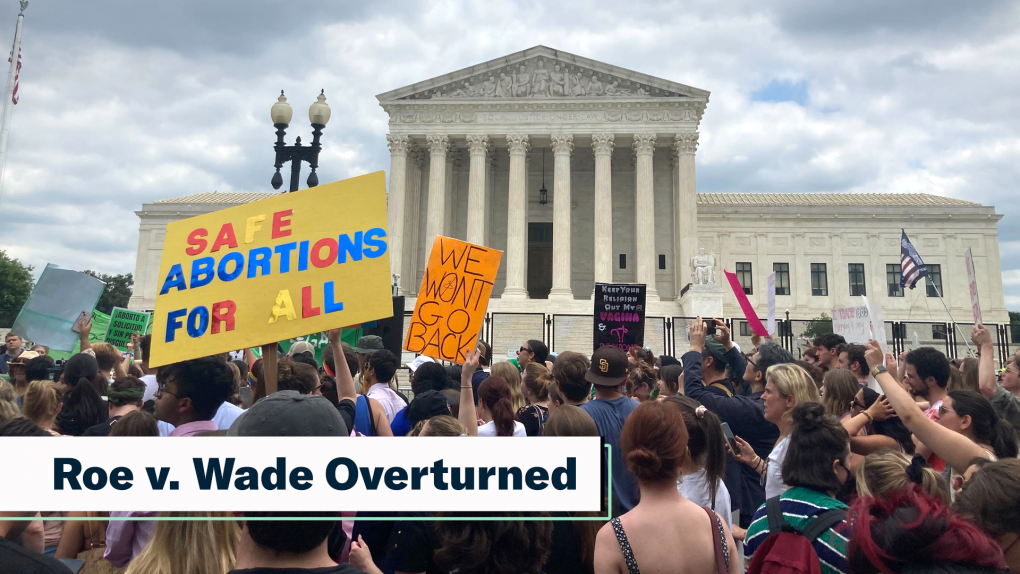
window.__IS_SSR__=true
window.__INITIAL_STATE__={
"attachmentsReducer": {
"audio_0": {
"type": "attachments",
"id": "audio_0",
"imgSizes": {
"kqedFullSize": {
"file": "https://ww2.kqed.org/news/wp-content/themes/KQED-unified/img/audio_bgs/background0.jpg"
}
}
},
"audio_1": {
"type": "attachments",
"id": "audio_1",
"imgSizes": {
"kqedFullSize": {
"file": "https://ww2.kqed.org/news/wp-content/themes/KQED-unified/img/audio_bgs/background1.jpg"
}
}
},
"audio_2": {
"type": "attachments",
"id": "audio_2",
"imgSizes": {
"kqedFullSize": {
"file": "https://ww2.kqed.org/news/wp-content/themes/KQED-unified/img/audio_bgs/background2.jpg"
}
}
},
"audio_3": {
"type": "attachments",
"id": "audio_3",
"imgSizes": {
"kqedFullSize": {
"file": "https://ww2.kqed.org/news/wp-content/themes/KQED-unified/img/audio_bgs/background3.jpg"
}
}
},
"audio_4": {
"type": "attachments",
"id": "audio_4",
"imgSizes": {
"kqedFullSize": {
"file": "https://ww2.kqed.org/news/wp-content/themes/KQED-unified/img/audio_bgs/background4.jpg"
}
}
},
"placeholder": {
"type": "attachments",
"id": "placeholder",
"imgSizes": {
"thumbnail": {
"file": "https://cdn.kqed.org/wp-content/uploads/2024/12/KQED-Default-Image-816638274-2000x1333-1-160x107.jpg",
"width": 160,
"height": 107,
"mimeType": "image/jpeg"
},
"medium": {
"file": "https://cdn.kqed.org/wp-content/uploads/2024/12/KQED-Default-Image-816638274-2000x1333-1-800x533.jpg",
"width": 800,
"height": 533,
"mimeType": "image/jpeg"
},
"medium_large": {
"file": "https://cdn.kqed.org/wp-content/uploads/2024/12/KQED-Default-Image-816638274-2000x1333-1-768x512.jpg",
"width": 768,
"height": 512,
"mimeType": "image/jpeg"
},
"large": {
"file": "https://cdn.kqed.org/wp-content/uploads/2024/12/KQED-Default-Image-816638274-2000x1333-1-1020x680.jpg",
"width": 1020,
"height": 680,
"mimeType": "image/jpeg"
},
"1536x1536": {
"file": "https://cdn.kqed.org/wp-content/uploads/2024/12/KQED-Default-Image-816638274-2000x1333-1-1536x1024.jpg",
"width": 1536,
"height": 1024,
"mimeType": "image/jpeg"
},
"fd-lrg": {
"file": "https://cdn.kqed.org/wp-content/uploads/2024/12/KQED-Default-Image-816638274-2000x1333-1-1536x1024.jpg",
"width": 1536,
"height": 1024,
"mimeType": "image/jpeg"
},
"fd-med": {
"file": "https://cdn.kqed.org/wp-content/uploads/2024/12/KQED-Default-Image-816638274-2000x1333-1-1020x680.jpg",
"width": 1020,
"height": 680,
"mimeType": "image/jpeg"
},
"fd-sm": {
"file": "https://cdn.kqed.org/wp-content/uploads/2024/12/KQED-Default-Image-816638274-2000x1333-1-800x533.jpg",
"width": 800,
"height": 533,
"mimeType": "image/jpeg"
},
"post-thumbnail": {
"file": "https://cdn.kqed.org/wp-content/uploads/2024/12/KQED-Default-Image-816638274-2000x1333-1-672x372.jpg",
"width": 672,
"height": 372,
"mimeType": "image/jpeg"
},
"twentyfourteen-full-width": {
"file": "https://cdn.kqed.org/wp-content/uploads/2024/12/KQED-Default-Image-816638274-2000x1333-1-1038x576.jpg",
"width": 1038,
"height": 576,
"mimeType": "image/jpeg"
},
"xxsmall": {
"file": "https://cdn.kqed.org/wp-content/uploads/2024/12/KQED-Default-Image-816638274-2000x1333-1-160x107.jpg",
"width": 160,
"height": 107,
"mimeType": "image/jpeg"
},
"xsmall": {
"file": "https://cdn.kqed.org/wp-content/uploads/2024/12/KQED-Default-Image-816638274-2000x1333-1-672x372.jpg",
"width": 672,
"height": 372,
"mimeType": "image/jpeg"
},
"small": {
"file": "https://cdn.kqed.org/wp-content/uploads/2024/12/KQED-Default-Image-816638274-2000x1333-1-672x372.jpg",
"width": 672,
"height": 372,
"mimeType": "image/jpeg"
},
"xlarge": {
"file": "https://cdn.kqed.org/wp-content/uploads/2024/12/KQED-Default-Image-816638274-2000x1333-1-1020x680.jpg",
"width": 1020,
"height": 680,
"mimeType": "image/jpeg"
},
"full-width": {
"file": "https://cdn.kqed.org/wp-content/uploads/2024/12/KQED-Default-Image-816638274-2000x1333-1-1920x1280.jpg",
"width": 1920,
"height": 1280,
"mimeType": "image/jpeg"
},
"guest-author-32": {
"file": "https://cdn.kqed.org/wp-content/uploads/2025/01/KQED-Default-Image-816638274-1333x1333-1-160x160.jpg",
"width": 32,
"height": 32,
"mimeType": "image/jpeg"
},
"guest-author-50": {
"file": "https://cdn.kqed.org/wp-content/uploads/2025/01/KQED-Default-Image-816638274-1333x1333-1-160x160.jpg",
"width": 50,
"height": 50,
"mimeType": "image/jpeg"
},
"guest-author-64": {
"file": "https://cdn.kqed.org/wp-content/uploads/2025/01/KQED-Default-Image-816638274-1333x1333-1-160x160.jpg",
"width": 64,
"height": 64,
"mimeType": "image/jpeg"
},
"guest-author-96": {
"file": "https://cdn.kqed.org/wp-content/uploads/2025/01/KQED-Default-Image-816638274-1333x1333-1-160x160.jpg",
"width": 96,
"height": 96,
"mimeType": "image/jpeg"
},
"guest-author-128": {
"file": "https://cdn.kqed.org/wp-content/uploads/2025/01/KQED-Default-Image-816638274-1333x1333-1-160x160.jpg",
"width": 128,
"height": 128,
"mimeType": "image/jpeg"
},
"detail": {
"file": "https://cdn.kqed.org/wp-content/uploads/2025/01/KQED-Default-Image-816638274-1333x1333-1-160x160.jpg",
"width": 160,
"height": 160,
"mimeType": "image/jpeg"
},
"kqedFullSize": {
"file": "https://cdn.kqed.org/wp-content/uploads/2024/12/KQED-Default-Image-816638274-2000x1333-1.jpg",
"width": 2000,
"height": 1333
}
}
},
"news_11917964": {
"type": "attachments",
"id": "news_11917964",
"meta": {
"index": "attachments_1716263798",
"site": "news",
"id": "11917964",
"found": true
},
"parent": 11917958,
"imgSizes": {
"twentyfourteen-full-width": {
"file": "https://ww2.kqed.org/app/uploads/sites/10/2022/06/RoevWade-1038x576.png",
"width": 1038,
"mimeType": "image/png",
"height": 576
},
"thumbnail": {
"file": "https://ww2.kqed.org/app/uploads/sites/10/2022/06/RoevWade-160x90.png",
"width": 160,
"mimeType": "image/png",
"height": 90
},
"post-thumbnail": {
"file": "https://ww2.kqed.org/app/uploads/sites/10/2022/06/RoevWade-672x372.png",
"width": 672,
"mimeType": "image/png",
"height": 372
},
"kqedFullSize": {
"file": "https://ww2.kqed.org/app/uploads/sites/10/2022/06/RoevWade.png",
"width": 1920,
"height": 1080
},
"large": {
"file": "https://ww2.kqed.org/app/uploads/sites/10/2022/06/RoevWade-1020x574.png",
"width": 1020,
"mimeType": "image/png",
"height": 574
},
"1536x1536": {
"file": "https://ww2.kqed.org/app/uploads/sites/10/2022/06/RoevWade-1536x864.png",
"width": 1536,
"mimeType": "image/png",
"height": 864
},
"medium": {
"file": "https://ww2.kqed.org/app/uploads/sites/10/2022/06/RoevWade-800x450.png",
"width": 800,
"mimeType": "image/png",
"height": 450
}
},
"publishDate": 1656116318,
"modified": 1656116318,
"caption": null,
"description": null,
"title": "RoevWade",
"credit": null,
"status": "inherit",
"altTag": null,
"isLoading": false,
"fetchFailed": false
},
"news_11917846": {
"type": "attachments",
"id": "news_11917846",
"meta": {
"index": "attachments_1716263798",
"site": "news",
"id": "11917846",
"found": true
},
"parent": 11916950,
"imgSizes": {
"thumbnail": {
"file": "https://ww2.kqed.org/app/uploads/sites/10/2022/06/RS56800_GettyImages-1404906099-qut-160x107.jpg",
"width": 160,
"mimeType": "image/jpeg",
"height": 107
},
"kqedFullSize": {
"file": "https://ww2.kqed.org/app/uploads/sites/10/2022/06/RS56800_GettyImages-1404906099-qut.jpg",
"width": 1920,
"height": 1280
},
"large": {
"file": "https://ww2.kqed.org/app/uploads/sites/10/2022/06/RS56800_GettyImages-1404906099-qut-1020x680.jpg",
"width": 1020,
"mimeType": "image/jpeg",
"height": 680
},
"medium": {
"file": "https://ww2.kqed.org/app/uploads/sites/10/2022/06/RS56800_GettyImages-1404906099-qut-800x533.jpg",
"width": 800,
"mimeType": "image/jpeg",
"height": 533
}
},
"publishDate": 1656094055,
"modified": 1656094334,
"caption": "People protest in response to the Dobbs v Jackson Women's Health Organization ruling in front of the U.S. Supreme Court on June 24, 2022 in Washington, DC. ",
"description": null,
"title": "overturned-roe-wade-abortion",
"credit": "Brandon Bell/Getty Images",
"status": "inherit",
"altTag": "The front of the U.S. Supreme Court, under a dark grey and blue cloud sky, with a crowd of people protesting outside and holding up signs.",
"isLoading": false,
"fetchFailed": false
},
"news_11917306": {
"type": "attachments",
"id": "news_11917306",
"meta": {
"index": "attachments_1716263798",
"site": "news",
"id": "11917306",
"found": true
},
"parent": 11917111,
"imgSizes": {
"twentyfourteen-full-width": {
"file": "https://ww2.kqed.org/app/uploads/sites/10/2022/06/RS55728_073_KQED_AbortionRallySF_05032022-qut-1-1038x576.jpg",
"width": 1038,
"mimeType": "image/jpeg",
"height": 576
},
"thumbnail": {
"file": "https://ww2.kqed.org/app/uploads/sites/10/2022/06/RS55728_073_KQED_AbortionRallySF_05032022-qut-1-160x107.jpg",
"width": 160,
"mimeType": "image/jpeg",
"height": 107
},
"post-thumbnail": {
"file": "https://ww2.kqed.org/app/uploads/sites/10/2022/06/RS55728_073_KQED_AbortionRallySF_05032022-qut-1-672x372.jpg",
"width": 672,
"mimeType": "image/jpeg",
"height": 372
},
"kqedFullSize": {
"file": "https://ww2.kqed.org/app/uploads/sites/10/2022/06/RS55728_073_KQED_AbortionRallySF_05032022-qut-1.jpg",
"width": 1920,
"height": 1278
},
"large": {
"file": "https://ww2.kqed.org/app/uploads/sites/10/2022/06/RS55728_073_KQED_AbortionRallySF_05032022-qut-1-1020x679.jpg",
"width": 1020,
"mimeType": "image/jpeg",
"height": 679
},
"1536x1536": {
"file": "https://ww2.kqed.org/app/uploads/sites/10/2022/06/RS55728_073_KQED_AbortionRallySF_05032022-qut-1-1536x1022.jpg",
"width": 1536,
"mimeType": "image/jpeg",
"height": 1022
},
"medium": {
"file": "https://ww2.kqed.org/app/uploads/sites/10/2022/06/RS55728_073_KQED_AbortionRallySF_05032022-qut-1-800x533.jpg",
"width": 800,
"mimeType": "image/jpeg",
"height": 533
}
},
"publishDate": 1655410391,
"modified": 1656083163,
"caption": "Demonstrators march on Market Street in San Francisco on May 3, 2022, during a rally for abortion rights. Despite the Supreme Court revoking Roe v. Wade, abortion is still legal in California. Several options are still available for those seeking an abortion but don't have insurance or live far away from an abortion clinic. ",
"description": "Demonstrators march on Market Street in San Francisco on May 3, 2022, during a rally for abortion rights.",
"title": "roe-v-wade-overturned",
"credit": "Beth LaBerge/KQED",
"status": "inherit",
"altTag": "A large crowd moves through a San Francisco street. Many carry signs that read \"Demand Reproductive Justice Now\" and \"Women are not breeders.\"",
"isLoading": false,
"fetchFailed": false
},
"news_11917546": {
"type": "attachments",
"id": "news_11917546",
"meta": {
"index": "attachments_1716263798",
"site": "news",
"id": "11917546",
"found": true
},
"parent": 11917541,
"imgSizes": {
"twentyfourteen-full-width": {
"file": "https://ww2.kqed.org/app/uploads/sites/10/2022/06/Lee-Mitchell_IMG_0090-2-1038x576.jpg",
"width": 1038,
"mimeType": "image/jpeg",
"height": 576
},
"thumbnail": {
"file": "https://ww2.kqed.org/app/uploads/sites/10/2022/06/Lee-Mitchell_IMG_0090-2-160x114.jpg",
"width": 160,
"mimeType": "image/jpeg",
"height": 114
},
"post-thumbnail": {
"file": "https://ww2.kqed.org/app/uploads/sites/10/2022/06/Lee-Mitchell_IMG_0090-2-672x372.jpg",
"width": 672,
"mimeType": "image/jpeg",
"height": 372
},
"kqedFullSize": {
"file": "https://ww2.kqed.org/app/uploads/sites/10/2022/06/Lee-Mitchell_IMG_0090-2.jpg",
"width": 1920,
"height": 1371
},
"large": {
"file": "https://ww2.kqed.org/app/uploads/sites/10/2022/06/Lee-Mitchell_IMG_0090-2-1020x728.jpg",
"width": 1020,
"mimeType": "image/jpeg",
"height": 728
},
"1536x1536": {
"file": "https://ww2.kqed.org/app/uploads/sites/10/2022/06/Lee-Mitchell_IMG_0090-2-1536x1097.jpg",
"width": 1536,
"mimeType": "image/jpeg",
"height": 1097
},
"medium": {
"file": "https://ww2.kqed.org/app/uploads/sites/10/2022/06/Lee-Mitchell_IMG_0090-2-800x571.jpg",
"width": 800,
"mimeType": "image/jpeg",
"height": 571
}
},
"publishDate": 1655844572,
"modified": 1656339165,
"caption": null,
"description": "Lee Mitchell, 75, knows what it was like to have an abortion before Roe. Now she wants to help women traveling from out of state to California for an abortion by offering help she didn't have -- a ride to the clinic or a place to stay. ",
"title": "abortion Lee Mitchell",
"credit": "April Dembosky/KQED",
"status": "inherit",
"altTag": "An older woman with peach skin and white hair sits on a blue couch in her living room, with red and blue pillows. She has blue eyes and a slight smile. She's wearing a blue and white striped shirt with geometric embroidery in yellow, blue, and rust along the shoulders and arms.",
"isLoading": false,
"fetchFailed": false
},
"news_11916779": {
"type": "attachments",
"id": "news_11916779",
"meta": {
"index": "attachments_1716263798",
"site": "news",
"id": "11916779",
"found": true
},
"parent": 11916778,
"imgSizes": {
"thumbnail": {
"file": "https://ww2.kqed.org/app/uploads/sites/10/2022/06/image1-160x107.jpg",
"width": 160,
"mimeType": "image/jpeg",
"height": 107
},
"post-thumbnail": {
"file": "https://ww2.kqed.org/app/uploads/sites/10/2022/06/image1-672x372.jpg",
"width": 672,
"mimeType": "image/jpeg",
"height": 372
},
"kqedFullSize": {
"file": "https://ww2.kqed.org/app/uploads/sites/10/2022/06/image1.jpg",
"width": 860,
"height": 574
},
"medium": {
"file": "https://ww2.kqed.org/app/uploads/sites/10/2022/06/image1-800x534.jpg",
"width": 800,
"mimeType": "image/jpeg",
"height": 534
}
},
"publishDate": 1654894376,
"modified": 1654894376,
"caption": null,
"description": null,
"title": "image1",
"credit": null,
"status": "inherit",
"altTag": null,
"isLoading": false,
"fetchFailed": false
},
"news_11910551": {
"type": "attachments",
"id": "news_11910551",
"meta": {
"index": "attachments_1716263798",
"site": "news",
"id": "11910551",
"found": true
},
"parent": 11910550,
"imgSizes": {
"twentyfourteen-full-width": {
"file": "https://ww2.kqed.org/app/uploads/sites/10/2022/04/gettyimages-1390129873-fd20e704f8aa20d2eaf5bc6bed92e4c2480e5390-1038x576.jpg",
"width": 1038,
"mimeType": "image/jpeg",
"height": 576
},
"thumbnail": {
"file": "https://ww2.kqed.org/app/uploads/sites/10/2022/04/gettyimages-1390129873-fd20e704f8aa20d2eaf5bc6bed92e4c2480e5390-160x120.jpg",
"width": 160,
"mimeType": "image/jpeg",
"height": 120
},
"post-thumbnail": {
"file": "https://ww2.kqed.org/app/uploads/sites/10/2022/04/gettyimages-1390129873-fd20e704f8aa20d2eaf5bc6bed92e4c2480e5390-672x372.jpg",
"width": 672,
"mimeType": "image/jpeg",
"height": 372
},
"kqedFullSize": {
"file": "https://ww2.kqed.org/app/uploads/sites/10/2022/04/gettyimages-1390129873-fd20e704f8aa20d2eaf5bc6bed92e4c2480e5390-scaled.jpg",
"width": 2560,
"height": 1917
},
"2048x2048": {
"file": "https://ww2.kqed.org/app/uploads/sites/10/2022/04/gettyimages-1390129873-fd20e704f8aa20d2eaf5bc6bed92e4c2480e5390-2048x1533.jpg",
"width": 2048,
"mimeType": "image/jpeg",
"height": 1533
},
"large": {
"file": "https://ww2.kqed.org/app/uploads/sites/10/2022/04/gettyimages-1390129873-fd20e704f8aa20d2eaf5bc6bed92e4c2480e5390-1020x764.jpg",
"width": 1020,
"mimeType": "image/jpeg",
"height": 764
},
"1536x1536": {
"file": "https://ww2.kqed.org/app/uploads/sites/10/2022/04/gettyimages-1390129873-fd20e704f8aa20d2eaf5bc6bed92e4c2480e5390-1536x1150.jpg",
"width": 1536,
"mimeType": "image/jpeg",
"height": 1150
},
"full-width": {
"file": "https://ww2.kqed.org/app/uploads/sites/10/2022/04/gettyimages-1390129873-fd20e704f8aa20d2eaf5bc6bed92e4c2480e5390-1920x1438.jpg",
"width": 1920,
"mimeType": "image/jpeg",
"height": 1438
},
"medium": {
"file": "https://ww2.kqed.org/app/uploads/sites/10/2022/04/gettyimages-1390129873-fd20e704f8aa20d2eaf5bc6bed92e4c2480e5390-800x599.jpg",
"width": 800,
"mimeType": "image/jpeg",
"height": 599
}
},
"publishDate": 1649376160,
"modified": 1649377085,
"caption": "President Joe Biden congratulates Ketanji Brown Jackson in the Roosevelt Room at the White House on April 7, 2022, moments after the U.S. Senate confirmed her the U.S. Supreme Court.",
"description": "WASHINGTON, DC - APRIL 07: ",
"title": "President Joe Biden congratulates Ketanji Brown Jackson moments after the Senate confirmed her to be the first Black woman to be a justice on the Supreme Court at the White House.",
"credit": "Chip Somodevilla/Getty Images",
"status": "inherit",
"altTag": "President Joe Biden holds Ketanji Brown Jackson's hands, as they stand in front of a TV showing the U.S. Senate floor.",
"isLoading": false,
"fetchFailed": false
},
"news_11897717": {
"type": "attachments",
"id": "news_11897717",
"meta": {
"index": "attachments_1716263798",
"site": "news",
"id": "11897717",
"found": true
},
"parent": 11897702,
"imgSizes": {
"twentyfourteen-full-width": {
"file": "https://ww2.kqed.org/app/uploads/sites/10/2021/11/GettyImages-1233293018-1024x576.jpg",
"width": 1024,
"mimeType": "image/jpeg",
"height": 576
},
"thumbnail": {
"file": "https://ww2.kqed.org/app/uploads/sites/10/2021/11/GettyImages-1233293018-160x107.jpg",
"width": 160,
"mimeType": "image/jpeg",
"height": 107
},
"post-thumbnail": {
"file": "https://ww2.kqed.org/app/uploads/sites/10/2021/11/GettyImages-1233293018-672x372.jpg",
"width": 672,
"mimeType": "image/jpeg",
"height": 372
},
"kqedFullSize": {
"file": "https://ww2.kqed.org/app/uploads/sites/10/2021/11/GettyImages-1233293018.jpg",
"width": 1024,
"height": 683
},
"large": {
"file": "https://ww2.kqed.org/app/uploads/sites/10/2021/11/GettyImages-1233293018-1020x680.jpg",
"width": 1020,
"mimeType": "image/jpeg",
"height": 680
},
"medium": {
"file": "https://ww2.kqed.org/app/uploads/sites/10/2021/11/GettyImages-1233293018-800x534.jpg",
"width": 800,
"mimeType": "image/jpeg",
"height": 534
}
},
"publishDate": 1638320366,
"modified": 1638323782,
"caption": "A TPM Arms LLC California-legal featureless AR-15-style rifle is displayed for sale at the company's booth at the Crossroads of the West Gun Show at the Orange County Fairgrounds on June 5, 2021, in Costa Mesa. ",
"description": null,
"title": "US-WEAPONRY-ARMS-GUN SHOW",
"credit": "Patrick T. Fallon / AFP via Getty Images",
"status": "inherit",
"altTag": "Assault weapons on display on a red tablecloth as a hand rests on top of one weapon.",
"isLoading": false,
"fetchFailed": false
},
"news_11890060": {
"type": "attachments",
"id": "news_11890060",
"meta": {
"index": "attachments_1716263798",
"site": "news",
"id": "11890060",
"found": true
},
"title": "US-POLITICS-IMMIGRATION-COURT",
"publishDate": 1632779004,
"status": "inherit",
"parent": 11890039,
"modified": 1779125894,
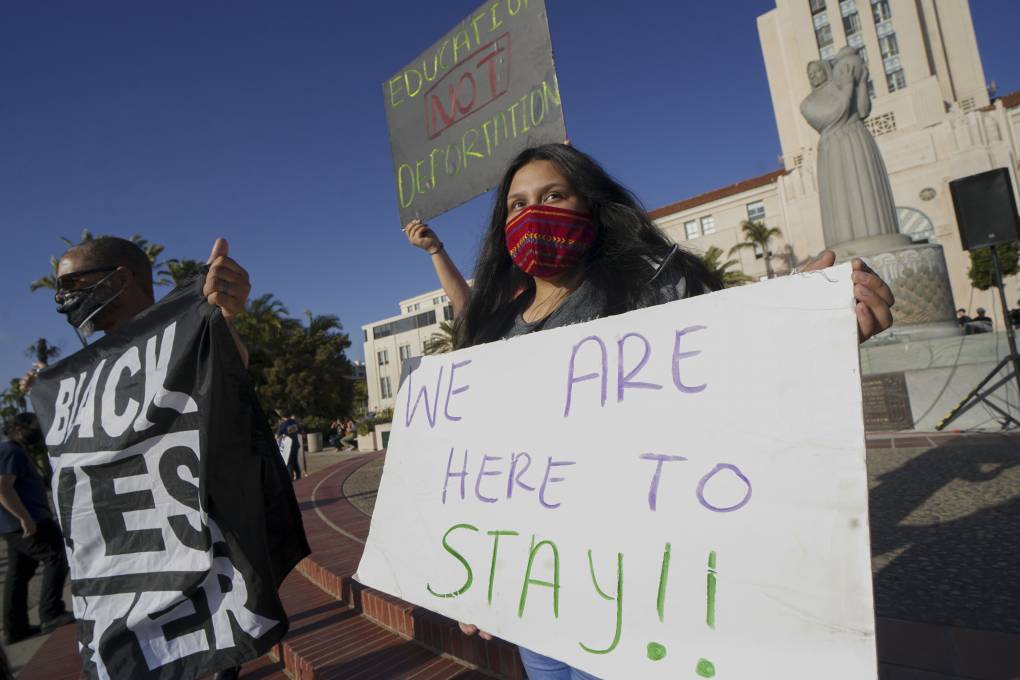
"caption": "People hold signs during a rally in support of the Supreme Court's ruling in favor of the Deferred Action for Childhood Arrivals (DACA) program in San Diego, California, June 18, 2020.",
"credit": "Sandy Huffaker/AFP via Getty Images",
"altTag": "Protesters hold signs saying, \"We are here to stay!\" \"Black Lives Matter\" and \"Education, Not Deportation.\"",
"description": "People hold signs during a rally in support of the Supreme Court's ruling in favor of the Deferred Action for Childhood Arrivals (DACA) program, in San Diego, California June 18, 2020.",
"imgSizes": {
"medium": {
"file": "https://cdn.kqed.org/wp-content/uploads/sites/10/2021/09/GettyImages-1221069312-800x534.jpg",
"width": 800,
"height": 534,
"mimeType": "image/jpeg"
},
"large": {
"file": "https://cdn.kqed.org/wp-content/uploads/sites/10/2021/09/GettyImages-1221069312-1020x680.jpg",
"width": 1020,
"height": 680,
"mimeType": "image/jpeg"
},
"thumbnail": {
"file": "https://cdn.kqed.org/wp-content/uploads/sites/10/2021/09/GettyImages-1221069312-160x107.jpg",
"width": 160,
"height": 107,
"mimeType": "image/jpeg"
},
"1536x1536": {
"file": "https://cdn.kqed.org/wp-content/uploads/sites/10/2021/09/GettyImages-1221069312-1536x1025.jpg",
"width": 1536,
"height": 1025,
"mimeType": "image/jpeg"
},
"2048x2048": {
"file": "https://cdn.kqed.org/wp-content/uploads/sites/10/2021/09/GettyImages-1221069312-2048x1366.jpg",
"width": 2048,
"height": 1366,
"mimeType": "image/jpeg"
},
"post-thumbnail": {
"file": "https://cdn.kqed.org/wp-content/uploads/sites/10/2021/09/GettyImages-1221069312-672x372.jpg",
"width": 672,
"height": 372,
"mimeType": "image/jpeg"
},
"twentyfourteen-full-width": {
"file": "https://cdn.kqed.org/wp-content/uploads/sites/10/2021/09/GettyImages-1221069312-1038x576.jpg",
"width": 1038,
"height": 576,
"mimeType": "image/jpeg"
},
"full-width": {
"file": "https://cdn.kqed.org/wp-content/uploads/sites/10/2021/09/GettyImages-1221069312-1920x1281.jpg",
"width": 1920,
"height": 1281,
"mimeType": "image/jpeg"
},
"kqedFullSize": {
"file": "https://cdn.kqed.org/wp-content/uploads/sites/10/2021/09/GettyImages-1221069312-scaled-e1740595603543.jpg",
"width": 2000,
"height": 1334
}
},
"isLoading": false,
"fetchFailed": false
},
"news_11881807": {
"type": "attachments",
"id": "news_11881807",
"meta": {
"index": "attachments_1716263798",
"site": "news",
"id": "11881807",
"found": true
},
"parent": 11881668,
"imgSizes": {
"twentyfourteen-full-width": {
"file": "https://ww2.kqed.org/app/uploads/sites/10/2021/07/GettyImages-1329563989-1038x576.jpg",
"width": 1038,
"mimeType": "image/jpeg",
"height": 576
},
"thumbnail": {
"file": "https://ww2.kqed.org/app/uploads/sites/10/2021/07/GettyImages-1329563989-160x107.jpg",
"width": 160,
"mimeType": "image/jpeg",
"height": 107
},
"post-thumbnail": {
"file": "https://ww2.kqed.org/app/uploads/sites/10/2021/07/GettyImages-1329563989-672x372.jpg",
"width": 672,
"mimeType": "image/jpeg",
"height": 372
},
"kqedFullSize": {
"file": "https://ww2.kqed.org/app/uploads/sites/10/2021/07/GettyImages-1329563989-scaled.jpg",
"width": 2560,
"height": 1706
},
"2048x2048": {
"file": "https://ww2.kqed.org/app/uploads/sites/10/2021/07/GettyImages-1329563989-2048x1365.jpg",
"width": 2048,
"mimeType": "image/jpeg",
"height": 1365
},
"large": {
"file": "https://ww2.kqed.org/app/uploads/sites/10/2021/07/GettyImages-1329563989-1020x680.jpg",
"width": 1020,
"mimeType": "image/jpeg",
"height": 680
},
"1536x1536": {
"file": "https://ww2.kqed.org/app/uploads/sites/10/2021/07/GettyImages-1329563989-1536x1024.jpg",
"width": 1536,
"mimeType": "image/jpeg",
"height": 1024
},
"full-width": {
"file": "https://ww2.kqed.org/app/uploads/sites/10/2021/07/GettyImages-1329563989-1920x1280.jpg",
"width": 1920,
"mimeType": "image/jpeg",
"height": 1280
},
"medium": {
"file": "https://ww2.kqed.org/app/uploads/sites/10/2021/07/GettyImages-1329563989-800x533.jpg",
"width": 800,
"mimeType": "image/jpeg",
"height": 533
}
},
"publishDate": 1626817968,
"modified": 1626818150,
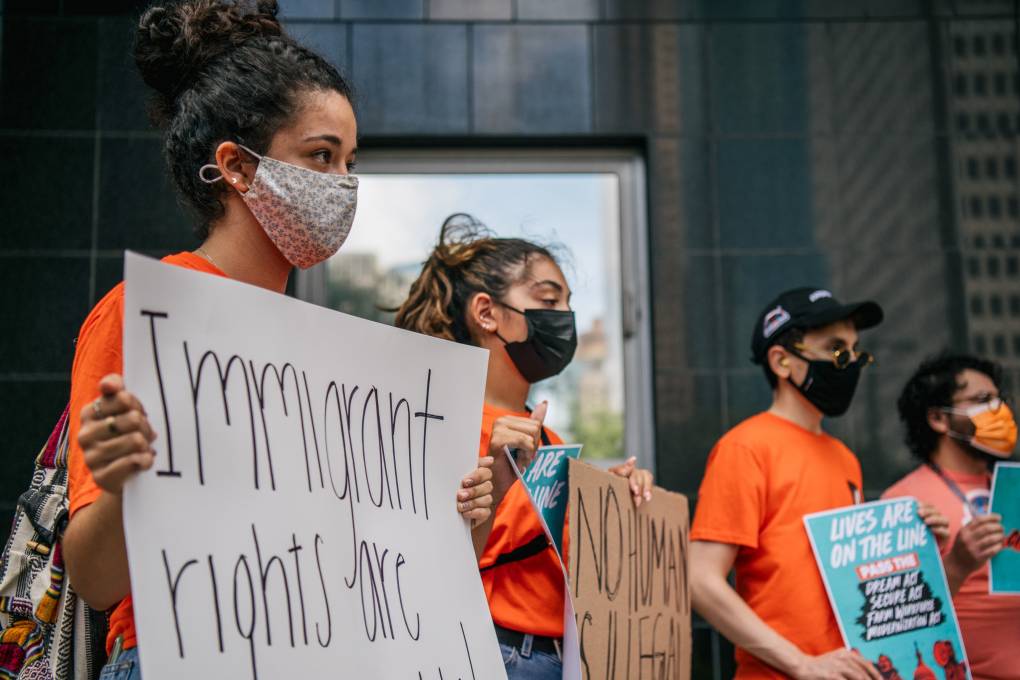
"caption": "Members of the United We Dream organization participate in a demonstration outside of the U.S. District Courthouse on July 19, 2021 in Houston, Texas. The demonstration was held in response to Texas District Judge Andrew Hanen's ordering of the U.S. government to block new Deferred Action for Childhood Arrivals (DACA) applicants. Hanen issued the ruling stating that the Obama administration did not have legal authority in 2012 to create the program. ",
"description": "Members of the United We Dream organization participate in a demonstration outside of the U.S. District Courthouse on July 19, 2021 in Houston, Texas. The demonstration was held in response to Texas District Judge Andrew Hanen's ordering of the U.S. government to block new Deferred Action for Childhood Arrivals (DACA) applicants. Hanen issued the ruling stating that the Obama administration did not have legal authority in 2012 to create the program. ",
"title": "Rally Held At U.S. District Court In Support Of DACA Applicants",
"credit": " Brandon Bell/Getty Images",
"status": "inherit",
"altTag": "A group of youth wearing orange shirts and facemasks hold up several signs that read 'Immigrant rights are human rights.'",
"isLoading": false,
"fetchFailed": false
},
"news_11880126": {
"type": "attachments",
"id": "news_11880126",
"meta": {
"index": "attachments_1716263798",
"site": "news",
"id": "11880126",
"found": true
},
"parent": 11880122,
"imgSizes": {
"twentyfourteen-full-width": {
"file": "https://ww2.kqed.org/app/uploads/sites/10/2021/07/GettyImages-1159106111-1038x576.jpg",
"width": 1038,
"mimeType": "image/jpeg",
"height": 576
},
"thumbnail": {
"file": "https://ww2.kqed.org/app/uploads/sites/10/2021/07/GettyImages-1159106111-160x90.jpg",
"width": 160,
"mimeType": "image/jpeg",
"height": 90
},
"post-thumbnail": {
"file": "https://ww2.kqed.org/app/uploads/sites/10/2021/07/GettyImages-1159106111-672x372.jpg",
"width": 672,
"mimeType": "image/jpeg",
"height": 372
},
"kqedFullSize": {
"file": "https://ww2.kqed.org/app/uploads/sites/10/2021/07/GettyImages-1159106111.jpg",
"width": 1855,
"height": 1043
},
"large": {
"file": "https://ww2.kqed.org/app/uploads/sites/10/2021/07/GettyImages-1159106111-1020x574.jpg",
"width": 1020,
"mimeType": "image/jpeg",
"height": 574
},
"1536x1536": {
"file": "https://ww2.kqed.org/app/uploads/sites/10/2021/07/GettyImages-1159106111-1536x864.jpg",
"width": 1536,
"mimeType": "image/jpeg",
"height": 864
},
"medium": {
"file": "https://ww2.kqed.org/app/uploads/sites/10/2021/07/GettyImages-1159106111-800x450.jpg",
"width": 800,
"mimeType": "image/jpeg",
"height": 450
}
},
"publishDate": 1625167683,
"modified": 1625167792,
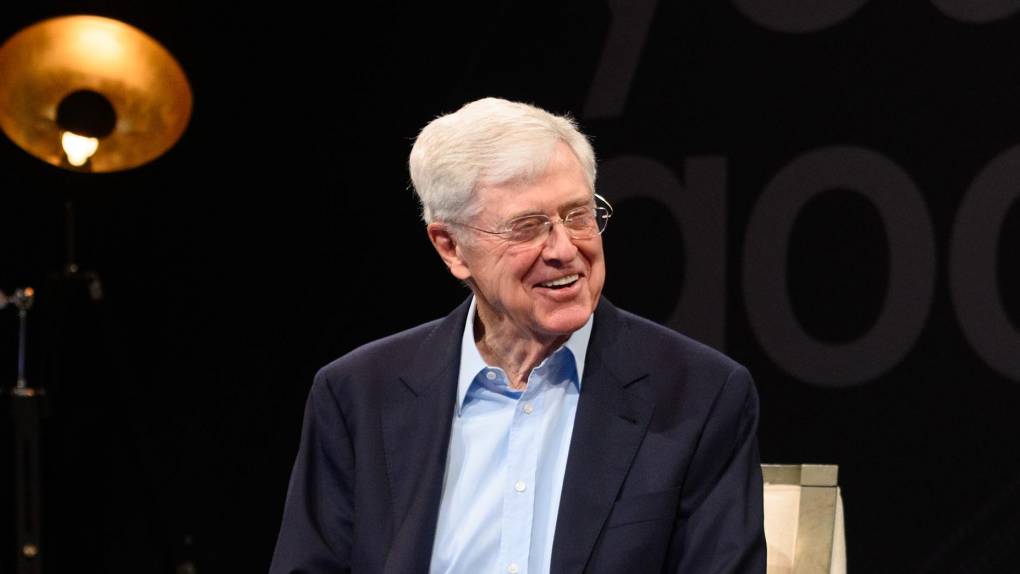
"caption": "In this June 29, 2019, file photo, Charles Koch, chief executive officer of Koch Industries is in Colorado Springs, Colo. The Supreme Court has ordered California to stop collecting the names and addresses of top donors to charities. The justices voted 6-3 along ideological lines to side with two nonprofit groups, including one with links to billionaire Charles Koch, that argued California's policy violates the First Amendment.",
"description": null,
"title": "Stand Together Summit In Colorado Springs - Day 1",
"credit": "Daniel Boczarski/Getty Images for Stand Together",
"status": "inherit",
"altTag": null,
"isLoading": false,
"fetchFailed": false
},
"news_11200300": {
"type": "attachments",
"id": "news_11200300",
"meta": {
"index": "attachments_1716263798",
"site": "news",
"id": "11200300",
"found": true
},
"parent": 11200063,
"imgSizes": {
"small": {
"file": "https://ww2.kqed.org/app/uploads/sites/10/2016/12/ScotusBldg-520x347.jpg",
"width": 520,
"mimeType": "image/jpeg",
"height": 347
},
"twentyfourteen-full-width": {
"file": "https://ww2.kqed.org/app/uploads/sites/10/2016/12/ScotusBldg-1038x576.jpg",
"width": 1038,
"mimeType": "image/jpeg",
"height": 576
},
"thumbnail": {
"file": "https://ww2.kqed.org/app/uploads/sites/10/2016/12/ScotusBldg-160x107.jpg",
"width": 160,
"mimeType": "image/jpeg",
"height": 107
},
"fd-sm": {
"file": "https://ww2.kqed.org/app/uploads/sites/10/2016/12/ScotusBldg-960x640.jpg",
"width": 960,
"mimeType": "image/jpeg",
"height": 640
},
"post-thumbnail": {
"file": "https://ww2.kqed.org/app/uploads/sites/10/2016/12/ScotusBldg-672x372.jpg",
"width": 672,
"mimeType": "image/jpeg",
"height": 372
},
"xsmall": {
"file": "https://ww2.kqed.org/app/uploads/sites/10/2016/12/ScotusBldg-375x250.jpg",
"width": 375,
"mimeType": "image/jpeg",
"height": 250
},
"kqedFullSize": {
"file": "https://ww2.kqed.org/app/uploads/sites/10/2016/12/ScotusBldg.jpg",
"width": 1920,
"height": 1280
},
"large": {
"file": "https://ww2.kqed.org/app/uploads/sites/10/2016/12/ScotusBldg-1020x680.jpg",
"width": 1020,
"mimeType": "image/jpeg",
"height": 680
},
"xlarge": {
"file": "https://ww2.kqed.org/app/uploads/sites/10/2016/12/ScotusBldg-1180x787.jpg",
"width": 1180,
"mimeType": "image/jpeg",
"height": 787
},
"guest-author-50": {
"file": "https://ww2.kqed.org/app/uploads/sites/10/2016/12/ScotusBldg-50x50.jpg",
"width": 50,
"mimeType": "image/jpeg",
"height": 50
},
"guest-author-96": {
"file": "https://ww2.kqed.org/app/uploads/sites/10/2016/12/ScotusBldg-96x96.jpg",
"width": 96,
"mimeType": "image/jpeg",
"height": 96
},
"medium": {
"file": "https://ww2.kqed.org/app/uploads/sites/10/2016/12/ScotusBldg-800x533.jpg",
"width": 800,
"mimeType": "image/jpeg",
"height": 533
},
"guest-author-64": {
"file": "https://ww2.kqed.org/app/uploads/sites/10/2016/12/ScotusBldg-64x64.jpg",
"width": 64,
"mimeType": "image/jpeg",
"height": 64
},
"guest-author-32": {
"file": "https://ww2.kqed.org/app/uploads/sites/10/2016/12/ScotusBldg-32x32.jpg",
"width": 32,
"mimeType": "image/jpeg",
"height": 32
},
"jmtc-small-thumb": {
"file": "https://ww2.kqed.org/app/uploads/sites/10/2016/12/ScotusBldg-280x150.jpg",
"width": 280,
"mimeType": "image/jpeg",
"height": 150
},
"fd-lrg": {
"file": "https://ww2.kqed.org/app/uploads/sites/10/2016/12/ScotusBldg-1920x1280.jpg",
"width": 1920,
"mimeType": "image/jpeg",
"height": 1280
},
"fd-med": {
"file": "https://ww2.kqed.org/app/uploads/sites/10/2016/12/ScotusBldg-1180x787.jpg",
"width": 1180,
"mimeType": "image/jpeg",
"height": 787
},
"full-width": {
"file": "https://ww2.kqed.org/app/uploads/sites/10/2016/12/ScotusBldg-1920x1280.jpg",
"width": 1920,
"mimeType": "image/jpeg",
"height": 1280
},
"detail": {
"file": "https://ww2.kqed.org/app/uploads/sites/10/2016/12/ScotusBldg-150x150.jpg",
"width": 150,
"mimeType": "image/jpeg",
"height": 150
},
"guest-author-128": {
"file": "https://ww2.kqed.org/app/uploads/sites/10/2016/12/ScotusBldg-128x128.jpg",
"width": 128,
"mimeType": "image/jpeg",
"height": 128
},
"xxsmall": {
"file": "https://ww2.kqed.org/app/uploads/sites/10/2016/12/ScotusBldg-240x160.jpg",
"width": 240,
"mimeType": "image/jpeg",
"height": 160
}
},
"publishDate": 1480633710,
"modified": 1480633746,
"caption": "The U.S. Supreme Court in Washington, D.C.",
"description": "The U.S. Supreme Court in Washington, D.C.",
"title": "scotusbldg",
"credit": "Zach Gibson/Getty Images",
"status": "inherit",
"isLoading": false,
"fetchFailed": false
},
"news_11859144": {
"type": "attachments",
"id": "news_11859144",
"meta": {
"index": "attachments_1716263798",
"site": "news",
"id": "11859144",
"found": true
},
"parent": 11859141,
"imgSizes": {
"apple_news_ca_landscape_5_5": {
"file": "https://ww2.kqed.org/app/uploads/sites/10/2021/02/GettyImages-655538838-copy-1044x783.jpg",
"width": 1044,
"mimeType": "image/jpeg",
"height": 783
},
"apple_news_ca_square_4_0": {
"file": "https://ww2.kqed.org/app/uploads/sites/10/2021/02/GettyImages-655538838-copy-470x470.jpg",
"width": 470,
"mimeType": "image/jpeg",
"height": 470
},
"twentyfourteen-full-width": {
"file": "https://ww2.kqed.org/app/uploads/sites/10/2021/02/GettyImages-655538838-copy-1038x576.jpg",
"width": 1038,
"mimeType": "image/jpeg",
"height": 576
},
"thumbnail": {
"file": "https://ww2.kqed.org/app/uploads/sites/10/2021/02/GettyImages-655538838-copy-160x90.jpg",
"width": 160,
"mimeType": "image/jpeg",
"height": 90
},
"post-thumbnail": {
"file": "https://ww2.kqed.org/app/uploads/sites/10/2021/02/GettyImages-655538838-copy-672x372.jpg",
"width": 672,
"mimeType": "image/jpeg",
"height": 372
},
"kqedFullSize": {
"file": "https://ww2.kqed.org/app/uploads/sites/10/2021/02/GettyImages-655538838-copy-scaled.jpg",
"width": 2560,
"height": 1440
},
"2048x2048": {
"file": "https://ww2.kqed.org/app/uploads/sites/10/2021/02/GettyImages-655538838-copy-2048x1152.jpg",
"width": 2048,
"mimeType": "image/jpeg",
"height": 1152
},
"apple_news_ca_landscape_4_7": {
"file": "https://ww2.kqed.org/app/uploads/sites/10/2021/02/GettyImages-655538838-copy-632x474.jpg",
"width": 632,
"mimeType": "image/jpeg",
"height": 474
},
"large": {
"file": "https://ww2.kqed.org/app/uploads/sites/10/2021/02/GettyImages-655538838-copy-1020x574.jpg",
"width": 1020,
"mimeType": "image/jpeg",
"height": 574
},
"apple_news_ca_landscape_4_0": {
"file": "https://ww2.kqed.org/app/uploads/sites/10/2021/02/GettyImages-655538838-copy-536x402.jpg",
"width": 536,
"mimeType": "image/jpeg",
"height": 402
},
"apple_news_ca_portrait_12_9": {
"file": "https://ww2.kqed.org/app/uploads/sites/10/2021/02/GettyImages-655538838-copy-1122x1496.jpg",
"width": 1122,
"mimeType": "image/jpeg",
"height": 1496
},
"medium": {
"file": "https://ww2.kqed.org/app/uploads/sites/10/2021/02/GettyImages-655538838-copy-800x450.jpg",
"width": 800,
"mimeType": "image/jpeg",
"height": 450
},
"apple_news_ca_portrait_4_0": {
"file": "https://ww2.kqed.org/app/uploads/sites/10/2021/02/GettyImages-655538838-copy-354x472.jpg",
"width": 354,
"mimeType": "image/jpeg",
"height": 472
},
"apple_news_ca_portrait_9_7": {
"file": "https://ww2.kqed.org/app/uploads/sites/10/2021/02/GettyImages-655538838-copy-840x1120.jpg",
"width": 840,
"mimeType": "image/jpeg",
"height": 1120
},
"apple_news_ca_landscape_12_9": {
"file": "https://ww2.kqed.org/app/uploads/sites/10/2021/02/GettyImages-655538838-copy-1832x1374.jpg",
"width": 1832,
"mimeType": "image/jpeg",
"height": 1374
},
"apple_news_ca_square_9_7": {
"file": "https://ww2.kqed.org/app/uploads/sites/10/2021/02/GettyImages-655538838-copy-1104x1104.jpg",
"width": 1104,
"mimeType": "image/jpeg",
"height": 1104
},
"1536x1536": {
"file": "https://ww2.kqed.org/app/uploads/sites/10/2021/02/GettyImages-655538838-copy-1536x864.jpg",
"width": 1536,
"mimeType": "image/jpeg",
"height": 864
},
"apple_news_ca_portrait_4_7": {
"file": "https://ww2.kqed.org/app/uploads/sites/10/2021/02/GettyImages-655538838-copy-414x552.jpg",
"width": 414,
"mimeType": "image/jpeg",
"height": 552
},
"apple_news_ca_square_12_9": {
"file": "https://ww2.kqed.org/app/uploads/sites/10/2021/02/GettyImages-655538838-copy-1472x1472.jpg",
"width": 1472,
"mimeType": "image/jpeg",
"height": 1472
},
"apple_news_ca_portrait_5_5": {
"file": "https://ww2.kqed.org/app/uploads/sites/10/2021/02/GettyImages-655538838-copy-687x916.jpg",
"width": 687,
"mimeType": "image/jpeg",
"height": 916
},
"full-width": {
"file": "https://ww2.kqed.org/app/uploads/sites/10/2021/02/GettyImages-655538838-copy-1920x1080.jpg",
"width": 1920,
"mimeType": "image/jpeg",
"height": 1080
},
"apple_news_ca_square_4_7": {
"file": "https://ww2.kqed.org/app/uploads/sites/10/2021/02/GettyImages-655538838-copy-550x550.jpg",
"width": 550,
"mimeType": "image/jpeg",
"height": 550
},
"apple_news_ca_landscape_9_7": {
"file": "https://ww2.kqed.org/app/uploads/sites/10/2021/02/GettyImages-655538838-copy-1376x1032.jpg",
"width": 1376,
"mimeType": "image/jpeg",
"height": 1032
},
"apple_news_ca_square_5_5": {
"file": "https://ww2.kqed.org/app/uploads/sites/10/2021/02/GettyImages-655538838-copy-912x912.jpg",
"width": 912,
"mimeType": "image/jpeg",
"height": 912
}
},
"publishDate": 1612717741,
"modified": 1612717835,
"caption": "Morning light shines outside The United States Supreme Court building on March 20, 2017 in Washington, D.C. ",
"description": null,
"title": "FBI Director Comey Testifies At Hearing On Alleged Russian Election Meddling",
"credit": "Zach Gibson/Getty Images",
"status": "inherit",
"altTag": null,
"isLoading": false,
"fetchFailed": false
}
},
"audioPlayerReducer": {
"postId": "stream_live",
"isPaused": true,
"isPlaying": false,
"pfsActive": false,
"pledgeModalIsOpen": true,
"playerDrawerIsOpen": false,
"liveAudioPlayStartedAt": 0,
"liveAudioPlayContext": ""
},
"authorsReducer": {
"byline_news_11917541": {
"type": "authors",
"id": "byline_news_11917541",
"meta": {
"override": true
},
"slug": "byline_news_11917541",
"name": "April Dembosky",
"isLoading": false
},
"byline_news_11910550": {
"type": "authors",
"id": "byline_news_11910550",
"meta": {
"override": true
},
"slug": "byline_news_11910550",
"name": "Eric McDaniel",
"isLoading": false
},
"byline_news_11897702": {
"type": "authors",
"id": "byline_news_11897702",
"meta": {
"override": true
},
"slug": "byline_news_11897702",
"name": "Don Thompson\u003cbr>The Associated Press",
"isLoading": false
},
"byline_news_11890039": {
"type": "authors",
"id": "byline_news_11890039",
"meta": {
"override": true
},
"slug": "byline_news_11890039",
"name": "Elliot Spagat, Mark Sherman \u003cbr> The Associated Press",
"isLoading": false
},
"byline_news_11880122": {
"type": "authors",
"id": "byline_news_11880122",
"meta": {
"override": true
},
"slug": "byline_news_11880122",
"name": "Jessica Gresko \u003cbr> Associated Press",
"isLoading": false
},
"byline_news_11869040": {
"type": "authors",
"id": "byline_news_11869040",
"meta": {
"override": true
},
"slug": "byline_news_11869040",
"name": "\u003ca href=\"https://www.npr.org/people/2101289/nina-totenberg\">Nina Totenberg\u003c/a>",
"isLoading": false
},
"byline_news_11859141": {
"type": "authors",
"id": "byline_news_11859141",
"meta": {
"override": true
},
"slug": "byline_news_11859141",
"name": "Nina Totenberg, Jason Breslow",
"isLoading": false
},
"kqed": {
"type": "authors",
"id": "236",
"meta": {
"index": "authors_1716337520",
"id": "236",
"found": true
},
"name": "KQED News Staff",
"firstName": "KQED News Staff",
"lastName": null,
"slug": "kqed",
"email": "faq@kqed.org",
"display_author_email": false,
"staff_mastheads": [],
"title": null,
"bio": null,
"avatar": "https://secure.gravatar.com/avatar/ef0e801a68c4c54afa9180db14084167?s=600&d=blank&r=g",
"twitter": null,
"facebook": null,
"instagram": null,
"linkedin": null,
"sites": [
{
"site": "arts",
"roles": [
"contributor"
]
},
{
"site": "news",
"roles": [
"editor"
]
},
{
"site": "futureofyou",
"roles": [
"author"
]
}
],
"headData": {
"title": "KQED News Staff | KQED",
"description": null,
"ogImgSrc": "https://secure.gravatar.com/avatar/ef0e801a68c4c54afa9180db14084167?s=600&d=blank&r=g",
"twImgSrc": "https://secure.gravatar.com/avatar/ef0e801a68c4c54afa9180db14084167?s=600&d=blank&r=g"
},
"isLoading": false,
"link": "/author/kqed"
},
"kqednewsstaffandwires": {
"type": "authors",
"id": "237",
"meta": {
"index": "authors_1716337520",
"id": "237",
"found": true
},
"name": "KQED News Staff and Wires",
"firstName": "KQED News Staff and Wires",
"lastName": null,
"slug": "kqednewsstaffandwires",
"email": "onlinenewsstaff@kqed.org",
"display_author_email": false,
"staff_mastheads": [],
"title": null,
"bio": null,
"avatar": "https://secure.gravatar.com/avatar/72295af8ebbfbd19a4948f5271285664?s=600&d=blank&r=g",
"twitter": null,
"facebook": null,
"instagram": null,
"linkedin": null,
"sites": [
{
"site": "arts",
"roles": [
"contributor"
]
},
{
"site": "news",
"roles": [
"contributor"
]
},
{
"site": "lowdown",
"roles": [
"author"
]
},
{
"site": "stateofhealth",
"roles": [
"contributor"
]
},
{
"site": "food",
"roles": [
"author"
]
}
],
"headData": {
"title": "KQED News Staff and Wires | KQED",
"description": null,
"ogImgSrc": "https://secure.gravatar.com/avatar/72295af8ebbfbd19a4948f5271285664?s=600&d=blank&r=g",
"twImgSrc": "https://secure.gravatar.com/avatar/72295af8ebbfbd19a4948f5271285664?s=600&d=blank&r=g"
},
"isLoading": false,
"link": "/author/kqednewsstaffandwires"
},
"minakim": {
"type": "authors",
"id": "243",
"meta": {
"index": "authors_1716337520",
"id": "243",
"found": true
},
"name": "Mina Kim",
"firstName": "Mina",
"lastName": "Kim",
"slug": "minakim",
"email": "mkim@kqed.org",
"display_author_email": false,
"staff_mastheads": [
"news"
],
"title": "Host, Forum",
"bio": "Mina Kim is host of the 10 a.m. statewide hour of Forum; a live daily talk show for curious Californians on issues that matter to the state and nation, with a particular emphasis on race and equity.\r\n\r\nBefore joining the Forum team, Mina was KQED’s evening news anchor, and health reporter for The California Report. Her award-winning work has included natural disasters in Napa and gun violence in Oakland. Mina grew up in St. John’s, Newfoundland.",
"avatar": "https://secure.gravatar.com/avatar/145ce657a2d08cb86d93686beb958982?s=600&d=blank&r=g",
"twitter": "mkimreporter",
"facebook": null,
"instagram": null,
"linkedin": null,
"sites": [
{
"site": "news",
"roles": [
"contributor"
]
},
{
"site": "stateofhealth",
"roles": [
"author"
]
},
{
"site": "forum",
"roles": [
"editor"
]
}
],
"headData": {
"title": "Mina Kim | KQED",
"description": "Host, Forum",
"ogImgSrc": "https://secure.gravatar.com/avatar/145ce657a2d08cb86d93686beb958982?s=600&d=blank&r=g",
"twImgSrc": "https://secure.gravatar.com/avatar/145ce657a2d08cb86d93686beb958982?s=600&d=blank&r=g"
},
"isLoading": false,
"link": "/author/minakim"
},
"carlysevern": {
"type": "authors",
"id": "3243",
"meta": {
"index": "authors_1716337520",
"id": "3243",
"found": true
},
"name": "Carly Severn",
"firstName": "Carly",
"lastName": "Severn",
"slug": "carlysevern",
"email": "csevern@kqed.org",
"display_author_email": false,
"staff_mastheads": [
"news"
],
"title": "Senior Editor, Audience News ",
"bio": "Carly is KQED's Senior Editor of Audience News on the Digital News team, and has reported for the California Report Magazine, Bay Curious and KQED Arts. She's formerly the host of \u003ca href=\"http://ww2.kqed.org/pop/category/the-cooler/\" rel=\"noopener noreferrer\">The Cooler\u003c/a> podcast.",
"avatar": "https://secure.gravatar.com/avatar/54037bf5c128fe678f0ef26cec97a93f2e7f220a22d7285703328f12c42c1b1d?s=600&d=blank&r=g",
"twitter": "teacupinthebay",
"bluesky": null,
"facebook": null,
"instagram": null,
"linkedin": null,
"sites": [
{
"site": "",
"roles": [
"editor"
]
},
{
"site": "arts",
"roles": [
"editor"
]
},
{
"site": "news",
"roles": [
"administrator"
]
},
{
"site": "pop",
"roles": [
"editor"
]
},
{
"site": "futureofyou",
"roles": [
"editor"
]
},
{
"site": "about",
"roles": [
"administrator"
]
},
{
"site": "mindshift",
"roles": [
"editor"
]
},
{
"site": "bayareabites",
"roles": [
"editor"
]
},
{
"site": "stateofhealth",
"roles": [
"editor"
]
},
{
"site": "science",
"roles": [
"editor"
]
},
{
"site": "food",
"roles": [
"contributor"
]
},
{
"site": "forum",
"roles": [
"editor"
]
},
{
"site": "perspectives",
"roles": [
"administrator"
]
},
{
"site": "liveblog",
"roles": [
"editor"
]
}
],
"headData": {
"title": "Carly Severn | KQED",
"description": "Senior Editor, Audience News ",
"ogImgSrc": "https://secure.gravatar.com/avatar/54037bf5c128fe678f0ef26cec97a93f2e7f220a22d7285703328f12c42c1b1d?s=600&d=blank&r=g",
"twImgSrc": "https://secure.gravatar.com/avatar/54037bf5c128fe678f0ef26cec97a93f2e7f220a22d7285703328f12c42c1b1d?s=600&d=blank&r=g"
},
"isLoading": false,
"link": "/author/carlysevern"
},
"lsarah": {
"type": "authors",
"id": "11626",
"meta": {
"index": "authors_1716337520",
"id": "11626",
"found": true
},
"name": "Lakshmi Sarah",
"firstName": "Lakshmi",
"lastName": "Sarah",
"slug": "lsarah",
"email": "lsarah@kqed.org",
"display_author_email": false,
"staff_mastheads": [],
"title": "Digital Producer",
"bio": "Lakshmi Sarah is an educator, author and journalist with a focus on innovative storytelling. She has worked with newspapers, radio and magazines from Ahmedabad, India to Los Angeles, California. She has written and produced for Die Zeit, Global Voices, AJ+, KQED, Fusion Media Group and the New York Times.",
"avatar": "https://secure.gravatar.com/avatar/652dcaecd8b28826fc17a8b2d6bb4e93?s=600&d=blank&r=g",
"twitter": "lakitalki",
"facebook": null,
"instagram": "https://www.instagram.com/laki.talki/",
"linkedin": "https://www.linkedin.com/in/lakisarah/",
"sites": [
{
"site": "arts",
"roles": []
},
{
"site": "news",
"roles": []
},
{
"site": "bayareabites",
"roles": []
},
{
"site": "science",
"roles": []
}
],
"headData": {
"title": "Lakshmi Sarah | KQED",
"description": "Digital Producer",
"ogImgSrc": "https://secure.gravatar.com/avatar/652dcaecd8b28826fc17a8b2d6bb4e93?s=600&d=blank&r=g",
"twImgSrc": "https://secure.gravatar.com/avatar/652dcaecd8b28826fc17a8b2d6bb4e93?s=600&d=blank&r=g"
},
"isLoading": false,
"link": "/author/lsarah"
},
"ccabreralomeli": {
"type": "authors",
"id": "11708",
"meta": {
"index": "authors_1716337520",
"id": "11708",
"found": true
},
"name": "Carlos Cabrera-Lomelí",
"firstName": "Carlos",
"lastName": "Cabrera-Lomelí",
"slug": "ccabreralomeli",
"email": "ccabreralomeli@KQED.org",
"display_author_email": true,
"staff_mastheads": [
"news"
],
"title": "Community Reporter",
"bio": "Carlos Cabrera-Lomelí is a community reporter with KQED's digital engagement team. He also reports and co-produces for KQED's bilingual news hub KQED en Español. He grew up in San Francisco's Mission District and has previously worked with Univision, 48 Hills and REFORMA in Mexico City.",
"avatar": "https://secure.gravatar.com/avatar/c309be9665e484f887b818c89e273ecc673004f426f36b24d00a4d813a2e0518?s=600&d=blank&r=g",
"twitter": "@LomeliCabrera",
"bluesky": null,
"facebook": null,
"instagram": null,
"linkedin": null,
"sites": [
{
"site": "arts",
"roles": [
"editor"
]
},
{
"site": "news",
"roles": [
"editor"
]
},
{
"site": "about",
"roles": [
"editor"
]
},
{
"site": "science",
"roles": [
"editor"
]
},
{
"site": "perspectives",
"roles": [
"editor"
]
},
{
"site": "elections",
"roles": [
"editor"
]
},
{
"site": "liveblog",
"roles": [
"contributor"
]
}
],
"headData": {
"title": "Carlos Cabrera-Lomelí | KQED",
"description": "Community Reporter",
"ogImgSrc": "https://secure.gravatar.com/avatar/c309be9665e484f887b818c89e273ecc673004f426f36b24d00a4d813a2e0518?s=600&d=blank&r=g",
"twImgSrc": "https://secure.gravatar.com/avatar/c309be9665e484f887b818c89e273ecc673004f426f36b24d00a4d813a2e0518?s=600&d=blank&r=g"
},
"isLoading": false,
"link": "/author/ccabreralomeli"
}
},
"pagesReducer": {
"news_tag_supreme-court": {
"type": "terms",
"id": "news_932",
"meta": {
"index": "terms_1716263798",
"site": "news",
"id": "932",
"score": 8.558821
},
"featImg": null,
"name": "supreme court",
"description": null,
"taxonomy": "tag",
"headData": {
"twImgId": null,
"twTitle": null,
"ogTitle": null,
"ogImgId": null,
"twDescription": null,
"description": null,
"title": "supreme court Archives | KQED News",
"ogDescription": null
},
"ttid": 942,
"slug": "supreme-court",
"isLoading": false,
"title": "supreme court",
"pageMeta": {
"site": "news",
"WpPageTemplate": "page-topic-editorial",
"currentPage": 4
},
"blocks": [
{
"blockName": "kqed/post-list",
"attrs": {
"layout": "cardArticle2",
"query": "posts/news?tag=supreme-court",
"seeMore": false,
"paginated": true,
"page": 4
}
},
{
"blockName": "kqed/ad"
}
]
}
},
"pfsSessionReducer": {},
"postsReducer": {
"stream_live": {
"type": "live",
"id": "stream_live",
"audioUrl": "https://streams.kqed.org/kqedradio",
"title": "Live Stream",
"excerpt": "Live Stream information currently unavailable.",
"link": "/radio",
"featImg": "",
"label": {
"name": "KQED Live",
"link": "/"
}
},
"stream_kqedNewscast": {
"type": "posts",
"id": "stream_kqedNewscast",
"audioUrl": "https://www.kqed.org/.stream/anon/radio/RDnews/newscast.mp3?_=1",
"title": "KQED Newscast",
"featImg": "",
"label": {
"name": "88.5 FM",
"link": "/"
}
},
"news_11917958": {
"type": "posts",
"id": "news_11917958",
"meta": {
"index": "posts_1716263798",
"site": "news",
"id": "11917958",
"score": null,
"sort": [
1656117170000
]
},
"guestAuthors": [],
"slug": "abortion-reactions-pride-this-week-in-ca-news",
"title": "Roe v. Wade Overturned | Pride | This Week in CA News",
"publishDate": 1656117170,
"format": "video",
"headTitle": "Roe v. Wade Overturned | Pride | This Week in CA News | KQED",
"labelTerm": {
"term": 7052,
"site": "news"
},
"content": "\u003ch3>\u003cb>Prof. Michele Goodwin\u003c/b>\u003c/h3>\n\u003cp>\u003cspan style=\"font-weight: 400\">The United States Supreme Court overturned 50 years of precedent Friday, striking down Roe v. Wade and the federal right to an abortion. President Joe Biden addressed the nation this morning, saying the court had set the country back by 150 years. We get analysis and perspective from constitutional law expert and UC Irvine Chancellor’s Professor Michele B. Goodwin. “Women are still petitioning for the right of personhood in the United States,” Goodwin said in reaction to the court ruling. “That’s not hyperbole. That’s the decision itself.”\u003c/span>\u003c/p>\n\u003ch3>\u003cb>This Week in California News and Politics\u003c/b>\u003c/h3>\n\u003cp>\u003cspan style=\"font-weight: 400\">How are California and the Bay Area responding to the news about Roe? We also discuss how climate change is contributing to wildfires and dive into a KQED and Capital Public Radio investigation into how CAL FIRE is leaving the state vulnerable to catastrophic wildfires.\u003c/span>\u003c/p>\n\u003cp>\u003cspan style=\"font-weight: 400\">Guests: \u003c/span>\u003c/p>\n\u003cul>\n\u003cli style=\"font-weight: 400\">\u003cspan style=\"font-weight: 400\">Marisa Lagos, KQED politics and government correspondent\u003c/span>\u003c/li>\n\u003cli style=\"font-weight: 400\">\u003cspan style=\"font-weight: 400\">Danielle Venton, KQED science reporter\u003c/span>\u003c/li>\n\u003c/ul>\n\u003ch3>\u003cb>Susan Stryker\u003c/b>\u003c/h3>\n\u003cp>\u003cspan style=\"font-weight: 400\">Gender and sexuality historian and co-author of “Gay by the Bay” Susan Stryker joins us to talk about celebrating Pride Month and the need to continue fighting for LGBTQAI+ rights – especially now that the nation’s highest court has overturned Roe v. Wade.\u003c/span>\u003c/p>\n\u003ch3>\u003cb>Something Beautiful: Pride in San Francisco\u003c/b>\u003c/h3>\n\u003cp>\u003cspan style=\"font-weight: 400\">San Francisco has celebrated gay pride every year since 1970. Ahead of this Sunday’s 52nd annual parade featuring floats, local politicians and, of course, “dykes on bikes,” our look at Something Beautiful this week features pride decorations around the city.\u003c/span>\u003c/p>\n\u003cp>[ad fullwidth]\u003c/p>\u003cp>\u003c/p>\n",
"blocks": [],
"excerpt": null,
"status": "publish",
"parent": 0,
"modified": 1721157927,
"stats": {
"hasAudio": false,
"hasVideo": false,
"hasChartOrMap": false,
"iframeSrcs": [],
"hasGoogleForm": false,
"hasGallery": false,
"hasHearkenModule": false,
"hasPolis": false,
"paragraphCount": 7,
"wordCount": 268
},
"headData": {
"title": "Roe v. Wade Overturned | Pride | This Week in CA News | KQED",
"description": "Prof. Michele Goodwin The United States Supreme Court overturned 50 years of precedent Friday, striking down Roe v. Wade and the federal right to an abortion. President Joe Biden addressed the nation this morning, saying the court had set the country back by 150 years. We get analysis and perspective from constitutional law expert and",
"ogTitle": "",
"ogDescription": "",
"ogImgId": "",
"twTitle": "",
"twDescription": "",
"twImgId": "",
"schema": {
"@context": "https://schema.org",
"@type": "NewsArticle",
"headline": "Roe v. Wade Overturned | Pride | This Week in CA News",
"datePublished": "2022-06-24T17:32:50-07:00",
"dateModified": "2024-07-16T12:25:27-07:00",
"image": "https://cdn.kqed.org/wp-content/uploads/2020/02/KQED-OG-Image@1x.png",
"isAccessibleForFree": "True",
"publisher": {
"@type": "NewsMediaOrganization",
"@id": "https://www.kqed.org/#organization",
"name": "KQED",
"logo": "https://cdn.kqed.org/wp-content/uploads/2020/02/KQED-OG-Image@1x.png",
"url": "https://www.kqed.org",
"sameAs": [
"https://www.facebook.com/KQED",
"https://twitter.com/KQED",
"https://www.instagram.com/kqed/",
"https://www.tiktok.com/@kqedofficial",
"https://www.linkedin.com/company/kqed",
"https://www.youtube.com/channel/UCeC0IOo7i1P_61zVUWbJ4nw"
]
}
}
},
"videoEmbed": "https://youtu.be/aJwoxf1yQ2o",
"sticky": false,
"excludeFromSiteSearch": "Include",
"path": "/news/11917958/abortion-reactions-pride-this-week-in-ca-news",
"audioTrackLength": null,
"parsedContent": [
{
"type": "contentString",
"content": "\u003cdiv class=\"post-body\">\u003cp>\u003ch3>\u003cb>Prof. Michele Goodwin\u003c/b>\u003c/h3>\n\u003cp>\u003cspan style=\"font-weight: 400\">The United States Supreme Court overturned 50 years of precedent Friday, striking down Roe v. Wade and the federal right to an abortion. President Joe Biden addressed the nation this morning, saying the court had set the country back by 150 years. We get analysis and perspective from constitutional law expert and UC Irvine Chancellor’s Professor Michele B. Goodwin. “Women are still petitioning for the right of personhood in the United States,” Goodwin said in reaction to the court ruling. “That’s not hyperbole. That’s the decision itself.”\u003c/span>\u003c/p>\n\u003ch3>\u003cb>This Week in California News and Politics\u003c/b>\u003c/h3>\n\u003cp>\u003cspan style=\"font-weight: 400\">How are California and the Bay Area responding to the news about Roe? We also discuss how climate change is contributing to wildfires and dive into a KQED and Capital Public Radio investigation into how CAL FIRE is leaving the state vulnerable to catastrophic wildfires.\u003c/span>\u003c/p>\n\u003cp>\u003cspan style=\"font-weight: 400\">Guests: \u003c/span>\u003c/p>\n\u003cul>\n\u003cli style=\"font-weight: 400\">\u003cspan style=\"font-weight: 400\">Marisa Lagos, KQED politics and government correspondent\u003c/span>\u003c/li>\n\u003cli style=\"font-weight: 400\">\u003cspan style=\"font-weight: 400\">Danielle Venton, KQED science reporter\u003c/span>\u003c/li>\n\u003c/ul>\n\u003ch3>\u003cb>Susan Stryker\u003c/b>\u003c/h3>\n\u003cp>\u003cspan style=\"font-weight: 400\">Gender and sexuality historian and co-author of “Gay by the Bay” Susan Stryker joins us to talk about celebrating Pride Month and the need to continue fighting for LGBTQAI+ rights – especially now that the nation’s highest court has overturned Roe v. Wade.\u003c/span>\u003c/p>\n\u003ch3>\u003cb>Something Beautiful: Pride in San Francisco\u003c/b>\u003c/h3>\n\u003cp>\u003cspan style=\"font-weight: 400\">San Francisco has celebrated gay pride every year since 1970. Ahead of this Sunday’s 52nd annual parade featuring floats, local politicians and, of course, “dykes on bikes,” our look at Something Beautiful this week features pride decorations around the city.\u003c/span>\u003c/p>\n\u003cp>\u003c/p>\u003c/div>",
"attributes": {
"named": {},
"numeric": []
}
},
{
"type": "component",
"content": "",
"name": "ad",
"attributes": {
"named": {
"label": "fullwidth"
},
"numeric": [
"fullwidth"
]
}
},
{
"type": "contentString",
"content": "\u003cdiv class=\"post-body\">\u003cp>\u003c/p>\u003cp>\u003c/p>\n\u003c/div>\u003c/p>",
"attributes": {
"named": {},
"numeric": []
}
}
],
"link": "/news/11917958/abortion-reactions-pride-this-week-in-ca-news",
"authors": [
"237"
],
"programs": [
"news_7052"
],
"categories": [
"news_223",
"news_19906",
"news_6188",
"news_8"
],
"tags": [
"news_30452",
"news_22880",
"news_4593",
"news_23688",
"news_163",
"news_201",
"news_932"
],
"featImg": "news_11917964",
"label": "news_7052"
},
"news_11916950": {
"type": "posts",
"id": "news_11916950",
"meta": {
"index": "posts_1716263798",
"site": "news",
"id": "11916950",
"score": null,
"sort": [
1656094634000
]
},
"guestAuthors": [],
"slug": "roe-v-wade-overturned-your-questions",
"title": "What Do You Need to Know About the End of Roe v. Wade?",
"publishDate": 1656094634,
"format": "standard",
"headTitle": "What Do You Need to Know About the End of Roe v. Wade? | KQED",
"labelTerm": {
"site": "news"
},
"content": "\u003cp>As many across the U.S. feared since \u003ca href=\"https://www.kqed.org/news/11913033/heres-what-could-happen-if-roe-v-wade-is-overturned\">a Supreme Court draft opinion was leaked in May\u003c/a>, \u003ca href=\"https://www.kqed.org/news/11917776/supreme-court-overturns-roe-v-wade\">Friday’s decision in Dobbs v. Jackson Women’s Health Organization has struck down Roe v. Wade\u003c/a>.\u003c/p>\n\u003cp>Now, without the constitutionally protected right to abortion access, \u003ca href=\"https://www.kqed.org/news/11913033/heres-what-could-happen-if-roe-v-wade-is-overturned\">individual states have the power to ban any and all abortion procedures\u003c/a>. California guarantees the right to abortion in statute and the state constitution, which remains unchanged, and \u003ca href=\"https://www.kqed.org/news/11912134/we-fill-the-gaps-california-preps-to-be-a-haven-for-abortion-rights\">the state already has been preparing to be a haven for abortion access\u003c/a> for people elsewhere in the U.S.\u003c/p>\n\u003ch2>What do you need to know right now?\u003c/h2>\n\u003cp>We know this news is affecting many of you greatly — perhaps sparking anger, fear and confusion. And we want to be able to provide you with the information you need.\u003c/p>\n\u003cp>If you have a question about Roe v. Wade being overturned — whether it’s what losing Roe means for the United States, how you can personally take action in support of abortion access or what this ruling means for California — \u003cstrong>send us your question below, via this comment box:\u003c/strong>\u003c/p>\n\u003cp>[hearken id=\"9626\" src=\"https://modules.wearehearken.com/kqed/embed/9626.js\"]\u003c/p>\n\u003cp>We may not be able to reach out directly to everyone who asks a question. But what you submit will make our reporting on abortion access stronger, and help us decide what to cover here on our site, and on KQED Public Radio.\u003c/p>\n\u003ch2>Abortion access resources for right now\u003c/h2>\n\u003cp>How to act:\u003c/p>\n\u003cul>\n\u003cli>\u003cstrong>\u003ca href=\"https://www.kqed.org/arts/13912860/roe-v-wade-where-to-donate-abortion-reproductive-rights-supreme-court\">Concerned About Access to Abortion? Here’s How to Help\u003c/a>\u003c/strong>\u003c/li>\n\u003cli>\u003cstrong>\u003ca href=\"https://www.kqed.org/news/11821950/how-to-safely-attend-a-protest-in-the-bay-area\">How to Attend a Rally Safely in the Bay Area\u003c/a>\u003c/strong>\u003c/li>\n\u003c/ul>\n\u003cp>Abortion access in California:\u003c/p>\n\u003cul>\n\u003cli>\u003cstrong>\u003ca href=\"https://www.kqed.org/news/11917111/even-without-roe-v-wade-abortion-is-still-legal-in-california-heres-what-you-need-to-know\">Even Without Roe v. Wade, Abortion is Still Legal in California. Here’s What You Need to Know\u003c/a>\u003c/strong>\u003c/li>\n\u003cli>\u003cstrong>\u003ca href=\"https://www.kqed.org/news/11912134/we-fill-the-gaps-california-preps-to-be-a-haven-for-abortion-rights\">‘We Fill the Gaps’: California Preps to Be a Haven for Abortion Rights\u003c/a>\u003c/strong>\u003c/li>\n\u003cli>\u003ca href=\"https://www.kqed.org/news/11913011/california-will-fight-like-hell-to-protect-abortion-rights-if-roe-v-wade-overturned-newsom-says\">\u003cstrong>California Will ‘Fight Like Hell’ to Protect Abortion Rights If Roe V. Wade Overturned, Newsom Says\u003c/strong>\u003c/a>\u003c/li>\n\u003c/ul>\n\u003cp>[ad fullwidth]\u003c/p>\n\u003ch2>How to share your longer thoughts with us\u003c/h2>\n\u003cp>If you’re looking for a wider space to share your thoughts, or tell your own story about abortion, KQED Public Radio’s \u003ca href=\"https://www.kqed.org/perspectives\">Perspectives\u003c/a> series — our morning series that lets listeners have their say in their own words — also wants to hear from you:\u003c/p>\n\u003cp>\u003cstrong>How do you feel about living in a nation without Roe v. Wade?\u003c/strong>\u003c/p>\n\u003cp>Share your thoughts in the form below, and we may be in touch to talk about featuring your story, told by you in your own voice, on air. You can also email \u003ca href=\"mailto:mtrautwein@kqed.org\" rel=\"noopener noreferrer\">mtrautwein@kqed.org\u003c/a> or call (415) 553-2108 and leave us a message.\u003c/p>\n\u003cp>https://docs.google.com/forms/d/e/1FAIpQLScCV-FMA3W1019BmzePKn_0BQkcSy8Bfluu3ZP_ZcOt-oDHAA/viewform?embedded=true\u003c/p>\n\u003cp>\u003c/p>\n",
"blocks": [],
"excerpt": "If you have questions about the end of Roe v. Wade in the United States, we want to get you the information you need. Here's how to send us your questions.",
"status": "publish",
"parent": 0,
"modified": 1738185345,
"stats": {
"hasAudio": false,
"hasVideo": false,
"hasChartOrMap": false,
"iframeSrcs": [],
"hasGoogleForm": true,
"hasGallery": false,
"hasHearkenModule": true,
"hasPolis": false,
"paragraphCount": 13,
"wordCount": 454
},
"headData": {
"title": "What Do You Need to Know About the End of Roe v. Wade? | KQED",
"description": "If you have questions about the end of Roe v. Wade in the United States, we want to get you the information you need. Here's how to send us your questions.",
"ogTitle": "",
"ogDescription": "",
"ogImgId": "",
"twTitle": "",
"twDescription": "",
"twImgId": "",
"schema": {
"@context": "https://schema.org",
"@type": "NewsArticle",
"headline": "What Do You Need to Know About the End of Roe v. Wade?",
"datePublished": "2022-06-24T11:17:14-07:00",
"dateModified": "2025-01-29T13:15:45-08:00",
"image": "https://cdn.kqed.org/wp-content/uploads/2020/02/KQED-OG-Image@1x.png",
"isAccessibleForFree": "True",
"publisher": {
"@type": "NewsMediaOrganization",
"@id": "https://www.kqed.org/#organization",
"name": "KQED",
"logo": "https://cdn.kqed.org/wp-content/uploads/2020/02/KQED-OG-Image@1x.png",
"url": "https://www.kqed.org",
"sameAs": [
"https://www.facebook.com/KQED",
"https://twitter.com/KQED",
"https://www.instagram.com/kqed/",
"https://www.tiktok.com/@kqedofficial",
"https://www.linkedin.com/company/kqed",
"https://www.youtube.com/channel/UCeC0IOo7i1P_61zVUWbJ4nw"
]
}
}
},
"sticky": false,
"excludeFromSiteSearch": "Include",
"path": "/news/11916950/roe-v-wade-overturned-your-questions",
"audioTrackLength": null,
"parsedContent": [
{
"type": "contentString",
"content": "\u003cdiv class=\"post-body\">\u003cp>\u003cp>As many across the U.S. feared since \u003ca href=\"https://www.kqed.org/news/11913033/heres-what-could-happen-if-roe-v-wade-is-overturned\">a Supreme Court draft opinion was leaked in May\u003c/a>, \u003ca href=\"https://www.kqed.org/news/11917776/supreme-court-overturns-roe-v-wade\">Friday’s decision in Dobbs v. Jackson Women’s Health Organization has struck down Roe v. Wade\u003c/a>.\u003c/p>\n\u003cp>Now, without the constitutionally protected right to abortion access, \u003ca href=\"https://www.kqed.org/news/11913033/heres-what-could-happen-if-roe-v-wade-is-overturned\">individual states have the power to ban any and all abortion procedures\u003c/a>. California guarantees the right to abortion in statute and the state constitution, which remains unchanged, and \u003ca href=\"https://www.kqed.org/news/11912134/we-fill-the-gaps-california-preps-to-be-a-haven-for-abortion-rights\">the state already has been preparing to be a haven for abortion access\u003c/a> for people elsewhere in the U.S.\u003c/p>\n\u003ch2>What do you need to know right now?\u003c/h2>\n\u003cp>We know this news is affecting many of you greatly — perhaps sparking anger, fear and confusion. And we want to be able to provide you with the information you need.\u003c/p>\n\u003cp>If you have a question about Roe v. Wade being overturned — whether it’s what losing Roe means for the United States, how you can personally take action in support of abortion access or what this ruling means for California — \u003cstrong>send us your question below, via this comment box:\u003c/strong>\u003c/p>\n\u003cp>\u003c/p>\u003c/div>",
"attributes": {
"named": {},
"numeric": []
}
},
{
"type": "component",
"content": "",
"name": "hearken",
"attributes": {
"named": {
"id": "9626",
"src": "https://modules.wearehearken.com/kqed/embed/9626.js",
"label": ""
},
"numeric": []
}
},
{
"type": "contentString",
"content": "\u003cdiv class=\"post-body\">\u003cp>\u003c/p>\n\u003cp>We may not be able to reach out directly to everyone who asks a question. But what you submit will make our reporting on abortion access stronger, and help us decide what to cover here on our site, and on KQED Public Radio.\u003c/p>\n\u003ch2>Abortion access resources for right now\u003c/h2>\n\u003cp>How to act:\u003c/p>\n\u003cul>\n\u003cli>\u003cstrong>\u003ca href=\"https://www.kqed.org/arts/13912860/roe-v-wade-where-to-donate-abortion-reproductive-rights-supreme-court\">Concerned About Access to Abortion? Here’s How to Help\u003c/a>\u003c/strong>\u003c/li>\n\u003cli>\u003cstrong>\u003ca href=\"https://www.kqed.org/news/11821950/how-to-safely-attend-a-protest-in-the-bay-area\">How to Attend a Rally Safely in the Bay Area\u003c/a>\u003c/strong>\u003c/li>\n\u003c/ul>\n\u003cp>Abortion access in California:\u003c/p>\n\u003cul>\n\u003cli>\u003cstrong>\u003ca href=\"https://www.kqed.org/news/11917111/even-without-roe-v-wade-abortion-is-still-legal-in-california-heres-what-you-need-to-know\">Even Without Roe v. Wade, Abortion is Still Legal in California. Here’s What You Need to Know\u003c/a>\u003c/strong>\u003c/li>\n\u003cli>\u003cstrong>\u003ca href=\"https://www.kqed.org/news/11912134/we-fill-the-gaps-california-preps-to-be-a-haven-for-abortion-rights\">‘We Fill the Gaps’: California Preps to Be a Haven for Abortion Rights\u003c/a>\u003c/strong>\u003c/li>\n\u003cli>\u003ca href=\"https://www.kqed.org/news/11913011/california-will-fight-like-hell-to-protect-abortion-rights-if-roe-v-wade-overturned-newsom-says\">\u003cstrong>California Will ‘Fight Like Hell’ to Protect Abortion Rights If Roe V. Wade Overturned, Newsom Says\u003c/strong>\u003c/a>\u003c/li>\n\u003c/ul>\n\u003cp>\u003c/p>\u003c/div>",
"attributes": {
"named": {},
"numeric": []
}
},
{
"type": "component",
"content": "",
"name": "ad",
"attributes": {
"named": {
"label": "fullwidth"
},
"numeric": [
"fullwidth"
]
}
},
{
"type": "contentString",
"content": "\u003cdiv class=\"post-body\">\u003cp>\u003c/p>\n\u003ch2>How to share your longer thoughts with us\u003c/h2>\n\u003cp>If you’re looking for a wider space to share your thoughts, or tell your own story about abortion, KQED Public Radio’s \u003ca href=\"https://www.kqed.org/perspectives\">Perspectives\u003c/a> series — our morning series that lets listeners have their say in their own words — also wants to hear from you:\u003c/p>\n\u003cp>\u003cstrong>How do you feel about living in a nation without Roe v. Wade?\u003c/strong>\u003c/p>\n\u003cp>Share your thoughts in the form below, and we may be in touch to talk about featuring your story, told by you in your own voice, on air. You can also email \u003ca href=\"mailto:mtrautwein@kqed.org\" rel=\"noopener noreferrer\">mtrautwein@kqed.org\u003c/a> or call (415) 553-2108 and leave us a message.\u003c/p>\u003c/p>\u003cp>\u003cdiv class='utils-parseShortcode-shortcodes-__shortcodes__shortcodeWrapper'>\n \u003ciframe\n src='https://docs.google.com/forms/d/e/1FAIpQLScCV-FMA3W1019BmzePKn_0BQkcSy8Bfluu3ZP_ZcOt-oDHAA/viewform?embedded=true?embedded=true'\n title='https://docs.google.com/forms/d/e/1FAIpQLScCV-FMA3W1019BmzePKn_0BQkcSy8Bfluu3ZP_ZcOt-oDHAA/viewform?embedded=true'\n width='760' height='500'\n frameborder='0'\n marginheight='0' marginwidth='0'>\u003c/iframe>\u003c/div>\u003c/p>\u003cp>\u003cp>\u003c/p>\n\u003c/div>\u003c/p>",
"attributes": {
"named": {},
"numeric": []
}
}
],
"link": "/news/11916950/roe-v-wade-overturned-your-questions",
"authors": [
"236"
],
"categories": [
"news_8"
],
"tags": [
"news_866",
"news_30251",
"news_18543",
"news_23688",
"news_932"
],
"featImg": "news_11917846",
"label": "news"
},
"news_11917111": {
"type": "posts",
"id": "news_11917111",
"meta": {
"index": "posts_1716263798",
"site": "news",
"id": "11917111",
"score": null,
"sort": [
1656083490000
]
},
"guestAuthors": [],
"slug": "even-without-roe-v-wade-abortion-is-still-legal-in-california-heres-what-you-need-to-know",
"title": "Even Without Roe v. Wade, Abortion Is Still Legal in California. Here's What You Need to Know",
"publishDate": 1656083490,
"format": "standard",
"headTitle": "Even Without Roe v. Wade, Abortion Is Still Legal in California. Here’s What You Need to Know | KQED",
"labelTerm": {
"site": "news"
},
"content": "\u003cp>\u003ca href=\"https://www.npr.org/2022/06/24/1102305878/supreme-court-abortion-roe-v-wade-decision-overturn\">Roe v. Wade, the 1973 ruling that guaranteed the federal constitutional right to an abortion, has been overturned as of Friday, June 24, 2022.\u003c/a>\u003c/p>\n\u003cp>Many across the country awaited this outcome with a mix of fear, anger and disappointment, ever since a Supreme Court draft opinion in the case of Dobbs v. Jackson Women’s Health Organization was leaked in May. \u003ca href=\"https://www.kqed.org/news/11913033/heres-what-could-happen-if-roe-v-wade-is-overturned\">Individual states now have the power to ban any and all abortion procedures\u003c/a>.\u003c/p>\n\u003cp>You may be worrying about what will happen here in California — or perhaps you’re unclear on what our state’s abortion laws already are.\u003c/p>\n\u003cp>Read on for what you need to know about abortion in California, including when someone can get an abortion, what kind of abortions are available and what resources are available for people without insurance or those who live far away from abortion clinics. We’ll keep updating this post as we get more information.\u003c/p>\n\u003cp>Can’t find an answer to something you’re concerned about? \u003ca href=\"#ask\">Send us your question here.\u003c/a> Here’s a quick breakdown of the guide. Click on the links below to skip to a specific section:\u003c/p>\n\u003cul>\n\u003cli>\u003ca href=\"#now\">\u003cstrong>What are California’s abortion laws right now?\u003c/strong>\u003c/a>\u003c/li>\n\u003cli>\u003ca href=\"#insurance\">\u003cstrong>Do insurance companies cover the cost of an abortion?\u003c/strong>\u003c/a>\u003c/li>\n\u003cli>\u003ca href=\"#uninsured\">\u003cstrong>What options exist for people without insurance?\u003c/strong>\u003c/a>\u003c/li>\n\u003cli>\u003ca href=\"#distance\">\u003cstrong>Is there help available for people who live far away from an abortion provider?\u003c/strong>\u003c/a>\u003c/li>\n\u003cli>\u003ca href=\"#types\">\u003cstrong>What kinds of abortions are available in California?\u003c/strong>\u003c/a>\u003c/li>\n\u003cli>\u003ca href=\"#support\">\u003cstrong>What can I do to take action in support of abortion access around the United States?\u003c/strong>\u003c/a>\u003c/li>\n\u003c/ul>\n\u003ch2>\u003ca id=\"now\">\u003c/a>What are California’s abortion laws right now?\u003c/h2>\n\u003cp>California guarantees the right to abortion in statute and the state constitution. Our state’s abortion laws are the strongest in the United States.\u003c/p>\n\u003cp>California lawmakers also are working to enshrine the right to an abortion and to use or refuse contraceptives. Both officials and abortion providers have made it very clear that abortion access in California will not change because of the U.S. Supreme Court’s decision in Dobbs v. Jackson Women’s Health Organization.\u003c/p>\n\u003cp>Here’s what to know about current abortion laws in California:\u003c/p>\n\u003cp> \u003c/p>\n\u003cp>\u003cstrong>You can get an abortion in California, for any reason, until roughly six months after conception\u003c/strong>\u003c/p>\n\u003cp>A pregnant person of any age can seek an abortion for any reason at any time until the point where the fetus could survive outside the womb – known as “viability.”\u003c/p>\n\u003cp>This point where a fetus is considered viable is roughly at the six-month mark of pregnancy. Some doctors may alternatively assess that cutoff for viability by how much a fetus weighs.\u003c/p>\n\u003cp>As CalMatters writes, \u003ca href=\"https://calmatters.org/explainers/abortion-in-california-laws/#249b8d04-67fe-4155-8200-0054543e6e27\">exactly how that threshold gets decided is “up to a physician’s ‘good faith medical judgement’\u003c/a> — in practicality, most doctors consider a fetus viable at 24 weeks or once a fetus weighs 500 grams.”\u003c/p>\n\u003cp>In California, there are no enforced waiting periods between requesting an abortion and getting one.\u003c/p>\n\u003cp> \u003c/p>\n\u003cp>\u003cstrong>After six months of pregnancy, you can only get an abortion in certain circumstances\u003c/strong>\u003c/p>\n\u003cp>After a fetus has reached the time or weight threshold of viability, an abortion is only possible if continuing the pregnancy threatens the pregnant person’s life or health.\u003c/p>\n\u003cp> \u003c/p>\n\u003cp>\u003cstrong>If you’re under 18, you don’t need your parents’ permission to get an abortion in California\u003c/strong>\u003c/p>\n\u003cp>Minors don’t require parental consent to get an abortion in the state. This means that even if your parents don’t want you to get an abortion, you can legally go against their wishes and get one.\u003c/p>\n\u003cp> \u003c/p>\n\u003cul>\n\u003cli>\u003cstrong>\u003ca href=\"#ask\">Ask your questions about what comes after Roe.\u003c/a>\u003c/strong>\u003c/li>\n\u003c/ul>\n\u003cfigure id=\"attachment_11913111\" class=\"wp-caption aligncenter\" style=\"max-width: 1920px\">\u003cimg loading=\"lazy\" decoding=\"async\" class=\"size-full wp-image-11913111\" src=\"https://ww2.kqed.org/app/uploads/sites/10/2022/05/Image-from-iOS-4-scaled-e1651632298608.jpg\" alt='A large crowed assembles in downtown San Francisco. Many are chanting and holding up signs. One sign reads, \"My body, my choice.\"' width=\"1920\" height=\"1278\">\u003cfigcaption class=\"wp-caption-text\">Hundreds gathered outside the Phillip Burton Federal Building in San Francisco on May 3, 2022, in support of abortion rights after the Supreme Court’s draft opinion of Dobbs v. Jackson Women’s Health Organization was leaked. \u003ccite>(Beth LaBerge/KQED)\u003c/cite>\u003c/figcaption>\u003c/figure>\n\u003ch2>\u003ca id=\"insurance\">\u003c/a>If you have insurance, California requires your providers to cover abortion\u003c/h2>\n\u003cp>The state requires private health insurance, including Covered California (aka “Obamacare”) plans, to cover abortions. This doesn’t mean getting an abortion with insurance is always free: Providers can charge co-pays and deductibles that can create out-of-pocket costs. According to the California Health Benefits Review Program, \u003ca href=\"https://calmatters.org/explainers/abortion-in-california-laws/#fe40df41-11df-4ca1-9366-741b9265be25\">the current average out-of-pocket cost of a medication abortion is $306\u003c/a>, which jumps to $887 for a procedural abortion.\u003c/p>\n\u003cp>For people with Medi-Cal, state funds are used to cover the costs of the procedure to guarantee this population free access to abortion.\u003c/p>\n\u003cp>Starting in 2023, \u003ca href=\"https://www.kqed.org/news/11909017/california-makes-abortions-that-use-private-insurance-cheaper-in-response-to-other-states-proposed-restrictions\">abortion and all related services in California (like consultations and follow-up care) will be free\u003c/a>, thanks to a law signed by Gov. Gavin Newsom in March 2022.\u003c/p>\n\u003cp> \u003c/p>\n\u003cp>\u003cstrong>\u003ca id=\"uninsured\">\u003c/a>If you are uninsured, there are options for finding a free or low-cost abortion\u003c/strong>\u003c/p>\n\u003cp>California’s \u003ca href=\"https://files.medi-cal.ca.gov/pubsdoco/presumptive_eligibility/PE_for_PW_landing.aspx\">Presumptive Eligibility for Pregnant Women\u003c/a> (PE4PW) program offers temporary Medi-Cal coverage for outpatient prenatal services (which could include pregnancy-related services that don’t need you to stay in the hospital overnight) for lower-income California residents who are pregnant.\u003c/p>\n\u003cp>To access this program, you’ll need to visit a qualified provider, or QP (a Medi-Cal provider who’s enrolled in PE4PW and who provides prenatal care). \u003ca href=\"https://www.dhcs.ca.gov/services/medi-cal/eligibility/Pages/Find-a-Qualified-Provider-to-Enroll.aspx\">Find a qualified provider (QP) near you\u003c/a> and contact them let them know you’d like to be enrolled in PE4PW. If you’re eligible for the program, that QP can enroll you online.\u003c/p>\n\u003cp>You can also \u003ca href=\"https://abortionfunds.org/need-abortion/\">find information about accessing funds for an abortion\u003c/a> or abortion-related costs like transportation, lodging and child care with the \u003ca href=\"https://abortionfunds.org/need-abortion/\">National Network of Abortion Funds\u003c/a>.\u003c/p>\n\u003cfigure id=\"attachment_11917317\" class=\"wp-caption aligncenter\" style=\"max-width: 2560px\">\u003cimg loading=\"lazy\" decoding=\"async\" class=\"size-full wp-image-11917317\" src=\"https://ww2.kqed.org/app/uploads/sites/10/2022/06/GettyImages-1395263690-scaled.jpg\" alt='A person bears a very large sign made out of cardboard, which reads: \"Abortions are not just for the rich and white.\"' width=\"2560\" height=\"1707\" srcset=\"https://cdn.kqed.org/wp-content/uploads/sites/10/2022/06/GettyImages-1395263690-scaled.jpg 2560w, https://cdn.kqed.org/wp-content/uploads/sites/10/2022/06/GettyImages-1395263690-800x533.jpg 800w, https://cdn.kqed.org/wp-content/uploads/sites/10/2022/06/GettyImages-1395263690-1020x680.jpg 1020w, https://cdn.kqed.org/wp-content/uploads/sites/10/2022/06/GettyImages-1395263690-160x107.jpg 160w, https://cdn.kqed.org/wp-content/uploads/sites/10/2022/06/GettyImages-1395263690-1536x1024.jpg 1536w, https://cdn.kqed.org/wp-content/uploads/sites/10/2022/06/GettyImages-1395263690-2048x1365.jpg 2048w, https://cdn.kqed.org/wp-content/uploads/sites/10/2022/06/GettyImages-1395263690-1920x1280.jpg 1920w\" sizes=\"(max-width: 2560px) 100vw, 2560px\">\u003cfigcaption class=\"wp-caption-text\">A woman holds a sign at the steps of the George Deukmejian Courthouse at a rally to defend abortion rights in Long Beach on Tuesday, May 3, 2022. \u003ccite>(Brittany Murray/MediaNews Group/Long Beach Press-Telegram via Getty Images)\u003c/cite>\u003c/figcaption>\u003c/figure>\n\u003ch2>\u003ca id=\"distance\">\u003c/a>Help also is available if you live somewhere in California without abortion providers\u003c/h2>\n\u003cp>Just because abortion is legal under California law doesn’t mean it’s simple for everyone in California to access an abortion. Many people in California — especially in rural or lower-income areas — \u003ca href=\"https://www.kqed.org/news/11896908/for-many-rural-and-lower-income-californians-abortion-services-remain-hard-to-access\">still face barriers to accessing an abortion because of a lack of nearby providers and clinics\u003c/a>. In a 2017 study, the Guttmacher Institute reported that some \u003ca href=\"https://www.guttmacher.org/fact-sheet/state-facts-about-abortion-california#1\">40% of mostly rural counties in California had zero clinics that provided abortions\u003c/a>.\u003c/p>\n\u003cp>There’s also the issue of prohibitive costs — not just for the procedure, but also extra travel needed to reach a provider — and anti-abortion sentiment in some areas. All of this can make it even harder for people in rural communities to find the abortion they need.\u003c/p>\n\u003cp>If you’re in this position, there are California resources you can consult for practical and financial assistance to find an abortion, including:\u003c/p>\n\u003cul>\n\u003cli>\u003ca href=\"https://accessrj.org/\">Access Reproductive Justice\u003c/a>\u003c/li>\n\u003cli>\u003ca href=\"https://www.womenshealthspecialists.org/about/women-in-need-fund/\">Women in Need Fund\u003c/a>\u003c/li>\n\u003cli>\u003ca href=\"https://wrrap.org/\">Women’s Reproductive Rights Assistance Project\u003c/a>\u003c/li>\n\u003c/ul>\n\u003cp>Nationally, you can also \u003ca href=\"https://abortionfunds.org/need-abortion/\">find information about accessing funds for an abortion\u003c/a> or abortion-related costs like transportation and lodging from the \u003ca href=\"https://abortionfunds.org/need-abortion/\">National Network of Abortion Funds\u003c/a>.\u003c/p>\n\u003ch2>\u003ca id=\"types\">\u003c/a>What kinds of abortions are available in California?\u003c/h2>\n\u003cp>What kind of abortion you can get — whether that’s medication to induce abortion or a surgical procedure — depends on how long you’ve been pregnant.\u003c/p>\n\u003cp>In the first trimester (0-13 weeks), the types of abortion you can access are:\u003c/p>\n\u003cul>\n\u003cli>Medication abortion (also known as the “abortion pill”)\u003c/li>\n\u003cli>Vacuum aspiration (also known as surgical abortion)\u003c/li>\n\u003c/ul>\n\u003cp>In the second trimester (14-26 weeks), the types of abortion you can access are:\u003c/p>\n\u003cul>\n\u003cli>Dilation and evacuation (usually under general anesthetic)\u003c/li>\n\u003c/ul>\n\u003cp>An abortion in the third trimester (27-40 weeks) can only be performed if the life or health of the pregnant person is threatened.\u003c/p>\n\u003ch2>What does this Supreme Court decision mean for other states?\u003c/h2>\n\u003cp>\u003ca href=\"https://www.kqed.org/news/11913033/heres-what-could-happen-if-roe-v-wade-is-overturned\">Individual states now have the power to ban any and all abortion procedures.\u003c/a>\u003c/p>\n\u003cp>More than \u003ca href=\"https://www.npr.org/2021/12/02/1061015753/abortion-roe-v-wade-trigger-laws-mississippi-jacksons-womens-health-organization\">20 states have laws that could restrict or ban abortion \u003c/a>now that the Supreme Court has overturned Roe, according to the Guttmacher Institute, a research group that supports abortion rights.\u003c/p>\n\u003cp>Communities of color and queer people in those states — specifically transgender people — \u003ca href=\"https://www.npr.org/2022/05/05/1096365879/roe-wade-abortion-transgender-scotus-marriage-contraceptives-privacy-rights\">would be especially affected if Roe v. Wade is revoked, advocates say\u003c/a>. According to The Associated Press, \u003ca href=\"https://abcnews.go.com/US/wireStory/minority-women-affected-abortion-banned-limited-82599673\">in conservative states that already limit access to abortions, Black and Latina women have abortions at higher rates than white women\u003c/a>. Women of color who have low incomes could have a harder time traveling out of state for an abortion, the AP said.\u003c/p>\n\u003ch2>What is California planning to do to help people seeking abortions in places where it’s now restricted or banned?\u003c/h2>\n\u003cp>California is already preparing to be a haven for abortion access for people elsewhere in the U.S.\u003c/p>\n\u003cp>Abortion clinics are building new facilities closer to transit hubs and training more staff. A number of bills addressing abortion rights are aiming to expand the number of providers and amount of financial assistance available to out-of-state patients traveling to California for an abortion, and to legally protect the medical personnel who treat them. \u003ca href=\"https://www.kqed.org/news/11912134/we-fill-the-gaps-california-preps-to-be-a-haven-for-abortion-rights\">Read more about what California is planning to do to offer abortion access to people denied it in their home states.\u003c/a>\u003c/p>\n\u003ch2>\u003ca id=\"support\">\u003c/a>What can I do to take action in support of abortion access around the United States?\u003c/h2>\n\u003cp>Read more about \u003ca href=\"https://www.kqed.org/arts/13912860/roe-v-wade-where-to-donate-abortion-reproductive-rights-supreme-court\">where to donate in support of abortion rights\u003c/a>, and how to support organizations on the ground, with this \u003ca href=\"https://www.kqed.org/arts/13912860/roe-v-wade-where-to-donate-abortion-reproductive-rights-supreme-court\">guide from KQED Arts and Culture\u003c/a>.\u003c/p>\n\u003cp>If you’re planning to attend a protest or a rally in support of abortion rights, remember we’re still in a pandemic, and protecting your personal health and safety is important while you march in support of the health of others. \u003ca href=\"https://www.kqed.org/arts/13912860/roe-v-wade-where-to-donate-abortion-reproductive-rights-supreme-court\">Read our guide to staying safe during a protest\u003c/a>, from COVID concerns to possible police violence. If you find yourself in a situation where you feel compelled to record an encounter with police during a protest, we have \u003ca href=\"https://www.kqed.org/news/11871364/recording-the-police-what-to-know-and-how-to-stay-safe-doing-it\">tips on how to do so safely and ethically\u003c/a>.\u003c/p>\n\u003cp>[aside postID=\"arts_13902723\" hero=\"https://ww2.kqed.org/app/uploads/sites/2/2021/09/GettyImages-1233171982_COVER-1020x574.jpg\"]\u003ca href=\"https://www.kqed.org/news/11913033/heres-what-could-happen-if-roe-v-wade-is-overturned\">Abortion will now be most dramatically restricted in other states\u003c/a>, but remember: Just because abortion is legal under California law doesn’t mean it’s simple for everyone here to access an abortion. Along with lack of widespread access, prohibitive costs — including the need to travel far to reach a provider — and anti-abortion sentiment in some areas all make it harder for people across California to find the abortion they need. \u003ca href=\"https://www.kqed.org/news/11896908/for-many-rural-and-lower-income-californians-abortion-services-remain-hard-to-access\">Read more about how abortion access remains hard in lower-income or rural areas of the state.\u003c/a>\u003c/p>\n\u003cp>For this reason, you might consider supporting California-based groups working to expand abortion access within the state itself. These groups include organizations like \u003ca href=\"https://accessrj.org/\" target=\"_blank\" rel=\"noopener noreferrer\">Access Reproductive Justice\u003c/a>, which offers assistance with finances, transportation, lodging, child care and emotional issues for all individuals seeking abortions in California.\u003c/p>\n\u003ch3>\u003ca id=\"ask\">\u003c/a>What else do you need to know?\u003c/h3>\n\u003cp>We know this news is affecting many of you greatly — sparking anger, fear and confusion.\u003c/p>\n\u003cp>We want to be able to provide you with the information you need. So if you have a question about Roe v. Wade being overturned that wasn’t answered here, send us your question below, via this comment box:\u003c/p>\n\u003cp>[hearken id=\"9626\" src=\"https://modules.wearehearken.com/kqed/embed/9626.js\"]\u003c/p>\n\u003cp>We may not be able to reach directly back out to everyone who asks a question. But what you submit will make our reporting on abortion access stronger, and help us decide what to cover here on our site, and on KQED Public Radio.\u003c/p>\n\u003cp>\u003cem>This story contains reporting from NPR and The Associated Press.\u003c/em>\u003c/p>\n\u003cp>[ad fullwidth]\u003c/p>\n\u003cp>[ad floatright]\u003c/p>\n",
"blocks": [],
"excerpt": "Roe v. Wade has been overturned by the Supreme Court. What are abortion laws in California right now? ",
"status": "publish",
"parent": 0,
"modified": 1721133655,
"stats": {
"hasAudio": false,
"hasVideo": false,
"hasChartOrMap": false,
"iframeSrcs": [],
"hasGoogleForm": false,
"hasGallery": false,
"hasHearkenModule": true,
"hasPolis": false,
"paragraphCount": 48,
"wordCount": 1985
},
"headData": {
"title": "Even Without Roe v. Wade, Abortion Is Still Legal in California. Here's What You Need to Know | KQED",
"description": "Roe v. Wade has been overturned by the Supreme Court. What are abortion laws in California right now? ",
"ogTitle": "Even Without Roe v. Wade, Abortion Is Still Legal in California. Here's What You Need to Know",
"ogDescription": "",
"ogImgId": "",
"twTitle": "Even Without Roe v. Wade, Abortion Is Still Legal in California. Here's What You Need to Know",
"twDescription": "",
"twImgId": "",
"schema": {
"@context": "https://schema.org",
"@type": "NewsArticle",
"headline": "Even Without Roe v. Wade, Abortion Is Still Legal in California. Here's What You Need to Know",
"datePublished": "2022-06-24T08:11:30-07:00",
"dateModified": "2024-07-16T05:40:55-07:00",
"image": "https://cdn.kqed.org/wp-content/uploads/2020/02/KQED-OG-Image@1x.png",
"isAccessibleForFree": "True",
"publisher": {
"@type": "NewsMediaOrganization",
"@id": "https://www.kqed.org/#organization",
"name": "KQED",
"logo": "https://cdn.kqed.org/wp-content/uploads/2020/02/KQED-OG-Image@1x.png",
"url": "https://www.kqed.org",
"sameAs": [
"https://www.facebook.com/KQED",
"https://twitter.com/KQED",
"https://www.instagram.com/kqed/",
"https://www.tiktok.com/@kqedofficial",
"https://www.linkedin.com/company/kqed",
"https://www.youtube.com/channel/UCeC0IOo7i1P_61zVUWbJ4nw"
]
}
}
},
"sticky": false,
"excludeFromSiteSearch": "Include",
"path": "/news/11917111/even-without-roe-v-wade-abortion-is-still-legal-in-california-heres-what-you-need-to-know",
"audioTrackLength": null,
"parsedContent": [
{
"type": "contentString",
"content": "\u003cdiv class=\"post-body\">\u003cp>\u003cp>\u003ca href=\"https://www.npr.org/2022/06/24/1102305878/supreme-court-abortion-roe-v-wade-decision-overturn\">Roe v. Wade, the 1973 ruling that guaranteed the federal constitutional right to an abortion, has been overturned as of Friday, June 24, 2022.\u003c/a>\u003c/p>\n\u003cp>Many across the country awaited this outcome with a mix of fear, anger and disappointment, ever since a Supreme Court draft opinion in the case of Dobbs v. Jackson Women’s Health Organization was leaked in May. \u003ca href=\"https://www.kqed.org/news/11913033/heres-what-could-happen-if-roe-v-wade-is-overturned\">Individual states now have the power to ban any and all abortion procedures\u003c/a>.\u003c/p>\n\u003cp>You may be worrying about what will happen here in California — or perhaps you’re unclear on what our state’s abortion laws already are.\u003c/p>\n\u003cp>Read on for what you need to know about abortion in California, including when someone can get an abortion, what kind of abortions are available and what resources are available for people without insurance or those who live far away from abortion clinics. We’ll keep updating this post as we get more information.\u003c/p>\n\u003cp>Can’t find an answer to something you’re concerned about? \u003ca href=\"#ask\">Send us your question here.\u003c/a> Here’s a quick breakdown of the guide. Click on the links below to skip to a specific section:\u003c/p>\n\u003cul>\n\u003cli>\u003ca href=\"#now\">\u003cstrong>What are California’s abortion laws right now?\u003c/strong>\u003c/a>\u003c/li>\n\u003cli>\u003ca href=\"#insurance\">\u003cstrong>Do insurance companies cover the cost of an abortion?\u003c/strong>\u003c/a>\u003c/li>\n\u003cli>\u003ca href=\"#uninsured\">\u003cstrong>What options exist for people without insurance?\u003c/strong>\u003c/a>\u003c/li>\n\u003cli>\u003ca href=\"#distance\">\u003cstrong>Is there help available for people who live far away from an abortion provider?\u003c/strong>\u003c/a>\u003c/li>\n\u003cli>\u003ca href=\"#types\">\u003cstrong>What kinds of abortions are available in California?\u003c/strong>\u003c/a>\u003c/li>\n\u003cli>\u003ca href=\"#support\">\u003cstrong>What can I do to take action in support of abortion access around the United States?\u003c/strong>\u003c/a>\u003c/li>\n\u003c/ul>\n\u003ch2>\u003ca id=\"now\">\u003c/a>What are California’s abortion laws right now?\u003c/h2>\n\u003cp>California guarantees the right to abortion in statute and the state constitution. Our state’s abortion laws are the strongest in the United States.\u003c/p>\n\u003cp>California lawmakers also are working to enshrine the right to an abortion and to use or refuse contraceptives. Both officials and abortion providers have made it very clear that abortion access in California will not change because of the U.S. Supreme Court’s decision in Dobbs v. Jackson Women’s Health Organization.\u003c/p>\n\u003cp>Here’s what to know about current abortion laws in California:\u003c/p>\n\u003cp> \u003c/p>\n\u003cp>\u003cstrong>You can get an abortion in California, for any reason, until roughly six months after conception\u003c/strong>\u003c/p>\n\u003cp>A pregnant person of any age can seek an abortion for any reason at any time until the point where the fetus could survive outside the womb – known as “viability.”\u003c/p>\n\u003cp>This point where a fetus is considered viable is roughly at the six-month mark of pregnancy. Some doctors may alternatively assess that cutoff for viability by how much a fetus weighs.\u003c/p>\n\u003cp>As CalMatters writes, \u003ca href=\"https://calmatters.org/explainers/abortion-in-california-laws/#249b8d04-67fe-4155-8200-0054543e6e27\">exactly how that threshold gets decided is “up to a physician’s ‘good faith medical judgement’\u003c/a> — in practicality, most doctors consider a fetus viable at 24 weeks or once a fetus weighs 500 grams.”\u003c/p>\n\u003cp>In California, there are no enforced waiting periods between requesting an abortion and getting one.\u003c/p>\n\u003cp> \u003c/p>\n\u003cp>\u003cstrong>After six months of pregnancy, you can only get an abortion in certain circumstances\u003c/strong>\u003c/p>\n\u003cp>After a fetus has reached the time or weight threshold of viability, an abortion is only possible if continuing the pregnancy threatens the pregnant person’s life or health.\u003c/p>\n\u003cp> \u003c/p>\n\u003cp>\u003cstrong>If you’re under 18, you don’t need your parents’ permission to get an abortion in California\u003c/strong>\u003c/p>\n\u003cp>Minors don’t require parental consent to get an abortion in the state. This means that even if your parents don’t want you to get an abortion, you can legally go against their wishes and get one.\u003c/p>\n\u003cp> \u003c/p>\n\u003cul>\n\u003cli>\u003cstrong>\u003ca href=\"#ask\">Ask your questions about what comes after Roe.\u003c/a>\u003c/strong>\u003c/li>\n\u003c/ul>\n\u003cfigure id=\"attachment_11913111\" class=\"wp-caption aligncenter\" style=\"max-width: 1920px\">\u003cimg loading=\"lazy\" decoding=\"async\" class=\"size-full wp-image-11913111\" src=\"https://ww2.kqed.org/app/uploads/sites/10/2022/05/Image-from-iOS-4-scaled-e1651632298608.jpg\" alt='A large crowed assembles in downtown San Francisco. Many are chanting and holding up signs. One sign reads, \"My body, my choice.\"' width=\"1920\" height=\"1278\">\u003cfigcaption class=\"wp-caption-text\">Hundreds gathered outside the Phillip Burton Federal Building in San Francisco on May 3, 2022, in support of abortion rights after the Supreme Court’s draft opinion of Dobbs v. Jackson Women’s Health Organization was leaked. \u003ccite>(Beth LaBerge/KQED)\u003c/cite>\u003c/figcaption>\u003c/figure>\n\u003ch2>\u003ca id=\"insurance\">\u003c/a>If you have insurance, California requires your providers to cover abortion\u003c/h2>\n\u003cp>The state requires private health insurance, including Covered California (aka “Obamacare”) plans, to cover abortions. This doesn’t mean getting an abortion with insurance is always free: Providers can charge co-pays and deductibles that can create out-of-pocket costs. According to the California Health Benefits Review Program, \u003ca href=\"https://calmatters.org/explainers/abortion-in-california-laws/#fe40df41-11df-4ca1-9366-741b9265be25\">the current average out-of-pocket cost of a medication abortion is $306\u003c/a>, which jumps to $887 for a procedural abortion.\u003c/p>\n\u003cp>For people with Medi-Cal, state funds are used to cover the costs of the procedure to guarantee this population free access to abortion.\u003c/p>\n\u003cp>Starting in 2023, \u003ca href=\"https://www.kqed.org/news/11909017/california-makes-abortions-that-use-private-insurance-cheaper-in-response-to-other-states-proposed-restrictions\">abortion and all related services in California (like consultations and follow-up care) will be free\u003c/a>, thanks to a law signed by Gov. Gavin Newsom in March 2022.\u003c/p>\n\u003cp> \u003c/p>\n\u003cp>\u003cstrong>\u003ca id=\"uninsured\">\u003c/a>If you are uninsured, there are options for finding a free or low-cost abortion\u003c/strong>\u003c/p>\n\u003cp>California’s \u003ca href=\"https://files.medi-cal.ca.gov/pubsdoco/presumptive_eligibility/PE_for_PW_landing.aspx\">Presumptive Eligibility for Pregnant Women\u003c/a> (PE4PW) program offers temporary Medi-Cal coverage for outpatient prenatal services (which could include pregnancy-related services that don’t need you to stay in the hospital overnight) for lower-income California residents who are pregnant.\u003c/p>\n\u003cp>To access this program, you’ll need to visit a qualified provider, or QP (a Medi-Cal provider who’s enrolled in PE4PW and who provides prenatal care). \u003ca href=\"https://www.dhcs.ca.gov/services/medi-cal/eligibility/Pages/Find-a-Qualified-Provider-to-Enroll.aspx\">Find a qualified provider (QP) near you\u003c/a> and contact them let them know you’d like to be enrolled in PE4PW. If you’re eligible for the program, that QP can enroll you online.\u003c/p>\n\u003cp>You can also \u003ca href=\"https://abortionfunds.org/need-abortion/\">find information about accessing funds for an abortion\u003c/a> or abortion-related costs like transportation, lodging and child care with the \u003ca href=\"https://abortionfunds.org/need-abortion/\">National Network of Abortion Funds\u003c/a>.\u003c/p>\n\u003cfigure id=\"attachment_11917317\" class=\"wp-caption aligncenter\" style=\"max-width: 2560px\">\u003cimg loading=\"lazy\" decoding=\"async\" class=\"size-full wp-image-11917317\" src=\"https://ww2.kqed.org/app/uploads/sites/10/2022/06/GettyImages-1395263690-scaled.jpg\" alt='A person bears a very large sign made out of cardboard, which reads: \"Abortions are not just for the rich and white.\"' width=\"2560\" height=\"1707\" srcset=\"https://cdn.kqed.org/wp-content/uploads/sites/10/2022/06/GettyImages-1395263690-scaled.jpg 2560w, https://cdn.kqed.org/wp-content/uploads/sites/10/2022/06/GettyImages-1395263690-800x533.jpg 800w, https://cdn.kqed.org/wp-content/uploads/sites/10/2022/06/GettyImages-1395263690-1020x680.jpg 1020w, https://cdn.kqed.org/wp-content/uploads/sites/10/2022/06/GettyImages-1395263690-160x107.jpg 160w, https://cdn.kqed.org/wp-content/uploads/sites/10/2022/06/GettyImages-1395263690-1536x1024.jpg 1536w, https://cdn.kqed.org/wp-content/uploads/sites/10/2022/06/GettyImages-1395263690-2048x1365.jpg 2048w, https://cdn.kqed.org/wp-content/uploads/sites/10/2022/06/GettyImages-1395263690-1920x1280.jpg 1920w\" sizes=\"(max-width: 2560px) 100vw, 2560px\">\u003cfigcaption class=\"wp-caption-text\">A woman holds a sign at the steps of the George Deukmejian Courthouse at a rally to defend abortion rights in Long Beach on Tuesday, May 3, 2022. \u003ccite>(Brittany Murray/MediaNews Group/Long Beach Press-Telegram via Getty Images)\u003c/cite>\u003c/figcaption>\u003c/figure>\n\u003ch2>\u003ca id=\"distance\">\u003c/a>Help also is available if you live somewhere in California without abortion providers\u003c/h2>\n\u003cp>Just because abortion is legal under California law doesn’t mean it’s simple for everyone in California to access an abortion. Many people in California — especially in rural or lower-income areas — \u003ca href=\"https://www.kqed.org/news/11896908/for-many-rural-and-lower-income-californians-abortion-services-remain-hard-to-access\">still face barriers to accessing an abortion because of a lack of nearby providers and clinics\u003c/a>. In a 2017 study, the Guttmacher Institute reported that some \u003ca href=\"https://www.guttmacher.org/fact-sheet/state-facts-about-abortion-california#1\">40% of mostly rural counties in California had zero clinics that provided abortions\u003c/a>.\u003c/p>\n\u003cp>There’s also the issue of prohibitive costs — not just for the procedure, but also extra travel needed to reach a provider — and anti-abortion sentiment in some areas. All of this can make it even harder for people in rural communities to find the abortion they need.\u003c/p>\n\u003cp>If you’re in this position, there are California resources you can consult for practical and financial assistance to find an abortion, including:\u003c/p>\n\u003cul>\n\u003cli>\u003ca href=\"https://accessrj.org/\">Access Reproductive Justice\u003c/a>\u003c/li>\n\u003cli>\u003ca href=\"https://www.womenshealthspecialists.org/about/women-in-need-fund/\">Women in Need Fund\u003c/a>\u003c/li>\n\u003cli>\u003ca href=\"https://wrrap.org/\">Women’s Reproductive Rights Assistance Project\u003c/a>\u003c/li>\n\u003c/ul>\n\u003cp>Nationally, you can also \u003ca href=\"https://abortionfunds.org/need-abortion/\">find information about accessing funds for an abortion\u003c/a> or abortion-related costs like transportation and lodging from the \u003ca href=\"https://abortionfunds.org/need-abortion/\">National Network of Abortion Funds\u003c/a>.\u003c/p>\n\u003ch2>\u003ca id=\"types\">\u003c/a>What kinds of abortions are available in California?\u003c/h2>\n\u003cp>What kind of abortion you can get — whether that’s medication to induce abortion or a surgical procedure — depends on how long you’ve been pregnant.\u003c/p>\n\u003cp>In the first trimester (0-13 weeks), the types of abortion you can access are:\u003c/p>\n\u003cul>\n\u003cli>Medication abortion (also known as the “abortion pill”)\u003c/li>\n\u003cli>Vacuum aspiration (also known as surgical abortion)\u003c/li>\n\u003c/ul>\n\u003cp>In the second trimester (14-26 weeks), the types of abortion you can access are:\u003c/p>\n\u003cul>\n\u003cli>Dilation and evacuation (usually under general anesthetic)\u003c/li>\n\u003c/ul>\n\u003cp>An abortion in the third trimester (27-40 weeks) can only be performed if the life or health of the pregnant person is threatened.\u003c/p>\n\u003ch2>What does this Supreme Court decision mean for other states?\u003c/h2>\n\u003cp>\u003ca href=\"https://www.kqed.org/news/11913033/heres-what-could-happen-if-roe-v-wade-is-overturned\">Individual states now have the power to ban any and all abortion procedures.\u003c/a>\u003c/p>\n\u003cp>More than \u003ca href=\"https://www.npr.org/2021/12/02/1061015753/abortion-roe-v-wade-trigger-laws-mississippi-jacksons-womens-health-organization\">20 states have laws that could restrict or ban abortion \u003c/a>now that the Supreme Court has overturned Roe, according to the Guttmacher Institute, a research group that supports abortion rights.\u003c/p>\n\u003cp>Communities of color and queer people in those states — specifically transgender people — \u003ca href=\"https://www.npr.org/2022/05/05/1096365879/roe-wade-abortion-transgender-scotus-marriage-contraceptives-privacy-rights\">would be especially affected if Roe v. Wade is revoked, advocates say\u003c/a>. According to The Associated Press, \u003ca href=\"https://abcnews.go.com/US/wireStory/minority-women-affected-abortion-banned-limited-82599673\">in conservative states that already limit access to abortions, Black and Latina women have abortions at higher rates than white women\u003c/a>. Women of color who have low incomes could have a harder time traveling out of state for an abortion, the AP said.\u003c/p>\n\u003ch2>What is California planning to do to help people seeking abortions in places where it’s now restricted or banned?\u003c/h2>\n\u003cp>California is already preparing to be a haven for abortion access for people elsewhere in the U.S.\u003c/p>\n\u003cp>Abortion clinics are building new facilities closer to transit hubs and training more staff. A number of bills addressing abortion rights are aiming to expand the number of providers and amount of financial assistance available to out-of-state patients traveling to California for an abortion, and to legally protect the medical personnel who treat them. \u003ca href=\"https://www.kqed.org/news/11912134/we-fill-the-gaps-california-preps-to-be-a-haven-for-abortion-rights\">Read more about what California is planning to do to offer abortion access to people denied it in their home states.\u003c/a>\u003c/p>\n\u003ch2>\u003ca id=\"support\">\u003c/a>What can I do to take action in support of abortion access around the United States?\u003c/h2>\n\u003cp>Read more about \u003ca href=\"https://www.kqed.org/arts/13912860/roe-v-wade-where-to-donate-abortion-reproductive-rights-supreme-court\">where to donate in support of abortion rights\u003c/a>, and how to support organizations on the ground, with this \u003ca href=\"https://www.kqed.org/arts/13912860/roe-v-wade-where-to-donate-abortion-reproductive-rights-supreme-court\">guide from KQED Arts and Culture\u003c/a>.\u003c/p>\n\u003cp>If you’re planning to attend a protest or a rally in support of abortion rights, remember we’re still in a pandemic, and protecting your personal health and safety is important while you march in support of the health of others. \u003ca href=\"https://www.kqed.org/arts/13912860/roe-v-wade-where-to-donate-abortion-reproductive-rights-supreme-court\">Read our guide to staying safe during a protest\u003c/a>, from COVID concerns to possible police violence. If you find yourself in a situation where you feel compelled to record an encounter with police during a protest, we have \u003ca href=\"https://www.kqed.org/news/11871364/recording-the-police-what-to-know-and-how-to-stay-safe-doing-it\">tips on how to do so safely and ethically\u003c/a>.\u003c/p>\n\u003cp>\u003c/p>\u003c/div>",
"attributes": {
"named": {},
"numeric": []
}
},
{
"type": "component",
"content": "",
"name": "aside",
"attributes": {
"named": {
"postid": "arts_13902723",
"hero": "https://ww2.kqed.org/app/uploads/sites/2/2021/09/GettyImages-1233171982_COVER-1020x574.jpg",
"label": ""
},
"numeric": []
}
},
{
"type": "contentString",
"content": "\u003cdiv class=\"post-body\">\u003cp>\u003ca href=\"https://www.kqed.org/news/11913033/heres-what-could-happen-if-roe-v-wade-is-overturned\">Abortion will now be most dramatically restricted in other states\u003c/a>, but remember: Just because abortion is legal under California law doesn’t mean it’s simple for everyone here to access an abortion. Along with lack of widespread access, prohibitive costs — including the need to travel far to reach a provider — and anti-abortion sentiment in some areas all make it harder for people across California to find the abortion they need. \u003ca href=\"https://www.kqed.org/news/11896908/for-many-rural-and-lower-income-californians-abortion-services-remain-hard-to-access\">Read more about how abortion access remains hard in lower-income or rural areas of the state.\u003c/a>\u003c/p>\n\u003cp>For this reason, you might consider supporting California-based groups working to expand abortion access within the state itself. These groups include organizations like \u003ca href=\"https://accessrj.org/\" target=\"_blank\" rel=\"noopener noreferrer\">Access Reproductive Justice\u003c/a>, which offers assistance with finances, transportation, lodging, child care and emotional issues for all individuals seeking abortions in California.\u003c/p>\n\u003ch3>\u003ca id=\"ask\">\u003c/a>What else do you need to know?\u003c/h3>\n\u003cp>We know this news is affecting many of you greatly — sparking anger, fear and confusion.\u003c/p>\n\u003cp>We want to be able to provide you with the information you need. So if you have a question about Roe v. Wade being overturned that wasn’t answered here, send us your question below, via this comment box:\u003c/p>\n\u003cp>\u003c/p>\u003c/div>",
"attributes": {
"named": {},
"numeric": []
}
},
{
"type": "component",
"content": "",
"name": "hearken",
"attributes": {
"named": {
"id": "9626",
"src": "https://modules.wearehearken.com/kqed/embed/9626.js",
"label": ""
},
"numeric": []
}
},
{
"type": "contentString",
"content": "\u003cdiv class=\"post-body\">\u003cp>\u003c/p>\n\u003cp>We may not be able to reach directly back out to everyone who asks a question. But what you submit will make our reporting on abortion access stronger, and help us decide what to cover here on our site, and on KQED Public Radio.\u003c/p>\n\u003cp>\u003cem>This story contains reporting from NPR and The Associated Press.\u003c/em>\u003c/p>\n\u003cp>\u003c/p>\u003c/div>",
"attributes": {
"named": {},
"numeric": []
}
},
{
"type": "component",
"content": "",
"name": "ad",
"attributes": {
"named": {
"label": "fullwidth"
},
"numeric": [
"fullwidth"
]
}
},
{
"type": "contentString",
"content": "\u003cdiv class=\"post-body\">\u003cp>\u003c/p>\n\u003cp>\u003c/p>\u003c/div>",
"attributes": {
"named": {},
"numeric": []
}
},
{
"type": "component",
"content": "",
"name": "ad",
"attributes": {
"named": {
"label": "floatright"
},
"numeric": [
"floatright"
]
}
},
{
"type": "contentString",
"content": "\u003cdiv class=\"post-body\">\u003cp>\u003c/p>\n\u003c/div>\u003c/p>",
"attributes": {
"named": {},
"numeric": []
}
}
],
"link": "/news/11917111/even-without-roe-v-wade-abortion-is-still-legal-in-california-heres-what-you-need-to-know",
"authors": [
"3243"
],
"categories": [
"news_457",
"news_8",
"news_13"
],
"tags": [
"news_866",
"news_30251",
"news_22880",
"news_18538",
"news_30275",
"news_31238",
"news_23490",
"news_23688",
"news_932"
],
"featImg": "news_11917306",
"label": "news"
},
"news_11917541": {
"type": "posts",
"id": "news_11917541",
"meta": {
"index": "posts_1716263798",
"site": "news",
"id": "11917541",
"score": null,
"sort": [
1656081315000
]
},
"guestAuthors": [],
"slug": "californians-ready-to-help-people-from-out-of-state-receive-abortion-care-state-may-offer-money-for-travel-child-care",
"title": "Californians Ready to Help People From Out of State Receive Abortion Care. State May Offer Money for Travel, Child Care",
"publishDate": 1656081315,
"format": "standard",
"headTitle": "Californians Ready to Help People From Out of State Receive Abortion Care. State May Offer Money for Travel, Child Care | KQED",
"labelTerm": {
"site": "news"
},
"content": "\u003cp>The U.S. Supreme Court has overturned the constitutional right to an abortion, reversing Roe v. Wade, the court’s five-decade-old decision that guaranteed a woman’s right to obtain an abortion.\u003c/p>\n\u003cp>\u003ca href=\"https://states.guttmacher.org/#california\">Twenty-six states are now working or planning to ban access to abortion\u003c/a> following the Court’s ruling. As pregnant people look to travel from their home state to find abortion care, California medical clinics and volunteer networks are preparing to welcome them. \u003ca href=\"https://states.guttmacher.org/#california\">For 1.4 million people, their closest abortion provider will now be in California, an almost 3,000% increase\u003c/a>.\u003c/p>\n\u003cp>[aside postID=news_11917111 hero='https://ww2.kqed.org/app/uploads/sites/10/2022/06/RS55728_073_KQED_AbortionRallySF_05032022-qut-1-1020x679.jpg']\u003c/p>\n\u003cp>\u003ca href=\"https://leginfo.legislature.ca.gov/faces/billTextClient.xhtml?bill_id=202120220SB1142\">California lawmakers are working to establish an Abortion Practical Support Fund\u003c/a> that would help out-of-state patients cover the logistical costs of traveling here for an abortion, including transportation, lodging, and childcare. Nonprofit groups, meanwhile, have been \u003ca href=\"https://accessrj.org/case-study/access-reproductive-justice-practical-support-volunteer/\">working to recruit and train volunteers \u003c/a>who can help with rides and a place to stay.\u003c/p>\n\u003cp>Lee Mitchell wants to be one of those volunteers. After the Supreme Court’s draft opinion overturning Roe v. Wade leaked in May, Mitchell \u003ca href=\"https://phoebecohen.medium.com/why-are-women-suddenly-talking-about-camping-593f7067ae17\">posted a message on Facebook, written in code\u003c/a>:\u003c/p>\n\u003cp>“If you are a person who suddenly finds yourself with a need to go \u003cem>camping\u003c/em> in another state friendly towards \u003cem>camping\u003c/em>, just know that I will happily drive you, support you, and not talk about the \u003cem>camping\u003c/em> trip to anyone ever.”\u003c/p>\n\u003cp>Mitchell lives in California, where abortion remains legal. She has a vision of picking women up at the airport in San Francisco, driving them to a local clinic for their abortion, then offering them a place to sleep on her couch and, really, a hand to hold. Something she did not have when she came to California for an abortion in 1970.\u003c/p>\n\u003cp>“I lived in Minneapolis. I looked and looked and back then, there were no sources,” she said. “So I had to pay the money to fly to California.”\u003c/p>\n\u003cp>It was one of three abortions Mitchell had before Roe v. Wade was decided in 1973 – one in California and two in Washington, DC. Mitchell is 75 now and can hardly believe this is happening again.\u003c/p>\n\u003cp>“I was just furious,” she said. “What I did was I fueled myself in looking for ways to help others.”\u003c/p>\n\u003ch2>Goal: Quadruple the volunteer network\u003c/h2>\n\u003cp>For months before the Supreme Court’s decision, the California-based nonprofit \u003ca href=\"https://accessrj.org/\">Access Reproductive Justice \u003c/a>has been getting calls from people who need help with travel from Texas, Arizona and even New Mexico – where abortion remains legal, but where clinics have been struggling to keep up with the needs of pregnant people traveling there from Texas. The nonprofit has already been helping hundreds of Californians every year with the logistical challenges of obtaining an abortion. \u003ca href=\"https://www.guttmacher.org/fact-sheet/state-facts-about-abortion-california#1\">In 2017, 40% of counties within the state had no clinics that provide abortions\u003c/a>.\u003c/p>\n\u003cp>Since last fall, volunteer engagement coordinator Tricia Gray has been recruiting more volunteers to help with the anticipated surge in out-of-state patients.\u003c/p>\n\u003cp>“I am amazed at people coming together and supporting and showing up for people that they don’t even know, in droves,” she said.\u003c/p>\n\u003cp>[aside postID=news_11916720 hero='https://ww2.kqed.org/app/uploads/sites/10/2022/06/abortion-illodraft3-1020x660.jpg'] Gray has about 60 active volunteers now, but is working to bring that up to 250 statewide. Geographically, she’s focusing on neighborhoods near LAX, the main airport in Los Angeles, which they expect will be a hub for people from out of state. Demographically, she’s hoping to find volunteers who reflect their callers, who are mainly Black, people of color, and low income.\u003c/p>\n\u003cp>“Marginalized communities are always forced to be reactive, and we had to be proactive to support our callers,” Gray said.\u003c/p>\n\u003cp>With the pandemic, volunteers are still giving rides but home stays have been on pause; Gray hopes to resume them in the next month or so, when they can do so safely. For now, volunteers help book and pay for hotel rooms instead, which she says can cost $400 or $500, depending how many days a person needs to stay for the procedure.\u003c/p>\n\u003cp>Add to that the cost of a plane ticket, a babysitter and lost work hours, and the logistical costs alone of getting an abortion can surpass a couple thousand dollars. With the growing patient volume, volunteer networks and nonprofits can’t keep up.\u003c/p>\n\u003ch2>\u003cstrong>Help with travel, child care, housing and friendship\u003c/strong>\u003c/h2>\n\u003cp>\u003ca href=\"https://www.plannedparenthood.org/planned-parenthood-northern-california\">Planned Parenthood\u003c/a>’s 17 clinics in Northern California, for example, are expecting the number of patients seeking abortion care to triple, adding about 8,000 patients per year, says Gloria Martinez, senior director of operations. Every time a person from out of state makes an appointment, one of the clinic’s abortion navigators calls them to see if they need help with travel, she says. The navigators can arrange reimbursement for some expenses, but not for everyone who calls, and only up to $500 for each patient.\u003c/p>\n\u003cp>State lawmakers’ proposed Abortion Practical Support Fund would help by providing grants to nonprofits like Access Reproductive Justice or Planned Parenthood that can be used to help people, in state and out of state pay for logistical costs, including airfare, taxis, gas money, childcare or translation services. The grants can also be used to fund the work of abortion navigators or volunteer coordinators like Gray.\u003c/p>\n\u003cp>It’s an idea local anti-abortion activists oppose.\u003c/p>\n\u003cp>“We’re calling it abortion tourism,” said Greg Burt, a Sacramento-based advocate with the \u003ca href=\"https://www.californiafamily.org/\">California Family Council\u003c/a>. “Come to California, go to the beach, get your abortion done and we’ll pay for it, by the taxpayer.”\u003c/p>\n\u003cp>He says he wishes the state would put more money into removing the obstacles to having a child, rather than focusing on clearing the obstacles to abortion.\u003c/p>\n\u003cp>“Those incentives send a message that we value one more than the other,” Burt said.\u003c/p>\n\u003cp>\u003ca href=\"https://www.ppic.org/blog/where-do-californians-stand-on-abortion/\">Nearly 80 percent of Californians have said they’re opposed to overturning Roe v. Wade\u003c/a>, according to an October poll. At a mall in San Francisco in June, KQED found a similar majority thought it was a good idea for the state to use their tax dollars to help people from other states come here for abortion care.\u003c/p>\n\u003cp>“I think it’s okay, because what if a woman would get raped?” said Latasha Johnson, 44, referring to some state bans that would prohibit abortion even in cases of rape or incest.\u003c/p>\n\u003cp>“Setting aside taxpayer money is really important to ensure safe abortions for people,” said Caroline Fong, 19, a college student who, in the fall, will return to campus in Missouri, one of 13 states with a so-called trigger law set to automatically ban abortion if the Supreme Court overturns Roe.\u003c/p>\n\u003cp>“If we can help, we should,” said Howard Dixon, 60, adding that the government “wastes a lot of money anyway. So I would like to think that a little bit of my money is going towards a good cause.”\u003c/p>\n\u003cp>“I think that getting taxed a little extra would be worth it so that we can help those who need to get an abortion,” said Niveditha Anand, 18, who works in a boba shop.\u003c/p>\n\u003cp>One couple KQED surveyed did not like the idea.\u003c/p>\n\u003cp>“We do not agree with that,” said Joe Bacan, 44, a construction worker, speaking in Spanish. “We believe in protecting life.”\u003c/p>\n\u003cp>His wife, Claudia Sanchez, 49, added: “There are a lot of things we could invest in that would be better than that.”\u003c/p>\n\u003cp>The proposed fund, detailed in \u003ca href=\"https://leginfo.legislature.ca.gov/faces/billTextClient.xhtml?bill_id=202120220SB1142\">Senate Bill 1142\u003c/a>, is one of 13 bills moving through the state legislature that are aimed at \u003ca href=\"https://www.kqed.org/news/11914440/california-wants-to-be-the-nations-abortion-haven\">making California an abortion sanctuary state\u003c/a>.\u003c/p>\n\u003cp>Lee Mitchell supports these efforts, but she wants to be even more involved, more hands on. She imagines what it might have been like when she was 20, if her future self had picked her up at the airport.\u003c/p>\n\u003cp>“I would have liked it. I think I probably would have opened up to the person, to the 75 year-old Lee,” she said. “I don’t know if everybody would have. I would have.”\u003c/p>\n\u003cp>Seasoned advocates like Tricia Gray say the simple act of driving someone to the clinic, chatting about the traffic, or ordering them Thai food can be life-changing for the person seeking abortion care and for the volunteer.\u003c/p>\n\u003cp>“It’s transformative because of the simplicity,” Gray said. “It’s very revolutionary to just give someone a ride and say, ‘We got your back. We can’t solve it all, but at least we can solve this.’”\u003c/p>\n\u003cp>[ad fullwidth]\u003c/p>\n\u003cp>[ad floatright]\u003c/p>\n",
"blocks": [],
"excerpt": "The U.S. Supreme Court decision triggered actions to ban abortion in 26 states. California lawmakers and nonprofits prepare to help women with the travel and lodging costs associated with seeking abortion care here.",
"status": "publish",
"parent": 0,
"modified": 1721133660,
"stats": {
"hasAudio": false,
"hasVideo": false,
"hasChartOrMap": false,
"iframeSrcs": [],
"hasGoogleForm": false,
"hasGallery": false,
"hasHearkenModule": false,
"hasPolis": false,
"paragraphCount": 38,
"wordCount": 1506
},
"headData": {
"title": "Californians Ready to Help People From Out of State Receive Abortion Care. State May Offer Money for Travel, Child Care | KQED",
"description": "The U.S. Supreme Court decision triggered actions to ban abortion in 26 states. California lawmakers and nonprofits prepare to help women with the travel and lodging costs associated with seeking abortion care here.",
"ogTitle": "",
"ogDescription": "",
"ogImgId": "",
"twTitle": "",
"twDescription": "",
"twImgId": "",
"schema": {
"@context": "https://schema.org",
"@type": "NewsArticle",
"headline": "Californians Ready to Help People From Out of State Receive Abortion Care. State May Offer Money for Travel, Child Care",
"datePublished": "2022-06-24T07:35:15-07:00",
"dateModified": "2024-07-16T05:41:00-07:00",
"image": "https://cdn.kqed.org/wp-content/uploads/2020/02/KQED-OG-Image@1x.png",
"isAccessibleForFree": "True",
"publisher": {
"@type": "NewsMediaOrganization",
"@id": "https://www.kqed.org/#organization",
"name": "KQED",
"logo": "https://cdn.kqed.org/wp-content/uploads/2020/02/KQED-OG-Image@1x.png",
"url": "https://www.kqed.org",
"sameAs": [
"https://www.facebook.com/KQED",
"https://twitter.com/KQED",
"https://www.instagram.com/kqed/",
"https://www.tiktok.com/@kqedofficial",
"https://www.linkedin.com/company/kqed",
"https://www.youtube.com/channel/UCeC0IOo7i1P_61zVUWbJ4nw"
]
}
}
},
"audioUrl": "https://traffic.omny.fm/d/clips/0af137ef-751e-4b19-a055-aaef00d2d578/ffca7e9f-6831-4[…]f-aaef00f5a073/d7468cb9-29bb-48f0-9521-aec1010970c1/audio.mp3",
"sticky": false,
"nprByline": "April Dembosky",
"excludeFromSiteSearch": "Include",
"showOnAuthorArchivePages": "No",
"path": "/news/11917541/californians-ready-to-help-people-from-out-of-state-receive-abortion-care-state-may-offer-money-for-travel-child-care",
"audioTrackLength": null,
"parsedContent": [
{
"type": "contentString",
"content": "\u003cdiv class=\"post-body\">\u003cp>\u003cp>The U.S. Supreme Court has overturned the constitutional right to an abortion, reversing Roe v. Wade, the court’s five-decade-old decision that guaranteed a woman’s right to obtain an abortion.\u003c/p>\n\u003cp>\u003ca href=\"https://states.guttmacher.org/#california\">Twenty-six states are now working or planning to ban access to abortion\u003c/a> following the Court’s ruling. As pregnant people look to travel from their home state to find abortion care, California medical clinics and volunteer networks are preparing to welcome them. \u003ca href=\"https://states.guttmacher.org/#california\">For 1.4 million people, their closest abortion provider will now be in California, an almost 3,000% increase\u003c/a>.\u003c/p>\n\u003cp>\u003c/p>\u003c/div>",
"attributes": {
"named": {},
"numeric": []
}
},
{
"type": "component",
"content": "",
"name": "aside",
"attributes": {
"named": {
"postid": "news_11917111",
"hero": "https://ww2.kqed.org/app/uploads/sites/10/2022/06/RS55728_073_KQED_AbortionRallySF_05032022-qut-1-1020x679.jpg",
"label": ""
},
"numeric": []
}
},
{
"type": "contentString",
"content": "\u003cdiv class=\"post-body\">\u003cp>\u003c/p>\n\u003cp>\u003ca href=\"https://leginfo.legislature.ca.gov/faces/billTextClient.xhtml?bill_id=202120220SB1142\">California lawmakers are working to establish an Abortion Practical Support Fund\u003c/a> that would help out-of-state patients cover the logistical costs of traveling here for an abortion, including transportation, lodging, and childcare. Nonprofit groups, meanwhile, have been \u003ca href=\"https://accessrj.org/case-study/access-reproductive-justice-practical-support-volunteer/\">working to recruit and train volunteers \u003c/a>who can help with rides and a place to stay.\u003c/p>\n\u003cp>Lee Mitchell wants to be one of those volunteers. After the Supreme Court’s draft opinion overturning Roe v. Wade leaked in May, Mitchell \u003ca href=\"https://phoebecohen.medium.com/why-are-women-suddenly-talking-about-camping-593f7067ae17\">posted a message on Facebook, written in code\u003c/a>:\u003c/p>\n\u003cp>“If you are a person who suddenly finds yourself with a need to go \u003cem>camping\u003c/em> in another state friendly towards \u003cem>camping\u003c/em>, just know that I will happily drive you, support you, and not talk about the \u003cem>camping\u003c/em> trip to anyone ever.”\u003c/p>\n\u003cp>Mitchell lives in California, where abortion remains legal. She has a vision of picking women up at the airport in San Francisco, driving them to a local clinic for their abortion, then offering them a place to sleep on her couch and, really, a hand to hold. Something she did not have when she came to California for an abortion in 1970.\u003c/p>\n\u003cp>“I lived in Minneapolis. I looked and looked and back then, there were no sources,” she said. “So I had to pay the money to fly to California.”\u003c/p>\n\u003cp>It was one of three abortions Mitchell had before Roe v. Wade was decided in 1973 – one in California and two in Washington, DC. Mitchell is 75 now and can hardly believe this is happening again.\u003c/p>\n\u003cp>“I was just furious,” she said. “What I did was I fueled myself in looking for ways to help others.”\u003c/p>\n\u003ch2>Goal: Quadruple the volunteer network\u003c/h2>\n\u003cp>For months before the Supreme Court’s decision, the California-based nonprofit \u003ca href=\"https://accessrj.org/\">Access Reproductive Justice \u003c/a>has been getting calls from people who need help with travel from Texas, Arizona and even New Mexico – where abortion remains legal, but where clinics have been struggling to keep up with the needs of pregnant people traveling there from Texas. The nonprofit has already been helping hundreds of Californians every year with the logistical challenges of obtaining an abortion. \u003ca href=\"https://www.guttmacher.org/fact-sheet/state-facts-about-abortion-california#1\">In 2017, 40% of counties within the state had no clinics that provide abortions\u003c/a>.\u003c/p>\n\u003cp>Since last fall, volunteer engagement coordinator Tricia Gray has been recruiting more volunteers to help with the anticipated surge in out-of-state patients.\u003c/p>\n\u003cp>“I am amazed at people coming together and supporting and showing up for people that they don’t even know, in droves,” she said.\u003c/p>\n\u003cp>\u003c/p>\u003c/div>",
"attributes": {
"named": {},
"numeric": []
}
},
{
"type": "component",
"content": "",
"name": "aside",
"attributes": {
"named": {
"postid": "news_11916720",
"hero": "https://ww2.kqed.org/app/uploads/sites/10/2022/06/abortion-illodraft3-1020x660.jpg",
"label": ""
},
"numeric": []
}
},
{
"type": "contentString",
"content": "\u003cdiv class=\"post-body\">\u003cp> Gray has about 60 active volunteers now, but is working to bring that up to 250 statewide. Geographically, she’s focusing on neighborhoods near LAX, the main airport in Los Angeles, which they expect will be a hub for people from out of state. Demographically, she’s hoping to find volunteers who reflect their callers, who are mainly Black, people of color, and low income.\u003c/p>\n\u003cp>“Marginalized communities are always forced to be reactive, and we had to be proactive to support our callers,” Gray said.\u003c/p>\n\u003cp>With the pandemic, volunteers are still giving rides but home stays have been on pause; Gray hopes to resume them in the next month or so, when they can do so safely. For now, volunteers help book and pay for hotel rooms instead, which she says can cost $400 or $500, depending how many days a person needs to stay for the procedure.\u003c/p>\n\u003cp>Add to that the cost of a plane ticket, a babysitter and lost work hours, and the logistical costs alone of getting an abortion can surpass a couple thousand dollars. With the growing patient volume, volunteer networks and nonprofits can’t keep up.\u003c/p>\n\u003ch2>\u003cstrong>Help with travel, child care, housing and friendship\u003c/strong>\u003c/h2>\n\u003cp>\u003ca href=\"https://www.plannedparenthood.org/planned-parenthood-northern-california\">Planned Parenthood\u003c/a>’s 17 clinics in Northern California, for example, are expecting the number of patients seeking abortion care to triple, adding about 8,000 patients per year, says Gloria Martinez, senior director of operations. Every time a person from out of state makes an appointment, one of the clinic’s abortion navigators calls them to see if they need help with travel, she says. The navigators can arrange reimbursement for some expenses, but not for everyone who calls, and only up to $500 for each patient.\u003c/p>\n\u003cp>State lawmakers’ proposed Abortion Practical Support Fund would help by providing grants to nonprofits like Access Reproductive Justice or Planned Parenthood that can be used to help people, in state and out of state pay for logistical costs, including airfare, taxis, gas money, childcare or translation services. The grants can also be used to fund the work of abortion navigators or volunteer coordinators like Gray.\u003c/p>\n\u003cp>It’s an idea local anti-abortion activists oppose.\u003c/p>\n\u003cp>“We’re calling it abortion tourism,” said Greg Burt, a Sacramento-based advocate with the \u003ca href=\"https://www.californiafamily.org/\">California Family Council\u003c/a>. “Come to California, go to the beach, get your abortion done and we’ll pay for it, by the taxpayer.”\u003c/p>\n\u003cp>He says he wishes the state would put more money into removing the obstacles to having a child, rather than focusing on clearing the obstacles to abortion.\u003c/p>\n\u003cp>“Those incentives send a message that we value one more than the other,” Burt said.\u003c/p>\n\u003cp>\u003ca href=\"https://www.ppic.org/blog/where-do-californians-stand-on-abortion/\">Nearly 80 percent of Californians have said they’re opposed to overturning Roe v. Wade\u003c/a>, according to an October poll. At a mall in San Francisco in June, KQED found a similar majority thought it was a good idea for the state to use their tax dollars to help people from other states come here for abortion care.\u003c/p>\n\u003cp>“I think it’s okay, because what if a woman would get raped?” said Latasha Johnson, 44, referring to some state bans that would prohibit abortion even in cases of rape or incest.\u003c/p>\n\u003cp>“Setting aside taxpayer money is really important to ensure safe abortions for people,” said Caroline Fong, 19, a college student who, in the fall, will return to campus in Missouri, one of 13 states with a so-called trigger law set to automatically ban abortion if the Supreme Court overturns Roe.\u003c/p>\n\u003cp>“If we can help, we should,” said Howard Dixon, 60, adding that the government “wastes a lot of money anyway. So I would like to think that a little bit of my money is going towards a good cause.”\u003c/p>\n\u003cp>“I think that getting taxed a little extra would be worth it so that we can help those who need to get an abortion,” said Niveditha Anand, 18, who works in a boba shop.\u003c/p>\n\u003cp>One couple KQED surveyed did not like the idea.\u003c/p>\n\u003cp>“We do not agree with that,” said Joe Bacan, 44, a construction worker, speaking in Spanish. “We believe in protecting life.”\u003c/p>\n\u003cp>His wife, Claudia Sanchez, 49, added: “There are a lot of things we could invest in that would be better than that.”\u003c/p>\n\u003cp>The proposed fund, detailed in \u003ca href=\"https://leginfo.legislature.ca.gov/faces/billTextClient.xhtml?bill_id=202120220SB1142\">Senate Bill 1142\u003c/a>, is one of 13 bills moving through the state legislature that are aimed at \u003ca href=\"https://www.kqed.org/news/11914440/california-wants-to-be-the-nations-abortion-haven\">making California an abortion sanctuary state\u003c/a>.\u003c/p>\n\u003cp>Lee Mitchell supports these efforts, but she wants to be even more involved, more hands on. She imagines what it might have been like when she was 20, if her future self had picked her up at the airport.\u003c/p>\n\u003cp>“I would have liked it. I think I probably would have opened up to the person, to the 75 year-old Lee,” she said. “I don’t know if everybody would have. I would have.”\u003c/p>\n\u003cp>Seasoned advocates like Tricia Gray say the simple act of driving someone to the clinic, chatting about the traffic, or ordering them Thai food can be life-changing for the person seeking abortion care and for the volunteer.\u003c/p>\n\u003cp>“It’s transformative because of the simplicity,” Gray said. “It’s very revolutionary to just give someone a ride and say, ‘We got your back. We can’t solve it all, but at least we can solve this.’”\u003c/p>\n\u003cp>\u003c/p>\u003c/div>",
"attributes": {
"named": {},
"numeric": []
}
},
{
"type": "component",
"content": "",
"name": "ad",
"attributes": {
"named": {
"label": "fullwidth"
},
"numeric": [
"fullwidth"
]
}
},
{
"type": "contentString",
"content": "\u003cdiv class=\"post-body\">\u003cp>\u003c/p>\n\u003cp>\u003c/p>\u003c/div>",
"attributes": {
"named": {},
"numeric": []
}
},
{
"type": "component",
"content": "",
"name": "ad",
"attributes": {
"named": {
"label": "floatright"
},
"numeric": [
"floatright"
]
}
},
{
"type": "contentString",
"content": "\u003cdiv class=\"post-body\">\u003cp>\u003c/p>\n\u003c/div>\u003c/p>",
"attributes": {
"named": {},
"numeric": []
}
}
],
"link": "/news/11917541/californians-ready-to-help-people-from-out-of-state-receive-abortion-care-state-may-offer-money-for-travel-child-care",
"authors": [
"byline_news_11917541"
],
"categories": [
"news_457",
"news_8",
"news_356"
],
"tags": [
"news_866",
"news_23688",
"news_932",
"news_1172"
],
"featImg": "news_11917546",
"label": "news"
},
"news_11916778": {
"type": "posts",
"id": "news_11916778",
"meta": {
"index": "posts_1716263798",
"site": "news",
"id": "11916778",
"score": null,
"sort": [
1654908993000
]
},
"guestAuthors": [],
"slug": "state-sen-nancy-skinner-this-week-in-ca-news-and-politics",
"title": "State Sen. Nancy Skinner | This Week in CA News and Politics",
"publishDate": 1654908993,
"format": "video",
"headTitle": "State Sen. Nancy Skinner | This Week in CA News and Politics | KQED",
"labelTerm": {
"term": 7052,
"site": "news"
},
"content": "\u003cp>\u003cb>State Sen. Nancy Skinner\u003cbr>\n\u003c/b>\u003cspan style=\"font-weight: 400\">Over the past several weeks, Californians have been rallying to support abortion rights, as a leaked draft Supreme Court ruling signaled that the court intends to reverse Roe v Wade.\u003c/span>\u003c/p>\n\u003cp>\u003cspan style=\"font-weight: 400\">Another heavily debated topic is gun control, in the wake of the tragic mass shooting in Uvalde, Texas, that left 19 children and two adults dead at an elementary school. State Sen. Nancy Skinner, D-Berkeley, co-authored a proposed state constitutional amendment to protect access to abortion, and she’s been supporting other bills to fast track gun safety legislation this year.\u003c/span>\u003c/p>\n\u003cp>Guest:\u003c/p>\n\u003cul>\n\u003cli>\u003cspan style=\"font-weight: 400\">State Sen. Nancy Skinner, D-Berkeley\u003c/span>\u003c/li>\n\u003c/ul>\n\u003cp>\u003cb>This Week in California News and Politics\u003cbr>\n\u003c/b>\u003cspan style=\"font-weight: 400\">San Franciscans voted to oust District Attorney Chesa Boudin on Tuesday, in a recall election that drew national attention. On the state level, Gov. Gavin Newsom and Sen. Alex Padilla sailed to easy primary victories. We’ll break down Tuesday’s state and local primary results, including key Congressional races. We’ll also get the latest on the findings of the January 6 committee, which launched its hearings on Thursday. Plus: what new data tells us about the state of the economy. \u003c/span>\u003c/p>\n\u003cp>\u003cspan style=\"font-weight: 400\">Guests: \u003c/span>\u003c/p>\n\u003cul>\n\u003cli style=\"font-weight: 400\">\u003cspan style=\"font-weight: 400\">Tal Kopan, San Francisco Chronicle Washington correspondent \u003c/span>\u003c/li>\n\u003cli style=\"font-weight: 400\">\u003cspan style=\"font-weight: 400\">Jeremy Owens, MarketWatch San Francisco Bureau chief\u003c/span>\u003c/li>\n\u003c/ul>\n\u003cp>\u003cb>Something Beautiful: UC Gill Tract Community Farm\u003cbr>\n\u003c/b>\u003cspan style=\"font-weight: 400\">This week’s Something Beautiful is a bright and bustling community farm in Albany, the historical UC Gill Tract. Farmers work alongside students and families to produce healthy, locally-grown food to bolster the community’s food access. In collaboration with the University of California, the Tract provides education and conducts research on ecological farming and food justice, to nourish the body and mind of all participants.\u003c/span>\u003c/p>\n\u003cp>[ad fullwidth]\u003c/p>\u003cp>\u003c/p>\n",
"blocks": [],
"excerpt": null,
"status": "publish",
"parent": 0,
"modified": 1729712412,
"stats": {
"hasAudio": false,
"hasVideo": false,
"hasChartOrMap": false,
"iframeSrcs": [],
"hasGoogleForm": false,
"hasGallery": false,
"hasHearkenModule": false,
"hasPolis": false,
"paragraphCount": 8,
"wordCount": 293
},
"headData": {
"title": "State Sen. Nancy Skinner | This Week in CA News and Politics | KQED",
"description": "State Sen. Nancy Skinner Over the past several weeks, Californians have been rallying to support abortion rights, as a leaked draft Supreme Court ruling signaled that the court intends to reverse Roe v Wade. Another heavily debated topic is gun control, in the wake of the tragic mass shooting in Uvalde, Texas, that left 19 children and two adults dead at an elementary school. State Sen. Nancy Skinner, D-Berkeley, co-authored a proposed state constitutional amendment to protect access to abortion, and she’s been supporting other bills to fast track gun safety legislation this year. Guest: State Sen. Nancy Skinner, D-Berkeley",
"ogTitle": "",
"ogDescription": "",
"ogImgId": "",
"twTitle": "",
"twDescription": "",
"twImgId": "",
"schema": {
"@context": "https://schema.org",
"@type": "NewsArticle",
"headline": "State Sen. Nancy Skinner | This Week in CA News and Politics",
"datePublished": "2022-06-10T17:56:33-07:00",
"dateModified": "2024-10-23T12:40:12-07:00",
"image": "https://cdn.kqed.org/wp-content/uploads/2020/02/KQED-OG-Image@1x.png",
"isAccessibleForFree": "True",
"publisher": {
"@type": "NewsMediaOrganization",
"@id": "https://www.kqed.org/#organization",
"name": "KQED",
"logo": "https://cdn.kqed.org/wp-content/uploads/2020/02/KQED-OG-Image@1x.png",
"url": "https://www.kqed.org",
"sameAs": [
"https://www.facebook.com/KQED",
"https://twitter.com/KQED",
"https://www.instagram.com/kqed/",
"https://www.tiktok.com/@kqedofficial",
"https://www.linkedin.com/company/kqed",
"https://www.youtube.com/channel/UCeC0IOo7i1P_61zVUWbJ4nw"
]
}
}
},
"videoEmbed": "https://youtu.be/_U3DoVIIIss",
"sticky": false,
"excludeFromSiteSearch": "Include",
"path": "/news/11916778/state-sen-nancy-skinner-this-week-in-ca-news-and-politics",
"audioTrackLength": null,
"parsedContent": [
{
"type": "contentString",
"content": "\u003cdiv class=\"post-body\">\u003cp>\u003cp>\u003cb>State Sen. Nancy Skinner\u003cbr>\n\u003c/b>\u003cspan style=\"font-weight: 400\">Over the past several weeks, Californians have been rallying to support abortion rights, as a leaked draft Supreme Court ruling signaled that the court intends to reverse Roe v Wade.\u003c/span>\u003c/p>\n\u003cp>\u003cspan style=\"font-weight: 400\">Another heavily debated topic is gun control, in the wake of the tragic mass shooting in Uvalde, Texas, that left 19 children and two adults dead at an elementary school. State Sen. Nancy Skinner, D-Berkeley, co-authored a proposed state constitutional amendment to protect access to abortion, and she’s been supporting other bills to fast track gun safety legislation this year.\u003c/span>\u003c/p>\n\u003cp>Guest:\u003c/p>\n\u003cul>\n\u003cli>\u003cspan style=\"font-weight: 400\">State Sen. Nancy Skinner, D-Berkeley\u003c/span>\u003c/li>\n\u003c/ul>\n\u003cp>\u003cb>This Week in California News and Politics\u003cbr>\n\u003c/b>\u003cspan style=\"font-weight: 400\">San Franciscans voted to oust District Attorney Chesa Boudin on Tuesday, in a recall election that drew national attention. On the state level, Gov. Gavin Newsom and Sen. Alex Padilla sailed to easy primary victories. We’ll break down Tuesday’s state and local primary results, including key Congressional races. We’ll also get the latest on the findings of the January 6 committee, which launched its hearings on Thursday. Plus: what new data tells us about the state of the economy. \u003c/span>\u003c/p>\n\u003cp>\u003cspan style=\"font-weight: 400\">Guests: \u003c/span>\u003c/p>\n\u003cul>\n\u003cli style=\"font-weight: 400\">\u003cspan style=\"font-weight: 400\">Tal Kopan, San Francisco Chronicle Washington correspondent \u003c/span>\u003c/li>\n\u003cli style=\"font-weight: 400\">\u003cspan style=\"font-weight: 400\">Jeremy Owens, MarketWatch San Francisco Bureau chief\u003c/span>\u003c/li>\n\u003c/ul>\n\u003cp>\u003cb>Something Beautiful: UC Gill Tract Community Farm\u003cbr>\n\u003c/b>\u003cspan style=\"font-weight: 400\">This week’s Something Beautiful is a bright and bustling community farm in Albany, the historical UC Gill Tract. Farmers work alongside students and families to produce healthy, locally-grown food to bolster the community’s food access. In collaboration with the University of California, the Tract provides education and conducts research on ecological farming and food justice, to nourish the body and mind of all participants.\u003c/span>\u003c/p>\n\u003cp>\u003c/p>\u003c/div>",
"attributes": {
"named": {},
"numeric": []
}
},
{
"type": "component",
"content": "",
"name": "ad",
"attributes": {
"named": {
"label": "fullwidth"
},
"numeric": [
"fullwidth"
]
}
},
{
"type": "contentString",
"content": "\u003cdiv class=\"post-body\">\u003cp>\u003c/p>\u003cp>\u003c/p>\n\u003c/div>\u003c/p>",
"attributes": {
"named": {},
"numeric": []
}
}
],
"link": "/news/11916778/state-sen-nancy-skinner-this-week-in-ca-news-and-politics",
"authors": [
"236"
],
"programs": [
"news_7052"
],
"categories": [
"news_457",
"news_28250",
"news_13"
],
"tags": [
"news_20066",
"news_19112",
"news_18538",
"news_24162",
"news_16",
"news_30470",
"news_22831",
"news_20297",
"news_19177",
"news_31214",
"news_17968",
"news_30740",
"news_23688",
"news_38",
"news_1258",
"news_30632",
"news_932",
"news_25049",
"news_21540",
"news_206",
"news_31135"
],
"featImg": "news_11916779",
"label": "news_7052"
},
"news_11910550": {
"type": "posts",
"id": "news_11910550",
"meta": {
"index": "posts_1716263798",
"site": "news",
"id": "11910550",
"score": null,
"sort": [
1649377270000
]
},
"guestAuthors": [],
"slug": "senate-confirms-ketanji-brown-jackson-to-the-supreme-court",
"title": "Senate Confirms Ketanji Brown Jackson to the Supreme Court",
"publishDate": 1649377270,
"format": "standard",
"headTitle": "Senate Confirms Ketanji Brown Jackson to the Supreme Court | KQED",
"labelTerm": {},
"content": "\u003cdiv class=\"storyMajorUpdateDate\">\u003cstrong>Updated April 7, 2022 at 3:39 PM ET\n\u003cp>\u003c/p>\u003c/strong>\u003c/div>\n\u003cp>The Senate has voted 53 to 47 to confirm \u003ca href=\"https://www.npr.org/2022/02/14/1078086453/ketanji-brown-jackson-supreme-court-biden\">Judge Ketanji Brown Jackson as the 116th Supreme Court\u003c/a> justice. When sworn in this summer, Jackson will be the first Black woman to serve on the nation’s high court.\u003c/p>\n\u003cp>“This is one of the great moments of American history,” Senate Majority Leader Chuck Schumer said before the vote. “Today we are taking a giant, bold and important step on the well-trodden path to fulfilling our country’s founding promise. This is a great moment for Judge Jackson but it is an even greater moment for America as we rise to a more perfect union.”\u003c/p>\n\u003cp>President Biden called the vote a “historic moment” for the nation.\u003c/p>\n\u003cp>“We’ve taken another step toward making our highest court reflect the diversity of America,” Biden posted on Twitter with an image of him taking a selfie with Jackson.\u003c/p>\n\u003cp>https://twitter.com/POTUS/status/1512139093135835153\u003c/p>\n\u003cp>[ad fullwidth]\u003c/p>\n\u003cp>All 50 Senate Democrats, including the two independents who caucus with them, voted for Jackson’s confirmation. They were joined by three Republicans: Sens. Mitt Romney of Utah, Susan Collins of Maine, and Lisa Murkowski of Alaska.\u003c/p>\n\u003cp>Vice President Kamala Harris took the gavel in her role as head of the Senate to preside over the vote. Leaving the Senate after the vote, Harris said she was “overjoyed.”\u003c/p>\n\u003cp>“I am feeling a deep sense of pride in who we are as a nation, that we just did what we did as it relates to the highest court of our land,” she told reporters.\u003c/p>\n\u003cp>On Friday, Biden, Harris and Jackson will deliver remarks on the historic Senate vote at 3:15 p.m. PT at the White House.\u003c/p>\n\u003cp>On Monday, the Senate Judiciary Committee reached an 11-11 tie along party lines on the question of whether to advance Jackson’s nomination to a vote before the full Senate. Democrats, expecting the deadlock, immediately moved ahead with a procedural step to discharge the nomination to a vote before the full Senate.\u003c/p>\n\u003cp>During her hearing before the Senate Judiciary committee, Republicans attacked Jackson as a partisan and leaned heavily on culture war fights rather than inquiries concerning the nominee’s qualifications.\u003c/p>\n\u003cp>Multiple Republicans, including Marsha Blackburn of Tennessee and Josh Hawley of Missouri, accused the judge of being lenient toward child sexual abusers. Fact-checkers say that the \u003ca href=\"https://www.factcheck.org/2022/03/the-facts-on-judge-jacksons-sentencing-in-child-porn-cases/\">claims are misleading\u003c/a> and that Jackson’s sentencing decisions were in line with her peers on the federal bench.\u003c/p>\n\u003ch2>Jackson will be the first Black woman to serve on the Supreme Court\u003c/h2>\n\u003cp>Jackson’s confirmation fulfills a major campaign promise from Biden: to nominate the first Black woman to the Supreme Court.\u003c/p>\n\u003cp>Jackson, 51, served eight years as a federal trial court judge and last June was confirmed for a seat on the U.S. Court of Appeals for the District of Columbia.\u003c/p>\n\u003cp>[aside label=\"related coverage\" tag=\"ketanji-brown-jackson\"]Prior to becoming a judge, Jackson worked as a public defender. Jackson will be first Supreme Court justice since Thurgood Marshall to have represented indigent criminal defendants.\u003c/p>\n\u003cp>After graduating from Harvard Law School in 1996, she went on to clerk for Justice Stephen Breyer — who she will replace on the high court when Breyer formally retires this summer.\u003c/p>\n\u003cp>Breyer, 83, was appointed to the court by then-President Bill Clinton in 1994 to replace retiring justice Harry Blackmun.\u003c/p>\n\u003cp>In contrast to the contemporary view of the court as another venue of partisan political and cultural warfare, Breyer became known for his decades-long effort to build consensus among the justices despite philosophical and ideological differences about the Constitution.\u003c/p>\n\u003cp>Last year, Breyer published a book which argued that the American public should continue to trust in the court as an apolitical institution that exists above the political fray of the other branches.\u003c/p>\n\u003cp>“I’m afraid if the general public begins to think that the Supreme Court justices are junior-league politicians,” Breyer told NPR’s Nina Totenberg, “a lot of unfortunate things will happen because they think, why don’t we want senior-varsity politicians? Why do we want junior-varsity politicians? A lot of unfortunate thoughts for the institution can go through people’s minds.”\u003c/p>\n\u003cp>During Jackson’s time on the court, Breyer’s conception of the Supreme Court will be tested as the court’s conservative majority rules on cases concerning some of the nation’s most controversial social and political issues, ranging from abortion access to the role of race in college admissions.\u003c/p>\n\u003cp>\u003c/p>\n\u003cp>\u003cem>NPR’s Barbara Sprunt and Susan Davis contributed reporting.\u003c/em>\u003c/p>\n\u003cdiv class=\"fullattribution\">Copyright 2022 NPR. To see more, visit https://www.npr.org.\u003cimg decoding=\"async\" src=\"https://www.google-analytics.com/__utm.gif?utmac=UA-5828686-4&utmdt=The+Senate+confirms+Ketanji+Brown+Jackson+to+the+Supreme+Court&utme=8(APIKey)9(MDAxOTAwOTE4MDEyMTkxMDAzNjczZDljZA004)\">\u003c/div>\n\n",
"blocks": [],
"excerpt": "The vote on the historic nomination was 53 to 47, with three Republicans voting with Democrats. When sworn in this summer, Jackson will be the first Black woman on the Supreme Court.",
"status": "publish",
"parent": 0,
"modified": 1721158477,
"stats": {
"hasAudio": false,
"hasVideo": false,
"hasChartOrMap": false,
"iframeSrcs": [],
"hasGoogleForm": false,
"hasGallery": false,
"hasHearkenModule": false,
"hasPolis": false,
"paragraphCount": 24,
"wordCount": 809
},
"headData": {
"title": "Senate Confirms Ketanji Brown Jackson to the Supreme Court | KQED",
"description": "The vote on the historic nomination was 53 to 47, with three Republicans voting with Democrats. When sworn in this summer, Jackson will be the first Black woman on the Supreme Court.",
"ogTitle": "",
"ogDescription": "",
"ogImgId": "",
"twTitle": "",
"twDescription": "",
"twImgId": "",
"schema": {
"@context": "https://schema.org",
"@type": "NewsArticle",
"headline": "Senate Confirms Ketanji Brown Jackson to the Supreme Court",
"datePublished": "2022-04-07T17:21:10-07:00",
"dateModified": "2024-07-16T12:34:37-07:00",
"image": "https://cdn.kqed.org/wp-content/uploads/2020/02/KQED-OG-Image@1x.png",
"isAccessibleForFree": "True",
"publisher": {
"@type": "NewsMediaOrganization",
"@id": "https://www.kqed.org/#organization",
"name": "KQED",
"logo": "https://cdn.kqed.org/wp-content/uploads/2020/02/KQED-OG-Image@1x.png",
"url": "https://www.kqed.org",
"sameAs": [
"https://www.facebook.com/KQED",
"https://twitter.com/KQED",
"https://www.instagram.com/kqed/",
"https://www.tiktok.com/@kqedofficial",
"https://www.linkedin.com/company/kqed",
"https://www.youtube.com/channel/UCeC0IOo7i1P_61zVUWbJ4nw"
]
}
}
},
"source": "NPR",
"sourceUrl": "https://www.npr.org",
"sticky": false,
"nprImageCredit": "Chip Somodevilla",
"nprByline": "Eric McDaniel",
"nprImageAgency": "Getty Images",
"nprStoryId": "1090973786",
"nprApiLink": "http://api.npr.org/query?id=1090973786&apiKey=MDAxOTAwOTE4MDEyMTkxMDAzNjczZDljZA004",
"nprHtmlLink": "https://www.npr.org/2022/04/07/1090973786/ketanji-brown-jackson-first-black-woman-supreme-court?ft=nprml&f=1090973786",
"nprRetrievedStory": "1",
"nprPubDate": "Thu, 07 Apr 2022 16:54:00 -0400",
"nprStoryDate": "Thu, 07 Apr 2022 05:01:04 -0400",
"nprLastModifiedDate": "Thu, 07 Apr 2022 16:54:55 -0400",
"excludeFromSiteSearch": "Include",
"showOnAuthorArchivePages": "No",
"path": "/news/11910550/senate-confirms-ketanji-brown-jackson-to-the-supreme-court",
"audioTrackLength": null,
"parsedContent": [
{
"type": "contentString",
"content": "\u003cdiv class=\"post-body\">\u003cp>\u003cdiv class=\"storyMajorUpdateDate\">\u003cstrong>Updated April 7, 2022 at 3:39 PM ET\n\u003cp>\u003c/p>\u003c/strong>\u003c/div>\n\u003cp>The Senate has voted 53 to 47 to confirm \u003ca href=\"https://www.npr.org/2022/02/14/1078086453/ketanji-brown-jackson-supreme-court-biden\">Judge Ketanji Brown Jackson as the 116th Supreme Court\u003c/a> justice. When sworn in this summer, Jackson will be the first Black woman to serve on the nation’s high court.\u003c/p>\n\u003cp>“This is one of the great moments of American history,” Senate Majority Leader Chuck Schumer said before the vote. “Today we are taking a giant, bold and important step on the well-trodden path to fulfilling our country’s founding promise. This is a great moment for Judge Jackson but it is an even greater moment for America as we rise to a more perfect union.”\u003c/p>\n\u003cp>President Biden called the vote a “historic moment” for the nation.\u003c/p>\n\u003cp>“We’ve taken another step toward making our highest court reflect the diversity of America,” Biden posted on Twitter with an image of him taking a selfie with Jackson.\u003c/p>\u003c/p>\u003c/div>",
"attributes": {
"named": {},
"numeric": []
}
},
{
"type": "component",
"content": "",
"name": "singleTwitterStatus",
"attributes": {
"named": {
"id": "1512139093135835153"
},
"numeric": []
}
},
{
"type": "contentString",
"content": "\u003cdiv class=\"post-body\">\u003cp>\n\u003cp>\u003c/p>\u003c/div>",
"attributes": {
"named": {},
"numeric": []
}
},
{
"type": "component",
"content": "",
"name": "ad",
"attributes": {
"named": {
"label": "fullwidth"
},
"numeric": [
"fullwidth"
]
}
},
{
"type": "contentString",
"content": "\u003cdiv class=\"post-body\">\u003cp>\u003c/p>\n\u003cp>All 50 Senate Democrats, including the two independents who caucus with them, voted for Jackson’s confirmation. They were joined by three Republicans: Sens. Mitt Romney of Utah, Susan Collins of Maine, and Lisa Murkowski of Alaska.\u003c/p>\n\u003cp>Vice President Kamala Harris took the gavel in her role as head of the Senate to preside over the vote. Leaving the Senate after the vote, Harris said she was “overjoyed.”\u003c/p>\n\u003cp>“I am feeling a deep sense of pride in who we are as a nation, that we just did what we did as it relates to the highest court of our land,” she told reporters.\u003c/p>\n\u003cp>On Friday, Biden, Harris and Jackson will deliver remarks on the historic Senate vote at 3:15 p.m. PT at the White House.\u003c/p>\n\u003cp>On Monday, the Senate Judiciary Committee reached an 11-11 tie along party lines on the question of whether to advance Jackson’s nomination to a vote before the full Senate. Democrats, expecting the deadlock, immediately moved ahead with a procedural step to discharge the nomination to a vote before the full Senate.\u003c/p>\n\u003cp>During her hearing before the Senate Judiciary committee, Republicans attacked Jackson as a partisan and leaned heavily on culture war fights rather than inquiries concerning the nominee’s qualifications.\u003c/p>\n\u003cp>Multiple Republicans, including Marsha Blackburn of Tennessee and Josh Hawley of Missouri, accused the judge of being lenient toward child sexual abusers. Fact-checkers say that the \u003ca href=\"https://www.factcheck.org/2022/03/the-facts-on-judge-jacksons-sentencing-in-child-porn-cases/\">claims are misleading\u003c/a> and that Jackson’s sentencing decisions were in line with her peers on the federal bench.\u003c/p>\n\u003ch2>Jackson will be the first Black woman to serve on the Supreme Court\u003c/h2>\n\u003cp>Jackson’s confirmation fulfills a major campaign promise from Biden: to nominate the first Black woman to the Supreme Court.\u003c/p>\n\u003cp>Jackson, 51, served eight years as a federal trial court judge and last June was confirmed for a seat on the U.S. Court of Appeals for the District of Columbia.\u003c/p>\n\u003cp>\u003c/p>\u003c/div>",
"attributes": {
"named": {},
"numeric": []
}
},
{
"type": "component",
"content": "",
"name": "aside",
"attributes": {
"named": {
"label": "related coverage ",
"tag": "ketanji-brown-jackson"
},
"numeric": []
}
},
{
"type": "contentString",
"content": "\u003cdiv class=\"post-body\">\u003cp>Prior to becoming a judge, Jackson worked as a public defender. Jackson will be first Supreme Court justice since Thurgood Marshall to have represented indigent criminal defendants.\u003c/p>\n\u003cp>After graduating from Harvard Law School in 1996, she went on to clerk for Justice Stephen Breyer — who she will replace on the high court when Breyer formally retires this summer.\u003c/p>\n\u003cp>Breyer, 83, was appointed to the court by then-President Bill Clinton in 1994 to replace retiring justice Harry Blackmun.\u003c/p>\n\u003cp>In contrast to the contemporary view of the court as another venue of partisan political and cultural warfare, Breyer became known for his decades-long effort to build consensus among the justices despite philosophical and ideological differences about the Constitution.\u003c/p>\n\u003cp>Last year, Breyer published a book which argued that the American public should continue to trust in the court as an apolitical institution that exists above the political fray of the other branches.\u003c/p>\n\u003cp>“I’m afraid if the general public begins to think that the Supreme Court justices are junior-league politicians,” Breyer told NPR’s Nina Totenberg, “a lot of unfortunate things will happen because they think, why don’t we want senior-varsity politicians? Why do we want junior-varsity politicians? A lot of unfortunate thoughts for the institution can go through people’s minds.”\u003c/p>\n\u003cp>During Jackson’s time on the court, Breyer’s conception of the Supreme Court will be tested as the court’s conservative majority rules on cases concerning some of the nation’s most controversial social and political issues, ranging from abortion access to the role of race in college admissions.\u003c/p>\n\u003cp>\u003c/p>\n\u003cp>\u003cem>NPR’s Barbara Sprunt and Susan Davis contributed reporting.\u003c/em>\u003c/p>\n\u003cdiv class=\"fullattribution\">Copyright 2022 NPR. To see more, visit https://www.npr.org.\u003cimg decoding=\"async\" src=\"https://www.google-analytics.com/__utm.gif?utmac=UA-5828686-4&utmdt=The+Senate+confirms+Ketanji+Brown+Jackson+to+the+Supreme+Court&utme=8(APIKey)9(MDAxOTAwOTE4MDEyMTkxMDAzNjczZDljZA004)\">\u003c/div>\n\n\u003c/div>\u003c/p>",
"attributes": {
"named": {},
"numeric": []
}
}
],
"link": "/news/11910550/senate-confirms-ketanji-brown-jackson-to-the-supreme-court",
"authors": [
"byline_news_11910550"
],
"categories": [
"news_8"
],
"tags": [
"news_27626",
"news_932",
"news_1172"
],
"featImg": "news_11910551",
"label": "source_news_11910550"
},
"news_11897702": {
"type": "posts",
"id": "news_11897702",
"meta": {
"index": "posts_1716263798",
"site": "news",
"id": "11897702",
"score": null,
"sort": [
1638320993000
]
},
"guestAuthors": [],
"slug": "court-upholds-california-ban-on-high-capacity-magazines-for-firearms",
"title": "Court Upholds California Ban on High-Capacity Magazines for Firearms",
"publishDate": 1638320993,
"format": "standard",
"headTitle": "Court Upholds California Ban on High-Capacity Magazines for Firearms | KQED",
"labelTerm": {
"site": "news"
},
"content": "\u003cp>The 9th U.S. Circuit Court of Appeals overturned a ruling by two of its judges and upheld California’s ban on high-capacity magazines Tuesday in a split decision that may be headed for the U.S. Supreme Court.\u003c/p>\n\u003cp>“The statute outlaws no weapon, but only limits the size of the magazine that may be used with firearms,” the court said in the 7-4 ruling.\u003c/p>\n\u003cp>The majority reasoned that “the record demonstrates that the limitation interferes only minimally with the core right of self-defense, as there is no evidence that anyone ever has been unable to defend his or her home and family due to the lack of a large-capacity magazine; and that the limitation saves lives.”\u003c/p>\n\u003cp>The 11-member panel of the San Francisco-based court acted after two of three judges on a smaller 9th Circuit panel last year ruled the state’s ban on magazines holding more than 10 bullets violates the U.S. Constitution’s protection of the right to bear firearms.[pullquote size=\"medium\" align=\"right\" citation=\"9th Circuit Judge Patrick Bumatay\"]‘If California’s law applied nationwide, it would require confiscating half of all existing firearms magazines in this country.’[/pullquote]\u003c/p>\n\u003cp>Gun owners’ rights groups plan to appeal the ruling to the U.S. Supreme Court. They have been trying to get firearms cases before a high court that tilts more to the right because of appointments by former President Donald Trump. Ninth Circuit Judge Patrick Bumatay, who was appointed by Trump, wrote a dissent and said large-capacity magazines are “commonly used” by Americans for self-defense.\u003c/p>\n\u003cp>“Indeed, these magazines are lawfully owned by millions of people nationwide and come standard on the most popular firearms sold today,” he wrote. “If California’s law applied nationwide, it would require confiscating half of all existing firearms magazines in this country.”\u003c/p>\n\u003cp>His dissent was joined by two other judges, while a fourth judge wrote a separate dissenting opinion.\u003c/p>\n\u003cp>The majority decision hinged in part on which legal standard should be used to determine the outcome, and the 9th Circuit’s majority chose the more stringent standard. It found that “intermediate scrutiny applied because the ban imposed only a minimal burden on the core Second Amendment right to keep and bear arms.”\u003c/p>\n\u003cp>Gun rights groups hope the Supreme Court will select a lower legal standard for Second Amendment cases in an upcoming decision on a New York law restricting concealed weapons.\u003c/p>\n\u003cp>“We’re disappointed but not surprised that this particular 11-judge panel had the numbers to overturn the lower court decision. But the fight is far from over,” said Chuck Michel, the California Rifle and Pistol Association’s president and general counsel. Seven judges on the 9th Circuit panel were appointed by Democratic presidents.\u003c/p>\n\u003cp>“The panel is bitterly factioned, and the dissenting judges are all suggesting that the Supreme Court needs to take this case to explain how a Second Amendment challenge should be reviewed,” he said.\u003c/p>\n\u003cp>Gun control proponents and California Attorney General Rob Bonta hailed the ruling, with Bonta calling it “a victory for public safety in California.”\u003c/p>\n\u003cp>He called California’s ban on large-capacity magazines a commonsense way to confront “an epidemic” of gun violence “including devastating mass shootings.”\u003c/p>\n\u003cp>Bonta noted that the court’s majority said every mass shooting with 20 or more deaths in the last 50 years involved large-capacity magazines, as did about three-quarters of those with 10 or more deaths. More than twice as many people were killed or injured in mass shootings with high-capacity magazines than those with less firepower, the court said.\u003c/p>\n\u003cp>Jonathan Lowy, chief counsel and vice president for legal at the Brady gun control advocacy group, said the court’s majority rightly held that “the Constitution, properly understood, does not prevent Americans from enacting the gun laws they want and need to protect their families and communities, and it does not entitle people to weapons of war.”\u003c/p>\n\u003cp>Four years ago, San Diego-based U.S. District Judge Roger Benitez declared unconstitutional a state law that since 2000 had prohibited buying or selling large-capacity magazines. That law barred new sales or imports but let those who had the magazines before then keep them. Benitez also barred the state from enforcing a voter-approved law that would have prohibited gun owners from possessing magazines holding more than 10 bullets. The practical impact was that those who already possessed weapons with such magazines would have had to turn them in.\u003c/p>\n\u003cp>Gun groups estimated that more than 1 million high-capacity magazines may have legally flooded into California during a one-week window before Benitez stayed his ruling pending appeal. The three-judge 9th Circuit panel upheld Benitez’s ruling and kept the stay in place.\u003c/p>\n\u003cp>Aside from the effect on high-capacity magazine laws in California and other states, Tuesday’s ruling helps to unjam a roadblock in other pending cases over the state’s ban on assault weapons. Everytown for Gun Safety, a leading group seeking firearms restrictions, said state officials’ appeal of Benitez’s ruling this year throwing out California’s assault weapon restrictions was on hold while the 9th Circuit considered the ban on high-capacity magazines. The assault weapons ruling is also on hold while the appeals court considers the same issues in a different case, where a different federal judge upheld the state’s ban in 2018.\u003c/p>\n\u003cp>[ad fullwidth]\u003c/p>\n\u003cp>\u003c/p>\n",
"blocks": [],
"excerpt": "A panel of the 9th U.S. Circuit Court of Appeals has upheld California's ban on high-capacity magazines in a split decision that may be headed for the U.S. Supreme Court.",
"status": "publish",
"parent": 0,
"modified": 1721120795,
"stats": {
"hasAudio": false,
"hasVideo": false,
"hasChartOrMap": false,
"iframeSrcs": [],
"hasGoogleForm": false,
"hasGallery": false,
"hasHearkenModule": false,
"hasPolis": false,
"paragraphCount": 20,
"wordCount": 953
},
"headData": {
"title": "Court Upholds California Ban on High-Capacity Magazines for Firearms | KQED",
"description": "A panel of the 9th U.S. Circuit Court of Appeals has upheld California's ban on high-capacity magazines in a split decision that may be headed for the U.S. Supreme Court.",
"ogTitle": "",
"ogDescription": "",
"ogImgId": "",
"twTitle": "",
"twDescription": "",
"twImgId": "",
"schema": {
"@context": "https://schema.org",
"@type": "NewsArticle",
"headline": "Court Upholds California Ban on High-Capacity Magazines for Firearms",
"datePublished": "2021-11-30T17:09:53-08:00",
"dateModified": "2024-07-16T02:06:35-07:00",
"image": "https://cdn.kqed.org/wp-content/uploads/2020/02/KQED-OG-Image@1x.png",
"isAccessibleForFree": "True",
"publisher": {
"@type": "NewsMediaOrganization",
"@id": "https://www.kqed.org/#organization",
"name": "KQED",
"logo": "https://cdn.kqed.org/wp-content/uploads/2020/02/KQED-OG-Image@1x.png",
"url": "https://www.kqed.org",
"sameAs": [
"https://www.facebook.com/KQED",
"https://twitter.com/KQED",
"https://www.instagram.com/kqed/",
"https://www.tiktok.com/@kqedofficial",
"https://www.linkedin.com/company/kqed",
"https://www.youtube.com/channel/UCeC0IOo7i1P_61zVUWbJ4nw"
]
}
}
},
"sticky": false,
"nprByline": "Don Thompson\u003cbr>The Associated Press",
"excludeFromSiteSearch": "Include",
"showOnAuthorArchivePages": "No",
"path": "/news/11897702/court-upholds-california-ban-on-high-capacity-magazines-for-firearms",
"audioTrackLength": null,
"parsedContent": [
{
"type": "contentString",
"content": "\u003cdiv class=\"post-body\">\u003cp>\u003cp>The 9th U.S. Circuit Court of Appeals overturned a ruling by two of its judges and upheld California’s ban on high-capacity magazines Tuesday in a split decision that may be headed for the U.S. Supreme Court.\u003c/p>\n\u003cp>“The statute outlaws no weapon, but only limits the size of the magazine that may be used with firearms,” the court said in the 7-4 ruling.\u003c/p>\n\u003cp>The majority reasoned that “the record demonstrates that the limitation interferes only minimally with the core right of self-defense, as there is no evidence that anyone ever has been unable to defend his or her home and family due to the lack of a large-capacity magazine; and that the limitation saves lives.”\u003c/p>\n\u003cp>The 11-member panel of the San Francisco-based court acted after two of three judges on a smaller 9th Circuit panel last year ruled the state’s ban on magazines holding more than 10 bullets violates the U.S. Constitution’s protection of the right to bear firearms.\u003c/p>\u003c/div>",
"attributes": {
"named": {},
"numeric": []
}
},
{
"type": "component",
"content": "‘If California’s law applied nationwide, it would require confiscating half of all existing firearms magazines in this country.’",
"name": "pullquote",
"attributes": {
"named": {
"size": "medium",
"align": "right",
"citation": "9th Circuit Judge Patrick Bumatay",
"label": ""
},
"numeric": []
}
},
{
"type": "contentString",
"content": "\u003cdiv class=\"post-body\">\u003cp>\u003c/p>\n\u003cp>Gun owners’ rights groups plan to appeal the ruling to the U.S. Supreme Court. They have been trying to get firearms cases before a high court that tilts more to the right because of appointments by former President Donald Trump. Ninth Circuit Judge Patrick Bumatay, who was appointed by Trump, wrote a dissent and said large-capacity magazines are “commonly used” by Americans for self-defense.\u003c/p>\n\u003cp>“Indeed, these magazines are lawfully owned by millions of people nationwide and come standard on the most popular firearms sold today,” he wrote. “If California’s law applied nationwide, it would require confiscating half of all existing firearms magazines in this country.”\u003c/p>\n\u003cp>His dissent was joined by two other judges, while a fourth judge wrote a separate dissenting opinion.\u003c/p>\n\u003cp>The majority decision hinged in part on which legal standard should be used to determine the outcome, and the 9th Circuit’s majority chose the more stringent standard. It found that “intermediate scrutiny applied because the ban imposed only a minimal burden on the core Second Amendment right to keep and bear arms.”\u003c/p>\n\u003cp>Gun rights groups hope the Supreme Court will select a lower legal standard for Second Amendment cases in an upcoming decision on a New York law restricting concealed weapons.\u003c/p>\n\u003cp>“We’re disappointed but not surprised that this particular 11-judge panel had the numbers to overturn the lower court decision. But the fight is far from over,” said Chuck Michel, the California Rifle and Pistol Association’s president and general counsel. Seven judges on the 9th Circuit panel were appointed by Democratic presidents.\u003c/p>\n\u003cp>“The panel is bitterly factioned, and the dissenting judges are all suggesting that the Supreme Court needs to take this case to explain how a Second Amendment challenge should be reviewed,” he said.\u003c/p>\n\u003cp>Gun control proponents and California Attorney General Rob Bonta hailed the ruling, with Bonta calling it “a victory for public safety in California.”\u003c/p>\n\u003cp>He called California’s ban on large-capacity magazines a commonsense way to confront “an epidemic” of gun violence “including devastating mass shootings.”\u003c/p>\n\u003cp>Bonta noted that the court’s majority said every mass shooting with 20 or more deaths in the last 50 years involved large-capacity magazines, as did about three-quarters of those with 10 or more deaths. More than twice as many people were killed or injured in mass shootings with high-capacity magazines than those with less firepower, the court said.\u003c/p>\n\u003cp>Jonathan Lowy, chief counsel and vice president for legal at the Brady gun control advocacy group, said the court’s majority rightly held that “the Constitution, properly understood, does not prevent Americans from enacting the gun laws they want and need to protect their families and communities, and it does not entitle people to weapons of war.”\u003c/p>\n\u003cp>Four years ago, San Diego-based U.S. District Judge Roger Benitez declared unconstitutional a state law that since 2000 had prohibited buying or selling large-capacity magazines. That law barred new sales or imports but let those who had the magazines before then keep them. Benitez also barred the state from enforcing a voter-approved law that would have prohibited gun owners from possessing magazines holding more than 10 bullets. The practical impact was that those who already possessed weapons with such magazines would have had to turn them in.\u003c/p>\n\u003cp>Gun groups estimated that more than 1 million high-capacity magazines may have legally flooded into California during a one-week window before Benitez stayed his ruling pending appeal. The three-judge 9th Circuit panel upheld Benitez’s ruling and kept the stay in place.\u003c/p>\n\u003cp>Aside from the effect on high-capacity magazine laws in California and other states, Tuesday’s ruling helps to unjam a roadblock in other pending cases over the state’s ban on assault weapons. Everytown for Gun Safety, a leading group seeking firearms restrictions, said state officials’ appeal of Benitez’s ruling this year throwing out California’s assault weapon restrictions was on hold while the 9th Circuit considered the ban on high-capacity magazines. The assault weapons ruling is also on hold while the appeals court considers the same issues in a different case, where a different federal judge upheld the state’s ban in 2018.\u003c/p>\n\u003cp>\u003c/p>\u003c/div>",
"attributes": {
"named": {},
"numeric": []
}
},
{
"type": "component",
"content": "",
"name": "ad",
"attributes": {
"named": {
"label": "fullwidth"
},
"numeric": [
"fullwidth"
]
}
},
{
"type": "contentString",
"content": "\u003cdiv class=\"post-body\">\u003cp>\u003c/p>\n\u003cp>\u003c/p>\n\u003c/div>\u003c/p>",
"attributes": {
"named": {},
"numeric": []
}
}
],
"link": "/news/11897702/court-upholds-california-ban-on-high-capacity-magazines-for-firearms",
"authors": [
"byline_news_11897702"
],
"categories": [
"news_8",
"news_13"
],
"tags": [
"news_1103",
"news_30317",
"news_932",
"news_17907"
],
"featImg": "news_11897717",
"label": "news"
},
"news_11890039": {
"type": "posts",
"id": "news_11890039",
"meta": {
"index": "posts_1716263798",
"site": "news",
"id": "11890039",
"score": null,
"sort": [
1632783370000
]
},
"guestAuthors": [],
"slug": "biden-administration-renews-efforts-to-reopen-daca-enrollment",
"title": "Biden Administration Renews Efforts to Reopen DACA Enrollment",
"publishDate": 1632783370,
"format": "standard",
"headTitle": "Biden Administration Renews Efforts to Reopen DACA Enrollment | KQED",
"labelTerm": {
"site": "news"
},
"content": "\u003cp>The Biden administration on Monday resumed efforts to shield hundreds of thousands of immigrants who came to the United States as young children from deportation, the latest maneuver in a long-running drama over the policy’s legality.\u003c/p>\n\u003cp>The administration proposed a rule that attempts to satisfy concerns of a federal judge in Houston who ruled in July that the Deferred Action for Childhood Arrivals program was illegal, largely because the Obama administration bypassed procedural requirements when it took effect in 2012. The new rule mirrors the Obama-era initiative, recreating the 2012 policy and seeking to put it on firmer ground by going through the federal regulatory process.\u003c/p>\n\u003cp>U.S. District Judge Andrew Hanen, an appointee of President George W. Bush, said the Obama administration overstepped its authority and did not properly seek public feedback. He allowed for renewals to continue but prohibited new enrollments. The Biden administration is appealing.\u003cbr>\n[ad fullwidth]\u003cbr>\nThe \u003ca href=\"https://www.federalregister.gov/public-inspection/2021-20898/deferred-action-for-childhood-arrivals\">205-page proposal solicits public feedback to address Hanen’s concern\u003c/a>, though it is unclear if that would be enough. The proposed regulation will be published Tuesday in the Federal Register, triggering a 60-day comment period and ensuring that it is unlikely to take effect for several months.\u003c/p>\n\u003cp>The office of Texas Attorney General Ken Paxton, who challenged DACA with eight other states before Hanen, did not immediately respond to a request for comment.\u003c/p>\n\u003cp>[aside postID=\"news_11887630\" hero=\"https://ww2.kqed.org/app/uploads/sites/10/2021/09/RS51406_021_Fremont_MaiwandMarket_08272021-qut-1020x680.jpg\"]The Obama administration created DACA with a memo issued by then-Homeland Security Secretary Janet Napolitano. It was intended as a stopgap measure until Congress legislated a permanent solution, which never occurred.\u003c/p>\n\u003cp>And because DACA isn’t the product of legislation, it falls into a category of policies that can more easily be changed from one administration to the next. President Donald Trump tried to rescind the DACA memo and end the program, but the Supreme Court concluded he did not go about it properly.\u003c/p>\n\u003cp>In attempting to shore up DACA through a formal rule — which is a more rigorous process than the original memo, though still not legislation — the Biden administration hopes to gain a legal stamp of approval from the courts.\u003c/p>\n\u003cp>It seems possible, if not likely, that the Supreme Court will once again be called upon to weigh in, unless Congress acts first.\u003c/p>\n\u003cp>The Biden administration’s move comes as congressional Democrats struggle to include immigration provisions in their 10-year, $3.5 trillion package of social and environment initiatives. Language in that bill helping millions of immigrants remain permanently in the U.S. has been a top goal of progressive and pro-immigration lawmakers, and Democrats cannot afford to lose many votes.\u003c/p>\n\u003cp>[pullquote align=\"right\" size=\"medium\" citation=\"Ali Noorani, National Immigration Forum\"]‘A more formalized version of DACA will stabilize the lives of DACA-eligible Dreamers, but legislative action is still needed to fully solidify DACA recipients’ contributions.’[/pullquote]But the Senate’s nonpartisan parliamentarian said earlier this month the immigration provisions couldn’t remain in the sweeping bill because it violated the chamber’s budget rules.\u003c/p>\n\u003cp>Homeland Security Secretary Alejandro Mayorkas called again on Monday for Congress to act swiftly to provide “the legal status they need and deserve.”\u003c/p>\n\u003cp>“The Biden-Harris administration continues to take action to protect Dreamers and recognize their contributions to this country,” said Mayorkas, using a commonly used term for immigrants who came to the U.S. with their parents as young children. “This notice of proposed rulemaking is an important step to achieve that goal.”\u003c/p>\n\u003cp>Some pro-immigration advocates echoed Mayorkas’s view that the onus is on Congress.\u003c/p>\n\u003cp>“A more formalized version of DACA will stabilize the lives of DACA-eligible Dreamers, but legislative action is still needed to fully solidify DACA recipients’ contributions, expand protections to other Dreamers and build a pathway to permanent legal status,” said Ali Noorani, president of the \u003ca href=\"https://immigrationforum.org/\">National Immigration Forum\u003c/a>.\u003c/p>\n\u003cp>“Formalizing DACA is a positive step,” he added, “but it’s not a permanent fix.”\u003c/p>\n\u003cp>The Democratic-run House passed legislation earlier this year creating a way for Dreamers to become legal permanent residents, but the bill has gone nowhere in the Senate, where Republicans have blocked it and bipartisan talks have stalled.\u003c/p>\n\u003cp>[aside label ='Related Coverage' tag='immigration']The Senate parliamentarian’s ruling further dampened legislative prospects. Advocates have said they would present alternative immigration provisions in hopes they would be permitted in the bill, but it’s not clear that would succeed.\u003c/p>\n\u003cp>Stephen Yale-Loehr, a professor of immigration law practice at Cornell Law School, said the administration’s proposal carries no major changes and “is an effort to bulletproof the existing program from litigation challenges.”\u003c/p>\n\u003cp>The proposal adheres to the same criteria, which include arriving in the country before age 16, continuously residing in the United States since arrival and being in the country on June 15, 2012.\u003c/p>\n\u003cp>Since 2012, more than 825,000 immigrants have enrolled in DACA.\u003cbr>\n[ad fullwidth]\u003c/p>\n\u003cp>\u003c/p>\n",
"blocks": [],
"excerpt": "The White House proposed a rule Tuesday that could satisfy concerns of federal judge Andrew Hanen, who ruled that DACA was illegal because it did not follow certain procedures when it was created in 2012.",
"status": "publish",
"parent": 0,
"modified": 1721157736,
"stats": {
"hasAudio": false,
"hasVideo": false,
"hasChartOrMap": false,
"iframeSrcs": [],
"hasGoogleForm": false,
"hasGallery": false,
"hasHearkenModule": false,
"hasPolis": false,
"paragraphCount": 21,
"wordCount": 862
},
"headData": {
"title": "Biden Administration Renews Efforts to Reopen DACA Enrollment | KQED",
"description": "The White House proposed a rule Tuesday that could satisfy concerns of federal judge Andrew Hanen, who ruled that DACA was illegal because it did not follow certain procedures when it was created in 2012.",
"ogTitle": "",
"ogDescription": "",
"ogImgId": "",
"twTitle": "",
"twDescription": "",
"twImgId": "",
"schema": {
"@context": "https://schema.org",
"@type": "NewsArticle",
"headline": "Biden Administration Renews Efforts to Reopen DACA Enrollment",
"datePublished": "2021-09-27T15:56:10-07:00",
"dateModified": "2024-07-16T12:22:16-07:00",
"image": "https://cdn.kqed.org/wp-content/uploads/2020/02/KQED-OG-Image@1x.png",
"isAccessibleForFree": "True",
"publisher": {
"@type": "NewsMediaOrganization",
"@id": "https://www.kqed.org/#organization",
"name": "KQED",
"logo": "https://cdn.kqed.org/wp-content/uploads/2020/02/KQED-OG-Image@1x.png",
"url": "https://www.kqed.org",
"sameAs": [
"https://www.facebook.com/KQED",
"https://twitter.com/KQED",
"https://www.instagram.com/kqed/",
"https://www.tiktok.com/@kqedofficial",
"https://www.linkedin.com/company/kqed",
"https://www.youtube.com/channel/UCeC0IOo7i1P_61zVUWbJ4nw"
]
}
}
},
"sticky": false,
"nprByline": "Elliot Spagat, Mark Sherman \u003cbr> The Associated Press",
"path": "/news/11890039/biden-administration-renews-efforts-to-reopen-daca-enrollment",
"audioTrackLength": null,
"parsedContent": [
{
"type": "contentString",
"content": "\u003cdiv class=\"post-body\">\u003cp>\u003cp>The Biden administration on Monday resumed efforts to shield hundreds of thousands of immigrants who came to the United States as young children from deportation, the latest maneuver in a long-running drama over the policy’s legality.\u003c/p>\n\u003cp>The administration proposed a rule that attempts to satisfy concerns of a federal judge in Houston who ruled in July that the Deferred Action for Childhood Arrivals program was illegal, largely because the Obama administration bypassed procedural requirements when it took effect in 2012. The new rule mirrors the Obama-era initiative, recreating the 2012 policy and seeking to put it on firmer ground by going through the federal regulatory process.\u003c/p>\n\u003cp>U.S. District Judge Andrew Hanen, an appointee of President George W. Bush, said the Obama administration overstepped its authority and did not properly seek public feedback. He allowed for renewals to continue but prohibited new enrollments. The Biden administration is appealing.\u003cbr>\n\u003c/p>\u003c/div>",
"attributes": {
"named": {},
"numeric": []
}
},
{
"type": "component",
"content": "",
"name": "ad",
"attributes": {
"named": {
"label": "fullwidth"
},
"numeric": [
"fullwidth"
]
}
},
{
"type": "contentString",
"content": "\u003cdiv class=\"post-body\">\u003cp>\u003cbr>\nThe \u003ca href=\"https://www.federalregister.gov/public-inspection/2021-20898/deferred-action-for-childhood-arrivals\">205-page proposal solicits public feedback to address Hanen’s concern\u003c/a>, though it is unclear if that would be enough. The proposed regulation will be published Tuesday in the Federal Register, triggering a 60-day comment period and ensuring that it is unlikely to take effect for several months.\u003c/p>\n\u003cp>The office of Texas Attorney General Ken Paxton, who challenged DACA with eight other states before Hanen, did not immediately respond to a request for comment.\u003c/p>\n\u003cp>\u003c/p>\u003c/div>",
"attributes": {
"named": {},
"numeric": []
}
},
{
"type": "component",
"content": "",
"name": "aside",
"attributes": {
"named": {
"postid": "news_11887630",
"hero": "https://ww2.kqed.org/app/uploads/sites/10/2021/09/RS51406_021_Fremont_MaiwandMarket_08272021-qut-1020x680.jpg",
"label": ""
},
"numeric": []
}
},
{
"type": "contentString",
"content": "\u003cdiv class=\"post-body\">\u003cp>The Obama administration created DACA with a memo issued by then-Homeland Security Secretary Janet Napolitano. It was intended as a stopgap measure until Congress legislated a permanent solution, which never occurred.\u003c/p>\n\u003cp>And because DACA isn’t the product of legislation, it falls into a category of policies that can more easily be changed from one administration to the next. President Donald Trump tried to rescind the DACA memo and end the program, but the Supreme Court concluded he did not go about it properly.\u003c/p>\n\u003cp>In attempting to shore up DACA through a formal rule — which is a more rigorous process than the original memo, though still not legislation — the Biden administration hopes to gain a legal stamp of approval from the courts.\u003c/p>\n\u003cp>It seems possible, if not likely, that the Supreme Court will once again be called upon to weigh in, unless Congress acts first.\u003c/p>\n\u003cp>The Biden administration’s move comes as congressional Democrats struggle to include immigration provisions in their 10-year, $3.5 trillion package of social and environment initiatives. Language in that bill helping millions of immigrants remain permanently in the U.S. has been a top goal of progressive and pro-immigration lawmakers, and Democrats cannot afford to lose many votes.\u003c/p>\n\u003cp>\u003c/p>\u003c/div>",
"attributes": {
"named": {},
"numeric": []
}
},
{
"type": "component",
"content": "‘A more formalized version of DACA will stabilize the lives of DACA-eligible Dreamers, but legislative action is still needed to fully solidify DACA recipients’ contributions.’",
"name": "pullquote",
"attributes": {
"named": {
"align": "right",
"size": "medium",
"citation": "Ali Noorani, National Immigration Forum",
"label": ""
},
"numeric": []
}
},
{
"type": "contentString",
"content": "\u003cdiv class=\"post-body\">\u003cp>But the Senate’s nonpartisan parliamentarian said earlier this month the immigration provisions couldn’t remain in the sweeping bill because it violated the chamber’s budget rules.\u003c/p>\n\u003cp>Homeland Security Secretary Alejandro Mayorkas called again on Monday for Congress to act swiftly to provide “the legal status they need and deserve.”\u003c/p>\n\u003cp>“The Biden-Harris administration continues to take action to protect Dreamers and recognize their contributions to this country,” said Mayorkas, using a commonly used term for immigrants who came to the U.S. with their parents as young children. “This notice of proposed rulemaking is an important step to achieve that goal.”\u003c/p>\n\u003cp>Some pro-immigration advocates echoed Mayorkas’s view that the onus is on Congress.\u003c/p>\n\u003cp>“A more formalized version of DACA will stabilize the lives of DACA-eligible Dreamers, but legislative action is still needed to fully solidify DACA recipients’ contributions, expand protections to other Dreamers and build a pathway to permanent legal status,” said Ali Noorani, president of the \u003ca href=\"https://immigrationforum.org/\">National Immigration Forum\u003c/a>.\u003c/p>\n\u003cp>“Formalizing DACA is a positive step,” he added, “but it’s not a permanent fix.”\u003c/p>\n\u003cp>The Democratic-run House passed legislation earlier this year creating a way for Dreamers to become legal permanent residents, but the bill has gone nowhere in the Senate, where Republicans have blocked it and bipartisan talks have stalled.\u003c/p>\n\u003cp>\u003c/p>\u003c/div>",
"attributes": {
"named": {},
"numeric": []
}
},
{
"type": "component",
"content": "",
"name": "aside",
"attributes": {
"named": {
"label": "Related Coverage ",
"tag": "immigration"
},
"numeric": []
}
},
{
"type": "contentString",
"content": "\u003cdiv class=\"post-body\">\u003cp>The Senate parliamentarian’s ruling further dampened legislative prospects. Advocates have said they would present alternative immigration provisions in hopes they would be permitted in the bill, but it’s not clear that would succeed.\u003c/p>\n\u003cp>Stephen Yale-Loehr, a professor of immigration law practice at Cornell Law School, said the administration’s proposal carries no major changes and “is an effort to bulletproof the existing program from litigation challenges.”\u003c/p>\n\u003cp>The proposal adheres to the same criteria, which include arriving in the country before age 16, continuously residing in the United States since arrival and being in the country on June 15, 2012.\u003c/p>\n\u003cp>Since 2012, more than 825,000 immigrants have enrolled in DACA.\u003cbr>\n\u003c/p>\u003c/div>",
"attributes": {
"named": {},
"numeric": []
}
},
{
"type": "component",
"content": "",
"name": "ad",
"attributes": {
"named": {
"label": "fullwidth"
},
"numeric": [
"fullwidth"
]
}
},
{
"type": "contentString",
"content": "\u003cdiv class=\"post-body\">\u003cp>\u003c/p>\n\u003cp>\u003c/p>\n\u003c/div>\u003c/p>",
"attributes": {
"named": {},
"numeric": []
}
}
],
"link": "/news/11890039/biden-administration-renews-efforts-to-reopen-daca-enrollment",
"authors": [
"byline_news_11890039"
],
"categories": [
"news_1169",
"news_8"
],
"tags": [
"news_29052",
"news_20226",
"news_21021",
"news_20415",
"news_717",
"news_932"
],
"featImg": "news_11890060",
"label": "news"
},
"news_11881668": {
"type": "posts",
"id": "news_11881668",
"meta": {
"index": "posts_1716263798",
"site": "news",
"id": "11881668",
"score": null,
"sort": [
1626884144000
]
},
"parent": 0,
"labelTerm": {
"site": "news"
},
"blocks": [],
"publishDate": 1626884144,
"format": "audio",
"disqusTitle": "After Texas Court Ruling, What’s the Future for Young Immigrants and DACA Recipients?",
"title": "After Texas Court Ruling, What’s the Future for Young Immigrants and DACA Recipients?",
"headTitle": "KQED News",
"content": "\u003cp>Hundreds of thousands of immigrants in the U.S. are in limbo, after U.S. District Judge Andrew Hanen ruled last Friday against the Deferred Action for Childhood Arrivals (DACA) program launched in 2012 by former President Barack Obama. The program provides temporary protection from deportation, and work authorization, to undocumented immigrants who came to the U.S. as children. Hanen, based in Texas, argued that DACA was created illegally.\u003c/p>\n\u003cp>The decision does not end legal protections for the roughly 616,000 current DACA participants. However, the legal decision does suspend approvals of new applications and leaves the door open for DACA to be terminated in the future.\u003c/p>\n\u003cp>President Biden has \u003ca href=\"https://www.whitehouse.gov/briefing-room/statements-releases/2021/07/17/statement-by-president-joe-biden-on-daca-and-legislation-for-dreamers/\" target=\"_blank\" rel=\"noopener noreferrer\">pledged to appeal the ruling\u003c/a> and called on Congress to protect so-called Dreamers and create a path to citizenship for millions of people who lack legal status in the United States.\u003c/p>\n\u003cp>On July 19, KQED Forum host Mina Kim spoke with the following guests to get an overview of the legal decision and what happens next, and also to hear from immigrants who could be affected:\u003c/p>\n\u003cul>\n\u003cli>\u003cstrong>\u003ca href=\"https://polisci.ucsd.edu/people/faculty/faculty-directory/currently-active-faculty/wong-profile.html\">Tom K. Wong\u003c/a>, \u003c/strong>associate professor of political science and founding director of the U.S. Immigration Policy Center at UC San Diego.\u003c/li>\n\u003cli>\u003cstrong>\u003ca href=\"https://www.borderangels.org/dulce-garcia.html\">Dulce García\u003c/a>, \u003c/strong>immigration attorney, executive director of Border Angels and a DACA recipient.\u003c/li>\n\u003cli>\u003cstrong>\u003ca href=\"https://immigrantsrising.org/story/denea-joseph-i-am-my-grandmothers-child/\">Denea Joseph\u003c/a>, \u003c/strong>immigrants rights advocate and DACA recipient.\u003c/li>\n\u003cli>\u003cstrong>\u003ca href=\"https://immigrantsrising.org/leadership-council/ju-hong/\">Ju Hong\u003c/a>, \u003c/strong>DACA recipient and member of Immigrants Rising, an organization that helps undocumented young people achieve educational and career goals.\u003c/li>\n\u003c/ul>\n\u003cp>\u003cem>The following interview has been edited for length and clarity.\u003c/em>\u003c/p>\n\u003ch3>Understanding the Ruling\u003c/h3>\n\u003cp>\u003cem>What was the basis Judge Andrew Hanen used in ruling that the creation of DACA was unlawful?\u003c/em>\u003c/p>\n\u003cp>\u003cstrong>Tom K. Wong\u003c/strong>: Judge Hanen ruled that DACA is unlawful because the creation of DACA violated the Administrative Procedure Act (APA), which requires public comment before changing policy.\u003c/p>\n\u003cp>The ruling by Hanen based on the APA is a bit ironic because the last several years of the battle over DACA in the courts saw DACA being preserved mostly because of the APA as well. The Trump administration tried to end (DACA). DACA advocates [then] made a legal argument that the way that the Trump administration tried to end DACA violated the APA. Therefore, district courts all the way up to the Supreme Court said that DACA should stay. And now we have Judge Hanen relying on the same Administrative Procedure Act to essentially rule that DACA is illegal.\u003c/p>\n\u003cp>\u003cem>What is the immediate impact of this decision?\u003c/em>\u003c/p>\n\u003cp>\u003cstrong>Tom K. Wong\u003c/strong>: The immediate impact is already being felt. Those who are first-time applicants, they should have received text notification from USCIS saying that biometrics appointments are now canceled. So part of applying for DACA not only includes a paper application, but once that's received by U.S. Citizenship and Immigration Services (USCIS), then individuals go in for biometrics, for example, to provide their fingerprints. So those appointments are already being canceled.\u003c/p>\n\u003cp>For the approximately 600,000 active DACA recipients, this means more uncertainty and more limbo. We essentially had four years of uncertainty over DACA under the Trump administration. And this particular ruling — although it does not say that current active DACA recipients will lose their status — adds to the sort of uncertainty that the recipients are living with on a day to day [basis] and makes more vivid the importance of a permanent legislative solution for not just DACA recipients, but for undocumented immigrants more generally.\u003cbr>\n[ad fullwidth]\u003c/p>\n\u003ch3>The Experiences of DACA Recipients\u003c/h3>\n\u003cp>\u003cem>What was your reaction to the ruling?\u003c/em>\u003c/p>\n\u003cp>[pullquote align=\"right\" size=\"medium\" citation=\"Ju Hong, DACA recipient and member of Immigrants Rising\"]'I'm really tired and I cannot live like this anymore with this fear ... I'm 31 years old and I want to have peace of mind.'[/pullquote]\u003cstrong>Ju Hong: \u003c/strong> When I heard the news, I was devastated and frustrated and honestly, I was sick and tired. I was tired of hearing this news all over again. I just had to let out the frustration with other DACA recipients who are applying for it, and they all felt frustrated and angry, and this gave another affirmation that DACA is temporary and we cannot live in this limbo every two years.\u003c/p>\n\u003cp>Honestly, I'm really tired and I cannot live like this anymore with this fear and this anxiety and the stress, I think enough is enough. I've had DACA since 2012. I've been undocumented since 2001. And I'm 31 years old and I want to have peace of mind and live a normal life.\u003c/p>\n\u003cp>\u003cstrong>Dulce García:\u003c/strong> Sad, tired, frustrated and exhausted. All of these attacks in our communities have taken a toll on us physically and emotionally. The last few years have been very difficult. We were physically at the steps of the Supreme Court and we celebrated a victory last year when we received the opinion of the Supreme Court.\u003c/p>\n\u003cp>We thought with the change of administration, perhaps there was new hope renewed. This takes us back. It's unbelievable that we're in this place yet again where our livelihoods are compromised, where the uncertainty is still there and our lives are still very much in limbo.\u003c/p>\n\u003cp>DACA allowed so many of us to apply for opportunities we never even imagined. As an attorney, I'm able to step into ... immigration courts and represent clients.\u003c/p>\n\u003cp>\u003cem>What are the impacts that are often less known on DACA recipients?\u003c/em>\u003c/p>\n\u003cp>\u003cstrong>Dulce García:\u003c/strong> The emotional toll that we have every time that we have to send our application, and hope that it gets processed in time before we lose our jobs, is a big one. When I applied in 2014, I was hesitant. I didn't trust the government. I wasn't sure whether it would be approved and we would be turning over all of our information, that on its own is a little bit scary to apply for the first time.\u003c/p>\n\u003cp>I understand why some folks hesitated to apply. Once you apply, we know that the program can be destroyed at any moment, as it was during the Trump administration.\u003c/p>\n\u003cp>When I applied in 2014, they told me it would be political suicide for anyone to attack the program. Yet here we are. Where not only the prior administration attacked it and we had to step up and sue the federal government ourselves, but now the state of Texas is doing its own lawsuit and we don't know what's going to happen with the program yet.\u003c/p>\n\u003cfigure id=\"attachment_11881810\" class=\"wp-caption alignnone\" style=\"max-width: 2560px\">\u003cimg class=\"size-full wp-image-11881810\" src=\"https://ww2.kqed.org/app/uploads/sites/10/2021/07/GettyImages-1329566422-scaled.jpg\" alt=\"Two people wearing facemasks hold up signs that say, 'Immigrant rights are human rights!' and 'No human is illegal. Protect DACA.'\" width=\"2560\" height=\"1707\" srcset=\"https://ww2.kqed.org/app/uploads/sites/10/2021/07/GettyImages-1329566422-scaled.jpg 2560w, https://ww2.kqed.org/app/uploads/sites/10/2021/07/GettyImages-1329566422-800x533.jpg 800w, https://ww2.kqed.org/app/uploads/sites/10/2021/07/GettyImages-1329566422-1020x680.jpg 1020w, https://ww2.kqed.org/app/uploads/sites/10/2021/07/GettyImages-1329566422-160x107.jpg 160w, https://ww2.kqed.org/app/uploads/sites/10/2021/07/GettyImages-1329566422-1536x1024.jpg 1536w, https://ww2.kqed.org/app/uploads/sites/10/2021/07/GettyImages-1329566422-2048x1365.jpg 2048w, https://ww2.kqed.org/app/uploads/sites/10/2021/07/GettyImages-1329566422-1920x1280.jpg 1920w\" sizes=\"(max-width: 2560px) 100vw, 2560px\">\u003cfigcaption class=\"wp-caption-text\">Jasmine Parish Moreno, 20, and Fiama Vilagrana-Ocasio, 20, participate in a demonstration outside of the U.S. District Courthouse on July 19, 2021 in Houston, Texas. \u003ccite>(Brandon Bell/Getty Images)\u003c/cite>\u003c/figcaption>\u003c/figure>\n\u003ch3>Possible Paths Forward\u003c/h3>\n\u003cp>\u003cem>Why was DACA was established the way it was in 2012?\u003c/em>\u003c/p>\n\u003cp>\u003cstrong>Tom K. Wong:\u003c/strong> If folks think back to 2010, the DREAM Act was in Congress. It narrowly failed, not because of Republicans who typically are opposed to legal status for undocumented immigrants, but because the Democratic caucus couldn't hold the line. And so the failure of the DREAM Act in 2010, followed by a looming reelection of President Obama in early 2012, combined with potential Republican DREAM Act legislation being introduced by then-Republican presidential hopeful Marco Rubio. That was the political backdrop for the announcement of DACA.\u003c/p>\n\u003cp>[aside label ='Related Coverage' tag='immigration'][Budget reconciliation] seems to be the most viable path forward right now. We know that there are 50 Democrats in the Senate and 50 Republicans. With Vice President (Kamala) Harris being the tiebreaker. The filibuster makes it difficult to imagine getting 60 votes, which is needed to invoke cloture, which ends a filibuster. So it's hard to imagine 60 votes for something like legal status, even for undocumented young people.\u003c/p>\n\u003cp>If we're going to see any action from Congress on immigration, [we should look for] something before the end of summer, before August recess, or if there is some kind of continuing resolution which kind of punts the ball a few months down the road, then the next opportunity would be in fall.\u003c/p>\n\u003cp>\u003cem>To get something into a budget reconciliation bill, you're required to show that DACA has more than incidental budgetary impact. What's the status of that? Is there a strong argument there?\u003c/em>\u003c/p>\n\u003cp>[pullquote align=\"right\" size=\"medium\" citation=\"Tom K. Wong, U.S. Immigration Policy Center at UC San Diego\"]'DACA recipients are in fact, exceptional ... What we see in the data, DACA recipients are using their education to make tremendous contributions to the economy.'[/pullquote]\u003cstrong>Tom K. Wong:\u003c/strong> My colleagues and I at the Center for American Progress, the National Immigration Law Center and United We Dream, have been surveying recipients like Dulce and Ju — sometimes with the help of Dulce and Ju — since the inception of DACA. What we've been able to show are DACA's fiscal and economic impacts and they are overwhelmingly positive.\u003c/p>\n\u003cp>We have asked DACA recipients to be exceptional based on the requirements for receiving DACA in the first place. And our survey data show that DACA recipients are, in fact, exceptional. Part of what we are seeing is that DACA recipients are among the most educated subgroup of the population in the United States, and part of DACA requires at least a high school diploma, GED or equivalent.\u003c/p>\n\u003cp>What we see in the data, DACA recipients are using their education to make tremendous contributions to the economy. We see that 63% have moved to a job with a better pay post-DACA, that 53% have moved to jobs with better working conditions.\u003c/p>\n\u003cp>Similar percentages report moving to jobs that better fit their education and training and their long-term career goals. We have seen 110% in our latest 2020 survey increase in hourly wages because of DACA. With those hourly wages, we're seeing increased tax contributions both at federal, state and local levels.\u003c/p>\n\u003ch3>The Experiences of Black Dreamers\u003c/h3>\n\u003cp>\u003cem>Some advocates point out that Dreamers are not often seen as Black or Asian. Why is it important for Black Dreamers to be more visible?\u003c/em>\u003c/p>\n\u003cp>[pullquote align=\"right\" size=\"medium\" citation=\"Denea Joseph, Immigrants rights advocate and DACA recipient\"]'It's important that we highlight the intersectionality of being both Black and undocumented.'[/pullquote]\u003cstrong>Denea Joseph:\u003c/strong> Black undocumented people in the United States of America, out of the 11.5 million undocumented people that exist in this country, only 619,000 that we know of are actually undocumented and Black. And the reason that that number matters is it might not completely be accurate.\u003c/p>\n\u003cp>In order for you to be counted, you must first have a seat at the table. And for many Black immigrants, [they] tend not to want to share their stories because of a fear of what might happen if we do share our stories. It took me more than a decade in order to share my own.\u003c/p>\n\u003cp>It's important that we highlight the intersectionality of being both Black and undocumented because of the way in which Black immigrants are disproportionately impacted by this immigration system.\u003c/p>\n\u003cp>By a \u003ca href=\"https://www.raicestexas.org/2020/07/22/black-immigrant-lives-are-under-attack/\">RAICES count\u003c/a>, Black immigrants tend to have a 50% higher bond when placed in detention centers, not to mention more susceptible to deportation as a result of their status. We saw a letter come out of the T. Don Hutto (Detention Center) around last year by Cameroonian women in which they spoke about the \u003ca href=\"https://www.texasobserver.org/following-a-protest-ice-transfers-dozens-of-asylum-seekers-to-an-isolated-laredo-facility/\">horrid conditions they were facing\u003c/a> at the hands of people who were detaining them. So they're more susceptible to violence as a result, not only of status, but as a result of our race and our ethnicities.\u003c/p>\n\u003ch3>Supporting Dreamers\u003c/h3>\n\u003cp>\u003cem>How can someone help individuals directly affected by the ruling?\u003c/em>\u003c/p>\n\u003cp>\u003cstrong>Denea Joseph:\u003c/strong> I would say check out organizations like the \u003ca href=\"https://baji.org/\">Black Alliance for Just Immigration\u003c/a>, \u003ca href=\"https://haitianbridge.org/\">Haitian Bridge Alliance\u003c/a>, Inc, \u003ca href=\"https://immigrantsrising.org/\">Immigrants Rising\u003c/a> and the incredible work that they're doing in order to support undocumented entrepreneurs who might not now be given the opportunity to work by way of their employment authorization cards.\u003c/p>\n\u003cp>In the decision to support organizations, I think it's crucial if you see a way for you to support monetarily by way of giving to the mutual aid funds that you might have within your community.\u003c/p>\n\u003cp>\u003cem>Listen to \u003ca href=\"https://www.kqed.org/forum/2010101884494/after-texas-court-ruling-whats-the-future-for-young-immigrants-and-daca-recipients\">KQED Forum\u003c/a> to hear the full episode.\u003c/em>\u003c/p>\n\u003cp>[ad floatright]\u003c/p>\n",
"disqusIdentifier": "11881668 https://ww2.kqed.org/news/?p=11881668",
"disqusUrl": "https://ww2.kqed.org/news/2021/07/21/after-texas-court-ruling-whats-the-future-for-young-immigrants-and-daca-recipients/",
"stats": {
"hasVideo": false,
"hasChartOrMap": false,
"hasAudio": false,
"hasPolis": false,
"wordCount": 2066,
"hasGoogleForm": false,
"hasGallery": false,
"hasHearkenModule": false,
"iframeSrcs": [],
"paragraphCount": 40
},
"modified": 1626898953,
"excerpt": "A court ruling against DACA does not end legal protections for current DACA participants. But it does suspend approvals of new applications and leaves the door open for DACA to be terminated in the future.",
"headData": {
"twImgId": "",
"twTitle": "",
"ogTitle": "",
"ogImgId": "",
"twDescription": "",
"description": "A court ruling against DACA does not end legal protections for current DACA participants. But it does suspend approvals of new applications and leaves the door open for DACA to be terminated in the future.",
"title": "After Texas Court Ruling, What’s the Future for Young Immigrants and DACA Recipients? | KQED",
"ogDescription": "",
"schema": {
"@context": "https://schema.org",
"@type": "NewsArticle",
"headline": "After Texas Court Ruling, What’s the Future for Young Immigrants and DACA Recipients?",
"datePublished": "2021-07-21T09:15:44-07:00",
"dateModified": "2021-07-21T13:22:33-07:00",
"image": "https://cdn.kqed.org/wp-content/uploads/2020/02/KQED-OG-Image@1x.png",
"isAccessibleForFree": "True",
"publisher": {
"@type": "NewsMediaOrganization",
"@id": "https://www.kqed.org/#organization",
"name": "KQED",
"logo": "https://cdn.kqed.org/wp-content/uploads/2020/02/KQED-OG-Image@1x.png",
"url": "https://www.kqed.org",
"sameAs": [
"https://www.facebook.com/KQED",
"https://twitter.com/KQED",
"https://www.instagram.com/kqed/",
"https://www.tiktok.com/@kqedofficial",
"https://www.linkedin.com/company/kqed",
"https://www.youtube.com/channel/UCeC0IOo7i1P_61zVUWbJ4nw"
]
}
}
},
"guestAuthors": [],
"slug": "after-texas-court-ruling-whats-the-future-for-young-immigrants-and-daca-recipients",
"status": "publish",
"audioUrl": "https://www.podtrac.com/pts/redirect.mp3/traffic.megaphone.fm/KQINC5153126894.mp3",
"path": "/news/11881668/after-texas-court-ruling-whats-the-future-for-young-immigrants-and-daca-recipients",
"audioTrackLength": null,
"parsedContent": [
{
"type": "contentString",
"content": "\u003cdiv class=\"post-body\">\u003cp>\u003cp>Hundreds of thousands of immigrants in the U.S. are in limbo, after U.S. District Judge Andrew Hanen ruled last Friday against the Deferred Action for Childhood Arrivals (DACA) program launched in 2012 by former President Barack Obama. The program provides temporary protection from deportation, and work authorization, to undocumented immigrants who came to the U.S. as children. Hanen, based in Texas, argued that DACA was created illegally.\u003c/p>\n\u003cp>The decision does not end legal protections for the roughly 616,000 current DACA participants. However, the legal decision does suspend approvals of new applications and leaves the door open for DACA to be terminated in the future.\u003c/p>\n\u003cp>President Biden has \u003ca href=\"https://www.whitehouse.gov/briefing-room/statements-releases/2021/07/17/statement-by-president-joe-biden-on-daca-and-legislation-for-dreamers/\" target=\"_blank\" rel=\"noopener noreferrer\">pledged to appeal the ruling\u003c/a> and called on Congress to protect so-called Dreamers and create a path to citizenship for millions of people who lack legal status in the United States.\u003c/p>\n\u003cp>On July 19, KQED Forum host Mina Kim spoke with the following guests to get an overview of the legal decision and what happens next, and also to hear from immigrants who could be affected:\u003c/p>\n\u003cul>\n\u003cli>\u003cstrong>\u003ca href=\"https://polisci.ucsd.edu/people/faculty/faculty-directory/currently-active-faculty/wong-profile.html\">Tom K. Wong\u003c/a>, \u003c/strong>associate professor of political science and founding director of the U.S. Immigration Policy Center at UC San Diego.\u003c/li>\n\u003cli>\u003cstrong>\u003ca href=\"https://www.borderangels.org/dulce-garcia.html\">Dulce García\u003c/a>, \u003c/strong>immigration attorney, executive director of Border Angels and a DACA recipient.\u003c/li>\n\u003cli>\u003cstrong>\u003ca href=\"https://immigrantsrising.org/story/denea-joseph-i-am-my-grandmothers-child/\">Denea Joseph\u003c/a>, \u003c/strong>immigrants rights advocate and DACA recipient.\u003c/li>\n\u003cli>\u003cstrong>\u003ca href=\"https://immigrantsrising.org/leadership-council/ju-hong/\">Ju Hong\u003c/a>, \u003c/strong>DACA recipient and member of Immigrants Rising, an organization that helps undocumented young people achieve educational and career goals.\u003c/li>\n\u003c/ul>\n\u003cp>\u003cem>The following interview has been edited for length and clarity.\u003c/em>\u003c/p>\n\u003ch3>Understanding the Ruling\u003c/h3>\n\u003cp>\u003cem>What was the basis Judge Andrew Hanen used in ruling that the creation of DACA was unlawful?\u003c/em>\u003c/p>\n\u003cp>\u003cstrong>Tom K. Wong\u003c/strong>: Judge Hanen ruled that DACA is unlawful because the creation of DACA violated the Administrative Procedure Act (APA), which requires public comment before changing policy.\u003c/p>\n\u003cp>The ruling by Hanen based on the APA is a bit ironic because the last several years of the battle over DACA in the courts saw DACA being preserved mostly because of the APA as well. The Trump administration tried to end (DACA). DACA advocates [then] made a legal argument that the way that the Trump administration tried to end DACA violated the APA. Therefore, district courts all the way up to the Supreme Court said that DACA should stay. And now we have Judge Hanen relying on the same Administrative Procedure Act to essentially rule that DACA is illegal.\u003c/p>\n\u003cp>\u003cem>What is the immediate impact of this decision?\u003c/em>\u003c/p>\n\u003cp>\u003cstrong>Tom K. Wong\u003c/strong>: The immediate impact is already being felt. Those who are first-time applicants, they should have received text notification from USCIS saying that biometrics appointments are now canceled. So part of applying for DACA not only includes a paper application, but once that's received by U.S. Citizenship and Immigration Services (USCIS), then individuals go in for biometrics, for example, to provide their fingerprints. So those appointments are already being canceled.\u003c/p>\n\u003cp>For the approximately 600,000 active DACA recipients, this means more uncertainty and more limbo. We essentially had four years of uncertainty over DACA under the Trump administration. And this particular ruling — although it does not say that current active DACA recipients will lose their status — adds to the sort of uncertainty that the recipients are living with on a day to day [basis] and makes more vivid the importance of a permanent legislative solution for not just DACA recipients, but for undocumented immigrants more generally.\u003cbr>\n\u003c/p>\u003c/div>",
"attributes": {
"named": {},
"numeric": []
}
},
{
"type": "component",
"content": "",
"name": "ad",
"attributes": {
"named": {
"label": "fullwidth"
},
"numeric": [
"fullwidth"
]
}
},
{
"type": "contentString",
"content": "\u003cdiv class=\"post-body\">\u003cp>\u003c/p>\n\u003ch3>The Experiences of DACA Recipients\u003c/h3>\n\u003cp>\u003cem>What was your reaction to the ruling?\u003c/em>\u003c/p>\n\u003cp>\u003c/p>\u003c/div>",
"attributes": {
"named": {},
"numeric": []
}
},
{
"type": "component",
"content": "'I'm really tired and I cannot live like this anymore with this fear ... I'm 31 years old and I want to have peace of mind.'",
"name": "pullquote",
"attributes": {
"named": {
"align": "right",
"size": "medium",
"citation": "Ju Hong, DACA recipient and member of Immigrants Rising",
"label": ""
},
"numeric": []
}
},
{
"type": "contentString",
"content": "\u003cdiv class=\"post-body\">\u003cp>\u003cstrong>Ju Hong: \u003c/strong> When I heard the news, I was devastated and frustrated and honestly, I was sick and tired. I was tired of hearing this news all over again. I just had to let out the frustration with other DACA recipients who are applying for it, and they all felt frustrated and angry, and this gave another affirmation that DACA is temporary and we cannot live in this limbo every two years.\u003c/p>\n\u003cp>Honestly, I'm really tired and I cannot live like this anymore with this fear and this anxiety and the stress, I think enough is enough. I've had DACA since 2012. I've been undocumented since 2001. And I'm 31 years old and I want to have peace of mind and live a normal life.\u003c/p>\n\u003cp>\u003cstrong>Dulce García:\u003c/strong> Sad, tired, frustrated and exhausted. All of these attacks in our communities have taken a toll on us physically and emotionally. The last few years have been very difficult. We were physically at the steps of the Supreme Court and we celebrated a victory last year when we received the opinion of the Supreme Court.\u003c/p>\n\u003cp>We thought with the change of administration, perhaps there was new hope renewed. This takes us back. It's unbelievable that we're in this place yet again where our livelihoods are compromised, where the uncertainty is still there and our lives are still very much in limbo.\u003c/p>\n\u003cp>DACA allowed so many of us to apply for opportunities we never even imagined. As an attorney, I'm able to step into ... immigration courts and represent clients.\u003c/p>\n\u003cp>\u003cem>What are the impacts that are often less known on DACA recipients?\u003c/em>\u003c/p>\n\u003cp>\u003cstrong>Dulce García:\u003c/strong> The emotional toll that we have every time that we have to send our application, and hope that it gets processed in time before we lose our jobs, is a big one. When I applied in 2014, I was hesitant. I didn't trust the government. I wasn't sure whether it would be approved and we would be turning over all of our information, that on its own is a little bit scary to apply for the first time.\u003c/p>\n\u003cp>I understand why some folks hesitated to apply. Once you apply, we know that the program can be destroyed at any moment, as it was during the Trump administration.\u003c/p>\n\u003cp>When I applied in 2014, they told me it would be political suicide for anyone to attack the program. Yet here we are. Where not only the prior administration attacked it and we had to step up and sue the federal government ourselves, but now the state of Texas is doing its own lawsuit and we don't know what's going to happen with the program yet.\u003c/p>\n\u003cfigure id=\"attachment_11881810\" class=\"wp-caption alignnone\" style=\"max-width: 2560px\">\u003cimg class=\"size-full wp-image-11881810\" src=\"https://ww2.kqed.org/app/uploads/sites/10/2021/07/GettyImages-1329566422-scaled.jpg\" alt=\"Two people wearing facemasks hold up signs that say, 'Immigrant rights are human rights!' and 'No human is illegal. Protect DACA.'\" width=\"2560\" height=\"1707\" srcset=\"https://ww2.kqed.org/app/uploads/sites/10/2021/07/GettyImages-1329566422-scaled.jpg 2560w, https://ww2.kqed.org/app/uploads/sites/10/2021/07/GettyImages-1329566422-800x533.jpg 800w, https://ww2.kqed.org/app/uploads/sites/10/2021/07/GettyImages-1329566422-1020x680.jpg 1020w, https://ww2.kqed.org/app/uploads/sites/10/2021/07/GettyImages-1329566422-160x107.jpg 160w, https://ww2.kqed.org/app/uploads/sites/10/2021/07/GettyImages-1329566422-1536x1024.jpg 1536w, https://ww2.kqed.org/app/uploads/sites/10/2021/07/GettyImages-1329566422-2048x1365.jpg 2048w, https://ww2.kqed.org/app/uploads/sites/10/2021/07/GettyImages-1329566422-1920x1280.jpg 1920w\" sizes=\"(max-width: 2560px) 100vw, 2560px\">\u003cfigcaption class=\"wp-caption-text\">Jasmine Parish Moreno, 20, and Fiama Vilagrana-Ocasio, 20, participate in a demonstration outside of the U.S. District Courthouse on July 19, 2021 in Houston, Texas. \u003ccite>(Brandon Bell/Getty Images)\u003c/cite>\u003c/figcaption>\u003c/figure>\n\u003ch3>Possible Paths Forward\u003c/h3>\n\u003cp>\u003cem>Why was DACA was established the way it was in 2012?\u003c/em>\u003c/p>\n\u003cp>\u003cstrong>Tom K. Wong:\u003c/strong> If folks think back to 2010, the DREAM Act was in Congress. It narrowly failed, not because of Republicans who typically are opposed to legal status for undocumented immigrants, but because the Democratic caucus couldn't hold the line. And so the failure of the DREAM Act in 2010, followed by a looming reelection of President Obama in early 2012, combined with potential Republican DREAM Act legislation being introduced by then-Republican presidential hopeful Marco Rubio. That was the political backdrop for the announcement of DACA.\u003c/p>\n\u003cp>\u003c/p>\u003c/div>",
"attributes": {
"named": {},
"numeric": []
}
},
{
"type": "component",
"content": "",
"name": "aside",
"attributes": {
"named": {
"label": "Related Coverage ",
"tag": "immigration"
},
"numeric": []
}
},
{
"type": "contentString",
"content": "\u003cdiv class=\"post-body\">\u003cp>[Budget reconciliation] seems to be the most viable path forward right now. We know that there are 50 Democrats in the Senate and 50 Republicans. With Vice President (Kamala) Harris being the tiebreaker. The filibuster makes it difficult to imagine getting 60 votes, which is needed to invoke cloture, which ends a filibuster. So it's hard to imagine 60 votes for something like legal status, even for undocumented young people.\u003c/p>\n\u003cp>If we're going to see any action from Congress on immigration, [we should look for] something before the end of summer, before August recess, or if there is some kind of continuing resolution which kind of punts the ball a few months down the road, then the next opportunity would be in fall.\u003c/p>\n\u003cp>\u003cem>To get something into a budget reconciliation bill, you're required to show that DACA has more than incidental budgetary impact. What's the status of that? Is there a strong argument there?\u003c/em>\u003c/p>\n\u003cp>\u003c/p>\u003c/div>",
"attributes": {
"named": {},
"numeric": []
}
},
{
"type": "component",
"content": "'DACA recipients are in fact, exceptional ... What we see in the data, DACA recipients are using their education to make tremendous contributions to the economy.'",
"name": "pullquote",
"attributes": {
"named": {
"align": "right",
"size": "medium",
"citation": "Tom K. Wong, U.S. Immigration Policy Center at UC San Diego",
"label": ""
},
"numeric": []
}
},
{
"type": "contentString",
"content": "\u003cdiv class=\"post-body\">\u003cp>\u003cstrong>Tom K. Wong:\u003c/strong> My colleagues and I at the Center for American Progress, the National Immigration Law Center and United We Dream, have been surveying recipients like Dulce and Ju — sometimes with the help of Dulce and Ju — since the inception of DACA. What we've been able to show are DACA's fiscal and economic impacts and they are overwhelmingly positive.\u003c/p>\n\u003cp>We have asked DACA recipients to be exceptional based on the requirements for receiving DACA in the first place. And our survey data show that DACA recipients are, in fact, exceptional. Part of what we are seeing is that DACA recipients are among the most educated subgroup of the population in the United States, and part of DACA requires at least a high school diploma, GED or equivalent.\u003c/p>\n\u003cp>What we see in the data, DACA recipients are using their education to make tremendous contributions to the economy. We see that 63% have moved to a job with a better pay post-DACA, that 53% have moved to jobs with better working conditions.\u003c/p>\n\u003cp>Similar percentages report moving to jobs that better fit their education and training and their long-term career goals. We have seen 110% in our latest 2020 survey increase in hourly wages because of DACA. With those hourly wages, we're seeing increased tax contributions both at federal, state and local levels.\u003c/p>\n\u003ch3>The Experiences of Black Dreamers\u003c/h3>\n\u003cp>\u003cem>Some advocates point out that Dreamers are not often seen as Black or Asian. Why is it important for Black Dreamers to be more visible?\u003c/em>\u003c/p>\n\u003cp>\u003c/p>\u003c/div>",
"attributes": {
"named": {},
"numeric": []
}
},
{
"type": "component",
"content": "'It's important that we highlight the intersectionality of being both Black and undocumented.'",
"name": "pullquote",
"attributes": {
"named": {
"align": "right",
"size": "medium",
"citation": "Denea Joseph, Immigrants rights advocate and DACA recipient",
"label": ""
},
"numeric": []
}
},
{
"type": "contentString",
"content": "\u003cdiv class=\"post-body\">\u003cp>\u003cstrong>Denea Joseph:\u003c/strong> Black undocumented people in the United States of America, out of the 11.5 million undocumented people that exist in this country, only 619,000 that we know of are actually undocumented and Black. And the reason that that number matters is it might not completely be accurate.\u003c/p>\n\u003cp>In order for you to be counted, you must first have a seat at the table. And for many Black immigrants, [they] tend not to want to share their stories because of a fear of what might happen if we do share our stories. It took me more than a decade in order to share my own.\u003c/p>\n\u003cp>It's important that we highlight the intersectionality of being both Black and undocumented because of the way in which Black immigrants are disproportionately impacted by this immigration system.\u003c/p>\n\u003cp>By a \u003ca href=\"https://www.raicestexas.org/2020/07/22/black-immigrant-lives-are-under-attack/\">RAICES count\u003c/a>, Black immigrants tend to have a 50% higher bond when placed in detention centers, not to mention more susceptible to deportation as a result of their status. We saw a letter come out of the T. Don Hutto (Detention Center) around last year by Cameroonian women in which they spoke about the \u003ca href=\"https://www.texasobserver.org/following-a-protest-ice-transfers-dozens-of-asylum-seekers-to-an-isolated-laredo-facility/\">horrid conditions they were facing\u003c/a> at the hands of people who were detaining them. So they're more susceptible to violence as a result, not only of status, but as a result of our race and our ethnicities.\u003c/p>\n\u003ch3>Supporting Dreamers\u003c/h3>\n\u003cp>\u003cem>How can someone help individuals directly affected by the ruling?\u003c/em>\u003c/p>\n\u003cp>\u003cstrong>Denea Joseph:\u003c/strong> I would say check out organizations like the \u003ca href=\"https://baji.org/\">Black Alliance for Just Immigration\u003c/a>, \u003ca href=\"https://haitianbridge.org/\">Haitian Bridge Alliance\u003c/a>, Inc, \u003ca href=\"https://immigrantsrising.org/\">Immigrants Rising\u003c/a> and the incredible work that they're doing in order to support undocumented entrepreneurs who might not now be given the opportunity to work by way of their employment authorization cards.\u003c/p>\n\u003cp>In the decision to support organizations, I think it's crucial if you see a way for you to support monetarily by way of giving to the mutual aid funds that you might have within your community.\u003c/p>\n\u003cp>\u003cem>Listen to \u003ca href=\"https://www.kqed.org/forum/2010101884494/after-texas-court-ruling-whats-the-future-for-young-immigrants-and-daca-recipients\">KQED Forum\u003c/a> to hear the full episode.\u003c/em>\u003c/p>\n\u003cp>\u003c/p>\u003c/div>",
"attributes": {
"named": {},
"numeric": []
}
},
{
"type": "component",
"content": "",
"name": "ad",
"attributes": {
"named": {
"label": "floatright"
},
"numeric": [
"floatright"
]
}
},
{
"type": "contentString",
"content": "\u003cdiv class=\"post-body\">\u003cp>\u003c/p>\n\u003c/div>\u003c/p>",
"attributes": {
"named": {},
"numeric": []
}
}
],
"link": "/news/11881668/after-texas-court-ruling-whats-the-future-for-young-immigrants-and-daca-recipients",
"authors": [
"243",
"11626",
"11708"
],
"categories": [
"news_1758",
"news_1169",
"news_6188",
"news_8",
"news_13"
],
"tags": [
"news_18538",
"news_20226",
"news_21021",
"news_15",
"news_20202",
"news_25296",
"news_932",
"news_21540"
],
"featImg": "news_11881807",
"label": "news"
},
"news_11880122": {
"type": "posts",
"id": "news_11880122",
"meta": {
"index": "posts_1716263798",
"site": "news",
"id": "11880122",
"score": null,
"sort": [
1625169118000
]
},
"guestAuthors": [],
"slug": "supreme-court-rules-in-favor-of-conservative-group-on-california-donor-disclosure",
"title": "Supreme Court Rules in Favor of Conservative Group on California Donor Disclosure",
"publishDate": 1625169118,
"format": "standard",
"headTitle": "Supreme Court Rules in Favor of Conservative Group on California Donor Disclosure | KQED",
"labelTerm": {
"site": "news"
},
"content": "\u003cp>The Supreme Court on July 1 \u003ca href=\"https://www.documentcloud.org/documents/20982222-americans-for-prosperity-foundation-v-bonta\" target=\"_blank\" rel=\"noopener noreferrer\">ordered California\u003c/a> to stop collecting the names and addresses of top donors to charities, calling the state’s requirement a “dragnet for sensitive donor information.”\u003c/p>\n\u003cp>The justices voted 6-3 along ideological lines to side with two nonprofit groups, including one with links to billionaire Charles Koch. The groups argued that California’s policy of collecting the information violates the First Amendment.\u003c/p>\n\u003cp>The nonprofits had drawn strong support from groups across the political spectrum, including The Becket Fund for Religious Liberty, American Civil Liberties Union and NAACP Legal Defense and Educational Fund.\u003c/p>\n\u003cp>California had defended its policy by saying that the information’s collection was necessary to prevent fraud. But Chief Justice John Roberts wrote in a majority opinion joined by the court’s other conservatives that there is a “dramatic mismatch” between California’s interest in preventing wrongdoing by charities and its donor information requirement.\u003c/p>\n\u003cp>“The upshot is that California casts a dragnet for sensitive donor information from tens of thousands of charities each year, even though that information will become relevant in only a small number of cases involving filed complaints,” Roberts wrote.\u003c/p>\n\u003cp>[ad fullwidth]\u003c/p>\n\u003cp>He later added: “We have no trouble concluding here that the attorney general’s disclosure requirement is overbroad.”\u003c/p>\n\u003cp>In a dissent for the court’s three liberals, Justice Sonia Sotomayor warned of the decision’s consequences.\u003c/p>\n\u003cp>“Today’s analysis marks reporting and disclosure requirements with a bull’s-eye. Regulated entities who wish to avoid their obligations can do so by vaguely waving toward First Amendment ‘privacy concerns,’” she said.\u003c/p>\n\u003cp>California had required all charities that collect money from state residents to give the state an IRS form identifying their largest contributors. The information is not supposed to be disclosed publicly. Just three other states, Hawaii, New Jersey and New York, require charities to provide the IRS form.\u003c/p>\n\u003cp>A federal appeals court had upheld California’s practice, ruling that the information serves the important state goal of preventing charities from committing fraud. The information was unlikely to be released publicly, the 9th U.S. Circuit Court of Appeals said.\u003c/p>\n\u003cp>The two groups that had challenged California’s requirements are the Michigan-based Thomas More Law Center and the Virginia-based Americans for Prosperity Foundation, a charitable organization connected to the primary political organization supported by Koch and his brother, David, who died in 2019. Koch’s organizations have spent hundreds of millions of dollars supporting Republican candidates and conservative policies, making them frequent targets of attacks by Democrats.\u003c/p>\n\u003cp>Both groups argued that their contributors had in the past suffered harassment and threats and that California had in the past let the donor information become public.\u003c/p>\n\u003cp>In a statement, an attorney for the Thomas More Law Center called Thursday a “great day.”\u003c/p>\n\u003cp>“This opinion safeguards our client’s donors from the threats of governmental misuse and public disclosure of their identities and addresses — whether intentional, mistaken, or by electronic theft,” Louie Castoria said.\u003c/p>\n\u003cp>Americans for Prosperity Foundation CEO Emily Seidel said in a statement that the decision: “protects Americans from being forced to choose between staying safe or speaking up.”\u003c/p>\n\u003cp>California Attorney General Rob Bonta said he was disappointed by the decision.\u003c/p>\n\u003cp>“As the People’s Attorney, my office has the responsibility to protect charitable assets for their intended use and ensure that donations go towards their intended purpose. Stripping our office of confidential access to donor information — the same information about major donors that charities already provide to the federal government — will make it harder for the State to fight fraud and prevent the misuse of charitable contributions,” he said in a statement. [aside tag=\"supreme-court\" label=\"More Related Stories\"]\u003c/p>\n\u003cp>The Biden administration had argued that California’s requirement should stand but that the justices should send the case back to the appeals court for a fuller analysis of whether the two charities themselves should have to comply.\u003c/p>\n\u003cp>\u003c/p>\n\u003cp>The presence of the Koch organization in the case prompted three Democratic lawmakers to ask Justice Amy Coney Barrett to sit out the high-court dispute or explain her decision to take part. That’s because Americans for Prosperity, Koch’s main political arm, said it would spend more than $1 million dollars last year in support of Barrett’s Supreme Court confirmation, said Democratic Sens. Sheldon Whitehouse of Rhode Island and Richard Blumenthal of Connecticut, and Rep. Hank Johnson of Georgia in a letter to the justice. Barrett was among the six conservative votes for the nonprofits.\u003c/p>\n\n",
"blocks": [],
"excerpt": "The justices voted 6-3 along ideological lines to side with two nonprofit groups, including one with links to billionaire Charles Koch. The groups argued that California’s policy of collecting the information violates the First Amendment.",
"status": "publish",
"parent": 0,
"modified": 1721157484,
"stats": {
"hasAudio": false,
"hasVideo": false,
"hasChartOrMap": false,
"iframeSrcs": [],
"hasGoogleForm": false,
"hasGallery": false,
"hasHearkenModule": false,
"hasPolis": false,
"paragraphCount": 21,
"wordCount": 792
},
"headData": {
"title": "Supreme Court Rules in Favor of Conservative Group on California Donor Disclosure | KQED",
"description": "The justices voted 6-3 along ideological lines to side with two nonprofit groups, including one with links to billionaire Charles Koch. The groups argued that California’s policy of collecting the information violates the First Amendment.",
"ogTitle": "",
"ogDescription": "",
"ogImgId": "",
"twTitle": "",
"twDescription": "",
"twImgId": "",
"schema": {
"@context": "https://schema.org",
"@type": "NewsArticle",
"headline": "Supreme Court Rules in Favor of Conservative Group on California Donor Disclosure",
"datePublished": "2021-07-01T12:51:58-07:00",
"dateModified": "2024-07-16T12:18:04-07:00",
"image": "https://cdn.kqed.org/wp-content/uploads/2020/02/KQED-OG-Image@1x.png",
"isAccessibleForFree": "True",
"publisher": {
"@type": "NewsMediaOrganization",
"@id": "https://www.kqed.org/#organization",
"name": "KQED",
"logo": "https://cdn.kqed.org/wp-content/uploads/2020/02/KQED-OG-Image@1x.png",
"url": "https://www.kqed.org",
"sameAs": [
"https://www.facebook.com/KQED",
"https://twitter.com/KQED",
"https://www.instagram.com/kqed/",
"https://www.tiktok.com/@kqedofficial",
"https://www.linkedin.com/company/kqed",
"https://www.youtube.com/channel/UCeC0IOo7i1P_61zVUWbJ4nw"
]
}
}
},
"sticky": false,
"nprByline": "Jessica Gresko \u003cbr> Associated Press",
"path": "/news/11880122/supreme-court-rules-in-favor-of-conservative-group-on-california-donor-disclosure",
"audioTrackLength": null,
"parsedContent": [
{
"type": "contentString",
"content": "\u003cdiv class=\"post-body\">\u003cp>\u003cp>The Supreme Court on July 1 \u003ca href=\"https://www.documentcloud.org/documents/20982222-americans-for-prosperity-foundation-v-bonta\" target=\"_blank\" rel=\"noopener noreferrer\">ordered California\u003c/a> to stop collecting the names and addresses of top donors to charities, calling the state’s requirement a “dragnet for sensitive donor information.”\u003c/p>\n\u003cp>The justices voted 6-3 along ideological lines to side with two nonprofit groups, including one with links to billionaire Charles Koch. The groups argued that California’s policy of collecting the information violates the First Amendment.\u003c/p>\n\u003cp>The nonprofits had drawn strong support from groups across the political spectrum, including The Becket Fund for Religious Liberty, American Civil Liberties Union and NAACP Legal Defense and Educational Fund.\u003c/p>\n\u003cp>California had defended its policy by saying that the information’s collection was necessary to prevent fraud. But Chief Justice John Roberts wrote in a majority opinion joined by the court’s other conservatives that there is a “dramatic mismatch” between California’s interest in preventing wrongdoing by charities and its donor information requirement.\u003c/p>\n\u003cp>“The upshot is that California casts a dragnet for sensitive donor information from tens of thousands of charities each year, even though that information will become relevant in only a small number of cases involving filed complaints,” Roberts wrote.\u003c/p>\n\u003cp>\u003c/p>\u003c/div>",
"attributes": {
"named": {},
"numeric": []
}
},
{
"type": "component",
"content": "",
"name": "ad",
"attributes": {
"named": {
"label": "fullwidth"
},
"numeric": [
"fullwidth"
]
}
},
{
"type": "contentString",
"content": "\u003cdiv class=\"post-body\">\u003cp>\u003c/p>\n\u003cp>He later added: “We have no trouble concluding here that the attorney general’s disclosure requirement is overbroad.”\u003c/p>\n\u003cp>In a dissent for the court’s three liberals, Justice Sonia Sotomayor warned of the decision’s consequences.\u003c/p>\n\u003cp>“Today’s analysis marks reporting and disclosure requirements with a bull’s-eye. Regulated entities who wish to avoid their obligations can do so by vaguely waving toward First Amendment ‘privacy concerns,’” she said.\u003c/p>\n\u003cp>California had required all charities that collect money from state residents to give the state an IRS form identifying their largest contributors. The information is not supposed to be disclosed publicly. Just three other states, Hawaii, New Jersey and New York, require charities to provide the IRS form.\u003c/p>\n\u003cp>A federal appeals court had upheld California’s practice, ruling that the information serves the important state goal of preventing charities from committing fraud. The information was unlikely to be released publicly, the 9th U.S. Circuit Court of Appeals said.\u003c/p>\n\u003cp>The two groups that had challenged California’s requirements are the Michigan-based Thomas More Law Center and the Virginia-based Americans for Prosperity Foundation, a charitable organization connected to the primary political organization supported by Koch and his brother, David, who died in 2019. Koch’s organizations have spent hundreds of millions of dollars supporting Republican candidates and conservative policies, making them frequent targets of attacks by Democrats.\u003c/p>\n\u003cp>Both groups argued that their contributors had in the past suffered harassment and threats and that California had in the past let the donor information become public.\u003c/p>\n\u003cp>In a statement, an attorney for the Thomas More Law Center called Thursday a “great day.”\u003c/p>\n\u003cp>“This opinion safeguards our client’s donors from the threats of governmental misuse and public disclosure of their identities and addresses — whether intentional, mistaken, or by electronic theft,” Louie Castoria said.\u003c/p>\n\u003cp>Americans for Prosperity Foundation CEO Emily Seidel said in a statement that the decision: “protects Americans from being forced to choose between staying safe or speaking up.”\u003c/p>\n\u003cp>California Attorney General Rob Bonta said he was disappointed by the decision.\u003c/p>\n\u003cp>“As the People’s Attorney, my office has the responsibility to protect charitable assets for their intended use and ensure that donations go towards their intended purpose. Stripping our office of confidential access to donor information — the same information about major donors that charities already provide to the federal government — will make it harder for the State to fight fraud and prevent the misuse of charitable contributions,” he said in a statement. \u003c/p>\u003c/div>",
"attributes": {
"named": {},
"numeric": []
}
},
{
"type": "component",
"content": "",
"name": "aside",
"attributes": {
"named": {
"tag": "supreme-court",
"label": "More Related Stories "
},
"numeric": []
}
},
{
"type": "contentString",
"content": "\u003cdiv class=\"post-body\">\u003cp>\u003c/p>\n\u003cp>The Biden administration had argued that California’s requirement should stand but that the justices should send the case back to the appeals court for a fuller analysis of whether the two charities themselves should have to comply.\u003c/p>\n\u003cp>\u003c/p>\n\u003cp>The presence of the Koch organization in the case prompted three Democratic lawmakers to ask Justice Amy Coney Barrett to sit out the high-court dispute or explain her decision to take part. That’s because Americans for Prosperity, Koch’s main political arm, said it would spend more than $1 million dollars last year in support of Barrett’s Supreme Court confirmation, said Democratic Sens. Sheldon Whitehouse of Rhode Island and Richard Blumenthal of Connecticut, and Rep. Hank Johnson of Georgia in a letter to the justice. Barrett was among the six conservative votes for the nonprofits.\u003c/p>\n\n\u003c/div>\u003c/p>",
"attributes": {
"named": {},
"numeric": []
}
}
],
"link": "/news/11880122/supreme-court-rules-in-favor-of-conservative-group-on-california-donor-disclosure",
"authors": [
"byline_news_11880122"
],
"categories": [
"news_6188",
"news_8",
"news_13"
],
"tags": [
"news_2619",
"news_6034",
"news_932"
],
"featImg": "news_11880126",
"label": "news"
},
"news_11869040": {
"type": "posts",
"id": "news_11869040",
"meta": {
"index": "posts_1716263798",
"site": "news",
"id": "11869040",
"score": null,
"sort": [
1618261455000
]
},
"guestAuthors": [],
"slug": "for-the-fifth-time-supreme-court-rules-against-california-health-restrictions-in-shadow-docket-hearing",
"title": "For the Fifth Time, Supreme Court Rules Against California Health Restrictions in 'Shadow Docket' Hearing",
"publishDate": 1618261455,
"format": "standard",
"headTitle": "For the Fifth Time, Supreme Court Rules Against California Health Restrictions in ‘Shadow Docket’ Hearing | KQED",
"labelTerm": {},
"content": "\u003cp>For the fifth time, the U.S. Supreme Court has sided with religious adherents and against California’s COVID-19 restrictions.\u003c/p>\n\u003cp>In a ruling released last Friday night, the court barred the state from enforcing a rule that for now limits both religious and non-religious gatherings in homes to no more than three households.\u003c/p>\n\u003cp>While this regulation restricted both secular and non-secular activities, faith leaders worried that it would unfairly target small-scale religious gatherings, like Bible study groups.\u003c/p>\n\u003cp>“Meeting together at home is more than studying the Bible, it’s more like a therapeutic healing process,” said Jp Samuel, pastor at The Spectrum Church in San Jose.\u003c/p>\n\u003cp>Spectrum was one of the churches that sued state and local authorities last November in a separate case to bring down Santa Clara County’s ban on indoor worship services. The Supreme Court ended up siding with the churches in that lawsuit as well.\u003c/p>\n\u003cp>[ad fullwidth]\u003c/p>\n\u003cp>Samuel applauds the Supreme Court’s decision on this latest case and calls it “something that’s really been long overdue.” He cites the increase in mental health issues during the pandemic as another reason why small religious gatherings are needed.\u003c/p>\n\u003cp>“We understand the risks and enforce masks and social distancing,” he said, “but just let people get together and have a therapeutic reconnecting with one another.”\u003c/p>\n\u003cp>The court’s unsigned order came on a 5-4 vote. Chief Justice John Roberts cast his lot with the dissenters, but failed to join their opinion. He noted simply that he would have left the lower court order intact.\u003c/p>\n\u003cp>[pullquote align=\"right\" size=\"medium\" citation=\"Rory Little, professor at UC Hastings College of the Law\"]‘These cases were decided without full briefing, without oral argument and without the normal considerations we give to constitutional issues.’[/pullquote]A panel of the 9th U.S. Circuit Court of Appeals ruled that because the state treated both secular and non-secular groups alike when it came to home gatherings, the state restriction was constitutional. The appeals court panel declined to temporarily block its own order pending appeal.\u003c/p>\n\u003cp>But even as home worshippers appealed to the Supreme Court, the state said it was in the process of modifying its rules as part of its ongoing process of easing restrictions by April 15.\u003c/p>\n\u003cp>None of that satisfied the Supreme Court majority, including Justices Clarence Thomas, Samuel Alito, and former President Donald Trump’s three appointees, Neil Gorsuch, Brett Kavanaugh and Amy Coney Barrett.\u003c/p>\n\u003cp>On Monday, Rory Little, professor at UC Hastings College of the Law, \u003ca href=\"https://www.kqed.org/forum/2010101882923/should-the-supreme-court-expand-a-bipartisan-commission-tackles-the-question\">pointed out on KQED’s Forum\u003c/a> that this ruling was not part of the court’s main docket of cases.\u003c/p>\n\u003cp>Instead, the court took it up as part of its “shadow docket” — cases processed rapidly because the court \u003ca href=\"https://www.abajournal.com/web/article/scotus-shadow-docket-draws-increasing-scrutiny\">considers them an “emergency.”\u003c/a>\u003c/p>\n\u003cp>“These cases were decided without full briefing, without oral argument and without the normal considerations we give to constitutional issues,” Little said.\u003c/p>\n\u003cp>He expressed concern that the court is making late-night types of rulings without regular court proceedings that may also impact secular activities.\u003c/p>\n\u003cp>Thanks to the ruling, non-religious gatherings with more than three households will also be permitted once again.\u003c/p>\n\u003cp>[aside tag=\"religion, church, religious freedom\" label=\"Related Coverage\"]In dissent, Justice Elena Kagan, joined by Justices Stephen Breyer and Sonia Sotomayor, noted that California had applied the same restrictions to both secular and non-secular gatherings. Kagan pointed out that just because the state does allow larger gatherings at hair salons and other retail venues does not invalidate the home gathering limit.\u003c/p>\n\u003cp>“The law does not require that the state equally treat apples and watermelons,” Kagan wrote, noting that people remain for longer periods in private homes, tend to gather more closely and that homes do not typically have air purification systems or other protections that have been adopted by most businesses.\u003c/p>\n\u003cp>The majority “once more commands California to ignore its own experts’ scientific findings, thus impairing the state’s effort to address a public health emergency,” Kagan said.\u003c/p>\n\u003cp>\u003c/p>\n\u003cp>\u003cem>This post includes reporting from KQED’s \u003ca href=\"https://www.kqed.org/author/rdillon\">Raquel Maria Dillon\u003c/a> and \u003ca href=\"https://www.kqed.org/author/ccabreralomeli\">Carlos Cabrera-Lomelí\u003c/a>.\u003c/em>\u003c/p>\n\n",
"blocks": [],
"excerpt": "Religious and non-religious gatherings in homes will be permitted in California once again thanks to a late-night Friday Supreme Court ruling.",
"status": "publish",
"parent": 0,
"modified": 1721128605,
"stats": {
"hasAudio": false,
"hasVideo": false,
"hasChartOrMap": false,
"iframeSrcs": [],
"hasGoogleForm": false,
"hasGallery": false,
"hasHearkenModule": false,
"hasPolis": false,
"paragraphCount": 22,
"wordCount": 718
},
"headData": {
"title": "For the Fifth Time, Supreme Court Rules Against California Health Restrictions in 'Shadow Docket' Hearing | KQED",
"description": "Religious and non-religious gatherings in homes will be permitted in California once again thanks to a late-night Friday Supreme Court ruling.",
"ogTitle": "",
"ogDescription": "",
"ogImgId": "",
"twTitle": "",
"twDescription": "",
"twImgId": "",
"schema": {
"@context": "https://schema.org",
"@type": "NewsArticle",
"headline": "For the Fifth Time, Supreme Court Rules Against California Health Restrictions in 'Shadow Docket' Hearing",
"datePublished": "2021-04-12T14:04:15-07:00",
"dateModified": "2024-07-16T04:16:45-07:00",
"image": "https://cdn.kqed.org/wp-content/uploads/2020/02/KQED-OG-Image@1x.png",
"isAccessibleForFree": "True",
"publisher": {
"@type": "NewsMediaOrganization",
"@id": "https://www.kqed.org/#organization",
"name": "KQED",
"logo": "https://cdn.kqed.org/wp-content/uploads/2020/02/KQED-OG-Image@1x.png",
"url": "https://www.kqed.org",
"sameAs": [
"https://www.facebook.com/KQED",
"https://twitter.com/KQED",
"https://www.instagram.com/kqed/",
"https://www.tiktok.com/@kqedofficial",
"https://www.linkedin.com/company/kqed",
"https://www.youtube.com/channel/UCeC0IOo7i1P_61zVUWbJ4nw"
]
}
}
},
"source": "NPR",
"sourceUrl": "https://www.npr.org/",
"sticky": false,
"nprByline": "\u003ca href=\"https://www.npr.org/people/2101289/nina-totenberg\">Nina Totenberg\u003c/a>",
"path": "/news/11869040/for-the-fifth-time-supreme-court-rules-against-california-health-restrictions-in-shadow-docket-hearing",
"audioTrackLength": null,
"parsedContent": [
{
"type": "contentString",
"content": "\u003cdiv class=\"post-body\">\u003cp>\u003cp>For the fifth time, the U.S. Supreme Court has sided with religious adherents and against California’s COVID-19 restrictions.\u003c/p>\n\u003cp>In a ruling released last Friday night, the court barred the state from enforcing a rule that for now limits both religious and non-religious gatherings in homes to no more than three households.\u003c/p>\n\u003cp>While this regulation restricted both secular and non-secular activities, faith leaders worried that it would unfairly target small-scale religious gatherings, like Bible study groups.\u003c/p>\n\u003cp>“Meeting together at home is more than studying the Bible, it’s more like a therapeutic healing process,” said Jp Samuel, pastor at The Spectrum Church in San Jose.\u003c/p>\n\u003cp>Spectrum was one of the churches that sued state and local authorities last November in a separate case to bring down Santa Clara County’s ban on indoor worship services. The Supreme Court ended up siding with the churches in that lawsuit as well.\u003c/p>\n\u003cp>\u003c/p>\u003c/div>",
"attributes": {
"named": {},
"numeric": []
}
},
{
"type": "component",
"content": "",
"name": "ad",
"attributes": {
"named": {
"label": "fullwidth"
},
"numeric": [
"fullwidth"
]
}
},
{
"type": "contentString",
"content": "\u003cdiv class=\"post-body\">\u003cp>\u003c/p>\n\u003cp>Samuel applauds the Supreme Court’s decision on this latest case and calls it “something that’s really been long overdue.” He cites the increase in mental health issues during the pandemic as another reason why small religious gatherings are needed.\u003c/p>\n\u003cp>“We understand the risks and enforce masks and social distancing,” he said, “but just let people get together and have a therapeutic reconnecting with one another.”\u003c/p>\n\u003cp>The court’s unsigned order came on a 5-4 vote. Chief Justice John Roberts cast his lot with the dissenters, but failed to join their opinion. He noted simply that he would have left the lower court order intact.\u003c/p>\n\u003cp>\u003c/p>\u003c/div>",
"attributes": {
"named": {},
"numeric": []
}
},
{
"type": "component",
"content": "‘These cases were decided without full briefing, without oral argument and without the normal considerations we give to constitutional issues.’",
"name": "pullquote",
"attributes": {
"named": {
"align": "right",
"size": "medium",
"citation": "Rory Little, professor at UC Hastings College of the Law",
"label": ""
},
"numeric": []
}
},
{
"type": "contentString",
"content": "\u003cdiv class=\"post-body\">\u003cp>A panel of the 9th U.S. Circuit Court of Appeals ruled that because the state treated both secular and non-secular groups alike when it came to home gatherings, the state restriction was constitutional. The appeals court panel declined to temporarily block its own order pending appeal.\u003c/p>\n\u003cp>But even as home worshippers appealed to the Supreme Court, the state said it was in the process of modifying its rules as part of its ongoing process of easing restrictions by April 15.\u003c/p>\n\u003cp>None of that satisfied the Supreme Court majority, including Justices Clarence Thomas, Samuel Alito, and former President Donald Trump’s three appointees, Neil Gorsuch, Brett Kavanaugh and Amy Coney Barrett.\u003c/p>\n\u003cp>On Monday, Rory Little, professor at UC Hastings College of the Law, \u003ca href=\"https://www.kqed.org/forum/2010101882923/should-the-supreme-court-expand-a-bipartisan-commission-tackles-the-question\">pointed out on KQED’s Forum\u003c/a> that this ruling was not part of the court’s main docket of cases.\u003c/p>\n\u003cp>Instead, the court took it up as part of its “shadow docket” — cases processed rapidly because the court \u003ca href=\"https://www.abajournal.com/web/article/scotus-shadow-docket-draws-increasing-scrutiny\">considers them an “emergency.”\u003c/a>\u003c/p>\n\u003cp>“These cases were decided without full briefing, without oral argument and without the normal considerations we give to constitutional issues,” Little said.\u003c/p>\n\u003cp>He expressed concern that the court is making late-night types of rulings without regular court proceedings that may also impact secular activities.\u003c/p>\n\u003cp>Thanks to the ruling, non-religious gatherings with more than three households will also be permitted once again.\u003c/p>\n\u003cp>\u003c/p>\u003c/div>",
"attributes": {
"named": {},
"numeric": []
}
},
{
"type": "component",
"content": "",
"name": "aside",
"attributes": {
"named": {
"tag": "religion, church, religious freedom",
"label": "Related Coverage "
},
"numeric": []
}
},
{
"type": "contentString",
"content": "\u003cdiv class=\"post-body\">\u003cp>In dissent, Justice Elena Kagan, joined by Justices Stephen Breyer and Sonia Sotomayor, noted that California had applied the same restrictions to both secular and non-secular gatherings. Kagan pointed out that just because the state does allow larger gatherings at hair salons and other retail venues does not invalidate the home gathering limit.\u003c/p>\n\u003cp>“The law does not require that the state equally treat apples and watermelons,” Kagan wrote, noting that people remain for longer periods in private homes, tend to gather more closely and that homes do not typically have air purification systems or other protections that have been adopted by most businesses.\u003c/p>\n\u003cp>The majority “once more commands California to ignore its own experts’ scientific findings, thus impairing the state’s effort to address a public health emergency,” Kagan said.\u003c/p>\n\u003cp>\u003c/p>\n\u003cp>\u003cem>This post includes reporting from KQED’s \u003ca href=\"https://www.kqed.org/author/rdillon\">Raquel Maria Dillon\u003c/a> and \u003ca href=\"https://www.kqed.org/author/ccabreralomeli\">Carlos Cabrera-Lomelí\u003c/a>.\u003c/em>\u003c/p>\n\n\u003c/div>\u003c/p>",
"attributes": {
"named": {},
"numeric": []
}
}
],
"link": "/news/11869040/for-the-fifth-time-supreme-court-rules-against-california-health-restrictions-in-shadow-docket-hearing",
"authors": [
"byline_news_11869040"
],
"categories": [
"news_8"
],
"tags": [
"news_18538",
"news_22060",
"news_856",
"news_932",
"news_1172"
],
"featImg": "news_11200300",
"label": "source_news_11869040"
},
"news_11859141": {
"type": "posts",
"id": "news_11859141",
"meta": {
"index": "posts_1716263798",
"site": "news",
"id": "11859141",
"score": null,
"sort": [
1612718798000
]
},
"guestAuthors": [],
"slug": "supreme-court-rules-against-calif-doubles-down-on-religious-rights-amid-pandemic",
"title": "Supreme Court Rules Against California, Doubles Down on Religious Rights Amid Pandemic",
"publishDate": 1612718798,
"format": "standard",
"headTitle": "Supreme Court Rules Against California, Doubles Down on Religious Rights Amid Pandemic | KQED",
"labelTerm": {},
"content": "\u003cp>A deeply divided Supreme Court doubled down on religious rights late Friday, ruling that California can no longer continue with a ban on indoor church services put in place to fight to the coronavirus pandemic. But the court said that the state, for now, can keep in place restrictions on singing and chanting inside.\u003c/p>\n\u003cp>The two cases at the center of Friday’s ruling marked a test of how far states can go to safeguard public health before running afoul of constitutional protections for the free exercise of religion. In response to suits brought by the South Bay United Pentecostal Church in Chula Vista and the Harvest Rock Church in Pasadena, the court said California cannot bar in-person services altogether, but can limit attendance to 25% of capacity.[aside tag=\"religion, church\" label=\"More Related Stories\"]\u003c/p>\n\u003cp>Last year, the high court, by a 5-to-4 vote, upheld such bans in California and elsewhere. But with the arrival of new Justice Amy Coney Barrett in place of the late Justice Ruth Bader Ginsburg, the balance of power on the question switched, and this latest order is fresh evidence of the court’s willingness to second-guess both epidemiologists and elected officials who are fighting a once-in-a-century pandemic when it comes to questions of religious liberty.\u003c/p>\n\u003cp>The churches argued that California violated their religious rights when the state moved last year to place limits on attendance at in-person worship services based on COVID-19 infection rates. In the hardest-hit areas of the state, in-person services were put on hold completely. So too was singing and chanting inside, given that the coronavirus is not only more transmissible in enclosed spaces, but that singing \u003ca href=\"https://www.npr.org/2020/08/10/888945949/is-singing-together-safe-in-the-era-of-coronavirus-not-really-experts-say\" target=\"_blank\" rel=\"noopener noreferrer\">releases tiny droplets\u003c/a> that carry the virus through the air.\u003c/p>\n\u003cp>Though the conservative wing of the court prevailed decisively in the case Friday night, it was sharply split, with the conservative justices filing four separate opinions. In \u003ca href=\"https://www.supremecourt.gov/opinions/20pdf/20a136_bq7c.pdf\" target=\"_blank\" rel=\"noopener noreferrer\">a concurring opinion\u003c/a>, Chief Justice John Roberts wrote that federal courts owe “significant deference” to state officials when it comes to matters of public health, but he said such deference can only go so far.\u003c/p>\n\u003cp>[ad fullwidth]\u003c/p>\n\u003cp>“The State has concluded, for example, that singing indoors poses a heightened risk of transmitting COVID–19. I see no basis in this record for overriding that aspect of the state public health framework,” wrote Roberts. “At the same time, the State’s present determination — that the maximum number of adherents who can safely worship in the most cavernous cathedral is zero — appears to reflect not expertise or discretion, but instead insufficient appreciation or consideration of the interests at stake.”\u003c/p>\n\u003cp>The chief justice’s opinion marked a middle ground of sorts among the court’s conservatives. Justices Neil Gorsuch and Clarence Thomas said they would have lifted California’s restrictions in full. While acknowledging that the state has a “compelling interest” in reducing the spread of COVID-19, they said California had effectively given preferential treatment to “lucrative industries” such as the film industry, adding that the state had “openly imposed more stringent regulations on religious institutions than on many businesses.”\u003c/p>\n\u003cp>“If Hollywood may host a studio audience or film a singing competition while not a single soul may enter California’s churches, synagogues, and mosques, something has gone seriously awry,” they wrote in an opinion that was joined by Justice Samuel Alito.\u003c/p>\n\u003cp>Justice Amy Coney Barrett, in her first signed opinion since joining the court in October, focused on the state’s restrictions on singing and chanting. In an opinion joined by Justice Brett Kavanaugh, Barrett said that it was up to churches to demonstrate that they were entitled to relief from the singing ban, but that in this case, they had not. Still, she said, it remains unsettled as to whether the ban applies evenly across the board in California or if it favors certain sectors.\u003c/p>\n\u003cp>“Of course, if a chorister can sing in a Hollywood studio but not in her church, California’s regulations cannot be viewed as neutral,” Barrett said.\u003c/p>\n\u003cp>Justices Stephen Breyer, Sonia Sotomayor and Elena Kagan said they would have left California’s restrictions in place. In a stinging dissent for the three, Kagan noted that none of the justices is a scientist, and she accused the majority of substituting its own judgment for the epidemiologists and elected officials who are “desperately trying to slow the spread of a deadly disease.” Kagan disputed the notion that the state is somehow treating religious institutions worse than secular entities. The only secular conduct the state treats better, she said, “is the kind that its experts have found does not imperil” the battle against the pandemic.\u003c/p>\n\u003cp>“I cannot imagine that any of us [on the court] has delved into the scientific research on how COVID spreads, or studied the strategies for containing it,” she said. “So it is alarming that the court second guesses the judgments of expert officials and displaces their conclusions with its own. … In the worst public health crisis in a century, this foray into armchair epidemiology cannot end well.”\u003c/p>\n\u003cp>\u003c/p>\n\u003cp>Friday’s orders appeared to further cement the shift in the court’s view on the issue following the death of Justice Ginsburg. Twice before Ginsburg’s death in September, the court voted to allow similar restrictions on attendance at church services put in place by California and Nevada, with Chief Justice Roberts joining the court’s liberal members in the majority. In November, with Barrett on the court, the justices ruled 5-4 \u003ca href=\"https://www.npr.org/sections/coronavirus-live-updates/2020/11/26/939264852/supreme-court-says-new-york-cant-limit-attendance-in-houses-of-worship-due-to-co\" target=\"_blank\" rel=\"noopener noreferrer\">to block New York\u003c/a> from enforcing strict limits on attendance limits on places of worship in coronavirus hot spots.\u003c/p>\n\u003cdiv class=\"fullattribution\">Copyright 2021 NPR. To see more, visit https://www.npr.org.\u003cimg decoding=\"async\" src=\"https://www.google-analytics.com/__utm.gif?utmac=UA-5828686-4&utmdt=Supreme+Court+Rules+Against+Calif.%2C+Doubles+Down+On+Religious+Rights+Amid+Pandemic&utme=8(APIKey)9(MDAxOTAwOTE4MDEyMTkxMDAzNjczZDljZA004)\">\u003c/div>\n\n",
"blocks": [],
"excerpt": "The court sided with two churches that said a ban on indoor church services violated their rights to free exercise of religion. But the justices let stand restrictions that cap attendance at 25%.",
"status": "publish",
"parent": 0,
"modified": 1721128609,
"stats": {
"hasAudio": false,
"hasVideo": false,
"hasChartOrMap": false,
"iframeSrcs": [],
"hasGoogleForm": false,
"hasGallery": false,
"hasHearkenModule": false,
"hasPolis": false,
"paragraphCount": 15,
"wordCount": 994
},
"headData": {
"title": "Supreme Court Rules Against California, Doubles Down on Religious Rights Amid Pandemic | KQED",
"description": "The court sided with two churches that said a ban on indoor church services violated their rights to free exercise of religion. But the justices let stand restrictions that cap attendance at 25%.",
"ogTitle": "",
"ogDescription": "",
"ogImgId": "",
"twTitle": "",
"twDescription": "",
"twImgId": "",
"schema": {
"@context": "https://schema.org",
"@type": "NewsArticle",
"headline": "Supreme Court Rules Against California, Doubles Down on Religious Rights Amid Pandemic",
"datePublished": "2021-02-07T09:26:38-08:00",
"dateModified": "2024-07-16T04:16:49-07:00",
"image": "https://cdn.kqed.org/wp-content/uploads/2020/02/KQED-OG-Image@1x.png",
"isAccessibleForFree": "True",
"publisher": {
"@type": "NewsMediaOrganization",
"@id": "https://www.kqed.org/#organization",
"name": "KQED",
"logo": "https://cdn.kqed.org/wp-content/uploads/2020/02/KQED-OG-Image@1x.png",
"url": "https://www.kqed.org",
"sameAs": [
"https://www.facebook.com/KQED",
"https://twitter.com/KQED",
"https://www.instagram.com/kqed/",
"https://www.tiktok.com/@kqedofficial",
"https://www.linkedin.com/company/kqed",
"https://www.youtube.com/channel/UCeC0IOo7i1P_61zVUWbJ4nw"
]
}
}
},
"source": "NPR",
"sourceUrl": "https://www.npr.org/",
"sticky": false,
"nprImageCredit": "J. Scott Applewhite",
"nprByline": "Nina Totenberg, Jason Breslow",
"nprImageAgency": "AP",
"nprStoryId": "964822479",
"nprApiLink": "http://api.npr.org/query?id=964822479&apiKey=MDAxOTAwOTE4MDEyMTkxMDAzNjczZDljZA004",
"nprHtmlLink": "https://www.npr.org/2021/02/06/964822479/supreme-court-rules-against-california-ban-on-in-person-worship-amid-the-pandemi?ft=nprml&f=964822479",
"nprRetrievedStory": "1",
"nprPubDate": "Sun, 07 Feb 2021 07:05:00 -0500",
"nprStoryDate": "Sat, 06 Feb 2021 11:48:00 -0500",
"nprLastModifiedDate": "Sun, 07 Feb 2021 07:05:21 -0500",
"path": "/news/11859141/supreme-court-rules-against-calif-doubles-down-on-religious-rights-amid-pandemic",
"audioTrackLength": null,
"parsedContent": [
{
"type": "contentString",
"content": "\u003cdiv class=\"post-body\">\u003cp>\u003cp>A deeply divided Supreme Court doubled down on religious rights late Friday, ruling that California can no longer continue with a ban on indoor church services put in place to fight to the coronavirus pandemic. But the court said that the state, for now, can keep in place restrictions on singing and chanting inside.\u003c/p>\n\u003cp>The two cases at the center of Friday’s ruling marked a test of how far states can go to safeguard public health before running afoul of constitutional protections for the free exercise of religion. In response to suits brought by the South Bay United Pentecostal Church in Chula Vista and the Harvest Rock Church in Pasadena, the court said California cannot bar in-person services altogether, but can limit attendance to 25% of capacity.\u003c/p>\u003c/div>",
"attributes": {
"named": {},
"numeric": []
}
},
{
"type": "component",
"content": "",
"name": "aside",
"attributes": {
"named": {
"tag": "religion, church",
"label": "More Related Stories "
},
"numeric": []
}
},
{
"type": "contentString",
"content": "\u003cdiv class=\"post-body\">\u003cp>\u003c/p>\n\u003cp>Last year, the high court, by a 5-to-4 vote, upheld such bans in California and elsewhere. But with the arrival of new Justice Amy Coney Barrett in place of the late Justice Ruth Bader Ginsburg, the balance of power on the question switched, and this latest order is fresh evidence of the court’s willingness to second-guess both epidemiologists and elected officials who are fighting a once-in-a-century pandemic when it comes to questions of religious liberty.\u003c/p>\n\u003cp>The churches argued that California violated their religious rights when the state moved last year to place limits on attendance at in-person worship services based on COVID-19 infection rates. In the hardest-hit areas of the state, in-person services were put on hold completely. So too was singing and chanting inside, given that the coronavirus is not only more transmissible in enclosed spaces, but that singing \u003ca href=\"https://www.npr.org/2020/08/10/888945949/is-singing-together-safe-in-the-era-of-coronavirus-not-really-experts-say\" target=\"_blank\" rel=\"noopener noreferrer\">releases tiny droplets\u003c/a> that carry the virus through the air.\u003c/p>\n\u003cp>Though the conservative wing of the court prevailed decisively in the case Friday night, it was sharply split, with the conservative justices filing four separate opinions. In \u003ca href=\"https://www.supremecourt.gov/opinions/20pdf/20a136_bq7c.pdf\" target=\"_blank\" rel=\"noopener noreferrer\">a concurring opinion\u003c/a>, Chief Justice John Roberts wrote that federal courts owe “significant deference” to state officials when it comes to matters of public health, but he said such deference can only go so far.\u003c/p>\n\u003cp>\u003c/p>\u003c/div>",
"attributes": {
"named": {},
"numeric": []
}
},
{
"type": "component",
"content": "",
"name": "ad",
"attributes": {
"named": {
"label": "fullwidth"
},
"numeric": [
"fullwidth"
]
}
},
{
"type": "contentString",
"content": "\u003cdiv class=\"post-body\">\u003cp>\u003c/p>\n\u003cp>“The State has concluded, for example, that singing indoors poses a heightened risk of transmitting COVID–19. I see no basis in this record for overriding that aspect of the state public health framework,” wrote Roberts. “At the same time, the State’s present determination — that the maximum number of adherents who can safely worship in the most cavernous cathedral is zero — appears to reflect not expertise or discretion, but instead insufficient appreciation or consideration of the interests at stake.”\u003c/p>\n\u003cp>The chief justice’s opinion marked a middle ground of sorts among the court’s conservatives. Justices Neil Gorsuch and Clarence Thomas said they would have lifted California’s restrictions in full. While acknowledging that the state has a “compelling interest” in reducing the spread of COVID-19, they said California had effectively given preferential treatment to “lucrative industries” such as the film industry, adding that the state had “openly imposed more stringent regulations on religious institutions than on many businesses.”\u003c/p>\n\u003cp>“If Hollywood may host a studio audience or film a singing competition while not a single soul may enter California’s churches, synagogues, and mosques, something has gone seriously awry,” they wrote in an opinion that was joined by Justice Samuel Alito.\u003c/p>\n\u003cp>Justice Amy Coney Barrett, in her first signed opinion since joining the court in October, focused on the state’s restrictions on singing and chanting. In an opinion joined by Justice Brett Kavanaugh, Barrett said that it was up to churches to demonstrate that they were entitled to relief from the singing ban, but that in this case, they had not. Still, she said, it remains unsettled as to whether the ban applies evenly across the board in California or if it favors certain sectors.\u003c/p>\n\u003cp>“Of course, if a chorister can sing in a Hollywood studio but not in her church, California’s regulations cannot be viewed as neutral,” Barrett said.\u003c/p>\n\u003cp>Justices Stephen Breyer, Sonia Sotomayor and Elena Kagan said they would have left California’s restrictions in place. In a stinging dissent for the three, Kagan noted that none of the justices is a scientist, and she accused the majority of substituting its own judgment for the epidemiologists and elected officials who are “desperately trying to slow the spread of a deadly disease.” Kagan disputed the notion that the state is somehow treating religious institutions worse than secular entities. The only secular conduct the state treats better, she said, “is the kind that its experts have found does not imperil” the battle against the pandemic.\u003c/p>\n\u003cp>“I cannot imagine that any of us [on the court] has delved into the scientific research on how COVID spreads, or studied the strategies for containing it,” she said. “So it is alarming that the court second guesses the judgments of expert officials and displaces their conclusions with its own. … In the worst public health crisis in a century, this foray into armchair epidemiology cannot end well.”\u003c/p>\n\u003cp>\u003c/p>\n\u003cp>Friday’s orders appeared to further cement the shift in the court’s view on the issue following the death of Justice Ginsburg. Twice before Ginsburg’s death in September, the court voted to allow similar restrictions on attendance at church services put in place by California and Nevada, with Chief Justice Roberts joining the court’s liberal members in the majority. In November, with Barrett on the court, the justices ruled 5-4 \u003ca href=\"https://www.npr.org/sections/coronavirus-live-updates/2020/11/26/939264852/supreme-court-says-new-york-cant-limit-attendance-in-houses-of-worship-due-to-co\" target=\"_blank\" rel=\"noopener noreferrer\">to block New York\u003c/a> from enforcing strict limits on attendance limits on places of worship in coronavirus hot spots.\u003c/p>\n\u003cdiv class=\"fullattribution\">Copyright 2021 NPR. To see more, visit https://www.npr.org.\u003cimg decoding=\"async\" src=\"https://www.google-analytics.com/__utm.gif?utmac=UA-5828686-4&utmdt=Supreme+Court+Rules+Against+Calif.%2C+Doubles+Down+On+Religious+Rights+Amid+Pandemic&utme=8(APIKey)9(MDAxOTAwOTE4MDEyMTkxMDAzNjczZDljZA004)\">\u003c/div>\n\n\u003c/div>\u003c/p>",
"attributes": {
"named": {},
"numeric": []
}
}
],
"link": "/news/11859141/supreme-court-rules-against-calif-doubles-down-on-religious-rights-amid-pandemic",
"authors": [
"byline_news_11859141"
],
"categories": [
"news_8"
],
"tags": [
"news_18538",
"news_22060",
"news_27626",
"news_856",
"news_932"
],
"featImg": "news_11859144",
"label": "source_news_11859141"
}
},
"podcastsReducer": {
"isFetching": false,
"fetchFailed": false,
"hasFetched": false,
"podcasts": {}
},
"radioProgramsReducer": {
"isFetching": false,
"fetchFailed": false,
"hasFetched": false,
"radioPrograms": {}
},
"radioSearchSegmentsReducer": {},
"programsReducer": {
"all-things-considered": {
"id": "all-things-considered",
"title": "All Things Considered",
"info": "Every weekday, \u003cem>All Things Considered\u003c/em> hosts Robert Siegel, Audie Cornish, Ari Shapiro, and Kelly McEvers present the program's trademark mix of news, interviews, commentaries, reviews, and offbeat features. Michel Martin hosts on the weekends.",
"airtime": "MON-FRI 1pm-2pm, 4:30pm-6:30pm\u003cbr />SAT-SUN 5pm-6pm",
"imageSrc": "https://cdn.kqed.org/wp-content/uploads/2024/04/All-Things-Considered-Podcast-Tile-360x360-1.jpg",
"officialWebsiteLink": "https://www.npr.org/programs/all-things-considered/",
"meta": {
"site": "news",
"source": "npr"
},
"link": "/radio/program/all-things-considered"
},
"american-suburb-podcast": {
"id": "american-suburb-podcast",
"title": "American Suburb: The Podcast",
"tagline": "The flip side of gentrification, told through one town",
"info": "Gentrification is changing cities across America, forcing people from neighborhoods they have long called home. Call them the displaced. Now those priced out of the Bay Area are looking for a better life in an unlikely place. American Suburb follows this migration to one California town along the Delta, 45 miles from San Francisco. But is this once sleepy suburb ready for them?",
"imageSrc": "https://cdn.kqed.org/wp-content/uploads/2024/04/American-Suburb-Podcast-Tile-703x703-1.jpg",
"officialWebsiteLink": "/news/series/american-suburb-podcast",
"meta": {
"site": "news",
"source": "kqed",
"order": 19
},
"link": "/news/series/american-suburb-podcast/",
"subscribe": {
"npr": "https://rpb3r.app.goo.gl/RBrW",
"apple": "https://itunes.apple.com/WebObjects/MZStore.woa/wa/viewPodcast?mt=2&id=1287748328",
"tuneIn": "https://tunein.com/radio/American-Suburb-p1086805/",
"rss": "https://ww2.kqed.org/news/series/american-suburb-podcast/feed/podcast",
"google": "https://podcasts.google.com/feed/aHR0cHM6Ly9mZWVkcy5tZWdhcGhvbmUuZm0vS1FJTkMzMDExODgxNjA5"
}
},
"baycurious": {
"id": "baycurious",
"title": "Bay Curious",
"tagline": "Exploring the Bay Area, one question at a time",
"info": "KQED’s new podcast, Bay Curious, gets to the bottom of the mysteries — both profound and peculiar — that give the Bay Area its unique identity. And we’ll do it with your help! You ask the questions. You decide what Bay Curious investigates. And you join us on the journey to find the answers.",
"imageSrc": "https://cdn.kqed.org/wp-content/uploads/2024/04/Bay-Curious-Podcast-Tile-703x703-1.jpg",
"imageAlt": "KQED Bay Curious",
"officialWebsiteLink": "/news/series/baycurious",
"meta": {
"site": "news",
"source": "kqed",
"order": 3
},
"link": "/podcasts/baycurious",
"subscribe": {
"apple": "https://podcasts.apple.com/us/podcast/bay-curious/id1172473406",
"npr": "https://www.npr.org/podcasts/500557090/bay-curious",
"rss": "https://ww2.kqed.org/news/category/bay-curious-podcast/feed/podcast",
"amazon": "https://music.amazon.com/podcasts/9a90d476-aa04-455d-9a4c-0871ed6216d4/bay-curious",
"stitcher": "https://www.stitcher.com/podcast/kqed/bay-curious",
"spotify": "https://open.spotify.com/show/6O76IdmhixfijmhTZLIJ8k"
}
},
"bbc-world-service": {
"id": "bbc-world-service",
"title": "BBC World Service",
"info": "The day's top stories from BBC News compiled twice daily in the week, once at weekends.",
"airtime": "MON-FRI 9pm-10pm, TUE-FRI 1am-2am",
"imageSrc": "https://cdn.kqed.org/wp-content/uploads/2024/04/BBC-World-Service-Podcast-Tile-360x360-1.jpg",
"officialWebsiteLink": "https://www.bbc.co.uk/sounds/play/live:bbc_world_service",
"meta": {
"site": "news",
"source": "BBC World Service"
},
"link": "/radio/program/bbc-world-service",
"subscribe": {
"apple": "https://itunes.apple.com/us/podcast/global-news-podcast/id135067274?mt=2",
"tuneIn": "https://tunein.com/radio/BBC-World-Service-p455581/",
"rss": "https://podcasts.files.bbci.co.uk/p02nq0gn.rss"
}
},
"californiareport": {
"id": "californiareport",
"title": "The California Report",
"tagline": "California, day by day",
"info": "KQED’s statewide radio news program providing daily coverage of issues, trends and public policy decisions.",
"imageSrc": "https://cdn.kqed.org/wp-content/uploads/2024/04/The-California-Report-Podcast-Tile-703x703-1.jpg",
"imageAlt": "KQED The California Report",
"officialWebsiteLink": "/californiareport",
"meta": {
"site": "news",
"source": "kqed",
"order": 8
},
"link": "/californiareport",
"subscribe": {
"apple": "https://podcasts.apple.com/us/podcast/kqeds-the-california-report/id79681292",
"amazon": "https://music.amazon.com/podcasts/26099305-72af-4542-9dde-ac1807fe36d5/kqed-s-the-california-report",
"npr": "https://www.npr.org/podcasts/432285393/the-california-report",
"stitcher": "https://www.stitcher.com/podcast/kqedfm-kqeds-the-california-report-podcast-8838",
"rss": "https://ww2.kqed.org/news/tag/tcram/feed/podcast"
}
},
"californiareportmagazine": {
"id": "californiareportmagazine",
"title": "The California Report Magazine",
"tagline": "Your state, your stories",
"info": "Every week, The California Report Magazine takes you on a road trip for the ears: to visit the places and meet the people who make California unique. The in-depth storytelling podcast from the California Report.",
"airtime": "FRI 4:30pm-5pm, 6:30pm-7pm, 11pm-11:30pm",
"imageSrc": "https://cdn.kqed.org/wp-content/uploads/2024/04/The-California-Report-Magazine-Podcast-Tile-703x703-1.jpg",
"imageAlt": "KQED The California Report Magazine",
"officialWebsiteLink": "/californiareportmagazine",
"meta": {
"site": "news",
"source": "kqed",
"order": 10
},
"link": "/californiareportmagazine",
"subscribe": {
"apple": "https://podcasts.apple.com/us/podcast/the-california-report-magazine/id1314750545",
"google": "https://podcasts.google.com/feed/aHR0cHM6Ly9mZWVkcy5tZWdhcGhvbmUuZm0vS1FJTkM3NjkwNjk1OTAz",
"npr": "https://www.npr.org/podcasts/564733126/the-california-report-magazine",
"stitcher": "https://www.stitcher.com/podcast/kqed/the-california-report-magazine",
"rss": "https://ww2.kqed.org/news/tag/tcrmag/feed/podcast"
}
},
"city-arts": {
"id": "city-arts",
"title": "City Arts & Lectures",
"info": "A one-hour radio program to hear celebrated writers, artists and thinkers address contemporary ideas and values, often discussing the creative process. Please note: tapes or transcripts are not available",
"imageSrc": "https://ww2.kqed.org/radio/wp-content/uploads/sites/50/2018/05/cityartsandlecture-300x300.jpg",
"officialWebsiteLink": "https://www.cityarts.net/",
"airtime": "SUN 1pm-2pm, TUE 10pm, WED 1am",
"meta": {
"site": "news",
"source": "City Arts & Lectures"
},
"link": "https://www.cityarts.net",
"subscribe": {
"tuneIn": "https://tunein.com/radio/City-Arts-and-Lectures-p692/",
"rss": "https://www.cityarts.net/feed/"
}
},
"closealltabs": {
"id": "closealltabs",
"title": "Close All Tabs",
"tagline": "Your irreverent guide to the trends redefining our world",
"info": "Close All Tabs breaks down how digital culture shapes our world through thoughtful insights and irreverent humor.",
"imageSrc": "https://cdn.kqed.org/wp-content/uploads/2025/02/CAT_2_Tile-scaled.jpg",
"imageAlt": "KQED Close All Tabs",
"officialWebsiteLink": "/podcasts/closealltabs",
"meta": {
"site": "news",
"source": "kqed",
"order": 1
},
"link": "/podcasts/closealltabs",
"subscribe": {
"apple": "https://podcasts.apple.com/us/podcast/close-all-tabs/id214663465",
"rss": "https://feeds.megaphone.fm/KQINC6993880386",
"amazon": "https://music.amazon.com/podcasts/92d9d4ac-67a3-4eed-b10a-fb45d45b1ef2/close-all-tabs",
"spotify": "https://open.spotify.com/show/6LAJFHnGK1pYXYzv6SIol6?si=deb0cae19813417c"
}
},
"code-switch-life-kit": {
"id": "code-switch-life-kit",
"title": "Code Switch / Life Kit",
"info": "\u003cem>Code Switch\u003c/em>, which listeners will hear in the first part of the hour, has fearless and much-needed conversations about race. Hosted by journalists of color, the show tackles the subject of race head-on, exploring how it impacts every part of society — from politics and pop culture to history, sports and more.\u003cbr />\u003cbr />\u003cem>Life Kit\u003c/em>, which will be in the second part of the hour, guides you through spaces and feelings no one prepares you for — from finances to mental health, from workplace microaggressions to imposter syndrome, from relationships to parenting. The show features experts with real world experience and shares their knowledge. Because everyone needs a little help being human.\u003cbr />\u003cbr />\u003ca href=\"https://www.npr.org/podcasts/510312/codeswitch\">\u003cem>Code Switch\u003c/em> offical site and podcast\u003c/a>\u003cbr />\u003ca href=\"https://www.npr.org/lifekit\">\u003cem>Life Kit\u003c/em> offical site and podcast\u003c/a>\u003cbr />",
"airtime": "SUN 9pm-10pm",
"imageSrc": "https://cdn.kqed.org/wp-content/uploads/2024/04/Code-Switch-Life-Kit-Podcast-Tile-360x360-1.jpg",
"meta": {
"site": "radio",
"source": "npr"
},
"link": "/radio/program/code-switch-life-kit",
"subscribe": {
"apple": "https://podcasts.apple.com/podcast/1112190608?mt=2&at=11l79Y&ct=nprdirectory",
"google": "https://podcasts.google.com/feed/aHR0cHM6Ly93d3cubnByLm9yZy9yc3MvcG9kY2FzdC5waHA_aWQ9NTEwMzEy",
"spotify": "https://open.spotify.com/show/3bExJ9JQpkwNhoHvaIIuyV",
"rss": "https://feeds.npr.org/510312/podcast.xml"
}
},
"commonwealth-club": {
"id": "commonwealth-club",
"title": "Commonwealth Club of California Podcast",
"info": "The Commonwealth Club of California is the nation's oldest and largest public affairs forum. As a non-partisan forum, The Club brings to the public airwaves diverse viewpoints on important topics. The Club's weekly radio broadcast - the oldest in the U.S., dating back to 1924 - is carried across the nation on public radio stations and is now podcasting. Our website archive features audio of our recent programs, as well as selected speeches from our long and distinguished history. This podcast feed is usually updated twice a week and is always un-edited.",
"airtime": "THU 10pm, FRI 1am",
"imageSrc": "https://cdn.kqed.org/wp-content/uploads/2024/04/Commonwealth-Club-Podcast-Tile-360x360-1.jpg",
"officialWebsiteLink": "https://www.commonwealthclub.org/podcasts",
"meta": {
"site": "news",
"source": "Commonwealth Club of California"
},
"link": "/radio/program/commonwealth-club",
"subscribe": {
"apple": "https://itunes.apple.com/us/podcast/commonwealth-club-of-california-podcast/id976334034?mt=2",
"google": "https://podcasts.google.com/feed/aHR0cDovL3d3dy5jb21tb253ZWFsdGhjbHViLm9yZy9hdWRpby9wb2RjYXN0L3dlZWtseS54bWw",
"tuneIn": "https://tunein.com/radio/Commonwealth-Club-of-California-p1060/"
}
},
"forum": {
"id": "forum",
"title": "Forum",
"tagline": "The conversation starts here",
"info": "KQED’s live call-in program discussing local, state, national and international issues, as well as in-depth interviews.",
"airtime": "MON-FRI 9am-11am, 10pm-11pm",
"imageSrc": "https://cdn.kqed.org/wp-content/uploads/2024/04/Forum-Podcast-Tile-703x703-1.jpg",
"imageAlt": "KQED Forum with Mina Kim and Alexis Madrigal",
"officialWebsiteLink": "/forum",
"meta": {
"site": "news",
"source": "kqed",
"order": 9
},
"link": "/forum",
"subscribe": {
"apple": "https://podcasts.apple.com/us/podcast/kqeds-forum/id73329719",
"google": "https://podcasts.google.com/feed/aHR0cHM6Ly9mZWVkcy5tZWdhcGhvbmUuZm0vS1FJTkM5NTU3MzgxNjMz",
"npr": "https://www.npr.org/podcasts/432307980/forum",
"stitcher": "https://www.stitcher.com/podcast/kqedfm-kqeds-forum-podcast",
"rss": "https://feeds.megaphone.fm/KQINC9557381633"
}
},
"freakonomics-radio": {
"id": "freakonomics-radio",
"title": "Freakonomics Radio",
"info": "Freakonomics Radio is a one-hour award-winning podcast and public-radio project hosted by Stephen Dubner, with co-author Steve Levitt as a regular guest. It is produced in partnership with WNYC.",
"imageSrc": "https://ww2.kqed.org/news/wp-content/uploads/sites/10/2018/05/freakonomicsRadio.png",
"officialWebsiteLink": "http://freakonomics.com/",
"airtime": "SUN 1am-2am, SAT 3pm-4pm",
"meta": {
"site": "radio",
"source": "WNYC"
},
"link": "/radio/program/freakonomics-radio",
"subscribe": {
"npr": "https://rpb3r.app.goo.gl/4s8b",
"apple": "https://itunes.apple.com/us/podcast/freakonomics-radio/id354668519",
"tuneIn": "https://tunein.com/podcasts/WNYC-Podcasts/Freakonomics-Radio-p272293/",
"rss": "https://feeds.feedburner.com/freakonomicsradio"
}
},
"fresh-air": {
"id": "fresh-air",
"title": "Fresh Air",
"info": "Hosted by Terry Gross, \u003cem>Fresh Air from WHYY\u003c/em> is the Peabody Award-winning weekday magazine of contemporary arts and issues. One of public radio's most popular programs, Fresh Air features intimate conversations with today's biggest luminaries.",
"airtime": "MON-FRI 7pm-8pm",
"imageSrc": "https://cdn.kqed.org/wp-content/uploads/2024/04/Fresh-Air-Podcast-Tile-360x360-1.jpg",
"officialWebsiteLink": "https://www.npr.org/programs/fresh-air/",
"meta": {
"site": "radio",
"source": "npr"
},
"link": "/radio/program/fresh-air",
"subscribe": {
"npr": "https://rpb3r.app.goo.gl/4s8b",
"apple": "https://itunes.apple.com/WebObjects/MZStore.woa/wa/viewPodcast?s=143441&mt=2&id=214089682&at=11l79Y&ct=nprdirectory",
"tuneIn": "https://tunein.com/radio/Fresh-Air-p17/",
"rss": "https://feeds.npr.org/381444908/podcast.xml"
}
},
"here-and-now": {
"id": "here-and-now",
"title": "Here & Now",
"info": "A live production of NPR and WBUR Boston, in collaboration with stations across the country, Here & Now reflects the fluid world of news as it's happening in the middle of the day, with timely, in-depth news, interviews and conversation. Hosted by Robin Young, Jeremy Hobson and Tonya Mosley.",
"airtime": "MON-THU 11am-12pm",
"imageSrc": "https://cdn.kqed.org/wp-content/uploads/2024/04/Here-And-Now-Podcast-Tile-360x360-1.jpg",
"officialWebsiteLink": "http://www.wbur.org/hereandnow",
"meta": {
"site": "news",
"source": "npr"
},
"link": "/radio/program/here-and-now",
"subsdcribe": {
"apple": "https://itunes.apple.com/WebObjects/MZStore.woa/wa/viewPodcast?mt=2&id=426698661",
"tuneIn": "https://tunein.com/radio/Here--Now-p211/",
"rss": "https://feeds.npr.org/510051/podcast.xml"
}
},
"hidden-brain": {
"id": "hidden-brain",
"title": "Hidden Brain",
"info": "Shankar Vedantam uses science and storytelling to reveal the unconscious patterns that drive human behavior, shape our choices and direct our relationships.",
"imageSrc": "https://ww2.kqed.org/radio/wp-content/uploads/sites/50/2018/05/hiddenbrain.jpg",
"officialWebsiteLink": "https://www.npr.org/series/423302056/hidden-brain",
"airtime": "SUN 7pm-8pm",
"meta": {
"site": "news",
"source": "NPR"
},
"link": "/radio/program/hidden-brain",
"subscribe": {
"apple": "https://itunes.apple.com/us/podcast/hidden-brain/id1028908750?mt=2",
"tuneIn": "https://tunein.com/podcasts/Science-Podcasts/Hidden-Brain-p787503/",
"rss": "https://feeds.npr.org/510308/podcast.xml"
}
},
"how-i-built-this": {
"id": "how-i-built-this",
"title": "How I Built This with Guy Raz",
"info": "Guy Raz dives into the stories behind some of the world's best known companies. How I Built This weaves a narrative journey about innovators, entrepreneurs and idealists—and the movements they built.",
"imageSrc": "https://ww2.kqed.org/news/wp-content/uploads/sites/10/2018/05/howIBuiltThis.png",
"officialWebsiteLink": "https://www.npr.org/podcasts/510313/how-i-built-this",
"airtime": "SUN 7:30pm-8pm",
"meta": {
"site": "news",
"source": "npr"
},
"link": "/radio/program/how-i-built-this",
"subscribe": {
"npr": "https://rpb3r.app.goo.gl/3zxy",
"apple": "https://itunes.apple.com/us/podcast/how-i-built-this-with-guy-raz/id1150510297?mt=2",
"tuneIn": "https://tunein.com/podcasts/Arts--Culture-Podcasts/How-I-Built-This-p910896/",
"rss": "https://feeds.npr.org/510313/podcast.xml"
}
},
"hyphenacion": {
"id": "hyphenacion",
"title": "Hyphenación",
"tagline": "Where conversation and cultura meet",
"info": "What kind of no sabo word is Hyphenación? For us, it’s about living within a hyphenation. Like being a third-gen Mexican-American from the Texas border now living that Bay Area Chicano life. Like Xorje! Each week we bring together a couple of hyphenated Latinos to talk all about personal life choices: family, careers, relationships, belonging … everything is on the table. ",
"imageSrc": "https://cdn.kqed.org/wp-content/uploads/2025/03/Hyphenacion_FinalAssets_PodcastTile.png",
"imageAlt": "KQED Hyphenación",
"officialWebsiteLink": "/podcasts/hyphenacion",
"meta": {
"site": "news",
"source": "kqed",
"order": 15
},
"link": "/podcasts/hyphenacion",
"subscribe": {
"apple": "https://podcasts.apple.com/us/podcast/hyphenaci%C3%B3n/id1191591838",
"spotify": "https://open.spotify.com/show/2p3Fifq96nw9BPcmFdIq0o?si=39209f7b25774f38",
"youtube": "https://www.youtube.com/c/kqedarts",
"amazon": "https://music.amazon.com/podcasts/6c3dd23c-93fb-4aab-97ba-1725fa6315f1/hyphenaci%C3%B3n",
"rss": "https://feeds.megaphone.fm/KQINC2275451163"
}
},
"jerrybrown": {
"id": "jerrybrown",
"title": "The Political Mind of Jerry Brown",
"tagline": "Lessons from a lifetime in politics",
"info": "The Political Mind of Jerry Brown brings listeners the wisdom of the former Governor, Mayor, and presidential candidate. Scott Shafer interviewed Brown for more than 40 hours, covering the former governor's life and half-century in the political game – and Brown has some lessons he'd like to share. ",
"imageSrc": "https://cdn.kqed.org/wp-content/uploads/2024/04/The-Political-Mind-of-Jerry-Brown-Podcast-Tile-703x703-1.jpg",
"imageAlt": "KQED The Political Mind of Jerry Brown",
"officialWebsiteLink": "/podcasts/jerrybrown",
"meta": {
"site": "news",
"source": "kqed",
"order": 18
},
"link": "/podcasts/jerrybrown",
"subscribe": {
"npr": "https://www.npr.org/podcasts/790253322/the-political-mind-of-jerry-brown",
"apple": "https://itunes.apple.com/us/podcast/id1492194549",
"rss": "https://ww2.kqed.org/news/series/jerrybrown/feed/podcast/",
"tuneIn": "http://tun.in/pjGcK",
"stitcher": "https://www.stitcher.com/podcast/kqed/the-political-mind-of-jerry-brown",
"spotify": "https://open.spotify.com/show/54C1dmuyFyKMFttY6X2j6r?si=K8SgRCoISNK6ZbjpXrX5-w",
"amazon": "https://music.amazon.com/podcasts/44420f75-3b0e-4301-ab3b-16da6b09e543/the-political-mind-of-jerry-brown"
}
},
"latino-usa": {
"id": "latino-usa",
"title": "Latino USA",
"airtime": "MON 1am-2am, SUN 6pm-7pm",
"info": "Latino USA, the radio journal of news and culture, is the only national, English-language radio program produced from a Latino perspective.",
"imageSrc": "https://ww2.kqed.org/radio/wp-content/uploads/sites/50/2018/04/latinoUsa.jpg",
"officialWebsiteLink": "http://latinousa.org/",
"meta": {
"site": "news",
"source": "npr"
},
"link": "/radio/program/latino-usa",
"subscribe": {
"npr": "https://rpb3r.app.goo.gl/xtTd",
"apple": "https://itunes.apple.com/WebObjects/MZStore.woa/wa/viewPodcast?s=143441&mt=2&id=79681317&at=11l79Y&ct=nprdirectory",
"tuneIn": "https://tunein.com/radio/Latino-USA-p621/",
"rss": "https://feeds.npr.org/510016/podcast.xml"
}
},
"marketplace": {
"id": "marketplace",
"title": "Marketplace",
"info": "Our flagship program, helmed by Kai Ryssdal, examines what the day in money delivered, through stories, conversations, newsworthy numbers and more. Updated Monday through Friday at about 3:30 p.m. PT.",
"airtime": "MON-FRI 4pm-4:30pm, MON-WED 6:30pm-7pm",
"imageSrc": "https://cdn.kqed.org/wp-content/uploads/2024/04/Marketplace-Podcast-Tile-360x360-1.jpg",
"officialWebsiteLink": "https://www.marketplace.org/",
"meta": {
"site": "news",
"source": "American Public Media"
},
"link": "/radio/program/marketplace",
"subscribe": {
"apple": "https://itunes.apple.com/WebObjects/MZStore.woa/wa/viewPodcast?s=143441&mt=2&id=201853034&at=11l79Y&ct=nprdirectory",
"tuneIn": "https://tunein.com/radio/APM-Marketplace-p88/",
"rss": "https://feeds.publicradio.org/public_feeds/marketplace-pm/rss/rss"
}
},
"masters-of-scale": {
"id": "masters-of-scale",
"title": "Masters of Scale",
"info": "Masters of Scale is an original podcast in which LinkedIn co-founder and Greylock Partner Reid Hoffman sets out to describe and prove theories that explain how great entrepreneurs take their companies from zero to a gazillion in ingenious fashion.",
"airtime": "Every other Wednesday June 12 through October 16 at 8pm (repeats Thursdays at 2am)",
"imageSrc": "https://cdn.kqed.org/wp-content/uploads/2024/04/Masters-of-Scale-Podcast-Tile-360x360-1.jpg",
"officialWebsiteLink": "https://mastersofscale.com/",
"meta": {
"site": "radio",
"source": "WaitWhat"
},
"link": "/radio/program/masters-of-scale",
"subscribe": {
"apple": "http://mastersofscale.app.link/",
"rss": "https://rss.art19.com/masters-of-scale"
}
},
"mindshift": {
"id": "mindshift",
"title": "MindShift",
"tagline": "A podcast about the future of learning and how we raise our kids",
"info": "The MindShift podcast explores the innovations in education that are shaping how kids learn. Hosts Ki Sung and Katrina Schwartz introduce listeners to educators, researchers, parents and students who are developing effective ways to improve how kids learn. We cover topics like how fed-up administrators are developing surprising tactics to deal with classroom disruptions; how listening to podcasts are helping kids develop reading skills; the consequences of overparenting; and why interdisciplinary learning can engage students on all ends of the traditional achievement spectrum. This podcast is part of the MindShift education site, a division of KQED News. KQED is an NPR/PBS member station based in San Francisco. You can also visit the MindShift website for episodes and supplemental blog posts or tweet us \u003ca href=\"https://twitter.com/MindShiftKQED\">@MindShiftKQED\u003c/a> or visit us at \u003ca href=\"/mindshift\">MindShift.KQED.org\u003c/a>",
"imageSrc": "https://cdn.kqed.org/wp-content/uploads/2024/04/Mindshift-Podcast-Tile-703x703-1.jpg",
"imageAlt": "KQED MindShift: How We Will Learn",
"officialWebsiteLink": "/mindshift/",
"meta": {
"site": "news",
"source": "kqed",
"order": 12
},
"link": "/podcasts/mindshift",
"subscribe": {
"apple": "https://podcasts.apple.com/us/podcast/mindshift-podcast/id1078765985",
"google": "https://podcasts.google.com/feed/aHR0cHM6Ly9mZWVkcy5tZWdhcGhvbmUuZm0vS1FJTkM1NzY0NjAwNDI5",
"npr": "https://www.npr.org/podcasts/464615685/mind-shift-podcast",
"stitcher": "https://www.stitcher.com/podcast/kqed/stories-teachers-share",
"spotify": "https://open.spotify.com/show/0MxSpNYZKNprFLCl7eEtyx"
}
},
"morning-edition": {
"id": "morning-edition",
"title": "Morning Edition",
"info": "\u003cem>Morning Edition\u003c/em> takes listeners around the country and the world with multi-faceted stories and commentaries every weekday. Hosts Steve Inskeep, David Greene and Rachel Martin bring you the latest breaking news and features to prepare you for the day.",
"airtime": "MON-FRI 3am-9am",
"imageSrc": "https://cdn.kqed.org/wp-content/uploads/2024/04/Morning-Edition-Podcast-Tile-360x360-1.jpg",
"officialWebsiteLink": "https://www.npr.org/programs/morning-edition/",
"meta": {
"site": "news",
"source": "npr"
},
"link": "/radio/program/morning-edition"
},
"onourwatch": {
"id": "onourwatch",
"title": "On Our Watch",
"tagline": "Deeply-reported investigative journalism",
"info": "For decades, the process for how police police themselves has been inconsistent – if not opaque. In some states, like California, these proceedings were completely hidden. After a new police transparency law unsealed scores of internal affairs files, our reporters set out to examine these cases and the shadow world of police discipline. On Our Watch brings listeners into the rooms where officers are questioned and witnesses are interrogated to find out who this system is really protecting. Is it the officers, or the public they've sworn to serve?",
"imageSrc": "https://cdn.kqed.org/wp-content/uploads/2024/04/On-Our-Watch-Podcast-Tile-703x703-1.jpg",
"imageAlt": "On Our Watch from NPR and KQED",
"officialWebsiteLink": "/podcasts/onourwatch",
"meta": {
"site": "news",
"source": "kqed",
"order": 11
},
"link": "/podcasts/onourwatch",
"subscribe": {
"apple": "https://podcasts.apple.com/podcast/id1567098962",
"google": "https://podcasts.google.com/feed/aHR0cHM6Ly9mZWVkcy5ucHIub3JnLzUxMDM2MC9wb2RjYXN0LnhtbD9zYz1nb29nbGVwb2RjYXN0cw",
"npr": "https://rpb3r.app.goo.gl/onourwatch",
"spotify": "https://open.spotify.com/show/0OLWoyizopu6tY1XiuX70x",
"tuneIn": "https://tunein.com/radio/On-Our-Watch-p1436229/",
"stitcher": "https://www.stitcher.com/show/on-our-watch",
"rss": "https://feeds.npr.org/510360/podcast.xml"
}
},
"on-the-media": {
"id": "on-the-media",
"title": "On The Media",
"info": "Our weekly podcast explores how the media 'sausage' is made, casts an incisive eye on fluctuations in the marketplace of ideas, and examines threats to the freedom of information and expression in America and abroad. For one hour a week, the show tries to lift the veil from the process of \"making media,\" especially news media, because it's through that lens that we see the world and the world sees us",
"airtime": "SUN 2pm-3pm, MON 12am-1am",
"imageSrc": "https://ww2.kqed.org/radio/wp-content/uploads/sites/50/2018/04/onTheMedia.png",
"officialWebsiteLink": "https://www.wnycstudios.org/shows/otm",
"meta": {
"site": "news",
"source": "wnyc"
},
"link": "/radio/program/on-the-media",
"subscribe": {
"apple": "https://itunes.apple.com/us/podcast/on-the-media/id73330715?mt=2",
"tuneIn": "https://tunein.com/radio/On-the-Media-p69/",
"rss": "http://feeds.wnyc.org/onthemedia"
}
},
"pbs-newshour": {
"id": "pbs-newshour",
"title": "PBS NewsHour",
"info": "Analysis, background reports and updates from the PBS NewsHour putting today's news in context.",
"airtime": "MON-FRI 3pm-4pm",
"imageSrc": "https://cdn.kqed.org/wp-content/uploads/2024/04/PBS-News-Hour-Podcast-Tile-360x360-1.jpg",
"officialWebsiteLink": "https://www.pbs.org/newshour/",
"meta": {
"site": "news",
"source": "pbs"
},
"link": "/radio/program/pbs-newshour",
"subscribe": {
"apple": "https://itunes.apple.com/us/podcast/pbs-newshour-full-show/id394432287?mt=2",
"tuneIn": "https://tunein.com/radio/PBS-NewsHour---Full-Show-p425698/",
"rss": "https://www.pbs.org/newshour/feeds/rss/podcasts/show"
}
},
"perspectives": {
"id": "perspectives",
"title": "Perspectives",
"tagline": "KQED's series of daily listener commentaries since 1991",
"info": "KQED's series of daily listener commentaries since 1991.",
"imageSrc": "https://cdn.kqed.org/wp-content/uploads/2025/01/Perspectives_Tile_Final.jpg",
"imageAlt": "KQED Perspectives",
"officialWebsiteLink": "/perspectives/",
"meta": {
"site": "radio",
"source": "kqed",
"order": 14
},
"link": "/perspectives",
"subscribe": {
"apple": "https://podcasts.apple.com/us/podcast/id73801135",
"npr": "https://www.npr.org/podcasts/432309616/perspectives",
"rss": "https://ww2.kqed.org/perspectives/category/perspectives/feed/",
"google": "https://podcasts.google.com/feed/aHR0cHM6Ly93dzIua3FlZC5vcmcvcGVyc3BlY3RpdmVzL2NhdGVnb3J5L3BlcnNwZWN0aXZlcy9mZWVkLw"
}
},
"planet-money": {
"id": "planet-money",
"title": "Planet Money",
"info": "The economy explained. Imagine you could call up a friend and say, Meet me at the bar and tell me what's going on with the economy. Now imagine that's actually a fun evening.",
"airtime": "SUN 3pm-4pm",
"imageSrc": "https://ww2.kqed.org/radio/wp-content/uploads/sites/50/2018/04/planetmoney.jpg",
"officialWebsiteLink": "https://www.npr.org/sections/money/",
"meta": {
"site": "news",
"source": "npr"
},
"link": "/radio/program/planet-money",
"subscribe": {
"npr": "https://rpb3r.app.goo.gl/M4f5",
"apple": "https://itunes.apple.com/us/podcast/planet-money/id290783428?mt=2",
"tuneIn": "https://tunein.com/podcasts/Business--Economics-Podcasts/Planet-Money-p164680/",
"rss": "https://feeds.npr.org/510289/podcast.xml"
}
},
"politicalbreakdown": {
"id": "politicalbreakdown",
"title": "Political Breakdown",
"tagline": "Politics from a personal perspective",
"info": "Political Breakdown is a new series that explores the political intersection of California and the nation. Each week hosts Scott Shafer and Marisa Lagos are joined with a new special guest to unpack politics -- with personality — and offer an insider’s glimpse at how politics happens.",
"airtime": "THU 6:30pm-7pm",
"imageSrc": "https://cdn.kqed.org/wp-content/uploads/2024/04/Political-Breakdown-2024-Podcast-Tile-703x703-1.jpg",
"imageAlt": "KQED Political Breakdown",
"officialWebsiteLink": "/podcasts/politicalbreakdown",
"meta": {
"site": "radio",
"source": "kqed",
"order": 5
},
"link": "/podcasts/politicalbreakdown",
"subscribe": {
"apple": "https://podcasts.apple.com/us/podcast/political-breakdown/id1327641087",
"amazon": "https://music.amazon.com/podcasts/e0c2d153-ad36-4c8d-901d-f1da6a724824/political-breakdown",
"npr": "https://www.npr.org/podcasts/572155894/political-breakdown",
"stitcher": "https://www.stitcher.com/podcast/kqed/political-breakdown",
"spotify": "https://open.spotify.com/show/07RVyIjIdk2WDuVehvBMoN",
"rss": "https://ww2.kqed.org/news/tag/political-breakdown/feed/podcast"
}
},
"possible": {
"id": "possible",
"title": "Possible",
"info": "Possible is hosted by entrepreneur Reid Hoffman and writer Aria Finger. Together in Possible, Hoffman and Finger lead enlightening discussions about building a brighter collective future. The show features interviews with visionary guests like Trevor Noah, Sam Altman and Janette Sadik-Khan. Possible paints an optimistic portrait of the world we can create through science, policy, business, art and our shared humanity. It asks: What if everything goes right for once? How can we get there? Each episode also includes a short fiction story generated by advanced AI GPT-4, serving as a thought-provoking springboard to speculate how humanity could leverage technology for good.",
"airtime": "SUN 2pm",
"imageSrc": "https://cdn.kqed.org/wp-content/uploads/2024/04/Possible-Podcast-Tile-360x360-1.jpg",
"officialWebsiteLink": "https://www.possible.fm/",
"meta": {
"site": "news",
"source": "Possible"
},
"link": "/radio/program/possible",
"subscribe": {
"apple": "https://podcasts.apple.com/us/podcast/possible/id1677184070",
"spotify": "https://open.spotify.com/show/730YpdUSNlMyPQwNnyjp4k"
}
},
"pri-the-world": {
"id": "pri-the-world",
"title": "PRI's The World: Latest Edition",
"info": "Each weekday, host Marco Werman and his team of producers bring you the world's most interesting stories in an hour of radio that reminds us just how small our planet really is.",
"airtime": "MON-FRI 2pm-3pm",
"imageSrc": "https://cdn.kqed.org/wp-content/uploads/2024/04/The-World-Podcast-Tile-360x360-1.jpg",
"officialWebsiteLink": "https://www.pri.org/programs/the-world",
"meta": {
"site": "news",
"source": "PRI"
},
"link": "/radio/program/pri-the-world",
"subscribe": {
"apple": "https://itunes.apple.com/us/podcast/pris-the-world-latest-edition/id278196007?mt=2",
"tuneIn": "https://tunein.com/podcasts/News--Politics-Podcasts/PRIs-The-World-p24/",
"rss": "http://feeds.feedburner.com/pri/theworld"
}
},
"radiolab": {
"id": "radiolab",
"title": "Radiolab",
"info": "A two-time Peabody Award-winner, Radiolab is an investigation told through sounds and stories, and centered around one big idea. In the Radiolab world, information sounds like music and science and culture collide. Hosted by Jad Abumrad and Robert Krulwich, the show is designed for listeners who demand skepticism, but appreciate wonder. WNYC Studios is the producer of other leading podcasts including Freakonomics Radio, Death, Sex & Money, On the Media and many more.",
"airtime": "SUN 12am-1am, SAT 2pm-3pm",
"imageSrc": "https://ww2.kqed.org/radio/wp-content/uploads/sites/50/2018/04/radiolab1400.png",
"officialWebsiteLink": "https://www.wnycstudios.org/shows/radiolab/",
"meta": {
"site": "science",
"source": "WNYC"
},
"link": "/radio/program/radiolab",
"subscribe": {
"apple": "https://itunes.apple.com/us/podcast/radiolab/id152249110?mt=2",
"tuneIn": "https://tunein.com/radio/RadioLab-p68032/",
"rss": "https://feeds.wnyc.org/radiolab"
}
},
"reveal": {
"id": "reveal",
"title": "Reveal",
"info": "Created by The Center for Investigative Reporting and PRX, Reveal is public radios first one-hour weekly radio show and podcast dedicated to investigative reporting. Credible, fact based and without a partisan agenda, Reveal combines the power and artistry of driveway moment storytelling with data-rich reporting on critically important issues. The result is stories that inform and inspire, arming our listeners with information to right injustices, hold the powerful accountable and improve lives.Reveal is hosted by Al Letson and showcases the award-winning work of CIR and newsrooms large and small across the nation. In a radio and podcast market crowded with choices, Reveal focuses on important and often surprising stories that illuminate the world for our listeners.",
"airtime": "SAT 4pm-5pm",
"imageSrc": "https://ww2.kqed.org/radio/wp-content/uploads/sites/50/2018/04/reveal300px.png",
"officialWebsiteLink": "https://www.revealnews.org/episodes/",
"meta": {
"site": "news",
"source": "npr"
},
"link": "/radio/program/reveal",
"subscribe": {
"apple": "https://itunes.apple.com/us/podcast/reveal/id886009669",
"tuneIn": "https://tunein.com/radio/Reveal-p679597/",
"rss": "http://feeds.revealradio.org/revealpodcast"
}
},
"rightnowish": {
"id": "rightnowish",
"title": "Rightnowish",
"tagline": "Art is where you find it",
"info": "Rightnowish digs into life in the Bay Area right now… ish. Journalist Pendarvis Harshaw takes us to galleries painted on the sides of liquor stores in West Oakland. We'll dance in warehouses in the Bayview, make smoothies with kids in South Berkeley, and listen to classical music in a 1984 Cutlass Supreme in Richmond. Every week, Pen talks to movers and shakers about how the Bay Area shapes what they create, and how they shape the place we call home.",
"imageSrc": "https://cdn.kqed.org/wp-content/uploads/2024/04/Rightnowish-Podcast-Tile-500x500-1.jpg",
"imageAlt": "KQED Rightnowish with Pendarvis Harshaw",
"officialWebsiteLink": "/podcasts/rightnowish",
"meta": {
"site": "arts",
"source": "kqed",
"order": 16
},
"link": "/podcasts/rightnowish",
"subscribe": {
"npr": "https://www.npr.org/podcasts/721590300/rightnowish",
"rss": "https://ww2.kqed.org/arts/programs/rightnowish/feed/podcast",
"apple": "https://podcasts.apple.com/us/podcast/rightnowish/id1482187648",
"stitcher": "https://www.stitcher.com/podcast/kqed/rightnowish",
"google": "https://podcasts.google.com/feed/aHR0cHM6Ly9mZWVkcy5tZWdhcGhvbmUuZm0vS1FJTkMxMjU5MTY3NDc4",
"spotify": "https://open.spotify.com/show/7kEJuafTzTVan7B78ttz1I"
}
},
"science-friday": {
"id": "science-friday",
"title": "Science Friday",
"info": "Science Friday is a weekly science talk show, broadcast live over public radio stations nationwide. Each week, the show focuses on science topics that are in the news and tries to bring an educated, balanced discussion to bear on the scientific issues at hand. Panels of expert guests join host Ira Flatow, a veteran science journalist, to discuss science and to take questions from listeners during the call-in portion of the program.",
"airtime": "FRI 11am-1pm",
"imageSrc": "https://cdn.kqed.org/wp-content/uploads/2024/04/Science-Friday-Podcast-Tile-360x360-1.jpg",
"officialWebsiteLink": "https://www.wnycstudios.org/shows/science-friday",
"meta": {
"site": "news",
"source": "npr"
},
"link": "/radio/program/science-friday",
"subscribe": {
"apple": "https://itunes.apple.com/WebObjects/MZStore.woa/wa/viewPodcast?s=143441&mt=2&id=73329284&at=11l79Y&ct=nprdirectory",
"tuneIn": "https://tunein.com/radio/Science-Friday-p394/",
"rss": "http://feeds.wnyc.org/science-friday"
}
},
"snap-judgment": {
"id": "snap-judgment",
"title": "Snap Judgment",
"tagline": "Real stories with killer beats",
"info": "The Snap Judgment radio show and podcast mixes real stories with killer beats to produce cinematic, dramatic radio. Snap's musical brand of storytelling dares listeners to see the world through the eyes of another. This is storytelling... with a BEAT!! Snap first aired on public radio stations nationwide in July 2010. Today, Snap Judgment airs on over 450 public radio stations and is brought to the airwaves by KQED & PRX.",
"airtime": "SAT 1pm-2pm, 9pm-10pm",
"imageSrc": "https://cdn.kqed.org/wp-content/uploads/2024/05/Snap-Judgment-Podcast-Tile-703x703-1.jpg",
"imageAlt": "KQED Snap Judgment",
"officialWebsiteLink": "https://snapjudgment.org",
"meta": {
"site": "arts",
"source": "kqed",
"order": 4
},
"link": "https://snapjudgment.org",
"subscribe": {
"apple": "https://podcasts.apple.com/us/podcast/snap-judgment/id283657561",
"npr": "https://www.npr.org/podcasts/449018144/snap-judgment",
"stitcher": "https://www.pandora.com/podcast/snap-judgment/PC:241?source=stitcher-sunset",
"spotify": "https://open.spotify.com/show/3Cct7ZWmxHNAtLgBTqjC5v",
"rss": "https://snap.feed.snapjudgment.org/"
}
},
"soldout": {
"id": "soldout",
"title": "SOLD OUT: Rethinking Housing in America",
"tagline": "A new future for housing",
"info": "Sold Out: Rethinking Housing in America",
"imageSrc": "https://cdn.kqed.org/wp-content/uploads/2024/04/Sold-Out-Podcast-Tile-703x703-1.jpg",
"imageAlt": "KQED Sold Out: Rethinking Housing in America",
"officialWebsiteLink": "/podcasts/soldout",
"meta": {
"site": "news",
"source": "kqed",
"order": 13
},
"link": "/podcasts/soldout",
"subscribe": {
"npr": "https://www.npr.org/podcasts/911586047/s-o-l-d-o-u-t-a-new-future-for-housing",
"apple": "https://podcasts.apple.com/us/podcast/introducing-sold-out-rethinking-housing-in-america/id1531354937",
"rss": "https://feeds.megaphone.fm/soldout",
"spotify": "https://open.spotify.com/show/38dTBSk2ISFoPiyYNoKn1X",
"stitcher": "https://www.stitcher.com/podcast/kqed/sold-out-rethinking-housing-in-america",
"tunein": "https://tunein.com/radio/SOLD-OUT-Rethinking-Housing-in-America-p1365871/"
}
},
"spooked": {
"id": "spooked",
"title": "Spooked",
"tagline": "True-life supernatural stories",
"info": "",
"imageSrc": "https://cdn.kqed.org/wp-content/uploads/2024/10/Spooked-Podcast-Tile-703x703-1.jpg",
"imageAlt": "KQED Spooked",
"officialWebsiteLink": "https://spookedpodcast.org/",
"meta": {
"site": "news",
"source": "kqed",
"order": 7
},
"link": "https://spookedpodcast.org/",
"subscribe": {
"apple": "https://podcasts.apple.com/us/podcast/spooked/id1279361017",
"npr": "https://www.npr.org/podcasts/549547848/snap-judgment-presents-spooked",
"spotify": "https://open.spotify.com/show/76571Rfl3m7PLJQZKQIGCT",
"rss": "https://feeds.simplecast.com/TBotaapn"
}
},
"tech-nation": {
"id": "tech-nation",
"title": "Tech Nation Radio Podcast",
"info": "Tech Nation is a weekly public radio program, hosted by Dr. Moira Gunn. Founded in 1993, it has grown from a simple interview show to a multi-faceted production, featuring conversations with noted technology and science leaders, and a weekly science and technology-related commentary.",
"airtime": "FRI 10pm",
"imageSrc": "https://cdn.kqed.org/wp-content/uploads/2024/04/Tech-Nation-Radio-Podcast-Tile-360x360-1.jpg",
"officialWebsiteLink": "http://technation.podomatic.com/",
"meta": {
"site": "science",
"source": "Tech Nation Media"
},
"link": "/radio/program/tech-nation",
"subscribe": {
"rss": "https://technation.podomatic.com/rss2.xml"
}
},
"ted-radio-hour": {
"id": "ted-radio-hour",
"title": "TED Radio Hour",
"info": "The TED Radio Hour is a journey through fascinating ideas, astonishing inventions, fresh approaches to old problems, and new ways to think and create.",
"airtime": "SUN 3pm-4pm, SAT 10pm-11pm",
"imageSrc": "https://ww2.kqed.org/radio/wp-content/uploads/sites/50/2018/04/tedRadioHour.jpg",
"officialWebsiteLink": "https://www.npr.org/programs/ted-radio-hour/?showDate=2018-06-22",
"meta": {
"site": "news",
"source": "npr"
},
"link": "/radio/program/ted-radio-hour",
"subscribe": {
"npr": "https://rpb3r.app.goo.gl/8vsS",
"apple": "https://itunes.apple.com/WebObjects/MZStore.woa/wa/viewPodcast?s=143441&mt=2&id=523121474&at=11l79Y&ct=nprdirectory",
"tuneIn": "https://tunein.com/radio/TED-Radio-Hour-p418021/",
"rss": "https://feeds.npr.org/510298/podcast.xml"
}
},
"thebay": {
"id": "thebay",
"title": "The Bay",
"tagline": "Local news to keep you rooted",
"info": "Host Devin Katayama walks you through the biggest story of the day with reporters and newsmakers.",
"imageSrc": "https://cdn.kqed.org/wp-content/uploads/2024/04/The-Bay-Podcast-Tile-703x703-1.jpg",
"imageAlt": "KQED The Bay",
"officialWebsiteLink": "/podcasts/thebay",
"meta": {
"site": "radio",
"source": "kqed",
"order": 2
},
"link": "/podcasts/thebay",
"subscribe": {
"apple": "https://podcasts.apple.com/us/podcast/the-bay/id1350043452",
"amazon": "https://music.amazon.com/podcasts/d800ea4c-7a2c-42f2-b861-edaf78a5db0b/the-bay",
"npr": "https://www.npr.org/podcasts/586725995/the-bay",
"stitcher": "https://www.stitcher.com/podcast/kqed/the-bay",
"spotify": "https://open.spotify.com/show/4BIKBKIujizLHlIlBNaAqQ",
"rss": "https://feeds.megaphone.fm/KQINC8259786327"
}
},
"thelatest": {
"id": "thelatest",
"title": "The Latest",
"tagline": "Trusted local news in real time",
"info": "",
"imageSrc": "https://cdn.kqed.org/wp-content/uploads/2025/05/The-Latest-2025-Podcast-Tile-703x703-1.jpg",
"imageAlt": "KQED The Latest",
"officialWebsiteLink": "/thelatest",
"meta": {
"site": "news",
"source": "kqed",
"order": 6
},
"link": "/thelatest",
"subscribe": {
"apple": "https://podcasts.apple.com/us/podcast/the-latest-from-kqed/id1197721799",
"npr": "https://www.npr.org/podcasts/1257949365/the-latest-from-k-q-e-d",
"spotify": "https://open.spotify.com/show/5KIIXMgM9GTi5AepwOYvIZ?si=bd3053fec7244dba",
"rss": "https://feeds.megaphone.fm/KQINC9137121918"
}
},
"theleap": {
"id": "theleap",
"title": "The Leap",
"tagline": "What if you closed your eyes, and jumped?",
"info": "Stories about people making dramatic, risky changes, told by award-winning public radio reporter Judy Campbell.",
"imageSrc": "https://cdn.kqed.org/wp-content/uploads/2024/04/The-Leap-Podcast-Tile-703x703-1.jpg",
"imageAlt": "KQED The Leap",
"officialWebsiteLink": "/podcasts/theleap",
"meta": {
"site": "news",
"source": "kqed",
"order": 17
},
"link": "/podcasts/theleap",
"subscribe": {
"apple": "https://podcasts.apple.com/us/podcast/the-leap/id1046668171",
"npr": "https://www.npr.org/podcasts/447248267/the-leap",
"stitcher": "https://www.stitcher.com/podcast/kqed/the-leap",
"spotify": "https://open.spotify.com/show/3sSlVHHzU0ytLwuGs1SD1U",
"rss": "https://ww2.kqed.org/news/programs/the-leap/feed/podcast"
}
},
"the-moth-radio-hour": {
"id": "the-moth-radio-hour",
"title": "The Moth Radio Hour",
"info": "Since its launch in 1997, The Moth has presented thousands of true stories, told live and without notes, to standing-room-only crowds worldwide. Moth storytellers stand alone, under a spotlight, with only a microphone and a roomful of strangers. The storyteller and the audience embark on a high-wire act of shared experience which is both terrifying and exhilarating. Since 2008, The Moth podcast has featured many of our favorite stories told live on Moth stages around the country. For information on all of our programs and live events, visit themoth.org.",
"airtime": "SAT 8pm-9pm and SUN 11am-12pm",
"imageSrc": "https://ww2.kqed.org/radio/wp-content/uploads/sites/50/2018/04/theMoth.jpg",
"officialWebsiteLink": "https://themoth.org/",
"meta": {
"site": "arts",
"source": "prx"
},
"link": "/radio/program/the-moth-radio-hour",
"subscribe": {
"apple": "https://itunes.apple.com/us/podcast/the-moth-podcast/id275699983?mt=2",
"tuneIn": "https://tunein.com/radio/The-Moth-p273888/",
"rss": "http://feeds.themoth.org/themothpodcast"
}
},
"the-new-yorker-radio-hour": {
"id": "the-new-yorker-radio-hour",
"title": "The New Yorker Radio Hour",
"info": "The New Yorker Radio Hour is a weekly program presented by the magazine's editor, David Remnick, and produced by WNYC Studios and The New Yorker. Each episode features a diverse mix of interviews, profiles, storytelling, and an occasional burst of humor inspired by the magazine, and shaped by its writers, artists, and editors. This isn't a radio version of a magazine, but something all its own, reflecting the rich possibilities of audio storytelling and conversation. Theme music for the show was composed and performed by Merrill Garbus of tUnE-YArDs.",
"airtime": "SAT 10am-11am",
"imageSrc": "https://cdn.kqed.org/wp-content/uploads/2024/04/The-New-Yorker-Podcast-Tile-360x360-1.jpg",
"officialWebsiteLink": "https://www.wnycstudios.org/shows/tnyradiohour",
"meta": {
"site": "arts",
"source": "WNYC"
},
"link": "/radio/program/the-new-yorker-radio-hour",
"subscribe": {
"apple": "https://itunes.apple.com/us/podcast/id1050430296",
"tuneIn": "https://tunein.com/podcasts/WNYC-Podcasts/New-Yorker-Radio-Hour-p803804/",
"rss": "https://feeds.feedburner.com/newyorkerradiohour"
}
},
"the-sam-sanders-show": {
"id": "the-sam-sanders-show",
"title": "The Sam Sanders Show",
"info": "One of public radio's most dynamic voices, Sam Sanders helped launch The NPR Politics Podcast and hosted NPR's hit show It's Been A Minute. Now, the award-winning host returns with something brand new, The Sam Sanders Show. Every week, Sam Sanders and friends dig into the culture that shapes our lives: what's driving the biggest trends, how artists really think, and even the memes you can't stop scrolling past. Sam is beloved for his way of unpacking the world and bringing you up close to fresh currents and engaging conversations. The Sam Sanders Show is smart, funny and always a good time.",
"airtime": "FRI 12-1pm AND SAT 11am-12pm",
"imageSrc": "https://cdn.kqed.org/wp-content/uploads/2025/11/The-Sam-Sanders-Show-Podcast-Tile-400x400-1.jpg",
"officialWebsiteLink": "https://www.kcrw.com/shows/the-sam-sanders-show/latest",
"meta": {
"site": "arts",
"source": "KCRW"
},
"link": "https://www.kcrw.com/shows/the-sam-sanders-show/latest",
"subscribe": {
"rss": "https://feed.cdnstream1.com/zjb/feed/download/ac/28/59/ac28594c-e1d0-4231-8728-61865cdc80e8.xml"
}
},
"the-splendid-table": {
"id": "the-splendid-table",
"title": "The Splendid Table",
"info": "\u003cem>The Splendid Table\u003c/em> hosts our nation's conversations about cooking, sustainability and food culture.",
"imageSrc": "https://cdn.kqed.org/wp-content/uploads/2024/04/The-Splendid-Table-Podcast-Tile-360x360-1.jpg",
"officialWebsiteLink": "https://www.splendidtable.org/",
"airtime": "SUN 10-11 pm",
"meta": {
"site": "radio",
"source": "npr"
},
"link": "/radio/program/the-splendid-table"
},
"this-american-life": {
"id": "this-american-life",
"title": "This American Life",
"info": "This American Life is a weekly public radio show, heard by 2.2 million people on more than 500 stations. Another 2.5 million people download the weekly podcast. It is hosted by Ira Glass, produced in collaboration with Chicago Public Media, delivered to stations by PRX The Public Radio Exchange, and has won all of the major broadcasting awards.",
"airtime": "SAT 12pm-1pm, 7pm-8pm",
"imageSrc": "https://ww2.kqed.org/radio/wp-content/uploads/sites/50/2018/04/thisAmericanLife.png",
"officialWebsiteLink": "https://www.thisamericanlife.org/",
"meta": {
"site": "news",
"source": "wbez"
},
"link": "/radio/program/this-american-life",
"subscribe": {
"apple": "https://itunes.apple.com/WebObjects/MZStore.woa/wa/viewPodcast?s=143441&mt=2&id=201671138&at=11l79Y&ct=nprdirectory",
"rss": "https://www.thisamericanlife.org/podcast/rss.xml"
}
},
"tinydeskradio": {
"id": "tinydeskradio",
"title": "Tiny Desk Radio",
"info": "We're bringing the best of Tiny Desk to the airwaves, only on public radio.",
"airtime": "SUN 8pm and SAT 9pm",
"imageSrc": "https://cdn.kqed.org/wp-content/uploads/2025/04/300x300-For-Member-Station-Logo-Tiny-Desk-Radio-@2x.png",
"officialWebsiteLink": "https://www.npr.org/series/g-s1-52030/tiny-desk-radio",
"meta": {
"site": "news",
"source": "npr"
},
"link": "/radio/program/tinydeskradio",
"subscribe": {
"rss": "https://feeds.npr.org/g-s1-52030/rss.xml"
}
},
"wait-wait-dont-tell-me": {
"id": "wait-wait-dont-tell-me",
"title": "Wait Wait... Don't Tell Me!",
"info": "Peter Sagal and Bill Kurtis host the weekly NPR News quiz show alongside some of the best and brightest news and entertainment personalities.",
"airtime": "SUN 10am-11am, SAT 11am-12pm, SAT 6pm-7pm",
"imageSrc": "https://cdn.kqed.org/wp-content/uploads/2024/04/Wait-Wait-Podcast-Tile-300x300-1.jpg",
"officialWebsiteLink": "https://www.npr.org/programs/wait-wait-dont-tell-me/",
"meta": {
"site": "news",
"source": "npr"
},
"link": "/radio/program/wait-wait-dont-tell-me",
"subscribe": {
"npr": "https://rpb3r.app.goo.gl/Xogv",
"apple": "https://itunes.apple.com/WebObjects/MZStore.woa/wa/viewPodcast?s=143441&mt=2&id=121493804&at=11l79Y&ct=nprdirectory",
"tuneIn": "https://tunein.com/radio/Wait-Wait-Dont-Tell-Me-p46/",
"rss": "https://feeds.npr.org/344098539/podcast.xml"
}
},
"weekend-edition-saturday": {
"id": "weekend-edition-saturday",
"title": "Weekend Edition Saturday",
"info": "Weekend Edition Saturday wraps up the week's news and offers a mix of analysis and features on a wide range of topics, including arts, sports, entertainment, and human interest stories. The two-hour program is hosted by NPR's Peabody Award-winning Scott Simon.",
"airtime": "SAT 5am-10am",
"imageSrc": "https://cdn.kqed.org/wp-content/uploads/2024/04/Weekend-Edition-Podcast-Tile-360x360-1.jpg",
"officialWebsiteLink": "https://www.npr.org/programs/weekend-edition-saturday/",
"meta": {
"site": "news",
"source": "npr"
},
"link": "/radio/program/weekend-edition-saturday"
},
"weekend-edition-sunday": {
"id": "weekend-edition-sunday",
"title": "Weekend Edition Sunday",
"info": "Weekend Edition Sunday features interviews with newsmakers, artists, scientists, politicians, musicians, writers, theologians and historians. The program has covered news events from Nelson Mandela's 1990 release from a South African prison to the capture of Saddam Hussein.",
"airtime": "SUN 5am-10am",
"imageSrc": "https://cdn.kqed.org/wp-content/uploads/2024/04/Weekend-Edition-Podcast-Tile-360x360-1.jpg",
"officialWebsiteLink": "https://www.npr.org/programs/weekend-edition-sunday/",
"meta": {
"site": "news",
"source": "npr"
},
"link": "/radio/program/weekend-edition-sunday"
}
},
"racesReducer": {},
"racesGenElectionReducer": {},
"racesGenElection2026Reducer": {},
"racesGenElection2026PresidentialReducer": {},
"radioSchedulesReducer": {},
"listsReducer": {
"posts/news?tag=supreme-court": {
"isFetching": false,
"latestQuery": {
"from": 36,
"size": 12
},
"vitalsOnly": false,
"totalRequested": 12,
"isLoading": false,
"isLoadingMore": true,
"total": {
"value": 92,
"relation": "eq"
},
"items": [
"news_11917958",
"news_11916950",
"news_11917111",
"news_11917541",
"news_11916778",
"news_11910550",
"news_11897702",
"news_11890039",
"news_11881668",
"news_11880122",
"news_11869040",
"news_11859141"
],
"complete": true
}
},
"recallGuideReducer": {
"intros": {},
"policy": {},
"candidates": {}
},
"savedArticleReducer": {
"articles": [],
"status": {}
},
"newslettersReducer": {
"isFetching": false,
"fetchFailed": false,
"hasFetched": false,
"newsletters": {},
"isSubscribing": false,
"isUnsubscribing": false,
"subscribedNewsletters": {}
},
"termsReducer": {
"about": {
"name": "About",
"type": "terms",
"id": "about",
"slug": "about",
"link": "/about",
"taxonomy": "site"
},
"arts": {
"name": "Arts & Culture",
"grouping": [
"arts",
"pop",
"trulyca"
],
"description": "KQED Arts provides daily in-depth coverage of the Bay Area's music, art, film, performing arts, literature and arts news, as well as cultural commentary and criticism.",
"type": "terms",
"id": "arts",
"slug": "arts",
"link": "/arts",
"taxonomy": "site"
},
"artschool": {
"name": "Art School",
"parent": "arts",
"type": "terms",
"id": "artschool",
"slug": "artschool",
"link": "/artschool",
"taxonomy": "site"
},
"bayareabites": {
"name": "KQED food",
"grouping": [
"food",
"bayareabites",
"checkplease"
],
"parent": "food",
"type": "terms",
"id": "bayareabites",
"slug": "bayareabites",
"link": "/food",
"taxonomy": "site"
},
"bayareahiphop": {
"name": "Bay Area Hiphop",
"type": "terms",
"id": "bayareahiphop",
"slug": "bayareahiphop",
"link": "/bayareahiphop",
"taxonomy": "site"
},
"campaign21": {
"name": "Campaign 21",
"type": "terms",
"id": "campaign21",
"slug": "campaign21",
"link": "/campaign21",
"taxonomy": "site"
},
"careers": {
"name": "Careers",
"type": "terms",
"id": "careers",
"slug": "careers",
"link": "/careers",
"taxonomy": "site"
},
"checkplease": {
"name": "KQED food",
"grouping": [
"food",
"bayareabites",
"checkplease"
],
"parent": "food",
"type": "terms",
"id": "checkplease",
"slug": "checkplease",
"link": "/food",
"taxonomy": "site"
},
"education": {
"name": "Education",
"grouping": [
"education"
],
"type": "terms",
"id": "education",
"slug": "education",
"link": "/education",
"taxonomy": "site"
},
"elections": {
"name": "Elections",
"type": "terms",
"id": "elections",
"slug": "elections",
"link": "/elections",
"taxonomy": "site"
},
"events": {
"name": "Events",
"type": "terms",
"id": "events",
"slug": "events",
"link": "/events",
"taxonomy": "site"
},
"event": {
"name": "Event",
"alias": "events",
"type": "terms",
"id": "event",
"slug": "event",
"link": "/event",
"taxonomy": "site"
},
"filmschoolshorts": {
"name": "Film School Shorts",
"type": "terms",
"id": "filmschoolshorts",
"slug": "filmschoolshorts",
"link": "/filmschoolshorts",
"taxonomy": "site"
},
"food": {
"name": "KQED food",
"grouping": [
"food",
"bayareabites",
"checkplease"
],
"type": "terms",
"id": "food",
"slug": "food",
"link": "/food",
"taxonomy": "site"
},
"forum": {
"name": "Forum",
"relatedContentQuery": "posts/forum?",
"parent": "news",
"type": "terms",
"id": "forum",
"slug": "forum",
"link": "/forum",
"taxonomy": "site"
},
"futureofyou": {
"name": "Future of You",
"grouping": [
"science",
"futureofyou"
],
"parent": "science",
"type": "terms",
"id": "futureofyou",
"slug": "futureofyou",
"link": "/futureofyou",
"taxonomy": "site"
},
"jpepinheart": {
"name": "KQED food",
"relatedContentQuery": "posts/food,bayareabites,checkplease",
"parent": "food",
"type": "terms",
"id": "jpepinheart",
"slug": "jpepinheart",
"link": "/food",
"taxonomy": "site"
},
"liveblog": {
"name": "Live Blog",
"type": "terms",
"id": "liveblog",
"slug": "liveblog",
"link": "/liveblog",
"taxonomy": "site"
},
"livetv": {
"name": "Live TV",
"parent": "tv",
"type": "terms",
"id": "livetv",
"slug": "livetv",
"link": "/livetv",
"taxonomy": "site"
},
"lowdown": {
"name": "The Lowdown",
"relatedContentQuery": "posts/lowdown?",
"parent": "news",
"type": "terms",
"id": "lowdown",
"slug": "lowdown",
"link": "/lowdown",
"taxonomy": "site"
},
"mindshift": {
"name": "Mindshift",
"parent": "news",
"description": "MindShift explores the future of education by highlighting the innovative – and sometimes counterintuitive – ways educators and parents are helping all children succeed.",
"type": "terms",
"id": "mindshift",
"slug": "mindshift",
"link": "/mindshift",
"taxonomy": "site"
},
"news": {
"name": "News",
"grouping": [
"news",
"forum"
],
"type": "terms",
"id": "news",
"slug": "news",
"link": "/news",
"taxonomy": "site"
},
"newsletters": {
"name": "newsletters",
"type": "terms",
"id": "newsletters",
"slug": "newsletters",
"link": "/newsletters",
"taxonomy": "site"
},
"perspectives": {
"name": "Perspectives",
"parent": "radio",
"type": "terms",
"id": "perspectives",
"slug": "perspectives",
"link": "/perspectives",
"taxonomy": "site"
},
"podcasts": {
"name": "Podcasts",
"type": "terms",
"id": "podcasts",
"slug": "podcasts",
"link": "/podcasts",
"taxonomy": "site"
},
"pop": {
"name": "Pop",
"parent": "arts",
"type": "terms",
"id": "pop",
"slug": "pop",
"link": "/pop",
"taxonomy": "site"
},
"pressroom": {
"name": "Pressroom",
"type": "terms",
"id": "pressroom",
"slug": "pressroom",
"link": "/pressroom",
"taxonomy": "site"
},
"quest": {
"name": "Quest",
"parent": "science",
"type": "terms",
"id": "quest",
"slug": "quest",
"link": "/quest",
"taxonomy": "site"
},
"radio": {
"name": "Radio",
"grouping": [
"forum",
"perspectives"
],
"description": "Listen to KQED Public Radio – home of Forum and The California Report – on 88.5 FM in San Francisco, 89.3 FM in Sacramento, 88.3 FM in Santa Rosa and 88.1 FM in Martinez.",
"type": "terms",
"id": "radio",
"slug": "radio",
"link": "/radio",
"taxonomy": "site"
},
"root": {
"name": "KQED",
"image": "https://ww2.kqed.org/app/uploads/2020/02/KQED-OG-Image@1x.png",
"imageWidth": 1200,
"imageHeight": 630,
"headData": {
"title": "KQED | News, Radio, Podcasts, TV | Public Media for Northern California",
"description": "KQED provides public radio, television, and independent reporting on issues that matter to the Bay Area. We’re the NPR and PBS member station for Northern California."
},
"type": "terms",
"id": "root",
"slug": "root",
"link": "/root",
"taxonomy": "site"
},
"science": {
"name": "Science",
"grouping": [
"science",
"futureofyou"
],
"description": "KQED Science brings you award-winning science and environment coverage from the Bay Area and beyond.",
"type": "terms",
"id": "science",
"slug": "science",
"link": "/science",
"taxonomy": "site"
},
"stateofhealth": {
"name": "State of Health",
"parent": "science",
"type": "terms",
"id": "stateofhealth",
"slug": "stateofhealth",
"link": "/stateofhealth",
"taxonomy": "site"
},
"support": {
"name": "Support",
"type": "terms",
"id": "support",
"slug": "support",
"link": "/support",
"taxonomy": "site"
},
"thedolist": {
"name": "The Do List",
"parent": "arts",
"type": "terms",
"id": "thedolist",
"slug": "thedolist",
"link": "/thedolist",
"taxonomy": "site"
},
"trulyca": {
"name": "Truly CA",
"grouping": [
"arts",
"pop",
"trulyca"
],
"parent": "arts",
"type": "terms",
"id": "trulyca",
"slug": "trulyca",
"link": "/trulyca",
"taxonomy": "site"
},
"tv": {
"name": "TV",
"type": "terms",
"id": "tv",
"slug": "tv",
"link": "/tv",
"taxonomy": "site"
},
"voterguide": {
"name": "Voter Guide",
"parent": "elections",
"alias": "elections",
"type": "terms",
"id": "voterguide",
"slug": "voterguide",
"link": "/voterguide",
"taxonomy": "site"
},
"guiaelectoral": {
"name": "Guia Electoral",
"parent": "elections",
"alias": "elections",
"type": "terms",
"id": "guiaelectoral",
"slug": "guiaelectoral",
"link": "/guiaelectoral",
"taxonomy": "site"
},
"news_tag_supreme-court": {
"isLoading": true
},
"news_932": {
"type": "terms",
"id": "news_932",
"meta": {
"index": "terms_1716263798",
"site": "news",
"id": "932",
"found": true
},
"relationships": {},
"featImg": null,
"name": "supreme court",
"description": null,
"taxonomy": "tag",
"headData": {
"twImgId": null,
"twTitle": null,
"ogTitle": null,
"ogImgId": null,
"twDescription": null,
"description": null,
"title": "supreme court Archives | KQED News",
"ogDescription": null
},
"ttid": 942,
"slug": "supreme-court",
"isLoading": false,
"link": "/news/tag/supreme-court"
},
"source_news_11910550": {
"type": "terms",
"id": "source_news_11910550",
"meta": {
"override": true
},
"name": "NPR",
"link": "https://www.npr.org",
"isLoading": false
},
"source_news_11869040": {
"type": "terms",
"id": "source_news_11869040",
"meta": {
"override": true
},
"name": "NPR",
"link": "https://www.npr.org/",
"isLoading": false
},
"source_news_11859141": {
"type": "terms",
"id": "source_news_11859141",
"meta": {
"override": true
},
"name": "NPR",
"link": "https://www.npr.org/",
"isLoading": false
},
"news_7052": {
"type": "terms",
"id": "news_7052",
"meta": {
"index": "terms_1716263798",
"site": "news",
"id": "7052",
"found": true
},
"relationships": {
"ogImgId": {
"data": {
"type": "attachments",
"id": "news_117396"
}
}
},
"featImg": "https://ww2.kqed.org/app/uploads/sites/10/2014/10/KQED-Newsroom-Logo-Web-Banners-051.png",
"name": "KQED Newsroom",
"description": null,
"taxonomy": "program",
"headData": {
"twImgId": null,
"twTitle": null,
"ogTitle": "KQED Newsroom",
"ogImgId": "news_117396",
"twDescription": null,
"description": "KQED Newsroom airs every Friday on KQED-9",
"title": "KQED Newsroom | KQED Arts",
"ogDescription": "KQED Newsroom is our weekly show highlighting the issues that matter most to the people of Northern California."
},
"ttid": 7078,
"slug": "kqed-newsroom",
"isLoading": false,
"link": "/news/program/kqed-newsroom"
},
"news_223": {
"type": "terms",
"id": "news_223",
"meta": {
"index": "terms_1716263798",
"site": "news",
"id": "223",
"found": true
},
"relationships": {},
"featImg": null,
"name": "Arts and Culture",
"description": null,
"taxonomy": "category",
"headData": {
"twImgId": null,
"twTitle": null,
"ogTitle": null,
"ogImgId": null,
"twDescription": null,
"description": null,
"title": "Arts and Culture Archives | KQED News",
"ogDescription": null
},
"ttid": 231,
"slug": "arts-and-culture",
"isLoading": false,
"link": "/news/category/arts-and-culture"
},
"news_19906": {
"type": "terms",
"id": "news_19906",
"meta": {
"index": "terms_1716263798",
"site": "news",
"id": "19906",
"found": true
},
"relationships": {},
"featImg": null,
"name": "Environment",
"description": null,
"taxonomy": "category",
"headData": {
"twImgId": null,
"twTitle": null,
"ogTitle": null,
"ogImgId": null,
"twDescription": null,
"description": null,
"title": "Environment Archives | KQED News",
"ogDescription": null
},
"ttid": 19923,
"slug": "environment",
"isLoading": false,
"link": "/news/category/environment"
},
"news_6188": {
"type": "terms",
"id": "news_6188",
"meta": {
"index": "terms_1716263798",
"site": "news",
"id": "6188",
"found": true
},
"relationships": {},
"featImg": null,
"name": "Law and Justice",
"description": null,
"taxonomy": "category",
"headData": {
"twImgId": null,
"twTitle": null,
"ogTitle": null,
"ogImgId": null,
"twDescription": null,
"description": null,
"title": "Law and Justice Archives | KQED News",
"ogDescription": null
},
"ttid": 6212,
"slug": "law-and-justice",
"isLoading": false,
"link": "/news/category/law-and-justice"
},
"news_8": {
"type": "terms",
"id": "news_8",
"meta": {
"index": "terms_1716263798",
"site": "news",
"id": "8",
"found": true
},
"relationships": {},
"featImg": null,
"name": "News",
"description": null,
"taxonomy": "category",
"headData": {
"twImgId": null,
"twTitle": null,
"ogTitle": null,
"ogImgId": null,
"twDescription": null,
"description": null,
"title": "News Archives | KQED News",
"ogDescription": null
},
"ttid": 8,
"slug": "news",
"isLoading": false,
"link": "/news/category/news"
},
"news_30452": {
"type": "terms",
"id": "news_30452",
"meta": {
"index": "terms_1716263798",
"site": "news",
"id": "30452",
"found": true
},
"relationships": {},
"name": "2022",
"slug": "2022",
"taxonomy": "tag",
"description": null,
"featImg": null,
"headData": {
"title": "2022 | KQED News",
"description": null,
"ogTitle": null,
"ogDescription": null,
"ogImgId": null,
"twTitle": null,
"twDescription": null,
"twImgId": null,
"metaRobotsNoIndex": "noindex"
},
"ttid": 30469,
"isLoading": false,
"link": "/news/tag/2022"
},
"news_22880": {
"type": "terms",
"id": "news_22880",
"meta": {
"index": "terms_1716263798",
"site": "news",
"id": "22880",
"found": true
},
"relationships": {},
"featImg": null,
"name": "abortion rights",
"description": null,
"taxonomy": "tag",
"headData": {
"twImgId": null,
"twTitle": null,
"ogTitle": null,
"ogImgId": null,
"twDescription": null,
"description": null,
"title": "abortion rights Archives | KQED News",
"ogDescription": null
},
"ttid": 22897,
"slug": "abortion-rights",
"isLoading": false,
"link": "/news/tag/abortion-rights"
},
"news_4593": {
"type": "terms",
"id": "news_4593",
"meta": {
"index": "terms_1716263798",
"site": "news",
"id": "4593",
"found": true
},
"relationships": {},
"featImg": null,
"name": "KQED newsroom",
"description": null,
"taxonomy": "tag",
"headData": {
"twImgId": null,
"twTitle": null,
"ogTitle": null,
"ogImgId": null,
"twDescription": null,
"description": null,
"title": "KQED newsroom Archives | KQED News",
"ogDescription": null
},
"ttid": 4612,
"slug": "newsroom-kqed",
"isLoading": false,
"link": "/news/tag/newsroom-kqed"
},
"news_23688": {
"type": "terms",
"id": "news_23688",
"meta": {
"index": "terms_1716263798",
"site": "news",
"id": "23688",
"found": true
},
"relationships": {},
"featImg": null,
"name": "roe v. wade",
"description": null,
"taxonomy": "tag",
"headData": {
"twImgId": null,
"twTitle": null,
"ogTitle": null,
"ogImgId": null,
"twDescription": null,
"description": null,
"title": "roe v. wade Archives | KQED News",
"ogDescription": null
},
"ttid": 23705,
"slug": "roe-v-wade",
"isLoading": false,
"link": "/news/tag/roe-v-wade"
},
"news_163": {
"type": "terms",
"id": "news_163",
"meta": {
"index": "terms_1716263798",
"site": "news",
"id": "163",
"found": true
},
"relationships": {},
"featImg": null,
"name": "Scott Shafer",
"description": null,
"taxonomy": "tag",
"headData": {
"twImgId": null,
"twTitle": null,
"ogTitle": null,
"ogImgId": null,
"twDescription": null,
"description": null,
"title": "Scott Shafer Archives | KQED News",
"ogDescription": null
},
"ttid": 170,
"slug": "scott-shafer",
"isLoading": false,
"link": "/news/tag/scott-shafer"
},
"news_201": {
"type": "terms",
"id": "news_201",
"meta": {
"index": "terms_1716263798",
"site": "news",
"id": "201",
"found": true
},
"relationships": {},
"featImg": null,
"name": "SCOTUS",
"description": null,
"taxonomy": "tag",
"headData": {
"twImgId": null,
"twTitle": null,
"ogTitle": null,
"ogImgId": null,
"twDescription": null,
"description": null,
"title": "SCOTUS Archives | KQED News",
"ogDescription": null
},
"ttid": 209,
"slug": "scotus",
"isLoading": false,
"link": "/news/tag/scotus"
},
"news_866": {
"type": "terms",
"id": "news_866",
"meta": {
"index": "terms_1716263798",
"site": "news",
"id": "866",
"found": true
},
"relationships": {},
"featImg": null,
"name": "abortion",
"description": null,
"taxonomy": "tag",
"headData": {
"twImgId": null,
"twTitle": null,
"ogTitle": null,
"ogImgId": null,
"twDescription": null,
"description": null,
"title": "abortion Archives | KQED News",
"ogDescription": null
},
"ttid": 876,
"slug": "abortion",
"isLoading": false,
"link": "/news/tag/abortion"
},
"news_30251": {
"type": "terms",
"id": "news_30251",
"meta": {
"index": "terms_1716263798",
"site": "news",
"id": "30251",
"found": true
},
"relationships": {},
"featImg": null,
"name": "abortion access",
"description": null,
"taxonomy": "tag",
"headData": {
"twImgId": null,
"twTitle": null,
"ogTitle": null,
"ogImgId": null,
"twDescription": null,
"description": null,
"title": "abortion access Archives | KQED News",
"ogDescription": null
},
"ttid": 30268,
"slug": "abortion-access",
"isLoading": false,
"link": "/news/tag/abortion-access"
},
"news_18543": {
"type": "terms",
"id": "news_18543",
"meta": {
"index": "terms_1716263798",
"site": "news",
"id": "18543",
"found": true
},
"relationships": {},
"featImg": null,
"name": "Health",
"description": null,
"taxonomy": "tag",
"headData": {
"twImgId": null,
"twTitle": null,
"ogTitle": null,
"ogImgId": null,
"twDescription": null,
"description": null,
"title": "Health Archives | KQED News",
"ogDescription": null
},
"ttid": 466,
"slug": "health",
"isLoading": false,
"link": "/news/tag/health"
},
"news_457": {
"type": "terms",
"id": "news_457",
"meta": {
"index": "terms_1716263798",
"site": "news",
"id": "457",
"found": true
},
"relationships": {},
"featImg": null,
"name": "Health",
"description": null,
"taxonomy": "category",
"headData": {
"twImgId": null,
"twTitle": null,
"ogTitle": null,
"ogImgId": null,
"twDescription": null,
"description": null,
"title": "Health Archives | KQED News",
"ogDescription": null
},
"ttid": 16998,
"slug": "health",
"isLoading": false,
"link": "/news/category/health"
},
"news_13": {
"type": "terms",
"id": "news_13",
"meta": {
"index": "terms_1716263798",
"site": "news",
"id": "13",
"found": true
},
"relationships": {},
"name": "Politics",
"slug": "politics",
"taxonomy": "category",
"description": null,
"featImg": null,
"headData": {
"title": "Politics | KQED News",
"description": null,
"ogTitle": null,
"ogDescription": null,
"ogImgId": null,
"twTitle": null,
"twDescription": null,
"twImgId": null
},
"ttid": 13,
"isLoading": false,
"link": "/news/category/politics"
},
"news_18538": {
"type": "terms",
"id": "news_18538",
"meta": {
"index": "terms_1716263798",
"site": "news",
"id": "18538",
"found": true
},
"relationships": {},
"featImg": null,
"name": "California",
"description": null,
"taxonomy": "tag",
"headData": {
"twImgId": null,
"twTitle": null,
"ogTitle": null,
"ogImgId": null,
"twDescription": null,
"description": null,
"title": "California Archives | KQED News",
"ogDescription": null
},
"ttid": 31,
"slug": "california",
"isLoading": false,
"link": "/news/tag/california"
},
"news_30275": {
"type": "terms",
"id": "news_30275",
"meta": {
"index": "terms_1716263798",
"site": "news",
"id": "30275",
"found": true
},
"relationships": {},
"featImg": null,
"name": "California abortion laws",
"description": null,
"taxonomy": "tag",
"headData": {
"twImgId": null,
"twTitle": null,
"ogTitle": null,
"ogImgId": null,
"twDescription": null,
"description": null,
"title": "California abortion laws Archives | KQED News",
"ogDescription": null
},
"ttid": 30292,
"slug": "california-abortion-laws",
"isLoading": false,
"link": "/news/tag/california-abortion-laws"
},
"news_31238": {
"type": "terms",
"id": "news_31238",
"meta": {
"index": "terms_1716263798",
"site": "news",
"id": "31238",
"found": true
},
"relationships": {},
"featImg": null,
"name": "Dobbs v. Jackson Women's Health Organization",
"description": null,
"taxonomy": "tag",
"headData": {
"twImgId": null,
"twTitle": null,
"ogTitle": null,
"ogImgId": null,
"twDescription": null,
"description": null,
"title": "Dobbs v. Jackson Women's Health Organization Archives | KQED News",
"ogDescription": null
},
"ttid": 31255,
"slug": "dobbs-v-jackson-womens-health-organization",
"isLoading": false,
"link": "/news/tag/dobbs-v-jackson-womens-health-organization"
},
"news_23490": {
"type": "terms",
"id": "news_23490",
"meta": {
"index": "terms_1716263798",
"site": "news",
"id": "23490",
"found": true
},
"relationships": {},
"featImg": null,
"name": "reproductive health",
"description": null,
"taxonomy": "tag",
"headData": {
"twImgId": null,
"twTitle": null,
"ogTitle": null,
"ogImgId": null,
"twDescription": null,
"description": null,
"title": "reproductive health Archives | KQED News",
"ogDescription": null
},
"ttid": 23507,
"slug": "reproductive-health",
"isLoading": false,
"link": "/news/tag/reproductive-health"
},
"news_356": {
"type": "terms",
"id": "news_356",
"meta": {
"index": "terms_1716263798",
"site": "news",
"id": "356",
"found": true
},
"relationships": {},
"featImg": null,
"name": "Science",
"description": null,
"taxonomy": "category",
"headData": {
"twImgId": null,
"twTitle": null,
"ogTitle": null,
"ogImgId": null,
"twDescription": null,
"description": null,
"title": "Science Archives | KQED News",
"ogDescription": null
},
"ttid": 364,
"slug": "science",
"isLoading": false,
"link": "/news/category/science"
},
"news_1172": {
"type": "terms",
"id": "news_1172",
"meta": {
"index": "terms_1716263798",
"site": "news",
"id": "1172",
"found": true
},
"relationships": {},
"featImg": null,
"name": "U.S. Supreme Court",
"description": null,
"taxonomy": "tag",
"headData": {
"twImgId": null,
"twTitle": null,
"ogTitle": null,
"ogImgId": null,
"twDescription": null,
"description": null,
"title": "U.S. Supreme Court Archives | KQED News",
"ogDescription": null
},
"ttid": 1183,
"slug": "u-s-supreme-court",
"isLoading": false,
"link": "/news/tag/u-s-supreme-court"
},
"news_28250": {
"type": "terms",
"id": "news_28250",
"meta": {
"index": "terms_1716263798",
"site": "news",
"id": "28250",
"found": true
},
"relationships": {},
"featImg": null,
"name": "Local",
"description": null,
"taxonomy": "category",
"headData": {
"twImgId": null,
"twTitle": null,
"ogTitle": null,
"ogImgId": null,
"twDescription": null,
"description": null,
"title": "Local Archives | KQED News",
"ogDescription": null
},
"ttid": 28267,
"slug": "local",
"isLoading": false,
"link": "/news/category/local"
},
"news_20066": {
"type": "terms",
"id": "news_20066",
"meta": {
"index": "terms_1716263798",
"site": "news",
"id": "20066",
"found": true
},
"relationships": {},
"name": "Albany",
"slug": "albany",
"taxonomy": "tag",
"description": null,
"featImg": null,
"headData": {
"title": "Albany | KQED News",
"description": null,
"ogTitle": null,
"ogDescription": null,
"ogImgId": null,
"twTitle": null,
"twDescription": null,
"twImgId": null,
"metaRobotsNoIndex": "noindex"
},
"ttid": 20083,
"isLoading": false,
"link": "/news/tag/albany"
},
"news_19112": {
"type": "terms",
"id": "news_19112",
"meta": {
"index": "terms_1716263798",
"site": "news",
"id": "19112",
"found": true
},
"relationships": {},
"featImg": null,
"name": "Alex Padilla",
"description": null,
"taxonomy": "tag",
"headData": {
"twImgId": null,
"twTitle": null,
"ogTitle": null,
"ogImgId": null,
"twDescription": null,
"description": null,
"title": "Alex Padilla Archives | KQED News",
"ogDescription": null
},
"ttid": 19129,
"slug": "alex-padilla",
"isLoading": false,
"link": "/news/tag/alex-padilla"
},
"news_24162": {
"type": "terms",
"id": "news_24162",
"meta": {
"index": "terms_1716263798",
"site": "news",
"id": "24162",
"found": true
},
"relationships": {},
"featImg": null,
"name": "Chesa Boudin",
"description": null,
"taxonomy": "tag",
"headData": {
"twImgId": null,
"twTitle": null,
"ogTitle": null,
"ogImgId": null,
"twDescription": null,
"description": null,
"title": "Chesa Boudin Archives | KQED News",
"ogDescription": null
},
"ttid": 24179,
"slug": "chesa-boudin",
"isLoading": false,
"link": "/news/tag/chesa-boudin"
},
"news_16": {
"type": "terms",
"id": "news_16",
"meta": {
"index": "terms_1716263798",
"site": "news",
"id": "16",
"found": true
},
"relationships": {},
"featImg": null,
"name": "Gavin Newsom",
"description": null,
"taxonomy": "tag",
"headData": {
"twImgId": null,
"twTitle": null,
"ogTitle": null,
"ogImgId": null,
"twDescription": null,
"description": null,
"title": "Gavin Newsom Archives | KQED News",
"ogDescription": null
},
"ttid": 16,
"slug": "gavin-newsom",
"isLoading": false,
"link": "/news/tag/gavin-newsom"
},
"news_30470": {
"type": "terms",
"id": "news_30470",
"meta": {
"index": "terms_1716263798",
"site": "news",
"id": "30470",
"found": true
},
"relationships": {},
"featImg": null,
"name": "January 6",
"description": null,
"taxonomy": "tag",
"headData": {
"twImgId": null,
"twTitle": null,
"ogTitle": null,
"ogImgId": null,
"twDescription": null,
"description": null,
"title": "January 6 Archives | KQED News",
"ogDescription": null
},
"ttid": 30487,
"slug": "january-6",
"isLoading": false,
"link": "/news/tag/january-6"
},
"news_22831": {
"type": "terms",
"id": "news_22831",
"meta": {
"index": "terms_1716263798",
"site": "news",
"id": "22831",
"found": true
},
"relationships": {},
"featImg": null,
"name": "jeremy owens",
"description": null,
"taxonomy": "tag",
"headData": {
"twImgId": null,
"twTitle": null,
"ogTitle": null,
"ogImgId": null,
"twDescription": null,
"description": null,
"title": "jeremy owens Archives | KQED News",
"ogDescription": null
},
"ttid": 22848,
"slug": "jeremy-owens",
"isLoading": false,
"link": "/news/tag/jeremy-owens"
},
"news_20297": {
"type": "terms",
"id": "news_20297",
"meta": {
"index": "terms_1716263798",
"site": "news",
"id": "20297",
"found": true
},
"relationships": {},
"featImg": "https://ww2.kqed.org/app/uploads/sites/10/2014/10/KQED-Newsroom-Logo-Web-Banners-051.png",
"name": "KQED Newsroom Full Episodes",
"description": null,
"taxonomy": "tag",
"headData": {
"twImgId": null,
"twTitle": null,
"ogTitle": null,
"ogImgId": null,
"twDescription": null,
"description": null,
"title": "KQED Newsroom Full Episodes Archives | KQED News",
"ogDescription": null
},
"ttid": 20314,
"slug": "kqed-newsroom-episode",
"isLoading": false,
"link": "/news/tag/kqed-newsroom-episode"
},
"news_19177": {
"type": "terms",
"id": "news_19177",
"meta": {
"index": "terms_1716263798",
"site": "news",
"id": "19177",
"found": true
},
"relationships": {},
"featImg": null,
"name": "kqed-newsroom-featured",
"description": null,
"taxonomy": "tag",
"headData": {
"twImgId": null,
"twTitle": null,
"ogTitle": null,
"ogImgId": null,
"twDescription": null,
"description": null,
"title": "kqed-newsroom-featured Archives | KQED News",
"ogDescription": null
},
"ttid": 19194,
"slug": "kqed-newsroom-featured",
"isLoading": false,
"link": "/news/tag/kqed-newsroom-featured"
},
"news_31214": {
"type": "terms",
"id": "news_31214",
"meta": {
"index": "terms_1716263798",
"site": "news",
"id": "31214",
"found": true
},
"relationships": {},
"featImg": null,
"name": "MarketWatch",
"description": null,
"taxonomy": "tag",
"headData": {
"twImgId": null,
"twTitle": null,
"ogTitle": null,
"ogImgId": null,
"twDescription": null,
"description": null,
"title": "MarketWatch Archives | KQED News",
"ogDescription": null
},
"ttid": 31231,
"slug": "marketwatch",
"isLoading": false,
"link": "/news/tag/marketwatch"
},
"news_17968": {
"type": "terms",
"id": "news_17968",
"meta": {
"index": "terms_1716263798",
"site": "news",
"id": "17968",
"found": true
},
"relationships": {},
"name": "Politics",
"slug": "politics",
"taxonomy": "tag",
"description": null,
"featImg": null,
"headData": {
"title": "Politics | KQED News",
"description": null,
"ogTitle": null,
"ogDescription": null,
"ogImgId": null,
"twTitle": null,
"twDescription": null,
"twImgId": null
},
"ttid": 18002,
"isLoading": false,
"link": "/news/tag/politics"
},
"news_30740": {
"type": "terms",
"id": "news_30740",
"meta": {
"index": "terms_1716263798",
"site": "news",
"id": "30740",
"found": true
},
"relationships": {},
"featImg": null,
"name": "Priya David Clemens",
"description": null,
"taxonomy": "tag",
"headData": {
"twImgId": null,
"twTitle": null,
"ogTitle": null,
"ogImgId": null,
"twDescription": null,
"description": null,
"title": "Priya David Clemens Archives | KQED News",
"ogDescription": null
},
"ttid": 30757,
"slug": "priya-david-clemens",
"isLoading": false,
"link": "/news/tag/priya-david-clemens"
},
"news_38": {
"type": "terms",
"id": "news_38",
"meta": {
"index": "terms_1716263798",
"site": "news",
"id": "38",
"found": true
},
"relationships": {},
"featImg": null,
"name": "San Francisco",
"description": null,
"taxonomy": "tag",
"headData": {
"twImgId": null,
"twTitle": null,
"ogTitle": null,
"ogImgId": null,
"twDescription": null,
"description": null,
"title": "San Francisco Archives | KQED News",
"ogDescription": null
},
"ttid": 58,
"slug": "san-francisco",
"isLoading": false,
"link": "/news/tag/san-francisco"
},
"news_1258": {
"type": "terms",
"id": "news_1258",
"meta": {
"index": "terms_1716263798",
"site": "news",
"id": "1258",
"found": true
},
"relationships": {},
"featImg": null,
"name": "San Francisco Chronicle",
"description": null,
"taxonomy": "tag",
"headData": {
"twImgId": null,
"twTitle": null,
"ogTitle": null,
"ogImgId": null,
"twDescription": null,
"description": null,
"title": "San Francisco Chronicle Archives | KQED News",
"ogDescription": null
},
"ttid": 1270,
"slug": "san-francisco-chronicle",
"isLoading": false,
"link": "/news/tag/san-francisco-chronicle"
},
"news_30632": {
"type": "terms",
"id": "news_30632",
"meta": {
"index": "terms_1716263798",
"site": "news",
"id": "30632",
"found": true
},
"relationships": {},
"featImg": null,
"name": "Something Beautiful",
"description": null,
"taxonomy": "tag",
"headData": {
"twImgId": null,
"twTitle": null,
"ogTitle": null,
"ogImgId": null,
"twDescription": null,
"description": null,
"title": "Something Beautiful Archives | KQED News",
"ogDescription": null
},
"ttid": 30649,
"slug": "something-beautiful",
"isLoading": false,
"link": "/news/tag/something-beautiful"
},
"news_25049": {
"type": "terms",
"id": "news_25049",
"meta": {
"index": "terms_1716263798",
"site": "news",
"id": "25049",
"found": true
},
"relationships": {},
"featImg": null,
"name": "tal kopan",
"description": null,
"taxonomy": "tag",
"headData": {
"twImgId": null,
"twTitle": null,
"ogTitle": null,
"ogImgId": null,
"twDescription": null,
"description": null,
"title": "tal kopan Archives | KQED News",
"ogDescription": null
},
"ttid": 25066,
"slug": "tal-kopan",
"isLoading": false,
"link": "/news/tag/tal-kopan"
},
"news_21540": {
"type": "terms",
"id": "news_21540",
"meta": {
"index": "terms_1716263798",
"site": "news",
"id": "21540",
"found": true
},
"relationships": {},
"featImg": null,
"name": "Texas",
"description": null,
"taxonomy": "tag",
"headData": {
"twImgId": null,
"twTitle": null,
"ogTitle": null,
"ogImgId": null,
"twDescription": null,
"description": null,
"title": "Texas Archives | KQED News",
"ogDescription": null
},
"ttid": 21557,
"slug": "texas",
"isLoading": false,
"link": "/news/tag/texas"
},
"news_206": {
"type": "terms",
"id": "news_206",
"meta": {
"index": "terms_1716263798",
"site": "news",
"id": "206",
"found": true
},
"relationships": {},
"featImg": null,
"name": "University of California",
"description": null,
"taxonomy": "tag",
"headData": {
"twImgId": null,
"twTitle": null,
"ogTitle": null,
"ogImgId": null,
"twDescription": null,
"description": null,
"title": "University of California Archives | KQED News",
"ogDescription": null
},
"ttid": 214,
"slug": "university-of-california",
"isLoading": false,
"link": "/news/tag/university-of-california"
},
"news_31135": {
"type": "terms",
"id": "news_31135",
"meta": {
"index": "terms_1716263798",
"site": "news",
"id": "31135",
"found": true
},
"relationships": {},
"featImg": null,
"name": "uvalde",
"description": null,
"taxonomy": "tag",
"headData": {
"twImgId": null,
"twTitle": null,
"ogTitle": null,
"ogImgId": null,
"twDescription": null,
"description": null,
"title": "uvalde Archives | KQED News",
"ogDescription": null
},
"ttid": 31152,
"slug": "uvalde",
"isLoading": false,
"link": "/news/tag/uvalde"
},
"news_27626": {
"type": "terms",
"id": "news_27626",
"meta": {
"index": "terms_1716263798",
"site": "news",
"id": "27626",
"found": true
},
"relationships": {},
"featImg": null,
"name": "featured-news",
"description": null,
"taxonomy": "tag",
"headData": {
"twImgId": null,
"twTitle": null,
"ogTitle": null,
"ogImgId": null,
"twDescription": null,
"description": null,
"title": "featured-news Archives | KQED News",
"ogDescription": null
},
"ttid": 27643,
"slug": "featured-news",
"isLoading": false,
"link": "/news/tag/featured-news"
},
"news_1103": {
"type": "terms",
"id": "news_1103",
"meta": {
"index": "terms_1716263798",
"site": "news",
"id": "1103",
"found": true
},
"relationships": {},
"featImg": null,
"name": "guns",
"description": null,
"taxonomy": "tag",
"headData": {
"twImgId": null,
"twTitle": null,
"ogTitle": null,
"ogImgId": null,
"twDescription": null,
"description": null,
"title": "guns Archives | KQED News",
"ogDescription": null
},
"ttid": 1114,
"slug": "guns",
"isLoading": false,
"link": "/news/tag/guns"
},
"news_30317": {
"type": "terms",
"id": "news_30317",
"meta": {
"index": "terms_1716263798",
"site": "news",
"id": "30317",
"found": true
},
"relationships": {},
"name": "high-capacity magazines",
"slug": "high-capacity-magazines",
"taxonomy": "tag",
"description": null,
"featImg": null,
"headData": {
"title": "high-capacity magazines | KQED News",
"description": null,
"ogTitle": null,
"ogDescription": null,
"ogImgId": null,
"twTitle": null,
"twDescription": null,
"twImgId": null,
"metaRobotsNoIndex": "noindex"
},
"ttid": 30334,
"isLoading": false,
"link": "/news/tag/high-capacity-magazines"
},
"news_17907": {
"type": "terms",
"id": "news_17907",
"meta": {
"index": "terms_1716263798",
"site": "news",
"id": "17907",
"found": true
},
"relationships": {},
"featImg": null,
"name": "U.S. 9th Circuit Court of Appeals",
"description": null,
"taxonomy": "tag",
"headData": {
"twImgId": null,
"twTitle": null,
"ogTitle": null,
"ogImgId": null,
"twDescription": null,
"description": null,
"title": "U.S. 9th Circuit Court of Appeals Archives | KQED News",
"ogDescription": null
},
"ttid": 17941,
"slug": "u-s-9th-circuit-court-of-appeals",
"isLoading": false,
"link": "/news/tag/u-s-9th-circuit-court-of-appeals"
},
"news_1169": {
"type": "terms",
"id": "news_1169",
"meta": {
"index": "terms_1716263798",
"site": "news",
"id": "1169",
"found": true
},
"relationships": {},
"featImg": null,
"name": "Immigration",
"description": null,
"taxonomy": "category",
"headData": {
"twImgId": null,
"twTitle": null,
"ogTitle": null,
"ogImgId": null,
"twDescription": null,
"description": null,
"title": "Immigration Archives | KQED News",
"ogDescription": null
},
"ttid": 1180,
"slug": "immigration",
"isLoading": false,
"link": "/news/category/immigration"
},
"news_29052": {
"type": "terms",
"id": "news_29052",
"meta": {
"index": "terms_1716263798",
"site": "news",
"id": "29052",
"found": true
},
"relationships": {},
"featImg": null,
"name": "biden administration",
"description": null,
"taxonomy": "tag",
"headData": {
"twImgId": null,
"twTitle": null,
"ogTitle": null,
"ogImgId": null,
"twDescription": null,
"description": null,
"title": "biden administration Archives | KQED News",
"ogDescription": null
},
"ttid": 29069,
"slug": "biden-administration",
"isLoading": false,
"link": "/news/tag/biden-administration"
},
"news_20226": {
"type": "terms",
"id": "news_20226",
"meta": {
"index": "terms_1716263798",
"site": "news",
"id": "20226",
"found": true
},
"relationships": {},
"featImg": null,
"name": "DACA",
"description": null,
"taxonomy": "tag",
"headData": {
"twImgId": null,
"twTitle": null,
"ogTitle": null,
"ogImgId": null,
"twDescription": null,
"description": null,
"title": "DACA Archives | KQED News",
"ogDescription": null
},
"ttid": 20243,
"slug": "daca",
"isLoading": false,
"link": "/news/tag/daca"
},
"news_21021": {
"type": "terms",
"id": "news_21021",
"meta": {
"index": "terms_1716263798",
"site": "news",
"id": "21021",
"found": true
},
"relationships": {},
"featImg": null,
"name": "Deferred Action for Childhood Arrivals",
"description": null,
"taxonomy": "tag",
"headData": {
"twImgId": null,
"twTitle": null,
"ogTitle": null,
"ogImgId": null,
"twDescription": null,
"description": null,
"title": "Deferred Action for Childhood Arrivals Archives | KQED News",
"ogDescription": null
},
"ttid": 21038,
"slug": "deferred-action-for-childhood-arrivals",
"isLoading": false,
"link": "/news/tag/deferred-action-for-childhood-arrivals"
},
"news_20415": {
"type": "terms",
"id": "news_20415",
"meta": {
"index": "terms_1716263798",
"site": "news",
"id": "20415",
"found": true
},
"relationships": {},
"featImg": null,
"name": "dreamers",
"description": null,
"taxonomy": "tag",
"headData": {
"twImgId": null,
"twTitle": null,
"ogTitle": null,
"ogImgId": null,
"twDescription": null,
"description": null,
"title": "dreamers Archives | KQED News",
"ogDescription": null
},
"ttid": 20432,
"slug": "dreamers",
"isLoading": false,
"link": "/news/tag/dreamers"
},
"news_717": {
"type": "terms",
"id": "news_717",
"meta": {
"index": "terms_1716263798",
"site": "news",
"id": "717",
"found": true
},
"relationships": {},
"featImg": null,
"name": "Joe Biden",
"description": null,
"taxonomy": "tag",
"headData": {
"twImgId": null,
"twTitle": null,
"ogTitle": null,
"ogImgId": null,
"twDescription": null,
"description": null,
"title": "Joe Biden Archives | KQED News",
"ogDescription": null
},
"ttid": 726,
"slug": "joe-biden",
"isLoading": false,
"link": "/news/tag/joe-biden"
},
"news_1758": {
"type": "terms",
"id": "news_1758",
"meta": {
"index": "terms_1716263798",
"site": "news",
"id": "1758",
"found": true
},
"relationships": {},
"featImg": null,
"name": "Economy",
"description": null,
"taxonomy": "category",
"headData": {
"twImgId": null,
"twTitle": null,
"ogTitle": null,
"ogImgId": null,
"twDescription": null,
"description": "Full coverage of the economy",
"title": "Economy Archives | KQED News",
"ogDescription": null
},
"ttid": 2648,
"slug": "economy",
"isLoading": false,
"link": "/news/category/economy"
},
"news_15": {
"type": "terms",
"id": "news_15",
"meta": {
"index": "terms_1716263798",
"site": "news",
"id": "15",
"found": true
},
"relationships": {},
"featImg": null,
"name": "Forum",
"description": null,
"taxonomy": "tag",
"headData": {
"twImgId": null,
"twTitle": null,
"ogTitle": null,
"ogImgId": null,
"twDescription": null,
"description": null,
"title": "Forum Archives | KQED News",
"ogDescription": null
},
"ttid": 15,
"slug": "forum",
"isLoading": false,
"link": "/news/tag/forum"
},
"news_20202": {
"type": "terms",
"id": "news_20202",
"meta": {
"index": "terms_1716263798",
"site": "news",
"id": "20202",
"found": true
},
"relationships": {},
"featImg": null,
"name": "immigration",
"description": null,
"taxonomy": "tag",
"headData": {
"twImgId": null,
"twTitle": null,
"ogTitle": null,
"ogImgId": null,
"twDescription": null,
"description": null,
"title": "immigration Archives | KQED News",
"ogDescription": null
},
"ttid": 20219,
"slug": "immigration",
"isLoading": false,
"link": "/news/tag/immigration"
},
"news_25296": {
"type": "terms",
"id": "news_25296",
"meta": {
"index": "terms_1716263798",
"site": "news",
"id": "25296",
"found": true
},
"relationships": {},
"featImg": null,
"name": "migration",
"description": null,
"taxonomy": "tag",
"headData": {
"twImgId": null,
"twTitle": null,
"ogTitle": null,
"ogImgId": null,
"twDescription": null,
"description": null,
"title": "migration Archives | KQED News",
"ogDescription": null
},
"ttid": 25313,
"slug": "migration",
"isLoading": false,
"link": "/news/tag/migration"
},
"news_2619": {
"type": "terms",
"id": "news_2619",
"meta": {
"index": "terms_1716263798",
"site": "news",
"id": "2619",
"found": true
},
"relationships": {},
"featImg": null,
"name": "finance",
"description": null,
"taxonomy": "tag",
"headData": {
"twImgId": null,
"twTitle": null,
"ogTitle": null,
"ogImgId": null,
"twDescription": null,
"description": null,
"title": "finance Archives | KQED News",
"ogDescription": null
},
"ttid": 2635,
"slug": "finance",
"isLoading": false,
"link": "/news/tag/finance"
},
"news_6034": {
"type": "terms",
"id": "news_6034",
"meta": {
"index": "terms_1716263798",
"site": "news",
"id": "6034",
"found": true
},
"relationships": {},
"featImg": null,
"name": "fundraising",
"description": null,
"taxonomy": "tag",
"headData": {
"twImgId": null,
"twTitle": null,
"ogTitle": null,
"ogImgId": null,
"twDescription": null,
"description": null,
"title": "fundraising Archives | KQED News",
"ogDescription": null
},
"ttid": 6058,
"slug": "fundraising",
"isLoading": false,
"link": "/news/tag/fundraising"
},
"news_22060": {
"type": "terms",
"id": "news_22060",
"meta": {
"index": "terms_1716263798",
"site": "news",
"id": "22060",
"found": true
},
"relationships": {},
"featImg": null,
"name": "church",
"description": null,
"taxonomy": "tag",
"headData": {
"twImgId": null,
"twTitle": null,
"ogTitle": null,
"ogImgId": null,
"twDescription": null,
"description": null,
"title": "church Archives | KQED News",
"ogDescription": null
},
"ttid": 22077,
"slug": "church",
"isLoading": false,
"link": "/news/tag/church"
},
"news_856": {
"type": "terms",
"id": "news_856",
"meta": {
"index": "terms_1716263798",
"site": "news",
"id": "856",
"found": true
},
"relationships": {},
"featImg": null,
"name": "Religion",
"description": null,
"taxonomy": "tag",
"headData": {
"twImgId": null,
"twTitle": null,
"ogTitle": null,
"ogImgId": null,
"twDescription": null,
"description": null,
"title": "Religion Archives | KQED News",
"ogDescription": null
},
"ttid": 866,
"slug": "religion",
"isLoading": false,
"link": "/news/tag/religion"
}
},
"userPermissionsReducer": {
"wpLoggedIn": false
},
"eventsReducer": {},
"fssReducer": {},
"tvDailyScheduleReducer": {},
"tvWeeklyScheduleReducer": {},
"tvPrimetimeScheduleReducer": {},
"tvMonthlyScheduleReducer": {},
"userAccountReducer": {
"user": {
"email": null,
"emailStatus": "EMAIL_UNVALIDATED",
"loggedStatus": "LOGGED_OUT",
"loggingChecked": false,
"articles": [],
"firstName": null,
"lastName": null,
"phoneNumber": null,
"fetchingMembership": false,
"membershipError": false,
"memberships": [
{
"id": null,
"startDate": null,
"firstName": null,
"lastName": null,
"familyNumber": null,
"memberNumber": null,
"memberSince": null,
"expirationDate": null,
"pfsEligible": false,
"isSustaining": false,
"membershipLevel": "Prospect",
"membershipStatus": "Non Member",
"lastGiftDate": null,
"renewalDate": null,
"lastDonationAmount": null
}
]
},
"authModal": {
"isOpen": false,
"view": "LANDING_VIEW"
},
"error": null
},
"youthMediaReducer": {},
"checkPleaseReducer": {
"filterData": {
"region": {
"key": "Restaurant Region",
"filters": [
"Any Region"
]
},
"cuisine": {
"key": "Restaurant Cuisine",
"filters": [
"Any Cuisine"
]
}
},
"restaurantDataById": {},
"restaurantIdsSorted": [],
"error": null
},
"userAgentReducer": {
"userAgent": "Mozilla/5.0 AppleWebKit/537.36 (KHTML, like Gecko; compatible; ClaudeBot/1.0; +claudebot@anthropic.com)",
"isBot": true
},
"requestOutcomesReducer": {
"notFound": []
}
}