window.__IS_SSR__=true
window.__INITIAL_STATE__={
"attachmentsReducer": {
"audio_0": {
"type": "attachments",
"id": "audio_0",
"imgSizes": {
"kqedFullSize": {
"file": "https://ww2.kqed.org/news/wp-content/themes/KQED-unified/img/audio_bgs/background0.jpg"
}
}
},
"audio_1": {
"type": "attachments",
"id": "audio_1",
"imgSizes": {
"kqedFullSize": {
"file": "https://ww2.kqed.org/news/wp-content/themes/KQED-unified/img/audio_bgs/background1.jpg"
}
}
},
"audio_2": {
"type": "attachments",
"id": "audio_2",
"imgSizes": {
"kqedFullSize": {
"file": "https://ww2.kqed.org/news/wp-content/themes/KQED-unified/img/audio_bgs/background2.jpg"
}
}
},
"audio_3": {
"type": "attachments",
"id": "audio_3",
"imgSizes": {
"kqedFullSize": {
"file": "https://ww2.kqed.org/news/wp-content/themes/KQED-unified/img/audio_bgs/background3.jpg"
}
}
},
"audio_4": {
"type": "attachments",
"id": "audio_4",
"imgSizes": {
"kqedFullSize": {
"file": "https://ww2.kqed.org/news/wp-content/themes/KQED-unified/img/audio_bgs/background4.jpg"
}
}
},
"placeholder": {
"type": "attachments",
"id": "placeholder",
"imgSizes": {
"thumbnail": {
"file": "https://cdn.kqed.org/wp-content/uploads/2024/12/KQED-Default-Image-816638274-2000x1333-1-160x107.jpg",
"width": 160,
"height": 107,
"mimeType": "image/jpeg"
},
"medium": {
"file": "https://cdn.kqed.org/wp-content/uploads/2024/12/KQED-Default-Image-816638274-2000x1333-1-800x533.jpg",
"width": 800,
"height": 533,
"mimeType": "image/jpeg"
},
"medium_large": {
"file": "https://cdn.kqed.org/wp-content/uploads/2024/12/KQED-Default-Image-816638274-2000x1333-1-768x512.jpg",
"width": 768,
"height": 512,
"mimeType": "image/jpeg"
},
"large": {
"file": "https://cdn.kqed.org/wp-content/uploads/2024/12/KQED-Default-Image-816638274-2000x1333-1-1020x680.jpg",
"width": 1020,
"height": 680,
"mimeType": "image/jpeg"
},
"1536x1536": {
"file": "https://cdn.kqed.org/wp-content/uploads/2024/12/KQED-Default-Image-816638274-2000x1333-1-1536x1024.jpg",
"width": 1536,
"height": 1024,
"mimeType": "image/jpeg"
},
"fd-lrg": {
"file": "https://cdn.kqed.org/wp-content/uploads/2024/12/KQED-Default-Image-816638274-2000x1333-1-1536x1024.jpg",
"width": 1536,
"height": 1024,
"mimeType": "image/jpeg"
},
"fd-med": {
"file": "https://cdn.kqed.org/wp-content/uploads/2024/12/KQED-Default-Image-816638274-2000x1333-1-1020x680.jpg",
"width": 1020,
"height": 680,
"mimeType": "image/jpeg"
},
"fd-sm": {
"file": "https://cdn.kqed.org/wp-content/uploads/2024/12/KQED-Default-Image-816638274-2000x1333-1-800x533.jpg",
"width": 800,
"height": 533,
"mimeType": "image/jpeg"
},
"post-thumbnail": {
"file": "https://cdn.kqed.org/wp-content/uploads/2024/12/KQED-Default-Image-816638274-2000x1333-1-672x372.jpg",
"width": 672,
"height": 372,
"mimeType": "image/jpeg"
},
"twentyfourteen-full-width": {
"file": "https://cdn.kqed.org/wp-content/uploads/2024/12/KQED-Default-Image-816638274-2000x1333-1-1038x576.jpg",
"width": 1038,
"height": 576,
"mimeType": "image/jpeg"
},
"xxsmall": {
"file": "https://cdn.kqed.org/wp-content/uploads/2024/12/KQED-Default-Image-816638274-2000x1333-1-160x107.jpg",
"width": 160,
"height": 107,
"mimeType": "image/jpeg"
},
"xsmall": {
"file": "https://cdn.kqed.org/wp-content/uploads/2024/12/KQED-Default-Image-816638274-2000x1333-1-672x372.jpg",
"width": 672,
"height": 372,
"mimeType": "image/jpeg"
},
"small": {
"file": "https://cdn.kqed.org/wp-content/uploads/2024/12/KQED-Default-Image-816638274-2000x1333-1-672x372.jpg",
"width": 672,
"height": 372,
"mimeType": "image/jpeg"
},
"xlarge": {
"file": "https://cdn.kqed.org/wp-content/uploads/2024/12/KQED-Default-Image-816638274-2000x1333-1-1020x680.jpg",
"width": 1020,
"height": 680,
"mimeType": "image/jpeg"
},
"full-width": {
"file": "https://cdn.kqed.org/wp-content/uploads/2024/12/KQED-Default-Image-816638274-2000x1333-1-1920x1280.jpg",
"width": 1920,
"height": 1280,
"mimeType": "image/jpeg"
},
"guest-author-32": {
"file": "https://cdn.kqed.org/wp-content/uploads/2025/01/KQED-Default-Image-816638274-1333x1333-1-160x160.jpg",
"width": 32,
"height": 32,
"mimeType": "image/jpeg"
},
"guest-author-50": {
"file": "https://cdn.kqed.org/wp-content/uploads/2025/01/KQED-Default-Image-816638274-1333x1333-1-160x160.jpg",
"width": 50,
"height": 50,
"mimeType": "image/jpeg"
},
"guest-author-64": {
"file": "https://cdn.kqed.org/wp-content/uploads/2025/01/KQED-Default-Image-816638274-1333x1333-1-160x160.jpg",
"width": 64,
"height": 64,
"mimeType": "image/jpeg"
},
"guest-author-96": {
"file": "https://cdn.kqed.org/wp-content/uploads/2025/01/KQED-Default-Image-816638274-1333x1333-1-160x160.jpg",
"width": 96,
"height": 96,
"mimeType": "image/jpeg"
},
"guest-author-128": {
"file": "https://cdn.kqed.org/wp-content/uploads/2025/01/KQED-Default-Image-816638274-1333x1333-1-160x160.jpg",
"width": 128,
"height": 128,
"mimeType": "image/jpeg"
},
"detail": {
"file": "https://cdn.kqed.org/wp-content/uploads/2025/01/KQED-Default-Image-816638274-1333x1333-1-160x160.jpg",
"width": 160,
"height": 160,
"mimeType": "image/jpeg"
},
"kqedFullSize": {
"file": "https://cdn.kqed.org/wp-content/uploads/2024/12/KQED-Default-Image-816638274-2000x1333-1.jpg",
"width": 2000,
"height": 1333
}
}
},
"news_12083259": {
"type": "attachments",
"id": "news_12083259",
"meta": {
"index": "attachments_1716263798",
"site": "news",
"id": "12083259",
"found": true
},
"title": "05112629 BUS_GH_003-KQED",
"publishDate": 1778602372,
"status": "inherit",
"parent": 0,
"modified": 1778602439,
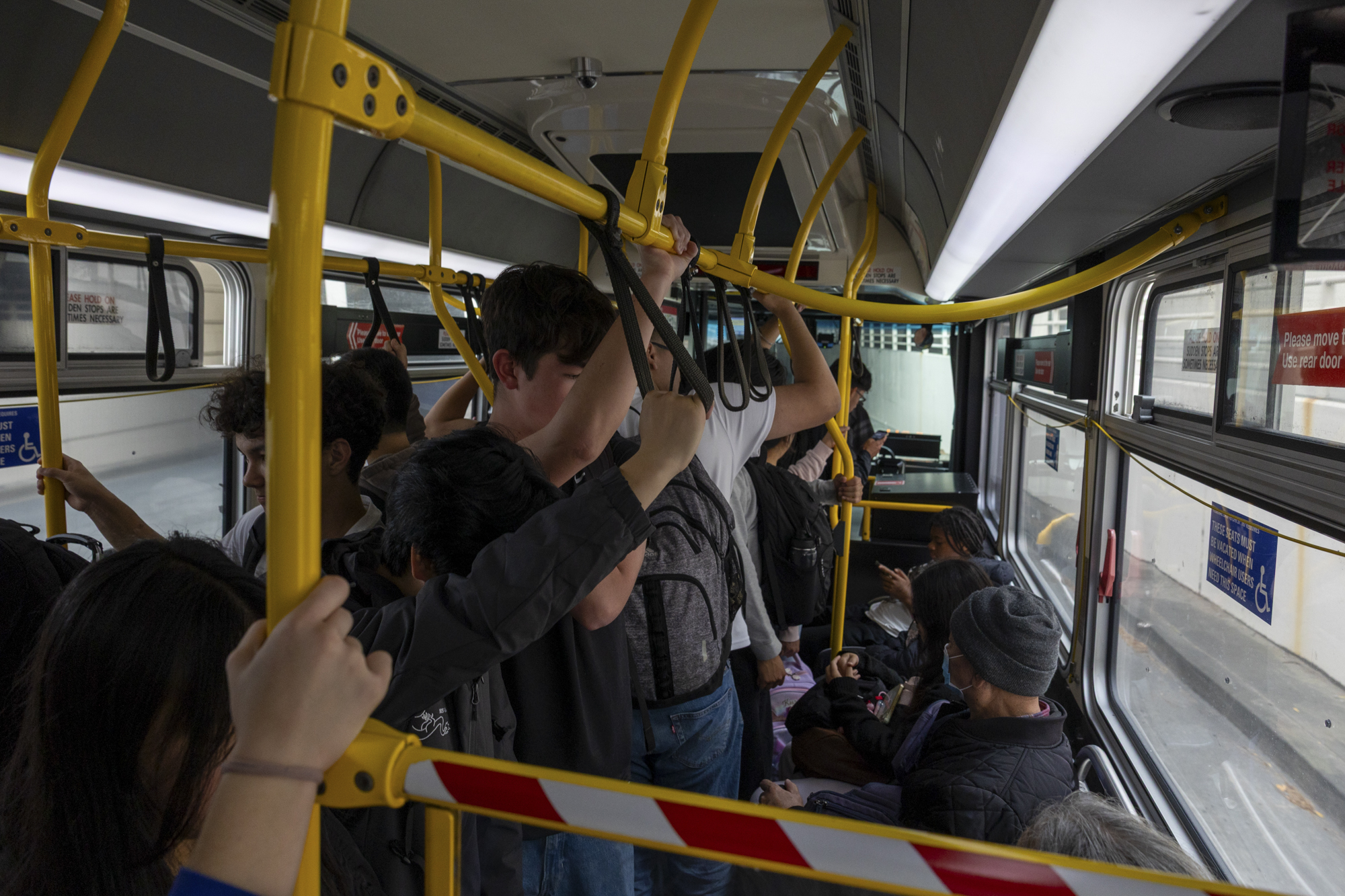
"caption": "Passengers stand aboard the 29 Sunset bus while traveling toward Stonestown Galleria on May 11, 2026, in San Francisco.",
"credit": "Gustavo Hernandez/KQED",
"altTag": null,
"description": null,
"imgSizes": {
"thumbnail": {
"file": "https://cdn.kqed.org/wp-content/uploads/sites/10/2026/05/05112629-BUS_GH_003-KQED-160x107.jpg",
"width": 160,
"height": 107,
"mimeType": "image/jpeg"
},
"1536x1536": {
"file": "https://cdn.kqed.org/wp-content/uploads/sites/10/2026/05/05112629-BUS_GH_003-KQED-1536x1024.jpg",
"width": 1536,
"height": 1024,
"mimeType": "image/jpeg"
},
"post-thumbnail": {
"file": "https://cdn.kqed.org/wp-content/uploads/sites/10/2026/05/05112629-BUS_GH_003-KQED-672x372.jpg",
"width": 672,
"height": 372,
"mimeType": "image/jpeg"
},
"twentyfourteen-full-width": {
"file": "https://cdn.kqed.org/wp-content/uploads/sites/10/2026/05/05112629-BUS_GH_003-KQED-1038x576.jpg",
"width": 1038,
"height": 576,
"mimeType": "image/jpeg"
},
"npr-cds-wide": {
"file": "https://cdn.kqed.org/wp-content/uploads/sites/10/2026/05/05112629-BUS_GH_003-KQED-1200x675.jpg",
"width": 1200,
"height": 675,
"mimeType": "image/jpeg"
},
"npr-cds-square": {
"file": "https://cdn.kqed.org/wp-content/uploads/sites/10/2026/05/05112629-BUS_GH_003-KQED-600x600.jpg",
"width": 600,
"height": 600,
"mimeType": "image/jpeg"
},
"kqedFullSize": {
"file": "https://cdn.kqed.org/wp-content/uploads/sites/10/2026/05/05112629-BUS_GH_003-KQED.jpg",
"width": 2000,
"height": 1333
}
},
"isLoading": false,
"fetchFailed": false
},
"news_12085866": {
"type": "attachments",
"id": "news_12085866",
"meta": {
"index": "attachments_1716263798",
"site": "news",
"id": "12085866",
"found": true
},
"title": "FBL-WC-2026-STADIUM-SAN FRANCISCO BAY AREA",
"publishDate": 1780442512,
"status": "inherit",
"parent": 12084960,
"modified": 1780442548,
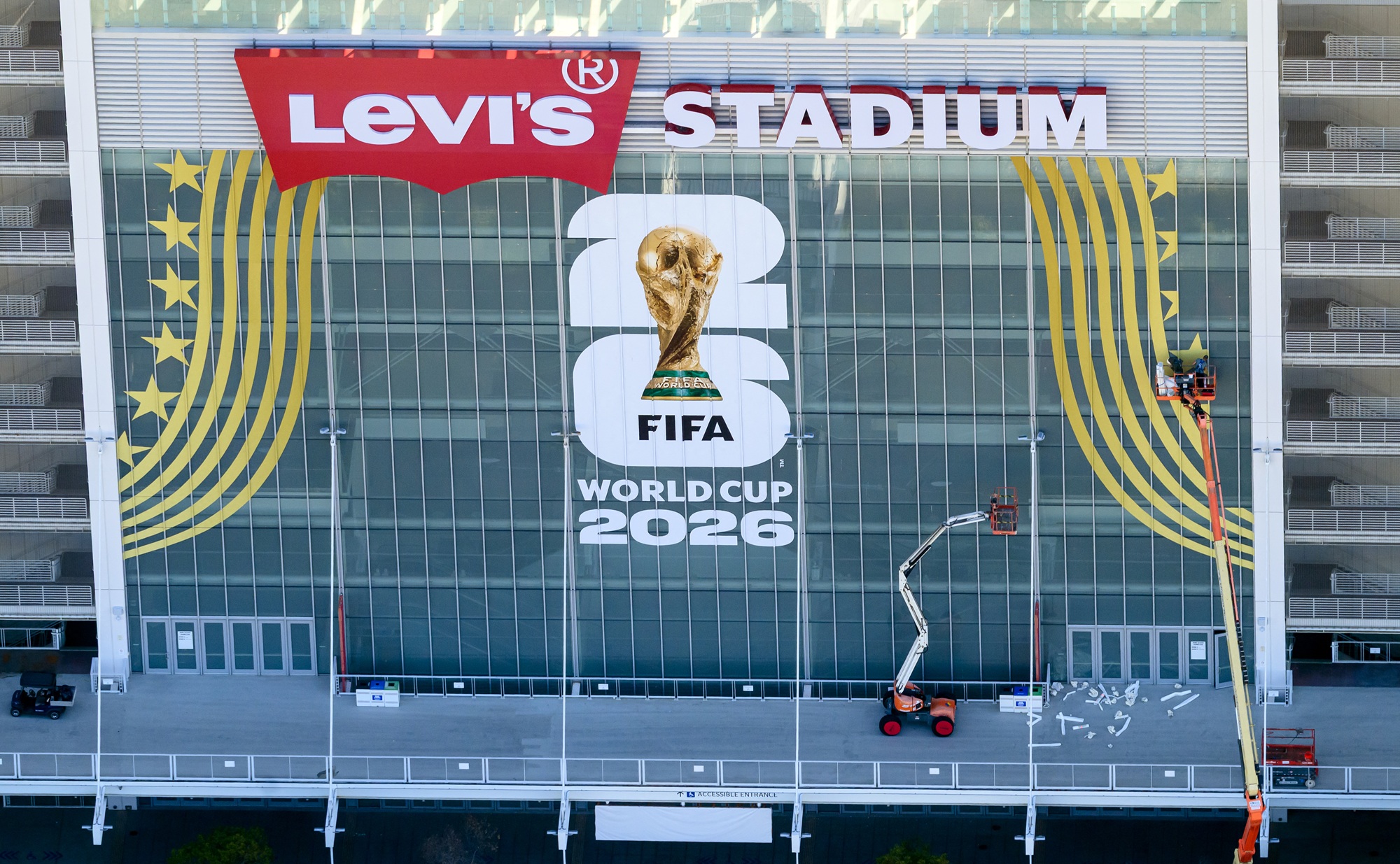
"caption": "San Francisco Bay Area Stadium (temporarily renamed from Levi's Stadium for the 2026 FIFA World Cup) in Santa Clara, California, on May 19, 2026. Levi's Stadium will host six matches during the 2026 FIFA World Cup, including five group stage matches throughout June 2026. ",
"credit": "Josh Edelson/AFP via Getty Images",
"altTag": null,
"description": null,
"imgSizes": {
"thumbnail": {
"file": "https://cdn.kqed.org/wp-content/uploads/sites/10/2026/06/FIFAWorldCupLevisStadiumGetty-160x99.jpg",
"width": 160,
"height": 99,
"mimeType": "image/jpeg"
},
"1536x1536": {
"file": "https://cdn.kqed.org/wp-content/uploads/sites/10/2026/06/FIFAWorldCupLevisStadiumGetty-1536x948.jpg",
"width": 1536,
"height": 948,
"mimeType": "image/jpeg"
},
"post-thumbnail": {
"file": "https://cdn.kqed.org/wp-content/uploads/sites/10/2026/06/FIFAWorldCupLevisStadiumGetty-672x372.jpg",
"width": 672,
"height": 372,
"mimeType": "image/jpeg"
},
"twentyfourteen-full-width": {
"file": "https://cdn.kqed.org/wp-content/uploads/sites/10/2026/06/FIFAWorldCupLevisStadiumGetty-1038x576.jpg",
"width": 1038,
"height": 576,
"mimeType": "image/jpeg"
},
"npr-cds-wide": {
"file": "https://cdn.kqed.org/wp-content/uploads/sites/10/2026/06/FIFAWorldCupLevisStadiumGetty-1200x675.jpg",
"width": 1200,
"height": 675,
"mimeType": "image/jpeg"
},
"npr-cds-square": {
"file": "https://cdn.kqed.org/wp-content/uploads/sites/10/2026/06/FIFAWorldCupLevisStadiumGetty-600x600.jpg",
"width": 600,
"height": 600,
"mimeType": "image/jpeg"
},
"kqedFullSize": {
"file": "https://cdn.kqed.org/wp-content/uploads/sites/10/2026/06/FIFAWorldCupLevisStadiumGetty.jpg",
"width": 2000,
"height": 1235
}
},
"isLoading": false,
"fetchFailed": false
},
"news_12086297": {
"type": "attachments",
"id": "news_12086297",
"meta": {
"index": "attachments_1716263798",
"site": "news",
"id": "12086297",
"found": true
},
"title": "260604-GGBTRIALCLOSING-01-BL-KQED",
"publishDate": 1780608288,
"status": "inherit",
"parent": 0,
"modified": 1780609475,
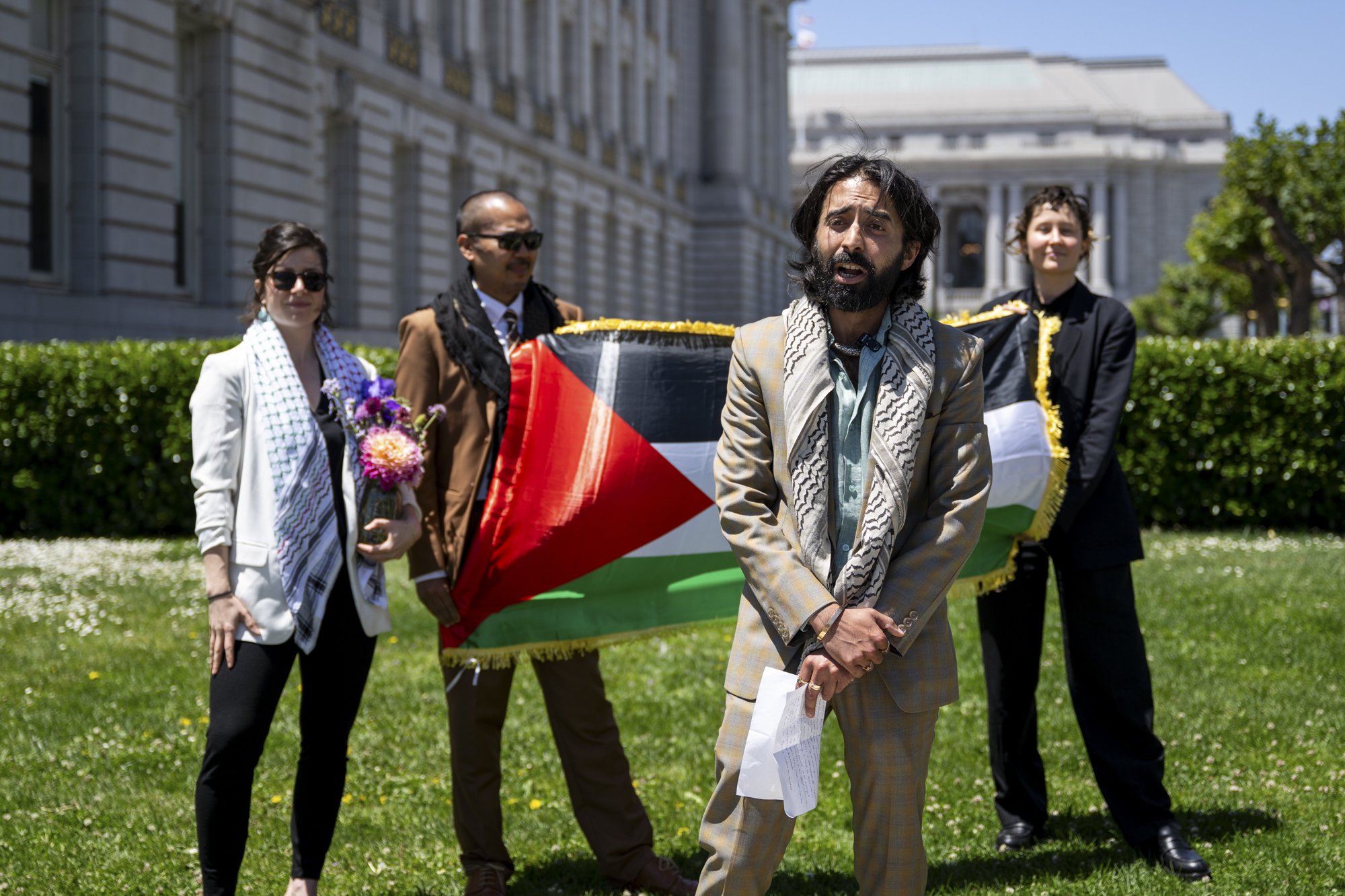
"caption": "Manan Kocher speaks during a rally across from the San Francisco Superior Courthouse on June 4, 2026, to support the \"Golden Gate 26\" ahead of closing arguments in their trial. The defendants are accused of blocking traffic on the Golden Gate Bridge during a 2024 protest against the war in Gaza.",
"credit": "Beth LaBerge/KQED",
"altTag": null,
"description": null,
"imgSizes": {
"thumbnail": {
"file": "https://cdn.kqed.org/wp-content/uploads/sites/10/2026/06/260604-GGBTRIALCLOSING-01-BL-KQED-160x107.jpg",
"width": 160,
"height": 107,
"mimeType": "image/jpeg"
},
"1536x1536": {
"file": "https://cdn.kqed.org/wp-content/uploads/sites/10/2026/06/260604-GGBTRIALCLOSING-01-BL-KQED-1536x1024.jpg",
"width": 1536,
"height": 1024,
"mimeType": "image/jpeg"
},
"post-thumbnail": {
"file": "https://cdn.kqed.org/wp-content/uploads/sites/10/2026/06/260604-GGBTRIALCLOSING-01-BL-KQED-672x372.jpg",
"width": 672,
"height": 372,
"mimeType": "image/jpeg"
},
"twentyfourteen-full-width": {
"file": "https://cdn.kqed.org/wp-content/uploads/sites/10/2026/06/260604-GGBTRIALCLOSING-01-BL-KQED-1038x576.jpg",
"width": 1038,
"height": 576,
"mimeType": "image/jpeg"
},
"npr-cds-wide": {
"file": "https://cdn.kqed.org/wp-content/uploads/sites/10/2026/06/260604-GGBTRIALCLOSING-01-BL-KQED-1200x675.jpg",
"width": 1200,
"height": 675,
"mimeType": "image/jpeg"
},
"npr-cds-square": {
"file": "https://cdn.kqed.org/wp-content/uploads/sites/10/2026/06/260604-GGBTRIALCLOSING-01-BL-KQED-600x600.jpg",
"width": 600,
"height": 600,
"mimeType": "image/jpeg"
},
"kqedFullSize": {
"file": "https://cdn.kqed.org/wp-content/uploads/sites/10/2026/06/260604-GGBTRIALCLOSING-01-BL-KQED.jpg",
"width": 2000,
"height": 1333
}
},
"isLoading": false,
"fetchFailed": false
},
"news_12069191": {
"type": "attachments",
"id": "news_12069191",
"meta": {
"index": "attachments_1716263798",
"site": "news",
"id": "12069191",
"found": true
},
"title": "260108-AlanWongGreatHighway-15-BL_qed",
"publishDate": 1767920075,
"status": "inherit",
"parent": 0,
"modified": 1767920095,
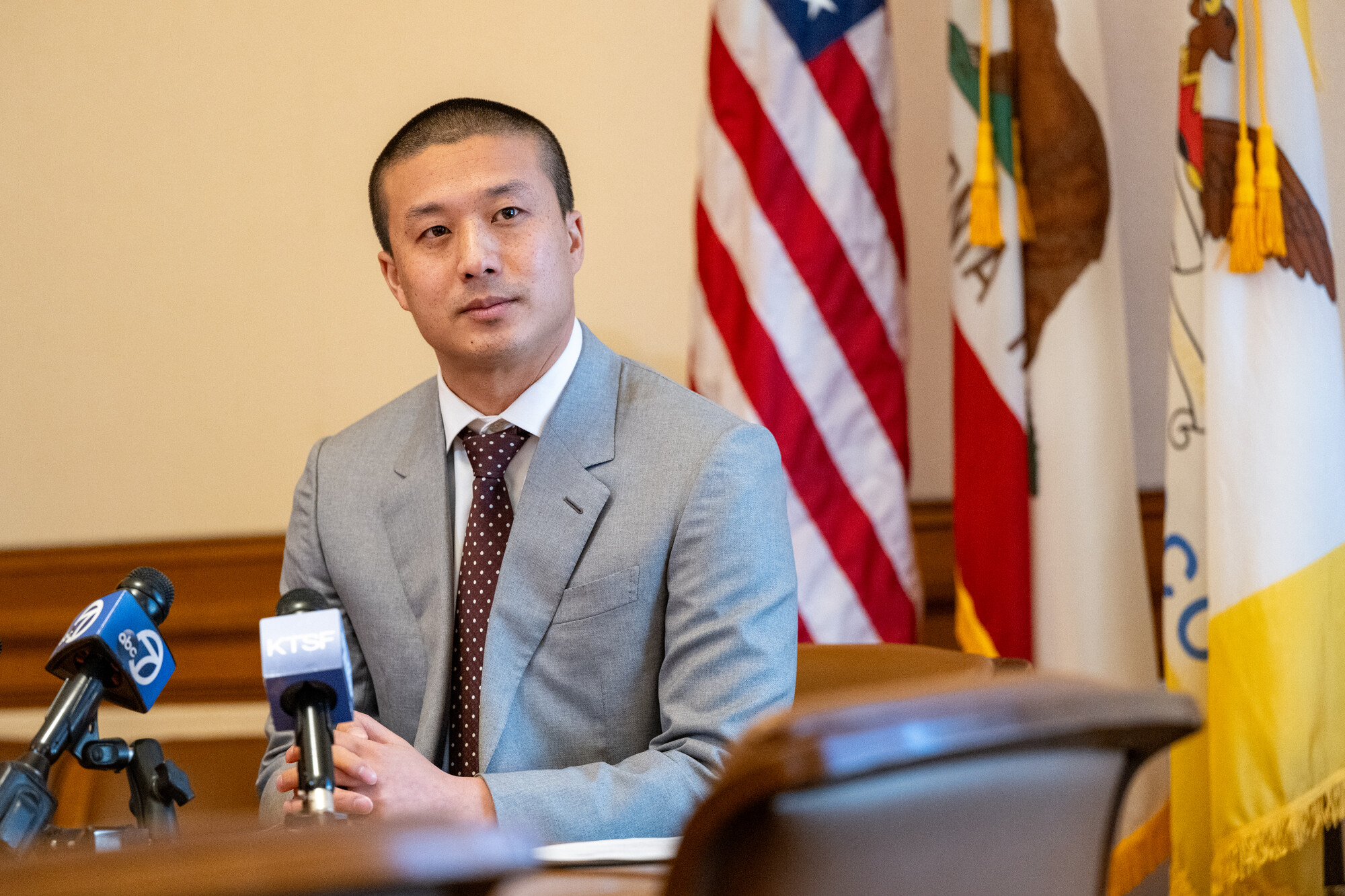
"caption": "District 4 Supervisor Alan Wong speaks during a press conference about the Great Highway at City Hall in San Francisco on Jan. 8, 2026.",
"credit": "Beth LaBerge/KQED",
"altTag": null,
"description": null,
"imgSizes": {
"thumbnail": {
"file": "https://cdn.kqed.org/wp-content/uploads/sites/10/2026/01/260108-AlanWongGreatHighway-15-BL_qed-160x107.jpg",
"width": 160,
"height": 107,
"mimeType": "image/jpeg"
},
"1536x1536": {
"file": "https://cdn.kqed.org/wp-content/uploads/sites/10/2026/01/260108-AlanWongGreatHighway-15-BL_qed-1536x1024.jpg",
"width": 1536,
"height": 1024,
"mimeType": "image/jpeg"
},
"post-thumbnail": {
"file": "https://cdn.kqed.org/wp-content/uploads/sites/10/2026/01/260108-AlanWongGreatHighway-15-BL_qed-672x372.jpg",
"width": 672,
"height": 372,
"mimeType": "image/jpeg"
},
"twentyfourteen-full-width": {
"file": "https://cdn.kqed.org/wp-content/uploads/sites/10/2026/01/260108-AlanWongGreatHighway-15-BL_qed-1038x576.jpg",
"width": 1038,
"height": 576,
"mimeType": "image/jpeg"
},
"npr-cds-wide": {
"file": "https://cdn.kqed.org/wp-content/uploads/sites/10/2026/01/260108-AlanWongGreatHighway-15-BL_qed-1200x675.jpg",
"width": 1200,
"height": 675,
"mimeType": "image/jpeg"
},
"kqedFullSize": {
"file": "https://cdn.kqed.org/wp-content/uploads/sites/10/2026/01/260108-AlanWongGreatHighway-15-BL_qed.jpg",
"width": 2000,
"height": 1333
}
},
"isLoading": false,
"fetchFailed": false
},
"news_12086260": {
"type": "attachments",
"id": "news_12086260",
"meta": {
"index": "attachments_1716263798",
"site": "news",
"id": "12086260",
"found": true
},
"title": "IMG_5218_qed",
"publishDate": 1780593963,
"status": "inherit",
"parent": 12086256,
"modified": 1780593997,
"caption": "A pedestrian waits to cross South Van Ness Avenue at 24th Street in the Mission.",
"credit": "Mark Andrew Boyer/KQED",
"altTag": null,
"description": null,
"imgSizes": {
"thumbnail": {
"file": "https://cdn.kqed.org/wp-content/uploads/sites/10/2026/06/IMG_5218_qed-160x107.jpg",
"width": 160,
"height": 107,
"mimeType": "image/jpeg"
},
"1536x1536": {
"file": "https://cdn.kqed.org/wp-content/uploads/sites/10/2026/06/IMG_5218_qed-1536x1024.jpg",
"width": 1536,
"height": 1024,
"mimeType": "image/jpeg"
},
"post-thumbnail": {
"file": "https://cdn.kqed.org/wp-content/uploads/sites/10/2026/06/IMG_5218_qed-672x372.jpg",
"width": 672,
"height": 372,
"mimeType": "image/jpeg"
},
"twentyfourteen-full-width": {
"file": "https://cdn.kqed.org/wp-content/uploads/sites/10/2026/06/IMG_5218_qed-1038x576.jpg",
"width": 1038,
"height": 576,
"mimeType": "image/jpeg"
},
"npr-cds-wide": {
"file": "https://cdn.kqed.org/wp-content/uploads/sites/10/2026/06/IMG_5218_qed-1200x675.jpg",
"width": 1200,
"height": 675,
"mimeType": "image/jpeg"
},
"npr-cds-square": {
"file": "https://cdn.kqed.org/wp-content/uploads/sites/10/2026/06/IMG_5218_qed-600x600.jpg",
"width": 600,
"height": 600,
"mimeType": "image/jpeg"
},
"kqedFullSize": {
"file": "https://cdn.kqed.org/wp-content/uploads/sites/10/2026/06/IMG_5218_qed.jpg",
"width": 2000,
"height": 1333
}
},
"isLoading": false,
"fetchFailed": false
},
"news_12085820": {
"type": "attachments",
"id": "news_12085820",
"meta": {
"index": "attachments_1716263798",
"site": "news",
"id": "12085820",
"found": true
},
"title": "260602-PRIMARYVOTERVOX-14-BL-KQED",
"publishDate": 1780423676,
"status": "inherit",
"parent": 0,
"modified": 1780423738,
"caption": "Widya Batin leaves the City Hall Voting Center in San Francisco after casting their ballot on June 2, 2026.",
"credit": "Beth LaBerge/KQED",
"altTag": null,
"description": null,
"imgSizes": {
"thumbnail": {
"file": "https://cdn.kqed.org/wp-content/uploads/sites/10/2026/06/260602-PRIMARYVOTERVOX-14-BL-KQED-160x107.jpg",
"width": 160,
"height": 107,
"mimeType": "image/jpeg"
},
"1536x1536": {
"file": "https://cdn.kqed.org/wp-content/uploads/sites/10/2026/06/260602-PRIMARYVOTERVOX-14-BL-KQED-1536x1024.jpg",
"width": 1536,
"height": 1024,
"mimeType": "image/jpeg"
},
"post-thumbnail": {
"file": "https://cdn.kqed.org/wp-content/uploads/sites/10/2026/06/260602-PRIMARYVOTERVOX-14-BL-KQED-672x372.jpg",
"width": 672,
"height": 372,
"mimeType": "image/jpeg"
},
"twentyfourteen-full-width": {
"file": "https://cdn.kqed.org/wp-content/uploads/sites/10/2026/06/260602-PRIMARYVOTERVOX-14-BL-KQED-1038x576.jpg",
"width": 1038,
"height": 576,
"mimeType": "image/jpeg"
},
"npr-cds-wide": {
"file": "https://cdn.kqed.org/wp-content/uploads/sites/10/2026/06/260602-PRIMARYVOTERVOX-14-BL-KQED-1200x675.jpg",
"width": 1200,
"height": 675,
"mimeType": "image/jpeg"
},
"npr-cds-square": {
"file": "https://cdn.kqed.org/wp-content/uploads/sites/10/2026/06/260602-PRIMARYVOTERVOX-14-BL-KQED-600x600.jpg",
"width": 600,
"height": 600,
"mimeType": "image/jpeg"
},
"kqedFullSize": {
"file": "https://cdn.kqed.org/wp-content/uploads/sites/10/2026/06/260602-PRIMARYVOTERVOX-14-BL-KQED.jpg",
"width": 2000,
"height": 1333
}
},
"isLoading": false,
"fetchFailed": false
},
"news_12070970": {
"type": "attachments",
"id": "news_12070970",
"meta": {
"index": "attachments_1716263798",
"site": "news",
"id": "12070970",
"found": true
},
"title": "260123-SIGNATUREKICKOFF00606_TV-KQED",
"publishDate": 1769210919,
"status": "inherit",
"parent": 12072392,
"modified": 1772489500,
"caption": "Mayor Daniel Lurie speaks on his support for California Senate Bill 63 at a press conference at Embarcadero Plaza in San Francisco on Jan. 23, 2026.",
"credit": "Tâm Vũ/KQED",
"altTag": null,
"description": null,
"imgSizes": {
"thumbnail": {
"file": "https://cdn.kqed.org/wp-content/uploads/sites/10/2026/01/260123-SIGNATUREKICKOFF00606_TV-KQED-160x107.jpg",
"width": 160,
"height": 107,
"mimeType": "image/jpeg"
},
"1536x1536": {
"file": "https://cdn.kqed.org/wp-content/uploads/sites/10/2026/01/260123-SIGNATUREKICKOFF00606_TV-KQED-1536x1024.jpg",
"width": 1536,
"height": 1024,
"mimeType": "image/jpeg"
},
"post-thumbnail": {
"file": "https://cdn.kqed.org/wp-content/uploads/sites/10/2026/01/260123-SIGNATUREKICKOFF00606_TV-KQED-672x372.jpg",
"width": 672,
"height": 372,
"mimeType": "image/jpeg"
},
"twentyfourteen-full-width": {
"file": "https://cdn.kqed.org/wp-content/uploads/sites/10/2026/01/260123-SIGNATUREKICKOFF00606_TV-KQED-1038x576.jpg",
"width": 1038,
"height": 576,
"mimeType": "image/jpeg"
},
"npr-cds-wide": {
"file": "https://cdn.kqed.org/wp-content/uploads/sites/10/2026/01/260123-SIGNATUREKICKOFF00606_TV-KQED-1200x675.jpg",
"width": 1200,
"height": 675,
"mimeType": "image/jpeg"
},
"kqedFullSize": {
"file": "https://cdn.kqed.org/wp-content/uploads/sites/10/2026/01/260123-SIGNATUREKICKOFF00606_TV-KQED.jpg",
"width": 2000,
"height": 1333
}
},
"isLoading": false,
"fetchFailed": false
},
"news_12085618": {
"type": "attachments",
"id": "news_12085618",
"meta": {
"index": "attachments_1716263798",
"site": "news",
"id": "12085618",
"found": true
},
"title": "260530-bayviewswim01259_TV_qed",
"publishDate": 1780179112,
"status": "inherit",
"parent": 12085617,
"modified": 1780179140,
"caption": "A family boards a boat at the Bayview Splash Bash in San Francisco on May 30, 2026.",
"credit": "Tâm Vũ/KQED",
"altTag": null,
"description": null,
"imgSizes": {
"thumbnail": {
"file": "https://cdn.kqed.org/wp-content/uploads/sites/10/2026/05/260530-bayviewswim01259_TV_qed-160x107.jpg",
"width": 160,
"height": 107,
"mimeType": "image/jpeg"
},
"1536x1536": {
"file": "https://cdn.kqed.org/wp-content/uploads/sites/10/2026/05/260530-bayviewswim01259_TV_qed-1536x1024.jpg",
"width": 1536,
"height": 1024,
"mimeType": "image/jpeg"
},
"post-thumbnail": {
"file": "https://cdn.kqed.org/wp-content/uploads/sites/10/2026/05/260530-bayviewswim01259_TV_qed-672x372.jpg",
"width": 672,
"height": 372,
"mimeType": "image/jpeg"
},
"twentyfourteen-full-width": {
"file": "https://cdn.kqed.org/wp-content/uploads/sites/10/2026/05/260530-bayviewswim01259_TV_qed-1038x576.jpg",
"width": 1038,
"height": 576,
"mimeType": "image/jpeg"
},
"npr-cds-wide": {
"file": "https://cdn.kqed.org/wp-content/uploads/sites/10/2026/05/260530-bayviewswim01259_TV_qed-1200x675.jpg",
"width": 1200,
"height": 675,
"mimeType": "image/jpeg"
},
"npr-cds-square": {
"file": "https://cdn.kqed.org/wp-content/uploads/sites/10/2026/05/260530-bayviewswim01259_TV_qed-600x600.jpg",
"width": 600,
"height": 600,
"mimeType": "image/jpeg"
},
"kqedFullSize": {
"file": "https://cdn.kqed.org/wp-content/uploads/sites/10/2026/05/260530-bayviewswim01259_TV_qed.jpg",
"width": 2000,
"height": 1333
}
},
"isLoading": false,
"fetchFailed": false
},
"news_12085588": {
"type": "attachments",
"id": "news_12085588",
"meta": {
"index": "attachments_1716263798",
"site": "news",
"id": "12085588",
"found": true
},
"title": "260529-GGBTRIALTESTIMONY00089_TV-KQED",
"publishDate": 1780094766,
"status": "inherit",
"parent": 12089732,
"modified": 1783020771,
"caption": "From left, Em Tillotson, Conrad de Jesus, Sara Cantor, Rocky Chau, Sarah Ferrell, River Allen, and Bhavika Anandpura, the seven defendants on trial for blocking the Golden Gate Bridge for a pro-Palestinian protest, pose for a portrait at the San Francisco Superior Courthouse in San Francisco on May 29, 2026.",
"credit": "Tâm Vũ/KQED",
"altTag": null,
"description": null,
"imgSizes": {
"thumbnail": {
"file": "https://cdn.kqed.org/wp-content/uploads/sites/10/2026/05/260529-GGBTRIALTESTIMONY00089_TV-KQED-160x107.jpg",
"width": 160,
"height": 107,
"mimeType": "image/jpeg"
},
"1536x1536": {
"file": "https://cdn.kqed.org/wp-content/uploads/sites/10/2026/05/260529-GGBTRIALTESTIMONY00089_TV-KQED-1536x1024.jpg",
"width": 1536,
"height": 1024,
"mimeType": "image/jpeg"
},
"post-thumbnail": {
"file": "https://cdn.kqed.org/wp-content/uploads/sites/10/2026/05/260529-GGBTRIALTESTIMONY00089_TV-KQED-672x372.jpg",
"width": 672,
"height": 372,
"mimeType": "image/jpeg"
},
"twentyfourteen-full-width": {
"file": "https://cdn.kqed.org/wp-content/uploads/sites/10/2026/05/260529-GGBTRIALTESTIMONY00089_TV-KQED-1038x576.jpg",
"width": 1038,
"height": 576,
"mimeType": "image/jpeg"
},
"npr-cds-wide": {
"file": "https://cdn.kqed.org/wp-content/uploads/sites/10/2026/05/260529-GGBTRIALTESTIMONY00089_TV-KQED-1200x675.jpg",
"width": 1200,
"height": 675,
"mimeType": "image/jpeg"
},
"npr-cds-square": {
"file": "https://cdn.kqed.org/wp-content/uploads/sites/10/2026/05/260529-GGBTRIALTESTIMONY00089_TV-KQED-600x600.jpg",
"width": 600,
"height": 600,
"mimeType": "image/jpeg"
},
"kqedFullSize": {
"file": "https://cdn.kqed.org/wp-content/uploads/sites/10/2026/05/260529-GGBTRIALTESTIMONY00089_TV-KQED.jpg",
"width": 2000,
"height": 1333
}
},
"isLoading": false,
"fetchFailed": false
},
"news_12012692": {
"type": "attachments",
"id": "news_12012692",
"meta": {
"index": "attachments_1716263798",
"site": "news",
"id": "12012692",
"found": true
},
"title": "241105-ELECTIONDAY-20-BL-KQED",
"publishDate": 1730832332,
"status": "inherit",
"parent": 12082075,
"modified": 1777660281,
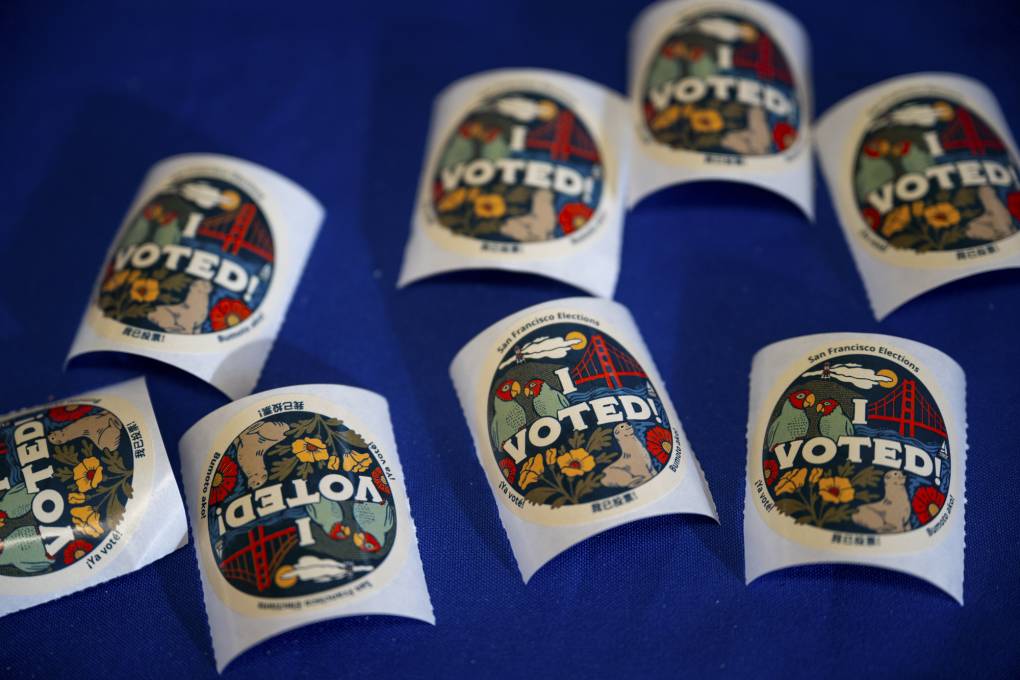
"caption": "'I Voted' stickers sit on a table during Election Day at City Hall in San Francisco on Nov. 5, 2024.",
"credit": "Beth LaBerge/KQED",
"altTag": null,
"description": null,
"imgSizes": {
"medium": {
"file": "https://cdn.kqed.org/wp-content/uploads/sites/10/2024/11/241105-ELECTIONDAY-20-BL-KQED-800x533.jpg",
"width": 800,
"height": 533,
"mimeType": "image/jpeg"
},
"large": {
"file": "https://cdn.kqed.org/wp-content/uploads/sites/10/2024/11/241105-ELECTIONDAY-20-BL-KQED-1020x680.jpg",
"width": 1020,
"height": 680,
"mimeType": "image/jpeg"
},
"thumbnail": {
"file": "https://cdn.kqed.org/wp-content/uploads/sites/10/2024/11/241105-ELECTIONDAY-20-BL-KQED-160x107.jpg",
"width": 160,
"height": 107,
"mimeType": "image/jpeg"
},
"1536x1536": {
"file": "https://cdn.kqed.org/wp-content/uploads/sites/10/2024/11/241105-ELECTIONDAY-20-BL-KQED-1536x1024.jpg",
"width": 1536,
"height": 1024,
"mimeType": "image/jpeg"
},
"post-thumbnail": {
"file": "https://cdn.kqed.org/wp-content/uploads/sites/10/2024/11/241105-ELECTIONDAY-20-BL-KQED-672x372.jpg",
"width": 672,
"height": 372,
"mimeType": "image/jpeg"
},
"twentyfourteen-full-width": {
"file": "https://cdn.kqed.org/wp-content/uploads/sites/10/2024/11/241105-ELECTIONDAY-20-BL-KQED-1038x576.jpg",
"width": 1038,
"height": 576,
"mimeType": "image/jpeg"
},
"full-width": {
"file": "https://cdn.kqed.org/wp-content/uploads/sites/10/2024/11/241105-ELECTIONDAY-20-BL-KQED-1920x1280.jpg",
"width": 1920,
"height": 1280,
"mimeType": "image/jpeg"
},
"kqedFullSize": {
"file": "https://cdn.kqed.org/wp-content/uploads/sites/10/2024/11/241105-ELECTIONDAY-20-BL-KQED.jpg",
"width": 2000,
"height": 1333
}
},
"isLoading": false,
"fetchFailed": false
},
"news_12079648": {
"type": "attachments",
"id": "news_12079648",
"meta": {
"index": "attachments_1716263798",
"site": "news",
"id": "12079648",
"found": true
},
"title": "260413-SILICON VALLEY CHURN-01-KQED",
"publishDate": 1776099644,
"status": "inherit",
"parent": 12085049,
"modified": 1779836995,
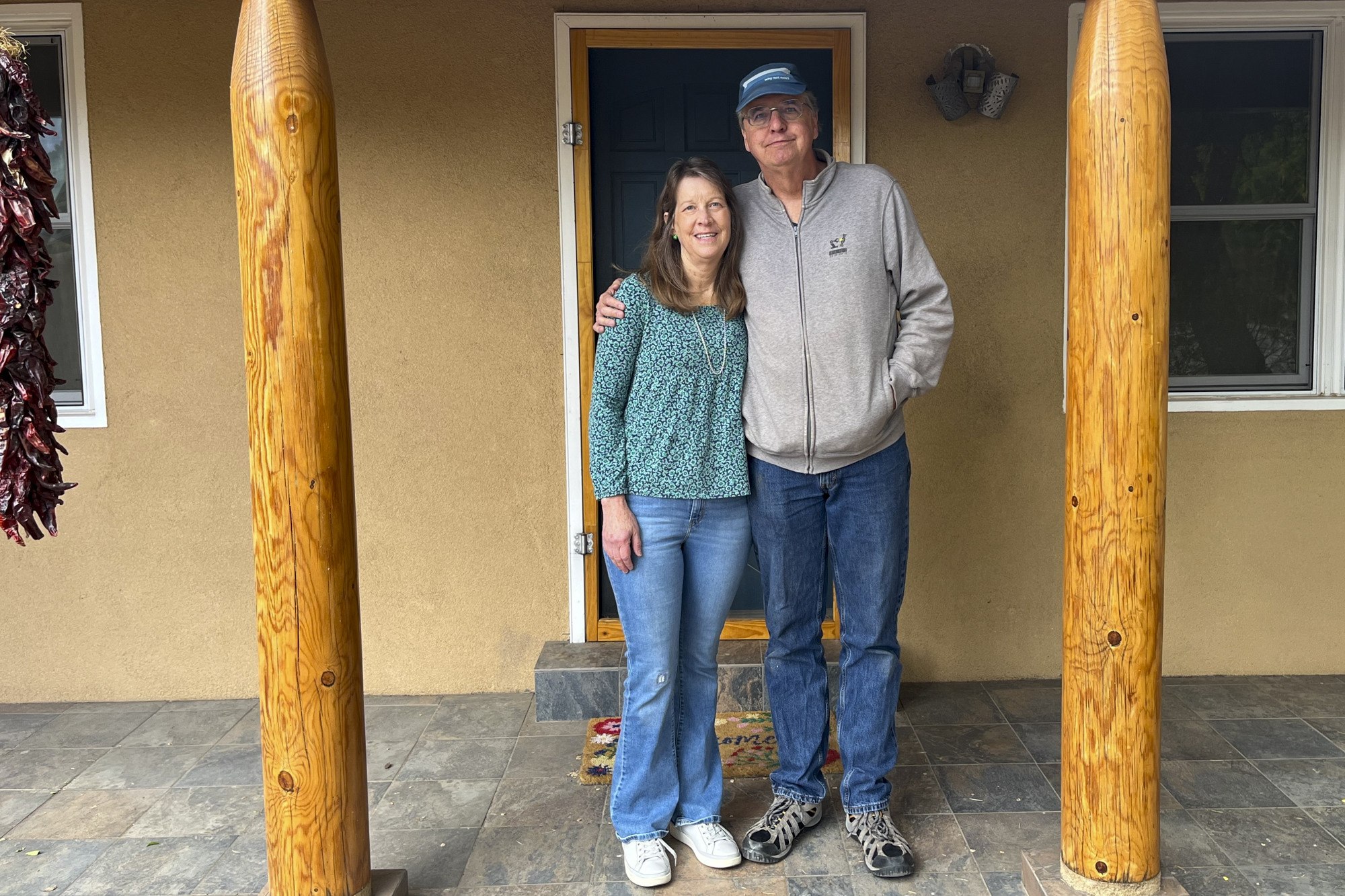
"caption": "Mark Wogulis and Melanie Bowden in front of their new home in Santa Fe, New Mexico, in May of 2025. A layoff in biotech forced the couple to sell their home in Berkeley and retire early.",
"credit": "Courtesy of Danielle Wogulis",
"altTag": null,
"description": null,
"imgSizes": {
"thumbnail": {
"file": "https://cdn.kqed.org/wp-content/uploads/sites/10/2026/04/260413-SILICON-VALLEY-CHURN-01-KQED-160x107.jpg",
"width": 160,
"height": 107,
"mimeType": "image/jpeg"
},
"1536x1536": {
"file": "https://cdn.kqed.org/wp-content/uploads/sites/10/2026/04/260413-SILICON-VALLEY-CHURN-01-KQED-1536x1024.jpg",
"width": 1536,
"height": 1024,
"mimeType": "image/jpeg"
},
"post-thumbnail": {
"file": "https://cdn.kqed.org/wp-content/uploads/sites/10/2026/04/260413-SILICON-VALLEY-CHURN-01-KQED-672x372.jpg",
"width": 672,
"height": 372,
"mimeType": "image/jpeg"
},
"twentyfourteen-full-width": {
"file": "https://cdn.kqed.org/wp-content/uploads/sites/10/2026/04/260413-SILICON-VALLEY-CHURN-01-KQED-1038x576.jpg",
"width": 1038,
"height": 576,
"mimeType": "image/jpeg"
},
"npr-cds-wide": {
"file": "https://cdn.kqed.org/wp-content/uploads/sites/10/2026/04/260413-SILICON-VALLEY-CHURN-01-KQED-1200x675.jpg",
"width": 1200,
"height": 675,
"mimeType": "image/jpeg"
},
"npr-cds-square": {
"file": "https://cdn.kqed.org/wp-content/uploads/sites/10/2026/04/260413-SILICON-VALLEY-CHURN-01-KQED-600x600.jpg",
"width": 600,
"height": 600,
"mimeType": "image/jpeg"
},
"kqedFullSize": {
"file": "https://cdn.kqed.org/wp-content/uploads/sites/10/2026/04/260413-SILICON-VALLEY-CHURN-01-KQED.jpg",
"width": 2000,
"height": 1333
}
},
"isLoading": false,
"fetchFailed": false
},
"news_12084952": {
"type": "attachments",
"id": "news_12084952",
"meta": {
"index": "attachments_1716263798",
"site": "news",
"id": "12084952",
"found": true
},
"title": "260522-SF City FC vs. Davis Legacy-AC-11-KQED",
"publishDate": 1779469387,
"status": "inherit",
"parent": 0,
"modified": 1779469420,
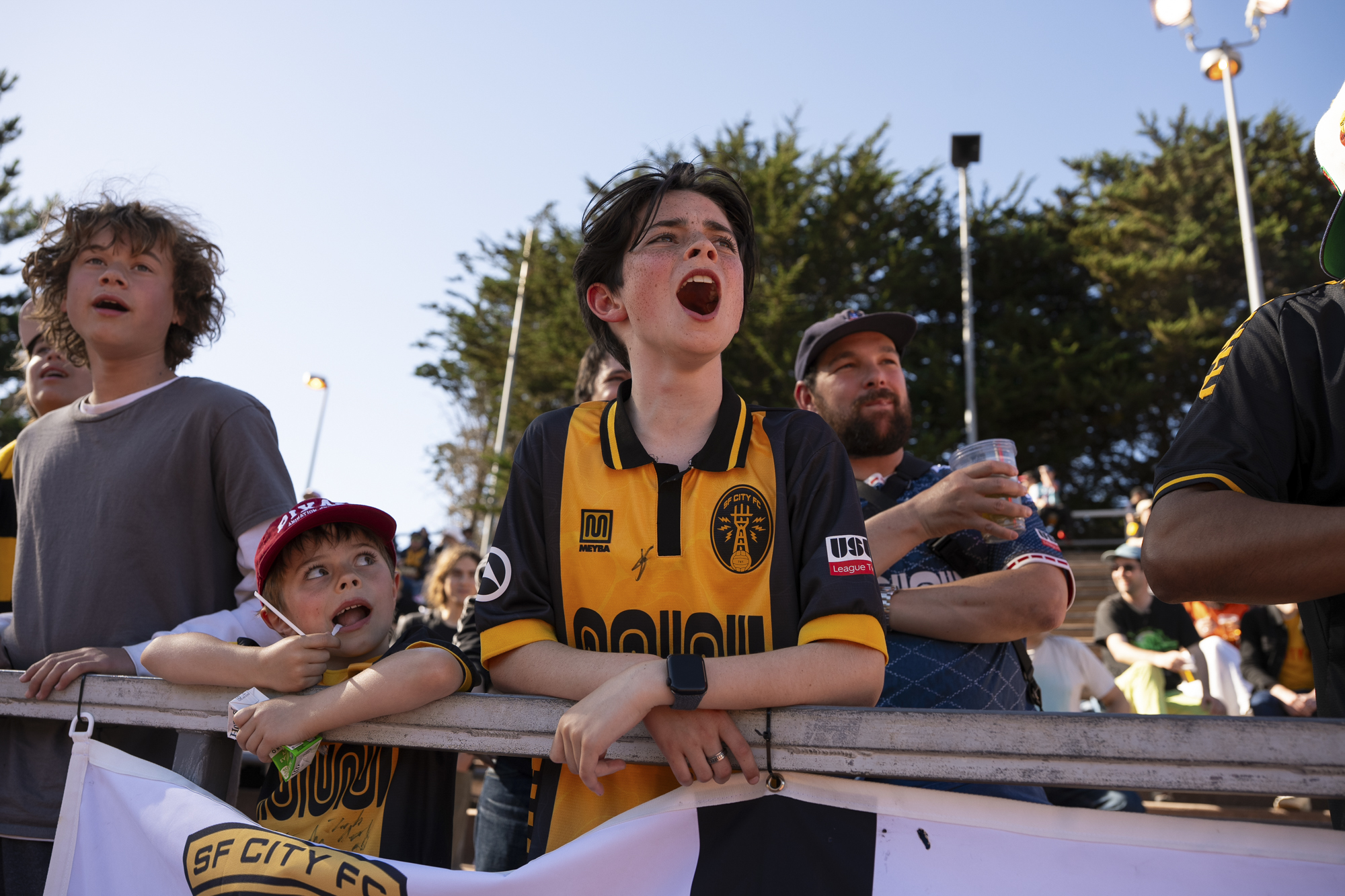
"caption": "A young fan joins chants in support of the San Francisco City Football Club during their game against Davis Legacy Soccer Club at Kezar Stadium on May 17. 2026.",
"credit": "Aryk Copley for KQED",
"altTag": null,
"description": null,
"imgSizes": {
"thumbnail": {
"file": "https://cdn.kqed.org/wp-content/uploads/sites/10/2026/05/260522-SF-City-FC-vs.-Davis-Legacy-AC-11-KQED-160x107.jpg",
"width": 160,
"height": 107,
"mimeType": "image/jpeg"
},
"1536x1536": {
"file": "https://cdn.kqed.org/wp-content/uploads/sites/10/2026/05/260522-SF-City-FC-vs.-Davis-Legacy-AC-11-KQED-1536x1024.jpg",
"width": 1536,
"height": 1024,
"mimeType": "image/jpeg"
},
"post-thumbnail": {
"file": "https://cdn.kqed.org/wp-content/uploads/sites/10/2026/05/260522-SF-City-FC-vs.-Davis-Legacy-AC-11-KQED-672x372.jpg",
"width": 672,
"height": 372,
"mimeType": "image/jpeg"
},
"twentyfourteen-full-width": {
"file": "https://cdn.kqed.org/wp-content/uploads/sites/10/2026/05/260522-SF-City-FC-vs.-Davis-Legacy-AC-11-KQED-1038x576.jpg",
"width": 1038,
"height": 576,
"mimeType": "image/jpeg"
},
"npr-cds-wide": {
"file": "https://cdn.kqed.org/wp-content/uploads/sites/10/2026/05/260522-SF-City-FC-vs.-Davis-Legacy-AC-11-KQED-1200x675.jpg",
"width": 1200,
"height": 675,
"mimeType": "image/jpeg"
},
"npr-cds-square": {
"file": "https://cdn.kqed.org/wp-content/uploads/sites/10/2026/05/260522-SF-City-FC-vs.-Davis-Legacy-AC-11-KQED-600x600.jpg",
"width": 600,
"height": 600,
"mimeType": "image/jpeg"
},
"kqedFullSize": {
"file": "https://cdn.kqed.org/wp-content/uploads/sites/10/2026/05/260522-SF-City-FC-vs.-Davis-Legacy-AC-11-KQED.jpg",
"width": 2000,
"height": 1333
}
},
"isLoading": false,
"fetchFailed": false
}
},
"audioPlayerReducer": {
"postId": "stream_live",
"isPaused": true,
"isPlaying": false,
"pfsActive": false,
"pledgeModalIsOpen": true,
"playerDrawerIsOpen": false,
"liveAudioPlayStartedAt": 0,
"liveAudioPlayContext": ""
},
"authorsReducer": {
"byline_news_12085504": {
"type": "authors",
"id": "byline_news_12085504",
"meta": {
"override": true
},
"slug": "byline_news_12085504",
"name": "Ella Jackson",
"isLoading": false
},
"gmarzorati": {
"type": "authors",
"id": "227",
"meta": {
"index": "authors_1716337520",
"id": "227",
"found": true
},
"name": "Guy Marzorati",
"firstName": "Guy",
"lastName": "Marzorati",
"slug": "gmarzorati",
"email": "gmarzorati@KQED.org",
"display_author_email": true,
"staff_mastheads": [
"news"
],
"title": "Correspondent",
"bio": "Guy Marzorati is a correspondent on KQED's California Politics and Government Desk, based in San Jose. A graduate of Santa Clara University, Guy joined KQED in 2013. He reports on state and local politics and produces KQED's digital voter guide.",
"avatar": "https://secure.gravatar.com/avatar/e7038b8dbfd55b104369b76b1cd0b9de?s=600&d=blank&r=g",
"twitter": "guymarzorati",
"facebook": null,
"instagram": null,
"linkedin": null,
"sites": [
{
"site": "",
"roles": [
"editor"
]
},
{
"site": "news",
"roles": [
"editor"
]
},
{
"site": "science",
"roles": [
"editor"
]
},
{
"site": "forum",
"roles": [
"editor"
]
},
{
"site": "elections",
"roles": [
"editor"
]
},
{
"site": "liveblog",
"roles": [
"editor"
]
}
],
"headData": {
"title": "Guy Marzorati | KQED",
"description": "Correspondent",
"ogImgSrc": "https://secure.gravatar.com/avatar/e7038b8dbfd55b104369b76b1cd0b9de?s=600&d=blank&r=g",
"twImgSrc": "https://secure.gravatar.com/avatar/e7038b8dbfd55b104369b76b1cd0b9de?s=600&d=blank&r=g"
},
"isLoading": false,
"link": "/author/gmarzorati"
},
"rachael-myrow": {
"type": "authors",
"id": "251",
"meta": {
"index": "authors_1716337520",
"id": "251",
"found": true
},
"name": "Rachael Myrow",
"firstName": "Rachael",
"lastName": "Myrow",
"slug": "rachael-myrow",
"email": "rmyrow@kqed.org",
"display_author_email": true,
"staff_mastheads": [
"news"
],
"title": "Senior Editor of KQED's Silicon Valley News Desk",
"bio": "• I write and edit stories about how Silicon Valley power and policies shape everyday life in California. I’m also passionate about making Bay Area history and culture more accessible to a broad public. • I’ve been a journalist for most of my life, starting in high school with The Franklin Press in Los Angeles, where I grew up. While earning my first degree in English at UC Berkeley, I got my start in public radio at KALX-FM. After completing a second degree in journalism at Cal, I landed my first professional job at Marketplace, then moved on to KPCC (now LAist), and then KQED, where I hosted The California Report for more than seven years. • My reporting has appeared on NPR, The World, WBUR’s \u003ci>Here & Now\u003c/i>, and the BBC. I also guest host for KQED’s \u003ci>Forum\u003c/i>, as well as the Commonwealth Club in San Francisco. • I speak periodically on media, democracy and technology issues, and do voiceover work for documentaries and educational video projects. • Outside of the studio, you'll find me hiking Bay Area trails and whipping up Insta-ready meals in my kitchen. • I do not accept gifts, money, or favors from anyone connected to my reporting, I don't pay people for information, and I do not support or donate to political causes. • I strive to treat the people I report on with fairness, honesty, and respect. I also recognize there are often multiple sides to a story and work to verify information through multiple sources and documentation. If I get something wrong, I correct it.",
"avatar": "https://secure.gravatar.com/avatar/3ed8a3c5f26025e4a805ba634cda8cd764906b97438a6d9ce216b044e340da4e?s=600&d=blank&r=g",
"twitter": "rachaelmyrow",
"bluesky": null,
"facebook": null,
"instagram": null,
"linkedin": "https://www.linkedin.com/in/rachaelmyrow/",
"sites": [
{
"site": "arts",
"roles": [
"administrator"
]
},
{
"site": "news",
"roles": [
"edit_others_posts",
"editor"
]
},
{
"site": "futureofyou",
"roles": [
"editor"
]
},
{
"site": "bayareabites",
"roles": [
"editor"
]
},
{
"site": "stateofhealth",
"roles": [
"editor"
]
},
{
"site": "science",
"roles": [
"editor"
]
},
{
"site": "food",
"roles": [
"editor"
]
},
{
"site": "forum",
"roles": [
"editor"
]
},
{
"site": "liveblog",
"roles": [
"author"
]
}
],
"headData": {
"title": "Rachael Myrow | KQED",
"description": "Senior Editor of KQED's Silicon Valley News Desk",
"ogImgSrc": "https://secure.gravatar.com/avatar/3ed8a3c5f26025e4a805ba634cda8cd764906b97438a6d9ce216b044e340da4e?s=600&d=blank&r=g",
"twImgSrc": "https://secure.gravatar.com/avatar/3ed8a3c5f26025e4a805ba634cda8cd764906b97438a6d9ce216b044e340da4e?s=600&d=blank&r=g"
},
"isLoading": false,
"link": "/author/rachael-myrow"
},
"amontecillo": {
"type": "authors",
"id": "11649",
"meta": {
"index": "authors_1716337520",
"id": "11649",
"found": true
},
"name": "Alan Montecillo",
"firstName": "Alan",
"lastName": "Montecillo",
"slug": "amontecillo",
"email": "amontecillo@kqed.org",
"display_author_email": false,
"staff_mastheads": [
"news"
],
"title": "KQED Contributor",
"bio": "Alan Montecillo is the senior editor of \u003cem>\u003ca href=\"http://kqed.org/thebay\">The Bay\u003c/a>, \u003c/em> KQED's local news podcast. Before moving to the Bay Area, he worked as a senior talk show producer for WILL in Champaign-Urbana, Illinois and at Oregon Public Broadcasting in Portland, Oregon. He has won journalism awards from the Society of Professional Journalists Northern California, the Public Media Journalists Association, The Signal Awards, and has also received a regional Edward R. Murrow award. Alan is a Filipino American from Hong Kong and a graduate of Reed College.",
"avatar": "https://secure.gravatar.com/avatar/268f53a2066899ea9efdd8a5900218b17c822d9862cbc9326cccec53ef41d349?s=600&d=blank&r=g",
"twitter": "alanmontecillo",
"bluesky": null,
"facebook": null,
"instagram": null,
"linkedin": null,
"sites": [
{
"site": "",
"roles": [
"editor"
]
},
{
"site": "news",
"roles": [
"editor",
"manage_categories"
]
}
],
"headData": {
"title": "Alan Montecillo | KQED",
"description": "KQED Contributor",
"ogImgSrc": "https://secure.gravatar.com/avatar/268f53a2066899ea9efdd8a5900218b17c822d9862cbc9326cccec53ef41d349?s=600&d=blank&r=g",
"twImgSrc": "https://secure.gravatar.com/avatar/268f53a2066899ea9efdd8a5900218b17c822d9862cbc9326cccec53ef41d349?s=600&d=blank&r=g"
},
"isLoading": false,
"link": "/author/amontecillo"
},
"ccabreralomeli": {
"type": "authors",
"id": "11708",
"meta": {
"index": "authors_1716337520",
"id": "11708",
"found": true
},
"name": "Carlos Cabrera-Lomelí",
"firstName": "Carlos",
"lastName": "Cabrera-Lomelí",
"slug": "ccabreralomeli",
"email": "ccabreralomeli@KQED.org",
"display_author_email": true,
"staff_mastheads": [
"news"
],
"title": "Community Reporter",
"bio": "Carlos Cabrera-Lomelí is a community reporter with KQED's digital engagement team. He also reports and co-produces for KQED's bilingual news hub KQED en Español. He grew up in San Francisco's Mission District and has previously worked with Univision, 48 Hills and REFORMA in Mexico City.",
"avatar": "https://secure.gravatar.com/avatar/c309be9665e484f887b818c89e273ecc673004f426f36b24d00a4d813a2e0518?s=600&d=blank&r=g",
"twitter": "@LomeliCabrera",
"bluesky": null,
"facebook": null,
"instagram": null,
"linkedin": null,
"sites": [
{
"site": "arts",
"roles": [
"editor"
]
},
{
"site": "news",
"roles": [
"editor"
]
},
{
"site": "about",
"roles": [
"editor"
]
},
{
"site": "science",
"roles": [
"editor"
]
},
{
"site": "perspectives",
"roles": [
"editor"
]
},
{
"site": "elections",
"roles": [
"editor"
]
},
{
"site": "liveblog",
"roles": [
"contributor"
]
}
],
"headData": {
"title": "Carlos Cabrera-Lomelí | KQED",
"description": "Community Reporter",
"ogImgSrc": "https://secure.gravatar.com/avatar/c309be9665e484f887b818c89e273ecc673004f426f36b24d00a4d813a2e0518?s=600&d=blank&r=g",
"twImgSrc": "https://secure.gravatar.com/avatar/c309be9665e484f887b818c89e273ecc673004f426f36b24d00a4d813a2e0518?s=600&d=blank&r=g"
},
"isLoading": false,
"link": "/author/ccabreralomeli"
},
"jlara": {
"type": "authors",
"id": "11761",
"meta": {
"index": "authors_1716337520",
"id": "11761",
"found": true
},
"name": "Juan Carlos Lara",
"firstName": "Juan Carlos",
"lastName": "Lara",
"slug": "jlara",
"email": "jlara@kqed.org",
"display_author_email": false,
"staff_mastheads": [],
"title": "KQED Contributor",
"bio": null,
"avatar": "https://secure.gravatar.com/avatar/19e2052b9b05657c5ff2af2121846e9c?s=600&d=blank&r=g",
"twitter": null,
"facebook": null,
"instagram": null,
"linkedin": null,
"sites": [
{
"site": "arts",
"roles": [
"editor"
]
},
{
"site": "news",
"roles": [
"editor"
]
},
{
"site": "forum",
"roles": [
"editor"
]
},
{
"site": "liveblog",
"roles": [
"contributor"
]
}
],
"headData": {
"title": "Juan Carlos Lara | KQED",
"description": "KQED Contributor",
"ogImgSrc": "https://secure.gravatar.com/avatar/19e2052b9b05657c5ff2af2121846e9c?s=600&d=blank&r=g",
"twImgSrc": "https://secure.gravatar.com/avatar/19e2052b9b05657c5ff2af2121846e9c?s=600&d=blank&r=g"
},
"isLoading": false,
"link": "/author/jlara"
},
"adahlstromeckman": {
"type": "authors",
"id": "11785",
"meta": {
"index": "authors_1716337520",
"id": "11785",
"found": true
},
"name": "Azul Dahlstrom-Eckman",
"firstName": "Azul",
"lastName": "Dahlstrom-Eckman",
"slug": "adahlstromeckman",
"email": "adahlstrom-eckman@kqed.org",
"display_author_email": true,
"staff_mastheads": [],
"title": "Reporter",
"bio": "Azul is a reporter for KQED focusing on transportation and features. He joined KQED in 2021 as an alumna of KALW's Audio Academy radio journalism training program.",
"avatar": "https://secure.gravatar.com/avatar/9cb750298435add7815a777f55bf1f46845c1386bb8452555c60a7b820b5aba3?s=600&d=blank&r=g",
"twitter": "@zuliemann",
"bluesky": "@azul415.bsky.social",
"facebook": null,
"instagram": null,
"linkedin": null,
"sites": [
{
"site": "arts",
"roles": [
"editor"
]
},
{
"site": "news",
"roles": [
"editor"
]
},
{
"site": "science",
"roles": [
"editor"
]
},
{
"site": "liveblog",
"roles": [
"author"
]
}
],
"headData": {
"title": "Azul Dahlstrom-Eckman | KQED",
"description": "Reporter",
"ogImgSrc": "https://secure.gravatar.com/avatar/9cb750298435add7815a777f55bf1f46845c1386bb8452555c60a7b820b5aba3?s=600&d=blank&r=g",
"twImgSrc": "https://secure.gravatar.com/avatar/9cb750298435add7815a777f55bf1f46845c1386bb8452555c60a7b820b5aba3?s=600&d=blank&r=g"
},
"isLoading": false,
"link": "/author/adahlstromeckman"
},
"jessicakariisa": {
"type": "authors",
"id": "11831",
"meta": {
"index": "authors_1716337520",
"id": "11831",
"found": true
},
"name": "Jessica Kariisa",
"firstName": "Jessica",
"lastName": "Kariisa",
"slug": "jessicakariisa",
"email": "jkariisa@kqed.org",
"display_author_email": false,
"staff_mastheads": [],
"title": "Producer, The Bay",
"bio": "Jessica Kariisa is the producer of The Bay. She first joined KQED as an intern for The California Report Magazine, after which she became an on-call producer. She reported a Bay Curious episode on the use of rap lyrics in criminal trials which won a Society of Professional Journalists award in 2023 for Excellence in Features Journalism and the 2023 Signal Award for Best Conversation Starter. She’s worked on podcasts for Snap Judgment and American Public Media. Before embarking on her audio career, she was a music journalist.\r\n\r\nJessica Kariisa is represented by SAG-AFTRA.",
"avatar": "https://secure.gravatar.com/avatar/522e97b28ac0b3d411621c0fde8f3419c7b71ea2c5c262c57c4bb600963f328c?s=600&d=blank&r=g",
"twitter": null,
"bluesky": null,
"facebook": null,
"instagram": null,
"linkedin": null,
"sites": [
{
"site": "arts",
"roles": [
"author"
]
},
{
"site": "news",
"roles": [
"editor",
"manage_categories"
]
}
],
"headData": {
"title": "Jessica Kariisa | KQED",
"description": "Producer, The Bay",
"ogImgSrc": "https://secure.gravatar.com/avatar/522e97b28ac0b3d411621c0fde8f3419c7b71ea2c5c262c57c4bb600963f328c?s=600&d=blank&r=g",
"twImgSrc": "https://secure.gravatar.com/avatar/522e97b28ac0b3d411621c0fde8f3419c7b71ea2c5c262c57c4bb600963f328c?s=600&d=blank&r=g"
},
"isLoading": false,
"link": "/author/jessicakariisa"
},
"sjohnson": {
"type": "authors",
"id": "11840",
"meta": {
"index": "authors_1716337520",
"id": "11840",
"found": true
},
"name": "Sydney Johnson",
"firstName": "Sydney",
"lastName": "Johnson",
"slug": "sjohnson",
"email": "sjohnson@kqed.org",
"display_author_email": false,
"staff_mastheads": [
"news"
],
"title": "KQED Reporter",
"bio": "Sydney Johnson is a general assignment reporter at KQED. She previously reported on public health and city government at the San Francisco Examiner, and before that, she covered statewide education policy for EdSource. Her reporting has won multiple local, state and national awards. Sydney is a graduate of the University of California, Berkeley and lives in San Francisco.",
"avatar": "https://secure.gravatar.com/avatar/97855f2719b72ad6190b7c535fe642c8?s=600&d=blank&r=g",
"twitter": "sydneyfjohnson",
"facebook": null,
"instagram": null,
"linkedin": null,
"sites": [
{
"site": "news",
"roles": [
"editor"
]
}
],
"headData": {
"title": "Sydney Johnson | KQED",
"description": "KQED Reporter",
"ogImgSrc": "https://secure.gravatar.com/avatar/97855f2719b72ad6190b7c535fe642c8?s=600&d=blank&r=g",
"twImgSrc": "https://secure.gravatar.com/avatar/97855f2719b72ad6190b7c535fe642c8?s=600&d=blank&r=g"
},
"isLoading": false,
"link": "/author/sjohnson"
},
"kdebenedetti": {
"type": "authors",
"id": "11913",
"meta": {
"index": "authors_1716337520",
"id": "11913",
"found": true
},
"name": "Katie DeBenedetti",
"firstName": "Katie",
"lastName": "DeBenedetti",
"slug": "kdebenedetti",
"email": "kdebenedetti@kqed.org",
"display_author_email": false,
"staff_mastheads": [
"news",
"science"
],
"title": "KQED Contributor",
"bio": "Katie DeBenedetti is a digital reporter covering daily news for the Express Desk. Prior to joining KQED as a culture reporting intern in January 2024, she covered education and city government for the Napa Valley Register.",
"avatar": "https://secure.gravatar.com/avatar/6e31073cb8f7e4214ab03f42771d0f45?s=600&d=blank&r=g",
"twitter": null,
"facebook": null,
"instagram": null,
"linkedin": null,
"sites": [
{
"site": "news",
"roles": [
"author"
]
},
{
"site": "science",
"roles": [
"author"
]
},
{
"site": "liveblog",
"roles": [
"author"
]
}
],
"headData": {
"title": "Katie DeBenedetti | KQED",
"description": "KQED Contributor",
"ogImgSrc": "https://secure.gravatar.com/avatar/6e31073cb8f7e4214ab03f42771d0f45?s=600&d=blank&r=g",
"twImgSrc": "https://secure.gravatar.com/avatar/6e31073cb8f7e4214ab03f42771d0f45?s=600&d=blank&r=g"
},
"isLoading": false,
"link": "/author/kdebenedetti"
},
"emanoukian": {
"type": "authors",
"id": "11925",
"meta": {
"index": "authors_1716337520",
"id": "11925",
"found": true
},
"name": "Elize Manoukian",
"firstName": "Elize",
"lastName": "Manoukian",
"slug": "emanoukian",
"email": "emanoukian@KQED.org",
"display_author_email": false,
"staff_mastheads": [
"news"
],
"title": "Digital News Editor",
"bio": "Elize Manoukian is an award-winning audio producer and Senior Editor on the Express Desk, KQED's digital news platform. Her work has appeared on KPFA, Interlochen Public Radio, Oregon Public Broadcast, the New York Daily News, LA Times and the San Diego Union-Tribune.",
"avatar": "https://secure.gravatar.com/avatar/4525f1a8e46ccb30933b32653d9772064cfefe3fa655eb45b3b3a80341f6bdad?s=600&d=blank&r=g",
"twitter": null,
"bluesky": null,
"facebook": null,
"instagram": null,
"linkedin": null,
"sites": [
{
"site": "arts",
"roles": [
"editor"
]
},
{
"site": "news",
"roles": [
"editor"
]
},
{
"site": "science",
"roles": [
"editor"
]
}
],
"headData": {
"title": "Elize Manoukian | KQED",
"description": "Digital News Editor",
"ogImgSrc": "https://secure.gravatar.com/avatar/4525f1a8e46ccb30933b32653d9772064cfefe3fa655eb45b3b3a80341f6bdad?s=600&d=blank&r=g",
"twImgSrc": "https://secure.gravatar.com/avatar/4525f1a8e46ccb30933b32653d9772064cfefe3fa655eb45b3b3a80341f6bdad?s=600&d=blank&r=g"
},
"isLoading": false,
"link": "/author/emanoukian"
},
"skennedy": {
"type": "authors",
"id": "11935",
"meta": {
"index": "authors_1716337520",
"id": "11935",
"found": true
},
"name": "Samantha Kennedy",
"firstName": "Samantha",
"lastName": "Kennedy",
"slug": "skennedy",
"email": "SKennedy@kqed.org",
"display_author_email": false,
"staff_mastheads": [],
"title": "KQED Contributor",
"bio": null,
"avatar": "https://secure.gravatar.com/avatar/adc7b14bf1e801793202a156ecc864d4ad505b0fd63162a2f3da0e5ba57222d0?s=600&d=blank&r=g",
"twitter": null,
"bluesky": null,
"facebook": null,
"instagram": null,
"linkedin": null,
"sites": [
{
"site": "arts",
"roles": [
"author"
]
},
{
"site": "news",
"roles": [
"editor"
]
},
{
"site": "science",
"roles": [
"editor"
]
}
],
"headData": {
"title": "Samantha Kennedy | KQED",
"description": "KQED Contributor",
"ogImgSrc": "https://secure.gravatar.com/avatar/adc7b14bf1e801793202a156ecc864d4ad505b0fd63162a2f3da0e5ba57222d0?s=600&d=blank&r=g",
"twImgSrc": "https://secure.gravatar.com/avatar/adc7b14bf1e801793202a156ecc864d4ad505b0fd63162a2f3da0e5ba57222d0?s=600&d=blank&r=g"
},
"isLoading": false,
"link": "/author/skennedy"
}
},
"pagesReducer": {
"news_tag_san-francisco": {
"type": "terms",
"id": "news_38",
"meta": {
"index": "terms_1716263798",
"site": "news",
"id": "38",
"score": 6.7229023
},
"featImg": null,
"name": "San Francisco",
"description": null,
"taxonomy": "tag",
"headData": {
"twImgId": null,
"twTitle": null,
"ogTitle": null,
"ogImgId": null,
"twDescription": null,
"description": null,
"title": "San Francisco Archives | KQED News",
"ogDescription": null
},
"ttid": 58,
"slug": "san-francisco",
"isLoading": false,
"title": "San Francisco",
"pageMeta": {
"site": "news",
"WpPageTemplate": "page-topic-editorial",
"currentPage": 15
},
"blocks": [
{
"blockName": "kqed/post-list",
"attrs": {
"layout": "cardArticle2",
"query": "posts/news?tag=san-francisco",
"seeMore": false,
"paginated": true,
"page": 15
}
},
{
"blockName": "kqed/ad"
}
]
}
},
"pfsSessionReducer": {},
"postsReducer": {
"stream_live": {
"type": "live",
"id": "stream_live",
"audioUrl": "https://streams.kqed.org/kqedradio",
"title": "Live Stream",
"excerpt": "Live Stream information currently unavailable.",
"link": "/radio",
"featImg": "",
"label": {
"name": "KQED Live",
"link": "/"
}
},
"stream_kqedNewscast": {
"type": "posts",
"id": "stream_kqedNewscast",
"audioUrl": "https://www.kqed.org/.stream/anon/radio/RDnews/newscast.mp3?_=1",
"title": "KQED Newscast",
"featImg": "",
"label": {
"name": "88.5 FM",
"link": "/"
}
},
"news_12084077": {
"type": "posts",
"id": "news_12084077",
"meta": {
"index": "posts_1716263798",
"site": "news",
"id": "12084077",
"score": null,
"sort": [
1780754413000
]
},
"guestAuthors": [],
"slug": "in-san-francisco-students-become-transit-advocates-to-fix-the-citys-school-bus",
"title": "In San Francisco, Students Become Transit Advocates to Fix ‘the City’s School Bus’",
"publishDate": 1780754413,
"format": "standard",
"headTitle": "In San Francisco, Students Become Transit Advocates to Fix ‘the City’s School Bus’ | KQED",
"labelTerm": {
"site": "news"
},
"content": "\u003cp>Teenagers swarm the sidewalks outside San Francisco’s \u003ca href=\"https://www.kqed.org/news/tag/lowell-high-school\">Lowell High School\u003c/a> after the final bell. They’re hoping to board the 29-Sunset, affectionately known as the city’s school bus — if they can catch a ride.\u003c/p>\n\u003cp>Lowell junior Kaito Glaub watched as several packed buses came by and picked up a handful of students, leaving dozens behind.\u003c/p>\n\u003cp>“A lot of people use the 29,” he said. “Sometimes it’ll take like 30 minutes before you can get on.”\u003c/p>\n\u003cp>[ad fullwidth]\u003c/p>\n\u003cp>City officials and a group of high schoolers are trying to change that. Thanks to years of advocacy by the Lowell High School Transit Club and other riders, the \u003ca href=\"https://www.kqed.org/news/tag/sfmta\">San Francisco Municipal Transportation Agency\u003c/a> is moving ahead with the second phase of an ambitious project to speed up the route and make it more reliable.\u003c/p>\n\u003cp>According to SFMTA data, over a quarter of all students take public transit or the yellow school bus to and from school. High schoolers lead the way, with 55% reporting that they take transit regularly.\u003c/p>\n\u003cfigure id=\"attachment_12083257\" class=\"wp-caption aligncenter\" style=\"max-width: 2000px\">\u003cimg loading=\"lazy\" decoding=\"async\" class=\"size-full wp-image-12083257\" src=\"https://cdn.kqed.org/wp-content/uploads/sites/10/2026/05/05112629-BUS_GH_001-KQED.jpg\" alt=\"\" width=\"2000\" height=\"1334\" srcset=\"https://cdn.kqed.org/wp-content/uploads/sites/10/2026/05/05112629-BUS_GH_001-KQED.jpg 2000w, https://cdn.kqed.org/wp-content/uploads/sites/10/2026/05/05112629-BUS_GH_001-KQED-160x107.jpg 160w, https://cdn.kqed.org/wp-content/uploads/sites/10/2026/05/05112629-BUS_GH_001-KQED-1536x1025.jpg 1536w\" sizes=\"auto, (max-width: 2000px) 100vw, 2000px\">\u003cfigcaption class=\"wp-caption-text\">Dozens of passengers wait for the 29 Sunset bus on May 11, 2026, in San Francisco. The 14-mile route runs from the Presidio to Bayview via Parkmerced. \u003ccite>(Gustavo Hernandez/KQED)\u003c/cite>\u003c/figcaption>\u003c/figure>\n\u003cp>But the line has long struggled with overcrowding, delays and reliability problems, particularly during the morning and afternoon school rushes. Students often watch multiple buses pass before they can board, while buses themselves become trapped in traffic and \u003ca href=\"https://www.kqed.org/news/12073883/its-san-franciscos-most-delayed-bus-for-riders-a-frustrating-problem-may-get-worse\">fall behind schedule\u003c/a> from frequent stops.\u003c/p>\n\u003cp>Phase Two of the 29-Sunset Improvement Project, approved May 19 by the SFMTA Board of Directors, includes bus stop consolidations, upgraded shelters and lighting, wider sidewalks, traffic-calming measures and infrastructure changes designed to reduce delays and overcrowding.\u003c/p>\n\u003cp>It focuses on the southern half of the route, stretching from Junipero Serra Boulevard and Holloway Avenue through Ingleside, the Excelsior and Bayview neighborhoods. Four of the nine communities the route serves are prioritized by the SFMTA as “equity neighborhoods,” meaning the majority of the route’s riders are low-income or people of color.\u003c/p>\n\u003cfigure id=\"attachment_12083263\" class=\"wp-caption aligncenter\" style=\"max-width: 2000px\">\u003cimg loading=\"lazy\" decoding=\"async\" class=\"size-full wp-image-12083263\" src=\"https://cdn.kqed.org/wp-content/uploads/sites/10/2026/05/05112629-BUS_GH_014-KQED.jpg\" alt=\"\" width=\"2000\" height=\"1333\" srcset=\"https://cdn.kqed.org/wp-content/uploads/sites/10/2026/05/05112629-BUS_GH_014-KQED.jpg 2000w, https://cdn.kqed.org/wp-content/uploads/sites/10/2026/05/05112629-BUS_GH_014-KQED-160x107.jpg 160w, https://cdn.kqed.org/wp-content/uploads/sites/10/2026/05/05112629-BUS_GH_014-KQED-1536x1024.jpg 1536w\" sizes=\"auto, (max-width: 2000px) 100vw, 2000px\">\u003cfigcaption class=\"wp-caption-text\">Passengers wait to board the 29 Sunset bus near Lake Merced Boulevard and Middlefield Drive on May 11, 2026, in San Francisco. \u003ccite>(Gustavo Hernandez/KQED)\u003c/cite>\u003c/figcaption>\u003c/figure>\n\u003cp>The pandemic delayed portions of the project and temporarily shifted attention away from transit advocacy as schools shut down and ridership collapsed across the Muni system. But the 29-Sunset has rebounded faster than many other routes because it serves neighborhoods rather than downtown office commuters, the SFMTA said. Today, ridership has returned to 18,000 people daily, roughly 90% of pre-pandemic levels.\u003c/p>\n\u003cp>“We want the 29 to run on time for years to come,” SFMTA chief Julie Kirschbaum said. “It’s an example where, as we’ve seen ridership grow, we have invested in service and now this capital investment to reflect that growing demand.”\u003c/p>\n\u003cp>Phase One of the project cost about $9.5 million, funded using sources including $1 million in vehicle registration fees from the city’s Proposition AA, as well as regional programs like the One Bay Area Grant. Phase Two will cost $10 million, similarly drawing from local tax revenue and state and local grants.\u003c/p>\n\u003cfigure id=\"attachment_12083260\" class=\"wp-caption aligncenter\" style=\"max-width: 2000px\">\u003cimg loading=\"lazy\" decoding=\"async\" class=\"size-full wp-image-12083260\" src=\"https://cdn.kqed.org/wp-content/uploads/sites/10/2026/05/05112629-BUS_GH_004-KQED.jpg\" alt=\"\" width=\"2000\" height=\"1333\" srcset=\"https://cdn.kqed.org/wp-content/uploads/sites/10/2026/05/05112629-BUS_GH_004-KQED.jpg 2000w, https://cdn.kqed.org/wp-content/uploads/sites/10/2026/05/05112629-BUS_GH_004-KQED-160x107.jpg 160w, https://cdn.kqed.org/wp-content/uploads/sites/10/2026/05/05112629-BUS_GH_004-KQED-1536x1024.jpg 1536w\" sizes=\"auto, (max-width: 2000px) 100vw, 2000px\">\u003cfigcaption class=\"wp-caption-text\">Passengers wait at the 29 Sunset bus stop near Plymouth Avenue and Ocean Avenue on May 11, 2026, in San Francisco. \u003ccite>(Gustavo Hernandez/KQED)\u003c/cite>\u003c/figcaption>\u003c/figure>\n\u003cp>For Lowell students, the changes represent the culmination of years of organizing.\u003c/p>\n\u003cp>The project began in 2019 after pressure from students who eventually formed the Lowell Transit Club, which attended public meetings, organized feedback campaigns and communicated directly with transit officials working on the first phase of the project, according to club president Quinn Luk.[aside postID=news_12082380 hero='https://cdn.kqed.org/wp-content/uploads/sites/10/2026/05/023_KQED_SanFrancisco_Coronavirus_03132020__qed.jpg']Woody Szydlik, 17, said he joined the club in part because his friends were involved — but the bigger reason was that he relies on the bus to commute from the Richmond neighborhood to Lowell. Like many riders, he has experienced delays that made him late to class.\u003c/p>\n\u003cp>“I just thought maybe I could do something to help that,” Szydlik said.\u003c/p>\n\u003cp>Brian Haagsman, outreach lead for the 29-Sunset Improvement Project, recently rode the route during a Monday afternoon school rush, watching students crowd onto packed buses outside Lowell and San Francisco State University.\u003c/p>\n\u003cp>“We’re seeing some intrepid high schoolers who are willing to get on, get on no matter what,” Haagsman said. “But we know that to make this a line that’s comfortable to ride, we need to make it reliable and have space to accommodate everyone who wants to ride the route.”\u003c/p>\n\u003cp>The route, he said, faces a difficult combination of challenges. Because so many schools dismiss students around the same time, buses suddenly fill with large groups of riders. Delays then compound as buses stop more frequently to pick up waiting passengers.\u003c/p>\n\u003cp>“When the bus gets delayed, then there might be a person or more people waiting at every single stop along the route,” Haagsman said. “That makes it get even more delayed. So then you have a bus that’s both delayed and might not have space for you.”\u003c/p>\n\u003cfigure id=\"attachment_12083261\" class=\"wp-caption aligncenter\" style=\"max-width: 2000px\">\u003cimg loading=\"lazy\" decoding=\"async\" class=\"size-full wp-image-12083261\" src=\"https://cdn.kqed.org/wp-content/uploads/sites/10/2026/05/05112629-BUS_GH_005-KQED.jpg\" alt=\"\" width=\"2000\" height=\"1333\" srcset=\"https://cdn.kqed.org/wp-content/uploads/sites/10/2026/05/05112629-BUS_GH_005-KQED.jpg 2000w, https://cdn.kqed.org/wp-content/uploads/sites/10/2026/05/05112629-BUS_GH_005-KQED-160x107.jpg 160w, https://cdn.kqed.org/wp-content/uploads/sites/10/2026/05/05112629-BUS_GH_005-KQED-1536x1024.jpg 1536w\" sizes=\"auto, (max-width: 2000px) 100vw, 2000px\">\u003cfigcaption class=\"wp-caption-text\">Brian Haagsman, public information officer for the San Francisco Municipal Transportation Agency, poses as he rides the 29 Sunset bus on May 11, 2026, in San Francisco. \u003ccite>(Gustavo Hernandez/KQED)\u003c/cite>\u003c/figcaption>\u003c/figure>\n\u003cp>The SFMTA first identified major reliability problems on the route in a 2019 evaluation. Officials found that buses frequently bunched together, leaving two or three arriving at once after a long service gap, while heavy traffic and closely spaced bus stops slowed trips across the city.\u003c/p>\n\u003cp>As San Francisco’s longest daytime bus route, the 29-Sunset is particularly vulnerable to delays because problems in one neighborhood can ripple throughout the line.\u003c/p>\n\u003cp>“And so the intensity of use, the fact that schools all end at the same time, are just challenges within the route that make these types of investments so valuable,” Kirschbaum said.\u003c/p>\n\u003cp>Because of the route’s size, the agency split the improvement effort into two phases. The first focused on the western section of the route and was coordinated with a repaving project already underway on Sunset Boulevard.\u003c/p>\n\u003cp>That phase introduced changes that were part of SFMTA’s ongoing Muni Forward initiative, including upgraded boarding islands and transit signal priority, which allows buses to receive extended green lights at intersections, reducing the amount of time they spend sitting in traffic.\u003c/p>\n\u003cp>Some bus stops were consolidated, and stops were moved from the near side of intersections to the far side.\u003c/p>\n\u003cp>“Simply by moving the bus back to the stop sign, the bus stops once,” Haagsman said, as the bus cruised down Winston Drive towards Buckingham Way near Stonestown Galleria. “It’s faster, more reliable, and it’s one small change that helps improve the ride for everyone.”\u003c/p>\n\u003cfigure id=\"attachment_12083264\" class=\"wp-caption aligncenter\" style=\"max-width: 2000px\">\u003cimg loading=\"lazy\" decoding=\"async\" class=\"size-full wp-image-12083264\" src=\"https://cdn.kqed.org/wp-content/uploads/sites/10/2026/05/05112629-BUS_GH_017-KQED.jpg\" alt=\"\" width=\"2000\" height=\"1333\" srcset=\"https://cdn.kqed.org/wp-content/uploads/sites/10/2026/05/05112629-BUS_GH_017-KQED.jpg 2000w, https://cdn.kqed.org/wp-content/uploads/sites/10/2026/05/05112629-BUS_GH_017-KQED-160x107.jpg 160w, https://cdn.kqed.org/wp-content/uploads/sites/10/2026/05/05112629-BUS_GH_017-KQED-1536x1024.jpg 1536w\" sizes=\"auto, (max-width: 2000px) 100vw, 2000px\">\u003cfigcaption class=\"wp-caption-text\">Michael Roccaforte, deputy spokesperson for the San Francisco Municipal Transportation Agency, stands aboard the 29 Sunset bus on May 11, 2026, in San Francisco. \u003ccite>(Gustavo Hernandez/KQED)\u003c/cite>\u003c/figcaption>\u003c/figure>\n\u003cp>Plans to remove or relocate bus stops that officials consider redundant or underused drew some debate, but SFMTA planners argue that many stops are spaced too closely together, forcing buses to stop more often than necessary and contributing to delays.\u003c/p>\n\u003cp>Agency officials say they relied heavily on ridership data and community outreach to make those decisions. Every Muni bus tracks how many passengers board and exit at each stop, allowing planners to identify which stops are busiest and which see relatively little use. Haagsman conducted bus tours, stopping along the way to discuss conditions at locations such as Mansell Street and Visitacion Avenue in McLaren Park, where installation of a shelter is now proposed.\u003c/p>\n\u003cp>In their outreach, “what we heard consistently was people need a bus that is reliable,” Haagsman said.\u003c/p>\n\u003cp>The SFMTA estimates that some Phase One improvements reduced round-trip travel times by as much as 15 minutes. Phase Two continues many of those same strategies on the southern half of the route.\u003c/p>\n\u003cp>Plans include upgraded shelters and lighting at stops, wider sidewalks, new transit bulbs — sidewalk extensions that allow passengers to board buses directly from the curb — and additional traffic-calming infrastructure. Haagsman said those changes will not only improve transit reliability but also make streets safer for pedestrians.\u003c/p>\n\u003cp>The project also targets several corridors that are part of San Francisco’s High Injury Network, a designation for streets with higher-than-average rates of \u003ca href=\"https://www.kqed.org/forum/2010101913450/san-francisco-has-tried-to-make-its-streets-safer-for-pedestrians-has-it-worked\">severe traffic collisions\u003c/a>.\u003c/p>\n\u003cp>Students in the Lowell Transit Club, meanwhile, said their work continues. Members are now advocating for a future 29-Rapid line that would provide faster, limited-stop service across the corridor.\u003c/p>\n\u003cp>They have also begun organizing around broader regional transit funding efforts, including the \u003ca href=\"https://www.kqed.org/news/12084841/campaign-to-fund-bay-area-transit-smashes-signature-gathering-goal\">sales tax measure\u003c/a> on November’s ballot that is expected to generate around $1 billion a year for agencies such as BART, Muni, AC Transit and Caltrain, even if the majority of the club’s members are too young to vote.\u003c/p>\n\u003cp>Kirschbaum said the SFMTA recognizes the potential benefits of a Rapid route but said that the agency needs to stabilize funding first. Quick build improvements for Phase Two are set to roll out through this summer, with larger improvements slated through 2028.\u003c/p>\n\u003cp>\u003cem>June 8: An earlier version of this story misstated the number of students who ride the 29-Sunset bus daily. About 12% of the bus’ riders are students, which is higher than the average on other lines.\u003c/em>\u003c/p>\n\u003cp>[ad floatright]\u003c/p>\n",
"blocks": [],
"excerpt": "Muni’s 29-Sunset bus, which serves more than 35 schools, is often overcrowded and late. After years of student advocacy, SFMTA is rolling out millions of dollars in improvements.",
"status": "publish",
"parent": 0,
"modified": 1781722136,
"stats": {
"hasAudio": false,
"hasVideo": false,
"hasChartOrMap": false,
"iframeSrcs": [],
"hasGoogleForm": false,
"hasGallery": false,
"hasHearkenModule": false,
"hasPolis": false,
"paragraphCount": 37,
"wordCount": 1621
},
"headData": {
"title": "In San Francisco, Students Become Transit Advocates to Fix ‘the City’s School Bus’ | KQED",
"description": "Muni’s 29-Sunset bus, which serves more than 35 schools, is often overcrowded and late. After years of student advocacy, SFMTA is rolling out millions of dollars in improvements.",
"ogTitle": "",
"ogDescription": "",
"ogImgId": "",
"twTitle": "",
"twDescription": "",
"twImgId": "",
"schema": {
"@context": "https://schema.org",
"@type": "NewsArticle",
"headline": "In San Francisco, Students Become Transit Advocates to Fix ‘the City’s School Bus’",
"datePublished": "2026-06-06T07:00:13-07:00",
"dateModified": "2026-06-17T11:48:56-07:00",
"image": "https://cdn.kqed.org/wp-content/uploads/2020/02/KQED-OG-Image@1x.png",
"isAccessibleForFree": "True",
"publisher": {
"@type": "NewsMediaOrganization",
"@id": "https://www.kqed.org/#organization",
"name": "KQED",
"logo": "https://cdn.kqed.org/wp-content/uploads/2020/02/KQED-OG-Image@1x.png",
"url": "https://www.kqed.org",
"sameAs": [
"https://www.facebook.com/KQED",
"https://twitter.com/KQED",
"https://www.instagram.com/kqed/",
"https://www.tiktok.com/@kqedofficial",
"https://www.linkedin.com/company/kqed",
"https://www.youtube.com/channel/UCeC0IOo7i1P_61zVUWbJ4nw"
]
}
}
},
"primaryCategory": {
"termId": 1397,
"slug": "transportation",
"name": "Transportation"
},
"audioUrl": "https://traffic.omny.fm/d/clips/0af137ef-751e-4b19-a055-aaef00d2d578/ffca7e9f-6831-41c5-bcaf-aaef00f5a073/e2b72805-5a8d-4c80-9e57-b46c0124a2ea/audio.mp3?accessToken=eyJhbGciOiJIUzI1NiIsImtpZCI6IjlzYTZ6N20wdUVtT0VhcnZBUGdxVHciLCJ0eXAiOiJKV1QifQ.eyJjbGlwIjoiZTJiNzI4MDUtNWE4ZC00YzgwLTllNTctYjQ2YzAxMjRhMmVhIiwiYWRzIjowfQ.M0eX_P_eudVgnFVcZCvkDHzq_uP04o89RHqcuYSysGE",
"sticky": false,
"nprStoryId": "kqed-12084077",
"templateType": "standard",
"featuredImageType": "standard",
"excludeFromSiteSearch": "Include",
"articleAge": "0",
"path": "/news/12084077/in-san-francisco-students-become-transit-advocates-to-fix-the-citys-school-bus",
"audioTrackLength": null,
"parsedContent": [
{
"type": "contentString",
"content": "\u003cdiv class=\"post-body\">\u003cp>\u003cp>Teenagers swarm the sidewalks outside San Francisco’s \u003ca href=\"https://www.kqed.org/news/tag/lowell-high-school\">Lowell High School\u003c/a> after the final bell. They’re hoping to board the 29-Sunset, affectionately known as the city’s school bus — if they can catch a ride.\u003c/p>\n\u003cp>Lowell junior Kaito Glaub watched as several packed buses came by and picked up a handful of students, leaving dozens behind.\u003c/p>\n\u003cp>“A lot of people use the 29,” he said. “Sometimes it’ll take like 30 minutes before you can get on.”\u003c/p>\n\u003cp>\u003c/p>\u003c/div>",
"attributes": {
"named": {},
"numeric": []
}
},
{
"type": "component",
"content": "",
"name": "ad",
"attributes": {
"named": {
"label": "fullwidth"
},
"numeric": [
"fullwidth"
]
}
},
{
"type": "contentString",
"content": "\u003cdiv class=\"post-body\">\u003cp>\u003c/p>\n\u003cp>City officials and a group of high schoolers are trying to change that. Thanks to years of advocacy by the Lowell High School Transit Club and other riders, the \u003ca href=\"https://www.kqed.org/news/tag/sfmta\">San Francisco Municipal Transportation Agency\u003c/a> is moving ahead with the second phase of an ambitious project to speed up the route and make it more reliable.\u003c/p>\n\u003cp>According to SFMTA data, over a quarter of all students take public transit or the yellow school bus to and from school. High schoolers lead the way, with 55% reporting that they take transit regularly.\u003c/p>\n\u003cfigure id=\"attachment_12083257\" class=\"wp-caption aligncenter\" style=\"max-width: 2000px\">\u003cimg loading=\"lazy\" decoding=\"async\" class=\"size-full wp-image-12083257\" src=\"https://cdn.kqed.org/wp-content/uploads/sites/10/2026/05/05112629-BUS_GH_001-KQED.jpg\" alt=\"\" width=\"2000\" height=\"1334\" srcset=\"https://cdn.kqed.org/wp-content/uploads/sites/10/2026/05/05112629-BUS_GH_001-KQED.jpg 2000w, https://cdn.kqed.org/wp-content/uploads/sites/10/2026/05/05112629-BUS_GH_001-KQED-160x107.jpg 160w, https://cdn.kqed.org/wp-content/uploads/sites/10/2026/05/05112629-BUS_GH_001-KQED-1536x1025.jpg 1536w\" sizes=\"auto, (max-width: 2000px) 100vw, 2000px\">\u003cfigcaption class=\"wp-caption-text\">Dozens of passengers wait for the 29 Sunset bus on May 11, 2026, in San Francisco. The 14-mile route runs from the Presidio to Bayview via Parkmerced. \u003ccite>(Gustavo Hernandez/KQED)\u003c/cite>\u003c/figcaption>\u003c/figure>\n\u003cp>But the line has long struggled with overcrowding, delays and reliability problems, particularly during the morning and afternoon school rushes. Students often watch multiple buses pass before they can board, while buses themselves become trapped in traffic and \u003ca href=\"https://www.kqed.org/news/12073883/its-san-franciscos-most-delayed-bus-for-riders-a-frustrating-problem-may-get-worse\">fall behind schedule\u003c/a> from frequent stops.\u003c/p>\n\u003cp>Phase Two of the 29-Sunset Improvement Project, approved May 19 by the SFMTA Board of Directors, includes bus stop consolidations, upgraded shelters and lighting, wider sidewalks, traffic-calming measures and infrastructure changes designed to reduce delays and overcrowding.\u003c/p>\n\u003cp>It focuses on the southern half of the route, stretching from Junipero Serra Boulevard and Holloway Avenue through Ingleside, the Excelsior and Bayview neighborhoods. Four of the nine communities the route serves are prioritized by the SFMTA as “equity neighborhoods,” meaning the majority of the route’s riders are low-income or people of color.\u003c/p>\n\u003cfigure id=\"attachment_12083263\" class=\"wp-caption aligncenter\" style=\"max-width: 2000px\">\u003cimg loading=\"lazy\" decoding=\"async\" class=\"size-full wp-image-12083263\" src=\"https://cdn.kqed.org/wp-content/uploads/sites/10/2026/05/05112629-BUS_GH_014-KQED.jpg\" alt=\"\" width=\"2000\" height=\"1333\" srcset=\"https://cdn.kqed.org/wp-content/uploads/sites/10/2026/05/05112629-BUS_GH_014-KQED.jpg 2000w, https://cdn.kqed.org/wp-content/uploads/sites/10/2026/05/05112629-BUS_GH_014-KQED-160x107.jpg 160w, https://cdn.kqed.org/wp-content/uploads/sites/10/2026/05/05112629-BUS_GH_014-KQED-1536x1024.jpg 1536w\" sizes=\"auto, (max-width: 2000px) 100vw, 2000px\">\u003cfigcaption class=\"wp-caption-text\">Passengers wait to board the 29 Sunset bus near Lake Merced Boulevard and Middlefield Drive on May 11, 2026, in San Francisco. \u003ccite>(Gustavo Hernandez/KQED)\u003c/cite>\u003c/figcaption>\u003c/figure>\n\u003cp>The pandemic delayed portions of the project and temporarily shifted attention away from transit advocacy as schools shut down and ridership collapsed across the Muni system. But the 29-Sunset has rebounded faster than many other routes because it serves neighborhoods rather than downtown office commuters, the SFMTA said. Today, ridership has returned to 18,000 people daily, roughly 90% of pre-pandemic levels.\u003c/p>\n\u003cp>“We want the 29 to run on time for years to come,” SFMTA chief Julie Kirschbaum said. “It’s an example where, as we’ve seen ridership grow, we have invested in service and now this capital investment to reflect that growing demand.”\u003c/p>\n\u003cp>Phase One of the project cost about $9.5 million, funded using sources including $1 million in vehicle registration fees from the city’s Proposition AA, as well as regional programs like the One Bay Area Grant. Phase Two will cost $10 million, similarly drawing from local tax revenue and state and local grants.\u003c/p>\n\u003cfigure id=\"attachment_12083260\" class=\"wp-caption aligncenter\" style=\"max-width: 2000px\">\u003cimg loading=\"lazy\" decoding=\"async\" class=\"size-full wp-image-12083260\" src=\"https://cdn.kqed.org/wp-content/uploads/sites/10/2026/05/05112629-BUS_GH_004-KQED.jpg\" alt=\"\" width=\"2000\" height=\"1333\" srcset=\"https://cdn.kqed.org/wp-content/uploads/sites/10/2026/05/05112629-BUS_GH_004-KQED.jpg 2000w, https://cdn.kqed.org/wp-content/uploads/sites/10/2026/05/05112629-BUS_GH_004-KQED-160x107.jpg 160w, https://cdn.kqed.org/wp-content/uploads/sites/10/2026/05/05112629-BUS_GH_004-KQED-1536x1024.jpg 1536w\" sizes=\"auto, (max-width: 2000px) 100vw, 2000px\">\u003cfigcaption class=\"wp-caption-text\">Passengers wait at the 29 Sunset bus stop near Plymouth Avenue and Ocean Avenue on May 11, 2026, in San Francisco. \u003ccite>(Gustavo Hernandez/KQED)\u003c/cite>\u003c/figcaption>\u003c/figure>\n\u003cp>For Lowell students, the changes represent the culmination of years of organizing.\u003c/p>\n\u003cp>The project began in 2019 after pressure from students who eventually formed the Lowell Transit Club, which attended public meetings, organized feedback campaigns and communicated directly with transit officials working on the first phase of the project, according to club president Quinn Luk.\u003c/p>\u003c/div>",
"attributes": {
"named": {},
"numeric": []
}
},
{
"type": "component",
"content": "",
"name": "aside",
"attributes": {
"named": {
"postid": "news_12082380",
"hero": "https://cdn.kqed.org/wp-content/uploads/sites/10/2026/05/023_KQED_SanFrancisco_Coronavirus_03132020__qed.jpg",
"label": ""
},
"numeric": []
}
},
{
"type": "contentString",
"content": "\u003cdiv class=\"post-body\">\u003cp>Woody Szydlik, 17, said he joined the club in part because his friends were involved — but the bigger reason was that he relies on the bus to commute from the Richmond neighborhood to Lowell. Like many riders, he has experienced delays that made him late to class.\u003c/p>\n\u003cp>“I just thought maybe I could do something to help that,” Szydlik said.\u003c/p>\n\u003cp>Brian Haagsman, outreach lead for the 29-Sunset Improvement Project, recently rode the route during a Monday afternoon school rush, watching students crowd onto packed buses outside Lowell and San Francisco State University.\u003c/p>\n\u003cp>“We’re seeing some intrepid high schoolers who are willing to get on, get on no matter what,” Haagsman said. “But we know that to make this a line that’s comfortable to ride, we need to make it reliable and have space to accommodate everyone who wants to ride the route.”\u003c/p>\n\u003cp>The route, he said, faces a difficult combination of challenges. Because so many schools dismiss students around the same time, buses suddenly fill with large groups of riders. Delays then compound as buses stop more frequently to pick up waiting passengers.\u003c/p>\n\u003cp>“When the bus gets delayed, then there might be a person or more people waiting at every single stop along the route,” Haagsman said. “That makes it get even more delayed. So then you have a bus that’s both delayed and might not have space for you.”\u003c/p>\n\u003cfigure id=\"attachment_12083261\" class=\"wp-caption aligncenter\" style=\"max-width: 2000px\">\u003cimg loading=\"lazy\" decoding=\"async\" class=\"size-full wp-image-12083261\" src=\"https://cdn.kqed.org/wp-content/uploads/sites/10/2026/05/05112629-BUS_GH_005-KQED.jpg\" alt=\"\" width=\"2000\" height=\"1333\" srcset=\"https://cdn.kqed.org/wp-content/uploads/sites/10/2026/05/05112629-BUS_GH_005-KQED.jpg 2000w, https://cdn.kqed.org/wp-content/uploads/sites/10/2026/05/05112629-BUS_GH_005-KQED-160x107.jpg 160w, https://cdn.kqed.org/wp-content/uploads/sites/10/2026/05/05112629-BUS_GH_005-KQED-1536x1024.jpg 1536w\" sizes=\"auto, (max-width: 2000px) 100vw, 2000px\">\u003cfigcaption class=\"wp-caption-text\">Brian Haagsman, public information officer for the San Francisco Municipal Transportation Agency, poses as he rides the 29 Sunset bus on May 11, 2026, in San Francisco. \u003ccite>(Gustavo Hernandez/KQED)\u003c/cite>\u003c/figcaption>\u003c/figure>\n\u003cp>The SFMTA first identified major reliability problems on the route in a 2019 evaluation. Officials found that buses frequently bunched together, leaving two or three arriving at once after a long service gap, while heavy traffic and closely spaced bus stops slowed trips across the city.\u003c/p>\n\u003cp>As San Francisco’s longest daytime bus route, the 29-Sunset is particularly vulnerable to delays because problems in one neighborhood can ripple throughout the line.\u003c/p>\n\u003cp>“And so the intensity of use, the fact that schools all end at the same time, are just challenges within the route that make these types of investments so valuable,” Kirschbaum said.\u003c/p>\n\u003cp>Because of the route’s size, the agency split the improvement effort into two phases. The first focused on the western section of the route and was coordinated with a repaving project already underway on Sunset Boulevard.\u003c/p>\n\u003cp>That phase introduced changes that were part of SFMTA’s ongoing Muni Forward initiative, including upgraded boarding islands and transit signal priority, which allows buses to receive extended green lights at intersections, reducing the amount of time they spend sitting in traffic.\u003c/p>\n\u003cp>Some bus stops were consolidated, and stops were moved from the near side of intersections to the far side.\u003c/p>\n\u003cp>“Simply by moving the bus back to the stop sign, the bus stops once,” Haagsman said, as the bus cruised down Winston Drive towards Buckingham Way near Stonestown Galleria. “It’s faster, more reliable, and it’s one small change that helps improve the ride for everyone.”\u003c/p>\n\u003cfigure id=\"attachment_12083264\" class=\"wp-caption aligncenter\" style=\"max-width: 2000px\">\u003cimg loading=\"lazy\" decoding=\"async\" class=\"size-full wp-image-12083264\" src=\"https://cdn.kqed.org/wp-content/uploads/sites/10/2026/05/05112629-BUS_GH_017-KQED.jpg\" alt=\"\" width=\"2000\" height=\"1333\" srcset=\"https://cdn.kqed.org/wp-content/uploads/sites/10/2026/05/05112629-BUS_GH_017-KQED.jpg 2000w, https://cdn.kqed.org/wp-content/uploads/sites/10/2026/05/05112629-BUS_GH_017-KQED-160x107.jpg 160w, https://cdn.kqed.org/wp-content/uploads/sites/10/2026/05/05112629-BUS_GH_017-KQED-1536x1024.jpg 1536w\" sizes=\"auto, (max-width: 2000px) 100vw, 2000px\">\u003cfigcaption class=\"wp-caption-text\">Michael Roccaforte, deputy spokesperson for the San Francisco Municipal Transportation Agency, stands aboard the 29 Sunset bus on May 11, 2026, in San Francisco. \u003ccite>(Gustavo Hernandez/KQED)\u003c/cite>\u003c/figcaption>\u003c/figure>\n\u003cp>Plans to remove or relocate bus stops that officials consider redundant or underused drew some debate, but SFMTA planners argue that many stops are spaced too closely together, forcing buses to stop more often than necessary and contributing to delays.\u003c/p>\n\u003cp>Agency officials say they relied heavily on ridership data and community outreach to make those decisions. Every Muni bus tracks how many passengers board and exit at each stop, allowing planners to identify which stops are busiest and which see relatively little use. Haagsman conducted bus tours, stopping along the way to discuss conditions at locations such as Mansell Street and Visitacion Avenue in McLaren Park, where installation of a shelter is now proposed.\u003c/p>\n\u003cp>In their outreach, “what we heard consistently was people need a bus that is reliable,” Haagsman said.\u003c/p>\n\u003cp>The SFMTA estimates that some Phase One improvements reduced round-trip travel times by as much as 15 minutes. Phase Two continues many of those same strategies on the southern half of the route.\u003c/p>\n\u003cp>Plans include upgraded shelters and lighting at stops, wider sidewalks, new transit bulbs — sidewalk extensions that allow passengers to board buses directly from the curb — and additional traffic-calming infrastructure. Haagsman said those changes will not only improve transit reliability but also make streets safer for pedestrians.\u003c/p>\n\u003cp>The project also targets several corridors that are part of San Francisco’s High Injury Network, a designation for streets with higher-than-average rates of \u003ca href=\"https://www.kqed.org/forum/2010101913450/san-francisco-has-tried-to-make-its-streets-safer-for-pedestrians-has-it-worked\">severe traffic collisions\u003c/a>.\u003c/p>\n\u003cp>Students in the Lowell Transit Club, meanwhile, said their work continues. Members are now advocating for a future 29-Rapid line that would provide faster, limited-stop service across the corridor.\u003c/p>\n\u003cp>They have also begun organizing around broader regional transit funding efforts, including the \u003ca href=\"https://www.kqed.org/news/12084841/campaign-to-fund-bay-area-transit-smashes-signature-gathering-goal\">sales tax measure\u003c/a> on November’s ballot that is expected to generate around $1 billion a year for agencies such as BART, Muni, AC Transit and Caltrain, even if the majority of the club’s members are too young to vote.\u003c/p>\n\u003cp>Kirschbaum said the SFMTA recognizes the potential benefits of a Rapid route but said that the agency needs to stabilize funding first. Quick build improvements for Phase Two are set to roll out through this summer, with larger improvements slated through 2028.\u003c/p>\n\u003cp>\u003cem>June 8: An earlier version of this story misstated the number of students who ride the 29-Sunset bus daily. About 12% of the bus’ riders are students, which is higher than the average on other lines.\u003c/em>\u003c/p>\n\u003cp>\u003c/p>\u003c/div>",
"attributes": {
"named": {},
"numeric": []
}
},
{
"type": "component",
"content": "",
"name": "ad",
"attributes": {
"named": {
"label": "floatright"
},
"numeric": [
"floatright"
]
}
},
{
"type": "contentString",
"content": "\u003cdiv class=\"post-body\">\u003cp>\u003c/p>\n\u003c/div>\u003c/p>",
"attributes": {
"named": {},
"numeric": []
}
}
],
"link": "/news/12084077/in-san-francisco-students-become-transit-advocates-to-fix-the-citys-school-bus",
"authors": [
"11925"
],
"categories": [
"news_28250",
"news_8",
"news_1397"
],
"tags": [
"news_36599",
"news_34342",
"news_320",
"news_1533",
"news_38",
"news_2684",
"news_20517"
],
"featImg": "news_12083259",
"label": "news"
},
"news_12084960": {
"type": "posts",
"id": "news_12084960",
"meta": {
"index": "posts_1716263798",
"site": "news",
"id": "12084960",
"score": null,
"sort": [
1780690614000
]
},
"guestAuthors": [],
"slug": "world-cup-tickets-levis-stadium-santa-clara-parking-bart-vta-capitol-corridor",
"title": "Got World Cup Tickets? What to Know About Getting to a Match in Santa Clara",
"publishDate": 1780690614,
"format": "standard",
"headTitle": "Got World Cup Tickets? What to Know About Getting to a Match in Santa Clara | KQED",
"labelTerm": {
"site": "news"
},
"content": "\u003cp>This month, the World Cup is coming to \u003ca href=\"https://www.kqed.org/news/tag/levis-stadium\">Levi’s Stadium\u003c/a> in Santa Clara.\u003c/p>\n\u003cp>Over two weeks beginning on June 13, the stadium — also known as “San Francisco Bay Area Stadium” for the purposes of the World Cup — will host six matches, including one elimination match, as part of a worldwide celebration of soccer that happens once every four years.\u003c/p>\n\u003cp>With events at Levi’s Stadium already \u003ca href=\"https://www.sfgate.com/49ers/article/49ers-cowboys-game-traffic-jam-17734652.php\">infamous\u003c/a> for causing hourslong traffic jams, local leaders are encouraging the tens of thousands of fans expected to attend each match to take public transportation instead of driving.\u003c/p>\n\u003cp>[ad fullwidth]\u003c/p>\n\u003cp>The Bay Area’s public transit agencies are rolling out extended schedules to accommodate night games that are likely to end around midnight, discounted multi-day fare passes and increased service to make sure fans are able to get to and from games.\u003c/p>\n\u003cp>So whether you’re a Bay Area local who’s snagged World Cup tickets or you’re visiting our region from out of town, consider leaving your car — and definitely that \u003ca href=\"https://theworld.org/stories/2016/07/30/world-cups-official-instrument-now-banned-world-cup\">vuvuzela \u003c/a>— at home and keep reading for how to get to and from Levi’s Stadium on public transit. (And if you’re \u003cem>really \u003c/em>determined to drive there, we’ve got information on where to find parking at Levi’s Stadium, too.)\u003c/p>\n\u003cp>\u003cstrong>Jump straight to:\u003c/strong>\u003c/p>\n\u003cul>\n\u003cli>\u003cstrong>\u003ca href=\"#CanIstillgetticketstoWorldCupmatchesinSantaClara\">Can I still get tickets to World Cup matches in Santa Clara?\u003c/a>\u003c/strong>\u003c/li>\n\u003cli>\u003cstrong>\u003ca href=\"#HowcanIgethomefromWorldCupnightgamesonpublictransit\">How can I get home from World Cup night games on public transit?\u003c/a> \u003c/strong>\u003c/li>\n\u003cli>\u003cstrong>\u003ca href=\"#WhatstheparkingsituationatLevisStadium\">What’s the parking situation at Levi’s Stadium?\u003c/a>\u003c/strong>\u003c/li>\n\u003c/ul>\n\u003ch2>What matches are being played at San Francisco Bay Area Stadium (Levi’s Stadium)\u003c/h2>\n\u003cp>There are\u003ca href=\"https://www.kqed.org/news/12083101/world-cup-2026-bay-area-games-where-is-fifa-world-cup-santa-clara-levis-stadium-tickets-fan-zone-watch-parties\"> six World Cup matches at Levi’s Stadium\u003c/a>: five “group stage matches and one “Round of 32” match.\u003c/p>\n\u003cp>\u003cstrong>Group B: Qatar vs. Switzerland\u003c/strong>\u003c/p>\n\u003cp>Saturday, June 13 at 12 p.m.\u003c/p>\n\u003cp>\u003cstrong>Group J: Austria vs. Jordan\u003c/strong>\u003c/p>\n\u003cp>Tuesday, June 16 at 9 p.m.\u003c/p>\n\u003cp>\u003cstrong>Group D: Türkiye vs. Paraguay\u003c/strong>\u003c/p>\n\u003cp>Friday, June 19 at 8 p.m.\u003c/p>\n\u003cfigure id=\"attachment_12085857\" class=\"wp-caption aligncenter\" style=\"max-width: 2000px\">\u003cimg loading=\"lazy\" decoding=\"async\" class=\"size-full wp-image-12085857\" src=\"https://cdn.kqed.org/wp-content/uploads/sites/10/2026/06/Turkiye-vs.-Paraguay-Getty.jpg\" alt=\"\" width=\"2000\" height=\"1372\" srcset=\"https://cdn.kqed.org/wp-content/uploads/sites/10/2026/06/Turkiye-vs.-Paraguay-Getty.jpg 2000w, https://cdn.kqed.org/wp-content/uploads/sites/10/2026/06/Turkiye-vs.-Paraguay-Getty-160x110.jpg 160w, https://cdn.kqed.org/wp-content/uploads/sites/10/2026/06/Turkiye-vs.-Paraguay-Getty-1536x1054.jpg 1536w\" sizes=\"auto, (max-width: 2000px) 100vw, 2000px\">\u003cfigcaption class=\"wp-caption-text\">Turkey’s player Kerem Kesgin (8) duels for the ball against Paraguay’s Luis Zarate (15) during the FIFA U-17 World Cup match between Turkey and Paraguay in Mumbai, India, on Oct. 12, 2017. \u003ccite>(Imtiyaz Shaikh/Anadolu Agency via Getty Images)\u003c/cite>\u003c/figcaption>\u003c/figure>\n\u003cp>\u003cstrong>Group J: Jordan vs. Algeria\u003c/strong>\u003c/p>\n\u003cp>Monday, June 22 at 8 p.m.\u003c/p>\n\u003cp>\u003cstrong>Group D: Paraguay vs. Australia\u003c/strong>\u003c/p>\n\u003cp>Thursday, June 25 at 7 p.m.\u003c/p>\n\u003cp>Levi’s Stadium will then host one knockout match:\u003c/p>\n\u003cp>\u003cstrong>Top-scoring team from Group D vs. the third-best team from either Group B, E, F, I or J\u003c/strong>\u003c/p>\n\u003cp>Wednesday, July 1 at 5 p.m.\u003c/p>\n\u003ch2>\u003ca id=\"CanIstillgetticketstoWorldCupmatchesinSantaClara\">\u003c/a>Can I still get World Cup tickets for the Santa Clara matches this month?\u003c/h2>\n\u003cp>Yes, at the time of publication, some tickets were still available — but that might change. Check out \u003ca href=\"https://www.fifa.com/en/tournaments/mens/worldcup/canadamexicousa2026/tickets\">FIFA’s ticket portal\u003c/a>, which includes last-minute sales and verified resales. You can also look for tickets on a verified resale website, such as \u003ca href=\"https://www.ticketmaster.com/soccer\">Ticketmaster \u003c/a>or \u003ca href=\"https://www.stubhub.com/world-cup-tickets/grouping/45410\">StubHub\u003c/a>.\u003c/p>\n\u003cp>We recommend reading \u003ca href=\"https://www.kqed.org/news/12084228/dont-fall-for-world-cup-ticket-scams-in-california\">our guide on how to avoid World Cup resale ticket scams\u003c/a> first, though.\u003c/p>\n\u003ch2>How many people are expected to come to the Bay Area for the World Cup?\u003c/h2>\n\u003cp>The Bay Area Host Committee, which plans for major events like Super Bowl LX and the upcoming 2028 Summer Olympics, is expecting 260,000 visitors from outside the Bay Area over the course of the region’s World Cup matches — according to Zaileen Janmohamed, the host committee’s CEO and president.\u003c/p>\n\u003cp>Compared to \u003ca href=\"https://www.kqed.org/news/12070878/watch-super-bowl-lx-santa-clara-2026-levis-stadium-nfl-tickets-parking-bag-policy\">Super Bowl LX\u003c/a>, which Levi’s Stadium hosted in February, the World Cup’s Bay Area engagements are longer and more spread out, with \u003ca href=\"https://www.kqed.org/news/12083101/world-cup-2026-bay-area-games-where-is-fifa-world-cup-santa-clara-levis-stadium-tickets-fan-zone-watch-parties\">fan-related activities and experiences \u003c/a>spanning multiple locations and weeks.\u003c/p>\n\u003cfigure id=\"attachment_12076519\" class=\"wp-caption aligncenter\" style=\"max-width: 1980px\">\u003cimg loading=\"lazy\" decoding=\"async\" class=\"size-full wp-image-12076519\" src=\"https://cdn.kqed.org/wp-content/uploads/sites/10/2026/03/GettyImages-2259411504.jpg\" alt=\"\" width=\"1980\" height=\"1321\" srcset=\"https://cdn.kqed.org/wp-content/uploads/sites/10/2026/03/GettyImages-2259411504.jpg 1980w, https://cdn.kqed.org/wp-content/uploads/sites/10/2026/03/GettyImages-2259411504-160x107.jpg 160w, https://cdn.kqed.org/wp-content/uploads/sites/10/2026/03/GettyImages-2259411504-1536x1025.jpg 1536w\" sizes=\"auto, (max-width: 1980px) 100vw, 1980px\">\u003cfigcaption class=\"wp-caption-text\">An Adidas FIFA World Cup soccer ball is seen on a FIFA x NFL chair in the Media Center ahead of Super Bowl LX on Feb. 4, 2026, at the Moscone Center in San Francisco, California. \u003ccite>(Matthew Huang/Getty Images)\u003c/cite>\u003c/figcaption>\u003c/figure>\n\u003cp>“From a transit perspective, that means planning for repeated waves of movement across counties, venues, hotels and neighborhoods,” Janmohamed said — “for both local fans and a higher percentage of global visitors navigating the Bay Area for the first time.”\u003c/p>\n\u003cp>This is the first time one region has hosted both the Super Bowl and the World Cup in the same year, Janmohamed said.\u003c/p>\n\u003ch2>\u003ca id=\"HowcanIgethomefromWorldCupnightgamesonpublictransit\">\u003c/a>How do I get to Levi’s Stadium using public transportation?\u003c/h2>\n\u003cp>There are three transit agencies that will get you to the front door of Levi’s Stadium: Capitol Corridor, ACE Rail and the Santa Clara Valley Transportation Authority or VTA. And if you aren’t close to one of their stops, there are multiple ways to transfer to them from other transit agencies.\u003c/p>\n\u003cp>Here are the agencies that are changing their service schedules to accommodate World Cup fans.\u003c/p>\n\u003cp>\u003cstrong>VTA\u003c/strong>\u003c/p>\n\u003cp>The Santa Clara Valley Transportation Authority provides bus, light rail and paratransit services in Santa Clara County.\u003c/p>\n\u003cp>Great America and Lick Mill are the VTA stations closest to Levi’s Stadium.\u003c/p>\n\u003cfigure id=\"attachment_12072787\" class=\"wp-caption aligncenter\" style=\"max-width: 2000px\">\u003cimg loading=\"lazy\" decoding=\"async\" class=\"wp-image-12072787 size-full\" src=\"https://cdn.kqed.org/wp-content/uploads/sites/10/2026/02/260208-SUPERBOWLSUNDAY00166_TV-KQED-KQED.jpg\" alt=\"\" width=\"2000\" height=\"1334\" srcset=\"https://cdn.kqed.org/wp-content/uploads/sites/10/2026/02/260208-SUPERBOWLSUNDAY00166_TV-KQED-KQED.jpg 2000w, https://cdn.kqed.org/wp-content/uploads/sites/10/2026/02/260208-SUPERBOWLSUNDAY00166_TV-KQED-KQED-160x107.jpg 160w, https://cdn.kqed.org/wp-content/uploads/sites/10/2026/02/260208-SUPERBOWLSUNDAY00166_TV-KQED-KQED-1536x1025.jpg 1536w\" sizes=\"auto, (max-width: 2000px) 100vw, 2000px\">\u003cfigcaption class=\"wp-caption-text\">Super Bowl attendees ride VTA to Levi’s Stadium for Super Bowl LX in Santa Clara on Feb. 8, 2026. \u003ccite>(Tâm Vũ/KQED)\u003c/cite>\u003c/figcaption>\u003c/figure>\n\u003cp>For information on fares, inter-agency transfers and where to park at VTA stations, check out the agency’s \u003ca href=\"https://worldcup.vta.org/fares\">World Cup page\u003c/a>.\u003c/p>\n\u003cp>VTA is expecting to carry as many as 15,000 people in and out of each match at Levi’s Stadium, according to Stacey Hendler Ross, the agency’s public information officer.\u003c/p>\n\u003cp>Hendler Ross said the agency will be adjusting routes to accommodate an expected increase in local riders heading to the stadium. For instance, the blue line will serve Levi’s Stadium for World Cup matches, instead of traveling straight to its scheduled stop in Bay Point.\u003c/p>\n\u003cp>“ We’ll be running additional light rail service before and after matches, with trains serving the stadium every 10 minutes from Mountain View Transit Center, which connects to Caltrain — and every twenty minutes from the Milpitas Transit Center in downtown San José, which connects with BART,” Hendler Ross said.\u003c/p>\n\u003cp>The agency says it’ll let riders know more information by email, SMS and VTA’s \u003ca href=\"https://x.com/vtaservice\">service updates on X\u003c/a>. \u003ca href=\"https://worldcup.vta.org/updates\">Sign up for route change updates for each match here.\u003c/a>\u003c/p>\n\u003cp>“We are hoping to put out a lot of messaging about that so that people know that the service plan is going to be a little bit different than it is for every day,” Hendler Ross said.\u003c/p>\n\u003cp>For late-night games, Hendler Ross said VTA will guarantee service for up to about two hours after the end of each match.\u003c/p>\n\u003cp>“ If there are still hundreds of people on the platform two hours after the game, obviously we’re going to continue our service to get people where they need to go,” Hendler Ross said.\u003c/p>\n\u003cp>Hendler Ross also recommends using the \u003ca href=\"https://transitapp.com/\">Transit app\u003c/a> for trip planning.\u003c/p>\n\u003cp>Learn more about \u003ca href=\"https://www.vta.org/go/fares\">paying for VTA rides\u003c/a>.\u003c/p>\n\u003cp>\u003cstrong>ACE Rail\u003c/strong>\u003c/p>\n\u003cp>ACE Rail connects Central Valley communities with the East and South Bay Area.\u003c/p>\n\u003cp>The agency is planning additional services for three World Cup matches. Take a look at the \u003ca href=\"https://acerail.com/event-train/\">ACE Rail schedule. \u003c/a>\u003c/p>\n\u003cp>Learn more about \u003ca href=\"https://acerail.com/tickets/\">paying for ACE Rail here\u003c/a>.\u003c/p>\n\u003cp>\u003cstrong>Capitol Corridor\u003c/strong>\u003c/p>\n\u003cp>The Capitol Corridor connects the Sacramento area with the Bay Area by train, taking passengers from as far away as Rocklin and Auburn directly to Levi’s Stadium. The railway also provides easy transfers to BART and VTA.\u003c/p>\n\u003cp>Capitol Corridor is planning special match day service for five of the latest matches at Levi’s. The agency has a \u003ca href=\"https://www.capitolcorridor.org/fwc26-sfbayarea/\">World Cup page \u003c/a>including \u003ca href=\"https://www.capitolcorridor.org/trainschedule/FIFA-Train-Schedule_2026.pdf?v=28052026\">service adjustments\u003c/a>.\u003c/p>\n\u003cp>For evening and night games, Capitol Corridor will time its final departure from Levi’s Stadium to 15 minutes after the match is expected to end, according to Rob Padgette, the managing director of Capitol Corridor.\u003c/p>\n\u003cp>That means if you are taking Capitol Corridor to the game, you’ll want to leave the stadium \u003cem>right \u003c/em>after the match ends to ensure you catch your train home.\u003c/p>\n\u003cfigure id=\"attachment_11932707\" class=\"wp-caption aligncenter\" style=\"max-width: 2000px\">\u003cimg loading=\"lazy\" decoding=\"async\" class=\"wp-image-11932707 size-full\" src=\"https://cdn.kqed.org/wp-content/uploads/sites/10/2022/11/Capitol-Corridor-Alviso.jpeg\" alt=\"A passenger train reflected in a trackside puddle at sunset.\" width=\"2000\" height=\"1333\" srcset=\"https://cdn.kqed.org/wp-content/uploads/sites/10/2022/11/Capitol-Corridor-Alviso.jpeg 2000w, https://cdn.kqed.org/wp-content/uploads/sites/10/2022/11/Capitol-Corridor-Alviso-800x533.jpeg 800w, https://cdn.kqed.org/wp-content/uploads/sites/10/2022/11/Capitol-Corridor-Alviso-1020x680.jpeg 1020w, https://cdn.kqed.org/wp-content/uploads/sites/10/2022/11/Capitol-Corridor-Alviso-160x107.jpeg 160w, https://cdn.kqed.org/wp-content/uploads/sites/10/2022/11/Capitol-Corridor-Alviso-1536x1024.jpeg 1536w, https://cdn.kqed.org/wp-content/uploads/sites/10/2022/11/Capitol-Corridor-Alviso-1920x1280.jpeg 1920w\" sizes=\"auto, (max-width: 2000px) 100vw, 2000px\">\u003cfigcaption class=\"wp-caption-text\">Amtrak California’s Capitol Corridor at Alviso on the south end of San Francisco Bay. \u003ccite>(Max Camden/Link21-BART)\u003c/cite>\u003c/figcaption>\u003c/figure>\n\u003cp>Padgette also suggests riders \u003ca href=\"https://www.capitolcorridor.org/\">buy their ticket\u003c/a> in advance to make sure they get a seat. “ Because we expect a lot of fans to ride, we’re going to cap the number of sales on the train,” Padgette said.\u003c/p>\n\u003cp>Learn more about \u003ca href=\"https://www.capitolcorridor.org/tickets/\">paying for Capitol Corridor rides here\u003c/a>.\u003c/p>\n\u003cp>\u003cstrong>Caltrain\u003c/strong>\u003c/p>\n\u003cp>Caltrain connects Santa Clara County to San Francisco by rail, passing through Silicon Valley, Stanford and San Mateo County on the way.\u003c/p>\n\u003cp>If you plan to take Caltrain to Levi’s Stadium, get off at the \u003ca href=\"https://www.caltrain.com/station/mountainview\">Mountain View station\u003c/a> and transfer to \u003ca href=\"https://www.vta.org/go/routes/orange-line\">VTA’s Orange Line\u003c/a> and ride towards Alum Rock station and get off at Great America station. VTA recommends entering and exiting the stadium through \u003ca href=\"https://www.google.com/maps/place/4900+Centennial+Blvd+Intel+Gate+A,+Santa+Clara,+CA+95054/@37.4027987,-121.9717298,431m/data=!3m1!1e3!4m14!1m7!3m6!1s0x808fc9c827c5f0df:0x11455a372e1f7d18!2sLevi's+Stadium!8m2!3d37.4033165!4d-121.9693774!16s%2Fm%2F0269w0y!3m5!1s0x808fc9b7fe7b6d4b:0x40de625050fafeb7!8m2!3d37.4037655!4d-121.9712125!16s%2Fg%2F11f48k_zld?entry=ttu&g_ep=EgoyMDI2MDUyNi4wIKXMDSoASAFQAw%3D%3D\">Gate A\u003c/a> to get back to the Orange Line.\u003c/p>\n\u003cp>The agency is planning its regular \u003ca href=\"https://www.caltrain.com/worldcup26?active_tab=route_explorer_tab&destination=7021\">half-hourly service\u003c/a> for World Cup matches, with additional trains on top of that, Caltrain public information officer Dan Lieberman said.\u003c/p>\n\u003cp>“We’re going to have one or two scheduled additional post-game trains for each match, while also keeping an additional train on standby if crowds necessitate it,” Lieberman said.\u003c/p>\n\u003cp>Lieberman said Caltrain will publish specific \u003ca href=\"https://www.caltrain.com/about-caltrain/caltrain-news\">service plans for each match online soon\u003c/a>.\u003c/p>\n\u003cp>Learn more about paying for \u003ca href=\"https://www.caltrain.com/fares\">Caltrain fares\u003c/a>.\u003c/p>\n\u003cp>\u003cstrong>BART\u003c/strong>\u003c/p>\n\u003cp>Bay Area Rapid Transit serves five Bay Area counties, connecting a wide swath of the East Bay with San Francisco and the South Bay.\u003c/p>\n\u003cp>To get to Levi’s Stadium, BART recommends riders take its Green or Orange Line (labeled “Berryessa” or “OAK/Berryessa”) to Milpitas Station and use the pedestrian bridge to transfer to VTA’s Orange Line and then get off at Lick Mill Station. To get back to VTA after the match, follow “Gate F” signs while exiting the stadium.\u003c/p>\n\u003cfigure id=\"attachment_12080719\" class=\"wp-caption aligncenter\" style=\"max-width: 2000px\">\u003cimg loading=\"lazy\" decoding=\"async\" class=\"wp-image-12080719 size-full\" src=\"https://cdn.kqed.org/wp-content/uploads/sites/10/2026/04/BARTSFGetty.jpg\" alt=\"\" width=\"2000\" height=\"1391\" srcset=\"https://cdn.kqed.org/wp-content/uploads/sites/10/2026/04/BARTSFGetty.jpg 2000w, https://cdn.kqed.org/wp-content/uploads/sites/10/2026/04/BARTSFGetty-160x111.jpg 160w, https://cdn.kqed.org/wp-content/uploads/sites/10/2026/04/BARTSFGetty-1536x1068.jpg 1536w\" sizes=\"auto, (max-width: 2000px) 100vw, 2000px\">\u003cfigcaption class=\"wp-caption-text\">A commuter looks for a less crowded section of a westbound BART train at the West Oakland station in Oakland, California, on Friday, Feb. 16, 2018. \u003ccite>(Paul Chinn/The San Francisco Chronicle via Getty Images)\u003c/cite>\u003c/figcaption>\u003c/figure>\n\u003cp>The last scheduled BART train that stops at all stations systemwide leaves Milpitas at 11:53 p.m., heading towards the East Bay and San Francisco. But the agency is adding special limited-express service after midnight for matches that start at 8 p.m. and 9 p.m.\u003c/p>\n\u003cp>Those trains will generally depart Milpitas every 30 minutes between 12:30 a.m. and 1:40 a.m., depending on how long it takes to clear the stadium and timed transfers with VTA.\u003c/p>\n\u003cp>Riders taking these special limited-express service trains should note that the trains will \u003cem>not \u003c/em>stop at all BART stations. Instead, they’ll l only serve the following BART stations:\u003c/p>\n\u003cul>\n\u003cli>Bay Fair\u003c/li>\n\u003cli>Dublin\u003c/li>\n\u003cli>MacArthur\u003c/li>\n\u003cli>El Cerrito del Norte\u003c/li>\n\u003cli>Pleasant Hill\u003c/li>\n\u003cli>Powell Street\u003c/li>\n\u003c/ul>\n\u003cp>\u003cimg loading=\"lazy\" decoding=\"async\" class=\"aligncenter size-full wp-image-11935689\" src=\"https://cdn.kqed.org/wp-content/uploads/sites/10/2022/12/gettyimages-1448202231-01daa7c0eabc9dfe5eff17bfe429ac097ee645ce-scaled-e1780442735101.jpg\" alt=\"\" width=\"2000\" height=\"1500\">So if you plan to drive to a BART station and park your car, make sure you park at one of those stations to avoid getting stranded carless.\u003c/p>\n\u003cp>Find more details about special service on \u003ca href=\"https://www.bart.gov/news/fun/fifaworldcup\">BART’s World Cup page\u003c/a>.\u003c/p>\n\u003cp>Learn more about \u003ca href=\"https://www.bart.gov/tickets\">BART fares\u003c/a> here.\u003c/p>\n\u003cp>\u003cstrong>Muni \u003c/strong>\u003c/p>\n\u003cp>Muni is the public transit agency serving the city of San Francisco.\u003c/p>\n\u003cp>To get to Levi’s Stadium, riders can take Muni routes like the \u003ca href=\"https://www.sfmta.com/routes/30-stockton\">30 Stockton\u003c/a> bus, \u003ca href=\"https://www.sfmta.com/routes/45-unionstockton\">45 Union/Stockton\u003c/a> bus and the \u003ca href=\"https://www.sfmta.com/routes/t-third-street\">T Third Street\u003c/a> train and transfer to either BART or Caltrain and then transfer to VTA.\u003c/p>\n\u003cp>The agency is planning \u003ca href=\"https://www.sfmta.com/travel-updates/fifa-world-cup-26%E2%84%A2-sf-bay-area\">additional bus shuttle service\u003c/a> for nighttime World Cup matches.\u003c/p>\n\u003cp>The shuttle will operate between Union Square, the SoMa neighborhood, the Powell Street BART station and Caltrain’s Fourth and King Station, using the 45 Union/Stockton route. The shuttle will operate as late as 3:15 a.m., depending on the day. \u003ca href=\"https://www.sfmta.com/travel-updates/fifa-world-cup-26%E2%84%A2-sf-bay-area\">Check here for specific shuttle times.\u003c/a>\u003c/p>\n\u003cp>Learn more about \u003ca href=\"https://www.sfmta.com/getting-around/muni/fares\">Muni fares\u003c/a>.\u003c/p>\n\u003ch2>How do I pay for public transit to get to World Cup matches at Levi’s Stadium?\u003c/h2>\n\u003cp>There are a number of different ways to pay your fare.\u003c/p>\n\u003cp>\u003cstrong>Tap to pay with a chip-enabled credit or debit card\u003c/strong>\u003c/p>\n\u003cp>Most transit agencies that will get you to Levi’s Stadium accept chip-enabled credit or debit cards as a form of payment. Just tap your card on the card reader as you enter a station or board a vehicle, and in some cases, tap when you exit.\u003c/p>\n\u003cp>Two exceptions to know: Capitol Corridor accepts tap to pay, \u003ca href=\"https://www.capitolcorridor.org/tap2ride/\">but it requires registration ahead of time. \u003c/a>ACE Rail does not accept tap to pay.\u003c/p>\n\u003cfigure id=\"attachment_12040954\" class=\"wp-caption aligncenter\" style=\"max-width: 1999px\">\u003cimg loading=\"lazy\" decoding=\"async\" class=\"size-full wp-image-12040954\" src=\"https://cdn.kqed.org/wp-content/uploads/sites/10/2025/05/20241204-BART-JY-028_qed.jpg\" alt=\"\" width=\"1999\" height=\"1333\" srcset=\"https://cdn.kqed.org/wp-content/uploads/sites/10/2025/05/20241204-BART-JY-028_qed.jpg 1999w, https://cdn.kqed.org/wp-content/uploads/sites/10/2025/05/20241204-BART-JY-028_qed-800x533.jpg 800w, https://cdn.kqed.org/wp-content/uploads/sites/10/2025/05/20241204-BART-JY-028_qed-1020x680.jpg 1020w, https://cdn.kqed.org/wp-content/uploads/sites/10/2025/05/20241204-BART-JY-028_qed-160x107.jpg 160w, https://cdn.kqed.org/wp-content/uploads/sites/10/2025/05/20241204-BART-JY-028_qed-1536x1024.jpg 1536w, https://cdn.kqed.org/wp-content/uploads/sites/10/2025/05/20241204-BART-JY-028_qed-1920x1280.jpg 1920w\" sizes=\"auto, (max-width: 1999px) 100vw, 1999px\">\u003cfigcaption class=\"wp-caption-text\">A passenger tags their Clipper card at Montgomery BART Station in San Francisco on Dec. 4, 2024. \u003ccite>(Juliana Yamada/KQED)\u003c/cite>\u003c/figcaption>\u003c/figure>\n\u003cp>\u003cstrong>Clipper\u003c/strong>\u003c/p>\n\u003cp>Most Bay Area transit agencies accept \u003ca href=\"https://www.clippercard.com/\">Clipper\u003c/a>, a fare payment platform for public transit. You can use Clipper by either purchasing a physical card for $3 at a ticket vending machine (located at many BART, Muni and Caltrain stations) and pre-loading money onto it, or by \u003ca href=\"https://www.clippercard.com/clipper-app\">downloading the app\u003c/a> and pre-loading money that way — through which you can also tap using your phone by transferring your Clipper card to your Apple or Google Wallet.\u003c/p>\n\u003cp>Look up \u003ca href=\"https://www.clippercard.com/locations\">Clipper card sales and service locations\u003c/a>.\u003c/p>\n\u003cp>ACE Rail and Capitol Corridor trains do not accept Clipper as a form of payment.\u003c/p>\n\u003cp>\u003cstrong>Token Transit\u003c/strong>\u003c/p>\n\u003cp>VTA is offering one-day, three-day, five-day and seven-day adult passes via the \u003ca href=\"https://tokentransit.com/app\">Token Transit app\u003c/a>. The agency is also offering a joint VTA/Caltrain Adult one-day pass that includes unlimited transfers within VTA, valid for World Cup match days only.\u003c/p>\n\u003cp>\u003ca href=\"https://worldcup.vta.org/fares\">Read more about paying for VTA\u003c/a>.\u003c/p>\n\u003cp>\u003cstrong>Cash\u003c/strong>\u003c/p>\n\u003cp>VTA buses only accept exact fare, while light rail ticket machines accept cash or card.\u003c/p>\n\u003cp>Cash fareboxes are located at the front of each Muni bus or train. Use exact change and keep your transfer as proof of payment.\u003c/p>\n\u003cfigure id=\"attachment_11254007\" class=\"wp-caption aligncenter\" style=\"max-width: 1920px\">\u003cimg loading=\"lazy\" decoding=\"async\" class=\"size-full wp-image-11254007\" src=\"https://cdn.kqed.org/wp-content/uploads/sites/10/2017/01/31909760916_d88814d339_o-e1483581327477.jpg\" alt=\"The side of a Caltrain train as it enters a station.\" width=\"1920\" height=\"1440\">\u003cfigcaption class=\"wp-caption-text\">Caltrain cars at San José’s Diridon Station, December 2016. \u003ccite>(Dan Brekke/KQED)\u003c/cite>\u003c/figcaption>\u003c/figure>\n\u003cp>BART trains don’t accept cash, but you can pay with cash on BART by using the add value machines located inside every station to purchase or reload a plastic Clipper Card.\u003c/p>\n\u003cp>Caltrain has ticket vending machines at every station that accept coins and bills.\u003c/p>\n\u003cp>Capitol Corridor riders can use cash to pay for a ticket directly from a conductor on board a train.\u003c/p>\n\u003cp>ACE Rail accepts cash for ticket purchases at staffed locations.\u003c/p>\n\u003ch2>Can I ride my bike to Levi’s Stadium?\u003c/h2>\n\u003cp>Yes — and the Silicon Valley Bicycle Coalition is offering secure, free bike valet for all World Cup matches at Levi’s Stadium.\u003c/p>\n\u003cp>The SVBC describes bike valet as a “secure, monitored coat check for your bicycle.” Check out their page on \u003ca href=\"https://bikesiliconvalley.org/learn-ride/levis-stadium\">how to use the bike valet\u003c/a> for World Cup matches.\u003c/p>\n\u003cp>The bike valet opens three hours before kick-off and closes exactly one hour after the end of the match. It will be located at Gate C only (Green Lot 1).\u003c/p>\n\u003cp>The bike valet won’t accept shared fleet rentals like Lime, Bird or Spin, gas-powered bikes and bikes that aren’t owned by the rider.\u003c/p>\n\u003cp>As for how to get to Levi’s by bike, it’s worth noting that the San Tomas Aquino Creek Trail adjacent to the stadium is closed during match days. Check out the \u003ca href=\"https://bikesiliconvalley.org/learn-ride/levis-stadium\">recommended detour\u003c/a> to access the bike valet if you are coming from the south.\u003c/p>\n\u003cp>Here’s a list of all \u003ca href=\"https://www.sfbayareafwc26.com/road-closures-fifa-world-cup\">match-day road closures\u003c/a> and World Cup-related changes to Levi’s from FIFA.\u003c/p>\n\u003ch2>\u003ca id=\"WhatstheparkingsituationatLevisStadium\">\u003c/a>What if I want to drive and park my car at Levi’s Stadium?\u003c/h2>\n\u003cp>Parking at Levi’s Stadium must be purchased in advance, and only one parking pass may be purchased per World Cup match ticket. \u003ca href=\"https://www.justpark.com/us/event-parking/fifa-world-cup-2026/fifa-worldcup-2026-san-francisco/\">Check out FIFA’s official parking page. \u003c/a>\u003c/p>\n\u003cp>You can also park at a \u003ca href=\"https://www.vta.org/go/stations\">VTA station,\u003c/a> a \u003ca href=\"https://www.caltrain.com/rider-information/parking\">Caltrain station\u003c/a> or a \u003ca href=\"https://www.bart.gov/guide/parking\">BART station\u003c/a> and ride public transit to Levi’s Stadium from there.\u003c/p>\n\u003cp>Remember: If you are taking BART to a night game, make sure you park at one of the stations that will be available by BART’s \u003ca href=\"https://www.bart.gov/news/fun/fifaworldcup\">limited express service\u003c/a> (Bay Fair, Dublin, MacArthur, El Cerrito del Norte, Pleasant Hill and Powell Street stations).\u003c/p>\n\u003ch2>Can I get to Levi’s Stadium using a ride-hailing app like Uber, Lyft or Waymo?\u003c/h2>\n\u003cp>Yes, but according to the FIFA website, there will be “geofenced” rideshare stops for pickup starting one hour after kick-off — that is, you’ll have to meet your rideshare at a designated location at Levi’s Stadium.\u003c/p>\n\u003cp>Rideshare North (Red Lot 7) covers northbound rides to San Francisco and Rideshare South (Freedom Circle) covers southbound rides to San José.\u003c/p>\n\u003cfigure id=\"attachment_12063808\" class=\"wp-caption aligncenter\" style=\"max-width: 2000px\">\u003cimg loading=\"lazy\" decoding=\"async\" class=\"size-full wp-image-12063808\" src=\"https://cdn.kqed.org/wp-content/uploads/sites/10/2025/11/WaymoSFGetty.jpg\" alt=\"\" width=\"2000\" height=\"1333\" srcset=\"https://cdn.kqed.org/wp-content/uploads/sites/10/2025/11/WaymoSFGetty.jpg 2000w, https://cdn.kqed.org/wp-content/uploads/sites/10/2025/11/WaymoSFGetty-160x107.jpg 160w, https://cdn.kqed.org/wp-content/uploads/sites/10/2025/11/WaymoSFGetty-1536x1024.jpg 1536w\" sizes=\"auto, (max-width: 2000px) 100vw, 2000px\">\u003cfigcaption class=\"wp-caption-text\">A self-driving Waymo car with rooftop lidar and a bird-themed mural on the Embarcadero with the San Francisco-Oakland Bay Bridge in the background, in San Francisco, California, on Aug. 14, 2025. \u003ccite>(Smith Collection/Gado via Getty Images)\u003c/cite>\u003c/figcaption>\u003c/figure>\n\u003cp>FIFA advises that World Cup guests leaving from Gates A, E and F will be directed to Rideshare North Red Lot 7. Guests leaving from Gates B or C will be directed to Rideshare South on Freedom Circle.\u003c/p>\n\u003cp>Autonomous vehicles like Waymo are not allowed into the rideshare lots at Levi’s Stadium.\u003c/p>\n\u003ch2>What about people with mobility needs?\u003c/h2>\n\u003cp>FIFA said accessible pickup and drop-off points for fans are located on Patrick Henry Drive.\u003c/p>\n\u003cp>Accessible parking is also offered to fans via the Official FIFA World Cup 2026 \u003ca href=\"https://www.justpark.com/us/event-parking/fifa-world-cup-2026/\">Parking Page\u003c/a>.\u003c/p>\n\u003cp>The association said guests with mobility needs who use rideshare should use the Rideshare North lot and be shuttled to the Stadium Plaza drop-off.\u003c/p>\n\u003cp>Check out FIFA’s \u003ca href=\"https://www.fifa.com/en/tournaments/mens/worldcup/canadamexicousa2026/stadiums/san-francisco-bay-area/accessibility\">accessibility page\u003c/a> here.\u003c/p>\n\u003cp>[ad floatright]\u003c/p>\n",
"blocks": [],
"excerpt": "Bay Area public transit agencies are offering extended schedules, increased frequency and discounted fare passes for soccer fans to get to World Cup matches at Levi’s Stadium.",
"status": "publish",
"parent": 0,
"modified": 1781210507,
"stats": {
"hasAudio": false,
"hasVideo": false,
"hasChartOrMap": false,
"iframeSrcs": [],
"hasGoogleForm": false,
"hasGallery": false,
"hasHearkenModule": false,
"hasPolis": false,
"paragraphCount": 111,
"wordCount": 3007
},
"headData": {
"title": "Got World Cup Tickets? What to Know About Getting to a Match in Santa Clara | KQED",
"description": "Bay Area public transit agencies are offering extended schedules, increased frequency and discounted fare passes for soccer fans to get to World Cup matches at Levi’s Stadium.",
"ogTitle": "",
"ogDescription": "",
"ogImgId": "",
"twTitle": "",
"twDescription": "",
"twImgId": "",
"schema": {
"@context": "https://schema.org",
"@type": "NewsArticle",
"headline": "Got World Cup Tickets? What to Know About Getting to a Match in Santa Clara",
"datePublished": "2026-06-05T13:16:54-07:00",
"dateModified": "2026-06-11T13:41:47-07:00",
"image": "https://cdn.kqed.org/wp-content/uploads/2020/02/KQED-OG-Image@1x.png",
"isAccessibleForFree": "True",
"publisher": {
"@type": "NewsMediaOrganization",
"@id": "https://www.kqed.org/#organization",
"name": "KQED",
"logo": "https://cdn.kqed.org/wp-content/uploads/2020/02/KQED-OG-Image@1x.png",
"url": "https://www.kqed.org",
"sameAs": [
"https://www.facebook.com/KQED",
"https://twitter.com/KQED",
"https://www.instagram.com/kqed/",
"https://www.tiktok.com/@kqedofficial",
"https://www.linkedin.com/company/kqed",
"https://www.youtube.com/channel/UCeC0IOo7i1P_61zVUWbJ4nw"
]
}
}
},
"primaryCategory": {
"termId": 34168,
"slug": "guides-and-explainers",
"name": "Guides and Explainers"
},
"sticky": false,
"nprStoryId": "kqed-12084960",
"templateType": "standard",
"featuredImageType": "standard",
"excludeFromSiteSearch": "Include",
"articleAge": "0",
"path": "/news/12084960/world-cup-tickets-levis-stadium-santa-clara-parking-bart-vta-capitol-corridor",
"audioTrackLength": null,
"parsedContent": [
{
"type": "contentString",
"content": "\u003cdiv class=\"post-body\">\u003cp>\u003cp>This month, the World Cup is coming to \u003ca href=\"https://www.kqed.org/news/tag/levis-stadium\">Levi’s Stadium\u003c/a> in Santa Clara.\u003c/p>\n\u003cp>Over two weeks beginning on June 13, the stadium — also known as “San Francisco Bay Area Stadium” for the purposes of the World Cup — will host six matches, including one elimination match, as part of a worldwide celebration of soccer that happens once every four years.\u003c/p>\n\u003cp>With events at Levi’s Stadium already \u003ca href=\"https://www.sfgate.com/49ers/article/49ers-cowboys-game-traffic-jam-17734652.php\">infamous\u003c/a> for causing hourslong traffic jams, local leaders are encouraging the tens of thousands of fans expected to attend each match to take public transportation instead of driving.\u003c/p>\n\u003cp>\u003c/p>\u003c/div>",
"attributes": {
"named": {},
"numeric": []
}
},
{
"type": "component",
"content": "",
"name": "ad",
"attributes": {
"named": {
"label": "fullwidth"
},
"numeric": [
"fullwidth"
]
}
},
{
"type": "contentString",
"content": "\u003cdiv class=\"post-body\">\u003cp>\u003c/p>\n\u003cp>The Bay Area’s public transit agencies are rolling out extended schedules to accommodate night games that are likely to end around midnight, discounted multi-day fare passes and increased service to make sure fans are able to get to and from games.\u003c/p>\n\u003cp>So whether you’re a Bay Area local who’s snagged World Cup tickets or you’re visiting our region from out of town, consider leaving your car — and definitely that \u003ca href=\"https://theworld.org/stories/2016/07/30/world-cups-official-instrument-now-banned-world-cup\">vuvuzela \u003c/a>— at home and keep reading for how to get to and from Levi’s Stadium on public transit. (And if you’re \u003cem>really \u003c/em>determined to drive there, we’ve got information on where to find parking at Levi’s Stadium, too.)\u003c/p>\n\u003cp>\u003cstrong>Jump straight to:\u003c/strong>\u003c/p>\n\u003cul>\n\u003cli>\u003cstrong>\u003ca href=\"#CanIstillgetticketstoWorldCupmatchesinSantaClara\">Can I still get tickets to World Cup matches in Santa Clara?\u003c/a>\u003c/strong>\u003c/li>\n\u003cli>\u003cstrong>\u003ca href=\"#HowcanIgethomefromWorldCupnightgamesonpublictransit\">How can I get home from World Cup night games on public transit?\u003c/a> \u003c/strong>\u003c/li>\n\u003cli>\u003cstrong>\u003ca href=\"#WhatstheparkingsituationatLevisStadium\">What’s the parking situation at Levi’s Stadium?\u003c/a>\u003c/strong>\u003c/li>\n\u003c/ul>\n\u003ch2>What matches are being played at San Francisco Bay Area Stadium (Levi’s Stadium)\u003c/h2>\n\u003cp>There are\u003ca href=\"https://www.kqed.org/news/12083101/world-cup-2026-bay-area-games-where-is-fifa-world-cup-santa-clara-levis-stadium-tickets-fan-zone-watch-parties\"> six World Cup matches at Levi’s Stadium\u003c/a>: five “group stage matches and one “Round of 32” match.\u003c/p>\n\u003cp>\u003cstrong>Group B: Qatar vs. Switzerland\u003c/strong>\u003c/p>\n\u003cp>Saturday, June 13 at 12 p.m.\u003c/p>\n\u003cp>\u003cstrong>Group J: Austria vs. Jordan\u003c/strong>\u003c/p>\n\u003cp>Tuesday, June 16 at 9 p.m.\u003c/p>\n\u003cp>\u003cstrong>Group D: Türkiye vs. Paraguay\u003c/strong>\u003c/p>\n\u003cp>Friday, June 19 at 8 p.m.\u003c/p>\n\u003cfigure id=\"attachment_12085857\" class=\"wp-caption aligncenter\" style=\"max-width: 2000px\">\u003cimg loading=\"lazy\" decoding=\"async\" class=\"size-full wp-image-12085857\" src=\"https://cdn.kqed.org/wp-content/uploads/sites/10/2026/06/Turkiye-vs.-Paraguay-Getty.jpg\" alt=\"\" width=\"2000\" height=\"1372\" srcset=\"https://cdn.kqed.org/wp-content/uploads/sites/10/2026/06/Turkiye-vs.-Paraguay-Getty.jpg 2000w, https://cdn.kqed.org/wp-content/uploads/sites/10/2026/06/Turkiye-vs.-Paraguay-Getty-160x110.jpg 160w, https://cdn.kqed.org/wp-content/uploads/sites/10/2026/06/Turkiye-vs.-Paraguay-Getty-1536x1054.jpg 1536w\" sizes=\"auto, (max-width: 2000px) 100vw, 2000px\">\u003cfigcaption class=\"wp-caption-text\">Turkey’s player Kerem Kesgin (8) duels for the ball against Paraguay’s Luis Zarate (15) during the FIFA U-17 World Cup match between Turkey and Paraguay in Mumbai, India, on Oct. 12, 2017. \u003ccite>(Imtiyaz Shaikh/Anadolu Agency via Getty Images)\u003c/cite>\u003c/figcaption>\u003c/figure>\n\u003cp>\u003cstrong>Group J: Jordan vs. Algeria\u003c/strong>\u003c/p>\n\u003cp>Monday, June 22 at 8 p.m.\u003c/p>\n\u003cp>\u003cstrong>Group D: Paraguay vs. Australia\u003c/strong>\u003c/p>\n\u003cp>Thursday, June 25 at 7 p.m.\u003c/p>\n\u003cp>Levi’s Stadium will then host one knockout match:\u003c/p>\n\u003cp>\u003cstrong>Top-scoring team from Group D vs. the third-best team from either Group B, E, F, I or J\u003c/strong>\u003c/p>\n\u003cp>Wednesday, July 1 at 5 p.m.\u003c/p>\n\u003ch2>\u003ca id=\"CanIstillgetticketstoWorldCupmatchesinSantaClara\">\u003c/a>Can I still get World Cup tickets for the Santa Clara matches this month?\u003c/h2>\n\u003cp>Yes, at the time of publication, some tickets were still available — but that might change. Check out \u003ca href=\"https://www.fifa.com/en/tournaments/mens/worldcup/canadamexicousa2026/tickets\">FIFA’s ticket portal\u003c/a>, which includes last-minute sales and verified resales. You can also look for tickets on a verified resale website, such as \u003ca href=\"https://www.ticketmaster.com/soccer\">Ticketmaster \u003c/a>or \u003ca href=\"https://www.stubhub.com/world-cup-tickets/grouping/45410\">StubHub\u003c/a>.\u003c/p>\n\u003cp>We recommend reading \u003ca href=\"https://www.kqed.org/news/12084228/dont-fall-for-world-cup-ticket-scams-in-california\">our guide on how to avoid World Cup resale ticket scams\u003c/a> first, though.\u003c/p>\n\u003ch2>How many people are expected to come to the Bay Area for the World Cup?\u003c/h2>\n\u003cp>The Bay Area Host Committee, which plans for major events like Super Bowl LX and the upcoming 2028 Summer Olympics, is expecting 260,000 visitors from outside the Bay Area over the course of the region’s World Cup matches — according to Zaileen Janmohamed, the host committee’s CEO and president.\u003c/p>\n\u003cp>Compared to \u003ca href=\"https://www.kqed.org/news/12070878/watch-super-bowl-lx-santa-clara-2026-levis-stadium-nfl-tickets-parking-bag-policy\">Super Bowl LX\u003c/a>, which Levi’s Stadium hosted in February, the World Cup’s Bay Area engagements are longer and more spread out, with \u003ca href=\"https://www.kqed.org/news/12083101/world-cup-2026-bay-area-games-where-is-fifa-world-cup-santa-clara-levis-stadium-tickets-fan-zone-watch-parties\">fan-related activities and experiences \u003c/a>spanning multiple locations and weeks.\u003c/p>\n\u003cfigure id=\"attachment_12076519\" class=\"wp-caption aligncenter\" style=\"max-width: 1980px\">\u003cimg loading=\"lazy\" decoding=\"async\" class=\"size-full wp-image-12076519\" src=\"https://cdn.kqed.org/wp-content/uploads/sites/10/2026/03/GettyImages-2259411504.jpg\" alt=\"\" width=\"1980\" height=\"1321\" srcset=\"https://cdn.kqed.org/wp-content/uploads/sites/10/2026/03/GettyImages-2259411504.jpg 1980w, https://cdn.kqed.org/wp-content/uploads/sites/10/2026/03/GettyImages-2259411504-160x107.jpg 160w, https://cdn.kqed.org/wp-content/uploads/sites/10/2026/03/GettyImages-2259411504-1536x1025.jpg 1536w\" sizes=\"auto, (max-width: 1980px) 100vw, 1980px\">\u003cfigcaption class=\"wp-caption-text\">An Adidas FIFA World Cup soccer ball is seen on a FIFA x NFL chair in the Media Center ahead of Super Bowl LX on Feb. 4, 2026, at the Moscone Center in San Francisco, California. \u003ccite>(Matthew Huang/Getty Images)\u003c/cite>\u003c/figcaption>\u003c/figure>\n\u003cp>“From a transit perspective, that means planning for repeated waves of movement across counties, venues, hotels and neighborhoods,” Janmohamed said — “for both local fans and a higher percentage of global visitors navigating the Bay Area for the first time.”\u003c/p>\n\u003cp>This is the first time one region has hosted both the Super Bowl and the World Cup in the same year, Janmohamed said.\u003c/p>\n\u003ch2>\u003ca id=\"HowcanIgethomefromWorldCupnightgamesonpublictransit\">\u003c/a>How do I get to Levi’s Stadium using public transportation?\u003c/h2>\n\u003cp>There are three transit agencies that will get you to the front door of Levi’s Stadium: Capitol Corridor, ACE Rail and the Santa Clara Valley Transportation Authority or VTA. And if you aren’t close to one of their stops, there are multiple ways to transfer to them from other transit agencies.\u003c/p>\n\u003cp>Here are the agencies that are changing their service schedules to accommodate World Cup fans.\u003c/p>\n\u003cp>\u003cstrong>VTA\u003c/strong>\u003c/p>\n\u003cp>The Santa Clara Valley Transportation Authority provides bus, light rail and paratransit services in Santa Clara County.\u003c/p>\n\u003cp>Great America and Lick Mill are the VTA stations closest to Levi’s Stadium.\u003c/p>\n\u003cfigure id=\"attachment_12072787\" class=\"wp-caption aligncenter\" style=\"max-width: 2000px\">\u003cimg loading=\"lazy\" decoding=\"async\" class=\"wp-image-12072787 size-full\" src=\"https://cdn.kqed.org/wp-content/uploads/sites/10/2026/02/260208-SUPERBOWLSUNDAY00166_TV-KQED-KQED.jpg\" alt=\"\" width=\"2000\" height=\"1334\" srcset=\"https://cdn.kqed.org/wp-content/uploads/sites/10/2026/02/260208-SUPERBOWLSUNDAY00166_TV-KQED-KQED.jpg 2000w, https://cdn.kqed.org/wp-content/uploads/sites/10/2026/02/260208-SUPERBOWLSUNDAY00166_TV-KQED-KQED-160x107.jpg 160w, https://cdn.kqed.org/wp-content/uploads/sites/10/2026/02/260208-SUPERBOWLSUNDAY00166_TV-KQED-KQED-1536x1025.jpg 1536w\" sizes=\"auto, (max-width: 2000px) 100vw, 2000px\">\u003cfigcaption class=\"wp-caption-text\">Super Bowl attendees ride VTA to Levi’s Stadium for Super Bowl LX in Santa Clara on Feb. 8, 2026. \u003ccite>(Tâm Vũ/KQED)\u003c/cite>\u003c/figcaption>\u003c/figure>\n\u003cp>For information on fares, inter-agency transfers and where to park at VTA stations, check out the agency’s \u003ca href=\"https://worldcup.vta.org/fares\">World Cup page\u003c/a>.\u003c/p>\n\u003cp>VTA is expecting to carry as many as 15,000 people in and out of each match at Levi’s Stadium, according to Stacey Hendler Ross, the agency’s public information officer.\u003c/p>\n\u003cp>Hendler Ross said the agency will be adjusting routes to accommodate an expected increase in local riders heading to the stadium. For instance, the blue line will serve Levi’s Stadium for World Cup matches, instead of traveling straight to its scheduled stop in Bay Point.\u003c/p>\n\u003cp>“ We’ll be running additional light rail service before and after matches, with trains serving the stadium every 10 minutes from Mountain View Transit Center, which connects to Caltrain — and every twenty minutes from the Milpitas Transit Center in downtown San José, which connects with BART,” Hendler Ross said.\u003c/p>\n\u003cp>The agency says it’ll let riders know more information by email, SMS and VTA’s \u003ca href=\"https://x.com/vtaservice\">service updates on X\u003c/a>. \u003ca href=\"https://worldcup.vta.org/updates\">Sign up for route change updates for each match here.\u003c/a>\u003c/p>\n\u003cp>“We are hoping to put out a lot of messaging about that so that people know that the service plan is going to be a little bit different than it is for every day,” Hendler Ross said.\u003c/p>\n\u003cp>For late-night games, Hendler Ross said VTA will guarantee service for up to about two hours after the end of each match.\u003c/p>\n\u003cp>“ If there are still hundreds of people on the platform two hours after the game, obviously we’re going to continue our service to get people where they need to go,” Hendler Ross said.\u003c/p>\n\u003cp>Hendler Ross also recommends using the \u003ca href=\"https://transitapp.com/\">Transit app\u003c/a> for trip planning.\u003c/p>\n\u003cp>Learn more about \u003ca href=\"https://www.vta.org/go/fares\">paying for VTA rides\u003c/a>.\u003c/p>\n\u003cp>\u003cstrong>ACE Rail\u003c/strong>\u003c/p>\n\u003cp>ACE Rail connects Central Valley communities with the East and South Bay Area.\u003c/p>\n\u003cp>The agency is planning additional services for three World Cup matches. Take a look at the \u003ca href=\"https://acerail.com/event-train/\">ACE Rail schedule. \u003c/a>\u003c/p>\n\u003cp>Learn more about \u003ca href=\"https://acerail.com/tickets/\">paying for ACE Rail here\u003c/a>.\u003c/p>\n\u003cp>\u003cstrong>Capitol Corridor\u003c/strong>\u003c/p>\n\u003cp>The Capitol Corridor connects the Sacramento area with the Bay Area by train, taking passengers from as far away as Rocklin and Auburn directly to Levi’s Stadium. The railway also provides easy transfers to BART and VTA.\u003c/p>\n\u003cp>Capitol Corridor is planning special match day service for five of the latest matches at Levi’s. The agency has a \u003ca href=\"https://www.capitolcorridor.org/fwc26-sfbayarea/\">World Cup page \u003c/a>including \u003ca href=\"https://www.capitolcorridor.org/trainschedule/FIFA-Train-Schedule_2026.pdf?v=28052026\">service adjustments\u003c/a>.\u003c/p>\n\u003cp>For evening and night games, Capitol Corridor will time its final departure from Levi’s Stadium to 15 minutes after the match is expected to end, according to Rob Padgette, the managing director of Capitol Corridor.\u003c/p>\n\u003cp>That means if you are taking Capitol Corridor to the game, you’ll want to leave the stadium \u003cem>right \u003c/em>after the match ends to ensure you catch your train home.\u003c/p>\n\u003cfigure id=\"attachment_11932707\" class=\"wp-caption aligncenter\" style=\"max-width: 2000px\">\u003cimg loading=\"lazy\" decoding=\"async\" class=\"wp-image-11932707 size-full\" src=\"https://cdn.kqed.org/wp-content/uploads/sites/10/2022/11/Capitol-Corridor-Alviso.jpeg\" alt=\"A passenger train reflected in a trackside puddle at sunset.\" width=\"2000\" height=\"1333\" srcset=\"https://cdn.kqed.org/wp-content/uploads/sites/10/2022/11/Capitol-Corridor-Alviso.jpeg 2000w, https://cdn.kqed.org/wp-content/uploads/sites/10/2022/11/Capitol-Corridor-Alviso-800x533.jpeg 800w, https://cdn.kqed.org/wp-content/uploads/sites/10/2022/11/Capitol-Corridor-Alviso-1020x680.jpeg 1020w, https://cdn.kqed.org/wp-content/uploads/sites/10/2022/11/Capitol-Corridor-Alviso-160x107.jpeg 160w, https://cdn.kqed.org/wp-content/uploads/sites/10/2022/11/Capitol-Corridor-Alviso-1536x1024.jpeg 1536w, https://cdn.kqed.org/wp-content/uploads/sites/10/2022/11/Capitol-Corridor-Alviso-1920x1280.jpeg 1920w\" sizes=\"auto, (max-width: 2000px) 100vw, 2000px\">\u003cfigcaption class=\"wp-caption-text\">Amtrak California’s Capitol Corridor at Alviso on the south end of San Francisco Bay. \u003ccite>(Max Camden/Link21-BART)\u003c/cite>\u003c/figcaption>\u003c/figure>\n\u003cp>Padgette also suggests riders \u003ca href=\"https://www.capitolcorridor.org/\">buy their ticket\u003c/a> in advance to make sure they get a seat. “ Because we expect a lot of fans to ride, we’re going to cap the number of sales on the train,” Padgette said.\u003c/p>\n\u003cp>Learn more about \u003ca href=\"https://www.capitolcorridor.org/tickets/\">paying for Capitol Corridor rides here\u003c/a>.\u003c/p>\n\u003cp>\u003cstrong>Caltrain\u003c/strong>\u003c/p>\n\u003cp>Caltrain connects Santa Clara County to San Francisco by rail, passing through Silicon Valley, Stanford and San Mateo County on the way.\u003c/p>\n\u003cp>If you plan to take Caltrain to Levi’s Stadium, get off at the \u003ca href=\"https://www.caltrain.com/station/mountainview\">Mountain View station\u003c/a> and transfer to \u003ca href=\"https://www.vta.org/go/routes/orange-line\">VTA’s Orange Line\u003c/a> and ride towards Alum Rock station and get off at Great America station. VTA recommends entering and exiting the stadium through \u003ca href=\"https://www.google.com/maps/place/4900+Centennial+Blvd+Intel+Gate+A,+Santa+Clara,+CA+95054/@37.4027987,-121.9717298,431m/data=!3m1!1e3!4m14!1m7!3m6!1s0x808fc9c827c5f0df:0x11455a372e1f7d18!2sLevi's+Stadium!8m2!3d37.4033165!4d-121.9693774!16s%2Fm%2F0269w0y!3m5!1s0x808fc9b7fe7b6d4b:0x40de625050fafeb7!8m2!3d37.4037655!4d-121.9712125!16s%2Fg%2F11f48k_zld?entry=ttu&g_ep=EgoyMDI2MDUyNi4wIKXMDSoASAFQAw%3D%3D\">Gate A\u003c/a> to get back to the Orange Line.\u003c/p>\n\u003cp>The agency is planning its regular \u003ca href=\"https://www.caltrain.com/worldcup26?active_tab=route_explorer_tab&destination=7021\">half-hourly service\u003c/a> for World Cup matches, with additional trains on top of that, Caltrain public information officer Dan Lieberman said.\u003c/p>\n\u003cp>“We’re going to have one or two scheduled additional post-game trains for each match, while also keeping an additional train on standby if crowds necessitate it,” Lieberman said.\u003c/p>\n\u003cp>Lieberman said Caltrain will publish specific \u003ca href=\"https://www.caltrain.com/about-caltrain/caltrain-news\">service plans for each match online soon\u003c/a>.\u003c/p>\n\u003cp>Learn more about paying for \u003ca href=\"https://www.caltrain.com/fares\">Caltrain fares\u003c/a>.\u003c/p>\n\u003cp>\u003cstrong>BART\u003c/strong>\u003c/p>\n\u003cp>Bay Area Rapid Transit serves five Bay Area counties, connecting a wide swath of the East Bay with San Francisco and the South Bay.\u003c/p>\n\u003cp>To get to Levi’s Stadium, BART recommends riders take its Green or Orange Line (labeled “Berryessa” or “OAK/Berryessa”) to Milpitas Station and use the pedestrian bridge to transfer to VTA’s Orange Line and then get off at Lick Mill Station. To get back to VTA after the match, follow “Gate F” signs while exiting the stadium.\u003c/p>\n\u003cfigure id=\"attachment_12080719\" class=\"wp-caption aligncenter\" style=\"max-width: 2000px\">\u003cimg loading=\"lazy\" decoding=\"async\" class=\"wp-image-12080719 size-full\" src=\"https://cdn.kqed.org/wp-content/uploads/sites/10/2026/04/BARTSFGetty.jpg\" alt=\"\" width=\"2000\" height=\"1391\" srcset=\"https://cdn.kqed.org/wp-content/uploads/sites/10/2026/04/BARTSFGetty.jpg 2000w, https://cdn.kqed.org/wp-content/uploads/sites/10/2026/04/BARTSFGetty-160x111.jpg 160w, https://cdn.kqed.org/wp-content/uploads/sites/10/2026/04/BARTSFGetty-1536x1068.jpg 1536w\" sizes=\"auto, (max-width: 2000px) 100vw, 2000px\">\u003cfigcaption class=\"wp-caption-text\">A commuter looks for a less crowded section of a westbound BART train at the West Oakland station in Oakland, California, on Friday, Feb. 16, 2018. \u003ccite>(Paul Chinn/The San Francisco Chronicle via Getty Images)\u003c/cite>\u003c/figcaption>\u003c/figure>\n\u003cp>The last scheduled BART train that stops at all stations systemwide leaves Milpitas at 11:53 p.m., heading towards the East Bay and San Francisco. But the agency is adding special limited-express service after midnight for matches that start at 8 p.m. and 9 p.m.\u003c/p>\n\u003cp>Those trains will generally depart Milpitas every 30 minutes between 12:30 a.m. and 1:40 a.m., depending on how long it takes to clear the stadium and timed transfers with VTA.\u003c/p>\n\u003cp>Riders taking these special limited-express service trains should note that the trains will \u003cem>not \u003c/em>stop at all BART stations. Instead, they’ll l only serve the following BART stations:\u003c/p>\n\u003cul>\n\u003cli>Bay Fair\u003c/li>\n\u003cli>Dublin\u003c/li>\n\u003cli>MacArthur\u003c/li>\n\u003cli>El Cerrito del Norte\u003c/li>\n\u003cli>Pleasant Hill\u003c/li>\n\u003cli>Powell Street\u003c/li>\n\u003c/ul>\n\u003cp>\u003cimg loading=\"lazy\" decoding=\"async\" class=\"aligncenter size-full wp-image-11935689\" src=\"https://cdn.kqed.org/wp-content/uploads/sites/10/2022/12/gettyimages-1448202231-01daa7c0eabc9dfe5eff17bfe429ac097ee645ce-scaled-e1780442735101.jpg\" alt=\"\" width=\"2000\" height=\"1500\">So if you plan to drive to a BART station and park your car, make sure you park at one of those stations to avoid getting stranded carless.\u003c/p>\n\u003cp>Find more details about special service on \u003ca href=\"https://www.bart.gov/news/fun/fifaworldcup\">BART’s World Cup page\u003c/a>.\u003c/p>\n\u003cp>Learn more about \u003ca href=\"https://www.bart.gov/tickets\">BART fares\u003c/a> here.\u003c/p>\n\u003cp>\u003cstrong>Muni \u003c/strong>\u003c/p>\n\u003cp>Muni is the public transit agency serving the city of San Francisco.\u003c/p>\n\u003cp>To get to Levi’s Stadium, riders can take Muni routes like the \u003ca href=\"https://www.sfmta.com/routes/30-stockton\">30 Stockton\u003c/a> bus, \u003ca href=\"https://www.sfmta.com/routes/45-unionstockton\">45 Union/Stockton\u003c/a> bus and the \u003ca href=\"https://www.sfmta.com/routes/t-third-street\">T Third Street\u003c/a> train and transfer to either BART or Caltrain and then transfer to VTA.\u003c/p>\n\u003cp>The agency is planning \u003ca href=\"https://www.sfmta.com/travel-updates/fifa-world-cup-26%E2%84%A2-sf-bay-area\">additional bus shuttle service\u003c/a> for nighttime World Cup matches.\u003c/p>\n\u003cp>The shuttle will operate between Union Square, the SoMa neighborhood, the Powell Street BART station and Caltrain’s Fourth and King Station, using the 45 Union/Stockton route. The shuttle will operate as late as 3:15 a.m., depending on the day. \u003ca href=\"https://www.sfmta.com/travel-updates/fifa-world-cup-26%E2%84%A2-sf-bay-area\">Check here for specific shuttle times.\u003c/a>\u003c/p>\n\u003cp>Learn more about \u003ca href=\"https://www.sfmta.com/getting-around/muni/fares\">Muni fares\u003c/a>.\u003c/p>\n\u003ch2>How do I pay for public transit to get to World Cup matches at Levi’s Stadium?\u003c/h2>\n\u003cp>There are a number of different ways to pay your fare.\u003c/p>\n\u003cp>\u003cstrong>Tap to pay with a chip-enabled credit or debit card\u003c/strong>\u003c/p>\n\u003cp>Most transit agencies that will get you to Levi’s Stadium accept chip-enabled credit or debit cards as a form of payment. Just tap your card on the card reader as you enter a station or board a vehicle, and in some cases, tap when you exit.\u003c/p>\n\u003cp>Two exceptions to know: Capitol Corridor accepts tap to pay, \u003ca href=\"https://www.capitolcorridor.org/tap2ride/\">but it requires registration ahead of time. \u003c/a>ACE Rail does not accept tap to pay.\u003c/p>\n\u003cfigure id=\"attachment_12040954\" class=\"wp-caption aligncenter\" style=\"max-width: 1999px\">\u003cimg loading=\"lazy\" decoding=\"async\" class=\"size-full wp-image-12040954\" src=\"https://cdn.kqed.org/wp-content/uploads/sites/10/2025/05/20241204-BART-JY-028_qed.jpg\" alt=\"\" width=\"1999\" height=\"1333\" srcset=\"https://cdn.kqed.org/wp-content/uploads/sites/10/2025/05/20241204-BART-JY-028_qed.jpg 1999w, https://cdn.kqed.org/wp-content/uploads/sites/10/2025/05/20241204-BART-JY-028_qed-800x533.jpg 800w, https://cdn.kqed.org/wp-content/uploads/sites/10/2025/05/20241204-BART-JY-028_qed-1020x680.jpg 1020w, https://cdn.kqed.org/wp-content/uploads/sites/10/2025/05/20241204-BART-JY-028_qed-160x107.jpg 160w, https://cdn.kqed.org/wp-content/uploads/sites/10/2025/05/20241204-BART-JY-028_qed-1536x1024.jpg 1536w, https://cdn.kqed.org/wp-content/uploads/sites/10/2025/05/20241204-BART-JY-028_qed-1920x1280.jpg 1920w\" sizes=\"auto, (max-width: 1999px) 100vw, 1999px\">\u003cfigcaption class=\"wp-caption-text\">A passenger tags their Clipper card at Montgomery BART Station in San Francisco on Dec. 4, 2024. \u003ccite>(Juliana Yamada/KQED)\u003c/cite>\u003c/figcaption>\u003c/figure>\n\u003cp>\u003cstrong>Clipper\u003c/strong>\u003c/p>\n\u003cp>Most Bay Area transit agencies accept \u003ca href=\"https://www.clippercard.com/\">Clipper\u003c/a>, a fare payment platform for public transit. You can use Clipper by either purchasing a physical card for $3 at a ticket vending machine (located at many BART, Muni and Caltrain stations) and pre-loading money onto it, or by \u003ca href=\"https://www.clippercard.com/clipper-app\">downloading the app\u003c/a> and pre-loading money that way — through which you can also tap using your phone by transferring your Clipper card to your Apple or Google Wallet.\u003c/p>\n\u003cp>Look up \u003ca href=\"https://www.clippercard.com/locations\">Clipper card sales and service locations\u003c/a>.\u003c/p>\n\u003cp>ACE Rail and Capitol Corridor trains do not accept Clipper as a form of payment.\u003c/p>\n\u003cp>\u003cstrong>Token Transit\u003c/strong>\u003c/p>\n\u003cp>VTA is offering one-day, three-day, five-day and seven-day adult passes via the \u003ca href=\"https://tokentransit.com/app\">Token Transit app\u003c/a>. The agency is also offering a joint VTA/Caltrain Adult one-day pass that includes unlimited transfers within VTA, valid for World Cup match days only.\u003c/p>\n\u003cp>\u003ca href=\"https://worldcup.vta.org/fares\">Read more about paying for VTA\u003c/a>.\u003c/p>\n\u003cp>\u003cstrong>Cash\u003c/strong>\u003c/p>\n\u003cp>VTA buses only accept exact fare, while light rail ticket machines accept cash or card.\u003c/p>\n\u003cp>Cash fareboxes are located at the front of each Muni bus or train. Use exact change and keep your transfer as proof of payment.\u003c/p>\n\u003cfigure id=\"attachment_11254007\" class=\"wp-caption aligncenter\" style=\"max-width: 1920px\">\u003cimg loading=\"lazy\" decoding=\"async\" class=\"size-full wp-image-11254007\" src=\"https://cdn.kqed.org/wp-content/uploads/sites/10/2017/01/31909760916_d88814d339_o-e1483581327477.jpg\" alt=\"The side of a Caltrain train as it enters a station.\" width=\"1920\" height=\"1440\">\u003cfigcaption class=\"wp-caption-text\">Caltrain cars at San José’s Diridon Station, December 2016. \u003ccite>(Dan Brekke/KQED)\u003c/cite>\u003c/figcaption>\u003c/figure>\n\u003cp>BART trains don’t accept cash, but you can pay with cash on BART by using the add value machines located inside every station to purchase or reload a plastic Clipper Card.\u003c/p>\n\u003cp>Caltrain has ticket vending machines at every station that accept coins and bills.\u003c/p>\n\u003cp>Capitol Corridor riders can use cash to pay for a ticket directly from a conductor on board a train.\u003c/p>\n\u003cp>ACE Rail accepts cash for ticket purchases at staffed locations.\u003c/p>\n\u003ch2>Can I ride my bike to Levi’s Stadium?\u003c/h2>\n\u003cp>Yes — and the Silicon Valley Bicycle Coalition is offering secure, free bike valet for all World Cup matches at Levi’s Stadium.\u003c/p>\n\u003cp>The SVBC describes bike valet as a “secure, monitored coat check for your bicycle.” Check out their page on \u003ca href=\"https://bikesiliconvalley.org/learn-ride/levis-stadium\">how to use the bike valet\u003c/a> for World Cup matches.\u003c/p>\n\u003cp>The bike valet opens three hours before kick-off and closes exactly one hour after the end of the match. It will be located at Gate C only (Green Lot 1).\u003c/p>\n\u003cp>The bike valet won’t accept shared fleet rentals like Lime, Bird or Spin, gas-powered bikes and bikes that aren’t owned by the rider.\u003c/p>\n\u003cp>As for how to get to Levi’s by bike, it’s worth noting that the San Tomas Aquino Creek Trail adjacent to the stadium is closed during match days. Check out the \u003ca href=\"https://bikesiliconvalley.org/learn-ride/levis-stadium\">recommended detour\u003c/a> to access the bike valet if you are coming from the south.\u003c/p>\n\u003cp>Here’s a list of all \u003ca href=\"https://www.sfbayareafwc26.com/road-closures-fifa-world-cup\">match-day road closures\u003c/a> and World Cup-related changes to Levi’s from FIFA.\u003c/p>\n\u003ch2>\u003ca id=\"WhatstheparkingsituationatLevisStadium\">\u003c/a>What if I want to drive and park my car at Levi’s Stadium?\u003c/h2>\n\u003cp>Parking at Levi’s Stadium must be purchased in advance, and only one parking pass may be purchased per World Cup match ticket. \u003ca href=\"https://www.justpark.com/us/event-parking/fifa-world-cup-2026/fifa-worldcup-2026-san-francisco/\">Check out FIFA’s official parking page. \u003c/a>\u003c/p>\n\u003cp>You can also park at a \u003ca href=\"https://www.vta.org/go/stations\">VTA station,\u003c/a> a \u003ca href=\"https://www.caltrain.com/rider-information/parking\">Caltrain station\u003c/a> or a \u003ca href=\"https://www.bart.gov/guide/parking\">BART station\u003c/a> and ride public transit to Levi’s Stadium from there.\u003c/p>\n\u003cp>Remember: If you are taking BART to a night game, make sure you park at one of the stations that will be available by BART’s \u003ca href=\"https://www.bart.gov/news/fun/fifaworldcup\">limited express service\u003c/a> (Bay Fair, Dublin, MacArthur, El Cerrito del Norte, Pleasant Hill and Powell Street stations).\u003c/p>\n\u003ch2>Can I get to Levi’s Stadium using a ride-hailing app like Uber, Lyft or Waymo?\u003c/h2>\n\u003cp>Yes, but according to the FIFA website, there will be “geofenced” rideshare stops for pickup starting one hour after kick-off — that is, you’ll have to meet your rideshare at a designated location at Levi’s Stadium.\u003c/p>\n\u003cp>Rideshare North (Red Lot 7) covers northbound rides to San Francisco and Rideshare South (Freedom Circle) covers southbound rides to San José.\u003c/p>\n\u003cfigure id=\"attachment_12063808\" class=\"wp-caption aligncenter\" style=\"max-width: 2000px\">\u003cimg loading=\"lazy\" decoding=\"async\" class=\"size-full wp-image-12063808\" src=\"https://cdn.kqed.org/wp-content/uploads/sites/10/2025/11/WaymoSFGetty.jpg\" alt=\"\" width=\"2000\" height=\"1333\" srcset=\"https://cdn.kqed.org/wp-content/uploads/sites/10/2025/11/WaymoSFGetty.jpg 2000w, https://cdn.kqed.org/wp-content/uploads/sites/10/2025/11/WaymoSFGetty-160x107.jpg 160w, https://cdn.kqed.org/wp-content/uploads/sites/10/2025/11/WaymoSFGetty-1536x1024.jpg 1536w\" sizes=\"auto, (max-width: 2000px) 100vw, 2000px\">\u003cfigcaption class=\"wp-caption-text\">A self-driving Waymo car with rooftop lidar and a bird-themed mural on the Embarcadero with the San Francisco-Oakland Bay Bridge in the background, in San Francisco, California, on Aug. 14, 2025. \u003ccite>(Smith Collection/Gado via Getty Images)\u003c/cite>\u003c/figcaption>\u003c/figure>\n\u003cp>FIFA advises that World Cup guests leaving from Gates A, E and F will be directed to Rideshare North Red Lot 7. Guests leaving from Gates B or C will be directed to Rideshare South on Freedom Circle.\u003c/p>\n\u003cp>Autonomous vehicles like Waymo are not allowed into the rideshare lots at Levi’s Stadium.\u003c/p>\n\u003ch2>What about people with mobility needs?\u003c/h2>\n\u003cp>FIFA said accessible pickup and drop-off points for fans are located on Patrick Henry Drive.\u003c/p>\n\u003cp>Accessible parking is also offered to fans via the Official FIFA World Cup 2026 \u003ca href=\"https://www.justpark.com/us/event-parking/fifa-world-cup-2026/\">Parking Page\u003c/a>.\u003c/p>\n\u003cp>The association said guests with mobility needs who use rideshare should use the Rideshare North lot and be shuttled to the Stadium Plaza drop-off.\u003c/p>\n\u003cp>Check out FIFA’s \u003ca href=\"https://www.fifa.com/en/tournaments/mens/worldcup/canadamexicousa2026/stadiums/san-francisco-bay-area/accessibility\">accessibility page\u003c/a> here.\u003c/p>\n\u003cp>\u003c/p>\u003c/div>",
"attributes": {
"named": {},
"numeric": []
}
},
{
"type": "component",
"content": "",
"name": "ad",
"attributes": {
"named": {
"label": "floatright"
},
"numeric": [
"floatright"
]
}
},
{
"type": "contentString",
"content": "\u003cdiv class=\"post-body\">\u003cp>\u003c/p>\n\u003c/div>\u003c/p>",
"attributes": {
"named": {},
"numeric": []
}
}
],
"link": "/news/12084960/world-cup-tickets-levis-stadium-santa-clara-parking-bart-vta-capitol-corridor",
"authors": [
"11785"
],
"categories": [
"news_34168",
"news_28250",
"news_8",
"news_10",
"news_1397"
],
"tags": [
"news_32707",
"news_1386",
"news_35888",
"news_5379",
"news_20008",
"news_34054",
"news_38",
"news_18188",
"news_1489",
"news_21285",
"news_34078",
"news_20517",
"news_6464"
],
"featImg": "news_12085866",
"label": "news"
},
"news_12086262": {
"type": "posts",
"id": "news_12086262",
"meta": {
"index": "posts_1716263798",
"site": "news",
"id": "12086262",
"score": null,
"sort": [
1780678653000
]
},
"guestAuthors": [],
"slug": "san-franciscos-case-against-pro-palestinian-activists-who-blocked-bridge-heads-to-jury",
"title": "San Francisco’s Case Against Pro-Palestinian Activists Who Blocked Bridge Heads to Jury",
"publishDate": 1780678653,
"format": "standard",
"headTitle": "San Francisco’s Case Against Pro-Palestinian Activists Who Blocked Bridge Heads to Jury | KQED",
"labelTerm": {
"site": "news"
},
"content": "\u003cp>A \u003ca href=\"https://www.kqed.org/news/tag/san-francisco\">San Francisco\u003c/a> jury will decide whether seven pro-Palestinian protesters who halted traffic on the Golden Gate Bridge for hours in 2024 should each spend more than a decade in jail.\u003c/p>\n\u003cp>Attorneys for the activists began closing arguments on Thursday, arguing that their clients believed their actions were necessary \u003ca href=\"https://www.kqed.org/news/12082743/activists-defend-golden-gate-bridge-shutdown-in-gaza-war-protest-trial\">to save the lives of Palestinians\u003c/a> amid Israel’s military strikes on Gaza.\u003c/p>\n\u003cp>“Necessary, urgent, lifesaving,” defense attorney Shaffy Moeel said during the trial. “Bhavika Anandpura showed up on the Golden Gate Bridge because she believed it was necessary. She showed up on that bridge because she believed it was urgent. She showed up on that bridge because she believed that it would help save lives.”\u003c/p>\n\u003cp>[ad fullwidth]\u003c/p>\n\u003cp>The seven Bay Area residents — Anandpura, River Allen, Sara Cantor, Rocky Chau, Conrad de Jesus, Sarah Ferrell and Em Tillotson — are charged with felony conspiracy and a slew of misdemeanors, including false imprisonment, for blocking the span of the bridge by chaining themselves to parked cars and each other in its southbound lanes on April 15, 2024.\u003c/p>\n\u003cp>The Tax Day demonstration was part of an international movement — activists also shut down traffic on Interstate-880 in Oakland, and staged similar protests in San Diego, Seattle, Philadelphia, San Antonio, Chicago and across Mexico, Vietnam and Australia.\u003c/p>\n\u003cfigure id=\"attachment_12086298\" class=\"wp-caption aligncenter\" style=\"max-width: 2000px\">\u003cimg loading=\"lazy\" decoding=\"async\" class=\"size-full wp-image-12086298\" src=\"https://cdn.kqed.org/wp-content/uploads/sites/10/2026/06/260604-GGBTRIALCLOSING-06-BL-KQED.jpg\" alt=\"\" width=\"2000\" height=\"1333\" srcset=\"https://cdn.kqed.org/wp-content/uploads/sites/10/2026/06/260604-GGBTRIALCLOSING-06-BL-KQED.jpg 2000w, https://cdn.kqed.org/wp-content/uploads/sites/10/2026/06/260604-GGBTRIALCLOSING-06-BL-KQED-160x107.jpg 160w, https://cdn.kqed.org/wp-content/uploads/sites/10/2026/06/260604-GGBTRIALCLOSING-06-BL-KQED-1536x1024.jpg 1536w\" sizes=\"auto, (max-width: 2000px) 100vw, 2000px\">\u003cfigcaption class=\"wp-caption-text\">River Allen holds a Palestinian flag during a rally across from the San Francisco Superior Courthouse on June 4, 2026, to support the “Golden Gate 26” ahead of closing arguments in their trial. The defendants are accused of blocking traffic on the Golden Gate Bridge during a 2024 protest against the war in Gaza. \u003ccite>(Beth LaBerge/KQED)\u003c/cite>\u003c/figcaption>\u003c/figure>\n\u003cp>In her final statement, Assistant District Attorney Angela Roze quoted a person who was stuck on the Golden Gate Bridge that day: “We all have a right to protest, but I should have had a right to leave,” she said. “In this case, the defendants unilaterally decided to take that right away from everyone on the road.”\u003c/p>\n\u003cp>She said between 8 a.m. and noon, no cars passed through the bridge’s toll plaza, which usually records 5,000 vehicles in that time.\u003c/p>\n\u003cp>“The evidence in this case is clear. These seven individuals broke the law, regardless of their message or beliefs,” she said.\u003c/p>\n\u003cp>Roze spent much of her closing focused on proving conspiracy — the most serious of the charges that carries the longest sentence.[aside postID=news_12082743 hero='https://cdn.kqed.org/wp-content/uploads/sites/10/2026/05/260529-GGBTRIALTESTIMONY00089_TV-KQED.jpg']She said that the night before the protest, six of the defendants met in Berkeley and devised the plan to block a thoroughfare.\u003c/p>\n\u003cp>“That’s when they became guilty of conspiracy to commit false imprisonment,” Roze said, adding that the seventh defendant received a call the same night telling him to meet at a BART station for the protest.\u003c/p>\n\u003cp>The defendants’ lawyers have focused throughout the trial on setting up a so called “necessity defense” — which requires attorneys to show that the protesters believed they were facing a real, specific and immediate threat to themselves or others; had no reasonable alternative to the action they took; did not create greater danger than the danger they avoided; and did not contribute to or cause the threat.\u003c/p>\n\u003cp>The attorneys said the protesters had tried expressing their concern through less disruptive means, like calling their local representatives and participating in marches. At the time, as Israel was weighing whether to invade Rafah, a city along Gaza’s southern border where 1 million displaced Palestinians were seeking refuge, they believed the escalation was necessary to save lives.\u003c/p>\n\u003cp>“When their words were ignored, they had to get louder. And when the invasion of Rafah was imminent, they had to get loudest of all,” defense attorney John Viola said. “They weren’t there to break the law; they were there to enforce the law.”\u003c/p>\n\u003cp>But ahead of closing arguments, Judge Teresa Caffese declined to give jurors special instructions to consider necessity in their deliberation.\u003c/p>\n\u003cfigure id=\"attachment_12086300\" class=\"wp-caption aligncenter\" style=\"max-width: 2000px\">\u003cimg loading=\"lazy\" decoding=\"async\" class=\"size-full wp-image-12086300\" src=\"https://cdn.kqed.org/wp-content/uploads/sites/10/2026/06/260604-GGBTRIALCLOSING-14-BL-KQED.jpg\" alt=\"\" width=\"2000\" height=\"1333\" srcset=\"https://cdn.kqed.org/wp-content/uploads/sites/10/2026/06/260604-GGBTRIALCLOSING-14-BL-KQED.jpg 2000w, https://cdn.kqed.org/wp-content/uploads/sites/10/2026/06/260604-GGBTRIALCLOSING-14-BL-KQED-160x107.jpg 160w, https://cdn.kqed.org/wp-content/uploads/sites/10/2026/06/260604-GGBTRIALCLOSING-14-BL-KQED-1536x1024.jpg 1536w\" sizes=\"auto, (max-width: 2000px) 100vw, 2000px\">\u003cfigcaption class=\"wp-caption-text\">Violette Mansour, with Palestinian Youth Movement, speaks during a rally across from the San Francisco Superior Courthouse on June 4, 2026, to support the “Golden Gate 26” ahead of closing arguments in their trial. The defendants are accused of blocking traffic on the Golden Gate Bridge during a 2024 protest against the war in Gaza. \u003ccite>(Beth LaBerge/KQED)\u003c/cite>\u003c/figcaption>\u003c/figure>\n\u003cp>Still, attorneys told the jury that because their clients believed they were protected by the legal justification — which has been used in the past to fight charges against animal activists involved in “open rescues” of animals from factory farms — and therefore should not be found guilty of conspiracy, which requires willfully breaking the law.\u003c/p>\n\u003cp>The felony conspiracy carries the longest sentence and is one of the harshest filed against activists in comparable cases. Six of the protesters could face 14 years in prison. Cantor could face 15.\u003c/p>\n\u003cp>“A reasonable doubt does not need to be substantial; it just needs to be reasonable, and if it exists, it means Ms. Tillotson and the rest are not guilty,” public defender Anthony Gedeon said during his closing statement on Thursday.\u003c/p>\n\u003cp>Closing arguments in the case are expected to wrap up Friday, and the jury could decide on the case as soon as the afternoon.\u003c/p>\n\u003cp>\u003c/p>\n",
"blocks": [],
"excerpt": "The seven Bay Area residents who shut down the Golden Gate Bridge on Tax Day in 2024 could each face 14 or more years behind bars for their role in the protest. ",
"status": "publish",
"parent": 0,
"modified": 1780680827,
"stats": {
"hasAudio": false,
"hasVideo": false,
"hasChartOrMap": false,
"iframeSrcs": [],
"hasGoogleForm": false,
"hasGallery": false,
"hasHearkenModule": false,
"hasPolis": false,
"paragraphCount": 20,
"wordCount": 910
},
"headData": {
"title": "San Francisco’s Case Against Pro-Palestinian Activists Who Blocked Bridge Heads to Jury | KQED",
"description": "The seven Bay Area residents who shut down the Golden Gate Bridge on Tax Day in 2024 could each face 14 or more years behind bars for their role in the protest. ",
"ogTitle": "",
"ogDescription": "",
"ogImgId": "",
"twTitle": "",
"twDescription": "",
"twImgId": "",
"schema": {
"@context": "https://schema.org",
"@type": "NewsArticle",
"headline": "San Francisco’s Case Against Pro-Palestinian Activists Who Blocked Bridge Heads to Jury",
"datePublished": "2026-06-05T09:57:33-07:00",
"dateModified": "2026-06-05T10:33:47-07:00",
"image": "https://cdn.kqed.org/wp-content/uploads/2020/02/KQED-OG-Image@1x.png",
"isAccessibleForFree": "True",
"publisher": {
"@type": "NewsMediaOrganization",
"@id": "https://www.kqed.org/#organization",
"name": "KQED",
"logo": "https://cdn.kqed.org/wp-content/uploads/2020/02/KQED-OG-Image@1x.png",
"url": "https://www.kqed.org",
"sameAs": [
"https://www.facebook.com/KQED",
"https://twitter.com/KQED",
"https://www.instagram.com/kqed/",
"https://www.tiktok.com/@kqedofficial",
"https://www.linkedin.com/company/kqed",
"https://www.youtube.com/channel/UCeC0IOo7i1P_61zVUWbJ4nw"
]
}
}
},
"primaryCategory": {
"termId": 28250,
"slug": "local",
"name": "Local"
},
"sticky": false,
"nprStoryId": "kqed-12086262",
"templateType": "standard",
"featuredImageType": "standard",
"excludeFromSiteSearch": "Include",
"articleAge": "0",
"path": "/news/12086262/san-franciscos-case-against-pro-palestinian-activists-who-blocked-bridge-heads-to-jury",
"audioTrackLength": null,
"parsedContent": [
{
"type": "contentString",
"content": "\u003cdiv class=\"post-body\">\u003cp>\u003cp>A \u003ca href=\"https://www.kqed.org/news/tag/san-francisco\">San Francisco\u003c/a> jury will decide whether seven pro-Palestinian protesters who halted traffic on the Golden Gate Bridge for hours in 2024 should each spend more than a decade in jail.\u003c/p>\n\u003cp>Attorneys for the activists began closing arguments on Thursday, arguing that their clients believed their actions were necessary \u003ca href=\"https://www.kqed.org/news/12082743/activists-defend-golden-gate-bridge-shutdown-in-gaza-war-protest-trial\">to save the lives of Palestinians\u003c/a> amid Israel’s military strikes on Gaza.\u003c/p>\n\u003cp>“Necessary, urgent, lifesaving,” defense attorney Shaffy Moeel said during the trial. “Bhavika Anandpura showed up on the Golden Gate Bridge because she believed it was necessary. She showed up on that bridge because she believed it was urgent. She showed up on that bridge because she believed that it would help save lives.”\u003c/p>\n\u003cp>\u003c/p>\u003c/div>",
"attributes": {
"named": {},
"numeric": []
}
},
{
"type": "component",
"content": "",
"name": "ad",
"attributes": {
"named": {
"label": "fullwidth"
},
"numeric": [
"fullwidth"
]
}
},
{
"type": "contentString",
"content": "\u003cdiv class=\"post-body\">\u003cp>\u003c/p>\n\u003cp>The seven Bay Area residents — Anandpura, River Allen, Sara Cantor, Rocky Chau, Conrad de Jesus, Sarah Ferrell and Em Tillotson — are charged with felony conspiracy and a slew of misdemeanors, including false imprisonment, for blocking the span of the bridge by chaining themselves to parked cars and each other in its southbound lanes on April 15, 2024.\u003c/p>\n\u003cp>The Tax Day demonstration was part of an international movement — activists also shut down traffic on Interstate-880 in Oakland, and staged similar protests in San Diego, Seattle, Philadelphia, San Antonio, Chicago and across Mexico, Vietnam and Australia.\u003c/p>\n\u003cfigure id=\"attachment_12086298\" class=\"wp-caption aligncenter\" style=\"max-width: 2000px\">\u003cimg loading=\"lazy\" decoding=\"async\" class=\"size-full wp-image-12086298\" src=\"https://cdn.kqed.org/wp-content/uploads/sites/10/2026/06/260604-GGBTRIALCLOSING-06-BL-KQED.jpg\" alt=\"\" width=\"2000\" height=\"1333\" srcset=\"https://cdn.kqed.org/wp-content/uploads/sites/10/2026/06/260604-GGBTRIALCLOSING-06-BL-KQED.jpg 2000w, https://cdn.kqed.org/wp-content/uploads/sites/10/2026/06/260604-GGBTRIALCLOSING-06-BL-KQED-160x107.jpg 160w, https://cdn.kqed.org/wp-content/uploads/sites/10/2026/06/260604-GGBTRIALCLOSING-06-BL-KQED-1536x1024.jpg 1536w\" sizes=\"auto, (max-width: 2000px) 100vw, 2000px\">\u003cfigcaption class=\"wp-caption-text\">River Allen holds a Palestinian flag during a rally across from the San Francisco Superior Courthouse on June 4, 2026, to support the “Golden Gate 26” ahead of closing arguments in their trial. The defendants are accused of blocking traffic on the Golden Gate Bridge during a 2024 protest against the war in Gaza. \u003ccite>(Beth LaBerge/KQED)\u003c/cite>\u003c/figcaption>\u003c/figure>\n\u003cp>In her final statement, Assistant District Attorney Angela Roze quoted a person who was stuck on the Golden Gate Bridge that day: “We all have a right to protest, but I should have had a right to leave,” she said. “In this case, the defendants unilaterally decided to take that right away from everyone on the road.”\u003c/p>\n\u003cp>She said between 8 a.m. and noon, no cars passed through the bridge’s toll plaza, which usually records 5,000 vehicles in that time.\u003c/p>\n\u003cp>“The evidence in this case is clear. These seven individuals broke the law, regardless of their message or beliefs,” she said.\u003c/p>\n\u003cp>Roze spent much of her closing focused on proving conspiracy — the most serious of the charges that carries the longest sentence.\u003c/p>\u003c/div>",
"attributes": {
"named": {},
"numeric": []
}
},
{
"type": "component",
"content": "",
"name": "aside",
"attributes": {
"named": {
"postid": "news_12082743",
"hero": "https://cdn.kqed.org/wp-content/uploads/sites/10/2026/05/260529-GGBTRIALTESTIMONY00089_TV-KQED.jpg",
"label": ""
},
"numeric": []
}
},
{
"type": "contentString",
"content": "\u003cdiv class=\"post-body\">\u003cp>She said that the night before the protest, six of the defendants met in Berkeley and devised the plan to block a thoroughfare.\u003c/p>\n\u003cp>“That’s when they became guilty of conspiracy to commit false imprisonment,” Roze said, adding that the seventh defendant received a call the same night telling him to meet at a BART station for the protest.\u003c/p>\n\u003cp>The defendants’ lawyers have focused throughout the trial on setting up a so called “necessity defense” — which requires attorneys to show that the protesters believed they were facing a real, specific and immediate threat to themselves or others; had no reasonable alternative to the action they took; did not create greater danger than the danger they avoided; and did not contribute to or cause the threat.\u003c/p>\n\u003cp>The attorneys said the protesters had tried expressing their concern through less disruptive means, like calling their local representatives and participating in marches. At the time, as Israel was weighing whether to invade Rafah, a city along Gaza’s southern border where 1 million displaced Palestinians were seeking refuge, they believed the escalation was necessary to save lives.\u003c/p>\n\u003cp>“When their words were ignored, they had to get louder. And when the invasion of Rafah was imminent, they had to get loudest of all,” defense attorney John Viola said. “They weren’t there to break the law; they were there to enforce the law.”\u003c/p>\n\u003cp>But ahead of closing arguments, Judge Teresa Caffese declined to give jurors special instructions to consider necessity in their deliberation.\u003c/p>\n\u003cfigure id=\"attachment_12086300\" class=\"wp-caption aligncenter\" style=\"max-width: 2000px\">\u003cimg loading=\"lazy\" decoding=\"async\" class=\"size-full wp-image-12086300\" src=\"https://cdn.kqed.org/wp-content/uploads/sites/10/2026/06/260604-GGBTRIALCLOSING-14-BL-KQED.jpg\" alt=\"\" width=\"2000\" height=\"1333\" srcset=\"https://cdn.kqed.org/wp-content/uploads/sites/10/2026/06/260604-GGBTRIALCLOSING-14-BL-KQED.jpg 2000w, https://cdn.kqed.org/wp-content/uploads/sites/10/2026/06/260604-GGBTRIALCLOSING-14-BL-KQED-160x107.jpg 160w, https://cdn.kqed.org/wp-content/uploads/sites/10/2026/06/260604-GGBTRIALCLOSING-14-BL-KQED-1536x1024.jpg 1536w\" sizes=\"auto, (max-width: 2000px) 100vw, 2000px\">\u003cfigcaption class=\"wp-caption-text\">Violette Mansour, with Palestinian Youth Movement, speaks during a rally across from the San Francisco Superior Courthouse on June 4, 2026, to support the “Golden Gate 26” ahead of closing arguments in their trial. The defendants are accused of blocking traffic on the Golden Gate Bridge during a 2024 protest against the war in Gaza. \u003ccite>(Beth LaBerge/KQED)\u003c/cite>\u003c/figcaption>\u003c/figure>\n\u003cp>Still, attorneys told the jury that because their clients believed they were protected by the legal justification — which has been used in the past to fight charges against animal activists involved in “open rescues” of animals from factory farms — and therefore should not be found guilty of conspiracy, which requires willfully breaking the law.\u003c/p>\n\u003cp>The felony conspiracy carries the longest sentence and is one of the harshest filed against activists in comparable cases. Six of the protesters could face 14 years in prison. Cantor could face 15.\u003c/p>\n\u003cp>“A reasonable doubt does not need to be substantial; it just needs to be reasonable, and if it exists, it means Ms. Tillotson and the rest are not guilty,” public defender Anthony Gedeon said during his closing statement on Thursday.\u003c/p>\n\u003cp>Closing arguments in the case are expected to wrap up Friday, and the jury could decide on the case as soon as the afternoon.\u003c/p>\n\u003cp>\u003c/p>\n\u003c/div>\u003c/p>",
"attributes": {
"named": {},
"numeric": []
}
}
],
"link": "/news/12086262/san-franciscos-case-against-pro-palestinian-activists-who-blocked-bridge-heads-to-jury",
"authors": [
"11913",
"11761"
],
"categories": [
"news_34167",
"news_6188",
"news_28250",
"news_8",
"news_13"
],
"tags": [
"news_1386",
"news_17725",
"news_27626",
"news_6631",
"news_1276",
"news_1741",
"news_33333",
"news_19954",
"news_29475",
"news_33440",
"news_17968",
"news_33647",
"news_745",
"news_38"
],
"featImg": "news_12086297",
"label": "news"
},
"news_12085568": {
"type": "posts",
"id": "news_12085568",
"meta": {
"index": "posts_1716263798",
"site": "news",
"id": "12085568",
"score": null,
"sort": [
1780617816000
]
},
"guestAuthors": [],
"slug": "alan-wong-holds-commanding-lead-in-sf-supervisor-race",
"title": "Alan Wong, Stephen Sherrill Claim Victories in SF Supervisor Races",
"publishDate": 1780617816,
"format": "standard",
"headTitle": "Alan Wong, Stephen Sherrill Claim Victories in SF Supervisor Races | KQED",
"labelTerm": {
"site": "news"
},
"content": "\u003cp>San Francisco Supervisor Alan Wong, who was appointed by Mayor \u003ca href=\"https://www.kqed.org/news/tag/daniel-lurie\">Daniel Lurie\u003c/a> in December, will continue to be the Sunset District’s official representative at San Francisco City Hall. Supervisor Stephen Sherrill will continue to oversee District 2, encompassing Pacific Heights and the Marina.\u003c/p>\n\u003cp>The most recent returns on June 4 showed Wong with approximately 69% of the early vote. The dominant showing at the polls comes after a year of tumultuous turnover in leadership for the westside district. A recall election in 2024 ousted Supervisor Joel Engardio, which was followed by an appointed supervisor who lasted a week and then Wong’s appointment.\u003c/p>\n\u003cp>“We won because of the hard work of our campaign team, our volunteers and because we had the right message and goals for the Sunset: focus on the basics of governance and deliver practical results for constituents,” Wong said in a statement. “My message and goals were simple: for too long, City Hall has been focused on political ideology and grandiose policies while many Sunset residents have felt unheard.”\u003c/p>\n\u003cp>[ad fullwidth]\u003c/p>\n\u003cp>Natalie Gee, a legislative aide for Supervisor Shamann Walton, was carrying 31% of the initial vote.\u003c/p>\n\u003cp>Gee raised $402,000 in donations and \u003ca href=\"https://sfethics.org/guidance/campaigns/candidates/public-financing-program/public-financing-program-overview\">public financing\u003c/a> combined, plus around $386,000 from a committee backed by local labor organizations. Wong, who had Lurie’s endorsement, received $394,000, plus big boosts from PACs aligned with Mayor Daniel Lurie, including $207,000 from moderate political group GrowSF and $410,000 from SF Believes.\u003c/p>\n\u003cp>Wong ran on promises to restore a “compromise” to bring cars back to the Great Highway during the week and keep the road car-free on weekends. The fate of the road, which is currently closed to cars and known as Sunset Dunes park, was a central issue in the district’s recent recall election. While voters citywide agreed to close the road and open Sunset Dunes in a 2024 election, the majority of Sunset residents who live closest to the park voted against it.\u003c/p>\n\u003cfigure id=\"attachment_12024441\" class=\"wp-caption aligncenter\" style=\"max-width: 2000px\">\u003cimg loading=\"lazy\" decoding=\"async\" class=\"size-full wp-image-12024441\" src=\"https://cdn.kqed.org/wp-content/uploads/sites/10/2025/01/250128-SFImmigration-49-BL.jpg\" alt=\"\" width=\"2000\" height=\"1333\" srcset=\"https://cdn.kqed.org/wp-content/uploads/sites/10/2025/01/250128-SFImmigration-49-BL.jpg 2000w, https://cdn.kqed.org/wp-content/uploads/sites/10/2025/01/250128-SFImmigration-49-BL-800x533.jpg 800w, https://cdn.kqed.org/wp-content/uploads/sites/10/2025/01/250128-SFImmigration-49-BL-1020x680.jpg 1020w, https://cdn.kqed.org/wp-content/uploads/sites/10/2025/01/250128-SFImmigration-49-BL-160x107.jpg 160w, https://cdn.kqed.org/wp-content/uploads/sites/10/2025/01/250128-SFImmigration-49-BL-1536x1024.jpg 1536w, https://cdn.kqed.org/wp-content/uploads/sites/10/2025/01/250128-SFImmigration-49-BL-1920x1280.jpg 1920w\" sizes=\"auto, (max-width: 2000px) 100vw, 2000px\">\u003cfigcaption class=\"wp-caption-text\">Supervisor Stephen Sherrill speaks during a press conference with elected and public safety officials and labor leaders in front of City Hall in San Francisco on Tuesday, Jan. 28, 2025, to reaffirm San Francisco’s commitment to being a Sanctuary City. \u003ccite>(Beth LaBerge/KQED)\u003c/cite>\u003c/figcaption>\u003c/figure>\n\u003cp>Engardio said Tuesday that “voters got to choose and that was a good thing.”\u003c/p>\n\u003cp>Only one candidate in the race, Jeremy Greco, called for keeping Sunset Dunes a park all week.\u003c/p>\n\u003cp>Albert Chow, a local business owner and vocal supporter of the recall, and educator David Lee, were also looking to unseat Wong.\u003c/p>\n\u003cp>While some local concerns about the park have mellowed, some residents in the Sunset community have also resisted efforts to build more housing in the largely residential neighborhood.\u003c/p>\n\u003cp>“I appreciate the leadership of Supervisor Alan Wong,” Mayor Daniel Lurie said during a press conference Tuesday evening.\u003c/p>\n\u003cp>Wong supported Lurie’s successful rezoning plan, which allows taller and denser housing in the neighborhood, shortly after his December appointment to the seat — a decision that his opponents in the race highlighted.[aside label=\"Live 2026 Election Results\" link1='https://www.kqed.org/elections/results/sanfrancisco,San Francisco: Stay informed with the latest results for elected leaders and measures passed' hero=https://cdn.kqed.org/wp-content/uploads/sites/80/2026/05/Aside-Results-2026-Local-Elections-San-Francisco-1200x1200@2x.png]“If we did not take action locally with a proposal, then Sacramento would have imposed their own plan and subjected our city to financial penalties,” Wong said.\u003c/p>\n\u003cp>He has said he wants to add units to existing buildings and residential lots, while improving Muni lines so residents have reliable public transportation options.\u003c/p>\n\u003cp>Gee vowed to promote new housing while protecting rent control units and took issue with the mayor’s rezoning plan. She supported the Overpaid CEO Tax as a way to raise funding for affordable housing and other public services.\u003c/p>\n\u003cp>“After the plan passed, we immediately saw large-scale development proposals move forward without meaningful community input,” she said.\u003c/p>\n\u003cp>Housing was also a central issue in the city’s District 2 supervisor race, where Stephen Sherrill, the incumbent, took a commanding 70% of the vote.\u003c/p>\n\u003cp>“I’m so proud of the progress we’ve made over the last year to keep San Francisco moving in the right direction. We’ve made our neighborhoods safer, brought new energy to our commercial corridors, advanced much-needed housing and pushed City Hall to be more responsive and accountable. There is still more work to do, but I believe deeply in this city and in what we can accomplish together,” Sherrill said in a statement Tuesday.\u003c/p>\n\u003cp>Lori Brooke, president of the Cow Hollow Association, carried 30%.\u003c/p>\n\u003cp>Brooke strongly opposed the mayor’s housing plan, telling KQED it won’t solve the affordability crisis and “it’s just deregulating our zoning in San Francisco.” She characterized the statewide push for more housing as “a developer giveaway,” arguing that it ignores local voices.\u003c/p>\n\u003cp>Before building more housing, Brooke said she wanted to find ways to put vacant units and illegal units into use for rentals. Her position earned her endorsements from groups like the San Francisco Tenants Union and the California Working Families Party.\u003c/p>\n\u003cp>Sherrill, meanwhile, was a supporter and voted “yes” for Lurie’s housing plan.\u003c/p>\n\u003cp>\u003cstrong>“\u003c/strong>San Francisco has not created the opportunity to build housing for 30 years,” he told KQED, adding that the lack of housing makes it hard for the city’s workforce to live in the city.\u003c/p>\n\u003cfigure id=\"attachment_11979345\" class=\"wp-caption aligncenter\" style=\"max-width: 1920px\">\u003cimg loading=\"lazy\" decoding=\"async\" class=\"size-full wp-image-11979345\" src=\"https://cdn.kqed.org/wp-content/uploads/sites/10/2024/03/DSC_0537_qut.jpg\" alt=\"\" width=\"1920\" height=\"1198\" srcset=\"https://cdn.kqed.org/wp-content/uploads/sites/10/2024/03/DSC_0537_qut.jpg 1920w, https://cdn.kqed.org/wp-content/uploads/sites/10/2024/03/DSC_0537_qut-800x499.jpg 800w, https://cdn.kqed.org/wp-content/uploads/sites/10/2024/03/DSC_0537_qut-1020x636.jpg 1020w, https://cdn.kqed.org/wp-content/uploads/sites/10/2024/03/DSC_0537_qut-160x100.jpg 160w, https://cdn.kqed.org/wp-content/uploads/sites/10/2024/03/DSC_0537_qut-1536x958.jpg 1536w\" sizes=\"auto, (max-width: 1920px) 100vw, 1920px\">\u003cfigcaption class=\"wp-caption-text\">Sunset over the Golden Gate Bridge, as seen from the Marina District. \u003ccite>(Ashley Urdang/KQED)\u003c/cite>\u003c/figcaption>\u003c/figure>\n\u003cp>District 2 is home to some of San Francisco’s most upscale neighborhoods, like Pacific Heights and the Marina, and has historically elected more moderate candidates to represent it on the Board of Supervisors.\u003c/p>\n\u003cp>This is the first election for supervisor since then-Mayor London Breed appointed Stephen Sherrill in 2024 to fill the seat left vacant when then-Supervisor Catherine Stefani was elected to the state Assembly.\u003c/p>\n\u003cp>Breed’s decision to appoint Sherrill generated controversy in the latest election, however, after former Breed staffers came forward to allege that she made the selection with future job prospects related to Michael Bloomberg, whom Sherrill formerly worked for, in mind.\u003c/p>\n\u003cp>Despite the allegations, Sherrill earned endorsements from Lurie, Board of Supervisors President Rafael Mandelman, the county Democratic Party and the police union.\u003c/p>\n\u003cp>\u003cem>KQED’s \u003ca href=\"https://www.kqed.org/author/kdebenedetti\">Katie DeBenedetti\u003c/a> contributed to this report.\u003c/em>\u003c/p>\n\u003cp>[ad floatright]\u003c/p>\n",
"blocks": [],
"excerpt": "Wong held more than 69% of the vote by Thursday and Sherrill maintained 70%.",
"status": "publish",
"parent": 0,
"modified": 1781554863,
"stats": {
"hasAudio": false,
"hasVideo": false,
"hasChartOrMap": false,
"iframeSrcs": [],
"hasGoogleForm": false,
"hasGallery": false,
"hasHearkenModule": false,
"hasPolis": false,
"paragraphCount": 29,
"wordCount": 1114
},
"headData": {
"title": "Alan Wong, Stephen Sherrill Claim Victories in SF Supervisor Races | KQED",
"description": "Wong held more than 69% of the vote by Thursday and Sherrill maintained 70%.",
"ogTitle": "",
"ogDescription": "",
"ogImgId": "",
"twTitle": "",
"twDescription": "",
"twImgId": "",
"schema": {
"@context": "https://schema.org",
"@type": "NewsArticle",
"headline": "Alan Wong, Stephen Sherrill Claim Victories in SF Supervisor Races",
"datePublished": "2026-06-04T17:03:36-07:00",
"dateModified": "2026-06-15T13:21:03-07:00",
"image": "https://cdn.kqed.org/wp-content/uploads/2020/02/KQED-OG-Image@1x.png",
"isAccessibleForFree": "True",
"publisher": {
"@type": "NewsMediaOrganization",
"@id": "https://www.kqed.org/#organization",
"name": "KQED",
"logo": "https://cdn.kqed.org/wp-content/uploads/2020/02/KQED-OG-Image@1x.png",
"url": "https://www.kqed.org",
"sameAs": [
"https://www.facebook.com/KQED",
"https://twitter.com/KQED",
"https://www.instagram.com/kqed/",
"https://www.tiktok.com/@kqedofficial",
"https://www.linkedin.com/company/kqed",
"https://www.youtube.com/channel/UCeC0IOo7i1P_61zVUWbJ4nw"
]
}
}
},
"primaryCategory": {
"termId": 13,
"slug": "politics",
"name": "Politics"
},
"sticky": false,
"nprStoryId": "kqed-12085568",
"templateType": "standard",
"featuredImageType": "standard",
"excludeFromSiteSearch": "Include",
"articleAge": "0",
"path": "/news/12085568/alan-wong-holds-commanding-lead-in-sf-supervisor-race",
"audioTrackLength": null,
"parsedContent": [
{
"type": "contentString",
"content": "\u003cdiv class=\"post-body\">\u003cp>\u003cp>San Francisco Supervisor Alan Wong, who was appointed by Mayor \u003ca href=\"https://www.kqed.org/news/tag/daniel-lurie\">Daniel Lurie\u003c/a> in December, will continue to be the Sunset District’s official representative at San Francisco City Hall. Supervisor Stephen Sherrill will continue to oversee District 2, encompassing Pacific Heights and the Marina.\u003c/p>\n\u003cp>The most recent returns on June 4 showed Wong with approximately 69% of the early vote. The dominant showing at the polls comes after a year of tumultuous turnover in leadership for the westside district. A recall election in 2024 ousted Supervisor Joel Engardio, which was followed by an appointed supervisor who lasted a week and then Wong’s appointment.\u003c/p>\n\u003cp>“We won because of the hard work of our campaign team, our volunteers and because we had the right message and goals for the Sunset: focus on the basics of governance and deliver practical results for constituents,” Wong said in a statement. “My message and goals were simple: for too long, City Hall has been focused on political ideology and grandiose policies while many Sunset residents have felt unheard.”\u003c/p>\n\u003cp>\u003c/p>\u003c/div>",
"attributes": {
"named": {},
"numeric": []
}
},
{
"type": "component",
"content": "",
"name": "ad",
"attributes": {
"named": {
"label": "fullwidth"
},
"numeric": [
"fullwidth"
]
}
},
{
"type": "contentString",
"content": "\u003cdiv class=\"post-body\">\u003cp>\u003c/p>\n\u003cp>Natalie Gee, a legislative aide for Supervisor Shamann Walton, was carrying 31% of the initial vote.\u003c/p>\n\u003cp>Gee raised $402,000 in donations and \u003ca href=\"https://sfethics.org/guidance/campaigns/candidates/public-financing-program/public-financing-program-overview\">public financing\u003c/a> combined, plus around $386,000 from a committee backed by local labor organizations. Wong, who had Lurie’s endorsement, received $394,000, plus big boosts from PACs aligned with Mayor Daniel Lurie, including $207,000 from moderate political group GrowSF and $410,000 from SF Believes.\u003c/p>\n\u003cp>Wong ran on promises to restore a “compromise” to bring cars back to the Great Highway during the week and keep the road car-free on weekends. The fate of the road, which is currently closed to cars and known as Sunset Dunes park, was a central issue in the district’s recent recall election. While voters citywide agreed to close the road and open Sunset Dunes in a 2024 election, the majority of Sunset residents who live closest to the park voted against it.\u003c/p>\n\u003cfigure id=\"attachment_12024441\" class=\"wp-caption aligncenter\" style=\"max-width: 2000px\">\u003cimg loading=\"lazy\" decoding=\"async\" class=\"size-full wp-image-12024441\" src=\"https://cdn.kqed.org/wp-content/uploads/sites/10/2025/01/250128-SFImmigration-49-BL.jpg\" alt=\"\" width=\"2000\" height=\"1333\" srcset=\"https://cdn.kqed.org/wp-content/uploads/sites/10/2025/01/250128-SFImmigration-49-BL.jpg 2000w, https://cdn.kqed.org/wp-content/uploads/sites/10/2025/01/250128-SFImmigration-49-BL-800x533.jpg 800w, https://cdn.kqed.org/wp-content/uploads/sites/10/2025/01/250128-SFImmigration-49-BL-1020x680.jpg 1020w, https://cdn.kqed.org/wp-content/uploads/sites/10/2025/01/250128-SFImmigration-49-BL-160x107.jpg 160w, https://cdn.kqed.org/wp-content/uploads/sites/10/2025/01/250128-SFImmigration-49-BL-1536x1024.jpg 1536w, https://cdn.kqed.org/wp-content/uploads/sites/10/2025/01/250128-SFImmigration-49-BL-1920x1280.jpg 1920w\" sizes=\"auto, (max-width: 2000px) 100vw, 2000px\">\u003cfigcaption class=\"wp-caption-text\">Supervisor Stephen Sherrill speaks during a press conference with elected and public safety officials and labor leaders in front of City Hall in San Francisco on Tuesday, Jan. 28, 2025, to reaffirm San Francisco’s commitment to being a Sanctuary City. \u003ccite>(Beth LaBerge/KQED)\u003c/cite>\u003c/figcaption>\u003c/figure>\n\u003cp>Engardio said Tuesday that “voters got to choose and that was a good thing.”\u003c/p>\n\u003cp>Only one candidate in the race, Jeremy Greco, called for keeping Sunset Dunes a park all week.\u003c/p>\n\u003cp>Albert Chow, a local business owner and vocal supporter of the recall, and educator David Lee, were also looking to unseat Wong.\u003c/p>\n\u003cp>While some local concerns about the park have mellowed, some residents in the Sunset community have also resisted efforts to build more housing in the largely residential neighborhood.\u003c/p>\n\u003cp>“I appreciate the leadership of Supervisor Alan Wong,” Mayor Daniel Lurie said during a press conference Tuesday evening.\u003c/p>\n\u003cp>Wong supported Lurie’s successful rezoning plan, which allows taller and denser housing in the neighborhood, shortly after his December appointment to the seat — a decision that his opponents in the race highlighted.\u003c/p>\u003c/div>",
"attributes": {
"named": {},
"numeric": []
}
},
{
"type": "component",
"content": "",
"name": "aside",
"attributes": {
"named": {
"label": "Live 2026 Election Results ",
"link1": "https://www.kqed.org/elections/results/sanfrancisco,San Francisco: Stay informed with the latest results for elected leaders and measures passed",
"hero": "https://cdn.kqed.org/wp-content/uploads/sites/80/2026/05/Aside-Results-2026-Local-Elections-San-Francisco-1200x1200@2x.png"
},
"numeric": []
}
},
{
"type": "contentString",
"content": "\u003cdiv class=\"post-body\">\u003cp>“If we did not take action locally with a proposal, then Sacramento would have imposed their own plan and subjected our city to financial penalties,” Wong said.\u003c/p>\n\u003cp>He has said he wants to add units to existing buildings and residential lots, while improving Muni lines so residents have reliable public transportation options.\u003c/p>\n\u003cp>Gee vowed to promote new housing while protecting rent control units and took issue with the mayor’s rezoning plan. She supported the Overpaid CEO Tax as a way to raise funding for affordable housing and other public services.\u003c/p>\n\u003cp>“After the plan passed, we immediately saw large-scale development proposals move forward without meaningful community input,” she said.\u003c/p>\n\u003cp>Housing was also a central issue in the city’s District 2 supervisor race, where Stephen Sherrill, the incumbent, took a commanding 70% of the vote.\u003c/p>\n\u003cp>“I’m so proud of the progress we’ve made over the last year to keep San Francisco moving in the right direction. We’ve made our neighborhoods safer, brought new energy to our commercial corridors, advanced much-needed housing and pushed City Hall to be more responsive and accountable. There is still more work to do, but I believe deeply in this city and in what we can accomplish together,” Sherrill said in a statement Tuesday.\u003c/p>\n\u003cp>Lori Brooke, president of the Cow Hollow Association, carried 30%.\u003c/p>\n\u003cp>Brooke strongly opposed the mayor’s housing plan, telling KQED it won’t solve the affordability crisis and “it’s just deregulating our zoning in San Francisco.” She characterized the statewide push for more housing as “a developer giveaway,” arguing that it ignores local voices.\u003c/p>\n\u003cp>Before building more housing, Brooke said she wanted to find ways to put vacant units and illegal units into use for rentals. Her position earned her endorsements from groups like the San Francisco Tenants Union and the California Working Families Party.\u003c/p>\n\u003cp>Sherrill, meanwhile, was a supporter and voted “yes” for Lurie’s housing plan.\u003c/p>\n\u003cp>\u003cstrong>“\u003c/strong>San Francisco has not created the opportunity to build housing for 30 years,” he told KQED, adding that the lack of housing makes it hard for the city’s workforce to live in the city.\u003c/p>\n\u003cfigure id=\"attachment_11979345\" class=\"wp-caption aligncenter\" style=\"max-width: 1920px\">\u003cimg loading=\"lazy\" decoding=\"async\" class=\"size-full wp-image-11979345\" src=\"https://cdn.kqed.org/wp-content/uploads/sites/10/2024/03/DSC_0537_qut.jpg\" alt=\"\" width=\"1920\" height=\"1198\" srcset=\"https://cdn.kqed.org/wp-content/uploads/sites/10/2024/03/DSC_0537_qut.jpg 1920w, https://cdn.kqed.org/wp-content/uploads/sites/10/2024/03/DSC_0537_qut-800x499.jpg 800w, https://cdn.kqed.org/wp-content/uploads/sites/10/2024/03/DSC_0537_qut-1020x636.jpg 1020w, https://cdn.kqed.org/wp-content/uploads/sites/10/2024/03/DSC_0537_qut-160x100.jpg 160w, https://cdn.kqed.org/wp-content/uploads/sites/10/2024/03/DSC_0537_qut-1536x958.jpg 1536w\" sizes=\"auto, (max-width: 1920px) 100vw, 1920px\">\u003cfigcaption class=\"wp-caption-text\">Sunset over the Golden Gate Bridge, as seen from the Marina District. \u003ccite>(Ashley Urdang/KQED)\u003c/cite>\u003c/figcaption>\u003c/figure>\n\u003cp>District 2 is home to some of San Francisco’s most upscale neighborhoods, like Pacific Heights and the Marina, and has historically elected more moderate candidates to represent it on the Board of Supervisors.\u003c/p>\n\u003cp>This is the first election for supervisor since then-Mayor London Breed appointed Stephen Sherrill in 2024 to fill the seat left vacant when then-Supervisor Catherine Stefani was elected to the state Assembly.\u003c/p>\n\u003cp>Breed’s decision to appoint Sherrill generated controversy in the latest election, however, after former Breed staffers came forward to allege that she made the selection with future job prospects related to Michael Bloomberg, whom Sherrill formerly worked for, in mind.\u003c/p>\n\u003cp>Despite the allegations, Sherrill earned endorsements from Lurie, Board of Supervisors President Rafael Mandelman, the county Democratic Party and the police union.\u003c/p>\n\u003cp>\u003cem>KQED’s \u003ca href=\"https://www.kqed.org/author/kdebenedetti\">Katie DeBenedetti\u003c/a> contributed to this report.\u003c/em>\u003c/p>\n\u003cp>\u003c/p>\u003c/div>",
"attributes": {
"named": {},
"numeric": []
}
},
{
"type": "component",
"content": "",
"name": "ad",
"attributes": {
"named": {
"label": "floatright"
},
"numeric": [
"floatright"
]
}
},
{
"type": "contentString",
"content": "\u003cdiv class=\"post-body\">\u003cp>\u003c/p>\n\u003c/div>\u003c/p>",
"attributes": {
"named": {},
"numeric": []
}
}
],
"link": "/news/12085568/alan-wong-holds-commanding-lead-in-sf-supervisor-race",
"authors": [
"11840"
],
"categories": [
"news_28250",
"news_8",
"news_13"
],
"tags": [
"news_36336",
"news_17968",
"news_38",
"news_196",
"news_35297"
],
"featImg": "news_12069191",
"label": "news"
},
"news_12086256": {
"type": "posts",
"id": "news_12086256",
"meta": {
"index": "posts_1716263798",
"site": "news",
"id": "12086256",
"score": null,
"sort": [
1780610808000
]
},
"guestAuthors": [],
"slug": "two-fatalities-in-one-day-bring-san-franciscos-pedestrian-death-count-to-double-digits",
"title": "Two Fatalities in One Day Bring San Francisco’s Pedestrian Death Count to Double Digits",
"publishDate": 1780610808,
"format": "standard",
"headTitle": "Two Fatalities in One Day Bring San Francisco’s Pedestrian Death Count to Double Digits | KQED",
"labelTerm": {
"site": "news"
},
"content": "\u003cp>Two pedestrians were killed in separate incidents Wednesday, bringing the city’s total \u003ca href=\"https://www.kqed.org/news/tag/pedestrian-safety\">pedestrian\u003c/a> fatalities this year to 11.\u003c/p>\n\u003cp>Around 5:30 a.m. on Wednesday, the San Francisco Police Department responded to Brannan and 7th streets in the South of Market neighborhood, where a pedestrian had been struck by a vehicle. They located the victim lying on the ground and rendered aid, but the person died on the scene.\u003c/p>\n\u003cp>According to police, the driver is cooperating with an investigation, and drugs and alcohol do not appear to have been involved.\u003c/p>\n\u003cp>[ad fullwidth]\u003c/p>\n\u003cp>Less than an hour later, a second incident occurred on Geneva Avenue in the Excelsior, which Walk SF, a pedestrian safety group, alleged was a hit-and-run. SFPD officers met paramedics on the scene, reporting a deceased person located in the street. Police have not yet determined an official cause of death.\u003c/p>\n\u003cp>The incidents mark the 10th and 11th pedestrian deaths of 2026.\u003c/p>\n\u003cp>“People are dying simply walking in our city,” said Jodie Medeiros, Walk SF’s executive director. “We should be able to get around San Francisco safely as pedestrians.”\u003c/p>\n\u003cfigure id=\"attachment_11997137\" class=\"wp-caption aligncenter\" style=\"max-width: 2000px\">\u003cimg loading=\"lazy\" decoding=\"async\" class=\"size-full wp-image-11997137\" src=\"https://cdn.kqed.org/wp-content/uploads/sites/10/2024/07/SFPDTenderloinStation.jpg\" alt=\"\" width=\"2000\" height=\"1315\" srcset=\"https://cdn.kqed.org/wp-content/uploads/sites/10/2024/07/SFPDTenderloinStation.jpg 2000w, https://cdn.kqed.org/wp-content/uploads/sites/10/2024/07/SFPDTenderloinStation-800x526.jpg 800w, https://cdn.kqed.org/wp-content/uploads/sites/10/2024/07/SFPDTenderloinStation-1020x671.jpg 1020w, https://cdn.kqed.org/wp-content/uploads/sites/10/2024/07/SFPDTenderloinStation-160x105.jpg 160w, https://cdn.kqed.org/wp-content/uploads/sites/10/2024/07/SFPDTenderloinStation-1536x1010.jpg 1536w, https://cdn.kqed.org/wp-content/uploads/sites/10/2024/07/SFPDTenderloinStation-1920x1262.jpg 1920w\" sizes=\"auto, (max-width: 2000px) 100vw, 2000px\">\u003cfigcaption class=\"wp-caption-text\">The Tenderloin Police station along Eddy Street, on May 30, 2012, in San Francisco. \u003ccite>(Michael Macor/The San Francisco Chronicle via Getty Images)\u003c/cite>\u003c/figcaption>\u003c/figure>\n\u003cp>“We look to our leaders and everyone driving on our streets to make human life the priority in their decisions,” she continued.\u003c/p>\n\u003cp>This year’s first eight fatalities, which include a \u003ca href=\"https://www.kqed.org/news/12075110/2-young-children-in-the-last-3-years-have-been-killed-crossing-this-sf-street\">two-year-old\u003c/a> and 74-year-old \u003ca href=\"https://www.kqed.org/news/12080923/woman-killed-in-alleged-hit-and-run-was-a-kind-soul-not-a-threat-friends-say\">Dannielle Spillman\u003c/a>, whose case is being investigated as a murder, occurred in quick succession between February and April, reinvigorating concerns about traffic safety in the city.\u003c/p>\n\u003cp>“It’s a lot to process and it just starts to feel like this is just happening so often,” said Marta Lindsey, Walk SF’s communications director.\u003c/p>\n\u003cp>San Francisco has tried to address the issue for more than a decade. In 2014 it launched “Vision Zero,” a policy aimed at completely eliminating traffic fatalities over the course of a decade. But 2024, when the plan expired, was the deadliest year for pedestrians since its launch.[aside postID=news_12080923 hero='https://cdn.kqed.org/wp-content/uploads/sites/10/2026/04/042026DANNIELLE-SPILLMAN-VIGIL-_GH_006-KQED.jpg']In December, Mayor Daniel Lurie signed a \u003ca href=\"https://www.kqed.org/news/12067175/after-vision-zero-san-francisco-overhauls-approach-to-tackling-traffic-violence\">new street safety strategy\u003c/a>, the “Street Safety Act,” which creates specific goals for various city agencies, including the police, public health and public works departments, and requires them to work together to ensure traffic safety.\u003c/p>\n\u003cp>Lindsey said Walk SF will be looking at the mayor’s six-month check in, scheduled for mid-June, to see progress on the initiatives’ promises.\u003c/p>\n\u003cp>Within six months, the Street Safety Act committed to: launching a public dashboard to track progress, developing a process to add safety improvements to roads being repaved, establishing design standards and setting time limits on traffic calming projects.\u003c/p>\n\u003cp>It also promised to release a Traffic Enforcement Safety Strategy report that identifies crash-causing behaviors and enforcement solutions, among other initiatives.\u003c/p>\n\u003cp>“Our leaders have said and legislated good things that can improve street safety, but now these agencies have to deliver them and our leaders have to hold them to that,” Lindsey said.\u003c/p>\n\u003cp>“It’s too soon to say, but obviously the fact that we have had 11 pedestrians die already this year is not a great indicator,” she added.\u003c/p>\n\u003cp>\u003c/p>\n",
"blocks": [],
"excerpt": "The incidents, which occurred less than an hour apart from one another, are causing safety advocates to question if the city is doing enough to ensure traffic safety.",
"status": "publish",
"parent": 0,
"modified": 1780614364,
"stats": {
"hasAudio": false,
"hasVideo": false,
"hasChartOrMap": false,
"iframeSrcs": [],
"hasGoogleForm": false,
"hasGallery": false,
"hasHearkenModule": false,
"hasPolis": false,
"paragraphCount": 17,
"wordCount": 579
},
"headData": {
"title": "Two Fatalities in One Day Bring San Francisco’s Pedestrian Death Count to Double Digits | KQED",
"description": "The incidents, which occurred less than an hour apart from one another, are causing safety advocates to question if the city is doing enough to ensure traffic safety.",
"ogTitle": "",
"ogDescription": "",
"ogImgId": "",
"twTitle": "",
"twDescription": "",
"twImgId": "",
"schema": {
"@context": "https://schema.org",
"@type": "NewsArticle",
"headline": "Two Fatalities in One Day Bring San Francisco’s Pedestrian Death Count to Double Digits",
"datePublished": "2026-06-04T15:06:48-07:00",
"dateModified": "2026-06-04T16:06:04-07:00",
"image": "https://cdn.kqed.org/wp-content/uploads/2020/02/KQED-OG-Image@1x.png",
"isAccessibleForFree": "True",
"publisher": {
"@type": "NewsMediaOrganization",
"@id": "https://www.kqed.org/#organization",
"name": "KQED",
"logo": "https://cdn.kqed.org/wp-content/uploads/2020/02/KQED-OG-Image@1x.png",
"url": "https://www.kqed.org",
"sameAs": [
"https://www.facebook.com/KQED",
"https://twitter.com/KQED",
"https://www.instagram.com/kqed/",
"https://www.tiktok.com/@kqedofficial",
"https://www.linkedin.com/company/kqed",
"https://www.youtube.com/channel/UCeC0IOo7i1P_61zVUWbJ4nw"
]
}
}
},
"primaryCategory": {
"termId": 28250,
"slug": "local",
"name": "Local"
},
"sticky": false,
"nprStoryId": "kqed-12086256",
"templateType": "standard",
"featuredImageType": "standard",
"excludeFromSiteSearch": "Include",
"articleAge": "0",
"path": "/news/12086256/two-fatalities-in-one-day-bring-san-franciscos-pedestrian-death-count-to-double-digits",
"audioTrackLength": null,
"parsedContent": [
{
"type": "contentString",
"content": "\u003cdiv class=\"post-body\">\u003cp>\u003cp>Two pedestrians were killed in separate incidents Wednesday, bringing the city’s total \u003ca href=\"https://www.kqed.org/news/tag/pedestrian-safety\">pedestrian\u003c/a> fatalities this year to 11.\u003c/p>\n\u003cp>Around 5:30 a.m. on Wednesday, the San Francisco Police Department responded to Brannan and 7th streets in the South of Market neighborhood, where a pedestrian had been struck by a vehicle. They located the victim lying on the ground and rendered aid, but the person died on the scene.\u003c/p>\n\u003cp>According to police, the driver is cooperating with an investigation, and drugs and alcohol do not appear to have been involved.\u003c/p>\n\u003cp>\u003c/p>\u003c/div>",
"attributes": {
"named": {},
"numeric": []
}
},
{
"type": "component",
"content": "",
"name": "ad",
"attributes": {
"named": {
"label": "fullwidth"
},
"numeric": [
"fullwidth"
]
}
},
{
"type": "contentString",
"content": "\u003cdiv class=\"post-body\">\u003cp>\u003c/p>\n\u003cp>Less than an hour later, a second incident occurred on Geneva Avenue in the Excelsior, which Walk SF, a pedestrian safety group, alleged was a hit-and-run. SFPD officers met paramedics on the scene, reporting a deceased person located in the street. Police have not yet determined an official cause of death.\u003c/p>\n\u003cp>The incidents mark the 10th and 11th pedestrian deaths of 2026.\u003c/p>\n\u003cp>“People are dying simply walking in our city,” said Jodie Medeiros, Walk SF’s executive director. “We should be able to get around San Francisco safely as pedestrians.”\u003c/p>\n\u003cfigure id=\"attachment_11997137\" class=\"wp-caption aligncenter\" style=\"max-width: 2000px\">\u003cimg loading=\"lazy\" decoding=\"async\" class=\"size-full wp-image-11997137\" src=\"https://cdn.kqed.org/wp-content/uploads/sites/10/2024/07/SFPDTenderloinStation.jpg\" alt=\"\" width=\"2000\" height=\"1315\" srcset=\"https://cdn.kqed.org/wp-content/uploads/sites/10/2024/07/SFPDTenderloinStation.jpg 2000w, https://cdn.kqed.org/wp-content/uploads/sites/10/2024/07/SFPDTenderloinStation-800x526.jpg 800w, https://cdn.kqed.org/wp-content/uploads/sites/10/2024/07/SFPDTenderloinStation-1020x671.jpg 1020w, https://cdn.kqed.org/wp-content/uploads/sites/10/2024/07/SFPDTenderloinStation-160x105.jpg 160w, https://cdn.kqed.org/wp-content/uploads/sites/10/2024/07/SFPDTenderloinStation-1536x1010.jpg 1536w, https://cdn.kqed.org/wp-content/uploads/sites/10/2024/07/SFPDTenderloinStation-1920x1262.jpg 1920w\" sizes=\"auto, (max-width: 2000px) 100vw, 2000px\">\u003cfigcaption class=\"wp-caption-text\">The Tenderloin Police station along Eddy Street, on May 30, 2012, in San Francisco. \u003ccite>(Michael Macor/The San Francisco Chronicle via Getty Images)\u003c/cite>\u003c/figcaption>\u003c/figure>\n\u003cp>“We look to our leaders and everyone driving on our streets to make human life the priority in their decisions,” she continued.\u003c/p>\n\u003cp>This year’s first eight fatalities, which include a \u003ca href=\"https://www.kqed.org/news/12075110/2-young-children-in-the-last-3-years-have-been-killed-crossing-this-sf-street\">two-year-old\u003c/a> and 74-year-old \u003ca href=\"https://www.kqed.org/news/12080923/woman-killed-in-alleged-hit-and-run-was-a-kind-soul-not-a-threat-friends-say\">Dannielle Spillman\u003c/a>, whose case is being investigated as a murder, occurred in quick succession between February and April, reinvigorating concerns about traffic safety in the city.\u003c/p>\n\u003cp>“It’s a lot to process and it just starts to feel like this is just happening so often,” said Marta Lindsey, Walk SF’s communications director.\u003c/p>\n\u003cp>San Francisco has tried to address the issue for more than a decade. In 2014 it launched “Vision Zero,” a policy aimed at completely eliminating traffic fatalities over the course of a decade. But 2024, when the plan expired, was the deadliest year for pedestrians since its launch.\u003c/p>\u003c/div>",
"attributes": {
"named": {},
"numeric": []
}
},
{
"type": "component",
"content": "",
"name": "aside",
"attributes": {
"named": {
"postid": "news_12080923",
"hero": "https://cdn.kqed.org/wp-content/uploads/sites/10/2026/04/042026DANNIELLE-SPILLMAN-VIGIL-_GH_006-KQED.jpg",
"label": ""
},
"numeric": []
}
},
{
"type": "contentString",
"content": "\u003cdiv class=\"post-body\">\u003cp>In December, Mayor Daniel Lurie signed a \u003ca href=\"https://www.kqed.org/news/12067175/after-vision-zero-san-francisco-overhauls-approach-to-tackling-traffic-violence\">new street safety strategy\u003c/a>, the “Street Safety Act,” which creates specific goals for various city agencies, including the police, public health and public works departments, and requires them to work together to ensure traffic safety.\u003c/p>\n\u003cp>Lindsey said Walk SF will be looking at the mayor’s six-month check in, scheduled for mid-June, to see progress on the initiatives’ promises.\u003c/p>\n\u003cp>Within six months, the Street Safety Act committed to: launching a public dashboard to track progress, developing a process to add safety improvements to roads being repaved, establishing design standards and setting time limits on traffic calming projects.\u003c/p>\n\u003cp>It also promised to release a Traffic Enforcement Safety Strategy report that identifies crash-causing behaviors and enforcement solutions, among other initiatives.\u003c/p>\n\u003cp>“Our leaders have said and legislated good things that can improve street safety, but now these agencies have to deliver them and our leaders have to hold them to that,” Lindsey said.\u003c/p>\n\u003cp>“It’s too soon to say, but obviously the fact that we have had 11 pedestrians die already this year is not a great indicator,” she added.\u003c/p>\n\u003cp>\u003c/p>\n\u003c/div>\u003c/p>",
"attributes": {
"named": {},
"numeric": []
}
}
],
"link": "/news/12086256/two-fatalities-in-one-day-bring-san-franciscos-pedestrian-death-count-to-double-digits",
"authors": [
"11913"
],
"categories": [
"news_28250",
"news_8",
"news_1397"
],
"tags": [
"news_1386",
"news_22434",
"news_5535",
"news_38",
"news_20517"
],
"featImg": "news_12086260",
"label": "news"
},
"news_12085504": {
"type": "posts",
"id": "news_12085504",
"meta": {
"index": "posts_1716263798",
"site": "news",
"id": "12085504",
"score": null,
"sort": [
1780436607000
]
},
"guestAuthors": [],
"slug": "whats-the-election-vibe-at-bay-area-polling-places-on-california-primary-day",
"title": "What’s the Election Vibe at Bay Area Polling Places on California Primary Day?",
"publishDate": 1780436607,
"format": "standard",
"headTitle": "What’s the Election Vibe at Bay Area Polling Places on California Primary Day? | KQED",
"labelTerm": {
"site": "news"
},
"content": "\u003cp>California’s \u003ca href=\"https://www.kqed.org/news/12085513/california-primary-2026-key-congressional-races-to-watch-today\">primary\u003c/a> is coming to a close — with voters casting their final ballots to decide on the state’s future.\u003c/p>\n\u003cp>Their long list of choices included an unusually \u003ca href=\"https://www.kqed.org/news/12085576/governors-race-enters-the-final-stretch-and-down-ballot-races-to-watch\">close\u003c/a> governor’s race and consequential local races, including the fight to replace Rep. Nancy Pelosi’s seat.\u003c/p>\n\u003cp>But on Tuesday morning, polling places across the Bay Area were quiet, reflecting some of the uneasiness of constituents. At North and West Oakland satellite locations, poll workers said turnout was lower than expected.\u003c/p>\n\u003cp>[ad fullwidth]\u003c/p>\n\u003cp>“This is probably the least hopeful I felt in an election, to be completely frank,” said Oakland resident Josh Adams, 35, who said he’s most concerned about the governor’s race. Adams, whose partner is an educator, said he researched the candidates’ policies to see who would support funding public education and infrastructure.\u003c/p>\n\u003cp>“I don’t know if there is a right answer — someone who scratches all of the itches of the state,” Adams said, after voting at the Oakland Main Branch Library. “I hope I made the right decision.”\u003c/p>\n\u003cfigure id=\"attachment_12085812\" class=\"wp-caption aligncenter\" style=\"max-width: 2000px\">\u003cimg loading=\"lazy\" decoding=\"async\" class=\"size-full wp-image-12085812\" src=\"https://cdn.kqed.org/wp-content/uploads/sites/10/2026/06/20260602-PRIMARYVOTERVOX-JY-02-KQED.jpg\" alt=\"\" width=\"2000\" height=\"1333\" srcset=\"https://cdn.kqed.org/wp-content/uploads/sites/10/2026/06/20260602-PRIMARYVOTERVOX-JY-02-KQED.jpg 2000w, https://cdn.kqed.org/wp-content/uploads/sites/10/2026/06/20260602-PRIMARYVOTERVOX-JY-02-KQED-160x107.jpg 160w, https://cdn.kqed.org/wp-content/uploads/sites/10/2026/06/20260602-PRIMARYVOTERVOX-JY-02-KQED-1536x1024.jpg 1536w\" sizes=\"auto, (max-width: 2000px) 100vw, 2000px\">\u003cfigcaption class=\"wp-caption-text\">Josh Adams stands outside the Oakland Main Library after casting his ballot in Oakland, California, on Tuesday, June 2, 2026. \u003ccite>(Juliana Yamada for KQED)\u003c/cite>\u003c/figcaption>\u003c/figure>\n\u003cp>KQED spoke with voters at multiple Bay Area polling places to hear from them about the Election Day vibes. Those who did turn out said they were invested in the results.\u003c/p>\n\u003cp>Over in San Francisco, Chiraag Hebbar, 26, cast his ballot at City Hall.\u003c/p>\n\u003cp>“With both Gavin Newsom and Pelosi leaving, I think it’s a critical election,” he said.\u003c/p>\n\u003cfigure id=\"attachment_12085818\" class=\"wp-caption aligncenter\" style=\"max-width: 2000px\">\u003cimg loading=\"lazy\" decoding=\"async\" class=\"size-full wp-image-12085818\" src=\"https://cdn.kqed.org/wp-content/uploads/sites/10/2026/06/260602-PRIMARYVOTERVOX-02-BL-KQED.jpg\" alt=\"\" width=\"2000\" height=\"1333\" srcset=\"https://cdn.kqed.org/wp-content/uploads/sites/10/2026/06/260602-PRIMARYVOTERVOX-02-BL-KQED.jpg 2000w, https://cdn.kqed.org/wp-content/uploads/sites/10/2026/06/260602-PRIMARYVOTERVOX-02-BL-KQED-160x107.jpg 160w, https://cdn.kqed.org/wp-content/uploads/sites/10/2026/06/260602-PRIMARYVOTERVOX-02-BL-KQED-1536x1024.jpg 1536w\" sizes=\"auto, (max-width: 2000px) 100vw, 2000px\">\u003cfigcaption class=\"wp-caption-text\">Voters fill out their ballots at the City Hall Voting Center in San Francisco on June 2, 2026. \u003ccite>(Beth LaBerge/KQED)\u003c/cite>\u003c/figcaption>\u003c/figure>\n\u003cp>Big money has poured into campaigns, with major financial backing from tech and oil for \u003ca href=\"https://www.kqed.org/news/12085483/whos-backing-californias-next-governor-and-why\">Xavier Becerra\u003c/a>, the Democratic frontrunner, and for \u003ca href=\"https://www.kqed.org/news/12084959/after-pelosi-young-sf-voters-want-change-two-progressives-are-competing-to-offer-it\">Saikat Chakrabarti\u003c/a>, who is vying against state Sen. Scott Wiener and Supervisor Connie Chan for Pelosi’s seat.\u003c/p>\n\u003cp>“There’s a lot of money getting thrown around,” said Gwynn Beasley, a Lower Haight resident, who said she votes at City Hall to feel more “civic.” Beasley said she saw a lot of major donors “putting money behind candidates they don’t necessarily support to [get others] out of the race.”\u003c/p>\n\u003cp>Widya Batin, a 27-year-old Fillmore resident, said the political moment can feel discouraging, so she wanted to vote in the primary to exercise her civil right as a citizen.\u003c/p>\n\u003cfigure id=\"attachment_12085822\" class=\"wp-caption aligncenter\" style=\"max-width: 2000px\">\u003cimg loading=\"lazy\" decoding=\"async\" class=\"size-full wp-image-12085822\" src=\"https://cdn.kqed.org/wp-content/uploads/sites/10/2026/06/260602-PRIMARYVOTERVOX-20-BL-KQED.jpg\" alt=\"\" width=\"2000\" height=\"1333\" srcset=\"https://cdn.kqed.org/wp-content/uploads/sites/10/2026/06/260602-PRIMARYVOTERVOX-20-BL-KQED.jpg 2000w, https://cdn.kqed.org/wp-content/uploads/sites/10/2026/06/260602-PRIMARYVOTERVOX-20-BL-KQED-160x107.jpg 160w, https://cdn.kqed.org/wp-content/uploads/sites/10/2026/06/260602-PRIMARYVOTERVOX-20-BL-KQED-1536x1024.jpg 1536w\" sizes=\"auto, (max-width: 2000px) 100vw, 2000px\">\u003cfigcaption class=\"wp-caption-text\">A polling place at SOMArts Cultural Center in San Francisco on June 2, 2026. \u003ccite>(Beth LaBerge/KQED)\u003c/cite>\u003c/figcaption>\u003c/figure>\n\u003cp>“We don’t really get educated on how our vote works or how the political system works. That’s why I get discouraged. If you don’t really go into the measures or candidates yourself, you can easily be caught up in the ads they run before the election.”\u003c/p>\n\u003cp>Batin said she will vote for candidates that she’s seen in action, but “for the propositions, I kind of rely on the homies and what we are sharing around in our groups.”\u003c/p>\n\u003cp>Democracy was in full swing down in East San José, where the Dr. Robert Cruz Alum Rock Library had a steady stream of voters. Every few minutes, someone walked through the double doors to drop off a ballot or vote in person, though most came to drop off.\u003c/p>\n\u003cfigure id=\"attachment_12085824\" class=\"wp-caption aligncenter\" style=\"max-width: 2000px\">\u003cimg loading=\"lazy\" decoding=\"async\" class=\"size-full wp-image-12085824\" src=\"https://cdn.kqed.org/wp-content/uploads/sites/10/2026/06/260602-PRIMARYVOTERVOX-22-BL-KQED.jpg\" alt=\"\" width=\"2000\" height=\"1333\" srcset=\"https://cdn.kqed.org/wp-content/uploads/sites/10/2026/06/260602-PRIMARYVOTERVOX-22-BL-KQED.jpg 2000w, https://cdn.kqed.org/wp-content/uploads/sites/10/2026/06/260602-PRIMARYVOTERVOX-22-BL-KQED-160x107.jpg 160w, https://cdn.kqed.org/wp-content/uploads/sites/10/2026/06/260602-PRIMARYVOTERVOX-22-BL-KQED-1536x1024.jpg 1536w\" sizes=\"auto, (max-width: 2000px) 100vw, 2000px\">\u003cfigcaption class=\"wp-caption-text\">The Shireman Ichikawa family leaves the Bernal Heights Library polling place in San Francisco after casting their ballots on June 2, 2026. \u003ccite>(Beth LaBerge/KQED)\u003c/cite>\u003c/figcaption>\u003c/figure>\n\u003cp>No two voters looked alike — old, young, Hispanic, Black, Asian, white — pushing strollers, holding a partner’s hand, or pulling their dog’s leash. Staff who have worked at the location for years say this is the busiest voting site in the area.\u003c/p>\n\u003cp>Melissa Martinez came to drop off both her and her sister’s ballots. Martinez, born and raised in the South Bay, started voting as soon as she turned 18. A child of immigrants, she said she’s been politically active since high school.[aside postID=news_12085513 hero='https://cdn.kqed.org/wp-content/uploads/sites/10/2026/06/voter.jpg']“I just always knew that if I wanted to keep them safe, in some ways, it depends on how I voted and who I voted for,” Martinez said.\u003c/p>\n\u003cp>San José resident Pam Payton, whose dad was planning commissioner for the city, and who was part of the campaign to elect Norman Mineta as mayor, said voting has been ingrained in her family.\u003c/p>\n\u003cp>“If you want to make a change, it’s not going to happen if you don’t vote.”\u003c/p>\n\u003cp>For Payton, the economy was top of mind.\u003c/p>\n\u003cp>“California is a hot mess right now,” she said, laughing. “I don’t know that there’s anything the potential governors will do to lower the price of gas.”\u003c/p>\n\u003cp>She described going to the store and buying one bag of groceries without meat, and spending $80. “That’s crazy,” Payton said.\u003c/p>\n\u003cp>Still, Payton did her patriotic duty. For those who didn’t vote Tuesday, Payton had simple advice: “Don’t complain.”\u003c/p>\n\u003cp>\u003cem>KQED’s \u003c/em>\u003ca href=\"https://www.kqed.org/author/aaliahmad\">\u003cem>Ayah Ali-Ahmad\u003c/em>\u003c/a>\u003cem>, Desmond Meagley, \u003c/em>\u003ca href=\"https://www.kqed.org/author/psibulo\">\u003cem>Paula Sibulo\u003c/em>\u003c/a>\u003cem> and \u003c/em>\u003ca href=\"https://www.kqed.org/author/emanoukian\">\u003cem>Elize Manoukian\u003c/em>\u003c/a>\u003cem> contributed to this report.\u003c/em>\u003c/p>\n\u003cp>\u003c/p>\n",
"blocks": [],
"excerpt": "KQED spoke with voters at multiple Bay Area polling places to hear about what races they’re watching and what issues matter to them. Those who did turn out said they were invested in the results. ",
"status": "publish",
"parent": 0,
"modified": 1780502717,
"stats": {
"hasAudio": false,
"hasVideo": false,
"hasChartOrMap": false,
"iframeSrcs": [],
"hasGoogleForm": false,
"hasGallery": false,
"hasHearkenModule": false,
"hasPolis": false,
"paragraphCount": 25,
"wordCount": 916
},
"headData": {
"title": "What’s the Election Vibe at Bay Area Polling Places on California Primary Day? | KQED",
"description": "KQED spoke with voters at multiple Bay Area polling places to hear about what races they’re watching and what issues matter to them. Those who did turn out said they were invested in the results. ",
"ogTitle": "",
"ogDescription": "",
"ogImgId": "",
"twTitle": "",
"twDescription": "",
"twImgId": "",
"schema": {
"@context": "https://schema.org",
"@type": "NewsArticle",
"headline": "What’s the Election Vibe at Bay Area Polling Places on California Primary Day?",
"datePublished": "2026-06-02T14:43:27-07:00",
"dateModified": "2026-06-03T09:05:17-07:00",
"image": "https://cdn.kqed.org/wp-content/uploads/2020/02/KQED-OG-Image@1x.png",
"isAccessibleForFree": "True",
"publisher": {
"@type": "NewsMediaOrganization",
"@id": "https://www.kqed.org/#organization",
"name": "KQED",
"logo": "https://cdn.kqed.org/wp-content/uploads/2020/02/KQED-OG-Image@1x.png",
"url": "https://www.kqed.org",
"sameAs": [
"https://www.facebook.com/KQED",
"https://twitter.com/KQED",
"https://www.instagram.com/kqed/",
"https://www.tiktok.com/@kqedofficial",
"https://www.linkedin.com/company/kqed",
"https://www.youtube.com/channel/UCeC0IOo7i1P_61zVUWbJ4nw"
]
}
}
},
"primaryCategory": {
"termId": 13,
"slug": "politics",
"name": "Politics"
},
"sticky": false,
"nprByline": "Ella Jackson",
"nprStoryId": "kqed-12085504",
"templateType": "standard",
"featuredImageType": "standard",
"excludeFromSiteSearch": "Include",
"showOnAuthorArchivePages": "Yes",
"articleAge": "0",
"path": "/news/12085504/whats-the-election-vibe-at-bay-area-polling-places-on-california-primary-day",
"audioTrackLength": null,
"parsedContent": [
{
"type": "contentString",
"content": "\u003cdiv class=\"post-body\">\u003cp>\u003cp>California’s \u003ca href=\"https://www.kqed.org/news/12085513/california-primary-2026-key-congressional-races-to-watch-today\">primary\u003c/a> is coming to a close — with voters casting their final ballots to decide on the state’s future.\u003c/p>\n\u003cp>Their long list of choices included an unusually \u003ca href=\"https://www.kqed.org/news/12085576/governors-race-enters-the-final-stretch-and-down-ballot-races-to-watch\">close\u003c/a> governor’s race and consequential local races, including the fight to replace Rep. Nancy Pelosi’s seat.\u003c/p>\n\u003cp>But on Tuesday morning, polling places across the Bay Area were quiet, reflecting some of the uneasiness of constituents. At North and West Oakland satellite locations, poll workers said turnout was lower than expected.\u003c/p>\n\u003cp>\u003c/p>\u003c/div>",
"attributes": {
"named": {},
"numeric": []
}
},
{
"type": "component",
"content": "",
"name": "ad",
"attributes": {
"named": {
"label": "fullwidth"
},
"numeric": [
"fullwidth"
]
}
},
{
"type": "contentString",
"content": "\u003cdiv class=\"post-body\">\u003cp>\u003c/p>\n\u003cp>“This is probably the least hopeful I felt in an election, to be completely frank,” said Oakland resident Josh Adams, 35, who said he’s most concerned about the governor’s race. Adams, whose partner is an educator, said he researched the candidates’ policies to see who would support funding public education and infrastructure.\u003c/p>\n\u003cp>“I don’t know if there is a right answer — someone who scratches all of the itches of the state,” Adams said, after voting at the Oakland Main Branch Library. “I hope I made the right decision.”\u003c/p>\n\u003cfigure id=\"attachment_12085812\" class=\"wp-caption aligncenter\" style=\"max-width: 2000px\">\u003cimg loading=\"lazy\" decoding=\"async\" class=\"size-full wp-image-12085812\" src=\"https://cdn.kqed.org/wp-content/uploads/sites/10/2026/06/20260602-PRIMARYVOTERVOX-JY-02-KQED.jpg\" alt=\"\" width=\"2000\" height=\"1333\" srcset=\"https://cdn.kqed.org/wp-content/uploads/sites/10/2026/06/20260602-PRIMARYVOTERVOX-JY-02-KQED.jpg 2000w, https://cdn.kqed.org/wp-content/uploads/sites/10/2026/06/20260602-PRIMARYVOTERVOX-JY-02-KQED-160x107.jpg 160w, https://cdn.kqed.org/wp-content/uploads/sites/10/2026/06/20260602-PRIMARYVOTERVOX-JY-02-KQED-1536x1024.jpg 1536w\" sizes=\"auto, (max-width: 2000px) 100vw, 2000px\">\u003cfigcaption class=\"wp-caption-text\">Josh Adams stands outside the Oakland Main Library after casting his ballot in Oakland, California, on Tuesday, June 2, 2026. \u003ccite>(Juliana Yamada for KQED)\u003c/cite>\u003c/figcaption>\u003c/figure>\n\u003cp>KQED spoke with voters at multiple Bay Area polling places to hear from them about the Election Day vibes. Those who did turn out said they were invested in the results.\u003c/p>\n\u003cp>Over in San Francisco, Chiraag Hebbar, 26, cast his ballot at City Hall.\u003c/p>\n\u003cp>“With both Gavin Newsom and Pelosi leaving, I think it’s a critical election,” he said.\u003c/p>\n\u003cfigure id=\"attachment_12085818\" class=\"wp-caption aligncenter\" style=\"max-width: 2000px\">\u003cimg loading=\"lazy\" decoding=\"async\" class=\"size-full wp-image-12085818\" src=\"https://cdn.kqed.org/wp-content/uploads/sites/10/2026/06/260602-PRIMARYVOTERVOX-02-BL-KQED.jpg\" alt=\"\" width=\"2000\" height=\"1333\" srcset=\"https://cdn.kqed.org/wp-content/uploads/sites/10/2026/06/260602-PRIMARYVOTERVOX-02-BL-KQED.jpg 2000w, https://cdn.kqed.org/wp-content/uploads/sites/10/2026/06/260602-PRIMARYVOTERVOX-02-BL-KQED-160x107.jpg 160w, https://cdn.kqed.org/wp-content/uploads/sites/10/2026/06/260602-PRIMARYVOTERVOX-02-BL-KQED-1536x1024.jpg 1536w\" sizes=\"auto, (max-width: 2000px) 100vw, 2000px\">\u003cfigcaption class=\"wp-caption-text\">Voters fill out their ballots at the City Hall Voting Center in San Francisco on June 2, 2026. \u003ccite>(Beth LaBerge/KQED)\u003c/cite>\u003c/figcaption>\u003c/figure>\n\u003cp>Big money has poured into campaigns, with major financial backing from tech and oil for \u003ca href=\"https://www.kqed.org/news/12085483/whos-backing-californias-next-governor-and-why\">Xavier Becerra\u003c/a>, the Democratic frontrunner, and for \u003ca href=\"https://www.kqed.org/news/12084959/after-pelosi-young-sf-voters-want-change-two-progressives-are-competing-to-offer-it\">Saikat Chakrabarti\u003c/a>, who is vying against state Sen. Scott Wiener and Supervisor Connie Chan for Pelosi’s seat.\u003c/p>\n\u003cp>“There’s a lot of money getting thrown around,” said Gwynn Beasley, a Lower Haight resident, who said she votes at City Hall to feel more “civic.” Beasley said she saw a lot of major donors “putting money behind candidates they don’t necessarily support to [get others] out of the race.”\u003c/p>\n\u003cp>Widya Batin, a 27-year-old Fillmore resident, said the political moment can feel discouraging, so she wanted to vote in the primary to exercise her civil right as a citizen.\u003c/p>\n\u003cfigure id=\"attachment_12085822\" class=\"wp-caption aligncenter\" style=\"max-width: 2000px\">\u003cimg loading=\"lazy\" decoding=\"async\" class=\"size-full wp-image-12085822\" src=\"https://cdn.kqed.org/wp-content/uploads/sites/10/2026/06/260602-PRIMARYVOTERVOX-20-BL-KQED.jpg\" alt=\"\" width=\"2000\" height=\"1333\" srcset=\"https://cdn.kqed.org/wp-content/uploads/sites/10/2026/06/260602-PRIMARYVOTERVOX-20-BL-KQED.jpg 2000w, https://cdn.kqed.org/wp-content/uploads/sites/10/2026/06/260602-PRIMARYVOTERVOX-20-BL-KQED-160x107.jpg 160w, https://cdn.kqed.org/wp-content/uploads/sites/10/2026/06/260602-PRIMARYVOTERVOX-20-BL-KQED-1536x1024.jpg 1536w\" sizes=\"auto, (max-width: 2000px) 100vw, 2000px\">\u003cfigcaption class=\"wp-caption-text\">A polling place at SOMArts Cultural Center in San Francisco on June 2, 2026. \u003ccite>(Beth LaBerge/KQED)\u003c/cite>\u003c/figcaption>\u003c/figure>\n\u003cp>“We don’t really get educated on how our vote works or how the political system works. That’s why I get discouraged. If you don’t really go into the measures or candidates yourself, you can easily be caught up in the ads they run before the election.”\u003c/p>\n\u003cp>Batin said she will vote for candidates that she’s seen in action, but “for the propositions, I kind of rely on the homies and what we are sharing around in our groups.”\u003c/p>\n\u003cp>Democracy was in full swing down in East San José, where the Dr. Robert Cruz Alum Rock Library had a steady stream of voters. Every few minutes, someone walked through the double doors to drop off a ballot or vote in person, though most came to drop off.\u003c/p>\n\u003cfigure id=\"attachment_12085824\" class=\"wp-caption aligncenter\" style=\"max-width: 2000px\">\u003cimg loading=\"lazy\" decoding=\"async\" class=\"size-full wp-image-12085824\" src=\"https://cdn.kqed.org/wp-content/uploads/sites/10/2026/06/260602-PRIMARYVOTERVOX-22-BL-KQED.jpg\" alt=\"\" width=\"2000\" height=\"1333\" srcset=\"https://cdn.kqed.org/wp-content/uploads/sites/10/2026/06/260602-PRIMARYVOTERVOX-22-BL-KQED.jpg 2000w, https://cdn.kqed.org/wp-content/uploads/sites/10/2026/06/260602-PRIMARYVOTERVOX-22-BL-KQED-160x107.jpg 160w, https://cdn.kqed.org/wp-content/uploads/sites/10/2026/06/260602-PRIMARYVOTERVOX-22-BL-KQED-1536x1024.jpg 1536w\" sizes=\"auto, (max-width: 2000px) 100vw, 2000px\">\u003cfigcaption class=\"wp-caption-text\">The Shireman Ichikawa family leaves the Bernal Heights Library polling place in San Francisco after casting their ballots on June 2, 2026. \u003ccite>(Beth LaBerge/KQED)\u003c/cite>\u003c/figcaption>\u003c/figure>\n\u003cp>No two voters looked alike — old, young, Hispanic, Black, Asian, white — pushing strollers, holding a partner’s hand, or pulling their dog’s leash. Staff who have worked at the location for years say this is the busiest voting site in the area.\u003c/p>\n\u003cp>Melissa Martinez came to drop off both her and her sister’s ballots. Martinez, born and raised in the South Bay, started voting as soon as she turned 18. A child of immigrants, she said she’s been politically active since high school.\u003c/p>\u003c/div>",
"attributes": {
"named": {},
"numeric": []
}
},
{
"type": "component",
"content": "",
"name": "aside",
"attributes": {
"named": {
"postid": "news_12085513",
"hero": "https://cdn.kqed.org/wp-content/uploads/sites/10/2026/06/voter.jpg",
"label": ""
},
"numeric": []
}
},
{
"type": "contentString",
"content": "\u003cdiv class=\"post-body\">\u003cp>“I just always knew that if I wanted to keep them safe, in some ways, it depends on how I voted and who I voted for,” Martinez said.\u003c/p>\n\u003cp>San José resident Pam Payton, whose dad was planning commissioner for the city, and who was part of the campaign to elect Norman Mineta as mayor, said voting has been ingrained in her family.\u003c/p>\n\u003cp>“If you want to make a change, it’s not going to happen if you don’t vote.”\u003c/p>\n\u003cp>For Payton, the economy was top of mind.\u003c/p>\n\u003cp>“California is a hot mess right now,” she said, laughing. “I don’t know that there’s anything the potential governors will do to lower the price of gas.”\u003c/p>\n\u003cp>She described going to the store and buying one bag of groceries without meat, and spending $80. “That’s crazy,” Payton said.\u003c/p>\n\u003cp>Still, Payton did her patriotic duty. For those who didn’t vote Tuesday, Payton had simple advice: “Don’t complain.”\u003c/p>\n\u003cp>\u003cem>KQED’s \u003c/em>\u003ca href=\"https://www.kqed.org/author/aaliahmad\">\u003cem>Ayah Ali-Ahmad\u003c/em>\u003c/a>\u003cem>, Desmond Meagley, \u003c/em>\u003ca href=\"https://www.kqed.org/author/psibulo\">\u003cem>Paula Sibulo\u003c/em>\u003c/a>\u003cem> and \u003c/em>\u003ca href=\"https://www.kqed.org/author/emanoukian\">\u003cem>Elize Manoukian\u003c/em>\u003c/a>\u003cem> contributed to this report.\u003c/em>\u003c/p>\n\u003cp>\u003c/p>\n\u003c/div>\u003c/p>",
"attributes": {
"named": {},
"numeric": []
}
}
],
"link": "/news/12085504/whats-the-election-vibe-at-bay-area-polling-places-on-california-primary-day",
"authors": [
"byline_news_12085504"
],
"categories": [
"news_31795",
"news_28250",
"news_8",
"news_13"
],
"tags": [
"news_35700",
"news_1386",
"news_18538",
"news_36336",
"news_27626",
"news_34377",
"news_36335",
"news_34054",
"news_17968",
"news_38",
"news_18541",
"news_21285",
"news_20147"
],
"featImg": "news_12085820",
"label": "news"
},
"news_12085729": {
"type": "posts",
"id": "news_12085729",
"meta": {
"index": "posts_1716263798",
"site": "news",
"id": "12085729",
"score": null,
"sort": [
1780352612000
]
},
"guestAuthors": [],
"slug": "with-layoffs-ahead-san-francisco-mayor-lurie-unveils-17-billion-city-budget",
"title": "With Layoffs Ahead, San Francisco Mayor Lurie Unveils $17 Billion City Budget",
"publishDate": 1780352612,
"format": "standard",
"headTitle": "With Layoffs Ahead, San Francisco Mayor Lurie Unveils $17 Billion City Budget | KQED",
"labelTerm": {
"site": "news"
},
"content": "\u003cp>\u003ca href=\"https://www.kqed.org/news/tag/san-francisco\">San Francisco\u003c/a> Mayor Daniel Lurie wants to preserve the city’s law enforcement spending and boost benefits programs as departments across the city face cuts to close the city’s multimillion-dollar budget deficit.\u003c/p>\n\u003cp>On Monday, Lurie released his anticipated \u003ca href=\"https://media.api.sf.gov/documents/FY2027__FY2028_-_MAYORS_PROPOSED_INTERIM_AAO.pdf\">$16.9 billion budget proposal\u003c/a> for the next two fiscal years. It reduces the city’s more than $600 million projected budget shortfall by $300 million through a combination of department reorganizations, \u003ca href=\"https://www.kqed.org/news/12075213/san-francisco-mayor-daniel-lurie-looks-to-eliminate-500-city-jobs\">eliminating positions\u003c/a> and other spending reductions.\u003c/p>\n\u003cp>The plan has sparked pushback from some worker advocates, who say the cuts will harm residents. But Lurie said failing to address the gaping deficit now would mean even steeper reductions in the future.\u003c/p>\n\u003cp>[ad fullwidth]\u003c/p>\n\u003cp>“Under my administration, we will not fall back on temporary fixes that force deeper cuts year after year,” Lurie said as he announced his proposal on Monday outside one of the city’s Human Services Agency offices, which could receive a major boost in the budget to address federal funding cuts. “I know these decisions have very real impacts. But if we fail to act now, our structural deficit will grow to $1 billion, and the difficult choices before us today will become even more painful and costly tomorrow.”\u003c/p>\n\u003cp>The budget now goes before the Board of Supervisors, who can request and negotiate changes. The final budget must be approved by Aug. 1.\u003c/p>\n\u003cp>Last December, the mayor directed departments to determine areas where spending could be reduced. The move came after the city controller projected that San Francisco would face a $936.6 million budget deficit over the next two years. That projection improved in May to around $600 million, in part due to improvements in areas like hotel revenue, as well as hiring freezes.\u003c/p>\n\u003cfigure id=\"attachment_12079133\" class=\"wp-caption aligncenter\" style=\"max-width: 2000px\">\u003cimg loading=\"lazy\" decoding=\"async\" class=\"size-full wp-image-12079133\" src=\"https://cdn.kqed.org/wp-content/uploads/sites/10/2026/04/230808-SanFranciscoCityHall-18-BL_qed.jpg\" alt=\"\" width=\"2000\" height=\"1333\" srcset=\"https://cdn.kqed.org/wp-content/uploads/sites/10/2026/04/230808-SanFranciscoCityHall-18-BL_qed.jpg 2000w, https://cdn.kqed.org/wp-content/uploads/sites/10/2026/04/230808-SanFranciscoCityHall-18-BL_qed-160x107.jpg 160w, https://cdn.kqed.org/wp-content/uploads/sites/10/2026/04/230808-SanFranciscoCityHall-18-BL_qed-1536x1024.jpg 1536w\" sizes=\"auto, (max-width: 2000px) 100vw, 2000px\">\u003cfigcaption class=\"wp-caption-text\">Vehicles pass by City Hall in San Francisco on Aug. 8, 2023. \u003ccite>(Beth LaBerge/KQED)\u003c/cite>\u003c/figcaption>\u003c/figure>\n\u003cp>The city has already moved to \u003ca href=\"https://www.kqed.org/news/12079126/more-layoffs-ahead-as-san-franciscos-budget-woes-persist\">lay off 127 public employees\u003c/a> in an effort to reduce personnel spending by $100 million. Lurie’s budget calls for a total of 550 positions to be eliminated, including those already issued. Most of the remaining job cuts will be vacant positions, according to Sophia Kittler, the mayor’s budget director.\u003c/p>\n\u003cp>Still, nine filled positions could be cut this year, according to a spokesperson for the mayor’s office, pending approval from the Board of Supervisors. Future layoffs could also be on the table next year as the city looks to reduce salary and benefits spending by an additional $81.5 million.\u003c/p>\n\u003cp>“In practical terms, this means that city departments must develop a plan to reduce personnel costs by limiting management structures and span of control, improving workflow processes and exploring shared service models,” the budget reads.\u003c/p>\n\u003cp>But the cuts will not eliminate the structural deficit completely.\u003c/p>\n\u003cp>“Rising healthcare costs, cost of living adjustments and inflation on materials and supplies will continue to rise faster than projected revenues,” the budget proposal reads. “Future budgets will need to continue reductions and consolidations, pending overall fiscal health, local revenues and state and federal revenue outlook.”[aside postID=news_12084669 hero='https://cdn.kqed.org/wp-content/uploads/sites/10/2026/02/DanielLurieSFUSDStrike.jpg']While most departments are expected to be impacted by budget cuts, the mayor is proposing injecting more funding into programs that enroll residents in public benefits programs like CalFresh and Medi-Cal, which have been targeted for cuts by the Trump administration.\u003c/p>\n\u003cp>Under the proposal, the city’s Human Services Agency would receive $34 million to hire more caseworkers in preparation for changes to benefits enrollments and work requirements implemented at the federal level.\u003c/p>\n\u003cp>“When people lose healthcare coverage, they turn to our public hospitals. And when the federal government cuts funding, those costs fall to the city of San Francisco — unless we help people keep the benefits they need,” Lurie said. “This budget strengthens the work happening right here, using funding from the emergency reserve we set up last year to respond to sweeping federal cuts.”\u003c/p>\n\u003cp>But advocates for city workers and services impacted by proposed cuts say Lurie’s administration should focus on raising more money.\u003c/p>\n\u003cp>“The underlying concern here is the strategy of making cuts to get us out of this deficit instead of raising revenue. And it’s just utterly concerning that they’re sticking to this no matter what,” said Anya Worley-Ziegmann, an organizer with the People’s Budget Coalition, a group of nonprofit organizations, unions and community advocates working to shape the budget.\u003c/p>\n\u003cp>The group is calling for the passage of the Overpaid CEO Tax, or Proposition D, which is on the June primary ballot. The proposition would increase taxes on the city’s largest corporations.\u003c/p>\n\u003cp>Lurie has come out against Proposition D and its opposing measure, Proposition C, saying that the city needs to focus on attracting more companies and their tax dollars to the city. If Proposition D does pass, it would raise the tax rate for certain businesses beginning in 2027, after the current budget is approved.\u003c/p>\n\u003cfigure id=\"attachment_12075899\" class=\"wp-caption aligncenter\" style=\"max-width: 2000px\">\u003cimg loading=\"lazy\" decoding=\"async\" class=\"size-full wp-image-12075899\" src=\"https://cdn.kqed.org/wp-content/uploads/sites/10/2026/03/250418-SFPDFile-02-BL_qed.jpg\" alt=\"\" width=\"2000\" height=\"1333\" srcset=\"https://cdn.kqed.org/wp-content/uploads/sites/10/2026/03/250418-SFPDFile-02-BL_qed.jpg 2000w, https://cdn.kqed.org/wp-content/uploads/sites/10/2026/03/250418-SFPDFile-02-BL_qed-160x107.jpg 160w, https://cdn.kqed.org/wp-content/uploads/sites/10/2026/03/250418-SFPDFile-02-BL_qed-1536x1024.jpg 1536w\" sizes=\"auto, (max-width: 2000px) 100vw, 2000px\">\u003cfigcaption class=\"wp-caption-text\">San Francisco Police Department headquarters in San Francisco on April 18, 2025. \u003ccite>(Beth LaBerge/KQED)\u003c/cite>\u003c/figcaption>\u003c/figure>\n\u003cp>In addition to the city’s Human Services Agency, law enforcement also saw a boost in the mayor’s budget proposal, with $20 million earmarked for public safety equipment like a new fleet of police cars and fire trucks, along with a 14% pay increase over four years for both police officers and firefighters. It also includes $1.9 million to coordinate the city’s street violence reduction program, as well as targeted funds for the city’s new \u003ca href=\"https://www.kqed.org/news/12081889/not-a-jail-not-an-emergency-room-what-is-daniel-luries-new-reset-center\">RESET Center\u003c/a>, a police-run sobering center.\u003c/p>\n\u003cp>Lurie also wants to invest $71 million in street resurfacing projects to fill potholes.\u003c/p>\n\u003cp>On housing, the mayor’s plan puts $120 million toward \u003ca href=\"https://www.kqed.org/news/12081593/homeless-funding-plan-raises-concerns-as-san-francisco-looks-to-narrow-budget-deficit\">homelessness prevention\u003c/a> and legal services for families at risk of losing their housing and directs $90 million to shelter and other temporary housing, including some specifically for families, which saw the largest increase in homelessness in the city’s latest \u003ca href=\"https://www.kqed.org/news/12083310/fewer-people-are-sleeping-on-san-francisco-streets-but-family-homelessness-is-up\">federal survey\u003c/a>.\u003c/p>\n\u003cp>Groups following the mayor’s budget process closely expressed relief that the proposal did not come with a bloodbath of layoffs. But \u003ca href=\"https://www.kqed.org/news/12083599/disrespectful-and-really-chaotic-san-francisco-downsizes-public-arts-galleries-staff\">ongoing concerns about other cuts\u003c/a> have kept many residents, \u003ca href=\"https://www.kqed.org/news/12080889/with-cost-of-living-rising-cuts-to-housing-programs-put-san-francisco-on-edge\">nonprofit workers\u003c/a> and city employees on edge.\u003c/p>\n\u003cp>“We are still fighting to keep our SFDPH community clinics open — Michael Baxter Larkin Street Youth Clinic, Cole Street Youth Clinic, and South East Mission Geriatric Clinic — because they are absolutely vital to the clients who receive services there, who are some of the city’s most vulnerable residents,” said SEIU 1021 San Francisco Vice President Kristin Hardy. “We want to ensure that nonprofits providing critical public services have the funding they need to retain the frontline workers who do that hard work every day.”\u003c/p>\n\u003cp>[ad floatright]\u003c/p>\n",
"blocks": [],
"excerpt": "San Francisco Mayor Daniel Lurie’s proposal aims to narrow the city’s budget shortfall by around $300 million. ",
"status": "publish",
"parent": 0,
"modified": 1780354363,
"stats": {
"hasAudio": false,
"hasVideo": false,
"hasChartOrMap": false,
"iframeSrcs": [],
"hasGoogleForm": false,
"hasGallery": false,
"hasHearkenModule": false,
"hasPolis": false,
"paragraphCount": 24,
"wordCount": 1163
},
"headData": {
"title": "With Layoffs Ahead, San Francisco Mayor Lurie Unveils $17 Billion City Budget | KQED",
"description": "San Francisco Mayor Daniel Lurie’s proposal aims to narrow the city’s budget shortfall by around $300 million. ",
"ogTitle": "",
"ogDescription": "",
"ogImgId": "",
"twTitle": "",
"twDescription": "",
"twImgId": "",
"schema": {
"@context": "https://schema.org",
"@type": "NewsArticle",
"headline": "With Layoffs Ahead, San Francisco Mayor Lurie Unveils $17 Billion City Budget",
"datePublished": "2026-06-01T15:23:32-07:00",
"dateModified": "2026-06-01T15:52:43-07:00",
"image": "https://cdn.kqed.org/wp-content/uploads/2020/02/KQED-OG-Image@1x.png",
"isAccessibleForFree": "True",
"publisher": {
"@type": "NewsMediaOrganization",
"@id": "https://www.kqed.org/#organization",
"name": "KQED",
"logo": "https://cdn.kqed.org/wp-content/uploads/2020/02/KQED-OG-Image@1x.png",
"url": "https://www.kqed.org",
"sameAs": [
"https://www.facebook.com/KQED",
"https://twitter.com/KQED",
"https://www.instagram.com/kqed/",
"https://www.tiktok.com/@kqedofficial",
"https://www.linkedin.com/company/kqed",
"https://www.youtube.com/channel/UCeC0IOo7i1P_61zVUWbJ4nw"
]
}
}
},
"primaryCategory": {
"termId": 28250,
"slug": "local",
"name": "Local"
},
"sticky": false,
"nprStoryId": "kqed-12085729",
"templateType": "standard",
"featuredImageType": "standard",
"excludeFromSiteSearch": "Include",
"articleAge": "0",
"path": "/news/12085729/with-layoffs-ahead-san-francisco-mayor-lurie-unveils-17-billion-city-budget",
"audioTrackLength": null,
"parsedContent": [
{
"type": "contentString",
"content": "\u003cdiv class=\"post-body\">\u003cp>\u003cp>\u003ca href=\"https://www.kqed.org/news/tag/san-francisco\">San Francisco\u003c/a> Mayor Daniel Lurie wants to preserve the city’s law enforcement spending and boost benefits programs as departments across the city face cuts to close the city’s multimillion-dollar budget deficit.\u003c/p>\n\u003cp>On Monday, Lurie released his anticipated \u003ca href=\"https://media.api.sf.gov/documents/FY2027__FY2028_-_MAYORS_PROPOSED_INTERIM_AAO.pdf\">$16.9 billion budget proposal\u003c/a> for the next two fiscal years. It reduces the city’s more than $600 million projected budget shortfall by $300 million through a combination of department reorganizations, \u003ca href=\"https://www.kqed.org/news/12075213/san-francisco-mayor-daniel-lurie-looks-to-eliminate-500-city-jobs\">eliminating positions\u003c/a> and other spending reductions.\u003c/p>\n\u003cp>The plan has sparked pushback from some worker advocates, who say the cuts will harm residents. But Lurie said failing to address the gaping deficit now would mean even steeper reductions in the future.\u003c/p>\n\u003cp>\u003c/p>\u003c/div>",
"attributes": {
"named": {},
"numeric": []
}
},
{
"type": "component",
"content": "",
"name": "ad",
"attributes": {
"named": {
"label": "fullwidth"
},
"numeric": [
"fullwidth"
]
}
},
{
"type": "contentString",
"content": "\u003cdiv class=\"post-body\">\u003cp>\u003c/p>\n\u003cp>“Under my administration, we will not fall back on temporary fixes that force deeper cuts year after year,” Lurie said as he announced his proposal on Monday outside one of the city’s Human Services Agency offices, which could receive a major boost in the budget to address federal funding cuts. “I know these decisions have very real impacts. But if we fail to act now, our structural deficit will grow to $1 billion, and the difficult choices before us today will become even more painful and costly tomorrow.”\u003c/p>\n\u003cp>The budget now goes before the Board of Supervisors, who can request and negotiate changes. The final budget must be approved by Aug. 1.\u003c/p>\n\u003cp>Last December, the mayor directed departments to determine areas where spending could be reduced. The move came after the city controller projected that San Francisco would face a $936.6 million budget deficit over the next two years. That projection improved in May to around $600 million, in part due to improvements in areas like hotel revenue, as well as hiring freezes.\u003c/p>\n\u003cfigure id=\"attachment_12079133\" class=\"wp-caption aligncenter\" style=\"max-width: 2000px\">\u003cimg loading=\"lazy\" decoding=\"async\" class=\"size-full wp-image-12079133\" src=\"https://cdn.kqed.org/wp-content/uploads/sites/10/2026/04/230808-SanFranciscoCityHall-18-BL_qed.jpg\" alt=\"\" width=\"2000\" height=\"1333\" srcset=\"https://cdn.kqed.org/wp-content/uploads/sites/10/2026/04/230808-SanFranciscoCityHall-18-BL_qed.jpg 2000w, https://cdn.kqed.org/wp-content/uploads/sites/10/2026/04/230808-SanFranciscoCityHall-18-BL_qed-160x107.jpg 160w, https://cdn.kqed.org/wp-content/uploads/sites/10/2026/04/230808-SanFranciscoCityHall-18-BL_qed-1536x1024.jpg 1536w\" sizes=\"auto, (max-width: 2000px) 100vw, 2000px\">\u003cfigcaption class=\"wp-caption-text\">Vehicles pass by City Hall in San Francisco on Aug. 8, 2023. \u003ccite>(Beth LaBerge/KQED)\u003c/cite>\u003c/figcaption>\u003c/figure>\n\u003cp>The city has already moved to \u003ca href=\"https://www.kqed.org/news/12079126/more-layoffs-ahead-as-san-franciscos-budget-woes-persist\">lay off 127 public employees\u003c/a> in an effort to reduce personnel spending by $100 million. Lurie’s budget calls for a total of 550 positions to be eliminated, including those already issued. Most of the remaining job cuts will be vacant positions, according to Sophia Kittler, the mayor’s budget director.\u003c/p>\n\u003cp>Still, nine filled positions could be cut this year, according to a spokesperson for the mayor’s office, pending approval from the Board of Supervisors. Future layoffs could also be on the table next year as the city looks to reduce salary and benefits spending by an additional $81.5 million.\u003c/p>\n\u003cp>“In practical terms, this means that city departments must develop a plan to reduce personnel costs by limiting management structures and span of control, improving workflow processes and exploring shared service models,” the budget reads.\u003c/p>\n\u003cp>But the cuts will not eliminate the structural deficit completely.\u003c/p>\n\u003cp>“Rising healthcare costs, cost of living adjustments and inflation on materials and supplies will continue to rise faster than projected revenues,” the budget proposal reads. “Future budgets will need to continue reductions and consolidations, pending overall fiscal health, local revenues and state and federal revenue outlook.”\u003c/p>\u003c/div>",
"attributes": {
"named": {},
"numeric": []
}
},
{
"type": "component",
"content": "",
"name": "aside",
"attributes": {
"named": {
"postid": "news_12084669",
"hero": "https://cdn.kqed.org/wp-content/uploads/sites/10/2026/02/DanielLurieSFUSDStrike.jpg",
"label": ""
},
"numeric": []
}
},
{
"type": "contentString",
"content": "\u003cdiv class=\"post-body\">\u003cp>While most departments are expected to be impacted by budget cuts, the mayor is proposing injecting more funding into programs that enroll residents in public benefits programs like CalFresh and Medi-Cal, which have been targeted for cuts by the Trump administration.\u003c/p>\n\u003cp>Under the proposal, the city’s Human Services Agency would receive $34 million to hire more caseworkers in preparation for changes to benefits enrollments and work requirements implemented at the federal level.\u003c/p>\n\u003cp>“When people lose healthcare coverage, they turn to our public hospitals. And when the federal government cuts funding, those costs fall to the city of San Francisco — unless we help people keep the benefits they need,” Lurie said. “This budget strengthens the work happening right here, using funding from the emergency reserve we set up last year to respond to sweeping federal cuts.”\u003c/p>\n\u003cp>But advocates for city workers and services impacted by proposed cuts say Lurie’s administration should focus on raising more money.\u003c/p>\n\u003cp>“The underlying concern here is the strategy of making cuts to get us out of this deficit instead of raising revenue. And it’s just utterly concerning that they’re sticking to this no matter what,” said Anya Worley-Ziegmann, an organizer with the People’s Budget Coalition, a group of nonprofit organizations, unions and community advocates working to shape the budget.\u003c/p>\n\u003cp>The group is calling for the passage of the Overpaid CEO Tax, or Proposition D, which is on the June primary ballot. The proposition would increase taxes on the city’s largest corporations.\u003c/p>\n\u003cp>Lurie has come out against Proposition D and its opposing measure, Proposition C, saying that the city needs to focus on attracting more companies and their tax dollars to the city. If Proposition D does pass, it would raise the tax rate for certain businesses beginning in 2027, after the current budget is approved.\u003c/p>\n\u003cfigure id=\"attachment_12075899\" class=\"wp-caption aligncenter\" style=\"max-width: 2000px\">\u003cimg loading=\"lazy\" decoding=\"async\" class=\"size-full wp-image-12075899\" src=\"https://cdn.kqed.org/wp-content/uploads/sites/10/2026/03/250418-SFPDFile-02-BL_qed.jpg\" alt=\"\" width=\"2000\" height=\"1333\" srcset=\"https://cdn.kqed.org/wp-content/uploads/sites/10/2026/03/250418-SFPDFile-02-BL_qed.jpg 2000w, https://cdn.kqed.org/wp-content/uploads/sites/10/2026/03/250418-SFPDFile-02-BL_qed-160x107.jpg 160w, https://cdn.kqed.org/wp-content/uploads/sites/10/2026/03/250418-SFPDFile-02-BL_qed-1536x1024.jpg 1536w\" sizes=\"auto, (max-width: 2000px) 100vw, 2000px\">\u003cfigcaption class=\"wp-caption-text\">San Francisco Police Department headquarters in San Francisco on April 18, 2025. \u003ccite>(Beth LaBerge/KQED)\u003c/cite>\u003c/figcaption>\u003c/figure>\n\u003cp>In addition to the city’s Human Services Agency, law enforcement also saw a boost in the mayor’s budget proposal, with $20 million earmarked for public safety equipment like a new fleet of police cars and fire trucks, along with a 14% pay increase over four years for both police officers and firefighters. It also includes $1.9 million to coordinate the city’s street violence reduction program, as well as targeted funds for the city’s new \u003ca href=\"https://www.kqed.org/news/12081889/not-a-jail-not-an-emergency-room-what-is-daniel-luries-new-reset-center\">RESET Center\u003c/a>, a police-run sobering center.\u003c/p>\n\u003cp>Lurie also wants to invest $71 million in street resurfacing projects to fill potholes.\u003c/p>\n\u003cp>On housing, the mayor’s plan puts $120 million toward \u003ca href=\"https://www.kqed.org/news/12081593/homeless-funding-plan-raises-concerns-as-san-francisco-looks-to-narrow-budget-deficit\">homelessness prevention\u003c/a> and legal services for families at risk of losing their housing and directs $90 million to shelter and other temporary housing, including some specifically for families, which saw the largest increase in homelessness in the city’s latest \u003ca href=\"https://www.kqed.org/news/12083310/fewer-people-are-sleeping-on-san-francisco-streets-but-family-homelessness-is-up\">federal survey\u003c/a>.\u003c/p>\n\u003cp>Groups following the mayor’s budget process closely expressed relief that the proposal did not come with a bloodbath of layoffs. But \u003ca href=\"https://www.kqed.org/news/12083599/disrespectful-and-really-chaotic-san-francisco-downsizes-public-arts-galleries-staff\">ongoing concerns about other cuts\u003c/a> have kept many residents, \u003ca href=\"https://www.kqed.org/news/12080889/with-cost-of-living-rising-cuts-to-housing-programs-put-san-francisco-on-edge\">nonprofit workers\u003c/a> and city employees on edge.\u003c/p>\n\u003cp>“We are still fighting to keep our SFDPH community clinics open — Michael Baxter Larkin Street Youth Clinic, Cole Street Youth Clinic, and South East Mission Geriatric Clinic — because they are absolutely vital to the clients who receive services there, who are some of the city’s most vulnerable residents,” said SEIU 1021 San Francisco Vice President Kristin Hardy. “We want to ensure that nonprofits providing critical public services have the funding they need to retain the frontline workers who do that hard work every day.”\u003c/p>\n\u003cp>\u003c/p>\u003c/div>",
"attributes": {
"named": {},
"numeric": []
}
},
{
"type": "component",
"content": "",
"name": "ad",
"attributes": {
"named": {
"label": "floatright"
},
"numeric": [
"floatright"
]
}
},
{
"type": "contentString",
"content": "\u003cdiv class=\"post-body\">\u003cp>\u003c/p>\n\u003c/div>\u003c/p>",
"attributes": {
"named": {},
"numeric": []
}
}
],
"link": "/news/12085729/with-layoffs-ahead-san-francisco-mayor-lurie-unveils-17-billion-city-budget",
"authors": [
"11840"
],
"categories": [
"news_31795",
"news_28250",
"news_8",
"news_13"
],
"tags": [
"news_1759",
"news_34186",
"news_34055",
"news_27626",
"news_17968",
"news_38"
],
"featImg": "news_12070970",
"label": "news"
},
"news_12085617": {
"type": "posts",
"id": "news_12085617",
"meta": {
"index": "posts_1716263798",
"site": "news",
"id": "12085617",
"score": null,
"sort": [
1780184278000
]
},
"guestAuthors": [],
"slug": "free-swim-program-breaks-generational-fear-of-water-for-bayview-families",
"title": "Free Swim Program Breaks Generational Fear of Water for Bayview Families",
"publishDate": 1780184278,
"format": "standard",
"headTitle": "Free Swim Program Breaks Generational Fear of Water for Bayview Families | KQED",
"labelTerm": {
"site": "news"
},
"content": "\u003cp>At India Basin Waterfront Park on Saturday, kids readied up their life vests and hitched a ride on a rowboat as part of the\u003ca href=\"https://www.kqed.org/news/tag/san-francisco\"> San Francisco\u003c/a> Recreation and Park Department and YMCA of Greater San Francisco-hosted Splash Bash.\u003c/p>\n\u003cp>Youth from the historically Black Bayview-Hunters Point neighborhoods in San Francisco were there to celebrate their new swimming skills, thanks to the Bayview Safety Swim and Splash Program, a four-year-old program that looks to close the racial disparity in incidents of drowning.\u003c/p>\n\u003cp>According to \u003ca href=\"https://www.cdc.gov/drowning/health-equity/index.html\">the Centers for Disease Control and Prevention\u003c/a>, Black children between the ages of 5 and 9 face rates of drowning deaths that are 2.6 times higher than white children of the same age. Black children are also more likely than their white peers to have no or little swimming ability, according to the USA Swimming Foundation.\u003c/p>\n\u003cp>[ad fullwidth]\u003c/p>\n\u003cp>Made up of predominantly Black swimmers under the age of 14, the Bayview Safety Swim and Splash program offers free swimming lessons to kids with a Bayview zip code. It began in 2022, after parents in the community expressed interest in having their children learn how to swim through the development of the India Basin Waterfront Park.\u003c/p>\n\u003cp>The event, which overlapped with a resource fair for families, featured dozens of children riding on rowboats to celebrate their accomplishments. Tamara Barak Aparton, spokesperson for the Recreation and Parks Department, said that around 100 kids are in each program cohort and, since the program’s creation, more than 1,000 have participated overall.\u003c/p>\n\u003cp>Sabrina Hall’s son, Brandon, was one of the young swimmers. She said part of what drew her to the program was ensuring he didn’t continue the negative associations with water.\u003c/p>\n\u003cfigure id=\"attachment_12085620\" class=\"wp-caption aligncenter\" style=\"max-width: 1999px\">\u003cimg loading=\"lazy\" decoding=\"async\" class=\"size-full wp-image-12085620\" src=\"https://cdn.kqed.org/wp-content/uploads/sites/10/2026/05/260530-bayviewswim00922_TV_qed.jpg\" alt=\"\" width=\"1999\" height=\"1333\" srcset=\"https://cdn.kqed.org/wp-content/uploads/sites/10/2026/05/260530-bayviewswim00922_TV_qed.jpg 1999w, https://cdn.kqed.org/wp-content/uploads/sites/10/2026/05/260530-bayviewswim00922_TV_qed-160x107.jpg 160w, https://cdn.kqed.org/wp-content/uploads/sites/10/2026/05/260530-bayviewswim00922_TV_qed-1536x1024.jpg 1536w\" sizes=\"auto, (max-width: 1999px) 100vw, 1999px\">\u003cfigcaption class=\"wp-caption-text\">Sabrina Hall (left) and her son Brandon (right) pose for a portrait together at the Bayview Splash Bash in San Francisco on May 30, 2026. \u003ccite>(Tâm Vũ/KQED)\u003c/cite>\u003c/figcaption>\u003c/figure>\n\u003cp>“There’s a lot of racial disparities in sports and a lot of African Americans are scared of the water, so I said I didn’t want that stigma on my son because I did have it as well,” Hall said. “At first, I didn’t want him to be in the program, but I said go ahead and push him because this is a new generation.”\u003c/p>\n\u003cp>Hall said that Brandon hadn’t been exposed to the water before enrolling in the program, in part because of her personal negative associations with swimming.\u003c/p>\n\u003cp>“He’s not going to be a part of that stigma, that count or that statistic,” Hall added.\u003c/p>\n\u003cfigure id=\"attachment_12085621\" class=\"wp-caption aligncenter\" style=\"max-width: 2000px\">\u003cimg loading=\"lazy\" decoding=\"async\" class=\"size-full wp-image-12085621\" src=\"https://cdn.kqed.org/wp-content/uploads/sites/10/2026/05/260530-bayviewswim01100_TV_qed.jpg\" alt=\"\" width=\"2000\" height=\"1333\" srcset=\"https://cdn.kqed.org/wp-content/uploads/sites/10/2026/05/260530-bayviewswim01100_TV_qed.jpg 2000w, https://cdn.kqed.org/wp-content/uploads/sites/10/2026/05/260530-bayviewswim01100_TV_qed-160x107.jpg 160w, https://cdn.kqed.org/wp-content/uploads/sites/10/2026/05/260530-bayviewswim01100_TV_qed-1536x1024.jpg 1536w\" sizes=\"auto, (max-width: 2000px) 100vw, 2000px\">\u003cfigcaption class=\"wp-caption-text\">People row their boats at the Bayview Splash Bash in San Francisco on May 30, 2026. \u003ccite>(Tâm Vũ/KQED)\u003c/cite>\u003c/figcaption>\u003c/figure>\n\u003cp>Dee Hillman, who has three daughters, echoed that experience. Before the program, Hillman said she had trauma associated with the water and her daughters, all of whom are enrolled in Safety Swim and Splash, had minimal exposure to the water.\u003c/p>\n\u003cp>“For me, it was, ‘I want my kids to have better swim skills than I do,’” Hillman said. “And they have completely surpassed my comfortability in the water.”\u003c/p>\n\u003cp>Hillman’s daughter Sarah expressed a simpler take on the program: It’s fun.\u003c/p>\n\u003cfigure id=\"attachment_12085622\" class=\"wp-caption aligncenter\" style=\"max-width: 1999px\">\u003cimg loading=\"lazy\" decoding=\"async\" class=\"size-full wp-image-12085622\" src=\"https://cdn.kqed.org/wp-content/uploads/sites/10/2026/05/260530-bayviewswim01171_TV_qed.jpg\" alt=\"\" width=\"1999\" height=\"1333\" srcset=\"https://cdn.kqed.org/wp-content/uploads/sites/10/2026/05/260530-bayviewswim01171_TV_qed.jpg 1999w, https://cdn.kqed.org/wp-content/uploads/sites/10/2026/05/260530-bayviewswim01171_TV_qed-160x107.jpg 160w, https://cdn.kqed.org/wp-content/uploads/sites/10/2026/05/260530-bayviewswim01171_TV_qed-1536x1024.jpg 1536w\" sizes=\"auto, (max-width: 1999px) 100vw, 1999px\">\u003cfigcaption class=\"wp-caption-text\">From left, Danielle Hillman, Abigail Hillman, Tyrone Hillman, Dee Hillman, and Sarah Hillman pose for a portrait at the Bayview Splash Bash in San Francisco on May 30, 2026. \u003ccite>(Tâm Vũ/KQED)\u003c/cite>\u003c/figcaption>\u003c/figure>\n\u003cp>“We do dolphin kicks, elementary backstroke and a lot of other things,” she said.\u003c/p>\n\u003cp>Bayview resident and father Rhett Burden said he heard about the event through an email, and that he’s considering enrolling his daughter in the swimming program.\u003c/p>\n\u003cp>“Programs like this are extremely important, especially as you’re focusing on racial and ethnic disparities. It is fairly stark that Black communities in particular don’t have the same level of exposure to the sort of outdoor activities so they can gain the skills necessary not just for survival but to have fun,” Burden said.\u003c/p>\n\u003cfigure id=\"attachment_12085623\" class=\"wp-caption aligncenter\" style=\"max-width: 2000px\">\u003cimg loading=\"lazy\" decoding=\"async\" class=\"wp-image-12085623 size-full\" src=\"https://cdn.kqed.org/wp-content/uploads/sites/10/2026/05/260530-bayviewswim00802_TV_qed.jpg\" alt=\"\" width=\"2000\" height=\"1333\" srcset=\"https://cdn.kqed.org/wp-content/uploads/sites/10/2026/05/260530-bayviewswim00802_TV_qed.jpg 2000w, https://cdn.kqed.org/wp-content/uploads/sites/10/2026/05/260530-bayviewswim00802_TV_qed-160x107.jpg 160w, https://cdn.kqed.org/wp-content/uploads/sites/10/2026/05/260530-bayviewswim00802_TV_qed-1536x1024.jpg 1536w\" sizes=\"auto, (max-width: 2000px) 100vw, 2000px\">\u003cfigcaption class=\"wp-caption-text\">Sabrina Hall (left) makes bubbles with her daughter Harleigh-Quin (center) and niece London (right) at the Bayview Splash Bash in San Francisco on May 30, 2026. \u003ccite>(Tâm Vũ/KQED)\u003c/cite>\u003c/figcaption>\u003c/figure>\n\u003cp>But there’s a waitlist, Vicky Carrillo, YMCA director of equity and aquatics, said.\u003c/p>\n\u003cp>“It’s limited and it’s popular,” Carrillo said.\u003c/p>\n\u003cp>Carrillo said they want to expand the program to offer more services, but that comes with challenges of its own. San Francisco doesn’t have a lot of pools and, because of the racial disparities in swimming, older generations with the skills needed to teach kids are limited, Carrillo added.\u003c/p>\n\u003cp>Parents of Black children also have less experience in the water than white parents. Seventy eight percent of Black parents lack swimming skills compared to 67% of white parents, data from the USA Swimming Foundation shows.\u003c/p>\n\u003cp>The YMCA is trying to help with that.\u003c/p>\n\u003cp>Carrillo said the YMCA is using a workforce program to train older kids in the neighborhood to swim and then have them train younger kids in turn.\u003c/p>\n\u003cp>“We’re really building the water safety from the community down through the generations,” Carrillo said.\u003c/p>\n\u003cp>\u003c/p>\n",
"blocks": [],
"excerpt": "The Bayview Safety Swim and Splash Program aims to close the racial disparity in drowning incidents.",
"status": "publish",
"parent": 0,
"modified": 1781544896,
"stats": {
"hasAudio": false,
"hasVideo": false,
"hasChartOrMap": false,
"iframeSrcs": [],
"hasGoogleForm": false,
"hasGallery": false,
"hasHearkenModule": false,
"hasPolis": false,
"paragraphCount": 24,
"wordCount": 897
},
"headData": {
"title": "Free Swim Program Breaks Generational Fear of Water for Bayview Families | KQED",
"description": "The Bayview Safety Swim and Splash Program aims to close the racial disparity in drowning incidents.",
"ogTitle": "",
"ogDescription": "",
"ogImgId": "",
"twTitle": "",
"twDescription": "",
"twImgId": "",
"schema": {
"@context": "https://schema.org",
"@type": "NewsArticle",
"headline": "Free Swim Program Breaks Generational Fear of Water for Bayview Families",
"datePublished": "2026-05-30T16:37:58-07:00",
"dateModified": "2026-06-15T10:34:56-07:00",
"image": "https://cdn.kqed.org/wp-content/uploads/2020/02/KQED-OG-Image@1x.png",
"isAccessibleForFree": "True",
"publisher": {
"@type": "NewsMediaOrganization",
"@id": "https://www.kqed.org/#organization",
"name": "KQED",
"logo": "https://cdn.kqed.org/wp-content/uploads/2020/02/KQED-OG-Image@1x.png",
"url": "https://www.kqed.org",
"sameAs": [
"https://www.facebook.com/KQED",
"https://twitter.com/KQED",
"https://www.instagram.com/kqed/",
"https://www.tiktok.com/@kqedofficial",
"https://www.linkedin.com/company/kqed",
"https://www.youtube.com/channel/UCeC0IOo7i1P_61zVUWbJ4nw"
]
}
}
},
"primaryCategory": {
"termId": 28250,
"slug": "local",
"name": "Local"
},
"audioUrl": "https://traffic.omny.fm/d/clips/0af137ef-751e-4b19-a055-aaef00d2d578/ffca7e9f-6831-41c5-bcaf-aaef00f5a073/0f7e7c5e-8951-4283-b302-b46a0117beeb/audio.mp3",
"sticky": false,
"nprStoryId": "kqed-12085617",
"templateType": "standard",
"featuredImageType": "standard",
"excludeFromSiteSearch": "Include",
"articleAge": "0",
"path": "/news/12085617/free-swim-program-breaks-generational-fear-of-water-for-bayview-families",
"audioTrackLength": null,
"parsedContent": [
{
"type": "contentString",
"content": "\u003cdiv class=\"post-body\">\u003cp>\u003cp>At India Basin Waterfront Park on Saturday, kids readied up their life vests and hitched a ride on a rowboat as part of the\u003ca href=\"https://www.kqed.org/news/tag/san-francisco\"> San Francisco\u003c/a> Recreation and Park Department and YMCA of Greater San Francisco-hosted Splash Bash.\u003c/p>\n\u003cp>Youth from the historically Black Bayview-Hunters Point neighborhoods in San Francisco were there to celebrate their new swimming skills, thanks to the Bayview Safety Swim and Splash Program, a four-year-old program that looks to close the racial disparity in incidents of drowning.\u003c/p>\n\u003cp>According to \u003ca href=\"https://www.cdc.gov/drowning/health-equity/index.html\">the Centers for Disease Control and Prevention\u003c/a>, Black children between the ages of 5 and 9 face rates of drowning deaths that are 2.6 times higher than white children of the same age. Black children are also more likely than their white peers to have no or little swimming ability, according to the USA Swimming Foundation.\u003c/p>\n\u003cp>\u003c/p>\u003c/div>",
"attributes": {
"named": {},
"numeric": []
}
},
{
"type": "component",
"content": "",
"name": "ad",
"attributes": {
"named": {
"label": "fullwidth"
},
"numeric": [
"fullwidth"
]
}
},
{
"type": "contentString",
"content": "\u003cdiv class=\"post-body\">\u003cp>\u003c/p>\n\u003cp>Made up of predominantly Black swimmers under the age of 14, the Bayview Safety Swim and Splash program offers free swimming lessons to kids with a Bayview zip code. It began in 2022, after parents in the community expressed interest in having their children learn how to swim through the development of the India Basin Waterfront Park.\u003c/p>\n\u003cp>The event, which overlapped with a resource fair for families, featured dozens of children riding on rowboats to celebrate their accomplishments. Tamara Barak Aparton, spokesperson for the Recreation and Parks Department, said that around 100 kids are in each program cohort and, since the program’s creation, more than 1,000 have participated overall.\u003c/p>\n\u003cp>Sabrina Hall’s son, Brandon, was one of the young swimmers. She said part of what drew her to the program was ensuring he didn’t continue the negative associations with water.\u003c/p>\n\u003cfigure id=\"attachment_12085620\" class=\"wp-caption aligncenter\" style=\"max-width: 1999px\">\u003cimg loading=\"lazy\" decoding=\"async\" class=\"size-full wp-image-12085620\" src=\"https://cdn.kqed.org/wp-content/uploads/sites/10/2026/05/260530-bayviewswim00922_TV_qed.jpg\" alt=\"\" width=\"1999\" height=\"1333\" srcset=\"https://cdn.kqed.org/wp-content/uploads/sites/10/2026/05/260530-bayviewswim00922_TV_qed.jpg 1999w, https://cdn.kqed.org/wp-content/uploads/sites/10/2026/05/260530-bayviewswim00922_TV_qed-160x107.jpg 160w, https://cdn.kqed.org/wp-content/uploads/sites/10/2026/05/260530-bayviewswim00922_TV_qed-1536x1024.jpg 1536w\" sizes=\"auto, (max-width: 1999px) 100vw, 1999px\">\u003cfigcaption class=\"wp-caption-text\">Sabrina Hall (left) and her son Brandon (right) pose for a portrait together at the Bayview Splash Bash in San Francisco on May 30, 2026. \u003ccite>(Tâm Vũ/KQED)\u003c/cite>\u003c/figcaption>\u003c/figure>\n\u003cp>“There’s a lot of racial disparities in sports and a lot of African Americans are scared of the water, so I said I didn’t want that stigma on my son because I did have it as well,” Hall said. “At first, I didn’t want him to be in the program, but I said go ahead and push him because this is a new generation.”\u003c/p>\n\u003cp>Hall said that Brandon hadn’t been exposed to the water before enrolling in the program, in part because of her personal negative associations with swimming.\u003c/p>\n\u003cp>“He’s not going to be a part of that stigma, that count or that statistic,” Hall added.\u003c/p>\n\u003cfigure id=\"attachment_12085621\" class=\"wp-caption aligncenter\" style=\"max-width: 2000px\">\u003cimg loading=\"lazy\" decoding=\"async\" class=\"size-full wp-image-12085621\" src=\"https://cdn.kqed.org/wp-content/uploads/sites/10/2026/05/260530-bayviewswim01100_TV_qed.jpg\" alt=\"\" width=\"2000\" height=\"1333\" srcset=\"https://cdn.kqed.org/wp-content/uploads/sites/10/2026/05/260530-bayviewswim01100_TV_qed.jpg 2000w, https://cdn.kqed.org/wp-content/uploads/sites/10/2026/05/260530-bayviewswim01100_TV_qed-160x107.jpg 160w, https://cdn.kqed.org/wp-content/uploads/sites/10/2026/05/260530-bayviewswim01100_TV_qed-1536x1024.jpg 1536w\" sizes=\"auto, (max-width: 2000px) 100vw, 2000px\">\u003cfigcaption class=\"wp-caption-text\">People row their boats at the Bayview Splash Bash in San Francisco on May 30, 2026. \u003ccite>(Tâm Vũ/KQED)\u003c/cite>\u003c/figcaption>\u003c/figure>\n\u003cp>Dee Hillman, who has three daughters, echoed that experience. Before the program, Hillman said she had trauma associated with the water and her daughters, all of whom are enrolled in Safety Swim and Splash, had minimal exposure to the water.\u003c/p>\n\u003cp>“For me, it was, ‘I want my kids to have better swim skills than I do,’” Hillman said. “And they have completely surpassed my comfortability in the water.”\u003c/p>\n\u003cp>Hillman’s daughter Sarah expressed a simpler take on the program: It’s fun.\u003c/p>\n\u003cfigure id=\"attachment_12085622\" class=\"wp-caption aligncenter\" style=\"max-width: 1999px\">\u003cimg loading=\"lazy\" decoding=\"async\" class=\"size-full wp-image-12085622\" src=\"https://cdn.kqed.org/wp-content/uploads/sites/10/2026/05/260530-bayviewswim01171_TV_qed.jpg\" alt=\"\" width=\"1999\" height=\"1333\" srcset=\"https://cdn.kqed.org/wp-content/uploads/sites/10/2026/05/260530-bayviewswim01171_TV_qed.jpg 1999w, https://cdn.kqed.org/wp-content/uploads/sites/10/2026/05/260530-bayviewswim01171_TV_qed-160x107.jpg 160w, https://cdn.kqed.org/wp-content/uploads/sites/10/2026/05/260530-bayviewswim01171_TV_qed-1536x1024.jpg 1536w\" sizes=\"auto, (max-width: 1999px) 100vw, 1999px\">\u003cfigcaption class=\"wp-caption-text\">From left, Danielle Hillman, Abigail Hillman, Tyrone Hillman, Dee Hillman, and Sarah Hillman pose for a portrait at the Bayview Splash Bash in San Francisco on May 30, 2026. \u003ccite>(Tâm Vũ/KQED)\u003c/cite>\u003c/figcaption>\u003c/figure>\n\u003cp>“We do dolphin kicks, elementary backstroke and a lot of other things,” she said.\u003c/p>\n\u003cp>Bayview resident and father Rhett Burden said he heard about the event through an email, and that he’s considering enrolling his daughter in the swimming program.\u003c/p>\n\u003cp>“Programs like this are extremely important, especially as you’re focusing on racial and ethnic disparities. It is fairly stark that Black communities in particular don’t have the same level of exposure to the sort of outdoor activities so they can gain the skills necessary not just for survival but to have fun,” Burden said.\u003c/p>\n\u003cfigure id=\"attachment_12085623\" class=\"wp-caption aligncenter\" style=\"max-width: 2000px\">\u003cimg loading=\"lazy\" decoding=\"async\" class=\"wp-image-12085623 size-full\" src=\"https://cdn.kqed.org/wp-content/uploads/sites/10/2026/05/260530-bayviewswim00802_TV_qed.jpg\" alt=\"\" width=\"2000\" height=\"1333\" srcset=\"https://cdn.kqed.org/wp-content/uploads/sites/10/2026/05/260530-bayviewswim00802_TV_qed.jpg 2000w, https://cdn.kqed.org/wp-content/uploads/sites/10/2026/05/260530-bayviewswim00802_TV_qed-160x107.jpg 160w, https://cdn.kqed.org/wp-content/uploads/sites/10/2026/05/260530-bayviewswim00802_TV_qed-1536x1024.jpg 1536w\" sizes=\"auto, (max-width: 2000px) 100vw, 2000px\">\u003cfigcaption class=\"wp-caption-text\">Sabrina Hall (left) makes bubbles with her daughter Harleigh-Quin (center) and niece London (right) at the Bayview Splash Bash in San Francisco on May 30, 2026. \u003ccite>(Tâm Vũ/KQED)\u003c/cite>\u003c/figcaption>\u003c/figure>\n\u003cp>But there’s a waitlist, Vicky Carrillo, YMCA director of equity and aquatics, said.\u003c/p>\n\u003cp>“It’s limited and it’s popular,” Carrillo said.\u003c/p>\n\u003cp>Carrillo said they want to expand the program to offer more services, but that comes with challenges of its own. San Francisco doesn’t have a lot of pools and, because of the racial disparities in swimming, older generations with the skills needed to teach kids are limited, Carrillo added.\u003c/p>\n\u003cp>Parents of Black children also have less experience in the water than white parents. Seventy eight percent of Black parents lack swimming skills compared to 67% of white parents, data from the USA Swimming Foundation shows.\u003c/p>\n\u003cp>The YMCA is trying to help with that.\u003c/p>\n\u003cp>Carrillo said the YMCA is using a workforce program to train older kids in the neighborhood to swim and then have them train younger kids in turn.\u003c/p>\n\u003cp>“We’re really building the water safety from the community down through the generations,” Carrillo said.\u003c/p>\n\u003cp>\u003c/p>\n\u003c/div>\u003c/p>",
"attributes": {
"named": {},
"numeric": []
}
}
],
"link": "/news/12085617/free-swim-program-breaks-generational-fear-of-water-for-bayview-families",
"authors": [
"11935"
],
"categories": [
"news_28250",
"news_8"
],
"tags": [
"news_5706",
"news_1700",
"news_38",
"news_35556"
],
"featImg": "news_12085618",
"label": "news"
},
"news_12082743": {
"type": "posts",
"id": "news_12082743",
"meta": {
"index": "posts_1716263798",
"site": "news",
"id": "12082743",
"score": null,
"sort": [
1780096381000
]
},
"guestAuthors": [],
"slug": "activists-defend-golden-gate-bridge-shutdown-in-gaza-war-protest-trial",
"title": "Activists Defend Golden Gate Bridge Shutdown in Gaza War Protest Trial",
"publishDate": 1780096381,
"format": "standard",
"headTitle": "Activists Defend Golden Gate Bridge Shutdown in Gaza War Protest Trial | KQED",
"labelTerm": {
"site": "news"
},
"content": "\u003cp>Pro-Palestinian protesters who \u003ca href=\"https://www.kqed.org/news/12084403/golden-gate-bridge-protest-trial-opens-in-san-francisco\">halted traffic across the Golden Gate Bridge\u003c/a> in 2024 say they believed their actions were necessary to save lives amid Israel’s military strikes on Gaza.\u003c/p>\n\u003cp>Activists facing more than a decade in prison told a San Francisco court on Friday that they felt they had exhausted other options to oppose the U.S.’s involvement in the war.\u003c/p>\n\u003cp>“I believed that it was an emergency; we needed to act very quickly,” said Conrad de Jesus, one of the seven defendants charged in connection with an April 15, 2024, protest that shut down travel across the Golden Gate Bridge.\u003c/p>\n\u003cp>[ad fullwidth]\u003c/p>\n\u003cp>The defendants face felony conspiracy and several misdemeanors, including unlawful assembly, willful restriction of free movement and multiple counts of false imprisonment.\u003c/p>\n\u003cp>De Jesus’ testimony marked the first time he has spoken publicly about his involvement in the protest more than two years ago.\u003c/p>\n\u003cp>The San Francisco District Attorney’s Office argues that the defendants’ actions “clearly” broke the law: they planned to block traffic and trapped commuters when they chained themselves to parked vehicles and each other across the southbound lanes of the bridge.\u003c/p>\n\u003cfigure id=\"attachment_12085595\" class=\"wp-caption aligncenter\" style=\"max-width: 2000px\">\u003cimg loading=\"lazy\" decoding=\"async\" class=\"size-full wp-image-12085595\" src=\"https://cdn.kqed.org/wp-content/uploads/sites/10/2026/05/260529-GGBTRIALTESTIMONY00445_TV-KQED.jpg\" alt=\"\" width=\"2000\" height=\"1333\" srcset=\"https://cdn.kqed.org/wp-content/uploads/sites/10/2026/05/260529-GGBTRIALTESTIMONY00445_TV-KQED.jpg 2000w, https://cdn.kqed.org/wp-content/uploads/sites/10/2026/05/260529-GGBTRIALTESTIMONY00445_TV-KQED-160x107.jpg 160w, https://cdn.kqed.org/wp-content/uploads/sites/10/2026/05/260529-GGBTRIALTESTIMONY00445_TV-KQED-1536x1024.jpg 1536w\" sizes=\"auto, (max-width: 2000px) 100vw, 2000px\">\u003cfigcaption class=\"wp-caption-text\">The San Francisco Superior Courthouse in San Francisco on May 29, 2026. \u003ccite>(Tâm Vũ/KQED)\u003c/cite>\u003c/figcaption>\u003c/figure>\n\u003cp>The demonstration was part of a multi-city effort to disrupt local and global economies and put pressure on the U.S. government to halt support for Israel’s war in Gaza. Protesters \u003ca href=\"https://www.kqed.org/news/11982940/protesters-shut-down-880-freeway-in-oakland-as-part-of-economic-blockade-for-gaza\">shut down traffic on Interstate 880 in Oakland\u003c/a> and staged similar actions in San Diego, Seattle, Philadelphia, San Antonio, Chicago and Tallahassee, Florida.\u003c/p>\n\u003cp>Witnesses who took the stand earlier this week said that they were stalled in traffic trying to cross the Golden Gate Bridge, they missed shifts at work and went hours without access to bathrooms and water.\u003c/p>\n\u003cp>Regina Schneider said she was taking U.S. Interstate 101 from Marin into San Francisco for a doctor’s appointment. Sitting in her car, she was anxious and short of breath, she said.[aside postID=news_12084628 hero='https://cdn.kqed.org/wp-content/uploads/sites/10/2026/05/GlobalSumudFlotillaGetty-scaled.jpg']But attorneys for the protesters are trying to prove that their clients believed their actions were justified under a necessity defense.\u003c/p>\n\u003cp>They’ll need to show that the activists believed they were facing a real, specific and imminent threat to themselves or others; had no reasonable alternative to the action they took; did not create a greater danger than the danger they avoided; and did not contribute to or cause the threat.\u003c/p>\n\u003cp>De Jesus said that, at the time of the protest, he’d already been involved with pro-Palestinian activism and had “exhausted” other means of trying to get the attention of political forces, including attending marches and writing to his local U.S. representative.\u003c/p>\n\u003cp>He said at the time Israel was weighing whether to invade Rafah, a city along Gaza’s southern border where 1 million displaced Palestinians were seeking refuge.\u003c/p>\n\u003cp>“We knew there were talks in the Israeli government to attack Rafah, and we knew it was a good time to take action,” he said on the stand on Friday.\u003c/p>\n\u003cp>He said he understands people’s anger and that the protest was inconvenient, but believed his actions were justified “because it was to prevent a greater evil.\u003c/p>\n\u003cfigure id=\"attachment_12085589\" class=\"wp-caption aligncenter\" style=\"max-width: 2000px\">\u003cimg loading=\"lazy\" decoding=\"async\" class=\"size-full wp-image-12085589\" src=\"https://cdn.kqed.org/wp-content/uploads/sites/10/2026/05/260529-GGBTRIALTESTIMONY00210_TV-KQED.jpg\" alt=\"\" width=\"2000\" height=\"1333\" srcset=\"https://cdn.kqed.org/wp-content/uploads/sites/10/2026/05/260529-GGBTRIALTESTIMONY00210_TV-KQED.jpg 2000w, https://cdn.kqed.org/wp-content/uploads/sites/10/2026/05/260529-GGBTRIALTESTIMONY00210_TV-KQED-160x107.jpg 160w, https://cdn.kqed.org/wp-content/uploads/sites/10/2026/05/260529-GGBTRIALTESTIMONY00210_TV-KQED-1536x1024.jpg 1536w\" sizes=\"auto, (max-width: 2000px) 100vw, 2000px\">\u003cfigcaption class=\"wp-caption-text\">Manan Kocher, one of dozens of people who blocked the Golden Gate Bridge for a pro-Palestinian protest, poses for a portrait at the San Francisco Superior Courthouse in San Francisco on May 29, 2026. \u003ccite>(Tâm Vũ/KQED)\u003c/cite>\u003c/figcaption>\u003c/figure>\n\u003cp>“I believed that, in doing so, we would be saving lives,” he testified.\u003c/p>\n\u003cp>Sara Cantor, who faces the steepest sentence of the protesters for her role as their “police liaison,” testified that she believed her actions “would save at least one life, for at least one day.”\u003c/p>\n\u003cp>She said she believed the coordinated day of action had the possibility to be more impactful than any individual protest, and that she saw herself as a “lightning rod” in the operation.\u003c/p>\n\u003cp>“It felt important for me to try to keep people safe, and I knew as a white woman, I am typically treated with respect by the police,” she said.\u003c/p>\n\u003cp>The prosecution focused much of its cross-examination of the protesters, trying to clarify the timeline of events that led up to the protest on April 15, angling to develop a record of conspiracy by the defendants.\u003c/p>\n\u003cp>Assistant District Attorney Angela Roze asked de Jesus about a call he’d gotten from a friend the day prior to the protest, telling him where to meet in the morning. She asked if de Jesus knew where he would be going and what the action was going to be.\u003c/p>\n\u003cp>He testified that he didn’t recall and said the first time he knew he was going to the Golden Gate Bridge was that day, at the meeting location.\u003c/p>\n\u003cp>Cantor testified that protesters decided to target the bridge during a planning meeting in West Berkeley the night before the demonstration, attended by roughly 50 people, including all of the other defendants except de Jesus, where participants volunteered for specific roles.\u003c/p>\n\u003cfigure id=\"attachment_12085592\" class=\"wp-caption aligncenter\" style=\"max-width: 2000px\">\u003cimg loading=\"lazy\" decoding=\"async\" class=\"size-full wp-image-12085592\" src=\"https://cdn.kqed.org/wp-content/uploads/sites/10/2026/05/260529-GGBTRIALTESTIMONY00301_TV-KQED.jpg\" alt=\"\" width=\"2000\" height=\"1333\" srcset=\"https://cdn.kqed.org/wp-content/uploads/sites/10/2026/05/260529-GGBTRIALTESTIMONY00301_TV-KQED.jpg 2000w, https://cdn.kqed.org/wp-content/uploads/sites/10/2026/05/260529-GGBTRIALTESTIMONY00301_TV-KQED-160x107.jpg 160w, https://cdn.kqed.org/wp-content/uploads/sites/10/2026/05/260529-GGBTRIALTESTIMONY00301_TV-KQED-1536x1024.jpg 1536w\" sizes=\"auto, (max-width: 2000px) 100vw, 2000px\">\u003cfigcaption class=\"wp-caption-text\">People wait at the San Francisco Superior Courthouse in San Francisco on May 29, 2026. \u003ccite>(Tâm Vũ/KQED)\u003c/cite>\u003c/figcaption>\u003c/figure>\n\u003cp>The \u003ca href=\"https://www.kqed.org/news/12011165/felony-charges-against-golden-gate-bridge-protesters-can-go-to-trial-judge-rules\">felony conspiracy\u003c/a> carries the longest sentence and is one of the harshest brought against activists involved in similar actions in the past. Six of the protesters could face 14 years in prison. Cantor could face 15.\u003c/p>\n\u003cp>Dozens of pro-Palestinian protesters who shut down westbound travel on the Bay Bridge in November 2023 were charged with misdemeanors and reached a deal with the San Francisco DA’s office to avoid jail time.\u003c/p>\n\u003cp>Attorneys asked a judge last year to downgrade the felonies to misdemeanors, arguing that the protesters had been overcharged and targeted for their political beliefs, but the judge allowed the charges to stand.\u003c/p>\n\u003cp>Charges against another 19 protesters, who rounded out the group that refers to itself as the “Golden Gate 26,” have been dropped or thrown out over the last year and a half. Sixteen defendants’ cases were dismissed after they agreed to a diversion program, which included paying restitution.\u003c/p>\n\u003cp>\u003c/p>\n",
"blocks": [],
"excerpt": "Pro-Palestinian protesters charged in the 2024 Golden Gate Bridge shutdown testified in a San Francisco court that they believed blocking traffic was necessary to save lives during Israel’s military campaign in Gaza.",
"status": "publish",
"parent": 0,
"modified": 1780352865,
"stats": {
"hasAudio": false,
"hasVideo": false,
"hasChartOrMap": false,
"iframeSrcs": [],
"hasGoogleForm": false,
"hasGallery": false,
"hasHearkenModule": false,
"hasPolis": false,
"paragraphCount": 28,
"wordCount": 1069
},
"headData": {
"title": "Activists Defend Golden Gate Bridge Shutdown in Gaza War Protest Trial | KQED",
"description": "Pro-Palestinian protesters charged in the 2024 Golden Gate Bridge shutdown testified in a San Francisco court that they believed blocking traffic was necessary to save lives during Israel’s military campaign in Gaza.",
"ogTitle": "",
"ogDescription": "",
"ogImgId": "",
"twTitle": "",
"twDescription": "",
"twImgId": "",
"schema": {
"@context": "https://schema.org",
"@type": "NewsArticle",
"headline": "Activists Defend Golden Gate Bridge Shutdown in Gaza War Protest Trial",
"datePublished": "2026-05-29T16:13:01-07:00",
"dateModified": "2026-06-01T15:27:45-07:00",
"image": "https://cdn.kqed.org/wp-content/uploads/2020/02/KQED-OG-Image@1x.png",
"isAccessibleForFree": "True",
"publisher": {
"@type": "NewsMediaOrganization",
"@id": "https://www.kqed.org/#organization",
"name": "KQED",
"logo": "https://cdn.kqed.org/wp-content/uploads/2020/02/KQED-OG-Image@1x.png",
"url": "https://www.kqed.org",
"sameAs": [
"https://www.facebook.com/KQED",
"https://twitter.com/KQED",
"https://www.instagram.com/kqed/",
"https://www.tiktok.com/@kqedofficial",
"https://www.linkedin.com/company/kqed",
"https://www.youtube.com/channel/UCeC0IOo7i1P_61zVUWbJ4nw"
]
}
}
},
"primaryCategory": {
"termId": 28250,
"slug": "local",
"name": "Local"
},
"sticky": false,
"nprStoryId": "kqed-12082743",
"templateType": "standard",
"featuredImageType": "standard",
"excludeFromSiteSearch": "Include",
"articleAge": "0",
"path": "/news/12082743/activists-defend-golden-gate-bridge-shutdown-in-gaza-war-protest-trial",
"audioTrackLength": null,
"parsedContent": [
{
"type": "contentString",
"content": "\u003cdiv class=\"post-body\">\u003cp>\u003cp>Pro-Palestinian protesters who \u003ca href=\"https://www.kqed.org/news/12084403/golden-gate-bridge-protest-trial-opens-in-san-francisco\">halted traffic across the Golden Gate Bridge\u003c/a> in 2024 say they believed their actions were necessary to save lives amid Israel’s military strikes on Gaza.\u003c/p>\n\u003cp>Activists facing more than a decade in prison told a San Francisco court on Friday that they felt they had exhausted other options to oppose the U.S.’s involvement in the war.\u003c/p>\n\u003cp>“I believed that it was an emergency; we needed to act very quickly,” said Conrad de Jesus, one of the seven defendants charged in connection with an April 15, 2024, protest that shut down travel across the Golden Gate Bridge.\u003c/p>\n\u003cp>\u003c/p>\u003c/div>",
"attributes": {
"named": {},
"numeric": []
}
},
{
"type": "component",
"content": "",
"name": "ad",
"attributes": {
"named": {
"label": "fullwidth"
},
"numeric": [
"fullwidth"
]
}
},
{
"type": "contentString",
"content": "\u003cdiv class=\"post-body\">\u003cp>\u003c/p>\n\u003cp>The defendants face felony conspiracy and several misdemeanors, including unlawful assembly, willful restriction of free movement and multiple counts of false imprisonment.\u003c/p>\n\u003cp>De Jesus’ testimony marked the first time he has spoken publicly about his involvement in the protest more than two years ago.\u003c/p>\n\u003cp>The San Francisco District Attorney’s Office argues that the defendants’ actions “clearly” broke the law: they planned to block traffic and trapped commuters when they chained themselves to parked vehicles and each other across the southbound lanes of the bridge.\u003c/p>\n\u003cfigure id=\"attachment_12085595\" class=\"wp-caption aligncenter\" style=\"max-width: 2000px\">\u003cimg loading=\"lazy\" decoding=\"async\" class=\"size-full wp-image-12085595\" src=\"https://cdn.kqed.org/wp-content/uploads/sites/10/2026/05/260529-GGBTRIALTESTIMONY00445_TV-KQED.jpg\" alt=\"\" width=\"2000\" height=\"1333\" srcset=\"https://cdn.kqed.org/wp-content/uploads/sites/10/2026/05/260529-GGBTRIALTESTIMONY00445_TV-KQED.jpg 2000w, https://cdn.kqed.org/wp-content/uploads/sites/10/2026/05/260529-GGBTRIALTESTIMONY00445_TV-KQED-160x107.jpg 160w, https://cdn.kqed.org/wp-content/uploads/sites/10/2026/05/260529-GGBTRIALTESTIMONY00445_TV-KQED-1536x1024.jpg 1536w\" sizes=\"auto, (max-width: 2000px) 100vw, 2000px\">\u003cfigcaption class=\"wp-caption-text\">The San Francisco Superior Courthouse in San Francisco on May 29, 2026. \u003ccite>(Tâm Vũ/KQED)\u003c/cite>\u003c/figcaption>\u003c/figure>\n\u003cp>The demonstration was part of a multi-city effort to disrupt local and global economies and put pressure on the U.S. government to halt support for Israel’s war in Gaza. Protesters \u003ca href=\"https://www.kqed.org/news/11982940/protesters-shut-down-880-freeway-in-oakland-as-part-of-economic-blockade-for-gaza\">shut down traffic on Interstate 880 in Oakland\u003c/a> and staged similar actions in San Diego, Seattle, Philadelphia, San Antonio, Chicago and Tallahassee, Florida.\u003c/p>\n\u003cp>Witnesses who took the stand earlier this week said that they were stalled in traffic trying to cross the Golden Gate Bridge, they missed shifts at work and went hours without access to bathrooms and water.\u003c/p>\n\u003cp>Regina Schneider said she was taking U.S. Interstate 101 from Marin into San Francisco for a doctor’s appointment. Sitting in her car, she was anxious and short of breath, she said.\u003c/p>\u003c/div>",
"attributes": {
"named": {},
"numeric": []
}
},
{
"type": "component",
"content": "",
"name": "aside",
"attributes": {
"named": {
"postid": "news_12084628",
"hero": "https://cdn.kqed.org/wp-content/uploads/sites/10/2026/05/GlobalSumudFlotillaGetty-scaled.jpg",
"label": ""
},
"numeric": []
}
},
{
"type": "contentString",
"content": "\u003cdiv class=\"post-body\">\u003cp>But attorneys for the protesters are trying to prove that their clients believed their actions were justified under a necessity defense.\u003c/p>\n\u003cp>They’ll need to show that the activists believed they were facing a real, specific and imminent threat to themselves or others; had no reasonable alternative to the action they took; did not create a greater danger than the danger they avoided; and did not contribute to or cause the threat.\u003c/p>\n\u003cp>De Jesus said that, at the time of the protest, he’d already been involved with pro-Palestinian activism and had “exhausted” other means of trying to get the attention of political forces, including attending marches and writing to his local U.S. representative.\u003c/p>\n\u003cp>He said at the time Israel was weighing whether to invade Rafah, a city along Gaza’s southern border where 1 million displaced Palestinians were seeking refuge.\u003c/p>\n\u003cp>“We knew there were talks in the Israeli government to attack Rafah, and we knew it was a good time to take action,” he said on the stand on Friday.\u003c/p>\n\u003cp>He said he understands people’s anger and that the protest was inconvenient, but believed his actions were justified “because it was to prevent a greater evil.\u003c/p>\n\u003cfigure id=\"attachment_12085589\" class=\"wp-caption aligncenter\" style=\"max-width: 2000px\">\u003cimg loading=\"lazy\" decoding=\"async\" class=\"size-full wp-image-12085589\" src=\"https://cdn.kqed.org/wp-content/uploads/sites/10/2026/05/260529-GGBTRIALTESTIMONY00210_TV-KQED.jpg\" alt=\"\" width=\"2000\" height=\"1333\" srcset=\"https://cdn.kqed.org/wp-content/uploads/sites/10/2026/05/260529-GGBTRIALTESTIMONY00210_TV-KQED.jpg 2000w, https://cdn.kqed.org/wp-content/uploads/sites/10/2026/05/260529-GGBTRIALTESTIMONY00210_TV-KQED-160x107.jpg 160w, https://cdn.kqed.org/wp-content/uploads/sites/10/2026/05/260529-GGBTRIALTESTIMONY00210_TV-KQED-1536x1024.jpg 1536w\" sizes=\"auto, (max-width: 2000px) 100vw, 2000px\">\u003cfigcaption class=\"wp-caption-text\">Manan Kocher, one of dozens of people who blocked the Golden Gate Bridge for a pro-Palestinian protest, poses for a portrait at the San Francisco Superior Courthouse in San Francisco on May 29, 2026. \u003ccite>(Tâm Vũ/KQED)\u003c/cite>\u003c/figcaption>\u003c/figure>\n\u003cp>“I believed that, in doing so, we would be saving lives,” he testified.\u003c/p>\n\u003cp>Sara Cantor, who faces the steepest sentence of the protesters for her role as their “police liaison,” testified that she believed her actions “would save at least one life, for at least one day.”\u003c/p>\n\u003cp>She said she believed the coordinated day of action had the possibility to be more impactful than any individual protest, and that she saw herself as a “lightning rod” in the operation.\u003c/p>\n\u003cp>“It felt important for me to try to keep people safe, and I knew as a white woman, I am typically treated with respect by the police,” she said.\u003c/p>\n\u003cp>The prosecution focused much of its cross-examination of the protesters, trying to clarify the timeline of events that led up to the protest on April 15, angling to develop a record of conspiracy by the defendants.\u003c/p>\n\u003cp>Assistant District Attorney Angela Roze asked de Jesus about a call he’d gotten from a friend the day prior to the protest, telling him where to meet in the morning. She asked if de Jesus knew where he would be going and what the action was going to be.\u003c/p>\n\u003cp>He testified that he didn’t recall and said the first time he knew he was going to the Golden Gate Bridge was that day, at the meeting location.\u003c/p>\n\u003cp>Cantor testified that protesters decided to target the bridge during a planning meeting in West Berkeley the night before the demonstration, attended by roughly 50 people, including all of the other defendants except de Jesus, where participants volunteered for specific roles.\u003c/p>\n\u003cfigure id=\"attachment_12085592\" class=\"wp-caption aligncenter\" style=\"max-width: 2000px\">\u003cimg loading=\"lazy\" decoding=\"async\" class=\"size-full wp-image-12085592\" src=\"https://cdn.kqed.org/wp-content/uploads/sites/10/2026/05/260529-GGBTRIALTESTIMONY00301_TV-KQED.jpg\" alt=\"\" width=\"2000\" height=\"1333\" srcset=\"https://cdn.kqed.org/wp-content/uploads/sites/10/2026/05/260529-GGBTRIALTESTIMONY00301_TV-KQED.jpg 2000w, https://cdn.kqed.org/wp-content/uploads/sites/10/2026/05/260529-GGBTRIALTESTIMONY00301_TV-KQED-160x107.jpg 160w, https://cdn.kqed.org/wp-content/uploads/sites/10/2026/05/260529-GGBTRIALTESTIMONY00301_TV-KQED-1536x1024.jpg 1536w\" sizes=\"auto, (max-width: 2000px) 100vw, 2000px\">\u003cfigcaption class=\"wp-caption-text\">People wait at the San Francisco Superior Courthouse in San Francisco on May 29, 2026. \u003ccite>(Tâm Vũ/KQED)\u003c/cite>\u003c/figcaption>\u003c/figure>\n\u003cp>The \u003ca href=\"https://www.kqed.org/news/12011165/felony-charges-against-golden-gate-bridge-protesters-can-go-to-trial-judge-rules\">felony conspiracy\u003c/a> carries the longest sentence and is one of the harshest brought against activists involved in similar actions in the past. Six of the protesters could face 14 years in prison. Cantor could face 15.\u003c/p>\n\u003cp>Dozens of pro-Palestinian protesters who shut down westbound travel on the Bay Bridge in November 2023 were charged with misdemeanors and reached a deal with the San Francisco DA’s office to avoid jail time.\u003c/p>\n\u003cp>Attorneys asked a judge last year to downgrade the felonies to misdemeanors, arguing that the protesters had been overcharged and targeted for their political beliefs, but the judge allowed the charges to stand.\u003c/p>\n\u003cp>Charges against another 19 protesters, who rounded out the group that refers to itself as the “Golden Gate 26,” have been dropped or thrown out over the last year and a half. Sixteen defendants’ cases were dismissed after they agreed to a diversion program, which included paying restitution.\u003c/p>\n\u003cp>\u003c/p>\n\u003c/div>\u003c/p>",
"attributes": {
"named": {},
"numeric": []
}
}
],
"link": "/news/12082743/activists-defend-golden-gate-bridge-shutdown-in-gaza-war-protest-trial",
"authors": [
"11913",
"11761"
],
"categories": [
"news_34167",
"news_6188",
"news_28250",
"news_8",
"news_13"
],
"tags": [
"news_17725",
"news_36810",
"news_6631",
"news_1276",
"news_1741",
"news_33333",
"news_19954",
"news_29475",
"news_33440",
"news_17968",
"news_33647",
"news_38"
],
"featImg": "news_12085588",
"label": "news"
},
"news_12085393": {
"type": "posts",
"id": "news_12085393",
"meta": {
"index": "posts_1716263798",
"site": "news",
"id": "12085393",
"score": null,
"sort": [
1780048831000
]
},
"guestAuthors": [],
"slug": "san-franciscos-house-race-local-tax-ballot-measures-and-richmonds-mayoral-election",
"title": "San Francisco's Congressional Race, Local Tax Ballot Measures, and Richmond’s Mayoral Election",
"publishDate": 1780048831,
"format": "audio",
"headTitle": "San Francisco’s Congressional Race, Local Tax Ballot Measures, and Richmond’s Mayoral Election | KQED",
"labelTerm": {},
"content": "\u003cp>In this edition of The Bay’s monthly news roundup, Alan Montecillo is joined by KQED political correspondent Guy Marzorati and KQED reporter Sydney Johnson ahead of California’s primary election on Tuesday, June 2. They preview the race to replace Rep. Nancy Pelosi in San Francisco, Measures A and E in San Jose and Oakland, and the mayoral election in the city of Richmond.\u003c/p>\n\u003cp>\u003cb>Links:\u003c/b>\u003c/p>\n\u003cul>\n\u003cli>\u003ca href=\"https://www.kqed.org/voterguide\">2026 Primary Voter Guide: California and Bay Area Elections | KQED\u003c/a>\u003c/li>\n\u003cli>\u003ca href=\"https://www.kqed.org/news/12084959/after-pelosi-young-sf-voters-want-change-two-progressives-are-competing-to-offer-it\">After Pelosi, Young SF Voters Want Change. 2 Progressives Are Competing to Offer It | KQED\u003c/a>\u003c/li>\n\u003cli>\u003ca href=\"https://open.spotify.com/episode/5oV3DETh94IinhqjfeT8EL\">LISTEN: San Francisco’s Congressional Debate\u003c/a>\u003c/li>\n\u003cli>\u003ca href=\"https://oaklandside.org/2026/05/21/measure-e-parcel-tax-coakland-unions-realtors/\">The Measure E parcel tax fight is hot — and pricey\u003c/a>\u003c/li>\n\u003cli>\u003ca href=\"https://richmondside.org/2026/03/11/richmond-mayoral-election-june-primary-forges-new-ground/\">Will Richmond’s next mayor be a progressive, a moderate or a staunch conservative?\u003c/a>\u003c/li>\n\u003cli>\u003ca href=\"https://richmondside.org/2026/04/23/richmond-primary-election-mayoral-forum/\">Richmond mayoral candidates take stances on green jobs, safety and life beyond Chevron\u003c/a>\u003c/li>\n\u003c/ul>\n\u003cp>\u003c!-- iframe plugin v.4.3 wordpress.org/plugins/iframe/ -->\u003cbr>\n\u003ciframe loading=\"lazy\" frameborder=\"0\" height=\"200\" scrolling=\"no\" src=\"https://playlist.megaphone.fm?e=KQINC7899289905&light=true\" width=\"100%\" class=\"iframe-class\">\u003c/iframe>\u003c/p>\n\u003cp>\u003cspan class=\"\" title=\"\">\u003ci>Some members of the KQED podcast team are represented by The Screen Actors Guild, American Federation of Television and Radio Artists, San Francisco-Northern California Local.\u003c/i>\u003c/span>\u003c/p>\n\u003ch3>\u003cstrong>Episode Transcript\u003c/strong>\u003c/h3>\n\u003cp>\u003cem>This is a computer-generated transcript. While our team has reviewed it, there may be errors.\u003c/em>\u003c/p>\n\u003cp>[ad fullwidth]\u003c/p>\n\u003cp>\u003cstrong>Alan Montecillo \u003c/strong>[00:00:11] Hi, I’m Alan Montecillo in for Ericka Cruz Guevarra and welcome to The Bay. This is our monthly news roundup for May 2026. As always, we discuss stories that we’ve been following this month that we haven’t talked about on the show. I’m here in the studio with KQED political correspondent, Guy Marzorati. Hello, Guy.\u003c/p>\n\u003cp>\u003cstrong>Guy Marzorati \u003c/strong>[00:00:29] Hey.\u003c/p>\n\u003cp>\u003cstrong>Alan Montecillo \u003c/strong>[00:00:30] And KQED reporter, Sydney Johnson.\u003c/p>\n\u003cp>\u003cstrong>Sydney Johnson \u003c/strong>[00:00:32] Hey, Alan.\u003c/p>\n\u003cp>\u003cstrong>Alan Montecillo \u003c/strong>[00:00:35] Well, this news roundup is gonna be an all-election episode. The California primary is this coming Tuesday. You’ve both been covering it, reporting, interviewing candidates. How does this primary feel compared to years past?\u003c/p>\n\u003cp>\u003cstrong>Guy Marzorati \u003c/strong>[00:00:51] I mean, I would say the fact that we have a very competitive governor’s race in California makes us feel a bit different. We haven’t had that in many, many years. And so I think that’s dominated, it sucked up a lot of the oxygen in the overall primary and actually led to like, I think some changes in voting trends. Like we’ve seen Democrats in California return their ballots more slowly than in past midterm primaries, most likely because they’re still kind of weighing the options in the governor’s race, but that kind of trickles down to all these other elections we’re talking about where there’s still a lot of ballots out there.\u003c/p>\n\u003cp>\u003cstrong>Sydney Johnson \u003c/strong>[00:01:26] Yeah, and I mean, I think across the ballot, both here in the Bay Area and statewide, you’re seeing a lot of change, right? Like, I’ve been covering the House race and Nancy Pelosi has been our representative for almost four decades. You know, plenty of people who live here have not even been alive for a period of time where Nancy Pelosi wasn’t the representative in Congress. And now we are making decisions around who is going to replace her when she retires.\u003c/p>\n\u003cp>\u003cstrong>Alan Montecillo \u003c/strong>[00:01:51] Guy, there are four days left to vote in the primary. Before we jump into the news, I wanna run it through a couple of last minute voting questions. So my ballot is still sitting on my kitchen table, half finished. I imagine a lot of people are in that position. If I still want to mail my ballot, how much time do I have to do that?\u003c/p>\n\u003cp>\u003cstrong>Guy Marzorati \u003c/strong>[00:02:10] You know, you can still mail your ballot at this point through the USPS. There is a lot of anxiety, I think people feel, because there have been some changes to postal pickups and deliveries and post-marking. My general guidance to folks, like if you at all have anxiety about whether or not your ballot will be counted, the way to absolutely assure that, go to a Dropbox. There’s plenty of them in every county. You can also go in-person voting centers or open across the Bay Area. You can return your ballot there. I would say as we get like to election day, then you really I think are best off using a ballot drop box or going to vote in person or just dropping off your ballot in person. And there’s plenty of options available to do that.\u003c/p>\n\u003cp>\u003cstrong>Alan Montecillo \u003c/strong>[00:02:54] And if you prefer to vote in person, you can still do that, right?\u003c/p>\n\u003cp>\u003cstrong>Guy Marzorati \u003c/strong>[00:02:57] Yeah, and you still get, if you bring your ballot in you still get the sticker.\u003c/p>\n\u003cp>\u003cstrong>Sydney Johnson \u003c/strong>[00:03:02] Thank God. That’s the important info.\u003c/p>\n\u003cp>\u003cstrong>Alan Montecillo \u003c/strong>[00:03:04] Well, for folks who haven’t heard the roundup before, each of us has brought a story to discuss with the rest of the group. In this case, these are all primary related and I’m gonna start with you, Sydney Johnson. You’ve been covering the race for California’s 11th Congressional District, AKA the race for San Francisco, AKA the race to replace Representative Nancy Pelosi, who is retiring. And as a reminder, the top two finishers advance to November. So you’ve been cover this race. How are things looking right now?\u003c/p>\n\u003cp>\u003cstrong>Sydney Johnson \u003c/strong>[00:03:33] Yeah, I mean, this, first of all, has just been a really exciting race to cover, just given the inherent generational change that’s taking place, you know, no matter who advances. The leading candidates, there are three of them. We have State Senator Scott Weiner, who’s represented San Francisco in California. He’s a prolific lawmaker at the state level, has been really focused on cutting red tape and building housing. Former member of the Jewish caucus, you know, sort of known as this YIMBY crusader. And he kind of gets labeled more moderate by San Francisco standards, but in Congress, he would probably still be pretty progressive by national standards. Then we have Supervisor Connie Chan, who represents the Richmond district. She’s a former aide to Kamala Harris, has a lot of union backing and ties to the Chinese-speaking community, and has worked in government for years and is currently a sitting supervisor. Then we have Saikat Chakrabarti. He is positioning himself sort of as the outsider in this race. Chakrabarti is a former tech engineer and he worked at Stripe. This was before he was the chief of staff for Alexandria Ocasio-Cortez and founded the progressive group Justice Democrats in 2017.\u003c/p>\n\u003cp>\u003cstrong>Alan Montecillo \u003c/strong>[00:04:51] As far as I can tell Senator Weiner has been considered the front runner for this race for most of basically the whole time. Is that right? And if so, why is that?\u003c/p>\n\u003cp>\u003cstrong>Sydney Johnson \u003c/strong>[00:05:00] That’s right, you know, at least according to polls. One of the more recent polls at the San Francisco Chronicle put Weiner at 40% of the vote. I mean, Scott Weiner has been around for years. He is a former supervisor. He has done a lot for San Francisco in at the state level. I mean specifically around housing. And we know that housing is, if not one of like the biggest issue to a lot of San Francisco voters. And, you know plenty of people disagree with the way that Weiner has approached housing legislation. It’s been a lot of focus on cutting red tape and just making it easier for developers to build, creating new requirements for cities to build more housing. But you can’t deny that he has passed so many bills. And I think that that resonates for people who want to see a lawmaker representing San Francisco who gets stuff done. And for a while, it seemed like Chakrabarti had a pretty solid shot at that number two spot. But that same poll from The Chronicle actually put Chan and Chakrabarti pretty neck and neck. We’ve seen a big boost in Chan’s presence online. She also recently got an endorsement from Pelosi herself, which carries a lot of weight in this race. But I think you’re spot on. Weiner has pretty much across the board in terms of polling. Showed that he’s likely to advance in November and that this June primary really appears to be between Chan and Chakrabarti.\u003c/p>\n\u003cp>\u003cstrong>Guy Marzorati \u003c/strong>[00:06:30] It’s interesting that, I mean, I think on a policy level, Chan and Chakrabarti are competing for kind of the progressive voters in San Francisco. You moderated a debate between those three candidates where it seemed like all of the attention was on Scott Wiener. What are Chakrabarti and Chan doing to say, like, here’s the difference between us two?\u003c/p>\n\u003cp>\u003cstrong>Sydney Johnson \u003c/strong>[00:06:47] Well, Guy, it’s funny you ask. I just had a story go up today kind of on this very topic. But yeah, I think when you look at the platforms between Chan and Chakrabarti, there is a lot of overlap, a lot of similarity. They both are kind of trying to position themselves against corporate Democrats. They are supportive of Medicare for all. They have been outspoken on the war in Gaza. And when it comes down to what’s differentiating them in this race. It’s really their background and the way that they’re selling themselves to voters, you know Chakrabarti has poured close to ten million dollars of his own wealth into this campaign, which is largely self-funded and you know, it’s it’s hard to go on social media in San Francisco and not come across one of his ads. They are these like fast-paced, you, know bright, he’s looking at you directly and into the camera, you know saying “I’m the guy who’s gonna change the Democratic Party,” you know, “this is the only way that we defeat the Trump administration.” Chan, on the other hand, you know, first of all, she doesn’t have as much money in her campaign. But she’s kind of leaning into that. You know, a lot of her social media presence is her out in the community, you’re talking about things that she’s done to protect tenants in San Francisco, you know, and really just the hyper local community based work that she has done. She’s really relying on those labor unions that she received endorsements from to support her. And that’s appealed to some people so I think it’ll be interesting to see really where that that falls after Tuesday.\u003c/p>\n\u003cp>\u003cstrong>Alan Montecillo \u003c/strong>[00:08:22] Well, we’ll see what happens. Sydney Johnson, thanks so much. No problem. We’re going to take a quick break. When we come back, we will continue The Bay’s Monthly News Roundup. By the way, if you like these Monthly New Roundup episodes, consider becoming a member of KQED. We can’t do this work without support from the community, so please consider joining the hundreds of thousands of your Bay Area neighbors today. You can do that at kqed.org slash donate. All right, Guy Marzorati, you wanted to talk about two different local ballot measures that have to do with taxes. What do you got?\u003c/p>\n\u003cp>\u003cstrong>Guy Marzorati \u003c/strong>[00:09:02] So measure A San Jose is a proposed increase in the city’s hotel tax and measure E in Oakland is a proposed parcel tax. What’s interesting big picture about this? Local governments across the Bay Area are in a bad place financially. We’ve made it through the pandemic when there was all this federal aid that was trickling down to the cities. That’s largely dried up. You have the state government dealing with its own you know, budget balancing issues, there’s less money coming from the state on issues like homelessness, and then you have federal budget cuts. So all of that adds up to cities like Oakland, like SF, like San Jose, looking for ways to get more money and then potentially also having to make cuts. And in the case of San Jose I’ll start there with Measure A, the city is facing a $50 million shortfall and is basically relying in part on this hotel tax passing in order to balance the budget. So measure A would increase the city’s hotel tax.\u003c/p>\n\u003cp>\u003cstrong>Alan Montecillo \u003c/strong>[00:10:01] Just to be clear, so hotel tax, like the extra tax on a bill if you’re staying at a hotel in San Jose?\u003c/p>\n\u003cp>\u003cstrong>Guy Marzorati \u003c/strong>[00:10:07] Exactly. So this would increase that from like 10% to 12%. It’s expected to bring in about $10 million a year. And the city manager, when she put together the spending plan for the year, basically put in a spending plan if Measure A passes and a spending planning if Measure a doesn’t pass. It’s basically creating kind of a stark choice for voters. If you don’t pass this, life is gonna get worse in the city. In the case of Measure A, it’s pretty uncontested. The entire city council supported putting it on the ballot. The argument generally was like, San Jose is trying to attract more events downtown. They have the Super Bowl, World Cup coming up, March Madness. There’s going to be more visitors. They’re gonna have an impact on city services. Let’s bring in more money from those visitors to supplement what we pay for city services.\u003c/p>\n\u003cp>\u003cstrong>Alan Montecillo \u003c/strong>[00:10:57] So that’s San Jose, hotel tax increase from 10 to 12% seems not super contentious. What about Measure E in Oakland?\u003c/p>\n\u003cp>\u003cstrong>Guy Marzorati \u003c/strong>[00:11:07] Measure E in Oakland, slightly more contentious. So this would be a parcel tax that averages about roughly $200 for homes. It would bring in more than $30 million every year.\u003c/p>\n\u003cp>\u003cstrong>Alan Montecillo \u003c/strong>[00:11:18] What’s a parcel-tax again?\u003c/p>\n\u003cp>\u003cstrong>Guy Marzorati \u003c/strong>[00:11:19] Parcel tax is basically like a, you can think of it like a property tax. But what we’ve seen in Oakland is residents have had to pick up more and more local taxes, whether through sales tax, parcel tax on properties in order to fund city services because there have been so many issues with the budget. And finding ways to actually bring in business tax revenue and kind of economic vitality in the city. So unions collected signatures, they put Measure E on the ballot. This would raise the parcel tax in order to bring in money for city services. The way this has been championed, and Barbara Lee, the mayor, is the main proponent of this, along with unions, they’ve said of the roughly 30 million this is gonna bring in, 10 million towards fire engines, trucks and ambulance, 10 million for police. $6 million for cleaning streets and $3 million for homeless shelters. But it faces some opposition from realtors, there’s some more moderate political groups opposing it, so this one is not necessarily a slam dunk.\u003c/p>\n\u003cp>\u003cstrong>Alan Montecillo \u003c/strong>[00:12:19] I think this brings this bigger question for me, which is between Measure E and Oakland and then potentially other tax measures coming down the line, like the potential tax increases to fund transit, are we in a political environment where voters are willing to vote to tax themselves essentially when on the one hand, there’s an understanding that there are a lot of federal cuts, state budgets are tight, but also it’s already really expensive to live here.\u003c/p>\n\u003cp>\u003cstrong>Guy Marzorati \u003c/strong>[00:12:44] Yeah. And we’re seeing, you know, in the case of Oakland, like repeatedly campaigns going to the ballot, asking voters to shoulder more of the burden to pay for these kind of local services. And there is organized opposition against this. We’ve seen, like I mentioned, realtors, developers, but also Empower Oakland, which has become this somewhat powerful, moderate political group led in part by Loren Taylor, who lost the last mayoral election to Barbara Lee. They’ve spent about $200,000 against this measure. The support, there’s a lot more money being spent in support, I think almost 700,000 by unions, but it is a somewhat competitive campaign for this. And I see this as like a real political test for Barbara Lee. She’s been in office a little bit more than a year. This will be a good measure to me of like how Oaklanders are viewing, how she’s moving the city forward. If she is by far the face of this campaign to get measure E passed, will it pass? Will they trust her to raise this money? That could also be a test of how much voters see, you know, what they think of the mayor as a guide to how they’ll vote in the election.\u003c/p>\n\u003cp>\u003cstrong>Sydney Johnson \u003c/strong>[00:13:46] This question of whether voters want higher taxes is really interesting, because in San Francisco, we have these two competing tax measures. I won’t get too in the weeds here, but the overpaid CEO tax, that is a pretty simple message, right? It’s saying, chief executives are making a ton of money, we’re losing federal funding, let’s take some more for them, make them pay their fair share. But when you have something like a parcel tax, like that is… A little bit harder to sell, especially in the Bay Area where there are a lot of people who are quote unquote like house rich, cash poor, like maybe they inherited a house or like, you know, spent every single dime of their savings on a house and, you know, any type of tax increase is going to cut into other parts of their their budget.\u003c/p>\n\u003cp>\u003cstrong>Guy Marzorati \u003c/strong>[00:14:32] And it’s not just somebody else, somewhere else paying it.\u003c/p>\n\u003cp>\u003cstrong>Sydney Johnson \u003c/strong>[00:14:34] Right, right.\u003c/p>\n\u003cp>\u003cstrong>Alan Montecillo \u003c/strong>[00:14:36] So it’s this interesting mix of, I guess, do you trust the government with more tax revenue, and do you like the mayor?\u003c/p>\n\u003cp>\u003cstrong>Guy Marzorati \u003c/strong>[00:14:42] Yeah and you know what an easier case for her to make with homelessness down and crime down in Oakland than I think maybe it would have been a year or two ago to go to the voters and ask for more money.\u003c/p>\n\u003cp>\u003cstrong>Alan Montecillo \u003c/strong>[00:14:52] Guy thank you.\u003c/p>\n\u003cp>\u003cstrong>Guy Marzorati \u003c/strong>[00:14:53] Yep.\u003c/p>\n\u003cp>\u003cstrong>Alan Montecillo \u003c/strong>[00:15:00] All right, and we will wrap up with my story. I wanna talk about the city of Richmond, which is having a mayoral election as we speak. Four years ago, the city elected Eduardo Martinez, which was a huge win for the progressive wing of Richmond politics. But now he’s facing four challengers, including a fellow progressive on the city council. This is also the first time in decades Richmond is doing a top two primary system. So in past years, the person with the most votes would win. Now, the top two advance to November unless someone gets majority on election day.\u003c/p>\n\u003cp>\u003cstrong>Sydney Johnson \u003c/strong>[00:15:32] Alan, I got to admit, you know, I’m on the other side of the bay. Just catch me up. Tell me a bit about this candidate and sort of like what’s making the difference between these two progressives.\u003c/p>\n\u003cp>\u003cstrong>Alan Montecillo \u003c/strong>[00:15:41] I’ll run down the full list of candidates first, and then I’ll talk about this potential progressive split. So we have the incumbent mayor, Eduardo Martinez. We have, I would say, two moderate candidates, Demlas Johnson, former city council member, Ahmaud Anderson, former chair of the Richmond Economic Development Commission. We also have a conservative Mark Wasburg, who is a frequent candidate, says he’s a filmmaker and talk show host. And then the other progressive in this race is Claudia Jimenez. Who is also on the city council. And what’s interesting about this is she was actually endorsed by the Richmond Progressive Alliance, which is a prominent left-wing political group in Richmond that had endorsed the mayor in the last election. So we’re now in a situation where the incumbent progressive mayor is fending off a challenge from within his own kind of political camp. So why is the Richmond progressive alliance backing a challenger against an incumbent? One big reason for that is that late last year, Mayor Eduardo Martinez shared posts on LinkedIn shortly after the Bondi Beach massacre in Sydney, Australia. Two gunmen killed 15 people during a Hanukkah celebration. These posts were widely considered to be anti-Semitic. One of the posts said, the root cause of anti-semitism is the behavior Israel and Israelis. There was another post that claimed that the shooting was a false flag attack, basically that it was staged. Huge outcry. Jewish groups called for his resignation. Martinez apologized and he survived a censure in city council. But in the months after that, according to reporting by Richmond side, some of the mayor’s supporters, other members of the progressive alliance started to worry that it could really hurt his chances of winning reelection, maybe distract from the other local priorities that he’s pursued as mayor. And so the candidates and the progressive Alliance have been a little mum on exactly what their thinking was in the endorsement process, but, you know, in many ways the proof is in the pudding. They’ve now endorsed Claudia Jimenez, who has been on the council for about six years. She’s pretty well known in the community as well.\u003c/p>\n\u003cp>\u003cstrong>Guy Marzorati \u003c/strong>[00:17:42] Interesting, we’ve gone this far talking about a Richmond mayoral race and have not brought up Chevron This is a real company town. Chevron’s been a big player in local politics and RPA, Richmond Progressive Alliance in large part was like founded as a counterweight. Where where does Chevron stand in in the mayor’s race?\u003c/p>\n\u003cp>\u003cstrong>Alan Montecillo \u003c/strong>[00:17:59] Well, in terms of campaign spending, Chevron is not super active, actually. They haven’t really spent much money in local politics for a few years now. But in terms local issues, one topic of conversation in this race that I find really interesting is this question of what to do with the settlement money that Chevron has paid to the city of Richmond. So, quick context, two years ago, Chevron agreed to pay Richmond $550 million over 10 years. So that’s about 50 to 60 million dollars that Chevron is paying to Richmond on top of its regular taxes. So one interesting question throughout this mayor’s race, and really for whoever the next mayor is, is how do we spend that money? Should it go to, you know, directly to impacted communities who’ve been hurt by pollution? Should it to infrastructure? Should it going to paying down debt? In theory, it could be spent on anything. So this question looming over the city of Richmond, no matter who becomes mayor, is this recognition that A, we have this money, what do we do with it? And B. What should the city’s future be after Chevron? There’s no immediate plans for Chevron to leave, but what is the next phase of Richmond’s local economy?\u003c/p>\n\u003cp>\u003cstrong>Sydney Johnson \u003c/strong>[00:19:07] What way do you think Richmond’s going to go?\u003c/p>\n\u003cp>[ad floatright]\u003c/p>\n\u003cp>\u003cstrong>Alan Montecillo \u003c/strong>[00:19:09] It’s so hard to predict these things on the local level. And then even more so, I would say, in smaller cities. You know, currently, we have a conservative, two moderates, two progressives. Last time around, Eduardo Martinez won the race outright with 36% of the vote. This time, it’s a primary system. So it’s really… It’s hard to know. Tom Butt, the former mayor of Richmond, told the Richmond side, quote, I’ve never understood Richmond politics. I don’t and I’ve never been able to predict it. So if Tom Butt doesn’t know how this election’s gonna go, I certainly don’t. All right, and that’s it for the Bayes Monthly News Roundup. KQED political correspondent, Guy Marzorati, thank you, and KQED reporter, Sydney Johnson, thank you.\u003c/p>\n\n",
"blocks": [],
"excerpt": "n this edition of The Bay’s monthly news roundup, Alan Montecillo is joined by KQED political correspondent Guy Marzorati and KQED reporter Sydney Johnson ahead of California’s primary election on Tuesday, June 2.",
"status": "publish",
"parent": 0,
"modified": 1780073027,
"stats": {
"hasAudio": true,
"hasVideo": false,
"hasChartOrMap": false,
"iframeSrcs": [],
"hasGoogleForm": false,
"hasGallery": false,
"hasHearkenModule": false,
"hasPolis": false,
"paragraphCount": 49,
"wordCount": 4248
},
"headData": {
"title": "San Francisco's Congressional Race, Local Tax Ballot Measures, and Richmond’s Mayoral Election | KQED",
"description": "n this edition of The Bay’s monthly news roundup, Alan Montecillo is joined by KQED political correspondent Guy Marzorati and KQED reporter Sydney Johnson ahead of California’s primary election on Tuesday, June 2.",
"ogTitle": "",
"ogDescription": "",
"ogImgId": "",
"twTitle": "",
"twDescription": "",
"twImgId": "",
"schema": {
"@context": "https://schema.org",
"@type": "NewsArticle",
"headline": "San Francisco's Congressional Race, Local Tax Ballot Measures, and Richmond’s Mayoral Election",
"datePublished": "2026-05-29T03:00:31-07:00",
"dateModified": "2026-05-29T09:43:47-07:00",
"image": "https://cdn.kqed.org/wp-content/uploads/2020/02/KQED-OG-Image@1x.png",
"isAccessibleForFree": "True",
"publisher": {
"@type": "NewsMediaOrganization",
"@id": "https://www.kqed.org/#organization",
"name": "KQED",
"logo": "https://cdn.kqed.org/wp-content/uploads/2020/02/KQED-OG-Image@1x.png",
"url": "https://www.kqed.org",
"sameAs": [
"https://www.facebook.com/KQED",
"https://twitter.com/KQED",
"https://www.instagram.com/kqed/",
"https://www.tiktok.com/@kqedofficial",
"https://www.linkedin.com/company/kqed",
"https://www.youtube.com/channel/UCeC0IOo7i1P_61zVUWbJ4nw"
]
}
}
},
"primaryCategory": {
"termId": 8,
"slug": "news",
"name": "News"
},
"source": "The Bay",
"sourceUrl": "https://www.kqed.org/podcasts/thebay",
"audioUrl": "https://www.podtrac.com/pts/redirect.mp3/traffic.megaphone.fm/KQINC7899289905.mp3",
"sticky": false,
"nprStoryId": "kqed-12085393",
"templateType": "standard",
"featuredImageType": "standard",
"excludeFromSiteSearch": "Include",
"articleAge": "0",
"path": "/news/12085393/san-franciscos-house-race-local-tax-ballot-measures-and-richmonds-mayoral-election",
"audioTrackLength": null,
"parsedContent": [
{
"type": "contentString",
"content": "\u003cdiv class=\"post-body\">\u003cp>\u003cp>In this edition of The Bay’s monthly news roundup, Alan Montecillo is joined by KQED political correspondent Guy Marzorati and KQED reporter Sydney Johnson ahead of California’s primary election on Tuesday, June 2. They preview the race to replace Rep. Nancy Pelosi in San Francisco, Measures A and E in San Jose and Oakland, and the mayoral election in the city of Richmond.\u003c/p>\n\u003cp>\u003cb>Links:\u003c/b>\u003c/p>\n\u003cul>\n\u003cli>\u003ca href=\"https://www.kqed.org/voterguide\">2026 Primary Voter Guide: California and Bay Area Elections | KQED\u003c/a>\u003c/li>\n\u003cli>\u003ca href=\"https://www.kqed.org/news/12084959/after-pelosi-young-sf-voters-want-change-two-progressives-are-competing-to-offer-it\">After Pelosi, Young SF Voters Want Change. 2 Progressives Are Competing to Offer It | KQED\u003c/a>\u003c/li>\n\u003cli>\u003ca href=\"https://open.spotify.com/episode/5oV3DETh94IinhqjfeT8EL\">LISTEN: San Francisco’s Congressional Debate\u003c/a>\u003c/li>\n\u003cli>\u003ca href=\"https://oaklandside.org/2026/05/21/measure-e-parcel-tax-coakland-unions-realtors/\">The Measure E parcel tax fight is hot — and pricey\u003c/a>\u003c/li>\n\u003cli>\u003ca href=\"https://richmondside.org/2026/03/11/richmond-mayoral-election-june-primary-forges-new-ground/\">Will Richmond’s next mayor be a progressive, a moderate or a staunch conservative?\u003c/a>\u003c/li>\n\u003cli>\u003ca href=\"https://richmondside.org/2026/04/23/richmond-primary-election-mayoral-forum/\">Richmond mayoral candidates take stances on green jobs, safety and life beyond Chevron\u003c/a>\u003c/li>\n\u003c/ul>\n\u003cp>\u003c!-- iframe plugin v.4.3 wordpress.org/plugins/iframe/ -->\u003cbr>\n\u003ciframe loading=\"lazy\" frameborder=\"0\" height=\"200\" scrolling=\"no\" src=\"https://playlist.megaphone.fm?e=KQINC7899289905&light=true\" width=\"100%\" class=\"iframe-class\">\u003c/iframe>\u003c/p>\n\u003cp>\u003cspan class=\"\" title=\"\">\u003ci>Some members of the KQED podcast team are represented by The Screen Actors Guild, American Federation of Television and Radio Artists, San Francisco-Northern California Local.\u003c/i>\u003c/span>\u003c/p>\n\u003ch3>\u003cstrong>Episode Transcript\u003c/strong>\u003c/h3>\n\u003cp>\u003cem>This is a computer-generated transcript. While our team has reviewed it, there may be errors.\u003c/em>\u003c/p>\n\u003cp>\u003c/p>\u003c/div>",
"attributes": {
"named": {},
"numeric": []
}
},
{
"type": "component",
"content": "",
"name": "ad",
"attributes": {
"named": {
"label": "fullwidth"
},
"numeric": [
"fullwidth"
]
}
},
{
"type": "contentString",
"content": "\u003cdiv class=\"post-body\">\u003cp>\u003c/p>\n\u003cp>\u003cstrong>Alan Montecillo \u003c/strong>[00:00:11] Hi, I’m Alan Montecillo in for Ericka Cruz Guevarra and welcome to The Bay. This is our monthly news roundup for May 2026. As always, we discuss stories that we’ve been following this month that we haven’t talked about on the show. I’m here in the studio with KQED political correspondent, Guy Marzorati. Hello, Guy.\u003c/p>\n\u003cp>\u003cstrong>Guy Marzorati \u003c/strong>[00:00:29] Hey.\u003c/p>\n\u003cp>\u003cstrong>Alan Montecillo \u003c/strong>[00:00:30] And KQED reporter, Sydney Johnson.\u003c/p>\n\u003cp>\u003cstrong>Sydney Johnson \u003c/strong>[00:00:32] Hey, Alan.\u003c/p>\n\u003cp>\u003cstrong>Alan Montecillo \u003c/strong>[00:00:35] Well, this news roundup is gonna be an all-election episode. The California primary is this coming Tuesday. You’ve both been covering it, reporting, interviewing candidates. How does this primary feel compared to years past?\u003c/p>\n\u003cp>\u003cstrong>Guy Marzorati \u003c/strong>[00:00:51] I mean, I would say the fact that we have a very competitive governor’s race in California makes us feel a bit different. We haven’t had that in many, many years. And so I think that’s dominated, it sucked up a lot of the oxygen in the overall primary and actually led to like, I think some changes in voting trends. Like we’ve seen Democrats in California return their ballots more slowly than in past midterm primaries, most likely because they’re still kind of weighing the options in the governor’s race, but that kind of trickles down to all these other elections we’re talking about where there’s still a lot of ballots out there.\u003c/p>\n\u003cp>\u003cstrong>Sydney Johnson \u003c/strong>[00:01:26] Yeah, and I mean, I think across the ballot, both here in the Bay Area and statewide, you’re seeing a lot of change, right? Like, I’ve been covering the House race and Nancy Pelosi has been our representative for almost four decades. You know, plenty of people who live here have not even been alive for a period of time where Nancy Pelosi wasn’t the representative in Congress. And now we are making decisions around who is going to replace her when she retires.\u003c/p>\n\u003cp>\u003cstrong>Alan Montecillo \u003c/strong>[00:01:51] Guy, there are four days left to vote in the primary. Before we jump into the news, I wanna run it through a couple of last minute voting questions. So my ballot is still sitting on my kitchen table, half finished. I imagine a lot of people are in that position. If I still want to mail my ballot, how much time do I have to do that?\u003c/p>\n\u003cp>\u003cstrong>Guy Marzorati \u003c/strong>[00:02:10] You know, you can still mail your ballot at this point through the USPS. There is a lot of anxiety, I think people feel, because there have been some changes to postal pickups and deliveries and post-marking. My general guidance to folks, like if you at all have anxiety about whether or not your ballot will be counted, the way to absolutely assure that, go to a Dropbox. There’s plenty of them in every county. You can also go in-person voting centers or open across the Bay Area. You can return your ballot there. I would say as we get like to election day, then you really I think are best off using a ballot drop box or going to vote in person or just dropping off your ballot in person. And there’s plenty of options available to do that.\u003c/p>\n\u003cp>\u003cstrong>Alan Montecillo \u003c/strong>[00:02:54] And if you prefer to vote in person, you can still do that, right?\u003c/p>\n\u003cp>\u003cstrong>Guy Marzorati \u003c/strong>[00:02:57] Yeah, and you still get, if you bring your ballot in you still get the sticker.\u003c/p>\n\u003cp>\u003cstrong>Sydney Johnson \u003c/strong>[00:03:02] Thank God. That’s the important info.\u003c/p>\n\u003cp>\u003cstrong>Alan Montecillo \u003c/strong>[00:03:04] Well, for folks who haven’t heard the roundup before, each of us has brought a story to discuss with the rest of the group. In this case, these are all primary related and I’m gonna start with you, Sydney Johnson. You’ve been covering the race for California’s 11th Congressional District, AKA the race for San Francisco, AKA the race to replace Representative Nancy Pelosi, who is retiring. And as a reminder, the top two finishers advance to November. So you’ve been cover this race. How are things looking right now?\u003c/p>\n\u003cp>\u003cstrong>Sydney Johnson \u003c/strong>[00:03:33] Yeah, I mean, this, first of all, has just been a really exciting race to cover, just given the inherent generational change that’s taking place, you know, no matter who advances. The leading candidates, there are three of them. We have State Senator Scott Weiner, who’s represented San Francisco in California. He’s a prolific lawmaker at the state level, has been really focused on cutting red tape and building housing. Former member of the Jewish caucus, you know, sort of known as this YIMBY crusader. And he kind of gets labeled more moderate by San Francisco standards, but in Congress, he would probably still be pretty progressive by national standards. Then we have Supervisor Connie Chan, who represents the Richmond district. She’s a former aide to Kamala Harris, has a lot of union backing and ties to the Chinese-speaking community, and has worked in government for years and is currently a sitting supervisor. Then we have Saikat Chakrabarti. He is positioning himself sort of as the outsider in this race. Chakrabarti is a former tech engineer and he worked at Stripe. This was before he was the chief of staff for Alexandria Ocasio-Cortez and founded the progressive group Justice Democrats in 2017.\u003c/p>\n\u003cp>\u003cstrong>Alan Montecillo \u003c/strong>[00:04:51] As far as I can tell Senator Weiner has been considered the front runner for this race for most of basically the whole time. Is that right? And if so, why is that?\u003c/p>\n\u003cp>\u003cstrong>Sydney Johnson \u003c/strong>[00:05:00] That’s right, you know, at least according to polls. One of the more recent polls at the San Francisco Chronicle put Weiner at 40% of the vote. I mean, Scott Weiner has been around for years. He is a former supervisor. He has done a lot for San Francisco in at the state level. I mean specifically around housing. And we know that housing is, if not one of like the biggest issue to a lot of San Francisco voters. And, you know plenty of people disagree with the way that Weiner has approached housing legislation. It’s been a lot of focus on cutting red tape and just making it easier for developers to build, creating new requirements for cities to build more housing. But you can’t deny that he has passed so many bills. And I think that that resonates for people who want to see a lawmaker representing San Francisco who gets stuff done. And for a while, it seemed like Chakrabarti had a pretty solid shot at that number two spot. But that same poll from The Chronicle actually put Chan and Chakrabarti pretty neck and neck. We’ve seen a big boost in Chan’s presence online. She also recently got an endorsement from Pelosi herself, which carries a lot of weight in this race. But I think you’re spot on. Weiner has pretty much across the board in terms of polling. Showed that he’s likely to advance in November and that this June primary really appears to be between Chan and Chakrabarti.\u003c/p>\n\u003cp>\u003cstrong>Guy Marzorati \u003c/strong>[00:06:30] It’s interesting that, I mean, I think on a policy level, Chan and Chakrabarti are competing for kind of the progressive voters in San Francisco. You moderated a debate between those three candidates where it seemed like all of the attention was on Scott Wiener. What are Chakrabarti and Chan doing to say, like, here’s the difference between us two?\u003c/p>\n\u003cp>\u003cstrong>Sydney Johnson \u003c/strong>[00:06:47] Well, Guy, it’s funny you ask. I just had a story go up today kind of on this very topic. But yeah, I think when you look at the platforms between Chan and Chakrabarti, there is a lot of overlap, a lot of similarity. They both are kind of trying to position themselves against corporate Democrats. They are supportive of Medicare for all. They have been outspoken on the war in Gaza. And when it comes down to what’s differentiating them in this race. It’s really their background and the way that they’re selling themselves to voters, you know Chakrabarti has poured close to ten million dollars of his own wealth into this campaign, which is largely self-funded and you know, it’s it’s hard to go on social media in San Francisco and not come across one of his ads. They are these like fast-paced, you, know bright, he’s looking at you directly and into the camera, you know saying “I’m the guy who’s gonna change the Democratic Party,” you know, “this is the only way that we defeat the Trump administration.” Chan, on the other hand, you know, first of all, she doesn’t have as much money in her campaign. But she’s kind of leaning into that. You know, a lot of her social media presence is her out in the community, you’re talking about things that she’s done to protect tenants in San Francisco, you know, and really just the hyper local community based work that she has done. She’s really relying on those labor unions that she received endorsements from to support her. And that’s appealed to some people so I think it’ll be interesting to see really where that that falls after Tuesday.\u003c/p>\n\u003cp>\u003cstrong>Alan Montecillo \u003c/strong>[00:08:22] Well, we’ll see what happens. Sydney Johnson, thanks so much. No problem. We’re going to take a quick break. When we come back, we will continue The Bay’s Monthly News Roundup. By the way, if you like these Monthly New Roundup episodes, consider becoming a member of KQED. We can’t do this work without support from the community, so please consider joining the hundreds of thousands of your Bay Area neighbors today. You can do that at kqed.org slash donate. All right, Guy Marzorati, you wanted to talk about two different local ballot measures that have to do with taxes. What do you got?\u003c/p>\n\u003cp>\u003cstrong>Guy Marzorati \u003c/strong>[00:09:02] So measure A San Jose is a proposed increase in the city’s hotel tax and measure E in Oakland is a proposed parcel tax. What’s interesting big picture about this? Local governments across the Bay Area are in a bad place financially. We’ve made it through the pandemic when there was all this federal aid that was trickling down to the cities. That’s largely dried up. You have the state government dealing with its own you know, budget balancing issues, there’s less money coming from the state on issues like homelessness, and then you have federal budget cuts. So all of that adds up to cities like Oakland, like SF, like San Jose, looking for ways to get more money and then potentially also having to make cuts. And in the case of San Jose I’ll start there with Measure A, the city is facing a $50 million shortfall and is basically relying in part on this hotel tax passing in order to balance the budget. So measure A would increase the city’s hotel tax.\u003c/p>\n\u003cp>\u003cstrong>Alan Montecillo \u003c/strong>[00:10:01] Just to be clear, so hotel tax, like the extra tax on a bill if you’re staying at a hotel in San Jose?\u003c/p>\n\u003cp>\u003cstrong>Guy Marzorati \u003c/strong>[00:10:07] Exactly. So this would increase that from like 10% to 12%. It’s expected to bring in about $10 million a year. And the city manager, when she put together the spending plan for the year, basically put in a spending plan if Measure A passes and a spending planning if Measure a doesn’t pass. It’s basically creating kind of a stark choice for voters. If you don’t pass this, life is gonna get worse in the city. In the case of Measure A, it’s pretty uncontested. The entire city council supported putting it on the ballot. The argument generally was like, San Jose is trying to attract more events downtown. They have the Super Bowl, World Cup coming up, March Madness. There’s going to be more visitors. They’re gonna have an impact on city services. Let’s bring in more money from those visitors to supplement what we pay for city services.\u003c/p>\n\u003cp>\u003cstrong>Alan Montecillo \u003c/strong>[00:10:57] So that’s San Jose, hotel tax increase from 10 to 12% seems not super contentious. What about Measure E in Oakland?\u003c/p>\n\u003cp>\u003cstrong>Guy Marzorati \u003c/strong>[00:11:07] Measure E in Oakland, slightly more contentious. So this would be a parcel tax that averages about roughly $200 for homes. It would bring in more than $30 million every year.\u003c/p>\n\u003cp>\u003cstrong>Alan Montecillo \u003c/strong>[00:11:18] What’s a parcel-tax again?\u003c/p>\n\u003cp>\u003cstrong>Guy Marzorati \u003c/strong>[00:11:19] Parcel tax is basically like a, you can think of it like a property tax. But what we’ve seen in Oakland is residents have had to pick up more and more local taxes, whether through sales tax, parcel tax on properties in order to fund city services because there have been so many issues with the budget. And finding ways to actually bring in business tax revenue and kind of economic vitality in the city. So unions collected signatures, they put Measure E on the ballot. This would raise the parcel tax in order to bring in money for city services. The way this has been championed, and Barbara Lee, the mayor, is the main proponent of this, along with unions, they’ve said of the roughly 30 million this is gonna bring in, 10 million towards fire engines, trucks and ambulance, 10 million for police. $6 million for cleaning streets and $3 million for homeless shelters. But it faces some opposition from realtors, there’s some more moderate political groups opposing it, so this one is not necessarily a slam dunk.\u003c/p>\n\u003cp>\u003cstrong>Alan Montecillo \u003c/strong>[00:12:19] I think this brings this bigger question for me, which is between Measure E and Oakland and then potentially other tax measures coming down the line, like the potential tax increases to fund transit, are we in a political environment where voters are willing to vote to tax themselves essentially when on the one hand, there’s an understanding that there are a lot of federal cuts, state budgets are tight, but also it’s already really expensive to live here.\u003c/p>\n\u003cp>\u003cstrong>Guy Marzorati \u003c/strong>[00:12:44] Yeah. And we’re seeing, you know, in the case of Oakland, like repeatedly campaigns going to the ballot, asking voters to shoulder more of the burden to pay for these kind of local services. And there is organized opposition against this. We’ve seen, like I mentioned, realtors, developers, but also Empower Oakland, which has become this somewhat powerful, moderate political group led in part by Loren Taylor, who lost the last mayoral election to Barbara Lee. They’ve spent about $200,000 against this measure. The support, there’s a lot more money being spent in support, I think almost 700,000 by unions, but it is a somewhat competitive campaign for this. And I see this as like a real political test for Barbara Lee. She’s been in office a little bit more than a year. This will be a good measure to me of like how Oaklanders are viewing, how she’s moving the city forward. If she is by far the face of this campaign to get measure E passed, will it pass? Will they trust her to raise this money? That could also be a test of how much voters see, you know, what they think of the mayor as a guide to how they’ll vote in the election.\u003c/p>\n\u003cp>\u003cstrong>Sydney Johnson \u003c/strong>[00:13:46] This question of whether voters want higher taxes is really interesting, because in San Francisco, we have these two competing tax measures. I won’t get too in the weeds here, but the overpaid CEO tax, that is a pretty simple message, right? It’s saying, chief executives are making a ton of money, we’re losing federal funding, let’s take some more for them, make them pay their fair share. But when you have something like a parcel tax, like that is… A little bit harder to sell, especially in the Bay Area where there are a lot of people who are quote unquote like house rich, cash poor, like maybe they inherited a house or like, you know, spent every single dime of their savings on a house and, you know, any type of tax increase is going to cut into other parts of their their budget.\u003c/p>\n\u003cp>\u003cstrong>Guy Marzorati \u003c/strong>[00:14:32] And it’s not just somebody else, somewhere else paying it.\u003c/p>\n\u003cp>\u003cstrong>Sydney Johnson \u003c/strong>[00:14:34] Right, right.\u003c/p>\n\u003cp>\u003cstrong>Alan Montecillo \u003c/strong>[00:14:36] So it’s this interesting mix of, I guess, do you trust the government with more tax revenue, and do you like the mayor?\u003c/p>\n\u003cp>\u003cstrong>Guy Marzorati \u003c/strong>[00:14:42] Yeah and you know what an easier case for her to make with homelessness down and crime down in Oakland than I think maybe it would have been a year or two ago to go to the voters and ask for more money.\u003c/p>\n\u003cp>\u003cstrong>Alan Montecillo \u003c/strong>[00:14:52] Guy thank you.\u003c/p>\n\u003cp>\u003cstrong>Guy Marzorati \u003c/strong>[00:14:53] Yep.\u003c/p>\n\u003cp>\u003cstrong>Alan Montecillo \u003c/strong>[00:15:00] All right, and we will wrap up with my story. I wanna talk about the city of Richmond, which is having a mayoral election as we speak. Four years ago, the city elected Eduardo Martinez, which was a huge win for the progressive wing of Richmond politics. But now he’s facing four challengers, including a fellow progressive on the city council. This is also the first time in decades Richmond is doing a top two primary system. So in past years, the person with the most votes would win. Now, the top two advance to November unless someone gets majority on election day.\u003c/p>\n\u003cp>\u003cstrong>Sydney Johnson \u003c/strong>[00:15:32] Alan, I got to admit, you know, I’m on the other side of the bay. Just catch me up. Tell me a bit about this candidate and sort of like what’s making the difference between these two progressives.\u003c/p>\n\u003cp>\u003cstrong>Alan Montecillo \u003c/strong>[00:15:41] I’ll run down the full list of candidates first, and then I’ll talk about this potential progressive split. So we have the incumbent mayor, Eduardo Martinez. We have, I would say, two moderate candidates, Demlas Johnson, former city council member, Ahmaud Anderson, former chair of the Richmond Economic Development Commission. We also have a conservative Mark Wasburg, who is a frequent candidate, says he’s a filmmaker and talk show host. And then the other progressive in this race is Claudia Jimenez. Who is also on the city council. And what’s interesting about this is she was actually endorsed by the Richmond Progressive Alliance, which is a prominent left-wing political group in Richmond that had endorsed the mayor in the last election. So we’re now in a situation where the incumbent progressive mayor is fending off a challenge from within his own kind of political camp. So why is the Richmond progressive alliance backing a challenger against an incumbent? One big reason for that is that late last year, Mayor Eduardo Martinez shared posts on LinkedIn shortly after the Bondi Beach massacre in Sydney, Australia. Two gunmen killed 15 people during a Hanukkah celebration. These posts were widely considered to be anti-Semitic. One of the posts said, the root cause of anti-semitism is the behavior Israel and Israelis. There was another post that claimed that the shooting was a false flag attack, basically that it was staged. Huge outcry. Jewish groups called for his resignation. Martinez apologized and he survived a censure in city council. But in the months after that, according to reporting by Richmond side, some of the mayor’s supporters, other members of the progressive alliance started to worry that it could really hurt his chances of winning reelection, maybe distract from the other local priorities that he’s pursued as mayor. And so the candidates and the progressive Alliance have been a little mum on exactly what their thinking was in the endorsement process, but, you know, in many ways the proof is in the pudding. They’ve now endorsed Claudia Jimenez, who has been on the council for about six years. She’s pretty well known in the community as well.\u003c/p>\n\u003cp>\u003cstrong>Guy Marzorati \u003c/strong>[00:17:42] Interesting, we’ve gone this far talking about a Richmond mayoral race and have not brought up Chevron This is a real company town. Chevron’s been a big player in local politics and RPA, Richmond Progressive Alliance in large part was like founded as a counterweight. Where where does Chevron stand in in the mayor’s race?\u003c/p>\n\u003cp>\u003cstrong>Alan Montecillo \u003c/strong>[00:17:59] Well, in terms of campaign spending, Chevron is not super active, actually. They haven’t really spent much money in local politics for a few years now. But in terms local issues, one topic of conversation in this race that I find really interesting is this question of what to do with the settlement money that Chevron has paid to the city of Richmond. So, quick context, two years ago, Chevron agreed to pay Richmond $550 million over 10 years. So that’s about 50 to 60 million dollars that Chevron is paying to Richmond on top of its regular taxes. So one interesting question throughout this mayor’s race, and really for whoever the next mayor is, is how do we spend that money? Should it go to, you know, directly to impacted communities who’ve been hurt by pollution? Should it to infrastructure? Should it going to paying down debt? In theory, it could be spent on anything. So this question looming over the city of Richmond, no matter who becomes mayor, is this recognition that A, we have this money, what do we do with it? And B. What should the city’s future be after Chevron? There’s no immediate plans for Chevron to leave, but what is the next phase of Richmond’s local economy?\u003c/p>\n\u003cp>\u003cstrong>Sydney Johnson \u003c/strong>[00:19:07] What way do you think Richmond’s going to go?\u003c/p>\n\u003cp>\u003c/p>\u003c/div>",
"attributes": {
"named": {},
"numeric": []
}
},
{
"type": "component",
"content": "",
"name": "ad",
"attributes": {
"named": {
"label": "floatright"
},
"numeric": [
"floatright"
]
}
},
{
"type": "contentString",
"content": "\u003cdiv class=\"post-body\">\u003cp>\u003c/p>\n\u003cp>\u003cstrong>Alan Montecillo \u003c/strong>[00:19:09] It’s so hard to predict these things on the local level. And then even more so, I would say, in smaller cities. You know, currently, we have a conservative, two moderates, two progressives. Last time around, Eduardo Martinez won the race outright with 36% of the vote. This time, it’s a primary system. So it’s really… It’s hard to know. Tom Butt, the former mayor of Richmond, told the Richmond side, quote, I’ve never understood Richmond politics. I don’t and I’ve never been able to predict it. So if Tom Butt doesn’t know how this election’s gonna go, I certainly don’t. All right, and that’s it for the Bayes Monthly News Roundup. KQED political correspondent, Guy Marzorati, thank you, and KQED reporter, Sydney Johnson, thank you.\u003c/p>\n\n\u003c/div>\u003c/p>",
"attributes": {
"named": {},
"numeric": []
}
}
],
"link": "/news/12085393/san-franciscos-house-race-local-tax-ballot-measures-and-richmonds-mayoral-election",
"authors": [
"11649",
"11840",
"227",
"11831"
],
"categories": [
"news_8"
],
"tags": [
"news_6317",
"news_36046",
"news_33812",
"news_34054",
"news_579",
"news_38",
"news_18541",
"news_423",
"news_22598"
],
"featImg": "news_12012692",
"label": "source_news_12085393"
},
"news_12085049": {
"type": "posts",
"id": "news_12085049",
"meta": {
"index": "posts_1716263798",
"site": "news",
"id": "12085049",
"score": null,
"sort": [
1779897643000
]
},
"guestAuthors": [],
"slug": "even-some-tech-workers-cant-afford-to-stay-when-the-bay-is-this-expensive",
"title": "Even Some Tech Workers Can’t Afford to Stay When the Bay is This Expensive",
"publishDate": 1779897643,
"format": "standard",
"headTitle": "Even Some Tech Workers Can’t Afford to Stay When the Bay is This Expensive | KQED",
"labelTerm": {
"site": "news"
},
"content": "\u003cp>Since the California Gold Rush, economic opportunities have drawn people to \u003ca href=\"https://www.kqed.org/news/tag/bay-area\">the Bay Area\u003c/a> from all over the world. But for just as long, the region’s boom-and-bust economy has made it impossible for others to stay.\u003c/p>\n\u003cp>Since the 1990s, the tech industry has driven costs higher, but for some who work in the industry and haven’t struck IPO or AI gold, life in the Bay Area is not adding up.\u003c/p>\n\u003cp>[ad fullwidth]\u003c/p>\n\u003cp>Ani and Alex Vecchi, both software engineers, live in San Francisco’s Hayes Valley with their orange cat, Mushu. They haven’t been in the Bay Area long, but already, both aged 30, they’re starting to worry that the city they love may be too expensive for raising a family.\u003c/p>\n\u003cp>Mark Wogulis and Melanie Bowden, both 62, raised their family in Northern California, but a layoff made it impossible for them to stay. Last spring, they put their house in Berkeley on the market and drove to Santa Fe with a cat, Molly, and a chihuahua, Felice.\u003c/p>\n\u003cp>Researchers at Joint Venture Silicon Valley confirm what many already feel: the region’s economy is generating enormous wealth, but also growing impossibly unaffordable for most people.\u003c/p>\n\u003cfigure id=\"attachment_11970120\" class=\"wp-caption aligncenter\" style=\"max-width: 2121px\">\u003cimg loading=\"lazy\" decoding=\"async\" class=\"size-full wp-image-11970120\" src=\"https://cdn.kqed.org/wp-content/uploads/sites/10/2023/12/GettyImages-1092771432.jpg\" alt=\"An aerial view of a city, with a large body of water in the bakground.\" width=\"2121\" height=\"1414\" srcset=\"https://cdn.kqed.org/wp-content/uploads/sites/10/2023/12/GettyImages-1092771432.jpg 2121w, https://cdn.kqed.org/wp-content/uploads/sites/10/2023/12/GettyImages-1092771432-800x533.jpg 800w, https://cdn.kqed.org/wp-content/uploads/sites/10/2023/12/GettyImages-1092771432-1020x680.jpg 1020w, https://cdn.kqed.org/wp-content/uploads/sites/10/2023/12/GettyImages-1092771432-160x107.jpg 160w, https://cdn.kqed.org/wp-content/uploads/sites/10/2023/12/GettyImages-1092771432-1536x1024.jpg 1536w, https://cdn.kqed.org/wp-content/uploads/sites/10/2023/12/GettyImages-1092771432-2048x1365.jpg 2048w, https://cdn.kqed.org/wp-content/uploads/sites/10/2023/12/GettyImages-1092771432-1920x1280.jpg 1920w\" sizes=\"auto, (max-width: 2121px) 100vw, 2121px\">\u003cfigcaption class=\"wp-caption-text\">An aerial view of Redwood City. \u003ccite>(Sundry Photography via Getty Images)\u003c/cite>\u003c/figcaption>\u003c/figure>\n\u003cp>Even well-paid tech workers are being forced to choose between the Bay Area and the rest of their lives.\u003c/p>\n\u003cp>“It distills to a few key points,” said Russell Hancock, President and CEO of Joint Venture Silicon Valley, at the organization’s annual State of the Valley conference in late February. “We have a very hot economy. It’s creating a lot of wealth. It’s not creating as many jobs. And our housing is too expensive.”\u003c/p>\n\u003cp>And it’s creating \u003ca href=\"https://www.kqed.org/news/12078615/how-skyrocketing-housing-costs-and-policy-choices-reshaped-the-bay-area\">demographic churn\u003c/a> — young people move in while older folks move out.\u003cem> \u003c/em>\u003c/p>\n\u003ch2>Ani and Alex\u003c/h2>\n\u003cp>Ani and Alex Vecchi met about 10 years ago in physics class while studying software engineering at the University of Central Florida in Orlando.\u003c/p>\n\u003cp>She went into front-end, customer interface work. She’s now a senior software engineer for Banquet Health, a startup software platform for hospital meals. “Using tech for a good cause is huge for me,” she said.\u003c/p>\n\u003cp>They came to the Bay Area in June of 2024 because Alex’s weather monitoring startup Sorcerer landed a \u003ca href=\"https://tracxn.com/d/companies/sorcerer/__iyp8-DoCQBPMaBMs4MjSSHaiRmAA4xVBX44YQJARrto\">$500,000 grant\u003c/a> from Y Combinator, the Silicon Valley accelerator that launched Airbnb, Dropbox and DoorDash. It was, in startup terms, a golden ticket.\u003c/p>\n\u003cfigure id=\"attachment_12085149\" class=\"wp-caption aligncenter\" style=\"max-width: 2000px\">\u003cimg loading=\"lazy\" decoding=\"async\" class=\"size-full wp-image-12085149\" src=\"https://cdn.kqed.org/wp-content/uploads/sites/10/2026/05/260413-SILICON-VALLEY-CHURN-04-KQED.jpg\" alt=\"\" width=\"2000\" height=\"1333\" srcset=\"https://cdn.kqed.org/wp-content/uploads/sites/10/2026/05/260413-SILICON-VALLEY-CHURN-04-KQED.jpg 2000w, https://cdn.kqed.org/wp-content/uploads/sites/10/2026/05/260413-SILICON-VALLEY-CHURN-04-KQED-160x107.jpg 160w, https://cdn.kqed.org/wp-content/uploads/sites/10/2026/05/260413-SILICON-VALLEY-CHURN-04-KQED-1536x1024.jpg 1536w\" sizes=\"auto, (max-width: 2000px) 100vw, 2000px\">\u003cfigcaption class=\"wp-caption-text\">Alex Vecchi and Mushu enjoy a sunny day in San Francisco’s Alamo Square. Alex and his wife, Ani, came to the city two years ago to pursue careers in tech. Now 30, the unaffordable housing market raises uncomfortable questions about whether and how they plan to raise children in the years to come. \u003ccite>(Courtesy of Ani and Alex Vecchi)\u003c/cite>\u003c/figcaption>\u003c/figure>\n\u003cp>“Starting a company here, you have to do it here,” Alex said. The investors are here, or a short drive down the Peninsula. Scheduling a Zoom call? “It’s not the same,” he said. “Things spark here.”\u003c/p>\n\u003cp>Sorcerer closed a \u003ca href=\"https://www.axios.com/pro/climate-deals/2025/06/12/sorcerer-seed-weather-balloons\">$3.9 million seed round\u003c/a> last year. “That data is what powers, essentially, the forecasts on your phone.”\u003c/p>\n\u003cp>They have been having the time of their lives in San Francisco.\u003c/p>\n\u003cp>“There’s a lot of greenery,” Ani said. “There’s a lot of people out and about. You have that drive [to succeed in business], but it’s also peaceful, in some ways.” They love walking and picnics and meals with friends. “There’s a lot going on here,” Ani said.\u003c/p>\n\u003cp>The thing is, the Vechhis are starting to think about \u003ca href=\"https://www.kqed.org/news/12075761/when-child-care-costs-half-a-paycheck-bay-area-parents-must-choose-kids-or-career\">having children\u003c/a>. But it’s complicated. They need both salaries, and both sets of parents, who could help them with childcare, live in Florida. And they’re not ready to make that move.[aside postID=news_12080289 hero='https://cdn.kqed.org/wp-content/uploads/sites/10/2026/04/260420-SLEEP-PODS-MD-01-KQED_1.jpg']\u003ca href=\"https://www.kqed.org/news/12061802/how-are-child-care-costs-affecting-the-lives-of-bay-area-families-you-told-us\">Rising child care costs in the Bay Area\u003c/a> are forcing parents to make painful tradeoffs, either by passing up career opportunities, cutting back work hours, or quitting altogether. For families with multiple young children, these expenses can surpass a parent’s entire salary.\u003c/p>\n\u003cp>The Vecchis also shy away from the idea of leaving San Francisco for a \u003ca href=\"https://www.kqed.org/news/12081761/in-the-bay-area-raising-kids-comes-with-compromise\">Bay Area suburb with nominally cheaper real estate\u003c/a>. “If we were to move out of the city, we might as well move back to Florida.”\u003c/p>\n\u003cp>“If you gave me the option and I had the money, I would stay here 100%,” Alex said. And the family back in Florida? “They understand. They want us to be happy where we are. They know that we’re doing a bunch of great things here. When we think about moving back, we think, ‘But we’re not going to be happy over there.’”\u003c/p>\n\u003cp>Research from \u003ca href=\"https://jointventure.org/news-and-media/blog/2790-a-region-in-motion-who-s-leaving-silicon-valley-and-why?mc_cid=4aada55384&mc_eid=9b006466f1\">Joint Venture Silicon Valley\u003c/a> provides statistical confirmation of personal experience. For years, the Bay Area has created jobs faster than it \u003ca href=\"https://www.kqed.org/news/11755545/google-pledges-1-billion-to-help-fight-bay-area-housing-crisis-it-helped-create\">builds housing\u003c/a>, fueling relentless price pressure.\u003c/p>\n\u003cp>In Silicon Valley, just 28% of Millennials own homes, compared to 68% of Baby Boomers, giving older residents an asset to rely on even in tough times. The Vecchis, like most people their age here, are still scrambling for a financial foothold, even though they both work in tech.\u003c/p>\n\u003cp>“All these things have implications for community, and now we’re seeing it. We’re living it,” Hancock told KQED.\u003c/p>\n\u003ch2>Mark and Melanie\u003c/h2>\n\u003cp>In some ways, Ani and Alex Vecchi and Mark Wogulis and Melanie Bowden are living the same story twenty years apart. Young people arrive, fall in love with a place, build a life. Then something shifts, and the place that felt like home starts to feel like a problem to be solved.\u003c/p>\n\u003cp>After decades in California, Mark Wogulis and Melanie Bowden felt the sting of leaving somewhere that felt like home. “It does hit differently,” Wogulis said, “when it’s not your choice.”\u003c/p>\n\u003cp>Wogulis and Bowden met decades ago when they were teachers in San Francisco. He was teaching science.\u003c/p>\n\u003cp>https://www.youtube.com/watch?v=6cj4-T9ovDc\u003c/p>\n\u003cp>She was teaching math. They started a family. He pivoted from teaching to pharmaceuticals, then got a doctorate in biochemistry and molecular biology.\u003c/p>\n\u003cp>Pharmaceuticals and biotech are notoriously volatile, but he worked at Elan Pharmaceuticals in South San Francisco for nearly eight years, then at Novozymes in Davis for nearly 13.\u003c/p>\n\u003cp>From there, he moved to Amyris in Emeryville, which at the time specialized in developing sustainable alternatives for chemicals traditionally derived from petroleum or wildlife that were used in the beauty, flavor and fragrance industries. “Turned out everything they were selling, they were losing money on,” Wogulis said. “When the money ran out, they went bankrupt.”\u003c/p>\n\u003cp>There were three rounds of layoffs, but Wogulis remained optimistic. “I thought I had made it,” he said, because he hadn’t been laid off, even as the company went into and emerged from bankruptcy.\u003c/p>\n\u003cp>Then he got axed during a fourth round of layoffs.\u003c/p>\n\u003cp>At first, Wogulis thought he’d find another job, like he always had. But now in his 60s, his experience and longevity made him more expensive relative to other prospective employees.\u003c/p>\n\u003cfigure id=\"attachment_12079650\" class=\"wp-caption alignleft\" style=\"max-width: 1333px\">\u003cimg loading=\"lazy\" decoding=\"async\" class=\"size-full wp-image-12079650\" src=\"https://cdn.kqed.org/wp-content/uploads/sites/10/2026/04/260413-SILICON-VALLEY-CHURN-02-KQED.jpg\" alt=\"\" width=\"1333\" height=\"2000\" srcset=\"https://cdn.kqed.org/wp-content/uploads/sites/10/2026/04/260413-SILICON-VALLEY-CHURN-02-KQED.jpg 1333w, https://cdn.kqed.org/wp-content/uploads/sites/10/2026/04/260413-SILICON-VALLEY-CHURN-02-KQED-160x240.jpg 160w, https://cdn.kqed.org/wp-content/uploads/sites/10/2026/04/260413-SILICON-VALLEY-CHURN-02-KQED-1024x1536.jpg 1024w\" sizes=\"auto, (max-width: 1333px) 100vw, 1333px\">\u003cfigcaption class=\"wp-caption-text\">Mark Wogulis and Melanie Bowden in front of the Palace of Fine Arts in San Francisco in 2022. A layoff in biotech forced the couple to sell their home in Berkeley and move to Santa Fe, New Mexico, in May of 2025. \u003ccite>(Courtesy of Mark Wogulis)\u003c/cite>\u003c/figcaption>\u003c/figure>\n\u003cp>“There’s no way to prove it, but there was no doubt in my mind that there was age discrimination involved,” Bowdon said. “He would be fully qualified for a job and hear nothing on many, many, many jobs.”\u003c/p>\n\u003cp>“There were people older than me at Amyris,” Wogulis said, “but not very many.”\u003c/p>\n\u003cp>It was also true that, thanks to LinkedIn and artificial intelligence, Wogulis was competing with biochemists from all over the world, many of them willing to relocate to the Bay Area.\u003c/p>\n\u003cp>“Yeah, there just was nothing,” Wogulis said. “I applied for a bunch of stuff that either I was over- or under-qualified for. I mean, I got a couple of rejections. Most of them just went off into the void.”\u003c/p>\n\u003cp>When the layoff came, the couple was living in Berkeley, in a 1,570 square foot Craftsman-style home they bought after raising their family in Davis.\u003c/p>\n\u003cp>“We loved the location. So close to BART and bus stops, and lots of good restaurants within walking distance. I could bike to work. We also liked the charm of such an old house,” Wogulis said.\u003c/p>\n\u003cp>But they crunched the numbers and realized they didn’t have much financial runway before they’d have to take off for someplace cheaper.\u003c/p>\n\u003cp>“We needed to get out of there. We couldn’t afford that house,” Bowden said. That’s how they decided to retire early at age 62 and move to Santa Fe, with their cat and dog in tow.\u003c/p>\n\u003cp>The couple, born on the tail end of the Baby Boom, had the benefit of owning homes for much of their working lives.\u003c/p>\n\u003cp>The proceeds from the sale of their house in Davis became the down payment for the house in Berkeley, so their mortgage was only $3,000 a month. Still, their utilities and property taxes added up to about $19,000 per year.\u003c/p>\n\u003cp>They moved to Santa Fe knowing nobody but their real estate agents, who helped them find a house for $600,000— half what they paid in Berkeley, even though it’s roughly the same size. They don’t even have a mortgage, something that \u003ca href=\"https://www.kqed.org/news/11985468/map-what-you-need-to-earn-to-afford-a-median-priced-home-in-your-county-in-california\">seems wild\u003c/a> to \u003ca href=\"https://www.kqed.org/forum/2010101911013/tech-layoffs-and-higher-than-average-unemployment-a-close-look-at-the-bay-areas-job-market\">most Bay Area homeowners\u003c/a> today. The property taxes are smaller, too: about $4,000 per year.\u003c/p>\n\u003cp>“We did it out of necessity,” Wogulis said. “I would have felt a lot better if I’d totally chosen to come here, I didn’t feel \u003ca href=\"https://www.kqed.org/news/11933511/mass-bay-area-tech-layoffs-thrust-thousands-of-h-1b-visa-holders-into-frantic-job-hunt\">under the gun\u003c/a> to do something. Yeah, that was difficult. It does hit differently when it’s…” he said, giving Bowden a chance to finish his sentence, the way longtime partners often do. “…When it’s not your choice. We had to move. We had to.”\u003c/p>\n\u003cfigure id=\"attachment_12045711\" class=\"wp-caption aligncenter\" style=\"max-width: 1999px\">\u003cimg loading=\"lazy\" decoding=\"async\" class=\"size-full wp-image-12045711\" src=\"https://cdn.kqed.org/wp-content/uploads/sites/10/2025/06/250623-BerkeleyMiddleHousing-18-BL_qed.jpg\" alt=\"\" width=\"1999\" height=\"1333\" srcset=\"https://cdn.kqed.org/wp-content/uploads/sites/10/2025/06/250623-BerkeleyMiddleHousing-18-BL_qed.jpg 1999w, https://cdn.kqed.org/wp-content/uploads/sites/10/2025/06/250623-BerkeleyMiddleHousing-18-BL_qed-160x107.jpg 160w, https://cdn.kqed.org/wp-content/uploads/sites/10/2025/06/250623-BerkeleyMiddleHousing-18-BL_qed-1536x1024.jpg 1536w\" sizes=\"auto, (max-width: 1999px) 100vw, 1999px\">\u003cfigcaption class=\"wp-caption-text\">A “For Rent” sign in Berkeley on June 23, 2025. \u003ccite>(Beth LaBerge/KQED)\u003c/cite>\u003c/figcaption>\u003c/figure>\n\u003cp>“You know, there’s people I miss, definitely,” Bowden said. “Our neighbors are very nice.”\u003c/p>\n\u003cp>“It just takes time,” Wogulis said. “It took time in Berkeley, too.”\u003c/p>\n\u003cp>“Luckily, Santa Fe is a very cultural and artistic city. There’s so many museums, plays, concerts,” Bowden said. Their grown kids came to visit at Christmas. She is keeping up with masters swimming and cat rescue. They got a second cat through Felines and Friends. His name is Cyrus.\u003c/p>\n\u003cp>Back in the Bay Area, the AI revolution continues the region’s long tradition of minting new millionaires and billionaires. The question is whether everyone else can hold on.\u003c/p>\n\u003cp>[ad floatright]\u003c/p>\n",
"blocks": [],
"excerpt": "The Bay Area is generating enormous wealth and growing impossibly unaffordable, even for well-paid tech workers.",
"status": "publish",
"parent": 0,
"modified": 1779908341,
"stats": {
"hasAudio": false,
"hasVideo": true,
"hasChartOrMap": false,
"iframeSrcs": [],
"hasGoogleForm": false,
"hasGallery": false,
"hasHearkenModule": false,
"hasPolis": false,
"paragraphCount": 48,
"wordCount": 1935
},
"headData": {
"title": "Even Some Tech Workers Can’t Afford to Stay When the Bay is This Expensive | KQED",
"description": "The Bay Area is generating enormous wealth and growing impossibly unaffordable, even for well-paid tech workers.",
"ogTitle": "",
"ogDescription": "",
"ogImgId": "",
"twTitle": "",
"twDescription": "",
"twImgId": "",
"schema": {
"@context": "https://schema.org",
"@type": "NewsArticle",
"headline": "Even Some Tech Workers Can’t Afford to Stay When the Bay is This Expensive",
"datePublished": "2026-05-27T09:00:43-07:00",
"dateModified": "2026-05-27T11:59:01-07:00",
"image": "https://cdn.kqed.org/wp-content/uploads/2020/02/KQED-OG-Image@1x.png",
"isAccessibleForFree": "True",
"publisher": {
"@type": "NewsMediaOrganization",
"@id": "https://www.kqed.org/#organization",
"name": "KQED",
"logo": "https://cdn.kqed.org/wp-content/uploads/2020/02/KQED-OG-Image@1x.png",
"url": "https://www.kqed.org",
"sameAs": [
"https://www.facebook.com/KQED",
"https://twitter.com/KQED",
"https://www.instagram.com/kqed/",
"https://www.tiktok.com/@kqedofficial",
"https://www.linkedin.com/company/kqed",
"https://www.youtube.com/channel/UCeC0IOo7i1P_61zVUWbJ4nw"
]
}
}
},
"primaryCategory": {
"termId": 6266,
"slug": "housing",
"name": "Housing"
},
"audioUrl": "https://traffic.omny.fm/d/clips/0af137ef-751e-4b19-a055-aaef00d2d578/ffca7e9f-6831-41c5-bcaf-aaef00f5a073/fb99a2bd-58f6-4fd3-9eff-b4570112483d/audio.mp3",
"sticky": false,
"nprStoryId": "kqed-12085049",
"templateType": "standard",
"featuredImageType": "standard",
"excludeFromSiteSearch": "Include",
"articleAge": "0",
"path": "/news/12085049/even-some-tech-workers-cant-afford-to-stay-when-the-bay-is-this-expensive",
"audioTrackLength": null,
"parsedContent": [
{
"type": "contentString",
"content": "\u003cdiv class=\"post-body\">\u003cp>\u003cp>Since the California Gold Rush, economic opportunities have drawn people to \u003ca href=\"https://www.kqed.org/news/tag/bay-area\">the Bay Area\u003c/a> from all over the world. But for just as long, the region’s boom-and-bust economy has made it impossible for others to stay.\u003c/p>\n\u003cp>Since the 1990s, the tech industry has driven costs higher, but for some who work in the industry and haven’t struck IPO or AI gold, life in the Bay Area is not adding up.\u003c/p>\n\u003cp>\u003c/p>\u003c/div>",
"attributes": {
"named": {},
"numeric": []
}
},
{
"type": "component",
"content": "",
"name": "ad",
"attributes": {
"named": {
"label": "fullwidth"
},
"numeric": [
"fullwidth"
]
}
},
{
"type": "contentString",
"content": "\u003cdiv class=\"post-body\">\u003cp>\u003c/p>\n\u003cp>Ani and Alex Vecchi, both software engineers, live in San Francisco’s Hayes Valley with their orange cat, Mushu. They haven’t been in the Bay Area long, but already, both aged 30, they’re starting to worry that the city they love may be too expensive for raising a family.\u003c/p>\n\u003cp>Mark Wogulis and Melanie Bowden, both 62, raised their family in Northern California, but a layoff made it impossible for them to stay. Last spring, they put their house in Berkeley on the market and drove to Santa Fe with a cat, Molly, and a chihuahua, Felice.\u003c/p>\n\u003cp>Researchers at Joint Venture Silicon Valley confirm what many already feel: the region’s economy is generating enormous wealth, but also growing impossibly unaffordable for most people.\u003c/p>\n\u003cfigure id=\"attachment_11970120\" class=\"wp-caption aligncenter\" style=\"max-width: 2121px\">\u003cimg loading=\"lazy\" decoding=\"async\" class=\"size-full wp-image-11970120\" src=\"https://cdn.kqed.org/wp-content/uploads/sites/10/2023/12/GettyImages-1092771432.jpg\" alt=\"An aerial view of a city, with a large body of water in the bakground.\" width=\"2121\" height=\"1414\" srcset=\"https://cdn.kqed.org/wp-content/uploads/sites/10/2023/12/GettyImages-1092771432.jpg 2121w, https://cdn.kqed.org/wp-content/uploads/sites/10/2023/12/GettyImages-1092771432-800x533.jpg 800w, https://cdn.kqed.org/wp-content/uploads/sites/10/2023/12/GettyImages-1092771432-1020x680.jpg 1020w, https://cdn.kqed.org/wp-content/uploads/sites/10/2023/12/GettyImages-1092771432-160x107.jpg 160w, https://cdn.kqed.org/wp-content/uploads/sites/10/2023/12/GettyImages-1092771432-1536x1024.jpg 1536w, https://cdn.kqed.org/wp-content/uploads/sites/10/2023/12/GettyImages-1092771432-2048x1365.jpg 2048w, https://cdn.kqed.org/wp-content/uploads/sites/10/2023/12/GettyImages-1092771432-1920x1280.jpg 1920w\" sizes=\"auto, (max-width: 2121px) 100vw, 2121px\">\u003cfigcaption class=\"wp-caption-text\">An aerial view of Redwood City. \u003ccite>(Sundry Photography via Getty Images)\u003c/cite>\u003c/figcaption>\u003c/figure>\n\u003cp>Even well-paid tech workers are being forced to choose between the Bay Area and the rest of their lives.\u003c/p>\n\u003cp>“It distills to a few key points,” said Russell Hancock, President and CEO of Joint Venture Silicon Valley, at the organization’s annual State of the Valley conference in late February. “We have a very hot economy. It’s creating a lot of wealth. It’s not creating as many jobs. And our housing is too expensive.”\u003c/p>\n\u003cp>And it’s creating \u003ca href=\"https://www.kqed.org/news/12078615/how-skyrocketing-housing-costs-and-policy-choices-reshaped-the-bay-area\">demographic churn\u003c/a> — young people move in while older folks move out.\u003cem> \u003c/em>\u003c/p>\n\u003ch2>Ani and Alex\u003c/h2>\n\u003cp>Ani and Alex Vecchi met about 10 years ago in physics class while studying software engineering at the University of Central Florida in Orlando.\u003c/p>\n\u003cp>She went into front-end, customer interface work. She’s now a senior software engineer for Banquet Health, a startup software platform for hospital meals. “Using tech for a good cause is huge for me,” she said.\u003c/p>\n\u003cp>They came to the Bay Area in June of 2024 because Alex’s weather monitoring startup Sorcerer landed a \u003ca href=\"https://tracxn.com/d/companies/sorcerer/__iyp8-DoCQBPMaBMs4MjSSHaiRmAA4xVBX44YQJARrto\">$500,000 grant\u003c/a> from Y Combinator, the Silicon Valley accelerator that launched Airbnb, Dropbox and DoorDash. It was, in startup terms, a golden ticket.\u003c/p>\n\u003cfigure id=\"attachment_12085149\" class=\"wp-caption aligncenter\" style=\"max-width: 2000px\">\u003cimg loading=\"lazy\" decoding=\"async\" class=\"size-full wp-image-12085149\" src=\"https://cdn.kqed.org/wp-content/uploads/sites/10/2026/05/260413-SILICON-VALLEY-CHURN-04-KQED.jpg\" alt=\"\" width=\"2000\" height=\"1333\" srcset=\"https://cdn.kqed.org/wp-content/uploads/sites/10/2026/05/260413-SILICON-VALLEY-CHURN-04-KQED.jpg 2000w, https://cdn.kqed.org/wp-content/uploads/sites/10/2026/05/260413-SILICON-VALLEY-CHURN-04-KQED-160x107.jpg 160w, https://cdn.kqed.org/wp-content/uploads/sites/10/2026/05/260413-SILICON-VALLEY-CHURN-04-KQED-1536x1024.jpg 1536w\" sizes=\"auto, (max-width: 2000px) 100vw, 2000px\">\u003cfigcaption class=\"wp-caption-text\">Alex Vecchi and Mushu enjoy a sunny day in San Francisco’s Alamo Square. Alex and his wife, Ani, came to the city two years ago to pursue careers in tech. Now 30, the unaffordable housing market raises uncomfortable questions about whether and how they plan to raise children in the years to come. \u003ccite>(Courtesy of Ani and Alex Vecchi)\u003c/cite>\u003c/figcaption>\u003c/figure>\n\u003cp>“Starting a company here, you have to do it here,” Alex said. The investors are here, or a short drive down the Peninsula. Scheduling a Zoom call? “It’s not the same,” he said. “Things spark here.”\u003c/p>\n\u003cp>Sorcerer closed a \u003ca href=\"https://www.axios.com/pro/climate-deals/2025/06/12/sorcerer-seed-weather-balloons\">$3.9 million seed round\u003c/a> last year. “That data is what powers, essentially, the forecasts on your phone.”\u003c/p>\n\u003cp>They have been having the time of their lives in San Francisco.\u003c/p>\n\u003cp>“There’s a lot of greenery,” Ani said. “There’s a lot of people out and about. You have that drive [to succeed in business], but it’s also peaceful, in some ways.” They love walking and picnics and meals with friends. “There’s a lot going on here,” Ani said.\u003c/p>\n\u003cp>The thing is, the Vechhis are starting to think about \u003ca href=\"https://www.kqed.org/news/12075761/when-child-care-costs-half-a-paycheck-bay-area-parents-must-choose-kids-or-career\">having children\u003c/a>. But it’s complicated. They need both salaries, and both sets of parents, who could help them with childcare, live in Florida. And they’re not ready to make that move.\u003c/p>\u003c/div>",
"attributes": {
"named": {},
"numeric": []
}
},
{
"type": "component",
"content": "",
"name": "aside",
"attributes": {
"named": {
"postid": "news_12080289",
"hero": "https://cdn.kqed.org/wp-content/uploads/sites/10/2026/04/260420-SLEEP-PODS-MD-01-KQED_1.jpg",
"label": ""
},
"numeric": []
}
},
{
"type": "contentString",
"content": "\u003cdiv class=\"post-body\">\u003cp>\u003ca href=\"https://www.kqed.org/news/12061802/how-are-child-care-costs-affecting-the-lives-of-bay-area-families-you-told-us\">Rising child care costs in the Bay Area\u003c/a> are forcing parents to make painful tradeoffs, either by passing up career opportunities, cutting back work hours, or quitting altogether. For families with multiple young children, these expenses can surpass a parent’s entire salary.\u003c/p>\n\u003cp>The Vecchis also shy away from the idea of leaving San Francisco for a \u003ca href=\"https://www.kqed.org/news/12081761/in-the-bay-area-raising-kids-comes-with-compromise\">Bay Area suburb with nominally cheaper real estate\u003c/a>. “If we were to move out of the city, we might as well move back to Florida.”\u003c/p>\n\u003cp>“If you gave me the option and I had the money, I would stay here 100%,” Alex said. And the family back in Florida? “They understand. They want us to be happy where we are. They know that we’re doing a bunch of great things here. When we think about moving back, we think, ‘But we’re not going to be happy over there.’”\u003c/p>\n\u003cp>Research from \u003ca href=\"https://jointventure.org/news-and-media/blog/2790-a-region-in-motion-who-s-leaving-silicon-valley-and-why?mc_cid=4aada55384&mc_eid=9b006466f1\">Joint Venture Silicon Valley\u003c/a> provides statistical confirmation of personal experience. For years, the Bay Area has created jobs faster than it \u003ca href=\"https://www.kqed.org/news/11755545/google-pledges-1-billion-to-help-fight-bay-area-housing-crisis-it-helped-create\">builds housing\u003c/a>, fueling relentless price pressure.\u003c/p>\n\u003cp>In Silicon Valley, just 28% of Millennials own homes, compared to 68% of Baby Boomers, giving older residents an asset to rely on even in tough times. The Vecchis, like most people their age here, are still scrambling for a financial foothold, even though they both work in tech.\u003c/p>\n\u003cp>“All these things have implications for community, and now we’re seeing it. We’re living it,” Hancock told KQED.\u003c/p>\n\u003ch2>Mark and Melanie\u003c/h2>\n\u003cp>In some ways, Ani and Alex Vecchi and Mark Wogulis and Melanie Bowden are living the same story twenty years apart. Young people arrive, fall in love with a place, build a life. Then something shifts, and the place that felt like home starts to feel like a problem to be solved.\u003c/p>\n\u003cp>After decades in California, Mark Wogulis and Melanie Bowden felt the sting of leaving somewhere that felt like home. “It does hit differently,” Wogulis said, “when it’s not your choice.”\u003c/p>\n\u003cp>Wogulis and Bowden met decades ago when they were teachers in San Francisco. He was teaching science.\u003c/p>\u003c/p>\u003cp>\u003cspan class='utils-parseShortcode-shortcodes-__youtubeShortcode__embedYoutube'>\n \u003cspan class='utils-parseShortcode-shortcodes-__youtubeShortcode__embedYoutubeInside'>\n \u003ciframe\n loading='lazy'\n class='utils-parseShortcode-shortcodes-__youtubeShortcode__youtubePlayer'\n type='text/html'\n src='//www.youtube.com/embed/6cj4-T9ovDc'\n title='//www.youtube.com/embed/6cj4-T9ovDc'\n allowfullscreen='true'\n style='border:0;'>\u003c/iframe>\n \u003c/span>\n \u003c/span>\u003c/p>\u003cp>\u003cp>She was teaching math. They started a family. He pivoted from teaching to pharmaceuticals, then got a doctorate in biochemistry and molecular biology.\u003c/p>\n\u003cp>Pharmaceuticals and biotech are notoriously volatile, but he worked at Elan Pharmaceuticals in South San Francisco for nearly eight years, then at Novozymes in Davis for nearly 13.\u003c/p>\n\u003cp>From there, he moved to Amyris in Emeryville, which at the time specialized in developing sustainable alternatives for chemicals traditionally derived from petroleum or wildlife that were used in the beauty, flavor and fragrance industries. “Turned out everything they were selling, they were losing money on,” Wogulis said. “When the money ran out, they went bankrupt.”\u003c/p>\n\u003cp>There were three rounds of layoffs, but Wogulis remained optimistic. “I thought I had made it,” he said, because he hadn’t been laid off, even as the company went into and emerged from bankruptcy.\u003c/p>\n\u003cp>Then he got axed during a fourth round of layoffs.\u003c/p>\n\u003cp>At first, Wogulis thought he’d find another job, like he always had. But now in his 60s, his experience and longevity made him more expensive relative to other prospective employees.\u003c/p>\n\u003cfigure id=\"attachment_12079650\" class=\"wp-caption alignleft\" style=\"max-width: 1333px\">\u003cimg loading=\"lazy\" decoding=\"async\" class=\"size-full wp-image-12079650\" src=\"https://cdn.kqed.org/wp-content/uploads/sites/10/2026/04/260413-SILICON-VALLEY-CHURN-02-KQED.jpg\" alt=\"\" width=\"1333\" height=\"2000\" srcset=\"https://cdn.kqed.org/wp-content/uploads/sites/10/2026/04/260413-SILICON-VALLEY-CHURN-02-KQED.jpg 1333w, https://cdn.kqed.org/wp-content/uploads/sites/10/2026/04/260413-SILICON-VALLEY-CHURN-02-KQED-160x240.jpg 160w, https://cdn.kqed.org/wp-content/uploads/sites/10/2026/04/260413-SILICON-VALLEY-CHURN-02-KQED-1024x1536.jpg 1024w\" sizes=\"auto, (max-width: 1333px) 100vw, 1333px\">\u003cfigcaption class=\"wp-caption-text\">Mark Wogulis and Melanie Bowden in front of the Palace of Fine Arts in San Francisco in 2022. A layoff in biotech forced the couple to sell their home in Berkeley and move to Santa Fe, New Mexico, in May of 2025. \u003ccite>(Courtesy of Mark Wogulis)\u003c/cite>\u003c/figcaption>\u003c/figure>\n\u003cp>“There’s no way to prove it, but there was no doubt in my mind that there was age discrimination involved,” Bowdon said. “He would be fully qualified for a job and hear nothing on many, many, many jobs.”\u003c/p>\n\u003cp>“There were people older than me at Amyris,” Wogulis said, “but not very many.”\u003c/p>\n\u003cp>It was also true that, thanks to LinkedIn and artificial intelligence, Wogulis was competing with biochemists from all over the world, many of them willing to relocate to the Bay Area.\u003c/p>\n\u003cp>“Yeah, there just was nothing,” Wogulis said. “I applied for a bunch of stuff that either I was over- or under-qualified for. I mean, I got a couple of rejections. Most of them just went off into the void.”\u003c/p>\n\u003cp>When the layoff came, the couple was living in Berkeley, in a 1,570 square foot Craftsman-style home they bought after raising their family in Davis.\u003c/p>\n\u003cp>“We loved the location. So close to BART and bus stops, and lots of good restaurants within walking distance. I could bike to work. We also liked the charm of such an old house,” Wogulis said.\u003c/p>\n\u003cp>But they crunched the numbers and realized they didn’t have much financial runway before they’d have to take off for someplace cheaper.\u003c/p>\n\u003cp>“We needed to get out of there. We couldn’t afford that house,” Bowden said. That’s how they decided to retire early at age 62 and move to Santa Fe, with their cat and dog in tow.\u003c/p>\n\u003cp>The couple, born on the tail end of the Baby Boom, had the benefit of owning homes for much of their working lives.\u003c/p>\n\u003cp>The proceeds from the sale of their house in Davis became the down payment for the house in Berkeley, so their mortgage was only $3,000 a month. Still, their utilities and property taxes added up to about $19,000 per year.\u003c/p>\n\u003cp>They moved to Santa Fe knowing nobody but their real estate agents, who helped them find a house for $600,000— half what they paid in Berkeley, even though it’s roughly the same size. They don’t even have a mortgage, something that \u003ca href=\"https://www.kqed.org/news/11985468/map-what-you-need-to-earn-to-afford-a-median-priced-home-in-your-county-in-california\">seems wild\u003c/a> to \u003ca href=\"https://www.kqed.org/forum/2010101911013/tech-layoffs-and-higher-than-average-unemployment-a-close-look-at-the-bay-areas-job-market\">most Bay Area homeowners\u003c/a> today. The property taxes are smaller, too: about $4,000 per year.\u003c/p>\n\u003cp>“We did it out of necessity,” Wogulis said. “I would have felt a lot better if I’d totally chosen to come here, I didn’t feel \u003ca href=\"https://www.kqed.org/news/11933511/mass-bay-area-tech-layoffs-thrust-thousands-of-h-1b-visa-holders-into-frantic-job-hunt\">under the gun\u003c/a> to do something. Yeah, that was difficult. It does hit differently when it’s…” he said, giving Bowden a chance to finish his sentence, the way longtime partners often do. “…When it’s not your choice. We had to move. We had to.”\u003c/p>\n\u003cfigure id=\"attachment_12045711\" class=\"wp-caption aligncenter\" style=\"max-width: 1999px\">\u003cimg loading=\"lazy\" decoding=\"async\" class=\"size-full wp-image-12045711\" src=\"https://cdn.kqed.org/wp-content/uploads/sites/10/2025/06/250623-BerkeleyMiddleHousing-18-BL_qed.jpg\" alt=\"\" width=\"1999\" height=\"1333\" srcset=\"https://cdn.kqed.org/wp-content/uploads/sites/10/2025/06/250623-BerkeleyMiddleHousing-18-BL_qed.jpg 1999w, https://cdn.kqed.org/wp-content/uploads/sites/10/2025/06/250623-BerkeleyMiddleHousing-18-BL_qed-160x107.jpg 160w, https://cdn.kqed.org/wp-content/uploads/sites/10/2025/06/250623-BerkeleyMiddleHousing-18-BL_qed-1536x1024.jpg 1536w\" sizes=\"auto, (max-width: 1999px) 100vw, 1999px\">\u003cfigcaption class=\"wp-caption-text\">A “For Rent” sign in Berkeley on June 23, 2025. \u003ccite>(Beth LaBerge/KQED)\u003c/cite>\u003c/figcaption>\u003c/figure>\n\u003cp>“You know, there’s people I miss, definitely,” Bowden said. “Our neighbors are very nice.”\u003c/p>\n\u003cp>“It just takes time,” Wogulis said. “It took time in Berkeley, too.”\u003c/p>\n\u003cp>“Luckily, Santa Fe is a very cultural and artistic city. There’s so many museums, plays, concerts,” Bowden said. Their grown kids came to visit at Christmas. She is keeping up with masters swimming and cat rescue. They got a second cat through Felines and Friends. His name is Cyrus.\u003c/p>\n\u003cp>Back in the Bay Area, the AI revolution continues the region’s long tradition of minting new millionaires and billionaires. The question is whether everyone else can hold on.\u003c/p>\n\u003cp>\u003c/p>\u003c/div>",
"attributes": {
"named": {},
"numeric": []
}
},
{
"type": "component",
"content": "",
"name": "ad",
"attributes": {
"named": {
"label": "floatright"
},
"numeric": [
"floatright"
]
}
},
{
"type": "contentString",
"content": "\u003cdiv class=\"post-body\">\u003cp>\u003c/p>\n\u003c/div>\u003c/p>",
"attributes": {
"named": {},
"numeric": []
}
}
],
"link": "/news/12085049/even-some-tech-workers-cant-afford-to-stay-when-the-bay-is-this-expensive",
"authors": [
"251"
],
"categories": [
"news_6266",
"news_8",
"news_248"
],
"tags": [
"news_1386",
"news_3651",
"news_18545",
"news_27626",
"news_2947",
"news_38",
"news_34586",
"news_6793",
"news_35940",
"news_1631"
],
"featImg": "news_12079648",
"label": "news"
},
"news_12084932": {
"type": "posts",
"id": "news_12084932",
"meta": {
"index": "posts_1716263798",
"site": "news",
"id": "12084932",
"score": null,
"sort": [
1779890404000
]
},
"guestAuthors": [],
"slug": "as-the-bay-area-prepares-for-world-cup-a-san-francisco-team-looks-for-a-way-forward",
"title": "As the Bay Area Prepares for World Cup, a San Francisco Team Looks for a Way Forward",
"publishDate": 1779890404,
"format": "standard",
"headTitle": "As the Bay Area Prepares for World Cup, a San Francisco Team Looks for a Way Forward | KQED",
"labelTerm": {
"site": "news"
},
"content": "\u003cp>Warm sunny days in \u003ca href=\"https://www.kqed.org/news/tag/san-francisco\">San Francisco\u003c/a> can be hard to come by in May. But the city’s historic Kezar Stadium basked in a rare stretch of afternoon sunshine on a recent Sunday as hundreds of soccer fans sat down ahead of the match between San Francisco City FC and Davis Legacy.\u003c/p>\n\u003cp>The stands filled up with yellow and black, the colors of home team San Francisco City FC, which plays in the semi-professional men’s USL League Two. Even before the referee blew the whistle for kickoff, fans waved flags and scarves emblazoned with the message “fierro y oro” — “iron and gold” in Spanish — alluding to the motto on \u003ca href=\"https://commons.wikimedia.org/wiki/File:Flag_of_San_Francisco,_California.svg\">San Francisco’s official flag\u003c/a>.\u003c/p>\n\u003cp>Others wore jerseys from \u003ca href=\"https://www.kqed.org/arts/13952578/san-francisco-soccer-team-city-fc-muni-hollis-callas-collaboration\">previous seasons\u003c/a> that featured \u003ca href=\"https://www.kqed.org/news/11185731/where-did-the-wild-parrots-of-san-francisco-come-from\">the wild parrots\u003c/a> that fly all over the city, in a full-color design. One fan even came with a handmade replica of Sutro Tower crowning the top of her head.\u003c/p>\n\u003cp>[ad fullwidth]\u003c/p>\n\u003cp>Indeed, for many SF City fans, rooting for their team means embodying the spirit of San Francisco itself.\u003c/p>\n\u003cp>“SF City is grassroots. It’s DIY,” said Ozzy Palacio, a fan who also helps run \u003ca href=\"https://www.canva.com/design/DAG1WWBv4EI/YRSpNQX7YJMw9KAxqjXlkg/view\">a zine for club members\u003c/a>. They were surrounded by the loudest group of fans in the stadium. Drums beat nonstop, kids and adults alike started chants and banners identified the team’s supporter groups — \u003ca href=\"https://www.instagram.com/northsiderssfcityfc\">Northsiders\u003c/a>, \u003ca href=\"https://www.instagram.com/kezarunionsf/\">Kezar Union\u003c/a>, \u003ca href=\"https://www.instagram.com/faultlineoffenders/\">Faultline Offenders\u003c/a>, \u003ca href=\"https://www.instagram.com/the_yofc/\">YOFC\u003c/a> — each with their own identity and history, but rallying under the banner of \u003ca href=\"https://www.instagram.com/labahiadefrisco/\">Bahía de Frisco\u003c/a>.\u003c/p>\n\u003cp>Many fans have team memberships, which give them the right to vote on almost every major decision. Similar to what professional teams in Germany do, SF City runs on a \u003ca href=\"https://www.dw.com/en/the-501-rule-in-german-football-what-you-need-to-know/a-72952820\">50+1 ownership model\u003c/a>, where club members hold a majority of team shares.\u003c/p>\n\u003cfigure id=\"attachment_12084946\" class=\"wp-caption aligncenter\" style=\"max-width: 2000px\">\u003cimg loading=\"lazy\" decoding=\"async\" class=\"size-full wp-image-12084946\" src=\"https://cdn.kqed.org/wp-content/uploads/sites/10/2026/05/260522-SF-City-FC-vs.-Davis-Legacy-AC-05-KQED.jpg\" alt=\"\" width=\"2000\" height=\"1333\" srcset=\"https://cdn.kqed.org/wp-content/uploads/sites/10/2026/05/260522-SF-City-FC-vs.-Davis-Legacy-AC-05-KQED.jpg 2000w, https://cdn.kqed.org/wp-content/uploads/sites/10/2026/05/260522-SF-City-FC-vs.-Davis-Legacy-AC-05-KQED-160x107.jpg 160w, https://cdn.kqed.org/wp-content/uploads/sites/10/2026/05/260522-SF-City-FC-vs.-Davis-Legacy-AC-05-KQED-1536x1024.jpg 1536w\" sizes=\"auto, (max-width: 2000px) 100vw, 2000px\">\u003cfigcaption class=\"wp-caption-text\">Players from the San Francisco City Football Club face off with the opposing Davis Legacy Soccer Club during a game at Kezar Stadium on May 17. 2026. \u003ccite>(Aryk Copley for KQED)\u003c/cite>\u003c/figcaption>\u003c/figure>\n\u003cp>“Choosing SF City was never a question for me,” Palacio said. A fourth-generation Bay Area resident, they grew up surrounded by lovers of the beautiful game. Palacio’s father played for the Oakland Stompers, and they themselves played soccer for more than a decade before becoming SF City fans.\u003c/p>\n\u003cp>“There’s so much love here,” Palacio said. “It’s sharing beers and giving somebody a scarf to borrow that doesn’t have one —and teaching somebody what offside means.”\u003c/p>\n\u003cp>Thunderous cheers cut off Palacio. Forward Kai Oppenheim scored the team’s first goal before the third minute of the match. Boosted by this momentum, SF City went on to win 3-0.\u003c/p>\n\u003cp>But the fantastic home opener was also a bittersweet reminder for the team that this will be its last full season based at Kezar Stadium: the first home of the San Francisco 49ers on the southeast corner of Golden Gate Park.\u003c/p>\n\u003cp>Next year, an entirely new team funded by private investors and backed by city officials will take over, leaving SF City without a home field.\u003c/p>\n\u003cp>For many SF City supporters, the change is evidence that soccer in the Bay Area is becoming more beholden to financial and political interests — something they say is also happening on a global stage ahead of the 2026 FIFA Men’s World Cup. And unlike other teams in the region, SF City is not promoting the tournament, which includes \u003ca href=\"https://www.kqed.org/news/12083101/world-cup-2026-bay-area-games-where-is-fifa-world-cup-santa-clara-levis-stadium-tickets-fan-zone-watch-parties\">six matches at Levi’s Stadium\u003c/a> in Santa Clara.\u003c/p>\n\u003cp>Instead, fans say that supporting existing local soccer teams will help keep the sport accessible for all.\u003c/p>\n\u003ch2>Take me home to Kezar Stadium?\u003c/h2>\n\u003cp>Kezar Stadium stands as a survivor of San Francisco’s sporting past, a physical link to the eras of the now-demolished Candlestick Park and Seals Stadium.\u003c/p>\n\u003cp>Opened in 1925, it has hosted the city’s high school football championship game — \u003ca href=\"https://www.sfgate.com/sports/article/Turkey-Bowl-a-San-Francisco-football-tradition-3209449.php\">the legendary Turkey Bowl\u003c/a> — for almost a century, along with dozens of different professional and amateur teams over the decades. And SF City fans relish being part of this history.\u003c/p>\n\u003cp>“Muni bus, take me home … to the place I belong,’ supporters sang throughout the match against Davis Legacy to the tune of John Denver’s “Take Me Home, Country Roads”: “Kezar Stadium, San Francisco, take me home … Muni bus.”\u003c/p>\n\u003cfigure id=\"attachment_12084951\" class=\"wp-caption alignnone\" style=\"max-width: 2000px\">\u003cimg loading=\"lazy\" decoding=\"async\" class=\"size-full wp-image-12084951\" src=\"https://cdn.kqed.org/wp-content/uploads/sites/10/2026/05/260522-SF-City-FC-vs.-Davis-Legacy-AC-10-KQED.jpg\" alt=\"\" width=\"2000\" height=\"1333\" srcset=\"https://cdn.kqed.org/wp-content/uploads/sites/10/2026/05/260522-SF-City-FC-vs.-Davis-Legacy-AC-10-KQED.jpg 2000w, https://cdn.kqed.org/wp-content/uploads/sites/10/2026/05/260522-SF-City-FC-vs.-Davis-Legacy-AC-10-KQED-160x107.jpg 160w, https://cdn.kqed.org/wp-content/uploads/sites/10/2026/05/260522-SF-City-FC-vs.-Davis-Legacy-AC-10-KQED-1536x1024.jpg 1536w\" sizes=\"auto, (max-width: 2000px) 100vw, 2000px\">\u003cfigcaption class=\"wp-caption-text\">Fans of the San Francisco City Football Club rise and cheer as they score their second goal against the Davis City Legacy Soccer Club during their game at Kezar Stadium on May 17. 2026. \u003ccite>(Aryk Copley for KQED)\u003c/cite>\u003c/figcaption>\u003c/figure>\n\u003cp>While SF City has called Kezar Stadium home for the past decade, it’s part of a long line of soccer teams that have used the space as a launching pad to grow the sport’s popularity — in a city where baseball and American football usually dominate.\u003c/p>\n\u003cp>Next year, the field will welcome Golden City FC, which will play in the MLS Next Pro league. (In the United States soccer league system, this is \u003ca href=\"https://ussoccerparent.com/wp-content/smush-webp/2025/05/Screenshot-2025-05-08-at-11.57.32%E2%80%AFAM.png.webp\">one rung “above”\u003c/a> the USL League Two, which is where SF City plays.)\u003c/p>\n\u003cp>San Francisco Mayor Daniel Lurie himself broke the news of Golden City FC’s arrival last year through \u003ca href=\"https://www.instagram.com/reel/DJb3KiHxwKh/\">a social media video\u003c/a>. The new team, Lurie said, would invest in renovating the historic stadium. “It’s going to make Kezar even better.[aside postID=news_12084228 hero='https://cdn.kqed.org/wp-content/uploads/sites/10/2026/05/GettyImages-2271403567.jpg']This is good news for San Francisco,” he insisted. In a \u003ca href=\"https://www.sf.gov/news-mayor-lurie-marks-new-era-for-san-francisco-sports-announces-plan-for-new-professional-soccer-team\">press release\u003c/a>, the Mayor’s office called it “a landmark public-private partnership” that would also help boost local businesses.\u003c/p>\n\u003cp>City officials soon after negotiated a permit agreement with Golden City FC ownership — which the Board of Supervisors \u003ca href=\"https://sfgov.legistar.com/LegislationDetail.aspx?ID=7402091&GUID=B4E96FD9-99E0-4453-A17E-592AC77F0357&Options=&Search=\">approved unanimously\u003c/a> — giving the team the right to use the stadium for all regular season home games and playoff matches. In return, Golden City FC is expected to invest $10 million in upgrades, with over half going to renovating the field turf, and some spent on improving the seating areas and scoreboard.\u003c/p>\n\u003cp>But questions have dogged Golden City FC since Lurie’s announcement. The San Francisco Standard \u003ca href=\"https://sfstandard.com/2025/05/16/san-francisco-nonprofit-daniel-lurie-tipping-point-ethics/\">reported\u003c/a> a few days later that one of the team’s co-owners is a longtime donor to Tipping Point — a nonprofit founded by Lurie, which raised some ethical concerns about potential conflicts of interest.\u003c/p>\n\u003cp>And most recently, SFGATE \u003ca href=\"https://www.sfgate.com/sports/article/mystery-sf-soccer-team-22243133.php\">looked into\u003c/a> whether the team will actually be able to meet the city’s Sept. 30, 2027, deadline to complete 50% of the required stadium improvements and play their first match by that same date.\u003c/p>\n\u003cp>The team is on track to start work on the field in December after the end of the high school football season, said Tamara Aparton, deputy director of communications for the city’s Recreation and Park Department. “It’s a little tricky because there are windows they can work in,” she said. “There haven’t been any changes to the schedule.”\u003c/p>\n\u003cfigure id=\"attachment_12084948\" class=\"wp-caption aligncenter\" style=\"max-width: 2000px\">\u003cimg loading=\"lazy\" decoding=\"async\" class=\"size-full wp-image-12084948\" src=\"https://cdn.kqed.org/wp-content/uploads/sites/10/2026/05/260522-SF-City-FC-vs.-Davis-Legacy-AC-07-KQED.jpg\" alt=\"\" width=\"2000\" height=\"1333\" srcset=\"https://cdn.kqed.org/wp-content/uploads/sites/10/2026/05/260522-SF-City-FC-vs.-Davis-Legacy-AC-07-KQED.jpg 2000w, https://cdn.kqed.org/wp-content/uploads/sites/10/2026/05/260522-SF-City-FC-vs.-Davis-Legacy-AC-07-KQED-160x107.jpg 160w, https://cdn.kqed.org/wp-content/uploads/sites/10/2026/05/260522-SF-City-FC-vs.-Davis-Legacy-AC-07-KQED-1536x1024.jpg 1536w\" sizes=\"auto, (max-width: 2000px) 100vw, 2000px\">\u003cfigcaption class=\"wp-caption-text\">Ozzy Palacio holds up a sweatshirt supporting the San Francisco City Football Club at Kezar Stadium on May 17. 2026. \u003ccite>(Aryk Copley for KQED)\u003c/cite>\u003c/figcaption>\u003c/figure>\n\u003cp>Golden City FC also confirmed to KQED that the team is on track to start improvements in December and aims to compete in the 2027 MLS Next Pro season.\u003c/p>\n\u003cp>In the meantime, the team has kept its online presence minimal. Its \u003ca href=\"https://goldencityfootballclub.org/\">website\u003c/a> only shows the team’s initials and contact information, while its \u003ca href=\"https://www.instagram.com/gcfc_sf/\">Instagram account\u003c/a> had not posted anything by late May.\u003c/p>\n\u003cp>“We’re really quiet, and it’s very intentional,” a team spokesperson told KQED. “We’ve been working behind the scenes on go-to-market strategies … But to be fair, we won’t hit the on button until probably sometime late first quarter [of 2027].”\u003c/p>\n\u003ch2>‘Why this is our home’\u003c/h2>\n\u003cp>As Golden City FC establishes itself at Kezar Stadium next year, SF City will get a lot less playing time on the field. Team leadership said next season may include only one game at Kezar Stadium — down from four this current season. Cox Stadium at San Francisco State University will host most of SF City’s home games next season, but details are still being finalized.\u003c/p>\n\u003cp>Players will adapt to this change to keep giving their best, SF City head coach Berdi Merdanov said. “I like to think that we’re here to expand our territory. Cox Stadium is new territory,” he said, adding that he’s very optimistic about the team’s athletic potential. As of this story’s publishing, the team remains undefeated and is leading its division.\u003c/p>\n\u003cfigure id=\"attachment_12084944\" class=\"wp-caption aligncenter\" style=\"max-width: 2000px\">\u003cimg loading=\"lazy\" decoding=\"async\" class=\"size-full wp-image-12084944\" src=\"https://cdn.kqed.org/wp-content/uploads/sites/10/2026/05/260522-SF-City-FC-vs.-Davis-Legacy-AC-03-KQED.jpg\" alt=\"\" width=\"2000\" height=\"1333\" srcset=\"https://cdn.kqed.org/wp-content/uploads/sites/10/2026/05/260522-SF-City-FC-vs.-Davis-Legacy-AC-03-KQED.jpg 2000w, https://cdn.kqed.org/wp-content/uploads/sites/10/2026/05/260522-SF-City-FC-vs.-Davis-Legacy-AC-03-KQED-160x107.jpg 160w, https://cdn.kqed.org/wp-content/uploads/sites/10/2026/05/260522-SF-City-FC-vs.-Davis-Legacy-AC-03-KQED-1536x1024.jpg 1536w\" sizes=\"auto, (max-width: 2000px) 100vw, 2000px\">\u003cfigcaption class=\"wp-caption-text\">Daniel Diaz records footage for his upcoming documentary on the San Francisco City Football Club at Kezar Stadium on May 17. 2026. \u003ccite>(Aryk Copley for KQED)\u003c/cite>\u003c/figcaption>\u003c/figure>\n\u003cp>“Home is home in San Francisco,” Merdanov said.\u003c/p>\n\u003cp>Fans like Palacio say they’ll stick with the team when it moves to new turf. But there’s also some uncertainty from losing a space that’s so beloved by supporters, they added. “The uncertainty comes from not knowing where we’re going to play,” they said. “If our team and everybody’s going to be able to get there. Because it’s a point of access at the end of the day.”\u003c/p>\n\u003cp>Others see SF City’s move away from Kezar as an outright injustice. “This is very clearly the community club, the San Francisco club,” said fan Asa Vaziri, who throughout the 90-minute game did not stop waving the team’s massive banner above his head. “We’re kind of just being kicked out by money.”\u003c/p>\n\u003cp>“I strongly believe football should be accessible,” he explained, adding that teams like SF City provide affordable opportunities to watch a live soccer game in a time when more visible soccer tournaments, like the World Cup, are out of reach for those who cannot afford ticket prices.\u003c/p>\n\u003cp>“I think [FIFA] has proven it’s more about profits,” he said. “It’s just so blatant this year that I really have no desire to partake. I’m glad that SF City offers something else.”\u003c/p>\n\u003cfigure id=\"attachment_12084947\" class=\"wp-caption aligncenter\" style=\"max-width: 2000px\">\u003cimg loading=\"lazy\" decoding=\"async\" class=\"size-full wp-image-12084947\" src=\"https://cdn.kqed.org/wp-content/uploads/sites/10/2026/05/260522-SF-City-FC-vs.-Davis-Legacy-AC-06-KQED.jpg\" alt=\"\" width=\"2000\" height=\"1333\" srcset=\"https://cdn.kqed.org/wp-content/uploads/sites/10/2026/05/260522-SF-City-FC-vs.-Davis-Legacy-AC-06-KQED.jpg 2000w, https://cdn.kqed.org/wp-content/uploads/sites/10/2026/05/260522-SF-City-FC-vs.-Davis-Legacy-AC-06-KQED-160x107.jpg 160w, https://cdn.kqed.org/wp-content/uploads/sites/10/2026/05/260522-SF-City-FC-vs.-Davis-Legacy-AC-06-KQED-1536x1024.jpg 1536w\" sizes=\"auto, (max-width: 2000px) 100vw, 2000px\">\u003cfigcaption class=\"wp-caption-text\">Shelley Estelle sports a prop hat designed after Sutro Tower during a soccer game at Kezar Stadium on May 17. 2026. \u003ccite>(Aryk Copley for KQED)\u003c/cite>\u003c/figcaption>\u003c/figure>\n\u003cp>FIFA has frustrated many soccer lovers over how it has managed the 2026 World Cup, which starts June 11 in Mexico City. Levi’s Stadium in Santa Clara will host five group stage matches and one from the knockout phase of the competition.\u003c/p>\n\u003cp>Gianni Infantino, who heads the sport’s governing body, \u003ca href=\"https://www.theguardian.com/football/2026/jan/18/embarrassment-fifa-donald-trump-peace-prize\">was criticized\u003c/a> for mixing sports with politics when he awarded President Donald Trump the inaugural FIFA Peace Prize last year.\u003c/p>\n\u003cp>As for the price of game tickets, he’s said that demand has been unpredictable and that \u003ca href=\"https://www.bbc.com/sport/football/articles/cn4d41p7v2zo\">revenues go to support\u003c/a> soccer programs around the world.\u003c/p>\n\u003cp>Most recently, California state officials have \u003ca href=\"https://www.kqed.org/news/12084228/dont-fall-for-world-cup-ticket-scams-in-california\">begun an investigation\u003c/a> of FIFA’s ticketing system following reports from ticketholders who say they were assigned seats in a different category than what was advertised when they bought their tickets.\u003c/p>\n\u003cp>During the 2022 World Cup held in Qatar, SF City announced it would not participate in any events related to that tournament, citing the host country’s history of labor rights violations and criminalization of homosexuality.\u003c/p>\n\u003cp>“We are totally vocally anti-fascist,” team board member Pete Bogdis told KQED earlier this year. “The club doesn’t like the way the World Cup has turned into a giant ‘sportswashing’ machine.”\u003c/p>\n\u003cp>Professional teams like the \u003ca href=\"https://www.sjearthquakes.com/news/san-jose-earthquakes-the-san-jose-sports-authority-and-bay-area-host-committee-to-transform-san-pedro-square-market-into-official-soccer-celebration-venue-this-summer\">San Jose Earthquakes\u003c/a> and \u003ca href=\"https://bayfc.com/articles/bay-fc-in-the-community-2026-fifa-mens-world-cup-events/\">Bay FC\u003c/a> are helping organize watch parties for the tournament. SF City, on the other hand, is not promoting any of the matches.\u003c/p>\n\u003cfigure id=\"attachment_12084945\" class=\"wp-caption aligncenter\" style=\"max-width: 2000px\">\u003cimg loading=\"lazy\" decoding=\"async\" class=\"size-full wp-image-12084945\" src=\"https://cdn.kqed.org/wp-content/uploads/sites/10/2026/05/260522-SF-City-FC-vs.-Davis-Legacy-AC-04-KQED.jpg\" alt=\"\" width=\"2000\" height=\"1333\" srcset=\"https://cdn.kqed.org/wp-content/uploads/sites/10/2026/05/260522-SF-City-FC-vs.-Davis-Legacy-AC-04-KQED.jpg 2000w, https://cdn.kqed.org/wp-content/uploads/sites/10/2026/05/260522-SF-City-FC-vs.-Davis-Legacy-AC-04-KQED-160x107.jpg 160w, https://cdn.kqed.org/wp-content/uploads/sites/10/2026/05/260522-SF-City-FC-vs.-Davis-Legacy-AC-04-KQED-1536x1024.jpg 1536w\" sizes=\"auto, (max-width: 2000px) 100vw, 2000px\">\u003cfigcaption class=\"wp-caption-text\">Arthur Roberts hangs on the spectator railing during a tense first few minutes of the San Francisco City Football Club vs. Davis Legacy Soccer Club game at Kezar Stadium on May 17. 2026. \u003ccite>(Aryk Copley for KQED)\u003c/cite>\u003c/figcaption>\u003c/figure>\n\u003cp>“If you want to pay thousands of dollars to watch a game outside the city, you’re happy to go watch FIFA,” team board member Isaiah Cornejo said. “If you want to spend $8-$12 to come join a community and watch a good sport inside the city, come to an SF City game.”\u003c/p>\n\u003cp>For fan and filmmaker Daniel Diaz, the fight to keep soccer accessible is both global — at the World Cup level — and local — making sure a smaller, supporter-owned team can keep playing close to its fans. Winning their home opener is a victory in that fight, too, he said.\u003c/p>\n\u003cp>“Laying claim to our home, packing out the stadium, a lot of familiar faces, singing familiar songs and joined by a whole crew of new people,” he said. “That energy shows why this is our home and why we’ll follow our club wherever.”\u003c/p>\n\u003cp>[ad floatright]\u003c/p>\n",
"blocks": [],
"excerpt": "San Francisco City FC fans worry that local soccer is becoming increasingly driven by politics and financial motives. As the team plays its last full season at Kezar Stadium, fans are also cutting ties to the 2026 FIFA World Cup a few weeks before the Bay Area hosts games.",
"status": "publish",
"parent": 0,
"modified": 1781117106,
"stats": {
"hasAudio": false,
"hasVideo": false,
"hasChartOrMap": false,
"iframeSrcs": [],
"hasGoogleForm": false,
"hasGallery": false,
"hasHearkenModule": false,
"hasPolis": false,
"paragraphCount": 45,
"wordCount": 2238
},
"headData": {
"title": "As the Bay Area Prepares for World Cup, a San Francisco Team Looks for a Way Forward | KQED",
"description": "San Francisco City FC fans worry that local soccer is becoming increasingly driven by politics and financial motives. As the team plays its last full season at Kezar Stadium, fans are also cutting ties to the 2026 FIFA World Cup a few weeks before the Bay Area hosts games.",
"ogTitle": "",
"ogDescription": "",
"ogImgId": "",
"twTitle": "",
"twDescription": "",
"twImgId": "",
"schema": {
"@context": "https://schema.org",
"@type": "NewsArticle",
"headline": "As the Bay Area Prepares for World Cup, a San Francisco Team Looks for a Way Forward",
"datePublished": "2026-05-27T07:00:04-07:00",
"dateModified": "2026-06-10T11:45:06-07:00",
"image": "https://cdn.kqed.org/wp-content/uploads/2020/02/KQED-OG-Image@1x.png",
"isAccessibleForFree": "True",
"publisher": {
"@type": "NewsMediaOrganization",
"@id": "https://www.kqed.org/#organization",
"name": "KQED",
"logo": "https://cdn.kqed.org/wp-content/uploads/2020/02/KQED-OG-Image@1x.png",
"url": "https://www.kqed.org",
"sameAs": [
"https://www.facebook.com/KQED",
"https://twitter.com/KQED",
"https://www.instagram.com/kqed/",
"https://www.tiktok.com/@kqedofficial",
"https://www.linkedin.com/company/kqed",
"https://www.youtube.com/channel/UCeC0IOo7i1P_61zVUWbJ4nw"
]
}
}
},
"primaryCategory": {
"termId": 10,
"slug": "sports",
"name": "Sports"
},
"audioUrl": "https://traffic.omny.fm/d/clips/0af137ef-751e-4b19-a055-aaef00d2d578/ffca7e9f-6831-41c5-bcaf-aaef00f5a073/39c961e5-0dd6-4428-8ef4-b465011e1909/audio.mp3",
"sticky": false,
"nprStoryId": "kqed-12084932",
"templateType": "standard",
"featuredImageType": "standard",
"excludeFromSiteSearch": "Include",
"articleAge": "0",
"path": "/news/12084932/as-the-bay-area-prepares-for-world-cup-a-san-francisco-team-looks-for-a-way-forward",
"audioTrackLength": null,
"parsedContent": [
{
"type": "contentString",
"content": "\u003cdiv class=\"post-body\">\u003cp>\u003cp>Warm sunny days in \u003ca href=\"https://www.kqed.org/news/tag/san-francisco\">San Francisco\u003c/a> can be hard to come by in May. But the city’s historic Kezar Stadium basked in a rare stretch of afternoon sunshine on a recent Sunday as hundreds of soccer fans sat down ahead of the match between San Francisco City FC and Davis Legacy.\u003c/p>\n\u003cp>The stands filled up with yellow and black, the colors of home team San Francisco City FC, which plays in the semi-professional men’s USL League Two. Even before the referee blew the whistle for kickoff, fans waved flags and scarves emblazoned with the message “fierro y oro” — “iron and gold” in Spanish — alluding to the motto on \u003ca href=\"https://commons.wikimedia.org/wiki/File:Flag_of_San_Francisco,_California.svg\">San Francisco’s official flag\u003c/a>.\u003c/p>\n\u003cp>Others wore jerseys from \u003ca href=\"https://www.kqed.org/arts/13952578/san-francisco-soccer-team-city-fc-muni-hollis-callas-collaboration\">previous seasons\u003c/a> that featured \u003ca href=\"https://www.kqed.org/news/11185731/where-did-the-wild-parrots-of-san-francisco-come-from\">the wild parrots\u003c/a> that fly all over the city, in a full-color design. One fan even came with a handmade replica of Sutro Tower crowning the top of her head.\u003c/p>\n\u003cp>\u003c/p>\u003c/div>",
"attributes": {
"named": {},
"numeric": []
}
},
{
"type": "component",
"content": "",
"name": "ad",
"attributes": {
"named": {
"label": "fullwidth"
},
"numeric": [
"fullwidth"
]
}
},
{
"type": "contentString",
"content": "\u003cdiv class=\"post-body\">\u003cp>\u003c/p>\n\u003cp>Indeed, for many SF City fans, rooting for their team means embodying the spirit of San Francisco itself.\u003c/p>\n\u003cp>“SF City is grassroots. It’s DIY,” said Ozzy Palacio, a fan who also helps run \u003ca href=\"https://www.canva.com/design/DAG1WWBv4EI/YRSpNQX7YJMw9KAxqjXlkg/view\">a zine for club members\u003c/a>. They were surrounded by the loudest group of fans in the stadium. Drums beat nonstop, kids and adults alike started chants and banners identified the team’s supporter groups — \u003ca href=\"https://www.instagram.com/northsiderssfcityfc\">Northsiders\u003c/a>, \u003ca href=\"https://www.instagram.com/kezarunionsf/\">Kezar Union\u003c/a>, \u003ca href=\"https://www.instagram.com/faultlineoffenders/\">Faultline Offenders\u003c/a>, \u003ca href=\"https://www.instagram.com/the_yofc/\">YOFC\u003c/a> — each with their own identity and history, but rallying under the banner of \u003ca href=\"https://www.instagram.com/labahiadefrisco/\">Bahía de Frisco\u003c/a>.\u003c/p>\n\u003cp>Many fans have team memberships, which give them the right to vote on almost every major decision. Similar to what professional teams in Germany do, SF City runs on a \u003ca href=\"https://www.dw.com/en/the-501-rule-in-german-football-what-you-need-to-know/a-72952820\">50+1 ownership model\u003c/a>, where club members hold a majority of team shares.\u003c/p>\n\u003cfigure id=\"attachment_12084946\" class=\"wp-caption aligncenter\" style=\"max-width: 2000px\">\u003cimg loading=\"lazy\" decoding=\"async\" class=\"size-full wp-image-12084946\" src=\"https://cdn.kqed.org/wp-content/uploads/sites/10/2026/05/260522-SF-City-FC-vs.-Davis-Legacy-AC-05-KQED.jpg\" alt=\"\" width=\"2000\" height=\"1333\" srcset=\"https://cdn.kqed.org/wp-content/uploads/sites/10/2026/05/260522-SF-City-FC-vs.-Davis-Legacy-AC-05-KQED.jpg 2000w, https://cdn.kqed.org/wp-content/uploads/sites/10/2026/05/260522-SF-City-FC-vs.-Davis-Legacy-AC-05-KQED-160x107.jpg 160w, https://cdn.kqed.org/wp-content/uploads/sites/10/2026/05/260522-SF-City-FC-vs.-Davis-Legacy-AC-05-KQED-1536x1024.jpg 1536w\" sizes=\"auto, (max-width: 2000px) 100vw, 2000px\">\u003cfigcaption class=\"wp-caption-text\">Players from the San Francisco City Football Club face off with the opposing Davis Legacy Soccer Club during a game at Kezar Stadium on May 17. 2026. \u003ccite>(Aryk Copley for KQED)\u003c/cite>\u003c/figcaption>\u003c/figure>\n\u003cp>“Choosing SF City was never a question for me,” Palacio said. A fourth-generation Bay Area resident, they grew up surrounded by lovers of the beautiful game. Palacio’s father played for the Oakland Stompers, and they themselves played soccer for more than a decade before becoming SF City fans.\u003c/p>\n\u003cp>“There’s so much love here,” Palacio said. “It’s sharing beers and giving somebody a scarf to borrow that doesn’t have one —and teaching somebody what offside means.”\u003c/p>\n\u003cp>Thunderous cheers cut off Palacio. Forward Kai Oppenheim scored the team’s first goal before the third minute of the match. Boosted by this momentum, SF City went on to win 3-0.\u003c/p>\n\u003cp>But the fantastic home opener was also a bittersweet reminder for the team that this will be its last full season based at Kezar Stadium: the first home of the San Francisco 49ers on the southeast corner of Golden Gate Park.\u003c/p>\n\u003cp>Next year, an entirely new team funded by private investors and backed by city officials will take over, leaving SF City without a home field.\u003c/p>\n\u003cp>For many SF City supporters, the change is evidence that soccer in the Bay Area is becoming more beholden to financial and political interests — something they say is also happening on a global stage ahead of the 2026 FIFA Men’s World Cup. And unlike other teams in the region, SF City is not promoting the tournament, which includes \u003ca href=\"https://www.kqed.org/news/12083101/world-cup-2026-bay-area-games-where-is-fifa-world-cup-santa-clara-levis-stadium-tickets-fan-zone-watch-parties\">six matches at Levi’s Stadium\u003c/a> in Santa Clara.\u003c/p>\n\u003cp>Instead, fans say that supporting existing local soccer teams will help keep the sport accessible for all.\u003c/p>\n\u003ch2>Take me home to Kezar Stadium?\u003c/h2>\n\u003cp>Kezar Stadium stands as a survivor of San Francisco’s sporting past, a physical link to the eras of the now-demolished Candlestick Park and Seals Stadium.\u003c/p>\n\u003cp>Opened in 1925, it has hosted the city’s high school football championship game — \u003ca href=\"https://www.sfgate.com/sports/article/Turkey-Bowl-a-San-Francisco-football-tradition-3209449.php\">the legendary Turkey Bowl\u003c/a> — for almost a century, along with dozens of different professional and amateur teams over the decades. And SF City fans relish being part of this history.\u003c/p>\n\u003cp>“Muni bus, take me home … to the place I belong,’ supporters sang throughout the match against Davis Legacy to the tune of John Denver’s “Take Me Home, Country Roads”: “Kezar Stadium, San Francisco, take me home … Muni bus.”\u003c/p>\n\u003cfigure id=\"attachment_12084951\" class=\"wp-caption alignnone\" style=\"max-width: 2000px\">\u003cimg loading=\"lazy\" decoding=\"async\" class=\"size-full wp-image-12084951\" src=\"https://cdn.kqed.org/wp-content/uploads/sites/10/2026/05/260522-SF-City-FC-vs.-Davis-Legacy-AC-10-KQED.jpg\" alt=\"\" width=\"2000\" height=\"1333\" srcset=\"https://cdn.kqed.org/wp-content/uploads/sites/10/2026/05/260522-SF-City-FC-vs.-Davis-Legacy-AC-10-KQED.jpg 2000w, https://cdn.kqed.org/wp-content/uploads/sites/10/2026/05/260522-SF-City-FC-vs.-Davis-Legacy-AC-10-KQED-160x107.jpg 160w, https://cdn.kqed.org/wp-content/uploads/sites/10/2026/05/260522-SF-City-FC-vs.-Davis-Legacy-AC-10-KQED-1536x1024.jpg 1536w\" sizes=\"auto, (max-width: 2000px) 100vw, 2000px\">\u003cfigcaption class=\"wp-caption-text\">Fans of the San Francisco City Football Club rise and cheer as they score their second goal against the Davis City Legacy Soccer Club during their game at Kezar Stadium on May 17. 2026. \u003ccite>(Aryk Copley for KQED)\u003c/cite>\u003c/figcaption>\u003c/figure>\n\u003cp>While SF City has called Kezar Stadium home for the past decade, it’s part of a long line of soccer teams that have used the space as a launching pad to grow the sport’s popularity — in a city where baseball and American football usually dominate.\u003c/p>\n\u003cp>Next year, the field will welcome Golden City FC, which will play in the MLS Next Pro league. (In the United States soccer league system, this is \u003ca href=\"https://ussoccerparent.com/wp-content/smush-webp/2025/05/Screenshot-2025-05-08-at-11.57.32%E2%80%AFAM.png.webp\">one rung “above”\u003c/a> the USL League Two, which is where SF City plays.)\u003c/p>\n\u003cp>San Francisco Mayor Daniel Lurie himself broke the news of Golden City FC’s arrival last year through \u003ca href=\"https://www.instagram.com/reel/DJb3KiHxwKh/\">a social media video\u003c/a>. The new team, Lurie said, would invest in renovating the historic stadium. “It’s going to make Kezar even better.\u003c/p>\u003c/div>",
"attributes": {
"named": {},
"numeric": []
}
},
{
"type": "component",
"content": "",
"name": "aside",
"attributes": {
"named": {
"postid": "news_12084228",
"hero": "https://cdn.kqed.org/wp-content/uploads/sites/10/2026/05/GettyImages-2271403567.jpg",
"label": ""
},
"numeric": []
}
},
{
"type": "contentString",
"content": "\u003cdiv class=\"post-body\">\u003cp>This is good news for San Francisco,” he insisted. In a \u003ca href=\"https://www.sf.gov/news-mayor-lurie-marks-new-era-for-san-francisco-sports-announces-plan-for-new-professional-soccer-team\">press release\u003c/a>, the Mayor’s office called it “a landmark public-private partnership” that would also help boost local businesses.\u003c/p>\n\u003cp>City officials soon after negotiated a permit agreement with Golden City FC ownership — which the Board of Supervisors \u003ca href=\"https://sfgov.legistar.com/LegislationDetail.aspx?ID=7402091&GUID=B4E96FD9-99E0-4453-A17E-592AC77F0357&Options=&Search=\">approved unanimously\u003c/a> — giving the team the right to use the stadium for all regular season home games and playoff matches. In return, Golden City FC is expected to invest $10 million in upgrades, with over half going to renovating the field turf, and some spent on improving the seating areas and scoreboard.\u003c/p>\n\u003cp>But questions have dogged Golden City FC since Lurie’s announcement. The San Francisco Standard \u003ca href=\"https://sfstandard.com/2025/05/16/san-francisco-nonprofit-daniel-lurie-tipping-point-ethics/\">reported\u003c/a> a few days later that one of the team’s co-owners is a longtime donor to Tipping Point — a nonprofit founded by Lurie, which raised some ethical concerns about potential conflicts of interest.\u003c/p>\n\u003cp>And most recently, SFGATE \u003ca href=\"https://www.sfgate.com/sports/article/mystery-sf-soccer-team-22243133.php\">looked into\u003c/a> whether the team will actually be able to meet the city’s Sept. 30, 2027, deadline to complete 50% of the required stadium improvements and play their first match by that same date.\u003c/p>\n\u003cp>The team is on track to start work on the field in December after the end of the high school football season, said Tamara Aparton, deputy director of communications for the city’s Recreation and Park Department. “It’s a little tricky because there are windows they can work in,” she said. “There haven’t been any changes to the schedule.”\u003c/p>\n\u003cfigure id=\"attachment_12084948\" class=\"wp-caption aligncenter\" style=\"max-width: 2000px\">\u003cimg loading=\"lazy\" decoding=\"async\" class=\"size-full wp-image-12084948\" src=\"https://cdn.kqed.org/wp-content/uploads/sites/10/2026/05/260522-SF-City-FC-vs.-Davis-Legacy-AC-07-KQED.jpg\" alt=\"\" width=\"2000\" height=\"1333\" srcset=\"https://cdn.kqed.org/wp-content/uploads/sites/10/2026/05/260522-SF-City-FC-vs.-Davis-Legacy-AC-07-KQED.jpg 2000w, https://cdn.kqed.org/wp-content/uploads/sites/10/2026/05/260522-SF-City-FC-vs.-Davis-Legacy-AC-07-KQED-160x107.jpg 160w, https://cdn.kqed.org/wp-content/uploads/sites/10/2026/05/260522-SF-City-FC-vs.-Davis-Legacy-AC-07-KQED-1536x1024.jpg 1536w\" sizes=\"auto, (max-width: 2000px) 100vw, 2000px\">\u003cfigcaption class=\"wp-caption-text\">Ozzy Palacio holds up a sweatshirt supporting the San Francisco City Football Club at Kezar Stadium on May 17. 2026. \u003ccite>(Aryk Copley for KQED)\u003c/cite>\u003c/figcaption>\u003c/figure>\n\u003cp>Golden City FC also confirmed to KQED that the team is on track to start improvements in December and aims to compete in the 2027 MLS Next Pro season.\u003c/p>\n\u003cp>In the meantime, the team has kept its online presence minimal. Its \u003ca href=\"https://goldencityfootballclub.org/\">website\u003c/a> only shows the team’s initials and contact information, while its \u003ca href=\"https://www.instagram.com/gcfc_sf/\">Instagram account\u003c/a> had not posted anything by late May.\u003c/p>\n\u003cp>“We’re really quiet, and it’s very intentional,” a team spokesperson told KQED. “We’ve been working behind the scenes on go-to-market strategies … But to be fair, we won’t hit the on button until probably sometime late first quarter [of 2027].”\u003c/p>\n\u003ch2>‘Why this is our home’\u003c/h2>\n\u003cp>As Golden City FC establishes itself at Kezar Stadium next year, SF City will get a lot less playing time on the field. Team leadership said next season may include only one game at Kezar Stadium — down from four this current season. Cox Stadium at San Francisco State University will host most of SF City’s home games next season, but details are still being finalized.\u003c/p>\n\u003cp>Players will adapt to this change to keep giving their best, SF City head coach Berdi Merdanov said. “I like to think that we’re here to expand our territory. Cox Stadium is new territory,” he said, adding that he’s very optimistic about the team’s athletic potential. As of this story’s publishing, the team remains undefeated and is leading its division.\u003c/p>\n\u003cfigure id=\"attachment_12084944\" class=\"wp-caption aligncenter\" style=\"max-width: 2000px\">\u003cimg loading=\"lazy\" decoding=\"async\" class=\"size-full wp-image-12084944\" src=\"https://cdn.kqed.org/wp-content/uploads/sites/10/2026/05/260522-SF-City-FC-vs.-Davis-Legacy-AC-03-KQED.jpg\" alt=\"\" width=\"2000\" height=\"1333\" srcset=\"https://cdn.kqed.org/wp-content/uploads/sites/10/2026/05/260522-SF-City-FC-vs.-Davis-Legacy-AC-03-KQED.jpg 2000w, https://cdn.kqed.org/wp-content/uploads/sites/10/2026/05/260522-SF-City-FC-vs.-Davis-Legacy-AC-03-KQED-160x107.jpg 160w, https://cdn.kqed.org/wp-content/uploads/sites/10/2026/05/260522-SF-City-FC-vs.-Davis-Legacy-AC-03-KQED-1536x1024.jpg 1536w\" sizes=\"auto, (max-width: 2000px) 100vw, 2000px\">\u003cfigcaption class=\"wp-caption-text\">Daniel Diaz records footage for his upcoming documentary on the San Francisco City Football Club at Kezar Stadium on May 17. 2026. \u003ccite>(Aryk Copley for KQED)\u003c/cite>\u003c/figcaption>\u003c/figure>\n\u003cp>“Home is home in San Francisco,” Merdanov said.\u003c/p>\n\u003cp>Fans like Palacio say they’ll stick with the team when it moves to new turf. But there’s also some uncertainty from losing a space that’s so beloved by supporters, they added. “The uncertainty comes from not knowing where we’re going to play,” they said. “If our team and everybody’s going to be able to get there. Because it’s a point of access at the end of the day.”\u003c/p>\n\u003cp>Others see SF City’s move away from Kezar as an outright injustice. “This is very clearly the community club, the San Francisco club,” said fan Asa Vaziri, who throughout the 90-minute game did not stop waving the team’s massive banner above his head. “We’re kind of just being kicked out by money.”\u003c/p>\n\u003cp>“I strongly believe football should be accessible,” he explained, adding that teams like SF City provide affordable opportunities to watch a live soccer game in a time when more visible soccer tournaments, like the World Cup, are out of reach for those who cannot afford ticket prices.\u003c/p>\n\u003cp>“I think [FIFA] has proven it’s more about profits,” he said. “It’s just so blatant this year that I really have no desire to partake. I’m glad that SF City offers something else.”\u003c/p>\n\u003cfigure id=\"attachment_12084947\" class=\"wp-caption aligncenter\" style=\"max-width: 2000px\">\u003cimg loading=\"lazy\" decoding=\"async\" class=\"size-full wp-image-12084947\" src=\"https://cdn.kqed.org/wp-content/uploads/sites/10/2026/05/260522-SF-City-FC-vs.-Davis-Legacy-AC-06-KQED.jpg\" alt=\"\" width=\"2000\" height=\"1333\" srcset=\"https://cdn.kqed.org/wp-content/uploads/sites/10/2026/05/260522-SF-City-FC-vs.-Davis-Legacy-AC-06-KQED.jpg 2000w, https://cdn.kqed.org/wp-content/uploads/sites/10/2026/05/260522-SF-City-FC-vs.-Davis-Legacy-AC-06-KQED-160x107.jpg 160w, https://cdn.kqed.org/wp-content/uploads/sites/10/2026/05/260522-SF-City-FC-vs.-Davis-Legacy-AC-06-KQED-1536x1024.jpg 1536w\" sizes=\"auto, (max-width: 2000px) 100vw, 2000px\">\u003cfigcaption class=\"wp-caption-text\">Shelley Estelle sports a prop hat designed after Sutro Tower during a soccer game at Kezar Stadium on May 17. 2026. \u003ccite>(Aryk Copley for KQED)\u003c/cite>\u003c/figcaption>\u003c/figure>\n\u003cp>FIFA has frustrated many soccer lovers over how it has managed the 2026 World Cup, which starts June 11 in Mexico City. Levi’s Stadium in Santa Clara will host five group stage matches and one from the knockout phase of the competition.\u003c/p>\n\u003cp>Gianni Infantino, who heads the sport’s governing body, \u003ca href=\"https://www.theguardian.com/football/2026/jan/18/embarrassment-fifa-donald-trump-peace-prize\">was criticized\u003c/a> for mixing sports with politics when he awarded President Donald Trump the inaugural FIFA Peace Prize last year.\u003c/p>\n\u003cp>As for the price of game tickets, he’s said that demand has been unpredictable and that \u003ca href=\"https://www.bbc.com/sport/football/articles/cn4d41p7v2zo\">revenues go to support\u003c/a> soccer programs around the world.\u003c/p>\n\u003cp>Most recently, California state officials have \u003ca href=\"https://www.kqed.org/news/12084228/dont-fall-for-world-cup-ticket-scams-in-california\">begun an investigation\u003c/a> of FIFA’s ticketing system following reports from ticketholders who say they were assigned seats in a different category than what was advertised when they bought their tickets.\u003c/p>\n\u003cp>During the 2022 World Cup held in Qatar, SF City announced it would not participate in any events related to that tournament, citing the host country’s history of labor rights violations and criminalization of homosexuality.\u003c/p>\n\u003cp>“We are totally vocally anti-fascist,” team board member Pete Bogdis told KQED earlier this year. “The club doesn’t like the way the World Cup has turned into a giant ‘sportswashing’ machine.”\u003c/p>\n\u003cp>Professional teams like the \u003ca href=\"https://www.sjearthquakes.com/news/san-jose-earthquakes-the-san-jose-sports-authority-and-bay-area-host-committee-to-transform-san-pedro-square-market-into-official-soccer-celebration-venue-this-summer\">San Jose Earthquakes\u003c/a> and \u003ca href=\"https://bayfc.com/articles/bay-fc-in-the-community-2026-fifa-mens-world-cup-events/\">Bay FC\u003c/a> are helping organize watch parties for the tournament. SF City, on the other hand, is not promoting any of the matches.\u003c/p>\n\u003cfigure id=\"attachment_12084945\" class=\"wp-caption aligncenter\" style=\"max-width: 2000px\">\u003cimg loading=\"lazy\" decoding=\"async\" class=\"size-full wp-image-12084945\" src=\"https://cdn.kqed.org/wp-content/uploads/sites/10/2026/05/260522-SF-City-FC-vs.-Davis-Legacy-AC-04-KQED.jpg\" alt=\"\" width=\"2000\" height=\"1333\" srcset=\"https://cdn.kqed.org/wp-content/uploads/sites/10/2026/05/260522-SF-City-FC-vs.-Davis-Legacy-AC-04-KQED.jpg 2000w, https://cdn.kqed.org/wp-content/uploads/sites/10/2026/05/260522-SF-City-FC-vs.-Davis-Legacy-AC-04-KQED-160x107.jpg 160w, https://cdn.kqed.org/wp-content/uploads/sites/10/2026/05/260522-SF-City-FC-vs.-Davis-Legacy-AC-04-KQED-1536x1024.jpg 1536w\" sizes=\"auto, (max-width: 2000px) 100vw, 2000px\">\u003cfigcaption class=\"wp-caption-text\">Arthur Roberts hangs on the spectator railing during a tense first few minutes of the San Francisco City Football Club vs. Davis Legacy Soccer Club game at Kezar Stadium on May 17. 2026. \u003ccite>(Aryk Copley for KQED)\u003c/cite>\u003c/figcaption>\u003c/figure>\n\u003cp>“If you want to pay thousands of dollars to watch a game outside the city, you’re happy to go watch FIFA,” team board member Isaiah Cornejo said. “If you want to spend $8-$12 to come join a community and watch a good sport inside the city, come to an SF City game.”\u003c/p>\n\u003cp>For fan and filmmaker Daniel Diaz, the fight to keep soccer accessible is both global — at the World Cup level — and local — making sure a smaller, supporter-owned team can keep playing close to its fans. Winning their home opener is a victory in that fight, too, he said.\u003c/p>\n\u003cp>“Laying claim to our home, packing out the stadium, a lot of familiar faces, singing familiar songs and joined by a whole crew of new people,” he said. “That energy shows why this is our home and why we’ll follow our club wherever.”\u003c/p>\n\u003cp>\u003c/p>\u003c/div>",
"attributes": {
"named": {},
"numeric": []
}
},
{
"type": "component",
"content": "",
"name": "ad",
"attributes": {
"named": {
"label": "floatright"
},
"numeric": [
"floatright"
]
}
},
{
"type": "contentString",
"content": "\u003cdiv class=\"post-body\">\u003cp>\u003c/p>\n\u003c/div>\u003c/p>",
"attributes": {
"named": {},
"numeric": []
}
}
],
"link": "/news/12084932/as-the-bay-area-prepares-for-world-cup-a-san-francisco-team-looks-for-a-way-forward",
"authors": [
"11708"
],
"categories": [
"news_34168",
"news_8",
"news_10"
],
"tags": [
"news_32707",
"news_32793",
"news_35888",
"news_36837",
"news_38",
"news_6464"
],
"featImg": "news_12084952",
"label": "news"
}
},
"podcastsReducer": {
"isFetching": false,
"fetchFailed": false,
"hasFetched": false,
"podcasts": {}
},
"radioProgramsReducer": {
"isFetching": false,
"fetchFailed": false,
"hasFetched": false,
"radioPrograms": {}
},
"radioSearchSegmentsReducer": {},
"programsReducer": {
"all-things-considered": {
"id": "all-things-considered",
"title": "All Things Considered",
"info": "Every weekday, \u003cem>All Things Considered\u003c/em> hosts Robert Siegel, Audie Cornish, Ari Shapiro, and Kelly McEvers present the program's trademark mix of news, interviews, commentaries, reviews, and offbeat features. Michel Martin hosts on the weekends.",
"airtime": "MON-FRI 1pm-2pm, 4:30pm-6:30pm\u003cbr />SAT-SUN 5pm-6pm",
"imageSrc": "https://cdn.kqed.org/wp-content/uploads/2024/04/All-Things-Considered-Podcast-Tile-360x360-1.jpg",
"officialWebsiteLink": "https://www.npr.org/programs/all-things-considered/",
"meta": {
"site": "news",
"source": "npr"
},
"link": "/radio/program/all-things-considered"
},
"american-suburb-podcast": {
"id": "american-suburb-podcast",
"title": "American Suburb: The Podcast",
"tagline": "The flip side of gentrification, told through one town",
"info": "Gentrification is changing cities across America, forcing people from neighborhoods they have long called home. Call them the displaced. Now those priced out of the Bay Area are looking for a better life in an unlikely place. American Suburb follows this migration to one California town along the Delta, 45 miles from San Francisco. But is this once sleepy suburb ready for them?",
"imageSrc": "https://cdn.kqed.org/wp-content/uploads/2024/04/American-Suburb-Podcast-Tile-703x703-1.jpg",
"officialWebsiteLink": "/news/series/american-suburb-podcast",
"meta": {
"site": "news",
"source": "kqed",
"order": 19
},
"link": "/news/series/american-suburb-podcast/",
"subscribe": {
"npr": "https://rpb3r.app.goo.gl/RBrW",
"apple": "https://itunes.apple.com/WebObjects/MZStore.woa/wa/viewPodcast?mt=2&id=1287748328",
"tuneIn": "https://tunein.com/radio/American-Suburb-p1086805/",
"rss": "https://ww2.kqed.org/news/series/american-suburb-podcast/feed/podcast",
"google": "https://podcasts.google.com/feed/aHR0cHM6Ly9mZWVkcy5tZWdhcGhvbmUuZm0vS1FJTkMzMDExODgxNjA5"
}
},
"baycurious": {
"id": "baycurious",
"title": "Bay Curious",
"tagline": "Exploring the Bay Area, one question at a time",
"info": "KQED’s new podcast, Bay Curious, gets to the bottom of the mysteries — both profound and peculiar — that give the Bay Area its unique identity. And we’ll do it with your help! You ask the questions. You decide what Bay Curious investigates. And you join us on the journey to find the answers.",
"imageSrc": "https://cdn.kqed.org/wp-content/uploads/2024/04/Bay-Curious-Podcast-Tile-703x703-1.jpg",
"imageAlt": "KQED Bay Curious",
"officialWebsiteLink": "/news/series/baycurious",
"meta": {
"site": "news",
"source": "kqed",
"order": 3
},
"link": "/podcasts/baycurious",
"subscribe": {
"apple": "https://podcasts.apple.com/us/podcast/bay-curious/id1172473406",
"npr": "https://www.npr.org/podcasts/500557090/bay-curious",
"rss": "https://ww2.kqed.org/news/category/bay-curious-podcast/feed/podcast",
"amazon": "https://music.amazon.com/podcasts/9a90d476-aa04-455d-9a4c-0871ed6216d4/bay-curious",
"stitcher": "https://www.stitcher.com/podcast/kqed/bay-curious",
"spotify": "https://open.spotify.com/show/6O76IdmhixfijmhTZLIJ8k"
}
},
"bbc-world-service": {
"id": "bbc-world-service",
"title": "BBC World Service",
"info": "The day's top stories from BBC News compiled twice daily in the week, once at weekends.",
"airtime": "MON-FRI 9pm-10pm, TUE-FRI 1am-2am",
"imageSrc": "https://cdn.kqed.org/wp-content/uploads/2024/04/BBC-World-Service-Podcast-Tile-360x360-1.jpg",
"officialWebsiteLink": "https://www.bbc.co.uk/sounds/play/live:bbc_world_service",
"meta": {
"site": "news",
"source": "BBC World Service"
},
"link": "/radio/program/bbc-world-service",
"subscribe": {
"apple": "https://itunes.apple.com/us/podcast/global-news-podcast/id135067274?mt=2",
"tuneIn": "https://tunein.com/radio/BBC-World-Service-p455581/",
"rss": "https://podcasts.files.bbci.co.uk/p02nq0gn.rss"
}
},
"californiareport": {
"id": "californiareport",
"title": "The California Report",
"tagline": "California, day by day",
"info": "KQED’s statewide radio news program providing daily coverage of issues, trends and public policy decisions.",
"imageSrc": "https://cdn.kqed.org/wp-content/uploads/2024/04/The-California-Report-Podcast-Tile-703x703-1.jpg",
"imageAlt": "KQED The California Report",
"officialWebsiteLink": "/californiareport",
"meta": {
"site": "news",
"source": "kqed",
"order": 8
},
"link": "/californiareport",
"subscribe": {
"apple": "https://podcasts.apple.com/us/podcast/kqeds-the-california-report/id79681292",
"amazon": "https://music.amazon.com/podcasts/26099305-72af-4542-9dde-ac1807fe36d5/kqed-s-the-california-report",
"npr": "https://www.npr.org/podcasts/432285393/the-california-report",
"stitcher": "https://www.stitcher.com/podcast/kqedfm-kqeds-the-california-report-podcast-8838",
"rss": "https://ww2.kqed.org/news/tag/tcram/feed/podcast"
}
},
"californiareportmagazine": {
"id": "californiareportmagazine",
"title": "The California Report Magazine",
"tagline": "Your state, your stories",
"info": "Every week, The California Report Magazine takes you on a road trip for the ears: to visit the places and meet the people who make California unique. The in-depth storytelling podcast from the California Report.",
"airtime": "FRI 4:30pm-5pm, 6:30pm-7pm, 11pm-11:30pm",
"imageSrc": "https://cdn.kqed.org/wp-content/uploads/2024/04/The-California-Report-Magazine-Podcast-Tile-703x703-1.jpg",
"imageAlt": "KQED The California Report Magazine",
"officialWebsiteLink": "/californiareportmagazine",
"meta": {
"site": "news",
"source": "kqed",
"order": 10
},
"link": "/californiareportmagazine",
"subscribe": {
"apple": "https://podcasts.apple.com/us/podcast/the-california-report-magazine/id1314750545",
"google": "https://podcasts.google.com/feed/aHR0cHM6Ly9mZWVkcy5tZWdhcGhvbmUuZm0vS1FJTkM3NjkwNjk1OTAz",
"npr": "https://www.npr.org/podcasts/564733126/the-california-report-magazine",
"stitcher": "https://www.stitcher.com/podcast/kqed/the-california-report-magazine",
"rss": "https://ww2.kqed.org/news/tag/tcrmag/feed/podcast"
}
},
"city-arts": {
"id": "city-arts",
"title": "City Arts & Lectures",
"info": "A one-hour radio program to hear celebrated writers, artists and thinkers address contemporary ideas and values, often discussing the creative process. Please note: tapes or transcripts are not available",
"imageSrc": "https://ww2.kqed.org/radio/wp-content/uploads/sites/50/2018/05/cityartsandlecture-300x300.jpg",
"officialWebsiteLink": "https://www.cityarts.net/",
"airtime": "SUN 1pm-2pm, TUE 10pm, WED 1am",
"meta": {
"site": "news",
"source": "City Arts & Lectures"
},
"link": "https://www.cityarts.net",
"subscribe": {
"tuneIn": "https://tunein.com/radio/City-Arts-and-Lectures-p692/",
"rss": "https://www.cityarts.net/feed/"
}
},
"closealltabs": {
"id": "closealltabs",
"title": "Close All Tabs",
"tagline": "Your irreverent guide to the trends redefining our world",
"info": "Close All Tabs breaks down how digital culture shapes our world through thoughtful insights and irreverent humor.",
"imageSrc": "https://cdn.kqed.org/wp-content/uploads/2025/02/CAT_2_Tile-scaled.jpg",
"imageAlt": "KQED Close All Tabs",
"officialWebsiteLink": "/podcasts/closealltabs",
"meta": {
"site": "news",
"source": "kqed",
"order": 1
},
"link": "/podcasts/closealltabs",
"subscribe": {
"apple": "https://podcasts.apple.com/us/podcast/close-all-tabs/id214663465",
"rss": "https://feeds.megaphone.fm/KQINC6993880386",
"amazon": "https://music.amazon.com/podcasts/92d9d4ac-67a3-4eed-b10a-fb45d45b1ef2/close-all-tabs",
"spotify": "https://open.spotify.com/show/6LAJFHnGK1pYXYzv6SIol6?si=deb0cae19813417c"
}
},
"code-switch-life-kit": {
"id": "code-switch-life-kit",
"title": "Code Switch / Life Kit",
"info": "\u003cem>Code Switch\u003c/em>, which listeners will hear in the first part of the hour, has fearless and much-needed conversations about race. Hosted by journalists of color, the show tackles the subject of race head-on, exploring how it impacts every part of society — from politics and pop culture to history, sports and more.\u003cbr />\u003cbr />\u003cem>Life Kit\u003c/em>, which will be in the second part of the hour, guides you through spaces and feelings no one prepares you for — from finances to mental health, from workplace microaggressions to imposter syndrome, from relationships to parenting. The show features experts with real world experience and shares their knowledge. Because everyone needs a little help being human.\u003cbr />\u003cbr />\u003ca href=\"https://www.npr.org/podcasts/510312/codeswitch\">\u003cem>Code Switch\u003c/em> offical site and podcast\u003c/a>\u003cbr />\u003ca href=\"https://www.npr.org/lifekit\">\u003cem>Life Kit\u003c/em> offical site and podcast\u003c/a>\u003cbr />",
"airtime": "SUN 9pm-10pm",
"imageSrc": "https://cdn.kqed.org/wp-content/uploads/2024/04/Code-Switch-Life-Kit-Podcast-Tile-360x360-1.jpg",
"meta": {
"site": "radio",
"source": "npr"
},
"link": "/radio/program/code-switch-life-kit",
"subscribe": {
"apple": "https://podcasts.apple.com/podcast/1112190608?mt=2&at=11l79Y&ct=nprdirectory",
"google": "https://podcasts.google.com/feed/aHR0cHM6Ly93d3cubnByLm9yZy9yc3MvcG9kY2FzdC5waHA_aWQ9NTEwMzEy",
"spotify": "https://open.spotify.com/show/3bExJ9JQpkwNhoHvaIIuyV",
"rss": "https://feeds.npr.org/510312/podcast.xml"
}
},
"commonwealth-club": {
"id": "commonwealth-club",
"title": "Commonwealth Club of California Podcast",
"info": "The Commonwealth Club of California is the nation's oldest and largest public affairs forum. As a non-partisan forum, The Club brings to the public airwaves diverse viewpoints on important topics. The Club's weekly radio broadcast - the oldest in the U.S., dating back to 1924 - is carried across the nation on public radio stations and is now podcasting. Our website archive features audio of our recent programs, as well as selected speeches from our long and distinguished history. This podcast feed is usually updated twice a week and is always un-edited.",
"airtime": "THU 10pm, FRI 1am",
"imageSrc": "https://cdn.kqed.org/wp-content/uploads/2024/04/Commonwealth-Club-Podcast-Tile-360x360-1.jpg",
"officialWebsiteLink": "https://www.commonwealthclub.org/podcasts",
"meta": {
"site": "news",
"source": "Commonwealth Club of California"
},
"link": "/radio/program/commonwealth-club",
"subscribe": {
"apple": "https://itunes.apple.com/us/podcast/commonwealth-club-of-california-podcast/id976334034?mt=2",
"google": "https://podcasts.google.com/feed/aHR0cDovL3d3dy5jb21tb253ZWFsdGhjbHViLm9yZy9hdWRpby9wb2RjYXN0L3dlZWtseS54bWw",
"tuneIn": "https://tunein.com/radio/Commonwealth-Club-of-California-p1060/"
}
},
"forum": {
"id": "forum",
"title": "Forum",
"tagline": "The conversation starts here",
"info": "KQED’s live call-in program discussing local, state, national and international issues, as well as in-depth interviews.",
"airtime": "MON-FRI 9am-11am, 10pm-11pm",
"imageSrc": "https://cdn.kqed.org/wp-content/uploads/2024/04/Forum-Podcast-Tile-703x703-1.jpg",
"imageAlt": "KQED Forum with Mina Kim and Alexis Madrigal",
"officialWebsiteLink": "/forum",
"meta": {
"site": "news",
"source": "kqed",
"order": 9
},
"link": "/forum",
"subscribe": {
"apple": "https://podcasts.apple.com/us/podcast/kqeds-forum/id73329719",
"google": "https://podcasts.google.com/feed/aHR0cHM6Ly9mZWVkcy5tZWdhcGhvbmUuZm0vS1FJTkM5NTU3MzgxNjMz",
"npr": "https://www.npr.org/podcasts/432307980/forum",
"stitcher": "https://www.stitcher.com/podcast/kqedfm-kqeds-forum-podcast",
"rss": "https://feeds.megaphone.fm/KQINC9557381633"
}
},
"freakonomics-radio": {
"id": "freakonomics-radio",
"title": "Freakonomics Radio",
"info": "Freakonomics Radio is a one-hour award-winning podcast and public-radio project hosted by Stephen Dubner, with co-author Steve Levitt as a regular guest. It is produced in partnership with WNYC.",
"imageSrc": "https://ww2.kqed.org/news/wp-content/uploads/sites/10/2018/05/freakonomicsRadio.png",
"officialWebsiteLink": "http://freakonomics.com/",
"airtime": "SUN 1am-2am, SAT 3pm-4pm",
"meta": {
"site": "radio",
"source": "WNYC"
},
"link": "/radio/program/freakonomics-radio",
"subscribe": {
"npr": "https://rpb3r.app.goo.gl/4s8b",
"apple": "https://itunes.apple.com/us/podcast/freakonomics-radio/id354668519",
"tuneIn": "https://tunein.com/podcasts/WNYC-Podcasts/Freakonomics-Radio-p272293/",
"rss": "https://feeds.feedburner.com/freakonomicsradio"
}
},
"fresh-air": {
"id": "fresh-air",
"title": "Fresh Air",
"info": "Hosted by Terry Gross, \u003cem>Fresh Air from WHYY\u003c/em> is the Peabody Award-winning weekday magazine of contemporary arts and issues. One of public radio's most popular programs, Fresh Air features intimate conversations with today's biggest luminaries.",
"airtime": "MON-FRI 7pm-8pm",
"imageSrc": "https://cdn.kqed.org/wp-content/uploads/2024/04/Fresh-Air-Podcast-Tile-360x360-1.jpg",
"officialWebsiteLink": "https://www.npr.org/programs/fresh-air/",
"meta": {
"site": "radio",
"source": "npr"
},
"link": "/radio/program/fresh-air",
"subscribe": {
"npr": "https://rpb3r.app.goo.gl/4s8b",
"apple": "https://itunes.apple.com/WebObjects/MZStore.woa/wa/viewPodcast?s=143441&mt=2&id=214089682&at=11l79Y&ct=nprdirectory",
"tuneIn": "https://tunein.com/radio/Fresh-Air-p17/",
"rss": "https://feeds.npr.org/381444908/podcast.xml"
}
},
"here-and-now": {
"id": "here-and-now",
"title": "Here & Now",
"info": "A live production of NPR and WBUR Boston, in collaboration with stations across the country, Here & Now reflects the fluid world of news as it's happening in the middle of the day, with timely, in-depth news, interviews and conversation. Hosted by Robin Young, Jeremy Hobson and Tonya Mosley.",
"airtime": "MON-THU 11am-12pm",
"imageSrc": "https://cdn.kqed.org/wp-content/uploads/2024/04/Here-And-Now-Podcast-Tile-360x360-1.jpg",
"officialWebsiteLink": "http://www.wbur.org/hereandnow",
"meta": {
"site": "news",
"source": "npr"
},
"link": "/radio/program/here-and-now",
"subsdcribe": {
"apple": "https://itunes.apple.com/WebObjects/MZStore.woa/wa/viewPodcast?mt=2&id=426698661",
"tuneIn": "https://tunein.com/radio/Here--Now-p211/",
"rss": "https://feeds.npr.org/510051/podcast.xml"
}
},
"hidden-brain": {
"id": "hidden-brain",
"title": "Hidden Brain",
"info": "Shankar Vedantam uses science and storytelling to reveal the unconscious patterns that drive human behavior, shape our choices and direct our relationships.",
"imageSrc": "https://ww2.kqed.org/radio/wp-content/uploads/sites/50/2018/05/hiddenbrain.jpg",
"officialWebsiteLink": "https://www.npr.org/series/423302056/hidden-brain",
"airtime": "SUN 7pm-8pm",
"meta": {
"site": "news",
"source": "NPR"
},
"link": "/radio/program/hidden-brain",
"subscribe": {
"apple": "https://itunes.apple.com/us/podcast/hidden-brain/id1028908750?mt=2",
"tuneIn": "https://tunein.com/podcasts/Science-Podcasts/Hidden-Brain-p787503/",
"rss": "https://feeds.npr.org/510308/podcast.xml"
}
},
"how-i-built-this": {
"id": "how-i-built-this",
"title": "How I Built This with Guy Raz",
"info": "Guy Raz dives into the stories behind some of the world's best known companies. How I Built This weaves a narrative journey about innovators, entrepreneurs and idealists—and the movements they built.",
"imageSrc": "https://ww2.kqed.org/news/wp-content/uploads/sites/10/2018/05/howIBuiltThis.png",
"officialWebsiteLink": "https://www.npr.org/podcasts/510313/how-i-built-this",
"airtime": "SUN 7:30pm-8pm",
"meta": {
"site": "news",
"source": "npr"
},
"link": "/radio/program/how-i-built-this",
"subscribe": {
"npr": "https://rpb3r.app.goo.gl/3zxy",
"apple": "https://itunes.apple.com/us/podcast/how-i-built-this-with-guy-raz/id1150510297?mt=2",
"tuneIn": "https://tunein.com/podcasts/Arts--Culture-Podcasts/How-I-Built-This-p910896/",
"rss": "https://feeds.npr.org/510313/podcast.xml"
}
},
"hyphenacion": {
"id": "hyphenacion",
"title": "Hyphenación",
"tagline": "Where conversation and cultura meet",
"info": "What kind of no sabo word is Hyphenación? For us, it’s about living within a hyphenation. Like being a third-gen Mexican-American from the Texas border now living that Bay Area Chicano life. Like Xorje! Each week we bring together a couple of hyphenated Latinos to talk all about personal life choices: family, careers, relationships, belonging … everything is on the table. ",
"imageSrc": "https://cdn.kqed.org/wp-content/uploads/2025/03/Hyphenacion_FinalAssets_PodcastTile.png",
"imageAlt": "KQED Hyphenación",
"officialWebsiteLink": "/podcasts/hyphenacion",
"meta": {
"site": "news",
"source": "kqed",
"order": 15
},
"link": "/podcasts/hyphenacion",
"subscribe": {
"apple": "https://podcasts.apple.com/us/podcast/hyphenaci%C3%B3n/id1191591838",
"spotify": "https://open.spotify.com/show/2p3Fifq96nw9BPcmFdIq0o?si=39209f7b25774f38",
"youtube": "https://www.youtube.com/c/kqedarts",
"amazon": "https://music.amazon.com/podcasts/6c3dd23c-93fb-4aab-97ba-1725fa6315f1/hyphenaci%C3%B3n",
"rss": "https://feeds.megaphone.fm/KQINC2275451163"
}
},
"jerrybrown": {
"id": "jerrybrown",
"title": "The Political Mind of Jerry Brown",
"tagline": "Lessons from a lifetime in politics",
"info": "The Political Mind of Jerry Brown brings listeners the wisdom of the former Governor, Mayor, and presidential candidate. Scott Shafer interviewed Brown for more than 40 hours, covering the former governor's life and half-century in the political game – and Brown has some lessons he'd like to share. ",
"imageSrc": "https://cdn.kqed.org/wp-content/uploads/2024/04/The-Political-Mind-of-Jerry-Brown-Podcast-Tile-703x703-1.jpg",
"imageAlt": "KQED The Political Mind of Jerry Brown",
"officialWebsiteLink": "/podcasts/jerrybrown",
"meta": {
"site": "news",
"source": "kqed",
"order": 18
},
"link": "/podcasts/jerrybrown",
"subscribe": {
"npr": "https://www.npr.org/podcasts/790253322/the-political-mind-of-jerry-brown",
"apple": "https://itunes.apple.com/us/podcast/id1492194549",
"rss": "https://ww2.kqed.org/news/series/jerrybrown/feed/podcast/",
"tuneIn": "http://tun.in/pjGcK",
"stitcher": "https://www.stitcher.com/podcast/kqed/the-political-mind-of-jerry-brown",
"spotify": "https://open.spotify.com/show/54C1dmuyFyKMFttY6X2j6r?si=K8SgRCoISNK6ZbjpXrX5-w",
"amazon": "https://music.amazon.com/podcasts/44420f75-3b0e-4301-ab3b-16da6b09e543/the-political-mind-of-jerry-brown"
}
},
"latino-usa": {
"id": "latino-usa",
"title": "Latino USA",
"airtime": "MON 1am-2am, SUN 6pm-7pm",
"info": "Latino USA, the radio journal of news and culture, is the only national, English-language radio program produced from a Latino perspective.",
"imageSrc": "https://ww2.kqed.org/radio/wp-content/uploads/sites/50/2018/04/latinoUsa.jpg",
"officialWebsiteLink": "http://latinousa.org/",
"meta": {
"site": "news",
"source": "npr"
},
"link": "/radio/program/latino-usa",
"subscribe": {
"npr": "https://rpb3r.app.goo.gl/xtTd",
"apple": "https://itunes.apple.com/WebObjects/MZStore.woa/wa/viewPodcast?s=143441&mt=2&id=79681317&at=11l79Y&ct=nprdirectory",
"tuneIn": "https://tunein.com/radio/Latino-USA-p621/",
"rss": "https://feeds.npr.org/510016/podcast.xml"
}
},
"marketplace": {
"id": "marketplace",
"title": "Marketplace",
"info": "Our flagship program, helmed by Kai Ryssdal, examines what the day in money delivered, through stories, conversations, newsworthy numbers and more. Updated Monday through Friday at about 3:30 p.m. PT.",
"airtime": "MON-FRI 4pm-4:30pm, MON-WED 6:30pm-7pm",
"imageSrc": "https://cdn.kqed.org/wp-content/uploads/2024/04/Marketplace-Podcast-Tile-360x360-1.jpg",
"officialWebsiteLink": "https://www.marketplace.org/",
"meta": {
"site": "news",
"source": "American Public Media"
},
"link": "/radio/program/marketplace",
"subscribe": {
"apple": "https://itunes.apple.com/WebObjects/MZStore.woa/wa/viewPodcast?s=143441&mt=2&id=201853034&at=11l79Y&ct=nprdirectory",
"tuneIn": "https://tunein.com/radio/APM-Marketplace-p88/",
"rss": "https://feeds.publicradio.org/public_feeds/marketplace-pm/rss/rss"
}
},
"masters-of-scale": {
"id": "masters-of-scale",
"title": "Masters of Scale",
"info": "Masters of Scale is an original podcast in which LinkedIn co-founder and Greylock Partner Reid Hoffman sets out to describe and prove theories that explain how great entrepreneurs take their companies from zero to a gazillion in ingenious fashion.",
"airtime": "Every other Wednesday June 12 through October 16 at 8pm (repeats Thursdays at 2am)",
"imageSrc": "https://cdn.kqed.org/wp-content/uploads/2024/04/Masters-of-Scale-Podcast-Tile-360x360-1.jpg",
"officialWebsiteLink": "https://mastersofscale.com/",
"meta": {
"site": "radio",
"source": "WaitWhat"
},
"link": "/radio/program/masters-of-scale",
"subscribe": {
"apple": "http://mastersofscale.app.link/",
"rss": "https://rss.art19.com/masters-of-scale"
}
},
"mindshift": {
"id": "mindshift",
"title": "MindShift",
"tagline": "A podcast about the future of learning and how we raise our kids",
"info": "The MindShift podcast explores the innovations in education that are shaping how kids learn. Hosts Ki Sung and Katrina Schwartz introduce listeners to educators, researchers, parents and students who are developing effective ways to improve how kids learn. We cover topics like how fed-up administrators are developing surprising tactics to deal with classroom disruptions; how listening to podcasts are helping kids develop reading skills; the consequences of overparenting; and why interdisciplinary learning can engage students on all ends of the traditional achievement spectrum. This podcast is part of the MindShift education site, a division of KQED News. KQED is an NPR/PBS member station based in San Francisco. You can also visit the MindShift website for episodes and supplemental blog posts or tweet us \u003ca href=\"https://twitter.com/MindShiftKQED\">@MindShiftKQED\u003c/a> or visit us at \u003ca href=\"/mindshift\">MindShift.KQED.org\u003c/a>",
"imageSrc": "https://cdn.kqed.org/wp-content/uploads/2024/04/Mindshift-Podcast-Tile-703x703-1.jpg",
"imageAlt": "KQED MindShift: How We Will Learn",
"officialWebsiteLink": "/mindshift/",
"meta": {
"site": "news",
"source": "kqed",
"order": 12
},
"link": "/podcasts/mindshift",
"subscribe": {
"apple": "https://podcasts.apple.com/us/podcast/mindshift-podcast/id1078765985",
"google": "https://podcasts.google.com/feed/aHR0cHM6Ly9mZWVkcy5tZWdhcGhvbmUuZm0vS1FJTkM1NzY0NjAwNDI5",
"npr": "https://www.npr.org/podcasts/464615685/mind-shift-podcast",
"stitcher": "https://www.stitcher.com/podcast/kqed/stories-teachers-share",
"spotify": "https://open.spotify.com/show/0MxSpNYZKNprFLCl7eEtyx"
}
},
"morning-edition": {
"id": "morning-edition",
"title": "Morning Edition",
"info": "\u003cem>Morning Edition\u003c/em> takes listeners around the country and the world with multi-faceted stories and commentaries every weekday. Hosts Steve Inskeep, David Greene and Rachel Martin bring you the latest breaking news and features to prepare you for the day.",
"airtime": "MON-FRI 3am-9am",
"imageSrc": "https://cdn.kqed.org/wp-content/uploads/2024/04/Morning-Edition-Podcast-Tile-360x360-1.jpg",
"officialWebsiteLink": "https://www.npr.org/programs/morning-edition/",
"meta": {
"site": "news",
"source": "npr"
},
"link": "/radio/program/morning-edition"
},
"onourwatch": {
"id": "onourwatch",
"title": "On Our Watch",
"tagline": "Deeply-reported investigative journalism",
"info": "For decades, the process for how police police themselves has been inconsistent – if not opaque. In some states, like California, these proceedings were completely hidden. After a new police transparency law unsealed scores of internal affairs files, our reporters set out to examine these cases and the shadow world of police discipline. On Our Watch brings listeners into the rooms where officers are questioned and witnesses are interrogated to find out who this system is really protecting. Is it the officers, or the public they've sworn to serve?",
"imageSrc": "https://cdn.kqed.org/wp-content/uploads/2024/04/On-Our-Watch-Podcast-Tile-703x703-1.jpg",
"imageAlt": "On Our Watch from NPR and KQED",
"officialWebsiteLink": "/podcasts/onourwatch",
"meta": {
"site": "news",
"source": "kqed",
"order": 11
},
"link": "/podcasts/onourwatch",
"subscribe": {
"apple": "https://podcasts.apple.com/podcast/id1567098962",
"google": "https://podcasts.google.com/feed/aHR0cHM6Ly9mZWVkcy5ucHIub3JnLzUxMDM2MC9wb2RjYXN0LnhtbD9zYz1nb29nbGVwb2RjYXN0cw",
"npr": "https://rpb3r.app.goo.gl/onourwatch",
"spotify": "https://open.spotify.com/show/0OLWoyizopu6tY1XiuX70x",
"tuneIn": "https://tunein.com/radio/On-Our-Watch-p1436229/",
"stitcher": "https://www.stitcher.com/show/on-our-watch",
"rss": "https://feeds.npr.org/510360/podcast.xml"
}
},
"on-the-media": {
"id": "on-the-media",
"title": "On The Media",
"info": "Our weekly podcast explores how the media 'sausage' is made, casts an incisive eye on fluctuations in the marketplace of ideas, and examines threats to the freedom of information and expression in America and abroad. For one hour a week, the show tries to lift the veil from the process of \"making media,\" especially news media, because it's through that lens that we see the world and the world sees us",
"airtime": "SUN 2pm-3pm, MON 12am-1am",
"imageSrc": "https://ww2.kqed.org/radio/wp-content/uploads/sites/50/2018/04/onTheMedia.png",
"officialWebsiteLink": "https://www.wnycstudios.org/shows/otm",
"meta": {
"site": "news",
"source": "wnyc"
},
"link": "/radio/program/on-the-media",
"subscribe": {
"apple": "https://itunes.apple.com/us/podcast/on-the-media/id73330715?mt=2",
"tuneIn": "https://tunein.com/radio/On-the-Media-p69/",
"rss": "http://feeds.wnyc.org/onthemedia"
}
},
"pbs-newshour": {
"id": "pbs-newshour",
"title": "PBS NewsHour",
"info": "Analysis, background reports and updates from the PBS NewsHour putting today's news in context.",
"airtime": "MON-FRI 3pm-4pm",
"imageSrc": "https://cdn.kqed.org/wp-content/uploads/2024/04/PBS-News-Hour-Podcast-Tile-360x360-1.jpg",
"officialWebsiteLink": "https://www.pbs.org/newshour/",
"meta": {
"site": "news",
"source": "pbs"
},
"link": "/radio/program/pbs-newshour",
"subscribe": {
"apple": "https://itunes.apple.com/us/podcast/pbs-newshour-full-show/id394432287?mt=2",
"tuneIn": "https://tunein.com/radio/PBS-NewsHour---Full-Show-p425698/",
"rss": "https://www.pbs.org/newshour/feeds/rss/podcasts/show"
}
},
"perspectives": {
"id": "perspectives",
"title": "Perspectives",
"tagline": "KQED's series of daily listener commentaries since 1991",
"info": "KQED's series of daily listener commentaries since 1991.",
"imageSrc": "https://cdn.kqed.org/wp-content/uploads/2025/01/Perspectives_Tile_Final.jpg",
"imageAlt": "KQED Perspectives",
"officialWebsiteLink": "/perspectives/",
"meta": {
"site": "radio",
"source": "kqed",
"order": 14
},
"link": "/perspectives",
"subscribe": {
"apple": "https://podcasts.apple.com/us/podcast/id73801135",
"npr": "https://www.npr.org/podcasts/432309616/perspectives",
"rss": "https://ww2.kqed.org/perspectives/category/perspectives/feed/",
"google": "https://podcasts.google.com/feed/aHR0cHM6Ly93dzIua3FlZC5vcmcvcGVyc3BlY3RpdmVzL2NhdGVnb3J5L3BlcnNwZWN0aXZlcy9mZWVkLw"
}
},
"planet-money": {
"id": "planet-money",
"title": "Planet Money",
"info": "The economy explained. Imagine you could call up a friend and say, Meet me at the bar and tell me what's going on with the economy. Now imagine that's actually a fun evening.",
"airtime": "SUN 3pm-4pm",
"imageSrc": "https://ww2.kqed.org/radio/wp-content/uploads/sites/50/2018/04/planetmoney.jpg",
"officialWebsiteLink": "https://www.npr.org/sections/money/",
"meta": {
"site": "news",
"source": "npr"
},
"link": "/radio/program/planet-money",
"subscribe": {
"npr": "https://rpb3r.app.goo.gl/M4f5",
"apple": "https://itunes.apple.com/us/podcast/planet-money/id290783428?mt=2",
"tuneIn": "https://tunein.com/podcasts/Business--Economics-Podcasts/Planet-Money-p164680/",
"rss": "https://feeds.npr.org/510289/podcast.xml"
}
},
"politicalbreakdown": {
"id": "politicalbreakdown",
"title": "Political Breakdown",
"tagline": "Politics from a personal perspective",
"info": "Political Breakdown is a new series that explores the political intersection of California and the nation. Each week hosts Scott Shafer and Marisa Lagos are joined with a new special guest to unpack politics -- with personality — and offer an insider’s glimpse at how politics happens.",
"airtime": "THU 6:30pm-7pm",
"imageSrc": "https://cdn.kqed.org/wp-content/uploads/2024/04/Political-Breakdown-2024-Podcast-Tile-703x703-1.jpg",
"imageAlt": "KQED Political Breakdown",
"officialWebsiteLink": "/podcasts/politicalbreakdown",
"meta": {
"site": "radio",
"source": "kqed",
"order": 5
},
"link": "/podcasts/politicalbreakdown",
"subscribe": {
"apple": "https://podcasts.apple.com/us/podcast/political-breakdown/id1327641087",
"amazon": "https://music.amazon.com/podcasts/e0c2d153-ad36-4c8d-901d-f1da6a724824/political-breakdown",
"npr": "https://www.npr.org/podcasts/572155894/political-breakdown",
"stitcher": "https://www.stitcher.com/podcast/kqed/political-breakdown",
"spotify": "https://open.spotify.com/show/07RVyIjIdk2WDuVehvBMoN",
"rss": "https://ww2.kqed.org/news/tag/political-breakdown/feed/podcast"
}
},
"possible": {
"id": "possible",
"title": "Possible",
"info": "Possible is hosted by entrepreneur Reid Hoffman and writer Aria Finger. Together in Possible, Hoffman and Finger lead enlightening discussions about building a brighter collective future. The show features interviews with visionary guests like Trevor Noah, Sam Altman and Janette Sadik-Khan. Possible paints an optimistic portrait of the world we can create through science, policy, business, art and our shared humanity. It asks: What if everything goes right for once? How can we get there? Each episode also includes a short fiction story generated by advanced AI GPT-4, serving as a thought-provoking springboard to speculate how humanity could leverage technology for good.",
"airtime": "SUN 2pm",
"imageSrc": "https://cdn.kqed.org/wp-content/uploads/2024/04/Possible-Podcast-Tile-360x360-1.jpg",
"officialWebsiteLink": "https://www.possible.fm/",
"meta": {
"site": "news",
"source": "Possible"
},
"link": "/radio/program/possible",
"subscribe": {
"apple": "https://podcasts.apple.com/us/podcast/possible/id1677184070",
"spotify": "https://open.spotify.com/show/730YpdUSNlMyPQwNnyjp4k"
}
},
"pri-the-world": {
"id": "pri-the-world",
"title": "PRI's The World: Latest Edition",
"info": "Each weekday, host Marco Werman and his team of producers bring you the world's most interesting stories in an hour of radio that reminds us just how small our planet really is.",
"airtime": "MON-FRI 2pm-3pm",
"imageSrc": "https://cdn.kqed.org/wp-content/uploads/2024/04/The-World-Podcast-Tile-360x360-1.jpg",
"officialWebsiteLink": "https://www.pri.org/programs/the-world",
"meta": {
"site": "news",
"source": "PRI"
},
"link": "/radio/program/pri-the-world",
"subscribe": {
"apple": "https://itunes.apple.com/us/podcast/pris-the-world-latest-edition/id278196007?mt=2",
"tuneIn": "https://tunein.com/podcasts/News--Politics-Podcasts/PRIs-The-World-p24/",
"rss": "http://feeds.feedburner.com/pri/theworld"
}
},
"radiolab": {
"id": "radiolab",
"title": "Radiolab",
"info": "A two-time Peabody Award-winner, Radiolab is an investigation told through sounds and stories, and centered around one big idea. In the Radiolab world, information sounds like music and science and culture collide. Hosted by Jad Abumrad and Robert Krulwich, the show is designed for listeners who demand skepticism, but appreciate wonder. WNYC Studios is the producer of other leading podcasts including Freakonomics Radio, Death, Sex & Money, On the Media and many more.",
"airtime": "SUN 12am-1am, SAT 2pm-3pm",
"imageSrc": "https://ww2.kqed.org/radio/wp-content/uploads/sites/50/2018/04/radiolab1400.png",
"officialWebsiteLink": "https://www.wnycstudios.org/shows/radiolab/",
"meta": {
"site": "science",
"source": "WNYC"
},
"link": "/radio/program/radiolab",
"subscribe": {
"apple": "https://itunes.apple.com/us/podcast/radiolab/id152249110?mt=2",
"tuneIn": "https://tunein.com/radio/RadioLab-p68032/",
"rss": "https://feeds.wnyc.org/radiolab"
}
},
"reveal": {
"id": "reveal",
"title": "Reveal",
"info": "Created by The Center for Investigative Reporting and PRX, Reveal is public radios first one-hour weekly radio show and podcast dedicated to investigative reporting. Credible, fact based and without a partisan agenda, Reveal combines the power and artistry of driveway moment storytelling with data-rich reporting on critically important issues. The result is stories that inform and inspire, arming our listeners with information to right injustices, hold the powerful accountable and improve lives.Reveal is hosted by Al Letson and showcases the award-winning work of CIR and newsrooms large and small across the nation. In a radio and podcast market crowded with choices, Reveal focuses on important and often surprising stories that illuminate the world for our listeners.",
"airtime": "SAT 4pm-5pm",
"imageSrc": "https://ww2.kqed.org/radio/wp-content/uploads/sites/50/2018/04/reveal300px.png",
"officialWebsiteLink": "https://www.revealnews.org/episodes/",
"meta": {
"site": "news",
"source": "npr"
},
"link": "/radio/program/reveal",
"subscribe": {
"apple": "https://itunes.apple.com/us/podcast/reveal/id886009669",
"tuneIn": "https://tunein.com/radio/Reveal-p679597/",
"rss": "http://feeds.revealradio.org/revealpodcast"
}
},
"rightnowish": {
"id": "rightnowish",
"title": "Rightnowish",
"tagline": "Art is where you find it",
"info": "Rightnowish digs into life in the Bay Area right now… ish. Journalist Pendarvis Harshaw takes us to galleries painted on the sides of liquor stores in West Oakland. We'll dance in warehouses in the Bayview, make smoothies with kids in South Berkeley, and listen to classical music in a 1984 Cutlass Supreme in Richmond. Every week, Pen talks to movers and shakers about how the Bay Area shapes what they create, and how they shape the place we call home.",
"imageSrc": "https://cdn.kqed.org/wp-content/uploads/2024/04/Rightnowish-Podcast-Tile-500x500-1.jpg",
"imageAlt": "KQED Rightnowish with Pendarvis Harshaw",
"officialWebsiteLink": "/podcasts/rightnowish",
"meta": {
"site": "arts",
"source": "kqed",
"order": 16
},
"link": "/podcasts/rightnowish",
"subscribe": {
"npr": "https://www.npr.org/podcasts/721590300/rightnowish",
"rss": "https://ww2.kqed.org/arts/programs/rightnowish/feed/podcast",
"apple": "https://podcasts.apple.com/us/podcast/rightnowish/id1482187648",
"stitcher": "https://www.stitcher.com/podcast/kqed/rightnowish",
"google": "https://podcasts.google.com/feed/aHR0cHM6Ly9mZWVkcy5tZWdhcGhvbmUuZm0vS1FJTkMxMjU5MTY3NDc4",
"spotify": "https://open.spotify.com/show/7kEJuafTzTVan7B78ttz1I"
}
},
"science-friday": {
"id": "science-friday",
"title": "Science Friday",
"info": "Science Friday is a weekly science talk show, broadcast live over public radio stations nationwide. Each week, the show focuses on science topics that are in the news and tries to bring an educated, balanced discussion to bear on the scientific issues at hand. Panels of expert guests join host Ira Flatow, a veteran science journalist, to discuss science and to take questions from listeners during the call-in portion of the program.",
"airtime": "FRI 11am-1pm",
"imageSrc": "https://cdn.kqed.org/wp-content/uploads/2024/04/Science-Friday-Podcast-Tile-360x360-1.jpg",
"officialWebsiteLink": "https://www.wnycstudios.org/shows/science-friday",
"meta": {
"site": "news",
"source": "npr"
},
"link": "/radio/program/science-friday",
"subscribe": {
"apple": "https://itunes.apple.com/WebObjects/MZStore.woa/wa/viewPodcast?s=143441&mt=2&id=73329284&at=11l79Y&ct=nprdirectory",
"tuneIn": "https://tunein.com/radio/Science-Friday-p394/",
"rss": "http://feeds.wnyc.org/science-friday"
}
},
"snap-judgment": {
"id": "snap-judgment",
"title": "Snap Judgment",
"tagline": "Real stories with killer beats",
"info": "The Snap Judgment radio show and podcast mixes real stories with killer beats to produce cinematic, dramatic radio. Snap's musical brand of storytelling dares listeners to see the world through the eyes of another. This is storytelling... with a BEAT!! Snap first aired on public radio stations nationwide in July 2010. Today, Snap Judgment airs on over 450 public radio stations and is brought to the airwaves by KQED & PRX.",
"airtime": "SAT 1pm-2pm, 9pm-10pm",
"imageSrc": "https://cdn.kqed.org/wp-content/uploads/2024/05/Snap-Judgment-Podcast-Tile-703x703-1.jpg",
"imageAlt": "KQED Snap Judgment",
"officialWebsiteLink": "https://snapjudgment.org",
"meta": {
"site": "arts",
"source": "kqed",
"order": 4
},
"link": "https://snapjudgment.org",
"subscribe": {
"apple": "https://podcasts.apple.com/us/podcast/snap-judgment/id283657561",
"npr": "https://www.npr.org/podcasts/449018144/snap-judgment",
"stitcher": "https://www.pandora.com/podcast/snap-judgment/PC:241?source=stitcher-sunset",
"spotify": "https://open.spotify.com/show/3Cct7ZWmxHNAtLgBTqjC5v",
"rss": "https://snap.feed.snapjudgment.org/"
}
},
"soldout": {
"id": "soldout",
"title": "SOLD OUT: Rethinking Housing in America",
"tagline": "A new future for housing",
"info": "Sold Out: Rethinking Housing in America",
"imageSrc": "https://cdn.kqed.org/wp-content/uploads/2024/04/Sold-Out-Podcast-Tile-703x703-1.jpg",
"imageAlt": "KQED Sold Out: Rethinking Housing in America",
"officialWebsiteLink": "/podcasts/soldout",
"meta": {
"site": "news",
"source": "kqed",
"order": 13
},
"link": "/podcasts/soldout",
"subscribe": {
"npr": "https://www.npr.org/podcasts/911586047/s-o-l-d-o-u-t-a-new-future-for-housing",
"apple": "https://podcasts.apple.com/us/podcast/introducing-sold-out-rethinking-housing-in-america/id1531354937",
"rss": "https://feeds.megaphone.fm/soldout",
"spotify": "https://open.spotify.com/show/38dTBSk2ISFoPiyYNoKn1X",
"stitcher": "https://www.stitcher.com/podcast/kqed/sold-out-rethinking-housing-in-america",
"tunein": "https://tunein.com/radio/SOLD-OUT-Rethinking-Housing-in-America-p1365871/"
}
},
"spooked": {
"id": "spooked",
"title": "Spooked",
"tagline": "True-life supernatural stories",
"info": "",
"imageSrc": "https://cdn.kqed.org/wp-content/uploads/2024/10/Spooked-Podcast-Tile-703x703-1.jpg",
"imageAlt": "KQED Spooked",
"officialWebsiteLink": "https://spookedpodcast.org/",
"meta": {
"site": "news",
"source": "kqed",
"order": 7
},
"link": "https://spookedpodcast.org/",
"subscribe": {
"apple": "https://podcasts.apple.com/us/podcast/spooked/id1279361017",
"npr": "https://www.npr.org/podcasts/549547848/snap-judgment-presents-spooked",
"spotify": "https://open.spotify.com/show/76571Rfl3m7PLJQZKQIGCT",
"rss": "https://feeds.simplecast.com/TBotaapn"
}
},
"tech-nation": {
"id": "tech-nation",
"title": "Tech Nation Radio Podcast",
"info": "Tech Nation is a weekly public radio program, hosted by Dr. Moira Gunn. Founded in 1993, it has grown from a simple interview show to a multi-faceted production, featuring conversations with noted technology and science leaders, and a weekly science and technology-related commentary.",
"airtime": "FRI 10pm",
"imageSrc": "https://cdn.kqed.org/wp-content/uploads/2024/04/Tech-Nation-Radio-Podcast-Tile-360x360-1.jpg",
"officialWebsiteLink": "http://technation.podomatic.com/",
"meta": {
"site": "science",
"source": "Tech Nation Media"
},
"link": "/radio/program/tech-nation",
"subscribe": {
"rss": "https://technation.podomatic.com/rss2.xml"
}
},
"ted-radio-hour": {
"id": "ted-radio-hour",
"title": "TED Radio Hour",
"info": "The TED Radio Hour is a journey through fascinating ideas, astonishing inventions, fresh approaches to old problems, and new ways to think and create.",
"airtime": "SUN 3pm-4pm, SAT 10pm-11pm",
"imageSrc": "https://ww2.kqed.org/radio/wp-content/uploads/sites/50/2018/04/tedRadioHour.jpg",
"officialWebsiteLink": "https://www.npr.org/programs/ted-radio-hour/?showDate=2018-06-22",
"meta": {
"site": "news",
"source": "npr"
},
"link": "/radio/program/ted-radio-hour",
"subscribe": {
"npr": "https://rpb3r.app.goo.gl/8vsS",
"apple": "https://itunes.apple.com/WebObjects/MZStore.woa/wa/viewPodcast?s=143441&mt=2&id=523121474&at=11l79Y&ct=nprdirectory",
"tuneIn": "https://tunein.com/radio/TED-Radio-Hour-p418021/",
"rss": "https://feeds.npr.org/510298/podcast.xml"
}
},
"thebay": {
"id": "thebay",
"title": "The Bay",
"tagline": "Local news to keep you rooted",
"info": "Host Devin Katayama walks you through the biggest story of the day with reporters and newsmakers.",
"imageSrc": "https://cdn.kqed.org/wp-content/uploads/2024/04/The-Bay-Podcast-Tile-703x703-1.jpg",
"imageAlt": "KQED The Bay",
"officialWebsiteLink": "/podcasts/thebay",
"meta": {
"site": "radio",
"source": "kqed",
"order": 2
},
"link": "/podcasts/thebay",
"subscribe": {
"apple": "https://podcasts.apple.com/us/podcast/the-bay/id1350043452",
"amazon": "https://music.amazon.com/podcasts/d800ea4c-7a2c-42f2-b861-edaf78a5db0b/the-bay",
"npr": "https://www.npr.org/podcasts/586725995/the-bay",
"stitcher": "https://www.stitcher.com/podcast/kqed/the-bay",
"spotify": "https://open.spotify.com/show/4BIKBKIujizLHlIlBNaAqQ",
"rss": "https://feeds.megaphone.fm/KQINC8259786327"
}
},
"thelatest": {
"id": "thelatest",
"title": "The Latest",
"tagline": "Trusted local news in real time",
"info": "",
"imageSrc": "https://cdn.kqed.org/wp-content/uploads/2025/05/The-Latest-2025-Podcast-Tile-703x703-1.jpg",
"imageAlt": "KQED The Latest",
"officialWebsiteLink": "/thelatest",
"meta": {
"site": "news",
"source": "kqed",
"order": 6
},
"link": "/thelatest",
"subscribe": {
"apple": "https://podcasts.apple.com/us/podcast/the-latest-from-kqed/id1197721799",
"npr": "https://www.npr.org/podcasts/1257949365/the-latest-from-k-q-e-d",
"spotify": "https://open.spotify.com/show/5KIIXMgM9GTi5AepwOYvIZ?si=bd3053fec7244dba",
"rss": "https://feeds.megaphone.fm/KQINC9137121918"
}
},
"theleap": {
"id": "theleap",
"title": "The Leap",
"tagline": "What if you closed your eyes, and jumped?",
"info": "Stories about people making dramatic, risky changes, told by award-winning public radio reporter Judy Campbell.",
"imageSrc": "https://cdn.kqed.org/wp-content/uploads/2024/04/The-Leap-Podcast-Tile-703x703-1.jpg",
"imageAlt": "KQED The Leap",
"officialWebsiteLink": "/podcasts/theleap",
"meta": {
"site": "news",
"source": "kqed",
"order": 17
},
"link": "/podcasts/theleap",
"subscribe": {
"apple": "https://podcasts.apple.com/us/podcast/the-leap/id1046668171",
"npr": "https://www.npr.org/podcasts/447248267/the-leap",
"stitcher": "https://www.stitcher.com/podcast/kqed/the-leap",
"spotify": "https://open.spotify.com/show/3sSlVHHzU0ytLwuGs1SD1U",
"rss": "https://ww2.kqed.org/news/programs/the-leap/feed/podcast"
}
},
"the-moth-radio-hour": {
"id": "the-moth-radio-hour",
"title": "The Moth Radio Hour",
"info": "Since its launch in 1997, The Moth has presented thousands of true stories, told live and without notes, to standing-room-only crowds worldwide. Moth storytellers stand alone, under a spotlight, with only a microphone and a roomful of strangers. The storyteller and the audience embark on a high-wire act of shared experience which is both terrifying and exhilarating. Since 2008, The Moth podcast has featured many of our favorite stories told live on Moth stages around the country. For information on all of our programs and live events, visit themoth.org.",
"airtime": "SAT 8pm-9pm and SUN 11am-12pm",
"imageSrc": "https://ww2.kqed.org/radio/wp-content/uploads/sites/50/2018/04/theMoth.jpg",
"officialWebsiteLink": "https://themoth.org/",
"meta": {
"site": "arts",
"source": "prx"
},
"link": "/radio/program/the-moth-radio-hour",
"subscribe": {
"apple": "https://itunes.apple.com/us/podcast/the-moth-podcast/id275699983?mt=2",
"tuneIn": "https://tunein.com/radio/The-Moth-p273888/",
"rss": "http://feeds.themoth.org/themothpodcast"
}
},
"the-new-yorker-radio-hour": {
"id": "the-new-yorker-radio-hour",
"title": "The New Yorker Radio Hour",
"info": "The New Yorker Radio Hour is a weekly program presented by the magazine's editor, David Remnick, and produced by WNYC Studios and The New Yorker. Each episode features a diverse mix of interviews, profiles, storytelling, and an occasional burst of humor inspired by the magazine, and shaped by its writers, artists, and editors. This isn't a radio version of a magazine, but something all its own, reflecting the rich possibilities of audio storytelling and conversation. Theme music for the show was composed and performed by Merrill Garbus of tUnE-YArDs.",
"airtime": "SAT 10am-11am",
"imageSrc": "https://cdn.kqed.org/wp-content/uploads/2024/04/The-New-Yorker-Podcast-Tile-360x360-1.jpg",
"officialWebsiteLink": "https://www.wnycstudios.org/shows/tnyradiohour",
"meta": {
"site": "arts",
"source": "WNYC"
},
"link": "/radio/program/the-new-yorker-radio-hour",
"subscribe": {
"apple": "https://itunes.apple.com/us/podcast/id1050430296",
"tuneIn": "https://tunein.com/podcasts/WNYC-Podcasts/New-Yorker-Radio-Hour-p803804/",
"rss": "https://feeds.feedburner.com/newyorkerradiohour"
}
},
"the-sam-sanders-show": {
"id": "the-sam-sanders-show",
"title": "The Sam Sanders Show",
"info": "One of public radio's most dynamic voices, Sam Sanders helped launch The NPR Politics Podcast and hosted NPR's hit show It's Been A Minute. Now, the award-winning host returns with something brand new, The Sam Sanders Show. Every week, Sam Sanders and friends dig into the culture that shapes our lives: what's driving the biggest trends, how artists really think, and even the memes you can't stop scrolling past. Sam is beloved for his way of unpacking the world and bringing you up close to fresh currents and engaging conversations. The Sam Sanders Show is smart, funny and always a good time.",
"airtime": "FRI 12-1pm AND SAT 11am-12pm",
"imageSrc": "https://cdn.kqed.org/wp-content/uploads/2025/11/The-Sam-Sanders-Show-Podcast-Tile-400x400-1.jpg",
"officialWebsiteLink": "https://www.kcrw.com/shows/the-sam-sanders-show/latest",
"meta": {
"site": "arts",
"source": "KCRW"
},
"link": "https://www.kcrw.com/shows/the-sam-sanders-show/latest",
"subscribe": {
"rss": "https://feed.cdnstream1.com/zjb/feed/download/ac/28/59/ac28594c-e1d0-4231-8728-61865cdc80e8.xml"
}
},
"the-splendid-table": {
"id": "the-splendid-table",
"title": "The Splendid Table",
"info": "\u003cem>The Splendid Table\u003c/em> hosts our nation's conversations about cooking, sustainability and food culture.",
"imageSrc": "https://cdn.kqed.org/wp-content/uploads/2024/04/The-Splendid-Table-Podcast-Tile-360x360-1.jpg",
"officialWebsiteLink": "https://www.splendidtable.org/",
"airtime": "SUN 10-11 pm",
"meta": {
"site": "radio",
"source": "npr"
},
"link": "/radio/program/the-splendid-table"
},
"this-american-life": {
"id": "this-american-life",
"title": "This American Life",
"info": "This American Life is a weekly public radio show, heard by 2.2 million people on more than 500 stations. Another 2.5 million people download the weekly podcast. It is hosted by Ira Glass, produced in collaboration with Chicago Public Media, delivered to stations by PRX The Public Radio Exchange, and has won all of the major broadcasting awards.",
"airtime": "SAT 12pm-1pm, 7pm-8pm",
"imageSrc": "https://ww2.kqed.org/radio/wp-content/uploads/sites/50/2018/04/thisAmericanLife.png",
"officialWebsiteLink": "https://www.thisamericanlife.org/",
"meta": {
"site": "news",
"source": "wbez"
},
"link": "/radio/program/this-american-life",
"subscribe": {
"apple": "https://itunes.apple.com/WebObjects/MZStore.woa/wa/viewPodcast?s=143441&mt=2&id=201671138&at=11l79Y&ct=nprdirectory",
"rss": "https://www.thisamericanlife.org/podcast/rss.xml"
}
},
"tinydeskradio": {
"id": "tinydeskradio",
"title": "Tiny Desk Radio",
"info": "We're bringing the best of Tiny Desk to the airwaves, only on public radio.",
"airtime": "SUN 8pm and SAT 9pm",
"imageSrc": "https://cdn.kqed.org/wp-content/uploads/2025/04/300x300-For-Member-Station-Logo-Tiny-Desk-Radio-@2x.png",
"officialWebsiteLink": "https://www.npr.org/series/g-s1-52030/tiny-desk-radio",
"meta": {
"site": "news",
"source": "npr"
},
"link": "/radio/program/tinydeskradio",
"subscribe": {
"rss": "https://feeds.npr.org/g-s1-52030/rss.xml"
}
},
"wait-wait-dont-tell-me": {
"id": "wait-wait-dont-tell-me",
"title": "Wait Wait... Don't Tell Me!",
"info": "Peter Sagal and Bill Kurtis host the weekly NPR News quiz show alongside some of the best and brightest news and entertainment personalities.",
"airtime": "SUN 10am-11am, SAT 11am-12pm, SAT 6pm-7pm",
"imageSrc": "https://cdn.kqed.org/wp-content/uploads/2024/04/Wait-Wait-Podcast-Tile-300x300-1.jpg",
"officialWebsiteLink": "https://www.npr.org/programs/wait-wait-dont-tell-me/",
"meta": {
"site": "news",
"source": "npr"
},
"link": "/radio/program/wait-wait-dont-tell-me",
"subscribe": {
"npr": "https://rpb3r.app.goo.gl/Xogv",
"apple": "https://itunes.apple.com/WebObjects/MZStore.woa/wa/viewPodcast?s=143441&mt=2&id=121493804&at=11l79Y&ct=nprdirectory",
"tuneIn": "https://tunein.com/radio/Wait-Wait-Dont-Tell-Me-p46/",
"rss": "https://feeds.npr.org/344098539/podcast.xml"
}
},
"weekend-edition-saturday": {
"id": "weekend-edition-saturday",
"title": "Weekend Edition Saturday",
"info": "Weekend Edition Saturday wraps up the week's news and offers a mix of analysis and features on a wide range of topics, including arts, sports, entertainment, and human interest stories. The two-hour program is hosted by NPR's Peabody Award-winning Scott Simon.",
"airtime": "SAT 5am-10am",
"imageSrc": "https://cdn.kqed.org/wp-content/uploads/2024/04/Weekend-Edition-Podcast-Tile-360x360-1.jpg",
"officialWebsiteLink": "https://www.npr.org/programs/weekend-edition-saturday/",
"meta": {
"site": "news",
"source": "npr"
},
"link": "/radio/program/weekend-edition-saturday"
},
"weekend-edition-sunday": {
"id": "weekend-edition-sunday",
"title": "Weekend Edition Sunday",
"info": "Weekend Edition Sunday features interviews with newsmakers, artists, scientists, politicians, musicians, writers, theologians and historians. The program has covered news events from Nelson Mandela's 1990 release from a South African prison to the capture of Saddam Hussein.",
"airtime": "SUN 5am-10am",
"imageSrc": "https://cdn.kqed.org/wp-content/uploads/2024/04/Weekend-Edition-Podcast-Tile-360x360-1.jpg",
"officialWebsiteLink": "https://www.npr.org/programs/weekend-edition-sunday/",
"meta": {
"site": "news",
"source": "npr"
},
"link": "/radio/program/weekend-edition-sunday"
}
},
"racesReducer": {},
"racesGenElectionReducer": {},
"racesGenElection2026Reducer": {},
"radioSchedulesReducer": {},
"listsReducer": {
"posts/news?tag=san-francisco": {
"isFetching": false,
"latestQuery": {
"from": 168,
"size": 12
},
"vitalsOnly": false,
"totalRequested": 12,
"isLoading": false,
"isLoadingMore": true,
"total": {
"value": 3221,
"relation": "eq"
},
"items": [
"news_12084077",
"news_12084960",
"news_12086262",
"news_12085568",
"news_12086256",
"news_12085504",
"news_12085729",
"news_12085617",
"news_12082743",
"news_12085393",
"news_12085049",
"news_12084932"
],
"complete": true
}
},
"recallGuideReducer": {
"intros": {},
"policy": {},
"candidates": {}
},
"savedArticleReducer": {
"articles": [],
"status": {}
},
"newslettersReducer": {
"isFetching": false,
"fetchFailed": false,
"hasFetched": false,
"newsletters": {},
"isSubscribing": false,
"isUnsubscribing": false,
"subscribedNewsletters": {}
},
"termsReducer": {
"about": {
"name": "About",
"type": "terms",
"id": "about",
"slug": "about",
"link": "/about",
"taxonomy": "site"
},
"arts": {
"name": "Arts & Culture",
"grouping": [
"arts",
"pop",
"trulyca"
],
"description": "KQED Arts provides daily in-depth coverage of the Bay Area's music, art, film, performing arts, literature and arts news, as well as cultural commentary and criticism.",
"type": "terms",
"id": "arts",
"slug": "arts",
"link": "/arts",
"taxonomy": "site"
},
"artschool": {
"name": "Art School",
"parent": "arts",
"type": "terms",
"id": "artschool",
"slug": "artschool",
"link": "/artschool",
"taxonomy": "site"
},
"bayareabites": {
"name": "KQED food",
"grouping": [
"food",
"bayareabites",
"checkplease"
],
"parent": "food",
"type": "terms",
"id": "bayareabites",
"slug": "bayareabites",
"link": "/food",
"taxonomy": "site"
},
"bayareahiphop": {
"name": "Bay Area Hiphop",
"type": "terms",
"id": "bayareahiphop",
"slug": "bayareahiphop",
"link": "/bayareahiphop",
"taxonomy": "site"
},
"campaign21": {
"name": "Campaign 21",
"type": "terms",
"id": "campaign21",
"slug": "campaign21",
"link": "/campaign21",
"taxonomy": "site"
},
"careers": {
"name": "Careers",
"type": "terms",
"id": "careers",
"slug": "careers",
"link": "/careers",
"taxonomy": "site"
},
"checkplease": {
"name": "KQED food",
"grouping": [
"food",
"bayareabites",
"checkplease"
],
"parent": "food",
"type": "terms",
"id": "checkplease",
"slug": "checkplease",
"link": "/food",
"taxonomy": "site"
},
"education": {
"name": "Education",
"grouping": [
"education"
],
"type": "terms",
"id": "education",
"slug": "education",
"link": "/education",
"taxonomy": "site"
},
"elections": {
"name": "Elections",
"type": "terms",
"id": "elections",
"slug": "elections",
"link": "/elections",
"taxonomy": "site"
},
"events": {
"name": "Events",
"type": "terms",
"id": "events",
"slug": "events",
"link": "/events",
"taxonomy": "site"
},
"event": {
"name": "Event",
"alias": "events",
"type": "terms",
"id": "event",
"slug": "event",
"link": "/event",
"taxonomy": "site"
},
"filmschoolshorts": {
"name": "Film School Shorts",
"type": "terms",
"id": "filmschoolshorts",
"slug": "filmschoolshorts",
"link": "/filmschoolshorts",
"taxonomy": "site"
},
"food": {
"name": "KQED food",
"grouping": [
"food",
"bayareabites",
"checkplease"
],
"type": "terms",
"id": "food",
"slug": "food",
"link": "/food",
"taxonomy": "site"
},
"forum": {
"name": "Forum",
"relatedContentQuery": "posts/forum?",
"parent": "news",
"type": "terms",
"id": "forum",
"slug": "forum",
"link": "/forum",
"taxonomy": "site"
},
"futureofyou": {
"name": "Future of You",
"grouping": [
"science",
"futureofyou"
],
"parent": "science",
"type": "terms",
"id": "futureofyou",
"slug": "futureofyou",
"link": "/futureofyou",
"taxonomy": "site"
},
"jpepinheart": {
"name": "KQED food",
"relatedContentQuery": "posts/food,bayareabites,checkplease",
"parent": "food",
"type": "terms",
"id": "jpepinheart",
"slug": "jpepinheart",
"link": "/food",
"taxonomy": "site"
},
"liveblog": {
"name": "Live Blog",
"type": "terms",
"id": "liveblog",
"slug": "liveblog",
"link": "/liveblog",
"taxonomy": "site"
},
"livetv": {
"name": "Live TV",
"parent": "tv",
"type": "terms",
"id": "livetv",
"slug": "livetv",
"link": "/livetv",
"taxonomy": "site"
},
"lowdown": {
"name": "The Lowdown",
"relatedContentQuery": "posts/lowdown?",
"parent": "news",
"type": "terms",
"id": "lowdown",
"slug": "lowdown",
"link": "/lowdown",
"taxonomy": "site"
},
"mindshift": {
"name": "Mindshift",
"parent": "news",
"description": "MindShift explores the future of education by highlighting the innovative – and sometimes counterintuitive – ways educators and parents are helping all children succeed.",
"type": "terms",
"id": "mindshift",
"slug": "mindshift",
"link": "/mindshift",
"taxonomy": "site"
},
"news": {
"name": "News",
"grouping": [
"news",
"forum"
],
"type": "terms",
"id": "news",
"slug": "news",
"link": "/news",
"taxonomy": "site"
},
"newsletters": {
"name": "newsletters",
"type": "terms",
"id": "newsletters",
"slug": "newsletters",
"link": "/newsletters",
"taxonomy": "site"
},
"perspectives": {
"name": "Perspectives",
"parent": "radio",
"type": "terms",
"id": "perspectives",
"slug": "perspectives",
"link": "/perspectives",
"taxonomy": "site"
},
"podcasts": {
"name": "Podcasts",
"type": "terms",
"id": "podcasts",
"slug": "podcasts",
"link": "/podcasts",
"taxonomy": "site"
},
"pop": {
"name": "Pop",
"parent": "arts",
"type": "terms",
"id": "pop",
"slug": "pop",
"link": "/pop",
"taxonomy": "site"
},
"pressroom": {
"name": "Pressroom",
"type": "terms",
"id": "pressroom",
"slug": "pressroom",
"link": "/pressroom",
"taxonomy": "site"
},
"quest": {
"name": "Quest",
"parent": "science",
"type": "terms",
"id": "quest",
"slug": "quest",
"link": "/quest",
"taxonomy": "site"
},
"radio": {
"name": "Radio",
"grouping": [
"forum",
"perspectives"
],
"description": "Listen to KQED Public Radio – home of Forum and The California Report – on 88.5 FM in San Francisco, 89.3 FM in Sacramento, 88.3 FM in Santa Rosa and 88.1 FM in Martinez.",
"type": "terms",
"id": "radio",
"slug": "radio",
"link": "/radio",
"taxonomy": "site"
},
"root": {
"name": "KQED",
"image": "https://ww2.kqed.org/app/uploads/2020/02/KQED-OG-Image@1x.png",
"imageWidth": 1200,
"imageHeight": 630,
"headData": {
"title": "KQED | News, Radio, Podcasts, TV | Public Media for Northern California",
"description": "KQED provides public radio, television, and independent reporting on issues that matter to the Bay Area. We’re the NPR and PBS member station for Northern California."
},
"type": "terms",
"id": "root",
"slug": "root",
"link": "/root",
"taxonomy": "site"
},
"science": {
"name": "Science",
"grouping": [
"science",
"futureofyou"
],
"description": "KQED Science brings you award-winning science and environment coverage from the Bay Area and beyond.",
"type": "terms",
"id": "science",
"slug": "science",
"link": "/science",
"taxonomy": "site"
},
"stateofhealth": {
"name": "State of Health",
"parent": "science",
"type": "terms",
"id": "stateofhealth",
"slug": "stateofhealth",
"link": "/stateofhealth",
"taxonomy": "site"
},
"support": {
"name": "Support",
"type": "terms",
"id": "support",
"slug": "support",
"link": "/support",
"taxonomy": "site"
},
"thedolist": {
"name": "The Do List",
"parent": "arts",
"type": "terms",
"id": "thedolist",
"slug": "thedolist",
"link": "/thedolist",
"taxonomy": "site"
},
"trulyca": {
"name": "Truly CA",
"grouping": [
"arts",
"pop",
"trulyca"
],
"parent": "arts",
"type": "terms",
"id": "trulyca",
"slug": "trulyca",
"link": "/trulyca",
"taxonomy": "site"
},
"tv": {
"name": "TV",
"type": "terms",
"id": "tv",
"slug": "tv",
"link": "/tv",
"taxonomy": "site"
},
"voterguide": {
"name": "Voter Guide",
"parent": "elections",
"alias": "elections",
"type": "terms",
"id": "voterguide",
"slug": "voterguide",
"link": "/voterguide",
"taxonomy": "site"
},
"guiaelectoral": {
"name": "Guia Electoral",
"parent": "elections",
"alias": "elections",
"type": "terms",
"id": "guiaelectoral",
"slug": "guiaelectoral",
"link": "/guiaelectoral",
"taxonomy": "site"
},
"news_tag_san-francisco": {
"isLoading": true
},
"news_38": {
"type": "terms",
"id": "news_38",
"meta": {
"index": "terms_1716263798",
"site": "news",
"id": "38",
"found": true
},
"relationships": {},
"featImg": null,
"name": "San Francisco",
"description": null,
"taxonomy": "tag",
"headData": {
"twImgId": null,
"twTitle": null,
"ogTitle": null,
"ogImgId": null,
"twDescription": null,
"description": null,
"title": "San Francisco Archives | KQED News",
"ogDescription": null
},
"ttid": 58,
"slug": "san-francisco",
"isLoading": false,
"link": "/news/tag/san-francisco"
},
"source_news_12085393": {
"type": "terms",
"id": "source_news_12085393",
"meta": {
"override": true
},
"name": "The Bay",
"link": "https://www.kqed.org/podcasts/thebay",
"isLoading": false
},
"news_28250": {
"type": "terms",
"id": "news_28250",
"meta": {
"index": "terms_1716263798",
"site": "news",
"id": "28250",
"found": true
},
"relationships": {},
"featImg": null,
"name": "Local",
"description": null,
"taxonomy": "category",
"headData": {
"twImgId": null,
"twTitle": null,
"ogTitle": null,
"ogImgId": null,
"twDescription": null,
"description": null,
"title": "Local Archives | KQED News",
"ogDescription": null
},
"ttid": 28267,
"slug": "local",
"isLoading": false,
"link": "/news/category/local"
},
"news_8": {
"type": "terms",
"id": "news_8",
"meta": {
"index": "terms_1716263798",
"site": "news",
"id": "8",
"found": true
},
"relationships": {},
"featImg": null,
"name": "News",
"description": null,
"taxonomy": "category",
"headData": {
"twImgId": null,
"twTitle": null,
"ogTitle": null,
"ogImgId": null,
"twDescription": null,
"description": null,
"title": "News Archives | KQED News",
"ogDescription": null
},
"ttid": 8,
"slug": "news",
"isLoading": false,
"link": "/news/category/news"
},
"news_1397": {
"type": "terms",
"id": "news_1397",
"meta": {
"index": "terms_1716263798",
"site": "news",
"id": "1397",
"found": true
},
"relationships": {},
"featImg": null,
"name": "Transportation",
"description": null,
"taxonomy": "category",
"headData": {
"twImgId": null,
"twTitle": null,
"ogTitle": null,
"ogImgId": null,
"twDescription": null,
"description": null,
"title": "Transportation Archives | KQED News",
"ogDescription": null
},
"ttid": 1409,
"slug": "transportation",
"isLoading": false,
"link": "/news/category/transportation"
},
"news_36599": {
"type": "terms",
"id": "news_36599",
"meta": {
"index": "terms_1716263798",
"site": "news",
"id": "36599",
"found": true
},
"relationships": {},
"name": "bus",
"slug": "bus",
"taxonomy": "tag",
"description": null,
"featImg": null,
"headData": {
"title": "bus | KQED News",
"description": null,
"ogTitle": null,
"ogDescription": null,
"ogImgId": null,
"twTitle": null,
"twDescription": null,
"twImgId": null
},
"ttid": 36616,
"isLoading": false,
"link": "/news/tag/bus"
},
"news_34342": {
"type": "terms",
"id": "news_34342",
"meta": {
"index": "terms_1716263798",
"site": "news",
"id": "34342",
"found": true
},
"relationships": {},
"name": "bus stops",
"slug": "bus-stops",
"taxonomy": "tag",
"description": null,
"featImg": null,
"headData": {
"title": "bus stops Archives | KQED News",
"description": null,
"ogTitle": null,
"ogDescription": null,
"ogImgId": null,
"twTitle": null,
"twDescription": null,
"twImgId": null
},
"ttid": 34359,
"isLoading": false,
"link": "/news/tag/bus-stops"
},
"news_320": {
"type": "terms",
"id": "news_320",
"meta": {
"index": "terms_1716263798",
"site": "news",
"id": "320",
"found": true
},
"relationships": {},
"featImg": null,
"name": "Muni",
"description": null,
"taxonomy": "tag",
"headData": {
"twImgId": null,
"twTitle": null,
"ogTitle": null,
"ogImgId": null,
"twDescription": null,
"description": null,
"title": "Muni Archives | KQED News",
"ogDescription": null
},
"ttid": 328,
"slug": "muni",
"isLoading": false,
"link": "/news/tag/muni"
},
"news_1533": {
"type": "terms",
"id": "news_1533",
"meta": {
"index": "terms_1716263798",
"site": "news",
"id": "1533",
"found": true
},
"relationships": {},
"featImg": null,
"name": "public transportation",
"description": null,
"taxonomy": "tag",
"headData": {
"twImgId": null,
"twTitle": null,
"ogTitle": null,
"ogImgId": null,
"twDescription": null,
"description": null,
"title": "public transportation Archives | KQED News",
"ogDescription": null
},
"ttid": 1545,
"slug": "public-transportation",
"isLoading": false,
"link": "/news/tag/public-transportation"
},
"news_2684": {
"type": "terms",
"id": "news_2684",
"meta": {
"index": "terms_1716263798",
"site": "news",
"id": "2684",
"found": true
},
"relationships": {},
"featImg": null,
"name": "transit",
"description": null,
"taxonomy": "tag",
"headData": {
"twImgId": null,
"twTitle": null,
"ogTitle": null,
"ogImgId": null,
"twDescription": null,
"description": null,
"title": "transit Archives | KQED News",
"ogDescription": null
},
"ttid": 2701,
"slug": "transit",
"isLoading": false,
"link": "/news/tag/transit"
},
"news_20517": {
"type": "terms",
"id": "news_20517",
"meta": {
"index": "terms_1716263798",
"site": "news",
"id": "20517",
"found": true
},
"relationships": {},
"featImg": null,
"name": "transportation",
"description": null,
"taxonomy": "tag",
"headData": {
"twImgId": null,
"twTitle": null,
"ogTitle": null,
"ogImgId": null,
"twDescription": null,
"description": null,
"title": "transportation Archives | KQED News",
"ogDescription": null
},
"ttid": 20534,
"slug": "transportation",
"isLoading": false,
"link": "/news/tag/transportation"
},
"news_33733": {
"type": "terms",
"id": "news_33733",
"meta": {
"index": "terms_1716263798",
"site": "news",
"id": "33733",
"found": true
},
"relationships": {},
"featImg": null,
"name": "News",
"description": null,
"taxonomy": "interest",
"headData": {
"twImgId": null,
"twTitle": null,
"ogTitle": null,
"ogImgId": null,
"twDescription": null,
"description": null,
"title": "News Archives | KQED News",
"ogDescription": null
},
"ttid": 33750,
"slug": "news",
"isLoading": false,
"link": "/news/interest/news"
},
"news_33729": {
"type": "terms",
"id": "news_33729",
"meta": {
"index": "terms_1716263798",
"site": "news",
"id": "33729",
"found": true
},
"relationships": {},
"featImg": null,
"name": "San Francisco",
"description": null,
"taxonomy": "interest",
"headData": {
"twImgId": null,
"twTitle": null,
"ogTitle": null,
"ogImgId": null,
"twDescription": null,
"description": null,
"title": "San Francisco Archives | KQED News",
"ogDescription": null
},
"ttid": 33746,
"slug": "san-francisco",
"isLoading": false,
"link": "/news/interest/san-francisco"
},
"news_34168": {
"type": "terms",
"id": "news_34168",
"meta": {
"index": "terms_1716263798",
"site": "news",
"id": "34168",
"found": true
},
"relationships": {},
"name": "Guides and Explainers",
"slug": "guides-and-explainers",
"taxonomy": "category",
"description": null,
"featImg": null,
"headData": {
"title": "Guides and Explainers Archives | KQED News",
"description": null,
"ogTitle": null,
"ogDescription": null,
"ogImgId": null,
"twTitle": null,
"twDescription": null,
"twImgId": null
},
"ttid": 34185,
"isLoading": false,
"link": "/news/category/guides-and-explainers"
},
"news_10": {
"type": "terms",
"id": "news_10",
"meta": {
"index": "terms_1716263798",
"site": "news",
"id": "10",
"found": true
},
"relationships": {},
"featImg": null,
"name": "Sports",
"description": null,
"taxonomy": "category",
"headData": {
"twImgId": null,
"twTitle": null,
"ogTitle": null,
"ogImgId": null,
"twDescription": null,
"description": null,
"title": "Sports Archives | KQED News",
"ogDescription": null
},
"ttid": 10,
"slug": "sports",
"isLoading": false,
"link": "/news/category/sports"
},
"news_32707": {
"type": "terms",
"id": "news_32707",
"meta": {
"index": "terms_1716263798",
"site": "news",
"id": "32707",
"found": true
},
"relationships": {},
"featImg": null,
"name": "audience-news",
"description": null,
"taxonomy": "tag",
"headData": {
"twImgId": null,
"twTitle": null,
"ogTitle": null,
"ogImgId": null,
"twDescription": null,
"description": null,
"title": "audience-news Archives | KQED News",
"ogDescription": null
},
"ttid": 32724,
"slug": "audience-news",
"isLoading": false,
"link": "/news/tag/audience-news"
},
"news_1386": {
"type": "terms",
"id": "news_1386",
"meta": {
"index": "terms_1716263798",
"site": "news",
"id": "1386",
"found": true
},
"relationships": {},
"featImg": null,
"name": "Bay Area",
"description": null,
"taxonomy": "tag",
"headData": {
"twImgId": null,
"twTitle": null,
"ogTitle": null,
"ogImgId": null,
"twDescription": null,
"description": null,
"title": "Bay Area Archives | KQED News",
"ogDescription": null
},
"ttid": 1398,
"slug": "bay-area",
"isLoading": false,
"link": "/news/tag/bay-area"
},
"news_35888": {
"type": "terms",
"id": "news_35888",
"meta": {
"index": "terms_1716263798",
"site": "news",
"id": "35888",
"found": true
},
"relationships": {},
"name": "featured-audience-news",
"slug": "featured-audience-news",
"taxonomy": "tag",
"description": null,
"featImg": null,
"headData": {
"title": "featured-audience-news | KQED News",
"description": null,
"ogTitle": null,
"ogDescription": null,
"ogImgId": null,
"twTitle": null,
"twDescription": null,
"twImgId": null
},
"ttid": 35905,
"isLoading": false,
"link": "/news/tag/featured-audience-news"
},
"news_5379": {
"type": "terms",
"id": "news_5379",
"meta": {
"index": "terms_1716263798",
"site": "news",
"id": "5379",
"found": true
},
"relationships": {},
"featImg": null,
"name": "Levi's Stadium",
"description": null,
"taxonomy": "tag",
"headData": {
"twImgId": null,
"twTitle": null,
"ogTitle": null,
"ogImgId": null,
"twDescription": null,
"description": null,
"title": "Levi's Stadium Archives | KQED News",
"ogDescription": null
},
"ttid": 5402,
"slug": "levis-stadium",
"isLoading": false,
"link": "/news/tag/levis-stadium"
},
"news_20008": {
"type": "terms",
"id": "news_20008",
"meta": {
"index": "terms_1716263798",
"site": "news",
"id": "20008",
"found": true
},
"relationships": {},
"featImg": null,
"name": "Metropolitan Transportation Commission",
"description": null,
"taxonomy": "tag",
"headData": {
"twImgId": null,
"twTitle": null,
"ogTitle": null,
"ogImgId": null,
"twDescription": null,
"description": null,
"title": "Metropolitan Transportation Commission Archives | KQED News",
"ogDescription": null
},
"ttid": 20025,
"slug": "metropolitan-transportation-commission",
"isLoading": false,
"link": "/news/tag/metropolitan-transportation-commission"
},
"news_34054": {
"type": "terms",
"id": "news_34054",
"meta": {
"index": "terms_1716263798",
"site": "news",
"id": "34054",
"found": true
},
"relationships": {},
"featImg": null,
"name": "oakland",
"description": null,
"taxonomy": "tag",
"headData": {
"twImgId": null,
"twTitle": null,
"ogTitle": null,
"ogImgId": null,
"twDescription": null,
"description": null,
"title": "oakland Archives | KQED News",
"ogDescription": null
},
"ttid": 34071,
"slug": "oakland",
"isLoading": false,
"link": "/news/tag/oakland"
},
"news_18188": {
"type": "terms",
"id": "news_18188",
"meta": {
"index": "terms_1716263798",
"site": "news",
"id": "18188",
"found": true
},
"relationships": {},
"featImg": null,
"name": "Santa Clara County",
"description": null,
"taxonomy": "tag",
"headData": {
"twImgId": null,
"twTitle": null,
"ogTitle": null,
"ogImgId": null,
"twDescription": null,
"description": null,
"title": "Santa Clara County Archives | KQED News",
"ogDescription": null
},
"ttid": 18222,
"slug": "santa-clara-county",
"isLoading": false,
"link": "/news/tag/santa-clara-county"
},
"news_1489": {
"type": "terms",
"id": "news_1489",
"meta": {
"index": "terms_1716263798",
"site": "news",
"id": "1489",
"found": true
},
"relationships": {},
"featImg": null,
"name": "soccer",
"description": null,
"taxonomy": "tag",
"headData": {
"twImgId": null,
"twTitle": null,
"ogTitle": null,
"ogImgId": null,
"twDescription": null,
"description": null,
"title": "soccer Archives | KQED News",
"ogDescription": null
},
"ttid": 1501,
"slug": "soccer",
"isLoading": false,
"link": "/news/tag/soccer"
},
"news_21285": {
"type": "terms",
"id": "news_21285",
"meta": {
"index": "terms_1716263798",
"site": "news",
"id": "21285",
"found": true
},
"relationships": {},
"featImg": null,
"name": "South Bay",
"description": null,
"taxonomy": "tag",
"headData": {
"twImgId": null,
"twTitle": null,
"ogTitle": null,
"ogImgId": null,
"twDescription": null,
"description": null,
"title": "South Bay Archives | KQED News",
"ogDescription": null
},
"ttid": 21302,
"slug": "south-bay",
"isLoading": false,
"link": "/news/tag/south-bay"
},
"news_34078": {
"type": "terms",
"id": "news_34078",
"meta": {
"index": "terms_1716263798",
"site": "news",
"id": "34078",
"found": true
},
"relationships": {},
"featImg": null,
"name": "sports",
"description": null,
"taxonomy": "tag",
"headData": {
"twImgId": null,
"twTitle": null,
"ogTitle": null,
"ogImgId": null,
"twDescription": null,
"description": null,
"title": "sports Archives | KQED News",
"ogDescription": null
},
"ttid": 34095,
"slug": "sports",
"isLoading": false,
"link": "/news/tag/sports"
},
"news_6464": {
"type": "terms",
"id": "news_6464",
"meta": {
"index": "terms_1716263798",
"site": "news",
"id": "6464",
"found": true
},
"relationships": {},
"featImg": null,
"name": "World Cup",
"description": null,
"taxonomy": "tag",
"headData": {
"twImgId": null,
"twTitle": null,
"ogTitle": null,
"ogImgId": null,
"twDescription": null,
"description": null,
"title": "World Cup Archives | KQED News",
"ogDescription": null
},
"ttid": 6488,
"slug": "world-cup",
"isLoading": false,
"link": "/news/tag/world-cup"
},
"news_33749": {
"type": "terms",
"id": "news_33749",
"meta": {
"index": "terms_1716263798",
"site": "news",
"id": "33749",
"found": true
},
"relationships": {},
"featImg": null,
"name": "Entertainment",
"description": null,
"taxonomy": "interest",
"headData": {
"twImgId": null,
"twTitle": null,
"ogTitle": null,
"ogImgId": null,
"twDescription": null,
"description": null,
"title": "Entertainment Archives | KQED News",
"ogDescription": null
},
"ttid": 33766,
"slug": "entertainment",
"isLoading": false,
"link": "/news/interest/entertainment"
},
"news_33740": {
"type": "terms",
"id": "news_33740",
"meta": {
"index": "terms_1716263798",
"site": "news",
"id": "33740",
"found": true
},
"relationships": {},
"featImg": null,
"name": "Events",
"description": null,
"taxonomy": "interest",
"headData": {
"twImgId": null,
"twTitle": null,
"ogTitle": null,
"ogImgId": null,
"twDescription": null,
"description": null,
"title": "Events Archives | KQED News",
"ogDescription": null
},
"ttid": 33757,
"slug": "events",
"isLoading": false,
"link": "/news/interest/events"
},
"news_33731": {
"type": "terms",
"id": "news_33731",
"meta": {
"index": "terms_1716263798",
"site": "news",
"id": "33731",
"found": true
},
"relationships": {},
"featImg": null,
"name": "South Bay",
"description": null,
"taxonomy": "interest",
"headData": {
"twImgId": null,
"twTitle": null,
"ogTitle": null,
"ogImgId": null,
"twDescription": null,
"description": null,
"title": "South Bay Archives | KQED News",
"ogDescription": null
},
"ttid": 33748,
"slug": "south-bay",
"isLoading": false,
"link": "/news/interest/south-bay"
},
"news_34167": {
"type": "terms",
"id": "news_34167",
"meta": {
"index": "terms_1716263798",
"site": "news",
"id": "34167",
"found": true
},
"relationships": {},
"name": "Criminal Justice",
"slug": "criminal-justice",
"taxonomy": "category",
"description": null,
"featImg": null,
"headData": {
"title": "Criminal Justice Archives | KQED News",
"description": null,
"ogTitle": null,
"ogDescription": null,
"ogImgId": null,
"twTitle": null,
"twDescription": null,
"twImgId": null
},
"ttid": 34184,
"isLoading": false,
"link": "/news/category/criminal-justice"
},
"news_6188": {
"type": "terms",
"id": "news_6188",
"meta": {
"index": "terms_1716263798",
"site": "news",
"id": "6188",
"found": true
},
"relationships": {},
"featImg": null,
"name": "Law and Justice",
"description": null,
"taxonomy": "category",
"headData": {
"twImgId": null,
"twTitle": null,
"ogTitle": null,
"ogImgId": null,
"twDescription": null,
"description": null,
"title": "Law and Justice Archives | KQED News",
"ogDescription": null
},
"ttid": 6212,
"slug": "law-and-justice",
"isLoading": false,
"link": "/news/category/law-and-justice"
},
"news_13": {
"type": "terms",
"id": "news_13",
"meta": {
"index": "terms_1716263798",
"site": "news",
"id": "13",
"found": true
},
"relationships": {},
"name": "Politics",
"slug": "politics",
"taxonomy": "category",
"description": null,
"featImg": null,
"headData": {
"title": "Politics | KQED News",
"description": null,
"ogTitle": null,
"ogDescription": null,
"ogImgId": null,
"twTitle": null,
"twDescription": null,
"twImgId": null
},
"ttid": 13,
"isLoading": false,
"link": "/news/category/politics"
},
"news_17725": {
"type": "terms",
"id": "news_17725",
"meta": {
"index": "terms_1716263798",
"site": "news",
"id": "17725",
"found": true
},
"relationships": {},
"featImg": null,
"name": "criminal justice",
"description": null,
"taxonomy": "tag",
"headData": {
"twImgId": null,
"twTitle": null,
"ogTitle": null,
"ogImgId": null,
"twDescription": null,
"description": null,
"title": "criminal justice Archives | KQED News",
"ogDescription": null
},
"ttid": 17759,
"slug": "criminal-justice",
"isLoading": false,
"link": "/news/tag/criminal-justice"
},
"news_27626": {
"type": "terms",
"id": "news_27626",
"meta": {
"index": "terms_1716263798",
"site": "news",
"id": "27626",
"found": true
},
"relationships": {},
"featImg": null,
"name": "featured-news",
"description": null,
"taxonomy": "tag",
"headData": {
"twImgId": null,
"twTitle": null,
"ogTitle": null,
"ogImgId": null,
"twDescription": null,
"description": null,
"title": "featured-news Archives | KQED News",
"ogDescription": null
},
"ttid": 27643,
"slug": "featured-news",
"isLoading": false,
"link": "/news/tag/featured-news"
},
"news_6631": {
"type": "terms",
"id": "news_6631",
"meta": {
"index": "terms_1716263798",
"site": "news",
"id": "6631",
"found": true
},
"relationships": {},
"featImg": null,
"name": "Gaza",
"description": null,
"taxonomy": "tag",
"headData": {
"twImgId": null,
"twTitle": null,
"ogTitle": null,
"ogImgId": null,
"twDescription": null,
"description": null,
"title": "Gaza Archives | KQED News",
"ogDescription": null
},
"ttid": 6655,
"slug": "gaza",
"isLoading": false,
"link": "/news/tag/gaza"
},
"news_1276": {
"type": "terms",
"id": "news_1276",
"meta": {
"index": "terms_1716263798",
"site": "news",
"id": "1276",
"found": true
},
"relationships": {},
"featImg": null,
"name": "Golden Gate Bridge",
"description": null,
"taxonomy": "tag",
"headData": {
"twImgId": null,
"twTitle": null,
"ogTitle": null,
"ogImgId": null,
"twDescription": null,
"description": null,
"title": "Golden Gate Bridge Archives | KQED News",
"ogDescription": null
},
"ttid": 1288,
"slug": "golden-gate-bridge",
"isLoading": false,
"link": "/news/tag/golden-gate-bridge"
},
"news_1741": {
"type": "terms",
"id": "news_1741",
"meta": {
"index": "terms_1716263798",
"site": "news",
"id": "1741",
"found": true
},
"relationships": {},
"featImg": null,
"name": "Israel",
"description": null,
"taxonomy": "tag",
"headData": {
"twImgId": null,
"twTitle": null,
"ogTitle": null,
"ogImgId": null,
"twDescription": null,
"description": null,
"title": "Israel Archives | KQED News",
"ogDescription": null
},
"ttid": 1753,
"slug": "israel",
"isLoading": false,
"link": "/news/tag/israel"
},
"news_33333": {
"type": "terms",
"id": "news_33333",
"meta": {
"index": "terms_1716263798",
"site": "news",
"id": "33333",
"found": true
},
"relationships": {},
"featImg": null,
"name": "Israel-Hamas War",
"description": null,
"taxonomy": "tag",
"headData": {
"twImgId": null,
"twTitle": null,
"ogTitle": null,
"ogImgId": null,
"twDescription": null,
"description": null,
"title": "Israel-Hamas War Archives | KQED News",
"ogDescription": null
},
"ttid": 33350,
"slug": "israel-hamas-war",
"isLoading": false,
"link": "/news/tag/israel-hamas-war"
},
"news_19954": {
"type": "terms",
"id": "news_19954",
"meta": {
"index": "terms_1716263798",
"site": "news",
"id": "19954",
"found": true
},
"relationships": {},
"featImg": null,
"name": "Law and Justice",
"description": null,
"taxonomy": "tag",
"headData": {
"twImgId": null,
"twTitle": null,
"ogTitle": null,
"ogImgId": null,
"twDescription": null,
"description": null,
"title": "Law and Justice Archives | KQED News",
"ogDescription": null
},
"ttid": 19971,
"slug": "law-and-justice",
"isLoading": false,
"link": "/news/tag/law-and-justice"
},
"news_29475": {
"type": "terms",
"id": "news_29475",
"meta": {
"index": "terms_1716263798",
"site": "news",
"id": "29475",
"found": true
},
"relationships": {},
"featImg": null,
"name": "palestine",
"description": null,
"taxonomy": "tag",
"headData": {
"twImgId": null,
"twTitle": null,
"ogTitle": null,
"ogImgId": null,
"twDescription": null,
"description": null,
"title": "palestine Archives | KQED News",
"ogDescription": null
},
"ttid": 29492,
"slug": "palestine",
"isLoading": false,
"link": "/news/tag/palestine"
},
"news_33440": {
"type": "terms",
"id": "news_33440",
"meta": {
"index": "terms_1716263798",
"site": "news",
"id": "33440",
"found": true
},
"relationships": {},
"featImg": null,
"name": "Palestinians",
"description": null,
"taxonomy": "tag",
"headData": {
"twImgId": null,
"twTitle": null,
"ogTitle": null,
"ogImgId": null,
"twDescription": null,
"description": null,
"title": "Palestinians Archives | KQED News",
"ogDescription": null
},
"ttid": 33457,
"slug": "palestinians",
"isLoading": false,
"link": "/news/tag/palestinians"
},
"news_17968": {
"type": "terms",
"id": "news_17968",
"meta": {
"index": "terms_1716263798",
"site": "news",
"id": "17968",
"found": true
},
"relationships": {},
"name": "Politics",
"slug": "politics",
"taxonomy": "tag",
"description": null,
"featImg": null,
"headData": {
"title": "Politics | KQED News",
"description": null,
"ogTitle": null,
"ogDescription": null,
"ogImgId": null,
"twTitle": null,
"twDescription": null,
"twImgId": null
},
"ttid": 18002,
"isLoading": false,
"link": "/news/tag/politics"
},
"news_33647": {
"type": "terms",
"id": "news_33647",
"meta": {
"index": "terms_1716263798",
"site": "news",
"id": "33647",
"found": true
},
"relationships": {},
"featImg": null,
"name": "pro-palestinian protest",
"description": null,
"taxonomy": "tag",
"headData": {
"twImgId": null,
"twTitle": null,
"ogTitle": null,
"ogImgId": null,
"twDescription": null,
"description": null,
"title": "pro-palestinian protest Archives | KQED News",
"ogDescription": null
},
"ttid": 33664,
"slug": "pro-palestinian-protest",
"isLoading": false,
"link": "/news/tag/pro-palestinian-protest"
},
"news_745": {
"type": "terms",
"id": "news_745",
"meta": {
"index": "terms_1716263798",
"site": "news",
"id": "745",
"found": true
},
"relationships": {},
"featImg": null,
"name": "protests",
"description": null,
"taxonomy": "tag",
"headData": {
"twImgId": null,
"twTitle": null,
"ogTitle": null,
"ogImgId": null,
"twDescription": null,
"description": null,
"title": "protests Archives | KQED News",
"ogDescription": null
},
"ttid": 754,
"slug": "protests",
"isLoading": false,
"link": "/news/tag/protests"
},
"news_33734": {
"type": "terms",
"id": "news_33734",
"meta": {
"index": "terms_1716263798",
"site": "news",
"id": "33734",
"found": true
},
"relationships": {},
"featImg": null,
"name": "Local Politics",
"description": null,
"taxonomy": "interest",
"headData": {
"twImgId": null,
"twTitle": null,
"ogTitle": null,
"ogImgId": null,
"twDescription": null,
"description": null,
"title": "Local Politics Archives | KQED News",
"ogDescription": null
},
"ttid": 33751,
"slug": "local-politics",
"isLoading": false,
"link": "/news/interest/local-politics"
},
"news_36336": {
"type": "terms",
"id": "news_36336",
"meta": {
"index": "terms_1716263798",
"site": "news",
"id": "36336",
"found": true
},
"relationships": {},
"name": "Election 2026",
"slug": "election-2026",
"taxonomy": "tag",
"description": null,
"featImg": null,
"headData": {
"title": "Election 2026 | KQED News",
"description": null,
"ogTitle": null,
"ogDescription": null,
"ogImgId": null,
"twTitle": null,
"twDescription": null,
"twImgId": null
},
"ttid": 36353,
"isLoading": false,
"link": "/news/tag/election-2026"
},
"news_196": {
"type": "terms",
"id": "news_196",
"meta": {
"index": "terms_1716263798",
"site": "news",
"id": "196",
"found": true
},
"relationships": {},
"featImg": null,
"name": "San Francisco Board of Supervisors",
"description": null,
"taxonomy": "tag",
"headData": {
"twImgId": null,
"twTitle": null,
"ogTitle": null,
"ogImgId": null,
"twDescription": null,
"description": null,
"title": "San Francisco Board of Supervisors Archives | KQED News",
"ogDescription": null
},
"ttid": 204,
"slug": "san-francisco-board-of-supervisors",
"isLoading": false,
"link": "/news/tag/san-francisco-board-of-supervisors"
},
"news_35297": {
"type": "terms",
"id": "news_35297",
"meta": {
"index": "terms_1716263798",
"site": "news",
"id": "35297",
"found": true
},
"relationships": {},
"name": "Sunset Dunes",
"slug": "sunset-dunes",
"taxonomy": "tag",
"description": null,
"featImg": null,
"headData": {
"title": "Sunset Dunes | KQED News",
"description": null,
"ogTitle": null,
"ogDescription": null,
"ogImgId": null,
"twTitle": null,
"twDescription": null,
"twImgId": null
},
"ttid": 35314,
"isLoading": false,
"link": "/news/tag/sunset-dunes"
},
"news_22434": {
"type": "terms",
"id": "news_22434",
"meta": {
"index": "terms_1716263798",
"site": "news",
"id": "22434",
"found": true
},
"relationships": {},
"featImg": null,
"name": "death",
"description": null,
"taxonomy": "tag",
"headData": {
"twImgId": null,
"twTitle": null,
"ogTitle": null,
"ogImgId": null,
"twDescription": null,
"description": null,
"title": "death Archives | KQED News",
"ogDescription": null
},
"ttid": 22451,
"slug": "death",
"isLoading": false,
"link": "/news/tag/death"
},
"news_5535": {
"type": "terms",
"id": "news_5535",
"meta": {
"index": "terms_1716263798",
"site": "news",
"id": "5535",
"found": true
},
"relationships": {},
"featImg": null,
"name": "pedestrian safety",
"description": null,
"taxonomy": "tag",
"headData": {
"twImgId": null,
"twTitle": null,
"ogTitle": null,
"ogImgId": null,
"twDescription": null,
"description": null,
"title": "pedestrian safety Archives | KQED News",
"ogDescription": null
},
"ttid": 5558,
"slug": "pedestrian-safety",
"isLoading": false,
"link": "/news/tag/pedestrian-safety"
},
"news_31795": {
"type": "terms",
"id": "news_31795",
"meta": {
"index": "terms_1716263798",
"site": "news",
"id": "31795",
"found": true
},
"relationships": {},
"featImg": null,
"name": "California",
"description": null,
"taxonomy": "category",
"headData": {
"twImgId": null,
"twTitle": null,
"ogTitle": null,
"ogImgId": null,
"twDescription": null,
"description": null,
"title": "California Archives | KQED News",
"ogDescription": null
},
"ttid": 31812,
"slug": "california",
"isLoading": false,
"link": "/news/category/california"
},
"news_35700": {
"type": "terms",
"id": "news_35700",
"meta": {
"index": "terms_1716263798",
"site": "news",
"id": "35700",
"found": true
},
"relationships": {},
"name": "2026 governor's race",
"slug": "2026-governors-race",
"taxonomy": "tag",
"description": null,
"featImg": null,
"headData": {
"title": "2026 governor's race | KQED News",
"description": null,
"ogTitle": null,
"ogDescription": null,
"ogImgId": null,
"twTitle": null,
"twDescription": null,
"twImgId": null
},
"ttid": 35717,
"isLoading": false,
"link": "/news/tag/2026-governors-race"
},
"news_18538": {
"type": "terms",
"id": "news_18538",
"meta": {
"index": "terms_1716263798",
"site": "news",
"id": "18538",
"found": true
},
"relationships": {},
"featImg": null,
"name": "California",
"description": null,
"taxonomy": "tag",
"headData": {
"twImgId": null,
"twTitle": null,
"ogTitle": null,
"ogImgId": null,
"twDescription": null,
"description": null,
"title": "California Archives | KQED News",
"ogDescription": null
},
"ttid": 31,
"slug": "california",
"isLoading": false,
"link": "/news/tag/california"
},
"news_34377": {
"type": "terms",
"id": "news_34377",
"meta": {
"index": "terms_1716263798",
"site": "news",
"id": "34377",
"found": true
},
"relationships": {},
"name": "featured-politics",
"slug": "featured-politics",
"taxonomy": "tag",
"description": null,
"featImg": null,
"headData": {
"title": "featured-politics Archives | KQED News",
"description": null,
"ogTitle": null,
"ogDescription": null,
"ogImgId": null,
"twTitle": null,
"twDescription": null,
"twImgId": null
},
"ttid": 34394,
"isLoading": false,
"link": "/news/tag/featured-politics"
},
"news_36335": {
"type": "terms",
"id": "news_36335",
"meta": {
"index": "terms_1716263798",
"site": "news",
"id": "36335",
"found": true
},
"relationships": {},
"name": "Governor 2026",
"slug": "governor-2026",
"taxonomy": "tag",
"description": null,
"featImg": null,
"headData": {
"title": "Governor 2026 | KQED News",
"description": null,
"ogTitle": null,
"ogDescription": null,
"ogImgId": null,
"twTitle": null,
"twDescription": null,
"twImgId": null
},
"ttid": 36352,
"isLoading": false,
"link": "/news/tag/governor-2026"
},
"news_18541": {
"type": "terms",
"id": "news_18541",
"meta": {
"index": "terms_1716263798",
"site": "news",
"id": "18541",
"found": true
},
"relationships": {},
"featImg": null,
"name": "San Jose",
"description": null,
"taxonomy": "tag",
"headData": {
"twImgId": null,
"twTitle": null,
"ogTitle": null,
"ogImgId": null,
"twDescription": null,
"description": null,
"title": "San Jose Archives | KQED News",
"ogDescription": null
},
"ttid": 91,
"slug": "san-jose",
"isLoading": false,
"link": "/news/tag/san-jose"
},
"news_20147": {
"type": "terms",
"id": "news_20147",
"meta": {
"index": "terms_1716263798",
"site": "news",
"id": "20147",
"found": true
},
"relationships": {},
"featImg": null,
"name": "voters",
"description": null,
"taxonomy": "tag",
"headData": {
"twImgId": null,
"twTitle": null,
"ogTitle": null,
"ogImgId": null,
"twDescription": null,
"description": null,
"title": "voters Archives | KQED News",
"ogDescription": null
},
"ttid": 20164,
"slug": "voters",
"isLoading": false,
"link": "/news/tag/voters"
},
"news_33738": {
"type": "terms",
"id": "news_33738",
"meta": {
"index": "terms_1716263798",
"site": "news",
"id": "33738",
"found": true
},
"relationships": {},
"featImg": null,
"name": "California",
"description": null,
"taxonomy": "interest",
"headData": {
"twImgId": null,
"twTitle": null,
"ogTitle": null,
"ogImgId": null,
"twDescription": null,
"description": null,
"title": "California Archives | KQED News",
"ogDescription": null
},
"ttid": 33755,
"slug": "california",
"isLoading": false,
"link": "/news/interest/california"
},
"news_1759": {
"type": "terms",
"id": "news_1759",
"meta": {
"index": "terms_1716263798",
"site": "news",
"id": "1759",
"found": true
},
"relationships": {},
"featImg": null,
"name": "budget",
"description": null,
"taxonomy": "tag",
"headData": {
"twImgId": null,
"twTitle": null,
"ogTitle": null,
"ogImgId": null,
"twDescription": null,
"description": null,
"title": "budget Archives | KQED News",
"ogDescription": null
},
"ttid": 1772,
"slug": "budget",
"isLoading": false,
"link": "/news/tag/budget"
},
"news_34186": {
"type": "terms",
"id": "news_34186",
"meta": {
"index": "terms_1716263798",
"site": "news",
"id": "34186",
"found": true
},
"relationships": {},
"name": "budget deficit",
"slug": "budget-deficit",
"taxonomy": "tag",
"description": null,
"featImg": null,
"headData": {
"title": "budget deficit Archives | KQED News",
"description": null,
"ogTitle": null,
"ogDescription": null,
"ogImgId": null,
"twTitle": null,
"twDescription": null,
"twImgId": null
},
"ttid": 34203,
"isLoading": false,
"link": "/news/tag/budget-deficit"
},
"news_34055": {
"type": "terms",
"id": "news_34055",
"meta": {
"index": "terms_1716263798",
"site": "news",
"id": "34055",
"found": true
},
"relationships": {},
"name": "Daniel Lurie",
"slug": "daniel-lurie",
"taxonomy": "tag",
"description": null,
"featImg": null,
"headData": {
"title": "Daniel Lurie | KQED News",
"description": null,
"ogTitle": null,
"ogDescription": null,
"ogImgId": null,
"twTitle": null,
"twDescription": null,
"twImgId": null
},
"ttid": 34072,
"isLoading": false,
"link": "/news/tag/daniel-lurie"
},
"news_5706": {
"type": "terms",
"id": "news_5706",
"meta": {
"index": "terms_1716263798",
"site": "news",
"id": "5706",
"found": true
},
"relationships": {},
"featImg": null,
"name": "Bayview",
"description": null,
"taxonomy": "tag",
"headData": {
"twImgId": null,
"twTitle": null,
"ogTitle": null,
"ogImgId": null,
"twDescription": null,
"description": null,
"title": "Bayview Archives | KQED News",
"ogDescription": null
},
"ttid": 5730,
"slug": "bayview",
"isLoading": false,
"link": "/news/tag/bayview"
},
"news_1700": {
"type": "terms",
"id": "news_1700",
"meta": {
"index": "terms_1716263798",
"site": "news",
"id": "1700",
"found": true
},
"relationships": {},
"featImg": null,
"name": "Bayview Hunters Point",
"description": null,
"taxonomy": "tag",
"headData": {
"twImgId": null,
"twTitle": null,
"ogTitle": null,
"ogImgId": null,
"twDescription": null,
"description": null,
"title": "Bayview Hunters Point Archives | KQED News",
"ogDescription": null
},
"ttid": 1712,
"slug": "bayview-hunters-point",
"isLoading": false,
"link": "/news/tag/bayview-hunters-point"
},
"news_35556": {
"type": "terms",
"id": "news_35556",
"meta": {
"index": "terms_1716263798",
"site": "news",
"id": "35556",
"found": true
},
"relationships": {},
"name": "YMCA",
"slug": "ymca",
"taxonomy": "tag",
"description": null,
"featImg": null,
"headData": {
"title": "YMCA | KQED News",
"description": null,
"ogTitle": null,
"ogDescription": null,
"ogImgId": null,
"twTitle": null,
"twDescription": null,
"twImgId": null
},
"ttid": 35573,
"isLoading": false,
"link": "/news/tag/ymca"
},
"news_36810": {
"type": "terms",
"id": "news_36810",
"meta": {
"index": "terms_1716263798",
"site": "news",
"id": "36810",
"found": true
},
"relationships": {},
"name": "federal trial",
"slug": "federal-trial",
"taxonomy": "tag",
"description": null,
"featImg": null,
"headData": {
"title": "federal trial | KQED News",
"description": null,
"ogTitle": null,
"ogDescription": null,
"ogImgId": null,
"twTitle": null,
"twDescription": null,
"twImgId": null
},
"ttid": 36827,
"isLoading": false,
"link": "/news/tag/federal-trial"
},
"news_6317": {
"type": "terms",
"id": "news_6317",
"meta": {
"index": "terms_1716263798",
"site": "news",
"id": "6317",
"found": true
},
"relationships": {},
"featImg": null,
"name": "California primary",
"description": null,
"taxonomy": "tag",
"headData": {
"twImgId": null,
"twTitle": null,
"ogTitle": null,
"ogImgId": null,
"twDescription": null,
"description": null,
"title": "California primary Archives | KQED News",
"ogDescription": null
},
"ttid": 6341,
"slug": "california-primary",
"isLoading": false,
"link": "/news/tag/california-primary"
},
"news_36046": {
"type": "terms",
"id": "news_36046",
"meta": {
"index": "terms_1716263798",
"site": "news",
"id": "36046",
"found": true
},
"relationships": {},
"name": "election",
"slug": "election",
"taxonomy": "tag",
"description": null,
"featImg": null,
"headData": {
"title": "election | KQED News",
"description": null,
"ogTitle": null,
"ogDescription": null,
"ogImgId": null,
"twTitle": null,
"twDescription": null,
"twImgId": null
},
"ttid": 36063,
"isLoading": false,
"link": "/news/tag/election"
},
"news_33812": {
"type": "terms",
"id": "news_33812",
"meta": {
"index": "terms_1716263798",
"site": "news",
"id": "33812",
"found": true
},
"relationships": {},
"featImg": null,
"name": "Interests",
"description": null,
"taxonomy": "tag",
"headData": {
"twImgId": null,
"twTitle": null,
"ogTitle": null,
"ogImgId": null,
"twDescription": null,
"description": null,
"title": "Interests Archives | KQED News",
"ogDescription": null
},
"ttid": 33829,
"slug": "interests",
"isLoading": false,
"link": "/news/tag/interests"
},
"news_579": {
"type": "terms",
"id": "news_579",
"meta": {
"index": "terms_1716263798",
"site": "news",
"id": "579",
"found": true
},
"relationships": {},
"featImg": null,
"name": "Richmond",
"description": null,
"taxonomy": "tag",
"headData": {
"twImgId": null,
"twTitle": null,
"ogTitle": null,
"ogImgId": null,
"twDescription": null,
"description": null,
"title": "Richmond Archives | KQED News",
"ogDescription": null
},
"ttid": 2717,
"slug": "richmond",
"isLoading": false,
"link": "/news/tag/richmond"
},
"news_423": {
"type": "terms",
"id": "news_423",
"meta": {
"index": "terms_1716263798",
"site": "news",
"id": "423",
"found": true
},
"relationships": {},
"featImg": null,
"name": "taxes",
"description": null,
"taxonomy": "tag",
"headData": {
"twImgId": null,
"twTitle": null,
"ogTitle": null,
"ogImgId": null,
"twDescription": null,
"description": null,
"title": "taxes Archives | KQED News",
"ogDescription": null
},
"ttid": 432,
"slug": "taxes",
"isLoading": false,
"link": "/news/tag/taxes"
},
"news_22598": {
"type": "terms",
"id": "news_22598",
"meta": {
"index": "terms_1716263798",
"site": "news",
"id": "22598",
"found": true
},
"relationships": {},
"featImg": null,
"name": "The Bay",
"description": "\u003cimg class=\"alignnone size-medium wp-image-11638190\" src=\"https://ww2.kqed.org/news/wp-content/uploads/sites/10/2018/02/TheBay_1200x6301.png\" alt=\"\" />\r\n\u003cbr/>\r\n\r\nEvery good story starts local. So that’s where we start. \u003ci>The Bay\u003c/i> is storytelling for daily news. KQED host Devin Katayama talks with reporters to help us make sense of what’s happening in the Bay Area. One story. One conversation. One idea.\r\n\r\n\u003cstrong>Subscribe to The Bay:\u003c/strong>\r\n\r\n\u003ca href=\"https://itunes.apple.com/us/podcast/the-bay/id1350043452?mt=2\">\u003cimg src=\"https://ww2.kqed.org/news/wp-content/uploads/sites/10/2018/01/Listen_on_Apple_Podcasts_sRGB_US-e1515635079510.png\" />\u003c/a>",
"taxonomy": "tag",
"headData": {
"twImgId": null,
"twTitle": null,
"ogTitle": null,
"ogImgId": null,
"twDescription": null,
"description": "Every good story starts local. So that’s where we start. The Bay is storytelling for daily news. KQED host Devin Katayama talks with reporters to help us make sense of what’s happening in the Bay Area. One story. One conversation. One idea. Subscribe to The Bay:",
"title": "The Bay Archives | KQED News",
"ogDescription": null
},
"ttid": 22615,
"slug": "the-bay",
"isLoading": false,
"link": "/news/tag/the-bay"
},
"news_6266": {
"type": "terms",
"id": "news_6266",
"meta": {
"index": "terms_1716263798",
"site": "news",
"id": "6266",
"found": true
},
"relationships": {},
"featImg": null,
"name": "Housing",
"description": null,
"taxonomy": "category",
"headData": {
"twImgId": null,
"twTitle": null,
"ogTitle": null,
"ogImgId": null,
"twDescription": null,
"description": null,
"title": "Housing Archives | KQED News",
"ogDescription": null
},
"ttid": 6290,
"slug": "housing",
"isLoading": false,
"link": "/news/category/housing"
},
"news_248": {
"type": "terms",
"id": "news_248",
"meta": {
"index": "terms_1716263798",
"site": "news",
"id": "248",
"found": true
},
"relationships": {},
"featImg": null,
"name": "Technology",
"description": null,
"taxonomy": "category",
"headData": {
"twImgId": null,
"twTitle": null,
"ogTitle": null,
"ogImgId": null,
"twDescription": null,
"description": null,
"title": "Technology Archives | KQED News",
"ogDescription": null
},
"ttid": 256,
"slug": "technology",
"isLoading": false,
"link": "/news/category/technology"
},
"news_3651": {
"type": "terms",
"id": "news_3651",
"meta": {
"index": "terms_1716263798",
"site": "news",
"id": "3651",
"found": true
},
"relationships": {},
"featImg": null,
"name": "California economy",
"description": null,
"taxonomy": "tag",
"headData": {
"twImgId": null,
"twTitle": null,
"ogTitle": null,
"ogImgId": null,
"twDescription": null,
"description": null,
"title": "California economy Archives | KQED News",
"ogDescription": null
},
"ttid": 3669,
"slug": "california-economy",
"isLoading": false,
"link": "/news/tag/california-economy"
},
"news_18545": {
"type": "terms",
"id": "news_18545",
"meta": {
"index": "terms_1716263798",
"site": "news",
"id": "18545",
"found": true
},
"relationships": {},
"featImg": null,
"name": "Economy",
"description": null,
"taxonomy": "tag",
"headData": {
"twImgId": null,
"twTitle": null,
"ogTitle": null,
"ogImgId": null,
"twDescription": null,
"description": null,
"title": "Economy Archives | KQED News",
"ogDescription": null
},
"ttid": 1771,
"slug": "economy",
"isLoading": false,
"link": "/news/tag/economy"
},
"news_2947": {
"type": "terms",
"id": "news_2947",
"meta": {
"index": "terms_1716263798",
"site": "news",
"id": "2947",
"found": true
},
"relationships": {},
"featImg": null,
"name": "marriage",
"description": null,
"taxonomy": "tag",
"headData": {
"twImgId": null,
"twTitle": null,
"ogTitle": null,
"ogImgId": null,
"twDescription": null,
"description": null,
"title": "marriage Archives | KQED News",
"ogDescription": null
},
"ttid": 2965,
"slug": "marriage",
"isLoading": false,
"link": "/news/tag/marriage"
},
"news_34586": {
"type": "terms",
"id": "news_34586",
"meta": {
"index": "terms_1716263798",
"site": "news",
"id": "34586",
"found": true
},
"relationships": {},
"name": "Silicon Valley",
"slug": "silicon-valley",
"taxonomy": "tag",
"description": null,
"featImg": null,
"headData": {
"title": "Silicon Valley | KQED News",
"description": null,
"ogTitle": null,
"ogDescription": null,
"ogImgId": null,
"twTitle": null,
"twDescription": null,
"twImgId": null
},
"ttid": 34603,
"isLoading": false,
"link": "/news/tag/silicon-valley"
},
"news_6793": {
"type": "terms",
"id": "news_6793",
"meta": {
"index": "terms_1716263798",
"site": "news",
"id": "6793",
"found": true
},
"relationships": {},
"featImg": null,
"name": "STEM",
"description": null,
"taxonomy": "tag",
"headData": {
"twImgId": null,
"twTitle": null,
"ogTitle": null,
"ogImgId": null,
"twDescription": null,
"description": null,
"title": "STEM Archives | KQED News",
"ogDescription": null
},
"ttid": 6817,
"slug": "stem",
"isLoading": false,
"link": "/news/tag/stem"
},
"news_35940": {
"type": "terms",
"id": "news_35940",
"meta": {
"index": "terms_1716263798",
"site": "news",
"id": "35940",
"found": true
},
"relationships": {},
"name": "tech industry",
"slug": "tech-industry",
"taxonomy": "tag",
"description": null,
"featImg": null,
"headData": {
"title": "tech industry | KQED News",
"description": null,
"ogTitle": null,
"ogDescription": null,
"ogImgId": null,
"twTitle": null,
"twDescription": null,
"twImgId": null
},
"ttid": 35957,
"isLoading": false,
"link": "/news/tag/tech-industry"
},
"news_1631": {
"type": "terms",
"id": "news_1631",
"meta": {
"index": "terms_1716263798",
"site": "news",
"id": "1631",
"found": true
},
"relationships": {},
"name": "Technology",
"slug": "technology",
"taxonomy": "tag",
"description": null,
"featImg": null,
"headData": {
"title": "Technology | KQED News",
"description": null,
"ogTitle": null,
"ogDescription": null,
"ogImgId": null,
"twTitle": null,
"twDescription": null,
"twImgId": null
},
"ttid": 1643,
"isLoading": false,
"link": "/news/tag/technology"
},
"news_33732": {
"type": "terms",
"id": "news_33732",
"meta": {
"index": "terms_1716263798",
"site": "news",
"id": "33732",
"found": true
},
"relationships": {},
"featImg": null,
"name": "Technology",
"description": null,
"taxonomy": "interest",
"headData": {
"twImgId": null,
"twTitle": null,
"ogTitle": null,
"ogImgId": null,
"twDescription": null,
"description": null,
"title": "Technology Archives | KQED News",
"ogDescription": null
},
"ttid": 33749,
"slug": "technology",
"isLoading": false,
"link": "/news/interest/technology"
},
"news_32793": {
"type": "terms",
"id": "news_32793",
"meta": {
"index": "terms_1716263798",
"site": "news",
"id": "32793",
"found": true
},
"relationships": {},
"featImg": null,
"name": "Bay Area soccer",
"description": null,
"taxonomy": "tag",
"headData": {
"twImgId": null,
"twTitle": null,
"ogTitle": null,
"ogImgId": null,
"twDescription": null,
"description": null,
"title": "Bay Area soccer Archives | KQED News",
"ogDescription": null
},
"ttid": 32810,
"slug": "bay-area-soccer",
"isLoading": false,
"link": "/news/tag/bay-area-soccer"
},
"news_36837": {
"type": "terms",
"id": "news_36837",
"meta": {
"index": "terms_1716263798",
"site": "news",
"id": "36837",
"found": true
},
"relationships": {},
"name": "FIFA",
"slug": "fifa",
"taxonomy": "tag",
"description": null,
"featImg": null,
"headData": {
"title": "FIFA | KQED News",
"description": null,
"ogTitle": null,
"ogDescription": null,
"ogImgId": null,
"twTitle": null,
"twDescription": null,
"twImgId": null
},
"ttid": 36854,
"isLoading": false,
"link": "/news/tag/fifa"
}
},
"userPermissionsReducer": {
"wpLoggedIn": false
},
"eventsReducer": {},
"fssReducer": {},
"tvDailyScheduleReducer": {},
"tvWeeklyScheduleReducer": {},
"tvPrimetimeScheduleReducer": {},
"tvMonthlyScheduleReducer": {},
"userAccountReducer": {
"user": {
"email": null,
"emailStatus": "EMAIL_UNVALIDATED",
"loggedStatus": "LOGGED_OUT",
"loggingChecked": false,
"articles": [],
"firstName": null,
"lastName": null,
"phoneNumber": null,
"fetchingMembership": false,
"membershipError": false,
"memberships": [
{
"id": null,
"startDate": null,
"firstName": null,
"lastName": null,
"familyNumber": null,
"memberNumber": null,
"memberSince": null,
"expirationDate": null,
"pfsEligible": false,
"isSustaining": false,
"membershipLevel": "Prospect",
"membershipStatus": "Non Member",
"lastGiftDate": null,
"renewalDate": null,
"lastDonationAmount": null
}
]
},
"authModal": {
"isOpen": false,
"view": "LANDING_VIEW"
},
"error": null
},
"youthMediaReducer": {},
"checkPleaseReducer": {
"filterData": {
"region": {
"key": "Restaurant Region",
"filters": [
"Any Region"
]
},
"cuisine": {
"key": "Restaurant Cuisine",
"filters": [
"Any Cuisine"
]
}
},
"restaurantDataById": {},
"restaurantIdsSorted": [],
"error": null
},
"userAgentReducer": {
"userAgent": "Mozilla/5.0 AppleWebKit/537.36 (KHTML, like Gecko; compatible; ClaudeBot/1.0; +claudebot@anthropic.com)",
"isBot": true
},
"requestOutcomesReducer": {
"notFound": []
}
}