window.__IS_SSR__=true
window.__INITIAL_STATE__={
"attachmentsReducer": {
"audio_0": {
"type": "attachments",
"id": "audio_0",
"imgSizes": {
"kqedFullSize": {
"file": "https://ww2.kqed.org/news/wp-content/themes/KQED-unified/img/audio_bgs/background0.jpg"
}
}
},
"audio_1": {
"type": "attachments",
"id": "audio_1",
"imgSizes": {
"kqedFullSize": {
"file": "https://ww2.kqed.org/news/wp-content/themes/KQED-unified/img/audio_bgs/background1.jpg"
}
}
},
"audio_2": {
"type": "attachments",
"id": "audio_2",
"imgSizes": {
"kqedFullSize": {
"file": "https://ww2.kqed.org/news/wp-content/themes/KQED-unified/img/audio_bgs/background2.jpg"
}
}
},
"audio_3": {
"type": "attachments",
"id": "audio_3",
"imgSizes": {
"kqedFullSize": {
"file": "https://ww2.kqed.org/news/wp-content/themes/KQED-unified/img/audio_bgs/background3.jpg"
}
}
},
"audio_4": {
"type": "attachments",
"id": "audio_4",
"imgSizes": {
"kqedFullSize": {
"file": "https://ww2.kqed.org/news/wp-content/themes/KQED-unified/img/audio_bgs/background4.jpg"
}
}
},
"placeholder": {
"type": "attachments",
"id": "placeholder",
"imgSizes": {
"thumbnail": {
"file": "https://cdn.kqed.org/wp-content/uploads/2024/12/KQED-Default-Image-816638274-2000x1333-1-160x107.jpg",
"width": 160,
"height": 107,
"mimeType": "image/jpeg"
},
"medium": {
"file": "https://cdn.kqed.org/wp-content/uploads/2024/12/KQED-Default-Image-816638274-2000x1333-1-800x533.jpg",
"width": 800,
"height": 533,
"mimeType": "image/jpeg"
},
"medium_large": {
"file": "https://cdn.kqed.org/wp-content/uploads/2024/12/KQED-Default-Image-816638274-2000x1333-1-768x512.jpg",
"width": 768,
"height": 512,
"mimeType": "image/jpeg"
},
"large": {
"file": "https://cdn.kqed.org/wp-content/uploads/2024/12/KQED-Default-Image-816638274-2000x1333-1-1020x680.jpg",
"width": 1020,
"height": 680,
"mimeType": "image/jpeg"
},
"1536x1536": {
"file": "https://cdn.kqed.org/wp-content/uploads/2024/12/KQED-Default-Image-816638274-2000x1333-1-1536x1024.jpg",
"width": 1536,
"height": 1024,
"mimeType": "image/jpeg"
},
"fd-lrg": {
"file": "https://cdn.kqed.org/wp-content/uploads/2024/12/KQED-Default-Image-816638274-2000x1333-1-1536x1024.jpg",
"width": 1536,
"height": 1024,
"mimeType": "image/jpeg"
},
"fd-med": {
"file": "https://cdn.kqed.org/wp-content/uploads/2024/12/KQED-Default-Image-816638274-2000x1333-1-1020x680.jpg",
"width": 1020,
"height": 680,
"mimeType": "image/jpeg"
},
"fd-sm": {
"file": "https://cdn.kqed.org/wp-content/uploads/2024/12/KQED-Default-Image-816638274-2000x1333-1-800x533.jpg",
"width": 800,
"height": 533,
"mimeType": "image/jpeg"
},
"post-thumbnail": {
"file": "https://cdn.kqed.org/wp-content/uploads/2024/12/KQED-Default-Image-816638274-2000x1333-1-672x372.jpg",
"width": 672,
"height": 372,
"mimeType": "image/jpeg"
},
"twentyfourteen-full-width": {
"file": "https://cdn.kqed.org/wp-content/uploads/2024/12/KQED-Default-Image-816638274-2000x1333-1-1038x576.jpg",
"width": 1038,
"height": 576,
"mimeType": "image/jpeg"
},
"xxsmall": {
"file": "https://cdn.kqed.org/wp-content/uploads/2024/12/KQED-Default-Image-816638274-2000x1333-1-160x107.jpg",
"width": 160,
"height": 107,
"mimeType": "image/jpeg"
},
"xsmall": {
"file": "https://cdn.kqed.org/wp-content/uploads/2024/12/KQED-Default-Image-816638274-2000x1333-1-672x372.jpg",
"width": 672,
"height": 372,
"mimeType": "image/jpeg"
},
"small": {
"file": "https://cdn.kqed.org/wp-content/uploads/2024/12/KQED-Default-Image-816638274-2000x1333-1-672x372.jpg",
"width": 672,
"height": 372,
"mimeType": "image/jpeg"
},
"xlarge": {
"file": "https://cdn.kqed.org/wp-content/uploads/2024/12/KQED-Default-Image-816638274-2000x1333-1-1020x680.jpg",
"width": 1020,
"height": 680,
"mimeType": "image/jpeg"
},
"full-width": {
"file": "https://cdn.kqed.org/wp-content/uploads/2024/12/KQED-Default-Image-816638274-2000x1333-1-1920x1280.jpg",
"width": 1920,
"height": 1280,
"mimeType": "image/jpeg"
},
"guest-author-32": {
"file": "https://cdn.kqed.org/wp-content/uploads/2025/01/KQED-Default-Image-816638274-1333x1333-1-160x160.jpg",
"width": 32,
"height": 32,
"mimeType": "image/jpeg"
},
"guest-author-50": {
"file": "https://cdn.kqed.org/wp-content/uploads/2025/01/KQED-Default-Image-816638274-1333x1333-1-160x160.jpg",
"width": 50,
"height": 50,
"mimeType": "image/jpeg"
},
"guest-author-64": {
"file": "https://cdn.kqed.org/wp-content/uploads/2025/01/KQED-Default-Image-816638274-1333x1333-1-160x160.jpg",
"width": 64,
"height": 64,
"mimeType": "image/jpeg"
},
"guest-author-96": {
"file": "https://cdn.kqed.org/wp-content/uploads/2025/01/KQED-Default-Image-816638274-1333x1333-1-160x160.jpg",
"width": 96,
"height": 96,
"mimeType": "image/jpeg"
},
"guest-author-128": {
"file": "https://cdn.kqed.org/wp-content/uploads/2025/01/KQED-Default-Image-816638274-1333x1333-1-160x160.jpg",
"width": 128,
"height": 128,
"mimeType": "image/jpeg"
},
"detail": {
"file": "https://cdn.kqed.org/wp-content/uploads/2025/01/KQED-Default-Image-816638274-1333x1333-1-160x160.jpg",
"width": 160,
"height": 160,
"mimeType": "image/jpeg"
},
"kqedFullSize": {
"file": "https://cdn.kqed.org/wp-content/uploads/2024/12/KQED-Default-Image-816638274-2000x1333-1.jpg",
"width": 2000,
"height": 1333
}
}
},
"news_12084463": {
"type": "attachments",
"id": "news_12084463",
"meta": {
"index": "attachments_1716263798",
"site": "news",
"id": "12084463",
"found": true
},
"title": "260520-GGB PROTEST-02-KQED",
"publishDate": 1779293024,
"status": "inherit",
"parent": 12084403,
"modified": 1779311452,
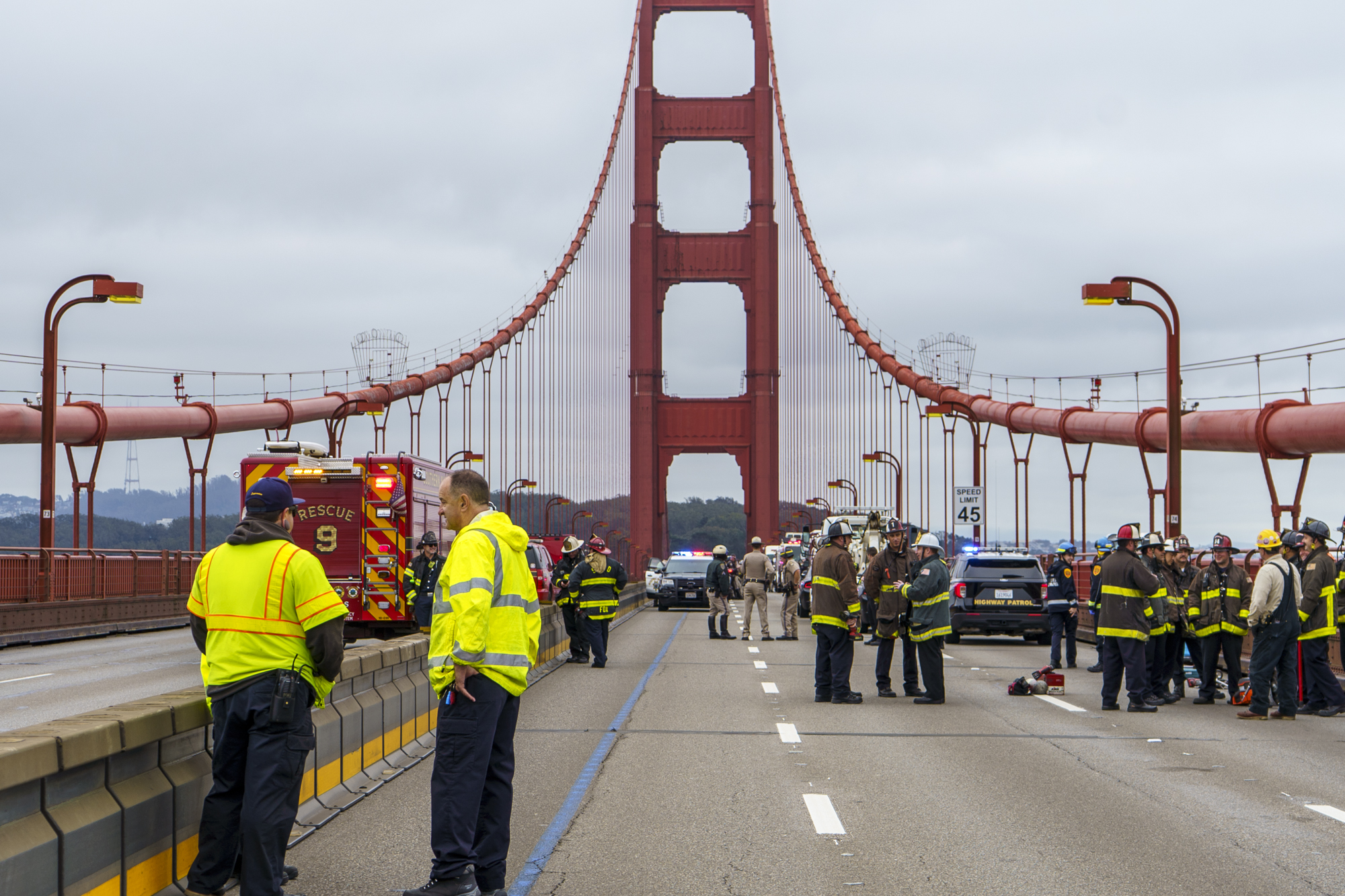
"caption": "First responders on The Golden Gate 26 on April 15, 2024. A group of Bay Area residents were arrested during a protest against the U.S. role in the war on Gaza on Tax Day.",
"credit": "Courtesy of Saman Qadir",
"altTag": null,
"description": null,
"imgSizes": {
"thumbnail": {
"file": "https://cdn.kqed.org/wp-content/uploads/sites/10/2026/05/260520-GGB-PROTEST-02-KQED-160x107.jpg",
"width": 160,
"height": 107,
"mimeType": "image/jpeg"
},
"1536x1536": {
"file": "https://cdn.kqed.org/wp-content/uploads/sites/10/2026/05/260520-GGB-PROTEST-02-KQED-1536x1024.jpg",
"width": 1536,
"height": 1024,
"mimeType": "image/jpeg"
},
"post-thumbnail": {
"file": "https://cdn.kqed.org/wp-content/uploads/sites/10/2026/05/260520-GGB-PROTEST-02-KQED-672x372.jpg",
"width": 672,
"height": 372,
"mimeType": "image/jpeg"
},
"twentyfourteen-full-width": {
"file": "https://cdn.kqed.org/wp-content/uploads/sites/10/2026/05/260520-GGB-PROTEST-02-KQED-1038x576.jpg",
"width": 1038,
"height": 576,
"mimeType": "image/jpeg"
},
"npr-cds-wide": {
"file": "https://cdn.kqed.org/wp-content/uploads/sites/10/2026/05/260520-GGB-PROTEST-02-KQED-1200x675.jpg",
"width": 1200,
"height": 675,
"mimeType": "image/jpeg"
},
"npr-cds-square": {
"file": "https://cdn.kqed.org/wp-content/uploads/sites/10/2026/05/260520-GGB-PROTEST-02-KQED-600x600.jpg",
"width": 600,
"height": 600,
"mimeType": "image/jpeg"
},
"kqedFullSize": {
"file": "https://cdn.kqed.org/wp-content/uploads/sites/10/2026/05/260520-GGB-PROTEST-02-KQED.jpg",
"width": 2000,
"height": 1333
}
},
"isLoading": false,
"fetchFailed": false
},
"news_12084848": {
"type": "attachments",
"id": "news_12084848",
"meta": {
"index": "attachments_1716263798",
"site": "news",
"id": "12084848",
"found": true
},
"title": "260123-signaturekickoff00181_TV_qed",
"publishDate": 1779407255,
"status": "inherit",
"parent": 12084841,
"modified": 1779407284,
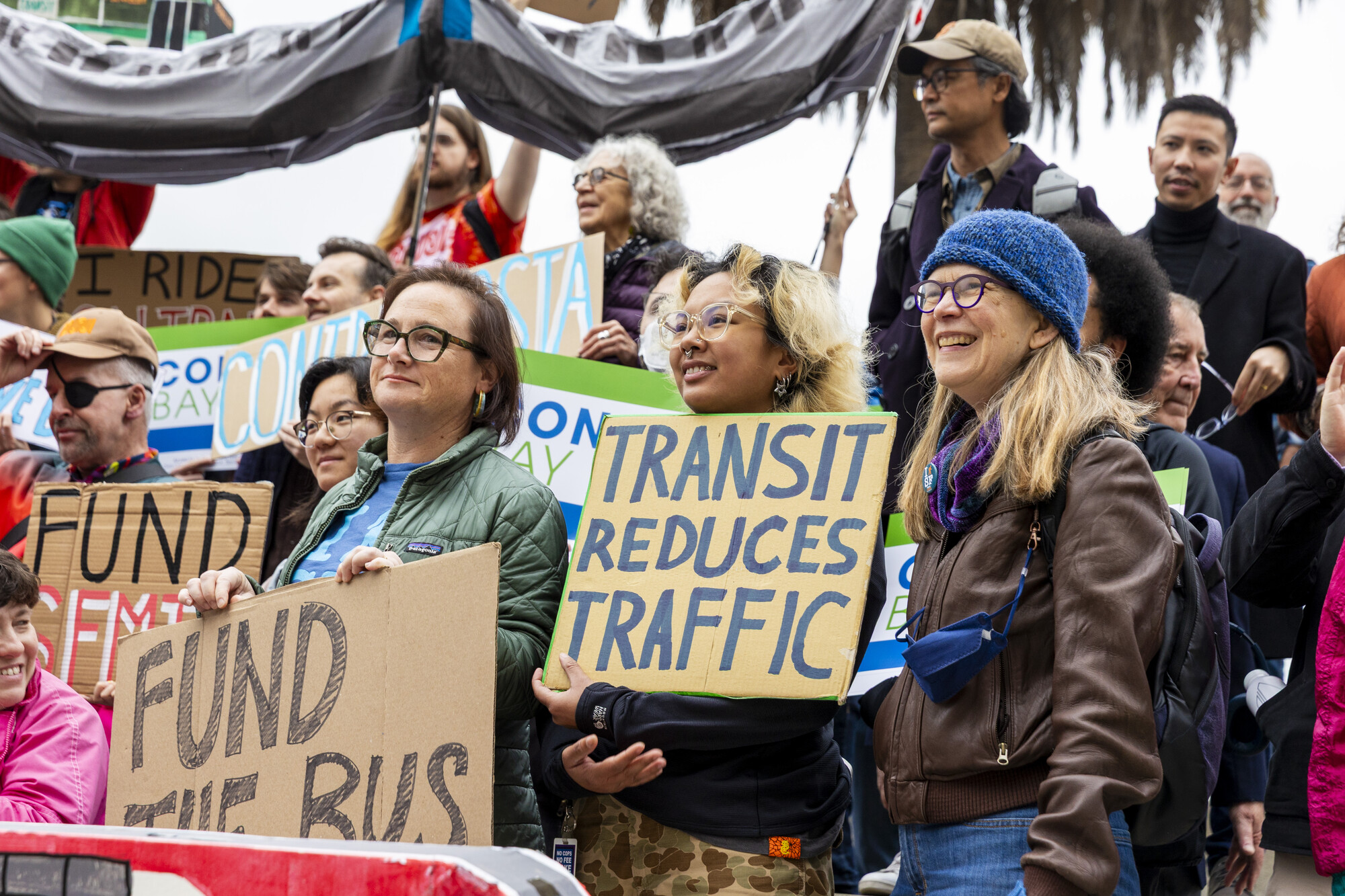
"caption": "Supporters of public transit pose for a picture at a press conference about California Senate Bill 63 at Embarcardero Plaza in San Francisco on Jan. 23, 2026.",
"credit": "Tâm Vũ/KQED",
"altTag": null,
"description": null,
"imgSizes": {
"thumbnail": {
"file": "https://cdn.kqed.org/wp-content/uploads/sites/10/2026/05/260123-signaturekickoff00181_TV_qed-160x107.jpg",
"width": 160,
"height": 107,
"mimeType": "image/jpeg"
},
"1536x1536": {
"file": "https://cdn.kqed.org/wp-content/uploads/sites/10/2026/05/260123-signaturekickoff00181_TV_qed-1536x1024.jpg",
"width": 1536,
"height": 1024,
"mimeType": "image/jpeg"
},
"post-thumbnail": {
"file": "https://cdn.kqed.org/wp-content/uploads/sites/10/2026/05/260123-signaturekickoff00181_TV_qed-672x372.jpg",
"width": 672,
"height": 372,
"mimeType": "image/jpeg"
},
"twentyfourteen-full-width": {
"file": "https://cdn.kqed.org/wp-content/uploads/sites/10/2026/05/260123-signaturekickoff00181_TV_qed-1038x576.jpg",
"width": 1038,
"height": 576,
"mimeType": "image/jpeg"
},
"npr-cds-wide": {
"file": "https://cdn.kqed.org/wp-content/uploads/sites/10/2026/05/260123-signaturekickoff00181_TV_qed-1200x675.jpg",
"width": 1200,
"height": 675,
"mimeType": "image/jpeg"
},
"npr-cds-square": {
"file": "https://cdn.kqed.org/wp-content/uploads/sites/10/2026/05/260123-signaturekickoff00181_TV_qed-600x600.jpg",
"width": 600,
"height": 600,
"mimeType": "image/jpeg"
},
"kqedFullSize": {
"file": "https://cdn.kqed.org/wp-content/uploads/sites/10/2026/05/260123-signaturekickoff00181_TV_qed.jpg",
"width": 2000,
"height": 1333
}
},
"isLoading": false,
"fetchFailed": false
},
"news_12085111": {
"type": "attachments",
"id": "news_12085111",
"meta": {
"index": "attachments_1716263798",
"site": "news",
"id": "12085111",
"found": true
},
"title": "20260524_Carnaval2026-GC-19_qed",
"publishDate": 1779662402,
"status": "inherit",
"parent": 12085109,
"modified": 1779662424,
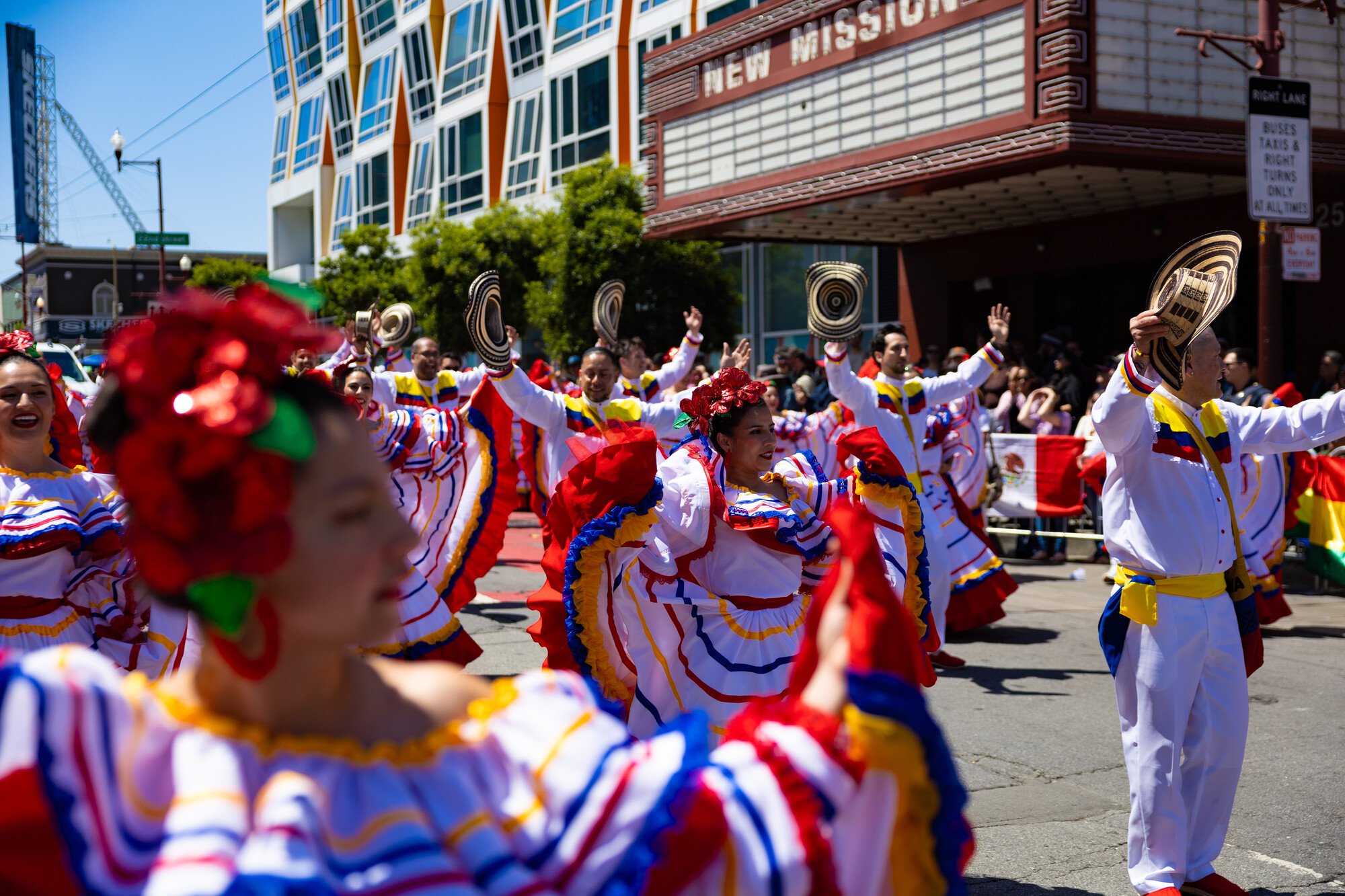
"caption": "Dancers with Cumbiamba Colombiana dance during the 2026 Carnaval parade on May 24, 2026.",
"credit": "Gina Castro/KQED",
"altTag": null,
"description": null,
"imgSizes": {
"thumbnail": {
"file": "https://cdn.kqed.org/wp-content/uploads/sites/10/2026/05/20260524_Carnaval2026-GC-19_qed-160x107.jpg",
"width": 160,
"height": 107,
"mimeType": "image/jpeg"
},
"1536x1536": {
"file": "https://cdn.kqed.org/wp-content/uploads/sites/10/2026/05/20260524_Carnaval2026-GC-19_qed-1536x1024.jpg",
"width": 1536,
"height": 1024,
"mimeType": "image/jpeg"
},
"post-thumbnail": {
"file": "https://cdn.kqed.org/wp-content/uploads/sites/10/2026/05/20260524_Carnaval2026-GC-19_qed-672x372.jpg",
"width": 672,
"height": 372,
"mimeType": "image/jpeg"
},
"twentyfourteen-full-width": {
"file": "https://cdn.kqed.org/wp-content/uploads/sites/10/2026/05/20260524_Carnaval2026-GC-19_qed-1038x576.jpg",
"width": 1038,
"height": 576,
"mimeType": "image/jpeg"
},
"npr-cds-wide": {
"file": "https://cdn.kqed.org/wp-content/uploads/sites/10/2026/05/20260524_Carnaval2026-GC-19_qed-1200x675.jpg",
"width": 1200,
"height": 675,
"mimeType": "image/jpeg"
},
"npr-cds-square": {
"file": "https://cdn.kqed.org/wp-content/uploads/sites/10/2026/05/20260524_Carnaval2026-GC-19_qed-600x600.jpg",
"width": 600,
"height": 600,
"mimeType": "image/jpeg"
},
"kqedFullSize": {
"file": "https://cdn.kqed.org/wp-content/uploads/sites/10/2026/05/20260524_Carnaval2026-GC-19_qed.jpg",
"width": 2000,
"height": 1333
}
},
"isLoading": false,
"fetchFailed": false
},
"news_12085078": {
"type": "attachments",
"id": "news_12085078",
"meta": {
"index": "attachments_1716263798",
"site": "news",
"id": "12085078",
"found": true
},
"title": "260522-JAILSEARCHSUIT-18-BL-KQED",
"publishDate": 1779492125,
"status": "inherit",
"parent": 0,
"modified": 1779492156,
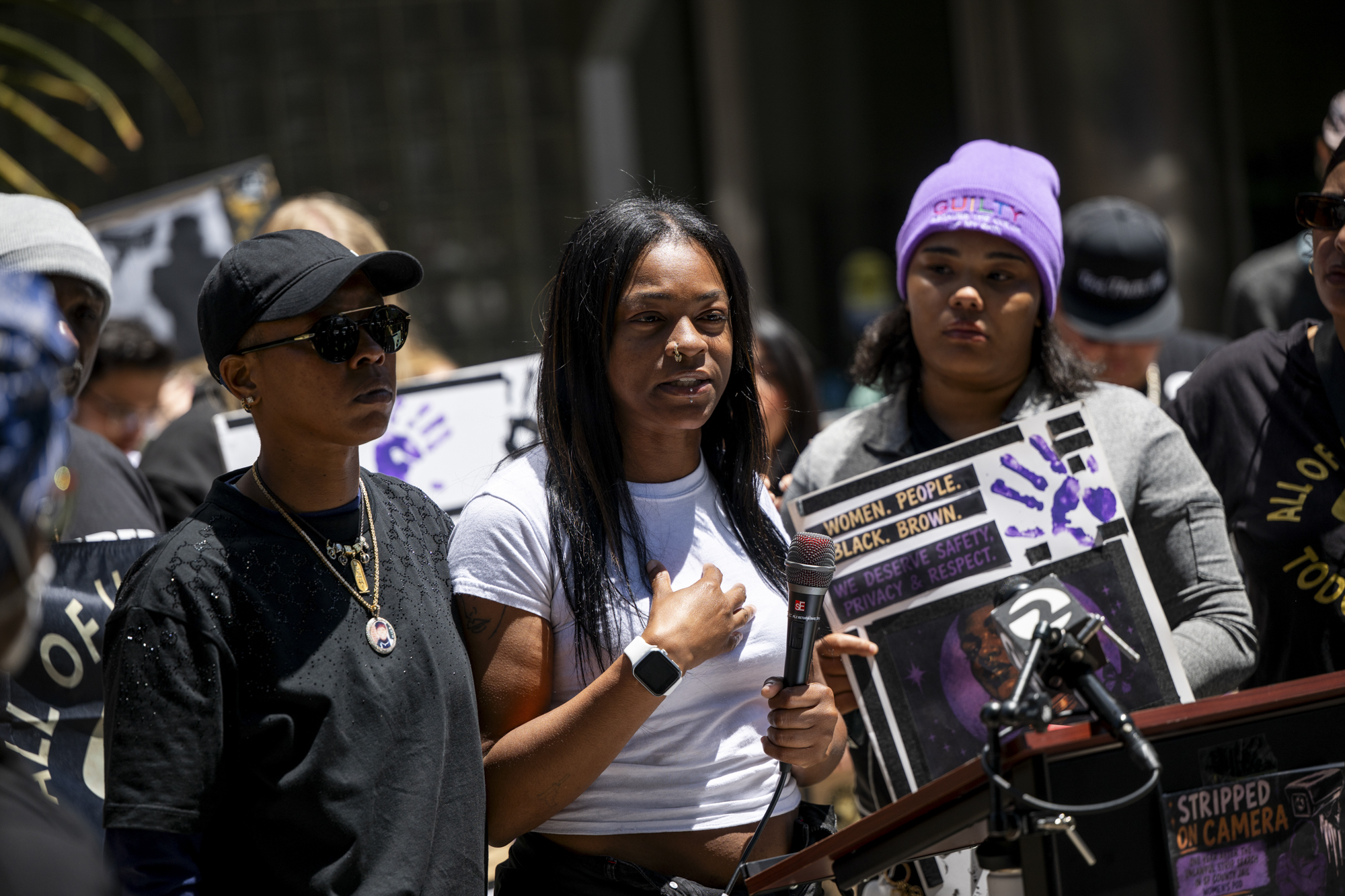
"caption": "Taylor Ross (center), a formerly incarcerated advocate, speaks during a rally outside of San Francisco County Jail 2 on May 22, 2026, one year after women incarcerated at the jail alleged they were subjected to illegal strip searches by sheriff’s deputies in a women’s housing unit.",
"credit": "Beth LaBerge/KQED",
"altTag": null,
"description": null,
"imgSizes": {
"thumbnail": {
"file": "https://cdn.kqed.org/wp-content/uploads/sites/10/2026/05/260522-JAILSEARCHSUIT-18-BL-KQED-160x107.jpg",
"width": 160,
"height": 107,
"mimeType": "image/jpeg"
},
"1536x1536": {
"file": "https://cdn.kqed.org/wp-content/uploads/sites/10/2026/05/260522-JAILSEARCHSUIT-18-BL-KQED-1536x1024.jpg",
"width": 1536,
"height": 1024,
"mimeType": "image/jpeg"
},
"post-thumbnail": {
"file": "https://cdn.kqed.org/wp-content/uploads/sites/10/2026/05/260522-JAILSEARCHSUIT-18-BL-KQED-672x372.jpg",
"width": 672,
"height": 372,
"mimeType": "image/jpeg"
},
"twentyfourteen-full-width": {
"file": "https://cdn.kqed.org/wp-content/uploads/sites/10/2026/05/260522-JAILSEARCHSUIT-18-BL-KQED-1038x576.jpg",
"width": 1038,
"height": 576,
"mimeType": "image/jpeg"
},
"npr-cds-wide": {
"file": "https://cdn.kqed.org/wp-content/uploads/sites/10/2026/05/260522-JAILSEARCHSUIT-18-BL-KQED-1200x675.jpg",
"width": 1200,
"height": 675,
"mimeType": "image/jpeg"
},
"npr-cds-square": {
"file": "https://cdn.kqed.org/wp-content/uploads/sites/10/2026/05/260522-JAILSEARCHSUIT-18-BL-KQED-600x600.jpg",
"width": 600,
"height": 600,
"mimeType": "image/jpeg"
},
"kqedFullSize": {
"file": "https://cdn.kqed.org/wp-content/uploads/sites/10/2026/05/260522-JAILSEARCHSUIT-18-BL-KQED.jpg",
"width": 2000,
"height": 1333
}
},
"isLoading": false,
"fetchFailed": false
},
"news_12073557": {
"type": "attachments",
"id": "news_12073557",
"meta": {
"index": "attachments_1716263798",
"site": "news",
"id": "12073557",
"found": true
},
"title": "DanielLurieSFUSDStrike",
"publishDate": 1771026356,
"status": "inherit",
"parent": 12073441,
"modified": 1779411107,
"caption": "Mayor Daniel Lurie speaks at a press conference on Friday, Feb. 13, 2026, in San Francisco, addressing the San Francisco Unified School District’s newly reached agreement with the teachers union.",
"credit": "Sydney Johnson/KQED",
"altTag": null,
"description": null,
"imgSizes": {
"thumbnail": {
"file": "https://cdn.kqed.org/wp-content/uploads/sites/10/2026/02/DanielLurieSFUSDStrike-160x120.jpg",
"width": 160,
"height": 120,
"mimeType": "image/jpeg"
},
"1536x1536": {
"file": "https://cdn.kqed.org/wp-content/uploads/sites/10/2026/02/DanielLurieSFUSDStrike-1536x1152.jpg",
"width": 1536,
"height": 1152,
"mimeType": "image/jpeg"
},
"post-thumbnail": {
"file": "https://cdn.kqed.org/wp-content/uploads/sites/10/2026/02/DanielLurieSFUSDStrike-672x372.jpg",
"width": 672,
"height": 372,
"mimeType": "image/jpeg"
},
"twentyfourteen-full-width": {
"file": "https://cdn.kqed.org/wp-content/uploads/sites/10/2026/02/DanielLurieSFUSDStrike-1038x576.jpg",
"width": 1038,
"height": 576,
"mimeType": "image/jpeg"
},
"npr-cds-wide": {
"file": "https://cdn.kqed.org/wp-content/uploads/sites/10/2026/02/DanielLurieSFUSDStrike-1200x675.jpg",
"width": 1200,
"height": 675,
"mimeType": "image/jpeg"
},
"kqedFullSize": {
"file": "https://cdn.kqed.org/wp-content/uploads/sites/10/2026/02/DanielLurieSFUSDStrike.jpg",
"width": 2000,
"height": 1500
}
},
"isLoading": false,
"fetchFailed": false
},
"news_12084555": {
"type": "attachments",
"id": "news_12084555",
"meta": {
"index": "attachments_1716263798",
"site": "news",
"id": "12084555",
"found": true
},
"title": "260520-Ride of Silence-02-KQED",
"publishDate": 1779309177,
"status": "inherit",
"parent": 0,
"modified": 1779316302,
"caption": "Riders gathered last year to honor cyclists who died on San Francisco’s streets by placing flowers on “ghost bikes” across the city. This year marks the 24th annual memorial ride.",
"credit": "Courtesy of Paul Valdez",
"altTag": null,
"description": null,
"imgSizes": {
"thumbnail": {
"file": "https://cdn.kqed.org/wp-content/uploads/sites/10/2026/05/260520-Ride-of-Silence-02-KQED-160x120.jpg",
"width": 160,
"height": 120,
"mimeType": "image/jpeg"
},
"1536x1536": {
"file": "https://cdn.kqed.org/wp-content/uploads/sites/10/2026/05/260520-Ride-of-Silence-02-KQED-1536x1152.jpg",
"width": 1536,
"height": 1152,
"mimeType": "image/jpeg"
},
"post-thumbnail": {
"file": "https://cdn.kqed.org/wp-content/uploads/sites/10/2026/05/260520-Ride-of-Silence-02-KQED-672x372.jpg",
"width": 672,
"height": 372,
"mimeType": "image/jpeg"
},
"twentyfourteen-full-width": {
"file": "https://cdn.kqed.org/wp-content/uploads/sites/10/2026/05/260520-Ride-of-Silence-02-KQED-1038x576.jpg",
"width": 1038,
"height": 576,
"mimeType": "image/jpeg"
},
"npr-cds-wide": {
"file": "https://cdn.kqed.org/wp-content/uploads/sites/10/2026/05/260520-Ride-of-Silence-02-KQED-1200x675.jpg",
"width": 1200,
"height": 675,
"mimeType": "image/jpeg"
},
"npr-cds-square": {
"file": "https://cdn.kqed.org/wp-content/uploads/sites/10/2026/05/260520-Ride-of-Silence-02-KQED-600x600.jpg",
"width": 600,
"height": 600,
"mimeType": "image/jpeg"
},
"kqedFullSize": {
"file": "https://cdn.kqed.org/wp-content/uploads/sites/10/2026/05/260520-Ride-of-Silence-02-KQED.jpg",
"width": 2000,
"height": 1500
}
},
"isLoading": false,
"fetchFailed": false
},
"news_12084462": {
"type": "attachments",
"id": "news_12084462",
"meta": {
"index": "attachments_1716263798",
"site": "news",
"id": "12084462",
"found": true
},
"title": "260520-GGB PROTEST-01-KQED",
"publishDate": 1779293019,
"status": "inherit",
"parent": 0,
"modified": 1779312078,
"caption": "Pro-Palestinian protesters on the bridge on April 15, 2024, demanded an end to U.S. aid, arms and technology to Israel to fund what they say is an ongoing genocide of Palestinians, supported by U.S. tax dollars. ",
"credit": "Courtesy of Saman Qadir",
"altTag": null,
"description": null,
"imgSizes": {
"thumbnail": {
"file": "https://cdn.kqed.org/wp-content/uploads/sites/10/2026/05/260520-GGB-PROTEST-01-KQED-160x107.jpg",
"width": 160,
"height": 107,
"mimeType": "image/jpeg"
},
"1536x1536": {
"file": "https://cdn.kqed.org/wp-content/uploads/sites/10/2026/05/260520-GGB-PROTEST-01-KQED-1536x1024.jpg",
"width": 1536,
"height": 1024,
"mimeType": "image/jpeg"
},
"post-thumbnail": {
"file": "https://cdn.kqed.org/wp-content/uploads/sites/10/2026/05/260520-GGB-PROTEST-01-KQED-672x372.jpg",
"width": 672,
"height": 372,
"mimeType": "image/jpeg"
},
"twentyfourteen-full-width": {
"file": "https://cdn.kqed.org/wp-content/uploads/sites/10/2026/05/260520-GGB-PROTEST-01-KQED-1038x576.jpg",
"width": 1038,
"height": 576,
"mimeType": "image/jpeg"
},
"npr-cds-wide": {
"file": "https://cdn.kqed.org/wp-content/uploads/sites/10/2026/05/260520-GGB-PROTEST-01-KQED-1200x675.jpg",
"width": 1200,
"height": 675,
"mimeType": "image/jpeg"
},
"npr-cds-square": {
"file": "https://cdn.kqed.org/wp-content/uploads/sites/10/2026/05/260520-GGB-PROTEST-01-KQED-600x600.jpg",
"width": 600,
"height": 600,
"mimeType": "image/jpeg"
},
"kqedFullSize": {
"file": "https://cdn.kqed.org/wp-content/uploads/sites/10/2026/05/260520-GGB-PROTEST-01-KQED.jpg",
"width": 2000,
"height": 1333
}
},
"isLoading": false,
"fetchFailed": false
},
"news_12084362": {
"type": "attachments",
"id": "news_12084362",
"meta": {
"index": "attachments_1716263798",
"site": "news",
"id": "12084362",
"found": true
},
"title": "San Francisco Zoo Faces Internal Struggles Ahead Of Giant Panda Arrival",
"publishDate": 1779220790,
"status": "inherit",
"parent": 12084352,
"modified": 1779220892,
"caption": "A view of zoo signage at the San Francisco Zoo on July 22, 2025, in San Francisco, California.",
"credit": "Justin Sullivan/Getty Images",
"altTag": null,
"description": null,
"imgSizes": {
"thumbnail": {
"file": "https://cdn.kqed.org/wp-content/uploads/sites/10/2026/05/SFZooGetty-160x107.jpg",
"width": 160,
"height": 107,
"mimeType": "image/jpeg"
},
"1536x1536": {
"file": "https://cdn.kqed.org/wp-content/uploads/sites/10/2026/05/SFZooGetty-1536x1024.jpg",
"width": 1536,
"height": 1024,
"mimeType": "image/jpeg"
},
"post-thumbnail": {
"file": "https://cdn.kqed.org/wp-content/uploads/sites/10/2026/05/SFZooGetty-672x372.jpg",
"width": 672,
"height": 372,
"mimeType": "image/jpeg"
},
"twentyfourteen-full-width": {
"file": "https://cdn.kqed.org/wp-content/uploads/sites/10/2026/05/SFZooGetty-1038x576.jpg",
"width": 1038,
"height": 576,
"mimeType": "image/jpeg"
},
"npr-cds-wide": {
"file": "https://cdn.kqed.org/wp-content/uploads/sites/10/2026/05/SFZooGetty-1200x675.jpg",
"width": 1200,
"height": 675,
"mimeType": "image/jpeg"
},
"npr-cds-square": {
"file": "https://cdn.kqed.org/wp-content/uploads/sites/10/2026/05/SFZooGetty-600x600.jpg",
"width": 600,
"height": 600,
"mimeType": "image/jpeg"
},
"kqedFullSize": {
"file": "https://cdn.kqed.org/wp-content/uploads/sites/10/2026/05/SFZooGetty.jpg",
"width": 2000,
"height": 1333
}
},
"isLoading": false,
"fetchFailed": false
},
"news_12084203": {
"type": "attachments",
"id": "news_12084203",
"meta": {
"index": "attachments_1716263798",
"site": "news",
"id": "12084203",
"found": true
},
"title": "260518-ChadBiancoTownHall-11-BL",
"publishDate": 1779159503,
"status": "inherit",
"parent": 12085443,
"modified": 1780068759,
"caption": "Gubernatorial candidate Chad Bianco speaks with KQED politics reporter Marisa Lagos during a town hall at KQED in San Francisco on May 18, 2026.",
"credit": "Beth LaBerge/KQED",
"altTag": null,
"description": null,
"imgSizes": {
"thumbnail": {
"file": "https://cdn.kqed.org/wp-content/uploads/sites/10/2026/05/260518-ChadBiancoTownHall-11-BL-160x107.jpg",
"width": 160,
"height": 107,
"mimeType": "image/jpeg"
},
"1536x1536": {
"file": "https://cdn.kqed.org/wp-content/uploads/sites/10/2026/05/260518-ChadBiancoTownHall-11-BL-1536x1024.jpg",
"width": 1536,
"height": 1024,
"mimeType": "image/jpeg"
},
"post-thumbnail": {
"file": "https://cdn.kqed.org/wp-content/uploads/sites/10/2026/05/260518-ChadBiancoTownHall-11-BL-672x372.jpg",
"width": 672,
"height": 372,
"mimeType": "image/jpeg"
},
"twentyfourteen-full-width": {
"file": "https://cdn.kqed.org/wp-content/uploads/sites/10/2026/05/260518-ChadBiancoTownHall-11-BL-1038x576.jpg",
"width": 1038,
"height": 576,
"mimeType": "image/jpeg"
},
"npr-cds-wide": {
"file": "https://cdn.kqed.org/wp-content/uploads/sites/10/2026/05/260518-ChadBiancoTownHall-11-BL-1200x675.jpg",
"width": 1200,
"height": 675,
"mimeType": "image/jpeg"
},
"npr-cds-square": {
"file": "https://cdn.kqed.org/wp-content/uploads/sites/10/2026/05/260518-ChadBiancoTownHall-11-BL-600x600.jpg",
"width": 600,
"height": 600,
"mimeType": "image/jpeg"
},
"kqedFullSize": {
"file": "https://cdn.kqed.org/wp-content/uploads/sites/10/2026/05/260518-ChadBiancoTownHall-11-BL.jpg",
"width": 2000,
"height": 1333
}
},
"isLoading": false,
"fetchFailed": false
},
"news_11097463": {
"type": "attachments",
"id": "news_11097463",
"meta": {
"index": "attachments_1716263798",
"site": "news",
"id": "11097463",
"found": true
},
"title": "CigaretteButts",
"publishDate": 1474494079,
"status": "inherit",
"parent": 11097450,
"modified": 1779121607,
"caption": "A pile of cigarette stubs.",
"credit": "clyde tombaugh/Flickr",
"altTag": "Cigarette butts",
"description": "Backers of Proposition 56 hope to hit people hard enough in the wallet that they quit smoking.",
"imgSizes": {
"thumbnail": {
"file": "https://cdn.kqed.org/wp-content/uploads/sites/10/2016/09/CigaretteButts-400x287.jpg",
"width": 400,
"height": 287,
"mimeType": "image/jpeg"
},
"medium": {
"file": "https://cdn.kqed.org/wp-content/uploads/sites/10/2016/09/CigaretteButts-800x573.jpg",
"width": 800,
"height": 573,
"mimeType": "image/jpeg"
},
"large": {
"file": "https://cdn.kqed.org/wp-content/uploads/sites/10/2016/09/CigaretteButts-1920x1376.jpg",
"width": 1920,
"height": 1376,
"mimeType": "image/jpeg"
},
"fd-lrg": {
"file": "https://cdn.kqed.org/wp-content/uploads/sites/10/2016/09/CigaretteButts-1920x1376.jpg",
"width": 1920,
"height": 1376,
"mimeType": "image/jpeg"
},
"fd-med": {
"file": "https://cdn.kqed.org/wp-content/uploads/sites/10/2016/09/CigaretteButts-1180x846.jpg",
"width": 1180,
"height": 846,
"mimeType": "image/jpeg"
},
"fd-sm": {
"file": "https://cdn.kqed.org/wp-content/uploads/sites/10/2016/09/CigaretteButts-960x688.jpg",
"width": 960,
"height": 688,
"mimeType": "image/jpeg"
},
"post-thumbnail": {
"file": "https://cdn.kqed.org/wp-content/uploads/sites/10/2016/09/CigaretteButts-672x372.jpg",
"width": 672,
"height": 372,
"mimeType": "image/jpeg"
},
"twentyfourteen-full-width": {
"file": "https://cdn.kqed.org/wp-content/uploads/sites/10/2016/09/CigaretteButts-1038x576.jpg",
"width": 1038,
"height": 576,
"mimeType": "image/jpeg"
},
"guest-author-32": {
"file": "https://cdn.kqed.org/wp-content/uploads/sites/10/2016/09/CigaretteButts-32x32.jpg",
"width": 32,
"height": 32,
"mimeType": "image/jpeg"
},
"guest-author-50": {
"file": "https://cdn.kqed.org/wp-content/uploads/sites/10/2016/09/CigaretteButts-50x50.jpg",
"width": 50,
"height": 50,
"mimeType": "image/jpeg"
},
"guest-author-64": {
"file": "https://cdn.kqed.org/wp-content/uploads/sites/10/2016/09/CigaretteButts-64x64.jpg",
"width": 64,
"height": 64,
"mimeType": "image/jpeg"
},
"guest-author-96": {
"file": "https://cdn.kqed.org/wp-content/uploads/sites/10/2016/09/CigaretteButts-96x96.jpg",
"width": 96,
"height": 96,
"mimeType": "image/jpeg"
},
"guest-author-128": {
"file": "https://cdn.kqed.org/wp-content/uploads/sites/10/2016/09/CigaretteButts-128x128.jpg",
"width": 128,
"height": 128,
"mimeType": "image/jpeg"
},
"detail": {
"file": "https://cdn.kqed.org/wp-content/uploads/sites/10/2016/09/CigaretteButts-150x150.jpg",
"width": 150,
"height": 150,
"mimeType": "image/jpeg"
},
"jmtc-small-thumb": {
"file": "https://cdn.kqed.org/wp-content/uploads/sites/10/2016/09/CigaretteButts-280x150.jpg",
"width": 280,
"height": 150,
"mimeType": "image/jpeg"
},
"kqedFullSize": {
"file": "https://cdn.kqed.org/wp-content/uploads/sites/10/2016/09/CigaretteButts.jpg",
"width": 1920,
"height": 1376
}
},
"isLoading": false,
"fetchFailed": false
},
"news_12083903": {
"type": "attachments",
"id": "news_12083903",
"meta": {
"index": "attachments_1716263798",
"site": "news",
"id": "12083903",
"found": true
},
"title": "250723-SHELTERFAMILIES-06-BL-KQED",
"publishDate": 1778868364,
"status": "inherit",
"parent": 12083902,
"modified": 1778868380,
"caption": "Maritza Salinas hugs her daughter, Ranea, 4, at a playground in San Francisco on July 22, 2025.",
"credit": "Beth LaBerge/KQED",
"altTag": null,
"description": null,
"imgSizes": {
"thumbnail": {
"file": "https://cdn.kqed.org/wp-content/uploads/sites/10/2026/05/250723-SHELTERFAMILIES-06-BL-KQED-160x107.jpg",
"width": 160,
"height": 107,
"mimeType": "image/jpeg"
},
"1536x1536": {
"file": "https://cdn.kqed.org/wp-content/uploads/sites/10/2026/05/250723-SHELTERFAMILIES-06-BL-KQED-1536x1024.jpg",
"width": 1536,
"height": 1024,
"mimeType": "image/jpeg"
},
"post-thumbnail": {
"file": "https://cdn.kqed.org/wp-content/uploads/sites/10/2026/05/250723-SHELTERFAMILIES-06-BL-KQED-672x372.jpg",
"width": 672,
"height": 372,
"mimeType": "image/jpeg"
},
"twentyfourteen-full-width": {
"file": "https://cdn.kqed.org/wp-content/uploads/sites/10/2026/05/250723-SHELTERFAMILIES-06-BL-KQED-1038x576.jpg",
"width": 1038,
"height": 576,
"mimeType": "image/jpeg"
},
"npr-cds-wide": {
"file": "https://cdn.kqed.org/wp-content/uploads/sites/10/2026/05/250723-SHELTERFAMILIES-06-BL-KQED-1200x675.jpg",
"width": 1200,
"height": 675,
"mimeType": "image/jpeg"
},
"npr-cds-square": {
"file": "https://cdn.kqed.org/wp-content/uploads/sites/10/2026/05/250723-SHELTERFAMILIES-06-BL-KQED-600x600.jpg",
"width": 600,
"height": 600,
"mimeType": "image/jpeg"
},
"kqedFullSize": {
"file": "https://cdn.kqed.org/wp-content/uploads/sites/10/2026/05/250723-SHELTERFAMILIES-06-BL-KQED.jpg",
"width": 2000,
"height": 1333
}
},
"isLoading": false,
"fetchFailed": false
},
"news_12083968": {
"type": "attachments",
"id": "news_12083968",
"meta": {
"index": "attachments_1716263798",
"site": "news",
"id": "12083968",
"found": true
},
"title": "China Hassan (left) and Devin Hassan (right) having coffee and a cigarette at the Revolution, an outdoor club and cafe in the mission in San Francisco, Ca., on Tuesday, March 9, 2010. The San Francisco Board of Supervisors is set to approve a plan that w",
"publishDate": 1778875835,
"status": "inherit",
"parent": 12083893,
"modified": 1778891213,
"caption": "China Hassan (left) and Devin Hassan (right) having coffee and a cigarette at the Revolution, an outdoor club and cafe in the Mission in San Francisco, California, on March 9, 2010. The San Francisco Board of Supervisors is set to approve a plan that would extend smoking bans to outside public spaces.",
"credit": "Liz Hafalia/The San Francisco Chronicle via Getty Images",
"altTag": null,
"description": null,
"imgSizes": {
"thumbnail": {
"file": "https://cdn.kqed.org/wp-content/uploads/sites/10/2026/05/SFSmokingGetty-160x107.jpg",
"width": 160,
"height": 107,
"mimeType": "image/jpeg"
},
"1536x1536": {
"file": "https://cdn.kqed.org/wp-content/uploads/sites/10/2026/05/SFSmokingGetty-1536x1024.jpg",
"width": 1536,
"height": 1024,
"mimeType": "image/jpeg"
},
"post-thumbnail": {
"file": "https://cdn.kqed.org/wp-content/uploads/sites/10/2026/05/SFSmokingGetty-672x372.jpg",
"width": 672,
"height": 372,
"mimeType": "image/jpeg"
},
"twentyfourteen-full-width": {
"file": "https://cdn.kqed.org/wp-content/uploads/sites/10/2026/05/SFSmokingGetty-1038x576.jpg",
"width": 1038,
"height": 576,
"mimeType": "image/jpeg"
},
"npr-cds-wide": {
"file": "https://cdn.kqed.org/wp-content/uploads/sites/10/2026/05/SFSmokingGetty-1200x675.jpg",
"width": 1200,
"height": 675,
"mimeType": "image/jpeg"
},
"npr-cds-square": {
"file": "https://cdn.kqed.org/wp-content/uploads/sites/10/2026/05/SFSmokingGetty-600x600.jpg",
"width": 600,
"height": 600,
"mimeType": "image/jpeg"
},
"kqedFullSize": {
"file": "https://cdn.kqed.org/wp-content/uploads/sites/10/2026/05/SFSmokingGetty.jpg",
"width": 2000,
"height": 1333
}
},
"isLoading": false,
"fetchFailed": false
}
},
"audioPlayerReducer": {
"postId": "stream_live",
"isPaused": true,
"isPlaying": false,
"pfsActive": false,
"pledgeModalIsOpen": true,
"playerDrawerIsOpen": false,
"liveAudioPlayStartedAt": 0,
"liveAudioPlayContext": ""
},
"authorsReducer": {
"ecruzguevarra": {
"type": "authors",
"id": "8654",
"meta": {
"index": "authors_1716337520",
"id": "8654",
"found": true
},
"name": "Ericka Cruz Guevarra",
"firstName": "Ericka",
"lastName": "Cruz Guevarra",
"slug": "ecruzguevarra",
"email": "ecruzguevarra@kqed.org",
"display_author_email": true,
"staff_mastheads": [
"news"
],
"title": "Producer, The Bay Podcast",
"bio": "Ericka Cruz Guevarra is host of \u003ca href=\"https://www.kqed.org/podcasts/thebay\">\u003cem>The Bay\u003c/em>\u003c/a> podcast at KQED. Before host, she was the show’s producer. Her work in that capacity includes a three-part reported series on policing in Vallejo, which won a 2020 excellence in journalism award from the Society of Professional Journalists. Ericka has worked as a breaking news reporter at Oregon Public Broadcasting, helped produce the Code Switch podcast, and was KQED’s inaugural Raul Ramirez Diversity Fund intern. She’s also an alumna of NPR’s Next Generation Radio program. Send her an email if you have strong feelings about whether Fairfield and Suisun City are the Bay. Ericka is represented by SAG-AFTRA.",
"avatar": "https://secure.gravatar.com/avatar/accefc1de4bafc7e234b69bcb9b6f6536c130fd84709bc3069ef11a78787e1bb?s=600&d=blank&r=g",
"twitter": "NotoriousECG",
"bluesky": null,
"facebook": null,
"instagram": null,
"linkedin": null,
"sites": [
{
"site": "arts",
"roles": [
"subscriber"
]
},
{
"site": "news",
"roles": [
"editor",
"manage_categories"
]
},
{
"site": "futureofyou",
"roles": [
"subscriber"
]
},
{
"site": "stateofhealth",
"roles": [
"subscriber"
]
},
{
"site": "science",
"roles": [
"editor"
]
},
{
"site": "forum",
"roles": [
"subscriber"
]
}
],
"headData": {
"title": "Ericka Cruz Guevarra | KQED",
"description": "Producer, The Bay Podcast",
"ogImgSrc": "https://secure.gravatar.com/avatar/accefc1de4bafc7e234b69bcb9b6f6536c130fd84709bc3069ef11a78787e1bb?s=600&d=blank&r=g",
"twImgSrc": "https://secure.gravatar.com/avatar/accefc1de4bafc7e234b69bcb9b6f6536c130fd84709bc3069ef11a78787e1bb?s=600&d=blank&r=g"
},
"isLoading": false,
"link": "/author/ecruzguevarra"
},
"amontecillo": {
"type": "authors",
"id": "11649",
"meta": {
"index": "authors_1716337520",
"id": "11649",
"found": true
},
"name": "Alan Montecillo",
"firstName": "Alan",
"lastName": "Montecillo",
"slug": "amontecillo",
"email": "amontecillo@kqed.org",
"display_author_email": false,
"staff_mastheads": [
"news"
],
"title": "KQED Contributor",
"bio": "Alan Montecillo is the senior editor of \u003cem>\u003ca href=\"http://kqed.org/thebay\">The Bay\u003c/a>, \u003c/em> KQED's local news podcast. Before moving to the Bay Area, he worked as a senior talk show producer for WILL in Champaign-Urbana, Illinois and at Oregon Public Broadcasting in Portland, Oregon. He has won journalism awards from the Society of Professional Journalists Northern California, the Public Media Journalists Association, The Signal Awards, and has also received a regional Edward R. Murrow award. Alan is a Filipino American from Hong Kong and a graduate of Reed College.",
"avatar": "https://secure.gravatar.com/avatar/268f53a2066899ea9efdd8a5900218b17c822d9862cbc9326cccec53ef41d349?s=600&d=blank&r=g",
"twitter": "alanmontecillo",
"bluesky": null,
"facebook": null,
"instagram": null,
"linkedin": null,
"sites": [
{
"site": "",
"roles": [
"editor"
]
},
{
"site": "news",
"roles": [
"editor",
"manage_categories"
]
}
],
"headData": {
"title": "Alan Montecillo | KQED",
"description": "KQED Contributor",
"ogImgSrc": "https://secure.gravatar.com/avatar/268f53a2066899ea9efdd8a5900218b17c822d9862cbc9326cccec53ef41d349?s=600&d=blank&r=g",
"twImgSrc": "https://secure.gravatar.com/avatar/268f53a2066899ea9efdd8a5900218b17c822d9862cbc9326cccec53ef41d349?s=600&d=blank&r=g"
},
"isLoading": false,
"link": "/author/amontecillo"
},
"jlara": {
"type": "authors",
"id": "11761",
"meta": {
"index": "authors_1716337520",
"id": "11761",
"found": true
},
"name": "Juan Carlos Lara",
"firstName": "Juan Carlos",
"lastName": "Lara",
"slug": "jlara",
"email": "jlara@kqed.org",
"display_author_email": false,
"staff_mastheads": [],
"title": "KQED Contributor",
"bio": null,
"avatar": "https://secure.gravatar.com/avatar/19e2052b9b05657c5ff2af2121846e9c?s=600&d=blank&r=g",
"twitter": null,
"facebook": null,
"instagram": null,
"linkedin": null,
"sites": [
{
"site": "arts",
"roles": [
"editor"
]
},
{
"site": "news",
"roles": [
"editor"
]
},
{
"site": "forum",
"roles": [
"editor"
]
},
{
"site": "liveblog",
"roles": [
"contributor"
]
}
],
"headData": {
"title": "Juan Carlos Lara | KQED",
"description": "KQED Contributor",
"ogImgSrc": "https://secure.gravatar.com/avatar/19e2052b9b05657c5ff2af2121846e9c?s=600&d=blank&r=g",
"twImgSrc": "https://secure.gravatar.com/avatar/19e2052b9b05657c5ff2af2121846e9c?s=600&d=blank&r=g"
},
"isLoading": false,
"link": "/author/jlara"
},
"adahlstromeckman": {
"type": "authors",
"id": "11785",
"meta": {
"index": "authors_1716337520",
"id": "11785",
"found": true
},
"name": "Azul Dahlstrom-Eckman",
"firstName": "Azul",
"lastName": "Dahlstrom-Eckman",
"slug": "adahlstromeckman",
"email": "adahlstrom-eckman@kqed.org",
"display_author_email": true,
"staff_mastheads": [],
"title": "Reporter",
"bio": "Azul is a reporter for KQED focusing on transportation and features. He joined KQED in 2021 as an alumna of KALW's Audio Academy radio journalism training program.",
"avatar": "https://secure.gravatar.com/avatar/9cb750298435add7815a777f55bf1f46845c1386bb8452555c60a7b820b5aba3?s=600&d=blank&r=g",
"twitter": "@zuliemann",
"bluesky": "@azul415.bsky.social",
"facebook": null,
"instagram": null,
"linkedin": null,
"sites": [
{
"site": "arts",
"roles": [
"editor"
]
},
{
"site": "news",
"roles": [
"editor"
]
},
{
"site": "science",
"roles": [
"editor"
]
},
{
"site": "liveblog",
"roles": [
"author"
]
}
],
"headData": {
"title": "Azul Dahlstrom-Eckman | KQED",
"description": "Reporter",
"ogImgSrc": "https://secure.gravatar.com/avatar/9cb750298435add7815a777f55bf1f46845c1386bb8452555c60a7b820b5aba3?s=600&d=blank&r=g",
"twImgSrc": "https://secure.gravatar.com/avatar/9cb750298435add7815a777f55bf1f46845c1386bb8452555c60a7b820b5aba3?s=600&d=blank&r=g"
},
"isLoading": false,
"link": "/author/adahlstromeckman"
},
"ibloom": {
"type": "authors",
"id": "11805",
"meta": {
"index": "authors_1716337520",
"id": "11805",
"found": true
},
"name": "Izzy Bloom",
"firstName": "Izzy",
"lastName": "Bloom",
"slug": "ibloom",
"email": "ibloom@kqed.org",
"display_author_email": false,
"staff_mastheads": [],
"title": "KQED Reporter & Producer",
"bio": "Izzy is a reporter and producer on KQED's California Politics & Government Desk. She joined the desk in 2024 to produce Political Breakdown, covering local and national elections and attending the RNC and DNC in Milwaukee and Chicago. \r\n\r\nBefore that, Izzy was a producer on The California Report and reported long-form stories for The California Report Magazine. She was a finalist for the Third Coast/Richard H. Driehaus Foundation Competition and was awarded for her reporting on indigenous land back by the Society of Professional Journalists. Izzy received her master's in journalism from the University of California, Berkeley.",
"avatar": "https://secure.gravatar.com/avatar/cc4d272ca430783ee1a8efac470a6b1e0fdd082c3beb61da019801d0ff751c8c?s=600&d=blank&r=g",
"twitter": null,
"bluesky": null,
"facebook": null,
"instagram": null,
"linkedin": null,
"sites": [
{
"site": "news",
"roles": [
"editor"
]
},
{
"site": "perspectives",
"roles": [
"editor"
]
}
],
"headData": {
"title": "Izzy Bloom | KQED",
"description": "KQED Reporter & Producer",
"ogImgSrc": "https://secure.gravatar.com/avatar/cc4d272ca430783ee1a8efac470a6b1e0fdd082c3beb61da019801d0ff751c8c?s=600&d=blank&r=g",
"twImgSrc": "https://secure.gravatar.com/avatar/cc4d272ca430783ee1a8efac470a6b1e0fdd082c3beb61da019801d0ff751c8c?s=600&d=blank&r=g"
},
"isLoading": false,
"link": "/author/ibloom"
},
"jessicakariisa": {
"type": "authors",
"id": "11831",
"meta": {
"index": "authors_1716337520",
"id": "11831",
"found": true
},
"name": "Jessica Kariisa",
"firstName": "Jessica",
"lastName": "Kariisa",
"slug": "jessicakariisa",
"email": "jkariisa@kqed.org",
"display_author_email": false,
"staff_mastheads": [],
"title": "Producer, The Bay",
"bio": "Jessica Kariisa is the producer of The Bay. She first joined KQED as an intern for The California Report Magazine, after which she became an on-call producer. She reported a Bay Curious episode on the use of rap lyrics in criminal trials which won a Society of Professional Journalists award in 2023 for Excellence in Features Journalism and the 2023 Signal Award for Best Conversation Starter. She’s worked on podcasts for Snap Judgment and American Public Media. Before embarking on her audio career, she was a music journalist.\r\n\r\nJessica Kariisa is represented by SAG-AFTRA.",
"avatar": "https://secure.gravatar.com/avatar/522e97b28ac0b3d411621c0fde8f3419c7b71ea2c5c262c57c4bb600963f328c?s=600&d=blank&r=g",
"twitter": null,
"bluesky": null,
"facebook": null,
"instagram": null,
"linkedin": null,
"sites": [
{
"site": "arts",
"roles": [
"author"
]
},
{
"site": "news",
"roles": [
"editor",
"manage_categories"
]
}
],
"headData": {
"title": "Jessica Kariisa | KQED",
"description": "Producer, The Bay",
"ogImgSrc": "https://secure.gravatar.com/avatar/522e97b28ac0b3d411621c0fde8f3419c7b71ea2c5c262c57c4bb600963f328c?s=600&d=blank&r=g",
"twImgSrc": "https://secure.gravatar.com/avatar/522e97b28ac0b3d411621c0fde8f3419c7b71ea2c5c262c57c4bb600963f328c?s=600&d=blank&r=g"
},
"isLoading": false,
"link": "/author/jessicakariisa"
},
"sjohnson": {
"type": "authors",
"id": "11840",
"meta": {
"index": "authors_1716337520",
"id": "11840",
"found": true
},
"name": "Sydney Johnson",
"firstName": "Sydney",
"lastName": "Johnson",
"slug": "sjohnson",
"email": "sjohnson@kqed.org",
"display_author_email": false,
"staff_mastheads": [
"news"
],
"title": "KQED Reporter",
"bio": "Sydney Johnson is a general assignment reporter at KQED. She previously reported on public health and city government at the San Francisco Examiner, and before that, she covered statewide education policy for EdSource. Her reporting has won multiple local, state and national awards. Sydney is a graduate of the University of California, Berkeley and lives in San Francisco.",
"avatar": "https://secure.gravatar.com/avatar/97855f2719b72ad6190b7c535fe642c8?s=600&d=blank&r=g",
"twitter": "sydneyfjohnson",
"facebook": null,
"instagram": null,
"linkedin": null,
"sites": [
{
"site": "news",
"roles": [
"editor"
]
}
],
"headData": {
"title": "Sydney Johnson | KQED",
"description": "KQED Reporter",
"ogImgSrc": "https://secure.gravatar.com/avatar/97855f2719b72ad6190b7c535fe642c8?s=600&d=blank&r=g",
"twImgSrc": "https://secure.gravatar.com/avatar/97855f2719b72ad6190b7c535fe642c8?s=600&d=blank&r=g"
},
"isLoading": false,
"link": "/author/sjohnson"
},
"kdebenedetti": {
"type": "authors",
"id": "11913",
"meta": {
"index": "authors_1716337520",
"id": "11913",
"found": true
},
"name": "Katie DeBenedetti",
"firstName": "Katie",
"lastName": "DeBenedetti",
"slug": "kdebenedetti",
"email": "kdebenedetti@kqed.org",
"display_author_email": false,
"staff_mastheads": [
"news",
"science"
],
"title": "KQED Contributor",
"bio": "Katie DeBenedetti is a digital reporter covering daily news for the Express Desk. Prior to joining KQED as a culture reporting intern in January 2024, she covered education and city government for the Napa Valley Register.",
"avatar": "https://secure.gravatar.com/avatar/6e31073cb8f7e4214ab03f42771d0f45?s=600&d=blank&r=g",
"twitter": null,
"facebook": null,
"instagram": null,
"linkedin": null,
"sites": [
{
"site": "news",
"roles": [
"author"
]
},
{
"site": "science",
"roles": [
"author"
]
},
{
"site": "liveblog",
"roles": [
"author"
]
}
],
"headData": {
"title": "Katie DeBenedetti | KQED",
"description": "KQED Contributor",
"ogImgSrc": "https://secure.gravatar.com/avatar/6e31073cb8f7e4214ab03f42771d0f45?s=600&d=blank&r=g",
"twImgSrc": "https://secure.gravatar.com/avatar/6e31073cb8f7e4214ab03f42771d0f45?s=600&d=blank&r=g"
},
"isLoading": false,
"link": "/author/kdebenedetti"
},
"skennedy": {
"type": "authors",
"id": "11935",
"meta": {
"index": "authors_1716337520",
"id": "11935",
"found": true
},
"name": "Samantha Kennedy",
"firstName": "Samantha",
"lastName": "Kennedy",
"slug": "skennedy",
"email": "SKennedy@kqed.org",
"display_author_email": false,
"staff_mastheads": [],
"title": "KQED Contributor",
"bio": null,
"avatar": "https://secure.gravatar.com/avatar/adc7b14bf1e801793202a156ecc864d4ad505b0fd63162a2f3da0e5ba57222d0?s=600&d=blank&r=g",
"twitter": null,
"bluesky": null,
"facebook": null,
"instagram": null,
"linkedin": null,
"sites": [
{
"site": "arts",
"roles": [
"author"
]
},
{
"site": "news",
"roles": [
"editor"
]
},
{
"site": "science",
"roles": [
"editor"
]
}
],
"headData": {
"title": "Samantha Kennedy | KQED",
"description": "KQED Contributor",
"ogImgSrc": "https://secure.gravatar.com/avatar/adc7b14bf1e801793202a156ecc864d4ad505b0fd63162a2f3da0e5ba57222d0?s=600&d=blank&r=g",
"twImgSrc": "https://secure.gravatar.com/avatar/adc7b14bf1e801793202a156ecc864d4ad505b0fd63162a2f3da0e5ba57222d0?s=600&d=blank&r=g"
},
"isLoading": false,
"link": "/author/skennedy"
},
"dmeagley": {
"type": "authors",
"id": "12002",
"meta": {
"index": "authors_1716337520",
"id": "12002",
"found": true
},
"name": "Desmond Meagley",
"firstName": "Desmond",
"lastName": "Meagley",
"slug": "dmeagley",
"email": "dmeagley@kqed.org",
"display_author_email": false,
"staff_mastheads": [],
"title": "KQED Contributor",
"bio": null,
"avatar": "https://secure.gravatar.com/avatar/16f71d550a6f42fe4d2195a89ee3ac21649feb17ca382d5cd0ad019d930a00ae?s=600&d=blank&r=g",
"twitter": null,
"bluesky": null,
"facebook": null,
"instagram": null,
"linkedin": null,
"sites": [
{
"site": "news",
"roles": [
"author"
]
}
],
"headData": {
"title": "Desmond Meagley | KQED",
"description": "KQED Contributor",
"ogImgSrc": "https://secure.gravatar.com/avatar/16f71d550a6f42fe4d2195a89ee3ac21649feb17ca382d5cd0ad019d930a00ae?s=600&d=blank&r=g",
"twImgSrc": "https://secure.gravatar.com/avatar/16f71d550a6f42fe4d2195a89ee3ac21649feb17ca382d5cd0ad019d930a00ae?s=600&d=blank&r=g"
},
"isLoading": false,
"link": "/author/dmeagley"
},
"ejackson": {
"type": "authors",
"id": "12003",
"meta": {
"index": "authors_1716337520",
"id": "12003",
"found": true
},
"name": "Ella Jackson",
"firstName": "Ella",
"lastName": "Jackson",
"slug": "ejackson",
"email": "ejackson@kqed.org",
"display_author_email": false,
"staff_mastheads": [],
"title": "KQED Contributor",
"bio": null,
"avatar": "https://secure.gravatar.com/avatar/3c688edc62aec1dcae096e1475956d245f72bde99cff316455871c9b22a7205b?s=600&d=blank&r=g",
"twitter": null,
"bluesky": null,
"facebook": null,
"instagram": null,
"linkedin": null,
"sites": [
{
"site": "news",
"roles": [
"author"
]
},
{
"site": "science",
"roles": [
"author"
]
}
],
"headData": {
"title": "Ella Jackson | KQED",
"description": "KQED Contributor",
"ogImgSrc": "https://secure.gravatar.com/avatar/3c688edc62aec1dcae096e1475956d245f72bde99cff316455871c9b22a7205b?s=600&d=blank&r=g",
"twImgSrc": "https://secure.gravatar.com/avatar/3c688edc62aec1dcae096e1475956d245f72bde99cff316455871c9b22a7205b?s=600&d=blank&r=g"
},
"isLoading": false,
"link": "/author/ejackson"
}
},
"pagesReducer": {
"news_tag_san-francisco": {
"type": "terms",
"id": "news_38",
"meta": {
"index": "terms_1716263798",
"site": "news",
"id": "38",
"score": 6.7229023
},
"featImg": null,
"name": "San Francisco",
"description": null,
"taxonomy": "tag",
"headData": {
"twImgId": null,
"twTitle": null,
"ogTitle": null,
"ogImgId": null,
"twDescription": null,
"description": null,
"title": "San Francisco Archives | KQED News",
"ogDescription": null
},
"ttid": 58,
"slug": "san-francisco",
"isLoading": false,
"title": "San Francisco",
"pageMeta": {
"site": "news",
"WpPageTemplate": "page-topic-editorial",
"currentPage": 16
},
"blocks": [
{
"blockName": "kqed/post-list",
"attrs": {
"layout": "cardArticle2",
"query": "posts/news?tag=san-francisco",
"seeMore": false,
"paginated": true,
"page": 16
}
},
{
"blockName": "kqed/ad"
}
]
}
},
"pfsSessionReducer": {},
"postsReducer": {
"stream_live": {
"type": "live",
"id": "stream_live",
"audioUrl": "https://streams.kqed.org/kqedradio",
"title": "Live Stream",
"excerpt": "Live Stream information currently unavailable.",
"link": "/radio",
"featImg": "",
"label": {
"name": "KQED Live",
"link": "/"
}
},
"stream_kqedNewscast": {
"type": "posts",
"id": "stream_kqedNewscast",
"audioUrl": "https://www.kqed.org/.stream/anon/radio/RDnews/newscast.mp3?_=1",
"title": "KQED Newscast",
"featImg": "",
"label": {
"name": "88.5 FM",
"link": "/"
}
},
"news_12085224": {
"type": "posts",
"id": "news_12085224",
"meta": {
"index": "posts_1716263798",
"site": "news",
"id": "12085224",
"score": null,
"sort": [
1779876007000
]
},
"guestAuthors": [],
"slug": "these-protesters-could-go-to-prison-for-blocking-the-golden-gate-bridge",
"title": "These Protesters Could Go to Prison for Blocking the Golden Gate Bridge",
"publishDate": 1779876007,
"format": "audio",
"headTitle": "These Protesters Could Go to Prison for Blocking the Golden Gate Bridge | KQED",
"labelTerm": {},
"content": "\u003cp>On April 15, 2024, dozens of pro-Palestinian protesters blocked the Golden Gate Bridge, in an attempt to pressure the U.S. government into ending military aid for Israel’s bombing and invasion of Gaza.\u003c/p>\n\u003cp>Now, seven of those protesters are on trial facing felony charges in San Francisco. If convicted, they could face a maximum sentence of 15 years in prison.\u003c/p>\n\u003cp>\u003c!-- iframe plugin v.4.3 wordpress.org/plugins/iframe/ -->\u003cbr>\n\u003ciframe loading=\"lazy\" frameborder=\"0\" height=\"200\" scrolling=\"no\" src=\"https://playlist.megaphone.fm?e=KQINC4975303124&light=true\" width=\"100%\" class=\"iframe-class\">\u003c/iframe>\u003c/p>\n\u003ch3>\u003cstrong>Episode Transcript\u003c/strong>\u003c/h3>\n\u003cp>\u003cem>This is a computer-generated transcript. While our team has reviewed it, there may be errors.\u003c/em>\u003c/p>\n\u003cp>\u003cb>Ericka Cruz Guevarra: \u003c/b>\u003cem>[00:00:00] \u003c/em>I’m Ericka Cruz Guevarra and welcome to The Bay, local news to keep you rooted. Sara Cantor grew up learning a lot about the Holocaust. Being Jewish, she learned about how much of German life just went on, as Jewish people were displaced, put in camps, and murdered.\u003c/p>\n\u003cp>[ad fullwidth]\u003c/p>\n\u003cp>\u003cb>Sara Cantor: \u003c/b>\u003cem>[00:00:24] \u003c/em>As a child I was really obsessed with and disturbed by the question of who would I have been during that time period, how would I had acted?\u003cem> \u003c/em>\u003c/p>\n\u003cp>\u003cb>Ericka Cruz Guevarra: \u003c/b>\u003cem>[00:00:37] \u003c/em>On April 15th, 2024, Cantor was among 26 protesters who stopped traffic on the Golden Gate Bridge to highlight Israel’s siege of Gaza. Now she, along with six others, are on trial in San Francisco, facing felony conspiracy charges for their actions on the bridge that day. If convicted, they could face up to 15 years in prison.\u003c/p>\n\u003cp>\u003cb>Sara Cantor: \u003c/b>\u003cem>[00:01:09] \u003c/em>I resolved that if I had been in that situation, or if I were to ever be in a similar situation, that I would resist, that I wouldn’t turn away, that I make sure to fight for the humanity of all people.\u003c/p>\n\u003cp>\u003cb>Ericka Cruz Guevarra: \u003c/b>\u003cem>[00:01:30] \u003c/em>Today, the Golden Gate Bridge protesters on trial in San Francisco.\u003c/p>\n\u003cp>\u003cb>Ericka Cruz Guevarra: \u003c/b>\u003cem>[00:01:41] \u003c/em>Let’s start back in April of 2024. What happened on the Golden Gate Bridge?\u003c/p>\n\u003cp>\u003cb>Juan Carlos Lara: \u003c/b>\u003cem>[00:01:53] \u003c/em>Just before 8am, basically a group of cars drove southbound through Marin onto the Golden Gate Bridge and then stopped about halfway through. At that point some protestors got out of those cars and stopped up all southbound traffic.\u003c/p>\n\u003cp>\u003cb>Ericka Cruz Guevarra: \u003c/b>\u003cem>[00:02:12] \u003c/em>Juan Carlos Lara is a reporter for KQED.\u003c/p>\n\u003cp>\u003cb>Juan Carlos Lara: \u003c/b>\u003cem>[00:02:16] \u003c/em>A few of those people kind of connected themselves into these devices, essentially chaining themselves to their cars and to each other, and then others unfurled a big banner that read Stop the World for Gaza.\u003c/p>\n\u003cp>\u003cb>Protester: \u003c/b>\u003cem>[00:02:28] \u003c/em>Stop funneling U.S. Tax dollars to the Israeli occupation forces to continue the atrocities and genocide of the Palestinian people!\u003c/p>\n\u003cp>\u003cb>Juan Carlos Lara: \u003c/b>\u003cem>[00:02:44] \u003c/em>From before this point, they’d been describing Israel’s actions in Gaza as a genocide, and this was part of an international kind of day of action.\u003c/p>\n\u003cp>\u003cb>Ericka Cruz Guevarra: \u003c/b>\u003cem>[00:02:56] \u003c/em>Tax day. Is that right?\u003c/p>\n\u003cp>\u003cb>Juan Carlos Lara: \u003c/b>\u003cem>[00:02:57] \u003c/em>Yeah, so this specifically happened on the tax filing deadline in the US. Protesters were hoping to apply economic pressure on the US to get US leaders to end military aid to Israel and, in effect, pressure Israel to stop its bombings of Gaza.\u003c/p>\n\u003cp>\u003cb>Ericka Cruz Guevarra: \u003c/b>\u003cem>[00:03:17] \u003c/em>And how did this protest eventually end?\u003c/p>\n\u003cp>\u003cb>Juan Carlos Lara: \u003c/b>\u003cem>[00:03:21] \u003c/em>There were dozens of people out there. 26 were charged, and they ended up blocking traffic for about four hours. 18 of them were charged with misdemeanors. There was one who initially was faced with felony charges, but whose charges were dismissed. And then there were seven who were charged with felonies. These are six who allegedly chained themselves to their cars and to each other using these things called. Lockboxes or sleeping dragon devices that makes it really hard to remove protestors and then there was a seventh who was allegedly the police liaison going back and forth between uh the police and those protesters and these seven are the ones going through trial facing a series of charges chief among them there’s felony conspiracy there’s also a series of misdemeanors including false imprisonment and refusal to disperse\u003c/p>\n\u003cp>\u003cb>Ericka Cruz Guevarra: \u003c/b>\u003cem>[00:04:10] \u003c/em>And I actually remember that day and in particular, I remember social media just being sort of a big mess. A lot of people being really upset about the traffic in the Bay Area on that particular day. Again, it was one of many actions, but it’s not an unprecedented thing to see a protest on the Golden Gate Bridge, right?\u003c/p>\n\u003cp>\u003cb>Juan Carlos Lara: \u003c/b>\u003cem>[00:04:35] \u003c/em>Yeah, that’s right. The bridge has been a frequent site of protest. There was actually another bridge shut down just two months prior to this in February, but that one only lasted for like 45 minutes and dispersed very quickly, so it didn’t make as big headlines. There was a Black Lives Matter march that crossed the bridge in 2020. There was an anti-war protest that happened there in 2002. Two other really big ones in 1996. Woody Harrelson and a bunch of other people engaged in this like Save the Redwoods protest and they climbed the cables and hung a huge banner. And there was also a protest over the US’s response to the AIDS crisis in the 80s. It’s an iconic structure, obviously, and people hoping to… Bring a lot of attention to what they feel is an urgent cause often see it as a great place to stage these demonstrations.\u003c/p>\n\u003cp>\u003cb>Ericka Cruz Guevarra: \u003c/b>\u003cem>[00:05:28] \u003c/em>This happened more than two years ago now. What was the response at the time and how did we get to this point where there are now seven people facing these felony charges?\u003c/p>\n\u003cp>\u003cb>Juan Carlos Lara: \u003c/b>\u003cem>[00:05:41] \u003c/em>I’d say the response at the time was pretty divided. This has been a contentious issue, not just in the Bay Area, but kind of internationally. This was kind of at the fever pitch of pro-Palestinian protests in the bay area. Like I said, this was just two months after a smaller bridge shut down. At this time, the student encampments across college campuses were starting to wind down, but we’re still present on at least a few campuses.\u003c/p>\n\u003cp>\u003cb>Brooke Jenkins: \u003c/b>\u003cem>[00:06:09] \u003c/em>I want to make clear that San Francisco, as well as myself as the district attorney, support free speech. But where we must draw the line is when acts of free speech endanger public safety.\u003c/p>\n\u003cp>\u003cb>Juan Carlos Lara: \u003c/b>\u003cem>[00:06:23] \u003c/em>In terms of local officials, San Francisco’s District Attorney Brooke Jenkins came out with very strong statements about this. She said that, you know, she encouraged people’s right to protest and to freedom of speech, but that this threatened the safety of people on the bridge.\u003c/p>\n\u003cp>\u003cb>Brooke Jenkins: \u003c/b>\u003cem>[00:06:38] \u003c/em>And we must make sure that public safety is observed in San Francisco. And that is what we are committed to doing.\u003c/p>\n\u003cp>\u003cb>Juan Carlos Lara: \u003c/b>\u003cem>[00:06:46] \u003c/em>So the district attorney ended up filing, like I said, felony conspiracy charges against seven and then a slew of misdemeanors against the other 18 involved.\u003c/p>\n\u003cp>\u003cb>Ericka Cruz Guevarra: \u003c/b>\u003cem>[00:06:57] \u003c/em>And as I understand it, some of these protesters also had to pay the Golden Gate Bridge district for some of the interruptions that happened in terms of traffic that day, is that right?\u003c/p>\n\u003cp>\u003cb>Juan Carlos Lara: \u003c/b>\u003cem>[00:07:12] \u003c/em>Yeah, so after the bridge shut down, San Francisco District Attorney Brooke Jenkins and the California Highway Patrol both put out messages essentially soliciting people to come forward if they feel like they were victims and that they may be entitled to restitution. The Golden Gate Bridge Highway and Transportation District filed a restitution claim for just over $160,000, arguing that that was the lost toll revenue that they had suffered for the shutdown. That was seen as a somewhat unprecedented move. As far as we can tell, the Bridge District has never filed a restitution claim against other protesters who have shut down the bridge. Ultimately, the bridge district and the protesters settled for an unspecified amount. And then the group of protesters who did not ultimately face felony charges, who were just facing a series of misdemeanors, settled with private individuals who said they suffered losses, mostly the day’s lost wages, and they ended up paying out a group of those claimants for just over five grand.\u003c/p>\n\u003cp>\u003cb>Ericka Cruz Guevarra: \u003c/b>\u003cem>[00:08:22] \u003c/em>Coming up, inside the courtroom for the Golden Gate Bridge protesters’ trial. By the way, if you appreciate these deep dives into local news in the Bay Area, consider becoming a KQED member. We can’t do this work without our listener donations, so consider joining the hundreds of thousands of your Bay Area neighbors today. KQed.org slash donate is the place to do it. We’ll be right back.\u003c/p>\n\u003cp>\u003cb>Ericka Cruz Guevarra: \u003c/b>\u003cem>[00:08:57] \u003c/em>So let’s talk about this trial. What is the district attorney’s office arguing in court? And have they said anything in the media about how they’re approaching this?\u003c/p>\n\u003cp>\u003cb>Juan Carlos Lara: \u003c/b>\u003cem>[00:09:06] \u003c/em>So in court, the prosecution’s main argument is they’ve been asking jurors to set aside how they feel about Gaza or how they feel about Israel’s war in Gaza and to just focus specifically on the actions and the consequences of those actions. In its opening statement, the prosecution argued that people were pretty significantly impacted, that they were trapped on the bridge for hours that people were late to work, including nurses at local hospitals, that people missed doctor’s appointments. And so they argue that these people really were kind of trapped on there. And so false imprisonment is a fitting charge for that reason. The DA’s office has been pretty tight-lipped outside of court. While the district attorney did make a public statement on this initially, not long after the first protest and did put out a statement explaining some of the charges. Uh, in recent months, the DA’s office has declined to comment. They said they’re not really going to litigate this in the media and they’re just going to focus on court.\u003c/p>\n\u003cp>\u003cb>Ericka Cruz Guevarra: \u003c/b>\u003cem>[00:10:06] \u003c/em>Walk me through the defense argument here, Juan Carlos. It sounds like they do feel like the consequences are perhaps unfair, and that these protesters were just exercising their First Amendment right, just as has been done on the bridge for many years before. Who’s defending these protesters, and what are they saying in court?\u003c/p>\n\u003cp>\u003cb>Juan Carlos Lara: \u003c/b>\u003cem>[00:10:27] \u003c/em>There are seven defendants and each one of them has their own attorney, which does make for a bit of a circus act in court because there are seven kind of all clamoring to object around the same time. And we heard seven opening statements kind of each tailored to each individual defendant. The protesters and their attorneys have definitely argued that these charges are unprecedented, that charges like false imprisonment or felony conspiracy should be reserved for very serious crimes, not people engaging in acts of civil disobedience. A good example of kind of the defense that they’ve been putting on so far came from Shafi Mouil, who’s the attorney for one of the defendants, and she went first during opening statements. The first words that she spoke when addressing the jury were, necessary, urgent, and life-saving. And essentially, the argument that she made was that her client and all of the other clients there had really made an earnest effort to try to engage with the government and try to facilitate some kind of change that they had, you know, written letters to their member of Congress and that they have participated in kind of permitted sit-ins and other kinds of acceptable protest and that nothing that they’d done had created the change that they thought was needed. And that they sincerely thought that by engaging in this act of protest that they could apply pressure to the government and successfully create some change.\u003c/p>\n\u003cp>\u003cb>Manan Kocher: \u003c/b>\u003cem>[00:11:56] \u003c/em>My seven co-defendants are amongst the bravest, most beautiful and brilliant people that I know and they are in unwavering solidarity of Palestine always.\u003c/p>\n\u003cp>\u003cb>Juan Carlos Lara: \u003c/b>\u003cem>[00:12:10] \u003c/em>Manan Kocher was one of the misdemeanor defendants whose case was ultimately diverted and they are serving as sort of a communications person for the group.\u003c/p>\n\u003cp>\u003cb>Manan Kocher: \u003c/b>\u003cem>[00:12:20] \u003c/em>We’re here to remind everyone that we are more in solidarity, we are stronger together than we were two years ago.\u003c/p>\n\u003cp>\u003cb>Juan Carlos Lara: \u003c/b>\u003cem>[00:12:28] \u003c/em>They, you know, like the defense have argued that the protesters had good intentions that they were hoping to create a positive change and that their intention was not to break the law.\u003c/p>\n\u003cp>\u003cb>Manan Kocher: \u003c/b>\u003cem>[00:12:39] \u003c/em>What the overprosecution in this case is intended to do is stifle dissent and prevent people from standing up against the U.S. War machine.\u003c/p>\n\u003cp>\u003cb>Ericka Cruz Guevarra: \u003c/b>\u003cem>[00:12:53] \u003c/em>And Juan Carlos, you’ve been in the courtroom the past few days. You were there for opening statements. I mean, what was it, what’s it like in there?\u003c/p>\n\u003cp>\u003cb>Juan Carlos Lara: \u003c/b>\u003cem>[00:13:02] \u003c/em>Yeah, things in the courtroom have been, for the most part, pretty standard. The first day of trial before the jury, a large group of supporters for the protesters came out and sat in trial for most of the morning. And this was a group of people that I had recognized from many other demonstrations that I’ve covered in the last three years, including protests calling on local universities that I’ve asked from weapons manufacturers. There is this kind of undercurrent of tension because the judge, it seems, would prefer to focus on the specific acts of the case. But the defense is hoping to talk about the broader crisis in Gaza in order to justify the actions of their defendants. The judge at one point even said while talking to both sides, we’re not going to decide in this courtroom whether the U.S. Is violating international law. And so it seems like there is an effort to try to avoid the trial from being. Sucked up into this broader debate about the legality of the U.S. And Israel’s actions in Gaza.\u003c/p>\n\u003cp>\u003cb>Ericka Cruz Guevarra: \u003c/b>\u003cem>[00:14:08] \u003c/em>What happens if they’re found guilty?\u003c/p>\n\u003cp>\u003cb>Juan Carlos Lara: \u003c/b>\u003cem>[00:14:11] \u003c/em>If they’re found guilty the group of seven face up to 14 or 15 years in prison. Wow. We don’t know for sure whether the prosecution will seek such a steep sentence but their charge is taken together that is the that is the maximum that they’re facing.\u003c/p>\n\u003cp>\u003cb>Ericka Cruz Guevarra: \u003c/b>\u003cem>[00:14:30] \u003c/em>You’re going back to the courtroom today, Juan Carlos. What are you gonna be watching for?\u003c/p>\n\u003cp>\u003cb>Juan Carlos Lara: \u003c/b>\u003cem>[00:14:35] \u003c/em>This week the prosecution is expected to wrap up the witnesses that they’re gonna be calling. My understanding is that the remaining witnesses are going to be a few more law enforcement who can speak to kind of just asserting the basic facts of the case. But more significantly, the prosecution is expected to call people who were trapped on the bridge who were stuck in their cars To speak to the way that this impacted them And so really this is going to be a question of how much the that testimony impacts the jury\u003c/p>\n\u003cp>\u003cb>Ericka Cruz Guevarra: \u003c/b>\u003cem>[00:15:08] \u003c/em>I mean, what are the potential implications of this trial if these protesters are in fact found guilty of felony charges?\u003c/p>\n\u003cp>\u003cb>Juan Carlos Lara: \u003c/b>\u003cem>[00:15:17] \u003c/em>What some activists and lawyers for the defendants have argued is that this presents an effort by the district attorney’s office to create a chilling effect on similar demonstrations to essentially make an example out of these protesters and deter other protesters from engaging in similarly disruptive acts in the future. But protesters and Manan Kutcher argue that if that is the intention that it’s not going to work and that they won’t allow something like this to deter them from continuing to advocate.\u003c/p>\n\u003cp>\u003cb>Ericka Cruz Guevarra: \u003c/b>\u003cem>[00:15:51] \u003c/em>I have to say I’m talking to you now about this trial, Juan Carlos, but it reminds me a lot of the trial that happened for protesters in Stanford and this feeling that Gaza seems to be the exception, that the hand is sort of coming down heavy when it comes to protesters on this particular political issue.\u003c/p>\n\u003cp>\u003cb>Juan Carlos Lara: \u003c/b>\u003cem>[00:16:12] \u003c/em>That’s definitely something that some of the protesters involved in these demonstrations have also pointed out and argued, that they feel like the reactions to these demonstrations are disproportional and that it’s partially because of what they believe is a disagreement on, you know, perspectives regarding Gaza.\u003c/p>\n\u003cp>\u003cb>Ericka Cruz Guevarra: \u003c/b>\u003cem>[00:16:36] \u003c/em>Well Juan Carlos, thank you so much for joining us on the show, I appreciate it.\u003c/p>\n\u003cp>\u003cb>Juan Carlos Lara: \u003c/b>\u003cem>[00:16:40] \u003c/em>Thank you for having me.\u003c/p>\n\u003cp>[ad floatright]\u003c/p>\n\u003cp>\u003cspan class=\"\" title=\"\">\u003ci>Some members of the KQED podcast team are represented by The Screen Actors Guild, American Federation of Television and Radio Artists, San Francisco-Northern California Local.\u003c/i>\u003c/span>\u003c/p>\n\n",
"blocks": [],
"excerpt": "If convicted, they could face a maximum sentence of 15 years in prison.",
"status": "publish",
"parent": 0,
"modified": 1779919840,
"stats": {
"hasAudio": true,
"hasVideo": false,
"hasChartOrMap": false,
"iframeSrcs": [],
"hasGoogleForm": false,
"hasGallery": false,
"hasHearkenModule": false,
"hasPolis": false,
"paragraphCount": 54,
"wordCount": 2998
},
"headData": {
"title": "These Protesters Could Go to Prison for Blocking the Golden Gate Bridge | KQED",
"description": "If convicted, they could face a maximum sentence of 15 years in prison.",
"ogTitle": "",
"ogDescription": "",
"ogImgId": "",
"twTitle": "",
"twDescription": "",
"twImgId": "",
"schema": {
"@context": "https://schema.org",
"@type": "NewsArticle",
"headline": "These Protesters Could Go to Prison for Blocking the Golden Gate Bridge",
"datePublished": "2026-05-27T03:00:07-07:00",
"dateModified": "2026-05-27T15:10:40-07:00",
"image": "https://cdn.kqed.org/wp-content/uploads/2020/02/KQED-OG-Image@1x.png",
"isAccessibleForFree": "True",
"publisher": {
"@type": "NewsMediaOrganization",
"@id": "https://www.kqed.org/#organization",
"name": "KQED",
"logo": "https://cdn.kqed.org/wp-content/uploads/2020/02/KQED-OG-Image@1x.png",
"url": "https://www.kqed.org",
"sameAs": [
"https://www.facebook.com/KQED",
"https://twitter.com/KQED",
"https://www.instagram.com/kqed/",
"https://www.tiktok.com/@kqedofficial",
"https://www.linkedin.com/company/kqed",
"https://www.youtube.com/channel/UCeC0IOo7i1P_61zVUWbJ4nw"
]
}
}
},
"primaryCategory": {
"termId": 8,
"slug": "news",
"name": "News"
},
"source": "The Bay",
"sourceUrl": "https://www.kqed.org/podcasts/thebay",
"audioUrl": "https://www.podtrac.com/pts/redirect.mp3/traffic.megaphone.fm/KQINC4975303124.mp3",
"sticky": false,
"nprStoryId": "kqed-12085224",
"templateType": "standard",
"featuredImageType": "standard",
"excludeFromSiteSearch": "Include",
"articleAge": "0",
"path": "/news/12085224/these-protesters-could-go-to-prison-for-blocking-the-golden-gate-bridge",
"audioTrackLength": null,
"parsedContent": [
{
"type": "contentString",
"content": "\u003cdiv class=\"post-body\">\u003cp>\u003cp>On April 15, 2024, dozens of pro-Palestinian protesters blocked the Golden Gate Bridge, in an attempt to pressure the U.S. government into ending military aid for Israel’s bombing and invasion of Gaza.\u003c/p>\n\u003cp>Now, seven of those protesters are on trial facing felony charges in San Francisco. If convicted, they could face a maximum sentence of 15 years in prison.\u003c/p>\n\u003cp>\u003c!-- iframe plugin v.4.3 wordpress.org/plugins/iframe/ -->\u003cbr>\n\u003ciframe loading=\"lazy\" frameborder=\"0\" height=\"200\" scrolling=\"no\" src=\"https://playlist.megaphone.fm?e=KQINC4975303124&light=true\" width=\"100%\" class=\"iframe-class\">\u003c/iframe>\u003c/p>\n\u003ch3>\u003cstrong>Episode Transcript\u003c/strong>\u003c/h3>\n\u003cp>\u003cem>This is a computer-generated transcript. While our team has reviewed it, there may be errors.\u003c/em>\u003c/p>\n\u003cp>\u003cb>Ericka Cruz Guevarra: \u003c/b>\u003cem>[00:00:00] \u003c/em>I’m Ericka Cruz Guevarra and welcome to The Bay, local news to keep you rooted. Sara Cantor grew up learning a lot about the Holocaust. Being Jewish, she learned about how much of German life just went on, as Jewish people were displaced, put in camps, and murdered.\u003c/p>\n\u003cp>\u003c/p>\u003c/div>",
"attributes": {
"named": {},
"numeric": []
}
},
{
"type": "component",
"content": "",
"name": "ad",
"attributes": {
"named": {
"label": "fullwidth"
},
"numeric": [
"fullwidth"
]
}
},
{
"type": "contentString",
"content": "\u003cdiv class=\"post-body\">\u003cp>\u003c/p>\n\u003cp>\u003cb>Sara Cantor: \u003c/b>\u003cem>[00:00:24] \u003c/em>As a child I was really obsessed with and disturbed by the question of who would I have been during that time period, how would I had acted?\u003cem> \u003c/em>\u003c/p>\n\u003cp>\u003cb>Ericka Cruz Guevarra: \u003c/b>\u003cem>[00:00:37] \u003c/em>On April 15th, 2024, Cantor was among 26 protesters who stopped traffic on the Golden Gate Bridge to highlight Israel’s siege of Gaza. Now she, along with six others, are on trial in San Francisco, facing felony conspiracy charges for their actions on the bridge that day. If convicted, they could face up to 15 years in prison.\u003c/p>\n\u003cp>\u003cb>Sara Cantor: \u003c/b>\u003cem>[00:01:09] \u003c/em>I resolved that if I had been in that situation, or if I were to ever be in a similar situation, that I would resist, that I wouldn’t turn away, that I make sure to fight for the humanity of all people.\u003c/p>\n\u003cp>\u003cb>Ericka Cruz Guevarra: \u003c/b>\u003cem>[00:01:30] \u003c/em>Today, the Golden Gate Bridge protesters on trial in San Francisco.\u003c/p>\n\u003cp>\u003cb>Ericka Cruz Guevarra: \u003c/b>\u003cem>[00:01:41] \u003c/em>Let’s start back in April of 2024. What happened on the Golden Gate Bridge?\u003c/p>\n\u003cp>\u003cb>Juan Carlos Lara: \u003c/b>\u003cem>[00:01:53] \u003c/em>Just before 8am, basically a group of cars drove southbound through Marin onto the Golden Gate Bridge and then stopped about halfway through. At that point some protestors got out of those cars and stopped up all southbound traffic.\u003c/p>\n\u003cp>\u003cb>Ericka Cruz Guevarra: \u003c/b>\u003cem>[00:02:12] \u003c/em>Juan Carlos Lara is a reporter for KQED.\u003c/p>\n\u003cp>\u003cb>Juan Carlos Lara: \u003c/b>\u003cem>[00:02:16] \u003c/em>A few of those people kind of connected themselves into these devices, essentially chaining themselves to their cars and to each other, and then others unfurled a big banner that read Stop the World for Gaza.\u003c/p>\n\u003cp>\u003cb>Protester: \u003c/b>\u003cem>[00:02:28] \u003c/em>Stop funneling U.S. Tax dollars to the Israeli occupation forces to continue the atrocities and genocide of the Palestinian people!\u003c/p>\n\u003cp>\u003cb>Juan Carlos Lara: \u003c/b>\u003cem>[00:02:44] \u003c/em>From before this point, they’d been describing Israel’s actions in Gaza as a genocide, and this was part of an international kind of day of action.\u003c/p>\n\u003cp>\u003cb>Ericka Cruz Guevarra: \u003c/b>\u003cem>[00:02:56] \u003c/em>Tax day. Is that right?\u003c/p>\n\u003cp>\u003cb>Juan Carlos Lara: \u003c/b>\u003cem>[00:02:57] \u003c/em>Yeah, so this specifically happened on the tax filing deadline in the US. Protesters were hoping to apply economic pressure on the US to get US leaders to end military aid to Israel and, in effect, pressure Israel to stop its bombings of Gaza.\u003c/p>\n\u003cp>\u003cb>Ericka Cruz Guevarra: \u003c/b>\u003cem>[00:03:17] \u003c/em>And how did this protest eventually end?\u003c/p>\n\u003cp>\u003cb>Juan Carlos Lara: \u003c/b>\u003cem>[00:03:21] \u003c/em>There were dozens of people out there. 26 were charged, and they ended up blocking traffic for about four hours. 18 of them were charged with misdemeanors. There was one who initially was faced with felony charges, but whose charges were dismissed. And then there were seven who were charged with felonies. These are six who allegedly chained themselves to their cars and to each other using these things called. Lockboxes or sleeping dragon devices that makes it really hard to remove protestors and then there was a seventh who was allegedly the police liaison going back and forth between uh the police and those protesters and these seven are the ones going through trial facing a series of charges chief among them there’s felony conspiracy there’s also a series of misdemeanors including false imprisonment and refusal to disperse\u003c/p>\n\u003cp>\u003cb>Ericka Cruz Guevarra: \u003c/b>\u003cem>[00:04:10] \u003c/em>And I actually remember that day and in particular, I remember social media just being sort of a big mess. A lot of people being really upset about the traffic in the Bay Area on that particular day. Again, it was one of many actions, but it’s not an unprecedented thing to see a protest on the Golden Gate Bridge, right?\u003c/p>\n\u003cp>\u003cb>Juan Carlos Lara: \u003c/b>\u003cem>[00:04:35] \u003c/em>Yeah, that’s right. The bridge has been a frequent site of protest. There was actually another bridge shut down just two months prior to this in February, but that one only lasted for like 45 minutes and dispersed very quickly, so it didn’t make as big headlines. There was a Black Lives Matter march that crossed the bridge in 2020. There was an anti-war protest that happened there in 2002. Two other really big ones in 1996. Woody Harrelson and a bunch of other people engaged in this like Save the Redwoods protest and they climbed the cables and hung a huge banner. And there was also a protest over the US’s response to the AIDS crisis in the 80s. It’s an iconic structure, obviously, and people hoping to… Bring a lot of attention to what they feel is an urgent cause often see it as a great place to stage these demonstrations.\u003c/p>\n\u003cp>\u003cb>Ericka Cruz Guevarra: \u003c/b>\u003cem>[00:05:28] \u003c/em>This happened more than two years ago now. What was the response at the time and how did we get to this point where there are now seven people facing these felony charges?\u003c/p>\n\u003cp>\u003cb>Juan Carlos Lara: \u003c/b>\u003cem>[00:05:41] \u003c/em>I’d say the response at the time was pretty divided. This has been a contentious issue, not just in the Bay Area, but kind of internationally. This was kind of at the fever pitch of pro-Palestinian protests in the bay area. Like I said, this was just two months after a smaller bridge shut down. At this time, the student encampments across college campuses were starting to wind down, but we’re still present on at least a few campuses.\u003c/p>\n\u003cp>\u003cb>Brooke Jenkins: \u003c/b>\u003cem>[00:06:09] \u003c/em>I want to make clear that San Francisco, as well as myself as the district attorney, support free speech. But where we must draw the line is when acts of free speech endanger public safety.\u003c/p>\n\u003cp>\u003cb>Juan Carlos Lara: \u003c/b>\u003cem>[00:06:23] \u003c/em>In terms of local officials, San Francisco’s District Attorney Brooke Jenkins came out with very strong statements about this. She said that, you know, she encouraged people’s right to protest and to freedom of speech, but that this threatened the safety of people on the bridge.\u003c/p>\n\u003cp>\u003cb>Brooke Jenkins: \u003c/b>\u003cem>[00:06:38] \u003c/em>And we must make sure that public safety is observed in San Francisco. And that is what we are committed to doing.\u003c/p>\n\u003cp>\u003cb>Juan Carlos Lara: \u003c/b>\u003cem>[00:06:46] \u003c/em>So the district attorney ended up filing, like I said, felony conspiracy charges against seven and then a slew of misdemeanors against the other 18 involved.\u003c/p>\n\u003cp>\u003cb>Ericka Cruz Guevarra: \u003c/b>\u003cem>[00:06:57] \u003c/em>And as I understand it, some of these protesters also had to pay the Golden Gate Bridge district for some of the interruptions that happened in terms of traffic that day, is that right?\u003c/p>\n\u003cp>\u003cb>Juan Carlos Lara: \u003c/b>\u003cem>[00:07:12] \u003c/em>Yeah, so after the bridge shut down, San Francisco District Attorney Brooke Jenkins and the California Highway Patrol both put out messages essentially soliciting people to come forward if they feel like they were victims and that they may be entitled to restitution. The Golden Gate Bridge Highway and Transportation District filed a restitution claim for just over $160,000, arguing that that was the lost toll revenue that they had suffered for the shutdown. That was seen as a somewhat unprecedented move. As far as we can tell, the Bridge District has never filed a restitution claim against other protesters who have shut down the bridge. Ultimately, the bridge district and the protesters settled for an unspecified amount. And then the group of protesters who did not ultimately face felony charges, who were just facing a series of misdemeanors, settled with private individuals who said they suffered losses, mostly the day’s lost wages, and they ended up paying out a group of those claimants for just over five grand.\u003c/p>\n\u003cp>\u003cb>Ericka Cruz Guevarra: \u003c/b>\u003cem>[00:08:22] \u003c/em>Coming up, inside the courtroom for the Golden Gate Bridge protesters’ trial. By the way, if you appreciate these deep dives into local news in the Bay Area, consider becoming a KQED member. We can’t do this work without our listener donations, so consider joining the hundreds of thousands of your Bay Area neighbors today. KQed.org slash donate is the place to do it. We’ll be right back.\u003c/p>\n\u003cp>\u003cb>Ericka Cruz Guevarra: \u003c/b>\u003cem>[00:08:57] \u003c/em>So let’s talk about this trial. What is the district attorney’s office arguing in court? And have they said anything in the media about how they’re approaching this?\u003c/p>\n\u003cp>\u003cb>Juan Carlos Lara: \u003c/b>\u003cem>[00:09:06] \u003c/em>So in court, the prosecution’s main argument is they’ve been asking jurors to set aside how they feel about Gaza or how they feel about Israel’s war in Gaza and to just focus specifically on the actions and the consequences of those actions. In its opening statement, the prosecution argued that people were pretty significantly impacted, that they were trapped on the bridge for hours that people were late to work, including nurses at local hospitals, that people missed doctor’s appointments. And so they argue that these people really were kind of trapped on there. And so false imprisonment is a fitting charge for that reason. The DA’s office has been pretty tight-lipped outside of court. While the district attorney did make a public statement on this initially, not long after the first protest and did put out a statement explaining some of the charges. Uh, in recent months, the DA’s office has declined to comment. They said they’re not really going to litigate this in the media and they’re just going to focus on court.\u003c/p>\n\u003cp>\u003cb>Ericka Cruz Guevarra: \u003c/b>\u003cem>[00:10:06] \u003c/em>Walk me through the defense argument here, Juan Carlos. It sounds like they do feel like the consequences are perhaps unfair, and that these protesters were just exercising their First Amendment right, just as has been done on the bridge for many years before. Who’s defending these protesters, and what are they saying in court?\u003c/p>\n\u003cp>\u003cb>Juan Carlos Lara: \u003c/b>\u003cem>[00:10:27] \u003c/em>There are seven defendants and each one of them has their own attorney, which does make for a bit of a circus act in court because there are seven kind of all clamoring to object around the same time. And we heard seven opening statements kind of each tailored to each individual defendant. The protesters and their attorneys have definitely argued that these charges are unprecedented, that charges like false imprisonment or felony conspiracy should be reserved for very serious crimes, not people engaging in acts of civil disobedience. A good example of kind of the defense that they’ve been putting on so far came from Shafi Mouil, who’s the attorney for one of the defendants, and she went first during opening statements. The first words that she spoke when addressing the jury were, necessary, urgent, and life-saving. And essentially, the argument that she made was that her client and all of the other clients there had really made an earnest effort to try to engage with the government and try to facilitate some kind of change that they had, you know, written letters to their member of Congress and that they have participated in kind of permitted sit-ins and other kinds of acceptable protest and that nothing that they’d done had created the change that they thought was needed. And that they sincerely thought that by engaging in this act of protest that they could apply pressure to the government and successfully create some change.\u003c/p>\n\u003cp>\u003cb>Manan Kocher: \u003c/b>\u003cem>[00:11:56] \u003c/em>My seven co-defendants are amongst the bravest, most beautiful and brilliant people that I know and they are in unwavering solidarity of Palestine always.\u003c/p>\n\u003cp>\u003cb>Juan Carlos Lara: \u003c/b>\u003cem>[00:12:10] \u003c/em>Manan Kocher was one of the misdemeanor defendants whose case was ultimately diverted and they are serving as sort of a communications person for the group.\u003c/p>\n\u003cp>\u003cb>Manan Kocher: \u003c/b>\u003cem>[00:12:20] \u003c/em>We’re here to remind everyone that we are more in solidarity, we are stronger together than we were two years ago.\u003c/p>\n\u003cp>\u003cb>Juan Carlos Lara: \u003c/b>\u003cem>[00:12:28] \u003c/em>They, you know, like the defense have argued that the protesters had good intentions that they were hoping to create a positive change and that their intention was not to break the law.\u003c/p>\n\u003cp>\u003cb>Manan Kocher: \u003c/b>\u003cem>[00:12:39] \u003c/em>What the overprosecution in this case is intended to do is stifle dissent and prevent people from standing up against the U.S. War machine.\u003c/p>\n\u003cp>\u003cb>Ericka Cruz Guevarra: \u003c/b>\u003cem>[00:12:53] \u003c/em>And Juan Carlos, you’ve been in the courtroom the past few days. You were there for opening statements. I mean, what was it, what’s it like in there?\u003c/p>\n\u003cp>\u003cb>Juan Carlos Lara: \u003c/b>\u003cem>[00:13:02] \u003c/em>Yeah, things in the courtroom have been, for the most part, pretty standard. The first day of trial before the jury, a large group of supporters for the protesters came out and sat in trial for most of the morning. And this was a group of people that I had recognized from many other demonstrations that I’ve covered in the last three years, including protests calling on local universities that I’ve asked from weapons manufacturers. There is this kind of undercurrent of tension because the judge, it seems, would prefer to focus on the specific acts of the case. But the defense is hoping to talk about the broader crisis in Gaza in order to justify the actions of their defendants. The judge at one point even said while talking to both sides, we’re not going to decide in this courtroom whether the U.S. Is violating international law. And so it seems like there is an effort to try to avoid the trial from being. Sucked up into this broader debate about the legality of the U.S. And Israel’s actions in Gaza.\u003c/p>\n\u003cp>\u003cb>Ericka Cruz Guevarra: \u003c/b>\u003cem>[00:14:08] \u003c/em>What happens if they’re found guilty?\u003c/p>\n\u003cp>\u003cb>Juan Carlos Lara: \u003c/b>\u003cem>[00:14:11] \u003c/em>If they’re found guilty the group of seven face up to 14 or 15 years in prison. Wow. We don’t know for sure whether the prosecution will seek such a steep sentence but their charge is taken together that is the that is the maximum that they’re facing.\u003c/p>\n\u003cp>\u003cb>Ericka Cruz Guevarra: \u003c/b>\u003cem>[00:14:30] \u003c/em>You’re going back to the courtroom today, Juan Carlos. What are you gonna be watching for?\u003c/p>\n\u003cp>\u003cb>Juan Carlos Lara: \u003c/b>\u003cem>[00:14:35] \u003c/em>This week the prosecution is expected to wrap up the witnesses that they’re gonna be calling. My understanding is that the remaining witnesses are going to be a few more law enforcement who can speak to kind of just asserting the basic facts of the case. But more significantly, the prosecution is expected to call people who were trapped on the bridge who were stuck in their cars To speak to the way that this impacted them And so really this is going to be a question of how much the that testimony impacts the jury\u003c/p>\n\u003cp>\u003cb>Ericka Cruz Guevarra: \u003c/b>\u003cem>[00:15:08] \u003c/em>I mean, what are the potential implications of this trial if these protesters are in fact found guilty of felony charges?\u003c/p>\n\u003cp>\u003cb>Juan Carlos Lara: \u003c/b>\u003cem>[00:15:17] \u003c/em>What some activists and lawyers for the defendants have argued is that this presents an effort by the district attorney’s office to create a chilling effect on similar demonstrations to essentially make an example out of these protesters and deter other protesters from engaging in similarly disruptive acts in the future. But protesters and Manan Kutcher argue that if that is the intention that it’s not going to work and that they won’t allow something like this to deter them from continuing to advocate.\u003c/p>\n\u003cp>\u003cb>Ericka Cruz Guevarra: \u003c/b>\u003cem>[00:15:51] \u003c/em>I have to say I’m talking to you now about this trial, Juan Carlos, but it reminds me a lot of the trial that happened for protesters in Stanford and this feeling that Gaza seems to be the exception, that the hand is sort of coming down heavy when it comes to protesters on this particular political issue.\u003c/p>\n\u003cp>\u003cb>Juan Carlos Lara: \u003c/b>\u003cem>[00:16:12] \u003c/em>That’s definitely something that some of the protesters involved in these demonstrations have also pointed out and argued, that they feel like the reactions to these demonstrations are disproportional and that it’s partially because of what they believe is a disagreement on, you know, perspectives regarding Gaza.\u003c/p>\n\u003cp>\u003cb>Ericka Cruz Guevarra: \u003c/b>\u003cem>[00:16:36] \u003c/em>Well Juan Carlos, thank you so much for joining us on the show, I appreciate it.\u003c/p>\n\u003cp>\u003cb>Juan Carlos Lara: \u003c/b>\u003cem>[00:16:40] \u003c/em>Thank you for having me.\u003c/p>\n\u003cp>\u003c/p>\u003c/div>",
"attributes": {
"named": {},
"numeric": []
}
},
{
"type": "component",
"content": "",
"name": "ad",
"attributes": {
"named": {
"label": "floatright"
},
"numeric": [
"floatright"
]
}
},
{
"type": "contentString",
"content": "\u003cdiv class=\"post-body\">\u003cp>\u003c/p>\n\u003cp>\u003cspan class=\"\" title=\"\">\u003ci>Some members of the KQED podcast team are represented by The Screen Actors Guild, American Federation of Television and Radio Artists, San Francisco-Northern California Local.\u003c/i>\u003c/span>\u003c/p>\n\n\u003c/div>\u003c/p>",
"attributes": {
"named": {},
"numeric": []
}
}
],
"link": "/news/12085224/these-protesters-could-go-to-prison-for-blocking-the-golden-gate-bridge",
"authors": [
"8654",
"11761",
"11831",
"11649"
],
"categories": [
"news_8"
],
"tags": [
"news_31298",
"news_6631",
"news_1276",
"news_33812",
"news_33673",
"news_29475",
"news_745",
"news_38",
"news_22598"
],
"featImg": "news_12084463",
"label": "source_news_12085224"
},
"news_12084841": {
"type": "posts",
"id": "news_12084841",
"meta": {
"index": "posts_1716263798",
"site": "news",
"id": "12084841",
"score": null,
"sort": [
1779800479000
]
},
"guestAuthors": [],
"slug": "campaign-to-fund-bay-area-transit-smashes-signature-gathering-goal",
"title": "Campaign to Fund Bay Area Transit Smashes Signature Gathering Goal",
"publishDate": 1779800479,
"format": "standard",
"headTitle": "Campaign to Fund Bay Area Transit Smashes Signature Gathering Goal | KQED",
"labelTerm": {
"site": "news"
},
"content": "\u003cp>Organizers of the campaign to forestall drastic service cuts at the largest \u003ca href=\"https://www.kqed.org/news/tag/bay-area\">Bay Area\u003c/a> transit agencies are celebrating Tuesday after overcoming their first big hurdle: submitting more than enough signatures to qualify for the November ballot.\u003c/p>\n\u003cp>The measure needs around 186,000 valid signatures to qualify. Between volunteer and paid signature gatherers, representatives from the Connect Bay Area campaign said they had collected more than 300,000.\u003c/p>\n\u003cp>The Connect Bay Area Act would create a half-cent sales tax in Alameda, Contra Costa, San Mateo and Santa Clara counties, and a one-cent sales tax in San Francisco County for 14 years, which is expected to generate around $1 billion annually for BART, Muni, AC Transit and Caltrain, among others Bay Area agencies, which are facing steep budget deficits due to pandemic-related drops in ridership and revenue.\u003c/p>\n\u003cp>[ad fullwidth]\u003c/p>\n\u003cp>Campaign officials said they planned to submit the signatures to county elections departments on Tuesday, which will verify whether the signatures are valid.\u003c/p>\n\u003cp>”This is the culmination of what is the largest grassroots transit advocate organizing effort I’ve ever seen in the region,” said Jeff Cretan, a spokesperson for Connect Bay Area.\u003c/p>\n\u003cp>Over 1,000 volunteers collected some 77,000 signatures, more than double the goal for the volunteer side of the campaign, according to Cyrus Hall, manager for volunteer signature gatherers.\u003c/p>\n\u003cfigure id=\"attachment_12084850\" class=\"wp-caption aligncenter\" style=\"max-width: 2000px\">\u003cimg loading=\"lazy\" decoding=\"async\" class=\"size-full wp-image-12084850\" src=\"https://cdn.kqed.org/wp-content/uploads/sites/10/2026/05/260123-signaturekickoff00066_TV_qed.jpg\" alt=\"\" width=\"2000\" height=\"1333\" srcset=\"https://cdn.kqed.org/wp-content/uploads/sites/10/2026/05/260123-signaturekickoff00066_TV_qed.jpg 2000w, https://cdn.kqed.org/wp-content/uploads/sites/10/2026/05/260123-signaturekickoff00066_TV_qed-160x107.jpg 160w, https://cdn.kqed.org/wp-content/uploads/sites/10/2026/05/260123-signaturekickoff00066_TV_qed-1536x1024.jpg 1536w\" sizes=\"auto, (max-width: 2000px) 100vw, 2000px\">\u003cfigcaption class=\"wp-caption-text\">City officials and supporters of public transit attend a press conference about California Senate Bill 63 at Embarcadero Plaza in San Francisco on Jan. 23, 2026. \u003ccite>(Tâm Vũ/KQED)\u003c/cite>\u003c/figcaption>\u003c/figure>\n\u003cp>“ What was really magical about this was the energy and the number of people who volunteered to be a part of this,” Cretan said.\u003c/p>\n\u003cp>Organized labor and business groups support the campaign and have so far seen no formal opposition.\u003c/p>\n\u003cp>”The business community has invested significant resources to ensure that this campaign is successful because they know our economy depends on our ability to get people to and from work,” said Emily Loper, the Senior Vice President of Public Policy at the Bay Area Council, which represents some of the largest employers in the region.\u003c/p>\n\u003cp>The top funders of the campaign include Salesforce, Ripple co-founder Chris Larsen and the Service Employees International Union Local 1021. Cretan said the campaign has raised around $5.5 million, about $4 million of which has so far supported paid signature gathering and volunteer efforts.[aside postID=news_12081663 hero='https://cdn.kqed.org/wp-content/uploads/sites/10/2026/04/260428-TRANSITRIDERSHIPREBOUND00494_TV-KQED.jpg']When people expressed hesitation about signing the petition, Hall said it usually had to do with a concern about how the transit agencies handle their finances.\u003c/p>\n\u003cp>“There’s a feeling that the budget may not be getting spent optimally,” he said.\u003c/p>\n\u003cp>Under SB 63, the 2025 state law that authorized the regional sales tax measure, authored by state Sens. Jesse Arreguín and Scott Weiner, AC Transit, BART, Caltrain and the SFMTA must undergo a two-stage fiscal-efficiency review.\u003c/p>\n\u003cp>”This is a way to actually get to that accountability that people want to have,” Hall said. “ When you explain that, some people literally got excited because they’re like, ‘Oh, that’s amazing.’”\u003c/p>\n\u003cp>The first phase of the review, a report released last week by the transportation planning and engineering firm Nelson Nygaard, found that the four agencies had saved over $1 billion cumulatively between July 2019 and June 2025 through efficiencies and revenue-enhancing measures.\u003c/p>\n\u003cp>The report also makes recommendations for further efficiency gains and rider improvements that the agencies should make. SB 63 requires the agencies to adopt some of these recommendations by July 1, 2026.\u003c/p>\n\u003cp>The second phase of the financial review will happen only if voters approve the Connect Bay Area Act in November.\u003c/p>\n\u003cfigure id=\"attachment_12080719\" class=\"wp-caption aligncenter\" style=\"max-width: 2000px\">\u003cimg loading=\"lazy\" decoding=\"async\" class=\"size-full wp-image-12080719\" src=\"https://cdn.kqed.org/wp-content/uploads/sites/10/2026/04/BARTSFGetty.jpg\" alt=\"\" width=\"2000\" height=\"1391\" srcset=\"https://cdn.kqed.org/wp-content/uploads/sites/10/2026/04/BARTSFGetty.jpg 2000w, https://cdn.kqed.org/wp-content/uploads/sites/10/2026/04/BARTSFGetty-160x111.jpg 160w, https://cdn.kqed.org/wp-content/uploads/sites/10/2026/04/BARTSFGetty-1536x1068.jpg 1536w\" sizes=\"auto, (max-width: 2000px) 100vw, 2000px\">\u003cfigcaption class=\"wp-caption-text\">A commuter looks for a less crowded section of a westbound BART train at the West Oakland station in Oakland, California, on Friday, Feb. 16, 2018. BART officials will begin a study on the feasibility of a second transbay tube. \u003ccite>(Paul Chinn/The San Francisco Chronicle via Getty Images)\u003c/cite>\u003c/figcaption>\u003c/figure>\n\u003cp>If it fails to make it to the November ballot or is rejected by a simple majority of voters in the five affected counties, Bay Area transit agencies have warned of service cuts that would render the systems unrecognizable. AC Transit, BART, Muni and Caltrain have floated shortening nighttime service, cutting lines and reducing service frequency.\u003c/p>\n\u003cp>“ Either we make the decision to keep these services, or we face a very long and costly rebuilding process,” Hall said.\u003c/p>\n\u003cp>A separate signature-gathering effort focused solely on shoring up the SFMTA’s budget is still underway. The Stronger Muni For All campaign would create a parcel tax in the city to fund Muni service, in addition to the Connect Bay Area campaign. That measure would also be placed on the November ballot if the campaign gathers a sufficient number of signatures.\u003c/p>\n\u003cp>“We are on track to far exceed the number of signatures required to qualify,” said Max Szabo, spokesperson for the Stronger Muni For All campaign.\u003c/p>\n\u003cp>The Connect Bay Area campaign expects the signature verification process to take up to a month.\u003c/p>\n\u003cp>\u003c/p>\n",
"blocks": [],
"excerpt": "The campaign needed around 186,000 signatures to qualify a sales tax for the November ballot. It planned to submit over 300,000.",
"status": "publish",
"parent": 0,
"modified": 1779812259,
"stats": {
"hasAudio": false,
"hasVideo": false,
"hasChartOrMap": false,
"iframeSrcs": [],
"hasGoogleForm": false,
"hasGallery": false,
"hasHearkenModule": false,
"hasPolis": false,
"paragraphCount": 23,
"wordCount": 880
},
"headData": {
"title": "Campaign to Fund Bay Area Transit Smashes Signature Gathering Goal | KQED",
"description": "The campaign needed around 186,000 signatures to qualify a sales tax for the November ballot. It planned to submit over 300,000.",
"ogTitle": "",
"ogDescription": "",
"ogImgId": "",
"twTitle": "",
"twDescription": "",
"twImgId": "",
"schema": {
"@context": "https://schema.org",
"@type": "NewsArticle",
"headline": "Campaign to Fund Bay Area Transit Smashes Signature Gathering Goal",
"datePublished": "2026-05-26T06:01:19-07:00",
"dateModified": "2026-05-26T09:17:39-07:00",
"image": "https://cdn.kqed.org/wp-content/uploads/2020/02/KQED-OG-Image@1x.png",
"isAccessibleForFree": "True",
"publisher": {
"@type": "NewsMediaOrganization",
"@id": "https://www.kqed.org/#organization",
"name": "KQED",
"logo": "https://cdn.kqed.org/wp-content/uploads/2020/02/KQED-OG-Image@1x.png",
"url": "https://www.kqed.org",
"sameAs": [
"https://www.facebook.com/KQED",
"https://twitter.com/KQED",
"https://www.instagram.com/kqed/",
"https://www.tiktok.com/@kqedofficial",
"https://www.linkedin.com/company/kqed",
"https://www.youtube.com/channel/UCeC0IOo7i1P_61zVUWbJ4nw"
]
}
}
},
"primaryCategory": {
"termId": 1397,
"slug": "transportation",
"name": "Transportation"
},
"sticky": false,
"nprStoryId": "kqed-12084841",
"templateType": "standard",
"featuredImageType": "standard",
"excludeFromSiteSearch": "Include",
"articleAge": "0",
"path": "/news/12084841/campaign-to-fund-bay-area-transit-smashes-signature-gathering-goal",
"audioTrackLength": null,
"parsedContent": [
{
"type": "contentString",
"content": "\u003cdiv class=\"post-body\">\u003cp>\u003cp>Organizers of the campaign to forestall drastic service cuts at the largest \u003ca href=\"https://www.kqed.org/news/tag/bay-area\">Bay Area\u003c/a> transit agencies are celebrating Tuesday after overcoming their first big hurdle: submitting more than enough signatures to qualify for the November ballot.\u003c/p>\n\u003cp>The measure needs around 186,000 valid signatures to qualify. Between volunteer and paid signature gatherers, representatives from the Connect Bay Area campaign said they had collected more than 300,000.\u003c/p>\n\u003cp>The Connect Bay Area Act would create a half-cent sales tax in Alameda, Contra Costa, San Mateo and Santa Clara counties, and a one-cent sales tax in San Francisco County for 14 years, which is expected to generate around $1 billion annually for BART, Muni, AC Transit and Caltrain, among others Bay Area agencies, which are facing steep budget deficits due to pandemic-related drops in ridership and revenue.\u003c/p>\n\u003cp>\u003c/p>\u003c/div>",
"attributes": {
"named": {},
"numeric": []
}
},
{
"type": "component",
"content": "",
"name": "ad",
"attributes": {
"named": {
"label": "fullwidth"
},
"numeric": [
"fullwidth"
]
}
},
{
"type": "contentString",
"content": "\u003cdiv class=\"post-body\">\u003cp>\u003c/p>\n\u003cp>Campaign officials said they planned to submit the signatures to county elections departments on Tuesday, which will verify whether the signatures are valid.\u003c/p>\n\u003cp>”This is the culmination of what is the largest grassroots transit advocate organizing effort I’ve ever seen in the region,” said Jeff Cretan, a spokesperson for Connect Bay Area.\u003c/p>\n\u003cp>Over 1,000 volunteers collected some 77,000 signatures, more than double the goal for the volunteer side of the campaign, according to Cyrus Hall, manager for volunteer signature gatherers.\u003c/p>\n\u003cfigure id=\"attachment_12084850\" class=\"wp-caption aligncenter\" style=\"max-width: 2000px\">\u003cimg loading=\"lazy\" decoding=\"async\" class=\"size-full wp-image-12084850\" src=\"https://cdn.kqed.org/wp-content/uploads/sites/10/2026/05/260123-signaturekickoff00066_TV_qed.jpg\" alt=\"\" width=\"2000\" height=\"1333\" srcset=\"https://cdn.kqed.org/wp-content/uploads/sites/10/2026/05/260123-signaturekickoff00066_TV_qed.jpg 2000w, https://cdn.kqed.org/wp-content/uploads/sites/10/2026/05/260123-signaturekickoff00066_TV_qed-160x107.jpg 160w, https://cdn.kqed.org/wp-content/uploads/sites/10/2026/05/260123-signaturekickoff00066_TV_qed-1536x1024.jpg 1536w\" sizes=\"auto, (max-width: 2000px) 100vw, 2000px\">\u003cfigcaption class=\"wp-caption-text\">City officials and supporters of public transit attend a press conference about California Senate Bill 63 at Embarcadero Plaza in San Francisco on Jan. 23, 2026. \u003ccite>(Tâm Vũ/KQED)\u003c/cite>\u003c/figcaption>\u003c/figure>\n\u003cp>“ What was really magical about this was the energy and the number of people who volunteered to be a part of this,” Cretan said.\u003c/p>\n\u003cp>Organized labor and business groups support the campaign and have so far seen no formal opposition.\u003c/p>\n\u003cp>”The business community has invested significant resources to ensure that this campaign is successful because they know our economy depends on our ability to get people to and from work,” said Emily Loper, the Senior Vice President of Public Policy at the Bay Area Council, which represents some of the largest employers in the region.\u003c/p>\n\u003cp>The top funders of the campaign include Salesforce, Ripple co-founder Chris Larsen and the Service Employees International Union Local 1021. Cretan said the campaign has raised around $5.5 million, about $4 million of which has so far supported paid signature gathering and volunteer efforts.\u003c/p>\u003c/div>",
"attributes": {
"named": {},
"numeric": []
}
},
{
"type": "component",
"content": "",
"name": "aside",
"attributes": {
"named": {
"postid": "news_12081663",
"hero": "https://cdn.kqed.org/wp-content/uploads/sites/10/2026/04/260428-TRANSITRIDERSHIPREBOUND00494_TV-KQED.jpg",
"label": ""
},
"numeric": []
}
},
{
"type": "contentString",
"content": "\u003cdiv class=\"post-body\">\u003cp>When people expressed hesitation about signing the petition, Hall said it usually had to do with a concern about how the transit agencies handle their finances.\u003c/p>\n\u003cp>“There’s a feeling that the budget may not be getting spent optimally,” he said.\u003c/p>\n\u003cp>Under SB 63, the 2025 state law that authorized the regional sales tax measure, authored by state Sens. Jesse Arreguín and Scott Weiner, AC Transit, BART, Caltrain and the SFMTA must undergo a two-stage fiscal-efficiency review.\u003c/p>\n\u003cp>”This is a way to actually get to that accountability that people want to have,” Hall said. “ When you explain that, some people literally got excited because they’re like, ‘Oh, that’s amazing.’”\u003c/p>\n\u003cp>The first phase of the review, a report released last week by the transportation planning and engineering firm Nelson Nygaard, found that the four agencies had saved over $1 billion cumulatively between July 2019 and June 2025 through efficiencies and revenue-enhancing measures.\u003c/p>\n\u003cp>The report also makes recommendations for further efficiency gains and rider improvements that the agencies should make. SB 63 requires the agencies to adopt some of these recommendations by July 1, 2026.\u003c/p>\n\u003cp>The second phase of the financial review will happen only if voters approve the Connect Bay Area Act in November.\u003c/p>\n\u003cfigure id=\"attachment_12080719\" class=\"wp-caption aligncenter\" style=\"max-width: 2000px\">\u003cimg loading=\"lazy\" decoding=\"async\" class=\"size-full wp-image-12080719\" src=\"https://cdn.kqed.org/wp-content/uploads/sites/10/2026/04/BARTSFGetty.jpg\" alt=\"\" width=\"2000\" height=\"1391\" srcset=\"https://cdn.kqed.org/wp-content/uploads/sites/10/2026/04/BARTSFGetty.jpg 2000w, https://cdn.kqed.org/wp-content/uploads/sites/10/2026/04/BARTSFGetty-160x111.jpg 160w, https://cdn.kqed.org/wp-content/uploads/sites/10/2026/04/BARTSFGetty-1536x1068.jpg 1536w\" sizes=\"auto, (max-width: 2000px) 100vw, 2000px\">\u003cfigcaption class=\"wp-caption-text\">A commuter looks for a less crowded section of a westbound BART train at the West Oakland station in Oakland, California, on Friday, Feb. 16, 2018. BART officials will begin a study on the feasibility of a second transbay tube. \u003ccite>(Paul Chinn/The San Francisco Chronicle via Getty Images)\u003c/cite>\u003c/figcaption>\u003c/figure>\n\u003cp>If it fails to make it to the November ballot or is rejected by a simple majority of voters in the five affected counties, Bay Area transit agencies have warned of service cuts that would render the systems unrecognizable. AC Transit, BART, Muni and Caltrain have floated shortening nighttime service, cutting lines and reducing service frequency.\u003c/p>\n\u003cp>“ Either we make the decision to keep these services, or we face a very long and costly rebuilding process,” Hall said.\u003c/p>\n\u003cp>A separate signature-gathering effort focused solely on shoring up the SFMTA’s budget is still underway. The Stronger Muni For All campaign would create a parcel tax in the city to fund Muni service, in addition to the Connect Bay Area campaign. That measure would also be placed on the November ballot if the campaign gathers a sufficient number of signatures.\u003c/p>\n\u003cp>“We are on track to far exceed the number of signatures required to qualify,” said Max Szabo, spokesperson for the Stronger Muni For All campaign.\u003c/p>\n\u003cp>The Connect Bay Area campaign expects the signature verification process to take up to a month.\u003c/p>\n\u003cp>\u003c/p>\n\u003c/div>\u003c/p>",
"attributes": {
"named": {},
"numeric": []
}
}
],
"link": "/news/12084841/campaign-to-fund-bay-area-transit-smashes-signature-gathering-goal",
"authors": [
"11785"
],
"categories": [
"news_28250",
"news_8",
"news_1397"
],
"tags": [
"news_269",
"news_1386",
"news_510",
"news_943",
"news_17768",
"news_320",
"news_1764",
"news_1533",
"news_38",
"news_20517"
],
"featImg": "news_12084848",
"label": "news"
},
"news_12085109": {
"type": "posts",
"id": "news_12085109",
"meta": {
"index": "posts_1716263798",
"site": "news",
"id": "12085109",
"score": null,
"sort": [
1779663429000
]
},
"guestAuthors": [],
"slug": "carnaval-brings-colorful-costumes-and-latin-dancing-to-san-franciscos-mission-district",
"title": "Carnaval Brings Colorful Costumes and Latin Dancing to San Francisco’s Mission District",
"publishDate": 1779663429,
"format": "standard",
"headTitle": "Carnaval Brings Colorful Costumes and Latin Dancing to San Francisco’s Mission District | KQED",
"labelTerm": {
"site": "news"
},
"content": "\u003cp>Huge crowds flocked to \u003ca href=\"https://www.kqed.org/news/tag/san-francisco\">San Francisco\u003c/a>’s Mission District to celebrate the culture and diversity of the Latin American diaspora at the city’s annual Carnaval festival and parade.\u003c/p>\n\u003cp>The \u003ca href=\"https://www.kqed.org/news/12083056/carnaval-san-francisco-turns-music-memory-and-resistance-into-celebration\">celebration\u003c/a>, hosted this year on May 23 and 24, capped off with a Grand Parade that saw dozens of performers dancing and singing from 24th and Bryant streets to 15th and Harrison. The parade was lined on both sides by families, couples and others walking by to get a look.\u003c/p>\n\u003cp>Carnaval’s theme this year, La Copa Del Pueblo, or the People’s Cup, celebrates soccer in anticipation of the upcoming World Cup. That theme resonated with many in attendance, several of whom wore soccer jerseys and pointed out soccer-related parade participants to their kids.\u003c/p>\n\u003cp>[ad fullwidth]\u003c/p>\n\u003cp>Teresa Almaguer, who joined in the parade, said that she comes out every year because “we want to set intentions for peace, for love, for security for our families and for our culture to stay in this neighborhood.”\u003c/p>\n\u003cfigure id=\"attachment_12085112\" class=\"wp-caption aligncenter\" style=\"max-width: 2000px\">\u003cimg loading=\"lazy\" decoding=\"async\" class=\"wp-image-12085112 size-full\" src=\"https://cdn.kqed.org/wp-content/uploads/sites/10/2026/05/20260524_Carnaval2026-GC-23_qed.jpg\" alt=\"\" width=\"2000\" height=\"1333\" srcset=\"https://cdn.kqed.org/wp-content/uploads/sites/10/2026/05/20260524_Carnaval2026-GC-23_qed.jpg 2000w, https://cdn.kqed.org/wp-content/uploads/sites/10/2026/05/20260524_Carnaval2026-GC-23_qed-160x107.jpg 160w, https://cdn.kqed.org/wp-content/uploads/sites/10/2026/05/20260524_Carnaval2026-GC-23_qed-1536x1024.jpg 1536w\" sizes=\"auto, (max-width: 2000px) 100vw, 2000px\">\u003cfigcaption class=\"wp-caption-text\">Dancers with Samba de Terra, right, engage with the crowd during the 2026 Carnaval parade on May 24, 2026. \u003ccite>(Gina Castro/KQED)\u003c/cite>\u003c/figcaption>\u003c/figure>\n\u003cfigure id=\"attachment_12085113\" class=\"wp-caption aligncenter\" style=\"max-width: 1838px\">\u003cimg loading=\"lazy\" decoding=\"async\" class=\"size-full wp-image-12085113\" src=\"https://cdn.kqed.org/wp-content/uploads/sites/10/2026/05/20260524_Carnaval2026-GC-12_qed.jpg\" alt=\"\" width=\"1838\" height=\"1333\" srcset=\"https://cdn.kqed.org/wp-content/uploads/sites/10/2026/05/20260524_Carnaval2026-GC-12_qed.jpg 1838w, https://cdn.kqed.org/wp-content/uploads/sites/10/2026/05/20260524_Carnaval2026-GC-12_qed-160x116.jpg 160w, https://cdn.kqed.org/wp-content/uploads/sites/10/2026/05/20260524_Carnaval2026-GC-12_qed-1536x1114.jpg 1536w\" sizes=\"auto, (max-width: 1838px) 100vw, 1838px\">\u003cfigcaption class=\"wp-caption-text\">Daniel Flores, 2, second to right, bangs a drum during the 2026 Carnaval parade on May 24, 2026. \u003ccite>(Gina Castro/KQED)\u003c/cite>\u003c/figcaption>\u003c/figure>\n\u003cp>“It’s really important to love and honor all the places that the immigrant communities in this community come from because we built this neighborhood,” she said. “We need to honor and celebrate all that diversity, all that culture, all that richness, all that joy.”\u003c/p>\n\u003cfigure id=\"attachment_12085115\" class=\"wp-caption aligncenter\" style=\"max-width: 2000px\">\u003cimg loading=\"lazy\" decoding=\"async\" class=\"size-full wp-image-12085115\" src=\"https://cdn.kqed.org/wp-content/uploads/sites/10/2026/05/20260524_Carnaval2026-GC-24_qed.jpg\" alt=\"\" width=\"2000\" height=\"1333\" srcset=\"https://cdn.kqed.org/wp-content/uploads/sites/10/2026/05/20260524_Carnaval2026-GC-24_qed.jpg 2000w, https://cdn.kqed.org/wp-content/uploads/sites/10/2026/05/20260524_Carnaval2026-GC-24_qed-160x107.jpg 160w, https://cdn.kqed.org/wp-content/uploads/sites/10/2026/05/20260524_Carnaval2026-GC-24_qed-1536x1024.jpg 1536w\" sizes=\"auto, (max-width: 2000px) 100vw, 2000px\">\u003cfigcaption class=\"wp-caption-text\">Spectators cheer during the 2026 Carnaval parade on May 24, 2026. \u003ccite>(Gina Castro/KQED)\u003c/cite>\u003c/figcaption>\u003c/figure>\n\u003cfigure id=\"attachment_12085116\" class=\"wp-caption aligncenter\" style=\"max-width: 2000px\">\u003cimg loading=\"lazy\" decoding=\"async\" class=\"size-full wp-image-12085116\" src=\"https://cdn.kqed.org/wp-content/uploads/sites/10/2026/05/20260524_Carnaval2026-GC-18_qed.jpg\" alt=\"\" width=\"2000\" height=\"1333\" srcset=\"https://cdn.kqed.org/wp-content/uploads/sites/10/2026/05/20260524_Carnaval2026-GC-18_qed.jpg 2000w, https://cdn.kqed.org/wp-content/uploads/sites/10/2026/05/20260524_Carnaval2026-GC-18_qed-160x107.jpg 160w, https://cdn.kqed.org/wp-content/uploads/sites/10/2026/05/20260524_Carnaval2026-GC-18_qed-1536x1024.jpg 1536w\" sizes=\"auto, (max-width: 2000px) 100vw, 2000px\">\u003cfigcaption class=\"wp-caption-text\">Dancers with Cumbiamba Colombiana dance during the 2026 Carnaval parade on May 24, 2026. \u003ccite>(Gina Castro/KQED)\u003c/cite>\u003c/figcaption>\u003c/figure>\n\u003cp>Almaguer added that it was important to also “continue to be strong in this neighborhood.”\u003c/p>\n\u003cfigure id=\"attachment_12085117\" class=\"wp-caption aligncenter\" style=\"max-width: 2000px\">\u003cimg loading=\"lazy\" decoding=\"async\" class=\"size-full wp-image-12085117\" src=\"https://cdn.kqed.org/wp-content/uploads/sites/10/2026/05/20260524_Carnaval2026-GC-1_qed.jpg\" alt=\"\" width=\"2000\" height=\"1333\" srcset=\"https://cdn.kqed.org/wp-content/uploads/sites/10/2026/05/20260524_Carnaval2026-GC-1_qed.jpg 2000w, https://cdn.kqed.org/wp-content/uploads/sites/10/2026/05/20260524_Carnaval2026-GC-1_qed-160x107.jpg 160w, https://cdn.kqed.org/wp-content/uploads/sites/10/2026/05/20260524_Carnaval2026-GC-1_qed-1536x1024.jpg 1536w\" sizes=\"auto, (max-width: 2000px) 100vw, 2000px\">\u003cfigcaption class=\"wp-caption-text\">An individual in a lowrider holds a “Mission” sign during the 2026 Carnaval parade on May 24, 2026. \u003ccite>(Gina Castro/KQED)\u003c/cite>\u003c/figcaption>\u003c/figure>\n\u003cfigure id=\"attachment_12085118\" class=\"wp-caption aligncenter\" style=\"max-width: 2000px\">\u003cimg loading=\"lazy\" decoding=\"async\" class=\"size-full wp-image-12085118\" src=\"https://cdn.kqed.org/wp-content/uploads/sites/10/2026/05/20260524_Carnaval2026-GC-15_qed.jpg\" alt=\"\" width=\"2000\" height=\"1333\" srcset=\"https://cdn.kqed.org/wp-content/uploads/sites/10/2026/05/20260524_Carnaval2026-GC-15_qed.jpg 2000w, https://cdn.kqed.org/wp-content/uploads/sites/10/2026/05/20260524_Carnaval2026-GC-15_qed-160x107.jpg 160w, https://cdn.kqed.org/wp-content/uploads/sites/10/2026/05/20260524_Carnaval2026-GC-15_qed-1536x1024.jpg 1536w\" sizes=\"auto, (max-width: 2000px) 100vw, 2000px\">\u003cfigcaption class=\"wp-caption-text\">Dancers with Cumbiamba Colombiana dance during the 2026 Carnaval parade on May 24, 2026. \u003ccite>(Gina Castro/KQED)\u003c/cite>\u003c/figcaption>\u003c/figure>\n\u003cp>“We all know there’s been a lot of displacement, a lot of gentrification,” Almaguer said. “We have to continue working to make sure the people who built this neighborhood can stay here.”\u003c/p>\n\u003cfigure id=\"attachment_12085120\" class=\"wp-caption aligncenter\" style=\"max-width: 2000px\">\u003cimg loading=\"lazy\" decoding=\"async\" class=\"size-full wp-image-12085120\" src=\"https://cdn.kqed.org/wp-content/uploads/sites/10/2026/05/20260524_Carnaval2026-GC-5_qed.jpg\" alt=\"\" width=\"2000\" height=\"1326\" srcset=\"https://cdn.kqed.org/wp-content/uploads/sites/10/2026/05/20260524_Carnaval2026-GC-5_qed.jpg 2000w, https://cdn.kqed.org/wp-content/uploads/sites/10/2026/05/20260524_Carnaval2026-GC-5_qed-160x106.jpg 160w, https://cdn.kqed.org/wp-content/uploads/sites/10/2026/05/20260524_Carnaval2026-GC-5_qed-1536x1018.jpg 1536w\" sizes=\"auto, (max-width: 2000px) 100vw, 2000px\">\u003cfigcaption class=\"wp-caption-text\">A dancer with Tambores & Samba smiles during the 2026 Carnaval parade on May 24, 2026. \u003ccite>(Gina Castro/KQED)\u003c/cite>\u003c/figcaption>\u003c/figure>\n\u003cfigure id=\"attachment_12085121\" class=\"wp-caption aligncenter\" style=\"max-width: 2000px\">\u003cimg loading=\"lazy\" decoding=\"async\" class=\"size-full wp-image-12085121\" src=\"https://cdn.kqed.org/wp-content/uploads/sites/10/2026/05/20260524_Carnaval2026-GC-27_qed.jpg\" alt=\"\" width=\"2000\" height=\"1333\" srcset=\"https://cdn.kqed.org/wp-content/uploads/sites/10/2026/05/20260524_Carnaval2026-GC-27_qed.jpg 2000w, https://cdn.kqed.org/wp-content/uploads/sites/10/2026/05/20260524_Carnaval2026-GC-27_qed-160x107.jpg 160w, https://cdn.kqed.org/wp-content/uploads/sites/10/2026/05/20260524_Carnaval2026-GC-27_qed-1536x1024.jpg 1536w\" sizes=\"auto, (max-width: 2000px) 100vw, 2000px\">\u003cfigcaption class=\"wp-caption-text\">The Grand Marshall Girls Got Goals & Soccer 4 All float goes down 24th St. during the 2026 Carnaval parade on May 24, 2026. \u003ccite>(Gina Castro/KQED)\u003c/cite>\u003c/figcaption>\u003c/figure>\n\u003cp>The festival, now in its 48th year, is the third-largest annual event in San Francisco, after Pride and Lunar New Year.\u003c/p>\n\u003cp>\u003c/p>\n",
"blocks": [],
"excerpt": "San Francisco’s annual Carnaval festival and parade took place Memorial Day Weekend and celebrated Latino culture and diversity.",
"status": "publish",
"parent": 0,
"modified": 1779834116,
"stats": {
"hasAudio": false,
"hasVideo": false,
"hasChartOrMap": false,
"iframeSrcs": [],
"hasGoogleForm": false,
"hasGallery": false,
"hasHearkenModule": false,
"hasPolis": false,
"paragraphCount": 10,
"wordCount": 459
},
"headData": {
"title": "Carnaval Brings Colorful Costumes and Latin Dancing to San Francisco’s Mission District | KQED",
"description": "San Francisco’s annual Carnaval festival and parade took place Memorial Day Weekend and celebrated Latino culture and diversity.",
"ogTitle": "",
"ogDescription": "",
"ogImgId": "",
"twTitle": "",
"twDescription": "",
"twImgId": "",
"schema": {
"@context": "https://schema.org",
"@type": "NewsArticle",
"headline": "Carnaval Brings Colorful Costumes and Latin Dancing to San Francisco’s Mission District",
"datePublished": "2026-05-24T15:57:09-07:00",
"dateModified": "2026-05-26T15:21:56-07:00",
"image": "https://cdn.kqed.org/wp-content/uploads/2020/02/KQED-OG-Image@1x.png",
"isAccessibleForFree": "True",
"publisher": {
"@type": "NewsMediaOrganization",
"@id": "https://www.kqed.org/#organization",
"name": "KQED",
"logo": "https://cdn.kqed.org/wp-content/uploads/2020/02/KQED-OG-Image@1x.png",
"url": "https://www.kqed.org",
"sameAs": [
"https://www.facebook.com/KQED",
"https://twitter.com/KQED",
"https://www.instagram.com/kqed/",
"https://www.tiktok.com/@kqedofficial",
"https://www.linkedin.com/company/kqed",
"https://www.youtube.com/channel/UCeC0IOo7i1P_61zVUWbJ4nw"
]
}
}
},
"primaryCategory": {
"termId": 8,
"slug": "news",
"name": "News"
},
"sticky": false,
"nprStoryId": "kqed-12085109",
"templateType": "standard",
"featuredImageType": "standard",
"excludeFromSiteSearch": "Include",
"articleAge": "0",
"path": "/news/12085109/carnaval-brings-colorful-costumes-and-latin-dancing-to-san-franciscos-mission-district",
"audioTrackLength": null,
"parsedContent": [
{
"type": "contentString",
"content": "\u003cdiv class=\"post-body\">\u003cp>\u003cp>Huge crowds flocked to \u003ca href=\"https://www.kqed.org/news/tag/san-francisco\">San Francisco\u003c/a>’s Mission District to celebrate the culture and diversity of the Latin American diaspora at the city’s annual Carnaval festival and parade.\u003c/p>\n\u003cp>The \u003ca href=\"https://www.kqed.org/news/12083056/carnaval-san-francisco-turns-music-memory-and-resistance-into-celebration\">celebration\u003c/a>, hosted this year on May 23 and 24, capped off with a Grand Parade that saw dozens of performers dancing and singing from 24th and Bryant streets to 15th and Harrison. The parade was lined on both sides by families, couples and others walking by to get a look.\u003c/p>\n\u003cp>Carnaval’s theme this year, La Copa Del Pueblo, or the People’s Cup, celebrates soccer in anticipation of the upcoming World Cup. That theme resonated with many in attendance, several of whom wore soccer jerseys and pointed out soccer-related parade participants to their kids.\u003c/p>\n\u003cp>\u003c/p>\u003c/div>",
"attributes": {
"named": {},
"numeric": []
}
},
{
"type": "component",
"content": "",
"name": "ad",
"attributes": {
"named": {
"label": "fullwidth"
},
"numeric": [
"fullwidth"
]
}
},
{
"type": "contentString",
"content": "\u003cdiv class=\"post-body\">\u003cp>\u003c/p>\n\u003cp>Teresa Almaguer, who joined in the parade, said that she comes out every year because “we want to set intentions for peace, for love, for security for our families and for our culture to stay in this neighborhood.”\u003c/p>\n\u003cfigure id=\"attachment_12085112\" class=\"wp-caption aligncenter\" style=\"max-width: 2000px\">\u003cimg loading=\"lazy\" decoding=\"async\" class=\"wp-image-12085112 size-full\" src=\"https://cdn.kqed.org/wp-content/uploads/sites/10/2026/05/20260524_Carnaval2026-GC-23_qed.jpg\" alt=\"\" width=\"2000\" height=\"1333\" srcset=\"https://cdn.kqed.org/wp-content/uploads/sites/10/2026/05/20260524_Carnaval2026-GC-23_qed.jpg 2000w, https://cdn.kqed.org/wp-content/uploads/sites/10/2026/05/20260524_Carnaval2026-GC-23_qed-160x107.jpg 160w, https://cdn.kqed.org/wp-content/uploads/sites/10/2026/05/20260524_Carnaval2026-GC-23_qed-1536x1024.jpg 1536w\" sizes=\"auto, (max-width: 2000px) 100vw, 2000px\">\u003cfigcaption class=\"wp-caption-text\">Dancers with Samba de Terra, right, engage with the crowd during the 2026 Carnaval parade on May 24, 2026. \u003ccite>(Gina Castro/KQED)\u003c/cite>\u003c/figcaption>\u003c/figure>\n\u003cfigure id=\"attachment_12085113\" class=\"wp-caption aligncenter\" style=\"max-width: 1838px\">\u003cimg loading=\"lazy\" decoding=\"async\" class=\"size-full wp-image-12085113\" src=\"https://cdn.kqed.org/wp-content/uploads/sites/10/2026/05/20260524_Carnaval2026-GC-12_qed.jpg\" alt=\"\" width=\"1838\" height=\"1333\" srcset=\"https://cdn.kqed.org/wp-content/uploads/sites/10/2026/05/20260524_Carnaval2026-GC-12_qed.jpg 1838w, https://cdn.kqed.org/wp-content/uploads/sites/10/2026/05/20260524_Carnaval2026-GC-12_qed-160x116.jpg 160w, https://cdn.kqed.org/wp-content/uploads/sites/10/2026/05/20260524_Carnaval2026-GC-12_qed-1536x1114.jpg 1536w\" sizes=\"auto, (max-width: 1838px) 100vw, 1838px\">\u003cfigcaption class=\"wp-caption-text\">Daniel Flores, 2, second to right, bangs a drum during the 2026 Carnaval parade on May 24, 2026. \u003ccite>(Gina Castro/KQED)\u003c/cite>\u003c/figcaption>\u003c/figure>\n\u003cp>“It’s really important to love and honor all the places that the immigrant communities in this community come from because we built this neighborhood,” she said. “We need to honor and celebrate all that diversity, all that culture, all that richness, all that joy.”\u003c/p>\n\u003cfigure id=\"attachment_12085115\" class=\"wp-caption aligncenter\" style=\"max-width: 2000px\">\u003cimg loading=\"lazy\" decoding=\"async\" class=\"size-full wp-image-12085115\" src=\"https://cdn.kqed.org/wp-content/uploads/sites/10/2026/05/20260524_Carnaval2026-GC-24_qed.jpg\" alt=\"\" width=\"2000\" height=\"1333\" srcset=\"https://cdn.kqed.org/wp-content/uploads/sites/10/2026/05/20260524_Carnaval2026-GC-24_qed.jpg 2000w, https://cdn.kqed.org/wp-content/uploads/sites/10/2026/05/20260524_Carnaval2026-GC-24_qed-160x107.jpg 160w, https://cdn.kqed.org/wp-content/uploads/sites/10/2026/05/20260524_Carnaval2026-GC-24_qed-1536x1024.jpg 1536w\" sizes=\"auto, (max-width: 2000px) 100vw, 2000px\">\u003cfigcaption class=\"wp-caption-text\">Spectators cheer during the 2026 Carnaval parade on May 24, 2026. \u003ccite>(Gina Castro/KQED)\u003c/cite>\u003c/figcaption>\u003c/figure>\n\u003cfigure id=\"attachment_12085116\" class=\"wp-caption aligncenter\" style=\"max-width: 2000px\">\u003cimg loading=\"lazy\" decoding=\"async\" class=\"size-full wp-image-12085116\" src=\"https://cdn.kqed.org/wp-content/uploads/sites/10/2026/05/20260524_Carnaval2026-GC-18_qed.jpg\" alt=\"\" width=\"2000\" height=\"1333\" srcset=\"https://cdn.kqed.org/wp-content/uploads/sites/10/2026/05/20260524_Carnaval2026-GC-18_qed.jpg 2000w, https://cdn.kqed.org/wp-content/uploads/sites/10/2026/05/20260524_Carnaval2026-GC-18_qed-160x107.jpg 160w, https://cdn.kqed.org/wp-content/uploads/sites/10/2026/05/20260524_Carnaval2026-GC-18_qed-1536x1024.jpg 1536w\" sizes=\"auto, (max-width: 2000px) 100vw, 2000px\">\u003cfigcaption class=\"wp-caption-text\">Dancers with Cumbiamba Colombiana dance during the 2026 Carnaval parade on May 24, 2026. \u003ccite>(Gina Castro/KQED)\u003c/cite>\u003c/figcaption>\u003c/figure>\n\u003cp>Almaguer added that it was important to also “continue to be strong in this neighborhood.”\u003c/p>\n\u003cfigure id=\"attachment_12085117\" class=\"wp-caption aligncenter\" style=\"max-width: 2000px\">\u003cimg loading=\"lazy\" decoding=\"async\" class=\"size-full wp-image-12085117\" src=\"https://cdn.kqed.org/wp-content/uploads/sites/10/2026/05/20260524_Carnaval2026-GC-1_qed.jpg\" alt=\"\" width=\"2000\" height=\"1333\" srcset=\"https://cdn.kqed.org/wp-content/uploads/sites/10/2026/05/20260524_Carnaval2026-GC-1_qed.jpg 2000w, https://cdn.kqed.org/wp-content/uploads/sites/10/2026/05/20260524_Carnaval2026-GC-1_qed-160x107.jpg 160w, https://cdn.kqed.org/wp-content/uploads/sites/10/2026/05/20260524_Carnaval2026-GC-1_qed-1536x1024.jpg 1536w\" sizes=\"auto, (max-width: 2000px) 100vw, 2000px\">\u003cfigcaption class=\"wp-caption-text\">An individual in a lowrider holds a “Mission” sign during the 2026 Carnaval parade on May 24, 2026. \u003ccite>(Gina Castro/KQED)\u003c/cite>\u003c/figcaption>\u003c/figure>\n\u003cfigure id=\"attachment_12085118\" class=\"wp-caption aligncenter\" style=\"max-width: 2000px\">\u003cimg loading=\"lazy\" decoding=\"async\" class=\"size-full wp-image-12085118\" src=\"https://cdn.kqed.org/wp-content/uploads/sites/10/2026/05/20260524_Carnaval2026-GC-15_qed.jpg\" alt=\"\" width=\"2000\" height=\"1333\" srcset=\"https://cdn.kqed.org/wp-content/uploads/sites/10/2026/05/20260524_Carnaval2026-GC-15_qed.jpg 2000w, https://cdn.kqed.org/wp-content/uploads/sites/10/2026/05/20260524_Carnaval2026-GC-15_qed-160x107.jpg 160w, https://cdn.kqed.org/wp-content/uploads/sites/10/2026/05/20260524_Carnaval2026-GC-15_qed-1536x1024.jpg 1536w\" sizes=\"auto, (max-width: 2000px) 100vw, 2000px\">\u003cfigcaption class=\"wp-caption-text\">Dancers with Cumbiamba Colombiana dance during the 2026 Carnaval parade on May 24, 2026. \u003ccite>(Gina Castro/KQED)\u003c/cite>\u003c/figcaption>\u003c/figure>\n\u003cp>“We all know there’s been a lot of displacement, a lot of gentrification,” Almaguer said. “We have to continue working to make sure the people who built this neighborhood can stay here.”\u003c/p>\n\u003cfigure id=\"attachment_12085120\" class=\"wp-caption aligncenter\" style=\"max-width: 2000px\">\u003cimg loading=\"lazy\" decoding=\"async\" class=\"size-full wp-image-12085120\" src=\"https://cdn.kqed.org/wp-content/uploads/sites/10/2026/05/20260524_Carnaval2026-GC-5_qed.jpg\" alt=\"\" width=\"2000\" height=\"1326\" srcset=\"https://cdn.kqed.org/wp-content/uploads/sites/10/2026/05/20260524_Carnaval2026-GC-5_qed.jpg 2000w, https://cdn.kqed.org/wp-content/uploads/sites/10/2026/05/20260524_Carnaval2026-GC-5_qed-160x106.jpg 160w, https://cdn.kqed.org/wp-content/uploads/sites/10/2026/05/20260524_Carnaval2026-GC-5_qed-1536x1018.jpg 1536w\" sizes=\"auto, (max-width: 2000px) 100vw, 2000px\">\u003cfigcaption class=\"wp-caption-text\">A dancer with Tambores & Samba smiles during the 2026 Carnaval parade on May 24, 2026. \u003ccite>(Gina Castro/KQED)\u003c/cite>\u003c/figcaption>\u003c/figure>\n\u003cfigure id=\"attachment_12085121\" class=\"wp-caption aligncenter\" style=\"max-width: 2000px\">\u003cimg loading=\"lazy\" decoding=\"async\" class=\"size-full wp-image-12085121\" src=\"https://cdn.kqed.org/wp-content/uploads/sites/10/2026/05/20260524_Carnaval2026-GC-27_qed.jpg\" alt=\"\" width=\"2000\" height=\"1333\" srcset=\"https://cdn.kqed.org/wp-content/uploads/sites/10/2026/05/20260524_Carnaval2026-GC-27_qed.jpg 2000w, https://cdn.kqed.org/wp-content/uploads/sites/10/2026/05/20260524_Carnaval2026-GC-27_qed-160x107.jpg 160w, https://cdn.kqed.org/wp-content/uploads/sites/10/2026/05/20260524_Carnaval2026-GC-27_qed-1536x1024.jpg 1536w\" sizes=\"auto, (max-width: 2000px) 100vw, 2000px\">\u003cfigcaption class=\"wp-caption-text\">The Grand Marshall Girls Got Goals & Soccer 4 All float goes down 24th St. during the 2026 Carnaval parade on May 24, 2026. \u003ccite>(Gina Castro/KQED)\u003c/cite>\u003c/figcaption>\u003c/figure>\n\u003cp>The festival, now in its 48th year, is the third-largest annual event in San Francisco, after Pride and Lunar New Year.\u003c/p>\n\u003cp>\u003c/p>\n\u003c/div>\u003c/p>",
"attributes": {
"named": {},
"numeric": []
}
}
],
"link": "/news/12085109/carnaval-brings-colorful-costumes-and-latin-dancing-to-san-franciscos-mission-district",
"authors": [
"11935"
],
"categories": [
"news_223",
"news_28250",
"news_8"
],
"tags": [
"news_1500",
"news_22973",
"news_27626",
"news_31420",
"news_2672",
"news_38"
],
"featImg": "news_12085111",
"label": "news"
},
"news_12084968": {
"type": "posts",
"id": "news_12084968",
"meta": {
"index": "posts_1716263798",
"site": "news",
"id": "12084968",
"score": null,
"sort": [
1779493773000
]
},
"guestAuthors": [],
"slug": "20-women-sue-sf-sheriffs-office-over-alleged-mass-strip-search",
"title": "20 Women Sue SF Sheriff’s Office Over Alleged Mass Strip Search",
"publishDate": 1779493773,
"format": "standard",
"headTitle": "20 Women Sue SF Sheriff’s Office Over Alleged Mass Strip Search | KQED",
"labelTerm": {
"site": "news"
},
"content": "\u003cp>Twenty women incarcerated in\u003ca href=\"https://www.kqed.org/news/tag/san-francisco\"> San Francisco\u003c/a> sued the city and sheriff over alleged civil rights violations on Friday, one year after they were allegedly forced to participate in a \u003ca href=\"https://www.kqed.org/news/12065232/advocates-demand-investigation-after-women-say-sf-jail-deputies-recorded-strip-searches\">mass strip search\u003c/a> that they say was part of a coordinated pattern.\u003c/p>\n\u003cp>The class action claim in U.S. District Court accuses Sheriff Paul Miyamoto and multiple named deputies of a pattern of “deliberately degrading” and retaliatory strip searches, in violation of the First, Fourth and 14th amendments, as well as California state law.\u003c/p>\n\u003cp>“What happened one year ago did not happen in a vacuum,” San Francisco Public Defender Mano Raju said during a vigil in support of the victims. “It happened in a system with processes that dehumanize.”\u003c/p>\n\u003cp>[ad fullwidth]\u003c/p>\n\u003cp>“These are not bugs in the system, these are the system, and we are here today to challenge that system,” he said.\u003c/p>\n\u003cp>The complaint alleges that in May of 2025, 12 sheriff’s deputies entered the women’s housing unit at the San Francisco jail at 425 Seventh St. and ordered women into the common area, where they were instructed one by one to participate in a search under armed guard.\u003c/p>\n\u003cp>The women say they were forced to remove their clothing, lift their breasts and spread their buttocks in front of male deputies, who were stationed as “partitions” on the staircase and upper tier of the housing unit, and in other positions with direct views of the women being searched.\u003c/p>\n\u003cfigure id=\"attachment_12085076\" class=\"wp-caption aligncenter\" style=\"max-width: 2000px\">\u003cimg loading=\"lazy\" decoding=\"async\" class=\"size-full wp-image-12085076\" src=\"https://cdn.kqed.org/wp-content/uploads/sites/10/2026/05/260522-JAILSEARCHSUIT-10-BL-KQED.jpg\" alt=\"\" width=\"2000\" height=\"1333\" srcset=\"https://cdn.kqed.org/wp-content/uploads/sites/10/2026/05/260522-JAILSEARCHSUIT-10-BL-KQED.jpg 2000w, https://cdn.kqed.org/wp-content/uploads/sites/10/2026/05/260522-JAILSEARCHSUIT-10-BL-KQED-160x107.jpg 160w, https://cdn.kqed.org/wp-content/uploads/sites/10/2026/05/260522-JAILSEARCHSUIT-10-BL-KQED-1536x1024.jpg 1536w\" sizes=\"auto, (max-width: 2000px) 100vw, 2000px\">\u003cfigcaption class=\"wp-caption-text\">Formerly incarcerated people and advocates rally outside of San Francisco County Jail 2 on May 22, 2026, one year after women incarcerated at the jail alleged they were subjected to illegal strip searches by sheriff’s deputies in a women’s housing unit. \u003ccite>(Beth LaBerge/KQED)\u003c/cite>\u003c/figcaption>\u003c/figure>\n\u003cp>Multiple women allege that they heard the supervising officer, Sgt. Ibarra, instruct a deputy not to deactivate her body-worn camera during the searches. According to their reports, Ibarra told the women that the footage might be “used for training purposes,” but would blur their genitalia before the footage was “released publicly.”\u003c/p>\n\u003cp>The San Francisco sheriff’s policy manual \u003ca href=\"https://sfsheriff.com/sites/default/files/2025-08/2025%20August%20Custody%20and%20Court%20Operations%20Policy%20Manual.pdf\">states\u003c/a> that strip searches should be conducted in a private location, and that all employees present should be of the same gender identity as the person being searched, except in emergency situations. Department policy also prohibits body-worn cameras during such searches, the suit said.\u003c/p>\n\u003cp>“The Sheriff’s own policies forbid male staff during women’s strip searches and forbid body cameras during them. Both rules were broken on May 22, on a supervisor’s order,” said Anthony Label, one of the women’s lead attorneys.\u003c/p>\n\u003cp>“This is not rogue conduct. It is institutional policy, carried out by an agency that then punished the women who spoke up.”[aside postID=news_12084403 hero='https://cdn.kqed.org/wp-content/uploads/sites/10/2026/05/260520-GGB-PROTEST-01-KQED.jpg']The lawsuit follows an official claim the women filed with the city in November.\u003c/p>\n\u003cp>The Sheriff’s Office denied that male deputies strip-searched the women and said that the searches were conducted individually in a private setting. They said the Department of Police Accountability had conducted an investigation, and its findings were consistent with the Sheriff’s Office’s initial review. An administrative review process is ongoing.\u003c/p>\n\u003cp>“The Sheriff’s Office has continued to work collaboratively with the Department on the Status of Women, the Human Rights Commission, the Department of Police Accountability, the Sheriff’s Oversight Board, the Public Defender’s Office, and other community stakeholders to review services and resources available to female inmates and identify opportunities to expand access to supportive programming and city services,” the department said via email.\u003c/p>\n\u003cp>City attorney spokesperson Jen Kwart said the office would respond to the suit in court once it was filed.\u003c/p>\n\u003cp>The lawsuit alleges that women continued to be strip-searched following the May 22 incident, after court appearances, medical appointments and family visitation.\u003c/p>\n\u003cp>One woman alleges that in June 2025, she was subjected to an “orifice search,” and in July, women said that deputies used flashlights to illuminate the interior of their genitalia. Another plaintiff said that in September 2025, male deputies entered her hospital room while she received pelvic examinations and while she was breastfeeding her newborn son, despite medical personnel asking them to leave. According to the suit, the deputies said they were required to maintain a line of sight of the woman per the agency’s policy.\u003c/p>\n\u003cfigure id=\"attachment_12085080\" class=\"wp-caption aligncenter\" style=\"max-width: 2000px\">\u003cimg loading=\"lazy\" decoding=\"async\" class=\"size-full wp-image-12085080\" src=\"https://cdn.kqed.org/wp-content/uploads/sites/10/2026/05/260522-JAILSEARCHSUIT-25-BL-KQED.jpg\" alt=\"\" width=\"2000\" height=\"1333\" srcset=\"https://cdn.kqed.org/wp-content/uploads/sites/10/2026/05/260522-JAILSEARCHSUIT-25-BL-KQED.jpg 2000w, https://cdn.kqed.org/wp-content/uploads/sites/10/2026/05/260522-JAILSEARCHSUIT-25-BL-KQED-160x107.jpg 160w, https://cdn.kqed.org/wp-content/uploads/sites/10/2026/05/260522-JAILSEARCHSUIT-25-BL-KQED-1536x1024.jpg 1536w\" sizes=\"auto, (max-width: 2000px) 100vw, 2000px\">\u003cfigcaption class=\"wp-caption-text\">San Francisco Public Defender Mano Raju speaks during a rally outside of San Francisco County Jail 2 on May 22, 2026, one year after women incarcerated at the jail alleged they were subjected to illegal strip searches by sheriff’s deputies in a women’s housing unit. \u003ccite>(Beth LaBerge/KQED)\u003c/cite>\u003c/figcaption>\u003c/figure>\n\u003cp>According to the lawsuit, when two women organized others to file tort claims over the policy violations, they were placed in segregation, and that in November, Ibarra threatened to continue the searches if the women continued “disrespecting officers.”\u003c/p>\n\u003cp>“Despite their fear, despite the retaliation, despite the fact they have to be in the very county jail with the perpetrators who did this, they still are speaking out,” said Elizabeth Bertolino, another of the women’s attorneys.\u003c/p>\n\u003cp>“This is not going away,” she said. “This is not going to be slipped under the rug. We are not asking for apologies. We are asking for change.”\u003c/p>\n\u003cp>\u003cem>KQED’s \u003c/em>\u003ca href=\"https://www.kqed.org/author/skennedy\">\u003cem>Samantha Kennedy\u003c/em>\u003c/a>\u003cem> contributed to this report.\u003c/em>\u003c/p>\n\u003cp>\u003c/p>\n",
"blocks": [],
"excerpt": "The lawsuit accuses Sheriff Paul Miyamoto and individual deputies of “a pattern” of degrading behavior and of violating the women' s constitutional rights. ",
"status": "publish",
"parent": 0,
"modified": 1779495814,
"stats": {
"hasAudio": false,
"hasVideo": false,
"hasChartOrMap": false,
"iframeSrcs": [],
"hasGoogleForm": false,
"hasGallery": false,
"hasHearkenModule": false,
"hasPolis": false,
"paragraphCount": 21,
"wordCount": 949
},
"headData": {
"title": "20 Women Sue SF Sheriff’s Office Over Alleged Mass Strip Search | KQED",
"description": "The lawsuit accuses Sheriff Paul Miyamoto and individual deputies of “a pattern” of degrading behavior and of violating the women' s constitutional rights. ",
"ogTitle": "",
"ogDescription": "",
"ogImgId": "",
"twTitle": "",
"twDescription": "",
"twImgId": "",
"schema": {
"@context": "https://schema.org",
"@type": "NewsArticle",
"headline": "20 Women Sue SF Sheriff’s Office Over Alleged Mass Strip Search",
"datePublished": "2026-05-22T16:49:33-07:00",
"dateModified": "2026-05-22T17:23:34-07:00",
"image": "https://cdn.kqed.org/wp-content/uploads/2020/02/KQED-OG-Image@1x.png",
"isAccessibleForFree": "True",
"publisher": {
"@type": "NewsMediaOrganization",
"@id": "https://www.kqed.org/#organization",
"name": "KQED",
"logo": "https://cdn.kqed.org/wp-content/uploads/2020/02/KQED-OG-Image@1x.png",
"url": "https://www.kqed.org",
"sameAs": [
"https://www.facebook.com/KQED",
"https://twitter.com/KQED",
"https://www.instagram.com/kqed/",
"https://www.tiktok.com/@kqedofficial",
"https://www.linkedin.com/company/kqed",
"https://www.youtube.com/channel/UCeC0IOo7i1P_61zVUWbJ4nw"
]
}
}
},
"primaryCategory": {
"termId": 34167,
"slug": "criminal-justice",
"name": "Criminal Justice"
},
"sticky": false,
"nprStoryId": "kqed-12084968",
"templateType": "standard",
"featuredImageType": "standard",
"excludeFromSiteSearch": "Include",
"articleAge": "0",
"path": "/news/12084968/20-women-sue-sf-sheriffs-office-over-alleged-mass-strip-search",
"audioTrackLength": null,
"parsedContent": [
{
"type": "contentString",
"content": "\u003cdiv class=\"post-body\">\u003cp>\u003cp>Twenty women incarcerated in\u003ca href=\"https://www.kqed.org/news/tag/san-francisco\"> San Francisco\u003c/a> sued the city and sheriff over alleged civil rights violations on Friday, one year after they were allegedly forced to participate in a \u003ca href=\"https://www.kqed.org/news/12065232/advocates-demand-investigation-after-women-say-sf-jail-deputies-recorded-strip-searches\">mass strip search\u003c/a> that they say was part of a coordinated pattern.\u003c/p>\n\u003cp>The class action claim in U.S. District Court accuses Sheriff Paul Miyamoto and multiple named deputies of a pattern of “deliberately degrading” and retaliatory strip searches, in violation of the First, Fourth and 14th amendments, as well as California state law.\u003c/p>\n\u003cp>“What happened one year ago did not happen in a vacuum,” San Francisco Public Defender Mano Raju said during a vigil in support of the victims. “It happened in a system with processes that dehumanize.”\u003c/p>\n\u003cp>\u003c/p>\u003c/div>",
"attributes": {
"named": {},
"numeric": []
}
},
{
"type": "component",
"content": "",
"name": "ad",
"attributes": {
"named": {
"label": "fullwidth"
},
"numeric": [
"fullwidth"
]
}
},
{
"type": "contentString",
"content": "\u003cdiv class=\"post-body\">\u003cp>\u003c/p>\n\u003cp>“These are not bugs in the system, these are the system, and we are here today to challenge that system,” he said.\u003c/p>\n\u003cp>The complaint alleges that in May of 2025, 12 sheriff’s deputies entered the women’s housing unit at the San Francisco jail at 425 Seventh St. and ordered women into the common area, where they were instructed one by one to participate in a search under armed guard.\u003c/p>\n\u003cp>The women say they were forced to remove their clothing, lift their breasts and spread their buttocks in front of male deputies, who were stationed as “partitions” on the staircase and upper tier of the housing unit, and in other positions with direct views of the women being searched.\u003c/p>\n\u003cfigure id=\"attachment_12085076\" class=\"wp-caption aligncenter\" style=\"max-width: 2000px\">\u003cimg loading=\"lazy\" decoding=\"async\" class=\"size-full wp-image-12085076\" src=\"https://cdn.kqed.org/wp-content/uploads/sites/10/2026/05/260522-JAILSEARCHSUIT-10-BL-KQED.jpg\" alt=\"\" width=\"2000\" height=\"1333\" srcset=\"https://cdn.kqed.org/wp-content/uploads/sites/10/2026/05/260522-JAILSEARCHSUIT-10-BL-KQED.jpg 2000w, https://cdn.kqed.org/wp-content/uploads/sites/10/2026/05/260522-JAILSEARCHSUIT-10-BL-KQED-160x107.jpg 160w, https://cdn.kqed.org/wp-content/uploads/sites/10/2026/05/260522-JAILSEARCHSUIT-10-BL-KQED-1536x1024.jpg 1536w\" sizes=\"auto, (max-width: 2000px) 100vw, 2000px\">\u003cfigcaption class=\"wp-caption-text\">Formerly incarcerated people and advocates rally outside of San Francisco County Jail 2 on May 22, 2026, one year after women incarcerated at the jail alleged they were subjected to illegal strip searches by sheriff’s deputies in a women’s housing unit. \u003ccite>(Beth LaBerge/KQED)\u003c/cite>\u003c/figcaption>\u003c/figure>\n\u003cp>Multiple women allege that they heard the supervising officer, Sgt. Ibarra, instruct a deputy not to deactivate her body-worn camera during the searches. According to their reports, Ibarra told the women that the footage might be “used for training purposes,” but would blur their genitalia before the footage was “released publicly.”\u003c/p>\n\u003cp>The San Francisco sheriff’s policy manual \u003ca href=\"https://sfsheriff.com/sites/default/files/2025-08/2025%20August%20Custody%20and%20Court%20Operations%20Policy%20Manual.pdf\">states\u003c/a> that strip searches should be conducted in a private location, and that all employees present should be of the same gender identity as the person being searched, except in emergency situations. Department policy also prohibits body-worn cameras during such searches, the suit said.\u003c/p>\n\u003cp>“The Sheriff’s own policies forbid male staff during women’s strip searches and forbid body cameras during them. Both rules were broken on May 22, on a supervisor’s order,” said Anthony Label, one of the women’s lead attorneys.\u003c/p>\n\u003cp>“This is not rogue conduct. It is institutional policy, carried out by an agency that then punished the women who spoke up.”\u003c/p>\u003c/div>",
"attributes": {
"named": {},
"numeric": []
}
},
{
"type": "component",
"content": "",
"name": "aside",
"attributes": {
"named": {
"postid": "news_12084403",
"hero": "https://cdn.kqed.org/wp-content/uploads/sites/10/2026/05/260520-GGB-PROTEST-01-KQED.jpg",
"label": ""
},
"numeric": []
}
},
{
"type": "contentString",
"content": "\u003cdiv class=\"post-body\">\u003cp>The lawsuit follows an official claim the women filed with the city in November.\u003c/p>\n\u003cp>The Sheriff’s Office denied that male deputies strip-searched the women and said that the searches were conducted individually in a private setting. They said the Department of Police Accountability had conducted an investigation, and its findings were consistent with the Sheriff’s Office’s initial review. An administrative review process is ongoing.\u003c/p>\n\u003cp>“The Sheriff’s Office has continued to work collaboratively with the Department on the Status of Women, the Human Rights Commission, the Department of Police Accountability, the Sheriff’s Oversight Board, the Public Defender’s Office, and other community stakeholders to review services and resources available to female inmates and identify opportunities to expand access to supportive programming and city services,” the department said via email.\u003c/p>\n\u003cp>City attorney spokesperson Jen Kwart said the office would respond to the suit in court once it was filed.\u003c/p>\n\u003cp>The lawsuit alleges that women continued to be strip-searched following the May 22 incident, after court appearances, medical appointments and family visitation.\u003c/p>\n\u003cp>One woman alleges that in June 2025, she was subjected to an “orifice search,” and in July, women said that deputies used flashlights to illuminate the interior of their genitalia. Another plaintiff said that in September 2025, male deputies entered her hospital room while she received pelvic examinations and while she was breastfeeding her newborn son, despite medical personnel asking them to leave. According to the suit, the deputies said they were required to maintain a line of sight of the woman per the agency’s policy.\u003c/p>\n\u003cfigure id=\"attachment_12085080\" class=\"wp-caption aligncenter\" style=\"max-width: 2000px\">\u003cimg loading=\"lazy\" decoding=\"async\" class=\"size-full wp-image-12085080\" src=\"https://cdn.kqed.org/wp-content/uploads/sites/10/2026/05/260522-JAILSEARCHSUIT-25-BL-KQED.jpg\" alt=\"\" width=\"2000\" height=\"1333\" srcset=\"https://cdn.kqed.org/wp-content/uploads/sites/10/2026/05/260522-JAILSEARCHSUIT-25-BL-KQED.jpg 2000w, https://cdn.kqed.org/wp-content/uploads/sites/10/2026/05/260522-JAILSEARCHSUIT-25-BL-KQED-160x107.jpg 160w, https://cdn.kqed.org/wp-content/uploads/sites/10/2026/05/260522-JAILSEARCHSUIT-25-BL-KQED-1536x1024.jpg 1536w\" sizes=\"auto, (max-width: 2000px) 100vw, 2000px\">\u003cfigcaption class=\"wp-caption-text\">San Francisco Public Defender Mano Raju speaks during a rally outside of San Francisco County Jail 2 on May 22, 2026, one year after women incarcerated at the jail alleged they were subjected to illegal strip searches by sheriff’s deputies in a women’s housing unit. \u003ccite>(Beth LaBerge/KQED)\u003c/cite>\u003c/figcaption>\u003c/figure>\n\u003cp>According to the lawsuit, when two women organized others to file tort claims over the policy violations, they were placed in segregation, and that in November, Ibarra threatened to continue the searches if the women continued “disrespecting officers.”\u003c/p>\n\u003cp>“Despite their fear, despite the retaliation, despite the fact they have to be in the very county jail with the perpetrators who did this, they still are speaking out,” said Elizabeth Bertolino, another of the women’s attorneys.\u003c/p>\n\u003cp>“This is not going away,” she said. “This is not going to be slipped under the rug. We are not asking for apologies. We are asking for change.”\u003c/p>\n\u003cp>\u003cem>KQED’s \u003c/em>\u003ca href=\"https://www.kqed.org/author/skennedy\">\u003cem>Samantha Kennedy\u003c/em>\u003c/a>\u003cem> contributed to this report.\u003c/em>\u003c/p>\n\u003cp>\u003c/p>\n\u003c/div>\u003c/p>",
"attributes": {
"named": {},
"numeric": []
}
}
],
"link": "/news/12084968/20-women-sue-sf-sheriffs-office-over-alleged-mass-strip-search",
"authors": [
"11913"
],
"categories": [
"news_34167",
"news_28250",
"news_8"
],
"tags": [
"news_4750",
"news_17725",
"news_2069",
"news_21891",
"news_28780",
"news_24958",
"news_38",
"news_1973",
"news_34766",
"news_1917"
],
"featImg": "news_12085078",
"label": "news"
},
"news_12084669": {
"type": "posts",
"id": "news_12084669",
"meta": {
"index": "posts_1716263798",
"site": "news",
"id": "12084669",
"score": null,
"sort": [
1779406837000
]
},
"guestAuthors": [],
"slug": "lurie-eyes-34-million-to-cushion-h-r-1-blows-to-medi-cal-and-calfresh",
"title": "Lurie Eyes $34 Million to Cushion HR 1 Blows to Medi-Cal and CalFresh",
"publishDate": 1779406837,
"format": "standard",
"headTitle": "Lurie Eyes $34 Million to Cushion HR 1 Blows to Medi-Cal and CalFresh | KQED",
"labelTerm": {
"site": "news"
},
"content": "\u003cp>As \u003ca href=\"https://www.kqed.org/news/12083922/calfresh-snap-new-work-requirements-rules-2026-hr1-eligibility-who-is-exempt-food-stamps\">CalFresh\u003c/a> recipients in San Francisco brace themselves for changes to their federal work and reporting requirements, effective June 1, Mayor Daniel Lurie plans to spend $34 million to help.\u003c/p>\n\u003cp>President Donald Trump’s H.R. 1, or his “One Big Beautiful Bill,” added new work \u003ca href=\"https://www.kqed.org/news/12083922/calfresh-snap-new-work-requirements-rules-2026-hr1-eligibility-who-is-exempt-food-stamps\">requirements\u003c/a> with stricter enforcement, which will impact roughly 21,000 CalFresh and over 40,000 Medi-Cal recipients in San Francisco.\u003c/p>\n\u003cp>The updated requirements for CalFresh recipients begin in June, with Medi-Cal’s changes slated for January. Recipients who are aged 18 to 64 — and who do not live with a child under the age of 14 — will have to prove that they are completing at least 20 hours of work a week to continue receiving food and healthcare.\u003c/p>\n\u003cp>[ad fullwidth]\u003c/p>\n\u003cp>The upcoming \u003ca href=\"https://www.kqed.org/news/12083922/calfresh-snap-new-work-requirements-rules-2026-hr1-eligibility-who-is-exempt-food-stamps\">restrictions\u003c/a> will only apply to new CalFresh and Medi-Cal applicants. Current recipients in California will only be subject to these rules once they recertify their benefits.\u003c/p>\n\u003cp>But Lurie, who is currently working to balance the budget, proposed a way to cushion the blows posed by a more stringent federal guideline — setting aside $34 million for retaining staff that would help San Franciscans navigate the new measures necessary to continue receiving federal aid.[aside postID=news_12083922 hero='https://cdn.kqed.org/wp-content/uploads/sites/10/2025/12/CalFreshGetty.jpg']“While federal cuts make it harder for San Franciscans to access healthcare and put food on the table, this budget will protect our city’s social safety net and help residents stay on the benefits they rely on,” Lurie said in a statement on Thursday. Trent Rhorer, executive director of the San Francisco Human Services Agency, described the federal bill as death by bureaucracy.\u003c/p>\n\u003cp>“They ascribed all of these new requirements as a way to reduce the number of people who successfully receive healthcare through Obamacare,” Rhorer said.\u003c/p>\n\u003cp>He called it “a sinister approach to undoing one of the most successful domestic policy changes in the last four decades.”\u003c/p>\n\u003cp>If passed, hiring for what Lurie estimated as over 150 staffers would not begin until July — once his budget passes through the Board of Supervisors. About half of those employees would work directly with clients to help them find jobs, navigate the paperwork processes and do monthly check-ins to confirm they’re working. The remainder will work as “employment training specialists” to help clients choose the right classes to level up their job skills.\u003c/p>\n\u003cp>Rhorer said that as his team works to protect the Medi-Cal and CalFresh recipients at risk of losing coverage, this additional staffing will be necessary in helping “mitigate the harm to clients that the authors of H.R. 1 actually intend to occur.”\u003c/p>\n\u003cp>\u003c/p>\n",
"blocks": [],
"excerpt": "If his budget is approved, San Francisco will hire 154 new staff to process paperwork, help San Franciscans navigate job applications and conduct employment training.",
"status": "publish",
"parent": 0,
"modified": 1783641056,
"stats": {
"hasAudio": false,
"hasVideo": false,
"hasChartOrMap": false,
"iframeSrcs": [],
"hasGoogleForm": false,
"hasGallery": false,
"hasHearkenModule": false,
"hasPolis": false,
"paragraphCount": 11,
"wordCount": 468
},
"headData": {
"title": "Lurie Eyes $34 Million to Cushion HR 1 Blows to Medi-Cal and CalFresh | KQED",
"description": "If his budget is approved, San Francisco will hire 154 new staff to process paperwork, help San Franciscans navigate job applications and conduct employment training.",
"ogTitle": "",
"ogDescription": "",
"ogImgId": "",
"twTitle": "",
"twDescription": "",
"twImgId": "",
"schema": {
"@context": "https://schema.org",
"@type": "NewsArticle",
"headline": "Lurie Eyes $34 Million to Cushion HR 1 Blows to Medi-Cal and CalFresh",
"datePublished": "2026-05-21T16:40:37-07:00",
"dateModified": "2026-07-09T16:50:56-07:00",
"image": "https://cdn.kqed.org/wp-content/uploads/2020/02/KQED-OG-Image@1x.png",
"isAccessibleForFree": "True",
"publisher": {
"@type": "NewsMediaOrganization",
"@id": "https://www.kqed.org/#organization",
"name": "KQED",
"logo": "https://cdn.kqed.org/wp-content/uploads/2020/02/KQED-OG-Image@1x.png",
"url": "https://www.kqed.org",
"sameAs": [
"https://www.facebook.com/KQED",
"https://twitter.com/KQED",
"https://www.instagram.com/kqed/",
"https://www.tiktok.com/@kqedofficial",
"https://www.linkedin.com/company/kqed",
"https://www.youtube.com/channel/UCeC0IOo7i1P_61zVUWbJ4nw"
]
}
}
},
"primaryCategory": {
"termId": 28250,
"slug": "local",
"name": "Local"
},
"sticky": false,
"nprStoryId": "kqed-12084669",
"templateType": "standard",
"featuredImageType": "standard",
"excludeFromSiteSearch": "Include",
"showOnAuthorArchivePages": "No",
"articleAge": "0",
"path": "/news/12084669/lurie-eyes-34-million-to-cushion-h-r-1-blows-to-medi-cal-and-calfresh",
"audioTrackLength": null,
"parsedContent": [
{
"type": "contentString",
"content": "\u003cdiv class=\"post-body\">\u003cp>\u003cp>As \u003ca href=\"https://www.kqed.org/news/12083922/calfresh-snap-new-work-requirements-rules-2026-hr1-eligibility-who-is-exempt-food-stamps\">CalFresh\u003c/a> recipients in San Francisco brace themselves for changes to their federal work and reporting requirements, effective June 1, Mayor Daniel Lurie plans to spend $34 million to help.\u003c/p>\n\u003cp>President Donald Trump’s H.R. 1, or his “One Big Beautiful Bill,” added new work \u003ca href=\"https://www.kqed.org/news/12083922/calfresh-snap-new-work-requirements-rules-2026-hr1-eligibility-who-is-exempt-food-stamps\">requirements\u003c/a> with stricter enforcement, which will impact roughly 21,000 CalFresh and over 40,000 Medi-Cal recipients in San Francisco.\u003c/p>\n\u003cp>The updated requirements for CalFresh recipients begin in June, with Medi-Cal’s changes slated for January. Recipients who are aged 18 to 64 — and who do not live with a child under the age of 14 — will have to prove that they are completing at least 20 hours of work a week to continue receiving food and healthcare.\u003c/p>\n\u003cp>\u003c/p>\u003c/div>",
"attributes": {
"named": {},
"numeric": []
}
},
{
"type": "component",
"content": "",
"name": "ad",
"attributes": {
"named": {
"label": "fullwidth"
},
"numeric": [
"fullwidth"
]
}
},
{
"type": "contentString",
"content": "\u003cdiv class=\"post-body\">\u003cp>\u003c/p>\n\u003cp>The upcoming \u003ca href=\"https://www.kqed.org/news/12083922/calfresh-snap-new-work-requirements-rules-2026-hr1-eligibility-who-is-exempt-food-stamps\">restrictions\u003c/a> will only apply to new CalFresh and Medi-Cal applicants. Current recipients in California will only be subject to these rules once they recertify their benefits.\u003c/p>\n\u003cp>But Lurie, who is currently working to balance the budget, proposed a way to cushion the blows posed by a more stringent federal guideline — setting aside $34 million for retaining staff that would help San Franciscans navigate the new measures necessary to continue receiving federal aid.\u003c/p>\u003c/div>",
"attributes": {
"named": {},
"numeric": []
}
},
{
"type": "component",
"content": "",
"name": "aside",
"attributes": {
"named": {
"postid": "news_12083922",
"hero": "https://cdn.kqed.org/wp-content/uploads/sites/10/2025/12/CalFreshGetty.jpg",
"label": ""
},
"numeric": []
}
},
{
"type": "contentString",
"content": "\u003cdiv class=\"post-body\">\u003cp>“While federal cuts make it harder for San Franciscans to access healthcare and put food on the table, this budget will protect our city’s social safety net and help residents stay on the benefits they rely on,” Lurie said in a statement on Thursday. Trent Rhorer, executive director of the San Francisco Human Services Agency, described the federal bill as death by bureaucracy.\u003c/p>\n\u003cp>“They ascribed all of these new requirements as a way to reduce the number of people who successfully receive healthcare through Obamacare,” Rhorer said.\u003c/p>\n\u003cp>He called it “a sinister approach to undoing one of the most successful domestic policy changes in the last four decades.”\u003c/p>\n\u003cp>If passed, hiring for what Lurie estimated as over 150 staffers would not begin until July — once his budget passes through the Board of Supervisors. About half of those employees would work directly with clients to help them find jobs, navigate the paperwork processes and do monthly check-ins to confirm they’re working. The remainder will work as “employment training specialists” to help clients choose the right classes to level up their job skills.\u003c/p>\n\u003cp>Rhorer said that as his team works to protect the Medi-Cal and CalFresh recipients at risk of losing coverage, this additional staffing will be necessary in helping “mitigate the harm to clients that the authors of H.R. 1 actually intend to occur.”\u003c/p>\n\u003cp>\u003c/p>\n\u003c/div>\u003c/p>",
"attributes": {
"named": {},
"numeric": []
}
}
],
"link": "/news/12084669/lurie-eyes-34-million-to-cushion-h-r-1-blows-to-medi-cal-and-calfresh",
"authors": [
"12003"
],
"categories": [
"news_457",
"news_28250",
"news_8"
],
"tags": [
"news_22578",
"news_34055",
"news_23122",
"news_18543",
"news_35118",
"news_2605",
"news_17968",
"news_38"
],
"featImg": "news_12073557",
"label": "news"
},
"news_12084470": {
"type": "posts",
"id": "news_12084470",
"meta": {
"index": "posts_1716263798",
"site": "news",
"id": "12084470",
"score": null,
"sort": [
1779404137000
]
},
"guestAuthors": [],
"slug": "bay-area-cyclists-hold-annual-ride-of-silence-to-honor-those-killed-on-city-streets",
"title": "Bay Area Cyclists Hold Annual Ride of Silence to Honor Those Killed on City Streets",
"publishDate": 1779404137,
"format": "standard",
"headTitle": "Bay Area Cyclists Hold Annual Ride of Silence to Honor Those Killed on City Streets | KQED",
"labelTerm": {
"site": "news"
},
"content": "\u003cp>\u003ca href=\"https://www.kqed.org/news/tag/bay-area\">Bay Area\u003c/a> cyclists donned white safety gear and wrapped flowers around their bikes before riding in silence from San Francisco’s Panhandle park to City Hall, as part of an international ride to memorialize bikers killed in traffic violence.\u003c/p>\n\u003cp>Isabella deMatos, a lead organizer from Alameda who said she has participated in the ride for 10 years, described it as \u003cstrong>“\u003c/strong>a funeral procession in silence to remember our cycling friends.”\u003c/p>\n\u003cp>deMatos said that a Berkeley woman comes each year to honor her husband, who was hit and killed by a drunk driver in Healdsburg while changing a flat tire. Bikers also honored 21-year-old Dylan Mitchell, killed by a driver shortly after moving to San Francisco in 2013.\u003c/p>\n\u003cp>[ad fullwidth]\u003c/p>\n\u003cp>“We honor folks,” said Paul Valdez, a lead organizer from San Francisco. “I’m lucky to be alive, to still ride my bike, to be with my community, but it was those who we lost … that to me was the biggest motivator to help me with the ride.”\u003c/p>\n\u003cp>The ride comes just a few weeks after a 38-year-old Oakland man died of injuries from a fatal hit-and-run, according to \u003ca href=\"https://www.sfchronicle.com/crime/article/oakland-fatal-hit-run-bartholomew-drawsand-22234892.php\">the \u003cem>San Francisco Chronicle\u003c/em>\u003c/a>. In the past 10 years, 15 bikers died in San Francisco, and 40 bikers died in Alameda County, according to data from the \u003ca href=\"https://data.ca.gov/dataset/ccrs\">California Crash Reporting System\u003c/a>. Deaths in San Francisco have remained between 1 and 3 each year. Meanwhile, deaths in Alameda County are on the rise, climbing from about 4 to 8. San Francisco sees an average of 386 bike injuries per year, and Alameda sees about 437.\u003c/p>\n\u003cp>\u003c!-- iframe plugin v.4.3 wordpress.org/plugins/iframe/ -->\u003cbr>\n\u003ciframe loading=\"lazy\" title=\"San Francisco Bicycle Crash Data\" aria-label=\"Stacked Bars\" id=\"datawrapper-chart-q9ei5\" src=\"https://datawrapper.dwcdn.net/q9ei5/1/\" scrolling=\"no\" frameborder=\"0\" style=\"width: 0; min-width: 100% !important; border: none;\" height=\"698\" data-external=\"1\" width=\"100%\" class=\"iframe-class\">\u003c/iframe>\u003c/p>\n\u003cp>“Every time we have a death on the streets, that’s one death too many,” said Krissa Corbett Cavouras, the communications director for the SF Bicycle Coalition.\u003c/p>\n\u003cp>Each year, San Francisco cyclists meet up at a central location and then roll out to usually four or five different stops where the cycling community has lost someone. At each location, someone who knew the person killed in the crash will say some words and talk about who they were, said Jon Gaull, a San Francisco resident and biking advocate, who became emotional speaking about the lives lost.\u003c/p>\n\u003cp>“It’s hard to hear those stories and really identify with those people and the loss that they’re experiencing,” Gaull said. “But it’s, I think, maybe the most important ride for the community, because it’s important to show the people who have lost someone on our streets that they are not forgotten.”[aside postID=news_12082380 hero='https://cdn.kqed.org/wp-content/uploads/sites/10/2026/05/023_KQED_SanFrancisco_Coronavirus_03132020__qed.jpg']The ride ended with the installation of a “ghost bike” at city hall. The ghost bike, painted white and covered in flowers, now sits as a quiet reminder of the action needed to protect bikers across the city.\u003c/p>\n\u003cp>Advocates described San Francisco as one of the safest places to bike in the world and credited the city for improvements like speed cameras, bike lanes, and other traffic calming measures.\u003c/p>\n\u003cp>“We know that any loss of life on our streets due to traffic violence is unacceptable and it’s preventable,” Corbett Cavouras said.\u003c/p>\n\u003cp>For Corbett Cavouras, “the Ride of Silence is really reflecting that we can’t bring people back, that a lot of the loss of life that has happened has been because of streets that are designed for cars and the efficient movement of vehicles.”\u003c/p>\n\u003cp>Though they agree that more improvements are needed, and continue to work to push for them, Gaull said the ride is not about politics.\u003c/p>\n\u003cp>\u003cstrong>“\u003c/strong>As a community, we spend countless hours every year lobbying the city to improve infrastructure, improve safety and, and help prevent these kinds of things from happening in the future. But I would say this is not one of those times. I think this is really about remembering and honoring the people who have died and who have lost loved ones.”\u003cem> \u003c/em>\u003c/p>\n\u003cp>\u003c/p>\n",
"blocks": [],
"excerpt": "In the past 10 years, 15 bikers died in San Francisco, and 40 bikers died in Alameda County, according to state data.",
"status": "publish",
"parent": 0,
"modified": 1783641152,
"stats": {
"hasAudio": false,
"hasVideo": false,
"hasChartOrMap": true,
"iframeSrcs": [
"https://datawrapper.dwcdn.net/q9ei5/1/"
],
"hasGoogleForm": false,
"hasGallery": false,
"hasHearkenModule": false,
"hasPolis": false,
"paragraphCount": 16,
"wordCount": 688
},
"headData": {
"title": "Bay Area Cyclists Hold Annual Ride of Silence to Honor Those Killed on City Streets | KQED",
"description": "In the past 10 years, 15 bikers died in San Francisco, and 40 bikers died in Alameda County, according to state data.",
"ogTitle": "",
"ogDescription": "",
"ogImgId": "",
"twTitle": "",
"twDescription": "",
"twImgId": "",
"schema": {
"@context": "https://schema.org",
"@type": "NewsArticle",
"headline": "Bay Area Cyclists Hold Annual Ride of Silence to Honor Those Killed on City Streets",
"datePublished": "2026-05-21T15:55:37-07:00",
"dateModified": "2026-07-09T16:52:32-07:00",
"image": "https://cdn.kqed.org/wp-content/uploads/2020/02/KQED-OG-Image@1x.png",
"isAccessibleForFree": "True",
"publisher": {
"@type": "NewsMediaOrganization",
"@id": "https://www.kqed.org/#organization",
"name": "KQED",
"logo": "https://cdn.kqed.org/wp-content/uploads/2020/02/KQED-OG-Image@1x.png",
"url": "https://www.kqed.org",
"sameAs": [
"https://www.facebook.com/KQED",
"https://twitter.com/KQED",
"https://www.instagram.com/kqed/",
"https://www.tiktok.com/@kqedofficial",
"https://www.linkedin.com/company/kqed",
"https://www.youtube.com/channel/UCeC0IOo7i1P_61zVUWbJ4nw"
]
}
}
},
"primaryCategory": {
"termId": 28250,
"slug": "local",
"name": "Local"
},
"sticky": false,
"nprStoryId": "kqed-12084470",
"templateType": "standard",
"featuredImageType": "standard",
"excludeFromSiteSearch": "Include",
"showOnAuthorArchivePages": "No",
"articleAge": "0",
"path": "/news/12084470/bay-area-cyclists-hold-annual-ride-of-silence-to-honor-those-killed-on-city-streets",
"audioTrackLength": null,
"parsedContent": [
{
"type": "contentString",
"content": "\u003cdiv class=\"post-body\">\u003cp>\u003cp>\u003ca href=\"https://www.kqed.org/news/tag/bay-area\">Bay Area\u003c/a> cyclists donned white safety gear and wrapped flowers around their bikes before riding in silence from San Francisco’s Panhandle park to City Hall, as part of an international ride to memorialize bikers killed in traffic violence.\u003c/p>\n\u003cp>Isabella deMatos, a lead organizer from Alameda who said she has participated in the ride for 10 years, described it as \u003cstrong>“\u003c/strong>a funeral procession in silence to remember our cycling friends.”\u003c/p>\n\u003cp>deMatos said that a Berkeley woman comes each year to honor her husband, who was hit and killed by a drunk driver in Healdsburg while changing a flat tire. Bikers also honored 21-year-old Dylan Mitchell, killed by a driver shortly after moving to San Francisco in 2013.\u003c/p>\n\u003cp>\u003c/p>\u003c/div>",
"attributes": {
"named": {},
"numeric": []
}
},
{
"type": "component",
"content": "",
"name": "ad",
"attributes": {
"named": {
"label": "fullwidth"
},
"numeric": [
"fullwidth"
]
}
},
{
"type": "contentString",
"content": "\u003cdiv class=\"post-body\">\u003cp>\u003c/p>\n\u003cp>“We honor folks,” said Paul Valdez, a lead organizer from San Francisco. “I’m lucky to be alive, to still ride my bike, to be with my community, but it was those who we lost … that to me was the biggest motivator to help me with the ride.”\u003c/p>\n\u003cp>The ride comes just a few weeks after a 38-year-old Oakland man died of injuries from a fatal hit-and-run, according to \u003ca href=\"https://www.sfchronicle.com/crime/article/oakland-fatal-hit-run-bartholomew-drawsand-22234892.php\">the \u003cem>San Francisco Chronicle\u003c/em>\u003c/a>. In the past 10 years, 15 bikers died in San Francisco, and 40 bikers died in Alameda County, according to data from the \u003ca href=\"https://data.ca.gov/dataset/ccrs\">California Crash Reporting System\u003c/a>. Deaths in San Francisco have remained between 1 and 3 each year. Meanwhile, deaths in Alameda County are on the rise, climbing from about 4 to 8. San Francisco sees an average of 386 bike injuries per year, and Alameda sees about 437.\u003c/p>\n\u003cp>\u003c!-- iframe plugin v.4.3 wordpress.org/plugins/iframe/ -->\u003cbr>\n\u003ciframe loading=\"lazy\" title=\"San Francisco Bicycle Crash Data\" aria-label=\"Stacked Bars\" id=\"datawrapper-chart-q9ei5\" src=\"https://datawrapper.dwcdn.net/q9ei5/1/\" scrolling=\"no\" frameborder=\"0\" style=\"width: 0; min-width: 100% !important; border: none;\" height=\"698\" data-external=\"1\" width=\"100%\" class=\"iframe-class\">\u003c/iframe>\u003c/p>\n\u003cp>“Every time we have a death on the streets, that’s one death too many,” said Krissa Corbett Cavouras, the communications director for the SF Bicycle Coalition.\u003c/p>\n\u003cp>Each year, San Francisco cyclists meet up at a central location and then roll out to usually four or five different stops where the cycling community has lost someone. At each location, someone who knew the person killed in the crash will say some words and talk about who they were, said Jon Gaull, a San Francisco resident and biking advocate, who became emotional speaking about the lives lost.\u003c/p>\n\u003cp>“It’s hard to hear those stories and really identify with those people and the loss that they’re experiencing,” Gaull said. “But it’s, I think, maybe the most important ride for the community, because it’s important to show the people who have lost someone on our streets that they are not forgotten.”\u003c/p>\u003c/div>",
"attributes": {
"named": {},
"numeric": []
}
},
{
"type": "component",
"content": "",
"name": "aside",
"attributes": {
"named": {
"postid": "news_12082380",
"hero": "https://cdn.kqed.org/wp-content/uploads/sites/10/2026/05/023_KQED_SanFrancisco_Coronavirus_03132020__qed.jpg",
"label": ""
},
"numeric": []
}
},
{
"type": "contentString",
"content": "\u003cdiv class=\"post-body\">\u003cp>The ride ended with the installation of a “ghost bike” at city hall. The ghost bike, painted white and covered in flowers, now sits as a quiet reminder of the action needed to protect bikers across the city.\u003c/p>\n\u003cp>Advocates described San Francisco as one of the safest places to bike in the world and credited the city for improvements like speed cameras, bike lanes, and other traffic calming measures.\u003c/p>\n\u003cp>“We know that any loss of life on our streets due to traffic violence is unacceptable and it’s preventable,” Corbett Cavouras said.\u003c/p>\n\u003cp>For Corbett Cavouras, “the Ride of Silence is really reflecting that we can’t bring people back, that a lot of the loss of life that has happened has been because of streets that are designed for cars and the efficient movement of vehicles.”\u003c/p>\n\u003cp>Though they agree that more improvements are needed, and continue to work to push for them, Gaull said the ride is not about politics.\u003c/p>\n\u003cp>\u003cstrong>“\u003c/strong>As a community, we spend countless hours every year lobbying the city to improve infrastructure, improve safety and, and help prevent these kinds of things from happening in the future. But I would say this is not one of those times. I think this is really about remembering and honoring the people who have died and who have lost loved ones.”\u003cem> \u003c/em>\u003c/p>\n\u003cp>\u003c/p>\n\u003c/div>\u003c/p>",
"attributes": {
"named": {},
"numeric": []
}
}
],
"link": "/news/12084470/bay-area-cyclists-hold-annual-ride-of-silence-to-honor-those-killed-on-city-streets",
"authors": [
"12003"
],
"categories": [
"news_28250",
"news_8"
],
"tags": [
"news_578",
"news_2851",
"news_3234",
"news_22456",
"news_38"
],
"featImg": "news_12084555",
"label": "news"
},
"news_12084403": {
"type": "posts",
"id": "news_12084403",
"meta": {
"index": "posts_1716263798",
"site": "news",
"id": "12084403",
"score": null,
"sort": [
1779311847000
]
},
"guestAuthors": [],
"slug": "golden-gate-bridge-protest-trial-opens-in-san-francisco",
"title": "Golden Gate Bridge Protest Trial Opens in San Francisco",
"publishDate": 1779311847,
"format": "standard",
"headTitle": "Golden Gate Bridge Protest Trial Opens in San Francisco | KQED",
"labelTerm": {
"site": "news"
},
"content": "\u003cp>The felony trial for seven pro-Palestinian protesters who blocked \u003ca href=\"https://www.kqed.org/news/12011165/felony-charges-against-golden-gate-bridge-protesters-can-go-to-trial-judge-rules\">traffic on the Golden Gate Bridge\u003c/a> in 2024 opened in San Francisco on Wednesday.\u003c/p>\n\u003cp>The District Attorney’s office has alleged that the activists conspired to and restricted commuters’ freedom of movement, trapping them suspended over a body of water. If found guilty, they could each face 14- or 15-year prison sentences.\u003c/p>\n\u003cp>Attorneys for the activists said they plan to make the case that their clients believed their actions were necessary to save the lives of Palestinians amid Israel’s military strikes on Gaza.\u003c/p>\n\u003cp>[ad fullwidth]\u003c/p>\n\u003cp>Attorney Shaffy Moeel said her client, Bhavika Anandpura, felt it was “immediate, urgent [and] necessary” to join the protesters, who chained themselves to parked vehicles and each other across the southbound lanes of the bridge, shutting down traffic in both directions for about four hours in the early morning of April 15, 2024.\u003c/p>\n\u003cp>“She posted on social media, she called Congress, she wrote letters, she joined protests … but nothing changes. The bombings continued, hunger spread,” Moeel said during her opening statement. “By April, this does not feel theoretical anymore.\u003c/p>\n\u003cp>“She thought an economic boycott could create real economic consequences that people in power can’t ignore,” Moeel told the courtroom packed with supporters donning keffiyehs. Some of the attendees have also participated in protests calling on \u003ca href=\"https://www.kqed.org/news/11984203/pro-palestinian-protests-sweep-california-college-campuses-amid-israel-hamas-war\">local colleges to divest\u003c/a> from Israeli companies and weapons manufacturers and on the Port of Oakland to \u003ca href=\"https://www.kqed.org/news/12056544/bay-area-groups-call-for-end-of-military-shipments-to-israel-from-oakland-airport\">end military cargo shipping\u003c/a> through the city’s airport.\u003c/p>\n\u003cfigure id=\"attachment_12084463\" class=\"wp-caption aligncenter\" style=\"max-width: 2000px\">\u003cimg loading=\"lazy\" decoding=\"async\" class=\"wp-image-12084463 size-full\" src=\"https://cdn.kqed.org/wp-content/uploads/sites/10/2026/05/260520-GGB-PROTEST-02-KQED.jpg\" alt=\"\" width=\"2000\" height=\"1333\" srcset=\"https://cdn.kqed.org/wp-content/uploads/sites/10/2026/05/260520-GGB-PROTEST-02-KQED.jpg 2000w, https://cdn.kqed.org/wp-content/uploads/sites/10/2026/05/260520-GGB-PROTEST-02-KQED-160x107.jpg 160w, https://cdn.kqed.org/wp-content/uploads/sites/10/2026/05/260520-GGB-PROTEST-02-KQED-1536x1024.jpg 1536w\" sizes=\"auto, (max-width: 2000px) 100vw, 2000px\">\u003cfigcaption class=\"wp-caption-text\">First responders on The Golden Gate 26 on April 15, 2024. A group of Bay Area residents was arrested during a protest against the U.S. role in the war in Gaza on Tax Day. \u003ccite>(Courtesy of Saman Qadir)\u003c/cite>\u003c/figcaption>\u003c/figure>\n\u003cp>The seven are part of a larger group that participated in a multi-city effort to disrupt local and global economies and put pressure on the U.S. government to halt support for Israel’s war in Gaza on Tax Day 2024. Demonstrators also \u003ca href=\"https://www.kqed.org/news/11982940/protesters-shut-down-880-freeway-in-oakland-as-part-of-economic-blockade-for-gaza\">shut down traffic on Interstate-880 in Oakland\u003c/a>, and staged similar protests in San Diego, Seattle, Philadelphia, San Antonio, Chicago and Tallahassee, Florida. Demonstrations were also held internationally, across Mexico, Vietnam and Australia, among others.\u003c/p>\n\u003cp>Months later, San Francisco District Attorney Brooke Jenkins charged 26 Bay Area protesters, self-identified as the “Golden Gate 26,” in connection with the action.\u003c/p>\n\u003cp>Cases against 18 of the defendants, who faced misdemeanor charges, have been dropped since, and an eighth person who initially faced felony charges had their case thrown out by a judge in 2024 due to lack of evidence.\u003c/p>\n\u003cp>In the past, San Francisco has seen \u003ca href=\"https://www.kqed.org/news/12081802/search-of-golden-gate-bridge-protesters-social-media-was-illegal-attorneys-argue\">Golden Gate Bridge protests\u003c/a> related to environmental justice and the handling of the AIDS crisis. More recently, dozens of pro-Palestinian protesters who shut down westbound travel on the Bay Bridge in November 2023 were charged with misdemeanors and reached a deal with the \u003ca href=\"https://www.kqed.org/news/11970376/demonstrators-pack-the-court-to-support-activists-arrested-for-blocking-bay-bridge-last-month\">San Francisco DA’s office\u003c/a> to avoid jail time.[aside postID=news_12080402 hero='https://cdn.kqed.org/wp-content/uploads/sites/10/2026/04/041526_CHADASHBY_9485-KQED.jpg']Compared to those, the charges against the remaining Golden Gate Bridge 26 defendants represent some of the harshest. Each is charged with felony conspiracy, along with a slew of misdemeanors, including unlawful assembly, willful restriction of free movement and multiple counts of false imprisonment.\u003c/p>\n\u003cp>Attorneys for the defendants asked a judge last year to downgrade the felonies to misdemeanors, arguing their clients had been overcharged and targeted for their political beliefs. But the judge declined, saying his decision was influenced in part by a significant restitution claim from the Golden Gate Bridge, Highway and Transportation District.\u003c/p>\n\u003cp>The bridge operators initially sought \u003ca href=\"https://www.kqed.org/news/12063531/golden-gate-bridge-agency-drops-163k-restitution-claim-against-pro-palestinian-protesters\">more than $160,000 from the protesters\u003c/a> for lost toll revenue, though they reached a confidential deal last year and dropped their claim. Several individuals who were stuck on the bridge also filed restitution claims, mostly for the day’s lost wages. In a separate deal, 16 of the defendants, not including those facing felony charges, agreed to pay nine claimants a collective $5,300.\u003c/p>\n\u003cp>The protesters’ attorneys are not disputing that their clients blocked bridge travel, but plan to make the case that they felt their actions were necessary to stop a genocide in Gaza.\u003c/p>\n\u003cp>To prove a \u003ca href=\"https://www.justia.com/criminal/defenses/necessity/\">necessity defense\u003c/a>, they’ll need to show that the protesters believed they were facing a real, specific and immediate threat to themselves or others; had no reasonable alternative to the action they took; did not create greater danger than the danger they avoided; and did not contribute to or cause the threat.\u003c/p>\n\u003cp>During opening statements, attorneys laid out each protester’s individual circumstances leading up to the action — from one who traveled to Palestine herself, to another who heard a trauma surgeon’s account of treating patients in Gaza, and multiple who said their clients had attended protests, sit-ins and called their representatives without response.\u003c/p>\n\u003cfigure id=\"attachment_12011174\" class=\"wp-caption aligncenter\" style=\"max-width: 2000px\">\u003cimg loading=\"lazy\" decoding=\"async\" class=\"size-full wp-image-12011174\" src=\"https://cdn.kqed.org/wp-content/uploads/sites/10/2024/10/GGBridgeProtestAprilGetty2.jpg\" alt=\"\" width=\"2000\" height=\"1333\" srcset=\"https://cdn.kqed.org/wp-content/uploads/sites/10/2024/10/GGBridgeProtestAprilGetty2.jpg 2000w, https://cdn.kqed.org/wp-content/uploads/sites/10/2024/10/GGBridgeProtestAprilGetty2-800x533.jpg 800w, https://cdn.kqed.org/wp-content/uploads/sites/10/2024/10/GGBridgeProtestAprilGetty2-1020x680.jpg 1020w, https://cdn.kqed.org/wp-content/uploads/sites/10/2024/10/GGBridgeProtestAprilGetty2-160x107.jpg 160w, https://cdn.kqed.org/wp-content/uploads/sites/10/2024/10/GGBridgeProtestAprilGetty2-1536x1024.jpg 1536w, https://cdn.kqed.org/wp-content/uploads/sites/10/2024/10/GGBridgeProtestAprilGetty2-1920x1280.jpg 1920w\" sizes=\"auto, (max-width: 2000px) 100vw, 2000px\">\u003cfigcaption class=\"wp-caption-text\">Pro-Palestinian demonstrators blocked San Francisco’s Golden Gate Bridge on April 15, 2024, completely halting traffic for hours as part of a coordinated day of action against Israel’s war in Gaza. \u003ccite>(Paul Kuroda / AFP via Getty Images)\u003c/cite>\u003c/figcaption>\u003c/figure>\n\u003cp>Attorney Nuha Abusamra said her client “believed this was the only way to get U.S. officials to stop sending arms to Israel.”\u003c/p>\n\u003cp>But Assistant District Attorney Angela Roze cited significant inconveniences the action caused for those trying to travel across the Golden Gate Bridge that morning.\u003c/p>\n\u003cp>“People missed doctors’ appointments, nurses were missing from their jobs, children were forced to defecate in bags, people had little to no water,” Roze said. “Because these seven individuals decided that their cause, their message, was more important.”\u003c/p>\n\u003cp>Roze said it is against the law to block traffic, restrict others’ movement and make a plan to do so.\u003c/p>\n\u003cp>“The evidence is clear: these individuals broke the law,” Roze told the jury. “And while you may agree with their message, their cause, and it may be an important one, it does not justify breaking the law.”\u003c/p>\n\u003cp>\u003cem>Correction: A previous version of this story incorrectly stated that defendants paid Golden Gate Bridge operators $5,300 to settle a restitution claim. That total was paid to settle restitution claims from private individuals.\u003c/em>\u003c/p>\n\u003cp>\u003c/p>\n",
"blocks": [],
"excerpt": "Attorneys for seven activists facing felony conspiracy charges for blocking the Golden Gate Bridge in 2024 will argue their clients believed their actions were necessary to save the lives of Palestinians amid Israel’s military strikes on Gaza.",
"status": "publish",
"parent": 0,
"modified": 1779725911,
"stats": {
"hasAudio": false,
"hasVideo": false,
"hasChartOrMap": false,
"iframeSrcs": [],
"hasGoogleForm": false,
"hasGallery": false,
"hasHearkenModule": false,
"hasPolis": false,
"paragraphCount": 23,
"wordCount": 1066
},
"headData": {
"title": "Golden Gate Bridge Protest Trial Opens in San Francisco | KQED",
"description": "Attorneys for seven activists facing felony conspiracy charges for blocking the Golden Gate Bridge in 2024 will argue their clients believed their actions were necessary to save the lives of Palestinians amid Israel’s military strikes on Gaza.",
"ogTitle": "",
"ogDescription": "",
"ogImgId": "",
"twTitle": "",
"twDescription": "",
"twImgId": "",
"schema": {
"@context": "https://schema.org",
"@type": "NewsArticle",
"headline": "Golden Gate Bridge Protest Trial Opens in San Francisco",
"datePublished": "2026-05-20T14:17:27-07:00",
"dateModified": "2026-05-25T09:18:31-07:00",
"image": "https://cdn.kqed.org/wp-content/uploads/2020/02/KQED-OG-Image@1x.png",
"isAccessibleForFree": "True",
"publisher": {
"@type": "NewsMediaOrganization",
"@id": "https://www.kqed.org/#organization",
"name": "KQED",
"logo": "https://cdn.kqed.org/wp-content/uploads/2020/02/KQED-OG-Image@1x.png",
"url": "https://www.kqed.org",
"sameAs": [
"https://www.facebook.com/KQED",
"https://twitter.com/KQED",
"https://www.instagram.com/kqed/",
"https://www.tiktok.com/@kqedofficial",
"https://www.linkedin.com/company/kqed",
"https://www.youtube.com/channel/UCeC0IOo7i1P_61zVUWbJ4nw"
]
}
}
},
"primaryCategory": {
"termId": 28250,
"slug": "local",
"name": "Local"
},
"sticky": false,
"nprStoryId": "kqed-12084403",
"templateType": "standard",
"featuredImageType": "standard",
"excludeFromSiteSearch": "Include",
"articleAge": "0",
"path": "/news/12084403/golden-gate-bridge-protest-trial-opens-in-san-francisco",
"audioTrackLength": null,
"parsedContent": [
{
"type": "contentString",
"content": "\u003cdiv class=\"post-body\">\u003cp>\u003cp>The felony trial for seven pro-Palestinian protesters who blocked \u003ca href=\"https://www.kqed.org/news/12011165/felony-charges-against-golden-gate-bridge-protesters-can-go-to-trial-judge-rules\">traffic on the Golden Gate Bridge\u003c/a> in 2024 opened in San Francisco on Wednesday.\u003c/p>\n\u003cp>The District Attorney’s office has alleged that the activists conspired to and restricted commuters’ freedom of movement, trapping them suspended over a body of water. If found guilty, they could each face 14- or 15-year prison sentences.\u003c/p>\n\u003cp>Attorneys for the activists said they plan to make the case that their clients believed their actions were necessary to save the lives of Palestinians amid Israel’s military strikes on Gaza.\u003c/p>\n\u003cp>\u003c/p>\u003c/div>",
"attributes": {
"named": {},
"numeric": []
}
},
{
"type": "component",
"content": "",
"name": "ad",
"attributes": {
"named": {
"label": "fullwidth"
},
"numeric": [
"fullwidth"
]
}
},
{
"type": "contentString",
"content": "\u003cdiv class=\"post-body\">\u003cp>\u003c/p>\n\u003cp>Attorney Shaffy Moeel said her client, Bhavika Anandpura, felt it was “immediate, urgent [and] necessary” to join the protesters, who chained themselves to parked vehicles and each other across the southbound lanes of the bridge, shutting down traffic in both directions for about four hours in the early morning of April 15, 2024.\u003c/p>\n\u003cp>“She posted on social media, she called Congress, she wrote letters, she joined protests … but nothing changes. The bombings continued, hunger spread,” Moeel said during her opening statement. “By April, this does not feel theoretical anymore.\u003c/p>\n\u003cp>“She thought an economic boycott could create real economic consequences that people in power can’t ignore,” Moeel told the courtroom packed with supporters donning keffiyehs. Some of the attendees have also participated in protests calling on \u003ca href=\"https://www.kqed.org/news/11984203/pro-palestinian-protests-sweep-california-college-campuses-amid-israel-hamas-war\">local colleges to divest\u003c/a> from Israeli companies and weapons manufacturers and on the Port of Oakland to \u003ca href=\"https://www.kqed.org/news/12056544/bay-area-groups-call-for-end-of-military-shipments-to-israel-from-oakland-airport\">end military cargo shipping\u003c/a> through the city’s airport.\u003c/p>\n\u003cfigure id=\"attachment_12084463\" class=\"wp-caption aligncenter\" style=\"max-width: 2000px\">\u003cimg loading=\"lazy\" decoding=\"async\" class=\"wp-image-12084463 size-full\" src=\"https://cdn.kqed.org/wp-content/uploads/sites/10/2026/05/260520-GGB-PROTEST-02-KQED.jpg\" alt=\"\" width=\"2000\" height=\"1333\" srcset=\"https://cdn.kqed.org/wp-content/uploads/sites/10/2026/05/260520-GGB-PROTEST-02-KQED.jpg 2000w, https://cdn.kqed.org/wp-content/uploads/sites/10/2026/05/260520-GGB-PROTEST-02-KQED-160x107.jpg 160w, https://cdn.kqed.org/wp-content/uploads/sites/10/2026/05/260520-GGB-PROTEST-02-KQED-1536x1024.jpg 1536w\" sizes=\"auto, (max-width: 2000px) 100vw, 2000px\">\u003cfigcaption class=\"wp-caption-text\">First responders on The Golden Gate 26 on April 15, 2024. A group of Bay Area residents was arrested during a protest against the U.S. role in the war in Gaza on Tax Day. \u003ccite>(Courtesy of Saman Qadir)\u003c/cite>\u003c/figcaption>\u003c/figure>\n\u003cp>The seven are part of a larger group that participated in a multi-city effort to disrupt local and global economies and put pressure on the U.S. government to halt support for Israel’s war in Gaza on Tax Day 2024. Demonstrators also \u003ca href=\"https://www.kqed.org/news/11982940/protesters-shut-down-880-freeway-in-oakland-as-part-of-economic-blockade-for-gaza\">shut down traffic on Interstate-880 in Oakland\u003c/a>, and staged similar protests in San Diego, Seattle, Philadelphia, San Antonio, Chicago and Tallahassee, Florida. Demonstrations were also held internationally, across Mexico, Vietnam and Australia, among others.\u003c/p>\n\u003cp>Months later, San Francisco District Attorney Brooke Jenkins charged 26 Bay Area protesters, self-identified as the “Golden Gate 26,” in connection with the action.\u003c/p>\n\u003cp>Cases against 18 of the defendants, who faced misdemeanor charges, have been dropped since, and an eighth person who initially faced felony charges had their case thrown out by a judge in 2024 due to lack of evidence.\u003c/p>\n\u003cp>In the past, San Francisco has seen \u003ca href=\"https://www.kqed.org/news/12081802/search-of-golden-gate-bridge-protesters-social-media-was-illegal-attorneys-argue\">Golden Gate Bridge protests\u003c/a> related to environmental justice and the handling of the AIDS crisis. More recently, dozens of pro-Palestinian protesters who shut down westbound travel on the Bay Bridge in November 2023 were charged with misdemeanors and reached a deal with the \u003ca href=\"https://www.kqed.org/news/11970376/demonstrators-pack-the-court-to-support-activists-arrested-for-blocking-bay-bridge-last-month\">San Francisco DA’s office\u003c/a> to avoid jail time.\u003c/p>\u003c/div>",
"attributes": {
"named": {},
"numeric": []
}
},
{
"type": "component",
"content": "",
"name": "aside",
"attributes": {
"named": {
"postid": "news_12080402",
"hero": "https://cdn.kqed.org/wp-content/uploads/sites/10/2026/04/041526_CHADASHBY_9485-KQED.jpg",
"label": ""
},
"numeric": []
}
},
{
"type": "contentString",
"content": "\u003cdiv class=\"post-body\">\u003cp>Compared to those, the charges against the remaining Golden Gate Bridge 26 defendants represent some of the harshest. Each is charged with felony conspiracy, along with a slew of misdemeanors, including unlawful assembly, willful restriction of free movement and multiple counts of false imprisonment.\u003c/p>\n\u003cp>Attorneys for the defendants asked a judge last year to downgrade the felonies to misdemeanors, arguing their clients had been overcharged and targeted for their political beliefs. But the judge declined, saying his decision was influenced in part by a significant restitution claim from the Golden Gate Bridge, Highway and Transportation District.\u003c/p>\n\u003cp>The bridge operators initially sought \u003ca href=\"https://www.kqed.org/news/12063531/golden-gate-bridge-agency-drops-163k-restitution-claim-against-pro-palestinian-protesters\">more than $160,000 from the protesters\u003c/a> for lost toll revenue, though they reached a confidential deal last year and dropped their claim. Several individuals who were stuck on the bridge also filed restitution claims, mostly for the day’s lost wages. In a separate deal, 16 of the defendants, not including those facing felony charges, agreed to pay nine claimants a collective $5,300.\u003c/p>\n\u003cp>The protesters’ attorneys are not disputing that their clients blocked bridge travel, but plan to make the case that they felt their actions were necessary to stop a genocide in Gaza.\u003c/p>\n\u003cp>To prove a \u003ca href=\"https://www.justia.com/criminal/defenses/necessity/\">necessity defense\u003c/a>, they’ll need to show that the protesters believed they were facing a real, specific and immediate threat to themselves or others; had no reasonable alternative to the action they took; did not create greater danger than the danger they avoided; and did not contribute to or cause the threat.\u003c/p>\n\u003cp>During opening statements, attorneys laid out each protester’s individual circumstances leading up to the action — from one who traveled to Palestine herself, to another who heard a trauma surgeon’s account of treating patients in Gaza, and multiple who said their clients had attended protests, sit-ins and called their representatives without response.\u003c/p>\n\u003cfigure id=\"attachment_12011174\" class=\"wp-caption aligncenter\" style=\"max-width: 2000px\">\u003cimg loading=\"lazy\" decoding=\"async\" class=\"size-full wp-image-12011174\" src=\"https://cdn.kqed.org/wp-content/uploads/sites/10/2024/10/GGBridgeProtestAprilGetty2.jpg\" alt=\"\" width=\"2000\" height=\"1333\" srcset=\"https://cdn.kqed.org/wp-content/uploads/sites/10/2024/10/GGBridgeProtestAprilGetty2.jpg 2000w, https://cdn.kqed.org/wp-content/uploads/sites/10/2024/10/GGBridgeProtestAprilGetty2-800x533.jpg 800w, https://cdn.kqed.org/wp-content/uploads/sites/10/2024/10/GGBridgeProtestAprilGetty2-1020x680.jpg 1020w, https://cdn.kqed.org/wp-content/uploads/sites/10/2024/10/GGBridgeProtestAprilGetty2-160x107.jpg 160w, https://cdn.kqed.org/wp-content/uploads/sites/10/2024/10/GGBridgeProtestAprilGetty2-1536x1024.jpg 1536w, https://cdn.kqed.org/wp-content/uploads/sites/10/2024/10/GGBridgeProtestAprilGetty2-1920x1280.jpg 1920w\" sizes=\"auto, (max-width: 2000px) 100vw, 2000px\">\u003cfigcaption class=\"wp-caption-text\">Pro-Palestinian demonstrators blocked San Francisco’s Golden Gate Bridge on April 15, 2024, completely halting traffic for hours as part of a coordinated day of action against Israel’s war in Gaza. \u003ccite>(Paul Kuroda / AFP via Getty Images)\u003c/cite>\u003c/figcaption>\u003c/figure>\n\u003cp>Attorney Nuha Abusamra said her client “believed this was the only way to get U.S. officials to stop sending arms to Israel.”\u003c/p>\n\u003cp>But Assistant District Attorney Angela Roze cited significant inconveniences the action caused for those trying to travel across the Golden Gate Bridge that morning.\u003c/p>\n\u003cp>“People missed doctors’ appointments, nurses were missing from their jobs, children were forced to defecate in bags, people had little to no water,” Roze said. “Because these seven individuals decided that their cause, their message, was more important.”\u003c/p>\n\u003cp>Roze said it is against the law to block traffic, restrict others’ movement and make a plan to do so.\u003c/p>\n\u003cp>“The evidence is clear: these individuals broke the law,” Roze told the jury. “And while you may agree with their message, their cause, and it may be an important one, it does not justify breaking the law.”\u003c/p>\n\u003cp>\u003cem>Correction: A previous version of this story incorrectly stated that defendants paid Golden Gate Bridge operators $5,300 to settle a restitution claim. That total was paid to settle restitution claims from private individuals.\u003c/em>\u003c/p>\n\u003cp>\u003c/p>\n\u003c/div>\u003c/p>",
"attributes": {
"named": {},
"numeric": []
}
}
],
"link": "/news/12084403/golden-gate-bridge-protest-trial-opens-in-san-francisco",
"authors": [
"11913",
"11761"
],
"categories": [
"news_28250",
"news_8",
"news_13"
],
"tags": [
"news_17725",
"news_27626",
"news_6631",
"news_1276",
"news_1741",
"news_33333",
"news_19954",
"news_33440",
"news_17968",
"news_33647",
"news_38"
],
"featImg": "news_12084462",
"label": "news"
},
"news_12084352": {
"type": "posts",
"id": "news_12084352",
"meta": {
"index": "posts_1716263798",
"site": "news",
"id": "12084352",
"score": null,
"sort": [
1779226756000
]
},
"guestAuthors": [],
"slug": "struggling-san-francisco-zoo-will-get-8-5-million-bailout",
"title": "Struggling San Francisco Zoo Will Get $8.5 Million Bailout",
"publishDate": 1779226756,
"format": "standard",
"headTitle": "Struggling San Francisco Zoo Will Get $8.5 Million Bailout | KQED",
"labelTerm": {
"site": "news"
},
"content": "\u003cp>San Francisco supervisors on Tuesday voted to award an $8.5 million loan to the nonprofit that \u003ca href=\"https://www.kqed.org/news/12082542/san-francisco-zoo-asks-for-8-5m-loan-after-audit-reveals-millions-in-unapproved-spending\">manages the city’s zoo\u003c/a>.\u003c/p>\n\u003cp>The agreement comes after years of turmoil for the zoo, including concerns about unapproved spending, worker safety and animal welfare.\u003c/p>\n\u003cp>Cassandra Costello, the zoo’s new CEO, said the money will allow the staff of the zoo, which is managed by the San Francisco Zoological Society, to continue caring for animals and welcoming visitors as it conducts a necessary facilities assessment and makes other structural changes recommended in a recent city audit.\u003c/p>\n\u003cp>[ad fullwidth]\u003c/p>\n\u003cp>“It’ll continue our ability to operate without major disruption, continue our ability to fundraise and secure sponsorship for future exhibits and events, continue our capital campaign to bring giant pandas to the zoo, and launch our strategic business and master plan work, which will set the stage for the future of the zoo and inspire investment,” Costello said at a recent public hearing.\u003c/p>\n\u003cp>As part of the loan agreement, zoo officials agreed to a series of conditions, including developing a five-year strategic plan, cutting expenses by at least 10% and producing quarterly reports on zoo attendance and other metrics.\u003c/p>\n\u003cp>The zoo \u003ca href=\"https://www.kqed.org/news/12046822/embattled-sf-zoo-chief-steps-down-just-days-after-saying-shed-keep-the-job\">has struggled\u003c/a> to attract visitors since the pandemic, and the attendance slump has hit everything from ticket revenue to concessions sales, even as costs to run the facility have increased.[aside postID=news_12082542 hero='https://cdn.kqed.org/wp-content/uploads/sites/10/2025/06/SFZooGetty3.jpg']But opponents like the group In Defense of Animals have noted the bailout comes after a recent \u003ca href=\"https://www.kqed.org/news/12042683/as-turmoil-mounts-at-sf-zoo-city-auditor-threatens-to-step-up-investigation\">city audit\u003c/a> found the zoo spent at least $12 million on unapproved capital improvement projects. The nonprofit, they said, hasn’t shown it can manage more funds effectively.\u003c/p>\n\u003cp>Some residents have proposed converting the zoo into an EcoPark, although the proposal hasn’t gained substantial traction.\u003c/p>\n\u003cp>Supervisors said they will be paying attention to how the zoo moves forward.\u003c/p>\n\u003cp>“Please consider the next two years your most critical time,” Supervisor Connie Chan said at a recent committee hearing about the loan. “Use your staffing and resources wisely to be able to invest in something that truly can build a foundation for the long haul.”\u003c/p>\n\u003cp>\u003c/p>\n",
"blocks": [],
"excerpt": "The nonprofit that manages the zoo says it needs the money to make improvements to the nearly century-old institution. ",
"status": "publish",
"parent": 0,
"modified": 1779227680,
"stats": {
"hasAudio": false,
"hasVideo": false,
"hasChartOrMap": false,
"iframeSrcs": [],
"hasGoogleForm": false,
"hasGallery": false,
"hasHearkenModule": false,
"hasPolis": false,
"paragraphCount": 11,
"wordCount": 378
},
"headData": {
"title": "Struggling San Francisco Zoo Will Get $8.5 Million Bailout | KQED",
"description": "The nonprofit that manages the zoo says it needs the money to make improvements to the nearly century-old institution. ",
"ogTitle": "",
"ogDescription": "",
"ogImgId": "",
"twTitle": "",
"twDescription": "",
"twImgId": "",
"schema": {
"@context": "https://schema.org",
"@type": "NewsArticle",
"headline": "Struggling San Francisco Zoo Will Get $8.5 Million Bailout",
"datePublished": "2026-05-19T14:39:16-07:00",
"dateModified": "2026-05-19T14:54:40-07:00",
"image": "https://cdn.kqed.org/wp-content/uploads/2020/02/KQED-OG-Image@1x.png",
"isAccessibleForFree": "True",
"publisher": {
"@type": "NewsMediaOrganization",
"@id": "https://www.kqed.org/#organization",
"name": "KQED",
"logo": "https://cdn.kqed.org/wp-content/uploads/2020/02/KQED-OG-Image@1x.png",
"url": "https://www.kqed.org",
"sameAs": [
"https://www.facebook.com/KQED",
"https://twitter.com/KQED",
"https://www.instagram.com/kqed/",
"https://www.tiktok.com/@kqedofficial",
"https://www.linkedin.com/company/kqed",
"https://www.youtube.com/channel/UCeC0IOo7i1P_61zVUWbJ4nw"
]
}
}
},
"primaryCategory": {
"termId": 28250,
"slug": "local",
"name": "Local"
},
"sticky": false,
"nprStoryId": "kqed-12084352",
"templateType": "standard",
"featuredImageType": "standard",
"excludeFromSiteSearch": "Include",
"articleAge": "0",
"path": "/news/12084352/struggling-san-francisco-zoo-will-get-8-5-million-bailout",
"audioTrackLength": null,
"parsedContent": [
{
"type": "contentString",
"content": "\u003cdiv class=\"post-body\">\u003cp>\u003cp>San Francisco supervisors on Tuesday voted to award an $8.5 million loan to the nonprofit that \u003ca href=\"https://www.kqed.org/news/12082542/san-francisco-zoo-asks-for-8-5m-loan-after-audit-reveals-millions-in-unapproved-spending\">manages the city’s zoo\u003c/a>.\u003c/p>\n\u003cp>The agreement comes after years of turmoil for the zoo, including concerns about unapproved spending, worker safety and animal welfare.\u003c/p>\n\u003cp>Cassandra Costello, the zoo’s new CEO, said the money will allow the staff of the zoo, which is managed by the San Francisco Zoological Society, to continue caring for animals and welcoming visitors as it conducts a necessary facilities assessment and makes other structural changes recommended in a recent city audit.\u003c/p>\n\u003cp>\u003c/p>\u003c/div>",
"attributes": {
"named": {},
"numeric": []
}
},
{
"type": "component",
"content": "",
"name": "ad",
"attributes": {
"named": {
"label": "fullwidth"
},
"numeric": [
"fullwidth"
]
}
},
{
"type": "contentString",
"content": "\u003cdiv class=\"post-body\">\u003cp>\u003c/p>\n\u003cp>“It’ll continue our ability to operate without major disruption, continue our ability to fundraise and secure sponsorship for future exhibits and events, continue our capital campaign to bring giant pandas to the zoo, and launch our strategic business and master plan work, which will set the stage for the future of the zoo and inspire investment,” Costello said at a recent public hearing.\u003c/p>\n\u003cp>As part of the loan agreement, zoo officials agreed to a series of conditions, including developing a five-year strategic plan, cutting expenses by at least 10% and producing quarterly reports on zoo attendance and other metrics.\u003c/p>\n\u003cp>The zoo \u003ca href=\"https://www.kqed.org/news/12046822/embattled-sf-zoo-chief-steps-down-just-days-after-saying-shed-keep-the-job\">has struggled\u003c/a> to attract visitors since the pandemic, and the attendance slump has hit everything from ticket revenue to concessions sales, even as costs to run the facility have increased.\u003c/p>\u003c/div>",
"attributes": {
"named": {},
"numeric": []
}
},
{
"type": "component",
"content": "",
"name": "aside",
"attributes": {
"named": {
"postid": "news_12082542",
"hero": "https://cdn.kqed.org/wp-content/uploads/sites/10/2025/06/SFZooGetty3.jpg",
"label": ""
},
"numeric": []
}
},
{
"type": "contentString",
"content": "\u003cdiv class=\"post-body\">\u003cp>But opponents like the group In Defense of Animals have noted the bailout comes after a recent \u003ca href=\"https://www.kqed.org/news/12042683/as-turmoil-mounts-at-sf-zoo-city-auditor-threatens-to-step-up-investigation\">city audit\u003c/a> found the zoo spent at least $12 million on unapproved capital improvement projects. The nonprofit, they said, hasn’t shown it can manage more funds effectively.\u003c/p>\n\u003cp>Some residents have proposed converting the zoo into an EcoPark, although the proposal hasn’t gained substantial traction.\u003c/p>\n\u003cp>Supervisors said they will be paying attention to how the zoo moves forward.\u003c/p>\n\u003cp>“Please consider the next two years your most critical time,” Supervisor Connie Chan said at a recent committee hearing about the loan. “Use your staffing and resources wisely to be able to invest in something that truly can build a foundation for the long haul.”\u003c/p>\n\u003cp>\u003c/p>\n\u003c/div>\u003c/p>",
"attributes": {
"named": {},
"numeric": []
}
}
],
"link": "/news/12084352/struggling-san-francisco-zoo-will-get-8-5-million-bailout",
"authors": [
"11840"
],
"categories": [
"news_28250",
"news_8"
],
"tags": [
"news_38",
"news_196",
"news_303",
"news_35597"
],
"featImg": "news_12084362",
"label": "news"
},
"news_12084065": {
"type": "posts",
"id": "news_12084065",
"meta": {
"index": "posts_1716263798",
"site": "news",
"id": "12084065",
"score": null,
"sort": [
1779202849000
]
},
"guestAuthors": [],
"slug": "chad-bianco-pitches-deregulation-and-a-focus-on-fraud-at-kqed-governor-town-hall",
"title": "Chad Bianco Pitches Deregulation and a Focus on Fraud at KQED Governor Town Hall",
"publishDate": 1779202849,
"format": "standard",
"headTitle": "Chad Bianco Pitches Deregulation and a Focus on Fraud at KQED Governor Town Hall | KQED",
"labelTerm": {
"site": "news"
},
"content": "\u003cp>Riverside County Sheriff \u003ca href=\"https://www.kqed.org/news/12081096/riverside-county-sheriff-chad-bianco-on-his-faith-cutting-taxes-and-ballot-seizure\">Chad Bianco\u003c/a>, who has held on as a contender in the \u003ca href=\"https://www.kqed.org/news/tag/2026-governors-race\">race for California governor\u003c/a>, laid out a deregulatory agenda at a KQED town hall on Monday night.\u003c/p>\n\u003cp>“Day one priority is immediately making our lives better,” the Republican sheriff said. “There are so many things that are hampering that, that are making our lives difficult, and the majority of them are regulatory.”\u003c/p>\n\u003cp>When pressed for specifics, Bianco said he would aim to lower gasoline prices by eliminating the state gas tax and regulatory fees at the pump.\u003c/p>\n\u003cp>[ad fullwidth]\u003c/p>\n\u003cp>Bianco has consistently polled in the double digits, even as his numbers dip approaching the wide-open June 2 \u003ca href=\"https://www.kqed.org/news/12083839/what-is-californias-jungle-primary-and-why-does-it-matter-so-much-for-the-governors-race\">primary election\u003c/a>. Despite being a longtime Donald Trump supporter, Bianco lost the president’s endorsement \u003ca href=\"https://www.kqed.org/news/12078793/trump-endorses-steve-hilton-for-california-governor-giving-gop-a-front-runner\">to Steve Hilton\u003c/a> last month — and on Monday, he warned that the former Fox News host’s lack of elected experience should concern voters.\u003c/p>\n\u003cp>“To be very frank, he’s for me more dangerous than the other Democrats that are running because we have an example of what they’ll do,” Bianco said. “But with him, he’s always behind the scenes. So he’s never run for elected office, he’s never had an elected office that there’s proof of concept with. And that really is what separates me.”\u003c/p>\n\u003cp>Bianco also took questions from Bay Area residents on public schools, housing shortages, road conditions, government fraud, the homeowner insurance crisis and immigration.\u003c/p>\n\u003cp>Here are three highlights from the town hall, moderated by KQED’s Marisa Lagos:\u003c/p>\n\u003ch2>A vow to end sanctuary policy\u003c/h2>\n\u003cp>Bianco was raised in a military family in Utah and moved in 1989 to California, where he’s spent more than three decades in law enforcement.\u003c/p>\n\u003cp>He said public safety should be the number one priority for the governor and took aim at \u003ca href=\"https://www.kqed.org/news/12016037/california-is-a-sanctuary-state-how-much-protection-will-that-give-immigrants-from-trumps-deportation-plans\">the state’s sanctuary policies\u003c/a>, which he said have made California less safe.\u003c/p>\n\u003cp>https://www.youtube.com/watch?v=1-Vus2mYPQ4\u003c/p>\n\u003cp>Bianco argued that if local law enforcement is barred from coordinating with U.S. immigration enforcement about people in their custody, federal agents are forced to take their enforcement operations into communities.\u003c/p>\n\u003cp>Since Trump took office, he said, immigrants’ trust in law enforcement has waned, leading to a “drastic decrease in calls for service” from them.\u003c/p>\n\u003cp>“They’re not reporting crime anymore because the media, the politicians and everything else have now convinced them that deputies and police officers are the enemy and you have to avoid us,” he said. “And now we know they are being victimized, and they’re afraid to report it to us. That is a failure of politicians.”\u003c/p>\n\u003cp>If elected governor, Bianco said he would eliminate sanctuary policy.\u003c/p>\n\u003cp>“It absolutely must be taken away because it makes us less safe,” he said. “It doesn’t make me safer. It doesn’t make you safer. And it does nothing to prevent or keep safe people who are in this country illegally.”\u003c/p>\n\u003ch2>Less regulation, more homes\u003c/h2>\n\u003cp>Bianco kept returning to his promise to reduce government regulation.\u003c/p>\n\u003cp>Breanna Shaw, a student at San Francisco State University, said she’s been unhoused or housing-insecure her whole life. She asked Bianco how he would “address the growing \u003ca href=\"https://www.kqed.org/mindshift/64314/unhoused-students-face-unique-challenges-how-can-schools-help\">student housing insecurity\u003c/a> and its effect on our educated workforce.”\u003c/p>\n\u003cp>https://www.youtube.com/watch?v=GBSOWwP4rFg\u003c/p>\n\u003cp>Bianco blamed California’s regulatory environment, saying it takes three to five years to build a home in the state, compared with 90 days elsewhere. Much of the price of a home, he said, goes toward recovering fees and permits, driving builders away from affordable housing.\u003c/p>\n\u003cp>“There are no homes, affordable homes, for kids or first-time buyers,” he said. “That’s not like that in any other state. It’s only California because of the regulatory environment. And as the governor, I can remove that.”\u003c/p>\n\u003ch2>Allegations of waste, fraud and abuse\u003c/h2>\n\u003cp>Bianco said California has “never had a money problem,” but instead has a “horrific spending problem and a lack-of-accountability problem.”\u003c/p>\n\u003cp>Rose Usher, a disabled senior who could not make it to the event, submitted a question in advance about government fraud, saying it concerns her because it reduces the funding and availability of services she relies on. She asked what Bianco would do about issues like senior housing fraud.\u003c/p>\n\u003cp>https://www.youtube.com/watch?v=t1K0MSe6EmA\u003c/p>\n\u003cp>In response, Bianco said he would audit “every single dollar” that flows from the governor’s budget for fraud.\u003c/p>\n\u003cp>“Our own state Finance [Department] has said that we are the most corrupt government in the country as far as fraud, waste and abuse is concerned because we do nothing to track fraud, find fraud, stop fraud, and we just keep letting it happen,” he said.\u003c/p>\n\u003cp>He went after the state Department of Justice for failing in its responsibility to root out fraud, accusing the department of spending too much of its budget on attorneys instead of investigators.[aside postID=news_12083839 hero='https://cdn.kqed.org/wp-content/uploads/sites/10/2026/04/FTP_9P3A3319_1_qed.jpg']“Life should not be about suing people, it should be about going and finding the fraud,” Bianco said.\u003c/p>\n\u003cp>Bianco’s focus on fraud has extended beyond state spending.\u003c/p>\n\u003cp>In March, he \u003ca href=\"https://www.kqed.org/news/12080702/internal-emails-show-how-fringe-groups-fueled-sheriff-chad-biancos-ballot-seizure\">seized hundreds of thousands of ballots\u003c/a> from the Riverside County Registrar of Voters, launching an investigation into allegations of election fraud in the November special election on Proposition 50.\u003c/p>\n\u003cp>After Bianco ignored objections to the investigation from state Attorney General Rob Bonta, the California Supreme Court in April ordered him to halt the investigation and took up Bonta’s case, questioning whether the seizure and investigation were lawful.\u003c/p>\n\u003cp>“Here’s the dishonesty from the attorney general: They want you to believe I did something wrong,” Bianco said. “There is absolutely nothing wrong of what I did.”\u003c/p>\n\u003cp>Bianco told \u003ca href=\"https://www.washingtonpost.com/politics/2026/04/07/chad-bianco-riverside-ballot-seizure/\">the \u003cem>Washington Post\u003c/em>\u003c/a> he would also consider seizing ballots in the primary election if there are allegations of misconduct.\u003c/p>\n\u003cp>\u003c/p>\n",
"blocks": [],
"excerpt": "Republican Riverside County Sheriff Chad Bianco presented a gubernatorial agenda focused on shrinking government, rooting out fraud and ending California's sanctuary policy.",
"status": "publish",
"parent": 0,
"modified": 1779211101,
"stats": {
"hasAudio": false,
"hasVideo": true,
"hasChartOrMap": false,
"iframeSrcs": [],
"hasGoogleForm": false,
"hasGallery": false,
"hasHearkenModule": false,
"hasPolis": false,
"paragraphCount": 30,
"wordCount": 1045
},
"headData": {
"title": "Chad Bianco Pitches Deregulation and a Focus on Fraud at KQED Governor Town Hall | KQED",
"description": "Republican Riverside County Sheriff Chad Bianco presented a gubernatorial agenda focused on shrinking government, rooting out fraud and ending California's sanctuary policy.",
"ogTitle": "",
"ogDescription": "",
"ogImgId": "",
"twTitle": "",
"twDescription": "",
"twImgId": "",
"schema": {
"@context": "https://schema.org",
"@type": "NewsArticle",
"headline": "Chad Bianco Pitches Deregulation and a Focus on Fraud at KQED Governor Town Hall",
"datePublished": "2026-05-19T08:00:49-07:00",
"dateModified": "2026-05-19T10:18:21-07:00",
"image": "https://cdn.kqed.org/wp-content/uploads/2020/02/KQED-OG-Image@1x.png",
"isAccessibleForFree": "True",
"publisher": {
"@type": "NewsMediaOrganization",
"@id": "https://www.kqed.org/#organization",
"name": "KQED",
"logo": "https://cdn.kqed.org/wp-content/uploads/2020/02/KQED-OG-Image@1x.png",
"url": "https://www.kqed.org",
"sameAs": [
"https://www.facebook.com/KQED",
"https://twitter.com/KQED",
"https://www.instagram.com/kqed/",
"https://www.tiktok.com/@kqedofficial",
"https://www.linkedin.com/company/kqed",
"https://www.youtube.com/channel/UCeC0IOo7i1P_61zVUWbJ4nw"
]
}
}
},
"primaryCategory": {
"termId": 13,
"slug": "politics",
"name": "Politics"
},
"sticky": false,
"nprStoryId": "kqed-12084065",
"templateType": "standard",
"featuredImageType": "standard",
"excludeFromSiteSearch": "Include",
"articleAge": "0",
"path": "/news/12084065/chad-bianco-pitches-deregulation-and-a-focus-on-fraud-at-kqed-governor-town-hall",
"audioTrackLength": null,
"parsedContent": [
{
"type": "contentString",
"content": "\u003cdiv class=\"post-body\">\u003cp>\u003cp>Riverside County Sheriff \u003ca href=\"https://www.kqed.org/news/12081096/riverside-county-sheriff-chad-bianco-on-his-faith-cutting-taxes-and-ballot-seizure\">Chad Bianco\u003c/a>, who has held on as a contender in the \u003ca href=\"https://www.kqed.org/news/tag/2026-governors-race\">race for California governor\u003c/a>, laid out a deregulatory agenda at a KQED town hall on Monday night.\u003c/p>\n\u003cp>“Day one priority is immediately making our lives better,” the Republican sheriff said. “There are so many things that are hampering that, that are making our lives difficult, and the majority of them are regulatory.”\u003c/p>\n\u003cp>When pressed for specifics, Bianco said he would aim to lower gasoline prices by eliminating the state gas tax and regulatory fees at the pump.\u003c/p>\n\u003cp>\u003c/p>\u003c/div>",
"attributes": {
"named": {},
"numeric": []
}
},
{
"type": "component",
"content": "",
"name": "ad",
"attributes": {
"named": {
"label": "fullwidth"
},
"numeric": [
"fullwidth"
]
}
},
{
"type": "contentString",
"content": "\u003cdiv class=\"post-body\">\u003cp>\u003c/p>\n\u003cp>Bianco has consistently polled in the double digits, even as his numbers dip approaching the wide-open June 2 \u003ca href=\"https://www.kqed.org/news/12083839/what-is-californias-jungle-primary-and-why-does-it-matter-so-much-for-the-governors-race\">primary election\u003c/a>. Despite being a longtime Donald Trump supporter, Bianco lost the president’s endorsement \u003ca href=\"https://www.kqed.org/news/12078793/trump-endorses-steve-hilton-for-california-governor-giving-gop-a-front-runner\">to Steve Hilton\u003c/a> last month — and on Monday, he warned that the former Fox News host’s lack of elected experience should concern voters.\u003c/p>\n\u003cp>“To be very frank, he’s for me more dangerous than the other Democrats that are running because we have an example of what they’ll do,” Bianco said. “But with him, he’s always behind the scenes. So he’s never run for elected office, he’s never had an elected office that there’s proof of concept with. And that really is what separates me.”\u003c/p>\n\u003cp>Bianco also took questions from Bay Area residents on public schools, housing shortages, road conditions, government fraud, the homeowner insurance crisis and immigration.\u003c/p>\n\u003cp>Here are three highlights from the town hall, moderated by KQED’s Marisa Lagos:\u003c/p>\n\u003ch2>A vow to end sanctuary policy\u003c/h2>\n\u003cp>Bianco was raised in a military family in Utah and moved in 1989 to California, where he’s spent more than three decades in law enforcement.\u003c/p>\n\u003cp>He said public safety should be the number one priority for the governor and took aim at \u003ca href=\"https://www.kqed.org/news/12016037/california-is-a-sanctuary-state-how-much-protection-will-that-give-immigrants-from-trumps-deportation-plans\">the state’s sanctuary policies\u003c/a>, which he said have made California less safe.\u003c/p>\u003c/p>\u003cp>\u003cspan class='utils-parseShortcode-shortcodes-__youtubeShortcode__embedYoutube'>\n \u003cspan class='utils-parseShortcode-shortcodes-__youtubeShortcode__embedYoutubeInside'>\n \u003ciframe\n loading='lazy'\n class='utils-parseShortcode-shortcodes-__youtubeShortcode__youtubePlayer'\n type='text/html'\n src='//www.youtube.com/embed/1-Vus2mYPQ4'\n title='//www.youtube.com/embed/1-Vus2mYPQ4'\n allowfullscreen='true'\n style='border:0;'>\u003c/iframe>\n \u003c/span>\n \u003c/span>\u003c/p>\u003cp>\u003cp>Bianco argued that if local law enforcement is barred from coordinating with U.S. immigration enforcement about people in their custody, federal agents are forced to take their enforcement operations into communities.\u003c/p>\n\u003cp>Since Trump took office, he said, immigrants’ trust in law enforcement has waned, leading to a “drastic decrease in calls for service” from them.\u003c/p>\n\u003cp>“They’re not reporting crime anymore because the media, the politicians and everything else have now convinced them that deputies and police officers are the enemy and you have to avoid us,” he said. “And now we know they are being victimized, and they’re afraid to report it to us. That is a failure of politicians.”\u003c/p>\n\u003cp>If elected governor, Bianco said he would eliminate sanctuary policy.\u003c/p>\n\u003cp>“It absolutely must be taken away because it makes us less safe,” he said. “It doesn’t make me safer. It doesn’t make you safer. And it does nothing to prevent or keep safe people who are in this country illegally.”\u003c/p>\n\u003ch2>Less regulation, more homes\u003c/h2>\n\u003cp>Bianco kept returning to his promise to reduce government regulation.\u003c/p>\n\u003cp>Breanna Shaw, a student at San Francisco State University, said she’s been unhoused or housing-insecure her whole life. She asked Bianco how he would “address the growing \u003ca href=\"https://www.kqed.org/mindshift/64314/unhoused-students-face-unique-challenges-how-can-schools-help\">student housing insecurity\u003c/a> and its effect on our educated workforce.”\u003c/p>\u003c/p>\u003cp>\u003cspan class='utils-parseShortcode-shortcodes-__youtubeShortcode__embedYoutube'>\n \u003cspan class='utils-parseShortcode-shortcodes-__youtubeShortcode__embedYoutubeInside'>\n \u003ciframe\n loading='lazy'\n class='utils-parseShortcode-shortcodes-__youtubeShortcode__youtubePlayer'\n type='text/html'\n src='//www.youtube.com/embed/GBSOWwP4rFg'\n title='//www.youtube.com/embed/GBSOWwP4rFg'\n allowfullscreen='true'\n style='border:0;'>\u003c/iframe>\n \u003c/span>\n \u003c/span>\u003c/p>\u003cp>\u003cp>Bianco blamed California’s regulatory environment, saying it takes three to five years to build a home in the state, compared with 90 days elsewhere. Much of the price of a home, he said, goes toward recovering fees and permits, driving builders away from affordable housing.\u003c/p>\n\u003cp>“There are no homes, affordable homes, for kids or first-time buyers,” he said. “That’s not like that in any other state. It’s only California because of the regulatory environment. And as the governor, I can remove that.”\u003c/p>\n\u003ch2>Allegations of waste, fraud and abuse\u003c/h2>\n\u003cp>Bianco said California has “never had a money problem,” but instead has a “horrific spending problem and a lack-of-accountability problem.”\u003c/p>\n\u003cp>Rose Usher, a disabled senior who could not make it to the event, submitted a question in advance about government fraud, saying it concerns her because it reduces the funding and availability of services she relies on. She asked what Bianco would do about issues like senior housing fraud.\u003c/p>\u003c/p>\u003cp>\u003cspan class='utils-parseShortcode-shortcodes-__youtubeShortcode__embedYoutube'>\n \u003cspan class='utils-parseShortcode-shortcodes-__youtubeShortcode__embedYoutubeInside'>\n \u003ciframe\n loading='lazy'\n class='utils-parseShortcode-shortcodes-__youtubeShortcode__youtubePlayer'\n type='text/html'\n src='//www.youtube.com/embed/t1K0MSe6EmA'\n title='//www.youtube.com/embed/t1K0MSe6EmA'\n allowfullscreen='true'\n style='border:0;'>\u003c/iframe>\n \u003c/span>\n \u003c/span>\u003c/p>\u003cp>\u003cp>In response, Bianco said he would audit “every single dollar” that flows from the governor’s budget for fraud.\u003c/p>\n\u003cp>“Our own state Finance [Department] has said that we are the most corrupt government in the country as far as fraud, waste and abuse is concerned because we do nothing to track fraud, find fraud, stop fraud, and we just keep letting it happen,” he said.\u003c/p>\n\u003cp>He went after the state Department of Justice for failing in its responsibility to root out fraud, accusing the department of spending too much of its budget on attorneys instead of investigators.\u003c/p>\u003c/div>",
"attributes": {
"named": {},
"numeric": []
}
},
{
"type": "component",
"content": "",
"name": "aside",
"attributes": {
"named": {
"postid": "news_12083839",
"hero": "https://cdn.kqed.org/wp-content/uploads/sites/10/2026/04/FTP_9P3A3319_1_qed.jpg",
"label": ""
},
"numeric": []
}
},
{
"type": "contentString",
"content": "\u003cdiv class=\"post-body\">\u003cp>“Life should not be about suing people, it should be about going and finding the fraud,” Bianco said.\u003c/p>\n\u003cp>Bianco’s focus on fraud has extended beyond state spending.\u003c/p>\n\u003cp>In March, he \u003ca href=\"https://www.kqed.org/news/12080702/internal-emails-show-how-fringe-groups-fueled-sheriff-chad-biancos-ballot-seizure\">seized hundreds of thousands of ballots\u003c/a> from the Riverside County Registrar of Voters, launching an investigation into allegations of election fraud in the November special election on Proposition 50.\u003c/p>\n\u003cp>After Bianco ignored objections to the investigation from state Attorney General Rob Bonta, the California Supreme Court in April ordered him to halt the investigation and took up Bonta’s case, questioning whether the seizure and investigation were lawful.\u003c/p>\n\u003cp>“Here’s the dishonesty from the attorney general: They want you to believe I did something wrong,” Bianco said. “There is absolutely nothing wrong of what I did.”\u003c/p>\n\u003cp>Bianco told \u003ca href=\"https://www.washingtonpost.com/politics/2026/04/07/chad-bianco-riverside-ballot-seizure/\">the \u003cem>Washington Post\u003c/em>\u003c/a> he would also consider seizing ballots in the primary election if there are allegations of misconduct.\u003c/p>\n\u003cp>\u003c/p>\n\u003c/div>\u003c/p>",
"attributes": {
"named": {},
"numeric": []
}
}
],
"link": "/news/12084065/chad-bianco-pitches-deregulation-and-a-focus-on-fraud-at-kqed-governor-town-hall",
"authors": [
"11805"
],
"categories": [
"news_31795",
"news_8",
"news_13"
],
"tags": [
"news_35700",
"news_1386",
"news_18538",
"news_29125",
"news_35699",
"news_35040",
"news_36336",
"news_34377",
"news_36335",
"news_17968",
"news_38"
],
"featImg": "news_12084203",
"label": "news"
},
"news_12084031": {
"type": "posts",
"id": "news_12084031",
"meta": {
"index": "posts_1716263798",
"site": "news",
"id": "12084031",
"score": null,
"sort": [
1779145435000
]
},
"guestAuthors": [],
"slug": "bar-owners-health-advocates-clash-over-smoking-ban-on-outdoor-patios-in-san-francisco",
"title": "Bar Owners, Health Advocates Clash Over Smoking Ban on Outdoor Patios in San Francisco",
"publishDate": 1779145435,
"format": "standard",
"headTitle": "Bar Owners, Health Advocates Clash Over Smoking Ban on Outdoor Patios in San Francisco | KQED",
"labelTerm": {
"site": "news"
},
"content": "\u003cp>A proposal to \u003ca href=\"https://www.kqed.org/news/12083893/could-san-francisco-ban-smoking-on-bar-patios\">ban smoking on outdoor patios\u003c/a> in San Francisco has sparked tension between health advocates and small businesses, particularly bars and restaurant owners, who fear it will drive away customers at a time when many are struggling to stay afloat.\u003c/p>\n\u003cp>The ordinance, proposed by Supervisor Myrna Melgar, would prohibit smoking on outdoor patios at bars and taverns.\u003c/p>\n\u003cp>Melgar said that, in addition to promoting public health, the move would “close an existing loophole” in the city’s health code that already prohibits smoking inside restaurants and bars, as well as in parks and other public spaces.\u003c/p>\n\u003cp>[ad fullwidth]\u003c/p>\n\u003cp>On Monday, supervisors agreed to delay a scheduled vote on the ordinance to the June 8 land use and transportation committee meeting, after an outpouring of concern over the issue, both in support and opposition.\u003c/p>\n\u003cp>“People feel very differently about this issue. I do think that there can be a path forward that negotiates timing, definitions, enforcement, all of these things,” said Melgar, who chairs the committee and said amendments will be considered before the item comes back for a vote. “I don’t want to withdraw this legislation because I think it is a legitimate public health issue.”\u003c/p>\n\u003cfigure id=\"attachment_12010987\" class=\"wp-caption aligncenter\" style=\"max-width: 2000px\">\u003cimg loading=\"lazy\" decoding=\"async\" class=\"size-full wp-image-12010987\" src=\"https://cdn.kqed.org/wp-content/uploads/sites/10/2024/10/241024-SFCOURTCLERKSSTRIKE-23-BL-KQED.jpg\" alt=\"\" width=\"2000\" height=\"1333\" srcset=\"https://cdn.kqed.org/wp-content/uploads/sites/10/2024/10/241024-SFCOURTCLERKSSTRIKE-23-BL-KQED.jpg 2000w, https://cdn.kqed.org/wp-content/uploads/sites/10/2024/10/241024-SFCOURTCLERKSSTRIKE-23-BL-KQED-800x533.jpg 800w, https://cdn.kqed.org/wp-content/uploads/sites/10/2024/10/241024-SFCOURTCLERKSSTRIKE-23-BL-KQED-1020x680.jpg 1020w, https://cdn.kqed.org/wp-content/uploads/sites/10/2024/10/241024-SFCOURTCLERKSSTRIKE-23-BL-KQED-160x107.jpg 160w, https://cdn.kqed.org/wp-content/uploads/sites/10/2024/10/241024-SFCOURTCLERKSSTRIKE-23-BL-KQED-1536x1024.jpg 1536w, https://cdn.kqed.org/wp-content/uploads/sites/10/2024/10/241024-SFCOURTCLERKSSTRIKE-23-BL-KQED-1920x1280.jpg 1920w\" sizes=\"auto, (max-width: 2000px) 100vw, 2000px\">\u003cfigcaption class=\"wp-caption-text\">Supervisor Myrna Melgar speaks during a strike by San Francisco Superior Court clerks in front of the 850 Bryant St. Courthouse in San Francisco on Oct. 24, 2024. \u003ccite>(Beth LaBerge/KQED)\u003c/cite>\u003c/figcaption>\u003c/figure>\n\u003cp>Health advocacy groups, including the San Francisco Marin Medical Society, the American Cancer Society Cancer Action Network and the American Lung Association, have expressed support for the proposal.\u003c/p>\n\u003cp>“Many of the smoking patios in San Francisco are covered, which makes the pollution worse, or surrounded by apartment buildings, which exposes more people,” read a letter signed by five physicians at the University of California, San Francisco. “The cardiovascular effects (heart attacks and stroke) of smoke exposure happen within minutes and anyone who has risk factors like high blood pressure, cholesterol, weight or age is immediately endangered by secondhand smoke.”\u003c/p>\n\u003cp>About 9% of adults 18 and older in San Francisco are estimated to smoke, according to \u003ca href=\"https://www.cdc.gov/places/tools/interactive-map-tool.html\">2023 data\u003c/a> from the Centers for Disease Control and Prevention.[aside postID=news_12083893 hero='https://cdn.kqed.org/wp-content/uploads/sites/10/2026/05/SFSmokingGetty.jpg']But some residents and business owners are pushing back against the proposal, saying it could hurt business, limit gathering spaces where people can still smoke outdoors and potentially create new tensions with neighbors if smokers move to sidewalks and other nearby areas.\u003c/p>\n\u003cp>“It would affect our income significantly to have smoking removed, especially quite so suddenly,” said Sophie Lewis, a manager at El Rio, a LGBTQ bar and music venue in the Mission. “El Rio has, for most of our 40-plus-year history, allowed smoking on our patio, and that is one of the reasons that people do come there.”\u003c/p>\n\u003cp>The proposal comes as studies have shown that young people are drinking less and spending fewer dollars at bars.\u003c/p>\n\u003cp>A \u003ca href=\"https://news.gallup.com/poll/693362/drinking-rate-new-low-alcohol-concerns-surge.aspx\">2025 Gallup survey\u003c/a> found that the percentage of adults in the U.S. who say they consume alcohol has dropped to 54%, continuing a downward trend and marking a historic 90-year low.\u003c/p>\n\u003cp>Dan Surratt, who co-owns Finnegan’s Wake in Cole Valley, said that the 50-year-old business has never received a complaint for allowing smoking in its beer garden.\u003c/p>\n\u003cp>“If this was an issue, we would make adjustments,” Surratt said. “We have so many other important things for this city to be focusing on.”\u003c/p>\n\u003cfigure id=\"attachment_10951609\" class=\"wp-caption aligncenter\" style=\"max-width: 1920px\">\u003cimg loading=\"lazy\" decoding=\"async\" class=\"size-full wp-image-10951609\" src=\"https://cdn.kqed.org/wp-content/uploads/sites/10/2016/05/GettyImages-522696364-e1462915431888.jpg\" alt=\"\" width=\"1920\" height=\"1280\">\u003cfigcaption class=\"wp-caption-text\">A man smokes during a rally to celebrate National Marijuana Day on Parliament Hill in Ottawa, Canada, on April 20, 2016. \u003ccite>(Chris Roussakis/AFP-Getty Images)\u003c/cite>\u003c/figcaption>\u003c/figure>\n\u003cp>The proposal does not specifically include any language around smoking cannabis.\u003c/p>\n\u003cp>However, the city’s \u003ca href=\"https://www.sf.gov/information--know-your-rights-cannabis-consumer\">Office of Cannabis states\u003c/a> that, generally, users cannot smoke or vape cannabis in places where they cannot smoke tobacco.\u003c/p>\n\u003cp>A petition signed by several San Francisco bars, including Zeitgeist, El Rio and The Stud, has gathered nearly 2,500 signatures to oppose the smoking ban.\u003c/p>\n\u003cp>“What it does is send a message — and that message is not directed at the problems San Franciscans are living with every day. It is directed at a particular lifestyle, a particular set of businesses and a particular class of customer,” the petition read.\u003c/p>\n\u003cp>The city’s Office of Small Business \u003ca href=\"https://sfgov.legistar.com/View.ashx?M=F&ID=15431142&GUID=C946B4A1-BF0F-44C5-AE40-20C8CF4B389E\">unanimously voted to oppose\u003c/a> the proposal in April.\u003c/p>\n\u003cp>Some bars already prohibit smoking on their premises. The proposal is expected to impact about 50 bars.\u003c/p>\n\u003cp>Other \u003ca href=\"https://no-smoke.org/wp-content/uploads/pdf/SmokefreeOutdoorDining.pdf\">Bay Area cities\u003c/a>, including Oakland and San José, have passed similar legislation.\u003c/p>\n\u003cfigure id=\"attachment_12055941\" class=\"wp-caption aligncenter\" style=\"max-width: 2000px\">\u003cimg loading=\"lazy\" decoding=\"async\" class=\"size-full wp-image-12055941\" src=\"https://cdn.kqed.org/wp-content/uploads/sites/10/2025/09/250911_SPAREROOM_GH-7-KQED-1.jpg\" alt=\"\" width=\"2000\" height=\"1333\" srcset=\"https://cdn.kqed.org/wp-content/uploads/sites/10/2025/09/250911_SPAREROOM_GH-7-KQED-1.jpg 2000w, https://cdn.kqed.org/wp-content/uploads/sites/10/2025/09/250911_SPAREROOM_GH-7-KQED-1-160x107.jpg 160w, https://cdn.kqed.org/wp-content/uploads/sites/10/2025/09/250911_SPAREROOM_GH-7-KQED-1-1536x1024.jpg 1536w\" sizes=\"auto, (max-width: 2000px) 100vw, 2000px\">\u003cfigcaption class=\"wp-caption-text\">The exterior of Casements Bar in the Mission District on Sept. 11, 2025. \u003ccite>(Gustavo Hernandez/KQED)\u003c/cite>\u003c/figcaption>\u003c/figure>\n\u003cp>UCSF researchers supporting the legislation point to studies that showed sales for hospitality businesses did not drop when bars and other venues banned outdoor smoking, and noted that some studies found a positive impact for some venues because they attracted customers who avoided places where there was smoke.\u003c/p>\n\u003cp>Proponents of the ban also said smoking on patios exposes workers to smoke. But bar owners said the new regulation would also harm workers by putting them in an uncomfortable position of having to police patrons at venues where they previously could smoke, or add costs for security to handle enforcement.\u003c/p>\n\u003cp>“It is very difficult to make a living in San Francisco on service industry wages,” Lewis said, “and putting the burden of enforcement on employees who are already struggling to survive right now in San Francisco puts one more barrier in the way of people having a successful life in San Francisco.”\u003c/p>\n\u003cp>\u003c/p>\n",
"blocks": [],
"excerpt": "San Francisco supervisors delayed their vote on a ban on smoking on outdoor patios until June after pushback from small businesses.",
"status": "publish",
"parent": 0,
"modified": 1779146994,
"stats": {
"hasAudio": false,
"hasVideo": false,
"hasChartOrMap": false,
"iframeSrcs": [],
"hasGoogleForm": false,
"hasGallery": false,
"hasHearkenModule": false,
"hasPolis": false,
"paragraphCount": 25,
"wordCount": 954
},
"headData": {
"title": "Bar Owners, Health Advocates Clash Over Smoking Ban on Outdoor Patios in San Francisco | KQED",
"description": "San Francisco supervisors delayed their vote on a ban on smoking on outdoor patios until June after pushback from small businesses.",
"ogTitle": "",
"ogDescription": "",
"ogImgId": "",
"twTitle": "",
"twDescription": "",
"twImgId": "",
"schema": {
"@context": "https://schema.org",
"@type": "NewsArticle",
"headline": "Bar Owners, Health Advocates Clash Over Smoking Ban on Outdoor Patios in San Francisco",
"datePublished": "2026-05-18T16:03:55-07:00",
"dateModified": "2026-05-18T16:29:54-07:00",
"image": "https://cdn.kqed.org/wp-content/uploads/2020/02/KQED-OG-Image@1x.png",
"isAccessibleForFree": "True",
"publisher": {
"@type": "NewsMediaOrganization",
"@id": "https://www.kqed.org/#organization",
"name": "KQED",
"logo": "https://cdn.kqed.org/wp-content/uploads/2020/02/KQED-OG-Image@1x.png",
"url": "https://www.kqed.org",
"sameAs": [
"https://www.facebook.com/KQED",
"https://twitter.com/KQED",
"https://www.instagram.com/kqed/",
"https://www.tiktok.com/@kqedofficial",
"https://www.linkedin.com/company/kqed",
"https://www.youtube.com/channel/UCeC0IOo7i1P_61zVUWbJ4nw"
]
}
}
},
"primaryCategory": {
"termId": 28250,
"slug": "local",
"name": "Local"
},
"sticky": false,
"nprStoryId": "kqed-12084031",
"templateType": "standard",
"featuredImageType": "standard",
"excludeFromSiteSearch": "Include",
"articleAge": "0",
"path": "/news/12084031/bar-owners-health-advocates-clash-over-smoking-ban-on-outdoor-patios-in-san-francisco",
"audioTrackLength": null,
"parsedContent": [
{
"type": "contentString",
"content": "\u003cdiv class=\"post-body\">\u003cp>\u003cp>A proposal to \u003ca href=\"https://www.kqed.org/news/12083893/could-san-francisco-ban-smoking-on-bar-patios\">ban smoking on outdoor patios\u003c/a> in San Francisco has sparked tension between health advocates and small businesses, particularly bars and restaurant owners, who fear it will drive away customers at a time when many are struggling to stay afloat.\u003c/p>\n\u003cp>The ordinance, proposed by Supervisor Myrna Melgar, would prohibit smoking on outdoor patios at bars and taverns.\u003c/p>\n\u003cp>Melgar said that, in addition to promoting public health, the move would “close an existing loophole” in the city’s health code that already prohibits smoking inside restaurants and bars, as well as in parks and other public spaces.\u003c/p>\n\u003cp>\u003c/p>\u003c/div>",
"attributes": {
"named": {},
"numeric": []
}
},
{
"type": "component",
"content": "",
"name": "ad",
"attributes": {
"named": {
"label": "fullwidth"
},
"numeric": [
"fullwidth"
]
}
},
{
"type": "contentString",
"content": "\u003cdiv class=\"post-body\">\u003cp>\u003c/p>\n\u003cp>On Monday, supervisors agreed to delay a scheduled vote on the ordinance to the June 8 land use and transportation committee meeting, after an outpouring of concern over the issue, both in support and opposition.\u003c/p>\n\u003cp>“People feel very differently about this issue. I do think that there can be a path forward that negotiates timing, definitions, enforcement, all of these things,” said Melgar, who chairs the committee and said amendments will be considered before the item comes back for a vote. “I don’t want to withdraw this legislation because I think it is a legitimate public health issue.”\u003c/p>\n\u003cfigure id=\"attachment_12010987\" class=\"wp-caption aligncenter\" style=\"max-width: 2000px\">\u003cimg loading=\"lazy\" decoding=\"async\" class=\"size-full wp-image-12010987\" src=\"https://cdn.kqed.org/wp-content/uploads/sites/10/2024/10/241024-SFCOURTCLERKSSTRIKE-23-BL-KQED.jpg\" alt=\"\" width=\"2000\" height=\"1333\" srcset=\"https://cdn.kqed.org/wp-content/uploads/sites/10/2024/10/241024-SFCOURTCLERKSSTRIKE-23-BL-KQED.jpg 2000w, https://cdn.kqed.org/wp-content/uploads/sites/10/2024/10/241024-SFCOURTCLERKSSTRIKE-23-BL-KQED-800x533.jpg 800w, https://cdn.kqed.org/wp-content/uploads/sites/10/2024/10/241024-SFCOURTCLERKSSTRIKE-23-BL-KQED-1020x680.jpg 1020w, https://cdn.kqed.org/wp-content/uploads/sites/10/2024/10/241024-SFCOURTCLERKSSTRIKE-23-BL-KQED-160x107.jpg 160w, https://cdn.kqed.org/wp-content/uploads/sites/10/2024/10/241024-SFCOURTCLERKSSTRIKE-23-BL-KQED-1536x1024.jpg 1536w, https://cdn.kqed.org/wp-content/uploads/sites/10/2024/10/241024-SFCOURTCLERKSSTRIKE-23-BL-KQED-1920x1280.jpg 1920w\" sizes=\"auto, (max-width: 2000px) 100vw, 2000px\">\u003cfigcaption class=\"wp-caption-text\">Supervisor Myrna Melgar speaks during a strike by San Francisco Superior Court clerks in front of the 850 Bryant St. Courthouse in San Francisco on Oct. 24, 2024. \u003ccite>(Beth LaBerge/KQED)\u003c/cite>\u003c/figcaption>\u003c/figure>\n\u003cp>Health advocacy groups, including the San Francisco Marin Medical Society, the American Cancer Society Cancer Action Network and the American Lung Association, have expressed support for the proposal.\u003c/p>\n\u003cp>“Many of the smoking patios in San Francisco are covered, which makes the pollution worse, or surrounded by apartment buildings, which exposes more people,” read a letter signed by five physicians at the University of California, San Francisco. “The cardiovascular effects (heart attacks and stroke) of smoke exposure happen within minutes and anyone who has risk factors like high blood pressure, cholesterol, weight or age is immediately endangered by secondhand smoke.”\u003c/p>\n\u003cp>About 9% of adults 18 and older in San Francisco are estimated to smoke, according to \u003ca href=\"https://www.cdc.gov/places/tools/interactive-map-tool.html\">2023 data\u003c/a> from the Centers for Disease Control and Prevention.\u003c/p>\u003c/div>",
"attributes": {
"named": {},
"numeric": []
}
},
{
"type": "component",
"content": "",
"name": "aside",
"attributes": {
"named": {
"postid": "news_12083893",
"hero": "https://cdn.kqed.org/wp-content/uploads/sites/10/2026/05/SFSmokingGetty.jpg",
"label": ""
},
"numeric": []
}
},
{
"type": "contentString",
"content": "\u003cdiv class=\"post-body\">\u003cp>But some residents and business owners are pushing back against the proposal, saying it could hurt business, limit gathering spaces where people can still smoke outdoors and potentially create new tensions with neighbors if smokers move to sidewalks and other nearby areas.\u003c/p>\n\u003cp>“It would affect our income significantly to have smoking removed, especially quite so suddenly,” said Sophie Lewis, a manager at El Rio, a LGBTQ bar and music venue in the Mission. “El Rio has, for most of our 40-plus-year history, allowed smoking on our patio, and that is one of the reasons that people do come there.”\u003c/p>\n\u003cp>The proposal comes as studies have shown that young people are drinking less and spending fewer dollars at bars.\u003c/p>\n\u003cp>A \u003ca href=\"https://news.gallup.com/poll/693362/drinking-rate-new-low-alcohol-concerns-surge.aspx\">2025 Gallup survey\u003c/a> found that the percentage of adults in the U.S. who say they consume alcohol has dropped to 54%, continuing a downward trend and marking a historic 90-year low.\u003c/p>\n\u003cp>Dan Surratt, who co-owns Finnegan’s Wake in Cole Valley, said that the 50-year-old business has never received a complaint for allowing smoking in its beer garden.\u003c/p>\n\u003cp>“If this was an issue, we would make adjustments,” Surratt said. “We have so many other important things for this city to be focusing on.”\u003c/p>\n\u003cfigure id=\"attachment_10951609\" class=\"wp-caption aligncenter\" style=\"max-width: 1920px\">\u003cimg loading=\"lazy\" decoding=\"async\" class=\"size-full wp-image-10951609\" src=\"https://cdn.kqed.org/wp-content/uploads/sites/10/2016/05/GettyImages-522696364-e1462915431888.jpg\" alt=\"\" width=\"1920\" height=\"1280\">\u003cfigcaption class=\"wp-caption-text\">A man smokes during a rally to celebrate National Marijuana Day on Parliament Hill in Ottawa, Canada, on April 20, 2016. \u003ccite>(Chris Roussakis/AFP-Getty Images)\u003c/cite>\u003c/figcaption>\u003c/figure>\n\u003cp>The proposal does not specifically include any language around smoking cannabis.\u003c/p>\n\u003cp>However, the city’s \u003ca href=\"https://www.sf.gov/information--know-your-rights-cannabis-consumer\">Office of Cannabis states\u003c/a> that, generally, users cannot smoke or vape cannabis in places where they cannot smoke tobacco.\u003c/p>\n\u003cp>A petition signed by several San Francisco bars, including Zeitgeist, El Rio and The Stud, has gathered nearly 2,500 signatures to oppose the smoking ban.\u003c/p>\n\u003cp>“What it does is send a message — and that message is not directed at the problems San Franciscans are living with every day. It is directed at a particular lifestyle, a particular set of businesses and a particular class of customer,” the petition read.\u003c/p>\n\u003cp>The city’s Office of Small Business \u003ca href=\"https://sfgov.legistar.com/View.ashx?M=F&ID=15431142&GUID=C946B4A1-BF0F-44C5-AE40-20C8CF4B389E\">unanimously voted to oppose\u003c/a> the proposal in April.\u003c/p>\n\u003cp>Some bars already prohibit smoking on their premises. The proposal is expected to impact about 50 bars.\u003c/p>\n\u003cp>Other \u003ca href=\"https://no-smoke.org/wp-content/uploads/pdf/SmokefreeOutdoorDining.pdf\">Bay Area cities\u003c/a>, including Oakland and San José, have passed similar legislation.\u003c/p>\n\u003cfigure id=\"attachment_12055941\" class=\"wp-caption aligncenter\" style=\"max-width: 2000px\">\u003cimg loading=\"lazy\" decoding=\"async\" class=\"size-full wp-image-12055941\" src=\"https://cdn.kqed.org/wp-content/uploads/sites/10/2025/09/250911_SPAREROOM_GH-7-KQED-1.jpg\" alt=\"\" width=\"2000\" height=\"1333\" srcset=\"https://cdn.kqed.org/wp-content/uploads/sites/10/2025/09/250911_SPAREROOM_GH-7-KQED-1.jpg 2000w, https://cdn.kqed.org/wp-content/uploads/sites/10/2025/09/250911_SPAREROOM_GH-7-KQED-1-160x107.jpg 160w, https://cdn.kqed.org/wp-content/uploads/sites/10/2025/09/250911_SPAREROOM_GH-7-KQED-1-1536x1024.jpg 1536w\" sizes=\"auto, (max-width: 2000px) 100vw, 2000px\">\u003cfigcaption class=\"wp-caption-text\">The exterior of Casements Bar in the Mission District on Sept. 11, 2025. \u003ccite>(Gustavo Hernandez/KQED)\u003c/cite>\u003c/figcaption>\u003c/figure>\n\u003cp>UCSF researchers supporting the legislation point to studies that showed sales for hospitality businesses did not drop when bars and other venues banned outdoor smoking, and noted that some studies found a positive impact for some venues because they attracted customers who avoided places where there was smoke.\u003c/p>\n\u003cp>Proponents of the ban also said smoking on patios exposes workers to smoke. But bar owners said the new regulation would also harm workers by putting them in an uncomfortable position of having to police patrons at venues where they previously could smoke, or add costs for security to handle enforcement.\u003c/p>\n\u003cp>“It is very difficult to make a living in San Francisco on service industry wages,” Lewis said, “and putting the burden of enforcement on employees who are already struggling to survive right now in San Francisco puts one more barrier in the way of people having a successful life in San Francisco.”\u003c/p>\n\u003cp>\u003c/p>\n\u003c/div>\u003c/p>",
"attributes": {
"named": {},
"numeric": []
}
}
],
"link": "/news/12084031/bar-owners-health-advocates-clash-over-smoking-ban-on-outdoor-patios-in-san-francisco",
"authors": [
"11840"
],
"categories": [
"news_31795",
"news_28250",
"news_8"
],
"tags": [
"news_2960",
"news_59",
"news_38",
"news_196",
"news_458",
"news_2629"
],
"featImg": "news_11097463",
"label": "news"
},
"news_12083902": {
"type": "posts",
"id": "news_12083902",
"meta": {
"index": "posts_1716263798",
"site": "news",
"id": "12083902",
"score": null,
"sort": [
1779098416000
]
},
"guestAuthors": [],
"slug": "homelessness-is-down-in-sf-but-not-for-families",
"title": "Homelessness Is Down in SF, but Not for Families",
"publishDate": 1779098416,
"format": "audio",
"headTitle": "Homelessness Is Down in SF, but Not for Families | KQED",
"labelTerm": {},
"content": "\u003cp>\u003cspan style=\"font-weight: 400\">San Francisco has seen a 22% decrease in people sleeping on the streets, according to preliminary data from this year’s Point In Time count. But the number of families experiencing homelessness has gone up 15%. Recent changes have allowed families to stay longer in shelters, but securing affordable housing remains a challenge. In this episode, we meet one family caught up in the city’s shelter system as they wait for more permanent housing. \u003c/span>\u003c/p>\n\u003cp>\u003ca href=\"https://www.kqed.org/news/12050701/the-families-living-in-san-franciscos-homeless-shelters\">\u003ci>\u003cspan style=\"font-weight: 400\">This episode originally aired Aug 4, 2025\u003c/span>\u003c/i>\u003c/a>\u003c/p>\n\u003cp>\u003cb>Links:\u003c/b>\u003c/p>\n\u003cul>\n\u003cli style=\"font-weight: 400\">\u003ca href=\"https://www.kqed.org/news/12083310/fewer-people-are-sleeping-on-san-francisco-streets-but-family-homelessness-is-up\">\u003cspan style=\"font-weight: 400\">Fewer People Are Sleeping on San Francisco Streets. But Family Homelessness Is Up\u003c/span>\u003c/a>\u003c/li>\n\u003cli style=\"font-weight: 400\">\u003ca href=\"https://www.kqed.org/news/12049612/sf-families-win-shelter-extension-rights-still-face-long-waits-for-housing\">\u003cspan style=\"font-weight: 400\">SF Families Win Shelter Extension Rights, Still Face Long Waits for Housing\u003c/span>\u003c/a>\u003c/li>\n\u003c/ul>\n\u003cp>\u003c!-- iframe plugin v.4.3 wordpress.org/plugins/iframe/ -->\u003cbr>\n\u003ciframe loading=\"lazy\" frameborder=\"0\" height=\"200\" scrolling=\"no\" src=\"https://playlist.megaphone.fm?e=KQINC2507479047\" width=\"100%\" class=\"iframe-class\">\u003c/iframe>\u003c/p>\n\u003cp>\u003ci>\u003cspan style=\"font-weight: 400\">Some members of the KQED podcast team are represented by The Screen Actors Guild, American Federation of Television and Radio Artists, San Francisco-Northern California Local.\u003c/span>\u003c/i>\u003c/p>\n\u003cp>[ad fullwidth]\u003c/p>\u003cp>\u003c/p>\n",
"blocks": [],
"excerpt": "Recent changes have allowed families to stay longer in shelters, but securing affordable housing remains a challenge.",
"status": "publish",
"parent": 0,
"modified": 1781802847,
"stats": {
"hasAudio": true,
"hasVideo": false,
"hasChartOrMap": false,
"iframeSrcs": [],
"hasGoogleForm": false,
"hasGallery": false,
"hasHearkenModule": false,
"hasPolis": false,
"paragraphCount": 7,
"wordCount": 139
},
"headData": {
"title": "Homelessness Is Down in SF, but Not for Families | KQED",
"description": "Recent changes have allowed families to stay longer in shelters, but securing affordable housing remains a challenge.",
"ogTitle": "",
"ogDescription": "",
"ogImgId": "",
"twTitle": "",
"twDescription": "",
"twImgId": "",
"schema": {
"@context": "https://schema.org",
"@type": "NewsArticle",
"headline": "Homelessness Is Down in SF, but Not for Families",
"datePublished": "2026-05-18T03:00:16-07:00",
"dateModified": "2026-06-18T10:14:07-07:00",
"image": "https://cdn.kqed.org/wp-content/uploads/2020/02/KQED-OG-Image@1x.png",
"isAccessibleForFree": "True",
"publisher": {
"@type": "NewsMediaOrganization",
"@id": "https://www.kqed.org/#organization",
"name": "KQED",
"logo": "https://cdn.kqed.org/wp-content/uploads/2020/02/KQED-OG-Image@1x.png",
"url": "https://www.kqed.org",
"sameAs": [
"https://www.facebook.com/KQED",
"https://twitter.com/KQED",
"https://www.instagram.com/kqed/",
"https://www.tiktok.com/@kqedofficial",
"https://www.linkedin.com/company/kqed",
"https://www.youtube.com/channel/UCeC0IOo7i1P_61zVUWbJ4nw"
]
}
}
},
"primaryCategory": {
"termId": 6266,
"slug": "housing",
"name": "Housing"
},
"source": "The Bay",
"sourceUrl": "https://www.kqed.org/podcasts/thebay",
"audioUrl": "https://www.podtrac.com/pts/redirect.mp3/traffic.megaphone.fm/KQINC2507479047.mp3?updated=1778872157",
"sticky": false,
"nprStoryId": "kqed-12083902",
"templateType": "standard",
"featuredImageType": "standard",
"excludeFromSiteSearch": "Include",
"articleAge": "0",
"path": "/news/12083902/homelessness-is-down-in-sf-but-not-for-families",
"audioTrackLength": null,
"parsedContent": [
{
"type": "contentString",
"content": "\u003cdiv class=\"post-body\">\u003cp>\u003cp>\u003cspan style=\"font-weight: 400\">San Francisco has seen a 22% decrease in people sleeping on the streets, according to preliminary data from this year’s Point In Time count. But the number of families experiencing homelessness has gone up 15%. Recent changes have allowed families to stay longer in shelters, but securing affordable housing remains a challenge. In this episode, we meet one family caught up in the city’s shelter system as they wait for more permanent housing. \u003c/span>\u003c/p>\n\u003cp>\u003ca href=\"https://www.kqed.org/news/12050701/the-families-living-in-san-franciscos-homeless-shelters\">\u003ci>\u003cspan style=\"font-weight: 400\">This episode originally aired Aug 4, 2025\u003c/span>\u003c/i>\u003c/a>\u003c/p>\n\u003cp>\u003cb>Links:\u003c/b>\u003c/p>\n\u003cul>\n\u003cli style=\"font-weight: 400\">\u003ca href=\"https://www.kqed.org/news/12083310/fewer-people-are-sleeping-on-san-francisco-streets-but-family-homelessness-is-up\">\u003cspan style=\"font-weight: 400\">Fewer People Are Sleeping on San Francisco Streets. But Family Homelessness Is Up\u003c/span>\u003c/a>\u003c/li>\n\u003cli style=\"font-weight: 400\">\u003ca href=\"https://www.kqed.org/news/12049612/sf-families-win-shelter-extension-rights-still-face-long-waits-for-housing\">\u003cspan style=\"font-weight: 400\">SF Families Win Shelter Extension Rights, Still Face Long Waits for Housing\u003c/span>\u003c/a>\u003c/li>\n\u003c/ul>\n\u003cp>\u003c!-- iframe plugin v.4.3 wordpress.org/plugins/iframe/ -->\u003cbr>\n\u003ciframe loading=\"lazy\" frameborder=\"0\" height=\"200\" scrolling=\"no\" src=\"https://playlist.megaphone.fm?e=KQINC2507479047\" width=\"100%\" class=\"iframe-class\">\u003c/iframe>\u003c/p>\n\u003cp>\u003ci>\u003cspan style=\"font-weight: 400\">Some members of the KQED podcast team are represented by The Screen Actors Guild, American Federation of Television and Radio Artists, San Francisco-Northern California Local.\u003c/span>\u003c/i>\u003c/p>\n\u003cp>\u003c/p>\u003c/div>",
"attributes": {
"named": {},
"numeric": []
}
},
{
"type": "component",
"content": "",
"name": "ad",
"attributes": {
"named": {
"label": "fullwidth"
},
"numeric": [
"fullwidth"
]
}
},
{
"type": "contentString",
"content": "\u003cdiv class=\"post-body\">\u003cp>\u003c/p>\u003cp>\u003c/p>\n\u003c/div>\u003c/p>",
"attributes": {
"named": {},
"numeric": []
}
}
],
"link": "/news/12083902/homelessness-is-down-in-sf-but-not-for-families",
"authors": [
"8654"
],
"categories": [
"news_6266",
"news_8"
],
"tags": [
"news_23333",
"news_35213",
"news_1775",
"news_33812",
"news_38",
"news_22598"
],
"featImg": "news_12083903",
"label": "source_news_12083902"
},
"news_12083893": {
"type": "posts",
"id": "news_12083893",
"meta": {
"index": "posts_1716263798",
"site": "news",
"id": "12083893",
"score": null,
"sort": [
1778932801000
]
},
"guestAuthors": [],
"slug": "could-san-francisco-ban-smoking-on-bar-patios",
"title": "Could San Francisco Ban Smoking on Bar Patios?",
"publishDate": 1778932801,
"format": "standard",
"headTitle": "Could San Francisco Ban Smoking on Bar Patios? | KQED",
"labelTerm": {
"site": "news"
},
"content": "\u003cp>Bar patios are one of the few remaining places \u003ca href=\"https://www.kqed.org/news/tag/san-francisco\">San Franciscans\u003c/a> can legally smoke in public. But on Monday, a committee of city supervisors will consider eliminating the exception for patio smoking, and join over 50 other cities in the Bay Area with similar bans.\u003c/p>\n\u003cp>The proposal has sparked a heated debate between patrons and bar owners, who say their businesses are already hurting, and public health experts — who say anti-smoking laws have played a significant role in reducing tobacco consumption from 42% to less than 15% nationally, since the 1960s.\u003c/p>\n\u003cp>“ Rather than allowing or even encouraging this behavior, we should take every effort to try to educate the public, and to try to protect both the customers as well as the employees of these establishments,” Dr. John Maa, a surgeon at Chinese Hospital, said. “We want to reduce their risks of heart disease, of stroke, and of cancers.”\u003c/p>\n\u003cp>[ad fullwidth]\u003c/p>\n\u003cp>Maa is the former president of the San Francisco Marin Medical Society, which co-sponsored the proposal, along with major medical groups such as the American Heart Association and the American Lung Association.\u003c/p>\n\u003cp>Maa said the ban builds off of a 2014 city law, which prohibited outdoor smoking at restaurants, but granted an exception for bars and taverns with outdoor patios after pushback from bar owners.\u003c/p>\n\u003cp>That pushback has carried over into this fight: more than 2,000 small business owners and residents have signed an online \u003ca href=\"https://www.change.org/p/small-businesses-and-residents-of-san-francisco-oppose-the-smoke-free-places-ordinance\">petition\u003c/a> opposing the ban.\u003c/p>\n\u003cp>“While we respect the Board’s concern for public health, we believe this legislation is misguided in its scope, timing, and priorities — and we urge the Board to reject it,” the petition reads.\u003c/p>\n\u003cfigure id=\"attachment_12084014\" class=\"wp-caption aligncenter\" style=\"max-width: 2000px\">\u003cimg loading=\"lazy\" decoding=\"async\" class=\"size-full wp-image-12084014\" src=\"https://cdn.kqed.org/wp-content/uploads/sites/10/2026/05/PXL_20260515_172446739-scaled-e1778890672540.jpg\" alt=\"\" width=\"2000\" height=\"1506\">\u003cfigcaption class=\"wp-caption-text\">Lex Montiel, who owns and operates the San Francisco Eagle, said he’s worried about the indirect impact the city’s proposed anti-smoking ordinance would have on business, on May 15, 2025. \u003ccite>(Desmond Meagley/KQED)\u003c/cite>\u003c/figcaption>\u003c/figure>\n\u003cp>Lex Montiel, who owns and operates the San Francisco Eagle, said he’s worried about the indirect impact the ordinance would have on business.\u003c/p>\n\u003cp>The Eagle is a historic leather bar in SoMa, with a large covered patio — an important draw for customers, many of whom enjoy cigars and cigarettes in the space, Montiel said.\u003c/p>\n\u003cp>Since COVID, the bar’s economic position has been tenuous, he said, and his clientele relies on the covered patio to provide them a space to dress freely and socialize with others in the community.\u003c/p>\n\u003cp>“If [a customer] is smoking and we have to push them out to the street on a jockstrap, we definitely would lose that customer,” he said. “We will not be able to offer a safe space.”\u003c/p>\n\u003cp>Montiel said the city is “overreaching” with the ban. While the health of his clientele and his employees is important to him, he said, he doubts that his employees are exposed to dangerous levels of secondhand smoke while at work. Montiel said that he hasn’t received complaints, and he is “very, very strict” about preventing smoking and vaping inside the bar.[aside postID=news_12068987 hero='https://cdn.kqed.org/wp-content/uploads/sites/10/2026/01/zyngetty.jpg']Maa said Montiel’s claims, and other arguments against the ban, are based on misinformation. He pointed to decades of public health research, which shows that whenever someone smokes outside, others around them risk inhaling particles in concentrations that can increase the risk of disease.\u003c/p>\n\u003cp>He also said the tobacco industry has “targeted” the LGBTQ+ community and other minority groups in their marketing, and credited the San Francisco-based nonprofit LGBTQ Minus Tobacco for their contributions to “championing” the ban.\u003c/p>\n\u003cp>“It’s only a small incremental step forward — that over 400 cities in America have already done,” he said. “San Francisco is simply trying to catch up with the rest of the nation here.”\u003c/p>\n\u003cp>Though Maa said, it’s hard to evaluate whether changing the law will also change the behavior of existing smokers.\u003c/p>\n\u003cp>Supervisor Myrna Melgar, who wrote and sponsored the legislation, said she knows her proposal has been controversial.\u003c/p>\n\u003cp>“As with all things in San Francisco, everybody has an opinion,” she said. Some of the messages she’s received, however, have been “ very personal, very toxic” and, in some cases, threatening.\u003c/p>\n\u003cp>She told KQED that she empathizes with the concerns of both smokers and business owners, but nonetheless, “there’s no question” that “secondhand smoke causes cancer.”\u003c/p>\n\u003cp>The bill faces its first hurdle in front of the city’s Land Use and Transportation Committee on May 18. To pass, it must be approved by at least two members of the committee.\u003c/p>\n\u003cp>\u003c/p>\n",
"blocks": [],
"excerpt": "While legal in California, more than 50 cities in the Bay Area have already banned smoking on bar patios.",
"status": "publish",
"parent": 0,
"modified": 1783375150,
"stats": {
"hasAudio": false,
"hasVideo": false,
"hasChartOrMap": false,
"iframeSrcs": [],
"hasGoogleForm": false,
"hasGallery": false,
"hasHearkenModule": false,
"hasPolis": false,
"paragraphCount": 21,
"wordCount": 808
},
"headData": {
"title": "Could San Francisco Ban Smoking on Bar Patios? | KQED",
"description": "While legal in California, more than 50 cities in the Bay Area have already banned smoking on bar patios.",
"ogTitle": "",
"ogDescription": "",
"ogImgId": "",
"twTitle": "",
"twDescription": "",
"twImgId": "",
"schema": {
"@context": "https://schema.org",
"@type": "NewsArticle",
"headline": "Could San Francisco Ban Smoking on Bar Patios?",
"datePublished": "2026-05-16T05:00:01-07:00",
"dateModified": "2026-07-06T14:59:10-07:00",
"image": "https://cdn.kqed.org/wp-content/uploads/2020/02/KQED-OG-Image@1x.png",
"isAccessibleForFree": "True",
"publisher": {
"@type": "NewsMediaOrganization",
"@id": "https://www.kqed.org/#organization",
"name": "KQED",
"logo": "https://cdn.kqed.org/wp-content/uploads/2020/02/KQED-OG-Image@1x.png",
"url": "https://www.kqed.org",
"sameAs": [
"https://www.facebook.com/KQED",
"https://twitter.com/KQED",
"https://www.instagram.com/kqed/",
"https://www.tiktok.com/@kqedofficial",
"https://www.linkedin.com/company/kqed",
"https://www.youtube.com/channel/UCeC0IOo7i1P_61zVUWbJ4nw"
]
}
}
},
"primaryCategory": {
"termId": 28250,
"slug": "local",
"name": "Local"
},
"sticky": false,
"nprStoryId": "kqed-12083893",
"templateType": "standard",
"featuredImageType": "standard",
"excludeFromSiteSearch": "Include",
"showOnAuthorArchivePages": "No",
"articleAge": "0",
"path": "/news/12083893/could-san-francisco-ban-smoking-on-bar-patios",
"audioTrackLength": null,
"parsedContent": [
{
"type": "contentString",
"content": "\u003cdiv class=\"post-body\">\u003cp>\u003cp>Bar patios are one of the few remaining places \u003ca href=\"https://www.kqed.org/news/tag/san-francisco\">San Franciscans\u003c/a> can legally smoke in public. But on Monday, a committee of city supervisors will consider eliminating the exception for patio smoking, and join over 50 other cities in the Bay Area with similar bans.\u003c/p>\n\u003cp>The proposal has sparked a heated debate between patrons and bar owners, who say their businesses are already hurting, and public health experts — who say anti-smoking laws have played a significant role in reducing tobacco consumption from 42% to less than 15% nationally, since the 1960s.\u003c/p>\n\u003cp>“ Rather than allowing or even encouraging this behavior, we should take every effort to try to educate the public, and to try to protect both the customers as well as the employees of these establishments,” Dr. John Maa, a surgeon at Chinese Hospital, said. “We want to reduce their risks of heart disease, of stroke, and of cancers.”\u003c/p>\n\u003cp>\u003c/p>\u003c/div>",
"attributes": {
"named": {},
"numeric": []
}
},
{
"type": "component",
"content": "",
"name": "ad",
"attributes": {
"named": {
"label": "fullwidth"
},
"numeric": [
"fullwidth"
]
}
},
{
"type": "contentString",
"content": "\u003cdiv class=\"post-body\">\u003cp>\u003c/p>\n\u003cp>Maa is the former president of the San Francisco Marin Medical Society, which co-sponsored the proposal, along with major medical groups such as the American Heart Association and the American Lung Association.\u003c/p>\n\u003cp>Maa said the ban builds off of a 2014 city law, which prohibited outdoor smoking at restaurants, but granted an exception for bars and taverns with outdoor patios after pushback from bar owners.\u003c/p>\n\u003cp>That pushback has carried over into this fight: more than 2,000 small business owners and residents have signed an online \u003ca href=\"https://www.change.org/p/small-businesses-and-residents-of-san-francisco-oppose-the-smoke-free-places-ordinance\">petition\u003c/a> opposing the ban.\u003c/p>\n\u003cp>“While we respect the Board’s concern for public health, we believe this legislation is misguided in its scope, timing, and priorities — and we urge the Board to reject it,” the petition reads.\u003c/p>\n\u003cfigure id=\"attachment_12084014\" class=\"wp-caption aligncenter\" style=\"max-width: 2000px\">\u003cimg loading=\"lazy\" decoding=\"async\" class=\"size-full wp-image-12084014\" src=\"https://cdn.kqed.org/wp-content/uploads/sites/10/2026/05/PXL_20260515_172446739-scaled-e1778890672540.jpg\" alt=\"\" width=\"2000\" height=\"1506\">\u003cfigcaption class=\"wp-caption-text\">Lex Montiel, who owns and operates the San Francisco Eagle, said he’s worried about the indirect impact the city’s proposed anti-smoking ordinance would have on business, on May 15, 2025. \u003ccite>(Desmond Meagley/KQED)\u003c/cite>\u003c/figcaption>\u003c/figure>\n\u003cp>Lex Montiel, who owns and operates the San Francisco Eagle, said he’s worried about the indirect impact the ordinance would have on business.\u003c/p>\n\u003cp>The Eagle is a historic leather bar in SoMa, with a large covered patio — an important draw for customers, many of whom enjoy cigars and cigarettes in the space, Montiel said.\u003c/p>\n\u003cp>Since COVID, the bar’s economic position has been tenuous, he said, and his clientele relies on the covered patio to provide them a space to dress freely and socialize with others in the community.\u003c/p>\n\u003cp>“If [a customer] is smoking and we have to push them out to the street on a jockstrap, we definitely would lose that customer,” he said. “We will not be able to offer a safe space.”\u003c/p>\n\u003cp>Montiel said the city is “overreaching” with the ban. While the health of his clientele and his employees is important to him, he said, he doubts that his employees are exposed to dangerous levels of secondhand smoke while at work. Montiel said that he hasn’t received complaints, and he is “very, very strict” about preventing smoking and vaping inside the bar.\u003c/p>\u003c/div>",
"attributes": {
"named": {},
"numeric": []
}
},
{
"type": "component",
"content": "",
"name": "aside",
"attributes": {
"named": {
"postid": "news_12068987",
"hero": "https://cdn.kqed.org/wp-content/uploads/sites/10/2026/01/zyngetty.jpg",
"label": ""
},
"numeric": []
}
},
{
"type": "contentString",
"content": "\u003cdiv class=\"post-body\">\u003cp>Maa said Montiel’s claims, and other arguments against the ban, are based on misinformation. He pointed to decades of public health research, which shows that whenever someone smokes outside, others around them risk inhaling particles in concentrations that can increase the risk of disease.\u003c/p>\n\u003cp>He also said the tobacco industry has “targeted” the LGBTQ+ community and other minority groups in their marketing, and credited the San Francisco-based nonprofit LGBTQ Minus Tobacco for their contributions to “championing” the ban.\u003c/p>\n\u003cp>“It’s only a small incremental step forward — that over 400 cities in America have already done,” he said. “San Francisco is simply trying to catch up with the rest of the nation here.”\u003c/p>\n\u003cp>Though Maa said, it’s hard to evaluate whether changing the law will also change the behavior of existing smokers.\u003c/p>\n\u003cp>Supervisor Myrna Melgar, who wrote and sponsored the legislation, said she knows her proposal has been controversial.\u003c/p>\n\u003cp>“As with all things in San Francisco, everybody has an opinion,” she said. Some of the messages she’s received, however, have been “ very personal, very toxic” and, in some cases, threatening.\u003c/p>\n\u003cp>She told KQED that she empathizes with the concerns of both smokers and business owners, but nonetheless, “there’s no question” that “secondhand smoke causes cancer.”\u003c/p>\n\u003cp>The bill faces its first hurdle in front of the city’s Land Use and Transportation Committee on May 18. To pass, it must be approved by at least two members of the committee.\u003c/p>\n\u003cp>\u003c/p>\n\u003c/div>\u003c/p>",
"attributes": {
"named": {},
"numeric": []
}
}
],
"link": "/news/12083893/could-san-francisco-ban-smoking-on-bar-patios",
"authors": [
"12002"
],
"categories": [
"news_457",
"news_28250",
"news_8"
],
"tags": [
"news_18543",
"news_2960",
"news_59",
"news_17968",
"news_19960",
"news_38",
"news_196",
"news_458",
"news_2629"
],
"featImg": "news_12083968",
"label": "news"
}
},
"podcastsReducer": {
"isFetching": false,
"fetchFailed": false,
"hasFetched": false,
"podcasts": {}
},
"radioProgramsReducer": {
"isFetching": false,
"fetchFailed": false,
"hasFetched": false,
"radioPrograms": {}
},
"radioSearchSegmentsReducer": {},
"programsReducer": {
"all-things-considered": {
"id": "all-things-considered",
"title": "All Things Considered",
"info": "Every weekday, \u003cem>All Things Considered\u003c/em> hosts Robert Siegel, Audie Cornish, Ari Shapiro, and Kelly McEvers present the program's trademark mix of news, interviews, commentaries, reviews, and offbeat features. Michel Martin hosts on the weekends.",
"airtime": "MON-FRI 1pm-2pm, 4:30pm-6:30pm\u003cbr />SAT-SUN 5pm-6pm",
"imageSrc": "https://cdn.kqed.org/wp-content/uploads/2024/04/All-Things-Considered-Podcast-Tile-360x360-1.jpg",
"officialWebsiteLink": "https://www.npr.org/programs/all-things-considered/",
"meta": {
"site": "news",
"source": "npr"
},
"link": "/radio/program/all-things-considered"
},
"american-suburb-podcast": {
"id": "american-suburb-podcast",
"title": "American Suburb: The Podcast",
"tagline": "The flip side of gentrification, told through one town",
"info": "Gentrification is changing cities across America, forcing people from neighborhoods they have long called home. Call them the displaced. Now those priced out of the Bay Area are looking for a better life in an unlikely place. American Suburb follows this migration to one California town along the Delta, 45 miles from San Francisco. But is this once sleepy suburb ready for them?",
"imageSrc": "https://cdn.kqed.org/wp-content/uploads/2024/04/American-Suburb-Podcast-Tile-703x703-1.jpg",
"officialWebsiteLink": "/news/series/american-suburb-podcast",
"meta": {
"site": "news",
"source": "kqed",
"order": 19
},
"link": "/news/series/american-suburb-podcast/",
"subscribe": {
"npr": "https://rpb3r.app.goo.gl/RBrW",
"apple": "https://itunes.apple.com/WebObjects/MZStore.woa/wa/viewPodcast?mt=2&id=1287748328",
"tuneIn": "https://tunein.com/radio/American-Suburb-p1086805/",
"rss": "https://ww2.kqed.org/news/series/american-suburb-podcast/feed/podcast",
"google": "https://podcasts.google.com/feed/aHR0cHM6Ly9mZWVkcy5tZWdhcGhvbmUuZm0vS1FJTkMzMDExODgxNjA5"
}
},
"baycurious": {
"id": "baycurious",
"title": "Bay Curious",
"tagline": "Exploring the Bay Area, one question at a time",
"info": "KQED’s new podcast, Bay Curious, gets to the bottom of the mysteries — both profound and peculiar — that give the Bay Area its unique identity. And we’ll do it with your help! You ask the questions. You decide what Bay Curious investigates. And you join us on the journey to find the answers.",
"imageSrc": "https://cdn.kqed.org/wp-content/uploads/2024/04/Bay-Curious-Podcast-Tile-703x703-1.jpg",
"imageAlt": "KQED Bay Curious",
"officialWebsiteLink": "/news/series/baycurious",
"meta": {
"site": "news",
"source": "kqed",
"order": 3
},
"link": "/podcasts/baycurious",
"subscribe": {
"apple": "https://podcasts.apple.com/us/podcast/bay-curious/id1172473406",
"npr": "https://www.npr.org/podcasts/500557090/bay-curious",
"rss": "https://ww2.kqed.org/news/category/bay-curious-podcast/feed/podcast",
"amazon": "https://music.amazon.com/podcasts/9a90d476-aa04-455d-9a4c-0871ed6216d4/bay-curious",
"stitcher": "https://www.stitcher.com/podcast/kqed/bay-curious",
"spotify": "https://open.spotify.com/show/6O76IdmhixfijmhTZLIJ8k"
}
},
"bbc-world-service": {
"id": "bbc-world-service",
"title": "BBC World Service",
"info": "The day's top stories from BBC News compiled twice daily in the week, once at weekends.",
"airtime": "MON-FRI 9pm-10pm, TUE-FRI 1am-2am",
"imageSrc": "https://cdn.kqed.org/wp-content/uploads/2024/04/BBC-World-Service-Podcast-Tile-360x360-1.jpg",
"officialWebsiteLink": "https://www.bbc.co.uk/sounds/play/live:bbc_world_service",
"meta": {
"site": "news",
"source": "BBC World Service"
},
"link": "/radio/program/bbc-world-service",
"subscribe": {
"apple": "https://itunes.apple.com/us/podcast/global-news-podcast/id135067274?mt=2",
"tuneIn": "https://tunein.com/radio/BBC-World-Service-p455581/",
"rss": "https://podcasts.files.bbci.co.uk/p02nq0gn.rss"
}
},
"californiareport": {
"id": "californiareport",
"title": "The California Report",
"tagline": "California, day by day",
"info": "KQED’s statewide radio news program providing daily coverage of issues, trends and public policy decisions.",
"imageSrc": "https://cdn.kqed.org/wp-content/uploads/2024/04/The-California-Report-Podcast-Tile-703x703-1.jpg",
"imageAlt": "KQED The California Report",
"officialWebsiteLink": "/californiareport",
"meta": {
"site": "news",
"source": "kqed",
"order": 8
},
"link": "/californiareport",
"subscribe": {
"apple": "https://podcasts.apple.com/us/podcast/kqeds-the-california-report/id79681292",
"amazon": "https://music.amazon.com/podcasts/26099305-72af-4542-9dde-ac1807fe36d5/kqed-s-the-california-report",
"npr": "https://www.npr.org/podcasts/432285393/the-california-report",
"stitcher": "https://www.stitcher.com/podcast/kqedfm-kqeds-the-california-report-podcast-8838",
"rss": "https://ww2.kqed.org/news/tag/tcram/feed/podcast"
}
},
"californiareportmagazine": {
"id": "californiareportmagazine",
"title": "The California Report Magazine",
"tagline": "Your state, your stories",
"info": "Every week, The California Report Magazine takes you on a road trip for the ears: to visit the places and meet the people who make California unique. The in-depth storytelling podcast from the California Report.",
"airtime": "FRI 4:30pm-5pm, 6:30pm-7pm, 11pm-11:30pm",
"imageSrc": "https://cdn.kqed.org/wp-content/uploads/2024/04/The-California-Report-Magazine-Podcast-Tile-703x703-1.jpg",
"imageAlt": "KQED The California Report Magazine",
"officialWebsiteLink": "/californiareportmagazine",
"meta": {
"site": "news",
"source": "kqed",
"order": 10
},
"link": "/californiareportmagazine",
"subscribe": {
"apple": "https://podcasts.apple.com/us/podcast/the-california-report-magazine/id1314750545",
"google": "https://podcasts.google.com/feed/aHR0cHM6Ly9mZWVkcy5tZWdhcGhvbmUuZm0vS1FJTkM3NjkwNjk1OTAz",
"npr": "https://www.npr.org/podcasts/564733126/the-california-report-magazine",
"stitcher": "https://www.stitcher.com/podcast/kqed/the-california-report-magazine",
"rss": "https://ww2.kqed.org/news/tag/tcrmag/feed/podcast"
}
},
"city-arts": {
"id": "city-arts",
"title": "City Arts & Lectures",
"info": "A one-hour radio program to hear celebrated writers, artists and thinkers address contemporary ideas and values, often discussing the creative process. Please note: tapes or transcripts are not available",
"imageSrc": "https://ww2.kqed.org/radio/wp-content/uploads/sites/50/2018/05/cityartsandlecture-300x300.jpg",
"officialWebsiteLink": "https://www.cityarts.net/",
"airtime": "SUN 1pm-2pm, TUE 10pm, WED 1am",
"meta": {
"site": "news",
"source": "City Arts & Lectures"
},
"link": "https://www.cityarts.net",
"subscribe": {
"tuneIn": "https://tunein.com/radio/City-Arts-and-Lectures-p692/",
"rss": "https://www.cityarts.net/feed/"
}
},
"closealltabs": {
"id": "closealltabs",
"title": "Close All Tabs",
"tagline": "Your irreverent guide to the trends redefining our world",
"info": "Close All Tabs breaks down how digital culture shapes our world through thoughtful insights and irreverent humor.",
"imageSrc": "https://cdn.kqed.org/wp-content/uploads/2025/02/CAT_2_Tile-scaled.jpg",
"imageAlt": "KQED Close All Tabs",
"officialWebsiteLink": "/podcasts/closealltabs",
"meta": {
"site": "news",
"source": "kqed",
"order": 1
},
"link": "/podcasts/closealltabs",
"subscribe": {
"apple": "https://podcasts.apple.com/us/podcast/close-all-tabs/id214663465",
"rss": "https://feeds.megaphone.fm/KQINC6993880386",
"amazon": "https://music.amazon.com/podcasts/92d9d4ac-67a3-4eed-b10a-fb45d45b1ef2/close-all-tabs",
"spotify": "https://open.spotify.com/show/6LAJFHnGK1pYXYzv6SIol6?si=deb0cae19813417c"
}
},
"code-switch-life-kit": {
"id": "code-switch-life-kit",
"title": "Code Switch / Life Kit",
"info": "\u003cem>Code Switch\u003c/em>, which listeners will hear in the first part of the hour, has fearless and much-needed conversations about race. Hosted by journalists of color, the show tackles the subject of race head-on, exploring how it impacts every part of society — from politics and pop culture to history, sports and more.\u003cbr />\u003cbr />\u003cem>Life Kit\u003c/em>, which will be in the second part of the hour, guides you through spaces and feelings no one prepares you for — from finances to mental health, from workplace microaggressions to imposter syndrome, from relationships to parenting. The show features experts with real world experience and shares their knowledge. Because everyone needs a little help being human.\u003cbr />\u003cbr />\u003ca href=\"https://www.npr.org/podcasts/510312/codeswitch\">\u003cem>Code Switch\u003c/em> offical site and podcast\u003c/a>\u003cbr />\u003ca href=\"https://www.npr.org/lifekit\">\u003cem>Life Kit\u003c/em> offical site and podcast\u003c/a>\u003cbr />",
"airtime": "SUN 9pm-10pm",
"imageSrc": "https://cdn.kqed.org/wp-content/uploads/2024/04/Code-Switch-Life-Kit-Podcast-Tile-360x360-1.jpg",
"meta": {
"site": "radio",
"source": "npr"
},
"link": "/radio/program/code-switch-life-kit",
"subscribe": {
"apple": "https://podcasts.apple.com/podcast/1112190608?mt=2&at=11l79Y&ct=nprdirectory",
"google": "https://podcasts.google.com/feed/aHR0cHM6Ly93d3cubnByLm9yZy9yc3MvcG9kY2FzdC5waHA_aWQ9NTEwMzEy",
"spotify": "https://open.spotify.com/show/3bExJ9JQpkwNhoHvaIIuyV",
"rss": "https://feeds.npr.org/510312/podcast.xml"
}
},
"commonwealth-club": {
"id": "commonwealth-club",
"title": "Commonwealth Club of California Podcast",
"info": "The Commonwealth Club of California is the nation's oldest and largest public affairs forum. As a non-partisan forum, The Club brings to the public airwaves diverse viewpoints on important topics. The Club's weekly radio broadcast - the oldest in the U.S., dating back to 1924 - is carried across the nation on public radio stations and is now podcasting. Our website archive features audio of our recent programs, as well as selected speeches from our long and distinguished history. This podcast feed is usually updated twice a week and is always un-edited.",
"airtime": "THU 10pm, FRI 1am",
"imageSrc": "https://cdn.kqed.org/wp-content/uploads/2024/04/Commonwealth-Club-Podcast-Tile-360x360-1.jpg",
"officialWebsiteLink": "https://www.commonwealthclub.org/podcasts",
"meta": {
"site": "news",
"source": "Commonwealth Club of California"
},
"link": "/radio/program/commonwealth-club",
"subscribe": {
"apple": "https://itunes.apple.com/us/podcast/commonwealth-club-of-california-podcast/id976334034?mt=2",
"google": "https://podcasts.google.com/feed/aHR0cDovL3d3dy5jb21tb253ZWFsdGhjbHViLm9yZy9hdWRpby9wb2RjYXN0L3dlZWtseS54bWw",
"tuneIn": "https://tunein.com/radio/Commonwealth-Club-of-California-p1060/"
}
},
"forum": {
"id": "forum",
"title": "Forum",
"tagline": "The conversation starts here",
"info": "KQED’s live call-in program discussing local, state, national and international issues, as well as in-depth interviews.",
"airtime": "MON-FRI 9am-11am, 10pm-11pm",
"imageSrc": "https://cdn.kqed.org/wp-content/uploads/2024/04/Forum-Podcast-Tile-703x703-1.jpg",
"imageAlt": "KQED Forum with Mina Kim and Alexis Madrigal",
"officialWebsiteLink": "/forum",
"meta": {
"site": "news",
"source": "kqed",
"order": 9
},
"link": "/forum",
"subscribe": {
"apple": "https://podcasts.apple.com/us/podcast/kqeds-forum/id73329719",
"google": "https://podcasts.google.com/feed/aHR0cHM6Ly9mZWVkcy5tZWdhcGhvbmUuZm0vS1FJTkM5NTU3MzgxNjMz",
"npr": "https://www.npr.org/podcasts/432307980/forum",
"stitcher": "https://www.stitcher.com/podcast/kqedfm-kqeds-forum-podcast",
"rss": "https://feeds.megaphone.fm/KQINC9557381633"
}
},
"freakonomics-radio": {
"id": "freakonomics-radio",
"title": "Freakonomics Radio",
"info": "Freakonomics Radio is a one-hour award-winning podcast and public-radio project hosted by Stephen Dubner, with co-author Steve Levitt as a regular guest. It is produced in partnership with WNYC.",
"imageSrc": "https://ww2.kqed.org/news/wp-content/uploads/sites/10/2018/05/freakonomicsRadio.png",
"officialWebsiteLink": "http://freakonomics.com/",
"airtime": "SUN 1am-2am, SAT 3pm-4pm",
"meta": {
"site": "radio",
"source": "WNYC"
},
"link": "/radio/program/freakonomics-radio",
"subscribe": {
"npr": "https://rpb3r.app.goo.gl/4s8b",
"apple": "https://itunes.apple.com/us/podcast/freakonomics-radio/id354668519",
"tuneIn": "https://tunein.com/podcasts/WNYC-Podcasts/Freakonomics-Radio-p272293/",
"rss": "https://feeds.feedburner.com/freakonomicsradio"
}
},
"fresh-air": {
"id": "fresh-air",
"title": "Fresh Air",
"info": "Hosted by Terry Gross, \u003cem>Fresh Air from WHYY\u003c/em> is the Peabody Award-winning weekday magazine of contemporary arts and issues. One of public radio's most popular programs, Fresh Air features intimate conversations with today's biggest luminaries.",
"airtime": "MON-FRI 7pm-8pm",
"imageSrc": "https://cdn.kqed.org/wp-content/uploads/2024/04/Fresh-Air-Podcast-Tile-360x360-1.jpg",
"officialWebsiteLink": "https://www.npr.org/programs/fresh-air/",
"meta": {
"site": "radio",
"source": "npr"
},
"link": "/radio/program/fresh-air",
"subscribe": {
"npr": "https://rpb3r.app.goo.gl/4s8b",
"apple": "https://itunes.apple.com/WebObjects/MZStore.woa/wa/viewPodcast?s=143441&mt=2&id=214089682&at=11l79Y&ct=nprdirectory",
"tuneIn": "https://tunein.com/radio/Fresh-Air-p17/",
"rss": "https://feeds.npr.org/381444908/podcast.xml"
}
},
"here-and-now": {
"id": "here-and-now",
"title": "Here & Now",
"info": "A live production of NPR and WBUR Boston, in collaboration with stations across the country, Here & Now reflects the fluid world of news as it's happening in the middle of the day, with timely, in-depth news, interviews and conversation. Hosted by Robin Young, Jeremy Hobson and Tonya Mosley.",
"airtime": "MON-THU 11am-12pm",
"imageSrc": "https://cdn.kqed.org/wp-content/uploads/2024/04/Here-And-Now-Podcast-Tile-360x360-1.jpg",
"officialWebsiteLink": "http://www.wbur.org/hereandnow",
"meta": {
"site": "news",
"source": "npr"
},
"link": "/radio/program/here-and-now",
"subsdcribe": {
"apple": "https://itunes.apple.com/WebObjects/MZStore.woa/wa/viewPodcast?mt=2&id=426698661",
"tuneIn": "https://tunein.com/radio/Here--Now-p211/",
"rss": "https://feeds.npr.org/510051/podcast.xml"
}
},
"hidden-brain": {
"id": "hidden-brain",
"title": "Hidden Brain",
"info": "Shankar Vedantam uses science and storytelling to reveal the unconscious patterns that drive human behavior, shape our choices and direct our relationships.",
"imageSrc": "https://ww2.kqed.org/radio/wp-content/uploads/sites/50/2018/05/hiddenbrain.jpg",
"officialWebsiteLink": "https://www.npr.org/series/423302056/hidden-brain",
"airtime": "SUN 7pm-8pm",
"meta": {
"site": "news",
"source": "NPR"
},
"link": "/radio/program/hidden-brain",
"subscribe": {
"apple": "https://itunes.apple.com/us/podcast/hidden-brain/id1028908750?mt=2",
"tuneIn": "https://tunein.com/podcasts/Science-Podcasts/Hidden-Brain-p787503/",
"rss": "https://feeds.npr.org/510308/podcast.xml"
}
},
"how-i-built-this": {
"id": "how-i-built-this",
"title": "How I Built This with Guy Raz",
"info": "Guy Raz dives into the stories behind some of the world's best known companies. How I Built This weaves a narrative journey about innovators, entrepreneurs and idealists—and the movements they built.",
"imageSrc": "https://ww2.kqed.org/news/wp-content/uploads/sites/10/2018/05/howIBuiltThis.png",
"officialWebsiteLink": "https://www.npr.org/podcasts/510313/how-i-built-this",
"airtime": "SUN 7:30pm-8pm",
"meta": {
"site": "news",
"source": "npr"
},
"link": "/radio/program/how-i-built-this",
"subscribe": {
"npr": "https://rpb3r.app.goo.gl/3zxy",
"apple": "https://itunes.apple.com/us/podcast/how-i-built-this-with-guy-raz/id1150510297?mt=2",
"tuneIn": "https://tunein.com/podcasts/Arts--Culture-Podcasts/How-I-Built-This-p910896/",
"rss": "https://feeds.npr.org/510313/podcast.xml"
}
},
"hyphenacion": {
"id": "hyphenacion",
"title": "Hyphenación",
"tagline": "Where conversation and cultura meet",
"info": "What kind of no sabo word is Hyphenación? For us, it’s about living within a hyphenation. Like being a third-gen Mexican-American from the Texas border now living that Bay Area Chicano life. Like Xorje! Each week we bring together a couple of hyphenated Latinos to talk all about personal life choices: family, careers, relationships, belonging … everything is on the table. ",
"imageSrc": "https://cdn.kqed.org/wp-content/uploads/2025/03/Hyphenacion_FinalAssets_PodcastTile.png",
"imageAlt": "KQED Hyphenación",
"officialWebsiteLink": "/podcasts/hyphenacion",
"meta": {
"site": "news",
"source": "kqed",
"order": 15
},
"link": "/podcasts/hyphenacion",
"subscribe": {
"apple": "https://podcasts.apple.com/us/podcast/hyphenaci%C3%B3n/id1191591838",
"spotify": "https://open.spotify.com/show/2p3Fifq96nw9BPcmFdIq0o?si=39209f7b25774f38",
"youtube": "https://www.youtube.com/c/kqedarts",
"amazon": "https://music.amazon.com/podcasts/6c3dd23c-93fb-4aab-97ba-1725fa6315f1/hyphenaci%C3%B3n",
"rss": "https://feeds.megaphone.fm/KQINC2275451163"
}
},
"jerrybrown": {
"id": "jerrybrown",
"title": "The Political Mind of Jerry Brown",
"tagline": "Lessons from a lifetime in politics",
"info": "The Political Mind of Jerry Brown brings listeners the wisdom of the former Governor, Mayor, and presidential candidate. Scott Shafer interviewed Brown for more than 40 hours, covering the former governor's life and half-century in the political game – and Brown has some lessons he'd like to share. ",
"imageSrc": "https://cdn.kqed.org/wp-content/uploads/2024/04/The-Political-Mind-of-Jerry-Brown-Podcast-Tile-703x703-1.jpg",
"imageAlt": "KQED The Political Mind of Jerry Brown",
"officialWebsiteLink": "/podcasts/jerrybrown",
"meta": {
"site": "news",
"source": "kqed",
"order": 18
},
"link": "/podcasts/jerrybrown",
"subscribe": {
"npr": "https://www.npr.org/podcasts/790253322/the-political-mind-of-jerry-brown",
"apple": "https://itunes.apple.com/us/podcast/id1492194549",
"rss": "https://ww2.kqed.org/news/series/jerrybrown/feed/podcast/",
"tuneIn": "http://tun.in/pjGcK",
"stitcher": "https://www.stitcher.com/podcast/kqed/the-political-mind-of-jerry-brown",
"spotify": "https://open.spotify.com/show/54C1dmuyFyKMFttY6X2j6r?si=K8SgRCoISNK6ZbjpXrX5-w",
"amazon": "https://music.amazon.com/podcasts/44420f75-3b0e-4301-ab3b-16da6b09e543/the-political-mind-of-jerry-brown"
}
},
"latino-usa": {
"id": "latino-usa",
"title": "Latino USA",
"airtime": "MON 1am-2am, SUN 6pm-7pm",
"info": "Latino USA, the radio journal of news and culture, is the only national, English-language radio program produced from a Latino perspective.",
"imageSrc": "https://ww2.kqed.org/radio/wp-content/uploads/sites/50/2018/04/latinoUsa.jpg",
"officialWebsiteLink": "http://latinousa.org/",
"meta": {
"site": "news",
"source": "npr"
},
"link": "/radio/program/latino-usa",
"subscribe": {
"npr": "https://rpb3r.app.goo.gl/xtTd",
"apple": "https://itunes.apple.com/WebObjects/MZStore.woa/wa/viewPodcast?s=143441&mt=2&id=79681317&at=11l79Y&ct=nprdirectory",
"tuneIn": "https://tunein.com/radio/Latino-USA-p621/",
"rss": "https://feeds.npr.org/510016/podcast.xml"
}
},
"marketplace": {
"id": "marketplace",
"title": "Marketplace",
"info": "Our flagship program, helmed by Kai Ryssdal, examines what the day in money delivered, through stories, conversations, newsworthy numbers and more. Updated Monday through Friday at about 3:30 p.m. PT.",
"airtime": "MON-FRI 4pm-4:30pm, MON-WED 6:30pm-7pm",
"imageSrc": "https://cdn.kqed.org/wp-content/uploads/2024/04/Marketplace-Podcast-Tile-360x360-1.jpg",
"officialWebsiteLink": "https://www.marketplace.org/",
"meta": {
"site": "news",
"source": "American Public Media"
},
"link": "/radio/program/marketplace",
"subscribe": {
"apple": "https://itunes.apple.com/WebObjects/MZStore.woa/wa/viewPodcast?s=143441&mt=2&id=201853034&at=11l79Y&ct=nprdirectory",
"tuneIn": "https://tunein.com/radio/APM-Marketplace-p88/",
"rss": "https://feeds.publicradio.org/public_feeds/marketplace-pm/rss/rss"
}
},
"masters-of-scale": {
"id": "masters-of-scale",
"title": "Masters of Scale",
"info": "Masters of Scale is an original podcast in which LinkedIn co-founder and Greylock Partner Reid Hoffman sets out to describe and prove theories that explain how great entrepreneurs take their companies from zero to a gazillion in ingenious fashion.",
"airtime": "Every other Wednesday June 12 through October 16 at 8pm (repeats Thursdays at 2am)",
"imageSrc": "https://cdn.kqed.org/wp-content/uploads/2024/04/Masters-of-Scale-Podcast-Tile-360x360-1.jpg",
"officialWebsiteLink": "https://mastersofscale.com/",
"meta": {
"site": "radio",
"source": "WaitWhat"
},
"link": "/radio/program/masters-of-scale",
"subscribe": {
"apple": "http://mastersofscale.app.link/",
"rss": "https://rss.art19.com/masters-of-scale"
}
},
"mindshift": {
"id": "mindshift",
"title": "MindShift",
"tagline": "A podcast about the future of learning and how we raise our kids",
"info": "The MindShift podcast explores the innovations in education that are shaping how kids learn. Hosts Ki Sung and Katrina Schwartz introduce listeners to educators, researchers, parents and students who are developing effective ways to improve how kids learn. We cover topics like how fed-up administrators are developing surprising tactics to deal with classroom disruptions; how listening to podcasts are helping kids develop reading skills; the consequences of overparenting; and why interdisciplinary learning can engage students on all ends of the traditional achievement spectrum. This podcast is part of the MindShift education site, a division of KQED News. KQED is an NPR/PBS member station based in San Francisco. You can also visit the MindShift website for episodes and supplemental blog posts or tweet us \u003ca href=\"https://twitter.com/MindShiftKQED\">@MindShiftKQED\u003c/a> or visit us at \u003ca href=\"/mindshift\">MindShift.KQED.org\u003c/a>",
"imageSrc": "https://cdn.kqed.org/wp-content/uploads/2024/04/Mindshift-Podcast-Tile-703x703-1.jpg",
"imageAlt": "KQED MindShift: How We Will Learn",
"officialWebsiteLink": "/mindshift/",
"meta": {
"site": "news",
"source": "kqed",
"order": 12
},
"link": "/podcasts/mindshift",
"subscribe": {
"apple": "https://podcasts.apple.com/us/podcast/mindshift-podcast/id1078765985",
"google": "https://podcasts.google.com/feed/aHR0cHM6Ly9mZWVkcy5tZWdhcGhvbmUuZm0vS1FJTkM1NzY0NjAwNDI5",
"npr": "https://www.npr.org/podcasts/464615685/mind-shift-podcast",
"stitcher": "https://www.stitcher.com/podcast/kqed/stories-teachers-share",
"spotify": "https://open.spotify.com/show/0MxSpNYZKNprFLCl7eEtyx"
}
},
"morning-edition": {
"id": "morning-edition",
"title": "Morning Edition",
"info": "\u003cem>Morning Edition\u003c/em> takes listeners around the country and the world with multi-faceted stories and commentaries every weekday. Hosts Steve Inskeep, David Greene and Rachel Martin bring you the latest breaking news and features to prepare you for the day.",
"airtime": "MON-FRI 3am-9am",
"imageSrc": "https://cdn.kqed.org/wp-content/uploads/2024/04/Morning-Edition-Podcast-Tile-360x360-1.jpg",
"officialWebsiteLink": "https://www.npr.org/programs/morning-edition/",
"meta": {
"site": "news",
"source": "npr"
},
"link": "/radio/program/morning-edition"
},
"onourwatch": {
"id": "onourwatch",
"title": "On Our Watch",
"tagline": "Deeply-reported investigative journalism",
"info": "For decades, the process for how police police themselves has been inconsistent – if not opaque. In some states, like California, these proceedings were completely hidden. After a new police transparency law unsealed scores of internal affairs files, our reporters set out to examine these cases and the shadow world of police discipline. On Our Watch brings listeners into the rooms where officers are questioned and witnesses are interrogated to find out who this system is really protecting. Is it the officers, or the public they've sworn to serve?",
"imageSrc": "https://cdn.kqed.org/wp-content/uploads/2024/04/On-Our-Watch-Podcast-Tile-703x703-1.jpg",
"imageAlt": "On Our Watch from NPR and KQED",
"officialWebsiteLink": "/podcasts/onourwatch",
"meta": {
"site": "news",
"source": "kqed",
"order": 11
},
"link": "/podcasts/onourwatch",
"subscribe": {
"apple": "https://podcasts.apple.com/podcast/id1567098962",
"google": "https://podcasts.google.com/feed/aHR0cHM6Ly9mZWVkcy5ucHIub3JnLzUxMDM2MC9wb2RjYXN0LnhtbD9zYz1nb29nbGVwb2RjYXN0cw",
"npr": "https://rpb3r.app.goo.gl/onourwatch",
"spotify": "https://open.spotify.com/show/0OLWoyizopu6tY1XiuX70x",
"tuneIn": "https://tunein.com/radio/On-Our-Watch-p1436229/",
"stitcher": "https://www.stitcher.com/show/on-our-watch",
"rss": "https://feeds.npr.org/510360/podcast.xml"
}
},
"on-the-media": {
"id": "on-the-media",
"title": "On The Media",
"info": "Our weekly podcast explores how the media 'sausage' is made, casts an incisive eye on fluctuations in the marketplace of ideas, and examines threats to the freedom of information and expression in America and abroad. For one hour a week, the show tries to lift the veil from the process of \"making media,\" especially news media, because it's through that lens that we see the world and the world sees us",
"airtime": "SUN 2pm-3pm, MON 12am-1am",
"imageSrc": "https://ww2.kqed.org/radio/wp-content/uploads/sites/50/2018/04/onTheMedia.png",
"officialWebsiteLink": "https://www.wnycstudios.org/shows/otm",
"meta": {
"site": "news",
"source": "wnyc"
},
"link": "/radio/program/on-the-media",
"subscribe": {
"apple": "https://itunes.apple.com/us/podcast/on-the-media/id73330715?mt=2",
"tuneIn": "https://tunein.com/radio/On-the-Media-p69/",
"rss": "http://feeds.wnyc.org/onthemedia"
}
},
"pbs-newshour": {
"id": "pbs-newshour",
"title": "PBS NewsHour",
"info": "Analysis, background reports and updates from the PBS NewsHour putting today's news in context.",
"airtime": "MON-FRI 3pm-4pm",
"imageSrc": "https://cdn.kqed.org/wp-content/uploads/2024/04/PBS-News-Hour-Podcast-Tile-360x360-1.jpg",
"officialWebsiteLink": "https://www.pbs.org/newshour/",
"meta": {
"site": "news",
"source": "pbs"
},
"link": "/radio/program/pbs-newshour",
"subscribe": {
"apple": "https://itunes.apple.com/us/podcast/pbs-newshour-full-show/id394432287?mt=2",
"tuneIn": "https://tunein.com/radio/PBS-NewsHour---Full-Show-p425698/",
"rss": "https://www.pbs.org/newshour/feeds/rss/podcasts/show"
}
},
"perspectives": {
"id": "perspectives",
"title": "Perspectives",
"tagline": "KQED's series of daily listener commentaries since 1991",
"info": "KQED's series of daily listener commentaries since 1991.",
"imageSrc": "https://cdn.kqed.org/wp-content/uploads/2025/01/Perspectives_Tile_Final.jpg",
"imageAlt": "KQED Perspectives",
"officialWebsiteLink": "/perspectives/",
"meta": {
"site": "radio",
"source": "kqed",
"order": 14
},
"link": "/perspectives",
"subscribe": {
"apple": "https://podcasts.apple.com/us/podcast/id73801135",
"npr": "https://www.npr.org/podcasts/432309616/perspectives",
"rss": "https://ww2.kqed.org/perspectives/category/perspectives/feed/",
"google": "https://podcasts.google.com/feed/aHR0cHM6Ly93dzIua3FlZC5vcmcvcGVyc3BlY3RpdmVzL2NhdGVnb3J5L3BlcnNwZWN0aXZlcy9mZWVkLw"
}
},
"planet-money": {
"id": "planet-money",
"title": "Planet Money",
"info": "The economy explained. Imagine you could call up a friend and say, Meet me at the bar and tell me what's going on with the economy. Now imagine that's actually a fun evening.",
"airtime": "SUN 3pm-4pm",
"imageSrc": "https://ww2.kqed.org/radio/wp-content/uploads/sites/50/2018/04/planetmoney.jpg",
"officialWebsiteLink": "https://www.npr.org/sections/money/",
"meta": {
"site": "news",
"source": "npr"
},
"link": "/radio/program/planet-money",
"subscribe": {
"npr": "https://rpb3r.app.goo.gl/M4f5",
"apple": "https://itunes.apple.com/us/podcast/planet-money/id290783428?mt=2",
"tuneIn": "https://tunein.com/podcasts/Business--Economics-Podcasts/Planet-Money-p164680/",
"rss": "https://feeds.npr.org/510289/podcast.xml"
}
},
"politicalbreakdown": {
"id": "politicalbreakdown",
"title": "Political Breakdown",
"tagline": "Politics from a personal perspective",
"info": "Political Breakdown is a new series that explores the political intersection of California and the nation. Each week hosts Scott Shafer and Marisa Lagos are joined with a new special guest to unpack politics -- with personality — and offer an insider’s glimpse at how politics happens.",
"airtime": "THU 6:30pm-7pm",
"imageSrc": "https://cdn.kqed.org/wp-content/uploads/2024/04/Political-Breakdown-2024-Podcast-Tile-703x703-1.jpg",
"imageAlt": "KQED Political Breakdown",
"officialWebsiteLink": "/podcasts/politicalbreakdown",
"meta": {
"site": "radio",
"source": "kqed",
"order": 5
},
"link": "/podcasts/politicalbreakdown",
"subscribe": {
"apple": "https://podcasts.apple.com/us/podcast/political-breakdown/id1327641087",
"amazon": "https://music.amazon.com/podcasts/e0c2d153-ad36-4c8d-901d-f1da6a724824/political-breakdown",
"npr": "https://www.npr.org/podcasts/572155894/political-breakdown",
"stitcher": "https://www.stitcher.com/podcast/kqed/political-breakdown",
"spotify": "https://open.spotify.com/show/07RVyIjIdk2WDuVehvBMoN",
"rss": "https://ww2.kqed.org/news/tag/political-breakdown/feed/podcast"
}
},
"possible": {
"id": "possible",
"title": "Possible",
"info": "Possible is hosted by entrepreneur Reid Hoffman and writer Aria Finger. Together in Possible, Hoffman and Finger lead enlightening discussions about building a brighter collective future. The show features interviews with visionary guests like Trevor Noah, Sam Altman and Janette Sadik-Khan. Possible paints an optimistic portrait of the world we can create through science, policy, business, art and our shared humanity. It asks: What if everything goes right for once? How can we get there? Each episode also includes a short fiction story generated by advanced AI GPT-4, serving as a thought-provoking springboard to speculate how humanity could leverage technology for good.",
"airtime": "SUN 2pm",
"imageSrc": "https://cdn.kqed.org/wp-content/uploads/2024/04/Possible-Podcast-Tile-360x360-1.jpg",
"officialWebsiteLink": "https://www.possible.fm/",
"meta": {
"site": "news",
"source": "Possible"
},
"link": "/radio/program/possible",
"subscribe": {
"apple": "https://podcasts.apple.com/us/podcast/possible/id1677184070",
"spotify": "https://open.spotify.com/show/730YpdUSNlMyPQwNnyjp4k"
}
},
"pri-the-world": {
"id": "pri-the-world",
"title": "PRI's The World: Latest Edition",
"info": "Each weekday, host Marco Werman and his team of producers bring you the world's most interesting stories in an hour of radio that reminds us just how small our planet really is.",
"airtime": "MON-FRI 2pm-3pm",
"imageSrc": "https://cdn.kqed.org/wp-content/uploads/2024/04/The-World-Podcast-Tile-360x360-1.jpg",
"officialWebsiteLink": "https://www.pri.org/programs/the-world",
"meta": {
"site": "news",
"source": "PRI"
},
"link": "/radio/program/pri-the-world",
"subscribe": {
"apple": "https://itunes.apple.com/us/podcast/pris-the-world-latest-edition/id278196007?mt=2",
"tuneIn": "https://tunein.com/podcasts/News--Politics-Podcasts/PRIs-The-World-p24/",
"rss": "http://feeds.feedburner.com/pri/theworld"
}
},
"radiolab": {
"id": "radiolab",
"title": "Radiolab",
"info": "A two-time Peabody Award-winner, Radiolab is an investigation told through sounds and stories, and centered around one big idea. In the Radiolab world, information sounds like music and science and culture collide. Hosted by Jad Abumrad and Robert Krulwich, the show is designed for listeners who demand skepticism, but appreciate wonder. WNYC Studios is the producer of other leading podcasts including Freakonomics Radio, Death, Sex & Money, On the Media and many more.",
"airtime": "SUN 12am-1am, SAT 2pm-3pm",
"imageSrc": "https://ww2.kqed.org/radio/wp-content/uploads/sites/50/2018/04/radiolab1400.png",
"officialWebsiteLink": "https://www.wnycstudios.org/shows/radiolab/",
"meta": {
"site": "science",
"source": "WNYC"
},
"link": "/radio/program/radiolab",
"subscribe": {
"apple": "https://itunes.apple.com/us/podcast/radiolab/id152249110?mt=2",
"tuneIn": "https://tunein.com/radio/RadioLab-p68032/",
"rss": "https://feeds.wnyc.org/radiolab"
}
},
"reveal": {
"id": "reveal",
"title": "Reveal",
"info": "Created by The Center for Investigative Reporting and PRX, Reveal is public radios first one-hour weekly radio show and podcast dedicated to investigative reporting. Credible, fact based and without a partisan agenda, Reveal combines the power and artistry of driveway moment storytelling with data-rich reporting on critically important issues. The result is stories that inform and inspire, arming our listeners with information to right injustices, hold the powerful accountable and improve lives.Reveal is hosted by Al Letson and showcases the award-winning work of CIR and newsrooms large and small across the nation. In a radio and podcast market crowded with choices, Reveal focuses on important and often surprising stories that illuminate the world for our listeners.",
"airtime": "SAT 4pm-5pm",
"imageSrc": "https://ww2.kqed.org/radio/wp-content/uploads/sites/50/2018/04/reveal300px.png",
"officialWebsiteLink": "https://www.revealnews.org/episodes/",
"meta": {
"site": "news",
"source": "npr"
},
"link": "/radio/program/reveal",
"subscribe": {
"apple": "https://itunes.apple.com/us/podcast/reveal/id886009669",
"tuneIn": "https://tunein.com/radio/Reveal-p679597/",
"rss": "http://feeds.revealradio.org/revealpodcast"
}
},
"rightnowish": {
"id": "rightnowish",
"title": "Rightnowish",
"tagline": "Art is where you find it",
"info": "Rightnowish digs into life in the Bay Area right now… ish. Journalist Pendarvis Harshaw takes us to galleries painted on the sides of liquor stores in West Oakland. We'll dance in warehouses in the Bayview, make smoothies with kids in South Berkeley, and listen to classical music in a 1984 Cutlass Supreme in Richmond. Every week, Pen talks to movers and shakers about how the Bay Area shapes what they create, and how they shape the place we call home.",
"imageSrc": "https://cdn.kqed.org/wp-content/uploads/2024/04/Rightnowish-Podcast-Tile-500x500-1.jpg",
"imageAlt": "KQED Rightnowish with Pendarvis Harshaw",
"officialWebsiteLink": "/podcasts/rightnowish",
"meta": {
"site": "arts",
"source": "kqed",
"order": 16
},
"link": "/podcasts/rightnowish",
"subscribe": {
"npr": "https://www.npr.org/podcasts/721590300/rightnowish",
"rss": "https://ww2.kqed.org/arts/programs/rightnowish/feed/podcast",
"apple": "https://podcasts.apple.com/us/podcast/rightnowish/id1482187648",
"stitcher": "https://www.stitcher.com/podcast/kqed/rightnowish",
"google": "https://podcasts.google.com/feed/aHR0cHM6Ly9mZWVkcy5tZWdhcGhvbmUuZm0vS1FJTkMxMjU5MTY3NDc4",
"spotify": "https://open.spotify.com/show/7kEJuafTzTVan7B78ttz1I"
}
},
"science-friday": {
"id": "science-friday",
"title": "Science Friday",
"info": "Science Friday is a weekly science talk show, broadcast live over public radio stations nationwide. Each week, the show focuses on science topics that are in the news and tries to bring an educated, balanced discussion to bear on the scientific issues at hand. Panels of expert guests join host Ira Flatow, a veteran science journalist, to discuss science and to take questions from listeners during the call-in portion of the program.",
"airtime": "FRI 11am-1pm",
"imageSrc": "https://cdn.kqed.org/wp-content/uploads/2024/04/Science-Friday-Podcast-Tile-360x360-1.jpg",
"officialWebsiteLink": "https://www.wnycstudios.org/shows/science-friday",
"meta": {
"site": "news",
"source": "npr"
},
"link": "/radio/program/science-friday",
"subscribe": {
"apple": "https://itunes.apple.com/WebObjects/MZStore.woa/wa/viewPodcast?s=143441&mt=2&id=73329284&at=11l79Y&ct=nprdirectory",
"tuneIn": "https://tunein.com/radio/Science-Friday-p394/",
"rss": "http://feeds.wnyc.org/science-friday"
}
},
"snap-judgment": {
"id": "snap-judgment",
"title": "Snap Judgment",
"tagline": "Real stories with killer beats",
"info": "The Snap Judgment radio show and podcast mixes real stories with killer beats to produce cinematic, dramatic radio. Snap's musical brand of storytelling dares listeners to see the world through the eyes of another. This is storytelling... with a BEAT!! Snap first aired on public radio stations nationwide in July 2010. Today, Snap Judgment airs on over 450 public radio stations and is brought to the airwaves by KQED & PRX.",
"airtime": "SAT 1pm-2pm, 9pm-10pm",
"imageSrc": "https://cdn.kqed.org/wp-content/uploads/2024/05/Snap-Judgment-Podcast-Tile-703x703-1.jpg",
"imageAlt": "KQED Snap Judgment",
"officialWebsiteLink": "https://snapjudgment.org",
"meta": {
"site": "arts",
"source": "kqed",
"order": 4
},
"link": "https://snapjudgment.org",
"subscribe": {
"apple": "https://podcasts.apple.com/us/podcast/snap-judgment/id283657561",
"npr": "https://www.npr.org/podcasts/449018144/snap-judgment",
"stitcher": "https://www.pandora.com/podcast/snap-judgment/PC:241?source=stitcher-sunset",
"spotify": "https://open.spotify.com/show/3Cct7ZWmxHNAtLgBTqjC5v",
"rss": "https://snap.feed.snapjudgment.org/"
}
},
"soldout": {
"id": "soldout",
"title": "SOLD OUT: Rethinking Housing in America",
"tagline": "A new future for housing",
"info": "Sold Out: Rethinking Housing in America",
"imageSrc": "https://cdn.kqed.org/wp-content/uploads/2024/04/Sold-Out-Podcast-Tile-703x703-1.jpg",
"imageAlt": "KQED Sold Out: Rethinking Housing in America",
"officialWebsiteLink": "/podcasts/soldout",
"meta": {
"site": "news",
"source": "kqed",
"order": 13
},
"link": "/podcasts/soldout",
"subscribe": {
"npr": "https://www.npr.org/podcasts/911586047/s-o-l-d-o-u-t-a-new-future-for-housing",
"apple": "https://podcasts.apple.com/us/podcast/introducing-sold-out-rethinking-housing-in-america/id1531354937",
"rss": "https://feeds.megaphone.fm/soldout",
"spotify": "https://open.spotify.com/show/38dTBSk2ISFoPiyYNoKn1X",
"stitcher": "https://www.stitcher.com/podcast/kqed/sold-out-rethinking-housing-in-america",
"tunein": "https://tunein.com/radio/SOLD-OUT-Rethinking-Housing-in-America-p1365871/"
}
},
"spooked": {
"id": "spooked",
"title": "Spooked",
"tagline": "True-life supernatural stories",
"info": "",
"imageSrc": "https://cdn.kqed.org/wp-content/uploads/2024/10/Spooked-Podcast-Tile-703x703-1.jpg",
"imageAlt": "KQED Spooked",
"officialWebsiteLink": "https://spookedpodcast.org/",
"meta": {
"site": "news",
"source": "kqed",
"order": 7
},
"link": "https://spookedpodcast.org/",
"subscribe": {
"apple": "https://podcasts.apple.com/us/podcast/spooked/id1279361017",
"npr": "https://www.npr.org/podcasts/549547848/snap-judgment-presents-spooked",
"spotify": "https://open.spotify.com/show/76571Rfl3m7PLJQZKQIGCT",
"rss": "https://feeds.simplecast.com/TBotaapn"
}
},
"tech-nation": {
"id": "tech-nation",
"title": "Tech Nation Radio Podcast",
"info": "Tech Nation is a weekly public radio program, hosted by Dr. Moira Gunn. Founded in 1993, it has grown from a simple interview show to a multi-faceted production, featuring conversations with noted technology and science leaders, and a weekly science and technology-related commentary.",
"airtime": "FRI 10pm",
"imageSrc": "https://cdn.kqed.org/wp-content/uploads/2024/04/Tech-Nation-Radio-Podcast-Tile-360x360-1.jpg",
"officialWebsiteLink": "http://technation.podomatic.com/",
"meta": {
"site": "science",
"source": "Tech Nation Media"
},
"link": "/radio/program/tech-nation",
"subscribe": {
"rss": "https://technation.podomatic.com/rss2.xml"
}
},
"ted-radio-hour": {
"id": "ted-radio-hour",
"title": "TED Radio Hour",
"info": "The TED Radio Hour is a journey through fascinating ideas, astonishing inventions, fresh approaches to old problems, and new ways to think and create.",
"airtime": "SUN 3pm-4pm, SAT 10pm-11pm",
"imageSrc": "https://ww2.kqed.org/radio/wp-content/uploads/sites/50/2018/04/tedRadioHour.jpg",
"officialWebsiteLink": "https://www.npr.org/programs/ted-radio-hour/?showDate=2018-06-22",
"meta": {
"site": "news",
"source": "npr"
},
"link": "/radio/program/ted-radio-hour",
"subscribe": {
"npr": "https://rpb3r.app.goo.gl/8vsS",
"apple": "https://itunes.apple.com/WebObjects/MZStore.woa/wa/viewPodcast?s=143441&mt=2&id=523121474&at=11l79Y&ct=nprdirectory",
"tuneIn": "https://tunein.com/radio/TED-Radio-Hour-p418021/",
"rss": "https://feeds.npr.org/510298/podcast.xml"
}
},
"thebay": {
"id": "thebay",
"title": "The Bay",
"tagline": "Local news to keep you rooted",
"info": "Host Devin Katayama walks you through the biggest story of the day with reporters and newsmakers.",
"imageSrc": "https://cdn.kqed.org/wp-content/uploads/2024/04/The-Bay-Podcast-Tile-703x703-1.jpg",
"imageAlt": "KQED The Bay",
"officialWebsiteLink": "/podcasts/thebay",
"meta": {
"site": "radio",
"source": "kqed",
"order": 2
},
"link": "/podcasts/thebay",
"subscribe": {
"apple": "https://podcasts.apple.com/us/podcast/the-bay/id1350043452",
"amazon": "https://music.amazon.com/podcasts/d800ea4c-7a2c-42f2-b861-edaf78a5db0b/the-bay",
"npr": "https://www.npr.org/podcasts/586725995/the-bay",
"stitcher": "https://www.stitcher.com/podcast/kqed/the-bay",
"spotify": "https://open.spotify.com/show/4BIKBKIujizLHlIlBNaAqQ",
"rss": "https://feeds.megaphone.fm/KQINC8259786327"
}
},
"thelatest": {
"id": "thelatest",
"title": "The Latest",
"tagline": "Trusted local news in real time",
"info": "",
"imageSrc": "https://cdn.kqed.org/wp-content/uploads/2025/05/The-Latest-2025-Podcast-Tile-703x703-1.jpg",
"imageAlt": "KQED The Latest",
"officialWebsiteLink": "/thelatest",
"meta": {
"site": "news",
"source": "kqed",
"order": 6
},
"link": "/thelatest",
"subscribe": {
"apple": "https://podcasts.apple.com/us/podcast/the-latest-from-kqed/id1197721799",
"npr": "https://www.npr.org/podcasts/1257949365/the-latest-from-k-q-e-d",
"spotify": "https://open.spotify.com/show/5KIIXMgM9GTi5AepwOYvIZ?si=bd3053fec7244dba",
"rss": "https://feeds.megaphone.fm/KQINC9137121918"
}
},
"theleap": {
"id": "theleap",
"title": "The Leap",
"tagline": "What if you closed your eyes, and jumped?",
"info": "Stories about people making dramatic, risky changes, told by award-winning public radio reporter Judy Campbell.",
"imageSrc": "https://cdn.kqed.org/wp-content/uploads/2024/04/The-Leap-Podcast-Tile-703x703-1.jpg",
"imageAlt": "KQED The Leap",
"officialWebsiteLink": "/podcasts/theleap",
"meta": {
"site": "news",
"source": "kqed",
"order": 17
},
"link": "/podcasts/theleap",
"subscribe": {
"apple": "https://podcasts.apple.com/us/podcast/the-leap/id1046668171",
"npr": "https://www.npr.org/podcasts/447248267/the-leap",
"stitcher": "https://www.stitcher.com/podcast/kqed/the-leap",
"spotify": "https://open.spotify.com/show/3sSlVHHzU0ytLwuGs1SD1U",
"rss": "https://ww2.kqed.org/news/programs/the-leap/feed/podcast"
}
},
"the-moth-radio-hour": {
"id": "the-moth-radio-hour",
"title": "The Moth Radio Hour",
"info": "Since its launch in 1997, The Moth has presented thousands of true stories, told live and without notes, to standing-room-only crowds worldwide. Moth storytellers stand alone, under a spotlight, with only a microphone and a roomful of strangers. The storyteller and the audience embark on a high-wire act of shared experience which is both terrifying and exhilarating. Since 2008, The Moth podcast has featured many of our favorite stories told live on Moth stages around the country. For information on all of our programs and live events, visit themoth.org.",
"airtime": "SAT 8pm-9pm and SUN 11am-12pm",
"imageSrc": "https://ww2.kqed.org/radio/wp-content/uploads/sites/50/2018/04/theMoth.jpg",
"officialWebsiteLink": "https://themoth.org/",
"meta": {
"site": "arts",
"source": "prx"
},
"link": "/radio/program/the-moth-radio-hour",
"subscribe": {
"apple": "https://itunes.apple.com/us/podcast/the-moth-podcast/id275699983?mt=2",
"tuneIn": "https://tunein.com/radio/The-Moth-p273888/",
"rss": "http://feeds.themoth.org/themothpodcast"
}
},
"the-new-yorker-radio-hour": {
"id": "the-new-yorker-radio-hour",
"title": "The New Yorker Radio Hour",
"info": "The New Yorker Radio Hour is a weekly program presented by the magazine's editor, David Remnick, and produced by WNYC Studios and The New Yorker. Each episode features a diverse mix of interviews, profiles, storytelling, and an occasional burst of humor inspired by the magazine, and shaped by its writers, artists, and editors. This isn't a radio version of a magazine, but something all its own, reflecting the rich possibilities of audio storytelling and conversation. Theme music for the show was composed and performed by Merrill Garbus of tUnE-YArDs.",
"airtime": "SAT 10am-11am",
"imageSrc": "https://cdn.kqed.org/wp-content/uploads/2024/04/The-New-Yorker-Podcast-Tile-360x360-1.jpg",
"officialWebsiteLink": "https://www.wnycstudios.org/shows/tnyradiohour",
"meta": {
"site": "arts",
"source": "WNYC"
},
"link": "/radio/program/the-new-yorker-radio-hour",
"subscribe": {
"apple": "https://itunes.apple.com/us/podcast/id1050430296",
"tuneIn": "https://tunein.com/podcasts/WNYC-Podcasts/New-Yorker-Radio-Hour-p803804/",
"rss": "https://feeds.feedburner.com/newyorkerradiohour"
}
},
"the-sam-sanders-show": {
"id": "the-sam-sanders-show",
"title": "The Sam Sanders Show",
"info": "One of public radio's most dynamic voices, Sam Sanders helped launch The NPR Politics Podcast and hosted NPR's hit show It's Been A Minute. Now, the award-winning host returns with something brand new, The Sam Sanders Show. Every week, Sam Sanders and friends dig into the culture that shapes our lives: what's driving the biggest trends, how artists really think, and even the memes you can't stop scrolling past. Sam is beloved for his way of unpacking the world and bringing you up close to fresh currents and engaging conversations. The Sam Sanders Show is smart, funny and always a good time.",
"airtime": "FRI 12-1pm AND SAT 11am-12pm",
"imageSrc": "https://cdn.kqed.org/wp-content/uploads/2025/11/The-Sam-Sanders-Show-Podcast-Tile-400x400-1.jpg",
"officialWebsiteLink": "https://www.kcrw.com/shows/the-sam-sanders-show/latest",
"meta": {
"site": "arts",
"source": "KCRW"
},
"link": "https://www.kcrw.com/shows/the-sam-sanders-show/latest",
"subscribe": {
"rss": "https://feed.cdnstream1.com/zjb/feed/download/ac/28/59/ac28594c-e1d0-4231-8728-61865cdc80e8.xml"
}
},
"the-splendid-table": {
"id": "the-splendid-table",
"title": "The Splendid Table",
"info": "\u003cem>The Splendid Table\u003c/em> hosts our nation's conversations about cooking, sustainability and food culture.",
"imageSrc": "https://cdn.kqed.org/wp-content/uploads/2024/04/The-Splendid-Table-Podcast-Tile-360x360-1.jpg",
"officialWebsiteLink": "https://www.splendidtable.org/",
"airtime": "SUN 10-11 pm",
"meta": {
"site": "radio",
"source": "npr"
},
"link": "/radio/program/the-splendid-table"
},
"this-american-life": {
"id": "this-american-life",
"title": "This American Life",
"info": "This American Life is a weekly public radio show, heard by 2.2 million people on more than 500 stations. Another 2.5 million people download the weekly podcast. It is hosted by Ira Glass, produced in collaboration with Chicago Public Media, delivered to stations by PRX The Public Radio Exchange, and has won all of the major broadcasting awards.",
"airtime": "SAT 12pm-1pm, 7pm-8pm",
"imageSrc": "https://ww2.kqed.org/radio/wp-content/uploads/sites/50/2018/04/thisAmericanLife.png",
"officialWebsiteLink": "https://www.thisamericanlife.org/",
"meta": {
"site": "news",
"source": "wbez"
},
"link": "/radio/program/this-american-life",
"subscribe": {
"apple": "https://itunes.apple.com/WebObjects/MZStore.woa/wa/viewPodcast?s=143441&mt=2&id=201671138&at=11l79Y&ct=nprdirectory",
"rss": "https://www.thisamericanlife.org/podcast/rss.xml"
}
},
"tinydeskradio": {
"id": "tinydeskradio",
"title": "Tiny Desk Radio",
"info": "We're bringing the best of Tiny Desk to the airwaves, only on public radio.",
"airtime": "SUN 8pm and SAT 9pm",
"imageSrc": "https://cdn.kqed.org/wp-content/uploads/2025/04/300x300-For-Member-Station-Logo-Tiny-Desk-Radio-@2x.png",
"officialWebsiteLink": "https://www.npr.org/series/g-s1-52030/tiny-desk-radio",
"meta": {
"site": "news",
"source": "npr"
},
"link": "/radio/program/tinydeskradio",
"subscribe": {
"rss": "https://feeds.npr.org/g-s1-52030/rss.xml"
}
},
"wait-wait-dont-tell-me": {
"id": "wait-wait-dont-tell-me",
"title": "Wait Wait... Don't Tell Me!",
"info": "Peter Sagal and Bill Kurtis host the weekly NPR News quiz show alongside some of the best and brightest news and entertainment personalities.",
"airtime": "SUN 10am-11am, SAT 11am-12pm, SAT 6pm-7pm",
"imageSrc": "https://cdn.kqed.org/wp-content/uploads/2024/04/Wait-Wait-Podcast-Tile-300x300-1.jpg",
"officialWebsiteLink": "https://www.npr.org/programs/wait-wait-dont-tell-me/",
"meta": {
"site": "news",
"source": "npr"
},
"link": "/radio/program/wait-wait-dont-tell-me",
"subscribe": {
"npr": "https://rpb3r.app.goo.gl/Xogv",
"apple": "https://itunes.apple.com/WebObjects/MZStore.woa/wa/viewPodcast?s=143441&mt=2&id=121493804&at=11l79Y&ct=nprdirectory",
"tuneIn": "https://tunein.com/radio/Wait-Wait-Dont-Tell-Me-p46/",
"rss": "https://feeds.npr.org/344098539/podcast.xml"
}
},
"weekend-edition-saturday": {
"id": "weekend-edition-saturday",
"title": "Weekend Edition Saturday",
"info": "Weekend Edition Saturday wraps up the week's news and offers a mix of analysis and features on a wide range of topics, including arts, sports, entertainment, and human interest stories. The two-hour program is hosted by NPR's Peabody Award-winning Scott Simon.",
"airtime": "SAT 5am-10am",
"imageSrc": "https://cdn.kqed.org/wp-content/uploads/2024/04/Weekend-Edition-Podcast-Tile-360x360-1.jpg",
"officialWebsiteLink": "https://www.npr.org/programs/weekend-edition-saturday/",
"meta": {
"site": "news",
"source": "npr"
},
"link": "/radio/program/weekend-edition-saturday"
},
"weekend-edition-sunday": {
"id": "weekend-edition-sunday",
"title": "Weekend Edition Sunday",
"info": "Weekend Edition Sunday features interviews with newsmakers, artists, scientists, politicians, musicians, writers, theologians and historians. The program has covered news events from Nelson Mandela's 1990 release from a South African prison to the capture of Saddam Hussein.",
"airtime": "SUN 5am-10am",
"imageSrc": "https://cdn.kqed.org/wp-content/uploads/2024/04/Weekend-Edition-Podcast-Tile-360x360-1.jpg",
"officialWebsiteLink": "https://www.npr.org/programs/weekend-edition-sunday/",
"meta": {
"site": "news",
"source": "npr"
},
"link": "/radio/program/weekend-edition-sunday"
}
},
"racesReducer": {},
"racesGenElectionReducer": {},
"racesGenElection2026Reducer": {},
"radioSchedulesReducer": {},
"listsReducer": {
"posts/news?tag=san-francisco": {
"isFetching": false,
"latestQuery": {
"from": 180,
"size": 12
},
"vitalsOnly": false,
"totalRequested": 12,
"isLoading": false,
"isLoadingMore": true,
"total": {
"value": 3221,
"relation": "eq"
},
"items": [
"news_12085224",
"news_12084841",
"news_12085109",
"news_12084968",
"news_12084669",
"news_12084470",
"news_12084403",
"news_12084352",
"news_12084065",
"news_12084031",
"news_12083902",
"news_12083893"
],
"complete": true
}
},
"recallGuideReducer": {
"intros": {},
"policy": {},
"candidates": {}
},
"savedArticleReducer": {
"articles": [],
"status": {}
},
"newslettersReducer": {
"isFetching": false,
"fetchFailed": false,
"hasFetched": false,
"newsletters": {},
"isSubscribing": false,
"isUnsubscribing": false,
"subscribedNewsletters": {}
},
"termsReducer": {
"about": {
"name": "About",
"type": "terms",
"id": "about",
"slug": "about",
"link": "/about",
"taxonomy": "site"
},
"arts": {
"name": "Arts & Culture",
"grouping": [
"arts",
"pop",
"trulyca"
],
"description": "KQED Arts provides daily in-depth coverage of the Bay Area's music, art, film, performing arts, literature and arts news, as well as cultural commentary and criticism.",
"type": "terms",
"id": "arts",
"slug": "arts",
"link": "/arts",
"taxonomy": "site"
},
"artschool": {
"name": "Art School",
"parent": "arts",
"type": "terms",
"id": "artschool",
"slug": "artschool",
"link": "/artschool",
"taxonomy": "site"
},
"bayareabites": {
"name": "KQED food",
"grouping": [
"food",
"bayareabites",
"checkplease"
],
"parent": "food",
"type": "terms",
"id": "bayareabites",
"slug": "bayareabites",
"link": "/food",
"taxonomy": "site"
},
"bayareahiphop": {
"name": "Bay Area Hiphop",
"type": "terms",
"id": "bayareahiphop",
"slug": "bayareahiphop",
"link": "/bayareahiphop",
"taxonomy": "site"
},
"campaign21": {
"name": "Campaign 21",
"type": "terms",
"id": "campaign21",
"slug": "campaign21",
"link": "/campaign21",
"taxonomy": "site"
},
"careers": {
"name": "Careers",
"type": "terms",
"id": "careers",
"slug": "careers",
"link": "/careers",
"taxonomy": "site"
},
"checkplease": {
"name": "KQED food",
"grouping": [
"food",
"bayareabites",
"checkplease"
],
"parent": "food",
"type": "terms",
"id": "checkplease",
"slug": "checkplease",
"link": "/food",
"taxonomy": "site"
},
"education": {
"name": "Education",
"grouping": [
"education"
],
"type": "terms",
"id": "education",
"slug": "education",
"link": "/education",
"taxonomy": "site"
},
"elections": {
"name": "Elections",
"type": "terms",
"id": "elections",
"slug": "elections",
"link": "/elections",
"taxonomy": "site"
},
"events": {
"name": "Events",
"type": "terms",
"id": "events",
"slug": "events",
"link": "/events",
"taxonomy": "site"
},
"event": {
"name": "Event",
"alias": "events",
"type": "terms",
"id": "event",
"slug": "event",
"link": "/event",
"taxonomy": "site"
},
"filmschoolshorts": {
"name": "Film School Shorts",
"type": "terms",
"id": "filmschoolshorts",
"slug": "filmschoolshorts",
"link": "/filmschoolshorts",
"taxonomy": "site"
},
"food": {
"name": "KQED food",
"grouping": [
"food",
"bayareabites",
"checkplease"
],
"type": "terms",
"id": "food",
"slug": "food",
"link": "/food",
"taxonomy": "site"
},
"forum": {
"name": "Forum",
"relatedContentQuery": "posts/forum?",
"parent": "news",
"type": "terms",
"id": "forum",
"slug": "forum",
"link": "/forum",
"taxonomy": "site"
},
"futureofyou": {
"name": "Future of You",
"grouping": [
"science",
"futureofyou"
],
"parent": "science",
"type": "terms",
"id": "futureofyou",
"slug": "futureofyou",
"link": "/futureofyou",
"taxonomy": "site"
},
"jpepinheart": {
"name": "KQED food",
"relatedContentQuery": "posts/food,bayareabites,checkplease",
"parent": "food",
"type": "terms",
"id": "jpepinheart",
"slug": "jpepinheart",
"link": "/food",
"taxonomy": "site"
},
"liveblog": {
"name": "Live Blog",
"type": "terms",
"id": "liveblog",
"slug": "liveblog",
"link": "/liveblog",
"taxonomy": "site"
},
"livetv": {
"name": "Live TV",
"parent": "tv",
"type": "terms",
"id": "livetv",
"slug": "livetv",
"link": "/livetv",
"taxonomy": "site"
},
"lowdown": {
"name": "The Lowdown",
"relatedContentQuery": "posts/lowdown?",
"parent": "news",
"type": "terms",
"id": "lowdown",
"slug": "lowdown",
"link": "/lowdown",
"taxonomy": "site"
},
"mindshift": {
"name": "Mindshift",
"parent": "news",
"description": "MindShift explores the future of education by highlighting the innovative – and sometimes counterintuitive – ways educators and parents are helping all children succeed.",
"type": "terms",
"id": "mindshift",
"slug": "mindshift",
"link": "/mindshift",
"taxonomy": "site"
},
"news": {
"name": "News",
"grouping": [
"news",
"forum"
],
"type": "terms",
"id": "news",
"slug": "news",
"link": "/news",
"taxonomy": "site"
},
"newsletters": {
"name": "newsletters",
"type": "terms",
"id": "newsletters",
"slug": "newsletters",
"link": "/newsletters",
"taxonomy": "site"
},
"perspectives": {
"name": "Perspectives",
"parent": "radio",
"type": "terms",
"id": "perspectives",
"slug": "perspectives",
"link": "/perspectives",
"taxonomy": "site"
},
"podcasts": {
"name": "Podcasts",
"type": "terms",
"id": "podcasts",
"slug": "podcasts",
"link": "/podcasts",
"taxonomy": "site"
},
"pop": {
"name": "Pop",
"parent": "arts",
"type": "terms",
"id": "pop",
"slug": "pop",
"link": "/pop",
"taxonomy": "site"
},
"pressroom": {
"name": "Pressroom",
"type": "terms",
"id": "pressroom",
"slug": "pressroom",
"link": "/pressroom",
"taxonomy": "site"
},
"quest": {
"name": "Quest",
"parent": "science",
"type": "terms",
"id": "quest",
"slug": "quest",
"link": "/quest",
"taxonomy": "site"
},
"radio": {
"name": "Radio",
"grouping": [
"forum",
"perspectives"
],
"description": "Listen to KQED Public Radio – home of Forum and The California Report – on 88.5 FM in San Francisco, 89.3 FM in Sacramento, 88.3 FM in Santa Rosa and 88.1 FM in Martinez.",
"type": "terms",
"id": "radio",
"slug": "radio",
"link": "/radio",
"taxonomy": "site"
},
"root": {
"name": "KQED",
"image": "https://ww2.kqed.org/app/uploads/2020/02/KQED-OG-Image@1x.png",
"imageWidth": 1200,
"imageHeight": 630,
"headData": {
"title": "KQED | News, Radio, Podcasts, TV | Public Media for Northern California",
"description": "KQED provides public radio, television, and independent reporting on issues that matter to the Bay Area. We’re the NPR and PBS member station for Northern California."
},
"type": "terms",
"id": "root",
"slug": "root",
"link": "/root",
"taxonomy": "site"
},
"science": {
"name": "Science",
"grouping": [
"science",
"futureofyou"
],
"description": "KQED Science brings you award-winning science and environment coverage from the Bay Area and beyond.",
"type": "terms",
"id": "science",
"slug": "science",
"link": "/science",
"taxonomy": "site"
},
"stateofhealth": {
"name": "State of Health",
"parent": "science",
"type": "terms",
"id": "stateofhealth",
"slug": "stateofhealth",
"link": "/stateofhealth",
"taxonomy": "site"
},
"support": {
"name": "Support",
"type": "terms",
"id": "support",
"slug": "support",
"link": "/support",
"taxonomy": "site"
},
"thedolist": {
"name": "The Do List",
"parent": "arts",
"type": "terms",
"id": "thedolist",
"slug": "thedolist",
"link": "/thedolist",
"taxonomy": "site"
},
"trulyca": {
"name": "Truly CA",
"grouping": [
"arts",
"pop",
"trulyca"
],
"parent": "arts",
"type": "terms",
"id": "trulyca",
"slug": "trulyca",
"link": "/trulyca",
"taxonomy": "site"
},
"tv": {
"name": "TV",
"type": "terms",
"id": "tv",
"slug": "tv",
"link": "/tv",
"taxonomy": "site"
},
"voterguide": {
"name": "Voter Guide",
"parent": "elections",
"alias": "elections",
"type": "terms",
"id": "voterguide",
"slug": "voterguide",
"link": "/voterguide",
"taxonomy": "site"
},
"guiaelectoral": {
"name": "Guia Electoral",
"parent": "elections",
"alias": "elections",
"type": "terms",
"id": "guiaelectoral",
"slug": "guiaelectoral",
"link": "/guiaelectoral",
"taxonomy": "site"
},
"news_tag_san-francisco": {
"isLoading": true
},
"news_38": {
"type": "terms",
"id": "news_38",
"meta": {
"index": "terms_1716263798",
"site": "news",
"id": "38",
"found": true
},
"relationships": {},
"featImg": null,
"name": "San Francisco",
"description": null,
"taxonomy": "tag",
"headData": {
"twImgId": null,
"twTitle": null,
"ogTitle": null,
"ogImgId": null,
"twDescription": null,
"description": null,
"title": "San Francisco Archives | KQED News",
"ogDescription": null
},
"ttid": 58,
"slug": "san-francisco",
"isLoading": false,
"link": "/news/tag/san-francisco"
},
"source_news_12085224": {
"type": "terms",
"id": "source_news_12085224",
"meta": {
"override": true
},
"name": "The Bay",
"link": "https://www.kqed.org/podcasts/thebay",
"isLoading": false
},
"source_news_12083902": {
"type": "terms",
"id": "source_news_12083902",
"meta": {
"override": true
},
"name": "The Bay",
"link": "https://www.kqed.org/podcasts/thebay",
"isLoading": false
},
"news_8": {
"type": "terms",
"id": "news_8",
"meta": {
"index": "terms_1716263798",
"site": "news",
"id": "8",
"found": true
},
"relationships": {},
"featImg": null,
"name": "News",
"description": null,
"taxonomy": "category",
"headData": {
"twImgId": null,
"twTitle": null,
"ogTitle": null,
"ogImgId": null,
"twDescription": null,
"description": null,
"title": "News Archives | KQED News",
"ogDescription": null
},
"ttid": 8,
"slug": "news",
"isLoading": false,
"link": "/news/category/news"
},
"news_31298": {
"type": "terms",
"id": "news_31298",
"meta": {
"index": "terms_1716263798",
"site": "news",
"id": "31298",
"found": true
},
"relationships": {},
"name": "Brooke Jenkins",
"slug": "brooke-jenkins",
"taxonomy": "tag",
"description": null,
"featImg": null,
"headData": {
"title": "Brooke Jenkins | KQED News",
"description": null,
"ogTitle": null,
"ogDescription": null,
"ogImgId": null,
"twTitle": null,
"twDescription": null,
"twImgId": null,
"metaRobotsNoIndex": "index"
},
"ttid": 31315,
"isLoading": false,
"link": "/news/tag/brooke-jenkins"
},
"news_6631": {
"type": "terms",
"id": "news_6631",
"meta": {
"index": "terms_1716263798",
"site": "news",
"id": "6631",
"found": true
},
"relationships": {},
"featImg": null,
"name": "Gaza",
"description": null,
"taxonomy": "tag",
"headData": {
"twImgId": null,
"twTitle": null,
"ogTitle": null,
"ogImgId": null,
"twDescription": null,
"description": null,
"title": "Gaza Archives | KQED News",
"ogDescription": null
},
"ttid": 6655,
"slug": "gaza",
"isLoading": false,
"link": "/news/tag/gaza"
},
"news_1276": {
"type": "terms",
"id": "news_1276",
"meta": {
"index": "terms_1716263798",
"site": "news",
"id": "1276",
"found": true
},
"relationships": {},
"featImg": null,
"name": "Golden Gate Bridge",
"description": null,
"taxonomy": "tag",
"headData": {
"twImgId": null,
"twTitle": null,
"ogTitle": null,
"ogImgId": null,
"twDescription": null,
"description": null,
"title": "Golden Gate Bridge Archives | KQED News",
"ogDescription": null
},
"ttid": 1288,
"slug": "golden-gate-bridge",
"isLoading": false,
"link": "/news/tag/golden-gate-bridge"
},
"news_33812": {
"type": "terms",
"id": "news_33812",
"meta": {
"index": "terms_1716263798",
"site": "news",
"id": "33812",
"found": true
},
"relationships": {},
"featImg": null,
"name": "Interests",
"description": null,
"taxonomy": "tag",
"headData": {
"twImgId": null,
"twTitle": null,
"ogTitle": null,
"ogImgId": null,
"twDescription": null,
"description": null,
"title": "Interests Archives | KQED News",
"ogDescription": null
},
"ttid": 33829,
"slug": "interests",
"isLoading": false,
"link": "/news/tag/interests"
},
"news_33673": {
"type": "terms",
"id": "news_33673",
"meta": {
"index": "terms_1716263798",
"site": "news",
"id": "33673",
"found": true
},
"relationships": {},
"featImg": null,
"name": "israel-gaza war",
"description": null,
"taxonomy": "tag",
"headData": {
"twImgId": null,
"twTitle": null,
"ogTitle": null,
"ogImgId": null,
"twDescription": null,
"description": null,
"title": "israel-gaza war Archives | KQED News",
"ogDescription": null
},
"ttid": 33690,
"slug": "israel-gaza-war",
"isLoading": false,
"link": "/news/tag/israel-gaza-war"
},
"news_29475": {
"type": "terms",
"id": "news_29475",
"meta": {
"index": "terms_1716263798",
"site": "news",
"id": "29475",
"found": true
},
"relationships": {},
"featImg": null,
"name": "palestine",
"description": null,
"taxonomy": "tag",
"headData": {
"twImgId": null,
"twTitle": null,
"ogTitle": null,
"ogImgId": null,
"twDescription": null,
"description": null,
"title": "palestine Archives | KQED News",
"ogDescription": null
},
"ttid": 29492,
"slug": "palestine",
"isLoading": false,
"link": "/news/tag/palestine"
},
"news_745": {
"type": "terms",
"id": "news_745",
"meta": {
"index": "terms_1716263798",
"site": "news",
"id": "745",
"found": true
},
"relationships": {},
"featImg": null,
"name": "protests",
"description": null,
"taxonomy": "tag",
"headData": {
"twImgId": null,
"twTitle": null,
"ogTitle": null,
"ogImgId": null,
"twDescription": null,
"description": null,
"title": "protests Archives | KQED News",
"ogDescription": null
},
"ttid": 754,
"slug": "protests",
"isLoading": false,
"link": "/news/tag/protests"
},
"news_22598": {
"type": "terms",
"id": "news_22598",
"meta": {
"index": "terms_1716263798",
"site": "news",
"id": "22598",
"found": true
},
"relationships": {},
"featImg": null,
"name": "The Bay",
"description": "\u003cimg class=\"alignnone size-medium wp-image-11638190\" src=\"https://ww2.kqed.org/news/wp-content/uploads/sites/10/2018/02/TheBay_1200x6301.png\" alt=\"\" />\r\n\u003cbr/>\r\n\r\nEvery good story starts local. So that’s where we start. \u003ci>The Bay\u003c/i> is storytelling for daily news. KQED host Devin Katayama talks with reporters to help us make sense of what’s happening in the Bay Area. One story. One conversation. One idea.\r\n\r\n\u003cstrong>Subscribe to The Bay:\u003c/strong>\r\n\r\n\u003ca href=\"https://itunes.apple.com/us/podcast/the-bay/id1350043452?mt=2\">\u003cimg src=\"https://ww2.kqed.org/news/wp-content/uploads/sites/10/2018/01/Listen_on_Apple_Podcasts_sRGB_US-e1515635079510.png\" />\u003c/a>",
"taxonomy": "tag",
"headData": {
"twImgId": null,
"twTitle": null,
"ogTitle": null,
"ogImgId": null,
"twDescription": null,
"description": "Every good story starts local. So that’s where we start. The Bay is storytelling for daily news. KQED host Devin Katayama talks with reporters to help us make sense of what’s happening in the Bay Area. One story. One conversation. One idea. Subscribe to The Bay:",
"title": "The Bay Archives | KQED News",
"ogDescription": null
},
"ttid": 22615,
"slug": "the-bay",
"isLoading": false,
"link": "/news/tag/the-bay"
},
"news_28250": {
"type": "terms",
"id": "news_28250",
"meta": {
"index": "terms_1716263798",
"site": "news",
"id": "28250",
"found": true
},
"relationships": {},
"featImg": null,
"name": "Local",
"description": null,
"taxonomy": "category",
"headData": {
"twImgId": null,
"twTitle": null,
"ogTitle": null,
"ogImgId": null,
"twDescription": null,
"description": null,
"title": "Local Archives | KQED News",
"ogDescription": null
},
"ttid": 28267,
"slug": "local",
"isLoading": false,
"link": "/news/category/local"
},
"news_1397": {
"type": "terms",
"id": "news_1397",
"meta": {
"index": "terms_1716263798",
"site": "news",
"id": "1397",
"found": true
},
"relationships": {},
"featImg": null,
"name": "Transportation",
"description": null,
"taxonomy": "category",
"headData": {
"twImgId": null,
"twTitle": null,
"ogTitle": null,
"ogImgId": null,
"twDescription": null,
"description": null,
"title": "Transportation Archives | KQED News",
"ogDescription": null
},
"ttid": 1409,
"slug": "transportation",
"isLoading": false,
"link": "/news/category/transportation"
},
"news_269": {
"type": "terms",
"id": "news_269",
"meta": {
"index": "terms_1716263798",
"site": "news",
"id": "269",
"found": true
},
"relationships": {},
"featImg": null,
"name": "BART",
"description": null,
"taxonomy": "tag",
"headData": {
"twImgId": null,
"twTitle": null,
"ogTitle": null,
"ogImgId": null,
"twDescription": null,
"description": null,
"title": "BART Archives | KQED News",
"ogDescription": null
},
"ttid": 277,
"slug": "bart",
"isLoading": false,
"link": "/news/tag/bart"
},
"news_1386": {
"type": "terms",
"id": "news_1386",
"meta": {
"index": "terms_1716263798",
"site": "news",
"id": "1386",
"found": true
},
"relationships": {},
"featImg": null,
"name": "Bay Area",
"description": null,
"taxonomy": "tag",
"headData": {
"twImgId": null,
"twTitle": null,
"ogTitle": null,
"ogImgId": null,
"twDescription": null,
"description": null,
"title": "Bay Area Archives | KQED News",
"ogDescription": null
},
"ttid": 1398,
"slug": "bay-area",
"isLoading": false,
"link": "/news/tag/bay-area"
},
"news_510": {
"type": "terms",
"id": "news_510",
"meta": {
"index": "terms_1716263798",
"site": "news",
"id": "510",
"found": true
},
"relationships": {},
"featImg": null,
"name": "Caltrain",
"description": null,
"taxonomy": "tag",
"headData": {
"twImgId": null,
"twTitle": null,
"ogTitle": null,
"ogImgId": null,
"twDescription": null,
"description": null,
"title": "Caltrain Archives | KQED News",
"ogDescription": null
},
"ttid": 519,
"slug": "caltrain",
"isLoading": false,
"link": "/news/tag/caltrain"
},
"news_943": {
"type": "terms",
"id": "news_943",
"meta": {
"index": "terms_1716263798",
"site": "news",
"id": "943",
"found": true
},
"relationships": {},
"featImg": null,
"name": "Caltrans",
"description": null,
"taxonomy": "tag",
"headData": {
"twImgId": null,
"twTitle": null,
"ogTitle": null,
"ogImgId": null,
"twDescription": null,
"description": null,
"title": "Caltrans Archives | KQED News",
"ogDescription": null
},
"ttid": 953,
"slug": "caltrans",
"isLoading": false,
"link": "/news/tag/caltrans"
},
"news_17768": {
"type": "terms",
"id": "news_17768",
"meta": {
"index": "terms_1716263798",
"site": "news",
"id": "17768",
"found": true
},
"relationships": {},
"featImg": null,
"name": "commuting",
"description": null,
"taxonomy": "tag",
"headData": {
"twImgId": null,
"twTitle": null,
"ogTitle": null,
"ogImgId": null,
"twDescription": null,
"description": null,
"title": "commuting Archives | KQED News",
"ogDescription": null
},
"ttid": 17802,
"slug": "commuting",
"isLoading": false,
"link": "/news/tag/commuting"
},
"news_320": {
"type": "terms",
"id": "news_320",
"meta": {
"index": "terms_1716263798",
"site": "news",
"id": "320",
"found": true
},
"relationships": {},
"featImg": null,
"name": "Muni",
"description": null,
"taxonomy": "tag",
"headData": {
"twImgId": null,
"twTitle": null,
"ogTitle": null,
"ogImgId": null,
"twDescription": null,
"description": null,
"title": "Muni Archives | KQED News",
"ogDescription": null
},
"ttid": 328,
"slug": "muni",
"isLoading": false,
"link": "/news/tag/muni"
},
"news_1764": {
"type": "terms",
"id": "news_1764",
"meta": {
"index": "terms_1716263798",
"site": "news",
"id": "1764",
"found": true
},
"relationships": {},
"featImg": null,
"name": "public transit",
"description": null,
"taxonomy": "tag",
"headData": {
"twImgId": null,
"twTitle": null,
"ogTitle": null,
"ogImgId": null,
"twDescription": null,
"description": null,
"title": "public transit Archives | KQED News",
"ogDescription": null
},
"ttid": 1777,
"slug": "public-transit",
"isLoading": false,
"link": "/news/tag/public-transit"
},
"news_1533": {
"type": "terms",
"id": "news_1533",
"meta": {
"index": "terms_1716263798",
"site": "news",
"id": "1533",
"found": true
},
"relationships": {},
"featImg": null,
"name": "public transportation",
"description": null,
"taxonomy": "tag",
"headData": {
"twImgId": null,
"twTitle": null,
"ogTitle": null,
"ogImgId": null,
"twDescription": null,
"description": null,
"title": "public transportation Archives | KQED News",
"ogDescription": null
},
"ttid": 1545,
"slug": "public-transportation",
"isLoading": false,
"link": "/news/tag/public-transportation"
},
"news_20517": {
"type": "terms",
"id": "news_20517",
"meta": {
"index": "terms_1716263798",
"site": "news",
"id": "20517",
"found": true
},
"relationships": {},
"featImg": null,
"name": "transportation",
"description": null,
"taxonomy": "tag",
"headData": {
"twImgId": null,
"twTitle": null,
"ogTitle": null,
"ogImgId": null,
"twDescription": null,
"description": null,
"title": "transportation Archives | KQED News",
"ogDescription": null
},
"ttid": 20534,
"slug": "transportation",
"isLoading": false,
"link": "/news/tag/transportation"
},
"news_33734": {
"type": "terms",
"id": "news_33734",
"meta": {
"index": "terms_1716263798",
"site": "news",
"id": "33734",
"found": true
},
"relationships": {},
"featImg": null,
"name": "Local Politics",
"description": null,
"taxonomy": "interest",
"headData": {
"twImgId": null,
"twTitle": null,
"ogTitle": null,
"ogImgId": null,
"twDescription": null,
"description": null,
"title": "Local Politics Archives | KQED News",
"ogDescription": null
},
"ttid": 33751,
"slug": "local-politics",
"isLoading": false,
"link": "/news/interest/local-politics"
},
"news_33733": {
"type": "terms",
"id": "news_33733",
"meta": {
"index": "terms_1716263798",
"site": "news",
"id": "33733",
"found": true
},
"relationships": {},
"featImg": null,
"name": "News",
"description": null,
"taxonomy": "interest",
"headData": {
"twImgId": null,
"twTitle": null,
"ogTitle": null,
"ogImgId": null,
"twDescription": null,
"description": null,
"title": "News Archives | KQED News",
"ogDescription": null
},
"ttid": 33750,
"slug": "news",
"isLoading": false,
"link": "/news/interest/news"
},
"news_33729": {
"type": "terms",
"id": "news_33729",
"meta": {
"index": "terms_1716263798",
"site": "news",
"id": "33729",
"found": true
},
"relationships": {},
"featImg": null,
"name": "San Francisco",
"description": null,
"taxonomy": "interest",
"headData": {
"twImgId": null,
"twTitle": null,
"ogTitle": null,
"ogImgId": null,
"twDescription": null,
"description": null,
"title": "San Francisco Archives | KQED News",
"ogDescription": null
},
"ttid": 33746,
"slug": "san-francisco",
"isLoading": false,
"link": "/news/interest/san-francisco"
},
"news_223": {
"type": "terms",
"id": "news_223",
"meta": {
"index": "terms_1716263798",
"site": "news",
"id": "223",
"found": true
},
"relationships": {},
"featImg": null,
"name": "Arts and Culture",
"description": null,
"taxonomy": "category",
"headData": {
"twImgId": null,
"twTitle": null,
"ogTitle": null,
"ogImgId": null,
"twDescription": null,
"description": null,
"title": "Arts and Culture Archives | KQED News",
"ogDescription": null
},
"ttid": 231,
"slug": "arts-and-culture",
"isLoading": false,
"link": "/news/category/arts-and-culture"
},
"news_1500": {
"type": "terms",
"id": "news_1500",
"meta": {
"index": "terms_1716263798",
"site": "news",
"id": "1500",
"found": true
},
"relationships": {},
"featImg": null,
"name": "Carnaval",
"description": null,
"taxonomy": "tag",
"headData": {
"twImgId": null,
"twTitle": null,
"ogTitle": null,
"ogImgId": null,
"twDescription": null,
"description": null,
"title": "Carnaval Archives | KQED News",
"ogDescription": null
},
"ttid": 1512,
"slug": "carnaval",
"isLoading": false,
"link": "/news/tag/carnaval"
},
"news_22973": {
"type": "terms",
"id": "news_22973",
"meta": {
"index": "terms_1716263798",
"site": "news",
"id": "22973",
"found": true
},
"relationships": {},
"featImg": null,
"name": "culture",
"description": null,
"taxonomy": "tag",
"headData": {
"twImgId": null,
"twTitle": null,
"ogTitle": null,
"ogImgId": null,
"twDescription": null,
"description": null,
"title": "culture Archives | KQED News",
"ogDescription": null
},
"ttid": 22990,
"slug": "culture",
"isLoading": false,
"link": "/news/tag/culture"
},
"news_27626": {
"type": "terms",
"id": "news_27626",
"meta": {
"index": "terms_1716263798",
"site": "news",
"id": "27626",
"found": true
},
"relationships": {},
"featImg": null,
"name": "featured-news",
"description": null,
"taxonomy": "tag",
"headData": {
"twImgId": null,
"twTitle": null,
"ogTitle": null,
"ogImgId": null,
"twDescription": null,
"description": null,
"title": "featured-news Archives | KQED News",
"ogDescription": null
},
"ttid": 27643,
"slug": "featured-news",
"isLoading": false,
"link": "/news/tag/featured-news"
},
"news_31420": {
"type": "terms",
"id": "news_31420",
"meta": {
"index": "terms_1716263798",
"site": "news",
"id": "31420",
"found": true
},
"relationships": {},
"featImg": null,
"name": "latino community",
"description": null,
"taxonomy": "tag",
"headData": {
"twImgId": null,
"twTitle": null,
"ogTitle": null,
"ogImgId": null,
"twDescription": null,
"description": null,
"title": "latino community Archives | KQED News",
"ogDescription": null
},
"ttid": 31437,
"slug": "latino-community",
"isLoading": false,
"link": "/news/tag/latino-community"
},
"news_2672": {
"type": "terms",
"id": "news_2672",
"meta": {
"index": "terms_1716263798",
"site": "news",
"id": "2672",
"found": true
},
"relationships": {},
"featImg": null,
"name": "Photography",
"description": "Witness the Bay Area through captivating images and compelling narratives. Explore the latest visually-driven storytelling by KQED and immerse yourself in the heart of our community.",
"taxonomy": "tag",
"headData": {
"twImgId": null,
"twTitle": null,
"ogTitle": null,
"ogImgId": null,
"twDescription": null,
"description": "Witness the Bay Area through captivating images and compelling narratives. Explore the latest visually-driven storytelling by KQED and immerse yourself in the heart of our community.",
"title": "Photography Archives | KQED News",
"ogDescription": null
},
"ttid": 2689,
"slug": "photography",
"isLoading": false,
"link": "/news/tag/photography"
},
"news_33736": {
"type": "terms",
"id": "news_33736",
"meta": {
"index": "terms_1716263798",
"site": "news",
"id": "33736",
"found": true
},
"relationships": {},
"featImg": null,
"name": "Arts and Culture",
"description": null,
"taxonomy": "interest",
"headData": {
"twImgId": null,
"twTitle": null,
"ogTitle": null,
"ogImgId": null,
"twDescription": null,
"description": null,
"title": "Arts and Culture Archives | KQED News",
"ogDescription": null
},
"ttid": 33753,
"slug": "arts-and-culture",
"isLoading": false,
"link": "/news/interest/arts-and-culture"
},
"news_34167": {
"type": "terms",
"id": "news_34167",
"meta": {
"index": "terms_1716263798",
"site": "news",
"id": "34167",
"found": true
},
"relationships": {},
"name": "Criminal Justice",
"slug": "criminal-justice",
"taxonomy": "category",
"description": null,
"featImg": null,
"headData": {
"title": "Criminal Justice Archives | KQED News",
"description": null,
"ogTitle": null,
"ogDescription": null,
"ogImgId": null,
"twTitle": null,
"twDescription": null,
"twImgId": null
},
"ttid": 34184,
"isLoading": false,
"link": "/news/category/criminal-justice"
},
"news_4750": {
"type": "terms",
"id": "news_4750",
"meta": {
"index": "terms_1716263798",
"site": "news",
"id": "4750",
"found": true
},
"relationships": {},
"featImg": null,
"name": "civil rights",
"description": null,
"taxonomy": "tag",
"headData": {
"twImgId": null,
"twTitle": null,
"ogTitle": null,
"ogImgId": null,
"twDescription": null,
"description": null,
"title": "civil rights Archives | KQED News",
"ogDescription": null
},
"ttid": 4769,
"slug": "civil-rights",
"isLoading": false,
"link": "/news/tag/civil-rights"
},
"news_17725": {
"type": "terms",
"id": "news_17725",
"meta": {
"index": "terms_1716263798",
"site": "news",
"id": "17725",
"found": true
},
"relationships": {},
"featImg": null,
"name": "criminal justice",
"description": null,
"taxonomy": "tag",
"headData": {
"twImgId": null,
"twTitle": null,
"ogTitle": null,
"ogImgId": null,
"twDescription": null,
"description": null,
"title": "criminal justice Archives | KQED News",
"ogDescription": null
},
"ttid": 17759,
"slug": "criminal-justice",
"isLoading": false,
"link": "/news/tag/criminal-justice"
},
"news_2069": {
"type": "terms",
"id": "news_2069",
"meta": {
"index": "terms_1716263798",
"site": "news",
"id": "2069",
"found": true
},
"relationships": {},
"featImg": null,
"name": "Jails",
"description": null,
"taxonomy": "tag",
"headData": {
"twImgId": null,
"twTitle": null,
"ogTitle": null,
"ogImgId": null,
"twDescription": null,
"description": null,
"title": "Jails Archives | KQED News",
"ogDescription": null
},
"ttid": 2084,
"slug": "jails",
"isLoading": false,
"link": "/news/tag/jails"
},
"news_21891": {
"type": "terms",
"id": "news_21891",
"meta": {
"index": "terms_1716263798",
"site": "news",
"id": "21891",
"found": true
},
"relationships": {},
"featImg": null,
"name": "lawsuits",
"description": null,
"taxonomy": "tag",
"headData": {
"twImgId": null,
"twTitle": null,
"ogTitle": null,
"ogImgId": null,
"twDescription": null,
"description": null,
"title": "lawsuits Archives | KQED News",
"ogDescription": null
},
"ttid": 21908,
"slug": "lawsuits",
"isLoading": false,
"link": "/news/tag/lawsuits"
},
"news_28780": {
"type": "terms",
"id": "news_28780",
"meta": {
"index": "terms_1716263798",
"site": "news",
"id": "28780",
"found": true
},
"relationships": {},
"featImg": null,
"name": "police accountability",
"description": null,
"taxonomy": "tag",
"headData": {
"twImgId": null,
"twTitle": null,
"ogTitle": null,
"ogImgId": null,
"twDescription": null,
"description": null,
"title": "police accountability Archives | KQED News",
"ogDescription": null
},
"ttid": 28797,
"slug": "police-accountability",
"isLoading": false,
"link": "/news/tag/police-accountability"
},
"news_24958": {
"type": "terms",
"id": "news_24958",
"meta": {
"index": "terms_1716263798",
"site": "news",
"id": "24958",
"found": true
},
"relationships": {},
"featImg": null,
"name": "police misconduct",
"description": null,
"taxonomy": "tag",
"headData": {
"twImgId": null,
"twTitle": null,
"ogTitle": null,
"ogImgId": null,
"twDescription": null,
"description": null,
"title": "police misconduct Archives | KQED News",
"ogDescription": null
},
"ttid": 24975,
"slug": "police-misconduct",
"isLoading": false,
"link": "/news/tag/police-misconduct"
},
"news_1973": {
"type": "terms",
"id": "news_1973",
"meta": {
"index": "terms_1716263798",
"site": "news",
"id": "1973",
"found": true
},
"relationships": {},
"featImg": null,
"name": "San Francisco Sheriff",
"description": null,
"taxonomy": "tag",
"headData": {
"twImgId": null,
"twTitle": null,
"ogTitle": null,
"ogImgId": null,
"twDescription": null,
"description": null,
"title": "San Francisco Sheriff Archives | KQED News",
"ogDescription": null
},
"ttid": 1988,
"slug": "san-francisco-sheriff",
"isLoading": false,
"link": "/news/tag/san-francisco-sheriff"
},
"news_34766": {
"type": "terms",
"id": "news_34766",
"meta": {
"index": "terms_1716263798",
"site": "news",
"id": "34766",
"found": true
},
"relationships": {},
"name": "san francisco sheriff's department",
"slug": "san-francisco-sheriffs-department",
"taxonomy": "tag",
"description": null,
"featImg": null,
"headData": {
"title": "san francisco sheriff's department | KQED News",
"description": null,
"ogTitle": null,
"ogDescription": null,
"ogImgId": null,
"twTitle": null,
"twDescription": null,
"twImgId": null
},
"ttid": 34783,
"isLoading": false,
"link": "/news/tag/san-francisco-sheriffs-department"
},
"news_1917": {
"type": "terms",
"id": "news_1917",
"meta": {
"index": "terms_1716263798",
"site": "news",
"id": "1917",
"found": true
},
"relationships": {},
"featImg": null,
"name": "women's rights",
"description": null,
"taxonomy": "tag",
"headData": {
"twImgId": null,
"twTitle": null,
"ogTitle": null,
"ogImgId": null,
"twDescription": null,
"description": null,
"title": "women's rights Archives | KQED News",
"ogDescription": null
},
"ttid": 1932,
"slug": "womens-rights",
"isLoading": false,
"link": "/news/tag/womens-rights"
},
"news_33745": {
"type": "terms",
"id": "news_33745",
"meta": {
"index": "terms_1716263798",
"site": "news",
"id": "33745",
"found": true
},
"relationships": {},
"featImg": null,
"name": "Criminal Justice",
"description": null,
"taxonomy": "interest",
"headData": {
"twImgId": null,
"twTitle": null,
"ogTitle": null,
"ogImgId": null,
"twDescription": null,
"description": null,
"title": "Criminal Justice Archives | KQED News",
"ogDescription": null
},
"ttid": 33762,
"slug": "criminal-justice",
"isLoading": false,
"link": "/news/interest/criminal-justice"
},
"news_457": {
"type": "terms",
"id": "news_457",
"meta": {
"index": "terms_1716263798",
"site": "news",
"id": "457",
"found": true
},
"relationships": {},
"featImg": null,
"name": "Health",
"description": null,
"taxonomy": "category",
"headData": {
"twImgId": null,
"twTitle": null,
"ogTitle": null,
"ogImgId": null,
"twDescription": null,
"description": null,
"title": "Health Archives | KQED News",
"ogDescription": null
},
"ttid": 16998,
"slug": "health",
"isLoading": false,
"link": "/news/category/health"
},
"news_22578": {
"type": "terms",
"id": "news_22578",
"meta": {
"index": "terms_1716263798",
"site": "news",
"id": "22578",
"found": true
},
"relationships": {},
"featImg": null,
"name": "CalFresh",
"description": null,
"taxonomy": "tag",
"headData": {
"twImgId": null,
"twTitle": null,
"ogTitle": null,
"ogImgId": null,
"twDescription": null,
"description": null,
"title": "CalFresh Archives | KQED News",
"ogDescription": null
},
"ttid": 22595,
"slug": "calfresh",
"isLoading": false,
"link": "/news/tag/calfresh"
},
"news_34055": {
"type": "terms",
"id": "news_34055",
"meta": {
"index": "terms_1716263798",
"site": "news",
"id": "34055",
"found": true
},
"relationships": {},
"name": "Daniel Lurie",
"slug": "daniel-lurie",
"taxonomy": "tag",
"description": null,
"featImg": null,
"headData": {
"title": "Daniel Lurie | KQED News",
"description": null,
"ogTitle": null,
"ogDescription": null,
"ogImgId": null,
"twTitle": null,
"twDescription": null,
"twImgId": null
},
"ttid": 34072,
"isLoading": false,
"link": "/news/tag/daniel-lurie"
},
"news_23122": {
"type": "terms",
"id": "news_23122",
"meta": {
"index": "terms_1716263798",
"site": "news",
"id": "23122",
"found": true
},
"relationships": {},
"featImg": null,
"name": "food assistance",
"description": null,
"taxonomy": "tag",
"headData": {
"twImgId": null,
"twTitle": null,
"ogTitle": null,
"ogImgId": null,
"twDescription": null,
"description": null,
"title": "food assistance Archives | KQED News",
"ogDescription": null
},
"ttid": 23139,
"slug": "food-assistance",
"isLoading": false,
"link": "/news/tag/food-assistance"
},
"news_18543": {
"type": "terms",
"id": "news_18543",
"meta": {
"index": "terms_1716263798",
"site": "news",
"id": "18543",
"found": true
},
"relationships": {},
"featImg": null,
"name": "Health",
"description": null,
"taxonomy": "tag",
"headData": {
"twImgId": null,
"twTitle": null,
"ogTitle": null,
"ogImgId": null,
"twDescription": null,
"description": null,
"title": "Health Archives | KQED News",
"ogDescription": null
},
"ttid": 466,
"slug": "health",
"isLoading": false,
"link": "/news/tag/health"
},
"news_35118": {
"type": "terms",
"id": "news_35118",
"meta": {
"index": "terms_1716263798",
"site": "news",
"id": "35118",
"found": true
},
"relationships": {},
"name": "health care",
"slug": "health-care",
"taxonomy": "tag",
"description": null,
"featImg": null,
"headData": {
"title": "health care | KQED News",
"description": null,
"ogTitle": null,
"ogDescription": null,
"ogImgId": null,
"twTitle": null,
"twDescription": null,
"twImgId": null
},
"ttid": 35135,
"isLoading": false,
"link": "/news/tag/health-care"
},
"news_2605": {
"type": "terms",
"id": "news_2605",
"meta": {
"index": "terms_1716263798",
"site": "news",
"id": "2605",
"found": true
},
"relationships": {},
"featImg": null,
"name": "Medi-Cal",
"description": null,
"taxonomy": "tag",
"headData": {
"twImgId": null,
"twTitle": null,
"ogTitle": null,
"ogImgId": null,
"twDescription": null,
"description": null,
"title": "Medi-Cal Archives | KQED News",
"ogDescription": null
},
"ttid": 2621,
"slug": "medi-cal",
"isLoading": false,
"link": "/news/tag/medi-cal"
},
"news_17968": {
"type": "terms",
"id": "news_17968",
"meta": {
"index": "terms_1716263798",
"site": "news",
"id": "17968",
"found": true
},
"relationships": {},
"name": "Politics",
"slug": "politics",
"taxonomy": "tag",
"description": null,
"featImg": null,
"headData": {
"title": "Politics | KQED News",
"description": null,
"ogTitle": null,
"ogDescription": null,
"ogImgId": null,
"twTitle": null,
"twDescription": null,
"twImgId": null
},
"ttid": 18002,
"isLoading": false,
"link": "/news/tag/politics"
},
"news_578": {
"type": "terms",
"id": "news_578",
"meta": {
"index": "terms_1716263798",
"site": "news",
"id": "578",
"found": true
},
"relationships": {},
"featImg": null,
"name": "bicycles",
"description": null,
"taxonomy": "tag",
"headData": {
"twImgId": null,
"twTitle": null,
"ogTitle": null,
"ogImgId": null,
"twDescription": null,
"description": null,
"title": "bicycles Archives | KQED News",
"ogDescription": null
},
"ttid": 587,
"slug": "bicycles",
"isLoading": false,
"link": "/news/tag/bicycles"
},
"news_2851": {
"type": "terms",
"id": "news_2851",
"meta": {
"index": "terms_1716263798",
"site": "news",
"id": "2851",
"found": true
},
"relationships": {},
"featImg": null,
"name": "bicycling",
"description": null,
"taxonomy": "tag",
"headData": {
"twImgId": null,
"twTitle": null,
"ogTitle": null,
"ogImgId": null,
"twDescription": null,
"description": null,
"title": "bicycling Archives | KQED News",
"ogDescription": null
},
"ttid": 2869,
"slug": "bicycling",
"isLoading": false,
"link": "/news/tag/bicycling"
},
"news_3234": {
"type": "terms",
"id": "news_3234",
"meta": {
"index": "terms_1716263798",
"site": "news",
"id": "3234",
"found": true
},
"relationships": {},
"featImg": null,
"name": "bicyclists",
"description": null,
"taxonomy": "tag",
"headData": {
"twImgId": null,
"twTitle": null,
"ogTitle": null,
"ogImgId": null,
"twDescription": null,
"description": null,
"title": "bicyclists Archives | KQED News",
"ogDescription": null
},
"ttid": 3252,
"slug": "bicyclists",
"isLoading": false,
"link": "/news/tag/bicyclists"
},
"news_22456": {
"type": "terms",
"id": "news_22456",
"meta": {
"index": "terms_1716263798",
"site": "news",
"id": "22456",
"found": true
},
"relationships": {},
"featImg": null,
"name": "public safety",
"description": null,
"taxonomy": "tag",
"headData": {
"twImgId": null,
"twTitle": null,
"ogTitle": null,
"ogImgId": null,
"twDescription": null,
"description": null,
"title": "public safety Archives | KQED News",
"ogDescription": null
},
"ttid": 22473,
"slug": "public-safety",
"isLoading": false,
"link": "/news/tag/public-safety"
},
"news_13": {
"type": "terms",
"id": "news_13",
"meta": {
"index": "terms_1716263798",
"site": "news",
"id": "13",
"found": true
},
"relationships": {},
"name": "Politics",
"slug": "politics",
"taxonomy": "category",
"description": null,
"featImg": null,
"headData": {
"title": "Politics | KQED News",
"description": null,
"ogTitle": null,
"ogDescription": null,
"ogImgId": null,
"twTitle": null,
"twDescription": null,
"twImgId": null
},
"ttid": 13,
"isLoading": false,
"link": "/news/category/politics"
},
"news_1741": {
"type": "terms",
"id": "news_1741",
"meta": {
"index": "terms_1716263798",
"site": "news",
"id": "1741",
"found": true
},
"relationships": {},
"featImg": null,
"name": "Israel",
"description": null,
"taxonomy": "tag",
"headData": {
"twImgId": null,
"twTitle": null,
"ogTitle": null,
"ogImgId": null,
"twDescription": null,
"description": null,
"title": "Israel Archives | KQED News",
"ogDescription": null
},
"ttid": 1753,
"slug": "israel",
"isLoading": false,
"link": "/news/tag/israel"
},
"news_33333": {
"type": "terms",
"id": "news_33333",
"meta": {
"index": "terms_1716263798",
"site": "news",
"id": "33333",
"found": true
},
"relationships": {},
"featImg": null,
"name": "Israel-Hamas War",
"description": null,
"taxonomy": "tag",
"headData": {
"twImgId": null,
"twTitle": null,
"ogTitle": null,
"ogImgId": null,
"twDescription": null,
"description": null,
"title": "Israel-Hamas War Archives | KQED News",
"ogDescription": null
},
"ttid": 33350,
"slug": "israel-hamas-war",
"isLoading": false,
"link": "/news/tag/israel-hamas-war"
},
"news_19954": {
"type": "terms",
"id": "news_19954",
"meta": {
"index": "terms_1716263798",
"site": "news",
"id": "19954",
"found": true
},
"relationships": {},
"featImg": null,
"name": "Law and Justice",
"description": null,
"taxonomy": "tag",
"headData": {
"twImgId": null,
"twTitle": null,
"ogTitle": null,
"ogImgId": null,
"twDescription": null,
"description": null,
"title": "Law and Justice Archives | KQED News",
"ogDescription": null
},
"ttid": 19971,
"slug": "law-and-justice",
"isLoading": false,
"link": "/news/tag/law-and-justice"
},
"news_33440": {
"type": "terms",
"id": "news_33440",
"meta": {
"index": "terms_1716263798",
"site": "news",
"id": "33440",
"found": true
},
"relationships": {},
"featImg": null,
"name": "Palestinians",
"description": null,
"taxonomy": "tag",
"headData": {
"twImgId": null,
"twTitle": null,
"ogTitle": null,
"ogImgId": null,
"twDescription": null,
"description": null,
"title": "Palestinians Archives | KQED News",
"ogDescription": null
},
"ttid": 33457,
"slug": "palestinians",
"isLoading": false,
"link": "/news/tag/palestinians"
},
"news_33647": {
"type": "terms",
"id": "news_33647",
"meta": {
"index": "terms_1716263798",
"site": "news",
"id": "33647",
"found": true
},
"relationships": {},
"featImg": null,
"name": "pro-palestinian protest",
"description": null,
"taxonomy": "tag",
"headData": {
"twImgId": null,
"twTitle": null,
"ogTitle": null,
"ogImgId": null,
"twDescription": null,
"description": null,
"title": "pro-palestinian protest Archives | KQED News",
"ogDescription": null
},
"ttid": 33664,
"slug": "pro-palestinian-protest",
"isLoading": false,
"link": "/news/tag/pro-palestinian-protest"
},
"news_196": {
"type": "terms",
"id": "news_196",
"meta": {
"index": "terms_1716263798",
"site": "news",
"id": "196",
"found": true
},
"relationships": {},
"featImg": null,
"name": "San Francisco Board of Supervisors",
"description": null,
"taxonomy": "tag",
"headData": {
"twImgId": null,
"twTitle": null,
"ogTitle": null,
"ogImgId": null,
"twDescription": null,
"description": null,
"title": "San Francisco Board of Supervisors Archives | KQED News",
"ogDescription": null
},
"ttid": 204,
"slug": "san-francisco-board-of-supervisors",
"isLoading": false,
"link": "/news/tag/san-francisco-board-of-supervisors"
},
"news_303": {
"type": "terms",
"id": "news_303",
"meta": {
"index": "terms_1716263798",
"site": "news",
"id": "303",
"found": true
},
"relationships": {},
"featImg": null,
"name": "San Francisco Zoo",
"description": null,
"taxonomy": "tag",
"headData": {
"twImgId": null,
"twTitle": null,
"ogTitle": null,
"ogImgId": null,
"twDescription": null,
"description": null,
"title": "San Francisco Zoo Archives | KQED News",
"ogDescription": null
},
"ttid": 311,
"slug": "san-francisco-zoo",
"isLoading": false,
"link": "/news/tag/san-francisco-zoo"
},
"news_35597": {
"type": "terms",
"id": "news_35597",
"meta": {
"index": "terms_1716263798",
"site": "news",
"id": "35597",
"found": true
},
"relationships": {},
"name": "zoo",
"slug": "zoo",
"taxonomy": "tag",
"description": null,
"featImg": null,
"headData": {
"title": "zoo | KQED News",
"description": null,
"ogTitle": null,
"ogDescription": null,
"ogImgId": null,
"twTitle": null,
"twDescription": null,
"twImgId": null
},
"ttid": 35614,
"isLoading": false,
"link": "/news/tag/zoo"
},
"news_31795": {
"type": "terms",
"id": "news_31795",
"meta": {
"index": "terms_1716263798",
"site": "news",
"id": "31795",
"found": true
},
"relationships": {},
"featImg": null,
"name": "California",
"description": null,
"taxonomy": "category",
"headData": {
"twImgId": null,
"twTitle": null,
"ogTitle": null,
"ogImgId": null,
"twDescription": null,
"description": null,
"title": "California Archives | KQED News",
"ogDescription": null
},
"ttid": 31812,
"slug": "california",
"isLoading": false,
"link": "/news/category/california"
},
"news_35700": {
"type": "terms",
"id": "news_35700",
"meta": {
"index": "terms_1716263798",
"site": "news",
"id": "35700",
"found": true
},
"relationships": {},
"name": "2026 governor's race",
"slug": "2026-governors-race",
"taxonomy": "tag",
"description": null,
"featImg": null,
"headData": {
"title": "2026 governor's race | KQED News",
"description": null,
"ogTitle": null,
"ogDescription": null,
"ogImgId": null,
"twTitle": null,
"twDescription": null,
"twImgId": null
},
"ttid": 35717,
"isLoading": false,
"link": "/news/tag/2026-governors-race"
},
"news_18538": {
"type": "terms",
"id": "news_18538",
"meta": {
"index": "terms_1716263798",
"site": "news",
"id": "18538",
"found": true
},
"relationships": {},
"featImg": null,
"name": "California",
"description": null,
"taxonomy": "tag",
"headData": {
"twImgId": null,
"twTitle": null,
"ogTitle": null,
"ogImgId": null,
"twDescription": null,
"description": null,
"title": "California Archives | KQED News",
"ogDescription": null
},
"ttid": 31,
"slug": "california",
"isLoading": false,
"link": "/news/tag/california"
},
"news_29125": {
"type": "terms",
"id": "news_29125",
"meta": {
"index": "terms_1716263798",
"site": "news",
"id": "29125",
"found": true
},
"relationships": {},
"featImg": null,
"name": "california governor",
"description": null,
"taxonomy": "tag",
"headData": {
"twImgId": null,
"twTitle": null,
"ogTitle": null,
"ogImgId": null,
"twDescription": null,
"description": null,
"title": "california governor Archives | KQED News",
"ogDescription": null
},
"ttid": 29142,
"slug": "california-governor",
"isLoading": false,
"link": "/news/tag/california-governor"
},
"news_35699": {
"type": "terms",
"id": "news_35699",
"meta": {
"index": "terms_1716263798",
"site": "news",
"id": "35699",
"found": true
},
"relationships": {},
"name": "california governor's race",
"slug": "california-governors-race",
"taxonomy": "tag",
"description": null,
"featImg": null,
"headData": {
"title": "california governor's race | KQED News",
"description": null,
"ogTitle": null,
"ogDescription": null,
"ogImgId": null,
"twTitle": null,
"twDescription": null,
"twImgId": null
},
"ttid": 35716,
"isLoading": false,
"link": "/news/tag/california-governors-race"
},
"news_35040": {
"type": "terms",
"id": "news_35040",
"meta": {
"index": "terms_1716263798",
"site": "news",
"id": "35040",
"found": true
},
"relationships": {},
"name": "chad bianco",
"slug": "chad-bianco",
"taxonomy": "tag",
"description": null,
"featImg": null,
"headData": {
"title": "chad bianco | KQED News",
"description": null,
"ogTitle": null,
"ogDescription": null,
"ogImgId": null,
"twTitle": null,
"twDescription": null,
"twImgId": null
},
"ttid": 35057,
"isLoading": false,
"link": "/news/tag/chad-bianco"
},
"news_36336": {
"type": "terms",
"id": "news_36336",
"meta": {
"index": "terms_1716263798",
"site": "news",
"id": "36336",
"found": true
},
"relationships": {},
"name": "Election 2026",
"slug": "election-2026",
"taxonomy": "tag",
"description": null,
"featImg": null,
"headData": {
"title": "Election 2026 | KQED News",
"description": null,
"ogTitle": null,
"ogDescription": null,
"ogImgId": null,
"twTitle": null,
"twDescription": null,
"twImgId": null
},
"ttid": 36353,
"isLoading": false,
"link": "/news/tag/election-2026"
},
"news_34377": {
"type": "terms",
"id": "news_34377",
"meta": {
"index": "terms_1716263798",
"site": "news",
"id": "34377",
"found": true
},
"relationships": {},
"name": "featured-politics",
"slug": "featured-politics",
"taxonomy": "tag",
"description": null,
"featImg": null,
"headData": {
"title": "featured-politics Archives | KQED News",
"description": null,
"ogTitle": null,
"ogDescription": null,
"ogImgId": null,
"twTitle": null,
"twDescription": null,
"twImgId": null
},
"ttid": 34394,
"isLoading": false,
"link": "/news/tag/featured-politics"
},
"news_36335": {
"type": "terms",
"id": "news_36335",
"meta": {
"index": "terms_1716263798",
"site": "news",
"id": "36335",
"found": true
},
"relationships": {},
"name": "Governor 2026",
"slug": "governor-2026",
"taxonomy": "tag",
"description": null,
"featImg": null,
"headData": {
"title": "Governor 2026 | KQED News",
"description": null,
"ogTitle": null,
"ogDescription": null,
"ogImgId": null,
"twTitle": null,
"twDescription": null,
"twImgId": null
},
"ttid": 36352,
"isLoading": false,
"link": "/news/tag/governor-2026"
},
"news_33738": {
"type": "terms",
"id": "news_33738",
"meta": {
"index": "terms_1716263798",
"site": "news",
"id": "33738",
"found": true
},
"relationships": {},
"featImg": null,
"name": "California",
"description": null,
"taxonomy": "interest",
"headData": {
"twImgId": null,
"twTitle": null,
"ogTitle": null,
"ogImgId": null,
"twDescription": null,
"description": null,
"title": "California Archives | KQED News",
"ogDescription": null
},
"ttid": 33755,
"slug": "california",
"isLoading": false,
"link": "/news/interest/california"
},
"news_2960": {
"type": "terms",
"id": "news_2960",
"meta": {
"index": "terms_1716263798",
"site": "news",
"id": "2960",
"found": true
},
"relationships": {},
"featImg": null,
"name": "legislation",
"description": null,
"taxonomy": "tag",
"headData": {
"twImgId": null,
"twTitle": null,
"ogTitle": null,
"ogImgId": null,
"twDescription": null,
"description": null,
"title": "legislation Archives | KQED News",
"ogDescription": null
},
"ttid": 2978,
"slug": "legislation",
"isLoading": false,
"link": "/news/tag/legislation"
},
"news_59": {
"type": "terms",
"id": "news_59",
"meta": {
"index": "terms_1716263798",
"site": "news",
"id": "59",
"found": true
},
"relationships": {},
"featImg": null,
"name": "night life",
"description": null,
"taxonomy": "tag",
"headData": {
"twImgId": null,
"twTitle": null,
"ogTitle": null,
"ogImgId": null,
"twDescription": null,
"description": null,
"title": "night life Archives | KQED News",
"ogDescription": null
},
"ttid": 60,
"slug": "night-life",
"isLoading": false,
"link": "/news/tag/night-life"
},
"news_458": {
"type": "terms",
"id": "news_458",
"meta": {
"index": "terms_1716263798",
"site": "news",
"id": "458",
"found": true
},
"relationships": {},
"featImg": null,
"name": "smoking",
"description": null,
"taxonomy": "tag",
"headData": {
"twImgId": null,
"twTitle": null,
"ogTitle": null,
"ogImgId": null,
"twDescription": null,
"description": null,
"title": "smoking Archives | KQED News",
"ogDescription": null
},
"ttid": 467,
"slug": "smoking",
"isLoading": false,
"link": "/news/tag/smoking"
},
"news_2629": {
"type": "terms",
"id": "news_2629",
"meta": {
"index": "terms_1716263798",
"site": "news",
"id": "2629",
"found": true
},
"relationships": {},
"featImg": null,
"name": "tobacco",
"description": null,
"taxonomy": "tag",
"headData": {
"twImgId": null,
"twTitle": null,
"ogTitle": null,
"ogImgId": null,
"twDescription": null,
"description": null,
"title": "tobacco Archives | KQED News",
"ogDescription": null
},
"ttid": 2645,
"slug": "tobacco",
"isLoading": false,
"link": "/news/tag/tobacco"
},
"news_6266": {
"type": "terms",
"id": "news_6266",
"meta": {
"index": "terms_1716263798",
"site": "news",
"id": "6266",
"found": true
},
"relationships": {},
"featImg": null,
"name": "Housing",
"description": null,
"taxonomy": "category",
"headData": {
"twImgId": null,
"twTitle": null,
"ogTitle": null,
"ogImgId": null,
"twDescription": null,
"description": null,
"title": "Housing Archives | KQED News",
"ogDescription": null
},
"ttid": 6290,
"slug": "housing",
"isLoading": false,
"link": "/news/category/housing"
},
"news_23333": {
"type": "terms",
"id": "news_23333",
"meta": {
"index": "terms_1716263798",
"site": "news",
"id": "23333",
"found": true
},
"relationships": {},
"featImg": null,
"name": "families",
"description": null,
"taxonomy": "tag",
"headData": {
"twImgId": null,
"twTitle": null,
"ogTitle": null,
"ogImgId": null,
"twDescription": null,
"description": null,
"title": "families Archives | KQED News",
"ogDescription": null
},
"ttid": 23350,
"slug": "families",
"isLoading": false,
"link": "/news/tag/families"
},
"news_35213": {
"type": "terms",
"id": "news_35213",
"meta": {
"index": "terms_1716263798",
"site": "news",
"id": "35213",
"found": true
},
"relationships": {},
"name": "homeless shelters",
"slug": "homeless-shelters",
"taxonomy": "tag",
"description": null,
"featImg": null,
"headData": {
"title": "homeless shelters | KQED News",
"description": null,
"ogTitle": null,
"ogDescription": null,
"ogImgId": null,
"twTitle": null,
"twDescription": null,
"twImgId": null
},
"ttid": 35230,
"isLoading": false,
"link": "/news/tag/homeless-shelters"
},
"news_1775": {
"type": "terms",
"id": "news_1775",
"meta": {
"index": "terms_1716263798",
"site": "news",
"id": "1775",
"found": true
},
"relationships": {},
"featImg": null,
"name": "housing",
"description": null,
"taxonomy": "tag",
"headData": {
"twImgId": null,
"twTitle": null,
"ogTitle": null,
"ogImgId": null,
"twDescription": null,
"description": null,
"title": "housing Archives | KQED News",
"ogDescription": null
},
"ttid": 1790,
"slug": "housing",
"isLoading": false,
"link": "/news/tag/housing"
},
"news_33739": {
"type": "terms",
"id": "news_33739",
"meta": {
"index": "terms_1716263798",
"site": "news",
"id": "33739",
"found": true
},
"relationships": {},
"featImg": null,
"name": "Housing",
"description": null,
"taxonomy": "interest",
"headData": {
"twImgId": null,
"twTitle": null,
"ogTitle": null,
"ogImgId": null,
"twDescription": null,
"description": null,
"title": "Housing Archives | KQED News",
"ogDescription": null
},
"ttid": 33756,
"slug": "housing",
"isLoading": false,
"link": "/news/interest/housing"
},
"news_19960": {
"type": "terms",
"id": "news_19960",
"meta": {
"index": "terms_1716263798",
"site": "news",
"id": "19960",
"found": true
},
"relationships": {},
"featImg": null,
"name": "public health",
"description": null,
"taxonomy": "tag",
"headData": {
"twImgId": null,
"twTitle": null,
"ogTitle": null,
"ogImgId": null,
"twDescription": null,
"description": null,
"title": "public health Archives | KQED News",
"ogDescription": null
},
"ttid": 19977,
"slug": "public-health",
"isLoading": false,
"link": "/news/tag/public-health"
}
},
"userPermissionsReducer": {
"wpLoggedIn": false
},
"eventsReducer": {},
"fssReducer": {},
"tvDailyScheduleReducer": {},
"tvWeeklyScheduleReducer": {},
"tvPrimetimeScheduleReducer": {},
"tvMonthlyScheduleReducer": {},
"userAccountReducer": {
"user": {
"email": null,
"emailStatus": "EMAIL_UNVALIDATED",
"loggedStatus": "LOGGED_OUT",
"loggingChecked": false,
"articles": [],
"firstName": null,
"lastName": null,
"phoneNumber": null,
"fetchingMembership": false,
"membershipError": false,
"memberships": [
{
"id": null,
"startDate": null,
"firstName": null,
"lastName": null,
"familyNumber": null,
"memberNumber": null,
"memberSince": null,
"expirationDate": null,
"pfsEligible": false,
"isSustaining": false,
"membershipLevel": "Prospect",
"membershipStatus": "Non Member",
"lastGiftDate": null,
"renewalDate": null,
"lastDonationAmount": null
}
]
},
"authModal": {
"isOpen": false,
"view": "LANDING_VIEW"
},
"error": null
},
"youthMediaReducer": {},
"checkPleaseReducer": {
"filterData": {
"region": {
"key": "Restaurant Region",
"filters": [
"Any Region"
]
},
"cuisine": {
"key": "Restaurant Cuisine",
"filters": [
"Any Cuisine"
]
}
},
"restaurantDataById": {},
"restaurantIdsSorted": [],
"error": null
},
"userAgentReducer": {
"userAgent": "Mozilla/5.0 AppleWebKit/537.36 (KHTML, like Gecko; compatible; ClaudeBot/1.0; +claudebot@anthropic.com)",
"isBot": true
},
"requestOutcomesReducer": {
"notFound": []
}
}