The Bruce Lee Fight in Oakland That Became Martial Arts Legend
View the full episode transcript.
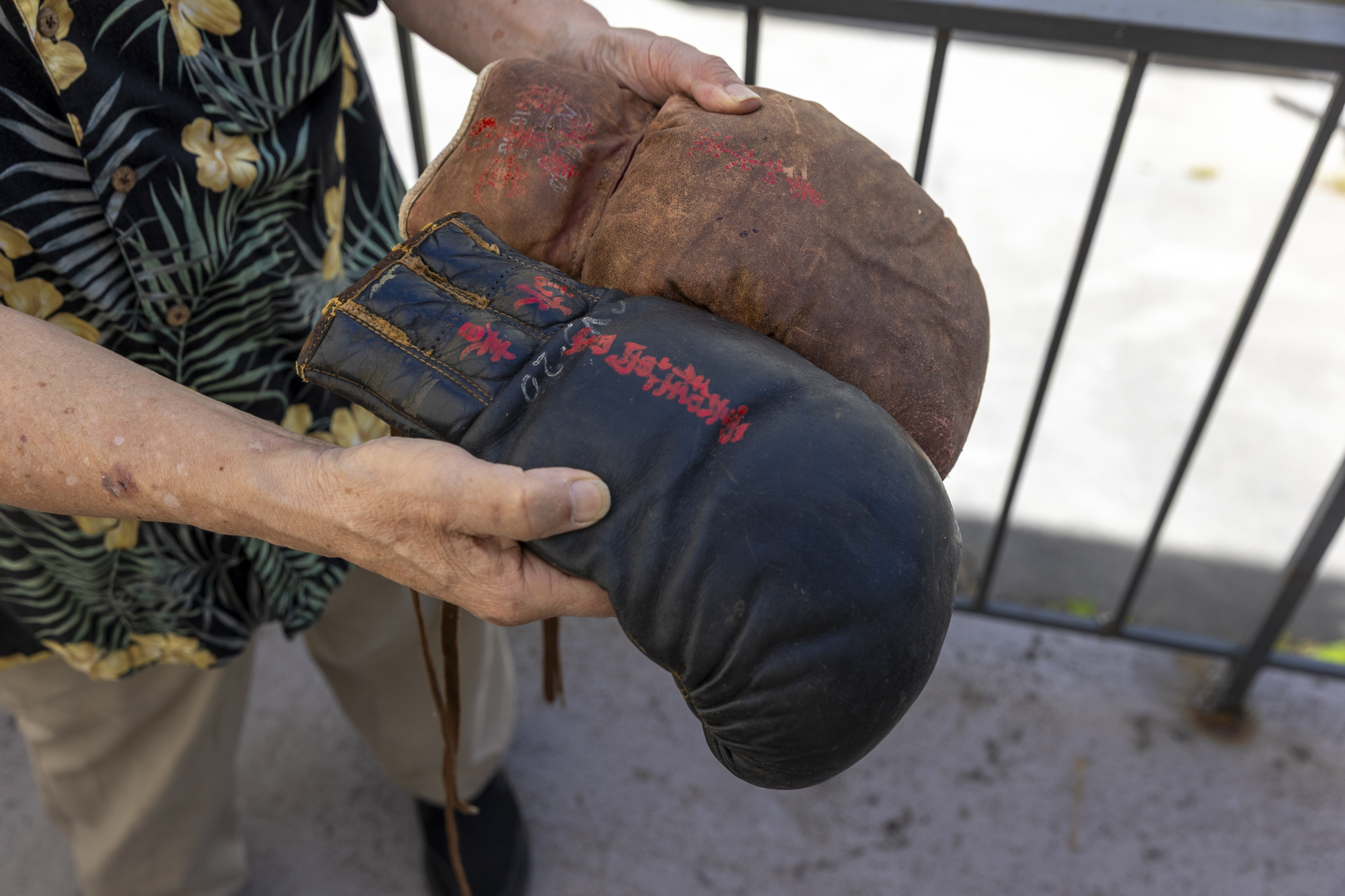
Greglon Lee peered through the gaps in a black, wrought-iron fence enclosing an empty corner lot on Oakland’s Auto Row. More than half a century ago, the martial arts legend Bruce Lee — then still unknown — ran a kung fu studio here with Greglon’s father.
Though they were peers and close friends, Greglon’s father was one of Bruce’s most fervent disciples.
“The main teacher was Bruce,” Greglon said. “My dad was 20 years older, and had just as much experience, but he let Bruce run things. Because Bruce knew what he was doing and it was obvious that Bruce had it.”
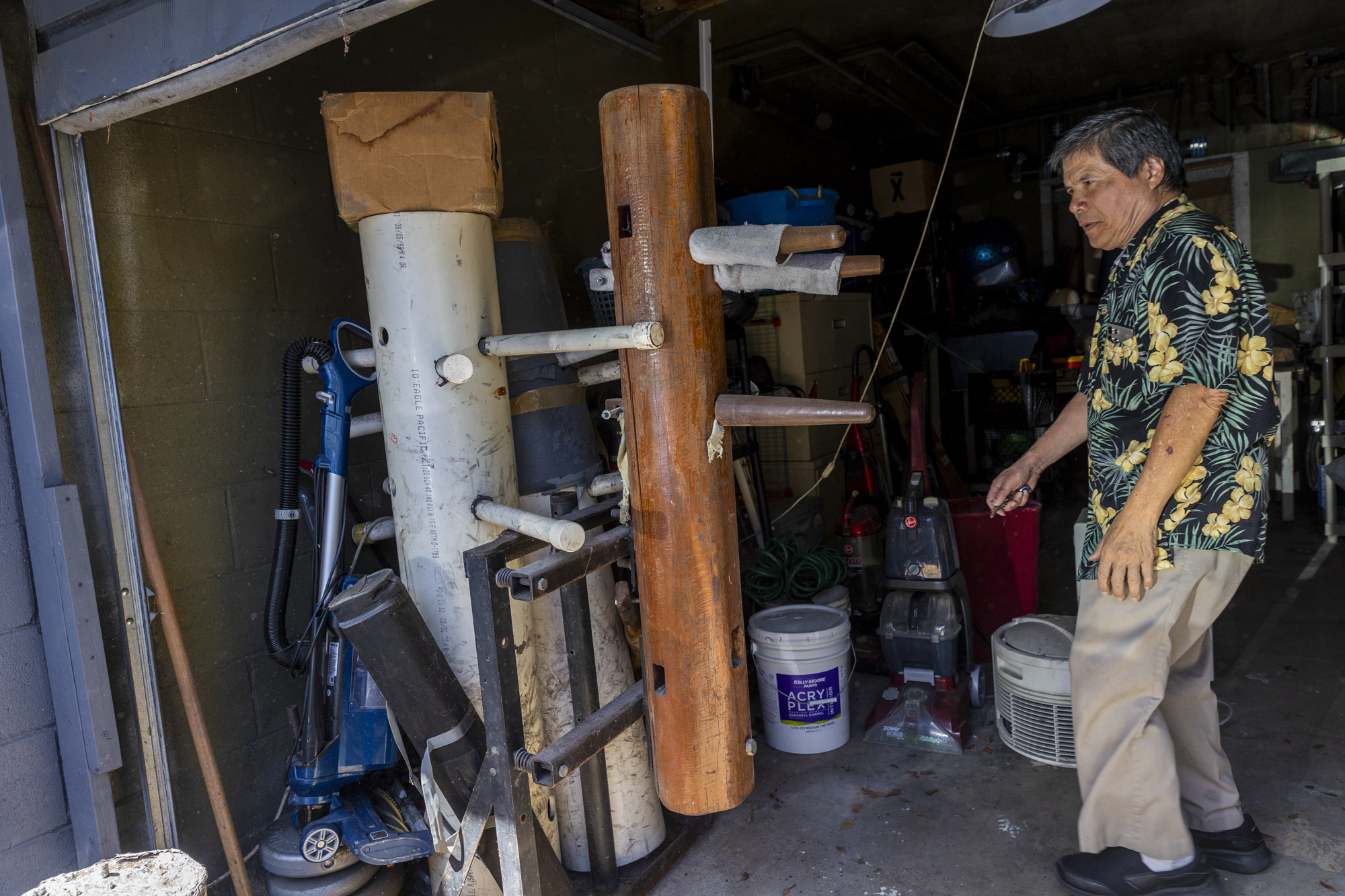
The studio served as the ring of what may have been one of the most important fights of Bruce Lee’s life: the Showdown in Oakland.
“This is the school where Bruce fought Wong Jack-man,” Greglon said. “Bruce took it personally.”
Bruce Lee was born in San Francisco when his parents were on tour with an opera company from Hong Kong. He returned to the Bay Area as a young man to study and train, making a name for himself as a martial artist. But only recently has California made an effort to recognize and celebrate the Hollywood star’s early roots here.
Earlier this summer, San Francisco officials and Chinatown community members, along with Bruce’s daughter, Shannon, led the effort to commemorate May 17 — the day Bruce moved back to the city from Hong Kong as a teen — as Bruce Lee Day — becoming the first Chinese American to be honored with a namesake day in state history.
Though the Hollywood icon and martial artist’s time here in the Bay Area was brief, it was formative. Among the best-known chapters is the Showdown in Oakland, when he exchanged blows with a martial artist from San Francisco. The fight has become lore in the martial arts world, the subject of books, magazine articles and films, and is well-known to Bruce Lee fans around the world. More than 60 years after it happened, it remains controversial and hotly debated within dojos and on online forums.
“It’s the story of how gung fu — let’s call it by its English name — how kung fu becomes American,” said Berkeley-based historian and cultural critic Jeff Chang, who wrote the recent biography Water, Mirror, Echo: Bruce Lee and the Making of Asian-America, of the fight.
Like the classic Akira Kurosawa film Rashomon, which explores truth and self-interest among characters who give contradictory accounts of an event they witness, the story of the fight reads like a case study in selective human memory. Countless retellings, each drawing from legend and third-hand accounts, have inevitably added a bit to the hero’s journey, turning the story into its own myth. Here’s what really happened:
Moving back to the heart of the martial arts scene
In 1964, Bruce was a student at the University of Washington, but spent more time fighting than studying. Through his work as a cha-cha instructor, which would occasionally bring him to the Bay Area to make money, he met an Oakland resident named James Yimm Lee — Greglon’s dad.
James, who grew up in Oakland, came from the world of blue-collar bodybuilding and weightlifting. But he was also a skilled martial artist who wanted to modernize and popularize the sport. When he met Bruce, James realized he “was the real deal,” Greglon said, “kind of like the [martial arts] Michael Jordan.”
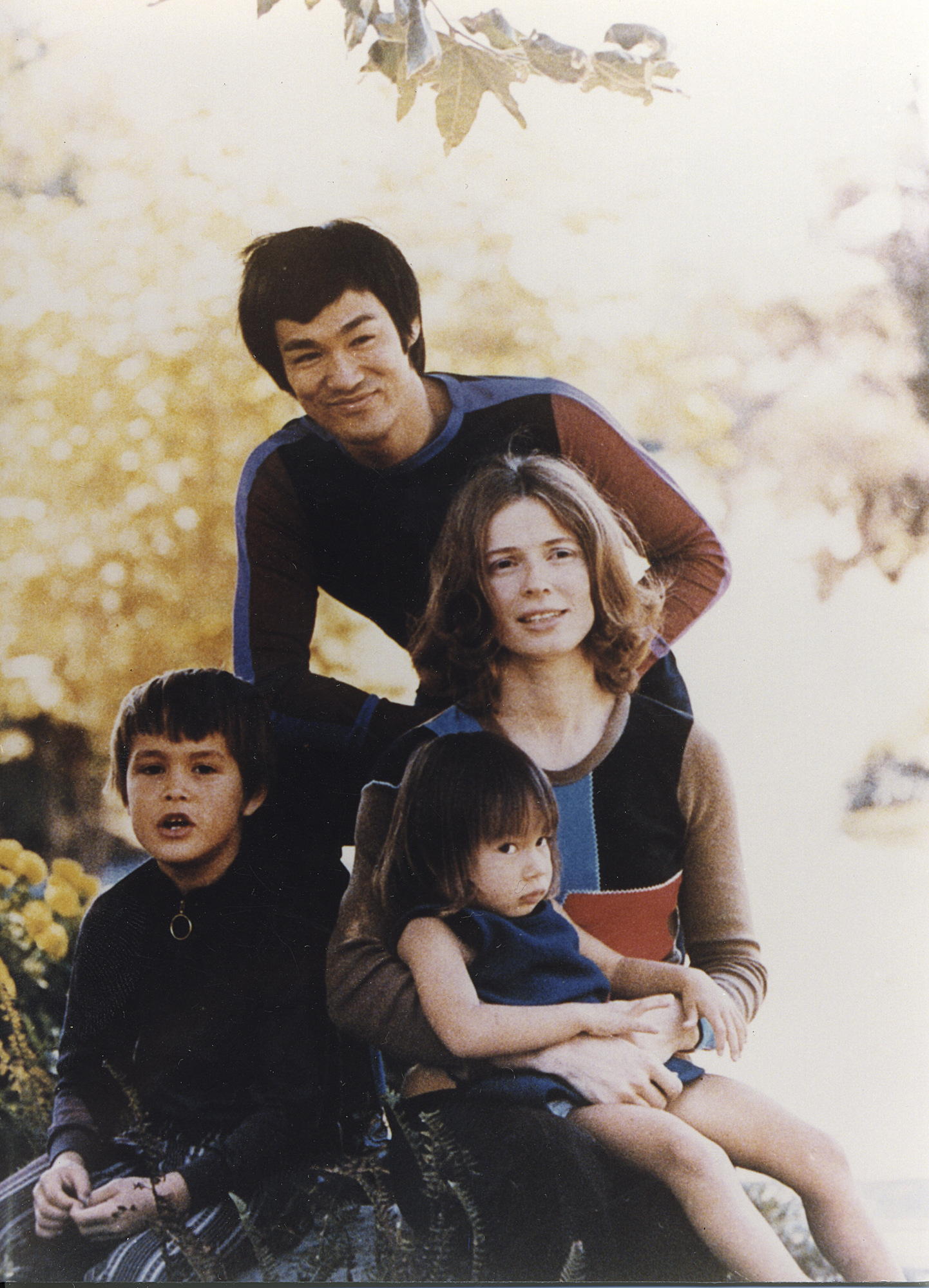
Despite sharing a surname, the men weren’t related but became fast friends and instant collaborators. So, James convinced Bruce to move, along with his wife Linda Lee Caldwell — who was then eight months pregnant — to the Bay Area, to live with James and his two children. James’ wife had just died of cancer, so Linda helped care for Greglon and his sister.
“The Bay Area, at that point,” said Chang, is “the heart of the U.S. martial arts movement. You have like all of these folks who are working class fighters … security guards or policemen or military. And they’re all mixing up into a martial arts scene that now is desegregating — and it’s created a lot of ferment. Bruce wanted to be down there.”
Bruce and James spent countless hours together, training and dissecting their craft. The two articulated a shared vision of martial arts: one that fluidly changed between styles and forms, and drew upon Daoism as a philosophy for how to live. To practice these ideas, they set up a kung fu school together in Oakland, which at first they ran out of James’ garage. When they started to pick up more students, they opened up the storefront at 4157 Broadway Street.
The two shared a belief that martial arts should be more adaptable, not as fixed in style or form. And they both chafed at what they perceived as rigidity among other martial arts teachers — particularly in San Francisco.
As a young man, Bruce had run afoul of some of the San Francisco Chinatown koons — or kung fu schools. The community, at that time, was extremely wary of outsiders, and, due to decades of anti-Chinese racism, protective of their schools, Chang said. Exclusionary policies had heavily restricted Chinese immigration, siloing off the community from newer waves of Chinese from the mainland and surrounding territories. San Francisco residents didn’t know what to make of Bruce, Chang said — “a loud, brash immigrant from Hong Kong.”
The Sun Sing Theater demonstration
Tensions came to a head in August 1964, when Bruce gave a martial arts demonstration at San Francisco Chinatown’s Sun Sing Theater at 1021 Grant Ave. — one of San Francisco’s oldest opera houses, and where his father had performed opera nearly two decades earlier (though the building’s gorgeous facade remains, it’s boarded up today).
Bruce had been there on tour with Diana Chang, known as the “Mandarin Marilyn Monroe,” to dance the cha-cha. But after they finished their performance, Bruce had a surprise for the crowd: he took to the stage to demonstrate his style of martial arts for the packed house.
A fight nearly broke out on stage, and the crowd hurled cigarette butts and insults at Bruce, then only 24 years old. As Chang describes it, Bruce scrambled to get the situation back under control.
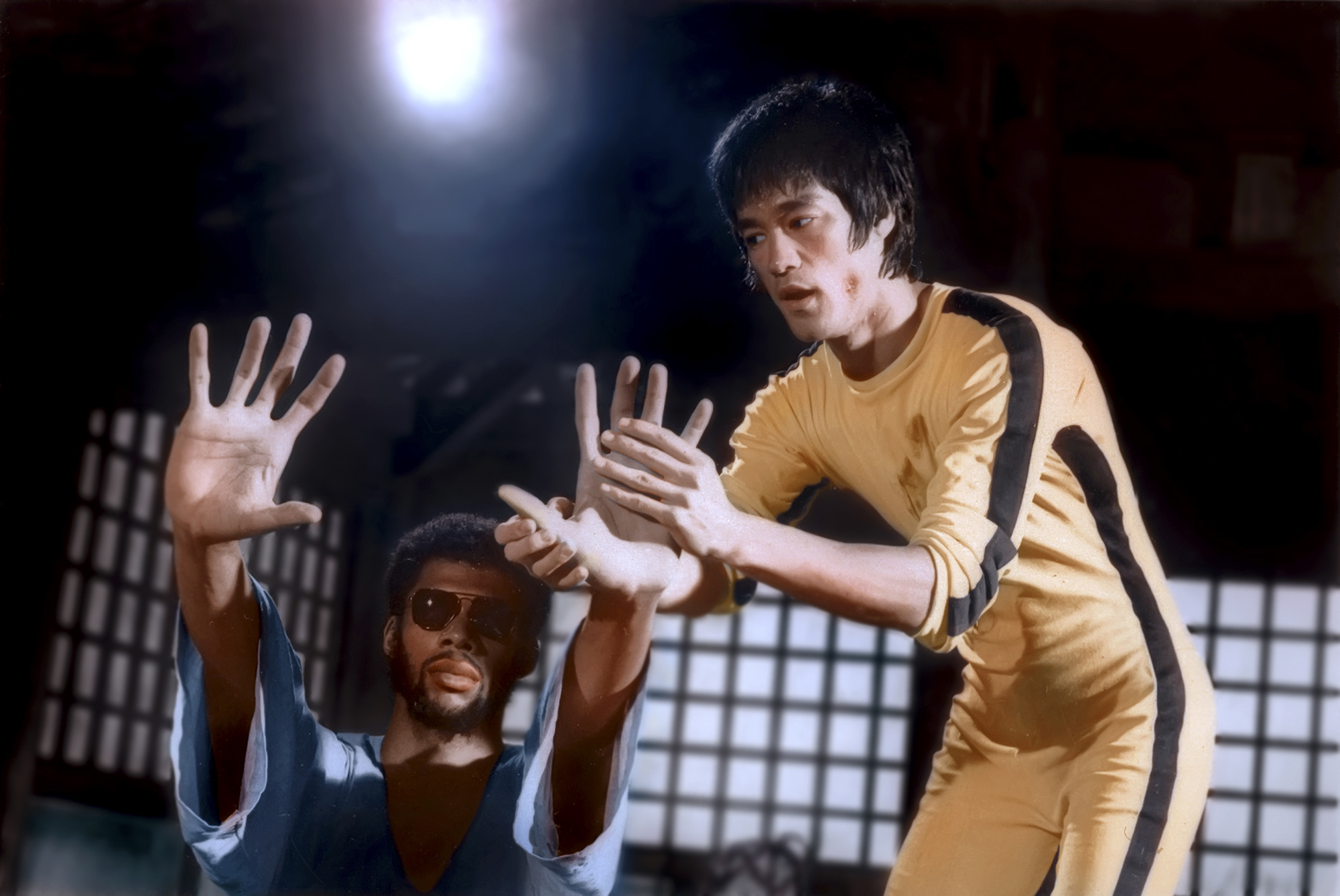
“I would like to let everybody know that any time my Chinatown brothers want to try out my Wing Chun,” Bruce said, as retold in Chang’s book, “they are welcomed to come find me at my school in Oakland.”
To the riled-up crowd, this sounded like a challenge.
To the San Francisco martial artists, a fight seemed inevitable. And they chose a promising young fighter, a jing wu star named Wong Jack-man, to challenge the “young dissident,” as the elders in the city called him.
Wong was known for being stoic, polished — a picture of grace and power — in comparison with Bruce’s more back-alley style of brawling. To this day, it’s not clear why he agreed to the proposal when his Chinatown friends came to the Jackson Cafe, at 633 Battery, where he worked as a waiter, and asked him to represent the big city in the challenge against Bruce Lee.
The ‘Showdown in Oakland’
The match-up — wrote Charles Russo, San Francisco journalist and author of Striking Distance: Bruce Lee and the Dawn of Martial Arts in America — was “spectacular,” pitting two talented young martial artists with a uniquely yin-yang-like symmetry together.
“Bruce’s style was compact and economical. Wong’s expansive and acrobatic,” Russo said. “Collectively, it had all the characteristics of a fight promoter’s dream.”
At the end of a cold day in November 1964, Wong Jack-man and his friends piled into a crimson Pontiac Tempest and drove to the Broadway studio in Oakland.
Waiting inside were a “very pregnant Linda,” James, and Bruce, Chang said.
Wong was dressed formally, in a dark, high-collared, long-sleeved uniform with lacing down the middle. Bruce wore white jeans and a white tank top.
There were a total of nine people in the studio, only one of whom is alive today, Bruce’s wife Linda. And she did not speak Cantonese, the lingua franca of the fight, so undoubtedly some context was lost.
However, everyone can agree on what happened next: David Chin, one of Wong’s friends and an instigator of the fight, began enumerating rules. Bruce “kept the tone harsh,” martial arts journalist Russo said: “You came to my school to challenge me, and now you want to set the rules?”
When Wong reached out to shake hands, the tense Bruce Lee threw out a feint that crashed right above Wong’s eye — immediately setting the tone for the rest of the fight.
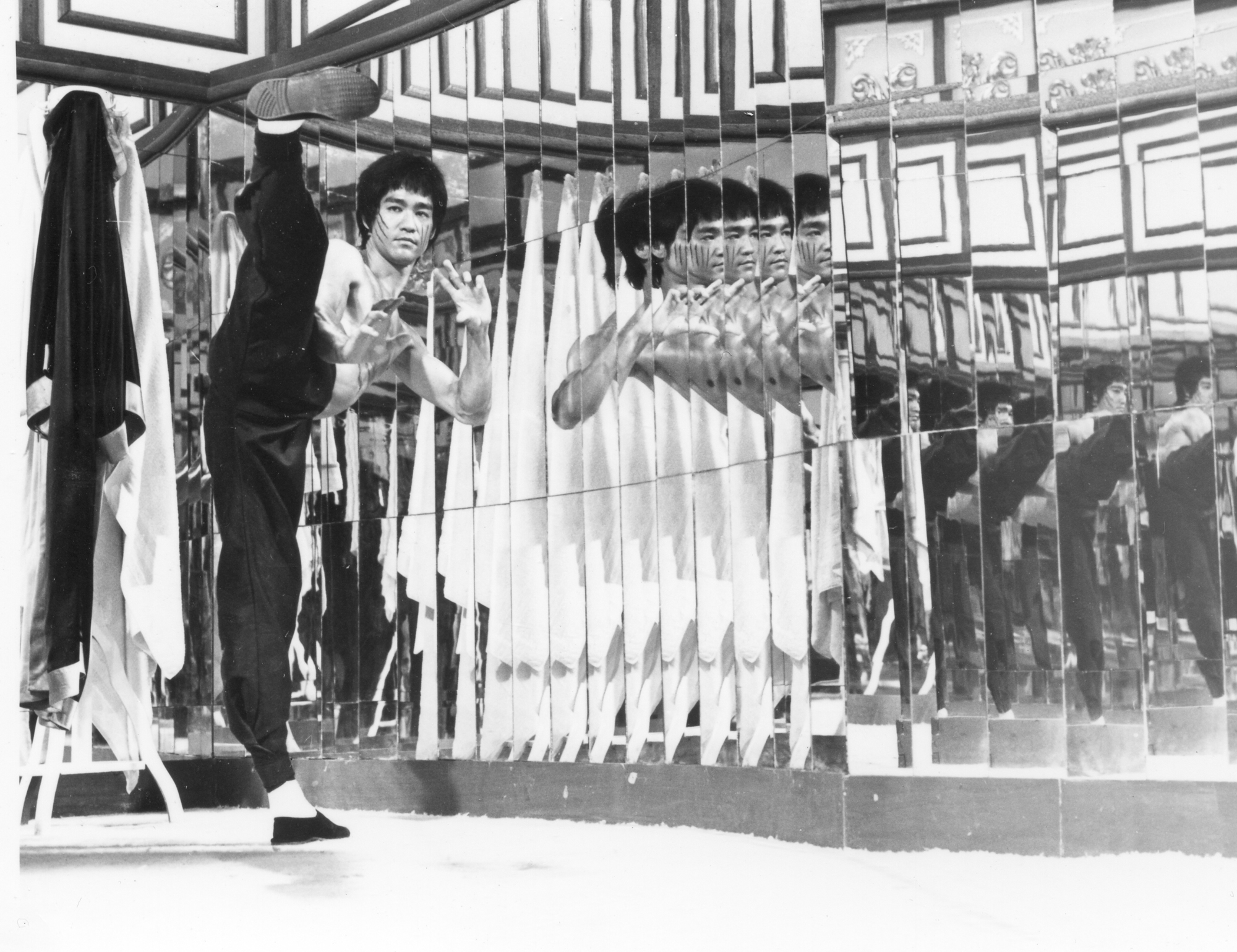
At one point, wrote Rick Wing, one of Wong’s students and another chronicler of the fight, Wong got Bruce into a headlock, though eventually, he let go.
“Wong considered Lee to be a sparring opponent only, and not a mortal enemy,” Wing said.
Wong later told Wing about Bruce: “He would never say he lost until you killed him.”
A final detail of the fight that everyone agrees with: once Bruce got out of the headlock, he lunged after Wong, who turned and tried to evade the attack. Then, he tripped on a floorboard.
The two scuffled on the edge of the studio, with Bruce pummeling Wong with punches and yelling, “Admit it, you lost!”
Whether Wong actually surrendered is up for debate. However, multiple kung fu students of San Francisco Chinatown have relayed third-hand that if Wong had won, the neighborhood would have been celebrating. Instead, it was silent the next day, like a funeral.
The aftermath of the fight
The details are somewhat unremarkable — a messy fight in a small Oakland studio with a murky victory — but rumors of the fight, and what caused it, would spread like wildfire through the martial arts community and ultimately reach Hong Kong.
The rumor mill claimed over and over — in tabloids, martial arts magazines and even major Hollywood films — that Chinatown’s old guard took issue with Bruce teaching kung fu to non-Chinese people.
Those who peddle this narrative often point to discrimination Bruce may have faced growing up in Hong Kong, due to his own background as a quarter-Dutch on his mom’s side.
But Chang questioned whether this narrative holds up to scrutiny.
“Very famously, the fight has been portrayed as this thing where Bruce was defending his right to teach non-Chinese people,” Chang said. “I just think that’s not true at all. The record shows that the koons in San Francisco had already opened themselves to non-Chinese for a long time.”
But the fight did have a big effect on Bruce’s life and career.

For all of his bluster, the fight against Wong Jack-man was a huge reality check for Bruce, who realized his technique and conditioning came up short of his own expectations. His sloppy “victory” would forever alter his approach to martial arts, his biographers have said, and came at the right time, just as his Hollywood star was about to rise.
“Iron sharpens iron,” Greglon said. “You always have to have an adversary, an opponent in fighting to get better. [After] the fight with Wong Jack-man, Bruce changed his training completely. It helped Bruce go to another level.”
Just months after The Showdown in Oakland, Bruce Lee got a call from a Hollywood producer asking him to audition for a part. It was his first big break and the beginning of a distinguished film career that ultimately led to Bruce starring in his most famous film, Enter the Dragon.
Whether or not the story bears the weight of the facts, “there’s a great mythology here,” Chang said, that may represent its power to this day. In the showdown, Bruce Lee’s fans found a battle over culture and change, one that matched the upheaval of the times, and wider shifts within Asian America.
Although that context was real, the more meaningful transformation was within Bruce himself. He went on to dedicate his life to becoming one of the best that ever lived. As an actor, he challenged stereotypes in Hollywood, refusing roles that typecast him. In his short life, he paved the way for future generations and set an example that continues to inspire and comfort fans to this day.
Episode transcript
Olivia Allen-Price: There was always something special about Bruce Lee.
Enter the Dragon theme song plays
Olivia Allen-Price: The martial artist and actor was one of the first Asian stars in Hollywood. His path to fame wasn’t easy, but it paved the way for other Asian Americans to do the same today.
There’s this famous thing Bruce said…
Bruce Lee archival: I said empty your mind…be formless, shapeless…like water. Water can flow or crash. Be water, my friend…”
Olivia Allen-Price: It’s the cornerstone of his martial arts philosophy…as much a mantra for how to live as a fighting technique. Be adaptable. Go with the flow … even if you’re riding a tidal wave.
Bruce was a disruptor in the kung fu world…a young upstart who wanted to do things differently. Though he would eventually become this legendary figure in American culture, it took him years to hone his own style and philosophy. And many of the early moments that shaped him, the ones that made him the Bruce Lee we see on the silver screen, they took place in the Bay Area.
Sam Hopkins: I assume there’s people alive still in Oakland and San Francisco who know him and have great stories to share.
Olivia Allen-Price: That’s Bay Curious listener Sam Hopkins. Sam’s first exposure to Bruce Lee was in the star’s most famous film — Enter the Dragon.
Sam Hopkins: Most people would say like the defining one in the one that first like drew me into him and pulled me in.
Olivia Allen-Price: As a kid, he loved Bruce’s kung-fu moves. But as an adult he’s come to appreciate how brave Bruce was.
Sam Hopkins: The thing that really inspires me about him is that he changed how people think. And that’s so powerful, like how they view themselves and how they view others and pushed against like all these stereotypes and all these limitations that Hollywood was putting on him and society was putting on him.
Olivia Allen-Price: Sam’s become kind of obsessed. He’s watched documentaries about Bruce Lee, been to museum exhibits about him and located local spots in San Francisco and Oakland that were meaningful in Bruce’s life.
Sam Hopkins: And I just have always wondered though, why isn’t there more in terms of honoring his legacy and all the great things that he did in his time here?
Olivia Allen-Price: There’s this one story Sam has heard over and over about “The Showdown in Oakland,” a fight between Bruce and a kung fu fighter from San Francisco that has become lore in the martial arts world. It’s one of the early moments in Bruce’s career that puts him on the map, and it’s practically a legend at this point.
Sam Hopkins: I’ve heard different versions of it. So I’m just so curious, like which one is like the most accurate?
Olivia Allen-Price: This is Bay Curious. The show where we answer listener questions about the San Francisco Bay Area. I’m Olivia Allen-Price.
KQED’s Elize Manoukian set out to separate fact from fiction and understand what role the Bay Area played in Bruce Lee’s life.
Elize Manoukian: There’s an interview Bruce Lee gives in 1966, right as his star is about to rise. He’s still a bit of an unknown…it seems like the interviewer doesn’t know who he is.
Bruce Lee interviewer archival: I think his name is Bruce Lee…
Elize Manoukian: In the interview, Bruce explains to a mainstream American audience what kung fu is, using the Chinese pronunciation.
Bruce Lee archival: Well, gung fu is a Chinese form of combat. Arts like karate or jiu jitsu derive from gung fu.
Elize Manoukian: Then the journalist asks him:
Bruce Lee interviewer archival: Don’t you have some karate schools in San Francisco or something?
Elize Manoukian: There are multiple issues with that question, but Bruce homes in on just one.
Bruce Lee archival: In Oakland, really.
Elize Manoukian: Even at this early point in his Hollywood career, the difference between the two Bay Area cities was important to him. You’ll soon hear why.
Bruce lived in the Bay Area only a short while — just a few years — but his time in Oakland and San Francisco would go on to have a major influence on his career, and some have argued, on the way we think about martial arts in the U.S.
Jeff Chang: It’s a story in a way of how gung fu…how Kung Fu becomes American
Elize Manoukian: That’s historian and cultural critic Jeff Chang, the author of a recent Bruce Lee biography, “Water, Mirror, Echo: Bruce Lee and the Making of Asian America.”
I asked him to tell me about Bruce’s life here, starting from the very beginning.
Jeff Chang: Bruce was born in the Bay Area. He is there because his parents are on a tour. His dad is a famous Cantonese opera singer.
Elize Manoukian: And while his dad is performing in San Francisco, his mom becomes pregnant
Jeff Chang: So he’s born in this segregated hospital in 1940.
Elize Manoukian: In San Francisco’s Chinese Hospital, which is still open today. His mom, Grace, names her baby Bruce.
Soon after, the family heads back to Hong Kong, which is quickly becoming the heart of Asia’s film industry.
Bruce’s dad, Hoi Cheun, transitions from singing opera to acting in movies. And at a young age, Bruce starts acting too.
Jeff Chang: So the directors are looking at who’s this kid. He’s so, he’s so fascinating. He’s got so much energy. He loves to be. He’s like a born showperson. Let’s put him in the movies.
Bruce Lee speaking Cantonese in The Kid
Elize Manoukian: That’s Bruce at age 10, in a movie called the Kid. It’s about a tough street urchin with a heart of gold. The film premieres in 1950, and it’s a smash success in Hong Kong. But being famous is hard on Bruce, and he starts getting picked on in school.
This is Bruce Lee’s martial arts origin story.
Jeff Chang: And so he learns to try to figure out ways of protecting himself.
And eventually, he meets a seifu, a Gongfu seifu named Yipman.
Elize Manoukian: Yipman is a legendary figure in 1950s Hong Kong. He trains Bruce in a discipline called Wing Chun.
At this point, Hong Kong’s youth culture is obsessed with kung fu and streetfighting. Kids would literally challenge each other and battle on school rooftops.
Jeff Chang: Turns out that Bruce really loves the taste of blood on his lips.
Music end
Elize Manoukian: Bruce has a short fuse and loves “talking with his hands,”. During his teen years, he gets a bad boy, James-Dean-kinda reputation in Hong Kong. He even gets kicked out of school for fighting. One day, when Bruce is 18 years old, the police come to his parents house, and tell them that if he stays in Hong Kong, he’ll be arrested.
Jeff Chang: And his parents are like, that’s it. You know, the police are after you, like the gangs are after you. You’re not, you’re not going to be here anymore. We’re going to send you back to the U.S.
Elize Manoukian: Remember, Bruce was born in the U.S., so he’s a citizen. In 1959, his parents give him $100 and send him to live with one of their friends in San Francisco Chinatown.
Bruce gets a job, his first non-acting job, at a restaurant.
Jeff Chang: He hates it. He can’t take it. Like, this is beneath me. You know, I’ve been on the movie screen, and now you got me cutting carrots. Like, no, I’m not, I’m not about that life. So he quits in a day. And his guardian is like, OK, — Well, I guess we have to have you teach cha-cha then.
Elize Manoukian: Oh, I forgot to mention: Bruce is an amazing dancer.
The Cha-cha was a huge craze in 1950s Hong Kong, and Bruce is super athletic.
So while learning English, Bruce starts teaching cha-cha to San Francisco’s Chinese community to make money. But he’s bored. And restless.
Jeff Chang: And he’s like, where are the fighters here?
Elize Manoukian: He can’t help himself. There’s some part of him that just needs to feel the rush of a real, flesh-and-blood fight again.
So he walks into a kung fu school and challenges the other students to a fight.
Jeff Chang: And they run him out immediately.
Elize Manoukian: It’s the first in a long list of grievances San Francisco’s kung fu community will have with Bruce.
As if his parents read the writing on the wall, they decide to send him to Seattle.
Jeff Chang: His parents are like, OK, you’re going to get in trouble again. We’re sending you to a place where there’s less Chinese, there’s less distractions. And you’re going to finish your fricking diploma, and you’re going to get a college degree.
Elize Manoukian: He never gets that diploma. In fact, Bruce doesn’t last long in Seattle, although he does end up getting married to a woman named Linda while he’s there. The Bay Area is the heart of the West Coast’s martial arts scene, and Bruce wants to get back there. So he drops out of the University of Washington, moves his young family, and gambles everything…on the Bay.
Olivia Allen Price: Back in Oakland, Bruce meets some folks who help him refine his theories and practice of martial arts. More on that when we come back.
Sponsor break
Olivia Allen-Price: The year is 1964, a time of major cultural change. Young people are questioning everything about U.S. society. And Bruce Lee, who has just moved back to the Bay Area as a 24-year-old college dropout, is going through his own personal revolution. He isn’t just studying martial arts; he has some radical ideas about its future. And he finds some enthusiastic disciples in the Bay Area. Elize Manoukian takes us to Oakland.
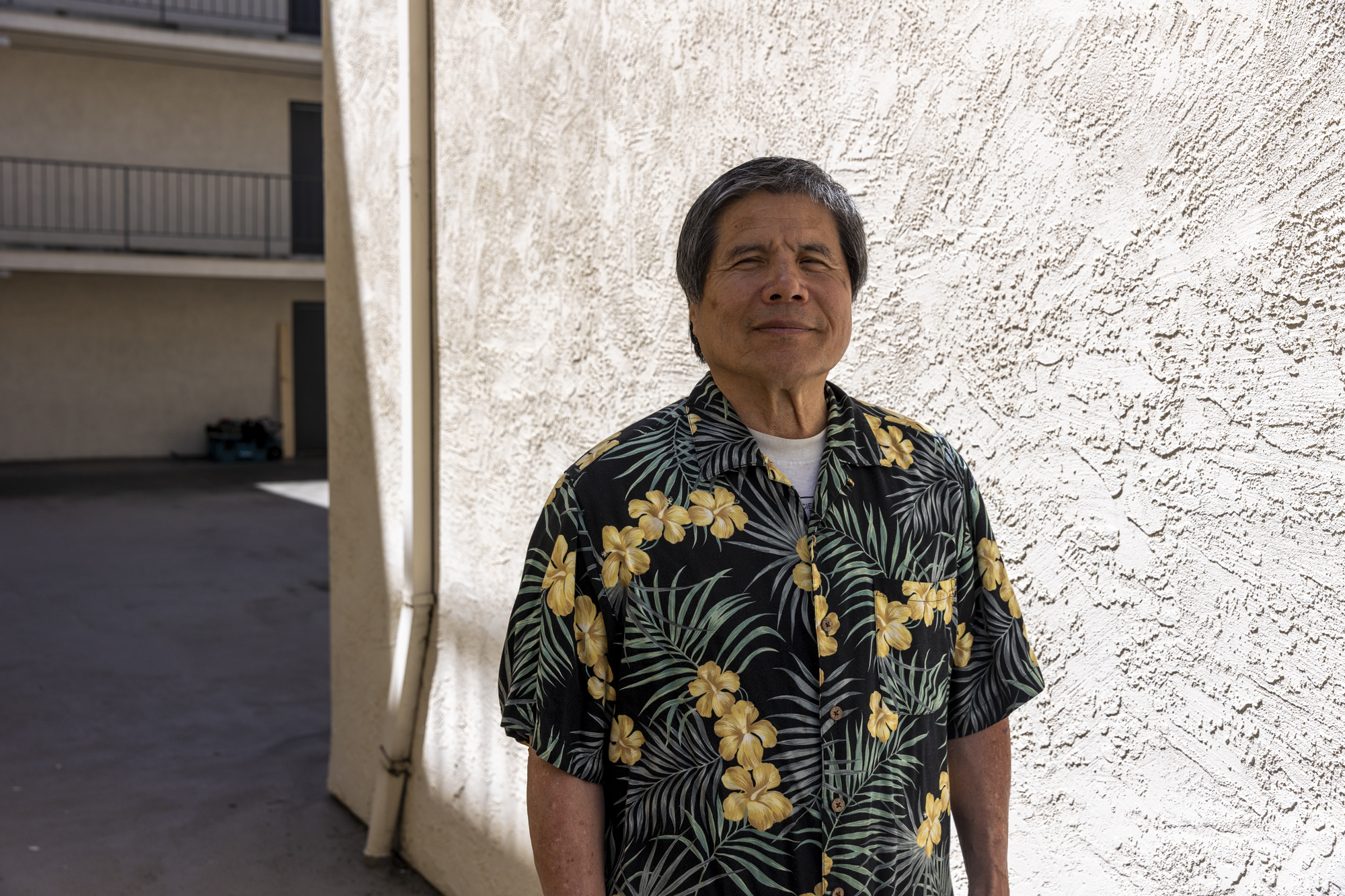
Greglon Lee: Yeah, this is the old house: 3039 Monticello.
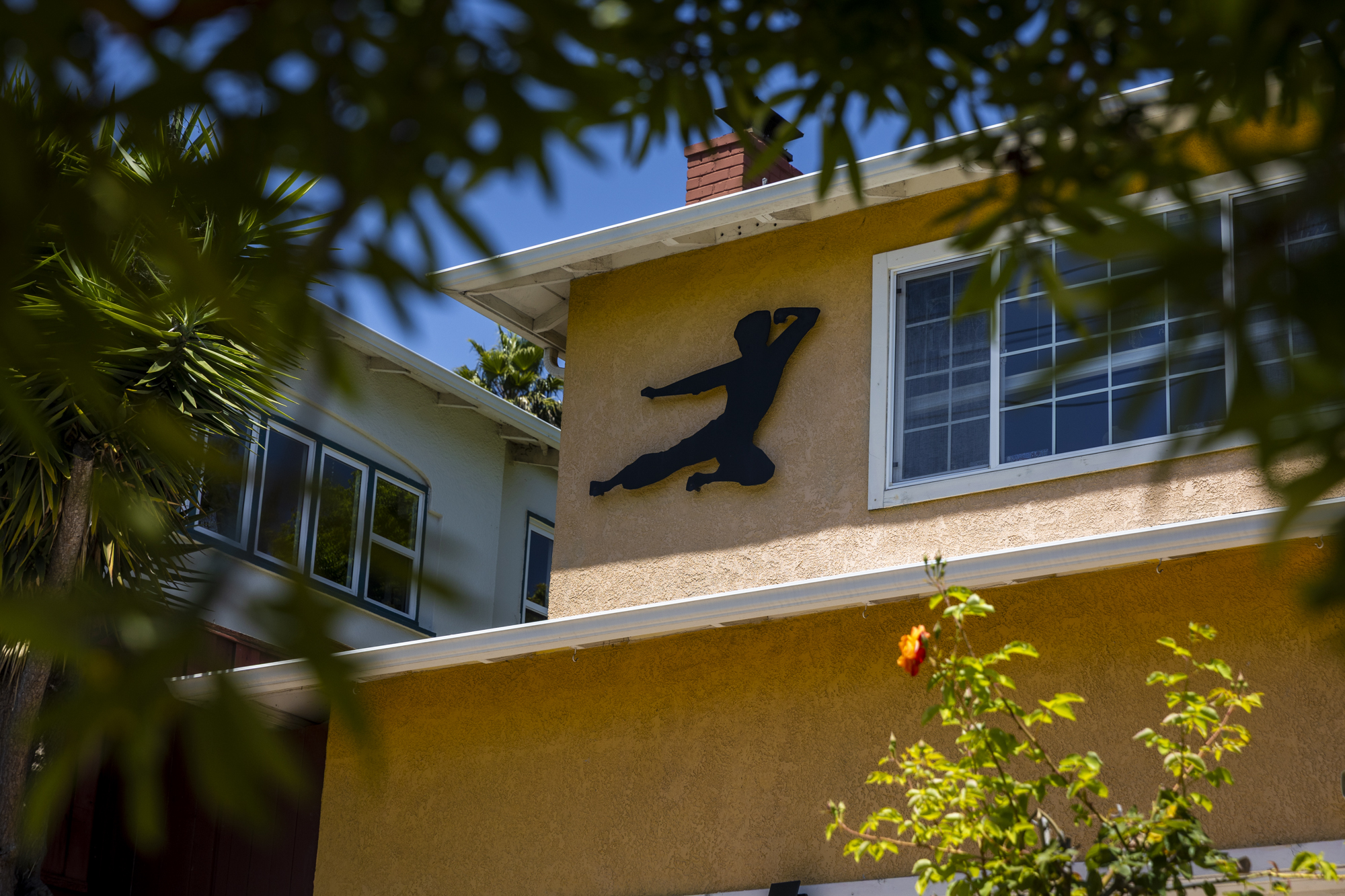
Elize Manoukian: That’s Greglon Lee, a kung fu sifu based in Berkeley. He’s showing me the funky, yellow bungalow in the East Oakland hills where he once lived with Bruce Lee.
Greglon Lee: Bruce spent a lot of time here, and he was basically training 10-12 hours a day.
Elize Manoukian: Even as a college student, Bruce had picked up kung fu students across the West Coast. And one of the most dedicated was a man named James Yimm Lee, Greglon’s dad.
Greglon Lee: My dad was one of his top students; my dad had been training with him for a few years.
Elize Manoukian: James was a local streetfighter and bodybuilder. He became fascinated with kung fu, wanted to modernize and popularize it. He knew Bruce could help. So he convinced Bruce and his family to move in with him and his kids in the East Bay.
Greglon Lee: You come down to Oakland. We got you covered, roof over your head, and you can train and do whatever you want.
Elize Manoukian: James filled his garage with a bunch of diy equipment — punching pads, shields, leg stretchers. The two men scrutinized reels of Mohammed Ali boxing fights. They practiced what worked from classical styles of martial arts and threw away the rest.
Greglon Lee: To get better when you’re already good ain’t easy. You really have to break things down completely.
Elize Manoukian: James was helping Bruce invent a NEW style of martial arts that tried to break away from set technique completely. Classical kung fu was too rigid, they said. Instead, they experimented with fusing wing chun, boxing, street fighting with some heavy doses of Daoist philosophy.
Greglon Lee: The individual has to really do their own work. There’s no magic pill. There’s no magic movement to martial arts. It’s getting to know yourself.
Elize Manoukian: Bruce’s homegrown fighting style would eventually become known as Jeet Kun Do, or as Greg calls it, JKD.
Greglon Lee: And you’ve got to remember the Cha Cha taught him really good footwork and how to change timing, which is really the key to J. K. D. It’s not static.
Elize Manoukian: Bruce and James gain some attention for their new fighting style. Students come from hundreds of miles away to study with them. They pick up enough disciples that they decide to open up a little studio on Broadway Street in Oakland, near what’s now auto row.
Greglon Lee: My dad was twenty years older, but he let Bruce run everything. Because Bruce knew what he was doing and it was obvious that Bruce had it.
Elize Manoukian: In Oakland, Bruce gains confidence in his approach to martial arts, and he’s convinced the San Francisco kung fu scene is backwards … he’s not shy about sharing that opinion.
Here’s Bruce Lee biographer Jeff Chang again:
Jeff Chang: He’s basically saying, all of your schools, all the stuff they teach you: That’s all garbage.
Elize Manoukian: And some people in San Francisco get wind of this.
Jeff Chang: They don’t have short-term memories. Like, they remember when Bruce first was there.
Elize Manoukian: It all comes to a head in the summer of 1964.
Bruce is promoting his Oakland school, in a kung fu demonstration at San Francisco’s Sun Sing Theater, the same stage where his dad performed opera, two decades earlier.
During his demo, he starts critiquing the style of teaching in San Francisco, but in kind of a brash, 24-year-old way.
Jeff Chang: Everything that you’ve been taught is no good. Let me show you how a real martial artist does things. Provocative, right?
Elize Manoukian: The air in the theater is hazy with cigarette smoke. And the crowd is full of San Francisco martial artists.
Jeff Chang: They’re just waiting for Bruce to make a wrong move.
Elize Manoukian: Then he invites somebody on stage, and says, try to defend yourself using your style, and I’ll show you why mine’s better
Jeff Chang: He wants to show the speed and accuracy of his punch. As it turns out, the guy that comes up to be on stage with him is somebody who’s deeply affiliated with the Chinatown koons.
Elize Manoukian: The koons are kung fu schools.
The volunteer blocks Bruce’s punch. Bruce tries again, and the kid blocks it again. Then, the kid puts up his fists, ready for a fight.
Jeff Chang: And everybody starts hooting and hollering, ’cause they’re cheering for the guy who came up from the audience. That’s their guy, right? He’s like a ringer.
Elize Manoukian: Bruce is embarrassed. But he stops and collects himself… trying to refocus the message on what his school has to offer.
Jeff Chang: And he says, “If you want more, come and see me in Oakland.” And what he really means is, “My school is in Oakland. You’re welcome to come, we’ll train and that kind of thing.”
Elize Manoukian: But at this point, tempers are high. And to the riled-up crowd it sounds like Bruce is saying: “let’s finish what we started, meet me in Oakland.”
Jeff Chang: This spreads through the sort of underground pipeline, right? The coconut wireless really fast.
Elize Manoukian: Soon every martial artist in the Bay Area is talking about what happened at the theater. And some San Francisco guys decide to challenge Bruce to a fight.
Jeff Chang: They want to see Bruce get his ass beaten.
Elize Manoukian: So they recruit an up-and-coming martial artist named Wong Jack-man, telling him, you’re our best hope to take this guy down.
Now, Wong wasn’t at the Sun Sing Theater, and by all accounts, didn’t really seem to know what he was walking into.
Jeff Chang: WongJack-man thinks he’s going to Oakland to fight a comparison fight. It’s a friendly kind of thing. Everybody goes out and has tea and dim sum afterwards, right?
Elize Manoukian: Instead, he’s an unwitting participant in one of Bruce Lee’s most famous fights. The Showdown in Oakland.
Here’s what happened according to Jeff and Greglon:
Jeff Chang: They come to the studio at dusk on a November evening. And at the studio are James, James Yimm Lee, Bruce and Linda.
Greglon Lee: I know that my dad did bring a gun just in case, just in case things got out of control.
Elize Manoukian: Elize: It starts out friendly enough…
Jeff Chang: Wong Jack-man reaches his hand out, and that Bruce, uh, sort of gives a faint instead.
Elize Manoukian: And lashes out with a punch
Jeff Chang: That is directed at Wong Jack-man’s eyes.
Elize Manoukian: So hard it leaves a mark.
Jeff Chang: And the realization that, Oh, Bruce is actually out for blood, like this is something serious.
Elize Manoukian: Bruce presses in. He uses low kicks and close-up punches.
Greglon Lee: Most people Bruce dealt with, he could take them out in about five seconds.
Elize Manoukian: But Wong sidesteps the assault and deflects with his forearms. He uses long and graceful kicks and wide diagonal blows — like axes coming down — he hits Bruce HARD in the neck, and gets Bruce into a headlock.
Jeff Chang: Like holding his neck under his arm.
Elize Manoukian: Wong Jack-man could have won right there. But he lets go. He considers Bruce an opponent, not a mortal enemy. Bruce seizes the opportunity and attacks.
Greglon Lee: Wong Jack-man started running.
Jeff Chang: And he trips on a floorboard and falls down. Bruce pounces on him.
Elize Manoukian: They’re on the floor, with Bruce yelling, “You lost, admit it!” Their friends jump in and separate the two. And that was that. A pretty messy fight, ended by a floorboard. Not at all the resolution to the Oakland- San Francisco rivalry.
Except the story doesn’t end there. The fight at the studio was just the beginning.
Jeff Chang: It became a story that just passed word of mouth. The word gets back to Hong Kong.
Greglon Lee: The magazines picked up about Bruce and Wong Jack-man, all kinds of rumors.
Elize Manoukian: In one story, Wong Jack-man kills Bruce. In others, Bruce is defending the honor of an actress from Hong Kong.
But the biggest story — the one that has prevailed — is that the fight was about who gets to learn kung fu.
Jeff Chang: Very famously, the fight has been portrayed as this thing where Bruce was defending his right to teach non-Chinese people.
Elize Manoukian: It’s part of the mythology around Bruce Lee, that he not only popularizes kung fu…
Jeff Chang: He opens the doors for non-Chinese to kind of study it.
Elize Manoukian: Though it’s a compelling story, it’s just not true. After all, this is San Francisco in the 60s we’re talking about here.
Jeff Chang: The record shows that the koons in San Francisco had already opened themselves to non-Chinese. And so it just doesn’t stand up to, to that kind of scrutiny.
Elize Manoukian: So a lot of the myths surrounding the Showdown are not true. But for Bruce, it was still a turning point.
The fight was the first true test of his ideas. Wong Jack-man represented all of the things Bruce and James had been arguing needed to change. But it wasn’t the easy victory he had expected, says Greglon.
Greglon Lee: Bruce changed his training completely. So actually, the fight with Wong Jack-man helped Bruce go to another level.
Elize Manoukian: Martial arts is ultimately about fighting yourself, Bruce Lee would write later in life. You train to control your impulses, to empty your mind. And this fight showed him he wasn’t there yet.
He knew he needed to work harder. And get better.
Greglon Lee: Iron sharpens iron. You don’t sharpen your knife or sword on wood or a piece of butter. So you always have to have an adversary, an opponent in fighting to get better.
Elize Manoukian: The timing of the Showdown would turn out to be important for Bruce. Because he would need these lessons as he embarked on a new phase of his career.
Shortly after the Showdown in Oakland, something unexpected happens. Bruce’s wife gets a call.
Jeff Chang: Out of the blue one afternoon. Linda gets a call, and it’s this Hollywood producer.
Elize Manoukian: The producer’s barber saw Bruce do a kung fu demonstration earlier that year…and Bruce gets the role of Kato, the sidekick of a TV superhero named the Green Hornet.
Sounds of martial arts fighting from The Green Hornet.
Elize Manoukian: The show only ran one season. And Kato doesn’t have many lines. But Bruce’s character, who uses martial arts to save the Green Hornet episode after episode, becomes a hit.
Jeff Chang: As the management looks at the numbers of toys being sold, they’re like, well, Kato’s outselling the Green Hornet.
Elize Manoukian: The show gives Bruce a chance to show off his kung fu to a national audience. For many viewers, it’s their first time seeing martial arts.
But Bruce still can’t break into the mainstream. When the show gets canceled, Bruce struggles to find new work.
Jeff Chang: He can’t get a single job in Hollywood for a while unless it’s as a fight choreographer or in a sort of stereotypically, like, you know, oriental type role that he would refuse to play. And he comes to realize at some point, well, actually, they don’t see me as a main character. And so he has to, at that point, make a choice.
Elize Manoukian: So at age 29, he decides, forget this. I’m going back to Asia, where I’m gonna be a superstar.
And in Hong Kong, his career explodes. He does a movie called Big Boss, and then another called Fist of Fury. After one screening, the audience was so excited, they actually tore the seats out of the movie theater.
Jeff Chang: At this point that, Bruce is the largest star by far in Asia.
Elize Manoukian: After a few years of mega-stardom, he writes, directs and stars in a third movie called The Way of the Dragon, where he faces off against a then-unknown actor named Chuck Norris.
Jeff Chang: He joked with his mother. Mom, in this movie, I get to beat up a white guy.
Elize Manoukian: The Way of the Dragon was Bruce’s crossover hit. Suddenly Bruce’s movies are being watched back in the U.S.
Jeff Chang: They’re being imported, they’re dubbed, and they’re packing the theatres.
Elize Manoukian: Finally, Hollywood notices and comes crawling back. Warner Bros approaches him and his manager in Hong Kong about a new film they want him to star in. And this time, Bruce Lee gets to call the shots.
Here he is in an interview from 1971:
Bruce Lee interviewer archival: So are you going to go to the United States and be famous or you going to try and eat your cake and have it too?
Bruce Lee archival: I am going to do both because you see I have already made up my mind that in the United States something about the Oriental needs to be shown.
Bruce Lee interviewer archival: Hollywood sure hasn’t.
Bruce Lee archival: You better believe it man, it’s all chop chop and with the eyes.
Elize Manoukian: He directs the fight scenes, negotiates higher pay and takes ownership of the script. And he names the movie — Enter the Dragon.
Originally, the writer and director saw Bruce’s character as an Asian James Bond. But Bruce Lee thought that that was too Western … too imperialist. The character, he said, should be a Shaolin monk.
Jeff Chang: These are ideas that he’s adopted from Taoism that he’s been teaching to other folks since he was 19 years old.
Enter the Dragon clip: Don’t think, feel. It’s like a finger pointing to the moon. Don’t concentrate on the finger or you will miss all of the heavenly glory.
Elize Manoukian: Bruce knew he was on the cusp of global stardom. But in his intense focus on his career, he may have ignored signs from his body that something was deeply wrong.
In May 1973, he has a seizure on set. The doctors can’t find any reason for it, so they allow him to return to work. He continues traveling and working hard.
A few months later, he has a headache, so he takes an aspirin and a tranquilizer and falls asleep. He never wakes up. He’s only 32 years old.
Bruce Lee: The Man and The Legend clip: Hong Kong was stunned, and as the word spread, people read with shock and disbelief that Bruce Lee was dead.
Elize Manoukian: A 1973 documentary “Bruce Lee: The Man and The Legend” shows a crowd gathering outside the funeral parlor.
Bruce Lee: The Man and The Legend clip: Several hundred extra police were detailed to try to control the crowd; no one could believe that someone like Bruce Lee, so young, so fit, could just die.
Elize Manoukian: His death is still a mystery. The autopsy reveals a cerebral edema, which is a swelling of the brain caused by trauma, and other factors, but could not determine a cause.
Enter the Dragon, Bruce’s triumphant return to Hollywood, premieres just days later.
Enter the Dragon trailer: What do you know about Han? We are investigating corruption….
Elize Manoukian: The film was a box office hit and cemented Bruce Lee’s legacy as not just a martial artist, but as a Hollywood star.
For the first time, Americans finally see Bruce Lee as he wants to be seen: his confidence, his physique, and his philosophy all on display. Here he is in 1971 on the Pierre Berton Show.
Bruce Lee archival: You see, the idea is running water never grow stale, so you got to just keep on flowing.
Elize Manoukian: If you watch Bruce Lee movies now, this is the man you see: disciplined, polished, cool. But Hollywood only got the finished product.
The Bay Area’s Bruce was much more raw, reckless, full of dreams and ambition. Though his time here was brief, the battles he fought shaped his philosophy and honed his skills so he could become the superstar we know today.
Olivia Allen-Price: That was KQED’s Elize Manoukian.
Thanks to Sam Hopkins for asking today’s question. And he’ll be glad to know Bruce Lee is getting a little more recognition locally.
California recently designated May 17 Bruce Lee Day to commemorate the date the fighter moved to the U.S. as a teenager.
At the site of Bruce Lee’s Oakland studio, there’s a street sign designating the intersection “Bruce Lee Way.”
And the Chinese Historical Society of America also has a cool exhibit about Bruce’s life and career at their museum in San Francisco’s Chinatown.
Thanks also to Charlie Russo, and Rick Wing, whose writing about Bruce Lee and the showdown in Oakland were helpful in the making of this story.
Bay Curious is a production of member-supported KQED in San Francisco.
Our show is produced by Katrina Schwartz, Christopher Beale, and me, Olivia Allen-Price. With extra support from Maha Sanad, Katie Sprenger, Jen Chien, Ethan Toven-Lindsey and everyone at KQED.
I’m Olivia Allen-Price. Have a great week.