window.__IS_SSR__=true
window.__INITIAL_STATE__={
"attachmentsReducer": {
"audio_0": {
"type": "attachments",
"id": "audio_0",
"imgSizes": {
"kqedFullSize": {
"file": "https://ww2.kqed.org/news/wp-content/themes/KQED-unified/img/audio_bgs/background0.jpg"
}
}
},
"audio_1": {
"type": "attachments",
"id": "audio_1",
"imgSizes": {
"kqedFullSize": {
"file": "https://ww2.kqed.org/news/wp-content/themes/KQED-unified/img/audio_bgs/background1.jpg"
}
}
},
"audio_2": {
"type": "attachments",
"id": "audio_2",
"imgSizes": {
"kqedFullSize": {
"file": "https://ww2.kqed.org/news/wp-content/themes/KQED-unified/img/audio_bgs/background2.jpg"
}
}
},
"audio_3": {
"type": "attachments",
"id": "audio_3",
"imgSizes": {
"kqedFullSize": {
"file": "https://ww2.kqed.org/news/wp-content/themes/KQED-unified/img/audio_bgs/background3.jpg"
}
}
},
"audio_4": {
"type": "attachments",
"id": "audio_4",
"imgSizes": {
"kqedFullSize": {
"file": "https://ww2.kqed.org/news/wp-content/themes/KQED-unified/img/audio_bgs/background4.jpg"
}
}
},
"placeholder": {
"type": "attachments",
"id": "placeholder",
"imgSizes": {
"thumbnail": {
"file": "https://cdn.kqed.org/wp-content/uploads/2024/12/KQED-Default-Image-816638274-2000x1333-1-160x107.jpg",
"width": 160,
"height": 107,
"mimeType": "image/jpeg"
},
"medium": {
"file": "https://cdn.kqed.org/wp-content/uploads/2024/12/KQED-Default-Image-816638274-2000x1333-1-800x533.jpg",
"width": 800,
"height": 533,
"mimeType": "image/jpeg"
},
"medium_large": {
"file": "https://cdn.kqed.org/wp-content/uploads/2024/12/KQED-Default-Image-816638274-2000x1333-1-768x512.jpg",
"width": 768,
"height": 512,
"mimeType": "image/jpeg"
},
"large": {
"file": "https://cdn.kqed.org/wp-content/uploads/2024/12/KQED-Default-Image-816638274-2000x1333-1-1020x680.jpg",
"width": 1020,
"height": 680,
"mimeType": "image/jpeg"
},
"1536x1536": {
"file": "https://cdn.kqed.org/wp-content/uploads/2024/12/KQED-Default-Image-816638274-2000x1333-1-1536x1024.jpg",
"width": 1536,
"height": 1024,
"mimeType": "image/jpeg"
},
"fd-lrg": {
"file": "https://cdn.kqed.org/wp-content/uploads/2024/12/KQED-Default-Image-816638274-2000x1333-1-1536x1024.jpg",
"width": 1536,
"height": 1024,
"mimeType": "image/jpeg"
},
"fd-med": {
"file": "https://cdn.kqed.org/wp-content/uploads/2024/12/KQED-Default-Image-816638274-2000x1333-1-1020x680.jpg",
"width": 1020,
"height": 680,
"mimeType": "image/jpeg"
},
"fd-sm": {
"file": "https://cdn.kqed.org/wp-content/uploads/2024/12/KQED-Default-Image-816638274-2000x1333-1-800x533.jpg",
"width": 800,
"height": 533,
"mimeType": "image/jpeg"
},
"post-thumbnail": {
"file": "https://cdn.kqed.org/wp-content/uploads/2024/12/KQED-Default-Image-816638274-2000x1333-1-672x372.jpg",
"width": 672,
"height": 372,
"mimeType": "image/jpeg"
},
"twentyfourteen-full-width": {
"file": "https://cdn.kqed.org/wp-content/uploads/2024/12/KQED-Default-Image-816638274-2000x1333-1-1038x576.jpg",
"width": 1038,
"height": 576,
"mimeType": "image/jpeg"
},
"xxsmall": {
"file": "https://cdn.kqed.org/wp-content/uploads/2024/12/KQED-Default-Image-816638274-2000x1333-1-160x107.jpg",
"width": 160,
"height": 107,
"mimeType": "image/jpeg"
},
"xsmall": {
"file": "https://cdn.kqed.org/wp-content/uploads/2024/12/KQED-Default-Image-816638274-2000x1333-1-672x372.jpg",
"width": 672,
"height": 372,
"mimeType": "image/jpeg"
},
"small": {
"file": "https://cdn.kqed.org/wp-content/uploads/2024/12/KQED-Default-Image-816638274-2000x1333-1-672x372.jpg",
"width": 672,
"height": 372,
"mimeType": "image/jpeg"
},
"xlarge": {
"file": "https://cdn.kqed.org/wp-content/uploads/2024/12/KQED-Default-Image-816638274-2000x1333-1-1020x680.jpg",
"width": 1020,
"height": 680,
"mimeType": "image/jpeg"
},
"full-width": {
"file": "https://cdn.kqed.org/wp-content/uploads/2024/12/KQED-Default-Image-816638274-2000x1333-1-1920x1280.jpg",
"width": 1920,
"height": 1280,
"mimeType": "image/jpeg"
},
"guest-author-32": {
"file": "https://cdn.kqed.org/wp-content/uploads/2025/01/KQED-Default-Image-816638274-1333x1333-1-160x160.jpg",
"width": 32,
"height": 32,
"mimeType": "image/jpeg"
},
"guest-author-50": {
"file": "https://cdn.kqed.org/wp-content/uploads/2025/01/KQED-Default-Image-816638274-1333x1333-1-160x160.jpg",
"width": 50,
"height": 50,
"mimeType": "image/jpeg"
},
"guest-author-64": {
"file": "https://cdn.kqed.org/wp-content/uploads/2025/01/KQED-Default-Image-816638274-1333x1333-1-160x160.jpg",
"width": 64,
"height": 64,
"mimeType": "image/jpeg"
},
"guest-author-96": {
"file": "https://cdn.kqed.org/wp-content/uploads/2025/01/KQED-Default-Image-816638274-1333x1333-1-160x160.jpg",
"width": 96,
"height": 96,
"mimeType": "image/jpeg"
},
"guest-author-128": {
"file": "https://cdn.kqed.org/wp-content/uploads/2025/01/KQED-Default-Image-816638274-1333x1333-1-160x160.jpg",
"width": 128,
"height": 128,
"mimeType": "image/jpeg"
},
"detail": {
"file": "https://cdn.kqed.org/wp-content/uploads/2025/01/KQED-Default-Image-816638274-1333x1333-1-160x160.jpg",
"width": 160,
"height": 160,
"mimeType": "image/jpeg"
},
"kqedFullSize": {
"file": "https://cdn.kqed.org/wp-content/uploads/2024/12/KQED-Default-Image-816638274-2000x1333-1.jpg",
"width": 2000,
"height": 1333
}
}
},
"news_11815347": {
"type": "attachments",
"id": "news_11815347",
"meta": {
"index": "attachments_1716263798",
"site": "news",
"id": "11815347",
"found": true
},
"parent": 11815334,
"imgSizes": {
"apple_news_ca_landscape_5_5": {
"file": "https://ww2.kqed.org/app/uploads/sites/10/2020/04/RS42473_007_KQED_SanFrancisco_RentStrike_03312020-qut-1-1044x783.jpg",
"width": 1044,
"mimeType": "image/jpeg",
"height": 783
},
"apple_news_ca_square_4_0": {
"file": "https://ww2.kqed.org/app/uploads/sites/10/2020/04/RS42473_007_KQED_SanFrancisco_RentStrike_03312020-qut-1-470x470.jpg",
"width": 470,
"mimeType": "image/jpeg",
"height": 470
},
"twentyfourteen-full-width": {
"file": "https://ww2.kqed.org/app/uploads/sites/10/2020/04/RS42473_007_KQED_SanFrancisco_RentStrike_03312020-qut-1-1038x576.jpg",
"width": 1038,
"mimeType": "image/jpeg",
"height": 576
},
"thumbnail": {
"file": "https://ww2.kqed.org/app/uploads/sites/10/2020/04/RS42473_007_KQED_SanFrancisco_RentStrike_03312020-qut-1-160x107.jpg",
"width": 160,
"mimeType": "image/jpeg",
"height": 107
},
"post-thumbnail": {
"file": "https://ww2.kqed.org/app/uploads/sites/10/2020/04/RS42473_007_KQED_SanFrancisco_RentStrike_03312020-qut-1-672x372.jpg",
"width": 672,
"mimeType": "image/jpeg",
"height": 372
},
"kqedFullSize": {
"file": "https://ww2.kqed.org/app/uploads/sites/10/2020/04/RS42473_007_KQED_SanFrancisco_RentStrike_03312020-qut-1.jpg",
"width": 1920,
"height": 1280
},
"apple_news_ca_landscape_4_7": {
"file": "https://ww2.kqed.org/app/uploads/sites/10/2020/04/RS42473_007_KQED_SanFrancisco_RentStrike_03312020-qut-1-632x474.jpg",
"width": 632,
"mimeType": "image/jpeg",
"height": 474
},
"large": {
"file": "https://ww2.kqed.org/app/uploads/sites/10/2020/04/RS42473_007_KQED_SanFrancisco_RentStrike_03312020-qut-1-1020x680.jpg",
"width": 1020,
"mimeType": "image/jpeg",
"height": 680
},
"apple_news_ca_landscape_4_0": {
"file": "https://ww2.kqed.org/app/uploads/sites/10/2020/04/RS42473_007_KQED_SanFrancisco_RentStrike_03312020-qut-1-536x402.jpg",
"width": 536,
"mimeType": "image/jpeg",
"height": 402
},
"apple_news_ca_portrait_12_9": {
"file": "https://ww2.kqed.org/app/uploads/sites/10/2020/04/RS42473_007_KQED_SanFrancisco_RentStrike_03312020-qut-1-1122x1280.jpg",
"width": 1122,
"mimeType": "image/jpeg",
"height": 1280
},
"medium": {
"file": "https://ww2.kqed.org/app/uploads/sites/10/2020/04/RS42473_007_KQED_SanFrancisco_RentStrike_03312020-qut-1-800x533.jpg",
"width": 800,
"mimeType": "image/jpeg",
"height": 533
},
"apple_news_ca_portrait_4_0": {
"file": "https://ww2.kqed.org/app/uploads/sites/10/2020/04/RS42473_007_KQED_SanFrancisco_RentStrike_03312020-qut-1-354x472.jpg",
"width": 354,
"mimeType": "image/jpeg",
"height": 472
},
"apple_news_ca_portrait_9_7": {
"file": "https://ww2.kqed.org/app/uploads/sites/10/2020/04/RS42473_007_KQED_SanFrancisco_RentStrike_03312020-qut-1-840x1120.jpg",
"width": 840,
"mimeType": "image/jpeg",
"height": 1120
},
"apple_news_ca_landscape_12_9": {
"file": "https://ww2.kqed.org/app/uploads/sites/10/2020/04/RS42473_007_KQED_SanFrancisco_RentStrike_03312020-qut-1-1832x1280.jpg",
"width": 1832,
"mimeType": "image/jpeg",
"height": 1280
},
"apple_news_ca_square_9_7": {
"file": "https://ww2.kqed.org/app/uploads/sites/10/2020/04/RS42473_007_KQED_SanFrancisco_RentStrike_03312020-qut-1-1104x1104.jpg",
"width": 1104,
"mimeType": "image/jpeg",
"height": 1104
},
"apple_news_ca_portrait_4_7": {
"file": "https://ww2.kqed.org/app/uploads/sites/10/2020/04/RS42473_007_KQED_SanFrancisco_RentStrike_03312020-qut-1-414x552.jpg",
"width": 414,
"mimeType": "image/jpeg",
"height": 552
},
"apple_news_ca_square_12_9": {
"file": "https://ww2.kqed.org/app/uploads/sites/10/2020/04/RS42473_007_KQED_SanFrancisco_RentStrike_03312020-qut-1-1472x1280.jpg",
"width": 1472,
"mimeType": "image/jpeg",
"height": 1280
},
"apple_news_ca_portrait_5_5": {
"file": "https://ww2.kqed.org/app/uploads/sites/10/2020/04/RS42473_007_KQED_SanFrancisco_RentStrike_03312020-qut-1-687x916.jpg",
"width": 687,
"mimeType": "image/jpeg",
"height": 916
},
"full-width": {
"file": "https://ww2.kqed.org/app/uploads/sites/10/2020/04/RS42473_007_KQED_SanFrancisco_RentStrike_03312020-qut-1-1920x1280.jpg",
"width": 1920,
"mimeType": "image/jpeg",
"height": 1280
},
"apple_news_ca_square_4_7": {
"file": "https://ww2.kqed.org/app/uploads/sites/10/2020/04/RS42473_007_KQED_SanFrancisco_RentStrike_03312020-qut-1-550x550.jpg",
"width": 550,
"mimeType": "image/jpeg",
"height": 550
},
"apple_news_ca_landscape_9_7": {
"file": "https://ww2.kqed.org/app/uploads/sites/10/2020/04/RS42473_007_KQED_SanFrancisco_RentStrike_03312020-qut-1-1376x1032.jpg",
"width": 1376,
"mimeType": "image/jpeg",
"height": 1032
},
"apple_news_ca_square_5_5": {
"file": "https://ww2.kqed.org/app/uploads/sites/10/2020/04/RS42473_007_KQED_SanFrancisco_RentStrike_03312020-qut-1-912x912.jpg",
"width": 912,
"mimeType": "image/jpeg",
"height": 912
}
},
"publishDate": 1588268779,
"modified": 1593474691,
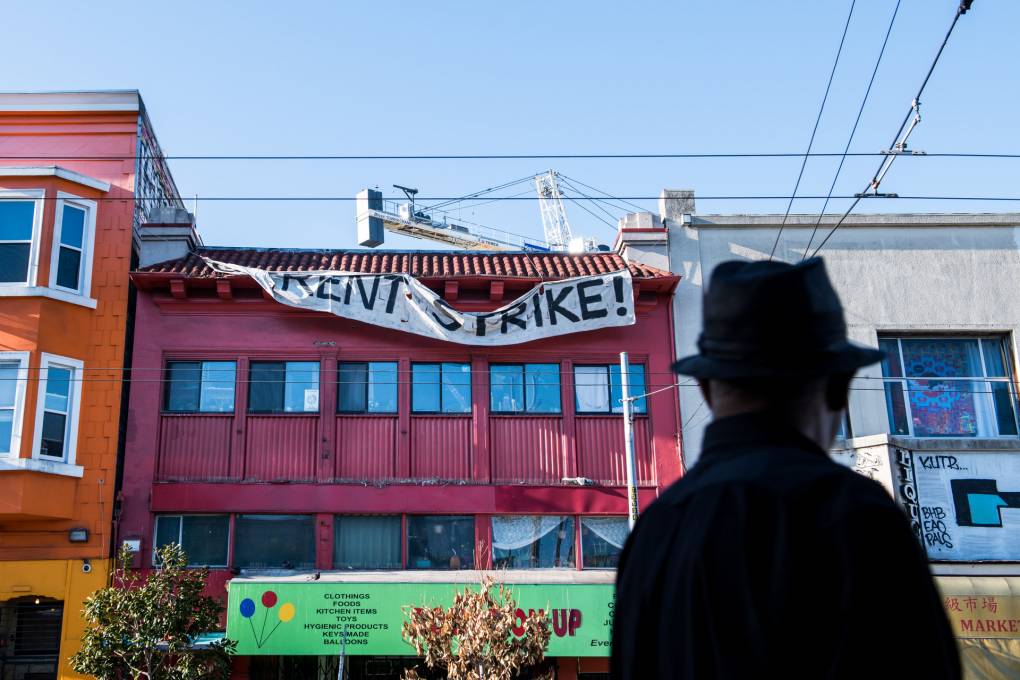
"caption": "A 'Rent Strike!' sign in the Mission District on March 31, 2020. ",
"description": "A 'Rent Strike!' sign in the Mission District on March 31, 2020. ",
"title": "RS42473_007_KQED_SanFrancisco_RentStrike_03312020-qut",
"credit": "Beth LaBerge/KQED",
"status": "inherit",
"isLoading": false,
"fetchFailed": false
},
"news_11826580": {
"type": "attachments",
"id": "news_11826580",
"meta": {
"index": "attachments_1716263798",
"site": "news",
"id": "11826580",
"found": true
},
"parent": 0,
"imgSizes": {
"apple_news_ca_landscape_5_5": {
"file": "https://ww2.kqed.org/app/uploads/sites/10/2020/06/Pride-Protest-3-1044x783.jpg",
"width": 1044,
"mimeType": "image/jpeg",
"height": 783
},
"apple_news_ca_square_4_0": {
"file": "https://ww2.kqed.org/app/uploads/sites/10/2020/06/Pride-Protest-3-470x470.jpg",
"width": 470,
"mimeType": "image/jpeg",
"height": 470
},
"twentyfourteen-full-width": {
"file": "https://ww2.kqed.org/app/uploads/sites/10/2020/06/Pride-Protest-3-1038x576.jpg",
"width": 1038,
"mimeType": "image/jpeg",
"height": 576
},
"thumbnail": {
"file": "https://ww2.kqed.org/app/uploads/sites/10/2020/06/Pride-Protest-3-160x120.jpg",
"width": 160,
"mimeType": "image/jpeg",
"height": 120
},
"post-thumbnail": {
"file": "https://ww2.kqed.org/app/uploads/sites/10/2020/06/Pride-Protest-3-672x372.jpg",
"width": 672,
"mimeType": "image/jpeg",
"height": 372
},
"kqedFullSize": {
"file": "https://ww2.kqed.org/app/uploads/sites/10/2020/06/Pride-Protest-3-scaled.jpg",
"width": 2560,
"height": 1920
},
"2048x2048": {
"file": "https://ww2.kqed.org/app/uploads/sites/10/2020/06/Pride-Protest-3-2048x1536.jpg",
"width": 2048,
"mimeType": "image/jpeg",
"height": 1536
},
"apple_news_ca_landscape_4_7": {
"file": "https://ww2.kqed.org/app/uploads/sites/10/2020/06/Pride-Protest-3-632x474.jpg",
"width": 632,
"mimeType": "image/jpeg",
"height": 474
},
"large": {
"file": "https://ww2.kqed.org/app/uploads/sites/10/2020/06/Pride-Protest-3-1020x765.jpg",
"width": 1020,
"mimeType": "image/jpeg",
"height": 765
},
"apple_news_ca_landscape_4_0": {
"file": "https://ww2.kqed.org/app/uploads/sites/10/2020/06/Pride-Protest-3-536x402.jpg",
"width": 536,
"mimeType": "image/jpeg",
"height": 402
},
"apple_news_ca_portrait_12_9": {
"file": "https://ww2.kqed.org/app/uploads/sites/10/2020/06/Pride-Protest-3-1122x1496.jpg",
"width": 1122,
"mimeType": "image/jpeg",
"height": 1496
},
"medium": {
"file": "https://ww2.kqed.org/app/uploads/sites/10/2020/06/Pride-Protest-3-800x600.jpg",
"width": 800,
"mimeType": "image/jpeg",
"height": 600
},
"apple_news_ca_portrait_4_0": {
"file": "https://ww2.kqed.org/app/uploads/sites/10/2020/06/Pride-Protest-3-354x472.jpg",
"width": 354,
"mimeType": "image/jpeg",
"height": 472
},
"apple_news_ca_portrait_9_7": {
"file": "https://ww2.kqed.org/app/uploads/sites/10/2020/06/Pride-Protest-3-840x1120.jpg",
"width": 840,
"mimeType": "image/jpeg",
"height": 1120
},
"apple_news_ca_landscape_12_9": {
"file": "https://ww2.kqed.org/app/uploads/sites/10/2020/06/Pride-Protest-3-1832x1374.jpg",
"width": 1832,
"mimeType": "image/jpeg",
"height": 1374
},
"apple_news_ca_square_9_7": {
"file": "https://ww2.kqed.org/app/uploads/sites/10/2020/06/Pride-Protest-3-1104x1104.jpg",
"width": 1104,
"mimeType": "image/jpeg",
"height": 1104
},
"1536x1536": {
"file": "https://ww2.kqed.org/app/uploads/sites/10/2020/06/Pride-Protest-3-1536x1152.jpg",
"width": 1536,
"mimeType": "image/jpeg",
"height": 1152
},
"apple_news_ca_portrait_4_7": {
"file": "https://ww2.kqed.org/app/uploads/sites/10/2020/06/Pride-Protest-3-414x552.jpg",
"width": 414,
"mimeType": "image/jpeg",
"height": 552
},
"apple_news_ca_square_12_9": {
"file": "https://ww2.kqed.org/app/uploads/sites/10/2020/06/Pride-Protest-3-1472x1472.jpg",
"width": 1472,
"mimeType": "image/jpeg",
"height": 1472
},
"apple_news_ca_portrait_5_5": {
"file": "https://ww2.kqed.org/app/uploads/sites/10/2020/06/Pride-Protest-3-687x916.jpg",
"width": 687,
"mimeType": "image/jpeg",
"height": 916
},
"full-width": {
"file": "https://ww2.kqed.org/app/uploads/sites/10/2020/06/Pride-Protest-3-1920x1440.jpg",
"width": 1920,
"mimeType": "image/jpeg",
"height": 1440
},
"apple_news_ca_square_4_7": {
"file": "https://ww2.kqed.org/app/uploads/sites/10/2020/06/Pride-Protest-3-550x550.jpg",
"width": 550,
"mimeType": "image/jpeg",
"height": 550
},
"apple_news_ca_landscape_9_7": {
"file": "https://ww2.kqed.org/app/uploads/sites/10/2020/06/Pride-Protest-3-1376x1032.jpg",
"width": 1376,
"mimeType": "image/jpeg",
"height": 1032
},
"apple_news_ca_square_5_5": {
"file": "https://ww2.kqed.org/app/uploads/sites/10/2020/06/Pride-Protest-3-912x912.jpg",
"width": 912,
"mimeType": "image/jpeg",
"height": 912
}
},
"publishDate": 1593386563,
"modified": 1593454212,
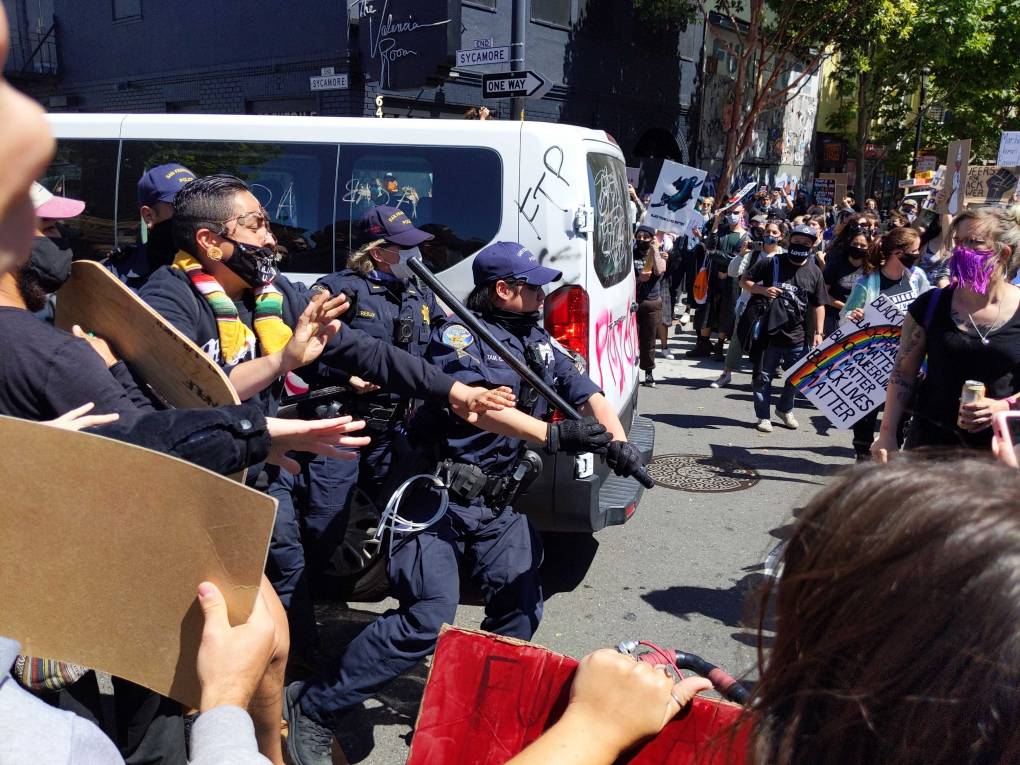
"caption": "A San Francisco police officer raises a baton at a crowd near a police van at the 'Pride is a Riot' march Sunday in San Francisco, which was organized by an anonymous group.",
"description": "A San Francisco police officer raises a baton at a crowd near a police van at the 'Pride is a Riot' march Sunday in San Francisco, which was organized by an anonymous group.",
"title": "Pride Protest 3",
"credit": "Anna Vignet/KQED",
"status": "inherit",
"isLoading": false,
"fetchFailed": false
},
"news_11826462": {
"type": "attachments",
"id": "news_11826462",
"meta": {
"index": "attachments_1716263798",
"site": "news",
"id": "11826462",
"found": true
},
"parent": 11826457,
"imgSizes": {
"apple_news_ca_landscape_5_5": {
"file": "https://ww2.kqed.org/app/uploads/sites/10/2020/06/RS42386_031_KQED_BethLaBerge_BloomEnergy_Newsom_03282020-qut-1044x783.jpg",
"width": 1044,
"mimeType": "image/jpeg",
"height": 783
},
"apple_news_ca_square_4_0": {
"file": "https://ww2.kqed.org/app/uploads/sites/10/2020/06/RS42386_031_KQED_BethLaBerge_BloomEnergy_Newsom_03282020-qut-470x470.jpg",
"width": 470,
"mimeType": "image/jpeg",
"height": 470
},
"twentyfourteen-full-width": {
"file": "https://ww2.kqed.org/app/uploads/sites/10/2020/06/RS42386_031_KQED_BethLaBerge_BloomEnergy_Newsom_03282020-qut-1038x576.jpg",
"width": 1038,
"mimeType": "image/jpeg",
"height": 576
},
"thumbnail": {
"file": "https://ww2.kqed.org/app/uploads/sites/10/2020/06/RS42386_031_KQED_BethLaBerge_BloomEnergy_Newsom_03282020-qut-160x107.jpg",
"width": 160,
"mimeType": "image/jpeg",
"height": 107
},
"post-thumbnail": {
"file": "https://ww2.kqed.org/app/uploads/sites/10/2020/06/RS42386_031_KQED_BethLaBerge_BloomEnergy_Newsom_03282020-qut-672x372.jpg",
"width": 672,
"mimeType": "image/jpeg",
"height": 372
},
"kqedFullSize": {
"file": "https://ww2.kqed.org/app/uploads/sites/10/2020/06/RS42386_031_KQED_BethLaBerge_BloomEnergy_Newsom_03282020-qut.jpg",
"width": 1920,
"height": 1278
},
"apple_news_ca_landscape_4_7": {
"file": "https://ww2.kqed.org/app/uploads/sites/10/2020/06/RS42386_031_KQED_BethLaBerge_BloomEnergy_Newsom_03282020-qut-632x474.jpg",
"width": 632,
"mimeType": "image/jpeg",
"height": 474
},
"large": {
"file": "https://ww2.kqed.org/app/uploads/sites/10/2020/06/RS42386_031_KQED_BethLaBerge_BloomEnergy_Newsom_03282020-qut-1020x679.jpg",
"width": 1020,
"mimeType": "image/jpeg",
"height": 679
},
"apple_news_ca_landscape_4_0": {
"file": "https://ww2.kqed.org/app/uploads/sites/10/2020/06/RS42386_031_KQED_BethLaBerge_BloomEnergy_Newsom_03282020-qut-536x402.jpg",
"width": 536,
"mimeType": "image/jpeg",
"height": 402
},
"apple_news_ca_portrait_12_9": {
"file": "https://ww2.kqed.org/app/uploads/sites/10/2020/06/RS42386_031_KQED_BethLaBerge_BloomEnergy_Newsom_03282020-qut-1122x1278.jpg",
"width": 1122,
"mimeType": "image/jpeg",
"height": 1278
},
"medium": {
"file": "https://ww2.kqed.org/app/uploads/sites/10/2020/06/RS42386_031_KQED_BethLaBerge_BloomEnergy_Newsom_03282020-qut-800x533.jpg",
"width": 800,
"mimeType": "image/jpeg",
"height": 533
},
"apple_news_ca_portrait_4_0": {
"file": "https://ww2.kqed.org/app/uploads/sites/10/2020/06/RS42386_031_KQED_BethLaBerge_BloomEnergy_Newsom_03282020-qut-354x472.jpg",
"width": 354,
"mimeType": "image/jpeg",
"height": 472
},
"apple_news_ca_portrait_9_7": {
"file": "https://ww2.kqed.org/app/uploads/sites/10/2020/06/RS42386_031_KQED_BethLaBerge_BloomEnergy_Newsom_03282020-qut-840x1120.jpg",
"width": 840,
"mimeType": "image/jpeg",
"height": 1120
},
"apple_news_ca_landscape_12_9": {
"file": "https://ww2.kqed.org/app/uploads/sites/10/2020/06/RS42386_031_KQED_BethLaBerge_BloomEnergy_Newsom_03282020-qut-1832x1278.jpg",
"width": 1832,
"mimeType": "image/jpeg",
"height": 1278
},
"apple_news_ca_square_9_7": {
"file": "https://ww2.kqed.org/app/uploads/sites/10/2020/06/RS42386_031_KQED_BethLaBerge_BloomEnergy_Newsom_03282020-qut-1104x1104.jpg",
"width": 1104,
"mimeType": "image/jpeg",
"height": 1104
},
"1536x1536": {
"file": "https://ww2.kqed.org/app/uploads/sites/10/2020/06/RS42386_031_KQED_BethLaBerge_BloomEnergy_Newsom_03282020-qut-1536x1022.jpg",
"width": 1536,
"mimeType": "image/jpeg",
"height": 1022
},
"apple_news_ca_portrait_4_7": {
"file": "https://ww2.kqed.org/app/uploads/sites/10/2020/06/RS42386_031_KQED_BethLaBerge_BloomEnergy_Newsom_03282020-qut-414x552.jpg",
"width": 414,
"mimeType": "image/jpeg",
"height": 552
},
"apple_news_ca_square_12_9": {
"file": "https://ww2.kqed.org/app/uploads/sites/10/2020/06/RS42386_031_KQED_BethLaBerge_BloomEnergy_Newsom_03282020-qut-1472x1278.jpg",
"width": 1472,
"mimeType": "image/jpeg",
"height": 1278
},
"apple_news_ca_portrait_5_5": {
"file": "https://ww2.kqed.org/app/uploads/sites/10/2020/06/RS42386_031_KQED_BethLaBerge_BloomEnergy_Newsom_03282020-qut-687x916.jpg",
"width": 687,
"mimeType": "image/jpeg",
"height": 916
},
"apple_news_ca_square_4_7": {
"file": "https://ww2.kqed.org/app/uploads/sites/10/2020/06/RS42386_031_KQED_BethLaBerge_BloomEnergy_Newsom_03282020-qut-550x550.jpg",
"width": 550,
"mimeType": "image/jpeg",
"height": 550
},
"apple_news_ca_landscape_9_7": {
"file": "https://ww2.kqed.org/app/uploads/sites/10/2020/06/RS42386_031_KQED_BethLaBerge_BloomEnergy_Newsom_03282020-qut-1376x1032.jpg",
"width": 1376,
"mimeType": "image/jpeg",
"height": 1032
},
"apple_news_ca_square_5_5": {
"file": "https://ww2.kqed.org/app/uploads/sites/10/2020/06/RS42386_031_KQED_BethLaBerge_BloomEnergy_Newsom_03282020-qut-912x912.jpg",
"width": 912,
"mimeType": "image/jpeg",
"height": 912
}
},
"publishDate": 1593270592,
"modified": 1593270782,
"caption": "Gov. Gavin Newsom speaks with Bloom Energy CEO KR Sridhar at the Bloom Energy Sunnyvale campus on March 28, 2020. Bloom Energy is a fuel cell generator company that switched over to refurbishing ventilators as an increasing number of patients experience respiratory issues as a result of COVID-19.",
"description": null,
"title": "RS42386_031_KQED_BethLaBerge_BloomEnergy_Newsom_03282020-qut",
"credit": "Beth LaBerge/KQED",
"status": "inherit",
"isLoading": false,
"fetchFailed": false
},
"news_11826140": {
"type": "attachments",
"id": "news_11826140",
"meta": {
"index": "attachments_1716263798",
"site": "news",
"id": "11826140",
"found": true
},
"parent": 11826034,
"imgSizes": {
"apple_news_ca_landscape_5_5": {
"file": "https://ww2.kqed.org/app/uploads/sites/10/2020/06/RS43811_003_KQED_SanFrancisco_NicholasJavier_06242020-qut-1044x783.jpg",
"width": 1044,
"mimeType": "image/jpeg",
"height": 783
},
"apple_news_ca_square_4_0": {
"file": "https://ww2.kqed.org/app/uploads/sites/10/2020/06/RS43811_003_KQED_SanFrancisco_NicholasJavier_06242020-qut-470x470.jpg",
"width": 470,
"mimeType": "image/jpeg",
"height": 470
},
"twentyfourteen-full-width": {
"file": "https://ww2.kqed.org/app/uploads/sites/10/2020/06/RS43811_003_KQED_SanFrancisco_NicholasJavier_06242020-qut-1038x576.jpg",
"width": 1038,
"mimeType": "image/jpeg",
"height": 576
},
"thumbnail": {
"file": "https://ww2.kqed.org/app/uploads/sites/10/2020/06/RS43811_003_KQED_SanFrancisco_NicholasJavier_06242020-qut-160x107.jpg",
"width": 160,
"mimeType": "image/jpeg",
"height": 107
},
"post-thumbnail": {
"file": "https://ww2.kqed.org/app/uploads/sites/10/2020/06/RS43811_003_KQED_SanFrancisco_NicholasJavier_06242020-qut-672x372.jpg",
"width": 672,
"mimeType": "image/jpeg",
"height": 372
},
"kqedFullSize": {
"file": "https://ww2.kqed.org/app/uploads/sites/10/2020/06/RS43811_003_KQED_SanFrancisco_NicholasJavier_06242020-qut.jpg",
"width": 1920,
"height": 1280
},
"apple_news_ca_landscape_4_7": {
"file": "https://ww2.kqed.org/app/uploads/sites/10/2020/06/RS43811_003_KQED_SanFrancisco_NicholasJavier_06242020-qut-632x474.jpg",
"width": 632,
"mimeType": "image/jpeg",
"height": 474
},
"large": {
"file": "https://ww2.kqed.org/app/uploads/sites/10/2020/06/RS43811_003_KQED_SanFrancisco_NicholasJavier_06242020-qut-1020x680.jpg",
"width": 1020,
"mimeType": "image/jpeg",
"height": 680
},
"apple_news_ca_landscape_4_0": {
"file": "https://ww2.kqed.org/app/uploads/sites/10/2020/06/RS43811_003_KQED_SanFrancisco_NicholasJavier_06242020-qut-536x402.jpg",
"width": 536,
"mimeType": "image/jpeg",
"height": 402
},
"apple_news_ca_portrait_12_9": {
"file": "https://ww2.kqed.org/app/uploads/sites/10/2020/06/RS43811_003_KQED_SanFrancisco_NicholasJavier_06242020-qut-1122x1280.jpg",
"width": 1122,
"mimeType": "image/jpeg",
"height": 1280
},
"medium": {
"file": "https://ww2.kqed.org/app/uploads/sites/10/2020/06/RS43811_003_KQED_SanFrancisco_NicholasJavier_06242020-qut-800x533.jpg",
"width": 800,
"mimeType": "image/jpeg",
"height": 533
},
"apple_news_ca_portrait_4_0": {
"file": "https://ww2.kqed.org/app/uploads/sites/10/2020/06/RS43811_003_KQED_SanFrancisco_NicholasJavier_06242020-qut-354x472.jpg",
"width": 354,
"mimeType": "image/jpeg",
"height": 472
},
"apple_news_ca_portrait_9_7": {
"file": "https://ww2.kqed.org/app/uploads/sites/10/2020/06/RS43811_003_KQED_SanFrancisco_NicholasJavier_06242020-qut-840x1120.jpg",
"width": 840,
"mimeType": "image/jpeg",
"height": 1120
},
"apple_news_ca_landscape_12_9": {
"file": "https://ww2.kqed.org/app/uploads/sites/10/2020/06/RS43811_003_KQED_SanFrancisco_NicholasJavier_06242020-qut-1832x1280.jpg",
"width": 1832,
"mimeType": "image/jpeg",
"height": 1280
},
"apple_news_ca_square_9_7": {
"file": "https://ww2.kqed.org/app/uploads/sites/10/2020/06/RS43811_003_KQED_SanFrancisco_NicholasJavier_06242020-qut-1104x1104.jpg",
"width": 1104,
"mimeType": "image/jpeg",
"height": 1104
},
"1536x1536": {
"file": "https://ww2.kqed.org/app/uploads/sites/10/2020/06/RS43811_003_KQED_SanFrancisco_NicholasJavier_06242020-qut-1536x1024.jpg",
"width": 1536,
"mimeType": "image/jpeg",
"height": 1024
},
"apple_news_ca_portrait_4_7": {
"file": "https://ww2.kqed.org/app/uploads/sites/10/2020/06/RS43811_003_KQED_SanFrancisco_NicholasJavier_06242020-qut-414x552.jpg",
"width": 414,
"mimeType": "image/jpeg",
"height": 552
},
"apple_news_ca_square_12_9": {
"file": "https://ww2.kqed.org/app/uploads/sites/10/2020/06/RS43811_003_KQED_SanFrancisco_NicholasJavier_06242020-qut-1472x1280.jpg",
"width": 1472,
"mimeType": "image/jpeg",
"height": 1280
},
"apple_news_ca_portrait_5_5": {
"file": "https://ww2.kqed.org/app/uploads/sites/10/2020/06/RS43811_003_KQED_SanFrancisco_NicholasJavier_06242020-qut-687x916.jpg",
"width": 687,
"mimeType": "image/jpeg",
"height": 916
},
"apple_news_ca_square_4_7": {
"file": "https://ww2.kqed.org/app/uploads/sites/10/2020/06/RS43811_003_KQED_SanFrancisco_NicholasJavier_06242020-qut-550x550.jpg",
"width": 550,
"mimeType": "image/jpeg",
"height": 550
},
"apple_news_ca_landscape_9_7": {
"file": "https://ww2.kqed.org/app/uploads/sites/10/2020/06/RS43811_003_KQED_SanFrancisco_NicholasJavier_06242020-qut-1376x1032.jpg",
"width": 1376,
"mimeType": "image/jpeg",
"height": 1032
},
"apple_news_ca_square_5_5": {
"file": "https://ww2.kqed.org/app/uploads/sites/10/2020/06/RS43811_003_KQED_SanFrancisco_NicholasJavier_06242020-qut-912x912.jpg",
"width": 912,
"mimeType": "image/jpeg",
"height": 912
}
},
"publishDate": 1593104924,
"modified": 1593105011,
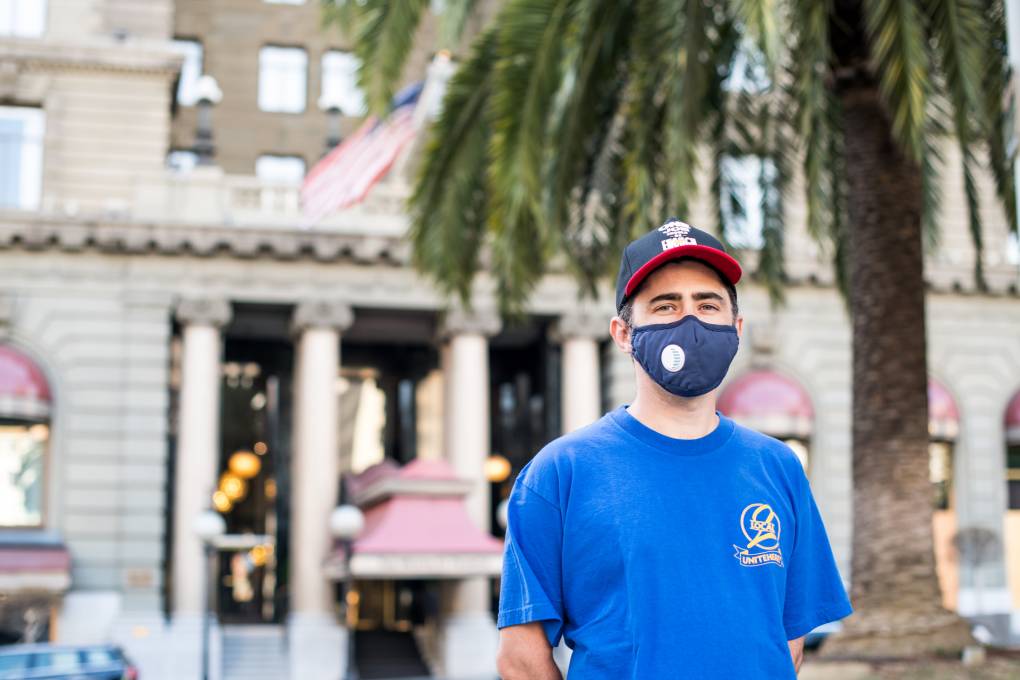
"caption": "Nicholas Javier poses for a portrait across from the Westin St. Francis in San Francisco on June 24, 2020 where he worked for six years.",
"description": "Nicholas Javier poses for a portrait across from the Westin St. Francis in San Francisco on June 24, 2020 where he worked for six years.",
"title": "RS43811_003_KQED_SanFrancisco_NicholasJavier_06242020-qut",
"credit": "Beth LaBerge/KQED",
"status": "inherit",
"isLoading": false,
"fetchFailed": false
},
"news_11825842": {
"type": "attachments",
"id": "news_11825842",
"meta": {
"index": "attachments_1716263798",
"site": "news",
"id": "11825842",
"found": true
},
"parent": 11825401,
"imgSizes": {
"apple_news_ca_square_4_0": {
"file": "https://ww2.kqed.org/app/uploads/sites/10/2020/06/RS43798_MOR-0681-qut-470x400.jpg",
"width": 470,
"mimeType": "image/jpeg",
"height": 400
},
"thumbnail": {
"file": "https://ww2.kqed.org/app/uploads/sites/10/2020/06/RS43798_MOR-0681-qut-160x129.jpg",
"width": 160,
"mimeType": "image/jpeg",
"height": 129
},
"post-thumbnail": {
"file": "https://ww2.kqed.org/app/uploads/sites/10/2020/06/RS43798_MOR-0681-qut-497x372.jpg",
"width": 497,
"mimeType": "image/jpeg",
"height": 372
},
"kqedFullSize": {
"file": "https://ww2.kqed.org/app/uploads/sites/10/2020/06/RS43798_MOR-0681-qut.jpg",
"width": 497,
"height": 400
},
"apple_news_ca_portrait_4_7": {
"file": "https://ww2.kqed.org/app/uploads/sites/10/2020/06/RS43798_MOR-0681-qut-414x400.jpg",
"width": 414,
"mimeType": "image/jpeg",
"height": 400
},
"apple_news_ca_portrait_4_0": {
"file": "https://ww2.kqed.org/app/uploads/sites/10/2020/06/RS43798_MOR-0681-qut-354x400.jpg",
"width": 354,
"mimeType": "image/jpeg",
"height": 400
}
},
"publishDate": 1592950075,
"modified": 1593051517,
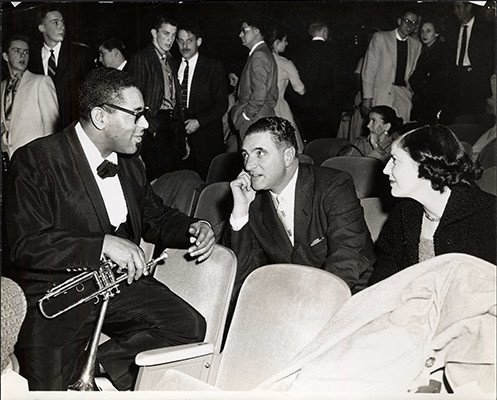
"caption": "Jazz musician Dizzy Gillespie with San Francisco Mayor George Christopher in 1957.",
"description": "Jazz musician Dizzy Gillespie with San Francisco Mayor George Christopher in 1957.",
"title": "RS43798_MOR-0681-qut",
"credit": "San Francisco History Center, San Francisco Public Library",
"status": "inherit",
"isLoading": false,
"fetchFailed": false
},
"news_11825852": {
"type": "attachments",
"id": "news_11825852",
"meta": {
"index": "attachments_1716263798",
"site": "news",
"id": "11825852",
"found": true
},
"title": "Sharp Budget Cuts Loom For All Sectors Of California's Infrastructure",
"publishDate": 1592950982,
"status": "inherit",
"parent": 11825729,
"modified": 1770426512,
"caption": "A student walks by a library book drop box outside of the main branch of the San Francisco Public Library on Jan. 11, 2011, in San Francisco, California.",
"credit": "Justin Sullivan/Getty Images",
"altTag": null,
"description": null,
"imgSizes": {
"medium": {
"file": "https://cdn.kqed.org/wp-content/uploads/sites/10/2020/06/RS43801_GettyImages-107987983-qut-800x534.jpg",
"width": 800,
"height": 534,
"mimeType": "image/jpeg"
},
"large": {
"file": "https://cdn.kqed.org/wp-content/uploads/sites/10/2020/06/RS43801_GettyImages-107987983-qut-1020x681.jpg",
"width": 1020,
"height": 681,
"mimeType": "image/jpeg"
},
"thumbnail": {
"file": "https://cdn.kqed.org/wp-content/uploads/sites/10/2020/06/RS43801_GettyImages-107987983-qut-160x107.jpg",
"width": 160,
"height": 107,
"mimeType": "image/jpeg"
},
"1536x1536": {
"file": "https://cdn.kqed.org/wp-content/uploads/sites/10/2020/06/RS43801_GettyImages-107987983-qut-1536x1026.jpg",
"width": 1536,
"height": 1026,
"mimeType": "image/jpeg"
},
"post-thumbnail": {
"file": "https://cdn.kqed.org/wp-content/uploads/sites/10/2020/06/RS43801_GettyImages-107987983-qut-672x372.jpg",
"width": 672,
"height": 372,
"mimeType": "image/jpeg"
},
"twentyfourteen-full-width": {
"file": "https://cdn.kqed.org/wp-content/uploads/sites/10/2020/06/RS43801_GettyImages-107987983-qut-1038x576.jpg",
"width": 1038,
"height": 576,
"mimeType": "image/jpeg"
},
"apple_news_ca_landscape_12_9": {
"file": "https://cdn.kqed.org/wp-content/uploads/sites/10/2020/06/RS43801_GettyImages-107987983-qut-1832x1282.jpg",
"width": 1832,
"height": 1282,
"mimeType": "image/jpeg"
},
"apple_news_ca_landscape_9_7": {
"file": "https://cdn.kqed.org/wp-content/uploads/sites/10/2020/06/RS43801_GettyImages-107987983-qut-1376x1032.jpg",
"width": 1376,
"height": 1032,
"mimeType": "image/jpeg"
},
"apple_news_ca_landscape_5_5": {
"file": "https://cdn.kqed.org/wp-content/uploads/sites/10/2020/06/RS43801_GettyImages-107987983-qut-1044x783.jpg",
"width": 1044,
"height": 783,
"mimeType": "image/jpeg"
},
"apple_news_ca_landscape_4_7": {
"file": "https://cdn.kqed.org/wp-content/uploads/sites/10/2020/06/RS43801_GettyImages-107987983-qut-632x474.jpg",
"width": 632,
"height": 474,
"mimeType": "image/jpeg"
},
"apple_news_ca_landscape_4_0": {
"file": "https://cdn.kqed.org/wp-content/uploads/sites/10/2020/06/RS43801_GettyImages-107987983-qut-536x402.jpg",
"width": 536,
"height": 402,
"mimeType": "image/jpeg"
},
"apple_news_ca_portrait_12_9": {
"file": "https://cdn.kqed.org/wp-content/uploads/sites/10/2020/06/RS43801_GettyImages-107987983-qut-1122x1282.jpg",
"width": 1122,
"height": 1282,
"mimeType": "image/jpeg"
},
"apple_news_ca_portrait_9_7": {
"file": "https://cdn.kqed.org/wp-content/uploads/sites/10/2020/06/RS43801_GettyImages-107987983-qut-840x1120.jpg",
"width": 840,
"height": 1120,
"mimeType": "image/jpeg"
},
"apple_news_ca_portrait_5_5": {
"file": "https://cdn.kqed.org/wp-content/uploads/sites/10/2020/06/RS43801_GettyImages-107987983-qut-687x916.jpg",
"width": 687,
"height": 916,
"mimeType": "image/jpeg"
},
"apple_news_ca_portrait_4_7": {
"file": "https://cdn.kqed.org/wp-content/uploads/sites/10/2020/06/RS43801_GettyImages-107987983-qut-414x552.jpg",
"width": 414,
"height": 552,
"mimeType": "image/jpeg"
},
"apple_news_ca_portrait_4_0": {
"file": "https://cdn.kqed.org/wp-content/uploads/sites/10/2020/06/RS43801_GettyImages-107987983-qut-354x472.jpg",
"width": 354,
"height": 472,
"mimeType": "image/jpeg"
},
"apple_news_ca_square_12_9": {
"file": "https://cdn.kqed.org/wp-content/uploads/sites/10/2020/06/RS43801_GettyImages-107987983-qut-1472x1282.jpg",
"width": 1472,
"height": 1282,
"mimeType": "image/jpeg"
},
"apple_news_ca_square_9_7": {
"file": "https://cdn.kqed.org/wp-content/uploads/sites/10/2020/06/RS43801_GettyImages-107987983-qut-1104x1104.jpg",
"width": 1104,
"height": 1104,
"mimeType": "image/jpeg"
},
"apple_news_ca_square_5_5": {
"file": "https://cdn.kqed.org/wp-content/uploads/sites/10/2020/06/RS43801_GettyImages-107987983-qut-912x912.jpg",
"width": 912,
"height": 912,
"mimeType": "image/jpeg"
},
"apple_news_ca_square_4_7": {
"file": "https://cdn.kqed.org/wp-content/uploads/sites/10/2020/06/RS43801_GettyImages-107987983-qut-550x550.jpg",
"width": 550,
"height": 550,
"mimeType": "image/jpeg"
},
"apple_news_ca_square_4_0": {
"file": "https://cdn.kqed.org/wp-content/uploads/sites/10/2020/06/RS43801_GettyImages-107987983-qut-470x470.jpg",
"width": 470,
"height": 470,
"mimeType": "image/jpeg"
},
"kqedFullSize": {
"file": "https://cdn.kqed.org/wp-content/uploads/sites/10/2020/06/RS43801_GettyImages-107987983-qut.jpg",
"width": 1920,
"height": 1282
}
},
"isLoading": false,
"fetchFailed": false
},
"news_11825539": {
"type": "attachments",
"id": "news_11825539",
"meta": {
"index": "attachments_1716263798",
"site": "news",
"id": "11825539",
"found": true
},
"parent": 11825537,
"imgSizes": {
"apple_news_ca_landscape_5_5": {
"file": "https://ww2.kqed.org/app/uploads/sites/10/2020/06/RS40540_IMG_2404-qut-1044x783.jpg",
"width": 1044,
"mimeType": "image/jpeg",
"height": 783
},
"apple_news_ca_square_4_0": {
"file": "https://ww2.kqed.org/app/uploads/sites/10/2020/06/RS40540_IMG_2404-qut-470x470.jpg",
"width": 470,
"mimeType": "image/jpeg",
"height": 470
},
"twentyfourteen-full-width": {
"file": "https://ww2.kqed.org/app/uploads/sites/10/2020/06/RS40540_IMG_2404-qut-1038x576.jpg",
"width": 1038,
"mimeType": "image/jpeg",
"height": 576
},
"thumbnail": {
"file": "https://ww2.kqed.org/app/uploads/sites/10/2020/06/RS40540_IMG_2404-qut-160x90.jpg",
"width": 160,
"mimeType": "image/jpeg",
"height": 90
},
"post-thumbnail": {
"file": "https://ww2.kqed.org/app/uploads/sites/10/2020/06/RS40540_IMG_2404-qut-672x372.jpg",
"width": 672,
"mimeType": "image/jpeg",
"height": 372
},
"kqedFullSize": {
"file": "https://ww2.kqed.org/app/uploads/sites/10/2020/06/RS40540_IMG_2404-qut.jpg",
"width": 1598,
"height": 899
},
"apple_news_ca_landscape_4_7": {
"file": "https://ww2.kqed.org/app/uploads/sites/10/2020/06/RS40540_IMG_2404-qut-632x474.jpg",
"width": 632,
"mimeType": "image/jpeg",
"height": 474
},
"large": {
"file": "https://ww2.kqed.org/app/uploads/sites/10/2020/06/RS40540_IMG_2404-qut-1020x574.jpg",
"width": 1020,
"mimeType": "image/jpeg",
"height": 574
},
"apple_news_ca_landscape_4_0": {
"file": "https://ww2.kqed.org/app/uploads/sites/10/2020/06/RS40540_IMG_2404-qut-536x402.jpg",
"width": 536,
"mimeType": "image/jpeg",
"height": 402
},
"apple_news_ca_portrait_12_9": {
"file": "https://ww2.kqed.org/app/uploads/sites/10/2020/06/RS40540_IMG_2404-qut-1122x899.jpg",
"width": 1122,
"mimeType": "image/jpeg",
"height": 899
},
"medium": {
"file": "https://ww2.kqed.org/app/uploads/sites/10/2020/06/RS40540_IMG_2404-qut-800x450.jpg",
"width": 800,
"mimeType": "image/jpeg",
"height": 450
},
"apple_news_ca_portrait_4_0": {
"file": "https://ww2.kqed.org/app/uploads/sites/10/2020/06/RS40540_IMG_2404-qut-354x472.jpg",
"width": 354,
"mimeType": "image/jpeg",
"height": 472
},
"apple_news_ca_portrait_9_7": {
"file": "https://ww2.kqed.org/app/uploads/sites/10/2020/06/RS40540_IMG_2404-qut-840x899.jpg",
"width": 840,
"mimeType": "image/jpeg",
"height": 899
},
"apple_news_ca_square_9_7": {
"file": "https://ww2.kqed.org/app/uploads/sites/10/2020/06/RS40540_IMG_2404-qut-1104x899.jpg",
"width": 1104,
"mimeType": "image/jpeg",
"height": 899
},
"apple_news_ca_portrait_4_7": {
"file": "https://ww2.kqed.org/app/uploads/sites/10/2020/06/RS40540_IMG_2404-qut-414x552.jpg",
"width": 414,
"mimeType": "image/jpeg",
"height": 552
},
"apple_news_ca_square_12_9": {
"file": "https://ww2.kqed.org/app/uploads/sites/10/2020/06/RS40540_IMG_2404-qut-1472x899.jpg",
"width": 1472,
"mimeType": "image/jpeg",
"height": 899
},
"apple_news_ca_portrait_5_5": {
"file": "https://ww2.kqed.org/app/uploads/sites/10/2020/06/RS40540_IMG_2404-qut-687x899.jpg",
"width": 687,
"mimeType": "image/jpeg",
"height": 899
},
"apple_news_ca_square_4_7": {
"file": "https://ww2.kqed.org/app/uploads/sites/10/2020/06/RS40540_IMG_2404-qut-550x550.jpg",
"width": 550,
"mimeType": "image/jpeg",
"height": 550
},
"apple_news_ca_landscape_9_7": {
"file": "https://ww2.kqed.org/app/uploads/sites/10/2020/06/RS40540_IMG_2404-qut-1376x899.jpg",
"width": 1376,
"mimeType": "image/jpeg",
"height": 899
},
"apple_news_ca_square_5_5": {
"file": "https://ww2.kqed.org/app/uploads/sites/10/2020/06/RS40540_IMG_2404-qut-912x899.jpg",
"width": 912,
"mimeType": "image/jpeg",
"height": 899
}
},
"publishDate": 1592625679,
"modified": 1592625751,
"caption": "SFPD Chief William Scott addresses attendees at a town hall meeting held at Cesar Chavez Elementary School about a police shooting in the Mission district that took place on December 7, 2019.",
"description": null,
"title": "RS40540_IMG_2404-qut",
"credit": "Sheraz Sadiq/KQED",
"status": "inherit",
"isLoading": false,
"fetchFailed": false
},
"news_11825533": {
"type": "attachments",
"id": "news_11825533",
"meta": {
"index": "attachments_1716263798",
"site": "news",
"id": "11825533",
"found": true
},
"parent": 11825532,
"imgSizes": {
"apple_news_ca_landscape_5_5": {
"file": "https://ww2.kqed.org/app/uploads/sites/10/2020/06/RS43113_GettyImages-1188966941-qut-1044x783.jpg",
"width": 1044,
"mimeType": "image/jpeg",
"height": 783
},
"apple_news_ca_square_4_0": {
"file": "https://ww2.kqed.org/app/uploads/sites/10/2020/06/RS43113_GettyImages-1188966941-qut-470x470.jpg",
"width": 470,
"mimeType": "image/jpeg",
"height": 470
},
"twentyfourteen-full-width": {
"file": "https://ww2.kqed.org/app/uploads/sites/10/2020/06/RS43113_GettyImages-1188966941-qut-1038x576.jpg",
"width": 1038,
"mimeType": "image/jpeg",
"height": 576
},
"thumbnail": {
"file": "https://ww2.kqed.org/app/uploads/sites/10/2020/06/RS43113_GettyImages-1188966941-qut-160x107.jpg",
"width": 160,
"mimeType": "image/jpeg",
"height": 107
},
"post-thumbnail": {
"file": "https://ww2.kqed.org/app/uploads/sites/10/2020/06/RS43113_GettyImages-1188966941-qut-672x372.jpg",
"width": 672,
"mimeType": "image/jpeg",
"height": 372
},
"kqedFullSize": {
"file": "https://ww2.kqed.org/app/uploads/sites/10/2020/06/RS43113_GettyImages-1188966941-qut.jpg",
"width": 1920,
"height": 1280
},
"apple_news_ca_landscape_4_7": {
"file": "https://ww2.kqed.org/app/uploads/sites/10/2020/06/RS43113_GettyImages-1188966941-qut-632x474.jpg",
"width": 632,
"mimeType": "image/jpeg",
"height": 474
},
"large": {
"file": "https://ww2.kqed.org/app/uploads/sites/10/2020/06/RS43113_GettyImages-1188966941-qut-1020x680.jpg",
"width": 1020,
"mimeType": "image/jpeg",
"height": 680
},
"apple_news_ca_landscape_4_0": {
"file": "https://ww2.kqed.org/app/uploads/sites/10/2020/06/RS43113_GettyImages-1188966941-qut-536x402.jpg",
"width": 536,
"mimeType": "image/jpeg",
"height": 402
},
"apple_news_ca_portrait_12_9": {
"file": "https://ww2.kqed.org/app/uploads/sites/10/2020/06/RS43113_GettyImages-1188966941-qut-1122x1280.jpg",
"width": 1122,
"mimeType": "image/jpeg",
"height": 1280
},
"medium": {
"file": "https://ww2.kqed.org/app/uploads/sites/10/2020/06/RS43113_GettyImages-1188966941-qut-800x533.jpg",
"width": 800,
"mimeType": "image/jpeg",
"height": 533
},
"apple_news_ca_portrait_4_0": {
"file": "https://ww2.kqed.org/app/uploads/sites/10/2020/06/RS43113_GettyImages-1188966941-qut-354x472.jpg",
"width": 354,
"mimeType": "image/jpeg",
"height": 472
},
"apple_news_ca_portrait_9_7": {
"file": "https://ww2.kqed.org/app/uploads/sites/10/2020/06/RS43113_GettyImages-1188966941-qut-840x1120.jpg",
"width": 840,
"mimeType": "image/jpeg",
"height": 1120
},
"apple_news_ca_landscape_12_9": {
"file": "https://ww2.kqed.org/app/uploads/sites/10/2020/06/RS43113_GettyImages-1188966941-qut-1832x1280.jpg",
"width": 1832,
"mimeType": "image/jpeg",
"height": 1280
},
"apple_news_ca_square_9_7": {
"file": "https://ww2.kqed.org/app/uploads/sites/10/2020/06/RS43113_GettyImages-1188966941-qut-1104x1104.jpg",
"width": 1104,
"mimeType": "image/jpeg",
"height": 1104
},
"apple_news_ca_portrait_4_7": {
"file": "https://ww2.kqed.org/app/uploads/sites/10/2020/06/RS43113_GettyImages-1188966941-qut-414x552.jpg",
"width": 414,
"mimeType": "image/jpeg",
"height": 552
},
"apple_news_ca_square_12_9": {
"file": "https://ww2.kqed.org/app/uploads/sites/10/2020/06/RS43113_GettyImages-1188966941-qut-1472x1280.jpg",
"width": 1472,
"mimeType": "image/jpeg",
"height": 1280
},
"apple_news_ca_portrait_5_5": {
"file": "https://ww2.kqed.org/app/uploads/sites/10/2020/06/RS43113_GettyImages-1188966941-qut-687x916.jpg",
"width": 687,
"mimeType": "image/jpeg",
"height": 916
},
"full-width": {
"file": "https://ww2.kqed.org/app/uploads/sites/10/2020/06/RS43113_GettyImages-1188966941-qut-1920x1280.jpg",
"width": 1920,
"mimeType": "image/jpeg",
"height": 1280
},
"apple_news_ca_square_4_7": {
"file": "https://ww2.kqed.org/app/uploads/sites/10/2020/06/RS43113_GettyImages-1188966941-qut-550x550.jpg",
"width": 550,
"mimeType": "image/jpeg",
"height": 550
},
"apple_news_ca_landscape_9_7": {
"file": "https://ww2.kqed.org/app/uploads/sites/10/2020/06/RS43113_GettyImages-1188966941-qut-1376x1032.jpg",
"width": 1376,
"mimeType": "image/jpeg",
"height": 1032
},
"apple_news_ca_square_5_5": {
"file": "https://ww2.kqed.org/app/uploads/sites/10/2020/06/RS43113_GettyImages-1188966941-qut-912x912.jpg",
"width": 912,
"mimeType": "image/jpeg",
"height": 912
}
},
"publishDate": 1592622112,
"modified": 1592622227,
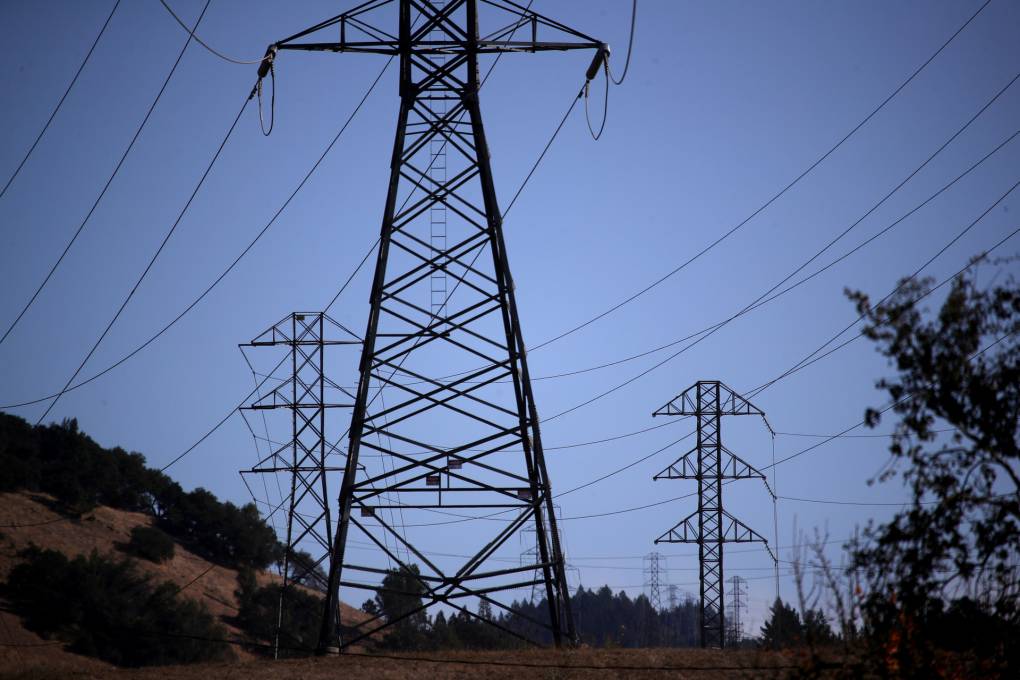
"caption": "A view of power lines during a PG&E public safety power shutoff on November 20, 2019 in Santa Rosa, California. ",
"description": null,
"title": "California Utility PG&E Cuts Power To Over 450,000 Residents Amid Wildfire Threat",
"credit": "Justin Sullivan/Getty Images",
"status": "inherit",
"isLoading": false,
"fetchFailed": false
},
"news_11825197": {
"type": "attachments",
"id": "news_11825197",
"meta": {
"index": "attachments_1716263798",
"site": "news",
"id": "11825197",
"found": true
},
"parent": 11825172,
"imgSizes": {
"apple_news_ca_landscape_5_5": {
"file": "https://ww2.kqed.org/app/uploads/sites/10/2020/06/divided-states-pandemic-v3-smaller-1044x783.jpg",
"width": 1044,
"mimeType": "image/jpeg",
"height": 783
},
"apple_news_ca_square_4_0": {
"file": "https://ww2.kqed.org/app/uploads/sites/10/2020/06/divided-states-pandemic-v3-smaller-470x470.jpg",
"width": 470,
"mimeType": "image/jpeg",
"height": 470
},
"twentyfourteen-full-width": {
"file": "https://ww2.kqed.org/app/uploads/sites/10/2020/06/divided-states-pandemic-v3-smaller-1038x576.jpg",
"width": 1038,
"mimeType": "image/jpeg",
"height": 576
},
"thumbnail": {
"file": "https://ww2.kqed.org/app/uploads/sites/10/2020/06/divided-states-pandemic-v3-smaller-160x107.jpg",
"width": 160,
"mimeType": "image/jpeg",
"height": 107
},
"post-thumbnail": {
"file": "https://ww2.kqed.org/app/uploads/sites/10/2020/06/divided-states-pandemic-v3-smaller-672x372.jpg",
"width": 672,
"mimeType": "image/jpeg",
"height": 372
},
"kqedFullSize": {
"file": "https://ww2.kqed.org/app/uploads/sites/10/2020/06/divided-states-pandemic-v3-smaller-e1592511829376.jpg",
"width": 1920,
"height": 1280
},
"apple_news_ca_landscape_4_7": {
"file": "https://ww2.kqed.org/app/uploads/sites/10/2020/06/divided-states-pandemic-v3-smaller-632x474.jpg",
"width": 632,
"mimeType": "image/jpeg",
"height": 474
},
"large": {
"file": "https://ww2.kqed.org/app/uploads/sites/10/2020/06/divided-states-pandemic-v3-smaller-1020x680.jpg",
"width": 1020,
"mimeType": "image/jpeg",
"height": 680
},
"apple_news_ca_landscape_4_0": {
"file": "https://ww2.kqed.org/app/uploads/sites/10/2020/06/divided-states-pandemic-v3-smaller-536x402.jpg",
"width": 536,
"mimeType": "image/jpeg",
"height": 402
},
"apple_news_ca_portrait_12_9": {
"file": "https://ww2.kqed.org/app/uploads/sites/10/2020/06/divided-states-pandemic-v3-smaller-1122x1333.jpg",
"width": 1122,
"mimeType": "image/jpeg",
"height": 1333
},
"medium": {
"file": "https://ww2.kqed.org/app/uploads/sites/10/2020/06/divided-states-pandemic-v3-smaller-800x533.jpg",
"width": 800,
"mimeType": "image/jpeg",
"height": 533
},
"apple_news_ca_portrait_4_0": {
"file": "https://ww2.kqed.org/app/uploads/sites/10/2020/06/divided-states-pandemic-v3-smaller-354x472.jpg",
"width": 354,
"mimeType": "image/jpeg",
"height": 472
},
"apple_news_ca_portrait_9_7": {
"file": "https://ww2.kqed.org/app/uploads/sites/10/2020/06/divided-states-pandemic-v3-smaller-840x1120.jpg",
"width": 840,
"mimeType": "image/jpeg",
"height": 1120
},
"apple_news_ca_landscape_12_9": {
"file": "https://ww2.kqed.org/app/uploads/sites/10/2020/06/divided-states-pandemic-v3-smaller-1832x1333.jpg",
"width": 1832,
"mimeType": "image/jpeg",
"height": 1333
},
"apple_news_ca_square_9_7": {
"file": "https://ww2.kqed.org/app/uploads/sites/10/2020/06/divided-states-pandemic-v3-smaller-1104x1104.jpg",
"width": 1104,
"mimeType": "image/jpeg",
"height": 1104
},
"apple_news_ca_portrait_4_7": {
"file": "https://ww2.kqed.org/app/uploads/sites/10/2020/06/divided-states-pandemic-v3-smaller-414x552.jpg",
"width": 414,
"mimeType": "image/jpeg",
"height": 552
},
"apple_news_ca_square_12_9": {
"file": "https://ww2.kqed.org/app/uploads/sites/10/2020/06/divided-states-pandemic-v3-smaller-1472x1333.jpg",
"width": 1472,
"mimeType": "image/jpeg",
"height": 1333
},
"apple_news_ca_portrait_5_5": {
"file": "https://ww2.kqed.org/app/uploads/sites/10/2020/06/divided-states-pandemic-v3-smaller-687x916.jpg",
"width": 687,
"mimeType": "image/jpeg",
"height": 916
},
"full-width": {
"file": "https://ww2.kqed.org/app/uploads/sites/10/2020/06/divided-states-pandemic-v3-smaller-1920x1280.jpg",
"width": 1920,
"mimeType": "image/jpeg",
"height": 1280
},
"apple_news_ca_square_4_7": {
"file": "https://ww2.kqed.org/app/uploads/sites/10/2020/06/divided-states-pandemic-v3-smaller-550x550.jpg",
"width": 550,
"mimeType": "image/jpeg",
"height": 550
},
"apple_news_ca_landscape_9_7": {
"file": "https://ww2.kqed.org/app/uploads/sites/10/2020/06/divided-states-pandemic-v3-smaller-1376x1032.jpg",
"width": 1376,
"mimeType": "image/jpeg",
"height": 1032
},
"apple_news_ca_square_5_5": {
"file": "https://ww2.kqed.org/app/uploads/sites/10/2020/06/divided-states-pandemic-v3-smaller-912x912.jpg",
"width": 912,
"mimeType": "image/jpeg",
"height": 912
}
},
"publishDate": 1592511784,
"modified": 1592511824,
"caption": null,
"description": null,
"title": "divided-states-pandemic-v3-smaller",
"credit": "Gabriel Hongsdusit/Reveal",
"status": "inherit",
"isLoading": false,
"fetchFailed": false
},
"news_11755107": {
"type": "attachments",
"id": "news_11755107",
"meta": {
"index": "attachments_1716263798",
"site": "news",
"id": "11755107",
"found": true
},
"parent": 11755103,
"imgSizes": {
"apple_news_ca_landscape_5_5": {
"file": "https://ww2.kqed.org/app/uploads/sites/10/2019/06/RS37724_IMG_5525-qut-1044x783.jpg",
"width": 1044,
"mimeType": "image/jpeg",
"height": 783
},
"apple_news_ca_square_4_0": {
"file": "https://ww2.kqed.org/app/uploads/sites/10/2019/06/RS37724_IMG_5525-qut-470x470.jpg",
"width": 470,
"mimeType": "image/jpeg",
"height": 470
},
"twentyfourteen-full-width": {
"file": "https://ww2.kqed.org/app/uploads/sites/10/2019/06/RS37724_IMG_5525-qut-1038x576.jpg",
"width": 1038,
"mimeType": "image/jpeg",
"height": 576
},
"thumbnail": {
"file": "https://ww2.kqed.org/app/uploads/sites/10/2019/06/RS37724_IMG_5525-qut-160x120.jpg",
"width": 160,
"mimeType": "image/jpeg",
"height": 120
},
"post-thumbnail": {
"file": "https://ww2.kqed.org/app/uploads/sites/10/2019/06/RS37724_IMG_5525-qut-672x372.jpg",
"width": 672,
"mimeType": "image/jpeg",
"height": 372
},
"kqedFullSize": {
"file": "https://ww2.kqed.org/app/uploads/sites/10/2019/06/RS37724_IMG_5525-qut.jpg",
"width": 1920,
"height": 1440
},
"apple_news_ca_landscape_4_7": {
"file": "https://ww2.kqed.org/app/uploads/sites/10/2019/06/RS37724_IMG_5525-qut-632x474.jpg",
"width": 632,
"mimeType": "image/jpeg",
"height": 474
},
"large": {
"file": "https://ww2.kqed.org/app/uploads/sites/10/2019/06/RS37724_IMG_5525-qut-1020x765.jpg",
"width": 1020,
"mimeType": "image/jpeg",
"height": 765
},
"complete_open_graph": {
"file": "https://ww2.kqed.org/app/uploads/sites/10/2019/06/RS37724_IMG_5525-qut-1200x900.jpg",
"width": 1200,
"mimeType": "image/jpeg",
"height": 900
},
"apple_news_ca_landscape_4_0": {
"file": "https://ww2.kqed.org/app/uploads/sites/10/2019/06/RS37724_IMG_5525-qut-536x402.jpg",
"width": 536,
"mimeType": "image/jpeg",
"height": 402
},
"apple_news_ca_portrait_12_9": {
"file": "https://ww2.kqed.org/app/uploads/sites/10/2019/06/RS37724_IMG_5525-qut-1122x1440.jpg",
"width": 1122,
"mimeType": "image/jpeg",
"height": 1440
},
"medium": {
"file": "https://ww2.kqed.org/app/uploads/sites/10/2019/06/RS37724_IMG_5525-qut-800x600.jpg",
"width": 800,
"mimeType": "image/jpeg",
"height": 600
},
"apple_news_ca_portrait_4_0": {
"file": "https://ww2.kqed.org/app/uploads/sites/10/2019/06/RS37724_IMG_5525-qut-354x472.jpg",
"width": 354,
"mimeType": "image/jpeg",
"height": 472
},
"apple_news_ca_portrait_9_7": {
"file": "https://ww2.kqed.org/app/uploads/sites/10/2019/06/RS37724_IMG_5525-qut-840x1120.jpg",
"width": 840,
"mimeType": "image/jpeg",
"height": 1120
},
"apple_news_ca_landscape_12_9": {
"file": "https://ww2.kqed.org/app/uploads/sites/10/2019/06/RS37724_IMG_5525-qut-1832x1374.jpg",
"width": 1832,
"mimeType": "image/jpeg",
"height": 1374
},
"apple_news_ca_square_9_7": {
"file": "https://ww2.kqed.org/app/uploads/sites/10/2019/06/RS37724_IMG_5525-qut-1104x1104.jpg",
"width": 1104,
"mimeType": "image/jpeg",
"height": 1104
},
"apple_news_ca_portrait_4_7": {
"file": "https://ww2.kqed.org/app/uploads/sites/10/2019/06/RS37724_IMG_5525-qut-414x552.jpg",
"width": 414,
"mimeType": "image/jpeg",
"height": 552
},
"apple_news_ca_square_12_9": {
"file": "https://ww2.kqed.org/app/uploads/sites/10/2019/06/RS37724_IMG_5525-qut-1472x1440.jpg",
"width": 1472,
"mimeType": "image/jpeg",
"height": 1440
},
"apple_news_ca_portrait_5_5": {
"file": "https://ww2.kqed.org/app/uploads/sites/10/2019/06/RS37724_IMG_5525-qut-687x916.jpg",
"width": 687,
"mimeType": "image/jpeg",
"height": 916
},
"full-width": {
"file": "https://ww2.kqed.org/app/uploads/sites/10/2019/06/RS37724_IMG_5525-qut-1920x1440.jpg",
"width": 1920,
"mimeType": "image/jpeg",
"height": 1440
},
"apple_news_ca_square_4_7": {
"file": "https://ww2.kqed.org/app/uploads/sites/10/2019/06/RS37724_IMG_5525-qut-550x550.jpg",
"width": 550,
"mimeType": "image/jpeg",
"height": 550
},
"apple_news_ca_landscape_9_7": {
"file": "https://ww2.kqed.org/app/uploads/sites/10/2019/06/RS37724_IMG_5525-qut-1376x1032.jpg",
"width": 1376,
"mimeType": "image/jpeg",
"height": 1032
},
"apple_news_ca_square_5_5": {
"file": "https://ww2.kqed.org/app/uploads/sites/10/2019/06/RS37724_IMG_5525-qut-912x912.jpg",
"width": 912,
"mimeType": "image/jpeg",
"height": 912
}
},
"publishDate": 1560729066,
"modified": 1592512002,
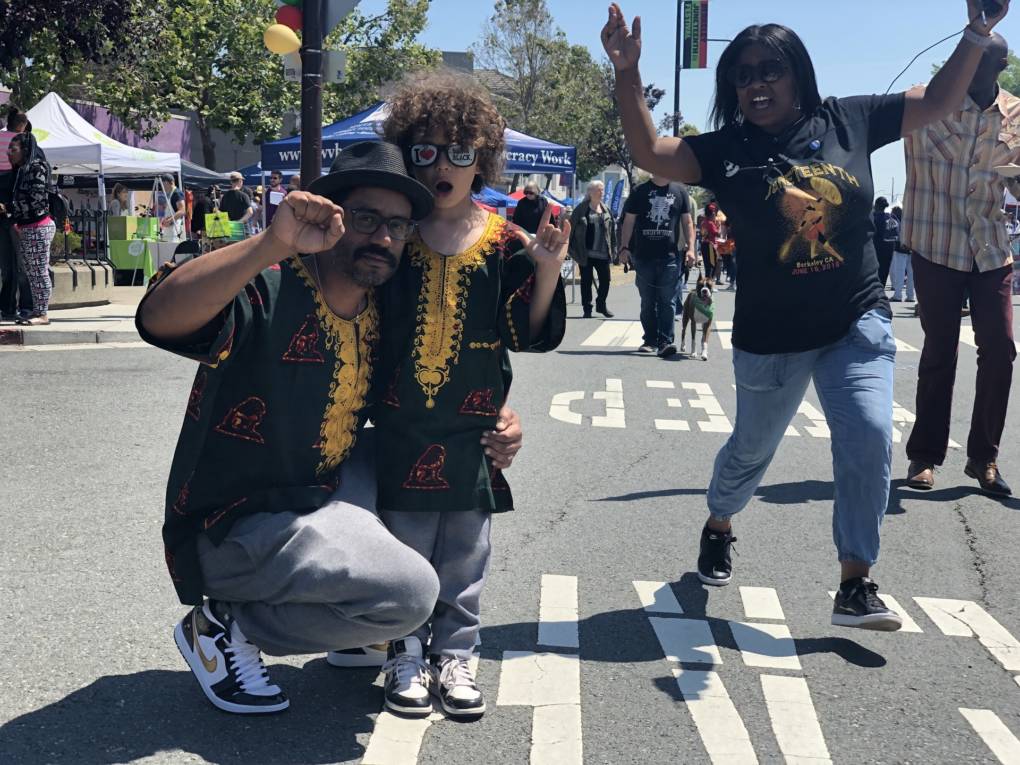
"caption": "Dakh Jones and his son Enrico (and a Juneteenth photobomber) celebrate Black pride in South Berkeley at the 2019 Berkeley Juneteenth Festival.",
"description": "Dakh Jones and his son Enrico (and a Juneteenth photobomber) celebrate black pride in South Berkeley, where Jones was born and raised. 'It's significant that this celebration has not completely phased out, that it's still important for the Berkeley city,' he said.",
"title": "RS37724_IMG_5525-qut",
"credit": "Liliana Michelena/KQED",
"status": "inherit",
"isLoading": false,
"fetchFailed": false
},
"news_11825179": {
"type": "attachments",
"id": "news_11825179",
"meta": {
"index": "attachments_1716263798",
"site": "news",
"id": "11825179",
"found": true
},
"parent": 11825103,
"imgSizes": {
"apple_news_ca_landscape_5_5": {
"file": "https://ww2.kqed.org/app/uploads/sites/10/2020/06/EaziavAU4AIcW5a_v2-1044x674.jpg",
"width": 1044,
"mimeType": "image/jpeg",
"height": 674
},
"apple_news_ca_square_4_0": {
"file": "https://ww2.kqed.org/app/uploads/sites/10/2020/06/EaziavAU4AIcW5a_v2-470x470.jpg",
"width": 470,
"mimeType": "image/jpeg",
"height": 470
},
"twentyfourteen-full-width": {
"file": "https://ww2.kqed.org/app/uploads/sites/10/2020/06/EaziavAU4AIcW5a_v2-1038x576.jpg",
"width": 1038,
"mimeType": "image/jpeg",
"height": 576
},
"thumbnail": {
"file": "https://ww2.kqed.org/app/uploads/sites/10/2020/06/EaziavAU4AIcW5a_v2-160x90.jpg",
"width": 160,
"mimeType": "image/jpeg",
"height": 90
},
"post-thumbnail": {
"file": "https://ww2.kqed.org/app/uploads/sites/10/2020/06/EaziavAU4AIcW5a_v2-672x372.jpg",
"width": 672,
"mimeType": "image/jpeg",
"height": 372
},
"kqedFullSize": {
"file": "https://ww2.kqed.org/app/uploads/sites/10/2020/06/EaziavAU4AIcW5a_v2.jpg",
"width": 1199,
"height": 674
},
"apple_news_ca_landscape_4_7": {
"file": "https://ww2.kqed.org/app/uploads/sites/10/2020/06/EaziavAU4AIcW5a_v2-632x474.jpg",
"width": 632,
"mimeType": "image/jpeg",
"height": 474
},
"large": {
"file": "https://ww2.kqed.org/app/uploads/sites/10/2020/06/EaziavAU4AIcW5a_v2-1020x573.jpg",
"width": 1020,
"mimeType": "image/jpeg",
"height": 573
},
"apple_news_ca_landscape_4_0": {
"file": "https://ww2.kqed.org/app/uploads/sites/10/2020/06/EaziavAU4AIcW5a_v2-536x402.jpg",
"width": 536,
"mimeType": "image/jpeg",
"height": 402
},
"apple_news_ca_portrait_12_9": {
"file": "https://ww2.kqed.org/app/uploads/sites/10/2020/06/EaziavAU4AIcW5a_v2-1122x674.jpg",
"width": 1122,
"mimeType": "image/jpeg",
"height": 674
},
"medium": {
"file": "https://ww2.kqed.org/app/uploads/sites/10/2020/06/EaziavAU4AIcW5a_v2-800x450.jpg",
"width": 800,
"mimeType": "image/jpeg",
"height": 450
},
"apple_news_ca_portrait_4_0": {
"file": "https://ww2.kqed.org/app/uploads/sites/10/2020/06/EaziavAU4AIcW5a_v2-354x472.jpg",
"width": 354,
"mimeType": "image/jpeg",
"height": 472
},
"apple_news_ca_portrait_9_7": {
"file": "https://ww2.kqed.org/app/uploads/sites/10/2020/06/EaziavAU4AIcW5a_v2-840x674.jpg",
"width": 840,
"mimeType": "image/jpeg",
"height": 674
},
"apple_news_ca_square_9_7": {
"file": "https://ww2.kqed.org/app/uploads/sites/10/2020/06/EaziavAU4AIcW5a_v2-1104x674.jpg",
"width": 1104,
"mimeType": "image/jpeg",
"height": 674
},
"apple_news_ca_portrait_4_7": {
"file": "https://ww2.kqed.org/app/uploads/sites/10/2020/06/EaziavAU4AIcW5a_v2-414x552.jpg",
"width": 414,
"mimeType": "image/jpeg",
"height": 552
},
"apple_news_ca_portrait_5_5": {
"file": "https://ww2.kqed.org/app/uploads/sites/10/2020/06/EaziavAU4AIcW5a_v2-687x674.jpg",
"width": 687,
"mimeType": "image/jpeg",
"height": 674
},
"apple_news_ca_square_4_7": {
"file": "https://ww2.kqed.org/app/uploads/sites/10/2020/06/EaziavAU4AIcW5a_v2-550x550.jpg",
"width": 550,
"mimeType": "image/jpeg",
"height": 550
},
"apple_news_ca_square_5_5": {
"file": "https://ww2.kqed.org/app/uploads/sites/10/2020/06/EaziavAU4AIcW5a_v2-912x674.jpg",
"width": 912,
"mimeType": "image/jpeg",
"height": 674
}
},
"publishDate": 1592510336,
"modified": 1592510429,
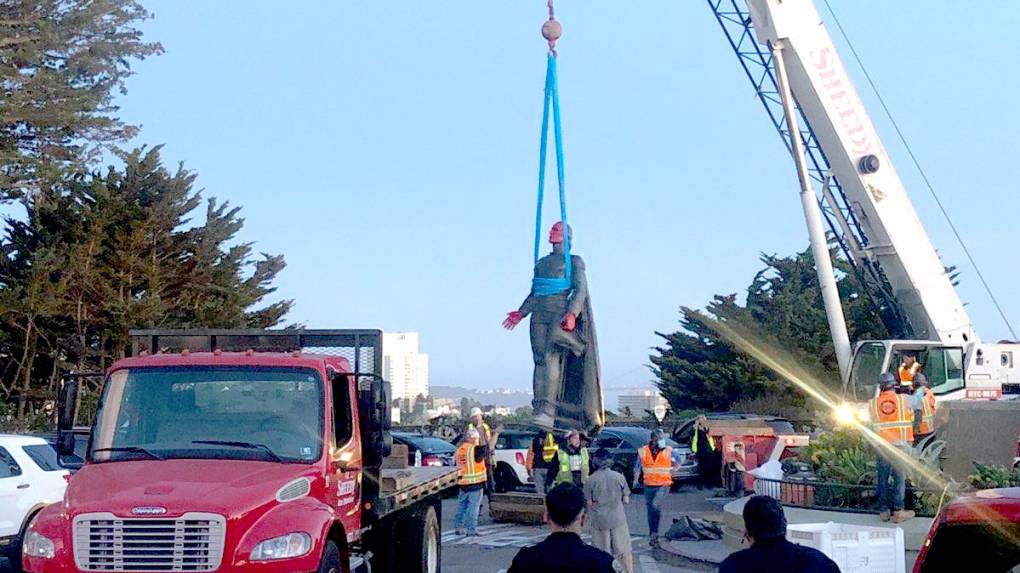
"caption": "City workers removed a Christopher Columbus statue on Telegraph Hill Thursday, June 18. ",
"description": "City workers removed a Christopher Columbus statue on Telegraph Hill Thursday, June 18. ",
"title": "Christopher Columbus statue removal",
"credit": "Courtesy of SFGov",
"status": "inherit",
"isLoading": false,
"fetchFailed": false
},
"news_11798354": {
"type": "attachments",
"id": "news_11798354",
"meta": {
"index": "attachments_1716263798",
"site": "news",
"id": "11798354",
"found": true
},
"parent": 11798264,
"imgSizes": {
"apple_news_ca_landscape_5_5": {
"file": "https://ww2.kqed.org/app/uploads/sites/10/2020/01/RS40941_003_KQED_CoronavirusPressConference_01272020_9033-qut-1044x783.jpg",
"width": 1044,
"mimeType": "image/jpeg",
"height": 783
},
"apple_news_ca_square_4_0": {
"file": "https://ww2.kqed.org/app/uploads/sites/10/2020/01/RS40941_003_KQED_CoronavirusPressConference_01272020_9033-qut-470x470.jpg",
"width": 470,
"mimeType": "image/jpeg",
"height": 470
},
"twentyfourteen-full-width": {
"file": "https://ww2.kqed.org/app/uploads/sites/10/2020/01/RS40941_003_KQED_CoronavirusPressConference_01272020_9033-qut-1038x576.jpg",
"width": 1038,
"mimeType": "image/jpeg",
"height": 576
},
"thumbnail": {
"file": "https://ww2.kqed.org/app/uploads/sites/10/2020/01/RS40941_003_KQED_CoronavirusPressConference_01272020_9033-qut-160x107.jpg",
"width": 160,
"mimeType": "image/jpeg",
"height": 107
},
"post-thumbnail": {
"file": "https://ww2.kqed.org/app/uploads/sites/10/2020/01/RS40941_003_KQED_CoronavirusPressConference_01272020_9033-qut-672x372.jpg",
"width": 672,
"mimeType": "image/jpeg",
"height": 372
},
"kqedFullSize": {
"file": "https://ww2.kqed.org/app/uploads/sites/10/2020/01/RS40941_003_KQED_CoronavirusPressConference_01272020_9033-qut.jpg",
"width": 1920,
"height": 1280
},
"apple_news_ca_landscape_4_7": {
"file": "https://ww2.kqed.org/app/uploads/sites/10/2020/01/RS40941_003_KQED_CoronavirusPressConference_01272020_9033-qut-632x474.jpg",
"width": 632,
"mimeType": "image/jpeg",
"height": 474
},
"large": {
"file": "https://ww2.kqed.org/app/uploads/sites/10/2020/01/RS40941_003_KQED_CoronavirusPressConference_01272020_9033-qut-1020x680.jpg",
"width": 1020,
"mimeType": "image/jpeg",
"height": 680
},
"apple_news_ca_landscape_4_0": {
"file": "https://ww2.kqed.org/app/uploads/sites/10/2020/01/RS40941_003_KQED_CoronavirusPressConference_01272020_9033-qut-536x402.jpg",
"width": 536,
"mimeType": "image/jpeg",
"height": 402
},
"apple_news_ca_portrait_12_9": {
"file": "https://ww2.kqed.org/app/uploads/sites/10/2020/01/RS40941_003_KQED_CoronavirusPressConference_01272020_9033-qut-1122x1280.jpg",
"width": 1122,
"mimeType": "image/jpeg",
"height": 1280
},
"medium": {
"file": "https://ww2.kqed.org/app/uploads/sites/10/2020/01/RS40941_003_KQED_CoronavirusPressConference_01272020_9033-qut-800x533.jpg",
"width": 800,
"mimeType": "image/jpeg",
"height": 533
},
"apple_news_ca_portrait_4_0": {
"file": "https://ww2.kqed.org/app/uploads/sites/10/2020/01/RS40941_003_KQED_CoronavirusPressConference_01272020_9033-qut-354x472.jpg",
"width": 354,
"mimeType": "image/jpeg",
"height": 472
},
"apple_news_ca_portrait_9_7": {
"file": "https://ww2.kqed.org/app/uploads/sites/10/2020/01/RS40941_003_KQED_CoronavirusPressConference_01272020_9033-qut-840x1120.jpg",
"width": 840,
"mimeType": "image/jpeg",
"height": 1120
},
"apple_news_ca_landscape_12_9": {
"file": "https://ww2.kqed.org/app/uploads/sites/10/2020/01/RS40941_003_KQED_CoronavirusPressConference_01272020_9033-qut-1832x1280.jpg",
"width": 1832,
"mimeType": "image/jpeg",
"height": 1280
},
"apple_news_ca_square_9_7": {
"file": "https://ww2.kqed.org/app/uploads/sites/10/2020/01/RS40941_003_KQED_CoronavirusPressConference_01272020_9033-qut-1104x1104.jpg",
"width": 1104,
"mimeType": "image/jpeg",
"height": 1104
},
"apple_news_ca_portrait_4_7": {
"file": "https://ww2.kqed.org/app/uploads/sites/10/2020/01/RS40941_003_KQED_CoronavirusPressConference_01272020_9033-qut-414x552.jpg",
"width": 414,
"mimeType": "image/jpeg",
"height": 552
},
"apple_news_ca_square_12_9": {
"file": "https://ww2.kqed.org/app/uploads/sites/10/2020/01/RS40941_003_KQED_CoronavirusPressConference_01272020_9033-qut-1472x1280.jpg",
"width": 1472,
"mimeType": "image/jpeg",
"height": 1280
},
"apple_news_ca_portrait_5_5": {
"file": "https://ww2.kqed.org/app/uploads/sites/10/2020/01/RS40941_003_KQED_CoronavirusPressConference_01272020_9033-qut-687x916.jpg",
"width": 687,
"mimeType": "image/jpeg",
"height": 916
},
"full-width": {
"file": "https://ww2.kqed.org/app/uploads/sites/10/2020/01/RS40941_003_KQED_CoronavirusPressConference_01272020_9033-qut-1920x1280.jpg",
"width": 1920,
"mimeType": "image/jpeg",
"height": 1280
},
"apple_news_ca_square_4_7": {
"file": "https://ww2.kqed.org/app/uploads/sites/10/2020/01/RS40941_003_KQED_CoronavirusPressConference_01272020_9033-qut-550x550.jpg",
"width": 550,
"mimeType": "image/jpeg",
"height": 550
},
"apple_news_ca_landscape_9_7": {
"file": "https://ww2.kqed.org/app/uploads/sites/10/2020/01/RS40941_003_KQED_CoronavirusPressConference_01272020_9033-qut-1376x1032.jpg",
"width": 1376,
"mimeType": "image/jpeg",
"height": 1032
},
"apple_news_ca_square_5_5": {
"file": "https://ww2.kqed.org/app/uploads/sites/10/2020/01/RS40941_003_KQED_CoronavirusPressConference_01272020_9033-qut-912x912.jpg",
"width": 912,
"mimeType": "image/jpeg",
"height": 912
}
},
"publishDate": 1580171733,
"modified": 1580175399,
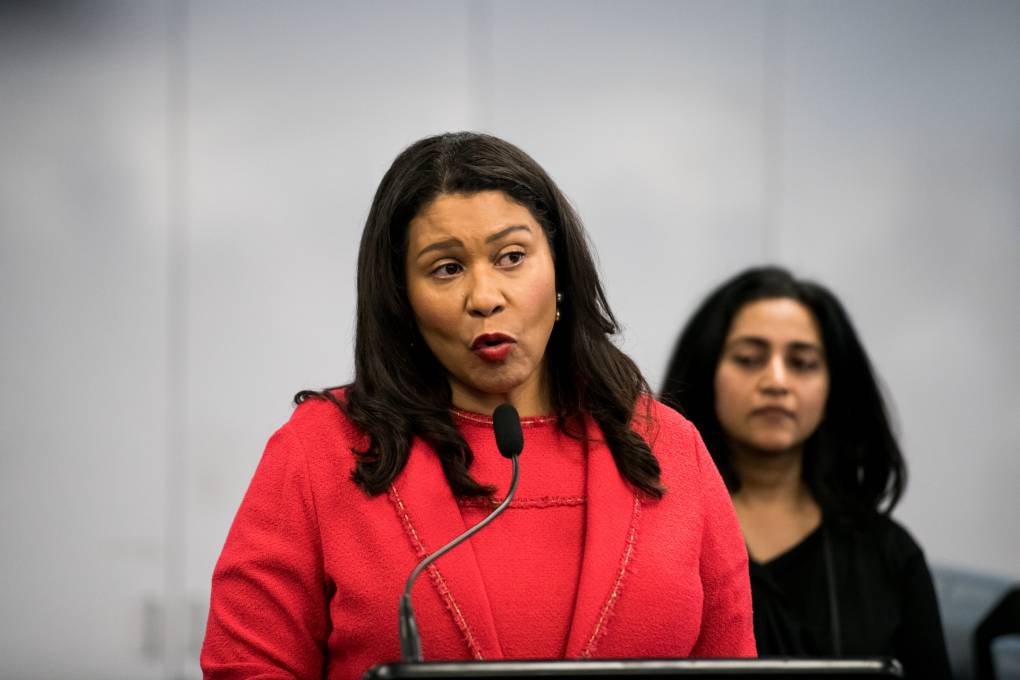
"caption": "San Francisco Mayor London Breed speaks to reporters on Monday about the city's preparedness in case of an outbreak of the coronavirus.",
"description": "San Francisco Mayor London Breed speaks at a press conference about the city's preparedness in the case of an outbreak of the coronavirus, at the Department of Emergency Management in San Francisco on January 27, 2020.",
"title": "RS40941_003_KQED_CoronavirusPressConference_01272020_9033-qut",
"credit": "Beth LaBerge/KQED",
"status": "inherit",
"isLoading": false,
"fetchFailed": false
}
},
"audioPlayerReducer": {
"postId": "stream_live",
"isPaused": true,
"isPlaying": false,
"pfsActive": false,
"pledgeModalIsOpen": true,
"playerDrawerIsOpen": false,
"liveAudioPlayStartedAt": 0,
"liveAudioPlayContext": ""
},
"authorsReducer": {
"byline_news_11826457": {
"type": "authors",
"id": "byline_news_11826457",
"meta": {
"override": true
},
"slug": "byline_news_11826457",
"name": "Kathleen Ronayne and Janie Har \u003cbr> Associated Press ",
"isLoading": false
},
"byline_news_11825537": {
"type": "authors",
"id": "byline_news_11825537",
"meta": {
"override": true
},
"slug": "byline_news_11825537",
"name": "Don Thompson \u003cbr> Associated Press",
"isLoading": false
},
"byline_news_11825532": {
"type": "authors",
"id": "byline_news_11825532",
"meta": {
"override": true
},
"slug": "byline_news_11825532",
"name": "Michael Liedtke \u003cbr> Associated Press",
"isLoading": false
},
"byline_news_11825172": {
"type": "authors",
"id": "byline_news_11825172",
"meta": {
"override": true
},
"slug": "byline_news_11825172",
"name": "\u003ca class=\"stk-reset\" href=\"https://revealnews.org/author/lance-williams/\" target=\"_blank\" rel=\"noopener noreferrer\">Lance Williams\u003c/a>, \u003ca class=\"stk-reset\" href=\"https://revealnews.org/author/laura-morel/\" target=\"_blank\" rel=\"noopener noreferrer\">Laura C. Morel\u003c/a>, \u003ca class=\"stk-reset\" href=\"https://www.kqed.org/author/mlagos\" target=\"_blank\" rel=\"noopener noreferrer\">Marisa Lagos\u003c/a>, \u003ca class=\"stk-reset\" href=\"https://www.wlrn.org/people/caitie-switalski\" target=\"_blank\" rel=\"noopener noreferrer\">Caitie Switalski\u003c/a>, \u003ca class=\"stk-reset\" href=\"https://revealnews.org/author/melissa-lewis\" target=\"_blank\" rel=\"noopener noreferrer\">Melissa Lewis\u003c/a> and \u003ca class=\"stk-reset\" href=\"https://revealnews.org/author/emily-harris/\" target=\"_blank\" rel=\"noopener noreferrer\">Emily Harris",
"isLoading": false
},
"gmarzorati": {
"type": "authors",
"id": "227",
"meta": {
"index": "authors_1716337520",
"id": "227",
"found": true
},
"name": "Guy Marzorati",
"firstName": "Guy",
"lastName": "Marzorati",
"slug": "gmarzorati",
"email": "gmarzorati@KQED.org",
"display_author_email": true,
"staff_mastheads": [
"news"
],
"title": "Correspondent",
"bio": "Guy Marzorati is a correspondent on KQED's California Politics and Government Desk, based in San Jose. A graduate of Santa Clara University, Guy joined KQED in 2013. He reports on state and local politics and produces KQED's digital voter guide.",
"avatar": "https://secure.gravatar.com/avatar/e7038b8dbfd55b104369b76b1cd0b9de?s=600&d=blank&r=g",
"twitter": "guymarzorati",
"facebook": null,
"instagram": null,
"linkedin": null,
"sites": [
{
"site": "",
"roles": [
"editor"
]
},
{
"site": "news",
"roles": [
"editor"
]
},
{
"site": "science",
"roles": [
"editor"
]
},
{
"site": "forum",
"roles": [
"editor"
]
},
{
"site": "elections",
"roles": [
"editor"
]
},
{
"site": "liveblog",
"roles": [
"editor"
]
}
],
"headData": {
"title": "Guy Marzorati | KQED",
"description": "Correspondent",
"ogImgSrc": "https://secure.gravatar.com/avatar/e7038b8dbfd55b104369b76b1cd0b9de?s=600&d=blank&r=g",
"twImgSrc": "https://secure.gravatar.com/avatar/e7038b8dbfd55b104369b76b1cd0b9de?s=600&d=blank&r=g"
},
"isLoading": false,
"link": "/author/gmarzorati"
},
"matthewgreen": {
"type": "authors",
"id": "1263",
"meta": {
"index": "authors_1716337520",
"id": "1263",
"found": true
},
"name": "Matthew Green",
"firstName": "Matthew",
"lastName": "Green",
"slug": "matthewgreen",
"email": "mgreen@kqed.org",
"display_author_email": false,
"staff_mastheads": [],
"title": "KQED Editor/Reporter",
"bio": "Matthew Green is a digital media producer for KQED News. He previously produced \u003ca href=\"http://www.kqed.org/lowdown\">The Lowdown\u003c/a>, KQED’s multimedia news education blog. Matthew's written for numerous Bay Area publications, including the Oakland Tribune and San Francisco Chronicle. He also taught journalism classes at Fremont High School in East Oakland.\r\n\r\nEmail: mgreen@kqed.org; Twitter: @MGreenKQED",
"avatar": "https://secure.gravatar.com/avatar/3bf498d1267ca02c8494f33d8cfc575e?s=600&d=blank&r=g",
"twitter": "MGreenKQED",
"facebook": null,
"instagram": null,
"linkedin": null,
"sites": [
{
"site": "news",
"roles": []
},
{
"site": "lowdown",
"roles": []
},
{
"site": "science",
"roles": []
},
{
"site": "education",
"roles": []
},
{
"site": "quest",
"roles": []
},
{
"site": "liveblog",
"roles": []
}
],
"headData": {
"title": "Matthew Green | KQED",
"description": "KQED Editor/Reporter",
"ogImgSrc": "https://secure.gravatar.com/avatar/3bf498d1267ca02c8494f33d8cfc575e?s=600&d=blank&r=g",
"twImgSrc": "https://secure.gravatar.com/avatar/3bf498d1267ca02c8494f33d8cfc575e?s=600&d=blank&r=g"
},
"isLoading": false,
"link": "/author/matthewgreen"
},
"carlysevern": {
"type": "authors",
"id": "3243",
"meta": {
"index": "authors_1716337520",
"id": "3243",
"found": true
},
"name": "Carly Severn",
"firstName": "Carly",
"lastName": "Severn",
"slug": "carlysevern",
"email": "csevern@kqed.org",
"display_author_email": false,
"staff_mastheads": [
"news"
],
"title": "Senior Editor, Audience News ",
"bio": "Carly is KQED's Senior Editor of Audience News on the Digital News team, and has reported for the California Report Magazine, Bay Curious and KQED Arts. She's formerly the host of \u003ca href=\"http://ww2.kqed.org/pop/category/the-cooler/\" rel=\"noopener noreferrer\">The Cooler\u003c/a> podcast.",
"avatar": "https://secure.gravatar.com/avatar/54037bf5c128fe678f0ef26cec97a93f2e7f220a22d7285703328f12c42c1b1d?s=600&d=blank&r=g",
"twitter": "teacupinthebay",
"bluesky": null,
"facebook": null,
"instagram": null,
"linkedin": null,
"sites": [
{
"site": "",
"roles": [
"editor"
]
},
{
"site": "arts",
"roles": [
"editor"
]
},
{
"site": "news",
"roles": [
"administrator"
]
},
{
"site": "pop",
"roles": [
"editor"
]
},
{
"site": "futureofyou",
"roles": [
"editor"
]
},
{
"site": "about",
"roles": [
"administrator"
]
},
{
"site": "mindshift",
"roles": [
"editor"
]
},
{
"site": "bayareabites",
"roles": [
"editor"
]
},
{
"site": "stateofhealth",
"roles": [
"editor"
]
},
{
"site": "science",
"roles": [
"editor"
]
},
{
"site": "food",
"roles": [
"contributor"
]
},
{
"site": "forum",
"roles": [
"editor"
]
},
{
"site": "perspectives",
"roles": [
"administrator"
]
},
{
"site": "liveblog",
"roles": [
"editor"
]
}
],
"headData": {
"title": "Carly Severn | KQED",
"description": "Senior Editor, Audience News ",
"ogImgSrc": "https://secure.gravatar.com/avatar/54037bf5c128fe678f0ef26cec97a93f2e7f220a22d7285703328f12c42c1b1d?s=600&d=blank&r=g",
"twImgSrc": "https://secure.gravatar.com/avatar/54037bf5c128fe678f0ef26cec97a93f2e7f220a22d7285703328f12c42c1b1d?s=600&d=blank&r=g"
},
"isLoading": false,
"link": "/author/carlysevern"
},
"cveltman": {
"type": "authors",
"id": "8608",
"meta": {
"index": "authors_1716337520",
"id": "8608",
"found": true
},
"name": "Chloe Veltman",
"firstName": "Chloe",
"lastName": "Veltman",
"slug": "cveltman",
"email": "cveltman@kqed.org",
"display_author_email": true,
"staff_mastheads": [],
"title": "Arts and Culture Reporter",
"bio": "Chloe Veltman is a former arts and culture reporter for KQED. Prior to joining the organization, she launched and led the arts bureau at Colorado Public Radio, served as the Bay Area's culture columnist for the New York Times, and was the founder, host and executive producer of VoiceBox, a national award-winning weekly podcast/radio show and live events series all about the human voice. Chloe is the recipient of numerous prizes, grants and fellowships including a Webby Award for her work on interactive storytelling, both the John S Knight Journalism Fellowship and Humanities Center Fellowship at Stanford University, the Sundance Arts Writing Fellowship and a Library of Congress Research Fellowship. She is the author of the book \"On Acting\" and has appeared as a guest lecturer at Yale University and the San Francisco Conservatory of Music among other institutions. She holds a BA in english literature from King's College, Cambridge, and a Masters in Dramaturgy from the Central School of Speech and Drama/Harvard Institute for Advanced Theater Training.\r\n\u003ca href=\"https://www.chloeveltman.com\">www.chloeveltman.com\u003c/a>",
"avatar": "https://secure.gravatar.com/avatar/55403394b00a1ddab683952c2eb2cf85?s=600&d=blank&r=g",
"twitter": "chloeveltman",
"facebook": null,
"instagram": null,
"linkedin": null,
"sites": [
{
"site": "arts",
"roles": []
},
{
"site": "news",
"roles": [
"author"
]
},
{
"site": "pop",
"roles": [
"editor"
]
},
{
"site": "science",
"roles": []
}
],
"headData": {
"title": "Chloe Veltman | KQED",
"description": "Arts and Culture Reporter",
"ogImgSrc": "https://secure.gravatar.com/avatar/55403394b00a1ddab683952c2eb2cf85?s=600&d=blank&r=g",
"twImgSrc": "https://secure.gravatar.com/avatar/55403394b00a1ddab683952c2eb2cf85?s=600&d=blank&r=g"
},
"isLoading": false,
"link": "/author/cveltman"
},
"btaylor": {
"type": "authors",
"id": "11365",
"meta": {
"index": "authors_1716337520",
"id": "11365",
"found": true
},
"name": "Bianca Taylor",
"firstName": "Bianca",
"lastName": "Taylor",
"slug": "btaylor",
"email": "btaylor@KQED.org",
"display_author_email": false,
"staff_mastheads": [
"news"
],
"title": "Host and Producer ",
"bio": "Bianca Taylor is a news producer and host of KQED's The Latest podcast.\r\n\r\nHer work with KQED has been honored by the Society of Professional Journalists NorCal, the Webby's, the Regional Murrow Awards, and ONA. She has also worked with NPR, the BBC World Service, and the Washington Post Creative Group.\r\n\r\nBianca is represented by SAG-AFTRA.",
"avatar": "https://secure.gravatar.com/avatar/6b9d3f6552dd10470c5d1c2e58cfe717?s=600&d=blank&r=g",
"twitter": "SoundsLkeBianca",
"facebook": null,
"instagram": null,
"linkedin": null,
"sites": [
{
"site": "arts",
"roles": [
"editor"
]
},
{
"site": "news",
"roles": [
"edit_others_posts",
"editor"
]
},
{
"site": "pop",
"roles": [
"editor"
]
},
{
"site": "bayareabites",
"roles": [
"author"
]
},
{
"site": "science",
"roles": [
"editor"
]
},
{
"site": "forum",
"roles": [
"editor"
]
},
{
"site": "radio",
"roles": [
"editor"
]
},
{
"site": "podcasts",
"roles": [
"editor"
]
}
],
"headData": {
"title": "Bianca Taylor | KQED",
"description": "Host and Producer ",
"ogImgSrc": "https://secure.gravatar.com/avatar/6b9d3f6552dd10470c5d1c2e58cfe717?s=600&d=blank&r=g",
"twImgSrc": "https://secure.gravatar.com/avatar/6b9d3f6552dd10470c5d1c2e58cfe717?s=600&d=blank&r=g"
},
"isLoading": false,
"link": "/author/btaylor"
},
"jchang": {
"type": "authors",
"id": "11642",
"meta": {
"index": "authors_1716337520",
"id": "11642",
"found": true
},
"name": "Julie Chang",
"firstName": "Julie",
"lastName": "Chang",
"slug": "jchang",
"email": "jchang@kqed.org",
"display_author_email": false,
"staff_mastheads": [
"news"
],
"title": "KQED Contributor",
"bio": "Julie Chang is a reporter and producer (and occasional anchor) with the radio and digital teams at KQED. Before KQED, she worked at WAMU 88.5 in Washington D.C. and 89.3 KPCC in Los Angeles County. Her work has been featured on NPR’s Morning Edition and All Things Considered, Here & Now, the New York Times, and more. Julie graduated from UC Berkeley’s Graduate School of Journalism. She previously taught English at Pasadena City College, Fullerton College and Cal Poly Pomona. Julie earned her M.A. in English from Cal Poly Pomona and her B.A. in English from UCI with a minor in criminology.",
"avatar": "https://secure.gravatar.com/avatar/a7afce94ef127082c5475116b4a3b77d?s=600&d=blank&r=g",
"twitter": "BayAreaJulie",
"facebook": null,
"instagram": null,
"linkedin": "https://www.linkedin.com/in/julieyc/",
"sites": [
{
"site": "",
"roles": [
"editor"
]
},
{
"site": "news",
"roles": [
"author"
]
},
{
"site": "science",
"roles": [
"editor"
]
}
],
"headData": {
"title": "Julie Chang | KQED",
"description": "KQED Contributor",
"ogImgSrc": "https://secure.gravatar.com/avatar/a7afce94ef127082c5475116b4a3b77d?s=600&d=blank&r=g",
"twImgSrc": "https://secure.gravatar.com/avatar/a7afce94ef127082c5475116b4a3b77d?s=600&d=blank&r=g"
},
"isLoading": false,
"link": "/author/jchang"
},
"nsparling": {
"type": "authors",
"id": "11655",
"meta": {
"index": "authors_1716337520",
"id": "11655",
"found": true
},
"name": "Nina Sparling",
"firstName": "Nina",
"lastName": "Sparling",
"slug": "nsparling",
"email": "nsparling@kqed.org",
"display_author_email": false,
"staff_mastheads": [],
"title": "KQED Contributor",
"bio": null,
"avatar": "https://secure.gravatar.com/avatar/4f605141f48bfba20520677de109f9bc?s=600&d=blank&r=g",
"twitter": null,
"facebook": null,
"instagram": null,
"linkedin": null,
"sites": [
{
"site": "",
"roles": [
"editor"
]
},
{
"site": "news",
"roles": [
"author"
]
},
{
"site": "forum",
"roles": [
"editor"
]
},
{
"site": "perspectives",
"roles": [
"editor"
]
}
],
"headData": {
"title": "Nina Sparling | KQED",
"description": "KQED Contributor",
"ogImgSrc": "https://secure.gravatar.com/avatar/4f605141f48bfba20520677de109f9bc?s=600&d=blank&r=g",
"twImgSrc": "https://secure.gravatar.com/avatar/4f605141f48bfba20520677de109f9bc?s=600&d=blank&r=g"
},
"isLoading": false,
"link": "/author/nsparling"
},
"avignet": {
"type": "authors",
"id": "11683",
"meta": {
"index": "authors_1716337520",
"id": "11683",
"found": true
},
"name": "Anna Vignet",
"firstName": "Anna",
"lastName": "Vignet",
"slug": "avignet",
"email": "avignet@kqed.org",
"display_author_email": false,
"staff_mastheads": [
"news"
],
"title": "KQED Contributor",
"bio": null,
"avatar": "https://secure.gravatar.com/avatar/75b1c67fd0f5915bc8c1514aca495240?s=600&d=blank&r=g",
"twitter": null,
"facebook": null,
"instagram": null,
"linkedin": null,
"sites": [
{
"site": "arts",
"roles": [
"author"
]
},
{
"site": "news",
"roles": [
"editor"
]
}
],
"headData": {
"title": "Anna Vignet | KQED",
"description": "KQED Contributor",
"ogImgSrc": "https://secure.gravatar.com/avatar/75b1c67fd0f5915bc8c1514aca495240?s=600&d=blank&r=g",
"twImgSrc": "https://secure.gravatar.com/avatar/75b1c67fd0f5915bc8c1514aca495240?s=600&d=blank&r=g"
},
"isLoading": false,
"link": "/author/avignet"
},
"jrodriguez": {
"type": "authors",
"id": "11690",
"meta": {
"index": "authors_1716337520",
"id": "11690",
"found": true
},
"name": "Joe Fitzgerald Rodriguez",
"firstName": "Joe",
"lastName": "Fitzgerald Rodriguez",
"slug": "jrodriguez",
"email": "jrodriguez@kqed.org",
"display_author_email": true,
"staff_mastheads": [
"news"
],
"title": "Reporter and Producer",
"bio": "Joe Fitzgerald Rodriguez is a reporter and digital producer for KQED covering politics. Joe most recently wrote for the \u003cem>San Francisco Examiner\u003c/em> as a political columnist covering The City. He was raised in San Francisco and has spent his reporting career in his beloved, foggy, city by the bay. Joe was 12-years-old when he conducted his first interview in journalism, grilling former San Francisco Mayor Willie Brown for the Marina Middle School newspaper, \u003cem>The Penguin Press, \u003c/em>and he continues to report on the San Francisco Bay Area to this day.",
"avatar": "https://secure.gravatar.com/avatar/2247beb0564c1e9c62228d5649d2edac?s=600&d=blank&r=g",
"twitter": "FitztheReporter",
"facebook": null,
"instagram": "https://www.instagram.com/fitzthereporter/",
"linkedin": null,
"sites": [
{
"site": "",
"roles": [
"editor"
]
},
{
"site": "arts",
"roles": [
"editor"
]
},
{
"site": "news",
"roles": [
"editor"
]
},
{
"site": "science",
"roles": [
"editor"
]
},
{
"site": "elections",
"roles": [
"editor"
]
},
{
"site": "liveblog",
"roles": [
"editor"
]
}
],
"headData": {
"title": "Joe Fitzgerald Rodriguez | KQED",
"description": "Reporter and Producer",
"ogImgSrc": "https://secure.gravatar.com/avatar/2247beb0564c1e9c62228d5649d2edac?s=600&d=blank&r=g",
"twImgSrc": "https://secure.gravatar.com/avatar/2247beb0564c1e9c62228d5649d2edac?s=600&d=blank&r=g"
},
"isLoading": false,
"link": "/author/jrodriguez"
}
},
"pagesReducer": {
"news_tag_san-francisco": {
"type": "terms",
"id": "news_38",
"meta": {
"index": "terms_1716263798",
"site": "news",
"id": "38",
"score": 6.723207
},
"featImg": null,
"name": "San Francisco",
"description": null,
"taxonomy": "tag",
"headData": {
"twImgId": null,
"twTitle": null,
"ogTitle": null,
"ogImgId": null,
"twDescription": null,
"description": null,
"title": "San Francisco Archives | KQED News",
"ogDescription": null
},
"ttid": 58,
"slug": "san-francisco",
"isLoading": false,
"title": "San Francisco",
"pageMeta": {
"site": "news",
"WpPageTemplate": "page-topic-editorial",
"currentPage": 136
},
"blocks": [
{
"blockName": "kqed/post-list",
"attrs": {
"layout": "cardArticle2",
"query": "posts/news?tag=san-francisco",
"seeMore": false,
"paginated": true,
"page": 136
}
},
{
"blockName": "kqed/ad"
}
]
}
},
"pfsSessionReducer": {},
"postsReducer": {
"stream_live": {
"type": "live",
"id": "stream_live",
"audioUrl": "https://streams.kqed.org/kqedradio",
"title": "Live Stream",
"excerpt": "Live Stream information currently unavailable.",
"link": "/radio",
"featImg": "",
"label": {
"name": "KQED Live",
"link": "/"
}
},
"stream_kqedNewscast": {
"type": "posts",
"id": "stream_kqedNewscast",
"audioUrl": "https://www.kqed.org/.stream/anon/radio/RDnews/newscast.mp3?_=1",
"title": "KQED Newscast",
"featImg": "",
"label": {
"name": "88.5 FM",
"link": "/"
}
},
"news_11826617": {
"type": "posts",
"id": "news_11826617",
"meta": {
"index": "posts_1716263798",
"site": "news",
"id": "11826617",
"score": null,
"sort": [
1593461969000
]
},
"parent": 0,
"labelTerm": {
"site": "news"
},
"blocks": [],
"publishDate": 1593461969,
"format": "standard",
"disqusTitle": "Landlords Sue to Block San Francisco's Eviction Moratorium",
"title": "Landlords Sue to Block San Francisco's Eviction Moratorium",
"headTitle": "KQED News",
"content": "\u003cp>San Francisco's temporary eviction ban is under threat.\u003c/p>\n\u003cp>On Monday morning, just two days before rent checks are due, landlord and realtor groups filed a lawsuit in San Francisco Superior Court to suspend the city's temporary eviction moratorium.\u003c/p>\n\u003cp>That moratorium — the \u003ca href=\"https://sfgov.legistar.com/View.ashx?M=F&ID=8598809&GUID=3F1913C8-52E7-45D9-BE03-EABCB2AEC5BA\">COVID-19 Tenant Protections Ordinance\u003c/a> — halts evictions for nonpayment of rent from April through July, which the San Francisco Board of Supervisors approved in a 10-1 majority in early June to help tenants struggling financially due to coronavirus-related closures.\u003c/p>\n\u003cp>Although tenants must still ultimately repay the rent they owe, the law prevents landlords from evicting tenants who are unable to pay their rent checks during the pandemic. It also halts any late fees or interest.\u003c/p>\n\u003cp>But the groups who filed the suit — the San Francisco Apartment Association, the San Francisco Association of Realtors, Coalition for Better Housing and Small Property Owners of San Francisco Institute — argue the eviction moratorium forces landlords to collect rent through civil claims or by hiring collections agencies, methods they say are costly and rarely successful.\u003c/p>\n\u003cp>[ad fullwidth]\u003c/p>\n\u003cp>\"This law, along with the closure of the court system, would allow renters to live rent-free from March 2020 to potentially September and beyond,\" said Noni Richen, president of the Small Property Owners of San Francisco Institute, in a statement.\u003c/p>\n\u003cp>She added, \"Property owners would have no legal recourse to recoup unpaid rent. Small owners are particularly hard hit by renters who cannot pay.\"\u003c/p>\n\u003cp>[aside label=\"related coverage\" tag=\"eviction-moratorium\"]San Francisco Mayor London Breed first declared an eviction moratorium in mid-March. The Board of Supervisors' legislation, which Breed signed Friday, extends that moratorium \"indefinitely.\"\u003c/p>\n\u003cp>Supervisors say the need for eviction protections has only grown in recent months: Californians have filed more than 6.7 million unemployment claims since the start of stay-at-home orders in mid-March.\u003c/p>\n\u003cp>Supervisor Dean Preston, who led the effort to enact the moratorium, skewered the plaintiffs for threatening tenants.\u003c/p>\n\u003cp>\"In a moment when people need to come together, it is despicable that landlord associations would go to court to push forward mass evictions,\" Preston said in a statement. \"Let's get this straight, under our legislation a tenant is still obligated to pay their rent debt. All we are doing is taking eviction off the table.\"\u003c/p>\n\u003cp>He added, \"Let's call this lawsuit what it is — landlords going to court to displace people who lost income due to COVID from their homes. They should be ashamed of themselves.\"\u003c/p>\n\u003cp>San Francisco City Attorney's Office spokesperson John Cote said, \"This is a time when we should be looking out for each other, not trying to kick people out of their homes. We will continue to protect tenants and defend San Francisco’s law.”\u003c/p>\n\u003cp>The San Francisco Apartment Association said they surveyed landlords and property owners, who said 97% of renters have continued to pay their rent during the crisis.\u003c/p>\n\u003cp>But some smaller property owners are \"particularly impacted and harmed\" when tenants do not pay rent, they argued.\u003c/p>\n\u003cp>Even if the suit is not successful, it still puts tenants who don't pay rent in a precarious position, said Joe Tobener, an attorney at Tobener Ravenscroft LLP, a prominent San Francisco tenants law firm.\u003c/p>\n\u003cp>\"I think the lawsuit is dangerous for tenants,\" Tobener said. \"Anyone expecting to not pay rent and keep a rent control unit should be super cautious to rely on the law.\"\u003c/p>\n\u003cp>Tobener said his firm nets 200 new client calls a week, many from tenants who have not been able to pay rent during the pandemic.\u003c/p>\n\u003cp>\u003c/p>\n\u003cp>\"It's a big deal right now,\" he said, \"because rent is due.\"\u003c/p>\n\n",
"disqusIdentifier": "11826617 https://ww2.kqed.org/news/?p=11826617",
"disqusUrl": "https://ww2.kqed.org/news/2020/06/29/landlords-sue-to-overturn-san-franciscos-eviction-moratorium/",
"stats": {
"hasVideo": false,
"hasChartOrMap": false,
"hasAudio": false,
"hasPolis": false,
"wordCount": 616,
"hasGoogleForm": false,
"hasGallery": false,
"hasHearkenModule": false,
"iframeSrcs": [],
"paragraphCount": 21
},
"modified": 1593474695,
"excerpt": "Just two days before rent is due, landlord and realtor groups filed a lawsuit Monday morning to suspend San Francisco's eviction moratorium.",
"headData": {
"twImgId": "",
"twTitle": "",
"ogTitle": "",
"ogImgId": "",
"twDescription": "",
"description": "Just two days before rent is due, landlord and realtor groups filed a lawsuit Monday morning to suspend San Francisco's eviction moratorium.",
"title": "Landlords Sue to Block San Francisco's Eviction Moratorium | KQED",
"ogDescription": "",
"schema": {
"@context": "https://schema.org",
"@type": "NewsArticle",
"headline": "Landlords Sue to Block San Francisco's Eviction Moratorium",
"datePublished": "2020-06-29T13:19:29-07:00",
"dateModified": "2020-06-29T16:51:35-07:00",
"image": "https://cdn.kqed.org/wp-content/uploads/2020/02/KQED-OG-Image@1x.png",
"isAccessibleForFree": "True",
"publisher": {
"@type": "NewsMediaOrganization",
"@id": "https://www.kqed.org/#organization",
"name": "KQED",
"logo": "https://cdn.kqed.org/wp-content/uploads/2020/02/KQED-OG-Image@1x.png",
"url": "https://www.kqed.org",
"sameAs": [
"https://www.facebook.com/KQED",
"https://twitter.com/KQED",
"https://www.instagram.com/kqed/",
"https://www.tiktok.com/@kqedofficial",
"https://www.linkedin.com/company/kqed",
"https://www.youtube.com/channel/UCeC0IOo7i1P_61zVUWbJ4nw"
]
}
}
},
"guestAuthors": [],
"slug": "landlords-sue-to-overturn-san-franciscos-eviction-moratorium",
"status": "publish",
"path": "/news/11826617/landlords-sue-to-overturn-san-franciscos-eviction-moratorium",
"audioTrackLength": null,
"parsedContent": [
{
"type": "contentString",
"content": "\u003cdiv class=\"post-body\">\u003cp>\u003cp>San Francisco's temporary eviction ban is under threat.\u003c/p>\n\u003cp>On Monday morning, just two days before rent checks are due, landlord and realtor groups filed a lawsuit in San Francisco Superior Court to suspend the city's temporary eviction moratorium.\u003c/p>\n\u003cp>That moratorium — the \u003ca href=\"https://sfgov.legistar.com/View.ashx?M=F&ID=8598809&GUID=3F1913C8-52E7-45D9-BE03-EABCB2AEC5BA\">COVID-19 Tenant Protections Ordinance\u003c/a> — halts evictions for nonpayment of rent from April through July, which the San Francisco Board of Supervisors approved in a 10-1 majority in early June to help tenants struggling financially due to coronavirus-related closures.\u003c/p>\n\u003cp>Although tenants must still ultimately repay the rent they owe, the law prevents landlords from evicting tenants who are unable to pay their rent checks during the pandemic. It also halts any late fees or interest.\u003c/p>\n\u003cp>But the groups who filed the suit — the San Francisco Apartment Association, the San Francisco Association of Realtors, Coalition for Better Housing and Small Property Owners of San Francisco Institute — argue the eviction moratorium forces landlords to collect rent through civil claims or by hiring collections agencies, methods they say are costly and rarely successful.\u003c/p>\n\u003cp>\u003c/p>\u003c/div>",
"attributes": {
"named": {},
"numeric": []
}
},
{
"type": "component",
"content": "",
"name": "ad",
"attributes": {
"named": {
"label": "fullwidth"
},
"numeric": [
"fullwidth"
]
}
},
{
"type": "contentString",
"content": "\u003cdiv class=\"post-body\">\u003cp>\u003c/p>\n\u003cp>\"This law, along with the closure of the court system, would allow renters to live rent-free from March 2020 to potentially September and beyond,\" said Noni Richen, president of the Small Property Owners of San Francisco Institute, in a statement.\u003c/p>\n\u003cp>She added, \"Property owners would have no legal recourse to recoup unpaid rent. Small owners are particularly hard hit by renters who cannot pay.\"\u003c/p>\n\u003cp>\u003c/p>\u003c/div>",
"attributes": {
"named": {},
"numeric": []
}
},
{
"type": "component",
"content": "",
"name": "aside",
"attributes": {
"named": {
"label": "related coverage ",
"tag": "eviction-moratorium"
},
"numeric": []
}
},
{
"type": "contentString",
"content": "\u003cdiv class=\"post-body\">\u003cp>San Francisco Mayor London Breed first declared an eviction moratorium in mid-March. The Board of Supervisors' legislation, which Breed signed Friday, extends that moratorium \"indefinitely.\"\u003c/p>\n\u003cp>Supervisors say the need for eviction protections has only grown in recent months: Californians have filed more than 6.7 million unemployment claims since the start of stay-at-home orders in mid-March.\u003c/p>\n\u003cp>Supervisor Dean Preston, who led the effort to enact the moratorium, skewered the plaintiffs for threatening tenants.\u003c/p>\n\u003cp>\"In a moment when people need to come together, it is despicable that landlord associations would go to court to push forward mass evictions,\" Preston said in a statement. \"Let's get this straight, under our legislation a tenant is still obligated to pay their rent debt. All we are doing is taking eviction off the table.\"\u003c/p>\n\u003cp>He added, \"Let's call this lawsuit what it is — landlords going to court to displace people who lost income due to COVID from their homes. They should be ashamed of themselves.\"\u003c/p>\n\u003cp>San Francisco City Attorney's Office spokesperson John Cote said, \"This is a time when we should be looking out for each other, not trying to kick people out of their homes. We will continue to protect tenants and defend San Francisco’s law.”\u003c/p>\n\u003cp>The San Francisco Apartment Association said they surveyed landlords and property owners, who said 97% of renters have continued to pay their rent during the crisis.\u003c/p>\n\u003cp>But some smaller property owners are \"particularly impacted and harmed\" when tenants do not pay rent, they argued.\u003c/p>\n\u003cp>Even if the suit is not successful, it still puts tenants who don't pay rent in a precarious position, said Joe Tobener, an attorney at Tobener Ravenscroft LLP, a prominent San Francisco tenants law firm.\u003c/p>\n\u003cp>\"I think the lawsuit is dangerous for tenants,\" Tobener said. \"Anyone expecting to not pay rent and keep a rent control unit should be super cautious to rely on the law.\"\u003c/p>\n\u003cp>Tobener said his firm nets 200 new client calls a week, many from tenants who have not been able to pay rent during the pandemic.\u003c/p>\n\u003cp>\u003c/p>\n\u003cp>\"It's a big deal right now,\" he said, \"because rent is due.\"\u003c/p>\n\n\u003c/div>\u003c/p>",
"attributes": {
"named": {},
"numeric": []
}
}
],
"link": "/news/11826617/landlords-sue-to-overturn-san-franciscos-eviction-moratorium",
"authors": [
"11690"
],
"categories": [
"news_6266",
"news_8"
],
"tags": [
"news_3921",
"news_27350",
"news_27504",
"news_27701",
"news_18372",
"news_27626",
"news_1775",
"news_38",
"news_28172",
"news_6142"
],
"featImg": "news_11815347",
"label": "news"
},
"news_11826511": {
"type": "posts",
"id": "news_11826511",
"meta": {
"index": "posts_1716263798",
"site": "news",
"id": "11826511",
"score": null,
"sort": [
1593387424000
]
},
"guestAuthors": [],
"slug": "police-raise-batons-at-sf-pride-marchers-oakland-passes-torch-in-solidarity",
"title": "Police Raise Batons at SF Pride Marchers, Oakland Passes Torch in Solidarity",
"publishDate": 1593387424,
"format": "standard",
"headTitle": "Police Raise Batons at SF Pride Marchers, Oakland Passes Torch in Solidarity | KQED",
"labelTerm": {
"site": "news"
},
"content": "\u003cp>\u003cspan style=\"font-weight: 400\">At an impromptu San Francisco Pride protest march, demonstrators called for solidarity between the LGBTQ community and the Black Lives Matter movement, drawing parallels between decades-long police violence to both communities.\u003c/span>\u003c/p>\n\u003cp>\u003cspan style=\"font-weight: 400\">Carrying echoes of those cries, police wielded batons at San Francisco Pride marchers in a tense clash, Sunday afternoon.\u003c/span>\u003c/p>\n\u003cp>\u003cspan style=\"font-weight: 400\">While the city’s official 50th annual Pride celebration went virtual due to the COVID-19 pandemic, in-person celebrations sparked a gathering at Mission Dolores Park, with hundreds taking to the streets for a “Pride is a Riot” march.\u003c/span>\u003c/p>\n\u003cp>\u003cspan style=\"font-weight: 400\">An anonymous group of organizers came together to put on the decentralized protest, which called back the anarchist roots of Pride in solidarity with the recent nationwide protests against police violence.\u003c/span>\u003c/p>\n\u003cp>https://twitter.com/KQEDnews/status/1277457603728007170\u003c/p>\n\u003cp>[ad fullwidth]\u003c/p>\n\u003cp>\u003cspan style=\"font-weight: 400\">But, when Pride demonstrators marched from Dolores Park and tried to turn left onto Valencia from 18th Street, a white police van drove south down Valencia Street and parked across it. That lone police van and roughly a half dozen police officers formed a line to try and stop hundreds of marchers from heading up Valencia.\u003c/span>\u003c/p>\n\u003cp>\u003cspan style=\"font-weight: 400\">Protesters shouted “quit your job!” and “you’re killing black people.” The officers then tried to leave and inch forward, but could not exit the crowd, which surrounded them. Pride marchers spray painted the van. Officers exited the van again, as demonstrators kicked the van and hit it with their fists. Officers rushed towards them with batons raised and pushed members of the crowd away. \u003c/span>\u003c/p>\n\u003cp>\u003cspan style=\"font-weight: 400\">One marcher spray painted an officer in the face with red paint. Eventually, the van exited the crowd to an alleyway. San Francisco Police Department spokespeople said they were “not aware” of any injuries or arrests, but said “we are aware that bottles were thrown at officers who were at Mission Station” and officers were also “assaulted” with “improvised wooden shields.” \u003c/span>\u003c/p>\n\u003cp>\u003cspan style=\"font-weight: 400\">The march continued towards Market Street. By evening, the protesters reached the Castro and started a dance party.\u003c/span>\u003c/p>\n\u003cp>\u003cspan style=\"font-weight: 400\">Before the incident, speakers at the Pride celebration drew a parallel between the criminalization of being gay and transgender and the recent police violence and protests across the country.\u003c/span>\u003c/p>\n\u003cp>\u003cspan style=\"font-weight: 400\">Local activist Norma Gallegos was there and said she feels over the last decade, Pride has been “gentrified, corporatized and commercialized.”\u003c/span>\u003c/p>\n\u003cp>\u003cspan style=\"font-weight: 400\">“Stonewall was the historical movement in New York, where Marsha P. Johnson, the Black trans woman, threw the first rock in the Stonewall Inn,” Gallegos said, “but here in San Francisco, we have Compton’s Cafeteria where it’s also about fighting the police brutality that was happening in the trans community at the time in the late 60s and early 70s.”\u003c/span>\u003c/p>\n\u003cp>\u003cspan style=\"font-weight: 400\">Gallegos said she wants to see systemic change and Pride return to its roots. She said \u003c/span>\u003cspan style=\"font-weight: 400\">Pride has historically been anti-capitalist, queer and militant with the issues that have plagued and created barriers for Black, Indigenous, People of Color.\u003c/span>\u003c/p>\n\u003cp>\u003cspan style=\"font-weight: 400\">Last year’s San Francisco Pride march also saw police arresting activists from the transgender community, leading to harsh critique from the community. \u003ca href=\"https://www.sfexaminer.com/news/sf-police-chief-apologizes-for-historic-abuse-against-transgender-community/\">SFPD Police Chief Bill Scott later publicly apologized\u003c/a> for decades of “past actions” against the transgender community. \u003c/span>\u003c/p>\n\u003cp>“We want to listen to you and want to truly hear you,” Scott said, publicly. “We will atone for our past.”\u003c/p>\n\u003cp>\u003cb>Uniting of Two Cities and Two Prides\u003c/b>\u003c/p>\n\u003cp>\u003cspan style=\"font-weight: 400\">On Saturday, the Bay Area community passed a pink torch from Oakland to San Francisco in a first ever joint-city Pride event.\u003c/span>\u003c/p>\n\u003cp>\u003cspan style=\"font-weight: 400\">Over a dozen people gathered outside Oakland City Hall where mayor Libby Schaaf kicked off the celebration by passing a pink torch to Joe Hawkins, the founder of Oakland Pride and CEO of the Oakland LGBTQ Community Center.\u003c/span>\u003c/p>\n\u003cfigure id=\"attachment_11826569\" class=\"wp-caption alignnone\" style=\"max-width: 800px\">\u003cimg loading=\"lazy\" decoding=\"async\" class=\"size-medium wp-image-11826569\" src=\"https://ww2.kqed.org/app/uploads/sites/10/2020/06/Pink-Torch-1-800x600.jpg\" alt=\"Oakland mayor Libby Schaaf and Joe Hawkins, founder of Oakland Pride and CEO of the Oakland LGBTQ Community Center, hold up the Pink Torch as they kick off the procession outside Oakland City Hall.\" width=\"800\" height=\"600\" srcset=\"https://cdn.kqed.org/wp-content/uploads/sites/10/2020/06/Pink-Torch-1-800x600.jpg 800w, https://cdn.kqed.org/wp-content/uploads/sites/10/2020/06/Pink-Torch-1-1020x765.jpg 1020w, https://cdn.kqed.org/wp-content/uploads/sites/10/2020/06/Pink-Torch-1-160x120.jpg 160w, https://cdn.kqed.org/wp-content/uploads/sites/10/2020/06/Pink-Torch-1-1044x783.jpg 1044w, https://cdn.kqed.org/wp-content/uploads/sites/10/2020/06/Pink-Torch-1-632x474.jpg 632w, https://cdn.kqed.org/wp-content/uploads/sites/10/2020/06/Pink-Torch-1-536x402.jpg 536w, https://cdn.kqed.org/wp-content/uploads/sites/10/2020/06/Pink-Torch-1.jpg 1160w\" sizes=\"(max-width: 800px) 100vw, 800px\">\u003cfigcaption class=\"wp-caption-text\">Oakland mayor Libby Schaaf and Joe Hawkins, founder of Oakland Pride and CEO of the Oakland LGBTQ Community Center, hold up the Pink Torch as they kick off the procession outside Oakland City Hall. \u003ccite>(Julie Chang/KQED)\u003c/cite>\u003c/figcaption>\u003c/figure>\n\u003cp>\u003cspan style=\"font-weight: 400\">“You are such a leader in our city,” Schaaf told Hawkins, “You create a space of love and joy for our LGBTQI community, our family. And you have been doing that for years, even before you had a physical space, you were creating that space.”\u003c/span>\u003c/p>\n\u003cp>\u003cspan style=\"font-weight: 400\">Hawkins took the torch from Schaaf and addressed the Black Lives Matter movement.\u003c/span>\u003c/p>\n\u003cp>\u003cspan style=\"font-weight: 400\">“Black people in this country were enslaved for longer than we have been free,” Hawkins said. “And Black LGBTQ lives matter, too. We have, for a very long time, been the targets and in between pillars of hate: homophobia from our own community — of Black people — and racism from white queer people and white heterosexual people. Today, this symbolic uniting of the Bay Area is hopefully a step forward,” he added.\u003c/span>\u003c/p>\n\u003cp>\u003cspan style=\"font-weight: 400\">Hawkins told KQED that in the past there has been a division between Oakland and San Francisco, but this event would help bring them together at a time when everyone is locked down and sheltering in place. “It brings us all together \u003c/span>\u003ci>\u003cspan style=\"font-weight: 400\">finally\u003c/span>\u003c/i>\u003cspan style=\"font-weight: 400\">, like this has never happened. So we’re very grateful, and we’re so happy to have this pink torch to help carry us into the future,” he said.\u003c/span>\u003c/p>\n\u003cp>\u003cspan style=\"font-weight: 400\">Hawkins walked over to Feelmore, a sex toy shop in downtown Oakland, and passed the torch over to Nenna Joiner, owner of the shop.\u003c/span>\u003c/p>\n\u003cfigure id=\"attachment_11826572\" class=\"wp-caption alignnone\" style=\"max-width: 800px\">\u003cimg loading=\"lazy\" decoding=\"async\" class=\"size-medium wp-image-11826572\" src=\"https://ww2.kqed.org/app/uploads/sites/10/2020/06/Pink-Torch-4-800x600.jpg\" alt=\"Joe Hawkins, founder of Oakland Pride and CEO of the Oakland LGBTQ Community Center, passes off the Pink Torch to Nenna Joiner, owner of sex toy shop Feelmore in downtown Oakland.\" width=\"800\" height=\"600\" srcset=\"https://cdn.kqed.org/wp-content/uploads/sites/10/2020/06/Pink-Torch-4-800x600.jpg 800w, https://cdn.kqed.org/wp-content/uploads/sites/10/2020/06/Pink-Torch-4-1020x765.jpg 1020w, https://cdn.kqed.org/wp-content/uploads/sites/10/2020/06/Pink-Torch-4-160x120.jpg 160w, https://cdn.kqed.org/wp-content/uploads/sites/10/2020/06/Pink-Torch-4-1044x783.jpg 1044w, https://cdn.kqed.org/wp-content/uploads/sites/10/2020/06/Pink-Torch-4-632x474.jpg 632w, https://cdn.kqed.org/wp-content/uploads/sites/10/2020/06/Pink-Torch-4-536x402.jpg 536w, https://cdn.kqed.org/wp-content/uploads/sites/10/2020/06/Pink-Torch-4.jpg 1160w\" sizes=\"(max-width: 800px) 100vw, 800px\">\u003cfigcaption class=\"wp-caption-text\">Joe Hawkins, founder of Oakland Pride and CEO of the Oakland LGBTQ Community Center, passes off the pink torch to Nenna Joiner, owner of sex toy shop Feelmore in downtown Oakland. \u003ccite>(Julie Chang/KQED)\u003c/cite>\u003c/figcaption>\u003c/figure>\n\u003cp>\u003cspan style=\"font-weight: 400\">The pink torch continued its journey as it circled Lake Merritt, with torchbearers passing it from one person to the next at locations significant to the LGBTQ and black community, including the Oakland LGBTQ Community Center, the site of the infamous “BBQ Becky” incident and a historic Black Panthers site.\u003c/span>\u003c/p>\n\u003cp>\u003cspan style=\"font-weight: 400\">The torch eventually made its way across the Bay Bridge and was handed off for a final time at Twin Peaks, where it was used to symbolically light an art installation of a massive pink triangle made of LED lights.\u003c/span>\u003c/p>\n\u003cp>https://twitter.com/karlmondon/status/1277096289470038018\u003c/p>\n\u003cp>\u003cspan style=\"font-weight: 400\">This is the first time the Pink Triangle was made with lights instead of fabric since its debut 25 years ago. The creator of the annual Pink Triangle ritual, Patrick Carney, said the canvas used for the triangle would typically be laid out with the help of hundreds of volunteers, but due to social distancing restrictions amid the pandemic, they wouldn’t be able to do that this year.\u003c/span>\u003c/p>\n\u003cp>\u003cspan style=\"font-weight: 400\">Carney teamed up with Illuminate, the group responsible for the dancing lights on the San Francisco-Oakland Bay Bridge known as the Bay Lights, to turn the Triangle into an art installation which features 2,700 hot pink LED lights and covers nearly an acre of ground.\u003c/span>\u003c/p>\n\u003cp>\u003cspan style=\"font-weight: 400\">The Triangle will stay illuminated until July 10.\u003c/span>\u003c/p>\n\u003cp>\u003cspan style=\"font-weight: 400\">The pink triangle was used as a symbol of hate during the Holocaust when gay men were forced to wear it on their chest as an identifier, but organizers say it has been embraced by the gay community as a symbol of empowerment and pride.\u003c/span>\u003c/p>\n\u003cp>\u003cb>Vandalism\u003c/b> \u003cb>strikes Pride\u003c/b>\u003c/p>\n\u003cp>\u003cspan style=\"font-weight: 400\">Just hours before the torch procession took place, Hawkin’s LGBTQ Center was attacked.\u003c/span>\u003c/p>\n\u003cfigure id=\"attachment_11826589\" class=\"wp-caption alignnone\" style=\"max-width: 800px\">\u003cimg loading=\"lazy\" decoding=\"async\" class=\"size-medium wp-image-11826589\" src=\"https://ww2.kqed.org/app/uploads/sites/10/2020/06/Oakland-LGBTQ-Center-vandalized-800x800.jpg\" alt=\"Oakland LGBTQ Community Center vandalized. Witnesses say a man approached the building Saturday morning and shattered its windows with a golf club while yelling racist and homophobic comments. The Oakland Police Department is investigating the incident.\" width=\"800\" height=\"800\" srcset=\"https://cdn.kqed.org/wp-content/uploads/sites/10/2020/06/Oakland-LGBTQ-Center-vandalized-800x800.jpg 800w, https://cdn.kqed.org/wp-content/uploads/sites/10/2020/06/Oakland-LGBTQ-Center-vandalized-1020x1020.jpg 1020w, https://cdn.kqed.org/wp-content/uploads/sites/10/2020/06/Oakland-LGBTQ-Center-vandalized-160x160.jpg 160w, https://cdn.kqed.org/wp-content/uploads/sites/10/2020/06/Oakland-LGBTQ-Center-vandalized-1104x1104.jpg 1104w, https://cdn.kqed.org/wp-content/uploads/sites/10/2020/06/Oakland-LGBTQ-Center-vandalized-912x912.jpg 912w, https://cdn.kqed.org/wp-content/uploads/sites/10/2020/06/Oakland-LGBTQ-Center-vandalized-550x550.jpg 550w, https://cdn.kqed.org/wp-content/uploads/sites/10/2020/06/Oakland-LGBTQ-Center-vandalized-470x470.jpg 470w, https://cdn.kqed.org/wp-content/uploads/sites/10/2020/06/Oakland-LGBTQ-Center-vandalized.jpg 1200w\" sizes=\"(max-width: 800px) 100vw, 800px\">\u003cfigcaption class=\"wp-caption-text\">Oakland LGBTQ Community Center vandalized. Witnesses say a man approached the building Saturday morning and shattered its windows with a golf club while yelling racist and homophobic comments. The Oakland Police Department is investigating the incident. \u003ccite>(Courtesy of the Oakland LGBTQ Community Center)\u003c/cite>\u003c/figcaption>\u003c/figure>\n\u003cp>\u003cspan style=\"font-weight: 400\">Witnesses say a man approached the building around 10 a.m. Saturday and shattered its windows with a golf club while yelling racist and homophobic comments.\u003c/span>\u003c/p>\n\u003cp>\u003cspan style=\"font-weight: 400\">“I was crushed like the glass, but I was also more determined to keep our center open and to encourage people and tell them we are not broken,” Hawkins said.\u003c/span>\u003c/p>\n\u003cp>\u003cspan style=\"font-weight: 400\">The center will be up-and-running shortly and plans on opening a LGBTQ health clinic in September.\u003c/span>\u003c/p>\n\u003cp>[ad floatright]\u003c/p>\n\u003cp>\u003cspan style=\"font-weight: 400\">The Oakland Police Department says it’s investigating the incident.\u003c/span>\u003c/p>\n\n",
"blocks": [],
"excerpt": "Police wielded batons at San Francisco Pride marchers in a tense clash, Sunday afternoon. A Pride gathering at Dolores Park saw hundreds taking to the streets for a 'Pride is a Riot' march.",
"status": "publish",
"parent": 0,
"modified": 1721125468,
"stats": {
"hasAudio": false,
"hasVideo": false,
"hasChartOrMap": false,
"iframeSrcs": [],
"hasGoogleForm": false,
"hasGallery": false,
"hasHearkenModule": false,
"hasPolis": false,
"paragraphCount": 36,
"wordCount": 1373
},
"headData": {
"title": "Police Raise Batons at SF Pride Marchers, Oakland Passes Torch in Solidarity | KQED",
"description": "Police wielded batons at San Francisco Pride marchers in a tense clash, Sunday afternoon. A Pride gathering at Dolores Park saw hundreds taking to the streets for a 'Pride is a Riot' march.",
"ogTitle": "",
"ogDescription": "",
"ogImgId": "",
"twTitle": "",
"twDescription": "",
"twImgId": "",
"schema": {
"@context": "https://schema.org",
"@type": "NewsArticle",
"headline": "Police Raise Batons at SF Pride Marchers, Oakland Passes Torch in Solidarity",
"datePublished": "2020-06-28T16:37:04-07:00",
"dateModified": "2024-07-16T03:24:28-07:00",
"image": "https://cdn.kqed.org/wp-content/uploads/2020/02/KQED-OG-Image@1x.png",
"isAccessibleForFree": "True",
"publisher": {
"@type": "NewsMediaOrganization",
"@id": "https://www.kqed.org/#organization",
"name": "KQED",
"logo": "https://cdn.kqed.org/wp-content/uploads/2020/02/KQED-OG-Image@1x.png",
"url": "https://www.kqed.org",
"sameAs": [
"https://www.facebook.com/KQED",
"https://twitter.com/KQED",
"https://www.instagram.com/kqed/",
"https://www.tiktok.com/@kqedofficial",
"https://www.linkedin.com/company/kqed",
"https://www.youtube.com/channel/UCeC0IOo7i1P_61zVUWbJ4nw"
]
}
}
},
"sticky": false,
"path": "/news/11826511/police-raise-batons-at-sf-pride-marchers-oakland-passes-torch-in-solidarity",
"audioTrackLength": null,
"parsedContent": [
{
"type": "contentString",
"content": "\u003cdiv class=\"post-body\">\u003cp>\u003cp>\u003cspan style=\"font-weight: 400\">At an impromptu San Francisco Pride protest march, demonstrators called for solidarity between the LGBTQ community and the Black Lives Matter movement, drawing parallels between decades-long police violence to both communities.\u003c/span>\u003c/p>\n\u003cp>\u003cspan style=\"font-weight: 400\">Carrying echoes of those cries, police wielded batons at San Francisco Pride marchers in a tense clash, Sunday afternoon.\u003c/span>\u003c/p>\n\u003cp>\u003cspan style=\"font-weight: 400\">While the city’s official 50th annual Pride celebration went virtual due to the COVID-19 pandemic, in-person celebrations sparked a gathering at Mission Dolores Park, with hundreds taking to the streets for a “Pride is a Riot” march.\u003c/span>\u003c/p>\n\u003cp>\u003cspan style=\"font-weight: 400\">An anonymous group of organizers came together to put on the decentralized protest, which called back the anarchist roots of Pride in solidarity with the recent nationwide protests against police violence.\u003c/span>\u003c/p>\u003c/p>\u003c/div>",
"attributes": {
"named": {},
"numeric": []
}
},
{
"type": "component",
"content": "",
"name": "singleTwitterStatus",
"attributes": {
"named": {
"id": "1277457603728007170"
},
"numeric": []
}
},
{
"type": "contentString",
"content": "\u003cdiv class=\"post-body\">\u003cp>\n\u003cp>\u003c/p>\u003c/div>",
"attributes": {
"named": {},
"numeric": []
}
},
{
"type": "component",
"content": "",
"name": "ad",
"attributes": {
"named": {
"label": "fullwidth"
},
"numeric": [
"fullwidth"
]
}
},
{
"type": "contentString",
"content": "\u003cdiv class=\"post-body\">\u003cp>\u003c/p>\n\u003cp>\u003cspan style=\"font-weight: 400\">But, when Pride demonstrators marched from Dolores Park and tried to turn left onto Valencia from 18th Street, a white police van drove south down Valencia Street and parked across it. That lone police van and roughly a half dozen police officers formed a line to try and stop hundreds of marchers from heading up Valencia.\u003c/span>\u003c/p>\n\u003cp>\u003cspan style=\"font-weight: 400\">Protesters shouted “quit your job!” and “you’re killing black people.” The officers then tried to leave and inch forward, but could not exit the crowd, which surrounded them. Pride marchers spray painted the van. Officers exited the van again, as demonstrators kicked the van and hit it with their fists. Officers rushed towards them with batons raised and pushed members of the crowd away. \u003c/span>\u003c/p>\n\u003cp>\u003cspan style=\"font-weight: 400\">One marcher spray painted an officer in the face with red paint. Eventually, the van exited the crowd to an alleyway. San Francisco Police Department spokespeople said they were “not aware” of any injuries or arrests, but said “we are aware that bottles were thrown at officers who were at Mission Station” and officers were also “assaulted” with “improvised wooden shields.” \u003c/span>\u003c/p>\n\u003cp>\u003cspan style=\"font-weight: 400\">The march continued towards Market Street. By evening, the protesters reached the Castro and started a dance party.\u003c/span>\u003c/p>\n\u003cp>\u003cspan style=\"font-weight: 400\">Before the incident, speakers at the Pride celebration drew a parallel between the criminalization of being gay and transgender and the recent police violence and protests across the country.\u003c/span>\u003c/p>\n\u003cp>\u003cspan style=\"font-weight: 400\">Local activist Norma Gallegos was there and said she feels over the last decade, Pride has been “gentrified, corporatized and commercialized.”\u003c/span>\u003c/p>\n\u003cp>\u003cspan style=\"font-weight: 400\">“Stonewall was the historical movement in New York, where Marsha P. Johnson, the Black trans woman, threw the first rock in the Stonewall Inn,” Gallegos said, “but here in San Francisco, we have Compton’s Cafeteria where it’s also about fighting the police brutality that was happening in the trans community at the time in the late 60s and early 70s.”\u003c/span>\u003c/p>\n\u003cp>\u003cspan style=\"font-weight: 400\">Gallegos said she wants to see systemic change and Pride return to its roots. She said \u003c/span>\u003cspan style=\"font-weight: 400\">Pride has historically been anti-capitalist, queer and militant with the issues that have plagued and created barriers for Black, Indigenous, People of Color.\u003c/span>\u003c/p>\n\u003cp>\u003cspan style=\"font-weight: 400\">Last year’s San Francisco Pride march also saw police arresting activists from the transgender community, leading to harsh critique from the community. \u003ca href=\"https://www.sfexaminer.com/news/sf-police-chief-apologizes-for-historic-abuse-against-transgender-community/\">SFPD Police Chief Bill Scott later publicly apologized\u003c/a> for decades of “past actions” against the transgender community. \u003c/span>\u003c/p>\n\u003cp>“We want to listen to you and want to truly hear you,” Scott said, publicly. “We will atone for our past.”\u003c/p>\n\u003cp>\u003cb>Uniting of Two Cities and Two Prides\u003c/b>\u003c/p>\n\u003cp>\u003cspan style=\"font-weight: 400\">On Saturday, the Bay Area community passed a pink torch from Oakland to San Francisco in a first ever joint-city Pride event.\u003c/span>\u003c/p>\n\u003cp>\u003cspan style=\"font-weight: 400\">Over a dozen people gathered outside Oakland City Hall where mayor Libby Schaaf kicked off the celebration by passing a pink torch to Joe Hawkins, the founder of Oakland Pride and CEO of the Oakland LGBTQ Community Center.\u003c/span>\u003c/p>\n\u003cfigure id=\"attachment_11826569\" class=\"wp-caption alignnone\" style=\"max-width: 800px\">\u003cimg loading=\"lazy\" decoding=\"async\" class=\"size-medium wp-image-11826569\" src=\"https://ww2.kqed.org/app/uploads/sites/10/2020/06/Pink-Torch-1-800x600.jpg\" alt=\"Oakland mayor Libby Schaaf and Joe Hawkins, founder of Oakland Pride and CEO of the Oakland LGBTQ Community Center, hold up the Pink Torch as they kick off the procession outside Oakland City Hall.\" width=\"800\" height=\"600\" srcset=\"https://cdn.kqed.org/wp-content/uploads/sites/10/2020/06/Pink-Torch-1-800x600.jpg 800w, https://cdn.kqed.org/wp-content/uploads/sites/10/2020/06/Pink-Torch-1-1020x765.jpg 1020w, https://cdn.kqed.org/wp-content/uploads/sites/10/2020/06/Pink-Torch-1-160x120.jpg 160w, https://cdn.kqed.org/wp-content/uploads/sites/10/2020/06/Pink-Torch-1-1044x783.jpg 1044w, https://cdn.kqed.org/wp-content/uploads/sites/10/2020/06/Pink-Torch-1-632x474.jpg 632w, https://cdn.kqed.org/wp-content/uploads/sites/10/2020/06/Pink-Torch-1-536x402.jpg 536w, https://cdn.kqed.org/wp-content/uploads/sites/10/2020/06/Pink-Torch-1.jpg 1160w\" sizes=\"(max-width: 800px) 100vw, 800px\">\u003cfigcaption class=\"wp-caption-text\">Oakland mayor Libby Schaaf and Joe Hawkins, founder of Oakland Pride and CEO of the Oakland LGBTQ Community Center, hold up the Pink Torch as they kick off the procession outside Oakland City Hall. \u003ccite>(Julie Chang/KQED)\u003c/cite>\u003c/figcaption>\u003c/figure>\n\u003cp>\u003cspan style=\"font-weight: 400\">“You are such a leader in our city,” Schaaf told Hawkins, “You create a space of love and joy for our LGBTQI community, our family. And you have been doing that for years, even before you had a physical space, you were creating that space.”\u003c/span>\u003c/p>\n\u003cp>\u003cspan style=\"font-weight: 400\">Hawkins took the torch from Schaaf and addressed the Black Lives Matter movement.\u003c/span>\u003c/p>\n\u003cp>\u003cspan style=\"font-weight: 400\">“Black people in this country were enslaved for longer than we have been free,” Hawkins said. “And Black LGBTQ lives matter, too. We have, for a very long time, been the targets and in between pillars of hate: homophobia from our own community — of Black people — and racism from white queer people and white heterosexual people. Today, this symbolic uniting of the Bay Area is hopefully a step forward,” he added.\u003c/span>\u003c/p>\n\u003cp>\u003cspan style=\"font-weight: 400\">Hawkins told KQED that in the past there has been a division between Oakland and San Francisco, but this event would help bring them together at a time when everyone is locked down and sheltering in place. “It brings us all together \u003c/span>\u003ci>\u003cspan style=\"font-weight: 400\">finally\u003c/span>\u003c/i>\u003cspan style=\"font-weight: 400\">, like this has never happened. So we’re very grateful, and we’re so happy to have this pink torch to help carry us into the future,” he said.\u003c/span>\u003c/p>\n\u003cp>\u003cspan style=\"font-weight: 400\">Hawkins walked over to Feelmore, a sex toy shop in downtown Oakland, and passed the torch over to Nenna Joiner, owner of the shop.\u003c/span>\u003c/p>\n\u003cfigure id=\"attachment_11826572\" class=\"wp-caption alignnone\" style=\"max-width: 800px\">\u003cimg loading=\"lazy\" decoding=\"async\" class=\"size-medium wp-image-11826572\" src=\"https://ww2.kqed.org/app/uploads/sites/10/2020/06/Pink-Torch-4-800x600.jpg\" alt=\"Joe Hawkins, founder of Oakland Pride and CEO of the Oakland LGBTQ Community Center, passes off the Pink Torch to Nenna Joiner, owner of sex toy shop Feelmore in downtown Oakland.\" width=\"800\" height=\"600\" srcset=\"https://cdn.kqed.org/wp-content/uploads/sites/10/2020/06/Pink-Torch-4-800x600.jpg 800w, https://cdn.kqed.org/wp-content/uploads/sites/10/2020/06/Pink-Torch-4-1020x765.jpg 1020w, https://cdn.kqed.org/wp-content/uploads/sites/10/2020/06/Pink-Torch-4-160x120.jpg 160w, https://cdn.kqed.org/wp-content/uploads/sites/10/2020/06/Pink-Torch-4-1044x783.jpg 1044w, https://cdn.kqed.org/wp-content/uploads/sites/10/2020/06/Pink-Torch-4-632x474.jpg 632w, https://cdn.kqed.org/wp-content/uploads/sites/10/2020/06/Pink-Torch-4-536x402.jpg 536w, https://cdn.kqed.org/wp-content/uploads/sites/10/2020/06/Pink-Torch-4.jpg 1160w\" sizes=\"(max-width: 800px) 100vw, 800px\">\u003cfigcaption class=\"wp-caption-text\">Joe Hawkins, founder of Oakland Pride and CEO of the Oakland LGBTQ Community Center, passes off the pink torch to Nenna Joiner, owner of sex toy shop Feelmore in downtown Oakland. \u003ccite>(Julie Chang/KQED)\u003c/cite>\u003c/figcaption>\u003c/figure>\n\u003cp>\u003cspan style=\"font-weight: 400\">The pink torch continued its journey as it circled Lake Merritt, with torchbearers passing it from one person to the next at locations significant to the LGBTQ and black community, including the Oakland LGBTQ Community Center, the site of the infamous “BBQ Becky” incident and a historic Black Panthers site.\u003c/span>\u003c/p>\n\u003cp>\u003cspan style=\"font-weight: 400\">The torch eventually made its way across the Bay Bridge and was handed off for a final time at Twin Peaks, where it was used to symbolically light an art installation of a massive pink triangle made of LED lights.\u003c/span>\u003c/p>\u003c/p>\u003c/div>",
"attributes": {
"named": {},
"numeric": []
}
},
{
"type": "component",
"content": "",
"name": "singleTwitterStatus",
"attributes": {
"named": {
"id": "1277096289470038018"
},
"numeric": []
}
},
{
"type": "contentString",
"content": "\u003cdiv class=\"post-body\">\u003cp>\n\u003cp>\u003cspan style=\"font-weight: 400\">This is the first time the Pink Triangle was made with lights instead of fabric since its debut 25 years ago. The creator of the annual Pink Triangle ritual, Patrick Carney, said the canvas used for the triangle would typically be laid out with the help of hundreds of volunteers, but due to social distancing restrictions amid the pandemic, they wouldn’t be able to do that this year.\u003c/span>\u003c/p>\n\u003cp>\u003cspan style=\"font-weight: 400\">Carney teamed up with Illuminate, the group responsible for the dancing lights on the San Francisco-Oakland Bay Bridge known as the Bay Lights, to turn the Triangle into an art installation which features 2,700 hot pink LED lights and covers nearly an acre of ground.\u003c/span>\u003c/p>\n\u003cp>\u003cspan style=\"font-weight: 400\">The Triangle will stay illuminated until July 10.\u003c/span>\u003c/p>\n\u003cp>\u003cspan style=\"font-weight: 400\">The pink triangle was used as a symbol of hate during the Holocaust when gay men were forced to wear it on their chest as an identifier, but organizers say it has been embraced by the gay community as a symbol of empowerment and pride.\u003c/span>\u003c/p>\n\u003cp>\u003cb>Vandalism\u003c/b> \u003cb>strikes Pride\u003c/b>\u003c/p>\n\u003cp>\u003cspan style=\"font-weight: 400\">Just hours before the torch procession took place, Hawkin’s LGBTQ Center was attacked.\u003c/span>\u003c/p>\n\u003cfigure id=\"attachment_11826589\" class=\"wp-caption alignnone\" style=\"max-width: 800px\">\u003cimg loading=\"lazy\" decoding=\"async\" class=\"size-medium wp-image-11826589\" src=\"https://ww2.kqed.org/app/uploads/sites/10/2020/06/Oakland-LGBTQ-Center-vandalized-800x800.jpg\" alt=\"Oakland LGBTQ Community Center vandalized. Witnesses say a man approached the building Saturday morning and shattered its windows with a golf club while yelling racist and homophobic comments. The Oakland Police Department is investigating the incident.\" width=\"800\" height=\"800\" srcset=\"https://cdn.kqed.org/wp-content/uploads/sites/10/2020/06/Oakland-LGBTQ-Center-vandalized-800x800.jpg 800w, https://cdn.kqed.org/wp-content/uploads/sites/10/2020/06/Oakland-LGBTQ-Center-vandalized-1020x1020.jpg 1020w, https://cdn.kqed.org/wp-content/uploads/sites/10/2020/06/Oakland-LGBTQ-Center-vandalized-160x160.jpg 160w, https://cdn.kqed.org/wp-content/uploads/sites/10/2020/06/Oakland-LGBTQ-Center-vandalized-1104x1104.jpg 1104w, https://cdn.kqed.org/wp-content/uploads/sites/10/2020/06/Oakland-LGBTQ-Center-vandalized-912x912.jpg 912w, https://cdn.kqed.org/wp-content/uploads/sites/10/2020/06/Oakland-LGBTQ-Center-vandalized-550x550.jpg 550w, https://cdn.kqed.org/wp-content/uploads/sites/10/2020/06/Oakland-LGBTQ-Center-vandalized-470x470.jpg 470w, https://cdn.kqed.org/wp-content/uploads/sites/10/2020/06/Oakland-LGBTQ-Center-vandalized.jpg 1200w\" sizes=\"(max-width: 800px) 100vw, 800px\">\u003cfigcaption class=\"wp-caption-text\">Oakland LGBTQ Community Center vandalized. Witnesses say a man approached the building Saturday morning and shattered its windows with a golf club while yelling racist and homophobic comments. The Oakland Police Department is investigating the incident. \u003ccite>(Courtesy of the Oakland LGBTQ Community Center)\u003c/cite>\u003c/figcaption>\u003c/figure>\n\u003cp>\u003cspan style=\"font-weight: 400\">Witnesses say a man approached the building around 10 a.m. Saturday and shattered its windows with a golf club while yelling racist and homophobic comments.\u003c/span>\u003c/p>\n\u003cp>\u003cspan style=\"font-weight: 400\">“I was crushed like the glass, but I was also more determined to keep our center open and to encourage people and tell them we are not broken,” Hawkins said.\u003c/span>\u003c/p>\n\u003cp>\u003cspan style=\"font-weight: 400\">The center will be up-and-running shortly and plans on opening a LGBTQ health clinic in September.\u003c/span>\u003c/p>\n\u003cp>\u003c/p>\u003c/div>",
"attributes": {
"named": {},
"numeric": []
}
},
{
"type": "component",
"content": "",
"name": "ad",
"attributes": {
"named": {
"label": "floatright"
},
"numeric": [
"floatright"
]
}
},
{
"type": "contentString",
"content": "\u003cdiv class=\"post-body\">\u003cp>\u003c/p>\n\u003cp>\u003cspan style=\"font-weight: 400\">The Oakland Police Department says it’s investigating the incident.\u003c/span>\u003c/p>\n\n\u003c/div>\u003c/p>",
"attributes": {
"named": {},
"numeric": []
}
}
],
"link": "/news/11826511/police-raise-batons-at-sf-pride-marchers-oakland-passes-torch-in-solidarity",
"authors": [
"11642",
"11683",
"11690"
],
"categories": [
"news_6188",
"news_8"
],
"tags": [
"news_19971",
"news_20013",
"news_27626",
"news_28031",
"news_6905",
"news_116",
"news_3123",
"news_38",
"news_20331"
],
"featImg": "news_11826580",
"label": "news"
},
"news_11826457": {
"type": "posts",
"id": "news_11826457",
"meta": {
"index": "posts_1716263798",
"site": "news",
"id": "11826457",
"score": null,
"sort": [
1593277245000
]
},
"guestAuthors": [],
"slug": "newsom-steps-up-urgency-of-virus-messaging",
"title": "Newsom Steps Up Urgency of Virus Messaging",
"publishDate": 1593277245,
"format": "standard",
"headTitle": "Newsom Steps Up Urgency of Virus Messaging | KQED",
"labelTerm": {},
"content": "\u003cp>Gov. Gavin Newsom issued his sharpest warning yet on the rising coronavirus threat, announcing for the first time the state wanted a county to shut down again, pleading with residents to wear masks and reminding them that dozens of people are dying each day — 79 more reported Friday.\u003c/p>\n\u003cp>“Please, even if you don’t feel sick, you may be transmitting this disease,” he said. “Please, please, practice common sense, common decency. Protect yourself, but also protect others. … What more evidence do we need?”\u003c/p>\n\u003cp>His tone marked a shift from his previous style on display at three press conferences earlier in the week, where he talked about data modeling and delivered a trove of statistics, but offered assurances that the state’s hospitals were prepared to deal with patients.\u003c/p>\n\u003cp>https://twitter.com/GavinNewsom/status/1276606160666103808 The emotional appeal came as Newsom was pressed repeatedly on whether California’s messages about the virus were clear. While California has allowed most counties to open everything from restaurants to gyms, Newsom and other officials have warned about the risks of private gatherings, particularly inside. As caseloads and hospitalizations rise, Newsom has stated that a broad shutdown isn’t necessary because of hospital capacity.\u003c/p>\n\u003cp>Meanwhile, local health officials had been sounding the alarm.\u003c/p>\n\u003cp>[ad fullwidth]\u003c/p>\n\u003cp>Santa Cruz County health officer Dr. Gail Newel said the county opened its beaches Friday, sooner than planned, after finding it was impossible for law enforcement to keep crowds away. She said it also made no sense to keep beaches closed to keep out-of-county visitors away when the governor was visiting restaurants and promoting tourism.\u003c/p>\n\u003cp>“It made it hard for us to continue to message that tourism was not welcome when tourism is clearly an important part” of the governor’s plan to reopen the economy, Newel said.\u003c/p>\n\u003cp>She also said it took too long for the state to come out with a face coverings mandate and the state could do more to bolster public health officers who are bearing the brunt of public anger over closures and mask orders.\u003c/p>\n\u003cp>David Canepa, a San Mateo County supervisor, said he wrote to Newsom Tuesday urging him to enforce his mandatory statewide order for people to wear face coverings with fines from community service officers.\u003c/p>\n\u003cp>“This is the time where the governor is going to have to make decisions that may be offensive to 40% of the population, but he’s already done it. He’s done it through shelter in place,” he said.\u003c/p>\n\u003cp>https://twitter.com/Schwarzenegger/status/1275052731485454337 Newsom dismissed the idea as punitive and likened it to ticketing jaywalkers. Canepa said the governor rightly gave local governments leeway in responding to the pandemic, but he’s now seeking much more decisive messaging as the virus surges, even though it may be politically risky.\u003c/p>\n\u003cp>Stephanie Roberson, government relations director for the California Nurses Association, said the union also wanted the state to require masks before Memorial Day, something Newsom didn’t do until three weeks later.\u003c/p>\n\u003cp>But on Friday, Newsom announced he’d asked Imperial County, an agricultural county that borders Mexico, to reimpose a stay-at-home order as officials failed to stop a surge in confirmed cases and hospitalizations. He said other counties might soon decide to roll back on reopening and promised the state would soon launch a new public awareness campaign, though he gave no details.\u003c/p>\n\u003cp>At the same time, San Francisco Mayor London Breed announced the city would halt its reopening of some businesses.\u003c/p>\n\u003cp>“You’re seeing a lot of leadership (at the) local level,” Newsom said. “It’s not just one person selling down a vision, it’s all of us that have the responsibility to communicate this message.”\u003c/p>\n\u003cp>The governor dropped his near-daily virus briefings in May as the coronavirus stabilized and his attention turned to other issues like the state budget and protests against police brutality that gripped the state. [aside tag=\"coronavirus\" label=\"More Related Stories.\"]\u003c/p>\n\u003cp>As confirmed cases began to rise earlier this month, officials initially said the numbers may be due to dramatically more testing. When Newsom ordered that people wear face masks last week, the announcement was made via news release. But Newsom resumed his regular news conferences this week as hospitalizations and the rate of positive tests rose.\u003c/p>\n\u003cp>On Wednesday, Newsom announced the state budget included $2.5 billion he could withhold from counties if they didn’t enforce state requirements, including wearing masks. The next day, he talked at length about a new data modeling portal.\u003c/p>\n\u003cp>Sherry Bebitch Jeffe, a professor of public policy communication at the University of Southern California, said Newsom’s focus on data shines through in his news conferences, sometimes at the expense of clearer messages.\u003c/p>\n\u003cp>“He’s a policy wonk and maybe he actually believes that the people who are watching him and listening to him want that data more than they want the simpler message, the more powerful message,” she said.\u003c/p>\n\u003cp>\u003c/p>\n\u003cp>\u003cem>Har reported from San Francisco. Associated Press writers Amy Taxin in Orange County and Michelle L. Price in Las Vegas contributed.\u003c/em>\u003c/p>\n\n",
"blocks": [],
"excerpt": "'Please, even if you don’t feel sick, you may be transmitting this disease,' said Gov. Newsom. 'Please, please, practice common sense, common decency. Protect yourself, but also protect others. ... What more evidence do we need?'",
"status": "publish",
"parent": 0,
"modified": 1726006929,
"stats": {
"hasAudio": false,
"hasVideo": false,
"hasChartOrMap": false,
"iframeSrcs": [],
"hasGoogleForm": false,
"hasGallery": false,
"hasHearkenModule": false,
"hasPolis": false,
"paragraphCount": 21,
"wordCount": 877
},
"headData": {
"title": "Newsom Steps Up Urgency of Virus Messaging | KQED",
"description": "'Please, even if you don’t feel sick, you may be transmitting this disease,' said Gov. Newsom. 'Please, please, practice common sense, common decency. Protect yourself, but also protect others. ... What more evidence do we need?'",
"ogTitle": "",
"ogDescription": "",
"ogImgId": "",
"twTitle": "",
"twDescription": "",
"twImgId": "",
"schema": {
"@context": "https://schema.org",
"@type": "NewsArticle",
"headline": "Newsom Steps Up Urgency of Virus Messaging",
"datePublished": "2020-06-27T10:00:45-07:00",
"dateModified": "2024-09-10T15:22:09-07:00",
"image": "https://cdn.kqed.org/wp-content/uploads/2020/02/KQED-OG-Image@1x.png",
"isAccessibleForFree": "True",
"publisher": {
"@type": "NewsMediaOrganization",
"@id": "https://www.kqed.org/#organization",
"name": "KQED",
"logo": "https://cdn.kqed.org/wp-content/uploads/2020/02/KQED-OG-Image@1x.png",
"url": "https://www.kqed.org",
"sameAs": [
"https://www.facebook.com/KQED",
"https://twitter.com/KQED",
"https://www.instagram.com/kqed/",
"https://www.tiktok.com/@kqedofficial",
"https://www.linkedin.com/company/kqed",
"https://www.youtube.com/channel/UCeC0IOo7i1P_61zVUWbJ4nw"
]
}
}
},
"source": "News",
"sticky": false,
"nprByline": "Kathleen Ronayne and Janie Har \u003cbr> Associated Press ",
"path": "/news/11826457/newsom-steps-up-urgency-of-virus-messaging",
"audioTrackLength": null,
"parsedContent": [
{
"type": "contentString",
"content": "\u003cdiv class=\"post-body\">\u003cp>\u003cp>Gov. Gavin Newsom issued his sharpest warning yet on the rising coronavirus threat, announcing for the first time the state wanted a county to shut down again, pleading with residents to wear masks and reminding them that dozens of people are dying each day — 79 more reported Friday.\u003c/p>\n\u003cp>“Please, even if you don’t feel sick, you may be transmitting this disease,” he said. “Please, please, practice common sense, common decency. Protect yourself, but also protect others. … What more evidence do we need?”\u003c/p>\n\u003cp>His tone marked a shift from his previous style on display at three press conferences earlier in the week, where he talked about data modeling and delivered a trove of statistics, but offered assurances that the state’s hospitals were prepared to deal with patients.\u003c/p>\u003c/p>\u003c/div>",
"attributes": {
"named": {},
"numeric": []
}
},
{
"type": "component",
"content": "",
"name": "singleTwitterStatus",
"attributes": {
"named": {
"id": "1276606160666103808"
},
"numeric": []
}
},
{
"type": "contentString",
"content": "\u003cdiv class=\"post-body\">\u003cp> The emotional appeal came as Newsom was pressed repeatedly on whether California’s messages about the virus were clear. While California has allowed most counties to open everything from restaurants to gyms, Newsom and other officials have warned about the risks of private gatherings, particularly inside. As caseloads and hospitalizations rise, Newsom has stated that a broad shutdown isn’t necessary because of hospital capacity.\u003c/p>\n\u003cp>Meanwhile, local health officials had been sounding the alarm.\u003c/p>\n\u003cp>\u003c/p>\u003c/div>",
"attributes": {
"named": {},
"numeric": []
}
},
{
"type": "component",
"content": "",
"name": "ad",
"attributes": {
"named": {
"label": "fullwidth"
},
"numeric": [
"fullwidth"
]
}
},
{
"type": "contentString",
"content": "\u003cdiv class=\"post-body\">\u003cp>\u003c/p>\n\u003cp>Santa Cruz County health officer Dr. Gail Newel said the county opened its beaches Friday, sooner than planned, after finding it was impossible for law enforcement to keep crowds away. She said it also made no sense to keep beaches closed to keep out-of-county visitors away when the governor was visiting restaurants and promoting tourism.\u003c/p>\n\u003cp>“It made it hard for us to continue to message that tourism was not welcome when tourism is clearly an important part” of the governor’s plan to reopen the economy, Newel said.\u003c/p>\n\u003cp>She also said it took too long for the state to come out with a face coverings mandate and the state could do more to bolster public health officers who are bearing the brunt of public anger over closures and mask orders.\u003c/p>\n\u003cp>David Canepa, a San Mateo County supervisor, said he wrote to Newsom Tuesday urging him to enforce his mandatory statewide order for people to wear face coverings with fines from community service officers.\u003c/p>\n\u003cp>“This is the time where the governor is going to have to make decisions that may be offensive to 40% of the population, but he’s already done it. He’s done it through shelter in place,” he said.\u003c/p>\u003c/p>\u003c/div>",
"attributes": {
"named": {},
"numeric": []
}
},
{
"type": "component",
"content": "",
"name": "singleTwitterStatus",
"attributes": {
"named": {
"id": "1275052731485454337"
},
"numeric": []
}
},
{
"type": "contentString",
"content": "\u003cdiv class=\"post-body\">\u003cp> Newsom dismissed the idea as punitive and likened it to ticketing jaywalkers. Canepa said the governor rightly gave local governments leeway in responding to the pandemic, but he’s now seeking much more decisive messaging as the virus surges, even though it may be politically risky.\u003c/p>\n\u003cp>Stephanie Roberson, government relations director for the California Nurses Association, said the union also wanted the state to require masks before Memorial Day, something Newsom didn’t do until three weeks later.\u003c/p>\n\u003cp>But on Friday, Newsom announced he’d asked Imperial County, an agricultural county that borders Mexico, to reimpose a stay-at-home order as officials failed to stop a surge in confirmed cases and hospitalizations. He said other counties might soon decide to roll back on reopening and promised the state would soon launch a new public awareness campaign, though he gave no details.\u003c/p>\n\u003cp>At the same time, San Francisco Mayor London Breed announced the city would halt its reopening of some businesses.\u003c/p>\n\u003cp>“You’re seeing a lot of leadership (at the) local level,” Newsom said. “It’s not just one person selling down a vision, it’s all of us that have the responsibility to communicate this message.”\u003c/p>\n\u003cp>The governor dropped his near-daily virus briefings in May as the coronavirus stabilized and his attention turned to other issues like the state budget and protests against police brutality that gripped the state. \u003c/p>\u003c/div>",
"attributes": {
"named": {},
"numeric": []
}
},
{
"type": "component",
"content": "",
"name": "aside",
"attributes": {
"named": {
"tag": "coronavirus",
"label": "More Related Stories. "
},
"numeric": []
}
},
{
"type": "contentString",
"content": "\u003cdiv class=\"post-body\">\u003cp>\u003c/p>\n\u003cp>As confirmed cases began to rise earlier this month, officials initially said the numbers may be due to dramatically more testing. When Newsom ordered that people wear face masks last week, the announcement was made via news release. But Newsom resumed his regular news conferences this week as hospitalizations and the rate of positive tests rose.\u003c/p>\n\u003cp>On Wednesday, Newsom announced the state budget included $2.5 billion he could withhold from counties if they didn’t enforce state requirements, including wearing masks. The next day, he talked at length about a new data modeling portal.\u003c/p>\n\u003cp>Sherry Bebitch Jeffe, a professor of public policy communication at the University of Southern California, said Newsom’s focus on data shines through in his news conferences, sometimes at the expense of clearer messages.\u003c/p>\n\u003cp>“He’s a policy wonk and maybe he actually believes that the people who are watching him and listening to him want that data more than they want the simpler message, the more powerful message,” she said.\u003c/p>\n\u003cp>\u003c/p>\n\u003cp>\u003cem>Har reported from San Francisco. Associated Press writers Amy Taxin in Orange County and Michelle L. Price in Las Vegas contributed.\u003c/em>\u003c/p>\n\n\u003c/div>\u003c/p>",
"attributes": {
"named": {},
"numeric": []
}
}
],
"link": "/news/11826457/newsom-steps-up-urgency-of-virus-messaging",
"authors": [
"byline_news_11826457"
],
"categories": [
"news_457",
"news_8",
"news_13"
],
"tags": [
"news_18538",
"news_27350",
"news_27504",
"news_27626",
"news_152",
"news_18543",
"news_38"
],
"featImg": "news_11826462",
"label": "source_news_11826457"
},
"news_11826034": {
"type": "posts",
"id": "news_11826034",
"meta": {
"index": "posts_1716263798",
"site": "news",
"id": "11826034",
"score": null,
"sort": [
1593113971000
]
},
"parent": 0,
"labelTerm": {
"site": "news"
},
"blocks": [],
"publishDate": 1593113971,
"format": "standard",
"disqusTitle": "Over Half of Hospitality Workers Lose Their Jobs in San Francisco Area",
"title": "Over Half of Hospitality Workers Lose Their Jobs in San Francisco Area",
"headTitle": "KQED News",
"content": "\u003cp>Nicholas Javier got nervous when conventions started canceling their reservations at the Westin St. Francis in early March. He worked as a server at the downtown San Francisco hotel for six years.\u003c/p>\n\u003cp>Javier lost his job at the hotel in the middle of March. He's a member of Unite Here Local 2, and he’s still not sure when he’ll be able to return to work. Javier filed for unemployment, but couldn’t afford to keep paying rent so he moved out of his apartment and in with his girlfriend. Now, nearly four months into unemployment, he’s worried about how long the current instability might last.\u003c/p>\n\u003cp>“It's hard to put into words the level of fear and anxiety that comes from knowing that you might not have enough money for rent for the following month,” he said.\u003c/p>\n\u003cp>He is one of nearly 81,700 leisure and hospitality workers to lose their job in San Francisco in recent months, by and large thanks to the COVID-19 pandemic.\u003c/p>\n\u003ch3>More Than Half of Food Service and Arts Workers Lose Their Jobs\u003c/h3>\n\u003cp>San Francisco, Redwood City and parts of San Mateo County have one of the lowest unemployment rates in California, 12.6% according to the Bureau of Labor Statistics. The area also had one of the lowest drops in employment. But those numbers mask the stark divide that’s only growing between people who can easily transfer to working from home, and those who can’t.\u003c/p>\n\u003cdiv>\n\u003c!-- iframe plugin v.4.3 wordpress.org/plugins/iframe/ -->\u003cbr>\n\u003ciframe title=\"Leisure and Hospitality Job Loss in San Francisco Area\" aria-label=\"Bar Chart\" id=\"datawrapper-chart-m2cCS\" src=\"https://datawrapper.dwcdn.net/m2cCS/3/\" scrolling=\"no\" frameborder=\"0\" style=\"border: none;\" width=\"600\" height=\"295\" class=\"iframe-class\">\u003c/iframe>\n\u003c/div>\n\u003cp>Overall, workers in leisure and hospitality lost the most jobs in sheer numbers from March to May according to the California Employment Development Department. People working in restaurants and other food service establishments lost the highest number of jobs: 71,600. Also, about 48% of workers in arts and entertainment lost their jobs, but far fewer people are employed in this industry compared to the city’s tens of thousands of leisure and hospitality workers. About 10,000 people in arts and entertainment lost their jobs.\u003c/p>\n\u003cp>“The brunt of the job losses has occurred for groups of workers that were already vulnerable in a variety of ways,” said Till von Wachter, director of the California Policy Lab and a professor of economics at UCLA. Workers in retail sales and accommodation and food service lost work at high rates — jobs that are often held by women, young people and people with less education — and early unemployment data reflected that.\u003c/p>\n\u003cp>“These individuals have very low incomes, no savings and hence a very large fraction of their income is spent on rent and necessity,” he said. “There wasn't a lot of wiggle room. Having them being the hardest hit in the crisis is really concerning.”\u003c/p>\n\u003cp>Some establishments did start to hire workers back in May, as the state moves into the next phases of reopening. Just under 4,000 people headed back to work in leisure and hospitality. The vast majority remain unemployed.\u003c/p>\n\u003cdiv>\n\u003c!-- iframe plugin v.4.3 wordpress.org/plugins/iframe/ -->\u003cbr>\n\u003ciframe title=\"Percent Decline in Employment by Industry in San Francisco Area\" aria-label=\"Bar Chart\" id=\"datawrapper-chart-QVorr\" src=\"https://datawrapper.dwcdn.net/QVorr/2/\" scrolling=\"no\" frameborder=\"0\" style=\"border: none;\" width=\"604\" height=\"504\" class=\"iframe-class\">\u003c/iframe>\n\u003c/div>\n\u003ch3>Tech and Government Employment Largely Holds Steady\u003c/h3>\n\u003cp>While people like Javier continue to struggle to make ends meet, others have maintained relative stability. The vast majority of people with jobs in industries like technology or finance have transitioned to working from home and kept their jobs. So have many government workers. However, local education workers lost work at more than double the rate of other government workers: 12.9% filed for unemployment compared to 5.1% overall.\u003cbr>\n[aside tag=\"unemployment\" label=\"Unemployment\"]\u003cbr>\nAccording to the CompTIA, a tech industry trade association, the national unemployment rate among tech workers is \u003ca href=\"https://www.comptia.org/newsroom/press-releases/2020/06/05/unexpected-jobs-report-sends-mixed-signals-in-tech-employment\">just 3.7%\u003c/a>. In part, that’s because more and more of our interactions and transactions have shifted online.\u003c/p>\n\u003cp>“Tech has become so critical to business operations that companies often maintain their technical staff,” said Tim Herbert, senior vice president of research and market intelligence at CompTIA.\u003c/p>\n\u003cp>Even within industries where the pandemic has had a massive economic impact, like travel or hospitality, workers involved in moving those operations online have been able to keep their jobs, according to a \u003ca href=\"https://www.slideshare.net/comptia/comptia-it-employment-tracker-june-2020\">CompTIA analysis\u003c/a>. Finance and insurance, legal services and accounting services have not seen significant job loss at all.\u003c/p>\n\u003cp>[ad fullwidth]\u003c/p>\n\u003ch3>As Pandemic Continues, Layoffs Shift\u003c/h3>\n\u003cp>As the recession continues, industries are being hit at different times. At first, accommodation and food service accounted for the vast majority of filings. Now, as more and more of those claims are processed, health care and social assistance workers, as well as manufacturing workers, account for the largest shares.\u003c/p>\n\u003cp>“As the crisis goes on the industry mix becomes much more balanced,” von Wachter said.\u003c/p>\n\u003cp>Unemployment filings from higher educated and older workers increased in May, though less educated and younger workers still account for the largest share. And as counties move towards limiting reopening, employers have started to hire people back for part-time work.\u003c/p>\n\u003cp>After moving in together, Javier and his girlfriend have been able to manage the past few months. He has been collecting both the standard unemployment benefit and the additional $600 a week from the CARES Act.\u003c/p>\n\u003cp>But that additional benefit is set to expire at the end of June, and Javier is unsure how he’ll manage without it.\u003c/p>\n\u003cp>“I'm living on borrowed time here,” he said.\u003c/p>\n\u003cp>He doesn’t know when he’ll be able to return to work — or when it will be worth it. Javier depended on tips for much of his income. He worries that until The Oak Room is busy again, he won’t earn enough to live, or to stay, in San Francisco.\u003c/p>\n\u003cp>“I live on tips and tips come from people,” he said. “When those people disappear, there goes my income.”\u003c/p>\n\u003ch2>Unemployment Resources\u003c/h2>\n\u003cul>\n\u003cli>\u003ca href=\"https://www.kqed.org/news/11825663/undocumented-residents-have-a-week-left-to-apply-for-covid-relief\" target=\"_blank\" rel=\"noopener noreferrer\">Undocumented Residents Have a Week Left to Apply for COVID-19 Relief\u003c/a>\u003c/li>\n\u003cli>\u003ca href=\"https://www.kqed.org/news/11820299/applying-for-unemployment-in-california-unofficial-facebook-group-creates-help-website\">Applying for Unemployment in California: 'Unofficial' Facebook Group Creates Help Website\u003c/a>\u003c/li>\n\u003cli>\u003ca href=\"https://www.kqed.org/news/11806938/how-to-file-for-unemployment-in-california-during-the-coronavirus-pandemic\" target=\"_blank\" rel=\"noopener noreferrer\">How to File for Unemployment in California During the Coronavirus Pandemic\u003c/a>\u003c/li>\n\u003c/ul>\n\u003cp>\u003c/p>\n",
"disqusIdentifier": "11826034 https://ww2.kqed.org/news/?p=11826034",
"disqusUrl": "https://ww2.kqed.org/news/2020/06/25/over-half-of-hospitality-workers-lose-their-jobs-in-san-francisco-area/",
"stats": {
"hasVideo": false,
"hasChartOrMap": false,
"hasAudio": false,
"hasPolis": false,
"wordCount": 1008,
"hasGoogleForm": false,
"hasGallery": false,
"hasHearkenModule": false,
"iframeSrcs": [],
"paragraphCount": 22
},
"modified": 1593132581,
"excerpt": "Nearly 81,700 leisure and hospitality workers lost their jobs in San Francisco in recent months.",
"headData": {
"twImgId": "",
"twTitle": "",
"ogTitle": "",
"ogImgId": "",
"twDescription": "",
"description": "Nearly 81,700 leisure and hospitality workers lost their jobs in San Francisco in recent months.",
"title": "Over Half of Hospitality Workers Lose Their Jobs in San Francisco Area | KQED",
"ogDescription": "",
"schema": {
"@context": "https://schema.org",
"@type": "NewsArticle",
"headline": "Over Half of Hospitality Workers Lose Their Jobs in San Francisco Area",
"datePublished": "2020-06-25T12:39:31-07:00",
"dateModified": "2020-06-25T17:49:41-07:00",
"image": "https://cdn.kqed.org/wp-content/uploads/2020/02/KQED-OG-Image@1x.png",
"isAccessibleForFree": "True",
"publisher": {
"@type": "NewsMediaOrganization",
"@id": "https://www.kqed.org/#organization",
"name": "KQED",
"logo": "https://cdn.kqed.org/wp-content/uploads/2020/02/KQED-OG-Image@1x.png",
"url": "https://www.kqed.org",
"sameAs": [
"https://www.facebook.com/KQED",
"https://twitter.com/KQED",
"https://www.instagram.com/kqed/",
"https://www.tiktok.com/@kqedofficial",
"https://www.linkedin.com/company/kqed",
"https://www.youtube.com/channel/UCeC0IOo7i1P_61zVUWbJ4nw"
]
}
}
},
"guestAuthors": [],
"slug": "over-half-of-hospitality-workers-lose-their-jobs-in-san-francisco-area",
"status": "publish",
"audioUrl": "https://traffic.omny.fm/d/clips/0af137ef-751e-4b19-a055-aaef00d2d578/ffca7e9f-6831-41c5-bcaf-aaef00f5a073/8659ecdf-b600-46be-b13c-abe50180d8cb/audio.mp3",
"path": "/news/11826034/over-half-of-hospitality-workers-lose-their-jobs-in-san-francisco-area",
"audioTrackLength": null,
"parsedContent": [
{
"type": "contentString",
"content": "\u003cdiv class=\"post-body\">\u003cp>\u003cp>Nicholas Javier got nervous when conventions started canceling their reservations at the Westin St. Francis in early March. He worked as a server at the downtown San Francisco hotel for six years.\u003c/p>\n\u003cp>Javier lost his job at the hotel in the middle of March. He's a member of Unite Here Local 2, and he’s still not sure when he’ll be able to return to work. Javier filed for unemployment, but couldn’t afford to keep paying rent so he moved out of his apartment and in with his girlfriend. Now, nearly four months into unemployment, he’s worried about how long the current instability might last.\u003c/p>\n\u003cp>“It's hard to put into words the level of fear and anxiety that comes from knowing that you might not have enough money for rent for the following month,” he said.\u003c/p>\n\u003cp>He is one of nearly 81,700 leisure and hospitality workers to lose their job in San Francisco in recent months, by and large thanks to the COVID-19 pandemic.\u003c/p>\n\u003ch3>More Than Half of Food Service and Arts Workers Lose Their Jobs\u003c/h3>\n\u003cp>San Francisco, Redwood City and parts of San Mateo County have one of the lowest unemployment rates in California, 12.6% according to the Bureau of Labor Statistics. The area also had one of the lowest drops in employment. But those numbers mask the stark divide that’s only growing between people who can easily transfer to working from home, and those who can’t.\u003c/p>\n\u003cdiv>\n\u003c!-- iframe plugin v.4.3 wordpress.org/plugins/iframe/ -->\u003cbr>\n\u003ciframe title=\"Leisure and Hospitality Job Loss in San Francisco Area\" aria-label=\"Bar Chart\" id=\"datawrapper-chart-m2cCS\" src=\"https://datawrapper.dwcdn.net/m2cCS/3/\" scrolling=\"no\" frameborder=\"0\" style=\"border: none;\" width=\"600\" height=\"295\" class=\"iframe-class\">\u003c/iframe>\n\u003c/div>\n\u003cp>Overall, workers in leisure and hospitality lost the most jobs in sheer numbers from March to May according to the California Employment Development Department. People working in restaurants and other food service establishments lost the highest number of jobs: 71,600. Also, about 48% of workers in arts and entertainment lost their jobs, but far fewer people are employed in this industry compared to the city’s tens of thousands of leisure and hospitality workers. About 10,000 people in arts and entertainment lost their jobs.\u003c/p>\n\u003cp>“The brunt of the job losses has occurred for groups of workers that were already vulnerable in a variety of ways,” said Till von Wachter, director of the California Policy Lab and a professor of economics at UCLA. Workers in retail sales and accommodation and food service lost work at high rates — jobs that are often held by women, young people and people with less education — and early unemployment data reflected that.\u003c/p>\n\u003cp>“These individuals have very low incomes, no savings and hence a very large fraction of their income is spent on rent and necessity,” he said. “There wasn't a lot of wiggle room. Having them being the hardest hit in the crisis is really concerning.”\u003c/p>\n\u003cp>Some establishments did start to hire workers back in May, as the state moves into the next phases of reopening. Just under 4,000 people headed back to work in leisure and hospitality. The vast majority remain unemployed.\u003c/p>\n\u003cdiv>\n\u003c!-- iframe plugin v.4.3 wordpress.org/plugins/iframe/ -->\u003cbr>\n\u003ciframe title=\"Percent Decline in Employment by Industry in San Francisco Area\" aria-label=\"Bar Chart\" id=\"datawrapper-chart-QVorr\" src=\"https://datawrapper.dwcdn.net/QVorr/2/\" scrolling=\"no\" frameborder=\"0\" style=\"border: none;\" width=\"604\" height=\"504\" class=\"iframe-class\">\u003c/iframe>\n\u003c/div>\n\u003ch3>Tech and Government Employment Largely Holds Steady\u003c/h3>\n\u003cp>While people like Javier continue to struggle to make ends meet, others have maintained relative stability. The vast majority of people with jobs in industries like technology or finance have transitioned to working from home and kept their jobs. So have many government workers. However, local education workers lost work at more than double the rate of other government workers: 12.9% filed for unemployment compared to 5.1% overall.\u003cbr>\n\u003c/p>\u003c/div>",
"attributes": {
"named": {},
"numeric": []
}
},
{
"type": "component",
"content": "",
"name": "aside",
"attributes": {
"named": {
"tag": "unemployment",
"label": "Unemployment "
},
"numeric": []
}
},
{
"type": "contentString",
"content": "\u003cdiv class=\"post-body\">\u003cp>\u003cbr>\nAccording to the CompTIA, a tech industry trade association, the national unemployment rate among tech workers is \u003ca href=\"https://www.comptia.org/newsroom/press-releases/2020/06/05/unexpected-jobs-report-sends-mixed-signals-in-tech-employment\">just 3.7%\u003c/a>. In part, that’s because more and more of our interactions and transactions have shifted online.\u003c/p>\n\u003cp>“Tech has become so critical to business operations that companies often maintain their technical staff,” said Tim Herbert, senior vice president of research and market intelligence at CompTIA.\u003c/p>\n\u003cp>Even within industries where the pandemic has had a massive economic impact, like travel or hospitality, workers involved in moving those operations online have been able to keep their jobs, according to a \u003ca href=\"https://www.slideshare.net/comptia/comptia-it-employment-tracker-june-2020\">CompTIA analysis\u003c/a>. Finance and insurance, legal services and accounting services have not seen significant job loss at all.\u003c/p>\n\u003cp>\u003c/p>\u003c/div>",
"attributes": {
"named": {},
"numeric": []
}
},
{
"type": "component",
"content": "",
"name": "ad",
"attributes": {
"named": {
"label": "fullwidth"
},
"numeric": [
"fullwidth"
]
}
},
{
"type": "contentString",
"content": "\u003cdiv class=\"post-body\">\u003cp>\u003c/p>\n\u003ch3>As Pandemic Continues, Layoffs Shift\u003c/h3>\n\u003cp>As the recession continues, industries are being hit at different times. At first, accommodation and food service accounted for the vast majority of filings. Now, as more and more of those claims are processed, health care and social assistance workers, as well as manufacturing workers, account for the largest shares.\u003c/p>\n\u003cp>“As the crisis goes on the industry mix becomes much more balanced,” von Wachter said.\u003c/p>\n\u003cp>Unemployment filings from higher educated and older workers increased in May, though less educated and younger workers still account for the largest share. And as counties move towards limiting reopening, employers have started to hire people back for part-time work.\u003c/p>\n\u003cp>After moving in together, Javier and his girlfriend have been able to manage the past few months. He has been collecting both the standard unemployment benefit and the additional $600 a week from the CARES Act.\u003c/p>\n\u003cp>But that additional benefit is set to expire at the end of June, and Javier is unsure how he’ll manage without it.\u003c/p>\n\u003cp>“I'm living on borrowed time here,” he said.\u003c/p>\n\u003cp>He doesn’t know when he’ll be able to return to work — or when it will be worth it. Javier depended on tips for much of his income. He worries that until The Oak Room is busy again, he won’t earn enough to live, or to stay, in San Francisco.\u003c/p>\n\u003cp>“I live on tips and tips come from people,” he said. “When those people disappear, there goes my income.”\u003c/p>\n\u003ch2>Unemployment Resources\u003c/h2>\n\u003cul>\n\u003cli>\u003ca href=\"https://www.kqed.org/news/11825663/undocumented-residents-have-a-week-left-to-apply-for-covid-relief\" target=\"_blank\" rel=\"noopener noreferrer\">Undocumented Residents Have a Week Left to Apply for COVID-19 Relief\u003c/a>\u003c/li>\n\u003cli>\u003ca href=\"https://www.kqed.org/news/11820299/applying-for-unemployment-in-california-unofficial-facebook-group-creates-help-website\">Applying for Unemployment in California: 'Unofficial' Facebook Group Creates Help Website\u003c/a>\u003c/li>\n\u003cli>\u003ca href=\"https://www.kqed.org/news/11806938/how-to-file-for-unemployment-in-california-during-the-coronavirus-pandemic\" target=\"_blank\" rel=\"noopener noreferrer\">How to File for Unemployment in California During the Coronavirus Pandemic\u003c/a>\u003c/li>\n\u003c/ul>\n\u003cp>\u003c/p>\n\u003c/div>\u003c/p>",
"attributes": {
"named": {},
"numeric": []
}
}
],
"link": "/news/11826034/over-half-of-hospitality-workers-lose-their-jobs-in-san-francisco-area",
"authors": [
"11655"
],
"categories": [
"news_1758",
"news_8"
],
"tags": [
"news_27504",
"news_17867",
"news_38",
"news_631"
],
"featImg": "news_11826140",
"label": "news"
},
"news_11825401": {
"type": "posts",
"id": "news_11825401",
"meta": {
"index": "posts_1716263798",
"site": "news",
"id": "11825401",
"score": null,
"sort": [
1593079241000
]
},
"parent": 0,
"labelTerm": {},
"blocks": [],
"publishDate": 1593079241,
"format": "standard",
"title": "How ‘Urban Renewal’ Decimated the Fillmore District, and Took Jazz With It",
"headTitle": "How ‘Urban Renewal’ Decimated the Fillmore District, and Took Jazz With It | KQED",
"content": "\u003cp>If you were walking down San Francisco’s Fillmore Street in the 1950s, chances are you might run into Billie Holiday stepping out of a restaurant. Or Ella Fitzgerald trying on hats. Or Thelonious Monk smoking a cigarette.\u003c/p>\n\u003cp>[baycuriouspodcastinfo]\u003c/p>\n\u003cp>This wouldn’t be out of the ordinary in the “Harlem of the West.”\u003c/p>\n\u003cp>Musician \u003ca href=\"https://afm6.org/member-profile/the-legacy-series-terry-hilliard-bass-i-just-want-to-play/\">Terry Hilliard\u003c/a> started playing at venues in the Fillmore District when he was a student at San Francisco State.\u003c/p>\n\u003cfigure id=\"attachment_11825807\" class=\"wp-caption alignright\" style=\"max-width: 300px\">\u003cimg decoding=\"async\" loading=\"lazy\" class=\"wp-image-11825807\" src=\"https://ww2.kqed.org/app/uploads/sites/10/2020/06/RS43776_Terry-Hilliard-E.-PIPIN-SILVA-qut.jpg\" alt=\"\" width=\"300\" height=\"201\" srcset=\"https://ww2.kqed.org/app/uploads/sites/10/2020/06/RS43776_Terry-Hilliard-E.-PIPIN-SILVA-qut.jpg 533w, https://ww2.kqed.org/app/uploads/sites/10/2020/06/RS43776_Terry-Hilliard-E.-PIPIN-SILVA-qut-160x107.jpg 160w\" sizes=\"(max-width: 300px) 100vw, 300px\">\u003cfigcaption class=\"wp-caption-text\">Musician Terry Hilliard played bass in the house band at the famous Fillmore jazz venue, Jimbo’s Bop City. \u003ccite>(Elizabeth Pepin Silva)\u003c/cite>\u003c/figcaption>\u003c/figure>\n\u003cp>“[The Fillmore] was a place where talent could be developed, whether it be music, art, dancing or whatever it was … it was a place where you could express yourself and be accepted by others and you had an audience,” says Hilliard.\u003c/p>\n\u003cp>But, Hilliard says he doesn’t see that kind of culture anymore today.\u003c/p>\n\u003cp>To understand why the music scene in the Fillmore has changed, you have to go back to when so many of San Francisco’s stories begin: the 1906 earthquake.\u003c/p>\n\u003cp>The Fillmore District, today known as the area defined by Turk Street and Geary Boulevard (its boundaries have changed over the years), was one of the few neighborhoods in San Francisco that survived the earthquake and fire that leveled much of the city.\u003c/p>\n\u003cfigure id=\"attachment_11825808\" class=\"wp-caption alignnone\" style=\"max-width: 800px\">\u003cimg decoding=\"async\" loading=\"lazy\" class=\"size-medium wp-image-11825808\" src=\"https://ww2.kqed.org/app/uploads/sites/10/2020/06/RS43774_San_Francisco_Earthquake_of_1906_The_large_building_shown_in_this_picture_is_the_Albert_Pike_Memorial_Masonic_hall..._-_NARA_-_531017-qut-800x650.jpg\" alt=\"\" width=\"800\" height=\"650\" srcset=\"https://ww2.kqed.org/app/uploads/sites/10/2020/06/RS43774_San_Francisco_Earthquake_of_1906_The_large_building_shown_in_this_picture_is_the_Albert_Pike_Memorial_Masonic_hall..._-_NARA_-_531017-qut-800x650.jpg 800w, https://ww2.kqed.org/app/uploads/sites/10/2020/06/RS43774_San_Francisco_Earthquake_of_1906_The_large_building_shown_in_this_picture_is_the_Albert_Pike_Memorial_Masonic_hall..._-_NARA_-_531017-qut-1020x829.jpg 1020w, https://ww2.kqed.org/app/uploads/sites/10/2020/06/RS43774_San_Francisco_Earthquake_of_1906_The_large_building_shown_in_this_picture_is_the_Albert_Pike_Memorial_Masonic_hall..._-_NARA_-_531017-qut-160x130.jpg 160w, https://ww2.kqed.org/app/uploads/sites/10/2020/06/RS43774_San_Francisco_Earthquake_of_1906_The_large_building_shown_in_this_picture_is_the_Albert_Pike_Memorial_Masonic_hall..._-_NARA_-_531017-qut-1536x1248.jpg 1536w, https://ww2.kqed.org/app/uploads/sites/10/2020/06/RS43774_San_Francisco_Earthquake_of_1906_The_large_building_shown_in_this_picture_is_the_Albert_Pike_Memorial_Masonic_hall..._-_NARA_-_531017-qut.jpg 1920w\" sizes=\"(max-width: 800px) 100vw, 800px\">\u003cfigcaption class=\"wp-caption-text\">Buildings like this in the Fillmore District weren’t as damaged as other buildings in San Francisco after the earthquake and fire. \u003ccite>(National Archives at College Park / Public domain)\u003c/cite>\u003c/figcaption>\u003c/figure>\n\u003cp>In her book, \u003ca href=\"https://www.harlemofthewestsf.com/\">“Harlem of the West”, author and filmmaker Elizabeth Pepin Silva\u003c/a> describes how the Fillmore became the city’s shopping and political center while Market Street was rebuilt. Wanting to capitalize on the neighborhood’s new popularity, the Fillmore Neighborhood Merchants Association decided the district would also become an entertainment center. In 1909, the \u003ca href=\"https://hoodline.com/2015/12/the-chutes-of-fillmore-street\">Fillmore Chutes amusement park was built\u003c/a> and three years after that, the famous Fillmore Auditorium (which was the subject of \u003ca href=\"https://www.kqed.org/news/11731290/how-bill-grahams-nazi-escape-might-explain-his-fillmore-apples\">another Bay Curious episode\u003c/a> because they give free apples to their guests.)\u003c/p>\n\u003cfigure id=\"attachment_11825825\" class=\"wp-caption alignnone\" style=\"max-width: 800px\">\u003cimg decoding=\"async\" loading=\"lazy\" class=\"size-medium wp-image-11825825\" src=\"https://ww2.kqed.org/app/uploads/sites/10/2020/06/RS43794_U02710-qut-800x618.jpg\" alt=\"\" width=\"800\" height=\"618\" srcset=\"https://ww2.kqed.org/app/uploads/sites/10/2020/06/RS43794_U02710-qut-800x618.jpg 800w, https://ww2.kqed.org/app/uploads/sites/10/2020/06/RS43794_U02710-qut-1020x788.jpg 1020w, https://ww2.kqed.org/app/uploads/sites/10/2020/06/RS43794_U02710-qut-160x124.jpg 160w, https://ww2.kqed.org/app/uploads/sites/10/2020/06/RS43794_U02710-qut.jpg 1200w\" sizes=\"(max-width: 800px) 100vw, 800px\">\u003cfigcaption class=\"wp-caption-text\">A view of the rollercoaster at the Fillmore Chutes in 1910. \u003ccite>(Courtesy of SFMTA Photo Archive SFMTA.com/Photo)\u003c/cite>\u003c/figcaption>\u003c/figure>\n\u003cp>“It was a really fun, exciting place,” says Silva. “But it was mainly for white people.”\u003c/p>\n\u003cp>San Francisco in the early 1900’s was segregated, but in the Fillmore it was a bit different. The earthquake had damaged a lot of neighborhoods where people of color were “allowed” to live in the city, but the surviving Fillmore District had inexpensive real estate and a history of accepting immigrants. Through the early 1900s up until the 1940s, you had Filipinos, Mexicans, African Americans, Russians, Japanese Americans and Jewish people living next door to one another.\u003c/p>\n\u003cp>“It became known as one of the most integrated neighborhoods west of the Mississippi,” says Silva.\u003c/p>\n\u003cfigure id=\"attachment_11825875\" class=\"wp-caption alignnone\" style=\"max-width: 613px\">\u003cimg decoding=\"async\" loading=\"lazy\" class=\"size-full wp-image-11825875\" src=\"https://ww2.kqed.org/app/uploads/sites/10/2020/06/RS43802_SFP78-001-339-qut.jpg\" alt=\"\" width=\"613\" height=\"400\" srcset=\"https://ww2.kqed.org/app/uploads/sites/10/2020/06/RS43802_SFP78-001-339-qut.jpg 613w, https://ww2.kqed.org/app/uploads/sites/10/2020/06/RS43802_SFP78-001-339-qut-160x104.jpg 160w\" sizes=\"(max-width: 613px) 100vw, 613px\">\u003cfigcaption class=\"wp-caption-text\">Students in the Fillmore District. \u003ccite>(SAN FRANCISCO HISTORY CENTER, SAN FRANCISCO PUBLIC LIBRARY)\u003c/cite>\u003c/figcaption>\u003c/figure>\n\u003ch2>A Changing Neighborhood\u003c/h2>\n\u003cp>Then, Pearl Harbor was bombed on December 7, 1941. Japanese Americans were forced out of their homes and into concentration camps. Simultaneously, African Americans from the Midwest were given free train tickets to come work the shipyards in San Francisco and Richmond, Calif.\u003c/p>\n\u003cp>African Americans arriving in San Francisco moved into empty apartments the Japanese Americans had been forced out of. Between 1940 and 1950, the Black population of San Francisco grew tenfold. By 1945, some 30,000 African Americans were living in the city.\u003c/p>\n\u003cp>[ad fullwidth]\u003c/p>\n\u003cp>With this surge in population came an explosion in the Fillmore of Black-owned businesses, nightclubs, restaurants and bars.\u003c/p>\n\u003cp>According to Silva, “You could go out on Friday night and not come home until Sunday night because there is so much to do. And so that’s how Fillmore became ‘Harlem of the West.'”\u003c/p>\n\u003cfigure id=\"attachment_11825841\" class=\"wp-caption alignright\" style=\"max-width: 326px\">\u003cimg decoding=\"async\" loading=\"lazy\" class=\"size-full wp-image-11825841\" src=\"https://ww2.kqed.org/app/uploads/sites/10/2020/06/RS43799_MOR-0680-qut.jpg\" alt=\"\" width=\"326\" height=\"400\" srcset=\"https://ww2.kqed.org/app/uploads/sites/10/2020/06/RS43799_MOR-0680-qut.jpg 326w, https://ww2.kqed.org/app/uploads/sites/10/2020/06/RS43799_MOR-0680-qut-160x196.jpg 160w\" sizes=\"(max-width: 326px) 100vw, 326px\">\u003cfigcaption class=\"wp-caption-text\">Jazz vocalist Mary Stallings in 1963. \u003ccite>(SAN FRANCISCO HISTORY CENTER, SAN FRANCISCO PUBLIC LIBRARY)\u003c/cite>\u003c/figcaption>\u003c/figure>\n\u003cp>\u003ca href=\"https://www.harlemofthewestsf.com/gallery/\">\u003cem>\u003cstrong>Visit the “Harlem of the West” photo gallery for photos of Fillmore’s jazz scene and nightlife.\u003c/strong>\u003c/em>\u003c/a>\u003c/p>\n\u003cp>Reflecting on his time playing bass with house bands in the Fillmore, Terry Hilliard says: “We had great crowds. People dressed up nice. The places were very elegant. There was just a lot of joy.” The Fillmore was also one of the few places where, as a Black man, he could play a venue and enter through the front door: “At the Fillmore, they were Black clubs.”\u003c/p>\n\u003cp>\u003ca href=\"http://marystallingsjazz.com/\">Jazz singer Mary Stallings\u003c/a> was born in the Fillmore District in 1939. Her family came to San Francisco from the Midwest, and she was the first of her 11 siblings born in the city. She started singing gospel in her neighborhood church when she was eight years old and remembers the Fillmore as being full of music all the time.\u003c/p>\n\u003cp>Growing up, Stallings imitated her idols Dinah Washington and Billie Holiday. At jazz clubs in the Fillmore, she not only got to work with these women but got to know them personally.\u003c/p>\n\u003cp>“It was just an amazing experience … and I knew I was living something very special,” she says.\u003c/p>\n\u003cp>But Stallings and Hilliard both say it wasn’t just the music that made the Fillmore special.\u003c/p>\n\u003cfigure id=\"attachment_11825810\" class=\"wp-caption alignright\" style=\"max-width: 300px\">\u003cimg decoding=\"async\" loading=\"lazy\" class=\"wp-image-11825810 size-full\" src=\"https://ww2.kqed.org/app/uploads/sites/10/2020/06/RS43777_ap-sf-jazz-300x215-qut.jpg\" alt=\"\" width=\"300\" height=\"215\" srcset=\"https://ww2.kqed.org/app/uploads/sites/10/2020/06/RS43777_ap-sf-jazz-300x215-qut.jpg 300w, https://ww2.kqed.org/app/uploads/sites/10/2020/06/RS43777_ap-sf-jazz-300x215-qut-160x115.jpg 160w\" sizes=\"(max-width: 300px) 100vw, 300px\">\u003cfigcaption class=\"wp-caption-text\">Mary Stallings performing at SF Jazz. \u003ccite>(Courtesy of Mary Stallings)\u003c/cite>\u003c/figcaption>\u003c/figure>\n\u003cp>“You felt like you were cared for, you know? You had a home life but everybody else was your family too,” Stallings says.\u003c/p>\n\u003ch2>So what happened to the Fillmore?\u003c/h2>\n\u003cp>After World War II, President Truman signed the \u003ca href=\"https://www.loc.gov/law/help/statutes-at-large/81st-congress/session-1/c81s1ch338.pdf\">1949 Housing Act\u003c/a>, which authorized the demolition and reconstruction of urban neighborhoods that were considered slums. This policy — “redevelopment” — specifically targeted neighborhoods that were low income and not-white. In the 1960s, with its old Victorian houses and mostly Black population, the Fillmore became the focus of San Francisco’s urban renewal.\u003c/p>\n\u003cfigure id=\"attachment_11825811\" class=\"wp-caption aligncenter\" style=\"max-width: 631px\">\u003cimg decoding=\"async\" loading=\"lazy\" class=\"wp-image-11825811 size-full\" src=\"https://ww2.kqed.org/app/uploads/sites/10/2020/06/RS43778_kron_redev_map-qut.jpg\" alt=\"\" width=\"631\" height=\"477\" srcset=\"https://ww2.kqed.org/app/uploads/sites/10/2020/06/RS43778_kron_redev_map-qut.jpg 631w, https://ww2.kqed.org/app/uploads/sites/10/2020/06/RS43778_kron_redev_map-qut-160x121.jpg 160w\" sizes=\"(max-width: 631px) 100vw, 631px\">\u003cfigcaption class=\"wp-caption-text\">A map of redevelopment in the Fillmore District and Western Addition. \u003ccite>(KQED)\u003c/cite>\u003c/figcaption>\u003c/figure>\n\u003cp>Jazz clubs were shuttered. Businesses torn down. Two-lane Geary Street turned into a giant expressway, Geary Boulevard, slicing through the heart of the neighborhood. Residents were forced out of their homes, often without much warning or adequate compensation. To city planners, this was urban renewal, but to the residents of the Fillmore, it felt like something else.\u003c/p>\n\u003cp>In \u003ca href=\"https://diva.sfsu.edu/collections/sfbatv/bundles/216518\">James Baldwin’s 1963 documentary, Take This Hammer, (produced by KQED)\u003c/a> Baldwin comes to San Francisco to interview the city’s Black residents. Driving through neighborhoods like the Fillmore, he remarks that redevelopment is “removal of Negroes” and that despite San Francisco’s progressive image, it was no different from Birmingham, Alabama.\u003c/p>\n\u003cp>“I imagine it’d be easy for any white person walking through San Francisco to imagine everything was at peace,” Baldwin says. “Because it certainly looks that way on the surface. You’ve got the San Francisco legend too which is that it’s a cosmopolitan and forward looking. But it’s another American city.”\u003c/p>\n\u003cp>The redevelopment of the Fillmore was one of the largest projects of urban renewal on the West Coast. It impacted nearly 20,000 people. And by the time new housing and storefronts were finally completed in the 1980s, most of the former Fillmore residents couldn’t afford to move back in.\u003c/p>\n\u003cfigure id=\"attachment_11825846\" class=\"wp-caption alignnone\" style=\"max-width: 587px\">\u003cimg decoding=\"async\" loading=\"lazy\" class=\"size-full wp-image-11825846\" src=\"https://ww2.kqed.org/app/uploads/sites/10/2020/06/RS43796_AAZ-0828-qut.jpg\" alt=\"\" width=\"587\" height=\"400\" srcset=\"https://ww2.kqed.org/app/uploads/sites/10/2020/06/RS43796_AAZ-0828-qut.jpg 587w, https://ww2.kqed.org/app/uploads/sites/10/2020/06/RS43796_AAZ-0828-qut-160x109.jpg 160w\" sizes=\"(max-width: 587px) 100vw, 587px\">\u003cfigcaption class=\"wp-caption-text\">An aerial photo of the redevelopment site in the 1970’s shows how extensive the destruction of the Fillmore was. \u003ccite>(SAN FRANCISCO HISTORY CENTER, SAN FRANCISCO PUBLIC LIBRARY)\u003c/cite>\u003c/figcaption>\u003c/figure>\n\u003cp>According to the U.S. census, in the 1970s 10% of San Francisco’s population identified as Black. Today, that number is half. Mary Stallings still lives in San Francisco, but says going back to the Fillmore now breaks her heart.\u003c/p>\n\u003cp>“I was trying to explain that in another interview I didn’t get very far because I cried like a baby … I missed the community feeling, the feeling of family,” she explains.\u003c/p>\n\u003cp>Terry Hilliard lives in Oakland now. He kept playing music in the Bay Area, but says all the musicians he played with back then eventually left and went to New York. They couldn’t afford to live here.\u003c/p>\n\u003cfigure id=\"attachment_11825851\" class=\"wp-caption aligncenter\" style=\"max-width: 800px\">\u003cimg decoding=\"async\" loading=\"lazy\" class=\"wp-image-11825851 size-medium\" src=\"https://ww2.kqed.org/app/uploads/sites/10/2020/06/RS43800_38708170365_93f7120426_k-qut-800x450.jpg\" alt=\"\" width=\"800\" height=\"450\" srcset=\"https://ww2.kqed.org/app/uploads/sites/10/2020/06/RS43800_38708170365_93f7120426_k-qut-800x450.jpg 800w, https://ww2.kqed.org/app/uploads/sites/10/2020/06/RS43800_38708170365_93f7120426_k-qut-1020x574.jpg 1020w, https://ww2.kqed.org/app/uploads/sites/10/2020/06/RS43800_38708170365_93f7120426_k-qut-160x90.jpg 160w, https://ww2.kqed.org/app/uploads/sites/10/2020/06/RS43800_38708170365_93f7120426_k-qut-1536x864.jpg 1536w, https://ww2.kqed.org/app/uploads/sites/10/2020/06/RS43800_38708170365_93f7120426_k-qut.jpg 1920w\" sizes=\"(max-width: 800px) 100vw, 800px\">\u003cfigcaption class=\"wp-caption-text\">The Boom Boom Room on Geary and Fillmore. \u003ccite>(Flickr Creative Commons: Dale Cruse)\u003c/cite>\u003c/figcaption>\u003c/figure>\n\u003cp>Jazz in the Fillmore isn’t entirely dead. Before the COVID-19 pandemic, you could catch a live jazz show at the \u003ca href=\"https://boomboomroom.com/\">Boom Boom Room\u003c/a> on Fillmore and Geary. The \u003ca href=\"http://www.fillmorejazzfest.com/\">Fillmore Jazz Festival\u003c/a> draws big performers each summer (although as of now, it is postponed). And organizations like \u003ca href=\"https://fillmorejazzambassadors.org/\">Fillmore Jazz Ambassadors\u003c/a> are dedicated to reviving jazz in the city.\u003c/p>\n\u003cp>But to those who lived it, it is “Harlem of the West” no longer.\u003c/p>\n\u003ch3 id=\"playlist\">Listen to our Fillmore Jazz playlist\u003c/h3>\n\u003cp>Featuring a sampling of artists who played in the Fillmore during its heyday\u003c/p>\n\u003cp>\u003c!-- iframe plugin v.4.3 wordpress.org/plugins/iframe/ -->\u003cbr>\n\u003ciframe loading=\"lazy\" src=\"https://open.spotify.com/embed/playlist/50Sj6jVDUiUHgxSd95dSch\" width=\"800\" height=\"380\" frameborder=\"0\" allowtransparency=\"true\" allow=\"encrypted-media\" scrolling=\"yes\" class=\"iframe-class\">\u003c/iframe>\u003c/p>\n\u003cp>[ad floatright]\u003c/p>\n",
"stats": {
"hasVideo": false,
"hasChartOrMap": false,
"hasAudio": false,
"hasPolis": false,
"wordCount": 1493,
"hasGoogleForm": false,
"hasGallery": false,
"hasHearkenModule": false,
"iframeSrcs": [],
"paragraphCount": 37
},
"modified": 1700590307,
"excerpt": "To understand why the jazz music scene in the Fillmore has changed, you have to go back to when so many of San Francisco's stories begin: the 1906 earthquake.",
"headData": {
"twImgId": "",
"twTitle": "",
"ogTitle": "",
"ogImgId": "",
"twDescription": "",
"description": "To understand why the jazz music scene in the Fillmore has changed, you have to go back to when so many of San Francisco's stories begin: the 1906 earthquake.",
"title": "How ‘Urban Renewal’ Decimated the Fillmore District, and Took Jazz With It | KQED",
"ogDescription": "",
"schema": {
"@context": "https://schema.org",
"@type": "NewsArticle",
"headline": "How ‘Urban Renewal’ Decimated the Fillmore District, and Took Jazz With It",
"datePublished": "2020-06-25T03:00:41-07:00",
"dateModified": "2023-11-21T10:11:47-08:00",
"image": "https://cdn.kqed.org/wp-content/uploads/2020/02/KQED-OG-Image@1x.png",
"isAccessibleForFree": "True",
"publisher": {
"@type": "NewsMediaOrganization",
"@id": "https://www.kqed.org/#organization",
"name": "KQED",
"logo": "https://cdn.kqed.org/wp-content/uploads/2020/02/KQED-OG-Image@1x.png",
"url": "https://www.kqed.org",
"sameAs": [
"https://www.facebook.com/KQED",
"https://twitter.com/KQED",
"https://www.instagram.com/kqed/",
"https://www.tiktok.com/@kqedofficial",
"https://www.linkedin.com/company/kqed",
"https://www.youtube.com/channel/UCeC0IOo7i1P_61zVUWbJ4nw"
]
}
}
},
"guestAuthors": [],
"slug": "how-urban-renewal-decimated-the-fillmore-district-and-took-jazz-with-it",
"status": "publish",
"sourceUrl": "https://www.kqed.org/podcasts/baycurious",
"audioUrl": "https://traffic.megaphone.fm/KQINC5432141338.mp3",
"source": "Bay Curious",
"path": "/news/11825401/how-urban-renewal-decimated-the-fillmore-district-and-took-jazz-with-it",
"audioTrackLength": null,
"parsedContent": [
{
"type": "contentString",
"content": "\u003cdiv class=\"post-body\">\u003cp>\u003cp>If you were walking down San Francisco’s Fillmore Street in the 1950s, chances are you might run into Billie Holiday stepping out of a restaurant. Or Ella Fitzgerald trying on hats. Or Thelonious Monk smoking a cigarette.\u003c/p>\n\u003cp>\u003c/p>\u003cp>\u003caside class=\"alignleft utils-parseShortcode-shortcodes-__bayCuriousPodcastShortcode__bayCurious\">\u003cimg src=https://cdn.kqed.org/wp-content/uploads/2023/02/bayCuriousLogo.png alt=\"Bay Curious Podcast\" loading=\"lazy\" />\n \u003ca href=\"/news/series/baycurious\">Bay Curious\u003c/a> is a podcast that answers your questions about the Bay Area.\n Subscribe on \u003ca href=\"https://itunes.apple.com/us/podcast/bay-curious/id1172473406\" target=\"_blank\" rel=\"noopener noreferrer\">Apple Podcasts\u003c/a>,\n \u003ca href=\"http://www.npr.org/podcasts/500557090/bay-curious\" target=\"_blank\" rel=\"noopener noreferrer\">NPR One\u003c/a> or your favorite podcast platform.\u003c/aside>\u003c/p>\u003cp>\u003c/p>\n\u003cp>This wouldn’t be out of the ordinary in the “Harlem of the West.”\u003c/p>\n\u003cp>Musician \u003ca href=\"https://afm6.org/member-profile/the-legacy-series-terry-hilliard-bass-i-just-want-to-play/\">Terry Hilliard\u003c/a> started playing at venues in the Fillmore District when he was a student at San Francisco State.\u003c/p>\n\u003cfigure id=\"attachment_11825807\" class=\"wp-caption alignright\" style=\"max-width: 300px\">\u003cimg decoding=\"async\" loading=\"lazy\" class=\"wp-image-11825807\" src=\"https://ww2.kqed.org/app/uploads/sites/10/2020/06/RS43776_Terry-Hilliard-E.-PIPIN-SILVA-qut.jpg\" alt=\"\" width=\"300\" height=\"201\" srcset=\"https://ww2.kqed.org/app/uploads/sites/10/2020/06/RS43776_Terry-Hilliard-E.-PIPIN-SILVA-qut.jpg 533w, https://ww2.kqed.org/app/uploads/sites/10/2020/06/RS43776_Terry-Hilliard-E.-PIPIN-SILVA-qut-160x107.jpg 160w\" sizes=\"(max-width: 300px) 100vw, 300px\">\u003cfigcaption class=\"wp-caption-text\">Musician Terry Hilliard played bass in the house band at the famous Fillmore jazz venue, Jimbo’s Bop City. \u003ccite>(Elizabeth Pepin Silva)\u003c/cite>\u003c/figcaption>\u003c/figure>\n\u003cp>“[The Fillmore] was a place where talent could be developed, whether it be music, art, dancing or whatever it was … it was a place where you could express yourself and be accepted by others and you had an audience,” says Hilliard.\u003c/p>\n\u003cp>But, Hilliard says he doesn’t see that kind of culture anymore today.\u003c/p>\n\u003cp>To understand why the music scene in the Fillmore has changed, you have to go back to when so many of San Francisco’s stories begin: the 1906 earthquake.\u003c/p>\n\u003cp>The Fillmore District, today known as the area defined by Turk Street and Geary Boulevard (its boundaries have changed over the years), was one of the few neighborhoods in San Francisco that survived the earthquake and fire that leveled much of the city.\u003c/p>\n\u003cfigure id=\"attachment_11825808\" class=\"wp-caption alignnone\" style=\"max-width: 800px\">\u003cimg decoding=\"async\" loading=\"lazy\" class=\"size-medium wp-image-11825808\" src=\"https://ww2.kqed.org/app/uploads/sites/10/2020/06/RS43774_San_Francisco_Earthquake_of_1906_The_large_building_shown_in_this_picture_is_the_Albert_Pike_Memorial_Masonic_hall..._-_NARA_-_531017-qut-800x650.jpg\" alt=\"\" width=\"800\" height=\"650\" srcset=\"https://ww2.kqed.org/app/uploads/sites/10/2020/06/RS43774_San_Francisco_Earthquake_of_1906_The_large_building_shown_in_this_picture_is_the_Albert_Pike_Memorial_Masonic_hall..._-_NARA_-_531017-qut-800x650.jpg 800w, https://ww2.kqed.org/app/uploads/sites/10/2020/06/RS43774_San_Francisco_Earthquake_of_1906_The_large_building_shown_in_this_picture_is_the_Albert_Pike_Memorial_Masonic_hall..._-_NARA_-_531017-qut-1020x829.jpg 1020w, https://ww2.kqed.org/app/uploads/sites/10/2020/06/RS43774_San_Francisco_Earthquake_of_1906_The_large_building_shown_in_this_picture_is_the_Albert_Pike_Memorial_Masonic_hall..._-_NARA_-_531017-qut-160x130.jpg 160w, https://ww2.kqed.org/app/uploads/sites/10/2020/06/RS43774_San_Francisco_Earthquake_of_1906_The_large_building_shown_in_this_picture_is_the_Albert_Pike_Memorial_Masonic_hall..._-_NARA_-_531017-qut-1536x1248.jpg 1536w, https://ww2.kqed.org/app/uploads/sites/10/2020/06/RS43774_San_Francisco_Earthquake_of_1906_The_large_building_shown_in_this_picture_is_the_Albert_Pike_Memorial_Masonic_hall..._-_NARA_-_531017-qut.jpg 1920w\" sizes=\"(max-width: 800px) 100vw, 800px\">\u003cfigcaption class=\"wp-caption-text\">Buildings like this in the Fillmore District weren’t as damaged as other buildings in San Francisco after the earthquake and fire. \u003ccite>(National Archives at College Park / Public domain)\u003c/cite>\u003c/figcaption>\u003c/figure>\n\u003cp>In her book, \u003ca href=\"https://www.harlemofthewestsf.com/\">“Harlem of the West”, author and filmmaker Elizabeth Pepin Silva\u003c/a> describes how the Fillmore became the city’s shopping and political center while Market Street was rebuilt. Wanting to capitalize on the neighborhood’s new popularity, the Fillmore Neighborhood Merchants Association decided the district would also become an entertainment center. In 1909, the \u003ca href=\"https://hoodline.com/2015/12/the-chutes-of-fillmore-street\">Fillmore Chutes amusement park was built\u003c/a> and three years after that, the famous Fillmore Auditorium (which was the subject of \u003ca href=\"https://www.kqed.org/news/11731290/how-bill-grahams-nazi-escape-might-explain-his-fillmore-apples\">another Bay Curious episode\u003c/a> because they give free apples to their guests.)\u003c/p>\n\u003cfigure id=\"attachment_11825825\" class=\"wp-caption alignnone\" style=\"max-width: 800px\">\u003cimg decoding=\"async\" loading=\"lazy\" class=\"size-medium wp-image-11825825\" src=\"https://ww2.kqed.org/app/uploads/sites/10/2020/06/RS43794_U02710-qut-800x618.jpg\" alt=\"\" width=\"800\" height=\"618\" srcset=\"https://ww2.kqed.org/app/uploads/sites/10/2020/06/RS43794_U02710-qut-800x618.jpg 800w, https://ww2.kqed.org/app/uploads/sites/10/2020/06/RS43794_U02710-qut-1020x788.jpg 1020w, https://ww2.kqed.org/app/uploads/sites/10/2020/06/RS43794_U02710-qut-160x124.jpg 160w, https://ww2.kqed.org/app/uploads/sites/10/2020/06/RS43794_U02710-qut.jpg 1200w\" sizes=\"(max-width: 800px) 100vw, 800px\">\u003cfigcaption class=\"wp-caption-text\">A view of the rollercoaster at the Fillmore Chutes in 1910. \u003ccite>(Courtesy of SFMTA Photo Archive SFMTA.com/Photo)\u003c/cite>\u003c/figcaption>\u003c/figure>\n\u003cp>“It was a really fun, exciting place,” says Silva. “But it was mainly for white people.”\u003c/p>\n\u003cp>San Francisco in the early 1900’s was segregated, but in the Fillmore it was a bit different. The earthquake had damaged a lot of neighborhoods where people of color were “allowed” to live in the city, but the surviving Fillmore District had inexpensive real estate and a history of accepting immigrants. Through the early 1900s up until the 1940s, you had Filipinos, Mexicans, African Americans, Russians, Japanese Americans and Jewish people living next door to one another.\u003c/p>\n\u003cp>“It became known as one of the most integrated neighborhoods west of the Mississippi,” says Silva.\u003c/p>\n\u003cfigure id=\"attachment_11825875\" class=\"wp-caption alignnone\" style=\"max-width: 613px\">\u003cimg decoding=\"async\" loading=\"lazy\" class=\"size-full wp-image-11825875\" src=\"https://ww2.kqed.org/app/uploads/sites/10/2020/06/RS43802_SFP78-001-339-qut.jpg\" alt=\"\" width=\"613\" height=\"400\" srcset=\"https://ww2.kqed.org/app/uploads/sites/10/2020/06/RS43802_SFP78-001-339-qut.jpg 613w, https://ww2.kqed.org/app/uploads/sites/10/2020/06/RS43802_SFP78-001-339-qut-160x104.jpg 160w\" sizes=\"(max-width: 613px) 100vw, 613px\">\u003cfigcaption class=\"wp-caption-text\">Students in the Fillmore District. \u003ccite>(SAN FRANCISCO HISTORY CENTER, SAN FRANCISCO PUBLIC LIBRARY)\u003c/cite>\u003c/figcaption>\u003c/figure>\n\u003ch2>A Changing Neighborhood\u003c/h2>\n\u003cp>Then, Pearl Harbor was bombed on December 7, 1941. Japanese Americans were forced out of their homes and into concentration camps. Simultaneously, African Americans from the Midwest were given free train tickets to come work the shipyards in San Francisco and Richmond, Calif.\u003c/p>\n\u003cp>African Americans arriving in San Francisco moved into empty apartments the Japanese Americans had been forced out of. Between 1940 and 1950, the Black population of San Francisco grew tenfold. By 1945, some 30,000 African Americans were living in the city.\u003c/p>\n\u003cp>\u003c/p>\u003c/div>",
"attributes": {
"named": {},
"numeric": []
}
},
{
"type": "component",
"content": "",
"name": "ad",
"attributes": {
"named": {
"label": "fullwidth"
},
"numeric": [
"fullwidth"
]
}
},
{
"type": "contentString",
"content": "\u003cdiv class=\"post-body\">\u003cp>\u003c/p>\n\u003cp>With this surge in population came an explosion in the Fillmore of Black-owned businesses, nightclubs, restaurants and bars.\u003c/p>\n\u003cp>According to Silva, “You could go out on Friday night and not come home until Sunday night because there is so much to do. And so that’s how Fillmore became ‘Harlem of the West.'”\u003c/p>\n\u003cfigure id=\"attachment_11825841\" class=\"wp-caption alignright\" style=\"max-width: 326px\">\u003cimg decoding=\"async\" loading=\"lazy\" class=\"size-full wp-image-11825841\" src=\"https://ww2.kqed.org/app/uploads/sites/10/2020/06/RS43799_MOR-0680-qut.jpg\" alt=\"\" width=\"326\" height=\"400\" srcset=\"https://ww2.kqed.org/app/uploads/sites/10/2020/06/RS43799_MOR-0680-qut.jpg 326w, https://ww2.kqed.org/app/uploads/sites/10/2020/06/RS43799_MOR-0680-qut-160x196.jpg 160w\" sizes=\"(max-width: 326px) 100vw, 326px\">\u003cfigcaption class=\"wp-caption-text\">Jazz vocalist Mary Stallings in 1963. \u003ccite>(SAN FRANCISCO HISTORY CENTER, SAN FRANCISCO PUBLIC LIBRARY)\u003c/cite>\u003c/figcaption>\u003c/figure>\n\u003cp>\u003ca href=\"https://www.harlemofthewestsf.com/gallery/\">\u003cem>\u003cstrong>Visit the “Harlem of the West” photo gallery for photos of Fillmore’s jazz scene and nightlife.\u003c/strong>\u003c/em>\u003c/a>\u003c/p>\n\u003cp>Reflecting on his time playing bass with house bands in the Fillmore, Terry Hilliard says: “We had great crowds. People dressed up nice. The places were very elegant. There was just a lot of joy.” The Fillmore was also one of the few places where, as a Black man, he could play a venue and enter through the front door: “At the Fillmore, they were Black clubs.”\u003c/p>\n\u003cp>\u003ca href=\"http://marystallingsjazz.com/\">Jazz singer Mary Stallings\u003c/a> was born in the Fillmore District in 1939. Her family came to San Francisco from the Midwest, and she was the first of her 11 siblings born in the city. She started singing gospel in her neighborhood church when she was eight years old and remembers the Fillmore as being full of music all the time.\u003c/p>\n\u003cp>Growing up, Stallings imitated her idols Dinah Washington and Billie Holiday. At jazz clubs in the Fillmore, she not only got to work with these women but got to know them personally.\u003c/p>\n\u003cp>“It was just an amazing experience … and I knew I was living something very special,” she says.\u003c/p>\n\u003cp>But Stallings and Hilliard both say it wasn’t just the music that made the Fillmore special.\u003c/p>\n\u003cfigure id=\"attachment_11825810\" class=\"wp-caption alignright\" style=\"max-width: 300px\">\u003cimg decoding=\"async\" loading=\"lazy\" class=\"wp-image-11825810 size-full\" src=\"https://ww2.kqed.org/app/uploads/sites/10/2020/06/RS43777_ap-sf-jazz-300x215-qut.jpg\" alt=\"\" width=\"300\" height=\"215\" srcset=\"https://ww2.kqed.org/app/uploads/sites/10/2020/06/RS43777_ap-sf-jazz-300x215-qut.jpg 300w, https://ww2.kqed.org/app/uploads/sites/10/2020/06/RS43777_ap-sf-jazz-300x215-qut-160x115.jpg 160w\" sizes=\"(max-width: 300px) 100vw, 300px\">\u003cfigcaption class=\"wp-caption-text\">Mary Stallings performing at SF Jazz. \u003ccite>(Courtesy of Mary Stallings)\u003c/cite>\u003c/figcaption>\u003c/figure>\n\u003cp>“You felt like you were cared for, you know? You had a home life but everybody else was your family too,” Stallings says.\u003c/p>\n\u003ch2>So what happened to the Fillmore?\u003c/h2>\n\u003cp>After World War II, President Truman signed the \u003ca href=\"https://www.loc.gov/law/help/statutes-at-large/81st-congress/session-1/c81s1ch338.pdf\">1949 Housing Act\u003c/a>, which authorized the demolition and reconstruction of urban neighborhoods that were considered slums. This policy — “redevelopment” — specifically targeted neighborhoods that were low income and not-white. In the 1960s, with its old Victorian houses and mostly Black population, the Fillmore became the focus of San Francisco’s urban renewal.\u003c/p>\n\u003cfigure id=\"attachment_11825811\" class=\"wp-caption aligncenter\" style=\"max-width: 631px\">\u003cimg decoding=\"async\" loading=\"lazy\" class=\"wp-image-11825811 size-full\" src=\"https://ww2.kqed.org/app/uploads/sites/10/2020/06/RS43778_kron_redev_map-qut.jpg\" alt=\"\" width=\"631\" height=\"477\" srcset=\"https://ww2.kqed.org/app/uploads/sites/10/2020/06/RS43778_kron_redev_map-qut.jpg 631w, https://ww2.kqed.org/app/uploads/sites/10/2020/06/RS43778_kron_redev_map-qut-160x121.jpg 160w\" sizes=\"(max-width: 631px) 100vw, 631px\">\u003cfigcaption class=\"wp-caption-text\">A map of redevelopment in the Fillmore District and Western Addition. \u003ccite>(KQED)\u003c/cite>\u003c/figcaption>\u003c/figure>\n\u003cp>Jazz clubs were shuttered. Businesses torn down. Two-lane Geary Street turned into a giant expressway, Geary Boulevard, slicing through the heart of the neighborhood. Residents were forced out of their homes, often without much warning or adequate compensation. To city planners, this was urban renewal, but to the residents of the Fillmore, it felt like something else.\u003c/p>\n\u003cp>In \u003ca href=\"https://diva.sfsu.edu/collections/sfbatv/bundles/216518\">James Baldwin’s 1963 documentary, Take This Hammer, (produced by KQED)\u003c/a> Baldwin comes to San Francisco to interview the city’s Black residents. Driving through neighborhoods like the Fillmore, he remarks that redevelopment is “removal of Negroes” and that despite San Francisco’s progressive image, it was no different from Birmingham, Alabama.\u003c/p>\n\u003cp>“I imagine it’d be easy for any white person walking through San Francisco to imagine everything was at peace,” Baldwin says. “Because it certainly looks that way on the surface. You’ve got the San Francisco legend too which is that it’s a cosmopolitan and forward looking. But it’s another American city.”\u003c/p>\n\u003cp>The redevelopment of the Fillmore was one of the largest projects of urban renewal on the West Coast. It impacted nearly 20,000 people. And by the time new housing and storefronts were finally completed in the 1980s, most of the former Fillmore residents couldn’t afford to move back in.\u003c/p>\n\u003cfigure id=\"attachment_11825846\" class=\"wp-caption alignnone\" style=\"max-width: 587px\">\u003cimg decoding=\"async\" loading=\"lazy\" class=\"size-full wp-image-11825846\" src=\"https://ww2.kqed.org/app/uploads/sites/10/2020/06/RS43796_AAZ-0828-qut.jpg\" alt=\"\" width=\"587\" height=\"400\" srcset=\"https://ww2.kqed.org/app/uploads/sites/10/2020/06/RS43796_AAZ-0828-qut.jpg 587w, https://ww2.kqed.org/app/uploads/sites/10/2020/06/RS43796_AAZ-0828-qut-160x109.jpg 160w\" sizes=\"(max-width: 587px) 100vw, 587px\">\u003cfigcaption class=\"wp-caption-text\">An aerial photo of the redevelopment site in the 1970’s shows how extensive the destruction of the Fillmore was. \u003ccite>(SAN FRANCISCO HISTORY CENTER, SAN FRANCISCO PUBLIC LIBRARY)\u003c/cite>\u003c/figcaption>\u003c/figure>\n\u003cp>According to the U.S. census, in the 1970s 10% of San Francisco’s population identified as Black. Today, that number is half. Mary Stallings still lives in San Francisco, but says going back to the Fillmore now breaks her heart.\u003c/p>\n\u003cp>“I was trying to explain that in another interview I didn’t get very far because I cried like a baby … I missed the community feeling, the feeling of family,” she explains.\u003c/p>\n\u003cp>Terry Hilliard lives in Oakland now. He kept playing music in the Bay Area, but says all the musicians he played with back then eventually left and went to New York. They couldn’t afford to live here.\u003c/p>\n\u003cfigure id=\"attachment_11825851\" class=\"wp-caption aligncenter\" style=\"max-width: 800px\">\u003cimg decoding=\"async\" loading=\"lazy\" class=\"wp-image-11825851 size-medium\" src=\"https://ww2.kqed.org/app/uploads/sites/10/2020/06/RS43800_38708170365_93f7120426_k-qut-800x450.jpg\" alt=\"\" width=\"800\" height=\"450\" srcset=\"https://ww2.kqed.org/app/uploads/sites/10/2020/06/RS43800_38708170365_93f7120426_k-qut-800x450.jpg 800w, https://ww2.kqed.org/app/uploads/sites/10/2020/06/RS43800_38708170365_93f7120426_k-qut-1020x574.jpg 1020w, https://ww2.kqed.org/app/uploads/sites/10/2020/06/RS43800_38708170365_93f7120426_k-qut-160x90.jpg 160w, https://ww2.kqed.org/app/uploads/sites/10/2020/06/RS43800_38708170365_93f7120426_k-qut-1536x864.jpg 1536w, https://ww2.kqed.org/app/uploads/sites/10/2020/06/RS43800_38708170365_93f7120426_k-qut.jpg 1920w\" sizes=\"(max-width: 800px) 100vw, 800px\">\u003cfigcaption class=\"wp-caption-text\">The Boom Boom Room on Geary and Fillmore. \u003ccite>(Flickr Creative Commons: Dale Cruse)\u003c/cite>\u003c/figcaption>\u003c/figure>\n\u003cp>Jazz in the Fillmore isn’t entirely dead. Before the COVID-19 pandemic, you could catch a live jazz show at the \u003ca href=\"https://boomboomroom.com/\">Boom Boom Room\u003c/a> on Fillmore and Geary. The \u003ca href=\"http://www.fillmorejazzfest.com/\">Fillmore Jazz Festival\u003c/a> draws big performers each summer (although as of now, it is postponed). And organizations like \u003ca href=\"https://fillmorejazzambassadors.org/\">Fillmore Jazz Ambassadors\u003c/a> are dedicated to reviving jazz in the city.\u003c/p>\n\u003cp>But to those who lived it, it is “Harlem of the West” no longer.\u003c/p>\n\u003ch3 id=\"playlist\">Listen to our Fillmore Jazz playlist\u003c/h3>\n\u003cp>Featuring a sampling of artists who played in the Fillmore during its heyday\u003c/p>\n\u003cp>\u003c!-- iframe plugin v.4.3 wordpress.org/plugins/iframe/ -->\u003cbr>\n\u003ciframe loading=\"lazy\" src=\"https://open.spotify.com/embed/playlist/50Sj6jVDUiUHgxSd95dSch\" width=\"800\" height=\"380\" frameborder=\"0\" allowtransparency=\"true\" allow=\"encrypted-media\" scrolling=\"yes\" class=\"iframe-class\">\u003c/iframe>\u003c/p>\n\u003cp>\u003c/p>\u003c/div>",
"attributes": {
"named": {},
"numeric": []
}
},
{
"type": "component",
"content": "",
"name": "ad",
"attributes": {
"named": {
"label": "floatright"
},
"numeric": [
"floatright"
]
}
},
{
"type": "contentString",
"content": "\u003cdiv class=\"post-body\">\u003cp>\u003c/p>\n\u003c/div>\u003c/p>",
"attributes": {
"named": {},
"numeric": []
}
}
],
"link": "/news/11825401/how-urban-renewal-decimated-the-fillmore-district-and-took-jazz-with-it",
"authors": [
"11365"
],
"programs": [
"news_33523"
],
"series": [
"news_17986"
],
"categories": [
"news_223",
"news_8",
"news_33520"
],
"tags": [
"news_27626",
"news_22210",
"news_4613",
"news_160",
"news_3771",
"news_38"
],
"featImg": "news_11825842",
"label": "source_news_11825401"
},
"news_11825729": {
"type": "posts",
"id": "news_11825729",
"meta": {
"index": "posts_1716263798",
"site": "news",
"id": "11825729",
"score": null,
"sort": [
1592959321000
]
},
"guestAuthors": [],
"slug": "interview-what-will-reopening-san-franciscos-public-libraries-look-like-and-when",
"title": "San Francisco Public Libraries: What Will Reopening Look Like, and When?",
"publishDate": 1592959321,
"format": "audio",
"headTitle": "San Francisco Public Libraries: What Will Reopening Look Like, and When? | KQED",
"labelTerm": {},
"content": "\u003cp>Public libraries are now open for curbside pickup across the Bay Area. But in San Francisco, libraries still remain shut — and curbside pickup for SF library card holders is unlikely to start until at least August.\u003c/p>\n\u003cp>Hundreds of San Francisco library workers are \u003ca href=\"https://www.kqed.org/news/11824854/san-francisco-libraries-still-closed-as-their-staff-work-on-covid-19-front-lines\" target=\"_blank\" rel=\"noopener noreferrer\">continuing to work on the front lines of the city’s coronavirus relief efforts\u003c/a>. Their roles include doing contact tracing, running food banks and helping out at hotels and trailer parks where the city is housing homeless people. If a member of library staff refuses to be deployed as Disaster Service Workers (DSW), they must use their paid time off or sick leave, or take unpaid leave.\u003c/p>\n\u003cp>KQED spoke with \u003ca href=\"https://sfpl.org/about-us/library-administration/michael-lambert-city-librarian\" target=\"_blank\" rel=\"noopener noreferrer\">Michael Lambert\u003c/a>, the head of San Francisco’s public library system, about the roadmap for reopening the library — and returning staffers to their regular jobs.\u003c/p>\n\u003cp>\u003cstrong>The latest public statement from the San Francisco Mayor’s Office gives \u003ca href=\"https://sf.gov/step-by-step/reopening-san-francisco\">permission for the reopening\u003c/a> of hair, nail and tattoo salons, museums, zoos and outdoor swimming pools on June 29. Why are we still not seeing libraries on this list?\u003c/strong>\u003c/p>\n\u003cp>My department has been working really hard to do our due diligence and make preparations so that we can reopen safely and follow all the latest health guidance. If we’re able to reopen sooner, we will, but August may be a more realistic target.\u003c/p>\n\u003cp>[ad fullwidth]\u003c/p>\n\u003cp>We have to have a site-specific health and safety plan for any library location that will be resuming public services. The week before last, we submitted our first plan for the main branch of the library. We have some outstanding issues that we have to address. I’m optimistic that we can quickly address those issues, resubmit our plan and hopefully secure approval very soon. Concurrently, we are working on plans for our neighborhood branches.\u003c/p>\n\u003cp>\u003cstrong>Can you share a little bit more about the plan, and what are the issues that have made it harder to get this pushed through faster?\u003c/strong>\u003c/p>\n\u003cp>Our plan is to do our version of curbside pickup in San Francisco called “SFPL To Go.” It’s a contact-free service model where patrons will not enter the building, but they will approach our entrances where we will have a table, and library staff there with materials already checked out so people can reserve their items online or they can call in and reserve their items. It’ll be a “grab-and-go” kind of model with materials already bagged up and waiting for patrons as they approach the entrance.\u003c/p>\n\u003cfigure id=\"attachment_11825890\" class=\"wp-caption alignnone\" style=\"max-width: 1920px\">\u003cimg loading=\"lazy\" decoding=\"async\" class=\"wp-image-11825890 size-full\" src=\"https://ww2.kqed.org/app/uploads/sites/10/2020/06/library.jpg\" alt=\"\" width=\"1920\" height=\"1200\" srcset=\"https://cdn.kqed.org/wp-content/uploads/sites/10/2020/06/library.jpg 1920w, https://cdn.kqed.org/wp-content/uploads/sites/10/2020/06/library-800x500.jpg 800w, https://cdn.kqed.org/wp-content/uploads/sites/10/2020/06/library-1020x638.jpg 1020w, https://cdn.kqed.org/wp-content/uploads/sites/10/2020/06/library-160x100.jpg 160w, https://cdn.kqed.org/wp-content/uploads/sites/10/2020/06/library-1536x960.jpg 1536w\" sizes=\"(max-width: 1920px) 100vw, 1920px\">\u003cfigcaption class=\"wp-caption-text\">A patron leafs through books at the main branch of the San Francisco Public Library, before the pandemic. \u003ccite>(Justin Sullivan/Getty Images)\u003c/cite>\u003c/figcaption>\u003c/figure>\n\u003cp>With the main library site specific plan, some of the questions that have arisen relate to how we’re going to ensure proper physical distancing with lines that queue up, ensuring that we’re going to have proper signage and make it clear that people have to wear facial coverings. [pullquote size=\"medium\" align=\"right\" citation=\"— Michael Lambert\"]‘We have 40 percent of the library’s workforce currently deployed feeding people, sheltering people, serving as contact tracers. There’s no other municipality in the country that has activated library personnel on this scale.’[/pullquote]\u003c/p>\n\u003cp>Another wrinkle about the main library’s plan is that we’re building in the capacity for it to serve as a cooling center. We’re entering another heat wave this week. It’s a matter of time before the city may need infrastructure to help shelter people that do not have shelter or provide a cooling center option for people that don’t have air conditioning in their home. So we have to flesh out the floor plan and the layout a little bit more for how we would accommodate people in a physically distanced manner.\u003c/p>\n\u003cp>\u003cstrong>So people who want to pick up books will remain outside, but the inside will be accessible to those who need help in a heatwave?\u003c/strong>\u003c/p>\n\u003cp>It’s really a contingency plan. We recognize that libraries are part of the critical social infrastructure in the city and the city’s resiliency strategy. We’ve served as a cooling center in the past. We’ve served as an air respite center when we’ve had extreme wildfire events. We just want to be prepared for that contingency down the road if if the need arises. We’re planning for potentially accommodating up to 60 people.\u003c/p>\n\u003cp>\u003cstrong>How do plans to set up the library as a cooling center fit into the larger plan for indoors at the library? \u003c/strong>\u003c/p>\n\u003cp>My main priority right now is to stand up SFPL To Go and get our front door service going. I have no idea, to be quite honest, when library patrons will reenter our facilities.\u003c/p>\n\u003cfigure id=\"attachment_11824970\" class=\"wp-caption alignnone\" style=\"max-width: 941px\">\u003cimg loading=\"lazy\" decoding=\"async\" class=\"wp-image-11824970 size-full\" src=\"https://ww2.kqed.org/app/uploads/sites/10/2020/06/RS43671_Michael-Lambert-qut.jpg\" alt=\"\" width=\"941\" height=\"629\" srcset=\"https://cdn.kqed.org/wp-content/uploads/sites/10/2020/06/RS43671_Michael-Lambert-qut.jpg 941w, https://cdn.kqed.org/wp-content/uploads/sites/10/2020/06/RS43671_Michael-Lambert-qut-160x107.jpg 160w, https://cdn.kqed.org/wp-content/uploads/sites/10/2020/06/RS43671_Michael-Lambert-qut-800x535.jpg 800w\" sizes=\"(max-width: 941px) 100vw, 941px\">\u003cfigcaption class=\"wp-caption-text\">San Francisco City Librarian Michel Lambert. \u003ccite>(Courtesy of San Francisco Public Library)\u003c/cite>\u003c/figcaption>\u003c/figure>\n\u003cp>We do have a phased reopening plan. At a high level, we’re thinking about patrons coming in the building down the road and metering access and the number of people that enter the building. We’re thinking about floor plans. But that’s a longer term proposition. And we’re going to proceed very cautiously in the near term because the health and safety of our staff and our patrons is our top priority.\u003c/p>\n\u003cp>\u003cstrong>What branches other than the Main branch do you plan to reopen when SFPL To Go launches?\u003c/strong>\u003c/p>\n\u003cp>We’ll prioritize equity in selecting which branches to reopen and strive to have broad coverage throughout the city. We’ll also weigh the architectural design of our neighborhood branches to figure out which will be optimal for the SFPL To Go service model. It’s too early to tell which neighborhood branches will reopen first, but we’ll seek to narrow our options in the coming weeks as our planning efforts continue.\u003c/p>\n\u003cp>\u003cstrong>Why is it taking so long to get curbside pickup going compared to other cities? Everyone’s dealing with the same health and safety issues.\u003c/strong>\u003c/p>\n\u003cp>Well, I think there’s a couple of reasons why. Number one, the City and County of San Francisco’s response to this pandemic has been unique. We are an outlier. San Francisco has fared much better than other cities.[aside postID=\"news_11824854\" label=\"Related Coverage\"]\u003c/p>\n\u003cp>Number two, we have also been unique in how much the city has relied on the library’s workforce for responding to the public health emergency. We have 40 percent of the library’s workforce currently deployed feeding people, sheltering people, serving as contact tracers. There’s no other municipality in the country that has activated library personnel on this scale. So that’s another huge contingency for me as a department head and thinking about reopening.\u003c/p>\n\u003cp>I’m working with the city’s Department of Human Resources and the Office of the City Administrator to orchestrate the return of library workers to my department from their DSW [Disaster Service Workers] activations. The city will need some of my workforce potentially for the entire upcoming fiscal year. The need for contact tracers, for example, is critical. So I do envision some of our workforce will continue as disaster service workers for the foreseeable future. But other workers, for example, the ones in the hotels — I’m optimistic that we will get those folks back in the near term. I understand that the Human Services Agency is looking to contract that work out to nonprofits. And once they can have the alternative workforce in place, then my branch managers can come back to the library and help me stand up SFPL To Go.\u003c/p>\n\u003cp>\u003cstrong>Why will it take so long to get some library workers back into their regular jobs? Why can’t the city find other people to take over for them?\u003c/strong>\u003c/p>\n\u003cp>I share my staff’s eagerness to reopen and resume library services. But I also understand that the city’s priorities overall are to protect vulnerable populations, ensure that there’s adequate availability of alternative housing and be prepared for a medical surge. I’m realistic about this upcoming year and the city’s need for disaster service workers — I do expect that to continue on some level. What I’m working on is trying to balance reopening libraries with our ability to continue supporting the city’s priorities.\u003c/p>\n\u003cp>\u003cstrong>Why are librarians deployed in this manner in such high numbers? \u003c/strong>\u003c/p>\n\u003cp>We’re a very well funded, well supported library system. We have 28 library locations that were open seven days a week. At the time we closed on March 13, we had the largest idle workforce of any city department. So as the city needed to respond to the public health emergency, we were a logical source of city workers for staffing food pantries and doing community outreach and the myriad roles that library staff are currently serving in.\u003c/p>\n\u003cp>\u003cstrong>When was the last time the San Francisco Public Library workforce was deployed on this scale?\u003c/strong>\u003c/p>\n\u003cp>It’s certainly unprecedented. We are now in the longest sustained closure of our library system since World War II.\u003c/p>\n\u003cp>\u003cstrong>The City of San Francisco is paying the salaries of workers currently serving in DSW roles. But the city is expecting to eventually get reimbursed for much of these salaries by FEMA and other state and federal disaster recovery funds. Does this provide the city with a further incentive to keep library workers serving in emergency roles?\u003c/strong>\u003c/p>\n\u003cp>I don’t think so. I think the main reason to rely on library workers to perform disaster service work or functions is because there’s a need for library staff to help be a part of the city’s response. That’s the primary driver of why library workers are being called upon. I don’t think it’s a financial motive.\u003c/p>\n\u003cp>\u003cstrong>A library worker who responded to \u003ca href=\"https://www.kqed.org/news/11824854/san-francisco-libraries-still-closed-as-their-staff-work-on-covid-19-front-lines\" target=\"_blank\" rel=\"noopener noreferrer\">last week’s KQED story\u003c/a> about the San Francisco library system on social media wrote, “Staff was forced to exhaust their sick pay or not get paid at all if they did not want to go to the front lines.” KQED has received similar comments from other library workers. What’s your response to this criticism?\u003c/strong>\u003c/p>\n\u003cp>I feel for our library staff that were unable to report for their disaster service work reactivations. In those scenarios, people have options. Depending on what their individual circumstances are, they can either use their vacation time or their sick leave.\u003c/p>\n\u003cp>\u003cstrong>What happens if someone runs out of leave? \u003c/strong>\u003c/p>\n\u003cp>They have the option of using unpaid leave and there may be some other options they have available to them.\u003c/p>\n\u003cp>\u003cstrong>The latest word from the city is that library workers are assured salaries through the end of June. Is that date likely to be extended?\u003c/strong>\u003c/p>\n\u003cp>Like everyone else, I’m eagerly awaiting an updated communication about the continuance of that benefit, hopefully this week. This affects all city employees, not just the library.\u003c/p>\n\u003cp>\u003cstrong>What will happen if employees’ salaries are not extended beyond June 30?\u003c/strong>\u003c/p>\n\u003cp>I am an optimist. I do not foresee people’s pay getting cut off next week and I’m going to do everything in my power to continue providing as robust a service as we can provide to the community under this global pandemic, while also doing right by our staff.\u003c/p>\n\u003cp>[ad floatright]\u003c/p>\n\u003cp>\u003cem>This interview has been edited for length and clarity.\u003c/em>\u003c/p>\n\n",
"blocks": [],
"excerpt": "Public libraries in many cities across the Bay Area are now open for curbside pickup. But in San Francisco this service may not launch until August — while hundreds of library workers continue on the front lines of the city's coronavirus relief efforts.",
"status": "publish",
"parent": 0,
"modified": 1721125435,
"stats": {
"hasAudio": false,
"hasVideo": false,
"hasChartOrMap": false,
"iframeSrcs": [],
"hasGoogleForm": false,
"hasGallery": false,
"hasHearkenModule": false,
"hasPolis": false,
"paragraphCount": 40,
"wordCount": 1964
},
"headData": {
"title": "San Francisco Public Libraries: What Will Reopening Look Like, and When? | KQED",
"description": "Public libraries in many cities across the Bay Area are now open for curbside pickup. But in San Francisco this service may not launch until August — while hundreds of library workers continue on the front lines of the city's coronavirus relief efforts.",
"ogTitle": "",
"ogDescription": "",
"ogImgId": "",
"twTitle": "",
"twDescription": "",
"twImgId": "",
"schema": {
"@context": "https://schema.org",
"@type": "NewsArticle",
"headline": "San Francisco Public Libraries: What Will Reopening Look Like, and When?",
"datePublished": "2020-06-23T17:42:01-07:00",
"dateModified": "2024-07-16T03:23:55-07:00",
"image": "https://cdn.kqed.org/wp-content/uploads/2020/02/KQED-OG-Image@1x.png",
"isAccessibleForFree": "True",
"publisher": {
"@type": "NewsMediaOrganization",
"@id": "https://www.kqed.org/#organization",
"name": "KQED",
"logo": "https://cdn.kqed.org/wp-content/uploads/2020/02/KQED-OG-Image@1x.png",
"url": "https://www.kqed.org",
"sameAs": [
"https://www.facebook.com/KQED",
"https://twitter.com/KQED",
"https://www.instagram.com/kqed/",
"https://www.tiktok.com/@kqedofficial",
"https://www.linkedin.com/company/kqed",
"https://www.youtube.com/channel/UCeC0IOo7i1P_61zVUWbJ4nw"
]
}
}
},
"source": "Coronavirus",
"sourceUrl": "https://www.kqed.org/",
"audioUrl": "https://www.kqed.org/.stream/anon/radio/RDnews/2020/06/VeltmanSFLibrary.mp3",
"sticky": false,
"path": "/news/11825729/interview-what-will-reopening-san-franciscos-public-libraries-look-like-and-when",
"audioDuration": 59000,
"audioTrackLength": null,
"parsedContent": [
{
"type": "contentString",
"content": "\u003cdiv class=\"post-body\">\u003cp>\u003cp>Public libraries are now open for curbside pickup across the Bay Area. But in San Francisco, libraries still remain shut — and curbside pickup for SF library card holders is unlikely to start until at least August.\u003c/p>\n\u003cp>Hundreds of San Francisco library workers are \u003ca href=\"https://www.kqed.org/news/11824854/san-francisco-libraries-still-closed-as-their-staff-work-on-covid-19-front-lines\" target=\"_blank\" rel=\"noopener noreferrer\">continuing to work on the front lines of the city’s coronavirus relief efforts\u003c/a>. Their roles include doing contact tracing, running food banks and helping out at hotels and trailer parks where the city is housing homeless people. If a member of library staff refuses to be deployed as Disaster Service Workers (DSW), they must use their paid time off or sick leave, or take unpaid leave.\u003c/p>\n\u003cp>KQED spoke with \u003ca href=\"https://sfpl.org/about-us/library-administration/michael-lambert-city-librarian\" target=\"_blank\" rel=\"noopener noreferrer\">Michael Lambert\u003c/a>, the head of San Francisco’s public library system, about the roadmap for reopening the library — and returning staffers to their regular jobs.\u003c/p>\n\u003cp>\u003cstrong>The latest public statement from the San Francisco Mayor’s Office gives \u003ca href=\"https://sf.gov/step-by-step/reopening-san-francisco\">permission for the reopening\u003c/a> of hair, nail and tattoo salons, museums, zoos and outdoor swimming pools on June 29. Why are we still not seeing libraries on this list?\u003c/strong>\u003c/p>\n\u003cp>My department has been working really hard to do our due diligence and make preparations so that we can reopen safely and follow all the latest health guidance. If we’re able to reopen sooner, we will, but August may be a more realistic target.\u003c/p>\n\u003cp>\u003c/p>\u003c/div>",
"attributes": {
"named": {},
"numeric": []
}
},
{
"type": "component",
"content": "",
"name": "ad",
"attributes": {
"named": {
"label": "fullwidth"
},
"numeric": [
"fullwidth"
]
}
},
{
"type": "contentString",
"content": "\u003cdiv class=\"post-body\">\u003cp>\u003c/p>\n\u003cp>We have to have a site-specific health and safety plan for any library location that will be resuming public services. The week before last, we submitted our first plan for the main branch of the library. We have some outstanding issues that we have to address. I’m optimistic that we can quickly address those issues, resubmit our plan and hopefully secure approval very soon. Concurrently, we are working on plans for our neighborhood branches.\u003c/p>\n\u003cp>\u003cstrong>Can you share a little bit more about the plan, and what are the issues that have made it harder to get this pushed through faster?\u003c/strong>\u003c/p>\n\u003cp>Our plan is to do our version of curbside pickup in San Francisco called “SFPL To Go.” It’s a contact-free service model where patrons will not enter the building, but they will approach our entrances where we will have a table, and library staff there with materials already checked out so people can reserve their items online or they can call in and reserve their items. It’ll be a “grab-and-go” kind of model with materials already bagged up and waiting for patrons as they approach the entrance.\u003c/p>\n\u003cfigure id=\"attachment_11825890\" class=\"wp-caption alignnone\" style=\"max-width: 1920px\">\u003cimg loading=\"lazy\" decoding=\"async\" class=\"wp-image-11825890 size-full\" src=\"https://ww2.kqed.org/app/uploads/sites/10/2020/06/library.jpg\" alt=\"\" width=\"1920\" height=\"1200\" srcset=\"https://cdn.kqed.org/wp-content/uploads/sites/10/2020/06/library.jpg 1920w, https://cdn.kqed.org/wp-content/uploads/sites/10/2020/06/library-800x500.jpg 800w, https://cdn.kqed.org/wp-content/uploads/sites/10/2020/06/library-1020x638.jpg 1020w, https://cdn.kqed.org/wp-content/uploads/sites/10/2020/06/library-160x100.jpg 160w, https://cdn.kqed.org/wp-content/uploads/sites/10/2020/06/library-1536x960.jpg 1536w\" sizes=\"(max-width: 1920px) 100vw, 1920px\">\u003cfigcaption class=\"wp-caption-text\">A patron leafs through books at the main branch of the San Francisco Public Library, before the pandemic. \u003ccite>(Justin Sullivan/Getty Images)\u003c/cite>\u003c/figcaption>\u003c/figure>\n\u003cp>With the main library site specific plan, some of the questions that have arisen relate to how we’re going to ensure proper physical distancing with lines that queue up, ensuring that we’re going to have proper signage and make it clear that people have to wear facial coverings. \u003c/p>\u003c/div>",
"attributes": {
"named": {},
"numeric": []
}
},
{
"type": "component",
"content": "‘We have 40 percent of the library’s workforce currently deployed feeding people, sheltering people, serving as contact tracers. There’s no other municipality in the country that has activated library personnel on this scale.’",
"name": "pullquote",
"attributes": {
"named": {
"size": "medium",
"align": "right",
"citation": "— Michael Lambert",
"label": ""
},
"numeric": []
}
},
{
"type": "contentString",
"content": "\u003cdiv class=\"post-body\">\u003cp>\u003c/p>\n\u003cp>Another wrinkle about the main library’s plan is that we’re building in the capacity for it to serve as a cooling center. We’re entering another heat wave this week. It’s a matter of time before the city may need infrastructure to help shelter people that do not have shelter or provide a cooling center option for people that don’t have air conditioning in their home. So we have to flesh out the floor plan and the layout a little bit more for how we would accommodate people in a physically distanced manner.\u003c/p>\n\u003cp>\u003cstrong>So people who want to pick up books will remain outside, but the inside will be accessible to those who need help in a heatwave?\u003c/strong>\u003c/p>\n\u003cp>It’s really a contingency plan. We recognize that libraries are part of the critical social infrastructure in the city and the city’s resiliency strategy. We’ve served as a cooling center in the past. We’ve served as an air respite center when we’ve had extreme wildfire events. We just want to be prepared for that contingency down the road if if the need arises. We’re planning for potentially accommodating up to 60 people.\u003c/p>\n\u003cp>\u003cstrong>How do plans to set up the library as a cooling center fit into the larger plan for indoors at the library? \u003c/strong>\u003c/p>\n\u003cp>My main priority right now is to stand up SFPL To Go and get our front door service going. I have no idea, to be quite honest, when library patrons will reenter our facilities.\u003c/p>\n\u003cfigure id=\"attachment_11824970\" class=\"wp-caption alignnone\" style=\"max-width: 941px\">\u003cimg loading=\"lazy\" decoding=\"async\" class=\"wp-image-11824970 size-full\" src=\"https://ww2.kqed.org/app/uploads/sites/10/2020/06/RS43671_Michael-Lambert-qut.jpg\" alt=\"\" width=\"941\" height=\"629\" srcset=\"https://cdn.kqed.org/wp-content/uploads/sites/10/2020/06/RS43671_Michael-Lambert-qut.jpg 941w, https://cdn.kqed.org/wp-content/uploads/sites/10/2020/06/RS43671_Michael-Lambert-qut-160x107.jpg 160w, https://cdn.kqed.org/wp-content/uploads/sites/10/2020/06/RS43671_Michael-Lambert-qut-800x535.jpg 800w\" sizes=\"(max-width: 941px) 100vw, 941px\">\u003cfigcaption class=\"wp-caption-text\">San Francisco City Librarian Michel Lambert. \u003ccite>(Courtesy of San Francisco Public Library)\u003c/cite>\u003c/figcaption>\u003c/figure>\n\u003cp>We do have a phased reopening plan. At a high level, we’re thinking about patrons coming in the building down the road and metering access and the number of people that enter the building. We’re thinking about floor plans. But that’s a longer term proposition. And we’re going to proceed very cautiously in the near term because the health and safety of our staff and our patrons is our top priority.\u003c/p>\n\u003cp>\u003cstrong>What branches other than the Main branch do you plan to reopen when SFPL To Go launches?\u003c/strong>\u003c/p>\n\u003cp>We’ll prioritize equity in selecting which branches to reopen and strive to have broad coverage throughout the city. We’ll also weigh the architectural design of our neighborhood branches to figure out which will be optimal for the SFPL To Go service model. It’s too early to tell which neighborhood branches will reopen first, but we’ll seek to narrow our options in the coming weeks as our planning efforts continue.\u003c/p>\n\u003cp>\u003cstrong>Why is it taking so long to get curbside pickup going compared to other cities? Everyone’s dealing with the same health and safety issues.\u003c/strong>\u003c/p>\n\u003cp>Well, I think there’s a couple of reasons why. Number one, the City and County of San Francisco’s response to this pandemic has been unique. We are an outlier. San Francisco has fared much better than other cities.\u003c/p>\u003c/div>",
"attributes": {
"named": {},
"numeric": []
}
},
{
"type": "component",
"content": "",
"name": "aside",
"attributes": {
"named": {
"postid": "news_11824854",
"label": "Related Coverage "
},
"numeric": []
}
},
{
"type": "contentString",
"content": "\u003cdiv class=\"post-body\">\u003cp>\u003c/p>\n\u003cp>Number two, we have also been unique in how much the city has relied on the library’s workforce for responding to the public health emergency. We have 40 percent of the library’s workforce currently deployed feeding people, sheltering people, serving as contact tracers. There’s no other municipality in the country that has activated library personnel on this scale. So that’s another huge contingency for me as a department head and thinking about reopening.\u003c/p>\n\u003cp>I’m working with the city’s Department of Human Resources and the Office of the City Administrator to orchestrate the return of library workers to my department from their DSW [Disaster Service Workers] activations. The city will need some of my workforce potentially for the entire upcoming fiscal year. The need for contact tracers, for example, is critical. So I do envision some of our workforce will continue as disaster service workers for the foreseeable future. But other workers, for example, the ones in the hotels — I’m optimistic that we will get those folks back in the near term. I understand that the Human Services Agency is looking to contract that work out to nonprofits. And once they can have the alternative workforce in place, then my branch managers can come back to the library and help me stand up SFPL To Go.\u003c/p>\n\u003cp>\u003cstrong>Why will it take so long to get some library workers back into their regular jobs? Why can’t the city find other people to take over for them?\u003c/strong>\u003c/p>\n\u003cp>I share my staff’s eagerness to reopen and resume library services. But I also understand that the city’s priorities overall are to protect vulnerable populations, ensure that there’s adequate availability of alternative housing and be prepared for a medical surge. I’m realistic about this upcoming year and the city’s need for disaster service workers — I do expect that to continue on some level. What I’m working on is trying to balance reopening libraries with our ability to continue supporting the city’s priorities.\u003c/p>\n\u003cp>\u003cstrong>Why are librarians deployed in this manner in such high numbers? \u003c/strong>\u003c/p>\n\u003cp>We’re a very well funded, well supported library system. We have 28 library locations that were open seven days a week. At the time we closed on March 13, we had the largest idle workforce of any city department. So as the city needed to respond to the public health emergency, we were a logical source of city workers for staffing food pantries and doing community outreach and the myriad roles that library staff are currently serving in.\u003c/p>\n\u003cp>\u003cstrong>When was the last time the San Francisco Public Library workforce was deployed on this scale?\u003c/strong>\u003c/p>\n\u003cp>It’s certainly unprecedented. We are now in the longest sustained closure of our library system since World War II.\u003c/p>\n\u003cp>\u003cstrong>The City of San Francisco is paying the salaries of workers currently serving in DSW roles. But the city is expecting to eventually get reimbursed for much of these salaries by FEMA and other state and federal disaster recovery funds. Does this provide the city with a further incentive to keep library workers serving in emergency roles?\u003c/strong>\u003c/p>\n\u003cp>I don’t think so. I think the main reason to rely on library workers to perform disaster service work or functions is because there’s a need for library staff to help be a part of the city’s response. That’s the primary driver of why library workers are being called upon. I don’t think it’s a financial motive.\u003c/p>\n\u003cp>\u003cstrong>A library worker who responded to \u003ca href=\"https://www.kqed.org/news/11824854/san-francisco-libraries-still-closed-as-their-staff-work-on-covid-19-front-lines\" target=\"_blank\" rel=\"noopener noreferrer\">last week’s KQED story\u003c/a> about the San Francisco library system on social media wrote, “Staff was forced to exhaust their sick pay or not get paid at all if they did not want to go to the front lines.” KQED has received similar comments from other library workers. What’s your response to this criticism?\u003c/strong>\u003c/p>\n\u003cp>I feel for our library staff that were unable to report for their disaster service work reactivations. In those scenarios, people have options. Depending on what their individual circumstances are, they can either use their vacation time or their sick leave.\u003c/p>\n\u003cp>\u003cstrong>What happens if someone runs out of leave? \u003c/strong>\u003c/p>\n\u003cp>They have the option of using unpaid leave and there may be some other options they have available to them.\u003c/p>\n\u003cp>\u003cstrong>The latest word from the city is that library workers are assured salaries through the end of June. Is that date likely to be extended?\u003c/strong>\u003c/p>\n\u003cp>Like everyone else, I’m eagerly awaiting an updated communication about the continuance of that benefit, hopefully this week. This affects all city employees, not just the library.\u003c/p>\n\u003cp>\u003cstrong>What will happen if employees’ salaries are not extended beyond June 30?\u003c/strong>\u003c/p>\n\u003cp>I am an optimist. I do not foresee people’s pay getting cut off next week and I’m going to do everything in my power to continue providing as robust a service as we can provide to the community under this global pandemic, while also doing right by our staff.\u003c/p>\n\u003cp>\u003c/p>\u003c/div>",
"attributes": {
"named": {},
"numeric": []
}
},
{
"type": "component",
"content": "",
"name": "ad",
"attributes": {
"named": {
"label": "floatright"
},
"numeric": [
"floatright"
]
}
},
{
"type": "contentString",
"content": "\u003cdiv class=\"post-body\">\u003cp>\u003c/p>\n\u003cp>\u003cem>This interview has been edited for length and clarity.\u003c/em>\u003c/p>\n\n\u003c/div>\u003c/p>",
"attributes": {
"named": {},
"numeric": []
}
}
],
"link": "/news/11825729/interview-what-will-reopening-san-franciscos-public-libraries-look-like-and-when",
"authors": [
"8608"
],
"categories": [
"news_223",
"news_18540",
"news_8"
],
"tags": [
"news_28147",
"news_38"
],
"featImg": "news_11825852",
"label": "source_news_11825729"
},
"news_11825537": {
"type": "posts",
"id": "news_11825537",
"meta": {
"index": "posts_1716263798",
"site": "news",
"id": "11825537",
"score": null,
"sort": [
1592744419000
]
},
"guestAuthors": [],
"slug": "black-police-chiefs-want-to-be-able-to-quickly-fire-bad-cops",
"title": "Black Police Chiefs in California Want to Be Able to Quickly Fire Bad Cops",
"publishDate": 1592744419,
"format": "standard",
"headTitle": "Black Police Chiefs in California Want to Be Able to Quickly Fire Bad Cops | KQED",
"labelTerm": {},
"content": "\u003cp>Black police chiefs representing departments from across California on Friday called for changing state law so they can immediately fire officers for egregious behavior, with due-process appeals only after the fact.\u003c/p>\n\u003cp>California has some of the nation’s toughest police disciplinary rules and until last year the nation’s most secretive police privacy law.\u003c/p>\n\u003cp>Coupled with collective bargaining agreements, the chiefs said that prevents the rapid dismissal of officers, in contrast to recent cases in Atlanta and Minneapolis where officers were fired in the deaths of Black men even before criminal charges were brought.\u003c/p>\n\u003cp>The eight chiefs from cities including San Francisco and Sacramento support officers’ rights to due process as required by California’s strict Peace Officers Bill of Rights, said Seaside Police Chief Abdul Pridgen, speaking for the group at the state Capitol.\u003c/p>\n\u003cp>But he said the law, augmented by union agreements, gives some officers “extraordinary due process rights.”\u003c/p>\n\u003cp>[ad fullwidth]\u003c/p>\n\u003cp>“Uncommon rights and lengthy arbitration, then appeals, make it extremely difficult to terminate an employee who exhibits abhorrent behavior,” Pridgen said.\u003c/p>\n\u003cp>“Police chiefs should be provided the latitude in statute to summarily terminate an officer for an egregious use of excessive force that violates policy or meets the elements of criminal statute. The officer would be afforded their due process during a formal appeal and a full evidentiary hearing post-discipline,” he said.\u003c/p>\n\u003cp>Three large police unions called for systemic national change this week saying that even officers accused of egregious criminal acts are entitled to due process.\u003c/p>\n\u003cp>But they said they are open to discussing how a new approach could work alongside their call for a national database of officers fired for gross misconduct, an early warning system to spot officers who need more training, in addition to ongoing training and a use-of-force policy modeled on new California laws intended to deter slayings.\u003c/p>\n\u003cp>“We also believe a much more effective way to prevent problem officers from being hired at different departments is by requiring all law enforcement agencies to mandate that applicants sign over full access to their entire personnel record for review,” the San Jose Police Officers Association, San Francisco Police Officers Association and Los Angeles Police Protective League said in a joint statement.\u003c/p>\n\u003cp>As part of that recommendation, they said internal investigation reports should go into officers’ files even if they retire or move to other departments.\u003c/p>\n\u003cp>The chiefs also called for broadening California law to permit publicizing the disciplinary records of any officer who is fired for any reason.\u003c/p>\n\u003cp>A law that took effect last year allows disclosure only when officers are found to have improperly used force or discharged firearms, committed sexual assaults on the job, or been dishonest in official duties.\u003c/p>\n\u003cp>“Our efforts to bolster community trust are undermined when we are prohibited from sharing disciplinary results with our communities. This is shocking to some who come to California from other states where public disclosure of all discipline is routine,” Pridgen said.\u003c/p>\n\u003cp>“To buoy trust, departments should be empowered to divulge all discipline resulting in termination once administrative appeals have been exhausted.”\u003c/p>\n\u003cp>Pridgen is also vice president of the California Police Chiefs Association. But the Black chiefs’ proposals went beyond the larger organization’s call Thursday for stripping away officers’ training certifications after due-process proceedings if they break the law or have a history of egregious misconduct.\u003c/p>\n\u003cp>The eight chiefs were joined by three ranking officers from departments in Oakland, Fremont and Alameda County and by Assemblyman Jim Cooper, a Black former Sacramento County sheriff’s deputy. The other chiefs came from Piedmont, Guadalupe, Napa, Tracy and Hayward.\u003c/p>\n\u003cp>Cooper did not immediately support the group’s proposals.\u003c/p>\n\u003cp>“It’s too early to say,” Cooper said after the event, noting that “the devil is in the details.”\u003c/p>\n\u003cp>Assemblyman Kevin McCarty, a fellow Democrat from Sacramento who is sponsoring two police oversight bills, said in a statement: “It is powerful to see police chiefs stepping up and supporting the necessary policy changes to increase accountability and transparency.” [aside tag=\"police\" label=\"More Related Stories\"]\u003c/p>\n\u003cp>Napa Chief Robert Plummer during the news conference backed calls by others including departments in Los Angeles, San Francisco and Sacramento for limiting the use of police to handle non-criminal calls, for instance involving those who are homeless or experiencing mental health crises.\u003c/p>\n\u003cp>Piedmont Chief Jeremy Bowers said the group wants police training — from the academy throughout officers’ careers — to include ways to avoid explicit and and implicit bias and the historical implications of race and policing.\u003c/p>\n\u003cp>\u003c/p>\n\u003cp>“As African American chiefs here today,” Bowers said, “we understand the significance of this moment and the need for more than mere words but experiential change.”\u003c/p>\n\n",
"blocks": [],
"excerpt": "Black police chiefs representing departments from across California on Friday called for changing state law so they can immediately fire officers for egregious behavior, with due-process appeals only after the fact.",
"status": "publish",
"parent": 0,
"modified": 1721125205,
"stats": {
"hasAudio": false,
"hasVideo": false,
"hasChartOrMap": false,
"iframeSrcs": [],
"hasGoogleForm": false,
"hasGallery": false,
"hasHearkenModule": false,
"hasPolis": false,
"paragraphCount": 25,
"wordCount": 815
},
"headData": {
"title": "Black Police Chiefs in California Want to Be Able to Quickly Fire Bad Cops | KQED",
"description": "Black police chiefs representing departments from across California on Friday called for changing state law so they can immediately fire officers for egregious behavior, with due-process appeals only after the fact.",
"ogTitle": "",
"ogDescription": "",
"ogImgId": "",
"twTitle": "",
"twDescription": "",
"twImgId": "",
"schema": {
"@context": "https://schema.org",
"@type": "NewsArticle",
"headline": "Black Police Chiefs in California Want to Be Able to Quickly Fire Bad Cops",
"datePublished": "2020-06-21T06:00:19-07:00",
"dateModified": "2024-07-16T03:20:05-07:00",
"image": "https://cdn.kqed.org/wp-content/uploads/2020/02/KQED-OG-Image@1x.png",
"isAccessibleForFree": "True",
"publisher": {
"@type": "NewsMediaOrganization",
"@id": "https://www.kqed.org/#organization",
"name": "KQED",
"logo": "https://cdn.kqed.org/wp-content/uploads/2020/02/KQED-OG-Image@1x.png",
"url": "https://www.kqed.org",
"sameAs": [
"https://www.facebook.com/KQED",
"https://twitter.com/KQED",
"https://www.instagram.com/kqed/",
"https://www.tiktok.com/@kqedofficial",
"https://www.linkedin.com/company/kqed",
"https://www.youtube.com/channel/UCeC0IOo7i1P_61zVUWbJ4nw"
]
}
}
},
"source": "News",
"sourceUrl": "https://www.kqed.org/news",
"sticky": false,
"nprByline": "Don Thompson \u003cbr> Associated Press",
"path": "/news/11825537/black-police-chiefs-want-to-be-able-to-quickly-fire-bad-cops",
"audioTrackLength": null,
"parsedContent": [
{
"type": "contentString",
"content": "\u003cdiv class=\"post-body\">\u003cp>\u003cp>Black police chiefs representing departments from across California on Friday called for changing state law so they can immediately fire officers for egregious behavior, with due-process appeals only after the fact.\u003c/p>\n\u003cp>California has some of the nation’s toughest police disciplinary rules and until last year the nation’s most secretive police privacy law.\u003c/p>\n\u003cp>Coupled with collective bargaining agreements, the chiefs said that prevents the rapid dismissal of officers, in contrast to recent cases in Atlanta and Minneapolis where officers were fired in the deaths of Black men even before criminal charges were brought.\u003c/p>\n\u003cp>The eight chiefs from cities including San Francisco and Sacramento support officers’ rights to due process as required by California’s strict Peace Officers Bill of Rights, said Seaside Police Chief Abdul Pridgen, speaking for the group at the state Capitol.\u003c/p>\n\u003cp>But he said the law, augmented by union agreements, gives some officers “extraordinary due process rights.”\u003c/p>\n\u003cp>\u003c/p>\u003c/div>",
"attributes": {
"named": {},
"numeric": []
}
},
{
"type": "component",
"content": "",
"name": "ad",
"attributes": {
"named": {
"label": "fullwidth"
},
"numeric": [
"fullwidth"
]
}
},
{
"type": "contentString",
"content": "\u003cdiv class=\"post-body\">\u003cp>\u003c/p>\n\u003cp>“Uncommon rights and lengthy arbitration, then appeals, make it extremely difficult to terminate an employee who exhibits abhorrent behavior,” Pridgen said.\u003c/p>\n\u003cp>“Police chiefs should be provided the latitude in statute to summarily terminate an officer for an egregious use of excessive force that violates policy or meets the elements of criminal statute. The officer would be afforded their due process during a formal appeal and a full evidentiary hearing post-discipline,” he said.\u003c/p>\n\u003cp>Three large police unions called for systemic national change this week saying that even officers accused of egregious criminal acts are entitled to due process.\u003c/p>\n\u003cp>But they said they are open to discussing how a new approach could work alongside their call for a national database of officers fired for gross misconduct, an early warning system to spot officers who need more training, in addition to ongoing training and a use-of-force policy modeled on new California laws intended to deter slayings.\u003c/p>\n\u003cp>“We also believe a much more effective way to prevent problem officers from being hired at different departments is by requiring all law enforcement agencies to mandate that applicants sign over full access to their entire personnel record for review,” the San Jose Police Officers Association, San Francisco Police Officers Association and Los Angeles Police Protective League said in a joint statement.\u003c/p>\n\u003cp>As part of that recommendation, they said internal investigation reports should go into officers’ files even if they retire or move to other departments.\u003c/p>\n\u003cp>The chiefs also called for broadening California law to permit publicizing the disciplinary records of any officer who is fired for any reason.\u003c/p>\n\u003cp>A law that took effect last year allows disclosure only when officers are found to have improperly used force or discharged firearms, committed sexual assaults on the job, or been dishonest in official duties.\u003c/p>\n\u003cp>“Our efforts to bolster community trust are undermined when we are prohibited from sharing disciplinary results with our communities. This is shocking to some who come to California from other states where public disclosure of all discipline is routine,” Pridgen said.\u003c/p>\n\u003cp>“To buoy trust, departments should be empowered to divulge all discipline resulting in termination once administrative appeals have been exhausted.”\u003c/p>\n\u003cp>Pridgen is also vice president of the California Police Chiefs Association. But the Black chiefs’ proposals went beyond the larger organization’s call Thursday for stripping away officers’ training certifications after due-process proceedings if they break the law or have a history of egregious misconduct.\u003c/p>\n\u003cp>The eight chiefs were joined by three ranking officers from departments in Oakland, Fremont and Alameda County and by Assemblyman Jim Cooper, a Black former Sacramento County sheriff’s deputy. The other chiefs came from Piedmont, Guadalupe, Napa, Tracy and Hayward.\u003c/p>\n\u003cp>Cooper did not immediately support the group’s proposals.\u003c/p>\n\u003cp>“It’s too early to say,” Cooper said after the event, noting that “the devil is in the details.”\u003c/p>\n\u003cp>Assemblyman Kevin McCarty, a fellow Democrat from Sacramento who is sponsoring two police oversight bills, said in a statement: “It is powerful to see police chiefs stepping up and supporting the necessary policy changes to increase accountability and transparency.” \u003c/p>\u003c/div>",
"attributes": {
"named": {},
"numeric": []
}
},
{
"type": "component",
"content": "",
"name": "aside",
"attributes": {
"named": {
"tag": "police",
"label": "More Related Stories "
},
"numeric": []
}
},
{
"type": "contentString",
"content": "\u003cdiv class=\"post-body\">\u003cp>\u003c/p>\n\u003cp>Napa Chief Robert Plummer during the news conference backed calls by others including departments in Los Angeles, San Francisco and Sacramento for limiting the use of police to handle non-criminal calls, for instance involving those who are homeless or experiencing mental health crises.\u003c/p>\n\u003cp>Piedmont Chief Jeremy Bowers said the group wants police training — from the academy throughout officers’ careers — to include ways to avoid explicit and and implicit bias and the historical implications of race and policing.\u003c/p>\n\u003cp>\u003c/p>\n\u003cp>“As African American chiefs here today,” Bowers said, “we understand the significance of this moment and the need for more than mere words but experiential change.”\u003c/p>\n\n\u003c/div>\u003c/p>",
"attributes": {
"named": {},
"numeric": []
}
}
],
"link": "/news/11825537/black-police-chiefs-want-to-be-able-to-quickly-fire-bad-cops",
"authors": [
"byline_news_11825537"
],
"categories": [
"news_6188",
"news_8"
],
"tags": [
"news_27626",
"news_116",
"news_18046",
"news_19216",
"news_38"
],
"featImg": "news_11825539",
"label": "source_news_11825537"
},
"news_11825532": {
"type": "posts",
"id": "news_11825532",
"meta": {
"index": "posts_1716263798",
"site": "news",
"id": "11825532",
"score": null,
"sort": [
1592658053000
]
},
"guestAuthors": [],
"slug": "judge-to-ok-58b-plan-to-end-pge-bankruptcy-after-wildfires",
"title": "Judge to OK $58B Plan to End PG&E Bankruptcy After Wildfires",
"publishDate": 1592658053,
"format": "standard",
"headTitle": "Judge to OK $58B Plan to End PG&E Bankruptcy After Wildfires | KQED",
"labelTerm": {},
"content": "\u003cp>A federal judge on Friday said he was approving a $58 billion plan by the nation’s largest utility to end a contentious bankruptcy saga that began after Pacific Gas & Electric’s outdated equipment ignited wildfires killing more than 100 people, and wiping out entire towns, leading the company to confess to crimes driven by its greed and neglect.\u003c/p>\n\u003cp>The decision by U.S. Bankruptcy Judge Dennis Montali clears the way for PG&E to pay $25.5 billion for losses from devastating fires in 2017 and 2018. The judge said he will sign the formal order confirming PG&E’s plan late Friday or Saturday after the company’s lawyers make a few minor revisions worked out during a two-hour hearing.\u003c/p>\n\u003cp>“This has been a comprehensive and complex challenge for everyone,” Montali said as he thanked everyone involved in the 17-month bankruptcy case.\u003c/p>\n\u003cp>Dozens of lawsuits were settled during the ordeal, with $13.5 billion earmarked for more than 80,000 people who lost family, homes, businesses and other property in the fires.\u003c/p>\n\u003cp>“This is a great day,” said Robert Julian, a lawyer for the bankruptcy committee representing the interests of wildfire survivors. “We are going to start getting money into the hands of the victims.” It still will likely take two to three months for the plan to become effective and PG&E has raised all the money it needs to start funding the victims’ trust and making other promised payments.[aside postID=news_11710884 hero='https://ww2.kqed.org/app/uploads/sites/10/2018/12/GettyImages-1070764466-e1544221282927-1038x576.jpg']\u003c/p>\n\u003cp>[ad fullwidth]\u003c/p>\n\u003cp>PG&E declined to comment, but it plans to issue a statement after Montali signs the final order. The confirmation comes ahead of a June 30 deadline that the company had to meet to qualify for coverage from a $21 billion wildfire insurance fund created by California last year.\u003c/p>\n\u003cp>The company still faces formidable challenges: Montali’s decision is allowing the company to emerge from its financial morass just as California heads into a summer expected to bring especially high wildfire risks.\u003c/p>\n\u003cp>The company plans to find a new CEO to replace Bill Johnson, who will step down June 30 after just 14 months on the job. It has overhauled its board of directors, including 11 members who were just recently appointed. PG&E also has committed to slicing up its sprawling territory into regional units to be more responsive to the different needs of the 16 million people who rely on it for power.[aside tag=\"pge\" label=\"related coverage\"]\u003c/p>\n\u003cp>Financing the plan requires PG&E to nearly double its debt, saddling the company with a burden its critics fear will make it more difficult to raise the estimated $40 billion for improvements that the utility still needs to make to its electrical grid.\u003c/p>\n\u003cp>It’s still uncertain whether PG&E is ready to meet the challenges ahead, although the company insists it’s on a new path that will result in safer and more reliable service. PG&E is still behind in its efforts to trim trees and other vegetation that serve as tinder for its power lines during dry, windy conditions.\u003c/p>\n\u003cp>“This does not put us into a new chapter at PG&E,” said Will Abrams, a survivor of a 2017 wildfire who had been trying to convince the judge to reject the company’s bankruptcy plan. “This was an opportunity missed.”\u003c/p>\n\u003cp>But Montali decided PG&E’s plan met the bankruptcy code’s standard of being “feasible” and asserted he saw no other viable alternative to pay wildfire victims who have been suffering for years.\u003c/p>\n\u003cp>“Mr. Abrams’ desire for a better PG&E, for a better environment and a better Northern California, safe from wildfires, while aspirational and well-intended, is not something the bankruptcy code or this court can deliver,” Montali wrote in a memo outlining his decision.\u003c/p>\n\u003cp>PG&E’s shortcomings have infuriated a federal judge in a separate court case. U.S. District Judge William Alsup oversees the company’s probation following a felony criminal conviction over a natural gas explosion in 2010 that killed eight people in the San Francisco Bay Area. He wants to impose more safety requirements on PG&E to reduce wildfire risks posed by its electrical grid, but the company has resisted his efforts so far, saying it is meeting the standards of California regulators.\u003c/p>\n\u003cp>PG&E also expects to have to turn off power in parts of its service territory later this year to reduce wildfire risks during hot, windy weather.\u003c/p>\n\u003cp>Planned blackouts last year affected more than 2 million people at certain times, and the utility bungled them so badly that it had to publicly apologize and give $86 million in customer refunds.\u003c/p>\n\u003cp>State regulators are still investigating PG&E’s mishandling of those deliberate blackouts, which left many wondering how an area that’s home to some of the world’s most influential technology companies can’t find a way to keep the power on for days at a time. PG&E has pledged to better communicate about future outages and take steps to reduce how often they’re used.\u003c/p>\n\u003cp>This marks the second time in 16 years that PG&E has navigated a complex bankruptcy case that has raised questions about how it should operate in the future. The last time the company emerged from bankruptcy, in 2004, electricity rates soared and management focused even more on boosting profits instead of upgrading its power supply.\u003c/p>\n\u003cp>Earlier this week, PG&E took the extraordinary step of pleading guilty to 84 felony counts of involuntary manslaughter for a horrific November 2018 wildfire that wiped out the town of Paradise. The inferno, known as the Camp Fire, erupted along a power system with parts that were nearly a century old. Besides the deaths, PG&E also pleaded guilty to one felony count of unlawfully starting a fire.\u003c/p>\n\u003cp>[ad floatright]\u003c/p>\n\u003cp>PG&E will pay a maximum fine of $4 million for those crimes, a penalty that incited more outrage and indignation among families of the dead who shared their heartbreaking stories before the company’s sentencing. The judge said that if the same crimes had been committed by an individual instead of a company, he would have been able to sentence the person to 90 years in prison.\u003c/p>\n\n",
"blocks": [],
"excerpt": "A federal judge on Friday said he was approving a $58 billion plan by the nation’s largest utility to end a contentious bankruptcy saga. ",
"status": "publish",
"parent": 0,
"modified": 1722638366,
"stats": {
"hasAudio": false,
"hasVideo": false,
"hasChartOrMap": false,
"iframeSrcs": [],
"hasGoogleForm": false,
"hasGallery": false,
"hasHearkenModule": false,
"hasPolis": false,
"paragraphCount": 22,
"wordCount": 1111
},
"headData": {
"title": "Judge to OK $58B Plan to End PG&E Bankruptcy After Wildfires | KQED",
"description": "A federal judge on Friday said he was approving a $58 billion plan by the nation’s largest utility to end a contentious bankruptcy saga. ",
"ogTitle": "",
"ogDescription": "",
"ogImgId": "",
"twTitle": "",
"twDescription": "",
"twImgId": "",
"schema": {
"@context": "https://schema.org",
"@type": "NewsArticle",
"headline": "Judge to OK $58B Plan to End PG&E Bankruptcy After Wildfires",
"datePublished": "2020-06-20T06:00:53-07:00",
"dateModified": "2024-08-02T15:39:26-07:00",
"image": "https://cdn.kqed.org/wp-content/uploads/2020/02/KQED-OG-Image@1x.png",
"isAccessibleForFree": "True",
"publisher": {
"@type": "NewsMediaOrganization",
"@id": "https://www.kqed.org/#organization",
"name": "KQED",
"logo": "https://cdn.kqed.org/wp-content/uploads/2020/02/KQED-OG-Image@1x.png",
"url": "https://www.kqed.org",
"sameAs": [
"https://www.facebook.com/KQED",
"https://twitter.com/KQED",
"https://www.instagram.com/kqed/",
"https://www.tiktok.com/@kqedofficial",
"https://www.linkedin.com/company/kqed",
"https://www.youtube.com/channel/UCeC0IOo7i1P_61zVUWbJ4nw"
]
}
}
},
"source": "News",
"sourceUrl": "https://www.kqed.org/news",
"sticky": false,
"nprByline": "Michael Liedtke \u003cbr> Associated Press",
"path": "/news/11825532/judge-to-ok-58b-plan-to-end-pge-bankruptcy-after-wildfires",
"audioTrackLength": null,
"parsedContent": [
{
"type": "contentString",
"content": "\u003cdiv class=\"post-body\">\u003cp>\u003cp>A federal judge on Friday said he was approving a $58 billion plan by the nation’s largest utility to end a contentious bankruptcy saga that began after Pacific Gas & Electric’s outdated equipment ignited wildfires killing more than 100 people, and wiping out entire towns, leading the company to confess to crimes driven by its greed and neglect.\u003c/p>\n\u003cp>The decision by U.S. Bankruptcy Judge Dennis Montali clears the way for PG&E to pay $25.5 billion for losses from devastating fires in 2017 and 2018. The judge said he will sign the formal order confirming PG&E’s plan late Friday or Saturday after the company’s lawyers make a few minor revisions worked out during a two-hour hearing.\u003c/p>\n\u003cp>“This has been a comprehensive and complex challenge for everyone,” Montali said as he thanked everyone involved in the 17-month bankruptcy case.\u003c/p>\n\u003cp>Dozens of lawsuits were settled during the ordeal, with $13.5 billion earmarked for more than 80,000 people who lost family, homes, businesses and other property in the fires.\u003c/p>\n\u003cp>“This is a great day,” said Robert Julian, a lawyer for the bankruptcy committee representing the interests of wildfire survivors. “We are going to start getting money into the hands of the victims.” It still will likely take two to three months for the plan to become effective and PG&E has raised all the money it needs to start funding the victims’ trust and making other promised payments.\u003c/p>\u003c/div>",
"attributes": {
"named": {},
"numeric": []
}
},
{
"type": "component",
"content": "",
"name": "aside",
"attributes": {
"named": {
"postid": "news_11710884",
"hero": "https://ww2.kqed.org/app/uploads/sites/10/2018/12/GettyImages-1070764466-e1544221282927-1038x576.jpg",
"label": ""
},
"numeric": []
}
},
{
"type": "contentString",
"content": "\u003cdiv class=\"post-body\">\u003cp>\u003c/p>\n\u003cp>\u003c/p>\u003c/div>",
"attributes": {
"named": {},
"numeric": []
}
},
{
"type": "component",
"content": "",
"name": "ad",
"attributes": {
"named": {
"label": "fullwidth"
},
"numeric": [
"fullwidth"
]
}
},
{
"type": "contentString",
"content": "\u003cdiv class=\"post-body\">\u003cp>\u003c/p>\n\u003cp>PG&E declined to comment, but it plans to issue a statement after Montali signs the final order. The confirmation comes ahead of a June 30 deadline that the company had to meet to qualify for coverage from a $21 billion wildfire insurance fund created by California last year.\u003c/p>\n\u003cp>The company still faces formidable challenges: Montali’s decision is allowing the company to emerge from its financial morass just as California heads into a summer expected to bring especially high wildfire risks.\u003c/p>\n\u003cp>The company plans to find a new CEO to replace Bill Johnson, who will step down June 30 after just 14 months on the job. It has overhauled its board of directors, including 11 members who were just recently appointed. PG&E also has committed to slicing up its sprawling territory into regional units to be more responsive to the different needs of the 16 million people who rely on it for power.\u003c/p>\u003c/div>",
"attributes": {
"named": {},
"numeric": []
}
},
{
"type": "component",
"content": "",
"name": "aside",
"attributes": {
"named": {
"tag": "pge",
"label": "related coverage "
},
"numeric": []
}
},
{
"type": "contentString",
"content": "\u003cdiv class=\"post-body\">\u003cp>\u003c/p>\n\u003cp>Financing the plan requires PG&E to nearly double its debt, saddling the company with a burden its critics fear will make it more difficult to raise the estimated $40 billion for improvements that the utility still needs to make to its electrical grid.\u003c/p>\n\u003cp>It’s still uncertain whether PG&E is ready to meet the challenges ahead, although the company insists it’s on a new path that will result in safer and more reliable service. PG&E is still behind in its efforts to trim trees and other vegetation that serve as tinder for its power lines during dry, windy conditions.\u003c/p>\n\u003cp>“This does not put us into a new chapter at PG&E,” said Will Abrams, a survivor of a 2017 wildfire who had been trying to convince the judge to reject the company’s bankruptcy plan. “This was an opportunity missed.”\u003c/p>\n\u003cp>But Montali decided PG&E’s plan met the bankruptcy code’s standard of being “feasible” and asserted he saw no other viable alternative to pay wildfire victims who have been suffering for years.\u003c/p>\n\u003cp>“Mr. Abrams’ desire for a better PG&E, for a better environment and a better Northern California, safe from wildfires, while aspirational and well-intended, is not something the bankruptcy code or this court can deliver,” Montali wrote in a memo outlining his decision.\u003c/p>\n\u003cp>PG&E’s shortcomings have infuriated a federal judge in a separate court case. U.S. District Judge William Alsup oversees the company’s probation following a felony criminal conviction over a natural gas explosion in 2010 that killed eight people in the San Francisco Bay Area. He wants to impose more safety requirements on PG&E to reduce wildfire risks posed by its electrical grid, but the company has resisted his efforts so far, saying it is meeting the standards of California regulators.\u003c/p>\n\u003cp>PG&E also expects to have to turn off power in parts of its service territory later this year to reduce wildfire risks during hot, windy weather.\u003c/p>\n\u003cp>Planned blackouts last year affected more than 2 million people at certain times, and the utility bungled them so badly that it had to publicly apologize and give $86 million in customer refunds.\u003c/p>\n\u003cp>State regulators are still investigating PG&E’s mishandling of those deliberate blackouts, which left many wondering how an area that’s home to some of the world’s most influential technology companies can’t find a way to keep the power on for days at a time. PG&E has pledged to better communicate about future outages and take steps to reduce how often they’re used.\u003c/p>\n\u003cp>This marks the second time in 16 years that PG&E has navigated a complex bankruptcy case that has raised questions about how it should operate in the future. The last time the company emerged from bankruptcy, in 2004, electricity rates soared and management focused even more on boosting profits instead of upgrading its power supply.\u003c/p>\n\u003cp>Earlier this week, PG&E took the extraordinary step of pleading guilty to 84 felony counts of involuntary manslaughter for a horrific November 2018 wildfire that wiped out the town of Paradise. The inferno, known as the Camp Fire, erupted along a power system with parts that were nearly a century old. Besides the deaths, PG&E also pleaded guilty to one felony count of unlawfully starting a fire.\u003c/p>\n\u003cp>\u003c/p>\u003c/div>",
"attributes": {
"named": {},
"numeric": []
}
},
{
"type": "component",
"content": "",
"name": "ad",
"attributes": {
"named": {
"label": "floatright"
},
"numeric": [
"floatright"
]
}
},
{
"type": "contentString",
"content": "\u003cdiv class=\"post-body\">\u003cp>\u003c/p>\n\u003cp>PG&E will pay a maximum fine of $4 million for those crimes, a penalty that incited more outrage and indignation among families of the dead who shared their heartbreaking stories before the company’s sentencing. The judge said that if the same crimes had been committed by an individual instead of a company, he would have been able to sentence the person to 90 years in prison.\u003c/p>\n\n\u003c/div>\u003c/p>",
"attributes": {
"named": {},
"numeric": []
}
}
],
"link": "/news/11825532/judge-to-ok-58b-plan-to-end-pge-bankruptcy-after-wildfires",
"authors": [
"byline_news_11825532"
],
"categories": [
"news_8"
],
"tags": [
"news_2632",
"news_140",
"news_38",
"news_4463"
],
"featImg": "news_11825533",
"label": "source_news_11825532"
},
"news_11825172": {
"type": "posts",
"id": "news_11825172",
"meta": {
"index": "posts_1716263798",
"site": "news",
"id": "11825172",
"score": null,
"sort": [
1592589651000
]
},
"parent": 0,
"labelTerm": {},
"blocks": [],
"publishDate": 1592589651,
"format": "standard",
"disqusTitle": "How a National Health Crisis Fell on the Backs of Local Leaders",
"title": "How a National Health Crisis Fell on the Backs of Local Leaders",
"headTitle": "Center for Investigative Reporting | KQED News",
"content": "\u003cp>\u003cem>This story was reported in collaboration with \u003ca class=\"stk-reset\" href=\"https://www.kqed.org/\" target=\"_blank\" rel=\"noopener noreferrer\">KQED\u003c/a> in San Francisco and \u003ca class=\"stk-reset\" href=\"https://www.wlrn.org/\" target=\"_blank\" rel=\"noopener noreferrer\">WLRN Public Media\u003c/a> of South Florida.\u003c/em>\u003c/p>\n\u003cp>[dropcap]O[/dropcap]n Friday, March 13, President Donald Trump and Vice President Mike Pence stood in the White House Rose Garden to \u003ca class=\"stk-reset\" href=\"https://www.whitehouse.gov/briefings-statements/remarks-president-trump-vice-president-pence-members-coronavirus-task-force-press-conference-3/\" target=\"_blank\" rel=\"noopener noreferrer\">declare\u003c/a> COVID-19 a national emergency. But the risk of the disease, Pence told the nation, remained low.\u003c/p>\n\u003cp>“We don’t want everybody taking this test; it’s totally unnecessary,” Trump assured Americans. “This will pass.”\u003c/p>\n\u003cp>About 1,000 miles south of Washington, as if heeding their call, thousands of spring breakers had converged on Miami Beach. They played tug of war on the sand and snapped selfies by the water.\u003c/p>\n\u003cp>“If I get corona, I get corona,” one tourist from Ohio \u003ca class=\"stk-reset\" href=\"https://news.yahoo.com/aint-serious-miami-spring-breakers-074801407.html\" target=\"_blank\" rel=\"noopener noreferrer\">told reporters\u003c/a>. “At the end of the day, I’m not gonna let it stop me from partying.” For them, the specter of the COVID-19 pandemic seemed very far away.\u003c/p>\n\u003cp>Like Trump, Florida’s Republican governor, Ron DeSantis, had downplayed the threat of COVID-19. Just a few days earlier, when Dr. Anthony Fauci, the nation’s leading expert on the pandemic, had said Florida was experiencing community spread of the virus, DeSantis had retorted that \u003ca class=\"stk-reset\" href=\"https://www.tampabay.com/news/health/2020/03/11/feds-say-florida-has-community-spread-of-coronavirus-florida-disagrees/\" target=\"_blank\" rel=\"noopener noreferrer\">it wasn’t true\u003c/a>. The governor also had \u003ca class=\"stk-reset\" href=\"https://www.cnn.com/2020/03/19/politics/florida-coronavirus-beaches/index.html\" target=\"_blank\" rel=\"noopener noreferrer\">balked at closing the state’s beaches\u003c/a> to check the virus’ spread.\u003c/p>\n\u003cp>That weekend after Trump’s address, Miami Beach Mayor Dan Gelber took a stroll on Ocean Drive, a thoroughfare lined with palm trees and historic Art Deco buildings. He came to a sudden realization that not one person out of the thousands he saw was practicing social distancing. Without widespread testing, he thought, the virus could be silently spreading through his city.\u003c/p>\n\u003cp>It hit Gelber: He had to close the beach.\u003c/p>\n\u003cfigure id=\"attachment_11825247\" class=\"wp-caption alignnone\" style=\"max-width: 800px\">\u003cimg class=\"size-medium wp-image-11825247\" src=\"https://ww2.kqed.org/app/uploads/sites/10/2020/06/GettyImages-1213092455-resized-800x533.jpg\" alt=\"\" width=\"800\" height=\"533\" srcset=\"https://ww2.kqed.org/app/uploads/sites/10/2020/06/GettyImages-1213092455-resized-800x533.jpg 800w, https://ww2.kqed.org/app/uploads/sites/10/2020/06/GettyImages-1213092455-resized-160x107.jpg 160w, https://ww2.kqed.org/app/uploads/sites/10/2020/06/GettyImages-1213092455-resized-1020x680.jpg 1020w, https://ww2.kqed.org/app/uploads/sites/10/2020/06/GettyImages-1213092455-resized.jpg 1800w\" sizes=\"(max-width: 800px) 100vw, 800px\">\u003cfigcaption class=\"wp-caption-text\">People eat at a restaurant along Ocean Drive on March 17, 2020 in Miami Beach, Florida. \u003ccite>(Joe Raedle/Getty Images)\u003c/cite>\u003c/figcaption>\u003c/figure>\n\u003cfigure id=\"attachment_11825234\" class=\"wp-caption alignnone\" style=\"max-width: 800px\">\u003cimg class=\"size-medium wp-image-11825234\" src=\"https://ww2.kqed.org/app/uploads/sites/10/2020/06/SF-California-St.-800x534.jpg\" alt=\"\" width=\"800\" height=\"534\" srcset=\"https://ww2.kqed.org/app/uploads/sites/10/2020/06/SF-California-St.-800x534.jpg 800w, https://ww2.kqed.org/app/uploads/sites/10/2020/06/SF-California-St.-160x107.jpg 160w, https://ww2.kqed.org/app/uploads/sites/10/2020/06/SF-California-St.-1020x680.jpg 1020w, https://ww2.kqed.org/app/uploads/sites/10/2020/06/SF-California-St..jpg 1024w\" sizes=\"(max-width: 800px) 100vw, 800px\">\u003cfigcaption class=\"wp-caption-text\">California Street in San Francisco’s Financial District is free of cars and pedestrians March 17. \u003ccite>(Justin Sullivan/Getty Images)\u003c/cite>\u003c/figcaption>\u003c/figure>\n\u003cp>At that point, I realized that I was not going to rely on the federal government to tell us what to do,” he said. “I obviously couldn’t rely on the state.”\u003c/p>\n\u003cp>Across the country, Dr. Scott Morrow was experiencing his own day of dread. The veteran public health officer for San Mateo County, on California’s San Francisco Peninsula, Morrow had no proof that the virus was spreading. Medical testing supplies were maddeningly impossible to come by. But he had become convinced that the potentially deadly virus, which had first been noted in the area only six weeks before, was “spreading like wildfire under our noses.”\u003c/p>\n\u003cp>Morrow feared that the entire San Francisco Bay Area, a region of more than 7 million people, would soon be “following Italy into the abyss,” with an exponential growth curve of infection and death.\u003c/p>\n\u003cfigure id=\"attachment_11825227\" class=\"wp-caption alignright\" style=\"max-width: 800px\">\u003cimg class=\"size-medium wp-image-11825227\" src=\"https://ww2.kqed.org/app/uploads/sites/10/2020/06/Dr.-Scott-Morrow-800x534.jpg\" alt=\"\" width=\"800\" height=\"534\" srcset=\"https://ww2.kqed.org/app/uploads/sites/10/2020/06/Dr.-Scott-Morrow-800x534.jpg 800w, https://ww2.kqed.org/app/uploads/sites/10/2020/06/Dr.-Scott-Morrow-160x107.jpg 160w, https://ww2.kqed.org/app/uploads/sites/10/2020/06/Dr.-Scott-Morrow-1020x680.jpg 1020w, https://ww2.kqed.org/app/uploads/sites/10/2020/06/Dr.-Scott-Morrow.jpg 1024w\" sizes=\"(max-width: 800px) 100vw, 800px\">\u003cfigcaption class=\"wp-caption-text\">San Mateo County Health Officer Dr. Scott Morrow speaks during a March 16 press conference by public health directors in six San Francisco Bay Area counties. \u003ccite>(Dai Sugano/MediaNews Group/The Mercury News/Getty Images)\u003c/cite>\u003c/figcaption>\u003c/figure>\n\u003cp>Worse, Morrow was running out of ideas for checking the contagion. Already, he had banned large public gatherings. The county’s schools were shutting down. Deeply frustrated, he recalled sending an email to county officials, warning them, “This is all I can do – I’m out of options.”\u003c/p>\n\u003cp>On a rainy Sunday morning two days later, Morrow was awoken by a text message: Would he jump on a call with Dr. Tomás Aragón, the public health officer in San Francisco, and Dr. Sara Cody, the health officer of Santa Clara County in the hard-hit Silicon Valley?\u003c/p>\n\u003cp>In a day of calls that soon included county counsel, the officers converged on a radical consensus — to use their broad powers under California public health law in a way that had never been tried in the United States. To stop the spread of the disease, they would order the public to stay in their homes and shelter in place.\u003c/p>\n\u003cp>“This is what needed to be done,” Morrow said. Bay Area health officers announced vast shutdown orders the next day.\u003c/p>\n\u003cp>Morrow recalls feeling “scared shitless.” Would the public comply with shelter in place? And even if they did, would it work?\u003c/p>\n\u003cp>A week and a half later, on March 26, the U.S. became the global epicenter of the COVID-19 pandemic.\u003c/p>\n\u003ch3 class=\"stk-reset align-center stk-theme_26115__style_accented_text wp-exclude-emoji\">Blunting the Pandemic\u003c/h3>\n\u003cp>At a congressional hearing in mid-May, a recently ousted federal health official pulled back the curtain on the colossal missteps that had undercut the federal response to the pandemic. Rick Bright had filed a whistleblower complaint charging that \u003ca class=\"stk-reset\" href=\"https://www.nytimes.com/2020/04/22/us/politics/rick-bright-trump-hydroxychloroquine-coronavirus.html\" target=\"_blank\" rel=\"noopener noreferrer\">he was removed\u003c/a> from his post as the deputy assistant secretary for preparedness and response at the Department of Health and Human Services when he urged the vetting of hydroxychloroquine, the anti-malaria drug Trump touted as a cure for COVID-19.\u003c/p>\n\u003cp>Bright testified that he and several colleagues had warned the White House as early as January that the country was unprepared for a pandemic.\u003c/p>\n\u003cp>We knew going into this pandemic that critical medical equipment would be in short supply,” he told \u003ca class=\"stk-reset\" href=\"https://www.cnn.com/2020/05/14/politics/coronavirus-whistleblower-testimony/index.html\" target=\"_blank\" rel=\"noopener noreferrer\">Congress on May 14\u003c/a>. “I was met with indifference, saying they were either too busy, they didn’t have a plan, they didn’t know who was responsible for procuring those.”\u003c/p>\n\u003cp>The federal government not only had failed to secure critical supplies, such as ventilator masks and testing swabs, he said, but had failed to provide clear guidance to the nation.\u003c/p>\n\u003cp>\"Our population is being paralyzed by fear,” he said, “stemming from a lack of a coordinated response and a dearth of accurate, clear communication about the path forward.”\u003c/p>\n\u003cfigure id=\"attachment_11825221\" class=\"wp-caption alignright\" style=\"max-width: 800px\">\u003cimg class=\"size-medium wp-image-11825221\" src=\"https://ww2.kqed.org/app/uploads/sites/10/2020/06/Bright-800x573.jpg\" alt=\"\" width=\"800\" height=\"573\" srcset=\"https://ww2.kqed.org/app/uploads/sites/10/2020/06/Bright-800x573.jpg 800w, https://ww2.kqed.org/app/uploads/sites/10/2020/06/Bright-160x115.jpg 160w, https://ww2.kqed.org/app/uploads/sites/10/2020/06/Bright-1020x730.jpg 1020w, https://ww2.kqed.org/app/uploads/sites/10/2020/06/Bright.jpg 1024w\" sizes=\"(max-width: 800px) 100vw, 800px\">\u003cfigcaption class=\"wp-caption-text\">Rick Bright, a former deputy assistant secretary at the Department of Health and Human Services, testifies before a House subcommittee May 14. \u003ccite>(Shawn Thew/Pool via Associated Press)\u003c/cite>\u003c/figcaption>\u003c/figure>\n\u003cp>The testing shortages, in particular, hampered public health officials as they tried to confront the looming threat, said Dr. John Swartzberg, an epidemiologist with the joint medical program of the University of California, Berkeley\u003cstrong class=\"stk-reset\"> \u003c/strong>and UC San Francisco. For epidemiologists, tests are “our eyes” in a pandemic, Swartzberg said, and the rollout was so badly botched that decision-makers were left in the dark.\u003c/p>\n\u003cp>At first, testing was delayed because the Centers for Disease Control and Prevention\u003cstrong class=\"stk-reset\"> \u003c/strong>chose to create its own test rather than partner with private labs. When the new CDC tests were finally ready, the \u003ca class=\"stk-reset\" href=\"https://www.washingtonpost.com/national-security/2020/04/04/coronavirus-government-dysfunction/?arc404=true\" target=\"_blank\" rel=\"noopener noreferrer\">agency failed\u003c/a> to ramp up production – and the tests themselves had technical defects. State labs had to send their samples to CDC headquarters in Atlanta, causing a long backlog.\u003c/p>\n\u003cp>\"States can do their own testing,” Trump would \u003ca class=\"stk-reset\" href=\"https://www.whitehouse.gov/briefings-statements/remarks-president-trump-vice-president-pence-members-coronavirus-task-force-press-briefing-21/\" target=\"_blank\" rel=\"noopener noreferrer\">later say\u003c/a>. “We’re the federal government. We’re not supposed to stand on street corners doing testing.”\u003c/p>\n\u003cp>Response to the pandemic in the global epicenter would be left to states and cities.\u003c/p>\n\u003cp>The earliest states to be hit by the pandemic would face the toughest tests, forced to consider unprecedented decisions. Among the first states with confirmed cases — and confirmed deaths — were California and Florida, whose governors’ wildly different leadership styles influenced the states’ responses.\u003c/p>\n\u003cp>California Gov. Gavin Newsom, a Democrat, ultimately followed the lead of local health officers and became the first in the nation to extend shelter-in-place orders to the entire state.\u003c/p>\n\u003cp>In Florida, Gov. Ron DeSantis, a Republican, issued only vague recommendations until late in the game, leaving\u003cstrong class=\"stk-reset\"> \u003c/strong>local governments in charge of crucial decisions. He refused to close all of\u003cstrong class=\"stk-reset\"> \u003c/strong>the state’s beaches and delayed issuing a statewide stay-at-home order for weeks, until 36 states had already done so and Florida had surpassed 100 deaths. In a statement to Reveal from The Center for Investigative Reporting, DeSantis spokesperson\u003cstrong class=\"stk-reset\"> \u003c/strong>Cody McCloud said “the Governor’s Office worked with these mayors to ensure the needs of their counties were being met” as they made decisions early on in the pandemic.\u003c/p>\n\u003cp>Nowhere was the federal government’s scattershot response to the pandemic — and the contrast between the two governors — on more vivid display than in the distinct fates of cruise ship outbreaks that ended up in California and Florida ports.\u003c/p>\n\u003cp>The California-bound liner, the 3,500-passenger Grand Princess, had one COVID-19 \u003ca class=\"stk-reset\" href=\"https://abc7news.com/coronavirus-princess-cruise-san-francisco-grand-placer-county-death/5988195/\" target=\"_blank\" rel=\"noopener noreferrer\">death\u003c/a> and nearly two dozen other cases by the time it approached San Francisco Bay in early March. Trump had made clear that he wasn’t keen on the ship coming ashore, concerned it would inflate the nation’s COVID-19 caseload.\u003c/p>\n\u003cfigure id=\"attachment_11825233\" class=\"wp-caption alignnone\" style=\"max-width: 800px\">\u003cimg class=\"size-medium wp-image-11825233\" src=\"https://ww2.kqed.org/app/uploads/sites/10/2020/06/Princess-Cruise-800x512.jpg\" alt=\"\" width=\"800\" height=\"512\" srcset=\"https://ww2.kqed.org/app/uploads/sites/10/2020/06/Princess-Cruise-800x512.jpg 800w, https://ww2.kqed.org/app/uploads/sites/10/2020/06/Princess-Cruise-160x102.jpg 160w, https://ww2.kqed.org/app/uploads/sites/10/2020/06/Princess-Cruise-1020x652.jpg 1020w, https://ww2.kqed.org/app/uploads/sites/10/2020/06/Princess-Cruise.jpg 1024w\" sizes=\"(max-width: 800px) 100vw, 800px\">\u003cfigcaption class=\"wp-caption-text\">The Grand Princess cruise heads to the Port of Oakland, Calif., on March 9. At least 21 people aboard had tested positive for COVID-19. \u003ccite>(Josh Edelson/AFP via Getty Images)\u003c/cite>\u003c/figcaption>\u003c/figure>\n\u003cp>“I like the numbers being where they are,” \u003ca class=\"stk-reset\" href=\"https://www.theguardian.com/us-news/video/2020/mar/07/i-like-the-numbers-being-where-they-are-trump-video\" target=\"_blank\" rel=\"noopener noreferrer\">he said\u003c/a> March 6. “I don’t need to have the numbers double because of one ship that wasn’t our fault.”\u003c/p>\n\u003cp>Newsom feared that if the ship docked in San Francisco, infection might sweep through the city. After prolonged consultations with the CDC, Pence’s coronavirus task force and other federal health officials, Newsom announced a plan: The Grand Princess would dock in Oakland, and U.S. passengers\u003cstrong class=\"stk-reset\"> \u003c/strong>would be put into quarantine at a cluster of military bases.\u003c/p>\n\u003cp>Florida’s cruise ship crisis involved 1,200 passengers on two Holland America liners, the Zaandam and the Rotterdam. Some\u003ca class=\"stk-reset\" href=\"https://www.miamiherald.com/news/coronavirus/article241559956.html\" target=\"_blank\" rel=\"noopener noreferrer\"> 150 passengers\u003c/a> had developed flu-like symptoms by the time Port Everglades became the ships’ last resort.\u003c/p>\n\u003cp>Here, DeSantis\u003cstrong class=\"stk-reset\"> \u003c/strong>left decision-making in the hands of a unified command of eight local and federal agencies. That team, as in California, included the CDC. But the outcome could not have been more different.\u003c/p>\n\u003cp>On April 2, when the ships were allowed to dock, 13 seriously ill passengers and one crew member were taken to hospitals. Without being tested or quarantined, the other passengers headed for the airport, where they boarded chartered flights to such major cities as Atlanta, Toronto, London — and San Francisco.\u003c/p>\n\u003cp>The distinct pandemic responses in California and Florida were also shaped by the two states’ vastly different health infrastructures. While in California, counties have independent and highly autonomous health officers, Florida has a more centralized health department with branch offices in each county. The department largely \u003ca class=\"stk-reset\" href=\"https://www.flgov.com/wp-content/uploads/orders/2020/EO_20-51.pdf\" target=\"_blank\" rel=\"noopener noreferrer\">takes orders\u003c/a> from the governor. If the state’s leadership is slow, so is the department’s response.\u003c/p>\n\u003cp>Florida Department of Health officials declined an interview to discuss their pandemic response, noting in a statement only that their approach has been “strategic and methodical.”\u003c/p>\n\u003cp>Reveal, in partnership with KQED in San Francisco and WLRN Public Media of South Florida, interviewed dozens of elected officials, public health officers, mayors, hospital directors and educators to provide an unprecedented look at how key decisions made by local officials ultimately saved lives as the Trump administration downplayed the threat of the virus in the early days of the pandemic.\u003c/p>\n\u003cp>[pullquote size=\"medium\" align=\"right\" citation=\"Chief Medical Officer Dr. Stanley Marks\"]'My chief of infectious disease and my chief epidemiologist basically said that this will come. This will be a pandemic.'[/pullquote]\u003c/p>\n\u003cp>California’s governor had feared millions of coronavirus infections. Instead, the state’s case rate fell below the national average, and the death toll, according to information compiled by the CDC and the Institute for Health Metrics Evaluation at the University of Washington, was far lower than initially feared.\u003c/p>\n\u003cp>Florida also skirted the early disaster that some experts had feared. By late March, Florida’s case\u003cstrong class=\"stk-reset\"> \u003c/strong>rate began to overtake California’s, but the state’s hospital system was never overwhelmed.\u003c/p>\n\u003cp>Bold action by local officials appears to have blunted the force of the pandemic in those crucial early weeks.\u003c/p>\n\u003cp>California’s first case — and the nation’s third — was confirmed Jan. 25, when an Orange County man who had recently traveled to Wuhan, China, \u003ca class=\"stk-reset\" href=\"https://mailchi.mp/ochca/novelcoronavirus\" target=\"_blank\" rel=\"noopener noreferrer\">was hospitalized\u003c/a>. But experts now believe that COVID-19 likely established itself weeks earlier.\u003c/p>\n\u003cp>That’s when Jian Zhang, CEO of the Chinese Hospital in San Francisco’s Chinatown, began to sense that the viral outbreak in Wuhan was building into a pandemic that would inevitably spread to the West Coast.\u003c/p>\n\u003cp>Trump, in his \u003ca class=\"stk-reset\" href=\"https://www.poynter.org/fact-checking/2020/we-have-it-totally-under-control-a-timeline-of-president-donald-trumps-response-to-the-coronavirus-pandemic/\" target=\"_blank\" rel=\"noopener noreferrer\">first public comment\u003c/a> on the novel virus, had dismissed concerns, saying: “It’s one person coming in from China, and we have it under control. It’s going to be just fine.”\u003c/p>\n\u003cp>But Zhang said she was alarmed by word from an old medical school classmate that a volunteer Chinese medical team was flying three hours to Wuhan before the Jan. 25 start of the Lunar New Year, China’s biggest holiday. “When you deploy a team like that and you have to leave on Chinese New Year’s Eve,” Zhang recalled thinking, “something must be really serious.”\u003c/p>\n\u003cfigure id=\"attachment_11825231\" class=\"wp-caption alignright\" style=\"max-width: 800px\">\u003cimg class=\"size-medium wp-image-11825231\" src=\"https://ww2.kqed.org/app/uploads/sites/10/2020/06/J.-Zhang-800x443.jpg\" alt=\"\" width=\"800\" height=\"443\" srcset=\"https://ww2.kqed.org/app/uploads/sites/10/2020/06/J.-Zhang-800x443.jpg 800w, https://ww2.kqed.org/app/uploads/sites/10/2020/06/J.-Zhang-160x89.jpg 160w, https://ww2.kqed.org/app/uploads/sites/10/2020/06/J.-Zhang-1020x565.jpg 1020w, https://ww2.kqed.org/app/uploads/sites/10/2020/06/J.-Zhang-672x372.jpg 672w, https://ww2.kqed.org/app/uploads/sites/10/2020/06/J.-Zhang.jpg 1024w\" sizes=\"(max-width: 800px) 100vw, 800px\">\u003cfigcaption class=\"wp-caption-text\">Jian Zhang, CEO of the Chinese Hospital in San Francisco, says that in late January, she began to sense that the viral outbreak in Wuhan, China, would inevitably spread to the West Coast. \u003ccite>(CBS SF Bay Area)\u003c/cite>\u003c/figcaption>\u003c/figure>\n\u003cp>The outbreak was coming at a dangerous time. The Lunar New Year marks the largest human migration on earth, as hundreds of millions travel to visit family for the extended holiday. And Zhang knew there was direct air service between Wuhan and San Francisco.\u003c/p>\n\u003cp>“I’m like, my God, it’s only 12 hours away,” she said.\u003c/p>\n\u003cp>Zhang decided to stock up on protective equipment for the hospital, including 2,000 ventilator\u003cstrong class=\"stk-reset\"> \u003c/strong>masks. But the masks\u003cstrong class=\"stk-reset\"> \u003c/strong>were back-ordered.\u003cstrong class=\"stk-reset\"> \u003c/strong>She phoned the local official who represents Chinatown on the Board of Supervisors, Aaron Peskin.\u003c/p>\n\u003cp>“This will be a nightmare of yours and mine if we have the outbreak in Chinatown,” she told him. Zhang and Peskin pulled together a news conference Feb. 1 to warn of the coronavirus threat and urge Chinatown residents to reduce their risk of infection. Wash your hands, they repeated.\u003c/p>\n\u003cp>Meanwhile in Florida, a hospital just outside Fort Lauderdale was having its first brush with COVID-19. A woman visiting from a province near Wuhan showed up at a Memorial Healthcare System hospital with flu symptoms, sparking a flurry of\u003cstrong class=\"stk-reset\"> \u003c/strong>local coverage. She tested negative for COVID-19, but the incident was a wake-up call, prompting the hospital to dust off its pandemic preparedness plan.\u003c/p>\n\u003cp>“My chief of infectious disease and my chief epidemiologist basically said that this will come,” said Chief Medical Officer Dr. Stanley Marks. “This will be a pandemic.”\u003c/p>\n\u003ch3>Eerie Days\u003c/h3>\n\u003cp class=\"stk-reset wp-exclude-emoji stk-theme_26115__style_font_style-1560426838969\">For Dr. Sara Cody, health officer in California’s Santa Clara County, the weeks before COVID-19 were like driving in a dense fog. You knew there might be a cliff around the bend. But you couldn’t see it.\u003c/p>\n\u003cp class=\"stk-reset wp-exclude-emoji stk-theme_26115__style_font_style-1560426838969\">In January, she and her staff started reading up about “some unusual virus that was emerging in China,” she said in an interview.\u003c/p>\n\u003cp>Whatever the virus turned out to be, Cody thought it was headed her way: There’s a tremendous amount of routine air travel between Silicon Valley and Asia.\u003c/p>\n\u003cp>“So I was thinking, you know, it’s likely we’re going to see this early,” she said.\u003c/p>\n\u003cp>By Feb. 3, Santa Clara County, home to San Jose, had confirmed two cases of COVID-19: Both patients had traveled to Wuhan. Cody declared a local public health emergency.\u003c/p>\n\u003cp>“And then,” she recalled, “we had this eerie February, where we had no more cases reported, no more cases detected.”\u003c/p>\n\u003cp>As the weeks passed, Cody made reassuring public statements about COVID-19, to the point that some local officials complained that she was downplaying the risk. At one meeting, on Feb. 19, she said, “We don’t have any evidence still to date that the coronavirus is circulating in our county.”\u003c/p>\n\u003cfigure id=\"attachment_11825223\" class=\"wp-caption alignnone\" style=\"max-width: 800px\">\u003cimg class=\"size-medium wp-image-11825223\" src=\"https://ww2.kqed.org/app/uploads/sites/10/2020/06/CODY-800x534.jpg\" alt=\"\" width=\"800\" height=\"534\" srcset=\"https://ww2.kqed.org/app/uploads/sites/10/2020/06/CODY-800x534.jpg 800w, https://ww2.kqed.org/app/uploads/sites/10/2020/06/CODY-160x107.jpg 160w, https://ww2.kqed.org/app/uploads/sites/10/2020/06/CODY-1020x680.jpg 1020w, https://ww2.kqed.org/app/uploads/sites/10/2020/06/CODY.jpg 1024w\" sizes=\"(max-width: 800px) 100vw, 800px\">\u003cfigcaption class=\"wp-caption-text\">Dr. Sara Cody, health Officer of California’s Santa Clara County, speaks during a Feb. 28 press conference about the county’s third confirmed case of COVID-19. \u003ccite>(Yichuan Cao/Sipa via AP Images)\u003c/cite>\u003c/figcaption>\u003c/figure>\n\u003cp>But behind the scenes, she was scrambling to track the virus’s spread. A health officer’s playbook for containing a pandemic begins with aggressive testing. In the case of COVID-19, the supply of tests was grossly inadequate — and the tests themselves were unreliable.\u003c/p>\n\u003cp>Throughout February, Cody said her staff was desperately trying to run the new CDC tests in local laboratories, but they couldn’t make them work. So every sample had to be sent to the CDC for testing, and “there was this huge, long process to get a specimen to the CDC and get it back,” she said.\u003c/p>\n\u003cp>“And so the month of February was just strange, because you had the sense that probably something might be going on, but we didn’t know what it was.”\u003c/p>\n\u003cp>On Feb. 27, Dr. Scott Morrow of neighboring San Mateo County, Cody’s longtime colleague, wrote an extraordinarily blunt \u003ca class=\"stk-reset\" href=\"https://www.smchealth.org/health-officer-orders-and-statements\" target=\"_blank\" rel=\"noopener noreferrer\">letter\u003c/a> to the county’s 700,000 residents.\u003c/p>\n\u003cp>COVID-19 might become “a severe pandemic,” read the letter, posted on the county’s website. Everyone’s lives might be “significantly disrupted.”\u003c/p>\n\u003cp>He ticked off a series of orders that might become necessary: social distancing. A ban on gatherings. Closing schools. Rationing critical supplies.\u003c/p>\n\u003cp>“This is a difficult message to share,” he wrote, “but it is important to recognize how difficult the times ahead may be.”\u003c/p>\n\u003cp>In Florida, February was an extraordinarily quiet month when it came to the emerging world pandemic.\u003c/p>\n\u003cp>[aside postID=\"news_11823854\" label=\"Reopening: What You Need to Know\" hero=\"https://cdn.kqed.org/wp-content/uploads/sites/10/2020/06/cheers.jpg\"]\u003c/p>\n\u003cp>One of the first public rumblings about the virus came from the governor at a\u003ca class=\"stk-reset\" href=\"https://www.miamiherald.com/news/health-care/article240695761.html\" target=\"_blank\" rel=\"noopener noreferrer\"> Feb. 27 news conference\u003c/a>. DeSantis said there were no confirmed cases of COVID-19 in the state, then evaded questions from reporters about how many people had actually been tested.\u003c/p>\n\u003cp>“I don’t think I’m allowed to go into the numbers,” he said, citing a\u003ca class=\"stk-reset\" href=\"http://www.leg.state.fl.us/statutes/index.cfm?App_mode=Display_Statute&URL=0300-0399/0381/Sections/0381.0031.html\" target=\"_blank\" rel=\"noopener noreferrer\"> state law\u003c/a> that protects medical information of people undergoing “epidemiological investigations.”\u003c/p>\n\u003cp>But \u003ca class=\"stk-reset\" href=\"https://www.miamiherald.com/news/health-care/article242844471.html\" target=\"_blank\" rel=\"noopener noreferrer\">legal experts\u003c/a> and lawmakers were quick to point out that the law allowed the state to share aggregate numbers during a public health crisis. “It was a complete firewall of information,” said state Sen. Jose Javier Rodriguez, a Miami Democrat. “They say they can’t, when in reality they won’t.”\u003c/p>\n\u003cp>While Rodriguez was in Tallahassee for the legislative session, he asked for a meeting with the state Department of Health to discuss COVID-19 testing and preparedness. Medical experts were already encouraging elbow bumps in lieu of handshakes to prevent infection. So he was stunned when the health officials arrived at his office and one tried to shake his hand.\u003c/p>\n\u003cp>“I really did feel like Chicken Little,” Rodriguez said. “This is a real thing. They’re not telling us if it’s here or if it’s coming. And the first person at the first meeting I’m having about this is trying to shake my hand. And I was like, what’s going on?”\u003c/p>\n\u003cp>Within days, on March 1, DeSantis confirmed the state’s first two cases.\u003c/p>\n\u003cp>From the start, Gov. Gavin Newsom was the telegenic face of California’s fight against the pandemic. His earnest, information-packed \u003ca class=\"stk-reset\" href=\"https://www.gov.ca.gov/2020/03/\" target=\"_blank\" rel=\"noopener noreferrer\">press conferences\u003c/a>, some lasting as long as an hour, were live-streamed and often dominated local evening news.\u003c/p>\n\u003cp>Californians liked what they saw: By April, Newsom’s approval rating had increased by an astonishing 41 points, to 83%, FiveThirtyEight \u003ca class=\"stk-reset\" href=\"https://fivethirtyeight.com/features/most-americans-like-how-their-governor-is-handling-the-coronavirus-outbreak/\" target=\"_blank\" rel=\"noopener noreferrer\">reported\u003c/a>. After he made an appearance on Rachel Maddow’s MSNBC show, the hashtag #PresidentNewsom briefly trended \u003ca class=\"stk-reset\" href=\"https://account.sacbee.com/paywall/stop?resume=241860561\" target=\"_blank\" rel=\"noopener noreferrer\">on Twitter\u003c/a>.\u003c/p>\n\u003cp>There were missteps: Newsom was slow to acknowledge problems with COVID-19 testing — at one point, California had a backlog of 60,000 tests, reportedly the\u003ca class=\"stk-reset\" href=\"https://www.businessinsider.com/california-coronavirus-tests-backlog-unprocessed-2020-4\" target=\"_blank\" rel=\"noopener noreferrer\"> worst in the country\u003c/a> — and for a time, like Trump, he insisted, despite all evidence, that testing was readily available. (Newsom later acknowledged a problem — “I own that,” he said — and\u003ca class=\"stk-reset\" href=\"https://calmatters.org/health/coronavirus/2020/04/california-coronavirus-test-backlog-delays-newsom-announces-ramp-up/\" target=\"_blank\" rel=\"noopener noreferrer\"> promised to improve\u003c/a>.)\u003c/p>\n\u003cp>Yet the governor took action only after local officials had cleared the way. That first became apparent in connection with one of his earliest attempts to check the virus — the March 11 ban on large gatherings.\u003c/p>\n\u003cfigure id=\"attachment_11825257\" class=\"wp-caption alignnone\" style=\"max-width: 800px\">\u003cimg class=\"size-medium wp-image-11825257\" src=\"https://ww2.kqed.org/app/uploads/sites/10/2020/06/AP_20077628870080-resized-800x533.jpg\" alt=\"\" width=\"800\" height=\"533\" srcset=\"https://ww2.kqed.org/app/uploads/sites/10/2020/06/AP_20077628870080-resized-800x533.jpg 800w, https://ww2.kqed.org/app/uploads/sites/10/2020/06/AP_20077628870080-resized-160x107.jpg 160w, https://ww2.kqed.org/app/uploads/sites/10/2020/06/AP_20077628870080-resized-1020x680.jpg 1020w, https://ww2.kqed.org/app/uploads/sites/10/2020/06/AP_20077628870080-resized.jpg 1800w\" sizes=\"(max-width: 800px) 100vw, 800px\">\u003cfigcaption class=\"wp-caption-text\">California Gov. Gavin Newsom speaks to reporters March 12 about the state’s response to the pandemic. \u003ccite>(Rich Pedroncelli/Associated Press)\u003c/cite>\u003c/figcaption>\u003c/figure>\n\u003cp>As COVID-19 gathered steam in the early days of March, health officers in the Bay Area started rolling out strategies to disrupt its spread. At first, this amounted only to strongly worded guidance.\u003cbr>\nIn a March 5 letter, Dr. Scott Morrow urged San Mateo County residents to practice social distancing and cancel nonessential gatherings. “This is not business as usual,” he wrote.\u003c/p>\n\u003cp>The following day, San Francisco Mayor London Breed issued her own recommendations \u003ca class=\"stk-reset\" href=\"https://sfmayor.org/article/san-francisco-department-public-health-announces-aggressive-recommendations-reduce-spread\" target=\"_blank\" rel=\"noopener noreferrer\">discouraging large gatherings\u003c/a>. In Santa Clara County, Dr. Sara Cody did the same.\u003c/p>\n\u003cp>Across Silicon Valley, the giants of the tech industry responded in force, asking tens of thousands of employees to\u003ca class=\"stk-reset\" href=\"https://www.dailymail.co.uk/sciencetech/article-8082517/Microsoft-Facebook-embrace-home-working-amid-coronavirus-crisis.html\" target=\"_blank\" rel=\"noopener noreferrer\"> work from home\u003c/a>. Among them were such powerhouses as Facebook, Google, Apple, Twitter, Salesforce and LinkedIn.\u003c/p>\n\u003cp>But as the health officers learned, not every business was willing to voluntarily follow suit.\u003c/p>\n\u003cp>San Jose’s NHL team, the Sharks, and San Francisco’s NBA team, the Golden State Warriors, both continued to play games — potentially allowing the virus to spread among their thousands of fans.\u003c/p>\n\u003cp>Playing those games was “the worst thing you could do in the face of the pandemic,” said Dr. John Swartzberg, the UC epidemiologist.\u003c/p>\n\u003cp>The health officers countered by issuing orders banning large gatherings altogether, shutting the sports teams down.\u003c/p>\n\u003cp>[ad fullwidth]\u003c/p>\n\u003cp>It was two days after Santa Clara announced its ban that Newsom followed suit by \u003ca class=\"stk-reset\" href=\"https://www.gov.ca.gov/2020/03/11/california-public-health-experts-mass-gatherings-should-be-postponed-or-canceled-statewide-to-slow-the-spread-of-covid-19/\" target=\"_blank\" rel=\"noopener noreferrer\">issuing one statewide\u003c/a>. That became the pattern: Local officials would issue tough orders, and the governor would expand on what they did. On the difficult matter\u003cstrong class=\"stk-reset\"> \u003c/strong>of closing public schools, for example, educators said\u003cstrong class=\"stk-reset\"> \u003c/strong>the governor flatly refused to take the lead.\u003c/p>\n\u003cp>Experts knew that public schools were a potential breeding ground for the virus. One infected child could pass on the virus to dozens of classmates, teachers and family members. Closing schools was an obvious way to limit viral transmission.\u003c/p>\n\u003cp>But officials also recognized that school closings would send a ripple of pain through every community. Working families would have to arrange child care or give up jobs. Grandparents — among the most vulnerable to serious illness from COVID-19 — would wind up taking care of kids. The logistics of reaching families in need of school meal programs would be formidable.\u003c/p>\n\u003cp>For a while, the downside of closing schools outweighed the benefits, as Cody put it. But early in March, starting with \u003ca class=\"stk-reset\" href=\"https://www.capradio.org/articles/2020/03/07/family-tests-positive-for-coronavirus-in-elk-grove-district-closes-schools-next-week/\" target=\"_blank\" rel=\"noopener noreferrer\">Elk Grove\u003c/a> in suburban Sacramento, individual districts in California began to close schools\u003cstrong class=\"stk-reset\"> \u003c/strong>when students or parents were diagnosed with COVID-19. In San Francisco, Superintendent Vincent Matthews shut down 2,900-student Lowell High School.\u003c/p>\n\u003cp>On Monday, March 9, the governor met with school superintendents in the State Capitol. Matthews drove\u003cstrong class=\"stk-reset\"> \u003c/strong>the 90 miles\u003cstrong class=\"stk-reset\"> \u003c/strong>to Sacramento, he recalled, “to find out whether he was going to close schools or not.”\u003c/p>\n\u003cp>Newsom wouldn’t do it.\u003c/p>\n\u003cp>\"He was emphatic about that,” Matthews said, “that he was not going to close schools. He just said it was a local decision and he was going to let local districts make the call.”\u003c/p>\n\u003cp>Back in San Francisco, Matthews decided to act swiftly. He consulted the county health officer, Dr. Tomás Aragón, and held an emergency meeting of the school board. On Thursday, March 12, he announced that\u003ca class=\"stk-reset\" href=\"https://www.sfusd.edu/about/news/current-news/schools-will-close-students-3-weeks\" target=\"_blank\" rel=\"noopener noreferrer\"> all schools in his district would close\u003c/a>. “We just determined that, you know, we needed to slow things down,” Matthews said.\u003c/p>\n\u003cp>[aside postID=\"news_11824758\" label=\"Impacts on Bay Area Transit\" hero=\"https://cdn.kqed.org/wp-content/uploads/sites/10/2020/06/RS42564_001_KQED_SanFrancisco_Muni_04062020-qut-1020x680.jpg\"]\u003c/p>\n\u003cp>The following day, \u003ca class=\"stk-reset\" href=\"https://edsource.org/2020/california-k-12-schools-closed-due-to-the-coronavirus/624984\" target=\"_blank\" rel=\"noopener noreferrer\">a wave\u003c/a> of other districts — including Los Angeles, with more than 700,000 students — followed San Francisco and shut down schools. Only then did the governor issue an \u003ca class=\"stk-reset\" href=\"https://www.gov.ca.gov/wp-content/uploads/2020/03/3.13.20-EO-N-26-20-Schools.pdf\" target=\"_blank\" rel=\"noopener noreferrer\">order\u003c/a> guaranteeing that districts that closed because of the pandemic would still receive\u003cstrong class=\"stk-reset\"> \u003c/strong>state funding.\u003c/p>\n\u003cp>As life in California was grinding to a halt, Florida’s social and political life mostly went on undisturbed. In early March, state lawmakers still greeted each other with \u003ca class=\"stk-reset\" href=\"https://www.tampabay.com/news/health/2020/03/12/do-florida-lawmakers-take-coronavirus-seriously-ask-when-they-stop-hugging/\" target=\"_blank\" rel=\"noopener noreferrer\">bear hugs\u003c/a> in the State Capitol. Tourists still crowded Disney World and Universal Studios. The \u003ca class=\"stk-reset\" href=\"https://www.miamiherald.com/news/local/community/miami-dade/miami-beach/article240915331.html\" target=\"_blank\" rel=\"noopener noreferrer\">Winter Party Festival\u003c/a>, an annual LGBTQ event in Miami Beach, drew thousands of partygoers, some of whom \u003ca class=\"stk-reset\" href=\"https://www.miamiherald.com/news/coronavirus/article242034896.html\" target=\"_blank\" rel=\"noopener noreferrer\">later died\u003c/a> of COVID-19.\u003c/p>\n\u003cp>But slowly, the first signs of a disturbance to Florida life emerged. Miami officials postponed the electronic dance music event Ultra Music Festival, despite \u003ca class=\"stk-reset\" href=\"https://www.miamiherald.com/news/local/community/miami-dade/downtown-miami/article240878956.html\" target=\"_blank\" rel=\"noopener noreferrer\">protests\u003c/a> by ticket holders on social media. As\u003cstrong class=\"stk-reset\"> \u003c/strong>Florida’s\u003cstrong class=\"stk-reset\"> \u003c/strong>presidential primary neared, older poll workers concerned about getting exposed to the virus started to drop out, local elections officials said.\u003c/p>\n\u003cp>“We began receiving calls from people saying, ‘I’m not going to show up,’” said Peter Antonacci, Broward County’s elections supervisor. “‘I’m afraid of the virus.’ So we knew then that we had an issue.”\u003c/p>\n\u003cp>In the absence of guidance from federal and state officials, some local businesses took their own steps to protect their customers. Ruth Ann Bradley, who runs a yoga studio in Cooper City, near Fort Lauderdale, had been concerned about COVID-19 for days. She’d followed along on Facebook as yoga studios in California were closing.\u003c/p>\n\u003cp>She began extra cleaning precautions in early March. She and her students wiped down their yoga mats and she steam-cleaned props between classes. She encouraged everyone to use hand sanitizer and wash their hands frequently.\u003c/p>\n\u003cp>It was only a matter of time, Bradley thought, before the virus swept across South Florida.\u003c/p>\n\u003ch3>Shelter in Place\u003c/h3>\n\u003cp class=\"stk-reset wp-exclude-emoji stk-theme_26115__style_font_style-1560426838969\">By Friday, March 13, the lives of millions of Californians had been disrupted to fight the pandemic. But the virus’s spread still seemed to be accelerating, and San Mateo County’s Dr. Scott Morrow began to fear that the Bay Area might be “only one or two weeks behind Italy.” There, the surge in COVID-19 cases had overwhelmed the nation’s health care system — and its morgues.\u003c/p>\n\u003cp>More needed to be done, Morrow believed. But as a local health officer battling a worldwide pandemic, he was “out of options,” as he wrote to county officials. Further measures would have to come from the state or federal government.\u003c/p>\n\u003cp>In San Francisco, Mayor London Breed said she too had concluded that more drastic action was needed: Her city of nearly 900,000 people would have to shut down.\u003c/p>\n\u003cp>“I felt strongly that the sooner we get there, the faster we can hopefully get out of there,” she said.\u003c/p>\n\u003cp>Over that weekend, Breed said she “reached out to the governor,” telling him that shutting down the city was “what we need to do.” Newsom “didn’t want me to go out there and do it on my own,” Breed said. “He wanted us to collaborate.”\u003c/p>\n\u003cp>And so on Sunday, Breed’s health officer, Aragón, got on the phone with his counterparts\u003cstrong class=\"stk-reset\"> \u003c/strong>Cody and Morrow.\u003c/p>\n\u003cfigure id=\"attachment_11825220\" class=\"wp-caption alignnone\" style=\"max-width: 800px\">\u003cimg class=\"size-medium wp-image-11825220\" src=\"https://ww2.kqed.org/app/uploads/sites/10/2020/06/Breed-800x534.jpg\" alt=\"\" width=\"800\" height=\"534\" srcset=\"https://ww2.kqed.org/app/uploads/sites/10/2020/06/Breed-800x534.jpg 800w, https://ww2.kqed.org/app/uploads/sites/10/2020/06/Breed-160x107.jpg 160w, https://ww2.kqed.org/app/uploads/sites/10/2020/06/Breed-1020x680.jpg 1020w, https://ww2.kqed.org/app/uploads/sites/10/2020/06/Breed.jpg 1024w\" sizes=\"(max-width: 800px) 100vw, 800px\">\u003cfigcaption class=\"wp-caption-text\">San Francisco Mayor London Breed announces a shelter-in-place order March 16. \u003ccite>(Justin Sullivan/Getty Images)\u003c/cite>\u003c/figcaption>\u003c/figure>\n\u003cp>Bay Area health officers had been collaborating on regional health crises since the AIDS epidemic in the 1980s. They knew that state laws allow them to “take any action that you need to take to stop disease,” as Morrow put it. “They’re kind of brilliantly written. They kind of take politics out of the mix.” At one time or another, all had used those broad powers. But typically, the target was one person — a tuberculosis patient who needed to be quarantined, for example.\u003c/p>\n\u003cp>Now, the officers were contemplating an order quarantining an entire region — both the healthy and the sick.\u003c/p>\n\u003cp>Like COVID-19 itself, their discussion moved rapidly. Only two days before, when Cody had banned large gatherings in Silicon Valley, the order had struck her as “so monumental and so difficult and having such profound impact,” she said.\u003c/p>\n\u003cp>“Never did I imagine that 48 hours later, I would have come as far as thinking that we actually needed to completely shut things down and shelter in place.”\u003c/p>\n\u003cp>Morrow called the process “otherworldly, literally otherworldly. … It did not seem in the realms of this world.” But somehow, by that evening, they had crafted the unprecedented shelter-in-place order. Health officers from four other counties signed on.\u003c/p>\n\u003cp>[pullquote size=\"medium\" align=\"right\" citation=\"San Francisco Mayor London Breed, on the county health officers\"]'They said they don’t want to put politics in it, but that’s wrong. The fact is they put forward directives and then … we have to go out there and defend their orders and explain.'[/pullquote]\u003c/p>\n\u003cp>It’s striking how absent state officials were from the deliberations. Morrow said none of the health officials alerted Gov. Gavin Newsom or other elected officials and their input was not sought. Cody said she couldn’t remember distinctly, but thought that somebody must have at least looped in the governor via the state health department.\u003c/p>\n\u003cp>Only Breed recalled telling the governor of her plan to lock down San Francisco; by her account, he preferred joint action by local officials. The governor’s office declined to comment for this story.\u003c/p>\n\u003cp>The health officers of six counties \u003ca href=\"https://www.kqed.org/news/11806988/sheltering-in-place-what-you-need-to-know\">announced shelter in place\u003c/a> that Monday, March 16, at a joint news conference in the city of Santa Clara. Breed announced San Francisco’s closure herself.\u003c/p>\n\u003cp>“They said they don’t want to put politics in it, but that’s wrong,” Breed said of the county health officers. “The fact is they put forward directives and then … we have to go out there and defend their orders and explain.”\u003c/p>\n\u003cp>Their actions may not have been coordinated with the governor, but they appear to have\u003cstrong class=\"stk-reset\"> \u003c/strong>sent a message.\u003c/p>\n\u003cp>Two days later, Newsom appeared deeply worried about COVID-19. He wrote a\u003ca class=\"stk-reset\" href=\"https://www.gov.ca.gov/wp-content/uploads/2020/03/3.18.20-Letter-USNS-Mercy-Hospital-Ship.pdf\" target=\"_blank\" rel=\"noopener noreferrer\"> letter to Trump\u003c/a>, saying the state projected that 25.5 million Californians could become infected with the virus over the next eight weeks — a startlingly high figure that implied hundreds of thousands might die. Newsom’s aides later walked back the number, calling it a worst-case scenario that didn’t factor in efforts to fight the pandemic.\u003c/p>\n\u003cp>At the same time, California mayors —including Eric Garcetti of Los Angeles and Sam Liccardo of San Jose — were urgently lobbying the governor for a statewide shelter-in-place order. “If we didn’t have a uniform set of rules, then we would all just have our communities getting reinfected,” Liccardo said.\u003c/p>\n\u003cfigure id=\"attachment_11825229\" class=\"wp-caption alignnone\" style=\"max-width: 800px\">\u003cimg class=\"size-medium wp-image-11825229\" src=\"https://ww2.kqed.org/app/uploads/sites/10/2020/06/Empty-Freeway-800x534.jpg\" alt=\"\" width=\"800\" height=\"534\" srcset=\"https://ww2.kqed.org/app/uploads/sites/10/2020/06/Empty-Freeway-800x534.jpg 800w, https://ww2.kqed.org/app/uploads/sites/10/2020/06/Empty-Freeway-160x107.jpg 160w, https://ww2.kqed.org/app/uploads/sites/10/2020/06/Empty-Freeway-1020x680.jpg 1020w, https://ww2.kqed.org/app/uploads/sites/10/2020/06/Empty-Freeway.jpg 1024w\" sizes=\"(max-width: 800px) 100vw, 800px\">\u003cfigcaption class=\"wp-caption-text\">The normally choked 110 Freeway heading into downtown Los Angeles on March 20, the day after California Gov. Gavin Newsom issued a statewide stay-at-home order. \u003ccite>(Mario Tama/Getty Images)\u003c/cite>\u003c/figcaption>\u003c/figure>\n\u003cp>On March 19, two days after the Bay Area shutdown orders went into effect, Newsom extended them to the \u003ca class=\"stk-reset\" href=\"https://www.gov.ca.gov/wp-content/uploads/2020/03/3.19.20-attested-EO-N-33-20-COVID-19-HEALTH-ORDER.pdf\" target=\"_blank\" rel=\"noopener noreferrer\">entire state\u003c/a>. Effective immediately, nearly 40 million residents were ordered to stay at home except when conducting essential business.\u003c/p>\n\u003cp>California, with\u003cstrong class=\"stk-reset\"> \u003c/strong>19\u003cstrong class=\"stk-reset\"> \u003c/strong>confirmed deaths, was the first state to take this drastic measure. Without the ability to test and trace, it was arguably the only effective means of checking the spread of the pandemic. Over the next four days,\u003cstrong class=\"stk-reset\"> \u003c/strong>eight other states shut down. Florida held off 15 more days, until April 3, when it became the 37th state to mandate shelter in place.\u003c/p>\n\u003cp>Florida Gov. Ron DeSantis said he was taking his lead from the White House: “It makes sense to make this move now. I did consult with folks in the White House about it. I did talk to the president about it.”\u003c/p>\n\u003cp>Trump had long insisted that the nation would be \u003ca class=\"stk-reset\" href=\"https://www.cnn.com/2020/03/24/politics/trump-easter-economy-coronavirus/index.html\" target=\"_blank\" rel=\"noopener noreferrer\">back to normal by Easter\u003c/a>; by the end of March, he finally conceded\u003cstrong class=\"stk-reset\"> \u003c/strong>that was “\u003ca class=\"stk-reset\" href=\"https://www.medpagetoday.com/infectiousdisease/covid19/85678\" target=\"_blank\" rel=\"noopener noreferrer\">just an aspiration\u003c/a>” after extending federal COVID-19 guidelines, which encouraged older people and those who feel sick to stay home, for another 30 days. DeSantis called that decision a “\u003ca class=\"stk-reset\" href=\"https://www.nytimes.com/interactive/2020/us/coronavirus-stay-at-home-order.html\" target=\"_blank\" rel=\"noopener noreferrer\">national pause button\u003c/a>.”\u003c/p>\n\u003cp>With contradictory signals coming from Washington, all eyes were on California.\u003c/p>\n\u003cp>After San Francisco announced its shelter-in-place order, Breed recalls telling several mayors that they should shut down their cities.\u003c/p>\n\u003cp>“At the time, people probably thought I was overreacting just a little bit,” she said.\u003c/p>\n\u003cp>City of Miami Mayor Francis Suarez was one of the mayors who immediately\u003cstrong class=\"stk-reset\"> \u003c/strong>got on the phone with Breed in mid-March. The two are close, and Suarez took her advice seriously. He wanted to issue a shelter-in-place order in Miami, but the path forward was less clear than in the Bay Area, where the health officers enjoy extraordinary autonomy. Miami’s city attorney didn’t think Suarez or the city manager had the legal power to do it.\u003c/p>\n\u003cp>“We had to put a lot of internal pressure on our city attorney with our commissioners to get her to agree to it,” Suarez said.\u003c/p>\n\u003cp>In Fort Lauderdale, 30 miles north of Miami, City Manager Chris Lagerbloom also was in touch with his counterparts in California. They had been grappling with the virus for longer. Lagerbloom asked them: \"What do you wish you knew at our stage in the game?\"\u003c/p>\n\u003cp>“The answer was a resounding, ‘Don’t\u003cstrong class=\"stk-reset\"> \u003c/strong>wait for it to get worse before you decide to take action,’” he said. “It was one of those times where that sank in.”\u003c/p>\n\u003cp>DeSantis was not yet ready to hit pause\u003cstrong class=\"stk-reset\">. \u003c/strong>He insisted on going forward with the state’s March 17 presidential primary. “We’re definitely voting. They voted during the Civil War,” DeSantis said at the time. Canceling it, he said, “would have really sent a signal about panic. And I don’t think that’s the signal that you want to send.”\u003c/p>\n\u003cp>And although he recommended postponing or\u003ca class=\"stk-reset\" href=\"https://www.tampabay.com/news/health/2020/03/12/mass-gatherings-in-florida-should-be-postponed-to-stop-coronavirus-spread-desantis-says/\" target=\"_blank\" rel=\"noopener noreferrer\"> canceling mass gatherings\u003c/a>, he didn’t issue orders to ban them outright. By the second weekend of March, business and political leaders began to shut down South Florida. Miami-Dade County officials canceled the \u003ca class=\"stk-reset\" href=\"https://www.miamiherald.com/news/local/community/miami-dade/west-miami-dade/article241125471.html\" target=\"_blank\" rel=\"noopener noreferrer\">annual Youth Fair\u003c/a> hours before it was scheduled to open.\u003c/p>\n\u003cp>[aside postID=\"news_11818312\" label=\"Where to Find Free Testing\" hero=\"https://cdn.kqed.org/wp-content/uploads/sites/10/2020/03/HaywardCoronavirusTesting-1020x664.jpg\"]\u003c/p>\n\u003cp>Organizers of the Firestone Grand Prix in southwest Florida postponed the race. Disney shut down its parks. At Magic Kingdom, Mickey Mouse and a menagerie of other Disney characters waved at the crowds one last time before the park shut its massive gates.\u003c/p>\n\u003cp>School districts, following California, began shutting down. “We started paying attention to it when [COVID-19] impacted the West Coast in particular,” said Broward County\u003cstrong class=\"stk-reset\"> \u003c/strong>Superintendent Robert Runcie.\u003c/p>\n\u003cp>Runcie and his deputies met regularly to go over the district’s COVID-19 preparedness plan starting in February. Beyond protecting his staff and students, Runcie realized that he would need to coordinate any school closures with other South Florida superintendents. What happened in his district would inevitably affect neighboring ones, because many Broward County residents worked at Miami-Dade schools and some Broward school employees lived in Palm Beach County. The three superintendents began to confer, Runcie said.\u003c/p>\n\u003cp>“We’re all connected,” Runcie said. “So you make a decision in one district, it’s going to have ramifications in the other.”\u003c/p>\n\u003cp>On Friday, March 13, all three districts announced they would close schools.\u003c/p>\n\u003cp>But on the beach, spring break\u003cstrong class=\"stk-reset\"> \u003c/strong>raged on through the weekend — until the Miami Beach and Fort Lauderdale mayors took the extraordinary step on Sunday afternoon of announcing that their beaches would close.\u003c/p>\n\u003cp>Florida is known to shut down beaches for one reason: a hurricane. Daniel Stermer, mayor of Weston and then-president of the Broward League of Cities, said he was blindsided by Fort Lauderdale’s move.\u003c/p>\n\u003cp>“The rest of us sort of went, ‘What did you just do? You didn’t discuss that with us,’” Stermer said.\u003c/p>\n\u003cp>As Miami Beach and Fort Lauderdale beaches emptied out, nearby coastal mayors scrambled to impose their own closures as spring breakers searched for new places to party.\u003c/p>\n\u003cfigure id=\"attachment_11825235\" class=\"wp-caption alignnone\" style=\"max-width: 800px\">\u003cimg class=\"size-medium wp-image-11825235\" src=\"https://ww2.kqed.org/app/uploads/sites/10/2020/06/Spring-Break-800x534.jpg\" alt=\"\" width=\"800\" height=\"534\" srcset=\"https://ww2.kqed.org/app/uploads/sites/10/2020/06/Spring-Break-800x534.jpg 800w, https://ww2.kqed.org/app/uploads/sites/10/2020/06/Spring-Break-160x107.jpg 160w, https://ww2.kqed.org/app/uploads/sites/10/2020/06/Spring-Break-1020x680.jpg 1020w, https://ww2.kqed.org/app/uploads/sites/10/2020/06/Spring-Break.jpg 1024w\" sizes=\"(max-width: 800px) 100vw, 800px\">\u003cfigcaption class=\"wp-caption-text\">Spring breakers party on Pompano Beach, Fla., on March 17. \u003ccite>(Julio Cortez/Associated Press)\u003c/cite>\u003c/figcaption>\u003c/figure>\n\u003cp>In Key Biscayne, Mayor Michael Davey quickly noticed a rush on the grocery stores in his beach town.\u003c/p>\n\u003cp>“They’re obviously going to the beach,” he said. “They’re in bathing suits and they’re getting their beer and they’re getting their hot dogs and they’re getting all their stuff and they’re buying the coolers. And I’m saying, ‘Well, this isn’t good.’”\u003c/p>\n\u003cp>Key Biscayne soon closed its beaches. So did Hollywood, where Mayor Josh Levy anticipated that spring breakers would descend on his city. “We needed to take decisive and immediate action,” he said.\u003c/p>\n\u003cp>For his part, the governor continued his hands-off approach. He banned gatherings larger than 10 people at beaches, but left much of the rest up to local governments. A DeSantis spokesman told Reveal that beaches weren’t closed statewide “because a one-size-fits-all approach was not the right model for Florida.”\u003c/p>\n\u003cp>“If you have a mother just walking down the beach with her daughter, I think that can be done safely,” DeSantis \u003ca class=\"stk-reset\" href=\"https://www.mysuncoast.com/2020/03/24/desantis-cracking-down-travelers-hotspots-will-require-them-self-quarantine/\" target=\"_blank\" rel=\"noopener noreferrer\">said\u003c/a>. “That is much different than doing a Jell-O shot off somebody’s stomach.”\u003c/p>\n\u003cp>Looking back, Dan Gelber, Miami Beach’s mayor, said beaches should have closed sooner. The COVID-19 numbers may have been low, but who knew what that meant without widespread testing. The virus had likely already spread undetected. Miami Beach was the first to close its beach, he said, “and still, we were very late.”\u003c/p>\n\u003ch3 class=\"stk-reset wp-exclude-emoji align-center stk-theme_26115__style_accented_text\">Cascade of Orders\u003c/h3>\n\u003cp class=\"stk-reset wp-exclude-emoji stk-theme_26115__style_font_style-1560426838969\">After the beach closures came a wave of aggressive local action, as cities and towns across South Florida issued stay-at-home orders.\u003c/p>\n\u003cp class=\"stk-reset wp-exclude-emoji stk-theme_26115__style_font_style-1560426838969\">In Broward, officials from the county’s 31 municipalities scrambled to coordinate their orders, said Chris Lagerbloom, the Fort Lauderdale city manager. He was among three city managers who joined forces to draft a list of recommendations and deliver them to the rest of the cities.\u003c/p>\n\u003cp class=\"stk-reset wp-exclude-emoji stk-theme_26115__style_font_style-1560426838969\">Local leaders\u003cstrong class=\"stk-reset\"> \u003c/strong>went their own way on some issues. Some instituted their own curfews. Others classified active construction projects as essential businesses. But all ultimately came out with stay-at-home orders of their own.\u003c/p>\n\u003cp class=\"stk-reset wp-exclude-emoji stk-theme_26115__style_font_style-1560426838969\">“It was really neat to watch,” Lagerbloom said, “because I didn’t think it was possible.”\u003c/p>\n\u003cp class=\"stk-reset wp-exclude-emoji stk-theme_26115__style_font_style-1560426838969\">After several cities had issued their orders, Miami-Dade and Broward counties \u003ca class=\"stk-reset\" href=\"https://www.miamiherald.com/news/local/community/broward/article241535856.html\" target=\"_blank\" rel=\"noopener noreferrer\">told residents to stay home\u003c/a> March 26.\u003c/p>\n\u003cfigure id=\"attachment_11825228\" class=\"wp-caption alignnone\" style=\"max-width: 800px\">\u003cimg class=\"size-medium wp-image-11825228\" src=\"https://ww2.kqed.org/app/uploads/sites/10/2020/06/Empty-Beach-800x534.jpg\" alt=\"\" width=\"800\" height=\"534\" srcset=\"https://ww2.kqed.org/app/uploads/sites/10/2020/06/Empty-Beach-800x534.jpg 800w, https://ww2.kqed.org/app/uploads/sites/10/2020/06/Empty-Beach-160x107.jpg 160w, https://ww2.kqed.org/app/uploads/sites/10/2020/06/Empty-Beach-1020x680.jpg 1020w, https://ww2.kqed.org/app/uploads/sites/10/2020/06/Empty-Beach.jpg 1024w\" sizes=\"(max-width: 800px) 100vw, 800px\">\u003cfigcaption class=\"wp-caption-text\">An aerial view shows a deserted stretch of sand in Miami Beach, Fla., on March 20. \u003ccite>(Chandan Khanna/AFP via Getty Images)\u003c/cite>\u003c/figcaption>\u003c/figure>\n\u003cp>Some residents had already taken action. At her Cooper City\u003cstrong class=\"stk-reset\"> \u003c/strong>yoga studio\u003cstrong class=\"stk-reset\">,\u003c/strong> in Broward County, Ruth Ann Bradley said she felt exhausted from disinfecting her entire studio after each class. She worried about the safety of her students. Her larger classes could accommodate up to 20 at a time.\u003c/p>\n\u003cp>“I just kind of saw the writing on the wall,” Bradley said. “I can’t go through another week of all this cleaning if I’m basically going to be closing anyway. And it just seemed like the right thing to do.”\u003c/p>\n\u003cp>On March 15, a week before Broward County issued its order closing nonessential businesses, she sent a notice to her students: The studio would close,\u003cstrong class=\"stk-reset\"> \u003c/strong>and classes would be offered via Zoom.\u003c/p>\n\u003cp>A \u003ca class=\"stk-reset\" href=\"https://www.tampabay.com/news/health/2020/05/10/how-florida-slowed-coronavirus-everyone-stayed-home-before-they-were-told-to/\" target=\"_blank\" rel=\"noopener noreferrer\">Tampa Bay Times analysis\u003c/a> of cellphone tracking data found that Bradley was not alone: In every county in the state, people had begun staying home well before county and state orders were issued. By the time the governor finally ordered residents to stay home, nearly half of the state’s counties had already seen a 50% decline in activity.\u003c/p>\n\u003cp>DeSantis, who had been loath to intervene early on, issued a series of orders in March, ordering international travelers to self-quarantine, discouraging mass gatherings and barring visitors from nursing homes. He also ordered 1 million doses of hydroxychloroquine following Trump’s praise of the anti-malaria drug as a treatment for COVID-19. (\u003ca class=\"stk-reset\" href=\"https://www.washingtonpost.com/politics/drug-promoted-by-trump-as-coronavirus-game-changer-increasingly-linked-to-deaths/2020/05/15/85d024fe-96bd-11ea-9f5e-56d8239bf9ad_story.html\" target=\"_blank\" rel=\"noopener noreferrer\">Studies\u003c/a> later established that it was dangerous for COVID-19 patients.)\u003c/p>\n\u003cp>But DeSantis \u003ca class=\"stk-reset\" href=\"https://www.wfla.com/community/health/coronavirus/florida-lawmakers-sign-letter-urging-desantis-to-issue-statewide-stay-at-home-order/\" target=\"_blank\" rel=\"noopener noreferrer\">rebuffed calls\u003c/a> for a statewide stay-at-home order, arguing that a uniform approach wouldn’t be appropriate, given that some counties had very few cases.\u003c/p>\n\u003cp>“You simply cannot lock down our society indefinitely with no end in sight,” he \u003ca class=\"stk-reset\" href=\"https://www.youtube.com/watch?v=HlIR7JMoaj8\" target=\"_blank\" rel=\"noopener noreferrer\">said\u003c/a> at a March 23 press conference. “And when people say that we may do this for seven to nine months, I can tell you that is not sustainable. That is not something that this society would accept.”\u003c/p>\n\u003cfigure id=\"attachment_11825225\" class=\"wp-caption alignnone\" style=\"max-width: 800px\">\u003cimg class=\"size-medium wp-image-11825225\" src=\"https://ww2.kqed.org/app/uploads/sites/10/2020/06/DeSantis-800x534.jpg\" alt=\"\" width=\"800\" height=\"534\" srcset=\"https://ww2.kqed.org/app/uploads/sites/10/2020/06/DeSantis-800x534.jpg 800w, https://ww2.kqed.org/app/uploads/sites/10/2020/06/DeSantis-160x107.jpg 160w, https://ww2.kqed.org/app/uploads/sites/10/2020/06/DeSantis-1020x680.jpg 1020w, https://ww2.kqed.org/app/uploads/sites/10/2020/06/DeSantis.jpg 1024w\" sizes=\"(max-width: 800px) 100vw, 800px\">\u003cfigcaption class=\"wp-caption-text\">Florida Gov. Ron DeSantis speaks during a March 30 news conference in a parking lot being used as a COVID-19 testing center. \u003ccite>(Joe Raedle/Getty Images)\u003c/cite>\u003c/figcaption>\u003c/figure>\n\u003cp>When his stay-at-home order landed April 1, the\u003ca class=\"stk-reset\" href=\"https://www.flgov.com/wp-content/uploads/orders/2020/EO_20-91-compressed.pdf\" target=\"_blank\" rel=\"noopener noreferrer\"> 34-page executive order\u003c/a> listed religious services as essential and thus exempt from the shutdown. Two Broward County mayors, Weston’s Daniel Stermer and city of Sunrise Mayor Michael Ryan, fired off emails to DeSantis’ office asking the governor to reconsider.\u003c/p>\n\u003cp>“Based upon proven science, these large gatherings are jeopardizing the health, safety and welfare,” Ryan wrote. “As a result, we feel very strongly not only can we restrict access, we have an obligation to do so based upon the science.”\u003c/p>\n\u003cp>Joe Jacquot, the governor’s general counsel, responded that DeSantis’ order allowed cities to restrict churches if they chose. Ryan wasn’t satisfied. The order, he wrote, “explicitly invalidates our local orders. We are going to run into conflict with those who do not want to comply.” A subsequent email exchange indicates that Stermer’s city attorney would call Jacquot to talk things through.\u003cbr>\nBy the time the state order went into effect, Florida’s reported coronavirus death toll had topped 100.\u003c/p>\n\u003ch3 class=\"stk-reset wp-exclude-emoji align-center stk-theme_26115__style_accented_text\">Flattening the Curve\u003c/h3>\n\u003cp class=\"stk-reset wp-exclude-emoji stk-theme_26115__style_font_style-1560426838969\">At first, it was not at all clear whether Californians would comply with Gov. Gavin Newsom’s pathbreaking shelter-in-place order. The weekend after it went into effect, Venice Beach in Los Angeles was mobbed, and the governor was irked.\u003c/p>\n\u003cp>“Those young people are still out there on the beaches thinking it’s time to party,” Newsom said at a news conference. “It’s time to grow up.”\u003c/p>\n\u003cp>The normally secluded beaches of San Mateo County, south of San Francisco, “looked like Waikiki,” complained Dr. Scott Morrow, the county health officer. And he had noticed other signs of noncompliance\u003cstrong class=\"stk-reset\"> —\u003c/strong> large picnics and outdoor sports. Morrow called out\u003cstrong class=\"stk-reset\"> \u003c/strong>the scofflaws.\u003c/p>\n\u003cp>[pullquote size=\"medium\" align=\"right\" citation=\"Santa Clara County’s Dr. Sara Cody\"]'What I mostly remember from those weeks is racing around trying to find out, you know, where we can stand up alternate care sites. We were imagining ICUs that were going to be brimming.'[/pullquote]\u003c/p>\n\u003cp>“If you decide you want to do your own thing and follow your own rules, you disrespect us all,” he wrote in an open letter. “You spit in our face, and you will contribute to the death toll that will follow.”\u003cbr>\nAs days passed, compliance improved. The experts’ worst fears — that, like Italy, California’s hospitals would be overwhelmed with gravely ill patients — had been staved off, for now.\u003c/p>\n\u003cp>“What I mostly remember from those weeks is racing around trying to find out, you know, where we can stand up alternate care sites,” said Santa Clara County’s Dr. Sara Cody, referring to temporary facilities that could house patients once Bay Area hospitals were full.\u003c/p>\n\u003cp>\"We were imagining ICUs that were going to be brimming,” she\u003cstrong class=\"stk-reset\"> \u003c/strong>said. “We had our mass fatality plans reviewed and revised. And then, of course, our shelter in place helped to really slow things down. And our hospitals never saw that surge.”\u003c/p>\n\u003cp>Newsom’s statewide shutdown order appears to have gotten traction: In the weeks that followed, California suffered far less from the pandemic than other states, with both case\u003cstrong class=\"stk-reset\"> \u003c/strong>rates and death rates below the national average, despite the state having been host to the first confirmed case of community transmission.\u003c/p>\n\u003cp>Testing data also suggests the profound impact of those early Bay Area shelter-in-place orders: The Bay Area’s curve flattened quickly and dramatically after the shutdown and continued to plateau even as the number of COVID-19 cases in the rest of the state rose.\u003c/p>\n\u003cp>\u003cimg class=\"alignnone size-medium wp-image-11825222\" src=\"https://ww2.kqed.org/app/uploads/sites/10/2020/06/CA-Graph-800x617.png\" alt=\"\" width=\"800\" height=\"617\" srcset=\"https://ww2.kqed.org/app/uploads/sites/10/2020/06/CA-Graph-800x617.png 800w, https://ww2.kqed.org/app/uploads/sites/10/2020/06/CA-Graph-160x123.png 160w, https://ww2.kqed.org/app/uploads/sites/10/2020/06/CA-Graph-1020x787.png 1020w, https://ww2.kqed.org/app/uploads/sites/10/2020/06/CA-Graph.png 1024w\" sizes=\"(max-width: 800px) 100vw, 800px\">\u003c/p>\n\u003cp>The same pattern was visible to a lesser extent in Florida, where officials in Miami-Dade and Broward counties mobilized quickly while Gov. Ron\u003cstrong class=\"stk-reset\"> \u003c/strong>DeSantis embraced a laissez-faire approach. Just as in California, their decisions made a difference. By late\u003cstrong class=\"stk-reset\"> \u003c/strong>April, confirmed cases in those counties began to drop as other Florida counties reported an increase.\u003c/p>\n\u003cp>\u003cimg class=\"alignnone size-medium wp-image-11825230\" src=\"https://ww2.kqed.org/app/uploads/sites/10/2020/06/Florida-Graph-800x604.png\" alt=\"\" width=\"800\" height=\"604\" srcset=\"https://ww2.kqed.org/app/uploads/sites/10/2020/06/Florida-Graph-800x604.png 800w, https://ww2.kqed.org/app/uploads/sites/10/2020/06/Florida-Graph-160x121.png 160w, https://ww2.kqed.org/app/uploads/sites/10/2020/06/Florida-Graph-1020x770.png 1020w, https://ww2.kqed.org/app/uploads/sites/10/2020/06/Florida-Graph.png 1024w\" sizes=\"(max-width: 800px) 100vw, 800px\">\u003c/p>\n\u003cp>Although\u003cstrong class=\"stk-reset\"> \u003c/strong>the limited testing data makes it difficult to draw conclusions, the flattened\u003cstrong class=\"stk-reset\"> \u003c/strong>curves in Florida and California “emphasize the point that early action makes a difference,” said\u003cstrong class=\"stk-reset\"> \u003c/strong>Dr.\u003cstrong class=\"stk-reset\"> \u003c/strong>Marissa Levine, director of the Center for Leadership in Public Health Practice at the University of South Florida.\u003c/p>\n\u003cp>\u003cem class=\"stk-reset\">“\u003c/em>In both states, we know that local leaders acted before state leaders did,” she said. “To some degree, we’re seeing that reflected in the data.”\u003c/p>\n\u003cp>By April 20, the day Florida’s task force for reopening \u003ca class=\"stk-reset\" href=\"https://www.tampabay.com/florida-politics/buzz/2020/04/20/governors-task-force-to-reopen-florida-will-make-recommendations-this-week/\" target=\"_blank\" rel=\"noopener noreferrer\">first convened\u003c/a>,\u003cstrong class=\"stk-reset\"> \u003c/strong>California was\u003cstrong class=\"stk-reset\"> \u003c/strong>reporting 86\u003cstrong class=\"stk-reset\"> \u003c/strong>cases per 100,000 residents, and Florida, 126. New York, the nation’s epicenter, had 1,293.\u003c/p>\n\u003cp>\"Florida is not doing great,” Dr. John Swartzberg, the California epidemiologist, said in early May, before Florida began to reopen, \u003cstrong class=\"stk-reset\">“\u003c/strong>but it’s doing a lot better than I thought it would be given their really poor judgment, and a governor who doesn’t understand public health\u003cstrong class=\"stk-reset\">.”\u003cbr>\n\u003c/strong>\u003cbr>\nBut we may never know the full cost of DeSantis’ delays. Cellphone tracking data showed that Fort Lauderdale spring breakers \u003ca class=\"stk-reset\" href=\"https://www.cnn.com/2020/04/04/tech/location-tracking-florida-coronavirus/index.html\" target=\"_blank\" rel=\"noopener noreferrer\">dispersed\u003c/a> to locales across the country, including to New York City, which would soon be overwhelmed. Nor can we know just how far the nation might have plunged into the COVID-19 abyss if California leaders had failed to take bold actions early on, clearing the way for elected officials elsewhere to follow suit.\u003c/p>\n\u003cp>[pullquote size=\"medium\" align=\"right\" citation=\"Dr. Marissa Levine, director of the Center for Leadership in Public Health Practice at the University of South Florida\"]'The challenge we have here is that every state has kind of been left to its own to figure out the path forward. To some degree, that’s OK. But it should be done under a national framework that provides some level of standardization.'[/pullquote]\u003c/p>\n\u003cp>“It was really critical to set a standard,” Levine said, referring to California. “Clearly, somebody had to go first. That always helps others make decisions a little more readily.” And California’s decision, she points out, built on Wuhan’s, where officials instituted a massive shutdown.\u003c/p>\n\u003cp>Ultimately, officials in both states faced dilemmas triggered by the lack of federal leadership — and the inability to conduct widespread testing. The testing shortage not only hampered early decision-making, but it also robbed local health officials of traditional tools such as testing and contact tracing and forced them to consider drastic, unprecedented measures such as shelter in place.\u003c/p>\n\u003cp>“The challenge we have here is that every state has kind of been left to its own to figure out the path forward,” Levine said. “To some degree, that’s OK. But it should be done under a national framework that provides some level of standardization.”\u003c/p>\n\u003cp>Such standardization would hinge on a strong testing infrastructure that, five months into the U.S. pandemic, is still not in place. Without it, states are still largely\u003cstrong class=\"stk-reset\"> \u003c/strong>in the dark as they take steps to reopen.\u003c/p>\n\u003cp>Trump, resistant to aggressive testing from the start, has yet to embrace it as a linchpin of restarting the economy. Just three weeks after the U.S. became the global epicenter of the pandemic, the Trump administration released its \u003ca class=\"stk-reset\" href=\"https://www.vox.com/2020/4/16/21224405/opening-up-america-again-trump-coronavirus-testing\" target=\"_blank\" rel=\"noopener noreferrer\">guidelines for reopening\u003c/a>, called “Opening Up America Again.”\u003c/p>\n\u003cp>[aside tag=\"coronavirus\" label=\"related coverage\"]\u003c/p>\n\u003cp>That next week in Florida, DeSantis launched his\u003cstrong class=\"stk-reset\"> \u003c/strong>Re-Open Florida Task Force. None of the executive\u003cstrong class=\"stk-reset\"> \u003c/strong>committee members are medical doctors or epidemiologists. Instead, it’s packed with leaders of the state’s largest corporations. Thanks to their guidance, South Florida has begun to loosen restrictions, allowing businesses to open at a reduced capacity and reopening the beaches that are the engine of Florida’s tourism industry. Disney World plans to reopen next month. Schools \u003ca class=\"stk-reset\" href=\"https://www.tampabay.com/news/education/2020/06/11/gov-ron-desantis-announces-plan-for-reopening-florida-schools/?utm_campaign=SocialFlow&utm_source=twitter&utm_medium=social&utm_content=%40TB_Tmes\" target=\"_blank\" rel=\"noopener noreferrer\">may reopen\u003c/a> in August.\u003c/p>\n\u003cp>As restrictions unravel, COVID-19 numbers have already begun to surge in Florida. On Tuesday, the state recorded its highest number of reported cases in a single day.\u003c/p>\n\u003cp>Levine worries about the public abandoning safety measures as they emerge from strict shelter-in-place orders from the early days of the pandemic. “A lot of people think we did what we needed to do, and now we just need to go back to the way it was.”\u003c/p>\n\u003cp>“That’s the wrong message, unfortunately,” Levine said. “I think we may pay the price as we watch cases go up here in Florida and around the country.”\u003c/p>\n\u003cp class=\"stk-reset wp-exclude-emoji stk-theme_26115__color_26115_custom_color_3\">\u003cem class=\"stk-reset\">This story was edited by Esther Kaplan, Soo Oh, Jen Chien and Matt Thompson\u003c/em> \u003cem class=\"stk-reset\">and copy edited by Nikki Frick. \u003c/em>\u003cem class=\"stk-reset\">Editors Terence Shepherd and Alicia Zuckerman from WLRN and Julia B. Chan and Ethan Toven-Lindsey from KQED contributed.\u003c/em>\u003c/p>\n\u003cp>[ad floatright]\u003c/p>\n",
"disqusIdentifier": "11825172 https://ww2.kqed.org/news/?p=11825172",
"disqusUrl": "https://ww2.kqed.org/news/2020/06/19/how-a-national-health-crisis-fell-on-the-backs-of-local-leaders/",
"stats": {
"hasVideo": false,
"hasChartOrMap": false,
"hasAudio": false,
"hasPolis": false,
"wordCount": 8709,
"hasGoogleForm": false,
"hasGallery": false,
"hasHearkenModule": false,
"iframeSrcs": [],
"paragraphCount": 185
},
"modified": 1592611468,
"excerpt": "With a leadership vacuum in Washington, the Bay Area’s shelter-in-place orders led the nation’s response to the coronavirus pandemic.",
"headData": {
"twImgId": "",
"twTitle": "",
"ogTitle": "",
"ogImgId": "",
"twDescription": "",
"description": "With a leadership vacuum in Washington, the Bay Area’s shelter-in-place orders led the nation’s response to the coronavirus pandemic.",
"title": "How a National Health Crisis Fell on the Backs of Local Leaders | KQED",
"ogDescription": "",
"schema": {
"@context": "https://schema.org",
"@type": "NewsArticle",
"headline": "How a National Health Crisis Fell on the Backs of Local Leaders",
"datePublished": "2020-06-19T11:00:51-07:00",
"dateModified": "2020-06-19T17:04:28-07:00",
"image": "https://cdn.kqed.org/wp-content/uploads/2020/02/KQED-OG-Image@1x.png",
"isAccessibleForFree": "True",
"publisher": {
"@type": "NewsMediaOrganization",
"@id": "https://www.kqed.org/#organization",
"name": "KQED",
"logo": "https://cdn.kqed.org/wp-content/uploads/2020/02/KQED-OG-Image@1x.png",
"url": "https://www.kqed.org",
"sameAs": [
"https://www.facebook.com/KQED",
"https://twitter.com/KQED",
"https://www.instagram.com/kqed/",
"https://www.tiktok.com/@kqedofficial",
"https://www.linkedin.com/company/kqed",
"https://www.youtube.com/channel/UCeC0IOo7i1P_61zVUWbJ4nw"
]
}
}
},
"guestAuthors": [],
"slug": "how-a-national-health-crisis-fell-on-the-backs-of-local-leaders",
"status": "publish",
"sourceUrl": "https://www.revealnews.org",
"nprByline": "\u003ca class=\"stk-reset\" href=\"https://revealnews.org/author/lance-williams/\" target=\"_blank\" rel=\"noopener noreferrer\">Lance Williams\u003c/a>, \u003ca class=\"stk-reset\" href=\"https://revealnews.org/author/laura-morel/\" target=\"_blank\" rel=\"noopener noreferrer\">Laura C. Morel\u003c/a>, \u003ca class=\"stk-reset\" href=\"https://www.kqed.org/author/mlagos\" target=\"_blank\" rel=\"noopener noreferrer\">Marisa Lagos\u003c/a>, \u003ca class=\"stk-reset\" href=\"https://www.wlrn.org/people/caitie-switalski\" target=\"_blank\" rel=\"noopener noreferrer\">Caitie Switalski\u003c/a>, \u003ca class=\"stk-reset\" href=\"https://revealnews.org/author/melissa-lewis\" target=\"_blank\" rel=\"noopener noreferrer\">Melissa Lewis\u003c/a> and \u003ca class=\"stk-reset\" href=\"https://revealnews.org/author/emily-harris/\" target=\"_blank\" rel=\"noopener noreferrer\">Emily Harris",
"source": "Reveal",
"path": "/news/11825172/how-a-national-health-crisis-fell-on-the-backs-of-local-leaders",
"audioTrackLength": null,
"parsedContent": [
{
"type": "contentString",
"content": "\u003cdiv class=\"post-body\">\u003cp>\u003cp>\u003cem>This story was reported in collaboration with \u003ca class=\"stk-reset\" href=\"https://www.kqed.org/\" target=\"_blank\" rel=\"noopener noreferrer\">KQED\u003c/a> in San Francisco and \u003ca class=\"stk-reset\" href=\"https://www.wlrn.org/\" target=\"_blank\" rel=\"noopener noreferrer\">WLRN Public Media\u003c/a> of South Florida.\u003c/em>\u003c/p>\n\u003cp>\u003c/p>\u003cp>\u003cspan class=\"utils-parseShortcode-shortcodes-__dropcapShortcode__dropcap\">O\u003c/span>\u003c/p>\u003cp>n Friday, March 13, President Donald Trump and Vice President Mike Pence stood in the White House Rose Garden to \u003ca class=\"stk-reset\" href=\"https://www.whitehouse.gov/briefings-statements/remarks-president-trump-vice-president-pence-members-coronavirus-task-force-press-conference-3/\" target=\"_blank\" rel=\"noopener noreferrer\">declare\u003c/a> COVID-19 a national emergency. But the risk of the disease, Pence told the nation, remained low.\u003c/p>\n\u003cp>“We don’t want everybody taking this test; it’s totally unnecessary,” Trump assured Americans. “This will pass.”\u003c/p>\n\u003cp>About 1,000 miles south of Washington, as if heeding their call, thousands of spring breakers had converged on Miami Beach. They played tug of war on the sand and snapped selfies by the water.\u003c/p>\n\u003cp>“If I get corona, I get corona,” one tourist from Ohio \u003ca class=\"stk-reset\" href=\"https://news.yahoo.com/aint-serious-miami-spring-breakers-074801407.html\" target=\"_blank\" rel=\"noopener noreferrer\">told reporters\u003c/a>. “At the end of the day, I’m not gonna let it stop me from partying.” For them, the specter of the COVID-19 pandemic seemed very far away.\u003c/p>\n\u003cp>Like Trump, Florida’s Republican governor, Ron DeSantis, had downplayed the threat of COVID-19. Just a few days earlier, when Dr. Anthony Fauci, the nation’s leading expert on the pandemic, had said Florida was experiencing community spread of the virus, DeSantis had retorted that \u003ca class=\"stk-reset\" href=\"https://www.tampabay.com/news/health/2020/03/11/feds-say-florida-has-community-spread-of-coronavirus-florida-disagrees/\" target=\"_blank\" rel=\"noopener noreferrer\">it wasn’t true\u003c/a>. The governor also had \u003ca class=\"stk-reset\" href=\"https://www.cnn.com/2020/03/19/politics/florida-coronavirus-beaches/index.html\" target=\"_blank\" rel=\"noopener noreferrer\">balked at closing the state’s beaches\u003c/a> to check the virus’ spread.\u003c/p>\n\u003cp>That weekend after Trump’s address, Miami Beach Mayor Dan Gelber took a stroll on Ocean Drive, a thoroughfare lined with palm trees and historic Art Deco buildings. He came to a sudden realization that not one person out of the thousands he saw was practicing social distancing. Without widespread testing, he thought, the virus could be silently spreading through his city.\u003c/p>\n\u003cp>It hit Gelber: He had to close the beach.\u003c/p>\n\u003cfigure id=\"attachment_11825247\" class=\"wp-caption alignnone\" style=\"max-width: 800px\">\u003cimg class=\"size-medium wp-image-11825247\" src=\"https://ww2.kqed.org/app/uploads/sites/10/2020/06/GettyImages-1213092455-resized-800x533.jpg\" alt=\"\" width=\"800\" height=\"533\" srcset=\"https://ww2.kqed.org/app/uploads/sites/10/2020/06/GettyImages-1213092455-resized-800x533.jpg 800w, https://ww2.kqed.org/app/uploads/sites/10/2020/06/GettyImages-1213092455-resized-160x107.jpg 160w, https://ww2.kqed.org/app/uploads/sites/10/2020/06/GettyImages-1213092455-resized-1020x680.jpg 1020w, https://ww2.kqed.org/app/uploads/sites/10/2020/06/GettyImages-1213092455-resized.jpg 1800w\" sizes=\"(max-width: 800px) 100vw, 800px\">\u003cfigcaption class=\"wp-caption-text\">People eat at a restaurant along Ocean Drive on March 17, 2020 in Miami Beach, Florida. \u003ccite>(Joe Raedle/Getty Images)\u003c/cite>\u003c/figcaption>\u003c/figure>\n\u003cfigure id=\"attachment_11825234\" class=\"wp-caption alignnone\" style=\"max-width: 800px\">\u003cimg class=\"size-medium wp-image-11825234\" src=\"https://ww2.kqed.org/app/uploads/sites/10/2020/06/SF-California-St.-800x534.jpg\" alt=\"\" width=\"800\" height=\"534\" srcset=\"https://ww2.kqed.org/app/uploads/sites/10/2020/06/SF-California-St.-800x534.jpg 800w, https://ww2.kqed.org/app/uploads/sites/10/2020/06/SF-California-St.-160x107.jpg 160w, https://ww2.kqed.org/app/uploads/sites/10/2020/06/SF-California-St.-1020x680.jpg 1020w, https://ww2.kqed.org/app/uploads/sites/10/2020/06/SF-California-St..jpg 1024w\" sizes=\"(max-width: 800px) 100vw, 800px\">\u003cfigcaption class=\"wp-caption-text\">California Street in San Francisco’s Financial District is free of cars and pedestrians March 17. \u003ccite>(Justin Sullivan/Getty Images)\u003c/cite>\u003c/figcaption>\u003c/figure>\n\u003cp>At that point, I realized that I was not going to rely on the federal government to tell us what to do,” he said. “I obviously couldn’t rely on the state.”\u003c/p>\n\u003cp>Across the country, Dr. Scott Morrow was experiencing his own day of dread. The veteran public health officer for San Mateo County, on California’s San Francisco Peninsula, Morrow had no proof that the virus was spreading. Medical testing supplies were maddeningly impossible to come by. But he had become convinced that the potentially deadly virus, which had first been noted in the area only six weeks before, was “spreading like wildfire under our noses.”\u003c/p>\n\u003cp>Morrow feared that the entire San Francisco Bay Area, a region of more than 7 million people, would soon be “following Italy into the abyss,” with an exponential growth curve of infection and death.\u003c/p>\n\u003cfigure id=\"attachment_11825227\" class=\"wp-caption alignright\" style=\"max-width: 800px\">\u003cimg class=\"size-medium wp-image-11825227\" src=\"https://ww2.kqed.org/app/uploads/sites/10/2020/06/Dr.-Scott-Morrow-800x534.jpg\" alt=\"\" width=\"800\" height=\"534\" srcset=\"https://ww2.kqed.org/app/uploads/sites/10/2020/06/Dr.-Scott-Morrow-800x534.jpg 800w, https://ww2.kqed.org/app/uploads/sites/10/2020/06/Dr.-Scott-Morrow-160x107.jpg 160w, https://ww2.kqed.org/app/uploads/sites/10/2020/06/Dr.-Scott-Morrow-1020x680.jpg 1020w, https://ww2.kqed.org/app/uploads/sites/10/2020/06/Dr.-Scott-Morrow.jpg 1024w\" sizes=\"(max-width: 800px) 100vw, 800px\">\u003cfigcaption class=\"wp-caption-text\">San Mateo County Health Officer Dr. Scott Morrow speaks during a March 16 press conference by public health directors in six San Francisco Bay Area counties. \u003ccite>(Dai Sugano/MediaNews Group/The Mercury News/Getty Images)\u003c/cite>\u003c/figcaption>\u003c/figure>\n\u003cp>Worse, Morrow was running out of ideas for checking the contagion. Already, he had banned large public gatherings. The county’s schools were shutting down. Deeply frustrated, he recalled sending an email to county officials, warning them, “This is all I can do – I’m out of options.”\u003c/p>\n\u003cp>On a rainy Sunday morning two days later, Morrow was awoken by a text message: Would he jump on a call with Dr. Tomás Aragón, the public health officer in San Francisco, and Dr. Sara Cody, the health officer of Santa Clara County in the hard-hit Silicon Valley?\u003c/p>\n\u003cp>In a day of calls that soon included county counsel, the officers converged on a radical consensus — to use their broad powers under California public health law in a way that had never been tried in the United States. To stop the spread of the disease, they would order the public to stay in their homes and shelter in place.\u003c/p>\n\u003cp>“This is what needed to be done,” Morrow said. Bay Area health officers announced vast shutdown orders the next day.\u003c/p>\n\u003cp>Morrow recalls feeling “scared shitless.” Would the public comply with shelter in place? And even if they did, would it work?\u003c/p>\n\u003cp>A week and a half later, on March 26, the U.S. became the global epicenter of the COVID-19 pandemic.\u003c/p>\n\u003ch3 class=\"stk-reset align-center stk-theme_26115__style_accented_text wp-exclude-emoji\">Blunting the Pandemic\u003c/h3>\n\u003cp>At a congressional hearing in mid-May, a recently ousted federal health official pulled back the curtain on the colossal missteps that had undercut the federal response to the pandemic. Rick Bright had filed a whistleblower complaint charging that \u003ca class=\"stk-reset\" href=\"https://www.nytimes.com/2020/04/22/us/politics/rick-bright-trump-hydroxychloroquine-coronavirus.html\" target=\"_blank\" rel=\"noopener noreferrer\">he was removed\u003c/a> from his post as the deputy assistant secretary for preparedness and response at the Department of Health and Human Services when he urged the vetting of hydroxychloroquine, the anti-malaria drug Trump touted as a cure for COVID-19.\u003c/p>\n\u003cp>Bright testified that he and several colleagues had warned the White House as early as January that the country was unprepared for a pandemic.\u003c/p>\n\u003cp>We knew going into this pandemic that critical medical equipment would be in short supply,” he told \u003ca class=\"stk-reset\" href=\"https://www.cnn.com/2020/05/14/politics/coronavirus-whistleblower-testimony/index.html\" target=\"_blank\" rel=\"noopener noreferrer\">Congress on May 14\u003c/a>. “I was met with indifference, saying they were either too busy, they didn’t have a plan, they didn’t know who was responsible for procuring those.”\u003c/p>\n\u003cp>The federal government not only had failed to secure critical supplies, such as ventilator masks and testing swabs, he said, but had failed to provide clear guidance to the nation.\u003c/p>\n\u003cp>\"Our population is being paralyzed by fear,” he said, “stemming from a lack of a coordinated response and a dearth of accurate, clear communication about the path forward.”\u003c/p>\n\u003cfigure id=\"attachment_11825221\" class=\"wp-caption alignright\" style=\"max-width: 800px\">\u003cimg class=\"size-medium wp-image-11825221\" src=\"https://ww2.kqed.org/app/uploads/sites/10/2020/06/Bright-800x573.jpg\" alt=\"\" width=\"800\" height=\"573\" srcset=\"https://ww2.kqed.org/app/uploads/sites/10/2020/06/Bright-800x573.jpg 800w, https://ww2.kqed.org/app/uploads/sites/10/2020/06/Bright-160x115.jpg 160w, https://ww2.kqed.org/app/uploads/sites/10/2020/06/Bright-1020x730.jpg 1020w, https://ww2.kqed.org/app/uploads/sites/10/2020/06/Bright.jpg 1024w\" sizes=\"(max-width: 800px) 100vw, 800px\">\u003cfigcaption class=\"wp-caption-text\">Rick Bright, a former deputy assistant secretary at the Department of Health and Human Services, testifies before a House subcommittee May 14. \u003ccite>(Shawn Thew/Pool via Associated Press)\u003c/cite>\u003c/figcaption>\u003c/figure>\n\u003cp>The testing shortages, in particular, hampered public health officials as they tried to confront the looming threat, said Dr. John Swartzberg, an epidemiologist with the joint medical program of the University of California, Berkeley\u003cstrong class=\"stk-reset\"> \u003c/strong>and UC San Francisco. For epidemiologists, tests are “our eyes” in a pandemic, Swartzberg said, and the rollout was so badly botched that decision-makers were left in the dark.\u003c/p>\n\u003cp>At first, testing was delayed because the Centers for Disease Control and Prevention\u003cstrong class=\"stk-reset\"> \u003c/strong>chose to create its own test rather than partner with private labs. When the new CDC tests were finally ready, the \u003ca class=\"stk-reset\" href=\"https://www.washingtonpost.com/national-security/2020/04/04/coronavirus-government-dysfunction/?arc404=true\" target=\"_blank\" rel=\"noopener noreferrer\">agency failed\u003c/a> to ramp up production – and the tests themselves had technical defects. State labs had to send their samples to CDC headquarters in Atlanta, causing a long backlog.\u003c/p>\n\u003cp>\"States can do their own testing,” Trump would \u003ca class=\"stk-reset\" href=\"https://www.whitehouse.gov/briefings-statements/remarks-president-trump-vice-president-pence-members-coronavirus-task-force-press-briefing-21/\" target=\"_blank\" rel=\"noopener noreferrer\">later say\u003c/a>. “We’re the federal government. We’re not supposed to stand on street corners doing testing.”\u003c/p>\n\u003cp>Response to the pandemic in the global epicenter would be left to states and cities.\u003c/p>\n\u003cp>The earliest states to be hit by the pandemic would face the toughest tests, forced to consider unprecedented decisions. Among the first states with confirmed cases — and confirmed deaths — were California and Florida, whose governors’ wildly different leadership styles influenced the states’ responses.\u003c/p>\n\u003cp>California Gov. Gavin Newsom, a Democrat, ultimately followed the lead of local health officers and became the first in the nation to extend shelter-in-place orders to the entire state.\u003c/p>\n\u003cp>In Florida, Gov. Ron DeSantis, a Republican, issued only vague recommendations until late in the game, leaving\u003cstrong class=\"stk-reset\"> \u003c/strong>local governments in charge of crucial decisions. He refused to close all of\u003cstrong class=\"stk-reset\"> \u003c/strong>the state’s beaches and delayed issuing a statewide stay-at-home order for weeks, until 36 states had already done so and Florida had surpassed 100 deaths. In a statement to Reveal from The Center for Investigative Reporting, DeSantis spokesperson\u003cstrong class=\"stk-reset\"> \u003c/strong>Cody McCloud said “the Governor’s Office worked with these mayors to ensure the needs of their counties were being met” as they made decisions early on in the pandemic.\u003c/p>\n\u003cp>Nowhere was the federal government’s scattershot response to the pandemic — and the contrast between the two governors — on more vivid display than in the distinct fates of cruise ship outbreaks that ended up in California and Florida ports.\u003c/p>\n\u003cp>The California-bound liner, the 3,500-passenger Grand Princess, had one COVID-19 \u003ca class=\"stk-reset\" href=\"https://abc7news.com/coronavirus-princess-cruise-san-francisco-grand-placer-county-death/5988195/\" target=\"_blank\" rel=\"noopener noreferrer\">death\u003c/a> and nearly two dozen other cases by the time it approached San Francisco Bay in early March. Trump had made clear that he wasn’t keen on the ship coming ashore, concerned it would inflate the nation’s COVID-19 caseload.\u003c/p>\n\u003cfigure id=\"attachment_11825233\" class=\"wp-caption alignnone\" style=\"max-width: 800px\">\u003cimg class=\"size-medium wp-image-11825233\" src=\"https://ww2.kqed.org/app/uploads/sites/10/2020/06/Princess-Cruise-800x512.jpg\" alt=\"\" width=\"800\" height=\"512\" srcset=\"https://ww2.kqed.org/app/uploads/sites/10/2020/06/Princess-Cruise-800x512.jpg 800w, https://ww2.kqed.org/app/uploads/sites/10/2020/06/Princess-Cruise-160x102.jpg 160w, https://ww2.kqed.org/app/uploads/sites/10/2020/06/Princess-Cruise-1020x652.jpg 1020w, https://ww2.kqed.org/app/uploads/sites/10/2020/06/Princess-Cruise.jpg 1024w\" sizes=\"(max-width: 800px) 100vw, 800px\">\u003cfigcaption class=\"wp-caption-text\">The Grand Princess cruise heads to the Port of Oakland, Calif., on March 9. At least 21 people aboard had tested positive for COVID-19. \u003ccite>(Josh Edelson/AFP via Getty Images)\u003c/cite>\u003c/figcaption>\u003c/figure>\n\u003cp>“I like the numbers being where they are,” \u003ca class=\"stk-reset\" href=\"https://www.theguardian.com/us-news/video/2020/mar/07/i-like-the-numbers-being-where-they-are-trump-video\" target=\"_blank\" rel=\"noopener noreferrer\">he said\u003c/a> March 6. “I don’t need to have the numbers double because of one ship that wasn’t our fault.”\u003c/p>\n\u003cp>Newsom feared that if the ship docked in San Francisco, infection might sweep through the city. After prolonged consultations with the CDC, Pence’s coronavirus task force and other federal health officials, Newsom announced a plan: The Grand Princess would dock in Oakland, and U.S. passengers\u003cstrong class=\"stk-reset\"> \u003c/strong>would be put into quarantine at a cluster of military bases.\u003c/p>\n\u003cp>Florida’s cruise ship crisis involved 1,200 passengers on two Holland America liners, the Zaandam and the Rotterdam. Some\u003ca class=\"stk-reset\" href=\"https://www.miamiherald.com/news/coronavirus/article241559956.html\" target=\"_blank\" rel=\"noopener noreferrer\"> 150 passengers\u003c/a> had developed flu-like symptoms by the time Port Everglades became the ships’ last resort.\u003c/p>\n\u003cp>Here, DeSantis\u003cstrong class=\"stk-reset\"> \u003c/strong>left decision-making in the hands of a unified command of eight local and federal agencies. That team, as in California, included the CDC. But the outcome could not have been more different.\u003c/p>\n\u003cp>On April 2, when the ships were allowed to dock, 13 seriously ill passengers and one crew member were taken to hospitals. Without being tested or quarantined, the other passengers headed for the airport, where they boarded chartered flights to such major cities as Atlanta, Toronto, London — and San Francisco.\u003c/p>\n\u003cp>The distinct pandemic responses in California and Florida were also shaped by the two states’ vastly different health infrastructures. While in California, counties have independent and highly autonomous health officers, Florida has a more centralized health department with branch offices in each county. The department largely \u003ca class=\"stk-reset\" href=\"https://www.flgov.com/wp-content/uploads/orders/2020/EO_20-51.pdf\" target=\"_blank\" rel=\"noopener noreferrer\">takes orders\u003c/a> from the governor. If the state’s leadership is slow, so is the department’s response.\u003c/p>\n\u003cp>Florida Department of Health officials declined an interview to discuss their pandemic response, noting in a statement only that their approach has been “strategic and methodical.”\u003c/p>\n\u003cp>Reveal, in partnership with KQED in San Francisco and WLRN Public Media of South Florida, interviewed dozens of elected officials, public health officers, mayors, hospital directors and educators to provide an unprecedented look at how key decisions made by local officials ultimately saved lives as the Trump administration downplayed the threat of the virus in the early days of the pandemic.\u003c/p>\n\u003cp>\u003c/p>\u003c/div>",
"attributes": {
"named": {},
"numeric": []
}
},
{
"type": "component",
"content": "'My chief of infectious disease and my chief epidemiologist basically said that this will come. This will be a pandemic.'",
"name": "pullquote",
"attributes": {
"named": {
"size": "medium",
"align": "right",
"citation": "Chief Medical Officer Dr. Stanley Marks",
"label": ""
},
"numeric": []
}
},
{
"type": "contentString",
"content": "\u003cdiv class=\"post-body\">\u003cp>\u003c/p>\n\u003cp>California’s governor had feared millions of coronavirus infections. Instead, the state’s case rate fell below the national average, and the death toll, according to information compiled by the CDC and the Institute for Health Metrics Evaluation at the University of Washington, was far lower than initially feared.\u003c/p>\n\u003cp>Florida also skirted the early disaster that some experts had feared. By late March, Florida’s case\u003cstrong class=\"stk-reset\"> \u003c/strong>rate began to overtake California’s, but the state’s hospital system was never overwhelmed.\u003c/p>\n\u003cp>Bold action by local officials appears to have blunted the force of the pandemic in those crucial early weeks.\u003c/p>\n\u003cp>California’s first case — and the nation’s third — was confirmed Jan. 25, when an Orange County man who had recently traveled to Wuhan, China, \u003ca class=\"stk-reset\" href=\"https://mailchi.mp/ochca/novelcoronavirus\" target=\"_blank\" rel=\"noopener noreferrer\">was hospitalized\u003c/a>. But experts now believe that COVID-19 likely established itself weeks earlier.\u003c/p>\n\u003cp>That’s when Jian Zhang, CEO of the Chinese Hospital in San Francisco’s Chinatown, began to sense that the viral outbreak in Wuhan was building into a pandemic that would inevitably spread to the West Coast.\u003c/p>\n\u003cp>Trump, in his \u003ca class=\"stk-reset\" href=\"https://www.poynter.org/fact-checking/2020/we-have-it-totally-under-control-a-timeline-of-president-donald-trumps-response-to-the-coronavirus-pandemic/\" target=\"_blank\" rel=\"noopener noreferrer\">first public comment\u003c/a> on the novel virus, had dismissed concerns, saying: “It’s one person coming in from China, and we have it under control. It’s going to be just fine.”\u003c/p>\n\u003cp>But Zhang said she was alarmed by word from an old medical school classmate that a volunteer Chinese medical team was flying three hours to Wuhan before the Jan. 25 start of the Lunar New Year, China’s biggest holiday. “When you deploy a team like that and you have to leave on Chinese New Year’s Eve,” Zhang recalled thinking, “something must be really serious.”\u003c/p>\n\u003cfigure id=\"attachment_11825231\" class=\"wp-caption alignright\" style=\"max-width: 800px\">\u003cimg class=\"size-medium wp-image-11825231\" src=\"https://ww2.kqed.org/app/uploads/sites/10/2020/06/J.-Zhang-800x443.jpg\" alt=\"\" width=\"800\" height=\"443\" srcset=\"https://ww2.kqed.org/app/uploads/sites/10/2020/06/J.-Zhang-800x443.jpg 800w, https://ww2.kqed.org/app/uploads/sites/10/2020/06/J.-Zhang-160x89.jpg 160w, https://ww2.kqed.org/app/uploads/sites/10/2020/06/J.-Zhang-1020x565.jpg 1020w, https://ww2.kqed.org/app/uploads/sites/10/2020/06/J.-Zhang-672x372.jpg 672w, https://ww2.kqed.org/app/uploads/sites/10/2020/06/J.-Zhang.jpg 1024w\" sizes=\"(max-width: 800px) 100vw, 800px\">\u003cfigcaption class=\"wp-caption-text\">Jian Zhang, CEO of the Chinese Hospital in San Francisco, says that in late January, she began to sense that the viral outbreak in Wuhan, China, would inevitably spread to the West Coast. \u003ccite>(CBS SF Bay Area)\u003c/cite>\u003c/figcaption>\u003c/figure>\n\u003cp>The outbreak was coming at a dangerous time. The Lunar New Year marks the largest human migration on earth, as hundreds of millions travel to visit family for the extended holiday. And Zhang knew there was direct air service between Wuhan and San Francisco.\u003c/p>\n\u003cp>“I’m like, my God, it’s only 12 hours away,” she said.\u003c/p>\n\u003cp>Zhang decided to stock up on protective equipment for the hospital, including 2,000 ventilator\u003cstrong class=\"stk-reset\"> \u003c/strong>masks. But the masks\u003cstrong class=\"stk-reset\"> \u003c/strong>were back-ordered.\u003cstrong class=\"stk-reset\"> \u003c/strong>She phoned the local official who represents Chinatown on the Board of Supervisors, Aaron Peskin.\u003c/p>\n\u003cp>“This will be a nightmare of yours and mine if we have the outbreak in Chinatown,” she told him. Zhang and Peskin pulled together a news conference Feb. 1 to warn of the coronavirus threat and urge Chinatown residents to reduce their risk of infection. Wash your hands, they repeated.\u003c/p>\n\u003cp>Meanwhile in Florida, a hospital just outside Fort Lauderdale was having its first brush with COVID-19. A woman visiting from a province near Wuhan showed up at a Memorial Healthcare System hospital with flu symptoms, sparking a flurry of\u003cstrong class=\"stk-reset\"> \u003c/strong>local coverage. She tested negative for COVID-19, but the incident was a wake-up call, prompting the hospital to dust off its pandemic preparedness plan.\u003c/p>\n\u003cp>“My chief of infectious disease and my chief epidemiologist basically said that this will come,” said Chief Medical Officer Dr. Stanley Marks. “This will be a pandemic.”\u003c/p>\n\u003ch3>Eerie Days\u003c/h3>\n\u003cp class=\"stk-reset wp-exclude-emoji stk-theme_26115__style_font_style-1560426838969\">For Dr. Sara Cody, health officer in California’s Santa Clara County, the weeks before COVID-19 were like driving in a dense fog. You knew there might be a cliff around the bend. But you couldn’t see it.\u003c/p>\n\u003cp class=\"stk-reset wp-exclude-emoji stk-theme_26115__style_font_style-1560426838969\">In January, she and her staff started reading up about “some unusual virus that was emerging in China,” she said in an interview.\u003c/p>\n\u003cp>Whatever the virus turned out to be, Cody thought it was headed her way: There’s a tremendous amount of routine air travel between Silicon Valley and Asia.\u003c/p>\n\u003cp>“So I was thinking, you know, it’s likely we’re going to see this early,” she said.\u003c/p>\n\u003cp>By Feb. 3, Santa Clara County, home to San Jose, had confirmed two cases of COVID-19: Both patients had traveled to Wuhan. Cody declared a local public health emergency.\u003c/p>\n\u003cp>“And then,” she recalled, “we had this eerie February, where we had no more cases reported, no more cases detected.”\u003c/p>\n\u003cp>As the weeks passed, Cody made reassuring public statements about COVID-19, to the point that some local officials complained that she was downplaying the risk. At one meeting, on Feb. 19, she said, “We don’t have any evidence still to date that the coronavirus is circulating in our county.”\u003c/p>\n\u003cfigure id=\"attachment_11825223\" class=\"wp-caption alignnone\" style=\"max-width: 800px\">\u003cimg class=\"size-medium wp-image-11825223\" src=\"https://ww2.kqed.org/app/uploads/sites/10/2020/06/CODY-800x534.jpg\" alt=\"\" width=\"800\" height=\"534\" srcset=\"https://ww2.kqed.org/app/uploads/sites/10/2020/06/CODY-800x534.jpg 800w, https://ww2.kqed.org/app/uploads/sites/10/2020/06/CODY-160x107.jpg 160w, https://ww2.kqed.org/app/uploads/sites/10/2020/06/CODY-1020x680.jpg 1020w, https://ww2.kqed.org/app/uploads/sites/10/2020/06/CODY.jpg 1024w\" sizes=\"(max-width: 800px) 100vw, 800px\">\u003cfigcaption class=\"wp-caption-text\">Dr. Sara Cody, health Officer of California’s Santa Clara County, speaks during a Feb. 28 press conference about the county’s third confirmed case of COVID-19. \u003ccite>(Yichuan Cao/Sipa via AP Images)\u003c/cite>\u003c/figcaption>\u003c/figure>\n\u003cp>But behind the scenes, she was scrambling to track the virus’s spread. A health officer’s playbook for containing a pandemic begins with aggressive testing. In the case of COVID-19, the supply of tests was grossly inadequate — and the tests themselves were unreliable.\u003c/p>\n\u003cp>Throughout February, Cody said her staff was desperately trying to run the new CDC tests in local laboratories, but they couldn’t make them work. So every sample had to be sent to the CDC for testing, and “there was this huge, long process to get a specimen to the CDC and get it back,” she said.\u003c/p>\n\u003cp>“And so the month of February was just strange, because you had the sense that probably something might be going on, but we didn’t know what it was.”\u003c/p>\n\u003cp>On Feb. 27, Dr. Scott Morrow of neighboring San Mateo County, Cody’s longtime colleague, wrote an extraordinarily blunt \u003ca class=\"stk-reset\" href=\"https://www.smchealth.org/health-officer-orders-and-statements\" target=\"_blank\" rel=\"noopener noreferrer\">letter\u003c/a> to the county’s 700,000 residents.\u003c/p>\n\u003cp>COVID-19 might become “a severe pandemic,” read the letter, posted on the county’s website. Everyone’s lives might be “significantly disrupted.”\u003c/p>\n\u003cp>He ticked off a series of orders that might become necessary: social distancing. A ban on gatherings. Closing schools. Rationing critical supplies.\u003c/p>\n\u003cp>“This is a difficult message to share,” he wrote, “but it is important to recognize how difficult the times ahead may be.”\u003c/p>\n\u003cp>In Florida, February was an extraordinarily quiet month when it came to the emerging world pandemic.\u003c/p>\n\u003cp>\u003c/p>\u003c/div>",
"attributes": {
"named": {},
"numeric": []
}
},
{
"type": "component",
"content": "",
"name": "aside",
"attributes": {
"named": {
"postid": "news_11823854",
"label": "Reopening: What You Need to Know ",
"hero": "https://cdn.kqed.org/wp-content/uploads/sites/10/2020/06/cheers.jpg"
},
"numeric": []
}
},
{
"type": "contentString",
"content": "\u003cdiv class=\"post-body\">\u003cp>\u003c/p>\n\u003cp>One of the first public rumblings about the virus came from the governor at a\u003ca class=\"stk-reset\" href=\"https://www.miamiherald.com/news/health-care/article240695761.html\" target=\"_blank\" rel=\"noopener noreferrer\"> Feb. 27 news conference\u003c/a>. DeSantis said there were no confirmed cases of COVID-19 in the state, then evaded questions from reporters about how many people had actually been tested.\u003c/p>\n\u003cp>“I don’t think I’m allowed to go into the numbers,” he said, citing a\u003ca class=\"stk-reset\" href=\"http://www.leg.state.fl.us/statutes/index.cfm?App_mode=Display_Statute&URL=0300-0399/0381/Sections/0381.0031.html\" target=\"_blank\" rel=\"noopener noreferrer\"> state law\u003c/a> that protects medical information of people undergoing “epidemiological investigations.”\u003c/p>\n\u003cp>But \u003ca class=\"stk-reset\" href=\"https://www.miamiherald.com/news/health-care/article242844471.html\" target=\"_blank\" rel=\"noopener noreferrer\">legal experts\u003c/a> and lawmakers were quick to point out that the law allowed the state to share aggregate numbers during a public health crisis. “It was a complete firewall of information,” said state Sen. Jose Javier Rodriguez, a Miami Democrat. “They say they can’t, when in reality they won’t.”\u003c/p>\n\u003cp>While Rodriguez was in Tallahassee for the legislative session, he asked for a meeting with the state Department of Health to discuss COVID-19 testing and preparedness. Medical experts were already encouraging elbow bumps in lieu of handshakes to prevent infection. So he was stunned when the health officials arrived at his office and one tried to shake his hand.\u003c/p>\n\u003cp>“I really did feel like Chicken Little,” Rodriguez said. “This is a real thing. They’re not telling us if it’s here or if it’s coming. And the first person at the first meeting I’m having about this is trying to shake my hand. And I was like, what’s going on?”\u003c/p>\n\u003cp>Within days, on March 1, DeSantis confirmed the state’s first two cases.\u003c/p>\n\u003cp>From the start, Gov. Gavin Newsom was the telegenic face of California’s fight against the pandemic. His earnest, information-packed \u003ca class=\"stk-reset\" href=\"https://www.gov.ca.gov/2020/03/\" target=\"_blank\" rel=\"noopener noreferrer\">press conferences\u003c/a>, some lasting as long as an hour, were live-streamed and often dominated local evening news.\u003c/p>\n\u003cp>Californians liked what they saw: By April, Newsom’s approval rating had increased by an astonishing 41 points, to 83%, FiveThirtyEight \u003ca class=\"stk-reset\" href=\"https://fivethirtyeight.com/features/most-americans-like-how-their-governor-is-handling-the-coronavirus-outbreak/\" target=\"_blank\" rel=\"noopener noreferrer\">reported\u003c/a>. After he made an appearance on Rachel Maddow’s MSNBC show, the hashtag #PresidentNewsom briefly trended \u003ca class=\"stk-reset\" href=\"https://account.sacbee.com/paywall/stop?resume=241860561\" target=\"_blank\" rel=\"noopener noreferrer\">on Twitter\u003c/a>.\u003c/p>\n\u003cp>There were missteps: Newsom was slow to acknowledge problems with COVID-19 testing — at one point, California had a backlog of 60,000 tests, reportedly the\u003ca class=\"stk-reset\" href=\"https://www.businessinsider.com/california-coronavirus-tests-backlog-unprocessed-2020-4\" target=\"_blank\" rel=\"noopener noreferrer\"> worst in the country\u003c/a> — and for a time, like Trump, he insisted, despite all evidence, that testing was readily available. (Newsom later acknowledged a problem — “I own that,” he said — and\u003ca class=\"stk-reset\" href=\"https://calmatters.org/health/coronavirus/2020/04/california-coronavirus-test-backlog-delays-newsom-announces-ramp-up/\" target=\"_blank\" rel=\"noopener noreferrer\"> promised to improve\u003c/a>.)\u003c/p>\n\u003cp>Yet the governor took action only after local officials had cleared the way. That first became apparent in connection with one of his earliest attempts to check the virus — the March 11 ban on large gatherings.\u003c/p>\n\u003cfigure id=\"attachment_11825257\" class=\"wp-caption alignnone\" style=\"max-width: 800px\">\u003cimg class=\"size-medium wp-image-11825257\" src=\"https://ww2.kqed.org/app/uploads/sites/10/2020/06/AP_20077628870080-resized-800x533.jpg\" alt=\"\" width=\"800\" height=\"533\" srcset=\"https://ww2.kqed.org/app/uploads/sites/10/2020/06/AP_20077628870080-resized-800x533.jpg 800w, https://ww2.kqed.org/app/uploads/sites/10/2020/06/AP_20077628870080-resized-160x107.jpg 160w, https://ww2.kqed.org/app/uploads/sites/10/2020/06/AP_20077628870080-resized-1020x680.jpg 1020w, https://ww2.kqed.org/app/uploads/sites/10/2020/06/AP_20077628870080-resized.jpg 1800w\" sizes=\"(max-width: 800px) 100vw, 800px\">\u003cfigcaption class=\"wp-caption-text\">California Gov. Gavin Newsom speaks to reporters March 12 about the state’s response to the pandemic. \u003ccite>(Rich Pedroncelli/Associated Press)\u003c/cite>\u003c/figcaption>\u003c/figure>\n\u003cp>As COVID-19 gathered steam in the early days of March, health officers in the Bay Area started rolling out strategies to disrupt its spread. At first, this amounted only to strongly worded guidance.\u003cbr>\nIn a March 5 letter, Dr. Scott Morrow urged San Mateo County residents to practice social distancing and cancel nonessential gatherings. “This is not business as usual,” he wrote.\u003c/p>\n\u003cp>The following day, San Francisco Mayor London Breed issued her own recommendations \u003ca class=\"stk-reset\" href=\"https://sfmayor.org/article/san-francisco-department-public-health-announces-aggressive-recommendations-reduce-spread\" target=\"_blank\" rel=\"noopener noreferrer\">discouraging large gatherings\u003c/a>. In Santa Clara County, Dr. Sara Cody did the same.\u003c/p>\n\u003cp>Across Silicon Valley, the giants of the tech industry responded in force, asking tens of thousands of employees to\u003ca class=\"stk-reset\" href=\"https://www.dailymail.co.uk/sciencetech/article-8082517/Microsoft-Facebook-embrace-home-working-amid-coronavirus-crisis.html\" target=\"_blank\" rel=\"noopener noreferrer\"> work from home\u003c/a>. Among them were such powerhouses as Facebook, Google, Apple, Twitter, Salesforce and LinkedIn.\u003c/p>\n\u003cp>But as the health officers learned, not every business was willing to voluntarily follow suit.\u003c/p>\n\u003cp>San Jose’s NHL team, the Sharks, and San Francisco’s NBA team, the Golden State Warriors, both continued to play games — potentially allowing the virus to spread among their thousands of fans.\u003c/p>\n\u003cp>Playing those games was “the worst thing you could do in the face of the pandemic,” said Dr. John Swartzberg, the UC epidemiologist.\u003c/p>\n\u003cp>The health officers countered by issuing orders banning large gatherings altogether, shutting the sports teams down.\u003c/p>\n\u003cp>\u003c/p>\u003c/div>",
"attributes": {
"named": {},
"numeric": []
}
},
{
"type": "component",
"content": "",
"name": "ad",
"attributes": {
"named": {
"label": "fullwidth"
},
"numeric": [
"fullwidth"
]
}
},
{
"type": "contentString",
"content": "\u003cdiv class=\"post-body\">\u003cp>\u003c/p>\n\u003cp>It was two days after Santa Clara announced its ban that Newsom followed suit by \u003ca class=\"stk-reset\" href=\"https://www.gov.ca.gov/2020/03/11/california-public-health-experts-mass-gatherings-should-be-postponed-or-canceled-statewide-to-slow-the-spread-of-covid-19/\" target=\"_blank\" rel=\"noopener noreferrer\">issuing one statewide\u003c/a>. That became the pattern: Local officials would issue tough orders, and the governor would expand on what they did. On the difficult matter\u003cstrong class=\"stk-reset\"> \u003c/strong>of closing public schools, for example, educators said\u003cstrong class=\"stk-reset\"> \u003c/strong>the governor flatly refused to take the lead.\u003c/p>\n\u003cp>Experts knew that public schools were a potential breeding ground for the virus. One infected child could pass on the virus to dozens of classmates, teachers and family members. Closing schools was an obvious way to limit viral transmission.\u003c/p>\n\u003cp>But officials also recognized that school closings would send a ripple of pain through every community. Working families would have to arrange child care or give up jobs. Grandparents — among the most vulnerable to serious illness from COVID-19 — would wind up taking care of kids. The logistics of reaching families in need of school meal programs would be formidable.\u003c/p>\n\u003cp>For a while, the downside of closing schools outweighed the benefits, as Cody put it. But early in March, starting with \u003ca class=\"stk-reset\" href=\"https://www.capradio.org/articles/2020/03/07/family-tests-positive-for-coronavirus-in-elk-grove-district-closes-schools-next-week/\" target=\"_blank\" rel=\"noopener noreferrer\">Elk Grove\u003c/a> in suburban Sacramento, individual districts in California began to close schools\u003cstrong class=\"stk-reset\"> \u003c/strong>when students or parents were diagnosed with COVID-19. In San Francisco, Superintendent Vincent Matthews shut down 2,900-student Lowell High School.\u003c/p>\n\u003cp>On Monday, March 9, the governor met with school superintendents in the State Capitol. Matthews drove\u003cstrong class=\"stk-reset\"> \u003c/strong>the 90 miles\u003cstrong class=\"stk-reset\"> \u003c/strong>to Sacramento, he recalled, “to find out whether he was going to close schools or not.”\u003c/p>\n\u003cp>Newsom wouldn’t do it.\u003c/p>\n\u003cp>\"He was emphatic about that,” Matthews said, “that he was not going to close schools. He just said it was a local decision and he was going to let local districts make the call.”\u003c/p>\n\u003cp>Back in San Francisco, Matthews decided to act swiftly. He consulted the county health officer, Dr. Tomás Aragón, and held an emergency meeting of the school board. On Thursday, March 12, he announced that\u003ca class=\"stk-reset\" href=\"https://www.sfusd.edu/about/news/current-news/schools-will-close-students-3-weeks\" target=\"_blank\" rel=\"noopener noreferrer\"> all schools in his district would close\u003c/a>. “We just determined that, you know, we needed to slow things down,” Matthews said.\u003c/p>\n\u003cp>\u003c/p>\u003c/div>",
"attributes": {
"named": {},
"numeric": []
}
},
{
"type": "component",
"content": "",
"name": "aside",
"attributes": {
"named": {
"postid": "news_11824758",
"label": "Impacts on Bay Area Transit ",
"hero": "https://cdn.kqed.org/wp-content/uploads/sites/10/2020/06/RS42564_001_KQED_SanFrancisco_Muni_04062020-qut-1020x680.jpg"
},
"numeric": []
}
},
{
"type": "contentString",
"content": "\u003cdiv class=\"post-body\">\u003cp>\u003c/p>\n\u003cp>The following day, \u003ca class=\"stk-reset\" href=\"https://edsource.org/2020/california-k-12-schools-closed-due-to-the-coronavirus/624984\" target=\"_blank\" rel=\"noopener noreferrer\">a wave\u003c/a> of other districts — including Los Angeles, with more than 700,000 students — followed San Francisco and shut down schools. Only then did the governor issue an \u003ca class=\"stk-reset\" href=\"https://www.gov.ca.gov/wp-content/uploads/2020/03/3.13.20-EO-N-26-20-Schools.pdf\" target=\"_blank\" rel=\"noopener noreferrer\">order\u003c/a> guaranteeing that districts that closed because of the pandemic would still receive\u003cstrong class=\"stk-reset\"> \u003c/strong>state funding.\u003c/p>\n\u003cp>As life in California was grinding to a halt, Florida’s social and political life mostly went on undisturbed. In early March, state lawmakers still greeted each other with \u003ca class=\"stk-reset\" href=\"https://www.tampabay.com/news/health/2020/03/12/do-florida-lawmakers-take-coronavirus-seriously-ask-when-they-stop-hugging/\" target=\"_blank\" rel=\"noopener noreferrer\">bear hugs\u003c/a> in the State Capitol. Tourists still crowded Disney World and Universal Studios. The \u003ca class=\"stk-reset\" href=\"https://www.miamiherald.com/news/local/community/miami-dade/miami-beach/article240915331.html\" target=\"_blank\" rel=\"noopener noreferrer\">Winter Party Festival\u003c/a>, an annual LGBTQ event in Miami Beach, drew thousands of partygoers, some of whom \u003ca class=\"stk-reset\" href=\"https://www.miamiherald.com/news/coronavirus/article242034896.html\" target=\"_blank\" rel=\"noopener noreferrer\">later died\u003c/a> of COVID-19.\u003c/p>\n\u003cp>But slowly, the first signs of a disturbance to Florida life emerged. Miami officials postponed the electronic dance music event Ultra Music Festival, despite \u003ca class=\"stk-reset\" href=\"https://www.miamiherald.com/news/local/community/miami-dade/downtown-miami/article240878956.html\" target=\"_blank\" rel=\"noopener noreferrer\">protests\u003c/a> by ticket holders on social media. As\u003cstrong class=\"stk-reset\"> \u003c/strong>Florida’s\u003cstrong class=\"stk-reset\"> \u003c/strong>presidential primary neared, older poll workers concerned about getting exposed to the virus started to drop out, local elections officials said.\u003c/p>\n\u003cp>“We began receiving calls from people saying, ‘I’m not going to show up,’” said Peter Antonacci, Broward County’s elections supervisor. “‘I’m afraid of the virus.’ So we knew then that we had an issue.”\u003c/p>\n\u003cp>In the absence of guidance from federal and state officials, some local businesses took their own steps to protect their customers. Ruth Ann Bradley, who runs a yoga studio in Cooper City, near Fort Lauderdale, had been concerned about COVID-19 for days. She’d followed along on Facebook as yoga studios in California were closing.\u003c/p>\n\u003cp>She began extra cleaning precautions in early March. She and her students wiped down their yoga mats and she steam-cleaned props between classes. She encouraged everyone to use hand sanitizer and wash their hands frequently.\u003c/p>\n\u003cp>It was only a matter of time, Bradley thought, before the virus swept across South Florida.\u003c/p>\n\u003ch3>Shelter in Place\u003c/h3>\n\u003cp class=\"stk-reset wp-exclude-emoji stk-theme_26115__style_font_style-1560426838969\">By Friday, March 13, the lives of millions of Californians had been disrupted to fight the pandemic. But the virus’s spread still seemed to be accelerating, and San Mateo County’s Dr. Scott Morrow began to fear that the Bay Area might be “only one or two weeks behind Italy.” There, the surge in COVID-19 cases had overwhelmed the nation’s health care system — and its morgues.\u003c/p>\n\u003cp>More needed to be done, Morrow believed. But as a local health officer battling a worldwide pandemic, he was “out of options,” as he wrote to county officials. Further measures would have to come from the state or federal government.\u003c/p>\n\u003cp>In San Francisco, Mayor London Breed said she too had concluded that more drastic action was needed: Her city of nearly 900,000 people would have to shut down.\u003c/p>\n\u003cp>“I felt strongly that the sooner we get there, the faster we can hopefully get out of there,” she said.\u003c/p>\n\u003cp>Over that weekend, Breed said she “reached out to the governor,” telling him that shutting down the city was “what we need to do.” Newsom “didn’t want me to go out there and do it on my own,” Breed said. “He wanted us to collaborate.”\u003c/p>\n\u003cp>And so on Sunday, Breed’s health officer, Aragón, got on the phone with his counterparts\u003cstrong class=\"stk-reset\"> \u003c/strong>Cody and Morrow.\u003c/p>\n\u003cfigure id=\"attachment_11825220\" class=\"wp-caption alignnone\" style=\"max-width: 800px\">\u003cimg class=\"size-medium wp-image-11825220\" src=\"https://ww2.kqed.org/app/uploads/sites/10/2020/06/Breed-800x534.jpg\" alt=\"\" width=\"800\" height=\"534\" srcset=\"https://ww2.kqed.org/app/uploads/sites/10/2020/06/Breed-800x534.jpg 800w, https://ww2.kqed.org/app/uploads/sites/10/2020/06/Breed-160x107.jpg 160w, https://ww2.kqed.org/app/uploads/sites/10/2020/06/Breed-1020x680.jpg 1020w, https://ww2.kqed.org/app/uploads/sites/10/2020/06/Breed.jpg 1024w\" sizes=\"(max-width: 800px) 100vw, 800px\">\u003cfigcaption class=\"wp-caption-text\">San Francisco Mayor London Breed announces a shelter-in-place order March 16. \u003ccite>(Justin Sullivan/Getty Images)\u003c/cite>\u003c/figcaption>\u003c/figure>\n\u003cp>Bay Area health officers had been collaborating on regional health crises since the AIDS epidemic in the 1980s. They knew that state laws allow them to “take any action that you need to take to stop disease,” as Morrow put it. “They’re kind of brilliantly written. They kind of take politics out of the mix.” At one time or another, all had used those broad powers. But typically, the target was one person — a tuberculosis patient who needed to be quarantined, for example.\u003c/p>\n\u003cp>Now, the officers were contemplating an order quarantining an entire region — both the healthy and the sick.\u003c/p>\n\u003cp>Like COVID-19 itself, their discussion moved rapidly. Only two days before, when Cody had banned large gatherings in Silicon Valley, the order had struck her as “so monumental and so difficult and having such profound impact,” she said.\u003c/p>\n\u003cp>“Never did I imagine that 48 hours later, I would have come as far as thinking that we actually needed to completely shut things down and shelter in place.”\u003c/p>\n\u003cp>Morrow called the process “otherworldly, literally otherworldly. … It did not seem in the realms of this world.” But somehow, by that evening, they had crafted the unprecedented shelter-in-place order. Health officers from four other counties signed on.\u003c/p>\n\u003cp>\u003c/p>\u003c/div>",
"attributes": {
"named": {},
"numeric": []
}
},
{
"type": "component",
"content": "'They said they don’t want to put politics in it, but that’s wrong. The fact is they put forward directives and then … we have to go out there and defend their orders and explain.'",
"name": "pullquote",
"attributes": {
"named": {
"size": "medium",
"align": "right",
"citation": "San Francisco Mayor London Breed, on the county health officers",
"label": ""
},
"numeric": []
}
},
{
"type": "contentString",
"content": "\u003cdiv class=\"post-body\">\u003cp>\u003c/p>\n\u003cp>It’s striking how absent state officials were from the deliberations. Morrow said none of the health officials alerted Gov. Gavin Newsom or other elected officials and their input was not sought. Cody said she couldn’t remember distinctly, but thought that somebody must have at least looped in the governor via the state health department.\u003c/p>\n\u003cp>Only Breed recalled telling the governor of her plan to lock down San Francisco; by her account, he preferred joint action by local officials. The governor’s office declined to comment for this story.\u003c/p>\n\u003cp>The health officers of six counties \u003ca href=\"https://www.kqed.org/news/11806988/sheltering-in-place-what-you-need-to-know\">announced shelter in place\u003c/a> that Monday, March 16, at a joint news conference in the city of Santa Clara. Breed announced San Francisco’s closure herself.\u003c/p>\n\u003cp>“They said they don’t want to put politics in it, but that’s wrong,” Breed said of the county health officers. “The fact is they put forward directives and then … we have to go out there and defend their orders and explain.”\u003c/p>\n\u003cp>Their actions may not have been coordinated with the governor, but they appear to have\u003cstrong class=\"stk-reset\"> \u003c/strong>sent a message.\u003c/p>\n\u003cp>Two days later, Newsom appeared deeply worried about COVID-19. He wrote a\u003ca class=\"stk-reset\" href=\"https://www.gov.ca.gov/wp-content/uploads/2020/03/3.18.20-Letter-USNS-Mercy-Hospital-Ship.pdf\" target=\"_blank\" rel=\"noopener noreferrer\"> letter to Trump\u003c/a>, saying the state projected that 25.5 million Californians could become infected with the virus over the next eight weeks — a startlingly high figure that implied hundreds of thousands might die. Newsom’s aides later walked back the number, calling it a worst-case scenario that didn’t factor in efforts to fight the pandemic.\u003c/p>\n\u003cp>At the same time, California mayors —including Eric Garcetti of Los Angeles and Sam Liccardo of San Jose — were urgently lobbying the governor for a statewide shelter-in-place order. “If we didn’t have a uniform set of rules, then we would all just have our communities getting reinfected,” Liccardo said.\u003c/p>\n\u003cfigure id=\"attachment_11825229\" class=\"wp-caption alignnone\" style=\"max-width: 800px\">\u003cimg class=\"size-medium wp-image-11825229\" src=\"https://ww2.kqed.org/app/uploads/sites/10/2020/06/Empty-Freeway-800x534.jpg\" alt=\"\" width=\"800\" height=\"534\" srcset=\"https://ww2.kqed.org/app/uploads/sites/10/2020/06/Empty-Freeway-800x534.jpg 800w, https://ww2.kqed.org/app/uploads/sites/10/2020/06/Empty-Freeway-160x107.jpg 160w, https://ww2.kqed.org/app/uploads/sites/10/2020/06/Empty-Freeway-1020x680.jpg 1020w, https://ww2.kqed.org/app/uploads/sites/10/2020/06/Empty-Freeway.jpg 1024w\" sizes=\"(max-width: 800px) 100vw, 800px\">\u003cfigcaption class=\"wp-caption-text\">The normally choked 110 Freeway heading into downtown Los Angeles on March 20, the day after California Gov. Gavin Newsom issued a statewide stay-at-home order. \u003ccite>(Mario Tama/Getty Images)\u003c/cite>\u003c/figcaption>\u003c/figure>\n\u003cp>On March 19, two days after the Bay Area shutdown orders went into effect, Newsom extended them to the \u003ca class=\"stk-reset\" href=\"https://www.gov.ca.gov/wp-content/uploads/2020/03/3.19.20-attested-EO-N-33-20-COVID-19-HEALTH-ORDER.pdf\" target=\"_blank\" rel=\"noopener noreferrer\">entire state\u003c/a>. Effective immediately, nearly 40 million residents were ordered to stay at home except when conducting essential business.\u003c/p>\n\u003cp>California, with\u003cstrong class=\"stk-reset\"> \u003c/strong>19\u003cstrong class=\"stk-reset\"> \u003c/strong>confirmed deaths, was the first state to take this drastic measure. Without the ability to test and trace, it was arguably the only effective means of checking the spread of the pandemic. Over the next four days,\u003cstrong class=\"stk-reset\"> \u003c/strong>eight other states shut down. Florida held off 15 more days, until April 3, when it became the 37th state to mandate shelter in place.\u003c/p>\n\u003cp>Florida Gov. Ron DeSantis said he was taking his lead from the White House: “It makes sense to make this move now. I did consult with folks in the White House about it. I did talk to the president about it.”\u003c/p>\n\u003cp>Trump had long insisted that the nation would be \u003ca class=\"stk-reset\" href=\"https://www.cnn.com/2020/03/24/politics/trump-easter-economy-coronavirus/index.html\" target=\"_blank\" rel=\"noopener noreferrer\">back to normal by Easter\u003c/a>; by the end of March, he finally conceded\u003cstrong class=\"stk-reset\"> \u003c/strong>that was “\u003ca class=\"stk-reset\" href=\"https://www.medpagetoday.com/infectiousdisease/covid19/85678\" target=\"_blank\" rel=\"noopener noreferrer\">just an aspiration\u003c/a>” after extending federal COVID-19 guidelines, which encouraged older people and those who feel sick to stay home, for another 30 days. DeSantis called that decision a “\u003ca class=\"stk-reset\" href=\"https://www.nytimes.com/interactive/2020/us/coronavirus-stay-at-home-order.html\" target=\"_blank\" rel=\"noopener noreferrer\">national pause button\u003c/a>.”\u003c/p>\n\u003cp>With contradictory signals coming from Washington, all eyes were on California.\u003c/p>\n\u003cp>After San Francisco announced its shelter-in-place order, Breed recalls telling several mayors that they should shut down their cities.\u003c/p>\n\u003cp>“At the time, people probably thought I was overreacting just a little bit,” she said.\u003c/p>\n\u003cp>City of Miami Mayor Francis Suarez was one of the mayors who immediately\u003cstrong class=\"stk-reset\"> \u003c/strong>got on the phone with Breed in mid-March. The two are close, and Suarez took her advice seriously. He wanted to issue a shelter-in-place order in Miami, but the path forward was less clear than in the Bay Area, where the health officers enjoy extraordinary autonomy. Miami’s city attorney didn’t think Suarez or the city manager had the legal power to do it.\u003c/p>\n\u003cp>“We had to put a lot of internal pressure on our city attorney with our commissioners to get her to agree to it,” Suarez said.\u003c/p>\n\u003cp>In Fort Lauderdale, 30 miles north of Miami, City Manager Chris Lagerbloom also was in touch with his counterparts in California. They had been grappling with the virus for longer. Lagerbloom asked them: \"What do you wish you knew at our stage in the game?\"\u003c/p>\n\u003cp>“The answer was a resounding, ‘Don’t\u003cstrong class=\"stk-reset\"> \u003c/strong>wait for it to get worse before you decide to take action,’” he said. “It was one of those times where that sank in.”\u003c/p>\n\u003cp>DeSantis was not yet ready to hit pause\u003cstrong class=\"stk-reset\">. \u003c/strong>He insisted on going forward with the state’s March 17 presidential primary. “We’re definitely voting. They voted during the Civil War,” DeSantis said at the time. Canceling it, he said, “would have really sent a signal about panic. And I don’t think that’s the signal that you want to send.”\u003c/p>\n\u003cp>And although he recommended postponing or\u003ca class=\"stk-reset\" href=\"https://www.tampabay.com/news/health/2020/03/12/mass-gatherings-in-florida-should-be-postponed-to-stop-coronavirus-spread-desantis-says/\" target=\"_blank\" rel=\"noopener noreferrer\"> canceling mass gatherings\u003c/a>, he didn’t issue orders to ban them outright. By the second weekend of March, business and political leaders began to shut down South Florida. Miami-Dade County officials canceled the \u003ca class=\"stk-reset\" href=\"https://www.miamiherald.com/news/local/community/miami-dade/west-miami-dade/article241125471.html\" target=\"_blank\" rel=\"noopener noreferrer\">annual Youth Fair\u003c/a> hours before it was scheduled to open.\u003c/p>\n\u003cp>\u003c/p>\u003c/div>",
"attributes": {
"named": {},
"numeric": []
}
},
{
"type": "component",
"content": "",
"name": "aside",
"attributes": {
"named": {
"postid": "news_11818312",
"label": "Where to Find Free Testing ",
"hero": "https://cdn.kqed.org/wp-content/uploads/sites/10/2020/03/HaywardCoronavirusTesting-1020x664.jpg"
},
"numeric": []
}
},
{
"type": "contentString",
"content": "\u003cdiv class=\"post-body\">\u003cp>\u003c/p>\n\u003cp>Organizers of the Firestone Grand Prix in southwest Florida postponed the race. Disney shut down its parks. At Magic Kingdom, Mickey Mouse and a menagerie of other Disney characters waved at the crowds one last time before the park shut its massive gates.\u003c/p>\n\u003cp>School districts, following California, began shutting down. “We started paying attention to it when [COVID-19] impacted the West Coast in particular,” said Broward County\u003cstrong class=\"stk-reset\"> \u003c/strong>Superintendent Robert Runcie.\u003c/p>\n\u003cp>Runcie and his deputies met regularly to go over the district’s COVID-19 preparedness plan starting in February. Beyond protecting his staff and students, Runcie realized that he would need to coordinate any school closures with other South Florida superintendents. What happened in his district would inevitably affect neighboring ones, because many Broward County residents worked at Miami-Dade schools and some Broward school employees lived in Palm Beach County. The three superintendents began to confer, Runcie said.\u003c/p>\n\u003cp>“We’re all connected,” Runcie said. “So you make a decision in one district, it’s going to have ramifications in the other.”\u003c/p>\n\u003cp>On Friday, March 13, all three districts announced they would close schools.\u003c/p>\n\u003cp>But on the beach, spring break\u003cstrong class=\"stk-reset\"> \u003c/strong>raged on through the weekend — until the Miami Beach and Fort Lauderdale mayors took the extraordinary step on Sunday afternoon of announcing that their beaches would close.\u003c/p>\n\u003cp>Florida is known to shut down beaches for one reason: a hurricane. Daniel Stermer, mayor of Weston and then-president of the Broward League of Cities, said he was blindsided by Fort Lauderdale’s move.\u003c/p>\n\u003cp>“The rest of us sort of went, ‘What did you just do? You didn’t discuss that with us,’” Stermer said.\u003c/p>\n\u003cp>As Miami Beach and Fort Lauderdale beaches emptied out, nearby coastal mayors scrambled to impose their own closures as spring breakers searched for new places to party.\u003c/p>\n\u003cfigure id=\"attachment_11825235\" class=\"wp-caption alignnone\" style=\"max-width: 800px\">\u003cimg class=\"size-medium wp-image-11825235\" src=\"https://ww2.kqed.org/app/uploads/sites/10/2020/06/Spring-Break-800x534.jpg\" alt=\"\" width=\"800\" height=\"534\" srcset=\"https://ww2.kqed.org/app/uploads/sites/10/2020/06/Spring-Break-800x534.jpg 800w, https://ww2.kqed.org/app/uploads/sites/10/2020/06/Spring-Break-160x107.jpg 160w, https://ww2.kqed.org/app/uploads/sites/10/2020/06/Spring-Break-1020x680.jpg 1020w, https://ww2.kqed.org/app/uploads/sites/10/2020/06/Spring-Break.jpg 1024w\" sizes=\"(max-width: 800px) 100vw, 800px\">\u003cfigcaption class=\"wp-caption-text\">Spring breakers party on Pompano Beach, Fla., on March 17. \u003ccite>(Julio Cortez/Associated Press)\u003c/cite>\u003c/figcaption>\u003c/figure>\n\u003cp>In Key Biscayne, Mayor Michael Davey quickly noticed a rush on the grocery stores in his beach town.\u003c/p>\n\u003cp>“They’re obviously going to the beach,” he said. “They’re in bathing suits and they’re getting their beer and they’re getting their hot dogs and they’re getting all their stuff and they’re buying the coolers. And I’m saying, ‘Well, this isn’t good.’”\u003c/p>\n\u003cp>Key Biscayne soon closed its beaches. So did Hollywood, where Mayor Josh Levy anticipated that spring breakers would descend on his city. “We needed to take decisive and immediate action,” he said.\u003c/p>\n\u003cp>For his part, the governor continued his hands-off approach. He banned gatherings larger than 10 people at beaches, but left much of the rest up to local governments. A DeSantis spokesman told Reveal that beaches weren’t closed statewide “because a one-size-fits-all approach was not the right model for Florida.”\u003c/p>\n\u003cp>“If you have a mother just walking down the beach with her daughter, I think that can be done safely,” DeSantis \u003ca class=\"stk-reset\" href=\"https://www.mysuncoast.com/2020/03/24/desantis-cracking-down-travelers-hotspots-will-require-them-self-quarantine/\" target=\"_blank\" rel=\"noopener noreferrer\">said\u003c/a>. “That is much different than doing a Jell-O shot off somebody’s stomach.”\u003c/p>\n\u003cp>Looking back, Dan Gelber, Miami Beach’s mayor, said beaches should have closed sooner. The COVID-19 numbers may have been low, but who knew what that meant without widespread testing. The virus had likely already spread undetected. Miami Beach was the first to close its beach, he said, “and still, we were very late.”\u003c/p>\n\u003ch3 class=\"stk-reset wp-exclude-emoji align-center stk-theme_26115__style_accented_text\">Cascade of Orders\u003c/h3>\n\u003cp class=\"stk-reset wp-exclude-emoji stk-theme_26115__style_font_style-1560426838969\">After the beach closures came a wave of aggressive local action, as cities and towns across South Florida issued stay-at-home orders.\u003c/p>\n\u003cp class=\"stk-reset wp-exclude-emoji stk-theme_26115__style_font_style-1560426838969\">In Broward, officials from the county’s 31 municipalities scrambled to coordinate their orders, said Chris Lagerbloom, the Fort Lauderdale city manager. He was among three city managers who joined forces to draft a list of recommendations and deliver them to the rest of the cities.\u003c/p>\n\u003cp class=\"stk-reset wp-exclude-emoji stk-theme_26115__style_font_style-1560426838969\">Local leaders\u003cstrong class=\"stk-reset\"> \u003c/strong>went their own way on some issues. Some instituted their own curfews. Others classified active construction projects as essential businesses. But all ultimately came out with stay-at-home orders of their own.\u003c/p>\n\u003cp class=\"stk-reset wp-exclude-emoji stk-theme_26115__style_font_style-1560426838969\">“It was really neat to watch,” Lagerbloom said, “because I didn’t think it was possible.”\u003c/p>\n\u003cp class=\"stk-reset wp-exclude-emoji stk-theme_26115__style_font_style-1560426838969\">After several cities had issued their orders, Miami-Dade and Broward counties \u003ca class=\"stk-reset\" href=\"https://www.miamiherald.com/news/local/community/broward/article241535856.html\" target=\"_blank\" rel=\"noopener noreferrer\">told residents to stay home\u003c/a> March 26.\u003c/p>\n\u003cfigure id=\"attachment_11825228\" class=\"wp-caption alignnone\" style=\"max-width: 800px\">\u003cimg class=\"size-medium wp-image-11825228\" src=\"https://ww2.kqed.org/app/uploads/sites/10/2020/06/Empty-Beach-800x534.jpg\" alt=\"\" width=\"800\" height=\"534\" srcset=\"https://ww2.kqed.org/app/uploads/sites/10/2020/06/Empty-Beach-800x534.jpg 800w, https://ww2.kqed.org/app/uploads/sites/10/2020/06/Empty-Beach-160x107.jpg 160w, https://ww2.kqed.org/app/uploads/sites/10/2020/06/Empty-Beach-1020x680.jpg 1020w, https://ww2.kqed.org/app/uploads/sites/10/2020/06/Empty-Beach.jpg 1024w\" sizes=\"(max-width: 800px) 100vw, 800px\">\u003cfigcaption class=\"wp-caption-text\">An aerial view shows a deserted stretch of sand in Miami Beach, Fla., on March 20. \u003ccite>(Chandan Khanna/AFP via Getty Images)\u003c/cite>\u003c/figcaption>\u003c/figure>\n\u003cp>Some residents had already taken action. At her Cooper City\u003cstrong class=\"stk-reset\"> \u003c/strong>yoga studio\u003cstrong class=\"stk-reset\">,\u003c/strong> in Broward County, Ruth Ann Bradley said she felt exhausted from disinfecting her entire studio after each class. She worried about the safety of her students. Her larger classes could accommodate up to 20 at a time.\u003c/p>\n\u003cp>“I just kind of saw the writing on the wall,” Bradley said. “I can’t go through another week of all this cleaning if I’m basically going to be closing anyway. And it just seemed like the right thing to do.”\u003c/p>\n\u003cp>On March 15, a week before Broward County issued its order closing nonessential businesses, she sent a notice to her students: The studio would close,\u003cstrong class=\"stk-reset\"> \u003c/strong>and classes would be offered via Zoom.\u003c/p>\n\u003cp>A \u003ca class=\"stk-reset\" href=\"https://www.tampabay.com/news/health/2020/05/10/how-florida-slowed-coronavirus-everyone-stayed-home-before-they-were-told-to/\" target=\"_blank\" rel=\"noopener noreferrer\">Tampa Bay Times analysis\u003c/a> of cellphone tracking data found that Bradley was not alone: In every county in the state, people had begun staying home well before county and state orders were issued. By the time the governor finally ordered residents to stay home, nearly half of the state’s counties had already seen a 50% decline in activity.\u003c/p>\n\u003cp>DeSantis, who had been loath to intervene early on, issued a series of orders in March, ordering international travelers to self-quarantine, discouraging mass gatherings and barring visitors from nursing homes. He also ordered 1 million doses of hydroxychloroquine following Trump’s praise of the anti-malaria drug as a treatment for COVID-19. (\u003ca class=\"stk-reset\" href=\"https://www.washingtonpost.com/politics/drug-promoted-by-trump-as-coronavirus-game-changer-increasingly-linked-to-deaths/2020/05/15/85d024fe-96bd-11ea-9f5e-56d8239bf9ad_story.html\" target=\"_blank\" rel=\"noopener noreferrer\">Studies\u003c/a> later established that it was dangerous for COVID-19 patients.)\u003c/p>\n\u003cp>But DeSantis \u003ca class=\"stk-reset\" href=\"https://www.wfla.com/community/health/coronavirus/florida-lawmakers-sign-letter-urging-desantis-to-issue-statewide-stay-at-home-order/\" target=\"_blank\" rel=\"noopener noreferrer\">rebuffed calls\u003c/a> for a statewide stay-at-home order, arguing that a uniform approach wouldn’t be appropriate, given that some counties had very few cases.\u003c/p>\n\u003cp>“You simply cannot lock down our society indefinitely with no end in sight,” he \u003ca class=\"stk-reset\" href=\"https://www.youtube.com/watch?v=HlIR7JMoaj8\" target=\"_blank\" rel=\"noopener noreferrer\">said\u003c/a> at a March 23 press conference. “And when people say that we may do this for seven to nine months, I can tell you that is not sustainable. That is not something that this society would accept.”\u003c/p>\n\u003cfigure id=\"attachment_11825225\" class=\"wp-caption alignnone\" style=\"max-width: 800px\">\u003cimg class=\"size-medium wp-image-11825225\" src=\"https://ww2.kqed.org/app/uploads/sites/10/2020/06/DeSantis-800x534.jpg\" alt=\"\" width=\"800\" height=\"534\" srcset=\"https://ww2.kqed.org/app/uploads/sites/10/2020/06/DeSantis-800x534.jpg 800w, https://ww2.kqed.org/app/uploads/sites/10/2020/06/DeSantis-160x107.jpg 160w, https://ww2.kqed.org/app/uploads/sites/10/2020/06/DeSantis-1020x680.jpg 1020w, https://ww2.kqed.org/app/uploads/sites/10/2020/06/DeSantis.jpg 1024w\" sizes=\"(max-width: 800px) 100vw, 800px\">\u003cfigcaption class=\"wp-caption-text\">Florida Gov. Ron DeSantis speaks during a March 30 news conference in a parking lot being used as a COVID-19 testing center. \u003ccite>(Joe Raedle/Getty Images)\u003c/cite>\u003c/figcaption>\u003c/figure>\n\u003cp>When his stay-at-home order landed April 1, the\u003ca class=\"stk-reset\" href=\"https://www.flgov.com/wp-content/uploads/orders/2020/EO_20-91-compressed.pdf\" target=\"_blank\" rel=\"noopener noreferrer\"> 34-page executive order\u003c/a> listed religious services as essential and thus exempt from the shutdown. Two Broward County mayors, Weston’s Daniel Stermer and city of Sunrise Mayor Michael Ryan, fired off emails to DeSantis’ office asking the governor to reconsider.\u003c/p>\n\u003cp>“Based upon proven science, these large gatherings are jeopardizing the health, safety and welfare,” Ryan wrote. “As a result, we feel very strongly not only can we restrict access, we have an obligation to do so based upon the science.”\u003c/p>\n\u003cp>Joe Jacquot, the governor’s general counsel, responded that DeSantis’ order allowed cities to restrict churches if they chose. Ryan wasn’t satisfied. The order, he wrote, “explicitly invalidates our local orders. We are going to run into conflict with those who do not want to comply.” A subsequent email exchange indicates that Stermer’s city attorney would call Jacquot to talk things through.\u003cbr>\nBy the time the state order went into effect, Florida’s reported coronavirus death toll had topped 100.\u003c/p>\n\u003ch3 class=\"stk-reset wp-exclude-emoji align-center stk-theme_26115__style_accented_text\">Flattening the Curve\u003c/h3>\n\u003cp class=\"stk-reset wp-exclude-emoji stk-theme_26115__style_font_style-1560426838969\">At first, it was not at all clear whether Californians would comply with Gov. Gavin Newsom’s pathbreaking shelter-in-place order. The weekend after it went into effect, Venice Beach in Los Angeles was mobbed, and the governor was irked.\u003c/p>\n\u003cp>“Those young people are still out there on the beaches thinking it’s time to party,” Newsom said at a news conference. “It’s time to grow up.”\u003c/p>\n\u003cp>The normally secluded beaches of San Mateo County, south of San Francisco, “looked like Waikiki,” complained Dr. Scott Morrow, the county health officer. And he had noticed other signs of noncompliance\u003cstrong class=\"stk-reset\"> —\u003c/strong> large picnics and outdoor sports. Morrow called out\u003cstrong class=\"stk-reset\"> \u003c/strong>the scofflaws.\u003c/p>\n\u003cp>\u003c/p>\u003c/div>",
"attributes": {
"named": {},
"numeric": []
}
},
{
"type": "component",
"content": "'What I mostly remember from those weeks is racing around trying to find out, you know, where we can stand up alternate care sites. We were imagining ICUs that were going to be brimming.'",
"name": "pullquote",
"attributes": {
"named": {
"size": "medium",
"align": "right",
"citation": "Santa Clara County’s Dr. Sara Cody",
"label": ""
},
"numeric": []
}
},
{
"type": "contentString",
"content": "\u003cdiv class=\"post-body\">\u003cp>\u003c/p>\n\u003cp>“If you decide you want to do your own thing and follow your own rules, you disrespect us all,” he wrote in an open letter. “You spit in our face, and you will contribute to the death toll that will follow.”\u003cbr>\nAs days passed, compliance improved. The experts’ worst fears — that, like Italy, California’s hospitals would be overwhelmed with gravely ill patients — had been staved off, for now.\u003c/p>\n\u003cp>“What I mostly remember from those weeks is racing around trying to find out, you know, where we can stand up alternate care sites,” said Santa Clara County’s Dr. Sara Cody, referring to temporary facilities that could house patients once Bay Area hospitals were full.\u003c/p>\n\u003cp>\"We were imagining ICUs that were going to be brimming,” she\u003cstrong class=\"stk-reset\"> \u003c/strong>said. “We had our mass fatality plans reviewed and revised. And then, of course, our shelter in place helped to really slow things down. And our hospitals never saw that surge.”\u003c/p>\n\u003cp>Newsom’s statewide shutdown order appears to have gotten traction: In the weeks that followed, California suffered far less from the pandemic than other states, with both case\u003cstrong class=\"stk-reset\"> \u003c/strong>rates and death rates below the national average, despite the state having been host to the first confirmed case of community transmission.\u003c/p>\n\u003cp>Testing data also suggests the profound impact of those early Bay Area shelter-in-place orders: The Bay Area’s curve flattened quickly and dramatically after the shutdown and continued to plateau even as the number of COVID-19 cases in the rest of the state rose.\u003c/p>\n\u003cp>\u003cimg class=\"alignnone size-medium wp-image-11825222\" src=\"https://ww2.kqed.org/app/uploads/sites/10/2020/06/CA-Graph-800x617.png\" alt=\"\" width=\"800\" height=\"617\" srcset=\"https://ww2.kqed.org/app/uploads/sites/10/2020/06/CA-Graph-800x617.png 800w, https://ww2.kqed.org/app/uploads/sites/10/2020/06/CA-Graph-160x123.png 160w, https://ww2.kqed.org/app/uploads/sites/10/2020/06/CA-Graph-1020x787.png 1020w, https://ww2.kqed.org/app/uploads/sites/10/2020/06/CA-Graph.png 1024w\" sizes=\"(max-width: 800px) 100vw, 800px\">\u003c/p>\n\u003cp>The same pattern was visible to a lesser extent in Florida, where officials in Miami-Dade and Broward counties mobilized quickly while Gov. Ron\u003cstrong class=\"stk-reset\"> \u003c/strong>DeSantis embraced a laissez-faire approach. Just as in California, their decisions made a difference. By late\u003cstrong class=\"stk-reset\"> \u003c/strong>April, confirmed cases in those counties began to drop as other Florida counties reported an increase.\u003c/p>\n\u003cp>\u003cimg class=\"alignnone size-medium wp-image-11825230\" src=\"https://ww2.kqed.org/app/uploads/sites/10/2020/06/Florida-Graph-800x604.png\" alt=\"\" width=\"800\" height=\"604\" srcset=\"https://ww2.kqed.org/app/uploads/sites/10/2020/06/Florida-Graph-800x604.png 800w, https://ww2.kqed.org/app/uploads/sites/10/2020/06/Florida-Graph-160x121.png 160w, https://ww2.kqed.org/app/uploads/sites/10/2020/06/Florida-Graph-1020x770.png 1020w, https://ww2.kqed.org/app/uploads/sites/10/2020/06/Florida-Graph.png 1024w\" sizes=\"(max-width: 800px) 100vw, 800px\">\u003c/p>\n\u003cp>Although\u003cstrong class=\"stk-reset\"> \u003c/strong>the limited testing data makes it difficult to draw conclusions, the flattened\u003cstrong class=\"stk-reset\"> \u003c/strong>curves in Florida and California “emphasize the point that early action makes a difference,” said\u003cstrong class=\"stk-reset\"> \u003c/strong>Dr.\u003cstrong class=\"stk-reset\"> \u003c/strong>Marissa Levine, director of the Center for Leadership in Public Health Practice at the University of South Florida.\u003c/p>\n\u003cp>\u003cem class=\"stk-reset\">“\u003c/em>In both states, we know that local leaders acted before state leaders did,” she said. “To some degree, we’re seeing that reflected in the data.”\u003c/p>\n\u003cp>By April 20, the day Florida’s task force for reopening \u003ca class=\"stk-reset\" href=\"https://www.tampabay.com/florida-politics/buzz/2020/04/20/governors-task-force-to-reopen-florida-will-make-recommendations-this-week/\" target=\"_blank\" rel=\"noopener noreferrer\">first convened\u003c/a>,\u003cstrong class=\"stk-reset\"> \u003c/strong>California was\u003cstrong class=\"stk-reset\"> \u003c/strong>reporting 86\u003cstrong class=\"stk-reset\"> \u003c/strong>cases per 100,000 residents, and Florida, 126. New York, the nation’s epicenter, had 1,293.\u003c/p>\n\u003cp>\"Florida is not doing great,” Dr. John Swartzberg, the California epidemiologist, said in early May, before Florida began to reopen, \u003cstrong class=\"stk-reset\">“\u003c/strong>but it’s doing a lot better than I thought it would be given their really poor judgment, and a governor who doesn’t understand public health\u003cstrong class=\"stk-reset\">.”\u003cbr>\n\u003c/strong>\u003cbr>\nBut we may never know the full cost of DeSantis’ delays. Cellphone tracking data showed that Fort Lauderdale spring breakers \u003ca class=\"stk-reset\" href=\"https://www.cnn.com/2020/04/04/tech/location-tracking-florida-coronavirus/index.html\" target=\"_blank\" rel=\"noopener noreferrer\">dispersed\u003c/a> to locales across the country, including to New York City, which would soon be overwhelmed. Nor can we know just how far the nation might have plunged into the COVID-19 abyss if California leaders had failed to take bold actions early on, clearing the way for elected officials elsewhere to follow suit.\u003c/p>\n\u003cp>\u003c/p>\u003c/div>",
"attributes": {
"named": {},
"numeric": []
}
},
{
"type": "component",
"content": "'The challenge we have here is that every state has kind of been left to its own to figure out the path forward. To some degree, that’s OK. But it should be done under a national framework that provides some level of standardization.'",
"name": "pullquote",
"attributes": {
"named": {
"size": "medium",
"align": "right",
"citation": "Dr. Marissa Levine, director of the Center for Leadership in Public Health Practice at the University of South Florida",
"label": ""
},
"numeric": []
}
},
{
"type": "contentString",
"content": "\u003cdiv class=\"post-body\">\u003cp>\u003c/p>\n\u003cp>“It was really critical to set a standard,” Levine said, referring to California. “Clearly, somebody had to go first. That always helps others make decisions a little more readily.” And California’s decision, she points out, built on Wuhan’s, where officials instituted a massive shutdown.\u003c/p>\n\u003cp>Ultimately, officials in both states faced dilemmas triggered by the lack of federal leadership — and the inability to conduct widespread testing. The testing shortage not only hampered early decision-making, but it also robbed local health officials of traditional tools such as testing and contact tracing and forced them to consider drastic, unprecedented measures such as shelter in place.\u003c/p>\n\u003cp>“The challenge we have here is that every state has kind of been left to its own to figure out the path forward,” Levine said. “To some degree, that’s OK. But it should be done under a national framework that provides some level of standardization.”\u003c/p>\n\u003cp>Such standardization would hinge on a strong testing infrastructure that, five months into the U.S. pandemic, is still not in place. Without it, states are still largely\u003cstrong class=\"stk-reset\"> \u003c/strong>in the dark as they take steps to reopen.\u003c/p>\n\u003cp>Trump, resistant to aggressive testing from the start, has yet to embrace it as a linchpin of restarting the economy. Just three weeks after the U.S. became the global epicenter of the pandemic, the Trump administration released its \u003ca class=\"stk-reset\" href=\"https://www.vox.com/2020/4/16/21224405/opening-up-america-again-trump-coronavirus-testing\" target=\"_blank\" rel=\"noopener noreferrer\">guidelines for reopening\u003c/a>, called “Opening Up America Again.”\u003c/p>\n\u003cp>\u003c/p>\u003c/div>",
"attributes": {
"named": {},
"numeric": []
}
},
{
"type": "component",
"content": "",
"name": "aside",
"attributes": {
"named": {
"tag": "coronavirus",
"label": "related coverage "
},
"numeric": []
}
},
{
"type": "contentString",
"content": "\u003cdiv class=\"post-body\">\u003cp>\u003c/p>\n\u003cp>That next week in Florida, DeSantis launched his\u003cstrong class=\"stk-reset\"> \u003c/strong>Re-Open Florida Task Force. None of the executive\u003cstrong class=\"stk-reset\"> \u003c/strong>committee members are medical doctors or epidemiologists. Instead, it’s packed with leaders of the state’s largest corporations. Thanks to their guidance, South Florida has begun to loosen restrictions, allowing businesses to open at a reduced capacity and reopening the beaches that are the engine of Florida’s tourism industry. Disney World plans to reopen next month. Schools \u003ca class=\"stk-reset\" href=\"https://www.tampabay.com/news/education/2020/06/11/gov-ron-desantis-announces-plan-for-reopening-florida-schools/?utm_campaign=SocialFlow&utm_source=twitter&utm_medium=social&utm_content=%40TB_Tmes\" target=\"_blank\" rel=\"noopener noreferrer\">may reopen\u003c/a> in August.\u003c/p>\n\u003cp>As restrictions unravel, COVID-19 numbers have already begun to surge in Florida. On Tuesday, the state recorded its highest number of reported cases in a single day.\u003c/p>\n\u003cp>Levine worries about the public abandoning safety measures as they emerge from strict shelter-in-place orders from the early days of the pandemic. “A lot of people think we did what we needed to do, and now we just need to go back to the way it was.”\u003c/p>\n\u003cp>“That’s the wrong message, unfortunately,” Levine said. “I think we may pay the price as we watch cases go up here in Florida and around the country.”\u003c/p>\n\u003cp class=\"stk-reset wp-exclude-emoji stk-theme_26115__color_26115_custom_color_3\">\u003cem class=\"stk-reset\">This story was edited by Esther Kaplan, Soo Oh, Jen Chien and Matt Thompson\u003c/em> \u003cem class=\"stk-reset\">and copy edited by Nikki Frick. \u003c/em>\u003cem class=\"stk-reset\">Editors Terence Shepherd and Alicia Zuckerman from WLRN and Julia B. Chan and Ethan Toven-Lindsey from KQED contributed.\u003c/em>\u003c/p>\n\u003cp>\u003c/p>\u003c/div>",
"attributes": {
"named": {},
"numeric": []
}
},
{
"type": "component",
"content": "",
"name": "ad",
"attributes": {
"named": {
"label": "floatright"
},
"numeric": [
"floatright"
]
}
},
{
"type": "contentString",
"content": "\u003cdiv class=\"post-body\">\u003cp>\u003c/p>\n\u003c/div>\u003c/p>",
"attributes": {
"named": {},
"numeric": []
}
}
],
"link": "/news/11825172/how-a-national-health-crisis-fell-on-the-backs-of-local-leaders",
"authors": [
"byline_news_11825172"
],
"categories": [
"news_457",
"news_8",
"news_13",
"news_356"
],
"tags": [
"news_23099",
"news_27350",
"news_27504",
"news_22608",
"news_16",
"news_6931",
"news_19960",
"news_38"
],
"affiliates": [
"news_1667"
],
"featImg": "news_11825197",
"label": "source_news_11825172"
},
"news_11824859": {
"type": "posts",
"id": "news_11824859",
"meta": {
"index": "posts_1716263798",
"site": "news",
"id": "11824859",
"score": null,
"sort": [
1592515112000
]
},
"parent": 0,
"labelTerm": {
"site": "news"
},
"blocks": [],
"publishDate": 1592515112,
"format": "standard",
"disqusTitle": "Juneteenth 2020 in the Bay Area: What to Know, Where to Go",
"title": "Juneteenth 2020 in the Bay Area: What to Know, Where to Go",
"headTitle": "KQED News",
"content": "\u003cp>\u003cem>\u003cstrong>Follow our coverage of the Bay Area's Juneteenth marches, protests and celebrations \u003ca href=\"https://www.kqed.org/news/11825274/updates-bay-area-honors-juneteenth-on-the-streets\">here\u003c/a>.\u003c/strong>\u003c/em>\u003c/p>\n\u003cp>Every year on June 19, Juneteenth commemorates the end of slavery in the United States in 1865 — and this year, the date carries a historic intensity.\u003c/p>\n\u003cp>In 2020, Juneteenth celebrations of Black pride, history and resilience come after weeks of \u003ca href=\"https://www.kqed.org/news/tag/george-floyd/\">continuing widespread protests\u003c/a> against the killing of Black people by police. Not only that, it's against a backdrop of a global pandemic that has been \u003ca href=\"https://www.kqed.org/education/533831/why-is-coronavirus-hitting-people-of-color-so-hard\">proven to affect\u003c/a> Black, Indigenous and people of color (BIPOC) disproportionately, and altered many people's daily lives and experience of community beyond recognition.\u003c/p>\n\u003cp>Juneteenth may look (and feel) different in many ways this year, but the Bay Area is still honoring the significance, weight and joyousness of this date with celebrations, protests and socially-distanced virtual events.\u003c/p>\n\u003cp>\u003cstrong>Skip to:\u003c/strong>\u003c/p>\n\u003cul>\n\u003cli>\u003ca href=\"#holiday\">Who gets Juneteenth as a holiday?\u003c/a>\u003c/li>\n\u003cli>\u003ca href=\"#events\">Virtual and IRL Juneteenth events around the Bay Area\u003c/a>\u003c/li>\n\u003cli>\u003ca href=\"#safety\">COVID-19 safety tips for honoring Juneteenth in person\u003c/a>\u003c/li>\n\u003c/ul>\n\u003ch3>The Meaning of Juneteenth\u003c/h3>\n\u003cp>Juneteenth is also referred to by some as Emancipation Day or Freedom Day. Taking its name from \"June\" and \"nineteenth,\" Juneteenth marks the day in 1865 that enslaved people in Texas finally learned they were free, and that the Civil War had ended. Union solders in Galveston, Texas delivered this message an incredible two and a half years after President Lincoln’s Emancipation Proclamation of January 1, 1863. Let's just say there are \u003ca href=\"https://www.juneteenth.com/history.htm\">several theories\u003c/a> around this delay.\u003c/p>\n\u003cfigure id=\"attachment_11825136\" class=\"wp-caption alignnone\" style=\"max-width: 1920px\">\u003cimg class=\"size-full wp-image-11825136\" src=\"https://ww2.kqed.org/app/uploads/sites/10/2020/06/Emancipation-Proclamation.jpg\" alt=\"\" width=\"1920\" height=\"1164\" srcset=\"https://ww2.kqed.org/app/uploads/sites/10/2020/06/Emancipation-Proclamation.jpg 1920w, https://ww2.kqed.org/app/uploads/sites/10/2020/06/Emancipation-Proclamation-160x97.jpg 160w, https://ww2.kqed.org/app/uploads/sites/10/2020/06/Emancipation-Proclamation-800x485.jpg 800w, https://ww2.kqed.org/app/uploads/sites/10/2020/06/Emancipation-Proclamation-1020x618.jpg 1020w\" sizes=\"(max-width: 1920px) 100vw, 1920px\">\u003cfigcaption class=\"wp-caption-text\">An 1864 print of the Emancipation Proclamation by Louis Lipman. \u003ccite>(Library of Congress)\u003c/cite>\u003c/figcaption>\u003c/figure>\n\u003cp>The name of Juneteenth was invoked on the political stage last week, when President Donald Trump \u003ca href=\"https://www.nytimes.com/2020/06/10/us/politics/trump-rally-tulsa-oklahoma.html\">announced his decision\u003c/a> to hold a campaign rally in Tulsa, Oklahoma on June 19. In 1921, Tulsa was the site of \u003ca href=\"https://www.smithsonianmag.com/smithsonian-institution/long-lost-manuscript-contains-searing-eyewitness-account-tulsa-race-massacre-1921-180959251/\">a race massacre\u003c/a> in which white antagonists killed hundreds of Black residents, and destroyed their homes and businesses. Trump's choice of location and date outraged many as either a gross insensitivity or a deliberate provocation. The rally was later moved to the day after Juneteenth.\u003c/p>\n\u003cp>The Bay Area has honored Juneteenth with community celebrations and public gatherings for decades. \u003ca href=\"https://www.kqed.org/news/11675338/photos-juneteenth-celebration-in-san-francisco\">San Francisco's Juneteenth Celebration\u003c/a> has traditionally been one of the largest gatherings of African Americans in California every year. And in the East Bay, thousands of people come together each year for \u003ca href=\"https://www.kqed.org/news/11755103/photos-berkeley-juneteenth-festival-celebrates-black-pride-and-community-in-the-face-of-displacement\">Berkeley’s annual Juneteenth Festival\u003c/a>.\u003c/p>\n\u003cfigure id=\"attachment_11825140\" class=\"wp-caption alignnone\" style=\"max-width: 1920px\">\u003cimg class=\"size-full wp-image-11825140\" src=\"https://ww2.kqed.org/app/uploads/sites/10/2020/06/Sambafunk-sized.jpg\" alt=\"\" width=\"1920\" height=\"1164\" srcset=\"https://ww2.kqed.org/app/uploads/sites/10/2020/06/Sambafunk-sized.jpg 1920w, https://ww2.kqed.org/app/uploads/sites/10/2020/06/Sambafunk-sized-160x97.jpg 160w, https://ww2.kqed.org/app/uploads/sites/10/2020/06/Sambafunk-sized-800x485.jpg 800w, https://ww2.kqed.org/app/uploads/sites/10/2020/06/Sambafunk-sized-1020x618.jpg 1020w\" sizes=\"(max-width: 1920px) 100vw, 1920px\">\u003cfigcaption class=\"wp-caption-text\">Members of the SambaFunk! collective perform during the 2019 Berkeley Juneteenth Festival. \u003ccite>(Courtesy Delores Nochi Cooper)\u003c/cite>\u003c/figcaption>\u003c/figure>\n\u003cp>This week's episode of our \u003ca href=\"https://www.kqed.org/podcasts/baycurious\">Bay Curious podcast\u003c/a> speaks to Delores Nochi Cooper, who's organized Berkeley's Juneteeth event for over 30 years: \u003ca href=\"https://www.kqed.org/news/11824731/berkeley-juneteenth-2020\">read and hear the story here\u003c/a>. \u003ca href=\"https://www.kqed.org/news/11755577/the-women-who-fought-to-keep-juneteenth-in-san-francisco\">This past episode\u003c/a> of KQED's \u003ca href=\"https://www.kqed.org/podcasts/thebay\">The Bay podcast\u003c/a> also explores the life and legacy of Rachel Townsend, the Oakland-raised activist who fought to keep Juneteenth in San Francisco despite the city's shrinking Black population, before her death from a sudden illness in 2018.\u003c/p>\n\u003ch3>\u003ca id=\"holiday\">\u003c/a>Who Gets Juneteenth as a Holiday?\u003c/h3>\n\u003cp>While\u003ca href=\"https://www.cnn.com/2019/06/19/us/juneteenth-state-holidays-trnd/index.html\"> almost every U.S. state\u003c/a> recognizes Juneteenth as a ceremonial holiday — including California, since 2003 — that \u003cem>doesn't\u003c/em> mean residents get Juneteenth as a paid day off. Only Texas made Juneteenth a paid state holiday, in 1980, but Virginia's governor \u003ca href=\"https://apnews.com/219da234c8bbfbd07c49b07154af22ee\">moved to follow its lead\u003c/a> this week by declaring Friday an official holiday. That move only gives state employees a paid day off, but companies are encouraged to follow suit. California shows no signs of designating Juneteenth a state holiday... yet.\u003c/p>\n\u003cp>https://twitter.com/jack/status/1270448639622524928\u003c/p>\n\u003cp>In the Bay Area, several workplaces are designating Juneteenth as a paid day off for employees for this first time this year, including social media companies. Twitter CEO Jack Dorsey announced that Twitter and Square would make the date \u003ca href=\"https://twitter.com/jack/status/1270448639622524928?s=20\">a company holiday \"forevermore,\"\u003c/a> while Facebook told TechCrunch that it'll commemorate Juneteenth this year with \"a day of learning\" (rather than a paid day off) for employees. This will entail \"canceling all meetings and engaging in conversation about the history, experiences and issues that Black Americans still face.\"\u003c/p>\n\u003cp>[pullquote size=\"small\" align=\"right\" citation=\"Rep. Sheila Jackson Lee (D-Texas)\"]'I cannot imagine this nation healing from the enormous and penetrating impact of race, racism and the history of slavery without officially acknowledging a day in the nation’s history that really speaks to freedom and independence for those who carried the burden of slavery.'[/pullquote]\u003c/p>\n\u003cp>Could Juneteenth become a national holiday in the U.S.? Rep. Sheila Jackson Lee (D-Texas), who has introduced a resolution to recognize the date's historical significance every year since 2013, says she's planning to introduce legislation this week that would making Juneteenth a national holiday.\u003c/p>\n\u003cp>Speaking to \u003ca href=\"https://www.huffpost.com/entry/juneteenth-sheila-jackson-lee_n_5ee8e8f0c5b6d706ea10b45a\">The Huffington Post this week\u003c/a>, Lee said: “I cannot imagine this nation healing from the enormous and penetrating impact of race, racism and the history of slavery without officially acknowledging a day in the nation’s history that really speaks to freedom and independence for those who carried the burden of slavery.\"\u003c/p>\n\u003ch3>\u003ca id=\"events\">\u003c/a>Honor Juneteenth Virtually\u003c/h3>\n\u003cp>Most years, Juneteenth celebrations in the Bay Area are all about coming together in person to celebrate Black community, culture and history — but the coronavirus pandemic means that many local events are happening virtually.\u003c/p>\n\u003cfigure id=\"attachment_11825144\" class=\"wp-caption alignnone\" style=\"max-width: 800px\">\u003cimg class=\"size-medium wp-image-11825144\" src=\"https://ww2.kqed.org/app/uploads/sites/10/2020/06/Marcus-Shelby-960x673-800x561.png\" alt=\"\" width=\"800\" height=\"561\" srcset=\"https://ww2.kqed.org/app/uploads/sites/10/2020/06/Marcus-Shelby-960x673-800x561.png 800w, https://ww2.kqed.org/app/uploads/sites/10/2020/06/Marcus-Shelby-960x673-160x112.png 160w, https://ww2.kqed.org/app/uploads/sites/10/2020/06/Marcus-Shelby-960x673.png 960w\" sizes=\"(max-width: 800px) 100vw, 800px\">\u003cfigcaption class=\"wp-caption-text\">Marcus Shelby leads a Zoom presentation of live music, readings and poetry delving into Juneteenth's history and its resonance today. \u003ccite>(MoAD)\u003c/cite>\u003c/figcaption>\u003c/figure>\n\u003cp>Our colleagues at KQED Arts have compiled \u003ca href=\"https://www.kqed.org/arts/13882177/how-to-celebrate-juneteenth-in-the-bay-area-at-home-or-outside\">this list\u003c/a> of online events you can join and stream free. Highlights include:\u003c/p>\n\u003cul>\n\u003cli>Jazz legend Marcus Shelby's \"Juneteenth and the Blues,\" delving into Juneteenth's history and resonance with live music, readings and poetry\u003c/li>\n\u003cli>A streamed performance of Vincent Terrell Durham’s play, \u003cem>Polar Bears, Black Boys & Prairie Fringed Orchids\u003c/em>, a meditation on police killings of Black people and the Black Lives Matter movement\u003c/li>\n\u003cli>A special broadcast of the Other Minds radio show exploring the music of Black American composers including Matana Roberts, Moor Mother and Ben LaMar Gay.\u003c/li>\n\u003c/ul>\n\u003cp>Due to shelter-in-place orders still in effect around the U.S., a host of national Juneteenth events are now available to experience online in a way they perhaps wouldn't have been previously. For example, via \u003ca href=\"https://map.sixnineteen.com/?source=web_module\">SixNineteen's map\u003c/a>, you can join an online Juneteenth demonstration in Baltimore, or a virtual house party marking the day in Georgia.\u003c/p>\n\u003ch3>Honor Juneteenth in Person...\u003c/h3>\n\u003cp>While many of the Bay Area's Juneteenth events \u003cem>have\u003c/em> opted go virtual this year to limit the spread of the coronavirus, again, there are still in-person gatherings, protests and celebrations to mark Juneteenth taking place on Friday and across the weekend.\u003c/p>\n\u003cfigure id=\"attachment_11822119\" class=\"wp-caption alignnone\" style=\"max-width: 1920px\">\u003cimg class=\"size-full wp-image-11822119\" src=\"https://ww2.kqed.org/app/uploads/sites/10/2020/06/RS43477_006_KQED_Oakland_GeorgeFloydCaravan_05312020-qut.jpg\" alt=\"Darius (left), Noema and their family joined the caravan of vehicles that lined up at the Port of Oakland before driving to Oakland and circling Lake Merritt on Sunday May 31, 2020 to protest the killing of George Floyd and other Black people at the hands of the police.\" width=\"1920\" height=\"1280\" srcset=\"https://ww2.kqed.org/app/uploads/sites/10/2020/06/RS43477_006_KQED_Oakland_GeorgeFloydCaravan_05312020-qut.jpg 1920w, https://ww2.kqed.org/app/uploads/sites/10/2020/06/RS43477_006_KQED_Oakland_GeorgeFloydCaravan_05312020-qut-160x107.jpg 160w, https://ww2.kqed.org/app/uploads/sites/10/2020/06/RS43477_006_KQED_Oakland_GeorgeFloydCaravan_05312020-qut-800x533.jpg 800w, https://ww2.kqed.org/app/uploads/sites/10/2020/06/RS43477_006_KQED_Oakland_GeorgeFloydCaravan_05312020-qut-1020x680.jpg 1020w\" sizes=\"(max-width: 1920px) 100vw, 1920px\">\u003cfigcaption class=\"wp-caption-text\">Darius (left), Noema and their family, who joined the caravan of vehicles that lined up at the Port of Oakland on May 31, 2020 to protest the killing of George Floyd and other Black people at the hands of the police. \u003ccite>(Beth LaBerge/KQED)\u003c/cite>\u003c/figcaption>\u003c/figure>\n\u003cp>Highlights from this \u003ca href=\"https://www.kqed.org/arts/13882177/how-to-celebrate-juneteenth-in-the-bay-area-at-home-or-outside\">event roundup\u003c/a> from KQED Arts include:\u003c/p>\n\u003cul>\n\u003cli>Oakland: Juneteenth West Coast Port Shutdown & Caravan to Frank Ogawa Plaza in Oakland\u003c/li>\n\u003cli>Oakland: Rally for Huey P. Newton Monument with Fredrika Newton at Alameda County Courthouse\u003c/li>\n\u003cli>Oakland: \"Black Mass\" Juneteenth Spoken Word & Drum Circle at Lake Merritt Amphitheater\u003c/li>\n\u003cli>San Francisco: March for Freedom & Justice from Ferry Building to City Hall\u003c/li>\n\u003cli>Palo Alto: Defend Black Lives Protest at City Hall\u003c/li>\n\u003c/ul>\n\u003cp>See our longer list of gatherings, protests and celebrations \u003ca href=\"https://www.kqed.org/arts/13882177/how-to-celebrate-juneteenth-in-the-bay-area-at-home-or-outside\">here\u003c/a>.\u003c/p>\n\u003ch3>\u003ca id=\"safety\">\u003c/a>...But Stay Safe Doing It\u003c/h3>\n\u003cp>If you decide to attend a Juneteenth celebration this weekend, or to join a protest or march, it's important to stay as safe as possible and limit your risk of contracting or spreading COVID-19. That means:\u003c/p>\n\u003cul>\n\u003cli>\u003cstrong>Wear your mask:\u003c/strong> It reduces your risk of transmitting COVID-19, and signals to your fellow Juneteenth attendees that you value \u003cem>their\u003c/em> health.\u003c/li>\n\u003cli>\u003cstrong>Maintain social distancing:\u003c/strong> Even in crowds, stay 6 feet away from folks who aren't in your household.\u003c/li>\n\u003cli>\u003cstrong>Bring hand sanitizer:\u003c/strong> Washing your hands at a gathering without maintained bathroom areas might prove difficult.\u003c/li>\n\u003cli>\u003cstrong>If you're feeling unwell, don't go\u003c/strong>: Opt to stay home, and protect the health of your fellow participants by choosing to honor the date online instead.\u003c/li>\n\u003c/ul>\n\u003cfigure id=\"attachment_11819047\" class=\"wp-caption alignnone\" style=\"max-width: 1920px\">\u003cimg class=\"size-full wp-image-11819047\" src=\"https://ww2.kqed.org/app/uploads/sites/10/2020/05/RS42826_003_KQED_SanFrancisco_HandSanitizer_04172020-qut.jpg\" alt=\"Chelsea Riley (right) and her father James Riley line up to receive free hand sanitizer and a face mask in the Fillmore on April 17, 2020.\" width=\"1920\" height=\"1280\" srcset=\"https://ww2.kqed.org/app/uploads/sites/10/2020/05/RS42826_003_KQED_SanFrancisco_HandSanitizer_04172020-qut.jpg 1920w, https://ww2.kqed.org/app/uploads/sites/10/2020/05/RS42826_003_KQED_SanFrancisco_HandSanitizer_04172020-qut-160x107.jpg 160w, https://ww2.kqed.org/app/uploads/sites/10/2020/05/RS42826_003_KQED_SanFrancisco_HandSanitizer_04172020-qut-800x533.jpg 800w, https://ww2.kqed.org/app/uploads/sites/10/2020/05/RS42826_003_KQED_SanFrancisco_HandSanitizer_04172020-qut-1020x680.jpg 1020w\" sizes=\"(max-width: 1920px) 100vw, 1920px\">\u003cfigcaption class=\"wp-caption-text\">Chelsea Riley (right) and her father James Riley line up to receive free hand sanitizer and a face mask in the Fillmore on April 17, 2020. If you're intending to join a gathering or protest, remember to observe COVID-19 safety practices. \u003ccite>(Beth LaBerge/KQED)\u003c/cite>\u003c/figcaption>\u003c/figure>\n\u003cp>If the event you're attending \u003cem>is\u003c/em> a protest, \u003ca href=\"https://www.kqed.org/news/11821950/how-to-safely-attend-a-protest-in-the-bay-area\">read our guide on protesting safely\u003c/a> before you leave home.\u003c/p>\n\u003cp>If you're an ally seeking to further educate yourself about anti-racism, or looking for local organizations supporting the Black community, take a look at our guide to \u003ca href=\"https://www.kqed.org/arts/13881199/5-ways-to-show-up-for-racial-justice-today\">5 Ways to Show Up For Racial Justice Today\u003c/a>.\u003c/p>\n\u003cp>[ad fullwidth]\u003c/p>\n\u003cp>[ad floatright]\u003c/p>\n",
"disqusIdentifier": "11824859 https://ww2.kqed.org/news/?p=11824859",
"disqusUrl": "https://ww2.kqed.org/news/2020/06/18/juneteenth-2020-in-the-bay-area-what-to-know-where-to-go/",
"stats": {
"hasVideo": false,
"hasChartOrMap": false,
"hasAudio": false,
"hasPolis": false,
"wordCount": 1471,
"hasGoogleForm": false,
"hasGallery": false,
"hasHearkenModule": false,
"iframeSrcs": [],
"paragraphCount": 25
},
"modified": 1592598824,
"excerpt": "Juneteenth is the annual commemoration of the end of slavery on June 19 – and this year it carries a historic intensity. Here's how the Bay Area is honoring this momentous date.",
"headData": {
"twImgId": "",
"twTitle": "",
"ogTitle": "",
"ogImgId": "",
"twDescription": "",
"description": "Juneteenth is the annual commemoration of the end of slavery on June 19 — and this year, it carries a historic intensity.",
"title": "Juneteenth 2020 in the Bay Area: What to Know, Where to Go | KQED",
"ogDescription": "",
"schema": {
"@context": "https://schema.org",
"@type": "NewsArticle",
"headline": "Juneteenth 2020 in the Bay Area: What to Know, Where to Go",
"datePublished": "2020-06-18T14:18:32-07:00",
"dateModified": "2020-06-19T13:33:44-07:00",
"image": "https://cdn.kqed.org/wp-content/uploads/2020/02/KQED-OG-Image@1x.png",
"isAccessibleForFree": "True",
"publisher": {
"@type": "NewsMediaOrganization",
"@id": "https://www.kqed.org/#organization",
"name": "KQED",
"logo": "https://cdn.kqed.org/wp-content/uploads/2020/02/KQED-OG-Image@1x.png",
"url": "https://www.kqed.org",
"sameAs": [
"https://www.facebook.com/KQED",
"https://twitter.com/KQED",
"https://www.instagram.com/kqed/",
"https://www.tiktok.com/@kqedofficial",
"https://www.linkedin.com/company/kqed",
"https://www.youtube.com/channel/UCeC0IOo7i1P_61zVUWbJ4nw"
]
}
}
},
"guestAuthors": [],
"slug": "juneteenth-2020-in-the-bay-area-what-to-know-where-to-go",
"status": "publish",
"path": "/news/11824859/juneteenth-2020-in-the-bay-area-what-to-know-where-to-go",
"audioTrackLength": null,
"parsedContent": [
{
"type": "contentString",
"content": "\u003cdiv class=\"post-body\">\u003cp>\u003cp>\u003cem>\u003cstrong>Follow our coverage of the Bay Area's Juneteenth marches, protests and celebrations \u003ca href=\"https://www.kqed.org/news/11825274/updates-bay-area-honors-juneteenth-on-the-streets\">here\u003c/a>.\u003c/strong>\u003c/em>\u003c/p>\n\u003cp>Every year on June 19, Juneteenth commemorates the end of slavery in the United States in 1865 — and this year, the date carries a historic intensity.\u003c/p>\n\u003cp>In 2020, Juneteenth celebrations of Black pride, history and resilience come after weeks of \u003ca href=\"https://www.kqed.org/news/tag/george-floyd/\">continuing widespread protests\u003c/a> against the killing of Black people by police. Not only that, it's against a backdrop of a global pandemic that has been \u003ca href=\"https://www.kqed.org/education/533831/why-is-coronavirus-hitting-people-of-color-so-hard\">proven to affect\u003c/a> Black, Indigenous and people of color (BIPOC) disproportionately, and altered many people's daily lives and experience of community beyond recognition.\u003c/p>\n\u003cp>Juneteenth may look (and feel) different in many ways this year, but the Bay Area is still honoring the significance, weight and joyousness of this date with celebrations, protests and socially-distanced virtual events.\u003c/p>\n\u003cp>\u003cstrong>Skip to:\u003c/strong>\u003c/p>\n\u003cul>\n\u003cli>\u003ca href=\"#holiday\">Who gets Juneteenth as a holiday?\u003c/a>\u003c/li>\n\u003cli>\u003ca href=\"#events\">Virtual and IRL Juneteenth events around the Bay Area\u003c/a>\u003c/li>\n\u003cli>\u003ca href=\"#safety\">COVID-19 safety tips for honoring Juneteenth in person\u003c/a>\u003c/li>\n\u003c/ul>\n\u003ch3>The Meaning of Juneteenth\u003c/h3>\n\u003cp>Juneteenth is also referred to by some as Emancipation Day or Freedom Day. Taking its name from \"June\" and \"nineteenth,\" Juneteenth marks the day in 1865 that enslaved people in Texas finally learned they were free, and that the Civil War had ended. Union solders in Galveston, Texas delivered this message an incredible two and a half years after President Lincoln’s Emancipation Proclamation of January 1, 1863. Let's just say there are \u003ca href=\"https://www.juneteenth.com/history.htm\">several theories\u003c/a> around this delay.\u003c/p>\n\u003cfigure id=\"attachment_11825136\" class=\"wp-caption alignnone\" style=\"max-width: 1920px\">\u003cimg class=\"size-full wp-image-11825136\" src=\"https://ww2.kqed.org/app/uploads/sites/10/2020/06/Emancipation-Proclamation.jpg\" alt=\"\" width=\"1920\" height=\"1164\" srcset=\"https://ww2.kqed.org/app/uploads/sites/10/2020/06/Emancipation-Proclamation.jpg 1920w, https://ww2.kqed.org/app/uploads/sites/10/2020/06/Emancipation-Proclamation-160x97.jpg 160w, https://ww2.kqed.org/app/uploads/sites/10/2020/06/Emancipation-Proclamation-800x485.jpg 800w, https://ww2.kqed.org/app/uploads/sites/10/2020/06/Emancipation-Proclamation-1020x618.jpg 1020w\" sizes=\"(max-width: 1920px) 100vw, 1920px\">\u003cfigcaption class=\"wp-caption-text\">An 1864 print of the Emancipation Proclamation by Louis Lipman. \u003ccite>(Library of Congress)\u003c/cite>\u003c/figcaption>\u003c/figure>\n\u003cp>The name of Juneteenth was invoked on the political stage last week, when President Donald Trump \u003ca href=\"https://www.nytimes.com/2020/06/10/us/politics/trump-rally-tulsa-oklahoma.html\">announced his decision\u003c/a> to hold a campaign rally in Tulsa, Oklahoma on June 19. In 1921, Tulsa was the site of \u003ca href=\"https://www.smithsonianmag.com/smithsonian-institution/long-lost-manuscript-contains-searing-eyewitness-account-tulsa-race-massacre-1921-180959251/\">a race massacre\u003c/a> in which white antagonists killed hundreds of Black residents, and destroyed their homes and businesses. Trump's choice of location and date outraged many as either a gross insensitivity or a deliberate provocation. The rally was later moved to the day after Juneteenth.\u003c/p>\n\u003cp>The Bay Area has honored Juneteenth with community celebrations and public gatherings for decades. \u003ca href=\"https://www.kqed.org/news/11675338/photos-juneteenth-celebration-in-san-francisco\">San Francisco's Juneteenth Celebration\u003c/a> has traditionally been one of the largest gatherings of African Americans in California every year. And in the East Bay, thousands of people come together each year for \u003ca href=\"https://www.kqed.org/news/11755103/photos-berkeley-juneteenth-festival-celebrates-black-pride-and-community-in-the-face-of-displacement\">Berkeley’s annual Juneteenth Festival\u003c/a>.\u003c/p>\n\u003cfigure id=\"attachment_11825140\" class=\"wp-caption alignnone\" style=\"max-width: 1920px\">\u003cimg class=\"size-full wp-image-11825140\" src=\"https://ww2.kqed.org/app/uploads/sites/10/2020/06/Sambafunk-sized.jpg\" alt=\"\" width=\"1920\" height=\"1164\" srcset=\"https://ww2.kqed.org/app/uploads/sites/10/2020/06/Sambafunk-sized.jpg 1920w, https://ww2.kqed.org/app/uploads/sites/10/2020/06/Sambafunk-sized-160x97.jpg 160w, https://ww2.kqed.org/app/uploads/sites/10/2020/06/Sambafunk-sized-800x485.jpg 800w, https://ww2.kqed.org/app/uploads/sites/10/2020/06/Sambafunk-sized-1020x618.jpg 1020w\" sizes=\"(max-width: 1920px) 100vw, 1920px\">\u003cfigcaption class=\"wp-caption-text\">Members of the SambaFunk! collective perform during the 2019 Berkeley Juneteenth Festival. \u003ccite>(Courtesy Delores Nochi Cooper)\u003c/cite>\u003c/figcaption>\u003c/figure>\n\u003cp>This week's episode of our \u003ca href=\"https://www.kqed.org/podcasts/baycurious\">Bay Curious podcast\u003c/a> speaks to Delores Nochi Cooper, who's organized Berkeley's Juneteeth event for over 30 years: \u003ca href=\"https://www.kqed.org/news/11824731/berkeley-juneteenth-2020\">read and hear the story here\u003c/a>. \u003ca href=\"https://www.kqed.org/news/11755577/the-women-who-fought-to-keep-juneteenth-in-san-francisco\">This past episode\u003c/a> of KQED's \u003ca href=\"https://www.kqed.org/podcasts/thebay\">The Bay podcast\u003c/a> also explores the life and legacy of Rachel Townsend, the Oakland-raised activist who fought to keep Juneteenth in San Francisco despite the city's shrinking Black population, before her death from a sudden illness in 2018.\u003c/p>\n\u003ch3>\u003ca id=\"holiday\">\u003c/a>Who Gets Juneteenth as a Holiday?\u003c/h3>\n\u003cp>While\u003ca href=\"https://www.cnn.com/2019/06/19/us/juneteenth-state-holidays-trnd/index.html\"> almost every U.S. state\u003c/a> recognizes Juneteenth as a ceremonial holiday — including California, since 2003 — that \u003cem>doesn't\u003c/em> mean residents get Juneteenth as a paid day off. Only Texas made Juneteenth a paid state holiday, in 1980, but Virginia's governor \u003ca href=\"https://apnews.com/219da234c8bbfbd07c49b07154af22ee\">moved to follow its lead\u003c/a> this week by declaring Friday an official holiday. That move only gives state employees a paid day off, but companies are encouraged to follow suit. California shows no signs of designating Juneteenth a state holiday... yet.\u003c/p>\u003c/p>\u003c/div>",
"attributes": {
"named": {},
"numeric": []
}
},
{
"type": "component",
"content": "",
"name": "singleTwitterStatus",
"attributes": {
"named": {
"id": "1270448639622524928"
},
"numeric": []
}
},
{
"type": "contentString",
"content": "\u003cdiv class=\"post-body\">\u003cp>\n\u003cp>In the Bay Area, several workplaces are designating Juneteenth as a paid day off for employees for this first time this year, including social media companies. Twitter CEO Jack Dorsey announced that Twitter and Square would make the date \u003ca href=\"https://twitter.com/jack/status/1270448639622524928?s=20\">a company holiday \"forevermore,\"\u003c/a> while Facebook told TechCrunch that it'll commemorate Juneteenth this year with \"a day of learning\" (rather than a paid day off) for employees. This will entail \"canceling all meetings and engaging in conversation about the history, experiences and issues that Black Americans still face.\"\u003c/p>\n\u003cp>\u003c/p>\u003c/div>",
"attributes": {
"named": {},
"numeric": []
}
},
{
"type": "component",
"content": "'I cannot imagine this nation healing from the enormous and penetrating impact of race, racism and the history of slavery without officially acknowledging a day in the nation’s history that really speaks to freedom and independence for those who carried the burden of slavery.'",
"name": "pullquote",
"attributes": {
"named": {
"size": "small",
"align": "right",
"citation": "Rep. Sheila Jackson Lee (D-Texas)",
"label": ""
},
"numeric": []
}
},
{
"type": "contentString",
"content": "\u003cdiv class=\"post-body\">\u003cp>\u003c/p>\n\u003cp>Could Juneteenth become a national holiday in the U.S.? Rep. Sheila Jackson Lee (D-Texas), who has introduced a resolution to recognize the date's historical significance every year since 2013, says she's planning to introduce legislation this week that would making Juneteenth a national holiday.\u003c/p>\n\u003cp>Speaking to \u003ca href=\"https://www.huffpost.com/entry/juneteenth-sheila-jackson-lee_n_5ee8e8f0c5b6d706ea10b45a\">The Huffington Post this week\u003c/a>, Lee said: “I cannot imagine this nation healing from the enormous and penetrating impact of race, racism and the history of slavery without officially acknowledging a day in the nation’s history that really speaks to freedom and independence for those who carried the burden of slavery.\"\u003c/p>\n\u003ch3>\u003ca id=\"events\">\u003c/a>Honor Juneteenth Virtually\u003c/h3>\n\u003cp>Most years, Juneteenth celebrations in the Bay Area are all about coming together in person to celebrate Black community, culture and history — but the coronavirus pandemic means that many local events are happening virtually.\u003c/p>\n\u003cfigure id=\"attachment_11825144\" class=\"wp-caption alignnone\" style=\"max-width: 800px\">\u003cimg class=\"size-medium wp-image-11825144\" src=\"https://ww2.kqed.org/app/uploads/sites/10/2020/06/Marcus-Shelby-960x673-800x561.png\" alt=\"\" width=\"800\" height=\"561\" srcset=\"https://ww2.kqed.org/app/uploads/sites/10/2020/06/Marcus-Shelby-960x673-800x561.png 800w, https://ww2.kqed.org/app/uploads/sites/10/2020/06/Marcus-Shelby-960x673-160x112.png 160w, https://ww2.kqed.org/app/uploads/sites/10/2020/06/Marcus-Shelby-960x673.png 960w\" sizes=\"(max-width: 800px) 100vw, 800px\">\u003cfigcaption class=\"wp-caption-text\">Marcus Shelby leads a Zoom presentation of live music, readings and poetry delving into Juneteenth's history and its resonance today. \u003ccite>(MoAD)\u003c/cite>\u003c/figcaption>\u003c/figure>\n\u003cp>Our colleagues at KQED Arts have compiled \u003ca href=\"https://www.kqed.org/arts/13882177/how-to-celebrate-juneteenth-in-the-bay-area-at-home-or-outside\">this list\u003c/a> of online events you can join and stream free. Highlights include:\u003c/p>\n\u003cul>\n\u003cli>Jazz legend Marcus Shelby's \"Juneteenth and the Blues,\" delving into Juneteenth's history and resonance with live music, readings and poetry\u003c/li>\n\u003cli>A streamed performance of Vincent Terrell Durham’s play, \u003cem>Polar Bears, Black Boys & Prairie Fringed Orchids\u003c/em>, a meditation on police killings of Black people and the Black Lives Matter movement\u003c/li>\n\u003cli>A special broadcast of the Other Minds radio show exploring the music of Black American composers including Matana Roberts, Moor Mother and Ben LaMar Gay.\u003c/li>\n\u003c/ul>\n\u003cp>Due to shelter-in-place orders still in effect around the U.S., a host of national Juneteenth events are now available to experience online in a way they perhaps wouldn't have been previously. For example, via \u003ca href=\"https://map.sixnineteen.com/?source=web_module\">SixNineteen's map\u003c/a>, you can join an online Juneteenth demonstration in Baltimore, or a virtual house party marking the day in Georgia.\u003c/p>\n\u003ch3>Honor Juneteenth in Person...\u003c/h3>\n\u003cp>While many of the Bay Area's Juneteenth events \u003cem>have\u003c/em> opted go virtual this year to limit the spread of the coronavirus, again, there are still in-person gatherings, protests and celebrations to mark Juneteenth taking place on Friday and across the weekend.\u003c/p>\n\u003cfigure id=\"attachment_11822119\" class=\"wp-caption alignnone\" style=\"max-width: 1920px\">\u003cimg class=\"size-full wp-image-11822119\" src=\"https://ww2.kqed.org/app/uploads/sites/10/2020/06/RS43477_006_KQED_Oakland_GeorgeFloydCaravan_05312020-qut.jpg\" alt=\"Darius (left), Noema and their family joined the caravan of vehicles that lined up at the Port of Oakland before driving to Oakland and circling Lake Merritt on Sunday May 31, 2020 to protest the killing of George Floyd and other Black people at the hands of the police.\" width=\"1920\" height=\"1280\" srcset=\"https://ww2.kqed.org/app/uploads/sites/10/2020/06/RS43477_006_KQED_Oakland_GeorgeFloydCaravan_05312020-qut.jpg 1920w, https://ww2.kqed.org/app/uploads/sites/10/2020/06/RS43477_006_KQED_Oakland_GeorgeFloydCaravan_05312020-qut-160x107.jpg 160w, https://ww2.kqed.org/app/uploads/sites/10/2020/06/RS43477_006_KQED_Oakland_GeorgeFloydCaravan_05312020-qut-800x533.jpg 800w, https://ww2.kqed.org/app/uploads/sites/10/2020/06/RS43477_006_KQED_Oakland_GeorgeFloydCaravan_05312020-qut-1020x680.jpg 1020w\" sizes=\"(max-width: 1920px) 100vw, 1920px\">\u003cfigcaption class=\"wp-caption-text\">Darius (left), Noema and their family, who joined the caravan of vehicles that lined up at the Port of Oakland on May 31, 2020 to protest the killing of George Floyd and other Black people at the hands of the police. \u003ccite>(Beth LaBerge/KQED)\u003c/cite>\u003c/figcaption>\u003c/figure>\n\u003cp>Highlights from this \u003ca href=\"https://www.kqed.org/arts/13882177/how-to-celebrate-juneteenth-in-the-bay-area-at-home-or-outside\">event roundup\u003c/a> from KQED Arts include:\u003c/p>\n\u003cul>\n\u003cli>Oakland: Juneteenth West Coast Port Shutdown & Caravan to Frank Ogawa Plaza in Oakland\u003c/li>\n\u003cli>Oakland: Rally for Huey P. Newton Monument with Fredrika Newton at Alameda County Courthouse\u003c/li>\n\u003cli>Oakland: \"Black Mass\" Juneteenth Spoken Word & Drum Circle at Lake Merritt Amphitheater\u003c/li>\n\u003cli>San Francisco: March for Freedom & Justice from Ferry Building to City Hall\u003c/li>\n\u003cli>Palo Alto: Defend Black Lives Protest at City Hall\u003c/li>\n\u003c/ul>\n\u003cp>See our longer list of gatherings, protests and celebrations \u003ca href=\"https://www.kqed.org/arts/13882177/how-to-celebrate-juneteenth-in-the-bay-area-at-home-or-outside\">here\u003c/a>.\u003c/p>\n\u003ch3>\u003ca id=\"safety\">\u003c/a>...But Stay Safe Doing It\u003c/h3>\n\u003cp>If you decide to attend a Juneteenth celebration this weekend, or to join a protest or march, it's important to stay as safe as possible and limit your risk of contracting or spreading COVID-19. That means:\u003c/p>\n\u003cul>\n\u003cli>\u003cstrong>Wear your mask:\u003c/strong> It reduces your risk of transmitting COVID-19, and signals to your fellow Juneteenth attendees that you value \u003cem>their\u003c/em> health.\u003c/li>\n\u003cli>\u003cstrong>Maintain social distancing:\u003c/strong> Even in crowds, stay 6 feet away from folks who aren't in your household.\u003c/li>\n\u003cli>\u003cstrong>Bring hand sanitizer:\u003c/strong> Washing your hands at a gathering without maintained bathroom areas might prove difficult.\u003c/li>\n\u003cli>\u003cstrong>If you're feeling unwell, don't go\u003c/strong>: Opt to stay home, and protect the health of your fellow participants by choosing to honor the date online instead.\u003c/li>\n\u003c/ul>\n\u003cfigure id=\"attachment_11819047\" class=\"wp-caption alignnone\" style=\"max-width: 1920px\">\u003cimg class=\"size-full wp-image-11819047\" src=\"https://ww2.kqed.org/app/uploads/sites/10/2020/05/RS42826_003_KQED_SanFrancisco_HandSanitizer_04172020-qut.jpg\" alt=\"Chelsea Riley (right) and her father James Riley line up to receive free hand sanitizer and a face mask in the Fillmore on April 17, 2020.\" width=\"1920\" height=\"1280\" srcset=\"https://ww2.kqed.org/app/uploads/sites/10/2020/05/RS42826_003_KQED_SanFrancisco_HandSanitizer_04172020-qut.jpg 1920w, https://ww2.kqed.org/app/uploads/sites/10/2020/05/RS42826_003_KQED_SanFrancisco_HandSanitizer_04172020-qut-160x107.jpg 160w, https://ww2.kqed.org/app/uploads/sites/10/2020/05/RS42826_003_KQED_SanFrancisco_HandSanitizer_04172020-qut-800x533.jpg 800w, https://ww2.kqed.org/app/uploads/sites/10/2020/05/RS42826_003_KQED_SanFrancisco_HandSanitizer_04172020-qut-1020x680.jpg 1020w\" sizes=\"(max-width: 1920px) 100vw, 1920px\">\u003cfigcaption class=\"wp-caption-text\">Chelsea Riley (right) and her father James Riley line up to receive free hand sanitizer and a face mask in the Fillmore on April 17, 2020. If you're intending to join a gathering or protest, remember to observe COVID-19 safety practices. \u003ccite>(Beth LaBerge/KQED)\u003c/cite>\u003c/figcaption>\u003c/figure>\n\u003cp>If the event you're attending \u003cem>is\u003c/em> a protest, \u003ca href=\"https://www.kqed.org/news/11821950/how-to-safely-attend-a-protest-in-the-bay-area\">read our guide on protesting safely\u003c/a> before you leave home.\u003c/p>\n\u003cp>If you're an ally seeking to further educate yourself about anti-racism, or looking for local organizations supporting the Black community, take a look at our guide to \u003ca href=\"https://www.kqed.org/arts/13881199/5-ways-to-show-up-for-racial-justice-today\">5 Ways to Show Up For Racial Justice Today\u003c/a>.\u003c/p>\n\u003cp>\u003c/p>\u003c/div>",
"attributes": {
"named": {},
"numeric": []
}
},
{
"type": "component",
"content": "",
"name": "ad",
"attributes": {
"named": {
"label": "fullwidth"
},
"numeric": [
"fullwidth"
]
}
},
{
"type": "contentString",
"content": "\u003cdiv class=\"post-body\">\u003cp>\u003c/p>\n\u003cp>\u003c/p>\u003c/div>",
"attributes": {
"named": {},
"numeric": []
}
},
{
"type": "component",
"content": "",
"name": "ad",
"attributes": {
"named": {
"label": "floatright"
},
"numeric": [
"floatright"
]
}
},
{
"type": "contentString",
"content": "\u003cdiv class=\"post-body\">\u003cp>\u003c/p>\n\u003c/div>\u003c/p>",
"attributes": {
"named": {},
"numeric": []
}
}
],
"link": "/news/11824859/juneteenth-2020-in-the-bay-area-what-to-know-where-to-go",
"authors": [
"3243"
],
"categories": [
"news_223",
"news_8"
],
"tags": [
"news_23528",
"news_18",
"news_38"
],
"featImg": "news_11755107",
"label": "news"
},
"news_11825103": {
"type": "posts",
"id": "news_11825103",
"meta": {
"index": "posts_1716263798",
"site": "news",
"id": "11825103",
"score": null,
"sort": [
1592510476000
]
},
"parent": 0,
"labelTerm": {
"site": "news"
},
"blocks": [],
"publishDate": 1592510476,
"format": "standard",
"disqusTitle": "San Francisco Removes Controversial Christopher Columbus Statue on Telegraph Hill",
"title": "San Francisco Removes Controversial Christopher Columbus Statue on Telegraph Hill",
"headTitle": "KQED News",
"content": "\u003cp>Acting quickly and quietly, city workers early Thursday morning removed a controversial Christopher Columbus from its perch atop San Francisco's Telegraph Hill.\u003c/p>\n\u003cp>The move was ordered with little notice by Mayor London Breed, just a day before protesters had reportedly \u003ca href=\"https://twitter.com/FitzTheReporter/status/1273641748477116416\">planned to topple the 12-foot bronze statue\u003c/a> of the 15th century explorer and throw it off Pier 31 into the bay. The statue, which stood adjacent to Coit Tower, had already been defaced multiple times recently.\u003c/p>\n\u003cp>“It was removed because it doesn’t align with San Francisco’s values or our commitment to racial justice. Doing it quickly was also a matter of public safety,” said Rachelle Axel, Director of Public & Private Partnerships for the San Francisco Arts Commission, which oversees the city's sculptures. “The statue was vandalized three times last week and similar statues across the country have been brought down by citizens during protests.”\u003c/p>\n\u003cp>Axel said the city's quick response was an effort to preempt Friday's potential protest action.\u003c/p>\n\u003cp>“A 2-ton statue falling from its pedestal presented a grave risk to citizens,” Axel said in an email. “The statue has been safely placed in storage. We look forward to engaging the community in a meaningful conversation around next steps for the statue, and for the site.”\u003c/p>\n\u003cp>[ad fullwidth]\u003c/p>\n\u003cp>The statue's removal has long been sought by activists who say it symbolizes white supremacy in its commemoration of a historical figure who ushered in an era of genocide to North America's indigenous peoples. But those efforts have gained fierce momentum in the last three weeks amid nationwide protests over racial injustice spurred by the death of George Floyd at the hands of Minneapolis police.\u003c/p>\n\u003cp>Kanyon Coyotewoman Sayers-Roods is a Mutsun Ohlone California Native Two-Spirit activist. They said this was a happy day for indigenous people.\u003c/p>\n\u003cp>\"I understand some people are getting upset for claiming this may be an agenda for a revisionist narrative,\" they said. \"For me, the statues being erected was a revisionist narrative.\"\u003c/p>\n\u003cp>Sayers-Roods added, of Columbus, \"He didn't discover anything, he's being celebrated for a mistake\" and for \"the first wave of genocide against indigenous people.\"\u003c/p>\n\u003cp>[aside label=\"related coverage\" tag=\"george-floyd\"]\u003c/p>\n\u003cp>The statue once stood at Coit Tower, which is operated by the San Francisco Recreation and Parks Department.\u003c/p>\n\u003cp>“Coit Tower is an emblem of the San Francisco skyline, beloved by visitors for its panoramic views. Racism has no place in that view, or in ours,” Phil Ginsburg, general manager of the Park Department, said in a statement.\u003c/p>\n\u003cp>The removal of the statue comes just days after California legislative leaders announced their decision to remove a Columbus statue that has been the centerpiece of the state Capitol rotunda since 1883, “given the deadly impact his arrival in this hemisphere had on indigenous populations.”\u003c/p>\n\u003cp>\"At a time of great unrest and deep reflection both locally and nationally, we recognize that Christopher Columbus is a deeply polarizing figure in our history, and a symbol of pain and oppression to many, including and especially to indigenous people,\" said Supervisor Aaron Peskin.\u003c/p>\n\u003cp>That marks a stark turnaround for Peskin, who represents the North Beach and Telegraph Hill neighborhoods, home to a large Italian-American community, and who has long defended the statue as an important marker of the community's heritage. Last year, when activists doused the sculpture in red paint and graffiti just before the federal Columbus Day holiday, \u003ca href=\"https://www.sfchronicle.com/bayarea/article/Columbus-statue-beside-Coit-Tower-vandalized-with-14519035.php\">Peskin told the Chronicle\u003c/a> the act was “a hateful, despicable piece of divisive vandalism.”\u003c/p>\n\u003cp>The statue of Columbus — who was born in Genoa, Italy — was erected in 1957 to celebrate the city's Italian-American community, which have opposed previous efforts to remove it.\u003c/p>\n\u003cp>https://twitter.com/FitzTheReporter/status/1273644621466423296\u003c/p>\n\u003cp>So what statue, if any, should stand atop Telegraph Hill at the foot of Coit Tower?\u003c/p>\n\u003cp>Sayers-Roods, the Ohlone activist, said they would be glad to see a statue of an Italian historical figure who made positive strides, but that any future decision should be collaborative.\u003c/p>\n\u003cp>\"I would be for the city, the community, and the first people, the Raymatush Ohlone people, being involved in the conversation going forward,\" they said. \"It seems as though the news wants to pit indigenous people against Italian Americans. No, we just don't want to celebrate Columbus. I would joyously celebrate Italian American history for valid reasons.\"\u003c/p>\n\u003cp>San Francisco, along with a number of other U.S. cities, have also voted in recent years to eliminate Columbus Day from their calendars and replace it with a day honoring indigenous people.\u003c/p>\n\u003cp>\u003c/p>\n\u003cp>Statues of controversial figures have been coming down across the country as government officials rethink the impact and symbolism they have. In Kentucky, officials removed a statue of Jefferson Davis, the only president of the Confederacy, from the state Capitol. And in Virginia, the former capital of the Confederacy, Gov. Ralph Northam has announced plans to remove a statue of Confederate General Robert E. Lee.\u003c/p>\n\n",
"disqusIdentifier": "11825103 https://ww2.kqed.org/news/?p=11825103",
"disqusUrl": "https://ww2.kqed.org/news/2020/06/18/san-francisco-removes-controversial-christopher-columbus-statue-on-telegraph-hill/",
"stats": {
"hasVideo": false,
"hasChartOrMap": false,
"hasAudio": false,
"hasPolis": false,
"wordCount": 849,
"hasGoogleForm": false,
"hasGallery": false,
"hasHearkenModule": false,
"iframeSrcs": [],
"paragraphCount": 23
},
"modified": 1592527605,
"excerpt": "Mayor London Breed ordered the statue's removal with little notice, just a day before protesters reportedly planned to topple it.",
"headData": {
"twImgId": "",
"twTitle": "",
"ogTitle": "",
"ogImgId": "",
"twDescription": "",
"description": "Mayor London Breed ordered the statue's removal with little notice, just a day before protesters reportedly planned to topple it.",
"title": "San Francisco Removes Controversial Christopher Columbus Statue on Telegraph Hill | KQED",
"ogDescription": "",
"schema": {
"@context": "https://schema.org",
"@type": "NewsArticle",
"headline": "San Francisco Removes Controversial Christopher Columbus Statue on Telegraph Hill",
"datePublished": "2020-06-18T13:01:16-07:00",
"dateModified": "2020-06-18T17:46:45-07:00",
"image": "https://cdn.kqed.org/wp-content/uploads/2020/02/KQED-OG-Image@1x.png",
"isAccessibleForFree": "True",
"publisher": {
"@type": "NewsMediaOrganization",
"@id": "https://www.kqed.org/#organization",
"name": "KQED",
"logo": "https://cdn.kqed.org/wp-content/uploads/2020/02/KQED-OG-Image@1x.png",
"url": "https://www.kqed.org",
"sameAs": [
"https://www.facebook.com/KQED",
"https://twitter.com/KQED",
"https://www.instagram.com/kqed/",
"https://www.tiktok.com/@kqedofficial",
"https://www.linkedin.com/company/kqed",
"https://www.youtube.com/channel/UCeC0IOo7i1P_61zVUWbJ4nw"
]
}
}
},
"guestAuthors": [],
"slug": "san-francisco-removes-controversial-christopher-columbus-statue-on-telegraph-hill",
"status": "publish",
"path": "/news/11825103/san-francisco-removes-controversial-christopher-columbus-statue-on-telegraph-hill",
"audioTrackLength": null,
"parsedContent": [
{
"type": "contentString",
"content": "\u003cdiv class=\"post-body\">\u003cp>\u003cp>Acting quickly and quietly, city workers early Thursday morning removed a controversial Christopher Columbus from its perch atop San Francisco's Telegraph Hill.\u003c/p>\n\u003cp>The move was ordered with little notice by Mayor London Breed, just a day before protesters had reportedly \u003ca href=\"https://twitter.com/FitzTheReporter/status/1273641748477116416\">planned to topple the 12-foot bronze statue\u003c/a> of the 15th century explorer and throw it off Pier 31 into the bay. The statue, which stood adjacent to Coit Tower, had already been defaced multiple times recently.\u003c/p>\n\u003cp>“It was removed because it doesn’t align with San Francisco’s values or our commitment to racial justice. Doing it quickly was also a matter of public safety,” said Rachelle Axel, Director of Public & Private Partnerships for the San Francisco Arts Commission, which oversees the city's sculptures. “The statue was vandalized three times last week and similar statues across the country have been brought down by citizens during protests.”\u003c/p>\n\u003cp>Axel said the city's quick response was an effort to preempt Friday's potential protest action.\u003c/p>\n\u003cp>“A 2-ton statue falling from its pedestal presented a grave risk to citizens,” Axel said in an email. “The statue has been safely placed in storage. We look forward to engaging the community in a meaningful conversation around next steps for the statue, and for the site.”\u003c/p>\n\u003cp>\u003c/p>\u003c/div>",
"attributes": {
"named": {},
"numeric": []
}
},
{
"type": "component",
"content": "",
"name": "ad",
"attributes": {
"named": {
"label": "fullwidth"
},
"numeric": [
"fullwidth"
]
}
},
{
"type": "contentString",
"content": "\u003cdiv class=\"post-body\">\u003cp>\u003c/p>\n\u003cp>The statue's removal has long been sought by activists who say it symbolizes white supremacy in its commemoration of a historical figure who ushered in an era of genocide to North America's indigenous peoples. But those efforts have gained fierce momentum in the last three weeks amid nationwide protests over racial injustice spurred by the death of George Floyd at the hands of Minneapolis police.\u003c/p>\n\u003cp>Kanyon Coyotewoman Sayers-Roods is a Mutsun Ohlone California Native Two-Spirit activist. They said this was a happy day for indigenous people.\u003c/p>\n\u003cp>\"I understand some people are getting upset for claiming this may be an agenda for a revisionist narrative,\" they said. \"For me, the statues being erected was a revisionist narrative.\"\u003c/p>\n\u003cp>Sayers-Roods added, of Columbus, \"He didn't discover anything, he's being celebrated for a mistake\" and for \"the first wave of genocide against indigenous people.\"\u003c/p>\n\u003cp>\u003c/p>\u003c/div>",
"attributes": {
"named": {},
"numeric": []
}
},
{
"type": "component",
"content": "",
"name": "aside",
"attributes": {
"named": {
"label": "related coverage ",
"tag": "george-floyd"
},
"numeric": []
}
},
{
"type": "contentString",
"content": "\u003cdiv class=\"post-body\">\u003cp>\u003c/p>\n\u003cp>The statue once stood at Coit Tower, which is operated by the San Francisco Recreation and Parks Department.\u003c/p>\n\u003cp>“Coit Tower is an emblem of the San Francisco skyline, beloved by visitors for its panoramic views. Racism has no place in that view, or in ours,” Phil Ginsburg, general manager of the Park Department, said in a statement.\u003c/p>\n\u003cp>The removal of the statue comes just days after California legislative leaders announced their decision to remove a Columbus statue that has been the centerpiece of the state Capitol rotunda since 1883, “given the deadly impact his arrival in this hemisphere had on indigenous populations.”\u003c/p>\n\u003cp>\"At a time of great unrest and deep reflection both locally and nationally, we recognize that Christopher Columbus is a deeply polarizing figure in our history, and a symbol of pain and oppression to many, including and especially to indigenous people,\" said Supervisor Aaron Peskin.\u003c/p>\n\u003cp>That marks a stark turnaround for Peskin, who represents the North Beach and Telegraph Hill neighborhoods, home to a large Italian-American community, and who has long defended the statue as an important marker of the community's heritage. Last year, when activists doused the sculpture in red paint and graffiti just before the federal Columbus Day holiday, \u003ca href=\"https://www.sfchronicle.com/bayarea/article/Columbus-statue-beside-Coit-Tower-vandalized-with-14519035.php\">Peskin told the Chronicle\u003c/a> the act was “a hateful, despicable piece of divisive vandalism.”\u003c/p>\n\u003cp>The statue of Columbus — who was born in Genoa, Italy — was erected in 1957 to celebrate the city's Italian-American community, which have opposed previous efforts to remove it.\u003c/p>\u003c/p>\u003c/div>",
"attributes": {
"named": {},
"numeric": []
}
},
{
"type": "component",
"content": "",
"name": "singleTwitterStatus",
"attributes": {
"named": {
"id": "1273644621466423296"
},
"numeric": []
}
},
{
"type": "contentString",
"content": "\u003cdiv class=\"post-body\">\u003cp>\n\u003cp>So what statue, if any, should stand atop Telegraph Hill at the foot of Coit Tower?\u003c/p>\n\u003cp>Sayers-Roods, the Ohlone activist, said they would be glad to see a statue of an Italian historical figure who made positive strides, but that any future decision should be collaborative.\u003c/p>\n\u003cp>\"I would be for the city, the community, and the first people, the Raymatush Ohlone people, being involved in the conversation going forward,\" they said. \"It seems as though the news wants to pit indigenous people against Italian Americans. No, we just don't want to celebrate Columbus. I would joyously celebrate Italian American history for valid reasons.\"\u003c/p>\n\u003cp>San Francisco, along with a number of other U.S. cities, have also voted in recent years to eliminate Columbus Day from their calendars and replace it with a day honoring indigenous people.\u003c/p>\n\u003cp>\u003c/p>\n\u003cp>Statues of controversial figures have been coming down across the country as government officials rethink the impact and symbolism they have. In Kentucky, officials removed a statue of Jefferson Davis, the only president of the Confederacy, from the state Capitol. And in Virginia, the former capital of the Confederacy, Gov. Ralph Northam has announced plans to remove a statue of Confederate General Robert E. Lee.\u003c/p>\n\n\u003c/div>\u003c/p>",
"attributes": {
"named": {},
"numeric": []
}
}
],
"link": "/news/11825103/san-francisco-removes-controversial-christopher-columbus-statue-on-telegraph-hill",
"authors": [
"1263",
"11690"
],
"categories": [
"news_8",
"news_13"
],
"tags": [
"news_195",
"news_28134",
"news_27626",
"news_28031",
"news_1198",
"news_38",
"news_28135"
],
"featImg": "news_11825179",
"label": "news"
},
"news_11824625": {
"type": "posts",
"id": "news_11824625",
"meta": {
"index": "posts_1716263798",
"site": "news",
"id": "11824625",
"score": null,
"sort": [
1592361829000
]
},
"parent": 0,
"labelTerm": {
"site": "news"
},
"blocks": [],
"publishDate": 1592361829,
"format": "standard",
"disqusTitle": "San Francisco Mayor, Supervisors Introduce Tax Measures to Fill Budget Holes",
"title": "San Francisco Mayor, Supervisors Introduce Tax Measures to Fill Budget Holes",
"headTitle": "KQED News",
"content": "\u003cp>San Francisco Mayor London Breed and a group of supervisors advanced dueling plans on Tuesday to place business tax hikes in front of voters in November.\u003c/p>\n\u003cp>With the city facing a $1.7 billion budget shortfall over the next two years, the mayor and members of the board are also working on additional ideas that could help fund city services, including changes to the city’s business tax structure and maneuvers to tap existing tax revenue held up in litigation.\u003c/p>\n\u003cp>“As we face an unprecedented budget shortfall due to the COVID-19 pandemic, we need to find ways to bridge funding gaps for key services that address homelessness, housing, and mental health, and also provide relief for small businesses that have been struggling,” Breed wrote in a tweet.\u003c/p>\n\u003cp>Breed's proposal to raise the city's gross receipts tax, introduced at the board of supervisors, could raise up to $76 million annually. It contains a trigger tied to unemployment that would delay implementation as the economy improves and provide protections for \"cost-sensitive\" businesses.\u003c/p>\n\u003cp>The proposal from Supervisors Gordon Mar, Dean Preston, Matt Haney, Hillary Ronen and Shamann Walton was placed directly on the November ballot.\u003c/p>\n\u003cp>[ad fullwidth]\u003c/p>\n\u003cp>It would base increases to the city's gross receipts tax on executive pay. Companies whose CEOs make 100 times more than their average worker would pay an additional 0.1% tax, increasing to as much as 1.0% for larger disparities in compensation between executives and average employees. Supporters estimate the tax could bring in $60 to $140 million on a yearly basis.\u003c/p>\n\u003cp>Businesses grossing less than $1.17 million annually would be exempted.\u003c/p>\n\u003cp>\"Any corporation can avoid this tax by adopting more equitable pay structures,\" said District 5 supervisor Dean Preston. \"And if you don't, prepare to be forced to pay your fair share to help address our city's budget shortfall and provide for the basic needs of the residents of San Francisco.\"\u003c/p>\n\u003cp>[pullquote size='medium' align='right' citation=\"Supervisor Dean Preston\"]'Any corporation can avoid this tax by adopting more equitable pay structures. And if you don't, prepare to be forced to pay your fair share to help address our city's budget shortfall and provide for the basic needs of the residents of San Francisco.'[/pullquote]\u003c/p>\n\u003cp>Tuesday \u003ca href=\"https://sfelections.sfgov.org/measures\" target=\"_blank\" rel=\"noopener noreferrer\">marked the city's deadline\u003c/a> for the mayor and supervisors to introduce ordinances for the November ballot at the board of supervisors. Negotiations can continue until the late July deadlines for final submissions and withdrawals of ballot measures.\u003c/p>\n\u003cp>There is wider agreement on a series of reforms that could also add money to the city's coffers. Breed included the ideas in a separate measure she placed directly on the ballot, in case negotiations over an increased gross receipts tax increase break down.\u003c/p>\n\u003cp>These include the elimination of the city's payroll tax in favor of the gross receipts tax and added tax exemptions for small businesses. Also included is a novel idea to allow the city to start spending nearly $300 million in tax dollars for child care and homeless services that have been on hold because of a lawsuit.\u003c/p>\n\u003cp>San Francisco voters approved two tax measures in June and November of 2018 (both labeled Proposition C) with a simple majority vote. Business and anti-tax groups sued, arguing the measures needed two-thirds approval. San Francisco began collecting the taxes but has yet to spend them.\u003c/p>\n\u003cp>Breed is proposing to begin spending the money while asking voters to approve similar backup taxes that would take effect (and refund businesses) if the two Proposition C measures are overturned in court.\u003c/p>\n\u003cp>Breed has expressed a desire for a single business tax increase to go before voters, but Supervisor Haney said the supervisors' tax regarding executive compensation should stay on the ballot.\u003c/p>\n\u003cp>[pullquote size='medium' align='left' citation=\"Supervisor Matt Haney\"]'We need to address inequality, we need the resources to ensure our health system can respond, and we avoid layoffs. A $2 billion budget [deficit] is not going to be addressed by whatever the final outcome is of the gross receipts reform.'[/pullquote]\u003c/p>\n\u003cp>\"This measure is needed regardless of the outcomes of those negotiations,\" said Haney, who represents District 6. \"We need to address inequality, we need the resources to ensure our health system can respond, and we avoid layoffs. A $2 billion budget [deficit] is not going to be addressed by whatever the final outcome is of the gross receipts reform.\"\u003c/p>\n\u003cp>While the new business tax ideas would raise money for the general fund, Breed is also targeting an additional tax increase to help San Francisco schools, which is facing a deficit that could near $150 million as the state weighs large cuts to public schools.\u003c/p>\n\u003cp>The proposal placed on the ballot Tuesday would generate $50 million for the San Francisco Unified School District by adding a $288 tax on real estate parcels.\u003c/p>\n\u003cp>\u003c/p>\n\u003cp>Officials in Oakland are also eyeing new taxes as a way to shore up city finances. A \u003ca href=\"https://www.eastbaytimes.com/2020/06/04/oakland-council-members-want-to-change-taxes-on-businesses/\" target=\"_blank\" rel=\"noopener noreferrer\">proposal announced\u003c/a> by councilmembers earlier this month would ask voters to approve higher tax rates for larger businesses while lowering gross receipts taxes on businesses taking in less than $250,000.\u003c/p>\n\n",
"disqusIdentifier": "11824625 https://ww2.kqed.org/news/?p=11824625",
"disqusUrl": "https://ww2.kqed.org/news/2020/06/16/san-francisco-mayor-supervisors-introduce-tax-measures-to-fill-budget-holes/",
"stats": {
"hasVideo": false,
"hasChartOrMap": false,
"hasAudio": false,
"hasPolis": false,
"wordCount": 865,
"hasGoogleForm": false,
"hasGallery": false,
"hasHearkenModule": false,
"iframeSrcs": [],
"paragraphCount": 22
},
"modified": 1592430687,
"excerpt": "Officials are eyeing changes to the city's gross receipts tax as the city faces a $1.7 billion budget shortfall. ",
"headData": {
"twImgId": "",
"twTitle": "",
"ogTitle": "",
"ogImgId": "",
"twDescription": "",
"description": "Officials are eyeing changes to the city's gross receipts tax as the city faces a $1.7 billion budget shortfall. ",
"title": "San Francisco Mayor, Supervisors Introduce Tax Measures to Fill Budget Holes | KQED",
"ogDescription": "",
"schema": {
"@context": "https://schema.org",
"@type": "NewsArticle",
"headline": "San Francisco Mayor, Supervisors Introduce Tax Measures to Fill Budget Holes",
"datePublished": "2020-06-16T19:43:49-07:00",
"dateModified": "2020-06-17T14:51:27-07:00",
"image": "https://cdn.kqed.org/wp-content/uploads/2020/02/KQED-OG-Image@1x.png",
"isAccessibleForFree": "True",
"publisher": {
"@type": "NewsMediaOrganization",
"@id": "https://www.kqed.org/#organization",
"name": "KQED",
"logo": "https://cdn.kqed.org/wp-content/uploads/2020/02/KQED-OG-Image@1x.png",
"url": "https://www.kqed.org",
"sameAs": [
"https://www.facebook.com/KQED",
"https://twitter.com/KQED",
"https://www.instagram.com/kqed/",
"https://www.tiktok.com/@kqedofficial",
"https://www.linkedin.com/company/kqed",
"https://www.youtube.com/channel/UCeC0IOo7i1P_61zVUWbJ4nw"
]
}
}
},
"guestAuthors": [],
"slug": "san-francisco-mayor-supervisors-introduce-tax-measures-to-fill-budget-holes",
"status": "publish",
"path": "/news/11824625/san-francisco-mayor-supervisors-introduce-tax-measures-to-fill-budget-holes",
"audioTrackLength": null,
"parsedContent": [
{
"type": "contentString",
"content": "\u003cdiv class=\"post-body\">\u003cp>\u003cp>San Francisco Mayor London Breed and a group of supervisors advanced dueling plans on Tuesday to place business tax hikes in front of voters in November.\u003c/p>\n\u003cp>With the city facing a $1.7 billion budget shortfall over the next two years, the mayor and members of the board are also working on additional ideas that could help fund city services, including changes to the city’s business tax structure and maneuvers to tap existing tax revenue held up in litigation.\u003c/p>\n\u003cp>“As we face an unprecedented budget shortfall due to the COVID-19 pandemic, we need to find ways to bridge funding gaps for key services that address homelessness, housing, and mental health, and also provide relief for small businesses that have been struggling,” Breed wrote in a tweet.\u003c/p>\n\u003cp>Breed's proposal to raise the city's gross receipts tax, introduced at the board of supervisors, could raise up to $76 million annually. It contains a trigger tied to unemployment that would delay implementation as the economy improves and provide protections for \"cost-sensitive\" businesses.\u003c/p>\n\u003cp>The proposal from Supervisors Gordon Mar, Dean Preston, Matt Haney, Hillary Ronen and Shamann Walton was placed directly on the November ballot.\u003c/p>\n\u003cp>\u003c/p>\u003c/div>",
"attributes": {
"named": {},
"numeric": []
}
},
{
"type": "component",
"content": "",
"name": "ad",
"attributes": {
"named": {
"label": "fullwidth"
},
"numeric": [
"fullwidth"
]
}
},
{
"type": "contentString",
"content": "\u003cdiv class=\"post-body\">\u003cp>\u003c/p>\n\u003cp>It would base increases to the city's gross receipts tax on executive pay. Companies whose CEOs make 100 times more than their average worker would pay an additional 0.1% tax, increasing to as much as 1.0% for larger disparities in compensation between executives and average employees. Supporters estimate the tax could bring in $60 to $140 million on a yearly basis.\u003c/p>\n\u003cp>Businesses grossing less than $1.17 million annually would be exempted.\u003c/p>\n\u003cp>\"Any corporation can avoid this tax by adopting more equitable pay structures,\" said District 5 supervisor Dean Preston. \"And if you don't, prepare to be forced to pay your fair share to help address our city's budget shortfall and provide for the basic needs of the residents of San Francisco.\"\u003c/p>\n\u003cp>\u003c/p>\u003c/div>",
"attributes": {
"named": {},
"numeric": []
}
},
{
"type": "component",
"content": "'Any corporation can avoid this tax by adopting more equitable pay structures. And if you don't, prepare to be forced to pay your fair share to help address our city's budget shortfall and provide for the basic needs of the residents of San Francisco.'",
"name": "pullquote",
"attributes": {
"named": {
"size": "medium",
"align": "right",
"citation": "Supervisor Dean Preston",
"label": ""
},
"numeric": []
}
},
{
"type": "contentString",
"content": "\u003cdiv class=\"post-body\">\u003cp>\u003c/p>\n\u003cp>Tuesday \u003ca href=\"https://sfelections.sfgov.org/measures\" target=\"_blank\" rel=\"noopener noreferrer\">marked the city's deadline\u003c/a> for the mayor and supervisors to introduce ordinances for the November ballot at the board of supervisors. Negotiations can continue until the late July deadlines for final submissions and withdrawals of ballot measures.\u003c/p>\n\u003cp>There is wider agreement on a series of reforms that could also add money to the city's coffers. Breed included the ideas in a separate measure she placed directly on the ballot, in case negotiations over an increased gross receipts tax increase break down.\u003c/p>\n\u003cp>These include the elimination of the city's payroll tax in favor of the gross receipts tax and added tax exemptions for small businesses. Also included is a novel idea to allow the city to start spending nearly $300 million in tax dollars for child care and homeless services that have been on hold because of a lawsuit.\u003c/p>\n\u003cp>San Francisco voters approved two tax measures in June and November of 2018 (both labeled Proposition C) with a simple majority vote. Business and anti-tax groups sued, arguing the measures needed two-thirds approval. San Francisco began collecting the taxes but has yet to spend them.\u003c/p>\n\u003cp>Breed is proposing to begin spending the money while asking voters to approve similar backup taxes that would take effect (and refund businesses) if the two Proposition C measures are overturned in court.\u003c/p>\n\u003cp>Breed has expressed a desire for a single business tax increase to go before voters, but Supervisor Haney said the supervisors' tax regarding executive compensation should stay on the ballot.\u003c/p>\n\u003cp>\u003c/p>\u003c/div>",
"attributes": {
"named": {},
"numeric": []
}
},
{
"type": "component",
"content": "'We need to address inequality, we need the resources to ensure our health system can respond, and we avoid layoffs. A $2 billion budget [deficit] is not going to be addressed by whatever the final outcome is of the gross receipts reform.'",
"name": "pullquote",
"attributes": {
"named": {
"size": "medium",
"align": "left",
"citation": "Supervisor Matt Haney",
"label": ""
},
"numeric": []
}
},
{
"type": "contentString",
"content": "\u003cdiv class=\"post-body\">\u003cp>\u003c/p>\n\u003cp>\"This measure is needed regardless of the outcomes of those negotiations,\" said Haney, who represents District 6. \"We need to address inequality, we need the resources to ensure our health system can respond, and we avoid layoffs. A $2 billion budget [deficit] is not going to be addressed by whatever the final outcome is of the gross receipts reform.\"\u003c/p>\n\u003cp>While the new business tax ideas would raise money for the general fund, Breed is also targeting an additional tax increase to help San Francisco schools, which is facing a deficit that could near $150 million as the state weighs large cuts to public schools.\u003c/p>\n\u003cp>The proposal placed on the ballot Tuesday would generate $50 million for the San Francisco Unified School District by adding a $288 tax on real estate parcels.\u003c/p>\n\u003cp>\u003c/p>\n\u003cp>Officials in Oakland are also eyeing new taxes as a way to shore up city finances. A \u003ca href=\"https://www.eastbaytimes.com/2020/06/04/oakland-council-members-want-to-change-taxes-on-businesses/\" target=\"_blank\" rel=\"noopener noreferrer\">proposal announced\u003c/a> by councilmembers earlier this month would ask voters to approve higher tax rates for larger businesses while lowering gross receipts taxes on businesses taking in less than $250,000.\u003c/p>\n\n\u003c/div>\u003c/p>",
"attributes": {
"named": {},
"numeric": []
}
}
],
"link": "/news/11824625/san-francisco-mayor-supervisors-introduce-tax-measures-to-fill-budget-holes",
"authors": [
"227"
],
"categories": [
"news_1758",
"news_8"
],
"tags": [
"news_27045",
"news_6931",
"news_25468",
"news_17968",
"news_38",
"news_28121"
],
"featImg": "news_11798354",
"label": "news"
}
},
"podcastsReducer": {
"isFetching": false,
"fetchFailed": false,
"hasFetched": false,
"podcasts": {}
},
"radioProgramsReducer": {
"isFetching": false,
"fetchFailed": false,
"hasFetched": false,
"radioPrograms": {}
},
"radioSearchSegmentsReducer": {},
"programsReducer": {
"all-things-considered": {
"id": "all-things-considered",
"title": "All Things Considered",
"info": "Every weekday, \u003cem>All Things Considered\u003c/em> hosts Robert Siegel, Audie Cornish, Ari Shapiro, and Kelly McEvers present the program's trademark mix of news, interviews, commentaries, reviews, and offbeat features. Michel Martin hosts on the weekends.",
"airtime": "MON-FRI 1pm-2pm, 4:30pm-6:30pm\u003cbr />SAT-SUN 5pm-6pm",
"imageSrc": "https://cdn.kqed.org/wp-content/uploads/2024/04/All-Things-Considered-Podcast-Tile-360x360-1.jpg",
"officialWebsiteLink": "https://www.npr.org/programs/all-things-considered/",
"meta": {
"site": "news",
"source": "npr"
},
"link": "/radio/program/all-things-considered"
},
"american-suburb-podcast": {
"id": "american-suburb-podcast",
"title": "American Suburb: The Podcast",
"tagline": "The flip side of gentrification, told through one town",
"info": "Gentrification is changing cities across America, forcing people from neighborhoods they have long called home. Call them the displaced. Now those priced out of the Bay Area are looking for a better life in an unlikely place. American Suburb follows this migration to one California town along the Delta, 45 miles from San Francisco. But is this once sleepy suburb ready for them?",
"imageSrc": "https://cdn.kqed.org/wp-content/uploads/2024/04/American-Suburb-Podcast-Tile-703x703-1.jpg",
"officialWebsiteLink": "/news/series/american-suburb-podcast",
"meta": {
"site": "news",
"source": "kqed",
"order": 19
},
"link": "/news/series/american-suburb-podcast/",
"subscribe": {
"npr": "https://rpb3r.app.goo.gl/RBrW",
"apple": "https://itunes.apple.com/WebObjects/MZStore.woa/wa/viewPodcast?mt=2&id=1287748328",
"tuneIn": "https://tunein.com/radio/American-Suburb-p1086805/",
"rss": "https://ww2.kqed.org/news/series/american-suburb-podcast/feed/podcast",
"google": "https://podcasts.google.com/feed/aHR0cHM6Ly9mZWVkcy5tZWdhcGhvbmUuZm0vS1FJTkMzMDExODgxNjA5"
}
},
"baycurious": {
"id": "baycurious",
"title": "Bay Curious",
"tagline": "Exploring the Bay Area, one question at a time",
"info": "KQED’s new podcast, Bay Curious, gets to the bottom of the mysteries — both profound and peculiar — that give the Bay Area its unique identity. And we’ll do it with your help! You ask the questions. You decide what Bay Curious investigates. And you join us on the journey to find the answers.",
"imageSrc": "https://cdn.kqed.org/wp-content/uploads/2024/04/Bay-Curious-Podcast-Tile-703x703-1.jpg",
"imageAlt": "KQED Bay Curious",
"officialWebsiteLink": "/news/series/baycurious",
"meta": {
"site": "news",
"source": "kqed",
"order": 3
},
"link": "/podcasts/baycurious",
"subscribe": {
"apple": "https://podcasts.apple.com/us/podcast/bay-curious/id1172473406",
"npr": "https://www.npr.org/podcasts/500557090/bay-curious",
"rss": "https://ww2.kqed.org/news/category/bay-curious-podcast/feed/podcast",
"amazon": "https://music.amazon.com/podcasts/9a90d476-aa04-455d-9a4c-0871ed6216d4/bay-curious",
"stitcher": "https://www.stitcher.com/podcast/kqed/bay-curious",
"spotify": "https://open.spotify.com/show/6O76IdmhixfijmhTZLIJ8k"
}
},
"bbc-world-service": {
"id": "bbc-world-service",
"title": "BBC World Service",
"info": "The day's top stories from BBC News compiled twice daily in the week, once at weekends.",
"airtime": "MON-FRI 9pm-10pm, TUE-FRI 1am-2am",
"imageSrc": "https://cdn.kqed.org/wp-content/uploads/2024/04/BBC-World-Service-Podcast-Tile-360x360-1.jpg",
"officialWebsiteLink": "https://www.bbc.co.uk/sounds/play/live:bbc_world_service",
"meta": {
"site": "news",
"source": "BBC World Service"
},
"link": "/radio/program/bbc-world-service",
"subscribe": {
"apple": "https://itunes.apple.com/us/podcast/global-news-podcast/id135067274?mt=2",
"tuneIn": "https://tunein.com/radio/BBC-World-Service-p455581/",
"rss": "https://podcasts.files.bbci.co.uk/p02nq0gn.rss"
}
},
"californiareport": {
"id": "californiareport",
"title": "The California Report",
"tagline": "California, day by day",
"info": "KQED’s statewide radio news program providing daily coverage of issues, trends and public policy decisions.",
"imageSrc": "https://cdn.kqed.org/wp-content/uploads/2024/04/The-California-Report-Podcast-Tile-703x703-1.jpg",
"imageAlt": "KQED The California Report",
"officialWebsiteLink": "/californiareport",
"meta": {
"site": "news",
"source": "kqed",
"order": 8
},
"link": "/californiareport",
"subscribe": {
"apple": "https://podcasts.apple.com/us/podcast/kqeds-the-california-report/id79681292",
"amazon": "https://music.amazon.com/podcasts/26099305-72af-4542-9dde-ac1807fe36d5/kqed-s-the-california-report",
"npr": "https://www.npr.org/podcasts/432285393/the-california-report",
"stitcher": "https://www.stitcher.com/podcast/kqedfm-kqeds-the-california-report-podcast-8838",
"rss": "https://ww2.kqed.org/news/tag/tcram/feed/podcast"
}
},
"californiareportmagazine": {
"id": "californiareportmagazine",
"title": "The California Report Magazine",
"tagline": "Your state, your stories",
"info": "Every week, The California Report Magazine takes you on a road trip for the ears: to visit the places and meet the people who make California unique. The in-depth storytelling podcast from the California Report.",
"airtime": "FRI 4:30pm-5pm, 6:30pm-7pm, 11pm-11:30pm",
"imageSrc": "https://cdn.kqed.org/wp-content/uploads/2024/04/The-California-Report-Magazine-Podcast-Tile-703x703-1.jpg",
"imageAlt": "KQED The California Report Magazine",
"officialWebsiteLink": "/californiareportmagazine",
"meta": {
"site": "news",
"source": "kqed",
"order": 10
},
"link": "/californiareportmagazine",
"subscribe": {
"apple": "https://podcasts.apple.com/us/podcast/the-california-report-magazine/id1314750545",
"google": "https://podcasts.google.com/feed/aHR0cHM6Ly9mZWVkcy5tZWdhcGhvbmUuZm0vS1FJTkM3NjkwNjk1OTAz",
"npr": "https://www.npr.org/podcasts/564733126/the-california-report-magazine",
"stitcher": "https://www.stitcher.com/podcast/kqed/the-california-report-magazine",
"rss": "https://ww2.kqed.org/news/tag/tcrmag/feed/podcast"
}
},
"city-arts": {
"id": "city-arts",
"title": "City Arts & Lectures",
"info": "A one-hour radio program to hear celebrated writers, artists and thinkers address contemporary ideas and values, often discussing the creative process. Please note: tapes or transcripts are not available",
"imageSrc": "https://ww2.kqed.org/radio/wp-content/uploads/sites/50/2018/05/cityartsandlecture-300x300.jpg",
"officialWebsiteLink": "https://www.cityarts.net/",
"airtime": "SUN 1pm-2pm, TUE 10pm, WED 1am",
"meta": {
"site": "news",
"source": "City Arts & Lectures"
},
"link": "https://www.cityarts.net",
"subscribe": {
"tuneIn": "https://tunein.com/radio/City-Arts-and-Lectures-p692/",
"rss": "https://www.cityarts.net/feed/"
}
},
"closealltabs": {
"id": "closealltabs",
"title": "Close All Tabs",
"tagline": "Your irreverent guide to the trends redefining our world",
"info": "Close All Tabs breaks down how digital culture shapes our world through thoughtful insights and irreverent humor.",
"imageSrc": "https://cdn.kqed.org/wp-content/uploads/2025/02/CAT_2_Tile-scaled.jpg",
"imageAlt": "KQED Close All Tabs",
"officialWebsiteLink": "/podcasts/closealltabs",
"meta": {
"site": "news",
"source": "kqed",
"order": 1
},
"link": "/podcasts/closealltabs",
"subscribe": {
"apple": "https://podcasts.apple.com/us/podcast/close-all-tabs/id214663465",
"rss": "https://feeds.megaphone.fm/KQINC6993880386",
"amazon": "https://music.amazon.com/podcasts/92d9d4ac-67a3-4eed-b10a-fb45d45b1ef2/close-all-tabs",
"spotify": "https://open.spotify.com/show/6LAJFHnGK1pYXYzv6SIol6?si=deb0cae19813417c"
}
},
"code-switch-life-kit": {
"id": "code-switch-life-kit",
"title": "Code Switch / Life Kit",
"info": "\u003cem>Code Switch\u003c/em>, which listeners will hear in the first part of the hour, has fearless and much-needed conversations about race. Hosted by journalists of color, the show tackles the subject of race head-on, exploring how it impacts every part of society — from politics and pop culture to history, sports and more.\u003cbr />\u003cbr />\u003cem>Life Kit\u003c/em>, which will be in the second part of the hour, guides you through spaces and feelings no one prepares you for — from finances to mental health, from workplace microaggressions to imposter syndrome, from relationships to parenting. The show features experts with real world experience and shares their knowledge. Because everyone needs a little help being human.\u003cbr />\u003cbr />\u003ca href=\"https://www.npr.org/podcasts/510312/codeswitch\">\u003cem>Code Switch\u003c/em> offical site and podcast\u003c/a>\u003cbr />\u003ca href=\"https://www.npr.org/lifekit\">\u003cem>Life Kit\u003c/em> offical site and podcast\u003c/a>\u003cbr />",
"airtime": "SUN 9pm-10pm",
"imageSrc": "https://cdn.kqed.org/wp-content/uploads/2024/04/Code-Switch-Life-Kit-Podcast-Tile-360x360-1.jpg",
"meta": {
"site": "radio",
"source": "npr"
},
"link": "/radio/program/code-switch-life-kit",
"subscribe": {
"apple": "https://podcasts.apple.com/podcast/1112190608?mt=2&at=11l79Y&ct=nprdirectory",
"google": "https://podcasts.google.com/feed/aHR0cHM6Ly93d3cubnByLm9yZy9yc3MvcG9kY2FzdC5waHA_aWQ9NTEwMzEy",
"spotify": "https://open.spotify.com/show/3bExJ9JQpkwNhoHvaIIuyV",
"rss": "https://feeds.npr.org/510312/podcast.xml"
}
},
"commonwealth-club": {
"id": "commonwealth-club",
"title": "Commonwealth Club of California Podcast",
"info": "The Commonwealth Club of California is the nation's oldest and largest public affairs forum. As a non-partisan forum, The Club brings to the public airwaves diverse viewpoints on important topics. The Club's weekly radio broadcast - the oldest in the U.S., dating back to 1924 - is carried across the nation on public radio stations and is now podcasting. Our website archive features audio of our recent programs, as well as selected speeches from our long and distinguished history. This podcast feed is usually updated twice a week and is always un-edited.",
"airtime": "THU 10pm, FRI 1am",
"imageSrc": "https://cdn.kqed.org/wp-content/uploads/2024/04/Commonwealth-Club-Podcast-Tile-360x360-1.jpg",
"officialWebsiteLink": "https://www.commonwealthclub.org/podcasts",
"meta": {
"site": "news",
"source": "Commonwealth Club of California"
},
"link": "/radio/program/commonwealth-club",
"subscribe": {
"apple": "https://itunes.apple.com/us/podcast/commonwealth-club-of-california-podcast/id976334034?mt=2",
"google": "https://podcasts.google.com/feed/aHR0cDovL3d3dy5jb21tb253ZWFsdGhjbHViLm9yZy9hdWRpby9wb2RjYXN0L3dlZWtseS54bWw",
"tuneIn": "https://tunein.com/radio/Commonwealth-Club-of-California-p1060/"
}
},
"forum": {
"id": "forum",
"title": "Forum",
"tagline": "The conversation starts here",
"info": "KQED’s live call-in program discussing local, state, national and international issues, as well as in-depth interviews.",
"airtime": "MON-FRI 9am-11am, 10pm-11pm",
"imageSrc": "https://cdn.kqed.org/wp-content/uploads/2024/04/Forum-Podcast-Tile-703x703-1.jpg",
"imageAlt": "KQED Forum with Mina Kim and Alexis Madrigal",
"officialWebsiteLink": "/forum",
"meta": {
"site": "news",
"source": "kqed",
"order": 9
},
"link": "/forum",
"subscribe": {
"apple": "https://podcasts.apple.com/us/podcast/kqeds-forum/id73329719",
"google": "https://podcasts.google.com/feed/aHR0cHM6Ly9mZWVkcy5tZWdhcGhvbmUuZm0vS1FJTkM5NTU3MzgxNjMz",
"npr": "https://www.npr.org/podcasts/432307980/forum",
"stitcher": "https://www.stitcher.com/podcast/kqedfm-kqeds-forum-podcast",
"rss": "https://feeds.megaphone.fm/KQINC9557381633"
}
},
"freakonomics-radio": {
"id": "freakonomics-radio",
"title": "Freakonomics Radio",
"info": "Freakonomics Radio is a one-hour award-winning podcast and public-radio project hosted by Stephen Dubner, with co-author Steve Levitt as a regular guest. It is produced in partnership with WNYC.",
"imageSrc": "https://ww2.kqed.org/news/wp-content/uploads/sites/10/2018/05/freakonomicsRadio.png",
"officialWebsiteLink": "http://freakonomics.com/",
"airtime": "SUN 1am-2am, SAT 3pm-4pm",
"meta": {
"site": "radio",
"source": "WNYC"
},
"link": "/radio/program/freakonomics-radio",
"subscribe": {
"npr": "https://rpb3r.app.goo.gl/4s8b",
"apple": "https://itunes.apple.com/us/podcast/freakonomics-radio/id354668519",
"tuneIn": "https://tunein.com/podcasts/WNYC-Podcasts/Freakonomics-Radio-p272293/",
"rss": "https://feeds.feedburner.com/freakonomicsradio"
}
},
"fresh-air": {
"id": "fresh-air",
"title": "Fresh Air",
"info": "Hosted by Terry Gross, \u003cem>Fresh Air from WHYY\u003c/em> is the Peabody Award-winning weekday magazine of contemporary arts and issues. One of public radio's most popular programs, Fresh Air features intimate conversations with today's biggest luminaries.",
"airtime": "MON-FRI 7pm-8pm",
"imageSrc": "https://cdn.kqed.org/wp-content/uploads/2024/04/Fresh-Air-Podcast-Tile-360x360-1.jpg",
"officialWebsiteLink": "https://www.npr.org/programs/fresh-air/",
"meta": {
"site": "radio",
"source": "npr"
},
"link": "/radio/program/fresh-air",
"subscribe": {
"npr": "https://rpb3r.app.goo.gl/4s8b",
"apple": "https://itunes.apple.com/WebObjects/MZStore.woa/wa/viewPodcast?s=143441&mt=2&id=214089682&at=11l79Y&ct=nprdirectory",
"tuneIn": "https://tunein.com/radio/Fresh-Air-p17/",
"rss": "https://feeds.npr.org/381444908/podcast.xml"
}
},
"here-and-now": {
"id": "here-and-now",
"title": "Here & Now",
"info": "A live production of NPR and WBUR Boston, in collaboration with stations across the country, Here & Now reflects the fluid world of news as it's happening in the middle of the day, with timely, in-depth news, interviews and conversation. Hosted by Robin Young, Jeremy Hobson and Tonya Mosley.",
"airtime": "MON-THU 11am-12pm",
"imageSrc": "https://cdn.kqed.org/wp-content/uploads/2024/04/Here-And-Now-Podcast-Tile-360x360-1.jpg",
"officialWebsiteLink": "http://www.wbur.org/hereandnow",
"meta": {
"site": "news",
"source": "npr"
},
"link": "/radio/program/here-and-now",
"subsdcribe": {
"apple": "https://itunes.apple.com/WebObjects/MZStore.woa/wa/viewPodcast?mt=2&id=426698661",
"tuneIn": "https://tunein.com/radio/Here--Now-p211/",
"rss": "https://feeds.npr.org/510051/podcast.xml"
}
},
"hidden-brain": {
"id": "hidden-brain",
"title": "Hidden Brain",
"info": "Shankar Vedantam uses science and storytelling to reveal the unconscious patterns that drive human behavior, shape our choices and direct our relationships.",
"imageSrc": "https://ww2.kqed.org/radio/wp-content/uploads/sites/50/2018/05/hiddenbrain.jpg",
"officialWebsiteLink": "https://www.npr.org/series/423302056/hidden-brain",
"airtime": "SUN 7pm-8pm",
"meta": {
"site": "news",
"source": "NPR"
},
"link": "/radio/program/hidden-brain",
"subscribe": {
"apple": "https://itunes.apple.com/us/podcast/hidden-brain/id1028908750?mt=2",
"tuneIn": "https://tunein.com/podcasts/Science-Podcasts/Hidden-Brain-p787503/",
"rss": "https://feeds.npr.org/510308/podcast.xml"
}
},
"how-i-built-this": {
"id": "how-i-built-this",
"title": "How I Built This with Guy Raz",
"info": "Guy Raz dives into the stories behind some of the world's best known companies. How I Built This weaves a narrative journey about innovators, entrepreneurs and idealists—and the movements they built.",
"imageSrc": "https://ww2.kqed.org/news/wp-content/uploads/sites/10/2018/05/howIBuiltThis.png",
"officialWebsiteLink": "https://www.npr.org/podcasts/510313/how-i-built-this",
"airtime": "SUN 7:30pm-8pm",
"meta": {
"site": "news",
"source": "npr"
},
"link": "/radio/program/how-i-built-this",
"subscribe": {
"npr": "https://rpb3r.app.goo.gl/3zxy",
"apple": "https://itunes.apple.com/us/podcast/how-i-built-this-with-guy-raz/id1150510297?mt=2",
"tuneIn": "https://tunein.com/podcasts/Arts--Culture-Podcasts/How-I-Built-This-p910896/",
"rss": "https://feeds.npr.org/510313/podcast.xml"
}
},
"hyphenacion": {
"id": "hyphenacion",
"title": "Hyphenación",
"tagline": "Where conversation and cultura meet",
"info": "What kind of no sabo word is Hyphenación? For us, it’s about living within a hyphenation. Like being a third-gen Mexican-American from the Texas border now living that Bay Area Chicano life. Like Xorje! Each week we bring together a couple of hyphenated Latinos to talk all about personal life choices: family, careers, relationships, belonging … everything is on the table. ",
"imageSrc": "https://cdn.kqed.org/wp-content/uploads/2025/03/Hyphenacion_FinalAssets_PodcastTile.png",
"imageAlt": "KQED Hyphenación",
"officialWebsiteLink": "/podcasts/hyphenacion",
"meta": {
"site": "news",
"source": "kqed",
"order": 15
},
"link": "/podcasts/hyphenacion",
"subscribe": {
"apple": "https://podcasts.apple.com/us/podcast/hyphenaci%C3%B3n/id1191591838",
"spotify": "https://open.spotify.com/show/2p3Fifq96nw9BPcmFdIq0o?si=39209f7b25774f38",
"youtube": "https://www.youtube.com/c/kqedarts",
"amazon": "https://music.amazon.com/podcasts/6c3dd23c-93fb-4aab-97ba-1725fa6315f1/hyphenaci%C3%B3n",
"rss": "https://feeds.megaphone.fm/KQINC2275451163"
}
},
"jerrybrown": {
"id": "jerrybrown",
"title": "The Political Mind of Jerry Brown",
"tagline": "Lessons from a lifetime in politics",
"info": "The Political Mind of Jerry Brown brings listeners the wisdom of the former Governor, Mayor, and presidential candidate. Scott Shafer interviewed Brown for more than 40 hours, covering the former governor's life and half-century in the political game – and Brown has some lessons he'd like to share. ",
"imageSrc": "https://cdn.kqed.org/wp-content/uploads/2024/04/The-Political-Mind-of-Jerry-Brown-Podcast-Tile-703x703-1.jpg",
"imageAlt": "KQED The Political Mind of Jerry Brown",
"officialWebsiteLink": "/podcasts/jerrybrown",
"meta": {
"site": "news",
"source": "kqed",
"order": 18
},
"link": "/podcasts/jerrybrown",
"subscribe": {
"npr": "https://www.npr.org/podcasts/790253322/the-political-mind-of-jerry-brown",
"apple": "https://itunes.apple.com/us/podcast/id1492194549",
"rss": "https://ww2.kqed.org/news/series/jerrybrown/feed/podcast/",
"tuneIn": "http://tun.in/pjGcK",
"stitcher": "https://www.stitcher.com/podcast/kqed/the-political-mind-of-jerry-brown",
"spotify": "https://open.spotify.com/show/54C1dmuyFyKMFttY6X2j6r?si=K8SgRCoISNK6ZbjpXrX5-w",
"amazon": "https://music.amazon.com/podcasts/44420f75-3b0e-4301-ab3b-16da6b09e543/the-political-mind-of-jerry-brown"
}
},
"latino-usa": {
"id": "latino-usa",
"title": "Latino USA",
"airtime": "MON 1am-2am, SUN 6pm-7pm",
"info": "Latino USA, the radio journal of news and culture, is the only national, English-language radio program produced from a Latino perspective.",
"imageSrc": "https://ww2.kqed.org/radio/wp-content/uploads/sites/50/2018/04/latinoUsa.jpg",
"officialWebsiteLink": "http://latinousa.org/",
"meta": {
"site": "news",
"source": "npr"
},
"link": "/radio/program/latino-usa",
"subscribe": {
"npr": "https://rpb3r.app.goo.gl/xtTd",
"apple": "https://itunes.apple.com/WebObjects/MZStore.woa/wa/viewPodcast?s=143441&mt=2&id=79681317&at=11l79Y&ct=nprdirectory",
"tuneIn": "https://tunein.com/radio/Latino-USA-p621/",
"rss": "https://feeds.npr.org/510016/podcast.xml"
}
},
"marketplace": {
"id": "marketplace",
"title": "Marketplace",
"info": "Our flagship program, helmed by Kai Ryssdal, examines what the day in money delivered, through stories, conversations, newsworthy numbers and more. Updated Monday through Friday at about 3:30 p.m. PT.",
"airtime": "MON-FRI 4pm-4:30pm, MON-WED 6:30pm-7pm",
"imageSrc": "https://cdn.kqed.org/wp-content/uploads/2024/04/Marketplace-Podcast-Tile-360x360-1.jpg",
"officialWebsiteLink": "https://www.marketplace.org/",
"meta": {
"site": "news",
"source": "American Public Media"
},
"link": "/radio/program/marketplace",
"subscribe": {
"apple": "https://itunes.apple.com/WebObjects/MZStore.woa/wa/viewPodcast?s=143441&mt=2&id=201853034&at=11l79Y&ct=nprdirectory",
"tuneIn": "https://tunein.com/radio/APM-Marketplace-p88/",
"rss": "https://feeds.publicradio.org/public_feeds/marketplace-pm/rss/rss"
}
},
"masters-of-scale": {
"id": "masters-of-scale",
"title": "Masters of Scale",
"info": "Masters of Scale is an original podcast in which LinkedIn co-founder and Greylock Partner Reid Hoffman sets out to describe and prove theories that explain how great entrepreneurs take their companies from zero to a gazillion in ingenious fashion.",
"airtime": "Every other Wednesday June 12 through October 16 at 8pm (repeats Thursdays at 2am)",
"imageSrc": "https://cdn.kqed.org/wp-content/uploads/2024/04/Masters-of-Scale-Podcast-Tile-360x360-1.jpg",
"officialWebsiteLink": "https://mastersofscale.com/",
"meta": {
"site": "radio",
"source": "WaitWhat"
},
"link": "/radio/program/masters-of-scale",
"subscribe": {
"apple": "http://mastersofscale.app.link/",
"rss": "https://rss.art19.com/masters-of-scale"
}
},
"mindshift": {
"id": "mindshift",
"title": "MindShift",
"tagline": "A podcast about the future of learning and how we raise our kids",
"info": "The MindShift podcast explores the innovations in education that are shaping how kids learn. Hosts Ki Sung and Katrina Schwartz introduce listeners to educators, researchers, parents and students who are developing effective ways to improve how kids learn. We cover topics like how fed-up administrators are developing surprising tactics to deal with classroom disruptions; how listening to podcasts are helping kids develop reading skills; the consequences of overparenting; and why interdisciplinary learning can engage students on all ends of the traditional achievement spectrum. This podcast is part of the MindShift education site, a division of KQED News. KQED is an NPR/PBS member station based in San Francisco. You can also visit the MindShift website for episodes and supplemental blog posts or tweet us \u003ca href=\"https://twitter.com/MindShiftKQED\">@MindShiftKQED\u003c/a> or visit us at \u003ca href=\"/mindshift\">MindShift.KQED.org\u003c/a>",
"imageSrc": "https://cdn.kqed.org/wp-content/uploads/2024/04/Mindshift-Podcast-Tile-703x703-1.jpg",
"imageAlt": "KQED MindShift: How We Will Learn",
"officialWebsiteLink": "/mindshift/",
"meta": {
"site": "news",
"source": "kqed",
"order": 12
},
"link": "/podcasts/mindshift",
"subscribe": {
"apple": "https://podcasts.apple.com/us/podcast/mindshift-podcast/id1078765985",
"google": "https://podcasts.google.com/feed/aHR0cHM6Ly9mZWVkcy5tZWdhcGhvbmUuZm0vS1FJTkM1NzY0NjAwNDI5",
"npr": "https://www.npr.org/podcasts/464615685/mind-shift-podcast",
"stitcher": "https://www.stitcher.com/podcast/kqed/stories-teachers-share",
"spotify": "https://open.spotify.com/show/0MxSpNYZKNprFLCl7eEtyx"
}
},
"morning-edition": {
"id": "morning-edition",
"title": "Morning Edition",
"info": "\u003cem>Morning Edition\u003c/em> takes listeners around the country and the world with multi-faceted stories and commentaries every weekday. Hosts Steve Inskeep, David Greene and Rachel Martin bring you the latest breaking news and features to prepare you for the day.",
"airtime": "MON-FRI 3am-9am",
"imageSrc": "https://cdn.kqed.org/wp-content/uploads/2024/04/Morning-Edition-Podcast-Tile-360x360-1.jpg",
"officialWebsiteLink": "https://www.npr.org/programs/morning-edition/",
"meta": {
"site": "news",
"source": "npr"
},
"link": "/radio/program/morning-edition"
},
"onourwatch": {
"id": "onourwatch",
"title": "On Our Watch",
"tagline": "Deeply-reported investigative journalism",
"info": "For decades, the process for how police police themselves has been inconsistent – if not opaque. In some states, like California, these proceedings were completely hidden. After a new police transparency law unsealed scores of internal affairs files, our reporters set out to examine these cases and the shadow world of police discipline. On Our Watch brings listeners into the rooms where officers are questioned and witnesses are interrogated to find out who this system is really protecting. Is it the officers, or the public they've sworn to serve?",
"imageSrc": "https://cdn.kqed.org/wp-content/uploads/2024/04/On-Our-Watch-Podcast-Tile-703x703-1.jpg",
"imageAlt": "On Our Watch from NPR and KQED",
"officialWebsiteLink": "/podcasts/onourwatch",
"meta": {
"site": "news",
"source": "kqed",
"order": 11
},
"link": "/podcasts/onourwatch",
"subscribe": {
"apple": "https://podcasts.apple.com/podcast/id1567098962",
"google": "https://podcasts.google.com/feed/aHR0cHM6Ly9mZWVkcy5ucHIub3JnLzUxMDM2MC9wb2RjYXN0LnhtbD9zYz1nb29nbGVwb2RjYXN0cw",
"npr": "https://rpb3r.app.goo.gl/onourwatch",
"spotify": "https://open.spotify.com/show/0OLWoyizopu6tY1XiuX70x",
"tuneIn": "https://tunein.com/radio/On-Our-Watch-p1436229/",
"stitcher": "https://www.stitcher.com/show/on-our-watch",
"rss": "https://feeds.npr.org/510360/podcast.xml"
}
},
"on-the-media": {
"id": "on-the-media",
"title": "On The Media",
"info": "Our weekly podcast explores how the media 'sausage' is made, casts an incisive eye on fluctuations in the marketplace of ideas, and examines threats to the freedom of information and expression in America and abroad. For one hour a week, the show tries to lift the veil from the process of \"making media,\" especially news media, because it's through that lens that we see the world and the world sees us",
"airtime": "SUN 2pm-3pm, MON 12am-1am",
"imageSrc": "https://ww2.kqed.org/radio/wp-content/uploads/sites/50/2018/04/onTheMedia.png",
"officialWebsiteLink": "https://www.wnycstudios.org/shows/otm",
"meta": {
"site": "news",
"source": "wnyc"
},
"link": "/radio/program/on-the-media",
"subscribe": {
"apple": "https://itunes.apple.com/us/podcast/on-the-media/id73330715?mt=2",
"tuneIn": "https://tunein.com/radio/On-the-Media-p69/",
"rss": "http://feeds.wnyc.org/onthemedia"
}
},
"pbs-newshour": {
"id": "pbs-newshour",
"title": "PBS NewsHour",
"info": "Analysis, background reports and updates from the PBS NewsHour putting today's news in context.",
"airtime": "MON-FRI 3pm-4pm",
"imageSrc": "https://cdn.kqed.org/wp-content/uploads/2024/04/PBS-News-Hour-Podcast-Tile-360x360-1.jpg",
"officialWebsiteLink": "https://www.pbs.org/newshour/",
"meta": {
"site": "news",
"source": "pbs"
},
"link": "/radio/program/pbs-newshour",
"subscribe": {
"apple": "https://itunes.apple.com/us/podcast/pbs-newshour-full-show/id394432287?mt=2",
"tuneIn": "https://tunein.com/radio/PBS-NewsHour---Full-Show-p425698/",
"rss": "https://www.pbs.org/newshour/feeds/rss/podcasts/show"
}
},
"perspectives": {
"id": "perspectives",
"title": "Perspectives",
"tagline": "KQED's series of daily listener commentaries since 1991",
"info": "KQED's series of daily listener commentaries since 1991.",
"imageSrc": "https://cdn.kqed.org/wp-content/uploads/2025/01/Perspectives_Tile_Final.jpg",
"imageAlt": "KQED Perspectives",
"officialWebsiteLink": "/perspectives/",
"meta": {
"site": "radio",
"source": "kqed",
"order": 14
},
"link": "/perspectives",
"subscribe": {
"apple": "https://podcasts.apple.com/us/podcast/id73801135",
"npr": "https://www.npr.org/podcasts/432309616/perspectives",
"rss": "https://ww2.kqed.org/perspectives/category/perspectives/feed/",
"google": "https://podcasts.google.com/feed/aHR0cHM6Ly93dzIua3FlZC5vcmcvcGVyc3BlY3RpdmVzL2NhdGVnb3J5L3BlcnNwZWN0aXZlcy9mZWVkLw"
}
},
"planet-money": {
"id": "planet-money",
"title": "Planet Money",
"info": "The economy explained. Imagine you could call up a friend and say, Meet me at the bar and tell me what's going on with the economy. Now imagine that's actually a fun evening.",
"airtime": "SUN 3pm-4pm",
"imageSrc": "https://ww2.kqed.org/radio/wp-content/uploads/sites/50/2018/04/planetmoney.jpg",
"officialWebsiteLink": "https://www.npr.org/sections/money/",
"meta": {
"site": "news",
"source": "npr"
},
"link": "/radio/program/planet-money",
"subscribe": {
"npr": "https://rpb3r.app.goo.gl/M4f5",
"apple": "https://itunes.apple.com/us/podcast/planet-money/id290783428?mt=2",
"tuneIn": "https://tunein.com/podcasts/Business--Economics-Podcasts/Planet-Money-p164680/",
"rss": "https://feeds.npr.org/510289/podcast.xml"
}
},
"politicalbreakdown": {
"id": "politicalbreakdown",
"title": "Political Breakdown",
"tagline": "Politics from a personal perspective",
"info": "Political Breakdown is a new series that explores the political intersection of California and the nation. Each week hosts Scott Shafer and Marisa Lagos are joined with a new special guest to unpack politics -- with personality — and offer an insider’s glimpse at how politics happens.",
"airtime": "THU 6:30pm-7pm",
"imageSrc": "https://cdn.kqed.org/wp-content/uploads/2024/04/Political-Breakdown-2024-Podcast-Tile-703x703-1.jpg",
"imageAlt": "KQED Political Breakdown",
"officialWebsiteLink": "/podcasts/politicalbreakdown",
"meta": {
"site": "radio",
"source": "kqed",
"order": 5
},
"link": "/podcasts/politicalbreakdown",
"subscribe": {
"apple": "https://podcasts.apple.com/us/podcast/political-breakdown/id1327641087",
"amazon": "https://music.amazon.com/podcasts/e0c2d153-ad36-4c8d-901d-f1da6a724824/political-breakdown",
"npr": "https://www.npr.org/podcasts/572155894/political-breakdown",
"stitcher": "https://www.stitcher.com/podcast/kqed/political-breakdown",
"spotify": "https://open.spotify.com/show/07RVyIjIdk2WDuVehvBMoN",
"rss": "https://ww2.kqed.org/news/tag/political-breakdown/feed/podcast"
}
},
"possible": {
"id": "possible",
"title": "Possible",
"info": "Possible is hosted by entrepreneur Reid Hoffman and writer Aria Finger. Together in Possible, Hoffman and Finger lead enlightening discussions about building a brighter collective future. The show features interviews with visionary guests like Trevor Noah, Sam Altman and Janette Sadik-Khan. Possible paints an optimistic portrait of the world we can create through science, policy, business, art and our shared humanity. It asks: What if everything goes right for once? How can we get there? Each episode also includes a short fiction story generated by advanced AI GPT-4, serving as a thought-provoking springboard to speculate how humanity could leverage technology for good.",
"airtime": "SUN 2pm",
"imageSrc": "https://cdn.kqed.org/wp-content/uploads/2024/04/Possible-Podcast-Tile-360x360-1.jpg",
"officialWebsiteLink": "https://www.possible.fm/",
"meta": {
"site": "news",
"source": "Possible"
},
"link": "/radio/program/possible",
"subscribe": {
"apple": "https://podcasts.apple.com/us/podcast/possible/id1677184070",
"spotify": "https://open.spotify.com/show/730YpdUSNlMyPQwNnyjp4k"
}
},
"pri-the-world": {
"id": "pri-the-world",
"title": "PRI's The World: Latest Edition",
"info": "Each weekday, host Marco Werman and his team of producers bring you the world's most interesting stories in an hour of radio that reminds us just how small our planet really is.",
"airtime": "MON-FRI 2pm-3pm",
"imageSrc": "https://cdn.kqed.org/wp-content/uploads/2024/04/The-World-Podcast-Tile-360x360-1.jpg",
"officialWebsiteLink": "https://www.pri.org/programs/the-world",
"meta": {
"site": "news",
"source": "PRI"
},
"link": "/radio/program/pri-the-world",
"subscribe": {
"apple": "https://itunes.apple.com/us/podcast/pris-the-world-latest-edition/id278196007?mt=2",
"tuneIn": "https://tunein.com/podcasts/News--Politics-Podcasts/PRIs-The-World-p24/",
"rss": "http://feeds.feedburner.com/pri/theworld"
}
},
"radiolab": {
"id": "radiolab",
"title": "Radiolab",
"info": "A two-time Peabody Award-winner, Radiolab is an investigation told through sounds and stories, and centered around one big idea. In the Radiolab world, information sounds like music and science and culture collide. Hosted by Jad Abumrad and Robert Krulwich, the show is designed for listeners who demand skepticism, but appreciate wonder. WNYC Studios is the producer of other leading podcasts including Freakonomics Radio, Death, Sex & Money, On the Media and many more.",
"airtime": "SUN 12am-1am, SAT 2pm-3pm",
"imageSrc": "https://ww2.kqed.org/radio/wp-content/uploads/sites/50/2018/04/radiolab1400.png",
"officialWebsiteLink": "https://www.wnycstudios.org/shows/radiolab/",
"meta": {
"site": "science",
"source": "WNYC"
},
"link": "/radio/program/radiolab",
"subscribe": {
"apple": "https://itunes.apple.com/us/podcast/radiolab/id152249110?mt=2",
"tuneIn": "https://tunein.com/radio/RadioLab-p68032/",
"rss": "https://feeds.wnyc.org/radiolab"
}
},
"reveal": {
"id": "reveal",
"title": "Reveal",
"info": "Created by The Center for Investigative Reporting and PRX, Reveal is public radios first one-hour weekly radio show and podcast dedicated to investigative reporting. Credible, fact based and without a partisan agenda, Reveal combines the power and artistry of driveway moment storytelling with data-rich reporting on critically important issues. The result is stories that inform and inspire, arming our listeners with information to right injustices, hold the powerful accountable and improve lives.Reveal is hosted by Al Letson and showcases the award-winning work of CIR and newsrooms large and small across the nation. In a radio and podcast market crowded with choices, Reveal focuses on important and often surprising stories that illuminate the world for our listeners.",
"airtime": "SAT 4pm-5pm",
"imageSrc": "https://ww2.kqed.org/radio/wp-content/uploads/sites/50/2018/04/reveal300px.png",
"officialWebsiteLink": "https://www.revealnews.org/episodes/",
"meta": {
"site": "news",
"source": "npr"
},
"link": "/radio/program/reveal",
"subscribe": {
"apple": "https://itunes.apple.com/us/podcast/reveal/id886009669",
"tuneIn": "https://tunein.com/radio/Reveal-p679597/",
"rss": "http://feeds.revealradio.org/revealpodcast"
}
},
"rightnowish": {
"id": "rightnowish",
"title": "Rightnowish",
"tagline": "Art is where you find it",
"info": "Rightnowish digs into life in the Bay Area right now… ish. Journalist Pendarvis Harshaw takes us to galleries painted on the sides of liquor stores in West Oakland. We'll dance in warehouses in the Bayview, make smoothies with kids in South Berkeley, and listen to classical music in a 1984 Cutlass Supreme in Richmond. Every week, Pen talks to movers and shakers about how the Bay Area shapes what they create, and how they shape the place we call home.",
"imageSrc": "https://cdn.kqed.org/wp-content/uploads/2024/04/Rightnowish-Podcast-Tile-500x500-1.jpg",
"imageAlt": "KQED Rightnowish with Pendarvis Harshaw",
"officialWebsiteLink": "/podcasts/rightnowish",
"meta": {
"site": "arts",
"source": "kqed",
"order": 16
},
"link": "/podcasts/rightnowish",
"subscribe": {
"npr": "https://www.npr.org/podcasts/721590300/rightnowish",
"rss": "https://ww2.kqed.org/arts/programs/rightnowish/feed/podcast",
"apple": "https://podcasts.apple.com/us/podcast/rightnowish/id1482187648",
"stitcher": "https://www.stitcher.com/podcast/kqed/rightnowish",
"google": "https://podcasts.google.com/feed/aHR0cHM6Ly9mZWVkcy5tZWdhcGhvbmUuZm0vS1FJTkMxMjU5MTY3NDc4",
"spotify": "https://open.spotify.com/show/7kEJuafTzTVan7B78ttz1I"
}
},
"science-friday": {
"id": "science-friday",
"title": "Science Friday",
"info": "Science Friday is a weekly science talk show, broadcast live over public radio stations nationwide. Each week, the show focuses on science topics that are in the news and tries to bring an educated, balanced discussion to bear on the scientific issues at hand. Panels of expert guests join host Ira Flatow, a veteran science journalist, to discuss science and to take questions from listeners during the call-in portion of the program.",
"airtime": "FRI 11am-1pm",
"imageSrc": "https://cdn.kqed.org/wp-content/uploads/2024/04/Science-Friday-Podcast-Tile-360x360-1.jpg",
"officialWebsiteLink": "https://www.wnycstudios.org/shows/science-friday",
"meta": {
"site": "news",
"source": "npr"
},
"link": "/radio/program/science-friday",
"subscribe": {
"apple": "https://itunes.apple.com/WebObjects/MZStore.woa/wa/viewPodcast?s=143441&mt=2&id=73329284&at=11l79Y&ct=nprdirectory",
"tuneIn": "https://tunein.com/radio/Science-Friday-p394/",
"rss": "http://feeds.wnyc.org/science-friday"
}
},
"snap-judgment": {
"id": "snap-judgment",
"title": "Snap Judgment",
"tagline": "Real stories with killer beats",
"info": "The Snap Judgment radio show and podcast mixes real stories with killer beats to produce cinematic, dramatic radio. Snap's musical brand of storytelling dares listeners to see the world through the eyes of another. This is storytelling... with a BEAT!! Snap first aired on public radio stations nationwide in July 2010. Today, Snap Judgment airs on over 450 public radio stations and is brought to the airwaves by KQED & PRX.",
"airtime": "SAT 1pm-2pm, 9pm-10pm",
"imageSrc": "https://cdn.kqed.org/wp-content/uploads/2024/05/Snap-Judgment-Podcast-Tile-703x703-1.jpg",
"imageAlt": "KQED Snap Judgment",
"officialWebsiteLink": "https://snapjudgment.org",
"meta": {
"site": "arts",
"source": "kqed",
"order": 4
},
"link": "https://snapjudgment.org",
"subscribe": {
"apple": "https://podcasts.apple.com/us/podcast/snap-judgment/id283657561",
"npr": "https://www.npr.org/podcasts/449018144/snap-judgment",
"stitcher": "https://www.pandora.com/podcast/snap-judgment/PC:241?source=stitcher-sunset",
"spotify": "https://open.spotify.com/show/3Cct7ZWmxHNAtLgBTqjC5v",
"rss": "https://snap.feed.snapjudgment.org/"
}
},
"soldout": {
"id": "soldout",
"title": "SOLD OUT: Rethinking Housing in America",
"tagline": "A new future for housing",
"info": "Sold Out: Rethinking Housing in America",
"imageSrc": "https://cdn.kqed.org/wp-content/uploads/2024/04/Sold-Out-Podcast-Tile-703x703-1.jpg",
"imageAlt": "KQED Sold Out: Rethinking Housing in America",
"officialWebsiteLink": "/podcasts/soldout",
"meta": {
"site": "news",
"source": "kqed",
"order": 13
},
"link": "/podcasts/soldout",
"subscribe": {
"npr": "https://www.npr.org/podcasts/911586047/s-o-l-d-o-u-t-a-new-future-for-housing",
"apple": "https://podcasts.apple.com/us/podcast/introducing-sold-out-rethinking-housing-in-america/id1531354937",
"rss": "https://feeds.megaphone.fm/soldout",
"spotify": "https://open.spotify.com/show/38dTBSk2ISFoPiyYNoKn1X",
"stitcher": "https://www.stitcher.com/podcast/kqed/sold-out-rethinking-housing-in-america",
"tunein": "https://tunein.com/radio/SOLD-OUT-Rethinking-Housing-in-America-p1365871/"
}
},
"spooked": {
"id": "spooked",
"title": "Spooked",
"tagline": "True-life supernatural stories",
"info": "",
"imageSrc": "https://cdn.kqed.org/wp-content/uploads/2024/10/Spooked-Podcast-Tile-703x703-1.jpg",
"imageAlt": "KQED Spooked",
"officialWebsiteLink": "https://spookedpodcast.org/",
"meta": {
"site": "news",
"source": "kqed",
"order": 7
},
"link": "https://spookedpodcast.org/",
"subscribe": {
"apple": "https://podcasts.apple.com/us/podcast/spooked/id1279361017",
"npr": "https://www.npr.org/podcasts/549547848/snap-judgment-presents-spooked",
"spotify": "https://open.spotify.com/show/76571Rfl3m7PLJQZKQIGCT",
"rss": "https://feeds.simplecast.com/TBotaapn"
}
},
"tech-nation": {
"id": "tech-nation",
"title": "Tech Nation Radio Podcast",
"info": "Tech Nation is a weekly public radio program, hosted by Dr. Moira Gunn. Founded in 1993, it has grown from a simple interview show to a multi-faceted production, featuring conversations with noted technology and science leaders, and a weekly science and technology-related commentary.",
"airtime": "FRI 10pm",
"imageSrc": "https://cdn.kqed.org/wp-content/uploads/2024/04/Tech-Nation-Radio-Podcast-Tile-360x360-1.jpg",
"officialWebsiteLink": "http://technation.podomatic.com/",
"meta": {
"site": "science",
"source": "Tech Nation Media"
},
"link": "/radio/program/tech-nation",
"subscribe": {
"rss": "https://technation.podomatic.com/rss2.xml"
}
},
"ted-radio-hour": {
"id": "ted-radio-hour",
"title": "TED Radio Hour",
"info": "The TED Radio Hour is a journey through fascinating ideas, astonishing inventions, fresh approaches to old problems, and new ways to think and create.",
"airtime": "SUN 3pm-4pm, SAT 10pm-11pm",
"imageSrc": "https://ww2.kqed.org/radio/wp-content/uploads/sites/50/2018/04/tedRadioHour.jpg",
"officialWebsiteLink": "https://www.npr.org/programs/ted-radio-hour/?showDate=2018-06-22",
"meta": {
"site": "news",
"source": "npr"
},
"link": "/radio/program/ted-radio-hour",
"subscribe": {
"npr": "https://rpb3r.app.goo.gl/8vsS",
"apple": "https://itunes.apple.com/WebObjects/MZStore.woa/wa/viewPodcast?s=143441&mt=2&id=523121474&at=11l79Y&ct=nprdirectory",
"tuneIn": "https://tunein.com/radio/TED-Radio-Hour-p418021/",
"rss": "https://feeds.npr.org/510298/podcast.xml"
}
},
"thebay": {
"id": "thebay",
"title": "The Bay",
"tagline": "Local news to keep you rooted",
"info": "Host Devin Katayama walks you through the biggest story of the day with reporters and newsmakers.",
"imageSrc": "https://cdn.kqed.org/wp-content/uploads/2024/04/The-Bay-Podcast-Tile-703x703-1.jpg",
"imageAlt": "KQED The Bay",
"officialWebsiteLink": "/podcasts/thebay",
"meta": {
"site": "radio",
"source": "kqed",
"order": 2
},
"link": "/podcasts/thebay",
"subscribe": {
"apple": "https://podcasts.apple.com/us/podcast/the-bay/id1350043452",
"amazon": "https://music.amazon.com/podcasts/d800ea4c-7a2c-42f2-b861-edaf78a5db0b/the-bay",
"npr": "https://www.npr.org/podcasts/586725995/the-bay",
"stitcher": "https://www.stitcher.com/podcast/kqed/the-bay",
"spotify": "https://open.spotify.com/show/4BIKBKIujizLHlIlBNaAqQ",
"rss": "https://feeds.megaphone.fm/KQINC8259786327"
}
},
"thelatest": {
"id": "thelatest",
"title": "The Latest",
"tagline": "Trusted local news in real time",
"info": "",
"imageSrc": "https://cdn.kqed.org/wp-content/uploads/2025/05/The-Latest-2025-Podcast-Tile-703x703-1.jpg",
"imageAlt": "KQED The Latest",
"officialWebsiteLink": "/thelatest",
"meta": {
"site": "news",
"source": "kqed",
"order": 6
},
"link": "/thelatest",
"subscribe": {
"apple": "https://podcasts.apple.com/us/podcast/the-latest-from-kqed/id1197721799",
"npr": "https://www.npr.org/podcasts/1257949365/the-latest-from-k-q-e-d",
"spotify": "https://open.spotify.com/show/5KIIXMgM9GTi5AepwOYvIZ?si=bd3053fec7244dba",
"rss": "https://feeds.megaphone.fm/KQINC9137121918"
}
},
"theleap": {
"id": "theleap",
"title": "The Leap",
"tagline": "What if you closed your eyes, and jumped?",
"info": "Stories about people making dramatic, risky changes, told by award-winning public radio reporter Judy Campbell.",
"imageSrc": "https://cdn.kqed.org/wp-content/uploads/2024/04/The-Leap-Podcast-Tile-703x703-1.jpg",
"imageAlt": "KQED The Leap",
"officialWebsiteLink": "/podcasts/theleap",
"meta": {
"site": "news",
"source": "kqed",
"order": 17
},
"link": "/podcasts/theleap",
"subscribe": {
"apple": "https://podcasts.apple.com/us/podcast/the-leap/id1046668171",
"npr": "https://www.npr.org/podcasts/447248267/the-leap",
"stitcher": "https://www.stitcher.com/podcast/kqed/the-leap",
"spotify": "https://open.spotify.com/show/3sSlVHHzU0ytLwuGs1SD1U",
"rss": "https://ww2.kqed.org/news/programs/the-leap/feed/podcast"
}
},
"the-moth-radio-hour": {
"id": "the-moth-radio-hour",
"title": "The Moth Radio Hour",
"info": "Since its launch in 1997, The Moth has presented thousands of true stories, told live and without notes, to standing-room-only crowds worldwide. Moth storytellers stand alone, under a spotlight, with only a microphone and a roomful of strangers. The storyteller and the audience embark on a high-wire act of shared experience which is both terrifying and exhilarating. Since 2008, The Moth podcast has featured many of our favorite stories told live on Moth stages around the country. For information on all of our programs and live events, visit themoth.org.",
"airtime": "SAT 8pm-9pm and SUN 11am-12pm",
"imageSrc": "https://ww2.kqed.org/radio/wp-content/uploads/sites/50/2018/04/theMoth.jpg",
"officialWebsiteLink": "https://themoth.org/",
"meta": {
"site": "arts",
"source": "prx"
},
"link": "/radio/program/the-moth-radio-hour",
"subscribe": {
"apple": "https://itunes.apple.com/us/podcast/the-moth-podcast/id275699983?mt=2",
"tuneIn": "https://tunein.com/radio/The-Moth-p273888/",
"rss": "http://feeds.themoth.org/themothpodcast"
}
},
"the-new-yorker-radio-hour": {
"id": "the-new-yorker-radio-hour",
"title": "The New Yorker Radio Hour",
"info": "The New Yorker Radio Hour is a weekly program presented by the magazine's editor, David Remnick, and produced by WNYC Studios and The New Yorker. Each episode features a diverse mix of interviews, profiles, storytelling, and an occasional burst of humor inspired by the magazine, and shaped by its writers, artists, and editors. This isn't a radio version of a magazine, but something all its own, reflecting the rich possibilities of audio storytelling and conversation. Theme music for the show was composed and performed by Merrill Garbus of tUnE-YArDs.",
"airtime": "SAT 10am-11am",
"imageSrc": "https://cdn.kqed.org/wp-content/uploads/2024/04/The-New-Yorker-Podcast-Tile-360x360-1.jpg",
"officialWebsiteLink": "https://www.wnycstudios.org/shows/tnyradiohour",
"meta": {
"site": "arts",
"source": "WNYC"
},
"link": "/radio/program/the-new-yorker-radio-hour",
"subscribe": {
"apple": "https://itunes.apple.com/us/podcast/id1050430296",
"tuneIn": "https://tunein.com/podcasts/WNYC-Podcasts/New-Yorker-Radio-Hour-p803804/",
"rss": "https://feeds.feedburner.com/newyorkerradiohour"
}
},
"the-sam-sanders-show": {
"id": "the-sam-sanders-show",
"title": "The Sam Sanders Show",
"info": "One of public radio's most dynamic voices, Sam Sanders helped launch The NPR Politics Podcast and hosted NPR's hit show It's Been A Minute. Now, the award-winning host returns with something brand new, The Sam Sanders Show. Every week, Sam Sanders and friends dig into the culture that shapes our lives: what's driving the biggest trends, how artists really think, and even the memes you can't stop scrolling past. Sam is beloved for his way of unpacking the world and bringing you up close to fresh currents and engaging conversations. The Sam Sanders Show is smart, funny and always a good time.",
"airtime": "FRI 12-1pm AND SAT 11am-12pm",
"imageSrc": "https://cdn.kqed.org/wp-content/uploads/2025/11/The-Sam-Sanders-Show-Podcast-Tile-400x400-1.jpg",
"officialWebsiteLink": "https://www.kcrw.com/shows/the-sam-sanders-show/latest",
"meta": {
"site": "arts",
"source": "KCRW"
},
"link": "https://www.kcrw.com/shows/the-sam-sanders-show/latest",
"subscribe": {
"rss": "https://feed.cdnstream1.com/zjb/feed/download/ac/28/59/ac28594c-e1d0-4231-8728-61865cdc80e8.xml"
}
},
"the-splendid-table": {
"id": "the-splendid-table",
"title": "The Splendid Table",
"info": "\u003cem>The Splendid Table\u003c/em> hosts our nation's conversations about cooking, sustainability and food culture.",
"imageSrc": "https://cdn.kqed.org/wp-content/uploads/2024/04/The-Splendid-Table-Podcast-Tile-360x360-1.jpg",
"officialWebsiteLink": "https://www.splendidtable.org/",
"airtime": "SUN 10-11 pm",
"meta": {
"site": "radio",
"source": "npr"
},
"link": "/radio/program/the-splendid-table"
},
"this-american-life": {
"id": "this-american-life",
"title": "This American Life",
"info": "This American Life is a weekly public radio show, heard by 2.2 million people on more than 500 stations. Another 2.5 million people download the weekly podcast. It is hosted by Ira Glass, produced in collaboration with Chicago Public Media, delivered to stations by PRX The Public Radio Exchange, and has won all of the major broadcasting awards.",
"airtime": "SAT 12pm-1pm, 7pm-8pm",
"imageSrc": "https://ww2.kqed.org/radio/wp-content/uploads/sites/50/2018/04/thisAmericanLife.png",
"officialWebsiteLink": "https://www.thisamericanlife.org/",
"meta": {
"site": "news",
"source": "wbez"
},
"link": "/radio/program/this-american-life",
"subscribe": {
"apple": "https://itunes.apple.com/WebObjects/MZStore.woa/wa/viewPodcast?s=143441&mt=2&id=201671138&at=11l79Y&ct=nprdirectory",
"rss": "https://www.thisamericanlife.org/podcast/rss.xml"
}
},
"tinydeskradio": {
"id": "tinydeskradio",
"title": "Tiny Desk Radio",
"info": "We're bringing the best of Tiny Desk to the airwaves, only on public radio.",
"airtime": "SUN 8pm and SAT 9pm",
"imageSrc": "https://cdn.kqed.org/wp-content/uploads/2025/04/300x300-For-Member-Station-Logo-Tiny-Desk-Radio-@2x.png",
"officialWebsiteLink": "https://www.npr.org/series/g-s1-52030/tiny-desk-radio",
"meta": {
"site": "news",
"source": "npr"
},
"link": "/radio/program/tinydeskradio",
"subscribe": {
"rss": "https://feeds.npr.org/g-s1-52030/rss.xml"
}
},
"wait-wait-dont-tell-me": {
"id": "wait-wait-dont-tell-me",
"title": "Wait Wait... Don't Tell Me!",
"info": "Peter Sagal and Bill Kurtis host the weekly NPR News quiz show alongside some of the best and brightest news and entertainment personalities.",
"airtime": "SUN 10am-11am, SAT 11am-12pm, SAT 6pm-7pm",
"imageSrc": "https://cdn.kqed.org/wp-content/uploads/2024/04/Wait-Wait-Podcast-Tile-300x300-1.jpg",
"officialWebsiteLink": "https://www.npr.org/programs/wait-wait-dont-tell-me/",
"meta": {
"site": "news",
"source": "npr"
},
"link": "/radio/program/wait-wait-dont-tell-me",
"subscribe": {
"npr": "https://rpb3r.app.goo.gl/Xogv",
"apple": "https://itunes.apple.com/WebObjects/MZStore.woa/wa/viewPodcast?s=143441&mt=2&id=121493804&at=11l79Y&ct=nprdirectory",
"tuneIn": "https://tunein.com/radio/Wait-Wait-Dont-Tell-Me-p46/",
"rss": "https://feeds.npr.org/344098539/podcast.xml"
}
},
"weekend-edition-saturday": {
"id": "weekend-edition-saturday",
"title": "Weekend Edition Saturday",
"info": "Weekend Edition Saturday wraps up the week's news and offers a mix of analysis and features on a wide range of topics, including arts, sports, entertainment, and human interest stories. The two-hour program is hosted by NPR's Peabody Award-winning Scott Simon.",
"airtime": "SAT 5am-10am",
"imageSrc": "https://cdn.kqed.org/wp-content/uploads/2024/04/Weekend-Edition-Podcast-Tile-360x360-1.jpg",
"officialWebsiteLink": "https://www.npr.org/programs/weekend-edition-saturday/",
"meta": {
"site": "news",
"source": "npr"
},
"link": "/radio/program/weekend-edition-saturday"
},
"weekend-edition-sunday": {
"id": "weekend-edition-sunday",
"title": "Weekend Edition Sunday",
"info": "Weekend Edition Sunday features interviews with newsmakers, artists, scientists, politicians, musicians, writers, theologians and historians. The program has covered news events from Nelson Mandela's 1990 release from a South African prison to the capture of Saddam Hussein.",
"airtime": "SUN 5am-10am",
"imageSrc": "https://cdn.kqed.org/wp-content/uploads/2024/04/Weekend-Edition-Podcast-Tile-360x360-1.jpg",
"officialWebsiteLink": "https://www.npr.org/programs/weekend-edition-sunday/",
"meta": {
"site": "news",
"source": "npr"
},
"link": "/radio/program/weekend-edition-sunday"
}
},
"racesReducer": {},
"racesGenElectionReducer": {},
"racesGenElection2026Reducer": {},
"radioSchedulesReducer": {},
"listsReducer": {
"posts/news?tag=san-francisco": {
"isFetching": false,
"latestQuery": {
"from": 1620,
"size": 12
},
"vitalsOnly": false,
"totalRequested": 12,
"isLoading": false,
"isLoadingMore": true,
"total": {
"value": 3225,
"relation": "eq"
},
"items": [
"news_11826617",
"news_11826511",
"news_11826457",
"news_11826034",
"news_11825401",
"news_11825729",
"news_11825537",
"news_11825532",
"news_11825172",
"news_11824859",
"news_11825103",
"news_11824625"
],
"complete": true
}
},
"recallGuideReducer": {
"intros": {},
"policy": {},
"candidates": {}
},
"savedArticleReducer": {
"articles": [],
"status": {}
},
"newslettersReducer": {
"isFetching": false,
"fetchFailed": false,
"hasFetched": false,
"newsletters": {},
"isSubscribing": false,
"isUnsubscribing": false,
"subscribedNewsletters": {}
},
"termsReducer": {
"about": {
"name": "About",
"type": "terms",
"id": "about",
"slug": "about",
"link": "/about",
"taxonomy": "site"
},
"arts": {
"name": "Arts & Culture",
"grouping": [
"arts",
"pop",
"trulyca"
],
"description": "KQED Arts provides daily in-depth coverage of the Bay Area's music, art, film, performing arts, literature and arts news, as well as cultural commentary and criticism.",
"type": "terms",
"id": "arts",
"slug": "arts",
"link": "/arts",
"taxonomy": "site"
},
"artschool": {
"name": "Art School",
"parent": "arts",
"type": "terms",
"id": "artschool",
"slug": "artschool",
"link": "/artschool",
"taxonomy": "site"
},
"bayareabites": {
"name": "KQED food",
"grouping": [
"food",
"bayareabites",
"checkplease"
],
"parent": "food",
"type": "terms",
"id": "bayareabites",
"slug": "bayareabites",
"link": "/food",
"taxonomy": "site"
},
"bayareahiphop": {
"name": "Bay Area Hiphop",
"type": "terms",
"id": "bayareahiphop",
"slug": "bayareahiphop",
"link": "/bayareahiphop",
"taxonomy": "site"
},
"campaign21": {
"name": "Campaign 21",
"type": "terms",
"id": "campaign21",
"slug": "campaign21",
"link": "/campaign21",
"taxonomy": "site"
},
"careers": {
"name": "Careers",
"type": "terms",
"id": "careers",
"slug": "careers",
"link": "/careers",
"taxonomy": "site"
},
"checkplease": {
"name": "KQED food",
"grouping": [
"food",
"bayareabites",
"checkplease"
],
"parent": "food",
"type": "terms",
"id": "checkplease",
"slug": "checkplease",
"link": "/food",
"taxonomy": "site"
},
"education": {
"name": "Education",
"grouping": [
"education"
],
"type": "terms",
"id": "education",
"slug": "education",
"link": "/education",
"taxonomy": "site"
},
"elections": {
"name": "Elections",
"type": "terms",
"id": "elections",
"slug": "elections",
"link": "/elections",
"taxonomy": "site"
},
"events": {
"name": "Events",
"type": "terms",
"id": "events",
"slug": "events",
"link": "/events",
"taxonomy": "site"
},
"event": {
"name": "Event",
"alias": "events",
"type": "terms",
"id": "event",
"slug": "event",
"link": "/event",
"taxonomy": "site"
},
"filmschoolshorts": {
"name": "Film School Shorts",
"type": "terms",
"id": "filmschoolshorts",
"slug": "filmschoolshorts",
"link": "/filmschoolshorts",
"taxonomy": "site"
},
"food": {
"name": "KQED food",
"grouping": [
"food",
"bayareabites",
"checkplease"
],
"type": "terms",
"id": "food",
"slug": "food",
"link": "/food",
"taxonomy": "site"
},
"forum": {
"name": "Forum",
"relatedContentQuery": "posts/forum?",
"parent": "news",
"type": "terms",
"id": "forum",
"slug": "forum",
"link": "/forum",
"taxonomy": "site"
},
"futureofyou": {
"name": "Future of You",
"grouping": [
"science",
"futureofyou"
],
"parent": "science",
"type": "terms",
"id": "futureofyou",
"slug": "futureofyou",
"link": "/futureofyou",
"taxonomy": "site"
},
"jpepinheart": {
"name": "KQED food",
"relatedContentQuery": "posts/food,bayareabites,checkplease",
"parent": "food",
"type": "terms",
"id": "jpepinheart",
"slug": "jpepinheart",
"link": "/food",
"taxonomy": "site"
},
"liveblog": {
"name": "Live Blog",
"type": "terms",
"id": "liveblog",
"slug": "liveblog",
"link": "/liveblog",
"taxonomy": "site"
},
"livetv": {
"name": "Live TV",
"parent": "tv",
"type": "terms",
"id": "livetv",
"slug": "livetv",
"link": "/livetv",
"taxonomy": "site"
},
"lowdown": {
"name": "The Lowdown",
"relatedContentQuery": "posts/lowdown?",
"parent": "news",
"type": "terms",
"id": "lowdown",
"slug": "lowdown",
"link": "/lowdown",
"taxonomy": "site"
},
"mindshift": {
"name": "Mindshift",
"parent": "news",
"description": "MindShift explores the future of education by highlighting the innovative – and sometimes counterintuitive – ways educators and parents are helping all children succeed.",
"type": "terms",
"id": "mindshift",
"slug": "mindshift",
"link": "/mindshift",
"taxonomy": "site"
},
"news": {
"name": "News",
"grouping": [
"news",
"forum"
],
"type": "terms",
"id": "news",
"slug": "news",
"link": "/news",
"taxonomy": "site"
},
"newsletters": {
"name": "newsletters",
"type": "terms",
"id": "newsletters",
"slug": "newsletters",
"link": "/newsletters",
"taxonomy": "site"
},
"perspectives": {
"name": "Perspectives",
"parent": "radio",
"type": "terms",
"id": "perspectives",
"slug": "perspectives",
"link": "/perspectives",
"taxonomy": "site"
},
"podcasts": {
"name": "Podcasts",
"type": "terms",
"id": "podcasts",
"slug": "podcasts",
"link": "/podcasts",
"taxonomy": "site"
},
"pop": {
"name": "Pop",
"parent": "arts",
"type": "terms",
"id": "pop",
"slug": "pop",
"link": "/pop",
"taxonomy": "site"
},
"pressroom": {
"name": "Pressroom",
"type": "terms",
"id": "pressroom",
"slug": "pressroom",
"link": "/pressroom",
"taxonomy": "site"
},
"quest": {
"name": "Quest",
"parent": "science",
"type": "terms",
"id": "quest",
"slug": "quest",
"link": "/quest",
"taxonomy": "site"
},
"radio": {
"name": "Radio",
"grouping": [
"forum",
"perspectives"
],
"description": "Listen to KQED Public Radio – home of Forum and The California Report – on 88.5 FM in San Francisco, 89.3 FM in Sacramento, 88.3 FM in Santa Rosa and 88.1 FM in Martinez.",
"type": "terms",
"id": "radio",
"slug": "radio",
"link": "/radio",
"taxonomy": "site"
},
"root": {
"name": "KQED",
"image": "https://ww2.kqed.org/app/uploads/2020/02/KQED-OG-Image@1x.png",
"imageWidth": 1200,
"imageHeight": 630,
"headData": {
"title": "KQED | News, Radio, Podcasts, TV | Public Media for Northern California",
"description": "KQED provides public radio, television, and independent reporting on issues that matter to the Bay Area. We’re the NPR and PBS member station for Northern California."
},
"type": "terms",
"id": "root",
"slug": "root",
"link": "/root",
"taxonomy": "site"
},
"science": {
"name": "Science",
"grouping": [
"science",
"futureofyou"
],
"description": "KQED Science brings you award-winning science and environment coverage from the Bay Area and beyond.",
"type": "terms",
"id": "science",
"slug": "science",
"link": "/science",
"taxonomy": "site"
},
"stateofhealth": {
"name": "State of Health",
"parent": "science",
"type": "terms",
"id": "stateofhealth",
"slug": "stateofhealth",
"link": "/stateofhealth",
"taxonomy": "site"
},
"support": {
"name": "Support",
"type": "terms",
"id": "support",
"slug": "support",
"link": "/support",
"taxonomy": "site"
},
"thedolist": {
"name": "The Do List",
"parent": "arts",
"type": "terms",
"id": "thedolist",
"slug": "thedolist",
"link": "/thedolist",
"taxonomy": "site"
},
"trulyca": {
"name": "Truly CA",
"grouping": [
"arts",
"pop",
"trulyca"
],
"parent": "arts",
"type": "terms",
"id": "trulyca",
"slug": "trulyca",
"link": "/trulyca",
"taxonomy": "site"
},
"tv": {
"name": "TV",
"type": "terms",
"id": "tv",
"slug": "tv",
"link": "/tv",
"taxonomy": "site"
},
"voterguide": {
"name": "Voter Guide",
"parent": "elections",
"alias": "elections",
"type": "terms",
"id": "voterguide",
"slug": "voterguide",
"link": "/voterguide",
"taxonomy": "site"
},
"guiaelectoral": {
"name": "Guia Electoral",
"parent": "elections",
"alias": "elections",
"type": "terms",
"id": "guiaelectoral",
"slug": "guiaelectoral",
"link": "/guiaelectoral",
"taxonomy": "site"
},
"news_tag_san-francisco": {
"isLoading": true
},
"news_38": {
"type": "terms",
"id": "news_38",
"meta": {
"index": "terms_1716263798",
"site": "news",
"id": "38",
"found": true
},
"relationships": {},
"featImg": null,
"name": "San Francisco",
"description": null,
"taxonomy": "tag",
"headData": {
"twImgId": null,
"twTitle": null,
"ogTitle": null,
"ogImgId": null,
"twDescription": null,
"description": null,
"title": "San Francisco Archives | KQED News",
"ogDescription": null
},
"ttid": 58,
"slug": "san-francisco",
"isLoading": false,
"link": "/news/tag/san-francisco"
},
"source_news_11826457": {
"type": "terms",
"id": "source_news_11826457",
"meta": {
"override": true
},
"name": "News",
"isLoading": false
},
"source_news_11825401": {
"type": "terms",
"id": "source_news_11825401",
"meta": {
"override": true
},
"name": "Bay Curious",
"link": "https://www.kqed.org/podcasts/baycurious",
"isLoading": false
},
"source_news_11825729": {
"type": "terms",
"id": "source_news_11825729",
"meta": {
"override": true
},
"name": "Coronavirus",
"link": "https://www.kqed.org/",
"isLoading": false
},
"source_news_11825537": {
"type": "terms",
"id": "source_news_11825537",
"meta": {
"override": true
},
"name": "News",
"link": "https://www.kqed.org/news",
"isLoading": false
},
"source_news_11825532": {
"type": "terms",
"id": "source_news_11825532",
"meta": {
"override": true
},
"name": "News",
"link": "https://www.kqed.org/news",
"isLoading": false
},
"source_news_11825172": {
"type": "terms",
"id": "source_news_11825172",
"meta": {
"override": true
},
"name": "Reveal",
"link": "https://www.revealnews.org",
"isLoading": false
},
"news_6266": {
"type": "terms",
"id": "news_6266",
"meta": {
"index": "terms_1716263798",
"site": "news",
"id": "6266",
"found": true
},
"relationships": {},
"featImg": null,
"name": "Housing",
"description": null,
"taxonomy": "category",
"headData": {
"twImgId": null,
"twTitle": null,
"ogTitle": null,
"ogImgId": null,
"twDescription": null,
"description": null,
"title": "Housing Archives | KQED News",
"ogDescription": null
},
"ttid": 6290,
"slug": "housing",
"isLoading": false,
"link": "/news/category/housing"
},
"news_8": {
"type": "terms",
"id": "news_8",
"meta": {
"index": "terms_1716263798",
"site": "news",
"id": "8",
"found": true
},
"relationships": {},
"featImg": null,
"name": "News",
"description": null,
"taxonomy": "category",
"headData": {
"twImgId": null,
"twTitle": null,
"ogTitle": null,
"ogImgId": null,
"twDescription": null,
"description": null,
"title": "News Archives | KQED News",
"ogDescription": null
},
"ttid": 8,
"slug": "news",
"isLoading": false,
"link": "/news/category/news"
},
"news_3921": {
"type": "terms",
"id": "news_3921",
"meta": {
"index": "terms_1716263798",
"site": "news",
"id": "3921",
"found": true
},
"relationships": {},
"featImg": null,
"name": "affordable housing",
"description": null,
"taxonomy": "tag",
"headData": {
"twImgId": null,
"twTitle": null,
"ogTitle": null,
"ogImgId": null,
"twDescription": null,
"description": null,
"title": "affordable housing Archives | KQED News",
"ogDescription": null
},
"ttid": 3940,
"slug": "affordable-housing",
"isLoading": false,
"link": "/news/tag/affordable-housing"
},
"news_27350": {
"type": "terms",
"id": "news_27350",
"meta": {
"index": "terms_1716263798",
"site": "news",
"id": "27350",
"found": true
},
"relationships": {},
"featImg": null,
"name": "coronavirus",
"description": null,
"taxonomy": "tag",
"headData": {
"twImgId": null,
"twTitle": null,
"ogTitle": null,
"ogImgId": null,
"twDescription": null,
"description": null,
"title": "coronavirus Archives | KQED News",
"ogDescription": null
},
"ttid": 27367,
"slug": "coronavirus",
"isLoading": false,
"link": "/news/tag/coronavirus"
},
"news_27504": {
"type": "terms",
"id": "news_27504",
"meta": {
"index": "terms_1716263798",
"site": "news",
"id": "27504",
"found": true
},
"relationships": {},
"featImg": null,
"name": "covid-19",
"description": null,
"taxonomy": "tag",
"headData": {
"twImgId": null,
"twTitle": null,
"ogTitle": null,
"ogImgId": null,
"twDescription": null,
"description": null,
"title": "covid-19 Archives | KQED News",
"ogDescription": null
},
"ttid": 27521,
"slug": "covid-19",
"isLoading": false,
"link": "/news/tag/covid-19"
},
"news_27701": {
"type": "terms",
"id": "news_27701",
"meta": {
"index": "terms_1716263798",
"site": "news",
"id": "27701",
"found": true
},
"relationships": {},
"featImg": null,
"name": "eviction moratorium",
"description": null,
"taxonomy": "tag",
"headData": {
"twImgId": null,
"twTitle": null,
"ogTitle": null,
"ogImgId": null,
"twDescription": null,
"description": null,
"title": "eviction moratorium Archives | KQED News",
"ogDescription": null
},
"ttid": 27718,
"slug": "eviction-moratorium",
"isLoading": false,
"link": "/news/tag/eviction-moratorium"
},
"news_18372": {
"type": "terms",
"id": "news_18372",
"meta": {
"index": "terms_1716263798",
"site": "news",
"id": "18372",
"found": true
},
"relationships": {},
"featImg": null,
"name": "evictions",
"description": null,
"taxonomy": "tag",
"headData": {
"twImgId": null,
"twTitle": null,
"ogTitle": null,
"ogImgId": null,
"twDescription": null,
"description": null,
"title": "evictions Archives | KQED News",
"ogDescription": null
},
"ttid": 18406,
"slug": "evictions",
"isLoading": false,
"link": "/news/tag/evictions"
},
"news_27626": {
"type": "terms",
"id": "news_27626",
"meta": {
"index": "terms_1716263798",
"site": "news",
"id": "27626",
"found": true
},
"relationships": {},
"featImg": null,
"name": "featured-news",
"description": null,
"taxonomy": "tag",
"headData": {
"twImgId": null,
"twTitle": null,
"ogTitle": null,
"ogImgId": null,
"twDescription": null,
"description": null,
"title": "featured-news Archives | KQED News",
"ogDescription": null
},
"ttid": 27643,
"slug": "featured-news",
"isLoading": false,
"link": "/news/tag/featured-news"
},
"news_1775": {
"type": "terms",
"id": "news_1775",
"meta": {
"index": "terms_1716263798",
"site": "news",
"id": "1775",
"found": true
},
"relationships": {},
"featImg": null,
"name": "housing",
"description": null,
"taxonomy": "tag",
"headData": {
"twImgId": null,
"twTitle": null,
"ogTitle": null,
"ogImgId": null,
"twDescription": null,
"description": null,
"title": "housing Archives | KQED News",
"ogDescription": null
},
"ttid": 1790,
"slug": "housing",
"isLoading": false,
"link": "/news/tag/housing"
},
"news_6142": {
"type": "terms",
"id": "news_6142",
"meta": {
"index": "terms_1716263798",
"site": "news",
"id": "6142",
"found": true
},
"relationships": {},
"featImg": null,
"name": "San Francisco evictions",
"description": null,
"taxonomy": "tag",
"headData": {
"twImgId": null,
"twTitle": null,
"ogTitle": null,
"ogImgId": null,
"twDescription": null,
"description": null,
"title": "San Francisco evictions Archives | KQED News",
"ogDescription": null
},
"ttid": 6166,
"slug": "san-francisco-evictions",
"isLoading": false,
"link": "/news/tag/san-francisco-evictions"
},
"news_6188": {
"type": "terms",
"id": "news_6188",
"meta": {
"index": "terms_1716263798",
"site": "news",
"id": "6188",
"found": true
},
"relationships": {},
"featImg": null,
"name": "Law and Justice",
"description": null,
"taxonomy": "category",
"headData": {
"twImgId": null,
"twTitle": null,
"ogTitle": null,
"ogImgId": null,
"twDescription": null,
"description": null,
"title": "Law and Justice Archives | KQED News",
"ogDescription": null
},
"ttid": 6212,
"slug": "law-and-justice",
"isLoading": false,
"link": "/news/category/law-and-justice"
},
"news_19971": {
"type": "terms",
"id": "news_19971",
"meta": {
"index": "terms_1716263798",
"site": "news",
"id": "19971",
"found": true
},
"relationships": {},
"featImg": null,
"name": "black lives matter",
"description": null,
"taxonomy": "tag",
"headData": {
"twImgId": null,
"twTitle": null,
"ogTitle": null,
"ogImgId": null,
"twDescription": null,
"description": null,
"title": "black lives matter Archives | KQED News",
"ogDescription": null
},
"ttid": 19988,
"slug": "black-lives-matter",
"isLoading": false,
"link": "/news/tag/black-lives-matter"
},
"news_20013": {
"type": "terms",
"id": "news_20013",
"meta": {
"index": "terms_1716263798",
"site": "news",
"id": "20013",
"found": true
},
"relationships": {},
"featImg": null,
"name": "education",
"description": null,
"taxonomy": "tag",
"headData": {
"twImgId": null,
"twTitle": null,
"ogTitle": null,
"ogImgId": null,
"twDescription": null,
"description": null,
"title": "education Archives | KQED News",
"ogDescription": null
},
"ttid": 20030,
"slug": "education",
"isLoading": false,
"link": "/news/tag/education"
},
"news_28031": {
"type": "terms",
"id": "news_28031",
"meta": {
"index": "terms_1716263798",
"site": "news",
"id": "28031",
"found": true
},
"relationships": {},
"featImg": null,
"name": "George Floyd",
"description": null,
"taxonomy": "tag",
"headData": {
"twImgId": null,
"twTitle": null,
"ogTitle": null,
"ogImgId": null,
"twDescription": null,
"description": null,
"title": "George Floyd Archives | KQED News",
"ogDescription": null
},
"ttid": 28048,
"slug": "george-floyd",
"isLoading": false,
"link": "/news/tag/george-floyd"
},
"news_6905": {
"type": "terms",
"id": "news_6905",
"meta": {
"index": "terms_1716263798",
"site": "news",
"id": "6905",
"found": true
},
"relationships": {},
"featImg": null,
"name": "Libby Schaaf",
"description": null,
"taxonomy": "tag",
"headData": {
"twImgId": null,
"twTitle": null,
"ogTitle": null,
"ogImgId": null,
"twDescription": null,
"description": null,
"title": "Libby Schaaf Archives | KQED News",
"ogDescription": null
},
"ttid": 6929,
"slug": "libby-schaaf",
"isLoading": false,
"link": "/news/tag/libby-schaaf"
},
"news_116": {
"type": "terms",
"id": "news_116",
"meta": {
"index": "terms_1716263798",
"site": "news",
"id": "116",
"found": true
},
"relationships": {},
"featImg": null,
"name": "police",
"description": null,
"taxonomy": "tag",
"headData": {
"twImgId": null,
"twTitle": null,
"ogTitle": null,
"ogImgId": null,
"twDescription": null,
"description": null,
"title": "police Archives | KQED News",
"ogDescription": null
},
"ttid": 120,
"slug": "police",
"isLoading": false,
"link": "/news/tag/police"
},
"news_3123": {
"type": "terms",
"id": "news_3123",
"meta": {
"index": "terms_1716263798",
"site": "news",
"id": "3123",
"found": true
},
"relationships": {},
"featImg": null,
"name": "pride",
"description": null,
"taxonomy": "tag",
"headData": {
"twImgId": null,
"twTitle": null,
"ogTitle": null,
"ogImgId": null,
"twDescription": null,
"description": null,
"title": "pride Archives | KQED News",
"ogDescription": null
},
"ttid": 3141,
"slug": "pride",
"isLoading": false,
"link": "/news/tag/pride"
},
"news_20331": {
"type": "terms",
"id": "news_20331",
"meta": {
"index": "terms_1716263798",
"site": "news",
"id": "20331",
"found": true
},
"relationships": {},
"featImg": null,
"name": "SFPD",
"description": null,
"taxonomy": "tag",
"headData": {
"twImgId": null,
"twTitle": null,
"ogTitle": null,
"ogImgId": null,
"twDescription": null,
"description": null,
"title": "SFPD Archives | KQED News",
"ogDescription": null
},
"ttid": 20348,
"slug": "sfpd",
"isLoading": false,
"link": "/news/tag/sfpd"
},
"news_457": {
"type": "terms",
"id": "news_457",
"meta": {
"index": "terms_1716263798",
"site": "news",
"id": "457",
"found": true
},
"relationships": {},
"featImg": null,
"name": "Health",
"description": null,
"taxonomy": "category",
"headData": {
"twImgId": null,
"twTitle": null,
"ogTitle": null,
"ogImgId": null,
"twDescription": null,
"description": null,
"title": "Health Archives | KQED News",
"ogDescription": null
},
"ttid": 16998,
"slug": "health",
"isLoading": false,
"link": "/news/category/health"
},
"news_13": {
"type": "terms",
"id": "news_13",
"meta": {
"index": "terms_1716263798",
"site": "news",
"id": "13",
"found": true
},
"relationships": {},
"name": "Politics",
"slug": "politics",
"taxonomy": "category",
"description": null,
"featImg": null,
"headData": {
"title": "Politics | KQED News",
"description": null,
"ogTitle": null,
"ogDescription": null,
"ogImgId": null,
"twTitle": null,
"twDescription": null,
"twImgId": null
},
"ttid": 13,
"isLoading": false,
"link": "/news/category/politics"
},
"news_18538": {
"type": "terms",
"id": "news_18538",
"meta": {
"index": "terms_1716263798",
"site": "news",
"id": "18538",
"found": true
},
"relationships": {},
"featImg": null,
"name": "California",
"description": null,
"taxonomy": "tag",
"headData": {
"twImgId": null,
"twTitle": null,
"ogTitle": null,
"ogImgId": null,
"twDescription": null,
"description": null,
"title": "California Archives | KQED News",
"ogDescription": null
},
"ttid": 31,
"slug": "california",
"isLoading": false,
"link": "/news/tag/california"
},
"news_152": {
"type": "terms",
"id": "news_152",
"meta": {
"index": "terms_1716263798",
"site": "news",
"id": "152",
"found": true
},
"relationships": {},
"featImg": null,
"name": "Government",
"description": null,
"taxonomy": "tag",
"headData": {
"twImgId": null,
"twTitle": null,
"ogTitle": null,
"ogImgId": null,
"twDescription": null,
"description": null,
"title": "Government Archives | KQED News",
"ogDescription": null
},
"ttid": 159,
"slug": "government",
"isLoading": false,
"link": "/news/tag/government"
},
"news_18543": {
"type": "terms",
"id": "news_18543",
"meta": {
"index": "terms_1716263798",
"site": "news",
"id": "18543",
"found": true
},
"relationships": {},
"featImg": null,
"name": "Health",
"description": null,
"taxonomy": "tag",
"headData": {
"twImgId": null,
"twTitle": null,
"ogTitle": null,
"ogImgId": null,
"twDescription": null,
"description": null,
"title": "Health Archives | KQED News",
"ogDescription": null
},
"ttid": 466,
"slug": "health",
"isLoading": false,
"link": "/news/tag/health"
},
"news_1758": {
"type": "terms",
"id": "news_1758",
"meta": {
"index": "terms_1716263798",
"site": "news",
"id": "1758",
"found": true
},
"relationships": {},
"featImg": null,
"name": "Economy",
"description": null,
"taxonomy": "category",
"headData": {
"twImgId": null,
"twTitle": null,
"ogTitle": null,
"ogImgId": null,
"twDescription": null,
"description": "Full coverage of the economy",
"title": "Economy Archives | KQED News",
"ogDescription": null
},
"ttid": 2648,
"slug": "economy",
"isLoading": false,
"link": "/news/category/economy"
},
"news_17867": {
"type": "terms",
"id": "news_17867",
"meta": {
"index": "terms_1716263798",
"site": "news",
"id": "17867",
"found": true
},
"relationships": {},
"featImg": null,
"name": "Redwood City",
"description": null,
"taxonomy": "tag",
"headData": {
"twImgId": null,
"twTitle": null,
"ogTitle": null,
"ogImgId": null,
"twDescription": null,
"description": null,
"title": "Redwood City Archives | KQED News",
"ogDescription": null
},
"ttid": 17901,
"slug": "redwood-city",
"isLoading": false,
"link": "/news/tag/redwood-city"
},
"news_631": {
"type": "terms",
"id": "news_631",
"meta": {
"index": "terms_1716263798",
"site": "news",
"id": "631",
"found": true
},
"relationships": {},
"featImg": null,
"name": "unemployment",
"description": null,
"taxonomy": "tag",
"headData": {
"twImgId": null,
"twTitle": null,
"ogTitle": null,
"ogImgId": null,
"twDescription": null,
"description": null,
"title": "unemployment Archives | KQED News",
"ogDescription": null
},
"ttid": 640,
"slug": "unemployment",
"isLoading": false,
"link": "/news/tag/unemployment"
},
"news_33523": {
"type": "terms",
"id": "news_33523",
"meta": {
"index": "terms_1716263798",
"site": "news",
"id": "33523",
"found": true
},
"relationships": {},
"featImg": null,
"name": "Bay Curious",
"description": null,
"taxonomy": "program",
"headData": {
"twImgId": null,
"twTitle": null,
"ogTitle": null,
"ogImgId": null,
"twDescription": null,
"description": null,
"title": "Bay Curious Archives | KQED News",
"ogDescription": null
},
"ttid": 33540,
"slug": "bay-curious",
"isLoading": false,
"link": "/news/program/bay-curious"
},
"news_17986": {
"type": "terms",
"id": "news_17986",
"meta": {
"index": "terms_1716263798",
"site": "news",
"id": "17986",
"found": true
},
"relationships": {},
"featImg": "https://ww2.kqed.org/app/uploads/sites/10/2016/11/BayCuriousLogoFinal01-e1493662037229.png",
"name": "Bay Curious",
"description": "\u003ch2>A podcast exploring the Bay Area one question at a time\u003c/h2>\r\n\r\n\u003caside>\r\n\u003cdiv style=\"width: 100%; padding-right: 20px;\">\r\n\r\nKQED’s \u003cstrong>Bay Curious\u003c/strong> gets to the bottom of the mysteries — both profound and peculiar — that give the Bay Area its unique identity. And we’ll do it with your help! You ask the questions. You decide what Bay Curious investigates. And you join us on the journey to find the answers.\r\n\u003cbr />\r\n\u003cspan class=\"alignleft\">\u003ca href=\"https://itunes.apple.com/us/podcast/id1172473406\">\u003cimg width=\"75px\" src=\"https://ww2.kqed.org/news/wp-content/uploads/sites/10/2016/11/DownloadOniTunes_100x100.png\">\u003c/a> \u003ca href=\"https://goo.gl/app/playmusic?ibi=com.google.PlayMusic&isi=691797987&ius=googleplaymusic&link=https://play.google.com/music/m/Ipi2mc5aqfen4nr2daayiziiyuy?t%3DBay_Curious\">\u003cimg width=\"75px\" src=\"https://ww2.kqed.org/news/wp-content/uploads/sites/10/2016/11/Google_Play_100x100.png\">\u003c/a>\u003c/span>\u003c/div>\r\n\u003c/aside> \r\n\u003ch2>What's your question?\u003c/h2>\r\n\u003cdiv id=\"huxq6\" class=\"curiosity-module\" data-pym-src=\"//modules.wearehearken.com/kqed/curiosity_modules/133\">\u003c/div>\r\n\u003cscript src=\"//assets.wearehearken.com/production/thirdparty/p.m.js\">\u003c/script>\r\n\u003ch2>Bay Curious monthly newsletter\u003c/h2>\r\nWe're launching it soon! \u003ca href=\"https://docs.google.com/forms/d/e/1FAIpQLSdEtzbyNbSQkRHCCAkKhoGiAl3Bd0zWxhk0ZseJ1KH_o_ZDjQ/viewform\" target=\"_blank\">Sign up\u003c/a> so you don't miss it when it drops.\r\n",
"taxonomy": "series",
"headData": {
"twImgId": null,
"twTitle": null,
"ogTitle": null,
"ogImgId": null,
"twDescription": null,
"description": "A podcast exploring the Bay Area one question at a time KQED’s Bay Curious gets to the bottom of the mysteries — both profound and peculiar — that give the Bay Area its unique identity. And we’ll do it with your help! You ask the questions. You decide what Bay Curious investigates. And you join us on the journey to find the answers. What's your question? Bay Curious monthly newsletter We're launching it soon! Sign up so you don't miss it when it drops.",
"title": "Bay Curious Archives | KQED News",
"ogDescription": null
},
"ttid": 18020,
"slug": "baycurious",
"isLoading": false,
"link": "/news/series/baycurious"
},
"news_223": {
"type": "terms",
"id": "news_223",
"meta": {
"index": "terms_1716263798",
"site": "news",
"id": "223",
"found": true
},
"relationships": {},
"featImg": null,
"name": "Arts and Culture",
"description": null,
"taxonomy": "category",
"headData": {
"twImgId": null,
"twTitle": null,
"ogTitle": null,
"ogImgId": null,
"twDescription": null,
"description": null,
"title": "Arts and Culture Archives | KQED News",
"ogDescription": null
},
"ttid": 231,
"slug": "arts-and-culture",
"isLoading": false,
"link": "/news/category/arts-and-culture"
},
"news_33520": {
"type": "terms",
"id": "news_33520",
"meta": {
"index": "terms_1716263798",
"site": "news",
"id": "33520",
"found": true
},
"relationships": {},
"featImg": null,
"name": "Podcast",
"description": null,
"taxonomy": "category",
"headData": {
"twImgId": null,
"twTitle": null,
"ogTitle": null,
"ogImgId": null,
"twDescription": null,
"description": null,
"title": "Podcast Archives | KQED News",
"ogDescription": null
},
"ttid": 33537,
"slug": "podcast",
"isLoading": false,
"link": "/news/category/podcast"
},
"news_22210": {
"type": "terms",
"id": "news_22210",
"meta": {
"index": "terms_1716263798",
"site": "news",
"id": "22210",
"found": true
},
"relationships": {},
"featImg": null,
"name": "Fillmore District",
"description": null,
"taxonomy": "tag",
"headData": {
"twImgId": null,
"twTitle": null,
"ogTitle": null,
"ogImgId": null,
"twDescription": null,
"description": null,
"title": "Fillmore District Archives | KQED News",
"ogDescription": null
},
"ttid": 22227,
"slug": "fillmore-district",
"isLoading": false,
"link": "/news/tag/fillmore-district"
},
"news_4613": {
"type": "terms",
"id": "news_4613",
"meta": {
"index": "terms_1716263798",
"site": "news",
"id": "4613",
"found": true
},
"relationships": {},
"featImg": null,
"name": "gentrification",
"description": null,
"taxonomy": "tag",
"headData": {
"twImgId": null,
"twTitle": null,
"ogTitle": null,
"ogImgId": null,
"twDescription": null,
"description": null,
"title": "gentrification Archives | KQED News",
"ogDescription": null
},
"ttid": 4632,
"slug": "gentrification",
"isLoading": false,
"link": "/news/tag/gentrification"
},
"news_160": {
"type": "terms",
"id": "news_160",
"meta": {
"index": "terms_1716263798",
"site": "news",
"id": "160",
"found": true
},
"relationships": {},
"featImg": null,
"name": "history",
"description": null,
"taxonomy": "tag",
"headData": {
"twImgId": null,
"twTitle": null,
"ogTitle": null,
"ogImgId": null,
"twDescription": null,
"description": null,
"title": "history Archives | KQED News",
"ogDescription": null
},
"ttid": 167,
"slug": "history",
"isLoading": false,
"link": "/news/tag/history"
},
"news_3771": {
"type": "terms",
"id": "news_3771",
"meta": {
"index": "terms_1716263798",
"site": "news",
"id": "3771",
"found": true
},
"relationships": {},
"featImg": null,
"name": "jazz",
"description": null,
"taxonomy": "tag",
"headData": {
"twImgId": null,
"twTitle": null,
"ogTitle": null,
"ogImgId": null,
"twDescription": null,
"description": null,
"title": "jazz Archives | KQED News",
"ogDescription": null
},
"ttid": 3789,
"slug": "jazz",
"isLoading": false,
"link": "/news/tag/jazz"
},
"news_18540": {
"type": "terms",
"id": "news_18540",
"meta": {
"index": "terms_1716263798",
"site": "news",
"id": "18540",
"found": true
},
"relationships": {},
"featImg": null,
"name": "Education",
"description": null,
"taxonomy": "category",
"headData": {
"twImgId": null,
"twTitle": null,
"ogTitle": null,
"ogImgId": null,
"twDescription": null,
"description": null,
"title": "Education Archives | KQED News",
"ogDescription": null
},
"ttid": 2595,
"slug": "education",
"isLoading": false,
"link": "/news/category/education"
},
"news_28147": {
"type": "terms",
"id": "news_28147",
"meta": {
"index": "terms_1716263798",
"site": "news",
"id": "28147",
"found": true
},
"relationships": {},
"featImg": null,
"name": "library",
"description": null,
"taxonomy": "tag",
"headData": {
"twImgId": null,
"twTitle": null,
"ogTitle": null,
"ogImgId": null,
"twDescription": null,
"description": null,
"title": "library Archives | KQED News",
"ogDescription": null
},
"ttid": 28164,
"slug": "library",
"isLoading": false,
"link": "/news/tag/library"
},
"news_18046": {
"type": "terms",
"id": "news_18046",
"meta": {
"index": "terms_1716263798",
"site": "news",
"id": "18046",
"found": true
},
"relationships": {},
"featImg": null,
"name": "police violence",
"description": null,
"taxonomy": "tag",
"headData": {
"twImgId": null,
"twTitle": null,
"ogTitle": null,
"ogImgId": null,
"twDescription": null,
"description": null,
"title": "police violence Archives | KQED News",
"ogDescription": null
},
"ttid": 18080,
"slug": "police-violence",
"isLoading": false,
"link": "/news/tag/police-violence"
},
"news_19216": {
"type": "terms",
"id": "news_19216",
"meta": {
"index": "terms_1716263798",
"site": "news",
"id": "19216",
"found": true
},
"relationships": {},
"featImg": null,
"name": "racism",
"description": null,
"taxonomy": "tag",
"headData": {
"twImgId": null,
"twTitle": null,
"ogTitle": null,
"ogImgId": null,
"twDescription": null,
"description": null,
"title": "racism Archives | KQED News",
"ogDescription": null
},
"ttid": 19233,
"slug": "racism",
"isLoading": false,
"link": "/news/tag/racism"
},
"news_2632": {
"type": "terms",
"id": "news_2632",
"meta": {
"index": "terms_1716263798",
"site": "news",
"id": "2632",
"found": true
},
"relationships": {},
"featImg": null,
"name": "bankruptcy",
"description": null,
"taxonomy": "tag",
"headData": {
"twImgId": null,
"twTitle": null,
"ogTitle": null,
"ogImgId": null,
"twDescription": null,
"description": null,
"title": "bankruptcy Archives | KQED News",
"ogDescription": null
},
"ttid": 2649,
"slug": "bankruptcy",
"isLoading": false,
"link": "/news/tag/bankruptcy"
},
"news_140": {
"type": "terms",
"id": "news_140",
"meta": {
"index": "terms_1716263798",
"site": "news",
"id": "140",
"found": true
},
"relationships": {},
"featImg": null,
"name": "PG&E",
"description": null,
"taxonomy": "tag",
"headData": {
"twImgId": null,
"twTitle": null,
"ogTitle": null,
"ogImgId": null,
"twDescription": null,
"description": null,
"title": "PG&E Archives | KQED News",
"ogDescription": null
},
"ttid": 144,
"slug": "pge",
"isLoading": false,
"link": "/news/tag/pge"
},
"news_4463": {
"type": "terms",
"id": "news_4463",
"meta": {
"index": "terms_1716263798",
"site": "news",
"id": "4463",
"found": true
},
"relationships": {},
"featImg": null,
"name": "wildfires",
"description": null,
"taxonomy": "tag",
"headData": {
"twImgId": null,
"twTitle": null,
"ogTitle": null,
"ogImgId": null,
"twDescription": null,
"description": null,
"title": "wildfires Archives | KQED News",
"ogDescription": null
},
"ttid": 4482,
"slug": "wildfires",
"isLoading": false,
"link": "/news/tag/wildfires"
},
"news_356": {
"type": "terms",
"id": "news_356",
"meta": {
"index": "terms_1716263798",
"site": "news",
"id": "356",
"found": true
},
"relationships": {},
"featImg": null,
"name": "Science",
"description": null,
"taxonomy": "category",
"headData": {
"twImgId": null,
"twTitle": null,
"ogTitle": null,
"ogImgId": null,
"twDescription": null,
"description": null,
"title": "Science Archives | KQED News",
"ogDescription": null
},
"ttid": 364,
"slug": "science",
"isLoading": false,
"link": "/news/category/science"
},
"news_23099": {
"type": "terms",
"id": "news_23099",
"meta": {
"index": "terms_1716263798",
"site": "news",
"id": "23099",
"found": true
},
"relationships": {},
"featImg": null,
"name": "Centers for Disease Control and Prevention",
"description": null,
"taxonomy": "tag",
"headData": {
"twImgId": null,
"twTitle": null,
"ogTitle": null,
"ogImgId": null,
"twDescription": null,
"description": null,
"title": "Centers for Disease Control and Prevention Archives | KQED News",
"ogDescription": null
},
"ttid": 23116,
"slug": "centers-for-disease-control-and-prevention",
"isLoading": false,
"link": "/news/tag/centers-for-disease-control-and-prevention"
},
"news_22608": {
"type": "terms",
"id": "news_22608",
"meta": {
"index": "terms_1716263798",
"site": "news",
"id": "22608",
"found": true
},
"relationships": {},
"featImg": null,
"name": "Florida",
"description": null,
"taxonomy": "tag",
"headData": {
"twImgId": null,
"twTitle": null,
"ogTitle": null,
"ogImgId": null,
"twDescription": null,
"description": null,
"title": "Florida Archives | KQED News",
"ogDescription": null
},
"ttid": 22625,
"slug": "florida",
"isLoading": false,
"link": "/news/tag/florida"
},
"news_16": {
"type": "terms",
"id": "news_16",
"meta": {
"index": "terms_1716263798",
"site": "news",
"id": "16",
"found": true
},
"relationships": {},
"featImg": null,
"name": "Gavin Newsom",
"description": null,
"taxonomy": "tag",
"headData": {
"twImgId": null,
"twTitle": null,
"ogTitle": null,
"ogImgId": null,
"twDescription": null,
"description": null,
"title": "Gavin Newsom Archives | KQED News",
"ogDescription": null
},
"ttid": 16,
"slug": "gavin-newsom",
"isLoading": false,
"link": "/news/tag/gavin-newsom"
},
"news_6931": {
"type": "terms",
"id": "news_6931",
"meta": {
"index": "terms_1716263798",
"site": "news",
"id": "6931",
"found": true
},
"relationships": {},
"featImg": null,
"name": "London Breed",
"description": null,
"taxonomy": "tag",
"headData": {
"twImgId": null,
"twTitle": null,
"ogTitle": null,
"ogImgId": null,
"twDescription": null,
"description": null,
"title": "London Breed Archives | KQED News",
"ogDescription": null
},
"ttid": 6955,
"slug": "london-breed",
"isLoading": false,
"link": "/news/tag/london-breed"
},
"news_19960": {
"type": "terms",
"id": "news_19960",
"meta": {
"index": "terms_1716263798",
"site": "news",
"id": "19960",
"found": true
},
"relationships": {},
"featImg": null,
"name": "public health",
"description": null,
"taxonomy": "tag",
"headData": {
"twImgId": null,
"twTitle": null,
"ogTitle": null,
"ogImgId": null,
"twDescription": null,
"description": null,
"title": "public health Archives | KQED News",
"ogDescription": null
},
"ttid": 19977,
"slug": "public-health",
"isLoading": false,
"link": "/news/tag/public-health"
},
"news_1667": {
"type": "terms",
"id": "news_1667",
"meta": {
"index": "terms_1716263798",
"site": "news",
"id": "1667",
"found": true
},
"relationships": {},
"featImg": "https://ww2.kqed.org/app/uploads/sites/10/2014/09/cir_large.png",
"name": "Center for Investigative Reporting",
"description": null,
"taxonomy": "affiliate",
"headData": {
"twImgId": null,
"twTitle": null,
"ogTitle": null,
"ogImgId": null,
"twDescription": null,
"description": null,
"title": "Center for Investigative Reporting Archives | KQED Arts",
"ogDescription": null
},
"ttid": 7080,
"slug": "center-for-investigative-reporting",
"isLoading": false,
"link": "/news/affiliate/center-for-investigative-reporting"
},
"news_23528": {
"type": "terms",
"id": "news_23528",
"meta": {
"index": "terms_1716263798",
"site": "news",
"id": "23528",
"found": true
},
"relationships": {},
"featImg": null,
"name": "Juneteenth",
"description": null,
"taxonomy": "tag",
"headData": {
"twImgId": null,
"twTitle": null,
"ogTitle": null,
"ogImgId": null,
"twDescription": null,
"description": null,
"title": "Juneteenth Archives | KQED News",
"ogDescription": null
},
"ttid": 23545,
"slug": "juneteenth",
"isLoading": false,
"link": "/news/tag/juneteenth"
},
"news_195": {
"type": "terms",
"id": "news_195",
"meta": {
"index": "terms_1716263798",
"site": "news",
"id": "195",
"found": true
},
"relationships": {},
"featImg": null,
"name": "Aaron Peskin",
"description": null,
"taxonomy": "tag",
"headData": {
"twImgId": null,
"twTitle": null,
"ogTitle": null,
"ogImgId": null,
"twDescription": null,
"description": null,
"title": "Aaron Peskin Archives | KQED News",
"ogDescription": null
},
"ttid": 203,
"slug": "aaron-peskin",
"isLoading": false,
"link": "/news/tag/aaron-peskin"
},
"news_28134": {
"type": "terms",
"id": "news_28134",
"meta": {
"index": "terms_1716263798",
"site": "news",
"id": "28134",
"found": true
},
"relationships": {},
"featImg": null,
"name": "christopher columbus",
"description": null,
"taxonomy": "tag",
"headData": {
"twImgId": null,
"twTitle": null,
"ogTitle": null,
"ogImgId": null,
"twDescription": null,
"description": null,
"title": "christopher columbus Archives | KQED News",
"ogDescription": null
},
"ttid": 28151,
"slug": "christopher-columbus",
"isLoading": false,
"link": "/news/tag/christopher-columbus"
},
"news_1198": {
"type": "terms",
"id": "news_1198",
"meta": {
"index": "terms_1716263798",
"site": "news",
"id": "1198",
"found": true
},
"relationships": {},
"featImg": null,
"name": "North Beach",
"description": null,
"taxonomy": "tag",
"headData": {
"twImgId": null,
"twTitle": null,
"ogTitle": null,
"ogImgId": null,
"twDescription": null,
"description": null,
"title": "North Beach Archives | KQED News",
"ogDescription": null
},
"ttid": 1210,
"slug": "north-beach",
"isLoading": false,
"link": "/news/tag/north-beach"
},
"news_28135": {
"type": "terms",
"id": "news_28135",
"meta": {
"index": "terms_1716263798",
"site": "news",
"id": "28135",
"found": true
},
"relationships": {},
"name": "Telegraph hill",
"slug": "telegraph-hill",
"taxonomy": "tag",
"description": null,
"featImg": null,
"headData": {
"title": "Telegraph hill | KQED News",
"description": null,
"ogTitle": null,
"ogDescription": null,
"ogImgId": null,
"twTitle": null,
"twDescription": null,
"twImgId": null,
"metaRobotsNoIndex": "noindex"
},
"ttid": 28152,
"isLoading": false,
"link": "/news/tag/telegraph-hill"
},
"news_27045": {
"type": "terms",
"id": "news_27045",
"meta": {
"index": "terms_1716263798",
"site": "news",
"id": "27045",
"found": true
},
"relationships": {},
"featImg": null,
"name": "Dean Preston",
"description": null,
"taxonomy": "tag",
"headData": {
"twImgId": null,
"twTitle": null,
"ogTitle": null,
"ogImgId": null,
"twDescription": null,
"description": null,
"title": "Dean Preston Archives | KQED News",
"ogDescription": null
},
"ttid": 27062,
"slug": "dean-preston",
"isLoading": false,
"link": "/news/tag/dean-preston"
},
"news_25468": {
"type": "terms",
"id": "news_25468",
"meta": {
"index": "terms_1716263798",
"site": "news",
"id": "25468",
"found": true
},
"relationships": {},
"featImg": null,
"name": "Matt Haney",
"description": null,
"taxonomy": "tag",
"headData": {
"twImgId": null,
"twTitle": null,
"ogTitle": null,
"ogImgId": null,
"twDescription": null,
"description": null,
"title": "Matt Haney Archives | KQED News",
"ogDescription": null
},
"ttid": 25485,
"slug": "matt-haney",
"isLoading": false,
"link": "/news/tag/matt-haney"
},
"news_17968": {
"type": "terms",
"id": "news_17968",
"meta": {
"index": "terms_1716263798",
"site": "news",
"id": "17968",
"found": true
},
"relationships": {},
"name": "Politics",
"slug": "politics",
"taxonomy": "tag",
"description": null,
"featImg": null,
"headData": {
"title": "Politics | KQED News",
"description": null,
"ogTitle": null,
"ogDescription": null,
"ogImgId": null,
"twTitle": null,
"twDescription": null,
"twImgId": null
},
"ttid": 18002,
"isLoading": false,
"link": "/news/tag/politics"
},
"news_28121": {
"type": "terms",
"id": "news_28121",
"meta": {
"index": "terms_1716263798",
"site": "news",
"id": "28121",
"found": true
},
"relationships": {},
"name": "Shamann Walton",
"slug": "shamann-walton",
"taxonomy": "tag",
"description": null,
"featImg": null,
"headData": {
"title": "Shamann Walton | KQED News",
"description": null,
"ogTitle": null,
"ogDescription": null,
"ogImgId": null,
"twTitle": null,
"twDescription": null,
"twImgId": null,
"metaRobotsNoIndex": "noindex"
},
"ttid": 28138,
"isLoading": false,
"link": "/news/tag/shamann-walton"
}
},
"userPermissionsReducer": {
"wpLoggedIn": false
},
"eventsReducer": {},
"fssReducer": {},
"tvDailyScheduleReducer": {},
"tvWeeklyScheduleReducer": {},
"tvPrimetimeScheduleReducer": {},
"tvMonthlyScheduleReducer": {},
"userAccountReducer": {
"user": {
"email": null,
"emailStatus": "EMAIL_UNVALIDATED",
"loggedStatus": "LOGGED_OUT",
"loggingChecked": false,
"articles": [],
"firstName": null,
"lastName": null,
"phoneNumber": null,
"fetchingMembership": false,
"membershipError": false,
"memberships": [
{
"id": null,
"startDate": null,
"firstName": null,
"lastName": null,
"familyNumber": null,
"memberNumber": null,
"memberSince": null,
"expirationDate": null,
"pfsEligible": false,
"isSustaining": false,
"membershipLevel": "Prospect",
"membershipStatus": "Non Member",
"lastGiftDate": null,
"renewalDate": null,
"lastDonationAmount": null
}
]
},
"authModal": {
"isOpen": false,
"view": "LANDING_VIEW"
},
"error": null
},
"youthMediaReducer": {},
"checkPleaseReducer": {
"filterData": {
"region": {
"key": "Restaurant Region",
"filters": [
"Any Region"
]
},
"cuisine": {
"key": "Restaurant Cuisine",
"filters": [
"Any Cuisine"
]
}
},
"restaurantDataById": {},
"restaurantIdsSorted": [],
"error": null
},
"userAgentReducer": {
"userAgent": "Mozilla/5.0 AppleWebKit/537.36 (KHTML, like Gecko; compatible; ClaudeBot/1.0; +claudebot@anthropic.com)",
"isBot": true
},
"requestOutcomesReducer": {
"notFound": []
}
}