window.__IS_SSR__=true
window.__INITIAL_STATE__={
"attachmentsReducer": {
"audio_0": {
"type": "attachments",
"id": "audio_0",
"imgSizes": {
"kqedFullSize": {
"file": "https://ww2.kqed.org/news/wp-content/themes/KQED-unified/img/audio_bgs/background0.jpg"
}
}
},
"audio_1": {
"type": "attachments",
"id": "audio_1",
"imgSizes": {
"kqedFullSize": {
"file": "https://ww2.kqed.org/news/wp-content/themes/KQED-unified/img/audio_bgs/background1.jpg"
}
}
},
"audio_2": {
"type": "attachments",
"id": "audio_2",
"imgSizes": {
"kqedFullSize": {
"file": "https://ww2.kqed.org/news/wp-content/themes/KQED-unified/img/audio_bgs/background2.jpg"
}
}
},
"audio_3": {
"type": "attachments",
"id": "audio_3",
"imgSizes": {
"kqedFullSize": {
"file": "https://ww2.kqed.org/news/wp-content/themes/KQED-unified/img/audio_bgs/background3.jpg"
}
}
},
"audio_4": {
"type": "attachments",
"id": "audio_4",
"imgSizes": {
"kqedFullSize": {
"file": "https://ww2.kqed.org/news/wp-content/themes/KQED-unified/img/audio_bgs/background4.jpg"
}
}
},
"placeholder": {
"type": "attachments",
"id": "placeholder",
"imgSizes": {
"thumbnail": {
"file": "https://cdn.kqed.org/wp-content/uploads/2024/12/KQED-Default-Image-816638274-2000x1333-1-160x107.jpg",
"width": 160,
"height": 107,
"mimeType": "image/jpeg"
},
"medium": {
"file": "https://cdn.kqed.org/wp-content/uploads/2024/12/KQED-Default-Image-816638274-2000x1333-1-800x533.jpg",
"width": 800,
"height": 533,
"mimeType": "image/jpeg"
},
"medium_large": {
"file": "https://cdn.kqed.org/wp-content/uploads/2024/12/KQED-Default-Image-816638274-2000x1333-1-768x512.jpg",
"width": 768,
"height": 512,
"mimeType": "image/jpeg"
},
"large": {
"file": "https://cdn.kqed.org/wp-content/uploads/2024/12/KQED-Default-Image-816638274-2000x1333-1-1020x680.jpg",
"width": 1020,
"height": 680,
"mimeType": "image/jpeg"
},
"1536x1536": {
"file": "https://cdn.kqed.org/wp-content/uploads/2024/12/KQED-Default-Image-816638274-2000x1333-1-1536x1024.jpg",
"width": 1536,
"height": 1024,
"mimeType": "image/jpeg"
},
"fd-lrg": {
"file": "https://cdn.kqed.org/wp-content/uploads/2024/12/KQED-Default-Image-816638274-2000x1333-1-1536x1024.jpg",
"width": 1536,
"height": 1024,
"mimeType": "image/jpeg"
},
"fd-med": {
"file": "https://cdn.kqed.org/wp-content/uploads/2024/12/KQED-Default-Image-816638274-2000x1333-1-1020x680.jpg",
"width": 1020,
"height": 680,
"mimeType": "image/jpeg"
},
"fd-sm": {
"file": "https://cdn.kqed.org/wp-content/uploads/2024/12/KQED-Default-Image-816638274-2000x1333-1-800x533.jpg",
"width": 800,
"height": 533,
"mimeType": "image/jpeg"
},
"post-thumbnail": {
"file": "https://cdn.kqed.org/wp-content/uploads/2024/12/KQED-Default-Image-816638274-2000x1333-1-672x372.jpg",
"width": 672,
"height": 372,
"mimeType": "image/jpeg"
},
"twentyfourteen-full-width": {
"file": "https://cdn.kqed.org/wp-content/uploads/2024/12/KQED-Default-Image-816638274-2000x1333-1-1038x576.jpg",
"width": 1038,
"height": 576,
"mimeType": "image/jpeg"
},
"xxsmall": {
"file": "https://cdn.kqed.org/wp-content/uploads/2024/12/KQED-Default-Image-816638274-2000x1333-1-160x107.jpg",
"width": 160,
"height": 107,
"mimeType": "image/jpeg"
},
"xsmall": {
"file": "https://cdn.kqed.org/wp-content/uploads/2024/12/KQED-Default-Image-816638274-2000x1333-1-672x372.jpg",
"width": 672,
"height": 372,
"mimeType": "image/jpeg"
},
"small": {
"file": "https://cdn.kqed.org/wp-content/uploads/2024/12/KQED-Default-Image-816638274-2000x1333-1-672x372.jpg",
"width": 672,
"height": 372,
"mimeType": "image/jpeg"
},
"xlarge": {
"file": "https://cdn.kqed.org/wp-content/uploads/2024/12/KQED-Default-Image-816638274-2000x1333-1-1020x680.jpg",
"width": 1020,
"height": 680,
"mimeType": "image/jpeg"
},
"full-width": {
"file": "https://cdn.kqed.org/wp-content/uploads/2024/12/KQED-Default-Image-816638274-2000x1333-1-1920x1280.jpg",
"width": 1920,
"height": 1280,
"mimeType": "image/jpeg"
},
"guest-author-32": {
"file": "https://cdn.kqed.org/wp-content/uploads/2025/01/KQED-Default-Image-816638274-1333x1333-1-160x160.jpg",
"width": 32,
"height": 32,
"mimeType": "image/jpeg"
},
"guest-author-50": {
"file": "https://cdn.kqed.org/wp-content/uploads/2025/01/KQED-Default-Image-816638274-1333x1333-1-160x160.jpg",
"width": 50,
"height": 50,
"mimeType": "image/jpeg"
},
"guest-author-64": {
"file": "https://cdn.kqed.org/wp-content/uploads/2025/01/KQED-Default-Image-816638274-1333x1333-1-160x160.jpg",
"width": 64,
"height": 64,
"mimeType": "image/jpeg"
},
"guest-author-96": {
"file": "https://cdn.kqed.org/wp-content/uploads/2025/01/KQED-Default-Image-816638274-1333x1333-1-160x160.jpg",
"width": 96,
"height": 96,
"mimeType": "image/jpeg"
},
"guest-author-128": {
"file": "https://cdn.kqed.org/wp-content/uploads/2025/01/KQED-Default-Image-816638274-1333x1333-1-160x160.jpg",
"width": 128,
"height": 128,
"mimeType": "image/jpeg"
},
"detail": {
"file": "https://cdn.kqed.org/wp-content/uploads/2025/01/KQED-Default-Image-816638274-1333x1333-1-160x160.jpg",
"width": 160,
"height": 160,
"mimeType": "image/jpeg"
},
"kqedFullSize": {
"file": "https://cdn.kqed.org/wp-content/uploads/2024/12/KQED-Default-Image-816638274-2000x1333-1.jpg",
"width": 2000,
"height": 1333
}
}
},
"news_11843463": {
"type": "attachments",
"id": "news_11843463",
"meta": {
"index": "attachments_1716263798",
"site": "news",
"id": "11843463",
"found": true
},
"parent": 11843337,
"imgSizes": {
"apple_news_ca_landscape_5_5": {
"file": "https://ww2.kqed.org/app/uploads/sites/10/2020/10/SFHousingConstruction-1044x783.jpg",
"width": 1044,
"mimeType": "image/jpeg",
"height": 783
},
"apple_news_ca_square_4_0": {
"file": "https://ww2.kqed.org/app/uploads/sites/10/2020/10/SFHousingConstruction-470x470.jpg",
"width": 470,
"mimeType": "image/jpeg",
"height": 470
},
"twentyfourteen-full-width": {
"file": "https://ww2.kqed.org/app/uploads/sites/10/2020/10/SFHousingConstruction-1038x576.jpg",
"width": 1038,
"mimeType": "image/jpeg",
"height": 576
},
"thumbnail": {
"file": "https://ww2.kqed.org/app/uploads/sites/10/2020/10/SFHousingConstruction-160x107.jpg",
"width": 160,
"mimeType": "image/jpeg",
"height": 107
},
"post-thumbnail": {
"file": "https://ww2.kqed.org/app/uploads/sites/10/2020/10/SFHousingConstruction-672x372.jpg",
"width": 672,
"mimeType": "image/jpeg",
"height": 372
},
"kqedFullSize": {
"file": "https://ww2.kqed.org/app/uploads/sites/10/2020/10/SFHousingConstruction.jpg",
"width": 1920,
"height": 1280
},
"apple_news_ca_landscape_4_7": {
"file": "https://ww2.kqed.org/app/uploads/sites/10/2020/10/SFHousingConstruction-632x474.jpg",
"width": 632,
"mimeType": "image/jpeg",
"height": 474
},
"large": {
"file": "https://ww2.kqed.org/app/uploads/sites/10/2020/10/SFHousingConstruction-1020x680.jpg",
"width": 1020,
"mimeType": "image/jpeg",
"height": 680
},
"apple_news_ca_landscape_4_0": {
"file": "https://ww2.kqed.org/app/uploads/sites/10/2020/10/SFHousingConstruction-536x402.jpg",
"width": 536,
"mimeType": "image/jpeg",
"height": 402
},
"apple_news_ca_portrait_12_9": {
"file": "https://ww2.kqed.org/app/uploads/sites/10/2020/10/SFHousingConstruction-1122x1280.jpg",
"width": 1122,
"mimeType": "image/jpeg",
"height": 1280
},
"medium": {
"file": "https://ww2.kqed.org/app/uploads/sites/10/2020/10/SFHousingConstruction-800x533.jpg",
"width": 800,
"mimeType": "image/jpeg",
"height": 533
},
"apple_news_ca_portrait_4_0": {
"file": "https://ww2.kqed.org/app/uploads/sites/10/2020/10/SFHousingConstruction-354x472.jpg",
"width": 354,
"mimeType": "image/jpeg",
"height": 472
},
"apple_news_ca_portrait_9_7": {
"file": "https://ww2.kqed.org/app/uploads/sites/10/2020/10/SFHousingConstruction-840x1120.jpg",
"width": 840,
"mimeType": "image/jpeg",
"height": 1120
},
"apple_news_ca_landscape_12_9": {
"file": "https://ww2.kqed.org/app/uploads/sites/10/2020/10/SFHousingConstruction-1832x1280.jpg",
"width": 1832,
"mimeType": "image/jpeg",
"height": 1280
},
"apple_news_ca_square_9_7": {
"file": "https://ww2.kqed.org/app/uploads/sites/10/2020/10/SFHousingConstruction-1104x1104.jpg",
"width": 1104,
"mimeType": "image/jpeg",
"height": 1104
},
"1536x1536": {
"file": "https://ww2.kqed.org/app/uploads/sites/10/2020/10/SFHousingConstruction-1536x1024.jpg",
"width": 1536,
"mimeType": "image/jpeg",
"height": 1024
},
"apple_news_ca_portrait_4_7": {
"file": "https://ww2.kqed.org/app/uploads/sites/10/2020/10/SFHousingConstruction-414x552.jpg",
"width": 414,
"mimeType": "image/jpeg",
"height": 552
},
"apple_news_ca_square_12_9": {
"file": "https://ww2.kqed.org/app/uploads/sites/10/2020/10/SFHousingConstruction-1472x1280.jpg",
"width": 1472,
"mimeType": "image/jpeg",
"height": 1280
},
"apple_news_ca_portrait_5_5": {
"file": "https://ww2.kqed.org/app/uploads/sites/10/2020/10/SFHousingConstruction-687x916.jpg",
"width": 687,
"mimeType": "image/jpeg",
"height": 916
},
"apple_news_ca_square_4_7": {
"file": "https://ww2.kqed.org/app/uploads/sites/10/2020/10/SFHousingConstruction-550x550.jpg",
"width": 550,
"mimeType": "image/jpeg",
"height": 550
},
"apple_news_ca_landscape_9_7": {
"file": "https://ww2.kqed.org/app/uploads/sites/10/2020/10/SFHousingConstruction-1376x1032.jpg",
"width": 1376,
"mimeType": "image/jpeg",
"height": 1032
},
"apple_news_ca_square_5_5": {
"file": "https://ww2.kqed.org/app/uploads/sites/10/2020/10/SFHousingConstruction-912x912.jpg",
"width": 912,
"mimeType": "image/jpeg",
"height": 912
}
},
"publishDate": 1603468584,
"modified": 1603468638,
"caption": "Proposition K would authorize 10,000 units of affordable housing in San Francisco, and Prop I would impose a new tax to pay for it all. ",
"description": "Proposition K would authorize 10,000 units of affordable housing in San Francisco, and Prop I would impose a new tax to pay for it all. ",
"title": "SFHousingConstruction",
"credit": "Justin Sullivan/Getty Images",
"status": "inherit",
"isLoading": false,
"fetchFailed": false
},
"news_11843054": {
"type": "attachments",
"id": "news_11843054",
"meta": {
"index": "attachments_1716263798",
"site": "news",
"id": "11843054",
"found": true
},
"parent": 11843004,
"imgSizes": {
"apple_news_ca_landscape_5_5": {
"file": "https://ww2.kqed.org/app/uploads/sites/10/2020/10/RS43040_011_KQED_SanFrancisco_TentEncampments_05052020-qut-1044x783.jpg",
"width": 1044,
"mimeType": "image/jpeg",
"height": 783
},
"apple_news_ca_square_4_0": {
"file": "https://ww2.kqed.org/app/uploads/sites/10/2020/10/RS43040_011_KQED_SanFrancisco_TentEncampments_05052020-qut-470x470.jpg",
"width": 470,
"mimeType": "image/jpeg",
"height": 470
},
"twentyfourteen-full-width": {
"file": "https://ww2.kqed.org/app/uploads/sites/10/2020/10/RS43040_011_KQED_SanFrancisco_TentEncampments_05052020-qut-1038x576.jpg",
"width": 1038,
"mimeType": "image/jpeg",
"height": 576
},
"thumbnail": {
"file": "https://ww2.kqed.org/app/uploads/sites/10/2020/10/RS43040_011_KQED_SanFrancisco_TentEncampments_05052020-qut-160x107.jpg",
"width": 160,
"mimeType": "image/jpeg",
"height": 107
},
"post-thumbnail": {
"file": "https://ww2.kqed.org/app/uploads/sites/10/2020/10/RS43040_011_KQED_SanFrancisco_TentEncampments_05052020-qut-672x372.jpg",
"width": 672,
"mimeType": "image/jpeg",
"height": 372
},
"kqedFullSize": {
"file": "https://ww2.kqed.org/app/uploads/sites/10/2020/10/RS43040_011_KQED_SanFrancisco_TentEncampments_05052020-qut.jpg",
"width": 1920,
"height": 1280
},
"apple_news_ca_landscape_4_7": {
"file": "https://ww2.kqed.org/app/uploads/sites/10/2020/10/RS43040_011_KQED_SanFrancisco_TentEncampments_05052020-qut-632x474.jpg",
"width": 632,
"mimeType": "image/jpeg",
"height": 474
},
"large": {
"file": "https://ww2.kqed.org/app/uploads/sites/10/2020/10/RS43040_011_KQED_SanFrancisco_TentEncampments_05052020-qut-1020x680.jpg",
"width": 1020,
"mimeType": "image/jpeg",
"height": 680
},
"apple_news_ca_landscape_4_0": {
"file": "https://ww2.kqed.org/app/uploads/sites/10/2020/10/RS43040_011_KQED_SanFrancisco_TentEncampments_05052020-qut-536x402.jpg",
"width": 536,
"mimeType": "image/jpeg",
"height": 402
},
"apple_news_ca_portrait_12_9": {
"file": "https://ww2.kqed.org/app/uploads/sites/10/2020/10/RS43040_011_KQED_SanFrancisco_TentEncampments_05052020-qut-1122x1280.jpg",
"width": 1122,
"mimeType": "image/jpeg",
"height": 1280
},
"medium": {
"file": "https://ww2.kqed.org/app/uploads/sites/10/2020/10/RS43040_011_KQED_SanFrancisco_TentEncampments_05052020-qut-800x533.jpg",
"width": 800,
"mimeType": "image/jpeg",
"height": 533
},
"apple_news_ca_portrait_4_0": {
"file": "https://ww2.kqed.org/app/uploads/sites/10/2020/10/RS43040_011_KQED_SanFrancisco_TentEncampments_05052020-qut-354x472.jpg",
"width": 354,
"mimeType": "image/jpeg",
"height": 472
},
"apple_news_ca_portrait_9_7": {
"file": "https://ww2.kqed.org/app/uploads/sites/10/2020/10/RS43040_011_KQED_SanFrancisco_TentEncampments_05052020-qut-840x1120.jpg",
"width": 840,
"mimeType": "image/jpeg",
"height": 1120
},
"apple_news_ca_landscape_12_9": {
"file": "https://ww2.kqed.org/app/uploads/sites/10/2020/10/RS43040_011_KQED_SanFrancisco_TentEncampments_05052020-qut-1832x1280.jpg",
"width": 1832,
"mimeType": "image/jpeg",
"height": 1280
},
"apple_news_ca_square_9_7": {
"file": "https://ww2.kqed.org/app/uploads/sites/10/2020/10/RS43040_011_KQED_SanFrancisco_TentEncampments_05052020-qut-1104x1104.jpg",
"width": 1104,
"mimeType": "image/jpeg",
"height": 1104
},
"1536x1536": {
"file": "https://ww2.kqed.org/app/uploads/sites/10/2020/10/RS43040_011_KQED_SanFrancisco_TentEncampments_05052020-qut-1536x1024.jpg",
"width": 1536,
"mimeType": "image/jpeg",
"height": 1024
},
"apple_news_ca_portrait_4_7": {
"file": "https://ww2.kqed.org/app/uploads/sites/10/2020/10/RS43040_011_KQED_SanFrancisco_TentEncampments_05052020-qut-414x552.jpg",
"width": 414,
"mimeType": "image/jpeg",
"height": 552
},
"apple_news_ca_square_12_9": {
"file": "https://ww2.kqed.org/app/uploads/sites/10/2020/10/RS43040_011_KQED_SanFrancisco_TentEncampments_05052020-qut-1472x1280.jpg",
"width": 1472,
"mimeType": "image/jpeg",
"height": 1280
},
"apple_news_ca_portrait_5_5": {
"file": "https://ww2.kqed.org/app/uploads/sites/10/2020/10/RS43040_011_KQED_SanFrancisco_TentEncampments_05052020-qut-687x916.jpg",
"width": 687,
"mimeType": "image/jpeg",
"height": 916
},
"apple_news_ca_square_4_7": {
"file": "https://ww2.kqed.org/app/uploads/sites/10/2020/10/RS43040_011_KQED_SanFrancisco_TentEncampments_05052020-qut-550x550.jpg",
"width": 550,
"mimeType": "image/jpeg",
"height": 550
},
"apple_news_ca_landscape_9_7": {
"file": "https://ww2.kqed.org/app/uploads/sites/10/2020/10/RS43040_011_KQED_SanFrancisco_TentEncampments_05052020-qut-1376x1032.jpg",
"width": 1376,
"mimeType": "image/jpeg",
"height": 1032
},
"apple_news_ca_square_5_5": {
"file": "https://ww2.kqed.org/app/uploads/sites/10/2020/10/RS43040_011_KQED_SanFrancisco_TentEncampments_05052020-qut-912x912.jpg",
"width": 912,
"mimeType": "image/jpeg",
"height": 912
}
},
"publishDate": 1603237048,
"modified": 1603237180,
"caption": "Tents line a gravel sidewalk off Fulton Street near City Hall on May 5, 2020. On Wednesday, city staffers started drawing out socially distant spaces with chalk on the street for the tents to stay. ",
"description": null,
"title": "Tents line Fulton Street near City Hall on April 5, 2020.",
"credit": "Beth LaBerge/KQED",
"status": "inherit",
"isLoading": false,
"fetchFailed": false
},
"news_11629662": {
"type": "attachments",
"id": "news_11629662",
"meta": {
"index": "attachments_1716263798",
"site": "news",
"id": "11629662",
"found": true
},
"parent": 11629621,
"imgSizes": {
"small": {
"file": "https://ww2.kqed.org/app/uploads/sites/10/2017/11/RS27953_GettyImages-479823632-qut-520x347.jpg",
"width": 520,
"mimeType": "image/jpeg",
"height": 347
},
"twentyfourteen-full-width": {
"file": "https://ww2.kqed.org/app/uploads/sites/10/2017/11/RS27953_GettyImages-479823632-qut-1038x576.jpg",
"width": 1038,
"mimeType": "image/jpeg",
"height": 576
},
"thumbnail": {
"file": "https://ww2.kqed.org/app/uploads/sites/10/2017/11/RS27953_GettyImages-479823632-qut-160x107.jpg",
"width": 160,
"mimeType": "image/jpeg",
"height": 107
},
"fd-sm": {
"file": "https://ww2.kqed.org/app/uploads/sites/10/2017/11/RS27953_GettyImages-479823632-qut-960x640.jpg",
"width": 960,
"mimeType": "image/jpeg",
"height": 640
},
"post-thumbnail": {
"file": "https://ww2.kqed.org/app/uploads/sites/10/2017/11/RS27953_GettyImages-479823632-qut-672x372.jpg",
"width": 672,
"mimeType": "image/jpeg",
"height": 372
},
"xsmall": {
"file": "https://ww2.kqed.org/app/uploads/sites/10/2017/11/RS27953_GettyImages-479823632-qut-375x250.jpg",
"width": 375,
"mimeType": "image/jpeg",
"height": 250
},
"kqedFullSize": {
"file": "https://ww2.kqed.org/app/uploads/sites/10/2017/11/RS27953_GettyImages-479823632-qut.jpg",
"width": 1920,
"height": 1280
},
"large": {
"file": "https://ww2.kqed.org/app/uploads/sites/10/2017/11/RS27953_GettyImages-479823632-qut-1020x680.jpg",
"width": 1020,
"mimeType": "image/jpeg",
"height": 680
},
"xlarge": {
"file": "https://ww2.kqed.org/app/uploads/sites/10/2017/11/RS27953_GettyImages-479823632-qut-1180x787.jpg",
"width": 1180,
"mimeType": "image/jpeg",
"height": 787
},
"guest-author-50": {
"file": "https://ww2.kqed.org/app/uploads/sites/10/2017/11/RS27953_GettyImages-479823632-qut-50x50.jpg",
"width": 50,
"mimeType": "image/jpeg",
"height": 50
},
"guest-author-96": {
"file": "https://ww2.kqed.org/app/uploads/sites/10/2017/11/RS27953_GettyImages-479823632-qut-96x96.jpg",
"width": 96,
"mimeType": "image/jpeg",
"height": 96
},
"medium": {
"file": "https://ww2.kqed.org/app/uploads/sites/10/2017/11/RS27953_GettyImages-479823632-qut-800x533.jpg",
"width": 800,
"mimeType": "image/jpeg",
"height": 533
},
"guest-author-64": {
"file": "https://ww2.kqed.org/app/uploads/sites/10/2017/11/RS27953_GettyImages-479823632-qut-64x64.jpg",
"width": 64,
"mimeType": "image/jpeg",
"height": 64
},
"guest-author-32": {
"file": "https://ww2.kqed.org/app/uploads/sites/10/2017/11/RS27953_GettyImages-479823632-qut-32x32.jpg",
"width": 32,
"mimeType": "image/jpeg",
"height": 32
},
"fd-lrg": {
"file": "https://ww2.kqed.org/app/uploads/sites/10/2017/11/RS27953_GettyImages-479823632-qut-1920x1280.jpg",
"width": 1920,
"mimeType": "image/jpeg",
"height": 1280
},
"fd-med": {
"file": "https://ww2.kqed.org/app/uploads/sites/10/2017/11/RS27953_GettyImages-479823632-qut-1180x787.jpg",
"width": 1180,
"mimeType": "image/jpeg",
"height": 787
},
"full-width": {
"file": "https://ww2.kqed.org/app/uploads/sites/10/2017/11/RS27953_GettyImages-479823632-qut-1920x1280.jpg",
"width": 1920,
"mimeType": "image/jpeg",
"height": 1280
},
"detail": {
"file": "https://ww2.kqed.org/app/uploads/sites/10/2017/11/RS27953_GettyImages-479823632-qut-150x150.jpg",
"width": 150,
"mimeType": "image/jpeg",
"height": 150
},
"guest-author-128": {
"file": "https://ww2.kqed.org/app/uploads/sites/10/2017/11/RS27953_GettyImages-479823632-qut-128x128.jpg",
"width": 128,
"mimeType": "image/jpeg",
"height": 128
},
"xxsmall": {
"file": "https://ww2.kqed.org/app/uploads/sites/10/2017/11/RS27953_GettyImages-479823632-qut-240x160.jpg",
"width": 240,
"mimeType": "image/jpeg",
"height": 160
}
},
"publishDate": 1510267227,
"modified": 1510270822,
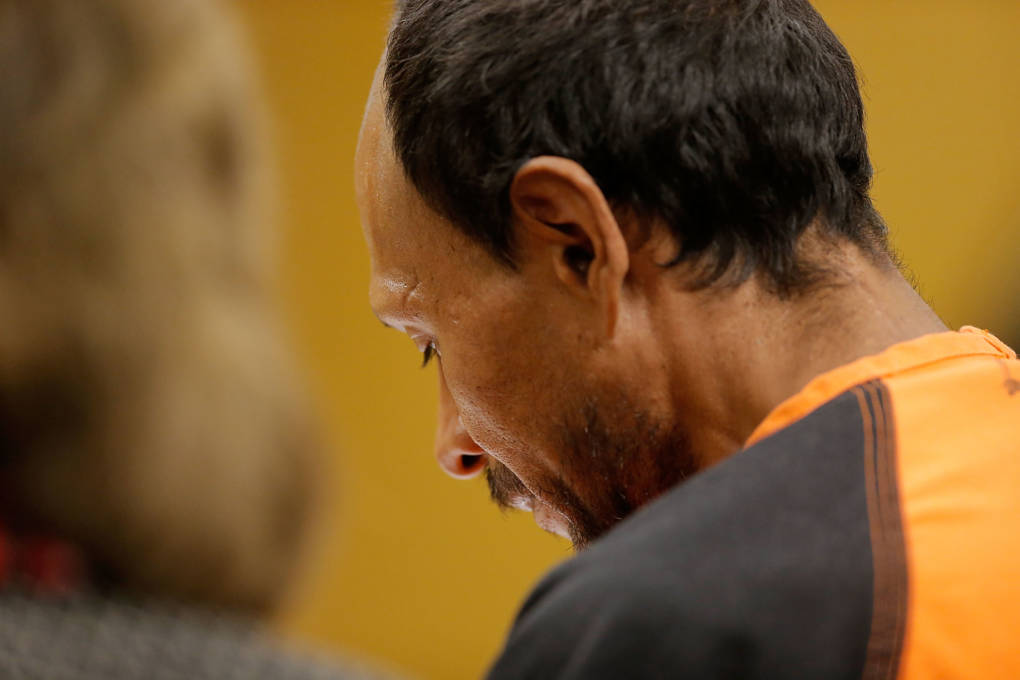
"caption": "Jose Ines Garcia Zarate, also known as Juan Francisco Lopez Sanchez, at an arraignment hearing on July 7, 2015, in San Francisco.",
"description": "Jose Ines Garcia Zarate, also known as Juan Francisco Lopez Sanchez, at an arraignment hearing on July 7, 2015 in San Francisco.",
"title": "Arraignment Held For Francisco Sanchez, Charged With The Shooting Death Of Kathryn Steinle On Pier 14",
"credit": "Michael Macor-Pool/Getty Images",
"status": "inherit",
"isLoading": false,
"fetchFailed": false
},
"news_11842019": {
"type": "attachments",
"id": "news_11842019",
"meta": {
"index": "attachments_1716263798",
"site": "news",
"id": "11842019",
"found": true
},
"parent": 11841996,
"imgSizes": {
"apple_news_ca_landscape_5_5": {
"file": "https://ww2.kqed.org/app/uploads/sites/10/2020/10/RS45321_027_KQED_SanFrancisco_NoConfirmationBeforeInauguration_10122020-qut-1044x783.jpg",
"width": 1044,
"mimeType": "image/jpeg",
"height": 783
},
"apple_news_ca_square_4_0": {
"file": "https://ww2.kqed.org/app/uploads/sites/10/2020/10/RS45321_027_KQED_SanFrancisco_NoConfirmationBeforeInauguration_10122020-qut-470x470.jpg",
"width": 470,
"mimeType": "image/jpeg",
"height": 470
},
"twentyfourteen-full-width": {
"file": "https://ww2.kqed.org/app/uploads/sites/10/2020/10/RS45321_027_KQED_SanFrancisco_NoConfirmationBeforeInauguration_10122020-qut-1038x576.jpg",
"width": 1038,
"mimeType": "image/jpeg",
"height": 576
},
"thumbnail": {
"file": "https://ww2.kqed.org/app/uploads/sites/10/2020/10/RS45321_027_KQED_SanFrancisco_NoConfirmationBeforeInauguration_10122020-qut-160x107.jpg",
"width": 160,
"mimeType": "image/jpeg",
"height": 107
},
"post-thumbnail": {
"file": "https://ww2.kqed.org/app/uploads/sites/10/2020/10/RS45321_027_KQED_SanFrancisco_NoConfirmationBeforeInauguration_10122020-qut-672x372.jpg",
"width": 672,
"mimeType": "image/jpeg",
"height": 372
},
"kqedFullSize": {
"file": "https://ww2.kqed.org/app/uploads/sites/10/2020/10/RS45321_027_KQED_SanFrancisco_NoConfirmationBeforeInauguration_10122020-qut.jpg",
"width": 1920,
"height": 1278
},
"apple_news_ca_landscape_4_7": {
"file": "https://ww2.kqed.org/app/uploads/sites/10/2020/10/RS45321_027_KQED_SanFrancisco_NoConfirmationBeforeInauguration_10122020-qut-632x474.jpg",
"width": 632,
"mimeType": "image/jpeg",
"height": 474
},
"large": {
"file": "https://ww2.kqed.org/app/uploads/sites/10/2020/10/RS45321_027_KQED_SanFrancisco_NoConfirmationBeforeInauguration_10122020-qut-1020x679.jpg",
"width": 1020,
"mimeType": "image/jpeg",
"height": 679
},
"apple_news_ca_landscape_4_0": {
"file": "https://ww2.kqed.org/app/uploads/sites/10/2020/10/RS45321_027_KQED_SanFrancisco_NoConfirmationBeforeInauguration_10122020-qut-536x402.jpg",
"width": 536,
"mimeType": "image/jpeg",
"height": 402
},
"apple_news_ca_portrait_12_9": {
"file": "https://ww2.kqed.org/app/uploads/sites/10/2020/10/RS45321_027_KQED_SanFrancisco_NoConfirmationBeforeInauguration_10122020-qut-1122x1278.jpg",
"width": 1122,
"mimeType": "image/jpeg",
"height": 1278
},
"medium": {
"file": "https://ww2.kqed.org/app/uploads/sites/10/2020/10/RS45321_027_KQED_SanFrancisco_NoConfirmationBeforeInauguration_10122020-qut-800x533.jpg",
"width": 800,
"mimeType": "image/jpeg",
"height": 533
},
"apple_news_ca_portrait_4_0": {
"file": "https://ww2.kqed.org/app/uploads/sites/10/2020/10/RS45321_027_KQED_SanFrancisco_NoConfirmationBeforeInauguration_10122020-qut-354x472.jpg",
"width": 354,
"mimeType": "image/jpeg",
"height": 472
},
"apple_news_ca_portrait_9_7": {
"file": "https://ww2.kqed.org/app/uploads/sites/10/2020/10/RS45321_027_KQED_SanFrancisco_NoConfirmationBeforeInauguration_10122020-qut-840x1120.jpg",
"width": 840,
"mimeType": "image/jpeg",
"height": 1120
},
"apple_news_ca_landscape_12_9": {
"file": "https://ww2.kqed.org/app/uploads/sites/10/2020/10/RS45321_027_KQED_SanFrancisco_NoConfirmationBeforeInauguration_10122020-qut-1832x1278.jpg",
"width": 1832,
"mimeType": "image/jpeg",
"height": 1278
},
"apple_news_ca_square_9_7": {
"file": "https://ww2.kqed.org/app/uploads/sites/10/2020/10/RS45321_027_KQED_SanFrancisco_NoConfirmationBeforeInauguration_10122020-qut-1104x1104.jpg",
"width": 1104,
"mimeType": "image/jpeg",
"height": 1104
},
"1536x1536": {
"file": "https://ww2.kqed.org/app/uploads/sites/10/2020/10/RS45321_027_KQED_SanFrancisco_NoConfirmationBeforeInauguration_10122020-qut-1536x1022.jpg",
"width": 1536,
"mimeType": "image/jpeg",
"height": 1022
},
"apple_news_ca_portrait_4_7": {
"file": "https://ww2.kqed.org/app/uploads/sites/10/2020/10/RS45321_027_KQED_SanFrancisco_NoConfirmationBeforeInauguration_10122020-qut-414x552.jpg",
"width": 414,
"mimeType": "image/jpeg",
"height": 552
},
"apple_news_ca_square_12_9": {
"file": "https://ww2.kqed.org/app/uploads/sites/10/2020/10/RS45321_027_KQED_SanFrancisco_NoConfirmationBeforeInauguration_10122020-qut-1472x1278.jpg",
"width": 1472,
"mimeType": "image/jpeg",
"height": 1278
},
"apple_news_ca_portrait_5_5": {
"file": "https://ww2.kqed.org/app/uploads/sites/10/2020/10/RS45321_027_KQED_SanFrancisco_NoConfirmationBeforeInauguration_10122020-qut-687x916.jpg",
"width": 687,
"mimeType": "image/jpeg",
"height": 916
},
"apple_news_ca_square_4_7": {
"file": "https://ww2.kqed.org/app/uploads/sites/10/2020/10/RS45321_027_KQED_SanFrancisco_NoConfirmationBeforeInauguration_10122020-qut-550x550.jpg",
"width": 550,
"mimeType": "image/jpeg",
"height": 550
},
"apple_news_ca_landscape_9_7": {
"file": "https://ww2.kqed.org/app/uploads/sites/10/2020/10/RS45321_027_KQED_SanFrancisco_NoConfirmationBeforeInauguration_10122020-qut-1376x1032.jpg",
"width": 1376,
"mimeType": "image/jpeg",
"height": 1032
},
"apple_news_ca_square_5_5": {
"file": "https://ww2.kqed.org/app/uploads/sites/10/2020/10/RS45321_027_KQED_SanFrancisco_NoConfirmationBeforeInauguration_10122020-qut-912x912.jpg",
"width": 912,
"mimeType": "image/jpeg",
"height": 912
}
},
"publishDate": 1602546822,
"modified": 1602546996,
"caption": "Demonstrators hold up their fists during a protest outside Sen. Dianne Feinstein's office in San Francisco on Oct. 12, 2020, to demand that Senate Democrats refuse to hold hearings to confirm any new Supreme Court justice until after the presidential inauguration.",
"description": "Demonstrators hold up their fists during a protest outside Sen. Dianne Feinstein's office in San Francisco on Oct. 12, 2020, to demand that Senate Democrats refuse to hold hearings to confirm any new Supreme Court justice until after the presidential inauguration.",
"title": "RS45321_027_KQED_SanFrancisco_NoConfirmationBeforeInauguration_10122020-qut",
"credit": "Beth LaBerge/KQED",
"status": "inherit",
"isLoading": false,
"fetchFailed": false
},
"news_11788936": {
"type": "attachments",
"id": "news_11788936",
"meta": {
"index": "attachments_1716263798",
"site": "news",
"id": "11788936",
"found": true
},
"parent": 11788921,
"imgSizes": {
"apple_news_ca_landscape_5_5": {
"file": "https://ww2.kqed.org/app/uploads/sites/10/2019/11/IMG_20191127_153031-e1574905962967-1044x783.jpg",
"width": 1044,
"mimeType": "image/jpeg",
"height": 783
},
"apple_news_ca_square_4_0": {
"file": "https://ww2.kqed.org/app/uploads/sites/10/2019/11/IMG_20191127_153031-e1574905962967-470x470.jpg",
"width": 470,
"mimeType": "image/jpeg",
"height": 470
},
"twentyfourteen-full-width": {
"file": "https://ww2.kqed.org/app/uploads/sites/10/2019/11/IMG_20191127_153031-e1574905962967-1038x576.jpg",
"width": 1038,
"mimeType": "image/jpeg",
"height": 576
},
"thumbnail": {
"file": "https://ww2.kqed.org/app/uploads/sites/10/2019/11/IMG_20191127_153031-e1574905962967-160x126.jpg",
"width": 160,
"mimeType": "image/jpeg",
"height": 126
},
"post-thumbnail": {
"file": "https://ww2.kqed.org/app/uploads/sites/10/2019/11/IMG_20191127_153031-e1574905962967-672x372.jpg",
"width": 672,
"mimeType": "image/jpeg",
"height": 372
},
"kqedFullSize": {
"file": "https://ww2.kqed.org/app/uploads/sites/10/2019/11/IMG_20191127_153031-e1574906000177.jpg",
"width": 1920,
"height": 1510
},
"apple_news_ca_landscape_4_7": {
"file": "https://ww2.kqed.org/app/uploads/sites/10/2019/11/IMG_20191127_153031-e1574905962967-632x474.jpg",
"width": 632,
"mimeType": "image/jpeg",
"height": 474
},
"large": {
"file": "https://ww2.kqed.org/app/uploads/sites/10/2019/11/IMG_20191127_153031-e1574905962967-1020x802.jpg",
"width": 1020,
"mimeType": "image/jpeg",
"height": 802
},
"complete_open_graph": {
"file": "https://ww2.kqed.org/app/uploads/sites/10/2019/11/IMG_20191127_153031-e1574905962967-1200x944.jpg",
"width": 1200,
"mimeType": "image/jpeg",
"height": 944
},
"apple_news_ca_landscape_4_0": {
"file": "https://ww2.kqed.org/app/uploads/sites/10/2019/11/IMG_20191127_153031-e1574905962967-536x402.jpg",
"width": 536,
"mimeType": "image/jpeg",
"height": 402
},
"apple_news_ca_portrait_12_9": {
"file": "https://ww2.kqed.org/app/uploads/sites/10/2019/11/IMG_20191127_153031-e1574905962967-1122x1496.jpg",
"width": 1122,
"mimeType": "image/jpeg",
"height": 1496
},
"medium": {
"file": "https://ww2.kqed.org/app/uploads/sites/10/2019/11/IMG_20191127_153031-e1574905962967-800x629.jpg",
"width": 800,
"mimeType": "image/jpeg",
"height": 629
},
"apple_news_ca_portrait_4_0": {
"file": "https://ww2.kqed.org/app/uploads/sites/10/2019/11/IMG_20191127_153031-e1574905962967-354x472.jpg",
"width": 354,
"mimeType": "image/jpeg",
"height": 472
},
"apple_news_ca_portrait_9_7": {
"file": "https://ww2.kqed.org/app/uploads/sites/10/2019/11/IMG_20191127_153031-e1574905962967-840x1120.jpg",
"width": 840,
"mimeType": "image/jpeg",
"height": 1120
},
"apple_news_ca_landscape_12_9": {
"file": "https://ww2.kqed.org/app/uploads/sites/10/2019/11/IMG_20191127_153031-e1574905962967-1832x1374.jpg",
"width": 1832,
"mimeType": "image/jpeg",
"height": 1374
},
"apple_news_ca_square_9_7": {
"file": "https://ww2.kqed.org/app/uploads/sites/10/2019/11/IMG_20191127_153031-e1574905962967-1104x1104.jpg",
"width": 1104,
"mimeType": "image/jpeg",
"height": 1104
},
"apple_news_ca_portrait_4_7": {
"file": "https://ww2.kqed.org/app/uploads/sites/10/2019/11/IMG_20191127_153031-e1574905962967-414x552.jpg",
"width": 414,
"mimeType": "image/jpeg",
"height": 552
},
"apple_news_ca_square_12_9": {
"file": "https://ww2.kqed.org/app/uploads/sites/10/2019/11/IMG_20191127_153031-e1574905962967-1472x1472.jpg",
"width": 1472,
"mimeType": "image/jpeg",
"height": 1472
},
"apple_news_ca_portrait_5_5": {
"file": "https://ww2.kqed.org/app/uploads/sites/10/2019/11/IMG_20191127_153031-e1574905962967-687x916.jpg",
"width": 687,
"mimeType": "image/jpeg",
"height": 916
},
"full-width": {
"file": "https://ww2.kqed.org/app/uploads/sites/10/2019/11/IMG_20191127_153031-e1574905962967-1920x1510.jpg",
"width": 1920,
"mimeType": "image/jpeg",
"height": 1510
},
"apple_news_ca_square_4_7": {
"file": "https://ww2.kqed.org/app/uploads/sites/10/2019/11/IMG_20191127_153031-e1574905962967-550x550.jpg",
"width": 550,
"mimeType": "image/jpeg",
"height": 550
},
"apple_news_ca_landscape_9_7": {
"file": "https://ww2.kqed.org/app/uploads/sites/10/2019/11/IMG_20191127_153031-e1574905962967-1376x1032.jpg",
"width": 1376,
"mimeType": "image/jpeg",
"height": 1032
},
"apple_news_ca_square_5_5": {
"file": "https://ww2.kqed.org/app/uploads/sites/10/2019/11/IMG_20191127_153031-e1574905962967-912x912.jpg",
"width": 912,
"mimeType": "image/jpeg",
"height": 912
}
},
"publishDate": 1574905810,
"modified": 1639852660,
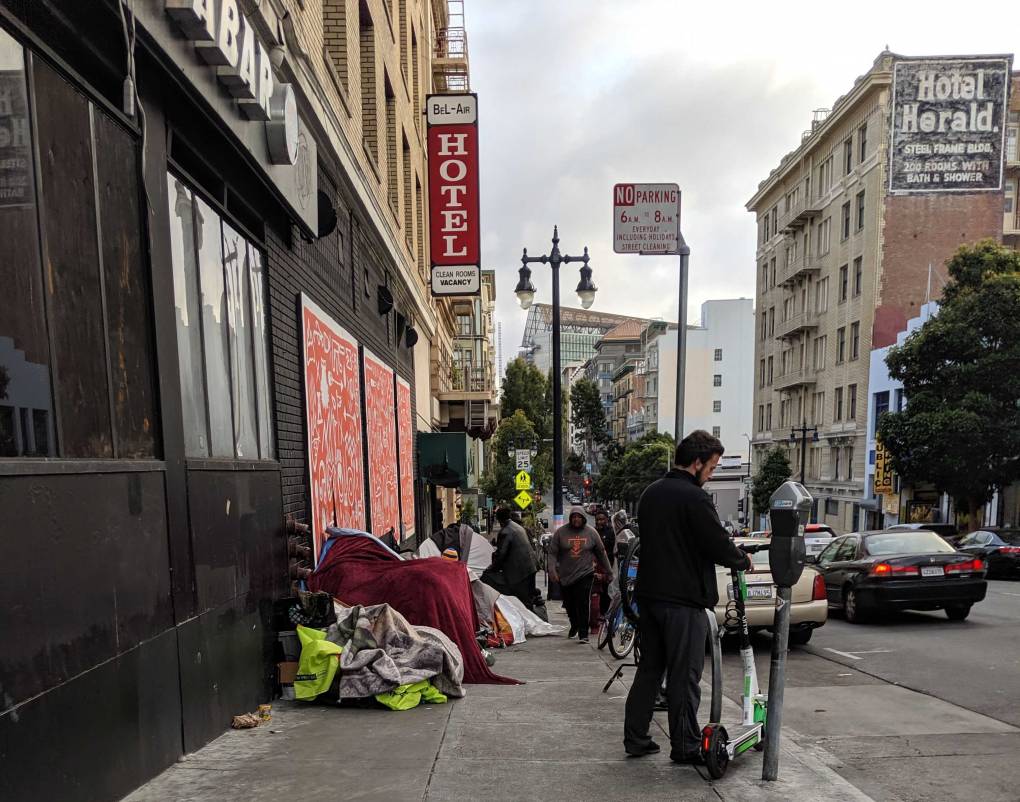
"caption": "A makeshift tent encampment on Ellis Street in San Francisco's Tenderloin neighborhood in Nov. 2019.",
"description": "Tents line Ellis Street in San Francisco's Tenderloin District, where homeless residents have made a makeshift camp.",
"title": "IMG_20191127_153031",
"credit": "Sruti Mamidanna/KQED",
"status": "inherit",
"altTag": "A man with a scooter stands on a sidewalk with a line of tents in the background.",
"isLoading": false,
"fetchFailed": false
},
"news_11820259": {
"type": "attachments",
"id": "news_11820259",
"meta": {
"index": "attachments_1716263798",
"site": "news",
"id": "11820259",
"found": true
},
"title": "RS42458_003_KQED_SanFrancisco_GGP_03302020-qut",
"publishDate": 1590177652,
"status": "inherit",
"parent": 11820233,
"modified": 1748988939,
"caption": "A bicyclist passes the Conservatory of Flowers in Golden Gate Park. The nonprofit San Francisco Parks Alliance directed $66,000 to entities whose figureheads were arrested by the FBI in connection with disgraced former Public Works director Mohammed Nuru's corruption scandal, a new report has found.",
"credit": "Beth LaBerge/KQED",
"altTag": "A person on a bike rides past a big white building surrounded by green grass and tall trees.",
"description": "A bicyclist passes the Conservatory of Flowers in Golden Gate Park. The nonprofit San Francisco Parks Alliance directed $66,000 to entities whose figureheads were arrested by the FBI in connection with disgraced former Public Works director Mohammed Nuru's corruption scandal, a new report has found.",
"imgSizes": {
"thumbnail": {
"file": "https://cdn.kqed.org/wp-content/uploads/sites/10/2020/05/RS42458_003_KQED_SanFrancisco_GGP_03302020-qut-160x107.jpg",
"width": 160,
"height": 107,
"mimeType": "image/jpeg"
},
"medium": {
"file": "https://cdn.kqed.org/wp-content/uploads/sites/10/2020/05/RS42458_003_KQED_SanFrancisco_GGP_03302020-qut-800x533.jpg",
"width": 800,
"height": 533,
"mimeType": "image/jpeg"
},
"large": {
"file": "https://cdn.kqed.org/wp-content/uploads/sites/10/2020/05/RS42458_003_KQED_SanFrancisco_GGP_03302020-qut-1020x680.jpg",
"width": 1020,
"height": 680,
"mimeType": "image/jpeg"
},
"post-thumbnail": {
"file": "https://cdn.kqed.org/wp-content/uploads/sites/10/2020/05/RS42458_003_KQED_SanFrancisco_GGP_03302020-qut-672x372.jpg",
"width": 672,
"height": 372,
"mimeType": "image/jpeg"
},
"twentyfourteen-full-width": {
"file": "https://cdn.kqed.org/wp-content/uploads/sites/10/2020/05/RS42458_003_KQED_SanFrancisco_GGP_03302020-qut-1038x576.jpg",
"width": 1038,
"height": 576,
"mimeType": "image/jpeg"
},
"full-width": {
"file": "https://cdn.kqed.org/wp-content/uploads/sites/10/2020/05/RS42458_003_KQED_SanFrancisco_GGP_03302020-qut-1920x1280.jpg",
"width": 1920,
"height": 1280,
"mimeType": "image/jpeg"
},
"apple_news_ca_landscape_12_9": {
"file": "https://cdn.kqed.org/wp-content/uploads/sites/10/2020/05/RS42458_003_KQED_SanFrancisco_GGP_03302020-qut-1832x1280.jpg",
"width": 1832,
"height": 1280,
"mimeType": "image/jpeg"
},
"apple_news_ca_landscape_9_7": {
"file": "https://cdn.kqed.org/wp-content/uploads/sites/10/2020/05/RS42458_003_KQED_SanFrancisco_GGP_03302020-qut-1376x1032.jpg",
"width": 1376,
"height": 1032,
"mimeType": "image/jpeg"
},
"apple_news_ca_landscape_5_5": {
"file": "https://cdn.kqed.org/wp-content/uploads/sites/10/2020/05/RS42458_003_KQED_SanFrancisco_GGP_03302020-qut-1044x783.jpg",
"width": 1044,
"height": 783,
"mimeType": "image/jpeg"
},
"apple_news_ca_landscape_4_7": {
"file": "https://cdn.kqed.org/wp-content/uploads/sites/10/2020/05/RS42458_003_KQED_SanFrancisco_GGP_03302020-qut-632x474.jpg",
"width": 632,
"height": 474,
"mimeType": "image/jpeg"
},
"apple_news_ca_landscape_4_0": {
"file": "https://cdn.kqed.org/wp-content/uploads/sites/10/2020/05/RS42458_003_KQED_SanFrancisco_GGP_03302020-qut-536x402.jpg",
"width": 536,
"height": 402,
"mimeType": "image/jpeg"
},
"apple_news_ca_portrait_12_9": {
"file": "https://cdn.kqed.org/wp-content/uploads/sites/10/2020/05/RS42458_003_KQED_SanFrancisco_GGP_03302020-qut-1122x1280.jpg",
"width": 1122,
"height": 1280,
"mimeType": "image/jpeg"
},
"apple_news_ca_portrait_9_7": {
"file": "https://cdn.kqed.org/wp-content/uploads/sites/10/2020/05/RS42458_003_KQED_SanFrancisco_GGP_03302020-qut-840x1120.jpg",
"width": 840,
"height": 1120,
"mimeType": "image/jpeg"
},
"apple_news_ca_portrait_5_5": {
"file": "https://cdn.kqed.org/wp-content/uploads/sites/10/2020/05/RS42458_003_KQED_SanFrancisco_GGP_03302020-qut-687x916.jpg",
"width": 687,
"height": 916,
"mimeType": "image/jpeg"
},
"apple_news_ca_portrait_4_7": {
"file": "https://cdn.kqed.org/wp-content/uploads/sites/10/2020/05/RS42458_003_KQED_SanFrancisco_GGP_03302020-qut-414x552.jpg",
"width": 414,
"height": 552,
"mimeType": "image/jpeg"
},
"apple_news_ca_portrait_4_0": {
"file": "https://cdn.kqed.org/wp-content/uploads/sites/10/2020/05/RS42458_003_KQED_SanFrancisco_GGP_03302020-qut-354x472.jpg",
"width": 354,
"height": 472,
"mimeType": "image/jpeg"
},
"apple_news_ca_square_12_9": {
"file": "https://cdn.kqed.org/wp-content/uploads/sites/10/2020/05/RS42458_003_KQED_SanFrancisco_GGP_03302020-qut-1472x1280.jpg",
"width": 1472,
"height": 1280,
"mimeType": "image/jpeg"
},
"apple_news_ca_square_9_7": {
"file": "https://cdn.kqed.org/wp-content/uploads/sites/10/2020/05/RS42458_003_KQED_SanFrancisco_GGP_03302020-qut-1104x1104.jpg",
"width": 1104,
"height": 1104,
"mimeType": "image/jpeg"
},
"apple_news_ca_square_5_5": {
"file": "https://cdn.kqed.org/wp-content/uploads/sites/10/2020/05/RS42458_003_KQED_SanFrancisco_GGP_03302020-qut-912x912.jpg",
"width": 912,
"height": 912,
"mimeType": "image/jpeg"
},
"apple_news_ca_square_4_7": {
"file": "https://cdn.kqed.org/wp-content/uploads/sites/10/2020/05/RS42458_003_KQED_SanFrancisco_GGP_03302020-qut-550x550.jpg",
"width": 550,
"height": 550,
"mimeType": "image/jpeg"
},
"apple_news_ca_square_4_0": {
"file": "https://cdn.kqed.org/wp-content/uploads/sites/10/2020/05/RS42458_003_KQED_SanFrancisco_GGP_03302020-qut-470x470.jpg",
"width": 470,
"height": 470,
"mimeType": "image/jpeg"
},
"kqedFullSize": {
"file": "https://cdn.kqed.org/wp-content/uploads/sites/10/2020/05/RS42458_003_KQED_SanFrancisco_GGP_03302020-qut.jpg",
"width": 1920,
"height": 1280
}
},
"isLoading": false,
"fetchFailed": false
},
"news_11838973": {
"type": "attachments",
"id": "news_11838973",
"meta": {
"index": "attachments_1716263798",
"site": "news",
"id": "11838973",
"found": true
},
"parent": 11838967,
"imgSizes": {
"apple_news_ca_landscape_5_5": {
"file": "https://ww2.kqed.org/app/uploads/sites/10/2020/09/San-Francisco-Medical-Examiner-RS30497_alt_1025-1044x783.jpg",
"width": 1044,
"mimeType": "image/jpeg",
"height": 783
},
"apple_news_ca_square_4_0": {
"file": "https://ww2.kqed.org/app/uploads/sites/10/2020/09/San-Francisco-Medical-Examiner-RS30497_alt_1025-470x470.jpg",
"width": 470,
"mimeType": "image/jpeg",
"height": 470
},
"twentyfourteen-full-width": {
"file": "https://ww2.kqed.org/app/uploads/sites/10/2020/09/San-Francisco-Medical-Examiner-RS30497_alt_1025-1038x576.jpg",
"width": 1038,
"mimeType": "image/jpeg",
"height": 576
},
"thumbnail": {
"file": "https://ww2.kqed.org/app/uploads/sites/10/2020/09/San-Francisco-Medical-Examiner-RS30497_alt_1025-160x120.jpg",
"width": 160,
"mimeType": "image/jpeg",
"height": 120
},
"post-thumbnail": {
"file": "https://ww2.kqed.org/app/uploads/sites/10/2020/09/San-Francisco-Medical-Examiner-RS30497_alt_1025-672x372.jpg",
"width": 672,
"mimeType": "image/jpeg",
"height": 372
},
"kqedFullSize": {
"file": "https://ww2.kqed.org/app/uploads/sites/10/2020/09/San-Francisco-Medical-Examiner-RS30497_alt_1025.jpg",
"width": 1920,
"height": 1440
},
"apple_news_ca_landscape_4_7": {
"file": "https://ww2.kqed.org/app/uploads/sites/10/2020/09/San-Francisco-Medical-Examiner-RS30497_alt_1025-632x474.jpg",
"width": 632,
"mimeType": "image/jpeg",
"height": 474
},
"large": {
"file": "https://ww2.kqed.org/app/uploads/sites/10/2020/09/San-Francisco-Medical-Examiner-RS30497_alt_1025-1020x765.jpg",
"width": 1020,
"mimeType": "image/jpeg",
"height": 765
},
"apple_news_ca_landscape_4_0": {
"file": "https://ww2.kqed.org/app/uploads/sites/10/2020/09/San-Francisco-Medical-Examiner-RS30497_alt_1025-536x402.jpg",
"width": 536,
"mimeType": "image/jpeg",
"height": 402
},
"apple_news_ca_portrait_12_9": {
"file": "https://ww2.kqed.org/app/uploads/sites/10/2020/09/San-Francisco-Medical-Examiner-RS30497_alt_1025-1122x1440.jpg",
"width": 1122,
"mimeType": "image/jpeg",
"height": 1440
},
"medium": {
"file": "https://ww2.kqed.org/app/uploads/sites/10/2020/09/San-Francisco-Medical-Examiner-RS30497_alt_1025-800x600.jpg",
"width": 800,
"mimeType": "image/jpeg",
"height": 600
},
"apple_news_ca_portrait_4_0": {
"file": "https://ww2.kqed.org/app/uploads/sites/10/2020/09/San-Francisco-Medical-Examiner-RS30497_alt_1025-354x472.jpg",
"width": 354,
"mimeType": "image/jpeg",
"height": 472
},
"apple_news_ca_portrait_9_7": {
"file": "https://ww2.kqed.org/app/uploads/sites/10/2020/09/San-Francisco-Medical-Examiner-RS30497_alt_1025-840x1120.jpg",
"width": 840,
"mimeType": "image/jpeg",
"height": 1120
},
"apple_news_ca_landscape_12_9": {
"file": "https://ww2.kqed.org/app/uploads/sites/10/2020/09/San-Francisco-Medical-Examiner-RS30497_alt_1025-1832x1374.jpg",
"width": 1832,
"mimeType": "image/jpeg",
"height": 1374
},
"apple_news_ca_square_9_7": {
"file": "https://ww2.kqed.org/app/uploads/sites/10/2020/09/San-Francisco-Medical-Examiner-RS30497_alt_1025-1104x1104.jpg",
"width": 1104,
"mimeType": "image/jpeg",
"height": 1104
},
"1536x1536": {
"file": "https://ww2.kqed.org/app/uploads/sites/10/2020/09/San-Francisco-Medical-Examiner-RS30497_alt_1025-1536x1152.jpg",
"width": 1536,
"mimeType": "image/jpeg",
"height": 1152
},
"apple_news_ca_portrait_4_7": {
"file": "https://ww2.kqed.org/app/uploads/sites/10/2020/09/San-Francisco-Medical-Examiner-RS30497_alt_1025-414x552.jpg",
"width": 414,
"mimeType": "image/jpeg",
"height": 552
},
"apple_news_ca_square_12_9": {
"file": "https://ww2.kqed.org/app/uploads/sites/10/2020/09/San-Francisco-Medical-Examiner-RS30497_alt_1025-1472x1440.jpg",
"width": 1472,
"mimeType": "image/jpeg",
"height": 1440
},
"apple_news_ca_portrait_5_5": {
"file": "https://ww2.kqed.org/app/uploads/sites/10/2020/09/San-Francisco-Medical-Examiner-RS30497_alt_1025-687x916.jpg",
"width": 687,
"mimeType": "image/jpeg",
"height": 916
},
"apple_news_ca_square_4_7": {
"file": "https://ww2.kqed.org/app/uploads/sites/10/2020/09/San-Francisco-Medical-Examiner-RS30497_alt_1025-550x550.jpg",
"width": 550,
"mimeType": "image/jpeg",
"height": 550
},
"apple_news_ca_landscape_9_7": {
"file": "https://ww2.kqed.org/app/uploads/sites/10/2020/09/San-Francisco-Medical-Examiner-RS30497_alt_1025-1376x1032.jpg",
"width": 1376,
"mimeType": "image/jpeg",
"height": 1032
},
"apple_news_ca_square_5_5": {
"file": "https://ww2.kqed.org/app/uploads/sites/10/2020/09/San-Francisco-Medical-Examiner-RS30497_alt_1025-912x912.jpg",
"width": 912,
"mimeType": "image/jpeg",
"height": 912
}
},
"publishDate": 1600713059,
"modified": 1600718366,
"caption": "The late August arrest of a lab analyst has exposed lax supervision in the San Francisco medical examiner's office, according to former employees.",
"description": "The late August arrest of a lab analyst has exposed lax supervision in the San Francisco medical examiner's office, according to former employees.",
"title": "San Francisco Medical Examiner RS30497_alt_1025",
"credit": "Alex Emslie/KQED",
"status": "inherit",
"isLoading": false,
"fetchFailed": false
},
"news_11834929": {
"type": "attachments",
"id": "news_11834929",
"meta": {
"index": "attachments_1716263798",
"site": "news",
"id": "11834929",
"found": true
},
"parent": 11834806,
"imgSizes": {
"apple_news_ca_landscape_5_5": {
"file": "https://ww2.kqed.org/app/uploads/sites/10/2020/08/TenantsTogether-1-1044x783.jpg",
"width": 1044,
"mimeType": "image/jpeg",
"height": 783
},
"apple_news_ca_square_4_0": {
"file": "https://ww2.kqed.org/app/uploads/sites/10/2020/08/TenantsTogether-1-470x470.jpg",
"width": 470,
"mimeType": "image/jpeg",
"height": 470
},
"twentyfourteen-full-width": {
"file": "https://ww2.kqed.org/app/uploads/sites/10/2020/08/TenantsTogether-1-1038x576.jpg",
"width": 1038,
"mimeType": "image/jpeg",
"height": 576
},
"thumbnail": {
"file": "https://ww2.kqed.org/app/uploads/sites/10/2020/08/TenantsTogether-1-160x111.jpg",
"width": 160,
"mimeType": "image/jpeg",
"height": 111
},
"post-thumbnail": {
"file": "https://ww2.kqed.org/app/uploads/sites/10/2020/08/TenantsTogether-1-672x372.jpg",
"width": 672,
"mimeType": "image/jpeg",
"height": 372
},
"kqedFullSize": {
"file": "https://ww2.kqed.org/app/uploads/sites/10/2020/08/TenantsTogether-1.jpg",
"width": 1536,
"height": 1070
},
"apple_news_ca_landscape_4_7": {
"file": "https://ww2.kqed.org/app/uploads/sites/10/2020/08/TenantsTogether-1-632x474.jpg",
"width": 632,
"mimeType": "image/jpeg",
"height": 474
},
"large": {
"file": "https://ww2.kqed.org/app/uploads/sites/10/2020/08/TenantsTogether-1-1020x711.jpg",
"width": 1020,
"mimeType": "image/jpeg",
"height": 711
},
"apple_news_ca_landscape_4_0": {
"file": "https://ww2.kqed.org/app/uploads/sites/10/2020/08/TenantsTogether-1-536x402.jpg",
"width": 536,
"mimeType": "image/jpeg",
"height": 402
},
"apple_news_ca_portrait_12_9": {
"file": "https://ww2.kqed.org/app/uploads/sites/10/2020/08/TenantsTogether-1-1122x1070.jpg",
"width": 1122,
"mimeType": "image/jpeg",
"height": 1070
},
"medium": {
"file": "https://ww2.kqed.org/app/uploads/sites/10/2020/08/TenantsTogether-1-800x557.jpg",
"width": 800,
"mimeType": "image/jpeg",
"height": 557
},
"apple_news_ca_portrait_4_0": {
"file": "https://ww2.kqed.org/app/uploads/sites/10/2020/08/TenantsTogether-1-354x472.jpg",
"width": 354,
"mimeType": "image/jpeg",
"height": 472
},
"apple_news_ca_portrait_9_7": {
"file": "https://ww2.kqed.org/app/uploads/sites/10/2020/08/TenantsTogether-1-840x1070.jpg",
"width": 840,
"mimeType": "image/jpeg",
"height": 1070
},
"apple_news_ca_square_9_7": {
"file": "https://ww2.kqed.org/app/uploads/sites/10/2020/08/TenantsTogether-1-1104x1070.jpg",
"width": 1104,
"mimeType": "image/jpeg",
"height": 1070
},
"apple_news_ca_portrait_4_7": {
"file": "https://ww2.kqed.org/app/uploads/sites/10/2020/08/TenantsTogether-1-414x552.jpg",
"width": 414,
"mimeType": "image/jpeg",
"height": 552
},
"apple_news_ca_square_12_9": {
"file": "https://ww2.kqed.org/app/uploads/sites/10/2020/08/TenantsTogether-1-1472x1070.jpg",
"width": 1472,
"mimeType": "image/jpeg",
"height": 1070
},
"apple_news_ca_portrait_5_5": {
"file": "https://ww2.kqed.org/app/uploads/sites/10/2020/08/TenantsTogether-1-687x916.jpg",
"width": 687,
"mimeType": "image/jpeg",
"height": 916
},
"apple_news_ca_square_4_7": {
"file": "https://ww2.kqed.org/app/uploads/sites/10/2020/08/TenantsTogether-1-550x550.jpg",
"width": 550,
"mimeType": "image/jpeg",
"height": 550
},
"apple_news_ca_landscape_9_7": {
"file": "https://ww2.kqed.org/app/uploads/sites/10/2020/08/TenantsTogether-1-1376x1032.jpg",
"width": 1376,
"mimeType": "image/jpeg",
"height": 1032
},
"apple_news_ca_square_5_5": {
"file": "https://ww2.kqed.org/app/uploads/sites/10/2020/08/TenantsTogether-1-912x912.jpg",
"width": 912,
"mimeType": "image/jpeg",
"height": 912
}
},
"publishDate": 1598305539,
"modified": 1618430909,
"caption": "Protesters in San Francisco rallied against Veritas, a property management company, as part of a 2019 demonstration organized on WeChat.",
"description": "Protesters in San Francisco rallied against Veritas, a property management company, as part of a 2019 demonstration organized on WeChat.",
"title": "TenantsTogether (1)",
"credit": "Courtesy of Tenants Together",
"status": "inherit",
"altTag": null,
"isLoading": false,
"fetchFailed": false
},
"news_11637256": {
"type": "attachments",
"id": "news_11637256",
"meta": {
"index": "attachments_1716263798",
"site": "news",
"id": "11637256",
"found": true
},
"title": "ScottWiener",
"publishDate": 1513305232,
"status": "inherit",
"parent": 11637200,
"modified": 1721158462,
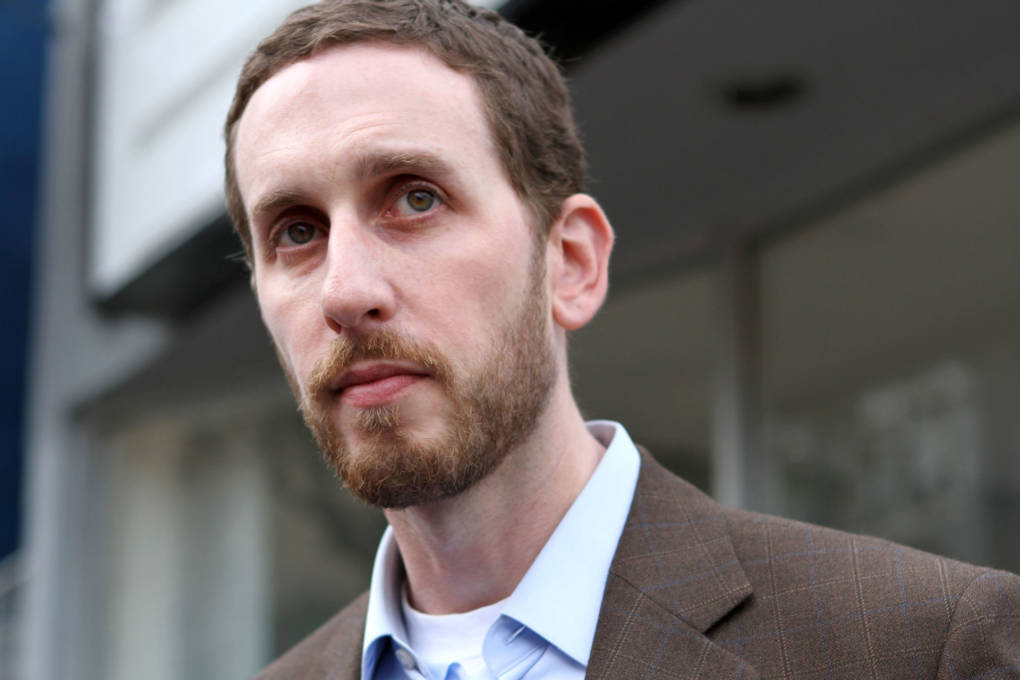
"caption": "Senate Bill 145, signed into law by Gov. Gavin Newsom in early September, is intended to reform the state’s sex offender registry to be fairer to young LGBT adults. The bill's author, state Sen. Scott Wiener, has received hundreds of death threats from people who believe the bill legalizes pedophilia in California.",
"credit": "Michelle Gachet/KQED",
"altTag": "Senate Bill 145, signed into law by Gov. Gavin Newsom in early September, is intended to reform the state’s sex offender registry to be fairer to young LGBT adults. The bill's author, state Sen. Scott Wiener, has received hundreds of death threats from people who believe the bill legalizes pedophilia in California.",
"description": "Senate Bill 145, signed into law by Gov. Gavin Newsom in early September, is intended to reform the state’s sex offender registry to be fairer to young LGBTQ adults. The bill's author, state Sen. Scott Wiener, has received hundreds of death threats from people who believe the bill legalizes pedophilia in California.",
"imgSizes": {
"thumbnail": {
"file": "https://cdn.kqed.org/wp-content/uploads/sites/10/2017/12/ScottWiener-160x107.jpg",
"width": 160,
"height": 107,
"mimeType": "image/jpeg"
},
"medium": {
"file": "https://cdn.kqed.org/wp-content/uploads/sites/10/2017/12/ScottWiener-800x533.jpg",
"width": 800,
"height": 533,
"mimeType": "image/jpeg"
},
"large": {
"file": "https://cdn.kqed.org/wp-content/uploads/sites/10/2017/12/ScottWiener-1020x680.jpg",
"width": 1020,
"height": 680,
"mimeType": "image/jpeg"
},
"fd-lrg": {
"file": "https://cdn.kqed.org/wp-content/uploads/sites/10/2017/12/ScottWiener-1920x1280.jpg",
"width": 1920,
"height": 1280,
"mimeType": "image/jpeg"
},
"fd-med": {
"file": "https://cdn.kqed.org/wp-content/uploads/sites/10/2017/12/ScottWiener-1180x787.jpg",
"width": 1180,
"height": 787,
"mimeType": "image/jpeg"
},
"fd-sm": {
"file": "https://cdn.kqed.org/wp-content/uploads/sites/10/2017/12/ScottWiener-960x640.jpg",
"width": 960,
"height": 640,
"mimeType": "image/jpeg"
},
"post-thumbnail": {
"file": "https://cdn.kqed.org/wp-content/uploads/sites/10/2017/12/ScottWiener-672x372.jpg",
"width": 672,
"height": 372,
"mimeType": "image/jpeg"
},
"twentyfourteen-full-width": {
"file": "https://cdn.kqed.org/wp-content/uploads/sites/10/2017/12/ScottWiener-1038x576.jpg",
"width": 1038,
"height": 576,
"mimeType": "image/jpeg"
},
"xxsmall": {
"file": "https://cdn.kqed.org/wp-content/uploads/sites/10/2017/12/ScottWiener-240x160.jpg",
"width": 240,
"height": 160,
"mimeType": "image/jpeg"
},
"xsmall": {
"file": "https://cdn.kqed.org/wp-content/uploads/sites/10/2017/12/ScottWiener-375x250.jpg",
"width": 375,
"height": 250,
"mimeType": "image/jpeg"
},
"small": {
"file": "https://cdn.kqed.org/wp-content/uploads/sites/10/2017/12/ScottWiener-520x347.jpg",
"width": 520,
"height": 347,
"mimeType": "image/jpeg"
},
"xlarge": {
"file": "https://cdn.kqed.org/wp-content/uploads/sites/10/2017/12/ScottWiener-1180x787.jpg",
"width": 1180,
"height": 787,
"mimeType": "image/jpeg"
},
"full-width": {
"file": "https://cdn.kqed.org/wp-content/uploads/sites/10/2017/12/ScottWiener-1920x1280.jpg",
"width": 1920,
"height": 1280,
"mimeType": "image/jpeg"
},
"guest-author-32": {
"file": "https://cdn.kqed.org/wp-content/uploads/sites/10/2017/12/ScottWiener-32x32.jpg",
"width": 32,
"height": 32,
"mimeType": "image/jpeg"
},
"guest-author-50": {
"file": "https://cdn.kqed.org/wp-content/uploads/sites/10/2017/12/ScottWiener-50x50.jpg",
"width": 50,
"height": 50,
"mimeType": "image/jpeg"
},
"guest-author-64": {
"file": "https://cdn.kqed.org/wp-content/uploads/sites/10/2017/12/ScottWiener-64x64.jpg",
"width": 64,
"height": 64,
"mimeType": "image/jpeg"
},
"guest-author-96": {
"file": "https://cdn.kqed.org/wp-content/uploads/sites/10/2017/12/ScottWiener-96x96.jpg",
"width": 96,
"height": 96,
"mimeType": "image/jpeg"
},
"guest-author-128": {
"file": "https://cdn.kqed.org/wp-content/uploads/sites/10/2017/12/ScottWiener-128x128.jpg",
"width": 128,
"height": 128,
"mimeType": "image/jpeg"
},
"detail": {
"file": "https://cdn.kqed.org/wp-content/uploads/sites/10/2017/12/ScottWiener-150x150.jpg",
"width": 150,
"height": 150,
"mimeType": "image/jpeg"
},
"kqedFullSize": {
"file": "https://cdn.kqed.org/wp-content/uploads/sites/10/2017/12/ScottWiener.jpg",
"width": 1920,
"height": 1280
}
},
"isLoading": false,
"fetchFailed": false
},
"news_11837554": {
"type": "attachments",
"id": "news_11837554",
"meta": {
"index": "attachments_1716263798",
"site": "news",
"id": "11837554",
"found": true
},
"parent": 11837511,
"imgSizes": {
"apple_news_ca_landscape_5_5": {
"file": "https://ww2.kqed.org/app/uploads/sites/10/2020/09/RS44728_006_KQED_Chinatown_Businesses_09022020-qut-1044x783.jpg",
"width": 1044,
"mimeType": "image/jpeg",
"height": 783
},
"apple_news_ca_square_4_0": {
"file": "https://ww2.kqed.org/app/uploads/sites/10/2020/09/RS44728_006_KQED_Chinatown_Businesses_09022020-qut-470x470.jpg",
"width": 470,
"mimeType": "image/jpeg",
"height": 470
},
"twentyfourteen-full-width": {
"file": "https://ww2.kqed.org/app/uploads/sites/10/2020/09/RS44728_006_KQED_Chinatown_Businesses_09022020-qut-1038x576.jpg",
"width": 1038,
"mimeType": "image/jpeg",
"height": 576
},
"thumbnail": {
"file": "https://ww2.kqed.org/app/uploads/sites/10/2020/09/RS44728_006_KQED_Chinatown_Businesses_09022020-qut-160x107.jpg",
"width": 160,
"mimeType": "image/jpeg",
"height": 107
},
"post-thumbnail": {
"file": "https://ww2.kqed.org/app/uploads/sites/10/2020/09/RS44728_006_KQED_Chinatown_Businesses_09022020-qut-672x372.jpg",
"width": 672,
"mimeType": "image/jpeg",
"height": 372
},
"kqedFullSize": {
"file": "https://ww2.kqed.org/app/uploads/sites/10/2020/09/RS44728_006_KQED_Chinatown_Businesses_09022020-qut.jpg",
"width": 1920,
"height": 1280
},
"apple_news_ca_landscape_4_7": {
"file": "https://ww2.kqed.org/app/uploads/sites/10/2020/09/RS44728_006_KQED_Chinatown_Businesses_09022020-qut-632x474.jpg",
"width": 632,
"mimeType": "image/jpeg",
"height": 474
},
"large": {
"file": "https://ww2.kqed.org/app/uploads/sites/10/2020/09/RS44728_006_KQED_Chinatown_Businesses_09022020-qut-1020x680.jpg",
"width": 1020,
"mimeType": "image/jpeg",
"height": 680
},
"apple_news_ca_landscape_4_0": {
"file": "https://ww2.kqed.org/app/uploads/sites/10/2020/09/RS44728_006_KQED_Chinatown_Businesses_09022020-qut-536x402.jpg",
"width": 536,
"mimeType": "image/jpeg",
"height": 402
},
"apple_news_ca_portrait_12_9": {
"file": "https://ww2.kqed.org/app/uploads/sites/10/2020/09/RS44728_006_KQED_Chinatown_Businesses_09022020-qut-1122x1280.jpg",
"width": 1122,
"mimeType": "image/jpeg",
"height": 1280
},
"medium": {
"file": "https://ww2.kqed.org/app/uploads/sites/10/2020/09/RS44728_006_KQED_Chinatown_Businesses_09022020-qut-800x533.jpg",
"width": 800,
"mimeType": "image/jpeg",
"height": 533
},
"apple_news_ca_portrait_4_0": {
"file": "https://ww2.kqed.org/app/uploads/sites/10/2020/09/RS44728_006_KQED_Chinatown_Businesses_09022020-qut-354x472.jpg",
"width": 354,
"mimeType": "image/jpeg",
"height": 472
},
"apple_news_ca_portrait_9_7": {
"file": "https://ww2.kqed.org/app/uploads/sites/10/2020/09/RS44728_006_KQED_Chinatown_Businesses_09022020-qut-840x1120.jpg",
"width": 840,
"mimeType": "image/jpeg",
"height": 1120
},
"apple_news_ca_landscape_12_9": {
"file": "https://ww2.kqed.org/app/uploads/sites/10/2020/09/RS44728_006_KQED_Chinatown_Businesses_09022020-qut-1832x1280.jpg",
"width": 1832,
"mimeType": "image/jpeg",
"height": 1280
},
"apple_news_ca_square_9_7": {
"file": "https://ww2.kqed.org/app/uploads/sites/10/2020/09/RS44728_006_KQED_Chinatown_Businesses_09022020-qut-1104x1104.jpg",
"width": 1104,
"mimeType": "image/jpeg",
"height": 1104
},
"1536x1536": {
"file": "https://ww2.kqed.org/app/uploads/sites/10/2020/09/RS44728_006_KQED_Chinatown_Businesses_09022020-qut-1536x1024.jpg",
"width": 1536,
"mimeType": "image/jpeg",
"height": 1024
},
"apple_news_ca_portrait_4_7": {
"file": "https://ww2.kqed.org/app/uploads/sites/10/2020/09/RS44728_006_KQED_Chinatown_Businesses_09022020-qut-414x552.jpg",
"width": 414,
"mimeType": "image/jpeg",
"height": 552
},
"apple_news_ca_square_12_9": {
"file": "https://ww2.kqed.org/app/uploads/sites/10/2020/09/RS44728_006_KQED_Chinatown_Businesses_09022020-qut-1472x1280.jpg",
"width": 1472,
"mimeType": "image/jpeg",
"height": 1280
},
"apple_news_ca_portrait_5_5": {
"file": "https://ww2.kqed.org/app/uploads/sites/10/2020/09/RS44728_006_KQED_Chinatown_Businesses_09022020-qut-687x916.jpg",
"width": 687,
"mimeType": "image/jpeg",
"height": 916
},
"apple_news_ca_square_4_7": {
"file": "https://ww2.kqed.org/app/uploads/sites/10/2020/09/RS44728_006_KQED_Chinatown_Businesses_09022020-qut-550x550.jpg",
"width": 550,
"mimeType": "image/jpeg",
"height": 550
},
"apple_news_ca_landscape_9_7": {
"file": "https://ww2.kqed.org/app/uploads/sites/10/2020/09/RS44728_006_KQED_Chinatown_Businesses_09022020-qut-1376x1032.jpg",
"width": 1376,
"mimeType": "image/jpeg",
"height": 1032
},
"apple_news_ca_square_5_5": {
"file": "https://ww2.kqed.org/app/uploads/sites/10/2020/09/RS44728_006_KQED_Chinatown_Businesses_09022020-qut-912x912.jpg",
"width": 912,
"mimeType": "image/jpeg",
"height": 912
}
},
"publishDate": 1599850698,
"modified": 1599864231,
"caption": "Tilly Tsang (L) and her daughter Chelsea Hung (R), owners of Washington Bakery and Restaurant in San Francisco's Chinatown on Sept. 2, 2020.",
"description": null,
"title": "RS44728_006_KQED_Chinatown_Businesses_09022020-qut",
"credit": "Beth LaBerge/KQED",
"status": "inherit",
"isLoading": false,
"fetchFailed": false
},
"news_11837630": {
"type": "attachments",
"id": "news_11837630",
"meta": {
"index": "attachments_1716263798",
"site": "news",
"id": "11837630",
"found": true
},
"parent": 11837538,
"imgSizes": {
"apple_news_ca_landscape_5_5": {
"file": "https://ww2.kqed.org/app/uploads/sites/10/2020/09/Image-from-iOS-12-1044x783.jpg",
"width": 1044,
"mimeType": "image/jpeg",
"height": 783
},
"apple_news_ca_square_4_0": {
"file": "https://ww2.kqed.org/app/uploads/sites/10/2020/09/Image-from-iOS-12-470x470.jpg",
"width": 470,
"mimeType": "image/jpeg",
"height": 470
},
"twentyfourteen-full-width": {
"file": "https://ww2.kqed.org/app/uploads/sites/10/2020/09/Image-from-iOS-12-1038x576.jpg",
"width": 1038,
"mimeType": "image/jpeg",
"height": 576
},
"thumbnail": {
"file": "https://ww2.kqed.org/app/uploads/sites/10/2020/09/Image-from-iOS-12-160x120.jpg",
"width": 160,
"mimeType": "image/jpeg",
"height": 120
},
"post-thumbnail": {
"file": "https://ww2.kqed.org/app/uploads/sites/10/2020/09/Image-from-iOS-12-672x372.jpg",
"width": 672,
"mimeType": "image/jpeg",
"height": 372
},
"kqedFullSize": {
"file": "https://ww2.kqed.org/app/uploads/sites/10/2020/09/Image-from-iOS-12-scaled-e1599858950807.jpg",
"width": 1920,
"height": 1440
},
"2048x2048": {
"file": "https://ww2.kqed.org/app/uploads/sites/10/2020/09/Image-from-iOS-12-2048x1536.jpg",
"width": 2048,
"mimeType": "image/jpeg",
"height": 1536
},
"apple_news_ca_landscape_4_7": {
"file": "https://ww2.kqed.org/app/uploads/sites/10/2020/09/Image-from-iOS-12-632x474.jpg",
"width": 632,
"mimeType": "image/jpeg",
"height": 474
},
"large": {
"file": "https://ww2.kqed.org/app/uploads/sites/10/2020/09/Image-from-iOS-12-1020x765.jpg",
"width": 1020,
"mimeType": "image/jpeg",
"height": 765
},
"apple_news_ca_landscape_4_0": {
"file": "https://ww2.kqed.org/app/uploads/sites/10/2020/09/Image-from-iOS-12-536x402.jpg",
"width": 536,
"mimeType": "image/jpeg",
"height": 402
},
"apple_news_ca_portrait_12_9": {
"file": "https://ww2.kqed.org/app/uploads/sites/10/2020/09/Image-from-iOS-12-1122x1496.jpg",
"width": 1122,
"mimeType": "image/jpeg",
"height": 1496
},
"medium": {
"file": "https://ww2.kqed.org/app/uploads/sites/10/2020/09/Image-from-iOS-12-800x600.jpg",
"width": 800,
"mimeType": "image/jpeg",
"height": 600
},
"apple_news_ca_portrait_4_0": {
"file": "https://ww2.kqed.org/app/uploads/sites/10/2020/09/Image-from-iOS-12-354x472.jpg",
"width": 354,
"mimeType": "image/jpeg",
"height": 472
},
"apple_news_ca_portrait_9_7": {
"file": "https://ww2.kqed.org/app/uploads/sites/10/2020/09/Image-from-iOS-12-840x1120.jpg",
"width": 840,
"mimeType": "image/jpeg",
"height": 1120
},
"apple_news_ca_landscape_12_9": {
"file": "https://ww2.kqed.org/app/uploads/sites/10/2020/09/Image-from-iOS-12-1832x1374.jpg",
"width": 1832,
"mimeType": "image/jpeg",
"height": 1374
},
"apple_news_ca_square_9_7": {
"file": "https://ww2.kqed.org/app/uploads/sites/10/2020/09/Image-from-iOS-12-1104x1104.jpg",
"width": 1104,
"mimeType": "image/jpeg",
"height": 1104
},
"1536x1536": {
"file": "https://ww2.kqed.org/app/uploads/sites/10/2020/09/Image-from-iOS-12-1536x1152.jpg",
"width": 1536,
"mimeType": "image/jpeg",
"height": 1152
},
"apple_news_ca_portrait_4_7": {
"file": "https://ww2.kqed.org/app/uploads/sites/10/2020/09/Image-from-iOS-12-414x552.jpg",
"width": 414,
"mimeType": "image/jpeg",
"height": 552
},
"apple_news_ca_square_12_9": {
"file": "https://ww2.kqed.org/app/uploads/sites/10/2020/09/Image-from-iOS-12-1472x1472.jpg",
"width": 1472,
"mimeType": "image/jpeg",
"height": 1472
},
"apple_news_ca_portrait_5_5": {
"file": "https://ww2.kqed.org/app/uploads/sites/10/2020/09/Image-from-iOS-12-687x916.jpg",
"width": 687,
"mimeType": "image/jpeg",
"height": 916
},
"full-width": {
"file": "https://ww2.kqed.org/app/uploads/sites/10/2020/09/Image-from-iOS-12-1920x1440.jpg",
"width": 1920,
"mimeType": "image/jpeg",
"height": 1440
},
"apple_news_ca_square_4_7": {
"file": "https://ww2.kqed.org/app/uploads/sites/10/2020/09/Image-from-iOS-12-550x550.jpg",
"width": 550,
"mimeType": "image/jpeg",
"height": 550
},
"apple_news_ca_landscape_9_7": {
"file": "https://ww2.kqed.org/app/uploads/sites/10/2020/09/Image-from-iOS-12-1376x1032.jpg",
"width": 1376,
"mimeType": "image/jpeg",
"height": 1032
},
"apple_news_ca_square_5_5": {
"file": "https://ww2.kqed.org/app/uploads/sites/10/2020/09/Image-from-iOS-12-912x912.jpg",
"width": 912,
"mimeType": "image/jpeg",
"height": 912
}
},
"publishDate": 1599858881,
"modified": 1599858973,
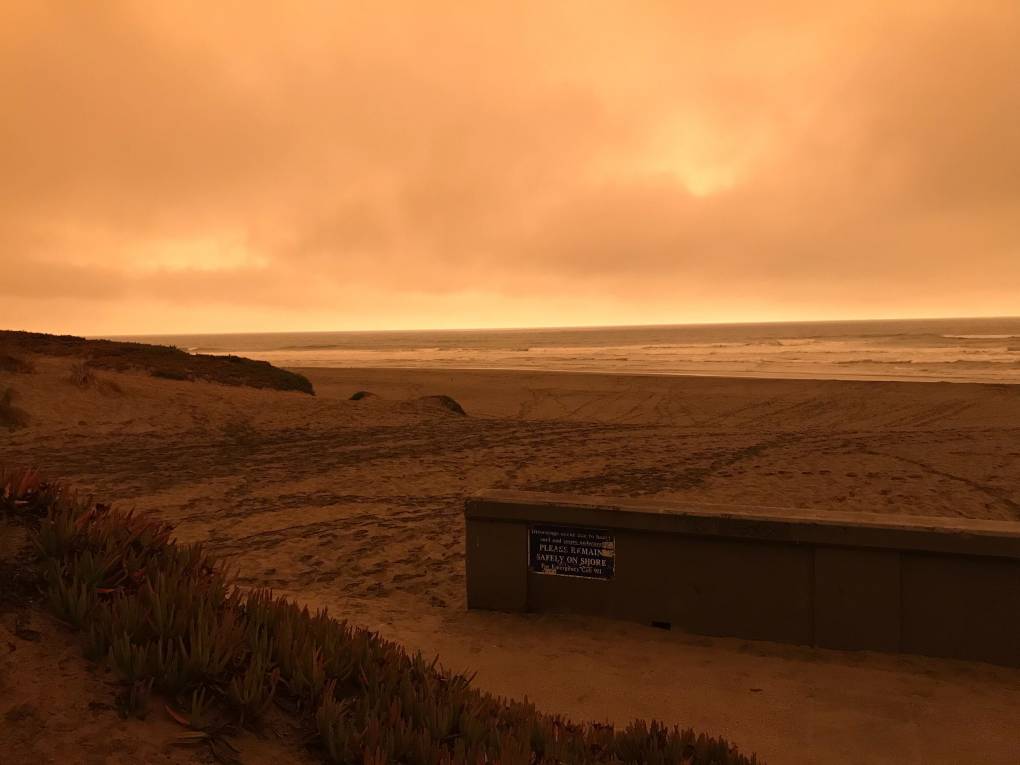
"caption": "The National Weather Service says smoke is expected to begin dispersing by Sunday, but especially on Monday.",
"description": "The National Weather Service says smoke is expected to begin dispersing by Sunday, but especially on Monday.",
"title": "Image from iOS (12)",
"credit": "Courtesy of Stephen Jesse McAghon",
"status": "inherit",
"isLoading": false,
"fetchFailed": false
},
"news_11816694": {
"type": "attachments",
"id": "news_11816694",
"meta": {
"index": "attachments_1716263798",
"site": "news",
"id": "11816694",
"found": true
},
"parent": 11816648,
"imgSizes": {
"apple_news_ca_landscape_5_5": {
"file": "https://ww2.kqed.org/app/uploads/sites/10/2020/05/RS43034_007_KQED_SanFrancisco_TentEncampments_05052020-qut-1-1044x783.jpg",
"width": 1044,
"mimeType": "image/jpeg",
"height": 783
},
"apple_news_ca_square_4_0": {
"file": "https://ww2.kqed.org/app/uploads/sites/10/2020/05/RS43034_007_KQED_SanFrancisco_TentEncampments_05052020-qut-1-470x470.jpg",
"width": 470,
"mimeType": "image/jpeg",
"height": 470
},
"twentyfourteen-full-width": {
"file": "https://ww2.kqed.org/app/uploads/sites/10/2020/05/RS43034_007_KQED_SanFrancisco_TentEncampments_05052020-qut-1-1038x576.jpg",
"width": 1038,
"mimeType": "image/jpeg",
"height": 576
},
"thumbnail": {
"file": "https://ww2.kqed.org/app/uploads/sites/10/2020/05/RS43034_007_KQED_SanFrancisco_TentEncampments_05052020-qut-1-160x107.jpg",
"width": 160,
"mimeType": "image/jpeg",
"height": 107
},
"post-thumbnail": {
"file": "https://ww2.kqed.org/app/uploads/sites/10/2020/05/RS43034_007_KQED_SanFrancisco_TentEncampments_05052020-qut-1-672x372.jpg",
"width": 672,
"mimeType": "image/jpeg",
"height": 372
},
"kqedFullSize": {
"file": "https://ww2.kqed.org/app/uploads/sites/10/2020/05/RS43034_007_KQED_SanFrancisco_TentEncampments_05052020-qut-1.jpg",
"width": 1920,
"height": 1280
},
"apple_news_ca_landscape_4_7": {
"file": "https://ww2.kqed.org/app/uploads/sites/10/2020/05/RS43034_007_KQED_SanFrancisco_TentEncampments_05052020-qut-1-632x474.jpg",
"width": 632,
"mimeType": "image/jpeg",
"height": 474
},
"large": {
"file": "https://ww2.kqed.org/app/uploads/sites/10/2020/05/RS43034_007_KQED_SanFrancisco_TentEncampments_05052020-qut-1-1020x680.jpg",
"width": 1020,
"mimeType": "image/jpeg",
"height": 680
},
"apple_news_ca_landscape_4_0": {
"file": "https://ww2.kqed.org/app/uploads/sites/10/2020/05/RS43034_007_KQED_SanFrancisco_TentEncampments_05052020-qut-1-536x402.jpg",
"width": 536,
"mimeType": "image/jpeg",
"height": 402
},
"apple_news_ca_portrait_12_9": {
"file": "https://ww2.kqed.org/app/uploads/sites/10/2020/05/RS43034_007_KQED_SanFrancisco_TentEncampments_05052020-qut-1-1122x1280.jpg",
"width": 1122,
"mimeType": "image/jpeg",
"height": 1280
},
"medium": {
"file": "https://ww2.kqed.org/app/uploads/sites/10/2020/05/RS43034_007_KQED_SanFrancisco_TentEncampments_05052020-qut-1-800x533.jpg",
"width": 800,
"mimeType": "image/jpeg",
"height": 533
},
"apple_news_ca_portrait_4_0": {
"file": "https://ww2.kqed.org/app/uploads/sites/10/2020/05/RS43034_007_KQED_SanFrancisco_TentEncampments_05052020-qut-1-354x472.jpg",
"width": 354,
"mimeType": "image/jpeg",
"height": 472
},
"apple_news_ca_portrait_9_7": {
"file": "https://ww2.kqed.org/app/uploads/sites/10/2020/05/RS43034_007_KQED_SanFrancisco_TentEncampments_05052020-qut-1-840x1120.jpg",
"width": 840,
"mimeType": "image/jpeg",
"height": 1120
},
"apple_news_ca_landscape_12_9": {
"file": "https://ww2.kqed.org/app/uploads/sites/10/2020/05/RS43034_007_KQED_SanFrancisco_TentEncampments_05052020-qut-1-1832x1280.jpg",
"width": 1832,
"mimeType": "image/jpeg",
"height": 1280
},
"apple_news_ca_square_9_7": {
"file": "https://ww2.kqed.org/app/uploads/sites/10/2020/05/RS43034_007_KQED_SanFrancisco_TentEncampments_05052020-qut-1-1104x1104.jpg",
"width": 1104,
"mimeType": "image/jpeg",
"height": 1104
},
"apple_news_ca_portrait_4_7": {
"file": "https://ww2.kqed.org/app/uploads/sites/10/2020/05/RS43034_007_KQED_SanFrancisco_TentEncampments_05052020-qut-1-414x552.jpg",
"width": 414,
"mimeType": "image/jpeg",
"height": 552
},
"apple_news_ca_square_12_9": {
"file": "https://ww2.kqed.org/app/uploads/sites/10/2020/05/RS43034_007_KQED_SanFrancisco_TentEncampments_05052020-qut-1-1472x1280.jpg",
"width": 1472,
"mimeType": "image/jpeg",
"height": 1280
},
"apple_news_ca_portrait_5_5": {
"file": "https://ww2.kqed.org/app/uploads/sites/10/2020/05/RS43034_007_KQED_SanFrancisco_TentEncampments_05052020-qut-1-687x916.jpg",
"width": 687,
"mimeType": "image/jpeg",
"height": 916
},
"full-width": {
"file": "https://ww2.kqed.org/app/uploads/sites/10/2020/05/RS43034_007_KQED_SanFrancisco_TentEncampments_05052020-qut-1-1920x1280.jpg",
"width": 1920,
"mimeType": "image/jpeg",
"height": 1280
},
"apple_news_ca_square_4_7": {
"file": "https://ww2.kqed.org/app/uploads/sites/10/2020/05/RS43034_007_KQED_SanFrancisco_TentEncampments_05052020-qut-1-550x550.jpg",
"width": 550,
"mimeType": "image/jpeg",
"height": 550
},
"apple_news_ca_landscape_9_7": {
"file": "https://ww2.kqed.org/app/uploads/sites/10/2020/05/RS43034_007_KQED_SanFrancisco_TentEncampments_05052020-qut-1-1376x1032.jpg",
"width": 1376,
"mimeType": "image/jpeg",
"height": 1032
},
"apple_news_ca_square_5_5": {
"file": "https://ww2.kqed.org/app/uploads/sites/10/2020/05/RS43034_007_KQED_SanFrancisco_TentEncampments_05052020-qut-1-912x912.jpg",
"width": 912,
"mimeType": "image/jpeg",
"height": 912
}
},
"publishDate": 1588812228,
"modified": 1588812294,
"caption": "Tents are spaced for social distancing at Bay View Park K.C. Jones Playground on May 5, 2020.",
"description": "Tents are spaced for social distancing at Bay View Park K.C. Jones Playground on May 5, 2020.",
"title": "RS43034_007_KQED_SanFrancisco_TentEncampments_05052020-qut (1)",
"credit": "Beth LaBerge/KQED",
"status": "inherit",
"isLoading": false,
"fetchFailed": false
}
},
"audioPlayerReducer": {
"postId": "stream_live",
"isPaused": true,
"isPlaying": false,
"pfsActive": false,
"pledgeModalIsOpen": true,
"playerDrawerIsOpen": false,
"liveAudioPlayStartedAt": 0,
"liveAudioPlayContext": ""
},
"authorsReducer": {
"byline_news_11842759": {
"type": "authors",
"id": "byline_news_11842759",
"meta": {
"override": true
},
"slug": "byline_news_11842759",
"name": "The Associated Press",
"isLoading": false
},
"byline_news_11838909": {
"type": "authors",
"id": "byline_news_11838909",
"meta": {
"override": true
},
"slug": "byline_news_11838909",
"name": "Joe Dworetzky, KQED",
"isLoading": false
},
"kqednewsstaffandwires": {
"type": "authors",
"id": "237",
"meta": {
"index": "authors_1716337520",
"id": "237",
"found": true
},
"name": "KQED News Staff and Wires",
"firstName": "KQED News Staff and Wires",
"lastName": null,
"slug": "kqednewsstaffandwires",
"email": "onlinenewsstaff@kqed.org",
"display_author_email": false,
"staff_mastheads": [],
"title": null,
"bio": null,
"avatar": "https://secure.gravatar.com/avatar/72295af8ebbfbd19a4948f5271285664?s=600&d=blank&r=g",
"twitter": null,
"facebook": null,
"instagram": null,
"linkedin": null,
"sites": [
{
"site": "arts",
"roles": [
"contributor"
]
},
{
"site": "news",
"roles": [
"contributor"
]
},
{
"site": "lowdown",
"roles": [
"author"
]
},
{
"site": "stateofhealth",
"roles": [
"contributor"
]
},
{
"site": "food",
"roles": [
"author"
]
}
],
"headData": {
"title": "KQED News Staff and Wires | KQED",
"description": null,
"ogImgSrc": "https://secure.gravatar.com/avatar/72295af8ebbfbd19a4948f5271285664?s=600&d=blank&r=g",
"twImgSrc": "https://secure.gravatar.com/avatar/72295af8ebbfbd19a4948f5271285664?s=600&d=blank&r=g"
},
"isLoading": false,
"link": "/author/kqednewsstaffandwires"
},
"rachael-myrow": {
"type": "authors",
"id": "251",
"meta": {
"index": "authors_1716337520",
"id": "251",
"found": true
},
"name": "Rachael Myrow",
"firstName": "Rachael",
"lastName": "Myrow",
"slug": "rachael-myrow",
"email": "rmyrow@kqed.org",
"display_author_email": true,
"staff_mastheads": [
"news"
],
"title": "Senior Editor of KQED's Silicon Valley News Desk",
"bio": "• I write and edit stories about how Silicon Valley power and policies shape everyday life in California. I’m also passionate about making Bay Area history and culture more accessible to a broad public. • I’ve been a journalist for most of my life, starting in high school with The Franklin Press in Los Angeles, where I grew up. While earning my first degree in English at UC Berkeley, I got my start in public radio at KALX-FM. After completing a second degree in journalism at Cal, I landed my first professional job at Marketplace, then moved on to KPCC (now LAist), and then KQED, where I hosted The California Report for more than seven years. • My reporting has appeared on NPR, The World, WBUR’s \u003ci>Here & Now\u003c/i>, and the BBC. I also guest host for KQED’s \u003ci>Forum\u003c/i>, as well as the Commonwealth Club in San Francisco. • I speak periodically on media, democracy and technology issues, and do voiceover work for documentaries and educational video projects. • Outside of the studio, you'll find me hiking Bay Area trails and whipping up Insta-ready meals in my kitchen. • I do not accept gifts, money, or favors from anyone connected to my reporting, I don't pay people for information, and I do not support or donate to political causes. • I strive to treat the people I report on with fairness, honesty, and respect. I also recognize there are often multiple sides to a story and work to verify information through multiple sources and documentation. If I get something wrong, I correct it.",
"avatar": "https://secure.gravatar.com/avatar/3ed8a3c5f26025e4a805ba634cda8cd764906b97438a6d9ce216b044e340da4e?s=600&d=blank&r=g",
"twitter": "rachaelmyrow",
"bluesky": null,
"facebook": null,
"instagram": null,
"linkedin": "https://www.linkedin.com/in/rachaelmyrow/",
"sites": [
{
"site": "arts",
"roles": [
"administrator"
]
},
{
"site": "news",
"roles": [
"edit_others_posts",
"editor"
]
},
{
"site": "futureofyou",
"roles": [
"editor"
]
},
{
"site": "bayareabites",
"roles": [
"editor"
]
},
{
"site": "stateofhealth",
"roles": [
"editor"
]
},
{
"site": "science",
"roles": [
"editor"
]
},
{
"site": "food",
"roles": [
"editor"
]
},
{
"site": "forum",
"roles": [
"editor"
]
},
{
"site": "liveblog",
"roles": [
"author"
]
}
],
"headData": {
"title": "Rachael Myrow | KQED",
"description": "Senior Editor of KQED's Silicon Valley News Desk",
"ogImgSrc": "https://secure.gravatar.com/avatar/3ed8a3c5f26025e4a805ba634cda8cd764906b97438a6d9ce216b044e340da4e?s=600&d=blank&r=g",
"twImgSrc": "https://secure.gravatar.com/avatar/3ed8a3c5f26025e4a805ba634cda8cd764906b97438a6d9ce216b044e340da4e?s=600&d=blank&r=g"
},
"isLoading": false,
"link": "/author/rachael-myrow"
},
"jsmall": {
"type": "authors",
"id": "6625",
"meta": {
"index": "authors_1716337520",
"id": "6625",
"found": true
},
"name": "Julie Small",
"firstName": "Julie",
"lastName": "Small",
"slug": "jsmall",
"email": "jsmall@kqed.org",
"display_author_email": true,
"staff_mastheads": [
"news"
],
"title": "KQED Contributor",
"bio": "Julie Small reports on criminal justice and immigration.\r\n\r\nShe was part of a team at KQED awarded a regional 2019 Edward R. Murrow award for continuing coverage of the Trump Administration's family separation policy.\r\n\r\nThe Society for Professional Journalists recognized Julie's 2018 \u003ca href=\"https://www.kqed.org/news/11636262/the-officer-tased-him-31-times-the-sheriff-called-his-death-an-accident\">reporting\u003c/a> on the San Joaquin County Sheriff's \u003ca href=\"https://www.kqed.org/news/11634689/autopsy-doctors-sheriff-overrode-death-findings-to-protect-law-enforcement\">interference\u003c/a> in death investigations with an Excellence in Journalism Award for Ongoing Coverage.\r\n\r\nJulie's\u003ca href=\"https://www.kqed.org/news/11039666/two-mentally-ill-inmates-died-one-month-in-santa-clara\"> reporting\u003c/a> with Lisa Pickoff-White on the treatment of mentally ill offenders in California jails earned a 2017 regional Edward R. Murrow Award for news reporting and an investigative reporting award from the SPJ of Northern California.\r\n\r\nBefore joining KQED, Julie covered government and politics in Sacramento for Southern California Public Radio (SCPR). Her 2010 \u003ca href=\"https://www.scpr.org/specials/prisonmedical/\">series\u003c/a> on lapses in California’s prison medical care also won a regional Edward R. Murrow Award for investigative reporting and a Golden Mic Award from the RTNDA of Southern California.\r\n\r\nJulie began her career in journalism in 2000 as the deputy foreign editor for public radio's \u003cem>Marketplace, \u003c/em>while earning her master's degree in journalism from USC’s Annenberg School of Communication.",
"avatar": "https://secure.gravatar.com/avatar/4baedf201468df97be97c2a9dd7585d0?s=600&d=blank&r=g",
"twitter": "@SmallRadio2",
"facebook": null,
"instagram": null,
"linkedin": null,
"sites": [
{
"site": "news",
"roles": [
"editor"
]
},
{
"site": "stateofhealth",
"roles": [
"author"
]
},
{
"site": "science",
"roles": [
"author"
]
}
],
"headData": {
"title": "Julie Small | KQED",
"description": "KQED Contributor",
"ogImgSrc": "https://secure.gravatar.com/avatar/4baedf201468df97be97c2a9dd7585d0?s=600&d=blank&r=g",
"twImgSrc": "https://secure.gravatar.com/avatar/4baedf201468df97be97c2a9dd7585d0?s=600&d=blank&r=g"
},
"isLoading": false,
"link": "/author/jsmall"
},
"clei": {
"type": "authors",
"id": "8617",
"meta": {
"index": "authors_1716337520",
"id": "8617",
"found": true
},
"name": "Cecilia Lei",
"firstName": "Cecilia",
"lastName": "Lei",
"slug": "clei",
"email": "clei@KQED.org",
"display_author_email": false,
"staff_mastheads": [],
"title": "KQED Contributor",
"bio": "Cecilia Lei is an on-call host and producer for KQED News and Podcasts. Previously, she was the executive producer and host of the San Francisco Chronicle's daily news podcast, 'Fifth and Mission'. Cecilia is a graduate of UC Berkeley’s Graduate School of Journalism and the former president of the Asian American Journalists Association San Francisco Bay Area chapter.",
"avatar": "https://secure.gravatar.com/avatar/40975f1f88fccf628ee537bf6ffc2af8?s=600&d=blank&r=g",
"twitter": null,
"facebook": null,
"instagram": null,
"linkedin": null,
"sites": [
{
"site": "arts",
"roles": [
"contributor"
]
},
{
"site": "news",
"roles": [
"author",
"read_private_posts"
]
},
{
"site": "about",
"roles": [
"editor"
]
}
],
"headData": {
"title": "Cecilia Lei | KQED",
"description": "KQED Contributor",
"ogImgSrc": "https://secure.gravatar.com/avatar/40975f1f88fccf628ee537bf6ffc2af8?s=600&d=blank&r=g",
"twImgSrc": "https://secure.gravatar.com/avatar/40975f1f88fccf628ee537bf6ffc2af8?s=600&d=blank&r=g"
},
"isLoading": false,
"link": "/author/clei"
},
"rdillon": {
"type": "authors",
"id": "11495",
"meta": {
"index": "authors_1716337520",
"id": "11495",
"found": true
},
"name": "Raquel Maria Dillon",
"firstName": "Raquel Maria",
"lastName": "Dillon",
"slug": "rdillon",
"email": "rdillon@kqed.org",
"display_author_email": false,
"staff_mastheads": [],
"title": null,
"bio": "Raquel Maria Dillon was a reporter and host for KQED News. Previously, she produced the daily statewide California Report, edited newscasts, and covered health and education stories. Before returning to the Bay Area in 2016, she worked in Los Angeles as a wire reporter and one-woman-band video journalist for the Associated Press, where she shot, edited and reported breaking news and features across the West. Her work has appeared online and in print around the globe, and also on NPR’s Morning Edition, All Things Considered, Here and Now, Marketplace, On The Media, and Studio 360. She previously edited and mentored up-and-coming reporters at KALW, produced social videos for Timeline.com, and was a local TV news videographer for KTVU and digital producer for KNTV. She got her start as a Radio News Trainee at KQED, produced a weekly public affairs roundtable show for OPB, and covered health and politics at New Hampshire Public Radio. She has a BA in political science from Barnard College and a MA in video journalism from UC Berkeley, where she was awarded the Faith Fancher Scholarship and a Student Emmy. She has received numerous local awards from the Associated Press and the Society of Professional Journalists.",
"avatar": "https://secure.gravatar.com/avatar/b8e02ae982913d0950df605910267c1b?s=600&d=blank&r=g",
"twitter": "RaquelMDillon",
"facebook": null,
"instagram": null,
"linkedin": null,
"sites": [
{
"site": "news",
"roles": [
"subscriber"
]
},
{
"site": "stateofhealth",
"roles": [
"editor"
]
},
{
"site": "science",
"roles": [
"editor"
]
},
{
"site": "forum",
"roles": [
"editor"
]
}
],
"headData": {
"title": "Raquel Maria Dillon | KQED",
"description": null,
"ogImgSrc": "https://secure.gravatar.com/avatar/b8e02ae982913d0950df605910267c1b?s=600&d=blank&r=g",
"twImgSrc": "https://secure.gravatar.com/avatar/b8e02ae982913d0950df605910267c1b?s=600&d=blank&r=g"
},
"isLoading": false,
"link": "/author/rdillon"
},
"katewolffe": {
"type": "authors",
"id": "11523",
"meta": {
"index": "authors_1716337520",
"id": "11523",
"found": true
},
"name": "Kate Wolffe",
"firstName": "Kate",
"lastName": "Wolffe",
"slug": "katewolffe",
"email": "kwolffe@kqed.org",
"display_author_email": true,
"staff_mastheads": [
"news"
],
"title": "KQED Reporter + Weekend Host",
"bio": "Kate Wolffe reports on local Bay Area happenings for KQED, and hosts the news on weekend afternoons. She joined KQED in 2018 as an intern on the Forum team, before moving to cover topics ranging from politics to criminal justice to homelessness. A Bay Area native and UC Berkeley graduate, Kate loves to discover new corners of the region.",
"avatar": "https://secure.gravatar.com/avatar/22455f14db824a03ee252f73052fe939?s=600&d=blank&r=g",
"twitter": "katewolffe",
"facebook": null,
"instagram": null,
"linkedin": null,
"sites": [
{
"site": "arts",
"roles": [
"editor"
]
},
{
"site": "news",
"roles": [
"author",
"edit_others_posts"
]
},
{
"site": "forum",
"roles": [
"editor"
]
}
],
"headData": {
"title": "Kate Wolffe | KQED",
"description": "KQED Reporter + Weekend Host",
"ogImgSrc": "https://secure.gravatar.com/avatar/22455f14db824a03ee252f73052fe939?s=600&d=blank&r=g",
"twImgSrc": "https://secure.gravatar.com/avatar/22455f14db824a03ee252f73052fe939?s=600&d=blank&r=g"
},
"isLoading": false,
"link": "/author/katewolffe"
},
"jchang": {
"type": "authors",
"id": "11642",
"meta": {
"index": "authors_1716337520",
"id": "11642",
"found": true
},
"name": "Julie Chang",
"firstName": "Julie",
"lastName": "Chang",
"slug": "jchang",
"email": "jchang@kqed.org",
"display_author_email": false,
"staff_mastheads": [
"news"
],
"title": "KQED Contributor",
"bio": "Julie Chang is a reporter and producer (and occasional anchor) with the radio and digital teams at KQED. Before KQED, she worked at WAMU 88.5 in Washington D.C. and 89.3 KPCC in Los Angeles County. Her work has been featured on NPR’s Morning Edition and All Things Considered, Here & Now, the New York Times, and more. Julie graduated from UC Berkeley’s Graduate School of Journalism. She previously taught English at Pasadena City College, Fullerton College and Cal Poly Pomona. Julie earned her M.A. in English from Cal Poly Pomona and her B.A. in English from UCI with a minor in criminology.",
"avatar": "https://secure.gravatar.com/avatar/a7afce94ef127082c5475116b4a3b77d?s=600&d=blank&r=g",
"twitter": "BayAreaJulie",
"facebook": null,
"instagram": null,
"linkedin": "https://www.linkedin.com/in/julieyc/",
"sites": [
{
"site": "",
"roles": [
"editor"
]
},
{
"site": "news",
"roles": [
"author"
]
},
{
"site": "science",
"roles": [
"editor"
]
}
],
"headData": {
"title": "Julie Chang | KQED",
"description": "KQED Contributor",
"ogImgSrc": "https://secure.gravatar.com/avatar/a7afce94ef127082c5475116b4a3b77d?s=600&d=blank&r=g",
"twImgSrc": "https://secure.gravatar.com/avatar/a7afce94ef127082c5475116b4a3b77d?s=600&d=blank&r=g"
},
"isLoading": false,
"link": "/author/jchang"
},
"ebaldassari": {
"type": "authors",
"id": "11652",
"meta": {
"index": "authors_1716337520",
"id": "11652",
"found": true
},
"name": "Erin Baldassari",
"firstName": "Erin",
"lastName": "Baldassari",
"slug": "ebaldassari",
"email": "ebaldassari@KQED.org",
"display_author_email": true,
"staff_mastheads": [
"news"
],
"title": "Staff Writer",
"bio": "Erin Baldassari covers housing for KQED. She's a former print journalist and most recently worked as the transportation reporter for the \u003cem>Mercury News\u003c/em> and \u003cem>East Bay Times. \u003c/em>There, she focused on how the Bay Area’s housing shortage has changed the way people move around the region. She also served on the \u003cem>East Bay Times\u003c/em>’ 2017 Pulitzer Prize-winning team for coverage of the Ghost Ship Fire in Oakland. Prior to that, Erin worked as a breaking news and general assignment reporter for a variety of outlets in the Bay Area and the greater Boston area. A Tufts University alumna, Erin grew up in the foothills of the Sierra Nevada mountains and in Sonoma County. She is a life-long KQED listener.",
"avatar": "https://secure.gravatar.com/avatar/5e95cad64a8ca08288082212e199d2b0cbeb4fd8e8ef5339395f361032bbe005?s=600&d=blank&r=g",
"twitter": "e_baldi",
"bluesky": null,
"facebook": null,
"instagram": null,
"linkedin": null,
"sites": [
{
"site": "news",
"roles": [
"edit_others_posts",
"editor"
]
},
{
"site": "science",
"roles": [
"editor"
]
},
{
"site": "liveblog",
"roles": [
"editor"
]
}
],
"headData": {
"title": "Erin Baldassari | KQED",
"description": "Staff Writer",
"ogImgSrc": "https://secure.gravatar.com/avatar/5e95cad64a8ca08288082212e199d2b0cbeb4fd8e8ef5339395f361032bbe005?s=600&d=blank&r=g",
"twImgSrc": "https://secure.gravatar.com/avatar/5e95cad64a8ca08288082212e199d2b0cbeb4fd8e8ef5339395f361032bbe005?s=600&d=blank&r=g"
},
"isLoading": false,
"link": "/author/ebaldassari"
},
"jrodriguez": {
"type": "authors",
"id": "11690",
"meta": {
"index": "authors_1716337520",
"id": "11690",
"found": true
},
"name": "Joe Fitzgerald Rodriguez",
"firstName": "Joe",
"lastName": "Fitzgerald Rodriguez",
"slug": "jrodriguez",
"email": "jrodriguez@kqed.org",
"display_author_email": true,
"staff_mastheads": [
"news"
],
"title": "Reporter and Producer",
"bio": "Joe Fitzgerald Rodriguez is a reporter and digital producer for KQED covering politics. Joe most recently wrote for the \u003cem>San Francisco Examiner\u003c/em> as a political columnist covering The City. He was raised in San Francisco and has spent his reporting career in his beloved, foggy, city by the bay. Joe was 12-years-old when he conducted his first interview in journalism, grilling former San Francisco Mayor Willie Brown for the Marina Middle School newspaper, \u003cem>The Penguin Press, \u003c/em>and he continues to report on the San Francisco Bay Area to this day.",
"avatar": "https://secure.gravatar.com/avatar/2247beb0564c1e9c62228d5649d2edac?s=600&d=blank&r=g",
"twitter": "FitztheReporter",
"facebook": null,
"instagram": "https://www.instagram.com/fitzthereporter/",
"linkedin": null,
"sites": [
{
"site": "",
"roles": [
"editor"
]
},
{
"site": "arts",
"roles": [
"editor"
]
},
{
"site": "news",
"roles": [
"editor"
]
},
{
"site": "science",
"roles": [
"editor"
]
},
{
"site": "elections",
"roles": [
"editor"
]
},
{
"site": "liveblog",
"roles": [
"editor"
]
}
],
"headData": {
"title": "Joe Fitzgerald Rodriguez | KQED",
"description": "Reporter and Producer",
"ogImgSrc": "https://secure.gravatar.com/avatar/2247beb0564c1e9c62228d5649d2edac?s=600&d=blank&r=g",
"twImgSrc": "https://secure.gravatar.com/avatar/2247beb0564c1e9c62228d5649d2edac?s=600&d=blank&r=g"
},
"isLoading": false,
"link": "/author/jrodriguez"
}
},
"pagesReducer": {
"news_tag_san-francisco": {
"type": "terms",
"id": "news_38",
"meta": {
"index": "terms_1716263798",
"site": "news",
"id": "38",
"score": 6.723207
},
"featImg": null,
"name": "San Francisco",
"description": null,
"taxonomy": "tag",
"headData": {
"twImgId": null,
"twTitle": null,
"ogTitle": null,
"ogImgId": null,
"twDescription": null,
"description": null,
"title": "San Francisco Archives | KQED News",
"ogDescription": null
},
"ttid": 58,
"slug": "san-francisco",
"isLoading": false,
"title": "San Francisco",
"pageMeta": {
"site": "news",
"WpPageTemplate": "page-topic-editorial",
"currentPage": 134
},
"blocks": [
{
"blockName": "kqed/post-list",
"attrs": {
"layout": "cardArticle2",
"query": "posts/news?tag=san-francisco",
"seeMore": false,
"paginated": true,
"page": 134
}
},
{
"blockName": "kqed/ad"
}
]
}
},
"pfsSessionReducer": {},
"postsReducer": {
"stream_live": {
"type": "live",
"id": "stream_live",
"audioUrl": "https://streams.kqed.org/kqedradio",
"title": "Live Stream",
"excerpt": "Live Stream information currently unavailable.",
"link": "/radio",
"featImg": "",
"label": {
"name": "KQED Live",
"link": "/"
}
},
"stream_kqedNewscast": {
"type": "posts",
"id": "stream_kqedNewscast",
"audioUrl": "https://www.kqed.org/.stream/anon/radio/RDnews/newscast.mp3?_=1",
"title": "KQED Newscast",
"featImg": "",
"label": {
"name": "88.5 FM",
"link": "/"
}
},
"news_11843337": {
"type": "posts",
"id": "news_11843337",
"meta": {
"index": "posts_1716263798",
"site": "news",
"id": "11843337",
"score": null,
"sort": [
1603454480000
]
},
"guestAuthors": [],
"slug": "san-francisco-voters-to-decide-on-new-public-housing-taxes",
"title": "San Francisco Voters to Decide on New Public Housing – and Taxes to Pay for It",
"publishDate": 1603454480,
"format": "standard",
"headTitle": "San Francisco Voters to Decide on New Public Housing – and Taxes to Pay for It | KQED",
"labelTerm": {
"site": "news"
},
"content": "\u003cp>San Francisco voters will decide on two ballot measures next month that would authorize new public housing, as well as a tax to help pay for it all.\u003c/p>\n\u003cp>Supervisor Dean Preston introduced the measures and says the vision is to create stability for renters who are priced out of the city.\u003c/p>\n\u003cp>“The vision is that you can be a working class person who lives in San Francisco and pays a reasonable percentage of your income to rent,” he said, “and that you will never be forced out of that unit by an eviction, that you will never have sharp rent increases … and that you have security.” [pullquote size=\"medium\" align=\"right\" citation=\"Supervisor Dean Preston\"]‘The vision is that you can be a working class person who lives in San Francisco and pays a reasonable percentage of your income to rent, and that you will never be forced out of that unit by an eviction, that you will never have sharp rent increases … and that you have security.’[/pullquote]\u003c/p>\n\u003cp>Preston’s call for new government-owned housing comes amid a \u003ca href=\"https://homesguarantee.com/\" target=\"_blank\" rel=\"noopener noreferrer\">resurgence\u003c/a> of \u003ca href=\"https://www.youtube.com/watch?v=NZ_WulgST3U\" target=\"_blank\" rel=\"noopener noreferrer\">national\u003c/a> \u003ca href=\"https://ocasio-cortez.house.gov/gnd/public-housing\" target=\"_blank\" rel=\"noopener noreferrer\">interest\u003c/a> in \u003ca href=\"https://omar.house.gov/media/press-releases/rep-ilhan-omar-introduces-homes-all-act-new-21st-century-public-housing-vision\" target=\"_blank\" rel=\"noopener noreferrer\">public housing,\u003c/a> as well as calls to build permanently affordable housing that’s financed by the government but managed by nonprofits, called “\u003ca href=\"https://www.peoplespolicyproject.org/wp-content/uploads/2018/04/SocialHousing.pdf\" target=\"_blank\" rel=\"noopener noreferrer\">social housing\u003c/a>.”\u003c/p>\n\u003cp>\u003ca href=\"https://sfelections.sfgov.org/sites/default/files/Documents/candidates/2020Nov/20200624_AuthorizingDevelopmentUnderCaliforniaConstitution_Legisla.pdf\" target=\"_blank\" rel=\"noopener noreferrer\">Prop K\u003c/a> would authorize up to 10,000 units of new affordable housing that could be owned or operated by the city. The California Constitution \u003ca href=\"https://leginfo.legislature.ca.gov/faces/codes_displayText.xhtml?lawCode=CONS&division=&title=&part=&chapter=&article=XXXIV\" target=\"_blank\" rel=\"noopener noreferrer\">requires voters to approve\u003c/a> any new low-income housing that receives public funds.\u003c/p>\n\u003cp>To pay for this new housing, \u003ca href=\"https://sfelections.sfgov.org/sites/default/files/Documents/candidates/2020Nov/20200717_RealPropertyTransferTaxRateIncrease.pdf\" target=\"_blank\" rel=\"noopener noreferrer\">Prop I\u003c/a> would double the transfer tax on buildings that sell for $10 million or more. The San Francisco Controller’s Office \u003ca href=\"https://sfelections.sfgov.org/sites/default/files/Documents/candidates/2020Nov/Prop%20I%20-%20Transfer%20Tax.pdf\" target=\"_blank\" rel=\"noopener noreferrer\">estimates\u003c/a> that if the tax had been in place between 2008 and 2019, it would have generated an average of $196 million per year.\u003c/p>\n\u003cp>But the actual amount would vary widely. According to the report, some years would have generated as little as $13 million or as much as $346 million, making it the “most volatile revenue source” in the city.\u003c/p>\n\u003cp>[ad fullwidth]\u003c/p>\n\u003cp>Randy Shaw, the executive director of the Tenderloin Housing Clinic, questioned whether new city-owned housing is necessary.\u003c/p>\n\u003cp>In 2012, voters \u003ca href=\"https://ballotpedia.org/San_Francisco_Creation_of_a_Housing_Trust_Fund,_Proposition_C_(November_2012)\" target=\"_blank\" rel=\"noopener noreferrer\">approved 30,000 new units\u003c/a> of affordable housing managed by nonprofits and community land trusts. Preston said a new vote is needed to allow the city itself to build and manage that housing.\u003c/p>\n\u003cp>“We have a structure in San Francisco of nonprofits and community land trust being the agent and the engine for affordable housing production,” Shaw said. “Why is that not adequate?”\u003c/p>\n\u003cp>Shaw said that if the city owns more housing, it would have to hire the staff to develop and manage it. That would cost money, he said, which instead could go to nonprofits and community land trusts — that already have staff in place — to actually build housing instead.\u003c/p>\n\u003cp>“What is the reason for a new model?” Shaw said. “I have yet to hear an explanation.”\u003c/p>\n\u003cp>With the housing crisis \u003ca href=\"https://www.kqed.org/news/11818184/bay-area-housing-post-pandemic-whats-in-store\" target=\"_blank\" rel=\"noopener noreferrer\">expected to get worse\u003c/a> as a result of the pandemic, particularly for low-income people, Preston said the city should have every option on the table.\u003c/p>\n\u003cp>“We need all the tools at our disposal,” he said. “And that includes municipal housing as an option.”\u003c/p>\n\u003cp>Public housing in the United States was \u003ca href=\"https://fas.org/sgp/crs/misc/R41654.pdf\" target=\"_blank\" rel=\"noopener noreferrer\">first created\u003c/a> as a response to the Great Depression, intended to serve only the poorest families who couldn’t afford rents on the private market. But it faced chronic underfunding from the start. Today, the National Low Income Housing Coalition \u003ca href=\"https://nlihc.org/resource/public-housing-where-do-we-stand#:~:text=Because%20Congress%20has%20failed%20to,public%20housing%20maintenance%20and%20repairs)\">estimates\u003c/a> the country’s existing public housing — a little more than 1 million units — is facing a $70 billion backlog in needed maintenance and repairs.\u003c/p>\n\u003cp>San Francisco was no exception. And beginning in 2014, it took advantage of a new federal program to rehab its public housing stock, \u003ca href=\"https://www.politico.com/magazine/story/2017/07/20/how-san-francisco-turned-its-tenements-into-treasures-215391\" target=\"_blank\" rel=\"noopener noreferrer\">turning over all of its federally-subsidized public housing to nonprofits\u003c/a>.\u003c/p>\n\u003cp>“We had an existing structure where the government owned (public housing),” Shaw said. “And we had to then work out so that nonprofits could take over. And it’s been a big success.”\u003c/p>\n\u003cp>Preston said that, ultimately, a new steering committee would decide who would own and operate any new housing authorized by Prop K. [aside tag=\"housing\" label=\"More Housing Coverage\"]\u003c/p>\n\u003cp>But others are wondering if the city can afford a new and expensive housing program, particularly at a time when the economy is still struggling.\u003c/p>\n\u003cp>Gwen Kaplan, the CEO of Ace Mailing in San Francisco’s Mission neighborhood, says that ultimately, the new Prop I tax would get passed down to small businesses in the form of higher lease payments. She says those are small businesses that are already hurting as a result of the pandemic.\u003c/p>\n\u003cp>“All you need to do is drive down Castro, 24th Street, Fillmore, Union Street and see the effects of the pandemic,” she said. “And we were in difficult enough conditions before the pandemic.”\u003c/p>\n\u003cp>If Prop K passes but Prop I doesn’t, Preston says the city will have to find another pot of money for the new housing.\u003c/p>\n\u003cp>\u003c/p>\n",
"blocks": [],
"excerpt": "Proposition K would authorize 10,000 units of new affordable housing, which could be owned and operated by the city. And Prop. I would double the transfer tax on properties valued over $10 million.",
"status": "publish",
"parent": 0,
"modified": 1728430632,
"stats": {
"hasAudio": false,
"hasVideo": false,
"hasChartOrMap": false,
"iframeSrcs": [],
"hasGoogleForm": false,
"hasGallery": false,
"hasHearkenModule": false,
"hasPolis": false,
"paragraphCount": 24,
"wordCount": 881
},
"headData": {
"title": "San Francisco Voters to Decide on New Public Housing – and Taxes to Pay for It | KQED",
"description": "Proposition K would authorize 10,000 units of new affordable housing, which could be owned and operated by the city. And Prop. I would double the transfer tax on properties valued over $10 million.",
"ogTitle": "",
"ogDescription": "",
"ogImgId": "",
"twTitle": "",
"twDescription": "",
"twImgId": "",
"schema": {
"@context": "https://schema.org",
"@type": "NewsArticle",
"headline": "San Francisco Voters to Decide on New Public Housing – and Taxes to Pay for It",
"datePublished": "2020-10-23T05:01:20-07:00",
"dateModified": "2024-10-08T16:37:12-07:00",
"image": "https://cdn.kqed.org/wp-content/uploads/2020/02/KQED-OG-Image@1x.png",
"isAccessibleForFree": "True",
"publisher": {
"@type": "NewsMediaOrganization",
"@id": "https://www.kqed.org/#organization",
"name": "KQED",
"logo": "https://cdn.kqed.org/wp-content/uploads/2020/02/KQED-OG-Image@1x.png",
"url": "https://www.kqed.org",
"sameAs": [
"https://www.facebook.com/KQED",
"https://twitter.com/KQED",
"https://www.instagram.com/kqed/",
"https://www.tiktok.com/@kqedofficial",
"https://www.linkedin.com/company/kqed",
"https://www.youtube.com/channel/UCeC0IOo7i1P_61zVUWbJ4nw"
]
}
}
},
"audioUrl": "https://traffic.omny.fm/d/clips/0af137ef-751e-4b19-a055-aaef00d2d578/ffca7e9f-6831-41c5-bcaf-aaef00f5a073/3679145d-6610-40b8-a8fa-ac5c012d9828/audio.mp3",
"sticky": false,
"path": "/news/11843337/san-francisco-voters-to-decide-on-new-public-housing-taxes",
"audioTrackLength": null,
"parsedContent": [
{
"type": "contentString",
"content": "\u003cdiv class=\"post-body\">\u003cp>\u003cp>San Francisco voters will decide on two ballot measures next month that would authorize new public housing, as well as a tax to help pay for it all.\u003c/p>\n\u003cp>Supervisor Dean Preston introduced the measures and says the vision is to create stability for renters who are priced out of the city.\u003c/p>\n\u003cp>“The vision is that you can be a working class person who lives in San Francisco and pays a reasonable percentage of your income to rent,” he said, “and that you will never be forced out of that unit by an eviction, that you will never have sharp rent increases … and that you have security.” \u003c/p>\u003c/div>",
"attributes": {
"named": {},
"numeric": []
}
},
{
"type": "component",
"content": "‘The vision is that you can be a working class person who lives in San Francisco and pays a reasonable percentage of your income to rent, and that you will never be forced out of that unit by an eviction, that you will never have sharp rent increases … and that you have security.’",
"name": "pullquote",
"attributes": {
"named": {
"size": "medium",
"align": "right",
"citation": "Supervisor Dean Preston",
"label": ""
},
"numeric": []
}
},
{
"type": "contentString",
"content": "\u003cdiv class=\"post-body\">\u003cp>\u003c/p>\n\u003cp>Preston’s call for new government-owned housing comes amid a \u003ca href=\"https://homesguarantee.com/\" target=\"_blank\" rel=\"noopener noreferrer\">resurgence\u003c/a> of \u003ca href=\"https://www.youtube.com/watch?v=NZ_WulgST3U\" target=\"_blank\" rel=\"noopener noreferrer\">national\u003c/a> \u003ca href=\"https://ocasio-cortez.house.gov/gnd/public-housing\" target=\"_blank\" rel=\"noopener noreferrer\">interest\u003c/a> in \u003ca href=\"https://omar.house.gov/media/press-releases/rep-ilhan-omar-introduces-homes-all-act-new-21st-century-public-housing-vision\" target=\"_blank\" rel=\"noopener noreferrer\">public housing,\u003c/a> as well as calls to build permanently affordable housing that’s financed by the government but managed by nonprofits, called “\u003ca href=\"https://www.peoplespolicyproject.org/wp-content/uploads/2018/04/SocialHousing.pdf\" target=\"_blank\" rel=\"noopener noreferrer\">social housing\u003c/a>.”\u003c/p>\n\u003cp>\u003ca href=\"https://sfelections.sfgov.org/sites/default/files/Documents/candidates/2020Nov/20200624_AuthorizingDevelopmentUnderCaliforniaConstitution_Legisla.pdf\" target=\"_blank\" rel=\"noopener noreferrer\">Prop K\u003c/a> would authorize up to 10,000 units of new affordable housing that could be owned or operated by the city. The California Constitution \u003ca href=\"https://leginfo.legislature.ca.gov/faces/codes_displayText.xhtml?lawCode=CONS&division=&title=&part=&chapter=&article=XXXIV\" target=\"_blank\" rel=\"noopener noreferrer\">requires voters to approve\u003c/a> any new low-income housing that receives public funds.\u003c/p>\n\u003cp>To pay for this new housing, \u003ca href=\"https://sfelections.sfgov.org/sites/default/files/Documents/candidates/2020Nov/20200717_RealPropertyTransferTaxRateIncrease.pdf\" target=\"_blank\" rel=\"noopener noreferrer\">Prop I\u003c/a> would double the transfer tax on buildings that sell for $10 million or more. The San Francisco Controller’s Office \u003ca href=\"https://sfelections.sfgov.org/sites/default/files/Documents/candidates/2020Nov/Prop%20I%20-%20Transfer%20Tax.pdf\" target=\"_blank\" rel=\"noopener noreferrer\">estimates\u003c/a> that if the tax had been in place between 2008 and 2019, it would have generated an average of $196 million per year.\u003c/p>\n\u003cp>But the actual amount would vary widely. According to the report, some years would have generated as little as $13 million or as much as $346 million, making it the “most volatile revenue source” in the city.\u003c/p>\n\u003cp>\u003c/p>\u003c/div>",
"attributes": {
"named": {},
"numeric": []
}
},
{
"type": "component",
"content": "",
"name": "ad",
"attributes": {
"named": {
"label": "fullwidth"
},
"numeric": [
"fullwidth"
]
}
},
{
"type": "contentString",
"content": "\u003cdiv class=\"post-body\">\u003cp>\u003c/p>\n\u003cp>Randy Shaw, the executive director of the Tenderloin Housing Clinic, questioned whether new city-owned housing is necessary.\u003c/p>\n\u003cp>In 2012, voters \u003ca href=\"https://ballotpedia.org/San_Francisco_Creation_of_a_Housing_Trust_Fund,_Proposition_C_(November_2012)\" target=\"_blank\" rel=\"noopener noreferrer\">approved 30,000 new units\u003c/a> of affordable housing managed by nonprofits and community land trusts. Preston said a new vote is needed to allow the city itself to build and manage that housing.\u003c/p>\n\u003cp>“We have a structure in San Francisco of nonprofits and community land trust being the agent and the engine for affordable housing production,” Shaw said. “Why is that not adequate?”\u003c/p>\n\u003cp>Shaw said that if the city owns more housing, it would have to hire the staff to develop and manage it. That would cost money, he said, which instead could go to nonprofits and community land trusts — that already have staff in place — to actually build housing instead.\u003c/p>\n\u003cp>“What is the reason for a new model?” Shaw said. “I have yet to hear an explanation.”\u003c/p>\n\u003cp>With the housing crisis \u003ca href=\"https://www.kqed.org/news/11818184/bay-area-housing-post-pandemic-whats-in-store\" target=\"_blank\" rel=\"noopener noreferrer\">expected to get worse\u003c/a> as a result of the pandemic, particularly for low-income people, Preston said the city should have every option on the table.\u003c/p>\n\u003cp>“We need all the tools at our disposal,” he said. “And that includes municipal housing as an option.”\u003c/p>\n\u003cp>Public housing in the United States was \u003ca href=\"https://fas.org/sgp/crs/misc/R41654.pdf\" target=\"_blank\" rel=\"noopener noreferrer\">first created\u003c/a> as a response to the Great Depression, intended to serve only the poorest families who couldn’t afford rents on the private market. But it faced chronic underfunding from the start. Today, the National Low Income Housing Coalition \u003ca href=\"https://nlihc.org/resource/public-housing-where-do-we-stand#:~:text=Because%20Congress%20has%20failed%20to,public%20housing%20maintenance%20and%20repairs)\">estimates\u003c/a> the country’s existing public housing — a little more than 1 million units — is facing a $70 billion backlog in needed maintenance and repairs.\u003c/p>\n\u003cp>San Francisco was no exception. And beginning in 2014, it took advantage of a new federal program to rehab its public housing stock, \u003ca href=\"https://www.politico.com/magazine/story/2017/07/20/how-san-francisco-turned-its-tenements-into-treasures-215391\" target=\"_blank\" rel=\"noopener noreferrer\">turning over all of its federally-subsidized public housing to nonprofits\u003c/a>.\u003c/p>\n\u003cp>“We had an existing structure where the government owned (public housing),” Shaw said. “And we had to then work out so that nonprofits could take over. And it’s been a big success.”\u003c/p>\n\u003cp>Preston said that, ultimately, a new steering committee would decide who would own and operate any new housing authorized by Prop K. \u003c/p>\u003c/div>",
"attributes": {
"named": {},
"numeric": []
}
},
{
"type": "component",
"content": "",
"name": "aside",
"attributes": {
"named": {
"tag": "housing",
"label": "More Housing Coverage "
},
"numeric": []
}
},
{
"type": "contentString",
"content": "\u003cdiv class=\"post-body\">\u003cp>\u003c/p>\n\u003cp>But others are wondering if the city can afford a new and expensive housing program, particularly at a time when the economy is still struggling.\u003c/p>\n\u003cp>Gwen Kaplan, the CEO of Ace Mailing in San Francisco’s Mission neighborhood, says that ultimately, the new Prop I tax would get passed down to small businesses in the form of higher lease payments. She says those are small businesses that are already hurting as a result of the pandemic.\u003c/p>\n\u003cp>“All you need to do is drive down Castro, 24th Street, Fillmore, Union Street and see the effects of the pandemic,” she said. “And we were in difficult enough conditions before the pandemic.”\u003c/p>\n\u003cp>If Prop K passes but Prop I doesn’t, Preston says the city will have to find another pot of money for the new housing.\u003c/p>\n\u003cp>\u003c/p>\n\u003c/div>\u003c/p>",
"attributes": {
"named": {},
"numeric": []
}
}
],
"link": "/news/11843337/san-francisco-voters-to-decide-on-new-public-housing-taxes",
"authors": [
"11652"
],
"categories": [
"news_6266",
"news_8"
],
"tags": [
"news_3921",
"news_27045",
"news_28756",
"news_27626",
"news_1775",
"news_21358",
"news_5813",
"news_38"
],
"featImg": "news_11843463",
"label": "news"
},
"news_11843004": {
"type": "posts",
"id": "news_11843004",
"meta": {
"index": "posts_1716263798",
"site": "news",
"id": "11843004",
"score": null,
"sort": [
1603241676000
]
},
"guestAuthors": [],
"slug": "supervisors-propose-expanding-san-franciscos-safe-sleeping-villages",
"title": "Supervisors Propose Expanding San Francisco's Safe Sleeping Villages",
"publishDate": 1603241676,
"format": "standard",
"headTitle": "Supervisors Propose Expanding San Francisco’s Safe Sleeping Villages | KQED",
"labelTerm": {
"site": "news"
},
"content": "\u003cp>Two San Francisco supervisors have introduced legislation that would require the city to expand its system of safe sleeping sites for homeless people. The \u003ca href=\"https://www.kqed.org/news/11816648/sf-used-to-trash-homeless-tents-now-the-city-will-sanction-these-safe-sleeping-sites\" target=\"_blank\" rel=\"noopener noreferrer\">city first opened the sanctioned tent villages in May\u003c/a>, as the pandemic forced shelters to limit the number of people they could take, and more people began sleeping on sidewalks in crowded encampments.\u003c/p>\n\u003cp>If Supervisors approve the proposal, it would mandate enough new safe sleeping sites to accommodate 500 people within nine months. Within 18 months, the city would need to have enough sites for anyone without access to a permanent supportive housing unit, shelter bed or hotel room. While the current number of unhoused people in San Francisco is unknown, the city’s 2019 point-in-time count found about 8,000 homeless people.\u003c/p>\n\u003cp>Supervisor Rafael Mandelman introduced the proposal along with Supervisor Sandra Lee Fewer.\u003c/p>\n\u003cp>Mandelman says the sleeping sites the city has already set up have been successful alternatives to shelters and sidewalks for unhoused people during the coronavirus pandemic.\u003c/p>\n\u003cp>“They are places where folks can set up tents. They’re managed. They have port-a-potties and sometimes showers and services, regular cleaning, 24 hour 24/7 staff.”\u003c/p>\n\u003cp>[ad fullwidth]\u003c/p>\n\u003cp>There are currently five sanctioned safe sleeping sites throughout the city, with a total capacity of 213 people. It’s unclear how many people are currently staying at those sites.\u003c/p>\n\u003cp>The San Francisco Coalition on Homelessness recently \u003ca href=\"https://drive.google.com/file/d/1thWoIG4PXe36QoInR-QiOwEKi4RIccer/view\" target=\"_blank\" rel=\"noopener noreferrer\">surveyed\u003c/a> 584 unhoused people in the city and found that 58% of the people surveyed would prefer a legal, free campsite over sleeping in one of the city’s existing shelters.\u003c/p>\n\u003cp>Keegan Medrano, policy and social media director for the Coalition, says the group doesn’t have an official position on the legislation yet, but supports expanding safe sleeping sites.\u003c/p>\n\u003cp>“If you gave me a choice of someone living in a vehicle, or on streets, someplace where they won’t be policed, where they won’t be harassed, I would be supportive of that,” said Medrano. [aside tag=\"housing\" label=\"More Related Stories\"]\u003c/p>\n\u003cp>At the same time, they recognize that the sites are a harm reduction approach, and are less optimal than hotel rooms or RVs.\u003c/p>\n\u003cp>“I want permanently supportive housing. I want people to have a roof over their heads, but right now we don’t, as a city, have the will to do that completely,” said Medrano.\u003c/p>\n\u003cp>Mandelman said he would prefer if the city could find ways to afford more permanent housing for everyone.\u003c/p>\n\u003cp>“At the very, very least, we should be identifying safe places where people can at least spend the night rather than leaving it to them to figure out which sidewalk it’s okay to be on. And rather than expecting neighbors to sort of accept having an encampment pop up outside their window,” Mandelman said.\u003c/p>\n\u003cp>If the Supervisors adopt the proposal, the Department of Housing and Supportive Services would have 60 days to come up with a budget and plan for implementing it.\u003c/p>\n\u003cp>\u003c/p>\n\u003cp> \u003c/p>\n\n",
"blocks": [],
"excerpt": "City-sanctioned encampments have been alternatives to shelters, which have scaled back capacity due to the pandemic.",
"status": "publish",
"parent": 0,
"modified": 1721127248,
"stats": {
"hasAudio": false,
"hasVideo": false,
"hasChartOrMap": false,
"iframeSrcs": [],
"hasGoogleForm": false,
"hasGallery": false,
"hasHearkenModule": false,
"hasPolis": false,
"paragraphCount": 16,
"wordCount": 513
},
"headData": {
"title": "Supervisors Propose Expanding San Francisco's Safe Sleeping Villages | KQED",
"description": "City-sanctioned encampments have been alternatives to shelters, which have scaled back capacity due to the pandemic.",
"ogTitle": "",
"ogDescription": "",
"ogImgId": "",
"twTitle": "",
"twDescription": "",
"twImgId": "",
"schema": {
"@context": "https://schema.org",
"@type": "NewsArticle",
"headline": "Supervisors Propose Expanding San Francisco's Safe Sleeping Villages",
"datePublished": "2020-10-20T17:54:36-07:00",
"dateModified": "2024-07-16T03:54:08-07:00",
"image": "https://cdn.kqed.org/wp-content/uploads/2020/02/KQED-OG-Image@1x.png",
"isAccessibleForFree": "True",
"publisher": {
"@type": "NewsMediaOrganization",
"@id": "https://www.kqed.org/#organization",
"name": "KQED",
"logo": "https://cdn.kqed.org/wp-content/uploads/2020/02/KQED-OG-Image@1x.png",
"url": "https://www.kqed.org",
"sameAs": [
"https://www.facebook.com/KQED",
"https://twitter.com/KQED",
"https://www.instagram.com/kqed/",
"https://www.tiktok.com/@kqedofficial",
"https://www.linkedin.com/company/kqed",
"https://www.youtube.com/channel/UCeC0IOo7i1P_61zVUWbJ4nw"
]
}
}
},
"sticky": false,
"path": "/news/11843004/supervisors-propose-expanding-san-franciscos-safe-sleeping-villages",
"audioTrackLength": null,
"parsedContent": [
{
"type": "contentString",
"content": "\u003cdiv class=\"post-body\">\u003cp>\u003cp>Two San Francisco supervisors have introduced legislation that would require the city to expand its system of safe sleeping sites for homeless people. The \u003ca href=\"https://www.kqed.org/news/11816648/sf-used-to-trash-homeless-tents-now-the-city-will-sanction-these-safe-sleeping-sites\" target=\"_blank\" rel=\"noopener noreferrer\">city first opened the sanctioned tent villages in May\u003c/a>, as the pandemic forced shelters to limit the number of people they could take, and more people began sleeping on sidewalks in crowded encampments.\u003c/p>\n\u003cp>If Supervisors approve the proposal, it would mandate enough new safe sleeping sites to accommodate 500 people within nine months. Within 18 months, the city would need to have enough sites for anyone without access to a permanent supportive housing unit, shelter bed or hotel room. While the current number of unhoused people in San Francisco is unknown, the city’s 2019 point-in-time count found about 8,000 homeless people.\u003c/p>\n\u003cp>Supervisor Rafael Mandelman introduced the proposal along with Supervisor Sandra Lee Fewer.\u003c/p>\n\u003cp>Mandelman says the sleeping sites the city has already set up have been successful alternatives to shelters and sidewalks for unhoused people during the coronavirus pandemic.\u003c/p>\n\u003cp>“They are places where folks can set up tents. They’re managed. They have port-a-potties and sometimes showers and services, regular cleaning, 24 hour 24/7 staff.”\u003c/p>\n\u003cp>\u003c/p>\u003c/div>",
"attributes": {
"named": {},
"numeric": []
}
},
{
"type": "component",
"content": "",
"name": "ad",
"attributes": {
"named": {
"label": "fullwidth"
},
"numeric": [
"fullwidth"
]
}
},
{
"type": "contentString",
"content": "\u003cdiv class=\"post-body\">\u003cp>\u003c/p>\n\u003cp>There are currently five sanctioned safe sleeping sites throughout the city, with a total capacity of 213 people. It’s unclear how many people are currently staying at those sites.\u003c/p>\n\u003cp>The San Francisco Coalition on Homelessness recently \u003ca href=\"https://drive.google.com/file/d/1thWoIG4PXe36QoInR-QiOwEKi4RIccer/view\" target=\"_blank\" rel=\"noopener noreferrer\">surveyed\u003c/a> 584 unhoused people in the city and found that 58% of the people surveyed would prefer a legal, free campsite over sleeping in one of the city’s existing shelters.\u003c/p>\n\u003cp>Keegan Medrano, policy and social media director for the Coalition, says the group doesn’t have an official position on the legislation yet, but supports expanding safe sleeping sites.\u003c/p>\n\u003cp>“If you gave me a choice of someone living in a vehicle, or on streets, someplace where they won’t be policed, where they won’t be harassed, I would be supportive of that,” said Medrano. \u003c/p>\u003c/div>",
"attributes": {
"named": {},
"numeric": []
}
},
{
"type": "component",
"content": "",
"name": "aside",
"attributes": {
"named": {
"tag": "housing",
"label": "More Related Stories "
},
"numeric": []
}
},
{
"type": "contentString",
"content": "\u003cdiv class=\"post-body\">\u003cp>\u003c/p>\n\u003cp>At the same time, they recognize that the sites are a harm reduction approach, and are less optimal than hotel rooms or RVs.\u003c/p>\n\u003cp>“I want permanently supportive housing. I want people to have a roof over their heads, but right now we don’t, as a city, have the will to do that completely,” said Medrano.\u003c/p>\n\u003cp>Mandelman said he would prefer if the city could find ways to afford more permanent housing for everyone.\u003c/p>\n\u003cp>“At the very, very least, we should be identifying safe places where people can at least spend the night rather than leaving it to them to figure out which sidewalk it’s okay to be on. And rather than expecting neighbors to sort of accept having an encampment pop up outside their window,” Mandelman said.\u003c/p>\n\u003cp>If the Supervisors adopt the proposal, the Department of Housing and Supportive Services would have 60 days to come up with a budget and plan for implementing it.\u003c/p>\n\u003cp>\u003c/p>\n\u003cp> \u003c/p>\n\n\u003c/div>\u003c/p>",
"attributes": {
"named": {},
"numeric": []
}
}
],
"link": "/news/11843004/supervisors-propose-expanding-san-franciscos-safe-sleeping-villages",
"authors": [
"11495"
],
"categories": [
"news_6266",
"news_8"
],
"tags": [
"news_3921",
"news_1775",
"news_25113",
"news_38",
"news_196"
],
"featImg": "news_11843054",
"label": "news"
},
"news_11842759": {
"type": "posts",
"id": "news_11842759",
"meta": {
"index": "posts_1716263798",
"site": "news",
"id": "11842759",
"score": null,
"sort": [
1602987527000
]
},
"guestAuthors": [],
"slug": "judge-mulls-mental-competency-of-man-who-shot-kate-steinle",
"title": "Judge Mulls Mental Competency of Man Who Shot Kate Steinle",
"publishDate": 1602987527,
"format": "standard",
"headTitle": "Judge Mulls Mental Competency of Man Who Shot Kate Steinle | KQED",
"labelTerm": {},
"content": "\u003cp>A federal judge in San Francisco is mulling the competency to stand trial of an undocumented man who shot and killed 32-year-old Kate Steinle, a shooting that figured prominently in President Trump’s run for the White House four years ago.\u003c/p>\n\u003cp>The case against Jose Ines Garcia Zarate on federal gun charges has been pending since U.S. District Court Judge Vince Chhabria raised “serious concerns” about his mental capacities back in January, \u003ca href=\"https://www.sfexaminer.com/news/judge-mulls-kate-steinle-shooters-competency-to-stand-trial/\">the San Francisco Examiner reported Friday\u003c/a>.\u003c/p>\n\u003cp>“I’m tired of waiting here,” Garcia Zarate told the court Friday through a Spanish interpreter, adding that he wanted to be sentenced to prison or deported back to Mexico.\u003c/p>\n\u003cp>Two doctors have diagnosed Garcia Zarate with schizophrenia and found him unfit to stand trial because he cannot follow the court proceedings. They said he believes electronics are broadcasting messages to him and other inmates and that he believes his attorney is accepting bribes from the police.\u003c/p>\n\u003cp>Garcia Zarate has also said he wants to plead guilty. The judge told him he would not be allowed to do so on Friday.\u003c/p>\n\u003cp>[ad fullwidth]\u003c/p>\n\u003cp>Dr. Samantha Shelton, a forensic psychologist with the U.S. Bureau of Prisons based on Los Angeles, said Garcia Zarate, said “he discussed inmates being placed in spoons, he tended to ruminate on this idea of immigration and being here ‘illegally,’ ” according to the Examiner.\u003c/p>\n\u003cp>Garcia Zarate has been in detention since the July 1, 2015 shooting on a crowded San Francisco pier, setting off a political firestorm over immigration and crime. Zarate is from Mexico.\u003c/p>\n\u003cp>A San Francisco Superior Court jury acquitted him of various charges, including murder, in late 2017. An appeals court later overturned the only conviction prosecutors obtained against him, that of being a felon in possession of a firearm.\u003c/p>\n\u003cp>\u003c/p>\n\u003cp>His defense attorneys in the state case argued he picked up the gun not knowing what it was and fired it accidentally.\u003c/p>\n\n",
"blocks": [],
"excerpt": "Two doctors have diagnosed Jose Ines Garcia Zarate, the man who shot and killed 32-year-old Kate Steinle, with schizophrenia and found him unfit to stand trial because he cannot follow the court proceedings.",
"status": "publish",
"parent": 0,
"modified": 1727475600,
"stats": {
"hasAudio": false,
"hasVideo": false,
"hasChartOrMap": false,
"iframeSrcs": [],
"hasGoogleForm": false,
"hasGallery": false,
"hasHearkenModule": false,
"hasPolis": false,
"paragraphCount": 11,
"wordCount": 330
},
"headData": {
"title": "Judge Mulls Mental Competency of Man Who Shot Kate Steinle | KQED",
"description": "Two doctors have diagnosed Jose Ines Garcia Zarate, the man who shot and killed 32-year-old Kate Steinle, with schizophrenia and found him unfit to stand trial because he cannot follow the court proceedings.",
"ogTitle": "",
"ogDescription": "",
"ogImgId": "",
"twTitle": "",
"twDescription": "",
"twImgId": "",
"schema": {
"@context": "https://schema.org",
"@type": "NewsArticle",
"headline": "Judge Mulls Mental Competency of Man Who Shot Kate Steinle",
"datePublished": "2020-10-17T19:18:47-07:00",
"dateModified": "2024-09-27T15:20:00-07:00",
"image": "https://cdn.kqed.org/wp-content/uploads/2020/02/KQED-OG-Image@1x.png",
"isAccessibleForFree": "True",
"publisher": {
"@type": "NewsMediaOrganization",
"@id": "https://www.kqed.org/#organization",
"name": "KQED",
"logo": "https://cdn.kqed.org/wp-content/uploads/2020/02/KQED-OG-Image@1x.png",
"url": "https://www.kqed.org",
"sameAs": [
"https://www.facebook.com/KQED",
"https://twitter.com/KQED",
"https://www.instagram.com/kqed/",
"https://www.tiktok.com/@kqedofficial",
"https://www.linkedin.com/company/kqed",
"https://www.youtube.com/channel/UCeC0IOo7i1P_61zVUWbJ4nw"
]
}
}
},
"source": "AP",
"sticky": false,
"nprByline": "The Associated Press",
"path": "/news/11842759/judge-mulls-mental-competency-of-man-who-shot-kate-steinle",
"audioTrackLength": null,
"parsedContent": [
{
"type": "contentString",
"content": "\u003cdiv class=\"post-body\">\u003cp>\u003cp>A federal judge in San Francisco is mulling the competency to stand trial of an undocumented man who shot and killed 32-year-old Kate Steinle, a shooting that figured prominently in President Trump’s run for the White House four years ago.\u003c/p>\n\u003cp>The case against Jose Ines Garcia Zarate on federal gun charges has been pending since U.S. District Court Judge Vince Chhabria raised “serious concerns” about his mental capacities back in January, \u003ca href=\"https://www.sfexaminer.com/news/judge-mulls-kate-steinle-shooters-competency-to-stand-trial/\">the San Francisco Examiner reported Friday\u003c/a>.\u003c/p>\n\u003cp>“I’m tired of waiting here,” Garcia Zarate told the court Friday through a Spanish interpreter, adding that he wanted to be sentenced to prison or deported back to Mexico.\u003c/p>\n\u003cp>Two doctors have diagnosed Garcia Zarate with schizophrenia and found him unfit to stand trial because he cannot follow the court proceedings. They said he believes electronics are broadcasting messages to him and other inmates and that he believes his attorney is accepting bribes from the police.\u003c/p>\n\u003cp>Garcia Zarate has also said he wants to plead guilty. The judge told him he would not be allowed to do so on Friday.\u003c/p>\n\u003cp>\u003c/p>\u003c/div>",
"attributes": {
"named": {},
"numeric": []
}
},
{
"type": "component",
"content": "",
"name": "ad",
"attributes": {
"named": {
"label": "fullwidth"
},
"numeric": [
"fullwidth"
]
}
},
{
"type": "contentString",
"content": "\u003cdiv class=\"post-body\">\u003cp>\u003c/p>\n\u003cp>Dr. Samantha Shelton, a forensic psychologist with the U.S. Bureau of Prisons based on Los Angeles, said Garcia Zarate, said “he discussed inmates being placed in spoons, he tended to ruminate on this idea of immigration and being here ‘illegally,’ ” according to the Examiner.\u003c/p>\n\u003cp>Garcia Zarate has been in detention since the July 1, 2015 shooting on a crowded San Francisco pier, setting off a political firestorm over immigration and crime. Zarate is from Mexico.\u003c/p>\n\u003cp>A San Francisco Superior Court jury acquitted him of various charges, including murder, in late 2017. An appeals court later overturned the only conviction prosecutors obtained against him, that of being a felon in possession of a firearm.\u003c/p>\n\u003cp>\u003c/p>\n\u003cp>His defense attorneys in the state case argued he picked up the gun not knowing what it was and fired it accidentally.\u003c/p>\n\n\u003c/div>\u003c/p>",
"attributes": {
"named": {},
"numeric": []
}
}
],
"link": "/news/11842759/judge-mulls-mental-competency-of-man-who-shot-kate-steinle",
"authors": [
"byline_news_11842759"
],
"categories": [
"news_8"
],
"tags": [
"news_1323",
"news_1393",
"news_18325",
"news_38",
"news_20445"
],
"featImg": "news_11629662",
"label": "source_news_11842759"
},
"news_11841996": {
"type": "posts",
"id": "news_11841996",
"meta": {
"index": "posts_1716263798",
"site": "news",
"id": "11841996",
"score": null,
"sort": [
1602555169000
]
},
"guestAuthors": [],
"slug": "as-supreme-court-hearings-begin-sf-activists-call-on-feinstein-to-reject-and-delay-them",
"title": "As Supreme Court Hearings Begin, SF Activists Call on Feinstein to Reject and Delay Them",
"publishDate": 1602555169,
"format": "standard",
"headTitle": "As Supreme Court Hearings Begin, SF Activists Call on Feinstein to Reject and Delay Them | KQED",
"labelTerm": {
"site": "news"
},
"content": "\u003cp>Activists rallied outside the San Francisco office of Sen. Dianne Feinstein on Monday, demanding that she and other Senate Democrats refuse to hold confirmation hearings for Amy Coney Barrett, President Donald Trump’s Supreme Court nominee, until after the presidential inauguration in January.\u003c/p>\n\u003cp>The hearings — which \u003ca href=\"https://www.npr.org/sections/live-amy-coney-barrett-supreme-court-confirmation\" target=\"_blank\" rel=\"noopener noreferrer\">began\u003c/a> in the Senate Judiciary Committee on Monday — could result in Barrett filling the seat left vacant following the death of Justice Ruth Bader Ginsburg on Sept. 18. If confirmed, Barrett’s appointment would result in a 6-3 conservative majority on the high court. [aside tag=\"supreme-court\" label=\"More Related Stories\"]\u003c/p>\n\u003cp>The Senate, led by Trump’s GOP allies, is pushing Barrett’s nomination to a quick vote before Election Day and ahead of the the latest challenge to the Affordable Care Act, which the Supreme Court is set to hear just one week after the election. Since Republicans have \u003ca href=\"https://www.politico.com/news/2020/09/22/romney-supports-holding-a-vote-on-next-supreme-court-nominee-419898\" target=\"_blank\" rel=\"noopener noreferrer\">all the votes they need\u003c/a> to move ahead with confirming Barrett, there’s little Democrats can do to stop it.\u003c/p>\n\u003cp>Republicans also hope to seat Barrett quickly enough to hear any legal challenges after the election. Several Democratic senators demanded that Barrett pledge not to take part in any election case. She has made no such commitment.\u003c/p>\n\u003cp>“We’re here to tell Sen. Feinstein and the Democrats that our eyes are on them – they must do everything in their power to stop Barrett’s nomination from moving forward,” activist and Richmond City Council member Melvin Willis said in a statement ahead of Monday’s protest.\u003c/p>\n\u003cp>[ad fullwidth]\u003c/p>\n\u003cp>“The president has refused to commit to a peaceful transfer of power if he loses the election, and Barrett’s nomination makes this scenario even more plausible. A court with Barrett will not protect our votes; it will protect Trump’s desire to stay in power. We’re calling on Democratic leaders to safeguard the American people’s right to choose our president by stopping this nomination,” Willis said.\u003c/p>\n\u003cfigure id=\"attachment_11842038\" class=\"wp-caption aligncenter\" style=\"max-width: 1920px\">\u003cimg loading=\"lazy\" decoding=\"async\" class=\"size-full wp-image-11842038\" src=\"https://ww2.kqed.org/app/uploads/sites/10/2020/10/RS45317_022_KQED_SanFrancisco_NoConfirmationBeforeInauguration_10122020-qut.jpg\" alt=\"Richmond City Councilmember Melvin Willis speaks during a protest outside Sen. Dianne Feinstein's office in San Francisco on Oct. 12, 2020.\" width=\"1920\" height=\"1278\" srcset=\"https://cdn.kqed.org/wp-content/uploads/sites/10/2020/10/RS45317_022_KQED_SanFrancisco_NoConfirmationBeforeInauguration_10122020-qut.jpg 1920w, https://cdn.kqed.org/wp-content/uploads/sites/10/2020/10/RS45317_022_KQED_SanFrancisco_NoConfirmationBeforeInauguration_10122020-qut-800x533.jpg 800w, https://cdn.kqed.org/wp-content/uploads/sites/10/2020/10/RS45317_022_KQED_SanFrancisco_NoConfirmationBeforeInauguration_10122020-qut-1020x679.jpg 1020w, https://cdn.kqed.org/wp-content/uploads/sites/10/2020/10/RS45317_022_KQED_SanFrancisco_NoConfirmationBeforeInauguration_10122020-qut-160x107.jpg 160w, https://cdn.kqed.org/wp-content/uploads/sites/10/2020/10/RS45317_022_KQED_SanFrancisco_NoConfirmationBeforeInauguration_10122020-qut-1536x1022.jpg 1536w\" sizes=\"(max-width: 1920px) 100vw, 1920px\">\u003cfigcaption class=\"wp-caption-text\">Richmond City Councilmember Melvin Willis speaks during a protest outside Sen. Dianne Feinstein’s office in San Francisco on Oct. 12, 2020. \u003ccite>(Beth LaBerge/KQED)\u003c/cite>\u003c/figcaption>\u003c/figure>\n\u003cp>In an opening \u003ca href=\"https://www.npr.org/sections/live-amy-coney-barrett-supreme-court-confirmation/2020/10/12/922444068/read-sen-feinsteins-opening-statement-on-amy-coney-barrett-s-nomination?utm_medium=RSS&utm_campaign=nprblogsliveamyconeybarrettssupremecourtconfirmation\" target=\"_blank\" rel=\"noopener noreferrer\">statement\u003c/a> at Monday’s confirmation hearing, Sen. Feinstein, who is the Senate Judiciary Committee’s top Democrat, said the Senate “should not be moving forward on this nomination” until the election is over and the next president has taken office. She did not indicate any intention to boycott or otherwise attempt to stymie this week’s hearings.\u003c/p>\n\u003cp>“Health care coverage for millions of Americans is at stake with this nomination,” Feinstein said.\u003c/p>\n\u003cp>Referencing critical comments Judge Barrett made about a previous ruling upholding the ACA, Feintein said “This well could mean that, if Judge Barrett is confirmed, Americans stand to lose the benefits that the ACA provides.” Addressing Barrett, she added, “I hope you will clarify that in this hearing.”\u003c/p>\n\u003cp>In recent years, 87 year-old Feinstein has angered some California progressives for being too collegial and bipartisan at a time when many Democrats are ready to fight. And some state Democrats \u003ca href=\"https://www.kqed.org/news/11839689/can-feinstein-lead-supreme-court-battle-some-democrats-have-doubts\" target=\"_blank\" rel=\"noopener noreferrer\">had doubts\u003c/a> about her ability to lead a fight against Barrett’s nomination.\u003c/p>\n\u003cp>“These Democrats are going to expect our blue votes for this state, we expect them to show up for us and act like the fighters that we need them to be,” said activist Tracey Corder at Monday’s protest. “We are demanding that Dianne Feinstein stand up, stop laying down for these Republicans. Stop acting like it’s business as usual and fight for us.”\u003c/p>\n\u003cfigure id=\"attachment_11842036\" class=\"wp-caption aligncenter\" style=\"max-width: 1920px\">\u003cimg loading=\"lazy\" decoding=\"async\" class=\"size-full wp-image-11842036\" src=\"https://ww2.kqed.org/app/uploads/sites/10/2020/10/RS45305_008_KQED_SanFrancisco_NoConfirmationBeforeInauguration_10122020-qut.jpg\" alt=\"\" width=\"1920\" height=\"1278\" srcset=\"https://cdn.kqed.org/wp-content/uploads/sites/10/2020/10/RS45305_008_KQED_SanFrancisco_NoConfirmationBeforeInauguration_10122020-qut.jpg 1920w, https://cdn.kqed.org/wp-content/uploads/sites/10/2020/10/RS45305_008_KQED_SanFrancisco_NoConfirmationBeforeInauguration_10122020-qut-800x533.jpg 800w, https://cdn.kqed.org/wp-content/uploads/sites/10/2020/10/RS45305_008_KQED_SanFrancisco_NoConfirmationBeforeInauguration_10122020-qut-1020x679.jpg 1020w, https://cdn.kqed.org/wp-content/uploads/sites/10/2020/10/RS45305_008_KQED_SanFrancisco_NoConfirmationBeforeInauguration_10122020-qut-160x107.jpg 160w, https://cdn.kqed.org/wp-content/uploads/sites/10/2020/10/RS45305_008_KQED_SanFrancisco_NoConfirmationBeforeInauguration_10122020-qut-1536x1022.jpg 1536w\" sizes=\"(max-width: 1920px) 100vw, 1920px\">\u003cfigcaption class=\"wp-caption-text\">Activist Tracey Corder holds a sign during a protest outside Sen. Dianne Feinstein’s office in San Francisco on Oct. 12, 2020, to demand that Senate Democrats refuse to hold hearings or confirm any new Supreme Court justice until after the presidential inauguration. \u003ccite>(Beth LaBerge/KQED)\u003c/cite>\u003c/figcaption>\u003c/figure>\n\u003cp>Willis called on Democratic Vice Presidential candidate Kamala Harris, who also sits on the Senate Judiciary Committee, to publicly reject the hearings and to use every “procedural block to jam processes and delay proceedings.”\u003c/p>\n\u003cp>Harris, in her own opening \u003ca href=\"https://www.npr.org/sections/live-amy-coney-barrett-supreme-court-confirmation\" target=\"_blank\" rel=\"noopener noreferrer\">statement\u003c/a>, also focused largely on the ACA and said Republicans “are trying to bypass the will of the voters and have the Supreme Court do their dirty work.”\u003c/p>\n\u003cp>“This is not business as usual — this is a power grab,” Willis said at Monday’s protest. “[Senate Republicans] are not thinking about the millions of people across this country that have been impacted by COVID, who have lost jobs, lost their housing and wages, and who have accumulated debt. We need to be talking about relief for our community members, not this Supreme Court nomination until inauguration.”\u003c/p>\n\u003cfigure id=\"attachment_11842029\" class=\"wp-caption aligncenter\" style=\"max-width: 1920px\">\u003cimg loading=\"lazy\" decoding=\"async\" class=\"size-full wp-image-11842029\" src=\"https://ww2.kqed.org/app/uploads/sites/10/2020/10/RS45314_018_KQED_SanFrancisco_NoConfirmationBeforeInauguration_10122020-qut.jpg\" alt=\"Jennifer Epps-Addison raises her fist\" width=\"1920\" height=\"1278\" srcset=\"https://cdn.kqed.org/wp-content/uploads/sites/10/2020/10/RS45314_018_KQED_SanFrancisco_NoConfirmationBeforeInauguration_10122020-qut.jpg 1920w, https://cdn.kqed.org/wp-content/uploads/sites/10/2020/10/RS45314_018_KQED_SanFrancisco_NoConfirmationBeforeInauguration_10122020-qut-800x533.jpg 800w, https://cdn.kqed.org/wp-content/uploads/sites/10/2020/10/RS45314_018_KQED_SanFrancisco_NoConfirmationBeforeInauguration_10122020-qut-1020x679.jpg 1020w, https://cdn.kqed.org/wp-content/uploads/sites/10/2020/10/RS45314_018_KQED_SanFrancisco_NoConfirmationBeforeInauguration_10122020-qut-160x107.jpg 160w, https://cdn.kqed.org/wp-content/uploads/sites/10/2020/10/RS45314_018_KQED_SanFrancisco_NoConfirmationBeforeInauguration_10122020-qut-1536x1022.jpg 1536w\" sizes=\"(max-width: 1920px) 100vw, 1920px\">\u003cfigcaption class=\"wp-caption-text\">Jennifer Epps-Addison with the Center for Popular Democracy speaks during a ‘No Confirmation Before Inauguration’ protest outside Sen. Dianne Feinstein’s office in San Francisco on Oct. 12, 2020. \u003ccite>(Beth LaBerge/KQED)\u003c/cite>\u003c/figcaption>\u003c/figure>\n\u003cp>Jennifer Epps-Addison, an activist with the Center for Popular Democracy, also took issue with the Senate’s focus on confirming Barrett versus taking up further economic relief for Americans impacted by the COVID-19 pandemic.\u003c/p>\n\u003cp>“It is outrageous that Republicans are moving this confirmation forward while tens of millions of people have lost their jobs,” she said. “But I’m not mad at Republicans because they are telling us exactly who they are. None of us are surprised. What I’m more upset about is Democrats who are treating this hearing as business as usual.”\u003c/p>\n\u003cp>\u003cem>KQED’s David Marks and The Associated Press contributed to this story.\u003c/em>\u003c/p>\n\u003cp>\u003c/p>\n",
"blocks": [],
"excerpt": "Activists rallied outside Sen. Dianne Feinstein's San Francisco office Monday, demanding that she and other Senate Democrats use every 'procedural block to jam processes and delay proceedings.'",
"status": "publish",
"parent": 0,
"modified": 1721127157,
"stats": {
"hasAudio": false,
"hasVideo": false,
"hasChartOrMap": false,
"iframeSrcs": [],
"hasGoogleForm": false,
"hasGallery": false,
"hasHearkenModule": false,
"hasPolis": false,
"paragraphCount": 19,
"wordCount": 964
},
"headData": {
"title": "As Supreme Court Hearings Begin, SF Activists Call on Feinstein to Reject and Delay Them | KQED",
"description": "Activists rallied outside Sen. Dianne Feinstein's San Francisco office Monday, demanding that she and other Senate Democrats use every 'procedural block to jam processes and delay proceedings.'",
"ogTitle": "",
"ogDescription": "",
"ogImgId": "",
"twTitle": "",
"twDescription": "",
"twImgId": "",
"schema": {
"@context": "https://schema.org",
"@type": "NewsArticle",
"headline": "As Supreme Court Hearings Begin, SF Activists Call on Feinstein to Reject and Delay Them",
"datePublished": "2020-10-12T19:12:49-07:00",
"dateModified": "2024-07-16T03:52:37-07:00",
"image": "https://cdn.kqed.org/wp-content/uploads/2020/02/KQED-OG-Image@1x.png",
"isAccessibleForFree": "True",
"publisher": {
"@type": "NewsMediaOrganization",
"@id": "https://www.kqed.org/#organization",
"name": "KQED",
"logo": "https://cdn.kqed.org/wp-content/uploads/2020/02/KQED-OG-Image@1x.png",
"url": "https://www.kqed.org",
"sameAs": [
"https://www.facebook.com/KQED",
"https://twitter.com/KQED",
"https://www.instagram.com/kqed/",
"https://www.tiktok.com/@kqedofficial",
"https://www.linkedin.com/company/kqed",
"https://www.youtube.com/channel/UCeC0IOo7i1P_61zVUWbJ4nw"
]
}
}
},
"sticky": false,
"path": "/news/11841996/as-supreme-court-hearings-begin-sf-activists-call-on-feinstein-to-reject-and-delay-them",
"audioTrackLength": null,
"parsedContent": [
{
"type": "contentString",
"content": "\u003cdiv class=\"post-body\">\u003cp>\u003cp>Activists rallied outside the San Francisco office of Sen. Dianne Feinstein on Monday, demanding that she and other Senate Democrats refuse to hold confirmation hearings for Amy Coney Barrett, President Donald Trump’s Supreme Court nominee, until after the presidential inauguration in January.\u003c/p>\n\u003cp>The hearings — which \u003ca href=\"https://www.npr.org/sections/live-amy-coney-barrett-supreme-court-confirmation\" target=\"_blank\" rel=\"noopener noreferrer\">began\u003c/a> in the Senate Judiciary Committee on Monday — could result in Barrett filling the seat left vacant following the death of Justice Ruth Bader Ginsburg on Sept. 18. If confirmed, Barrett’s appointment would result in a 6-3 conservative majority on the high court. \u003c/p>\u003c/div>",
"attributes": {
"named": {},
"numeric": []
}
},
{
"type": "component",
"content": "",
"name": "aside",
"attributes": {
"named": {
"tag": "supreme-court",
"label": "More Related Stories "
},
"numeric": []
}
},
{
"type": "contentString",
"content": "\u003cdiv class=\"post-body\">\u003cp>\u003c/p>\n\u003cp>The Senate, led by Trump’s GOP allies, is pushing Barrett’s nomination to a quick vote before Election Day and ahead of the the latest challenge to the Affordable Care Act, which the Supreme Court is set to hear just one week after the election. Since Republicans have \u003ca href=\"https://www.politico.com/news/2020/09/22/romney-supports-holding-a-vote-on-next-supreme-court-nominee-419898\" target=\"_blank\" rel=\"noopener noreferrer\">all the votes they need\u003c/a> to move ahead with confirming Barrett, there’s little Democrats can do to stop it.\u003c/p>\n\u003cp>Republicans also hope to seat Barrett quickly enough to hear any legal challenges after the election. Several Democratic senators demanded that Barrett pledge not to take part in any election case. She has made no such commitment.\u003c/p>\n\u003cp>“We’re here to tell Sen. Feinstein and the Democrats that our eyes are on them – they must do everything in their power to stop Barrett’s nomination from moving forward,” activist and Richmond City Council member Melvin Willis said in a statement ahead of Monday’s protest.\u003c/p>\n\u003cp>\u003c/p>\u003c/div>",
"attributes": {
"named": {},
"numeric": []
}
},
{
"type": "component",
"content": "",
"name": "ad",
"attributes": {
"named": {
"label": "fullwidth"
},
"numeric": [
"fullwidth"
]
}
},
{
"type": "contentString",
"content": "\u003cdiv class=\"post-body\">\u003cp>\u003c/p>\n\u003cp>“The president has refused to commit to a peaceful transfer of power if he loses the election, and Barrett’s nomination makes this scenario even more plausible. A court with Barrett will not protect our votes; it will protect Trump’s desire to stay in power. We’re calling on Democratic leaders to safeguard the American people’s right to choose our president by stopping this nomination,” Willis said.\u003c/p>\n\u003cfigure id=\"attachment_11842038\" class=\"wp-caption aligncenter\" style=\"max-width: 1920px\">\u003cimg loading=\"lazy\" decoding=\"async\" class=\"size-full wp-image-11842038\" src=\"https://ww2.kqed.org/app/uploads/sites/10/2020/10/RS45317_022_KQED_SanFrancisco_NoConfirmationBeforeInauguration_10122020-qut.jpg\" alt=\"Richmond City Councilmember Melvin Willis speaks during a protest outside Sen. Dianne Feinstein's office in San Francisco on Oct. 12, 2020.\" width=\"1920\" height=\"1278\" srcset=\"https://cdn.kqed.org/wp-content/uploads/sites/10/2020/10/RS45317_022_KQED_SanFrancisco_NoConfirmationBeforeInauguration_10122020-qut.jpg 1920w, https://cdn.kqed.org/wp-content/uploads/sites/10/2020/10/RS45317_022_KQED_SanFrancisco_NoConfirmationBeforeInauguration_10122020-qut-800x533.jpg 800w, https://cdn.kqed.org/wp-content/uploads/sites/10/2020/10/RS45317_022_KQED_SanFrancisco_NoConfirmationBeforeInauguration_10122020-qut-1020x679.jpg 1020w, https://cdn.kqed.org/wp-content/uploads/sites/10/2020/10/RS45317_022_KQED_SanFrancisco_NoConfirmationBeforeInauguration_10122020-qut-160x107.jpg 160w, https://cdn.kqed.org/wp-content/uploads/sites/10/2020/10/RS45317_022_KQED_SanFrancisco_NoConfirmationBeforeInauguration_10122020-qut-1536x1022.jpg 1536w\" sizes=\"(max-width: 1920px) 100vw, 1920px\">\u003cfigcaption class=\"wp-caption-text\">Richmond City Councilmember Melvin Willis speaks during a protest outside Sen. Dianne Feinstein’s office in San Francisco on Oct. 12, 2020. \u003ccite>(Beth LaBerge/KQED)\u003c/cite>\u003c/figcaption>\u003c/figure>\n\u003cp>In an opening \u003ca href=\"https://www.npr.org/sections/live-amy-coney-barrett-supreme-court-confirmation/2020/10/12/922444068/read-sen-feinsteins-opening-statement-on-amy-coney-barrett-s-nomination?utm_medium=RSS&utm_campaign=nprblogsliveamyconeybarrettssupremecourtconfirmation\" target=\"_blank\" rel=\"noopener noreferrer\">statement\u003c/a> at Monday’s confirmation hearing, Sen. Feinstein, who is the Senate Judiciary Committee’s top Democrat, said the Senate “should not be moving forward on this nomination” until the election is over and the next president has taken office. She did not indicate any intention to boycott or otherwise attempt to stymie this week’s hearings.\u003c/p>\n\u003cp>“Health care coverage for millions of Americans is at stake with this nomination,” Feinstein said.\u003c/p>\n\u003cp>Referencing critical comments Judge Barrett made about a previous ruling upholding the ACA, Feintein said “This well could mean that, if Judge Barrett is confirmed, Americans stand to lose the benefits that the ACA provides.” Addressing Barrett, she added, “I hope you will clarify that in this hearing.”\u003c/p>\n\u003cp>In recent years, 87 year-old Feinstein has angered some California progressives for being too collegial and bipartisan at a time when many Democrats are ready to fight. And some state Democrats \u003ca href=\"https://www.kqed.org/news/11839689/can-feinstein-lead-supreme-court-battle-some-democrats-have-doubts\" target=\"_blank\" rel=\"noopener noreferrer\">had doubts\u003c/a> about her ability to lead a fight against Barrett’s nomination.\u003c/p>\n\u003cp>“These Democrats are going to expect our blue votes for this state, we expect them to show up for us and act like the fighters that we need them to be,” said activist Tracey Corder at Monday’s protest. “We are demanding that Dianne Feinstein stand up, stop laying down for these Republicans. Stop acting like it’s business as usual and fight for us.”\u003c/p>\n\u003cfigure id=\"attachment_11842036\" class=\"wp-caption aligncenter\" style=\"max-width: 1920px\">\u003cimg loading=\"lazy\" decoding=\"async\" class=\"size-full wp-image-11842036\" src=\"https://ww2.kqed.org/app/uploads/sites/10/2020/10/RS45305_008_KQED_SanFrancisco_NoConfirmationBeforeInauguration_10122020-qut.jpg\" alt=\"\" width=\"1920\" height=\"1278\" srcset=\"https://cdn.kqed.org/wp-content/uploads/sites/10/2020/10/RS45305_008_KQED_SanFrancisco_NoConfirmationBeforeInauguration_10122020-qut.jpg 1920w, https://cdn.kqed.org/wp-content/uploads/sites/10/2020/10/RS45305_008_KQED_SanFrancisco_NoConfirmationBeforeInauguration_10122020-qut-800x533.jpg 800w, https://cdn.kqed.org/wp-content/uploads/sites/10/2020/10/RS45305_008_KQED_SanFrancisco_NoConfirmationBeforeInauguration_10122020-qut-1020x679.jpg 1020w, https://cdn.kqed.org/wp-content/uploads/sites/10/2020/10/RS45305_008_KQED_SanFrancisco_NoConfirmationBeforeInauguration_10122020-qut-160x107.jpg 160w, https://cdn.kqed.org/wp-content/uploads/sites/10/2020/10/RS45305_008_KQED_SanFrancisco_NoConfirmationBeforeInauguration_10122020-qut-1536x1022.jpg 1536w\" sizes=\"(max-width: 1920px) 100vw, 1920px\">\u003cfigcaption class=\"wp-caption-text\">Activist Tracey Corder holds a sign during a protest outside Sen. Dianne Feinstein’s office in San Francisco on Oct. 12, 2020, to demand that Senate Democrats refuse to hold hearings or confirm any new Supreme Court justice until after the presidential inauguration. \u003ccite>(Beth LaBerge/KQED)\u003c/cite>\u003c/figcaption>\u003c/figure>\n\u003cp>Willis called on Democratic Vice Presidential candidate Kamala Harris, who also sits on the Senate Judiciary Committee, to publicly reject the hearings and to use every “procedural block to jam processes and delay proceedings.”\u003c/p>\n\u003cp>Harris, in her own opening \u003ca href=\"https://www.npr.org/sections/live-amy-coney-barrett-supreme-court-confirmation\" target=\"_blank\" rel=\"noopener noreferrer\">statement\u003c/a>, also focused largely on the ACA and said Republicans “are trying to bypass the will of the voters and have the Supreme Court do their dirty work.”\u003c/p>\n\u003cp>“This is not business as usual — this is a power grab,” Willis said at Monday’s protest. “[Senate Republicans] are not thinking about the millions of people across this country that have been impacted by COVID, who have lost jobs, lost their housing and wages, and who have accumulated debt. We need to be talking about relief for our community members, not this Supreme Court nomination until inauguration.”\u003c/p>\n\u003cfigure id=\"attachment_11842029\" class=\"wp-caption aligncenter\" style=\"max-width: 1920px\">\u003cimg loading=\"lazy\" decoding=\"async\" class=\"size-full wp-image-11842029\" src=\"https://ww2.kqed.org/app/uploads/sites/10/2020/10/RS45314_018_KQED_SanFrancisco_NoConfirmationBeforeInauguration_10122020-qut.jpg\" alt=\"Jennifer Epps-Addison raises her fist\" width=\"1920\" height=\"1278\" srcset=\"https://cdn.kqed.org/wp-content/uploads/sites/10/2020/10/RS45314_018_KQED_SanFrancisco_NoConfirmationBeforeInauguration_10122020-qut.jpg 1920w, https://cdn.kqed.org/wp-content/uploads/sites/10/2020/10/RS45314_018_KQED_SanFrancisco_NoConfirmationBeforeInauguration_10122020-qut-800x533.jpg 800w, https://cdn.kqed.org/wp-content/uploads/sites/10/2020/10/RS45314_018_KQED_SanFrancisco_NoConfirmationBeforeInauguration_10122020-qut-1020x679.jpg 1020w, https://cdn.kqed.org/wp-content/uploads/sites/10/2020/10/RS45314_018_KQED_SanFrancisco_NoConfirmationBeforeInauguration_10122020-qut-160x107.jpg 160w, https://cdn.kqed.org/wp-content/uploads/sites/10/2020/10/RS45314_018_KQED_SanFrancisco_NoConfirmationBeforeInauguration_10122020-qut-1536x1022.jpg 1536w\" sizes=\"(max-width: 1920px) 100vw, 1920px\">\u003cfigcaption class=\"wp-caption-text\">Jennifer Epps-Addison with the Center for Popular Democracy speaks during a ‘No Confirmation Before Inauguration’ protest outside Sen. Dianne Feinstein’s office in San Francisco on Oct. 12, 2020. \u003ccite>(Beth LaBerge/KQED)\u003c/cite>\u003c/figcaption>\u003c/figure>\n\u003cp>Jennifer Epps-Addison, an activist with the Center for Popular Democracy, also took issue with the Senate’s focus on confirming Barrett versus taking up further economic relief for Americans impacted by the COVID-19 pandemic.\u003c/p>\n\u003cp>“It is outrageous that Republicans are moving this confirmation forward while tens of millions of people have lost their jobs,” she said. “But I’m not mad at Republicans because they are telling us exactly who they are. None of us are surprised. What I’m more upset about is Democrats who are treating this hearing as business as usual.”\u003c/p>\n\u003cp>\u003cem>KQED’s David Marks and The Associated Press contributed to this story.\u003c/em>\u003c/p>\n\u003cp>\u003c/p>\n\u003c/div>\u003c/p>",
"attributes": {
"named": {},
"numeric": []
}
}
],
"link": "/news/11841996/as-supreme-court-hearings-begin-sf-activists-call-on-feinstein-to-reject-and-delay-them",
"authors": [
"237"
],
"categories": [
"news_8",
"news_13"
],
"tags": [
"news_1386",
"news_274",
"news_1323",
"news_17968",
"news_38",
"news_1172"
],
"featImg": "news_11842019",
"label": "news"
},
"news_11839787": {
"type": "posts",
"id": "news_11839787",
"meta": {
"index": "posts_1716263798",
"site": "news",
"id": "11839787",
"score": null,
"sort": [
1601077788000
]
},
"guestAuthors": [],
"slug": "a-recycled-approach-some-sf-leaders-activists-bristle-at-plan-to-ban-dealers-from-tenderloin",
"title": "‘Recycled Approach’: Some SF Leaders, Activists Bristle at Plan to Ban Dealers from Tenderloin",
"publishDate": 1601077788,
"format": "standard",
"headTitle": "‘Recycled Approach’: Some SF Leaders, Activists Bristle at Plan to Ban Dealers from Tenderloin | KQED",
"labelTerm": {
"site": "news"
},
"content": "\u003cp>A handful of San Francisco leaders and community activists have publicly opposed a plan announced this week by City Attorney Dennis Herrera to block more than two dozen drug dealers from entering the Tenderloin neighborhood.\u003c/p>\n\u003cp>The plan, which must be approved by a state Superior Court, is essentially a restraining order against 28 repeat-offender drug dealers, in an effort to prevent them from entering a roughly 50-square-block area, under penalty of fine or arrest. The civil injunctions will target specific dealers, from cities like Oakland, Hayward and San Jose, who have been known to frequent the neighborhood, selling fentanyl, methamphetamine, cocaine or heroin, Herrera said.\u003c/p>\n\u003cp>[pullquote align=\"right\" size=\"medium\" citation=\"Mano Raju, SF Public Defender\"]‘We should use our resources to provide meaningful alternatives to street-level dealers – including housing, job training, and employment.’[/pullquote]\u003c/p>\n\u003cp>But immediately after Herrera made the announcement, San Francisco District Attorney Chesa Boudin and Public Defender Mano Raju both issued statements saying they don’t believe the plan will be effective. And community activists who have long fought against ‘gang injunctions’ in the city argue this is more of the same punitive approach that the city previously took with gang injunctions, one that will increase police presence and limit civil liberties.\u003c/p>\n\u003cp>But many Tenderloin residents and community leaders remain desperate for action.\u003c/p>\n\u003cp>[ad fullwidth]\u003c/p>\n\u003cp>Since the beginning of the year, 81 people have died in the neighborhood from drug overdoses. And in the city at large, the availability and use of fentanyl is a growing concern. Use of the drug spiked in 2019 — a 70% increase over the previous year — and was the cause of more than half of the city’s 441 overdose deaths, according to the \u003ca href=\"https://www.sfchronicle.com/politics/article/More-than-one-person-a-day-died-in-SF-of-an-15529006.php\">San Francisco Department of Public Health\u003c/a>.\u003c/p>\n\u003cp>Supervisor Matt Haney, who represents part of the Tenderloin, says his constituents are exhausted. Haney says he typically sees about 50 people selling and using drugs within just a block of his Hyde Street apartment. And although he has some hesitations about Herrera’s move, he thinks the plan will prompt a much-needed “disruption of the status quo”.\u003c/p>\n\u003cp>“We can have an understanding and a deep belief that the drug war in and of itself is an ineffective response, and … also feel that those folks shouldn’t be coming into this neighborhood day in and day out and doing that,” he said.\u003c/p>\n\u003cp>At Tuesday’s press conference, San Francisco Mayor London Breed voiced her support for the plan, stressing that the Tenderloin “has always had its challenges, but it has never been worse.”\u003c/p>\n\u003cp>The neighborhood’s current dismal conditions make sense to Jose Bernal, an organizer who grew up in the Tenderloin and still visits his family and friends there. Bernal used to work at Hospitality House, a local service organization, and knows that, with the COVID-19 pandemic, there has been a major disruption of services and available resources, leaving many people more desperate than ever.\u003c/p>\n\u003cp>“Folks need dire support,” Bernal said. “They need a lot of help and we have to provide that somehow in the context of COVID, with where we’re at right now, because I don’t want our folks dying on the streets of overdoses.”\u003c/p>\n\u003cp>But in Herrera’s plan, Bernal sees overlaps with previous policies he has fought against.\u003c/p>\n\u003cp>[aside label=\"related coverage\" tag=\"tenderloin\"]As a formerly incarcerated gang member, Bernal advocated against “gang injunctions,” which the city put into effect in 2006 in an effort to prohibit suspected gang members from entering certain “safety zones.”\u003c/p>\n\u003cp>Benal argued that the injunctions increased police harassment of Black and brown men, violating their civil liberties, while failing to address the root causes of crime.\u003c/p>\n\u003cp>“As opposed to having 40 cops deployed to the Tenderloin at once to arrest these ‘drug dealers,’ what does it look like to have 40 outreach workers at any given time?” Bernal said.\u003c/p>\n\u003cp>Raju, the city’s public defender, echoes that sentiment, saying additional enforcement of street-level sellers is not the answer.\u003c/p>\n\u003cp>“We should use our resources to provide meaningful alternatives to street-level dealers – including housing, job training, and employment,” Raju said in a press release. The focus, he added, should be on “getting at the source of the drug trade, which will continue to produce drugs so long as the demand exists.”\u003c/p>\n\u003cp>For his part, District Attorney Boudin says the plan will only target low-level dealers who have already been issued stay-away orders and are in some cases already being prosecuted in active criminal cases.\u003c/p>\n\u003cp>\u003c/p>\n\u003cp>“Until the City is serious about treating addiction and the root causes of drug use and selling, these recycled, punishment-focused approaches are unlikely to succeed at doing anything more than making headlines,” he said in a statement.\u003c/p>\n\n",
"blocks": [],
"excerpt": "Opponents say the plan to ban 28 repeat-offender drug dealers from entering a roughly 50-square-block area would be largely ineffective.",
"status": "publish",
"parent": 0,
"modified": 1721126754,
"stats": {
"hasAudio": false,
"hasVideo": false,
"hasChartOrMap": false,
"iframeSrcs": [],
"hasGoogleForm": false,
"hasGallery": false,
"hasHearkenModule": false,
"hasPolis": false,
"paragraphCount": 21,
"wordCount": 837
},
"headData": {
"title": "‘Recycled Approach’: Some SF Leaders, Activists Bristle at Plan to Ban Dealers from Tenderloin | KQED",
"description": "Opponents say the plan to ban 28 repeat-offender drug dealers from entering a roughly 50-square-block area would be largely ineffective.",
"ogTitle": "",
"ogDescription": "",
"ogImgId": "",
"twTitle": "",
"twDescription": "",
"twImgId": "",
"schema": {
"@context": "https://schema.org",
"@type": "NewsArticle",
"headline": "‘Recycled Approach’: Some SF Leaders, Activists Bristle at Plan to Ban Dealers from Tenderloin",
"datePublished": "2020-09-25T16:49:48-07:00",
"dateModified": "2024-07-16T03:45:54-07:00",
"image": "https://cdn.kqed.org/wp-content/uploads/2020/02/KQED-OG-Image@1x.png",
"isAccessibleForFree": "True",
"publisher": {
"@type": "NewsMediaOrganization",
"@id": "https://www.kqed.org/#organization",
"name": "KQED",
"logo": "https://cdn.kqed.org/wp-content/uploads/2020/02/KQED-OG-Image@1x.png",
"url": "https://www.kqed.org",
"sameAs": [
"https://www.facebook.com/KQED",
"https://twitter.com/KQED",
"https://www.instagram.com/kqed/",
"https://www.tiktok.com/@kqedofficial",
"https://www.linkedin.com/company/kqed",
"https://www.youtube.com/channel/UCeC0IOo7i1P_61zVUWbJ4nw"
]
}
}
},
"sticky": false,
"path": "/news/11839787/a-recycled-approach-some-sf-leaders-activists-bristle-at-plan-to-ban-dealers-from-tenderloin",
"audioTrackLength": null,
"parsedContent": [
{
"type": "contentString",
"content": "\u003cdiv class=\"post-body\">\u003cp>\u003cp>A handful of San Francisco leaders and community activists have publicly opposed a plan announced this week by City Attorney Dennis Herrera to block more than two dozen drug dealers from entering the Tenderloin neighborhood.\u003c/p>\n\u003cp>The plan, which must be approved by a state Superior Court, is essentially a restraining order against 28 repeat-offender drug dealers, in an effort to prevent them from entering a roughly 50-square-block area, under penalty of fine or arrest. The civil injunctions will target specific dealers, from cities like Oakland, Hayward and San Jose, who have been known to frequent the neighborhood, selling fentanyl, methamphetamine, cocaine or heroin, Herrera said.\u003c/p>\n\u003cp>\u003c/p>\u003c/div>",
"attributes": {
"named": {},
"numeric": []
}
},
{
"type": "component",
"content": "‘We should use our resources to provide meaningful alternatives to street-level dealers – including housing, job training, and employment.’",
"name": "pullquote",
"attributes": {
"named": {
"align": "right",
"size": "medium",
"citation": "Mano Raju, SF Public Defender",
"label": ""
},
"numeric": []
}
},
{
"type": "contentString",
"content": "\u003cdiv class=\"post-body\">\u003cp>\u003c/p>\n\u003cp>But immediately after Herrera made the announcement, San Francisco District Attorney Chesa Boudin and Public Defender Mano Raju both issued statements saying they don’t believe the plan will be effective. And community activists who have long fought against ‘gang injunctions’ in the city argue this is more of the same punitive approach that the city previously took with gang injunctions, one that will increase police presence and limit civil liberties.\u003c/p>\n\u003cp>But many Tenderloin residents and community leaders remain desperate for action.\u003c/p>\n\u003cp>\u003c/p>\u003c/div>",
"attributes": {
"named": {},
"numeric": []
}
},
{
"type": "component",
"content": "",
"name": "ad",
"attributes": {
"named": {
"label": "fullwidth"
},
"numeric": [
"fullwidth"
]
}
},
{
"type": "contentString",
"content": "\u003cdiv class=\"post-body\">\u003cp>\u003c/p>\n\u003cp>Since the beginning of the year, 81 people have died in the neighborhood from drug overdoses. And in the city at large, the availability and use of fentanyl is a growing concern. Use of the drug spiked in 2019 — a 70% increase over the previous year — and was the cause of more than half of the city’s 441 overdose deaths, according to the \u003ca href=\"https://www.sfchronicle.com/politics/article/More-than-one-person-a-day-died-in-SF-of-an-15529006.php\">San Francisco Department of Public Health\u003c/a>.\u003c/p>\n\u003cp>Supervisor Matt Haney, who represents part of the Tenderloin, says his constituents are exhausted. Haney says he typically sees about 50 people selling and using drugs within just a block of his Hyde Street apartment. And although he has some hesitations about Herrera’s move, he thinks the plan will prompt a much-needed “disruption of the status quo”.\u003c/p>\n\u003cp>“We can have an understanding and a deep belief that the drug war in and of itself is an ineffective response, and … also feel that those folks shouldn’t be coming into this neighborhood day in and day out and doing that,” he said.\u003c/p>\n\u003cp>At Tuesday’s press conference, San Francisco Mayor London Breed voiced her support for the plan, stressing that the Tenderloin “has always had its challenges, but it has never been worse.”\u003c/p>\n\u003cp>The neighborhood’s current dismal conditions make sense to Jose Bernal, an organizer who grew up in the Tenderloin and still visits his family and friends there. Bernal used to work at Hospitality House, a local service organization, and knows that, with the COVID-19 pandemic, there has been a major disruption of services and available resources, leaving many people more desperate than ever.\u003c/p>\n\u003cp>“Folks need dire support,” Bernal said. “They need a lot of help and we have to provide that somehow in the context of COVID, with where we’re at right now, because I don’t want our folks dying on the streets of overdoses.”\u003c/p>\n\u003cp>But in Herrera’s plan, Bernal sees overlaps with previous policies he has fought against.\u003c/p>\n\u003cp>\u003c/p>\u003c/div>",
"attributes": {
"named": {},
"numeric": []
}
},
{
"type": "component",
"content": "",
"name": "aside",
"attributes": {
"named": {
"label": "related coverage ",
"tag": "tenderloin"
},
"numeric": []
}
},
{
"type": "contentString",
"content": "\u003cdiv class=\"post-body\">\u003cp>As a formerly incarcerated gang member, Bernal advocated against “gang injunctions,” which the city put into effect in 2006 in an effort to prohibit suspected gang members from entering certain “safety zones.”\u003c/p>\n\u003cp>Benal argued that the injunctions increased police harassment of Black and brown men, violating their civil liberties, while failing to address the root causes of crime.\u003c/p>\n\u003cp>“As opposed to having 40 cops deployed to the Tenderloin at once to arrest these ‘drug dealers,’ what does it look like to have 40 outreach workers at any given time?” Bernal said.\u003c/p>\n\u003cp>Raju, the city’s public defender, echoes that sentiment, saying additional enforcement of street-level sellers is not the answer.\u003c/p>\n\u003cp>“We should use our resources to provide meaningful alternatives to street-level dealers – including housing, job training, and employment,” Raju said in a press release. The focus, he added, should be on “getting at the source of the drug trade, which will continue to produce drugs so long as the demand exists.”\u003c/p>\n\u003cp>For his part, District Attorney Boudin says the plan will only target low-level dealers who have already been issued stay-away orders and are in some cases already being prosecuted in active criminal cases.\u003c/p>\n\u003cp>\u003c/p>\n\u003cp>“Until the City is serious about treating addiction and the root causes of drug use and selling, these recycled, punishment-focused approaches are unlikely to succeed at doing anything more than making headlines,” he said in a statement.\u003c/p>\n\n\u003c/div>\u003c/p>",
"attributes": {
"named": {},
"numeric": []
}
}
],
"link": "/news/11839787/a-recycled-approach-some-sf-leaders-activists-bristle-at-plan-to-ban-dealers-from-tenderloin",
"authors": [
"11523"
],
"categories": [
"news_6188",
"news_8"
],
"tags": [
"news_17725",
"news_1692",
"news_635",
"news_25468",
"news_38",
"news_3181"
],
"featImg": "news_11788936",
"label": "news"
},
"news_11839531": {
"type": "posts",
"id": "news_11839531",
"meta": {
"index": "posts_1716263798",
"site": "news",
"id": "11839531",
"score": null,
"sort": [
1600993225000
]
},
"parent": 0,
"labelTerm": {
"site": "news"
},
"blocks": [],
"publishDate": 1600993225,
"format": "standard",
"disqusTitle": "Corrupt SF Official Used Nonprofits to Funnel 'Pay to Play' Cash",
"title": "Corrupt SF Official Used Nonprofits to Funnel 'Pay to Play' Cash",
"headTitle": "KQED News",
"content": "\u003cp>It often pays to have friends in high places. In San Francisco, that goes double for nonprofits that call themselves \"friends.\"\u003c/p>\n\u003cp>A new \u003ca href=\"https://sfcontroller.org/sites/default/files/Documents/Auditing/Public%20Integrity%20Review%20-%20Non-City%20Organizations%2009.24.20.pdf\">report\u003c/a> from the San Francisco City Controller's Office, in conjunction with the City Attorney's Office, skewers a system where city departments — like Public Works — form relationships with nonprofit organizations that raise philanthropic dollars for issues related to that department, saying it's rife with opportunity for corruption.\u003c/p>\n\u003cp>Often these organizations are called \"friends\" organizations, like Friends of the Library, or Friends of City Planning. All told, the report found that 33 out of 56 San Francisco city departments benefit from these kinds of nonprofit organizations, which between them have 588 accounts spent on city activities.\u003c/p>\n\u003cp>[pullquote size=\"medium\" align=\"right\" citation=\"Dennis Herrera, San Francisco city attorney\"]'This report makes it clear that pay-to-play has been happening in our city.'[/pullquote]\u003c/p>\n\u003cp>Those nonprofits have looser transparency requirements, creating a \"pay-to-play\" environment where city department heads could potentially ask city contractors they oversee to donate to the nonprofit, creating a risk that department head would be influenced by that spending when deciding to award multi-million-dollar city contracts.\u003c/p>\n\u003cp>The nonprofit could then disburse those funds to be used for city staff appreciation parties in ways that would have otherwise violated city law — if done transparently — or on pet projects of that department head.\u003c/p>\n\u003cp>That may have already happened.\u003c/p>\n\u003cp>[ad fullwidth]\u003c/p>\n\u003cp>The Controller's Office found at least one of these organizations, the San Francisco Parks Alliance, took roughly $1 million in donations from a number of city contractors which were under investigation by the City Attorney's Office for funneling money to the Public Works department for lavish parties, at the behest of former Public Works Director \u003ca href=\"https://www.kqed.org/news/tag/mohammed-nuru/\">Mohammed Nuru\u003c/a>, who was arrested by the FBI in January on corruption charges.\u003c/p>\n\u003cp>Those city contractors include the SF Clean City Coalition, Recology, PG&E, Clark Construction, Webcor Construction and Pankow Construction. They collectively donated $966,000 to the Parks Alliance into a Public Works-specific account — funds Nuru was able to freely direct, and sometimes himself was paid from — according to the report. Those same contractors were awarded more than $570 million in city contracts by the Public Works Department, according to the report.\u003c/p>\n\u003cp>City Attorney Dennis Herrera \u003ca href=\"https://www.sfcityattorney.org/2020/02/12/city-attorney-subpoenas-8-organizations-in-widening-public-corruption-investigation/\">issued subpoenas\u003c/a> investigating those same city contractors in February, in connection with the ongoing corruption scandal that first ensnared Nuru, but has only grown in the following months.\u003c/p>\n\u003cp>Nuru and others would direct staff to pay for goods and services for staff appreciation, volunteer programs, merchandise, community support and events from specific vendors, \"circumventing city purchasing controls,\" the report found. These purchases would then be reimbursed through Public Works accounts held by the Parks Alliance \"outside of city purchasing rules.\" Nuru would solicit those funds from contractors whose city contracts Nuru oversaw.\u003c/p>\n\u003cp>“This report makes it clear that pay-to-play has been happening in our city. We are putting a stop to it,” City Attorney Dennis Herrera said, in a statement. “City officials cannot work behind the scenes with City contractors to benefit their departments and use other entities to cloak those efforts.\"\u003c/p>\n\u003cp>Drew Becher, CEO of the San Francisco Parks Alliance, expressed shock at the city's findings.\u003c/p>\n\u003cp>\"Like everyone, we were outraged to learn of the public corruption in our local government,” Becher said, in a statement. “We did not benefit in any way nor had any control over the donations that Nuru and Public Works solicited and directed to the sub-account, as the report states. We are a trusted partner to many community groups and city departments and welcome any and all actions that bring more transparency and oversight to ensure the public’s trust.”\u003c/p>\n\u003cp>Nuru was arrested by the FBI in January and accused of attempting to bribe an airport official. Just last week, two city contractors pleaded guilty to bribing Nuru with the construction of his vacation home and a $36,000 gold Rolex watch in exchange for help in obtaining city contracts.\u003c/p>\n\u003cp>[aside label='Related Coverage' tag='mohammed-nuru']At the behest of Nuru, the Parks Alliance also directed $66,000 to entities whose figureheads were also arrested by the FBI in connection with Nuru's corruption scandal, permit expediter Walter Wong and Nick Bovis, the owner of Lefty O'Doul's.\u003c/p>\n\u003cp>When they're working as they're supposed to, these \"friends of\" organizations may help put on an outdoor movie night for the public or help build park trails.\u003c/p>\n\u003cp>But they're also rife with opportunity for abuse, the report found.\u003c/p>\n\u003cp>“While philanthropic organizations provide tangible benefits to all of our residents, abuses in these relationships undermine the important role they play,\" said Controller Ben Rosenfield, in a statement. \"When gifts are solicited from those that do business with the City, it creates a risk to fair and transparent public processes. We have put forward actionable recommendations to correct loopholes that seemingly normalize unethical practices that undermine faith in public actions.”\u003c/p>\n\u003cp>Following the release of the report, Mayor London Breed announced an executive order to address the recommendations in the report.\u003c/p>\n\u003cp>City department heads will now be required to reveal when they solicit donations to nonprofits — like the \"friends of\" organizations — and for city departments to formalize their relationships with these nonprofits, which would legally require those groups to boast greater transparency.\u003c/p>\n\u003cp>Breed's order also requires more transparency from city officers in accepting gifts.\u003c/p>\n\u003cp>Supervisor Matt Haney also plans to introduce legislation next week that will go further than the mayor's order, explicitly banning department heads from asking any person or party doing business with their department for donations, among other changes.\u003c/p>\n\u003cp>Haney called Public Works actions \"inappropriate behavior\" and said the department \"is clearly out of control.\" Haney argued this also showed a clear need for his ballot measure Proposition B in San Francisco, which would create an oversight body for Public Works, and place some of its street maintenance duties with a new Department of Sanitation and Streets.\u003c/p>\n\u003cp>The city's corruption scandal investigation is ongoing. The City Controller's Office and City Attorney's Office report into city ethics \u003ca href=\"https://www.kqed.org/news/11826653/bad-policies-and-practices-report-highlights-weak-sf-laws-that-enable-public-corruption\">is the second to be released this year\u003c/a>.\u003c/p>\n\u003cp>\u003cem>This story has been updated to include a statement provided by the San Francisco Parks Alliance on Sept. 25.\u003c/em>\u003c/p>\n\u003cp>[ad floatright]\u003c/p>\n",
"disqusIdentifier": "11839531 https://ww2.kqed.org/news/?p=11839531",
"disqusUrl": "https://ww2.kqed.org/news/2020/09/24/report-corrupt-sf-official-directed-nonprofit-to-pay-60k-to-organizations-under-fbi-investigation/",
"stats": {
"hasVideo": false,
"hasChartOrMap": false,
"hasAudio": false,
"hasPolis": false,
"wordCount": 1077,
"hasGoogleForm": false,
"hasGallery": false,
"hasHearkenModule": false,
"iframeSrcs": [],
"paragraphCount": 28
},
"modified": 1601074192,
"excerpt": "A new report skewers a system where San Francisco departments partner with nonprofits that raise money for issues related to that department, saying it's rife with opportunity for corruption.",
"headData": {
"twImgId": "",
"twTitle": "",
"ogTitle": "",
"ogImgId": "",
"twDescription": "",
"description": "A new report skewers a system where San Francisco departments partner with nonprofits that raise money for issues related to that department, saying it's rife with opportunity for corruption.",
"title": "Corrupt SF Official Used Nonprofits to Funnel 'Pay to Play' Cash | KQED",
"ogDescription": "",
"schema": {
"@context": "https://schema.org",
"@type": "NewsArticle",
"headline": "Corrupt SF Official Used Nonprofits to Funnel 'Pay to Play' Cash",
"datePublished": "2020-09-24T17:20:25-07:00",
"dateModified": "2020-09-25T15:49:52-07:00",
"image": "https://cdn.kqed.org/wp-content/uploads/2020/02/KQED-OG-Image@1x.png",
"isAccessibleForFree": "True",
"publisher": {
"@type": "NewsMediaOrganization",
"@id": "https://www.kqed.org/#organization",
"name": "KQED",
"logo": "https://cdn.kqed.org/wp-content/uploads/2020/02/KQED-OG-Image@1x.png",
"url": "https://www.kqed.org",
"sameAs": [
"https://www.facebook.com/KQED",
"https://twitter.com/KQED",
"https://www.instagram.com/kqed/",
"https://www.tiktok.com/@kqedofficial",
"https://www.linkedin.com/company/kqed",
"https://www.youtube.com/channel/UCeC0IOo7i1P_61zVUWbJ4nw"
]
}
}
},
"guestAuthors": [],
"slug": "report-corrupt-sf-official-directed-nonprofit-to-pay-60k-to-organizations-under-fbi-investigation",
"status": "publish",
"path": "/news/11839531/report-corrupt-sf-official-directed-nonprofit-to-pay-60k-to-organizations-under-fbi-investigation",
"audioTrackLength": null,
"parsedContent": [
{
"type": "contentString",
"content": "\u003cdiv class=\"post-body\">\u003cp>\u003cp>It often pays to have friends in high places. In San Francisco, that goes double for nonprofits that call themselves \"friends.\"\u003c/p>\n\u003cp>A new \u003ca href=\"https://sfcontroller.org/sites/default/files/Documents/Auditing/Public%20Integrity%20Review%20-%20Non-City%20Organizations%2009.24.20.pdf\">report\u003c/a> from the San Francisco City Controller's Office, in conjunction with the City Attorney's Office, skewers a system where city departments — like Public Works — form relationships with nonprofit organizations that raise philanthropic dollars for issues related to that department, saying it's rife with opportunity for corruption.\u003c/p>\n\u003cp>Often these organizations are called \"friends\" organizations, like Friends of the Library, or Friends of City Planning. All told, the report found that 33 out of 56 San Francisco city departments benefit from these kinds of nonprofit organizations, which between them have 588 accounts spent on city activities.\u003c/p>\n\u003cp>\u003c/p>\u003c/div>",
"attributes": {
"named": {},
"numeric": []
}
},
{
"type": "component",
"content": "'This report makes it clear that pay-to-play has been happening in our city.'",
"name": "pullquote",
"attributes": {
"named": {
"size": "medium",
"align": "right",
"citation": "Dennis Herrera, San Francisco city attorney",
"label": ""
},
"numeric": []
}
},
{
"type": "contentString",
"content": "\u003cdiv class=\"post-body\">\u003cp>\u003c/p>\n\u003cp>Those nonprofits have looser transparency requirements, creating a \"pay-to-play\" environment where city department heads could potentially ask city contractors they oversee to donate to the nonprofit, creating a risk that department head would be influenced by that spending when deciding to award multi-million-dollar city contracts.\u003c/p>\n\u003cp>The nonprofit could then disburse those funds to be used for city staff appreciation parties in ways that would have otherwise violated city law — if done transparently — or on pet projects of that department head.\u003c/p>\n\u003cp>That may have already happened.\u003c/p>\n\u003cp>\u003c/p>\u003c/div>",
"attributes": {
"named": {},
"numeric": []
}
},
{
"type": "component",
"content": "",
"name": "ad",
"attributes": {
"named": {
"label": "fullwidth"
},
"numeric": [
"fullwidth"
]
}
},
{
"type": "contentString",
"content": "\u003cdiv class=\"post-body\">\u003cp>\u003c/p>\n\u003cp>The Controller's Office found at least one of these organizations, the San Francisco Parks Alliance, took roughly $1 million in donations from a number of city contractors which were under investigation by the City Attorney's Office for funneling money to the Public Works department for lavish parties, at the behest of former Public Works Director \u003ca href=\"https://www.kqed.org/news/tag/mohammed-nuru/\">Mohammed Nuru\u003c/a>, who was arrested by the FBI in January on corruption charges.\u003c/p>\n\u003cp>Those city contractors include the SF Clean City Coalition, Recology, PG&E, Clark Construction, Webcor Construction and Pankow Construction. They collectively donated $966,000 to the Parks Alliance into a Public Works-specific account — funds Nuru was able to freely direct, and sometimes himself was paid from — according to the report. Those same contractors were awarded more than $570 million in city contracts by the Public Works Department, according to the report.\u003c/p>\n\u003cp>City Attorney Dennis Herrera \u003ca href=\"https://www.sfcityattorney.org/2020/02/12/city-attorney-subpoenas-8-organizations-in-widening-public-corruption-investigation/\">issued subpoenas\u003c/a> investigating those same city contractors in February, in connection with the ongoing corruption scandal that first ensnared Nuru, but has only grown in the following months.\u003c/p>\n\u003cp>Nuru and others would direct staff to pay for goods and services for staff appreciation, volunteer programs, merchandise, community support and events from specific vendors, \"circumventing city purchasing controls,\" the report found. These purchases would then be reimbursed through Public Works accounts held by the Parks Alliance \"outside of city purchasing rules.\" Nuru would solicit those funds from contractors whose city contracts Nuru oversaw.\u003c/p>\n\u003cp>“This report makes it clear that pay-to-play has been happening in our city. We are putting a stop to it,” City Attorney Dennis Herrera said, in a statement. “City officials cannot work behind the scenes with City contractors to benefit their departments and use other entities to cloak those efforts.\"\u003c/p>\n\u003cp>Drew Becher, CEO of the San Francisco Parks Alliance, expressed shock at the city's findings.\u003c/p>\n\u003cp>\"Like everyone, we were outraged to learn of the public corruption in our local government,” Becher said, in a statement. “We did not benefit in any way nor had any control over the donations that Nuru and Public Works solicited and directed to the sub-account, as the report states. We are a trusted partner to many community groups and city departments and welcome any and all actions that bring more transparency and oversight to ensure the public’s trust.”\u003c/p>\n\u003cp>Nuru was arrested by the FBI in January and accused of attempting to bribe an airport official. Just last week, two city contractors pleaded guilty to bribing Nuru with the construction of his vacation home and a $36,000 gold Rolex watch in exchange for help in obtaining city contracts.\u003c/p>\n\u003cp>\u003c/p>\u003c/div>",
"attributes": {
"named": {},
"numeric": []
}
},
{
"type": "component",
"content": "",
"name": "aside",
"attributes": {
"named": {
"label": "Related Coverage ",
"tag": "mohammed-nuru"
},
"numeric": []
}
},
{
"type": "contentString",
"content": "\u003cdiv class=\"post-body\">\u003cp>At the behest of Nuru, the Parks Alliance also directed $66,000 to entities whose figureheads were also arrested by the FBI in connection with Nuru's corruption scandal, permit expediter Walter Wong and Nick Bovis, the owner of Lefty O'Doul's.\u003c/p>\n\u003cp>When they're working as they're supposed to, these \"friends of\" organizations may help put on an outdoor movie night for the public or help build park trails.\u003c/p>\n\u003cp>But they're also rife with opportunity for abuse, the report found.\u003c/p>\n\u003cp>“While philanthropic organizations provide tangible benefits to all of our residents, abuses in these relationships undermine the important role they play,\" said Controller Ben Rosenfield, in a statement. \"When gifts are solicited from those that do business with the City, it creates a risk to fair and transparent public processes. We have put forward actionable recommendations to correct loopholes that seemingly normalize unethical practices that undermine faith in public actions.”\u003c/p>\n\u003cp>Following the release of the report, Mayor London Breed announced an executive order to address the recommendations in the report.\u003c/p>\n\u003cp>City department heads will now be required to reveal when they solicit donations to nonprofits — like the \"friends of\" organizations — and for city departments to formalize their relationships with these nonprofits, which would legally require those groups to boast greater transparency.\u003c/p>\n\u003cp>Breed's order also requires more transparency from city officers in accepting gifts.\u003c/p>\n\u003cp>Supervisor Matt Haney also plans to introduce legislation next week that will go further than the mayor's order, explicitly banning department heads from asking any person or party doing business with their department for donations, among other changes.\u003c/p>\n\u003cp>Haney called Public Works actions \"inappropriate behavior\" and said the department \"is clearly out of control.\" Haney argued this also showed a clear need for his ballot measure Proposition B in San Francisco, which would create an oversight body for Public Works, and place some of its street maintenance duties with a new Department of Sanitation and Streets.\u003c/p>\n\u003cp>The city's corruption scandal investigation is ongoing. The City Controller's Office and City Attorney's Office report into city ethics \u003ca href=\"https://www.kqed.org/news/11826653/bad-policies-and-practices-report-highlights-weak-sf-laws-that-enable-public-corruption\">is the second to be released this year\u003c/a>.\u003c/p>\n\u003cp>\u003cem>This story has been updated to include a statement provided by the San Francisco Parks Alliance on Sept. 25.\u003c/em>\u003c/p>\n\u003cp>\u003c/p>\u003c/div>",
"attributes": {
"named": {},
"numeric": []
}
},
{
"type": "component",
"content": "",
"name": "ad",
"attributes": {
"named": {
"label": "floatright"
},
"numeric": [
"floatright"
]
}
},
{
"type": "contentString",
"content": "\u003cdiv class=\"post-body\">\u003cp>\u003c/p>\n\u003c/div>\u003c/p>",
"attributes": {
"named": {},
"numeric": []
}
}
],
"link": "/news/11839531/report-corrupt-sf-official-directed-nonprofit-to-pay-60k-to-organizations-under-fbi-investigation",
"authors": [
"11690"
],
"categories": [
"news_6188",
"news_8"
],
"tags": [
"news_19522",
"news_27626",
"news_6931",
"news_25468",
"news_27404",
"news_28588",
"news_38",
"news_28545"
],
"featImg": "news_11820259",
"label": "news"
},
"news_11838967": {
"type": "posts",
"id": "news_11838967",
"meta": {
"index": "posts_1716263798",
"site": "news",
"id": "11838967",
"score": null,
"sort": [
1600723413000
]
},
"parent": 0,
"labelTerm": {
"site": "news"
},
"blocks": [],
"publishDate": 1600723413,
"format": "audio",
"disqusTitle": "Lots of Drugs, Lax Oversight: Former SF Medical Examiner Staffers Say Lab Analyst's Meth Arrest 'Just the Tip of the Iceberg'",
"title": "Lots of Drugs, Lax Oversight: Former SF Medical Examiner Staffers Say Lab Analyst's Meth Arrest 'Just the Tip of the Iceberg'",
"headTitle": "KQED News",
"content": "\u003cp>A lab analyst for the San Francisco medical examiner's office had driven more than 700 miles east toting a sealed bag of drug evidence before he was pulled over for speeding in Washington County, Utah.\u003c/p>\n\u003cp>During the Aug. 31 traffic stop, sheriff’s deputies discovered a bag containing “a large crystal looking item,” along with other baggies with suspected crystal meth and white powder.[pullquote size=\"medium\" align=\"right\" citation=\"Former employee of the San Francisco medical examiner's office\"]‘Mr. Volk is just the tip of the iceberg with respect to poor management and bad forensic policy. He is a reflection of the unregulated, and unmonitored management at the office.’[/pullquote]\u003c/p>\n\u003cp>Deputies also found suspected meth pipes and 14 unidentified pills elsewhere in the car. There was also paperwork from the San Francisco Office of the Chief Medical Examiner. The analyst, Justin Volk, was arrested and charged with a misdemeanor for possession and intent to distribute drugs.\u003c/p>\n\u003cp>Several former employees of the San Francisco medical examiner said the apparent theft of drug evidence should have been prevented by the office’s own protocols.\u003c/p>\n\u003cp>Those procedures, however, were not followed in recent years, according to two former employees who worked with Volk. Each one spoke to KQED on the condition of anonymity because they feared that speaking out could lead to reprisal in their current jobs.\u003c/p>\n\u003cp>The former colleagues who worked at the toxicology lab until recently said the lab’s supervisors allowed illicit drugs to pile up in the evidence room, let protocols lapse designed to prevent evidence mishandling and ignored Volk’s increasingly erratic behavior.\u003c/p>\n\u003cp>“Mr. Volk is just the tip of the iceberg with respect to poor management and bad forensic policy,” one former employee said. “He is a reflection of the unregulated and unmonitored management at the office.”\u003c/p>\n\u003cp>Volk is on administrative leave and under investigation, according to the city administrator’s office, which oversees the medical examiner.\u003c/p>\n\u003ch3>\u003cstrong>Failure to Secure and Destroy Illicit Drugs\u003c/strong>\u003c/h3>\n\u003cp>When a person dies in a sudden, violent or unexpected way, investigators for the medical examiner’s office often collect and store any drugs found at the scene.\u003c/p>\n\u003cp>Security for that kind of evidence is crucial, according to Dr. Nikolas Lemos, the former chief toxicologist for the office, who established rules when he was hired in 2003 on how to treat drug evidence.\u003c/p>\n\u003cp>“We actually implemented very strict protocols for the medical examiner's investigators to account for every pill, every syringe, every crystal they brought into the office,” Lemos said.\u003c/p>\n\u003cp>[aside postID=\"news_11820340,news_11670624,news_11638866\" label=\"More on Death Investigations From Julie Small\" target=\"_blank\"]Investigators were supposed to create an inventory of the drugs, seal them into ziplock bags and drop them into a secure slot that could only be opened by technicians in the toxicology lab.\u003c/p>\n\u003cp>During Lemos’ tenure, two lab employees had to be present to retrieve the drugs from the locker, and they were supervised in the process.\u003c/p>\n\u003cp>“I was always present when junior staff were removing medications and pills,” Lemos said. “I was pretty much like a hawk because I knew that the temptation is great. And the fact is that without supervision, you could just mishandle the evidence.”\u003c/p>\n\u003cp>The protocols also included boxing up the evidence and in most cases setting a date for destruction after a year.\u003c/p>\n\u003cp>All of this took place in the lab, in plain sight of staff.\u003c/p>\n\u003cp>Lemos said the protocols were designed to prevent even well-trusted staff members from having access to drug evidence without supervision.\u003c/p>\n\u003cp>“I cannot imagine a worse situation than when you are about to destroy medications or pills or drugs, you let somebody into the vault by themselves and they just take whatever they want,” Lemos said. “The supervisor and the chief toxicologist both should be there, taking turns, hands-on supervising this process from start to end.”\u003c/p>\n\u003cp>Lemos resigned in 2016, alleging that he had been been pressured by supervisors to engage in “unlawful practices” at the office. He \u003ca href=\"https://www.ebar.com/news/news//266275\" target=\"_blank\" rel=\"noopener noreferrer\">reached a $100,000 settlement\u003c/a> with San Francisco in 2018 for wrongful termination.\u003c/p>\n\u003cp>According to one source, the office abandoned many of Lemos’ protocols after he left.\u003c/p>\n\u003cp>[ad fullwidth]\u003c/p>\n\u003ch3>\u003cstrong>Erratic Attendance\u003c/strong>\u003c/h3>\n\u003cp>Former colleagues said that Volk’s immediate supervisors, Dr. Luke Rodda and Sue Pearring, had received a number of complaints about the lab technician’s behavior over the last three years.\u003c/p>\n\u003cp>Whistleblower complaints about specific incidents of lax oversight at the lab, such as the illegal transport of drug evidence in 2017, had also been filed with the city controller, according to a former employee, but no disciplinary action was taken.\u003c/p>\n\u003cp>KQED sent a list of the former employees' specific allegations to the city administrator's office, the city's chief medical examiner, the city controller and Rodda and Pearring. None commented on those allegations.\u003c/p>\n\u003cp>The city administrator deferred questions about the toxicology lab’s protocols for drug disposal to the city controller, which launched a review of drug evidence procedures after Volk’s arrest. The controller is expected to make the findings of that review publicly available in mid-October.\u003c/p>\n\u003cp>The medical examiner’s current \u003ca href=\"https://www.documentcloud.org/documents/7213861-San-Francisco-Office-of-the-Chief-Medical.html\" target=\"_blank\" rel=\"noopener noreferrer\">protocols\u003c/a> require that two staff members log and sort drug evidence. After a year, that evidence should be “sorted and sent for disposal” by a pair of employees with different job classifications.[pullquote size=\"medium\" align=\"right\"]Despite repeated complaints to management about how Volk was forcing other employees to pick up the slack, his erratic behavior appeared to former employees to go unpunished.[/pullquote]Volk worked at the lab for 13 years, and during most of that time carried his own workload and got along well with his colleagues, two former co-workers said. But three years ago, his behavior began to change.\u003c/p>\n\u003cp>Sources close to Volk, including someone who helped train him, said that he was chronically tardy, arriving to work hours late on multiple days of the week, and that he would disappear for hours in the middle of his shift.\u003c/p>\n\u003cp>Despite repeated complaints to management about how Volk was forcing other employees to pick up the slack, his erratic behavior appeared to former employees to go unpunished.\u003c/p>\n\u003cp>Volk was at one point required to clock in for his shifts, but that “did not change the behavior,” the former employee said.\u003c/p>\n\u003cp>The employees were not aware of any other actions taken by supervisors to address problems with Volk.\u003c/p>\n\u003ch3>\u003cstrong>Access to Drug Evidence Without Oversight\u003c/strong>\u003c/h3>\n\u003cp>Volk was “highly favored,” according to former co-workers, who said supervisors allowed him to work alone in the toxicology lab outside of normal work hours, including on weekends. Other lab employees were told they had to get approval in advance to do that and could not enter the lab alone.\u003c/p>\n\u003cp>One section of the toxicology lab contains cubicles and offices. Toxicologists perform tests in another section, and a third, glass-enclosed room holds evidence, including illicit drugs. The evidence room is locked, according to former employees, but anyone with a badge to enter the lab can open it.\u003c/p>\n\u003cp>“During the week, there are plenty of people around who might observe someone going into the evidence stacks,” one source said, “but on the weekend, a person could retrieve drugs from evidence without being detected.”\u003c/p>\n\u003cp>Another source said that a security camera in the evidence room was not focused on the section where the drugs were kept.\u003c/p>\n\u003ch3>\u003cstrong>Backlog of Controlled Substances\u003c/strong>\u003c/h3>\n\u003cp>The scheduled destruction of drugs also fell by the wayside after Lemos’ departure, according to former staff.\u003c/p>\n\u003cp>“Pharmaceutical is actual evidence,” one former staff member said. “It wasn’t anything that was regularly tested by the lab, and ultimately just sat there and was an afterthought.”\u003c/p>\n\u003cp>The lab was moved to a new facility in 2017, and drugs that were no longer required to be stored were destroyed before the move.\u003c/p>\n\u003cp>That was the last time any drug evidence was destroyed, according to staff.\u003c/p>\n\u003cfigure id=\"attachment_11838978\" class=\"wp-caption alignnone\" style=\"max-width: 1920px\">\u003cimg class=\"size-full wp-image-11838978\" src=\"https://ww2.kqed.org/app/uploads/sites/10/2020/09/RS30495_alt_1026.jpg\" alt=\"\" width=\"1920\" height=\"1303\" srcset=\"https://ww2.kqed.org/app/uploads/sites/10/2020/09/RS30495_alt_1026.jpg 1920w, https://ww2.kqed.org/app/uploads/sites/10/2020/09/RS30495_alt_1026-800x543.jpg 800w, https://ww2.kqed.org/app/uploads/sites/10/2020/09/RS30495_alt_1026-1020x692.jpg 1020w, https://ww2.kqed.org/app/uploads/sites/10/2020/09/RS30495_alt_1026-160x109.jpg 160w, https://ww2.kqed.org/app/uploads/sites/10/2020/09/RS30495_alt_1026-1536x1042.jpg 1536w\" sizes=\"(max-width: 1920px) 100vw, 1920px\">\u003cfigcaption class=\"wp-caption-text\">The San Francisco medical examiner's office has been under fire in recent years for a large backlog in death investigations and the loss of its accreditation. \u003ccite>(Alex Emslie/KQED)\u003c/cite>\u003c/figcaption>\u003c/figure>\n\u003cp>“It's been three or four years since anything has been tossed out,” one former toxicologist said. “We shouldn't have a room piling up full of illicit drugs. We know that there's a lure to having that kind of stuff on hand and we just don't want to hold on to it any longer than we have to.”\u003c/p>\n\u003cp>Workers said they repeatedly urged lab supervisors Rodda and Pearring to destroy the drug evidence that was years past the date required for storage. The task was “not a priority for the office,” they were told.\u003c/p>\n\u003ch3>\u003cstrong>High Turnover\u003c/strong>\u003c/h3>\n\u003cp>A number of high-ranking people within the medical examiner’s office have resigned in the last decade over complaints of mismanagement and poor standards.\u003c/p>\n\u003cp>In 2013, death investigations were lagging, and some families were waiting six months to a year for results.\u003c/p>\n\u003cp>The office lost its accreditation with the National Association of Medical Examiners in January 2017.\u003c/p>\n\u003cp>Dr. Judy Melinek, a forensic pathologist, quit working for the office several years ago because, she says, the morale was low at the time and the credibility of the office had suffered.\u003c/p>\n\u003cp>“I left, because I saw that it was going to impact not just my work product, but my reputation,” Melinek said.\u003c/p>\n\u003cp>She continued, “The repeated problems are management problems. At some point, we have to either have a grand jury inquiry or someone has to look into the operations of the office and make major changes, because this seems to come up every few years.”\u003c/p>\n\u003cp>Following the arrest of Volk, San Francisco Public Defender Manohar Raju demanded a review of all criminal cases and convictions that relied on lab work performed by the accused lab analyst.\u003c/p>\n\u003cp>“Justice simply cannot happen when the Medical Examiner’s employees — tasked with providing objective and unbiased scientific evidence and opinion — lack integrity,” Raju said in a statement on Sept. 11.\u003c/p>\n\u003cp>In a letter that same day to San Francisco Mayor London Breed, District Attorney Chesa Boudin estimated that Volk was involved in “testing, collection and preservation of evidence in more than 2,500 law enforcement investigations” comprised of 500 death investigations, 1,200 sexual assault cases and 800 DUI investigations.\u003c/p>\n\u003cp>A spokesperson for the DA said Monday that the office is still investigating the Volk case.\u003c/p>\n\u003cp>\"Our office’s ability to prosecute cases is substantially undermined when individual law enforcement officers, or staff at the medical examiner’s office, engage in serious or potentially criminal misconduct,” the DA's office said in a statement after Volk’s arrest.\u003c/p>\n\u003cp>Boudin requested a supplemental budget appropriation of $455,731 to “review every case this analyst was involved in to ensure that no conviction or punishment has been improperly tainted,” and to handle an anticipated surge of appeals of prior convictions.\u003c/p>\n\u003cp>San Francisco Supervisor Aaron Peskin has called for a hearing to consider ways to restructure the medical examiner’s office to strengthen the integrity and efficiency of death investigations in San the city.\u003c/p>\n\u003cp>“There is no question that problems in the medical examiner's office have plagued San Francisco now for many years,” Peskin said. “It is time to bring about structural reform.”\u003c/p>\n\u003cp>Volk posted $10,000 bail the same day he was arrested in Utah and was released.\u003c/p>\n\u003cp>The San Francisco DA has so far not charged Volk with any crimes that may have occurred in the city.\u003c/p>\n\u003cp>[ad floatright]\u003c/p>\n",
"disqusIdentifier": "11838967 https://ww2.kqed.org/news/?p=11838967",
"disqusUrl": "https://ww2.kqed.org/news/2020/09/21/lots-of-drugs-lax-oversight-former-sf-medical-examiners-staffers-say-lab-analysts-meth-arrest-just-the-tip-of-the-iceberg/",
"stats": {
"hasVideo": false,
"hasChartOrMap": false,
"hasAudio": false,
"hasPolis": false,
"wordCount": 1987,
"hasGoogleForm": false,
"hasGallery": false,
"hasHearkenModule": false,
"iframeSrcs": [],
"paragraphCount": 57
},
"modified": 1600795136,
"excerpt": "The late August arrest of a long-time lab analyst carrying a sealed evidence bag with suspected crystal meth has exposed lax supervision in the medical examiner's office, according to former employees.",
"headData": {
"twImgId": "",
"twTitle": "",
"ogTitle": "",
"ogImgId": "",
"twDescription": "",
"description": "The late August arrest of a long-time lab analyst carrying a sealed evidence bag with suspected crystal meth has exposed lax supervision in the medical examiner's office, according to former employees.",
"title": "Lots of Drugs, Lax Oversight: Former SF Medical Examiner Staffers Say Lab Analyst's Meth Arrest 'Just the Tip of the Iceberg' | KQED",
"ogDescription": "",
"schema": {
"@context": "https://schema.org",
"@type": "NewsArticle",
"headline": "Lots of Drugs, Lax Oversight: Former SF Medical Examiner Staffers Say Lab Analyst's Meth Arrest 'Just the Tip of the Iceberg'",
"datePublished": "2020-09-21T14:23:33-07:00",
"dateModified": "2020-09-22T10:18:56-07:00",
"image": "https://cdn.kqed.org/wp-content/uploads/2020/02/KQED-OG-Image@1x.png",
"isAccessibleForFree": "True",
"publisher": {
"@type": "NewsMediaOrganization",
"@id": "https://www.kqed.org/#organization",
"name": "KQED",
"logo": "https://cdn.kqed.org/wp-content/uploads/2020/02/KQED-OG-Image@1x.png",
"url": "https://www.kqed.org",
"sameAs": [
"https://www.facebook.com/KQED",
"https://twitter.com/KQED",
"https://www.instagram.com/kqed/",
"https://www.tiktok.com/@kqedofficial",
"https://www.linkedin.com/company/kqed",
"https://www.youtube.com/channel/UCeC0IOo7i1P_61zVUWbJ4nw"
]
}
}
},
"guestAuthors": [],
"slug": "lots-of-drugs-lax-oversight-former-sf-medical-examiners-staffers-say-lab-analysts-meth-arrest-just-the-tip-of-the-iceberg",
"status": "publish",
"audioUrl": "https://www.kqed.org/.stream/anon/radio/RDnews/2020/09/SmallSilerSFMedEx2Way.mp3",
"path": "/news/11838967/lots-of-drugs-lax-oversight-former-sf-medical-examiners-staffers-say-lab-analysts-meth-arrest-just-the-tip-of-the-iceberg",
"audioDuration": 234000,
"audioTrackLength": null,
"parsedContent": [
{
"type": "contentString",
"content": "\u003cdiv class=\"post-body\">\u003cp>\u003cp>A lab analyst for the San Francisco medical examiner's office had driven more than 700 miles east toting a sealed bag of drug evidence before he was pulled over for speeding in Washington County, Utah.\u003c/p>\n\u003cp>During the Aug. 31 traffic stop, sheriff’s deputies discovered a bag containing “a large crystal looking item,” along with other baggies with suspected crystal meth and white powder.\u003c/p>\u003c/div>",
"attributes": {
"named": {},
"numeric": []
}
},
{
"type": "component",
"content": "‘Mr. Volk is just the tip of the iceberg with respect to poor management and bad forensic policy. He is a reflection of the unregulated, and unmonitored management at the office.’",
"name": "pullquote",
"attributes": {
"named": {
"size": "medium",
"align": "right",
"citation": "Former employee of the San Francisco medical examiner's office",
"label": ""
},
"numeric": []
}
},
{
"type": "contentString",
"content": "\u003cdiv class=\"post-body\">\u003cp>\u003c/p>\n\u003cp>Deputies also found suspected meth pipes and 14 unidentified pills elsewhere in the car. There was also paperwork from the San Francisco Office of the Chief Medical Examiner. The analyst, Justin Volk, was arrested and charged with a misdemeanor for possession and intent to distribute drugs.\u003c/p>\n\u003cp>Several former employees of the San Francisco medical examiner said the apparent theft of drug evidence should have been prevented by the office’s own protocols.\u003c/p>\n\u003cp>Those procedures, however, were not followed in recent years, according to two former employees who worked with Volk. Each one spoke to KQED on the condition of anonymity because they feared that speaking out could lead to reprisal in their current jobs.\u003c/p>\n\u003cp>The former colleagues who worked at the toxicology lab until recently said the lab’s supervisors allowed illicit drugs to pile up in the evidence room, let protocols lapse designed to prevent evidence mishandling and ignored Volk’s increasingly erratic behavior.\u003c/p>\n\u003cp>“Mr. Volk is just the tip of the iceberg with respect to poor management and bad forensic policy,” one former employee said. “He is a reflection of the unregulated and unmonitored management at the office.”\u003c/p>\n\u003cp>Volk is on administrative leave and under investigation, according to the city administrator’s office, which oversees the medical examiner.\u003c/p>\n\u003ch3>\u003cstrong>Failure to Secure and Destroy Illicit Drugs\u003c/strong>\u003c/h3>\n\u003cp>When a person dies in a sudden, violent or unexpected way, investigators for the medical examiner’s office often collect and store any drugs found at the scene.\u003c/p>\n\u003cp>Security for that kind of evidence is crucial, according to Dr. Nikolas Lemos, the former chief toxicologist for the office, who established rules when he was hired in 2003 on how to treat drug evidence.\u003c/p>\n\u003cp>“We actually implemented very strict protocols for the medical examiner's investigators to account for every pill, every syringe, every crystal they brought into the office,” Lemos said.\u003c/p>\n\u003cp>\u003c/p>\u003c/div>",
"attributes": {
"named": {},
"numeric": []
}
},
{
"type": "component",
"content": "",
"name": "aside",
"attributes": {
"named": {
"postid": "news_11820340,news_11670624,news_11638866",
"label": "More on Death Investigations From Julie Small ",
"target": "_blank"
},
"numeric": []
}
},
{
"type": "contentString",
"content": "\u003cdiv class=\"post-body\">\u003cp>Investigators were supposed to create an inventory of the drugs, seal them into ziplock bags and drop them into a secure slot that could only be opened by technicians in the toxicology lab.\u003c/p>\n\u003cp>During Lemos’ tenure, two lab employees had to be present to retrieve the drugs from the locker, and they were supervised in the process.\u003c/p>\n\u003cp>“I was always present when junior staff were removing medications and pills,” Lemos said. “I was pretty much like a hawk because I knew that the temptation is great. And the fact is that without supervision, you could just mishandle the evidence.”\u003c/p>\n\u003cp>The protocols also included boxing up the evidence and in most cases setting a date for destruction after a year.\u003c/p>\n\u003cp>All of this took place in the lab, in plain sight of staff.\u003c/p>\n\u003cp>Lemos said the protocols were designed to prevent even well-trusted staff members from having access to drug evidence without supervision.\u003c/p>\n\u003cp>“I cannot imagine a worse situation than when you are about to destroy medications or pills or drugs, you let somebody into the vault by themselves and they just take whatever they want,” Lemos said. “The supervisor and the chief toxicologist both should be there, taking turns, hands-on supervising this process from start to end.”\u003c/p>\n\u003cp>Lemos resigned in 2016, alleging that he had been been pressured by supervisors to engage in “unlawful practices” at the office. He \u003ca href=\"https://www.ebar.com/news/news//266275\" target=\"_blank\" rel=\"noopener noreferrer\">reached a $100,000 settlement\u003c/a> with San Francisco in 2018 for wrongful termination.\u003c/p>\n\u003cp>According to one source, the office abandoned many of Lemos’ protocols after he left.\u003c/p>\n\u003cp>\u003c/p>\u003c/div>",
"attributes": {
"named": {},
"numeric": []
}
},
{
"type": "component",
"content": "",
"name": "ad",
"attributes": {
"named": {
"label": "fullwidth"
},
"numeric": [
"fullwidth"
]
}
},
{
"type": "contentString",
"content": "\u003cdiv class=\"post-body\">\u003cp>\u003c/p>\n\u003ch3>\u003cstrong>Erratic Attendance\u003c/strong>\u003c/h3>\n\u003cp>Former colleagues said that Volk’s immediate supervisors, Dr. Luke Rodda and Sue Pearring, had received a number of complaints about the lab technician’s behavior over the last three years.\u003c/p>\n\u003cp>Whistleblower complaints about specific incidents of lax oversight at the lab, such as the illegal transport of drug evidence in 2017, had also been filed with the city controller, according to a former employee, but no disciplinary action was taken.\u003c/p>\n\u003cp>KQED sent a list of the former employees' specific allegations to the city administrator's office, the city's chief medical examiner, the city controller and Rodda and Pearring. None commented on those allegations.\u003c/p>\n\u003cp>The city administrator deferred questions about the toxicology lab’s protocols for drug disposal to the city controller, which launched a review of drug evidence procedures after Volk’s arrest. The controller is expected to make the findings of that review publicly available in mid-October.\u003c/p>\n\u003cp>The medical examiner’s current \u003ca href=\"https://www.documentcloud.org/documents/7213861-San-Francisco-Office-of-the-Chief-Medical.html\" target=\"_blank\" rel=\"noopener noreferrer\">protocols\u003c/a> require that two staff members log and sort drug evidence. After a year, that evidence should be “sorted and sent for disposal” by a pair of employees with different job classifications.\u003c/p>\u003c/div>",
"attributes": {
"named": {},
"numeric": []
}
},
{
"type": "component",
"content": "Despite repeated complaints to management about how Volk was forcing other employees to pick up the slack, his erratic behavior appeared to former employees to go unpunished.",
"name": "pullquote",
"attributes": {
"named": {
"size": "medium",
"align": "right",
"label": ""
},
"numeric": []
}
},
{
"type": "contentString",
"content": "\u003cdiv class=\"post-body\">\u003cp>Volk worked at the lab for 13 years, and during most of that time carried his own workload and got along well with his colleagues, two former co-workers said. But three years ago, his behavior began to change.\u003c/p>\n\u003cp>Sources close to Volk, including someone who helped train him, said that he was chronically tardy, arriving to work hours late on multiple days of the week, and that he would disappear for hours in the middle of his shift.\u003c/p>\n\u003cp>Despite repeated complaints to management about how Volk was forcing other employees to pick up the slack, his erratic behavior appeared to former employees to go unpunished.\u003c/p>\n\u003cp>Volk was at one point required to clock in for his shifts, but that “did not change the behavior,” the former employee said.\u003c/p>\n\u003cp>The employees were not aware of any other actions taken by supervisors to address problems with Volk.\u003c/p>\n\u003ch3>\u003cstrong>Access to Drug Evidence Without Oversight\u003c/strong>\u003c/h3>\n\u003cp>Volk was “highly favored,” according to former co-workers, who said supervisors allowed him to work alone in the toxicology lab outside of normal work hours, including on weekends. Other lab employees were told they had to get approval in advance to do that and could not enter the lab alone.\u003c/p>\n\u003cp>One section of the toxicology lab contains cubicles and offices. Toxicologists perform tests in another section, and a third, glass-enclosed room holds evidence, including illicit drugs. The evidence room is locked, according to former employees, but anyone with a badge to enter the lab can open it.\u003c/p>\n\u003cp>“During the week, there are plenty of people around who might observe someone going into the evidence stacks,” one source said, “but on the weekend, a person could retrieve drugs from evidence without being detected.”\u003c/p>\n\u003cp>Another source said that a security camera in the evidence room was not focused on the section where the drugs were kept.\u003c/p>\n\u003ch3>\u003cstrong>Backlog of Controlled Substances\u003c/strong>\u003c/h3>\n\u003cp>The scheduled destruction of drugs also fell by the wayside after Lemos’ departure, according to former staff.\u003c/p>\n\u003cp>“Pharmaceutical is actual evidence,” one former staff member said. “It wasn’t anything that was regularly tested by the lab, and ultimately just sat there and was an afterthought.”\u003c/p>\n\u003cp>The lab was moved to a new facility in 2017, and drugs that were no longer required to be stored were destroyed before the move.\u003c/p>\n\u003cp>That was the last time any drug evidence was destroyed, according to staff.\u003c/p>\n\u003cfigure id=\"attachment_11838978\" class=\"wp-caption alignnone\" style=\"max-width: 1920px\">\u003cimg class=\"size-full wp-image-11838978\" src=\"https://ww2.kqed.org/app/uploads/sites/10/2020/09/RS30495_alt_1026.jpg\" alt=\"\" width=\"1920\" height=\"1303\" srcset=\"https://ww2.kqed.org/app/uploads/sites/10/2020/09/RS30495_alt_1026.jpg 1920w, https://ww2.kqed.org/app/uploads/sites/10/2020/09/RS30495_alt_1026-800x543.jpg 800w, https://ww2.kqed.org/app/uploads/sites/10/2020/09/RS30495_alt_1026-1020x692.jpg 1020w, https://ww2.kqed.org/app/uploads/sites/10/2020/09/RS30495_alt_1026-160x109.jpg 160w, https://ww2.kqed.org/app/uploads/sites/10/2020/09/RS30495_alt_1026-1536x1042.jpg 1536w\" sizes=\"(max-width: 1920px) 100vw, 1920px\">\u003cfigcaption class=\"wp-caption-text\">The San Francisco medical examiner's office has been under fire in recent years for a large backlog in death investigations and the loss of its accreditation. \u003ccite>(Alex Emslie/KQED)\u003c/cite>\u003c/figcaption>\u003c/figure>\n\u003cp>“It's been three or four years since anything has been tossed out,” one former toxicologist said. “We shouldn't have a room piling up full of illicit drugs. We know that there's a lure to having that kind of stuff on hand and we just don't want to hold on to it any longer than we have to.”\u003c/p>\n\u003cp>Workers said they repeatedly urged lab supervisors Rodda and Pearring to destroy the drug evidence that was years past the date required for storage. The task was “not a priority for the office,” they were told.\u003c/p>\n\u003ch3>\u003cstrong>High Turnover\u003c/strong>\u003c/h3>\n\u003cp>A number of high-ranking people within the medical examiner’s office have resigned in the last decade over complaints of mismanagement and poor standards.\u003c/p>\n\u003cp>In 2013, death investigations were lagging, and some families were waiting six months to a year for results.\u003c/p>\n\u003cp>The office lost its accreditation with the National Association of Medical Examiners in January 2017.\u003c/p>\n\u003cp>Dr. Judy Melinek, a forensic pathologist, quit working for the office several years ago because, she says, the morale was low at the time and the credibility of the office had suffered.\u003c/p>\n\u003cp>“I left, because I saw that it was going to impact not just my work product, but my reputation,” Melinek said.\u003c/p>\n\u003cp>She continued, “The repeated problems are management problems. At some point, we have to either have a grand jury inquiry or someone has to look into the operations of the office and make major changes, because this seems to come up every few years.”\u003c/p>\n\u003cp>Following the arrest of Volk, San Francisco Public Defender Manohar Raju demanded a review of all criminal cases and convictions that relied on lab work performed by the accused lab analyst.\u003c/p>\n\u003cp>“Justice simply cannot happen when the Medical Examiner’s employees — tasked with providing objective and unbiased scientific evidence and opinion — lack integrity,” Raju said in a statement on Sept. 11.\u003c/p>\n\u003cp>In a letter that same day to San Francisco Mayor London Breed, District Attorney Chesa Boudin estimated that Volk was involved in “testing, collection and preservation of evidence in more than 2,500 law enforcement investigations” comprised of 500 death investigations, 1,200 sexual assault cases and 800 DUI investigations.\u003c/p>\n\u003cp>A spokesperson for the DA said Monday that the office is still investigating the Volk case.\u003c/p>\n\u003cp>\"Our office’s ability to prosecute cases is substantially undermined when individual law enforcement officers, or staff at the medical examiner’s office, engage in serious or potentially criminal misconduct,” the DA's office said in a statement after Volk’s arrest.\u003c/p>\n\u003cp>Boudin requested a supplemental budget appropriation of $455,731 to “review every case this analyst was involved in to ensure that no conviction or punishment has been improperly tainted,” and to handle an anticipated surge of appeals of prior convictions.\u003c/p>\n\u003cp>San Francisco Supervisor Aaron Peskin has called for a hearing to consider ways to restructure the medical examiner’s office to strengthen the integrity and efficiency of death investigations in San the city.\u003c/p>\n\u003cp>“There is no question that problems in the medical examiner's office have plagued San Francisco now for many years,” Peskin said. “It is time to bring about structural reform.”\u003c/p>\n\u003cp>Volk posted $10,000 bail the same day he was arrested in Utah and was released.\u003c/p>\n\u003cp>The San Francisco DA has so far not charged Volk with any crimes that may have occurred in the city.\u003c/p>\n\u003cp>\u003c/p>\u003c/div>",
"attributes": {
"named": {},
"numeric": []
}
},
{
"type": "component",
"content": "",
"name": "ad",
"attributes": {
"named": {
"label": "floatright"
},
"numeric": [
"floatright"
]
}
},
{
"type": "contentString",
"content": "\u003cdiv class=\"post-body\">\u003cp>\u003c/p>\n\u003c/div>\u003c/p>",
"attributes": {
"named": {},
"numeric": []
}
}
],
"link": "/news/11838967/lots-of-drugs-lax-oversight-former-sf-medical-examiners-staffers-say-lab-analysts-meth-arrest-just-the-tip-of-the-iceberg",
"authors": [
"6625"
],
"categories": [
"news_6188",
"news_8"
],
"tags": [
"news_17725",
"news_27626",
"news_28574",
"news_23360",
"news_38",
"news_28573"
],
"featImg": "news_11838973",
"label": "news"
},
"news_11838909": {
"type": "posts",
"id": "news_11838909",
"meta": {
"index": "posts_1716263798",
"site": "news",
"id": "11838909",
"score": null,
"sort": [
1600624676000
]
},
"guestAuthors": [],
"slug": "judge-blocks-trumps-wechat-ban",
"title": "Judge Blocks Trump's WeChat Ban",
"publishDate": 1600624676,
"format": "standard",
"headTitle": "Judge Blocks Trump’s WeChat Ban | KQED",
"labelTerm": {
"site": "news"
},
"content": "\u003cp>Late Saturday, a federal judge in San Francisco issued a preliminary injunction blocking President Trump’s executive order limiting access to the WeChat messaging app in the United States.\u003c/p>\n\u003cp>The order had been scheduled to take effect at 11:59 p.m. Sunday.\u003c/p>\n\u003cp>Magistrate Judge Laurel Beeler ruled, based on the evidence presented in part at a Saturday hearing, that the order was a burden on protected speech of U.S. WeChat users.\u003c/p>\n\u003cp>She found that although the government had identified significant national security interests for its action, the order was not “narrowly tailored” to protecting those interests.\u003c/p>\n\u003cp>The preliminary injunction will preserve the status quo, pending trial on the merits of the plaintiffs’ claims.\u003c/p>\n\u003cp>[ad fullwidth]\u003c/p>\n\u003cp>WeChat began in China as a messaging app and over the years added additional functionality, including voice calling, video conferencing, and in-app payments. Because of the many functions integrated within the app, plaintiffs described it as a “super-app”.\u003c/p>\n\u003cp>WeChat is estimated to have more than a billion users worldwide, including 19 million in the United States, according to the plaintiffs’ complaint.\u003c/p>\n\u003cp>In San Francisco, the Chinese Progressive Association, grassroots organizers and politicians agree that a ban on WeChat would reduce access to a major communication tool within the city’s monolingual Chinese community, particularly in Chinatown.\u003c/p>\n\u003cp>KQED \u003ca href=\"https://www.kqed.org/news/11834806/wechat-ban-and-sfs-chinatown-how-trumps-plan-could-hurt-housing-rights-campaigns\">previously reported that Chinese tenants \u003c/a>often depend on WeChat as a Chinese-language organizing tool to rally against big landlords like Veritas.\u003c/p>\n\u003cp>The plaintiffs, a nonprofit called the WeChat Users Alliance, cited KQED’s reporting, among other news stories, in their arguments against Trump’s WeChat ban.\u003c/p>\n\u003cp>The reprieve for WeChat comes a day after TikTok, an app owned by ByteDance, a company based in China, was rescued in a \u003ca href=\"https://www.npr.org/2020/09/20/914032065/tiktok-ban-averted-trump-gives-oracle-walmart-deal-his-blessing\">last-minute deal\u003c/a> approved by Trump in which software company Oracle will serve as a custodian of U.S. user data, with a major investment from Walmart.\u003c/p>\n\u003cp>In its arguments against the WeChat Users Alliance, the U.S. Attorney’s Office contended that the app is used by the Chinese government for surveillance and data collection within the U.S. and that the order was a justified exercise of the president’s national security powers against a “foreign adversary whose hostile acts are undisputed, and whose aspirations for global dominance are undisputed.”\u003c/p>\n\u003cp>https://twitter.com/KQED/status/1298052480702521344\u003c/p>\n\u003cp>The order, as subsequently interpreted by the U.S. Commerce Department, imposed a number of limitations and prohibitions on WeChat and third parties, including prohibiting new downloads of the WeChat app, stopping the transfer of funds out of the U.S. and forbidding the provision of technical services to WeChat by third parties.\u003c/p>\n\u003cp>The department’s interpretation limited the order to\u003cbr>\nbusiness-to-business transactions, not to “WeChat users who use the app for personal communications.”\u003c/p>\n\u003cp>The plaintiffs contended that by prohibiting third-party services such as web hosting and internet transit services, WeChat would be effectively shut down, depriving millions of Chinese-speaking Americans of the primary platform they use to communicate and interact with friends and family in China.\u003c/p>\n\u003cp>They also pointed to the Trump’s numerous anti-China statements made before he issued the order against WeChat, including his reference to the coronavirus as the “China virus” and the “kung-flu.”\u003c/p>\n\u003cp>The government disputed that the order amounted to a shutdown, but conceded that the order would likely, over time, lead to a “deterioration of functionality.”\u003c/p>\n\u003cp>The judge found that as a result of the order “the app, while perhaps technically available to existing U.S. users, likely will be useless to them.” Beeler determined that a preliminary injunction was needed to protect plaintiffs from “irreparable harm.”\u003c/p>\n\u003cp>The Trump administration has not said whether it intends to appeal the order.\u003c/p>\n\u003cp>\u003c/p>\n\u003cp>\u003cem>This article contains additional reporting from NPR.\u003c/em>\u003c/p>\n\n",
"blocks": [],
"excerpt": "The last-minute injunction blocks President Trump's executive order limiting access to the messaging app in the United States.",
"status": "publish",
"parent": 0,
"modified": 1729028094,
"stats": {
"hasAudio": false,
"hasVideo": false,
"hasChartOrMap": false,
"iframeSrcs": [],
"hasGoogleForm": false,
"hasGallery": false,
"hasHearkenModule": false,
"hasPolis": false,
"paragraphCount": 22,
"wordCount": 654
},
"headData": {
"title": "Judge Blocks Trump's WeChat Ban | KQED",
"description": "The last-minute injunction blocks President Trump's executive order limiting access to the messaging app in the United States.",
"ogTitle": "",
"ogDescription": "",
"ogImgId": "",
"twTitle": "",
"twDescription": "",
"twImgId": "",
"schema": {
"@context": "https://schema.org",
"@type": "NewsArticle",
"headline": "Judge Blocks Trump's WeChat Ban",
"datePublished": "2020-09-20T10:57:56-07:00",
"dateModified": "2024-10-15T14:34:54-07:00",
"image": "https://cdn.kqed.org/wp-content/uploads/2020/02/KQED-OG-Image@1x.png",
"isAccessibleForFree": "True",
"publisher": {
"@type": "NewsMediaOrganization",
"@id": "https://www.kqed.org/#organization",
"name": "KQED",
"logo": "https://cdn.kqed.org/wp-content/uploads/2020/02/KQED-OG-Image@1x.png",
"url": "https://www.kqed.org",
"sameAs": [
"https://www.facebook.com/KQED",
"https://twitter.com/KQED",
"https://www.instagram.com/kqed/",
"https://www.tiktok.com/@kqedofficial",
"https://www.linkedin.com/company/kqed",
"https://www.youtube.com/channel/UCeC0IOo7i1P_61zVUWbJ4nw"
]
}
}
},
"sticky": false,
"nprByline": "Joe Dworetzky, KQED",
"subhead": "San Francisco Chinese community depends on WeChat for organizing, communicating with family",
"path": "/news/11838909/judge-blocks-trumps-wechat-ban",
"audioTrackLength": null,
"parsedContent": [
{
"type": "contentString",
"content": "\u003cdiv class=\"post-body\">\u003cp>\u003cp>Late Saturday, a federal judge in San Francisco issued a preliminary injunction blocking President Trump’s executive order limiting access to the WeChat messaging app in the United States.\u003c/p>\n\u003cp>The order had been scheduled to take effect at 11:59 p.m. Sunday.\u003c/p>\n\u003cp>Magistrate Judge Laurel Beeler ruled, based on the evidence presented in part at a Saturday hearing, that the order was a burden on protected speech of U.S. WeChat users.\u003c/p>\n\u003cp>She found that although the government had identified significant national security interests for its action, the order was not “narrowly tailored” to protecting those interests.\u003c/p>\n\u003cp>The preliminary injunction will preserve the status quo, pending trial on the merits of the plaintiffs’ claims.\u003c/p>\n\u003cp>\u003c/p>\u003c/div>",
"attributes": {
"named": {},
"numeric": []
}
},
{
"type": "component",
"content": "",
"name": "ad",
"attributes": {
"named": {
"label": "fullwidth"
},
"numeric": [
"fullwidth"
]
}
},
{
"type": "contentString",
"content": "\u003cdiv class=\"post-body\">\u003cp>\u003c/p>\n\u003cp>WeChat began in China as a messaging app and over the years added additional functionality, including voice calling, video conferencing, and in-app payments. Because of the many functions integrated within the app, plaintiffs described it as a “super-app”.\u003c/p>\n\u003cp>WeChat is estimated to have more than a billion users worldwide, including 19 million in the United States, according to the plaintiffs’ complaint.\u003c/p>\n\u003cp>In San Francisco, the Chinese Progressive Association, grassroots organizers and politicians agree that a ban on WeChat would reduce access to a major communication tool within the city’s monolingual Chinese community, particularly in Chinatown.\u003c/p>\n\u003cp>KQED \u003ca href=\"https://www.kqed.org/news/11834806/wechat-ban-and-sfs-chinatown-how-trumps-plan-could-hurt-housing-rights-campaigns\">previously reported that Chinese tenants \u003c/a>often depend on WeChat as a Chinese-language organizing tool to rally against big landlords like Veritas.\u003c/p>\n\u003cp>The plaintiffs, a nonprofit called the WeChat Users Alliance, cited KQED’s reporting, among other news stories, in their arguments against Trump’s WeChat ban.\u003c/p>\n\u003cp>The reprieve for WeChat comes a day after TikTok, an app owned by ByteDance, a company based in China, was rescued in a \u003ca href=\"https://www.npr.org/2020/09/20/914032065/tiktok-ban-averted-trump-gives-oracle-walmart-deal-his-blessing\">last-minute deal\u003c/a> approved by Trump in which software company Oracle will serve as a custodian of U.S. user data, with a major investment from Walmart.\u003c/p>\n\u003cp>In its arguments against the WeChat Users Alliance, the U.S. Attorney’s Office contended that the app is used by the Chinese government for surveillance and data collection within the U.S. and that the order was a justified exercise of the president’s national security powers against a “foreign adversary whose hostile acts are undisputed, and whose aspirations for global dominance are undisputed.”\u003c/p>\u003c/p>\u003c/div>",
"attributes": {
"named": {},
"numeric": []
}
},
{
"type": "component",
"content": "",
"name": "singleTwitterStatus",
"attributes": {
"named": {
"id": "1298052480702521344"
},
"numeric": []
}
},
{
"type": "contentString",
"content": "\u003cdiv class=\"post-body\">\u003cp>\n\u003cp>The order, as subsequently interpreted by the U.S. Commerce Department, imposed a number of limitations and prohibitions on WeChat and third parties, including prohibiting new downloads of the WeChat app, stopping the transfer of funds out of the U.S. and forbidding the provision of technical services to WeChat by third parties.\u003c/p>\n\u003cp>The department’s interpretation limited the order to\u003cbr>\nbusiness-to-business transactions, not to “WeChat users who use the app for personal communications.”\u003c/p>\n\u003cp>The plaintiffs contended that by prohibiting third-party services such as web hosting and internet transit services, WeChat would be effectively shut down, depriving millions of Chinese-speaking Americans of the primary platform they use to communicate and interact with friends and family in China.\u003c/p>\n\u003cp>They also pointed to the Trump’s numerous anti-China statements made before he issued the order against WeChat, including his reference to the coronavirus as the “China virus” and the “kung-flu.”\u003c/p>\n\u003cp>The government disputed that the order amounted to a shutdown, but conceded that the order would likely, over time, lead to a “deterioration of functionality.”\u003c/p>\n\u003cp>The judge found that as a result of the order “the app, while perhaps technically available to existing U.S. users, likely will be useless to them.” Beeler determined that a preliminary injunction was needed to protect plaintiffs from “irreparable harm.”\u003c/p>\n\u003cp>The Trump administration has not said whether it intends to appeal the order.\u003c/p>\n\u003cp>\u003c/p>\n\u003cp>\u003cem>This article contains additional reporting from NPR.\u003c/em>\u003c/p>\n\n\u003c/div>\u003c/p>",
"attributes": {
"named": {},
"numeric": []
}
}
],
"link": "/news/11838909/judge-blocks-trumps-wechat-ban",
"authors": [
"byline_news_11838909"
],
"categories": [
"news_8",
"news_248"
],
"tags": [
"news_393",
"news_1323",
"news_38",
"news_1631"
],
"featImg": "news_11834929",
"label": "news"
},
"news_11837862": {
"type": "posts",
"id": "news_11837862",
"meta": {
"index": "posts_1716263798",
"site": "news",
"id": "11837862",
"score": null,
"sort": [
1600174842000
]
},
"guestAuthors": [],
"slug": "qanon-followers-attack-sfs-scott-wiener-over-sex-offender-law",
"title": "QAnon Followers Attack SF's Scott Wiener Over Sex Offender Law",
"publishDate": 1600174842,
"format": "audio",
"headTitle": "QAnon Followers Attack SF’s Scott Wiener Over Sex Offender Law | KQED",
"labelTerm": {
"site": "news"
},
"content": "\u003cp>You might think the claim that California has legalized pedophilia wouldn’t pass the smell test with most people. Not in 2020, when certain Republican politicians have seized on the passage of a law regarding sex offenders as an opportunity to rally QAnon believers, a growing and active group of conspiracy theorists.\u003c/p>\n\u003cp>First, a little back story.\u003c/p>\n\u003cp>Think about high school: Not all teen sex is pedophilia. Today, the average American loses their virginity around the age of 17. So California law provides for judicial review of certain cases as a backstop to overzealous prosecutors keen to put someone on a sex offender registry who possibly shouldn’t be there — like an 18 year old caught having consensual sex with a 16 year old.\u003c/p>\n\u003cp>But the penal code, which dates back to 1944, included only vaginal sex. \u003ca href=\"https://leginfo.legislature.ca.gov/faces/billNavClient.xhtml?bill_id=201920200SB145\">Senate Bill 145\u003c/a>, signed into law last week, extends the backstop to other forms of sex, including that which could happen between homosexual or transgender individuals.\u003c/p>\n\u003cp>The new law does not legalize statutory rape. It also does not give judges discretion to keep adults off the registry who victimized a child under the age of 14 or adults who engaged in sex with a teenager more than 10 years their junior.\u003c/p>\n\u003cp>[ad fullwidth]\u003c/p>\n\u003cp>“It is a righteous bill,” said its author, state Sen. Scott Wiener, a Democrat from San Francisco. “It is supported by civil rights organizations and law enforcement and sexual assault survivor organizations. And it’s a bill that will address an inequity that is destroying the lives of LGBTQ people.”\u003c/p>\n\u003cp>The bill was \u003cem>sponsored\u003c/em> by the Los Angeles County District Attorney’s Office. Nonetheless, state lawmakers on both sides of the aisle expressed concern the bill could make it easier for someone committing statutory rape to get away with it or face fewer consequences.\u003c/p>\n\u003cp>State Senate Minority Leader Shannon Grove, who represents parts of the Central Valley and High Desert, posted a series of tweets earlier this month that both politicized the bill and digitally winked at QAnon believers with the hashtag #SaveOurChildren.\u003c/p>\n\u003cp>https://twitter.com/ShannonGroveCA/status/1300956261454757888\u003c/p>\n\u003cp>Pedophilia is a triggering concept to most people, but for those who believe in QAnon, it lies at the heart of a loose collection of conspiracy theories clustered around the basic premise that President Trump is trying to save the nation from an elite ring of satanic pedophiles, many of whom are in positions of power, like in government.\u003c/p>\n\u003cp>Tag any post with #SaveTheChildren or #Pedo, and you blow a dog whistle to QAnon followers who are likely to be so appalled by the charge that they fail to investigate the credibility of the assertion. Given that a larger percentage of \u003ca href=\"https://civiqs.com/reports/2020/9/2/report-americans-pessimistic-on-time-frame-for-coronavirus-recovery\">QAnon believers identify as Republican\u003c/a>, tagging a Democrat as a pedophile can prove fruitful for right-leaning politicians and pundits. Grove was hardly the only Republican to take advantage of this fact.\u003c/p>\n\u003cp>https://twitter.com/DonaldJTrumpJr/status/1305488429745139713\u003c/p>\n\u003cp>Wiener quickly found himself on the receiving end of a wave of angry tweets, Instagram messages, death threats, doxxing (digital publication of his home address and similar information) and insulting memes.\u003c/p>\n\u003cp>“Democrats, liberals, anyone who disagrees with them, they proclaim a pedophile,” said Wiener, who along with his communications director has been posting some of the worst attacks he’s received on Twitter to publicize the fact he’s being targeted. These include \u003ca href=\"https://twitter.com/catrionastew/status/1301977918000701440\">luridly anti-Semitic memes (warning: this content may be upsetting)\u003c/a> designed to stoke a variety of prejudices, along with rage over pedophilia.\u003c/p>\n\u003cp>“The people who are spreading misinformation, people who are obsessed with fake conspiracy theories, they’re the ones with no boundaries. They don’t care. They’ll say anything about anyone,” said Wiener, who estimates he’s received more than 500 death threats since he introduced SB 145.\u003c/p>\n\u003cp>Wiener said one person threatened to decapitate him and send his head to his mother. Wiener said he informed law enforcement and contacted Instagram and Facebook to take down offending posts and accounts, but to little effect. \u003ca href=\"https://www.kqed.org/news/11702239/why-its-so-hard-to-scrub-hate-speech-off-social-media\">Hate speech policing\u003c/a> is a game of whack-a-mole, and in recent weeks, the threats have moved to Reddit.\u003c/p>\n\u003cp>https://twitter.com/Scott_Wiener/status/1291406903684157441\u003c/p>\n\u003cp>For that matter, fact-checking misinformation is also a game of whack-a-mole. Those likely to read a correction of the public discourse in \u003ca href=\"https://www.reuters.com/article/uk-factcheck-sb-145-does-not-legalize-pe/fact-check-california-bill-does-not-legalize-pedophilia-idUSKBN25V222\" target=\"_blank\" rel=\"noopener noreferrer\">Reuters\u003c/a> are unlikely to be the same people sharing or otherwise reacting to vitriolic attacks on social media platforms.\u003c/p>\n\u003cp>“An elected official — it’s sort of part and parcel of the job to be subjected to some form of critique. But severe harassment, threats of violence, death threats — in American society, that’s not something that we should learn to tolerate and accept,” said Seth Brysk, a regional director for the \u003ca href=\"https://www.adl.org\" target=\"_blank\" rel=\"noopener noreferrer\">Anti-Defamation League\u003c/a>, which closely follows all types of hate speech.\u003c/p>\n\u003cp>Brysk said Wiener would be a target of QAnon even if he weren’t a gay, Jewish Democrat running for reelection in San Francisco, although it does figure in to the heinous language and imagery aimed at Wiener online.\u003c/p>\n\u003cp>The larger problem, Brysk said, is the normalization of violence in political discourse.\u003c/p>\n\u003cp>\u003c/p>\n\u003cp>Wiener isn’t the first California lawmaker to find himself the target of weaponized misinformation. State Sen. Richard Pan of Sacramento was \u003ca href=\"https://www.kqed.org/news/11768991/anti-vaccine-activist-assaults-state-sen-richard-pan-posts-video-to-facebook\" target=\"_blank\" rel=\"noopener noreferrer\">attacked by anti-vaxxers\u003c/a> who resent his efforts to tighten vaccination mandates in recent years. Pan didn’t back down, and Wiener said he won’t either.\u003c/p>\n\n",
"blocks": [],
"excerpt": "State Sen. Scott Wiener’s bill doesn't legalize pedophilia, but conspiracy theorists are mischaracterizing it as such.",
"status": "publish",
"parent": 0,
"modified": 1729028096,
"stats": {
"hasAudio": false,
"hasVideo": false,
"hasChartOrMap": false,
"iframeSrcs": [],
"hasGoogleForm": false,
"hasGallery": false,
"hasHearkenModule": false,
"hasPolis": false,
"paragraphCount": 21,
"wordCount": 932
},
"headData": {
"title": "QAnon Followers Attack SF's Scott Wiener Over Sex Offender Law | KQED",
"description": "State Sen. Scott Wiener’s bill doesn't legalize pedophilia, but conspiracy theorists are mischaracterizing it as such.",
"ogTitle": "",
"ogDescription": "",
"ogImgId": "",
"twTitle": "",
"twDescription": "",
"twImgId": "",
"schema": {
"@context": "https://schema.org",
"@type": "NewsArticle",
"headline": "QAnon Followers Attack SF's Scott Wiener Over Sex Offender Law",
"datePublished": "2020-09-15T06:00:42-07:00",
"dateModified": "2024-10-15T14:34:56-07:00",
"image": "https://cdn.kqed.org/wp-content/uploads/2020/02/KQED-OG-Image@1x.png",
"isAccessibleForFree": "True",
"publisher": {
"@type": "NewsMediaOrganization",
"@id": "https://www.kqed.org/#organization",
"name": "KQED",
"logo": "https://cdn.kqed.org/wp-content/uploads/2020/02/KQED-OG-Image@1x.png",
"url": "https://www.kqed.org",
"sameAs": [
"https://www.facebook.com/KQED",
"https://twitter.com/KQED",
"https://www.instagram.com/kqed/",
"https://www.tiktok.com/@kqedofficial",
"https://www.linkedin.com/company/kqed",
"https://www.youtube.com/channel/UCeC0IOo7i1P_61zVUWbJ4nw"
]
}
}
},
"audioUrl": "https://traffic.omny.fm/d/clips/0af137ef-751e-4b19-a055-aaef00d2d578/ffca7e9f-6831-41c5-bcaf-aaef00f5a073/fed76214-28e2-4763-a4bd-ac3701102a9e/audio.mp3",
"sticky": false,
"path": "/news/11837862/qanon-followers-attack-sfs-scott-wiener-over-sex-offender-law",
"audioTrackLength": null,
"parsedContent": [
{
"type": "contentString",
"content": "\u003cdiv class=\"post-body\">\u003cp>\u003cp>You might think the claim that California has legalized pedophilia wouldn’t pass the smell test with most people. Not in 2020, when certain Republican politicians have seized on the passage of a law regarding sex offenders as an opportunity to rally QAnon believers, a growing and active group of conspiracy theorists.\u003c/p>\n\u003cp>First, a little back story.\u003c/p>\n\u003cp>Think about high school: Not all teen sex is pedophilia. Today, the average American loses their virginity around the age of 17. So California law provides for judicial review of certain cases as a backstop to overzealous prosecutors keen to put someone on a sex offender registry who possibly shouldn’t be there — like an 18 year old caught having consensual sex with a 16 year old.\u003c/p>\n\u003cp>But the penal code, which dates back to 1944, included only vaginal sex. \u003ca href=\"https://leginfo.legislature.ca.gov/faces/billNavClient.xhtml?bill_id=201920200SB145\">Senate Bill 145\u003c/a>, signed into law last week, extends the backstop to other forms of sex, including that which could happen between homosexual or transgender individuals.\u003c/p>\n\u003cp>The new law does not legalize statutory rape. It also does not give judges discretion to keep adults off the registry who victimized a child under the age of 14 or adults who engaged in sex with a teenager more than 10 years their junior.\u003c/p>\n\u003cp>\u003c/p>\u003c/div>",
"attributes": {
"named": {},
"numeric": []
}
},
{
"type": "component",
"content": "",
"name": "ad",
"attributes": {
"named": {
"label": "fullwidth"
},
"numeric": [
"fullwidth"
]
}
},
{
"type": "contentString",
"content": "\u003cdiv class=\"post-body\">\u003cp>\u003c/p>\n\u003cp>“It is a righteous bill,” said its author, state Sen. Scott Wiener, a Democrat from San Francisco. “It is supported by civil rights organizations and law enforcement and sexual assault survivor organizations. And it’s a bill that will address an inequity that is destroying the lives of LGBTQ people.”\u003c/p>\n\u003cp>The bill was \u003cem>sponsored\u003c/em> by the Los Angeles County District Attorney’s Office. Nonetheless, state lawmakers on both sides of the aisle expressed concern the bill could make it easier for someone committing statutory rape to get away with it or face fewer consequences.\u003c/p>\n\u003cp>State Senate Minority Leader Shannon Grove, who represents parts of the Central Valley and High Desert, posted a series of tweets earlier this month that both politicized the bill and digitally winked at QAnon believers with the hashtag #SaveOurChildren.\u003c/p>\u003c/p>\u003c/div>",
"attributes": {
"named": {},
"numeric": []
}
},
{
"type": "component",
"content": "",
"name": "singleTwitterStatus",
"attributes": {
"named": {
"id": "1300956261454757888"
},
"numeric": []
}
},
{
"type": "contentString",
"content": "\u003cdiv class=\"post-body\">\u003cp>\n\u003cp>Pedophilia is a triggering concept to most people, but for those who believe in QAnon, it lies at the heart of a loose collection of conspiracy theories clustered around the basic premise that President Trump is trying to save the nation from an elite ring of satanic pedophiles, many of whom are in positions of power, like in government.\u003c/p>\n\u003cp>Tag any post with #SaveTheChildren or #Pedo, and you blow a dog whistle to QAnon followers who are likely to be so appalled by the charge that they fail to investigate the credibility of the assertion. Given that a larger percentage of \u003ca href=\"https://civiqs.com/reports/2020/9/2/report-americans-pessimistic-on-time-frame-for-coronavirus-recovery\">QAnon believers identify as Republican\u003c/a>, tagging a Democrat as a pedophile can prove fruitful for right-leaning politicians and pundits. Grove was hardly the only Republican to take advantage of this fact.\u003c/p>\u003c/p>\u003c/div>",
"attributes": {
"named": {},
"numeric": []
}
},
{
"type": "component",
"content": "",
"name": "singleTwitterStatus",
"attributes": {
"named": {
"id": "1305488429745139713"
},
"numeric": []
}
},
{
"type": "contentString",
"content": "\u003cdiv class=\"post-body\">\u003cp>\n\u003cp>Wiener quickly found himself on the receiving end of a wave of angry tweets, Instagram messages, death threats, doxxing (digital publication of his home address and similar information) and insulting memes.\u003c/p>\n\u003cp>“Democrats, liberals, anyone who disagrees with them, they proclaim a pedophile,” said Wiener, who along with his communications director has been posting some of the worst attacks he’s received on Twitter to publicize the fact he’s being targeted. These include \u003ca href=\"https://twitter.com/catrionastew/status/1301977918000701440\">luridly anti-Semitic memes (warning: this content may be upsetting)\u003c/a> designed to stoke a variety of prejudices, along with rage over pedophilia.\u003c/p>\n\u003cp>“The people who are spreading misinformation, people who are obsessed with fake conspiracy theories, they’re the ones with no boundaries. They don’t care. They’ll say anything about anyone,” said Wiener, who estimates he’s received more than 500 death threats since he introduced SB 145.\u003c/p>\n\u003cp>Wiener said one person threatened to decapitate him and send his head to his mother. Wiener said he informed law enforcement and contacted Instagram and Facebook to take down offending posts and accounts, but to little effect. \u003ca href=\"https://www.kqed.org/news/11702239/why-its-so-hard-to-scrub-hate-speech-off-social-media\">Hate speech policing\u003c/a> is a game of whack-a-mole, and in recent weeks, the threats have moved to Reddit.\u003c/p>\u003c/p>\u003c/div>",
"attributes": {
"named": {},
"numeric": []
}
},
{
"type": "component",
"content": "",
"name": "singleTwitterStatus",
"attributes": {
"named": {
"id": "1291406903684157441"
},
"numeric": []
}
},
{
"type": "contentString",
"content": "\u003cdiv class=\"post-body\">\u003cp>\n\u003cp>For that matter, fact-checking misinformation is also a game of whack-a-mole. Those likely to read a correction of the public discourse in \u003ca href=\"https://www.reuters.com/article/uk-factcheck-sb-145-does-not-legalize-pe/fact-check-california-bill-does-not-legalize-pedophilia-idUSKBN25V222\" target=\"_blank\" rel=\"noopener noreferrer\">Reuters\u003c/a> are unlikely to be the same people sharing or otherwise reacting to vitriolic attacks on social media platforms.\u003c/p>\n\u003cp>“An elected official — it’s sort of part and parcel of the job to be subjected to some form of critique. But severe harassment, threats of violence, death threats — in American society, that’s not something that we should learn to tolerate and accept,” said Seth Brysk, a regional director for the \u003ca href=\"https://www.adl.org\" target=\"_blank\" rel=\"noopener noreferrer\">Anti-Defamation League\u003c/a>, which closely follows all types of hate speech.\u003c/p>\n\u003cp>Brysk said Wiener would be a target of QAnon even if he weren’t a gay, Jewish Democrat running for reelection in San Francisco, although it does figure in to the heinous language and imagery aimed at Wiener online.\u003c/p>\n\u003cp>The larger problem, Brysk said, is the normalization of violence in political discourse.\u003c/p>\n\u003cp>\u003c/p>\n\u003cp>Wiener isn’t the first California lawmaker to find himself the target of weaponized misinformation. State Sen. Richard Pan of Sacramento was \u003ca href=\"https://www.kqed.org/news/11768991/anti-vaccine-activist-assaults-state-sen-richard-pan-posts-video-to-facebook\" target=\"_blank\" rel=\"noopener noreferrer\">attacked by anti-vaxxers\u003c/a> who resent his efforts to tighten vaccination mandates in recent years. Pan didn’t back down, and Wiener said he won’t either.\u003c/p>\n\n\u003c/div>\u003c/p>",
"attributes": {
"named": {},
"numeric": []
}
}
],
"link": "/news/11837862/qanon-followers-attack-sfs-scott-wiener-over-sex-offender-law",
"authors": [
"251"
],
"categories": [
"news_8",
"news_13",
"news_248"
],
"tags": [
"news_24414",
"news_24276",
"news_1323",
"news_249",
"news_21319",
"news_2451",
"news_26264",
"news_17968",
"news_2011",
"news_3301",
"news_5831",
"news_38",
"news_1217",
"news_1631"
],
"featImg": "news_11637256",
"label": "news"
},
"news_11837511": {
"type": "posts",
"id": "news_11837511",
"meta": {
"index": "posts_1716263798",
"site": "news",
"id": "11837511",
"score": null,
"sort": [
1599863617000
]
},
"parent": 0,
"labelTerm": {
"site": "news"
},
"blocks": [],
"publishDate": 1599863617,
"format": "standard",
"disqusTitle": "What’s Lost in Bay Area Asian Culture When SF Eviction Moratorium Ends?",
"title": "What’s Lost in Bay Area Asian Culture When SF Eviction Moratorium Ends?",
"headTitle": "KQED News",
"content": "\u003cp>\u003cem>This report contains a clarification.\u003c/em>\u003c/p>\n\u003cp>\u003cstrong>Update, 4:10 p.m., Sept. 29:\u003c/strong> After extending San Francisco's commercial eviction moratorium earlier this month until Sept. 30, Mayor London Breed has now extended the moratorium for another 60 days, until Nov. 30, 2020.\u003c/p>\n\u003cp>\u003cstrong>Original post:\u003c/strong>\u003cbr>\nBefore the pandemic, Tilly Tsang, owner of Washington Bakery and Restaurant in San Francisco’s Chinatown, says breakfast was always the busiest. Each morning, a rotation of regular customers would enter the restaurant, order their usual – sometimes a bun or a pastry from the bakery counter – and sit down to survey who else from the neighborhood was around.\u003c/p>\n\u003cp>“A lot of people, mostly older people, come every day to sit down and just have a cup of coffee, or a cup of \u003ci>lai chai,\u003c/i>” Tsang said. “They just want to see if they know anybody so they can chat, chat, chat.”\u003c/p>\n\u003cp>\u003ci>Lai chai,\u003c/i> or milk tea, is one of the many Hong Kong staples that Tsang has offered at her restaurant, a local favorite, for over two decades, along with their beloved baked pork chop rice plates and salt and pepper chicken wings. Her loyal customers include Chinatown residents who live in single-room occupancy hotels (SROs). They treat Tsang’s restaurant, and other immigrant and family-owned businesses, as an essential place to catch up and socialize with one another because many of their cramped buildings lack common areas.\u003c/p>\n\u003cp>[ad fullwidth]\u003c/p>\n\u003cp>But since the COVID-19 pandemic, small business owners like Tsang are facing the devastating reality that many will not survive. Tens of thousands have already permanently closed in the United States, and it is uncertain when another round of federal government assistance will arrive. Aid from the federal Paycheck Protection Program has largely run out for those who could get it.\u003c/p>\n\u003cp>Eviction moratoriums have prevented more San Francisco businesses from folding, but the city’s \u003ca href=\"https://oewd.org/sites/default/files/Documents/Guidance%20Temporary%20Moratorium%20on%20Commercial%20Evictions_v8.12.2020%20expires%209.14.20.pdf\">commercial eviction moratorium\u003c/a> ends on Sept. 14. That means commercial tenants will have until Monday to pay back missed rent payments – which for many add up to six months rent – or else landlords can start evicting them as early as October. Locals fear that once commercial evictions begin, those who depend on the businesses for jobs, culture and community will be displaced, and the cultural landscape of San Francisco will be irreparably harmed.\u003c/p>\n\u003cp>Real estate attorney \u003ca href=\"https://www.perkinscoie.com/en/professionals/allan-e-low.html\">Allan Low\u003c/a> is working pro bono to assist small business owners in the city’s Asian cultural districts. He says without immediate steps on both the federal and local level to address the threat of permanent closures, “We’re going to be faced with a tidal wave of evictions, bankruptcies and retail landscapes that are just going to be completely obliterated.”\u003c/p>\n\u003cp>He says that could mean devastation to neighborhoods that have largely defined San Francisco’s unique culture, including Chinatown, Japantown and the city’s newest cultural district, SOMA Pilipinas.\u003c/p>\n\u003cp>The ripple effects will hit the larger Bay Area Asian Pacific Islander American population that depend on these hubs for a sense of belonging, essential services and cultural empowerment – especially in a region that has already faced rapid gentrification and demographic shifts.\u003c/p>\n\u003ch3>In Chinatown: Holding Space for One Another\u003c/h3>\n\u003cp>Unlike its more affluent neighbors in Russian Hill and North Beach, Chinatown has been able to stave off years of housing and development pressures thanks to its strong community, tenant organizing and zoning restrictions.\u003c/p>\n\u003cp>District 3 Supervisor Aaron Peskin says the neighborhood has benefited from its “incredibly rich fabric of community-based organizations” such as the \u003ca href=\"https://www.chinatowncdc.org/\">Chinatown Community Development Center (CCDC)\u003c/a>. The nonprofit housing organization quickly leapt into action at the start of the pandemic with its short-term \u003ca href=\"https://www.kqed.org/news/11816116/chinatown-housing-group-feeds-vulnerable-sro-tenants-by-reviving-legacy-restaurants\">Feed + Fuel Chinatown program\u003c/a>. The program immediately mobilized Chinatown restaurants to feed vulnerable SRO restaurants and the elderly. It allowed restaurant owners to hire back laid off employees and pay rents, but it ended in mid-July.\u003c/p>\n\u003cfigure id=\"attachment_11837566\" class=\"wp-caption alignnone\" style=\"max-width: 1920px\">\u003cimg class=\"size-full wp-image-11837566\" src=\"https://ww2.kqed.org/app/uploads/sites/10/2020/09/RS44732_010_KQED_Chinatown_Businesses_09022020-qut.jpg\" alt=\"\" width=\"1920\" height=\"1280\" srcset=\"https://ww2.kqed.org/app/uploads/sites/10/2020/09/RS44732_010_KQED_Chinatown_Businesses_09022020-qut.jpg 1920w, https://ww2.kqed.org/app/uploads/sites/10/2020/09/RS44732_010_KQED_Chinatown_Businesses_09022020-qut-800x533.jpg 800w, https://ww2.kqed.org/app/uploads/sites/10/2020/09/RS44732_010_KQED_Chinatown_Businesses_09022020-qut-1020x680.jpg 1020w, https://ww2.kqed.org/app/uploads/sites/10/2020/09/RS44732_010_KQED_Chinatown_Businesses_09022020-qut-160x107.jpg 160w, https://ww2.kqed.org/app/uploads/sites/10/2020/09/RS44732_010_KQED_Chinatown_Businesses_09022020-qut-1536x1024.jpg 1536w\" sizes=\"(max-width: 1920px) 100vw, 1920px\">\u003cfigcaption class=\"wp-caption-text\">Chelsea Hung works to package meals for a Chinatown Community Development Center program that provides meal delivery for for seniors and residents in local SROs or public housing during COVID-19, at the Washington Bakery and Restaurant in San Francisco's Chinatown on Sept. 2, 2020. \u003ccite>(Beth LaBerge/KQED)\u003c/cite>\u003c/figcaption>\u003c/figure>\n\u003cp>Some restaurants, like Tsang’s, are still participating in a similar effort through the city’s \u003ca href=\"https://www.sfhsa.org/services/health-food/groceries-and-meals/great-plates-delivered-meal-program\">Great Plates program\u003c/a>, but most say they are only generating about 25% of their regular revenue, a CCDC restaurant survey revealed. Nearly 60% of restaurant jobs have been eliminated and less than a quarter of the Chinatown restaurants surveyed say they can maintain their businesses; the rest are either unsure, barely surviving or have only months left to stay open.\u003c/p>\n\u003cp>Even though shelter-in-place orders were announced in mid-March, the painful drop in business started in January for Frank Chui, co-owner of the Hang Ah Tea Room.\u003c/p>\n\u003cp>“It was a fall-off-the-cliff kind of decline,” he said. “It wasn’t slow. It was immediately – boom, within a week, 70% to 90% drop, like no business.”\u003c/p>\n\u003cp>Bay Area APIA businesses, not just in Chinatown, were hit first – as early as December 2019 – because of rising xenophobia and anti-Asian discrimination, which motivated \u003ca href=\"https://www.kqed.org/news/11803203/pelosi-lunches-in-sf-chinatown-lending-support-to-businesses-amid-coronavirus-fears\">politicians to encourage patronage of Chinatown businesses\u003c/a> before San Francisco issued its shelter-in-place orders.[pullquote size=\"medium\" align=\"right\" citation=\"Chelsea Hung, Washington Bakery & Restaurant\"]'It becomes this domino effect ... It’s not just the loss of a business, it’s the loss of a whole community.'[/pullquote]\u003c/p>\n\u003cp>Chui says the closure of Hang Ah Tea Room, which was established in 1920, would mean the permanent loss of an important piece of San Francisco Chinatown and American history: “It’s the first dim sum house in America.” Chui acquired the restaurant in 2014 and had hopes of celebrating its 100th anniversary this year.\u003c/p>\n\u003cp>Owning the restaurant was an opportunity for Chui to help protect part of Chinatown’s legacy; the restaurant has generations of customers that make visiting Hang Ah Tea Room an annual tradition. But the challenges of COVID-19 has forced him to cut more than half of his staff – all recent immigrants who live in Chinatown. Chui says they have all been able to collect unemployment benefits after the layoffs.\u003c/p>\n\u003cp>At Tsang’s \u003ca href=\"https://www.wbrsf.com/\">Washington Bakery and Restaurant\u003c/a>, some employees have stayed on for decades. Keeping the restaurant in the family is a priority for Tsang and her daughter Chelsea Hung. Hung moved back from New York in 2018 after working in tech to help out with the restaurant because she couldn’t bear the thought of letting the business go when her mother contemplated retiring a couple years ago.\u003c/p>\n\u003cp>“I think it's up to our generation to pay it forward and continue the community we grew up in,” Hung said. “It's more than the restaurant, but also for the community.”\u003c/p>\n\u003cp>She explains that the businesses are intricately linked to a unique commercial ecosystem that helps make Chinatown a complete neighborhood: “We use a lot of local vendors, and if we had to shut down those vendors would be affected, too,” Hung said. “It becomes this domino effect. ... It’s not just the loss of a business, it’s the loss of a whole community.”\u003c/p>\n\u003cfigure id=\"attachment_11837560\" class=\"wp-caption alignnone\" style=\"max-width: 1920px\">\u003cimg class=\"size-full wp-image-11837560\" src=\"https://ww2.kqed.org/app/uploads/sites/10/2020/09/RS44703_029_KQED_Chinatown_Businesses_08302020-qut.jpg\" alt=\"\" width=\"1920\" height=\"1278\" srcset=\"https://ww2.kqed.org/app/uploads/sites/10/2020/09/RS44703_029_KQED_Chinatown_Businesses_08302020-qut.jpg 1920w, https://ww2.kqed.org/app/uploads/sites/10/2020/09/RS44703_029_KQED_Chinatown_Businesses_08302020-qut-800x533.jpg 800w, https://ww2.kqed.org/app/uploads/sites/10/2020/09/RS44703_029_KQED_Chinatown_Businesses_08302020-qut-1020x679.jpg 1020w, https://ww2.kqed.org/app/uploads/sites/10/2020/09/RS44703_029_KQED_Chinatown_Businesses_08302020-qut-160x107.jpg 160w, https://ww2.kqed.org/app/uploads/sites/10/2020/09/RS44703_029_KQED_Chinatown_Businesses_08302020-qut-1536x1022.jpg 1536w\" sizes=\"(max-width: 1920px) 100vw, 1920px\">\u003cfigcaption class=\"wp-caption-text\">As apart of the 'Shared Spaces' program, sections of Grant Avenue in San Francisco's Chinatown are temporarily closed to traffic on Aug. 30, 2020. The street closure, every Saturday and Sunday from 8 a.m. to 9 p.m, allows pedestrians more space and restaurants to open for outdoor dining.\u003c/figcaption>\u003c/figure>\n\u003cp>The city is trying to help struggling Chinatown businesses by encouraging restaurants to participate in outdoor dining. While the city’s \u003ca href=\"https://sf.gov/shared-spaces\">Shared Spaces program \u003c/a>had already shut down a stretch of Grant Street – the corridor of Chinatown most known for its tourist souvenir shops – for outdoor dining, it has primarily been utilized by outside visitors and tourists who have slowly begun to return to Chinatown. Hoping to loop in more restaurants, especially ones that serve locals, CCDC and the Chinese Chamber of Commerce started providing grants and technical assistance to merchants, such as securing barricades to partition an outdoor dining area.\u003c/p>\n\u003cp>Hung says the program has helped Washington Cafe and Restaurant, and the effort has slowly welcomed back their usual regulars who have happily found an outdoor alternative for the morning \u003ci>lai chai\u003c/i>. “They’re happy about that but they’re also facing their own challenges of how to social distance, but also be active and still live their life,” she explained.\u003c/p>\n\u003cp>Though Hung says their landlord, who also owns a business in Chinatown, has accommodated delayed rent payments for now, she still has to pay several months’ in full, and it’s an anxiety-inducing reality that is sinking in for businesses across the city as the eviction moratorium is scheduled to end on Sept. 14.\u003c/p>\n\u003cfigure id=\"attachment_11837567\" class=\"wp-caption alignnone\" style=\"max-width: 1920px\">\u003cimg class=\"size-full wp-image-11837567\" src=\"https://ww2.kqed.org/app/uploads/sites/10/2020/09/RS44739_017_KQED_Chinatown_Businesses_09022020-qut.jpg\" alt=\"\" width=\"1920\" height=\"1280\" srcset=\"https://ww2.kqed.org/app/uploads/sites/10/2020/09/RS44739_017_KQED_Chinatown_Businesses_09022020-qut.jpg 1920w, https://ww2.kqed.org/app/uploads/sites/10/2020/09/RS44739_017_KQED_Chinatown_Businesses_09022020-qut-800x533.jpg 800w, https://ww2.kqed.org/app/uploads/sites/10/2020/09/RS44739_017_KQED_Chinatown_Businesses_09022020-qut-1020x680.jpg 1020w, https://ww2.kqed.org/app/uploads/sites/10/2020/09/RS44739_017_KQED_Chinatown_Businesses_09022020-qut-160x107.jpg 160w, https://ww2.kqed.org/app/uploads/sites/10/2020/09/RS44739_017_KQED_Chinatown_Businesses_09022020-qut-1536x1024.jpg 1536w\" sizes=\"(max-width: 1920px) 100vw, 1920px\">\u003cfigcaption class=\"wp-caption-text\">Jade Zhu takes orders at outdoor tables at the Washington Bakery and Restaurant in San Francisco's Chinatown on Sept. 2, 2020.\u003c/figcaption>\u003c/figure>\n\u003ch3>In Japantown: Two Landlords Determine the Fate of Dozens\u003c/h3>\n\u003cp>While the threat of commercial evictions in Chinatown is imminent, it may be blunted by the fact that building ownership in the neighborhood is more diversified compared to others. Supervisor Peskin says that because many of its buildings are owned by family associations, for example, that are not “entirely motivated by money and rent,” he believes businesses in other neighborhoods face a graver risk of permanently closing.\u003c/p>\n\u003cp>One such neighborhood is Japantown where the fate of dozens of small businesses in the East and West sides of the Japan Center mall – the cultural district’s main commercial center – is in the hands of just two landlords.\u003c/p>\n\u003cfigure id=\"attachment_11837573\" class=\"wp-caption alignnone\" style=\"max-width: 1920px\">\u003cimg class=\"size-full wp-image-11837573\" src=\"https://ww2.kqed.org/app/uploads/sites/10/2020/09/RS44780_063_KQED_Japantown_Businesses_09022020-qut.jpg\" alt=\"\" width=\"1920\" height=\"1280\" srcset=\"https://ww2.kqed.org/app/uploads/sites/10/2020/09/RS44780_063_KQED_Japantown_Businesses_09022020-qut.jpg 1920w, https://ww2.kqed.org/app/uploads/sites/10/2020/09/RS44780_063_KQED_Japantown_Businesses_09022020-qut-800x533.jpg 800w, https://ww2.kqed.org/app/uploads/sites/10/2020/09/RS44780_063_KQED_Japantown_Businesses_09022020-qut-1020x680.jpg 1020w, https://ww2.kqed.org/app/uploads/sites/10/2020/09/RS44780_063_KQED_Japantown_Businesses_09022020-qut-160x107.jpg 160w, https://ww2.kqed.org/app/uploads/sites/10/2020/09/RS44780_063_KQED_Japantown_Businesses_09022020-qut-1536x1024.jpg 1536w\" sizes=\"(max-width: 1920px) 100vw, 1920px\">\u003cfigcaption class=\"wp-caption-text\">The Japntown Peace Plaza on Sept. 2, 2020. \u003ccite>(Beth LaBerge/KQED)\u003c/cite>\u003c/figcaption>\u003c/figure>\n\u003cp>Since the start of the pandemic, the closure of the two-building indoor mall has severely impacted the more than 50 businesses inside, which are a mix of mom-and-pop shops and restaurants.\u003c/p>\n\u003cp>In addition to the rent, businesses must pay the common area maintenance fees that have more than doubled for some tenants since a turnover in property management in 2018. Adding to tenants’ woes has been the total lack of response to requests for future rent relief structure on the part of one particular landlord, Kinokuniya Bookstores of America, which makes negotiating a deal impossible, says Diane Matsuda, a staff attorney with \u003ca href=\"https://www.apilegaloutreach.org/\">Asian Pacific Islander Legal Outreach (APILO)\u003c/a>, a nonprofit organization.\u003c/p>\n\u003cp>“The biggest challenge here is that you have two really big mega landlords and those mega landlords control a lot of the cultural and economic hub of Japantown,” Matsuda says. “Should they not want to negotiate or have any kind of rent abatement ... you’re really talking about us losing literally a whole ethnic community that has been here since the start of the 19th century.\u003c/p>\n\u003cp>Matsuda and Low, who is also fighting for Chinatown business owners, have been representing nearly 40 Japan Center tenants in total, many of whom are native Japanese speakers with limited English proficiency.\u003c/p>\n\u003cp>“They don't have to just be the quiet Americans that I think the property manager wants them to be,” Matsuda said.\u003c/p>\n\u003cfigure id=\"attachment_11837577\" class=\"wp-caption alignnone\" style=\"max-width: 1920px\">\u003cimg class=\"size-full wp-image-11837577\" src=\"https://ww2.kqed.org/app/uploads/sites/10/2020/09/RS44765_046_KQED_Japantown_Businesses_09022020-qut.jpg\" alt=\"\" width=\"1920\" height=\"1280\" srcset=\"https://ww2.kqed.org/app/uploads/sites/10/2020/09/RS44765_046_KQED_Japantown_Businesses_09022020-qut.jpg 1920w, https://ww2.kqed.org/app/uploads/sites/10/2020/09/RS44765_046_KQED_Japantown_Businesses_09022020-qut-800x533.jpg 800w, https://ww2.kqed.org/app/uploads/sites/10/2020/09/RS44765_046_KQED_Japantown_Businesses_09022020-qut-1020x680.jpg 1020w, https://ww2.kqed.org/app/uploads/sites/10/2020/09/RS44765_046_KQED_Japantown_Businesses_09022020-qut-160x107.jpg 160w, https://ww2.kqed.org/app/uploads/sites/10/2020/09/RS44765_046_KQED_Japantown_Businesses_09022020-qut-1536x1024.jpg 1536w\" sizes=\"(max-width: 1920px) 100vw, 1920px\">\u003cfigcaption class=\"wp-caption-text\">The Japan Center East Mall on Sept. 2, 2020. \u003ccite>(Beth LaBerge/KQED)\u003c/cite>\u003c/figcaption>\u003c/figure>\n\u003cp>One such tenant is Ryan Kimura, who owns Pika Pika on the Kinokuniya side of the mall. Since 2006, \u003ca href=\"https://www.pikapikasf.com/\">Pika Pika\u003c/a> has been a specialty store that features \u003ci>purikura\u003c/i>, or Japanese sticker photo booths, which is often frequented by young teens and families. The photos are a popular Japanese phenomenon that Kimura wanted to bring to the U.S. after living in Japan for several years. It’s an in-person and unique social experience that has made it impossible for the business to reopen during the pandemic. Despite no revenue, Pika Pika continues to receive monthly invoices for rent and services, according to Kimura, who says he and his family are now leaning towards closing up the 14-year-old shop for good.\u003c/p>\n\u003cp>Many of the businesses, like Pika Pika, highlight unique aspects of Japanese culture, from gardening knowledge to selling products that would otherwise only be found in Japan. For the tenants, the business of sharing Japanese culture and traditions is a deeply personal passion – one that now stands to be lost if rent negotiations do not take place.\u003c/p>\n\u003cp>Before the pandemic, a coalition of Japantown mall tenants expressed their concerns over high common-area maintenance charges that dramatically increased since Davis Property Management took over management of the Kinokuniya Building in 2018. Kimura and Matsuda say some of the tenants have seen over a 100% increase in the fees and that some are paying more in these charges than in rent itself.[pullquote size=\"medium\" align=\"right\" citation=\"Diane Matsuda, Asian Pacific Islander Legal Outreach\"]'You’re really talking about us losing literally a whole ethnic community that has been here since the start of the 19th century.'[/pullquote]\u003c/p>\n\u003cp>“This has caused a lot of friction within our mall and a lot of tenants are upset about it and the lack of transparency,” says Kimura. “We send multiple emails, letters to our property managers and landlords and have heard nothing back.”\u003c/p>\n\u003cp>Attempts to reach Kinokuniya’s attorneys for this story were unsuccessful, but Kirsten Fletcher, the building’s property manager wrote that “it is difficult all around,” and cites that the building owner also owns over 50 stores in the Americas alone. “Rent is contracted and due by the tenants, no one is making money,” Fletcher replied in an email.\u003c/p>\n\u003cp>Fletcher also notes that one month of deferred rent was offered to Kinokuniya tenants earlier in the pandemic.\u003c/p>\n\u003cp>Establishing and securing the commercial and retail district of Japantown is an effort that dates back more than a century, starting from when Japanese immigrants settled into the area after the 1906 earthquake. It grew into a thriving community that spanned about 40 blocks during its heyday until Executive Order 9066 during World War II swept Japanese citizens and Japanese Americans into internment camps.\u003c/p>\n\u003cp>Since then, through years of economic development, buildings have been razed and the neighborhood has been reduced into only a commercial district. It’s why protecting the mom-and-pop shops in Japantown is an effort to preserve the cultural heart of the wider Bay Area Japanese American community, many of whom come into San Francisco to convene and continue important traditions. Japantown is less residential than Chinatown but it serves as a focal point for key community events and festivals, including local basketball league games, the annual Cherry Blossom and Obon Festivals and gatherings at the Japanese Buddhist church in the neighborhood.\u003c/p>\n\u003cfigure id=\"attachment_11837572\" class=\"wp-caption alignnone\" style=\"max-width: 1920px\">\u003cimg class=\"size-full wp-image-11837572\" src=\"https://ww2.kqed.org/app/uploads/sites/10/2020/09/RS44778_061_KQED_Japantown_Businesses_09022020-qut-1.jpg\" alt=\"\" width=\"1920\" height=\"1280\" srcset=\"https://ww2.kqed.org/app/uploads/sites/10/2020/09/RS44778_061_KQED_Japantown_Businesses_09022020-qut-1.jpg 1920w, https://ww2.kqed.org/app/uploads/sites/10/2020/09/RS44778_061_KQED_Japantown_Businesses_09022020-qut-1-800x533.jpg 800w, https://ww2.kqed.org/app/uploads/sites/10/2020/09/RS44778_061_KQED_Japantown_Businesses_09022020-qut-1-1020x680.jpg 1020w, https://ww2.kqed.org/app/uploads/sites/10/2020/09/RS44778_061_KQED_Japantown_Businesses_09022020-qut-1-160x107.jpg 160w, https://ww2.kqed.org/app/uploads/sites/10/2020/09/RS44778_061_KQED_Japantown_Businesses_09022020-qut-1-1536x1024.jpg 1536w\" sizes=\"(max-width: 1920px) 100vw, 1920px\">\u003cfigcaption class=\"wp-caption-text\">Xiao Feng brings out an order at the Matcha Cafe Maiko at the Japan Center West Mall on Sept. 2, 2020. \u003ccite>(Beth LaBerge/KQED)\u003c/cite>\u003c/figcaption>\u003c/figure>\n\u003cp>Kristy Wang, a community planning policy director with the\u003ca href=\"https://www.spur.org/\"> San Francisco Bay Area Planning and Urban Research Association (SPUR)\u003c/a> adds that keeping businesses alive in these neighborhoods is essential in preserving a cultural home base for communities, even if they move away.\u003c/p>\n\u003cp>She cites the exodus of San Francisco’s Black population as an example: “So many people have had to move out or decided to move out. And if you lose those businesses, then you lose a place to go back to even.”\u003c/p>\n\u003cp>Low says attempts to reach out to Kinokuniya’s property manager and attorneys have gone unanswered, and he’s afraid that once the commercial eviction moratorium is lifted on Monday, many of these businesses won’t make it.\u003c/p>\n\u003cp>“Our existing commercial eviction moratorium was based on the assumption that this pandemic would only last six months ... it was a very short-term reaction,” Low said. “I think we relied too much on the good faith that landlords and tenants can work out their own problems and what we’re rapidly realizing is this is not the case.”\u003c/p>\n\u003cp>As it stands now, the \u003ca href=\"https://sf.gov/check-if-your-business-qualifies-eviction-moratorium\">commercial eviction moratorium\u003c/a> states that if commercial tenants have not paid all outstanding rent after six months, landlords are able to evict them for non-payment.\u003c/p>\n\u003cp>Low has drafted an ordinance – and is in talks with Supervisor Peskin, as well as District 5 Supervisor Dean Preston, whose jurisdiction includes Japantown – that would extend the existing moratorium as well as add more weight to its enforcement.\u003c/p>\n\u003cp>Though the timeline of when this may happen is still unclear, Peskin says he hopes to arrive at a solution that will be “legally sound.”\u003c/p>\n\u003cp>Low adds, however, that an extension of the moratorium still won’t be enough. “The moratorium is fine just for stalling the evictions,\" he says. \"You have to get to the underlying problem, which is not only stopping the evictions or addressing evictions, but somehow addressing the money.\"\u003c/p>\n\u003ch3>In SOMA Pilipinas: Incubating Survival Strategies\u003c/h3>\n\u003cp>Another population in San Francisco that is acutely familiar with being forced to relocate is the Filipino American population.\u003c/p>\n\u003cp>\u003ca href=\"https://www.somapilipinas.org/\">SOMA Pilipinas\u003c/a> was formed in 2016 in part to encourage entrepreneurship among Filipino Americans in a Filipino-dedicated business corridor and reclaim space in a city that has repeatedly displaced them.\u003c/p>\n\u003cfigure id=\"attachment_11837569\" class=\"wp-caption alignnone\" style=\"max-width: 1920px\">\u003cimg class=\"size-full wp-image-11837569\" src=\"https://ww2.kqed.org/app/uploads/sites/10/2020/09/RS44754_033_KQED_SOMAPilipinas_Businesses_09022020-qut.jpg\" alt=\"\" width=\"1920\" height=\"1280\" srcset=\"https://ww2.kqed.org/app/uploads/sites/10/2020/09/RS44754_033_KQED_SOMAPilipinas_Businesses_09022020-qut.jpg 1920w, https://ww2.kqed.org/app/uploads/sites/10/2020/09/RS44754_033_KQED_SOMAPilipinas_Businesses_09022020-qut-800x533.jpg 800w, https://ww2.kqed.org/app/uploads/sites/10/2020/09/RS44754_033_KQED_SOMAPilipinas_Businesses_09022020-qut-1020x680.jpg 1020w, https://ww2.kqed.org/app/uploads/sites/10/2020/09/RS44754_033_KQED_SOMAPilipinas_Businesses_09022020-qut-160x107.jpg 160w, https://ww2.kqed.org/app/uploads/sites/10/2020/09/RS44754_033_KQED_SOMAPilipinas_Businesses_09022020-qut-1536x1024.jpg 1536w\" sizes=\"(max-width: 1920px) 100vw, 1920px\">\u003cfigcaption class=\"wp-caption-text\">A mural on the Bayanihan Community Center in the SOMA Pilipinas neighborhood in San Francisco on Sept. 2, 2020. \u003ccite>(Beth LaBerge/KQED)\u003c/cite>\u003c/figcaption>\u003c/figure>\n\u003cp>There had been a 10-block radius neighborhood dubbed “Manilatown” on Kearny Street in the 1920s established by Filipino migrant farmworkers. But as urban renewal and development sought to grow the city’s Financial District, Filipinos were slowly pushed out of the area. \u003ca href=\"https://twitter.com/NotoriousECG/status/1290829342059016193\">The tension came to a head in 1977\u003c/a>, when the International Hotel, or I-Hotel, a residential building for Filipino immigrants, faced eviction threats, which led to large protests and coalition building with other groups, including Chinese and Japanese American activists.\u003c/p>\n\u003cp>Eventually, I-Hotel evictions took place and shifted Filipino immigrants to the SOMA district, where they opened up businesses and established storefronts. But they then faced additional mass displacement during the development of Yerba Buena and Moscone centers.\u003c/p>\n\u003cp>“SOMA Pilipinas is kind of a great hope of ‘we can finally write the narratives that we always wanted,’ ” said Desi Danganan, executive director of \u003ca href=\"https://kultivatelabs.com/\">Kultivate Labs\u003c/a>, a nonprofit arts and economic development organization, who helped spearhead the district.\u003c/p>\n\u003cp>“All of these past struggles led up to this momentous opportunity to develop our community in one of the most wealthiest progressive cities in the world,” said Danganan. Since its establishment and before the pandemic, SOMA Pilipinas had 18 businesses in the neighborhood – its main corridor is on Mission Street between Fifth and Seventh streets – and many of its owners are younger Filipino entrepreneurs and artists. The district has since lost four businesses due to the economic challenges of the coronavirus.\u003c/p>\n\u003cfigure id=\"attachment_11837568\" class=\"wp-caption alignnone\" style=\"max-width: 1920px\">\u003cimg class=\"size-full wp-image-11837568\" src=\"https://ww2.kqed.org/app/uploads/sites/10/2020/09/RS44753_031_KQED_SOMAPilipinas_Businesses_09022020-qut.jpg\" alt=\"\" width=\"1920\" height=\"1280\" srcset=\"https://ww2.kqed.org/app/uploads/sites/10/2020/09/RS44753_031_KQED_SOMAPilipinas_Businesses_09022020-qut.jpg 1920w, https://ww2.kqed.org/app/uploads/sites/10/2020/09/RS44753_031_KQED_SOMAPilipinas_Businesses_09022020-qut-800x533.jpg 800w, https://ww2.kqed.org/app/uploads/sites/10/2020/09/RS44753_031_KQED_SOMAPilipinas_Businesses_09022020-qut-1020x680.jpg 1020w, https://ww2.kqed.org/app/uploads/sites/10/2020/09/RS44753_031_KQED_SOMAPilipinas_Businesses_09022020-qut-160x107.jpg 160w, https://ww2.kqed.org/app/uploads/sites/10/2020/09/RS44753_031_KQED_SOMAPilipinas_Businesses_09022020-qut-1536x1024.jpg 1536w\" sizes=\"(max-width: 1920px) 100vw, 1920px\">\u003cfigcaption class=\"wp-caption-text\">A person rides a bike by a mural on Bindlestiff, a Filipinx black box theater on 6th Street in the SOMA Pilipinas neighborhood in San Francisco on Sept. 2, 2020. \u003ccite>(Beth LaBerge/KQED)\u003c/cite>\u003c/figcaption>\u003c/figure>\n\u003cp>In a survey conducted a few months ago, more than half of the food and retail businesses in SOMA Pilipinas have lost more than 90% of their revenue, largely attributed to the lack of foot traffic from employees in nearby office buildings, including the Twitter headquarters. Nearly 70% of the businesses say they only had a handful of months left to stay afloat.\u003c/p>\n\u003cp>The impact on SOMA Pilipinas may mean a serious hurdle for new Filipino entrepreneurs who saw the new business district as a source of cultural empowerment. With a background in entrepreneurship and business marketing, Danganan says he realized early on that establishing an economic footprint would be critical in creating a cultural space for the Filipino community.\u003c/p>\n\u003cp>“Access to capital and mentorship was the biggest barrier to entry into doing business in the south of market, or SOMA Pilipinas,” he said. Through Kultivate Labs, Danganan and his team function as an incubator to help kickstart Filipino businesses.\u003c/p>\n\u003cp>One such business owner is Hü Gamit, a 27-year-old San Francisco native who followed in the footsteps of his late grandfather, Papay, who once owned The Gamit Barbershop on 6th Street. He grew up in his grandfather’s shop, which he says was a safe space for Filipino immigrants, and watched him bond with the local community. He established his own barber shop, \u003ca href=\"https://www.youbyhu.com/\">Yoü by Hü\u003c/a>, on Sixth Street in August 2019 and says it provided an opportunity to continue a family and cultural legacy – he frequently runs into SOMA community members who remember his grandfather fondly – and empower himself to contribute something new for the larger SOMA community.\u003c/p>\n\u003cp>“The one thing I'm most proud of is I've turned myself into a business. Like, I am the business,” Gamit said. “My space on Sixth Street, that's my place, that's like my home court.” He says it’s especially meaningful as someone who was born and raised in the city who has witnessed the power shifts and dynamics of gentrification.\u003c/p>\n\u003cp>But dreams of entrepreneurs like Gamit have been thwarted by the coronavirus, which has kept him from opening his shop since March.\u003c/p>\n\u003cp>Some food businesses in the neighborhood have been able to survive by \u003ca href=\"https://www.kqed.org/news/11815455/struggling-fil-am-restaurants-are-helping-feed-frontline-filipino-health-workers\">feeding front-line Filipino health workers\u003c/a>, an initiative designed by Kultivate Labs. But Reina Montenegro, owner of \u003ca href=\"https://www.nicksonmission.com/\">Nick’s on Mission\u003c/a>, a Filipino vegan restaurant, feels the urgency to pivot in order to survive.\u003c/p>\n\u003cp>A former caterer, Montenegro has turned to building her online presence, hosting cooking classes and preparing meal prep packages, to adapt during the uncertainty. While her landlord has accommodated late payments, she says the stack of unpaid bills, rent and other costs is growing to a point where she may have to rethink her entire business structure, and not return to the brick-and-mortar model at all.\u003c/p>\n\u003cfigure id=\"attachment_11837570\" class=\"wp-caption alignnone\" style=\"max-width: 1920px\">\u003cimg class=\"size-full wp-image-11837570\" src=\"https://ww2.kqed.org/app/uploads/sites/10/2020/09/RS44756_035_KQED_SOMAPilipinas_Businesses_09022020-qut.jpg\" alt=\"\" width=\"1920\" height=\"1280\" srcset=\"https://ww2.kqed.org/app/uploads/sites/10/2020/09/RS44756_035_KQED_SOMAPilipinas_Businesses_09022020-qut.jpg 1920w, https://ww2.kqed.org/app/uploads/sites/10/2020/09/RS44756_035_KQED_SOMAPilipinas_Businesses_09022020-qut-800x533.jpg 800w, https://ww2.kqed.org/app/uploads/sites/10/2020/09/RS44756_035_KQED_SOMAPilipinas_Businesses_09022020-qut-1020x680.jpg 1020w, https://ww2.kqed.org/app/uploads/sites/10/2020/09/RS44756_035_KQED_SOMAPilipinas_Businesses_09022020-qut-160x107.jpg 160w, https://ww2.kqed.org/app/uploads/sites/10/2020/09/RS44756_035_KQED_SOMAPilipinas_Businesses_09022020-qut-1536x1024.jpg 1536w\" sizes=\"(max-width: 1920px) 100vw, 1920px\">\u003cfigcaption class=\"wp-caption-text\">Rita's Catering & Eatery serving Filipino cuisine from a food truck in the SOMA Pilipinas neighborhood in San Francisco on Sept. 2, 2020.\u003c/figcaption>\u003c/figure>\n\u003cp>Through grants and support from city politicians, Danganan said San Francisco has been largely supportive of SOMA Pilipinas and hopes that the city continues to incorporate equity in every decision.\u003c/p>\n\u003cp>While he continues to triage support for the SOMA Pilipinas businesses that continue to face devastating uncertainty, Danganan says he’s always willing to place a bet on culture, especially in San Francisco: “It's like hardware and software. Hardware is just like any kind of city infrastructure and software is the culture. And that's what we have here.”\u003c/p>\n\u003cp>He recognizes, though, that the survival of cultural neighborhoods will boil down to each community’s ability to take care of itself. Danganan holds the incredible political savvy of Chinatown, cultivated by decades of activism and organizing by community leaders and activists, as an example.\u003c/p>\n\u003cp>“We’re heavily supported by our city government, as they should, but at some point, our community’s going to have to come together and support ourselves. It’s the only way to push us forward.”\u003c/p>\n\u003cp>[ad floatright]\u003c/p>\n\u003cp>\u003cem>Sept. 15: Davis Property Management, the property management company for the Kinokuniya tenants of Japan Center, offered one month of deferred rent earlier in the pandemic. The story has been edited to include this response.\u003c/em>\u003c/p>\n\n",
"disqusIdentifier": "11837511 https://ww2.kqed.org/news/?p=11837511",
"disqusUrl": "https://ww2.kqed.org/news/2020/09/11/whats-lost-in-bay-area-asian-culture-when-sf-eviction-moratorium-ends/",
"stats": {
"hasVideo": false,
"hasChartOrMap": false,
"hasAudio": false,
"hasPolis": false,
"wordCount": 3969,
"hasGoogleForm": false,
"hasGallery": false,
"hasHearkenModule": false,
"iframeSrcs": [],
"paragraphCount": 68
},
"modified": 1601421893,
"excerpt": "If a commercial eviction moratorium isn’t extended, the damage to business owners could ripple out across the Bay Area and permanently alter hubs for Asian American culture in Chinatown, Japantown and SOMA Pilipinas. ",
"headData": {
"twImgId": "",
"twTitle": "",
"ogTitle": "",
"ogImgId": "",
"twDescription": "",
"description": "If a commercial eviction moratorium isn’t extended, the damage to business owners could ripple out across the Bay Area and permanently alter hubs for Asian American culture in Chinatown, Japantown and SOMA Pilipinas. ",
"title": "What’s Lost in Bay Area Asian Culture When SF Eviction Moratorium Ends? | KQED",
"ogDescription": "",
"schema": {
"@context": "https://schema.org",
"@type": "NewsArticle",
"headline": "What’s Lost in Bay Area Asian Culture When SF Eviction Moratorium Ends?",
"datePublished": "2020-09-11T15:33:37-07:00",
"dateModified": "2020-09-29T16:24:53-07:00",
"image": "https://cdn.kqed.org/wp-content/uploads/2020/02/KQED-OG-Image@1x.png",
"isAccessibleForFree": "True",
"publisher": {
"@type": "NewsMediaOrganization",
"@id": "https://www.kqed.org/#organization",
"name": "KQED",
"logo": "https://cdn.kqed.org/wp-content/uploads/2020/02/KQED-OG-Image@1x.png",
"url": "https://www.kqed.org",
"sameAs": [
"https://www.facebook.com/KQED",
"https://twitter.com/KQED",
"https://www.instagram.com/kqed/",
"https://www.tiktok.com/@kqedofficial",
"https://www.linkedin.com/company/kqed",
"https://www.youtube.com/channel/UCeC0IOo7i1P_61zVUWbJ4nw"
]
}
}
},
"guestAuthors": [],
"slug": "whats-lost-in-bay-area-asian-culture-when-sf-eviction-moratorium-ends",
"status": "publish",
"subhead": "If a commercial eviction moratorium isn’t extended by Monday, the damage to business owners will ripple out across the Bay Area",
"path": "/news/11837511/whats-lost-in-bay-area-asian-culture-when-sf-eviction-moratorium-ends",
"audioTrackLength": null,
"parsedContent": [
{
"type": "contentString",
"content": "\u003cdiv class=\"post-body\">\u003cp>\u003cp>\u003cem>This report contains a clarification.\u003c/em>\u003c/p>\n\u003cp>\u003cstrong>Update, 4:10 p.m., Sept. 29:\u003c/strong> After extending San Francisco's commercial eviction moratorium earlier this month until Sept. 30, Mayor London Breed has now extended the moratorium for another 60 days, until Nov. 30, 2020.\u003c/p>\n\u003cp>\u003cstrong>Original post:\u003c/strong>\u003cbr>\nBefore the pandemic, Tilly Tsang, owner of Washington Bakery and Restaurant in San Francisco’s Chinatown, says breakfast was always the busiest. Each morning, a rotation of regular customers would enter the restaurant, order their usual – sometimes a bun or a pastry from the bakery counter – and sit down to survey who else from the neighborhood was around.\u003c/p>\n\u003cp>“A lot of people, mostly older people, come every day to sit down and just have a cup of coffee, or a cup of \u003ci>lai chai,\u003c/i>” Tsang said. “They just want to see if they know anybody so they can chat, chat, chat.”\u003c/p>\n\u003cp>\u003ci>Lai chai,\u003c/i> or milk tea, is one of the many Hong Kong staples that Tsang has offered at her restaurant, a local favorite, for over two decades, along with their beloved baked pork chop rice plates and salt and pepper chicken wings. Her loyal customers include Chinatown residents who live in single-room occupancy hotels (SROs). They treat Tsang’s restaurant, and other immigrant and family-owned businesses, as an essential place to catch up and socialize with one another because many of their cramped buildings lack common areas.\u003c/p>\n\u003cp>\u003c/p>\u003c/div>",
"attributes": {
"named": {},
"numeric": []
}
},
{
"type": "component",
"content": "",
"name": "ad",
"attributes": {
"named": {
"label": "fullwidth"
},
"numeric": [
"fullwidth"
]
}
},
{
"type": "contentString",
"content": "\u003cdiv class=\"post-body\">\u003cp>\u003c/p>\n\u003cp>But since the COVID-19 pandemic, small business owners like Tsang are facing the devastating reality that many will not survive. Tens of thousands have already permanently closed in the United States, and it is uncertain when another round of federal government assistance will arrive. Aid from the federal Paycheck Protection Program has largely run out for those who could get it.\u003c/p>\n\u003cp>Eviction moratoriums have prevented more San Francisco businesses from folding, but the city’s \u003ca href=\"https://oewd.org/sites/default/files/Documents/Guidance%20Temporary%20Moratorium%20on%20Commercial%20Evictions_v8.12.2020%20expires%209.14.20.pdf\">commercial eviction moratorium\u003c/a> ends on Sept. 14. That means commercial tenants will have until Monday to pay back missed rent payments – which for many add up to six months rent – or else landlords can start evicting them as early as October. Locals fear that once commercial evictions begin, those who depend on the businesses for jobs, culture and community will be displaced, and the cultural landscape of San Francisco will be irreparably harmed.\u003c/p>\n\u003cp>Real estate attorney \u003ca href=\"https://www.perkinscoie.com/en/professionals/allan-e-low.html\">Allan Low\u003c/a> is working pro bono to assist small business owners in the city’s Asian cultural districts. He says without immediate steps on both the federal and local level to address the threat of permanent closures, “We’re going to be faced with a tidal wave of evictions, bankruptcies and retail landscapes that are just going to be completely obliterated.”\u003c/p>\n\u003cp>He says that could mean devastation to neighborhoods that have largely defined San Francisco’s unique culture, including Chinatown, Japantown and the city’s newest cultural district, SOMA Pilipinas.\u003c/p>\n\u003cp>The ripple effects will hit the larger Bay Area Asian Pacific Islander American population that depend on these hubs for a sense of belonging, essential services and cultural empowerment – especially in a region that has already faced rapid gentrification and demographic shifts.\u003c/p>\n\u003ch3>In Chinatown: Holding Space for One Another\u003c/h3>\n\u003cp>Unlike its more affluent neighbors in Russian Hill and North Beach, Chinatown has been able to stave off years of housing and development pressures thanks to its strong community, tenant organizing and zoning restrictions.\u003c/p>\n\u003cp>District 3 Supervisor Aaron Peskin says the neighborhood has benefited from its “incredibly rich fabric of community-based organizations” such as the \u003ca href=\"https://www.chinatowncdc.org/\">Chinatown Community Development Center (CCDC)\u003c/a>. The nonprofit housing organization quickly leapt into action at the start of the pandemic with its short-term \u003ca href=\"https://www.kqed.org/news/11816116/chinatown-housing-group-feeds-vulnerable-sro-tenants-by-reviving-legacy-restaurants\">Feed + Fuel Chinatown program\u003c/a>. The program immediately mobilized Chinatown restaurants to feed vulnerable SRO restaurants and the elderly. It allowed restaurant owners to hire back laid off employees and pay rents, but it ended in mid-July.\u003c/p>\n\u003cfigure id=\"attachment_11837566\" class=\"wp-caption alignnone\" style=\"max-width: 1920px\">\u003cimg class=\"size-full wp-image-11837566\" src=\"https://ww2.kqed.org/app/uploads/sites/10/2020/09/RS44732_010_KQED_Chinatown_Businesses_09022020-qut.jpg\" alt=\"\" width=\"1920\" height=\"1280\" srcset=\"https://ww2.kqed.org/app/uploads/sites/10/2020/09/RS44732_010_KQED_Chinatown_Businesses_09022020-qut.jpg 1920w, https://ww2.kqed.org/app/uploads/sites/10/2020/09/RS44732_010_KQED_Chinatown_Businesses_09022020-qut-800x533.jpg 800w, https://ww2.kqed.org/app/uploads/sites/10/2020/09/RS44732_010_KQED_Chinatown_Businesses_09022020-qut-1020x680.jpg 1020w, https://ww2.kqed.org/app/uploads/sites/10/2020/09/RS44732_010_KQED_Chinatown_Businesses_09022020-qut-160x107.jpg 160w, https://ww2.kqed.org/app/uploads/sites/10/2020/09/RS44732_010_KQED_Chinatown_Businesses_09022020-qut-1536x1024.jpg 1536w\" sizes=\"(max-width: 1920px) 100vw, 1920px\">\u003cfigcaption class=\"wp-caption-text\">Chelsea Hung works to package meals for a Chinatown Community Development Center program that provides meal delivery for for seniors and residents in local SROs or public housing during COVID-19, at the Washington Bakery and Restaurant in San Francisco's Chinatown on Sept. 2, 2020. \u003ccite>(Beth LaBerge/KQED)\u003c/cite>\u003c/figcaption>\u003c/figure>\n\u003cp>Some restaurants, like Tsang’s, are still participating in a similar effort through the city’s \u003ca href=\"https://www.sfhsa.org/services/health-food/groceries-and-meals/great-plates-delivered-meal-program\">Great Plates program\u003c/a>, but most say they are only generating about 25% of their regular revenue, a CCDC restaurant survey revealed. Nearly 60% of restaurant jobs have been eliminated and less than a quarter of the Chinatown restaurants surveyed say they can maintain their businesses; the rest are either unsure, barely surviving or have only months left to stay open.\u003c/p>\n\u003cp>Even though shelter-in-place orders were announced in mid-March, the painful drop in business started in January for Frank Chui, co-owner of the Hang Ah Tea Room.\u003c/p>\n\u003cp>“It was a fall-off-the-cliff kind of decline,” he said. “It wasn’t slow. It was immediately – boom, within a week, 70% to 90% drop, like no business.”\u003c/p>\n\u003cp>Bay Area APIA businesses, not just in Chinatown, were hit first – as early as December 2019 – because of rising xenophobia and anti-Asian discrimination, which motivated \u003ca href=\"https://www.kqed.org/news/11803203/pelosi-lunches-in-sf-chinatown-lending-support-to-businesses-amid-coronavirus-fears\">politicians to encourage patronage of Chinatown businesses\u003c/a> before San Francisco issued its shelter-in-place orders.\u003c/p>\u003c/div>",
"attributes": {
"named": {},
"numeric": []
}
},
{
"type": "component",
"content": "'It becomes this domino effect ... It’s not just the loss of a business, it’s the loss of a whole community.'",
"name": "pullquote",
"attributes": {
"named": {
"size": "medium",
"align": "right",
"citation": "Chelsea Hung, Washington Bakery & Restaurant",
"label": ""
},
"numeric": []
}
},
{
"type": "contentString",
"content": "\u003cdiv class=\"post-body\">\u003cp>\u003c/p>\n\u003cp>Chui says the closure of Hang Ah Tea Room, which was established in 1920, would mean the permanent loss of an important piece of San Francisco Chinatown and American history: “It’s the first dim sum house in America.” Chui acquired the restaurant in 2014 and had hopes of celebrating its 100th anniversary this year.\u003c/p>\n\u003cp>Owning the restaurant was an opportunity for Chui to help protect part of Chinatown’s legacy; the restaurant has generations of customers that make visiting Hang Ah Tea Room an annual tradition. But the challenges of COVID-19 has forced him to cut more than half of his staff – all recent immigrants who live in Chinatown. Chui says they have all been able to collect unemployment benefits after the layoffs.\u003c/p>\n\u003cp>At Tsang’s \u003ca href=\"https://www.wbrsf.com/\">Washington Bakery and Restaurant\u003c/a>, some employees have stayed on for decades. Keeping the restaurant in the family is a priority for Tsang and her daughter Chelsea Hung. Hung moved back from New York in 2018 after working in tech to help out with the restaurant because she couldn’t bear the thought of letting the business go when her mother contemplated retiring a couple years ago.\u003c/p>\n\u003cp>“I think it's up to our generation to pay it forward and continue the community we grew up in,” Hung said. “It's more than the restaurant, but also for the community.”\u003c/p>\n\u003cp>She explains that the businesses are intricately linked to a unique commercial ecosystem that helps make Chinatown a complete neighborhood: “We use a lot of local vendors, and if we had to shut down those vendors would be affected, too,” Hung said. “It becomes this domino effect. ... It’s not just the loss of a business, it’s the loss of a whole community.”\u003c/p>\n\u003cfigure id=\"attachment_11837560\" class=\"wp-caption alignnone\" style=\"max-width: 1920px\">\u003cimg class=\"size-full wp-image-11837560\" src=\"https://ww2.kqed.org/app/uploads/sites/10/2020/09/RS44703_029_KQED_Chinatown_Businesses_08302020-qut.jpg\" alt=\"\" width=\"1920\" height=\"1278\" srcset=\"https://ww2.kqed.org/app/uploads/sites/10/2020/09/RS44703_029_KQED_Chinatown_Businesses_08302020-qut.jpg 1920w, https://ww2.kqed.org/app/uploads/sites/10/2020/09/RS44703_029_KQED_Chinatown_Businesses_08302020-qut-800x533.jpg 800w, https://ww2.kqed.org/app/uploads/sites/10/2020/09/RS44703_029_KQED_Chinatown_Businesses_08302020-qut-1020x679.jpg 1020w, https://ww2.kqed.org/app/uploads/sites/10/2020/09/RS44703_029_KQED_Chinatown_Businesses_08302020-qut-160x107.jpg 160w, https://ww2.kqed.org/app/uploads/sites/10/2020/09/RS44703_029_KQED_Chinatown_Businesses_08302020-qut-1536x1022.jpg 1536w\" sizes=\"(max-width: 1920px) 100vw, 1920px\">\u003cfigcaption class=\"wp-caption-text\">As apart of the 'Shared Spaces' program, sections of Grant Avenue in San Francisco's Chinatown are temporarily closed to traffic on Aug. 30, 2020. The street closure, every Saturday and Sunday from 8 a.m. to 9 p.m, allows pedestrians more space and restaurants to open for outdoor dining.\u003c/figcaption>\u003c/figure>\n\u003cp>The city is trying to help struggling Chinatown businesses by encouraging restaurants to participate in outdoor dining. While the city’s \u003ca href=\"https://sf.gov/shared-spaces\">Shared Spaces program \u003c/a>had already shut down a stretch of Grant Street – the corridor of Chinatown most known for its tourist souvenir shops – for outdoor dining, it has primarily been utilized by outside visitors and tourists who have slowly begun to return to Chinatown. Hoping to loop in more restaurants, especially ones that serve locals, CCDC and the Chinese Chamber of Commerce started providing grants and technical assistance to merchants, such as securing barricades to partition an outdoor dining area.\u003c/p>\n\u003cp>Hung says the program has helped Washington Cafe and Restaurant, and the effort has slowly welcomed back their usual regulars who have happily found an outdoor alternative for the morning \u003ci>lai chai\u003c/i>. “They’re happy about that but they’re also facing their own challenges of how to social distance, but also be active and still live their life,” she explained.\u003c/p>\n\u003cp>Though Hung says their landlord, who also owns a business in Chinatown, has accommodated delayed rent payments for now, she still has to pay several months’ in full, and it’s an anxiety-inducing reality that is sinking in for businesses across the city as the eviction moratorium is scheduled to end on Sept. 14.\u003c/p>\n\u003cfigure id=\"attachment_11837567\" class=\"wp-caption alignnone\" style=\"max-width: 1920px\">\u003cimg class=\"size-full wp-image-11837567\" src=\"https://ww2.kqed.org/app/uploads/sites/10/2020/09/RS44739_017_KQED_Chinatown_Businesses_09022020-qut.jpg\" alt=\"\" width=\"1920\" height=\"1280\" srcset=\"https://ww2.kqed.org/app/uploads/sites/10/2020/09/RS44739_017_KQED_Chinatown_Businesses_09022020-qut.jpg 1920w, https://ww2.kqed.org/app/uploads/sites/10/2020/09/RS44739_017_KQED_Chinatown_Businesses_09022020-qut-800x533.jpg 800w, https://ww2.kqed.org/app/uploads/sites/10/2020/09/RS44739_017_KQED_Chinatown_Businesses_09022020-qut-1020x680.jpg 1020w, https://ww2.kqed.org/app/uploads/sites/10/2020/09/RS44739_017_KQED_Chinatown_Businesses_09022020-qut-160x107.jpg 160w, https://ww2.kqed.org/app/uploads/sites/10/2020/09/RS44739_017_KQED_Chinatown_Businesses_09022020-qut-1536x1024.jpg 1536w\" sizes=\"(max-width: 1920px) 100vw, 1920px\">\u003cfigcaption class=\"wp-caption-text\">Jade Zhu takes orders at outdoor tables at the Washington Bakery and Restaurant in San Francisco's Chinatown on Sept. 2, 2020.\u003c/figcaption>\u003c/figure>\n\u003ch3>In Japantown: Two Landlords Determine the Fate of Dozens\u003c/h3>\n\u003cp>While the threat of commercial evictions in Chinatown is imminent, it may be blunted by the fact that building ownership in the neighborhood is more diversified compared to others. Supervisor Peskin says that because many of its buildings are owned by family associations, for example, that are not “entirely motivated by money and rent,” he believes businesses in other neighborhoods face a graver risk of permanently closing.\u003c/p>\n\u003cp>One such neighborhood is Japantown where the fate of dozens of small businesses in the East and West sides of the Japan Center mall – the cultural district’s main commercial center – is in the hands of just two landlords.\u003c/p>\n\u003cfigure id=\"attachment_11837573\" class=\"wp-caption alignnone\" style=\"max-width: 1920px\">\u003cimg class=\"size-full wp-image-11837573\" src=\"https://ww2.kqed.org/app/uploads/sites/10/2020/09/RS44780_063_KQED_Japantown_Businesses_09022020-qut.jpg\" alt=\"\" width=\"1920\" height=\"1280\" srcset=\"https://ww2.kqed.org/app/uploads/sites/10/2020/09/RS44780_063_KQED_Japantown_Businesses_09022020-qut.jpg 1920w, https://ww2.kqed.org/app/uploads/sites/10/2020/09/RS44780_063_KQED_Japantown_Businesses_09022020-qut-800x533.jpg 800w, https://ww2.kqed.org/app/uploads/sites/10/2020/09/RS44780_063_KQED_Japantown_Businesses_09022020-qut-1020x680.jpg 1020w, https://ww2.kqed.org/app/uploads/sites/10/2020/09/RS44780_063_KQED_Japantown_Businesses_09022020-qut-160x107.jpg 160w, https://ww2.kqed.org/app/uploads/sites/10/2020/09/RS44780_063_KQED_Japantown_Businesses_09022020-qut-1536x1024.jpg 1536w\" sizes=\"(max-width: 1920px) 100vw, 1920px\">\u003cfigcaption class=\"wp-caption-text\">The Japntown Peace Plaza on Sept. 2, 2020. \u003ccite>(Beth LaBerge/KQED)\u003c/cite>\u003c/figcaption>\u003c/figure>\n\u003cp>Since the start of the pandemic, the closure of the two-building indoor mall has severely impacted the more than 50 businesses inside, which are a mix of mom-and-pop shops and restaurants.\u003c/p>\n\u003cp>In addition to the rent, businesses must pay the common area maintenance fees that have more than doubled for some tenants since a turnover in property management in 2018. Adding to tenants’ woes has been the total lack of response to requests for future rent relief structure on the part of one particular landlord, Kinokuniya Bookstores of America, which makes negotiating a deal impossible, says Diane Matsuda, a staff attorney with \u003ca href=\"https://www.apilegaloutreach.org/\">Asian Pacific Islander Legal Outreach (APILO)\u003c/a>, a nonprofit organization.\u003c/p>\n\u003cp>“The biggest challenge here is that you have two really big mega landlords and those mega landlords control a lot of the cultural and economic hub of Japantown,” Matsuda says. “Should they not want to negotiate or have any kind of rent abatement ... you’re really talking about us losing literally a whole ethnic community that has been here since the start of the 19th century.\u003c/p>\n\u003cp>Matsuda and Low, who is also fighting for Chinatown business owners, have been representing nearly 40 Japan Center tenants in total, many of whom are native Japanese speakers with limited English proficiency.\u003c/p>\n\u003cp>“They don't have to just be the quiet Americans that I think the property manager wants them to be,” Matsuda said.\u003c/p>\n\u003cfigure id=\"attachment_11837577\" class=\"wp-caption alignnone\" style=\"max-width: 1920px\">\u003cimg class=\"size-full wp-image-11837577\" src=\"https://ww2.kqed.org/app/uploads/sites/10/2020/09/RS44765_046_KQED_Japantown_Businesses_09022020-qut.jpg\" alt=\"\" width=\"1920\" height=\"1280\" srcset=\"https://ww2.kqed.org/app/uploads/sites/10/2020/09/RS44765_046_KQED_Japantown_Businesses_09022020-qut.jpg 1920w, https://ww2.kqed.org/app/uploads/sites/10/2020/09/RS44765_046_KQED_Japantown_Businesses_09022020-qut-800x533.jpg 800w, https://ww2.kqed.org/app/uploads/sites/10/2020/09/RS44765_046_KQED_Japantown_Businesses_09022020-qut-1020x680.jpg 1020w, https://ww2.kqed.org/app/uploads/sites/10/2020/09/RS44765_046_KQED_Japantown_Businesses_09022020-qut-160x107.jpg 160w, https://ww2.kqed.org/app/uploads/sites/10/2020/09/RS44765_046_KQED_Japantown_Businesses_09022020-qut-1536x1024.jpg 1536w\" sizes=\"(max-width: 1920px) 100vw, 1920px\">\u003cfigcaption class=\"wp-caption-text\">The Japan Center East Mall on Sept. 2, 2020. \u003ccite>(Beth LaBerge/KQED)\u003c/cite>\u003c/figcaption>\u003c/figure>\n\u003cp>One such tenant is Ryan Kimura, who owns Pika Pika on the Kinokuniya side of the mall. Since 2006, \u003ca href=\"https://www.pikapikasf.com/\">Pika Pika\u003c/a> has been a specialty store that features \u003ci>purikura\u003c/i>, or Japanese sticker photo booths, which is often frequented by young teens and families. The photos are a popular Japanese phenomenon that Kimura wanted to bring to the U.S. after living in Japan for several years. It’s an in-person and unique social experience that has made it impossible for the business to reopen during the pandemic. Despite no revenue, Pika Pika continues to receive monthly invoices for rent and services, according to Kimura, who says he and his family are now leaning towards closing up the 14-year-old shop for good.\u003c/p>\n\u003cp>Many of the businesses, like Pika Pika, highlight unique aspects of Japanese culture, from gardening knowledge to selling products that would otherwise only be found in Japan. For the tenants, the business of sharing Japanese culture and traditions is a deeply personal passion – one that now stands to be lost if rent negotiations do not take place.\u003c/p>\n\u003cp>Before the pandemic, a coalition of Japantown mall tenants expressed their concerns over high common-area maintenance charges that dramatically increased since Davis Property Management took over management of the Kinokuniya Building in 2018. Kimura and Matsuda say some of the tenants have seen over a 100% increase in the fees and that some are paying more in these charges than in rent itself.\u003c/p>\u003c/div>",
"attributes": {
"named": {},
"numeric": []
}
},
{
"type": "component",
"content": "'You’re really talking about us losing literally a whole ethnic community that has been here since the start of the 19th century.'",
"name": "pullquote",
"attributes": {
"named": {
"size": "medium",
"align": "right",
"citation": "Diane Matsuda, Asian Pacific Islander Legal Outreach",
"label": ""
},
"numeric": []
}
},
{
"type": "contentString",
"content": "\u003cdiv class=\"post-body\">\u003cp>\u003c/p>\n\u003cp>“This has caused a lot of friction within our mall and a lot of tenants are upset about it and the lack of transparency,” says Kimura. “We send multiple emails, letters to our property managers and landlords and have heard nothing back.”\u003c/p>\n\u003cp>Attempts to reach Kinokuniya’s attorneys for this story were unsuccessful, but Kirsten Fletcher, the building’s property manager wrote that “it is difficult all around,” and cites that the building owner also owns over 50 stores in the Americas alone. “Rent is contracted and due by the tenants, no one is making money,” Fletcher replied in an email.\u003c/p>\n\u003cp>Fletcher also notes that one month of deferred rent was offered to Kinokuniya tenants earlier in the pandemic.\u003c/p>\n\u003cp>Establishing and securing the commercial and retail district of Japantown is an effort that dates back more than a century, starting from when Japanese immigrants settled into the area after the 1906 earthquake. It grew into a thriving community that spanned about 40 blocks during its heyday until Executive Order 9066 during World War II swept Japanese citizens and Japanese Americans into internment camps.\u003c/p>\n\u003cp>Since then, through years of economic development, buildings have been razed and the neighborhood has been reduced into only a commercial district. It’s why protecting the mom-and-pop shops in Japantown is an effort to preserve the cultural heart of the wider Bay Area Japanese American community, many of whom come into San Francisco to convene and continue important traditions. Japantown is less residential than Chinatown but it serves as a focal point for key community events and festivals, including local basketball league games, the annual Cherry Blossom and Obon Festivals and gatherings at the Japanese Buddhist church in the neighborhood.\u003c/p>\n\u003cfigure id=\"attachment_11837572\" class=\"wp-caption alignnone\" style=\"max-width: 1920px\">\u003cimg class=\"size-full wp-image-11837572\" src=\"https://ww2.kqed.org/app/uploads/sites/10/2020/09/RS44778_061_KQED_Japantown_Businesses_09022020-qut-1.jpg\" alt=\"\" width=\"1920\" height=\"1280\" srcset=\"https://ww2.kqed.org/app/uploads/sites/10/2020/09/RS44778_061_KQED_Japantown_Businesses_09022020-qut-1.jpg 1920w, https://ww2.kqed.org/app/uploads/sites/10/2020/09/RS44778_061_KQED_Japantown_Businesses_09022020-qut-1-800x533.jpg 800w, https://ww2.kqed.org/app/uploads/sites/10/2020/09/RS44778_061_KQED_Japantown_Businesses_09022020-qut-1-1020x680.jpg 1020w, https://ww2.kqed.org/app/uploads/sites/10/2020/09/RS44778_061_KQED_Japantown_Businesses_09022020-qut-1-160x107.jpg 160w, https://ww2.kqed.org/app/uploads/sites/10/2020/09/RS44778_061_KQED_Japantown_Businesses_09022020-qut-1-1536x1024.jpg 1536w\" sizes=\"(max-width: 1920px) 100vw, 1920px\">\u003cfigcaption class=\"wp-caption-text\">Xiao Feng brings out an order at the Matcha Cafe Maiko at the Japan Center West Mall on Sept. 2, 2020. \u003ccite>(Beth LaBerge/KQED)\u003c/cite>\u003c/figcaption>\u003c/figure>\n\u003cp>Kristy Wang, a community planning policy director with the\u003ca href=\"https://www.spur.org/\"> San Francisco Bay Area Planning and Urban Research Association (SPUR)\u003c/a> adds that keeping businesses alive in these neighborhoods is essential in preserving a cultural home base for communities, even if they move away.\u003c/p>\n\u003cp>She cites the exodus of San Francisco’s Black population as an example: “So many people have had to move out or decided to move out. And if you lose those businesses, then you lose a place to go back to even.”\u003c/p>\n\u003cp>Low says attempts to reach out to Kinokuniya’s property manager and attorneys have gone unanswered, and he’s afraid that once the commercial eviction moratorium is lifted on Monday, many of these businesses won’t make it.\u003c/p>\n\u003cp>“Our existing commercial eviction moratorium was based on the assumption that this pandemic would only last six months ... it was a very short-term reaction,” Low said. “I think we relied too much on the good faith that landlords and tenants can work out their own problems and what we’re rapidly realizing is this is not the case.”\u003c/p>\n\u003cp>As it stands now, the \u003ca href=\"https://sf.gov/check-if-your-business-qualifies-eviction-moratorium\">commercial eviction moratorium\u003c/a> states that if commercial tenants have not paid all outstanding rent after six months, landlords are able to evict them for non-payment.\u003c/p>\n\u003cp>Low has drafted an ordinance – and is in talks with Supervisor Peskin, as well as District 5 Supervisor Dean Preston, whose jurisdiction includes Japantown – that would extend the existing moratorium as well as add more weight to its enforcement.\u003c/p>\n\u003cp>Though the timeline of when this may happen is still unclear, Peskin says he hopes to arrive at a solution that will be “legally sound.”\u003c/p>\n\u003cp>Low adds, however, that an extension of the moratorium still won’t be enough. “The moratorium is fine just for stalling the evictions,\" he says. \"You have to get to the underlying problem, which is not only stopping the evictions or addressing evictions, but somehow addressing the money.\"\u003c/p>\n\u003ch3>In SOMA Pilipinas: Incubating Survival Strategies\u003c/h3>\n\u003cp>Another population in San Francisco that is acutely familiar with being forced to relocate is the Filipino American population.\u003c/p>\n\u003cp>\u003ca href=\"https://www.somapilipinas.org/\">SOMA Pilipinas\u003c/a> was formed in 2016 in part to encourage entrepreneurship among Filipino Americans in a Filipino-dedicated business corridor and reclaim space in a city that has repeatedly displaced them.\u003c/p>\n\u003cfigure id=\"attachment_11837569\" class=\"wp-caption alignnone\" style=\"max-width: 1920px\">\u003cimg class=\"size-full wp-image-11837569\" src=\"https://ww2.kqed.org/app/uploads/sites/10/2020/09/RS44754_033_KQED_SOMAPilipinas_Businesses_09022020-qut.jpg\" alt=\"\" width=\"1920\" height=\"1280\" srcset=\"https://ww2.kqed.org/app/uploads/sites/10/2020/09/RS44754_033_KQED_SOMAPilipinas_Businesses_09022020-qut.jpg 1920w, https://ww2.kqed.org/app/uploads/sites/10/2020/09/RS44754_033_KQED_SOMAPilipinas_Businesses_09022020-qut-800x533.jpg 800w, https://ww2.kqed.org/app/uploads/sites/10/2020/09/RS44754_033_KQED_SOMAPilipinas_Businesses_09022020-qut-1020x680.jpg 1020w, https://ww2.kqed.org/app/uploads/sites/10/2020/09/RS44754_033_KQED_SOMAPilipinas_Businesses_09022020-qut-160x107.jpg 160w, https://ww2.kqed.org/app/uploads/sites/10/2020/09/RS44754_033_KQED_SOMAPilipinas_Businesses_09022020-qut-1536x1024.jpg 1536w\" sizes=\"(max-width: 1920px) 100vw, 1920px\">\u003cfigcaption class=\"wp-caption-text\">A mural on the Bayanihan Community Center in the SOMA Pilipinas neighborhood in San Francisco on Sept. 2, 2020. \u003ccite>(Beth LaBerge/KQED)\u003c/cite>\u003c/figcaption>\u003c/figure>\n\u003cp>There had been a 10-block radius neighborhood dubbed “Manilatown” on Kearny Street in the 1920s established by Filipino migrant farmworkers. But as urban renewal and development sought to grow the city’s Financial District, Filipinos were slowly pushed out of the area. \u003ca href=\"https://twitter.com/NotoriousECG/status/1290829342059016193\">The tension came to a head in 1977\u003c/a>, when the International Hotel, or I-Hotel, a residential building for Filipino immigrants, faced eviction threats, which led to large protests and coalition building with other groups, including Chinese and Japanese American activists.\u003c/p>\n\u003cp>Eventually, I-Hotel evictions took place and shifted Filipino immigrants to the SOMA district, where they opened up businesses and established storefronts. But they then faced additional mass displacement during the development of Yerba Buena and Moscone centers.\u003c/p>\n\u003cp>“SOMA Pilipinas is kind of a great hope of ‘we can finally write the narratives that we always wanted,’ ” said Desi Danganan, executive director of \u003ca href=\"https://kultivatelabs.com/\">Kultivate Labs\u003c/a>, a nonprofit arts and economic development organization, who helped spearhead the district.\u003c/p>\n\u003cp>“All of these past struggles led up to this momentous opportunity to develop our community in one of the most wealthiest progressive cities in the world,” said Danganan. Since its establishment and before the pandemic, SOMA Pilipinas had 18 businesses in the neighborhood – its main corridor is on Mission Street between Fifth and Seventh streets – and many of its owners are younger Filipino entrepreneurs and artists. The district has since lost four businesses due to the economic challenges of the coronavirus.\u003c/p>\n\u003cfigure id=\"attachment_11837568\" class=\"wp-caption alignnone\" style=\"max-width: 1920px\">\u003cimg class=\"size-full wp-image-11837568\" src=\"https://ww2.kqed.org/app/uploads/sites/10/2020/09/RS44753_031_KQED_SOMAPilipinas_Businesses_09022020-qut.jpg\" alt=\"\" width=\"1920\" height=\"1280\" srcset=\"https://ww2.kqed.org/app/uploads/sites/10/2020/09/RS44753_031_KQED_SOMAPilipinas_Businesses_09022020-qut.jpg 1920w, https://ww2.kqed.org/app/uploads/sites/10/2020/09/RS44753_031_KQED_SOMAPilipinas_Businesses_09022020-qut-800x533.jpg 800w, https://ww2.kqed.org/app/uploads/sites/10/2020/09/RS44753_031_KQED_SOMAPilipinas_Businesses_09022020-qut-1020x680.jpg 1020w, https://ww2.kqed.org/app/uploads/sites/10/2020/09/RS44753_031_KQED_SOMAPilipinas_Businesses_09022020-qut-160x107.jpg 160w, https://ww2.kqed.org/app/uploads/sites/10/2020/09/RS44753_031_KQED_SOMAPilipinas_Businesses_09022020-qut-1536x1024.jpg 1536w\" sizes=\"(max-width: 1920px) 100vw, 1920px\">\u003cfigcaption class=\"wp-caption-text\">A person rides a bike by a mural on Bindlestiff, a Filipinx black box theater on 6th Street in the SOMA Pilipinas neighborhood in San Francisco on Sept. 2, 2020. \u003ccite>(Beth LaBerge/KQED)\u003c/cite>\u003c/figcaption>\u003c/figure>\n\u003cp>In a survey conducted a few months ago, more than half of the food and retail businesses in SOMA Pilipinas have lost more than 90% of their revenue, largely attributed to the lack of foot traffic from employees in nearby office buildings, including the Twitter headquarters. Nearly 70% of the businesses say they only had a handful of months left to stay afloat.\u003c/p>\n\u003cp>The impact on SOMA Pilipinas may mean a serious hurdle for new Filipino entrepreneurs who saw the new business district as a source of cultural empowerment. With a background in entrepreneurship and business marketing, Danganan says he realized early on that establishing an economic footprint would be critical in creating a cultural space for the Filipino community.\u003c/p>\n\u003cp>“Access to capital and mentorship was the biggest barrier to entry into doing business in the south of market, or SOMA Pilipinas,” he said. Through Kultivate Labs, Danganan and his team function as an incubator to help kickstart Filipino businesses.\u003c/p>\n\u003cp>One such business owner is Hü Gamit, a 27-year-old San Francisco native who followed in the footsteps of his late grandfather, Papay, who once owned The Gamit Barbershop on 6th Street. He grew up in his grandfather’s shop, which he says was a safe space for Filipino immigrants, and watched him bond with the local community. He established his own barber shop, \u003ca href=\"https://www.youbyhu.com/\">Yoü by Hü\u003c/a>, on Sixth Street in August 2019 and says it provided an opportunity to continue a family and cultural legacy – he frequently runs into SOMA community members who remember his grandfather fondly – and empower himself to contribute something new for the larger SOMA community.\u003c/p>\n\u003cp>“The one thing I'm most proud of is I've turned myself into a business. Like, I am the business,” Gamit said. “My space on Sixth Street, that's my place, that's like my home court.” He says it’s especially meaningful as someone who was born and raised in the city who has witnessed the power shifts and dynamics of gentrification.\u003c/p>\n\u003cp>But dreams of entrepreneurs like Gamit have been thwarted by the coronavirus, which has kept him from opening his shop since March.\u003c/p>\n\u003cp>Some food businesses in the neighborhood have been able to survive by \u003ca href=\"https://www.kqed.org/news/11815455/struggling-fil-am-restaurants-are-helping-feed-frontline-filipino-health-workers\">feeding front-line Filipino health workers\u003c/a>, an initiative designed by Kultivate Labs. But Reina Montenegro, owner of \u003ca href=\"https://www.nicksonmission.com/\">Nick’s on Mission\u003c/a>, a Filipino vegan restaurant, feels the urgency to pivot in order to survive.\u003c/p>\n\u003cp>A former caterer, Montenegro has turned to building her online presence, hosting cooking classes and preparing meal prep packages, to adapt during the uncertainty. While her landlord has accommodated late payments, she says the stack of unpaid bills, rent and other costs is growing to a point where she may have to rethink her entire business structure, and not return to the brick-and-mortar model at all.\u003c/p>\n\u003cfigure id=\"attachment_11837570\" class=\"wp-caption alignnone\" style=\"max-width: 1920px\">\u003cimg class=\"size-full wp-image-11837570\" src=\"https://ww2.kqed.org/app/uploads/sites/10/2020/09/RS44756_035_KQED_SOMAPilipinas_Businesses_09022020-qut.jpg\" alt=\"\" width=\"1920\" height=\"1280\" srcset=\"https://ww2.kqed.org/app/uploads/sites/10/2020/09/RS44756_035_KQED_SOMAPilipinas_Businesses_09022020-qut.jpg 1920w, https://ww2.kqed.org/app/uploads/sites/10/2020/09/RS44756_035_KQED_SOMAPilipinas_Businesses_09022020-qut-800x533.jpg 800w, https://ww2.kqed.org/app/uploads/sites/10/2020/09/RS44756_035_KQED_SOMAPilipinas_Businesses_09022020-qut-1020x680.jpg 1020w, https://ww2.kqed.org/app/uploads/sites/10/2020/09/RS44756_035_KQED_SOMAPilipinas_Businesses_09022020-qut-160x107.jpg 160w, https://ww2.kqed.org/app/uploads/sites/10/2020/09/RS44756_035_KQED_SOMAPilipinas_Businesses_09022020-qut-1536x1024.jpg 1536w\" sizes=\"(max-width: 1920px) 100vw, 1920px\">\u003cfigcaption class=\"wp-caption-text\">Rita's Catering & Eatery serving Filipino cuisine from a food truck in the SOMA Pilipinas neighborhood in San Francisco on Sept. 2, 2020.\u003c/figcaption>\u003c/figure>\n\u003cp>Through grants and support from city politicians, Danganan said San Francisco has been largely supportive of SOMA Pilipinas and hopes that the city continues to incorporate equity in every decision.\u003c/p>\n\u003cp>While he continues to triage support for the SOMA Pilipinas businesses that continue to face devastating uncertainty, Danganan says he’s always willing to place a bet on culture, especially in San Francisco: “It's like hardware and software. Hardware is just like any kind of city infrastructure and software is the culture. And that's what we have here.”\u003c/p>\n\u003cp>He recognizes, though, that the survival of cultural neighborhoods will boil down to each community’s ability to take care of itself. Danganan holds the incredible political savvy of Chinatown, cultivated by decades of activism and organizing by community leaders and activists, as an example.\u003c/p>\n\u003cp>“We’re heavily supported by our city government, as they should, but at some point, our community’s going to have to come together and support ourselves. It’s the only way to push us forward.”\u003c/p>\n\u003cp>\u003c/p>\u003c/div>",
"attributes": {
"named": {},
"numeric": []
}
},
{
"type": "component",
"content": "",
"name": "ad",
"attributes": {
"named": {
"label": "floatright"
},
"numeric": [
"floatright"
]
}
},
{
"type": "contentString",
"content": "\u003cdiv class=\"post-body\">\u003cp>\u003c/p>\n\u003cp>\u003cem>Sept. 15: Davis Property Management, the property management company for the Kinokuniya tenants of Japan Center, offered one month of deferred rent earlier in the pandemic. The story has been edited to include this response.\u003c/em>\u003c/p>\n\n\u003c/div>\u003c/p>",
"attributes": {
"named": {},
"numeric": []
}
}
],
"link": "/news/11837511/whats-lost-in-bay-area-asian-culture-when-sf-eviction-moratorium-ends",
"authors": [
"8617"
],
"categories": [
"news_223",
"news_8"
],
"tags": [
"news_24788",
"news_393",
"news_27701",
"news_17708",
"news_23056",
"news_38",
"news_6142",
"news_20920",
"news_6544"
],
"featImg": "news_11837554",
"label": "news"
},
"news_11837538": {
"type": "posts",
"id": "news_11837538",
"meta": {
"index": "posts_1716263798",
"site": "news",
"id": "11837538",
"score": null,
"sort": [
1599860864000
]
},
"parent": 0,
"labelTerm": {
"site": "news"
},
"blocks": [],
"publishDate": 1599860864,
"format": "image",
"disqusTitle": "Smoggy Conditions Will Persist Through the Weekend, Experts Say",
"title": "Smoggy Conditions Will Persist Through the Weekend, Experts Say",
"headTitle": "KQED News",
"content": "\u003cp>Most of the Bay Area can expect overcast skies and smoggy — smoke plus fog — conditions to continue through the rest of Friday and into the weekend.\u003c/p>\n\u003cp>The exceptions are parts of the North Bay and East Bay, where a thinning of smoke in the mid-to-upper levels of the atmosphere is letting in a bit of filtered sunshine and warmer temperatures, according to Brian Garcia, a meteorologist with the National Weather Service.\u003c/p>\n\u003cp>\"Smoke has dropped into the lowest levels of the atmosphere over the past 24 hours or so,\" Garcia said, adding that pretty much everywhere inhabited by people is being impacted by smoke. [aside tag=\"2020-wildfires\" label=\"more coverage\"]\u003c/p>\n\u003cp>Layers of smoke have been wafting into the region over the past few days from nearby fires, specifically those burning north of the region, including the North Complex Fire east of Chico, the August Complex Fire in the Mendocino National Forest, and even as far as southern Oregon.\u003c/p>\n\u003cp>\"This is an unprecedented scenario in the Bay Area,\" Garcia said. \"We have seen worse air quality, but the duration of unhealthy air quality is something we have not seen before in recorded history around the Bay Area.\"\u003c/p>\n\u003cp>Garcia said it's important that people take the unhealthy air warnings seriously, and make sure to \"take care of themselves and take care of each other.\"\u003c/p>\n\u003cp>On Tuesday and Wednesday, layers of smoke aloft, and marine layer fog below it, caused \u003ca href=\"https://www.kqed.org/science/1969409/no-you-didnt-wake-up-to-the-apocalypse-wildfire-smoke-turns-bay-area-sky-orange-and-dark\" target=\"_blank\" rel=\"noopener noreferrer\">Bay Area skies to appear orange and dark.\u003c/a> The phenomenon made news headlines across the globe.\u003c/p>\n\u003cp>Smoggy conditions will persist until the region sees enough wind to scour out the atmosphere, which we may not see until early next week, according to Garcia.\u003c/p>\n\u003cp>He said the smoke cover and lower temperatures are preventing a sea breeze we'd normally get from the Pacific Ocean.\u003c/p>\n\u003cp>\"So we are not expecting the types of winds that we would typically get in our area today or tomorrow,\" Garcia said.\u003c/p>\n\u003cp>The National Weather Service says smoke is expected to begin dispersing by Sunday, but especially on Monday.\u003c/p>\n\u003cp>The several consecutive days of extremely poor air quality has local officials concerned about public health effects, and are warning residents to stay indoors.\u003c/p>\n\u003cp>Muir Woods, Alcatraz Island and Fort Point are among the outdoor spaces closed Friday due to poor air quality.\u003c/p>\n\u003cp>In response, San Francisco opened up several weather relief centers for those who cannot shelter indoors, and Muni buses are free Friday to make traveling to those sites easier.\u003c/p>\n\u003cp>https://twitter.com/SF_emergency/status/1304471157077278720\u003c/p>\n\u003cp>Additionally, some COVID-19 city testing sites have been forced to close Friday afternoon due to the air quality.\u003c/p>\n\u003cp>At a press briefing Friday, Executive Director of San Francisco’s Department of Emergency Management Mary Ellen Carroll said, \"We are still in a global pandemic and testing is considered an essential activity. However, we are closing our SoMa testing site and the community mobile testing sites in Western Addition and OMI,\" short for Ocean View-Merced-Ingleside. Carroll added that the closures were at the request of the city's community partners.\u003c/p>\n\u003cp>The city is also asking residents to avoid adding additional air pollution by curtailing certain activities such as lawn mowing, leaf blowing, driving and barbecuing as well as other dust producing activities. \"Avoid using hairspray or doing any painting indoors today. And if possible, utilize your stove fan if you're cooking,\" Carroll said. [ad fullwidth]\u003c/p>\n\u003cp>Outdoor dining in San Francisco is still permitted, but discouraged, according to Dr. Naveena Bobba, deputy director of health at the San Francisco Department of Public Health.\u003c/p>\n\u003cp>The city of Santa Clara \u003ca href=\"https://www.santaclaraca.gov/i-want-to/stay-informed/newsroom/summer-2020-wildfires\" target=\"_blank\" rel=\"noopener noreferrer\">suspended\u003c/a> curbside and walk-up library services due to poor air quality Friday, but drop boxes remain open. Some outdoor programs and facility operations have also been suspended, including at the International Swim Center and city athletic fields and skate park.\u003c/p>\n\u003cp>The East Bay Regional Park District hasn’t closed parks but is advising visitors to minimize or refrain from spending time outdoors.\u003c/p>\n\u003cp>Additionally, because of the air quality, the San Francisco office of U.S. Citizenship and Immigration Services and support centers in San Francisco, Oakland and Santa Rosa are closed Friday for in-person services.\u003c/p>\n\u003cp>Also closed on Friday is Golden Gate Fields in Berkeley for horse racing.\u003c/p>\n\u003cp>The Bay Area Air Quality Management District has extended its Spare the Air Alert, making it illegal to use fireplaces or any other wood-burning devices through Sept. 14.\u003c/p>\n\u003cp>https://twitter.com/StarkKev/status/1304494865703555072\u003c/p>\n\u003cp>\u003cem>Bay City News contributed to this report.\u003c/em>\u003c/p>\n\u003cp>\u003c/p>\n",
"disqusIdentifier": "11837538 https://ww2.kqed.org/news/?p=11837538",
"disqusUrl": "https://ww2.kqed.org/news/2020/09/11/smoggy-conditions-will-persist-through-the-weekend-experts-say/",
"stats": {
"hasVideo": false,
"hasChartOrMap": false,
"hasAudio": false,
"hasPolis": false,
"wordCount": 762,
"hasGoogleForm": false,
"hasGallery": false,
"hasHearkenModule": false,
"iframeSrcs": [],
"paragraphCount": 25
},
"modified": 1599928218,
"excerpt": "According to officials with the National Weather Service, smoggy conditions will persist until the region sees enough wind to scour out the atmosphere, which we may not see until early next week.",
"headData": {
"twImgId": "",
"twTitle": "",
"ogTitle": "",
"ogImgId": "",
"twDescription": "",
"description": "According to officials with the National Weather Service, smoggy conditions will persist until the region sees enough wind to scour out the atmosphere, which we may not see until early next week.",
"title": "Smoggy Conditions Will Persist Through the Weekend, Experts Say | KQED",
"ogDescription": "",
"schema": {
"@context": "https://schema.org",
"@type": "NewsArticle",
"headline": "Smoggy Conditions Will Persist Through the Weekend, Experts Say",
"datePublished": "2020-09-11T14:47:44-07:00",
"dateModified": "2020-09-12T09:30:18-07:00",
"image": "https://cdn.kqed.org/wp-content/uploads/2020/02/KQED-OG-Image@1x.png",
"isAccessibleForFree": "True",
"publisher": {
"@type": "NewsMediaOrganization",
"@id": "https://www.kqed.org/#organization",
"name": "KQED",
"logo": "https://cdn.kqed.org/wp-content/uploads/2020/02/KQED-OG-Image@1x.png",
"url": "https://www.kqed.org",
"sameAs": [
"https://www.facebook.com/KQED",
"https://twitter.com/KQED",
"https://www.instagram.com/kqed/",
"https://www.tiktok.com/@kqedofficial",
"https://www.linkedin.com/company/kqed",
"https://www.youtube.com/channel/UCeC0IOo7i1P_61zVUWbJ4nw"
]
}
}
},
"guestAuthors": [],
"slug": "smoggy-conditions-will-persist-through-the-weekend-experts-say",
"status": "publish",
"path": "/news/11837538/smoggy-conditions-will-persist-through-the-weekend-experts-say",
"audioTrackLength": null,
"parsedContent": [
{
"type": "contentString",
"content": "\u003cdiv class=\"post-body\">\u003cp>\u003cp>Most of the Bay Area can expect overcast skies and smoggy — smoke plus fog — conditions to continue through the rest of Friday and into the weekend.\u003c/p>\n\u003cp>The exceptions are parts of the North Bay and East Bay, where a thinning of smoke in the mid-to-upper levels of the atmosphere is letting in a bit of filtered sunshine and warmer temperatures, according to Brian Garcia, a meteorologist with the National Weather Service.\u003c/p>\n\u003cp>\"Smoke has dropped into the lowest levels of the atmosphere over the past 24 hours or so,\" Garcia said, adding that pretty much everywhere inhabited by people is being impacted by smoke. \u003c/p>\u003c/div>",
"attributes": {
"named": {},
"numeric": []
}
},
{
"type": "component",
"content": "",
"name": "aside",
"attributes": {
"named": {
"tag": "2020-wildfires",
"label": "more coverage "
},
"numeric": []
}
},
{
"type": "contentString",
"content": "\u003cdiv class=\"post-body\">\u003cp>\u003c/p>\n\u003cp>Layers of smoke have been wafting into the region over the past few days from nearby fires, specifically those burning north of the region, including the North Complex Fire east of Chico, the August Complex Fire in the Mendocino National Forest, and even as far as southern Oregon.\u003c/p>\n\u003cp>\"This is an unprecedented scenario in the Bay Area,\" Garcia said. \"We have seen worse air quality, but the duration of unhealthy air quality is something we have not seen before in recorded history around the Bay Area.\"\u003c/p>\n\u003cp>Garcia said it's important that people take the unhealthy air warnings seriously, and make sure to \"take care of themselves and take care of each other.\"\u003c/p>\n\u003cp>On Tuesday and Wednesday, layers of smoke aloft, and marine layer fog below it, caused \u003ca href=\"https://www.kqed.org/science/1969409/no-you-didnt-wake-up-to-the-apocalypse-wildfire-smoke-turns-bay-area-sky-orange-and-dark\" target=\"_blank\" rel=\"noopener noreferrer\">Bay Area skies to appear orange and dark.\u003c/a> The phenomenon made news headlines across the globe.\u003c/p>\n\u003cp>Smoggy conditions will persist until the region sees enough wind to scour out the atmosphere, which we may not see until early next week, according to Garcia.\u003c/p>\n\u003cp>He said the smoke cover and lower temperatures are preventing a sea breeze we'd normally get from the Pacific Ocean.\u003c/p>\n\u003cp>\"So we are not expecting the types of winds that we would typically get in our area today or tomorrow,\" Garcia said.\u003c/p>\n\u003cp>The National Weather Service says smoke is expected to begin dispersing by Sunday, but especially on Monday.\u003c/p>\n\u003cp>The several consecutive days of extremely poor air quality has local officials concerned about public health effects, and are warning residents to stay indoors.\u003c/p>\n\u003cp>Muir Woods, Alcatraz Island and Fort Point are among the outdoor spaces closed Friday due to poor air quality.\u003c/p>\n\u003cp>In response, San Francisco opened up several weather relief centers for those who cannot shelter indoors, and Muni buses are free Friday to make traveling to those sites easier.\u003c/p>\u003c/p>\u003c/div>",
"attributes": {
"named": {},
"numeric": []
}
},
{
"type": "component",
"content": "",
"name": "singleTwitterStatus",
"attributes": {
"named": {
"id": "1304471157077278720"
},
"numeric": []
}
},
{
"type": "contentString",
"content": "\u003cdiv class=\"post-body\">\u003cp>\n\u003cp>Additionally, some COVID-19 city testing sites have been forced to close Friday afternoon due to the air quality.\u003c/p>\n\u003cp>At a press briefing Friday, Executive Director of San Francisco’s Department of Emergency Management Mary Ellen Carroll said, \"We are still in a global pandemic and testing is considered an essential activity. However, we are closing our SoMa testing site and the community mobile testing sites in Western Addition and OMI,\" short for Ocean View-Merced-Ingleside. Carroll added that the closures were at the request of the city's community partners.\u003c/p>\n\u003cp>The city is also asking residents to avoid adding additional air pollution by curtailing certain activities such as lawn mowing, leaf blowing, driving and barbecuing as well as other dust producing activities. \"Avoid using hairspray or doing any painting indoors today. And if possible, utilize your stove fan if you're cooking,\" Carroll said. \u003c/p>\u003c/div>",
"attributes": {
"named": {},
"numeric": []
}
},
{
"type": "component",
"content": "",
"name": "ad",
"attributes": {
"named": {
"label": "fullwidth"
},
"numeric": [
"fullwidth"
]
}
},
{
"type": "contentString",
"content": "\u003cdiv class=\"post-body\">\u003cp>\u003c/p>\n\u003cp>Outdoor dining in San Francisco is still permitted, but discouraged, according to Dr. Naveena Bobba, deputy director of health at the San Francisco Department of Public Health.\u003c/p>\n\u003cp>The city of Santa Clara \u003ca href=\"https://www.santaclaraca.gov/i-want-to/stay-informed/newsroom/summer-2020-wildfires\" target=\"_blank\" rel=\"noopener noreferrer\">suspended\u003c/a> curbside and walk-up library services due to poor air quality Friday, but drop boxes remain open. Some outdoor programs and facility operations have also been suspended, including at the International Swim Center and city athletic fields and skate park.\u003c/p>\n\u003cp>The East Bay Regional Park District hasn’t closed parks but is advising visitors to minimize or refrain from spending time outdoors.\u003c/p>\n\u003cp>Additionally, because of the air quality, the San Francisco office of U.S. Citizenship and Immigration Services and support centers in San Francisco, Oakland and Santa Rosa are closed Friday for in-person services.\u003c/p>\n\u003cp>Also closed on Friday is Golden Gate Fields in Berkeley for horse racing.\u003c/p>\n\u003cp>The Bay Area Air Quality Management District has extended its Spare the Air Alert, making it illegal to use fireplaces or any other wood-burning devices through Sept. 14.\u003c/p>\u003c/p>\u003c/div>",
"attributes": {
"named": {},
"numeric": []
}
},
{
"type": "component",
"content": "",
"name": "singleTwitterStatus",
"attributes": {
"named": {
"id": "1304494865703555072"
},
"numeric": []
}
},
{
"type": "contentString",
"content": "\u003cdiv class=\"post-body\">\u003cp>\n\u003cp>\u003cem>Bay City News contributed to this report.\u003c/em>\u003c/p>\n\u003cp>\u003c/p>\n\u003c/div>\u003c/p>",
"attributes": {
"named": {},
"numeric": []
}
}
],
"link": "/news/11837538/smoggy-conditions-will-persist-through-the-weekend-experts-say",
"authors": [
"11642"
],
"categories": [
"news_19906",
"news_457",
"news_8"
],
"tags": [
"news_28440",
"news_2928",
"news_38",
"news_2936",
"news_4463"
],
"featImg": "news_11837630",
"label": "news"
},
"news_11836515": {
"type": "posts",
"id": "news_11836515",
"meta": {
"index": "posts_1716263798",
"site": "news",
"id": "11836515",
"score": null,
"sort": [
1599231636000
]
},
"guestAuthors": [],
"slug": "the-system-is-a-revolving-door-says-homeless-study",
"title": "The System Is a ‘Revolving Door’ Says Homeless Study",
"publishDate": 1599231636,
"format": "standard",
"headTitle": "The System Is a ‘Revolving Door’ Says Homeless Study | KQED",
"labelTerm": {},
"content": "\u003cp>Unhoused people in San Francisco say the city’s system for helping them creates a “revolving door,” shuffling homeless people into shelters and right back out again.\u003c/p>\n\u003cp>The entire homeless system needs to change, they say. Throw it out. Reinvent it.\u003c/p>\n\u003cp>Make something new that centers the needs of those suffering addiction, those who are undocumented, transgender people and other key demographics in San Francisco’s population of unhoused people.\u003c/p>\n\u003cp>Take police out of the homelessness response entirely, replace overcrowded shelters with service-oriented tent encampments and provide rental subsidies to tenants on the verge of eviction.\u003c/p>\n\u003cp>Those are the top-level findings of \u003ca href=\"https://drive.google.com/file/d/1thWoIG4PXe36QoInR-QiOwEKi4RIccer/view?usp=sharing\" target=\"_blank\" rel=\"noopener noreferrer\">“Stop the Revolving Door,” a study conducted of homeless people, by homeless people\u003c/a>, who were trained by academics from universities across the Bay Area, including UC Berkeley, Santa Clara University and San Francisco State University. The report was organized by the San Francisco Coalition on Homelessness.\u003c/p>\n\u003cp>[ad fullwidth]\u003c/p>\n\u003cp>The report comes as San Francisco’s homeless response system, long-overstretched, could be on the precipice of a major cash infusion. A legal battle over a tax to fund homeless services may be resolved in the next two years, which could free up roughly $300 million in tax revenue to help those on the streets. [pullquote size=\"small\" align=\"right\" citation=\"Dilara Yarbrough, assistant professor at San Francisco State University\"]‘The crucial transformation our research and report is pointing to is we need to shift from this churning in and out of large congregate shelters to preventing homelessness in the first place.’[/pullquote]\u003c/p>\n\u003cp>Tracey Mixon is one of the peer researchers. She was unhoused when she began working on the survey, she said at a Thursday press briefing. That helped her better connect to the people she was surveying.\u003c/p>\n\u003cp>“When a person knows I’ve been in this struggle, and I’m going through this struggle right along with you, you can always find common ground,” Mixon said. “Some of the stories I heard are touching me now.”\u003c/p>\n\u003cp>Roughly 580 people living on the streets, in shelters and other precarious places were surveyed in a study conducted between June 3 and Aug. 30 this year.\u003c/p>\n\u003cp>“If all these recommendations were put together as a whole, we’d see an incredibly transformative effect on the system,” said Jennifer Friedenbach, executive director of the San Francisco Coalition on Homelessness. “We probably wouldn’t get to zero homelessness, but we’d get to a point where homelessness is much more brief and rare. ”\u003c/p>\n\u003cp>San Francisco’s Department of Homelessness and Supportive Housing did not immediately respond for comment.\u003c/p>\n\u003ch3>Stop Homelessness Before It Happens\u003c/h3>\n\u003cp>While much of the report concentrates on flipping the script in San Francisco’s homeless efforts, a series of questions also focused on prevention.\u003c/p>\n\u003cp>How did people fall into homelessness? For most of those surveyed, it was a job loss or reduced income that led to an eviction.\u003c/p>\n\u003cp>A quarter of respondents had only become homeless in the past year, and 9% had become homeless only within three months prior to the survey.\u003c/p>\n\u003cp>Of those who lost housing, 43% said it was because they were unable to pay rent. And of those who could not pay rent, 37% said it was due to a job loss, with 36% saying they were still working, but their income was too low. [aside tag=\"housing\" label=\"More Related Coverage\"]\u003c/p>\n\u003cp>“The crucial transformation our research and report is pointing to is we need to shift from this churning in and out of large congregate shelters to preventing homelessness in the first place,” said Dilara Yarbrough, an assistant professor from San Francisco State University who worked as a researcher on the effort.\u003c/p>\n\u003cp>When, in a multiple-choice question, surveyors asked what would’ve kept people housed, people overwhelmingly said rental assistance could have helped while they stabilized their income. Four in five study participants said they would have needed rental assistance for one year or less to stay housed.\u003c/p>\n\u003cp>Some of those who lived on the street were evicted from some form of housing meant to help the poor or homeless. About 6% lived in public housing, 10% in a below-market-rate unit and 13% in city-supportive housing.\u003c/p>\n\u003ch3>Proposition C’s New Investment\u003c/h3>\n\u003cp>Proposition C, \u003ca href=\"https://www.kqed.org/news/11702831/voters-show-heavy-support-for-new-bay-area-business-taxes-including-s-f-measure-c\" target=\"_blank\" rel=\"noopener noreferrer\">a gross receipts tax measure on wealthy San Francisco businesses\u003c/a>, passed in 2018 and was expected to infuse $300 million into the city’s coffers, marked for homeless services. But a lawsuit by the Howard Jarvis Tax Association and the California Association of Realtors tied that funding up in court.\u003c/p>\n\u003cp>The Coalition on Homelessness said their report is in anticipation of a decision to allow, or not, the appeal of the case by the Supreme Court, at which point the funds may become available.\u003c/p>\n\u003cp>Improvements to shelters are needed, the report’s authors concluded, because 81% of those they surveyed had used, or tried to access, shelters in the past. The survey’s authors said this shows the shelter wasn’t a pathway to housing in the first place, returning those survey respondents largely to the street.\u003c/p>\n\u003cp>Some new investments recommended by the report include:\u003c/p>\n\u003cul>\n\u003cli>Expanding permanent supportive housing\u003c/li>\n\u003cli>Providing new kinds of shelter, including “wet” shelters where alcohol is permitted, and safe consumption spaces for drug users trying to ditch their habits\u003c/li>\n\u003cli>Providing separate “clean and sober” shelters for those who are successful in recovery\u003c/li>\n\u003cli>Increasing the maintenance budget of shelters\u003c/li>\n\u003cli>Increasing the number of drop-in shelters, which have decreased by 50% in the last 15 years\u003c/li>\n\u003cli>Increasing individualized intensive-care management for drug users in recovery\u003c/li>\n\u003cli>Providing trauma-informed care that acknowledges people’s experiences with childhood sexual and physical traumas that exacerbate homelessness\u003c/li>\n\u003cli>Expanding the availability of voluntary mental health services instead of only offering such help when people are in crisis\u003c/li>\n\u003cli>Creating more neighborhood-based services instead of concentrating services only in the downtown/Tenderloin/South of Market areas\u003c/li>\n\u003c/ul>\n\u003cp>Perhaps one positive nod to San Francisco’s current efforts were favorable views of organized outdoor tent encampments, called “Safe Sleep Sites,” \u003ca href=\"https://www.kqed.org/news/11816648/sf-used-to-trash-homeless-tents-now-the-city-will-sanction-these-safe-sleeping-sites\" target=\"_blank\" rel=\"noopener noreferrer\">which the city piloted in the wake of the COVID-19 pandemic in a few locations\u003c/a>, including the Haight-Ashbury.\u003c/p>\n\u003cp>Roughly 44% of those staying in shelters said they preferred an organized, outdoor camp. Friedenbach, executive director of the San Francisco Coalition on Homelessness, said, “I think it doesn’t speak well of our shelters. People really value their privacy.”\u003c/p>\n\u003cp>Chris Herring, a Harvard fellow who worked as a researcher on the project, said the favorable feeling toward tent encampments stood out to him, too.\u003c/p>\n\u003cp>“This is not people wanting to stay outside on the streets. This is in an organized setting, with some sort of security and amenities such as showers, bathrooms,” he said. “I think with the opening of some ‘safe sleep sites’ there was a real opportunity there. I’d think we should learn to expand that.”\u003c/p>\n\u003cp>Herring also said the high level of people researchers talked to who were now on the streets, but had actually been in shelters previously, “goes against this thing we hear often of people ‘resisting services.’ ”\u003c/p>\n\u003cp>[ad floatright]\u003c/p>\n\u003cp>Service resistance, he said, is a myth.\u003c/p>\n\n",
"blocks": [],
"excerpt": "The city’s current practices shuffle homeless people into shelters and right back out again, says a study conducted by formerly homeless people. Some say the entire system needs to change.",
"status": "publish",
"parent": 0,
"modified": 1721126319,
"stats": {
"hasAudio": false,
"hasVideo": false,
"hasChartOrMap": false,
"iframeSrcs": [],
"hasGoogleForm": false,
"hasGallery": false,
"hasHearkenModule": false,
"hasPolis": false,
"paragraphCount": 30,
"wordCount": 1239
},
"headData": {
"title": "The System Is a ‘Revolving Door’ Says Homeless Study | KQED",
"description": "The city’s current practices shuffle homeless people into shelters and right back out again, says a study conducted by formerly homeless people. Some say the entire system needs to change.",
"ogTitle": "",
"ogDescription": "",
"ogImgId": "",
"twTitle": "",
"twDescription": "",
"twImgId": "",
"schema": {
"@context": "https://schema.org",
"@type": "NewsArticle",
"headline": "The System Is a ‘Revolving Door’ Says Homeless Study",
"datePublished": "2020-09-04T08:00:36-07:00",
"dateModified": "2024-07-16T03:38:39-07:00",
"image": "https://cdn.kqed.org/wp-content/uploads/2020/02/KQED-OG-Image@1x.png",
"isAccessibleForFree": "True",
"publisher": {
"@type": "NewsMediaOrganization",
"@id": "https://www.kqed.org/#organization",
"name": "KQED",
"logo": "https://cdn.kqed.org/wp-content/uploads/2020/02/KQED-OG-Image@1x.png",
"url": "https://www.kqed.org",
"sameAs": [
"https://www.facebook.com/KQED",
"https://twitter.com/KQED",
"https://www.instagram.com/kqed/",
"https://www.tiktok.com/@kqedofficial",
"https://www.linkedin.com/company/kqed",
"https://www.youtube.com/channel/UCeC0IOo7i1P_61zVUWbJ4nw"
]
}
}
},
"source": "News",
"sourceUrl": "http://kqed.org/",
"sticky": false,
"path": "/news/11836515/the-system-is-a-revolving-door-says-homeless-study",
"audioTrackLength": null,
"parsedContent": [
{
"type": "contentString",
"content": "\u003cdiv class=\"post-body\">\u003cp>\u003cp>Unhoused people in San Francisco say the city’s system for helping them creates a “revolving door,” shuffling homeless people into shelters and right back out again.\u003c/p>\n\u003cp>The entire homeless system needs to change, they say. Throw it out. Reinvent it.\u003c/p>\n\u003cp>Make something new that centers the needs of those suffering addiction, those who are undocumented, transgender people and other key demographics in San Francisco’s population of unhoused people.\u003c/p>\n\u003cp>Take police out of the homelessness response entirely, replace overcrowded shelters with service-oriented tent encampments and provide rental subsidies to tenants on the verge of eviction.\u003c/p>\n\u003cp>Those are the top-level findings of \u003ca href=\"https://drive.google.com/file/d/1thWoIG4PXe36QoInR-QiOwEKi4RIccer/view?usp=sharing\" target=\"_blank\" rel=\"noopener noreferrer\">“Stop the Revolving Door,” a study conducted of homeless people, by homeless people\u003c/a>, who were trained by academics from universities across the Bay Area, including UC Berkeley, Santa Clara University and San Francisco State University. The report was organized by the San Francisco Coalition on Homelessness.\u003c/p>\n\u003cp>\u003c/p>\u003c/div>",
"attributes": {
"named": {},
"numeric": []
}
},
{
"type": "component",
"content": "",
"name": "ad",
"attributes": {
"named": {
"label": "fullwidth"
},
"numeric": [
"fullwidth"
]
}
},
{
"type": "contentString",
"content": "\u003cdiv class=\"post-body\">\u003cp>\u003c/p>\n\u003cp>The report comes as San Francisco’s homeless response system, long-overstretched, could be on the precipice of a major cash infusion. A legal battle over a tax to fund homeless services may be resolved in the next two years, which could free up roughly $300 million in tax revenue to help those on the streets. \u003c/p>\u003c/div>",
"attributes": {
"named": {},
"numeric": []
}
},
{
"type": "component",
"content": "‘The crucial transformation our research and report is pointing to is we need to shift from this churning in and out of large congregate shelters to preventing homelessness in the first place.’",
"name": "pullquote",
"attributes": {
"named": {
"size": "small",
"align": "right",
"citation": "Dilara Yarbrough, assistant professor at San Francisco State University",
"label": ""
},
"numeric": []
}
},
{
"type": "contentString",
"content": "\u003cdiv class=\"post-body\">\u003cp>\u003c/p>\n\u003cp>Tracey Mixon is one of the peer researchers. She was unhoused when she began working on the survey, she said at a Thursday press briefing. That helped her better connect to the people she was surveying.\u003c/p>\n\u003cp>“When a person knows I’ve been in this struggle, and I’m going through this struggle right along with you, you can always find common ground,” Mixon said. “Some of the stories I heard are touching me now.”\u003c/p>\n\u003cp>Roughly 580 people living on the streets, in shelters and other precarious places were surveyed in a study conducted between June 3 and Aug. 30 this year.\u003c/p>\n\u003cp>“If all these recommendations were put together as a whole, we’d see an incredibly transformative effect on the system,” said Jennifer Friedenbach, executive director of the San Francisco Coalition on Homelessness. “We probably wouldn’t get to zero homelessness, but we’d get to a point where homelessness is much more brief and rare. ”\u003c/p>\n\u003cp>San Francisco’s Department of Homelessness and Supportive Housing did not immediately respond for comment.\u003c/p>\n\u003ch3>Stop Homelessness Before It Happens\u003c/h3>\n\u003cp>While much of the report concentrates on flipping the script in San Francisco’s homeless efforts, a series of questions also focused on prevention.\u003c/p>\n\u003cp>How did people fall into homelessness? For most of those surveyed, it was a job loss or reduced income that led to an eviction.\u003c/p>\n\u003cp>A quarter of respondents had only become homeless in the past year, and 9% had become homeless only within three months prior to the survey.\u003c/p>\n\u003cp>Of those who lost housing, 43% said it was because they were unable to pay rent. And of those who could not pay rent, 37% said it was due to a job loss, with 36% saying they were still working, but their income was too low. \u003c/p>\u003c/div>",
"attributes": {
"named": {},
"numeric": []
}
},
{
"type": "component",
"content": "",
"name": "aside",
"attributes": {
"named": {
"tag": "housing",
"label": "More Related Coverage "
},
"numeric": []
}
},
{
"type": "contentString",
"content": "\u003cdiv class=\"post-body\">\u003cp>\u003c/p>\n\u003cp>“The crucial transformation our research and report is pointing to is we need to shift from this churning in and out of large congregate shelters to preventing homelessness in the first place,” said Dilara Yarbrough, an assistant professor from San Francisco State University who worked as a researcher on the effort.\u003c/p>\n\u003cp>When, in a multiple-choice question, surveyors asked what would’ve kept people housed, people overwhelmingly said rental assistance could have helped while they stabilized their income. Four in five study participants said they would have needed rental assistance for one year or less to stay housed.\u003c/p>\n\u003cp>Some of those who lived on the street were evicted from some form of housing meant to help the poor or homeless. About 6% lived in public housing, 10% in a below-market-rate unit and 13% in city-supportive housing.\u003c/p>\n\u003ch3>Proposition C’s New Investment\u003c/h3>\n\u003cp>Proposition C, \u003ca href=\"https://www.kqed.org/news/11702831/voters-show-heavy-support-for-new-bay-area-business-taxes-including-s-f-measure-c\" target=\"_blank\" rel=\"noopener noreferrer\">a gross receipts tax measure on wealthy San Francisco businesses\u003c/a>, passed in 2018 and was expected to infuse $300 million into the city’s coffers, marked for homeless services. But a lawsuit by the Howard Jarvis Tax Association and the California Association of Realtors tied that funding up in court.\u003c/p>\n\u003cp>The Coalition on Homelessness said their report is in anticipation of a decision to allow, or not, the appeal of the case by the Supreme Court, at which point the funds may become available.\u003c/p>\n\u003cp>Improvements to shelters are needed, the report’s authors concluded, because 81% of those they surveyed had used, or tried to access, shelters in the past. The survey’s authors said this shows the shelter wasn’t a pathway to housing in the first place, returning those survey respondents largely to the street.\u003c/p>\n\u003cp>Some new investments recommended by the report include:\u003c/p>\n\u003cul>\n\u003cli>Expanding permanent supportive housing\u003c/li>\n\u003cli>Providing new kinds of shelter, including “wet” shelters where alcohol is permitted, and safe consumption spaces for drug users trying to ditch their habits\u003c/li>\n\u003cli>Providing separate “clean and sober” shelters for those who are successful in recovery\u003c/li>\n\u003cli>Increasing the maintenance budget of shelters\u003c/li>\n\u003cli>Increasing the number of drop-in shelters, which have decreased by 50% in the last 15 years\u003c/li>\n\u003cli>Increasing individualized intensive-care management for drug users in recovery\u003c/li>\n\u003cli>Providing trauma-informed care that acknowledges people’s experiences with childhood sexual and physical traumas that exacerbate homelessness\u003c/li>\n\u003cli>Expanding the availability of voluntary mental health services instead of only offering such help when people are in crisis\u003c/li>\n\u003cli>Creating more neighborhood-based services instead of concentrating services only in the downtown/Tenderloin/South of Market areas\u003c/li>\n\u003c/ul>\n\u003cp>Perhaps one positive nod to San Francisco’s current efforts were favorable views of organized outdoor tent encampments, called “Safe Sleep Sites,” \u003ca href=\"https://www.kqed.org/news/11816648/sf-used-to-trash-homeless-tents-now-the-city-will-sanction-these-safe-sleeping-sites\" target=\"_blank\" rel=\"noopener noreferrer\">which the city piloted in the wake of the COVID-19 pandemic in a few locations\u003c/a>, including the Haight-Ashbury.\u003c/p>\n\u003cp>Roughly 44% of those staying in shelters said they preferred an organized, outdoor camp. Friedenbach, executive director of the San Francisco Coalition on Homelessness, said, “I think it doesn’t speak well of our shelters. People really value their privacy.”\u003c/p>\n\u003cp>Chris Herring, a Harvard fellow who worked as a researcher on the project, said the favorable feeling toward tent encampments stood out to him, too.\u003c/p>\n\u003cp>“This is not people wanting to stay outside on the streets. This is in an organized setting, with some sort of security and amenities such as showers, bathrooms,” he said. “I think with the opening of some ‘safe sleep sites’ there was a real opportunity there. I’d think we should learn to expand that.”\u003c/p>\n\u003cp>Herring also said the high level of people researchers talked to who were now on the streets, but had actually been in shelters previously, “goes against this thing we hear often of people ‘resisting services.’ ”\u003c/p>\n\u003cp>\u003c/p>\u003c/div>",
"attributes": {
"named": {},
"numeric": []
}
},
{
"type": "component",
"content": "",
"name": "ad",
"attributes": {
"named": {
"label": "floatright"
},
"numeric": [
"floatright"
]
}
},
{
"type": "contentString",
"content": "\u003cdiv class=\"post-body\">\u003cp>\u003c/p>\n\u003cp>Service resistance, he said, is a myth.\u003c/p>\n\n\u003c/div>\u003c/p>",
"attributes": {
"named": {},
"numeric": []
}
}
],
"link": "/news/11836515/the-system-is-a-revolving-door-says-homeless-study",
"authors": [
"11690"
],
"categories": [
"news_6266",
"news_8"
],
"tags": [
"news_3921",
"news_4020",
"news_1775",
"news_21358",
"news_38"
],
"featImg": "news_11816694",
"label": "source_news_11836515"
}
},
"podcastsReducer": {
"isFetching": false,
"fetchFailed": false,
"hasFetched": false,
"podcasts": {}
},
"radioProgramsReducer": {
"isFetching": false,
"fetchFailed": false,
"hasFetched": false,
"radioPrograms": {}
},
"radioSearchSegmentsReducer": {},
"programsReducer": {
"all-things-considered": {
"id": "all-things-considered",
"title": "All Things Considered",
"info": "Every weekday, \u003cem>All Things Considered\u003c/em> hosts Robert Siegel, Audie Cornish, Ari Shapiro, and Kelly McEvers present the program's trademark mix of news, interviews, commentaries, reviews, and offbeat features. Michel Martin hosts on the weekends.",
"airtime": "MON-FRI 1pm-2pm, 4:30pm-6:30pm\u003cbr />SAT-SUN 5pm-6pm",
"imageSrc": "https://cdn.kqed.org/wp-content/uploads/2024/04/All-Things-Considered-Podcast-Tile-360x360-1.jpg",
"officialWebsiteLink": "https://www.npr.org/programs/all-things-considered/",
"meta": {
"site": "news",
"source": "npr"
},
"link": "/radio/program/all-things-considered"
},
"american-suburb-podcast": {
"id": "american-suburb-podcast",
"title": "American Suburb: The Podcast",
"tagline": "The flip side of gentrification, told through one town",
"info": "Gentrification is changing cities across America, forcing people from neighborhoods they have long called home. Call them the displaced. Now those priced out of the Bay Area are looking for a better life in an unlikely place. American Suburb follows this migration to one California town along the Delta, 45 miles from San Francisco. But is this once sleepy suburb ready for them?",
"imageSrc": "https://cdn.kqed.org/wp-content/uploads/2024/04/American-Suburb-Podcast-Tile-703x703-1.jpg",
"officialWebsiteLink": "/news/series/american-suburb-podcast",
"meta": {
"site": "news",
"source": "kqed",
"order": 19
},
"link": "/news/series/american-suburb-podcast/",
"subscribe": {
"npr": "https://rpb3r.app.goo.gl/RBrW",
"apple": "https://itunes.apple.com/WebObjects/MZStore.woa/wa/viewPodcast?mt=2&id=1287748328",
"tuneIn": "https://tunein.com/radio/American-Suburb-p1086805/",
"rss": "https://ww2.kqed.org/news/series/american-suburb-podcast/feed/podcast",
"google": "https://podcasts.google.com/feed/aHR0cHM6Ly9mZWVkcy5tZWdhcGhvbmUuZm0vS1FJTkMzMDExODgxNjA5"
}
},
"baycurious": {
"id": "baycurious",
"title": "Bay Curious",
"tagline": "Exploring the Bay Area, one question at a time",
"info": "KQED’s new podcast, Bay Curious, gets to the bottom of the mysteries — both profound and peculiar — that give the Bay Area its unique identity. And we’ll do it with your help! You ask the questions. You decide what Bay Curious investigates. And you join us on the journey to find the answers.",
"imageSrc": "https://cdn.kqed.org/wp-content/uploads/2024/04/Bay-Curious-Podcast-Tile-703x703-1.jpg",
"imageAlt": "KQED Bay Curious",
"officialWebsiteLink": "/news/series/baycurious",
"meta": {
"site": "news",
"source": "kqed",
"order": 3
},
"link": "/podcasts/baycurious",
"subscribe": {
"apple": "https://podcasts.apple.com/us/podcast/bay-curious/id1172473406",
"npr": "https://www.npr.org/podcasts/500557090/bay-curious",
"rss": "https://ww2.kqed.org/news/category/bay-curious-podcast/feed/podcast",
"amazon": "https://music.amazon.com/podcasts/9a90d476-aa04-455d-9a4c-0871ed6216d4/bay-curious",
"stitcher": "https://www.stitcher.com/podcast/kqed/bay-curious",
"spotify": "https://open.spotify.com/show/6O76IdmhixfijmhTZLIJ8k"
}
},
"bbc-world-service": {
"id": "bbc-world-service",
"title": "BBC World Service",
"info": "The day's top stories from BBC News compiled twice daily in the week, once at weekends.",
"airtime": "MON-FRI 9pm-10pm, TUE-FRI 1am-2am",
"imageSrc": "https://cdn.kqed.org/wp-content/uploads/2024/04/BBC-World-Service-Podcast-Tile-360x360-1.jpg",
"officialWebsiteLink": "https://www.bbc.co.uk/sounds/play/live:bbc_world_service",
"meta": {
"site": "news",
"source": "BBC World Service"
},
"link": "/radio/program/bbc-world-service",
"subscribe": {
"apple": "https://itunes.apple.com/us/podcast/global-news-podcast/id135067274?mt=2",
"tuneIn": "https://tunein.com/radio/BBC-World-Service-p455581/",
"rss": "https://podcasts.files.bbci.co.uk/p02nq0gn.rss"
}
},
"californiareport": {
"id": "californiareport",
"title": "The California Report",
"tagline": "California, day by day",
"info": "KQED’s statewide radio news program providing daily coverage of issues, trends and public policy decisions.",
"imageSrc": "https://cdn.kqed.org/wp-content/uploads/2024/04/The-California-Report-Podcast-Tile-703x703-1.jpg",
"imageAlt": "KQED The California Report",
"officialWebsiteLink": "/californiareport",
"meta": {
"site": "news",
"source": "kqed",
"order": 8
},
"link": "/californiareport",
"subscribe": {
"apple": "https://podcasts.apple.com/us/podcast/kqeds-the-california-report/id79681292",
"amazon": "https://music.amazon.com/podcasts/26099305-72af-4542-9dde-ac1807fe36d5/kqed-s-the-california-report",
"npr": "https://www.npr.org/podcasts/432285393/the-california-report",
"stitcher": "https://www.stitcher.com/podcast/kqedfm-kqeds-the-california-report-podcast-8838",
"rss": "https://ww2.kqed.org/news/tag/tcram/feed/podcast"
}
},
"californiareportmagazine": {
"id": "californiareportmagazine",
"title": "The California Report Magazine",
"tagline": "Your state, your stories",
"info": "Every week, The California Report Magazine takes you on a road trip for the ears: to visit the places and meet the people who make California unique. The in-depth storytelling podcast from the California Report.",
"airtime": "FRI 4:30pm-5pm, 6:30pm-7pm, 11pm-11:30pm",
"imageSrc": "https://cdn.kqed.org/wp-content/uploads/2024/04/The-California-Report-Magazine-Podcast-Tile-703x703-1.jpg",
"imageAlt": "KQED The California Report Magazine",
"officialWebsiteLink": "/californiareportmagazine",
"meta": {
"site": "news",
"source": "kqed",
"order": 10
},
"link": "/californiareportmagazine",
"subscribe": {
"apple": "https://podcasts.apple.com/us/podcast/the-california-report-magazine/id1314750545",
"google": "https://podcasts.google.com/feed/aHR0cHM6Ly9mZWVkcy5tZWdhcGhvbmUuZm0vS1FJTkM3NjkwNjk1OTAz",
"npr": "https://www.npr.org/podcasts/564733126/the-california-report-magazine",
"stitcher": "https://www.stitcher.com/podcast/kqed/the-california-report-magazine",
"rss": "https://ww2.kqed.org/news/tag/tcrmag/feed/podcast"
}
},
"city-arts": {
"id": "city-arts",
"title": "City Arts & Lectures",
"info": "A one-hour radio program to hear celebrated writers, artists and thinkers address contemporary ideas and values, often discussing the creative process. Please note: tapes or transcripts are not available",
"imageSrc": "https://ww2.kqed.org/radio/wp-content/uploads/sites/50/2018/05/cityartsandlecture-300x300.jpg",
"officialWebsiteLink": "https://www.cityarts.net/",
"airtime": "SUN 1pm-2pm, TUE 10pm, WED 1am",
"meta": {
"site": "news",
"source": "City Arts & Lectures"
},
"link": "https://www.cityarts.net",
"subscribe": {
"tuneIn": "https://tunein.com/radio/City-Arts-and-Lectures-p692/",
"rss": "https://www.cityarts.net/feed/"
}
},
"closealltabs": {
"id": "closealltabs",
"title": "Close All Tabs",
"tagline": "Your irreverent guide to the trends redefining our world",
"info": "Close All Tabs breaks down how digital culture shapes our world through thoughtful insights and irreverent humor.",
"imageSrc": "https://cdn.kqed.org/wp-content/uploads/2025/02/CAT_2_Tile-scaled.jpg",
"imageAlt": "KQED Close All Tabs",
"officialWebsiteLink": "/podcasts/closealltabs",
"meta": {
"site": "news",
"source": "kqed",
"order": 1
},
"link": "/podcasts/closealltabs",
"subscribe": {
"apple": "https://podcasts.apple.com/us/podcast/close-all-tabs/id214663465",
"rss": "https://feeds.megaphone.fm/KQINC6993880386",
"amazon": "https://music.amazon.com/podcasts/92d9d4ac-67a3-4eed-b10a-fb45d45b1ef2/close-all-tabs",
"spotify": "https://open.spotify.com/show/6LAJFHnGK1pYXYzv6SIol6?si=deb0cae19813417c"
}
},
"code-switch-life-kit": {
"id": "code-switch-life-kit",
"title": "Code Switch / Life Kit",
"info": "\u003cem>Code Switch\u003c/em>, which listeners will hear in the first part of the hour, has fearless and much-needed conversations about race. Hosted by journalists of color, the show tackles the subject of race head-on, exploring how it impacts every part of society — from politics and pop culture to history, sports and more.\u003cbr />\u003cbr />\u003cem>Life Kit\u003c/em>, which will be in the second part of the hour, guides you through spaces and feelings no one prepares you for — from finances to mental health, from workplace microaggressions to imposter syndrome, from relationships to parenting. The show features experts with real world experience and shares their knowledge. Because everyone needs a little help being human.\u003cbr />\u003cbr />\u003ca href=\"https://www.npr.org/podcasts/510312/codeswitch\">\u003cem>Code Switch\u003c/em> offical site and podcast\u003c/a>\u003cbr />\u003ca href=\"https://www.npr.org/lifekit\">\u003cem>Life Kit\u003c/em> offical site and podcast\u003c/a>\u003cbr />",
"airtime": "SUN 9pm-10pm",
"imageSrc": "https://cdn.kqed.org/wp-content/uploads/2024/04/Code-Switch-Life-Kit-Podcast-Tile-360x360-1.jpg",
"meta": {
"site": "radio",
"source": "npr"
},
"link": "/radio/program/code-switch-life-kit",
"subscribe": {
"apple": "https://podcasts.apple.com/podcast/1112190608?mt=2&at=11l79Y&ct=nprdirectory",
"google": "https://podcasts.google.com/feed/aHR0cHM6Ly93d3cubnByLm9yZy9yc3MvcG9kY2FzdC5waHA_aWQ9NTEwMzEy",
"spotify": "https://open.spotify.com/show/3bExJ9JQpkwNhoHvaIIuyV",
"rss": "https://feeds.npr.org/510312/podcast.xml"
}
},
"commonwealth-club": {
"id": "commonwealth-club",
"title": "Commonwealth Club of California Podcast",
"info": "The Commonwealth Club of California is the nation's oldest and largest public affairs forum. As a non-partisan forum, The Club brings to the public airwaves diverse viewpoints on important topics. The Club's weekly radio broadcast - the oldest in the U.S., dating back to 1924 - is carried across the nation on public radio stations and is now podcasting. Our website archive features audio of our recent programs, as well as selected speeches from our long and distinguished history. This podcast feed is usually updated twice a week and is always un-edited.",
"airtime": "THU 10pm, FRI 1am",
"imageSrc": "https://cdn.kqed.org/wp-content/uploads/2024/04/Commonwealth-Club-Podcast-Tile-360x360-1.jpg",
"officialWebsiteLink": "https://www.commonwealthclub.org/podcasts",
"meta": {
"site": "news",
"source": "Commonwealth Club of California"
},
"link": "/radio/program/commonwealth-club",
"subscribe": {
"apple": "https://itunes.apple.com/us/podcast/commonwealth-club-of-california-podcast/id976334034?mt=2",
"google": "https://podcasts.google.com/feed/aHR0cDovL3d3dy5jb21tb253ZWFsdGhjbHViLm9yZy9hdWRpby9wb2RjYXN0L3dlZWtseS54bWw",
"tuneIn": "https://tunein.com/radio/Commonwealth-Club-of-California-p1060/"
}
},
"forum": {
"id": "forum",
"title": "Forum",
"tagline": "The conversation starts here",
"info": "KQED’s live call-in program discussing local, state, national and international issues, as well as in-depth interviews.",
"airtime": "MON-FRI 9am-11am, 10pm-11pm",
"imageSrc": "https://cdn.kqed.org/wp-content/uploads/2024/04/Forum-Podcast-Tile-703x703-1.jpg",
"imageAlt": "KQED Forum with Mina Kim and Alexis Madrigal",
"officialWebsiteLink": "/forum",
"meta": {
"site": "news",
"source": "kqed",
"order": 9
},
"link": "/forum",
"subscribe": {
"apple": "https://podcasts.apple.com/us/podcast/kqeds-forum/id73329719",
"google": "https://podcasts.google.com/feed/aHR0cHM6Ly9mZWVkcy5tZWdhcGhvbmUuZm0vS1FJTkM5NTU3MzgxNjMz",
"npr": "https://www.npr.org/podcasts/432307980/forum",
"stitcher": "https://www.stitcher.com/podcast/kqedfm-kqeds-forum-podcast",
"rss": "https://feeds.megaphone.fm/KQINC9557381633"
}
},
"freakonomics-radio": {
"id": "freakonomics-radio",
"title": "Freakonomics Radio",
"info": "Freakonomics Radio is a one-hour award-winning podcast and public-radio project hosted by Stephen Dubner, with co-author Steve Levitt as a regular guest. It is produced in partnership with WNYC.",
"imageSrc": "https://ww2.kqed.org/news/wp-content/uploads/sites/10/2018/05/freakonomicsRadio.png",
"officialWebsiteLink": "http://freakonomics.com/",
"airtime": "SUN 1am-2am, SAT 3pm-4pm",
"meta": {
"site": "radio",
"source": "WNYC"
},
"link": "/radio/program/freakonomics-radio",
"subscribe": {
"npr": "https://rpb3r.app.goo.gl/4s8b",
"apple": "https://itunes.apple.com/us/podcast/freakonomics-radio/id354668519",
"tuneIn": "https://tunein.com/podcasts/WNYC-Podcasts/Freakonomics-Radio-p272293/",
"rss": "https://feeds.feedburner.com/freakonomicsradio"
}
},
"fresh-air": {
"id": "fresh-air",
"title": "Fresh Air",
"info": "Hosted by Terry Gross, \u003cem>Fresh Air from WHYY\u003c/em> is the Peabody Award-winning weekday magazine of contemporary arts and issues. One of public radio's most popular programs, Fresh Air features intimate conversations with today's biggest luminaries.",
"airtime": "MON-FRI 7pm-8pm",
"imageSrc": "https://cdn.kqed.org/wp-content/uploads/2024/04/Fresh-Air-Podcast-Tile-360x360-1.jpg",
"officialWebsiteLink": "https://www.npr.org/programs/fresh-air/",
"meta": {
"site": "radio",
"source": "npr"
},
"link": "/radio/program/fresh-air",
"subscribe": {
"npr": "https://rpb3r.app.goo.gl/4s8b",
"apple": "https://itunes.apple.com/WebObjects/MZStore.woa/wa/viewPodcast?s=143441&mt=2&id=214089682&at=11l79Y&ct=nprdirectory",
"tuneIn": "https://tunein.com/radio/Fresh-Air-p17/",
"rss": "https://feeds.npr.org/381444908/podcast.xml"
}
},
"here-and-now": {
"id": "here-and-now",
"title": "Here & Now",
"info": "A live production of NPR and WBUR Boston, in collaboration with stations across the country, Here & Now reflects the fluid world of news as it's happening in the middle of the day, with timely, in-depth news, interviews and conversation. Hosted by Robin Young, Jeremy Hobson and Tonya Mosley.",
"airtime": "MON-THU 11am-12pm",
"imageSrc": "https://cdn.kqed.org/wp-content/uploads/2024/04/Here-And-Now-Podcast-Tile-360x360-1.jpg",
"officialWebsiteLink": "http://www.wbur.org/hereandnow",
"meta": {
"site": "news",
"source": "npr"
},
"link": "/radio/program/here-and-now",
"subsdcribe": {
"apple": "https://itunes.apple.com/WebObjects/MZStore.woa/wa/viewPodcast?mt=2&id=426698661",
"tuneIn": "https://tunein.com/radio/Here--Now-p211/",
"rss": "https://feeds.npr.org/510051/podcast.xml"
}
},
"hidden-brain": {
"id": "hidden-brain",
"title": "Hidden Brain",
"info": "Shankar Vedantam uses science and storytelling to reveal the unconscious patterns that drive human behavior, shape our choices and direct our relationships.",
"imageSrc": "https://ww2.kqed.org/radio/wp-content/uploads/sites/50/2018/05/hiddenbrain.jpg",
"officialWebsiteLink": "https://www.npr.org/series/423302056/hidden-brain",
"airtime": "SUN 7pm-8pm",
"meta": {
"site": "news",
"source": "NPR"
},
"link": "/radio/program/hidden-brain",
"subscribe": {
"apple": "https://itunes.apple.com/us/podcast/hidden-brain/id1028908750?mt=2",
"tuneIn": "https://tunein.com/podcasts/Science-Podcasts/Hidden-Brain-p787503/",
"rss": "https://feeds.npr.org/510308/podcast.xml"
}
},
"how-i-built-this": {
"id": "how-i-built-this",
"title": "How I Built This with Guy Raz",
"info": "Guy Raz dives into the stories behind some of the world's best known companies. How I Built This weaves a narrative journey about innovators, entrepreneurs and idealists—and the movements they built.",
"imageSrc": "https://ww2.kqed.org/news/wp-content/uploads/sites/10/2018/05/howIBuiltThis.png",
"officialWebsiteLink": "https://www.npr.org/podcasts/510313/how-i-built-this",
"airtime": "SUN 7:30pm-8pm",
"meta": {
"site": "news",
"source": "npr"
},
"link": "/radio/program/how-i-built-this",
"subscribe": {
"npr": "https://rpb3r.app.goo.gl/3zxy",
"apple": "https://itunes.apple.com/us/podcast/how-i-built-this-with-guy-raz/id1150510297?mt=2",
"tuneIn": "https://tunein.com/podcasts/Arts--Culture-Podcasts/How-I-Built-This-p910896/",
"rss": "https://feeds.npr.org/510313/podcast.xml"
}
},
"hyphenacion": {
"id": "hyphenacion",
"title": "Hyphenación",
"tagline": "Where conversation and cultura meet",
"info": "What kind of no sabo word is Hyphenación? For us, it’s about living within a hyphenation. Like being a third-gen Mexican-American from the Texas border now living that Bay Area Chicano life. Like Xorje! Each week we bring together a couple of hyphenated Latinos to talk all about personal life choices: family, careers, relationships, belonging … everything is on the table. ",
"imageSrc": "https://cdn.kqed.org/wp-content/uploads/2025/03/Hyphenacion_FinalAssets_PodcastTile.png",
"imageAlt": "KQED Hyphenación",
"officialWebsiteLink": "/podcasts/hyphenacion",
"meta": {
"site": "news",
"source": "kqed",
"order": 15
},
"link": "/podcasts/hyphenacion",
"subscribe": {
"apple": "https://podcasts.apple.com/us/podcast/hyphenaci%C3%B3n/id1191591838",
"spotify": "https://open.spotify.com/show/2p3Fifq96nw9BPcmFdIq0o?si=39209f7b25774f38",
"youtube": "https://www.youtube.com/c/kqedarts",
"amazon": "https://music.amazon.com/podcasts/6c3dd23c-93fb-4aab-97ba-1725fa6315f1/hyphenaci%C3%B3n",
"rss": "https://feeds.megaphone.fm/KQINC2275451163"
}
},
"jerrybrown": {
"id": "jerrybrown",
"title": "The Political Mind of Jerry Brown",
"tagline": "Lessons from a lifetime in politics",
"info": "The Political Mind of Jerry Brown brings listeners the wisdom of the former Governor, Mayor, and presidential candidate. Scott Shafer interviewed Brown for more than 40 hours, covering the former governor's life and half-century in the political game – and Brown has some lessons he'd like to share. ",
"imageSrc": "https://cdn.kqed.org/wp-content/uploads/2024/04/The-Political-Mind-of-Jerry-Brown-Podcast-Tile-703x703-1.jpg",
"imageAlt": "KQED The Political Mind of Jerry Brown",
"officialWebsiteLink": "/podcasts/jerrybrown",
"meta": {
"site": "news",
"source": "kqed",
"order": 18
},
"link": "/podcasts/jerrybrown",
"subscribe": {
"npr": "https://www.npr.org/podcasts/790253322/the-political-mind-of-jerry-brown",
"apple": "https://itunes.apple.com/us/podcast/id1492194549",
"rss": "https://ww2.kqed.org/news/series/jerrybrown/feed/podcast/",
"tuneIn": "http://tun.in/pjGcK",
"stitcher": "https://www.stitcher.com/podcast/kqed/the-political-mind-of-jerry-brown",
"spotify": "https://open.spotify.com/show/54C1dmuyFyKMFttY6X2j6r?si=K8SgRCoISNK6ZbjpXrX5-w",
"amazon": "https://music.amazon.com/podcasts/44420f75-3b0e-4301-ab3b-16da6b09e543/the-political-mind-of-jerry-brown"
}
},
"latino-usa": {
"id": "latino-usa",
"title": "Latino USA",
"airtime": "MON 1am-2am, SUN 6pm-7pm",
"info": "Latino USA, the radio journal of news and culture, is the only national, English-language radio program produced from a Latino perspective.",
"imageSrc": "https://ww2.kqed.org/radio/wp-content/uploads/sites/50/2018/04/latinoUsa.jpg",
"officialWebsiteLink": "http://latinousa.org/",
"meta": {
"site": "news",
"source": "npr"
},
"link": "/radio/program/latino-usa",
"subscribe": {
"npr": "https://rpb3r.app.goo.gl/xtTd",
"apple": "https://itunes.apple.com/WebObjects/MZStore.woa/wa/viewPodcast?s=143441&mt=2&id=79681317&at=11l79Y&ct=nprdirectory",
"tuneIn": "https://tunein.com/radio/Latino-USA-p621/",
"rss": "https://feeds.npr.org/510016/podcast.xml"
}
},
"marketplace": {
"id": "marketplace",
"title": "Marketplace",
"info": "Our flagship program, helmed by Kai Ryssdal, examines what the day in money delivered, through stories, conversations, newsworthy numbers and more. Updated Monday through Friday at about 3:30 p.m. PT.",
"airtime": "MON-FRI 4pm-4:30pm, MON-WED 6:30pm-7pm",
"imageSrc": "https://cdn.kqed.org/wp-content/uploads/2024/04/Marketplace-Podcast-Tile-360x360-1.jpg",
"officialWebsiteLink": "https://www.marketplace.org/",
"meta": {
"site": "news",
"source": "American Public Media"
},
"link": "/radio/program/marketplace",
"subscribe": {
"apple": "https://itunes.apple.com/WebObjects/MZStore.woa/wa/viewPodcast?s=143441&mt=2&id=201853034&at=11l79Y&ct=nprdirectory",
"tuneIn": "https://tunein.com/radio/APM-Marketplace-p88/",
"rss": "https://feeds.publicradio.org/public_feeds/marketplace-pm/rss/rss"
}
},
"masters-of-scale": {
"id": "masters-of-scale",
"title": "Masters of Scale",
"info": "Masters of Scale is an original podcast in which LinkedIn co-founder and Greylock Partner Reid Hoffman sets out to describe and prove theories that explain how great entrepreneurs take their companies from zero to a gazillion in ingenious fashion.",
"airtime": "Every other Wednesday June 12 through October 16 at 8pm (repeats Thursdays at 2am)",
"imageSrc": "https://cdn.kqed.org/wp-content/uploads/2024/04/Masters-of-Scale-Podcast-Tile-360x360-1.jpg",
"officialWebsiteLink": "https://mastersofscale.com/",
"meta": {
"site": "radio",
"source": "WaitWhat"
},
"link": "/radio/program/masters-of-scale",
"subscribe": {
"apple": "http://mastersofscale.app.link/",
"rss": "https://rss.art19.com/masters-of-scale"
}
},
"mindshift": {
"id": "mindshift",
"title": "MindShift",
"tagline": "A podcast about the future of learning and how we raise our kids",
"info": "The MindShift podcast explores the innovations in education that are shaping how kids learn. Hosts Ki Sung and Katrina Schwartz introduce listeners to educators, researchers, parents and students who are developing effective ways to improve how kids learn. We cover topics like how fed-up administrators are developing surprising tactics to deal with classroom disruptions; how listening to podcasts are helping kids develop reading skills; the consequences of overparenting; and why interdisciplinary learning can engage students on all ends of the traditional achievement spectrum. This podcast is part of the MindShift education site, a division of KQED News. KQED is an NPR/PBS member station based in San Francisco. You can also visit the MindShift website for episodes and supplemental blog posts or tweet us \u003ca href=\"https://twitter.com/MindShiftKQED\">@MindShiftKQED\u003c/a> or visit us at \u003ca href=\"/mindshift\">MindShift.KQED.org\u003c/a>",
"imageSrc": "https://cdn.kqed.org/wp-content/uploads/2024/04/Mindshift-Podcast-Tile-703x703-1.jpg",
"imageAlt": "KQED MindShift: How We Will Learn",
"officialWebsiteLink": "/mindshift/",
"meta": {
"site": "news",
"source": "kqed",
"order": 12
},
"link": "/podcasts/mindshift",
"subscribe": {
"apple": "https://podcasts.apple.com/us/podcast/mindshift-podcast/id1078765985",
"google": "https://podcasts.google.com/feed/aHR0cHM6Ly9mZWVkcy5tZWdhcGhvbmUuZm0vS1FJTkM1NzY0NjAwNDI5",
"npr": "https://www.npr.org/podcasts/464615685/mind-shift-podcast",
"stitcher": "https://www.stitcher.com/podcast/kqed/stories-teachers-share",
"spotify": "https://open.spotify.com/show/0MxSpNYZKNprFLCl7eEtyx"
}
},
"morning-edition": {
"id": "morning-edition",
"title": "Morning Edition",
"info": "\u003cem>Morning Edition\u003c/em> takes listeners around the country and the world with multi-faceted stories and commentaries every weekday. Hosts Steve Inskeep, David Greene and Rachel Martin bring you the latest breaking news and features to prepare you for the day.",
"airtime": "MON-FRI 3am-9am",
"imageSrc": "https://cdn.kqed.org/wp-content/uploads/2024/04/Morning-Edition-Podcast-Tile-360x360-1.jpg",
"officialWebsiteLink": "https://www.npr.org/programs/morning-edition/",
"meta": {
"site": "news",
"source": "npr"
},
"link": "/radio/program/morning-edition"
},
"onourwatch": {
"id": "onourwatch",
"title": "On Our Watch",
"tagline": "Deeply-reported investigative journalism",
"info": "For decades, the process for how police police themselves has been inconsistent – if not opaque. In some states, like California, these proceedings were completely hidden. After a new police transparency law unsealed scores of internal affairs files, our reporters set out to examine these cases and the shadow world of police discipline. On Our Watch brings listeners into the rooms where officers are questioned and witnesses are interrogated to find out who this system is really protecting. Is it the officers, or the public they've sworn to serve?",
"imageSrc": "https://cdn.kqed.org/wp-content/uploads/2024/04/On-Our-Watch-Podcast-Tile-703x703-1.jpg",
"imageAlt": "On Our Watch from NPR and KQED",
"officialWebsiteLink": "/podcasts/onourwatch",
"meta": {
"site": "news",
"source": "kqed",
"order": 11
},
"link": "/podcasts/onourwatch",
"subscribe": {
"apple": "https://podcasts.apple.com/podcast/id1567098962",
"google": "https://podcasts.google.com/feed/aHR0cHM6Ly9mZWVkcy5ucHIub3JnLzUxMDM2MC9wb2RjYXN0LnhtbD9zYz1nb29nbGVwb2RjYXN0cw",
"npr": "https://rpb3r.app.goo.gl/onourwatch",
"spotify": "https://open.spotify.com/show/0OLWoyizopu6tY1XiuX70x",
"tuneIn": "https://tunein.com/radio/On-Our-Watch-p1436229/",
"stitcher": "https://www.stitcher.com/show/on-our-watch",
"rss": "https://feeds.npr.org/510360/podcast.xml"
}
},
"on-the-media": {
"id": "on-the-media",
"title": "On The Media",
"info": "Our weekly podcast explores how the media 'sausage' is made, casts an incisive eye on fluctuations in the marketplace of ideas, and examines threats to the freedom of information and expression in America and abroad. For one hour a week, the show tries to lift the veil from the process of \"making media,\" especially news media, because it's through that lens that we see the world and the world sees us",
"airtime": "SUN 2pm-3pm, MON 12am-1am",
"imageSrc": "https://ww2.kqed.org/radio/wp-content/uploads/sites/50/2018/04/onTheMedia.png",
"officialWebsiteLink": "https://www.wnycstudios.org/shows/otm",
"meta": {
"site": "news",
"source": "wnyc"
},
"link": "/radio/program/on-the-media",
"subscribe": {
"apple": "https://itunes.apple.com/us/podcast/on-the-media/id73330715?mt=2",
"tuneIn": "https://tunein.com/radio/On-the-Media-p69/",
"rss": "http://feeds.wnyc.org/onthemedia"
}
},
"pbs-newshour": {
"id": "pbs-newshour",
"title": "PBS NewsHour",
"info": "Analysis, background reports and updates from the PBS NewsHour putting today's news in context.",
"airtime": "MON-FRI 3pm-4pm",
"imageSrc": "https://cdn.kqed.org/wp-content/uploads/2024/04/PBS-News-Hour-Podcast-Tile-360x360-1.jpg",
"officialWebsiteLink": "https://www.pbs.org/newshour/",
"meta": {
"site": "news",
"source": "pbs"
},
"link": "/radio/program/pbs-newshour",
"subscribe": {
"apple": "https://itunes.apple.com/us/podcast/pbs-newshour-full-show/id394432287?mt=2",
"tuneIn": "https://tunein.com/radio/PBS-NewsHour---Full-Show-p425698/",
"rss": "https://www.pbs.org/newshour/feeds/rss/podcasts/show"
}
},
"perspectives": {
"id": "perspectives",
"title": "Perspectives",
"tagline": "KQED's series of daily listener commentaries since 1991",
"info": "KQED's series of daily listener commentaries since 1991.",
"imageSrc": "https://cdn.kqed.org/wp-content/uploads/2025/01/Perspectives_Tile_Final.jpg",
"imageAlt": "KQED Perspectives",
"officialWebsiteLink": "/perspectives/",
"meta": {
"site": "radio",
"source": "kqed",
"order": 14
},
"link": "/perspectives",
"subscribe": {
"apple": "https://podcasts.apple.com/us/podcast/id73801135",
"npr": "https://www.npr.org/podcasts/432309616/perspectives",
"rss": "https://ww2.kqed.org/perspectives/category/perspectives/feed/",
"google": "https://podcasts.google.com/feed/aHR0cHM6Ly93dzIua3FlZC5vcmcvcGVyc3BlY3RpdmVzL2NhdGVnb3J5L3BlcnNwZWN0aXZlcy9mZWVkLw"
}
},
"planet-money": {
"id": "planet-money",
"title": "Planet Money",
"info": "The economy explained. Imagine you could call up a friend and say, Meet me at the bar and tell me what's going on with the economy. Now imagine that's actually a fun evening.",
"airtime": "SUN 3pm-4pm",
"imageSrc": "https://ww2.kqed.org/radio/wp-content/uploads/sites/50/2018/04/planetmoney.jpg",
"officialWebsiteLink": "https://www.npr.org/sections/money/",
"meta": {
"site": "news",
"source": "npr"
},
"link": "/radio/program/planet-money",
"subscribe": {
"npr": "https://rpb3r.app.goo.gl/M4f5",
"apple": "https://itunes.apple.com/us/podcast/planet-money/id290783428?mt=2",
"tuneIn": "https://tunein.com/podcasts/Business--Economics-Podcasts/Planet-Money-p164680/",
"rss": "https://feeds.npr.org/510289/podcast.xml"
}
},
"politicalbreakdown": {
"id": "politicalbreakdown",
"title": "Political Breakdown",
"tagline": "Politics from a personal perspective",
"info": "Political Breakdown is a new series that explores the political intersection of California and the nation. Each week hosts Scott Shafer and Marisa Lagos are joined with a new special guest to unpack politics -- with personality — and offer an insider’s glimpse at how politics happens.",
"airtime": "THU 6:30pm-7pm",
"imageSrc": "https://cdn.kqed.org/wp-content/uploads/2024/04/Political-Breakdown-2024-Podcast-Tile-703x703-1.jpg",
"imageAlt": "KQED Political Breakdown",
"officialWebsiteLink": "/podcasts/politicalbreakdown",
"meta": {
"site": "radio",
"source": "kqed",
"order": 5
},
"link": "/podcasts/politicalbreakdown",
"subscribe": {
"apple": "https://podcasts.apple.com/us/podcast/political-breakdown/id1327641087",
"amazon": "https://music.amazon.com/podcasts/e0c2d153-ad36-4c8d-901d-f1da6a724824/political-breakdown",
"npr": "https://www.npr.org/podcasts/572155894/political-breakdown",
"stitcher": "https://www.stitcher.com/podcast/kqed/political-breakdown",
"spotify": "https://open.spotify.com/show/07RVyIjIdk2WDuVehvBMoN",
"rss": "https://ww2.kqed.org/news/tag/political-breakdown/feed/podcast"
}
},
"possible": {
"id": "possible",
"title": "Possible",
"info": "Possible is hosted by entrepreneur Reid Hoffman and writer Aria Finger. Together in Possible, Hoffman and Finger lead enlightening discussions about building a brighter collective future. The show features interviews with visionary guests like Trevor Noah, Sam Altman and Janette Sadik-Khan. Possible paints an optimistic portrait of the world we can create through science, policy, business, art and our shared humanity. It asks: What if everything goes right for once? How can we get there? Each episode also includes a short fiction story generated by advanced AI GPT-4, serving as a thought-provoking springboard to speculate how humanity could leverage technology for good.",
"airtime": "SUN 2pm",
"imageSrc": "https://cdn.kqed.org/wp-content/uploads/2024/04/Possible-Podcast-Tile-360x360-1.jpg",
"officialWebsiteLink": "https://www.possible.fm/",
"meta": {
"site": "news",
"source": "Possible"
},
"link": "/radio/program/possible",
"subscribe": {
"apple": "https://podcasts.apple.com/us/podcast/possible/id1677184070",
"spotify": "https://open.spotify.com/show/730YpdUSNlMyPQwNnyjp4k"
}
},
"pri-the-world": {
"id": "pri-the-world",
"title": "PRI's The World: Latest Edition",
"info": "Each weekday, host Marco Werman and his team of producers bring you the world's most interesting stories in an hour of radio that reminds us just how small our planet really is.",
"airtime": "MON-FRI 2pm-3pm",
"imageSrc": "https://cdn.kqed.org/wp-content/uploads/2024/04/The-World-Podcast-Tile-360x360-1.jpg",
"officialWebsiteLink": "https://www.pri.org/programs/the-world",
"meta": {
"site": "news",
"source": "PRI"
},
"link": "/radio/program/pri-the-world",
"subscribe": {
"apple": "https://itunes.apple.com/us/podcast/pris-the-world-latest-edition/id278196007?mt=2",
"tuneIn": "https://tunein.com/podcasts/News--Politics-Podcasts/PRIs-The-World-p24/",
"rss": "http://feeds.feedburner.com/pri/theworld"
}
},
"radiolab": {
"id": "radiolab",
"title": "Radiolab",
"info": "A two-time Peabody Award-winner, Radiolab is an investigation told through sounds and stories, and centered around one big idea. In the Radiolab world, information sounds like music and science and culture collide. Hosted by Jad Abumrad and Robert Krulwich, the show is designed for listeners who demand skepticism, but appreciate wonder. WNYC Studios is the producer of other leading podcasts including Freakonomics Radio, Death, Sex & Money, On the Media and many more.",
"airtime": "SUN 12am-1am, SAT 2pm-3pm",
"imageSrc": "https://ww2.kqed.org/radio/wp-content/uploads/sites/50/2018/04/radiolab1400.png",
"officialWebsiteLink": "https://www.wnycstudios.org/shows/radiolab/",
"meta": {
"site": "science",
"source": "WNYC"
},
"link": "/radio/program/radiolab",
"subscribe": {
"apple": "https://itunes.apple.com/us/podcast/radiolab/id152249110?mt=2",
"tuneIn": "https://tunein.com/radio/RadioLab-p68032/",
"rss": "https://feeds.wnyc.org/radiolab"
}
},
"reveal": {
"id": "reveal",
"title": "Reveal",
"info": "Created by The Center for Investigative Reporting and PRX, Reveal is public radios first one-hour weekly radio show and podcast dedicated to investigative reporting. Credible, fact based and without a partisan agenda, Reveal combines the power and artistry of driveway moment storytelling with data-rich reporting on critically important issues. The result is stories that inform and inspire, arming our listeners with information to right injustices, hold the powerful accountable and improve lives.Reveal is hosted by Al Letson and showcases the award-winning work of CIR and newsrooms large and small across the nation. In a radio and podcast market crowded with choices, Reveal focuses on important and often surprising stories that illuminate the world for our listeners.",
"airtime": "SAT 4pm-5pm",
"imageSrc": "https://ww2.kqed.org/radio/wp-content/uploads/sites/50/2018/04/reveal300px.png",
"officialWebsiteLink": "https://www.revealnews.org/episodes/",
"meta": {
"site": "news",
"source": "npr"
},
"link": "/radio/program/reveal",
"subscribe": {
"apple": "https://itunes.apple.com/us/podcast/reveal/id886009669",
"tuneIn": "https://tunein.com/radio/Reveal-p679597/",
"rss": "http://feeds.revealradio.org/revealpodcast"
}
},
"rightnowish": {
"id": "rightnowish",
"title": "Rightnowish",
"tagline": "Art is where you find it",
"info": "Rightnowish digs into life in the Bay Area right now… ish. Journalist Pendarvis Harshaw takes us to galleries painted on the sides of liquor stores in West Oakland. We'll dance in warehouses in the Bayview, make smoothies with kids in South Berkeley, and listen to classical music in a 1984 Cutlass Supreme in Richmond. Every week, Pen talks to movers and shakers about how the Bay Area shapes what they create, and how they shape the place we call home.",
"imageSrc": "https://cdn.kqed.org/wp-content/uploads/2024/04/Rightnowish-Podcast-Tile-500x500-1.jpg",
"imageAlt": "KQED Rightnowish with Pendarvis Harshaw",
"officialWebsiteLink": "/podcasts/rightnowish",
"meta": {
"site": "arts",
"source": "kqed",
"order": 16
},
"link": "/podcasts/rightnowish",
"subscribe": {
"npr": "https://www.npr.org/podcasts/721590300/rightnowish",
"rss": "https://ww2.kqed.org/arts/programs/rightnowish/feed/podcast",
"apple": "https://podcasts.apple.com/us/podcast/rightnowish/id1482187648",
"stitcher": "https://www.stitcher.com/podcast/kqed/rightnowish",
"google": "https://podcasts.google.com/feed/aHR0cHM6Ly9mZWVkcy5tZWdhcGhvbmUuZm0vS1FJTkMxMjU5MTY3NDc4",
"spotify": "https://open.spotify.com/show/7kEJuafTzTVan7B78ttz1I"
}
},
"science-friday": {
"id": "science-friday",
"title": "Science Friday",
"info": "Science Friday is a weekly science talk show, broadcast live over public radio stations nationwide. Each week, the show focuses on science topics that are in the news and tries to bring an educated, balanced discussion to bear on the scientific issues at hand. Panels of expert guests join host Ira Flatow, a veteran science journalist, to discuss science and to take questions from listeners during the call-in portion of the program.",
"airtime": "FRI 11am-1pm",
"imageSrc": "https://cdn.kqed.org/wp-content/uploads/2024/04/Science-Friday-Podcast-Tile-360x360-1.jpg",
"officialWebsiteLink": "https://www.wnycstudios.org/shows/science-friday",
"meta": {
"site": "news",
"source": "npr"
},
"link": "/radio/program/science-friday",
"subscribe": {
"apple": "https://itunes.apple.com/WebObjects/MZStore.woa/wa/viewPodcast?s=143441&mt=2&id=73329284&at=11l79Y&ct=nprdirectory",
"tuneIn": "https://tunein.com/radio/Science-Friday-p394/",
"rss": "http://feeds.wnyc.org/science-friday"
}
},
"snap-judgment": {
"id": "snap-judgment",
"title": "Snap Judgment",
"tagline": "Real stories with killer beats",
"info": "The Snap Judgment radio show and podcast mixes real stories with killer beats to produce cinematic, dramatic radio. Snap's musical brand of storytelling dares listeners to see the world through the eyes of another. This is storytelling... with a BEAT!! Snap first aired on public radio stations nationwide in July 2010. Today, Snap Judgment airs on over 450 public radio stations and is brought to the airwaves by KQED & PRX.",
"airtime": "SAT 1pm-2pm, 9pm-10pm",
"imageSrc": "https://cdn.kqed.org/wp-content/uploads/2024/05/Snap-Judgment-Podcast-Tile-703x703-1.jpg",
"imageAlt": "KQED Snap Judgment",
"officialWebsiteLink": "https://snapjudgment.org",
"meta": {
"site": "arts",
"source": "kqed",
"order": 4
},
"link": "https://snapjudgment.org",
"subscribe": {
"apple": "https://podcasts.apple.com/us/podcast/snap-judgment/id283657561",
"npr": "https://www.npr.org/podcasts/449018144/snap-judgment",
"stitcher": "https://www.pandora.com/podcast/snap-judgment/PC:241?source=stitcher-sunset",
"spotify": "https://open.spotify.com/show/3Cct7ZWmxHNAtLgBTqjC5v",
"rss": "https://snap.feed.snapjudgment.org/"
}
},
"soldout": {
"id": "soldout",
"title": "SOLD OUT: Rethinking Housing in America",
"tagline": "A new future for housing",
"info": "Sold Out: Rethinking Housing in America",
"imageSrc": "https://cdn.kqed.org/wp-content/uploads/2024/04/Sold-Out-Podcast-Tile-703x703-1.jpg",
"imageAlt": "KQED Sold Out: Rethinking Housing in America",
"officialWebsiteLink": "/podcasts/soldout",
"meta": {
"site": "news",
"source": "kqed",
"order": 13
},
"link": "/podcasts/soldout",
"subscribe": {
"npr": "https://www.npr.org/podcasts/911586047/s-o-l-d-o-u-t-a-new-future-for-housing",
"apple": "https://podcasts.apple.com/us/podcast/introducing-sold-out-rethinking-housing-in-america/id1531354937",
"rss": "https://feeds.megaphone.fm/soldout",
"spotify": "https://open.spotify.com/show/38dTBSk2ISFoPiyYNoKn1X",
"stitcher": "https://www.stitcher.com/podcast/kqed/sold-out-rethinking-housing-in-america",
"tunein": "https://tunein.com/radio/SOLD-OUT-Rethinking-Housing-in-America-p1365871/"
}
},
"spooked": {
"id": "spooked",
"title": "Spooked",
"tagline": "True-life supernatural stories",
"info": "",
"imageSrc": "https://cdn.kqed.org/wp-content/uploads/2024/10/Spooked-Podcast-Tile-703x703-1.jpg",
"imageAlt": "KQED Spooked",
"officialWebsiteLink": "https://spookedpodcast.org/",
"meta": {
"site": "news",
"source": "kqed",
"order": 7
},
"link": "https://spookedpodcast.org/",
"subscribe": {
"apple": "https://podcasts.apple.com/us/podcast/spooked/id1279361017",
"npr": "https://www.npr.org/podcasts/549547848/snap-judgment-presents-spooked",
"spotify": "https://open.spotify.com/show/76571Rfl3m7PLJQZKQIGCT",
"rss": "https://feeds.simplecast.com/TBotaapn"
}
},
"tech-nation": {
"id": "tech-nation",
"title": "Tech Nation Radio Podcast",
"info": "Tech Nation is a weekly public radio program, hosted by Dr. Moira Gunn. Founded in 1993, it has grown from a simple interview show to a multi-faceted production, featuring conversations with noted technology and science leaders, and a weekly science and technology-related commentary.",
"airtime": "FRI 10pm",
"imageSrc": "https://cdn.kqed.org/wp-content/uploads/2024/04/Tech-Nation-Radio-Podcast-Tile-360x360-1.jpg",
"officialWebsiteLink": "http://technation.podomatic.com/",
"meta": {
"site": "science",
"source": "Tech Nation Media"
},
"link": "/radio/program/tech-nation",
"subscribe": {
"rss": "https://technation.podomatic.com/rss2.xml"
}
},
"ted-radio-hour": {
"id": "ted-radio-hour",
"title": "TED Radio Hour",
"info": "The TED Radio Hour is a journey through fascinating ideas, astonishing inventions, fresh approaches to old problems, and new ways to think and create.",
"airtime": "SUN 3pm-4pm, SAT 10pm-11pm",
"imageSrc": "https://ww2.kqed.org/radio/wp-content/uploads/sites/50/2018/04/tedRadioHour.jpg",
"officialWebsiteLink": "https://www.npr.org/programs/ted-radio-hour/?showDate=2018-06-22",
"meta": {
"site": "news",
"source": "npr"
},
"link": "/radio/program/ted-radio-hour",
"subscribe": {
"npr": "https://rpb3r.app.goo.gl/8vsS",
"apple": "https://itunes.apple.com/WebObjects/MZStore.woa/wa/viewPodcast?s=143441&mt=2&id=523121474&at=11l79Y&ct=nprdirectory",
"tuneIn": "https://tunein.com/radio/TED-Radio-Hour-p418021/",
"rss": "https://feeds.npr.org/510298/podcast.xml"
}
},
"thebay": {
"id": "thebay",
"title": "The Bay",
"tagline": "Local news to keep you rooted",
"info": "Host Devin Katayama walks you through the biggest story of the day with reporters and newsmakers.",
"imageSrc": "https://cdn.kqed.org/wp-content/uploads/2024/04/The-Bay-Podcast-Tile-703x703-1.jpg",
"imageAlt": "KQED The Bay",
"officialWebsiteLink": "/podcasts/thebay",
"meta": {
"site": "radio",
"source": "kqed",
"order": 2
},
"link": "/podcasts/thebay",
"subscribe": {
"apple": "https://podcasts.apple.com/us/podcast/the-bay/id1350043452",
"amazon": "https://music.amazon.com/podcasts/d800ea4c-7a2c-42f2-b861-edaf78a5db0b/the-bay",
"npr": "https://www.npr.org/podcasts/586725995/the-bay",
"stitcher": "https://www.stitcher.com/podcast/kqed/the-bay",
"spotify": "https://open.spotify.com/show/4BIKBKIujizLHlIlBNaAqQ",
"rss": "https://feeds.megaphone.fm/KQINC8259786327"
}
},
"thelatest": {
"id": "thelatest",
"title": "The Latest",
"tagline": "Trusted local news in real time",
"info": "",
"imageSrc": "https://cdn.kqed.org/wp-content/uploads/2025/05/The-Latest-2025-Podcast-Tile-703x703-1.jpg",
"imageAlt": "KQED The Latest",
"officialWebsiteLink": "/thelatest",
"meta": {
"site": "news",
"source": "kqed",
"order": 6
},
"link": "/thelatest",
"subscribe": {
"apple": "https://podcasts.apple.com/us/podcast/the-latest-from-kqed/id1197721799",
"npr": "https://www.npr.org/podcasts/1257949365/the-latest-from-k-q-e-d",
"spotify": "https://open.spotify.com/show/5KIIXMgM9GTi5AepwOYvIZ?si=bd3053fec7244dba",
"rss": "https://feeds.megaphone.fm/KQINC9137121918"
}
},
"theleap": {
"id": "theleap",
"title": "The Leap",
"tagline": "What if you closed your eyes, and jumped?",
"info": "Stories about people making dramatic, risky changes, told by award-winning public radio reporter Judy Campbell.",
"imageSrc": "https://cdn.kqed.org/wp-content/uploads/2024/04/The-Leap-Podcast-Tile-703x703-1.jpg",
"imageAlt": "KQED The Leap",
"officialWebsiteLink": "/podcasts/theleap",
"meta": {
"site": "news",
"source": "kqed",
"order": 17
},
"link": "/podcasts/theleap",
"subscribe": {
"apple": "https://podcasts.apple.com/us/podcast/the-leap/id1046668171",
"npr": "https://www.npr.org/podcasts/447248267/the-leap",
"stitcher": "https://www.stitcher.com/podcast/kqed/the-leap",
"spotify": "https://open.spotify.com/show/3sSlVHHzU0ytLwuGs1SD1U",
"rss": "https://ww2.kqed.org/news/programs/the-leap/feed/podcast"
}
},
"the-moth-radio-hour": {
"id": "the-moth-radio-hour",
"title": "The Moth Radio Hour",
"info": "Since its launch in 1997, The Moth has presented thousands of true stories, told live and without notes, to standing-room-only crowds worldwide. Moth storytellers stand alone, under a spotlight, with only a microphone and a roomful of strangers. The storyteller and the audience embark on a high-wire act of shared experience which is both terrifying and exhilarating. Since 2008, The Moth podcast has featured many of our favorite stories told live on Moth stages around the country. For information on all of our programs and live events, visit themoth.org.",
"airtime": "SAT 8pm-9pm and SUN 11am-12pm",
"imageSrc": "https://ww2.kqed.org/radio/wp-content/uploads/sites/50/2018/04/theMoth.jpg",
"officialWebsiteLink": "https://themoth.org/",
"meta": {
"site": "arts",
"source": "prx"
},
"link": "/radio/program/the-moth-radio-hour",
"subscribe": {
"apple": "https://itunes.apple.com/us/podcast/the-moth-podcast/id275699983?mt=2",
"tuneIn": "https://tunein.com/radio/The-Moth-p273888/",
"rss": "http://feeds.themoth.org/themothpodcast"
}
},
"the-new-yorker-radio-hour": {
"id": "the-new-yorker-radio-hour",
"title": "The New Yorker Radio Hour",
"info": "The New Yorker Radio Hour is a weekly program presented by the magazine's editor, David Remnick, and produced by WNYC Studios and The New Yorker. Each episode features a diverse mix of interviews, profiles, storytelling, and an occasional burst of humor inspired by the magazine, and shaped by its writers, artists, and editors. This isn't a radio version of a magazine, but something all its own, reflecting the rich possibilities of audio storytelling and conversation. Theme music for the show was composed and performed by Merrill Garbus of tUnE-YArDs.",
"airtime": "SAT 10am-11am",
"imageSrc": "https://cdn.kqed.org/wp-content/uploads/2024/04/The-New-Yorker-Podcast-Tile-360x360-1.jpg",
"officialWebsiteLink": "https://www.wnycstudios.org/shows/tnyradiohour",
"meta": {
"site": "arts",
"source": "WNYC"
},
"link": "/radio/program/the-new-yorker-radio-hour",
"subscribe": {
"apple": "https://itunes.apple.com/us/podcast/id1050430296",
"tuneIn": "https://tunein.com/podcasts/WNYC-Podcasts/New-Yorker-Radio-Hour-p803804/",
"rss": "https://feeds.feedburner.com/newyorkerradiohour"
}
},
"the-sam-sanders-show": {
"id": "the-sam-sanders-show",
"title": "The Sam Sanders Show",
"info": "One of public radio's most dynamic voices, Sam Sanders helped launch The NPR Politics Podcast and hosted NPR's hit show It's Been A Minute. Now, the award-winning host returns with something brand new, The Sam Sanders Show. Every week, Sam Sanders and friends dig into the culture that shapes our lives: what's driving the biggest trends, how artists really think, and even the memes you can't stop scrolling past. Sam is beloved for his way of unpacking the world and bringing you up close to fresh currents and engaging conversations. The Sam Sanders Show is smart, funny and always a good time.",
"airtime": "FRI 12-1pm AND SAT 11am-12pm",
"imageSrc": "https://cdn.kqed.org/wp-content/uploads/2025/11/The-Sam-Sanders-Show-Podcast-Tile-400x400-1.jpg",
"officialWebsiteLink": "https://www.kcrw.com/shows/the-sam-sanders-show/latest",
"meta": {
"site": "arts",
"source": "KCRW"
},
"link": "https://www.kcrw.com/shows/the-sam-sanders-show/latest",
"subscribe": {
"rss": "https://feed.cdnstream1.com/zjb/feed/download/ac/28/59/ac28594c-e1d0-4231-8728-61865cdc80e8.xml"
}
},
"the-splendid-table": {
"id": "the-splendid-table",
"title": "The Splendid Table",
"info": "\u003cem>The Splendid Table\u003c/em> hosts our nation's conversations about cooking, sustainability and food culture.",
"imageSrc": "https://cdn.kqed.org/wp-content/uploads/2024/04/The-Splendid-Table-Podcast-Tile-360x360-1.jpg",
"officialWebsiteLink": "https://www.splendidtable.org/",
"airtime": "SUN 10-11 pm",
"meta": {
"site": "radio",
"source": "npr"
},
"link": "/radio/program/the-splendid-table"
},
"this-american-life": {
"id": "this-american-life",
"title": "This American Life",
"info": "This American Life is a weekly public radio show, heard by 2.2 million people on more than 500 stations. Another 2.5 million people download the weekly podcast. It is hosted by Ira Glass, produced in collaboration with Chicago Public Media, delivered to stations by PRX The Public Radio Exchange, and has won all of the major broadcasting awards.",
"airtime": "SAT 12pm-1pm, 7pm-8pm",
"imageSrc": "https://ww2.kqed.org/radio/wp-content/uploads/sites/50/2018/04/thisAmericanLife.png",
"officialWebsiteLink": "https://www.thisamericanlife.org/",
"meta": {
"site": "news",
"source": "wbez"
},
"link": "/radio/program/this-american-life",
"subscribe": {
"apple": "https://itunes.apple.com/WebObjects/MZStore.woa/wa/viewPodcast?s=143441&mt=2&id=201671138&at=11l79Y&ct=nprdirectory",
"rss": "https://www.thisamericanlife.org/podcast/rss.xml"
}
},
"tinydeskradio": {
"id": "tinydeskradio",
"title": "Tiny Desk Radio",
"info": "We're bringing the best of Tiny Desk to the airwaves, only on public radio.",
"airtime": "SUN 8pm and SAT 9pm",
"imageSrc": "https://cdn.kqed.org/wp-content/uploads/2025/04/300x300-For-Member-Station-Logo-Tiny-Desk-Radio-@2x.png",
"officialWebsiteLink": "https://www.npr.org/series/g-s1-52030/tiny-desk-radio",
"meta": {
"site": "news",
"source": "npr"
},
"link": "/radio/program/tinydeskradio",
"subscribe": {
"rss": "https://feeds.npr.org/g-s1-52030/rss.xml"
}
},
"wait-wait-dont-tell-me": {
"id": "wait-wait-dont-tell-me",
"title": "Wait Wait... Don't Tell Me!",
"info": "Peter Sagal and Bill Kurtis host the weekly NPR News quiz show alongside some of the best and brightest news and entertainment personalities.",
"airtime": "SUN 10am-11am, SAT 11am-12pm, SAT 6pm-7pm",
"imageSrc": "https://cdn.kqed.org/wp-content/uploads/2024/04/Wait-Wait-Podcast-Tile-300x300-1.jpg",
"officialWebsiteLink": "https://www.npr.org/programs/wait-wait-dont-tell-me/",
"meta": {
"site": "news",
"source": "npr"
},
"link": "/radio/program/wait-wait-dont-tell-me",
"subscribe": {
"npr": "https://rpb3r.app.goo.gl/Xogv",
"apple": "https://itunes.apple.com/WebObjects/MZStore.woa/wa/viewPodcast?s=143441&mt=2&id=121493804&at=11l79Y&ct=nprdirectory",
"tuneIn": "https://tunein.com/radio/Wait-Wait-Dont-Tell-Me-p46/",
"rss": "https://feeds.npr.org/344098539/podcast.xml"
}
},
"weekend-edition-saturday": {
"id": "weekend-edition-saturday",
"title": "Weekend Edition Saturday",
"info": "Weekend Edition Saturday wraps up the week's news and offers a mix of analysis and features on a wide range of topics, including arts, sports, entertainment, and human interest stories. The two-hour program is hosted by NPR's Peabody Award-winning Scott Simon.",
"airtime": "SAT 5am-10am",
"imageSrc": "https://cdn.kqed.org/wp-content/uploads/2024/04/Weekend-Edition-Podcast-Tile-360x360-1.jpg",
"officialWebsiteLink": "https://www.npr.org/programs/weekend-edition-saturday/",
"meta": {
"site": "news",
"source": "npr"
},
"link": "/radio/program/weekend-edition-saturday"
},
"weekend-edition-sunday": {
"id": "weekend-edition-sunday",
"title": "Weekend Edition Sunday",
"info": "Weekend Edition Sunday features interviews with newsmakers, artists, scientists, politicians, musicians, writers, theologians and historians. The program has covered news events from Nelson Mandela's 1990 release from a South African prison to the capture of Saddam Hussein.",
"airtime": "SUN 5am-10am",
"imageSrc": "https://cdn.kqed.org/wp-content/uploads/2024/04/Weekend-Edition-Podcast-Tile-360x360-1.jpg",
"officialWebsiteLink": "https://www.npr.org/programs/weekend-edition-sunday/",
"meta": {
"site": "news",
"source": "npr"
},
"link": "/radio/program/weekend-edition-sunday"
}
},
"racesReducer": {},
"racesGenElectionReducer": {},
"racesGenElection2026Reducer": {},
"radioSchedulesReducer": {},
"listsReducer": {
"posts/news?tag=san-francisco": {
"isFetching": false,
"latestQuery": {
"from": 1596,
"size": 12
},
"vitalsOnly": false,
"totalRequested": 12,
"isLoading": false,
"isLoadingMore": true,
"total": {
"value": 3225,
"relation": "eq"
},
"items": [
"news_11843337",
"news_11843004",
"news_11842759",
"news_11841996",
"news_11839787",
"news_11839531",
"news_11838967",
"news_11838909",
"news_11837862",
"news_11837511",
"news_11837538",
"news_11836515"
],
"complete": true
}
},
"recallGuideReducer": {
"intros": {},
"policy": {},
"candidates": {}
},
"savedArticleReducer": {
"articles": [],
"status": {}
},
"newslettersReducer": {
"isFetching": false,
"fetchFailed": false,
"hasFetched": false,
"newsletters": {},
"isSubscribing": false,
"isUnsubscribing": false,
"subscribedNewsletters": {}
},
"termsReducer": {
"about": {
"name": "About",
"type": "terms",
"id": "about",
"slug": "about",
"link": "/about",
"taxonomy": "site"
},
"arts": {
"name": "Arts & Culture",
"grouping": [
"arts",
"pop",
"trulyca"
],
"description": "KQED Arts provides daily in-depth coverage of the Bay Area's music, art, film, performing arts, literature and arts news, as well as cultural commentary and criticism.",
"type": "terms",
"id": "arts",
"slug": "arts",
"link": "/arts",
"taxonomy": "site"
},
"artschool": {
"name": "Art School",
"parent": "arts",
"type": "terms",
"id": "artschool",
"slug": "artschool",
"link": "/artschool",
"taxonomy": "site"
},
"bayareabites": {
"name": "KQED food",
"grouping": [
"food",
"bayareabites",
"checkplease"
],
"parent": "food",
"type": "terms",
"id": "bayareabites",
"slug": "bayareabites",
"link": "/food",
"taxonomy": "site"
},
"bayareahiphop": {
"name": "Bay Area Hiphop",
"type": "terms",
"id": "bayareahiphop",
"slug": "bayareahiphop",
"link": "/bayareahiphop",
"taxonomy": "site"
},
"campaign21": {
"name": "Campaign 21",
"type": "terms",
"id": "campaign21",
"slug": "campaign21",
"link": "/campaign21",
"taxonomy": "site"
},
"careers": {
"name": "Careers",
"type": "terms",
"id": "careers",
"slug": "careers",
"link": "/careers",
"taxonomy": "site"
},
"checkplease": {
"name": "KQED food",
"grouping": [
"food",
"bayareabites",
"checkplease"
],
"parent": "food",
"type": "terms",
"id": "checkplease",
"slug": "checkplease",
"link": "/food",
"taxonomy": "site"
},
"education": {
"name": "Education",
"grouping": [
"education"
],
"type": "terms",
"id": "education",
"slug": "education",
"link": "/education",
"taxonomy": "site"
},
"elections": {
"name": "Elections",
"type": "terms",
"id": "elections",
"slug": "elections",
"link": "/elections",
"taxonomy": "site"
},
"events": {
"name": "Events",
"type": "terms",
"id": "events",
"slug": "events",
"link": "/events",
"taxonomy": "site"
},
"event": {
"name": "Event",
"alias": "events",
"type": "terms",
"id": "event",
"slug": "event",
"link": "/event",
"taxonomy": "site"
},
"filmschoolshorts": {
"name": "Film School Shorts",
"type": "terms",
"id": "filmschoolshorts",
"slug": "filmschoolshorts",
"link": "/filmschoolshorts",
"taxonomy": "site"
},
"food": {
"name": "KQED food",
"grouping": [
"food",
"bayareabites",
"checkplease"
],
"type": "terms",
"id": "food",
"slug": "food",
"link": "/food",
"taxonomy": "site"
},
"forum": {
"name": "Forum",
"relatedContentQuery": "posts/forum?",
"parent": "news",
"type": "terms",
"id": "forum",
"slug": "forum",
"link": "/forum",
"taxonomy": "site"
},
"futureofyou": {
"name": "Future of You",
"grouping": [
"science",
"futureofyou"
],
"parent": "science",
"type": "terms",
"id": "futureofyou",
"slug": "futureofyou",
"link": "/futureofyou",
"taxonomy": "site"
},
"jpepinheart": {
"name": "KQED food",
"relatedContentQuery": "posts/food,bayareabites,checkplease",
"parent": "food",
"type": "terms",
"id": "jpepinheart",
"slug": "jpepinheart",
"link": "/food",
"taxonomy": "site"
},
"liveblog": {
"name": "Live Blog",
"type": "terms",
"id": "liveblog",
"slug": "liveblog",
"link": "/liveblog",
"taxonomy": "site"
},
"livetv": {
"name": "Live TV",
"parent": "tv",
"type": "terms",
"id": "livetv",
"slug": "livetv",
"link": "/livetv",
"taxonomy": "site"
},
"lowdown": {
"name": "The Lowdown",
"relatedContentQuery": "posts/lowdown?",
"parent": "news",
"type": "terms",
"id": "lowdown",
"slug": "lowdown",
"link": "/lowdown",
"taxonomy": "site"
},
"mindshift": {
"name": "Mindshift",
"parent": "news",
"description": "MindShift explores the future of education by highlighting the innovative – and sometimes counterintuitive – ways educators and parents are helping all children succeed.",
"type": "terms",
"id": "mindshift",
"slug": "mindshift",
"link": "/mindshift",
"taxonomy": "site"
},
"news": {
"name": "News",
"grouping": [
"news",
"forum"
],
"type": "terms",
"id": "news",
"slug": "news",
"link": "/news",
"taxonomy": "site"
},
"newsletters": {
"name": "newsletters",
"type": "terms",
"id": "newsletters",
"slug": "newsletters",
"link": "/newsletters",
"taxonomy": "site"
},
"perspectives": {
"name": "Perspectives",
"parent": "radio",
"type": "terms",
"id": "perspectives",
"slug": "perspectives",
"link": "/perspectives",
"taxonomy": "site"
},
"podcasts": {
"name": "Podcasts",
"type": "terms",
"id": "podcasts",
"slug": "podcasts",
"link": "/podcasts",
"taxonomy": "site"
},
"pop": {
"name": "Pop",
"parent": "arts",
"type": "terms",
"id": "pop",
"slug": "pop",
"link": "/pop",
"taxonomy": "site"
},
"pressroom": {
"name": "Pressroom",
"type": "terms",
"id": "pressroom",
"slug": "pressroom",
"link": "/pressroom",
"taxonomy": "site"
},
"quest": {
"name": "Quest",
"parent": "science",
"type": "terms",
"id": "quest",
"slug": "quest",
"link": "/quest",
"taxonomy": "site"
},
"radio": {
"name": "Radio",
"grouping": [
"forum",
"perspectives"
],
"description": "Listen to KQED Public Radio – home of Forum and The California Report – on 88.5 FM in San Francisco, 89.3 FM in Sacramento, 88.3 FM in Santa Rosa and 88.1 FM in Martinez.",
"type": "terms",
"id": "radio",
"slug": "radio",
"link": "/radio",
"taxonomy": "site"
},
"root": {
"name": "KQED",
"image": "https://ww2.kqed.org/app/uploads/2020/02/KQED-OG-Image@1x.png",
"imageWidth": 1200,
"imageHeight": 630,
"headData": {
"title": "KQED | News, Radio, Podcasts, TV | Public Media for Northern California",
"description": "KQED provides public radio, television, and independent reporting on issues that matter to the Bay Area. We’re the NPR and PBS member station for Northern California."
},
"type": "terms",
"id": "root",
"slug": "root",
"link": "/root",
"taxonomy": "site"
},
"science": {
"name": "Science",
"grouping": [
"science",
"futureofyou"
],
"description": "KQED Science brings you award-winning science and environment coverage from the Bay Area and beyond.",
"type": "terms",
"id": "science",
"slug": "science",
"link": "/science",
"taxonomy": "site"
},
"stateofhealth": {
"name": "State of Health",
"parent": "science",
"type": "terms",
"id": "stateofhealth",
"slug": "stateofhealth",
"link": "/stateofhealth",
"taxonomy": "site"
},
"support": {
"name": "Support",
"type": "terms",
"id": "support",
"slug": "support",
"link": "/support",
"taxonomy": "site"
},
"thedolist": {
"name": "The Do List",
"parent": "arts",
"type": "terms",
"id": "thedolist",
"slug": "thedolist",
"link": "/thedolist",
"taxonomy": "site"
},
"trulyca": {
"name": "Truly CA",
"grouping": [
"arts",
"pop",
"trulyca"
],
"parent": "arts",
"type": "terms",
"id": "trulyca",
"slug": "trulyca",
"link": "/trulyca",
"taxonomy": "site"
},
"tv": {
"name": "TV",
"type": "terms",
"id": "tv",
"slug": "tv",
"link": "/tv",
"taxonomy": "site"
},
"voterguide": {
"name": "Voter Guide",
"parent": "elections",
"alias": "elections",
"type": "terms",
"id": "voterguide",
"slug": "voterguide",
"link": "/voterguide",
"taxonomy": "site"
},
"guiaelectoral": {
"name": "Guia Electoral",
"parent": "elections",
"alias": "elections",
"type": "terms",
"id": "guiaelectoral",
"slug": "guiaelectoral",
"link": "/guiaelectoral",
"taxonomy": "site"
},
"news_tag_san-francisco": {
"isLoading": true
},
"news_38": {
"type": "terms",
"id": "news_38",
"meta": {
"index": "terms_1716263798",
"site": "news",
"id": "38",
"found": true
},
"relationships": {},
"featImg": null,
"name": "San Francisco",
"description": null,
"taxonomy": "tag",
"headData": {
"twImgId": null,
"twTitle": null,
"ogTitle": null,
"ogImgId": null,
"twDescription": null,
"description": null,
"title": "San Francisco Archives | KQED News",
"ogDescription": null
},
"ttid": 58,
"slug": "san-francisco",
"isLoading": false,
"link": "/news/tag/san-francisco"
},
"source_news_11842759": {
"type": "terms",
"id": "source_news_11842759",
"meta": {
"override": true
},
"name": "AP",
"isLoading": false
},
"source_news_11836515": {
"type": "terms",
"id": "source_news_11836515",
"meta": {
"override": true
},
"name": "News",
"link": "http://kqed.org/",
"isLoading": false
},
"news_6266": {
"type": "terms",
"id": "news_6266",
"meta": {
"index": "terms_1716263798",
"site": "news",
"id": "6266",
"found": true
},
"relationships": {},
"featImg": null,
"name": "Housing",
"description": null,
"taxonomy": "category",
"headData": {
"twImgId": null,
"twTitle": null,
"ogTitle": null,
"ogImgId": null,
"twDescription": null,
"description": null,
"title": "Housing Archives | KQED News",
"ogDescription": null
},
"ttid": 6290,
"slug": "housing",
"isLoading": false,
"link": "/news/category/housing"
},
"news_8": {
"type": "terms",
"id": "news_8",
"meta": {
"index": "terms_1716263798",
"site": "news",
"id": "8",
"found": true
},
"relationships": {},
"featImg": null,
"name": "News",
"description": null,
"taxonomy": "category",
"headData": {
"twImgId": null,
"twTitle": null,
"ogTitle": null,
"ogImgId": null,
"twDescription": null,
"description": null,
"title": "News Archives | KQED News",
"ogDescription": null
},
"ttid": 8,
"slug": "news",
"isLoading": false,
"link": "/news/category/news"
},
"news_3921": {
"type": "terms",
"id": "news_3921",
"meta": {
"index": "terms_1716263798",
"site": "news",
"id": "3921",
"found": true
},
"relationships": {},
"featImg": null,
"name": "affordable housing",
"description": null,
"taxonomy": "tag",
"headData": {
"twImgId": null,
"twTitle": null,
"ogTitle": null,
"ogImgId": null,
"twDescription": null,
"description": null,
"title": "affordable housing Archives | KQED News",
"ogDescription": null
},
"ttid": 3940,
"slug": "affordable-housing",
"isLoading": false,
"link": "/news/tag/affordable-housing"
},
"news_27045": {
"type": "terms",
"id": "news_27045",
"meta": {
"index": "terms_1716263798",
"site": "news",
"id": "27045",
"found": true
},
"relationships": {},
"featImg": null,
"name": "Dean Preston",
"description": null,
"taxonomy": "tag",
"headData": {
"twImgId": null,
"twTitle": null,
"ogTitle": null,
"ogImgId": null,
"twDescription": null,
"description": null,
"title": "Dean Preston Archives | KQED News",
"ogDescription": null
},
"ttid": 27062,
"slug": "dean-preston",
"isLoading": false,
"link": "/news/tag/dean-preston"
},
"news_28756": {
"type": "terms",
"id": "news_28756",
"meta": {
"index": "terms_1716263798",
"site": "news",
"id": "28756",
"found": true
},
"relationships": {},
"name": "Election 2020",
"slug": "election-2020",
"taxonomy": "tag",
"description": null,
"featImg": null,
"headData": {
"title": "Election 2020 | KQED News",
"description": null,
"ogTitle": null,
"ogDescription": null,
"ogImgId": null,
"twTitle": null,
"twDescription": null,
"twImgId": null
},
"ttid": 28773,
"isLoading": false,
"link": "/news/tag/election-2020"
},
"news_27626": {
"type": "terms",
"id": "news_27626",
"meta": {
"index": "terms_1716263798",
"site": "news",
"id": "27626",
"found": true
},
"relationships": {},
"featImg": null,
"name": "featured-news",
"description": null,
"taxonomy": "tag",
"headData": {
"twImgId": null,
"twTitle": null,
"ogTitle": null,
"ogImgId": null,
"twDescription": null,
"description": null,
"title": "featured-news Archives | KQED News",
"ogDescription": null
},
"ttid": 27643,
"slug": "featured-news",
"isLoading": false,
"link": "/news/tag/featured-news"
},
"news_1775": {
"type": "terms",
"id": "news_1775",
"meta": {
"index": "terms_1716263798",
"site": "news",
"id": "1775",
"found": true
},
"relationships": {},
"featImg": null,
"name": "housing",
"description": null,
"taxonomy": "tag",
"headData": {
"twImgId": null,
"twTitle": null,
"ogTitle": null,
"ogImgId": null,
"twDescription": null,
"description": null,
"title": "housing Archives | KQED News",
"ogDescription": null
},
"ttid": 1790,
"slug": "housing",
"isLoading": false,
"link": "/news/tag/housing"
},
"news_21358": {
"type": "terms",
"id": "news_21358",
"meta": {
"index": "terms_1716263798",
"site": "news",
"id": "21358",
"found": true
},
"relationships": {},
"featImg": null,
"name": "housing crisis",
"description": null,
"taxonomy": "tag",
"headData": {
"twImgId": null,
"twTitle": null,
"ogTitle": null,
"ogImgId": null,
"twDescription": null,
"description": null,
"title": "housing crisis Archives | KQED News",
"ogDescription": null
},
"ttid": 21375,
"slug": "housing-crisis",
"isLoading": false,
"link": "/news/tag/housing-crisis"
},
"news_5813": {
"type": "terms",
"id": "news_5813",
"meta": {
"index": "terms_1716263798",
"site": "news",
"id": "5813",
"found": true
},
"relationships": {},
"featImg": null,
"name": "Public Housing",
"description": null,
"taxonomy": "tag",
"headData": {
"twImgId": null,
"twTitle": null,
"ogTitle": null,
"ogImgId": null,
"twDescription": null,
"description": null,
"title": "Public Housing Archives | KQED News",
"ogDescription": null
},
"ttid": 5837,
"slug": "public-housing",
"isLoading": false,
"link": "/news/tag/public-housing"
},
"news_25113": {
"type": "terms",
"id": "news_25113",
"meta": {
"index": "terms_1716263798",
"site": "news",
"id": "25113",
"found": true
},
"relationships": {},
"featImg": null,
"name": "Rafael Mandelman",
"description": null,
"taxonomy": "tag",
"headData": {
"twImgId": null,
"twTitle": null,
"ogTitle": null,
"ogImgId": null,
"twDescription": null,
"description": null,
"title": "Rafael Mandelman Archives | KQED News",
"ogDescription": null
},
"ttid": 25130,
"slug": "rafael-mandelman",
"isLoading": false,
"link": "/news/tag/rafael-mandelman"
},
"news_196": {
"type": "terms",
"id": "news_196",
"meta": {
"index": "terms_1716263798",
"site": "news",
"id": "196",
"found": true
},
"relationships": {},
"featImg": null,
"name": "San Francisco Board of Supervisors",
"description": null,
"taxonomy": "tag",
"headData": {
"twImgId": null,
"twTitle": null,
"ogTitle": null,
"ogImgId": null,
"twDescription": null,
"description": null,
"title": "San Francisco Board of Supervisors Archives | KQED News",
"ogDescription": null
},
"ttid": 204,
"slug": "san-francisco-board-of-supervisors",
"isLoading": false,
"link": "/news/tag/san-francisco-board-of-supervisors"
},
"news_1323": {
"type": "terms",
"id": "news_1323",
"meta": {
"index": "terms_1716263798",
"site": "news",
"id": "1323",
"found": true
},
"relationships": {},
"featImg": null,
"name": "Donald Trump",
"description": null,
"taxonomy": "tag",
"headData": {
"twImgId": null,
"twTitle": null,
"ogTitle": null,
"ogImgId": null,
"twDescription": null,
"description": null,
"title": "Donald Trump Archives | KQED News",
"ogDescription": null
},
"ttid": 1335,
"slug": "donald-trump",
"isLoading": false,
"link": "/news/tag/donald-trump"
},
"news_1393": {
"type": "terms",
"id": "news_1393",
"meta": {
"index": "terms_1716263798",
"site": "news",
"id": "1393",
"found": true
},
"relationships": {},
"featImg": null,
"name": "homicide",
"description": null,
"taxonomy": "tag",
"headData": {
"twImgId": null,
"twTitle": null,
"ogTitle": null,
"ogImgId": null,
"twDescription": null,
"description": null,
"title": "homicide Archives | KQED News",
"ogDescription": null
},
"ttid": 1405,
"slug": "homicide",
"isLoading": false,
"link": "/news/tag/homicide"
},
"news_18325": {
"type": "terms",
"id": "news_18325",
"meta": {
"index": "terms_1716263798",
"site": "news",
"id": "18325",
"found": true
},
"relationships": {},
"featImg": null,
"name": "Kate Steinle",
"description": null,
"taxonomy": "tag",
"headData": {
"twImgId": null,
"twTitle": null,
"ogTitle": null,
"ogImgId": null,
"twDescription": null,
"description": null,
"title": "Kate Steinle Archives | KQED News",
"ogDescription": null
},
"ttid": 18359,
"slug": "kate-steinle",
"isLoading": false,
"link": "/news/tag/kate-steinle"
},
"news_20445": {
"type": "terms",
"id": "news_20445",
"meta": {
"index": "terms_1716263798",
"site": "news",
"id": "20445",
"found": true
},
"relationships": {},
"featImg": null,
"name": "Sanctuary Cities",
"description": null,
"taxonomy": "tag",
"headData": {
"twImgId": null,
"twTitle": null,
"ogTitle": null,
"ogImgId": null,
"twDescription": null,
"description": null,
"title": "Sanctuary Cities Archives | KQED News",
"ogDescription": null
},
"ttid": 20462,
"slug": "sanctuary-cities",
"isLoading": false,
"link": "/news/tag/sanctuary-cities"
},
"news_13": {
"type": "terms",
"id": "news_13",
"meta": {
"index": "terms_1716263798",
"site": "news",
"id": "13",
"found": true
},
"relationships": {},
"name": "Politics",
"slug": "politics",
"taxonomy": "category",
"description": null,
"featImg": null,
"headData": {
"title": "Politics | KQED News",
"description": null,
"ogTitle": null,
"ogDescription": null,
"ogImgId": null,
"twTitle": null,
"twDescription": null,
"twImgId": null
},
"ttid": 13,
"isLoading": false,
"link": "/news/category/politics"
},
"news_1386": {
"type": "terms",
"id": "news_1386",
"meta": {
"index": "terms_1716263798",
"site": "news",
"id": "1386",
"found": true
},
"relationships": {},
"featImg": null,
"name": "Bay Area",
"description": null,
"taxonomy": "tag",
"headData": {
"twImgId": null,
"twTitle": null,
"ogTitle": null,
"ogImgId": null,
"twDescription": null,
"description": null,
"title": "Bay Area Archives | KQED News",
"ogDescription": null
},
"ttid": 1398,
"slug": "bay-area",
"isLoading": false,
"link": "/news/tag/bay-area"
},
"news_274": {
"type": "terms",
"id": "news_274",
"meta": {
"index": "terms_1716263798",
"site": "news",
"id": "274",
"found": true
},
"relationships": {},
"featImg": null,
"name": "Dianne Feinstein",
"description": null,
"taxonomy": "tag",
"headData": {
"twImgId": null,
"twTitle": null,
"ogTitle": null,
"ogImgId": null,
"twDescription": null,
"description": null,
"title": "Dianne Feinstein Archives | KQED News",
"ogDescription": null
},
"ttid": 282,
"slug": "dianne-feinstein",
"isLoading": false,
"link": "/news/tag/dianne-feinstein"
},
"news_17968": {
"type": "terms",
"id": "news_17968",
"meta": {
"index": "terms_1716263798",
"site": "news",
"id": "17968",
"found": true
},
"relationships": {},
"name": "Politics",
"slug": "politics",
"taxonomy": "tag",
"description": null,
"featImg": null,
"headData": {
"title": "Politics | KQED News",
"description": null,
"ogTitle": null,
"ogDescription": null,
"ogImgId": null,
"twTitle": null,
"twDescription": null,
"twImgId": null
},
"ttid": 18002,
"isLoading": false,
"link": "/news/tag/politics"
},
"news_1172": {
"type": "terms",
"id": "news_1172",
"meta": {
"index": "terms_1716263798",
"site": "news",
"id": "1172",
"found": true
},
"relationships": {},
"featImg": null,
"name": "U.S. Supreme Court",
"description": null,
"taxonomy": "tag",
"headData": {
"twImgId": null,
"twTitle": null,
"ogTitle": null,
"ogImgId": null,
"twDescription": null,
"description": null,
"title": "U.S. Supreme Court Archives | KQED News",
"ogDescription": null
},
"ttid": 1183,
"slug": "u-s-supreme-court",
"isLoading": false,
"link": "/news/tag/u-s-supreme-court"
},
"news_6188": {
"type": "terms",
"id": "news_6188",
"meta": {
"index": "terms_1716263798",
"site": "news",
"id": "6188",
"found": true
},
"relationships": {},
"featImg": null,
"name": "Law and Justice",
"description": null,
"taxonomy": "category",
"headData": {
"twImgId": null,
"twTitle": null,
"ogTitle": null,
"ogImgId": null,
"twDescription": null,
"description": null,
"title": "Law and Justice Archives | KQED News",
"ogDescription": null
},
"ttid": 6212,
"slug": "law-and-justice",
"isLoading": false,
"link": "/news/category/law-and-justice"
},
"news_17725": {
"type": "terms",
"id": "news_17725",
"meta": {
"index": "terms_1716263798",
"site": "news",
"id": "17725",
"found": true
},
"relationships": {},
"featImg": null,
"name": "criminal justice",
"description": null,
"taxonomy": "tag",
"headData": {
"twImgId": null,
"twTitle": null,
"ogTitle": null,
"ogImgId": null,
"twDescription": null,
"description": null,
"title": "criminal justice Archives | KQED News",
"ogDescription": null
},
"ttid": 17759,
"slug": "criminal-justice",
"isLoading": false,
"link": "/news/tag/criminal-justice"
},
"news_1692": {
"type": "terms",
"id": "news_1692",
"meta": {
"index": "terms_1716263798",
"site": "news",
"id": "1692",
"found": true
},
"relationships": {},
"featImg": null,
"name": "Dennis Herrera",
"description": null,
"taxonomy": "tag",
"headData": {
"twImgId": null,
"twTitle": null,
"ogTitle": null,
"ogImgId": null,
"twDescription": null,
"description": null,
"title": "Dennis Herrera Archives | KQED News",
"ogDescription": null
},
"ttid": 1704,
"slug": "dennis-herrera",
"isLoading": false,
"link": "/news/tag/dennis-herrera"
},
"news_635": {
"type": "terms",
"id": "news_635",
"meta": {
"index": "terms_1716263798",
"site": "news",
"id": "635",
"found": true
},
"relationships": {},
"featImg": null,
"name": "gang injunctions",
"description": null,
"taxonomy": "tag",
"headData": {
"twImgId": null,
"twTitle": null,
"ogTitle": null,
"ogImgId": null,
"twDescription": null,
"description": null,
"title": "gang injunctions Archives | KQED News",
"ogDescription": null
},
"ttid": 644,
"slug": "gang-injunctions",
"isLoading": false,
"link": "/news/tag/gang-injunctions"
},
"news_25468": {
"type": "terms",
"id": "news_25468",
"meta": {
"index": "terms_1716263798",
"site": "news",
"id": "25468",
"found": true
},
"relationships": {},
"featImg": null,
"name": "Matt Haney",
"description": null,
"taxonomy": "tag",
"headData": {
"twImgId": null,
"twTitle": null,
"ogTitle": null,
"ogImgId": null,
"twDescription": null,
"description": null,
"title": "Matt Haney Archives | KQED News",
"ogDescription": null
},
"ttid": 25485,
"slug": "matt-haney",
"isLoading": false,
"link": "/news/tag/matt-haney"
},
"news_3181": {
"type": "terms",
"id": "news_3181",
"meta": {
"index": "terms_1716263798",
"site": "news",
"id": "3181",
"found": true
},
"relationships": {},
"featImg": null,
"name": "Tenderloin",
"description": null,
"taxonomy": "tag",
"headData": {
"twImgId": null,
"twTitle": null,
"ogTitle": null,
"ogImgId": null,
"twDescription": null,
"description": null,
"title": "Tenderloin Archives | KQED News",
"ogDescription": null
},
"ttid": 3199,
"slug": "tenderloin",
"isLoading": false,
"link": "/news/tag/tenderloin"
},
"news_19522": {
"type": "terms",
"id": "news_19522",
"meta": {
"index": "terms_1716263798",
"site": "news",
"id": "19522",
"found": true
},
"relationships": {},
"featImg": null,
"name": "corruption",
"description": null,
"taxonomy": "tag",
"headData": {
"twImgId": null,
"twTitle": null,
"ogTitle": null,
"ogImgId": null,
"twDescription": null,
"description": null,
"title": "corruption Archives | KQED News",
"ogDescription": null
},
"ttid": 19539,
"slug": "corruption",
"isLoading": false,
"link": "/news/tag/corruption"
},
"news_6931": {
"type": "terms",
"id": "news_6931",
"meta": {
"index": "terms_1716263798",
"site": "news",
"id": "6931",
"found": true
},
"relationships": {},
"featImg": null,
"name": "London Breed",
"description": null,
"taxonomy": "tag",
"headData": {
"twImgId": null,
"twTitle": null,
"ogTitle": null,
"ogImgId": null,
"twDescription": null,
"description": null,
"title": "London Breed Archives | KQED News",
"ogDescription": null
},
"ttid": 6955,
"slug": "london-breed",
"isLoading": false,
"link": "/news/tag/london-breed"
},
"news_27404": {
"type": "terms",
"id": "news_27404",
"meta": {
"index": "terms_1716263798",
"site": "news",
"id": "27404",
"found": true
},
"relationships": {},
"featImg": null,
"name": "mohammed nuru",
"description": null,
"taxonomy": "tag",
"headData": {
"twImgId": null,
"twTitle": null,
"ogTitle": null,
"ogImgId": null,
"twDescription": null,
"description": null,
"title": "mohammed nuru Archives | KQED News",
"ogDescription": null
},
"ttid": 27421,
"slug": "mohammed-nuru",
"isLoading": false,
"link": "/news/tag/mohammed-nuru"
},
"news_28545": {
"type": "terms",
"id": "news_28545",
"meta": {
"index": "terms_1716263798",
"site": "news",
"id": "28545",
"found": true
},
"relationships": {},
"featImg": null,
"name": "San Francisco corruption",
"description": null,
"taxonomy": "tag",
"headData": {
"twImgId": null,
"twTitle": null,
"ogTitle": null,
"ogImgId": null,
"twDescription": null,
"description": null,
"title": "San Francisco corruption Archives | KQED News",
"ogDescription": null
},
"ttid": 28562,
"slug": "san-francisco-corruption",
"isLoading": false,
"link": "/news/tag/san-francisco-corruption"
},
"news_23360": {
"type": "terms",
"id": "news_23360",
"meta": {
"index": "terms_1716263798",
"site": "news",
"id": "23360",
"found": true
},
"relationships": {},
"featImg": null,
"name": "medical examiner",
"description": null,
"taxonomy": "tag",
"headData": {
"twImgId": null,
"twTitle": null,
"ogTitle": null,
"ogImgId": null,
"twDescription": null,
"description": null,
"title": "medical examiner Archives | KQED News",
"ogDescription": null
},
"ttid": 23377,
"slug": "medical-examiner",
"isLoading": false,
"link": "/news/tag/medical-examiner"
},
"news_248": {
"type": "terms",
"id": "news_248",
"meta": {
"index": "terms_1716263798",
"site": "news",
"id": "248",
"found": true
},
"relationships": {},
"featImg": null,
"name": "Technology",
"description": null,
"taxonomy": "category",
"headData": {
"twImgId": null,
"twTitle": null,
"ogTitle": null,
"ogImgId": null,
"twDescription": null,
"description": null,
"title": "Technology Archives | KQED News",
"ogDescription": null
},
"ttid": 256,
"slug": "technology",
"isLoading": false,
"link": "/news/category/technology"
},
"news_393": {
"type": "terms",
"id": "news_393",
"meta": {
"index": "terms_1716263798",
"site": "news",
"id": "393",
"found": true
},
"relationships": {},
"featImg": null,
"name": "Chinatown",
"description": null,
"taxonomy": "tag",
"headData": {
"twImgId": null,
"twTitle": null,
"ogTitle": null,
"ogImgId": null,
"twDescription": null,
"description": null,
"title": "Chinatown Archives | KQED News",
"ogDescription": null
},
"ttid": 401,
"slug": "chinatown",
"isLoading": false,
"link": "/news/tag/chinatown"
},
"news_1631": {
"type": "terms",
"id": "news_1631",
"meta": {
"index": "terms_1716263798",
"site": "news",
"id": "1631",
"found": true
},
"relationships": {},
"name": "Technology",
"slug": "technology",
"taxonomy": "tag",
"description": null,
"featImg": null,
"headData": {
"title": "Technology | KQED News",
"description": null,
"ogTitle": null,
"ogDescription": null,
"ogImgId": null,
"twTitle": null,
"twDescription": null,
"twImgId": null
},
"ttid": 1643,
"isLoading": false,
"link": "/news/tag/technology"
},
"news_24414": {
"type": "terms",
"id": "news_24414",
"meta": {
"index": "terms_1716263798",
"site": "news",
"id": "24414",
"found": true
},
"relationships": {},
"featImg": null,
"name": "Anti-Defamation League",
"description": null,
"taxonomy": "tag",
"headData": {
"twImgId": null,
"twTitle": null,
"ogTitle": null,
"ogImgId": null,
"twDescription": null,
"description": null,
"title": "Anti-Defamation League Archives | KQED News",
"ogDescription": null
},
"ttid": 24431,
"slug": "anti-defamation-league",
"isLoading": false,
"link": "/news/tag/anti-defamation-league"
},
"news_24276": {
"type": "terms",
"id": "news_24276",
"meta": {
"index": "terms_1716263798",
"site": "news",
"id": "24276",
"found": true
},
"relationships": {},
"featImg": null,
"name": "Anti-Semitism",
"description": null,
"taxonomy": "tag",
"headData": {
"twImgId": null,
"twTitle": null,
"ogTitle": null,
"ogImgId": null,
"twDescription": null,
"description": null,
"title": "Anti-Semitism Archives | KQED News",
"ogDescription": null
},
"ttid": 24293,
"slug": "anti-semitism",
"isLoading": false,
"link": "/news/tag/anti-semitism"
},
"news_249": {
"type": "terms",
"id": "news_249",
"meta": {
"index": "terms_1716263798",
"site": "news",
"id": "249",
"found": true
},
"relationships": {},
"featImg": null,
"name": "Facebook",
"description": null,
"taxonomy": "tag",
"headData": {
"twImgId": null,
"twTitle": null,
"ogTitle": null,
"ogImgId": null,
"twDescription": null,
"description": null,
"title": "Facebook Archives | KQED News",
"ogDescription": null
},
"ttid": 257,
"slug": "facebook",
"isLoading": false,
"link": "/news/tag/facebook"
},
"news_21319": {
"type": "terms",
"id": "news_21319",
"meta": {
"index": "terms_1716263798",
"site": "news",
"id": "21319",
"found": true
},
"relationships": {},
"featImg": null,
"name": "hate speech",
"description": null,
"taxonomy": "tag",
"headData": {
"twImgId": null,
"twTitle": null,
"ogTitle": null,
"ogImgId": null,
"twDescription": null,
"description": null,
"title": "hate speech Archives | KQED News",
"ogDescription": null
},
"ttid": 21336,
"slug": "hate-speech",
"isLoading": false,
"link": "/news/tag/hate-speech"
},
"news_2451": {
"type": "terms",
"id": "news_2451",
"meta": {
"index": "terms_1716263798",
"site": "news",
"id": "2451",
"found": true
},
"relationships": {},
"featImg": null,
"name": "Instagram",
"description": null,
"taxonomy": "tag",
"headData": {
"twImgId": null,
"twTitle": null,
"ogTitle": null,
"ogImgId": null,
"twDescription": null,
"description": null,
"title": "Instagram Archives | KQED News",
"ogDescription": null
},
"ttid": 2466,
"slug": "instagram",
"isLoading": false,
"link": "/news/tag/instagram"
},
"news_26264": {
"type": "terms",
"id": "news_26264",
"meta": {
"index": "terms_1716263798",
"site": "news",
"id": "26264",
"found": true
},
"relationships": {},
"featImg": null,
"name": "misinformation",
"description": null,
"taxonomy": "tag",
"headData": {
"twImgId": null,
"twTitle": null,
"ogTitle": null,
"ogImgId": null,
"twDescription": null,
"description": null,
"title": "misinformation Archives | KQED News",
"ogDescription": null
},
"ttid": 26281,
"slug": "misinformation",
"isLoading": false,
"link": "/news/tag/misinformation"
},
"news_2011": {
"type": "terms",
"id": "news_2011",
"meta": {
"index": "terms_1716263798",
"site": "news",
"id": "2011",
"found": true
},
"relationships": {},
"featImg": null,
"name": "Rachael Myrow",
"description": null,
"taxonomy": "tag",
"headData": {
"twImgId": null,
"twTitle": null,
"ogTitle": null,
"ogImgId": null,
"twDescription": null,
"description": null,
"title": "Rachael Myrow Archives | KQED News",
"ogDescription": null
},
"ttid": 2026,
"slug": "rachael-myrow-2",
"isLoading": false,
"link": "/news/tag/rachael-myrow-2"
},
"news_3301": {
"type": "terms",
"id": "news_3301",
"meta": {
"index": "terms_1716263798",
"site": "news",
"id": "3301",
"found": true
},
"relationships": {},
"featImg": null,
"name": "Reddit",
"description": null,
"taxonomy": "tag",
"headData": {
"twImgId": null,
"twTitle": null,
"ogTitle": null,
"ogImgId": null,
"twDescription": null,
"description": null,
"title": "Reddit Archives | KQED News",
"ogDescription": null
},
"ttid": 3319,
"slug": "reddit",
"isLoading": false,
"link": "/news/tag/reddit"
},
"news_5831": {
"type": "terms",
"id": "news_5831",
"meta": {
"index": "terms_1716263798",
"site": "news",
"id": "5831",
"found": true
},
"relationships": {},
"featImg": null,
"name": "Richard Pan",
"description": null,
"taxonomy": "tag",
"headData": {
"twImgId": null,
"twTitle": null,
"ogTitle": null,
"ogImgId": null,
"twDescription": null,
"description": null,
"title": "Richard Pan Archives | KQED News",
"ogDescription": null
},
"ttid": 5855,
"slug": "richard-pan",
"isLoading": false,
"link": "/news/tag/richard-pan"
},
"news_1217": {
"type": "terms",
"id": "news_1217",
"meta": {
"index": "terms_1716263798",
"site": "news",
"id": "1217",
"found": true
},
"relationships": {},
"featImg": null,
"name": "Scott Wiener",
"description": null,
"taxonomy": "tag",
"headData": {
"twImgId": null,
"twTitle": null,
"ogTitle": null,
"ogImgId": null,
"twDescription": null,
"description": null,
"title": "Scott Wiener Archives | KQED News",
"ogDescription": null
},
"ttid": 1229,
"slug": "scott-wiener",
"isLoading": false,
"link": "/news/tag/scott-wiener"
},
"news_223": {
"type": "terms",
"id": "news_223",
"meta": {
"index": "terms_1716263798",
"site": "news",
"id": "223",
"found": true
},
"relationships": {},
"featImg": null,
"name": "Arts and Culture",
"description": null,
"taxonomy": "category",
"headData": {
"twImgId": null,
"twTitle": null,
"ogTitle": null,
"ogImgId": null,
"twDescription": null,
"description": null,
"title": "Arts and Culture Archives | KQED News",
"ogDescription": null
},
"ttid": 231,
"slug": "arts-and-culture",
"isLoading": false,
"link": "/news/category/arts-and-culture"
},
"news_24788": {
"type": "terms",
"id": "news_24788",
"meta": {
"index": "terms_1716263798",
"site": "news",
"id": "24788",
"found": true
},
"relationships": {},
"featImg": null,
"name": "Asian American",
"description": null,
"taxonomy": "tag",
"headData": {
"twImgId": null,
"twTitle": null,
"ogTitle": null,
"ogImgId": null,
"twDescription": null,
"description": null,
"title": "Asian American Archives | KQED News",
"ogDescription": null
},
"ttid": 24805,
"slug": "asian-american",
"isLoading": false,
"link": "/news/tag/asian-american"
},
"news_27701": {
"type": "terms",
"id": "news_27701",
"meta": {
"index": "terms_1716263798",
"site": "news",
"id": "27701",
"found": true
},
"relationships": {},
"featImg": null,
"name": "eviction moratorium",
"description": null,
"taxonomy": "tag",
"headData": {
"twImgId": null,
"twTitle": null,
"ogTitle": null,
"ogImgId": null,
"twDescription": null,
"description": null,
"title": "eviction moratorium Archives | KQED News",
"ogDescription": null
},
"ttid": 27718,
"slug": "eviction-moratorium",
"isLoading": false,
"link": "/news/tag/eviction-moratorium"
},
"news_17708": {
"type": "terms",
"id": "news_17708",
"meta": {
"index": "terms_1716263798",
"site": "news",
"id": "17708",
"found": true
},
"relationships": {},
"featImg": null,
"name": "immigrants",
"description": null,
"taxonomy": "tag",
"headData": {
"twImgId": null,
"twTitle": null,
"ogTitle": null,
"ogImgId": null,
"twDescription": null,
"description": null,
"title": "immigrants Archives | KQED News",
"ogDescription": null
},
"ttid": 17742,
"slug": "immigrants",
"isLoading": false,
"link": "/news/tag/immigrants"
},
"news_23056": {
"type": "terms",
"id": "news_23056",
"meta": {
"index": "terms_1716263798",
"site": "news",
"id": "23056",
"found": true
},
"relationships": {},
"featImg": null,
"name": "japantown",
"description": null,
"taxonomy": "tag",
"headData": {
"twImgId": null,
"twTitle": null,
"ogTitle": null,
"ogImgId": null,
"twDescription": null,
"description": null,
"title": "japantown Archives | KQED News",
"ogDescription": null
},
"ttid": 23073,
"slug": "japantown",
"isLoading": false,
"link": "/news/tag/japantown"
},
"news_6142": {
"type": "terms",
"id": "news_6142",
"meta": {
"index": "terms_1716263798",
"site": "news",
"id": "6142",
"found": true
},
"relationships": {},
"featImg": null,
"name": "San Francisco evictions",
"description": null,
"taxonomy": "tag",
"headData": {
"twImgId": null,
"twTitle": null,
"ogTitle": null,
"ogImgId": null,
"twDescription": null,
"description": null,
"title": "San Francisco evictions Archives | KQED News",
"ogDescription": null
},
"ttid": 6166,
"slug": "san-francisco-evictions",
"isLoading": false,
"link": "/news/tag/san-francisco-evictions"
},
"news_20920": {
"type": "terms",
"id": "news_20920",
"meta": {
"index": "terms_1716263798",
"site": "news",
"id": "20920",
"found": true
},
"relationships": {},
"featImg": null,
"name": "small business",
"description": null,
"taxonomy": "tag",
"headData": {
"twImgId": null,
"twTitle": null,
"ogTitle": null,
"ogImgId": null,
"twDescription": null,
"description": null,
"title": "small business Archives | KQED News",
"ogDescription": null
},
"ttid": 20937,
"slug": "small-business",
"isLoading": false,
"link": "/news/tag/small-business"
},
"news_6544": {
"type": "terms",
"id": "news_6544",
"meta": {
"index": "terms_1716263798",
"site": "news",
"id": "6544",
"found": true
},
"relationships": {},
"featImg": null,
"name": "SOMA",
"description": null,
"taxonomy": "tag",
"headData": {
"twImgId": null,
"twTitle": null,
"ogTitle": null,
"ogImgId": null,
"twDescription": null,
"description": null,
"title": "SOMA Archives | KQED News",
"ogDescription": null
},
"ttid": 6568,
"slug": "soma",
"isLoading": false,
"link": "/news/tag/soma"
},
"news_19906": {
"type": "terms",
"id": "news_19906",
"meta": {
"index": "terms_1716263798",
"site": "news",
"id": "19906",
"found": true
},
"relationships": {},
"featImg": null,
"name": "Environment",
"description": null,
"taxonomy": "category",
"headData": {
"twImgId": null,
"twTitle": null,
"ogTitle": null,
"ogImgId": null,
"twDescription": null,
"description": null,
"title": "Environment Archives | KQED News",
"ogDescription": null
},
"ttid": 19923,
"slug": "environment",
"isLoading": false,
"link": "/news/category/environment"
},
"news_457": {
"type": "terms",
"id": "news_457",
"meta": {
"index": "terms_1716263798",
"site": "news",
"id": "457",
"found": true
},
"relationships": {},
"featImg": null,
"name": "Health",
"description": null,
"taxonomy": "category",
"headData": {
"twImgId": null,
"twTitle": null,
"ogTitle": null,
"ogImgId": null,
"twDescription": null,
"description": null,
"title": "Health Archives | KQED News",
"ogDescription": null
},
"ttid": 16998,
"slug": "health",
"isLoading": false,
"link": "/news/category/health"
},
"news_2928": {
"type": "terms",
"id": "news_2928",
"meta": {
"index": "terms_1716263798",
"site": "news",
"id": "2928",
"found": true
},
"relationships": {},
"featImg": null,
"name": "air quality",
"description": null,
"taxonomy": "tag",
"headData": {
"twImgId": null,
"twTitle": null,
"ogTitle": null,
"ogImgId": null,
"twDescription": null,
"description": null,
"title": "air quality Archives | KQED News",
"ogDescription": null
},
"ttid": 2946,
"slug": "air-quality",
"isLoading": false,
"link": "/news/tag/air-quality"
},
"news_2936": {
"type": "terms",
"id": "news_2936",
"meta": {
"index": "terms_1716263798",
"site": "news",
"id": "2936",
"found": true
},
"relationships": {},
"featImg": null,
"name": "smoke",
"description": null,
"taxonomy": "tag",
"headData": {
"twImgId": null,
"twTitle": null,
"ogTitle": null,
"ogImgId": null,
"twDescription": null,
"description": null,
"title": "smoke Archives | KQED News",
"ogDescription": null
},
"ttid": 2954,
"slug": "smoke",
"isLoading": false,
"link": "/news/tag/smoke"
},
"news_4463": {
"type": "terms",
"id": "news_4463",
"meta": {
"index": "terms_1716263798",
"site": "news",
"id": "4463",
"found": true
},
"relationships": {},
"featImg": null,
"name": "wildfires",
"description": null,
"taxonomy": "tag",
"headData": {
"twImgId": null,
"twTitle": null,
"ogTitle": null,
"ogImgId": null,
"twDescription": null,
"description": null,
"title": "wildfires Archives | KQED News",
"ogDescription": null
},
"ttid": 4482,
"slug": "wildfires",
"isLoading": false,
"link": "/news/tag/wildfires"
},
"news_4020": {
"type": "terms",
"id": "news_4020",
"meta": {
"index": "terms_1716263798",
"site": "news",
"id": "4020",
"found": true
},
"relationships": {},
"name": "Homelessness",
"slug": "homelessness",
"taxonomy": "tag",
"description": null,
"featImg": null,
"headData": {
"title": "Homelessness | KQED News",
"description": null,
"ogTitle": null,
"ogDescription": null,
"ogImgId": null,
"twTitle": null,
"twDescription": null,
"twImgId": null,
"metaRobotsNoIndex": "index"
},
"ttid": 4039,
"isLoading": false,
"link": "/news/tag/homelessness"
}
},
"userPermissionsReducer": {
"wpLoggedIn": false
},
"eventsReducer": {},
"fssReducer": {},
"tvDailyScheduleReducer": {},
"tvWeeklyScheduleReducer": {},
"tvPrimetimeScheduleReducer": {},
"tvMonthlyScheduleReducer": {},
"userAccountReducer": {
"user": {
"email": null,
"emailStatus": "EMAIL_UNVALIDATED",
"loggedStatus": "LOGGED_OUT",
"loggingChecked": false,
"articles": [],
"firstName": null,
"lastName": null,
"phoneNumber": null,
"fetchingMembership": false,
"membershipError": false,
"memberships": [
{
"id": null,
"startDate": null,
"firstName": null,
"lastName": null,
"familyNumber": null,
"memberNumber": null,
"memberSince": null,
"expirationDate": null,
"pfsEligible": false,
"isSustaining": false,
"membershipLevel": "Prospect",
"membershipStatus": "Non Member",
"lastGiftDate": null,
"renewalDate": null,
"lastDonationAmount": null
}
]
},
"authModal": {
"isOpen": false,
"view": "LANDING_VIEW"
},
"error": null
},
"youthMediaReducer": {},
"checkPleaseReducer": {
"filterData": {
"region": {
"key": "Restaurant Region",
"filters": [
"Any Region"
]
},
"cuisine": {
"key": "Restaurant Cuisine",
"filters": [
"Any Cuisine"
]
}
},
"restaurantDataById": {},
"restaurantIdsSorted": [],
"error": null
},
"userAgentReducer": {
"userAgent": "Mozilla/5.0 AppleWebKit/537.36 (KHTML, like Gecko; compatible; ClaudeBot/1.0; +claudebot@anthropic.com)",
"isBot": true
},
"requestOutcomesReducer": {
"notFound": []
}
}