window.__IS_SSR__=true
window.__INITIAL_STATE__={
"attachmentsReducer": {
"audio_0": {
"type": "attachments",
"id": "audio_0",
"imgSizes": {
"kqedFullSize": {
"file": "https://ww2.kqed.org/news/wp-content/themes/KQED-unified/img/audio_bgs/background0.jpg"
}
}
},
"audio_1": {
"type": "attachments",
"id": "audio_1",
"imgSizes": {
"kqedFullSize": {
"file": "https://ww2.kqed.org/news/wp-content/themes/KQED-unified/img/audio_bgs/background1.jpg"
}
}
},
"audio_2": {
"type": "attachments",
"id": "audio_2",
"imgSizes": {
"kqedFullSize": {
"file": "https://ww2.kqed.org/news/wp-content/themes/KQED-unified/img/audio_bgs/background2.jpg"
}
}
},
"audio_3": {
"type": "attachments",
"id": "audio_3",
"imgSizes": {
"kqedFullSize": {
"file": "https://ww2.kqed.org/news/wp-content/themes/KQED-unified/img/audio_bgs/background3.jpg"
}
}
},
"audio_4": {
"type": "attachments",
"id": "audio_4",
"imgSizes": {
"kqedFullSize": {
"file": "https://ww2.kqed.org/news/wp-content/themes/KQED-unified/img/audio_bgs/background4.jpg"
}
}
},
"placeholder": {
"type": "attachments",
"id": "placeholder",
"imgSizes": {
"thumbnail": {
"file": "https://cdn.kqed.org/wp-content/uploads/2024/12/KQED-Default-Image-816638274-2000x1333-1-160x107.jpg",
"width": 160,
"height": 107,
"mimeType": "image/jpeg"
},
"medium": {
"file": "https://cdn.kqed.org/wp-content/uploads/2024/12/KQED-Default-Image-816638274-2000x1333-1-800x533.jpg",
"width": 800,
"height": 533,
"mimeType": "image/jpeg"
},
"medium_large": {
"file": "https://cdn.kqed.org/wp-content/uploads/2024/12/KQED-Default-Image-816638274-2000x1333-1-768x512.jpg",
"width": 768,
"height": 512,
"mimeType": "image/jpeg"
},
"large": {
"file": "https://cdn.kqed.org/wp-content/uploads/2024/12/KQED-Default-Image-816638274-2000x1333-1-1020x680.jpg",
"width": 1020,
"height": 680,
"mimeType": "image/jpeg"
},
"1536x1536": {
"file": "https://cdn.kqed.org/wp-content/uploads/2024/12/KQED-Default-Image-816638274-2000x1333-1-1536x1024.jpg",
"width": 1536,
"height": 1024,
"mimeType": "image/jpeg"
},
"fd-lrg": {
"file": "https://cdn.kqed.org/wp-content/uploads/2024/12/KQED-Default-Image-816638274-2000x1333-1-1536x1024.jpg",
"width": 1536,
"height": 1024,
"mimeType": "image/jpeg"
},
"fd-med": {
"file": "https://cdn.kqed.org/wp-content/uploads/2024/12/KQED-Default-Image-816638274-2000x1333-1-1020x680.jpg",
"width": 1020,
"height": 680,
"mimeType": "image/jpeg"
},
"fd-sm": {
"file": "https://cdn.kqed.org/wp-content/uploads/2024/12/KQED-Default-Image-816638274-2000x1333-1-800x533.jpg",
"width": 800,
"height": 533,
"mimeType": "image/jpeg"
},
"post-thumbnail": {
"file": "https://cdn.kqed.org/wp-content/uploads/2024/12/KQED-Default-Image-816638274-2000x1333-1-672x372.jpg",
"width": 672,
"height": 372,
"mimeType": "image/jpeg"
},
"twentyfourteen-full-width": {
"file": "https://cdn.kqed.org/wp-content/uploads/2024/12/KQED-Default-Image-816638274-2000x1333-1-1038x576.jpg",
"width": 1038,
"height": 576,
"mimeType": "image/jpeg"
},
"xxsmall": {
"file": "https://cdn.kqed.org/wp-content/uploads/2024/12/KQED-Default-Image-816638274-2000x1333-1-160x107.jpg",
"width": 160,
"height": 107,
"mimeType": "image/jpeg"
},
"xsmall": {
"file": "https://cdn.kqed.org/wp-content/uploads/2024/12/KQED-Default-Image-816638274-2000x1333-1-672x372.jpg",
"width": 672,
"height": 372,
"mimeType": "image/jpeg"
},
"small": {
"file": "https://cdn.kqed.org/wp-content/uploads/2024/12/KQED-Default-Image-816638274-2000x1333-1-672x372.jpg",
"width": 672,
"height": 372,
"mimeType": "image/jpeg"
},
"xlarge": {
"file": "https://cdn.kqed.org/wp-content/uploads/2024/12/KQED-Default-Image-816638274-2000x1333-1-1020x680.jpg",
"width": 1020,
"height": 680,
"mimeType": "image/jpeg"
},
"full-width": {
"file": "https://cdn.kqed.org/wp-content/uploads/2024/12/KQED-Default-Image-816638274-2000x1333-1-1920x1280.jpg",
"width": 1920,
"height": 1280,
"mimeType": "image/jpeg"
},
"guest-author-32": {
"file": "https://cdn.kqed.org/wp-content/uploads/2025/01/KQED-Default-Image-816638274-1333x1333-1-160x160.jpg",
"width": 32,
"height": 32,
"mimeType": "image/jpeg"
},
"guest-author-50": {
"file": "https://cdn.kqed.org/wp-content/uploads/2025/01/KQED-Default-Image-816638274-1333x1333-1-160x160.jpg",
"width": 50,
"height": 50,
"mimeType": "image/jpeg"
},
"guest-author-64": {
"file": "https://cdn.kqed.org/wp-content/uploads/2025/01/KQED-Default-Image-816638274-1333x1333-1-160x160.jpg",
"width": 64,
"height": 64,
"mimeType": "image/jpeg"
},
"guest-author-96": {
"file": "https://cdn.kqed.org/wp-content/uploads/2025/01/KQED-Default-Image-816638274-1333x1333-1-160x160.jpg",
"width": 96,
"height": 96,
"mimeType": "image/jpeg"
},
"guest-author-128": {
"file": "https://cdn.kqed.org/wp-content/uploads/2025/01/KQED-Default-Image-816638274-1333x1333-1-160x160.jpg",
"width": 128,
"height": 128,
"mimeType": "image/jpeg"
},
"detail": {
"file": "https://cdn.kqed.org/wp-content/uploads/2025/01/KQED-Default-Image-816638274-1333x1333-1-160x160.jpg",
"width": 160,
"height": 160,
"mimeType": "image/jpeg"
},
"kqedFullSize": {
"file": "https://cdn.kqed.org/wp-content/uploads/2024/12/KQED-Default-Image-816638274-2000x1333-1.jpg",
"width": 2000,
"height": 1333
}
}
},
"news_11903874": {
"type": "attachments",
"id": "news_11903874",
"meta": {
"index": "attachments_1716263798",
"site": "news",
"id": "11903874",
"found": true
},
"parent": 11901875,
"imgSizes": {
"twentyfourteen-full-width": {
"file": "https://ww2.kqed.org/app/uploads/sites/10/2022/02/RS53159_013_Richmond_ChevronRefinery_01132022-qut-1038x576.jpg",
"width": 1038,
"mimeType": "image/jpeg",
"height": 576
},
"thumbnail": {
"file": "https://ww2.kqed.org/app/uploads/sites/10/2022/02/RS53159_013_Richmond_ChevronRefinery_01132022-qut-160x107.jpg",
"width": 160,
"mimeType": "image/jpeg",
"height": 107
},
"post-thumbnail": {
"file": "https://ww2.kqed.org/app/uploads/sites/10/2022/02/RS53159_013_Richmond_ChevronRefinery_01132022-qut-672x372.jpg",
"width": 672,
"mimeType": "image/jpeg",
"height": 372
},
"kqedFullSize": {
"file": "https://ww2.kqed.org/app/uploads/sites/10/2022/02/RS53159_013_Richmond_ChevronRefinery_01132022-qut.jpg",
"width": 1920,
"height": 1280
},
"large": {
"file": "https://ww2.kqed.org/app/uploads/sites/10/2022/02/RS53159_013_Richmond_ChevronRefinery_01132022-qut-1020x680.jpg",
"width": 1020,
"mimeType": "image/jpeg",
"height": 680
},
"1536x1536": {
"file": "https://ww2.kqed.org/app/uploads/sites/10/2022/02/RS53159_013_Richmond_ChevronRefinery_01132022-qut-1536x1024.jpg",
"width": 1536,
"mimeType": "image/jpeg",
"height": 1024
},
"medium": {
"file": "https://ww2.kqed.org/app/uploads/sites/10/2022/02/RS53159_013_Richmond_ChevronRefinery_01132022-qut-800x533.jpg",
"width": 800,
"mimeType": "image/jpeg",
"height": 533
}
},
"publishDate": 1643916781,
"modified": 1644000020,
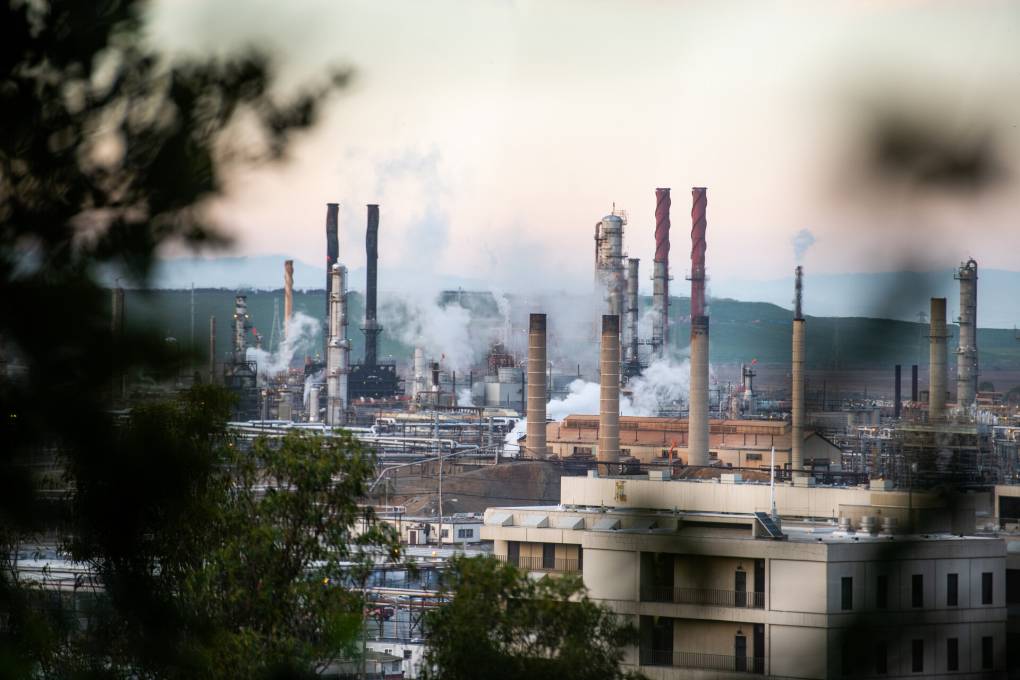
"caption": "Chevron's Richmond refinery viewed from Point Richmond in January 2022.",
"description": null,
"title": "Chevron Richmond Refinery",
"credit": "Beth LaBerge/KQED",
"status": "inherit",
"altTag": "Steam rises from Chevron's oil refinery in Richmond, California.",
"isLoading": false,
"fetchFailed": false
},
"news_11902406": {
"type": "attachments",
"id": "news_11902406",
"meta": {
"index": "attachments_1716263798",
"site": "news",
"id": "11902406",
"found": true
},
"parent": 11902396,
"imgSizes": {
"twentyfourteen-full-width": {
"file": "https://ww2.kqed.org/app/uploads/sites/10/2022/01/RS53036_023_Richmond_HighSchoolStudents_01132022-qut-1038x576.jpg",
"width": 1038,
"mimeType": "image/jpeg",
"height": 576
},
"thumbnail": {
"file": "https://ww2.kqed.org/app/uploads/sites/10/2022/01/RS53036_023_Richmond_HighSchoolStudents_01132022-qut-160x107.jpg",
"width": 160,
"mimeType": "image/jpeg",
"height": 107
},
"post-thumbnail": {
"file": "https://ww2.kqed.org/app/uploads/sites/10/2022/01/RS53036_023_Richmond_HighSchoolStudents_01132022-qut-672x372.jpg",
"width": 672,
"mimeType": "image/jpeg",
"height": 372
},
"kqedFullSize": {
"file": "https://ww2.kqed.org/app/uploads/sites/10/2022/01/RS53036_023_Richmond_HighSchoolStudents_01132022-qut.jpg",
"width": 1920,
"height": 1280
},
"large": {
"file": "https://ww2.kqed.org/app/uploads/sites/10/2022/01/RS53036_023_Richmond_HighSchoolStudents_01132022-qut-1020x680.jpg",
"width": 1020,
"mimeType": "image/jpeg",
"height": 680
},
"1536x1536": {
"file": "https://ww2.kqed.org/app/uploads/sites/10/2022/01/RS53036_023_Richmond_HighSchoolStudents_01132022-qut-1536x1024.jpg",
"width": 1536,
"mimeType": "image/jpeg",
"height": 1024
},
"medium": {
"file": "https://ww2.kqed.org/app/uploads/sites/10/2022/01/RS53036_023_Richmond_HighSchoolStudents_01132022-qut-800x533.jpg",
"width": 800,
"mimeType": "image/jpeg",
"height": 533
}
},
"publishDate": 1642814384,
"modified": 1643653046,
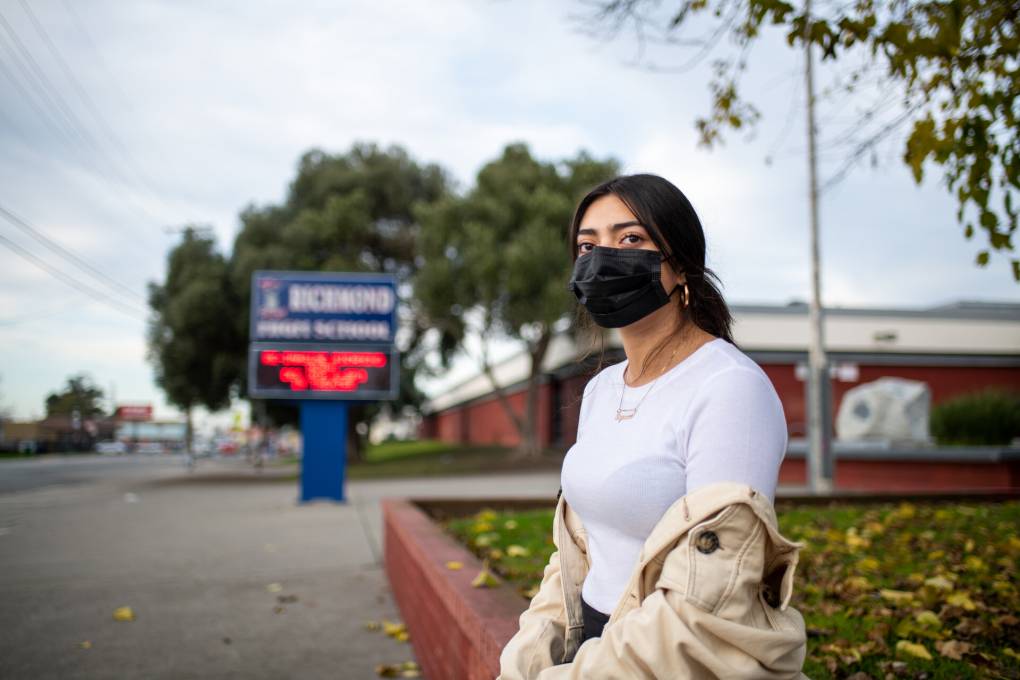
"caption": "Dayanara Mendoza, 16, a sophomore at Richmond High School, sits outside the school on Jan. 14, 2022. She said on a recent school day, three of her five teachers were out. Thousands of students and dozens of teachers in West Contra Costa Unified School District haven't attended school over the past three weeks, saying they don't feel safe returning to in-person instruction.",
"description": null,
"title": "RS53036_023_Richmond_HighSchoolStudents_01132022-qut",
"credit": "Beth LaBerge/KQED",
"status": "inherit",
"altTag": "Teenage girl wearing mask looks toward camera, with sign reading Richmond High School in background",
"isLoading": false,
"fetchFailed": false
},
"news_11902175": {
"type": "attachments",
"id": "news_11902175",
"meta": {
"index": "attachments_1716263798",
"site": "news",
"id": "11902175",
"found": true
},
"parent": 11902149,
"imgSizes": {
"twentyfourteen-full-width": {
"file": "https://ww2.kqed.org/app/uploads/sites/10/2022/01/RS53217_034_Richmond_LifelongCOVIDClinic_01192022-qut-1038x576.jpg",
"width": 1038,
"mimeType": "image/jpeg",
"height": 576
},
"thumbnail": {
"file": "https://ww2.kqed.org/app/uploads/sites/10/2022/01/RS53217_034_Richmond_LifelongCOVIDClinic_01192022-qut-160x107.jpg",
"width": 160,
"mimeType": "image/jpeg",
"height": 107
},
"post-thumbnail": {
"file": "https://ww2.kqed.org/app/uploads/sites/10/2022/01/RS53217_034_Richmond_LifelongCOVIDClinic_01192022-qut-672x372.jpg",
"width": 672,
"mimeType": "image/jpeg",
"height": 372
},
"kqedFullSize": {
"file": "https://ww2.kqed.org/app/uploads/sites/10/2022/01/RS53217_034_Richmond_LifelongCOVIDClinic_01192022-qut.jpg",
"width": 1920,
"height": 1280
},
"large": {
"file": "https://ww2.kqed.org/app/uploads/sites/10/2022/01/RS53217_034_Richmond_LifelongCOVIDClinic_01192022-qut-1020x680.jpg",
"width": 1020,
"mimeType": "image/jpeg",
"height": 680
},
"1536x1536": {
"file": "https://ww2.kqed.org/app/uploads/sites/10/2022/01/RS53217_034_Richmond_LifelongCOVIDClinic_01192022-qut-1536x1024.jpg",
"width": 1536,
"mimeType": "image/jpeg",
"height": 1024
},
"medium": {
"file": "https://ww2.kqed.org/app/uploads/sites/10/2022/01/RS53217_034_Richmond_LifelongCOVIDClinic_01192022-qut-800x533.jpg",
"width": 800,
"mimeType": "image/jpeg",
"height": 533
}
},
"publishDate": 1642715022,
"modified": 1642730431,
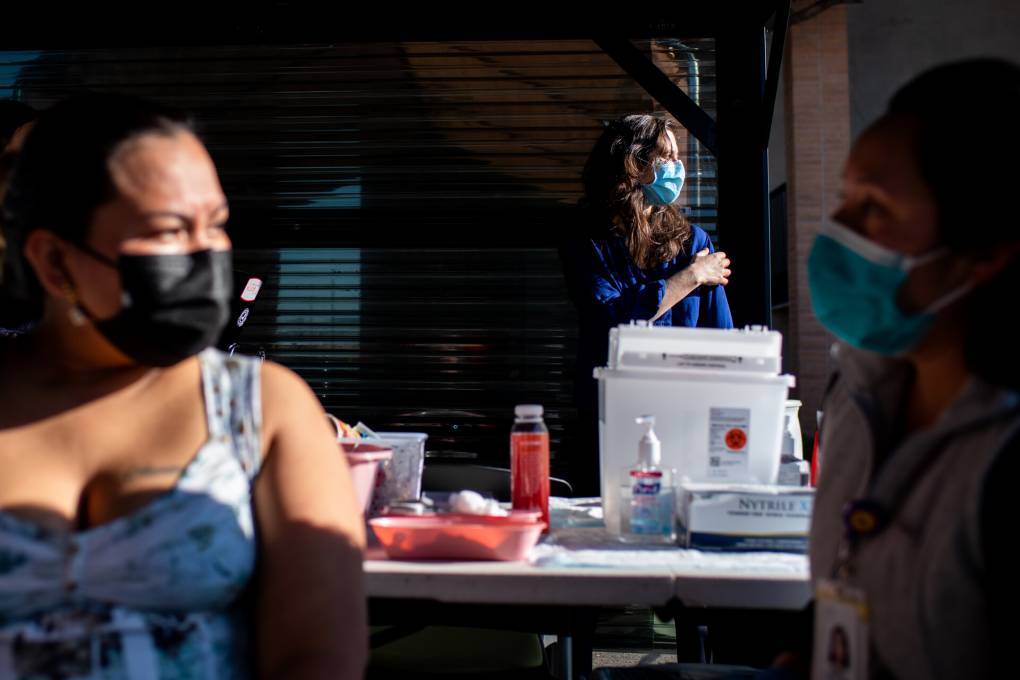
"caption": "Renna Khuner-Haber (center), who coordinates LifeLong Medical's testing sites in Richmond and San Pablo, talks with staff, as a registered nurse (right) talks with a patient at LifeLong's Brookside San Pablo Health Center on Jan. 19, 2022.",
"description": null,
"title": "RS53217_034_Richmond_LifelongCOVIDClinic_01192022-qut",
"credit": "Beth LaBerge/KQED",
"status": "inherit",
"altTag": "Two seated, masked women - a nurse and patient - talk in sunlit foreground as another masked woman stands in the background",
"isLoading": false,
"fetchFailed": false
},
"news_11834975": {
"type": "attachments",
"id": "news_11834975",
"meta": {
"index": "attachments_1716263798",
"site": "news",
"id": "11834975",
"found": true
},
"parent": 11834961,
"imgSizes": {
"apple_news_ca_landscape_5_5": {
"file": "https://ww2.kqed.org/app/uploads/sites/10/2020/08/PalaceFineArts-DavidYu-1044x783.jpg",
"width": 1044,
"mimeType": "image/jpeg",
"height": 783
},
"apple_news_ca_square_4_0": {
"file": "https://ww2.kqed.org/app/uploads/sites/10/2020/08/PalaceFineArts-DavidYu-470x470.jpg",
"width": 470,
"mimeType": "image/jpeg",
"height": 470
},
"twentyfourteen-full-width": {
"file": "https://ww2.kqed.org/app/uploads/sites/10/2020/08/PalaceFineArts-DavidYu-1038x576.jpg",
"width": 1038,
"mimeType": "image/jpeg",
"height": 576
},
"thumbnail": {
"file": "https://ww2.kqed.org/app/uploads/sites/10/2020/08/PalaceFineArts-DavidYu-160x107.jpg",
"width": 160,
"mimeType": "image/jpeg",
"height": 107
},
"post-thumbnail": {
"file": "https://ww2.kqed.org/app/uploads/sites/10/2020/08/PalaceFineArts-DavidYu-672x372.jpg",
"width": 672,
"mimeType": "image/jpeg",
"height": 372
},
"kqedFullSize": {
"file": "https://ww2.kqed.org/app/uploads/sites/10/2020/08/PalaceFineArts-DavidYu.jpg",
"width": 1500,
"height": 1001
},
"apple_news_ca_landscape_4_7": {
"file": "https://ww2.kqed.org/app/uploads/sites/10/2020/08/PalaceFineArts-DavidYu-632x474.jpg",
"width": 632,
"mimeType": "image/jpeg",
"height": 474
},
"large": {
"file": "https://ww2.kqed.org/app/uploads/sites/10/2020/08/PalaceFineArts-DavidYu-1020x681.jpg",
"width": 1020,
"mimeType": "image/jpeg",
"height": 681
},
"apple_news_ca_landscape_4_0": {
"file": "https://ww2.kqed.org/app/uploads/sites/10/2020/08/PalaceFineArts-DavidYu-536x402.jpg",
"width": 536,
"mimeType": "image/jpeg",
"height": 402
},
"apple_news_ca_portrait_12_9": {
"file": "https://ww2.kqed.org/app/uploads/sites/10/2020/08/PalaceFineArts-DavidYu-1122x1001.jpg",
"width": 1122,
"mimeType": "image/jpeg",
"height": 1001
},
"medium": {
"file": "https://ww2.kqed.org/app/uploads/sites/10/2020/08/PalaceFineArts-DavidYu-800x534.jpg",
"width": 800,
"mimeType": "image/jpeg",
"height": 534
},
"apple_news_ca_portrait_4_0": {
"file": "https://ww2.kqed.org/app/uploads/sites/10/2020/08/PalaceFineArts-DavidYu-354x472.jpg",
"width": 354,
"mimeType": "image/jpeg",
"height": 472
},
"apple_news_ca_portrait_9_7": {
"file": "https://ww2.kqed.org/app/uploads/sites/10/2020/08/PalaceFineArts-DavidYu-840x1001.jpg",
"width": 840,
"mimeType": "image/jpeg",
"height": 1001
},
"apple_news_ca_square_9_7": {
"file": "https://ww2.kqed.org/app/uploads/sites/10/2020/08/PalaceFineArts-DavidYu-1104x1001.jpg",
"width": 1104,
"mimeType": "image/jpeg",
"height": 1001
},
"apple_news_ca_portrait_4_7": {
"file": "https://ww2.kqed.org/app/uploads/sites/10/2020/08/PalaceFineArts-DavidYu-414x552.jpg",
"width": 414,
"mimeType": "image/jpeg",
"height": 552
},
"apple_news_ca_square_12_9": {
"file": "https://ww2.kqed.org/app/uploads/sites/10/2020/08/PalaceFineArts-DavidYu-1472x1001.jpg",
"width": 1472,
"mimeType": "image/jpeg",
"height": 1001
},
"apple_news_ca_portrait_5_5": {
"file": "https://ww2.kqed.org/app/uploads/sites/10/2020/08/PalaceFineArts-DavidYu-687x916.jpg",
"width": 687,
"mimeType": "image/jpeg",
"height": 916
},
"apple_news_ca_square_4_7": {
"file": "https://ww2.kqed.org/app/uploads/sites/10/2020/08/PalaceFineArts-DavidYu-550x550.jpg",
"width": 550,
"mimeType": "image/jpeg",
"height": 550
},
"apple_news_ca_landscape_9_7": {
"file": "https://ww2.kqed.org/app/uploads/sites/10/2020/08/PalaceFineArts-DavidYu-1376x1001.jpg",
"width": 1376,
"mimeType": "image/jpeg",
"height": 1001
},
"apple_news_ca_square_5_5": {
"file": "https://ww2.kqed.org/app/uploads/sites/10/2020/08/PalaceFineArts-DavidYu-912x912.jpg",
"width": 912,
"mimeType": "image/jpeg",
"height": 912
}
},
"publishDate": 1598312264,
"modified": 1642110807,
"caption": "The Palace of Fine Arts lagoon has been home to many swans throughout the years.",
"description": null,
"title": "PalaceFineArts-DavidYu",
"credit": "\u003ca href=\"https://www.flickr.com/photos/davidyuweb/9450013295/\">David Yu\u003c/a>/Flickr",
"status": "inherit",
"altTag": null,
"isLoading": false,
"fetchFailed": false
},
"news_11898298": {
"type": "attachments",
"id": "news_11898298",
"meta": {
"index": "attachments_1716263798",
"site": "news",
"id": "11898298",
"found": true
},
"parent": 11898287,
"imgSizes": {
"thumbnail": {
"file": "https://ww2.kqed.org/app/uploads/sites/10/2021/12/SS_John_W_Brown-160x95.jpg",
"width": 160,
"mimeType": "image/jpeg",
"height": 95
},
"post-thumbnail": {
"file": "https://ww2.kqed.org/app/uploads/sites/10/2021/12/SS_John_W_Brown-672x372.jpg",
"width": 672,
"mimeType": "image/jpeg",
"height": 372
},
"kqedFullSize": {
"file": "https://ww2.kqed.org/app/uploads/sites/10/2021/12/SS_John_W_Brown.jpg",
"width": 794,
"height": 471
}
},
"publishDate": 1638905371,
"modified": 1640912541,
"caption": "SS John W. Brown on the Great Lakes in 2000. John W. Brown is one of only two surviving World War II liberty ships, the other being the SS Jeremiah O'Brien.",
"description": null,
"title": "SS_John_W_Brown",
"credit": "\u003ca href=\"https://commons.wikimedia.org/wiki/File:SS_John_W_Brown.jpg\">Wikimedia Commons\u003c/a>",
"status": "inherit",
"altTag": "Large ship with grey hull and a red strip at water level takes up the entire frame. Blue sky and clouds behind.",
"isLoading": false,
"fetchFailed": false
},
"news_11896455": {
"type": "attachments",
"id": "news_11896455",
"meta": {
"index": "attachments_1716263798",
"site": "news",
"id": "11896455",
"found": true
},
"parent": 11896443,
"imgSizes": {
"twentyfourteen-full-width": {
"file": "https://ww2.kqed.org/app/uploads/sites/10/2021/11/coalstorage_111621_final-1038x576.png",
"width": 1038,
"mimeType": "image/png",
"height": 576
},
"thumbnail": {
"file": "https://ww2.kqed.org/app/uploads/sites/10/2021/11/coalstorage_111621_final-160x114.png",
"width": 160,
"mimeType": "image/png",
"height": 114
},
"post-thumbnail": {
"file": "https://ww2.kqed.org/app/uploads/sites/10/2021/11/coalstorage_111621_final-672x372.png",
"width": 672,
"mimeType": "image/png",
"height": 372
},
"kqedFullSize": {
"file": "https://ww2.kqed.org/app/uploads/sites/10/2021/11/coalstorage_111621_final.png",
"width": 1920,
"height": 1364
},
"large": {
"file": "https://ww2.kqed.org/app/uploads/sites/10/2021/11/coalstorage_111621_final-1020x725.png",
"width": 1020,
"mimeType": "image/png",
"height": 725
},
"1536x1536": {
"file": "https://ww2.kqed.org/app/uploads/sites/10/2021/11/coalstorage_111621_final-1536x1091.png",
"width": 1536,
"mimeType": "image/png",
"height": 1091
},
"medium": {
"file": "https://ww2.kqed.org/app/uploads/sites/10/2021/11/coalstorage_111621_final-800x568.png",
"width": 800,
"mimeType": "image/png",
"height": 568
}
},
"publishDate": 1637107397,
"modified": 1637116440,
"caption": null,
"description": null,
"title": "coalstorage_111621_final",
"credit": null,
"status": "inherit",
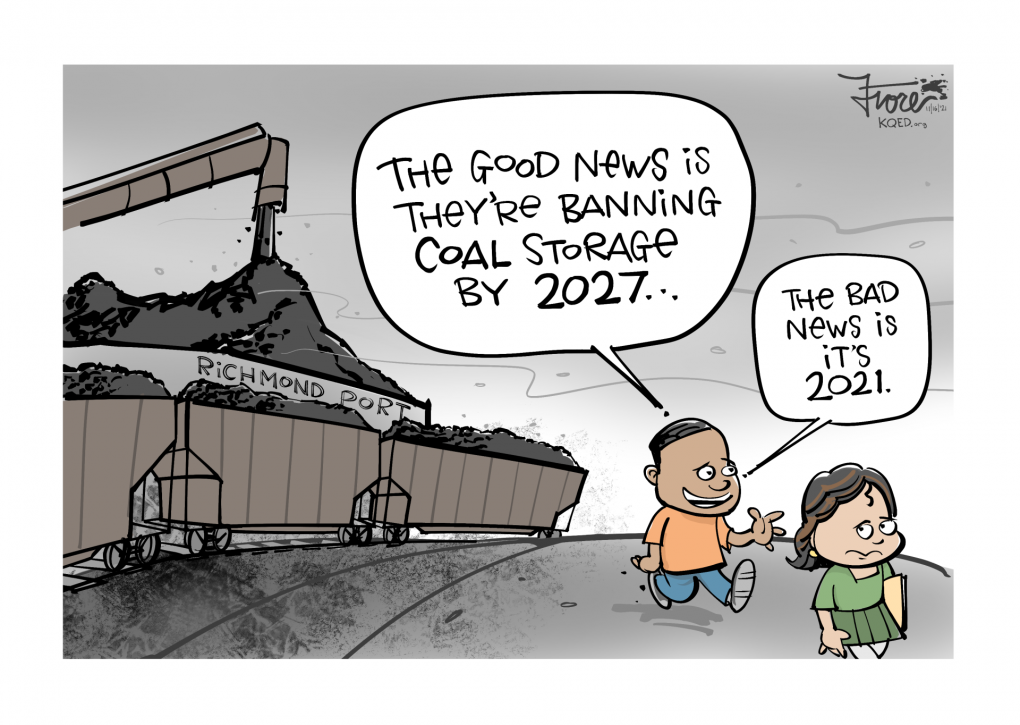
"altTag": "Cartoon: A dirty coal train port terminal with a young boy and girl walking by. The boy says, \"the good news is they're banning coal storage by 2027, the bad news is it's 2021.\"",
"isLoading": false,
"fetchFailed": false
},
"news_11860400": {
"type": "attachments",
"id": "news_11860400",
"meta": {
"index": "attachments_1716263798",
"site": "news",
"id": "11860400",
"found": true
},
"parent": 11860389,
"imgSizes": {
"apple_news_ca_landscape_5_5": {
"file": "https://ww2.kqed.org/app/uploads/sites/10/2021/02/chevron-flaring-1044x783.jpg",
"width": 1044,
"mimeType": "image/jpeg",
"height": 783
},
"apple_news_ca_square_4_0": {
"file": "https://ww2.kqed.org/app/uploads/sites/10/2021/02/chevron-flaring-470x470.jpg",
"width": 470,
"mimeType": "image/jpeg",
"height": 470
},
"twentyfourteen-full-width": {
"file": "https://ww2.kqed.org/app/uploads/sites/10/2021/02/chevron-flaring-1038x576.jpg",
"width": 1038,
"mimeType": "image/jpeg",
"height": 576
},
"thumbnail": {
"file": "https://ww2.kqed.org/app/uploads/sites/10/2021/02/chevron-flaring-160x120.jpg",
"width": 160,
"mimeType": "image/jpeg",
"height": 120
},
"post-thumbnail": {
"file": "https://ww2.kqed.org/app/uploads/sites/10/2021/02/chevron-flaring-672x372.jpg",
"width": 672,
"mimeType": "image/jpeg",
"height": 372
},
"kqedFullSize": {
"file": "https://ww2.kqed.org/app/uploads/sites/10/2021/02/chevron-flaring.jpg",
"width": 1920,
"height": 1440
},
"apple_news_ca_landscape_4_7": {
"file": "https://ww2.kqed.org/app/uploads/sites/10/2021/02/chevron-flaring-632x474.jpg",
"width": 632,
"mimeType": "image/jpeg",
"height": 474
},
"large": {
"file": "https://ww2.kqed.org/app/uploads/sites/10/2021/02/chevron-flaring-1020x765.jpg",
"width": 1020,
"mimeType": "image/jpeg",
"height": 765
},
"apple_news_ca_landscape_4_0": {
"file": "https://ww2.kqed.org/app/uploads/sites/10/2021/02/chevron-flaring-536x402.jpg",
"width": 536,
"mimeType": "image/jpeg",
"height": 402
},
"apple_news_ca_portrait_12_9": {
"file": "https://ww2.kqed.org/app/uploads/sites/10/2021/02/chevron-flaring-1122x1440.jpg",
"width": 1122,
"mimeType": "image/jpeg",
"height": 1440
},
"medium": {
"file": "https://ww2.kqed.org/app/uploads/sites/10/2021/02/chevron-flaring-800x600.jpg",
"width": 800,
"mimeType": "image/jpeg",
"height": 600
},
"apple_news_ca_portrait_4_0": {
"file": "https://ww2.kqed.org/app/uploads/sites/10/2021/02/chevron-flaring-354x472.jpg",
"width": 354,
"mimeType": "image/jpeg",
"height": 472
},
"apple_news_ca_portrait_9_7": {
"file": "https://ww2.kqed.org/app/uploads/sites/10/2021/02/chevron-flaring-840x1120.jpg",
"width": 840,
"mimeType": "image/jpeg",
"height": 1120
},
"apple_news_ca_landscape_12_9": {
"file": "https://ww2.kqed.org/app/uploads/sites/10/2021/02/chevron-flaring-1832x1374.jpg",
"width": 1832,
"mimeType": "image/jpeg",
"height": 1374
},
"apple_news_ca_square_9_7": {
"file": "https://ww2.kqed.org/app/uploads/sites/10/2021/02/chevron-flaring-1104x1104.jpg",
"width": 1104,
"mimeType": "image/jpeg",
"height": 1104
},
"1536x1536": {
"file": "https://ww2.kqed.org/app/uploads/sites/10/2021/02/chevron-flaring-1536x1152.jpg",
"width": 1536,
"mimeType": "image/jpeg",
"height": 1152
},
"apple_news_ca_portrait_4_7": {
"file": "https://ww2.kqed.org/app/uploads/sites/10/2021/02/chevron-flaring-414x552.jpg",
"width": 414,
"mimeType": "image/jpeg",
"height": 552
},
"apple_news_ca_square_12_9": {
"file": "https://ww2.kqed.org/app/uploads/sites/10/2021/02/chevron-flaring-1472x1440.jpg",
"width": 1472,
"mimeType": "image/jpeg",
"height": 1440
},
"apple_news_ca_portrait_5_5": {
"file": "https://ww2.kqed.org/app/uploads/sites/10/2021/02/chevron-flaring-687x916.jpg",
"width": 687,
"mimeType": "image/jpeg",
"height": 916
},
"apple_news_ca_square_4_7": {
"file": "https://ww2.kqed.org/app/uploads/sites/10/2021/02/chevron-flaring-550x550.jpg",
"width": 550,
"mimeType": "image/jpeg",
"height": 550
},
"apple_news_ca_landscape_9_7": {
"file": "https://ww2.kqed.org/app/uploads/sites/10/2021/02/chevron-flaring-1376x1032.jpg",
"width": 1376,
"mimeType": "image/jpeg",
"height": 1032
},
"apple_news_ca_square_5_5": {
"file": "https://ww2.kqed.org/app/uploads/sites/10/2021/02/chevron-flaring-912x912.jpg",
"width": 912,
"mimeType": "image/jpeg",
"height": 912
}
},
"publishDate": 1613332039,
"modified": 1636494370,
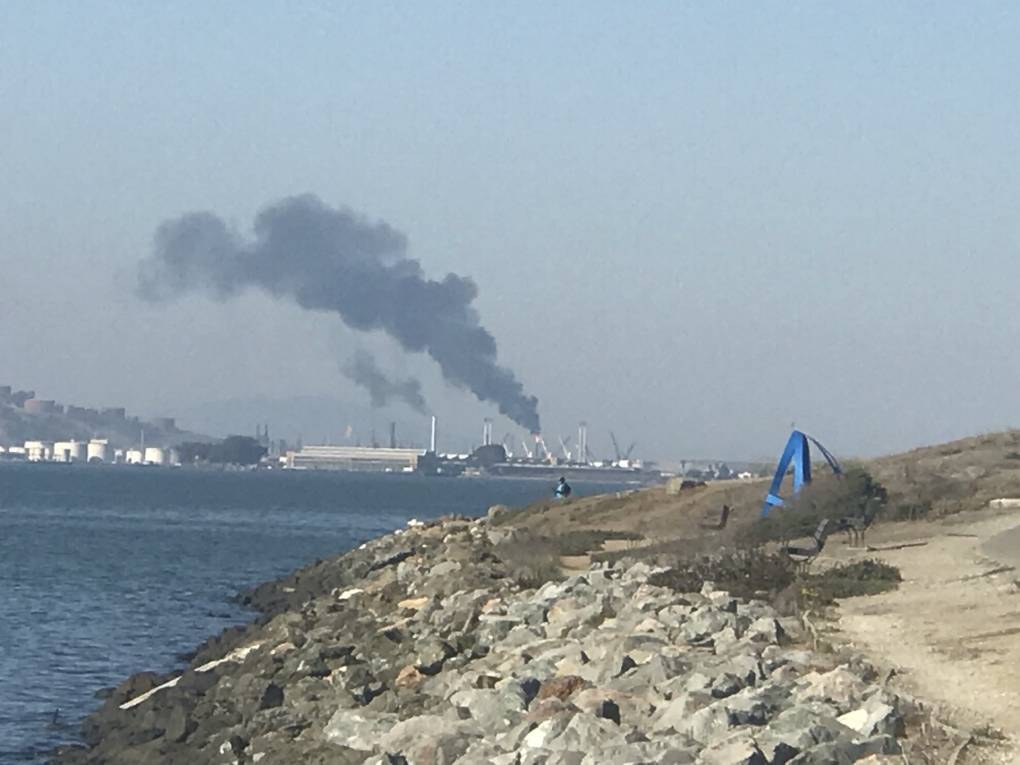
"caption": "Flaring at Chevron's Richmond refinery as seen from Berkeley's César Chávez Park on Nov. 2, 2020.",
"description": "Flaring at Chevron's Richmond refinery as seen from Berkeley's Cesar Chavez Park on Nov. 2, 2020",
"title": "chevron flaring",
"credit": "Queena Kim/KQED",
"status": "inherit",
"altTag": "View from a rocky shoreline across the bay to a refinery spewing a massive plume of smoke.",
"isLoading": false,
"fetchFailed": false
},
"news_11894264": {
"type": "attachments",
"id": "news_11894264",
"meta": {
"index": "attachments_1716263798",
"site": "news",
"id": "11894264",
"found": true
},
"parent": 11894250,
"imgSizes": {
"twentyfourteen-full-width": {
"file": "https://ww2.kqed.org/app/uploads/sites/10/2021/10/letthem_102821_final-1038x576.png",
"width": 1038,
"mimeType": "image/png",
"height": 576
},
"thumbnail": {
"file": "https://ww2.kqed.org/app/uploads/sites/10/2021/10/letthem_102821_final-160x116.png",
"width": 160,
"mimeType": "image/png",
"height": 116
},
"post-thumbnail": {
"file": "https://ww2.kqed.org/app/uploads/sites/10/2021/10/letthem_102821_final-672x372.png",
"width": 672,
"mimeType": "image/png",
"height": 372
},
"kqedFullSize": {
"file": "https://ww2.kqed.org/app/uploads/sites/10/2021/10/letthem_102821_final.png",
"width": 1920,
"height": 1388
},
"large": {
"file": "https://ww2.kqed.org/app/uploads/sites/10/2021/10/letthem_102821_final-1020x737.png",
"width": 1020,
"mimeType": "image/png",
"height": 737
},
"1536x1536": {
"file": "https://ww2.kqed.org/app/uploads/sites/10/2021/10/letthem_102821_final-1536x1110.png",
"width": 1536,
"mimeType": "image/png",
"height": 1110
},
"medium": {
"file": "https://ww2.kqed.org/app/uploads/sites/10/2021/10/letthem_102821_final-800x578.png",
"width": 800,
"mimeType": "image/png",
"height": 578
}
},
"publishDate": 1635462114,
"modified": 1635538717,
"caption": null,
"description": null,
"title": "letthem_102821_final",
"credit": null,
"status": "inherit",
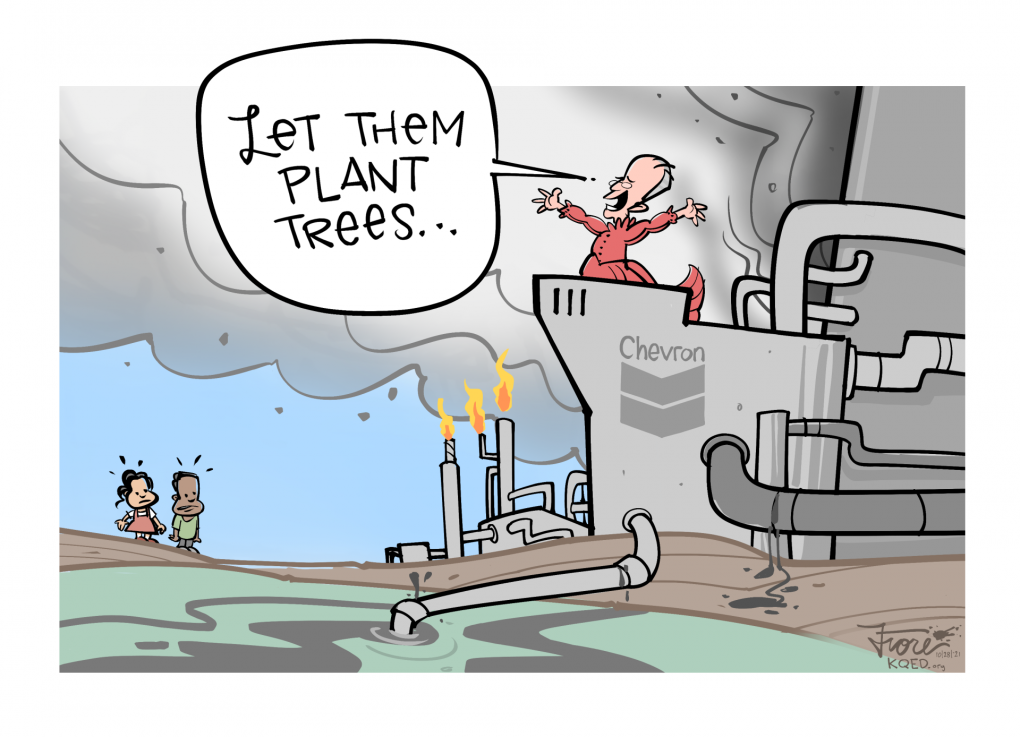
"altTag": "Cartoon: Chevron CEO Michael Wirth atop a castle-like refinery saying, \"let them plant trees,\" while pollution spews into the air and water and two small children look on from afar.",
"isLoading": false,
"fetchFailed": false
},
"news_11612986": {
"type": "attachments",
"id": "news_11612986",
"meta": {
"index": "attachments_1716263798",
"site": "news",
"id": "11612986",
"found": true
},
"parent": 11612691,
"imgSizes": {
"small": {
"file": "https://ww2.kqed.org/app/uploads/sites/10/2017/08/RS26277_GettyImages-108323683-qut-520x352.jpg",
"width": 520,
"mimeType": "image/jpeg",
"height": 352
},
"twentyfourteen-full-width": {
"file": "https://ww2.kqed.org/app/uploads/sites/10/2017/08/RS26277_GettyImages-108323683-qut-1038x576.jpg",
"width": 1038,
"mimeType": "image/jpeg",
"height": 576
},
"thumbnail": {
"file": "https://ww2.kqed.org/app/uploads/sites/10/2017/08/RS26277_GettyImages-108323683-qut-160x108.jpg",
"width": 160,
"mimeType": "image/jpeg",
"height": 108
},
"fd-sm": {
"file": "https://ww2.kqed.org/app/uploads/sites/10/2017/08/RS26277_GettyImages-108323683-qut-960x650.jpg",
"width": 960,
"mimeType": "image/jpeg",
"height": 650
},
"post-thumbnail": {
"file": "https://ww2.kqed.org/app/uploads/sites/10/2017/08/RS26277_GettyImages-108323683-qut-672x372.jpg",
"width": 672,
"mimeType": "image/jpeg",
"height": 372
},
"xsmall": {
"file": "https://ww2.kqed.org/app/uploads/sites/10/2017/08/RS26277_GettyImages-108323683-qut-375x254.jpg",
"width": 375,
"mimeType": "image/jpeg",
"height": 254
},
"kqedFullSize": {
"file": "https://ww2.kqed.org/app/uploads/sites/10/2017/08/RS26277_GettyImages-108323683-qut.jpg",
"width": 1920,
"height": 1300
},
"large": {
"file": "https://ww2.kqed.org/app/uploads/sites/10/2017/08/RS26277_GettyImages-108323683-qut-1020x691.jpg",
"width": 1020,
"mimeType": "image/jpeg",
"height": 691
},
"xlarge": {
"file": "https://ww2.kqed.org/app/uploads/sites/10/2017/08/RS26277_GettyImages-108323683-qut-1180x799.jpg",
"width": 1180,
"mimeType": "image/jpeg",
"height": 799
},
"guest-author-50": {
"file": "https://ww2.kqed.org/app/uploads/sites/10/2017/08/RS26277_GettyImages-108323683-qut-50x50.jpg",
"width": 50,
"mimeType": "image/jpeg",
"height": 50
},
"guest-author-96": {
"file": "https://ww2.kqed.org/app/uploads/sites/10/2017/08/RS26277_GettyImages-108323683-qut-96x96.jpg",
"width": 96,
"mimeType": "image/jpeg",
"height": 96
},
"medium": {
"file": "https://ww2.kqed.org/app/uploads/sites/10/2017/08/RS26277_GettyImages-108323683-qut-800x542.jpg",
"width": 800,
"mimeType": "image/jpeg",
"height": 542
},
"guest-author-64": {
"file": "https://ww2.kqed.org/app/uploads/sites/10/2017/08/RS26277_GettyImages-108323683-qut-64x64.jpg",
"width": 64,
"mimeType": "image/jpeg",
"height": 64
},
"guest-author-32": {
"file": "https://ww2.kqed.org/app/uploads/sites/10/2017/08/RS26277_GettyImages-108323683-qut-32x32.jpg",
"width": 32,
"mimeType": "image/jpeg",
"height": 32
},
"fd-lrg": {
"file": "https://ww2.kqed.org/app/uploads/sites/10/2017/08/RS26277_GettyImages-108323683-qut-1920x1300.jpg",
"width": 1920,
"mimeType": "image/jpeg",
"height": 1300
},
"fd-med": {
"file": "https://ww2.kqed.org/app/uploads/sites/10/2017/08/RS26277_GettyImages-108323683-qut-1180x799.jpg",
"width": 1180,
"mimeType": "image/jpeg",
"height": 799
},
"full-width": {
"file": "https://ww2.kqed.org/app/uploads/sites/10/2017/08/RS26277_GettyImages-108323683-qut-1920x1300.jpg",
"width": 1920,
"mimeType": "image/jpeg",
"height": 1300
},
"detail": {
"file": "https://ww2.kqed.org/app/uploads/sites/10/2017/08/RS26277_GettyImages-108323683-qut-150x150.jpg",
"width": 150,
"mimeType": "image/jpeg",
"height": 150
},
"guest-author-128": {
"file": "https://ww2.kqed.org/app/uploads/sites/10/2017/08/RS26277_GettyImages-108323683-qut-128x128.jpg",
"width": 128,
"mimeType": "image/jpeg",
"height": 128
},
"xxsmall": {
"file": "https://ww2.kqed.org/app/uploads/sites/10/2017/08/RS26277_GettyImages-108323683-qut-240x163.jpg",
"width": 240,
"mimeType": "image/jpeg",
"height": 163
}
},
"publishDate": 1503094275,
"modified": 1631233209,
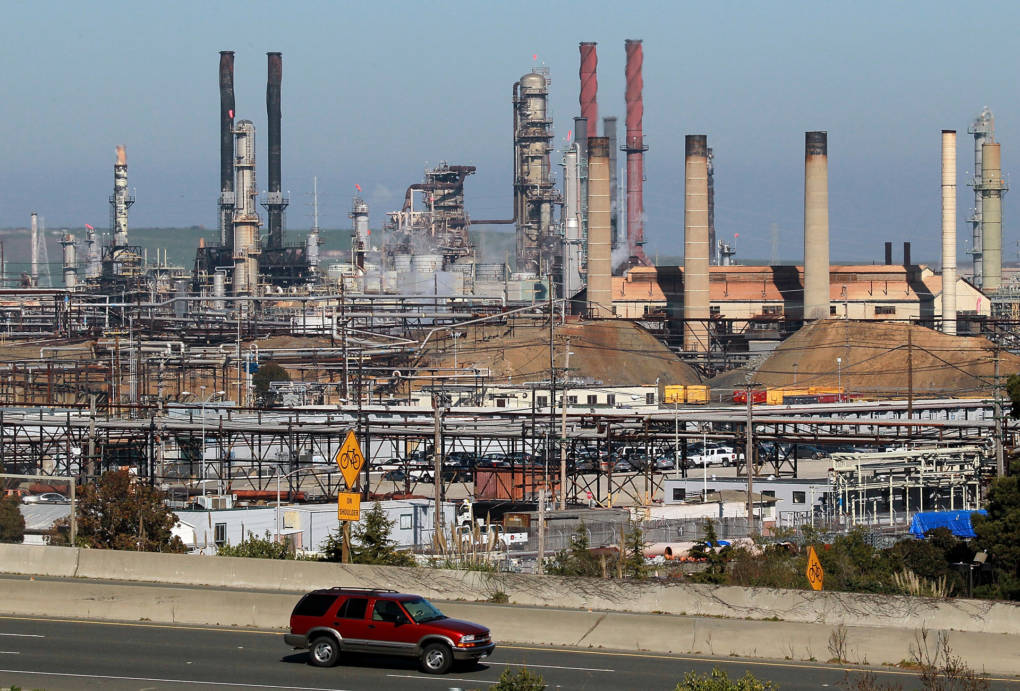
"caption": "The Chevron refinery in Richmond.",
"description": null,
"title": "Gas Prices Continue To Rise, Inching Up Over Last Two Weeks",
"credit": "Justin Sullivan/Getty Images",
"status": "inherit",
"altTag": "About a dozen cement smokestacks rise amid low-lying building beyond a freeway.",
"isLoading": false,
"fetchFailed": false
},
"news_11859737": {
"type": "attachments",
"id": "news_11859737",
"meta": {
"index": "attachments_1716263798",
"site": "news",
"id": "11859737",
"found": true
},
"parent": 11859660,
"imgSizes": {
"apple_news_ca_landscape_5_5": {
"file": "https://ww2.kqed.org/app/uploads/sites/10/2021/02/Chevron-Spill-e1614135246604-1044x783.jpg",
"width": 1044,
"mimeType": "image/jpeg",
"height": 783
},
"apple_news_ca_square_4_0": {
"file": "https://ww2.kqed.org/app/uploads/sites/10/2021/02/Chevron-Spill-e1614135246604-470x470.jpg",
"width": 470,
"mimeType": "image/jpeg",
"height": 470
},
"twentyfourteen-full-width": {
"file": "https://ww2.kqed.org/app/uploads/sites/10/2021/02/Chevron-Spill-e1614135246604-1038x576.jpg",
"width": 1038,
"mimeType": "image/jpeg",
"height": 576
},
"thumbnail": {
"file": "https://ww2.kqed.org/app/uploads/sites/10/2021/02/Chevron-Spill-e1614135246604-160x108.jpg",
"width": 160,
"mimeType": "image/jpeg",
"height": 108
},
"post-thumbnail": {
"file": "https://ww2.kqed.org/app/uploads/sites/10/2021/02/Chevron-Spill-e1614135246604-672x372.jpg",
"width": 672,
"mimeType": "image/jpeg",
"height": 372
},
"kqedFullSize": {
"file": "https://ww2.kqed.org/app/uploads/sites/10/2021/02/Chevron-Spill-e1614135246604.jpg",
"width": 1440,
"height": 974
},
"apple_news_ca_landscape_4_7": {
"file": "https://ww2.kqed.org/app/uploads/sites/10/2021/02/Chevron-Spill-e1614135246604-632x474.jpg",
"width": 632,
"mimeType": "image/jpeg",
"height": 474
},
"large": {
"file": "https://ww2.kqed.org/app/uploads/sites/10/2021/02/Chevron-Spill-e1614135246604-1020x690.jpg",
"width": 1020,
"mimeType": "image/jpeg",
"height": 690
},
"apple_news_ca_landscape_4_0": {
"file": "https://ww2.kqed.org/app/uploads/sites/10/2021/02/Chevron-Spill-e1614135246604-536x402.jpg",
"width": 536,
"mimeType": "image/jpeg",
"height": 402
},
"apple_news_ca_portrait_12_9": {
"file": "https://ww2.kqed.org/app/uploads/sites/10/2021/02/Chevron-Spill-e1614135246604-1122x974.jpg",
"width": 1122,
"mimeType": "image/jpeg",
"height": 974
},
"medium": {
"file": "https://ww2.kqed.org/app/uploads/sites/10/2021/02/Chevron-Spill-e1614135246604-800x541.jpg",
"width": 800,
"mimeType": "image/jpeg",
"height": 541
},
"apple_news_ca_portrait_4_0": {
"file": "https://ww2.kqed.org/app/uploads/sites/10/2021/02/Chevron-Spill-e1614135246604-354x472.jpg",
"width": 354,
"mimeType": "image/jpeg",
"height": 472
},
"apple_news_ca_portrait_9_7": {
"file": "https://ww2.kqed.org/app/uploads/sites/10/2021/02/Chevron-Spill-e1614135246604-840x974.jpg",
"width": 840,
"mimeType": "image/jpeg",
"height": 974
},
"apple_news_ca_landscape_12_9": {
"file": "https://ww2.kqed.org/app/uploads/sites/10/2021/02/Chevron-Spill-1832x1099.jpg",
"width": 1832,
"mimeType": "image/jpeg",
"height": 1099
},
"apple_news_ca_square_9_7": {
"file": "https://ww2.kqed.org/app/uploads/sites/10/2021/02/Chevron-Spill-e1614135246604-1104x974.jpg",
"width": 1104,
"mimeType": "image/jpeg",
"height": 974
},
"1536x1536": {
"file": "https://ww2.kqed.org/app/uploads/sites/10/2021/02/Chevron-Spill-1536x879.jpg",
"width": 1536,
"mimeType": "image/jpeg",
"height": 879
},
"apple_news_ca_portrait_4_7": {
"file": "https://ww2.kqed.org/app/uploads/sites/10/2021/02/Chevron-Spill-e1614135246604-414x552.jpg",
"width": 414,
"mimeType": "image/jpeg",
"height": 552
},
"apple_news_ca_square_12_9": {
"file": "https://ww2.kqed.org/app/uploads/sites/10/2021/02/Chevron-Spill-1472x1099.jpg",
"width": 1472,
"mimeType": "image/jpeg",
"height": 1099
},
"apple_news_ca_portrait_5_5": {
"file": "https://ww2.kqed.org/app/uploads/sites/10/2021/02/Chevron-Spill-e1614135246604-687x916.jpg",
"width": 687,
"mimeType": "image/jpeg",
"height": 916
},
"apple_news_ca_square_4_7": {
"file": "https://ww2.kqed.org/app/uploads/sites/10/2021/02/Chevron-Spill-e1614135246604-550x550.jpg",
"width": 550,
"mimeType": "image/jpeg",
"height": 550
},
"apple_news_ca_landscape_9_7": {
"file": "https://ww2.kqed.org/app/uploads/sites/10/2021/02/Chevron-Spill-e1614135246604-1376x974.jpg",
"width": 1376,
"mimeType": "image/jpeg",
"height": 974
},
"apple_news_ca_square_5_5": {
"file": "https://ww2.kqed.org/app/uploads/sites/10/2021/02/Chevron-Spill-e1614135246604-912x912.jpg",
"width": 912,
"mimeType": "image/jpeg",
"height": 912
}
},
"publishDate": 1612994604,
"modified": 1667598387,
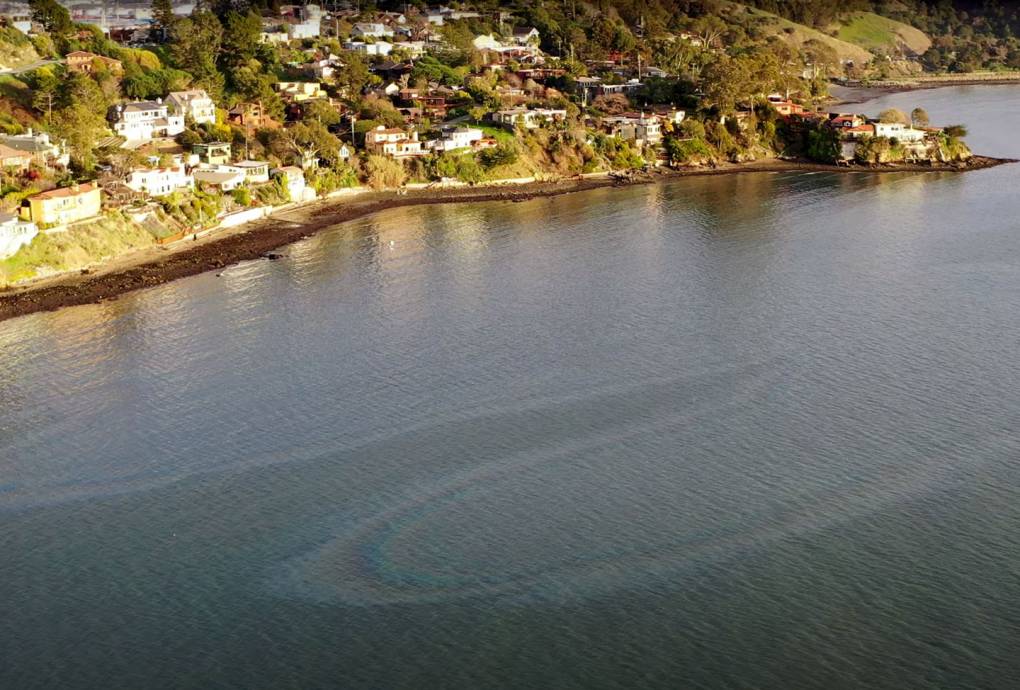
"caption": "An oily sheen spreads across bay waters to Point Richmond after a pipeline leaked at Chevron's Richmond refinery on Feb. 9, 2021.",
"description": "Frame grab from drone video shows oily sheen that spread across bay waters to Point Richmond after a pipeline began leaking at Chevron's Richmond refinery on Tuesday. ",
"title": "Chevron-Spill",
"credit": "Courtesy of San Francisco Baykeeper",
"status": "inherit",
"altTag": "A large oil slick on water off a shore lit by lights at the refinery there.",
"isLoading": false,
"fetchFailed": false
},
"news_11893012": {
"type": "attachments",
"id": "news_11893012",
"meta": {
"index": "attachments_1716263798",
"site": "news",
"id": "11893012",
"found": true
},
"parent": 11892723,
"imgSizes": {
"twentyfourteen-full-width": {
"file": "https://ww2.kqed.org/app/uploads/sites/10/2021/10/HelloFresh_BoxComposite-1038x576.jpg",
"width": 1038,
"mimeType": "image/jpeg",
"height": 576
},
"thumbnail": {
"file": "https://ww2.kqed.org/app/uploads/sites/10/2021/10/HelloFresh_BoxComposite-160x107.jpg",
"width": 160,
"mimeType": "image/jpeg",
"height": 107
},
"post-thumbnail": {
"file": "https://ww2.kqed.org/app/uploads/sites/10/2021/10/HelloFresh_BoxComposite-672x372.jpg",
"width": 672,
"mimeType": "image/jpeg",
"height": 372
},
"kqedFullSize": {
"file": "https://ww2.kqed.org/app/uploads/sites/10/2021/10/HelloFresh_BoxComposite-scaled-e1634737686176.jpg",
"width": 1920,
"height": 1280
},
"2048x2048": {
"file": "https://ww2.kqed.org/app/uploads/sites/10/2021/10/HelloFresh_BoxComposite-2048x1365.jpg",
"width": 2048,
"mimeType": "image/jpeg",
"height": 1365
},
"large": {
"file": "https://ww2.kqed.org/app/uploads/sites/10/2021/10/HelloFresh_BoxComposite-1020x680.jpg",
"width": 1020,
"mimeType": "image/jpeg",
"height": 680
},
"1536x1536": {
"file": "https://ww2.kqed.org/app/uploads/sites/10/2021/10/HelloFresh_BoxComposite-1536x1024.jpg",
"width": 1536,
"mimeType": "image/jpeg",
"height": 1024
},
"full-width": {
"file": "https://ww2.kqed.org/app/uploads/sites/10/2021/10/HelloFresh_BoxComposite-1920x1280.jpg",
"width": 1920,
"mimeType": "image/jpeg",
"height": 1280
},
"medium": {
"file": "https://ww2.kqed.org/app/uploads/sites/10/2021/10/HelloFresh_BoxComposite-800x533.jpg",
"width": 800,
"mimeType": "image/jpeg",
"height": 533
}
},
"publishDate": 1634737658,
"modified": 1634777776,
"caption": "A HelloFresh product.",
"description": null,
"title": "HelloFresh_BoxComposite",
"credit": "Courtesy HelloFresh",
"status": "inherit",
"altTag": "A company photo in a white kitchen of four brown paper Hello Fresh bags with a bright green color, fresh vegetables arrayed on the counter in front of them.",
"isLoading": false,
"fetchFailed": false
},
"news_11890916": {
"type": "attachments",
"id": "news_11890916",
"meta": {
"index": "attachments_1716263798",
"site": "news",
"id": "11890916",
"found": true
},
"parent": 11890914,
"imgSizes": {
"twentyfourteen-full-width": {
"file": "https://ww2.kqed.org/app/uploads/sites/10/2021/10/Betty-Reid-2-1200x750-1-1038x576.jpg",
"width": 1038,
"mimeType": "image/jpeg",
"height": 576
},
"thumbnail": {
"file": "https://ww2.kqed.org/app/uploads/sites/10/2021/10/Betty-Reid-2-1200x750-1-160x100.jpg",
"width": 160,
"mimeType": "image/jpeg",
"height": 100
},
"post-thumbnail": {
"file": "https://ww2.kqed.org/app/uploads/sites/10/2021/10/Betty-Reid-2-1200x750-1-672x372.jpg",
"width": 672,
"mimeType": "image/jpeg",
"height": 372
},
"kqedFullSize": {
"file": "https://ww2.kqed.org/app/uploads/sites/10/2021/10/Betty-Reid-2-1200x750-1.jpg",
"width": 1200,
"height": 750
},
"large": {
"file": "https://ww2.kqed.org/app/uploads/sites/10/2021/10/Betty-Reid-2-1200x750-1-1020x638.jpg",
"width": 1020,
"mimeType": "image/jpeg",
"height": 638
},
"medium": {
"file": "https://ww2.kqed.org/app/uploads/sites/10/2021/10/Betty-Reid-2-1200x750-1-800x500.jpg",
"width": 800,
"mimeType": "image/jpeg",
"height": 500
}
},
"publishDate": 1633369375,
"modified": 1633392346,
"caption": "Dorcas Sims leads her fifth grade class at Richmond's Nystrom Elementary in a circle activity in which students said their names accompanied by a gesture, which the rest of the class would then repeat.",
"description": "Dorcas Sims leads her fifth grade class at Richmond's Nystrom Elementary in a circle activity in which students said their names accompanied by a gesture, which the rest of the class would then repeat.",
"title": "Betty-Reid-2-1200x750",
"credit": "Ali Tadayon/EdSource",
"status": "inherit",
"altTag": "A woman flanked by kids in both directions stands at the front of a classroom against a whiteboard.",
"isLoading": false,
"fetchFailed": false
}
},
"audioPlayerReducer": {
"postId": "stream_live",
"isPaused": true,
"isPlaying": false,
"pfsActive": false,
"pledgeModalIsOpen": true,
"playerDrawerIsOpen": false,
"liveAudioPlayStartedAt": 0,
"liveAudioPlayContext": ""
},
"authorsReducer": {
"byline_news_11890914": {
"type": "authors",
"id": "byline_news_11890914",
"meta": {
"override": true
},
"slug": "byline_news_11890914",
"name": "Ali Tadayon\u003cbr>EdSource",
"isLoading": false
},
"jmcevoy": {
"type": "authors",
"id": "231",
"meta": {
"index": "authors_1716337520",
"id": "231",
"found": true
},
"name": "Julia McEvoy",
"firstName": "Julia",
"lastName": "McEvoy",
"slug": "jmcevoy",
"email": "jmcevoy@KQED.org",
"display_author_email": true,
"staff_mastheads": [
"news"
],
"title": "KQED Senior Editor",
"bio": "Julia McEvoy is KQED's Senior Editor, Education Equity.\r\n\r\nJulia heads KQED’s education coverage examining inequities students face in Bay Area and California schools, and reports on what it will take to educate the next generation.\r\n\r\nJulia's editorial work has received a Peabody Award, a Casey Medal for Coverage of Children and Families, several Edward R. Murrow awards, as well as awards from the Public Radio News Directors Inc. and the Society for Professional Journalists.",
"avatar": "https://secure.gravatar.com/avatar/aec3ce21abe02b302fd33638abd56a22?s=600&d=blank&r=g",
"twitter": "juliamcevoy1",
"facebook": null,
"instagram": null,
"linkedin": null,
"sites": [
{
"site": "news",
"roles": []
},
{
"site": "stateofhealth",
"roles": [
"author"
]
}
],
"headData": {
"title": "Julia McEvoy | KQED",
"description": "KQED Senior Editor",
"ogImgSrc": "https://secure.gravatar.com/avatar/aec3ce21abe02b302fd33638abd56a22?s=600&d=blank&r=g",
"twImgSrc": "https://secure.gravatar.com/avatar/aec3ce21abe02b302fd33638abd56a22?s=600&d=blank&r=g"
},
"isLoading": false,
"link": "/author/jmcevoy"
},
"katrinaschwartz": {
"type": "authors",
"id": "234",
"meta": {
"index": "authors_1716337520",
"id": "234",
"found": true
},
"name": "Katrina Schwartz",
"firstName": "Katrina",
"lastName": "Schwartz",
"slug": "katrinaschwartz",
"email": "kschwartz@kqed.org",
"display_author_email": false,
"staff_mastheads": [
"news"
],
"title": "Producer",
"bio": "Katrina Schwartz is a journalist based in San Francisco. She's worked at KPCC public radio in LA and has reported on air and online for KQED since 2010. She covered how teaching and learning is changing for MindShift between 2012 and 2020. She is the co-host of the MindShift podcast and now produces KQED's Bay Curious podcast.",
"avatar": "https://secure.gravatar.com/avatar/edb4ee79070447a018538c9aae6eeecf28786515b8a0c30e43b6b7dce5aa44c8?s=600&d=blank&r=g",
"twitter": "kschwart",
"bluesky": null,
"facebook": null,
"instagram": null,
"linkedin": null,
"sites": [
{
"site": "",
"roles": [
"editor"
]
},
{
"site": "news",
"roles": [
"editor"
]
},
{
"site": "mindshift",
"roles": [
"administrator"
]
},
{
"site": "stateofhealth",
"roles": [
"author"
]
},
{
"site": "science",
"roles": [
"editor"
]
}
],
"headData": {
"title": "Katrina Schwartz | KQED",
"description": "Producer",
"ogImgSrc": "https://secure.gravatar.com/avatar/edb4ee79070447a018538c9aae6eeecf28786515b8a0c30e43b6b7dce5aa44c8?s=600&d=blank&r=g",
"twImgSrc": "https://secure.gravatar.com/avatar/edb4ee79070447a018538c9aae6eeecf28786515b8a0c30e43b6b7dce5aa44c8?s=600&d=blank&r=g"
},
"isLoading": false,
"link": "/author/katrinaschwartz"
},
"samharnett": {
"type": "authors",
"id": "253",
"meta": {
"index": "authors_1716337520",
"id": "253",
"found": true
},
"name": "Sam Harnett",
"firstName": "Sam",
"lastName": "Harnett",
"slug": "samharnett",
"email": "samharnett@gmail.com",
"display_author_email": false,
"staff_mastheads": [],
"title": "KQED Contributor",
"bio": "Sam Harnett covered tech and work at KQED. He is the co-creator of \u003cem>\u003ca href=\"http://www.theworldaccordingtosound.org\">The World According to Sound\u003c/a>,\u003c/em> a 90-second podcast that features different sounds and the stories behind them.\r\n\r\nBefore coming to KQED, Sam worked as an independent reporter who contributed regularly to \u003cem>The California Report, Marketplace,\u003c/em> \u003cem>The World \u003c/em>and NPR.",
"avatar": "https://secure.gravatar.com/avatar/2538b972ac02f2b9546c7a6c59a0f3d0?s=600&d=blank&r=g",
"twitter": "Samwharnett",
"facebook": null,
"instagram": null,
"linkedin": null,
"sites": [
{
"site": "news",
"roles": [
"edit_others_posts",
"subscriber"
]
},
{
"site": "stateofhealth",
"roles": [
"author"
]
},
{
"site": "science",
"roles": [
"editor"
]
},
{
"site": "quest",
"roles": [
"subscriber"
]
}
],
"headData": {
"title": "Sam Harnett | KQED",
"description": "KQED Contributor",
"ogImgSrc": "https://secure.gravatar.com/avatar/2538b972ac02f2b9546c7a6c59a0f3d0?s=600&d=blank&r=g",
"twImgSrc": "https://secure.gravatar.com/avatar/2538b972ac02f2b9546c7a6c59a0f3d0?s=600&d=blank&r=g"
},
"isLoading": false,
"link": "/author/samharnett"
},
"tgoldberg": {
"type": "authors",
"id": "258",
"meta": {
"index": "authors_1716337520",
"id": "258",
"found": true
},
"name": "Ted Goldberg",
"firstName": "Ted",
"lastName": "Goldberg",
"slug": "tgoldberg",
"email": "tgoldberg@kqed.org",
"display_author_email": true,
"staff_mastheads": [
"news"
],
"title": "KQED Managing Editor, News and Newscasts",
"bio": "Ted Goldberg is Managing Editor of News and Newscasts at KQED. His main reporting beat is the Bay Area's oil refining industry.\r\n\r\nPrior to joining KQED in 2014, Ted worked at CBS News and WCBS AM in New York and Bay City News and KCBS Radio in San Francisco. He graduated from Oberlin College in Ohio in 1998.",
"avatar": "https://secure.gravatar.com/avatar/30ce2e4fe89135e104f89be2394d16225b9d36c121b5b3cb7651ce642978b96f?s=600&d=blank&r=g",
"twitter": "TedrickG",
"bluesky": null,
"facebook": null,
"instagram": null,
"linkedin": null,
"sites": [
{
"site": "news",
"roles": [
"editor"
]
},
{
"site": "science",
"roles": [
"editor"
]
}
],
"headData": {
"title": "Ted Goldberg | KQED",
"description": "KQED Managing Editor, News and Newscasts",
"ogImgSrc": "https://secure.gravatar.com/avatar/30ce2e4fe89135e104f89be2394d16225b9d36c121b5b3cb7651ce642978b96f?s=600&d=blank&r=g",
"twImgSrc": "https://secure.gravatar.com/avatar/30ce2e4fe89135e104f89be2394d16225b9d36c121b5b3cb7651ce642978b96f?s=600&d=blank&r=g"
},
"isLoading": false,
"link": "/author/tgoldberg"
},
"markfiore": {
"type": "authors",
"id": "3236",
"meta": {
"index": "authors_1716337520",
"id": "3236",
"found": true
},
"name": "Mark Fiore",
"firstName": "Mark",
"lastName": "Fiore",
"slug": "markfiore",
"email": "mark@markfiore.com",
"display_author_email": false,
"staff_mastheads": [
"news"
],
"title": "KQED News Cartoonist",
"bio": "\u003ca href=\"http://www.MarkFiore.com\">MarkFiore.com\u003c/a> | \u003ca href=\"https://twitter.com/markfiore\">Follow on Twitter\u003c/a> | \u003ca href=\"https://www.facebook.com/pages/Mark-Fiore-Animated-Political-Cartoons/94451707396?ref=bookmarks\">Facebook\u003c/a> | \u003ca href=\"mailto:mark@markfiore.com\">email\u003c/a>\r\n\r\nPulitzer Prize-winner, Mark Fiore, who the Wall Street Journal has called “the undisputed guru of the form,” creates animated political cartoons in San Francisco, where his work has been featured regularly on the San Francisco Chronicle’s web site, SFGate.com. His work has appeared on Newsweek.com, Slate.com, CBSNews.com, MotherJones.com, DailyKos.com and NPR’s web site. Fiore’s political animation has appeared on CNN, Frontline, Bill Moyers Journal, Salon.com and cable and broadcast outlets across the globe.\r\n\r\nBeginning his professional life by drawing traditional political cartoons for newspapers, Fiore’s work appeared in publications ranging from the Washington Post to the Los Angeles Times. In the late 1990s, he began to experiment with animating political cartoons and, after a short stint at the San Jose Mercury News as their staff cartoonist, Fiore devoted all his energies to animation.\r\nGrowing up in California, Fiore also spent a good portion of his life in the backwoods of Idaho. It was this combination that shaped him politically. Mark majored in political science at Colorado College, where, in a perfect send-off for a cartoonist, he received his diploma in 1991 as commencement speaker Dick Cheney smiled approvingly.\r\nMark Fiore was awarded the Pulitzer Prize for political cartooning in 2010, a Robert F. Kennedy Journalism Award in 2004 and has twice received an Online Journalism Award for commentary from the Online News Association (2002, 2008). Fiore has received two awards for his work in new media from the National Cartoonists Society (2001, 2002), and in 2006 received The James Madison Freedom of Information Award from The Society of Professional Journalists.",
"avatar": "https://secure.gravatar.com/avatar/fc4e2a612b15b67bad0c6f0e1db4ca9b?s=600&d=blank&r=g",
"twitter": "MarkFiore",
"facebook": null,
"instagram": "https://www.instagram.com/markfiore/?hl=en",
"linkedin": null,
"sites": [
{
"site": "arts",
"roles": [
"contributor"
]
},
{
"site": "news",
"roles": [
"editor"
]
},
{
"site": "futureofyou",
"roles": [
"editor"
]
},
{
"site": "science",
"roles": [
"editor"
]
}
],
"headData": {
"title": "Mark Fiore | KQED",
"description": "KQED News Cartoonist",
"ogImgSrc": "https://secure.gravatar.com/avatar/fc4e2a612b15b67bad0c6f0e1db4ca9b?s=600&d=blank&r=g",
"twImgSrc": "https://secure.gravatar.com/avatar/fc4e2a612b15b67bad0c6f0e1db4ca9b?s=600&d=blank&r=g"
},
"isLoading": false,
"link": "/author/markfiore"
},
"rdillon": {
"type": "authors",
"id": "11495",
"meta": {
"index": "authors_1716337520",
"id": "11495",
"found": true
},
"name": "Raquel Maria Dillon",
"firstName": "Raquel Maria",
"lastName": "Dillon",
"slug": "rdillon",
"email": "rdillon@kqed.org",
"display_author_email": false,
"staff_mastheads": [],
"title": null,
"bio": "Raquel Maria Dillon was a reporter and host for KQED News. Previously, she produced the daily statewide California Report, edited newscasts, and covered health and education stories. Before returning to the Bay Area in 2016, she worked in Los Angeles as a wire reporter and one-woman-band video journalist for the Associated Press, where she shot, edited and reported breaking news and features across the West. Her work has appeared online and in print around the globe, and also on NPR’s Morning Edition, All Things Considered, Here and Now, Marketplace, On The Media, and Studio 360. She previously edited and mentored up-and-coming reporters at KALW, produced social videos for Timeline.com, and was a local TV news videographer for KTVU and digital producer for KNTV. She got her start as a Radio News Trainee at KQED, produced a weekly public affairs roundtable show for OPB, and covered health and politics at New Hampshire Public Radio. She has a BA in political science from Barnard College and a MA in video journalism from UC Berkeley, where she was awarded the Faith Fancher Scholarship and a Student Emmy. She has received numerous local awards from the Associated Press and the Society of Professional Journalists.",
"avatar": "https://secure.gravatar.com/avatar/b8e02ae982913d0950df605910267c1b?s=600&d=blank&r=g",
"twitter": "RaquelMDillon",
"facebook": null,
"instagram": null,
"linkedin": null,
"sites": [
{
"site": "news",
"roles": [
"subscriber"
]
},
{
"site": "stateofhealth",
"roles": [
"editor"
]
},
{
"site": "science",
"roles": [
"editor"
]
},
{
"site": "forum",
"roles": [
"editor"
]
}
],
"headData": {
"title": "Raquel Maria Dillon | KQED",
"description": null,
"ogImgSrc": "https://secure.gravatar.com/avatar/b8e02ae982913d0950df605910267c1b?s=600&d=blank&r=g",
"twImgSrc": "https://secure.gravatar.com/avatar/b8e02ae982913d0950df605910267c1b?s=600&d=blank&r=g"
},
"isLoading": false,
"link": "/author/rdillon"
},
"naldana": {
"type": "authors",
"id": "11793",
"meta": {
"index": "authors_1716337520",
"id": "11793",
"found": true
},
"name": "Natalia Aldana",
"firstName": "Natalia",
"lastName": "Aldana",
"slug": "naldana",
"email": "naldana@kqed.org",
"display_author_email": false,
"staff_mastheads": [],
"title": "KQED Producer",
"bio": "Natalia Aldana is the senior engagement producer for KQED podcasts.",
"avatar": "https://secure.gravatar.com/avatar/c784d8a94359b38cc84991c1a7a565b2?s=600&d=blank&r=g",
"twitter": null,
"facebook": null,
"instagram": null,
"linkedin": null,
"sites": [
{
"site": "news",
"roles": [
"editor"
]
}
],
"headData": {
"title": "Natalia Aldana | KQED",
"description": "KQED Producer",
"ogImgSrc": "https://secure.gravatar.com/avatar/c784d8a94359b38cc84991c1a7a565b2?s=600&d=blank&r=g",
"twImgSrc": "https://secure.gravatar.com/avatar/c784d8a94359b38cc84991c1a7a565b2?s=600&d=blank&r=g"
},
"isLoading": false,
"link": "/author/naldana"
}
},
"pagesReducer": {
"news_tag_richmond": {
"type": "terms",
"id": "news_579",
"meta": {
"index": "terms_1716263798",
"site": "news",
"id": "579",
"score": 8.366957
},
"featImg": null,
"name": "Richmond",
"description": null,
"taxonomy": "tag",
"headData": {
"twImgId": null,
"twTitle": null,
"ogTitle": null,
"ogImgId": null,
"twDescription": null,
"description": null,
"title": "Richmond Archives | KQED News",
"ogDescription": null
},
"ttid": 2717,
"slug": "richmond",
"isLoading": false,
"title": "Richmond",
"pageMeta": {
"site": "news",
"WpPageTemplate": "page-topic-editorial",
"currentPage": 8
},
"blocks": [
{
"blockName": "kqed/post-list",
"attrs": {
"layout": "cardArticle2",
"query": "posts/news?tag=richmond",
"seeMore": false,
"paginated": true,
"page": 8
}
},
{
"blockName": "kqed/ad"
}
]
}
},
"pfsSessionReducer": {},
"postsReducer": {
"stream_live": {
"type": "live",
"id": "stream_live",
"audioUrl": "https://streams.kqed.org/kqedradio",
"title": "Live Stream",
"excerpt": "Live Stream information currently unavailable.",
"link": "/radio",
"featImg": "",
"label": {
"name": "KQED Live",
"link": "/"
}
},
"stream_kqedNewscast": {
"type": "posts",
"id": "stream_kqedNewscast",
"audioUrl": "https://www.kqed.org/.stream/anon/radio/RDnews/newscast.mp3?_=1",
"title": "KQED Newscast",
"featImg": "",
"label": {
"name": "88.5 FM",
"link": "/"
}
},
"news_11901875": {
"type": "posts",
"id": "news_11901875",
"meta": {
"index": "posts_1716263798",
"site": "news",
"id": "11901875",
"score": null,
"sort": [
1643983222000
]
},
"parent": 0,
"labelTerm": {
"site": "news"
},
"blocks": [],
"publishDate": 1643983222,
"format": "standard",
"disqusTitle": "A Leaking Roof During October Deluge Triggered Shutdowns at Chevron's Richmond Refinery",
"title": "A Leaking Roof During October Deluge Triggered Shutdowns at Chevron's Richmond Refinery",
"headTitle": "KQED News",
"content": "\u003cp>Last October's prolonged heavy rain leaked through a roof into a key part of Chevron's Richmond refinery, leading to several days of pollution releases, according to reports the company recently filed with local regulators.\u003c/p>\n\u003cp>Water pouring through the leaky roof triggered a series of problems at the plant, including the sudden shutdown of an on-site unit that generates electricity and steam and the loss of a backup power supply. Those malfunctions knocked half a dozen of the facility's petroleum processing units offline. That in turn led to a small fire and prompted the refinery to flare off gases for three days.\u003c/p>\n\u003cp>Chevron says it plans to look into building a stronger roof and improving its backup power supply, but the incident has raised concerns with a leading refinery safety expert and a top climate scientist, as well as the county agency tasked with regulating the refinery.\u003c/p>\n\u003cp>The failures led the Contra Costa Hazardous Materials Program to send letters to more than 30 industrial facilities in the county asking them to outline how their plants would run if they lost power during significant weather events.\u003c/p>\n\u003cp>Chevron should have been able to better protect the Richmond refinery from the storm, according to Bill Hoyle, a retired senior investigator at the U.S. Chemical Safety Board.\u003c/p>\n\u003cp>[ad fullwidth]\u003c/p>\n\u003cp>\"Chevron is a major corporation with extensive experience, with lessons that should have been learned over many years regarding heavy rain events, in particular at their Pascagoula refinery in Mississippi,\" Hoyle said in an email.\u003c/p>\n\u003cp>Daniel Swain, a climate scientist at UCLA, said the roof failure is worrisome given the future potential for stronger storms.\u003c/p>\n\u003cp>\"It is somewhat alarming that basic infrastructural components of a facility like this are not designed to handle heavy precipitation just slightly beyond historical bounds, especially since we're going to see events like this, and larger, in the coming years,\" Swain said in an email.\u003c/p>\n\u003cp>\"This is a common thread across petrochemical facilities all around the world,\" Swain said. \"They both facilitate our fossil fuel-dependent economy but also appear to be quite vulnerable to the increasingly extreme weather and climate conditions brought about by global warming.\"\u003c/p>\n\u003cp>Word of the cause of the October power failure comes amid a \u003ca href=\"https://twitter.com/TedrickG/status/1488620221682253826?s=20&t=JSghp-Ju87k57e04qdtnAA\">labor dispute between Chevron management and the union\u003c/a> representing its employees, in which worker safety is one of the key issues.\u003c/p>\n\u003ch2>\u003cstrong>Chevron: 'Robust efforts' to prepare for storm \u003c/strong>\u003c/h2>\n\u003cp>The \u003ca href=\"https://www.kqed.org/news/11893553/historic-rain-drenches-bay-area-amid-evacuations-and-power-outages\">storm that slammed into the Bay Area in October\u003c/a> toppled trees and caused power outages affecting hundreds of thousands of local residents. Some locations experienced their rainiest day on record on Oct. 24.[aside label=\"related coverage\" tag=\"chevron\"]Chevron says it made \"robust efforts\" to prepare for the storm but the rain that fell on Oct. 24 — a refinery weather station recorded 4.2 inches of rain that day — was too much for a key part of the complex.\u003c/p>\n\u003cp>\"The roof on the building housing critical electrical components for the [cogeneration plant] was not able to handle the severe weather that occurred,\" \u003ca href=\"https://cchealth.org/hazmat/pdf/chevron-incident-2021-1024-30day-followup-2022-0114.pdf\">Chevron said in its report\u003c/a> to the county's hazardous materials program.\u003c/p>\n\u003cp>Shortly after 8 a.m. that day, water from the leaking roof caused an electrical ground fault, which led to the shutdown of several parts of one of the cogeneration plants. Those plants are designed to consume gases produced during refinery operations and generate steam and electricity for the facility.\u003c/p>\n\u003cp>The loss of power and steam from the cogeneration plants triggered more problems.\u003c/p>\n\u003cp>Eric Smith, associate director of Tulane University's Energy Institute, said the sudden loss of electricity and steam \"has drastic negative effects on the downstream process units.\"\u003c/p>\n\u003cp>Several parts of the refinery shut down. Then a backup power system for the cogeneration plants failed, too.\u003c/p>\n\u003cp>The \u003ca href=\"https://www.baaqmd.gov/~/media/files/compliance-and-enforcement/flares/causal-reports/2021_1024_a0010_s6013_01-pdf.pdf?la=en&rev=c52b590f82d84a7a9841a8676d1bd04c\" target=\"_blank\" rel=\"noopener noreferrer\">refinery then routed gases to six refinery flares\u003c/a> on and off for more than 48 hours. The flames and smoke bursting from the facility could be seen for miles.\u003c/p>\n\u003cp>\u003ca href=\"https://www.baaqmd.gov/plans-and-climate/emission-tracking-and-monitoring/flare-minimization-plans\" target=\"_blank\" rel=\"noopener noreferrer\">Flaring\u003c/a> is a measure refineries use to stabilize operations when they suffer malfunctions. Flaring can help prevent catastrophic failures in refinery units, but major incidents like the one in October release large volumes of toxic material into the air.\u003c/p>\n\u003cp>Oil companies and refinery experts have emphasized that flaring is a necessary safety feature.\u003c/p>\n\u003cp>\"Without the ability to flare hot, high-pressure gases, the whole site would have become a smoldering ruin\" during the October incident, Tulane's Smith said.\u003c/p>\n\u003cp>Chevron reported months after the incident that the Richmond refinery's flares released at least 23,800 pounds of sulfur dioxide during the three-day incident.\u003c/p>\n\u003cp>Air district officials said they were investigating to determine whether Chevron's flaring created a strong fuel-like odor that prompted the West Contra Costa Unified School District to close three schools the day after the storm.\u003c/p>\n\u003cp>Refinery officials have said their testing did not suggest the releases led to violations of air quality standards. County officials have said they did not detect any problems either.\u003c/p>\n\u003cp>The company told county hazardous materials regulators that it repaired the roof on the cogeneration plant that leaked and over the next year it will look into potential design changes for the roof so it can withstand future storms and see whether it needs to adjust its roof inspections, among other improvements.\u003c/p>\n\u003cp>A Chevron representative said the refinery conducts regular building inspections and that it has safety controls in place — and emphasized the October storm was an extreme event.\u003c/p>\n\u003cp>\"The October 24 event was a rare convergence of two storms and the first significant winter storm, which resulted in historic, rapid rainfall. Chevron Richmond has robust operating plans in place to safely run the facility during power disruptions,\" Linsi Crain, a refinery spokesperson, said in an emailed statement.\u003c/p>\n\u003cp>\"These operating plans prioritize critical equipment in an effort to minimize any potential impact, and if necessary, direct process streams to safety flares,\" Crain said.\u003c/p>\n\u003cp>\"Maintaining a reliable facility is a top focus item and we have dedicated teams that work to ensure the reliability of our operations under various circumstances.\"\u003c/p>\n\u003ch2>\u003cstrong>Air district flaring data\u003c/strong>\u003c/h2>\n\u003cp>Chevron's October releases renewed focus on the Chevron facility's flaring. Weeks after the storm, \u003ca href=\"https://www.kqed.org/news/11895438/richmond-to-chevron-listen-to-our-residents-concerns-about-your-problems\" target=\"_blank\" rel=\"noopener noreferrer\">the Richmond City Council sent Chevron a video\u003c/a> of a meeting in which residents complained that the company was not providing enough information about the plant's problems.\u003c/p>\n\u003cp>Recently published data from the Bay Area Air Quality Management District shows the \u003ca href=\"https://www.baaqmd.gov/~/media/files/board-of-directors/2021/sscic_presentations_122021_op-pdf.pdf?la=en&rev=3e743e562a434c52b56e4e3968b9e191\">Chevron refinery experienced 93 flaring events\u003c/a> from 2016 through late 2021, compared to 122 for the other four local refineries combined. Last year, Chevron Richmond recorded 25 flaring incidents, one every two weeks on average. The other four refineries had a combined total of five.\u003c/p>\n\u003cp>October's storm came nearly a year after \u003ca href=\"https://www.kqed.org/news/11860389/chevron-says-flawed-electrical-diagram-triggered-major-flaring-incident\">another power problem at Chevron\u003c/a> triggered a series of flaring incidents. The refinery blamed an incorrectly labeled electrical diagram for causing an outage in November 2020 that led to the release of 100,000 pounds of toxic gases.\u003c/p>\n\u003cp>[ad floatright]\u003c/p>\n\u003cp>Many residents, environmentalists and public health advocates have expressed concern about refinery flaring and have called on Chevron, air district officials and industrial regulators to provide more timely and detailed information about refinery problems that lead to the pollution releases.\u003c/p>\n\n",
"disqusIdentifier": "11901875 https://ww2.kqed.org/news/?p=11901875",
"disqusUrl": "https://ww2.kqed.org/news/2022/02/04/chevron-richmond-refinery-roof-leak-october-2021-flaring-incident/",
"stats": {
"hasVideo": false,
"hasChartOrMap": false,
"hasAudio": false,
"hasPolis": false,
"wordCount": 1205,
"hasGoogleForm": false,
"hasGallery": false,
"hasHearkenModule": false,
"iframeSrcs": [],
"paragraphCount": 34
},
"modified": 1644000552,
"excerpt": "Experts say the facility should have been ready for heavy rain and that better preparations are necessary given the likelihood that climate change will produce bigger storms in the future.",
"headData": {
"twImgId": "",
"twTitle": "",
"ogTitle": "",
"ogImgId": "",
"twDescription": "",
"description": "Experts say the facility should have been ready for heavy rain and that better preparations are necessary given the likelihood that climate change will produce bigger storms in the future.",
"title": "A Leaking Roof During October Deluge Triggered Shutdowns at Chevron's Richmond Refinery | KQED",
"ogDescription": "",
"schema": {
"@context": "https://schema.org",
"@type": "NewsArticle",
"headline": "A Leaking Roof During October Deluge Triggered Shutdowns at Chevron's Richmond Refinery",
"datePublished": "2022-02-04T06:00:22-08:00",
"dateModified": "2022-02-04T10:49:12-08:00",
"image": "https://cdn.kqed.org/wp-content/uploads/2020/02/KQED-OG-Image@1x.png",
"isAccessibleForFree": "True",
"publisher": {
"@type": "NewsMediaOrganization",
"@id": "https://www.kqed.org/#organization",
"name": "KQED",
"logo": "https://cdn.kqed.org/wp-content/uploads/2020/02/KQED-OG-Image@1x.png",
"url": "https://www.kqed.org",
"sameAs": [
"https://www.facebook.com/KQED",
"https://twitter.com/KQED",
"https://www.instagram.com/kqed/",
"https://www.tiktok.com/@kqedofficial",
"https://www.linkedin.com/company/kqed",
"https://www.youtube.com/channel/UCeC0IOo7i1P_61zVUWbJ4nw"
]
}
}
},
"guestAuthors": [],
"slug": "chevron-richmond-refinery-roof-leak-october-2021-flaring-incident",
"status": "publish",
"excludeFromSiteSearch": "Include",
"path": "/news/11901875/chevron-richmond-refinery-roof-leak-october-2021-flaring-incident",
"audioTrackLength": null,
"parsedContent": [
{
"type": "contentString",
"content": "\u003cdiv class=\"post-body\">\u003cp>\u003cp>Last October's prolonged heavy rain leaked through a roof into a key part of Chevron's Richmond refinery, leading to several days of pollution releases, according to reports the company recently filed with local regulators.\u003c/p>\n\u003cp>Water pouring through the leaky roof triggered a series of problems at the plant, including the sudden shutdown of an on-site unit that generates electricity and steam and the loss of a backup power supply. Those malfunctions knocked half a dozen of the facility's petroleum processing units offline. That in turn led to a small fire and prompted the refinery to flare off gases for three days.\u003c/p>\n\u003cp>Chevron says it plans to look into building a stronger roof and improving its backup power supply, but the incident has raised concerns with a leading refinery safety expert and a top climate scientist, as well as the county agency tasked with regulating the refinery.\u003c/p>\n\u003cp>The failures led the Contra Costa Hazardous Materials Program to send letters to more than 30 industrial facilities in the county asking them to outline how their plants would run if they lost power during significant weather events.\u003c/p>\n\u003cp>Chevron should have been able to better protect the Richmond refinery from the storm, according to Bill Hoyle, a retired senior investigator at the U.S. Chemical Safety Board.\u003c/p>\n\u003cp>\u003c/p>\u003c/div>",
"attributes": {
"named": {},
"numeric": []
}
},
{
"type": "component",
"content": "",
"name": "ad",
"attributes": {
"named": {
"label": "fullwidth"
},
"numeric": [
"fullwidth"
]
}
},
{
"type": "contentString",
"content": "\u003cdiv class=\"post-body\">\u003cp>\u003c/p>\n\u003cp>\"Chevron is a major corporation with extensive experience, with lessons that should have been learned over many years regarding heavy rain events, in particular at their Pascagoula refinery in Mississippi,\" Hoyle said in an email.\u003c/p>\n\u003cp>Daniel Swain, a climate scientist at UCLA, said the roof failure is worrisome given the future potential for stronger storms.\u003c/p>\n\u003cp>\"It is somewhat alarming that basic infrastructural components of a facility like this are not designed to handle heavy precipitation just slightly beyond historical bounds, especially since we're going to see events like this, and larger, in the coming years,\" Swain said in an email.\u003c/p>\n\u003cp>\"This is a common thread across petrochemical facilities all around the world,\" Swain said. \"They both facilitate our fossil fuel-dependent economy but also appear to be quite vulnerable to the increasingly extreme weather and climate conditions brought about by global warming.\"\u003c/p>\n\u003cp>Word of the cause of the October power failure comes amid a \u003ca href=\"https://twitter.com/TedrickG/status/1488620221682253826?s=20&t=JSghp-Ju87k57e04qdtnAA\">labor dispute between Chevron management and the union\u003c/a> representing its employees, in which worker safety is one of the key issues.\u003c/p>\n\u003ch2>\u003cstrong>Chevron: 'Robust efforts' to prepare for storm \u003c/strong>\u003c/h2>\n\u003cp>The \u003ca href=\"https://www.kqed.org/news/11893553/historic-rain-drenches-bay-area-amid-evacuations-and-power-outages\">storm that slammed into the Bay Area in October\u003c/a> toppled trees and caused power outages affecting hundreds of thousands of local residents. Some locations experienced their rainiest day on record on Oct. 24.\u003c/p>\u003c/div>",
"attributes": {
"named": {},
"numeric": []
}
},
{
"type": "component",
"content": "",
"name": "aside",
"attributes": {
"named": {
"label": "related coverage ",
"tag": "chevron"
},
"numeric": []
}
},
{
"type": "contentString",
"content": "\u003cdiv class=\"post-body\">\u003cp>Chevron says it made \"robust efforts\" to prepare for the storm but the rain that fell on Oct. 24 — a refinery weather station recorded 4.2 inches of rain that day — was too much for a key part of the complex.\u003c/p>\n\u003cp>\"The roof on the building housing critical electrical components for the [cogeneration plant] was not able to handle the severe weather that occurred,\" \u003ca href=\"https://cchealth.org/hazmat/pdf/chevron-incident-2021-1024-30day-followup-2022-0114.pdf\">Chevron said in its report\u003c/a> to the county's hazardous materials program.\u003c/p>\n\u003cp>Shortly after 8 a.m. that day, water from the leaking roof caused an electrical ground fault, which led to the shutdown of several parts of one of the cogeneration plants. Those plants are designed to consume gases produced during refinery operations and generate steam and electricity for the facility.\u003c/p>\n\u003cp>The loss of power and steam from the cogeneration plants triggered more problems.\u003c/p>\n\u003cp>Eric Smith, associate director of Tulane University's Energy Institute, said the sudden loss of electricity and steam \"has drastic negative effects on the downstream process units.\"\u003c/p>\n\u003cp>Several parts of the refinery shut down. Then a backup power system for the cogeneration plants failed, too.\u003c/p>\n\u003cp>The \u003ca href=\"https://www.baaqmd.gov/~/media/files/compliance-and-enforcement/flares/causal-reports/2021_1024_a0010_s6013_01-pdf.pdf?la=en&rev=c52b590f82d84a7a9841a8676d1bd04c\" target=\"_blank\" rel=\"noopener noreferrer\">refinery then routed gases to six refinery flares\u003c/a> on and off for more than 48 hours. The flames and smoke bursting from the facility could be seen for miles.\u003c/p>\n\u003cp>\u003ca href=\"https://www.baaqmd.gov/plans-and-climate/emission-tracking-and-monitoring/flare-minimization-plans\" target=\"_blank\" rel=\"noopener noreferrer\">Flaring\u003c/a> is a measure refineries use to stabilize operations when they suffer malfunctions. Flaring can help prevent catastrophic failures in refinery units, but major incidents like the one in October release large volumes of toxic material into the air.\u003c/p>\n\u003cp>Oil companies and refinery experts have emphasized that flaring is a necessary safety feature.\u003c/p>\n\u003cp>\"Without the ability to flare hot, high-pressure gases, the whole site would have become a smoldering ruin\" during the October incident, Tulane's Smith said.\u003c/p>\n\u003cp>Chevron reported months after the incident that the Richmond refinery's flares released at least 23,800 pounds of sulfur dioxide during the three-day incident.\u003c/p>\n\u003cp>Air district officials said they were investigating to determine whether Chevron's flaring created a strong fuel-like odor that prompted the West Contra Costa Unified School District to close three schools the day after the storm.\u003c/p>\n\u003cp>Refinery officials have said their testing did not suggest the releases led to violations of air quality standards. County officials have said they did not detect any problems either.\u003c/p>\n\u003cp>The company told county hazardous materials regulators that it repaired the roof on the cogeneration plant that leaked and over the next year it will look into potential design changes for the roof so it can withstand future storms and see whether it needs to adjust its roof inspections, among other improvements.\u003c/p>\n\u003cp>A Chevron representative said the refinery conducts regular building inspections and that it has safety controls in place — and emphasized the October storm was an extreme event.\u003c/p>\n\u003cp>\"The October 24 event was a rare convergence of two storms and the first significant winter storm, which resulted in historic, rapid rainfall. Chevron Richmond has robust operating plans in place to safely run the facility during power disruptions,\" Linsi Crain, a refinery spokesperson, said in an emailed statement.\u003c/p>\n\u003cp>\"These operating plans prioritize critical equipment in an effort to minimize any potential impact, and if necessary, direct process streams to safety flares,\" Crain said.\u003c/p>\n\u003cp>\"Maintaining a reliable facility is a top focus item and we have dedicated teams that work to ensure the reliability of our operations under various circumstances.\"\u003c/p>\n\u003ch2>\u003cstrong>Air district flaring data\u003c/strong>\u003c/h2>\n\u003cp>Chevron's October releases renewed focus on the Chevron facility's flaring. Weeks after the storm, \u003ca href=\"https://www.kqed.org/news/11895438/richmond-to-chevron-listen-to-our-residents-concerns-about-your-problems\" target=\"_blank\" rel=\"noopener noreferrer\">the Richmond City Council sent Chevron a video\u003c/a> of a meeting in which residents complained that the company was not providing enough information about the plant's problems.\u003c/p>\n\u003cp>Recently published data from the Bay Area Air Quality Management District shows the \u003ca href=\"https://www.baaqmd.gov/~/media/files/board-of-directors/2021/sscic_presentations_122021_op-pdf.pdf?la=en&rev=3e743e562a434c52b56e4e3968b9e191\">Chevron refinery experienced 93 flaring events\u003c/a> from 2016 through late 2021, compared to 122 for the other four local refineries combined. Last year, Chevron Richmond recorded 25 flaring incidents, one every two weeks on average. The other four refineries had a combined total of five.\u003c/p>\n\u003cp>October's storm came nearly a year after \u003ca href=\"https://www.kqed.org/news/11860389/chevron-says-flawed-electrical-diagram-triggered-major-flaring-incident\">another power problem at Chevron\u003c/a> triggered a series of flaring incidents. The refinery blamed an incorrectly labeled electrical diagram for causing an outage in November 2020 that led to the release of 100,000 pounds of toxic gases.\u003c/p>\n\u003cp>\u003c/p>\u003c/div>",
"attributes": {
"named": {},
"numeric": []
}
},
{
"type": "component",
"content": "",
"name": "ad",
"attributes": {
"named": {
"label": "floatright"
},
"numeric": [
"floatright"
]
}
},
{
"type": "contentString",
"content": "\u003cdiv class=\"post-body\">\u003cp>\u003c/p>\n\u003cp>Many residents, environmentalists and public health advocates have expressed concern about refinery flaring and have called on Chevron, air district officials and industrial regulators to provide more timely and detailed information about refinery problems that lead to the pollution releases.\u003c/p>\n\n\u003c/div>\u003c/p>",
"attributes": {
"named": {},
"numeric": []
}
}
],
"link": "/news/11901875/chevron-richmond-refinery-roof-leak-october-2021-flaring-incident",
"authors": [
"258"
],
"categories": [
"news_19906",
"news_28250",
"news_8",
"news_356"
],
"tags": [
"news_424",
"news_29152",
"news_1467",
"news_579"
],
"featImg": "news_11903874",
"label": "news"
},
"news_11902396": {
"type": "posts",
"id": "news_11902396",
"meta": {
"index": "posts_1716263798",
"site": "news",
"id": "11902396",
"score": null,
"sort": [
1642860107000
]
},
"guestAuthors": [],
"slug": "shouldnt-have-to-make-this-decision-thousands-of-contra-costa-students-stay-home-citing-omicron-fears",
"title": "'Shouldn't Have to Make This Decision': Thousands of Contra Costa Students Stay Home, Citing Omicron Fears",
"publishDate": 1642860107,
"format": "standard",
"headTitle": "‘Shouldn’t Have to Make This Decision’: Thousands of Contra Costa Students Stay Home, Citing Omicron Fears | KQED",
"labelTerm": {
"site": "news"
},
"content": "\u003cp>Nearly one-third of students in West Contra Costa Unified have not been attending school over the past three weeks, creating a crisis for the East Bay school district.\u003c/p>\n\u003cp>The district — which covers the cities of Richmond, San Pablo, El Cerrito, Pinole and Hercules and enrolls some 27,000 students — reported 737 student and 70 staff COVID cases from Jan. 11-14. But even students who are not positive or quarantining are choosing to remain at home, out of fear they will be next to get the virus. On Jan. 14, for example, district attendance figures show 8,820 students were absent, while 17,440 attended.\u003c/p>\n\u003cp>“This entire week, I feel like I am choosing between my health, the health of my family versus my education. I shouldn’t have to make this decision,” student school board delegate Justin Trujillo, a senior at Pinole Valley High School, told the board at a Jan. 13 safety meeting in Richmond.\u003c/p>\n\u003cp>[pullquote size=\"medium\" align=\"right\" citation=\"Irene Kou, student delegate to the West Contra Costa County Unified School District board\"]‘It is a joke that the district believes that in-person learning in these conditions is better for all of us.’[/pullquote]\u003c/p>\n\u003cp>While the district says few of these positive cases are linked to in-school transmission, students like Trujillo aren’t buying it.\u003c/p>\n\u003cp>Both Trujillo and De Anza High senior Irene Kou, the other student delegate to the board, believe it is past time for the district to offer a temporary return to online learning for students who feel vulnerable.\u003c/p>\n\u003cp>“It is a joke that the district believes that in-person learning in these conditions is better for all of us,” said Kou. “Having our county health officials determine it is safe to go to school when they have not visited our school sites or interviewed students or staff members to understand what it is truly like on campus is just another slap in the face for us.”\u003c/p>\n\u003cp>[ad fullwidth]\u003c/p>\n\u003cp>County health officials and county education officials confirmed they had not made any visits to schools in the West Contra Costa Unified School District since the most recent omicron surge began.\u003c/p>\n\u003cp>A Contra Costa Health Services spokesperson said in an email that infections diagnosed in students and school staff are not necessarily the result of exposure at school, and COVID-19 transmission remains much more likely to occur among people living in the same household or participating in other non-school activities, which they attributed to the California Department of Public Health.\u003c/p>\n\u003cp>At Richmond High, where 53 students tested positive for COVID during the week of Jan. 11-14 (a short week after students had Monday off) and where hundreds of kids have been sent home to quarantine, 32 teachers stayed home Wednesday as part of a single-day “sick-out” action by teachers and students protesting safety conditions at the school.\u003c/p>\n\u003cp>[pullquote size=\"medium\" align=\"right\" citation=\"Lorenzo Morotti, teacher, Richmond High\"]‘Latino students and families were hit so hard last year with COVID. They’ve seen family members die because of COVID, they’ve had family members lose jobs … There’s a huge disconnect between the district and the reality that’s on the ground.’[/pullquote]Richmond High journalism teacher Lorenzo Morotti, who did show up to teach, said hundreds of students are without teachers, and are being sent to the auditorium or gym to spend their seven class periods. “There is no learning going on in these classrooms. All there is is anxiety and the spread of COVID,” said Morotti.\u003c/p>\n\u003cp>Dayanara Mendoza, a 16-year-old sophomore at Richmond High, said that on a recent school day three of her five teachers were out.\u003c/p>\n\u003cp>“They either put us in the theater or they give us subs because a lot of teachers are absent and they have to put, like, other kids in the theater as well,” she said.\u003c/p>\n\u003cp>Morotti supports the teacher’s sick-out, calling it absurd to think COVID isn’t being transmitted inside the school. During the Jan. 19 board meeting, the district said it has little evidence of in-school transmission. However, Morotti said after kids returned from winter break, eight of his students were sent home on a single day, all of them in class with a student who tested positive.\u003c/p>\n\u003cp>In this majority-Latino district, Morotti said families have a right to be concerned.\u003c/p>\n\u003cp>“Latino students and families were hit so hard last year with COVID. They’ve seen family members die because of COVID, \u003ca href=\"https://www.kqed.org/mindshift/58972/how-teens-are-experiencing-their-version-of-the-great-resignation\">they’ve had family members lose jobs because of COVID\u003c/a>. There’s a huge disconnect between the district and the reality that’s on the ground,” Morotti said.\u003c/p>\n\u003cfigure id=\"attachment_11902413\" class=\"wp-caption aligncenter\" style=\"max-width: 1920px\">\u003cimg loading=\"lazy\" decoding=\"async\" class=\"size-full wp-image-11902413\" src=\"https://ww2.kqed.org/app/uploads/sites/10/2022/01/RS53039_026_Richmond_HighSchoolStudents_01132022-qut.jpg\" alt=\"male high school senior wearing mask and white t shirt stands with a backpack in front of high school entrance\" width=\"1920\" height=\"1280\" srcset=\"https://cdn.kqed.org/wp-content/uploads/sites/10/2022/01/RS53039_026_Richmond_HighSchoolStudents_01132022-qut.jpg 1920w, https://cdn.kqed.org/wp-content/uploads/sites/10/2022/01/RS53039_026_Richmond_HighSchoolStudents_01132022-qut-800x533.jpg 800w, https://cdn.kqed.org/wp-content/uploads/sites/10/2022/01/RS53039_026_Richmond_HighSchoolStudents_01132022-qut-1020x680.jpg 1020w, https://cdn.kqed.org/wp-content/uploads/sites/10/2022/01/RS53039_026_Richmond_HighSchoolStudents_01132022-qut-160x107.jpg 160w, https://cdn.kqed.org/wp-content/uploads/sites/10/2022/01/RS53039_026_Richmond_HighSchoolStudents_01132022-qut-1536x1024.jpg 1536w\" sizes=\"(max-width: 1920px) 100vw, 1920px\">\u003cfigcaption class=\"wp-caption-text\">Adrian Revuelta, 18, a senior at Richmond High School, stands outside the school on Jan. 14, 2021. ‘With the uprising of COVID cases … you see everyone keeping their distance, being scared,’ he said. \u003ccite>(Beth LaBerge/KQED)\u003c/cite>\u003c/figcaption>\u003c/figure>\n\u003cp>Richmond High’s student body is 85.4% Latino with 40.7% English-language learners, and many teachers have voiced concerns to the board about the difficulty many of their non-native English-speaking parents are having navigating the school district’s online portal needed to reserve COVID testing appointments, where even the translation option is hard to see, according to those who spoke during public comment.\u003c/p>\n\u003cp>Although senior Adrian Revuelta said the fear of catching COVID at school is real, he remains reluctant to return to distance learning. Revuelta said the hallways feel different.\u003c/p>\n\u003cp>“At lunch, you usually see people up on the lockers, people chitchatting … With the uprising of COVID cases … you see everyone keeping their distance, being scared, you know?”\u003c/p>\n\u003cp>But Revuelta had just returned from four days in quarantine himself (he tested negative) and said he’s having a hard time catching up. The only silver lining of fewer classmates, he said, is that his class sizes are smaller and teachers who are there can give him more individualized instruction.\u003c/p>\n\u003cp>With so many teachers out, and a shortage of substitutes to step in, sophomore Luz Ruiz said the staffing shortage is affecting learning.\u003c/p>\n\u003cp>“It is a little difficult for me right now since there’s finals, and I really wanted my teacher’s opinions on what to do, and they’re not here, so I can’t really ask them,” she said. Ruiz thinks a temporary pause on in-person classes makes sense.\u003c/p>\n\u003cfigure id=\"attachment_11902418\" class=\"wp-caption aligncenter\" style=\"max-width: 1920px\">\u003cimg loading=\"lazy\" decoding=\"async\" class=\"size-full wp-image-11902418\" src=\"https://ww2.kqed.org/app/uploads/sites/10/2022/01/RS53026_013_Richmond_HighSchoolStudents_01132022-qut.jpg\" alt=\"young girl wearing mask sits with pensive look outside an entrance to her high school\" width=\"1920\" height=\"1280\" srcset=\"https://cdn.kqed.org/wp-content/uploads/sites/10/2022/01/RS53026_013_Richmond_HighSchoolStudents_01132022-qut.jpg 1920w, https://cdn.kqed.org/wp-content/uploads/sites/10/2022/01/RS53026_013_Richmond_HighSchoolStudents_01132022-qut-800x533.jpg 800w, https://cdn.kqed.org/wp-content/uploads/sites/10/2022/01/RS53026_013_Richmond_HighSchoolStudents_01132022-qut-1020x680.jpg 1020w, https://cdn.kqed.org/wp-content/uploads/sites/10/2022/01/RS53026_013_Richmond_HighSchoolStudents_01132022-qut-160x107.jpg 160w, https://cdn.kqed.org/wp-content/uploads/sites/10/2022/01/RS53026_013_Richmond_HighSchoolStudents_01132022-qut-1536x1024.jpg 1536w\" sizes=\"(max-width: 1920px) 100vw, 1920px\">\u003cfigcaption class=\"wp-caption-text\">Luz Ruiz, 15, a sophomore at Richmond High, sits outside the school on Jan. 14, 2022. \u003ccite>(Beth LaBerge/KQED)\u003c/cite>\u003c/figcaption>\u003c/figure>\n\u003cp>During the Jan. 19 school board meeting, board member Leslie Reckler called the situation across the district “desperate.” But safety concerns were not even part of the board agenda.\u003c/p>\n\u003cp>Following public comment during which parents questioned the lack of focus on safety concerns, district Superintendent Kenneth “Chris” Hurst announced he had amended his presentation to include an update on safety, admitting this was not typically done.\u003c/p>\n\u003cp>“We are certainly listening. The message by some that’s being shared that we are not listening is simply not accurate,” said Hurst, as he began a lengthy presentation on the district’s future strategic plan.\u003c/p>\n\u003cp>While some teachers and students are calling for allowing some schools to shift over to online learning, that’s not an option being endorsed by the district. The district’s only virtual school is already at capacity with 316 students, in part because they cannot fill the 24 positions needed to staff the online school. Meanwhile, some 400 parents are on the waitlist, trying to get their kids in.\u003c/p>\n\u003cp>[aside label='More Education Coverage' tag='education']It is not just a problem of hiring teachers — \u003ca href=\"https://www.kqed.org/news/11900220/state-slow-to-approve-substitute-teachers-districts-use-new-tactics-to-fill-the-gap\">like many other Bay Area districts, WCCUSD is also struggling to find substitutes\u003c/a>. District data shows it pays the lowest daily rate for substitutes in the Bay Area: $190 compared with $300 in San Francisco. Board member Demetrio Gonzales-Hoy pleaded for the district to do what it can to attract more substitute educators who could help fill in for teachers. “That is on us, that there are hundreds of students who are not learning,” Gonzalez-Hoy lamented.\u003c/p>\n\u003cp>This week the district \u003ca href=\"https://www.mercurynews.com/2022/01/12/here-come-the-parents-to-help-palo-alto-schools-stay-open-amid-covid-surge/\">followed others\u003c/a> in launching a public campaign calling on community members for help. So far, 11 have come forward; the district’s goal is to get 100.\u003c/p>\n\u003cp>When asked at last week’s special board meeting about learning loss for the thousands of students who are missing classes, the district’s Chief Academic Officer LaResha Martin didn’t have an answer for elementary school kids. For middle and high school kids, she said, grading deadlines would be extended.\u003c/p>\n\u003cp>“And so that’s really to help all those students who’ve been out, to give them an extra eight to 10 days to get in any missing work, especially for our students who have been out on quarantine because of COVID, and to give our staff additional time to enter grades,” Martin said.\u003c/p>\n\u003cfigure id=\"attachment_11902420\" class=\"wp-caption aligncenter\" style=\"max-width: 1920px\">\u003cimg loading=\"lazy\" decoding=\"async\" class=\"size-full wp-image-11902420\" src=\"https://ww2.kqed.org/app/uploads/sites/10/2022/01/RS53017_004_Richmond_HighSchoolStudents_01132022-qut-1.jpg\" alt=\"young high school student wearing wearing mask sits beneath a tree on green grass with bright red school wall behind her\" width=\"1920\" height=\"1280\" srcset=\"https://cdn.kqed.org/wp-content/uploads/sites/10/2022/01/RS53017_004_Richmond_HighSchoolStudents_01132022-qut-1.jpg 1920w, https://cdn.kqed.org/wp-content/uploads/sites/10/2022/01/RS53017_004_Richmond_HighSchoolStudents_01132022-qut-1-800x533.jpg 800w, https://cdn.kqed.org/wp-content/uploads/sites/10/2022/01/RS53017_004_Richmond_HighSchoolStudents_01132022-qut-1-1020x680.jpg 1020w, https://cdn.kqed.org/wp-content/uploads/sites/10/2022/01/RS53017_004_Richmond_HighSchoolStudents_01132022-qut-1-160x107.jpg 160w, https://cdn.kqed.org/wp-content/uploads/sites/10/2022/01/RS53017_004_Richmond_HighSchoolStudents_01132022-qut-1-1536x1024.jpg 1536w\" sizes=\"(max-width: 1920px) 100vw, 1920px\">\u003cfigcaption class=\"wp-caption-text\">Cincia Valiente, 17, a junior at Richmond High School, sits outside the school on Jan. 14, 2022. \u003ccite>(Beth LaBerge/KQED)\u003c/cite>\u003c/figcaption>\u003c/figure>\n\u003cp>Extra time to turn assignments in should help Richmond High junior Cincia Valiente. She stayed home Wednesday in part, she said, because the school has only been distributing cloth masks, which she considers inadequate.\u003c/p>\n\u003cp>“They are not giving out the disposable kind. I asked multiple times, actually,” Valiente said.\u003c/p>\n\u003cp>The district says it is now distributing N95s for teachers and surgical masks for students. It has requested 200,000 from the state. But at Richmond High, it feels a bit late since during the week of Jan 11, over half the student body was out.\u003c/p>\n\u003cp>District staff said more take-home testing kits have been ordered and it is trying to get the county to help it schedule more vaccine clinics. Just 52% of West Contra Costa Unified’s students are vaccinated, fewer than in other Bay Area districts, such as Oakland Unified (62%) and Berkeley Unified (80%).\u003c/p>\n\u003cp>Meanwhile, the county office of education has said it will help the district speed up its contact tracing.\u003c/p>\n\u003cp>“I’m actually really scared that we might have to leave school again,” said Valiente. ”It’s really hard to work at home. There’s so many distractions.”\u003c/p>\n\u003cp>Valiente said she doesn’t want to return to learning from home — she just wants schools to be safer.\u003c/p>\n\u003cp>[ad floatright]\u003c/p>\n",
"blocks": [],
"excerpt": "Nearly one-third of students in West Contra Costa Unified — covering Richmond, San Pablo, El Cerrito, Pinole and Hercules — haven't attended school over the past three weeks, saying they don't feel safe returning to in-person instruction, and that the district is failing them by not providing better online learning options.",
"status": "publish",
"parent": 0,
"modified": 1721115835,
"stats": {
"hasAudio": false,
"hasVideo": false,
"hasChartOrMap": false,
"iframeSrcs": [],
"hasGoogleForm": false,
"hasGallery": false,
"hasHearkenModule": false,
"hasPolis": false,
"paragraphCount": 39,
"wordCount": 1801
},
"headData": {
"title": "'Shouldn't Have to Make This Decision': Thousands of Contra Costa Students Stay Home, Citing Omicron Fears | KQED",
"description": "Nearly one-third of students in West Contra Costa Unified — covering Richmond, San Pablo, El Cerrito, Pinole and Hercules — haven't attended school over the past three weeks, saying they don't feel safe returning to in-person instruction, and that the district is failing them by not providing better online learning options.",
"ogTitle": "",
"ogDescription": "",
"ogImgId": "",
"twTitle": "",
"twDescription": "",
"twImgId": "",
"schema": {
"@context": "https://schema.org",
"@type": "NewsArticle",
"headline": "'Shouldn't Have to Make This Decision': Thousands of Contra Costa Students Stay Home, Citing Omicron Fears",
"datePublished": "2022-01-22T06:01:47-08:00",
"dateModified": "2024-07-16T00:43:55-07:00",
"image": "https://cdn.kqed.org/wp-content/uploads/2020/02/KQED-OG-Image@1x.png",
"isAccessibleForFree": "True",
"publisher": {
"@type": "NewsMediaOrganization",
"@id": "https://www.kqed.org/#organization",
"name": "KQED",
"logo": "https://cdn.kqed.org/wp-content/uploads/2020/02/KQED-OG-Image@1x.png",
"url": "https://www.kqed.org",
"sameAs": [
"https://www.facebook.com/KQED",
"https://twitter.com/KQED",
"https://www.instagram.com/kqed/",
"https://www.tiktok.com/@kqedofficial",
"https://www.linkedin.com/company/kqed",
"https://www.youtube.com/channel/UCeC0IOo7i1P_61zVUWbJ4nw"
]
}
}
},
"audioUrl": "https://traffic.omny.fm/d/clips/0af137ef-751e-4b19-a055-aaef00d2d578/ffca7e9f-6831-4[…]f-aaef00f5a073/d5df789a-1725-48fd-80aa-ae24000dce76/audio.mp3",
"sticky": false,
"excludeFromSiteSearch": "Include",
"path": "/news/11902396/shouldnt-have-to-make-this-decision-thousands-of-contra-costa-students-stay-home-citing-omicron-fears",
"audioTrackLength": null,
"parsedContent": [
{
"type": "contentString",
"content": "\u003cdiv class=\"post-body\">\u003cp>\u003cp>Nearly one-third of students in West Contra Costa Unified have not been attending school over the past three weeks, creating a crisis for the East Bay school district.\u003c/p>\n\u003cp>The district — which covers the cities of Richmond, San Pablo, El Cerrito, Pinole and Hercules and enrolls some 27,000 students — reported 737 student and 70 staff COVID cases from Jan. 11-14. But even students who are not positive or quarantining are choosing to remain at home, out of fear they will be next to get the virus. On Jan. 14, for example, district attendance figures show 8,820 students were absent, while 17,440 attended.\u003c/p>\n\u003cp>“This entire week, I feel like I am choosing between my health, the health of my family versus my education. I shouldn’t have to make this decision,” student school board delegate Justin Trujillo, a senior at Pinole Valley High School, told the board at a Jan. 13 safety meeting in Richmond.\u003c/p>\n\u003cp>\u003c/p>\u003c/div>",
"attributes": {
"named": {},
"numeric": []
}
},
{
"type": "component",
"content": "‘It is a joke that the district believes that in-person learning in these conditions is better for all of us.’",
"name": "pullquote",
"attributes": {
"named": {
"size": "medium",
"align": "right",
"citation": "Irene Kou, student delegate to the West Contra Costa County Unified School District board",
"label": ""
},
"numeric": []
}
},
{
"type": "contentString",
"content": "\u003cdiv class=\"post-body\">\u003cp>\u003c/p>\n\u003cp>While the district says few of these positive cases are linked to in-school transmission, students like Trujillo aren’t buying it.\u003c/p>\n\u003cp>Both Trujillo and De Anza High senior Irene Kou, the other student delegate to the board, believe it is past time for the district to offer a temporary return to online learning for students who feel vulnerable.\u003c/p>\n\u003cp>“It is a joke that the district believes that in-person learning in these conditions is better for all of us,” said Kou. “Having our county health officials determine it is safe to go to school when they have not visited our school sites or interviewed students or staff members to understand what it is truly like on campus is just another slap in the face for us.”\u003c/p>\n\u003cp>\u003c/p>\u003c/div>",
"attributes": {
"named": {},
"numeric": []
}
},
{
"type": "component",
"content": "",
"name": "ad",
"attributes": {
"named": {
"label": "fullwidth"
},
"numeric": [
"fullwidth"
]
}
},
{
"type": "contentString",
"content": "\u003cdiv class=\"post-body\">\u003cp>\u003c/p>\n\u003cp>County health officials and county education officials confirmed they had not made any visits to schools in the West Contra Costa Unified School District since the most recent omicron surge began.\u003c/p>\n\u003cp>A Contra Costa Health Services spokesperson said in an email that infections diagnosed in students and school staff are not necessarily the result of exposure at school, and COVID-19 transmission remains much more likely to occur among people living in the same household or participating in other non-school activities, which they attributed to the California Department of Public Health.\u003c/p>\n\u003cp>At Richmond High, where 53 students tested positive for COVID during the week of Jan. 11-14 (a short week after students had Monday off) and where hundreds of kids have been sent home to quarantine, 32 teachers stayed home Wednesday as part of a single-day “sick-out” action by teachers and students protesting safety conditions at the school.\u003c/p>\n\u003cp>\u003c/p>\u003c/div>",
"attributes": {
"named": {},
"numeric": []
}
},
{
"type": "component",
"content": "‘Latino students and families were hit so hard last year with COVID. They’ve seen family members die because of COVID, they’ve had family members lose jobs … There’s a huge disconnect between the district and the reality that’s on the ground.’",
"name": "pullquote",
"attributes": {
"named": {
"size": "medium",
"align": "right",
"citation": "Lorenzo Morotti, teacher, Richmond High",
"label": ""
},
"numeric": []
}
},
{
"type": "contentString",
"content": "\u003cdiv class=\"post-body\">\u003cp>Richmond High journalism teacher Lorenzo Morotti, who did show up to teach, said hundreds of students are without teachers, and are being sent to the auditorium or gym to spend their seven class periods. “There is no learning going on in these classrooms. All there is is anxiety and the spread of COVID,” said Morotti.\u003c/p>\n\u003cp>Dayanara Mendoza, a 16-year-old sophomore at Richmond High, said that on a recent school day three of her five teachers were out.\u003c/p>\n\u003cp>“They either put us in the theater or they give us subs because a lot of teachers are absent and they have to put, like, other kids in the theater as well,” she said.\u003c/p>\n\u003cp>Morotti supports the teacher’s sick-out, calling it absurd to think COVID isn’t being transmitted inside the school. During the Jan. 19 board meeting, the district said it has little evidence of in-school transmission. However, Morotti said after kids returned from winter break, eight of his students were sent home on a single day, all of them in class with a student who tested positive.\u003c/p>\n\u003cp>In this majority-Latino district, Morotti said families have a right to be concerned.\u003c/p>\n\u003cp>“Latino students and families were hit so hard last year with COVID. They’ve seen family members die because of COVID, \u003ca href=\"https://www.kqed.org/mindshift/58972/how-teens-are-experiencing-their-version-of-the-great-resignation\">they’ve had family members lose jobs because of COVID\u003c/a>. There’s a huge disconnect between the district and the reality that’s on the ground,” Morotti said.\u003c/p>\n\u003cfigure id=\"attachment_11902413\" class=\"wp-caption aligncenter\" style=\"max-width: 1920px\">\u003cimg loading=\"lazy\" decoding=\"async\" class=\"size-full wp-image-11902413\" src=\"https://ww2.kqed.org/app/uploads/sites/10/2022/01/RS53039_026_Richmond_HighSchoolStudents_01132022-qut.jpg\" alt=\"male high school senior wearing mask and white t shirt stands with a backpack in front of high school entrance\" width=\"1920\" height=\"1280\" srcset=\"https://cdn.kqed.org/wp-content/uploads/sites/10/2022/01/RS53039_026_Richmond_HighSchoolStudents_01132022-qut.jpg 1920w, https://cdn.kqed.org/wp-content/uploads/sites/10/2022/01/RS53039_026_Richmond_HighSchoolStudents_01132022-qut-800x533.jpg 800w, https://cdn.kqed.org/wp-content/uploads/sites/10/2022/01/RS53039_026_Richmond_HighSchoolStudents_01132022-qut-1020x680.jpg 1020w, https://cdn.kqed.org/wp-content/uploads/sites/10/2022/01/RS53039_026_Richmond_HighSchoolStudents_01132022-qut-160x107.jpg 160w, https://cdn.kqed.org/wp-content/uploads/sites/10/2022/01/RS53039_026_Richmond_HighSchoolStudents_01132022-qut-1536x1024.jpg 1536w\" sizes=\"(max-width: 1920px) 100vw, 1920px\">\u003cfigcaption class=\"wp-caption-text\">Adrian Revuelta, 18, a senior at Richmond High School, stands outside the school on Jan. 14, 2021. ‘With the uprising of COVID cases … you see everyone keeping their distance, being scared,’ he said. \u003ccite>(Beth LaBerge/KQED)\u003c/cite>\u003c/figcaption>\u003c/figure>\n\u003cp>Richmond High’s student body is 85.4% Latino with 40.7% English-language learners, and many teachers have voiced concerns to the board about the difficulty many of their non-native English-speaking parents are having navigating the school district’s online portal needed to reserve COVID testing appointments, where even the translation option is hard to see, according to those who spoke during public comment.\u003c/p>\n\u003cp>Although senior Adrian Revuelta said the fear of catching COVID at school is real, he remains reluctant to return to distance learning. Revuelta said the hallways feel different.\u003c/p>\n\u003cp>“At lunch, you usually see people up on the lockers, people chitchatting … With the uprising of COVID cases … you see everyone keeping their distance, being scared, you know?”\u003c/p>\n\u003cp>But Revuelta had just returned from four days in quarantine himself (he tested negative) and said he’s having a hard time catching up. The only silver lining of fewer classmates, he said, is that his class sizes are smaller and teachers who are there can give him more individualized instruction.\u003c/p>\n\u003cp>With so many teachers out, and a shortage of substitutes to step in, sophomore Luz Ruiz said the staffing shortage is affecting learning.\u003c/p>\n\u003cp>“It is a little difficult for me right now since there’s finals, and I really wanted my teacher’s opinions on what to do, and they’re not here, so I can’t really ask them,” she said. Ruiz thinks a temporary pause on in-person classes makes sense.\u003c/p>\n\u003cfigure id=\"attachment_11902418\" class=\"wp-caption aligncenter\" style=\"max-width: 1920px\">\u003cimg loading=\"lazy\" decoding=\"async\" class=\"size-full wp-image-11902418\" src=\"https://ww2.kqed.org/app/uploads/sites/10/2022/01/RS53026_013_Richmond_HighSchoolStudents_01132022-qut.jpg\" alt=\"young girl wearing mask sits with pensive look outside an entrance to her high school\" width=\"1920\" height=\"1280\" srcset=\"https://cdn.kqed.org/wp-content/uploads/sites/10/2022/01/RS53026_013_Richmond_HighSchoolStudents_01132022-qut.jpg 1920w, https://cdn.kqed.org/wp-content/uploads/sites/10/2022/01/RS53026_013_Richmond_HighSchoolStudents_01132022-qut-800x533.jpg 800w, https://cdn.kqed.org/wp-content/uploads/sites/10/2022/01/RS53026_013_Richmond_HighSchoolStudents_01132022-qut-1020x680.jpg 1020w, https://cdn.kqed.org/wp-content/uploads/sites/10/2022/01/RS53026_013_Richmond_HighSchoolStudents_01132022-qut-160x107.jpg 160w, https://cdn.kqed.org/wp-content/uploads/sites/10/2022/01/RS53026_013_Richmond_HighSchoolStudents_01132022-qut-1536x1024.jpg 1536w\" sizes=\"(max-width: 1920px) 100vw, 1920px\">\u003cfigcaption class=\"wp-caption-text\">Luz Ruiz, 15, a sophomore at Richmond High, sits outside the school on Jan. 14, 2022. \u003ccite>(Beth LaBerge/KQED)\u003c/cite>\u003c/figcaption>\u003c/figure>\n\u003cp>During the Jan. 19 school board meeting, board member Leslie Reckler called the situation across the district “desperate.” But safety concerns were not even part of the board agenda.\u003c/p>\n\u003cp>Following public comment during which parents questioned the lack of focus on safety concerns, district Superintendent Kenneth “Chris” Hurst announced he had amended his presentation to include an update on safety, admitting this was not typically done.\u003c/p>\n\u003cp>“We are certainly listening. The message by some that’s being shared that we are not listening is simply not accurate,” said Hurst, as he began a lengthy presentation on the district’s future strategic plan.\u003c/p>\n\u003cp>While some teachers and students are calling for allowing some schools to shift over to online learning, that’s not an option being endorsed by the district. The district’s only virtual school is already at capacity with 316 students, in part because they cannot fill the 24 positions needed to staff the online school. Meanwhile, some 400 parents are on the waitlist, trying to get their kids in.\u003c/p>\n\u003cp>\u003c/p>\u003c/div>",
"attributes": {
"named": {},
"numeric": []
}
},
{
"type": "component",
"content": "",
"name": "aside",
"attributes": {
"named": {
"label": "More Education Coverage ",
"tag": "education"
},
"numeric": []
}
},
{
"type": "contentString",
"content": "\u003cdiv class=\"post-body\">\u003cp>It is not just a problem of hiring teachers — \u003ca href=\"https://www.kqed.org/news/11900220/state-slow-to-approve-substitute-teachers-districts-use-new-tactics-to-fill-the-gap\">like many other Bay Area districts, WCCUSD is also struggling to find substitutes\u003c/a>. District data shows it pays the lowest daily rate for substitutes in the Bay Area: $190 compared with $300 in San Francisco. Board member Demetrio Gonzales-Hoy pleaded for the district to do what it can to attract more substitute educators who could help fill in for teachers. “That is on us, that there are hundreds of students who are not learning,” Gonzalez-Hoy lamented.\u003c/p>\n\u003cp>This week the district \u003ca href=\"https://www.mercurynews.com/2022/01/12/here-come-the-parents-to-help-palo-alto-schools-stay-open-amid-covid-surge/\">followed others\u003c/a> in launching a public campaign calling on community members for help. So far, 11 have come forward; the district’s goal is to get 100.\u003c/p>\n\u003cp>When asked at last week’s special board meeting about learning loss for the thousands of students who are missing classes, the district’s Chief Academic Officer LaResha Martin didn’t have an answer for elementary school kids. For middle and high school kids, she said, grading deadlines would be extended.\u003c/p>\n\u003cp>“And so that’s really to help all those students who’ve been out, to give them an extra eight to 10 days to get in any missing work, especially for our students who have been out on quarantine because of COVID, and to give our staff additional time to enter grades,” Martin said.\u003c/p>\n\u003cfigure id=\"attachment_11902420\" class=\"wp-caption aligncenter\" style=\"max-width: 1920px\">\u003cimg loading=\"lazy\" decoding=\"async\" class=\"size-full wp-image-11902420\" src=\"https://ww2.kqed.org/app/uploads/sites/10/2022/01/RS53017_004_Richmond_HighSchoolStudents_01132022-qut-1.jpg\" alt=\"young high school student wearing wearing mask sits beneath a tree on green grass with bright red school wall behind her\" width=\"1920\" height=\"1280\" srcset=\"https://cdn.kqed.org/wp-content/uploads/sites/10/2022/01/RS53017_004_Richmond_HighSchoolStudents_01132022-qut-1.jpg 1920w, https://cdn.kqed.org/wp-content/uploads/sites/10/2022/01/RS53017_004_Richmond_HighSchoolStudents_01132022-qut-1-800x533.jpg 800w, https://cdn.kqed.org/wp-content/uploads/sites/10/2022/01/RS53017_004_Richmond_HighSchoolStudents_01132022-qut-1-1020x680.jpg 1020w, https://cdn.kqed.org/wp-content/uploads/sites/10/2022/01/RS53017_004_Richmond_HighSchoolStudents_01132022-qut-1-160x107.jpg 160w, https://cdn.kqed.org/wp-content/uploads/sites/10/2022/01/RS53017_004_Richmond_HighSchoolStudents_01132022-qut-1-1536x1024.jpg 1536w\" sizes=\"(max-width: 1920px) 100vw, 1920px\">\u003cfigcaption class=\"wp-caption-text\">Cincia Valiente, 17, a junior at Richmond High School, sits outside the school on Jan. 14, 2022. \u003ccite>(Beth LaBerge/KQED)\u003c/cite>\u003c/figcaption>\u003c/figure>\n\u003cp>Extra time to turn assignments in should help Richmond High junior Cincia Valiente. She stayed home Wednesday in part, she said, because the school has only been distributing cloth masks, which she considers inadequate.\u003c/p>\n\u003cp>“They are not giving out the disposable kind. I asked multiple times, actually,” Valiente said.\u003c/p>\n\u003cp>The district says it is now distributing N95s for teachers and surgical masks for students. It has requested 200,000 from the state. But at Richmond High, it feels a bit late since during the week of Jan 11, over half the student body was out.\u003c/p>\n\u003cp>District staff said more take-home testing kits have been ordered and it is trying to get the county to help it schedule more vaccine clinics. Just 52% of West Contra Costa Unified’s students are vaccinated, fewer than in other Bay Area districts, such as Oakland Unified (62%) and Berkeley Unified (80%).\u003c/p>\n\u003cp>Meanwhile, the county office of education has said it will help the district speed up its contact tracing.\u003c/p>\n\u003cp>“I’m actually really scared that we might have to leave school again,” said Valiente. ”It’s really hard to work at home. There’s so many distractions.”\u003c/p>\n\u003cp>Valiente said she doesn’t want to return to learning from home — she just wants schools to be safer.\u003c/p>\n\u003cp>\u003c/p>\u003c/div>",
"attributes": {
"named": {},
"numeric": []
}
},
{
"type": "component",
"content": "",
"name": "ad",
"attributes": {
"named": {
"label": "floatright"
},
"numeric": [
"floatright"
]
}
},
{
"type": "contentString",
"content": "\u003cdiv class=\"post-body\">\u003cp>\u003c/p>\n\u003c/div>\u003c/p>",
"attributes": {
"named": {},
"numeric": []
}
}
],
"link": "/news/11902396/shouldnt-have-to-make-this-decision-thousands-of-contra-costa-students-stay-home-citing-omicron-fears",
"authors": [
"231"
],
"categories": [
"news_18540",
"news_8"
],
"tags": [
"news_27350",
"news_27989",
"news_20013",
"news_27626",
"news_579",
"news_27458"
],
"featImg": "news_11902406",
"label": "news"
},
"news_11902149": {
"type": "posts",
"id": "news_11902149",
"meta": {
"index": "posts_1716263798",
"site": "news",
"id": "11902149",
"score": null,
"sort": [
1642770086000
]
},
"guestAuthors": [],
"slug": "community-covid-clinics-fill-crucial-need-in-underserved-communities-but-are-strapped-for-resources",
"title": "Community COVID Clinics Fill Crucial Need in Underserved Communities — But Are Strapped for Resources",
"publishDate": 1642770086,
"format": "audio",
"headTitle": "Community COVID Clinics Fill Crucial Need in Underserved Communities — But Are Strapped for Resources | KQED",
"labelTerm": {
"term": 72,
"site": "news"
},
"content": "\u003cp>Alejandra Felix, a house cleaner and grandmother from Richmond, had a cough and a sore throat. So she did the responsible thing in COVID times and called in sick.\u003c/p>\n\u003cp>Her symptoms were mild, but she wanted to get tested for COVID before she went back to work, so as not to spread the virus. She works for herself, and wants to keep her clients’ trust.\u003c/p>\n\u003cp>“First I need to know that I’ve taken all the precautions. I need to be sure it’s only a flu,” she says.\u003c/p>\n\u003cp>Felix had spent all morning driving around to pharmacies in Richmond and surrounding cities, looking for rapid antigen tests. There were none to be found.\u003c/p>\n\u003cp>The COVID testing site at her neighborhood clinic, LifeLong Medical Care, was fully booked. She called and called but waited so long on hold that she got discouraged and hung up. For Felix, a week with no work means losing up to $800 in income.\u003c/p>\n\u003cp>[ad fullwidth]\u003c/p>\n\u003cp>“That’s a lot because I need it to pay the bills,” she says with a nervous laugh. “I feel desperate because I have to cancel all my work this week. If they give me an appointment it’ll be tomorrow or the next day, so I have to cancel everything.”\u003c/p>\n\u003cp>[pullquote size=\"medium\" align=\"right\" citation=\"Renna Khuner-Haber, program manager, LifeLong Medical Care\"]‘Demand is through the roof. We don’t have staffing … [and] it’s so hard to prioritize. Everyone is coming because they were exposed, symptomatic, or needing to return to work or school. Everybody is top priority.’[/pullquote]Across the country, the spread of omicron has people scrambling to get tested for COVID. The lines are long, appointments get scooped up fast, and rapid antigen tests are hard to find. This problem is hitting essential workers — often people of color — particularly hard. Unlike many office workers, they can’t work from home, and their companies haven’t stockpiled tests. The result is lost wages, or risking infecting co-workers or family members.\u003c/p>\n\u003cp>Renna Khuner-Haber, who coordinates LifeLong Medical’s testing sites in the East Bay, including the Richmond facility, says the people who most need convenient home tests can’t get them. The disparity is glaring, especially in the Bay Area, where tech companies send boxes of rapid antigen tests to workers who have the option to work from home in a surge.\u003c/p>\n\u003cp>“Rapid tests — they’re not cheap. If you have a family of 10 people and everyone needs a rapid test and they’re each $10, that’s $100 right there. To test everyone twice, that adds up,” she says.\u003c/p>\n\u003cfigure id=\"attachment_11902203\" class=\"wp-caption aligncenter\" style=\"max-width: 1920px\">\u003cimg loading=\"lazy\" decoding=\"async\" class=\"size-full wp-image-11902203\" src=\"https://ww2.kqed.org/app/uploads/sites/10/2022/01/RS53220_037_Richmond_LifelongCOVIDClinic_01192022-qut.jpg\" alt=\"masked woman facing camera gestures with hands while masked woman with pink hair facing away from camera listens\" width=\"1920\" height=\"1280\" srcset=\"https://cdn.kqed.org/wp-content/uploads/sites/10/2022/01/RS53220_037_Richmond_LifelongCOVIDClinic_01192022-qut.jpg 1920w, https://cdn.kqed.org/wp-content/uploads/sites/10/2022/01/RS53220_037_Richmond_LifelongCOVIDClinic_01192022-qut-800x533.jpg 800w, https://cdn.kqed.org/wp-content/uploads/sites/10/2022/01/RS53220_037_Richmond_LifelongCOVIDClinic_01192022-qut-1020x680.jpg 1020w, https://cdn.kqed.org/wp-content/uploads/sites/10/2022/01/RS53220_037_Richmond_LifelongCOVIDClinic_01192022-qut-160x107.jpg 160w, https://cdn.kqed.org/wp-content/uploads/sites/10/2022/01/RS53220_037_Richmond_LifelongCOVIDClinic_01192022-qut-1536x1024.jpg 1536w\" sizes=\"auto, (max-width: 1920px) 100vw, 1920px\">\u003cfigcaption class=\"wp-caption-text\">Program manager Renna Khuner-Haber (center) speaks with medical assistant Jenna Tran at a COVID-19 vaccination clinic outside LifeLong Medical Care’s health center in San Pablo on Jan. 19, 2022. \u003ccite>(Beth LaBerge/KQED)\u003c/cite>\u003c/figcaption>\u003c/figure>\n\u003ch3>Community testing sites try to fill the gaps\u003c/h3>\n\u003cp>One solution that’s filling in the gaps is small neighborhood clinics like LifeLong Medical’s three testing sites in Richmond, San Pablo and East Oakland, which specifically serve lower-income communities, including Medi-Cal patients, Spanish-speaking immigrants, and essential workers who risk COVID exposure at their jobs.\u003c/p>\n\u003cp>[pullquote size=\"medium\" align=\"right\" citation=\"José Castro, LifeLong Medical patient\"]‘I need to have a negative test to be confident that I don’t transmit it to anyone at the job site. Also, my oldest son needs a test to go back to school.’[/pullquote]Since the beginning of the year, the demand for testing at the Richmond clinic has ballooned.\u003c/p>\n\u003cp>LifeLong’s COVID hotline also is getting about 1,000 COVID calls daily, up from about 250 in the fall.\u003c/p>\n\u003cp>José Castro was one of those callers. His whole family had the sniffles, so he brought his wife and three children, ages 3, 5, and 14, to get tested. He works as a house painter and spent the previous day driving all the way to San Francisco, trying to find a test.\u003c/p>\n\u003cp>“I waited about an hour or 90 minutes on the phone [with LifeLong] and finally got through to get an appointment. I need to have a negative test to be confident that I’m not positive so I don’t transmit it to anyone at the job site,” he says in Spanish. “Also, my oldest son needs a test to go back to school.”\u003c/p>\n\u003cp>Another LifeLong patient, Victoria Martin, works as a dental hygienist and was worried about being exposed after someone tested positive at work. She was frustrated to have caught a cold — hopefully not COVID — even after she canceled holiday plans.\u003c/p>\n\u003cp>“It’s very scary. I came here yesterday and made an appointment for today,” she says. “You try to stay safe by staying in a close circle and not going out, and then someone in your bubble gets it and what can you do?”\u003c/p>\n\u003ch3>Reaching underserved communities, but struggling to scale up\u003c/h3>\n\u003cp>LifeLong’s Richmond site can test only 60 people daily and can’t scale up. Compare that to a county site a 15-minute drive away in Berkeley run by a private lab, which can do up to 1,000 tests per day.\u003c/p>\n\u003cp>During the surge, these smaller clinics have been swamped, struggling to keep up with demand. Yet public health officials say the small scale is by design — a feature, not a flaw.\u003c/p>\n\u003cfigure id=\"attachment_11902211\" class=\"wp-caption aligncenter\" style=\"max-width: 1920px\">\u003cimg loading=\"lazy\" decoding=\"async\" class=\"size-full wp-image-11902211\" src=\"https://ww2.kqed.org/app/uploads/sites/10/2022/01/RS53202_018_Richmond_LifelongCOVIDClinic_01192022-qut.jpg\" alt=\"nurse clothed in full PPE administers COVID test through a car window while just the mouth and nose of a vehicle occupant are visible\" width=\"1920\" height=\"1280\" srcset=\"https://cdn.kqed.org/wp-content/uploads/sites/10/2022/01/RS53202_018_Richmond_LifelongCOVIDClinic_01192022-qut.jpg 1920w, https://cdn.kqed.org/wp-content/uploads/sites/10/2022/01/RS53202_018_Richmond_LifelongCOVIDClinic_01192022-qut-800x533.jpg 800w, https://cdn.kqed.org/wp-content/uploads/sites/10/2022/01/RS53202_018_Richmond_LifelongCOVIDClinic_01192022-qut-1020x680.jpg 1020w, https://cdn.kqed.org/wp-content/uploads/sites/10/2022/01/RS53202_018_Richmond_LifelongCOVIDClinic_01192022-qut-160x107.jpg 160w, https://cdn.kqed.org/wp-content/uploads/sites/10/2022/01/RS53202_018_Richmond_LifelongCOVIDClinic_01192022-qut-1536x1024.jpg 1536w\" sizes=\"auto, (max-width: 1920px) 100vw, 1920px\">\u003cfigcaption class=\"wp-caption-text\">Luciana Suelzle tests a family for COVID-19 at LifeLong Medical Care’s William Jenkins Health Center in Richmond on Jan. 19, 2022. \u003ccite>(Beth LaBerge/KQED)\u003c/cite>\u003c/figcaption>\u003c/figure>\n\u003cp>“It’s not always about quantity. But if we’re reaching those who have no other way to access testing resources, then we’re achieving our goal,” says Dr. Jocelyn Freeman Garrick, who leads COVID testing for Alameda County’s public health department.\u003c/p>\n\u003cp>With demand up 400% at county testing locations, Freeman Garrick says these smaller sites do what larger ones can’t: serve marginalized neighborhoods.\u003c/p>\n\u003cp>“We found at those smaller sites, their percent positivity rate was much higher than the general population. So the number [of tests] may be small, but that’s a pivotal role,” in serving people whose jobs and living situations put them at risk, Freeman Garrick says.\u003c/p>\n\u003cp>[pullquote size=\"medium\" align=\"right\" citation=\"Dr. Carina Marquez, co-founder, Unidos en Salud\"]‘These sites are for communities who don’t have health care and where people might not trust other sites.’[/pullquote]Another group in San Francisco’s Mission district, called \u003ca href=\"https://unitedinhealth.org/\">Unidos en Salud\u003c/a>, also provides COVID testing and vaccinations to undocumented people, essential workers, recent immigrants and the uninsured, through a partnership with UCSF and the Latino Task Force.\u003c/p>\n\u003cp>“These sites are for communities who don’t have health care and where people might not trust other sites,” says Dr. Carina Marquez, who founded the partnership. Still, she adds: “Size does matter when you’re in a surge.”\u003c/p>\n\u003cp>At Unidos’s Mission testing site, the number of daily tests rose from about 200 in early December to about 980 in early January as omicron hit and people spilled over from private and county-run sites in better-resourced parts of the city.\u003c/p>\n\u003cp>Her organization has decided not to require appointments, even though it’s a challenge to manage the line that stretches around the block.\u003c/p>\n\u003cfigure id=\"attachment_11902230\" class=\"wp-caption aligncenter\" style=\"max-width: 1920px\">\u003cimg loading=\"lazy\" decoding=\"async\" class=\"size-full wp-image-11902230\" src=\"https://ww2.kqed.org/app/uploads/sites/10/2022/01/RS46108_016_KQED_SanFrancisco_COVIDTesting_11302020-qut.jpg\" alt=\"nurse in full PPE prepares to swab man wearing a mask facing away from camera, outside in sunlight\" width=\"1920\" height=\"1280\" srcset=\"https://cdn.kqed.org/wp-content/uploads/sites/10/2022/01/RS46108_016_KQED_SanFrancisco_COVIDTesting_11302020-qut.jpg 1920w, https://cdn.kqed.org/wp-content/uploads/sites/10/2022/01/RS46108_016_KQED_SanFrancisco_COVIDTesting_11302020-qut-800x533.jpg 800w, https://cdn.kqed.org/wp-content/uploads/sites/10/2022/01/RS46108_016_KQED_SanFrancisco_COVIDTesting_11302020-qut-1020x680.jpg 1020w, https://cdn.kqed.org/wp-content/uploads/sites/10/2022/01/RS46108_016_KQED_SanFrancisco_COVIDTesting_11302020-qut-160x107.jpg 160w, https://cdn.kqed.org/wp-content/uploads/sites/10/2022/01/RS46108_016_KQED_SanFrancisco_COVIDTesting_11302020-qut-1536x1024.jpg 1536w\" sizes=\"auto, (max-width: 1920px) 100vw, 1920px\">\u003cfigcaption class=\"wp-caption-text\">Health care worker Olga Duran tests a patient for COVID-19 at an Unidos En Salud testing site on 24th and Mission streets in San Francisco on Nov. 30, 2020. Unidos en Salud (United in Health) is a collaboration between UCSF and the Latino Task Force to help working class, immigrant families through COVID-19. \u003ccite>(Beth LaBerge/KQED)\u003c/cite>\u003c/figcaption>\u003c/figure>\n\u003cp>At LifeLong, after a lull in demand since late summer, it’s been hard to meet the community’s testing needs.\u003c/p>\n\u003cp>“We’re in a moment in the surge where demand is through the roof. We don’t have staffing and we were never built to do that,” Khuner-Haber says. “It’s so hard to prioritize. Everyone is coming because they were exposed, symptomatic or needing to return to work or school. Everybody is top priority.”\u003c/p>\n\u003cp>With some of her employees calling in sick, Khuner-Haber has struggled to stay fully staffed and hire culturally competent, Spanish-speaking staff, who are essential to building trust with patients.\u003c/p>\n\u003ch3>Strapped for resources\u003c/h3>\n\u003cp>Andie Martinez Patterson, a vice president with the California Primary Care Association, says mission-minded health clinics need more resources so they can hire more staff.\u003c/p>\n\u003cp>“The point for health centers is that we are open-door access for anybody and in particular for vulnerable and underserved, disenfranchised populations,” she says. “It is the moral imperative in the mission of why community health centers exist.”\u003c/p>\n\u003cp>[pullquote size=\"medium\" align=\"right\" citation=\"Andie Martinez Patterson, vice president, California Primary Care Association\"]‘We are not reimbursed anywhere close to what we’re reimbursed for in the typical primary care setting. So in effect … you lose money immediately to achieve the moral imperative.’[/pullquote]Martinez Patterson says neighborhood clinics have stepped into testing and vaccination as part of their role as primary care providers.\u003c/p>\n\u003cp>But because these clinics primarily serve recipients of Medi-Cal — California’s Medicaid program — they’re not reimbursed at the same rates as other testing centers, many of which negotiated large contracts with county health departments.\u003c/p>\n\u003cp>“We are not reimbursed anywhere close to what we’re reimbursed for in the typical primary care setting. So you, in effect, take staff, you lose money immediately to achieve the moral imperative,” she says. If Medi-Cal reimbursed more, she says, clinics could hire more staff and serve more people.\u003c/p>\n\u003cp>The state provides tests and vaccines to these sites, but she argues that the current payment structure in a fee-for-service environment means clinics lose money when providing life-saving vaccines and COVID tests.\u003c/p>\n\u003cp>COVID is a chance to restart the policy conversation about how health centers get paid, so they can be part of the response to public health disasters in the future, Martinez Patterson says.\u003c/p>\n\u003cp>[aside label='COVID Resources' tag='coronavirus-resources-and-explainers']\u003c/p>\n\u003ch3>Easy testing access and follow-up care are critical\u003c/h3>\n\u003cp>There’s a big need for easy access to testing in the neighborhoods served by community clinics because the mostly lower-income Latino immigrant families who live there are more likely to live in multigenerational households, where one sick family member could expose more vulnerable ones.\u003c/p>\n\u003cp>That was Alejandra Felix’s situation. There are seven people living in her home, including her daughter, and a grandson who’s too young to get vaccinated.\u003c/p>\n\u003cp>“There’s a baby in my house. That’s why I’m worried. I wear gloves and a mask in my own home, because I want to protect the baby,” she says. When she got sick, she stopped cooking for her family and sent her husband to sleep on the living room couch.\u003c/p>\n\u003cp>Says Marquez from Unidos en Salud, “Easy walk-up access to testing is critical. You want a situation where you can bring the whole family down and get tested. … Testing should be low-barrier, easy to access, with no online registration, where people can wait in line and get results quickly. Then they need to get linked to care.”\u003c/p>\n\u003cfigure id=\"attachment_11902233\" class=\"wp-caption aligncenter\" style=\"max-width: 1920px\">\u003cimg loading=\"lazy\" decoding=\"async\" class=\"size-full wp-image-11902233\" src=\"https://ww2.kqed.org/app/uploads/sites/10/2022/01/RS53191_004_Richmond_LifelongCOVIDClinic_01192022-qut.jpg\" alt=\"masked woman stands looking down at another masked nurse seated at a portable table, under tents at an outdoor COVID vaccination clinic\" width=\"1920\" height=\"1280\" srcset=\"https://cdn.kqed.org/wp-content/uploads/sites/10/2022/01/RS53191_004_Richmond_LifelongCOVIDClinic_01192022-qut.jpg 1920w, https://cdn.kqed.org/wp-content/uploads/sites/10/2022/01/RS53191_004_Richmond_LifelongCOVIDClinic_01192022-qut-800x533.jpg 800w, https://cdn.kqed.org/wp-content/uploads/sites/10/2022/01/RS53191_004_Richmond_LifelongCOVIDClinic_01192022-qut-1020x680.jpg 1020w, https://cdn.kqed.org/wp-content/uploads/sites/10/2022/01/RS53191_004_Richmond_LifelongCOVIDClinic_01192022-qut-160x107.jpg 160w, https://cdn.kqed.org/wp-content/uploads/sites/10/2022/01/RS53191_004_Richmond_LifelongCOVIDClinic_01192022-qut-1536x1024.jpg 1536w\" sizes=\"auto, (max-width: 1920px) 100vw, 1920px\">\u003cfigcaption class=\"wp-caption-text\">Griselda Ramirez-Escamilla (center right), who runs LifeLong Medical’s urgent care center, speaks with medical assistant Jenna Tran in Richmond on Jan. 19, 2022. Ramirez-Escamilla says this surge is taking an emotional toll on her small staff. \u003ccite>(Beth LaBerge/KQED)\u003c/cite>\u003c/figcaption>\u003c/figure>\n\u003cp>Unidos also provides follow-up care to people who test positive, offering financial assistance, food, cleaning supplies and more medical care when appropriate.\u003c/p>\n\u003cp>“Sometimes people need guidance on how to isolate in crowded households, when they can go back to work and what to do on Day Five. Vulnerable workers and families want to prevent transmission, but a positive test has so many implications for them,” says Marquez.\u003c/p>\n\u003cp>[aside postID=news_11860883 hero='https://ww2.kqed.org/app/uploads/sites/10/2021/02/SanJose_COVIDTesting-1038x576.jpg']To improve testing access, Marquez sees potential in the \u003ca href=\"https://www.kqed.org/news/11860883/trusted-leaders-are-fighting-covid-19-vaccine-fears-in-black-and-latino-communities\">promotora model\u003c/a>, where community members are trained to conduct rapid antigen tests and counsel people, then can be called in to help deal with surges.\u003c/p>\n\u003cp>Primary care providers, schools and clinics also can be proactive in distributing at-home tests to their patients.\u003c/p>\n\u003cp>Meanwhile, staff at small community clinics are just trying to keep up with the surge. At LifeLong Medical, Griselda Ramirez-Escamilla, who runs the clinic’s urgent care center, says this surge is taking an emotional toll on her small staff.\u003c/p>\n\u003cp>“We get tired and we just got to step aside, take a breath. There are times where we cry a little,” she says, tearing up. “It’s hard! And we show up every morning. We have times where we do break down, but it’s just the nature of it. We have to lift our spirits and keep moving.”\u003c/p>\n\u003cp>Gaby Perez, a 24-year-old Richmond resident, knows how COVID can endanger multigenerational households — she lives with her 6-year-old son and her parents.\u003c/p>\n\u003cp>“Once somebody tests positive, it’s like there’s no way of getting away from it, unless you go to another home, but everyone you know has older relatives or little kids there, too,” she says. “You got to use the same bathroom, same bedroom, same kitchen. There’s not really a way around it.”\u003c/p>\n\u003cp>After her father got COVID last summer, Perez says she was inspired to switch careers to serve her community. She’s now a medical assistant at LifeLong Medical, with plans to become a nurse.\u003c/p>\n\u003cp>[ad floatright]\u003c/p>\n",
"blocks": [],
"excerpt": "Clinics like LifeLong Medical in Richmond provide crucial services to lower-income communities, including immigrants and essential workers who risk COVID exposure at work. But they're overwhelmed, and reimbursed at a far lower rate than other providers.",
"status": "publish",
"parent": 0,
"modified": 1738186496,
"stats": {
"hasAudio": false,
"hasVideo": false,
"hasChartOrMap": false,
"iframeSrcs": [],
"hasGoogleForm": false,
"hasGallery": false,
"hasHearkenModule": false,
"hasPolis": false,
"paragraphCount": 51,
"wordCount": 2397
},
"headData": {
"title": "Community COVID Clinics Fill Crucial Need in Underserved Communities — But Are Strapped for Resources | KQED",
"description": "Clinics like LifeLong Medical in Richmond provide crucial services to lower-income communities, including immigrants and essential workers who risk COVID exposure at work. But they're overwhelmed, and reimbursed at a far lower rate than other providers.",
"ogTitle": "",
"ogDescription": "",
"ogImgId": "",
"twTitle": "",
"twDescription": "",
"twImgId": "",
"schema": {
"@context": "https://schema.org",
"@type": "NewsArticle",
"headline": "Community COVID Clinics Fill Crucial Need in Underserved Communities — But Are Strapped for Resources",
"datePublished": "2022-01-21T05:01:26-08:00",
"dateModified": "2025-01-29T13:34:56-08:00",
"image": "https://cdn.kqed.org/wp-content/uploads/2020/02/KQED-OG-Image@1x.png",
"isAccessibleForFree": "True",
"publisher": {
"@type": "NewsMediaOrganization",
"@id": "https://www.kqed.org/#organization",
"name": "KQED",
"logo": "https://cdn.kqed.org/wp-content/uploads/2020/02/KQED-OG-Image@1x.png",
"url": "https://www.kqed.org",
"sameAs": [
"https://www.facebook.com/KQED",
"https://twitter.com/KQED",
"https://www.instagram.com/kqed/",
"https://www.tiktok.com/@kqedofficial",
"https://www.linkedin.com/company/kqed",
"https://www.youtube.com/channel/UCeC0IOo7i1P_61zVUWbJ4nw"
]
}
}
},
"audioUrl": "https://traffic.omny.fm/d/clips/0af137ef-751e-4b19-a055-aaef00d2d578/ffca7e9f-6831-41c5-bcaf-aaef00f5a073/a2f822fc-ad3a-409c-8257-ae16010539f5/audio.mp3",
"sticky": false,
"excludeFromSiteSearch": "Include",
"path": "/news/11902149/community-covid-clinics-fill-crucial-need-in-underserved-communities-but-are-strapped-for-resources",
"audioTrackLength": null,
"parsedContent": [
{
"type": "contentString",
"content": "\u003cdiv class=\"post-body\">\u003cp>\u003cp>Alejandra Felix, a house cleaner and grandmother from Richmond, had a cough and a sore throat. So she did the responsible thing in COVID times and called in sick.\u003c/p>\n\u003cp>Her symptoms were mild, but she wanted to get tested for COVID before she went back to work, so as not to spread the virus. She works for herself, and wants to keep her clients’ trust.\u003c/p>\n\u003cp>“First I need to know that I’ve taken all the precautions. I need to be sure it’s only a flu,” she says.\u003c/p>\n\u003cp>Felix had spent all morning driving around to pharmacies in Richmond and surrounding cities, looking for rapid antigen tests. There were none to be found.\u003c/p>\n\u003cp>The COVID testing site at her neighborhood clinic, LifeLong Medical Care, was fully booked. She called and called but waited so long on hold that she got discouraged and hung up. For Felix, a week with no work means losing up to $800 in income.\u003c/p>\n\u003cp>\u003c/p>\u003c/div>",
"attributes": {
"named": {},
"numeric": []
}
},
{
"type": "component",
"content": "",
"name": "ad",
"attributes": {
"named": {
"label": "fullwidth"
},
"numeric": [
"fullwidth"
]
}
},
{
"type": "contentString",
"content": "\u003cdiv class=\"post-body\">\u003cp>\u003c/p>\n\u003cp>“That’s a lot because I need it to pay the bills,” she says with a nervous laugh. “I feel desperate because I have to cancel all my work this week. If they give me an appointment it’ll be tomorrow or the next day, so I have to cancel everything.”\u003c/p>\n\u003cp>\u003c/p>\u003c/div>",
"attributes": {
"named": {},
"numeric": []
}
},
{
"type": "component",
"content": "‘Demand is through the roof. We don’t have staffing … [and] it’s so hard to prioritize. Everyone is coming because they were exposed, symptomatic, or needing to return to work or school. Everybody is top priority.’",
"name": "pullquote",
"attributes": {
"named": {
"size": "medium",
"align": "right",
"citation": "Renna Khuner-Haber, program manager, LifeLong Medical Care",
"label": ""
},
"numeric": []
}
},
{
"type": "contentString",
"content": "\u003cdiv class=\"post-body\">\u003cp>Across the country, the spread of omicron has people scrambling to get tested for COVID. The lines are long, appointments get scooped up fast, and rapid antigen tests are hard to find. This problem is hitting essential workers — often people of color — particularly hard. Unlike many office workers, they can’t work from home, and their companies haven’t stockpiled tests. The result is lost wages, or risking infecting co-workers or family members.\u003c/p>\n\u003cp>Renna Khuner-Haber, who coordinates LifeLong Medical’s testing sites in the East Bay, including the Richmond facility, says the people who most need convenient home tests can’t get them. The disparity is glaring, especially in the Bay Area, where tech companies send boxes of rapid antigen tests to workers who have the option to work from home in a surge.\u003c/p>\n\u003cp>“Rapid tests — they’re not cheap. If you have a family of 10 people and everyone needs a rapid test and they’re each $10, that’s $100 right there. To test everyone twice, that adds up,” she says.\u003c/p>\n\u003cfigure id=\"attachment_11902203\" class=\"wp-caption aligncenter\" style=\"max-width: 1920px\">\u003cimg loading=\"lazy\" decoding=\"async\" class=\"size-full wp-image-11902203\" src=\"https://ww2.kqed.org/app/uploads/sites/10/2022/01/RS53220_037_Richmond_LifelongCOVIDClinic_01192022-qut.jpg\" alt=\"masked woman facing camera gestures with hands while masked woman with pink hair facing away from camera listens\" width=\"1920\" height=\"1280\" srcset=\"https://cdn.kqed.org/wp-content/uploads/sites/10/2022/01/RS53220_037_Richmond_LifelongCOVIDClinic_01192022-qut.jpg 1920w, https://cdn.kqed.org/wp-content/uploads/sites/10/2022/01/RS53220_037_Richmond_LifelongCOVIDClinic_01192022-qut-800x533.jpg 800w, https://cdn.kqed.org/wp-content/uploads/sites/10/2022/01/RS53220_037_Richmond_LifelongCOVIDClinic_01192022-qut-1020x680.jpg 1020w, https://cdn.kqed.org/wp-content/uploads/sites/10/2022/01/RS53220_037_Richmond_LifelongCOVIDClinic_01192022-qut-160x107.jpg 160w, https://cdn.kqed.org/wp-content/uploads/sites/10/2022/01/RS53220_037_Richmond_LifelongCOVIDClinic_01192022-qut-1536x1024.jpg 1536w\" sizes=\"auto, (max-width: 1920px) 100vw, 1920px\">\u003cfigcaption class=\"wp-caption-text\">Program manager Renna Khuner-Haber (center) speaks with medical assistant Jenna Tran at a COVID-19 vaccination clinic outside LifeLong Medical Care’s health center in San Pablo on Jan. 19, 2022. \u003ccite>(Beth LaBerge/KQED)\u003c/cite>\u003c/figcaption>\u003c/figure>\n\u003ch3>Community testing sites try to fill the gaps\u003c/h3>\n\u003cp>One solution that’s filling in the gaps is small neighborhood clinics like LifeLong Medical’s three testing sites in Richmond, San Pablo and East Oakland, which specifically serve lower-income communities, including Medi-Cal patients, Spanish-speaking immigrants, and essential workers who risk COVID exposure at their jobs.\u003c/p>\n\u003cp>\u003c/p>\u003c/div>",
"attributes": {
"named": {},
"numeric": []
}
},
{
"type": "component",
"content": "‘I need to have a negative test to be confident that I don’t transmit it to anyone at the job site. Also, my oldest son needs a test to go back to school.’",
"name": "pullquote",
"attributes": {
"named": {
"size": "medium",
"align": "right",
"citation": "José Castro, LifeLong Medical patient",
"label": ""
},
"numeric": []
}
},
{
"type": "contentString",
"content": "\u003cdiv class=\"post-body\">\u003cp>Since the beginning of the year, the demand for testing at the Richmond clinic has ballooned.\u003c/p>\n\u003cp>LifeLong’s COVID hotline also is getting about 1,000 COVID calls daily, up from about 250 in the fall.\u003c/p>\n\u003cp>José Castro was one of those callers. His whole family had the sniffles, so he brought his wife and three children, ages 3, 5, and 14, to get tested. He works as a house painter and spent the previous day driving all the way to San Francisco, trying to find a test.\u003c/p>\n\u003cp>“I waited about an hour or 90 minutes on the phone [with LifeLong] and finally got through to get an appointment. I need to have a negative test to be confident that I’m not positive so I don’t transmit it to anyone at the job site,” he says in Spanish. “Also, my oldest son needs a test to go back to school.”\u003c/p>\n\u003cp>Another LifeLong patient, Victoria Martin, works as a dental hygienist and was worried about being exposed after someone tested positive at work. She was frustrated to have caught a cold — hopefully not COVID — even after she canceled holiday plans.\u003c/p>\n\u003cp>“It’s very scary. I came here yesterday and made an appointment for today,” she says. “You try to stay safe by staying in a close circle and not going out, and then someone in your bubble gets it and what can you do?”\u003c/p>\n\u003ch3>Reaching underserved communities, but struggling to scale up\u003c/h3>\n\u003cp>LifeLong’s Richmond site can test only 60 people daily and can’t scale up. Compare that to a county site a 15-minute drive away in Berkeley run by a private lab, which can do up to 1,000 tests per day.\u003c/p>\n\u003cp>During the surge, these smaller clinics have been swamped, struggling to keep up with demand. Yet public health officials say the small scale is by design — a feature, not a flaw.\u003c/p>\n\u003cfigure id=\"attachment_11902211\" class=\"wp-caption aligncenter\" style=\"max-width: 1920px\">\u003cimg loading=\"lazy\" decoding=\"async\" class=\"size-full wp-image-11902211\" src=\"https://ww2.kqed.org/app/uploads/sites/10/2022/01/RS53202_018_Richmond_LifelongCOVIDClinic_01192022-qut.jpg\" alt=\"nurse clothed in full PPE administers COVID test through a car window while just the mouth and nose of a vehicle occupant are visible\" width=\"1920\" height=\"1280\" srcset=\"https://cdn.kqed.org/wp-content/uploads/sites/10/2022/01/RS53202_018_Richmond_LifelongCOVIDClinic_01192022-qut.jpg 1920w, https://cdn.kqed.org/wp-content/uploads/sites/10/2022/01/RS53202_018_Richmond_LifelongCOVIDClinic_01192022-qut-800x533.jpg 800w, https://cdn.kqed.org/wp-content/uploads/sites/10/2022/01/RS53202_018_Richmond_LifelongCOVIDClinic_01192022-qut-1020x680.jpg 1020w, https://cdn.kqed.org/wp-content/uploads/sites/10/2022/01/RS53202_018_Richmond_LifelongCOVIDClinic_01192022-qut-160x107.jpg 160w, https://cdn.kqed.org/wp-content/uploads/sites/10/2022/01/RS53202_018_Richmond_LifelongCOVIDClinic_01192022-qut-1536x1024.jpg 1536w\" sizes=\"auto, (max-width: 1920px) 100vw, 1920px\">\u003cfigcaption class=\"wp-caption-text\">Luciana Suelzle tests a family for COVID-19 at LifeLong Medical Care’s William Jenkins Health Center in Richmond on Jan. 19, 2022. \u003ccite>(Beth LaBerge/KQED)\u003c/cite>\u003c/figcaption>\u003c/figure>\n\u003cp>“It’s not always about quantity. But if we’re reaching those who have no other way to access testing resources, then we’re achieving our goal,” says Dr. Jocelyn Freeman Garrick, who leads COVID testing for Alameda County’s public health department.\u003c/p>\n\u003cp>With demand up 400% at county testing locations, Freeman Garrick says these smaller sites do what larger ones can’t: serve marginalized neighborhoods.\u003c/p>\n\u003cp>“We found at those smaller sites, their percent positivity rate was much higher than the general population. So the number [of tests] may be small, but that’s a pivotal role,” in serving people whose jobs and living situations put them at risk, Freeman Garrick says.\u003c/p>\n\u003cp>\u003c/p>\u003c/div>",
"attributes": {
"named": {},
"numeric": []
}
},
{
"type": "component",
"content": "‘These sites are for communities who don’t have health care and where people might not trust other sites.’",
"name": "pullquote",
"attributes": {
"named": {
"size": "medium",
"align": "right",
"citation": "Dr. Carina Marquez, co-founder, Unidos en Salud",
"label": ""
},
"numeric": []
}
},
{
"type": "contentString",
"content": "\u003cdiv class=\"post-body\">\u003cp>Another group in San Francisco’s Mission district, called \u003ca href=\"https://unitedinhealth.org/\">Unidos en Salud\u003c/a>, also provides COVID testing and vaccinations to undocumented people, essential workers, recent immigrants and the uninsured, through a partnership with UCSF and the Latino Task Force.\u003c/p>\n\u003cp>“These sites are for communities who don’t have health care and where people might not trust other sites,” says Dr. Carina Marquez, who founded the partnership. Still, she adds: “Size does matter when you’re in a surge.”\u003c/p>\n\u003cp>At Unidos’s Mission testing site, the number of daily tests rose from about 200 in early December to about 980 in early January as omicron hit and people spilled over from private and county-run sites in better-resourced parts of the city.\u003c/p>\n\u003cp>Her organization has decided not to require appointments, even though it’s a challenge to manage the line that stretches around the block.\u003c/p>\n\u003cfigure id=\"attachment_11902230\" class=\"wp-caption aligncenter\" style=\"max-width: 1920px\">\u003cimg loading=\"lazy\" decoding=\"async\" class=\"size-full wp-image-11902230\" src=\"https://ww2.kqed.org/app/uploads/sites/10/2022/01/RS46108_016_KQED_SanFrancisco_COVIDTesting_11302020-qut.jpg\" alt=\"nurse in full PPE prepares to swab man wearing a mask facing away from camera, outside in sunlight\" width=\"1920\" height=\"1280\" srcset=\"https://cdn.kqed.org/wp-content/uploads/sites/10/2022/01/RS46108_016_KQED_SanFrancisco_COVIDTesting_11302020-qut.jpg 1920w, https://cdn.kqed.org/wp-content/uploads/sites/10/2022/01/RS46108_016_KQED_SanFrancisco_COVIDTesting_11302020-qut-800x533.jpg 800w, https://cdn.kqed.org/wp-content/uploads/sites/10/2022/01/RS46108_016_KQED_SanFrancisco_COVIDTesting_11302020-qut-1020x680.jpg 1020w, https://cdn.kqed.org/wp-content/uploads/sites/10/2022/01/RS46108_016_KQED_SanFrancisco_COVIDTesting_11302020-qut-160x107.jpg 160w, https://cdn.kqed.org/wp-content/uploads/sites/10/2022/01/RS46108_016_KQED_SanFrancisco_COVIDTesting_11302020-qut-1536x1024.jpg 1536w\" sizes=\"auto, (max-width: 1920px) 100vw, 1920px\">\u003cfigcaption class=\"wp-caption-text\">Health care worker Olga Duran tests a patient for COVID-19 at an Unidos En Salud testing site on 24th and Mission streets in San Francisco on Nov. 30, 2020. Unidos en Salud (United in Health) is a collaboration between UCSF and the Latino Task Force to help working class, immigrant families through COVID-19. \u003ccite>(Beth LaBerge/KQED)\u003c/cite>\u003c/figcaption>\u003c/figure>\n\u003cp>At LifeLong, after a lull in demand since late summer, it’s been hard to meet the community’s testing needs.\u003c/p>\n\u003cp>“We’re in a moment in the surge where demand is through the roof. We don’t have staffing and we were never built to do that,” Khuner-Haber says. “It’s so hard to prioritize. Everyone is coming because they were exposed, symptomatic or needing to return to work or school. Everybody is top priority.”\u003c/p>\n\u003cp>With some of her employees calling in sick, Khuner-Haber has struggled to stay fully staffed and hire culturally competent, Spanish-speaking staff, who are essential to building trust with patients.\u003c/p>\n\u003ch3>Strapped for resources\u003c/h3>\n\u003cp>Andie Martinez Patterson, a vice president with the California Primary Care Association, says mission-minded health clinics need more resources so they can hire more staff.\u003c/p>\n\u003cp>“The point for health centers is that we are open-door access for anybody and in particular for vulnerable and underserved, disenfranchised populations,” she says. “It is the moral imperative in the mission of why community health centers exist.”\u003c/p>\n\u003cp>\u003c/p>\u003c/div>",
"attributes": {
"named": {},
"numeric": []
}
},
{
"type": "component",
"content": "‘We are not reimbursed anywhere close to what we’re reimbursed for in the typical primary care setting. So in effect … you lose money immediately to achieve the moral imperative.’",
"name": "pullquote",
"attributes": {
"named": {
"size": "medium",
"align": "right",
"citation": "Andie Martinez Patterson, vice president, California Primary Care Association",
"label": ""
},
"numeric": []
}
},
{
"type": "contentString",
"content": "\u003cdiv class=\"post-body\">\u003cp>Martinez Patterson says neighborhood clinics have stepped into testing and vaccination as part of their role as primary care providers.\u003c/p>\n\u003cp>But because these clinics primarily serve recipients of Medi-Cal — California’s Medicaid program — they’re not reimbursed at the same rates as other testing centers, many of which negotiated large contracts with county health departments.\u003c/p>\n\u003cp>“We are not reimbursed anywhere close to what we’re reimbursed for in the typical primary care setting. So you, in effect, take staff, you lose money immediately to achieve the moral imperative,” she says. If Medi-Cal reimbursed more, she says, clinics could hire more staff and serve more people.\u003c/p>\n\u003cp>The state provides tests and vaccines to these sites, but she argues that the current payment structure in a fee-for-service environment means clinics lose money when providing life-saving vaccines and COVID tests.\u003c/p>\n\u003cp>COVID is a chance to restart the policy conversation about how health centers get paid, so they can be part of the response to public health disasters in the future, Martinez Patterson says.\u003c/p>\n\u003cp>\u003c/p>\u003c/div>",
"attributes": {
"named": {},
"numeric": []
}
},
{
"type": "component",
"content": "",
"name": "aside",
"attributes": {
"named": {
"label": "COVID Resources ",
"tag": "coronavirus-resources-and-explainers"
},
"numeric": []
}
},
{
"type": "contentString",
"content": "\u003cdiv class=\"post-body\">\u003cp>\u003c/p>\n\u003ch3>Easy testing access and follow-up care are critical\u003c/h3>\n\u003cp>There’s a big need for easy access to testing in the neighborhoods served by community clinics because the mostly lower-income Latino immigrant families who live there are more likely to live in multigenerational households, where one sick family member could expose more vulnerable ones.\u003c/p>\n\u003cp>That was Alejandra Felix’s situation. There are seven people living in her home, including her daughter, and a grandson who’s too young to get vaccinated.\u003c/p>\n\u003cp>“There’s a baby in my house. That’s why I’m worried. I wear gloves and a mask in my own home, because I want to protect the baby,” she says. When she got sick, she stopped cooking for her family and sent her husband to sleep on the living room couch.\u003c/p>\n\u003cp>Says Marquez from Unidos en Salud, “Easy walk-up access to testing is critical. You want a situation where you can bring the whole family down and get tested. … Testing should be low-barrier, easy to access, with no online registration, where people can wait in line and get results quickly. Then they need to get linked to care.”\u003c/p>\n\u003cfigure id=\"attachment_11902233\" class=\"wp-caption aligncenter\" style=\"max-width: 1920px\">\u003cimg loading=\"lazy\" decoding=\"async\" class=\"size-full wp-image-11902233\" src=\"https://ww2.kqed.org/app/uploads/sites/10/2022/01/RS53191_004_Richmond_LifelongCOVIDClinic_01192022-qut.jpg\" alt=\"masked woman stands looking down at another masked nurse seated at a portable table, under tents at an outdoor COVID vaccination clinic\" width=\"1920\" height=\"1280\" srcset=\"https://cdn.kqed.org/wp-content/uploads/sites/10/2022/01/RS53191_004_Richmond_LifelongCOVIDClinic_01192022-qut.jpg 1920w, https://cdn.kqed.org/wp-content/uploads/sites/10/2022/01/RS53191_004_Richmond_LifelongCOVIDClinic_01192022-qut-800x533.jpg 800w, https://cdn.kqed.org/wp-content/uploads/sites/10/2022/01/RS53191_004_Richmond_LifelongCOVIDClinic_01192022-qut-1020x680.jpg 1020w, https://cdn.kqed.org/wp-content/uploads/sites/10/2022/01/RS53191_004_Richmond_LifelongCOVIDClinic_01192022-qut-160x107.jpg 160w, https://cdn.kqed.org/wp-content/uploads/sites/10/2022/01/RS53191_004_Richmond_LifelongCOVIDClinic_01192022-qut-1536x1024.jpg 1536w\" sizes=\"auto, (max-width: 1920px) 100vw, 1920px\">\u003cfigcaption class=\"wp-caption-text\">Griselda Ramirez-Escamilla (center right), who runs LifeLong Medical’s urgent care center, speaks with medical assistant Jenna Tran in Richmond on Jan. 19, 2022. Ramirez-Escamilla says this surge is taking an emotional toll on her small staff. \u003ccite>(Beth LaBerge/KQED)\u003c/cite>\u003c/figcaption>\u003c/figure>\n\u003cp>Unidos also provides follow-up care to people who test positive, offering financial assistance, food, cleaning supplies and more medical care when appropriate.\u003c/p>\n\u003cp>“Sometimes people need guidance on how to isolate in crowded households, when they can go back to work and what to do on Day Five. Vulnerable workers and families want to prevent transmission, but a positive test has so many implications for them,” says Marquez.\u003c/p>\n\u003cp>\u003c/p>\u003c/div>",
"attributes": {
"named": {},
"numeric": []
}
},
{
"type": "component",
"content": "",
"name": "aside",
"attributes": {
"named": {
"postid": "news_11860883",
"hero": "https://ww2.kqed.org/app/uploads/sites/10/2021/02/SanJose_COVIDTesting-1038x576.jpg",
"label": ""
},
"numeric": []
}
},
{
"type": "contentString",
"content": "\u003cdiv class=\"post-body\">\u003cp>To improve testing access, Marquez sees potential in the \u003ca href=\"https://www.kqed.org/news/11860883/trusted-leaders-are-fighting-covid-19-vaccine-fears-in-black-and-latino-communities\">promotora model\u003c/a>, where community members are trained to conduct rapid antigen tests and counsel people, then can be called in to help deal with surges.\u003c/p>\n\u003cp>Primary care providers, schools and clinics also can be proactive in distributing at-home tests to their patients.\u003c/p>\n\u003cp>Meanwhile, staff at small community clinics are just trying to keep up with the surge. At LifeLong Medical, Griselda Ramirez-Escamilla, who runs the clinic’s urgent care center, says this surge is taking an emotional toll on her small staff.\u003c/p>\n\u003cp>“We get tired and we just got to step aside, take a breath. There are times where we cry a little,” she says, tearing up. “It’s hard! And we show up every morning. We have times where we do break down, but it’s just the nature of it. We have to lift our spirits and keep moving.”\u003c/p>\n\u003cp>Gaby Perez, a 24-year-old Richmond resident, knows how COVID can endanger multigenerational households — she lives with her 6-year-old son and her parents.\u003c/p>\n\u003cp>“Once somebody tests positive, it’s like there’s no way of getting away from it, unless you go to another home, but everyone you know has older relatives or little kids there, too,” she says. “You got to use the same bathroom, same bedroom, same kitchen. There’s not really a way around it.”\u003c/p>\n\u003cp>After her father got COVID last summer, Perez says she was inspired to switch careers to serve her community. She’s now a medical assistant at LifeLong Medical, with plans to become a nurse.\u003c/p>\n\u003cp>\u003c/p>\u003c/div>",
"attributes": {
"named": {},
"numeric": []
}
},
{
"type": "component",
"content": "",
"name": "ad",
"attributes": {
"named": {
"label": "floatright"
},
"numeric": [
"floatright"
]
}
},
{
"type": "contentString",
"content": "\u003cdiv class=\"post-body\">\u003cp>\u003c/p>\n\u003c/div>\u003c/p>",
"attributes": {
"named": {},
"numeric": []
}
}
],
"link": "/news/11902149/community-covid-clinics-fill-crucial-need-in-underserved-communities-but-are-strapped-for-resources",
"authors": [
"11495"
],
"programs": [
"news_72"
],
"categories": [
"news_457",
"news_8",
"news_33520"
],
"tags": [
"news_18538",
"news_27350",
"news_27646",
"news_29123",
"news_27698",
"news_27626",
"news_18543",
"news_2605",
"news_579",
"news_23011"
],
"featImg": "news_11902175",
"label": "news_72"
},
"news_11901311": {
"type": "posts",
"id": "news_11901311",
"meta": {
"index": "posts_1716263798",
"site": "news",
"id": "11901311",
"score": null,
"sort": [
1642158041000
]
},
"guestAuthors": [],
"slug": "need-outdoor-adventures-during-omicron-things-to-do-around-the-bay-area-with-quirky-backstories",
"title": "Need Outdoor Adventures During Omicron? Things to Do Around the Bay Area (With Quirky Backstories)",
"publishDate": 1642158041,
"format": "standard",
"headTitle": "Need Outdoor Adventures During Omicron? Things to Do Around the Bay Area (With Quirky Backstories) | KQED",
"labelTerm": {},
"content": "\u003cp>The Bay Area is one of the most eclectic places in the world, if we do say so ourselves. It’s filled with people and places that prove time and again why so many yearn to visit us. As we’re contemplating how we want to start this new year, the Bay Curious team wanted a way to get out and explore the unique, rich history surrounding us in a safe — and relatively cost-free — way. So we dug through the archives for some fun activities you and yours can enjoy this weekend.\u003c/p>\n\u003cp>Here are seven places to visit to learn more about what makes the Bay so special. Listen to our Spotify playlist of these Bay Curious episodes on the road, while you’re there, or on your way to the next adventure.\u003c/p>\n\u003cp>\u003c!-- iframe plugin v.4.3 wordpress.org/plugins/iframe/ -->\u003cbr>\n\u003ciframe loading=\"lazy\" src=\"https://open.spotify.com/embed/playlist/3wc6RFluIltLRclRN3yHsb?utm_source=generator\" width=\"100%\" height=\"380\" frameborder=\"0\" allowfullscreen allow=\"autoplay; clipboard-write; encrypted-media; fullscreen; picture-in-picture\" scrolling=\"yes\" class=\"iframe-class\">\u003c/iframe>\u003c/p>\n\u003col>\n\u003cli>\n\u003ch3>\u003cstrong>\u003ca href=\"https://www.kqed.org/news/11428075/whos-behind-the-colorful-lights-at-san-francisco-city-hall\">Who’s Behind the Colorful Lights at San Francisco City Hall?\u003c/a>\u003c/strong>\u003c/h3>\n\u003cfigure id=\"attachment_11428739\" class=\"wp-caption alignnone\" style=\"max-width: 800px\">\u003cimg loading=\"lazy\" decoding=\"async\" class=\"wp-image-11428739 size-medium\" src=\"https://ww2.kqed.org/app/uploads/sites/10/2017/04/DSC_k4956-11-800x532.jpg\" alt=\"Katie Emigh met up with her best friend Kim Ish for St. Patrick's Day — but first a stop at her favorite landmark.\" width=\"800\" height=\"532\" srcset=\"https://cdn.kqed.org/wp-content/uploads/sites/10/2017/04/DSC_k4956-11-800x532.jpg 800w, https://cdn.kqed.org/wp-content/uploads/sites/10/2017/04/DSC_k4956-11-160x106.jpg 160w, https://cdn.kqed.org/wp-content/uploads/sites/10/2017/04/DSC_k4956-11-1020x679.jpg 1020w, https://cdn.kqed.org/wp-content/uploads/sites/10/2017/04/DSC_k4956-11-1920x1277.jpg 1920w, https://cdn.kqed.org/wp-content/uploads/sites/10/2017/04/DSC_k4956-11-1180x785.jpg 1180w, https://cdn.kqed.org/wp-content/uploads/sites/10/2017/04/DSC_k4956-11-960x639.jpg 960w, https://cdn.kqed.org/wp-content/uploads/sites/10/2017/04/DSC_k4956-11-240x160.jpg 240w, https://cdn.kqed.org/wp-content/uploads/sites/10/2017/04/DSC_k4956-11-375x249.jpg 375w, https://cdn.kqed.org/wp-content/uploads/sites/10/2017/04/DSC_k4956-11-520x346.jpg 520w\" sizes=\"(max-width: 800px) 100vw, 800px\">\u003cfigcaption class=\"wp-caption-text\">Katie Emigh (left) met up with her best friend, Kim Ish, for St. Patrick’s Day — but first a stop at her favorite landmark. \u003ccite>(Blair Wells/KQED)\u003c/cite>\u003c/figcaption>\u003c/figure>\n\u003cp>By day, San Francisco City Hall is a monument to a place many of us call home. And at night, the lights reflect the city’s unique identity. Like every great structure in every great city, San Francisco City Hall has a story to tell. Its history can be explored through the special days when its granite exterior takes on a vibrant new look: perhaps the colors of the rainbow for Pride Week, or a radiant shamrock green on St. Patty’s Day. Head on over to the historic steps and listen to Bay Curious to discover who makes the lighting decisions, and how it comes together.\u003c/p>\u003c/li>\n\u003cli>\n\u003ch3>\u003cstrong>\u003ca href=\"https://www.kqed.org/news/11655269/how-oakland-became-a-gnome-mans-land\">How Oakland Became a Gnome-Man’s Land\u003c/a>\u003c/strong>\u003c/h3>\n\u003cfigure id=\"attachment_11655279\" class=\"wp-caption alignnone\" style=\"max-width: 800px\">\u003cimg loading=\"lazy\" decoding=\"async\" class=\"wp-image-11655279 size-medium\" src=\"https://ww2.kqed.org/app/uploads/sites/10/2018/03/RS20458_160723_gnomes_bhs07-qut-800x533.jpg\" alt=\"This gnome sits against its telephone pole alongside a liquidambar tree in an Oakland neighborhood not far from Lake Merritt.\" width=\"800\" height=\"533\" srcset=\"https://cdn.kqed.org/wp-content/uploads/sites/10/2018/03/RS20458_160723_gnomes_bhs07-qut-800x533.jpg 800w, https://cdn.kqed.org/wp-content/uploads/sites/10/2018/03/RS20458_160723_gnomes_bhs07-qut-160x107.jpg 160w, https://cdn.kqed.org/wp-content/uploads/sites/10/2018/03/RS20458_160723_gnomes_bhs07-qut-1020x680.jpg 1020w, https://cdn.kqed.org/wp-content/uploads/sites/10/2018/03/RS20458_160723_gnomes_bhs07-qut.jpg 1920w, https://cdn.kqed.org/wp-content/uploads/sites/10/2018/03/RS20458_160723_gnomes_bhs07-qut-1180x787.jpg 1180w, https://cdn.kqed.org/wp-content/uploads/sites/10/2018/03/RS20458_160723_gnomes_bhs07-qut-960x640.jpg 960w, https://cdn.kqed.org/wp-content/uploads/sites/10/2018/03/RS20458_160723_gnomes_bhs07-qut-240x160.jpg 240w, https://cdn.kqed.org/wp-content/uploads/sites/10/2018/03/RS20458_160723_gnomes_bhs07-qut-375x250.jpg 375w, https://cdn.kqed.org/wp-content/uploads/sites/10/2018/03/RS20458_160723_gnomes_bhs07-qut-520x347.jpg 520w\" sizes=\"(max-width: 800px) 100vw, 800px\">\u003cfigcaption class=\"wp-caption-text\">This gnome is nailed to a telephone pole alongside a liquidambar tree in an Oakland neighborhood not far from Lake Merritt. \u003ccite>(Brittany Hosea-Small/KQED)\u003c/cite>\u003c/figcaption>\u003c/figure>\n\u003cp>Every time Bay Curious listener Lauren Bresnahan takes her dog for a walk, she sees them: a collection of painted gnomes at the bases of utility poles all over her Lake Merritt neighborhood. Seems kind of random, right? It’s a cute oddity, so we set out to find the story behind the little gnomes painted around this cherished Oakland neighborhood.\u003c/p>\u003c/li>\n\u003cli>\n\u003ch3>\u003cstrong>\u003ca href=\"https://www.kqed.org/news/11495697/whats-with-the-bison-in-golden-gate-park\">What’s With the Bison in Golden Gate Park?\u003c/a>\u003c/strong>\u003c/h3>\n\u003cfigure id=\"attachment_11809842\" class=\"wp-caption alignnone\" style=\"max-width: 800px\">\u003cimg loading=\"lazy\" decoding=\"async\" class=\"wp-image-11809842 size-medium\" src=\"https://ww2.kqed.org/app/uploads/sites/10/2020/04/Photo-1-Bison-Arrival-Credit_-James-Watkins-800x450.jpg\" alt=\"Five new bison are joining the heard at Golden Gate Park in honor of the park's Sesquicentennial.\" width=\"800\" height=\"450\" srcset=\"https://cdn.kqed.org/wp-content/uploads/sites/10/2020/04/Photo-1-Bison-Arrival-Credit_-James-Watkins-800x450.jpg 800w, https://cdn.kqed.org/wp-content/uploads/sites/10/2020/04/Photo-1-Bison-Arrival-Credit_-James-Watkins-160x90.jpg 160w, https://cdn.kqed.org/wp-content/uploads/sites/10/2020/04/Photo-1-Bison-Arrival-Credit_-James-Watkins-1020x574.jpg 1020w, https://cdn.kqed.org/wp-content/uploads/sites/10/2020/04/Photo-1-Bison-Arrival-Credit_-James-Watkins.jpg 1920w\" sizes=\"(max-width: 800px) 100vw, 800px\">\u003cfigcaption class=\"wp-caption-text\">Five members of the herd at Golden Gate Park. \u003ccite>(James Watkins/Courtesy of San Francisco Recreation and Parks)\u003c/cite>\u003c/figcaption>\u003c/figure>\n\u003cp>You might be wondering, why are there bison in San Francisco? Bay Curious listener Paul Irving had the same question. So we headed over to the lush fields of Golden Gate Park in search of the herd of American bison that call a section of the 1,000-acre urban park home. Bison aren’t native to San Francisco, after all, so what’s the story behind their presence at Golden Gate Park? The answer goes back hundreds of years.\u003c/p>\u003c/li>\n\u003cli>\n\u003ch3>\u003cstrong>\u003ca href=\"https://www.kqed.org/news/11831229/the-unassuming-east-bay-beach-with-hidden-ceramic-treasures\">The Unassuming East Bay Beach Strewn With Ceramic Treasures \u003c/a>\u003c/strong>\u003c/h3>\n\u003cfigure id=\"attachment_11831244\" class=\"wp-caption alignnone\" style=\"max-width: 800px\">\u003cimg loading=\"lazy\" decoding=\"async\" class=\"size-medium wp-image-11831244\" src=\"https://ww2.kqed.org/app/uploads/sites/10/2020/07/Tepco-beach-800x450.jpg\" alt=\"TEPCO beach in Richmond\" width=\"800\" height=\"450\" srcset=\"https://cdn.kqed.org/wp-content/uploads/sites/10/2020/07/Tepco-beach-800x450.jpg 800w, https://cdn.kqed.org/wp-content/uploads/sites/10/2020/07/Tepco-beach-1020x574.jpg 1020w, https://cdn.kqed.org/wp-content/uploads/sites/10/2020/07/Tepco-beach-160x90.jpg 160w, https://cdn.kqed.org/wp-content/uploads/sites/10/2020/07/Tepco-beach-1536x864.jpg 1536w, https://cdn.kqed.org/wp-content/uploads/sites/10/2020/07/Tepco-beach.jpg 1920w\" sizes=\"(max-width: 800px) 100vw, 800px\">\u003cfigcaption class=\"wp-caption-text\">TEPCO Beach is strewn with broken pieces of TEPCO pottery, dumped there when the factory was operating in El Cerrito. \u003ccite>(Katrina Schwartz/KQED)\u003c/cite>\u003c/figcaption>\u003c/figure>\n\u003cp>At this beach off the southern side of Point Isabel in Richmond, you’ll find broken pottery, not sand. It feels like you’ve happened upon some kind of archaeological site right next to the Costco. Bay Curious listener Jo Anne Yada stumbled upon this beach, affectionately called TEPCO Beach by locals, and wondered why it has so much pottery on it. The bizarre ceramic-strewn beach’s history tells us a lot about a beloved Bay Area porcelain business, its legacy, and changing views on environmentalism.\u003c/p>\u003c/li>\n\u003cli>\n\u003ch3>\u003cstrong>\u003ca href=\"https://www.kqed.org/news/11634601/is-the-castro-getting-less-gay\">Is the Castro Getting Less Gay?\u003c/a>\u003c/strong>\u003c/h3>\n\u003cfigure id=\"attachment_11635012\" class=\"wp-caption alignnone\" style=\"max-width: 800px\">\u003cimg loading=\"lazy\" decoding=\"async\" class=\"size-medium wp-image-11635012\" src=\"https://ww2.kqed.org/app/uploads/sites/10/2017/12/iStock-183834678-800x598.jpg\" alt=\"Longtime Castro residents say the neighborhood has evolved as house prices have gone up.\" width=\"800\" height=\"598\" srcset=\"https://cdn.kqed.org/wp-content/uploads/sites/10/2017/12/iStock-183834678-800x598.jpg 800w, https://cdn.kqed.org/wp-content/uploads/sites/10/2017/12/iStock-183834678-160x120.jpg 160w, https://cdn.kqed.org/wp-content/uploads/sites/10/2017/12/iStock-183834678-1020x763.jpg 1020w, https://cdn.kqed.org/wp-content/uploads/sites/10/2017/12/iStock-183834678-1920x1436.jpg 1920w, https://cdn.kqed.org/wp-content/uploads/sites/10/2017/12/iStock-183834678-1180x882.jpg 1180w, https://cdn.kqed.org/wp-content/uploads/sites/10/2017/12/iStock-183834678-960x718.jpg 960w, https://cdn.kqed.org/wp-content/uploads/sites/10/2017/12/iStock-183834678-240x179.jpg 240w, https://cdn.kqed.org/wp-content/uploads/sites/10/2017/12/iStock-183834678-375x280.jpg 375w, https://cdn.kqed.org/wp-content/uploads/sites/10/2017/12/iStock-183834678-520x389.jpg 520w, https://cdn.kqed.org/wp-content/uploads/sites/10/2017/12/iStock-183834678.jpg 2048w\" sizes=\"(max-width: 800px) 100vw, 800px\">\u003cfigcaption class=\"wp-caption-text\">Longtime Castro residents say the neighborhood has evolved as house prices have gone up. \u003ccite>(oversnap/iStock)\u003c/cite>\u003c/figcaption>\u003c/figure>\n\u003cp>“I had never seen a gayer place,” journalist Ryan Levi said when he first moved to San Francisco in 2016. He was blown away by the endless expressions of love and community in the Castro. But Bay Curious listener Bob Girard has a different perspective. As someone who has visited the Castro a lot over the years, he noticed a changing neighborhood, one that is less of a haven for LGBTQ+ people than it once was. “Doesn’t seem to be quite the same old Castro as in years past,” he said. So, what has changed, and why? Bay Curious explores the changing dynamics of one of San Francisco’s most famous neighborhoods.\u003c/p>\u003c/li>\n\u003cli>\n\u003ch3>\u003cstrong>\u003ca href=\"https://www.kqed.org/news/11621122/el-camino-not-so-real-the-true-story-of-the-ancient-road\">El Camino Not-So-Real: The True Story of the ‘Ancient Road’\u003c/a>\u003cbr>\n\u003c/strong>\u003c/h3>\n\u003cfigure id=\"attachment_11621286\" class=\"wp-caption alignnone\" style=\"max-width: 800px\">\u003cimg loading=\"lazy\" decoding=\"async\" class=\"wp-image-11621286 size-medium\" src=\"https://ww2.kqed.org/app/uploads/sites/10/2017/10/RS27186_IMG_3334-2-qut-800x450.jpg\" alt=\"\" width=\"800\" height=\"450\" srcset=\"https://cdn.kqed.org/wp-content/uploads/sites/10/2017/10/RS27186_IMG_3334-2-qut-800x450.jpg 800w, https://cdn.kqed.org/wp-content/uploads/sites/10/2017/10/RS27186_IMG_3334-2-qut-160x90.jpg 160w, https://cdn.kqed.org/wp-content/uploads/sites/10/2017/10/RS27186_IMG_3334-2-qut-1020x574.jpg 1020w, https://cdn.kqed.org/wp-content/uploads/sites/10/2017/10/RS27186_IMG_3334-2-qut.jpg 1920w, https://cdn.kqed.org/wp-content/uploads/sites/10/2017/10/RS27186_IMG_3334-2-qut-1180x664.jpg 1180w, https://cdn.kqed.org/wp-content/uploads/sites/10/2017/10/RS27186_IMG_3334-2-qut-960x540.jpg 960w, https://cdn.kqed.org/wp-content/uploads/sites/10/2017/10/RS27186_IMG_3334-2-qut-240x135.jpg 240w, https://cdn.kqed.org/wp-content/uploads/sites/10/2017/10/RS27186_IMG_3334-2-qut-375x211.jpg 375w, https://cdn.kqed.org/wp-content/uploads/sites/10/2017/10/RS27186_IMG_3334-2-qut-520x293.jpg 520w\" sizes=\"(max-width: 800px) 100vw, 800px\">\u003cfigcaption class=\"wp-caption-text\">Mission San José in Fremont once controlled a huge expanse of what we now know as the East Bay. \u003ccite>(Rachael Myrow/KQED)\u003c/cite>\u003c/figcaption>\u003c/figure>\n\u003cp>El Camino Real runs the length of the Peninsula between San Francisco and San José. Its very name implies a regal history, translating to “The King’s Highway” in Spanish. Legend has it that El Camino Real in Silicon Valley is part of the historic Mission Trail, an ancient road that connects the Spanish missions that stretch along the California coast. But is that true? Join us as we unravel a series of falsehoods that have become “common wisdom.”\u003c/p>\u003c/li>\n\u003cli>\n\u003ch3>\u003cstrong>\u003ca href=\"https://www.kqed.org/news/11834961/the-swans-at-san-franciscos-palace-of-fine-arts-have-attitude\">The Secret Lives of the Palace of Fine Arts Swans\u003c/a>\u003c/strong>\u003c/h3>\n\u003cfigure id=\"attachment_11834980\" class=\"wp-caption alignnone\" style=\"max-width: 800px\">\u003cimg loading=\"lazy\" decoding=\"async\" class=\"wp-image-11834980 size-medium\" src=\"https://ww2.kqed.org/app/uploads/sites/10/2020/08/7984114855_23d47852e9_k-800x600.jpg\" alt=\"Swan at the Palace of Fine Arts\" width=\"800\" height=\"600\" srcset=\"https://cdn.kqed.org/wp-content/uploads/sites/10/2020/08/7984114855_23d47852e9_k-800x600.jpg 800w, https://cdn.kqed.org/wp-content/uploads/sites/10/2020/08/7984114855_23d47852e9_k-1020x765.jpg 1020w, https://cdn.kqed.org/wp-content/uploads/sites/10/2020/08/7984114855_23d47852e9_k-160x120.jpg 160w, https://cdn.kqed.org/wp-content/uploads/sites/10/2020/08/7984114855_23d47852e9_k-1536x1152.jpg 1536w, https://cdn.kqed.org/wp-content/uploads/sites/10/2020/08/7984114855_23d47852e9_k-1920x1440.jpg 1920w, https://cdn.kqed.org/wp-content/uploads/sites/10/2020/08/7984114855_23d47852e9_k-1832x1374.jpg 1832w, https://cdn.kqed.org/wp-content/uploads/sites/10/2020/08/7984114855_23d47852e9_k-1376x1032.jpg 1376w, https://cdn.kqed.org/wp-content/uploads/sites/10/2020/08/7984114855_23d47852e9_k-1044x783.jpg 1044w, https://cdn.kqed.org/wp-content/uploads/sites/10/2020/08/7984114855_23d47852e9_k-632x474.jpg 632w, https://cdn.kqed.org/wp-content/uploads/sites/10/2020/08/7984114855_23d47852e9_k-536x402.jpg 536w, https://cdn.kqed.org/wp-content/uploads/sites/10/2020/08/7984114855_23d47852e9_k.jpg 2048w\" sizes=\"(max-width: 800px) 100vw, 800px\">\u003cfigcaption class=\"wp-caption-text\">One of the swans at the Palace of Fine Arts in San Francisco. \u003ccite>(\u003ca href=\"https://www.flickr.com/photos/jasontho/7984114855/in/photolist-dawFbF-dQim3j-7pRZus-6RdUub-4xeUJK-TKz9yu-6R9TGV-6R9MGF-6RdSEG-ij3Vv-wDA17y-6WpZDU-b76S2g-AUFCu-6Wq3gE-eyfZv-6Wmana-9W6KEf-nNnE2i-5LD1GD-5LHjsq-6Wm2yg-eBgK6B-PZzmK-9W3W7i-9W3WMr-56PXb-9W6Lq5-2zCEqN-9W6L7G-9W3WrK-9W3WAZ-9W6KY9-9W3Wjg-9W3Xak-9W3Wbv-9W3WnD-5j8jip-9W6LjY-9W3WS6-MBFw-9W6LAh-9W6KT3-jHc8Lx-5LHh79-9W6Lby-rMwYX-9W6Ldj-9W6Lr1-9W3WKR\">Jason Thompson\u003c/a>/Flickr)\u003c/cite>\u003c/figcaption>\u003c/figure>\n\u003cp>The Palace of Fine Arts is an architectural gem tucked into a corner of the Marina district, offering a lovely space for a stroll, a picnic and a selfie session. But do you know the story of the swans that live here? The lagoon at the center of the ancient Roman-style rotunda is home to swans that glide the chilly waters. One Bay Curious listener wondered how the graceful birds survive here. We soon found out that, if you want to know anything about the swans, there’s only one person to ask: The Swan Lady.\u003c/p>\n\u003cp>\u003cem>(Since publishing this episode, one of the swans featured in the story has sadly passed away.)\u003c/em>\u003c/p>\u003c/li>\n\u003c/ol>\n\u003cp>[baycuriousquestion]\u003c/p>\n\u003cp>[ad fullwidth]\u003c/p>\u003cp>\u003c/p>\n",
"blocks": [],
"excerpt": "Tired of being cooped up at home during the latest omicron-spurred COVID-19 surge? Get out and take a tour of a local city with this Bay Curious playlist that takes you behind the scenes of some of the Bay Area's most iconic spots. Whether it's bison in Golden Gate Park, the swans at San Francisco's Palace of Fine Arts, or gnomes in Oakland, these stories will get you excited — again — about living here.",
"status": "publish",
"parent": 0,
"modified": 1721131946,
"stats": {
"hasAudio": false,
"hasVideo": false,
"hasChartOrMap": false,
"iframeSrcs": [],
"hasGoogleForm": false,
"hasGallery": false,
"hasHearkenModule": true,
"hasPolis": false,
"paragraphCount": 14,
"wordCount": 1024
},
"headData": {
"title": "Need Outdoor Adventures During Omicron? Things to Do Around the Bay Area (With Quirky Backstories) | KQED",
"description": "From KQED's Bay Curious podcast team, explore seven stories about the people and places that make the Bay Area, California so special.",
"ogTitle": "",
"ogDescription": "",
"ogImgId": "",
"twTitle": "",
"twDescription": "",
"twImgId": "",
"socialDescription": "From KQED's Bay Curious podcast team, explore seven stories about the people and places that make the Bay Area, California so special.",
"schema": {
"@context": "https://schema.org",
"@type": "NewsArticle",
"headline": "Need Outdoor Adventures During Omicron? Things to Do Around the Bay Area (With Quirky Backstories)",
"datePublished": "2022-01-14T03:00:41-08:00",
"dateModified": "2024-07-16T05:12:26-07:00",
"image": "https://cdn.kqed.org/wp-content/uploads/2020/02/KQED-OG-Image@1x.png",
"isAccessibleForFree": "True",
"publisher": {
"@type": "NewsMediaOrganization",
"@id": "https://www.kqed.org/#organization",
"name": "KQED",
"logo": "https://cdn.kqed.org/wp-content/uploads/2020/02/KQED-OG-Image@1x.png",
"url": "https://www.kqed.org",
"sameAs": [
"https://www.facebook.com/KQED",
"https://twitter.com/KQED",
"https://www.instagram.com/kqed/",
"https://www.tiktok.com/@kqedofficial",
"https://www.linkedin.com/company/kqed",
"https://www.youtube.com/channel/UCeC0IOo7i1P_61zVUWbJ4nw"
]
}
}
},
"source": "Bay Curious",
"sourceUrl": "https://www.kqed.org/podcasts/baycurious",
"sticky": false,
"excludeFromSiteSearch": "Include",
"path": "/news/11901311/need-outdoor-adventures-during-omicron-things-to-do-around-the-bay-area-with-quirky-backstories",
"audioTrackLength": null,
"parsedContent": [
{
"type": "contentString",
"content": "\u003cdiv class=\"post-body\">\u003cp>\u003cp>The Bay Area is one of the most eclectic places in the world, if we do say so ourselves. It’s filled with people and places that prove time and again why so many yearn to visit us. As we’re contemplating how we want to start this new year, the Bay Curious team wanted a way to get out and explore the unique, rich history surrounding us in a safe — and relatively cost-free — way. So we dug through the archives for some fun activities you and yours can enjoy this weekend.\u003c/p>\n\u003cp>Here are seven places to visit to learn more about what makes the Bay so special. Listen to our Spotify playlist of these Bay Curious episodes on the road, while you’re there, or on your way to the next adventure.\u003c/p>\n\u003cp>\u003c!-- iframe plugin v.4.3 wordpress.org/plugins/iframe/ -->\u003cbr>\n\u003ciframe loading=\"lazy\" src=\"https://open.spotify.com/embed/playlist/3wc6RFluIltLRclRN3yHsb?utm_source=generator\" width=\"100%\" height=\"380\" frameborder=\"0\" allowfullscreen allow=\"autoplay; clipboard-write; encrypted-media; fullscreen; picture-in-picture\" scrolling=\"yes\" class=\"iframe-class\">\u003c/iframe>\u003c/p>\n\u003col>\n\u003cli>\n\u003ch3>\u003cstrong>\u003ca href=\"https://www.kqed.org/news/11428075/whos-behind-the-colorful-lights-at-san-francisco-city-hall\">Who’s Behind the Colorful Lights at San Francisco City Hall?\u003c/a>\u003c/strong>\u003c/h3>\n\u003cfigure id=\"attachment_11428739\" class=\"wp-caption alignnone\" style=\"max-width: 800px\">\u003cimg loading=\"lazy\" decoding=\"async\" class=\"wp-image-11428739 size-medium\" src=\"https://ww2.kqed.org/app/uploads/sites/10/2017/04/DSC_k4956-11-800x532.jpg\" alt=\"Katie Emigh met up with her best friend Kim Ish for St. Patrick's Day — but first a stop at her favorite landmark.\" width=\"800\" height=\"532\" srcset=\"https://cdn.kqed.org/wp-content/uploads/sites/10/2017/04/DSC_k4956-11-800x532.jpg 800w, https://cdn.kqed.org/wp-content/uploads/sites/10/2017/04/DSC_k4956-11-160x106.jpg 160w, https://cdn.kqed.org/wp-content/uploads/sites/10/2017/04/DSC_k4956-11-1020x679.jpg 1020w, https://cdn.kqed.org/wp-content/uploads/sites/10/2017/04/DSC_k4956-11-1920x1277.jpg 1920w, https://cdn.kqed.org/wp-content/uploads/sites/10/2017/04/DSC_k4956-11-1180x785.jpg 1180w, https://cdn.kqed.org/wp-content/uploads/sites/10/2017/04/DSC_k4956-11-960x639.jpg 960w, https://cdn.kqed.org/wp-content/uploads/sites/10/2017/04/DSC_k4956-11-240x160.jpg 240w, https://cdn.kqed.org/wp-content/uploads/sites/10/2017/04/DSC_k4956-11-375x249.jpg 375w, https://cdn.kqed.org/wp-content/uploads/sites/10/2017/04/DSC_k4956-11-520x346.jpg 520w\" sizes=\"(max-width: 800px) 100vw, 800px\">\u003cfigcaption class=\"wp-caption-text\">Katie Emigh (left) met up with her best friend, Kim Ish, for St. Patrick’s Day — but first a stop at her favorite landmark. \u003ccite>(Blair Wells/KQED)\u003c/cite>\u003c/figcaption>\u003c/figure>\n\u003cp>By day, San Francisco City Hall is a monument to a place many of us call home. And at night, the lights reflect the city’s unique identity. Like every great structure in every great city, San Francisco City Hall has a story to tell. Its history can be explored through the special days when its granite exterior takes on a vibrant new look: perhaps the colors of the rainbow for Pride Week, or a radiant shamrock green on St. Patty’s Day. Head on over to the historic steps and listen to Bay Curious to discover who makes the lighting decisions, and how it comes together.\u003c/p>\u003c/li>\n\u003cli>\n\u003ch3>\u003cstrong>\u003ca href=\"https://www.kqed.org/news/11655269/how-oakland-became-a-gnome-mans-land\">How Oakland Became a Gnome-Man’s Land\u003c/a>\u003c/strong>\u003c/h3>\n\u003cfigure id=\"attachment_11655279\" class=\"wp-caption alignnone\" style=\"max-width: 800px\">\u003cimg loading=\"lazy\" decoding=\"async\" class=\"wp-image-11655279 size-medium\" src=\"https://ww2.kqed.org/app/uploads/sites/10/2018/03/RS20458_160723_gnomes_bhs07-qut-800x533.jpg\" alt=\"This gnome sits against its telephone pole alongside a liquidambar tree in an Oakland neighborhood not far from Lake Merritt.\" width=\"800\" height=\"533\" srcset=\"https://cdn.kqed.org/wp-content/uploads/sites/10/2018/03/RS20458_160723_gnomes_bhs07-qut-800x533.jpg 800w, https://cdn.kqed.org/wp-content/uploads/sites/10/2018/03/RS20458_160723_gnomes_bhs07-qut-160x107.jpg 160w, https://cdn.kqed.org/wp-content/uploads/sites/10/2018/03/RS20458_160723_gnomes_bhs07-qut-1020x680.jpg 1020w, https://cdn.kqed.org/wp-content/uploads/sites/10/2018/03/RS20458_160723_gnomes_bhs07-qut.jpg 1920w, https://cdn.kqed.org/wp-content/uploads/sites/10/2018/03/RS20458_160723_gnomes_bhs07-qut-1180x787.jpg 1180w, https://cdn.kqed.org/wp-content/uploads/sites/10/2018/03/RS20458_160723_gnomes_bhs07-qut-960x640.jpg 960w, https://cdn.kqed.org/wp-content/uploads/sites/10/2018/03/RS20458_160723_gnomes_bhs07-qut-240x160.jpg 240w, https://cdn.kqed.org/wp-content/uploads/sites/10/2018/03/RS20458_160723_gnomes_bhs07-qut-375x250.jpg 375w, https://cdn.kqed.org/wp-content/uploads/sites/10/2018/03/RS20458_160723_gnomes_bhs07-qut-520x347.jpg 520w\" sizes=\"(max-width: 800px) 100vw, 800px\">\u003cfigcaption class=\"wp-caption-text\">This gnome is nailed to a telephone pole alongside a liquidambar tree in an Oakland neighborhood not far from Lake Merritt. \u003ccite>(Brittany Hosea-Small/KQED)\u003c/cite>\u003c/figcaption>\u003c/figure>\n\u003cp>Every time Bay Curious listener Lauren Bresnahan takes her dog for a walk, she sees them: a collection of painted gnomes at the bases of utility poles all over her Lake Merritt neighborhood. Seems kind of random, right? It’s a cute oddity, so we set out to find the story behind the little gnomes painted around this cherished Oakland neighborhood.\u003c/p>\u003c/li>\n\u003cli>\n\u003ch3>\u003cstrong>\u003ca href=\"https://www.kqed.org/news/11495697/whats-with-the-bison-in-golden-gate-park\">What’s With the Bison in Golden Gate Park?\u003c/a>\u003c/strong>\u003c/h3>\n\u003cfigure id=\"attachment_11809842\" class=\"wp-caption alignnone\" style=\"max-width: 800px\">\u003cimg loading=\"lazy\" decoding=\"async\" class=\"wp-image-11809842 size-medium\" src=\"https://ww2.kqed.org/app/uploads/sites/10/2020/04/Photo-1-Bison-Arrival-Credit_-James-Watkins-800x450.jpg\" alt=\"Five new bison are joining the heard at Golden Gate Park in honor of the park's Sesquicentennial.\" width=\"800\" height=\"450\" srcset=\"https://cdn.kqed.org/wp-content/uploads/sites/10/2020/04/Photo-1-Bison-Arrival-Credit_-James-Watkins-800x450.jpg 800w, https://cdn.kqed.org/wp-content/uploads/sites/10/2020/04/Photo-1-Bison-Arrival-Credit_-James-Watkins-160x90.jpg 160w, https://cdn.kqed.org/wp-content/uploads/sites/10/2020/04/Photo-1-Bison-Arrival-Credit_-James-Watkins-1020x574.jpg 1020w, https://cdn.kqed.org/wp-content/uploads/sites/10/2020/04/Photo-1-Bison-Arrival-Credit_-James-Watkins.jpg 1920w\" sizes=\"(max-width: 800px) 100vw, 800px\">\u003cfigcaption class=\"wp-caption-text\">Five members of the herd at Golden Gate Park. \u003ccite>(James Watkins/Courtesy of San Francisco Recreation and Parks)\u003c/cite>\u003c/figcaption>\u003c/figure>\n\u003cp>You might be wondering, why are there bison in San Francisco? Bay Curious listener Paul Irving had the same question. So we headed over to the lush fields of Golden Gate Park in search of the herd of American bison that call a section of the 1,000-acre urban park home. Bison aren’t native to San Francisco, after all, so what’s the story behind their presence at Golden Gate Park? The answer goes back hundreds of years.\u003c/p>\u003c/li>\n\u003cli>\n\u003ch3>\u003cstrong>\u003ca href=\"https://www.kqed.org/news/11831229/the-unassuming-east-bay-beach-with-hidden-ceramic-treasures\">The Unassuming East Bay Beach Strewn With Ceramic Treasures \u003c/a>\u003c/strong>\u003c/h3>\n\u003cfigure id=\"attachment_11831244\" class=\"wp-caption alignnone\" style=\"max-width: 800px\">\u003cimg loading=\"lazy\" decoding=\"async\" class=\"size-medium wp-image-11831244\" src=\"https://ww2.kqed.org/app/uploads/sites/10/2020/07/Tepco-beach-800x450.jpg\" alt=\"TEPCO beach in Richmond\" width=\"800\" height=\"450\" srcset=\"https://cdn.kqed.org/wp-content/uploads/sites/10/2020/07/Tepco-beach-800x450.jpg 800w, https://cdn.kqed.org/wp-content/uploads/sites/10/2020/07/Tepco-beach-1020x574.jpg 1020w, https://cdn.kqed.org/wp-content/uploads/sites/10/2020/07/Tepco-beach-160x90.jpg 160w, https://cdn.kqed.org/wp-content/uploads/sites/10/2020/07/Tepco-beach-1536x864.jpg 1536w, https://cdn.kqed.org/wp-content/uploads/sites/10/2020/07/Tepco-beach.jpg 1920w\" sizes=\"(max-width: 800px) 100vw, 800px\">\u003cfigcaption class=\"wp-caption-text\">TEPCO Beach is strewn with broken pieces of TEPCO pottery, dumped there when the factory was operating in El Cerrito. \u003ccite>(Katrina Schwartz/KQED)\u003c/cite>\u003c/figcaption>\u003c/figure>\n\u003cp>At this beach off the southern side of Point Isabel in Richmond, you’ll find broken pottery, not sand. It feels like you’ve happened upon some kind of archaeological site right next to the Costco. Bay Curious listener Jo Anne Yada stumbled upon this beach, affectionately called TEPCO Beach by locals, and wondered why it has so much pottery on it. The bizarre ceramic-strewn beach’s history tells us a lot about a beloved Bay Area porcelain business, its legacy, and changing views on environmentalism.\u003c/p>\u003c/li>\n\u003cli>\n\u003ch3>\u003cstrong>\u003ca href=\"https://www.kqed.org/news/11634601/is-the-castro-getting-less-gay\">Is the Castro Getting Less Gay?\u003c/a>\u003c/strong>\u003c/h3>\n\u003cfigure id=\"attachment_11635012\" class=\"wp-caption alignnone\" style=\"max-width: 800px\">\u003cimg loading=\"lazy\" decoding=\"async\" class=\"size-medium wp-image-11635012\" src=\"https://ww2.kqed.org/app/uploads/sites/10/2017/12/iStock-183834678-800x598.jpg\" alt=\"Longtime Castro residents say the neighborhood has evolved as house prices have gone up.\" width=\"800\" height=\"598\" srcset=\"https://cdn.kqed.org/wp-content/uploads/sites/10/2017/12/iStock-183834678-800x598.jpg 800w, https://cdn.kqed.org/wp-content/uploads/sites/10/2017/12/iStock-183834678-160x120.jpg 160w, https://cdn.kqed.org/wp-content/uploads/sites/10/2017/12/iStock-183834678-1020x763.jpg 1020w, https://cdn.kqed.org/wp-content/uploads/sites/10/2017/12/iStock-183834678-1920x1436.jpg 1920w, https://cdn.kqed.org/wp-content/uploads/sites/10/2017/12/iStock-183834678-1180x882.jpg 1180w, https://cdn.kqed.org/wp-content/uploads/sites/10/2017/12/iStock-183834678-960x718.jpg 960w, https://cdn.kqed.org/wp-content/uploads/sites/10/2017/12/iStock-183834678-240x179.jpg 240w, https://cdn.kqed.org/wp-content/uploads/sites/10/2017/12/iStock-183834678-375x280.jpg 375w, https://cdn.kqed.org/wp-content/uploads/sites/10/2017/12/iStock-183834678-520x389.jpg 520w, https://cdn.kqed.org/wp-content/uploads/sites/10/2017/12/iStock-183834678.jpg 2048w\" sizes=\"(max-width: 800px) 100vw, 800px\">\u003cfigcaption class=\"wp-caption-text\">Longtime Castro residents say the neighborhood has evolved as house prices have gone up. \u003ccite>(oversnap/iStock)\u003c/cite>\u003c/figcaption>\u003c/figure>\n\u003cp>“I had never seen a gayer place,” journalist Ryan Levi said when he first moved to San Francisco in 2016. He was blown away by the endless expressions of love and community in the Castro. But Bay Curious listener Bob Girard has a different perspective. As someone who has visited the Castro a lot over the years, he noticed a changing neighborhood, one that is less of a haven for LGBTQ+ people than it once was. “Doesn’t seem to be quite the same old Castro as in years past,” he said. So, what has changed, and why? Bay Curious explores the changing dynamics of one of San Francisco’s most famous neighborhoods.\u003c/p>\u003c/li>\n\u003cli>\n\u003ch3>\u003cstrong>\u003ca href=\"https://www.kqed.org/news/11621122/el-camino-not-so-real-the-true-story-of-the-ancient-road\">El Camino Not-So-Real: The True Story of the ‘Ancient Road’\u003c/a>\u003cbr>\n\u003c/strong>\u003c/h3>\n\u003cfigure id=\"attachment_11621286\" class=\"wp-caption alignnone\" style=\"max-width: 800px\">\u003cimg loading=\"lazy\" decoding=\"async\" class=\"wp-image-11621286 size-medium\" src=\"https://ww2.kqed.org/app/uploads/sites/10/2017/10/RS27186_IMG_3334-2-qut-800x450.jpg\" alt=\"\" width=\"800\" height=\"450\" srcset=\"https://cdn.kqed.org/wp-content/uploads/sites/10/2017/10/RS27186_IMG_3334-2-qut-800x450.jpg 800w, https://cdn.kqed.org/wp-content/uploads/sites/10/2017/10/RS27186_IMG_3334-2-qut-160x90.jpg 160w, https://cdn.kqed.org/wp-content/uploads/sites/10/2017/10/RS27186_IMG_3334-2-qut-1020x574.jpg 1020w, https://cdn.kqed.org/wp-content/uploads/sites/10/2017/10/RS27186_IMG_3334-2-qut.jpg 1920w, https://cdn.kqed.org/wp-content/uploads/sites/10/2017/10/RS27186_IMG_3334-2-qut-1180x664.jpg 1180w, https://cdn.kqed.org/wp-content/uploads/sites/10/2017/10/RS27186_IMG_3334-2-qut-960x540.jpg 960w, https://cdn.kqed.org/wp-content/uploads/sites/10/2017/10/RS27186_IMG_3334-2-qut-240x135.jpg 240w, https://cdn.kqed.org/wp-content/uploads/sites/10/2017/10/RS27186_IMG_3334-2-qut-375x211.jpg 375w, https://cdn.kqed.org/wp-content/uploads/sites/10/2017/10/RS27186_IMG_3334-2-qut-520x293.jpg 520w\" sizes=\"(max-width: 800px) 100vw, 800px\">\u003cfigcaption class=\"wp-caption-text\">Mission San José in Fremont once controlled a huge expanse of what we now know as the East Bay. \u003ccite>(Rachael Myrow/KQED)\u003c/cite>\u003c/figcaption>\u003c/figure>\n\u003cp>El Camino Real runs the length of the Peninsula between San Francisco and San José. Its very name implies a regal history, translating to “The King’s Highway” in Spanish. Legend has it that El Camino Real in Silicon Valley is part of the historic Mission Trail, an ancient road that connects the Spanish missions that stretch along the California coast. But is that true? Join us as we unravel a series of falsehoods that have become “common wisdom.”\u003c/p>\u003c/li>\n\u003cli>\n\u003ch3>\u003cstrong>\u003ca href=\"https://www.kqed.org/news/11834961/the-swans-at-san-franciscos-palace-of-fine-arts-have-attitude\">The Secret Lives of the Palace of Fine Arts Swans\u003c/a>\u003c/strong>\u003c/h3>\n\u003cfigure id=\"attachment_11834980\" class=\"wp-caption alignnone\" style=\"max-width: 800px\">\u003cimg loading=\"lazy\" decoding=\"async\" class=\"wp-image-11834980 size-medium\" src=\"https://ww2.kqed.org/app/uploads/sites/10/2020/08/7984114855_23d47852e9_k-800x600.jpg\" alt=\"Swan at the Palace of Fine Arts\" width=\"800\" height=\"600\" srcset=\"https://cdn.kqed.org/wp-content/uploads/sites/10/2020/08/7984114855_23d47852e9_k-800x600.jpg 800w, https://cdn.kqed.org/wp-content/uploads/sites/10/2020/08/7984114855_23d47852e9_k-1020x765.jpg 1020w, https://cdn.kqed.org/wp-content/uploads/sites/10/2020/08/7984114855_23d47852e9_k-160x120.jpg 160w, https://cdn.kqed.org/wp-content/uploads/sites/10/2020/08/7984114855_23d47852e9_k-1536x1152.jpg 1536w, https://cdn.kqed.org/wp-content/uploads/sites/10/2020/08/7984114855_23d47852e9_k-1920x1440.jpg 1920w, https://cdn.kqed.org/wp-content/uploads/sites/10/2020/08/7984114855_23d47852e9_k-1832x1374.jpg 1832w, https://cdn.kqed.org/wp-content/uploads/sites/10/2020/08/7984114855_23d47852e9_k-1376x1032.jpg 1376w, https://cdn.kqed.org/wp-content/uploads/sites/10/2020/08/7984114855_23d47852e9_k-1044x783.jpg 1044w, https://cdn.kqed.org/wp-content/uploads/sites/10/2020/08/7984114855_23d47852e9_k-632x474.jpg 632w, https://cdn.kqed.org/wp-content/uploads/sites/10/2020/08/7984114855_23d47852e9_k-536x402.jpg 536w, https://cdn.kqed.org/wp-content/uploads/sites/10/2020/08/7984114855_23d47852e9_k.jpg 2048w\" sizes=\"(max-width: 800px) 100vw, 800px\">\u003cfigcaption class=\"wp-caption-text\">One of the swans at the Palace of Fine Arts in San Francisco. \u003ccite>(\u003ca href=\"https://www.flickr.com/photos/jasontho/7984114855/in/photolist-dawFbF-dQim3j-7pRZus-6RdUub-4xeUJK-TKz9yu-6R9TGV-6R9MGF-6RdSEG-ij3Vv-wDA17y-6WpZDU-b76S2g-AUFCu-6Wq3gE-eyfZv-6Wmana-9W6KEf-nNnE2i-5LD1GD-5LHjsq-6Wm2yg-eBgK6B-PZzmK-9W3W7i-9W3WMr-56PXb-9W6Lq5-2zCEqN-9W6L7G-9W3WrK-9W3WAZ-9W6KY9-9W3Wjg-9W3Xak-9W3Wbv-9W3WnD-5j8jip-9W6LjY-9W3WS6-MBFw-9W6LAh-9W6KT3-jHc8Lx-5LHh79-9W6Lby-rMwYX-9W6Ldj-9W6Lr1-9W3WKR\">Jason Thompson\u003c/a>/Flickr)\u003c/cite>\u003c/figcaption>\u003c/figure>\n\u003cp>The Palace of Fine Arts is an architectural gem tucked into a corner of the Marina district, offering a lovely space for a stroll, a picnic and a selfie session. But do you know the story of the swans that live here? The lagoon at the center of the ancient Roman-style rotunda is home to swans that glide the chilly waters. One Bay Curious listener wondered how the graceful birds survive here. We soon found out that, if you want to know anything about the swans, there’s only one person to ask: The Swan Lady.\u003c/p>\n\u003cp>\u003cem>(Since publishing this episode, one of the swans featured in the story has sadly passed away.)\u003c/em>\u003c/p>\u003c/li>\n\u003c/ol>\n\u003cp>\u003c/p>\u003c/div>",
"attributes": {
"named": {},
"numeric": []
}
},
{
"type": "component",
"content": "",
"name": "baycuriousquestion",
"attributes": {
"named": {
"label": ""
},
"numeric": []
}
},
{
"type": "contentString",
"content": "\u003cdiv class=\"post-body\">\u003cp>\u003c/p>\n\u003cp>\u003c/p>\u003c/div>",
"attributes": {
"named": {},
"numeric": []
}
},
{
"type": "component",
"content": "",
"name": "ad",
"attributes": {
"named": {
"label": "fullwidth"
},
"numeric": [
"fullwidth"
]
}
},
{
"type": "contentString",
"content": "\u003cdiv class=\"post-body\">\u003cp>\u003c/p>\u003cp>\u003c/p>\n\u003c/div>\u003c/p>",
"attributes": {
"named": {},
"numeric": []
}
}
],
"link": "/news/11901311/need-outdoor-adventures-during-omicron-things-to-do-around-the-bay-area-with-quirky-backstories",
"authors": [
"11793"
],
"series": [
"news_17986"
],
"categories": [
"news_8"
],
"tags": [
"news_19133",
"news_1386",
"news_20013",
"news_823",
"news_579",
"news_38",
"news_28568"
],
"featImg": "news_11834975",
"label": "source_news_11901311"
},
"news_11898287": {
"type": "posts",
"id": "news_11898287",
"meta": {
"index": "posts_1716263798",
"site": "news",
"id": "11898287",
"score": null,
"sort": [
1639047647000
]
},
"guestAuthors": [],
"slug": "how-black-shipyard-workers-in-marin-helped-win-world-war-ii",
"title": "How Black Shipyard Workers in Marin Helped Win World War II",
"publishDate": 1639047647,
"format": "standard",
"headTitle": "How Black Shipyard Workers in Marin Helped Win World War II | KQED",
"labelTerm": {},
"content": "\u003cp>The Marin Headlands, Sweeney Ridge, Treasure Island, Port Chicago, Moffett Field — these are just a few local spots with important World War II history. In fact, the Bay Area played a major role in the war effort in many ways, like housing and training troops in the Presidio before their deployment to the Pacific, caring for wounded soldiers at Letterman Hospital and building the ships used to transport food and war materials around the world.\u003c/p>\n\u003cp>[baycuriouspodcastinfo]\u003c/p>\n\u003cp>Lise Ciolino discovered some local World War II history while exploring her new neighborhood in Sausalito. She visited an exhibit about \u003ca href=\"https://www.sausalito.gov/home/showpublisheddocument/9344/636326254065130000\">Marinship, a huge shipyard on Sausalito’s bayfront\u003c/a> that sprang up after the U.S. officially entered the war in 1941. Workers there built huge cargo ships, known as “liberty ships,” as well as tankers to carry fuel.\u003c/p>\n\u003cfigure id=\"attachment_11898293\" class=\"wp-caption aligncenter\" style=\"max-width: 327px\">\u003ca href=\"http://sflib1.sfpl.org:82/search?/X%22marinship%22&SORT=D/X%22marinship%22&SORT=D&stype=X&SUBKEY=%22marinship%22/1%2C6%2C6%2CB/frameset&FF=X%22marinship%22&SORT=D&2%2C2%2C\">\u003cimg loading=\"lazy\" decoding=\"async\" class=\"size-full wp-image-11898293\" src=\"https://ww2.kqed.org/app/uploads/sites/10/2021/12/liberty-ship.jpg\" alt=\"Black and white image of huge wooden scaffolding in the foreground with a long track leading to a huge ship in the background.\" width=\"327\" height=\"400\" srcset=\"https://cdn.kqed.org/wp-content/uploads/sites/10/2021/12/liberty-ship.jpg 327w, https://cdn.kqed.org/wp-content/uploads/sites/10/2021/12/liberty-ship-160x196.jpg 160w\" sizes=\"(max-width: 327px) 100vw, 327px\">\u003c/a>\u003cfigcaption class=\"wp-caption-text\">The SS Escambia, an oceangoing tanker, slides down the ways at Marinship’s Sausalito yard in front of a crowd of workers. \u003ccite>(\u003ca href=\"http://sflib1.sfpl.org:82/search?/X%22marinship%22&SORT=D/X%22marinship%22&SORT=D&stype=X&SUBKEY=%22marinship%22/1%2C6%2C6%2CB/frameset&FF=X%22marinship%22&SORT=D&2%2C2%2C\">Courtesy of San Francisco History Center, San Francisco Public Library\u003c/a>)\u003c/cite>\u003c/figcaption>\u003c/figure>\n\u003cp>“I’m new to Sausalito,” Lise said, “and I wanted to know how the liberty ships produced in Sausalito affected the outcome of World War II.”\u003c/p>\n\u003cp>Liberty ships were massive cargo ships modeled after a British design commonly \u003ca href=\"https://www.ssjohnwbrown.org/blog/2015/12/9/liberty-ship-history\">known as ocean ships\u003c/a>. Marinship started out manufacturing these huge ships, but then \u003ca href=\"https://www.nps.gov/articles/liberty-ships-and-victory-ships-america-s-lifeline-in-war-teaching-with-historic-places.htm\">switched to building the faster victory ships that succeeded them\u003c/a>.\u003c/p>\n\u003cp>[ad fullwidth]\u003c/p>\n\u003cp>“Without the ships and supplies from North America and elsewhere to Europe, especially to the British, World War II would have been lost,” said Jan Keizer, a member of the \u003ca href=\"http://www.sausalitohistoricalsociety.com/\">Sausalito Historical Society\u003c/a>.\u003c/p>\n\u003cp>By 1941, Europe had already been at war for several years. German U-boats were effective at sinking merchant vessels carrying food and supplies to Britain. Without the extra ships quickly manufactured at shipyards like Marinship and the Kaiser shipyards in Richmond, among others, U.S. allies would have starved, explained Keizer.\u003c/p>\n\u003cp>“We overwhelmed the enemy with volume of material,” he said. “That was the purpose of the ships.”\u003c/p>\n\u003cp>\u003ca href=\"https://www.sausalito.gov/home/showpublisheddocument/9344/636326254065130000\">Marinship alone manufactured over 90 vessels in a few short years.\u003c/a> At the peak of its production, workers were cranking out a massive new boat every 10 days. Not only were the shipyards crucial to winning the war, but they changed the culture and society of the Bay Area in other ways as well. Hundreds of thousands of Black Americans migrated to the Bay Area from the South, fleeing racism and looking for better-paying jobs. Their contribution to the war effort — along with the racist treatment they encountered when they got here — is often left out of stories about this time.\u003c/p>\n\u003cfigure id=\"attachment_11898295\" class=\"wp-caption aligncenter\" style=\"max-width: 345px\">\u003ca href=\"http://sflib1.sfpl.org:82/search?/X%22Joseph+James%22&SORT=D/X%22Joseph+James%22&SORT=D&extended=0&SUBKEY=%22Joseph+James%22/1%2C3%2C3%2CB/frameset&FF=X%22Joseph+James%22&SORT=D&3%2C3%2C\">\u003cimg loading=\"lazy\" decoding=\"async\" class=\"size-full wp-image-11898295\" src=\"https://ww2.kqed.org/app/uploads/sites/10/2021/12/JosephJamesSinging.jpg\" alt=\"Four men wearing coveralls and hardhats sing the song Silent Night.\" width=\"345\" height=\"400\" srcset=\"https://cdn.kqed.org/wp-content/uploads/sites/10/2021/12/JosephJamesSinging.jpg 345w, https://cdn.kqed.org/wp-content/uploads/sites/10/2021/12/JosephJamesSinging-160x186.jpg 160w\" sizes=\"(max-width: 345px) 100vw, 345px\">\u003c/a>\u003cfigcaption class=\"wp-caption-text\">Shipworkers Hal Dahlgren, James Isherwood, Eugene Royer and Joseph James serenading their fellow workers, 1942. \u003ccite>(\u003ca href=\"http://sflib1.sfpl.org:82/search?/X%22Joseph+James%22&SORT=D/X%22Joseph+James%22&SORT=D&extended=0&SUBKEY=%22Joseph+James%22/1%2C3%2C3%2CB/frameset&FF=X%22Joseph+James%22&SORT=D&3%2C3%2C\">Courtesy of San Francisco History Center, San Francisco Public Library\u003c/a>)\u003c/cite>\u003c/figcaption>\u003c/figure>\n\u003cp>But a group of Marin teenagers has been working to document this important history — sometimes including stories of their own family members — through art. The Marinovators, led by hip-hop educator \u003ca href=\"https://www.instagram.com/mrjahiofficial/\">MC Jahi\u003c/a>, wrote and produced an album called “\u003ca href=\"https://open.spotify.com/album/5eq0retGOvx5vmTf4PM9hN?autoplay=true\">A Way Out of No Way\u003c/a>,” which highlights the contributions of Black workers at Marinship and celebrates local heroes like \u003ca href=\"http://www.sausalitohistoricalsociety.com/2019-columns/2019/2/13/joseph-james-entertainer\">Joseph James\u003c/a>, \u003ca href=\"https://www.marinij.com/2018/08/14/rodessa-battle-a-marin-city-rosie-the-riveter-dies-at-97/\">Rodessa Battle\u003c/a> and \u003ca href=\"https://californiarevealed.org/islandora/object/cavpp%3A23265\">Reverend Leon Samuels\u003c/a>.\u003c/p>\n\u003cp>https://www.youtube.com/watch?v=pyQdXEpRQuA\u003c/p>\n\u003cp>As Pendarvis Harshaw and Marisol Medina-Cadena from the \u003ca href=\"https://www.kqed.org/podcasts/rightnowish\">KQED podcast Rightnowish\u003c/a> put it:\u003c/p>\n\u003cblockquote>\u003cp>“These unsung heroes helped the fight abroad by constructing wartime ships, and championing civil rights on the home front. Broadway singer turned shipyard welder Joseph James notably spearheaded a legal battle against the segregated union at Marinship that denied equal benefits to Black workers. His lawsuit challenged the racial discrimination, and made its way to the California Supreme Court, laying the foundation for other discrimination cases. And it’s a story that gets told on the album.”\u003c/p>\u003c/blockquote>\n\u003cp>\u003ca href=\"https://www.kqed.org/arts/13905367/rapping-about-the-wwii-black-shipyard-workers-in-marin\">Check out their episode featuring the young creators behind the album.\u003c/a> They share what it meant to discover the stories of people left out of their history classes and the responsibility of being culture keepers, the folks keeping memory alive through art and \u003ca href=\"https://www.instagram.com/xrlearn/\">virtual reality\u003c/a>.\u003c/p>\n\u003cp>\u003c!-- iframe plugin v.4.3 wordpress.org/plugins/iframe/ -->\u003cbr>\n\u003ciframe loading=\"lazy\" frameborder=\"0\" height=\"200\" scrolling=\"no\" src=\"https://playlist.megaphone.fm?e=KQINC8826397786\" width=\"100%\" class=\"iframe-class\">\u003c/iframe>\u003c/p>\n\u003cp>\u003c/p>\n\u003cp>[baycuriousquestion]\u003c/p>\n\n",
"blocks": [],
"excerpt": "Workers at Marinship in Sausalito, many of whom were Black Americans fleeing the racist South, built huge cargo and tanker ships that carried food, fuel and war supplies to Europe and the Pacific. \r\n",
"status": "publish",
"parent": 0,
"modified": 1721130671,
"stats": {
"hasAudio": true,
"hasVideo": true,
"hasChartOrMap": false,
"iframeSrcs": [],
"hasGoogleForm": false,
"hasGallery": false,
"hasHearkenModule": true,
"hasPolis": false,
"paragraphCount": 17,
"wordCount": 696
},
"headData": {
"title": "How Black Shipyard Workers in Marin Helped Win World War II | KQED",
"description": "Workers at Marinship in Sausalito, many of whom were Black Americans fleeing the racist South, built huge cargo and tanker ships that carried food, fuel and war supplies to Europe and the Pacific. \r\n",
"ogTitle": "",
"ogDescription": "",
"ogImgId": "",
"twTitle": "",
"twDescription": "",
"twImgId": "",
"schema": {
"@context": "https://schema.org",
"@type": "NewsArticle",
"headline": "How Black Shipyard Workers in Marin Helped Win World War II",
"datePublished": "2021-12-09T03:00:47-08:00",
"dateModified": "2024-07-16T04:51:11-07:00",
"image": "https://cdn.kqed.org/wp-content/uploads/2020/02/KQED-OG-Image@1x.png",
"isAccessibleForFree": "True",
"publisher": {
"@type": "NewsMediaOrganization",
"@id": "https://www.kqed.org/#organization",
"name": "KQED",
"logo": "https://cdn.kqed.org/wp-content/uploads/2020/02/KQED-OG-Image@1x.png",
"url": "https://www.kqed.org",
"sameAs": [
"https://www.facebook.com/KQED",
"https://twitter.com/KQED",
"https://www.instagram.com/kqed/",
"https://www.tiktok.com/@kqedofficial",
"https://www.linkedin.com/company/kqed",
"https://www.youtube.com/channel/UCeC0IOo7i1P_61zVUWbJ4nw"
]
}
}
},
"source": "Bay Curious",
"sourceUrl": "https://www.kqed.org/podcasts/baycurious",
"audioUrl": "https://www.podtrac.com/pts/redirect.mp3/traffic.megaphone.fm/KQINC7723573574.mp3?updated=1638577586",
"sticky": false,
"excludeFromSiteSearch": "Include",
"path": "/news/11898287/how-black-shipyard-workers-in-marin-helped-win-world-war-ii",
"audioTrackLength": null,
"parsedContent": [
{
"type": "contentString",
"content": "\u003cdiv class=\"post-body\">\u003cp>\u003cp>The Marin Headlands, Sweeney Ridge, Treasure Island, Port Chicago, Moffett Field — these are just a few local spots with important World War II history. In fact, the Bay Area played a major role in the war effort in many ways, like housing and training troops in the Presidio before their deployment to the Pacific, caring for wounded soldiers at Letterman Hospital and building the ships used to transport food and war materials around the world.\u003c/p>\n\u003cp>\u003c/p>\u003cp>\u003caside class=\"alignleft utils-parseShortcode-shortcodes-__bayCuriousPodcastShortcode__bayCurious\">\u003cimg src=https://cdn.kqed.org/wp-content/uploads/2023/02/bayCuriousLogo.png alt=\"Bay Curious Podcast\" loading=\"lazy\" />\n \u003ca href=\"/news/series/baycurious\">Bay Curious\u003c/a> is a podcast that answers your questions about the Bay Area.\n Subscribe on \u003ca href=\"https://itunes.apple.com/us/podcast/bay-curious/id1172473406\" target=\"_blank\" rel=\"noopener noreferrer\">Apple Podcasts\u003c/a>,\n \u003ca href=\"http://www.npr.org/podcasts/500557090/bay-curious\" target=\"_blank\" rel=\"noopener noreferrer\">NPR One\u003c/a> or your favorite podcast platform.\u003c/aside>\u003c/p>\u003cp>\u003c/p>\n\u003cp>Lise Ciolino discovered some local World War II history while exploring her new neighborhood in Sausalito. She visited an exhibit about \u003ca href=\"https://www.sausalito.gov/home/showpublisheddocument/9344/636326254065130000\">Marinship, a huge shipyard on Sausalito’s bayfront\u003c/a> that sprang up after the U.S. officially entered the war in 1941. Workers there built huge cargo ships, known as “liberty ships,” as well as tankers to carry fuel.\u003c/p>\n\u003cfigure id=\"attachment_11898293\" class=\"wp-caption aligncenter\" style=\"max-width: 327px\">\u003ca href=\"http://sflib1.sfpl.org:82/search?/X%22marinship%22&SORT=D/X%22marinship%22&SORT=D&stype=X&SUBKEY=%22marinship%22/1%2C6%2C6%2CB/frameset&FF=X%22marinship%22&SORT=D&2%2C2%2C\">\u003cimg loading=\"lazy\" decoding=\"async\" class=\"size-full wp-image-11898293\" src=\"https://ww2.kqed.org/app/uploads/sites/10/2021/12/liberty-ship.jpg\" alt=\"Black and white image of huge wooden scaffolding in the foreground with a long track leading to a huge ship in the background.\" width=\"327\" height=\"400\" srcset=\"https://cdn.kqed.org/wp-content/uploads/sites/10/2021/12/liberty-ship.jpg 327w, https://cdn.kqed.org/wp-content/uploads/sites/10/2021/12/liberty-ship-160x196.jpg 160w\" sizes=\"(max-width: 327px) 100vw, 327px\">\u003c/a>\u003cfigcaption class=\"wp-caption-text\">The SS Escambia, an oceangoing tanker, slides down the ways at Marinship’s Sausalito yard in front of a crowd of workers. \u003ccite>(\u003ca href=\"http://sflib1.sfpl.org:82/search?/X%22marinship%22&SORT=D/X%22marinship%22&SORT=D&stype=X&SUBKEY=%22marinship%22/1%2C6%2C6%2CB/frameset&FF=X%22marinship%22&SORT=D&2%2C2%2C\">Courtesy of San Francisco History Center, San Francisco Public Library\u003c/a>)\u003c/cite>\u003c/figcaption>\u003c/figure>\n\u003cp>“I’m new to Sausalito,” Lise said, “and I wanted to know how the liberty ships produced in Sausalito affected the outcome of World War II.”\u003c/p>\n\u003cp>Liberty ships were massive cargo ships modeled after a British design commonly \u003ca href=\"https://www.ssjohnwbrown.org/blog/2015/12/9/liberty-ship-history\">known as ocean ships\u003c/a>. Marinship started out manufacturing these huge ships, but then \u003ca href=\"https://www.nps.gov/articles/liberty-ships-and-victory-ships-america-s-lifeline-in-war-teaching-with-historic-places.htm\">switched to building the faster victory ships that succeeded them\u003c/a>.\u003c/p>\n\u003cp>\u003c/p>\u003c/div>",
"attributes": {
"named": {},
"numeric": []
}
},
{
"type": "component",
"content": "",
"name": "ad",
"attributes": {
"named": {
"label": "fullwidth"
},
"numeric": [
"fullwidth"
]
}
},
{
"type": "contentString",
"content": "\u003cdiv class=\"post-body\">\u003cp>\u003c/p>\n\u003cp>“Without the ships and supplies from North America and elsewhere to Europe, especially to the British, World War II would have been lost,” said Jan Keizer, a member of the \u003ca href=\"http://www.sausalitohistoricalsociety.com/\">Sausalito Historical Society\u003c/a>.\u003c/p>\n\u003cp>By 1941, Europe had already been at war for several years. German U-boats were effective at sinking merchant vessels carrying food and supplies to Britain. Without the extra ships quickly manufactured at shipyards like Marinship and the Kaiser shipyards in Richmond, among others, U.S. allies would have starved, explained Keizer.\u003c/p>\n\u003cp>“We overwhelmed the enemy with volume of material,” he said. “That was the purpose of the ships.”\u003c/p>\n\u003cp>\u003ca href=\"https://www.sausalito.gov/home/showpublisheddocument/9344/636326254065130000\">Marinship alone manufactured over 90 vessels in a few short years.\u003c/a> At the peak of its production, workers were cranking out a massive new boat every 10 days. Not only were the shipyards crucial to winning the war, but they changed the culture and society of the Bay Area in other ways as well. Hundreds of thousands of Black Americans migrated to the Bay Area from the South, fleeing racism and looking for better-paying jobs. Their contribution to the war effort — along with the racist treatment they encountered when they got here — is often left out of stories about this time.\u003c/p>\n\u003cfigure id=\"attachment_11898295\" class=\"wp-caption aligncenter\" style=\"max-width: 345px\">\u003ca href=\"http://sflib1.sfpl.org:82/search?/X%22Joseph+James%22&SORT=D/X%22Joseph+James%22&SORT=D&extended=0&SUBKEY=%22Joseph+James%22/1%2C3%2C3%2CB/frameset&FF=X%22Joseph+James%22&SORT=D&3%2C3%2C\">\u003cimg loading=\"lazy\" decoding=\"async\" class=\"size-full wp-image-11898295\" src=\"https://ww2.kqed.org/app/uploads/sites/10/2021/12/JosephJamesSinging.jpg\" alt=\"Four men wearing coveralls and hardhats sing the song Silent Night.\" width=\"345\" height=\"400\" srcset=\"https://cdn.kqed.org/wp-content/uploads/sites/10/2021/12/JosephJamesSinging.jpg 345w, https://cdn.kqed.org/wp-content/uploads/sites/10/2021/12/JosephJamesSinging-160x186.jpg 160w\" sizes=\"(max-width: 345px) 100vw, 345px\">\u003c/a>\u003cfigcaption class=\"wp-caption-text\">Shipworkers Hal Dahlgren, James Isherwood, Eugene Royer and Joseph James serenading their fellow workers, 1942. \u003ccite>(\u003ca href=\"http://sflib1.sfpl.org:82/search?/X%22Joseph+James%22&SORT=D/X%22Joseph+James%22&SORT=D&extended=0&SUBKEY=%22Joseph+James%22/1%2C3%2C3%2CB/frameset&FF=X%22Joseph+James%22&SORT=D&3%2C3%2C\">Courtesy of San Francisco History Center, San Francisco Public Library\u003c/a>)\u003c/cite>\u003c/figcaption>\u003c/figure>\n\u003cp>But a group of Marin teenagers has been working to document this important history — sometimes including stories of their own family members — through art. The Marinovators, led by hip-hop educator \u003ca href=\"https://www.instagram.com/mrjahiofficial/\">MC Jahi\u003c/a>, wrote and produced an album called “\u003ca href=\"https://open.spotify.com/album/5eq0retGOvx5vmTf4PM9hN?autoplay=true\">A Way Out of No Way\u003c/a>,” which highlights the contributions of Black workers at Marinship and celebrates local heroes like \u003ca href=\"http://www.sausalitohistoricalsociety.com/2019-columns/2019/2/13/joseph-james-entertainer\">Joseph James\u003c/a>, \u003ca href=\"https://www.marinij.com/2018/08/14/rodessa-battle-a-marin-city-rosie-the-riveter-dies-at-97/\">Rodessa Battle\u003c/a> and \u003ca href=\"https://californiarevealed.org/islandora/object/cavpp%3A23265\">Reverend Leon Samuels\u003c/a>.\u003c/p>\u003c/p>\u003cp>\u003cspan class='utils-parseShortcode-shortcodes-__youtubeShortcode__embedYoutube'>\n \u003cspan class='utils-parseShortcode-shortcodes-__youtubeShortcode__embedYoutubeInside'>\n \u003ciframe\n loading='lazy'\n class='utils-parseShortcode-shortcodes-__youtubeShortcode__youtubePlayer'\n type='text/html'\n src='//www.youtube.com/embed/pyQdXEpRQuA'\n title='//www.youtube.com/embed/pyQdXEpRQuA'\n allowfullscreen='true'\n style='border:0;'>\u003c/iframe>\n \u003c/span>\n \u003c/span>\u003c/p>\u003cp>\u003cp>As Pendarvis Harshaw and Marisol Medina-Cadena from the \u003ca href=\"https://www.kqed.org/podcasts/rightnowish\">KQED podcast Rightnowish\u003c/a> put it:\u003c/p>\n\u003cblockquote>\u003cp>“These unsung heroes helped the fight abroad by constructing wartime ships, and championing civil rights on the home front. Broadway singer turned shipyard welder Joseph James notably spearheaded a legal battle against the segregated union at Marinship that denied equal benefits to Black workers. His lawsuit challenged the racial discrimination, and made its way to the California Supreme Court, laying the foundation for other discrimination cases. And it’s a story that gets told on the album.”\u003c/p>\u003c/blockquote>\n\u003cp>\u003ca href=\"https://www.kqed.org/arts/13905367/rapping-about-the-wwii-black-shipyard-workers-in-marin\">Check out their episode featuring the young creators behind the album.\u003c/a> They share what it meant to discover the stories of people left out of their history classes and the responsibility of being culture keepers, the folks keeping memory alive through art and \u003ca href=\"https://www.instagram.com/xrlearn/\">virtual reality\u003c/a>.\u003c/p>\n\u003cp>\u003c!-- iframe plugin v.4.3 wordpress.org/plugins/iframe/ -->\u003cbr>\n\u003ciframe loading=\"lazy\" frameborder=\"0\" height=\"200\" scrolling=\"no\" src=\"https://playlist.megaphone.fm?e=KQINC8826397786\" width=\"100%\" class=\"iframe-class\">\u003c/iframe>\u003c/p>\n\u003cp>\u003c/p>\n\u003cp>\u003c/p>\u003c/div>",
"attributes": {
"named": {},
"numeric": []
}
},
{
"type": "component",
"content": "",
"name": "baycuriousquestion",
"attributes": {
"named": {
"label": ""
},
"numeric": []
}
},
{
"type": "contentString",
"content": "\u003cdiv class=\"post-body\">\u003cp>\u003c/p>\n\n\u003c/div>\u003c/p>",
"attributes": {
"named": {},
"numeric": []
}
}
],
"link": "/news/11898287/how-black-shipyard-workers-in-marin-helped-win-world-war-ii",
"authors": [
"234"
],
"programs": [
"news_33523"
],
"series": [
"news_17986"
],
"categories": [
"news_28250",
"news_8",
"news_33520"
],
"tags": [
"news_160",
"news_579",
"news_655",
"news_236"
],
"featImg": "news_11898298",
"label": "source_news_11898287"
},
"news_11896443": {
"type": "posts",
"id": "news_11896443",
"meta": {
"index": "posts_1716263798",
"site": "news",
"id": "11896443",
"score": null,
"sort": [
1637115798000
]
},
"guestAuthors": [],
"slug": "time-to-switch-tracks",
"title": "Time to Switch Tracks",
"publishDate": 1637115798,
"format": "aside",
"headTitle": "Time to Switch Tracks | KQED",
"labelTerm": {
"term": 18515,
"site": "news"
},
"content": "\u003cp>\u003ca href=\"https://ww2.kqed.org/app/uploads/sites/10/2021/11/coalstorage_111621_final.png\">\u003cimg loading=\"lazy\" decoding=\"async\" class=\"alignnone size-full wp-image-11896455\" src=\"https://ww2.kqed.org/app/uploads/sites/10/2021/11/coalstorage_111621_final.png\" alt=\"Cartoon: a dirty coal train port terminal with a young boy and girl walking by. The boy says, "the good news is they're banning coal storage by 2027, the bad news is it's 2021."\" width=\"1920\" height=\"1364\" srcset=\"https://cdn.kqed.org/wp-content/uploads/sites/10/2021/11/coalstorage_111621_final.png 1920w, https://cdn.kqed.org/wp-content/uploads/sites/10/2021/11/coalstorage_111621_final-800x568.png 800w, https://cdn.kqed.org/wp-content/uploads/sites/10/2021/11/coalstorage_111621_final-1020x725.png 1020w, https://cdn.kqed.org/wp-content/uploads/sites/10/2021/11/coalstorage_111621_final-160x114.png 160w, https://cdn.kqed.org/wp-content/uploads/sites/10/2021/11/coalstorage_111621_final-1536x1091.png 1536w\" sizes=\"(max-width: 1920px) 100vw, 1920px\">\u003c/a>Richmond officials reached a settlement with port operator Levin-Richmond Terminal Corp., along with two fossil fuel companies and the state of Utah, to \u003ca href=\"https://bit.ly/fiorerichmondcoalban\">ban coal storage at the port\u003c/a>.\u003c/p>\n\u003cp>The coal currently going through the shipping terminal is mined in Utah, transported by train across the West, stored for a while at the port and then loaded on a ship and sent to Japan or other destinations in Asia.\u003c/p>\n\u003cp>This is definitely not the most efficient or climate-friendly operation, and the declining market for coal in the United States has led desperate fossil fuel companies to look abroad for their profits.\u003c/p>\n\u003cp>Along the way, the health of people in Richmond suffers alongside the health of the planet.\u003c/p>\n\u003cp>This settlement is great news. I only wish we didn’t have to wait until 2027 to stop coal trafficking through Richmond.\u003c/p>\n\u003cp>[ad fullwidth]\u003c/p>\n\u003cp>\u003c/p>\n",
"blocks": [],
"excerpt": "Richmond officials reached a settlement with port operator Levin-Richmond Terminal Corp., along with two fossil fuel companies and the state of Utah, to ban coal storage at the port.",
"status": "publish",
"parent": 0,
"modified": 1726004063,
"stats": {
"hasAudio": false,
"hasVideo": false,
"hasChartOrMap": false,
"iframeSrcs": [],
"hasGoogleForm": false,
"hasGallery": false,
"hasHearkenModule": false,
"hasPolis": false,
"paragraphCount": 7,
"wordCount": 144
},
"headData": {
"title": "Time to Switch Tracks | KQED",
"description": "Richmond officials reached a settlement with port operator Levin-Richmond Terminal Corp., along with two fossil fuel companies and the state of Utah, to ban coal storage at the port.",
"ogTitle": "",
"ogDescription": "",
"ogImgId": "",
"twTitle": "",
"twDescription": "",
"twImgId": "",
"schema": {
"@context": "https://schema.org",
"@type": "NewsArticle",
"headline": "Time to Switch Tracks",
"datePublished": "2021-11-16T18:23:18-08:00",
"dateModified": "2024-09-10T14:34:23-07:00",
"image": "https://cdn.kqed.org/wp-content/uploads/2020/02/KQED-OG-Image@1x.png",
"isAccessibleForFree": "True",
"publisher": {
"@type": "NewsMediaOrganization",
"@id": "https://www.kqed.org/#organization",
"name": "KQED",
"logo": "https://cdn.kqed.org/wp-content/uploads/2020/02/KQED-OG-Image@1x.png",
"url": "https://www.kqed.org",
"sameAs": [
"https://www.facebook.com/KQED",
"https://twitter.com/KQED",
"https://www.instagram.com/kqed/",
"https://www.tiktok.com/@kqedofficial",
"https://www.linkedin.com/company/kqed",
"https://www.youtube.com/channel/UCeC0IOo7i1P_61zVUWbJ4nw"
]
}
}
},
"sticky": false,
"excludeFromSiteSearch": "Include",
"path": "/news/11896443/time-to-switch-tracks",
"audioTrackLength": null,
"parsedContent": [
{
"type": "contentString",
"content": "\u003cdiv class=\"post-body\">\u003cp>\u003cp>\u003ca href=\"https://ww2.kqed.org/app/uploads/sites/10/2021/11/coalstorage_111621_final.png\">\u003cimg loading=\"lazy\" decoding=\"async\" class=\"alignnone size-full wp-image-11896455\" src=\"https://ww2.kqed.org/app/uploads/sites/10/2021/11/coalstorage_111621_final.png\" alt=\"Cartoon: a dirty coal train port terminal with a young boy and girl walking by. The boy says, "the good news is they're banning coal storage by 2027, the bad news is it's 2021."\" width=\"1920\" height=\"1364\" srcset=\"https://cdn.kqed.org/wp-content/uploads/sites/10/2021/11/coalstorage_111621_final.png 1920w, https://cdn.kqed.org/wp-content/uploads/sites/10/2021/11/coalstorage_111621_final-800x568.png 800w, https://cdn.kqed.org/wp-content/uploads/sites/10/2021/11/coalstorage_111621_final-1020x725.png 1020w, https://cdn.kqed.org/wp-content/uploads/sites/10/2021/11/coalstorage_111621_final-160x114.png 160w, https://cdn.kqed.org/wp-content/uploads/sites/10/2021/11/coalstorage_111621_final-1536x1091.png 1536w\" sizes=\"(max-width: 1920px) 100vw, 1920px\">\u003c/a>Richmond officials reached a settlement with port operator Levin-Richmond Terminal Corp., along with two fossil fuel companies and the state of Utah, to \u003ca href=\"https://bit.ly/fiorerichmondcoalban\">ban coal storage at the port\u003c/a>.\u003c/p>\n\u003cp>The coal currently going through the shipping terminal is mined in Utah, transported by train across the West, stored for a while at the port and then loaded on a ship and sent to Japan or other destinations in Asia.\u003c/p>\n\u003cp>This is definitely not the most efficient or climate-friendly operation, and the declining market for coal in the United States has led desperate fossil fuel companies to look abroad for their profits.\u003c/p>\n\u003cp>Along the way, the health of people in Richmond suffers alongside the health of the planet.\u003c/p>\n\u003cp>This settlement is great news. I only wish we didn’t have to wait until 2027 to stop coal trafficking through Richmond.\u003c/p>\n\u003cp>\u003c/p>\u003c/div>",
"attributes": {
"named": {},
"numeric": []
}
},
{
"type": "component",
"content": "",
"name": "ad",
"attributes": {
"named": {
"label": "fullwidth"
},
"numeric": [
"fullwidth"
]
}
},
{
"type": "contentString",
"content": "\u003cdiv class=\"post-body\">\u003cp>\u003c/p>\n\u003cp>\u003c/p>\n\u003c/div>\u003c/p>",
"attributes": {
"named": {},
"numeric": []
}
}
],
"link": "/news/11896443/time-to-switch-tracks",
"authors": [
"3236"
],
"series": [
"news_18515"
],
"categories": [
"news_34165",
"news_19906",
"news_8",
"news_1397"
],
"tags": [
"news_255",
"news_6253",
"news_30247",
"news_328",
"news_20949",
"news_579"
],
"featImg": "news_11896455",
"label": "news_18515"
},
"news_11895438": {
"type": "posts",
"id": "news_11895438",
"meta": {
"index": "posts_1716263798",
"site": "news",
"id": "11895438",
"score": null,
"sort": [
1636477234000
]
},
"parent": 0,
"labelTerm": {
"site": "news"
},
"blocks": [],
"publishDate": 1636477234,
"format": "aside",
"disqusTitle": "Richmond to Chevron: Listen to Our Residents' Safety Concerns",
"title": "Richmond to Chevron: Listen to Our Residents' Safety Concerns",
"headTitle": "KQED News",
"content": "\u003cp>https://youtu.be/zeUjeOeM24s\u003c/p>\n\u003cp>Richmond city leaders sent a \u003ca href=\"https://www.youtube.com/watch?v=zeUjeOeM24s\">recording of a recent city council meeting\u003c/a> to Chevron executives documenting the concerns local residents have about a significant malfunction the oil giant's refinery recently experienced that has led the facility to send gases to its flares on and off for days.\u003c/p>\n\u003cp>The proposal to send the video to the company, which passed unanimously last Tuesday night, came after two Chevron officials gave a presentation to the city council about the accident that took place during last month's massive storm, which triggered the facility to belch out flames and smoke.\u003c/p>\n\u003cp>Members of the city council and local residents said at the meeting they were dissatisfied by the explanation and are looking for answers.\u003c/p>\n\u003cp>\"That Chevron presentation was a lot of talk and nothing was learned,\" said Randy Joseph, who lives in Richmond. \"There were a bunch of non-answers. We've learned nothing about what happened during the flaring.\"\u003c/p>\n\u003cp>The \u003ca href=\"https://www.kqed.org/news/11894150/chevron-refinery-malfunction-during-storm-shut-down-processing-units-causing-fire-and-toxic-flaring\">problems began Oct. 4\u003c/a>, when an \"atmospheric river\" brought strong rain and wind to the Bay Area. The refinery says it lost some power and steam production, leading to a small fire and several process units going offline. That triggered a safety technique, known as flaring, in which the facility sends gases to its flares to relieve pressure and stabilize operations.\u003c/p>\n\u003cp>That day, Richmond resident Floy Andrews said she could smell what seemed like fuel from her porch. \"I was basically slammed with this petroleum odor. It was overwhelming,\" she told the council.\u003c/p>\n\u003cfigure id=\"attachment_11860400\" class=\"wp-caption aligncenter\" style=\"max-width: 1920px\">\u003ca href=\"https://ww2.kqed.org/app/uploads/sites/10/2021/02/chevron-flaring.jpg\">\u003cimg class=\"wp-image-11860400 size-full\" src=\"https://ww2.kqed.org/app/uploads/sites/10/2021/02/chevron-flaring.jpg\" alt=\"View from a rocky shoreline across the bay to a refinery spewing a massive plume of smoke.\" width=\"1920\" height=\"1440\" srcset=\"https://ww2.kqed.org/app/uploads/sites/10/2021/02/chevron-flaring.jpg 1920w, https://ww2.kqed.org/app/uploads/sites/10/2021/02/chevron-flaring-800x600.jpg 800w, https://ww2.kqed.org/app/uploads/sites/10/2021/02/chevron-flaring-1020x765.jpg 1020w, https://ww2.kqed.org/app/uploads/sites/10/2021/02/chevron-flaring-160x120.jpg 160w, https://ww2.kqed.org/app/uploads/sites/10/2021/02/chevron-flaring-1536x1152.jpg 1536w, https://ww2.kqed.org/app/uploads/sites/10/2021/02/chevron-flaring-1832x1374.jpg 1832w, https://ww2.kqed.org/app/uploads/sites/10/2021/02/chevron-flaring-1376x1032.jpg 1376w, https://ww2.kqed.org/app/uploads/sites/10/2021/02/chevron-flaring-1044x783.jpg 1044w, https://ww2.kqed.org/app/uploads/sites/10/2021/02/chevron-flaring-632x474.jpg 632w, https://ww2.kqed.org/app/uploads/sites/10/2021/02/chevron-flaring-536x402.jpg 536w\" sizes=\"(max-width: 1920px) 100vw, 1920px\">\u003c/a>\u003cfigcaption class=\"wp-caption-text\">Flaring at Chevron's Richmond refinery as seen from Berkeley's César Chávez Park on Nov. 2, 2020. \u003ccite>(Queena Kim/KQED)\u003c/cite>\u003c/figcaption>\u003c/figure>\n\u003cp>Several days after the refinery lost steam and power, the company sent a \u003ca href=\"https://cchealth.org/hazmat/pdf/chevron-incident-2021-1024-72hr-report.pdf\" target=\"_blank\" rel=\"noopener noreferrer\">preliminary report\u003c/a> to Contra Costa County health officials that revealed that, in the first two days of flaring, the facility released close to 17 tons of sulfur dioxide.\u003c/p>\n\u003cp>In its report to the county, during last Tuesday's presentation and in multiple statements, Chevron has emphasized that the air quality tests it took — and ones that local agencies conducted — did not detect any violations of health standards.\u003c/p>\n\u003cp>However, local air regulators are investigating whether Chevron's flaring led to a series of odors in the area, according to Ralph Borrmann, a representative of the Bay Area Air Quality Management District.\u003c/p>\n\u003cp>The day after the storm, the West Contra Costa Unified School District closed Richmond High along with Ford and Peres elementary schools because of a strong fuel-like odor.\u003c/p>\n\u003cp>Three days later, on Oct. 28, teachers and students at Richmond High smelled gas again and were briefly evacuated.[aside postID=news_11894150,news_11893678,news_11894079 label='Related Posts']It's unclear what caused the odors at the school campuses.\u003c/p>\n\u003cp>As recently as last Friday afternoon, county supervisor John Gioia, who sits on the board that oversees the air district, said he felt sick from an odor at Richmond's Martin Luther King Jr. track.\u003c/p>\n\u003cp>\"There is a strong objectionable gasoline odor here,\" Gioia tweeted. \"I can hardly stand it. It makes me feel nauseous.\"\u003c/p>\n\u003cp>Over the weekend, Chevron representative Linsi Crain emphasized that the company does not believe the odor Gioia experienced was tied to the refinery's flaring and that company crews conducted air samplings and found no health violations.\u003c/p>\n\u003cp>\"We don't believe this report is linked to our facility,\" Crain wrote in an email.\u003c/p>\n\u003cp>During last Tuesday's council meeting, Chevron's refinery process safety manager Patricia Roberts tried to soothe concerns from local residents and city officials about the problems the refinery has been experiencing.\u003c/p>\n\u003cp>\"Normally, we only want to come to the city council with good news,\" Roberts said at the beginning of her presentation.\u003c/p>\n\u003cp>\"I'm sorry to have to come to talk to you guys about an incident. I understand there's a lot of community concern about flaring and the noise and the visual impacts that it makes,\" she said.\u003c/p>\n\u003cp>Roberts emphasized that flaring is a safety technique that helps the refinery reduce dangers to the surrounding area.\u003c/p>\n\u003cp>\"We never want to flare. We do everything that we can to avoid it. And, when we do have to flare, we try to stop it as fast as possible,\" she said.\u003c/p>\n\u003cp>Another Chevron official, refinery reliability manager Laura Leeds, told the council all of the company's air quality tests showed that none of the releases violated health regulations.\u003c/p>\n\u003cp>\"I don't feel that anybody should be concerned about their health because there was nothing detectable,\" Leeds said.\u003c/p>\n\u003cp>The company's presentation before the council did not reveal anything the Chevron's 72-hour report hadn't said a week earlier.\u003c/p>\n\u003cp>Mayor Tom Butt said the refinery should have provided more details, an apology and a plan to fix the situation.\u003c/p>\n\u003cp>\"I'm disappointed in the presentation,\" Butt said. \"I expect something better from Chevron when they're invited to come to talk to the public like this. I think you should show a little contriteness.\"\u003c/p>\n\u003cp>Roberts and Leeds explained that another refinery official, who could have addressed some of the council's questions, couldn't make the meeting.\u003c/p>\n\u003cp>Several members of the council, including Melvin Willis, said the intermittent releases had their constituents worried about their health and yearning for information.\u003c/p>\n\u003cp>\"Seeing the rain and then seeing flames in the air one day and then to wake up the next day with more flames and wake up in the middle of the night to text messages at 3 a.m., talking about more flaring and people reporting odors, it's kind of hard not to be concerned,\" Willis said.\u003c/p>\n\u003cp>City and county officials — and some members of the public — say Chevron just needs to provide more detailed information about what's going on when the refinery is having problems.\u003c/p>\n\u003cp>\"The communication with the community is vital,\" said Richmond resident Don Gosney. \"Chevron needs to do a better job. Everybody needs to do a better job on this.\"\u003c/p>\n\u003cp>Chevron does post some information about refinery accidents on its Facebook page and often refers people to its fence-line air monitoring \u003ca href=\"https://richmondairmonitoring.org/\" target=\"_blank\" rel=\"noopener noreferrer\">page\u003c/a>. County and city officials often issue alerts through Nixle and Twitter. Many of those posts, though, do not include details about the cause of a refinery problem or how long it may lead to gas releases.[pullquote size=\"medium\" align=\"right\" citation=\"Tom Butt, mayor of Richmond\"]'I expect something better from Chevron when they're invited to come to talk to the public like this.'[/pullquote]Councilmember Nate Bates proposed that the city send a recording of the meeting to Chevron executives so they could see and hear the concerns from members of the public.\u003c/p>\n\u003cp>\"They need to understand how serious this community is about flaring,\" Bates said.\u003c/p>\n\u003cp>The city then sent a link of a one-hour portion of the meeting to Chevron. A top company executive said he watched the video and would share it with others at the firm.\u003c/p>\n\u003cp>\"After decades working in refining, I understand that flaring can be a concern to some that aren't familiar with its essential function in protecting people and the environment,\" Chris Cavote, a Chevron executive, wrote to the city.\u003c/p>\n\u003cp>Cavote said a key refinery official, a facility manager, couldn't make it to the meeting because the closed session of the hearing ran longer than expected and the manager had to leave for a personal matter. He said that the company plans to respond to some of the questions the council posed that the two other refinery officials couldn't answer.\u003c/p>\n\u003cp>\"While we would rather not flare, it is sometimes necessary to relieve pressure or combust gases we can't recover so that they aren't vented into the atmosphere,\" he said.\u003c/p>\n\u003cp>Cavote then warned that as the refinery ramped up to full operations over several days, there could be more intermittent flaring on the horizon.\u003c/p>\n\u003cp>Chevron has had more flaring operations than any other refinery in the county the last five years, according to data from the health department. The recent round, though, has increased worries from Contra Costa's top refinery regulator.\u003c/p>\n\u003cp>\"The Contra Costa Health Services is extremely concerned with the increased number of flaring incidents at [the] Chevron Richmond refinery,\" Matthew Kaufmann, director of the county's hazardous materials program, wrote in an email last week.\u003c/p>\n\u003cp>That agency has asked Chevron to provide more details about its recent problems, with \u003ca href=\"https://cchealth.org/hazmat/\">a response due later this month and set to be posted here\u003c/a>. The air district also requires the company to submit a causal report 60 days after the initial incident, \u003ca href=\"https://www.baaqmd.gov/about-air-quality/research-and-data/flare-data/flare-causal-reports\">which is expected to be posted here\u003c/a>.\u003c/p>\n\u003cp>[ad fullwidth]\u003c/p>\n\u003cp>[ad floatright]\u003c/p>\n",
"disqusIdentifier": "11895438 https://ww2.kqed.org/news/?p=11895438",
"disqusUrl": "https://ww2.kqed.org/news/2021/11/09/richmond-to-chevron-listen-to-our-residents-concerns-about-your-problems/",
"stats": {
"hasVideo": false,
"hasChartOrMap": false,
"hasAudio": false,
"hasPolis": false,
"wordCount": 1449,
"hasGoogleForm": false,
"hasGallery": false,
"hasHearkenModule": false,
"iframeSrcs": [],
"paragraphCount": 42
},
"modified": 1636497336,
"excerpt": "Richmond city leaders sent a recording of a recent city council meeting to Chevron executives documenting residents' concerns about a major refinery malfunction last month that resulted in days of gas flaring.",
"headData": {
"twImgId": "",
"twTitle": "",
"ogTitle": "",
"ogImgId": "",
"twDescription": "",
"description": "Richmond city leaders sent a recording of a recent city council meeting to Chevron executives documenting residents' concerns about a major refinery malfunction last month that resulted in days of gas flaring.",
"title": "Richmond to Chevron: Listen to Our Residents' Safety Concerns | KQED",
"ogDescription": "",
"schema": {
"@context": "https://schema.org",
"@type": "NewsArticle",
"headline": "Richmond to Chevron: Listen to Our Residents' Safety Concerns",
"datePublished": "2021-11-09T09:00:34-08:00",
"dateModified": "2021-11-09T14:35:36-08:00",
"image": "https://cdn.kqed.org/wp-content/uploads/2020/02/KQED-OG-Image@1x.png",
"isAccessibleForFree": "True",
"publisher": {
"@type": "NewsMediaOrganization",
"@id": "https://www.kqed.org/#organization",
"name": "KQED",
"logo": "https://cdn.kqed.org/wp-content/uploads/2020/02/KQED-OG-Image@1x.png",
"url": "https://www.kqed.org",
"sameAs": [
"https://www.facebook.com/KQED",
"https://twitter.com/KQED",
"https://www.instagram.com/kqed/",
"https://www.tiktok.com/@kqedofficial",
"https://www.linkedin.com/company/kqed",
"https://www.youtube.com/channel/UCeC0IOo7i1P_61zVUWbJ4nw"
]
}
}
},
"guestAuthors": [],
"slug": "richmond-to-chevron-listen-to-our-residents-concerns-about-your-problems",
"status": "publish",
"excludeFromSiteSearch": "Include",
"path": "/news/11895438/richmond-to-chevron-listen-to-our-residents-concerns-about-your-problems",
"audioTrackLength": null,
"parsedContent": [
{
"type": "contentString",
"content": "\u003cdiv class=\"post-body\">\u003cp>\u003c/p>\u003cp>\u003cspan class='utils-parseShortcode-shortcodes-__youtubeShortcode__embedYoutube'>\n \u003cspan class='utils-parseShortcode-shortcodes-__youtubeShortcode__embedYoutubeInside'>\n \u003ciframe\n loading='lazy'\n class='utils-parseShortcode-shortcodes-__youtubeShortcode__youtubePlayer'\n type='text/html'\n src='//www.youtube.com/embed/zeUjeOeM24s'\n title='//www.youtube.com/embed/zeUjeOeM24s'\n allowfullscreen='true'\n style='border:0;'>\u003c/iframe>\n \u003c/span>\n \u003c/span>\u003c/p>\u003cp>\u003cp>Richmond city leaders sent a \u003ca href=\"https://www.youtube.com/watch?v=zeUjeOeM24s\">recording of a recent city council meeting\u003c/a> to Chevron executives documenting the concerns local residents have about a significant malfunction the oil giant's refinery recently experienced that has led the facility to send gases to its flares on and off for days.\u003c/p>\n\u003cp>The proposal to send the video to the company, which passed unanimously last Tuesday night, came after two Chevron officials gave a presentation to the city council about the accident that took place during last month's massive storm, which triggered the facility to belch out flames and smoke.\u003c/p>\n\u003cp>Members of the city council and local residents said at the meeting they were dissatisfied by the explanation and are looking for answers.\u003c/p>\n\u003cp>\"That Chevron presentation was a lot of talk and nothing was learned,\" said Randy Joseph, who lives in Richmond. \"There were a bunch of non-answers. We've learned nothing about what happened during the flaring.\"\u003c/p>\n\u003cp>The \u003ca href=\"https://www.kqed.org/news/11894150/chevron-refinery-malfunction-during-storm-shut-down-processing-units-causing-fire-and-toxic-flaring\">problems began Oct. 4\u003c/a>, when an \"atmospheric river\" brought strong rain and wind to the Bay Area. The refinery says it lost some power and steam production, leading to a small fire and several process units going offline. That triggered a safety technique, known as flaring, in which the facility sends gases to its flares to relieve pressure and stabilize operations.\u003c/p>\n\u003cp>That day, Richmond resident Floy Andrews said she could smell what seemed like fuel from her porch. \"I was basically slammed with this petroleum odor. It was overwhelming,\" she told the council.\u003c/p>\n\u003cfigure id=\"attachment_11860400\" class=\"wp-caption aligncenter\" style=\"max-width: 1920px\">\u003ca href=\"https://ww2.kqed.org/app/uploads/sites/10/2021/02/chevron-flaring.jpg\">\u003cimg class=\"wp-image-11860400 size-full\" src=\"https://ww2.kqed.org/app/uploads/sites/10/2021/02/chevron-flaring.jpg\" alt=\"View from a rocky shoreline across the bay to a refinery spewing a massive plume of smoke.\" width=\"1920\" height=\"1440\" srcset=\"https://ww2.kqed.org/app/uploads/sites/10/2021/02/chevron-flaring.jpg 1920w, https://ww2.kqed.org/app/uploads/sites/10/2021/02/chevron-flaring-800x600.jpg 800w, https://ww2.kqed.org/app/uploads/sites/10/2021/02/chevron-flaring-1020x765.jpg 1020w, https://ww2.kqed.org/app/uploads/sites/10/2021/02/chevron-flaring-160x120.jpg 160w, https://ww2.kqed.org/app/uploads/sites/10/2021/02/chevron-flaring-1536x1152.jpg 1536w, https://ww2.kqed.org/app/uploads/sites/10/2021/02/chevron-flaring-1832x1374.jpg 1832w, https://ww2.kqed.org/app/uploads/sites/10/2021/02/chevron-flaring-1376x1032.jpg 1376w, https://ww2.kqed.org/app/uploads/sites/10/2021/02/chevron-flaring-1044x783.jpg 1044w, https://ww2.kqed.org/app/uploads/sites/10/2021/02/chevron-flaring-632x474.jpg 632w, https://ww2.kqed.org/app/uploads/sites/10/2021/02/chevron-flaring-536x402.jpg 536w\" sizes=\"(max-width: 1920px) 100vw, 1920px\">\u003c/a>\u003cfigcaption class=\"wp-caption-text\">Flaring at Chevron's Richmond refinery as seen from Berkeley's César Chávez Park on Nov. 2, 2020. \u003ccite>(Queena Kim/KQED)\u003c/cite>\u003c/figcaption>\u003c/figure>\n\u003cp>Several days after the refinery lost steam and power, the company sent a \u003ca href=\"https://cchealth.org/hazmat/pdf/chevron-incident-2021-1024-72hr-report.pdf\" target=\"_blank\" rel=\"noopener noreferrer\">preliminary report\u003c/a> to Contra Costa County health officials that revealed that, in the first two days of flaring, the facility released close to 17 tons of sulfur dioxide.\u003c/p>\n\u003cp>In its report to the county, during last Tuesday's presentation and in multiple statements, Chevron has emphasized that the air quality tests it took — and ones that local agencies conducted — did not detect any violations of health standards.\u003c/p>\n\u003cp>However, local air regulators are investigating whether Chevron's flaring led to a series of odors in the area, according to Ralph Borrmann, a representative of the Bay Area Air Quality Management District.\u003c/p>\n\u003cp>The day after the storm, the West Contra Costa Unified School District closed Richmond High along with Ford and Peres elementary schools because of a strong fuel-like odor.\u003c/p>\n\u003cp>Three days later, on Oct. 28, teachers and students at Richmond High smelled gas again and were briefly evacuated.\u003c/p>\u003c/div>",
"attributes": {
"named": {},
"numeric": []
}
},
{
"type": "component",
"content": "",
"name": "aside",
"attributes": {
"named": {
"postid": "news_11894150,news_11893678,news_11894079",
"label": "Related Posts "
},
"numeric": []
}
},
{
"type": "contentString",
"content": "\u003cdiv class=\"post-body\">\u003cp>It's unclear what caused the odors at the school campuses.\u003c/p>\n\u003cp>As recently as last Friday afternoon, county supervisor John Gioia, who sits on the board that oversees the air district, said he felt sick from an odor at Richmond's Martin Luther King Jr. track.\u003c/p>\n\u003cp>\"There is a strong objectionable gasoline odor here,\" Gioia tweeted. \"I can hardly stand it. It makes me feel nauseous.\"\u003c/p>\n\u003cp>Over the weekend, Chevron representative Linsi Crain emphasized that the company does not believe the odor Gioia experienced was tied to the refinery's flaring and that company crews conducted air samplings and found no health violations.\u003c/p>\n\u003cp>\"We don't believe this report is linked to our facility,\" Crain wrote in an email.\u003c/p>\n\u003cp>During last Tuesday's council meeting, Chevron's refinery process safety manager Patricia Roberts tried to soothe concerns from local residents and city officials about the problems the refinery has been experiencing.\u003c/p>\n\u003cp>\"Normally, we only want to come to the city council with good news,\" Roberts said at the beginning of her presentation.\u003c/p>\n\u003cp>\"I'm sorry to have to come to talk to you guys about an incident. I understand there's a lot of community concern about flaring and the noise and the visual impacts that it makes,\" she said.\u003c/p>\n\u003cp>Roberts emphasized that flaring is a safety technique that helps the refinery reduce dangers to the surrounding area.\u003c/p>\n\u003cp>\"We never want to flare. We do everything that we can to avoid it. And, when we do have to flare, we try to stop it as fast as possible,\" she said.\u003c/p>\n\u003cp>Another Chevron official, refinery reliability manager Laura Leeds, told the council all of the company's air quality tests showed that none of the releases violated health regulations.\u003c/p>\n\u003cp>\"I don't feel that anybody should be concerned about their health because there was nothing detectable,\" Leeds said.\u003c/p>\n\u003cp>The company's presentation before the council did not reveal anything the Chevron's 72-hour report hadn't said a week earlier.\u003c/p>\n\u003cp>Mayor Tom Butt said the refinery should have provided more details, an apology and a plan to fix the situation.\u003c/p>\n\u003cp>\"I'm disappointed in the presentation,\" Butt said. \"I expect something better from Chevron when they're invited to come to talk to the public like this. I think you should show a little contriteness.\"\u003c/p>\n\u003cp>Roberts and Leeds explained that another refinery official, who could have addressed some of the council's questions, couldn't make the meeting.\u003c/p>\n\u003cp>Several members of the council, including Melvin Willis, said the intermittent releases had their constituents worried about their health and yearning for information.\u003c/p>\n\u003cp>\"Seeing the rain and then seeing flames in the air one day and then to wake up the next day with more flames and wake up in the middle of the night to text messages at 3 a.m., talking about more flaring and people reporting odors, it's kind of hard not to be concerned,\" Willis said.\u003c/p>\n\u003cp>City and county officials — and some members of the public — say Chevron just needs to provide more detailed information about what's going on when the refinery is having problems.\u003c/p>\n\u003cp>\"The communication with the community is vital,\" said Richmond resident Don Gosney. \"Chevron needs to do a better job. Everybody needs to do a better job on this.\"\u003c/p>\n\u003cp>Chevron does post some information about refinery accidents on its Facebook page and often refers people to its fence-line air monitoring \u003ca href=\"https://richmondairmonitoring.org/\" target=\"_blank\" rel=\"noopener noreferrer\">page\u003c/a>. County and city officials often issue alerts through Nixle and Twitter. Many of those posts, though, do not include details about the cause of a refinery problem or how long it may lead to gas releases.\u003c/p>\u003c/div>",
"attributes": {
"named": {},
"numeric": []
}
},
{
"type": "component",
"content": "'I expect something better from Chevron when they're invited to come to talk to the public like this.'",
"name": "pullquote",
"attributes": {
"named": {
"size": "medium",
"align": "right",
"citation": "Tom Butt, mayor of Richmond",
"label": ""
},
"numeric": []
}
},
{
"type": "contentString",
"content": "\u003cdiv class=\"post-body\">\u003cp>Councilmember Nate Bates proposed that the city send a recording of the meeting to Chevron executives so they could see and hear the concerns from members of the public.\u003c/p>\n\u003cp>\"They need to understand how serious this community is about flaring,\" Bates said.\u003c/p>\n\u003cp>The city then sent a link of a one-hour portion of the meeting to Chevron. A top company executive said he watched the video and would share it with others at the firm.\u003c/p>\n\u003cp>\"After decades working in refining, I understand that flaring can be a concern to some that aren't familiar with its essential function in protecting people and the environment,\" Chris Cavote, a Chevron executive, wrote to the city.\u003c/p>\n\u003cp>Cavote said a key refinery official, a facility manager, couldn't make it to the meeting because the closed session of the hearing ran longer than expected and the manager had to leave for a personal matter. He said that the company plans to respond to some of the questions the council posed that the two other refinery officials couldn't answer.\u003c/p>\n\u003cp>\"While we would rather not flare, it is sometimes necessary to relieve pressure or combust gases we can't recover so that they aren't vented into the atmosphere,\" he said.\u003c/p>\n\u003cp>Cavote then warned that as the refinery ramped up to full operations over several days, there could be more intermittent flaring on the horizon.\u003c/p>\n\u003cp>Chevron has had more flaring operations than any other refinery in the county the last five years, according to data from the health department. The recent round, though, has increased worries from Contra Costa's top refinery regulator.\u003c/p>\n\u003cp>\"The Contra Costa Health Services is extremely concerned with the increased number of flaring incidents at [the] Chevron Richmond refinery,\" Matthew Kaufmann, director of the county's hazardous materials program, wrote in an email last week.\u003c/p>\n\u003cp>That agency has asked Chevron to provide more details about its recent problems, with \u003ca href=\"https://cchealth.org/hazmat/\">a response due later this month and set to be posted here\u003c/a>. The air district also requires the company to submit a causal report 60 days after the initial incident, \u003ca href=\"https://www.baaqmd.gov/about-air-quality/research-and-data/flare-data/flare-causal-reports\">which is expected to be posted here\u003c/a>.\u003c/p>\n\u003cp>\u003c/p>\u003c/div>",
"attributes": {
"named": {},
"numeric": []
}
},
{
"type": "component",
"content": "",
"name": "ad",
"attributes": {
"named": {
"label": "fullwidth"
},
"numeric": [
"fullwidth"
]
}
},
{
"type": "contentString",
"content": "\u003cdiv class=\"post-body\">\u003cp>\u003c/p>\n\u003cp>\u003c/p>\u003c/div>",
"attributes": {
"named": {},
"numeric": []
}
},
{
"type": "component",
"content": "",
"name": "ad",
"attributes": {
"named": {
"label": "floatright"
},
"numeric": [
"floatright"
]
}
},
{
"type": "contentString",
"content": "\u003cdiv class=\"post-body\">\u003cp>\u003c/p>\n\u003c/div>\u003c/p>",
"attributes": {
"named": {},
"numeric": []
}
}
],
"link": "/news/11895438/richmond-to-chevron-listen-to-our-residents-concerns-about-your-problems",
"authors": [
"258"
],
"categories": [
"news_19906",
"news_28250",
"news_8",
"news_13",
"news_356"
],
"tags": [
"news_4223",
"news_18299",
"news_19960",
"news_579"
],
"featImg": "news_11860400",
"label": "news"
},
"news_11894250": {
"type": "posts",
"id": "news_11894250",
"meta": {
"index": "posts_1716263798",
"site": "news",
"id": "11894250",
"score": null,
"sort": [
1635471797000
]
},
"guestAuthors": [],
"slug": "all-pollution-is-local",
"title": "All Pollution Is Local",
"publishDate": 1635471797,
"format": "aside",
"headTitle": "All Pollution Is Local | KQED",
"labelTerm": {
"term": 18515,
"site": "news"
},
"content": "\u003cp>\u003ca href=\"https://ww2.kqed.org/app/uploads/sites/10/2021/10/letthem_102821_final.png\">\u003cimg loading=\"lazy\" decoding=\"async\" class=\"alignnone size-full wp-image-11894264\" src=\"https://ww2.kqed.org/app/uploads/sites/10/2021/10/letthem_102821_final.png\" alt='Cartoon: we see Chevron CEO Michael Wirth atop a castle-like refinery saying, \"let them plant trees,\" while pollution spews into the air and water and two small children look on from afar.' width=\"1920\" height=\"1388\" srcset=\"https://cdn.kqed.org/wp-content/uploads/sites/10/2021/10/letthem_102821_final.png 1920w, https://cdn.kqed.org/wp-content/uploads/sites/10/2021/10/letthem_102821_final-800x578.png 800w, https://cdn.kqed.org/wp-content/uploads/sites/10/2021/10/letthem_102821_final-1020x737.png 1020w, https://cdn.kqed.org/wp-content/uploads/sites/10/2021/10/letthem_102821_final-160x116.png 160w, https://cdn.kqed.org/wp-content/uploads/sites/10/2021/10/letthem_102821_final-1536x1110.png 1536w\" sizes=\"(max-width: 1920px) 100vw, 1920px\">\u003c/a>While Chevron CEO Michael Wirth faced accusations in Congress of spreading climate change disinformation, \u003ca href=\"https://bit.ly/fiorechevrontoxicflaring\">a fire and toxic flaring at his company’s Richmond refinery is being investigated\u003c/a> by Bay Area air regulators.\u003c/p>\n\u003cp>In explaining why Chevron isn’t investing in renewable technology like wind and solar, Wirth recently said the money is better spent on dividends, saying of investors, “\u003ca href=\"https://gizmodo.com/chevron-ceo-let-them-plant-trees-1847696141\">let them plant trees\u003c/a>.”\u003c/p>\n\u003cp>Yes, he went fully Marie Antoinette.\u003c/p>\n\u003cp>The oil giant right here in our backyard leads the pack of investor-owned companies who, together with state-owned entities, are \u003ca href=\"https://www.theguardian.com/environment/2019/oct/09/revealed-20-firms-third-carbon-emissions\">responsible for a third of all carbon emissions worldwide\u003c/a>.\u003c/p>\n\u003cp>Bikes and electric cars never looked so good …\u003c/p>\n\u003cp>[ad fullwidth]\u003c/p>\n\u003cp> \u003c/p>\n\u003cp>\u003c/p>\n",
"blocks": [],
"excerpt": "While Chevron CEO Michael Wirth faced accusations in Congress of spreading climate change disinformation, a fire and toxic flaring at the company's Richmond refinery is being investigated by Bay Area air regulators. ",
"status": "publish",
"parent": 0,
"modified": 1726004069,
"stats": {
"hasAudio": false,
"hasVideo": false,
"hasChartOrMap": false,
"iframeSrcs": [],
"hasGoogleForm": false,
"hasGallery": false,
"hasHearkenModule": false,
"hasPolis": false,
"paragraphCount": 7,
"wordCount": 117
},
"headData": {
"title": "All Pollution Is Local | KQED",
"description": "While Chevron CEO Michael Wirth faced accusations in Congress of spreading climate change disinformation, a fire and toxic flaring at the company's Richmond refinery is being investigated by Bay Area air regulators. ",
"ogTitle": "",
"ogDescription": "",
"ogImgId": "",
"twTitle": "",
"twDescription": "",
"twImgId": "",
"schema": {
"@context": "https://schema.org",
"@type": "NewsArticle",
"headline": "All Pollution Is Local",
"datePublished": "2021-10-28T18:43:17-07:00",
"dateModified": "2024-09-10T14:34:29-07:00",
"image": "https://cdn.kqed.org/wp-content/uploads/2020/02/KQED-OG-Image@1x.png",
"isAccessibleForFree": "True",
"publisher": {
"@type": "NewsMediaOrganization",
"@id": "https://www.kqed.org/#organization",
"name": "KQED",
"logo": "https://cdn.kqed.org/wp-content/uploads/2020/02/KQED-OG-Image@1x.png",
"url": "https://www.kqed.org",
"sameAs": [
"https://www.facebook.com/KQED",
"https://twitter.com/KQED",
"https://www.instagram.com/kqed/",
"https://www.tiktok.com/@kqedofficial",
"https://www.linkedin.com/company/kqed",
"https://www.youtube.com/channel/UCeC0IOo7i1P_61zVUWbJ4nw"
]
}
}
},
"sticky": false,
"excludeFromSiteSearch": "Include",
"path": "/news/11894250/all-pollution-is-local",
"audioTrackLength": null,
"parsedContent": [
{
"type": "contentString",
"content": "\u003cdiv class=\"post-body\">\u003cp>\u003cp>\u003ca href=\"https://ww2.kqed.org/app/uploads/sites/10/2021/10/letthem_102821_final.png\">\u003cimg loading=\"lazy\" decoding=\"async\" class=\"alignnone size-full wp-image-11894264\" src=\"https://ww2.kqed.org/app/uploads/sites/10/2021/10/letthem_102821_final.png\" alt='Cartoon: we see Chevron CEO Michael Wirth atop a castle-like refinery saying, \"let them plant trees,\" while pollution spews into the air and water and two small children look on from afar.' width=\"1920\" height=\"1388\" srcset=\"https://cdn.kqed.org/wp-content/uploads/sites/10/2021/10/letthem_102821_final.png 1920w, https://cdn.kqed.org/wp-content/uploads/sites/10/2021/10/letthem_102821_final-800x578.png 800w, https://cdn.kqed.org/wp-content/uploads/sites/10/2021/10/letthem_102821_final-1020x737.png 1020w, https://cdn.kqed.org/wp-content/uploads/sites/10/2021/10/letthem_102821_final-160x116.png 160w, https://cdn.kqed.org/wp-content/uploads/sites/10/2021/10/letthem_102821_final-1536x1110.png 1536w\" sizes=\"(max-width: 1920px) 100vw, 1920px\">\u003c/a>While Chevron CEO Michael Wirth faced accusations in Congress of spreading climate change disinformation, \u003ca href=\"https://bit.ly/fiorechevrontoxicflaring\">a fire and toxic flaring at his company’s Richmond refinery is being investigated\u003c/a> by Bay Area air regulators.\u003c/p>\n\u003cp>In explaining why Chevron isn’t investing in renewable technology like wind and solar, Wirth recently said the money is better spent on dividends, saying of investors, “\u003ca href=\"https://gizmodo.com/chevron-ceo-let-them-plant-trees-1847696141\">let them plant trees\u003c/a>.”\u003c/p>\n\u003cp>Yes, he went fully Marie Antoinette.\u003c/p>\n\u003cp>The oil giant right here in our backyard leads the pack of investor-owned companies who, together with state-owned entities, are \u003ca href=\"https://www.theguardian.com/environment/2019/oct/09/revealed-20-firms-third-carbon-emissions\">responsible for a third of all carbon emissions worldwide\u003c/a>.\u003c/p>\n\u003cp>Bikes and electric cars never looked so good …\u003c/p>\n\u003cp>\u003c/p>\u003c/div>",
"attributes": {
"named": {},
"numeric": []
}
},
{
"type": "component",
"content": "",
"name": "ad",
"attributes": {
"named": {
"label": "fullwidth"
},
"numeric": [
"fullwidth"
]
}
},
{
"type": "contentString",
"content": "\u003cdiv class=\"post-body\">\u003cp>\u003c/p>\n\u003cp> \u003c/p>\n\u003cp>\u003c/p>\n\u003c/div>\u003c/p>",
"attributes": {
"named": {},
"numeric": []
}
}
],
"link": "/news/11894250/all-pollution-is-local",
"authors": [
"3236"
],
"series": [
"news_18515"
],
"categories": [
"news_34165",
"news_19906",
"news_6188",
"news_8",
"news_13"
],
"tags": [
"news_424",
"news_4223",
"news_255",
"news_328",
"news_20949",
"news_579",
"news_4276"
],
"featImg": "news_11894264",
"label": "news_18515"
},
"news_11894150": {
"type": "posts",
"id": "news_11894150",
"meta": {
"index": "posts_1716263798",
"site": "news",
"id": "11894150",
"score": null,
"sort": [
1635458986000
]
},
"parent": 0,
"labelTerm": {
"site": "news"
},
"blocks": [],
"publishDate": 1635458986,
"format": "standard",
"title": "Chevron Refinery Malfunction During Storm Shut Down Processing Units, Causing Fire and Toxic Flaring",
"headTitle": "Chevron Refinery Malfunction During Storm Shut Down Processing Units, Causing Fire and Toxic Flaring | KQED",
"content": "\u003cp>A loss of steam production at Chevron’s Richmond refinery during a major rainstorm on Sunday morning triggered the shutdown of several processing units, leading to a fire at the facility and several days of flaring, the oil giant told regulators this week.\u003c/p>\n\u003cp>Refinery officials say close to 17 tons of sulfur dioxide were released over two days as the facility sent gases to its flares, a safety technique often used by refineries to ease pressure and stabilize operations.\u003c/p>\n\u003cp>The accident prompted dozens of complaints from nearby residents, and is now being investigated by the regional air district and county public health officials to determine whether the odor led to the closure of several local schools. The incident, along with another malfunction at the PBF Refinery in nearby Martinez, may also temporarily increase the average cost of gasoline in California, according to Patrick De Haan, the head of petroleum analysis at GasBuddy.[pullquote align=\"right\" size=\"medium\" citation=\"John Gioia, Contra Costa County supervisor\"]‘I am angry and I’m upset and I am sick and tired of the community having to be put through this large number of continual flaring incidents.’[/pullquote]Over the past several years, Chevron’s Richmond facility has conducted the most flaring operations of any Bay Area refinery. The one that started Sunday and continued intermittently into the week lasted longer than usual.\u003c/p>\n\u003cp>“I am angry and I’m upset and I am sick and tired of the community having to be put through this large number of continual flaring incidents,” Contra Costa County Supervisor John Gioia said in an interview Thursday.\u003c/p>\n\u003cp>The \u003ca href=\"https://cchealth.org/hazmat/pdf/chevron-incident-2021-1024-72hr-report.pdf\">company’s report to the Contra Costa County Hazardous Materials Program\u003c/a> comes after the department revealed in a \u003ca href=\"https://www.kqed.org/news/11894079/chevron-says-it-failed-to-detect-pipeline-corrosion-that-led-to-bay-fuel-spill\" target=\"_blank\" rel=\"noopener noreferrer\">separate report\u003c/a> that its previous inspections had failed to detect corrosion developing on an underwater pipeline, leading to a large fuel spill in the bay in February.\u003cbr>\n[ad fullwidth]\u003cbr>\nThat disclosure came out a day before Chevron CEO Michael Wirth testified before a U.S. House committee on climate change disinformation.\u003c/p>\n\u003cp>In its report on this week’s flaring, Chevron emphasized that its testing did not suggest any violation of air quality standards in communities near the refinery. The stationary and mobile air monitors used by county health officials and local air regulators did not detect problems either, according to Gioia, who also sits on the board of the Bay Area Air Quality Management District.\u003c/p>\n\u003cp>“That doesn’t address the long-term cumulative exposure that communities have with regard to these types of chemical releases,” Gioia said, adding that multiple plumes of gas and smoke erupted from the refinery on Sunday.\u003c/p>\n\u003cp>The air district, which is in a \u003ca href=\"https://www.kqed.org/news/11887837/chevron-pbf-sue-air-district-over-new-bay-area-refinery-pollution-rule\">legal battle with Chevron over new pollution rules\u003c/a>, has issued a notice of violation against the company for public nuisance complaints it received about the flaring, said agency spokesperson Ralph Borrmann. The district received 33 air quality complaints about the incident between Sunday and Tuesday, he said.\u003c/p>\n\u003cp>County health officials are also looking into whether a gaseous odor that prompted the closure of Richmond High School, Ford Elementary and the Peres K-8 School on Monday was tied to the flaring operation. An odor drifted into Richmond High again on Thursday, prompting the school to briefly evacuate students and staff.\u003c/p>\n\u003cp>[aside label=\"related coverage\" tag=\"chevron\"]Chevron issued an all clear about its flaring event on Wednesday morning, local officials said, but the refinery reported yet another flaring incident that night. The air district is investigating whether Wednesday night’s releases are tied to the problem that started Sunday.\u003c/p>\n\u003cp>The refinery also revealed that a fire was ignited in one of its units that lost steam pressure, and that the blaze was quickly put out. Chevron says it’s investigating why it lost steam production.\u003c/p>\n\u003cp>“While we always hope to avoid it, intermittent flaring is a possibility during any start-up process,” the company said in a statement. “Since Sunday, Chevron and various regulatory agencies have taken numerous air quality measurements which were all under key detection limits and well below health standard limits in our adjacent neighborhoods.”\u003c/p>\n\u003cp>Gioia says the latest flaring incident has prompted him to explore with air district officials stronger flaring regulations for Bay Area refineries.\u003c/p>\n\u003cp>“It is clear that the existing flare rule, which had been effective for many years, is not effective,” Gioia said, adding that he would push again for state legislation to increase fine amounts for refineries that violate air quality rules, even as \u003ca href=\"https://www.kqed.org/news/11660005/facing-widespread-opposition-lawmaker-ends-effort-to-increase-refinery-penalties\" target=\"_blank\" rel=\"noopener noreferrer\">that effort that has failed in the past\u003c/a>.\u003c/p>\n\u003cp>\u003c/p>\n",
"stats": {
"hasVideo": false,
"hasChartOrMap": false,
"hasAudio": false,
"hasPolis": false,
"wordCount": 775,
"hasGoogleForm": false,
"hasGallery": false,
"hasHearkenModule": false,
"iframeSrcs": [],
"paragraphCount": 15
},
"modified": 1694478010,
"excerpt": "Refinery officials say close to 17 tons of sulfur dioxide were released over two days as the facility sent gases to its flares in an effort to stabilize operations, prompting calls for new flare regulations and steeper air-quality violation fines. ",
"headData": {
"twImgId": "",
"twTitle": "",
"ogTitle": "",
"ogImgId": "",
"twDescription": "",
"description": "Refinery officials say close to 17 tons of sulfur dioxide were released over two days as the facility sent gases to its flares in an effort to stabilize operations, prompting calls for new flare regulations and steeper air-quality violation fines. ",
"title": "Chevron Refinery Malfunction During Storm Shut Down Processing Units, Causing Fire and Toxic Flaring | KQED",
"ogDescription": "",
"schema": {
"@context": "https://schema.org",
"@type": "NewsArticle",
"headline": "Chevron Refinery Malfunction During Storm Shut Down Processing Units, Causing Fire and Toxic Flaring",
"datePublished": "2021-10-28T15:09:46-07:00",
"dateModified": "2023-09-11T17:20:10-07:00",
"image": "https://cdn.kqed.org/wp-content/uploads/2020/02/KQED-OG-Image@1x.png",
"isAccessibleForFree": "True",
"publisher": {
"@type": "NewsMediaOrganization",
"@id": "https://www.kqed.org/#organization",
"name": "KQED",
"logo": "https://cdn.kqed.org/wp-content/uploads/2020/02/KQED-OG-Image@1x.png",
"url": "https://www.kqed.org",
"sameAs": [
"https://www.facebook.com/KQED",
"https://twitter.com/KQED",
"https://www.instagram.com/kqed/",
"https://www.tiktok.com/@kqedofficial",
"https://www.linkedin.com/company/kqed",
"https://www.youtube.com/channel/UCeC0IOo7i1P_61zVUWbJ4nw"
]
}
}
},
"guestAuthors": [],
"slug": "chevron-refinery-malfunction-during-storm-shut-down-processing-units-causing-fire-and-toxic-flaring",
"status": "publish",
"excludeFromSiteSearch": "Include",
"subhead": "Local air regulators have issued a notice of violation against Chevron over this week's flaring. ",
"articleAge": "0",
"path": "/news/11894150/chevron-refinery-malfunction-during-storm-shut-down-processing-units-causing-fire-and-toxic-flaring",
"audioTrackLength": null,
"parsedContent": [
{
"type": "contentString",
"content": "\u003cdiv class=\"post-body\">\u003cp>\u003cp>A loss of steam production at Chevron’s Richmond refinery during a major rainstorm on Sunday morning triggered the shutdown of several processing units, leading to a fire at the facility and several days of flaring, the oil giant told regulators this week.\u003c/p>\n\u003cp>Refinery officials say close to 17 tons of sulfur dioxide were released over two days as the facility sent gases to its flares, a safety technique often used by refineries to ease pressure and stabilize operations.\u003c/p>\n\u003cp>The accident prompted dozens of complaints from nearby residents, and is now being investigated by the regional air district and county public health officials to determine whether the odor led to the closure of several local schools. The incident, along with another malfunction at the PBF Refinery in nearby Martinez, may also temporarily increase the average cost of gasoline in California, according to Patrick De Haan, the head of petroleum analysis at GasBuddy.\u003c/p>\u003c/div>",
"attributes": {
"named": {},
"numeric": []
}
},
{
"type": "component",
"content": "‘I am angry and I’m upset and I am sick and tired of the community having to be put through this large number of continual flaring incidents.’",
"name": "pullquote",
"attributes": {
"named": {
"align": "right",
"size": "medium",
"citation": "John Gioia, Contra Costa County supervisor",
"label": ""
},
"numeric": []
}
},
{
"type": "contentString",
"content": "\u003cdiv class=\"post-body\">\u003cp>Over the past several years, Chevron’s Richmond facility has conducted the most flaring operations of any Bay Area refinery. The one that started Sunday and continued intermittently into the week lasted longer than usual.\u003c/p>\n\u003cp>“I am angry and I’m upset and I am sick and tired of the community having to be put through this large number of continual flaring incidents,” Contra Costa County Supervisor John Gioia said in an interview Thursday.\u003c/p>\n\u003cp>The \u003ca href=\"https://cchealth.org/hazmat/pdf/chevron-incident-2021-1024-72hr-report.pdf\">company’s report to the Contra Costa County Hazardous Materials Program\u003c/a> comes after the department revealed in a \u003ca href=\"https://www.kqed.org/news/11894079/chevron-says-it-failed-to-detect-pipeline-corrosion-that-led-to-bay-fuel-spill\" target=\"_blank\" rel=\"noopener noreferrer\">separate report\u003c/a> that its previous inspections had failed to detect corrosion developing on an underwater pipeline, leading to a large fuel spill in the bay in February.\u003cbr>\n\u003c/p>\u003c/div>",
"attributes": {
"named": {},
"numeric": []
}
},
{
"type": "component",
"content": "",
"name": "ad",
"attributes": {
"named": {
"label": "fullwidth"
},
"numeric": [
"fullwidth"
]
}
},
{
"type": "contentString",
"content": "\u003cdiv class=\"post-body\">\u003cp>\u003cbr>\nThat disclosure came out a day before Chevron CEO Michael Wirth testified before a U.S. House committee on climate change disinformation.\u003c/p>\n\u003cp>In its report on this week’s flaring, Chevron emphasized that its testing did not suggest any violation of air quality standards in communities near the refinery. The stationary and mobile air monitors used by county health officials and local air regulators did not detect problems either, according to Gioia, who also sits on the board of the Bay Area Air Quality Management District.\u003c/p>\n\u003cp>“That doesn’t address the long-term cumulative exposure that communities have with regard to these types of chemical releases,” Gioia said, adding that multiple plumes of gas and smoke erupted from the refinery on Sunday.\u003c/p>\n\u003cp>The air district, which is in a \u003ca href=\"https://www.kqed.org/news/11887837/chevron-pbf-sue-air-district-over-new-bay-area-refinery-pollution-rule\">legal battle with Chevron over new pollution rules\u003c/a>, has issued a notice of violation against the company for public nuisance complaints it received about the flaring, said agency spokesperson Ralph Borrmann. The district received 33 air quality complaints about the incident between Sunday and Tuesday, he said.\u003c/p>\n\u003cp>County health officials are also looking into whether a gaseous odor that prompted the closure of Richmond High School, Ford Elementary and the Peres K-8 School on Monday was tied to the flaring operation. An odor drifted into Richmond High again on Thursday, prompting the school to briefly evacuate students and staff.\u003c/p>\n\u003cp>\u003c/p>\u003c/div>",
"attributes": {
"named": {},
"numeric": []
}
},
{
"type": "component",
"content": "",
"name": "aside",
"attributes": {
"named": {
"label": "related coverage ",
"tag": "chevron"
},
"numeric": []
}
},
{
"type": "contentString",
"content": "\u003cdiv class=\"post-body\">\u003cp>Chevron issued an all clear about its flaring event on Wednesday morning, local officials said, but the refinery reported yet another flaring incident that night. The air district is investigating whether Wednesday night’s releases are tied to the problem that started Sunday.\u003c/p>\n\u003cp>The refinery also revealed that a fire was ignited in one of its units that lost steam pressure, and that the blaze was quickly put out. Chevron says it’s investigating why it lost steam production.\u003c/p>\n\u003cp>“While we always hope to avoid it, intermittent flaring is a possibility during any start-up process,” the company said in a statement. “Since Sunday, Chevron and various regulatory agencies have taken numerous air quality measurements which were all under key detection limits and well below health standard limits in our adjacent neighborhoods.”\u003c/p>\n\u003cp>Gioia says the latest flaring incident has prompted him to explore with air district officials stronger flaring regulations for Bay Area refineries.\u003c/p>\n\u003cp>“It is clear that the existing flare rule, which had been effective for many years, is not effective,” Gioia said, adding that he would push again for state legislation to increase fine amounts for refineries that violate air quality rules, even as \u003ca href=\"https://www.kqed.org/news/11660005/facing-widespread-opposition-lawmaker-ends-effort-to-increase-refinery-penalties\" target=\"_blank\" rel=\"noopener noreferrer\">that effort that has failed in the past\u003c/a>.\u003c/p>\n\u003cp>\u003c/p>\n\u003c/div>\u003c/p>",
"attributes": {
"named": {},
"numeric": []
}
}
],
"link": "/news/11894150/chevron-refinery-malfunction-during-storm-shut-down-processing-units-causing-fire-and-toxic-flaring",
"authors": [
"258"
],
"categories": [
"news_19906",
"news_28250",
"news_8",
"news_13",
"news_356"
],
"tags": [
"news_424",
"news_4223",
"news_29152",
"news_21107",
"news_26179",
"news_579"
],
"featImg": "news_11612986",
"label": "news"
},
"news_11891252": {
"type": "posts",
"id": "news_11891252",
"meta": {
"index": "posts_1716263798",
"site": "news",
"id": "11891252",
"score": null,
"sort": [
1634855613000
]
},
"parent": 0,
"labelTerm": {
"site": "news"
},
"blocks": [],
"publishDate": 1634855613,
"format": "standard",
"disqusTitle": "8 Months After Chevron Oil Refinery Spill, Few Answers Surface About Cause",
"title": "8 Months After Chevron Oil Refinery Spill, Few Answers Surface About Cause",
"headTitle": "KQED News",
"content": "\u003cp>In the eight months since hundreds of gallons of fuel from Chevron's Richmond oil refinery spilled into the bay, local air regulators and the state's workplace safety agency have issued a handful of violation notices against the oil giant.\u003c/p>\n\u003cp>But neither Chevron nor the agencies investigating \u003ca href=\"https://www.kqed.org/news/11859660/chevron-richmond-refinery-spill-as-crews-mop-up-investigators-move-in\" target=\"_blank\" rel=\"noopener noreferrer\">the Feb. 9 incident\u003c/a> has provided details about exactly what caused a pipeline on the refinery's wharf to spill as many as 750 gallons of low-sulfur diesel fuel, creating a sheen that spread for several miles across the bay.\u003c/p>\n\u003cp>[pullquote align=\"right\" size=\"medium\" citation=\"Richmond Councilmember Claudia Jimenez\"]'It's taking so long. They haven't even come out with any partial information.'[/pullquote]\u003c/p>\n\u003cp>A top Richmond city official and a leading local environmental group say that lack of answers is unacceptable.\u003c/p>\n\u003cp>\"It's taking so long,\" said Richmond Councilmember Claudia Jimenez. \"They haven't even come out with any partial information.\"\u003c/p>\n\u003cp>Sejal Choksi-Chugh, executive director of San Francisco Baykeeper, says the slow pace in getting answers from Chevron is a tactic that the fossil-fuel industry has long used.\u003c/p>\n\u003cp>\"Time and again, we've seen oil companies stall investigations into spills and limit information sharing so that public pressure will subside and everyone will forget about the incident,\" Choksi-Chugh said. \"Unfortunately for the environment and public health, there's a critical window to learn from mistakes and prevent future oil spills, and sadly that window may be closing.\"\u003c/p>\n\u003cp>The Chevron spill led to a health advisory and the closure of a local beach.\u003c/p>\n\u003cp>Two months later, the Bay Area Air Quality Management District issued a public nuisance notice of violation against the company, which it posted on the \u003ca href=\"https://www.baaqmd.gov/~/media/files/board-of-directors/2021/bod_agenda_061621_rv_op-pdf.pdf?la=en\">agenda\u003c/a> for its June board meeting.\u003c/p>\n\u003cp>District spokesperson Ralph Borrmann said the agency's investigation into the spill is ongoing.\u003c/p>\n\u003cp>In August, California's Division of Occupational Safety and Health (Cal/OSHA) issued a $315 \u003ca href=\"https://www.osha.gov/pls/imis/establishment.inspection_detail?id=1514445.015\" target=\"_blank\" rel=\"noopener noreferrer\">citation\u003c/a> against Chevron for failing to \"develop, implement and maintain effective written procedures to ensure the ongoing integrity of process equipment.\" The company has appealed that penalty.\u003c/p>\n\u003cp>\"The initial $315 citation is nonsense, just pennies to the multibillion-dollar corporation that doesn't mind paying to pollute,\" Choksi-Chugh said.\u003c/p>\n\u003cp>Among the multiple entities looking into the cause of the spill, only the U.S. Coast Guard has completed its investigation. The agency issued a notice of violation to a \"responsible party,\" according to Coast Guard representative Lt. Stephanie Cardenas, who declined to provide more details on the agency's work.\u003c/p>\n\u003cp>Chevron has filed \u003ca href=\"https://cchealth.org/hazmat/\" target=\"_blank\" rel=\"noopener noreferrer\">six follow-up reports\u003c/a> with the county's hazardous materials program and none has offered any new insight into the cause of the pipeline break. The \u003ca href=\"https://cchealth.org/hazmat/pdf/chevron-incident-2021-0209-30day-followup-2021-0812.pdf\" target=\"_blank\" rel=\"noopener noreferrer\">latest report\u003c/a>, sent Aug. 12, says \"it remains unclear\" when the investigation will be completed.\u003c/p>\n\u003cp>Initially, Contra Costa County officials said they would hire a contractor to do an independent investigation of the spill. But they changed course months later, deciding to have the contractor review Chevron's probe of the incident along with the investigations conducted by state and federal agencies.\u003c/p>\n\u003cp>That change did not go over well with Councilmember Jimenez.\u003c/p>\n\u003cp>\"We don't need a peer review. We need another set of eyes to give us the conclusions,\" she said. \"It doesn't really seem independent. It doesn't build trust with the community.\"\u003c/p>\n\u003cp>County health officials have said that the best time to do an investigation is immediately after an incident.\u003c/p>\n\u003cp>\"Since the process to hire a third-party consultant takes time, a good incident investigation is compromised,\" said Randy Sawyer, the county's deputy director of health services. \"This is why it was decided to review the investigation done by Chevron [to] determine the accuracy of their investigation.\"\u003cbr>\n[aside postID=\"news_11859660,news_11861741,news_11856920\" label=\"Related Coverage\"]In late August, the county signed a $95,000 contract with AcuTech Consulting Group, a company based in Virginia, which has \u003ca href=\"https://acutech-consulting.com/services/case-studies/process-safety-support-for-chevrons-capital-projects/\" target=\"_blank\" rel=\"noopener noreferrer\">worked with Chevron on several projects\u003c/a>.\u003c/p>\n\u003cp>The firm could receive the refinery's root-cause analysis soon. Chevron representative Linsi Crain, along with Matt Kaufmann, the head of the county's hazardous materials program, both say the company is finalizing its findings.\u003c/p>\n\u003cp>Crain says the company's investigation was slowed, in part, by the necessity to get permits to cut the portion of broken pipe before it could be taken out of the water and inspected.\u003c/p>\n\u003cp>County health officials have said that if there are any gaps or questions that come from reviewing Chevron's findings, the county can still conduct its own investigation.\u003c/p>\n\u003cp>The California Department of Fish and Wildlife's Office of Spill Prevention and Response is conducting yet another investigation into the spill. The agency is looking into whether the conditions resulting in the spill may have been in violation of state laws, and agency spokesperson Eric Laughlin said once the probe is complete, the findings will be forwarded to the Contra Costa County District Attorney's Office.\u003c/p>\n\u003cp>A leading pipeline safety expert said it's not a surprise the investigations are taking so long.\u003c/p>\n\u003cp>\"Pipeline failure investigations routinely take many months before they are completed and released,\" said Rebecca Craven, program director of Pipeline Safety Trust, a Washington state-based nonprofit.\u003c/p>\n\u003cp>\"It's always frustrating for the public and for regulators and legislators who want to know if there needs to be changes made in the regulatory structure to prevent a similar incident in the future,\" Craven said. \"The length of time is frustrating, but not unusual.\"\u003c/p>\n\u003cp>[ad fullwidth]The spill took place along the Richmond refinery's Long Wharf, which extends 4,000 feet into the bay from the Chevron complex.\u003c/p>\n\u003cp>Local air regulators have said the refinery was alerted to a sheen on the water by a member of the community. According to the agency's \u003ca href=\"https://www.baaqmd.gov/~/media/files/compliance-and-enforcement/incident-reports/2021/chevron-incident-02_09_2021-pdf.pdf\" target=\"_blank\" rel=\"noopener noreferrer\">incident statement\u003c/a>, the fuel was spurting out of a hole in the pipeline and was leaking for as long as 2 1/2 hours before the line was clamped shut.\u003c/p>\n\u003cp>Contra Costa officials issued a temporary advisory, warning residents with \"respiratory sensitivities\" in Richmond, North Richmond and San Pablo to stay indoors.\u003c/p>\n\u003cp>Cal/OSHA says when the spill was discovered, it immediately issued an order to halt use of the ruptured line until it was repaired. Investigators found a hole the size of a nickel on the line that appeared to be blown outward, according to the agency.\u003c/p>\n\u003cp>Cal/OSHA officials say they reviewed Chevron's testing data for all of the so-called \"process lines\" running to and from the refinery to the Richmond Long Wharf terminal. They say the Chevron test results detected no problems on any of those lines, including the one that ruptured.\u003c/p>\n\u003cp>[ad floatright]\u003c/p>\n",
"disqusIdentifier": "11891252 https://ww2.kqed.org/news/?p=11891252",
"disqusUrl": "https://ww2.kqed.org/news/2021/10/21/8-months-after-chevron-oil-refinery-spill-few-answers-surface-about-cause/",
"stats": {
"hasVideo": false,
"hasChartOrMap": false,
"hasAudio": false,
"hasPolis": false,
"wordCount": 1110,
"hasGoogleForm": false,
"hasGallery": false,
"hasHearkenModule": false,
"iframeSrcs": [],
"paragraphCount": 32
},
"modified": 1634863594,
"excerpt": "Neither Chevron nor any of the agencies investigating the Feb. 9 incident has provided details about exactly what caused the refinery pipeline to break, spilling as much as 750 gallons of fuel into the bay.",
"headData": {
"twImgId": "",
"twTitle": "",
"ogTitle": "",
"ogImgId": "",
"twDescription": "",
"description": "Neither Chevron nor any of the agencies investigating the Feb. 9 incident has provided details about exactly what caused the refinery pipeline to break, spilling as much as 750 gallons of fuel into the bay.",
"title": "8 Months After Chevron Oil Refinery Spill, Few Answers Surface About Cause | KQED",
"ogDescription": "",
"schema": {
"@context": "https://schema.org",
"@type": "NewsArticle",
"headline": "8 Months After Chevron Oil Refinery Spill, Few Answers Surface About Cause",
"datePublished": "2021-10-21T15:33:33-07:00",
"dateModified": "2021-10-21T17:46:34-07:00",
"image": "https://cdn.kqed.org/wp-content/uploads/2020/02/KQED-OG-Image@1x.png",
"isAccessibleForFree": "True",
"publisher": {
"@type": "NewsMediaOrganization",
"@id": "https://www.kqed.org/#organization",
"name": "KQED",
"logo": "https://cdn.kqed.org/wp-content/uploads/2020/02/KQED-OG-Image@1x.png",
"url": "https://www.kqed.org",
"sameAs": [
"https://www.facebook.com/KQED",
"https://twitter.com/KQED",
"https://www.instagram.com/kqed/",
"https://www.tiktok.com/@kqedofficial",
"https://www.linkedin.com/company/kqed",
"https://www.youtube.com/channel/UCeC0IOo7i1P_61zVUWbJ4nw"
]
}
}
},
"guestAuthors": [],
"slug": "8-months-after-chevron-oil-refinery-spill-few-answers-surface-about-cause",
"status": "publish",
"path": "/news/11891252/8-months-after-chevron-oil-refinery-spill-few-answers-surface-about-cause",
"audioTrackLength": null,
"parsedContent": [
{
"type": "contentString",
"content": "\u003cdiv class=\"post-body\">\u003cp>\u003cp>In the eight months since hundreds of gallons of fuel from Chevron's Richmond oil refinery spilled into the bay, local air regulators and the state's workplace safety agency have issued a handful of violation notices against the oil giant.\u003c/p>\n\u003cp>But neither Chevron nor the agencies investigating \u003ca href=\"https://www.kqed.org/news/11859660/chevron-richmond-refinery-spill-as-crews-mop-up-investigators-move-in\" target=\"_blank\" rel=\"noopener noreferrer\">the Feb. 9 incident\u003c/a> has provided details about exactly what caused a pipeline on the refinery's wharf to spill as many as 750 gallons of low-sulfur diesel fuel, creating a sheen that spread for several miles across the bay.\u003c/p>\n\u003cp>\u003c/p>\u003c/div>",
"attributes": {
"named": {},
"numeric": []
}
},
{
"type": "component",
"content": "'It's taking so long. They haven't even come out with any partial information.'",
"name": "pullquote",
"attributes": {
"named": {
"align": "right",
"size": "medium",
"citation": "Richmond Councilmember Claudia Jimenez",
"label": ""
},
"numeric": []
}
},
{
"type": "contentString",
"content": "\u003cdiv class=\"post-body\">\u003cp>\u003c/p>\n\u003cp>A top Richmond city official and a leading local environmental group say that lack of answers is unacceptable.\u003c/p>\n\u003cp>\"It's taking so long,\" said Richmond Councilmember Claudia Jimenez. \"They haven't even come out with any partial information.\"\u003c/p>\n\u003cp>Sejal Choksi-Chugh, executive director of San Francisco Baykeeper, says the slow pace in getting answers from Chevron is a tactic that the fossil-fuel industry has long used.\u003c/p>\n\u003cp>\"Time and again, we've seen oil companies stall investigations into spills and limit information sharing so that public pressure will subside and everyone will forget about the incident,\" Choksi-Chugh said. \"Unfortunately for the environment and public health, there's a critical window to learn from mistakes and prevent future oil spills, and sadly that window may be closing.\"\u003c/p>\n\u003cp>The Chevron spill led to a health advisory and the closure of a local beach.\u003c/p>\n\u003cp>Two months later, the Bay Area Air Quality Management District issued a public nuisance notice of violation against the company, which it posted on the \u003ca href=\"https://www.baaqmd.gov/~/media/files/board-of-directors/2021/bod_agenda_061621_rv_op-pdf.pdf?la=en\">agenda\u003c/a> for its June board meeting.\u003c/p>\n\u003cp>District spokesperson Ralph Borrmann said the agency's investigation into the spill is ongoing.\u003c/p>\n\u003cp>In August, California's Division of Occupational Safety and Health (Cal/OSHA) issued a $315 \u003ca href=\"https://www.osha.gov/pls/imis/establishment.inspection_detail?id=1514445.015\" target=\"_blank\" rel=\"noopener noreferrer\">citation\u003c/a> against Chevron for failing to \"develop, implement and maintain effective written procedures to ensure the ongoing integrity of process equipment.\" The company has appealed that penalty.\u003c/p>\n\u003cp>\"The initial $315 citation is nonsense, just pennies to the multibillion-dollar corporation that doesn't mind paying to pollute,\" Choksi-Chugh said.\u003c/p>\n\u003cp>Among the multiple entities looking into the cause of the spill, only the U.S. Coast Guard has completed its investigation. The agency issued a notice of violation to a \"responsible party,\" according to Coast Guard representative Lt. Stephanie Cardenas, who declined to provide more details on the agency's work.\u003c/p>\n\u003cp>Chevron has filed \u003ca href=\"https://cchealth.org/hazmat/\" target=\"_blank\" rel=\"noopener noreferrer\">six follow-up reports\u003c/a> with the county's hazardous materials program and none has offered any new insight into the cause of the pipeline break. The \u003ca href=\"https://cchealth.org/hazmat/pdf/chevron-incident-2021-0209-30day-followup-2021-0812.pdf\" target=\"_blank\" rel=\"noopener noreferrer\">latest report\u003c/a>, sent Aug. 12, says \"it remains unclear\" when the investigation will be completed.\u003c/p>\n\u003cp>Initially, Contra Costa County officials said they would hire a contractor to do an independent investigation of the spill. But they changed course months later, deciding to have the contractor review Chevron's probe of the incident along with the investigations conducted by state and federal agencies.\u003c/p>\n\u003cp>That change did not go over well with Councilmember Jimenez.\u003c/p>\n\u003cp>\"We don't need a peer review. We need another set of eyes to give us the conclusions,\" she said. \"It doesn't really seem independent. It doesn't build trust with the community.\"\u003c/p>\n\u003cp>County health officials have said that the best time to do an investigation is immediately after an incident.\u003c/p>\n\u003cp>\"Since the process to hire a third-party consultant takes time, a good incident investigation is compromised,\" said Randy Sawyer, the county's deputy director of health services. \"This is why it was decided to review the investigation done by Chevron [to] determine the accuracy of their investigation.\"\u003cbr>\n\u003c/p>\u003c/div>",
"attributes": {
"named": {},
"numeric": []
}
},
{
"type": "component",
"content": "",
"name": "aside",
"attributes": {
"named": {
"postid": "news_11859660,news_11861741,news_11856920",
"label": "Related Coverage "
},
"numeric": []
}
},
{
"type": "contentString",
"content": "\u003cdiv class=\"post-body\">\u003cp>In late August, the county signed a $95,000 contract with AcuTech Consulting Group, a company based in Virginia, which has \u003ca href=\"https://acutech-consulting.com/services/case-studies/process-safety-support-for-chevrons-capital-projects/\" target=\"_blank\" rel=\"noopener noreferrer\">worked with Chevron on several projects\u003c/a>.\u003c/p>\n\u003cp>The firm could receive the refinery's root-cause analysis soon. Chevron representative Linsi Crain, along with Matt Kaufmann, the head of the county's hazardous materials program, both say the company is finalizing its findings.\u003c/p>\n\u003cp>Crain says the company's investigation was slowed, in part, by the necessity to get permits to cut the portion of broken pipe before it could be taken out of the water and inspected.\u003c/p>\n\u003cp>County health officials have said that if there are any gaps or questions that come from reviewing Chevron's findings, the county can still conduct its own investigation.\u003c/p>\n\u003cp>The California Department of Fish and Wildlife's Office of Spill Prevention and Response is conducting yet another investigation into the spill. The agency is looking into whether the conditions resulting in the spill may have been in violation of state laws, and agency spokesperson Eric Laughlin said once the probe is complete, the findings will be forwarded to the Contra Costa County District Attorney's Office.\u003c/p>\n\u003cp>A leading pipeline safety expert said it's not a surprise the investigations are taking so long.\u003c/p>\n\u003cp>\"Pipeline failure investigations routinely take many months before they are completed and released,\" said Rebecca Craven, program director of Pipeline Safety Trust, a Washington state-based nonprofit.\u003c/p>\n\u003cp>\"It's always frustrating for the public and for regulators and legislators who want to know if there needs to be changes made in the regulatory structure to prevent a similar incident in the future,\" Craven said. \"The length of time is frustrating, but not unusual.\"\u003c/p>\n\u003cp>\u003c/p>\u003c/div>",
"attributes": {
"named": {},
"numeric": []
}
},
{
"type": "component",
"content": "",
"name": "ad",
"attributes": {
"named": {
"label": "fullwidth"
},
"numeric": [
"fullwidth"
]
}
},
{
"type": "contentString",
"content": "\u003cdiv class=\"post-body\">\u003cp>The spill took place along the Richmond refinery's Long Wharf, which extends 4,000 feet into the bay from the Chevron complex.\u003c/p>\n\u003cp>Local air regulators have said the refinery was alerted to a sheen on the water by a member of the community. According to the agency's \u003ca href=\"https://www.baaqmd.gov/~/media/files/compliance-and-enforcement/incident-reports/2021/chevron-incident-02_09_2021-pdf.pdf\" target=\"_blank\" rel=\"noopener noreferrer\">incident statement\u003c/a>, the fuel was spurting out of a hole in the pipeline and was leaking for as long as 2 1/2 hours before the line was clamped shut.\u003c/p>\n\u003cp>Contra Costa officials issued a temporary advisory, warning residents with \"respiratory sensitivities\" in Richmond, North Richmond and San Pablo to stay indoors.\u003c/p>\n\u003cp>Cal/OSHA says when the spill was discovered, it immediately issued an order to halt use of the ruptured line until it was repaired. Investigators found a hole the size of a nickel on the line that appeared to be blown outward, according to the agency.\u003c/p>\n\u003cp>Cal/OSHA officials say they reviewed Chevron's testing data for all of the so-called \"process lines\" running to and from the refinery to the Richmond Long Wharf terminal. They say the Chevron test results detected no problems on any of those lines, including the one that ruptured.\u003c/p>\n\u003cp>\u003c/p>\u003c/div>",
"attributes": {
"named": {},
"numeric": []
}
},
{
"type": "component",
"content": "",
"name": "ad",
"attributes": {
"named": {
"label": "floatright"
},
"numeric": [
"floatright"
]
}
},
{
"type": "contentString",
"content": "\u003cdiv class=\"post-body\">\u003cp>\u003c/p>\n\u003c/div>\u003c/p>",
"attributes": {
"named": {},
"numeric": []
}
}
],
"link": "/news/11891252/8-months-after-chevron-oil-refinery-spill-few-answers-surface-about-cause",
"authors": [
"258"
],
"categories": [
"news_19906",
"news_457",
"news_6188",
"news_28250",
"news_8",
"news_356"
],
"tags": [
"news_6145",
"news_424",
"news_29152",
"news_17663",
"news_579"
],
"featImg": "news_11859737",
"label": "news"
},
"news_11892723": {
"type": "posts",
"id": "news_11892723",
"meta": {
"index": "posts_1716263798",
"site": "news",
"id": "11892723",
"score": null,
"sort": [
1634763194000
]
},
"guestAuthors": [],
"slug": "hellofresh-workers-in-richmond-are-trying-to-form-first-union-in-meal-kit-delivery-industry",
"title": "HelloFresh Workers in Richmond Are Trying to Form First Union in 'Meal-Kit' Delivery Industry",
"publishDate": 1634763194,
"format": "aside",
"headTitle": "HelloFresh Workers in Richmond Are Trying to Form First Union in ‘Meal-Kit’ Delivery Industry | KQED",
"labelTerm": {
"site": "news"
},
"content": "\u003cp>Business during the pandemic has been booming for meal-kit delivery companies like HelloFresh, the \u003ca href=\"https://fooddigital.com/food/hellofresh-now-biggest-meal-kit-service-us-market-share\">largest business in the industry\u003c/a>. But workers at the company’s factory kitchen in Richmond say they are not sharing in the gains and that the company’s rapid growth is leading to dangerous working conditions. So, they’re trying to unionize.\u003c/p>\n\u003cp>Lily Vasquez works at the Richmond facility, where she stocks kits with ingredients all day. She says she hopes a union could help give workers more say on the job and improve wages and working conditions. Vasquez says she doesn’t think customers understand what the wages and conditions are like for the people who make their meal kits.\u003c/p>\n\u003cp>[pullquote size=\"medium\" align=\"right\" citation=\"Lily Vasquez, HelloFresh employee\"]‘I know people receive the kits, but they don’t have any idea of how we’ve been treated in the company. These people are at their homes, they’re waiting for their food. They’re safe. But us, we have to go to work and be at risk.’[/pullquote]\u003c/p>\n\u003cp>“I know people receive the kits, but they don’t have any idea of how we’ve been treated in the company,” Vasquez says. “These people are at their homes, they’re waiting for their food. They’re safe. But us, we have to go to work and be at risk.”\u003c/p>\n\u003cp>Over the last few years, there has been an explosion of delivery and on-demand service companies where the labor is very removed from the final customer. Someone who orders from Blue Apron, Uber Eats, Instacart or HelloFresh may never encounter a worker. The food or meal can seem to just appear on their doorstep, a perk that companies like HelloFresh advertise.\u003c/p>\n\u003cp>[ad fullwidth]\u003c/p>\n\u003cp>In promotional videos, HelloFresh says there is a lot of “magic behind the scenes” that makes the company’s meal kits possible. That magic behind the scenes is labor being done by people like Vasquez.\u003c/p>\n\u003cp>Vasquez says the workers in Richmond have been packing tens of thousands of meal kits a day during the pandemic. Instead of working at a single table, she says there’s now a stack of two or three shelves, so they have to bend up and down to get the different ingredients. She says everyone is rushing to meet their delivery targets every day.\u003c/p>\n\u003cp>Vazquez says it’s chaotic and dangerous at the facility. “There are empty pallets with plastic on them,” she says. “There are gloves and plastic on the floor.” Several workers told KQED about accidents they recently witnessed involving loose plastic, pallets and tripping.\u003c/p>\n\u003cp>[aside postID=\"news_11873927,news_11862641\" label=\"Related Posts\"]\u003c/p>\n\u003cp>A HelloFresh spokesperson responded in a statement, “Our employees are critical to everything we do, and we prioritize their health, safety and well-being above all else.” They added, “HelloFresh was among the first companies in the industry to introduce robust COVID-19 response measures.”\u003c/p>\n\u003cp>Even so, HelloFresh had a major COVID-19 outbreak in Richmond last summer. The Contra Costa County public health team intervened and worked extensively with the company to update their protocols. There were 171 confirmed cases.\u003c/p>\n\u003cp>Vazquez says she caught covid at the facility and then passed it to her son. Her mother lives with them, and because they were worried she would get sick, they had to send her to live with a relative.\u003c/p>\n\u003cp>Meanwhile, \u003ca href=\"https://www.grocerydive.com/news/meal-kit-sales-are-cooking-amid-the-pandemic/577367/\">the pandemic has been a boon for companies that deliver groceries and food\u003c/a>. It helped turn around business for HelloFresh. The company became profitable for the first time during the pandemic, and in 2020 it brought in a net profit of around $430 million.\u003c/p>\n\u003cp>Jessica Choy, deputy director with UNITE HERE, the union leading the unionization effort at HelloFresh, says unions need to mobilize quickly to protect workers as these new delivery and on-demand services take over sectors of the economy where unions were once relatively strong.\u003c/p>\n\u003cp>[pullquote size=\"medium\" align=\"right\" citation=\"Jessica Choy, UNITE HERE deputy director\"]‘This is just where the work went during the pandemic. Our members were laid off in hotels and food service and airports, and at the same time, companies like HelloFresh exploded.’[/pullquote]\u003c/p>\n\u003cp>“This is just where the work went during the pandemic,” Choy says. “Our members were laid off in hotels and food service and airports, and at the same time, companies like HelloFresh exploded.”\u003c/p>\n\u003cp>Workers for delivery and ride-hailing services like Lyft and Uber have been organizing in groups like \u003ca href=\"https://www.drivers-united.org/\">Rideshare Drivers United\u003c/a>. Earlier this year, \u003ca href=\"https://www.kqed.org/news/11873927/they-work-for-an-app-they-deliver-groceries-and-now-they-have-a-union\">Bay Area workers for the grocery delivery service Imperfect Foods formed a union\u003c/a>.\u003c/p>\n\u003cp>The union effort at HelloFresh involves about 1,000 workers at the Richmond facility and at kitchens in Colorado. If the workers succeed, they’d become the first unionized group in the meal-kit industry.\u003c/p>\n\u003cp>\u003c/p>\n\u003cp>Whether or not the union wins this vote, though, companies like HelloFresh are on notice. There’s widespread dissatisfaction from workers who feel like they’re not sharing in the “magic” of this growing on-demand economy.\u003c/p>\n\n",
"blocks": [],
"excerpt": "Workers say they aren't sharing in the pandemic gains made by companies offering on-demand services and delivery.",
"status": "publish",
"parent": 0,
"modified": 1740699877,
"stats": {
"hasAudio": false,
"hasVideo": false,
"hasChartOrMap": false,
"iframeSrcs": [],
"hasGoogleForm": false,
"hasGallery": false,
"hasHearkenModule": false,
"hasPolis": false,
"paragraphCount": 21,
"wordCount": 876
},
"headData": {
"title": "HelloFresh Workers in Richmond Are Trying to Form First Union in 'Meal-Kit' Delivery Industry | KQED",
"description": "Workers say they aren't sharing in the pandemic gains made by companies offering on-demand services and delivery.",
"ogTitle": "",
"ogDescription": "",
"ogImgId": "",
"twTitle": "",
"twDescription": "",
"twImgId": "",
"schema": {
"@context": "https://schema.org",
"@type": "NewsArticle",
"headline": "HelloFresh Workers in Richmond Are Trying to Form First Union in 'Meal-Kit' Delivery Industry",
"datePublished": "2021-10-20T13:53:14-07:00",
"dateModified": "2025-02-27T15:44:37-08:00",
"image": "https://cdn.kqed.org/wp-content/uploads/2020/02/KQED-OG-Image@1x.png",
"isAccessibleForFree": "True",
"publisher": {
"@type": "NewsMediaOrganization",
"@id": "https://www.kqed.org/#organization",
"name": "KQED",
"logo": "https://cdn.kqed.org/wp-content/uploads/2020/02/KQED-OG-Image@1x.png",
"url": "https://www.kqed.org",
"sameAs": [
"https://www.facebook.com/KQED",
"https://twitter.com/KQED",
"https://www.instagram.com/kqed/",
"https://www.tiktok.com/@kqedofficial",
"https://www.linkedin.com/company/kqed",
"https://www.youtube.com/channel/UCeC0IOo7i1P_61zVUWbJ4nw"
]
}
}
},
"audioUrl": "https://www.podtrac.com/pts/redirect.mp3/traffic.megaphone.fm/KQINC5110451934.mp3?updated=1634938215",
"sticky": false,
"path": "/news/11892723/hellofresh-workers-in-richmond-are-trying-to-form-first-union-in-meal-kit-delivery-industry",
"audioTrackLength": null,
"parsedContent": [
{
"type": "contentString",
"content": "\u003cdiv class=\"post-body\">\u003cp>\u003cp>Business during the pandemic has been booming for meal-kit delivery companies like HelloFresh, the \u003ca href=\"https://fooddigital.com/food/hellofresh-now-biggest-meal-kit-service-us-market-share\">largest business in the industry\u003c/a>. But workers at the company’s factory kitchen in Richmond say they are not sharing in the gains and that the company’s rapid growth is leading to dangerous working conditions. So, they’re trying to unionize.\u003c/p>\n\u003cp>Lily Vasquez works at the Richmond facility, where she stocks kits with ingredients all day. She says she hopes a union could help give workers more say on the job and improve wages and working conditions. Vasquez says she doesn’t think customers understand what the wages and conditions are like for the people who make their meal kits.\u003c/p>\n\u003cp>\u003c/p>\u003c/div>",
"attributes": {
"named": {},
"numeric": []
}
},
{
"type": "component",
"content": "‘I know people receive the kits, but they don’t have any idea of how we’ve been treated in the company. These people are at their homes, they’re waiting for their food. They’re safe. But us, we have to go to work and be at risk.’",
"name": "pullquote",
"attributes": {
"named": {
"size": "medium",
"align": "right",
"citation": "Lily Vasquez, HelloFresh employee",
"label": ""
},
"numeric": []
}
},
{
"type": "contentString",
"content": "\u003cdiv class=\"post-body\">\u003cp>\u003c/p>\n\u003cp>“I know people receive the kits, but they don’t have any idea of how we’ve been treated in the company,” Vasquez says. “These people are at their homes, they’re waiting for their food. They’re safe. But us, we have to go to work and be at risk.”\u003c/p>\n\u003cp>Over the last few years, there has been an explosion of delivery and on-demand service companies where the labor is very removed from the final customer. Someone who orders from Blue Apron, Uber Eats, Instacart or HelloFresh may never encounter a worker. The food or meal can seem to just appear on their doorstep, a perk that companies like HelloFresh advertise.\u003c/p>\n\u003cp>\u003c/p>\u003c/div>",
"attributes": {
"named": {},
"numeric": []
}
},
{
"type": "component",
"content": "",
"name": "ad",
"attributes": {
"named": {
"label": "fullwidth"
},
"numeric": [
"fullwidth"
]
}
},
{
"type": "contentString",
"content": "\u003cdiv class=\"post-body\">\u003cp>\u003c/p>\n\u003cp>In promotional videos, HelloFresh says there is a lot of “magic behind the scenes” that makes the company’s meal kits possible. That magic behind the scenes is labor being done by people like Vasquez.\u003c/p>\n\u003cp>Vasquez says the workers in Richmond have been packing tens of thousands of meal kits a day during the pandemic. Instead of working at a single table, she says there’s now a stack of two or three shelves, so they have to bend up and down to get the different ingredients. She says everyone is rushing to meet their delivery targets every day.\u003c/p>\n\u003cp>Vazquez says it’s chaotic and dangerous at the facility. “There are empty pallets with plastic on them,” she says. “There are gloves and plastic on the floor.” Several workers told KQED about accidents they recently witnessed involving loose plastic, pallets and tripping.\u003c/p>\n\u003cp>\u003c/p>\u003c/div>",
"attributes": {
"named": {},
"numeric": []
}
},
{
"type": "component",
"content": "",
"name": "aside",
"attributes": {
"named": {
"postid": "news_11873927,news_11862641",
"label": "Related Posts "
},
"numeric": []
}
},
{
"type": "contentString",
"content": "\u003cdiv class=\"post-body\">\u003cp>\u003c/p>\n\u003cp>A HelloFresh spokesperson responded in a statement, “Our employees are critical to everything we do, and we prioritize their health, safety and well-being above all else.” They added, “HelloFresh was among the first companies in the industry to introduce robust COVID-19 response measures.”\u003c/p>\n\u003cp>Even so, HelloFresh had a major COVID-19 outbreak in Richmond last summer. The Contra Costa County public health team intervened and worked extensively with the company to update their protocols. There were 171 confirmed cases.\u003c/p>\n\u003cp>Vazquez says she caught covid at the facility and then passed it to her son. Her mother lives with them, and because they were worried she would get sick, they had to send her to live with a relative.\u003c/p>\n\u003cp>Meanwhile, \u003ca href=\"https://www.grocerydive.com/news/meal-kit-sales-are-cooking-amid-the-pandemic/577367/\">the pandemic has been a boon for companies that deliver groceries and food\u003c/a>. It helped turn around business for HelloFresh. The company became profitable for the first time during the pandemic, and in 2020 it brought in a net profit of around $430 million.\u003c/p>\n\u003cp>Jessica Choy, deputy director with UNITE HERE, the union leading the unionization effort at HelloFresh, says unions need to mobilize quickly to protect workers as these new delivery and on-demand services take over sectors of the economy where unions were once relatively strong.\u003c/p>\n\u003cp>\u003c/p>\u003c/div>",
"attributes": {
"named": {},
"numeric": []
}
},
{
"type": "component",
"content": "‘This is just where the work went during the pandemic. Our members were laid off in hotels and food service and airports, and at the same time, companies like HelloFresh exploded.’",
"name": "pullquote",
"attributes": {
"named": {
"size": "medium",
"align": "right",
"citation": "Jessica Choy, UNITE HERE deputy director",
"label": ""
},
"numeric": []
}
},
{
"type": "contentString",
"content": "\u003cdiv class=\"post-body\">\u003cp>\u003c/p>\n\u003cp>“This is just where the work went during the pandemic,” Choy says. “Our members were laid off in hotels and food service and airports, and at the same time, companies like HelloFresh exploded.”\u003c/p>\n\u003cp>Workers for delivery and ride-hailing services like Lyft and Uber have been organizing in groups like \u003ca href=\"https://www.drivers-united.org/\">Rideshare Drivers United\u003c/a>. Earlier this year, \u003ca href=\"https://www.kqed.org/news/11873927/they-work-for-an-app-they-deliver-groceries-and-now-they-have-a-union\">Bay Area workers for the grocery delivery service Imperfect Foods formed a union\u003c/a>.\u003c/p>\n\u003cp>The union effort at HelloFresh involves about 1,000 workers at the Richmond facility and at kitchens in Colorado. If the workers succeed, they’d become the first unionized group in the meal-kit industry.\u003c/p>\n\u003cp>\u003c/p>\n\u003cp>Whether or not the union wins this vote, though, companies like HelloFresh are on notice. There’s widespread dissatisfaction from workers who feel like they’re not sharing in the “magic” of this growing on-demand economy.\u003c/p>\n\n\u003c/div>\u003c/p>",
"attributes": {
"named": {},
"numeric": []
}
}
],
"link": "/news/11892723/hellofresh-workers-in-richmond-are-trying-to-form-first-union-in-meal-kit-delivery-industry",
"authors": [
"253"
],
"categories": [
"news_8",
"news_248"
],
"tags": [
"news_333",
"news_17994",
"news_27660",
"news_579",
"news_22800",
"news_1631",
"news_794"
],
"featImg": "news_11893012",
"label": "news"
},
"news_11890914": {
"type": "posts",
"id": "news_11890914",
"meta": {
"index": "posts_1716263798",
"site": "news",
"id": "11890914",
"score": null,
"sort": [
1633375909000
]
},
"parent": 0,
"labelTerm": {},
"blocks": [],
"publishDate": 1633375909,
"format": "standard",
"disqusTitle": "Reading as a Civil Right: Inside a Richmond Elementary School's Approach",
"title": "Reading as a Civil Right: Inside a Richmond Elementary School's Approach",
"headTitle": "KQED News",
"content": "\u003cp>For Richmond’s Nystrom Elementary School, students’ longstanding struggle with reading is not only an academic issue but one about civil rights.\u003c/p>\n\u003cp>The Bay Area school began the year with a \u003ca href=\"https://sites.google.com/wccusd.net/nystrom/reading-is-a-civil-right\">proclamation that acknowledges that systemic racism has led to disproportionate outcomes in reading skills for children of color\u003c/a> for generations. It asserts that every student is capable of reading and that it’s the school’s responsibility to ensure every child leaves Nystrom a skilled reader. The school committed to overhauling its literacy program with a new curriculum and research-based classroom practices in an effort to bring every student to grade-level reading.\u003c/p>\n\u003cp>“When you think about equity, reading and literacy instruction has to be tied to that,” said Jamie Allardice, principal of the school, which comprises mostly \u003ca href=\"http://www.ed-data.org/school/Contra-Costa/West-Contra-Costa-Unified/Nystrom-Elementary\">Black and Latino students\u003c/a> in one of the Bay Area’s \u003ca href=\"https://www.mercurynews.com/2019/12/08/the-bay-areas-10-poorest-neighborhoods/\">lowest-income ZIP codes\u003c/a>. “If we are having kids leave Nystrom unable to read or read at grade level, we need to do our job better.”\u003c/p>\n\u003cp>The school’s plan this year has a greater emphasis on phonics in lessons and one-on-one intervention, as well as in classroom discussions and culturally relevant texts.\u003c/p>\n\u003cp>[pullquote size=\"medium\" align=\"right\" citation=\"Jamie Allardice, Nystrom Elementary School principal\"]'When you think about equity, reading and literacy instruction has to be tied to that. If we are having kids leave Nystrom unable to read or read at grade level, we need to do our job better.'[/pullquote]\u003c/p>\n\u003cp>During the 2018-2019 school year, only 19.34% of Nystrom’s third through sixth grade students tested at grade level or above in English language arts on the state’s \u003ca href=\"https://caaspp-elpac.cde.ca.gov/caaspp/DashViewReport?ps=true&lstTestYear=2019&lstTestType=B&lstGroup=1&lstSubGroup=1&lstGrade=13&lstSchoolType=A&lstCounty=07&lstDistrict=61796-000&lstSchool=6004881\">Smarter Balanced\u003c/a> tests. That was up from 13.34% in 2017-2018. But it was still far below the average for California, where 51.1% of students in third through 11th grade tested at or above grade level for English language arts in 2018-2019. West Contra Costa Unified School District, as a whole, only had 35% of students testing at grade level or above in English language arts that year.\u003c/p>\n\u003cp>[ad fullwidth]\u003c/p>\n\u003cp>California has long been challenged by its low reading scores, as well as with \u003ca href=\"https://edsource.org/2016/higher-test-scores-yes-but-no-narrowing-of-achievement-gaps-in-california/568467\">disparities between students from lower-income families and Black and Latino students and their classmates who are white and from higher-income families\u003c/a>. The latest effort to change this inequality is \u003ca href=\"https://edsource.org/2021/state-superintendent-sets-goal-get-every-california-third-grade-student-reading-by-2026/661411\">an initiative by State Superintendent of Public Instruction Tony Thurmond and lawmakers to get every third grade student reading by 2026\u003c/a>. Research shows that \u003ca href=\"https://edsource.org/2021/what-impact-will-the-pandemic-have-on-early-literacy/659758\">students who aren’t reading at grade level by the third grade will struggle to catch up throughout their educational career\u003c/a>.\u003c/p>\n\u003cp>How Thurmond’s lofty goal will be accomplished is yet to be determined. He’s forming a task force of educators, parents and education experts that will make policy recommendations, which Assemblymember Mia Bonta, D-Alameda, will propose in a bill for the upcoming legislative cycle.\u003c/p>\n\u003cp>Because Nystrom’s reading performance lagged prior to the pandemic, Allardice said he’s shying away from the “learning loss mindset,” or the idea that students’ academic progress slowed or reversed during the pandemic.\u003c/p>\n\u003cp>“I feel like the learning loss terminology puts the onus on the kids,” Allardice said. “They’re saying the kids have lost something, but in many cases, it’s not the kids, it’s we as adults who need to do better for our kids.”\u003c/p>\n\u003cp>Allardice said teachers conducted \u003ca href=\"https://dibels.uoregon.edu/\">DIBELS\u003c/a> assessments to determine students’ literacy skills. DIBELS stands for Dynamic Indicators of Basic Early Literacy Skills and consists of grade-specific assessments, such as naming letters for kindergartners and reading aloud for sixth graders.\u003c/p>\n\u003cp>The results of the assessment, Allardice said, showed a clear need for more “explicit and systematic foundational skills instruction” than the school was previously providing. Foundational reading skills include phonics, the ability to decode words by correlating sounds with letters or groups of letters, as well as to derive meaning from them through language comprehension. Teachers will up their instruction and practice opportunities for foundational skills from 10-12 minutes a day to 30 minutes a day, Allardice said.\u003c/p>\n\u003cp>[pullquote size=\"medium\" align=\"right\" citation=\"Jamie Allardice, Nystrom Elementary School principal\"]'I feel like the learning loss terminology puts the onus on the kids. They're saying the kids have lost something, but in many cases, it's not the kids, it's we as adults who need to do better for our kids.'[/pullquote]\u003c/p>\n\u003cp>Teachers will also be doing “targeted work” to help build students’ reading skills, which are often “discreet” and require one-on-one attention.\u003c/p>\n\u003cp>The assessments will continue at the end of each trimester to measure growth and identify whether adjustments need to be made, he said.\u003c/p>\n\u003cp>One of the biggest changes the school has made was switching English language arts curriculums from McGraw Hill’s Treasures — now available as Wonders — to EL Education. A major difference between the two curriculums is that EL Education has students reading high-quality books every day; whereas, the Treasures curriculum had students reading portions of books within an anthology. Each week was a new story, Allardice said, instead of “building knowledge of the world through meaningful texts and discussion.”\u003c/p>\n\u003cp>EL Education is open source, meaning its instruction guides are available for free online — the only cost is for printed reading material. Four other West Contra Costa Unified elementary schools also have switched to EL Education, Allardice said.\u003c/p>\n\u003cp>EL Education takes the “\u003ca href=\"https://www.whatisthescienceofreading.org/science-of-reading-guide\">science of reading\u003c/a>” approach, which refers to a growing body of research on how children learn to read that calls for a phonics-heavy program. Nystrom will focus its literacy program on this approach, as are a growing number of schools seeking to move away from the “whole language” strategy, which focuses on growing a child’s love for literature. The decades-old disagreement between the two camps has been referred to as the “\u003ca href=\"https://www.edweek.org/teaching-learning/opinion-we-have-a-national-reading-crisis/2019/03\">reading wars\u003c/a>.”\u003c/p>\n\u003cp>The “science of reading” approach centers on the idea that learning to read is not a natural process like learning to talk. Instead, it comes from explicitly teaching children how to connect letters and words. The ability to decode words through phonics, as well as to derive meaning from them through language comprehension, is what makes a skilled reader.\u003c/p>\n\u003cp>Another benefit of EL Education, Allardice said, is its “content modules,” which have students reading grade-level texts while also doing activities that help build phonics skills through classroom discussion. He said the discussion aspect is particularly important for English learners, who make up 56% of the school’s students.\u003c/p>\n\u003cp>“Those opportunities to use and apply language are particularly important for English learners,” Allardice said. “We are a school with a lot of English learners, and we know that creating language-rich classrooms will increase their proficiency in English and develop biliteracy.\"\u003c/p>\n\u003cp>In light of calls across the country to focus more on phonics, \u003ca href=\"https://edsource.org/2021/why-phonics-instruction-is-not-enough-for-english-learners/661487\">researchers and advocates for students who are learning English as a second language have recommended\u003c/a> that teachers also give English learners experience reading aloud, vocabulary lessons and lots of practice speaking.\u003c/p>\n\u003cp>[aside tag=\"education\" label=\"More Education Posts\"]\u003c/p>\n\u003cp>Allardice said “it’s not an either/or” with phonics or language development; teachers will need to vary the amount of both according to student need.\u003c/p>\n\u003cp>Providing all students with grade-level texts on a daily basis will also be critical to getting students to grade-level standards during the next year, Allardice said. For example, he said, if a fourth grade student is reading at a second grade level, if they are only provided with second grade level texts, “that doesn’t do much to catch them up.”\u003c/p>\n\u003cp>“If we give students access to grade-level content, that will accelerate them more than the idea of remediation,” Allardice said.\u003c/p>\n\u003cp>Allardice said the school plans to feature “\u003ca href=\"https://www.avid.org/cultural-relevance\">culturally relevant and responsive\u003c/a>” reading materials during the year, courtesy of \u003ca href=\"https://achievethecore.org/\">Student Achievement Partners\u003c/a>, a national provider of classroom resources. Gloria Ladson-Billings coined the term \"culturally relevant teaching\" in 1994 as a teaching style that uses “cultural knowledge, prior experiences, frames of reference and performance styles of ethnically diverse students to make learning more relevant and effective.”\u003c/p>\n\u003cp>Third graders will start the year with a module that teaches them about what school looks like in different parts of the world. They will read “Waiting for the Biblioburro,” which takes place in Colombia, and “Nasreen’s Secret School,” which is about a girl in Afghanistan, Allardice said.\u003c/p>\n\u003cp>Fifth graders, for example, will read “Esperanza Rising” — an award-winning novel about a Mexican girl who immigrated to California to work in a farm labor camp during the Great Depression — alongside the United Nations’ Universal Declaration of Human Rights.\u003c/p>\n\u003cp>“To see the kids analyze two texts and apply a novel like ‘Esperanza Rising’ to the UDHR is amazing to see, and the type of learning experiences I want for my kid,” Allardice said.\u003c/p>\n\u003cp>[ad floatright]\u003c/p>\n\u003cp>\u003cem>\u003ca href=\"https://edsource.org/2021/districts-anticipate-major-hits-to-their-2022-23-budgets-as-enrollments-drop/662448\">This story originally appeared in EdSource.\u003c/a>\u003c/em>\u003c/p>\n\n",
"disqusIdentifier": "11890914 https://ww2.kqed.org/news/?p=11890914",
"disqusUrl": "https://ww2.kqed.org/news/2021/10/04/reading-as-a-civil-right-inside-a-richmond-elementary-schools-approach/",
"stats": {
"hasVideo": false,
"hasChartOrMap": false,
"hasAudio": false,
"hasPolis": false,
"wordCount": 1571,
"hasGoogleForm": false,
"hasGallery": false,
"hasHearkenModule": false,
"iframeSrcs": [],
"paragraphCount": 33
},
"modified": 1636051227,
"excerpt": "Nystrom Elementary School in Richmond is revamping its literacy program this year with a greater emphasis on phonics both in lessons and one-on-one intervention, as well as on classroom discussion and grade-level, culturally relevant texts.",
"headData": {
"twImgId": "",
"twTitle": "",
"ogTitle": "",
"ogImgId": "",
"twDescription": "",
"description": "Nystrom Elementary School in Richmond is revamping its literacy program this year with a greater emphasis on phonics both in lessons and one-on-one intervention, as well as on classroom discussion and grade-level, culturally relevant texts.",
"title": "Reading as a Civil Right: Inside a Richmond Elementary School's Approach | KQED",
"ogDescription": "",
"schema": {
"@context": "https://schema.org",
"@type": "NewsArticle",
"headline": "Reading as a Civil Right: Inside a Richmond Elementary School's Approach",
"datePublished": "2021-10-04T12:31:49-07:00",
"dateModified": "2021-11-04T11:40:27-07:00",
"image": "https://cdn.kqed.org/wp-content/uploads/2020/02/KQED-OG-Image@1x.png",
"isAccessibleForFree": "True",
"publisher": {
"@type": "NewsMediaOrganization",
"@id": "https://www.kqed.org/#organization",
"name": "KQED",
"logo": "https://cdn.kqed.org/wp-content/uploads/2020/02/KQED-OG-Image@1x.png",
"url": "https://www.kqed.org",
"sameAs": [
"https://www.facebook.com/KQED",
"https://twitter.com/KQED",
"https://www.instagram.com/kqed/",
"https://www.tiktok.com/@kqedofficial",
"https://www.linkedin.com/company/kqed",
"https://www.youtube.com/channel/UCeC0IOo7i1P_61zVUWbJ4nw"
]
}
}
},
"guestAuthors": [],
"slug": "reading-as-a-civil-right-inside-a-richmond-elementary-schools-approach",
"status": "publish",
"sourceUrl": "https://edsource.org/",
"nprByline": "Ali Tadayon\u003cbr>EdSource",
"excludeFromSiteSearch": "Include",
"source": "EdSource",
"path": "/news/11890914/reading-as-a-civil-right-inside-a-richmond-elementary-schools-approach",
"audioTrackLength": null,
"parsedContent": [
{
"type": "contentString",
"content": "\u003cdiv class=\"post-body\">\u003cp>\u003cp>For Richmond’s Nystrom Elementary School, students’ longstanding struggle with reading is not only an academic issue but one about civil rights.\u003c/p>\n\u003cp>The Bay Area school began the year with a \u003ca href=\"https://sites.google.com/wccusd.net/nystrom/reading-is-a-civil-right\">proclamation that acknowledges that systemic racism has led to disproportionate outcomes in reading skills for children of color\u003c/a> for generations. It asserts that every student is capable of reading and that it’s the school’s responsibility to ensure every child leaves Nystrom a skilled reader. The school committed to overhauling its literacy program with a new curriculum and research-based classroom practices in an effort to bring every student to grade-level reading.\u003c/p>\n\u003cp>“When you think about equity, reading and literacy instruction has to be tied to that,” said Jamie Allardice, principal of the school, which comprises mostly \u003ca href=\"http://www.ed-data.org/school/Contra-Costa/West-Contra-Costa-Unified/Nystrom-Elementary\">Black and Latino students\u003c/a> in one of the Bay Area’s \u003ca href=\"https://www.mercurynews.com/2019/12/08/the-bay-areas-10-poorest-neighborhoods/\">lowest-income ZIP codes\u003c/a>. “If we are having kids leave Nystrom unable to read or read at grade level, we need to do our job better.”\u003c/p>\n\u003cp>The school’s plan this year has a greater emphasis on phonics in lessons and one-on-one intervention, as well as in classroom discussions and culturally relevant texts.\u003c/p>\n\u003cp>\u003c/p>\u003c/div>",
"attributes": {
"named": {},
"numeric": []
}
},
{
"type": "component",
"content": "'When you think about equity, reading and literacy instruction has to be tied to that. If we are having kids leave Nystrom unable to read or read at grade level, we need to do our job better.'",
"name": "pullquote",
"attributes": {
"named": {
"size": "medium",
"align": "right",
"citation": "Jamie Allardice, Nystrom Elementary School principal",
"label": ""
},
"numeric": []
}
},
{
"type": "contentString",
"content": "\u003cdiv class=\"post-body\">\u003cp>\u003c/p>\n\u003cp>During the 2018-2019 school year, only 19.34% of Nystrom’s third through sixth grade students tested at grade level or above in English language arts on the state’s \u003ca href=\"https://caaspp-elpac.cde.ca.gov/caaspp/DashViewReport?ps=true&lstTestYear=2019&lstTestType=B&lstGroup=1&lstSubGroup=1&lstGrade=13&lstSchoolType=A&lstCounty=07&lstDistrict=61796-000&lstSchool=6004881\">Smarter Balanced\u003c/a> tests. That was up from 13.34% in 2017-2018. But it was still far below the average for California, where 51.1% of students in third through 11th grade tested at or above grade level for English language arts in 2018-2019. West Contra Costa Unified School District, as a whole, only had 35% of students testing at grade level or above in English language arts that year.\u003c/p>\n\u003cp>\u003c/p>\u003c/div>",
"attributes": {
"named": {},
"numeric": []
}
},
{
"type": "component",
"content": "",
"name": "ad",
"attributes": {
"named": {
"label": "fullwidth"
},
"numeric": [
"fullwidth"
]
}
},
{
"type": "contentString",
"content": "\u003cdiv class=\"post-body\">\u003cp>\u003c/p>\n\u003cp>California has long been challenged by its low reading scores, as well as with \u003ca href=\"https://edsource.org/2016/higher-test-scores-yes-but-no-narrowing-of-achievement-gaps-in-california/568467\">disparities between students from lower-income families and Black and Latino students and their classmates who are white and from higher-income families\u003c/a>. The latest effort to change this inequality is \u003ca href=\"https://edsource.org/2021/state-superintendent-sets-goal-get-every-california-third-grade-student-reading-by-2026/661411\">an initiative by State Superintendent of Public Instruction Tony Thurmond and lawmakers to get every third grade student reading by 2026\u003c/a>. Research shows that \u003ca href=\"https://edsource.org/2021/what-impact-will-the-pandemic-have-on-early-literacy/659758\">students who aren’t reading at grade level by the third grade will struggle to catch up throughout their educational career\u003c/a>.\u003c/p>\n\u003cp>How Thurmond’s lofty goal will be accomplished is yet to be determined. He’s forming a task force of educators, parents and education experts that will make policy recommendations, which Assemblymember Mia Bonta, D-Alameda, will propose in a bill for the upcoming legislative cycle.\u003c/p>\n\u003cp>Because Nystrom’s reading performance lagged prior to the pandemic, Allardice said he’s shying away from the “learning loss mindset,” or the idea that students’ academic progress slowed or reversed during the pandemic.\u003c/p>\n\u003cp>“I feel like the learning loss terminology puts the onus on the kids,” Allardice said. “They’re saying the kids have lost something, but in many cases, it’s not the kids, it’s we as adults who need to do better for our kids.”\u003c/p>\n\u003cp>Allardice said teachers conducted \u003ca href=\"https://dibels.uoregon.edu/\">DIBELS\u003c/a> assessments to determine students’ literacy skills. DIBELS stands for Dynamic Indicators of Basic Early Literacy Skills and consists of grade-specific assessments, such as naming letters for kindergartners and reading aloud for sixth graders.\u003c/p>\n\u003cp>The results of the assessment, Allardice said, showed a clear need for more “explicit and systematic foundational skills instruction” than the school was previously providing. Foundational reading skills include phonics, the ability to decode words by correlating sounds with letters or groups of letters, as well as to derive meaning from them through language comprehension. Teachers will up their instruction and practice opportunities for foundational skills from 10-12 minutes a day to 30 minutes a day, Allardice said.\u003c/p>\n\u003cp>\u003c/p>\u003c/div>",
"attributes": {
"named": {},
"numeric": []
}
},
{
"type": "component",
"content": "'I feel like the learning loss terminology puts the onus on the kids. They're saying the kids have lost something, but in many cases, it's not the kids, it's we as adults who need to do better for our kids.'",
"name": "pullquote",
"attributes": {
"named": {
"size": "medium",
"align": "right",
"citation": "Jamie Allardice, Nystrom Elementary School principal",
"label": ""
},
"numeric": []
}
},
{
"type": "contentString",
"content": "\u003cdiv class=\"post-body\">\u003cp>\u003c/p>\n\u003cp>Teachers will also be doing “targeted work” to help build students’ reading skills, which are often “discreet” and require one-on-one attention.\u003c/p>\n\u003cp>The assessments will continue at the end of each trimester to measure growth and identify whether adjustments need to be made, he said.\u003c/p>\n\u003cp>One of the biggest changes the school has made was switching English language arts curriculums from McGraw Hill’s Treasures — now available as Wonders — to EL Education. A major difference between the two curriculums is that EL Education has students reading high-quality books every day; whereas, the Treasures curriculum had students reading portions of books within an anthology. Each week was a new story, Allardice said, instead of “building knowledge of the world through meaningful texts and discussion.”\u003c/p>\n\u003cp>EL Education is open source, meaning its instruction guides are available for free online — the only cost is for printed reading material. Four other West Contra Costa Unified elementary schools also have switched to EL Education, Allardice said.\u003c/p>\n\u003cp>EL Education takes the “\u003ca href=\"https://www.whatisthescienceofreading.org/science-of-reading-guide\">science of reading\u003c/a>” approach, which refers to a growing body of research on how children learn to read that calls for a phonics-heavy program. Nystrom will focus its literacy program on this approach, as are a growing number of schools seeking to move away from the “whole language” strategy, which focuses on growing a child’s love for literature. The decades-old disagreement between the two camps has been referred to as the “\u003ca href=\"https://www.edweek.org/teaching-learning/opinion-we-have-a-national-reading-crisis/2019/03\">reading wars\u003c/a>.”\u003c/p>\n\u003cp>The “science of reading” approach centers on the idea that learning to read is not a natural process like learning to talk. Instead, it comes from explicitly teaching children how to connect letters and words. The ability to decode words through phonics, as well as to derive meaning from them through language comprehension, is what makes a skilled reader.\u003c/p>\n\u003cp>Another benefit of EL Education, Allardice said, is its “content modules,” which have students reading grade-level texts while also doing activities that help build phonics skills through classroom discussion. He said the discussion aspect is particularly important for English learners, who make up 56% of the school’s students.\u003c/p>\n\u003cp>“Those opportunities to use and apply language are particularly important for English learners,” Allardice said. “We are a school with a lot of English learners, and we know that creating language-rich classrooms will increase their proficiency in English and develop biliteracy.\"\u003c/p>\n\u003cp>In light of calls across the country to focus more on phonics, \u003ca href=\"https://edsource.org/2021/why-phonics-instruction-is-not-enough-for-english-learners/661487\">researchers and advocates for students who are learning English as a second language have recommended\u003c/a> that teachers also give English learners experience reading aloud, vocabulary lessons and lots of practice speaking.\u003c/p>\n\u003cp>\u003c/p>\u003c/div>",
"attributes": {
"named": {},
"numeric": []
}
},
{
"type": "component",
"content": "",
"name": "aside",
"attributes": {
"named": {
"tag": "education",
"label": "More Education Posts "
},
"numeric": []
}
},
{
"type": "contentString",
"content": "\u003cdiv class=\"post-body\">\u003cp>\u003c/p>\n\u003cp>Allardice said “it’s not an either/or” with phonics or language development; teachers will need to vary the amount of both according to student need.\u003c/p>\n\u003cp>Providing all students with grade-level texts on a daily basis will also be critical to getting students to grade-level standards during the next year, Allardice said. For example, he said, if a fourth grade student is reading at a second grade level, if they are only provided with second grade level texts, “that doesn’t do much to catch them up.”\u003c/p>\n\u003cp>“If we give students access to grade-level content, that will accelerate them more than the idea of remediation,” Allardice said.\u003c/p>\n\u003cp>Allardice said the school plans to feature “\u003ca href=\"https://www.avid.org/cultural-relevance\">culturally relevant and responsive\u003c/a>” reading materials during the year, courtesy of \u003ca href=\"https://achievethecore.org/\">Student Achievement Partners\u003c/a>, a national provider of classroom resources. Gloria Ladson-Billings coined the term \"culturally relevant teaching\" in 1994 as a teaching style that uses “cultural knowledge, prior experiences, frames of reference and performance styles of ethnically diverse students to make learning more relevant and effective.”\u003c/p>\n\u003cp>Third graders will start the year with a module that teaches them about what school looks like in different parts of the world. They will read “Waiting for the Biblioburro,” which takes place in Colombia, and “Nasreen’s Secret School,” which is about a girl in Afghanistan, Allardice said.\u003c/p>\n\u003cp>Fifth graders, for example, will read “Esperanza Rising” — an award-winning novel about a Mexican girl who immigrated to California to work in a farm labor camp during the Great Depression — alongside the United Nations’ Universal Declaration of Human Rights.\u003c/p>\n\u003cp>“To see the kids analyze two texts and apply a novel like ‘Esperanza Rising’ to the UDHR is amazing to see, and the type of learning experiences I want for my kid,” Allardice said.\u003c/p>\n\u003cp>\u003c/p>\u003c/div>",
"attributes": {
"named": {},
"numeric": []
}
},
{
"type": "component",
"content": "",
"name": "ad",
"attributes": {
"named": {
"label": "floatright"
},
"numeric": [
"floatright"
]
}
},
{
"type": "contentString",
"content": "\u003cdiv class=\"post-body\">\u003cp>\u003c/p>\n\u003cp>\u003cem>\u003ca href=\"https://edsource.org/2021/districts-anticipate-major-hits-to-their-2022-23-budgets-as-enrollments-drop/662448\">This story originally appeared in EdSource.\u003c/a>\u003c/em>\u003c/p>\n\n\u003c/div>\u003c/p>",
"attributes": {
"named": {},
"numeric": []
}
}
],
"link": "/news/11890914/reading-as-a-civil-right-inside-a-richmond-elementary-schools-approach",
"authors": [
"byline_news_11890914"
],
"categories": [
"news_18540",
"news_8"
],
"tags": [
"news_20013",
"news_29985",
"news_579",
"news_27458"
],
"featImg": "news_11890916",
"label": "source_news_11890914"
}
},
"podcastsReducer": {
"isFetching": false,
"fetchFailed": false,
"hasFetched": false,
"podcasts": {}
},
"radioProgramsReducer": {
"isFetching": false,
"fetchFailed": false,
"hasFetched": false,
"radioPrograms": {}
},
"radioSearchSegmentsReducer": {},
"programsReducer": {
"all-things-considered": {
"id": "all-things-considered",
"title": "All Things Considered",
"info": "Every weekday, \u003cem>All Things Considered\u003c/em> hosts Robert Siegel, Audie Cornish, Ari Shapiro, and Kelly McEvers present the program's trademark mix of news, interviews, commentaries, reviews, and offbeat features. Michel Martin hosts on the weekends.",
"airtime": "MON-FRI 1pm-2pm, 4:30pm-6:30pm\u003cbr />SAT-SUN 5pm-6pm",
"imageSrc": "https://cdn.kqed.org/wp-content/uploads/2024/04/All-Things-Considered-Podcast-Tile-360x360-1.jpg",
"officialWebsiteLink": "https://www.npr.org/programs/all-things-considered/",
"meta": {
"site": "news",
"source": "npr"
},
"link": "/radio/program/all-things-considered"
},
"american-suburb-podcast": {
"id": "american-suburb-podcast",
"title": "American Suburb: The Podcast",
"tagline": "The flip side of gentrification, told through one town",
"info": "Gentrification is changing cities across America, forcing people from neighborhoods they have long called home. Call them the displaced. Now those priced out of the Bay Area are looking for a better life in an unlikely place. American Suburb follows this migration to one California town along the Delta, 45 miles from San Francisco. But is this once sleepy suburb ready for them?",
"imageSrc": "https://cdn.kqed.org/wp-content/uploads/2024/04/American-Suburb-Podcast-Tile-703x703-1.jpg",
"officialWebsiteLink": "/news/series/american-suburb-podcast",
"meta": {
"site": "news",
"source": "kqed",
"order": 19
},
"link": "/news/series/american-suburb-podcast/",
"subscribe": {
"npr": "https://rpb3r.app.goo.gl/RBrW",
"apple": "https://itunes.apple.com/WebObjects/MZStore.woa/wa/viewPodcast?mt=2&id=1287748328",
"tuneIn": "https://tunein.com/radio/American-Suburb-p1086805/",
"rss": "https://ww2.kqed.org/news/series/american-suburb-podcast/feed/podcast",
"google": "https://podcasts.google.com/feed/aHR0cHM6Ly9mZWVkcy5tZWdhcGhvbmUuZm0vS1FJTkMzMDExODgxNjA5"
}
},
"baycurious": {
"id": "baycurious",
"title": "Bay Curious",
"tagline": "Exploring the Bay Area, one question at a time",
"info": "KQED’s new podcast, Bay Curious, gets to the bottom of the mysteries — both profound and peculiar — that give the Bay Area its unique identity. And we’ll do it with your help! You ask the questions. You decide what Bay Curious investigates. And you join us on the journey to find the answers.",
"imageSrc": "https://cdn.kqed.org/wp-content/uploads/2024/04/Bay-Curious-Podcast-Tile-703x703-1.jpg",
"imageAlt": "KQED Bay Curious",
"officialWebsiteLink": "/news/series/baycurious",
"meta": {
"site": "news",
"source": "kqed",
"order": 3
},
"link": "/podcasts/baycurious",
"subscribe": {
"apple": "https://podcasts.apple.com/us/podcast/bay-curious/id1172473406",
"npr": "https://www.npr.org/podcasts/500557090/bay-curious",
"rss": "https://ww2.kqed.org/news/category/bay-curious-podcast/feed/podcast",
"amazon": "https://music.amazon.com/podcasts/9a90d476-aa04-455d-9a4c-0871ed6216d4/bay-curious",
"stitcher": "https://www.stitcher.com/podcast/kqed/bay-curious",
"spotify": "https://open.spotify.com/show/6O76IdmhixfijmhTZLIJ8k"
}
},
"bbc-world-service": {
"id": "bbc-world-service",
"title": "BBC World Service",
"info": "The day's top stories from BBC News compiled twice daily in the week, once at weekends.",
"airtime": "MON-FRI 9pm-10pm, TUE-FRI 1am-2am",
"imageSrc": "https://cdn.kqed.org/wp-content/uploads/2024/04/BBC-World-Service-Podcast-Tile-360x360-1.jpg",
"officialWebsiteLink": "https://www.bbc.co.uk/sounds/play/live:bbc_world_service",
"meta": {
"site": "news",
"source": "BBC World Service"
},
"link": "/radio/program/bbc-world-service",
"subscribe": {
"apple": "https://itunes.apple.com/us/podcast/global-news-podcast/id135067274?mt=2",
"tuneIn": "https://tunein.com/radio/BBC-World-Service-p455581/",
"rss": "https://podcasts.files.bbci.co.uk/p02nq0gn.rss"
}
},
"californiareport": {
"id": "californiareport",
"title": "The California Report",
"tagline": "California, day by day",
"info": "KQED’s statewide radio news program providing daily coverage of issues, trends and public policy decisions.",
"imageSrc": "https://cdn.kqed.org/wp-content/uploads/2024/04/The-California-Report-Podcast-Tile-703x703-1.jpg",
"imageAlt": "KQED The California Report",
"officialWebsiteLink": "/californiareport",
"meta": {
"site": "news",
"source": "kqed",
"order": 8
},
"link": "/californiareport",
"subscribe": {
"apple": "https://podcasts.apple.com/us/podcast/kqeds-the-california-report/id79681292",
"amazon": "https://music.amazon.com/podcasts/26099305-72af-4542-9dde-ac1807fe36d5/kqed-s-the-california-report",
"npr": "https://www.npr.org/podcasts/432285393/the-california-report",
"stitcher": "https://www.stitcher.com/podcast/kqedfm-kqeds-the-california-report-podcast-8838",
"rss": "https://ww2.kqed.org/news/tag/tcram/feed/podcast"
}
},
"californiareportmagazine": {
"id": "californiareportmagazine",
"title": "The California Report Magazine",
"tagline": "Your state, your stories",
"info": "Every week, The California Report Magazine takes you on a road trip for the ears: to visit the places and meet the people who make California unique. The in-depth storytelling podcast from the California Report.",
"airtime": "FRI 4:30pm-5pm, 6:30pm-7pm, 11pm-11:30pm",
"imageSrc": "https://cdn.kqed.org/wp-content/uploads/2024/04/The-California-Report-Magazine-Podcast-Tile-703x703-1.jpg",
"imageAlt": "KQED The California Report Magazine",
"officialWebsiteLink": "/californiareportmagazine",
"meta": {
"site": "news",
"source": "kqed",
"order": 10
},
"link": "/californiareportmagazine",
"subscribe": {
"apple": "https://podcasts.apple.com/us/podcast/the-california-report-magazine/id1314750545",
"google": "https://podcasts.google.com/feed/aHR0cHM6Ly9mZWVkcy5tZWdhcGhvbmUuZm0vS1FJTkM3NjkwNjk1OTAz",
"npr": "https://www.npr.org/podcasts/564733126/the-california-report-magazine",
"stitcher": "https://www.stitcher.com/podcast/kqed/the-california-report-magazine",
"rss": "https://ww2.kqed.org/news/tag/tcrmag/feed/podcast"
}
},
"city-arts": {
"id": "city-arts",
"title": "City Arts & Lectures",
"info": "A one-hour radio program to hear celebrated writers, artists and thinkers address contemporary ideas and values, often discussing the creative process. Please note: tapes or transcripts are not available",
"imageSrc": "https://ww2.kqed.org/radio/wp-content/uploads/sites/50/2018/05/cityartsandlecture-300x300.jpg",
"officialWebsiteLink": "https://www.cityarts.net/",
"airtime": "SUN 1pm-2pm, TUE 10pm, WED 1am",
"meta": {
"site": "news",
"source": "City Arts & Lectures"
},
"link": "https://www.cityarts.net",
"subscribe": {
"tuneIn": "https://tunein.com/radio/City-Arts-and-Lectures-p692/",
"rss": "https://www.cityarts.net/feed/"
}
},
"closealltabs": {
"id": "closealltabs",
"title": "Close All Tabs",
"tagline": "Your irreverent guide to the trends redefining our world",
"info": "Close All Tabs breaks down how digital culture shapes our world through thoughtful insights and irreverent humor.",
"imageSrc": "https://cdn.kqed.org/wp-content/uploads/2025/02/CAT_2_Tile-scaled.jpg",
"imageAlt": "KQED Close All Tabs",
"officialWebsiteLink": "/podcasts/closealltabs",
"meta": {
"site": "news",
"source": "kqed",
"order": 1
},
"link": "/podcasts/closealltabs",
"subscribe": {
"apple": "https://podcasts.apple.com/us/podcast/close-all-tabs/id214663465",
"rss": "https://feeds.megaphone.fm/KQINC6993880386",
"amazon": "https://music.amazon.com/podcasts/92d9d4ac-67a3-4eed-b10a-fb45d45b1ef2/close-all-tabs",
"spotify": "https://open.spotify.com/show/6LAJFHnGK1pYXYzv6SIol6?si=deb0cae19813417c"
}
},
"code-switch-life-kit": {
"id": "code-switch-life-kit",
"title": "Code Switch / Life Kit",
"info": "\u003cem>Code Switch\u003c/em>, which listeners will hear in the first part of the hour, has fearless and much-needed conversations about race. Hosted by journalists of color, the show tackles the subject of race head-on, exploring how it impacts every part of society — from politics and pop culture to history, sports and more.\u003cbr />\u003cbr />\u003cem>Life Kit\u003c/em>, which will be in the second part of the hour, guides you through spaces and feelings no one prepares you for — from finances to mental health, from workplace microaggressions to imposter syndrome, from relationships to parenting. The show features experts with real world experience and shares their knowledge. Because everyone needs a little help being human.\u003cbr />\u003cbr />\u003ca href=\"https://www.npr.org/podcasts/510312/codeswitch\">\u003cem>Code Switch\u003c/em> offical site and podcast\u003c/a>\u003cbr />\u003ca href=\"https://www.npr.org/lifekit\">\u003cem>Life Kit\u003c/em> offical site and podcast\u003c/a>\u003cbr />",
"airtime": "SUN 9pm-10pm",
"imageSrc": "https://cdn.kqed.org/wp-content/uploads/2024/04/Code-Switch-Life-Kit-Podcast-Tile-360x360-1.jpg",
"meta": {
"site": "radio",
"source": "npr"
},
"link": "/radio/program/code-switch-life-kit",
"subscribe": {
"apple": "https://podcasts.apple.com/podcast/1112190608?mt=2&at=11l79Y&ct=nprdirectory",
"google": "https://podcasts.google.com/feed/aHR0cHM6Ly93d3cubnByLm9yZy9yc3MvcG9kY2FzdC5waHA_aWQ9NTEwMzEy",
"spotify": "https://open.spotify.com/show/3bExJ9JQpkwNhoHvaIIuyV",
"rss": "https://feeds.npr.org/510312/podcast.xml"
}
},
"commonwealth-club": {
"id": "commonwealth-club",
"title": "Commonwealth Club of California Podcast",
"info": "The Commonwealth Club of California is the nation's oldest and largest public affairs forum. As a non-partisan forum, The Club brings to the public airwaves diverse viewpoints on important topics. The Club's weekly radio broadcast - the oldest in the U.S., dating back to 1924 - is carried across the nation on public radio stations and is now podcasting. Our website archive features audio of our recent programs, as well as selected speeches from our long and distinguished history. This podcast feed is usually updated twice a week and is always un-edited.",
"airtime": "THU 10pm, FRI 1am",
"imageSrc": "https://cdn.kqed.org/wp-content/uploads/2024/04/Commonwealth-Club-Podcast-Tile-360x360-1.jpg",
"officialWebsiteLink": "https://www.commonwealthclub.org/podcasts",
"meta": {
"site": "news",
"source": "Commonwealth Club of California"
},
"link": "/radio/program/commonwealth-club",
"subscribe": {
"apple": "https://itunes.apple.com/us/podcast/commonwealth-club-of-california-podcast/id976334034?mt=2",
"google": "https://podcasts.google.com/feed/aHR0cDovL3d3dy5jb21tb253ZWFsdGhjbHViLm9yZy9hdWRpby9wb2RjYXN0L3dlZWtseS54bWw",
"tuneIn": "https://tunein.com/radio/Commonwealth-Club-of-California-p1060/"
}
},
"forum": {
"id": "forum",
"title": "Forum",
"tagline": "The conversation starts here",
"info": "KQED’s live call-in program discussing local, state, national and international issues, as well as in-depth interviews.",
"airtime": "MON-FRI 9am-11am, 10pm-11pm",
"imageSrc": "https://cdn.kqed.org/wp-content/uploads/2024/04/Forum-Podcast-Tile-703x703-1.jpg",
"imageAlt": "KQED Forum with Mina Kim and Alexis Madrigal",
"officialWebsiteLink": "/forum",
"meta": {
"site": "news",
"source": "kqed",
"order": 9
},
"link": "/forum",
"subscribe": {
"apple": "https://podcasts.apple.com/us/podcast/kqeds-forum/id73329719",
"google": "https://podcasts.google.com/feed/aHR0cHM6Ly9mZWVkcy5tZWdhcGhvbmUuZm0vS1FJTkM5NTU3MzgxNjMz",
"npr": "https://www.npr.org/podcasts/432307980/forum",
"stitcher": "https://www.stitcher.com/podcast/kqedfm-kqeds-forum-podcast",
"rss": "https://feeds.megaphone.fm/KQINC9557381633"
}
},
"freakonomics-radio": {
"id": "freakonomics-radio",
"title": "Freakonomics Radio",
"info": "Freakonomics Radio is a one-hour award-winning podcast and public-radio project hosted by Stephen Dubner, with co-author Steve Levitt as a regular guest. It is produced in partnership with WNYC.",
"imageSrc": "https://ww2.kqed.org/news/wp-content/uploads/sites/10/2018/05/freakonomicsRadio.png",
"officialWebsiteLink": "http://freakonomics.com/",
"airtime": "SUN 1am-2am, SAT 3pm-4pm",
"meta": {
"site": "radio",
"source": "WNYC"
},
"link": "/radio/program/freakonomics-radio",
"subscribe": {
"npr": "https://rpb3r.app.goo.gl/4s8b",
"apple": "https://itunes.apple.com/us/podcast/freakonomics-radio/id354668519",
"tuneIn": "https://tunein.com/podcasts/WNYC-Podcasts/Freakonomics-Radio-p272293/",
"rss": "https://feeds.feedburner.com/freakonomicsradio"
}
},
"fresh-air": {
"id": "fresh-air",
"title": "Fresh Air",
"info": "Hosted by Terry Gross, \u003cem>Fresh Air from WHYY\u003c/em> is the Peabody Award-winning weekday magazine of contemporary arts and issues. One of public radio's most popular programs, Fresh Air features intimate conversations with today's biggest luminaries.",
"airtime": "MON-FRI 7pm-8pm",
"imageSrc": "https://cdn.kqed.org/wp-content/uploads/2024/04/Fresh-Air-Podcast-Tile-360x360-1.jpg",
"officialWebsiteLink": "https://www.npr.org/programs/fresh-air/",
"meta": {
"site": "radio",
"source": "npr"
},
"link": "/radio/program/fresh-air",
"subscribe": {
"npr": "https://rpb3r.app.goo.gl/4s8b",
"apple": "https://itunes.apple.com/WebObjects/MZStore.woa/wa/viewPodcast?s=143441&mt=2&id=214089682&at=11l79Y&ct=nprdirectory",
"tuneIn": "https://tunein.com/radio/Fresh-Air-p17/",
"rss": "https://feeds.npr.org/381444908/podcast.xml"
}
},
"here-and-now": {
"id": "here-and-now",
"title": "Here & Now",
"info": "A live production of NPR and WBUR Boston, in collaboration with stations across the country, Here & Now reflects the fluid world of news as it's happening in the middle of the day, with timely, in-depth news, interviews and conversation. Hosted by Robin Young, Jeremy Hobson and Tonya Mosley.",
"airtime": "MON-THU 11am-12pm",
"imageSrc": "https://cdn.kqed.org/wp-content/uploads/2024/04/Here-And-Now-Podcast-Tile-360x360-1.jpg",
"officialWebsiteLink": "http://www.wbur.org/hereandnow",
"meta": {
"site": "news",
"source": "npr"
},
"link": "/radio/program/here-and-now",
"subsdcribe": {
"apple": "https://itunes.apple.com/WebObjects/MZStore.woa/wa/viewPodcast?mt=2&id=426698661",
"tuneIn": "https://tunein.com/radio/Here--Now-p211/",
"rss": "https://feeds.npr.org/510051/podcast.xml"
}
},
"hidden-brain": {
"id": "hidden-brain",
"title": "Hidden Brain",
"info": "Shankar Vedantam uses science and storytelling to reveal the unconscious patterns that drive human behavior, shape our choices and direct our relationships.",
"imageSrc": "https://ww2.kqed.org/radio/wp-content/uploads/sites/50/2018/05/hiddenbrain.jpg",
"officialWebsiteLink": "https://www.npr.org/series/423302056/hidden-brain",
"airtime": "SUN 7pm-8pm",
"meta": {
"site": "news",
"source": "NPR"
},
"link": "/radio/program/hidden-brain",
"subscribe": {
"apple": "https://itunes.apple.com/us/podcast/hidden-brain/id1028908750?mt=2",
"tuneIn": "https://tunein.com/podcasts/Science-Podcasts/Hidden-Brain-p787503/",
"rss": "https://feeds.npr.org/510308/podcast.xml"
}
},
"how-i-built-this": {
"id": "how-i-built-this",
"title": "How I Built This with Guy Raz",
"info": "Guy Raz dives into the stories behind some of the world's best known companies. How I Built This weaves a narrative journey about innovators, entrepreneurs and idealists—and the movements they built.",
"imageSrc": "https://ww2.kqed.org/news/wp-content/uploads/sites/10/2018/05/howIBuiltThis.png",
"officialWebsiteLink": "https://www.npr.org/podcasts/510313/how-i-built-this",
"airtime": "SUN 7:30pm-8pm",
"meta": {
"site": "news",
"source": "npr"
},
"link": "/radio/program/how-i-built-this",
"subscribe": {
"npr": "https://rpb3r.app.goo.gl/3zxy",
"apple": "https://itunes.apple.com/us/podcast/how-i-built-this-with-guy-raz/id1150510297?mt=2",
"tuneIn": "https://tunein.com/podcasts/Arts--Culture-Podcasts/How-I-Built-This-p910896/",
"rss": "https://feeds.npr.org/510313/podcast.xml"
}
},
"hyphenacion": {
"id": "hyphenacion",
"title": "Hyphenación",
"tagline": "Where conversation and cultura meet",
"info": "What kind of no sabo word is Hyphenación? For us, it’s about living within a hyphenation. Like being a third-gen Mexican-American from the Texas border now living that Bay Area Chicano life. Like Xorje! Each week we bring together a couple of hyphenated Latinos to talk all about personal life choices: family, careers, relationships, belonging … everything is on the table. ",
"imageSrc": "https://cdn.kqed.org/wp-content/uploads/2025/03/Hyphenacion_FinalAssets_PodcastTile.png",
"imageAlt": "KQED Hyphenación",
"officialWebsiteLink": "/podcasts/hyphenacion",
"meta": {
"site": "news",
"source": "kqed",
"order": 15
},
"link": "/podcasts/hyphenacion",
"subscribe": {
"apple": "https://podcasts.apple.com/us/podcast/hyphenaci%C3%B3n/id1191591838",
"spotify": "https://open.spotify.com/show/2p3Fifq96nw9BPcmFdIq0o?si=39209f7b25774f38",
"youtube": "https://www.youtube.com/c/kqedarts",
"amazon": "https://music.amazon.com/podcasts/6c3dd23c-93fb-4aab-97ba-1725fa6315f1/hyphenaci%C3%B3n",
"rss": "https://feeds.megaphone.fm/KQINC2275451163"
}
},
"jerrybrown": {
"id": "jerrybrown",
"title": "The Political Mind of Jerry Brown",
"tagline": "Lessons from a lifetime in politics",
"info": "The Political Mind of Jerry Brown brings listeners the wisdom of the former Governor, Mayor, and presidential candidate. Scott Shafer interviewed Brown for more than 40 hours, covering the former governor's life and half-century in the political game – and Brown has some lessons he'd like to share. ",
"imageSrc": "https://cdn.kqed.org/wp-content/uploads/2024/04/The-Political-Mind-of-Jerry-Brown-Podcast-Tile-703x703-1.jpg",
"imageAlt": "KQED The Political Mind of Jerry Brown",
"officialWebsiteLink": "/podcasts/jerrybrown",
"meta": {
"site": "news",
"source": "kqed",
"order": 18
},
"link": "/podcasts/jerrybrown",
"subscribe": {
"npr": "https://www.npr.org/podcasts/790253322/the-political-mind-of-jerry-brown",
"apple": "https://itunes.apple.com/us/podcast/id1492194549",
"rss": "https://ww2.kqed.org/news/series/jerrybrown/feed/podcast/",
"tuneIn": "http://tun.in/pjGcK",
"stitcher": "https://www.stitcher.com/podcast/kqed/the-political-mind-of-jerry-brown",
"spotify": "https://open.spotify.com/show/54C1dmuyFyKMFttY6X2j6r?si=K8SgRCoISNK6ZbjpXrX5-w",
"amazon": "https://music.amazon.com/podcasts/44420f75-3b0e-4301-ab3b-16da6b09e543/the-political-mind-of-jerry-brown"
}
},
"latino-usa": {
"id": "latino-usa",
"title": "Latino USA",
"airtime": "MON 1am-2am, SUN 6pm-7pm",
"info": "Latino USA, the radio journal of news and culture, is the only national, English-language radio program produced from a Latino perspective.",
"imageSrc": "https://ww2.kqed.org/radio/wp-content/uploads/sites/50/2018/04/latinoUsa.jpg",
"officialWebsiteLink": "http://latinousa.org/",
"meta": {
"site": "news",
"source": "npr"
},
"link": "/radio/program/latino-usa",
"subscribe": {
"npr": "https://rpb3r.app.goo.gl/xtTd",
"apple": "https://itunes.apple.com/WebObjects/MZStore.woa/wa/viewPodcast?s=143441&mt=2&id=79681317&at=11l79Y&ct=nprdirectory",
"tuneIn": "https://tunein.com/radio/Latino-USA-p621/",
"rss": "https://feeds.npr.org/510016/podcast.xml"
}
},
"marketplace": {
"id": "marketplace",
"title": "Marketplace",
"info": "Our flagship program, helmed by Kai Ryssdal, examines what the day in money delivered, through stories, conversations, newsworthy numbers and more. Updated Monday through Friday at about 3:30 p.m. PT.",
"airtime": "MON-FRI 4pm-4:30pm, MON-WED 6:30pm-7pm",
"imageSrc": "https://cdn.kqed.org/wp-content/uploads/2024/04/Marketplace-Podcast-Tile-360x360-1.jpg",
"officialWebsiteLink": "https://www.marketplace.org/",
"meta": {
"site": "news",
"source": "American Public Media"
},
"link": "/radio/program/marketplace",
"subscribe": {
"apple": "https://itunes.apple.com/WebObjects/MZStore.woa/wa/viewPodcast?s=143441&mt=2&id=201853034&at=11l79Y&ct=nprdirectory",
"tuneIn": "https://tunein.com/radio/APM-Marketplace-p88/",
"rss": "https://feeds.publicradio.org/public_feeds/marketplace-pm/rss/rss"
}
},
"masters-of-scale": {
"id": "masters-of-scale",
"title": "Masters of Scale",
"info": "Masters of Scale is an original podcast in which LinkedIn co-founder and Greylock Partner Reid Hoffman sets out to describe and prove theories that explain how great entrepreneurs take their companies from zero to a gazillion in ingenious fashion.",
"airtime": "Every other Wednesday June 12 through October 16 at 8pm (repeats Thursdays at 2am)",
"imageSrc": "https://cdn.kqed.org/wp-content/uploads/2024/04/Masters-of-Scale-Podcast-Tile-360x360-1.jpg",
"officialWebsiteLink": "https://mastersofscale.com/",
"meta": {
"site": "radio",
"source": "WaitWhat"
},
"link": "/radio/program/masters-of-scale",
"subscribe": {
"apple": "http://mastersofscale.app.link/",
"rss": "https://rss.art19.com/masters-of-scale"
}
},
"mindshift": {
"id": "mindshift",
"title": "MindShift",
"tagline": "A podcast about the future of learning and how we raise our kids",
"info": "The MindShift podcast explores the innovations in education that are shaping how kids learn. Hosts Ki Sung and Katrina Schwartz introduce listeners to educators, researchers, parents and students who are developing effective ways to improve how kids learn. We cover topics like how fed-up administrators are developing surprising tactics to deal with classroom disruptions; how listening to podcasts are helping kids develop reading skills; the consequences of overparenting; and why interdisciplinary learning can engage students on all ends of the traditional achievement spectrum. This podcast is part of the MindShift education site, a division of KQED News. KQED is an NPR/PBS member station based in San Francisco. You can also visit the MindShift website for episodes and supplemental blog posts or tweet us \u003ca href=\"https://twitter.com/MindShiftKQED\">@MindShiftKQED\u003c/a> or visit us at \u003ca href=\"/mindshift\">MindShift.KQED.org\u003c/a>",
"imageSrc": "https://cdn.kqed.org/wp-content/uploads/2024/04/Mindshift-Podcast-Tile-703x703-1.jpg",
"imageAlt": "KQED MindShift: How We Will Learn",
"officialWebsiteLink": "/mindshift/",
"meta": {
"site": "news",
"source": "kqed",
"order": 12
},
"link": "/podcasts/mindshift",
"subscribe": {
"apple": "https://podcasts.apple.com/us/podcast/mindshift-podcast/id1078765985",
"google": "https://podcasts.google.com/feed/aHR0cHM6Ly9mZWVkcy5tZWdhcGhvbmUuZm0vS1FJTkM1NzY0NjAwNDI5",
"npr": "https://www.npr.org/podcasts/464615685/mind-shift-podcast",
"stitcher": "https://www.stitcher.com/podcast/kqed/stories-teachers-share",
"spotify": "https://open.spotify.com/show/0MxSpNYZKNprFLCl7eEtyx"
}
},
"morning-edition": {
"id": "morning-edition",
"title": "Morning Edition",
"info": "\u003cem>Morning Edition\u003c/em> takes listeners around the country and the world with multi-faceted stories and commentaries every weekday. Hosts Steve Inskeep, David Greene and Rachel Martin bring you the latest breaking news and features to prepare you for the day.",
"airtime": "MON-FRI 3am-9am",
"imageSrc": "https://cdn.kqed.org/wp-content/uploads/2024/04/Morning-Edition-Podcast-Tile-360x360-1.jpg",
"officialWebsiteLink": "https://www.npr.org/programs/morning-edition/",
"meta": {
"site": "news",
"source": "npr"
},
"link": "/radio/program/morning-edition"
},
"onourwatch": {
"id": "onourwatch",
"title": "On Our Watch",
"tagline": "Deeply-reported investigative journalism",
"info": "For decades, the process for how police police themselves has been inconsistent – if not opaque. In some states, like California, these proceedings were completely hidden. After a new police transparency law unsealed scores of internal affairs files, our reporters set out to examine these cases and the shadow world of police discipline. On Our Watch brings listeners into the rooms where officers are questioned and witnesses are interrogated to find out who this system is really protecting. Is it the officers, or the public they've sworn to serve?",
"imageSrc": "https://cdn.kqed.org/wp-content/uploads/2024/04/On-Our-Watch-Podcast-Tile-703x703-1.jpg",
"imageAlt": "On Our Watch from NPR and KQED",
"officialWebsiteLink": "/podcasts/onourwatch",
"meta": {
"site": "news",
"source": "kqed",
"order": 11
},
"link": "/podcasts/onourwatch",
"subscribe": {
"apple": "https://podcasts.apple.com/podcast/id1567098962",
"google": "https://podcasts.google.com/feed/aHR0cHM6Ly9mZWVkcy5ucHIub3JnLzUxMDM2MC9wb2RjYXN0LnhtbD9zYz1nb29nbGVwb2RjYXN0cw",
"npr": "https://rpb3r.app.goo.gl/onourwatch",
"spotify": "https://open.spotify.com/show/0OLWoyizopu6tY1XiuX70x",
"tuneIn": "https://tunein.com/radio/On-Our-Watch-p1436229/",
"stitcher": "https://www.stitcher.com/show/on-our-watch",
"rss": "https://feeds.npr.org/510360/podcast.xml"
}
},
"on-the-media": {
"id": "on-the-media",
"title": "On The Media",
"info": "Our weekly podcast explores how the media 'sausage' is made, casts an incisive eye on fluctuations in the marketplace of ideas, and examines threats to the freedom of information and expression in America and abroad. For one hour a week, the show tries to lift the veil from the process of \"making media,\" especially news media, because it's through that lens that we see the world and the world sees us",
"airtime": "SUN 2pm-3pm, MON 12am-1am",
"imageSrc": "https://ww2.kqed.org/radio/wp-content/uploads/sites/50/2018/04/onTheMedia.png",
"officialWebsiteLink": "https://www.wnycstudios.org/shows/otm",
"meta": {
"site": "news",
"source": "wnyc"
},
"link": "/radio/program/on-the-media",
"subscribe": {
"apple": "https://itunes.apple.com/us/podcast/on-the-media/id73330715?mt=2",
"tuneIn": "https://tunein.com/radio/On-the-Media-p69/",
"rss": "http://feeds.wnyc.org/onthemedia"
}
},
"pbs-newshour": {
"id": "pbs-newshour",
"title": "PBS NewsHour",
"info": "Analysis, background reports and updates from the PBS NewsHour putting today's news in context.",
"airtime": "MON-FRI 3pm-4pm",
"imageSrc": "https://cdn.kqed.org/wp-content/uploads/2024/04/PBS-News-Hour-Podcast-Tile-360x360-1.jpg",
"officialWebsiteLink": "https://www.pbs.org/newshour/",
"meta": {
"site": "news",
"source": "pbs"
},
"link": "/radio/program/pbs-newshour",
"subscribe": {
"apple": "https://itunes.apple.com/us/podcast/pbs-newshour-full-show/id394432287?mt=2",
"tuneIn": "https://tunein.com/radio/PBS-NewsHour---Full-Show-p425698/",
"rss": "https://www.pbs.org/newshour/feeds/rss/podcasts/show"
}
},
"perspectives": {
"id": "perspectives",
"title": "Perspectives",
"tagline": "KQED's series of daily listener commentaries since 1991",
"info": "KQED's series of daily listener commentaries since 1991.",
"imageSrc": "https://cdn.kqed.org/wp-content/uploads/2025/01/Perspectives_Tile_Final.jpg",
"imageAlt": "KQED Perspectives",
"officialWebsiteLink": "/perspectives/",
"meta": {
"site": "radio",
"source": "kqed",
"order": 14
},
"link": "/perspectives",
"subscribe": {
"apple": "https://podcasts.apple.com/us/podcast/id73801135",
"npr": "https://www.npr.org/podcasts/432309616/perspectives",
"rss": "https://ww2.kqed.org/perspectives/category/perspectives/feed/",
"google": "https://podcasts.google.com/feed/aHR0cHM6Ly93dzIua3FlZC5vcmcvcGVyc3BlY3RpdmVzL2NhdGVnb3J5L3BlcnNwZWN0aXZlcy9mZWVkLw"
}
},
"planet-money": {
"id": "planet-money",
"title": "Planet Money",
"info": "The economy explained. Imagine you could call up a friend and say, Meet me at the bar and tell me what's going on with the economy. Now imagine that's actually a fun evening.",
"airtime": "SUN 3pm-4pm",
"imageSrc": "https://ww2.kqed.org/radio/wp-content/uploads/sites/50/2018/04/planetmoney.jpg",
"officialWebsiteLink": "https://www.npr.org/sections/money/",
"meta": {
"site": "news",
"source": "npr"
},
"link": "/radio/program/planet-money",
"subscribe": {
"npr": "https://rpb3r.app.goo.gl/M4f5",
"apple": "https://itunes.apple.com/us/podcast/planet-money/id290783428?mt=2",
"tuneIn": "https://tunein.com/podcasts/Business--Economics-Podcasts/Planet-Money-p164680/",
"rss": "https://feeds.npr.org/510289/podcast.xml"
}
},
"politicalbreakdown": {
"id": "politicalbreakdown",
"title": "Political Breakdown",
"tagline": "Politics from a personal perspective",
"info": "Political Breakdown is a new series that explores the political intersection of California and the nation. Each week hosts Scott Shafer and Marisa Lagos are joined with a new special guest to unpack politics -- with personality — and offer an insider’s glimpse at how politics happens.",
"airtime": "THU 6:30pm-7pm",
"imageSrc": "https://cdn.kqed.org/wp-content/uploads/2024/04/Political-Breakdown-2024-Podcast-Tile-703x703-1.jpg",
"imageAlt": "KQED Political Breakdown",
"officialWebsiteLink": "/podcasts/politicalbreakdown",
"meta": {
"site": "radio",
"source": "kqed",
"order": 5
},
"link": "/podcasts/politicalbreakdown",
"subscribe": {
"apple": "https://podcasts.apple.com/us/podcast/political-breakdown/id1327641087",
"amazon": "https://music.amazon.com/podcasts/e0c2d153-ad36-4c8d-901d-f1da6a724824/political-breakdown",
"npr": "https://www.npr.org/podcasts/572155894/political-breakdown",
"stitcher": "https://www.stitcher.com/podcast/kqed/political-breakdown",
"spotify": "https://open.spotify.com/show/07RVyIjIdk2WDuVehvBMoN",
"rss": "https://ww2.kqed.org/news/tag/political-breakdown/feed/podcast"
}
},
"possible": {
"id": "possible",
"title": "Possible",
"info": "Possible is hosted by entrepreneur Reid Hoffman and writer Aria Finger. Together in Possible, Hoffman and Finger lead enlightening discussions about building a brighter collective future. The show features interviews with visionary guests like Trevor Noah, Sam Altman and Janette Sadik-Khan. Possible paints an optimistic portrait of the world we can create through science, policy, business, art and our shared humanity. It asks: What if everything goes right for once? How can we get there? Each episode also includes a short fiction story generated by advanced AI GPT-4, serving as a thought-provoking springboard to speculate how humanity could leverage technology for good.",
"airtime": "SUN 2pm",
"imageSrc": "https://cdn.kqed.org/wp-content/uploads/2024/04/Possible-Podcast-Tile-360x360-1.jpg",
"officialWebsiteLink": "https://www.possible.fm/",
"meta": {
"site": "news",
"source": "Possible"
},
"link": "/radio/program/possible",
"subscribe": {
"apple": "https://podcasts.apple.com/us/podcast/possible/id1677184070",
"spotify": "https://open.spotify.com/show/730YpdUSNlMyPQwNnyjp4k"
}
},
"pri-the-world": {
"id": "pri-the-world",
"title": "PRI's The World: Latest Edition",
"info": "Each weekday, host Marco Werman and his team of producers bring you the world's most interesting stories in an hour of radio that reminds us just how small our planet really is.",
"airtime": "MON-FRI 2pm-3pm",
"imageSrc": "https://cdn.kqed.org/wp-content/uploads/2024/04/The-World-Podcast-Tile-360x360-1.jpg",
"officialWebsiteLink": "https://www.pri.org/programs/the-world",
"meta": {
"site": "news",
"source": "PRI"
},
"link": "/radio/program/pri-the-world",
"subscribe": {
"apple": "https://itunes.apple.com/us/podcast/pris-the-world-latest-edition/id278196007?mt=2",
"tuneIn": "https://tunein.com/podcasts/News--Politics-Podcasts/PRIs-The-World-p24/",
"rss": "http://feeds.feedburner.com/pri/theworld"
}
},
"radiolab": {
"id": "radiolab",
"title": "Radiolab",
"info": "A two-time Peabody Award-winner, Radiolab is an investigation told through sounds and stories, and centered around one big idea. In the Radiolab world, information sounds like music and science and culture collide. Hosted by Jad Abumrad and Robert Krulwich, the show is designed for listeners who demand skepticism, but appreciate wonder. WNYC Studios is the producer of other leading podcasts including Freakonomics Radio, Death, Sex & Money, On the Media and many more.",
"airtime": "SUN 12am-1am, SAT 2pm-3pm",
"imageSrc": "https://ww2.kqed.org/radio/wp-content/uploads/sites/50/2018/04/radiolab1400.png",
"officialWebsiteLink": "https://www.wnycstudios.org/shows/radiolab/",
"meta": {
"site": "science",
"source": "WNYC"
},
"link": "/radio/program/radiolab",
"subscribe": {
"apple": "https://itunes.apple.com/us/podcast/radiolab/id152249110?mt=2",
"tuneIn": "https://tunein.com/radio/RadioLab-p68032/",
"rss": "https://feeds.wnyc.org/radiolab"
}
},
"reveal": {
"id": "reveal",
"title": "Reveal",
"info": "Created by The Center for Investigative Reporting and PRX, Reveal is public radios first one-hour weekly radio show and podcast dedicated to investigative reporting. Credible, fact based and without a partisan agenda, Reveal combines the power and artistry of driveway moment storytelling with data-rich reporting on critically important issues. The result is stories that inform and inspire, arming our listeners with information to right injustices, hold the powerful accountable and improve lives.Reveal is hosted by Al Letson and showcases the award-winning work of CIR and newsrooms large and small across the nation. In a radio and podcast market crowded with choices, Reveal focuses on important and often surprising stories that illuminate the world for our listeners.",
"airtime": "SAT 4pm-5pm",
"imageSrc": "https://ww2.kqed.org/radio/wp-content/uploads/sites/50/2018/04/reveal300px.png",
"officialWebsiteLink": "https://www.revealnews.org/episodes/",
"meta": {
"site": "news",
"source": "npr"
},
"link": "/radio/program/reveal",
"subscribe": {
"apple": "https://itunes.apple.com/us/podcast/reveal/id886009669",
"tuneIn": "https://tunein.com/radio/Reveal-p679597/",
"rss": "http://feeds.revealradio.org/revealpodcast"
}
},
"rightnowish": {
"id": "rightnowish",
"title": "Rightnowish",
"tagline": "Art is where you find it",
"info": "Rightnowish digs into life in the Bay Area right now… ish. Journalist Pendarvis Harshaw takes us to galleries painted on the sides of liquor stores in West Oakland. We'll dance in warehouses in the Bayview, make smoothies with kids in South Berkeley, and listen to classical music in a 1984 Cutlass Supreme in Richmond. Every week, Pen talks to movers and shakers about how the Bay Area shapes what they create, and how they shape the place we call home.",
"imageSrc": "https://cdn.kqed.org/wp-content/uploads/2024/04/Rightnowish-Podcast-Tile-500x500-1.jpg",
"imageAlt": "KQED Rightnowish with Pendarvis Harshaw",
"officialWebsiteLink": "/podcasts/rightnowish",
"meta": {
"site": "arts",
"source": "kqed",
"order": 16
},
"link": "/podcasts/rightnowish",
"subscribe": {
"npr": "https://www.npr.org/podcasts/721590300/rightnowish",
"rss": "https://ww2.kqed.org/arts/programs/rightnowish/feed/podcast",
"apple": "https://podcasts.apple.com/us/podcast/rightnowish/id1482187648",
"stitcher": "https://www.stitcher.com/podcast/kqed/rightnowish",
"google": "https://podcasts.google.com/feed/aHR0cHM6Ly9mZWVkcy5tZWdhcGhvbmUuZm0vS1FJTkMxMjU5MTY3NDc4",
"spotify": "https://open.spotify.com/show/7kEJuafTzTVan7B78ttz1I"
}
},
"science-friday": {
"id": "science-friday",
"title": "Science Friday",
"info": "Science Friday is a weekly science talk show, broadcast live over public radio stations nationwide. Each week, the show focuses on science topics that are in the news and tries to bring an educated, balanced discussion to bear on the scientific issues at hand. Panels of expert guests join host Ira Flatow, a veteran science journalist, to discuss science and to take questions from listeners during the call-in portion of the program.",
"airtime": "FRI 11am-1pm",
"imageSrc": "https://cdn.kqed.org/wp-content/uploads/2024/04/Science-Friday-Podcast-Tile-360x360-1.jpg",
"officialWebsiteLink": "https://www.wnycstudios.org/shows/science-friday",
"meta": {
"site": "news",
"source": "npr"
},
"link": "/radio/program/science-friday",
"subscribe": {
"apple": "https://itunes.apple.com/WebObjects/MZStore.woa/wa/viewPodcast?s=143441&mt=2&id=73329284&at=11l79Y&ct=nprdirectory",
"tuneIn": "https://tunein.com/radio/Science-Friday-p394/",
"rss": "http://feeds.wnyc.org/science-friday"
}
},
"snap-judgment": {
"id": "snap-judgment",
"title": "Snap Judgment",
"tagline": "Real stories with killer beats",
"info": "The Snap Judgment radio show and podcast mixes real stories with killer beats to produce cinematic, dramatic radio. Snap's musical brand of storytelling dares listeners to see the world through the eyes of another. This is storytelling... with a BEAT!! Snap first aired on public radio stations nationwide in July 2010. Today, Snap Judgment airs on over 450 public radio stations and is brought to the airwaves by KQED & PRX.",
"airtime": "SAT 1pm-2pm, 9pm-10pm",
"imageSrc": "https://cdn.kqed.org/wp-content/uploads/2024/05/Snap-Judgment-Podcast-Tile-703x703-1.jpg",
"imageAlt": "KQED Snap Judgment",
"officialWebsiteLink": "https://snapjudgment.org",
"meta": {
"site": "arts",
"source": "kqed",
"order": 4
},
"link": "https://snapjudgment.org",
"subscribe": {
"apple": "https://podcasts.apple.com/us/podcast/snap-judgment/id283657561",
"npr": "https://www.npr.org/podcasts/449018144/snap-judgment",
"stitcher": "https://www.pandora.com/podcast/snap-judgment/PC:241?source=stitcher-sunset",
"spotify": "https://open.spotify.com/show/3Cct7ZWmxHNAtLgBTqjC5v",
"rss": "https://snap.feed.snapjudgment.org/"
}
},
"soldout": {
"id": "soldout",
"title": "SOLD OUT: Rethinking Housing in America",
"tagline": "A new future for housing",
"info": "Sold Out: Rethinking Housing in America",
"imageSrc": "https://cdn.kqed.org/wp-content/uploads/2024/04/Sold-Out-Podcast-Tile-703x703-1.jpg",
"imageAlt": "KQED Sold Out: Rethinking Housing in America",
"officialWebsiteLink": "/podcasts/soldout",
"meta": {
"site": "news",
"source": "kqed",
"order": 13
},
"link": "/podcasts/soldout",
"subscribe": {
"npr": "https://www.npr.org/podcasts/911586047/s-o-l-d-o-u-t-a-new-future-for-housing",
"apple": "https://podcasts.apple.com/us/podcast/introducing-sold-out-rethinking-housing-in-america/id1531354937",
"rss": "https://feeds.megaphone.fm/soldout",
"spotify": "https://open.spotify.com/show/38dTBSk2ISFoPiyYNoKn1X",
"stitcher": "https://www.stitcher.com/podcast/kqed/sold-out-rethinking-housing-in-america",
"tunein": "https://tunein.com/radio/SOLD-OUT-Rethinking-Housing-in-America-p1365871/"
}
},
"spooked": {
"id": "spooked",
"title": "Spooked",
"tagline": "True-life supernatural stories",
"info": "",
"imageSrc": "https://cdn.kqed.org/wp-content/uploads/2024/10/Spooked-Podcast-Tile-703x703-1.jpg",
"imageAlt": "KQED Spooked",
"officialWebsiteLink": "https://spookedpodcast.org/",
"meta": {
"site": "news",
"source": "kqed",
"order": 7
},
"link": "https://spookedpodcast.org/",
"subscribe": {
"apple": "https://podcasts.apple.com/us/podcast/spooked/id1279361017",
"npr": "https://www.npr.org/podcasts/549547848/snap-judgment-presents-spooked",
"spotify": "https://open.spotify.com/show/76571Rfl3m7PLJQZKQIGCT",
"rss": "https://feeds.simplecast.com/TBotaapn"
}
},
"tech-nation": {
"id": "tech-nation",
"title": "Tech Nation Radio Podcast",
"info": "Tech Nation is a weekly public radio program, hosted by Dr. Moira Gunn. Founded in 1993, it has grown from a simple interview show to a multi-faceted production, featuring conversations with noted technology and science leaders, and a weekly science and technology-related commentary.",
"airtime": "FRI 10pm",
"imageSrc": "https://cdn.kqed.org/wp-content/uploads/2024/04/Tech-Nation-Radio-Podcast-Tile-360x360-1.jpg",
"officialWebsiteLink": "http://technation.podomatic.com/",
"meta": {
"site": "science",
"source": "Tech Nation Media"
},
"link": "/radio/program/tech-nation",
"subscribe": {
"rss": "https://technation.podomatic.com/rss2.xml"
}
},
"ted-radio-hour": {
"id": "ted-radio-hour",
"title": "TED Radio Hour",
"info": "The TED Radio Hour is a journey through fascinating ideas, astonishing inventions, fresh approaches to old problems, and new ways to think and create.",
"airtime": "SUN 3pm-4pm, SAT 10pm-11pm",
"imageSrc": "https://ww2.kqed.org/radio/wp-content/uploads/sites/50/2018/04/tedRadioHour.jpg",
"officialWebsiteLink": "https://www.npr.org/programs/ted-radio-hour/?showDate=2018-06-22",
"meta": {
"site": "news",
"source": "npr"
},
"link": "/radio/program/ted-radio-hour",
"subscribe": {
"npr": "https://rpb3r.app.goo.gl/8vsS",
"apple": "https://itunes.apple.com/WebObjects/MZStore.woa/wa/viewPodcast?s=143441&mt=2&id=523121474&at=11l79Y&ct=nprdirectory",
"tuneIn": "https://tunein.com/radio/TED-Radio-Hour-p418021/",
"rss": "https://feeds.npr.org/510298/podcast.xml"
}
},
"thebay": {
"id": "thebay",
"title": "The Bay",
"tagline": "Local news to keep you rooted",
"info": "Host Devin Katayama walks you through the biggest story of the day with reporters and newsmakers.",
"imageSrc": "https://cdn.kqed.org/wp-content/uploads/2024/04/The-Bay-Podcast-Tile-703x703-1.jpg",
"imageAlt": "KQED The Bay",
"officialWebsiteLink": "/podcasts/thebay",
"meta": {
"site": "radio",
"source": "kqed",
"order": 2
},
"link": "/podcasts/thebay",
"subscribe": {
"apple": "https://podcasts.apple.com/us/podcast/the-bay/id1350043452",
"amazon": "https://music.amazon.com/podcasts/d800ea4c-7a2c-42f2-b861-edaf78a5db0b/the-bay",
"npr": "https://www.npr.org/podcasts/586725995/the-bay",
"stitcher": "https://www.stitcher.com/podcast/kqed/the-bay",
"spotify": "https://open.spotify.com/show/4BIKBKIujizLHlIlBNaAqQ",
"rss": "https://feeds.megaphone.fm/KQINC8259786327"
}
},
"thelatest": {
"id": "thelatest",
"title": "The Latest",
"tagline": "Trusted local news in real time",
"info": "",
"imageSrc": "https://cdn.kqed.org/wp-content/uploads/2025/05/The-Latest-2025-Podcast-Tile-703x703-1.jpg",
"imageAlt": "KQED The Latest",
"officialWebsiteLink": "/thelatest",
"meta": {
"site": "news",
"source": "kqed",
"order": 6
},
"link": "/thelatest",
"subscribe": {
"apple": "https://podcasts.apple.com/us/podcast/the-latest-from-kqed/id1197721799",
"npr": "https://www.npr.org/podcasts/1257949365/the-latest-from-k-q-e-d",
"spotify": "https://open.spotify.com/show/5KIIXMgM9GTi5AepwOYvIZ?si=bd3053fec7244dba",
"rss": "https://feeds.megaphone.fm/KQINC9137121918"
}
},
"theleap": {
"id": "theleap",
"title": "The Leap",
"tagline": "What if you closed your eyes, and jumped?",
"info": "Stories about people making dramatic, risky changes, told by award-winning public radio reporter Judy Campbell.",
"imageSrc": "https://cdn.kqed.org/wp-content/uploads/2024/04/The-Leap-Podcast-Tile-703x703-1.jpg",
"imageAlt": "KQED The Leap",
"officialWebsiteLink": "/podcasts/theleap",
"meta": {
"site": "news",
"source": "kqed",
"order": 17
},
"link": "/podcasts/theleap",
"subscribe": {
"apple": "https://podcasts.apple.com/us/podcast/the-leap/id1046668171",
"npr": "https://www.npr.org/podcasts/447248267/the-leap",
"stitcher": "https://www.stitcher.com/podcast/kqed/the-leap",
"spotify": "https://open.spotify.com/show/3sSlVHHzU0ytLwuGs1SD1U",
"rss": "https://ww2.kqed.org/news/programs/the-leap/feed/podcast"
}
},
"the-moth-radio-hour": {
"id": "the-moth-radio-hour",
"title": "The Moth Radio Hour",
"info": "Since its launch in 1997, The Moth has presented thousands of true stories, told live and without notes, to standing-room-only crowds worldwide. Moth storytellers stand alone, under a spotlight, with only a microphone and a roomful of strangers. The storyteller and the audience embark on a high-wire act of shared experience which is both terrifying and exhilarating. Since 2008, The Moth podcast has featured many of our favorite stories told live on Moth stages around the country. For information on all of our programs and live events, visit themoth.org.",
"airtime": "SAT 8pm-9pm and SUN 11am-12pm",
"imageSrc": "https://ww2.kqed.org/radio/wp-content/uploads/sites/50/2018/04/theMoth.jpg",
"officialWebsiteLink": "https://themoth.org/",
"meta": {
"site": "arts",
"source": "prx"
},
"link": "/radio/program/the-moth-radio-hour",
"subscribe": {
"apple": "https://itunes.apple.com/us/podcast/the-moth-podcast/id275699983?mt=2",
"tuneIn": "https://tunein.com/radio/The-Moth-p273888/",
"rss": "http://feeds.themoth.org/themothpodcast"
}
},
"the-new-yorker-radio-hour": {
"id": "the-new-yorker-radio-hour",
"title": "The New Yorker Radio Hour",
"info": "The New Yorker Radio Hour is a weekly program presented by the magazine's editor, David Remnick, and produced by WNYC Studios and The New Yorker. Each episode features a diverse mix of interviews, profiles, storytelling, and an occasional burst of humor inspired by the magazine, and shaped by its writers, artists, and editors. This isn't a radio version of a magazine, but something all its own, reflecting the rich possibilities of audio storytelling and conversation. Theme music for the show was composed and performed by Merrill Garbus of tUnE-YArDs.",
"airtime": "SAT 10am-11am",
"imageSrc": "https://cdn.kqed.org/wp-content/uploads/2024/04/The-New-Yorker-Podcast-Tile-360x360-1.jpg",
"officialWebsiteLink": "https://www.wnycstudios.org/shows/tnyradiohour",
"meta": {
"site": "arts",
"source": "WNYC"
},
"link": "/radio/program/the-new-yorker-radio-hour",
"subscribe": {
"apple": "https://itunes.apple.com/us/podcast/id1050430296",
"tuneIn": "https://tunein.com/podcasts/WNYC-Podcasts/New-Yorker-Radio-Hour-p803804/",
"rss": "https://feeds.feedburner.com/newyorkerradiohour"
}
},
"the-sam-sanders-show": {
"id": "the-sam-sanders-show",
"title": "The Sam Sanders Show",
"info": "One of public radio's most dynamic voices, Sam Sanders helped launch The NPR Politics Podcast and hosted NPR's hit show It's Been A Minute. Now, the award-winning host returns with something brand new, The Sam Sanders Show. Every week, Sam Sanders and friends dig into the culture that shapes our lives: what's driving the biggest trends, how artists really think, and even the memes you can't stop scrolling past. Sam is beloved for his way of unpacking the world and bringing you up close to fresh currents and engaging conversations. The Sam Sanders Show is smart, funny and always a good time.",
"airtime": "FRI 12-1pm AND SAT 11am-12pm",
"imageSrc": "https://cdn.kqed.org/wp-content/uploads/2025/11/The-Sam-Sanders-Show-Podcast-Tile-400x400-1.jpg",
"officialWebsiteLink": "https://www.kcrw.com/shows/the-sam-sanders-show/latest",
"meta": {
"site": "arts",
"source": "KCRW"
},
"link": "https://www.kcrw.com/shows/the-sam-sanders-show/latest",
"subscribe": {
"rss": "https://feed.cdnstream1.com/zjb/feed/download/ac/28/59/ac28594c-e1d0-4231-8728-61865cdc80e8.xml"
}
},
"the-splendid-table": {
"id": "the-splendid-table",
"title": "The Splendid Table",
"info": "\u003cem>The Splendid Table\u003c/em> hosts our nation's conversations about cooking, sustainability and food culture.",
"imageSrc": "https://cdn.kqed.org/wp-content/uploads/2024/04/The-Splendid-Table-Podcast-Tile-360x360-1.jpg",
"officialWebsiteLink": "https://www.splendidtable.org/",
"airtime": "SUN 10-11 pm",
"meta": {
"site": "radio",
"source": "npr"
},
"link": "/radio/program/the-splendid-table"
},
"this-american-life": {
"id": "this-american-life",
"title": "This American Life",
"info": "This American Life is a weekly public radio show, heard by 2.2 million people on more than 500 stations. Another 2.5 million people download the weekly podcast. It is hosted by Ira Glass, produced in collaboration with Chicago Public Media, delivered to stations by PRX The Public Radio Exchange, and has won all of the major broadcasting awards.",
"airtime": "SAT 12pm-1pm, 7pm-8pm",
"imageSrc": "https://ww2.kqed.org/radio/wp-content/uploads/sites/50/2018/04/thisAmericanLife.png",
"officialWebsiteLink": "https://www.thisamericanlife.org/",
"meta": {
"site": "news",
"source": "wbez"
},
"link": "/radio/program/this-american-life",
"subscribe": {
"apple": "https://itunes.apple.com/WebObjects/MZStore.woa/wa/viewPodcast?s=143441&mt=2&id=201671138&at=11l79Y&ct=nprdirectory",
"rss": "https://www.thisamericanlife.org/podcast/rss.xml"
}
},
"tinydeskradio": {
"id": "tinydeskradio",
"title": "Tiny Desk Radio",
"info": "We're bringing the best of Tiny Desk to the airwaves, only on public radio.",
"airtime": "SUN 8pm and SAT 9pm",
"imageSrc": "https://cdn.kqed.org/wp-content/uploads/2025/04/300x300-For-Member-Station-Logo-Tiny-Desk-Radio-@2x.png",
"officialWebsiteLink": "https://www.npr.org/series/g-s1-52030/tiny-desk-radio",
"meta": {
"site": "news",
"source": "npr"
},
"link": "/radio/program/tinydeskradio",
"subscribe": {
"rss": "https://feeds.npr.org/g-s1-52030/rss.xml"
}
},
"wait-wait-dont-tell-me": {
"id": "wait-wait-dont-tell-me",
"title": "Wait Wait... Don't Tell Me!",
"info": "Peter Sagal and Bill Kurtis host the weekly NPR News quiz show alongside some of the best and brightest news and entertainment personalities.",
"airtime": "SUN 10am-11am, SAT 11am-12pm, SAT 6pm-7pm",
"imageSrc": "https://cdn.kqed.org/wp-content/uploads/2024/04/Wait-Wait-Podcast-Tile-300x300-1.jpg",
"officialWebsiteLink": "https://www.npr.org/programs/wait-wait-dont-tell-me/",
"meta": {
"site": "news",
"source": "npr"
},
"link": "/radio/program/wait-wait-dont-tell-me",
"subscribe": {
"npr": "https://rpb3r.app.goo.gl/Xogv",
"apple": "https://itunes.apple.com/WebObjects/MZStore.woa/wa/viewPodcast?s=143441&mt=2&id=121493804&at=11l79Y&ct=nprdirectory",
"tuneIn": "https://tunein.com/radio/Wait-Wait-Dont-Tell-Me-p46/",
"rss": "https://feeds.npr.org/344098539/podcast.xml"
}
},
"weekend-edition-saturday": {
"id": "weekend-edition-saturday",
"title": "Weekend Edition Saturday",
"info": "Weekend Edition Saturday wraps up the week's news and offers a mix of analysis and features on a wide range of topics, including arts, sports, entertainment, and human interest stories. The two-hour program is hosted by NPR's Peabody Award-winning Scott Simon.",
"airtime": "SAT 5am-10am",
"imageSrc": "https://cdn.kqed.org/wp-content/uploads/2024/04/Weekend-Edition-Podcast-Tile-360x360-1.jpg",
"officialWebsiteLink": "https://www.npr.org/programs/weekend-edition-saturday/",
"meta": {
"site": "news",
"source": "npr"
},
"link": "/radio/program/weekend-edition-saturday"
},
"weekend-edition-sunday": {
"id": "weekend-edition-sunday",
"title": "Weekend Edition Sunday",
"info": "Weekend Edition Sunday features interviews with newsmakers, artists, scientists, politicians, musicians, writers, theologians and historians. The program has covered news events from Nelson Mandela's 1990 release from a South African prison to the capture of Saddam Hussein.",
"airtime": "SUN 5am-10am",
"imageSrc": "https://cdn.kqed.org/wp-content/uploads/2024/04/Weekend-Edition-Podcast-Tile-360x360-1.jpg",
"officialWebsiteLink": "https://www.npr.org/programs/weekend-edition-sunday/",
"meta": {
"site": "news",
"source": "npr"
},
"link": "/radio/program/weekend-edition-sunday"
}
},
"racesReducer": {},
"racesGenElectionReducer": {},
"racesGenElection2026Reducer": {},
"radioSchedulesReducer": {},
"listsReducer": {
"posts/news?tag=richmond": {
"isFetching": false,
"latestQuery": {
"from": 84,
"size": 12
},
"vitalsOnly": false,
"totalRequested": 12,
"isLoading": false,
"isLoadingMore": true,
"total": {
"value": 287,
"relation": "eq"
},
"items": [
"news_11901875",
"news_11902396",
"news_11902149",
"news_11901311",
"news_11898287",
"news_11896443",
"news_11895438",
"news_11894250",
"news_11894150",
"news_11891252",
"news_11892723",
"news_11890914"
],
"complete": true
}
},
"recallGuideReducer": {
"intros": {},
"policy": {},
"candidates": {}
},
"savedArticleReducer": {
"articles": [],
"status": {}
},
"newslettersReducer": {
"isFetching": false,
"fetchFailed": false,
"hasFetched": false,
"newsletters": {},
"isSubscribing": false,
"isUnsubscribing": false,
"subscribedNewsletters": {}
},
"termsReducer": {
"about": {
"name": "About",
"type": "terms",
"id": "about",
"slug": "about",
"link": "/about",
"taxonomy": "site"
},
"arts": {
"name": "Arts & Culture",
"grouping": [
"arts",
"pop",
"trulyca"
],
"description": "KQED Arts provides daily in-depth coverage of the Bay Area's music, art, film, performing arts, literature and arts news, as well as cultural commentary and criticism.",
"type": "terms",
"id": "arts",
"slug": "arts",
"link": "/arts",
"taxonomy": "site"
},
"artschool": {
"name": "Art School",
"parent": "arts",
"type": "terms",
"id": "artschool",
"slug": "artschool",
"link": "/artschool",
"taxonomy": "site"
},
"bayareabites": {
"name": "KQED food",
"grouping": [
"food",
"bayareabites",
"checkplease"
],
"parent": "food",
"type": "terms",
"id": "bayareabites",
"slug": "bayareabites",
"link": "/food",
"taxonomy": "site"
},
"bayareahiphop": {
"name": "Bay Area Hiphop",
"type": "terms",
"id": "bayareahiphop",
"slug": "bayareahiphop",
"link": "/bayareahiphop",
"taxonomy": "site"
},
"campaign21": {
"name": "Campaign 21",
"type": "terms",
"id": "campaign21",
"slug": "campaign21",
"link": "/campaign21",
"taxonomy": "site"
},
"careers": {
"name": "Careers",
"type": "terms",
"id": "careers",
"slug": "careers",
"link": "/careers",
"taxonomy": "site"
},
"checkplease": {
"name": "KQED food",
"grouping": [
"food",
"bayareabites",
"checkplease"
],
"parent": "food",
"type": "terms",
"id": "checkplease",
"slug": "checkplease",
"link": "/food",
"taxonomy": "site"
},
"education": {
"name": "Education",
"grouping": [
"education"
],
"type": "terms",
"id": "education",
"slug": "education",
"link": "/education",
"taxonomy": "site"
},
"elections": {
"name": "Elections",
"type": "terms",
"id": "elections",
"slug": "elections",
"link": "/elections",
"taxonomy": "site"
},
"events": {
"name": "Events",
"type": "terms",
"id": "events",
"slug": "events",
"link": "/events",
"taxonomy": "site"
},
"event": {
"name": "Event",
"alias": "events",
"type": "terms",
"id": "event",
"slug": "event",
"link": "/event",
"taxonomy": "site"
},
"filmschoolshorts": {
"name": "Film School Shorts",
"type": "terms",
"id": "filmschoolshorts",
"slug": "filmschoolshorts",
"link": "/filmschoolshorts",
"taxonomy": "site"
},
"food": {
"name": "KQED food",
"grouping": [
"food",
"bayareabites",
"checkplease"
],
"type": "terms",
"id": "food",
"slug": "food",
"link": "/food",
"taxonomy": "site"
},
"forum": {
"name": "Forum",
"relatedContentQuery": "posts/forum?",
"parent": "news",
"type": "terms",
"id": "forum",
"slug": "forum",
"link": "/forum",
"taxonomy": "site"
},
"futureofyou": {
"name": "Future of You",
"grouping": [
"science",
"futureofyou"
],
"parent": "science",
"type": "terms",
"id": "futureofyou",
"slug": "futureofyou",
"link": "/futureofyou",
"taxonomy": "site"
},
"jpepinheart": {
"name": "KQED food",
"relatedContentQuery": "posts/food,bayareabites,checkplease",
"parent": "food",
"type": "terms",
"id": "jpepinheart",
"slug": "jpepinheart",
"link": "/food",
"taxonomy": "site"
},
"liveblog": {
"name": "Live Blog",
"type": "terms",
"id": "liveblog",
"slug": "liveblog",
"link": "/liveblog",
"taxonomy": "site"
},
"livetv": {
"name": "Live TV",
"parent": "tv",
"type": "terms",
"id": "livetv",
"slug": "livetv",
"link": "/livetv",
"taxonomy": "site"
},
"lowdown": {
"name": "The Lowdown",
"relatedContentQuery": "posts/lowdown?",
"parent": "news",
"type": "terms",
"id": "lowdown",
"slug": "lowdown",
"link": "/lowdown",
"taxonomy": "site"
},
"mindshift": {
"name": "Mindshift",
"parent": "news",
"description": "MindShift explores the future of education by highlighting the innovative – and sometimes counterintuitive – ways educators and parents are helping all children succeed.",
"type": "terms",
"id": "mindshift",
"slug": "mindshift",
"link": "/mindshift",
"taxonomy": "site"
},
"news": {
"name": "News",
"grouping": [
"news",
"forum"
],
"type": "terms",
"id": "news",
"slug": "news",
"link": "/news",
"taxonomy": "site"
},
"newsletters": {
"name": "newsletters",
"type": "terms",
"id": "newsletters",
"slug": "newsletters",
"link": "/newsletters",
"taxonomy": "site"
},
"perspectives": {
"name": "Perspectives",
"parent": "radio",
"type": "terms",
"id": "perspectives",
"slug": "perspectives",
"link": "/perspectives",
"taxonomy": "site"
},
"podcasts": {
"name": "Podcasts",
"type": "terms",
"id": "podcasts",
"slug": "podcasts",
"link": "/podcasts",
"taxonomy": "site"
},
"pop": {
"name": "Pop",
"parent": "arts",
"type": "terms",
"id": "pop",
"slug": "pop",
"link": "/pop",
"taxonomy": "site"
},
"pressroom": {
"name": "Pressroom",
"type": "terms",
"id": "pressroom",
"slug": "pressroom",
"link": "/pressroom",
"taxonomy": "site"
},
"quest": {
"name": "Quest",
"parent": "science",
"type": "terms",
"id": "quest",
"slug": "quest",
"link": "/quest",
"taxonomy": "site"
},
"radio": {
"name": "Radio",
"grouping": [
"forum",
"perspectives"
],
"description": "Listen to KQED Public Radio – home of Forum and The California Report – on 88.5 FM in San Francisco, 89.3 FM in Sacramento, 88.3 FM in Santa Rosa and 88.1 FM in Martinez.",
"type": "terms",
"id": "radio",
"slug": "radio",
"link": "/radio",
"taxonomy": "site"
},
"root": {
"name": "KQED",
"image": "https://ww2.kqed.org/app/uploads/2020/02/KQED-OG-Image@1x.png",
"imageWidth": 1200,
"imageHeight": 630,
"headData": {
"title": "KQED | News, Radio, Podcasts, TV | Public Media for Northern California",
"description": "KQED provides public radio, television, and independent reporting on issues that matter to the Bay Area. We’re the NPR and PBS member station for Northern California."
},
"type": "terms",
"id": "root",
"slug": "root",
"link": "/root",
"taxonomy": "site"
},
"science": {
"name": "Science",
"grouping": [
"science",
"futureofyou"
],
"description": "KQED Science brings you award-winning science and environment coverage from the Bay Area and beyond.",
"type": "terms",
"id": "science",
"slug": "science",
"link": "/science",
"taxonomy": "site"
},
"stateofhealth": {
"name": "State of Health",
"parent": "science",
"type": "terms",
"id": "stateofhealth",
"slug": "stateofhealth",
"link": "/stateofhealth",
"taxonomy": "site"
},
"support": {
"name": "Support",
"type": "terms",
"id": "support",
"slug": "support",
"link": "/support",
"taxonomy": "site"
},
"thedolist": {
"name": "The Do List",
"parent": "arts",
"type": "terms",
"id": "thedolist",
"slug": "thedolist",
"link": "/thedolist",
"taxonomy": "site"
},
"trulyca": {
"name": "Truly CA",
"grouping": [
"arts",
"pop",
"trulyca"
],
"parent": "arts",
"type": "terms",
"id": "trulyca",
"slug": "trulyca",
"link": "/trulyca",
"taxonomy": "site"
},
"tv": {
"name": "TV",
"type": "terms",
"id": "tv",
"slug": "tv",
"link": "/tv",
"taxonomy": "site"
},
"voterguide": {
"name": "Voter Guide",
"parent": "elections",
"alias": "elections",
"type": "terms",
"id": "voterguide",
"slug": "voterguide",
"link": "/voterguide",
"taxonomy": "site"
},
"guiaelectoral": {
"name": "Guia Electoral",
"parent": "elections",
"alias": "elections",
"type": "terms",
"id": "guiaelectoral",
"slug": "guiaelectoral",
"link": "/guiaelectoral",
"taxonomy": "site"
},
"news_tag_richmond": {
"isLoading": true
},
"news_579": {
"type": "terms",
"id": "news_579",
"meta": {
"index": "terms_1716263798",
"site": "news",
"id": "579",
"found": true
},
"relationships": {},
"featImg": null,
"name": "Richmond",
"description": null,
"taxonomy": "tag",
"headData": {
"twImgId": null,
"twTitle": null,
"ogTitle": null,
"ogImgId": null,
"twDescription": null,
"description": null,
"title": "Richmond Archives | KQED News",
"ogDescription": null
},
"ttid": 2717,
"slug": "richmond",
"isLoading": false,
"link": "/news/tag/richmond"
},
"source_news_11901311": {
"type": "terms",
"id": "source_news_11901311",
"meta": {
"override": true
},
"name": "Bay Curious",
"link": "https://www.kqed.org/podcasts/baycurious",
"isLoading": false
},
"source_news_11898287": {
"type": "terms",
"id": "source_news_11898287",
"meta": {
"override": true
},
"name": "Bay Curious",
"link": "https://www.kqed.org/podcasts/baycurious",
"isLoading": false
},
"source_news_11890914": {
"type": "terms",
"id": "source_news_11890914",
"meta": {
"override": true
},
"name": "EdSource",
"link": "https://edsource.org/",
"isLoading": false
},
"news_19906": {
"type": "terms",
"id": "news_19906",
"meta": {
"index": "terms_1716263798",
"site": "news",
"id": "19906",
"found": true
},
"relationships": {},
"featImg": null,
"name": "Environment",
"description": null,
"taxonomy": "category",
"headData": {
"twImgId": null,
"twTitle": null,
"ogTitle": null,
"ogImgId": null,
"twDescription": null,
"description": null,
"title": "Environment Archives | KQED News",
"ogDescription": null
},
"ttid": 19923,
"slug": "environment",
"isLoading": false,
"link": "/news/category/environment"
},
"news_28250": {
"type": "terms",
"id": "news_28250",
"meta": {
"index": "terms_1716263798",
"site": "news",
"id": "28250",
"found": true
},
"relationships": {},
"featImg": null,
"name": "Local",
"description": null,
"taxonomy": "category",
"headData": {
"twImgId": null,
"twTitle": null,
"ogTitle": null,
"ogImgId": null,
"twDescription": null,
"description": null,
"title": "Local Archives | KQED News",
"ogDescription": null
},
"ttid": 28267,
"slug": "local",
"isLoading": false,
"link": "/news/category/local"
},
"news_8": {
"type": "terms",
"id": "news_8",
"meta": {
"index": "terms_1716263798",
"site": "news",
"id": "8",
"found": true
},
"relationships": {},
"featImg": null,
"name": "News",
"description": null,
"taxonomy": "category",
"headData": {
"twImgId": null,
"twTitle": null,
"ogTitle": null,
"ogImgId": null,
"twDescription": null,
"description": null,
"title": "News Archives | KQED News",
"ogDescription": null
},
"ttid": 8,
"slug": "news",
"isLoading": false,
"link": "/news/category/news"
},
"news_356": {
"type": "terms",
"id": "news_356",
"meta": {
"index": "terms_1716263798",
"site": "news",
"id": "356",
"found": true
},
"relationships": {},
"featImg": null,
"name": "Science",
"description": null,
"taxonomy": "category",
"headData": {
"twImgId": null,
"twTitle": null,
"ogTitle": null,
"ogImgId": null,
"twDescription": null,
"description": null,
"title": "Science Archives | KQED News",
"ogDescription": null
},
"ttid": 364,
"slug": "science",
"isLoading": false,
"link": "/news/category/science"
},
"news_424": {
"type": "terms",
"id": "news_424",
"meta": {
"index": "terms_1716263798",
"site": "news",
"id": "424",
"found": true
},
"relationships": {},
"featImg": null,
"name": "Chevron",
"description": null,
"taxonomy": "tag",
"headData": {
"twImgId": null,
"twTitle": null,
"ogTitle": null,
"ogImgId": null,
"twDescription": null,
"description": null,
"title": "Chevron Archives | KQED News",
"ogDescription": null
},
"ttid": 433,
"slug": "chevron",
"isLoading": false,
"link": "/news/tag/chevron"
},
"news_29152": {
"type": "terms",
"id": "news_29152",
"meta": {
"index": "terms_1716263798",
"site": "news",
"id": "29152",
"found": true
},
"relationships": {},
"featImg": null,
"name": "Chevron Richmond refinery",
"description": null,
"taxonomy": "tag",
"headData": {
"twImgId": null,
"twTitle": null,
"ogTitle": null,
"ogImgId": null,
"twDescription": null,
"description": null,
"title": "Chevron Richmond refinery Archives | KQED News",
"ogDescription": null
},
"ttid": 29169,
"slug": "chevron-richmond-refinery",
"isLoading": false,
"link": "/news/tag/chevron-richmond-refinery"
},
"news_1467": {
"type": "terms",
"id": "news_1467",
"meta": {
"index": "terms_1716263798",
"site": "news",
"id": "1467",
"found": true
},
"relationships": {},
"featImg": null,
"name": "Contra Costa County",
"description": null,
"taxonomy": "tag",
"headData": {
"twImgId": null,
"twTitle": null,
"ogTitle": null,
"ogImgId": null,
"twDescription": null,
"description": null,
"title": "Contra Costa County Archives | KQED News",
"ogDescription": null
},
"ttid": 1479,
"slug": "contra-costa-county",
"isLoading": false,
"link": "/news/tag/contra-costa-county"
},
"news_18540": {
"type": "terms",
"id": "news_18540",
"meta": {
"index": "terms_1716263798",
"site": "news",
"id": "18540",
"found": true
},
"relationships": {},
"featImg": null,
"name": "Education",
"description": null,
"taxonomy": "category",
"headData": {
"twImgId": null,
"twTitle": null,
"ogTitle": null,
"ogImgId": null,
"twDescription": null,
"description": null,
"title": "Education Archives | KQED News",
"ogDescription": null
},
"ttid": 2595,
"slug": "education",
"isLoading": false,
"link": "/news/category/education"
},
"news_27350": {
"type": "terms",
"id": "news_27350",
"meta": {
"index": "terms_1716263798",
"site": "news",
"id": "27350",
"found": true
},
"relationships": {},
"featImg": null,
"name": "coronavirus",
"description": null,
"taxonomy": "tag",
"headData": {
"twImgId": null,
"twTitle": null,
"ogTitle": null,
"ogImgId": null,
"twDescription": null,
"description": null,
"title": "coronavirus Archives | KQED News",
"ogDescription": null
},
"ttid": 27367,
"slug": "coronavirus",
"isLoading": false,
"link": "/news/tag/coronavirus"
},
"news_27989": {
"type": "terms",
"id": "news_27989",
"meta": {
"index": "terms_1716263798",
"site": "news",
"id": "27989",
"found": true
},
"relationships": {},
"featImg": null,
"name": "covid",
"description": null,
"taxonomy": "tag",
"headData": {
"twImgId": null,
"twTitle": null,
"ogTitle": null,
"ogImgId": null,
"twDescription": null,
"description": null,
"title": "covid Archives | KQED News",
"ogDescription": null
},
"ttid": 28006,
"slug": "covid",
"isLoading": false,
"link": "/news/tag/covid"
},
"news_20013": {
"type": "terms",
"id": "news_20013",
"meta": {
"index": "terms_1716263798",
"site": "news",
"id": "20013",
"found": true
},
"relationships": {},
"featImg": null,
"name": "education",
"description": null,
"taxonomy": "tag",
"headData": {
"twImgId": null,
"twTitle": null,
"ogTitle": null,
"ogImgId": null,
"twDescription": null,
"description": null,
"title": "education Archives | KQED News",
"ogDescription": null
},
"ttid": 20030,
"slug": "education",
"isLoading": false,
"link": "/news/tag/education"
},
"news_27626": {
"type": "terms",
"id": "news_27626",
"meta": {
"index": "terms_1716263798",
"site": "news",
"id": "27626",
"found": true
},
"relationships": {},
"featImg": null,
"name": "featured-news",
"description": null,
"taxonomy": "tag",
"headData": {
"twImgId": null,
"twTitle": null,
"ogTitle": null,
"ogImgId": null,
"twDescription": null,
"description": null,
"title": "featured-news Archives | KQED News",
"ogDescription": null
},
"ttid": 27643,
"slug": "featured-news",
"isLoading": false,
"link": "/news/tag/featured-news"
},
"news_27458": {
"type": "terms",
"id": "news_27458",
"meta": {
"index": "terms_1716263798",
"site": "news",
"id": "27458",
"found": true
},
"relationships": {},
"featImg": null,
"name": "West Contra Costa Unified School District",
"description": null,
"taxonomy": "tag",
"headData": {
"twImgId": null,
"twTitle": null,
"ogTitle": null,
"ogImgId": null,
"twDescription": null,
"description": null,
"title": "West Contra Costa Unified School District Archives | KQED News",
"ogDescription": null
},
"ttid": 27475,
"slug": "west-contra-costa-unified-school-district",
"isLoading": false,
"link": "/news/tag/west-contra-costa-unified-school-district"
},
"news_72": {
"type": "terms",
"id": "news_72",
"meta": {
"index": "terms_1716263798",
"site": "news",
"id": "72",
"found": true
},
"relationships": {},
"featImg": "https://ww2.kqed.org/app/uploads/sites/10/2014/10/TCR-2-Logo-Web-Banners-03.png",
"name": "The California Report",
"description": null,
"taxonomy": "program",
"headData": {
"twImgId": null,
"twTitle": null,
"ogTitle": null,
"ogImgId": null,
"twDescription": null,
"description": null,
"title": "The California Report Archives | KQED News",
"ogDescription": null
},
"ttid": 6969,
"slug": "the-california-report",
"isLoading": false,
"link": "/news/program/the-california-report"
},
"news_457": {
"type": "terms",
"id": "news_457",
"meta": {
"index": "terms_1716263798",
"site": "news",
"id": "457",
"found": true
},
"relationships": {},
"featImg": null,
"name": "Health",
"description": null,
"taxonomy": "category",
"headData": {
"twImgId": null,
"twTitle": null,
"ogTitle": null,
"ogImgId": null,
"twDescription": null,
"description": null,
"title": "Health Archives | KQED News",
"ogDescription": null
},
"ttid": 16998,
"slug": "health",
"isLoading": false,
"link": "/news/category/health"
},
"news_33520": {
"type": "terms",
"id": "news_33520",
"meta": {
"index": "terms_1716263798",
"site": "news",
"id": "33520",
"found": true
},
"relationships": {},
"featImg": null,
"name": "Podcast",
"description": null,
"taxonomy": "category",
"headData": {
"twImgId": null,
"twTitle": null,
"ogTitle": null,
"ogImgId": null,
"twDescription": null,
"description": null,
"title": "Podcast Archives | KQED News",
"ogDescription": null
},
"ttid": 33537,
"slug": "podcast",
"isLoading": false,
"link": "/news/category/podcast"
},
"news_18538": {
"type": "terms",
"id": "news_18538",
"meta": {
"index": "terms_1716263798",
"site": "news",
"id": "18538",
"found": true
},
"relationships": {},
"featImg": null,
"name": "California",
"description": null,
"taxonomy": "tag",
"headData": {
"twImgId": null,
"twTitle": null,
"ogTitle": null,
"ogImgId": null,
"twDescription": null,
"description": null,
"title": "California Archives | KQED News",
"ogDescription": null
},
"ttid": 31,
"slug": "california",
"isLoading": false,
"link": "/news/tag/california"
},
"news_27646": {
"type": "terms",
"id": "news_27646",
"meta": {
"index": "terms_1716263798",
"site": "news",
"id": "27646",
"found": true
},
"relationships": {},
"featImg": null,
"name": "coronavirus testing",
"description": null,
"taxonomy": "tag",
"headData": {
"twImgId": null,
"twTitle": null,
"ogTitle": null,
"ogImgId": null,
"twDescription": null,
"description": null,
"title": "coronavirus testing Archives | KQED News",
"ogDescription": null
},
"ttid": 27663,
"slug": "coronavirus-testing",
"isLoading": false,
"link": "/news/tag/coronavirus-testing"
},
"news_29123": {
"type": "terms",
"id": "news_29123",
"meta": {
"index": "terms_1716263798",
"site": "news",
"id": "29123",
"found": true
},
"relationships": {},
"featImg": null,
"name": "covid testing",
"description": null,
"taxonomy": "tag",
"headData": {
"twImgId": null,
"twTitle": null,
"ogTitle": null,
"ogImgId": null,
"twDescription": null,
"description": null,
"title": "covid testing Archives | KQED News",
"ogDescription": null
},
"ttid": 29140,
"slug": "covid-testing",
"isLoading": false,
"link": "/news/tag/covid-testing"
},
"news_27698": {
"type": "terms",
"id": "news_27698",
"meta": {
"index": "terms_1716263798",
"site": "news",
"id": "27698",
"found": true
},
"relationships": {},
"featImg": null,
"name": "essential workers",
"description": null,
"taxonomy": "tag",
"headData": {
"twImgId": null,
"twTitle": null,
"ogTitle": null,
"ogImgId": null,
"twDescription": null,
"description": null,
"title": "essential workers Archives | KQED News",
"ogDescription": null
},
"ttid": 27715,
"slug": "essential-workers",
"isLoading": false,
"link": "/news/tag/essential-workers"
},
"news_18543": {
"type": "terms",
"id": "news_18543",
"meta": {
"index": "terms_1716263798",
"site": "news",
"id": "18543",
"found": true
},
"relationships": {},
"featImg": null,
"name": "Health",
"description": null,
"taxonomy": "tag",
"headData": {
"twImgId": null,
"twTitle": null,
"ogTitle": null,
"ogImgId": null,
"twDescription": null,
"description": null,
"title": "Health Archives | KQED News",
"ogDescription": null
},
"ttid": 466,
"slug": "health",
"isLoading": false,
"link": "/news/tag/health"
},
"news_2605": {
"type": "terms",
"id": "news_2605",
"meta": {
"index": "terms_1716263798",
"site": "news",
"id": "2605",
"found": true
},
"relationships": {},
"featImg": null,
"name": "Medi-Cal",
"description": null,
"taxonomy": "tag",
"headData": {
"twImgId": null,
"twTitle": null,
"ogTitle": null,
"ogImgId": null,
"twDescription": null,
"description": null,
"title": "Medi-Cal Archives | KQED News",
"ogDescription": null
},
"ttid": 2621,
"slug": "medi-cal",
"isLoading": false,
"link": "/news/tag/medi-cal"
},
"news_23011": {
"type": "terms",
"id": "news_23011",
"meta": {
"index": "terms_1716263798",
"site": "news",
"id": "23011",
"found": true
},
"relationships": {},
"featImg": null,
"name": "San Pablo",
"description": null,
"taxonomy": "tag",
"headData": {
"twImgId": null,
"twTitle": null,
"ogTitle": null,
"ogImgId": null,
"twDescription": null,
"description": null,
"title": "San Pablo Archives | KQED News",
"ogDescription": null
},
"ttid": 23028,
"slug": "san-pablo",
"isLoading": false,
"link": "/news/tag/san-pablo"
},
"news_17986": {
"type": "terms",
"id": "news_17986",
"meta": {
"index": "terms_1716263798",
"site": "news",
"id": "17986",
"found": true
},
"relationships": {},
"featImg": "https://ww2.kqed.org/app/uploads/sites/10/2016/11/BayCuriousLogoFinal01-e1493662037229.png",
"name": "Bay Curious",
"description": "\u003ch2>A podcast exploring the Bay Area one question at a time\u003c/h2>\r\n\r\n\u003caside>\r\n\u003cdiv style=\"width: 100%; padding-right: 20px;\">\r\n\r\nKQED’s \u003cstrong>Bay Curious\u003c/strong> gets to the bottom of the mysteries — both profound and peculiar — that give the Bay Area its unique identity. And we’ll do it with your help! You ask the questions. You decide what Bay Curious investigates. And you join us on the journey to find the answers.\r\n\u003cbr />\r\n\u003cspan class=\"alignleft\">\u003ca href=\"https://itunes.apple.com/us/podcast/id1172473406\">\u003cimg width=\"75px\" src=\"https://ww2.kqed.org/news/wp-content/uploads/sites/10/2016/11/DownloadOniTunes_100x100.png\">\u003c/a> \u003ca href=\"https://goo.gl/app/playmusic?ibi=com.google.PlayMusic&isi=691797987&ius=googleplaymusic&link=https://play.google.com/music/m/Ipi2mc5aqfen4nr2daayiziiyuy?t%3DBay_Curious\">\u003cimg width=\"75px\" src=\"https://ww2.kqed.org/news/wp-content/uploads/sites/10/2016/11/Google_Play_100x100.png\">\u003c/a>\u003c/span>\u003c/div>\r\n\u003c/aside> \r\n\u003ch2>What's your question?\u003c/h2>\r\n\u003cdiv id=\"huxq6\" class=\"curiosity-module\" data-pym-src=\"//modules.wearehearken.com/kqed/curiosity_modules/133\">\u003c/div>\r\n\u003cscript src=\"//assets.wearehearken.com/production/thirdparty/p.m.js\">\u003c/script>\r\n\u003ch2>Bay Curious monthly newsletter\u003c/h2>\r\nWe're launching it soon! \u003ca href=\"https://docs.google.com/forms/d/e/1FAIpQLSdEtzbyNbSQkRHCCAkKhoGiAl3Bd0zWxhk0ZseJ1KH_o_ZDjQ/viewform\" target=\"_blank\">Sign up\u003c/a> so you don't miss it when it drops.\r\n",
"taxonomy": "series",
"headData": {
"twImgId": null,
"twTitle": null,
"ogTitle": null,
"ogImgId": null,
"twDescription": null,
"description": "A podcast exploring the Bay Area one question at a time KQED’s Bay Curious gets to the bottom of the mysteries — both profound and peculiar — that give the Bay Area its unique identity. And we’ll do it with your help! You ask the questions. You decide what Bay Curious investigates. And you join us on the journey to find the answers. What's your question? Bay Curious monthly newsletter We're launching it soon! Sign up so you don't miss it when it drops.",
"title": "Bay Curious Archives | KQED News",
"ogDescription": null
},
"ttid": 18020,
"slug": "baycurious",
"isLoading": false,
"link": "/news/series/baycurious"
},
"news_19133": {
"type": "terms",
"id": "news_19133",
"meta": {
"index": "terms_1716263798",
"site": "news",
"id": "19133",
"found": true
},
"relationships": {},
"featImg": null,
"name": "Arts",
"description": null,
"taxonomy": "tag",
"headData": {
"twImgId": null,
"twTitle": null,
"ogTitle": null,
"ogImgId": null,
"twDescription": null,
"description": null,
"title": "Arts Archives | KQED News",
"ogDescription": null
},
"ttid": 19150,
"slug": "arts",
"isLoading": false,
"link": "/news/tag/arts"
},
"news_1386": {
"type": "terms",
"id": "news_1386",
"meta": {
"index": "terms_1716263798",
"site": "news",
"id": "1386",
"found": true
},
"relationships": {},
"featImg": null,
"name": "Bay Area",
"description": null,
"taxonomy": "tag",
"headData": {
"twImgId": null,
"twTitle": null,
"ogTitle": null,
"ogImgId": null,
"twDescription": null,
"description": null,
"title": "Bay Area Archives | KQED News",
"ogDescription": null
},
"ttid": 1398,
"slug": "bay-area",
"isLoading": false,
"link": "/news/tag/bay-area"
},
"news_823": {
"type": "terms",
"id": "news_823",
"meta": {
"index": "terms_1716263798",
"site": "news",
"id": "823",
"found": true
},
"relationships": {},
"featImg": null,
"name": "Golden Gate Park",
"description": null,
"taxonomy": "tag",
"headData": {
"twImgId": null,
"twTitle": null,
"ogTitle": null,
"ogImgId": null,
"twDescription": null,
"description": null,
"title": "Golden Gate Park Archives | KQED News",
"ogDescription": null
},
"ttid": 833,
"slug": "golden-gate-park",
"isLoading": false,
"link": "/news/tag/golden-gate-park"
},
"news_38": {
"type": "terms",
"id": "news_38",
"meta": {
"index": "terms_1716263798",
"site": "news",
"id": "38",
"found": true
},
"relationships": {},
"featImg": null,
"name": "San Francisco",
"description": null,
"taxonomy": "tag",
"headData": {
"twImgId": null,
"twTitle": null,
"ogTitle": null,
"ogImgId": null,
"twDescription": null,
"description": null,
"title": "San Francisco Archives | KQED News",
"ogDescription": null
},
"ttid": 58,
"slug": "san-francisco",
"isLoading": false,
"link": "/news/tag/san-francisco"
},
"news_28568": {
"type": "terms",
"id": "news_28568",
"meta": {
"index": "terms_1716263798",
"site": "news",
"id": "28568",
"found": true
},
"relationships": {},
"name": "the castro",
"slug": "the-castro",
"taxonomy": "tag",
"description": null,
"featImg": null,
"headData": {
"title": "the castro | KQED News",
"description": null,
"ogTitle": null,
"ogDescription": null,
"ogImgId": null,
"twTitle": null,
"twDescription": null,
"twImgId": null,
"metaRobotsNoIndex": "noindex"
},
"ttid": 28585,
"isLoading": false,
"link": "/news/tag/the-castro"
},
"news_33523": {
"type": "terms",
"id": "news_33523",
"meta": {
"index": "terms_1716263798",
"site": "news",
"id": "33523",
"found": true
},
"relationships": {},
"featImg": null,
"name": "Bay Curious",
"description": null,
"taxonomy": "program",
"headData": {
"twImgId": null,
"twTitle": null,
"ogTitle": null,
"ogImgId": null,
"twDescription": null,
"description": null,
"title": "Bay Curious Archives | KQED News",
"ogDescription": null
},
"ttid": 33540,
"slug": "bay-curious",
"isLoading": false,
"link": "/news/program/bay-curious"
},
"news_160": {
"type": "terms",
"id": "news_160",
"meta": {
"index": "terms_1716263798",
"site": "news",
"id": "160",
"found": true
},
"relationships": {},
"featImg": null,
"name": "history",
"description": null,
"taxonomy": "tag",
"headData": {
"twImgId": null,
"twTitle": null,
"ogTitle": null,
"ogImgId": null,
"twDescription": null,
"description": null,
"title": "history Archives | KQED News",
"ogDescription": null
},
"ttid": 167,
"slug": "history",
"isLoading": false,
"link": "/news/tag/history"
},
"news_655": {
"type": "terms",
"id": "news_655",
"meta": {
"index": "terms_1716263798",
"site": "news",
"id": "655",
"found": true
},
"relationships": {},
"featImg": null,
"name": "Sausalito",
"description": null,
"taxonomy": "tag",
"headData": {
"twImgId": null,
"twTitle": null,
"ogTitle": null,
"ogImgId": null,
"twDescription": null,
"description": null,
"title": "Sausalito Archives | KQED News",
"ogDescription": null
},
"ttid": 664,
"slug": "sausalito",
"isLoading": false,
"link": "/news/tag/sausalito"
},
"news_236": {
"type": "terms",
"id": "news_236",
"meta": {
"index": "terms_1716263798",
"site": "news",
"id": "236",
"found": true
},
"relationships": {},
"featImg": null,
"name": "World War II",
"description": null,
"taxonomy": "tag",
"headData": {
"twImgId": null,
"twTitle": null,
"ogTitle": null,
"ogImgId": null,
"twDescription": null,
"description": null,
"title": "World War II Archives | KQED News",
"ogDescription": null
},
"ttid": 244,
"slug": "world-war-ii",
"isLoading": false,
"link": "/news/tag/world-war-ii"
},
"news_18515": {
"type": "terms",
"id": "news_18515",
"meta": {
"index": "terms_1716263798",
"site": "news",
"id": "18515",
"found": true
},
"relationships": {},
"featImg": "https://ww2.kqed.org/app/uploads/sites/10/2015/09/DrawnBayHeader.jpg",
"name": "Mark Fiore: Drawn to the Bay",
"description": "\"Mark Fiore: Drawn to the Bay\" is a look at the Bay Area through the eyes of a longtime local cartoonist. Sometimes current, sometimes quirky, always interesting and engaging, you can find Drawn to the Bay here and on KQED’s Facebook, Twitter and Instagram feeds Monday through Friday. Mark Fiore is a Pulitzer Prize-winning political animator and cartoonist who hatched in California before the Intertubes were even invented.\r\n",
"taxonomy": "series",
"headData": {
"twImgId": null,
"twTitle": null,
"ogTitle": null,
"ogImgId": null,
"twDescription": null,
"description": "\"Mark Fiore: Drawn to the Bay\" is a look at the Bay Area through the eyes of a longtime local cartoonist. Sometimes current, sometimes quirky, always interesting and engaging, you can find Drawn to the Bay here and on KQED’s Facebook, Twitter and Instagram feeds Monday through Friday. Mark Fiore is a Pulitzer Prize-winning political animator and cartoonist who hatched in California before the Intertubes were even invented.",
"title": "Mark Fiore: Drawn to the Bay Archives | KQED News",
"ogDescription": null
},
"ttid": 18549,
"slug": "mark-fiore-drawn-to-the-bay",
"isLoading": false,
"link": "/news/series/mark-fiore-drawn-to-the-bay"
},
"news_34165": {
"type": "terms",
"id": "news_34165",
"meta": {
"index": "terms_1716263798",
"site": "news",
"id": "34165",
"found": true
},
"relationships": {},
"name": "Climate",
"slug": "climate",
"taxonomy": "category",
"description": null,
"featImg": null,
"headData": {
"title": "Climate Archives | KQED News",
"description": null,
"ogTitle": null,
"ogDescription": null,
"ogImgId": null,
"twTitle": null,
"twDescription": null,
"twImgId": null
},
"ttid": 34182,
"isLoading": false,
"link": "/news/category/climate"
},
"news_1397": {
"type": "terms",
"id": "news_1397",
"meta": {
"index": "terms_1716263798",
"site": "news",
"id": "1397",
"found": true
},
"relationships": {},
"featImg": null,
"name": "Transportation",
"description": null,
"taxonomy": "category",
"headData": {
"twImgId": null,
"twTitle": null,
"ogTitle": null,
"ogImgId": null,
"twDescription": null,
"description": null,
"title": "Transportation Archives | KQED News",
"ogDescription": null
},
"ttid": 1409,
"slug": "transportation",
"isLoading": false,
"link": "/news/category/transportation"
},
"news_255": {
"type": "terms",
"id": "news_255",
"meta": {
"index": "terms_1716263798",
"site": "news",
"id": "255",
"found": true
},
"relationships": {},
"featImg": null,
"name": "climate change",
"description": null,
"taxonomy": "tag",
"headData": {
"twImgId": null,
"twTitle": null,
"ogTitle": null,
"ogImgId": null,
"twDescription": null,
"description": null,
"title": "climate change Archives | KQED News",
"ogDescription": null
},
"ttid": 263,
"slug": "climate-change",
"isLoading": false,
"link": "/news/tag/climate-change"
},
"news_6253": {
"type": "terms",
"id": "news_6253",
"meta": {
"index": "terms_1716263798",
"site": "news",
"id": "6253",
"found": true
},
"relationships": {},
"featImg": null,
"name": "coal",
"description": null,
"taxonomy": "tag",
"headData": {
"twImgId": null,
"twTitle": null,
"ogTitle": null,
"ogImgId": null,
"twDescription": null,
"description": null,
"title": "coal Archives | KQED News",
"ogDescription": null
},
"ttid": 6277,
"slug": "coal",
"isLoading": false,
"link": "/news/tag/coal"
},
"news_30247": {
"type": "terms",
"id": "news_30247",
"meta": {
"index": "terms_1716263798",
"site": "news",
"id": "30247",
"found": true
},
"relationships": {},
"featImg": null,
"name": "fossil fuels",
"description": null,
"taxonomy": "tag",
"headData": {
"twImgId": null,
"twTitle": null,
"ogTitle": null,
"ogImgId": null,
"twDescription": null,
"description": null,
"title": "fossil fuels Archives | KQED News",
"ogDescription": null
},
"ttid": 30264,
"slug": "fossil-fuels",
"isLoading": false,
"link": "/news/tag/fossil-fuels"
},
"news_328": {
"type": "terms",
"id": "news_328",
"meta": {
"index": "terms_1716263798",
"site": "news",
"id": "328",
"found": true
},
"relationships": {},
"featImg": null,
"name": "global warming",
"description": null,
"taxonomy": "tag",
"headData": {
"twImgId": null,
"twTitle": null,
"ogTitle": null,
"ogImgId": null,
"twDescription": null,
"description": null,
"title": "global warming Archives | KQED News",
"ogDescription": null
},
"ttid": 336,
"slug": "global-warming",
"isLoading": false,
"link": "/news/tag/global-warming"
},
"news_20949": {
"type": "terms",
"id": "news_20949",
"meta": {
"index": "terms_1716263798",
"site": "news",
"id": "20949",
"found": true
},
"relationships": {},
"featImg": null,
"name": "mark-fiore-drawn-to-the-bay-featured",
"description": null,
"taxonomy": "tag",
"headData": {
"twImgId": null,
"twTitle": null,
"ogTitle": null,
"ogImgId": null,
"twDescription": null,
"description": null,
"title": "mark-fiore-drawn-to-the-bay-featured Archives | KQED News",
"ogDescription": null
},
"ttid": 20966,
"slug": "mark-fiore-drawn-to-the-bay-featured",
"isLoading": false,
"link": "/news/tag/mark-fiore-drawn-to-the-bay-featured"
},
"news_13": {
"type": "terms",
"id": "news_13",
"meta": {
"index": "terms_1716263798",
"site": "news",
"id": "13",
"found": true
},
"relationships": {},
"name": "Politics",
"slug": "politics",
"taxonomy": "category",
"description": null,
"featImg": null,
"headData": {
"title": "Politics | KQED News",
"description": null,
"ogTitle": null,
"ogDescription": null,
"ogImgId": null,
"twTitle": null,
"twDescription": null,
"twImgId": null
},
"ttid": 13,
"isLoading": false,
"link": "/news/category/politics"
},
"news_4223": {
"type": "terms",
"id": "news_4223",
"meta": {
"index": "terms_1716263798",
"site": "news",
"id": "4223",
"found": true
},
"relationships": {},
"featImg": null,
"name": "Chevron refinery",
"description": null,
"taxonomy": "tag",
"headData": {
"twImgId": null,
"twTitle": null,
"ogTitle": null,
"ogImgId": null,
"twDescription": null,
"description": null,
"title": "Chevron refinery Archives | KQED News",
"ogDescription": null
},
"ttid": 4242,
"slug": "chevron-refinery",
"isLoading": false,
"link": "/news/tag/chevron-refinery"
},
"news_18299": {
"type": "terms",
"id": "news_18299",
"meta": {
"index": "terms_1716263798",
"site": "news",
"id": "18299",
"found": true
},
"relationships": {},
"featImg": null,
"name": "environmental justice",
"description": null,
"taxonomy": "tag",
"headData": {
"twImgId": null,
"twTitle": null,
"ogTitle": null,
"ogImgId": null,
"twDescription": null,
"description": null,
"title": "environmental justice Archives | KQED News",
"ogDescription": null
},
"ttid": 18333,
"slug": "environmental-justice",
"isLoading": false,
"link": "/news/tag/environmental-justice"
},
"news_19960": {
"type": "terms",
"id": "news_19960",
"meta": {
"index": "terms_1716263798",
"site": "news",
"id": "19960",
"found": true
},
"relationships": {},
"featImg": null,
"name": "public health",
"description": null,
"taxonomy": "tag",
"headData": {
"twImgId": null,
"twTitle": null,
"ogTitle": null,
"ogImgId": null,
"twDescription": null,
"description": null,
"title": "public health Archives | KQED News",
"ogDescription": null
},
"ttid": 19977,
"slug": "public-health",
"isLoading": false,
"link": "/news/tag/public-health"
},
"news_6188": {
"type": "terms",
"id": "news_6188",
"meta": {
"index": "terms_1716263798",
"site": "news",
"id": "6188",
"found": true
},
"relationships": {},
"featImg": null,
"name": "Law and Justice",
"description": null,
"taxonomy": "category",
"headData": {
"twImgId": null,
"twTitle": null,
"ogTitle": null,
"ogImgId": null,
"twDescription": null,
"description": null,
"title": "Law and Justice Archives | KQED News",
"ogDescription": null
},
"ttid": 6212,
"slug": "law-and-justice",
"isLoading": false,
"link": "/news/category/law-and-justice"
},
"news_4276": {
"type": "terms",
"id": "news_4276",
"meta": {
"index": "terms_1716263798",
"site": "news",
"id": "4276",
"found": true
},
"relationships": {},
"featImg": null,
"name": "richmond refinery",
"description": null,
"taxonomy": "tag",
"headData": {
"twImgId": null,
"twTitle": null,
"ogTitle": null,
"ogImgId": null,
"twDescription": null,
"description": null,
"title": "richmond refinery Archives | KQED News",
"ogDescription": null
},
"ttid": 4295,
"slug": "richmond-refinery",
"isLoading": false,
"link": "/news/tag/richmond-refinery"
},
"news_21107": {
"type": "terms",
"id": "news_21107",
"meta": {
"index": "terms_1716263798",
"site": "news",
"id": "21107",
"found": true
},
"relationships": {},
"featImg": null,
"name": "oil refineries",
"description": null,
"taxonomy": "tag",
"headData": {
"twImgId": null,
"twTitle": null,
"ogTitle": null,
"ogImgId": null,
"twDescription": null,
"description": null,
"title": "oil refineries Archives | KQED News",
"ogDescription": null
},
"ttid": 21124,
"slug": "oil-refineries",
"isLoading": false,
"link": "/news/tag/oil-refineries"
},
"news_26179": {
"type": "terms",
"id": "news_26179",
"meta": {
"index": "terms_1716263798",
"site": "news",
"id": "26179",
"found": true
},
"relationships": {},
"featImg": null,
"name": "refineries",
"description": null,
"taxonomy": "tag",
"headData": {
"twImgId": null,
"twTitle": null,
"ogTitle": null,
"ogImgId": null,
"twDescription": null,
"description": null,
"title": "refineries Archives | KQED News",
"ogDescription": null
},
"ttid": 26196,
"slug": "refineries",
"isLoading": false,
"link": "/news/tag/refineries"
},
"news_6145": {
"type": "terms",
"id": "news_6145",
"meta": {
"index": "terms_1716263798",
"site": "news",
"id": "6145",
"found": true
},
"relationships": {},
"featImg": null,
"name": "Cal-OSHA",
"description": null,
"taxonomy": "tag",
"headData": {
"twImgId": null,
"twTitle": null,
"ogTitle": null,
"ogImgId": null,
"twDescription": null,
"description": null,
"title": "Cal-OSHA Archives | KQED News",
"ogDescription": null
},
"ttid": 6169,
"slug": "cal-osha",
"isLoading": false,
"link": "/news/tag/cal-osha"
},
"news_17663": {
"type": "terms",
"id": "news_17663",
"meta": {
"index": "terms_1716263798",
"site": "news",
"id": "17663",
"found": true
},
"relationships": {},
"featImg": null,
"name": "oil spill",
"description": null,
"taxonomy": "tag",
"headData": {
"twImgId": null,
"twTitle": null,
"ogTitle": null,
"ogImgId": null,
"twDescription": null,
"description": null,
"title": "oil spill Archives | KQED News",
"ogDescription": null
},
"ttid": 17697,
"slug": "oil-spill",
"isLoading": false,
"link": "/news/tag/oil-spill"
},
"news_248": {
"type": "terms",
"id": "news_248",
"meta": {
"index": "terms_1716263798",
"site": "news",
"id": "248",
"found": true
},
"relationships": {},
"featImg": null,
"name": "Technology",
"description": null,
"taxonomy": "category",
"headData": {
"twImgId": null,
"twTitle": null,
"ogTitle": null,
"ogImgId": null,
"twDescription": null,
"description": null,
"title": "Technology Archives | KQED News",
"ogDescription": null
},
"ttid": 256,
"slug": "technology",
"isLoading": false,
"link": "/news/category/technology"
},
"news_333": {
"type": "terms",
"id": "news_333",
"meta": {
"index": "terms_1716263798",
"site": "news",
"id": "333",
"found": true
},
"relationships": {},
"featImg": null,
"name": "Food",
"description": null,
"taxonomy": "tag",
"headData": {
"twImgId": null,
"twTitle": null,
"ogTitle": null,
"ogImgId": null,
"twDescription": null,
"description": null,
"title": "Food Archives | KQED News",
"ogDescription": null
},
"ttid": 341,
"slug": "food",
"isLoading": false,
"link": "/news/tag/food"
},
"news_17994": {
"type": "terms",
"id": "news_17994",
"meta": {
"index": "terms_1716263798",
"site": "news",
"id": "17994",
"found": true
},
"relationships": {},
"featImg": null,
"name": "gig economy",
"description": null,
"taxonomy": "tag",
"headData": {
"twImgId": null,
"twTitle": null,
"ogTitle": null,
"ogImgId": null,
"twDescription": null,
"description": null,
"title": "gig economy Archives | KQED News",
"ogDescription": null
},
"ttid": 18028,
"slug": "gig-economy",
"isLoading": false,
"link": "/news/tag/gig-economy"
},
"news_27660": {
"type": "terms",
"id": "news_27660",
"meta": {
"index": "terms_1716263798",
"site": "news",
"id": "27660",
"found": true
},
"relationships": {},
"featImg": null,
"name": "pandemic",
"description": null,
"taxonomy": "tag",
"headData": {
"twImgId": null,
"twTitle": null,
"ogTitle": null,
"ogImgId": null,
"twDescription": null,
"description": null,
"title": "pandemic Archives | KQED News",
"ogDescription": null
},
"ttid": 27677,
"slug": "pandemic",
"isLoading": false,
"link": "/news/tag/pandemic"
},
"news_22800": {
"type": "terms",
"id": "news_22800",
"meta": {
"index": "terms_1716263798",
"site": "news",
"id": "22800",
"found": true
},
"relationships": {},
"featImg": null,
"name": "Sam Harnett",
"description": null,
"taxonomy": "tag",
"headData": {
"twImgId": null,
"twTitle": null,
"ogTitle": null,
"ogImgId": null,
"twDescription": null,
"description": null,
"title": "Sam Harnett Archives | KQED News",
"ogDescription": null
},
"ttid": 22817,
"slug": "sam-harnett",
"isLoading": false,
"link": "/news/tag/sam-harnett"
},
"news_1631": {
"type": "terms",
"id": "news_1631",
"meta": {
"index": "terms_1716263798",
"site": "news",
"id": "1631",
"found": true
},
"relationships": {},
"name": "Technology",
"slug": "technology",
"taxonomy": "tag",
"description": null,
"featImg": null,
"headData": {
"title": "Technology | KQED News",
"description": null,
"ogTitle": null,
"ogDescription": null,
"ogImgId": null,
"twTitle": null,
"twDescription": null,
"twImgId": null
},
"ttid": 1643,
"isLoading": false,
"link": "/news/tag/technology"
},
"news_794": {
"type": "terms",
"id": "news_794",
"meta": {
"index": "terms_1716263798",
"site": "news",
"id": "794",
"found": true
},
"relationships": {},
"name": "Unions",
"slug": "unions",
"taxonomy": "tag",
"description": null,
"featImg": null,
"headData": {
"title": "Unions | KQED News",
"description": null,
"ogTitle": null,
"ogDescription": null,
"ogImgId": null,
"twTitle": null,
"twDescription": null,
"twImgId": null
},
"ttid": 804,
"isLoading": false,
"link": "/news/tag/unions"
}
},
"userPermissionsReducer": {
"wpLoggedIn": false
},
"eventsReducer": {},
"fssReducer": {},
"tvDailyScheduleReducer": {},
"tvWeeklyScheduleReducer": {},
"tvPrimetimeScheduleReducer": {},
"tvMonthlyScheduleReducer": {},
"userAccountReducer": {
"user": {
"email": null,
"emailStatus": "EMAIL_UNVALIDATED",
"loggedStatus": "LOGGED_OUT",
"loggingChecked": false,
"articles": [],
"firstName": null,
"lastName": null,
"phoneNumber": null,
"fetchingMembership": false,
"membershipError": false,
"memberships": [
{
"id": null,
"startDate": null,
"firstName": null,
"lastName": null,
"familyNumber": null,
"memberNumber": null,
"memberSince": null,
"expirationDate": null,
"pfsEligible": false,
"isSustaining": false,
"membershipLevel": "Prospect",
"membershipStatus": "Non Member",
"lastGiftDate": null,
"renewalDate": null,
"lastDonationAmount": null
}
]
},
"authModal": {
"isOpen": false,
"view": "LANDING_VIEW"
},
"error": null
},
"youthMediaReducer": {},
"checkPleaseReducer": {
"filterData": {
"region": {
"key": "Restaurant Region",
"filters": [
"Any Region"
]
},
"cuisine": {
"key": "Restaurant Cuisine",
"filters": [
"Any Cuisine"
]
}
},
"restaurantDataById": {},
"restaurantIdsSorted": [],
"error": null
},
"userAgentReducer": {
"userAgent": "Mozilla/5.0 AppleWebKit/537.36 (KHTML, like Gecko; compatible; ClaudeBot/1.0; +claudebot@anthropic.com)",
"isBot": true
},
"requestOutcomesReducer": {
"notFound": []
}
}