window.__IS_SSR__=true
window.__INITIAL_STATE__={
"attachmentsReducer": {
"audio_0": {
"type": "attachments",
"id": "audio_0",
"imgSizes": {
"kqedFullSize": {
"file": "https://ww2.kqed.org/news/wp-content/themes/KQED-unified/img/audio_bgs/background0.jpg"
}
}
},
"audio_1": {
"type": "attachments",
"id": "audio_1",
"imgSizes": {
"kqedFullSize": {
"file": "https://ww2.kqed.org/news/wp-content/themes/KQED-unified/img/audio_bgs/background1.jpg"
}
}
},
"audio_2": {
"type": "attachments",
"id": "audio_2",
"imgSizes": {
"kqedFullSize": {
"file": "https://ww2.kqed.org/news/wp-content/themes/KQED-unified/img/audio_bgs/background2.jpg"
}
}
},
"audio_3": {
"type": "attachments",
"id": "audio_3",
"imgSizes": {
"kqedFullSize": {
"file": "https://ww2.kqed.org/news/wp-content/themes/KQED-unified/img/audio_bgs/background3.jpg"
}
}
},
"audio_4": {
"type": "attachments",
"id": "audio_4",
"imgSizes": {
"kqedFullSize": {
"file": "https://ww2.kqed.org/news/wp-content/themes/KQED-unified/img/audio_bgs/background4.jpg"
}
}
},
"placeholder": {
"type": "attachments",
"id": "placeholder",
"imgSizes": {
"thumbnail": {
"file": "https://cdn.kqed.org/wp-content/uploads/2024/12/KQED-Default-Image-816638274-2000x1333-1-160x107.jpg",
"width": 160,
"height": 107,
"mimeType": "image/jpeg"
},
"medium": {
"file": "https://cdn.kqed.org/wp-content/uploads/2024/12/KQED-Default-Image-816638274-2000x1333-1-800x533.jpg",
"width": 800,
"height": 533,
"mimeType": "image/jpeg"
},
"medium_large": {
"file": "https://cdn.kqed.org/wp-content/uploads/2024/12/KQED-Default-Image-816638274-2000x1333-1-768x512.jpg",
"width": 768,
"height": 512,
"mimeType": "image/jpeg"
},
"large": {
"file": "https://cdn.kqed.org/wp-content/uploads/2024/12/KQED-Default-Image-816638274-2000x1333-1-1020x680.jpg",
"width": 1020,
"height": 680,
"mimeType": "image/jpeg"
},
"1536x1536": {
"file": "https://cdn.kqed.org/wp-content/uploads/2024/12/KQED-Default-Image-816638274-2000x1333-1-1536x1024.jpg",
"width": 1536,
"height": 1024,
"mimeType": "image/jpeg"
},
"fd-lrg": {
"file": "https://cdn.kqed.org/wp-content/uploads/2024/12/KQED-Default-Image-816638274-2000x1333-1-1536x1024.jpg",
"width": 1536,
"height": 1024,
"mimeType": "image/jpeg"
},
"fd-med": {
"file": "https://cdn.kqed.org/wp-content/uploads/2024/12/KQED-Default-Image-816638274-2000x1333-1-1020x680.jpg",
"width": 1020,
"height": 680,
"mimeType": "image/jpeg"
},
"fd-sm": {
"file": "https://cdn.kqed.org/wp-content/uploads/2024/12/KQED-Default-Image-816638274-2000x1333-1-800x533.jpg",
"width": 800,
"height": 533,
"mimeType": "image/jpeg"
},
"post-thumbnail": {
"file": "https://cdn.kqed.org/wp-content/uploads/2024/12/KQED-Default-Image-816638274-2000x1333-1-672x372.jpg",
"width": 672,
"height": 372,
"mimeType": "image/jpeg"
},
"twentyfourteen-full-width": {
"file": "https://cdn.kqed.org/wp-content/uploads/2024/12/KQED-Default-Image-816638274-2000x1333-1-1038x576.jpg",
"width": 1038,
"height": 576,
"mimeType": "image/jpeg"
},
"xxsmall": {
"file": "https://cdn.kqed.org/wp-content/uploads/2024/12/KQED-Default-Image-816638274-2000x1333-1-160x107.jpg",
"width": 160,
"height": 107,
"mimeType": "image/jpeg"
},
"xsmall": {
"file": "https://cdn.kqed.org/wp-content/uploads/2024/12/KQED-Default-Image-816638274-2000x1333-1-672x372.jpg",
"width": 672,
"height": 372,
"mimeType": "image/jpeg"
},
"small": {
"file": "https://cdn.kqed.org/wp-content/uploads/2024/12/KQED-Default-Image-816638274-2000x1333-1-672x372.jpg",
"width": 672,
"height": 372,
"mimeType": "image/jpeg"
},
"xlarge": {
"file": "https://cdn.kqed.org/wp-content/uploads/2024/12/KQED-Default-Image-816638274-2000x1333-1-1020x680.jpg",
"width": 1020,
"height": 680,
"mimeType": "image/jpeg"
},
"full-width": {
"file": "https://cdn.kqed.org/wp-content/uploads/2024/12/KQED-Default-Image-816638274-2000x1333-1-1920x1280.jpg",
"width": 1920,
"height": 1280,
"mimeType": "image/jpeg"
},
"guest-author-32": {
"file": "https://cdn.kqed.org/wp-content/uploads/2025/01/KQED-Default-Image-816638274-1333x1333-1-160x160.jpg",
"width": 32,
"height": 32,
"mimeType": "image/jpeg"
},
"guest-author-50": {
"file": "https://cdn.kqed.org/wp-content/uploads/2025/01/KQED-Default-Image-816638274-1333x1333-1-160x160.jpg",
"width": 50,
"height": 50,
"mimeType": "image/jpeg"
},
"guest-author-64": {
"file": "https://cdn.kqed.org/wp-content/uploads/2025/01/KQED-Default-Image-816638274-1333x1333-1-160x160.jpg",
"width": 64,
"height": 64,
"mimeType": "image/jpeg"
},
"guest-author-96": {
"file": "https://cdn.kqed.org/wp-content/uploads/2025/01/KQED-Default-Image-816638274-1333x1333-1-160x160.jpg",
"width": 96,
"height": 96,
"mimeType": "image/jpeg"
},
"guest-author-128": {
"file": "https://cdn.kqed.org/wp-content/uploads/2025/01/KQED-Default-Image-816638274-1333x1333-1-160x160.jpg",
"width": 128,
"height": 128,
"mimeType": "image/jpeg"
},
"detail": {
"file": "https://cdn.kqed.org/wp-content/uploads/2025/01/KQED-Default-Image-816638274-1333x1333-1-160x160.jpg",
"width": 160,
"height": 160,
"mimeType": "image/jpeg"
},
"kqedFullSize": {
"file": "https://cdn.kqed.org/wp-content/uploads/2024/12/KQED-Default-Image-816638274-2000x1333-1.jpg",
"width": 2000,
"height": 1333
}
}
},
"news_11704111": {
"type": "attachments",
"id": "news_11704111",
"meta": {
"index": "attachments_1716263798",
"site": "news",
"id": "11704111",
"found": true
},
"parent": 11704109,
"imgSizes": {
"thumbnail": {
"file": "https://ww2.kqed.org/app/uploads/sites/10/2018/11/920x920-160x78.jpg",
"width": 160,
"mimeType": "image/jpeg",
"height": 78
},
"post-thumbnail": {
"file": "https://ww2.kqed.org/app/uploads/sites/10/2018/11/920x920-672x372.jpg",
"width": 672,
"mimeType": "image/jpeg",
"height": 372
},
"kqedFullSize": {
"file": "https://ww2.kqed.org/app/uploads/sites/10/2018/11/920x920.jpg",
"width": 920,
"height": 448
},
"guest-author-50": {
"file": "https://ww2.kqed.org/app/uploads/sites/10/2018/11/920x920-50x50.jpg",
"width": 50,
"mimeType": "image/jpeg",
"height": 50
},
"guest-author-96": {
"file": "https://ww2.kqed.org/app/uploads/sites/10/2018/11/920x920-96x96.jpg",
"width": 96,
"mimeType": "image/jpeg",
"height": 96
},
"medium": {
"file": "https://ww2.kqed.org/app/uploads/sites/10/2018/11/920x920-800x390.jpg",
"width": 800,
"mimeType": "image/jpeg",
"height": 390
},
"guest-author-64": {
"file": "https://ww2.kqed.org/app/uploads/sites/10/2018/11/920x920-64x64.jpg",
"width": 64,
"mimeType": "image/jpeg",
"height": 64
},
"detail": {
"file": "https://ww2.kqed.org/app/uploads/sites/10/2018/11/920x920-150x150.jpg",
"width": 150,
"mimeType": "image/jpeg",
"height": 150
},
"guest-author-32": {
"file": "https://ww2.kqed.org/app/uploads/sites/10/2018/11/920x920-32x32.jpg",
"width": 32,
"mimeType": "image/jpeg",
"height": 32
},
"guest-author-128": {
"file": "https://ww2.kqed.org/app/uploads/sites/10/2018/11/920x920-128x128.jpg",
"width": 128,
"mimeType": "image/jpeg",
"height": 128
}
},
"publishDate": 1541534606,
"modified": 1648155999,
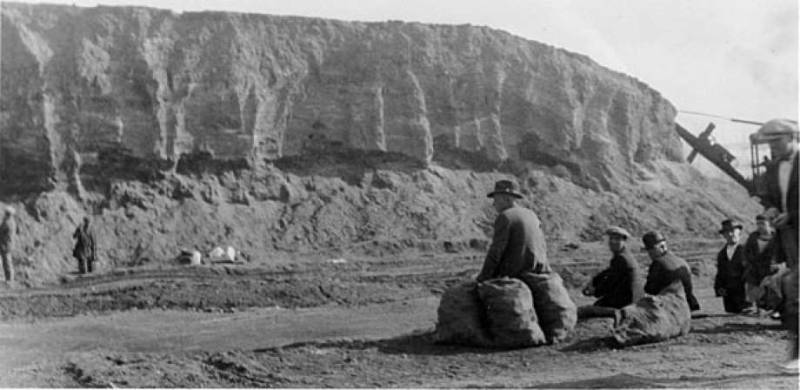
"caption": "Demolition of the Emeryville shellmound to make way for a paint factory, 1924.",
"description": "Demolition of the Emeryville Shellmound to make way for a paint factory, 1924.",
"title": "920x920",
"credit": "Courtesy of the Phoebe A. Hearst Museum of Anthropology and Regents of the University of California, catalog no. 15-7792",
"status": "inherit",
"altTag": "Demolition of the Emeryville Shellmound to make way for a paint factory, 1924.",
"isLoading": false,
"fetchFailed": false
},
"news_11903994": {
"type": "attachments",
"id": "news_11903994",
"meta": {
"index": "attachments_1716263798",
"site": "news",
"id": "11903994",
"found": true
},
"parent": 11903991,
"imgSizes": {
"twentyfourteen-full-width": {
"file": "https://ww2.kqed.org/app/uploads/sites/10/2022/02/stream_redwood-1038x576.jpeg",
"width": 1038,
"mimeType": "image/jpeg",
"height": 576
},
"thumbnail": {
"file": "https://ww2.kqed.org/app/uploads/sites/10/2022/02/stream_redwood-160x107.jpeg",
"width": 160,
"mimeType": "image/jpeg",
"height": 107
},
"post-thumbnail": {
"file": "https://ww2.kqed.org/app/uploads/sites/10/2022/02/stream_redwood-672x372.jpeg",
"width": 672,
"mimeType": "image/jpeg",
"height": 372
},
"kqedFullSize": {
"file": "https://ww2.kqed.org/app/uploads/sites/10/2022/02/stream_redwood.jpeg",
"width": 1200,
"height": 800
},
"large": {
"file": "https://ww2.kqed.org/app/uploads/sites/10/2022/02/stream_redwood-1020x680.jpeg",
"width": 1020,
"mimeType": "image/jpeg",
"height": 680
},
"medium": {
"file": "https://ww2.kqed.org/app/uploads/sites/10/2022/02/stream_redwood-800x533.jpeg",
"width": 800,
"mimeType": "image/jpeg",
"height": 533
}
},
"publishDate": 1643936896,
"modified": 1643936936,
"caption": "Anderson Creek cuts through the newly reclaimed property. The tributary of the South Fork Eel River is a Class I fish-bearing stream supporting threatened coho salmon and steelhead trout.",
"description": null,
"title": "stream_redwood",
"credit": "Alex Herr/Save the Redwoods League",
"status": "inherit",
"altTag": null,
"isLoading": false,
"fetchFailed": false
},
"news_11903286": {
"type": "attachments",
"id": "news_11903286",
"meta": {
"index": "attachments_1716263798",
"site": "news",
"id": "11903286",
"found": true
},
"parent": 11903223,
"imgSizes": {
"twentyfourteen-full-width": {
"file": "https://ww2.kqed.org/app/uploads/sites/10/2022/01/cynthia-1038x576.jpg",
"width": 1038,
"mimeType": "image/jpeg",
"height": 576
},
"thumbnail": {
"file": "https://ww2.kqed.org/app/uploads/sites/10/2022/01/cynthia-160x90.jpg",
"width": 160,
"mimeType": "image/jpeg",
"height": 90
},
"post-thumbnail": {
"file": "https://ww2.kqed.org/app/uploads/sites/10/2022/01/cynthia-672x372.jpg",
"width": 672,
"mimeType": "image/jpeg",
"height": 372
},
"kqedFullSize": {
"file": "https://ww2.kqed.org/app/uploads/sites/10/2022/01/cynthia.jpg",
"width": 1280,
"height": 720
},
"large": {
"file": "https://ww2.kqed.org/app/uploads/sites/10/2022/01/cynthia-1020x574.jpg",
"width": 1020,
"mimeType": "image/jpeg",
"height": 574
},
"medium": {
"file": "https://ww2.kqed.org/app/uploads/sites/10/2022/01/cynthia-800x450.jpg",
"width": 800,
"mimeType": "image/jpeg",
"height": 450
}
},
"publishDate": 1643410977,
"modified": 1643410977,
"caption": null,
"description": null,
"title": "cynthia",
"credit": null,
"status": "inherit",
"altTag": null,
"isLoading": false,
"fetchFailed": false
},
"news_11902729": {
"type": "attachments",
"id": "news_11902729",
"meta": {
"index": "attachments_1716263798",
"site": "news",
"id": "11902729",
"found": true
},
"parent": 11902489,
"imgSizes": {
"twentyfourteen-full-width": {
"file": "https://ww2.kqed.org/app/uploads/sites/10/2022/01/featured_redwood-1038x576.jpeg",
"width": 1038,
"mimeType": "image/jpeg",
"height": 576
},
"thumbnail": {
"file": "https://ww2.kqed.org/app/uploads/sites/10/2022/01/featured_redwood-160x107.jpeg",
"width": 160,
"mimeType": "image/jpeg",
"height": 107
},
"post-thumbnail": {
"file": "https://ww2.kqed.org/app/uploads/sites/10/2022/01/featured_redwood-672x372.jpeg",
"width": 672,
"mimeType": "image/jpeg",
"height": 372
},
"kqedFullSize": {
"file": "https://ww2.kqed.org/app/uploads/sites/10/2022/01/featured_redwood.jpeg",
"width": 1200,
"height": 800
},
"large": {
"file": "https://ww2.kqed.org/app/uploads/sites/10/2022/01/featured_redwood-1020x680.jpeg",
"width": 1020,
"mimeType": "image/jpeg",
"height": 680
},
"medium": {
"file": "https://ww2.kqed.org/app/uploads/sites/10/2022/01/featured_redwood-800x533.jpeg",
"width": 800,
"mimeType": "image/jpeg",
"height": 533
}
},
"publishDate": 1643223308,
"modified": 1643248963,
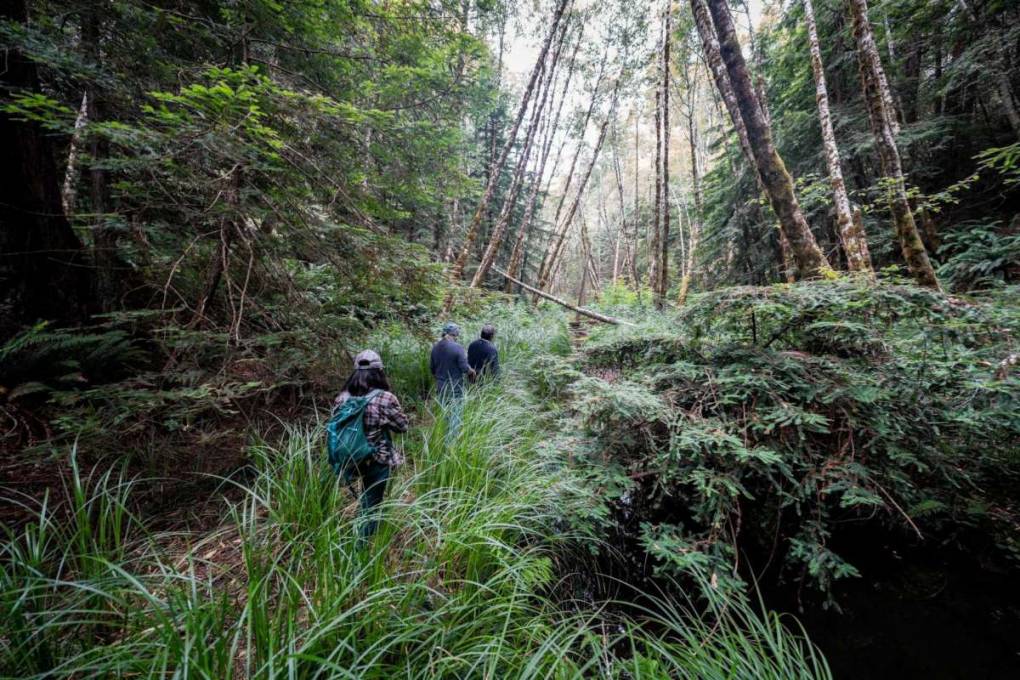
"caption": "InterTribal Sinkyone Wilderness Council representatives and Save the Redwoods League staff visiting Tc'ih-Léh-Dûñ, a newly reclaimed 523-acre expanse of forest on the Lost Coast, on June 2021. ",
"description": null,
"title": "featured_redwood",
"credit": "Paul Robert Wolf Wilson/Save the Redwoods League",
"status": "inherit",
"altTag": "Three people walk through dense brush in a forest.",
"isLoading": false,
"fetchFailed": false
},
"news_11899818": {
"type": "attachments",
"id": "news_11899818",
"meta": {
"index": "attachments_1716263798",
"site": "news",
"id": "11899818",
"found": true
},
"parent": 11899667,
"imgSizes": {
"twentyfourteen-full-width": {
"file": "https://ww2.kqed.org/app/uploads/sites/10/2021/12/016_Oakland_JuneteenthBBPMiniMuseum_06192021-1038x576.jpg",
"width": 1038,
"mimeType": "image/jpeg",
"height": 576
},
"thumbnail": {
"file": "https://ww2.kqed.org/app/uploads/sites/10/2021/12/016_Oakland_JuneteenthBBPMiniMuseum_06192021-160x107.jpg",
"width": 160,
"mimeType": "image/jpeg",
"height": 107
},
"post-thumbnail": {
"file": "https://ww2.kqed.org/app/uploads/sites/10/2021/12/016_Oakland_JuneteenthBBPMiniMuseum_06192021-672x372.jpg",
"width": 672,
"mimeType": "image/jpeg",
"height": 372
},
"kqedFullSize": {
"file": "https://ww2.kqed.org/app/uploads/sites/10/2021/12/016_Oakland_JuneteenthBBPMiniMuseum_06192021.jpg",
"width": 1920,
"height": 1280
},
"large": {
"file": "https://ww2.kqed.org/app/uploads/sites/10/2021/12/016_Oakland_JuneteenthBBPMiniMuseum_06192021-1020x680.jpg",
"width": 1020,
"mimeType": "image/jpeg",
"height": 680
},
"1536x1536": {
"file": "https://ww2.kqed.org/app/uploads/sites/10/2021/12/016_Oakland_JuneteenthBBPMiniMuseum_06192021-1536x1024.jpg",
"width": 1536,
"mimeType": "image/jpeg",
"height": 1024
},
"medium": {
"file": "https://ww2.kqed.org/app/uploads/sites/10/2021/12/016_Oakland_JuneteenthBBPMiniMuseum_06192021-800x533.jpg",
"width": 800,
"mimeType": "image/jpeg",
"height": 533
}
},
"publishDate": 1639959657,
"modified": 1640052639,
"caption": "Donnell McAlister gives kids a chance to sit on top of his horse JJ, named after Jesse James, during a Juneteenth block party to celebrate the opening of Black Panther Party Mini Museum in West Oakland on June 19, 2021.",
"description": "Donnell McAlister gives kids a chance to sit on top of his horse JJ, named after Jesse James, during a Juneteenth block party to celebrate the opening of Black Panther Party Mini Museum in West Oakland on June 19, 2021.",
"title": "Oakland_Juneteenth_BlackPantherPartyMiniMuseum_06192021",
"credit": "Beth LaBerge/KQED",
"status": "inherit",
"altTag": "A child smiles as she is lifted onto a horse by a man in a cowboy hat in front of a blue mural that says, \"Women of the Black Panther Party.\"",
"isLoading": false,
"fetchFailed": false
},
"news_11896854": {
"type": "attachments",
"id": "news_11896854",
"meta": {
"index": "attachments_1716263798",
"site": "news",
"id": "11896854",
"found": true
},
"parent": 11896718,
"imgSizes": {
"twentyfourteen-full-width": {
"file": "https://ww2.kqed.org/app/uploads/sites/10/2021/11/grizzlies02-1038x576.png",
"width": 1038,
"mimeType": "image/png",
"height": 576
},
"thumbnail": {
"file": "https://ww2.kqed.org/app/uploads/sites/10/2021/11/grizzlies02-160x160.png",
"width": 160,
"mimeType": "image/png",
"height": 160
},
"post-thumbnail": {
"file": "https://ww2.kqed.org/app/uploads/sites/10/2021/11/grizzlies02-672x372.png",
"width": 672,
"mimeType": "image/png",
"height": 372
},
"kqedFullSize": {
"file": "https://ww2.kqed.org/app/uploads/sites/10/2021/11/grizzlies02.png",
"width": 1920,
"height": 1920
},
"large": {
"file": "https://ww2.kqed.org/app/uploads/sites/10/2021/11/grizzlies02-1020x1020.png",
"width": 1020,
"mimeType": "image/png",
"height": 1020
},
"1536x1536": {
"file": "https://ww2.kqed.org/app/uploads/sites/10/2021/11/grizzlies02-1536x1536.png",
"width": 1536,
"mimeType": "image/png",
"height": 1536
},
"medium": {
"file": "https://ww2.kqed.org/app/uploads/sites/10/2021/11/grizzlies02-800x800.png",
"width": 800,
"mimeType": "image/png",
"height": 800
}
},
"publishDate": 1637349331,
"modified": 1637349362,
"caption": null,
"description": null,
"title": "grizzlies02",
"credit": null,
"status": "inherit",
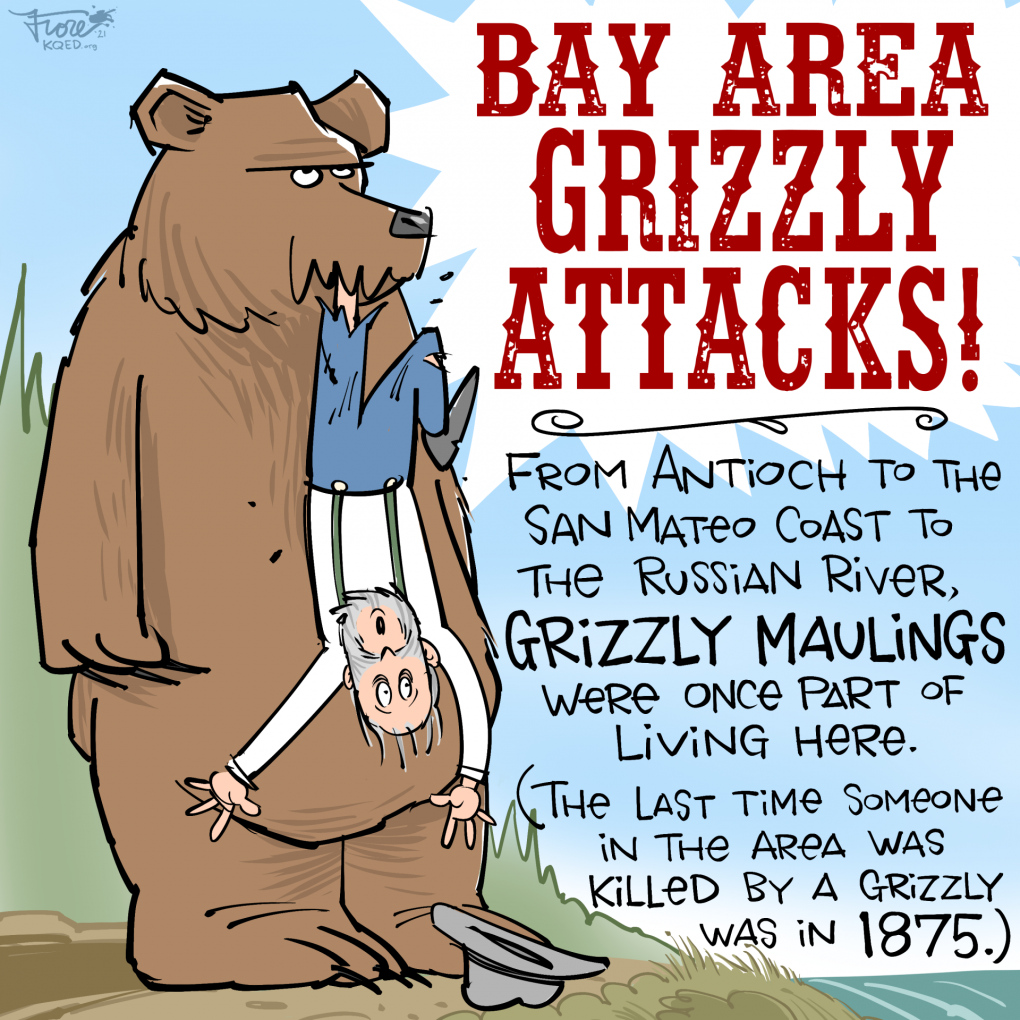
"altTag": "Cartoon: a huge grizzly bear holding a man by his leg. Text reads, \"Bay Area grizzly bear attacks! From Antioch to the San Mateo Coast to the Russian River, grizzly attacks were once part of living here.\"",
"isLoading": false,
"fetchFailed": false
},
"news_11894722": {
"type": "attachments",
"id": "news_11894722",
"meta": {
"index": "attachments_1716263798",
"site": "news",
"id": "11894722",
"found": true
},
"parent": 11894721,
"imgSizes": {
"twentyfourteen-full-width": {
"file": "https://ww2.kqed.org/app/uploads/sites/10/2021/11/gettyimages-1154507864-3685ebcb7a5244571d8ed37b7bbaa9e854375daf-1038x576.jpg",
"width": 1038,
"mimeType": "image/jpeg",
"height": 576
},
"thumbnail": {
"file": "https://ww2.kqed.org/app/uploads/sites/10/2021/11/gettyimages-1154507864-3685ebcb7a5244571d8ed37b7bbaa9e854375daf-160x120.jpg",
"width": 160,
"mimeType": "image/jpeg",
"height": 120
},
"post-thumbnail": {
"file": "https://ww2.kqed.org/app/uploads/sites/10/2021/11/gettyimages-1154507864-3685ebcb7a5244571d8ed37b7bbaa9e854375daf-672x372.jpg",
"width": 672,
"mimeType": "image/jpeg",
"height": 372
},
"kqedFullSize": {
"file": "https://ww2.kqed.org/app/uploads/sites/10/2021/11/gettyimages-1154507864-3685ebcb7a5244571d8ed37b7bbaa9e854375daf-scaled.jpg",
"width": 2560,
"height": 1920
},
"2048x2048": {
"file": "https://ww2.kqed.org/app/uploads/sites/10/2021/11/gettyimages-1154507864-3685ebcb7a5244571d8ed37b7bbaa9e854375daf-2048x1536.jpg",
"width": 2048,
"mimeType": "image/jpeg",
"height": 1536
},
"large": {
"file": "https://ww2.kqed.org/app/uploads/sites/10/2021/11/gettyimages-1154507864-3685ebcb7a5244571d8ed37b7bbaa9e854375daf-1020x765.jpg",
"width": 1020,
"mimeType": "image/jpeg",
"height": 765
},
"1536x1536": {
"file": "https://ww2.kqed.org/app/uploads/sites/10/2021/11/gettyimages-1154507864-3685ebcb7a5244571d8ed37b7bbaa9e854375daf-1536x1152.jpg",
"width": 1536,
"mimeType": "image/jpeg",
"height": 1152
},
"full-width": {
"file": "https://ww2.kqed.org/app/uploads/sites/10/2021/11/gettyimages-1154507864-3685ebcb7a5244571d8ed37b7bbaa9e854375daf-1920x1440.jpg",
"width": 1920,
"mimeType": "image/jpeg",
"height": 1440
},
"medium": {
"file": "https://ww2.kqed.org/app/uploads/sites/10/2021/11/gettyimages-1154507864-3685ebcb7a5244571d8ed37b7bbaa9e854375daf-800x600.jpg",
"width": 800,
"mimeType": "image/jpeg",
"height": 600
}
},
"publishDate": 1635872263,
"modified": 1635899768,
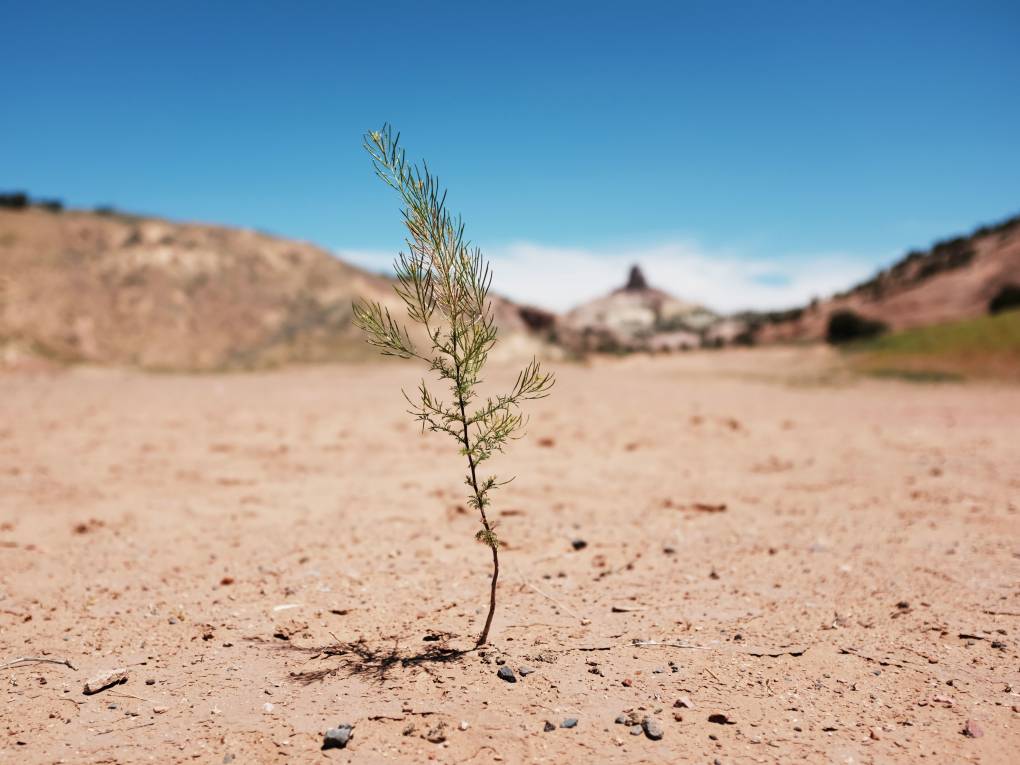
"caption": "A dry landscape stands on Navajo Nation lands on June 7, 2019, in the town of Gallup, New Mexico. ",
"description": "CUT FROM CAPTION: Due to a legacy of marginalization, including poverty and disputed water rights, up to 40% of Navajo Nation households don't have clean running water at home and are forced to rely on weekly and daily visits to water pumps. ",
"title": "A dry landscape pictured on Navajo Nation lands on in the town of Gallup, New Mexico in June 2019. New research says the near-total loss of tribal lands in the U.S. has left Indigenous people more vulnerable to climate change.",
"credit": "Spencer Platt/Getty Images",
"status": "inherit",
"altTag": "A tiny green sprout pushes through otherwise completely dry, cracked, red ground under a blue sky.",
"isLoading": false,
"fetchFailed": false
},
"news_11891902": {
"type": "attachments",
"id": "news_11891902",
"meta": {
"index": "attachments_1716263798",
"site": "news",
"id": "11891902",
"found": true
},
"parent": 11891890,
"imgSizes": {
"twentyfourteen-full-width": {
"file": "https://ww2.kqed.org/app/uploads/sites/10/2021/10/longbefore_101121_final-1038x576.png",
"width": 1038,
"mimeType": "image/png",
"height": 576
},
"thumbnail": {
"file": "https://ww2.kqed.org/app/uploads/sites/10/2021/10/longbefore_101121_final-160x106.png",
"width": 160,
"mimeType": "image/png",
"height": 106
},
"post-thumbnail": {
"file": "https://ww2.kqed.org/app/uploads/sites/10/2021/10/longbefore_101121_final-672x372.png",
"width": 672,
"mimeType": "image/png",
"height": 372
},
"kqedFullSize": {
"file": "https://ww2.kqed.org/app/uploads/sites/10/2021/10/longbefore_101121_final.png",
"width": 1920,
"height": 1268
},
"large": {
"file": "https://ww2.kqed.org/app/uploads/sites/10/2021/10/longbefore_101121_final-1020x674.png",
"width": 1020,
"mimeType": "image/png",
"height": 674
},
"1536x1536": {
"file": "https://ww2.kqed.org/app/uploads/sites/10/2021/10/longbefore_101121_final-1536x1014.png",
"width": 1536,
"mimeType": "image/png",
"height": 1014
},
"medium": {
"file": "https://ww2.kqed.org/app/uploads/sites/10/2021/10/longbefore_101121_final-800x528.png",
"width": 800,
"mimeType": "image/png",
"height": 528
}
},
"publishDate": 1633987529,
"modified": 1633999854,
"caption": null,
"description": null,
"title": "longbefore_101121_final",
"credit": null,
"status": "inherit",
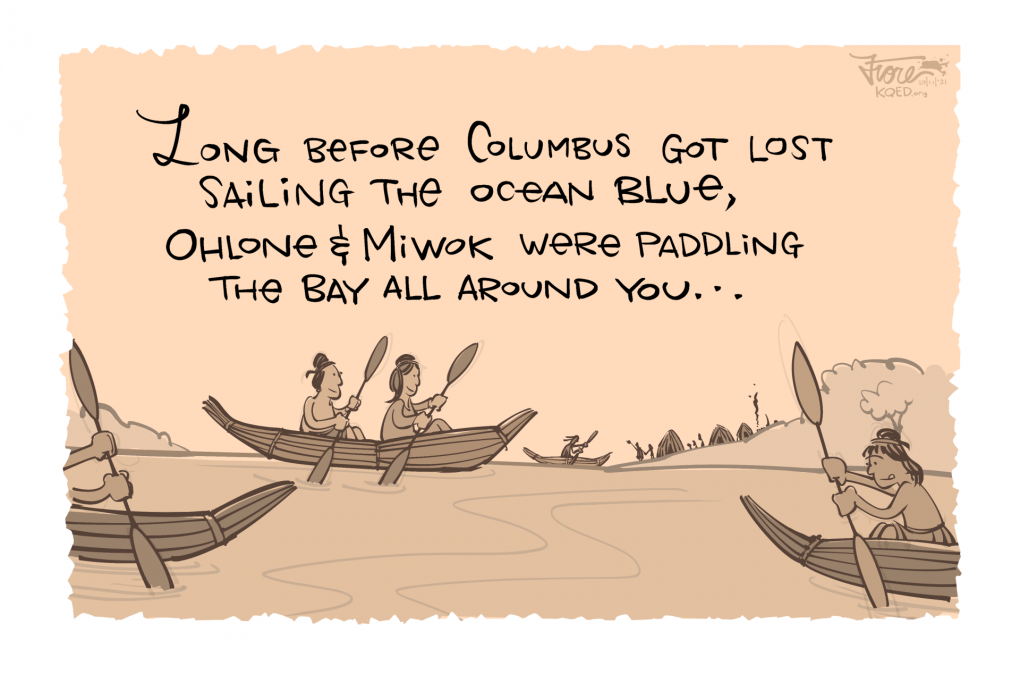
"altTag": "A sepia-tone cartoon shows Miwok and Ohlone people paddling tule canoes. The caption reads, \"long before Columbus got lost sailing the ocean blue, Ohlone & Miwok were paddling the Bay all around you.\"",
"isLoading": false,
"fetchFailed": false
},
"news_11888063": {
"type": "attachments",
"id": "news_11888063",
"meta": {
"index": "attachments_1716263798",
"site": "news",
"id": "11888063",
"found": true
},
"parent": 11888051,
"imgSizes": {
"twentyfourteen-full-width": {
"file": "https://ww2.kqed.org/app/uploads/sites/10/2021/09/dv-camag5-1038x576.jpg",
"width": 1038,
"mimeType": "image/jpeg",
"height": 576
},
"thumbnail": {
"file": "https://ww2.kqed.org/app/uploads/sites/10/2021/09/dv-camag5-160x108.jpg",
"width": 160,
"mimeType": "image/jpeg",
"height": 108
},
"post-thumbnail": {
"file": "https://ww2.kqed.org/app/uploads/sites/10/2021/09/dv-camag5-672x372.jpg",
"width": 672,
"mimeType": "image/jpeg",
"height": 372
},
"kqedFullSize": {
"file": "https://ww2.kqed.org/app/uploads/sites/10/2021/09/dv-camag5-e1631310091518.jpg",
"width": 1920,
"height": 1296
},
"large": {
"file": "https://ww2.kqed.org/app/uploads/sites/10/2021/09/dv-camag5-1020x689.jpg",
"width": 1020,
"mimeType": "image/jpeg",
"height": 689
},
"1536x1536": {
"file": "https://ww2.kqed.org/app/uploads/sites/10/2021/09/dv-camag5-1536x1037.jpg",
"width": 1536,
"mimeType": "image/jpeg",
"height": 1037
},
"full-width": {
"file": "https://ww2.kqed.org/app/uploads/sites/10/2021/09/dv-camag5-1920x1296.jpg",
"width": 1920,
"mimeType": "image/jpeg",
"height": 1296
},
"medium": {
"file": "https://ww2.kqed.org/app/uploads/sites/10/2021/09/dv-camag5-800x540.jpg",
"width": 800,
"mimeType": "image/jpeg",
"height": 540
}
},
"publishDate": 1631310073,
"modified": 1631310114,
"caption": null,
"description": null,
"title": "dv-camag5",
"credit": "Illustration by Anna Vignet/KQED",
"status": "inherit",
"altTag": null,
"isLoading": false,
"fetchFailed": false
},
"news_11887537": {
"type": "attachments",
"id": "news_11887537",
"meta": {
"index": "attachments_1716263798",
"site": "news",
"id": "11887537",
"found": true
},
"parent": 11887536,
"imgSizes": {
"twentyfourteen-full-width": {
"file": "https://ww2.kqed.org/app/uploads/sites/10/2021/09/IMG_0088-scaled-1-1038x576.jpeg",
"width": 1038,
"mimeType": "image/jpeg",
"height": 576
},
"thumbnail": {
"file": "https://ww2.kqed.org/app/uploads/sites/10/2021/09/IMG_0088-scaled-1-160x107.jpeg",
"width": 160,
"mimeType": "image/jpeg",
"height": 107
},
"post-thumbnail": {
"file": "https://ww2.kqed.org/app/uploads/sites/10/2021/09/IMG_0088-scaled-1-672x372.jpeg",
"width": 672,
"mimeType": "image/jpeg",
"height": 372
},
"kqedFullSize": {
"file": "https://ww2.kqed.org/app/uploads/sites/10/2021/09/IMG_0088-scaled-1.jpeg",
"width": 2560,
"height": 1707
},
"2048x2048": {
"file": "https://ww2.kqed.org/app/uploads/sites/10/2021/09/IMG_0088-scaled-1-2048x1366.jpeg",
"width": 2048,
"mimeType": "image/jpeg",
"height": 1366
},
"large": {
"file": "https://ww2.kqed.org/app/uploads/sites/10/2021/09/IMG_0088-scaled-1-1020x680.jpeg",
"width": 1020,
"mimeType": "image/jpeg",
"height": 680
},
"1536x1536": {
"file": "https://ww2.kqed.org/app/uploads/sites/10/2021/09/IMG_0088-scaled-1-1536x1024.jpeg",
"width": 1536,
"mimeType": "image/jpeg",
"height": 1024
},
"full-width": {
"file": "https://ww2.kqed.org/app/uploads/sites/10/2021/09/IMG_0088-scaled-1-1920x1280.jpeg",
"width": 1920,
"mimeType": "image/jpeg",
"height": 1280
},
"medium": {
"file": "https://ww2.kqed.org/app/uploads/sites/10/2021/09/IMG_0088-scaled-1-800x533.jpeg",
"width": 800,
"mimeType": "image/jpeg",
"height": 533
}
},
"publishDate": 1630690045,
"modified": 1630711893,
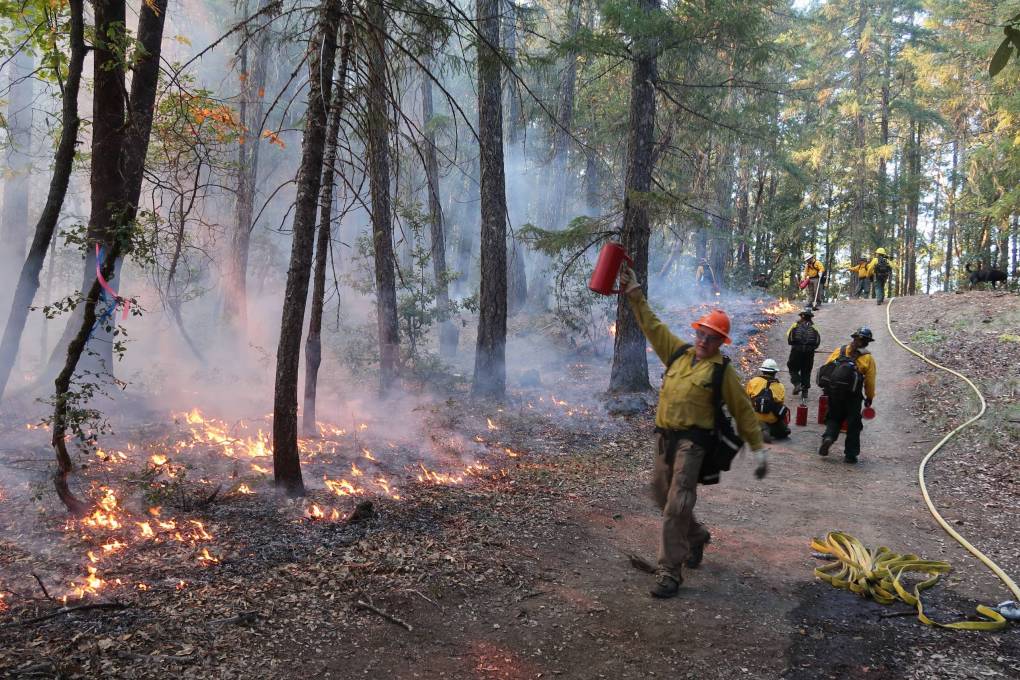
"caption": "A prescribed fire burn training in 2019.",
"description": null,
"title": "IMG_0088-scaled",
"credit": null,
"status": "inherit",
"altTag": "A controlled burn trainee holds a small torch aloft while surveying an area where underbrush and debris is burning on the forest floor.",
"isLoading": false,
"fetchFailed": false
},
"news_11886597": {
"type": "attachments",
"id": "news_11886597",
"meta": {
"index": "attachments_1716263798",
"site": "news",
"id": "11886597",
"found": true
},
"parent": 11886288,
"imgSizes": {
"twentyfourteen-full-width": {
"file": "https://ww2.kqed.org/app/uploads/sites/10/2021/08/LOST-AND-FOUND-CZU-Main-800x576.jpg",
"width": 800,
"mimeType": "image/jpeg",
"height": 576
},
"thumbnail": {
"file": "https://ww2.kqed.org/app/uploads/sites/10/2021/08/LOST-AND-FOUND-CZU-Main-160x121.jpg",
"width": 160,
"mimeType": "image/jpeg",
"height": 121
},
"post-thumbnail": {
"file": "https://ww2.kqed.org/app/uploads/sites/10/2021/08/LOST-AND-FOUND-CZU-Main-672x372.jpg",
"width": 672,
"mimeType": "image/jpeg",
"height": 372
},
"kqedFullSize": {
"file": "https://ww2.kqed.org/app/uploads/sites/10/2021/08/LOST-AND-FOUND-CZU-Main.jpg",
"width": 800,
"height": 605
}
},
"publishDate": 1630089799,
"modified": 1630110814,
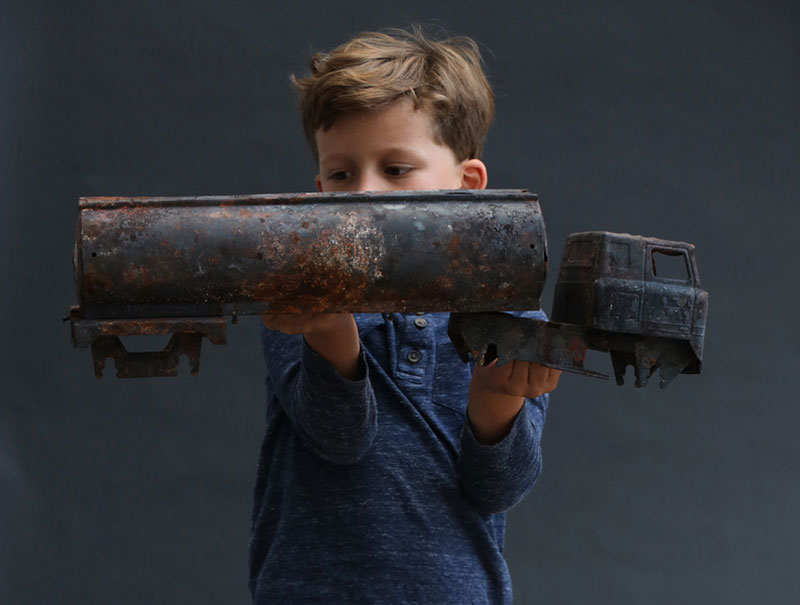
"caption": "Rolo Commons, 6, holds a charred toy truck that was salvaged from his grandmother's house after last year's CZU Lightning Complex fires.",
"description": "Rolo Commons, 6, holds a charred toy truck that was salvaged from his grandmother's house after last year's CZU August Complex fires.",
"title": "LOST-AND-FOUND-CZU-Main",
"credit": "Courtesy Shmuel Thaler",
"status": "inherit",
"altTag": null,
"isLoading": false,
"fetchFailed": false
},
"news_11678208": {
"type": "attachments",
"id": "news_11678208",
"meta": {
"index": "attachments_1716263798",
"site": "news",
"id": "11678208",
"found": true
},
"parent": 11678136,
"imgSizes": {
"small": {
"file": "https://ww2.kqed.org/app/uploads/sites/10/2018/06/634_original-520x391.jpg",
"width": 520,
"mimeType": "image/jpeg",
"height": 391
},
"twentyfourteen-full-width": {
"file": "https://ww2.kqed.org/app/uploads/sites/10/2018/06/634_original-1038x576.jpg",
"width": 1038,
"mimeType": "image/jpeg",
"height": 576
},
"thumbnail": {
"file": "https://ww2.kqed.org/app/uploads/sites/10/2018/06/634_original-160x120.jpg",
"width": 160,
"mimeType": "image/jpeg",
"height": 120
},
"fd-sm": {
"file": "https://ww2.kqed.org/app/uploads/sites/10/2018/06/634_original-960x721.jpg",
"width": 960,
"mimeType": "image/jpeg",
"height": 721
},
"post-thumbnail": {
"file": "https://ww2.kqed.org/app/uploads/sites/10/2018/06/634_original-672x372.jpg",
"width": 672,
"mimeType": "image/jpeg",
"height": 372
},
"xsmall": {
"file": "https://ww2.kqed.org/app/uploads/sites/10/2018/06/634_original-375x282.jpg",
"width": 375,
"mimeType": "image/jpeg",
"height": 282
},
"kqedFullSize": {
"file": "https://ww2.kqed.org/app/uploads/sites/10/2018/06/634_original.jpg",
"width": 4033,
"height": 3031
},
"large": {
"file": "https://ww2.kqed.org/app/uploads/sites/10/2018/06/634_original-1020x767.jpg",
"width": 1020,
"mimeType": "image/jpeg",
"height": 767
},
"xlarge": {
"file": "https://ww2.kqed.org/app/uploads/sites/10/2018/06/634_original-1180x887.jpg",
"width": 1180,
"mimeType": "image/jpeg",
"height": 887
},
"complete_open_graph": {
"file": "https://ww2.kqed.org/app/uploads/sites/10/2018/06/634_original-1200x902.jpg",
"width": 1200,
"mimeType": "image/jpeg",
"height": 902
},
"guest-author-50": {
"file": "https://ww2.kqed.org/app/uploads/sites/10/2018/06/634_original-50x50.jpg",
"width": 50,
"mimeType": "image/jpeg",
"height": 50
},
"guest-author-96": {
"file": "https://ww2.kqed.org/app/uploads/sites/10/2018/06/634_original-96x96.jpg",
"width": 96,
"mimeType": "image/jpeg",
"height": 96
},
"medium": {
"file": "https://ww2.kqed.org/app/uploads/sites/10/2018/06/634_original-800x601.jpg",
"width": 800,
"mimeType": "image/jpeg",
"height": 601
},
"guest-author-64": {
"file": "https://ww2.kqed.org/app/uploads/sites/10/2018/06/634_original-64x64.jpg",
"width": 64,
"mimeType": "image/jpeg",
"height": 64
},
"guest-author-32": {
"file": "https://ww2.kqed.org/app/uploads/sites/10/2018/06/634_original-32x32.jpg",
"width": 32,
"mimeType": "image/jpeg",
"height": 32
},
"fd-lrg": {
"file": "https://ww2.kqed.org/app/uploads/sites/10/2018/06/634_original-1920x1443.jpg",
"width": 1920,
"mimeType": "image/jpeg",
"height": 1443
},
"fd-med": {
"file": "https://ww2.kqed.org/app/uploads/sites/10/2018/06/634_original-1180x887.jpg",
"width": 1180,
"mimeType": "image/jpeg",
"height": 887
},
"full-width": {
"file": "https://ww2.kqed.org/app/uploads/sites/10/2018/06/634_original-1920x1443.jpg",
"width": 1920,
"mimeType": "image/jpeg",
"height": 1443
},
"detail": {
"file": "https://ww2.kqed.org/app/uploads/sites/10/2018/06/634_original-150x150.jpg",
"width": 150,
"mimeType": "image/jpeg",
"height": 150
},
"guest-author-128": {
"file": "https://ww2.kqed.org/app/uploads/sites/10/2018/06/634_original-128x128.jpg",
"width": 128,
"mimeType": "image/jpeg",
"height": 128
},
"xxsmall": {
"file": "https://ww2.kqed.org/app/uploads/sites/10/2018/06/634_original-240x180.jpg",
"width": 240,
"mimeType": "image/jpeg",
"height": 180
}
},
"publishDate": 1530298523,
"modified": 1530302490,
"caption": "Chiracahua Apache children arrive at the Carlisle Indian School, which was considered the model for many Native American boarding schools around the country.",
"description": null,
"title": "634_original",
"credit": "National Archives, Records of the Office of the Chief Signal Officer",
"status": "inherit",
"isLoading": false,
"fetchFailed": false
}
},
"audioPlayerReducer": {
"postId": "stream_live",
"isPaused": true,
"isPlaying": false,
"pfsActive": false,
"pledgeModalIsOpen": true,
"playerDrawerIsOpen": false,
"liveAudioPlayStartedAt": 0,
"liveAudioPlayContext": ""
},
"authorsReducer": {
"byline_news_11894721": {
"type": "authors",
"id": "byline_news_11894721",
"meta": {
"override": true
},
"slug": "byline_news_11894721",
"name": "Rachel Treisman",
"isLoading": false
},
"byline_news_11888051": {
"type": "authors",
"id": "byline_news_11888051",
"meta": {
"override": true
},
"slug": "byline_news_11888051",
"name": "\u003ca href=\"https://twitter.com/leeromney?lang=en\">Lee Romney\u003c/a>",
"isLoading": false
},
"kqed": {
"type": "authors",
"id": "236",
"meta": {
"index": "authors_1716337520",
"id": "236",
"found": true
},
"name": "KQED News Staff",
"firstName": "KQED News Staff",
"lastName": null,
"slug": "kqed",
"email": "faq@kqed.org",
"display_author_email": false,
"staff_mastheads": [],
"title": null,
"bio": null,
"avatar": "https://secure.gravatar.com/avatar/ef0e801a68c4c54afa9180db14084167?s=600&d=blank&r=g",
"twitter": null,
"facebook": null,
"instagram": null,
"linkedin": null,
"sites": [
{
"site": "arts",
"roles": [
"contributor"
]
},
{
"site": "news",
"roles": [
"editor"
]
},
{
"site": "futureofyou",
"roles": [
"author"
]
}
],
"headData": {
"title": "KQED News Staff | KQED",
"description": null,
"ogImgSrc": "https://secure.gravatar.com/avatar/ef0e801a68c4c54afa9180db14084167?s=600&d=blank&r=g",
"twImgSrc": "https://secure.gravatar.com/avatar/ef0e801a68c4c54afa9180db14084167?s=600&d=blank&r=g"
},
"isLoading": false,
"link": "/author/kqed"
},
"minakim": {
"type": "authors",
"id": "243",
"meta": {
"index": "authors_1716337520",
"id": "243",
"found": true
},
"name": "Mina Kim",
"firstName": "Mina",
"lastName": "Kim",
"slug": "minakim",
"email": "mkim@kqed.org",
"display_author_email": false,
"staff_mastheads": [
"news"
],
"title": "Host, Forum",
"bio": "Mina Kim is host of the 10 a.m. statewide hour of Forum; a live daily talk show for curious Californians on issues that matter to the state and nation, with a particular emphasis on race and equity.\r\n\r\nBefore joining the Forum team, Mina was KQED’s evening news anchor, and health reporter for The California Report. Her award-winning work has included natural disasters in Napa and gun violence in Oakland. Mina grew up in St. John’s, Newfoundland.",
"avatar": "https://secure.gravatar.com/avatar/145ce657a2d08cb86d93686beb958982?s=600&d=blank&r=g",
"twitter": "mkimreporter",
"facebook": null,
"instagram": null,
"linkedin": null,
"sites": [
{
"site": "news",
"roles": [
"contributor"
]
},
{
"site": "stateofhealth",
"roles": [
"author"
]
},
{
"site": "forum",
"roles": [
"editor"
]
}
],
"headData": {
"title": "Mina Kim | KQED",
"description": "Host, Forum",
"ogImgSrc": "https://secure.gravatar.com/avatar/145ce657a2d08cb86d93686beb958982?s=600&d=blank&r=g",
"twImgSrc": "https://secure.gravatar.com/avatar/145ce657a2d08cb86d93686beb958982?s=600&d=blank&r=g"
},
"isLoading": false,
"link": "/author/minakim"
},
"sasha-khokha": {
"type": "authors",
"id": "254",
"meta": {
"index": "authors_1716337520",
"id": "254",
"found": true
},
"name": "Sasha Khokha",
"firstName": "Sasha",
"lastName": "Khokha",
"slug": "sasha-khokha",
"email": "skhokha@kqed.org",
"display_author_email": true,
"staff_mastheads": [
"news"
],
"title": "Host, The California Report Magazine",
"bio": "Sasha Khokha is the host of \u003cem>The California Report's \u003c/em> weekly magazine program, which takes listeners on sound-rich excursions to meet the people that make the Golden State unique -- through audio documentaries and long-form stories. As \u003cem>The California Report's\u003c/em> Central Valley Bureau Chief based in Fresno for nearly a dozen years, Sasha brought the lives and concerns of rural Californians to listeners around the state. Her reporting helped expose the hidden price immigrant women janitors and farmworkers may pay to keep their jobs: sexual assault at work. It inspired two new California laws to protect them from sexual harassment. She was a key member of the reporting team for the Frontline film \u003cem>Rape on the Night Shift, \u003c/em>which was nominated for two national Emmys. Sasha has also won a national Edward R. Murrow and a national PRNDI award for investigative reporting, as well as multiple prizes from the Society for Professional Journalists. Sasha is a proud alum of the UC Berkeley Graduate School of Journalism and Brown University and a member of the South Asian Journalists Association.",
"avatar": "https://secure.gravatar.com/avatar/e4b5e1541aaeea2aa356aa1fb2a68950?s=600&d=blank&r=g",
"twitter": "KQEDSashaKhokha",
"facebook": null,
"instagram": null,
"linkedin": null,
"sites": [
{
"site": "news",
"roles": [
"editor"
]
},
{
"site": "stateofhealth",
"roles": [
"author"
]
},
{
"site": "science",
"roles": [
"author"
]
},
{
"site": "quest",
"roles": [
"subscriber"
]
}
],
"headData": {
"title": "Sasha Khokha | KQED",
"description": "Host, The California Report Magazine",
"ogImgSrc": "https://secure.gravatar.com/avatar/e4b5e1541aaeea2aa356aa1fb2a68950?s=600&d=blank&r=g",
"twImgSrc": "https://secure.gravatar.com/avatar/e4b5e1541aaeea2aa356aa1fb2a68950?s=600&d=blank&r=g"
},
"isLoading": false,
"link": "/author/sasha-khokha"
},
"matthewgreen": {
"type": "authors",
"id": "1263",
"meta": {
"index": "authors_1716337520",
"id": "1263",
"found": true
},
"name": "Matthew Green",
"firstName": "Matthew",
"lastName": "Green",
"slug": "matthewgreen",
"email": "mgreen@kqed.org",
"display_author_email": false,
"staff_mastheads": [],
"title": "KQED Editor/Reporter",
"bio": "Matthew Green is a digital media producer for KQED News. He previously produced \u003ca href=\"http://www.kqed.org/lowdown\">The Lowdown\u003c/a>, KQED’s multimedia news education blog. Matthew's written for numerous Bay Area publications, including the Oakland Tribune and San Francisco Chronicle. He also taught journalism classes at Fremont High School in East Oakland.\r\n\r\nEmail: mgreen@kqed.org; Twitter: @MGreenKQED",
"avatar": "https://secure.gravatar.com/avatar/3bf498d1267ca02c8494f33d8cfc575e?s=600&d=blank&r=g",
"twitter": "MGreenKQED",
"facebook": null,
"instagram": null,
"linkedin": null,
"sites": [
{
"site": "news",
"roles": []
},
{
"site": "lowdown",
"roles": []
},
{
"site": "science",
"roles": []
},
{
"site": "education",
"roles": []
},
{
"site": "quest",
"roles": []
},
{
"site": "liveblog",
"roles": []
}
],
"headData": {
"title": "Matthew Green | KQED",
"description": "KQED Editor/Reporter",
"ogImgSrc": "https://secure.gravatar.com/avatar/3bf498d1267ca02c8494f33d8cfc575e?s=600&d=blank&r=g",
"twImgSrc": "https://secure.gravatar.com/avatar/3bf498d1267ca02c8494f33d8cfc575e?s=600&d=blank&r=g"
},
"isLoading": false,
"link": "/author/matthewgreen"
},
"markfiore": {
"type": "authors",
"id": "3236",
"meta": {
"index": "authors_1716337520",
"id": "3236",
"found": true
},
"name": "Mark Fiore",
"firstName": "Mark",
"lastName": "Fiore",
"slug": "markfiore",
"email": "mark@markfiore.com",
"display_author_email": false,
"staff_mastheads": [
"news"
],
"title": "KQED News Cartoonist",
"bio": "\u003ca href=\"http://www.MarkFiore.com\">MarkFiore.com\u003c/a> | \u003ca href=\"https://twitter.com/markfiore\">Follow on Twitter\u003c/a> | \u003ca href=\"https://www.facebook.com/pages/Mark-Fiore-Animated-Political-Cartoons/94451707396?ref=bookmarks\">Facebook\u003c/a> | \u003ca href=\"mailto:mark@markfiore.com\">email\u003c/a>\r\n\r\nPulitzer Prize-winner, Mark Fiore, who the Wall Street Journal has called “the undisputed guru of the form,” creates animated political cartoons in San Francisco, where his work has been featured regularly on the San Francisco Chronicle’s web site, SFGate.com. His work has appeared on Newsweek.com, Slate.com, CBSNews.com, MotherJones.com, DailyKos.com and NPR’s web site. Fiore’s political animation has appeared on CNN, Frontline, Bill Moyers Journal, Salon.com and cable and broadcast outlets across the globe.\r\n\r\nBeginning his professional life by drawing traditional political cartoons for newspapers, Fiore’s work appeared in publications ranging from the Washington Post to the Los Angeles Times. In the late 1990s, he began to experiment with animating political cartoons and, after a short stint at the San Jose Mercury News as their staff cartoonist, Fiore devoted all his energies to animation.\r\nGrowing up in California, Fiore also spent a good portion of his life in the backwoods of Idaho. It was this combination that shaped him politically. Mark majored in political science at Colorado College, where, in a perfect send-off for a cartoonist, he received his diploma in 1991 as commencement speaker Dick Cheney smiled approvingly.\r\nMark Fiore was awarded the Pulitzer Prize for political cartooning in 2010, a Robert F. Kennedy Journalism Award in 2004 and has twice received an Online Journalism Award for commentary from the Online News Association (2002, 2008). Fiore has received two awards for his work in new media from the National Cartoonists Society (2001, 2002), and in 2006 received The James Madison Freedom of Information Award from The Society of Professional Journalists.",
"avatar": "https://secure.gravatar.com/avatar/fc4e2a612b15b67bad0c6f0e1db4ca9b?s=600&d=blank&r=g",
"twitter": "MarkFiore",
"facebook": null,
"instagram": "https://www.instagram.com/markfiore/?hl=en",
"linkedin": null,
"sites": [
{
"site": "arts",
"roles": [
"contributor"
]
},
{
"site": "news",
"roles": [
"editor"
]
},
{
"site": "futureofyou",
"roles": [
"editor"
]
},
{
"site": "science",
"roles": [
"editor"
]
}
],
"headData": {
"title": "Mark Fiore | KQED",
"description": "KQED News Cartoonist",
"ogImgSrc": "https://secure.gravatar.com/avatar/fc4e2a612b15b67bad0c6f0e1db4ca9b?s=600&d=blank&r=g",
"twImgSrc": "https://secure.gravatar.com/avatar/fc4e2a612b15b67bad0c6f0e1db4ca9b?s=600&d=blank&r=g"
},
"isLoading": false,
"link": "/author/markfiore"
},
"lklivans": {
"type": "authors",
"id": "8648",
"meta": {
"index": "authors_1716337520",
"id": "8648",
"found": true
},
"name": "Laura Klivans",
"firstName": "Laura",
"lastName": "Klivans",
"slug": "lklivans",
"email": "lklivans@kqed.org",
"display_author_email": true,
"staff_mastheads": [
"news",
"science"
],
"title": "Reporter",
"bio": "Laura Klivans is an award-winning science reporter for KQED News, where she covers climate change with an eye on both groundbreaking progress and gaps in action. She is the former host of KQED's blockbuster video series about tiny, amazing animals, \u003cem>Deep Look\u003c/em>. Her work reaches national audiences through NPR, \u003cem>Here & Now, \u003c/em>PRI, and other major outlets. \r\n\r\nLaura’s won five Northern California Area Emmy Awards for Deep Look and First Place in the Greater Bay Area Journalism Awards for a podcast exploring how one Oakland neighborhood teamed up to reduce planet-heating pollution.\r\n\r\nBeyond her reporting, she hosts and moderates events. In the past, she taught audio storytelling at the UC Berkeley Graduate School of Journalism, led international education programs, worked with immigrants and refugees along the Thai-Burmese border, taught high schoolers sex ed, and was an actress. \r\n\r\nShe's a former UC Berkeley Human Rights Fellow, USC Center for Health Journalism's California Fellow and Coro Fellow in Public Affairs. Laura has a master’s in journalism from UC Berkeley, a master’s in education from Harvard, and an undergraduate degree from Northwestern University.\r\n\r\nShe loves trying to riddle the meaning out of vanity license plates.",
"avatar": "https://secure.gravatar.com/avatar/2d2ecd1550a494cc10ad4a503406965585902124739e775a9b3817eebf1d88be?s=600&d=blank&r=g",
"twitter": "lauraklivans",
"bluesky": null,
"facebook": null,
"instagram": null,
"linkedin": null,
"sites": [
{
"site": "news",
"roles": [
"editor"
]
},
{
"site": "stateofhealth",
"roles": [
"contributor",
"editor"
]
},
{
"site": "science",
"roles": [
"editor"
]
},
{
"site": "forum",
"roles": [
"editor"
]
}
],
"headData": {
"title": "Laura Klivans | KQED",
"description": "Reporter",
"ogImgSrc": "https://secure.gravatar.com/avatar/2d2ecd1550a494cc10ad4a503406965585902124739e775a9b3817eebf1d88be?s=600&d=blank&r=g",
"twImgSrc": "https://secure.gravatar.com/avatar/2d2ecd1550a494cc10ad4a503406965585902124739e775a9b3817eebf1d88be?s=600&d=blank&r=g"
},
"isLoading": false,
"link": "/author/lklivans"
},
"ecruzguevarra": {
"type": "authors",
"id": "8654",
"meta": {
"index": "authors_1716337520",
"id": "8654",
"found": true
},
"name": "Ericka Cruz Guevarra",
"firstName": "Ericka",
"lastName": "Cruz Guevarra",
"slug": "ecruzguevarra",
"email": "ecruzguevarra@kqed.org",
"display_author_email": true,
"staff_mastheads": [
"news"
],
"title": "Producer, The Bay Podcast",
"bio": "Ericka Cruz Guevarra is host of \u003ca href=\"https://www.kqed.org/podcasts/thebay\">\u003cem>The Bay\u003c/em>\u003c/a> podcast at KQED. Before host, she was the show’s producer. Her work in that capacity includes a three-part reported series on policing in Vallejo, which won a 2020 excellence in journalism award from the Society of Professional Journalists. Ericka has worked as a breaking news reporter at Oregon Public Broadcasting, helped produce the Code Switch podcast, and was KQED’s inaugural Raul Ramirez Diversity Fund intern. She’s also an alumna of NPR’s Next Generation Radio program. Send her an email if you have strong feelings about whether Fairfield and Suisun City are the Bay. Ericka is represented by SAG-AFTRA.",
"avatar": "https://secure.gravatar.com/avatar/accefc1de4bafc7e234b69bcb9b6f6536c130fd84709bc3069ef11a78787e1bb?s=600&d=blank&r=g",
"twitter": "NotoriousECG",
"bluesky": null,
"facebook": null,
"instagram": null,
"linkedin": null,
"sites": [
{
"site": "arts",
"roles": [
"subscriber"
]
},
{
"site": "news",
"roles": [
"editor",
"manage_categories"
]
},
{
"site": "futureofyou",
"roles": [
"subscriber"
]
},
{
"site": "stateofhealth",
"roles": [
"subscriber"
]
},
{
"site": "science",
"roles": [
"editor"
]
},
{
"site": "forum",
"roles": [
"subscriber"
]
}
],
"headData": {
"title": "Ericka Cruz Guevarra | KQED",
"description": "Producer, The Bay Podcast",
"ogImgSrc": "https://secure.gravatar.com/avatar/accefc1de4bafc7e234b69bcb9b6f6536c130fd84709bc3069ef11a78787e1bb?s=600&d=blank&r=g",
"twImgSrc": "https://secure.gravatar.com/avatar/accefc1de4bafc7e234b69bcb9b6f6536c130fd84709bc3069ef11a78787e1bb?s=600&d=blank&r=g"
},
"isLoading": false,
"link": "/author/ecruzguevarra"
},
"dventon": {
"type": "authors",
"id": "11088",
"meta": {
"index": "authors_1716337520",
"id": "11088",
"found": true
},
"name": "Danielle Venton",
"firstName": "Danielle",
"lastName": "Venton",
"slug": "dventon",
"email": "dventon@kqed.org",
"display_author_email": true,
"staff_mastheads": [
"science"
],
"title": "Science reporter",
"bio": "Danielle Venton is a reporter for KQED Science. She covers wildfires, space and oceans (though she is prone to sea sickness).\r\n\r\nBefore joining KQED in 2015, Danielle was a staff reporter at KRCB in Sonoma County and a freelancer. She studied science communication at UC Santa Cruz and formerly worked at CERN in Geneva, Switzerland where she wrote about computing. She lives in Sonoma County and enjoys backpacking.",
"avatar": "https://secure.gravatar.com/avatar/37b292b5c40c8d93959c4f48d73b5286f41b7abd8588277e941905a3ed4c801c?s=600&d=blank&r=g",
"twitter": "DanielleVenton",
"bluesky": null,
"facebook": null,
"instagram": null,
"linkedin": null,
"sites": [
{
"site": "arts",
"roles": [
"contributor"
]
},
{
"site": "news",
"roles": [
"editor"
]
},
{
"site": "futureofyou",
"roles": [
"editor"
]
},
{
"site": "science",
"roles": [
"editor"
]
},
{
"site": "liveblog",
"roles": [
"contributor"
]
}
],
"headData": {
"title": "Danielle Venton | KQED",
"description": "Science reporter",
"ogImgSrc": "https://secure.gravatar.com/avatar/37b292b5c40c8d93959c4f48d73b5286f41b7abd8588277e941905a3ed4c801c?s=600&d=blank&r=g",
"twImgSrc": "https://secure.gravatar.com/avatar/37b292b5c40c8d93959c4f48d73b5286f41b7abd8588277e941905a3ed4c801c?s=600&d=blank&r=g"
},
"isLoading": false,
"link": "/author/dventon"
},
"mfederis": {
"type": "authors",
"id": "11509",
"meta": {
"index": "authors_1716337520",
"id": "11509",
"found": true
},
"name": "Marnette Federis",
"firstName": "Marnette",
"lastName": "Federis",
"slug": "mfederis",
"email": "mfederis@kqed.org",
"display_author_email": false,
"staff_mastheads": [],
"title": "KQED Contributor",
"bio": null,
"avatar": "https://secure.gravatar.com/avatar/6553b16260501cef36787444651fa5ed?s=600&d=blank&r=g",
"twitter": null,
"facebook": null,
"instagram": null,
"linkedin": null,
"sites": [
{
"site": "news",
"roles": [
"editor"
]
},
{
"site": "mindshift",
"roles": [
"editor"
]
},
{
"site": "science",
"roles": [
"editor"
]
},
{
"site": "podcasts",
"roles": [
"editor"
]
}
],
"headData": {
"title": "Marnette Federis | KQED",
"description": "KQED Contributor",
"ogImgSrc": "https://secure.gravatar.com/avatar/6553b16260501cef36787444651fa5ed?s=600&d=blank&r=g",
"twImgSrc": "https://secure.gravatar.com/avatar/6553b16260501cef36787444651fa5ed?s=600&d=blank&r=g"
},
"isLoading": false,
"link": "/author/mfederis"
},
"amontecillo": {
"type": "authors",
"id": "11649",
"meta": {
"index": "authors_1716337520",
"id": "11649",
"found": true
},
"name": "Alan Montecillo",
"firstName": "Alan",
"lastName": "Montecillo",
"slug": "amontecillo",
"email": "amontecillo@kqed.org",
"display_author_email": false,
"staff_mastheads": [
"news"
],
"title": "KQED Contributor",
"bio": "Alan Montecillo is the senior editor of \u003cem>\u003ca href=\"http://kqed.org/thebay\">The Bay\u003c/a>, \u003c/em> KQED's local news podcast. Before moving to the Bay Area, he worked as a senior talk show producer for WILL in Champaign-Urbana, Illinois and at Oregon Public Broadcasting in Portland, Oregon. He has won journalism awards from the Society of Professional Journalists Northern California, the Public Media Journalists Association, The Signal Awards, and has also received a regional Edward R. Murrow award. Alan is a Filipino American from Hong Kong and a graduate of Reed College.",
"avatar": "https://secure.gravatar.com/avatar/268f53a2066899ea9efdd8a5900218b17c822d9862cbc9326cccec53ef41d349?s=600&d=blank&r=g",
"twitter": "alanmontecillo",
"bluesky": null,
"facebook": null,
"instagram": null,
"linkedin": null,
"sites": [
{
"site": "",
"roles": [
"editor"
]
},
{
"site": "news",
"roles": [
"editor",
"manage_categories"
]
}
],
"headData": {
"title": "Alan Montecillo | KQED",
"description": "KQED Contributor",
"ogImgSrc": "https://secure.gravatar.com/avatar/268f53a2066899ea9efdd8a5900218b17c822d9862cbc9326cccec53ef41d349?s=600&d=blank&r=g",
"twImgSrc": "https://secure.gravatar.com/avatar/268f53a2066899ea9efdd8a5900218b17c822d9862cbc9326cccec53ef41d349?s=600&d=blank&r=g"
},
"isLoading": false,
"link": "/author/amontecillo"
}
},
"pagesReducer": {
"news_tag_native-americans": {
"type": "terms",
"id": "news_1262",
"meta": {
"index": "terms_1716263798",
"site": "news",
"id": "1262",
"score": 9.304556
},
"featImg": null,
"name": "native americans",
"description": null,
"taxonomy": "tag",
"headData": {
"twImgId": null,
"twTitle": null,
"ogTitle": null,
"ogImgId": null,
"twDescription": null,
"description": null,
"title": "native americans Archives | KQED News",
"ogDescription": null
},
"ttid": 1274,
"slug": "native-americans",
"isLoading": false,
"title": "native americans",
"pageMeta": {
"site": "news",
"WpPageTemplate": "page-topic-editorial",
"currentPage": 4
},
"blocks": [
{
"blockName": "kqed/post-list",
"attrs": {
"layout": "cardArticle2",
"query": "posts/news?tag=native-americans",
"seeMore": false,
"paginated": true,
"page": 4
}
},
{
"blockName": "kqed/ad"
}
]
}
},
"pfsSessionReducer": {},
"postsReducer": {
"stream_live": {
"type": "live",
"id": "stream_live",
"audioUrl": "https://streams.kqed.org/kqedradio",
"title": "Live Stream",
"excerpt": "Live Stream information currently unavailable.",
"link": "/radio",
"featImg": "",
"label": {
"name": "KQED Live",
"link": "/"
}
},
"stream_kqedNewscast": {
"type": "posts",
"id": "stream_kqedNewscast",
"audioUrl": "https://www.kqed.org/.stream/anon/radio/RDnews/newscast.mp3?_=1",
"title": "KQED Newscast",
"featImg": "",
"label": {
"name": "88.5 FM",
"link": "/"
}
},
"news_11704679": {
"type": "posts",
"id": "news_11704679",
"meta": {
"index": "posts_1716263798",
"site": "news",
"id": "11704679",
"score": null,
"sort": [
1648116052000
]
},
"parent": 0,
"labelTerm": {},
"blocks": [],
"publishDate": 1648116052,
"format": "standard",
"title": "There Were Once More Than 425 Shellmounds in the Bay Area. Where Did They Go?",
"headTitle": "There Were Once More Than 425 Shellmounds in the Bay Area. Where Did They Go? | KQED",
"content": "\u003cp>\u003cem>This article was originally published on Nov. 8, 2018. Since then, the California Court of Appeals ruled that \u003ca href=\"https://www.berkeleyside.org/2021/07/29/development-spengers-parking-lot-can-proceed-ohlone-shellmound-ruling\">a housing development could move forward on the West Berkeley Shellmound site\u003c/a>, despite arguments by the city of Berkeley and the Confederated Villages of Lisjan. Berkeley appealed the ruling, but the State Supreme Court declined to hear the case.\u003c/em>\u003c/p>\n\u003cp>[dropcap]Y[/dropcap]ou may associate the Emeryville shoreline with shops, or the Scandinavian furniture store Ikea. But what you may not know is that before this place was a commercial area, a different human-made structure towered above Bay Area residents: a shellmound.\u003c/p>\n\u003cp>Driving down Shellmound Street may tip you off, too. It did for Bay Curious listener Paul Gilbert, who used to live and work in Emeryville. He would cross Shellmound Street every day for years.\u003c/p>\n\u003cp>[baycuriouspodcastinfo]\u003c/p>\n\u003cp>“And somewhere along the way I’d heard the story that there used to be a Native American mound of shells somewhere along the shore,” Gilbert said.\u003c/p>\n\u003cp>[ad fullwidth]\u003c/p>\n\u003cp>So he asked Bay Curious: “What’s the story behind Shellmound Street in Emeryville, and what happened to the Native American shellmounds that I heard it was named after?”\u003c/p>\n\u003ch2>What are shellmounds?\u003c/h2>\n\u003cp>Shellmounds are human-made mounds of earth and organic matter that were built up over thousands of years. They were created by the people native to the San Francisco Bay Area.\u003c/p>\n\u003cp>The mounds served many purposes.\u003c/p>\n\u003cp>“Shellmounds are created by my ancestors as ceremonial places and as burial sites,” said \u003ca href=\"https://sogoreate-landtrust.org/staff-board/\">Corrina Gould\u003c/a>, tribal spokesperson for the Confederated Villages of Lisjan and co-director of the Sogorea Te’ Land Trust. The Lisjan are one of more than 40 native groups that call the greater Bay Area their home. As colonizers came to Northern California, they lumped these distinct Indigenous groups into one. These days this larger group is sometimes called the Ohlone.\u003c/p>\n\u003cfigure id=\"attachment_11704735\" class=\"wp-caption aligncenter\" style=\"max-width: 800px\">\u003cimg decoding=\"async\" loading=\"lazy\" class=\"size-medium wp-image-11704735\" src=\"https://ww2.kqed.org/news/wp-content/uploads/sites/10/2018/11/RS33756_Screen-Shot-2018-11-07-at-2.57.48-PM-qut-800x600.jpg\" alt=\"A shellmound in Mill Valley, as photographed by archaeologist Nels Nelson in 1909. From Nelson's report "Shellmounds of the San Francisco Bay Region."\" width=\"800\" height=\"600\" srcset=\"https://ww2.kqed.org/app/uploads/sites/10/2018/11/RS33756_Screen-Shot-2018-11-07-at-2.57.48-PM-qut-800x600.jpg 800w, https://ww2.kqed.org/app/uploads/sites/10/2018/11/RS33756_Screen-Shot-2018-11-07-at-2.57.48-PM-qut-160x120.jpg 160w, https://ww2.kqed.org/app/uploads/sites/10/2018/11/RS33756_Screen-Shot-2018-11-07-at-2.57.48-PM-qut-1020x765.jpg 1020w, https://ww2.kqed.org/app/uploads/sites/10/2018/11/RS33756_Screen-Shot-2018-11-07-at-2.57.48-PM-qut-1200x900.jpg 1200w, https://ww2.kqed.org/app/uploads/sites/10/2018/11/RS33756_Screen-Shot-2018-11-07-at-2.57.48-PM-qut.jpg 1600w\" sizes=\"(max-width: 800px) 100vw, 800px\">\u003cfigcaption class=\"wp-caption-text\">A shellmound in Mill Valley, as photographed by archaeologist Nels Nelson in 1909, from Nelson’s report ‘Shellmounds of the San Francisco Bay Region.’\u003c/figcaption>\u003c/figure>\n\u003cp>Gould said innumerable burials were found in shellmounds: “Children buried with their mothers who had been lost in childbirth. Elders with babies.”\u003c/p>\n\u003cp>These bodies were then covered with layers of soil, shell and rock.\u003c/p>\n\u003cfigure id=\"attachment_11704748\" class=\"wp-caption aligncenter\" style=\"max-width: 800px\">\u003cimg decoding=\"async\" loading=\"lazy\" class=\"size-medium wp-image-11704748\" src=\"https://ww2.kqed.org/news/wp-content/uploads/sites/10/2018/11/106958124_4623a24028_b-800x600.jpg\" alt=\"Mussel (like those pictured here), clam and oyster shells give shellmounds their name.\" width=\"800\" height=\"600\" srcset=\"https://ww2.kqed.org/app/uploads/sites/10/2018/11/106958124_4623a24028_b-800x600.jpg 800w, https://ww2.kqed.org/app/uploads/sites/10/2018/11/106958124_4623a24028_b-160x120.jpg 160w, https://ww2.kqed.org/app/uploads/sites/10/2018/11/106958124_4623a24028_b-1020x765.jpg 1020w, https://ww2.kqed.org/app/uploads/sites/10/2018/11/106958124_4623a24028_b.jpg 1024w\" sizes=\"(max-width: 800px) 100vw, 800px\">\u003cfigcaption class=\"wp-caption-text\">Mussel shells (like those pictured here) and clam and oyster shells give shellmounds their name. \u003ccite>(David Gee/flickr)\u003c/cite>\u003c/figcaption>\u003c/figure>\n\u003cp>Growing bigger over time, the shellmounds transformed the flatlands by the bay waters into an undulating, awe-inspiring scene.\u003c/p>\n\u003cp>The shellmounds also served as an active space for the living.\u003c/p>\n\u003cp>“People would come and they would trade with each other, and they would have ceremony at the top of these mounds,” Gould said.\u003c/p>\n\u003cp>Archaeologists have found remnants of communal fireplaces, workshops and homes in the mounds. They were so central to community life that it seems there wasn’t even time for topsoil to build up or for grasses to grow, said UC Berkeley anthropology professor \u003ca href=\"https://anthropology.berkeley.edu/kent-lightfoot\" target=\"_blank\" rel=\"noopener noreferrer\">Kent Lightfoot\u003c/a>.\u003c/p>\n\u003cp>Their height, sometimes taller than 30 feet, served as a focal point to navigate across the bay waters, or to communicate with other tribes.\u003c/p>\n\u003cp>“You could send signals to other people across the bay because you could see their fires,” Gould said, saying the signals could, among other things, warn groups about toxic red tide.\u003c/p>\n\u003cfigure id=\"attachment_11704736\" class=\"wp-caption aligncenter\" style=\"max-width: 800px\">\u003cimg decoding=\"async\" loading=\"lazy\" class=\"size-medium wp-image-11704736\" src=\"https://ww2.kqed.org/news/wp-content/uploads/sites/10/2018/11/RS33755_Screen-Shot-2018-11-07-at-2.58.07-PM-qut-800x617.jpg\" alt=\"A shellmound in San Rafael, as photographed by archaeologist Nels Nelson in 1909. From Nelson's report "Shellmounds of the San Francisco Bay Region."\" width=\"800\" height=\"617\" srcset=\"https://ww2.kqed.org/app/uploads/sites/10/2018/11/RS33755_Screen-Shot-2018-11-07-at-2.58.07-PM-qut-800x617.jpg 800w, https://ww2.kqed.org/app/uploads/sites/10/2018/11/RS33755_Screen-Shot-2018-11-07-at-2.58.07-PM-qut-160x123.jpg 160w, https://ww2.kqed.org/app/uploads/sites/10/2018/11/RS33755_Screen-Shot-2018-11-07-at-2.58.07-PM-qut-1020x787.jpg 1020w, https://ww2.kqed.org/app/uploads/sites/10/2018/11/RS33755_Screen-Shot-2018-11-07-at-2.58.07-PM-qut-1200x925.jpg 1200w, https://ww2.kqed.org/app/uploads/sites/10/2018/11/RS33755_Screen-Shot-2018-11-07-at-2.58.07-PM-qut.jpg 1582w\" sizes=\"(max-width: 800px) 100vw, 800px\">\u003cfigcaption class=\"wp-caption-text\">A shellmound in San Rafael, as photographed by archaeologist Nels Nelson in 1909, from Nelson’s report ‘Shellmounds of the San Francisco Bay Region.’\u003c/figcaption>\u003c/figure>\n\u003cp>“There’s all of these things that are in these mounds that tell us this rich history of our people for thousands and thousands of years,” she said.\u003c/p>\n\u003cp>Gould is referring to remnants of daily Ohlone life, like remnants of the foods that sustained them: not only the mussel, clam and oyster shells that give the mounds their name, but traces of salmon and sturgeon, deer and acorns from the ample oak trees.\u003c/p>\n\u003ch2>How many shellmounds were in the Bay Area?\u003c/h2>\n\u003cp>The San Francisco Bay Area was a popular place to live for Native Americans. Natural resources from both water and land were abundant here. The area from Point Sur in the south to the Carquinez Strait in the north was one of the most densely populated places for Indigenous people north of Mexico, with roughly 10,000 inhabitants.\u003c/p>\n\u003cp>All these people meant a lot of villages, and therefore a lot of shellmounds.\u003c/p>\n\u003cfigure id=\"attachment_11704814\" class=\"wp-caption aligncenter\" style=\"max-width: 640px\">\u003cimg decoding=\"async\" loading=\"lazy\" class=\"wp-image-11704814 size-full\" src=\"https://ww2.kqed.org/news/wp-content/uploads/sites/10/2018/11/IMG_9392.jpg\" alt=\"Corrina Gould stands in front of the site of a former shellmound and village known to Ohlone as Sigorea Te. This place is also called Glen Cove Waterfront Park.\" width=\"640\" height=\"480\" srcset=\"https://ww2.kqed.org/app/uploads/sites/10/2018/11/IMG_9392.jpg 640w, https://ww2.kqed.org/app/uploads/sites/10/2018/11/IMG_9392-160x120.jpg 160w, https://ww2.kqed.org/app/uploads/sites/10/2018/11/IMG_9392-240x180.jpg 240w, https://ww2.kqed.org/app/uploads/sites/10/2018/11/IMG_9392-375x281.jpg 375w, https://ww2.kqed.org/app/uploads/sites/10/2018/11/IMG_9392-520x390.jpg 520w\" sizes=\"(max-width: 640px) 100vw, 640px\">\u003cfigcaption class=\"wp-caption-text\">Corrina Gould stands in front of the site of a former shellmound and village known to Ohlone people as Sogorea Te’. This place is also called Glen Cove Waterfront Park. \u003ccite>(Laura Klivans/KQED)\u003c/cite>\u003c/figcaption>\u003c/figure>\n\u003cp>But as colonizers came to California in the 1700s and 1800s, the native population was devastated. They were killed by newly introduced diseases, starvation and genocide. These killings were \u003ca href=\"https://www.nytimes.com/2016/05/29/books/review/an-american-genocide-by-benja.html\" target=\"_blank\" rel=\"noopener noreferrer\">at times funded by the state of California and the U.S. government\u003c/a>.\u003c/p>\n\u003cp>Native people began to disappear from their traditional land. When their houses of willow branches and tule reeds decomposed, the shellmounds were all that was left to mark where their villages once stood.\u003c/p>\n\u003cfigure id=\"attachment_11704710\" class=\"wp-caption aligncenter\" style=\"max-width: 650px\">\u003cimg decoding=\"async\" loading=\"lazy\" class=\"size-full wp-image-11704710\" src=\"https://ww2.kqed.org/news/wp-content/uploads/sites/10/2018/11/Shell-Mounds-in-SF-Bay.jpg\" alt=\"A map of shellmounds documented in 1909 by archaeologist Nels Nelson.\" width=\"650\" height=\"650\" srcset=\"https://ww2.kqed.org/app/uploads/sites/10/2018/11/Shell-Mounds-in-SF-Bay.jpg 650w, https://ww2.kqed.org/app/uploads/sites/10/2018/11/Shell-Mounds-in-SF-Bay-160x160.jpg 160w, https://ww2.kqed.org/app/uploads/sites/10/2018/11/Shell-Mounds-in-SF-Bay-32x32.jpg 32w, https://ww2.kqed.org/app/uploads/sites/10/2018/11/Shell-Mounds-in-SF-Bay-50x50.jpg 50w, https://ww2.kqed.org/app/uploads/sites/10/2018/11/Shell-Mounds-in-SF-Bay-64x64.jpg 64w, https://ww2.kqed.org/app/uploads/sites/10/2018/11/Shell-Mounds-in-SF-Bay-96x96.jpg 96w, https://ww2.kqed.org/app/uploads/sites/10/2018/11/Shell-Mounds-in-SF-Bay-128x128.jpg 128w, https://ww2.kqed.org/app/uploads/sites/10/2018/11/Shell-Mounds-in-SF-Bay-150x150.jpg 150w\" sizes=\"(max-width: 650px) 100vw, 650px\">\u003cfigcaption class=\"wp-caption-text\">A map of shellmounds documented in 1909 by archaeologist Nels Nelson. \u003ccite>(Courtesy Stanford's CESTA Spatial History Project)\u003c/cite>\u003c/figcaption>\u003c/figure>\n\u003cp>In 1909, a UC Berkeley archaeologist named Nels Nelson counted 425 shellmounds around the Bay Area. He thought there had been many more, too, that already had been worn away by water, time and development.\u003c/p>\n\u003cp>Corrina Gould believes that of the shellmounds Nelson documented in 1909, roughly four can still be seen, in such places as San Bruno, Fremont and Richmond.\u003c/p>\n\u003ch2>What happened to the shellmounds?\u003c/h2>\n\u003cp>Let’s take a look at the Emeryville shellmound as an example of a larger trend. This shellmound was the biggest one recorded in the Bay Area, more than three stories high and 350 feet in diameter, Gould said.\u003c/p>\n\u003cfigure id=\"attachment_11704712\" class=\"wp-caption alignnone\" style=\"max-width: 628px\">\u003cimg decoding=\"async\" loading=\"lazy\" class=\"wp-image-11704712 size-full\" style=\"font-weight: bold;background-color: transparent;color: #767676\" src=\"https://ww2.kqed.org/app/uploads/sites/10/2018/11/oakland_history_room.jpg\" alt=\"Demolition of the Emeryville Shellmound.\" width=\"628\" height=\"274\" srcset=\"https://ww2.kqed.org/app/uploads/sites/10/2018/11/oakland_history_room.jpg 628w, https://ww2.kqed.org/app/uploads/sites/10/2018/11/oakland_history_room-160x70.jpg 160w, https://ww2.kqed.org/app/uploads/sites/10/2018/11/oakland_history_room-240x105.jpg 240w, https://ww2.kqed.org/app/uploads/sites/10/2018/11/oakland_history_room-375x164.jpg 375w, https://ww2.kqed.org/app/uploads/sites/10/2018/11/oakland_history_room-520x227.jpg 520w\" sizes=\"(max-width: 628px) 100vw, 628px\">\u003cfigcaption class=\"wp-caption-text\">Demolition of the Emeryville shellmound. If you look for the shellmound today, you won’t find much above ground. \u003ccite>(Courtesy Oakland History Room)\u003c/cite>\u003c/figcaption>\u003c/figure>\n\u003cp>In the late 1800s, developers sheared off the top to create a dance pavilion — people were literally dancing on graves. At the base of the shellmound, they constructed an amusement park. Decades later the shellmound was leveled completely to make way for a paint factory. And in the early 2000s, the site of this once-busy Native village became a busy outdoor shopping center.\u003c/p>\n\u003cp>This kind of destruction happened across the Bay Area.\u003c/p>\n\u003cp>But Gould emphasized that the shellmounds are still here, albeit underground.\u003c/p>\n\u003cp>“It’s important for us to preserve and protect what’s left,” Gould said. “Even if you as human beings can’t see it on top, we know that the layers of our shellmounds go way deep underneath the land.”\u003c/p>\n\u003cp>The soil below where shellmounds stood is distinct. It’s a dark, rich color from organic material, with white pockets colored by remains of shells.\u003c/p>\n\u003cp>The rich soil from above-ground shellmounds was used to pave roads, fill in parts of the bay and fertilize gardens. Some of the human remains met similar fates.\u003c/p>\n\u003cp>Gould said the shellmounds are beneath landmarks that Bay Area residents pass daily: a Burger King in downtown Oakland, or Yerba Buena Gardens in San Francisco.\u003c/p>\n\u003cp>Many skeletons have been unceremoniously unearthed. Construction crews and archaeologists uncovered human bones as recently as the early 2000s, while building the Emeryville shops. Gould said most of these were reburied in an undisclosed location on the original site. In the past, remains were treated differently. Professional and amateur archaeologists sought out human bones and artifacts and sent them to universities.\u003c/p>\n\u003cp>UC Berkeley’s Phoebe A. Hearst Museum of Anthropology has more than 5,000 sets of human remains from the Bay Area alone. A “set” could represent the remains of one or multiple people, or even just an isolated component of a person, according to a spokesperson for the museum.\u003c/p>\n\u003cp>Two years ago, Gould and other Ohlone people viewed the Hearst Museum’s collection of human remains.\u003c/p>\n\u003cp>“From the top of the ceiling to the floor there was all these trays with our ancestor remains up and down,” Gould said. “I’ll never forget that experience, that this institution is holding these humans, and for what purpose? And how many is too many?”\u003c/p>\n\u003cp>“They were the ancestors, you know, my direct relations,” Gould said. She choked up as she spoke, describing her reaction after the visit: “I lay down in bed for three days and couldn’t move. And it still hurts.”\u003c/p>\n\u003ch2>What’s happening with shellmounds now?\u003c/h2>\n\u003cp>Gould and other Native American activists are fighting to acquire land where the oldest Bay Area shellmound, nearly 5,000 years old, once stood: West Berkeley. The space is privately owned and currently an asphalt parking lot at 1900 Fourth Street, between the Fourth Street shopping corridor and the bay. The location has been designated as an \u003ca href=\"https://www.cityofberkeley.info/uploadedFiles/Planning_and_Development/Level_3_-_LPC/COB_Landmarks_updated%20April%202015.pdf\" target=\"_blank\" rel=\"noopener noreferrer\">archaeological landmark\u003c/a> by the city of Berkeley since 2000.\u003c/p>\n\u003cp>The landowners have sought to build housing here in recent years, but their proposals have been \u003ca href=\"https://www.berkeleyside.com/2018/09/05/berkeley-rejects-sb35-application-for-spengers-lot-development-again\" target=\"_blank\" rel=\"noopener noreferrer\">rejected by the city of Berkeley\u003c/a>. While the owners have challenged the city, a \u003ca href=\"https://www.berkeleyside.com/2019/10/22/judge-rules-for-berkeley-in-developers-lawsuit-over-spengers-parking-lot\" target=\"_blank\" rel=\"noopener noreferrer\">judge recently ruled\u003c/a> in favor of the city.\u003c/p>\n\u003cp>[baycuriousbug]\u003c/p>\n\u003cp>Gould hopes eventually the land will be overseen by Ohlone and other Native Americans. She acknowledges this is just a dream right now, as the owners of the land are not willing to sell. But she said stranger things have happened.\u003c/p>\n\u003cp>Her vision is a space with native plants, a circular dancing structure for Ohlone ceremonies, and a 40-foot-tall mound with a spiral path and information about the Ohlone.\u003c/p>\n\u003cfigure id=\"attachment_11704720\" class=\"wp-caption aligncenter\" style=\"max-width: 800px\">\u003cimg decoding=\"async\" loading=\"lazy\" class=\"wp-image-11704720 size-medium\" src=\"https://ww2.kqed.org/news/wp-content/uploads/sites/10/2018/11/Ohlone-Vision-rev-June-2018-sm-800x550.jpg\" alt=\"A vision for what an open space at 1900 Fourth St in West Berkeley could look like. It would be a monument to Ohlone ancestors and the shellmound that once stood here. \" width=\"800\" height=\"550\" srcset=\"https://ww2.kqed.org/app/uploads/sites/10/2018/11/Ohlone-Vision-rev-June-2018-sm-800x550.jpg 800w, https://ww2.kqed.org/app/uploads/sites/10/2018/11/Ohlone-Vision-rev-June-2018-sm-160x110.jpg 160w, https://ww2.kqed.org/app/uploads/sites/10/2018/11/Ohlone-Vision-rev-June-2018-sm-1020x701.jpg 1020w, https://ww2.kqed.org/app/uploads/sites/10/2018/11/Ohlone-Vision-rev-June-2018-sm-1200x825.jpg 1200w, https://ww2.kqed.org/app/uploads/sites/10/2018/11/Ohlone-Vision-rev-June-2018-sm-1920x1320.jpg 1920w\" sizes=\"(max-width: 800px) 100vw, 800px\">\u003cfigcaption class=\"wp-caption-text\">A vision for what an open space at 1900 Fourth St. in West Berkeley could look like. It would be a monument to Ohlone ancestors and the shellmound that once stood here. \u003ccite>(Courtesy Corrina Gould)\u003c/cite>\u003c/figcaption>\u003c/figure>\n\u003cp>Gould and others regularly hold intertribal prayers here, on the current parking lot. Over her decades as an activist, Gould said Ohlone events have grown stronger, and the crowds have grown larger.\u003c/p>\n\u003cp>She sees this as part of a larger Ohlone resurgence: consulting for the Hearst Museum that houses bones of their relatives, reviving dance steps no one has followed in 100 years, and learning traditional languages — not spoken in generations — from tape recordings.\u003c/p>\n\u003cp>[ad floatright]\u003c/p>\n\u003cp>Her hope is to renew more Ohlone ways, just as she hopes to build a new shellmound on the site of an old one, once flattened.\u003c/p>\n\n",
"stats": {
"hasVideo": false,
"hasChartOrMap": false,
"hasAudio": false,
"hasPolis": false,
"wordCount": 1759,
"hasGoogleForm": false,
"hasGallery": false,
"hasHearkenModule": false,
"iframeSrcs": [],
"paragraphCount": 48
},
"modified": 1700532844,
"excerpt": "Shellmounds were used by Ohlone people as burial sites. People used them to navigate bay waters, and gathered on top of them. Now almost all the more than 425 shellmounds once in the Bay Area have been destroyed, paved over or built upon.",
"headData": {
"twImgId": "",
"twTitle": "",
"ogTitle": "",
"ogImgId": "",
"twDescription": "",
"description": "Shellmounds were used by Ohlone people as burial sites. People used them to navigate bay waters, and gathered on top of them. Now almost all the more than 425 shellmounds once in the Bay Area have been destroyed, paved over or built upon.",
"title": "There Were Once More Than 425 Shellmounds in the Bay Area. Where Did They Go? | KQED",
"ogDescription": "",
"schema": {
"@context": "https://schema.org",
"@type": "NewsArticle",
"headline": "There Were Once More Than 425 Shellmounds in the Bay Area. Where Did They Go?",
"datePublished": "2022-03-24T03:00:52-07:00",
"dateModified": "2023-11-20T18:14:04-08:00",
"image": "https://cdn.kqed.org/wp-content/uploads/2020/02/KQED-OG-Image@1x.png",
"isAccessibleForFree": "True",
"publisher": {
"@type": "NewsMediaOrganization",
"@id": "https://www.kqed.org/#organization",
"name": "KQED",
"logo": "https://cdn.kqed.org/wp-content/uploads/2020/02/KQED-OG-Image@1x.png",
"url": "https://www.kqed.org",
"sameAs": [
"https://www.facebook.com/KQED",
"https://twitter.com/KQED",
"https://www.instagram.com/kqed/",
"https://www.tiktok.com/@kqedofficial",
"https://www.linkedin.com/company/kqed",
"https://www.youtube.com/channel/UCeC0IOo7i1P_61zVUWbJ4nw"
]
}
}
},
"guestAuthors": [],
"slug": "there-were-once-more-than-425-shellmounds-in-the-bay-area-where-did-they-go",
"status": "publish",
"sourceUrl": "https://www.kqed.org/news/series/baycurious",
"audioUrl": "https://www.kqed.org/.stream/anon/radio/new-bay-curious/2018/11/Shellmounds.mp3",
"excludeFromSiteSearch": "Include",
"audioTrackLength": 704,
"source": "Bay Curious",
"path": "/news/11704679/there-were-once-more-than-425-shellmounds-in-the-bay-area-where-did-they-go",
"audioDuration": 711000,
"parsedContent": [
{
"type": "contentString",
"content": "\u003cdiv class=\"post-body\">\u003cp>\u003cp>\u003cem>This article was originally published on Nov. 8, 2018. Since then, the California Court of Appeals ruled that \u003ca href=\"https://www.berkeleyside.org/2021/07/29/development-spengers-parking-lot-can-proceed-ohlone-shellmound-ruling\">a housing development could move forward on the West Berkeley Shellmound site\u003c/a>, despite arguments by the city of Berkeley and the Confederated Villages of Lisjan. Berkeley appealed the ruling, but the State Supreme Court declined to hear the case.\u003c/em>\u003c/p>\n\u003cp>\u003c/p>\u003cp>\u003cspan class=\"utils-parseShortcode-shortcodes-__dropcapShortcode__dropcap\">Y\u003c/span>\u003c/p>\u003cp>ou may associate the Emeryville shoreline with shops, or the Scandinavian furniture store Ikea. But what you may not know is that before this place was a commercial area, a different human-made structure towered above Bay Area residents: a shellmound.\u003c/p>\n\u003cp>Driving down Shellmound Street may tip you off, too. It did for Bay Curious listener Paul Gilbert, who used to live and work in Emeryville. He would cross Shellmound Street every day for years.\u003c/p>\n\u003cp>\u003c/p>\u003cp>\u003caside class=\"alignleft utils-parseShortcode-shortcodes-__bayCuriousPodcastShortcode__bayCurious\">\u003cimg src=https://cdn.kqed.org/wp-content/uploads/2023/02/bayCuriousLogo.png alt=\"Bay Curious Podcast\" loading=\"lazy\" />\n \u003ca href=\"/news/series/baycurious\">Bay Curious\u003c/a> is a podcast that answers your questions about the Bay Area.\n Subscribe on \u003ca href=\"https://itunes.apple.com/us/podcast/bay-curious/id1172473406\" target=\"_blank\" rel=\"noopener noreferrer\">Apple Podcasts\u003c/a>,\n \u003ca href=\"http://www.npr.org/podcasts/500557090/bay-curious\" target=\"_blank\" rel=\"noopener noreferrer\">NPR One\u003c/a> or your favorite podcast platform.\u003c/aside>\u003c/p>\u003cp>\u003c/p>\n\u003cp>“And somewhere along the way I’d heard the story that there used to be a Native American mound of shells somewhere along the shore,” Gilbert said.\u003c/p>\n\u003cp>\u003c/p>\u003c/div>",
"attributes": {
"named": {},
"numeric": []
}
},
{
"type": "component",
"content": "",
"name": "ad",
"attributes": {
"named": {
"label": "fullwidth"
},
"numeric": [
"fullwidth"
]
}
},
{
"type": "contentString",
"content": "\u003cdiv class=\"post-body\">\u003cp>\u003c/p>\n\u003cp>So he asked Bay Curious: “What’s the story behind Shellmound Street in Emeryville, and what happened to the Native American shellmounds that I heard it was named after?”\u003c/p>\n\u003ch2>What are shellmounds?\u003c/h2>\n\u003cp>Shellmounds are human-made mounds of earth and organic matter that were built up over thousands of years. They were created by the people native to the San Francisco Bay Area.\u003c/p>\n\u003cp>The mounds served many purposes.\u003c/p>\n\u003cp>“Shellmounds are created by my ancestors as ceremonial places and as burial sites,” said \u003ca href=\"https://sogoreate-landtrust.org/staff-board/\">Corrina Gould\u003c/a>, tribal spokesperson for the Confederated Villages of Lisjan and co-director of the Sogorea Te’ Land Trust. The Lisjan are one of more than 40 native groups that call the greater Bay Area their home. As colonizers came to Northern California, they lumped these distinct Indigenous groups into one. These days this larger group is sometimes called the Ohlone.\u003c/p>\n\u003cfigure id=\"attachment_11704735\" class=\"wp-caption aligncenter\" style=\"max-width: 800px\">\u003cimg decoding=\"async\" loading=\"lazy\" class=\"size-medium wp-image-11704735\" src=\"https://ww2.kqed.org/news/wp-content/uploads/sites/10/2018/11/RS33756_Screen-Shot-2018-11-07-at-2.57.48-PM-qut-800x600.jpg\" alt=\"A shellmound in Mill Valley, as photographed by archaeologist Nels Nelson in 1909. From Nelson's report "Shellmounds of the San Francisco Bay Region."\" width=\"800\" height=\"600\" srcset=\"https://ww2.kqed.org/app/uploads/sites/10/2018/11/RS33756_Screen-Shot-2018-11-07-at-2.57.48-PM-qut-800x600.jpg 800w, https://ww2.kqed.org/app/uploads/sites/10/2018/11/RS33756_Screen-Shot-2018-11-07-at-2.57.48-PM-qut-160x120.jpg 160w, https://ww2.kqed.org/app/uploads/sites/10/2018/11/RS33756_Screen-Shot-2018-11-07-at-2.57.48-PM-qut-1020x765.jpg 1020w, https://ww2.kqed.org/app/uploads/sites/10/2018/11/RS33756_Screen-Shot-2018-11-07-at-2.57.48-PM-qut-1200x900.jpg 1200w, https://ww2.kqed.org/app/uploads/sites/10/2018/11/RS33756_Screen-Shot-2018-11-07-at-2.57.48-PM-qut.jpg 1600w\" sizes=\"(max-width: 800px) 100vw, 800px\">\u003cfigcaption class=\"wp-caption-text\">A shellmound in Mill Valley, as photographed by archaeologist Nels Nelson in 1909, from Nelson’s report ‘Shellmounds of the San Francisco Bay Region.’\u003c/figcaption>\u003c/figure>\n\u003cp>Gould said innumerable burials were found in shellmounds: “Children buried with their mothers who had been lost in childbirth. Elders with babies.”\u003c/p>\n\u003cp>These bodies were then covered with layers of soil, shell and rock.\u003c/p>\n\u003cfigure id=\"attachment_11704748\" class=\"wp-caption aligncenter\" style=\"max-width: 800px\">\u003cimg decoding=\"async\" loading=\"lazy\" class=\"size-medium wp-image-11704748\" src=\"https://ww2.kqed.org/news/wp-content/uploads/sites/10/2018/11/106958124_4623a24028_b-800x600.jpg\" alt=\"Mussel (like those pictured here), clam and oyster shells give shellmounds their name.\" width=\"800\" height=\"600\" srcset=\"https://ww2.kqed.org/app/uploads/sites/10/2018/11/106958124_4623a24028_b-800x600.jpg 800w, https://ww2.kqed.org/app/uploads/sites/10/2018/11/106958124_4623a24028_b-160x120.jpg 160w, https://ww2.kqed.org/app/uploads/sites/10/2018/11/106958124_4623a24028_b-1020x765.jpg 1020w, https://ww2.kqed.org/app/uploads/sites/10/2018/11/106958124_4623a24028_b.jpg 1024w\" sizes=\"(max-width: 800px) 100vw, 800px\">\u003cfigcaption class=\"wp-caption-text\">Mussel shells (like those pictured here) and clam and oyster shells give shellmounds their name. \u003ccite>(David Gee/flickr)\u003c/cite>\u003c/figcaption>\u003c/figure>\n\u003cp>Growing bigger over time, the shellmounds transformed the flatlands by the bay waters into an undulating, awe-inspiring scene.\u003c/p>\n\u003cp>The shellmounds also served as an active space for the living.\u003c/p>\n\u003cp>“People would come and they would trade with each other, and they would have ceremony at the top of these mounds,” Gould said.\u003c/p>\n\u003cp>Archaeologists have found remnants of communal fireplaces, workshops and homes in the mounds. They were so central to community life that it seems there wasn’t even time for topsoil to build up or for grasses to grow, said UC Berkeley anthropology professor \u003ca href=\"https://anthropology.berkeley.edu/kent-lightfoot\" target=\"_blank\" rel=\"noopener noreferrer\">Kent Lightfoot\u003c/a>.\u003c/p>\n\u003cp>Their height, sometimes taller than 30 feet, served as a focal point to navigate across the bay waters, or to communicate with other tribes.\u003c/p>\n\u003cp>“You could send signals to other people across the bay because you could see their fires,” Gould said, saying the signals could, among other things, warn groups about toxic red tide.\u003c/p>\n\u003cfigure id=\"attachment_11704736\" class=\"wp-caption aligncenter\" style=\"max-width: 800px\">\u003cimg decoding=\"async\" loading=\"lazy\" class=\"size-medium wp-image-11704736\" src=\"https://ww2.kqed.org/news/wp-content/uploads/sites/10/2018/11/RS33755_Screen-Shot-2018-11-07-at-2.58.07-PM-qut-800x617.jpg\" alt=\"A shellmound in San Rafael, as photographed by archaeologist Nels Nelson in 1909. From Nelson's report "Shellmounds of the San Francisco Bay Region."\" width=\"800\" height=\"617\" srcset=\"https://ww2.kqed.org/app/uploads/sites/10/2018/11/RS33755_Screen-Shot-2018-11-07-at-2.58.07-PM-qut-800x617.jpg 800w, https://ww2.kqed.org/app/uploads/sites/10/2018/11/RS33755_Screen-Shot-2018-11-07-at-2.58.07-PM-qut-160x123.jpg 160w, https://ww2.kqed.org/app/uploads/sites/10/2018/11/RS33755_Screen-Shot-2018-11-07-at-2.58.07-PM-qut-1020x787.jpg 1020w, https://ww2.kqed.org/app/uploads/sites/10/2018/11/RS33755_Screen-Shot-2018-11-07-at-2.58.07-PM-qut-1200x925.jpg 1200w, https://ww2.kqed.org/app/uploads/sites/10/2018/11/RS33755_Screen-Shot-2018-11-07-at-2.58.07-PM-qut.jpg 1582w\" sizes=\"(max-width: 800px) 100vw, 800px\">\u003cfigcaption class=\"wp-caption-text\">A shellmound in San Rafael, as photographed by archaeologist Nels Nelson in 1909, from Nelson’s report ‘Shellmounds of the San Francisco Bay Region.’\u003c/figcaption>\u003c/figure>\n\u003cp>“There’s all of these things that are in these mounds that tell us this rich history of our people for thousands and thousands of years,” she said.\u003c/p>\n\u003cp>Gould is referring to remnants of daily Ohlone life, like remnants of the foods that sustained them: not only the mussel, clam and oyster shells that give the mounds their name, but traces of salmon and sturgeon, deer and acorns from the ample oak trees.\u003c/p>\n\u003ch2>How many shellmounds were in the Bay Area?\u003c/h2>\n\u003cp>The San Francisco Bay Area was a popular place to live for Native Americans. Natural resources from both water and land were abundant here. The area from Point Sur in the south to the Carquinez Strait in the north was one of the most densely populated places for Indigenous people north of Mexico, with roughly 10,000 inhabitants.\u003c/p>\n\u003cp>All these people meant a lot of villages, and therefore a lot of shellmounds.\u003c/p>\n\u003cfigure id=\"attachment_11704814\" class=\"wp-caption aligncenter\" style=\"max-width: 640px\">\u003cimg decoding=\"async\" loading=\"lazy\" class=\"wp-image-11704814 size-full\" src=\"https://ww2.kqed.org/news/wp-content/uploads/sites/10/2018/11/IMG_9392.jpg\" alt=\"Corrina Gould stands in front of the site of a former shellmound and village known to Ohlone as Sigorea Te. This place is also called Glen Cove Waterfront Park.\" width=\"640\" height=\"480\" srcset=\"https://ww2.kqed.org/app/uploads/sites/10/2018/11/IMG_9392.jpg 640w, https://ww2.kqed.org/app/uploads/sites/10/2018/11/IMG_9392-160x120.jpg 160w, https://ww2.kqed.org/app/uploads/sites/10/2018/11/IMG_9392-240x180.jpg 240w, https://ww2.kqed.org/app/uploads/sites/10/2018/11/IMG_9392-375x281.jpg 375w, https://ww2.kqed.org/app/uploads/sites/10/2018/11/IMG_9392-520x390.jpg 520w\" sizes=\"(max-width: 640px) 100vw, 640px\">\u003cfigcaption class=\"wp-caption-text\">Corrina Gould stands in front of the site of a former shellmound and village known to Ohlone people as Sogorea Te’. This place is also called Glen Cove Waterfront Park. \u003ccite>(Laura Klivans/KQED)\u003c/cite>\u003c/figcaption>\u003c/figure>\n\u003cp>But as colonizers came to California in the 1700s and 1800s, the native population was devastated. They were killed by newly introduced diseases, starvation and genocide. These killings were \u003ca href=\"https://www.nytimes.com/2016/05/29/books/review/an-american-genocide-by-benja.html\" target=\"_blank\" rel=\"noopener noreferrer\">at times funded by the state of California and the U.S. government\u003c/a>.\u003c/p>\n\u003cp>Native people began to disappear from their traditional land. When their houses of willow branches and tule reeds decomposed, the shellmounds were all that was left to mark where their villages once stood.\u003c/p>\n\u003cfigure id=\"attachment_11704710\" class=\"wp-caption aligncenter\" style=\"max-width: 650px\">\u003cimg decoding=\"async\" loading=\"lazy\" class=\"size-full wp-image-11704710\" src=\"https://ww2.kqed.org/news/wp-content/uploads/sites/10/2018/11/Shell-Mounds-in-SF-Bay.jpg\" alt=\"A map of shellmounds documented in 1909 by archaeologist Nels Nelson.\" width=\"650\" height=\"650\" srcset=\"https://ww2.kqed.org/app/uploads/sites/10/2018/11/Shell-Mounds-in-SF-Bay.jpg 650w, https://ww2.kqed.org/app/uploads/sites/10/2018/11/Shell-Mounds-in-SF-Bay-160x160.jpg 160w, https://ww2.kqed.org/app/uploads/sites/10/2018/11/Shell-Mounds-in-SF-Bay-32x32.jpg 32w, https://ww2.kqed.org/app/uploads/sites/10/2018/11/Shell-Mounds-in-SF-Bay-50x50.jpg 50w, https://ww2.kqed.org/app/uploads/sites/10/2018/11/Shell-Mounds-in-SF-Bay-64x64.jpg 64w, https://ww2.kqed.org/app/uploads/sites/10/2018/11/Shell-Mounds-in-SF-Bay-96x96.jpg 96w, https://ww2.kqed.org/app/uploads/sites/10/2018/11/Shell-Mounds-in-SF-Bay-128x128.jpg 128w, https://ww2.kqed.org/app/uploads/sites/10/2018/11/Shell-Mounds-in-SF-Bay-150x150.jpg 150w\" sizes=\"(max-width: 650px) 100vw, 650px\">\u003cfigcaption class=\"wp-caption-text\">A map of shellmounds documented in 1909 by archaeologist Nels Nelson. \u003ccite>(Courtesy Stanford's CESTA Spatial History Project)\u003c/cite>\u003c/figcaption>\u003c/figure>\n\u003cp>In 1909, a UC Berkeley archaeologist named Nels Nelson counted 425 shellmounds around the Bay Area. He thought there had been many more, too, that already had been worn away by water, time and development.\u003c/p>\n\u003cp>Corrina Gould believes that of the shellmounds Nelson documented in 1909, roughly four can still be seen, in such places as San Bruno, Fremont and Richmond.\u003c/p>\n\u003ch2>What happened to the shellmounds?\u003c/h2>\n\u003cp>Let’s take a look at the Emeryville shellmound as an example of a larger trend. This shellmound was the biggest one recorded in the Bay Area, more than three stories high and 350 feet in diameter, Gould said.\u003c/p>\n\u003cfigure id=\"attachment_11704712\" class=\"wp-caption alignnone\" style=\"max-width: 628px\">\u003cimg decoding=\"async\" loading=\"lazy\" class=\"wp-image-11704712 size-full\" style=\"font-weight: bold;background-color: transparent;color: #767676\" src=\"https://ww2.kqed.org/app/uploads/sites/10/2018/11/oakland_history_room.jpg\" alt=\"Demolition of the Emeryville Shellmound.\" width=\"628\" height=\"274\" srcset=\"https://ww2.kqed.org/app/uploads/sites/10/2018/11/oakland_history_room.jpg 628w, https://ww2.kqed.org/app/uploads/sites/10/2018/11/oakland_history_room-160x70.jpg 160w, https://ww2.kqed.org/app/uploads/sites/10/2018/11/oakland_history_room-240x105.jpg 240w, https://ww2.kqed.org/app/uploads/sites/10/2018/11/oakland_history_room-375x164.jpg 375w, https://ww2.kqed.org/app/uploads/sites/10/2018/11/oakland_history_room-520x227.jpg 520w\" sizes=\"(max-width: 628px) 100vw, 628px\">\u003cfigcaption class=\"wp-caption-text\">Demolition of the Emeryville shellmound. If you look for the shellmound today, you won’t find much above ground. \u003ccite>(Courtesy Oakland History Room)\u003c/cite>\u003c/figcaption>\u003c/figure>\n\u003cp>In the late 1800s, developers sheared off the top to create a dance pavilion — people were literally dancing on graves. At the base of the shellmound, they constructed an amusement park. Decades later the shellmound was leveled completely to make way for a paint factory. And in the early 2000s, the site of this once-busy Native village became a busy outdoor shopping center.\u003c/p>\n\u003cp>This kind of destruction happened across the Bay Area.\u003c/p>\n\u003cp>But Gould emphasized that the shellmounds are still here, albeit underground.\u003c/p>\n\u003cp>“It’s important for us to preserve and protect what’s left,” Gould said. “Even if you as human beings can’t see it on top, we know that the layers of our shellmounds go way deep underneath the land.”\u003c/p>\n\u003cp>The soil below where shellmounds stood is distinct. It’s a dark, rich color from organic material, with white pockets colored by remains of shells.\u003c/p>\n\u003cp>The rich soil from above-ground shellmounds was used to pave roads, fill in parts of the bay and fertilize gardens. Some of the human remains met similar fates.\u003c/p>\n\u003cp>Gould said the shellmounds are beneath landmarks that Bay Area residents pass daily: a Burger King in downtown Oakland, or Yerba Buena Gardens in San Francisco.\u003c/p>\n\u003cp>Many skeletons have been unceremoniously unearthed. Construction crews and archaeologists uncovered human bones as recently as the early 2000s, while building the Emeryville shops. Gould said most of these were reburied in an undisclosed location on the original site. In the past, remains were treated differently. Professional and amateur archaeologists sought out human bones and artifacts and sent them to universities.\u003c/p>\n\u003cp>UC Berkeley’s Phoebe A. Hearst Museum of Anthropology has more than 5,000 sets of human remains from the Bay Area alone. A “set” could represent the remains of one or multiple people, or even just an isolated component of a person, according to a spokesperson for the museum.\u003c/p>\n\u003cp>Two years ago, Gould and other Ohlone people viewed the Hearst Museum’s collection of human remains.\u003c/p>\n\u003cp>“From the top of the ceiling to the floor there was all these trays with our ancestor remains up and down,” Gould said. “I’ll never forget that experience, that this institution is holding these humans, and for what purpose? And how many is too many?”\u003c/p>\n\u003cp>“They were the ancestors, you know, my direct relations,” Gould said. She choked up as she spoke, describing her reaction after the visit: “I lay down in bed for three days and couldn’t move. And it still hurts.”\u003c/p>\n\u003ch2>What’s happening with shellmounds now?\u003c/h2>\n\u003cp>Gould and other Native American activists are fighting to acquire land where the oldest Bay Area shellmound, nearly 5,000 years old, once stood: West Berkeley. The space is privately owned and currently an asphalt parking lot at 1900 Fourth Street, between the Fourth Street shopping corridor and the bay. The location has been designated as an \u003ca href=\"https://www.cityofberkeley.info/uploadedFiles/Planning_and_Development/Level_3_-_LPC/COB_Landmarks_updated%20April%202015.pdf\" target=\"_blank\" rel=\"noopener noreferrer\">archaeological landmark\u003c/a> by the city of Berkeley since 2000.\u003c/p>\n\u003cp>The landowners have sought to build housing here in recent years, but their proposals have been \u003ca href=\"https://www.berkeleyside.com/2018/09/05/berkeley-rejects-sb35-application-for-spengers-lot-development-again\" target=\"_blank\" rel=\"noopener noreferrer\">rejected by the city of Berkeley\u003c/a>. While the owners have challenged the city, a \u003ca href=\"https://www.berkeleyside.com/2019/10/22/judge-rules-for-berkeley-in-developers-lawsuit-over-spengers-parking-lot\" target=\"_blank\" rel=\"noopener noreferrer\">judge recently ruled\u003c/a> in favor of the city.\u003c/p>\n\u003cp>\u003c/p>\u003cp>\u003caside class=\"alignleft utils-parseShortcode-shortcodes-__bayCuriousPodcastShortcode__bayCurious\">\u003cimg src=https://cdn.kqed.org/wp-content/uploads/2023/02/bayCuriousLogo.png alt=\"Bay Curious Podcast\" loading=\"lazy\" />\n What do you wonder about the Bay Area, its culture or people that you want KQED to investigate?\n \u003ca href=\"/news/series/baycurious\">Ask Bay Curious.\u003c/a>\u003c/aside>\u003c/p>\u003cp>\u003c/p>\n\u003cp>Gould hopes eventually the land will be overseen by Ohlone and other Native Americans. She acknowledges this is just a dream right now, as the owners of the land are not willing to sell. But she said stranger things have happened.\u003c/p>\n\u003cp>Her vision is a space with native plants, a circular dancing structure for Ohlone ceremonies, and a 40-foot-tall mound with a spiral path and information about the Ohlone.\u003c/p>\n\u003cfigure id=\"attachment_11704720\" class=\"wp-caption aligncenter\" style=\"max-width: 800px\">\u003cimg decoding=\"async\" loading=\"lazy\" class=\"wp-image-11704720 size-medium\" src=\"https://ww2.kqed.org/news/wp-content/uploads/sites/10/2018/11/Ohlone-Vision-rev-June-2018-sm-800x550.jpg\" alt=\"A vision for what an open space at 1900 Fourth St in West Berkeley could look like. It would be a monument to Ohlone ancestors and the shellmound that once stood here. \" width=\"800\" height=\"550\" srcset=\"https://ww2.kqed.org/app/uploads/sites/10/2018/11/Ohlone-Vision-rev-June-2018-sm-800x550.jpg 800w, https://ww2.kqed.org/app/uploads/sites/10/2018/11/Ohlone-Vision-rev-June-2018-sm-160x110.jpg 160w, https://ww2.kqed.org/app/uploads/sites/10/2018/11/Ohlone-Vision-rev-June-2018-sm-1020x701.jpg 1020w, https://ww2.kqed.org/app/uploads/sites/10/2018/11/Ohlone-Vision-rev-June-2018-sm-1200x825.jpg 1200w, https://ww2.kqed.org/app/uploads/sites/10/2018/11/Ohlone-Vision-rev-June-2018-sm-1920x1320.jpg 1920w\" sizes=\"(max-width: 800px) 100vw, 800px\">\u003cfigcaption class=\"wp-caption-text\">A vision for what an open space at 1900 Fourth St. in West Berkeley could look like. It would be a monument to Ohlone ancestors and the shellmound that once stood here. \u003ccite>(Courtesy Corrina Gould)\u003c/cite>\u003c/figcaption>\u003c/figure>\n\u003cp>Gould and others regularly hold intertribal prayers here, on the current parking lot. Over her decades as an activist, Gould said Ohlone events have grown stronger, and the crowds have grown larger.\u003c/p>\n\u003cp>She sees this as part of a larger Ohlone resurgence: consulting for the Hearst Museum that houses bones of their relatives, reviving dance steps no one has followed in 100 years, and learning traditional languages — not spoken in generations — from tape recordings.\u003c/p>\n\u003cp>\u003c/p>\u003c/div>",
"attributes": {
"named": {},
"numeric": []
}
},
{
"type": "component",
"content": "",
"name": "ad",
"attributes": {
"named": {
"label": "floatright"
},
"numeric": [
"floatright"
]
}
},
{
"type": "contentString",
"content": "\u003cdiv class=\"post-body\">\u003cp>\u003c/p>\n\u003cp>Her hope is to renew more Ohlone ways, just as she hopes to build a new shellmound on the site of an old one, once flattened.\u003c/p>\n\n\u003c/div>\u003c/p>",
"attributes": {
"named": {},
"numeric": []
}
}
],
"link": "/news/11704679/there-were-once-more-than-425-shellmounds-in-the-bay-area-where-did-they-go",
"authors": [
"8648"
],
"programs": [
"news_33523"
],
"series": [
"news_17986"
],
"categories": [
"news_19906",
"news_8",
"news_33520"
],
"tags": [
"news_18426",
"news_24211",
"news_460",
"news_1262",
"news_21733"
],
"featImg": "news_11704111",
"label": "source_news_11704679"
},
"news_11903991": {
"type": "posts",
"id": "news_11903991",
"meta": {
"index": "posts_1716263798",
"site": "news",
"id": "11903991",
"score": null,
"sort": [
1643972409000
]
},
"guestAuthors": [],
"slug": "an-example-of-land-back-in-northern-california",
"title": "An Example of 'Land Back' in Northern California",
"publishDate": 1643972409,
"format": "audio",
"headTitle": "An Example of ‘Land Back’ in Northern California | KQED",
"labelTerm": {},
"content": "\u003cp>A conservation group representing Northern California tribes has gotten 523 acres of land back.\u003c/p>\n\u003cp>The Sinkyone call the land Tc’ih-Léh-Dûñ, meaning “Fish Run Place,” located about 170 miles north of San Francisco in northern Mendocino County. It’s a pristine, ecologically rich area that Indigenous people lived in for thousands of years before white settlers violently displaced them.\u003c/p>\n\u003cp>\u003cstrong>Guest: \u003c/strong>\u003ca href=\"https://twitter.com/MGreenKQED\">Matthew Green\u003c/a>, digital producer and editor for KQED\u003c/p>\n\u003cp>\u003c!-- iframe plugin v.4.3 wordpress.org/plugins/iframe/ -->\u003cbr>\n\u003ciframe loading=\"lazy\" frameborder=\"0\" height=\"200\" scrolling=\"no\" src=\"https://playlist.megaphone.fm?e=KQINC4624549993&light=true\" width=\"100%\" class=\"iframe-class\">\u003c/iframe>\u003c/p>\n\u003cp>\u003ci data-stringify-type=\"italic\">Corrections: This episode states, at 3:28, that the Sinkyone people historically lived inland and then moved to the coast to establish seasonal settlements in warmer months. In fact, the Sinkyone people established permanent settlements in both the inland and coastal areas. This episode also states, at 8:34, that “the tribe” owns a much larger area south of this land. The land is in fact owned by the InterTribal Sinkyone Wilderness Council, not one individual tribe.\u003c/i>\u003c/p>\n\u003cp>[ad fullwidth]\u003c/p>\n\u003cp>\u003c/p>\n\u003cp>\u003cstrong>Links: \u003c/strong>\u003c/p>\n\u003cul>\n\u003cli>\u003ca href=\"https://www.kqed.org/news/11902489/a-real-blessing-tribal-group-reclaims-more-than-500-acres-of-northern-california-redwoods\" target=\"_blank\" rel=\"noopener noreferrer\">\u003cstrong>‘A Real Blessing’: Tribal Group Reclaims More Than 500 Acres of Northern California Redwoods\u003c/strong>\u003c/a>\u003c/li>\n\u003c/ul>\n\n",
"blocks": [],
"excerpt": null,
"status": "publish",
"parent": 0,
"modified": 1721127898,
"stats": {
"hasAudio": true,
"hasVideo": false,
"hasChartOrMap": false,
"iframeSrcs": [],
"hasGoogleForm": false,
"hasGallery": false,
"hasHearkenModule": false,
"hasPolis": false,
"paragraphCount": 8,
"wordCount": 176
},
"headData": {
"title": "An Example of 'Land Back' in Northern California | KQED",
"description": "A conservation group representing Northern California tribes has gotten 523 acres of land back. The Sinkyone call the land Tc’ih-Léh-Dûñ, meaning “Fish Run Place,” located about 170 miles north of San Francisco in northern Mendocino County. It’s a pristine, ecologically rich area that Indigenous people lived in for thousands of years before white settlers violently",
"ogTitle": "",
"ogDescription": "",
"ogImgId": "",
"twTitle": "",
"twDescription": "",
"twImgId": "",
"schema": {
"@context": "https://schema.org",
"@type": "NewsArticle",
"headline": "An Example of 'Land Back' in Northern California",
"datePublished": "2022-02-04T03:00:09-08:00",
"dateModified": "2024-07-16T04:04:58-07:00",
"image": "https://cdn.kqed.org/wp-content/uploads/2020/02/KQED-OG-Image@1x.png",
"isAccessibleForFree": "True",
"publisher": {
"@type": "NewsMediaOrganization",
"@id": "https://www.kqed.org/#organization",
"name": "KQED",
"logo": "https://cdn.kqed.org/wp-content/uploads/2020/02/KQED-OG-Image@1x.png",
"url": "https://www.kqed.org",
"sameAs": [
"https://www.facebook.com/KQED",
"https://twitter.com/KQED",
"https://www.instagram.com/kqed/",
"https://www.tiktok.com/@kqedofficial",
"https://www.linkedin.com/company/kqed",
"https://www.youtube.com/channel/UCeC0IOo7i1P_61zVUWbJ4nw"
]
}
}
},
"source": "The Bay",
"sourceUrl": "https://www.kqed.org/podcasts/thebay",
"audioUrl": "https://www.podtrac.com/pts/redirect.mp3/traffic.megaphone.fm/KQINC4624549993.mp3?updated=1643937133",
"sticky": false,
"excludeFromSiteSearch": "Include",
"path": "/news/11903991/an-example-of-land-back-in-northern-california",
"audioTrackLength": null,
"parsedContent": [
{
"type": "contentString",
"content": "\u003cdiv class=\"post-body\">\u003cp>\u003cp>A conservation group representing Northern California tribes has gotten 523 acres of land back.\u003c/p>\n\u003cp>The Sinkyone call the land Tc’ih-Léh-Dûñ, meaning “Fish Run Place,” located about 170 miles north of San Francisco in northern Mendocino County. It’s a pristine, ecologically rich area that Indigenous people lived in for thousands of years before white settlers violently displaced them.\u003c/p>\n\u003cp>\u003cstrong>Guest: \u003c/strong>\u003ca href=\"https://twitter.com/MGreenKQED\">Matthew Green\u003c/a>, digital producer and editor for KQED\u003c/p>\n\u003cp>\u003c!-- iframe plugin v.4.3 wordpress.org/plugins/iframe/ -->\u003cbr>\n\u003ciframe loading=\"lazy\" frameborder=\"0\" height=\"200\" scrolling=\"no\" src=\"https://playlist.megaphone.fm?e=KQINC4624549993&light=true\" width=\"100%\" class=\"iframe-class\">\u003c/iframe>\u003c/p>\n\u003cp>\u003ci data-stringify-type=\"italic\">Corrections: This episode states, at 3:28, that the Sinkyone people historically lived inland and then moved to the coast to establish seasonal settlements in warmer months. In fact, the Sinkyone people established permanent settlements in both the inland and coastal areas. This episode also states, at 8:34, that “the tribe” owns a much larger area south of this land. The land is in fact owned by the InterTribal Sinkyone Wilderness Council, not one individual tribe.\u003c/i>\u003c/p>\n\u003cp>\u003c/p>\u003c/div>",
"attributes": {
"named": {},
"numeric": []
}
},
{
"type": "component",
"content": "",
"name": "ad",
"attributes": {
"named": {
"label": "fullwidth"
},
"numeric": [
"fullwidth"
]
}
},
{
"type": "contentString",
"content": "\u003cdiv class=\"post-body\">\u003cp>\u003c/p>\n\u003cp>\u003c/p>\n\u003cp>\u003cstrong>Links: \u003c/strong>\u003c/p>\n\u003cul>\n\u003cli>\u003ca href=\"https://www.kqed.org/news/11902489/a-real-blessing-tribal-group-reclaims-more-than-500-acres-of-northern-california-redwoods\" target=\"_blank\" rel=\"noopener noreferrer\">\u003cstrong>‘A Real Blessing’: Tribal Group Reclaims More Than 500 Acres of Northern California Redwoods\u003c/strong>\u003c/a>\u003c/li>\n\u003c/ul>\n\n\u003c/div>\u003c/p>",
"attributes": {
"named": {},
"numeric": []
}
}
],
"link": "/news/11903991/an-example-of-land-back-in-northern-california",
"authors": [
"8654",
"1263",
"11649"
],
"programs": [
"news_28779"
],
"categories": [
"news_8",
"news_33520"
],
"tags": [
"news_1262",
"news_22598"
],
"featImg": "news_11903994",
"label": "source_news_11903991"
},
"news_11903223": {
"type": "posts",
"id": "news_11903223",
"meta": {
"index": "posts_1716263798",
"site": "news",
"id": "11903223",
"score": null,
"sort": [
1643423386000
]
},
"guestAuthors": [],
"slug": "teacher-burnout-this-week-in-california-news",
"title": "Teacher Burnout | This Week in California News",
"publishDate": 1643423386,
"format": "video",
"headTitle": "Teacher Burnout | This Week in California News | KQED",
"labelTerm": {
"term": 7052,
"site": "news"
},
"content": "\u003cp>\u003cb>Pandemic and Teacher Burnout\u003cbr>\n\u003c/b>\u003cspan style=\"font-weight: 400\">The COVID-19 pandemic has placed incredible pressure on our school systems and on teachers in particular, who say they’re experiencing burnout like never before. Many of the teachers we talked to say their workload — which wasn’t light even before the pandemic — has become gargantuan. Even as schools are already struggling with major staffing shortages, study after study finds that teachers are contemplating quitting in record numbers. \u003c/span>\u003c/p>\n\u003cp>\u003cspan style=\"font-weight: 400\">Guest:\u003c/span>\u003c/p>\n\u003cul>\n\u003cli style=\"font-weight: 400\">\u003cspan style=\"font-weight: 400\">Beatrice Viramontes, Teach for America Bay Area executive director\u003c/span>\u003c/li>\n\u003c/ul>\n\u003cp>\u003cb>This Week in California News and Politics\u003cbr>\n\u003c/b>\u003cspan style=\"font-weight: 400\">This week, the city of San Jose made bold moves to increase gun control, hundreds of acres of land were returned to Native Americans, and U.S. House Speaker Nancy Pelosi announced she’ll seek another term in office. Our panel of reporters considers the week’s big stories in California.\u003c/span>\u003c/p>\n\u003cp>\u003cspan style=\"font-weight: 400\">Guests:\u003c/span>\u003c/p>\n\u003cul>\n\u003cli style=\"font-weight: 400\">\u003cspan style=\"font-weight: 400\">Marisa Lagos, KQED politics and government correspondent \u003c/span>\u003c/li>\n\u003cli style=\"font-weight: 400\">\u003cspan style=\"font-weight: 400\">Adhiti Bandlamudi, KQED Silicon Valley reporter\u003c/span>\u003c/li>\n\u003c/ul>\n\u003cp>\u003cb>Something Beautiful: East Bay Vivarium\u003cbr>\n\u003c/b>\u003cspan style=\"font-weight: 400\">This week’s Something Beautiful should perhaps be called Something Slithery. At the East Bay Vivarium you can find all kinds of snakes and lizards and even a massive komodo dragon. There are also tarantulas and scorpions for the braver among us! \u003c/span>\u003c/p>\n\u003cp>[ad fullwidth]\u003c/p>\u003cp>\u003c/p>\n",
"blocks": [],
"excerpt": null,
"status": "publish",
"parent": 0,
"modified": 1721128239,
"stats": {
"hasAudio": false,
"hasVideo": false,
"hasChartOrMap": false,
"iframeSrcs": [],
"hasGoogleForm": false,
"hasGallery": false,
"hasHearkenModule": false,
"hasPolis": false,
"paragraphCount": 7,
"wordCount": 213
},
"headData": {
"title": "Teacher Burnout | This Week in California News | KQED",
"description": "Pandemic and Teacher Burnout The COVID-19 pandemic has placed incredible pressure on our school systems and on teachers in particular, who say they’re experiencing burnout like never before. Many of the teachers we talked to say their workload — which wasn’t light even before the pandemic — has become gargantuan. Even as schools are already",
"ogTitle": "",
"ogDescription": "",
"ogImgId": "",
"twTitle": "",
"twDescription": "",
"twImgId": "",
"schema": {
"@context": "https://schema.org",
"@type": "NewsArticle",
"headline": "Teacher Burnout | This Week in California News",
"datePublished": "2022-01-28T18:29:46-08:00",
"dateModified": "2024-07-16T04:10:39-07:00",
"image": "https://cdn.kqed.org/wp-content/uploads/2020/02/KQED-OG-Image@1x.png",
"isAccessibleForFree": "True",
"publisher": {
"@type": "NewsMediaOrganization",
"@id": "https://www.kqed.org/#organization",
"name": "KQED",
"logo": "https://cdn.kqed.org/wp-content/uploads/2020/02/KQED-OG-Image@1x.png",
"url": "https://www.kqed.org",
"sameAs": [
"https://www.facebook.com/KQED",
"https://twitter.com/KQED",
"https://www.instagram.com/kqed/",
"https://www.tiktok.com/@kqedofficial",
"https://www.linkedin.com/company/kqed",
"https://www.youtube.com/channel/UCeC0IOo7i1P_61zVUWbJ4nw"
]
}
}
},
"videoEmbed": "https://youtu.be/sLkqnQ_AaSM",
"sticky": false,
"excludeFromSiteSearch": "Include",
"path": "/news/11903223/teacher-burnout-this-week-in-california-news",
"audioTrackLength": null,
"parsedContent": [
{
"type": "contentString",
"content": "\u003cdiv class=\"post-body\">\u003cp>\u003cp>\u003cb>Pandemic and Teacher Burnout\u003cbr>\n\u003c/b>\u003cspan style=\"font-weight: 400\">The COVID-19 pandemic has placed incredible pressure on our school systems and on teachers in particular, who say they’re experiencing burnout like never before. Many of the teachers we talked to say their workload — which wasn’t light even before the pandemic — has become gargantuan. Even as schools are already struggling with major staffing shortages, study after study finds that teachers are contemplating quitting in record numbers. \u003c/span>\u003c/p>\n\u003cp>\u003cspan style=\"font-weight: 400\">Guest:\u003c/span>\u003c/p>\n\u003cul>\n\u003cli style=\"font-weight: 400\">\u003cspan style=\"font-weight: 400\">Beatrice Viramontes, Teach for America Bay Area executive director\u003c/span>\u003c/li>\n\u003c/ul>\n\u003cp>\u003cb>This Week in California News and Politics\u003cbr>\n\u003c/b>\u003cspan style=\"font-weight: 400\">This week, the city of San Jose made bold moves to increase gun control, hundreds of acres of land were returned to Native Americans, and U.S. House Speaker Nancy Pelosi announced she’ll seek another term in office. Our panel of reporters considers the week’s big stories in California.\u003c/span>\u003c/p>\n\u003cp>\u003cspan style=\"font-weight: 400\">Guests:\u003c/span>\u003c/p>\n\u003cul>\n\u003cli style=\"font-weight: 400\">\u003cspan style=\"font-weight: 400\">Marisa Lagos, KQED politics and government correspondent \u003c/span>\u003c/li>\n\u003cli style=\"font-weight: 400\">\u003cspan style=\"font-weight: 400\">Adhiti Bandlamudi, KQED Silicon Valley reporter\u003c/span>\u003c/li>\n\u003c/ul>\n\u003cp>\u003cb>Something Beautiful: East Bay Vivarium\u003cbr>\n\u003c/b>\u003cspan style=\"font-weight: 400\">This week’s Something Beautiful should perhaps be called Something Slithery. At the East Bay Vivarium you can find all kinds of snakes and lizards and even a massive komodo dragon. There are also tarantulas and scorpions for the braver among us! \u003c/span>\u003c/p>\n\u003cp>\u003c/p>\u003c/div>",
"attributes": {
"named": {},
"numeric": []
}
},
{
"type": "component",
"content": "",
"name": "ad",
"attributes": {
"named": {
"label": "fullwidth"
},
"numeric": [
"fullwidth"
]
}
},
{
"type": "contentString",
"content": "\u003cdiv class=\"post-body\">\u003cp>\u003c/p>\u003cp>\u003c/p>\n\u003c/div>\u003c/p>",
"attributes": {
"named": {},
"numeric": []
}
}
],
"link": "/news/11903223/teacher-burnout-this-week-in-california-news",
"authors": [
"236"
],
"programs": [
"news_7052"
],
"categories": [
"news_19906",
"news_457",
"news_8",
"news_13",
"news_356"
],
"tags": [
"news_27510",
"news_18538",
"news_27504",
"news_20562",
"news_177",
"news_1262",
"news_18541"
],
"featImg": "news_11903286",
"label": "news_7052"
},
"news_11902489": {
"type": "posts",
"id": "news_11902489",
"meta": {
"index": "posts_1716263798",
"site": "news",
"id": "11902489",
"score": null,
"sort": [
1643288447000
]
},
"guestAuthors": [],
"slug": "a-real-blessing-tribal-group-reclaims-more-than-500-acres-of-northern-california-redwoods",
"title": "'A Real Blessing': Tribal Group Reclaims More Than 500 Acres of Northern California Redwoods",
"publishDate": 1643288447,
"format": "standard",
"headTitle": "‘A Real Blessing’: Tribal Group Reclaims More Than 500 Acres of Northern California Redwoods | KQED",
"labelTerm": {
"site": "news"
},
"content": "\u003cp>A conservation group representing Northern California tribes is reclaiming a pristine swath of redwood forest along the state’s rugged coastline in northern Mendocino County, part of an ecologically rich region that Indigenous people inhabited for thousands of years before white settlers violently displaced them.\u003c/p>\n\u003cp>The San Francisco-based \u003ca href=\"https://www.savetheredwoods.org/\">Save the Redwoods League\u003c/a> bought the remote 523-acre plot — part of the largely undeveloped Lost Coast — and announced this week it had transferred ownership to the \u003ca href=\"https://sinkyone.org/\">InterTribal Sinkyone Wilderness Council\u003c/a>, or Sinkyone Council, which includes members of 10 federally recognized tribes in Mendocino and Lake counties.\u003c/p>\n\u003cp>The Sinkyone call the land Tc’ih-Léh-Dûñ (pronounced “tsih-ih-LEY-duhn”), meaning “Fish Run Place.” Located about 170 miles north of San Francisco in the traditional territory of the Sinkyone people, it includes some 200 acres of ancient towering old-growth redwood trees miraculously spared by loggers, along with a dense canopy of second-growth groves, Douglas firs, tanoaks and madrones. The forest is a habitat for a number of threatened species, including the marbled murrelet, northern spotted owl and yellow-legged frog. Anderson Creek, a winding tributary of the South Fork Eel River, cuts through the property, supporting coho salmon and steelhead trout.\u003c/p>\n\u003cfigure id=\"attachment_11902730\" class=\"wp-caption aligncenter\" style=\"max-width: 1400px\">\u003ca href=\"https://ww2.kqed.org/app/uploads/sites/10/2022/01/Max_Forster_Fish_Run_Place_27_web.jpeg\">\u003cimg loading=\"lazy\" decoding=\"async\" class=\"size-full wp-image-11902730\" src=\"https://ww2.kqed.org/app/uploads/sites/10/2022/01/Max_Forster_Fish_Run_Place_27_web.jpeg\" alt=\"A person stares up at a giant redwood tree.\" width=\"1400\" height=\"933\" srcset=\"https://cdn.kqed.org/wp-content/uploads/sites/10/2022/01/Max_Forster_Fish_Run_Place_27_web.jpeg 1400w, https://cdn.kqed.org/wp-content/uploads/sites/10/2022/01/Max_Forster_Fish_Run_Place_27_web-800x533.jpeg 800w, https://cdn.kqed.org/wp-content/uploads/sites/10/2022/01/Max_Forster_Fish_Run_Place_27_web-1020x680.jpeg 1020w, https://cdn.kqed.org/wp-content/uploads/sites/10/2022/01/Max_Forster_Fish_Run_Place_27_web-160x107.jpeg 160w\" sizes=\"(max-width: 1400px) 100vw, 1400px\">\u003c/a>\u003cfigcaption class=\"wp-caption-text\">A Save the Redwoods League staff member gazes up at a towering old growth redwood tree in Tc’ih-Léh-Dûñ, the 523-acre expanse of forest on the Lost Coast that the organization purchased two years ago — and recently donated to the InterTribal Sinkyone Wilderness Council. \u003ccite>(Max Forster/Save the Redwoods League)\u003c/cite>\u003c/figcaption>\u003c/figure>\n\u003cp>“You have a lot of happy Indians up this way,” said Priscilla Hunter, chairwoman of the Sinkyone Council and a tribal citizen of the Coyote Valley Band of Pomo Indians. “It’s not often that you get land donated back to the Indians. You know, they’re always taking it.”\u003c/p>\n\u003cp>Hunter, a tribal elder who turns 75 next month, said she has only seen pictures of the remote property, which is at least a four-hour drive north from her home in Redwood Valley, but hopes to visit soon.\u003c/p>\n\u003cp>“It’s a gift — a real blessing to our tribes,” she said. “Our relatives and our ancestors are happy and can be at peace, because this is where our ancestors were forced off their land and had to run away from either being killed or taken away. I believe that their spirits and our spirits are connected together today in a happy time.”[pullquote align=\"right\" size=\"medium\" citation=\"Hawk Rosales, former executive director, InterTribal Sinkyone Wilderness Council\"]‘These lands have never stopped being the traditional territories of Indigenous peoples. Those tribal nations never, ever gave up their inherent rights to those places.’[/pullquote]As part of the transfer, the council agreed to a \u003ca href=\"https://www.conservationeasement.us/what-is-a-conservation-easement/\">conservation easement\u003c/a>, a covenant guaranteeing the ongoing protection of the land.\u003c/p>\n\u003cp>“Within Indigenous law and natural law is this mandate to be vigilant, to be diligent and to constantly be responsible for how we care for nature and how we interact with it,” said Hawk Rosales, who recently stepped down as the council’s executive director.\u003c/p>\n\u003cp>The property transfer follows in the tradition of what’s called the \u003ca href=\"https://landback.org/\">Land Back movement\u003c/a>, a growing effort to return stolen land to the descendants of Indigenous people who inhabited it for millennia.\u003c/p>\n\u003cp>“It’s in the heart of the traditional Sinkyone tribal territory of the Indigenous peoples who lived in this region,” said Rosales, of the newly reclaimed property.\u003c/p>\n\u003cp>The area, he said, is exceedingly remote, hours from the nearest highway and accessible only by narrow, private roads. And while the family that most recently owned it logged some of the property, they left much of it intact.\u003c/p>\n\u003cp>“It’s a profoundly beautiful place. It has many characteristics of an intact ecosystem,” he said. “There is a very powerful quiet.”\u003c/p>\n\u003cp>Rosales pointed to the deep connection the Sinkyone people have with this stretch of fog-shrouded, mountainous coastline near the South Fork Eel River (called “Sinkikok”), where they established seasonal settlements and used the land as their hunting, fishing and ceremonial grounds for thousands of years.\u003c/p>\n\u003cfigure id=\"attachment_11902653\" class=\"wp-caption aligncenter\" style=\"max-width: 1536px\">\u003ca href=\"https://ww2.kqed.org/app/uploads/sites/10/2022/01/Tcih-Leh-Dun_Location-Map_06-14-21-1536x1187-1.jpeg\">\u003cimg loading=\"lazy\" decoding=\"async\" class=\"wp-image-11902653 size-full\" src=\"https://ww2.kqed.org/app/uploads/sites/10/2022/01/Tcih-Leh-Dun_Location-Map_06-14-21-1536x1187-1.jpeg\" alt=\"A map showing the newly reclaimed Tc’ih-Léh-Dûñ property and other Sinkyone Council lands.\" width=\"1536\" height=\"1187\" srcset=\"https://cdn.kqed.org/wp-content/uploads/sites/10/2022/01/Tcih-Leh-Dun_Location-Map_06-14-21-1536x1187-1.jpeg 1536w, https://cdn.kqed.org/wp-content/uploads/sites/10/2022/01/Tcih-Leh-Dun_Location-Map_06-14-21-1536x1187-1-800x618.jpeg 800w, https://cdn.kqed.org/wp-content/uploads/sites/10/2022/01/Tcih-Leh-Dun_Location-Map_06-14-21-1536x1187-1-1020x788.jpeg 1020w, https://cdn.kqed.org/wp-content/uploads/sites/10/2022/01/Tcih-Leh-Dun_Location-Map_06-14-21-1536x1187-1-160x124.jpeg 160w\" sizes=\"(max-width: 1536px) 100vw, 1536px\">\u003c/a>\u003cfigcaption class=\"wp-caption-text\">The newly reclaimed 523-acre Tc’ih-Léh-Dûñ in northern Mendocino’s Lost Coast sits nestled between Sinkyone Wilderness State Park and Usal Redwood Forest.\u003c/figcaption>\u003c/figure>\n\u003cp>But in the mid-1800s, large groups of white settlers, drawn by the timber, perpetrated a wave of genocide on the Indigenous peoples in the region — much as they did throughout the rest of California and the West. State-sanctioned massacres, disease, and forced relocations to reservations decimated the local population. Large lumber companies eventually claimed vast swaths of land, quickly logging most of the prime redwood and Douglas fir.\u003c/p>\n\u003cp>“Despite all of the damage and harm that Indigenous people in this region and elsewhere have sustained, there is that connection that is still very strong with this place,” Rosales said. “I felt that when I went to this land.”[aside label=\"Related Coverage\" tag=\"land-back\"]Established in 1986, the Ukiah-based \u003ca href=\"https://sinkyone.org/\">Sinkyone Council\u003c/a> works to protect natural lands of cultural importance within the traditional Sinkyone tribal territory along the North Coast. Like most of its other properties — including the nearby 3,800-acre InterTribal Sinkyone Wilderness — Tc’ih-Léh-Dûñ will not be open to the public.\u003c/p>\n\u003cp>“The idea is really to protect it and what it represents, rather than making this some sort of destination,” Rosales said, noting that it’s up to members of the council to determine how the remote land will be used and accessed. “This is not a place where a bunch of people can really converge easily.”\u003c/p>\n\u003cp>But Hunter, the council chairwoman, says members of her community can’t wait to set foot on the property.\u003c/p>\n\u003cp>“They would love to see it,” she said, of Tc’ih-Léh-Dûñ. “People are already asking me. Our members and Indian people who love nature can hardly wait to get up there and feel the energy and feel the peace.”\u003c/p>\n\u003cp>The League \u003ca href=\"https://www.savetheredwoods.org/press-releases/523-acres-of-forestland-donated-to-intertribal-sinkyone-wilderness-council/\">bought the property in 2020\u003c/a> for $3.55 million, an amount fully covered by Pacific Gas and Electric’s environmental mitigation program.\u003c/p>\n\u003cp>“It’s awesome. It’s a really spectacular place,” said Sam Hodder, the league’s president. “It’s very much a wild property and yet has such evidence of past management from timber harvest. You can see the giant stumps of the old growth that were there, interspersed with mature and recovering second growth and some remnant old growth trees. So on the one hand, it has these layers of human mismanagement and yet the dominant sense of natural resilience as the forest grows back.”\u003c/p>\n\u003cfigure id=\"attachment_11902731\" class=\"wp-caption aligncenter\" style=\"max-width: 1200px\">\u003ca href=\"https://ww2.kqed.org/app/uploads/sites/10/2022/01/stream_redwood.jpeg\">\u003cimg loading=\"lazy\" decoding=\"async\" class=\"size-full wp-image-11902731\" src=\"https://ww2.kqed.org/app/uploads/sites/10/2022/01/stream_redwood.jpeg\" alt=\"A creek running through a redwood forest.\" width=\"1200\" height=\"800\" srcset=\"https://cdn.kqed.org/wp-content/uploads/sites/10/2022/01/stream_redwood.jpeg 1200w, https://cdn.kqed.org/wp-content/uploads/sites/10/2022/01/stream_redwood-800x533.jpeg 800w, https://cdn.kqed.org/wp-content/uploads/sites/10/2022/01/stream_redwood-1020x680.jpeg 1020w, https://cdn.kqed.org/wp-content/uploads/sites/10/2022/01/stream_redwood-160x107.jpeg 160w\" sizes=\"(max-width: 1200px) 100vw, 1200px\">\u003c/a>\u003cfigcaption class=\"wp-caption-text\">Anderson Creek cuts through the newly reclaimed property. The tributary of the South Fork Eel River is a Class I fish-bearing stream supporting threatened coho salmon and steelhead trout. \u003ccite>(Alex Herr/Save the Redwoods League)\u003c/cite>\u003c/figcaption>\u003c/figure>\n\u003cp>The power of that resilience, Hodder said, is magnified by the process of returning the land to the Indigenous communities that have long been its caretakers.\u003c/p>\n\u003cp>“In my visits to the property with members of the tribes represented by the council, there was a big sense of returning, a sense of a healing,” he said, “that the communities that have stewarded and lived in this region across millennia, that were extricated with colonization, are now coming back as stewards of that natural healing and as owners of land. And that’s a pretty special moment.”\u003c/p>\n\u003cp>The league made a similar land transfer to the council a decade ago, with a 164-acre property north of Tc’ih-Léh-Dûñ, known as Four Corners.\u003c/p>\n\u003cp>“These lands have never stopped being the traditional territories of Indigenous peoples,” Rosales added. “Those tribal nations never, ever gave up their inherent rights to those places.”\u003c/p>\n\u003cp>“And so those were never relinquished,” he said. “Therefore, they are still intact.”\u003c/p>\n\u003cp>\u003cem>Correction: The land parcel transferred to the Sinkyone Council is 523 acres, not 538 acres as originally stated in this post. \u003c/em>\u003cbr>\n[ad fullwidth]\u003c/p>\n\u003cp>[ad floatright]\u003c/p>\n",
"blocks": [],
"excerpt": "Save the Redwoods League this week announced it had transferred ownership of 523-acres of redwood forest on the Lost Coast — part of the Sinkyone people's ancestral territory — to a group representing 10 Northern California tribes.",
"status": "publish",
"parent": 0,
"modified": 1721127904,
"stats": {
"hasAudio": false,
"hasVideo": false,
"hasChartOrMap": false,
"iframeSrcs": [],
"hasGoogleForm": false,
"hasGallery": false,
"hasHearkenModule": false,
"hasPolis": false,
"paragraphCount": 26,
"wordCount": 1433
},
"headData": {
"title": "'A Real Blessing': Tribal Group Reclaims More Than 500 Acres of Northern California Redwoods | KQED",
"description": "Save the Redwoods League this week announced it had transferred ownership of 523-acres of redwood forest on the Lost Coast — part of the Sinkyone people's ancestral territory — to a group representing 10 Northern California tribes.",
"ogTitle": "",
"ogDescription": "",
"ogImgId": "",
"twTitle": "",
"twDescription": "",
"twImgId": "",
"schema": {
"@context": "https://schema.org",
"@type": "NewsArticle",
"headline": "'A Real Blessing': Tribal Group Reclaims More Than 500 Acres of Northern California Redwoods",
"datePublished": "2022-01-27T05:00:47-08:00",
"dateModified": "2024-07-16T04:05:04-07:00",
"image": "https://cdn.kqed.org/wp-content/uploads/2020/02/KQED-OG-Image@1x.png",
"isAccessibleForFree": "True",
"publisher": {
"@type": "NewsMediaOrganization",
"@id": "https://www.kqed.org/#organization",
"name": "KQED",
"logo": "https://cdn.kqed.org/wp-content/uploads/2020/02/KQED-OG-Image@1x.png",
"url": "https://www.kqed.org",
"sameAs": [
"https://www.facebook.com/KQED",
"https://twitter.com/KQED",
"https://www.instagram.com/kqed/",
"https://www.tiktok.com/@kqedofficial",
"https://www.linkedin.com/company/kqed",
"https://www.youtube.com/channel/UCeC0IOo7i1P_61zVUWbJ4nw"
]
}
}
},
"sticky": false,
"excludeFromSiteSearch": "Include",
"path": "/news/11902489/a-real-blessing-tribal-group-reclaims-more-than-500-acres-of-northern-california-redwoods",
"audioTrackLength": null,
"parsedContent": [
{
"type": "contentString",
"content": "\u003cdiv class=\"post-body\">\u003cp>\u003cp>A conservation group representing Northern California tribes is reclaiming a pristine swath of redwood forest along the state’s rugged coastline in northern Mendocino County, part of an ecologically rich region that Indigenous people inhabited for thousands of years before white settlers violently displaced them.\u003c/p>\n\u003cp>The San Francisco-based \u003ca href=\"https://www.savetheredwoods.org/\">Save the Redwoods League\u003c/a> bought the remote 523-acre plot — part of the largely undeveloped Lost Coast — and announced this week it had transferred ownership to the \u003ca href=\"https://sinkyone.org/\">InterTribal Sinkyone Wilderness Council\u003c/a>, or Sinkyone Council, which includes members of 10 federally recognized tribes in Mendocino and Lake counties.\u003c/p>\n\u003cp>The Sinkyone call the land Tc’ih-Léh-Dûñ (pronounced “tsih-ih-LEY-duhn”), meaning “Fish Run Place.” Located about 170 miles north of San Francisco in the traditional territory of the Sinkyone people, it includes some 200 acres of ancient towering old-growth redwood trees miraculously spared by loggers, along with a dense canopy of second-growth groves, Douglas firs, tanoaks and madrones. The forest is a habitat for a number of threatened species, including the marbled murrelet, northern spotted owl and yellow-legged frog. Anderson Creek, a winding tributary of the South Fork Eel River, cuts through the property, supporting coho salmon and steelhead trout.\u003c/p>\n\u003cfigure id=\"attachment_11902730\" class=\"wp-caption aligncenter\" style=\"max-width: 1400px\">\u003ca href=\"https://ww2.kqed.org/app/uploads/sites/10/2022/01/Max_Forster_Fish_Run_Place_27_web.jpeg\">\u003cimg loading=\"lazy\" decoding=\"async\" class=\"size-full wp-image-11902730\" src=\"https://ww2.kqed.org/app/uploads/sites/10/2022/01/Max_Forster_Fish_Run_Place_27_web.jpeg\" alt=\"A person stares up at a giant redwood tree.\" width=\"1400\" height=\"933\" srcset=\"https://cdn.kqed.org/wp-content/uploads/sites/10/2022/01/Max_Forster_Fish_Run_Place_27_web.jpeg 1400w, https://cdn.kqed.org/wp-content/uploads/sites/10/2022/01/Max_Forster_Fish_Run_Place_27_web-800x533.jpeg 800w, https://cdn.kqed.org/wp-content/uploads/sites/10/2022/01/Max_Forster_Fish_Run_Place_27_web-1020x680.jpeg 1020w, https://cdn.kqed.org/wp-content/uploads/sites/10/2022/01/Max_Forster_Fish_Run_Place_27_web-160x107.jpeg 160w\" sizes=\"(max-width: 1400px) 100vw, 1400px\">\u003c/a>\u003cfigcaption class=\"wp-caption-text\">A Save the Redwoods League staff member gazes up at a towering old growth redwood tree in Tc’ih-Léh-Dûñ, the 523-acre expanse of forest on the Lost Coast that the organization purchased two years ago — and recently donated to the InterTribal Sinkyone Wilderness Council. \u003ccite>(Max Forster/Save the Redwoods League)\u003c/cite>\u003c/figcaption>\u003c/figure>\n\u003cp>“You have a lot of happy Indians up this way,” said Priscilla Hunter, chairwoman of the Sinkyone Council and a tribal citizen of the Coyote Valley Band of Pomo Indians. “It’s not often that you get land donated back to the Indians. You know, they’re always taking it.”\u003c/p>\n\u003cp>Hunter, a tribal elder who turns 75 next month, said she has only seen pictures of the remote property, which is at least a four-hour drive north from her home in Redwood Valley, but hopes to visit soon.\u003c/p>\n\u003cp>“It’s a gift — a real blessing to our tribes,” she said. “Our relatives and our ancestors are happy and can be at peace, because this is where our ancestors were forced off their land and had to run away from either being killed or taken away. I believe that their spirits and our spirits are connected together today in a happy time.”\u003c/p>\u003c/div>",
"attributes": {
"named": {},
"numeric": []
}
},
{
"type": "component",
"content": "‘These lands have never stopped being the traditional territories of Indigenous peoples. Those tribal nations never, ever gave up their inherent rights to those places.’",
"name": "pullquote",
"attributes": {
"named": {
"align": "right",
"size": "medium",
"citation": "Hawk Rosales, former executive director, InterTribal Sinkyone Wilderness Council",
"label": ""
},
"numeric": []
}
},
{
"type": "contentString",
"content": "\u003cdiv class=\"post-body\">\u003cp>As part of the transfer, the council agreed to a \u003ca href=\"https://www.conservationeasement.us/what-is-a-conservation-easement/\">conservation easement\u003c/a>, a covenant guaranteeing the ongoing protection of the land.\u003c/p>\n\u003cp>“Within Indigenous law and natural law is this mandate to be vigilant, to be diligent and to constantly be responsible for how we care for nature and how we interact with it,” said Hawk Rosales, who recently stepped down as the council’s executive director.\u003c/p>\n\u003cp>The property transfer follows in the tradition of what’s called the \u003ca href=\"https://landback.org/\">Land Back movement\u003c/a>, a growing effort to return stolen land to the descendants of Indigenous people who inhabited it for millennia.\u003c/p>\n\u003cp>“It’s in the heart of the traditional Sinkyone tribal territory of the Indigenous peoples who lived in this region,” said Rosales, of the newly reclaimed property.\u003c/p>\n\u003cp>The area, he said, is exceedingly remote, hours from the nearest highway and accessible only by narrow, private roads. And while the family that most recently owned it logged some of the property, they left much of it intact.\u003c/p>\n\u003cp>“It’s a profoundly beautiful place. It has many characteristics of an intact ecosystem,” he said. “There is a very powerful quiet.”\u003c/p>\n\u003cp>Rosales pointed to the deep connection the Sinkyone people have with this stretch of fog-shrouded, mountainous coastline near the South Fork Eel River (called “Sinkikok”), where they established seasonal settlements and used the land as their hunting, fishing and ceremonial grounds for thousands of years.\u003c/p>\n\u003cfigure id=\"attachment_11902653\" class=\"wp-caption aligncenter\" style=\"max-width: 1536px\">\u003ca href=\"https://ww2.kqed.org/app/uploads/sites/10/2022/01/Tcih-Leh-Dun_Location-Map_06-14-21-1536x1187-1.jpeg\">\u003cimg loading=\"lazy\" decoding=\"async\" class=\"wp-image-11902653 size-full\" src=\"https://ww2.kqed.org/app/uploads/sites/10/2022/01/Tcih-Leh-Dun_Location-Map_06-14-21-1536x1187-1.jpeg\" alt=\"A map showing the newly reclaimed Tc’ih-Léh-Dûñ property and other Sinkyone Council lands.\" width=\"1536\" height=\"1187\" srcset=\"https://cdn.kqed.org/wp-content/uploads/sites/10/2022/01/Tcih-Leh-Dun_Location-Map_06-14-21-1536x1187-1.jpeg 1536w, https://cdn.kqed.org/wp-content/uploads/sites/10/2022/01/Tcih-Leh-Dun_Location-Map_06-14-21-1536x1187-1-800x618.jpeg 800w, https://cdn.kqed.org/wp-content/uploads/sites/10/2022/01/Tcih-Leh-Dun_Location-Map_06-14-21-1536x1187-1-1020x788.jpeg 1020w, https://cdn.kqed.org/wp-content/uploads/sites/10/2022/01/Tcih-Leh-Dun_Location-Map_06-14-21-1536x1187-1-160x124.jpeg 160w\" sizes=\"(max-width: 1536px) 100vw, 1536px\">\u003c/a>\u003cfigcaption class=\"wp-caption-text\">The newly reclaimed 523-acre Tc’ih-Léh-Dûñ in northern Mendocino’s Lost Coast sits nestled between Sinkyone Wilderness State Park and Usal Redwood Forest.\u003c/figcaption>\u003c/figure>\n\u003cp>But in the mid-1800s, large groups of white settlers, drawn by the timber, perpetrated a wave of genocide on the Indigenous peoples in the region — much as they did throughout the rest of California and the West. State-sanctioned massacres, disease, and forced relocations to reservations decimated the local population. Large lumber companies eventually claimed vast swaths of land, quickly logging most of the prime redwood and Douglas fir.\u003c/p>\n\u003cp>“Despite all of the damage and harm that Indigenous people in this region and elsewhere have sustained, there is that connection that is still very strong with this place,” Rosales said. “I felt that when I went to this land.”\u003c/p>\u003c/div>",
"attributes": {
"named": {},
"numeric": []
}
},
{
"type": "component",
"content": "",
"name": "aside",
"attributes": {
"named": {
"label": "Related Coverage ",
"tag": "land-back"
},
"numeric": []
}
},
{
"type": "contentString",
"content": "\u003cdiv class=\"post-body\">\u003cp>Established in 1986, the Ukiah-based \u003ca href=\"https://sinkyone.org/\">Sinkyone Council\u003c/a> works to protect natural lands of cultural importance within the traditional Sinkyone tribal territory along the North Coast. Like most of its other properties — including the nearby 3,800-acre InterTribal Sinkyone Wilderness — Tc’ih-Léh-Dûñ will not be open to the public.\u003c/p>\n\u003cp>“The idea is really to protect it and what it represents, rather than making this some sort of destination,” Rosales said, noting that it’s up to members of the council to determine how the remote land will be used and accessed. “This is not a place where a bunch of people can really converge easily.”\u003c/p>\n\u003cp>But Hunter, the council chairwoman, says members of her community can’t wait to set foot on the property.\u003c/p>\n\u003cp>“They would love to see it,” she said, of Tc’ih-Léh-Dûñ. “People are already asking me. Our members and Indian people who love nature can hardly wait to get up there and feel the energy and feel the peace.”\u003c/p>\n\u003cp>The League \u003ca href=\"https://www.savetheredwoods.org/press-releases/523-acres-of-forestland-donated-to-intertribal-sinkyone-wilderness-council/\">bought the property in 2020\u003c/a> for $3.55 million, an amount fully covered by Pacific Gas and Electric’s environmental mitigation program.\u003c/p>\n\u003cp>“It’s awesome. It’s a really spectacular place,” said Sam Hodder, the league’s president. “It’s very much a wild property and yet has such evidence of past management from timber harvest. You can see the giant stumps of the old growth that were there, interspersed with mature and recovering second growth and some remnant old growth trees. So on the one hand, it has these layers of human mismanagement and yet the dominant sense of natural resilience as the forest grows back.”\u003c/p>\n\u003cfigure id=\"attachment_11902731\" class=\"wp-caption aligncenter\" style=\"max-width: 1200px\">\u003ca href=\"https://ww2.kqed.org/app/uploads/sites/10/2022/01/stream_redwood.jpeg\">\u003cimg loading=\"lazy\" decoding=\"async\" class=\"size-full wp-image-11902731\" src=\"https://ww2.kqed.org/app/uploads/sites/10/2022/01/stream_redwood.jpeg\" alt=\"A creek running through a redwood forest.\" width=\"1200\" height=\"800\" srcset=\"https://cdn.kqed.org/wp-content/uploads/sites/10/2022/01/stream_redwood.jpeg 1200w, https://cdn.kqed.org/wp-content/uploads/sites/10/2022/01/stream_redwood-800x533.jpeg 800w, https://cdn.kqed.org/wp-content/uploads/sites/10/2022/01/stream_redwood-1020x680.jpeg 1020w, https://cdn.kqed.org/wp-content/uploads/sites/10/2022/01/stream_redwood-160x107.jpeg 160w\" sizes=\"(max-width: 1200px) 100vw, 1200px\">\u003c/a>\u003cfigcaption class=\"wp-caption-text\">Anderson Creek cuts through the newly reclaimed property. The tributary of the South Fork Eel River is a Class I fish-bearing stream supporting threatened coho salmon and steelhead trout. \u003ccite>(Alex Herr/Save the Redwoods League)\u003c/cite>\u003c/figcaption>\u003c/figure>\n\u003cp>The power of that resilience, Hodder said, is magnified by the process of returning the land to the Indigenous communities that have long been its caretakers.\u003c/p>\n\u003cp>“In my visits to the property with members of the tribes represented by the council, there was a big sense of returning, a sense of a healing,” he said, “that the communities that have stewarded and lived in this region across millennia, that were extricated with colonization, are now coming back as stewards of that natural healing and as owners of land. And that’s a pretty special moment.”\u003c/p>\n\u003cp>The league made a similar land transfer to the council a decade ago, with a 164-acre property north of Tc’ih-Léh-Dûñ, known as Four Corners.\u003c/p>\n\u003cp>“These lands have never stopped being the traditional territories of Indigenous peoples,” Rosales added. “Those tribal nations never, ever gave up their inherent rights to those places.”\u003c/p>\n\u003cp>“And so those were never relinquished,” he said. “Therefore, they are still intact.”\u003c/p>\n\u003cp>\u003cem>Correction: The land parcel transferred to the Sinkyone Council is 523 acres, not 538 acres as originally stated in this post. \u003c/em>\u003cbr>\n\u003c/p>\u003c/div>",
"attributes": {
"named": {},
"numeric": []
}
},
{
"type": "component",
"content": "",
"name": "ad",
"attributes": {
"named": {
"label": "fullwidth"
},
"numeric": [
"fullwidth"
]
}
},
{
"type": "contentString",
"content": "\u003cdiv class=\"post-body\">\u003cp>\u003c/p>\n\u003cp>\u003c/p>\u003c/div>",
"attributes": {
"named": {},
"numeric": []
}
},
{
"type": "component",
"content": "",
"name": "ad",
"attributes": {
"named": {
"label": "floatright"
},
"numeric": [
"floatright"
]
}
},
{
"type": "contentString",
"content": "\u003cdiv class=\"post-body\">\u003cp>\u003c/p>\n\u003c/div>\u003c/p>",
"attributes": {
"named": {},
"numeric": []
}
}
],
"link": "/news/11902489/a-real-blessing-tribal-group-reclaims-more-than-500-acres-of-northern-california-redwoods",
"authors": [
"1263"
],
"categories": [
"news_19906",
"news_8",
"news_356"
],
"tags": [
"news_1262"
],
"featImg": "news_11902729",
"label": "news"
},
"news_11899667": {
"type": "posts",
"id": "news_11899667",
"meta": {
"index": "posts_1716263798",
"site": "news",
"id": "11899667",
"score": null,
"sort": [
1640095255000
]
},
"guestAuthors": [],
"slug": "a-look-at-the-bay-areas-perseverance-in-2021-through-photos",
"title": "A Look at the Bay Area's Perseverance in 2021 Through Photos",
"publishDate": 1640095255,
"format": "aside",
"headTitle": "A Look at the Bay Area’s Perseverance in 2021 Through Photos | KQED",
"labelTerm": {
"site": "news"
},
"content": "\u003cp>If any of us hoped that 2021 would somehow be less eventful than the year that came before it, we didn’t get our wish.\u003c/p>\n\u003cp>As the pandemic continued into its second full year, our Bay Area communities also grappled with a rise in hate crime against the Asian American and Pacific Islander community, rose up against sexual harassment and assault in schools, and tried to mobilize to aid refugees from Afghanistan — all of which KQED photographer Beth LaBerge endeavored to capture in still images.\u003c/p>\n\u003cp>Telling these stories requires words both written and spoken, yes, but sometimes photos have a unique ability to let people tell their own stories, to show you their own plights, and bring the audience face-to-face with an issue.\u003c/p>\n\u003cp>Here, LaBerge has chosen the images she captured in 2021 that help do exactly that — that paint a portrait of a complex, challenging year, but also one with frequent moments of joy and community togetherness.\u003c/p>\n\u003cfigure id=\"attachment_11899779\" class=\"wp-caption alignnone\" style=\"max-width: 800px\">\u003cimg loading=\"lazy\" decoding=\"async\" class=\"wp-image-11899779 size-medium\" src=\"https://ww2.kqed.org/app/uploads/sites/10/2021/12/010_SanFrancisco_LowellHS_Shavonne_01292021-800x533.jpg\" alt='A woman stands in the foreground in a purple sweatshirt with the words \"Class of 21\" with trees and sky in the background.' width=\"800\" height=\"533\" srcset=\"https://cdn.kqed.org/wp-content/uploads/sites/10/2021/12/010_SanFrancisco_LowellHS_Shavonne_01292021-800x533.jpg 800w, https://cdn.kqed.org/wp-content/uploads/sites/10/2021/12/010_SanFrancisco_LowellHS_Shavonne_01292021-1020x680.jpg 1020w, https://cdn.kqed.org/wp-content/uploads/sites/10/2021/12/010_SanFrancisco_LowellHS_Shavonne_01292021-160x107.jpg 160w, https://cdn.kqed.org/wp-content/uploads/sites/10/2021/12/010_SanFrancisco_LowellHS_Shavonne_01292021-1536x1024.jpg 1536w, https://cdn.kqed.org/wp-content/uploads/sites/10/2021/12/010_SanFrancisco_LowellHS_Shavonne_01292021.jpg 1920w\" sizes=\"(max-width: 800px) 100vw, 800px\">\u003cfigcaption class=\"wp-caption-text\">Shavonne Hines-Foster, a Lowell High School senior and student delegate for the district, stands outside of her school in San Francisco on Jan. 29, 2021. \u003ccite>(Beth LaBerge/KQED)\u003c/cite>\u003c/figcaption>\u003c/figure>\n\u003cp>This year, a new reckoning in the #MeToo movement emerged from within San Francisco’s prestigious Lowell High School. The effort empowered current and former students to call for systemic change while curating and promoting allegations on social media.\u003c/p>\n\u003cp>[ad fullwidth]\u003c/p>\n\u003cp>Shavonne Hines-Foster, a former Lowell student, pictured here, said that movement helped the floodgates open for current San Francisco students to speak out on Twitter and Instagram. “That served as a catalyst for everything else,” she said. “Students came forward about their experiences with racism, sexual assault, harassment and mental health at Lowell.”\u003c/p>\n\u003cp>Read the full story: \u003ca href=\"https://www.kqed.org/news/11859164/lowell-students-say-metoo-sexual-abuse-allegations-spark-reckoning-at-sf-high-school\" target=\"_blank\" rel=\"noopener noreferrer\">Lowell Students Say #MeToo. Sexual Abuse Allegations Spark Reckoning at SF High\u003c/a>\u003ca href=\"https://www.kqed.org/news/11859164/lowell-students-say-metoo-sexual-abuse-allegations-spark-reckoning-at-sf-high-school\"> School\u003c/a>\u003c/p>\n\u003cfigure id=\"attachment_11899781\" class=\"wp-caption alignnone\" style=\"max-width: 800px\">\u003cimg loading=\"lazy\" decoding=\"async\" class=\"wp-image-11899781 size-medium\" src=\"https://ww2.kqed.org/app/uploads/sites/10/2021/12/030_SanFrancisco_StopAAPIHateRally_0320201-800x533.jpg\" alt=\"A girl with a mask in the bottom left of the frame flies a kite with the background of buildings in San Francisco \" width=\"800\" height=\"533\" srcset=\"https://cdn.kqed.org/wp-content/uploads/sites/10/2021/12/030_SanFrancisco_StopAAPIHateRally_0320201-800x533.jpg 800w, https://cdn.kqed.org/wp-content/uploads/sites/10/2021/12/030_SanFrancisco_StopAAPIHateRally_0320201-1020x680.jpg 1020w, https://cdn.kqed.org/wp-content/uploads/sites/10/2021/12/030_SanFrancisco_StopAAPIHateRally_0320201-160x107.jpg 160w, https://cdn.kqed.org/wp-content/uploads/sites/10/2021/12/030_SanFrancisco_StopAAPIHateRally_0320201-1536x1024.jpg 1536w, https://cdn.kqed.org/wp-content/uploads/sites/10/2021/12/030_SanFrancisco_StopAAPIHateRally_0320201.jpg 1920w\" sizes=\"(max-width: 800px) 100vw, 800px\">\u003cfigcaption class=\"wp-caption-text\">Cliff Lee and Joao Lee Ramirez, 12, fly a kite on Portsmouth Square Bridge in San Francisco on March 20, 2021, during a vigil and rally in support of the AAPI community on March 20, 2021. \u003ccite>(Beth LaBerge/KQED)\u003c/cite>\u003c/figcaption>\u003c/figure>\n\u003cp>Hundreds gathered in San Francisco’s Portsmouth Square in March to mourn the lives of eight people shot and killed in Atlanta, including six Asian women. Those at the rally also called for an end to anti-AAPI violence, which had risen throughout the pandemic. Organizers supplied markers for signs and kite-making kits for the community to express their grief and create joy.\u003c/p>\n\u003cp>“All of us, including women and low-wage workers, deserve to be safe,” said Shaw San Liu, executive director of the Chinese Progressive Association.\u003c/p>\n\u003cp>Read the full story: \u003ca href=\"https://www.kqed.org/news/11865791/bay-area-vigils-remember-atlanta-shooting-victims-challenge-white-supremacy\" target=\"_blank\" rel=\"noopener noreferrer\">\u003cspan style=\"font-weight: 400\">Bay Area Vigils Remember Atlanta Shooting Victims, Challenge White Supremacy\u003c/span>\u003c/a>\u003c/p>\n\u003cfigure id=\"attachment_11899675\" class=\"wp-caption alignnone\" style=\"max-width: 1920px\">\u003cimg loading=\"lazy\" decoding=\"async\" class=\"wp-image-11899675 size-full\" src=\"https://ww2.kqed.org/app/uploads/sites/10/2021/12/RS48652_043_Oakland_AustinFamily_04142021-qut.jpg\" alt=\"An image from above. A child sits in a red chair at a blue table with a book open at a computer. The reflection can be seen in a mirror in the bottom of the frame.\" width=\"1920\" height=\"1280\" srcset=\"https://cdn.kqed.org/wp-content/uploads/sites/10/2021/12/RS48652_043_Oakland_AustinFamily_04142021-qut.jpg 1920w, https://cdn.kqed.org/wp-content/uploads/sites/10/2021/12/RS48652_043_Oakland_AustinFamily_04142021-qut-800x533.jpg 800w, https://cdn.kqed.org/wp-content/uploads/sites/10/2021/12/RS48652_043_Oakland_AustinFamily_04142021-qut-1020x680.jpg 1020w, https://cdn.kqed.org/wp-content/uploads/sites/10/2021/12/RS48652_043_Oakland_AustinFamily_04142021-qut-160x107.jpg 160w, https://cdn.kqed.org/wp-content/uploads/sites/10/2021/12/RS48652_043_Oakland_AustinFamily_04142021-qut-1536x1024.jpg 1536w\" sizes=\"(max-width: 1920px) 100vw, 1920px\">\u003cfigcaption class=\"wp-caption-text\">Onyx attends school at home with his parents in Oakland on April 14, 2021. \u003ccite>(Beth LaBerge/KQED)\u003c/cite>\u003c/figcaption>\u003c/figure>\n\u003cp>As districts across California have grappled with difficult conversations around reopening, Ryan Austin, an artist-educator, said she’s been troubled by a certain aspect of the \u003ca href=\"https://www.kqed.org/news/11858457/as-battle-over-reopening-san-francisco-schools-turns-ugly-equity-emerges-as-fault-line\" target=\"_blank\" rel=\"noopener noreferrer\">school reopening conversation\u003c/a>: Organizations and advocates — both for and against reopening the Bay Area’s schools — have both cited the needs and experiences of Black and brown parents to support their viewpoints\u003c/p>\n\u003cp>Their community, however, is not a monolith, Austin said.\u003c/p>\n\u003cp>In this photo, Austin, helps her son Onyx with school through Zoom at their home in Oakland on April 14, 2021. According to Austin, Onyx has thrived during distance learning because the family can actively engage in his learning. However, Austin is quick to point out that this is only possible due to the fact that both she and her husband, Michael, work from home.\u003c/p>\n\u003cp>Read the full story: \u003cstrong>\u003ca href=\"https://www.kqed.org/news/11869776/were-not-a-monolith-some-black-and-brown-parents-in-oakland-feel-conflicted-as-in-person-learning-returns\">‘\u003c/a>\u003c/strong>\u003ca href=\"https://www.kqed.org/news/11869776/were-not-a-monolith-some-black-and-brown-parents-in-oakland-feel-conflicted-as-in-person-learning-returns\" target=\"_blank\" rel=\"noopener noreferrer\">We’re Not a Monolith’: Some Black and Brown Parents in Oakland Feel Conflicted as In-Person Learning Returns\u003c/a>\u003c/p>\n\u003cfigure id=\"attachment_11870699\" class=\"wp-caption alignnone\" style=\"max-width: 1920px\">\u003cimg loading=\"lazy\" decoding=\"async\" class=\"wp-image-11870699 size-full\" src=\"https://ww2.kqed.org/app/uploads/sites/10/2021/04/RS48713_026_Alameda_MarioGonzalezVigil_04212021-qut.jpg\" alt='A woman wearing a black sweatshirt and a mask places a candle at an altar above the words \"Justice 4 Mario G.\"' width=\"1920\" height=\"1278\" srcset=\"https://cdn.kqed.org/wp-content/uploads/sites/10/2021/04/RS48713_026_Alameda_MarioGonzalezVigil_04212021-qut.jpg 1920w, https://cdn.kqed.org/wp-content/uploads/sites/10/2021/04/RS48713_026_Alameda_MarioGonzalezVigil_04212021-qut-800x533.jpg 800w, https://cdn.kqed.org/wp-content/uploads/sites/10/2021/04/RS48713_026_Alameda_MarioGonzalezVigil_04212021-qut-1020x679.jpg 1020w, https://cdn.kqed.org/wp-content/uploads/sites/10/2021/04/RS48713_026_Alameda_MarioGonzalezVigil_04212021-qut-160x107.jpg 160w, https://cdn.kqed.org/wp-content/uploads/sites/10/2021/04/RS48713_026_Alameda_MarioGonzalezVigil_04212021-qut-1536x1022.jpg 1536w\" sizes=\"(max-width: 1920px) 100vw, 1920px\">\u003cfigcaption class=\"wp-caption-text\">A woman places a candle at a memorial for Mario Gonzalez during a vigil on April 21, 2021. Gonzalez died in Alameda police custody Monday. \u003ccite>(Beth LaBerge/KQED)\u003c/cite>\u003c/figcaption>\u003c/figure>\n\u003cp>26-year-old Oakland Mario Gonzalez died in Alameda police custody this year after what the Alameda Police Department termed a “scuffle” with officers in a small park near the city’s Park Street corridor.\u003c/p>\n\u003cp>At a vigil in April in Alameda, community members and activists demanded answers in Gonzalez’s death.\u003c/p>\n\u003cp>Read the full story: \u003ca href=\"https://www.kqed.org/news/11870691/we-need-justice-mourners-demand-alameda-police-provide-answers-in-death-of-mario-gonzalez\" target=\"_blank\" rel=\"noopener noreferrer\">‘We Need Justice’: Mourners Demand Alameda Police Provide Answers in Death of Mario Gonzalez\u003c/a>\u003c/p>\n\u003cfigure id=\"attachment_11875061\" class=\"wp-caption alignnone\" style=\"max-width: 1920px\">\u003cimg loading=\"lazy\" decoding=\"async\" class=\"wp-image-11875061 size-full\" src=\"https://ww2.kqed.org/app/uploads/sites/10/2021/05/RS49144_007_UpperLake_BloodyIslandSunriseCeremony_05152021-qut.jpg\" alt=\"The silhouette of a person against the blue-sky of sunrise.\" width=\"1920\" height=\"1280\" srcset=\"https://cdn.kqed.org/wp-content/uploads/sites/10/2021/05/RS49144_007_UpperLake_BloodyIslandSunriseCeremony_05152021-qut.jpg 1920w, https://cdn.kqed.org/wp-content/uploads/sites/10/2021/05/RS49144_007_UpperLake_BloodyIslandSunriseCeremony_05152021-qut-800x533.jpg 800w, https://cdn.kqed.org/wp-content/uploads/sites/10/2021/05/RS49144_007_UpperLake_BloodyIslandSunriseCeremony_05152021-qut-1020x680.jpg 1020w, https://cdn.kqed.org/wp-content/uploads/sites/10/2021/05/RS49144_007_UpperLake_BloodyIslandSunriseCeremony_05152021-qut-160x107.jpg 160w, https://cdn.kqed.org/wp-content/uploads/sites/10/2021/05/RS49144_007_UpperLake_BloodyIslandSunriseCeremony_05152021-qut-1536x1024.jpg 1536w\" sizes=\"(max-width: 1920px) 100vw, 1920px\">\u003cfigcaption class=\"wp-caption-text\">Robert Bell, a Vietnam veteran and a Cahto tribe member, stands in a circle during the Bloody Island Sunrise Ceremony near Upper Lake, California, on May 15, 2021. \u003ccite>(Beth LaBerge/KQED)\u003c/cite>\u003c/figcaption>\u003c/figure>\n\u003cp>Over 170 years ago, the small island of Bonopoti in Lake County was still a haven for the people who had lived there for centuries: the Pomo. On May 15, 1850, a U.S Army regiment arrived on the island and killed every Pomo man, woman and child they could find.\u003c/p>\n\u003cp>From then on, Bonopoti became known as Bloody Island. And for two decades, the island has hosted a Sunrise Ceremony of Forgiveness every May: A space where people from different Indigenous tribes gather to honor those ancestors claimed in the massacre, and to look to the future.\u003c/p>\n\u003cp>Read the full story: \u003ca href=\"https://www.kqed.org/news/11874585/we-always-have-our-ancestors-within-us-scenes-from-bloody-islands-sunrise-ceremony\" target=\"_blank\" rel=\"noopener noreferrer\">‘We Always Have Our Ancestors Within Us’: Scenes From Bloody Island’s Sunrise Ceremony\u003c/a>\u003c/p>\n\u003cfigure id=\"attachment_11899818\" class=\"wp-caption alignnone\" style=\"max-width: 800px\">\u003cimg loading=\"lazy\" decoding=\"async\" class=\"wp-image-11899818 size-medium\" src=\"https://ww2.kqed.org/app/uploads/sites/10/2021/12/016_Oakland_JuneteenthBBPMiniMuseum_06192021-800x533.jpg\" alt=\"A young girl is hoisted onto a horse in front of a Black Panther Party mural honoring the women of the Black Panther Party\" width=\"800\" height=\"533\" srcset=\"https://cdn.kqed.org/wp-content/uploads/sites/10/2021/12/016_Oakland_JuneteenthBBPMiniMuseum_06192021-800x533.jpg 800w, https://cdn.kqed.org/wp-content/uploads/sites/10/2021/12/016_Oakland_JuneteenthBBPMiniMuseum_06192021-1020x680.jpg 1020w, https://cdn.kqed.org/wp-content/uploads/sites/10/2021/12/016_Oakland_JuneteenthBBPMiniMuseum_06192021-160x107.jpg 160w, https://cdn.kqed.org/wp-content/uploads/sites/10/2021/12/016_Oakland_JuneteenthBBPMiniMuseum_06192021-1536x1024.jpg 1536w, https://cdn.kqed.org/wp-content/uploads/sites/10/2021/12/016_Oakland_JuneteenthBBPMiniMuseum_06192021.jpg 1920w\" sizes=\"(max-width: 800px) 100vw, 800px\">\u003cfigcaption class=\"wp-caption-text\">Donnell McAlister gives kids a chance to sit on top of his horse JJ, named after Jesse James, during a Juneteenth block party to celebrate the opening of the Black Panther Party Mini Museum in West Oakland on June 19, 2021. \u003ccite>(Beth LaBerge/KQED)\u003c/cite>\u003c/figcaption>\u003c/figure>\n\u003cp>In celebration of Juneteenth this year, The West Oakland Mural Project opened a small museum to highlight Black Panther Party history.\u003c/p>\n\u003cp>At the block party held to celebrate, Donnell McAlister gave kids a chance to sit on top of his horse, JJ, named after Jesse James.\u003c/p>\n\u003cp>Read the full story: \u003ca href=\"https://www.kqed.org/news/11878694/this-is-american-history-oakland-mini-museum-on-the-black-panther-party-opens-juneteenth\" target=\"_blank\" rel=\"noopener noreferrer\">‘This Is American History’: Oakland Mini Museum on the Black Panther Party Opens on Juneteenth\u003c/a>\u003c/p>\n\u003cfigure id=\"attachment_11899762\" class=\"wp-caption alignnone\" style=\"max-width: 800px\">\u003cimg loading=\"lazy\" decoding=\"async\" class=\"wp-image-11899762 size-medium\" src=\"https://ww2.kqed.org/app/uploads/sites/10/2021/12/017_SanFrancisco_PeoplesMarch_06272021-800x533.jpg\" alt=\"A colorful scene with a large banner in the foreground and many people in the background waving rainbow flags and signs.\" width=\"800\" height=\"533\" srcset=\"https://cdn.kqed.org/wp-content/uploads/sites/10/2021/12/017_SanFrancisco_PeoplesMarch_06272021-800x533.jpg 800w, https://cdn.kqed.org/wp-content/uploads/sites/10/2021/12/017_SanFrancisco_PeoplesMarch_06272021-1020x680.jpg 1020w, https://cdn.kqed.org/wp-content/uploads/sites/10/2021/12/017_SanFrancisco_PeoplesMarch_06272021-160x107.jpg 160w, https://cdn.kqed.org/wp-content/uploads/sites/10/2021/12/017_SanFrancisco_PeoplesMarch_06272021-1536x1024.jpg 1536w, https://cdn.kqed.org/wp-content/uploads/sites/10/2021/12/017_SanFrancisco_PeoplesMarch_06272021.jpg 1920w\" sizes=\"(max-width: 800px) 100vw, 800px\">\u003cfigcaption class=\"wp-caption-text\">Hundreds march head down Polk Street towards City Hall during the People’s March and Rally in San Francisco on June 27, 2021, during Pride weekend in the Bay Area. \u003ccite>(Beth LaBerge/KQED)\u003c/cite>\u003c/figcaption>\u003c/figure>\n\u003cp>The absence of an official San Francisco Pride Parade made room for things to get a lot weirder, more political, and more D.I.Y. this year.\u003c/p>\n\u003cp>Instead of corporate-sponsored floats with rainbow advertisements, a People’s March organized by artists and activists took over the streets on Sunday, June 27, connecting the celebration back to its radical roots.\u003c/p>\n\u003cp>Read the full story: \u003ca href=\"https://www.kqed.org/arts/13899473/photos-lgbtq-pride-lights-up-the-bay-area-in-all-its-rainbow-glory\" target=\"_blank\" rel=\"noopener noreferrer\">\u003cspan style=\"font-weight: 400\">PHOTOS: LGBTQ+ Pride Lights Up the Bay Area In All Its Rainbow Glory\u003c/span>\u003c/a>\u003c/p>\n\u003cfigure id=\"attachment_11899764\" class=\"wp-caption alignnone\" style=\"max-width: 800px\">\u003cimg loading=\"lazy\" decoding=\"async\" class=\"size-medium wp-image-11899764\" src=\"https://ww2.kqed.org/app/uploads/sites/10/2021/12/022_Oakland_ChefSmellys_08072021-800x533.jpg\" alt=\"\" width=\"800\" height=\"533\" srcset=\"https://cdn.kqed.org/wp-content/uploads/sites/10/2021/12/022_Oakland_ChefSmellys_08072021-800x533.jpg 800w, https://cdn.kqed.org/wp-content/uploads/sites/10/2021/12/022_Oakland_ChefSmellys_08072021-1020x680.jpg 1020w, https://cdn.kqed.org/wp-content/uploads/sites/10/2021/12/022_Oakland_ChefSmellys_08072021-160x107.jpg 160w, https://cdn.kqed.org/wp-content/uploads/sites/10/2021/12/022_Oakland_ChefSmellys_08072021-1536x1024.jpg 1536w, https://cdn.kqed.org/wp-content/uploads/sites/10/2021/12/022_Oakland_ChefSmellys_08072021.jpg 1920w\" sizes=\"(max-width: 800px) 100vw, 800px\">\u003cfigcaption class=\"wp-caption-text\">Edward Wooley, known as Chef Smelly, prepares garlic noodles at Smelly’s Creole and Soul Food pop-up on Broadway in Oakland on August 7, 2021. Garlic noodles are one of the most popular dishes at the pop-up. \u003ccite>(Beth LaBerge/KQED)\u003c/cite>\u003c/figcaption>\u003c/figure>\n\u003cp>Steam rises off of a fresh batch of chef Edward Wooley’s garlic noodles at his Oakland restaurant, Smelly’s Creole and Soul Food. Here in the Bay Area, Asian Americans love garlic noodles. Black and Latino folks love garlic noodles. Indeed, once you start looking for garlic noodles, it seems, you find them everywhere.\u003c/p>\n\u003cp>“My business is soul fusion,” Wooley says. “I take my Black seasonings and style, and mix it with the Asian cuisine. It’s a blend of everything.”\u003c/p>\n\u003cp>Read the full story: \u003ca href=\"https://www.kqed.org/arts/13900855/garlic-noodles-sf-bay-area-iconic-foods-thanh-long-smellys\" target=\"_blank\" rel=\"noopener noreferrer\">How Garlic Noodles Became one of the Bay Area’s Most Iconic Foods\u003c/a>\u003c/p>\n\u003cfigure id=\"attachment_11899820\" class=\"wp-caption alignnone\" style=\"max-width: 800px\">\u003cimg loading=\"lazy\" decoding=\"async\" class=\"wp-image-11899820 size-medium\" src=\"https://ww2.kqed.org/app/uploads/sites/10/2021/12/046_Porterville_Farm_08102021-800x533.jpg\" alt=\"A man in a cowboy hat stands next to a tractor with the background of a field behind him. \" width=\"800\" height=\"533\" srcset=\"https://cdn.kqed.org/wp-content/uploads/sites/10/2021/12/046_Porterville_Farm_08102021-800x533.jpg 800w, https://cdn.kqed.org/wp-content/uploads/sites/10/2021/12/046_Porterville_Farm_08102021-1020x680.jpg 1020w, https://cdn.kqed.org/wp-content/uploads/sites/10/2021/12/046_Porterville_Farm_08102021-160x107.jpg 160w, https://cdn.kqed.org/wp-content/uploads/sites/10/2021/12/046_Porterville_Farm_08102021-1536x1024.jpg 1536w, https://cdn.kqed.org/wp-content/uploads/sites/10/2021/12/046_Porterville_Farm_08102021.jpg 1920w\" sizes=\"(max-width: 800px) 100vw, 800px\">\u003cfigcaption class=\"wp-caption-text\">Chris Borba and his son Joseph repair a broken irrigation line on their family-owned farm in Porterville, California, on August 10, 2021. Record droughts in California’s Central Valley, the country’s most lucrative agricultural area, have made life difficult for growers in the region. \u003ccite>(Beth LaBerge/KQED)\u003c/cite>\u003c/figcaption>\u003c/figure>\n\u003cp>Record droughts in California’s Central Valley, the country’s most lucrative agricultural area, have made life difficult for growers in the region. The lack of rain, over-pumping of aquifers, and the rising temperatures from climate change, which dry out the soil, have contributed to many farmers removing crops that they’ve grown for decades.\u003c/p>\n\u003cp>As seen above, Chris Borba and his family have farmed in the Central Valley for several generations, but he worries that their farm might not survive if there is another year as dry as 2021.\u003c/p>\n\u003cp>Read the full story: \u003ca href=\"https://www.kqed.org/science/1976510/central-valley-farmers-weigh-in-on-californias-historic-drought\" target=\"_blank\" rel=\"noopener noreferrer\">Central Valley Farmers Weigh in on California’s Historic Drought\u003c/a>\u003c/p>\n\u003cfigure id=\"attachment_11899766\" class=\"wp-caption alignnone\" style=\"max-width: 800px\">\u003cimg loading=\"lazy\" decoding=\"async\" class=\"size-medium wp-image-11899766\" src=\"https://ww2.kqed.org/app/uploads/sites/10/2021/12/024_Fresno_FosterFarmsCOVID_08112021-800x533.jpg\" alt=\"\" width=\"800\" height=\"533\" srcset=\"https://cdn.kqed.org/wp-content/uploads/sites/10/2021/12/024_Fresno_FosterFarmsCOVID_08112021-800x533.jpg 800w, https://cdn.kqed.org/wp-content/uploads/sites/10/2021/12/024_Fresno_FosterFarmsCOVID_08112021-1020x680.jpg 1020w, https://cdn.kqed.org/wp-content/uploads/sites/10/2021/12/024_Fresno_FosterFarmsCOVID_08112021-160x107.jpg 160w, https://cdn.kqed.org/wp-content/uploads/sites/10/2021/12/024_Fresno_FosterFarmsCOVID_08112021-1536x1024.jpg 1536w, https://cdn.kqed.org/wp-content/uploads/sites/10/2021/12/024_Fresno_FosterFarmsCOVID_08112021.jpg 1920w\" sizes=\"(max-width: 800px) 100vw, 800px\">\u003cfigcaption class=\"wp-caption-text\">Jatinderpal Singh sits at his home in Fresno on August 11, 2021. Singh is a former employee of the Foster Farms’ Cherry facility. \u003ccite>(Beth LaBerge/KQED)\u003c/cite>\u003c/figcaption>\u003c/figure>\n\u003cp>Jatinderpal Singh, 71, a former line worker at Foster Farms’ Cherry plant, equated the loss of his cousin, Baljinder Dhillon, 65, a mechanic at the plant, to losing an arm. Dhillon tested positive for COVID-19 in December of 2020 during an outbreak at Foster Farms.\u003c/p>\n\u003cp>“My legs still shake,” Singh said in an interview on Aug. 11, speaking in Punjabi through an interpreter. “I still feel it, even today. Sometimes I feel weakness in my legs when I think about him.”\u003c/p>\n\u003cp>Read the full story: \u003ca href=\"https://www.kqed.org/news/11892838/there-is-anger-he-should-be-alive-an-investigation-into-deadly-covid-19-outbreaks-at-foster-farms\" target=\"_blank\" rel=\"noopener noreferrer\">\u003cstrong>‘\u003c/strong>There Is Anger. He Should Be Alive.’ An Investigation Into Deadly COVID-19 Outbreaks at Foster Farms\u003c/a>\u003c/p>\n\u003cfigure id=\"attachment_11899767\" class=\"wp-caption alignnone\" style=\"max-width: 800px\">\u003cimg loading=\"lazy\" decoding=\"async\" class=\"size-medium wp-image-11899767\" src=\"https://ww2.kqed.org/app/uploads/sites/10/2021/12/026_SanJose_Immigration_08232021-800x533.jpg\" alt=\"\" width=\"800\" height=\"533\" srcset=\"https://cdn.kqed.org/wp-content/uploads/sites/10/2021/12/026_SanJose_Immigration_08232021-800x533.jpg 800w, https://cdn.kqed.org/wp-content/uploads/sites/10/2021/12/026_SanJose_Immigration_08232021-1020x680.jpg 1020w, https://cdn.kqed.org/wp-content/uploads/sites/10/2021/12/026_SanJose_Immigration_08232021-160x107.jpg 160w, https://cdn.kqed.org/wp-content/uploads/sites/10/2021/12/026_SanJose_Immigration_08232021-1536x1024.jpg 1536w, https://cdn.kqed.org/wp-content/uploads/sites/10/2021/12/026_SanJose_Immigration_08232021.jpg 1920w\" sizes=\"(max-width: 800px) 100vw, 800px\">\u003cfigcaption class=\"wp-caption-text\">Herrera and Gonzalez hold hands in their yard on Aug. 23, 2021. Along with their three children, the couple fled Mexico and are seeking asylum in the U.S. But their case has dragged on for six years in immigration court. \u003ccite>(Beth LaBerge)\u003c/cite>\u003c/figcaption>\u003c/figure>\n\u003cp>In 2015 a man named Herrera fled to the U.S. with his family after he says he became the target of political violence in his hometown in central Mexico. When they reached the San Francisco Bay Area, he applied for asylum. But security still feels elusive: His case in immigration court has dragged on for six years, and it involves grueling cross-examinations that he says rekindle the terror he experienced.\u003c/p>\n\u003cp>“I didn’t want to remember the kidnapping or anything else because it’s really ugly,” said Herrera, now 50 and a construction worker in San José. “But I have to keep opening up the trunk and pulling out those memories.”\u003c/p>\n\u003cp>Read the full story: \u003ca href=\"https://www.kqed.org/news/11886227/like-living-through-it-all-over-again-new-biden-plan-could-ease-impact-on-asylum-seekers-asked-to-recount-their-trauma\" target=\"_blank\" rel=\"noopener noreferrer\">\u003cstrong>‘\u003c/strong>Like Living Through It All Over Again’: New Biden Plan Could Ease Impact on Asylum Seekers Asked to Recount Their Trauma\u003c/a>\u003c/p>\n\u003cfigure id=\"attachment_11899768\" class=\"wp-caption alignnone\" style=\"max-width: 800px\">\u003cimg loading=\"lazy\" decoding=\"async\" class=\"wp-image-11899768 size-medium\" src=\"https://ww2.kqed.org/app/uploads/sites/10/2021/12/038_CaldorFire_08312021-800x533.jpg\" alt=\"Redwood trees, smoke and a firefighter pointing his hose at a blazing fire.\" width=\"800\" height=\"533\" srcset=\"https://cdn.kqed.org/wp-content/uploads/sites/10/2021/12/038_CaldorFire_08312021-800x533.jpg 800w, https://cdn.kqed.org/wp-content/uploads/sites/10/2021/12/038_CaldorFire_08312021-1020x680.jpg 1020w, https://cdn.kqed.org/wp-content/uploads/sites/10/2021/12/038_CaldorFire_08312021-160x107.jpg 160w, https://cdn.kqed.org/wp-content/uploads/sites/10/2021/12/038_CaldorFire_08312021-1536x1024.jpg 1536w, https://cdn.kqed.org/wp-content/uploads/sites/10/2021/12/038_CaldorFire_08312021.jpg 1920w\" sizes=\"(max-width: 800px) 100vw, 800px\">\u003cfigcaption class=\"wp-caption-text\">A Storey County Fire District crew battles the Caldor Fire off of Highway 50 near South Lake Tahoe on Aug. 31, 2021. \u003ccite>(Beth LaBerge/KQED)\u003c/cite>\u003c/figcaption>\u003c/figure>\n\u003cp>The state is in a dangerous place. Scorching summers coupled with tinderbox dry forests render fire containment ineffective — especially when it’s hot, windy, or a combination of the two.\u003c/p>\n\u003cp>When the Caldor Fire burned into the Tahoe Basin, it looked like this city, a center of gravity for culture in this part of the Sierra, could (and many thought, \u003cem>would\u003c/em>) burn.\u003c/p>\n\u003cp>But it did not, thanks to the 3,500 firefighters, a timely shift in the winds and years of fire preparations by a myriad of players.\u003c/p>\n\u003cp>\u003cspan style=\"font-weight: 400\">Read the full story: \u003ca href=\"https://www.kqed.org/science/1977037/wildfire-torched-the-sierra-all-summer-evading-containment-heres-how-tahoe-protected-itself\" target=\"_blank\" rel=\"noopener noreferrer\">Wildfire Torched the Sierra All Summer, Evading Containment. Here’s How Tahoe Protected Itself\u003c/a>\u003c/span>\u003c/p>\n\u003cfigure id=\"attachment_11899830\" class=\"wp-caption alignnone\" style=\"max-width: 800px\">\u003cimg loading=\"lazy\" decoding=\"async\" class=\"wp-image-11899830 size-medium\" src=\"https://ww2.kqed.org/app/uploads/sites/10/2021/12/024_SanLeandro_GabarFamily_09082021-800x533.jpg\" alt=\"A woman sits at a computer in the background of a home, while a man plays with two kids in the foreground.\" width=\"800\" height=\"533\" srcset=\"https://cdn.kqed.org/wp-content/uploads/sites/10/2021/12/024_SanLeandro_GabarFamily_09082021-800x533.jpg 800w, https://cdn.kqed.org/wp-content/uploads/sites/10/2021/12/024_SanLeandro_GabarFamily_09082021-1020x680.jpg 1020w, https://cdn.kqed.org/wp-content/uploads/sites/10/2021/12/024_SanLeandro_GabarFamily_09082021-160x107.jpg 160w, https://cdn.kqed.org/wp-content/uploads/sites/10/2021/12/024_SanLeandro_GabarFamily_09082021-1536x1024.jpg 1536w, https://cdn.kqed.org/wp-content/uploads/sites/10/2021/12/024_SanLeandro_GabarFamily_09082021.jpg 1920w\" sizes=\"(max-width: 800px) 100vw, 800px\">\u003cfigcaption class=\"wp-caption-text\">While Nazia Gabar teaches English classes to women from Afghanistan who have resettled in the United States, her husband Hassam plays with their two children at their home in San Leandro on Sept. 8, 2021. \u003ccite>(Beth LaBerge/KQED)\u003c/cite>\u003c/figcaption>\u003c/figure>\n\u003cp>Nazia Gabar arrived from Afghanistan and landed in the Bay Area in 2017 with her husband and baby. “At first it’s very difficult to adapt to a new culture, a new environment, new people,” she said. “At that time when we came, we were very stressful about everything because there was no home and no jobs. We didn’t have any money, and the rent was very high.”\u003c/p>\n\u003cp>They had friends who had come earlier who helped them transition, and now they both do the same to help newly arrived Afghan refugees.\u003c/p>\n\u003cp>Read the full story: \u003ca href=\"https://www.kqed.org/news/11890467/i-know-exactly-what-you-feel-bay-area-afghans-work-overtime-to-welcome-new-refugees\" target=\"_blank\" rel=\"noopener noreferrer\">‘I Know Exactly What You Feel’: Bay Area Afghans Work Overtime to Welcome New Refugees\u003c/a>\u003c/p>\n\u003cfigure id=\"attachment_11899769\" class=\"wp-caption alignnone\" style=\"max-width: 800px\">\u003cimg loading=\"lazy\" decoding=\"async\" class=\"wp-image-11899769 size-medium\" src=\"https://ww2.kqed.org/app/uploads/sites/10/2021/12/031_SanJose_MardoniaGaleana_10072021-800x533.jpg\" alt=\"An older woman with glasses and a slight stands in the sunlight.\" width=\"800\" height=\"533\" srcset=\"https://cdn.kqed.org/wp-content/uploads/sites/10/2021/12/031_SanJose_MardoniaGaleana_10072021-800x533.jpg 800w, https://cdn.kqed.org/wp-content/uploads/sites/10/2021/12/031_SanJose_MardoniaGaleana_10072021-1020x680.jpg 1020w, https://cdn.kqed.org/wp-content/uploads/sites/10/2021/12/031_SanJose_MardoniaGaleana_10072021-160x107.jpg 160w, https://cdn.kqed.org/wp-content/uploads/sites/10/2021/12/031_SanJose_MardoniaGaleana_10072021-1536x1024.jpg 1536w, https://cdn.kqed.org/wp-content/uploads/sites/10/2021/12/031_SanJose_MardoniaGaleana_10072021.jpg 1920w\" sizes=\"(max-width: 800px) 100vw, 800px\">\u003cfigcaption class=\"wp-caption-text\">Mardonia Galeana poses for a portrait at her home in San Jose on Oct. 7, 2021. During the 1990s, she ran an informal restaurant out of her apartment. \u003ccite>(Beth LaBerge/KQED)\u003c/cite>\u003c/figcaption>\u003c/figure>\n\u003cp>In The Bay Area’s Great Immigrant Food City, a \u003ca href=\"https://www.kqed.org/sanjosefood\" target=\"_blank\" rel=\"noopener noreferrer\">series of stories\u003c/a> exploring San Jose’s wonderfully diverse immigrant food scene, we meet Mardonia Galeana, also known as Abuela, through the eyes of her grandson, Yosimar Reyes. In the early 1990s, Abuela started an informal business selling home-cooked meals and offered them at a reduced price to the immigrant community in their neighborhood. Her clientele grew, and for several nights a week, men crowded into their apartment, sharing laughs and hardships.\u003c/p>\n\u003cp>“For those men, the camaraderie of sitting around Abuela’s table helped make being in this country feel less lonely.”\u003c/p>\n\u003cp>Read the full story: \u003ca href=\"https://www.kqed.org/arts/13904861/abuela-mexican-kitchen-undocumented-workers-san-jose\" target=\"_blank\" rel=\"noopener noreferrer\">My Abuela’s East San Jose Kitchen Fed Dozens of Undocumented Workers Every Week\u003c/a>\u003c/p>\n\u003cfigure id=\"attachment_11899770\" class=\"wp-caption alignnone\" style=\"max-width: 800px\">\u003cimg loading=\"lazy\" decoding=\"async\" class=\"wp-image-11899770 size-medium\" src=\"https://ww2.kqed.org/app/uploads/sites/10/2021/12/033_SanFrancisco_DiadelosMuertos_11022021-800x533.jpg\" alt=\"Five people stand in different brightly colored dresses and face paint against a backdrop of a mural in the Mission.\" width=\"800\" height=\"533\" srcset=\"https://cdn.kqed.org/wp-content/uploads/sites/10/2021/12/033_SanFrancisco_DiadelosMuertos_11022021-800x533.jpg 800w, https://cdn.kqed.org/wp-content/uploads/sites/10/2021/12/033_SanFrancisco_DiadelosMuertos_11022021-1020x680.jpg 1020w, https://cdn.kqed.org/wp-content/uploads/sites/10/2021/12/033_SanFrancisco_DiadelosMuertos_11022021-160x107.jpg 160w, https://cdn.kqed.org/wp-content/uploads/sites/10/2021/12/033_SanFrancisco_DiadelosMuertos_11022021-1536x1024.jpg 1536w, https://cdn.kqed.org/wp-content/uploads/sites/10/2021/12/033_SanFrancisco_DiadelosMuertos_11022021.jpg 1920w\" sizes=\"(max-width: 800px) 100vw, 800px\">\u003cfigcaption class=\"wp-caption-text\">The group Eveyln’s Whisper perform a tribute to Evelyn Hernandez during a community healing vigil and living ofrenda celebration on 24th and Capp streets in San Francisco on Nov. 2, 2021, part of the neighborhood’s Día de Los Muertos festivities. The event honored the memory of womxn, QTPOC, and children lost to violence. \u003ccite>(Beth LaBerge/KQED)\u003c/cite>\u003c/figcaption>\u003c/figure>\n\u003cp>Hundreds of residents filled the streets of the Mission District in San Francisco on the evening of November 2 to honor and celebrate the dead on Día de los Muertos.\u003c/p>\n\u003cp>The sidewalks of 24th Street, from Mission Street to Potrero Avenue, were packed with families, some holding candles, others wearing delicately crafted dresses, face paint, and hair arrangements made out of cempasúchil, or marigolds.\u003c/p>\n\u003cp>\u003cspan style=\"font-weight: 400\">Read the full story: \u003ca href=\"https://www.kqed.org/news/11894929/to-also-celebrate-the-living-dia-de-los-muertos-returns-to-the-mission\" target=\"_blank\" rel=\"noopener noreferrer\">‘To Also Celebrate the Living’: Día de los Muertos Returns to the Mission\u003c/a>\u003c/span>\u003c/p>\n\u003cfigure id=\"attachment_11899771\" class=\"wp-caption alignnone\" style=\"max-width: 800px\">\u003cimg loading=\"lazy\" decoding=\"async\" class=\"wp-image-11899771 size-medium\" src=\"https://ww2.kqed.org/app/uploads/sites/10/2021/12/008_SanFrancisco_UnitedinHealthKidsCOVIDVaccination_11092021-800x533.jpg\" alt=\"A kid sits in a chair receiving a bandaid from a nurse while a woman holds his hand.\" width=\"800\" height=\"533\" srcset=\"https://cdn.kqed.org/wp-content/uploads/sites/10/2021/12/008_SanFrancisco_UnitedinHealthKidsCOVIDVaccination_11092021-800x533.jpg 800w, https://cdn.kqed.org/wp-content/uploads/sites/10/2021/12/008_SanFrancisco_UnitedinHealthKidsCOVIDVaccination_11092021-1020x680.jpg 1020w, https://cdn.kqed.org/wp-content/uploads/sites/10/2021/12/008_SanFrancisco_UnitedinHealthKidsCOVIDVaccination_11092021-160x107.jpg 160w, https://cdn.kqed.org/wp-content/uploads/sites/10/2021/12/008_SanFrancisco_UnitedinHealthKidsCOVIDVaccination_11092021-1536x1024.jpg 1536w, https://cdn.kqed.org/wp-content/uploads/sites/10/2021/12/008_SanFrancisco_UnitedinHealthKidsCOVIDVaccination_11092021.jpg 1920w\" sizes=\"(max-width: 800px) 100vw, 800px\">\u003cfigcaption class=\"wp-caption-text\">Registered Nurse Elia Moreno administers a COVID-19 vaccine to Fergus, 10, while his mother, Kyre Osburn, holds his hand at the United in Health vaccine site in San Francisco’s Mission District on Nov. 9, 2021. \u003ccite>(Beth LaBerge/KQED)\u003c/cite>\u003c/figcaption>\u003c/figure>\n\u003cp>On November 2, kids aged 5-11 became eligible for the COVID-19 vaccine in California. Families filled the United in Health vaccine site in San Francisco’s Mission District, including Fergus, who wore a tuxedo shirt to celebrate the long-awaited day.\u003c/p>\n\u003cp>\u003cspan style=\"font-weight: 400\">Read the full story: \u003ca href=\"https://www.kqed.org/news/11894546/pfizer-covid-vaccine-kids-5-11-near-me\" target=\"_blank\" rel=\"noopener noreferrer\">Where Can I Get a Pfizer COVID Vaccine for Kids Age 5-11 Near Me?\u003c/a>\u003c/span>\u003c/p>\n\u003cfigure id=\"attachment_11899772\" class=\"wp-caption alignnone\" style=\"max-width: 800px\">\u003cimg loading=\"lazy\" decoding=\"async\" class=\"wp-image-11899772 size-medium\" src=\"https://ww2.kqed.org/app/uploads/sites/10/2021/12/078_Alcatraz_InteriorSecretaryDebHaaland_11202021-800x533.jpg\" alt=\"A young woman stands with arms outstretched in a beautifully outfit lit by the window.\" width=\"800\" height=\"533\" srcset=\"https://cdn.kqed.org/wp-content/uploads/sites/10/2021/12/078_Alcatraz_InteriorSecretaryDebHaaland_11202021-800x533.jpg 800w, https://cdn.kqed.org/wp-content/uploads/sites/10/2021/12/078_Alcatraz_InteriorSecretaryDebHaaland_11202021-1020x680.jpg 1020w, https://cdn.kqed.org/wp-content/uploads/sites/10/2021/12/078_Alcatraz_InteriorSecretaryDebHaaland_11202021-160x107.jpg 160w, https://cdn.kqed.org/wp-content/uploads/sites/10/2021/12/078_Alcatraz_InteriorSecretaryDebHaaland_11202021-1536x1024.jpg 1536w, https://cdn.kqed.org/wp-content/uploads/sites/10/2021/12/078_Alcatraz_InteriorSecretaryDebHaaland_11202021.jpg 1920w\" sizes=\"(max-width: 800px) 100vw, 800px\">\u003cfigcaption class=\"wp-caption-text\">Genesis Rosales dances with family at the 52nd Anniversary of the Alcatraz Occupation on Alcatraz Island on Nov. 20, 2021, during a visit to Alcatraz by Interior Secretary Deb Haaland. \u003ccite>(Beth LaBerge/KQED)\u003c/cite>\u003c/figcaption>\u003c/figure>\n\u003cp>2021 marked 52 years since Native American activists occupied Alcatraz Island to bring attention to past and ongoing injustices against Native peoples — and it’s a day that brought promises for more inclusion from the Biden administration.\u003c/p>\n\u003cp>The anniversary also was marked by a visit and speech from U.S. Secretary of the Interior Deb Haaland, \u003ca href=\"https://www.npr.org/2021/03/15/977558590/deb-haaland-confirmed-as-first-native-american-interior-secretary\" target=\"_blank\" rel=\"noopener noreferrer\">the nation’s first Native American cabinet secretary\u003c/a>. “The occupation of Alcatraz Island by Indigenous people in 1969 was more than a call for action. It was a cry for a sense of community and the life ways that were stolen from us,” she said. “We’re in a new era, an era in which we can embrace our identities as Indigenous people and be proud of how much we have accomplished.”\u003c/p>\n\u003cp>[ad floatright]\u003c/p>\n\u003cp>\u003cspan style=\"font-weight: 400\">Read the full story: \u003ca href=\"https://www.kqed.org/news/11897041/were-in-a-new-era-on-52nd-anniversary-of-alcatraz-occupation-biden-administration-commits-to-native-american-inclusion\" target=\"_blank\" rel=\"noopener noreferrer\">‘We’re in a New Era’: On 52nd Anniversary of Alcatraz Occupation, Biden Administration Commits to Native American Inclusion\u003c/a>\u003c/span>\u003c/p>\n\n",
"blocks": [],
"excerpt": "From wildfires to refugee crises to a jubilant Juneteenth, photos from Northern California's turbulent and uplifting 2021 chosen by KQED photographer Beth LaBerge.",
"status": "publish",
"parent": 0,
"modified": 1721158253,
"stats": {
"hasAudio": false,
"hasVideo": false,
"hasChartOrMap": false,
"iframeSrcs": [],
"hasGoogleForm": false,
"hasGallery": false,
"hasHearkenModule": false,
"hasPolis": false,
"paragraphCount": 58,
"wordCount": 2651
},
"headData": {
"title": "A Look at the Bay Area's Perseverance in 2021 Through Photos | KQED",
"description": "From wildfires to refugee crises to a jubilant Juneteenth, photos from Northern California's turbulent and uplifting 2021 chosen by KQED photographer Beth LaBerge.",
"ogTitle": "",
"ogDescription": "",
"ogImgId": "",
"twTitle": "",
"twDescription": "",
"twImgId": "",
"schema": {
"@context": "https://schema.org",
"@type": "NewsArticle",
"headline": "A Look at the Bay Area's Perseverance in 2021 Through Photos",
"datePublished": "2021-12-21T06:00:55-08:00",
"dateModified": "2024-07-16T12:30:53-07:00",
"image": "https://cdn.kqed.org/wp-content/uploads/2020/02/KQED-OG-Image@1x.png",
"isAccessibleForFree": "True",
"publisher": {
"@type": "NewsMediaOrganization",
"@id": "https://www.kqed.org/#organization",
"name": "KQED",
"logo": "https://cdn.kqed.org/wp-content/uploads/2020/02/KQED-OG-Image@1x.png",
"url": "https://www.kqed.org",
"sameAs": [
"https://www.facebook.com/KQED",
"https://twitter.com/KQED",
"https://www.instagram.com/kqed/",
"https://www.tiktok.com/@kqedofficial",
"https://www.linkedin.com/company/kqed",
"https://www.youtube.com/channel/UCeC0IOo7i1P_61zVUWbJ4nw"
]
}
}
},
"sticky": false,
"nprStoryId": "kqed-11899667",
"excludeFromSiteSearch": "Include",
"articleAge": "0",
"path": "/news/11899667/a-look-at-the-bay-areas-perseverance-in-2021-through-photos",
"audioTrackLength": null,
"parsedContent": [
{
"type": "contentString",
"content": "\u003cdiv class=\"post-body\">\u003cp>\u003cp>If any of us hoped that 2021 would somehow be less eventful than the year that came before it, we didn’t get our wish.\u003c/p>\n\u003cp>As the pandemic continued into its second full year, our Bay Area communities also grappled with a rise in hate crime against the Asian American and Pacific Islander community, rose up against sexual harassment and assault in schools, and tried to mobilize to aid refugees from Afghanistan — all of which KQED photographer Beth LaBerge endeavored to capture in still images.\u003c/p>\n\u003cp>Telling these stories requires words both written and spoken, yes, but sometimes photos have a unique ability to let people tell their own stories, to show you their own plights, and bring the audience face-to-face with an issue.\u003c/p>\n\u003cp>Here, LaBerge has chosen the images she captured in 2021 that help do exactly that — that paint a portrait of a complex, challenging year, but also one with frequent moments of joy and community togetherness.\u003c/p>\n\u003cfigure id=\"attachment_11899779\" class=\"wp-caption alignnone\" style=\"max-width: 800px\">\u003cimg loading=\"lazy\" decoding=\"async\" class=\"wp-image-11899779 size-medium\" src=\"https://ww2.kqed.org/app/uploads/sites/10/2021/12/010_SanFrancisco_LowellHS_Shavonne_01292021-800x533.jpg\" alt='A woman stands in the foreground in a purple sweatshirt with the words \"Class of 21\" with trees and sky in the background.' width=\"800\" height=\"533\" srcset=\"https://cdn.kqed.org/wp-content/uploads/sites/10/2021/12/010_SanFrancisco_LowellHS_Shavonne_01292021-800x533.jpg 800w, https://cdn.kqed.org/wp-content/uploads/sites/10/2021/12/010_SanFrancisco_LowellHS_Shavonne_01292021-1020x680.jpg 1020w, https://cdn.kqed.org/wp-content/uploads/sites/10/2021/12/010_SanFrancisco_LowellHS_Shavonne_01292021-160x107.jpg 160w, https://cdn.kqed.org/wp-content/uploads/sites/10/2021/12/010_SanFrancisco_LowellHS_Shavonne_01292021-1536x1024.jpg 1536w, https://cdn.kqed.org/wp-content/uploads/sites/10/2021/12/010_SanFrancisco_LowellHS_Shavonne_01292021.jpg 1920w\" sizes=\"(max-width: 800px) 100vw, 800px\">\u003cfigcaption class=\"wp-caption-text\">Shavonne Hines-Foster, a Lowell High School senior and student delegate for the district, stands outside of her school in San Francisco on Jan. 29, 2021. \u003ccite>(Beth LaBerge/KQED)\u003c/cite>\u003c/figcaption>\u003c/figure>\n\u003cp>This year, a new reckoning in the #MeToo movement emerged from within San Francisco’s prestigious Lowell High School. The effort empowered current and former students to call for systemic change while curating and promoting allegations on social media.\u003c/p>\n\u003cp>\u003c/p>\u003c/div>",
"attributes": {
"named": {},
"numeric": []
}
},
{
"type": "component",
"content": "",
"name": "ad",
"attributes": {
"named": {
"label": "fullwidth"
},
"numeric": [
"fullwidth"
]
}
},
{
"type": "contentString",
"content": "\u003cdiv class=\"post-body\">\u003cp>\u003c/p>\n\u003cp>Shavonne Hines-Foster, a former Lowell student, pictured here, said that movement helped the floodgates open for current San Francisco students to speak out on Twitter and Instagram. “That served as a catalyst for everything else,” she said. “Students came forward about their experiences with racism, sexual assault, harassment and mental health at Lowell.”\u003c/p>\n\u003cp>Read the full story: \u003ca href=\"https://www.kqed.org/news/11859164/lowell-students-say-metoo-sexual-abuse-allegations-spark-reckoning-at-sf-high-school\" target=\"_blank\" rel=\"noopener noreferrer\">Lowell Students Say #MeToo. Sexual Abuse Allegations Spark Reckoning at SF High\u003c/a>\u003ca href=\"https://www.kqed.org/news/11859164/lowell-students-say-metoo-sexual-abuse-allegations-spark-reckoning-at-sf-high-school\"> School\u003c/a>\u003c/p>\n\u003cfigure id=\"attachment_11899781\" class=\"wp-caption alignnone\" style=\"max-width: 800px\">\u003cimg loading=\"lazy\" decoding=\"async\" class=\"wp-image-11899781 size-medium\" src=\"https://ww2.kqed.org/app/uploads/sites/10/2021/12/030_SanFrancisco_StopAAPIHateRally_0320201-800x533.jpg\" alt=\"A girl with a mask in the bottom left of the frame flies a kite with the background of buildings in San Francisco \" width=\"800\" height=\"533\" srcset=\"https://cdn.kqed.org/wp-content/uploads/sites/10/2021/12/030_SanFrancisco_StopAAPIHateRally_0320201-800x533.jpg 800w, https://cdn.kqed.org/wp-content/uploads/sites/10/2021/12/030_SanFrancisco_StopAAPIHateRally_0320201-1020x680.jpg 1020w, https://cdn.kqed.org/wp-content/uploads/sites/10/2021/12/030_SanFrancisco_StopAAPIHateRally_0320201-160x107.jpg 160w, https://cdn.kqed.org/wp-content/uploads/sites/10/2021/12/030_SanFrancisco_StopAAPIHateRally_0320201-1536x1024.jpg 1536w, https://cdn.kqed.org/wp-content/uploads/sites/10/2021/12/030_SanFrancisco_StopAAPIHateRally_0320201.jpg 1920w\" sizes=\"(max-width: 800px) 100vw, 800px\">\u003cfigcaption class=\"wp-caption-text\">Cliff Lee and Joao Lee Ramirez, 12, fly a kite on Portsmouth Square Bridge in San Francisco on March 20, 2021, during a vigil and rally in support of the AAPI community on March 20, 2021. \u003ccite>(Beth LaBerge/KQED)\u003c/cite>\u003c/figcaption>\u003c/figure>\n\u003cp>Hundreds gathered in San Francisco’s Portsmouth Square in March to mourn the lives of eight people shot and killed in Atlanta, including six Asian women. Those at the rally also called for an end to anti-AAPI violence, which had risen throughout the pandemic. Organizers supplied markers for signs and kite-making kits for the community to express their grief and create joy.\u003c/p>\n\u003cp>“All of us, including women and low-wage workers, deserve to be safe,” said Shaw San Liu, executive director of the Chinese Progressive Association.\u003c/p>\n\u003cp>Read the full story: \u003ca href=\"https://www.kqed.org/news/11865791/bay-area-vigils-remember-atlanta-shooting-victims-challenge-white-supremacy\" target=\"_blank\" rel=\"noopener noreferrer\">\u003cspan style=\"font-weight: 400\">Bay Area Vigils Remember Atlanta Shooting Victims, Challenge White Supremacy\u003c/span>\u003c/a>\u003c/p>\n\u003cfigure id=\"attachment_11899675\" class=\"wp-caption alignnone\" style=\"max-width: 1920px\">\u003cimg loading=\"lazy\" decoding=\"async\" class=\"wp-image-11899675 size-full\" src=\"https://ww2.kqed.org/app/uploads/sites/10/2021/12/RS48652_043_Oakland_AustinFamily_04142021-qut.jpg\" alt=\"An image from above. A child sits in a red chair at a blue table with a book open at a computer. The reflection can be seen in a mirror in the bottom of the frame.\" width=\"1920\" height=\"1280\" srcset=\"https://cdn.kqed.org/wp-content/uploads/sites/10/2021/12/RS48652_043_Oakland_AustinFamily_04142021-qut.jpg 1920w, https://cdn.kqed.org/wp-content/uploads/sites/10/2021/12/RS48652_043_Oakland_AustinFamily_04142021-qut-800x533.jpg 800w, https://cdn.kqed.org/wp-content/uploads/sites/10/2021/12/RS48652_043_Oakland_AustinFamily_04142021-qut-1020x680.jpg 1020w, https://cdn.kqed.org/wp-content/uploads/sites/10/2021/12/RS48652_043_Oakland_AustinFamily_04142021-qut-160x107.jpg 160w, https://cdn.kqed.org/wp-content/uploads/sites/10/2021/12/RS48652_043_Oakland_AustinFamily_04142021-qut-1536x1024.jpg 1536w\" sizes=\"(max-width: 1920px) 100vw, 1920px\">\u003cfigcaption class=\"wp-caption-text\">Onyx attends school at home with his parents in Oakland on April 14, 2021. \u003ccite>(Beth LaBerge/KQED)\u003c/cite>\u003c/figcaption>\u003c/figure>\n\u003cp>As districts across California have grappled with difficult conversations around reopening, Ryan Austin, an artist-educator, said she’s been troubled by a certain aspect of the \u003ca href=\"https://www.kqed.org/news/11858457/as-battle-over-reopening-san-francisco-schools-turns-ugly-equity-emerges-as-fault-line\" target=\"_blank\" rel=\"noopener noreferrer\">school reopening conversation\u003c/a>: Organizations and advocates — both for and against reopening the Bay Area’s schools — have both cited the needs and experiences of Black and brown parents to support their viewpoints\u003c/p>\n\u003cp>Their community, however, is not a monolith, Austin said.\u003c/p>\n\u003cp>In this photo, Austin, helps her son Onyx with school through Zoom at their home in Oakland on April 14, 2021. According to Austin, Onyx has thrived during distance learning because the family can actively engage in his learning. However, Austin is quick to point out that this is only possible due to the fact that both she and her husband, Michael, work from home.\u003c/p>\n\u003cp>Read the full story: \u003cstrong>\u003ca href=\"https://www.kqed.org/news/11869776/were-not-a-monolith-some-black-and-brown-parents-in-oakland-feel-conflicted-as-in-person-learning-returns\">‘\u003c/a>\u003c/strong>\u003ca href=\"https://www.kqed.org/news/11869776/were-not-a-monolith-some-black-and-brown-parents-in-oakland-feel-conflicted-as-in-person-learning-returns\" target=\"_blank\" rel=\"noopener noreferrer\">We’re Not a Monolith’: Some Black and Brown Parents in Oakland Feel Conflicted as In-Person Learning Returns\u003c/a>\u003c/p>\n\u003cfigure id=\"attachment_11870699\" class=\"wp-caption alignnone\" style=\"max-width: 1920px\">\u003cimg loading=\"lazy\" decoding=\"async\" class=\"wp-image-11870699 size-full\" src=\"https://ww2.kqed.org/app/uploads/sites/10/2021/04/RS48713_026_Alameda_MarioGonzalezVigil_04212021-qut.jpg\" alt='A woman wearing a black sweatshirt and a mask places a candle at an altar above the words \"Justice 4 Mario G.\"' width=\"1920\" height=\"1278\" srcset=\"https://cdn.kqed.org/wp-content/uploads/sites/10/2021/04/RS48713_026_Alameda_MarioGonzalezVigil_04212021-qut.jpg 1920w, https://cdn.kqed.org/wp-content/uploads/sites/10/2021/04/RS48713_026_Alameda_MarioGonzalezVigil_04212021-qut-800x533.jpg 800w, https://cdn.kqed.org/wp-content/uploads/sites/10/2021/04/RS48713_026_Alameda_MarioGonzalezVigil_04212021-qut-1020x679.jpg 1020w, https://cdn.kqed.org/wp-content/uploads/sites/10/2021/04/RS48713_026_Alameda_MarioGonzalezVigil_04212021-qut-160x107.jpg 160w, https://cdn.kqed.org/wp-content/uploads/sites/10/2021/04/RS48713_026_Alameda_MarioGonzalezVigil_04212021-qut-1536x1022.jpg 1536w\" sizes=\"(max-width: 1920px) 100vw, 1920px\">\u003cfigcaption class=\"wp-caption-text\">A woman places a candle at a memorial for Mario Gonzalez during a vigil on April 21, 2021. Gonzalez died in Alameda police custody Monday. \u003ccite>(Beth LaBerge/KQED)\u003c/cite>\u003c/figcaption>\u003c/figure>\n\u003cp>26-year-old Oakland Mario Gonzalez died in Alameda police custody this year after what the Alameda Police Department termed a “scuffle” with officers in a small park near the city’s Park Street corridor.\u003c/p>\n\u003cp>At a vigil in April in Alameda, community members and activists demanded answers in Gonzalez’s death.\u003c/p>\n\u003cp>Read the full story: \u003ca href=\"https://www.kqed.org/news/11870691/we-need-justice-mourners-demand-alameda-police-provide-answers-in-death-of-mario-gonzalez\" target=\"_blank\" rel=\"noopener noreferrer\">‘We Need Justice’: Mourners Demand Alameda Police Provide Answers in Death of Mario Gonzalez\u003c/a>\u003c/p>\n\u003cfigure id=\"attachment_11875061\" class=\"wp-caption alignnone\" style=\"max-width: 1920px\">\u003cimg loading=\"lazy\" decoding=\"async\" class=\"wp-image-11875061 size-full\" src=\"https://ww2.kqed.org/app/uploads/sites/10/2021/05/RS49144_007_UpperLake_BloodyIslandSunriseCeremony_05152021-qut.jpg\" alt=\"The silhouette of a person against the blue-sky of sunrise.\" width=\"1920\" height=\"1280\" srcset=\"https://cdn.kqed.org/wp-content/uploads/sites/10/2021/05/RS49144_007_UpperLake_BloodyIslandSunriseCeremony_05152021-qut.jpg 1920w, https://cdn.kqed.org/wp-content/uploads/sites/10/2021/05/RS49144_007_UpperLake_BloodyIslandSunriseCeremony_05152021-qut-800x533.jpg 800w, https://cdn.kqed.org/wp-content/uploads/sites/10/2021/05/RS49144_007_UpperLake_BloodyIslandSunriseCeremony_05152021-qut-1020x680.jpg 1020w, https://cdn.kqed.org/wp-content/uploads/sites/10/2021/05/RS49144_007_UpperLake_BloodyIslandSunriseCeremony_05152021-qut-160x107.jpg 160w, https://cdn.kqed.org/wp-content/uploads/sites/10/2021/05/RS49144_007_UpperLake_BloodyIslandSunriseCeremony_05152021-qut-1536x1024.jpg 1536w\" sizes=\"(max-width: 1920px) 100vw, 1920px\">\u003cfigcaption class=\"wp-caption-text\">Robert Bell, a Vietnam veteran and a Cahto tribe member, stands in a circle during the Bloody Island Sunrise Ceremony near Upper Lake, California, on May 15, 2021. \u003ccite>(Beth LaBerge/KQED)\u003c/cite>\u003c/figcaption>\u003c/figure>\n\u003cp>Over 170 years ago, the small island of Bonopoti in Lake County was still a haven for the people who had lived there for centuries: the Pomo. On May 15, 1850, a U.S Army regiment arrived on the island and killed every Pomo man, woman and child they could find.\u003c/p>\n\u003cp>From then on, Bonopoti became known as Bloody Island. And for two decades, the island has hosted a Sunrise Ceremony of Forgiveness every May: A space where people from different Indigenous tribes gather to honor those ancestors claimed in the massacre, and to look to the future.\u003c/p>\n\u003cp>Read the full story: \u003ca href=\"https://www.kqed.org/news/11874585/we-always-have-our-ancestors-within-us-scenes-from-bloody-islands-sunrise-ceremony\" target=\"_blank\" rel=\"noopener noreferrer\">‘We Always Have Our Ancestors Within Us’: Scenes From Bloody Island’s Sunrise Ceremony\u003c/a>\u003c/p>\n\u003cfigure id=\"attachment_11899818\" class=\"wp-caption alignnone\" style=\"max-width: 800px\">\u003cimg loading=\"lazy\" decoding=\"async\" class=\"wp-image-11899818 size-medium\" src=\"https://ww2.kqed.org/app/uploads/sites/10/2021/12/016_Oakland_JuneteenthBBPMiniMuseum_06192021-800x533.jpg\" alt=\"A young girl is hoisted onto a horse in front of a Black Panther Party mural honoring the women of the Black Panther Party\" width=\"800\" height=\"533\" srcset=\"https://cdn.kqed.org/wp-content/uploads/sites/10/2021/12/016_Oakland_JuneteenthBBPMiniMuseum_06192021-800x533.jpg 800w, https://cdn.kqed.org/wp-content/uploads/sites/10/2021/12/016_Oakland_JuneteenthBBPMiniMuseum_06192021-1020x680.jpg 1020w, https://cdn.kqed.org/wp-content/uploads/sites/10/2021/12/016_Oakland_JuneteenthBBPMiniMuseum_06192021-160x107.jpg 160w, https://cdn.kqed.org/wp-content/uploads/sites/10/2021/12/016_Oakland_JuneteenthBBPMiniMuseum_06192021-1536x1024.jpg 1536w, https://cdn.kqed.org/wp-content/uploads/sites/10/2021/12/016_Oakland_JuneteenthBBPMiniMuseum_06192021.jpg 1920w\" sizes=\"(max-width: 800px) 100vw, 800px\">\u003cfigcaption class=\"wp-caption-text\">Donnell McAlister gives kids a chance to sit on top of his horse JJ, named after Jesse James, during a Juneteenth block party to celebrate the opening of the Black Panther Party Mini Museum in West Oakland on June 19, 2021. \u003ccite>(Beth LaBerge/KQED)\u003c/cite>\u003c/figcaption>\u003c/figure>\n\u003cp>In celebration of Juneteenth this year, The West Oakland Mural Project opened a small museum to highlight Black Panther Party history.\u003c/p>\n\u003cp>At the block party held to celebrate, Donnell McAlister gave kids a chance to sit on top of his horse, JJ, named after Jesse James.\u003c/p>\n\u003cp>Read the full story: \u003ca href=\"https://www.kqed.org/news/11878694/this-is-american-history-oakland-mini-museum-on-the-black-panther-party-opens-juneteenth\" target=\"_blank\" rel=\"noopener noreferrer\">‘This Is American History’: Oakland Mini Museum on the Black Panther Party Opens on Juneteenth\u003c/a>\u003c/p>\n\u003cfigure id=\"attachment_11899762\" class=\"wp-caption alignnone\" style=\"max-width: 800px\">\u003cimg loading=\"lazy\" decoding=\"async\" class=\"wp-image-11899762 size-medium\" src=\"https://ww2.kqed.org/app/uploads/sites/10/2021/12/017_SanFrancisco_PeoplesMarch_06272021-800x533.jpg\" alt=\"A colorful scene with a large banner in the foreground and many people in the background waving rainbow flags and signs.\" width=\"800\" height=\"533\" srcset=\"https://cdn.kqed.org/wp-content/uploads/sites/10/2021/12/017_SanFrancisco_PeoplesMarch_06272021-800x533.jpg 800w, https://cdn.kqed.org/wp-content/uploads/sites/10/2021/12/017_SanFrancisco_PeoplesMarch_06272021-1020x680.jpg 1020w, https://cdn.kqed.org/wp-content/uploads/sites/10/2021/12/017_SanFrancisco_PeoplesMarch_06272021-160x107.jpg 160w, https://cdn.kqed.org/wp-content/uploads/sites/10/2021/12/017_SanFrancisco_PeoplesMarch_06272021-1536x1024.jpg 1536w, https://cdn.kqed.org/wp-content/uploads/sites/10/2021/12/017_SanFrancisco_PeoplesMarch_06272021.jpg 1920w\" sizes=\"(max-width: 800px) 100vw, 800px\">\u003cfigcaption class=\"wp-caption-text\">Hundreds march head down Polk Street towards City Hall during the People’s March and Rally in San Francisco on June 27, 2021, during Pride weekend in the Bay Area. \u003ccite>(Beth LaBerge/KQED)\u003c/cite>\u003c/figcaption>\u003c/figure>\n\u003cp>The absence of an official San Francisco Pride Parade made room for things to get a lot weirder, more political, and more D.I.Y. this year.\u003c/p>\n\u003cp>Instead of corporate-sponsored floats with rainbow advertisements, a People’s March organized by artists and activists took over the streets on Sunday, June 27, connecting the celebration back to its radical roots.\u003c/p>\n\u003cp>Read the full story: \u003ca href=\"https://www.kqed.org/arts/13899473/photos-lgbtq-pride-lights-up-the-bay-area-in-all-its-rainbow-glory\" target=\"_blank\" rel=\"noopener noreferrer\">\u003cspan style=\"font-weight: 400\">PHOTOS: LGBTQ+ Pride Lights Up the Bay Area In All Its Rainbow Glory\u003c/span>\u003c/a>\u003c/p>\n\u003cfigure id=\"attachment_11899764\" class=\"wp-caption alignnone\" style=\"max-width: 800px\">\u003cimg loading=\"lazy\" decoding=\"async\" class=\"size-medium wp-image-11899764\" src=\"https://ww2.kqed.org/app/uploads/sites/10/2021/12/022_Oakland_ChefSmellys_08072021-800x533.jpg\" alt=\"\" width=\"800\" height=\"533\" srcset=\"https://cdn.kqed.org/wp-content/uploads/sites/10/2021/12/022_Oakland_ChefSmellys_08072021-800x533.jpg 800w, https://cdn.kqed.org/wp-content/uploads/sites/10/2021/12/022_Oakland_ChefSmellys_08072021-1020x680.jpg 1020w, https://cdn.kqed.org/wp-content/uploads/sites/10/2021/12/022_Oakland_ChefSmellys_08072021-160x107.jpg 160w, https://cdn.kqed.org/wp-content/uploads/sites/10/2021/12/022_Oakland_ChefSmellys_08072021-1536x1024.jpg 1536w, https://cdn.kqed.org/wp-content/uploads/sites/10/2021/12/022_Oakland_ChefSmellys_08072021.jpg 1920w\" sizes=\"(max-width: 800px) 100vw, 800px\">\u003cfigcaption class=\"wp-caption-text\">Edward Wooley, known as Chef Smelly, prepares garlic noodles at Smelly’s Creole and Soul Food pop-up on Broadway in Oakland on August 7, 2021. Garlic noodles are one of the most popular dishes at the pop-up. \u003ccite>(Beth LaBerge/KQED)\u003c/cite>\u003c/figcaption>\u003c/figure>\n\u003cp>Steam rises off of a fresh batch of chef Edward Wooley’s garlic noodles at his Oakland restaurant, Smelly’s Creole and Soul Food. Here in the Bay Area, Asian Americans love garlic noodles. Black and Latino folks love garlic noodles. Indeed, once you start looking for garlic noodles, it seems, you find them everywhere.\u003c/p>\n\u003cp>“My business is soul fusion,” Wooley says. “I take my Black seasonings and style, and mix it with the Asian cuisine. It’s a blend of everything.”\u003c/p>\n\u003cp>Read the full story: \u003ca href=\"https://www.kqed.org/arts/13900855/garlic-noodles-sf-bay-area-iconic-foods-thanh-long-smellys\" target=\"_blank\" rel=\"noopener noreferrer\">How Garlic Noodles Became one of the Bay Area’s Most Iconic Foods\u003c/a>\u003c/p>\n\u003cfigure id=\"attachment_11899820\" class=\"wp-caption alignnone\" style=\"max-width: 800px\">\u003cimg loading=\"lazy\" decoding=\"async\" class=\"wp-image-11899820 size-medium\" src=\"https://ww2.kqed.org/app/uploads/sites/10/2021/12/046_Porterville_Farm_08102021-800x533.jpg\" alt=\"A man in a cowboy hat stands next to a tractor with the background of a field behind him. \" width=\"800\" height=\"533\" srcset=\"https://cdn.kqed.org/wp-content/uploads/sites/10/2021/12/046_Porterville_Farm_08102021-800x533.jpg 800w, https://cdn.kqed.org/wp-content/uploads/sites/10/2021/12/046_Porterville_Farm_08102021-1020x680.jpg 1020w, https://cdn.kqed.org/wp-content/uploads/sites/10/2021/12/046_Porterville_Farm_08102021-160x107.jpg 160w, https://cdn.kqed.org/wp-content/uploads/sites/10/2021/12/046_Porterville_Farm_08102021-1536x1024.jpg 1536w, https://cdn.kqed.org/wp-content/uploads/sites/10/2021/12/046_Porterville_Farm_08102021.jpg 1920w\" sizes=\"(max-width: 800px) 100vw, 800px\">\u003cfigcaption class=\"wp-caption-text\">Chris Borba and his son Joseph repair a broken irrigation line on their family-owned farm in Porterville, California, on August 10, 2021. Record droughts in California’s Central Valley, the country’s most lucrative agricultural area, have made life difficult for growers in the region. \u003ccite>(Beth LaBerge/KQED)\u003c/cite>\u003c/figcaption>\u003c/figure>\n\u003cp>Record droughts in California’s Central Valley, the country’s most lucrative agricultural area, have made life difficult for growers in the region. The lack of rain, over-pumping of aquifers, and the rising temperatures from climate change, which dry out the soil, have contributed to many farmers removing crops that they’ve grown for decades.\u003c/p>\n\u003cp>As seen above, Chris Borba and his family have farmed in the Central Valley for several generations, but he worries that their farm might not survive if there is another year as dry as 2021.\u003c/p>\n\u003cp>Read the full story: \u003ca href=\"https://www.kqed.org/science/1976510/central-valley-farmers-weigh-in-on-californias-historic-drought\" target=\"_blank\" rel=\"noopener noreferrer\">Central Valley Farmers Weigh in on California’s Historic Drought\u003c/a>\u003c/p>\n\u003cfigure id=\"attachment_11899766\" class=\"wp-caption alignnone\" style=\"max-width: 800px\">\u003cimg loading=\"lazy\" decoding=\"async\" class=\"size-medium wp-image-11899766\" src=\"https://ww2.kqed.org/app/uploads/sites/10/2021/12/024_Fresno_FosterFarmsCOVID_08112021-800x533.jpg\" alt=\"\" width=\"800\" height=\"533\" srcset=\"https://cdn.kqed.org/wp-content/uploads/sites/10/2021/12/024_Fresno_FosterFarmsCOVID_08112021-800x533.jpg 800w, https://cdn.kqed.org/wp-content/uploads/sites/10/2021/12/024_Fresno_FosterFarmsCOVID_08112021-1020x680.jpg 1020w, https://cdn.kqed.org/wp-content/uploads/sites/10/2021/12/024_Fresno_FosterFarmsCOVID_08112021-160x107.jpg 160w, https://cdn.kqed.org/wp-content/uploads/sites/10/2021/12/024_Fresno_FosterFarmsCOVID_08112021-1536x1024.jpg 1536w, https://cdn.kqed.org/wp-content/uploads/sites/10/2021/12/024_Fresno_FosterFarmsCOVID_08112021.jpg 1920w\" sizes=\"(max-width: 800px) 100vw, 800px\">\u003cfigcaption class=\"wp-caption-text\">Jatinderpal Singh sits at his home in Fresno on August 11, 2021. Singh is a former employee of the Foster Farms’ Cherry facility. \u003ccite>(Beth LaBerge/KQED)\u003c/cite>\u003c/figcaption>\u003c/figure>\n\u003cp>Jatinderpal Singh, 71, a former line worker at Foster Farms’ Cherry plant, equated the loss of his cousin, Baljinder Dhillon, 65, a mechanic at the plant, to losing an arm. Dhillon tested positive for COVID-19 in December of 2020 during an outbreak at Foster Farms.\u003c/p>\n\u003cp>“My legs still shake,” Singh said in an interview on Aug. 11, speaking in Punjabi through an interpreter. “I still feel it, even today. Sometimes I feel weakness in my legs when I think about him.”\u003c/p>\n\u003cp>Read the full story: \u003ca href=\"https://www.kqed.org/news/11892838/there-is-anger-he-should-be-alive-an-investigation-into-deadly-covid-19-outbreaks-at-foster-farms\" target=\"_blank\" rel=\"noopener noreferrer\">\u003cstrong>‘\u003c/strong>There Is Anger. He Should Be Alive.’ An Investigation Into Deadly COVID-19 Outbreaks at Foster Farms\u003c/a>\u003c/p>\n\u003cfigure id=\"attachment_11899767\" class=\"wp-caption alignnone\" style=\"max-width: 800px\">\u003cimg loading=\"lazy\" decoding=\"async\" class=\"size-medium wp-image-11899767\" src=\"https://ww2.kqed.org/app/uploads/sites/10/2021/12/026_SanJose_Immigration_08232021-800x533.jpg\" alt=\"\" width=\"800\" height=\"533\" srcset=\"https://cdn.kqed.org/wp-content/uploads/sites/10/2021/12/026_SanJose_Immigration_08232021-800x533.jpg 800w, https://cdn.kqed.org/wp-content/uploads/sites/10/2021/12/026_SanJose_Immigration_08232021-1020x680.jpg 1020w, https://cdn.kqed.org/wp-content/uploads/sites/10/2021/12/026_SanJose_Immigration_08232021-160x107.jpg 160w, https://cdn.kqed.org/wp-content/uploads/sites/10/2021/12/026_SanJose_Immigration_08232021-1536x1024.jpg 1536w, https://cdn.kqed.org/wp-content/uploads/sites/10/2021/12/026_SanJose_Immigration_08232021.jpg 1920w\" sizes=\"(max-width: 800px) 100vw, 800px\">\u003cfigcaption class=\"wp-caption-text\">Herrera and Gonzalez hold hands in their yard on Aug. 23, 2021. Along with their three children, the couple fled Mexico and are seeking asylum in the U.S. But their case has dragged on for six years in immigration court. \u003ccite>(Beth LaBerge)\u003c/cite>\u003c/figcaption>\u003c/figure>\n\u003cp>In 2015 a man named Herrera fled to the U.S. with his family after he says he became the target of political violence in his hometown in central Mexico. When they reached the San Francisco Bay Area, he applied for asylum. But security still feels elusive: His case in immigration court has dragged on for six years, and it involves grueling cross-examinations that he says rekindle the terror he experienced.\u003c/p>\n\u003cp>“I didn’t want to remember the kidnapping or anything else because it’s really ugly,” said Herrera, now 50 and a construction worker in San José. “But I have to keep opening up the trunk and pulling out those memories.”\u003c/p>\n\u003cp>Read the full story: \u003ca href=\"https://www.kqed.org/news/11886227/like-living-through-it-all-over-again-new-biden-plan-could-ease-impact-on-asylum-seekers-asked-to-recount-their-trauma\" target=\"_blank\" rel=\"noopener noreferrer\">\u003cstrong>‘\u003c/strong>Like Living Through It All Over Again’: New Biden Plan Could Ease Impact on Asylum Seekers Asked to Recount Their Trauma\u003c/a>\u003c/p>\n\u003cfigure id=\"attachment_11899768\" class=\"wp-caption alignnone\" style=\"max-width: 800px\">\u003cimg loading=\"lazy\" decoding=\"async\" class=\"wp-image-11899768 size-medium\" src=\"https://ww2.kqed.org/app/uploads/sites/10/2021/12/038_CaldorFire_08312021-800x533.jpg\" alt=\"Redwood trees, smoke and a firefighter pointing his hose at a blazing fire.\" width=\"800\" height=\"533\" srcset=\"https://cdn.kqed.org/wp-content/uploads/sites/10/2021/12/038_CaldorFire_08312021-800x533.jpg 800w, https://cdn.kqed.org/wp-content/uploads/sites/10/2021/12/038_CaldorFire_08312021-1020x680.jpg 1020w, https://cdn.kqed.org/wp-content/uploads/sites/10/2021/12/038_CaldorFire_08312021-160x107.jpg 160w, https://cdn.kqed.org/wp-content/uploads/sites/10/2021/12/038_CaldorFire_08312021-1536x1024.jpg 1536w, https://cdn.kqed.org/wp-content/uploads/sites/10/2021/12/038_CaldorFire_08312021.jpg 1920w\" sizes=\"(max-width: 800px) 100vw, 800px\">\u003cfigcaption class=\"wp-caption-text\">A Storey County Fire District crew battles the Caldor Fire off of Highway 50 near South Lake Tahoe on Aug. 31, 2021. \u003ccite>(Beth LaBerge/KQED)\u003c/cite>\u003c/figcaption>\u003c/figure>\n\u003cp>The state is in a dangerous place. Scorching summers coupled with tinderbox dry forests render fire containment ineffective — especially when it’s hot, windy, or a combination of the two.\u003c/p>\n\u003cp>When the Caldor Fire burned into the Tahoe Basin, it looked like this city, a center of gravity for culture in this part of the Sierra, could (and many thought, \u003cem>would\u003c/em>) burn.\u003c/p>\n\u003cp>But it did not, thanks to the 3,500 firefighters, a timely shift in the winds and years of fire preparations by a myriad of players.\u003c/p>\n\u003cp>\u003cspan style=\"font-weight: 400\">Read the full story: \u003ca href=\"https://www.kqed.org/science/1977037/wildfire-torched-the-sierra-all-summer-evading-containment-heres-how-tahoe-protected-itself\" target=\"_blank\" rel=\"noopener noreferrer\">Wildfire Torched the Sierra All Summer, Evading Containment. Here’s How Tahoe Protected Itself\u003c/a>\u003c/span>\u003c/p>\n\u003cfigure id=\"attachment_11899830\" class=\"wp-caption alignnone\" style=\"max-width: 800px\">\u003cimg loading=\"lazy\" decoding=\"async\" class=\"wp-image-11899830 size-medium\" src=\"https://ww2.kqed.org/app/uploads/sites/10/2021/12/024_SanLeandro_GabarFamily_09082021-800x533.jpg\" alt=\"A woman sits at a computer in the background of a home, while a man plays with two kids in the foreground.\" width=\"800\" height=\"533\" srcset=\"https://cdn.kqed.org/wp-content/uploads/sites/10/2021/12/024_SanLeandro_GabarFamily_09082021-800x533.jpg 800w, https://cdn.kqed.org/wp-content/uploads/sites/10/2021/12/024_SanLeandro_GabarFamily_09082021-1020x680.jpg 1020w, https://cdn.kqed.org/wp-content/uploads/sites/10/2021/12/024_SanLeandro_GabarFamily_09082021-160x107.jpg 160w, https://cdn.kqed.org/wp-content/uploads/sites/10/2021/12/024_SanLeandro_GabarFamily_09082021-1536x1024.jpg 1536w, https://cdn.kqed.org/wp-content/uploads/sites/10/2021/12/024_SanLeandro_GabarFamily_09082021.jpg 1920w\" sizes=\"(max-width: 800px) 100vw, 800px\">\u003cfigcaption class=\"wp-caption-text\">While Nazia Gabar teaches English classes to women from Afghanistan who have resettled in the United States, her husband Hassam plays with their two children at their home in San Leandro on Sept. 8, 2021. \u003ccite>(Beth LaBerge/KQED)\u003c/cite>\u003c/figcaption>\u003c/figure>\n\u003cp>Nazia Gabar arrived from Afghanistan and landed in the Bay Area in 2017 with her husband and baby. “At first it’s very difficult to adapt to a new culture, a new environment, new people,” she said. “At that time when we came, we were very stressful about everything because there was no home and no jobs. We didn’t have any money, and the rent was very high.”\u003c/p>\n\u003cp>They had friends who had come earlier who helped them transition, and now they both do the same to help newly arrived Afghan refugees.\u003c/p>\n\u003cp>Read the full story: \u003ca href=\"https://www.kqed.org/news/11890467/i-know-exactly-what-you-feel-bay-area-afghans-work-overtime-to-welcome-new-refugees\" target=\"_blank\" rel=\"noopener noreferrer\">‘I Know Exactly What You Feel’: Bay Area Afghans Work Overtime to Welcome New Refugees\u003c/a>\u003c/p>\n\u003cfigure id=\"attachment_11899769\" class=\"wp-caption alignnone\" style=\"max-width: 800px\">\u003cimg loading=\"lazy\" decoding=\"async\" class=\"wp-image-11899769 size-medium\" src=\"https://ww2.kqed.org/app/uploads/sites/10/2021/12/031_SanJose_MardoniaGaleana_10072021-800x533.jpg\" alt=\"An older woman with glasses and a slight stands in the sunlight.\" width=\"800\" height=\"533\" srcset=\"https://cdn.kqed.org/wp-content/uploads/sites/10/2021/12/031_SanJose_MardoniaGaleana_10072021-800x533.jpg 800w, https://cdn.kqed.org/wp-content/uploads/sites/10/2021/12/031_SanJose_MardoniaGaleana_10072021-1020x680.jpg 1020w, https://cdn.kqed.org/wp-content/uploads/sites/10/2021/12/031_SanJose_MardoniaGaleana_10072021-160x107.jpg 160w, https://cdn.kqed.org/wp-content/uploads/sites/10/2021/12/031_SanJose_MardoniaGaleana_10072021-1536x1024.jpg 1536w, https://cdn.kqed.org/wp-content/uploads/sites/10/2021/12/031_SanJose_MardoniaGaleana_10072021.jpg 1920w\" sizes=\"(max-width: 800px) 100vw, 800px\">\u003cfigcaption class=\"wp-caption-text\">Mardonia Galeana poses for a portrait at her home in San Jose on Oct. 7, 2021. During the 1990s, she ran an informal restaurant out of her apartment. \u003ccite>(Beth LaBerge/KQED)\u003c/cite>\u003c/figcaption>\u003c/figure>\n\u003cp>In The Bay Area’s Great Immigrant Food City, a \u003ca href=\"https://www.kqed.org/sanjosefood\" target=\"_blank\" rel=\"noopener noreferrer\">series of stories\u003c/a> exploring San Jose’s wonderfully diverse immigrant food scene, we meet Mardonia Galeana, also known as Abuela, through the eyes of her grandson, Yosimar Reyes. In the early 1990s, Abuela started an informal business selling home-cooked meals and offered them at a reduced price to the immigrant community in their neighborhood. Her clientele grew, and for several nights a week, men crowded into their apartment, sharing laughs and hardships.\u003c/p>\n\u003cp>“For those men, the camaraderie of sitting around Abuela’s table helped make being in this country feel less lonely.”\u003c/p>\n\u003cp>Read the full story: \u003ca href=\"https://www.kqed.org/arts/13904861/abuela-mexican-kitchen-undocumented-workers-san-jose\" target=\"_blank\" rel=\"noopener noreferrer\">My Abuela’s East San Jose Kitchen Fed Dozens of Undocumented Workers Every Week\u003c/a>\u003c/p>\n\u003cfigure id=\"attachment_11899770\" class=\"wp-caption alignnone\" style=\"max-width: 800px\">\u003cimg loading=\"lazy\" decoding=\"async\" class=\"wp-image-11899770 size-medium\" src=\"https://ww2.kqed.org/app/uploads/sites/10/2021/12/033_SanFrancisco_DiadelosMuertos_11022021-800x533.jpg\" alt=\"Five people stand in different brightly colored dresses and face paint against a backdrop of a mural in the Mission.\" width=\"800\" height=\"533\" srcset=\"https://cdn.kqed.org/wp-content/uploads/sites/10/2021/12/033_SanFrancisco_DiadelosMuertos_11022021-800x533.jpg 800w, https://cdn.kqed.org/wp-content/uploads/sites/10/2021/12/033_SanFrancisco_DiadelosMuertos_11022021-1020x680.jpg 1020w, https://cdn.kqed.org/wp-content/uploads/sites/10/2021/12/033_SanFrancisco_DiadelosMuertos_11022021-160x107.jpg 160w, https://cdn.kqed.org/wp-content/uploads/sites/10/2021/12/033_SanFrancisco_DiadelosMuertos_11022021-1536x1024.jpg 1536w, https://cdn.kqed.org/wp-content/uploads/sites/10/2021/12/033_SanFrancisco_DiadelosMuertos_11022021.jpg 1920w\" sizes=\"(max-width: 800px) 100vw, 800px\">\u003cfigcaption class=\"wp-caption-text\">The group Eveyln’s Whisper perform a tribute to Evelyn Hernandez during a community healing vigil and living ofrenda celebration on 24th and Capp streets in San Francisco on Nov. 2, 2021, part of the neighborhood’s Día de Los Muertos festivities. The event honored the memory of womxn, QTPOC, and children lost to violence. \u003ccite>(Beth LaBerge/KQED)\u003c/cite>\u003c/figcaption>\u003c/figure>\n\u003cp>Hundreds of residents filled the streets of the Mission District in San Francisco on the evening of November 2 to honor and celebrate the dead on Día de los Muertos.\u003c/p>\n\u003cp>The sidewalks of 24th Street, from Mission Street to Potrero Avenue, were packed with families, some holding candles, others wearing delicately crafted dresses, face paint, and hair arrangements made out of cempasúchil, or marigolds.\u003c/p>\n\u003cp>\u003cspan style=\"font-weight: 400\">Read the full story: \u003ca href=\"https://www.kqed.org/news/11894929/to-also-celebrate-the-living-dia-de-los-muertos-returns-to-the-mission\" target=\"_blank\" rel=\"noopener noreferrer\">‘To Also Celebrate the Living’: Día de los Muertos Returns to the Mission\u003c/a>\u003c/span>\u003c/p>\n\u003cfigure id=\"attachment_11899771\" class=\"wp-caption alignnone\" style=\"max-width: 800px\">\u003cimg loading=\"lazy\" decoding=\"async\" class=\"wp-image-11899771 size-medium\" src=\"https://ww2.kqed.org/app/uploads/sites/10/2021/12/008_SanFrancisco_UnitedinHealthKidsCOVIDVaccination_11092021-800x533.jpg\" alt=\"A kid sits in a chair receiving a bandaid from a nurse while a woman holds his hand.\" width=\"800\" height=\"533\" srcset=\"https://cdn.kqed.org/wp-content/uploads/sites/10/2021/12/008_SanFrancisco_UnitedinHealthKidsCOVIDVaccination_11092021-800x533.jpg 800w, https://cdn.kqed.org/wp-content/uploads/sites/10/2021/12/008_SanFrancisco_UnitedinHealthKidsCOVIDVaccination_11092021-1020x680.jpg 1020w, https://cdn.kqed.org/wp-content/uploads/sites/10/2021/12/008_SanFrancisco_UnitedinHealthKidsCOVIDVaccination_11092021-160x107.jpg 160w, https://cdn.kqed.org/wp-content/uploads/sites/10/2021/12/008_SanFrancisco_UnitedinHealthKidsCOVIDVaccination_11092021-1536x1024.jpg 1536w, https://cdn.kqed.org/wp-content/uploads/sites/10/2021/12/008_SanFrancisco_UnitedinHealthKidsCOVIDVaccination_11092021.jpg 1920w\" sizes=\"(max-width: 800px) 100vw, 800px\">\u003cfigcaption class=\"wp-caption-text\">Registered Nurse Elia Moreno administers a COVID-19 vaccine to Fergus, 10, while his mother, Kyre Osburn, holds his hand at the United in Health vaccine site in San Francisco’s Mission District on Nov. 9, 2021. \u003ccite>(Beth LaBerge/KQED)\u003c/cite>\u003c/figcaption>\u003c/figure>\n\u003cp>On November 2, kids aged 5-11 became eligible for the COVID-19 vaccine in California. Families filled the United in Health vaccine site in San Francisco’s Mission District, including Fergus, who wore a tuxedo shirt to celebrate the long-awaited day.\u003c/p>\n\u003cp>\u003cspan style=\"font-weight: 400\">Read the full story: \u003ca href=\"https://www.kqed.org/news/11894546/pfizer-covid-vaccine-kids-5-11-near-me\" target=\"_blank\" rel=\"noopener noreferrer\">Where Can I Get a Pfizer COVID Vaccine for Kids Age 5-11 Near Me?\u003c/a>\u003c/span>\u003c/p>\n\u003cfigure id=\"attachment_11899772\" class=\"wp-caption alignnone\" style=\"max-width: 800px\">\u003cimg loading=\"lazy\" decoding=\"async\" class=\"wp-image-11899772 size-medium\" src=\"https://ww2.kqed.org/app/uploads/sites/10/2021/12/078_Alcatraz_InteriorSecretaryDebHaaland_11202021-800x533.jpg\" alt=\"A young woman stands with arms outstretched in a beautifully outfit lit by the window.\" width=\"800\" height=\"533\" srcset=\"https://cdn.kqed.org/wp-content/uploads/sites/10/2021/12/078_Alcatraz_InteriorSecretaryDebHaaland_11202021-800x533.jpg 800w, https://cdn.kqed.org/wp-content/uploads/sites/10/2021/12/078_Alcatraz_InteriorSecretaryDebHaaland_11202021-1020x680.jpg 1020w, https://cdn.kqed.org/wp-content/uploads/sites/10/2021/12/078_Alcatraz_InteriorSecretaryDebHaaland_11202021-160x107.jpg 160w, https://cdn.kqed.org/wp-content/uploads/sites/10/2021/12/078_Alcatraz_InteriorSecretaryDebHaaland_11202021-1536x1024.jpg 1536w, https://cdn.kqed.org/wp-content/uploads/sites/10/2021/12/078_Alcatraz_InteriorSecretaryDebHaaland_11202021.jpg 1920w\" sizes=\"(max-width: 800px) 100vw, 800px\">\u003cfigcaption class=\"wp-caption-text\">Genesis Rosales dances with family at the 52nd Anniversary of the Alcatraz Occupation on Alcatraz Island on Nov. 20, 2021, during a visit to Alcatraz by Interior Secretary Deb Haaland. \u003ccite>(Beth LaBerge/KQED)\u003c/cite>\u003c/figcaption>\u003c/figure>\n\u003cp>2021 marked 52 years since Native American activists occupied Alcatraz Island to bring attention to past and ongoing injustices against Native peoples — and it’s a day that brought promises for more inclusion from the Biden administration.\u003c/p>\n\u003cp>The anniversary also was marked by a visit and speech from U.S. Secretary of the Interior Deb Haaland, \u003ca href=\"https://www.npr.org/2021/03/15/977558590/deb-haaland-confirmed-as-first-native-american-interior-secretary\" target=\"_blank\" rel=\"noopener noreferrer\">the nation’s first Native American cabinet secretary\u003c/a>. “The occupation of Alcatraz Island by Indigenous people in 1969 was more than a call for action. It was a cry for a sense of community and the life ways that were stolen from us,” she said. “We’re in a new era, an era in which we can embrace our identities as Indigenous people and be proud of how much we have accomplished.”\u003c/p>\n\u003cp>\u003c/p>\u003c/div>",
"attributes": {
"named": {},
"numeric": []
}
},
{
"type": "component",
"content": "",
"name": "ad",
"attributes": {
"named": {
"label": "floatright"
},
"numeric": [
"floatright"
]
}
},
{
"type": "contentString",
"content": "\u003cdiv class=\"post-body\">\u003cp>\u003c/p>\n\u003cp>\u003cspan style=\"font-weight: 400\">Read the full story: \u003ca href=\"https://www.kqed.org/news/11897041/were-in-a-new-era-on-52nd-anniversary-of-alcatraz-occupation-biden-administration-commits-to-native-american-inclusion\" target=\"_blank\" rel=\"noopener noreferrer\">‘We’re in a New Era’: On 52nd Anniversary of Alcatraz Occupation, Biden Administration Commits to Native American Inclusion\u003c/a>\u003c/span>\u003c/p>\n\n\u003c/div>\u003c/p>",
"attributes": {
"named": {},
"numeric": []
}
}
],
"link": "/news/11899667/a-look-at-the-bay-areas-perseverance-in-2021-through-photos",
"authors": [
"236"
],
"categories": [
"news_28250",
"news_8"
],
"tags": [
"news_29711",
"news_29803",
"news_165",
"news_393",
"news_27626",
"news_28400",
"news_23528",
"news_18411",
"news_20004",
"news_29127",
"news_29381",
"news_1262",
"news_2672",
"news_116",
"news_19006",
"news_29159"
],
"featImg": "news_11899818",
"label": "news"
},
"news_11896718": {
"type": "posts",
"id": "news_11896718",
"meta": {
"index": "posts_1716263798",
"site": "news",
"id": "11896718",
"score": null,
"sort": [
1637777101000
]
},
"guestAuthors": [],
"slug": "sometimes-the-bear-eats-you-grizzly-bears-in-the-bay-area",
"title": "Sometimes the Bear Eats You: Grizzly Bears in the Bay Area",
"publishDate": 1637777101,
"format": "aside",
"headTitle": "Sometimes the Bear Eats You: Grizzly Bears in the Bay Area | KQED",
"labelTerm": {
"term": 18515,
"site": "news"
},
"content": "\u003cp>\u003ca href=\"https://ww2.kqed.org/app/uploads/sites/10/2021/11/grizzlies02.png\">\u003cimg loading=\"lazy\" decoding=\"async\" class=\"alignnone size-full wp-image-11896854\" src=\"https://ww2.kqed.org/app/uploads/sites/10/2021/11/grizzlies02.png\" alt='Cartoon: a huge grizzly bear holding a man by his leg. Text reads, \"Bay Area grizzly bear attacks! From Antioch to the San Mateo Coast to the Russian River, grizzly attacks were once part of living here.\"' width=\"1920\" height=\"1920\" srcset=\"https://cdn.kqed.org/wp-content/uploads/sites/10/2021/11/grizzlies02.png 1920w, https://cdn.kqed.org/wp-content/uploads/sites/10/2021/11/grizzlies02-800x800.png 800w, https://cdn.kqed.org/wp-content/uploads/sites/10/2021/11/grizzlies02-1020x1020.png 1020w, https://cdn.kqed.org/wp-content/uploads/sites/10/2021/11/grizzlies02-160x160.png 160w, https://cdn.kqed.org/wp-content/uploads/sites/10/2021/11/grizzlies02-1536x1536.png 1536w\" sizes=\"(max-width: 1920px) 100vw, 1920px\">\u003c/a>\u003c/p>\n\u003cp>As you may have gathered from \u003ca href=\"https://en.wikipedia.org/wiki/Flag_of_California#/media/File:Flag_of_California.svg\">our state flag\u003c/a>, grizzly bears used to roam the hills, meadows and beaches of California.\u003c/p>\n\u003cp>Not only did they roam, they occasionally killed and sometimes ate things slightly outside of their usual dietary regimen.\u003c/p>\n\u003cp>There are historical accounts of people being killed by grizzlies around the Bay Area, from \u003ca href=\"https://www.sfei.org/sites/default/files/biblio_files/East_Contra_Costa_Historical_Ecology_Study_Final_%28lowres%29_0.pdf\">Antioch\u003c/a> to the \u003ca href=\"http://www.southeasternoutdoors.com/wildlife/mammals/fatal-brown-bear-attacks.html\">Russian River\u003c/a>.\u003c/p>\n\u003cp>The last documented case of a human killed by a grizzly around these parts was in 1875 — a good, little piece of trivia to remember the next time you drive Highway 1 between San Francisco and Santa Cruz.\u003c/p>\n\u003cp>[ad fullwidth]\u003c/p>\n\u003cp>Along the way you’ll pass Waddell Beach, which is named after William Waddell, who built a wharf and a sawmill that, \u003ca href=\"http://npshistory.com/publications/goga/hrs-san-mateo.pdf\">according to the National Park Service, cranked out 2 million board-feet of lumber a year\u003c/a>.\u003c/p>\n\u003cp>Besides greatly reducing the number of old growth redwood trees in the Santa Cruz Mountains, Waddell was also the last person around here to be killed by a grizzly.\u003c/p>\n\u003cp>Unfortunately, \u003ca href=\"https://www.kqed.org/news/11890575/fat-bear-week-is-here-take-a-look-at-what-to-expect-and-how-you-can-celebrate\">the beautiful (if sometimes deadly) bears\u003c/a> were well on their way to getting wiped out by settlers by the time Waddell perished.\u003c/p>\n\u003cp>\u003c/p>\n\u003cp>And long before any documented cases of grizzly bear attacks on white settlers, \u003ca href=\"https://www.kqed.org/news/11880526/who-were-the-first-people-to-live-in-the-bay-area\">native people around the Bay were living among the grizzlies\u003c/a> for thousands of years.\u003c/p>\n\n",
"blocks": [],
"excerpt": "As you may have gathered from our state flag, grizzly bears used to roam the hills, meadows and beaches of California. Not only did they roam, they occasionally killed and sometimes ate things slightly outside of their usual dietary regimen.",
"status": "publish",
"parent": 0,
"modified": 1721130904,
"stats": {
"hasAudio": false,
"hasVideo": false,
"hasChartOrMap": false,
"iframeSrcs": [],
"hasGoogleForm": false,
"hasGallery": false,
"hasHearkenModule": false,
"hasPolis": false,
"paragraphCount": 11,
"wordCount": 219
},
"headData": {
"title": "Sometimes the Bear Eats You: Grizzly Bears in the Bay Area | KQED",
"description": "As you may have gathered from our state flag, grizzly bears used to roam the hills, meadows and beaches of California. Not only did they roam, they occasionally killed and sometimes ate things slightly outside of their usual dietary regimen.",
"ogTitle": "",
"ogDescription": "",
"ogImgId": "",
"twTitle": "",
"twDescription": "",
"twImgId": "",
"schema": {
"@context": "https://schema.org",
"@type": "NewsArticle",
"headline": "Sometimes the Bear Eats You: Grizzly Bears in the Bay Area",
"datePublished": "2021-11-24T10:05:01-08:00",
"dateModified": "2024-07-16T04:55:04-07:00",
"image": "https://cdn.kqed.org/wp-content/uploads/2020/02/KQED-OG-Image@1x.png",
"isAccessibleForFree": "True",
"publisher": {
"@type": "NewsMediaOrganization",
"@id": "https://www.kqed.org/#organization",
"name": "KQED",
"logo": "https://cdn.kqed.org/wp-content/uploads/2020/02/KQED-OG-Image@1x.png",
"url": "https://www.kqed.org",
"sameAs": [
"https://www.facebook.com/KQED",
"https://twitter.com/KQED",
"https://www.instagram.com/kqed/",
"https://www.tiktok.com/@kqedofficial",
"https://www.linkedin.com/company/kqed",
"https://www.youtube.com/channel/UCeC0IOo7i1P_61zVUWbJ4nw"
]
}
}
},
"sticky": false,
"excludeFromSiteSearch": "Include",
"path": "/news/11896718/sometimes-the-bear-eats-you-grizzly-bears-in-the-bay-area",
"audioTrackLength": null,
"parsedContent": [
{
"type": "contentString",
"content": "\u003cdiv class=\"post-body\">\u003cp>\u003cp>\u003ca href=\"https://ww2.kqed.org/app/uploads/sites/10/2021/11/grizzlies02.png\">\u003cimg loading=\"lazy\" decoding=\"async\" class=\"alignnone size-full wp-image-11896854\" src=\"https://ww2.kqed.org/app/uploads/sites/10/2021/11/grizzlies02.png\" alt='Cartoon: a huge grizzly bear holding a man by his leg. Text reads, \"Bay Area grizzly bear attacks! From Antioch to the San Mateo Coast to the Russian River, grizzly attacks were once part of living here.\"' width=\"1920\" height=\"1920\" srcset=\"https://cdn.kqed.org/wp-content/uploads/sites/10/2021/11/grizzlies02.png 1920w, https://cdn.kqed.org/wp-content/uploads/sites/10/2021/11/grizzlies02-800x800.png 800w, https://cdn.kqed.org/wp-content/uploads/sites/10/2021/11/grizzlies02-1020x1020.png 1020w, https://cdn.kqed.org/wp-content/uploads/sites/10/2021/11/grizzlies02-160x160.png 160w, https://cdn.kqed.org/wp-content/uploads/sites/10/2021/11/grizzlies02-1536x1536.png 1536w\" sizes=\"(max-width: 1920px) 100vw, 1920px\">\u003c/a>\u003c/p>\n\u003cp>As you may have gathered from \u003ca href=\"https://en.wikipedia.org/wiki/Flag_of_California#/media/File:Flag_of_California.svg\">our state flag\u003c/a>, grizzly bears used to roam the hills, meadows and beaches of California.\u003c/p>\n\u003cp>Not only did they roam, they occasionally killed and sometimes ate things slightly outside of their usual dietary regimen.\u003c/p>\n\u003cp>There are historical accounts of people being killed by grizzlies around the Bay Area, from \u003ca href=\"https://www.sfei.org/sites/default/files/biblio_files/East_Contra_Costa_Historical_Ecology_Study_Final_%28lowres%29_0.pdf\">Antioch\u003c/a> to the \u003ca href=\"http://www.southeasternoutdoors.com/wildlife/mammals/fatal-brown-bear-attacks.html\">Russian River\u003c/a>.\u003c/p>\n\u003cp>The last documented case of a human killed by a grizzly around these parts was in 1875 — a good, little piece of trivia to remember the next time you drive Highway 1 between San Francisco and Santa Cruz.\u003c/p>\n\u003cp>\u003c/p>\u003c/div>",
"attributes": {
"named": {},
"numeric": []
}
},
{
"type": "component",
"content": "",
"name": "ad",
"attributes": {
"named": {
"label": "fullwidth"
},
"numeric": [
"fullwidth"
]
}
},
{
"type": "contentString",
"content": "\u003cdiv class=\"post-body\">\u003cp>\u003c/p>\n\u003cp>Along the way you’ll pass Waddell Beach, which is named after William Waddell, who built a wharf and a sawmill that, \u003ca href=\"http://npshistory.com/publications/goga/hrs-san-mateo.pdf\">according to the National Park Service, cranked out 2 million board-feet of lumber a year\u003c/a>.\u003c/p>\n\u003cp>Besides greatly reducing the number of old growth redwood trees in the Santa Cruz Mountains, Waddell was also the last person around here to be killed by a grizzly.\u003c/p>\n\u003cp>Unfortunately, \u003ca href=\"https://www.kqed.org/news/11890575/fat-bear-week-is-here-take-a-look-at-what-to-expect-and-how-you-can-celebrate\">the beautiful (if sometimes deadly) bears\u003c/a> were well on their way to getting wiped out by settlers by the time Waddell perished.\u003c/p>\n\u003cp>\u003c/p>\n\u003cp>And long before any documented cases of grizzly bear attacks on white settlers, \u003ca href=\"https://www.kqed.org/news/11880526/who-were-the-first-people-to-live-in-the-bay-area\">native people around the Bay were living among the grizzlies\u003c/a> for thousands of years.\u003c/p>\n\n\u003c/div>\u003c/p>",
"attributes": {
"named": {},
"numeric": []
}
}
],
"link": "/news/11896718/sometimes-the-bear-eats-you-grizzly-bears-in-the-bay-area",
"authors": [
"3236"
],
"series": [
"news_18515"
],
"categories": [
"news_19906"
],
"tags": [
"news_18132",
"news_20949",
"news_1262",
"news_21733"
],
"featImg": "news_11896854",
"label": "news_18515"
},
"news_11894721": {
"type": "posts",
"id": "news_11894721",
"meta": {
"index": "posts_1716263798",
"site": "news",
"id": "11894721",
"score": null,
"sort": [
1635881322000
]
},
"guestAuthors": [],
"slug": "this-new-tool-could-help-native-american-tribes-disproportionately-impacted-by-climate-change-reclaim-their-lands",
"title": "This New Tool Could Help Native American Tribes Disproportionately Impacted by Climate Change Reclaim Their Lands",
"publishDate": 1635881322,
"format": "standard",
"headTitle": "This New Tool Could Help Native American Tribes Disproportionately Impacted by Climate Change Reclaim Their Lands | KQED",
"labelTerm": {},
"content": "\u003cp>Indigenous nations across the U.S. have lost nearly 99% of their historical land base over time. And it’s not just the quantity of land that matters, but the quality, too: Tribes were displaced to areas that are now more exposed to a wide variety of climate change risks.\u003c/p>\n\u003cp>Those are among the key findings of \u003ca href=\"https://www.science.org/doi/10.1126/science.abe4943\">a multiyear study published last week in the journal “Science.” Researchers at Yale University\u003c/a>, Colorado State University and the University of Michigan constructed a first-of-its-kind data set to quantify the history of land dispossession and forced migration in the U.S., and examine its long-term environmental and economic impacts.\u003c/p>\n\u003cp>As a result of the near-total loss of their tribal lands, the researchers say, Indigenous people are forced to live in areas that are, on average, more exposed to climate change hazards like extreme heat and decreased precipitation. Those lands are also less likely to lie over valuable subsurface oil and gas resources.\u003c/p>\n\u003cp>“When we think about how to address climate change, we sometimes forget that past U.S. policies and actions have led to conditions in which some groups are burdened more by climate change than others,” said Justin Farrell, a professor at the\u003ca href=\"https://environment.yale.edu/news/article/near-total-loss-historical-lands-leaves-indigenous-nations-us-more-vulnerable-climate\"> Yale School of the Environment\u003c/a> and the study’s lead author.\u003c/p>\n\u003cp>“And so when we’re talking about Native land dispossession [and] forced migration, in the American narrative at least, it’s this story of past harm done … There’s less attention to, how is this an ongoing story about current climate risk? How is this an ongoing story about future climate risk?” he said.\u003c/p>\n\u003ch3>Many tribes are facing more extreme environmental conditions\u003c/h3>\n\u003cfigure id=\"attachment_11894739\" class=\"wp-caption aligncenter\" style=\"max-width: 1920px\">\u003ca href=\"https://ww2.kqed.org/app/uploads/sites/10/2021/11/GettyImages-498470006.jpg\">\u003cimg loading=\"lazy\" decoding=\"async\" class=\"wp-image-11894739 size-full\" src=\"https://ww2.kqed.org/app/uploads/sites/10/2021/11/GettyImages-498470006.jpg\" alt=\"A brown tree with most of its branches broken off and lying on the ground, in a desert landscape at twilight.\" width=\"1920\" height=\"1297\" srcset=\"https://cdn.kqed.org/wp-content/uploads/sites/10/2021/11/GettyImages-498470006.jpg 1920w, https://cdn.kqed.org/wp-content/uploads/sites/10/2021/11/GettyImages-498470006-800x540.jpg 800w, https://cdn.kqed.org/wp-content/uploads/sites/10/2021/11/GettyImages-498470006-1020x689.jpg 1020w, https://cdn.kqed.org/wp-content/uploads/sites/10/2021/11/GettyImages-498470006-160x108.jpg 160w, https://cdn.kqed.org/wp-content/uploads/sites/10/2021/11/GettyImages-498470006-1536x1038.jpg 1536w\" sizes=\"(max-width: 1920px) 100vw, 1920px\">\u003c/a>\u003cfigcaption class=\"wp-caption-text\">A dying Joshua Tree in Joshua Tree National Park on Nov. 22, 2015. California’s epic drought is having a devastating effect on the iconic trees, which normally can live to 200 years and are native only to the Mojave Desert region. \u003ccite>(Mark Ralston/AFP via Getty Images)\u003c/cite>\u003c/figcaption>\u003c/figure>\n\u003cp>We know that European and American settlers forced Indigenous people off their lands and that colonialism laid the groundwork for systemic inequalities that persist to this day.\u003c/p>\n\u003cp>But experts have not previously been able to fully quantify the extent of that displacement, or measure how contemporary Indigenous lands compare to those that they lost in terms of environmental conditions and economic potential.\u003c/p>\n\u003cp>The study offers one of the most complete accountings of that history, and presents a stark illustration of how, more than two centuries later, the legacy of displacement has compounded the challenges faced by Indigenous groups as they confront the growing threat posed by climate change.\u003c/p>\n\u003cp>Indigenous nations in the U.S. have lost 98.9% of their historical land base since Europeans began colonizing the continent, the researchers found.[aside postID=news_11883520,news_11888310,news_11877591 label='Related Posts']\u003c/p>\n\u003cp>More than 42% of tribes from the historical period now have no federally or state-recognized land, and the present-day lands that tribes do possess are an average of 2.6% the size of their estimated historical area.\u003c/p>\n\u003cp>Present-day lands are also generally far from historical lands, averaging a distance of roughly 150 miles.\u003c/p>\n\u003cp>In terms of climate change, the analysis found that tribes’ current lands face more extreme heat and less precipitation. The \u003ca href=\"https://www.fortmojaveindiantribe.com/\">Fort Mojave Indian Tribe\u003c/a> (along the Colorado River), for example, experiences an average 62 more days of extreme heat per year than it did on its historical lands. Nearly half of tribes experience heightened wildfire hazard exposure.\u003c/p>\n\u003cp>The study also found that Native lands are less likely to include economically valuable oil and gas resources. And about half of tribes saw an increase in their proximity to federal lands, leaving them limited in how they can manage and use the land.\u003c/p>\n\u003ch3>Researchers say this isn’t necessarily a coincidence\u003c/h3>\n\u003cfigure id=\"attachment_11894738\" class=\"wp-caption aligncenter\" style=\"max-width: 1920px\">\u003ca href=\"https://ww2.kqed.org/app/uploads/sites/10/2021/11/GettyImages-469919480.jpg\">\u003cimg loading=\"lazy\" decoding=\"async\" class=\"wp-image-11894738 size-full\" src=\"https://ww2.kqed.org/app/uploads/sites/10/2021/11/GettyImages-469919480.jpg\" alt=\"A teenager in a dark blue T-shirt and shorts crouches as he seems to leap out of a conical-shaped hut as sunlight dapples the dusty ground beyond a chain-link fence.\" width=\"1920\" height=\"1280\" srcset=\"https://cdn.kqed.org/wp-content/uploads/sites/10/2021/11/GettyImages-469919480.jpg 1920w, https://cdn.kqed.org/wp-content/uploads/sites/10/2021/11/GettyImages-469919480-800x533.jpg 800w, https://cdn.kqed.org/wp-content/uploads/sites/10/2021/11/GettyImages-469919480-1020x680.jpg 1020w, https://cdn.kqed.org/wp-content/uploads/sites/10/2021/11/GettyImages-469919480-160x107.jpg 160w, https://cdn.kqed.org/wp-content/uploads/sites/10/2021/11/GettyImages-469919480-1536x1024.jpg 1536w\" sizes=\"(max-width: 1920px) 100vw, 1920px\">\u003c/a>\u003cfigcaption class=\"wp-caption-text\">A boy emerges from a hut made of native desert palm fronds at the Malki Museum during the annual traditional agave roast on the Morongo Reservation near Banning, California, April 11, 2015. \u003ccite>(David McNew/AFP via Getty Images)\u003c/cite>\u003c/figcaption>\u003c/figure>\n\u003cp>When it comes to the climate change vulnerabilities of today, Kyle Whyte, one of the study’s co-authors, said many people mistakenly perceive the situation as one of tribes being in the wrong place at the wrong time. But it’s no accident, he said.\u003c/p>\n\u003cp>“The reason why tribal nations are located in the places they are is because the U.S. tried to remove them and get them out of the way, so that the U.S. could build this massive industrial economy, that we now know contributes to increased concentrations of increased greenhouse gasses in the atmosphere,” he said.\u003c/p>\n\u003cp>Farrell said there was no knowledge of rising temperatures at the time, but that colonizers’ economic interests motivated them to push tribes to areas they viewed as “less important” to the building of a nation.\u003c/p>\n\u003ch3>The study was seven years in the making\u003c/h3>\n\u003cp>To arrive at their findings, the researchers examined everything from Indigenous nations’ archives and territory maps to federal records and digitized treaties. This data is now publicly available in the \u003ca href=\"https://nativeland.info/\">Native Land Information System\u003c/a>.\u003c/p>\n\u003cp>They classified each tribe’s land base data within the historical and present-day periods, then turned to statistical models to answer their driving questions: What was the full extent of land dispossession and forced migration for tribes, and did their new lands offer improved or reduced environmental conditions and economic opportunities over time?\u003c/p>\n\u003cp>The project took seven years, and meant having to navigate myriad methodological and ethical challenges.\u003c/p>\n\u003cp>For example, Farrell said that accurately representing the ways in which Indigenous nations see their relationship with land meant resisting the more traditional academic approach of imposing strict boundary lines on tribes (and instead allowing for the fact that multiple tribes may occupy the same land). He also noted that most of their historical sources came from colonizer records.\u003c/p>\n\u003cfigure id=\"attachment_11894740\" class=\"wp-caption aligncenter\" style=\"max-width: 1920px\">\u003ca href=\"https://ww2.kqed.org/app/uploads/sites/10/2021/11/GettyImages-840307466.jpg\">\u003cimg loading=\"lazy\" decoding=\"async\" class=\"size-full wp-image-11894740\" src=\"https://ww2.kqed.org/app/uploads/sites/10/2021/11/GettyImages-840307466.jpg\" alt=\"\" width=\"1920\" height=\"1280\" srcset=\"https://cdn.kqed.org/wp-content/uploads/sites/10/2021/11/GettyImages-840307466.jpg 1920w, https://cdn.kqed.org/wp-content/uploads/sites/10/2021/11/GettyImages-840307466-800x533.jpg 800w, https://cdn.kqed.org/wp-content/uploads/sites/10/2021/11/GettyImages-840307466-1020x680.jpg 1020w, https://cdn.kqed.org/wp-content/uploads/sites/10/2021/11/GettyImages-840307466-160x107.jpg 160w, https://cdn.kqed.org/wp-content/uploads/sites/10/2021/11/GettyImages-840307466-1536x1024.jpg 1536w\" sizes=\"(max-width: 1920px) 100vw, 1920px\">\u003c/a>\u003cfigcaption class=\"wp-caption-text\">Four mature desert bighorn rams are seen in the Trilobite Wilderness region of Mojave Trails National Monument on Aug. 27, 2017, near Essex, California. \u003ccite>(David McNew/Getty Images)\u003c/cite>\u003c/figcaption>\u003c/figure>\n\u003cp>“That’s a limitation in the study, and why we see this collection as more of a start than a finish,” Farrell explained.\u003c/p>\n\u003cp>Whyte, a professor at the University of Michigan and an enrolled member of the Citizen Potawatomi Nation, also noted that the number of Native American professors is relatively small, and that few non-Native scholars are interested — or qualified — in documenting complex situations of land dispossession.\u003c/p>\n\u003ch3>The authors want the public’s help in painting a fuller picture\u003c/h3>\n\u003cp>After nearly a decade of work on the project, the researchers are now making their data public in the hopes that other scholars and members of Indigenous nations will review and improve upon their findings to provide an even more specific picture.\u003c/p>\n\u003cp>They say that information is crucial for establishing policies aimed at mitigating future impacts of climate change, as well as remediating the land dispossession that caused these vulnerabilities in the first place.\u003c/p>\n\u003cp>For his part, Whyte said that the tools and data sets that the federal government has historically used to assess environmental justice issues facing Indigenous people have been lacking.\u003c/p>\n\u003cp>He thinks this new data offers tribes an important tool in being able to articulate the land loss issues that they face and argue for greater support for tribal sovereignty and the capacity to manage their own lands — including so that they can deal with the effects of climate change.\u003c/p>\n\u003cp>Specifically, he said, it could help identify the tribal communities that would benefit from a \u003ca href=\"https://www.whitehouse.gov/omb/briefing-room/2021/07/20/the-path-to-achieving-justice40/\">Biden administration pledge to deliver at least 40% of the overall benefits from federal investments in climate and clean energy to marginalized communities\u003c/a>.\u003c/p>\n\u003cp>The data also holds important takeaways for those outside the Indigenous community and federal government.\u003c/p>\n\u003cp>Whyte, who serves as a member of the White House Environmental Justice Advisory Council, encouraged the general public to advocate for the importance of the federal government engaging in “nation-to-nation consultation with tribes,” noting that voters don’t typically evaluate politicians based on their track records for working with tribes.\u003c/p>\n\u003cp>“Our study shows that the U.S. needs to strengthen its consultative work with tribes to figure out — for each tribe — how to deal with the effects of land dispossession, how to engage in landback and how to promote self-governance and sovereignty of Native people,” he said. “Readers need to hold the government accountable for that whether they live in Indian country or not.”\u003c/p>\n\u003cdiv class=\"fullattribution\">Copyright 2021 NPR. To see more, visit https://www.npr.org.\u003cimg decoding=\"async\" src=\"https://www.google-analytics.com/__utm.gif?utmac=UA-5828686-4&utmdt=How+loss+of+historical+lands+makes+Native+Americans+more+vulnerable+to+climate+change&utme=8(APIKey)9(MDAxOTAwOTE4MDEyMTkxMDAzNjczZDljZA004)\">\u003c/div>\n\u003cp>[ad fullwidth]\u003c/p>\n\u003cp>[ad floatright]\u003c/p>\n",
"blocks": [],
"excerpt": "Indigenous nations across the U.S. lost nearly 99% of their historical land base over time, new research shows. What little land they have left is especially vulnerable to climate change risks.",
"status": "publish",
"parent": 0,
"modified": 1728943825,
"stats": {
"hasAudio": false,
"hasVideo": false,
"hasChartOrMap": false,
"iframeSrcs": [],
"hasGoogleForm": false,
"hasGallery": false,
"hasHearkenModule": false,
"hasPolis": false,
"paragraphCount": 32,
"wordCount": 1464
},
"headData": {
"title": "This New Tool Could Help Native American Tribes Disproportionately Impacted by Climate Change Reclaim Their Lands | KQED",
"description": "Indigenous nations across the U.S. lost nearly 99% of their historical land base over time, new research shows. What little land they have left is especially vulnerable to climate change risks.",
"ogTitle": "",
"ogDescription": "",
"ogImgId": "",
"twTitle": "",
"twDescription": "",
"twImgId": "",
"schema": {
"@context": "https://schema.org",
"@type": "NewsArticle",
"headline": "This New Tool Could Help Native American Tribes Disproportionately Impacted by Climate Change Reclaim Their Lands",
"datePublished": "2021-11-02T12:28:42-07:00",
"dateModified": "2024-10-14T15:10:25-07:00",
"image": "https://cdn.kqed.org/wp-content/uploads/2020/02/KQED-OG-Image@1x.png",
"isAccessibleForFree": "True",
"publisher": {
"@type": "NewsMediaOrganization",
"@id": "https://www.kqed.org/#organization",
"name": "KQED",
"logo": "https://cdn.kqed.org/wp-content/uploads/2020/02/KQED-OG-Image@1x.png",
"url": "https://www.kqed.org",
"sameAs": [
"https://www.facebook.com/KQED",
"https://twitter.com/KQED",
"https://www.instagram.com/kqed/",
"https://www.tiktok.com/@kqedofficial",
"https://www.linkedin.com/company/kqed",
"https://www.youtube.com/channel/UCeC0IOo7i1P_61zVUWbJ4nw"
]
}
}
},
"source": "NPR",
"sourceUrl": "https://www.npr.org/",
"sticky": false,
"nprImageCredit": "Spencer Platt",
"nprByline": "Rachel Treisman",
"nprImageAgency": "Getty Images",
"nprStoryId": "1051146572",
"nprApiLink": "http://api.npr.org/query?id=1051146572&apiKey=MDAxOTAwOTE4MDEyMTkxMDAzNjczZDljZA004",
"nprHtmlLink": "https://www.npr.org/2021/11/02/1051146572/forced-relocation-native-american-tribes-vulnerable-climate-change-risks?ft=nprml&f=1051146572",
"nprRetrievedStory": "1",
"nprPubDate": "Tue, 02 Nov 2021 07:00:00 -0400",
"nprStoryDate": "Tue, 02 Nov 2021 07:00:52 -0400",
"nprLastModifiedDate": "Tue, 02 Nov 2021 07:00:52 -0400",
"excludeFromSiteSearch": "Include",
"path": "/news/11894721/this-new-tool-could-help-native-american-tribes-disproportionately-impacted-by-climate-change-reclaim-their-lands",
"audioTrackLength": null,
"parsedContent": [
{
"type": "contentString",
"content": "\u003cdiv class=\"post-body\">\u003cp>\u003cp>Indigenous nations across the U.S. have lost nearly 99% of their historical land base over time. And it’s not just the quantity of land that matters, but the quality, too: Tribes were displaced to areas that are now more exposed to a wide variety of climate change risks.\u003c/p>\n\u003cp>Those are among the key findings of \u003ca href=\"https://www.science.org/doi/10.1126/science.abe4943\">a multiyear study published last week in the journal “Science.” Researchers at Yale University\u003c/a>, Colorado State University and the University of Michigan constructed a first-of-its-kind data set to quantify the history of land dispossession and forced migration in the U.S., and examine its long-term environmental and economic impacts.\u003c/p>\n\u003cp>As a result of the near-total loss of their tribal lands, the researchers say, Indigenous people are forced to live in areas that are, on average, more exposed to climate change hazards like extreme heat and decreased precipitation. Those lands are also less likely to lie over valuable subsurface oil and gas resources.\u003c/p>\n\u003cp>“When we think about how to address climate change, we sometimes forget that past U.S. policies and actions have led to conditions in which some groups are burdened more by climate change than others,” said Justin Farrell, a professor at the\u003ca href=\"https://environment.yale.edu/news/article/near-total-loss-historical-lands-leaves-indigenous-nations-us-more-vulnerable-climate\"> Yale School of the Environment\u003c/a> and the study’s lead author.\u003c/p>\n\u003cp>“And so when we’re talking about Native land dispossession [and] forced migration, in the American narrative at least, it’s this story of past harm done … There’s less attention to, how is this an ongoing story about current climate risk? How is this an ongoing story about future climate risk?” he said.\u003c/p>\n\u003ch3>Many tribes are facing more extreme environmental conditions\u003c/h3>\n\u003cfigure id=\"attachment_11894739\" class=\"wp-caption aligncenter\" style=\"max-width: 1920px\">\u003ca href=\"https://ww2.kqed.org/app/uploads/sites/10/2021/11/GettyImages-498470006.jpg\">\u003cimg loading=\"lazy\" decoding=\"async\" class=\"wp-image-11894739 size-full\" src=\"https://ww2.kqed.org/app/uploads/sites/10/2021/11/GettyImages-498470006.jpg\" alt=\"A brown tree with most of its branches broken off and lying on the ground, in a desert landscape at twilight.\" width=\"1920\" height=\"1297\" srcset=\"https://cdn.kqed.org/wp-content/uploads/sites/10/2021/11/GettyImages-498470006.jpg 1920w, https://cdn.kqed.org/wp-content/uploads/sites/10/2021/11/GettyImages-498470006-800x540.jpg 800w, https://cdn.kqed.org/wp-content/uploads/sites/10/2021/11/GettyImages-498470006-1020x689.jpg 1020w, https://cdn.kqed.org/wp-content/uploads/sites/10/2021/11/GettyImages-498470006-160x108.jpg 160w, https://cdn.kqed.org/wp-content/uploads/sites/10/2021/11/GettyImages-498470006-1536x1038.jpg 1536w\" sizes=\"(max-width: 1920px) 100vw, 1920px\">\u003c/a>\u003cfigcaption class=\"wp-caption-text\">A dying Joshua Tree in Joshua Tree National Park on Nov. 22, 2015. California’s epic drought is having a devastating effect on the iconic trees, which normally can live to 200 years and are native only to the Mojave Desert region. \u003ccite>(Mark Ralston/AFP via Getty Images)\u003c/cite>\u003c/figcaption>\u003c/figure>\n\u003cp>We know that European and American settlers forced Indigenous people off their lands and that colonialism laid the groundwork for systemic inequalities that persist to this day.\u003c/p>\n\u003cp>But experts have not previously been able to fully quantify the extent of that displacement, or measure how contemporary Indigenous lands compare to those that they lost in terms of environmental conditions and economic potential.\u003c/p>\n\u003cp>The study offers one of the most complete accountings of that history, and presents a stark illustration of how, more than two centuries later, the legacy of displacement has compounded the challenges faced by Indigenous groups as they confront the growing threat posed by climate change.\u003c/p>\n\u003cp>Indigenous nations in the U.S. have lost 98.9% of their historical land base since Europeans began colonizing the continent, the researchers found.\u003c/p>\u003c/div>",
"attributes": {
"named": {},
"numeric": []
}
},
{
"type": "component",
"content": "",
"name": "aside",
"attributes": {
"named": {
"postid": "news_11883520,news_11888310,news_11877591",
"label": "Related Posts "
},
"numeric": []
}
},
{
"type": "contentString",
"content": "\u003cdiv class=\"post-body\">\u003cp>\u003c/p>\n\u003cp>More than 42% of tribes from the historical period now have no federally or state-recognized land, and the present-day lands that tribes do possess are an average of 2.6% the size of their estimated historical area.\u003c/p>\n\u003cp>Present-day lands are also generally far from historical lands, averaging a distance of roughly 150 miles.\u003c/p>\n\u003cp>In terms of climate change, the analysis found that tribes’ current lands face more extreme heat and less precipitation. The \u003ca href=\"https://www.fortmojaveindiantribe.com/\">Fort Mojave Indian Tribe\u003c/a> (along the Colorado River), for example, experiences an average 62 more days of extreme heat per year than it did on its historical lands. Nearly half of tribes experience heightened wildfire hazard exposure.\u003c/p>\n\u003cp>The study also found that Native lands are less likely to include economically valuable oil and gas resources. And about half of tribes saw an increase in their proximity to federal lands, leaving them limited in how they can manage and use the land.\u003c/p>\n\u003ch3>Researchers say this isn’t necessarily a coincidence\u003c/h3>\n\u003cfigure id=\"attachment_11894738\" class=\"wp-caption aligncenter\" style=\"max-width: 1920px\">\u003ca href=\"https://ww2.kqed.org/app/uploads/sites/10/2021/11/GettyImages-469919480.jpg\">\u003cimg loading=\"lazy\" decoding=\"async\" class=\"wp-image-11894738 size-full\" src=\"https://ww2.kqed.org/app/uploads/sites/10/2021/11/GettyImages-469919480.jpg\" alt=\"A teenager in a dark blue T-shirt and shorts crouches as he seems to leap out of a conical-shaped hut as sunlight dapples the dusty ground beyond a chain-link fence.\" width=\"1920\" height=\"1280\" srcset=\"https://cdn.kqed.org/wp-content/uploads/sites/10/2021/11/GettyImages-469919480.jpg 1920w, https://cdn.kqed.org/wp-content/uploads/sites/10/2021/11/GettyImages-469919480-800x533.jpg 800w, https://cdn.kqed.org/wp-content/uploads/sites/10/2021/11/GettyImages-469919480-1020x680.jpg 1020w, https://cdn.kqed.org/wp-content/uploads/sites/10/2021/11/GettyImages-469919480-160x107.jpg 160w, https://cdn.kqed.org/wp-content/uploads/sites/10/2021/11/GettyImages-469919480-1536x1024.jpg 1536w\" sizes=\"(max-width: 1920px) 100vw, 1920px\">\u003c/a>\u003cfigcaption class=\"wp-caption-text\">A boy emerges from a hut made of native desert palm fronds at the Malki Museum during the annual traditional agave roast on the Morongo Reservation near Banning, California, April 11, 2015. \u003ccite>(David McNew/AFP via Getty Images)\u003c/cite>\u003c/figcaption>\u003c/figure>\n\u003cp>When it comes to the climate change vulnerabilities of today, Kyle Whyte, one of the study’s co-authors, said many people mistakenly perceive the situation as one of tribes being in the wrong place at the wrong time. But it’s no accident, he said.\u003c/p>\n\u003cp>“The reason why tribal nations are located in the places they are is because the U.S. tried to remove them and get them out of the way, so that the U.S. could build this massive industrial economy, that we now know contributes to increased concentrations of increased greenhouse gasses in the atmosphere,” he said.\u003c/p>\n\u003cp>Farrell said there was no knowledge of rising temperatures at the time, but that colonizers’ economic interests motivated them to push tribes to areas they viewed as “less important” to the building of a nation.\u003c/p>\n\u003ch3>The study was seven years in the making\u003c/h3>\n\u003cp>To arrive at their findings, the researchers examined everything from Indigenous nations’ archives and territory maps to federal records and digitized treaties. This data is now publicly available in the \u003ca href=\"https://nativeland.info/\">Native Land Information System\u003c/a>.\u003c/p>\n\u003cp>They classified each tribe’s land base data within the historical and present-day periods, then turned to statistical models to answer their driving questions: What was the full extent of land dispossession and forced migration for tribes, and did their new lands offer improved or reduced environmental conditions and economic opportunities over time?\u003c/p>\n\u003cp>The project took seven years, and meant having to navigate myriad methodological and ethical challenges.\u003c/p>\n\u003cp>For example, Farrell said that accurately representing the ways in which Indigenous nations see their relationship with land meant resisting the more traditional academic approach of imposing strict boundary lines on tribes (and instead allowing for the fact that multiple tribes may occupy the same land). He also noted that most of their historical sources came from colonizer records.\u003c/p>\n\u003cfigure id=\"attachment_11894740\" class=\"wp-caption aligncenter\" style=\"max-width: 1920px\">\u003ca href=\"https://ww2.kqed.org/app/uploads/sites/10/2021/11/GettyImages-840307466.jpg\">\u003cimg loading=\"lazy\" decoding=\"async\" class=\"size-full wp-image-11894740\" src=\"https://ww2.kqed.org/app/uploads/sites/10/2021/11/GettyImages-840307466.jpg\" alt=\"\" width=\"1920\" height=\"1280\" srcset=\"https://cdn.kqed.org/wp-content/uploads/sites/10/2021/11/GettyImages-840307466.jpg 1920w, https://cdn.kqed.org/wp-content/uploads/sites/10/2021/11/GettyImages-840307466-800x533.jpg 800w, https://cdn.kqed.org/wp-content/uploads/sites/10/2021/11/GettyImages-840307466-1020x680.jpg 1020w, https://cdn.kqed.org/wp-content/uploads/sites/10/2021/11/GettyImages-840307466-160x107.jpg 160w, https://cdn.kqed.org/wp-content/uploads/sites/10/2021/11/GettyImages-840307466-1536x1024.jpg 1536w\" sizes=\"(max-width: 1920px) 100vw, 1920px\">\u003c/a>\u003cfigcaption class=\"wp-caption-text\">Four mature desert bighorn rams are seen in the Trilobite Wilderness region of Mojave Trails National Monument on Aug. 27, 2017, near Essex, California. \u003ccite>(David McNew/Getty Images)\u003c/cite>\u003c/figcaption>\u003c/figure>\n\u003cp>“That’s a limitation in the study, and why we see this collection as more of a start than a finish,” Farrell explained.\u003c/p>\n\u003cp>Whyte, a professor at the University of Michigan and an enrolled member of the Citizen Potawatomi Nation, also noted that the number of Native American professors is relatively small, and that few non-Native scholars are interested — or qualified — in documenting complex situations of land dispossession.\u003c/p>\n\u003ch3>The authors want the public’s help in painting a fuller picture\u003c/h3>\n\u003cp>After nearly a decade of work on the project, the researchers are now making their data public in the hopes that other scholars and members of Indigenous nations will review and improve upon their findings to provide an even more specific picture.\u003c/p>\n\u003cp>They say that information is crucial for establishing policies aimed at mitigating future impacts of climate change, as well as remediating the land dispossession that caused these vulnerabilities in the first place.\u003c/p>\n\u003cp>For his part, Whyte said that the tools and data sets that the federal government has historically used to assess environmental justice issues facing Indigenous people have been lacking.\u003c/p>\n\u003cp>He thinks this new data offers tribes an important tool in being able to articulate the land loss issues that they face and argue for greater support for tribal sovereignty and the capacity to manage their own lands — including so that they can deal with the effects of climate change.\u003c/p>\n\u003cp>Specifically, he said, it could help identify the tribal communities that would benefit from a \u003ca href=\"https://www.whitehouse.gov/omb/briefing-room/2021/07/20/the-path-to-achieving-justice40/\">Biden administration pledge to deliver at least 40% of the overall benefits from federal investments in climate and clean energy to marginalized communities\u003c/a>.\u003c/p>\n\u003cp>The data also holds important takeaways for those outside the Indigenous community and federal government.\u003c/p>\n\u003cp>Whyte, who serves as a member of the White House Environmental Justice Advisory Council, encouraged the general public to advocate for the importance of the federal government engaging in “nation-to-nation consultation with tribes,” noting that voters don’t typically evaluate politicians based on their track records for working with tribes.\u003c/p>\n\u003cp>“Our study shows that the U.S. needs to strengthen its consultative work with tribes to figure out — for each tribe — how to deal with the effects of land dispossession, how to engage in landback and how to promote self-governance and sovereignty of Native people,” he said. “Readers need to hold the government accountable for that whether they live in Indian country or not.”\u003c/p>\n\u003cdiv class=\"fullattribution\">Copyright 2021 NPR. To see more, visit https://www.npr.org.\u003cimg decoding=\"async\" src=\"https://www.google-analytics.com/__utm.gif?utmac=UA-5828686-4&utmdt=How+loss+of+historical+lands+makes+Native+Americans+more+vulnerable+to+climate+change&utme=8(APIKey)9(MDAxOTAwOTE4MDEyMTkxMDAzNjczZDljZA004)\">\u003c/div>\n\u003cp>\u003c/p>\u003c/div>",
"attributes": {
"named": {},
"numeric": []
}
},
{
"type": "component",
"content": "",
"name": "ad",
"attributes": {
"named": {
"label": "fullwidth"
},
"numeric": [
"fullwidth"
]
}
},
{
"type": "contentString",
"content": "\u003cdiv class=\"post-body\">\u003cp>\u003c/p>\n\u003cp>\u003c/p>\u003c/div>",
"attributes": {
"named": {},
"numeric": []
}
},
{
"type": "component",
"content": "",
"name": "ad",
"attributes": {
"named": {
"label": "floatright"
},
"numeric": [
"floatright"
]
}
},
{
"type": "contentString",
"content": "\u003cdiv class=\"post-body\">\u003cp>\u003c/p>\n\u003c/div>\u003c/p>",
"attributes": {
"named": {},
"numeric": []
}
}
],
"link": "/news/11894721/this-new-tool-could-help-native-american-tribes-disproportionately-impacted-by-climate-change-reclaim-their-lands",
"authors": [
"byline_news_11894721"
],
"categories": [
"news_34165",
"news_19906",
"news_8"
],
"tags": [
"news_255",
"news_27966",
"news_1262",
"news_30174"
],
"featImg": "news_11894722",
"label": "source_news_11894721"
},
"news_11891890": {
"type": "posts",
"id": "news_11891890",
"meta": {
"index": "posts_1716263798",
"site": "news",
"id": "11891890",
"score": null,
"sort": [
1633988799000
]
},
"guestAuthors": [],
"slug": "discovering-a-better-day",
"title": "Discovering a Better Day",
"publishDate": 1633988799,
"format": "aside",
"headTitle": "Discovering a Better Day | KQED",
"labelTerm": {
"term": 18515,
"site": "news"
},
"content": "\u003cp>\u003ca href=\"https://ww2.kqed.org/app/uploads/sites/10/2021/10/longbefore_101121_final.png\">\u003cimg loading=\"lazy\" decoding=\"async\" class=\"alignnone size-full wp-image-11891902\" src=\"https://ww2.kqed.org/app/uploads/sites/10/2021/10/longbefore_101121_final.png\" alt='Cartoon: A sepia tone cartoon showing Miwok and Ohlone Native Americans paddling tule canoes. The caption reads, \"long before Columbus got lost sailing the ocean blue, Ohlone & Miwok were paddling the Bay all around you.\"' width=\"1920\" height=\"1268\" srcset=\"https://cdn.kqed.org/wp-content/uploads/sites/10/2021/10/longbefore_101121_final.png 1920w, https://cdn.kqed.org/wp-content/uploads/sites/10/2021/10/longbefore_101121_final-800x528.png 800w, https://cdn.kqed.org/wp-content/uploads/sites/10/2021/10/longbefore_101121_final-1020x674.png 1020w, https://cdn.kqed.org/wp-content/uploads/sites/10/2021/10/longbefore_101121_final-160x106.png 160w, https://cdn.kqed.org/wp-content/uploads/sites/10/2021/10/longbefore_101121_final-1536x1014.png 1536w\" sizes=\"(max-width: 1920px) 100vw, 1920px\">\u003c/a>Indigenous Peoples Day, which began as a Bay Area counterprotest to Columbus Day, \u003ca href=\"https://bit.ly/fiorebayindigenouspeoples\">may be one step closer to being recognized as a federal holiday\u003c/a>.\u003c/p>\n\u003cp>With the \u003ca href=\"https://www.csueastbay.edu/museum/virtual-museum/native-california/5-gen/tribal.html\">rich tradition of Native Americans around the Bay\u003c/a> (and beyond), the absolute \u003cem>least\u003c/em> we could do is turn over a day to honor the people who lived here before colonialism and suffered so much because of it.\u003c/p>\n\u003cp>It would sure beat a holiday that honors a failed navigator who spread disease, enslavement and genocide.\u003c/p>\n\u003cp>[ad fullwidth]\u003c/p>\n\u003cp>\u003c/p>\n",
"blocks": [],
"excerpt": "Indigenous Peoples Day, which began as a Bay Area counterprotest to Columbus Day, may be one step closer to being recognized as a federal holiday. ",
"status": "publish",
"parent": 0,
"modified": 1728945587,
"stats": {
"hasAudio": false,
"hasVideo": false,
"hasChartOrMap": false,
"iframeSrcs": [],
"hasGoogleForm": false,
"hasGallery": false,
"hasHearkenModule": false,
"hasPolis": false,
"paragraphCount": 5,
"wordCount": 83
},
"headData": {
"title": "Discovering a Better Day | KQED",
"description": "Indigenous Peoples Day, which began as a Bay Area counterprotest to Columbus Day, may be one step closer to being recognized as a federal holiday. ",
"ogTitle": "",
"ogDescription": "",
"ogImgId": "",
"twTitle": "",
"twDescription": "",
"twImgId": "",
"schema": {
"@context": "https://schema.org",
"@type": "NewsArticle",
"headline": "Discovering a Better Day",
"datePublished": "2021-10-11T14:46:39-07:00",
"dateModified": "2024-10-14T15:39:47-07:00",
"image": "https://cdn.kqed.org/wp-content/uploads/2020/02/KQED-OG-Image@1x.png",
"isAccessibleForFree": "True",
"publisher": {
"@type": "NewsMediaOrganization",
"@id": "https://www.kqed.org/#organization",
"name": "KQED",
"logo": "https://cdn.kqed.org/wp-content/uploads/2020/02/KQED-OG-Image@1x.png",
"url": "https://www.kqed.org",
"sameAs": [
"https://www.facebook.com/KQED",
"https://twitter.com/KQED",
"https://www.instagram.com/kqed/",
"https://www.tiktok.com/@kqedofficial",
"https://www.linkedin.com/company/kqed",
"https://www.youtube.com/channel/UCeC0IOo7i1P_61zVUWbJ4nw"
]
}
}
},
"sticky": false,
"path": "/news/11891890/discovering-a-better-day",
"audioTrackLength": null,
"parsedContent": [
{
"type": "contentString",
"content": "\u003cdiv class=\"post-body\">\u003cp>\u003cp>\u003ca href=\"https://ww2.kqed.org/app/uploads/sites/10/2021/10/longbefore_101121_final.png\">\u003cimg loading=\"lazy\" decoding=\"async\" class=\"alignnone size-full wp-image-11891902\" src=\"https://ww2.kqed.org/app/uploads/sites/10/2021/10/longbefore_101121_final.png\" alt='Cartoon: A sepia tone cartoon showing Miwok and Ohlone Native Americans paddling tule canoes. The caption reads, \"long before Columbus got lost sailing the ocean blue, Ohlone & Miwok were paddling the Bay all around you.\"' width=\"1920\" height=\"1268\" srcset=\"https://cdn.kqed.org/wp-content/uploads/sites/10/2021/10/longbefore_101121_final.png 1920w, https://cdn.kqed.org/wp-content/uploads/sites/10/2021/10/longbefore_101121_final-800x528.png 800w, https://cdn.kqed.org/wp-content/uploads/sites/10/2021/10/longbefore_101121_final-1020x674.png 1020w, https://cdn.kqed.org/wp-content/uploads/sites/10/2021/10/longbefore_101121_final-160x106.png 160w, https://cdn.kqed.org/wp-content/uploads/sites/10/2021/10/longbefore_101121_final-1536x1014.png 1536w\" sizes=\"(max-width: 1920px) 100vw, 1920px\">\u003c/a>Indigenous Peoples Day, which began as a Bay Area counterprotest to Columbus Day, \u003ca href=\"https://bit.ly/fiorebayindigenouspeoples\">may be one step closer to being recognized as a federal holiday\u003c/a>.\u003c/p>\n\u003cp>With the \u003ca href=\"https://www.csueastbay.edu/museum/virtual-museum/native-california/5-gen/tribal.html\">rich tradition of Native Americans around the Bay\u003c/a> (and beyond), the absolute \u003cem>least\u003c/em> we could do is turn over a day to honor the people who lived here before colonialism and suffered so much because of it.\u003c/p>\n\u003cp>It would sure beat a holiday that honors a failed navigator who spread disease, enslavement and genocide.\u003c/p>\n\u003cp>\u003c/p>\u003c/div>",
"attributes": {
"named": {},
"numeric": []
}
},
{
"type": "component",
"content": "",
"name": "ad",
"attributes": {
"named": {
"label": "fullwidth"
},
"numeric": [
"fullwidth"
]
}
},
{
"type": "contentString",
"content": "\u003cdiv class=\"post-body\">\u003cp>\u003c/p>\n\u003cp>\u003c/p>\n\u003c/div>\u003c/p>",
"attributes": {
"named": {},
"numeric": []
}
}
],
"link": "/news/11891890/discovering-a-better-day",
"authors": [
"3236"
],
"series": [
"news_18515"
],
"categories": [
"news_13"
],
"tags": [
"news_28134",
"news_27966",
"news_20949",
"news_1262",
"news_21733"
],
"featImg": "news_11891902",
"label": "news_18515"
},
"news_11888051": {
"type": "posts",
"id": "news_11888051",
"meta": {
"index": "posts_1716263798",
"site": "news",
"id": "11888051",
"score": null,
"sort": [
1631323812000
]
},
"parent": 0,
"labelTerm": {
"site": "news",
"term": 26731
},
"blocks": [],
"publishDate": 1631323812,
"format": "audio",
"disqusTitle": "'Where Did This Start?' In Yurok Domestic Violence Program, Understanding Generational Roots of Trauma Is Key",
"title": "'Where Did This Start?' In Yurok Domestic Violence Program, Understanding Generational Roots of Trauma Is Key",
"headTitle": "The California Report Magazine | KQED News",
"content": "\u003cp>\u003cem>Editor's Note: Due to the stigma of domestic violence in tribal communities, KQED is not using Mark and Lydia’s real names, or disclosing their location or tribal affiliation. This story contains depictions of violence and a description of racial slurs.\u003c/em>\u003c/p>\n\u003cp>[dropcap]A[/dropcap]s a kid, Mark often came home to a racket on the block. Then the truth would sink in. The hitting and screaming was coming from his house. His dad’s drinking made the beatings worse.\u003c/p>\n\u003cp>“He busted my mom’s teeth out with a rifle,” said Mark, who grew up in rural Northern California near the Oregon border. “I remember seeing this. So my first memories are of domestic violence. I was born into domestic violence.”\u003c/p>\n\u003cp>Mark, now in his early fifties, found out later that his father had been abused, beaten as a child. His dad was repeating what he had learned. And after Mark fell in love and began a relationship with Lydia, it wasn’t long before he carried the behavior forward again, himself. “I’m a typical Native American man,” he said. “There’s a thousand of me all around the area right now.”\u003c/p>\n\u003cp>Lydia, who had also experienced intergenerational violence and abuse in her family, stayed in the relationship. In time, she’d wind up facing a domestic violence charge herself, just like Mark.\u003c/p>\n\u003cp>[pullquote size=\"medium\" align=\"right\" citation=\"Mark\"]'I loved her and I loved my children, and I wanted to be better. But I didn’t know how to get there.'[/pullquote]A National Institute of Justice \u003ca href=\"https://nij.ojp.gov/topics/articles/violence-against-american-indian-and-alaska-native-women-and-men\">study from 2016\u003c/a> found that nearly 85% of American Indians and Alaska Natives had experienced violence in their lifetime, compared to a little over two-thirds for non-Hispanic whites. The rates of physical violence at the hands of an intimate partner were also markedly higher for Indigenous respondents.\u003c/p>\n\u003cp>At the root is trauma that dates back generations, all the way to colonizers' invasions. Mental health experts have \u003ca href=\"https://www.psychiatry.org/psychiatrists/cultural-competency/education/stress-and-trauma/indigenous-people\">defined that historical trauma\u003c/a> as “cumulative emotional and psychological wounding, over the lifespan and across generations, emanating from massive group trauma experiences.” In California, the forcible separation of Indigenous peoples from their lands, traditions and language are just some examples of the collective losses Native Americans have experienced.\u003c/p>\n\u003cp>Yet Mark and Lydia’s journey eventually brought healing – thanks in part to an approach to justice rooted in the region’s Indigenous cultural values, restorative more than punitive.\u003c/p>\n\u003cp>The key, Lydia said: “Going back and really finding out, ‘Where did this start?’”\u003c/p>\n\u003ch3>Cycles of abuse\u003c/h3>\n\u003cp>For Mark, the racial slurs began in elementary school. 'Wagon burner.' 'Dirty Indian.' He said he came home crying nearly every day. By now, his mom had left his dad and Mark had a step-father, who “taught me most of all the cultural things that I know,” he said. “He taught me how to fish. He taught me how to take care of my family.”\u003c/p>\n\u003cp>He also signed Mark up for boxing lessons, so he could learn to fight his bullies.\u003c/p>\n\u003cp>“I started busting people's noses and giving them black eyes, and they quit teasing me. That power was intoxicating,” he said. “Like a drug. It was addicting.”\u003c/p>\n\u003cp>[ad fullwidth]\u003c/p>\n\u003cp>Growing up, Lydia, also contended with trauma. Her dad had abused her mom, who left with Lydia when she was a baby to move in with her own mother. But Lydia’s grandma – who herself had been beaten and molested as a child, Lydia later learned – could be cruel, locking Lydia in a back room in the dark. Denying her food.\u003c/p>\n\u003cp>Mom was around, Lydia said, but had different priorities: “Drugs and alcohol and partying.” By age 15, Lydia was doing drugs, too, and couch surfing. She found a boyfriend – who beat her.\u003c/p>\n\u003cp>“I just really wanted to be loved,” she said, “and of course when they tell you, ‘I love you,’ you really want to believe it, even if you know it’s not true.\"\u003c/p>\n\u003ch3>Historical trauma\u003c/h3>\n\u003cp>Abby Abinanti is chief justice of the Yurok Tribe, whose ancestral lands in California stretch from Humboldt to Del Norte County near the Oregon border. In 1974, she became the \u003ca href=\"https://trellis.law/judge/abby.abinanti\">first Native American woman admitted to the State Bar of California\u003c/a>.\u003c/p>\n\u003cp>[pullquote size=\"medium\" align=\"right\" citation=\"Abby Abinanti, chief justice of the Yurok Tribe\"]'People covered up the dance sites, hid the regalia, weren’t allowed to speak the language. Language is something that comes out of what people think and believe... And so we learned another language that didn’t think and believe what we did.'[/pullquote]Legends and parables make it clear that domestic violence was not tolerated in traditional Yurok culture, said Abinanti, 73. Rather, it’s a relatively recent symptom of the wound of colonization. Treating that symptom without addressing the cause gets you nowhere.\u003c/p>\n\u003cp>“What you have to do is look at the context and where it came from,” she said. And in Northern California, “it came from things \u003ca href=\"https://www.csus.edu/indiv/t/tumminia/memorial.htm\">like boarding school, massacres and the Indian Slave Act\u003c/a>.”\u003c/p>\n\u003cp>The official title of the latter was “\u003ca href=\"https://www.courts.ca.gov/documents/IB.pdf\">The Act for the Government and Protection of Indians\u003c/a>.” Passed at California’s first Constitutional Convention in 1850, it allowed Indigenous children – and adults – to be indentured to white settlers.\u003c/p>\n\u003cp>“Many were captured in the North and sold down into the middle of the state and to the South,” Abinanti said, in many cases after witnessing the murder of their parents. Many escaped and ran home. But “the problem is they were adults,” she said, “and then they got into adult relationships and had children and had no idea how to parent. And had a lot of anger, frankly.”\u003c/p>\n\u003cfigure id=\"attachment_11888079\" class=\"wp-caption aligncenter\" style=\"max-width: 1920px\">\u003cimg class=\"size-full wp-image-11888079\" src=\"https://ww2.kqed.org/app/uploads/sites/10/2022/09/judgeabinanti.jpg\" alt=\"Profile shot of Judge Abby Abinanti standing outside\" width=\"1920\" height=\"1319\" srcset=\"https://ww2.kqed.org/app/uploads/sites/10/2022/09/judgeabinanti.jpg 1920w, https://ww2.kqed.org/app/uploads/sites/10/2022/09/judgeabinanti-800x550.jpg 800w, https://ww2.kqed.org/app/uploads/sites/10/2022/09/judgeabinanti-1020x701.jpg 1020w, https://ww2.kqed.org/app/uploads/sites/10/2022/09/judgeabinanti-160x110.jpg 160w, https://ww2.kqed.org/app/uploads/sites/10/2022/09/judgeabinanti-1536x1055.jpg 1536w\" sizes=\"(max-width: 1920px) 100vw, 1920px\">\u003cfigcaption class=\"wp-caption-text\">Abby Abinanti is chief justice of the Yurok Tribe, whose ancestral lands stretch through Humboldt and Del Norte counties, near the Oregon border. In 1974 she became the first Native American woman admitted to the State Bar of California. Her court’s approach to substance abuse and domestic violence is restorative more than punitive, and emphasizes cultural values as a key to healing offenders and the communities they’ve harmed. \u003ccite>(Courtesy of the Yurok Tribe)\u003c/cite>\u003c/figcaption>\u003c/figure>\n\u003cp>From the mid-19th Century through the 1960s, more trauma: U.S. officials forced Native American children across the country to attend government-run boarding schools designed, as one historian explains, “\u003ca href=\"https://www.motherjones.com/media/2017/10/native-american-boarding-schools-shadows-of-sherman-institute/\">to destroy that which was Indian and re-create people in the image of White America\u003c/a>.”\u003c/p>\n\u003cp>“People covered up the dance sites, hid the regalia, weren’t allowed to speak the language,” said Abinanti. And with cultural amnesia came pain and self-denial.\u003c/p>\n\u003cp>“Language is something that comes out of what people think and believe,” she said. “And so we learned another language that didn’t think and believe what we did.”\u003c/p>\n\u003ch3>Love and violence\u003c/h3>\n\u003cp>By the time Lydia turned 18 she’d been on her own for a while, walking four miles each way to a fast food job. But she cherished one cultural tradition: \u003ca href=\"https://earthjustice.org/features/klamath-salmon-yurok-tribe\">Salmon fishing\u003c/a>.\u003c/p>\n\u003cp>“And so I go down there,” she said. To the river.\u003c/p>\n\u003cp>“I see this beautiful girl step out of this truck,” Mark recalled. “And I thought, Oh man! There she is...I’m gonna marry that girl. But it was scary.”\u003c/p>\n\u003cp>“It was an automatic connection,” said Lydia. “I wanted this picture-perfect life. I knew there was a life without abuse.”\u003c/p>\n\u003cfigure id=\"attachment_11888134\" class=\"wp-caption aligncenter\" style=\"max-width: 1920px\">\u003cimg class=\"size-full wp-image-11888134\" src=\"https://ww2.kqed.org/app/uploads/sites/10/2022/09/SalmonFishing.jpg\" alt=\"\" width=\"1920\" height=\"1289\" srcset=\"https://ww2.kqed.org/app/uploads/sites/10/2022/09/SalmonFishing.jpg 1920w, https://ww2.kqed.org/app/uploads/sites/10/2022/09/SalmonFishing-800x537.jpg 800w, https://ww2.kqed.org/app/uploads/sites/10/2022/09/SalmonFishing-1020x685.jpg 1020w, https://ww2.kqed.org/app/uploads/sites/10/2022/09/SalmonFishing-160x107.jpg 160w, https://ww2.kqed.org/app/uploads/sites/10/2022/09/SalmonFishing-1536x1031.jpg 1536w\" sizes=\"(max-width: 1920px) 100vw, 1920px\">\u003cfigcaption class=\"wp-caption-text\">Yurok citizen Tasheena Natt fishes for salmon in the Klamath River. Salmon fishing is central to the Yurok culture and economy, and is considered a deeply spiritual practice. \u003ccite>(Courtesy of the Yurok Tribe)\u003c/cite>\u003c/figcaption>\u003c/figure>\n\u003cp>Soon, they were like glue on glue. They moved in together and decided to have a baby. Lydia quit drinking, drugs, cigarettes. She gave birth to a girl, and a couple of years later, a boy. But Mark was still partying. The fights began.\u003c/p>\n\u003cp>About five years in, it got physical. Mark slapped Lydia during an argument in the kitchen, giving her a fat lip. She ran to a neighbor’s apartment. And to her horror, that neighbor dialed 911. Lydia didn’t trust law enforcement. She said she’d learned that from her mom and grandmother. But the wheels were in motion. Police arrested Mark, and state prosecutors offered him a deal: If he attended a 52-week batterers intervention program, the charges would be dismissed.\u003c/p>\n\u003cp>Mark said he “participated fully.” He learned to walk away from a fight, to take a time out. It was progress. But he’d realize later how much he still didn’t know – about himself and the roots of his violence.\u003c/p>\n\u003cp>“I loved her and I loved my children, and I wanted to be better,” Mark said. “But I didn’t know how to get there.”\u003c/p>\n\u003ch3>Addiction in Indian Country\u003c/h3>\n\u003cp>After Mark completed his program, he said he “continued to work on myself and work on myself.” But, for four more years, he “was still using meth.” In the late '90s, he managed to quit. Then came the opioid explosion, “when the doctors were basically giving away, just as many as you want.”\u003c/p>\n\u003cp>As a laborer with regular injuries, he had access to that open tap. They both did. Addiction followed, \u003ca href=\"https://store.samhsa.gov/sites/default/files/d7/priv/sma14-4866.pdf\">another symptom of historical trauma\u003c/a> that \u003ca href=\"https://www.childwelfare.gov/topics/systemwide/diverse-populations/americanindian/mentalhealth/\">often goes hand in hand with domestic violence\u003c/a>.\u003c/p>\n\u003cp>[aside postID=news_11883520 hero='https://ww2.kqed.org/app/uploads/sites/10/2018/06/634_original-1180x887.jpg']“I would grab her by her arm and I would shake her and I’d do these things and I knew better,” Mark said.\u003c/p>\n\u003cp>They split up, on and off, for years. Then, in 2013, Mark quit the opioids. And they reunited, both of them clean and sober. Then, a few years later, a tragedy.\u003c/p>\n\u003cp>Their adult daughter died in a single-vehicle accident. Mark and Lydia sank into depression and isolation. Complicating matters, Mark said, they’d been trying to persuade their daughter to leave an abusive partner, and she was resisting. That caused a rift in their relationship with her, so “we didn’t get to spend the last years with her. It started creating this hell, this guilt.”\u003c/p>\n\u003cp>During a Sunday argument, Lydia scratched Mark’s nose while trying to knock a cigarette from his mouth. He called 911. This time, Lydia was arrested.\u003c/p>\n\u003cp>It just so happened, the couple’s adult son had a court date the next day – on a domestic violence charge. Lydia had planned to be there to support him. Instead, she showed up as another defendant in a jail jumpsuit. Charged with domestic abuse, too.\u003c/p>\n\u003cp>“I just can’t imagine how he must have felt,” Lydia said of her son, “to see me walk in there the next morning, on the other side.”\u003c/p>\n\u003ch3>A path to healing\u003c/h3>\n\u003cp>There’s \u003ca href=\"https://www.apa.org/monitor/2018/02/cover-healing-heritage\">growing consensus\u003c/a> in Indian Country across the nation that the most effective way to alleviate symptoms of historical trauma like domestic violence and substance abuse is to incorporate traditional cultural values and \u003ca href=\"https://www.dissentmagazine.org/online_articles/restorative-justice-in-indian-country\">forms of justice\u003c/a>. Thanks to a cultural renaissance, that is possible.\u003c/p>\n\u003cp>[pullquote size=\"medium\" align=\"right\" citation=\"Abby Abinanti, chief justice of the Yurok Tribe\"]'If you look at the state and federal system, they're very rights-based. Our culture is very responsibility-based. And the responsibilities are interlocking in family and in community. So you have to assist people to meet their responsibility and come back into community in a good way.'[/pullquote]Beginning in the 1970s, a new generation returned home to mine the stories of elders, \u003ca href=\"https://www.latimes.com/local/la-xpm-2013-feb-06-la-me-yurok-language-20130207-story.html\">revive the language\u003c/a>, and \u003ca href=\"https://www.documentcloud.org/documents/21060208-the-yurok-tribe-welcomes-you#document/p5/a2053772\">master the wisdom needed to bring back ceremonial dances\u003c/a>. Yurok Judge Abby Abinanti was among them, and decades later she would deepen her commitment.\u003c/p>\n\u003cp>In 2010, she began to expand the Yurok tribal justice system, launching a dedicated court docket to help tribal members struggling with substance abuse. To help participants repair the harm they’ve caused, so they could heal. So the community could heal. She called it \u003ca href=\"https://www.latimes.com/local/la-me-yurok-tribal-judge-20140305-dto-htmlstory.html\">Wellness Court\u003c/a>.\u003c/p>\n\u003cp>“If you look at the state and federal system, they're very rights-based,” Abinanti said. “Our culture is very responsibility-based. And the responsibilities are interlocking in family and in community. So you have to assist people to meet their responsibility and come back into community in a good way.”\u003c/p>\n\u003cp>State court judges started releasing Yurok defendants to Abinanti’s court – and seeing results. So in 2015, she decided it was time to reach more tribal members cycling through county jail. A laborious rolling cross-tally of two separate databases revealed which Yurok members were incarcerated and why. The most common offense: domestic violence.\u003c/p>\n\u003ch3>Walking the path\u003c/h3>\n\u003cp>Many defendants, it turned out, were in county jail for violating probation. For not completing the state’s 52 week batterer’s intervention program – the same one Mark had attended. One barrier was financial. Even at the lowest end of the sliding scale, the state program cost $1,000. There were transportation and child care problems, too.\u003c/p>\n\u003cp>So Abinanti’s team decided to create their own 52-week batterers’ program, one that drew on core cultural values, and get the state to certify it as an option for state court defendants.\u003c/p>\n\u003cp>The prevalence of domestic violence was startling yet unsurprising. Surveys and focus groups conducted a few years earlier by the \u003ca href=\"https://nctcc.org/\">Northern California Tribal Court Coalition\u003c/a> – a collective of tribal judges – revealed the scope of the crisis. Nearly half the women and a fifth of the men who \u003ca href=\"https://www.courtinnovation.org/sites/default/files/documents/NCTCC_Responses_D_V.pdf\">responded\u003c/a> said they’d been abused by a partner. Drugs and alcohol played a role about two-thirds of the time. Lack of trust in law enforcement and state court systems was common. So was a lack of awareness of services at the county level.\u003c/p>\n\u003cp>And participants “generally believed that these services lacked a necessary cultural component to ensure they were appropriate for a Native American population.”\u003c/p>\n\u003cp>The court coalition stepped up to help build the Yurok batterers program, funding the training for two facilitators. It launched in 2016, with state certification, the first of its kind in California.\u003c/p>\n\u003cp>The curriculum includes the basics: Take full responsibility for your actions and identify your triggers. Specific Yurok cultural practices aren’t on the agenda. Because, the only way to make the program pencil out was to open it to everyone – tribal members from throughout the region and non-tribal members, too.\u003c/p>\n\u003cfigure id=\"attachment_11888130\" class=\"wp-caption aligncenter\" style=\"max-width: 1920px\">\u003cimg class=\"size-full wp-image-11888130\" src=\"https://ww2.kqed.org/app/uploads/sites/10/2022/09/LoriNesbitt.jpg\" alt=\"\" width=\"1920\" height=\"1315\" srcset=\"https://ww2.kqed.org/app/uploads/sites/10/2022/09/LoriNesbitt.jpg 1920w, https://ww2.kqed.org/app/uploads/sites/10/2022/09/LoriNesbitt-800x548.jpg 800w, https://ww2.kqed.org/app/uploads/sites/10/2022/09/LoriNesbitt-1020x699.jpg 1020w, https://ww2.kqed.org/app/uploads/sites/10/2022/09/LoriNesbitt-160x110.jpg 160w, https://ww2.kqed.org/app/uploads/sites/10/2022/09/LoriNesbitt-1536x1052.jpg 1536w\" sizes=\"(max-width: 1920px) 100vw, 1920px\">\u003cfigcaption class=\"wp-caption-text\">Yurok tribal member Lori Nesbitt was the founding facilitator of the Yurok Batterers Intervention Program, which takes a restorative approach to healing and emphasizes the roots of intergenerational trauma. It rolled out in 2016 and is certified by the state as one of the 52-week programs available to domestic violence offenders in Northern California. Here, Nesbitt presents details of the program at a 2019 conference in Washington D.C. \u003ccite>(Courtesy of the Yurok Tribe)\u003c/cite>\u003c/figcaption>\u003c/figure>\n\u003cp>Still, Lori Nesbitt, the founding facilitator, said the whole approach stems from Yurok-style justice.\u003c/p>\n\u003cp>“Who are they and who is their family,” she explained, “and how can we walk the path with them?”\u003c/p>\n\u003cp>The total cost is $30, for a book. All participants make a family tree, and conduct an interview with a community elder outside their immediate family about that generation’s experiences with domestic abuse. Participants are pressed to identify not just the family members that led them astray, but the ones who taught them cultural practices and helped root them to a sense of self – whatever their culture. Most of all, Nesbitt said she acknowledges past pain as the deep generational roots of family violence come to light.\u003c/p>\n\u003cp>“Once you've gone through this program, you can kind of acknowledge that, ‘Yeah some things happened. And I've repaired those. I've forgiven myself,’ ” she said. “However they choose to find that forgiveness, to me, is their pathway to healing for the rest of their life.”\u003c/p>\n\u003ch3>Self-forgiveness\u003c/h3>\n\u003cp>After Lydia’s arrest, state prosecutors offered her the same deal as Mark. Complete a 52-week batterers intervention program and her charge would disappear. She chose the Yurok one.\u003c/p>\n\u003cp>“Instead of me being the victim all the time, I learned that I was also abuser,” she said. “I learned that I did that to my children. Because I had the choice to leave.”\u003c/p>\n\u003cp>The turning point: understanding the context of her trauma and the chain of traumas that came before.\u003c/p>\n\u003cp>“I learned how to love myself,” she said. “I’m just now feeling like I don’t walk around in shame.”\u003c/p>\n\u003cp>The couple separated after Lydia’s arrest. But while she worked her program, Mark went to counseling and to a Christian faith-based recovery program that, he said, flooded him with “realizations and epiphanies.”\u003c/p>\n\u003cp>“I started learning about what PTSD was,” he said, \"and what it does to your body and the fear and how it paralyzes you...just understanding my life.\"\u003c/p>\n\u003cp>They have now reunited, and both say a big part of their healing is participating in their own tribal community, giving back. Each has an idea that they believe would help tribal members affected by domestic violence.\u003c/p>\n\u003cp>Lydia’s is for a safe house for women and children, \"but it would have to be way up in the mountains, gated, with security. It would be a home with programs for them to heal, and the children to heal too.\"\u003c/p>\n\u003cp>Mark’s idea is specifically for men.\u003c/p>\n\u003cp>“They go into an isolated place where they're taught their culture, where they're taught to fish, to dance, to sing, to give to your elders. And then I want them to come out as a dance crew to show that strength,” he said. “There's going to be so much power, to recover those men. I just feel that so deep.”\u003c/p>\n\u003ch3>Resources\u003c/h3>\n\u003cul>\n\u003cli>\u003ca href=\"https://www.thehotline.org/\">National Domestic Violence Hotline\u003c/a> at 1-800-799-7233\u003c/li>\n\u003cli>\u003ca href=\"http://www.strongheartshelpline.org/\">StrongHearts Native Helpline\u003c/a> at 1-844-7NATIVE)\u003c/li>\n\u003cli>The \u003ca href=\"https://nctcc.org/\">Northern California Tribal Court Coalition\u003c/a> mobile app\u003c/li>\n\u003cli>\u003ca href=\"https://ccuih.org/red-women-rising-program/\">Red Women Rising\u003c/a>, for Native Americans living in urban areas\u003c/li>\n\u003c/ul>\n\u003cp>\u003cem>This story was made possible by Yurok tribal member \u003ca href=\"https://www.pli.edu/faculty/laura--woods-30562\">Laura Woods\u003c/a>, and documentary filmmaker \u003ca href=\"https://vimeo.com/219880229\">Luisa Conlon\u003c/a>. This story was produced by The California Report Magazine courtesy of \u003ca href=\"https://www.courts.ca.gov/policyadmin-jc.htm\">The Judicial Council of California\u003c/a>, which commissioned the \u003ca href=\"https://www.courts.ca.gov/14851.htm\">original version\u003c/a>.\u003c/em>\u003c/p>\n\u003cp>[ad floatright]\u003c/p>\n",
"disqusIdentifier": "11888051 https://ww2.kqed.org/news/?p=11888051",
"disqusUrl": "https://ww2.kqed.org/news/2021/09/10/where-did-this-start-in-yurok-domestic-violence-program-understanding-generational-roots-of-trauma-is-key/",
"stats": {
"hasVideo": false,
"hasChartOrMap": false,
"hasAudio": false,
"hasPolis": false,
"wordCount": 3189,
"hasGoogleForm": false,
"hasGallery": false,
"hasHearkenModule": false,
"iframeSrcs": [],
"paragraphCount": 67
},
"modified": 1631404575,
"excerpt": "Colonization forcibly severed Indigenous peoples from their lands, traditions and language in California, creating patterns of intergenerational trauma and abuse. One tribe is now working to heal perpetrators of domestic violence with a restorative approach that connects them to culture.",
"headData": {
"twImgId": "",
"twTitle": "",
"ogTitle": "",
"ogImgId": "",
"twDescription": "",
"description": "Colonization forcibly severed Indigenous peoples from their lands, traditions and language in California, creating patterns of intergenerational trauma and abuse. One tribe is now working to heal perpetrators of domestic violence with a restorative approach that connects them to culture.",
"title": "'Where Did This Start?' In Yurok Domestic Violence Program, Understanding Generational Roots of Trauma Is Key | KQED",
"ogDescription": "",
"schema": {
"@context": "https://schema.org",
"@type": "NewsArticle",
"headline": "'Where Did This Start?' In Yurok Domestic Violence Program, Understanding Generational Roots of Trauma Is Key",
"datePublished": "2021-09-10T18:30:12-07:00",
"dateModified": "2021-09-11T16:56:15-07:00",
"image": "https://cdn.kqed.org/wp-content/uploads/2020/02/KQED-OG-Image@1x.png",
"isAccessibleForFree": "True",
"publisher": {
"@type": "NewsMediaOrganization",
"@id": "https://www.kqed.org/#organization",
"name": "KQED",
"logo": "https://cdn.kqed.org/wp-content/uploads/2020/02/KQED-OG-Image@1x.png",
"url": "https://www.kqed.org",
"sameAs": [
"https://www.facebook.com/KQED",
"https://twitter.com/KQED",
"https://www.instagram.com/kqed/",
"https://www.tiktok.com/@kqedofficial",
"https://www.linkedin.com/company/kqed",
"https://www.youtube.com/channel/UCeC0IOo7i1P_61zVUWbJ4nw"
]
}
}
},
"guestAuthors": [],
"slug": "where-did-this-start-in-yurok-domestic-violence-program-understanding-generational-roots-of-trauma-is-key",
"status": "publish",
"audioUrl": "https://www.podtrac.com/pts/redirect.mp3/traffic.megaphone.fm/KQINC9346057492.mp3?updated=1631316734",
"nprByline": "\u003ca href=\"https://twitter.com/leeromney?lang=en\">Lee Romney\u003c/a>",
"path": "/news/11888051/where-did-this-start-in-yurok-domestic-violence-program-understanding-generational-roots-of-trauma-is-key",
"audioTrackLength": null,
"parsedContent": [
{
"type": "contentString",
"content": "\u003cdiv class=\"post-body\">\u003cp>\u003cp>\u003cem>Editor's Note: Due to the stigma of domestic violence in tribal communities, KQED is not using Mark and Lydia’s real names, or disclosing their location or tribal affiliation. This story contains depictions of violence and a description of racial slurs.\u003c/em>\u003c/p>\n\u003cp>\u003c/p>\u003cp>\u003cspan class=\"utils-parseShortcode-shortcodes-__dropcapShortcode__dropcap\">A\u003c/span>\u003c/p>\u003cp>s a kid, Mark often came home to a racket on the block. Then the truth would sink in. The hitting and screaming was coming from his house. His dad’s drinking made the beatings worse.\u003c/p>\n\u003cp>“He busted my mom’s teeth out with a rifle,” said Mark, who grew up in rural Northern California near the Oregon border. “I remember seeing this. So my first memories are of domestic violence. I was born into domestic violence.”\u003c/p>\n\u003cp>Mark, now in his early fifties, found out later that his father had been abused, beaten as a child. His dad was repeating what he had learned. And after Mark fell in love and began a relationship with Lydia, it wasn’t long before he carried the behavior forward again, himself. “I’m a typical Native American man,” he said. “There’s a thousand of me all around the area right now.”\u003c/p>\n\u003cp>Lydia, who had also experienced intergenerational violence and abuse in her family, stayed in the relationship. In time, she’d wind up facing a domestic violence charge herself, just like Mark.\u003c/p>\n\u003cp>\u003c/p>\u003c/div>",
"attributes": {
"named": {},
"numeric": []
}
},
{
"type": "component",
"content": "'I loved her and I loved my children, and I wanted to be better. But I didn’t know how to get there.'",
"name": "pullquote",
"attributes": {
"named": {
"size": "medium",
"align": "right",
"citation": "Mark",
"label": ""
},
"numeric": []
}
},
{
"type": "contentString",
"content": "\u003cdiv class=\"post-body\">\u003cp>A National Institute of Justice \u003ca href=\"https://nij.ojp.gov/topics/articles/violence-against-american-indian-and-alaska-native-women-and-men\">study from 2016\u003c/a> found that nearly 85% of American Indians and Alaska Natives had experienced violence in their lifetime, compared to a little over two-thirds for non-Hispanic whites. The rates of physical violence at the hands of an intimate partner were also markedly higher for Indigenous respondents.\u003c/p>\n\u003cp>At the root is trauma that dates back generations, all the way to colonizers' invasions. Mental health experts have \u003ca href=\"https://www.psychiatry.org/psychiatrists/cultural-competency/education/stress-and-trauma/indigenous-people\">defined that historical trauma\u003c/a> as “cumulative emotional and psychological wounding, over the lifespan and across generations, emanating from massive group trauma experiences.” In California, the forcible separation of Indigenous peoples from their lands, traditions and language are just some examples of the collective losses Native Americans have experienced.\u003c/p>\n\u003cp>Yet Mark and Lydia’s journey eventually brought healing – thanks in part to an approach to justice rooted in the region’s Indigenous cultural values, restorative more than punitive.\u003c/p>\n\u003cp>The key, Lydia said: “Going back and really finding out, ‘Where did this start?’”\u003c/p>\n\u003ch3>Cycles of abuse\u003c/h3>\n\u003cp>For Mark, the racial slurs began in elementary school. 'Wagon burner.' 'Dirty Indian.' He said he came home crying nearly every day. By now, his mom had left his dad and Mark had a step-father, who “taught me most of all the cultural things that I know,” he said. “He taught me how to fish. He taught me how to take care of my family.”\u003c/p>\n\u003cp>He also signed Mark up for boxing lessons, so he could learn to fight his bullies.\u003c/p>\n\u003cp>“I started busting people's noses and giving them black eyes, and they quit teasing me. That power was intoxicating,” he said. “Like a drug. It was addicting.”\u003c/p>\n\u003cp>\u003c/p>\u003c/div>",
"attributes": {
"named": {},
"numeric": []
}
},
{
"type": "component",
"content": "",
"name": "ad",
"attributes": {
"named": {
"label": "fullwidth"
},
"numeric": [
"fullwidth"
]
}
},
{
"type": "contentString",
"content": "\u003cdiv class=\"post-body\">\u003cp>\u003c/p>\n\u003cp>Growing up, Lydia, also contended with trauma. Her dad had abused her mom, who left with Lydia when she was a baby to move in with her own mother. But Lydia’s grandma – who herself had been beaten and molested as a child, Lydia later learned – could be cruel, locking Lydia in a back room in the dark. Denying her food.\u003c/p>\n\u003cp>Mom was around, Lydia said, but had different priorities: “Drugs and alcohol and partying.” By age 15, Lydia was doing drugs, too, and couch surfing. She found a boyfriend – who beat her.\u003c/p>\n\u003cp>“I just really wanted to be loved,” she said, “and of course when they tell you, ‘I love you,’ you really want to believe it, even if you know it’s not true.\"\u003c/p>\n\u003ch3>Historical trauma\u003c/h3>\n\u003cp>Abby Abinanti is chief justice of the Yurok Tribe, whose ancestral lands in California stretch from Humboldt to Del Norte County near the Oregon border. In 1974, she became the \u003ca href=\"https://trellis.law/judge/abby.abinanti\">first Native American woman admitted to the State Bar of California\u003c/a>.\u003c/p>\n\u003cp>\u003c/p>\u003c/div>",
"attributes": {
"named": {},
"numeric": []
}
},
{
"type": "component",
"content": "'People covered up the dance sites, hid the regalia, weren’t allowed to speak the language. Language is something that comes out of what people think and believe... And so we learned another language that didn’t think and believe what we did.'",
"name": "pullquote",
"attributes": {
"named": {
"size": "medium",
"align": "right",
"citation": "Abby Abinanti, chief justice of the Yurok Tribe",
"label": ""
},
"numeric": []
}
},
{
"type": "contentString",
"content": "\u003cdiv class=\"post-body\">\u003cp>Legends and parables make it clear that domestic violence was not tolerated in traditional Yurok culture, said Abinanti, 73. Rather, it’s a relatively recent symptom of the wound of colonization. Treating that symptom without addressing the cause gets you nowhere.\u003c/p>\n\u003cp>“What you have to do is look at the context and where it came from,” she said. And in Northern California, “it came from things \u003ca href=\"https://www.csus.edu/indiv/t/tumminia/memorial.htm\">like boarding school, massacres and the Indian Slave Act\u003c/a>.”\u003c/p>\n\u003cp>The official title of the latter was “\u003ca href=\"https://www.courts.ca.gov/documents/IB.pdf\">The Act for the Government and Protection of Indians\u003c/a>.” Passed at California’s first Constitutional Convention in 1850, it allowed Indigenous children – and adults – to be indentured to white settlers.\u003c/p>\n\u003cp>“Many were captured in the North and sold down into the middle of the state and to the South,” Abinanti said, in many cases after witnessing the murder of their parents. Many escaped and ran home. But “the problem is they were adults,” she said, “and then they got into adult relationships and had children and had no idea how to parent. And had a lot of anger, frankly.”\u003c/p>\n\u003cfigure id=\"attachment_11888079\" class=\"wp-caption aligncenter\" style=\"max-width: 1920px\">\u003cimg class=\"size-full wp-image-11888079\" src=\"https://ww2.kqed.org/app/uploads/sites/10/2022/09/judgeabinanti.jpg\" alt=\"Profile shot of Judge Abby Abinanti standing outside\" width=\"1920\" height=\"1319\" srcset=\"https://ww2.kqed.org/app/uploads/sites/10/2022/09/judgeabinanti.jpg 1920w, https://ww2.kqed.org/app/uploads/sites/10/2022/09/judgeabinanti-800x550.jpg 800w, https://ww2.kqed.org/app/uploads/sites/10/2022/09/judgeabinanti-1020x701.jpg 1020w, https://ww2.kqed.org/app/uploads/sites/10/2022/09/judgeabinanti-160x110.jpg 160w, https://ww2.kqed.org/app/uploads/sites/10/2022/09/judgeabinanti-1536x1055.jpg 1536w\" sizes=\"(max-width: 1920px) 100vw, 1920px\">\u003cfigcaption class=\"wp-caption-text\">Abby Abinanti is chief justice of the Yurok Tribe, whose ancestral lands stretch through Humboldt and Del Norte counties, near the Oregon border. In 1974 she became the first Native American woman admitted to the State Bar of California. Her court’s approach to substance abuse and domestic violence is restorative more than punitive, and emphasizes cultural values as a key to healing offenders and the communities they’ve harmed. \u003ccite>(Courtesy of the Yurok Tribe)\u003c/cite>\u003c/figcaption>\u003c/figure>\n\u003cp>From the mid-19th Century through the 1960s, more trauma: U.S. officials forced Native American children across the country to attend government-run boarding schools designed, as one historian explains, “\u003ca href=\"https://www.motherjones.com/media/2017/10/native-american-boarding-schools-shadows-of-sherman-institute/\">to destroy that which was Indian and re-create people in the image of White America\u003c/a>.”\u003c/p>\n\u003cp>“People covered up the dance sites, hid the regalia, weren’t allowed to speak the language,” said Abinanti. And with cultural amnesia came pain and self-denial.\u003c/p>\n\u003cp>“Language is something that comes out of what people think and believe,” she said. “And so we learned another language that didn’t think and believe what we did.”\u003c/p>\n\u003ch3>Love and violence\u003c/h3>\n\u003cp>By the time Lydia turned 18 she’d been on her own for a while, walking four miles each way to a fast food job. But she cherished one cultural tradition: \u003ca href=\"https://earthjustice.org/features/klamath-salmon-yurok-tribe\">Salmon fishing\u003c/a>.\u003c/p>\n\u003cp>“And so I go down there,” she said. To the river.\u003c/p>\n\u003cp>“I see this beautiful girl step out of this truck,” Mark recalled. “And I thought, Oh man! There she is...I’m gonna marry that girl. But it was scary.”\u003c/p>\n\u003cp>“It was an automatic connection,” said Lydia. “I wanted this picture-perfect life. I knew there was a life without abuse.”\u003c/p>\n\u003cfigure id=\"attachment_11888134\" class=\"wp-caption aligncenter\" style=\"max-width: 1920px\">\u003cimg class=\"size-full wp-image-11888134\" src=\"https://ww2.kqed.org/app/uploads/sites/10/2022/09/SalmonFishing.jpg\" alt=\"\" width=\"1920\" height=\"1289\" srcset=\"https://ww2.kqed.org/app/uploads/sites/10/2022/09/SalmonFishing.jpg 1920w, https://ww2.kqed.org/app/uploads/sites/10/2022/09/SalmonFishing-800x537.jpg 800w, https://ww2.kqed.org/app/uploads/sites/10/2022/09/SalmonFishing-1020x685.jpg 1020w, https://ww2.kqed.org/app/uploads/sites/10/2022/09/SalmonFishing-160x107.jpg 160w, https://ww2.kqed.org/app/uploads/sites/10/2022/09/SalmonFishing-1536x1031.jpg 1536w\" sizes=\"(max-width: 1920px) 100vw, 1920px\">\u003cfigcaption class=\"wp-caption-text\">Yurok citizen Tasheena Natt fishes for salmon in the Klamath River. Salmon fishing is central to the Yurok culture and economy, and is considered a deeply spiritual practice. \u003ccite>(Courtesy of the Yurok Tribe)\u003c/cite>\u003c/figcaption>\u003c/figure>\n\u003cp>Soon, they were like glue on glue. They moved in together and decided to have a baby. Lydia quit drinking, drugs, cigarettes. She gave birth to a girl, and a couple of years later, a boy. But Mark was still partying. The fights began.\u003c/p>\n\u003cp>About five years in, it got physical. Mark slapped Lydia during an argument in the kitchen, giving her a fat lip. She ran to a neighbor’s apartment. And to her horror, that neighbor dialed 911. Lydia didn’t trust law enforcement. She said she’d learned that from her mom and grandmother. But the wheels were in motion. Police arrested Mark, and state prosecutors offered him a deal: If he attended a 52-week batterers intervention program, the charges would be dismissed.\u003c/p>\n\u003cp>Mark said he “participated fully.” He learned to walk away from a fight, to take a time out. It was progress. But he’d realize later how much he still didn’t know – about himself and the roots of his violence.\u003c/p>\n\u003cp>“I loved her and I loved my children, and I wanted to be better,” Mark said. “But I didn’t know how to get there.”\u003c/p>\n\u003ch3>Addiction in Indian Country\u003c/h3>\n\u003cp>After Mark completed his program, he said he “continued to work on myself and work on myself.” But, for four more years, he “was still using meth.” In the late '90s, he managed to quit. Then came the opioid explosion, “when the doctors were basically giving away, just as many as you want.”\u003c/p>\n\u003cp>As a laborer with regular injuries, he had access to that open tap. They both did. Addiction followed, \u003ca href=\"https://store.samhsa.gov/sites/default/files/d7/priv/sma14-4866.pdf\">another symptom of historical trauma\u003c/a> that \u003ca href=\"https://www.childwelfare.gov/topics/systemwide/diverse-populations/americanindian/mentalhealth/\">often goes hand in hand with domestic violence\u003c/a>.\u003c/p>\n\u003cp>\u003c/p>\u003c/div>",
"attributes": {
"named": {},
"numeric": []
}
},
{
"type": "component",
"content": "",
"name": "aside",
"attributes": {
"named": {
"postid": "news_11883520",
"hero": "https://ww2.kqed.org/app/uploads/sites/10/2018/06/634_original-1180x887.jpg",
"label": ""
},
"numeric": []
}
},
{
"type": "contentString",
"content": "\u003cdiv class=\"post-body\">\u003cp>“I would grab her by her arm and I would shake her and I’d do these things and I knew better,” Mark said.\u003c/p>\n\u003cp>They split up, on and off, for years. Then, in 2013, Mark quit the opioids. And they reunited, both of them clean and sober. Then, a few years later, a tragedy.\u003c/p>\n\u003cp>Their adult daughter died in a single-vehicle accident. Mark and Lydia sank into depression and isolation. Complicating matters, Mark said, they’d been trying to persuade their daughter to leave an abusive partner, and she was resisting. That caused a rift in their relationship with her, so “we didn’t get to spend the last years with her. It started creating this hell, this guilt.”\u003c/p>\n\u003cp>During a Sunday argument, Lydia scratched Mark’s nose while trying to knock a cigarette from his mouth. He called 911. This time, Lydia was arrested.\u003c/p>\n\u003cp>It just so happened, the couple’s adult son had a court date the next day – on a domestic violence charge. Lydia had planned to be there to support him. Instead, she showed up as another defendant in a jail jumpsuit. Charged with domestic abuse, too.\u003c/p>\n\u003cp>“I just can’t imagine how he must have felt,” Lydia said of her son, “to see me walk in there the next morning, on the other side.”\u003c/p>\n\u003ch3>A path to healing\u003c/h3>\n\u003cp>There’s \u003ca href=\"https://www.apa.org/monitor/2018/02/cover-healing-heritage\">growing consensus\u003c/a> in Indian Country across the nation that the most effective way to alleviate symptoms of historical trauma like domestic violence and substance abuse is to incorporate traditional cultural values and \u003ca href=\"https://www.dissentmagazine.org/online_articles/restorative-justice-in-indian-country\">forms of justice\u003c/a>. Thanks to a cultural renaissance, that is possible.\u003c/p>\n\u003cp>\u003c/p>\u003c/div>",
"attributes": {
"named": {},
"numeric": []
}
},
{
"type": "component",
"content": "'If you look at the state and federal system, they're very rights-based. Our culture is very responsibility-based. And the responsibilities are interlocking in family and in community. So you have to assist people to meet their responsibility and come back into community in a good way.'",
"name": "pullquote",
"attributes": {
"named": {
"size": "medium",
"align": "right",
"citation": "Abby Abinanti, chief justice of the Yurok Tribe",
"label": ""
},
"numeric": []
}
},
{
"type": "contentString",
"content": "\u003cdiv class=\"post-body\">\u003cp>Beginning in the 1970s, a new generation returned home to mine the stories of elders, \u003ca href=\"https://www.latimes.com/local/la-xpm-2013-feb-06-la-me-yurok-language-20130207-story.html\">revive the language\u003c/a>, and \u003ca href=\"https://www.documentcloud.org/documents/21060208-the-yurok-tribe-welcomes-you#document/p5/a2053772\">master the wisdom needed to bring back ceremonial dances\u003c/a>. Yurok Judge Abby Abinanti was among them, and decades later she would deepen her commitment.\u003c/p>\n\u003cp>In 2010, she began to expand the Yurok tribal justice system, launching a dedicated court docket to help tribal members struggling with substance abuse. To help participants repair the harm they’ve caused, so they could heal. So the community could heal. She called it \u003ca href=\"https://www.latimes.com/local/la-me-yurok-tribal-judge-20140305-dto-htmlstory.html\">Wellness Court\u003c/a>.\u003c/p>\n\u003cp>“If you look at the state and federal system, they're very rights-based,” Abinanti said. “Our culture is very responsibility-based. And the responsibilities are interlocking in family and in community. So you have to assist people to meet their responsibility and come back into community in a good way.”\u003c/p>\n\u003cp>State court judges started releasing Yurok defendants to Abinanti’s court – and seeing results. So in 2015, she decided it was time to reach more tribal members cycling through county jail. A laborious rolling cross-tally of two separate databases revealed which Yurok members were incarcerated and why. The most common offense: domestic violence.\u003c/p>\n\u003ch3>Walking the path\u003c/h3>\n\u003cp>Many defendants, it turned out, were in county jail for violating probation. For not completing the state’s 52 week batterer’s intervention program – the same one Mark had attended. One barrier was financial. Even at the lowest end of the sliding scale, the state program cost $1,000. There were transportation and child care problems, too.\u003c/p>\n\u003cp>So Abinanti’s team decided to create their own 52-week batterers’ program, one that drew on core cultural values, and get the state to certify it as an option for state court defendants.\u003c/p>\n\u003cp>The prevalence of domestic violence was startling yet unsurprising. Surveys and focus groups conducted a few years earlier by the \u003ca href=\"https://nctcc.org/\">Northern California Tribal Court Coalition\u003c/a> – a collective of tribal judges – revealed the scope of the crisis. Nearly half the women and a fifth of the men who \u003ca href=\"https://www.courtinnovation.org/sites/default/files/documents/NCTCC_Responses_D_V.pdf\">responded\u003c/a> said they’d been abused by a partner. Drugs and alcohol played a role about two-thirds of the time. Lack of trust in law enforcement and state court systems was common. So was a lack of awareness of services at the county level.\u003c/p>\n\u003cp>And participants “generally believed that these services lacked a necessary cultural component to ensure they were appropriate for a Native American population.”\u003c/p>\n\u003cp>The court coalition stepped up to help build the Yurok batterers program, funding the training for two facilitators. It launched in 2016, with state certification, the first of its kind in California.\u003c/p>\n\u003cp>The curriculum includes the basics: Take full responsibility for your actions and identify your triggers. Specific Yurok cultural practices aren’t on the agenda. Because, the only way to make the program pencil out was to open it to everyone – tribal members from throughout the region and non-tribal members, too.\u003c/p>\n\u003cfigure id=\"attachment_11888130\" class=\"wp-caption aligncenter\" style=\"max-width: 1920px\">\u003cimg class=\"size-full wp-image-11888130\" src=\"https://ww2.kqed.org/app/uploads/sites/10/2022/09/LoriNesbitt.jpg\" alt=\"\" width=\"1920\" height=\"1315\" srcset=\"https://ww2.kqed.org/app/uploads/sites/10/2022/09/LoriNesbitt.jpg 1920w, https://ww2.kqed.org/app/uploads/sites/10/2022/09/LoriNesbitt-800x548.jpg 800w, https://ww2.kqed.org/app/uploads/sites/10/2022/09/LoriNesbitt-1020x699.jpg 1020w, https://ww2.kqed.org/app/uploads/sites/10/2022/09/LoriNesbitt-160x110.jpg 160w, https://ww2.kqed.org/app/uploads/sites/10/2022/09/LoriNesbitt-1536x1052.jpg 1536w\" sizes=\"(max-width: 1920px) 100vw, 1920px\">\u003cfigcaption class=\"wp-caption-text\">Yurok tribal member Lori Nesbitt was the founding facilitator of the Yurok Batterers Intervention Program, which takes a restorative approach to healing and emphasizes the roots of intergenerational trauma. It rolled out in 2016 and is certified by the state as one of the 52-week programs available to domestic violence offenders in Northern California. Here, Nesbitt presents details of the program at a 2019 conference in Washington D.C. \u003ccite>(Courtesy of the Yurok Tribe)\u003c/cite>\u003c/figcaption>\u003c/figure>\n\u003cp>Still, Lori Nesbitt, the founding facilitator, said the whole approach stems from Yurok-style justice.\u003c/p>\n\u003cp>“Who are they and who is their family,” she explained, “and how can we walk the path with them?”\u003c/p>\n\u003cp>The total cost is $30, for a book. All participants make a family tree, and conduct an interview with a community elder outside their immediate family about that generation’s experiences with domestic abuse. Participants are pressed to identify not just the family members that led them astray, but the ones who taught them cultural practices and helped root them to a sense of self – whatever their culture. Most of all, Nesbitt said she acknowledges past pain as the deep generational roots of family violence come to light.\u003c/p>\n\u003cp>“Once you've gone through this program, you can kind of acknowledge that, ‘Yeah some things happened. And I've repaired those. I've forgiven myself,’ ” she said. “However they choose to find that forgiveness, to me, is their pathway to healing for the rest of their life.”\u003c/p>\n\u003ch3>Self-forgiveness\u003c/h3>\n\u003cp>After Lydia’s arrest, state prosecutors offered her the same deal as Mark. Complete a 52-week batterers intervention program and her charge would disappear. She chose the Yurok one.\u003c/p>\n\u003cp>“Instead of me being the victim all the time, I learned that I was also abuser,” she said. “I learned that I did that to my children. Because I had the choice to leave.”\u003c/p>\n\u003cp>The turning point: understanding the context of her trauma and the chain of traumas that came before.\u003c/p>\n\u003cp>“I learned how to love myself,” she said. “I’m just now feeling like I don’t walk around in shame.”\u003c/p>\n\u003cp>The couple separated after Lydia’s arrest. But while she worked her program, Mark went to counseling and to a Christian faith-based recovery program that, he said, flooded him with “realizations and epiphanies.”\u003c/p>\n\u003cp>“I started learning about what PTSD was,” he said, \"and what it does to your body and the fear and how it paralyzes you...just understanding my life.\"\u003c/p>\n\u003cp>They have now reunited, and both say a big part of their healing is participating in their own tribal community, giving back. Each has an idea that they believe would help tribal members affected by domestic violence.\u003c/p>\n\u003cp>Lydia’s is for a safe house for women and children, \"but it would have to be way up in the mountains, gated, with security. It would be a home with programs for them to heal, and the children to heal too.\"\u003c/p>\n\u003cp>Mark’s idea is specifically for men.\u003c/p>\n\u003cp>“They go into an isolated place where they're taught their culture, where they're taught to fish, to dance, to sing, to give to your elders. And then I want them to come out as a dance crew to show that strength,” he said. “There's going to be so much power, to recover those men. I just feel that so deep.”\u003c/p>\n\u003ch3>Resources\u003c/h3>\n\u003cul>\n\u003cli>\u003ca href=\"https://www.thehotline.org/\">National Domestic Violence Hotline\u003c/a> at 1-800-799-7233\u003c/li>\n\u003cli>\u003ca href=\"http://www.strongheartshelpline.org/\">StrongHearts Native Helpline\u003c/a> at 1-844-7NATIVE)\u003c/li>\n\u003cli>The \u003ca href=\"https://nctcc.org/\">Northern California Tribal Court Coalition\u003c/a> mobile app\u003c/li>\n\u003cli>\u003ca href=\"https://ccuih.org/red-women-rising-program/\">Red Women Rising\u003c/a>, for Native Americans living in urban areas\u003c/li>\n\u003c/ul>\n\u003cp>\u003cem>This story was made possible by Yurok tribal member \u003ca href=\"https://www.pli.edu/faculty/laura--woods-30562\">Laura Woods\u003c/a>, and documentary filmmaker \u003ca href=\"https://vimeo.com/219880229\">Luisa Conlon\u003c/a>. This story was produced by The California Report Magazine courtesy of \u003ca href=\"https://www.courts.ca.gov/policyadmin-jc.htm\">The Judicial Council of California\u003c/a>, which commissioned the \u003ca href=\"https://www.courts.ca.gov/14851.htm\">original version\u003c/a>.\u003c/em>\u003c/p>\n\u003cp>\u003c/p>\u003c/div>",
"attributes": {
"named": {},
"numeric": []
}
},
{
"type": "component",
"content": "",
"name": "ad",
"attributes": {
"named": {
"label": "floatright"
},
"numeric": [
"floatright"
]
}
},
{
"type": "contentString",
"content": "\u003cdiv class=\"post-body\">\u003cp>\u003c/p>\n\u003c/div>\u003c/p>",
"attributes": {
"named": {},
"numeric": []
}
}
],
"link": "/news/11888051/where-did-this-start-in-yurok-domestic-violence-program-understanding-generational-roots-of-trauma-is-key",
"authors": [
"byline_news_11888051"
],
"programs": [
"news_26731"
],
"categories": [
"news_457",
"news_6188",
"news_8"
],
"tags": [
"news_18538",
"news_17759",
"news_6801",
"news_1261",
"news_1262",
"news_19976"
],
"featImg": "news_11888063",
"label": "news_26731"
},
"news_11887536": {
"type": "posts",
"id": "news_11887536",
"meta": {
"index": "posts_1716263798",
"site": "news",
"id": "11887536",
"score": null,
"sort": [
1630711515000
]
},
"guestAuthors": [],
"slug": "getting-good-fire-on-the-ground-the-karuk-tribe-pushes-to-restore-native-burn-management-to-protect-forests",
"title": "Getting 'Good Fire' on the Ground: The Karuk Tribe Pushes to Restore Native Burn Management to Protect Forests",
"publishDate": 1630711515,
"format": "audio",
"headTitle": "Getting ‘Good Fire’ on the Ground: The Karuk Tribe Pushes to Restore Native Burn Management to Protect Forests | KQED",
"labelTerm": {
"term": 26731,
"site": "news"
},
"content": "\u003cp>\u003cspan style=\"font-weight: 400\">California is in the grip of another round of devastating wildfires, including history-making blazes that have jumped from one side of the Sierra to the other, fueled by overgrown forests thick with dry brush. But it hasn’t always been that way. \u003c/span>\u003c/p>\n\u003cp>\u003cspan style=\"font-weight: 400\">For thousands of years before contact with Europeans, the Karuk people, like many others, tended their land with fire. The Karuk tribe is one of the largest in California, spanning parts of Humboldt and Siskiyou counties along the Klamath River. When the federal government took over managing the forest in the mid-1800s, it stripped the Karuk people of their relationship with fire. Suppressing cultural burning and indigenous fire management techniques has had profound effects, contributing to the mammoth fires burning year after year across the state. \u003c/span>\u003c/p>\n\u003cp>\u003cspan style=\"font-weight: 400\">In this half-hour documentary, KQED Science reporter Danielle Venton walks through the forest with tribal leaders and witnesses a controlled burn firsthand. She looks at the relationship between the Karuk and cultural burning, and the tribe’s negotiations with the state of California to get that control back.\u003c/span>\u003c/p>\n\u003cp>\u003cspan style=\"font-weight: 400\">You can find more of Danielle’s reporting on the Karuk \u003c/span>\u003ca href=\"https://www.kqed.org/science/1973196/the-karuk-used-fire-to-manage-the-forest-for-centuries-now-they-want-to-do-that-again\">\u003cspan style=\"font-weight: 400\">here.\u003c/span>\u003c/a>\u003c/p>\n\u003cp>[ad fullwidth]\u003c/p>\u003cp>\u003c/p>\n",
"blocks": [],
"excerpt": "As harsh wildfires blaze across California, we revisit an effort to bring good fire back to the land. \r\n",
"status": "publish",
"parent": 0,
"modified": 1728943832,
"stats": {
"hasAudio": false,
"hasVideo": false,
"hasChartOrMap": false,
"iframeSrcs": [],
"hasGoogleForm": false,
"hasGallery": false,
"hasHearkenModule": false,
"hasPolis": false,
"paragraphCount": 6,
"wordCount": 199
},
"headData": {
"title": "Getting 'Good Fire' on the Ground: The Karuk Tribe Pushes to Restore Native Burn Management to Protect Forests | KQED",
"description": "As harsh wildfires blaze across California, we revisit an effort to bring good fire back to the land. \r\n",
"ogTitle": "",
"ogDescription": "",
"ogImgId": "",
"twTitle": "",
"twDescription": "",
"twImgId": "",
"schema": {
"@context": "https://schema.org",
"@type": "NewsArticle",
"headline": "Getting 'Good Fire' on the Ground: The Karuk Tribe Pushes to Restore Native Burn Management to Protect Forests",
"datePublished": "2021-09-03T16:25:15-07:00",
"dateModified": "2024-10-14T15:10:32-07:00",
"image": "https://cdn.kqed.org/wp-content/uploads/2020/02/KQED-OG-Image@1x.png",
"isAccessibleForFree": "True",
"publisher": {
"@type": "NewsMediaOrganization",
"@id": "https://www.kqed.org/#organization",
"name": "KQED",
"logo": "https://cdn.kqed.org/wp-content/uploads/2020/02/KQED-OG-Image@1x.png",
"url": "https://www.kqed.org",
"sameAs": [
"https://www.facebook.com/KQED",
"https://twitter.com/KQED",
"https://www.instagram.com/kqed/",
"https://www.tiktok.com/@kqedofficial",
"https://www.linkedin.com/company/kqed",
"https://www.youtube.com/channel/UCeC0IOo7i1P_61zVUWbJ4nw"
]
}
}
},
"audioUrl": "https://www.podtrac.com/pts/redirect.mp3/traffic.megaphone.fm/KQINC3951937265.mp3",
"sticky": false,
"path": "/news/11887536/getting-good-fire-on-the-ground-the-karuk-tribe-pushes-to-restore-native-burn-management-to-protect-forests",
"audioTrackLength": null,
"parsedContent": [
{
"type": "contentString",
"content": "\u003cdiv class=\"post-body\">\u003cp>\u003cp>\u003cspan style=\"font-weight: 400\">California is in the grip of another round of devastating wildfires, including history-making blazes that have jumped from one side of the Sierra to the other, fueled by overgrown forests thick with dry brush. But it hasn’t always been that way. \u003c/span>\u003c/p>\n\u003cp>\u003cspan style=\"font-weight: 400\">For thousands of years before contact with Europeans, the Karuk people, like many others, tended their land with fire. The Karuk tribe is one of the largest in California, spanning parts of Humboldt and Siskiyou counties along the Klamath River. When the federal government took over managing the forest in the mid-1800s, it stripped the Karuk people of their relationship with fire. Suppressing cultural burning and indigenous fire management techniques has had profound effects, contributing to the mammoth fires burning year after year across the state. \u003c/span>\u003c/p>\n\u003cp>\u003cspan style=\"font-weight: 400\">In this half-hour documentary, KQED Science reporter Danielle Venton walks through the forest with tribal leaders and witnesses a controlled burn firsthand. She looks at the relationship between the Karuk and cultural burning, and the tribe’s negotiations with the state of California to get that control back.\u003c/span>\u003c/p>\n\u003cp>\u003cspan style=\"font-weight: 400\">You can find more of Danielle’s reporting on the Karuk \u003c/span>\u003ca href=\"https://www.kqed.org/science/1973196/the-karuk-used-fire-to-manage-the-forest-for-centuries-now-they-want-to-do-that-again\">\u003cspan style=\"font-weight: 400\">here.\u003c/span>\u003c/a>\u003c/p>\n\u003cp>\u003c/p>\u003c/div>",
"attributes": {
"named": {},
"numeric": []
}
},
{
"type": "component",
"content": "",
"name": "ad",
"attributes": {
"named": {
"label": "fullwidth"
},
"numeric": [
"fullwidth"
]
}
},
{
"type": "contentString",
"content": "\u003cdiv class=\"post-body\">\u003cp>\u003c/p>\u003cp>\u003c/p>\n\u003c/div>\u003c/p>",
"attributes": {
"named": {},
"numeric": []
}
}
],
"link": "/news/11887536/getting-good-fire-on-the-ground-the-karuk-tribe-pushes-to-restore-native-burn-management-to-protect-forests",
"authors": [
"11088"
],
"programs": [
"news_72",
"news_26731"
],
"categories": [
"news_8",
"news_33520"
],
"tags": [
"news_29684",
"news_5923",
"news_27966",
"news_19978",
"news_1262",
"news_4776",
"news_4463"
],
"featImg": "news_11887537",
"label": "news_26731"
},
"news_11886288": {
"type": "posts",
"id": "news_11886288",
"meta": {
"index": "posts_1716263798",
"site": "news",
"id": "11886288",
"score": null,
"sort": [
1630103411000
]
},
"guestAuthors": [],
"slug": "capturing-whats-lost-and-found-1-year-after-czu-fires-swept-through-santa-cruz-mountains",
"title": "Capturing What's Lost and Found 1 Year After CZU Fires Swept Through Santa Cruz Mountains",
"publishDate": 1630103411,
"format": "standard",
"headTitle": "Capturing What’s Lost and Found 1 Year After CZU Fires Swept Through Santa Cruz Mountains | KQED",
"labelTerm": {
"term": 26731,
"site": "news"
},
"content": "\u003cp>Just over a year ago, some 12,000 lightning strikes exploded across Northern California, igniting more than 585 wildfires.\u003c/p>\n\u003cp>In the Santa Cruz Mountains, scattered blazes grew into a massive burning organism — the CZU Lightning Complex fires — which eventually scorched some 86,000 acres and destroyed over 900 homes as well as burning through Big Basin Redwoods State Park, California’s first state park. One year later, the fire is \u003ca href=\"https://www.kqed.org/science/1974648/last-years-santa-cruz-lightning-fires-still-causing-trouble\">still burning\u003c/a> deep in some of the roots and stumps of ancient redwoods.\u003c/p>\n\u003cp>[aside postID=news_11873396 hero='https://ww2.kqed.org/app/uploads/sites/10/2021/05/RS48514_023_BoulderCreek_FireVictims_04092021-qut-1020x680.jpeg']\u003c/p>\n\u003cp>In the aftermath, storytelling duo \u003ca href=\"http://www.kitchensisters.org/\">The Kitchen Sisters\u003c/a> turned their microphones on the region, looking for what was lost and what has been found since lightning sparked the fires. This sound collage documentary grew out of a collaboration with the Santa Cruz Museum of Art and History.\u003c/p>\n\u003cp>People who lost their homes in the blaze were invited to bring in artifacts found in the ashes to be photographed by award-winning photographer \u003ca href=\"https://www.shmuelthaler.com/index\">Shmuel Thaler\u003c/a> and interviewed by The Kitchen Sisters about the fire, their homes, the environment and their lives. The photos and stories are part of an exhibit currently on display at the museum.\u003c/p>\n\u003cp>https://www.youtube.com/watch?v=fjeqD-GKyn0\u003c/p>\n\u003cp>[ad fullwidth]\u003c/p>\n\u003cp>\u003c/p>\n",
"blocks": [],
"excerpt": "A documentary project features photos and recordings capturing the stories of artifacts salvaged from last year's devastating CZU Lightning Complex fires in the Santa Cruz Mountains.",
"status": "publish",
"parent": 0,
"modified": 1722641169,
"stats": {
"hasAudio": false,
"hasVideo": true,
"hasChartOrMap": false,
"iframeSrcs": [],
"hasGoogleForm": false,
"hasGallery": false,
"hasHearkenModule": false,
"hasPolis": false,
"paragraphCount": 7,
"wordCount": 219
},
"headData": {
"title": "Capturing What's Lost and Found 1 Year After CZU Fires Swept Through Santa Cruz Mountains | KQED",
"description": "A documentary project features photos and recordings capturing the stories of artifacts salvaged from last year's devastating CZU Lightning Complex fires in the Santa Cruz Mountains.",
"ogTitle": "",
"ogDescription": "",
"ogImgId": "",
"twTitle": "",
"twDescription": "",
"twImgId": "",
"schema": {
"@context": "https://schema.org",
"@type": "NewsArticle",
"headline": "Capturing What's Lost and Found 1 Year After CZU Fires Swept Through Santa Cruz Mountains",
"datePublished": "2021-08-27T15:30:11-07:00",
"dateModified": "2024-08-02T16:26:09-07:00",
"image": "https://cdn.kqed.org/wp-content/uploads/2020/02/KQED-OG-Image@1x.png",
"isAccessibleForFree": "True",
"publisher": {
"@type": "NewsMediaOrganization",
"@id": "https://www.kqed.org/#organization",
"name": "KQED",
"logo": "https://cdn.kqed.org/wp-content/uploads/2020/02/KQED-OG-Image@1x.png",
"url": "https://www.kqed.org",
"sameAs": [
"https://www.facebook.com/KQED",
"https://twitter.com/KQED",
"https://www.instagram.com/kqed/",
"https://www.tiktok.com/@kqedofficial",
"https://www.linkedin.com/company/kqed",
"https://www.youtube.com/channel/UCeC0IOo7i1P_61zVUWbJ4nw"
]
}
}
},
"audioUrl": "https://www.podtrac.com/pts/redirect.mp3/traffic.megaphone.fm/KQINC9046730455.mp3?updated=1629999345",
"sticky": false,
"path": "/news/11886288/capturing-whats-lost-and-found-1-year-after-czu-fires-swept-through-santa-cruz-mountains",
"audioTrackLength": null,
"parsedContent": [
{
"type": "contentString",
"content": "\u003cdiv class=\"post-body\">\u003cp>\u003cp>Just over a year ago, some 12,000 lightning strikes exploded across Northern California, igniting more than 585 wildfires.\u003c/p>\n\u003cp>In the Santa Cruz Mountains, scattered blazes grew into a massive burning organism — the CZU Lightning Complex fires — which eventually scorched some 86,000 acres and destroyed over 900 homes as well as burning through Big Basin Redwoods State Park, California’s first state park. One year later, the fire is \u003ca href=\"https://www.kqed.org/science/1974648/last-years-santa-cruz-lightning-fires-still-causing-trouble\">still burning\u003c/a> deep in some of the roots and stumps of ancient redwoods.\u003c/p>\n\u003cp>\u003c/p>\u003c/div>",
"attributes": {
"named": {},
"numeric": []
}
},
{
"type": "component",
"content": "",
"name": "aside",
"attributes": {
"named": {
"postid": "news_11873396",
"hero": "https://ww2.kqed.org/app/uploads/sites/10/2021/05/RS48514_023_BoulderCreek_FireVictims_04092021-qut-1020x680.jpeg",
"label": ""
},
"numeric": []
}
},
{
"type": "contentString",
"content": "\u003cdiv class=\"post-body\">\u003cp>\u003c/p>\n\u003cp>In the aftermath, storytelling duo \u003ca href=\"http://www.kitchensisters.org/\">The Kitchen Sisters\u003c/a> turned their microphones on the region, looking for what was lost and what has been found since lightning sparked the fires. This sound collage documentary grew out of a collaboration with the Santa Cruz Museum of Art and History.\u003c/p>\n\u003cp>People who lost their homes in the blaze were invited to bring in artifacts found in the ashes to be photographed by award-winning photographer \u003ca href=\"https://www.shmuelthaler.com/index\">Shmuel Thaler\u003c/a> and interviewed by The Kitchen Sisters about the fire, their homes, the environment and their lives. The photos and stories are part of an exhibit currently on display at the museum.\u003c/p>\u003c/p>\u003cp>\u003cspan class='utils-parseShortcode-shortcodes-__youtubeShortcode__embedYoutube'>\n \u003cspan class='utils-parseShortcode-shortcodes-__youtubeShortcode__embedYoutubeInside'>\n \u003ciframe\n loading='lazy'\n class='utils-parseShortcode-shortcodes-__youtubeShortcode__youtubePlayer'\n type='text/html'\n src='//www.youtube.com/embed/fjeqD-GKyn0'\n title='//www.youtube.com/embed/fjeqD-GKyn0'\n allowfullscreen='true'\n style='border:0;'>\u003c/iframe>\n \u003c/span>\n \u003c/span>\u003c/p>\u003cp>\u003cp>\u003c/p>\u003c/div>",
"attributes": {
"named": {},
"numeric": []
}
},
{
"type": "component",
"content": "",
"name": "ad",
"attributes": {
"named": {
"label": "fullwidth"
},
"numeric": [
"fullwidth"
]
}
},
{
"type": "contentString",
"content": "\u003cdiv class=\"post-body\">\u003cp>\u003c/p>\n\u003cp>\u003c/p>\n\u003c/div>\u003c/p>",
"attributes": {
"named": {},
"numeric": []
}
}
],
"link": "/news/11886288/capturing-whats-lost-and-found-1-year-after-czu-fires-swept-through-santa-cruz-mountains",
"authors": [
"254"
],
"programs": [
"news_26731"
],
"categories": [
"news_19906",
"news_8"
],
"tags": [
"news_28435",
"news_20023",
"news_212",
"news_1262",
"news_21176",
"news_721",
"news_21801",
"news_4463"
],
"affiliates": [
"news_29833"
],
"featImg": "news_11886597",
"label": "news_26731"
},
"news_11883520": {
"type": "posts",
"id": "news_11883520",
"meta": {
"index": "posts_1716263798",
"site": "news",
"id": "11883520",
"score": null,
"sort": [
1628033445000
]
},
"parent": 0,
"labelTerm": {
"site": "news"
},
"blocks": [],
"publishDate": 1628033445,
"format": "standard",
"disqusTitle": "Examining the Painful Legacy of Native American Boarding Schools in the US",
"title": "Examining the Painful Legacy of Native American Boarding Schools in the US",
"headTitle": "KQED News",
"content": "\u003cp>The recent discoveries of \u003ca href=\"https://www.livescience.com/childrens-graves-residential-schools-canada.html\">more than 1,000\u003c/a> unmarked graves at Indigenous residential schools in Canada has drawn attention to the troubling legacy of similar institutions in California and elsewhere in the United States.\u003c/p>\n\u003cp>In June, the U.S. launched \u003ca href=\"https://www.npr.org/2021/07/11/1013772743/indian-boarding-school-gravesites-federal-investigation\">its own investigation\u003c/a> into the long history of abuse and loss of life at hundreds of boarding schools for Native American children run by the federal government from the mid-1800s through much of the 20th century. Interior Secretary Deb Haaland, the first Native American to serve as a cabinet secretary, said she wants the investigation to focus closely on cemeteries and possible burial sites at or near the schools.\u003c/p>\n\u003cp>[aside label=\"related coverage\" tag=\"native-american\"]For more than 100 years, the U.S. government forcibly relocated tens of thousands of Native American children to boarding schools under an assimilation program meant to suppress their languages, beliefs and identities.\u003c/p>\n\u003cp>Historians estimate that by the early 20th century, more than three-quarters of all Native children attended one of more than 350 of these schools, including several in California.\u003c/p>\n\u003cp>Last month, the \u003ca href=\"https://nativenewsonline.net/currents/united-urban-warrior-society-california-chapter-calls-on-state-of-california-to-investigate-indian-boarding-schools\">United Urban Warrior Society-California Chapter\u003c/a> (UUWS-CC) called on Gov. Gavin Newsom to begin an immediate investigation of all Native American boarding schools in California.\u003c/p>\n\u003cp>\"These crimes committed against California Native Children while forced and kidnapped to attend these California Native Boarding Schools must be acknowledged by the Christian Churches and their institutions that ran them and held accountable for the crimes they committed against our Children from 1850 to the 1960s,\" the group wrote in its letter.\u003c/p>\n\u003cp>The letter references \u003ca href=\"https://www.politico.com/states/california/story/2019/06/18/newsom-to-deliver-californias-formal-apology-to-native-americans-along-with-a-national-first-1065879\">Newsom's 2019 apology\u003c/a> to California Native people, and the \u003ca href=\"https://tribalaffairs.ca.gov/cthc/\">Truth and Healing Council\u003c/a> that he established to help clarify the historical record and begin the reconciliation process.\u003c/p>\n\u003cp>\"California must reckon with our dark history. California Native American people suffered violence, discrimination and exploitation sanctioned by state government throughout its history,\" Newsom said in the statement. \"We can never undo the wrongs inflicted on the peoples who have lived on this land that we now call California since time immemorial, but we can work together to build bridges, tell the truth about our past and begin to heal deep wounds.\"\u003c/p>\n\u003cp>Three large Native American boarding schools operated in California: the Fort Bidwell Indian School, the St. Boniface Indian Industrial School in Banning, and the Sherman Institute in Riverside, founded as the Perris Indian School in Perris. A cemetery at the Sherman school contains the graves of students who died there and were not returned to their families, often due to lack of funds, according to the UUWS-CC.\u003c/p>\n\u003cp>Earlier this week, KQED Forum's Mina Kim discussed the troubled history of Native American boarding schools with several experts on the topic.\u003c/p>\n\u003cp>\u003cem>Guests included\u003c/em>:\u003c/p>\n\u003cul>\n\u003cli>William Bauer, American Indian history professor, University of Nevada, Las Vegas, and enrolled tribal member of the Round Valley Indian Tribes in northern Mendocino County\u003c/li>\n\u003cli>Lindsay Montgomery, assistant professor of anthropology, University of Arizona, and co-author of \"Objects of Survivance: A Material History of the American Indian School Experience,\" University Press of Colorado\u003c/li>\n\u003c/ul>\n\u003cp>\u003cem>This interview has been edited for length and clarity. \u003c/em>\u003c/p>\n\u003cp>\u003cstrong>Help me understand the genesis of these schools in the 1800s. What ideology informed them? What was behind their creation?\u003cbr>\n\u003c/strong>\u003cbr>\n\u003cem>Lindsay Montgomery\u003c/em>: The schools became a key part of the federal government's approach to the \"Indian problem,\" as it was called at the time during the 1870s, under the presidency of Ulysses S. Grant. Grant is saying to himself, and other Christian-minded folks, that we need to come up with a better way to deal with the remaining Native population.\u003c/p>\n\u003cp>What he comes up with is what's called the Grant peace policy. And education was a fundamental part of that policy because it was believed that education was this humane way of assimilating Native people into the larger American society and making them self-sufficient citizens who wouldn't need government funding to be able to thrive within the dominant white society.\u003c/p>\n\u003cp>\u003cstrong>What was life like for children at some of these schools?\u003cbr>\n\u003c/strong>\u003cbr>\n\u003cem>Lindsay Montgomery\u003c/em>: Richard Henry Pratt [who founded the Carlisle Indian Industrial School in Pennsylvania and \u003ca href=\"http://historymatters.gmu.edu/d/4929\">once proclaimed\u003c/a>, \"Kill the Indian, and save the man\"] was one of the innovators of the outing program. The outing program happened primarily during the summer months where students would be sent out to live in white homes to work as domestic laborers. During the 10-month school year, they followed a regimented curriculum. They had to do daily chores. They had to do daily drills, in military style. They had to have regular classes in things like reading, writing and arithmetic. They also had a daily prayer. They had to do daily Bible readings. They went to church and they also did a lot of physical labor.\u003c/p>\n\u003cfigure id=\"attachment_11883610\" class=\"wp-caption aligncenter\" style=\"max-width: 800px\">\u003ca href=\"https://ww2.kqed.org/app/uploads/sites/10/2021/08/indian-boarding-school-01.jpeg\">\u003cimg class=\"size-full wp-image-11883610\" src=\"https://ww2.kqed.org/app/uploads/sites/10/2021/08/indian-boarding-school-01.jpeg\" alt=\"\" width=\"800\" height=\"506\" srcset=\"https://ww2.kqed.org/app/uploads/sites/10/2021/08/indian-boarding-school-01.jpeg 800w, https://ww2.kqed.org/app/uploads/sites/10/2021/08/indian-boarding-school-01-160x101.jpeg 160w\" sizes=\"(max-width: 800px) 100vw, 800px\">\u003c/a>\u003cfigcaption class=\"wp-caption-text\">Native children at the Carlisle Indian Industrial School. From 1879 until 1918, over 10,000 Native American children from 140 tribes attended the school. \u003ccite>(Courtesy Cumberland County Historical Society)\u003c/cite>\u003c/figcaption>\u003c/figure>\n\u003cp>In very rural reservations, where a lot of these boarding schools were, students would be doing metalworking, they would be out harvesting crops, women would be learning how to needlepoint, or what was called domestic arts.\u003c/p>\n\u003cp>Probably the most traumatic moment for many students was their first entry into these boarding schools, where they were systematically stripped of all outward appearances of \"Indianness.\" Their hair was cut. They were given a new outfit. They were made to take baths. They were given new clothes. Often their shoes or clothes were too small and they couldn't fit in them properly. There's many stories from these boarding schools of students who were permanently disfigured, had disfigured feet, because they were made to wear these small shoes.\u003c/p>\n\u003cp>\u003cstrong>What were the schools in California like?\u003cbr>\n\u003c/strong>\u003cbr>\n\u003cem>William Bauer\u003c/em>: So there were two sets of boarding schools in California: the on- and off-reservation boarding school[s]. One [of the latter] was the Sherman Indian Institute, which is located in Riverside, California [now Sherman Indian High School]. There was also a boarding school located on our reservation in Mendocino County. There was another boarding school up on the Hoopa Valley Reservation as well.\u003c/p>\n\u003cfigure id=\"attachment_11883611\" class=\"wp-caption aligncenter\" style=\"max-width: 800px\">\u003ca href=\"https://ww2.kqed.org/app/uploads/sites/10/2021/08/Sherman_Institute_Class_of_1919.jpeg\">\u003cimg class=\"size-full wp-image-11883611\" src=\"https://ww2.kqed.org/app/uploads/sites/10/2021/08/Sherman_Institute_Class_of_1919.jpeg\" alt=\"\" width=\"800\" height=\"475\" srcset=\"https://ww2.kqed.org/app/uploads/sites/10/2021/08/Sherman_Institute_Class_of_1919.jpeg 800w, https://ww2.kqed.org/app/uploads/sites/10/2021/08/Sherman_Institute_Class_of_1919-160x95.jpeg 160w\" sizes=\"(max-width: 800px) 100vw, 800px\">\u003c/a>\u003cfigcaption class=\"wp-caption-text\">Class photo of graduating seniors at the Sherman Institute, 1919. \u003ccite>(Courtesy Los Angeles Public Library)\u003c/cite>\u003c/figcaption>\u003c/figure>\n\u003cp>The Sherman Institute was kind of modeled after the Carlisle model: When students came to school, they might have their hair cut. They were often dressed in military uniforms and then asked to do military drills around the school grounds. There was an emphasis on English-only instruction.\u003c/p>\n\u003cp>And there was an outing program where in the summer, students would go work throughout Southern California. Many boys would spend their summers working on citrus farms in and around Riverside. Girls would be domestic servants for people in Anaheim and other cities.\u003c/p>\n\u003cp>\u003cstrong>Why did children die at these schools?\u003cbr>\n\u003c/strong>\u003cbr>\n\u003cem>Lindsay Montgomery\u003c/em>: Unfortunately, in boarding schools like Carlisle, students would die for various reasons. A lot of it was associated with tuberculosis and other infectious diseases like cholera. Influenza was a common cause of death. A lot of it also stemmed from long-term malnutrition. Students often had very meager meals.\u003c/p>\n\u003cp>[ad fullwidth]\u003c/p>\n\u003cp>There's a variety of reasons why we know only a fraction of how many Native youth actually passed away in these boarding schools. One is that many students were sent home if they began to show symptoms of sickness like tuberculosis or influenza. And so many of these students would die either in transit back to their home communities or soon after they arrived.\u003c/p>\n\u003cp>\u003cstrong>Some people saw the schools as an opportunity to learn English. Could you talk a little bit about the complexity of this legacy?\u003c/strong>\u003c/p>\n\u003cp>\u003cem>William Bauer\u003c/em>: This is not to minimize or downplay the trauma, the deaths that are associated with [the schools], but some people were able to at least try to get what they wanted out of the school experience. When the off-reservation boarding schools were created, Native leaders, especially those from the Great Plains, wanted children to go to these off-reservation boarding schools where they could learn to read and write in English.\u003c/p>\n\u003cp>One of the most important reasons for that is that they wanted people to be able to read and write the treaties with the United States. The United States has a long history of defrauding and violating treaties that they have with Indigenous nations.[pullquote align=\"right\" size=\"medium\" citation=\"William Bauer, University of Nevada, Las Vegas, American Indian history professor\"]'Native leaders understood that if they could have children read English, they could have their own people reading treaties and help defend themselves.'[/pullquote]Native leaders understood that if they could have children read English, they could have their own people reading treaties and help defend themselves. And some Native people saw these schools as opportunities to get skills.\u003c/p>\n\u003cp>There was a shift in the 1920s and 1930s away from the purely vocational training to other types of education, like training Native people to go into clerical work, what we would consider to be white-collar work. Native people saw, especially in the mid-20th century, that these schools were a place to gain skills that they otherwise couldn't get in rural reservation schools in the United States.\u003c/p>\n\u003cp>\u003cstrong>Some of these schools are still open, right?\u003cbr>\n\u003c/strong>\u003cbr>\n\u003cem>Lindsay Montgomery\u003c/em>: Today there are several boarding schools that remain open. There's about 73 boarding schools that are open today. Fifteen of them are still actual boarding schools. But their curriculums are really different now. Now they follow a classic public school curriculum. They actually have programs that are oriented towards supporting Native culture and the expression of Native beliefs and languages.\u003c/p>\n\u003cp>\u003cstrong>What should California and the rest of the U.S. do in terms of understanding the legacy of these schools? What kind of accounting do you think still needs to take place here?\u003cbr>\n\u003c/strong>\u003cbr>\n\u003cem>William Bauer\u003c/em>: I think this is going to be a difficult thing. And I think it's going to be hard for tribal nations in California and the rest of the United States to figure this out. In the past, the United States has often tried to offer financial or monetary compensation for things like lost lands and treaty violations and that sort of thing. And it’s almost like wiping one's hands clean. [But] I don't know how to compensate people for the loss of our ancestors. I don't know how to compensate for the loss of language. And I don't know how to compensate for the pain and trauma that our communities currently have. And I think that's going to be a hard conversation between the United States, the state of California and tribal nations.\u003c/p>\n\u003cp>[ad floatright]\u003c/p>\n",
"disqusIdentifier": "11883520 https://ww2.kqed.org/news/?p=11883520",
"disqusUrl": "https://ww2.kqed.org/news/2021/08/03/examining-the-painful-legacy-of-native-american-boarding-schools-in-the-u-s/",
"stats": {
"hasVideo": false,
"hasChartOrMap": false,
"hasAudio": false,
"hasPolis": false,
"wordCount": 1797,
"hasGoogleForm": false,
"hasGallery": false,
"hasHearkenModule": false,
"iframeSrcs": [],
"paragraphCount": 30
},
"modified": 1628110154,
"excerpt": "For more than 100 years, the U.S. government forcibly relocated tens of thousands of Native American children to boarding schools under an assimilation program meant to suppress their languages, beliefs and identities.",
"headData": {
"twImgId": "",
"twTitle": "",
"ogTitle": "",
"ogImgId": "",
"twDescription": "",
"description": "For more than 100 years, the U.S. government forcibly relocated tens of thousands of Native American children to boarding schools under an assimilation program meant to suppress their languages, beliefs and identities.",
"title": "Examining the Painful Legacy of Native American Boarding Schools in the US | KQED",
"ogDescription": "",
"schema": {
"@context": "https://schema.org",
"@type": "NewsArticle",
"headline": "Examining the Painful Legacy of Native American Boarding Schools in the US",
"datePublished": "2021-08-03T16:30:45-07:00",
"dateModified": "2021-08-04T13:49:14-07:00",
"image": "https://cdn.kqed.org/wp-content/uploads/2020/02/KQED-OG-Image@1x.png",
"isAccessibleForFree": "True",
"publisher": {
"@type": "NewsMediaOrganization",
"@id": "https://www.kqed.org/#organization",
"name": "KQED",
"logo": "https://cdn.kqed.org/wp-content/uploads/2020/02/KQED-OG-Image@1x.png",
"url": "https://www.kqed.org",
"sameAs": [
"https://www.facebook.com/KQED",
"https://twitter.com/KQED",
"https://www.instagram.com/kqed/",
"https://www.tiktok.com/@kqedofficial",
"https://www.linkedin.com/company/kqed",
"https://www.youtube.com/channel/UCeC0IOo7i1P_61zVUWbJ4nw"
]
}
}
},
"guestAuthors": [],
"slug": "examining-the-painful-legacy-of-native-american-boarding-schools-in-the-u-s",
"status": "publish",
"audioUrl": "https://www.podtrac.com/pts/redirect.mp3/traffic.megaphone.fm/KQINC7252516390.mp3?updated=1627930998",
"path": "/news/11883520/examining-the-painful-legacy-of-native-american-boarding-schools-in-the-u-s",
"audioTrackLength": null,
"parsedContent": [
{
"type": "contentString",
"content": "\u003cdiv class=\"post-body\">\u003cp>\u003cp>The recent discoveries of \u003ca href=\"https://www.livescience.com/childrens-graves-residential-schools-canada.html\">more than 1,000\u003c/a> unmarked graves at Indigenous residential schools in Canada has drawn attention to the troubling legacy of similar institutions in California and elsewhere in the United States.\u003c/p>\n\u003cp>In June, the U.S. launched \u003ca href=\"https://www.npr.org/2021/07/11/1013772743/indian-boarding-school-gravesites-federal-investigation\">its own investigation\u003c/a> into the long history of abuse and loss of life at hundreds of boarding schools for Native American children run by the federal government from the mid-1800s through much of the 20th century. Interior Secretary Deb Haaland, the first Native American to serve as a cabinet secretary, said she wants the investigation to focus closely on cemeteries and possible burial sites at or near the schools.\u003c/p>\n\u003cp>\u003c/p>\u003c/div>",
"attributes": {
"named": {},
"numeric": []
}
},
{
"type": "component",
"content": "",
"name": "aside",
"attributes": {
"named": {
"label": "related coverage ",
"tag": "native-american"
},
"numeric": []
}
},
{
"type": "contentString",
"content": "\u003cdiv class=\"post-body\">\u003cp>For more than 100 years, the U.S. government forcibly relocated tens of thousands of Native American children to boarding schools under an assimilation program meant to suppress their languages, beliefs and identities.\u003c/p>\n\u003cp>Historians estimate that by the early 20th century, more than three-quarters of all Native children attended one of more than 350 of these schools, including several in California.\u003c/p>\n\u003cp>Last month, the \u003ca href=\"https://nativenewsonline.net/currents/united-urban-warrior-society-california-chapter-calls-on-state-of-california-to-investigate-indian-boarding-schools\">United Urban Warrior Society-California Chapter\u003c/a> (UUWS-CC) called on Gov. Gavin Newsom to begin an immediate investigation of all Native American boarding schools in California.\u003c/p>\n\u003cp>\"These crimes committed against California Native Children while forced and kidnapped to attend these California Native Boarding Schools must be acknowledged by the Christian Churches and their institutions that ran them and held accountable for the crimes they committed against our Children from 1850 to the 1960s,\" the group wrote in its letter.\u003c/p>\n\u003cp>The letter references \u003ca href=\"https://www.politico.com/states/california/story/2019/06/18/newsom-to-deliver-californias-formal-apology-to-native-americans-along-with-a-national-first-1065879\">Newsom's 2019 apology\u003c/a> to California Native people, and the \u003ca href=\"https://tribalaffairs.ca.gov/cthc/\">Truth and Healing Council\u003c/a> that he established to help clarify the historical record and begin the reconciliation process.\u003c/p>\n\u003cp>\"California must reckon with our dark history. California Native American people suffered violence, discrimination and exploitation sanctioned by state government throughout its history,\" Newsom said in the statement. \"We can never undo the wrongs inflicted on the peoples who have lived on this land that we now call California since time immemorial, but we can work together to build bridges, tell the truth about our past and begin to heal deep wounds.\"\u003c/p>\n\u003cp>Three large Native American boarding schools operated in California: the Fort Bidwell Indian School, the St. Boniface Indian Industrial School in Banning, and the Sherman Institute in Riverside, founded as the Perris Indian School in Perris. A cemetery at the Sherman school contains the graves of students who died there and were not returned to their families, often due to lack of funds, according to the UUWS-CC.\u003c/p>\n\u003cp>Earlier this week, KQED Forum's Mina Kim discussed the troubled history of Native American boarding schools with several experts on the topic.\u003c/p>\n\u003cp>\u003cem>Guests included\u003c/em>:\u003c/p>\n\u003cul>\n\u003cli>William Bauer, American Indian history professor, University of Nevada, Las Vegas, and enrolled tribal member of the Round Valley Indian Tribes in northern Mendocino County\u003c/li>\n\u003cli>Lindsay Montgomery, assistant professor of anthropology, University of Arizona, and co-author of \"Objects of Survivance: A Material History of the American Indian School Experience,\" University Press of Colorado\u003c/li>\n\u003c/ul>\n\u003cp>\u003cem>This interview has been edited for length and clarity. \u003c/em>\u003c/p>\n\u003cp>\u003cstrong>Help me understand the genesis of these schools in the 1800s. What ideology informed them? What was behind their creation?\u003cbr>\n\u003c/strong>\u003cbr>\n\u003cem>Lindsay Montgomery\u003c/em>: The schools became a key part of the federal government's approach to the \"Indian problem,\" as it was called at the time during the 1870s, under the presidency of Ulysses S. Grant. Grant is saying to himself, and other Christian-minded folks, that we need to come up with a better way to deal with the remaining Native population.\u003c/p>\n\u003cp>What he comes up with is what's called the Grant peace policy. And education was a fundamental part of that policy because it was believed that education was this humane way of assimilating Native people into the larger American society and making them self-sufficient citizens who wouldn't need government funding to be able to thrive within the dominant white society.\u003c/p>\n\u003cp>\u003cstrong>What was life like for children at some of these schools?\u003cbr>\n\u003c/strong>\u003cbr>\n\u003cem>Lindsay Montgomery\u003c/em>: Richard Henry Pratt [who founded the Carlisle Indian Industrial School in Pennsylvania and \u003ca href=\"http://historymatters.gmu.edu/d/4929\">once proclaimed\u003c/a>, \"Kill the Indian, and save the man\"] was one of the innovators of the outing program. The outing program happened primarily during the summer months where students would be sent out to live in white homes to work as domestic laborers. During the 10-month school year, they followed a regimented curriculum. They had to do daily chores. They had to do daily drills, in military style. They had to have regular classes in things like reading, writing and arithmetic. They also had a daily prayer. They had to do daily Bible readings. They went to church and they also did a lot of physical labor.\u003c/p>\n\u003cfigure id=\"attachment_11883610\" class=\"wp-caption aligncenter\" style=\"max-width: 800px\">\u003ca href=\"https://ww2.kqed.org/app/uploads/sites/10/2021/08/indian-boarding-school-01.jpeg\">\u003cimg class=\"size-full wp-image-11883610\" src=\"https://ww2.kqed.org/app/uploads/sites/10/2021/08/indian-boarding-school-01.jpeg\" alt=\"\" width=\"800\" height=\"506\" srcset=\"https://ww2.kqed.org/app/uploads/sites/10/2021/08/indian-boarding-school-01.jpeg 800w, https://ww2.kqed.org/app/uploads/sites/10/2021/08/indian-boarding-school-01-160x101.jpeg 160w\" sizes=\"(max-width: 800px) 100vw, 800px\">\u003c/a>\u003cfigcaption class=\"wp-caption-text\">Native children at the Carlisle Indian Industrial School. From 1879 until 1918, over 10,000 Native American children from 140 tribes attended the school. \u003ccite>(Courtesy Cumberland County Historical Society)\u003c/cite>\u003c/figcaption>\u003c/figure>\n\u003cp>In very rural reservations, where a lot of these boarding schools were, students would be doing metalworking, they would be out harvesting crops, women would be learning how to needlepoint, or what was called domestic arts.\u003c/p>\n\u003cp>Probably the most traumatic moment for many students was their first entry into these boarding schools, where they were systematically stripped of all outward appearances of \"Indianness.\" Their hair was cut. They were given a new outfit. They were made to take baths. They were given new clothes. Often their shoes or clothes were too small and they couldn't fit in them properly. There's many stories from these boarding schools of students who were permanently disfigured, had disfigured feet, because they were made to wear these small shoes.\u003c/p>\n\u003cp>\u003cstrong>What were the schools in California like?\u003cbr>\n\u003c/strong>\u003cbr>\n\u003cem>William Bauer\u003c/em>: So there were two sets of boarding schools in California: the on- and off-reservation boarding school[s]. One [of the latter] was the Sherman Indian Institute, which is located in Riverside, California [now Sherman Indian High School]. There was also a boarding school located on our reservation in Mendocino County. There was another boarding school up on the Hoopa Valley Reservation as well.\u003c/p>\n\u003cfigure id=\"attachment_11883611\" class=\"wp-caption aligncenter\" style=\"max-width: 800px\">\u003ca href=\"https://ww2.kqed.org/app/uploads/sites/10/2021/08/Sherman_Institute_Class_of_1919.jpeg\">\u003cimg class=\"size-full wp-image-11883611\" src=\"https://ww2.kqed.org/app/uploads/sites/10/2021/08/Sherman_Institute_Class_of_1919.jpeg\" alt=\"\" width=\"800\" height=\"475\" srcset=\"https://ww2.kqed.org/app/uploads/sites/10/2021/08/Sherman_Institute_Class_of_1919.jpeg 800w, https://ww2.kqed.org/app/uploads/sites/10/2021/08/Sherman_Institute_Class_of_1919-160x95.jpeg 160w\" sizes=\"(max-width: 800px) 100vw, 800px\">\u003c/a>\u003cfigcaption class=\"wp-caption-text\">Class photo of graduating seniors at the Sherman Institute, 1919. \u003ccite>(Courtesy Los Angeles Public Library)\u003c/cite>\u003c/figcaption>\u003c/figure>\n\u003cp>The Sherman Institute was kind of modeled after the Carlisle model: When students came to school, they might have their hair cut. They were often dressed in military uniforms and then asked to do military drills around the school grounds. There was an emphasis on English-only instruction.\u003c/p>\n\u003cp>And there was an outing program where in the summer, students would go work throughout Southern California. Many boys would spend their summers working on citrus farms in and around Riverside. Girls would be domestic servants for people in Anaheim and other cities.\u003c/p>\n\u003cp>\u003cstrong>Why did children die at these schools?\u003cbr>\n\u003c/strong>\u003cbr>\n\u003cem>Lindsay Montgomery\u003c/em>: Unfortunately, in boarding schools like Carlisle, students would die for various reasons. A lot of it was associated with tuberculosis and other infectious diseases like cholera. Influenza was a common cause of death. A lot of it also stemmed from long-term malnutrition. Students often had very meager meals.\u003c/p>\n\u003cp>\u003c/p>\u003c/div>",
"attributes": {
"named": {},
"numeric": []
}
},
{
"type": "component",
"content": "",
"name": "ad",
"attributes": {
"named": {
"label": "fullwidth"
},
"numeric": [
"fullwidth"
]
}
},
{
"type": "contentString",
"content": "\u003cdiv class=\"post-body\">\u003cp>\u003c/p>\n\u003cp>There's a variety of reasons why we know only a fraction of how many Native youth actually passed away in these boarding schools. One is that many students were sent home if they began to show symptoms of sickness like tuberculosis or influenza. And so many of these students would die either in transit back to their home communities or soon after they arrived.\u003c/p>\n\u003cp>\u003cstrong>Some people saw the schools as an opportunity to learn English. Could you talk a little bit about the complexity of this legacy?\u003c/strong>\u003c/p>\n\u003cp>\u003cem>William Bauer\u003c/em>: This is not to minimize or downplay the trauma, the deaths that are associated with [the schools], but some people were able to at least try to get what they wanted out of the school experience. When the off-reservation boarding schools were created, Native leaders, especially those from the Great Plains, wanted children to go to these off-reservation boarding schools where they could learn to read and write in English.\u003c/p>\n\u003cp>One of the most important reasons for that is that they wanted people to be able to read and write the treaties with the United States. The United States has a long history of defrauding and violating treaties that they have with Indigenous nations.\u003c/p>\u003c/div>",
"attributes": {
"named": {},
"numeric": []
}
},
{
"type": "component",
"content": "'Native leaders understood that if they could have children read English, they could have their own people reading treaties and help defend themselves.'",
"name": "pullquote",
"attributes": {
"named": {
"align": "right",
"size": "medium",
"citation": "William Bauer, University of Nevada, Las Vegas, American Indian history professor",
"label": ""
},
"numeric": []
}
},
{
"type": "contentString",
"content": "\u003cdiv class=\"post-body\">\u003cp>Native leaders understood that if they could have children read English, they could have their own people reading treaties and help defend themselves. And some Native people saw these schools as opportunities to get skills.\u003c/p>\n\u003cp>There was a shift in the 1920s and 1930s away from the purely vocational training to other types of education, like training Native people to go into clerical work, what we would consider to be white-collar work. Native people saw, especially in the mid-20th century, that these schools were a place to gain skills that they otherwise couldn't get in rural reservation schools in the United States.\u003c/p>\n\u003cp>\u003cstrong>Some of these schools are still open, right?\u003cbr>\n\u003c/strong>\u003cbr>\n\u003cem>Lindsay Montgomery\u003c/em>: Today there are several boarding schools that remain open. There's about 73 boarding schools that are open today. Fifteen of them are still actual boarding schools. But their curriculums are really different now. Now they follow a classic public school curriculum. They actually have programs that are oriented towards supporting Native culture and the expression of Native beliefs and languages.\u003c/p>\n\u003cp>\u003cstrong>What should California and the rest of the U.S. do in terms of understanding the legacy of these schools? What kind of accounting do you think still needs to take place here?\u003cbr>\n\u003c/strong>\u003cbr>\n\u003cem>William Bauer\u003c/em>: I think this is going to be a difficult thing. And I think it's going to be hard for tribal nations in California and the rest of the United States to figure this out. In the past, the United States has often tried to offer financial or monetary compensation for things like lost lands and treaty violations and that sort of thing. And it’s almost like wiping one's hands clean. [But] I don't know how to compensate people for the loss of our ancestors. I don't know how to compensate for the loss of language. And I don't know how to compensate for the pain and trauma that our communities currently have. And I think that's going to be a hard conversation between the United States, the state of California and tribal nations.\u003c/p>\n\u003cp>\u003c/p>\u003c/div>",
"attributes": {
"named": {},
"numeric": []
}
},
{
"type": "component",
"content": "",
"name": "ad",
"attributes": {
"named": {
"label": "floatright"
},
"numeric": [
"floatright"
]
}
},
{
"type": "contentString",
"content": "\u003cdiv class=\"post-body\">\u003cp>\u003c/p>\n\u003c/div>\u003c/p>",
"attributes": {
"named": {},
"numeric": []
}
}
],
"link": "/news/11883520/examining-the-painful-legacy-of-native-american-boarding-schools-in-the-u-s",
"authors": [
"11509",
"243"
],
"categories": [
"news_8"
],
"tags": [
"news_29755",
"news_29749",
"news_27966",
"news_21512",
"news_29756",
"news_1262"
],
"featImg": "news_11678208",
"label": "news"
}
},
"podcastsReducer": {
"isFetching": false,
"fetchFailed": false,
"hasFetched": false,
"podcasts": {}
},
"radioProgramsReducer": {
"isFetching": false,
"fetchFailed": false,
"hasFetched": false,
"radioPrograms": {}
},
"radioSearchSegmentsReducer": {},
"programsReducer": {
"all-things-considered": {
"id": "all-things-considered",
"title": "All Things Considered",
"info": "Every weekday, \u003cem>All Things Considered\u003c/em> hosts Robert Siegel, Audie Cornish, Ari Shapiro, and Kelly McEvers present the program's trademark mix of news, interviews, commentaries, reviews, and offbeat features. Michel Martin hosts on the weekends.",
"airtime": "MON-FRI 1pm-2pm, 4:30pm-6:30pm\u003cbr />SAT-SUN 5pm-6pm",
"imageSrc": "https://cdn.kqed.org/wp-content/uploads/2024/04/All-Things-Considered-Podcast-Tile-360x360-1.jpg",
"officialWebsiteLink": "https://www.npr.org/programs/all-things-considered/",
"meta": {
"site": "news",
"source": "npr"
},
"link": "/radio/program/all-things-considered"
},
"american-suburb-podcast": {
"id": "american-suburb-podcast",
"title": "American Suburb: The Podcast",
"tagline": "The flip side of gentrification, told through one town",
"info": "Gentrification is changing cities across America, forcing people from neighborhoods they have long called home. Call them the displaced. Now those priced out of the Bay Area are looking for a better life in an unlikely place. American Suburb follows this migration to one California town along the Delta, 45 miles from San Francisco. But is this once sleepy suburb ready for them?",
"imageSrc": "https://cdn.kqed.org/wp-content/uploads/2024/04/American-Suburb-Podcast-Tile-703x703-1.jpg",
"officialWebsiteLink": "/news/series/american-suburb-podcast",
"meta": {
"site": "news",
"source": "kqed",
"order": 19
},
"link": "/news/series/american-suburb-podcast/",
"subscribe": {
"npr": "https://rpb3r.app.goo.gl/RBrW",
"apple": "https://itunes.apple.com/WebObjects/MZStore.woa/wa/viewPodcast?mt=2&id=1287748328",
"tuneIn": "https://tunein.com/radio/American-Suburb-p1086805/",
"rss": "https://ww2.kqed.org/news/series/american-suburb-podcast/feed/podcast",
"google": "https://podcasts.google.com/feed/aHR0cHM6Ly9mZWVkcy5tZWdhcGhvbmUuZm0vS1FJTkMzMDExODgxNjA5"
}
},
"baycurious": {
"id": "baycurious",
"title": "Bay Curious",
"tagline": "Exploring the Bay Area, one question at a time",
"info": "KQED’s new podcast, Bay Curious, gets to the bottom of the mysteries — both profound and peculiar — that give the Bay Area its unique identity. And we’ll do it with your help! You ask the questions. You decide what Bay Curious investigates. And you join us on the journey to find the answers.",
"imageSrc": "https://cdn.kqed.org/wp-content/uploads/2024/04/Bay-Curious-Podcast-Tile-703x703-1.jpg",
"imageAlt": "KQED Bay Curious",
"officialWebsiteLink": "/news/series/baycurious",
"meta": {
"site": "news",
"source": "kqed",
"order": 3
},
"link": "/podcasts/baycurious",
"subscribe": {
"apple": "https://podcasts.apple.com/us/podcast/bay-curious/id1172473406",
"npr": "https://www.npr.org/podcasts/500557090/bay-curious",
"rss": "https://ww2.kqed.org/news/category/bay-curious-podcast/feed/podcast",
"amazon": "https://music.amazon.com/podcasts/9a90d476-aa04-455d-9a4c-0871ed6216d4/bay-curious",
"stitcher": "https://www.stitcher.com/podcast/kqed/bay-curious",
"spotify": "https://open.spotify.com/show/6O76IdmhixfijmhTZLIJ8k"
}
},
"bbc-world-service": {
"id": "bbc-world-service",
"title": "BBC World Service",
"info": "The day's top stories from BBC News compiled twice daily in the week, once at weekends.",
"airtime": "MON-FRI 9pm-10pm, TUE-FRI 1am-2am",
"imageSrc": "https://cdn.kqed.org/wp-content/uploads/2024/04/BBC-World-Service-Podcast-Tile-360x360-1.jpg",
"officialWebsiteLink": "https://www.bbc.co.uk/sounds/play/live:bbc_world_service",
"meta": {
"site": "news",
"source": "BBC World Service"
},
"link": "/radio/program/bbc-world-service",
"subscribe": {
"apple": "https://itunes.apple.com/us/podcast/global-news-podcast/id135067274?mt=2",
"tuneIn": "https://tunein.com/radio/BBC-World-Service-p455581/",
"rss": "https://podcasts.files.bbci.co.uk/p02nq0gn.rss"
}
},
"californiareport": {
"id": "californiareport",
"title": "The California Report",
"tagline": "California, day by day",
"info": "KQED’s statewide radio news program providing daily coverage of issues, trends and public policy decisions.",
"imageSrc": "https://cdn.kqed.org/wp-content/uploads/2024/04/The-California-Report-Podcast-Tile-703x703-1.jpg",
"imageAlt": "KQED The California Report",
"officialWebsiteLink": "/californiareport",
"meta": {
"site": "news",
"source": "kqed",
"order": 8
},
"link": "/californiareport",
"subscribe": {
"apple": "https://podcasts.apple.com/us/podcast/kqeds-the-california-report/id79681292",
"amazon": "https://music.amazon.com/podcasts/26099305-72af-4542-9dde-ac1807fe36d5/kqed-s-the-california-report",
"npr": "https://www.npr.org/podcasts/432285393/the-california-report",
"stitcher": "https://www.stitcher.com/podcast/kqedfm-kqeds-the-california-report-podcast-8838",
"rss": "https://ww2.kqed.org/news/tag/tcram/feed/podcast"
}
},
"californiareportmagazine": {
"id": "californiareportmagazine",
"title": "The California Report Magazine",
"tagline": "Your state, your stories",
"info": "Every week, The California Report Magazine takes you on a road trip for the ears: to visit the places and meet the people who make California unique. The in-depth storytelling podcast from the California Report.",
"airtime": "FRI 4:30pm-5pm, 6:30pm-7pm, 11pm-11:30pm",
"imageSrc": "https://cdn.kqed.org/wp-content/uploads/2024/04/The-California-Report-Magazine-Podcast-Tile-703x703-1.jpg",
"imageAlt": "KQED The California Report Magazine",
"officialWebsiteLink": "/californiareportmagazine",
"meta": {
"site": "news",
"source": "kqed",
"order": 10
},
"link": "/californiareportmagazine",
"subscribe": {
"apple": "https://podcasts.apple.com/us/podcast/the-california-report-magazine/id1314750545",
"google": "https://podcasts.google.com/feed/aHR0cHM6Ly9mZWVkcy5tZWdhcGhvbmUuZm0vS1FJTkM3NjkwNjk1OTAz",
"npr": "https://www.npr.org/podcasts/564733126/the-california-report-magazine",
"stitcher": "https://www.stitcher.com/podcast/kqed/the-california-report-magazine",
"rss": "https://ww2.kqed.org/news/tag/tcrmag/feed/podcast"
}
},
"city-arts": {
"id": "city-arts",
"title": "City Arts & Lectures",
"info": "A one-hour radio program to hear celebrated writers, artists and thinkers address contemporary ideas and values, often discussing the creative process. Please note: tapes or transcripts are not available",
"imageSrc": "https://ww2.kqed.org/radio/wp-content/uploads/sites/50/2018/05/cityartsandlecture-300x300.jpg",
"officialWebsiteLink": "https://www.cityarts.net/",
"airtime": "SUN 1pm-2pm, TUE 10pm, WED 1am",
"meta": {
"site": "news",
"source": "City Arts & Lectures"
},
"link": "https://www.cityarts.net",
"subscribe": {
"tuneIn": "https://tunein.com/radio/City-Arts-and-Lectures-p692/",
"rss": "https://www.cityarts.net/feed/"
}
},
"closealltabs": {
"id": "closealltabs",
"title": "Close All Tabs",
"tagline": "Your irreverent guide to the trends redefining our world",
"info": "Close All Tabs breaks down how digital culture shapes our world through thoughtful insights and irreverent humor.",
"imageSrc": "https://cdn.kqed.org/wp-content/uploads/2025/02/CAT_2_Tile-scaled.jpg",
"imageAlt": "KQED Close All Tabs",
"officialWebsiteLink": "/podcasts/closealltabs",
"meta": {
"site": "news",
"source": "kqed",
"order": 1
},
"link": "/podcasts/closealltabs",
"subscribe": {
"apple": "https://podcasts.apple.com/us/podcast/close-all-tabs/id214663465",
"rss": "https://feeds.megaphone.fm/KQINC6993880386",
"amazon": "https://music.amazon.com/podcasts/92d9d4ac-67a3-4eed-b10a-fb45d45b1ef2/close-all-tabs",
"spotify": "https://open.spotify.com/show/6LAJFHnGK1pYXYzv6SIol6?si=deb0cae19813417c"
}
},
"code-switch-life-kit": {
"id": "code-switch-life-kit",
"title": "Code Switch / Life Kit",
"info": "\u003cem>Code Switch\u003c/em>, which listeners will hear in the first part of the hour, has fearless and much-needed conversations about race. Hosted by journalists of color, the show tackles the subject of race head-on, exploring how it impacts every part of society — from politics and pop culture to history, sports and more.\u003cbr />\u003cbr />\u003cem>Life Kit\u003c/em>, which will be in the second part of the hour, guides you through spaces and feelings no one prepares you for — from finances to mental health, from workplace microaggressions to imposter syndrome, from relationships to parenting. The show features experts with real world experience and shares their knowledge. Because everyone needs a little help being human.\u003cbr />\u003cbr />\u003ca href=\"https://www.npr.org/podcasts/510312/codeswitch\">\u003cem>Code Switch\u003c/em> offical site and podcast\u003c/a>\u003cbr />\u003ca href=\"https://www.npr.org/lifekit\">\u003cem>Life Kit\u003c/em> offical site and podcast\u003c/a>\u003cbr />",
"airtime": "SUN 9pm-10pm",
"imageSrc": "https://cdn.kqed.org/wp-content/uploads/2024/04/Code-Switch-Life-Kit-Podcast-Tile-360x360-1.jpg",
"meta": {
"site": "radio",
"source": "npr"
},
"link": "/radio/program/code-switch-life-kit",
"subscribe": {
"apple": "https://podcasts.apple.com/podcast/1112190608?mt=2&at=11l79Y&ct=nprdirectory",
"google": "https://podcasts.google.com/feed/aHR0cHM6Ly93d3cubnByLm9yZy9yc3MvcG9kY2FzdC5waHA_aWQ9NTEwMzEy",
"spotify": "https://open.spotify.com/show/3bExJ9JQpkwNhoHvaIIuyV",
"rss": "https://feeds.npr.org/510312/podcast.xml"
}
},
"commonwealth-club": {
"id": "commonwealth-club",
"title": "Commonwealth Club of California Podcast",
"info": "The Commonwealth Club of California is the nation's oldest and largest public affairs forum. As a non-partisan forum, The Club brings to the public airwaves diverse viewpoints on important topics. The Club's weekly radio broadcast - the oldest in the U.S., dating back to 1924 - is carried across the nation on public radio stations and is now podcasting. Our website archive features audio of our recent programs, as well as selected speeches from our long and distinguished history. This podcast feed is usually updated twice a week and is always un-edited.",
"airtime": "THU 10pm, FRI 1am",
"imageSrc": "https://cdn.kqed.org/wp-content/uploads/2024/04/Commonwealth-Club-Podcast-Tile-360x360-1.jpg",
"officialWebsiteLink": "https://www.commonwealthclub.org/podcasts",
"meta": {
"site": "news",
"source": "Commonwealth Club of California"
},
"link": "/radio/program/commonwealth-club",
"subscribe": {
"apple": "https://itunes.apple.com/us/podcast/commonwealth-club-of-california-podcast/id976334034?mt=2",
"google": "https://podcasts.google.com/feed/aHR0cDovL3d3dy5jb21tb253ZWFsdGhjbHViLm9yZy9hdWRpby9wb2RjYXN0L3dlZWtseS54bWw",
"tuneIn": "https://tunein.com/radio/Commonwealth-Club-of-California-p1060/"
}
},
"forum": {
"id": "forum",
"title": "Forum",
"tagline": "The conversation starts here",
"info": "KQED’s live call-in program discussing local, state, national and international issues, as well as in-depth interviews.",
"airtime": "MON-FRI 9am-11am, 10pm-11pm",
"imageSrc": "https://cdn.kqed.org/wp-content/uploads/2024/04/Forum-Podcast-Tile-703x703-1.jpg",
"imageAlt": "KQED Forum with Mina Kim and Alexis Madrigal",
"officialWebsiteLink": "/forum",
"meta": {
"site": "news",
"source": "kqed",
"order": 9
},
"link": "/forum",
"subscribe": {
"apple": "https://podcasts.apple.com/us/podcast/kqeds-forum/id73329719",
"google": "https://podcasts.google.com/feed/aHR0cHM6Ly9mZWVkcy5tZWdhcGhvbmUuZm0vS1FJTkM5NTU3MzgxNjMz",
"npr": "https://www.npr.org/podcasts/432307980/forum",
"stitcher": "https://www.stitcher.com/podcast/kqedfm-kqeds-forum-podcast",
"rss": "https://feeds.megaphone.fm/KQINC9557381633"
}
},
"freakonomics-radio": {
"id": "freakonomics-radio",
"title": "Freakonomics Radio",
"info": "Freakonomics Radio is a one-hour award-winning podcast and public-radio project hosted by Stephen Dubner, with co-author Steve Levitt as a regular guest. It is produced in partnership with WNYC.",
"imageSrc": "https://ww2.kqed.org/news/wp-content/uploads/sites/10/2018/05/freakonomicsRadio.png",
"officialWebsiteLink": "http://freakonomics.com/",
"airtime": "SUN 1am-2am, SAT 3pm-4pm",
"meta": {
"site": "radio",
"source": "WNYC"
},
"link": "/radio/program/freakonomics-radio",
"subscribe": {
"npr": "https://rpb3r.app.goo.gl/4s8b",
"apple": "https://itunes.apple.com/us/podcast/freakonomics-radio/id354668519",
"tuneIn": "https://tunein.com/podcasts/WNYC-Podcasts/Freakonomics-Radio-p272293/",
"rss": "https://feeds.feedburner.com/freakonomicsradio"
}
},
"fresh-air": {
"id": "fresh-air",
"title": "Fresh Air",
"info": "Hosted by Terry Gross, \u003cem>Fresh Air from WHYY\u003c/em> is the Peabody Award-winning weekday magazine of contemporary arts and issues. One of public radio's most popular programs, Fresh Air features intimate conversations with today's biggest luminaries.",
"airtime": "MON-FRI 7pm-8pm",
"imageSrc": "https://cdn.kqed.org/wp-content/uploads/2024/04/Fresh-Air-Podcast-Tile-360x360-1.jpg",
"officialWebsiteLink": "https://www.npr.org/programs/fresh-air/",
"meta": {
"site": "radio",
"source": "npr"
},
"link": "/radio/program/fresh-air",
"subscribe": {
"npr": "https://rpb3r.app.goo.gl/4s8b",
"apple": "https://itunes.apple.com/WebObjects/MZStore.woa/wa/viewPodcast?s=143441&mt=2&id=214089682&at=11l79Y&ct=nprdirectory",
"tuneIn": "https://tunein.com/radio/Fresh-Air-p17/",
"rss": "https://feeds.npr.org/381444908/podcast.xml"
}
},
"here-and-now": {
"id": "here-and-now",
"title": "Here & Now",
"info": "A live production of NPR and WBUR Boston, in collaboration with stations across the country, Here & Now reflects the fluid world of news as it's happening in the middle of the day, with timely, in-depth news, interviews and conversation. Hosted by Robin Young, Jeremy Hobson and Tonya Mosley.",
"airtime": "MON-THU 11am-12pm",
"imageSrc": "https://cdn.kqed.org/wp-content/uploads/2024/04/Here-And-Now-Podcast-Tile-360x360-1.jpg",
"officialWebsiteLink": "http://www.wbur.org/hereandnow",
"meta": {
"site": "news",
"source": "npr"
},
"link": "/radio/program/here-and-now",
"subsdcribe": {
"apple": "https://itunes.apple.com/WebObjects/MZStore.woa/wa/viewPodcast?mt=2&id=426698661",
"tuneIn": "https://tunein.com/radio/Here--Now-p211/",
"rss": "https://feeds.npr.org/510051/podcast.xml"
}
},
"hidden-brain": {
"id": "hidden-brain",
"title": "Hidden Brain",
"info": "Shankar Vedantam uses science and storytelling to reveal the unconscious patterns that drive human behavior, shape our choices and direct our relationships.",
"imageSrc": "https://ww2.kqed.org/radio/wp-content/uploads/sites/50/2018/05/hiddenbrain.jpg",
"officialWebsiteLink": "https://www.npr.org/series/423302056/hidden-brain",
"airtime": "SUN 7pm-8pm",
"meta": {
"site": "news",
"source": "NPR"
},
"link": "/radio/program/hidden-brain",
"subscribe": {
"apple": "https://itunes.apple.com/us/podcast/hidden-brain/id1028908750?mt=2",
"tuneIn": "https://tunein.com/podcasts/Science-Podcasts/Hidden-Brain-p787503/",
"rss": "https://feeds.npr.org/510308/podcast.xml"
}
},
"how-i-built-this": {
"id": "how-i-built-this",
"title": "How I Built This with Guy Raz",
"info": "Guy Raz dives into the stories behind some of the world's best known companies. How I Built This weaves a narrative journey about innovators, entrepreneurs and idealists—and the movements they built.",
"imageSrc": "https://ww2.kqed.org/news/wp-content/uploads/sites/10/2018/05/howIBuiltThis.png",
"officialWebsiteLink": "https://www.npr.org/podcasts/510313/how-i-built-this",
"airtime": "SUN 7:30pm-8pm",
"meta": {
"site": "news",
"source": "npr"
},
"link": "/radio/program/how-i-built-this",
"subscribe": {
"npr": "https://rpb3r.app.goo.gl/3zxy",
"apple": "https://itunes.apple.com/us/podcast/how-i-built-this-with-guy-raz/id1150510297?mt=2",
"tuneIn": "https://tunein.com/podcasts/Arts--Culture-Podcasts/How-I-Built-This-p910896/",
"rss": "https://feeds.npr.org/510313/podcast.xml"
}
},
"hyphenacion": {
"id": "hyphenacion",
"title": "Hyphenación",
"tagline": "Where conversation and cultura meet",
"info": "What kind of no sabo word is Hyphenación? For us, it’s about living within a hyphenation. Like being a third-gen Mexican-American from the Texas border now living that Bay Area Chicano life. Like Xorje! Each week we bring together a couple of hyphenated Latinos to talk all about personal life choices: family, careers, relationships, belonging … everything is on the table. ",
"imageSrc": "https://cdn.kqed.org/wp-content/uploads/2025/03/Hyphenacion_FinalAssets_PodcastTile.png",
"imageAlt": "KQED Hyphenación",
"officialWebsiteLink": "/podcasts/hyphenacion",
"meta": {
"site": "news",
"source": "kqed",
"order": 15
},
"link": "/podcasts/hyphenacion",
"subscribe": {
"apple": "https://podcasts.apple.com/us/podcast/hyphenaci%C3%B3n/id1191591838",
"spotify": "https://open.spotify.com/show/2p3Fifq96nw9BPcmFdIq0o?si=39209f7b25774f38",
"youtube": "https://www.youtube.com/c/kqedarts",
"amazon": "https://music.amazon.com/podcasts/6c3dd23c-93fb-4aab-97ba-1725fa6315f1/hyphenaci%C3%B3n",
"rss": "https://feeds.megaphone.fm/KQINC2275451163"
}
},
"jerrybrown": {
"id": "jerrybrown",
"title": "The Political Mind of Jerry Brown",
"tagline": "Lessons from a lifetime in politics",
"info": "The Political Mind of Jerry Brown brings listeners the wisdom of the former Governor, Mayor, and presidential candidate. Scott Shafer interviewed Brown for more than 40 hours, covering the former governor's life and half-century in the political game – and Brown has some lessons he'd like to share. ",
"imageSrc": "https://cdn.kqed.org/wp-content/uploads/2024/04/The-Political-Mind-of-Jerry-Brown-Podcast-Tile-703x703-1.jpg",
"imageAlt": "KQED The Political Mind of Jerry Brown",
"officialWebsiteLink": "/podcasts/jerrybrown",
"meta": {
"site": "news",
"source": "kqed",
"order": 18
},
"link": "/podcasts/jerrybrown",
"subscribe": {
"npr": "https://www.npr.org/podcasts/790253322/the-political-mind-of-jerry-brown",
"apple": "https://itunes.apple.com/us/podcast/id1492194549",
"rss": "https://ww2.kqed.org/news/series/jerrybrown/feed/podcast/",
"tuneIn": "http://tun.in/pjGcK",
"stitcher": "https://www.stitcher.com/podcast/kqed/the-political-mind-of-jerry-brown",
"spotify": "https://open.spotify.com/show/54C1dmuyFyKMFttY6X2j6r?si=K8SgRCoISNK6ZbjpXrX5-w",
"amazon": "https://music.amazon.com/podcasts/44420f75-3b0e-4301-ab3b-16da6b09e543/the-political-mind-of-jerry-brown"
}
},
"latino-usa": {
"id": "latino-usa",
"title": "Latino USA",
"airtime": "MON 1am-2am, SUN 6pm-7pm",
"info": "Latino USA, the radio journal of news and culture, is the only national, English-language radio program produced from a Latino perspective.",
"imageSrc": "https://ww2.kqed.org/radio/wp-content/uploads/sites/50/2018/04/latinoUsa.jpg",
"officialWebsiteLink": "http://latinousa.org/",
"meta": {
"site": "news",
"source": "npr"
},
"link": "/radio/program/latino-usa",
"subscribe": {
"npr": "https://rpb3r.app.goo.gl/xtTd",
"apple": "https://itunes.apple.com/WebObjects/MZStore.woa/wa/viewPodcast?s=143441&mt=2&id=79681317&at=11l79Y&ct=nprdirectory",
"tuneIn": "https://tunein.com/radio/Latino-USA-p621/",
"rss": "https://feeds.npr.org/510016/podcast.xml"
}
},
"marketplace": {
"id": "marketplace",
"title": "Marketplace",
"info": "Our flagship program, helmed by Kai Ryssdal, examines what the day in money delivered, through stories, conversations, newsworthy numbers and more. Updated Monday through Friday at about 3:30 p.m. PT.",
"airtime": "MON-FRI 4pm-4:30pm, MON-WED 6:30pm-7pm",
"imageSrc": "https://cdn.kqed.org/wp-content/uploads/2024/04/Marketplace-Podcast-Tile-360x360-1.jpg",
"officialWebsiteLink": "https://www.marketplace.org/",
"meta": {
"site": "news",
"source": "American Public Media"
},
"link": "/radio/program/marketplace",
"subscribe": {
"apple": "https://itunes.apple.com/WebObjects/MZStore.woa/wa/viewPodcast?s=143441&mt=2&id=201853034&at=11l79Y&ct=nprdirectory",
"tuneIn": "https://tunein.com/radio/APM-Marketplace-p88/",
"rss": "https://feeds.publicradio.org/public_feeds/marketplace-pm/rss/rss"
}
},
"masters-of-scale": {
"id": "masters-of-scale",
"title": "Masters of Scale",
"info": "Masters of Scale is an original podcast in which LinkedIn co-founder and Greylock Partner Reid Hoffman sets out to describe and prove theories that explain how great entrepreneurs take their companies from zero to a gazillion in ingenious fashion.",
"airtime": "Every other Wednesday June 12 through October 16 at 8pm (repeats Thursdays at 2am)",
"imageSrc": "https://cdn.kqed.org/wp-content/uploads/2024/04/Masters-of-Scale-Podcast-Tile-360x360-1.jpg",
"officialWebsiteLink": "https://mastersofscale.com/",
"meta": {
"site": "radio",
"source": "WaitWhat"
},
"link": "/radio/program/masters-of-scale",
"subscribe": {
"apple": "http://mastersofscale.app.link/",
"rss": "https://rss.art19.com/masters-of-scale"
}
},
"mindshift": {
"id": "mindshift",
"title": "MindShift",
"tagline": "A podcast about the future of learning and how we raise our kids",
"info": "The MindShift podcast explores the innovations in education that are shaping how kids learn. Hosts Ki Sung and Katrina Schwartz introduce listeners to educators, researchers, parents and students who are developing effective ways to improve how kids learn. We cover topics like how fed-up administrators are developing surprising tactics to deal with classroom disruptions; how listening to podcasts are helping kids develop reading skills; the consequences of overparenting; and why interdisciplinary learning can engage students on all ends of the traditional achievement spectrum. This podcast is part of the MindShift education site, a division of KQED News. KQED is an NPR/PBS member station based in San Francisco. You can also visit the MindShift website for episodes and supplemental blog posts or tweet us \u003ca href=\"https://twitter.com/MindShiftKQED\">@MindShiftKQED\u003c/a> or visit us at \u003ca href=\"/mindshift\">MindShift.KQED.org\u003c/a>",
"imageSrc": "https://cdn.kqed.org/wp-content/uploads/2024/04/Mindshift-Podcast-Tile-703x703-1.jpg",
"imageAlt": "KQED MindShift: How We Will Learn",
"officialWebsiteLink": "/mindshift/",
"meta": {
"site": "news",
"source": "kqed",
"order": 12
},
"link": "/podcasts/mindshift",
"subscribe": {
"apple": "https://podcasts.apple.com/us/podcast/mindshift-podcast/id1078765985",
"google": "https://podcasts.google.com/feed/aHR0cHM6Ly9mZWVkcy5tZWdhcGhvbmUuZm0vS1FJTkM1NzY0NjAwNDI5",
"npr": "https://www.npr.org/podcasts/464615685/mind-shift-podcast",
"stitcher": "https://www.stitcher.com/podcast/kqed/stories-teachers-share",
"spotify": "https://open.spotify.com/show/0MxSpNYZKNprFLCl7eEtyx"
}
},
"morning-edition": {
"id": "morning-edition",
"title": "Morning Edition",
"info": "\u003cem>Morning Edition\u003c/em> takes listeners around the country and the world with multi-faceted stories and commentaries every weekday. Hosts Steve Inskeep, David Greene and Rachel Martin bring you the latest breaking news and features to prepare you for the day.",
"airtime": "MON-FRI 3am-9am",
"imageSrc": "https://cdn.kqed.org/wp-content/uploads/2024/04/Morning-Edition-Podcast-Tile-360x360-1.jpg",
"officialWebsiteLink": "https://www.npr.org/programs/morning-edition/",
"meta": {
"site": "news",
"source": "npr"
},
"link": "/radio/program/morning-edition"
},
"onourwatch": {
"id": "onourwatch",
"title": "On Our Watch",
"tagline": "Deeply-reported investigative journalism",
"info": "For decades, the process for how police police themselves has been inconsistent – if not opaque. In some states, like California, these proceedings were completely hidden. After a new police transparency law unsealed scores of internal affairs files, our reporters set out to examine these cases and the shadow world of police discipline. On Our Watch brings listeners into the rooms where officers are questioned and witnesses are interrogated to find out who this system is really protecting. Is it the officers, or the public they've sworn to serve?",
"imageSrc": "https://cdn.kqed.org/wp-content/uploads/2024/04/On-Our-Watch-Podcast-Tile-703x703-1.jpg",
"imageAlt": "On Our Watch from NPR and KQED",
"officialWebsiteLink": "/podcasts/onourwatch",
"meta": {
"site": "news",
"source": "kqed",
"order": 11
},
"link": "/podcasts/onourwatch",
"subscribe": {
"apple": "https://podcasts.apple.com/podcast/id1567098962",
"google": "https://podcasts.google.com/feed/aHR0cHM6Ly9mZWVkcy5ucHIub3JnLzUxMDM2MC9wb2RjYXN0LnhtbD9zYz1nb29nbGVwb2RjYXN0cw",
"npr": "https://rpb3r.app.goo.gl/onourwatch",
"spotify": "https://open.spotify.com/show/0OLWoyizopu6tY1XiuX70x",
"tuneIn": "https://tunein.com/radio/On-Our-Watch-p1436229/",
"stitcher": "https://www.stitcher.com/show/on-our-watch",
"rss": "https://feeds.npr.org/510360/podcast.xml"
}
},
"on-the-media": {
"id": "on-the-media",
"title": "On The Media",
"info": "Our weekly podcast explores how the media 'sausage' is made, casts an incisive eye on fluctuations in the marketplace of ideas, and examines threats to the freedom of information and expression in America and abroad. For one hour a week, the show tries to lift the veil from the process of \"making media,\" especially news media, because it's through that lens that we see the world and the world sees us",
"airtime": "SUN 2pm-3pm, MON 12am-1am",
"imageSrc": "https://ww2.kqed.org/radio/wp-content/uploads/sites/50/2018/04/onTheMedia.png",
"officialWebsiteLink": "https://www.wnycstudios.org/shows/otm",
"meta": {
"site": "news",
"source": "wnyc"
},
"link": "/radio/program/on-the-media",
"subscribe": {
"apple": "https://itunes.apple.com/us/podcast/on-the-media/id73330715?mt=2",
"tuneIn": "https://tunein.com/radio/On-the-Media-p69/",
"rss": "http://feeds.wnyc.org/onthemedia"
}
},
"pbs-newshour": {
"id": "pbs-newshour",
"title": "PBS NewsHour",
"info": "Analysis, background reports and updates from the PBS NewsHour putting today's news in context.",
"airtime": "MON-FRI 3pm-4pm",
"imageSrc": "https://cdn.kqed.org/wp-content/uploads/2024/04/PBS-News-Hour-Podcast-Tile-360x360-1.jpg",
"officialWebsiteLink": "https://www.pbs.org/newshour/",
"meta": {
"site": "news",
"source": "pbs"
},
"link": "/radio/program/pbs-newshour",
"subscribe": {
"apple": "https://itunes.apple.com/us/podcast/pbs-newshour-full-show/id394432287?mt=2",
"tuneIn": "https://tunein.com/radio/PBS-NewsHour---Full-Show-p425698/",
"rss": "https://www.pbs.org/newshour/feeds/rss/podcasts/show"
}
},
"perspectives": {
"id": "perspectives",
"title": "Perspectives",
"tagline": "KQED's series of daily listener commentaries since 1991",
"info": "KQED's series of daily listener commentaries since 1991.",
"imageSrc": "https://cdn.kqed.org/wp-content/uploads/2025/01/Perspectives_Tile_Final.jpg",
"imageAlt": "KQED Perspectives",
"officialWebsiteLink": "/perspectives/",
"meta": {
"site": "radio",
"source": "kqed",
"order": 14
},
"link": "/perspectives",
"subscribe": {
"apple": "https://podcasts.apple.com/us/podcast/id73801135",
"npr": "https://www.npr.org/podcasts/432309616/perspectives",
"rss": "https://ww2.kqed.org/perspectives/category/perspectives/feed/",
"google": "https://podcasts.google.com/feed/aHR0cHM6Ly93dzIua3FlZC5vcmcvcGVyc3BlY3RpdmVzL2NhdGVnb3J5L3BlcnNwZWN0aXZlcy9mZWVkLw"
}
},
"planet-money": {
"id": "planet-money",
"title": "Planet Money",
"info": "The economy explained. Imagine you could call up a friend and say, Meet me at the bar and tell me what's going on with the economy. Now imagine that's actually a fun evening.",
"airtime": "SUN 3pm-4pm",
"imageSrc": "https://ww2.kqed.org/radio/wp-content/uploads/sites/50/2018/04/planetmoney.jpg",
"officialWebsiteLink": "https://www.npr.org/sections/money/",
"meta": {
"site": "news",
"source": "npr"
},
"link": "/radio/program/planet-money",
"subscribe": {
"npr": "https://rpb3r.app.goo.gl/M4f5",
"apple": "https://itunes.apple.com/us/podcast/planet-money/id290783428?mt=2",
"tuneIn": "https://tunein.com/podcasts/Business--Economics-Podcasts/Planet-Money-p164680/",
"rss": "https://feeds.npr.org/510289/podcast.xml"
}
},
"politicalbreakdown": {
"id": "politicalbreakdown",
"title": "Political Breakdown",
"tagline": "Politics from a personal perspective",
"info": "Political Breakdown is a new series that explores the political intersection of California and the nation. Each week hosts Scott Shafer and Marisa Lagos are joined with a new special guest to unpack politics -- with personality — and offer an insider’s glimpse at how politics happens.",
"airtime": "THU 6:30pm-7pm",
"imageSrc": "https://cdn.kqed.org/wp-content/uploads/2024/04/Political-Breakdown-2024-Podcast-Tile-703x703-1.jpg",
"imageAlt": "KQED Political Breakdown",
"officialWebsiteLink": "/podcasts/politicalbreakdown",
"meta": {
"site": "radio",
"source": "kqed",
"order": 5
},
"link": "/podcasts/politicalbreakdown",
"subscribe": {
"apple": "https://podcasts.apple.com/us/podcast/political-breakdown/id1327641087",
"amazon": "https://music.amazon.com/podcasts/e0c2d153-ad36-4c8d-901d-f1da6a724824/political-breakdown",
"npr": "https://www.npr.org/podcasts/572155894/political-breakdown",
"stitcher": "https://www.stitcher.com/podcast/kqed/political-breakdown",
"spotify": "https://open.spotify.com/show/07RVyIjIdk2WDuVehvBMoN",
"rss": "https://ww2.kqed.org/news/tag/political-breakdown/feed/podcast"
}
},
"possible": {
"id": "possible",
"title": "Possible",
"info": "Possible is hosted by entrepreneur Reid Hoffman and writer Aria Finger. Together in Possible, Hoffman and Finger lead enlightening discussions about building a brighter collective future. The show features interviews with visionary guests like Trevor Noah, Sam Altman and Janette Sadik-Khan. Possible paints an optimistic portrait of the world we can create through science, policy, business, art and our shared humanity. It asks: What if everything goes right for once? How can we get there? Each episode also includes a short fiction story generated by advanced AI GPT-4, serving as a thought-provoking springboard to speculate how humanity could leverage technology for good.",
"airtime": "SUN 2pm",
"imageSrc": "https://cdn.kqed.org/wp-content/uploads/2024/04/Possible-Podcast-Tile-360x360-1.jpg",
"officialWebsiteLink": "https://www.possible.fm/",
"meta": {
"site": "news",
"source": "Possible"
},
"link": "/radio/program/possible",
"subscribe": {
"apple": "https://podcasts.apple.com/us/podcast/possible/id1677184070",
"spotify": "https://open.spotify.com/show/730YpdUSNlMyPQwNnyjp4k"
}
},
"pri-the-world": {
"id": "pri-the-world",
"title": "PRI's The World: Latest Edition",
"info": "Each weekday, host Marco Werman and his team of producers bring you the world's most interesting stories in an hour of radio that reminds us just how small our planet really is.",
"airtime": "MON-FRI 2pm-3pm",
"imageSrc": "https://cdn.kqed.org/wp-content/uploads/2024/04/The-World-Podcast-Tile-360x360-1.jpg",
"officialWebsiteLink": "https://www.pri.org/programs/the-world",
"meta": {
"site": "news",
"source": "PRI"
},
"link": "/radio/program/pri-the-world",
"subscribe": {
"apple": "https://itunes.apple.com/us/podcast/pris-the-world-latest-edition/id278196007?mt=2",
"tuneIn": "https://tunein.com/podcasts/News--Politics-Podcasts/PRIs-The-World-p24/",
"rss": "http://feeds.feedburner.com/pri/theworld"
}
},
"radiolab": {
"id": "radiolab",
"title": "Radiolab",
"info": "A two-time Peabody Award-winner, Radiolab is an investigation told through sounds and stories, and centered around one big idea. In the Radiolab world, information sounds like music and science and culture collide. Hosted by Jad Abumrad and Robert Krulwich, the show is designed for listeners who demand skepticism, but appreciate wonder. WNYC Studios is the producer of other leading podcasts including Freakonomics Radio, Death, Sex & Money, On the Media and many more.",
"airtime": "SUN 12am-1am, SAT 2pm-3pm",
"imageSrc": "https://ww2.kqed.org/radio/wp-content/uploads/sites/50/2018/04/radiolab1400.png",
"officialWebsiteLink": "https://www.wnycstudios.org/shows/radiolab/",
"meta": {
"site": "science",
"source": "WNYC"
},
"link": "/radio/program/radiolab",
"subscribe": {
"apple": "https://itunes.apple.com/us/podcast/radiolab/id152249110?mt=2",
"tuneIn": "https://tunein.com/radio/RadioLab-p68032/",
"rss": "https://feeds.wnyc.org/radiolab"
}
},
"reveal": {
"id": "reveal",
"title": "Reveal",
"info": "Created by The Center for Investigative Reporting and PRX, Reveal is public radios first one-hour weekly radio show and podcast dedicated to investigative reporting. Credible, fact based and without a partisan agenda, Reveal combines the power and artistry of driveway moment storytelling with data-rich reporting on critically important issues. The result is stories that inform and inspire, arming our listeners with information to right injustices, hold the powerful accountable and improve lives.Reveal is hosted by Al Letson and showcases the award-winning work of CIR and newsrooms large and small across the nation. In a radio and podcast market crowded with choices, Reveal focuses on important and often surprising stories that illuminate the world for our listeners.",
"airtime": "SAT 4pm-5pm",
"imageSrc": "https://ww2.kqed.org/radio/wp-content/uploads/sites/50/2018/04/reveal300px.png",
"officialWebsiteLink": "https://www.revealnews.org/episodes/",
"meta": {
"site": "news",
"source": "npr"
},
"link": "/radio/program/reveal",
"subscribe": {
"apple": "https://itunes.apple.com/us/podcast/reveal/id886009669",
"tuneIn": "https://tunein.com/radio/Reveal-p679597/",
"rss": "http://feeds.revealradio.org/revealpodcast"
}
},
"rightnowish": {
"id": "rightnowish",
"title": "Rightnowish",
"tagline": "Art is where you find it",
"info": "Rightnowish digs into life in the Bay Area right now… ish. Journalist Pendarvis Harshaw takes us to galleries painted on the sides of liquor stores in West Oakland. We'll dance in warehouses in the Bayview, make smoothies with kids in South Berkeley, and listen to classical music in a 1984 Cutlass Supreme in Richmond. Every week, Pen talks to movers and shakers about how the Bay Area shapes what they create, and how they shape the place we call home.",
"imageSrc": "https://cdn.kqed.org/wp-content/uploads/2024/04/Rightnowish-Podcast-Tile-500x500-1.jpg",
"imageAlt": "KQED Rightnowish with Pendarvis Harshaw",
"officialWebsiteLink": "/podcasts/rightnowish",
"meta": {
"site": "arts",
"source": "kqed",
"order": 16
},
"link": "/podcasts/rightnowish",
"subscribe": {
"npr": "https://www.npr.org/podcasts/721590300/rightnowish",
"rss": "https://ww2.kqed.org/arts/programs/rightnowish/feed/podcast",
"apple": "https://podcasts.apple.com/us/podcast/rightnowish/id1482187648",
"stitcher": "https://www.stitcher.com/podcast/kqed/rightnowish",
"google": "https://podcasts.google.com/feed/aHR0cHM6Ly9mZWVkcy5tZWdhcGhvbmUuZm0vS1FJTkMxMjU5MTY3NDc4",
"spotify": "https://open.spotify.com/show/7kEJuafTzTVan7B78ttz1I"
}
},
"science-friday": {
"id": "science-friday",
"title": "Science Friday",
"info": "Science Friday is a weekly science talk show, broadcast live over public radio stations nationwide. Each week, the show focuses on science topics that are in the news and tries to bring an educated, balanced discussion to bear on the scientific issues at hand. Panels of expert guests join host Ira Flatow, a veteran science journalist, to discuss science and to take questions from listeners during the call-in portion of the program.",
"airtime": "FRI 11am-1pm",
"imageSrc": "https://cdn.kqed.org/wp-content/uploads/2024/04/Science-Friday-Podcast-Tile-360x360-1.jpg",
"officialWebsiteLink": "https://www.wnycstudios.org/shows/science-friday",
"meta": {
"site": "news",
"source": "npr"
},
"link": "/radio/program/science-friday",
"subscribe": {
"apple": "https://itunes.apple.com/WebObjects/MZStore.woa/wa/viewPodcast?s=143441&mt=2&id=73329284&at=11l79Y&ct=nprdirectory",
"tuneIn": "https://tunein.com/radio/Science-Friday-p394/",
"rss": "http://feeds.wnyc.org/science-friday"
}
},
"snap-judgment": {
"id": "snap-judgment",
"title": "Snap Judgment",
"tagline": "Real stories with killer beats",
"info": "The Snap Judgment radio show and podcast mixes real stories with killer beats to produce cinematic, dramatic radio. Snap's musical brand of storytelling dares listeners to see the world through the eyes of another. This is storytelling... with a BEAT!! Snap first aired on public radio stations nationwide in July 2010. Today, Snap Judgment airs on over 450 public radio stations and is brought to the airwaves by KQED & PRX.",
"airtime": "SAT 1pm-2pm, 9pm-10pm",
"imageSrc": "https://cdn.kqed.org/wp-content/uploads/2024/05/Snap-Judgment-Podcast-Tile-703x703-1.jpg",
"imageAlt": "KQED Snap Judgment",
"officialWebsiteLink": "https://snapjudgment.org",
"meta": {
"site": "arts",
"source": "kqed",
"order": 4
},
"link": "https://snapjudgment.org",
"subscribe": {
"apple": "https://podcasts.apple.com/us/podcast/snap-judgment/id283657561",
"npr": "https://www.npr.org/podcasts/449018144/snap-judgment",
"stitcher": "https://www.pandora.com/podcast/snap-judgment/PC:241?source=stitcher-sunset",
"spotify": "https://open.spotify.com/show/3Cct7ZWmxHNAtLgBTqjC5v",
"rss": "https://snap.feed.snapjudgment.org/"
}
},
"soldout": {
"id": "soldout",
"title": "SOLD OUT: Rethinking Housing in America",
"tagline": "A new future for housing",
"info": "Sold Out: Rethinking Housing in America",
"imageSrc": "https://cdn.kqed.org/wp-content/uploads/2024/04/Sold-Out-Podcast-Tile-703x703-1.jpg",
"imageAlt": "KQED Sold Out: Rethinking Housing in America",
"officialWebsiteLink": "/podcasts/soldout",
"meta": {
"site": "news",
"source": "kqed",
"order": 13
},
"link": "/podcasts/soldout",
"subscribe": {
"npr": "https://www.npr.org/podcasts/911586047/s-o-l-d-o-u-t-a-new-future-for-housing",
"apple": "https://podcasts.apple.com/us/podcast/introducing-sold-out-rethinking-housing-in-america/id1531354937",
"rss": "https://feeds.megaphone.fm/soldout",
"spotify": "https://open.spotify.com/show/38dTBSk2ISFoPiyYNoKn1X",
"stitcher": "https://www.stitcher.com/podcast/kqed/sold-out-rethinking-housing-in-america",
"tunein": "https://tunein.com/radio/SOLD-OUT-Rethinking-Housing-in-America-p1365871/"
}
},
"spooked": {
"id": "spooked",
"title": "Spooked",
"tagline": "True-life supernatural stories",
"info": "",
"imageSrc": "https://cdn.kqed.org/wp-content/uploads/2024/10/Spooked-Podcast-Tile-703x703-1.jpg",
"imageAlt": "KQED Spooked",
"officialWebsiteLink": "https://spookedpodcast.org/",
"meta": {
"site": "news",
"source": "kqed",
"order": 7
},
"link": "https://spookedpodcast.org/",
"subscribe": {
"apple": "https://podcasts.apple.com/us/podcast/spooked/id1279361017",
"npr": "https://www.npr.org/podcasts/549547848/snap-judgment-presents-spooked",
"spotify": "https://open.spotify.com/show/76571Rfl3m7PLJQZKQIGCT",
"rss": "https://feeds.simplecast.com/TBotaapn"
}
},
"tech-nation": {
"id": "tech-nation",
"title": "Tech Nation Radio Podcast",
"info": "Tech Nation is a weekly public radio program, hosted by Dr. Moira Gunn. Founded in 1993, it has grown from a simple interview show to a multi-faceted production, featuring conversations with noted technology and science leaders, and a weekly science and technology-related commentary.",
"airtime": "FRI 10pm",
"imageSrc": "https://cdn.kqed.org/wp-content/uploads/2024/04/Tech-Nation-Radio-Podcast-Tile-360x360-1.jpg",
"officialWebsiteLink": "http://technation.podomatic.com/",
"meta": {
"site": "science",
"source": "Tech Nation Media"
},
"link": "/radio/program/tech-nation",
"subscribe": {
"rss": "https://technation.podomatic.com/rss2.xml"
}
},
"ted-radio-hour": {
"id": "ted-radio-hour",
"title": "TED Radio Hour",
"info": "The TED Radio Hour is a journey through fascinating ideas, astonishing inventions, fresh approaches to old problems, and new ways to think and create.",
"airtime": "SUN 3pm-4pm, SAT 10pm-11pm",
"imageSrc": "https://ww2.kqed.org/radio/wp-content/uploads/sites/50/2018/04/tedRadioHour.jpg",
"officialWebsiteLink": "https://www.npr.org/programs/ted-radio-hour/?showDate=2018-06-22",
"meta": {
"site": "news",
"source": "npr"
},
"link": "/radio/program/ted-radio-hour",
"subscribe": {
"npr": "https://rpb3r.app.goo.gl/8vsS",
"apple": "https://itunes.apple.com/WebObjects/MZStore.woa/wa/viewPodcast?s=143441&mt=2&id=523121474&at=11l79Y&ct=nprdirectory",
"tuneIn": "https://tunein.com/radio/TED-Radio-Hour-p418021/",
"rss": "https://feeds.npr.org/510298/podcast.xml"
}
},
"thebay": {
"id": "thebay",
"title": "The Bay",
"tagline": "Local news to keep you rooted",
"info": "Host Devin Katayama walks you through the biggest story of the day with reporters and newsmakers.",
"imageSrc": "https://cdn.kqed.org/wp-content/uploads/2024/04/The-Bay-Podcast-Tile-703x703-1.jpg",
"imageAlt": "KQED The Bay",
"officialWebsiteLink": "/podcasts/thebay",
"meta": {
"site": "radio",
"source": "kqed",
"order": 2
},
"link": "/podcasts/thebay",
"subscribe": {
"apple": "https://podcasts.apple.com/us/podcast/the-bay/id1350043452",
"amazon": "https://music.amazon.com/podcasts/d800ea4c-7a2c-42f2-b861-edaf78a5db0b/the-bay",
"npr": "https://www.npr.org/podcasts/586725995/the-bay",
"stitcher": "https://www.stitcher.com/podcast/kqed/the-bay",
"spotify": "https://open.spotify.com/show/4BIKBKIujizLHlIlBNaAqQ",
"rss": "https://feeds.megaphone.fm/KQINC8259786327"
}
},
"thelatest": {
"id": "thelatest",
"title": "The Latest",
"tagline": "Trusted local news in real time",
"info": "",
"imageSrc": "https://cdn.kqed.org/wp-content/uploads/2025/05/The-Latest-2025-Podcast-Tile-703x703-1.jpg",
"imageAlt": "KQED The Latest",
"officialWebsiteLink": "/thelatest",
"meta": {
"site": "news",
"source": "kqed",
"order": 6
},
"link": "/thelatest",
"subscribe": {
"apple": "https://podcasts.apple.com/us/podcast/the-latest-from-kqed/id1197721799",
"npr": "https://www.npr.org/podcasts/1257949365/the-latest-from-k-q-e-d",
"spotify": "https://open.spotify.com/show/5KIIXMgM9GTi5AepwOYvIZ?si=bd3053fec7244dba",
"rss": "https://feeds.megaphone.fm/KQINC9137121918"
}
},
"theleap": {
"id": "theleap",
"title": "The Leap",
"tagline": "What if you closed your eyes, and jumped?",
"info": "Stories about people making dramatic, risky changes, told by award-winning public radio reporter Judy Campbell.",
"imageSrc": "https://cdn.kqed.org/wp-content/uploads/2024/04/The-Leap-Podcast-Tile-703x703-1.jpg",
"imageAlt": "KQED The Leap",
"officialWebsiteLink": "/podcasts/theleap",
"meta": {
"site": "news",
"source": "kqed",
"order": 17
},
"link": "/podcasts/theleap",
"subscribe": {
"apple": "https://podcasts.apple.com/us/podcast/the-leap/id1046668171",
"npr": "https://www.npr.org/podcasts/447248267/the-leap",
"stitcher": "https://www.stitcher.com/podcast/kqed/the-leap",
"spotify": "https://open.spotify.com/show/3sSlVHHzU0ytLwuGs1SD1U",
"rss": "https://ww2.kqed.org/news/programs/the-leap/feed/podcast"
}
},
"the-moth-radio-hour": {
"id": "the-moth-radio-hour",
"title": "The Moth Radio Hour",
"info": "Since its launch in 1997, The Moth has presented thousands of true stories, told live and without notes, to standing-room-only crowds worldwide. Moth storytellers stand alone, under a spotlight, with only a microphone and a roomful of strangers. The storyteller and the audience embark on a high-wire act of shared experience which is both terrifying and exhilarating. Since 2008, The Moth podcast has featured many of our favorite stories told live on Moth stages around the country. For information on all of our programs and live events, visit themoth.org.",
"airtime": "SAT 8pm-9pm and SUN 11am-12pm",
"imageSrc": "https://ww2.kqed.org/radio/wp-content/uploads/sites/50/2018/04/theMoth.jpg",
"officialWebsiteLink": "https://themoth.org/",
"meta": {
"site": "arts",
"source": "prx"
},
"link": "/radio/program/the-moth-radio-hour",
"subscribe": {
"apple": "https://itunes.apple.com/us/podcast/the-moth-podcast/id275699983?mt=2",
"tuneIn": "https://tunein.com/radio/The-Moth-p273888/",
"rss": "http://feeds.themoth.org/themothpodcast"
}
},
"the-new-yorker-radio-hour": {
"id": "the-new-yorker-radio-hour",
"title": "The New Yorker Radio Hour",
"info": "The New Yorker Radio Hour is a weekly program presented by the magazine's editor, David Remnick, and produced by WNYC Studios and The New Yorker. Each episode features a diverse mix of interviews, profiles, storytelling, and an occasional burst of humor inspired by the magazine, and shaped by its writers, artists, and editors. This isn't a radio version of a magazine, but something all its own, reflecting the rich possibilities of audio storytelling and conversation. Theme music for the show was composed and performed by Merrill Garbus of tUnE-YArDs.",
"airtime": "SAT 10am-11am",
"imageSrc": "https://cdn.kqed.org/wp-content/uploads/2024/04/The-New-Yorker-Podcast-Tile-360x360-1.jpg",
"officialWebsiteLink": "https://www.wnycstudios.org/shows/tnyradiohour",
"meta": {
"site": "arts",
"source": "WNYC"
},
"link": "/radio/program/the-new-yorker-radio-hour",
"subscribe": {
"apple": "https://itunes.apple.com/us/podcast/id1050430296",
"tuneIn": "https://tunein.com/podcasts/WNYC-Podcasts/New-Yorker-Radio-Hour-p803804/",
"rss": "https://feeds.feedburner.com/newyorkerradiohour"
}
},
"the-sam-sanders-show": {
"id": "the-sam-sanders-show",
"title": "The Sam Sanders Show",
"info": "One of public radio's most dynamic voices, Sam Sanders helped launch The NPR Politics Podcast and hosted NPR's hit show It's Been A Minute. Now, the award-winning host returns with something brand new, The Sam Sanders Show. Every week, Sam Sanders and friends dig into the culture that shapes our lives: what's driving the biggest trends, how artists really think, and even the memes you can't stop scrolling past. Sam is beloved for his way of unpacking the world and bringing you up close to fresh currents and engaging conversations. The Sam Sanders Show is smart, funny and always a good time.",
"airtime": "FRI 12-1pm AND SAT 11am-12pm",
"imageSrc": "https://cdn.kqed.org/wp-content/uploads/2025/11/The-Sam-Sanders-Show-Podcast-Tile-400x400-1.jpg",
"officialWebsiteLink": "https://www.kcrw.com/shows/the-sam-sanders-show/latest",
"meta": {
"site": "arts",
"source": "KCRW"
},
"link": "https://www.kcrw.com/shows/the-sam-sanders-show/latest",
"subscribe": {
"rss": "https://feed.cdnstream1.com/zjb/feed/download/ac/28/59/ac28594c-e1d0-4231-8728-61865cdc80e8.xml"
}
},
"the-splendid-table": {
"id": "the-splendid-table",
"title": "The Splendid Table",
"info": "\u003cem>The Splendid Table\u003c/em> hosts our nation's conversations about cooking, sustainability and food culture.",
"imageSrc": "https://cdn.kqed.org/wp-content/uploads/2024/04/The-Splendid-Table-Podcast-Tile-360x360-1.jpg",
"officialWebsiteLink": "https://www.splendidtable.org/",
"airtime": "SUN 10-11 pm",
"meta": {
"site": "radio",
"source": "npr"
},
"link": "/radio/program/the-splendid-table"
},
"this-american-life": {
"id": "this-american-life",
"title": "This American Life",
"info": "This American Life is a weekly public radio show, heard by 2.2 million people on more than 500 stations. Another 2.5 million people download the weekly podcast. It is hosted by Ira Glass, produced in collaboration with Chicago Public Media, delivered to stations by PRX The Public Radio Exchange, and has won all of the major broadcasting awards.",
"airtime": "SAT 12pm-1pm, 7pm-8pm",
"imageSrc": "https://ww2.kqed.org/radio/wp-content/uploads/sites/50/2018/04/thisAmericanLife.png",
"officialWebsiteLink": "https://www.thisamericanlife.org/",
"meta": {
"site": "news",
"source": "wbez"
},
"link": "/radio/program/this-american-life",
"subscribe": {
"apple": "https://itunes.apple.com/WebObjects/MZStore.woa/wa/viewPodcast?s=143441&mt=2&id=201671138&at=11l79Y&ct=nprdirectory",
"rss": "https://www.thisamericanlife.org/podcast/rss.xml"
}
},
"tinydeskradio": {
"id": "tinydeskradio",
"title": "Tiny Desk Radio",
"info": "We're bringing the best of Tiny Desk to the airwaves, only on public radio.",
"airtime": "SUN 8pm and SAT 9pm",
"imageSrc": "https://cdn.kqed.org/wp-content/uploads/2025/04/300x300-For-Member-Station-Logo-Tiny-Desk-Radio-@2x.png",
"officialWebsiteLink": "https://www.npr.org/series/g-s1-52030/tiny-desk-radio",
"meta": {
"site": "news",
"source": "npr"
},
"link": "/radio/program/tinydeskradio",
"subscribe": {
"rss": "https://feeds.npr.org/g-s1-52030/rss.xml"
}
},
"wait-wait-dont-tell-me": {
"id": "wait-wait-dont-tell-me",
"title": "Wait Wait... Don't Tell Me!",
"info": "Peter Sagal and Bill Kurtis host the weekly NPR News quiz show alongside some of the best and brightest news and entertainment personalities.",
"airtime": "SUN 10am-11am, SAT 11am-12pm, SAT 6pm-7pm",
"imageSrc": "https://cdn.kqed.org/wp-content/uploads/2024/04/Wait-Wait-Podcast-Tile-300x300-1.jpg",
"officialWebsiteLink": "https://www.npr.org/programs/wait-wait-dont-tell-me/",
"meta": {
"site": "news",
"source": "npr"
},
"link": "/radio/program/wait-wait-dont-tell-me",
"subscribe": {
"npr": "https://rpb3r.app.goo.gl/Xogv",
"apple": "https://itunes.apple.com/WebObjects/MZStore.woa/wa/viewPodcast?s=143441&mt=2&id=121493804&at=11l79Y&ct=nprdirectory",
"tuneIn": "https://tunein.com/radio/Wait-Wait-Dont-Tell-Me-p46/",
"rss": "https://feeds.npr.org/344098539/podcast.xml"
}
},
"weekend-edition-saturday": {
"id": "weekend-edition-saturday",
"title": "Weekend Edition Saturday",
"info": "Weekend Edition Saturday wraps up the week's news and offers a mix of analysis and features on a wide range of topics, including arts, sports, entertainment, and human interest stories. The two-hour program is hosted by NPR's Peabody Award-winning Scott Simon.",
"airtime": "SAT 5am-10am",
"imageSrc": "https://cdn.kqed.org/wp-content/uploads/2024/04/Weekend-Edition-Podcast-Tile-360x360-1.jpg",
"officialWebsiteLink": "https://www.npr.org/programs/weekend-edition-saturday/",
"meta": {
"site": "news",
"source": "npr"
},
"link": "/radio/program/weekend-edition-saturday"
},
"weekend-edition-sunday": {
"id": "weekend-edition-sunday",
"title": "Weekend Edition Sunday",
"info": "Weekend Edition Sunday features interviews with newsmakers, artists, scientists, politicians, musicians, writers, theologians and historians. The program has covered news events from Nelson Mandela's 1990 release from a South African prison to the capture of Saddam Hussein.",
"airtime": "SUN 5am-10am",
"imageSrc": "https://cdn.kqed.org/wp-content/uploads/2024/04/Weekend-Edition-Podcast-Tile-360x360-1.jpg",
"officialWebsiteLink": "https://www.npr.org/programs/weekend-edition-sunday/",
"meta": {
"site": "news",
"source": "npr"
},
"link": "/radio/program/weekend-edition-sunday"
}
},
"racesReducer": {},
"racesGenElectionReducer": {},
"racesGenElection2026Reducer": {},
"radioSchedulesReducer": {},
"listsReducer": {
"posts/news?tag=native-americans": {
"isFetching": false,
"latestQuery": {
"from": 36,
"size": 12
},
"vitalsOnly": false,
"totalRequested": 12,
"isLoading": false,
"isLoadingMore": true,
"total": {
"value": 101,
"relation": "eq"
},
"items": [
"news_11704679",
"news_11903991",
"news_11903223",
"news_11902489",
"news_11899667",
"news_11896718",
"news_11894721",
"news_11891890",
"news_11888051",
"news_11887536",
"news_11886288",
"news_11883520"
],
"complete": true
}
},
"recallGuideReducer": {
"intros": {},
"policy": {},
"candidates": {}
},
"savedArticleReducer": {
"articles": [],
"status": {}
},
"newslettersReducer": {
"isFetching": false,
"fetchFailed": false,
"hasFetched": false,
"newsletters": {},
"isSubscribing": false,
"isUnsubscribing": false,
"subscribedNewsletters": {}
},
"termsReducer": {
"about": {
"name": "About",
"type": "terms",
"id": "about",
"slug": "about",
"link": "/about",
"taxonomy": "site"
},
"arts": {
"name": "Arts & Culture",
"grouping": [
"arts",
"pop",
"trulyca"
],
"description": "KQED Arts provides daily in-depth coverage of the Bay Area's music, art, film, performing arts, literature and arts news, as well as cultural commentary and criticism.",
"type": "terms",
"id": "arts",
"slug": "arts",
"link": "/arts",
"taxonomy": "site"
},
"artschool": {
"name": "Art School",
"parent": "arts",
"type": "terms",
"id": "artschool",
"slug": "artschool",
"link": "/artschool",
"taxonomy": "site"
},
"bayareabites": {
"name": "KQED food",
"grouping": [
"food",
"bayareabites",
"checkplease"
],
"parent": "food",
"type": "terms",
"id": "bayareabites",
"slug": "bayareabites",
"link": "/food",
"taxonomy": "site"
},
"bayareahiphop": {
"name": "Bay Area Hiphop",
"type": "terms",
"id": "bayareahiphop",
"slug": "bayareahiphop",
"link": "/bayareahiphop",
"taxonomy": "site"
},
"campaign21": {
"name": "Campaign 21",
"type": "terms",
"id": "campaign21",
"slug": "campaign21",
"link": "/campaign21",
"taxonomy": "site"
},
"careers": {
"name": "Careers",
"type": "terms",
"id": "careers",
"slug": "careers",
"link": "/careers",
"taxonomy": "site"
},
"checkplease": {
"name": "KQED food",
"grouping": [
"food",
"bayareabites",
"checkplease"
],
"parent": "food",
"type": "terms",
"id": "checkplease",
"slug": "checkplease",
"link": "/food",
"taxonomy": "site"
},
"education": {
"name": "Education",
"grouping": [
"education"
],
"type": "terms",
"id": "education",
"slug": "education",
"link": "/education",
"taxonomy": "site"
},
"elections": {
"name": "Elections",
"type": "terms",
"id": "elections",
"slug": "elections",
"link": "/elections",
"taxonomy": "site"
},
"events": {
"name": "Events",
"type": "terms",
"id": "events",
"slug": "events",
"link": "/events",
"taxonomy": "site"
},
"event": {
"name": "Event",
"alias": "events",
"type": "terms",
"id": "event",
"slug": "event",
"link": "/event",
"taxonomy": "site"
},
"filmschoolshorts": {
"name": "Film School Shorts",
"type": "terms",
"id": "filmschoolshorts",
"slug": "filmschoolshorts",
"link": "/filmschoolshorts",
"taxonomy": "site"
},
"food": {
"name": "KQED food",
"grouping": [
"food",
"bayareabites",
"checkplease"
],
"type": "terms",
"id": "food",
"slug": "food",
"link": "/food",
"taxonomy": "site"
},
"forum": {
"name": "Forum",
"relatedContentQuery": "posts/forum?",
"parent": "news",
"type": "terms",
"id": "forum",
"slug": "forum",
"link": "/forum",
"taxonomy": "site"
},
"futureofyou": {
"name": "Future of You",
"grouping": [
"science",
"futureofyou"
],
"parent": "science",
"type": "terms",
"id": "futureofyou",
"slug": "futureofyou",
"link": "/futureofyou",
"taxonomy": "site"
},
"jpepinheart": {
"name": "KQED food",
"relatedContentQuery": "posts/food,bayareabites,checkplease",
"parent": "food",
"type": "terms",
"id": "jpepinheart",
"slug": "jpepinheart",
"link": "/food",
"taxonomy": "site"
},
"liveblog": {
"name": "Live Blog",
"type": "terms",
"id": "liveblog",
"slug": "liveblog",
"link": "/liveblog",
"taxonomy": "site"
},
"livetv": {
"name": "Live TV",
"parent": "tv",
"type": "terms",
"id": "livetv",
"slug": "livetv",
"link": "/livetv",
"taxonomy": "site"
},
"lowdown": {
"name": "The Lowdown",
"relatedContentQuery": "posts/lowdown?",
"parent": "news",
"type": "terms",
"id": "lowdown",
"slug": "lowdown",
"link": "/lowdown",
"taxonomy": "site"
},
"mindshift": {
"name": "Mindshift",
"parent": "news",
"description": "MindShift explores the future of education by highlighting the innovative – and sometimes counterintuitive – ways educators and parents are helping all children succeed.",
"type": "terms",
"id": "mindshift",
"slug": "mindshift",
"link": "/mindshift",
"taxonomy": "site"
},
"news": {
"name": "News",
"grouping": [
"news",
"forum"
],
"type": "terms",
"id": "news",
"slug": "news",
"link": "/news",
"taxonomy": "site"
},
"newsletters": {
"name": "newsletters",
"type": "terms",
"id": "newsletters",
"slug": "newsletters",
"link": "/newsletters",
"taxonomy": "site"
},
"perspectives": {
"name": "Perspectives",
"parent": "radio",
"type": "terms",
"id": "perspectives",
"slug": "perspectives",
"link": "/perspectives",
"taxonomy": "site"
},
"podcasts": {
"name": "Podcasts",
"type": "terms",
"id": "podcasts",
"slug": "podcasts",
"link": "/podcasts",
"taxonomy": "site"
},
"pop": {
"name": "Pop",
"parent": "arts",
"type": "terms",
"id": "pop",
"slug": "pop",
"link": "/pop",
"taxonomy": "site"
},
"pressroom": {
"name": "Pressroom",
"type": "terms",
"id": "pressroom",
"slug": "pressroom",
"link": "/pressroom",
"taxonomy": "site"
},
"quest": {
"name": "Quest",
"parent": "science",
"type": "terms",
"id": "quest",
"slug": "quest",
"link": "/quest",
"taxonomy": "site"
},
"radio": {
"name": "Radio",
"grouping": [
"forum",
"perspectives"
],
"description": "Listen to KQED Public Radio – home of Forum and The California Report – on 88.5 FM in San Francisco, 89.3 FM in Sacramento, 88.3 FM in Santa Rosa and 88.1 FM in Martinez.",
"type": "terms",
"id": "radio",
"slug": "radio",
"link": "/radio",
"taxonomy": "site"
},
"root": {
"name": "KQED",
"image": "https://ww2.kqed.org/app/uploads/2020/02/KQED-OG-Image@1x.png",
"imageWidth": 1200,
"imageHeight": 630,
"headData": {
"title": "KQED | News, Radio, Podcasts, TV | Public Media for Northern California",
"description": "KQED provides public radio, television, and independent reporting on issues that matter to the Bay Area. We’re the NPR and PBS member station for Northern California."
},
"type": "terms",
"id": "root",
"slug": "root",
"link": "/root",
"taxonomy": "site"
},
"science": {
"name": "Science",
"grouping": [
"science",
"futureofyou"
],
"description": "KQED Science brings you award-winning science and environment coverage from the Bay Area and beyond.",
"type": "terms",
"id": "science",
"slug": "science",
"link": "/science",
"taxonomy": "site"
},
"stateofhealth": {
"name": "State of Health",
"parent": "science",
"type": "terms",
"id": "stateofhealth",
"slug": "stateofhealth",
"link": "/stateofhealth",
"taxonomy": "site"
},
"support": {
"name": "Support",
"type": "terms",
"id": "support",
"slug": "support",
"link": "/support",
"taxonomy": "site"
},
"thedolist": {
"name": "The Do List",
"parent": "arts",
"type": "terms",
"id": "thedolist",
"slug": "thedolist",
"link": "/thedolist",
"taxonomy": "site"
},
"trulyca": {
"name": "Truly CA",
"grouping": [
"arts",
"pop",
"trulyca"
],
"parent": "arts",
"type": "terms",
"id": "trulyca",
"slug": "trulyca",
"link": "/trulyca",
"taxonomy": "site"
},
"tv": {
"name": "TV",
"type": "terms",
"id": "tv",
"slug": "tv",
"link": "/tv",
"taxonomy": "site"
},
"voterguide": {
"name": "Voter Guide",
"parent": "elections",
"alias": "elections",
"type": "terms",
"id": "voterguide",
"slug": "voterguide",
"link": "/voterguide",
"taxonomy": "site"
},
"guiaelectoral": {
"name": "Guia Electoral",
"parent": "elections",
"alias": "elections",
"type": "terms",
"id": "guiaelectoral",
"slug": "guiaelectoral",
"link": "/guiaelectoral",
"taxonomy": "site"
},
"news_tag_native-americans": {
"isLoading": true
},
"news_1262": {
"type": "terms",
"id": "news_1262",
"meta": {
"index": "terms_1716263798",
"site": "news",
"id": "1262",
"found": true
},
"relationships": {},
"featImg": null,
"name": "native americans",
"description": null,
"taxonomy": "tag",
"headData": {
"twImgId": null,
"twTitle": null,
"ogTitle": null,
"ogImgId": null,
"twDescription": null,
"description": null,
"title": "native americans Archives | KQED News",
"ogDescription": null
},
"ttid": 1274,
"slug": "native-americans",
"isLoading": false,
"link": "/news/tag/native-americans"
},
"source_news_11704679": {
"type": "terms",
"id": "source_news_11704679",
"meta": {
"override": true
},
"name": "Bay Curious",
"link": "https://www.kqed.org/news/series/baycurious",
"isLoading": false
},
"source_news_11903991": {
"type": "terms",
"id": "source_news_11903991",
"meta": {
"override": true
},
"name": "The Bay",
"link": "https://www.kqed.org/podcasts/thebay",
"isLoading": false
},
"source_news_11894721": {
"type": "terms",
"id": "source_news_11894721",
"meta": {
"override": true
},
"name": "NPR",
"link": "https://www.npr.org/",
"isLoading": false
},
"news_33523": {
"type": "terms",
"id": "news_33523",
"meta": {
"index": "terms_1716263798",
"site": "news",
"id": "33523",
"found": true
},
"relationships": {},
"featImg": null,
"name": "Bay Curious",
"description": null,
"taxonomy": "program",
"headData": {
"twImgId": null,
"twTitle": null,
"ogTitle": null,
"ogImgId": null,
"twDescription": null,
"description": null,
"title": "Bay Curious Archives | KQED News",
"ogDescription": null
},
"ttid": 33540,
"slug": "bay-curious",
"isLoading": false,
"link": "/news/program/bay-curious"
},
"news_17986": {
"type": "terms",
"id": "news_17986",
"meta": {
"index": "terms_1716263798",
"site": "news",
"id": "17986",
"found": true
},
"relationships": {},
"featImg": "https://ww2.kqed.org/app/uploads/sites/10/2016/11/BayCuriousLogoFinal01-e1493662037229.png",
"name": "Bay Curious",
"description": "\u003ch2>A podcast exploring the Bay Area one question at a time\u003c/h2>\r\n\r\n\u003caside>\r\n\u003cdiv style=\"width: 100%; padding-right: 20px;\">\r\n\r\nKQED’s \u003cstrong>Bay Curious\u003c/strong> gets to the bottom of the mysteries — both profound and peculiar — that give the Bay Area its unique identity. And we’ll do it with your help! You ask the questions. You decide what Bay Curious investigates. And you join us on the journey to find the answers.\r\n\u003cbr />\r\n\u003cspan class=\"alignleft\">\u003ca href=\"https://itunes.apple.com/us/podcast/id1172473406\">\u003cimg width=\"75px\" src=\"https://ww2.kqed.org/news/wp-content/uploads/sites/10/2016/11/DownloadOniTunes_100x100.png\">\u003c/a> \u003ca href=\"https://goo.gl/app/playmusic?ibi=com.google.PlayMusic&isi=691797987&ius=googleplaymusic&link=https://play.google.com/music/m/Ipi2mc5aqfen4nr2daayiziiyuy?t%3DBay_Curious\">\u003cimg width=\"75px\" src=\"https://ww2.kqed.org/news/wp-content/uploads/sites/10/2016/11/Google_Play_100x100.png\">\u003c/a>\u003c/span>\u003c/div>\r\n\u003c/aside> \r\n\u003ch2>What's your question?\u003c/h2>\r\n\u003cdiv id=\"huxq6\" class=\"curiosity-module\" data-pym-src=\"//modules.wearehearken.com/kqed/curiosity_modules/133\">\u003c/div>\r\n\u003cscript src=\"//assets.wearehearken.com/production/thirdparty/p.m.js\">\u003c/script>\r\n\u003ch2>Bay Curious monthly newsletter\u003c/h2>\r\nWe're launching it soon! \u003ca href=\"https://docs.google.com/forms/d/e/1FAIpQLSdEtzbyNbSQkRHCCAkKhoGiAl3Bd0zWxhk0ZseJ1KH_o_ZDjQ/viewform\" target=\"_blank\">Sign up\u003c/a> so you don't miss it when it drops.\r\n",
"taxonomy": "series",
"headData": {
"twImgId": null,
"twTitle": null,
"ogTitle": null,
"ogImgId": null,
"twDescription": null,
"description": "A podcast exploring the Bay Area one question at a time KQED’s Bay Curious gets to the bottom of the mysteries — both profound and peculiar — that give the Bay Area its unique identity. And we’ll do it with your help! You ask the questions. You decide what Bay Curious investigates. And you join us on the journey to find the answers. What's your question? Bay Curious monthly newsletter We're launching it soon! Sign up so you don't miss it when it drops.",
"title": "Bay Curious Archives | KQED News",
"ogDescription": null
},
"ttid": 18020,
"slug": "baycurious",
"isLoading": false,
"link": "/news/series/baycurious"
},
"news_19906": {
"type": "terms",
"id": "news_19906",
"meta": {
"index": "terms_1716263798",
"site": "news",
"id": "19906",
"found": true
},
"relationships": {},
"featImg": null,
"name": "Environment",
"description": null,
"taxonomy": "category",
"headData": {
"twImgId": null,
"twTitle": null,
"ogTitle": null,
"ogImgId": null,
"twDescription": null,
"description": null,
"title": "Environment Archives | KQED News",
"ogDescription": null
},
"ttid": 19923,
"slug": "environment",
"isLoading": false,
"link": "/news/category/environment"
},
"news_8": {
"type": "terms",
"id": "news_8",
"meta": {
"index": "terms_1716263798",
"site": "news",
"id": "8",
"found": true
},
"relationships": {},
"featImg": null,
"name": "News",
"description": null,
"taxonomy": "category",
"headData": {
"twImgId": null,
"twTitle": null,
"ogTitle": null,
"ogImgId": null,
"twDescription": null,
"description": null,
"title": "News Archives | KQED News",
"ogDescription": null
},
"ttid": 8,
"slug": "news",
"isLoading": false,
"link": "/news/category/news"
},
"news_33520": {
"type": "terms",
"id": "news_33520",
"meta": {
"index": "terms_1716263798",
"site": "news",
"id": "33520",
"found": true
},
"relationships": {},
"featImg": null,
"name": "Podcast",
"description": null,
"taxonomy": "category",
"headData": {
"twImgId": null,
"twTitle": null,
"ogTitle": null,
"ogImgId": null,
"twDescription": null,
"description": null,
"title": "Podcast Archives | KQED News",
"ogDescription": null
},
"ttid": 33537,
"slug": "podcast",
"isLoading": false,
"link": "/news/category/podcast"
},
"news_18426": {
"type": "terms",
"id": "news_18426",
"meta": {
"index": "terms_1716263798",
"site": "news",
"id": "18426",
"found": true
},
"relationships": {},
"featImg": null,
"name": "Bay Curious",
"description": null,
"taxonomy": "tag",
"headData": {
"twImgId": null,
"twTitle": null,
"ogTitle": null,
"ogImgId": null,
"twDescription": null,
"description": null,
"title": "Bay Curious Archives | KQED News",
"ogDescription": null
},
"ttid": 18460,
"slug": "bay-curious",
"isLoading": false,
"link": "/news/tag/bay-curious"
},
"news_24211": {
"type": "terms",
"id": "news_24211",
"meta": {
"index": "terms_1716263798",
"site": "news",
"id": "24211",
"found": true
},
"relationships": {},
"featImg": null,
"name": "BayCurious",
"description": null,
"taxonomy": "tag",
"headData": {
"twImgId": null,
"twTitle": null,
"ogTitle": null,
"ogImgId": null,
"twDescription": null,
"description": null,
"title": "BayCurious Archives | KQED News",
"ogDescription": null
},
"ttid": 24228,
"slug": "baycurious",
"isLoading": false,
"link": "/news/tag/baycurious"
},
"news_460": {
"type": "terms",
"id": "news_460",
"meta": {
"index": "terms_1716263798",
"site": "news",
"id": "460",
"found": true
},
"relationships": {},
"featImg": null,
"name": "Emeryville",
"description": null,
"taxonomy": "tag",
"headData": {
"twImgId": null,
"twTitle": null,
"ogTitle": null,
"ogImgId": null,
"twDescription": null,
"description": null,
"title": "Emeryville Archives | KQED News",
"ogDescription": null
},
"ttid": 469,
"slug": "emeryville",
"isLoading": false,
"link": "/news/tag/emeryville"
},
"news_21733": {
"type": "terms",
"id": "news_21733",
"meta": {
"index": "terms_1716263798",
"site": "news",
"id": "21733",
"found": true
},
"relationships": {},
"featImg": null,
"name": "Ohlone",
"description": null,
"taxonomy": "tag",
"headData": {
"twImgId": null,
"twTitle": null,
"ogTitle": null,
"ogImgId": null,
"twDescription": null,
"description": null,
"title": "Ohlone Archives | KQED News",
"ogDescription": null
},
"ttid": 21750,
"slug": "ohlone",
"isLoading": false,
"link": "/news/tag/ohlone"
},
"news_28779": {
"type": "terms",
"id": "news_28779",
"meta": {
"index": "terms_1716263798",
"site": "news",
"id": "28779",
"found": true
},
"relationships": {},
"featImg": null,
"name": "The Bay",
"description": null,
"taxonomy": "program",
"headData": {
"twImgId": null,
"twTitle": null,
"ogTitle": null,
"ogImgId": null,
"twDescription": null,
"description": "The Bay is a daily news and culture program from KQED that covers the latest headlines, trends, and stories that matter to the Bay Area.",
"title": "The Bay Area Archives | KQED",
"ogDescription": null
},
"ttid": 28796,
"slug": "the-bay",
"isLoading": false,
"link": "/news/program/the-bay"
},
"news_22598": {
"type": "terms",
"id": "news_22598",
"meta": {
"index": "terms_1716263798",
"site": "news",
"id": "22598",
"found": true
},
"relationships": {},
"featImg": null,
"name": "The Bay",
"description": "\u003cimg class=\"alignnone size-medium wp-image-11638190\" src=\"https://ww2.kqed.org/news/wp-content/uploads/sites/10/2018/02/TheBay_1200x6301.png\" alt=\"\" />\r\n\u003cbr/>\r\n\r\nEvery good story starts local. So that’s where we start. \u003ci>The Bay\u003c/i> is storytelling for daily news. KQED host Devin Katayama talks with reporters to help us make sense of what’s happening in the Bay Area. One story. One conversation. One idea.\r\n\r\n\u003cstrong>Subscribe to The Bay:\u003c/strong>\r\n\r\n\u003ca href=\"https://itunes.apple.com/us/podcast/the-bay/id1350043452?mt=2\">\u003cimg src=\"https://ww2.kqed.org/news/wp-content/uploads/sites/10/2018/01/Listen_on_Apple_Podcasts_sRGB_US-e1515635079510.png\" />\u003c/a>",
"taxonomy": "tag",
"headData": {
"twImgId": null,
"twTitle": null,
"ogTitle": null,
"ogImgId": null,
"twDescription": null,
"description": "Every good story starts local. So that’s where we start. The Bay is storytelling for daily news. KQED host Devin Katayama talks with reporters to help us make sense of what’s happening in the Bay Area. One story. One conversation. One idea. Subscribe to The Bay:",
"title": "The Bay Archives | KQED News",
"ogDescription": null
},
"ttid": 22615,
"slug": "the-bay",
"isLoading": false,
"link": "/news/tag/the-bay"
},
"news_7052": {
"type": "terms",
"id": "news_7052",
"meta": {
"index": "terms_1716263798",
"site": "news",
"id": "7052",
"found": true
},
"relationships": {
"ogImgId": {
"data": {
"type": "attachments",
"id": "news_117396"
}
}
},
"featImg": "https://ww2.kqed.org/app/uploads/sites/10/2014/10/KQED-Newsroom-Logo-Web-Banners-051.png",
"name": "KQED Newsroom",
"description": null,
"taxonomy": "program",
"headData": {
"twImgId": null,
"twTitle": null,
"ogTitle": "KQED Newsroom",
"ogImgId": "news_117396",
"twDescription": null,
"description": "KQED Newsroom airs every Friday on KQED-9",
"title": "KQED Newsroom | KQED Arts",
"ogDescription": "KQED Newsroom is our weekly show highlighting the issues that matter most to the people of Northern California."
},
"ttid": 7078,
"slug": "kqed-newsroom",
"isLoading": false,
"link": "/news/program/kqed-newsroom"
},
"news_457": {
"type": "terms",
"id": "news_457",
"meta": {
"index": "terms_1716263798",
"site": "news",
"id": "457",
"found": true
},
"relationships": {},
"featImg": null,
"name": "Health",
"description": null,
"taxonomy": "category",
"headData": {
"twImgId": null,
"twTitle": null,
"ogTitle": null,
"ogImgId": null,
"twDescription": null,
"description": null,
"title": "Health Archives | KQED News",
"ogDescription": null
},
"ttid": 16998,
"slug": "health",
"isLoading": false,
"link": "/news/category/health"
},
"news_13": {
"type": "terms",
"id": "news_13",
"meta": {
"index": "terms_1716263798",
"site": "news",
"id": "13",
"found": true
},
"relationships": {},
"name": "Politics",
"slug": "politics",
"taxonomy": "category",
"description": null,
"featImg": null,
"headData": {
"title": "Politics | KQED News",
"description": null,
"ogTitle": null,
"ogDescription": null,
"ogImgId": null,
"twTitle": null,
"twDescription": null,
"twImgId": null
},
"ttid": 13,
"isLoading": false,
"link": "/news/category/politics"
},
"news_356": {
"type": "terms",
"id": "news_356",
"meta": {
"index": "terms_1716263798",
"site": "news",
"id": "356",
"found": true
},
"relationships": {},
"featImg": null,
"name": "Science",
"description": null,
"taxonomy": "category",
"headData": {
"twImgId": null,
"twTitle": null,
"ogTitle": null,
"ogImgId": null,
"twDescription": null,
"description": null,
"title": "Science Archives | KQED News",
"ogDescription": null
},
"ttid": 364,
"slug": "science",
"isLoading": false,
"link": "/news/category/science"
},
"news_27510": {
"type": "terms",
"id": "news_27510",
"meta": {
"index": "terms_1716263798",
"site": "news",
"id": "27510",
"found": true
},
"relationships": {},
"featImg": null,
"name": "Adhiti Bandlamudi",
"description": null,
"taxonomy": "tag",
"headData": {
"twImgId": null,
"twTitle": null,
"ogTitle": null,
"ogImgId": null,
"twDescription": null,
"description": null,
"title": "Adhiti Bandlamudi Archives | KQED News",
"ogDescription": null
},
"ttid": 27527,
"slug": "adhiti-bandlamudi",
"isLoading": false,
"link": "/news/tag/adhiti-bandlamudi"
},
"news_18538": {
"type": "terms",
"id": "news_18538",
"meta": {
"index": "terms_1716263798",
"site": "news",
"id": "18538",
"found": true
},
"relationships": {},
"featImg": null,
"name": "California",
"description": null,
"taxonomy": "tag",
"headData": {
"twImgId": null,
"twTitle": null,
"ogTitle": null,
"ogImgId": null,
"twDescription": null,
"description": null,
"title": "California Archives | KQED News",
"ogDescription": null
},
"ttid": 31,
"slug": "california",
"isLoading": false,
"link": "/news/tag/california"
},
"news_27504": {
"type": "terms",
"id": "news_27504",
"meta": {
"index": "terms_1716263798",
"site": "news",
"id": "27504",
"found": true
},
"relationships": {},
"featImg": null,
"name": "covid-19",
"description": null,
"taxonomy": "tag",
"headData": {
"twImgId": null,
"twTitle": null,
"ogTitle": null,
"ogImgId": null,
"twDescription": null,
"description": null,
"title": "covid-19 Archives | KQED News",
"ogDescription": null
},
"ttid": 27521,
"slug": "covid-19",
"isLoading": false,
"link": "/news/tag/covid-19"
},
"news_20562": {
"type": "terms",
"id": "news_20562",
"meta": {
"index": "terms_1716263798",
"site": "news",
"id": "20562",
"found": true
},
"relationships": {},
"featImg": null,
"name": "Marisa Lagos",
"description": null,
"taxonomy": "tag",
"headData": {
"twImgId": null,
"twTitle": null,
"ogTitle": null,
"ogImgId": null,
"twDescription": null,
"description": null,
"title": "Marisa Lagos Archives | KQED News",
"ogDescription": null
},
"ttid": 20579,
"slug": "marisa-lagos",
"isLoading": false,
"link": "/news/tag/marisa-lagos"
},
"news_177": {
"type": "terms",
"id": "news_177",
"meta": {
"index": "terms_1716263798",
"site": "news",
"id": "177",
"found": true
},
"relationships": {},
"featImg": null,
"name": "Nancy Pelosi",
"description": null,
"taxonomy": "tag",
"headData": {
"twImgId": null,
"twTitle": null,
"ogTitle": null,
"ogImgId": null,
"twDescription": null,
"description": null,
"title": "Nancy Pelosi Archives | KQED News",
"ogDescription": null
},
"ttid": 184,
"slug": "nancy-pelosi",
"isLoading": false,
"link": "/news/tag/nancy-pelosi"
},
"news_18541": {
"type": "terms",
"id": "news_18541",
"meta": {
"index": "terms_1716263798",
"site": "news",
"id": "18541",
"found": true
},
"relationships": {},
"featImg": null,
"name": "San Jose",
"description": null,
"taxonomy": "tag",
"headData": {
"twImgId": null,
"twTitle": null,
"ogTitle": null,
"ogImgId": null,
"twDescription": null,
"description": null,
"title": "San Jose Archives | KQED News",
"ogDescription": null
},
"ttid": 91,
"slug": "san-jose",
"isLoading": false,
"link": "/news/tag/san-jose"
},
"news_28250": {
"type": "terms",
"id": "news_28250",
"meta": {
"index": "terms_1716263798",
"site": "news",
"id": "28250",
"found": true
},
"relationships": {},
"featImg": null,
"name": "Local",
"description": null,
"taxonomy": "category",
"headData": {
"twImgId": null,
"twTitle": null,
"ogTitle": null,
"ogImgId": null,
"twDescription": null,
"description": null,
"title": "Local Archives | KQED News",
"ogDescription": null
},
"ttid": 28267,
"slug": "local",
"isLoading": false,
"link": "/news/category/local"
},
"news_29711": {
"type": "terms",
"id": "news_29711",
"meta": {
"index": "terms_1716263798",
"site": "news",
"id": "29711",
"found": true
},
"relationships": {},
"name": "aapi violence",
"slug": "aapi-violence",
"taxonomy": "tag",
"description": null,
"featImg": null,
"headData": {
"title": "aapi violence | KQED News",
"description": null,
"ogTitle": null,
"ogDescription": null,
"ogImgId": null,
"twTitle": null,
"twDescription": null,
"twImgId": null,
"metaRobotsNoIndex": "noindex"
},
"ttid": 29728,
"isLoading": false,
"link": "/news/tag/aapi-violence"
},
"news_29803": {
"type": "terms",
"id": "news_29803",
"meta": {
"index": "terms_1716263798",
"site": "news",
"id": "29803",
"found": true
},
"relationships": {},
"featImg": null,
"name": "Afghan refugees",
"description": null,
"taxonomy": "tag",
"headData": {
"twImgId": null,
"twTitle": null,
"ogTitle": null,
"ogImgId": null,
"twDescription": null,
"description": null,
"title": "Afghan refugees Archives | KQED News",
"ogDescription": null
},
"ttid": 29820,
"slug": "afghan-refugees",
"isLoading": false,
"link": "/news/tag/afghan-refugees"
},
"news_165": {
"type": "terms",
"id": "news_165",
"meta": {
"index": "terms_1716263798",
"site": "news",
"id": "165",
"found": true
},
"relationships": {},
"name": "Alcatraz",
"slug": "alcatraz",
"taxonomy": "tag",
"description": null,
"featImg": null,
"headData": {
"title": "Alcatraz | KQED News",
"description": null,
"ogTitle": null,
"ogDescription": null,
"ogImgId": null,
"twTitle": null,
"twDescription": null,
"twImgId": null,
"metaRobotsNoIndex": "noindex"
},
"ttid": 172,
"isLoading": false,
"link": "/news/tag/alcatraz"
},
"news_393": {
"type": "terms",
"id": "news_393",
"meta": {
"index": "terms_1716263798",
"site": "news",
"id": "393",
"found": true
},
"relationships": {},
"featImg": null,
"name": "Chinatown",
"description": null,
"taxonomy": "tag",
"headData": {
"twImgId": null,
"twTitle": null,
"ogTitle": null,
"ogImgId": null,
"twDescription": null,
"description": null,
"title": "Chinatown Archives | KQED News",
"ogDescription": null
},
"ttid": 401,
"slug": "chinatown",
"isLoading": false,
"link": "/news/tag/chinatown"
},
"news_27626": {
"type": "terms",
"id": "news_27626",
"meta": {
"index": "terms_1716263798",
"site": "news",
"id": "27626",
"found": true
},
"relationships": {},
"featImg": null,
"name": "featured-news",
"description": null,
"taxonomy": "tag",
"headData": {
"twImgId": null,
"twTitle": null,
"ogTitle": null,
"ogImgId": null,
"twDescription": null,
"description": null,
"title": "featured-news Archives | KQED News",
"ogDescription": null
},
"ttid": 27643,
"slug": "featured-news",
"isLoading": false,
"link": "/news/tag/featured-news"
},
"news_28400": {
"type": "terms",
"id": "news_28400",
"meta": {
"index": "terms_1716263798",
"site": "news",
"id": "28400",
"found": true
},
"relationships": {},
"featImg": null,
"name": "Foster Farms",
"description": null,
"taxonomy": "tag",
"headData": {
"twImgId": null,
"twTitle": null,
"ogTitle": null,
"ogImgId": null,
"twDescription": null,
"description": null,
"title": "Foster Farms Archives | KQED News",
"ogDescription": null
},
"ttid": 28417,
"slug": "foster-farms",
"isLoading": false,
"link": "/news/tag/foster-farms"
},
"news_23528": {
"type": "terms",
"id": "news_23528",
"meta": {
"index": "terms_1716263798",
"site": "news",
"id": "23528",
"found": true
},
"relationships": {},
"featImg": null,
"name": "Juneteenth",
"description": null,
"taxonomy": "tag",
"headData": {
"twImgId": null,
"twTitle": null,
"ogTitle": null,
"ogImgId": null,
"twDescription": null,
"description": null,
"title": "Juneteenth Archives | KQED News",
"ogDescription": null
},
"ttid": 23545,
"slug": "juneteenth",
"isLoading": false,
"link": "/news/tag/juneteenth"
},
"news_18411": {
"type": "terms",
"id": "news_18411",
"meta": {
"index": "terms_1716263798",
"site": "news",
"id": "18411",
"found": true
},
"relationships": {},
"featImg": null,
"name": "Lake County",
"description": null,
"taxonomy": "tag",
"headData": {
"twImgId": null,
"twTitle": null,
"ogTitle": null,
"ogImgId": null,
"twDescription": null,
"description": null,
"title": "Lake County Archives | KQED News",
"ogDescription": null
},
"ttid": 18445,
"slug": "lake-county",
"isLoading": false,
"link": "/news/tag/lake-county"
},
"news_20004": {
"type": "terms",
"id": "news_20004",
"meta": {
"index": "terms_1716263798",
"site": "news",
"id": "20004",
"found": true
},
"relationships": {},
"featImg": null,
"name": "LGBTQ",
"description": null,
"taxonomy": "tag",
"headData": {
"twImgId": null,
"twTitle": null,
"ogTitle": null,
"ogImgId": null,
"twDescription": null,
"description": null,
"title": "LGBTQ Archives | KQED News",
"ogDescription": null
},
"ttid": 20021,
"slug": "lgbtq",
"isLoading": false,
"link": "/news/tag/lgbtq"
},
"news_29127": {
"type": "terms",
"id": "news_29127",
"meta": {
"index": "terms_1716263798",
"site": "news",
"id": "29127",
"found": true
},
"relationships": {},
"featImg": null,
"name": "lowell high school",
"description": null,
"taxonomy": "tag",
"headData": {
"twImgId": null,
"twTitle": null,
"ogTitle": null,
"ogImgId": null,
"twDescription": null,
"description": null,
"title": "lowell high school Archives | KQED News",
"ogDescription": null
},
"ttid": 29144,
"slug": "lowell-high-school",
"isLoading": false,
"link": "/news/tag/lowell-high-school"
},
"news_29381": {
"type": "terms",
"id": "news_29381",
"meta": {
"index": "terms_1716263798",
"site": "news",
"id": "29381",
"found": true
},
"relationships": {},
"featImg": null,
"name": "Mario Gonzalez",
"description": null,
"taxonomy": "tag",
"headData": {
"twImgId": null,
"twTitle": null,
"ogTitle": null,
"ogImgId": null,
"twDescription": null,
"description": null,
"title": "Mario Gonzalez Archives | KQED News",
"ogDescription": null
},
"ttid": 29398,
"slug": "mario-gonzalez",
"isLoading": false,
"link": "/news/tag/mario-gonzalez"
},
"news_2672": {
"type": "terms",
"id": "news_2672",
"meta": {
"index": "terms_1716263798",
"site": "news",
"id": "2672",
"found": true
},
"relationships": {},
"featImg": null,
"name": "Photography",
"description": "Witness the Bay Area through captivating images and compelling narratives. Explore the latest visually-driven storytelling by KQED and immerse yourself in the heart of our community.",
"taxonomy": "tag",
"headData": {
"twImgId": null,
"twTitle": null,
"ogTitle": null,
"ogImgId": null,
"twDescription": null,
"description": "Witness the Bay Area through captivating images and compelling narratives. Explore the latest visually-driven storytelling by KQED and immerse yourself in the heart of our community.",
"title": "Photography Archives | KQED News",
"ogDescription": null
},
"ttid": 2689,
"slug": "photography",
"isLoading": false,
"link": "/news/tag/photography"
},
"news_116": {
"type": "terms",
"id": "news_116",
"meta": {
"index": "terms_1716263798",
"site": "news",
"id": "116",
"found": true
},
"relationships": {},
"featImg": null,
"name": "police",
"description": null,
"taxonomy": "tag",
"headData": {
"twImgId": null,
"twTitle": null,
"ogTitle": null,
"ogImgId": null,
"twDescription": null,
"description": null,
"title": "police Archives | KQED News",
"ogDescription": null
},
"ttid": 120,
"slug": "police",
"isLoading": false,
"link": "/news/tag/police"
},
"news_19006": {
"type": "terms",
"id": "news_19006",
"meta": {
"index": "terms_1716263798",
"site": "news",
"id": "19006",
"found": true
},
"relationships": {},
"featImg": null,
"name": "refugees",
"description": null,
"taxonomy": "tag",
"headData": {
"twImgId": null,
"twTitle": null,
"ogTitle": null,
"ogImgId": null,
"twDescription": null,
"description": null,
"title": "refugees Archives | KQED News",
"ogDescription": null
},
"ttid": 19023,
"slug": "refugees",
"isLoading": false,
"link": "/news/tag/refugees"
},
"news_29159": {
"type": "terms",
"id": "news_29159",
"meta": {
"index": "terms_1716263798",
"site": "news",
"id": "29159",
"found": true
},
"relationships": {},
"featImg": null,
"name": "stop aapi hate",
"description": null,
"taxonomy": "tag",
"headData": {
"twImgId": null,
"twTitle": null,
"ogTitle": null,
"ogImgId": null,
"twDescription": null,
"description": null,
"title": "stop aapi hate Archives | KQED News",
"ogDescription": null
},
"ttid": 29176,
"slug": "stop-aapi-hate",
"isLoading": false,
"link": "/news/tag/stop-aapi-hate"
},
"news_18515": {
"type": "terms",
"id": "news_18515",
"meta": {
"index": "terms_1716263798",
"site": "news",
"id": "18515",
"found": true
},
"relationships": {},
"featImg": "https://ww2.kqed.org/app/uploads/sites/10/2015/09/DrawnBayHeader.jpg",
"name": "Mark Fiore: Drawn to the Bay",
"description": "\"Mark Fiore: Drawn to the Bay\" is a look at the Bay Area through the eyes of a longtime local cartoonist. Sometimes current, sometimes quirky, always interesting and engaging, you can find Drawn to the Bay here and on KQED’s Facebook, Twitter and Instagram feeds Monday through Friday. Mark Fiore is a Pulitzer Prize-winning political animator and cartoonist who hatched in California before the Intertubes were even invented.\r\n",
"taxonomy": "series",
"headData": {
"twImgId": null,
"twTitle": null,
"ogTitle": null,
"ogImgId": null,
"twDescription": null,
"description": "\"Mark Fiore: Drawn to the Bay\" is a look at the Bay Area through the eyes of a longtime local cartoonist. Sometimes current, sometimes quirky, always interesting and engaging, you can find Drawn to the Bay here and on KQED’s Facebook, Twitter and Instagram feeds Monday through Friday. Mark Fiore is a Pulitzer Prize-winning political animator and cartoonist who hatched in California before the Intertubes were even invented.",
"title": "Mark Fiore: Drawn to the Bay Archives | KQED News",
"ogDescription": null
},
"ttid": 18549,
"slug": "mark-fiore-drawn-to-the-bay",
"isLoading": false,
"link": "/news/series/mark-fiore-drawn-to-the-bay"
},
"news_18132": {
"type": "terms",
"id": "news_18132",
"meta": {
"index": "terms_1716263798",
"site": "news",
"id": "18132",
"found": true
},
"relationships": {},
"featImg": null,
"name": "animals",
"description": null,
"taxonomy": "tag",
"headData": {
"twImgId": null,
"twTitle": null,
"ogTitle": null,
"ogImgId": null,
"twDescription": null,
"description": null,
"title": "animals Archives | KQED News",
"ogDescription": null
},
"ttid": 18166,
"slug": "animals",
"isLoading": false,
"link": "/news/tag/animals"
},
"news_20949": {
"type": "terms",
"id": "news_20949",
"meta": {
"index": "terms_1716263798",
"site": "news",
"id": "20949",
"found": true
},
"relationships": {},
"featImg": null,
"name": "mark-fiore-drawn-to-the-bay-featured",
"description": null,
"taxonomy": "tag",
"headData": {
"twImgId": null,
"twTitle": null,
"ogTitle": null,
"ogImgId": null,
"twDescription": null,
"description": null,
"title": "mark-fiore-drawn-to-the-bay-featured Archives | KQED News",
"ogDescription": null
},
"ttid": 20966,
"slug": "mark-fiore-drawn-to-the-bay-featured",
"isLoading": false,
"link": "/news/tag/mark-fiore-drawn-to-the-bay-featured"
},
"news_34165": {
"type": "terms",
"id": "news_34165",
"meta": {
"index": "terms_1716263798",
"site": "news",
"id": "34165",
"found": true
},
"relationships": {},
"name": "Climate",
"slug": "climate",
"taxonomy": "category",
"description": null,
"featImg": null,
"headData": {
"title": "Climate Archives | KQED News",
"description": null,
"ogTitle": null,
"ogDescription": null,
"ogImgId": null,
"twTitle": null,
"twDescription": null,
"twImgId": null
},
"ttid": 34182,
"isLoading": false,
"link": "/news/category/climate"
},
"news_255": {
"type": "terms",
"id": "news_255",
"meta": {
"index": "terms_1716263798",
"site": "news",
"id": "255",
"found": true
},
"relationships": {},
"featImg": null,
"name": "climate change",
"description": null,
"taxonomy": "tag",
"headData": {
"twImgId": null,
"twTitle": null,
"ogTitle": null,
"ogImgId": null,
"twDescription": null,
"description": null,
"title": "climate change Archives | KQED News",
"ogDescription": null
},
"ttid": 263,
"slug": "climate-change",
"isLoading": false,
"link": "/news/tag/climate-change"
},
"news_27966": {
"type": "terms",
"id": "news_27966",
"meta": {
"index": "terms_1716263798",
"site": "news",
"id": "27966",
"found": true
},
"relationships": {},
"featImg": null,
"name": "indigenous",
"description": null,
"taxonomy": "tag",
"headData": {
"twImgId": null,
"twTitle": null,
"ogTitle": null,
"ogImgId": null,
"twDescription": null,
"description": null,
"title": "indigenous Archives | KQED News",
"ogDescription": null
},
"ttid": 27983,
"slug": "indigenous",
"isLoading": false,
"link": "/news/tag/indigenous"
},
"news_30174": {
"type": "terms",
"id": "news_30174",
"meta": {
"index": "terms_1716263798",
"site": "news",
"id": "30174",
"found": true
},
"relationships": {},
"name": "tribe",
"slug": "tribe",
"taxonomy": "tag",
"description": null,
"featImg": null,
"headData": {
"title": "tribe | KQED News",
"description": null,
"ogTitle": null,
"ogDescription": null,
"ogImgId": null,
"twTitle": null,
"twDescription": null,
"twImgId": null,
"metaRobotsNoIndex": "noindex"
},
"ttid": 30191,
"isLoading": false,
"link": "/news/tag/tribe"
},
"news_28134": {
"type": "terms",
"id": "news_28134",
"meta": {
"index": "terms_1716263798",
"site": "news",
"id": "28134",
"found": true
},
"relationships": {},
"featImg": null,
"name": "christopher columbus",
"description": null,
"taxonomy": "tag",
"headData": {
"twImgId": null,
"twTitle": null,
"ogTitle": null,
"ogImgId": null,
"twDescription": null,
"description": null,
"title": "christopher columbus Archives | KQED News",
"ogDescription": null
},
"ttid": 28151,
"slug": "christopher-columbus",
"isLoading": false,
"link": "/news/tag/christopher-columbus"
},
"news_26731": {
"type": "terms",
"id": "news_26731",
"meta": {
"index": "terms_1716263798",
"site": "news",
"id": "26731",
"found": true
},
"relationships": {},
"featImg": null,
"name": "The California Report Magazine",
"description": null,
"taxonomy": "program",
"headData": {
"twImgId": null,
"twTitle": null,
"ogTitle": null,
"ogImgId": null,
"twDescription": null,
"description": null,
"title": "The California Report Magazine Archives | KQED News",
"ogDescription": null
},
"ttid": 26748,
"slug": "the-california-report-magazine",
"isLoading": false,
"link": "/news/program/the-california-report-magazine"
},
"news_6188": {
"type": "terms",
"id": "news_6188",
"meta": {
"index": "terms_1716263798",
"site": "news",
"id": "6188",
"found": true
},
"relationships": {},
"featImg": null,
"name": "Law and Justice",
"description": null,
"taxonomy": "category",
"headData": {
"twImgId": null,
"twTitle": null,
"ogTitle": null,
"ogImgId": null,
"twDescription": null,
"description": null,
"title": "Law and Justice Archives | KQED News",
"ogDescription": null
},
"ttid": 6212,
"slug": "law-and-justice",
"isLoading": false,
"link": "/news/category/law-and-justice"
},
"news_17759": {
"type": "terms",
"id": "news_17759",
"meta": {
"index": "terms_1716263798",
"site": "news",
"id": "17759",
"found": true
},
"relationships": {},
"featImg": null,
"name": "domestic violence",
"description": null,
"taxonomy": "tag",
"headData": {
"twImgId": null,
"twTitle": null,
"ogTitle": null,
"ogImgId": null,
"twDescription": null,
"description": null,
"title": "domestic violence Archives | KQED News",
"ogDescription": null
},
"ttid": 17793,
"slug": "domestic-violence",
"isLoading": false,
"link": "/news/tag/domestic-violence"
},
"news_6801": {
"type": "terms",
"id": "news_6801",
"meta": {
"index": "terms_1716263798",
"site": "news",
"id": "6801",
"found": true
},
"relationships": {},
"featImg": null,
"name": "Klamath River",
"description": null,
"taxonomy": "tag",
"headData": {
"twImgId": null,
"twTitle": null,
"ogTitle": null,
"ogImgId": null,
"twDescription": null,
"description": null,
"title": "Klamath River Archives | KQED News",
"ogDescription": null
},
"ttid": 6825,
"slug": "klamath-river",
"isLoading": false,
"link": "/news/tag/klamath-river"
},
"news_1261": {
"type": "terms",
"id": "news_1261",
"meta": {
"index": "terms_1716263798",
"site": "news",
"id": "1261",
"found": true
},
"relationships": {},
"featImg": null,
"name": "Native American Issues",
"description": null,
"taxonomy": "tag",
"headData": {
"twImgId": null,
"twTitle": null,
"ogTitle": null,
"ogImgId": null,
"twDescription": null,
"description": null,
"title": "Native American Issues Archives | KQED News",
"ogDescription": null
},
"ttid": 1273,
"slug": "native-american-issues",
"isLoading": false,
"link": "/news/tag/native-american-issues"
},
"news_19976": {
"type": "terms",
"id": "news_19976",
"meta": {
"index": "terms_1716263798",
"site": "news",
"id": "19976",
"found": true
},
"relationships": {},
"featImg": null,
"name": "Yurok",
"description": null,
"taxonomy": "tag",
"headData": {
"twImgId": null,
"twTitle": null,
"ogTitle": null,
"ogImgId": null,
"twDescription": null,
"description": null,
"title": "Yurok Archives | KQED News",
"ogDescription": null
},
"ttid": 19993,
"slug": "yurok",
"isLoading": false,
"link": "/news/tag/yurok"
},
"news_72": {
"type": "terms",
"id": "news_72",
"meta": {
"index": "terms_1716263798",
"site": "news",
"id": "72",
"found": true
},
"relationships": {},
"featImg": "https://ww2.kqed.org/app/uploads/sites/10/2014/10/TCR-2-Logo-Web-Banners-03.png",
"name": "The California Report",
"description": null,
"taxonomy": "program",
"headData": {
"twImgId": null,
"twTitle": null,
"ogTitle": null,
"ogImgId": null,
"twDescription": null,
"description": null,
"title": "The California Report Archives | KQED News",
"ogDescription": null
},
"ttid": 6969,
"slug": "the-california-report",
"isLoading": false,
"link": "/news/program/the-california-report"
},
"news_29684": {
"type": "terms",
"id": "news_29684",
"meta": {
"index": "terms_1716263798",
"site": "news",
"id": "29684",
"found": true
},
"relationships": {},
"featImg": null,
"name": "Dixie Fire",
"description": null,
"taxonomy": "tag",
"headData": {
"twImgId": null,
"twTitle": null,
"ogTitle": null,
"ogImgId": null,
"twDescription": null,
"description": null,
"title": "Dixie Fire Archives | KQED News",
"ogDescription": null
},
"ttid": 29701,
"slug": "dixie-fire",
"isLoading": false,
"link": "/news/tag/dixie-fire"
},
"news_5923": {
"type": "terms",
"id": "news_5923",
"meta": {
"index": "terms_1716263798",
"site": "news",
"id": "5923",
"found": true
},
"relationships": {},
"featImg": null,
"name": "Humboldt County",
"description": null,
"taxonomy": "tag",
"headData": {
"twImgId": null,
"twTitle": null,
"ogTitle": null,
"ogImgId": null,
"twDescription": null,
"description": null,
"title": "Humboldt County Archives | KQED News",
"ogDescription": null
},
"ttid": 5947,
"slug": "humboldt-county",
"isLoading": false,
"link": "/news/tag/humboldt-county"
},
"news_19978": {
"type": "terms",
"id": "news_19978",
"meta": {
"index": "terms_1716263798",
"site": "news",
"id": "19978",
"found": true
},
"relationships": {},
"name": "Karuk",
"slug": "karuk",
"taxonomy": "tag",
"description": null,
"featImg": null,
"headData": {
"title": "Karuk | KQED News",
"description": null,
"ogTitle": null,
"ogDescription": null,
"ogImgId": null,
"twTitle": null,
"twDescription": null,
"twImgId": null,
"metaRobotsNoIndex": "noindex"
},
"ttid": 19995,
"isLoading": false,
"link": "/news/tag/karuk"
},
"news_4776": {
"type": "terms",
"id": "news_4776",
"meta": {
"index": "terms_1716263798",
"site": "news",
"id": "4776",
"found": true
},
"relationships": {},
"featImg": null,
"name": "Siskiyou County",
"description": null,
"taxonomy": "tag",
"headData": {
"twImgId": null,
"twTitle": null,
"ogTitle": null,
"ogImgId": null,
"twDescription": null,
"description": null,
"title": "Siskiyou County Archives | KQED News",
"ogDescription": null
},
"ttid": 4795,
"slug": "siskiyou-county",
"isLoading": false,
"link": "/news/tag/siskiyou-county"
},
"news_4463": {
"type": "terms",
"id": "news_4463",
"meta": {
"index": "terms_1716263798",
"site": "news",
"id": "4463",
"found": true
},
"relationships": {},
"featImg": null,
"name": "wildfires",
"description": null,
"taxonomy": "tag",
"headData": {
"twImgId": null,
"twTitle": null,
"ogTitle": null,
"ogImgId": null,
"twDescription": null,
"description": null,
"title": "wildfires Archives | KQED News",
"ogDescription": null
},
"ttid": 4482,
"slug": "wildfires",
"isLoading": false,
"link": "/news/tag/wildfires"
},
"news_28435": {
"type": "terms",
"id": "news_28435",
"meta": {
"index": "terms_1716263798",
"site": "news",
"id": "28435",
"found": true
},
"relationships": {},
"name": "#CZUlightning",
"slug": "czulightning",
"taxonomy": "tag",
"description": null,
"featImg": null,
"headData": {
"title": "#CZUlightning | KQED News",
"description": null,
"ogTitle": null,
"ogDescription": null,
"ogImgId": null,
"twTitle": null,
"twDescription": null,
"twImgId": null,
"metaRobotsNoIndex": "noindex"
},
"ttid": 28452,
"isLoading": false,
"link": "/news/tag/czulightning"
},
"news_20023": {
"type": "terms",
"id": "news_20023",
"meta": {
"index": "terms_1716263798",
"site": "news",
"id": "20023",
"found": true
},
"relationships": {},
"featImg": null,
"name": "environment",
"description": null,
"taxonomy": "tag",
"headData": {
"twImgId": null,
"twTitle": null,
"ogTitle": null,
"ogImgId": null,
"twDescription": null,
"description": null,
"title": "environment Archives | KQED News",
"ogDescription": null
},
"ttid": 20040,
"slug": "environment",
"isLoading": false,
"link": "/news/tag/environment"
},
"news_212": {
"type": "terms",
"id": "news_212",
"meta": {
"index": "terms_1716263798",
"site": "news",
"id": "212",
"found": true
},
"relationships": {},
"featImg": null,
"name": "Fire",
"description": null,
"taxonomy": "tag",
"headData": {
"twImgId": null,
"twTitle": null,
"ogTitle": null,
"ogImgId": null,
"twDescription": null,
"description": null,
"title": "Fire Archives | KQED News",
"ogDescription": null
},
"ttid": 220,
"slug": "fire",
"isLoading": false,
"link": "/news/tag/fire"
},
"news_21176": {
"type": "terms",
"id": "news_21176",
"meta": {
"index": "terms_1716263798",
"site": "news",
"id": "21176",
"found": true
},
"relationships": {},
"featImg": null,
"name": "redwoods",
"description": null,
"taxonomy": "tag",
"headData": {
"twImgId": null,
"twTitle": null,
"ogTitle": null,
"ogImgId": null,
"twDescription": null,
"description": null,
"title": "redwoods Archives | KQED News",
"ogDescription": null
},
"ttid": 21193,
"slug": "redwoods",
"isLoading": false,
"link": "/news/tag/redwoods"
},
"news_721": {
"type": "terms",
"id": "news_721",
"meta": {
"index": "terms_1716263798",
"site": "news",
"id": "721",
"found": true
},
"relationships": {},
"featImg": null,
"name": "Santa Cruz",
"description": null,
"taxonomy": "tag",
"headData": {
"twImgId": null,
"twTitle": null,
"ogTitle": null,
"ogImgId": null,
"twDescription": null,
"description": null,
"title": "Santa Cruz Archives | KQED News",
"ogDescription": null
},
"ttid": 730,
"slug": "santa-cruz",
"isLoading": false,
"link": "/news/tag/santa-cruz"
},
"news_21801": {
"type": "terms",
"id": "news_21801",
"meta": {
"index": "terms_1716263798",
"site": "news",
"id": "21801",
"found": true
},
"relationships": {},
"featImg": null,
"name": "Santa Cruz Mountains",
"description": null,
"taxonomy": "tag",
"headData": {
"twImgId": null,
"twTitle": null,
"ogTitle": null,
"ogImgId": null,
"twDescription": null,
"description": null,
"title": "Santa Cruz Mountains Archives | KQED News",
"ogDescription": null
},
"ttid": 21818,
"slug": "santa-cruz-mountains",
"isLoading": false,
"link": "/news/tag/santa-cruz-mountains"
},
"news_29833": {
"type": "terms",
"id": "news_29833",
"meta": {
"index": "terms_1716263798",
"site": "news",
"id": "29833",
"found": true
},
"relationships": {},
"featImg": null,
"name": "Kitchen Sisters",
"description": null,
"taxonomy": "affiliate",
"headData": {
"twImgId": null,
"twTitle": null,
"ogTitle": null,
"ogImgId": null,
"twDescription": null,
"description": null,
"title": "Kitchen Sisters Archives | KQED Arts",
"ogDescription": null
},
"ttid": 29850,
"slug": "kitchen-sisters",
"isLoading": false,
"link": "/news/affiliate/kitchen-sisters"
},
"news_29755": {
"type": "terms",
"id": "news_29755",
"meta": {
"index": "terms_1716263798",
"site": "news",
"id": "29755",
"found": true
},
"relationships": {},
"featImg": null,
"name": "American indian",
"description": null,
"taxonomy": "tag",
"headData": {
"twImgId": null,
"twTitle": null,
"ogTitle": null,
"ogImgId": null,
"twDescription": null,
"description": null,
"title": "American indian Archives | KQED News",
"ogDescription": null
},
"ttid": 29772,
"slug": "american-indian",
"isLoading": false,
"link": "/news/tag/american-indian"
},
"news_21512": {
"type": "terms",
"id": "news_21512",
"meta": {
"index": "terms_1716263798",
"site": "news",
"id": "21512",
"found": true
},
"relationships": {},
"featImg": null,
"name": "Native American",
"description": null,
"taxonomy": "tag",
"headData": {
"twImgId": null,
"twTitle": null,
"ogTitle": null,
"ogImgId": null,
"twDescription": null,
"description": null,
"title": "Native American Archives | KQED News",
"ogDescription": null
},
"ttid": 21529,
"slug": "native-american",
"isLoading": false,
"link": "/news/tag/native-american"
}
},
"userPermissionsReducer": {
"wpLoggedIn": false
},
"eventsReducer": {},
"fssReducer": {},
"tvDailyScheduleReducer": {},
"tvWeeklyScheduleReducer": {},
"tvPrimetimeScheduleReducer": {},
"tvMonthlyScheduleReducer": {},
"userAccountReducer": {
"user": {
"email": null,
"emailStatus": "EMAIL_UNVALIDATED",
"loggedStatus": "LOGGED_OUT",
"loggingChecked": false,
"articles": [],
"firstName": null,
"lastName": null,
"phoneNumber": null,
"fetchingMembership": false,
"membershipError": false,
"memberships": [
{
"id": null,
"startDate": null,
"firstName": null,
"lastName": null,
"familyNumber": null,
"memberNumber": null,
"memberSince": null,
"expirationDate": null,
"pfsEligible": false,
"isSustaining": false,
"membershipLevel": "Prospect",
"membershipStatus": "Non Member",
"lastGiftDate": null,
"renewalDate": null,
"lastDonationAmount": null
}
]
},
"authModal": {
"isOpen": false,
"view": "LANDING_VIEW"
},
"error": null
},
"youthMediaReducer": {},
"checkPleaseReducer": {
"filterData": {
"region": {
"key": "Restaurant Region",
"filters": [
"Any Region"
]
},
"cuisine": {
"key": "Restaurant Cuisine",
"filters": [
"Any Cuisine"
]
}
},
"restaurantDataById": {},
"restaurantIdsSorted": [],
"error": null
},
"userAgentReducer": {
"userAgent": "Mozilla/5.0 AppleWebKit/537.36 (KHTML, like Gecko; compatible; ClaudeBot/1.0; +claudebot@anthropic.com)",
"isBot": true
},
"requestOutcomesReducer": {
"notFound": []
}
}