window.__IS_SSR__=true
window.__INITIAL_STATE__={
"attachmentsReducer": {
"audio_0": {
"type": "attachments",
"id": "audio_0",
"imgSizes": {
"kqedFullSize": {
"file": "https://ww2.kqed.org/news/wp-content/themes/KQED-unified/img/audio_bgs/background0.jpg"
}
}
},
"audio_1": {
"type": "attachments",
"id": "audio_1",
"imgSizes": {
"kqedFullSize": {
"file": "https://ww2.kqed.org/news/wp-content/themes/KQED-unified/img/audio_bgs/background1.jpg"
}
}
},
"audio_2": {
"type": "attachments",
"id": "audio_2",
"imgSizes": {
"kqedFullSize": {
"file": "https://ww2.kqed.org/news/wp-content/themes/KQED-unified/img/audio_bgs/background2.jpg"
}
}
},
"audio_3": {
"type": "attachments",
"id": "audio_3",
"imgSizes": {
"kqedFullSize": {
"file": "https://ww2.kqed.org/news/wp-content/themes/KQED-unified/img/audio_bgs/background3.jpg"
}
}
},
"audio_4": {
"type": "attachments",
"id": "audio_4",
"imgSizes": {
"kqedFullSize": {
"file": "https://ww2.kqed.org/news/wp-content/themes/KQED-unified/img/audio_bgs/background4.jpg"
}
}
},
"placeholder": {
"type": "attachments",
"id": "placeholder",
"imgSizes": {
"thumbnail": {
"file": "https://cdn.kqed.org/wp-content/uploads/2024/12/KQED-Default-Image-816638274-2000x1333-1-160x107.jpg",
"width": 160,
"height": 107,
"mimeType": "image/jpeg"
},
"medium": {
"file": "https://cdn.kqed.org/wp-content/uploads/2024/12/KQED-Default-Image-816638274-2000x1333-1-800x533.jpg",
"width": 800,
"height": 533,
"mimeType": "image/jpeg"
},
"medium_large": {
"file": "https://cdn.kqed.org/wp-content/uploads/2024/12/KQED-Default-Image-816638274-2000x1333-1-768x512.jpg",
"width": 768,
"height": 512,
"mimeType": "image/jpeg"
},
"large": {
"file": "https://cdn.kqed.org/wp-content/uploads/2024/12/KQED-Default-Image-816638274-2000x1333-1-1020x680.jpg",
"width": 1020,
"height": 680,
"mimeType": "image/jpeg"
},
"1536x1536": {
"file": "https://cdn.kqed.org/wp-content/uploads/2024/12/KQED-Default-Image-816638274-2000x1333-1-1536x1024.jpg",
"width": 1536,
"height": 1024,
"mimeType": "image/jpeg"
},
"fd-lrg": {
"file": "https://cdn.kqed.org/wp-content/uploads/2024/12/KQED-Default-Image-816638274-2000x1333-1-1536x1024.jpg",
"width": 1536,
"height": 1024,
"mimeType": "image/jpeg"
},
"fd-med": {
"file": "https://cdn.kqed.org/wp-content/uploads/2024/12/KQED-Default-Image-816638274-2000x1333-1-1020x680.jpg",
"width": 1020,
"height": 680,
"mimeType": "image/jpeg"
},
"fd-sm": {
"file": "https://cdn.kqed.org/wp-content/uploads/2024/12/KQED-Default-Image-816638274-2000x1333-1-800x533.jpg",
"width": 800,
"height": 533,
"mimeType": "image/jpeg"
},
"post-thumbnail": {
"file": "https://cdn.kqed.org/wp-content/uploads/2024/12/KQED-Default-Image-816638274-2000x1333-1-672x372.jpg",
"width": 672,
"height": 372,
"mimeType": "image/jpeg"
},
"twentyfourteen-full-width": {
"file": "https://cdn.kqed.org/wp-content/uploads/2024/12/KQED-Default-Image-816638274-2000x1333-1-1038x576.jpg",
"width": 1038,
"height": 576,
"mimeType": "image/jpeg"
},
"xxsmall": {
"file": "https://cdn.kqed.org/wp-content/uploads/2024/12/KQED-Default-Image-816638274-2000x1333-1-160x107.jpg",
"width": 160,
"height": 107,
"mimeType": "image/jpeg"
},
"xsmall": {
"file": "https://cdn.kqed.org/wp-content/uploads/2024/12/KQED-Default-Image-816638274-2000x1333-1-672x372.jpg",
"width": 672,
"height": 372,
"mimeType": "image/jpeg"
},
"small": {
"file": "https://cdn.kqed.org/wp-content/uploads/2024/12/KQED-Default-Image-816638274-2000x1333-1-672x372.jpg",
"width": 672,
"height": 372,
"mimeType": "image/jpeg"
},
"xlarge": {
"file": "https://cdn.kqed.org/wp-content/uploads/2024/12/KQED-Default-Image-816638274-2000x1333-1-1020x680.jpg",
"width": 1020,
"height": 680,
"mimeType": "image/jpeg"
},
"full-width": {
"file": "https://cdn.kqed.org/wp-content/uploads/2024/12/KQED-Default-Image-816638274-2000x1333-1-1920x1280.jpg",
"width": 1920,
"height": 1280,
"mimeType": "image/jpeg"
},
"guest-author-32": {
"file": "https://cdn.kqed.org/wp-content/uploads/2025/01/KQED-Default-Image-816638274-1333x1333-1-160x160.jpg",
"width": 32,
"height": 32,
"mimeType": "image/jpeg"
},
"guest-author-50": {
"file": "https://cdn.kqed.org/wp-content/uploads/2025/01/KQED-Default-Image-816638274-1333x1333-1-160x160.jpg",
"width": 50,
"height": 50,
"mimeType": "image/jpeg"
},
"guest-author-64": {
"file": "https://cdn.kqed.org/wp-content/uploads/2025/01/KQED-Default-Image-816638274-1333x1333-1-160x160.jpg",
"width": 64,
"height": 64,
"mimeType": "image/jpeg"
},
"guest-author-96": {
"file": "https://cdn.kqed.org/wp-content/uploads/2025/01/KQED-Default-Image-816638274-1333x1333-1-160x160.jpg",
"width": 96,
"height": 96,
"mimeType": "image/jpeg"
},
"guest-author-128": {
"file": "https://cdn.kqed.org/wp-content/uploads/2025/01/KQED-Default-Image-816638274-1333x1333-1-160x160.jpg",
"width": 128,
"height": 128,
"mimeType": "image/jpeg"
},
"detail": {
"file": "https://cdn.kqed.org/wp-content/uploads/2025/01/KQED-Default-Image-816638274-1333x1333-1-160x160.jpg",
"width": 160,
"height": 160,
"mimeType": "image/jpeg"
},
"kqedFullSize": {
"file": "https://cdn.kqed.org/wp-content/uploads/2024/12/KQED-Default-Image-816638274-2000x1333-1.jpg",
"width": 2000,
"height": 1333
}
}
},
"news_11882903": {
"type": "attachments",
"id": "news_11882903",
"meta": {
"index": "attachments_1716263798",
"site": "news",
"id": "11882903",
"found": true
},
"parent": 11882852,
"imgSizes": {
"twentyfourteen-full-width": {
"file": "https://ww2.kqed.org/app/uploads/sites/10/2021/07/GettyImages-1231929300-1-1038x576.jpg",
"width": 1038,
"mimeType": "image/jpeg",
"height": 576
},
"thumbnail": {
"file": "https://ww2.kqed.org/app/uploads/sites/10/2021/07/GettyImages-1231929300-1-160x107.jpg",
"width": 160,
"mimeType": "image/jpeg",
"height": 107
},
"post-thumbnail": {
"file": "https://ww2.kqed.org/app/uploads/sites/10/2021/07/GettyImages-1231929300-1-672x372.jpg",
"width": 672,
"mimeType": "image/jpeg",
"height": 372
},
"kqedFullSize": {
"file": "https://ww2.kqed.org/app/uploads/sites/10/2021/07/GettyImages-1231929300-1-scaled.jpg",
"width": 2560,
"height": 1707
},
"2048x2048": {
"file": "https://ww2.kqed.org/app/uploads/sites/10/2021/07/GettyImages-1231929300-1-2048x1365.jpg",
"width": 2048,
"mimeType": "image/jpeg",
"height": 1365
},
"large": {
"file": "https://ww2.kqed.org/app/uploads/sites/10/2021/07/GettyImages-1231929300-1-1020x680.jpg",
"width": 1020,
"mimeType": "image/jpeg",
"height": 680
},
"1536x1536": {
"file": "https://ww2.kqed.org/app/uploads/sites/10/2021/07/GettyImages-1231929300-1-1536x1024.jpg",
"width": 1536,
"mimeType": "image/jpeg",
"height": 1024
},
"full-width": {
"file": "https://ww2.kqed.org/app/uploads/sites/10/2021/07/GettyImages-1231929300-1-1920x1280.jpg",
"width": 1920,
"mimeType": "image/jpeg",
"height": 1280
},
"medium": {
"file": "https://ww2.kqed.org/app/uploads/sites/10/2021/07/GettyImages-1231929300-1-800x533.jpg",
"width": 800,
"mimeType": "image/jpeg",
"height": 533
}
},
"publishDate": 1627520588,
"modified": 1627520632,
"caption": "A nurse administers a COVID-19 vaccine to a woman at a vaccine rollout targeting immigrants and the undocumented organized by the St. John's Well Child and Family Center in Los Angeles on March 25, 2021. Undocumented immigrants 50 or older will soon be eligible for Medi-Cal, thanks to a legislation signed by Gov. Gavin Newsom this Tuesday.",
"description": "A nurse administers a COVID-19 vaccine to a woman at a vaccine rollout targeting immigrants and the undocumented organized by the St. John's Well Child and Family Center in Los Angeles on March 25, 2021.",
"title": "US-HEALTH-VIRUS-IMMIGRATION",
"credit": "Frederic J. Brown/AFP via Getty Images",
"status": "inherit",
"altTag": "A nurse wearing glasses with their hair tied up administers a vaccine into a person's left arm.",
"isLoading": false,
"fetchFailed": false
},
"news_11879843": {
"type": "attachments",
"id": "news_11879843",
"meta": {
"index": "attachments_1716263798",
"site": "news",
"id": "11879843",
"found": true
},
"parent": 11879724,
"imgSizes": {
"twentyfourteen-full-width": {
"file": "https://ww2.kqed.org/app/uploads/sites/10/2021/06/RS50190_GettyImages-1310021506-qut-1038x576.jpg",
"width": 1038,
"mimeType": "image/jpeg",
"height": 576
},
"thumbnail": {
"file": "https://ww2.kqed.org/app/uploads/sites/10/2021/06/RS50190_GettyImages-1310021506-qut-160x105.jpg",
"width": 160,
"mimeType": "image/jpeg",
"height": 105
},
"post-thumbnail": {
"file": "https://ww2.kqed.org/app/uploads/sites/10/2021/06/RS50190_GettyImages-1310021506-qut-672x372.jpg",
"width": 672,
"mimeType": "image/jpeg",
"height": 372
},
"kqedFullSize": {
"file": "https://ww2.kqed.org/app/uploads/sites/10/2021/06/RS50190_GettyImages-1310021506-qut.jpg",
"width": 1920,
"height": 1257
},
"large": {
"file": "https://ww2.kqed.org/app/uploads/sites/10/2021/06/RS50190_GettyImages-1310021506-qut-1020x668.jpg",
"width": 1020,
"mimeType": "image/jpeg",
"height": 668
},
"1536x1536": {
"file": "https://ww2.kqed.org/app/uploads/sites/10/2021/06/RS50190_GettyImages-1310021506-qut-1536x1006.jpg",
"width": 1536,
"mimeType": "image/jpeg",
"height": 1006
},
"medium": {
"file": "https://ww2.kqed.org/app/uploads/sites/10/2021/06/RS50190_GettyImages-1310021506-qut-800x524.jpg",
"width": 800,
"mimeType": "image/jpeg",
"height": 524
}
},
"publishDate": 1625008489,
"modified": 1625008728,
"caption": "TODEC Executive Director Luz Gallegos holds a sign reading ‘COVID-19 Vaccine’ before conducting a vaccine information clinic for farmworkers on March 30, 2021 in Winchester, California. TODEC is an immigrant advocacy organization which has been traveling to agricultural sites to educate farmworkers while dispelling myths about the vaccines. She called the expansion of Medi-Cal benefits to undocumented elders 'a historic moment' for California.",
"description": "TODEC Executive Director Luz Gallegos holds a sign reading ‘COVID-19 Vaccine’ before conducting a vaccine information clinic for farmworkers on March 30, 2021 in Winchester, California. TODEC is an immigrant advocacy organization which has been traveling to agricultural sites to educate farmworkers while dispelling myths about the vaccines. She called the expansion of Medi-Cal benefits to undocumented elders 'a historic moment' for California.",
"title": "Aid Group Spreads Word On COVID-19 Vaccines To Farm Workers In California",
"credit": "Mario Tama/Getty Images",
"status": "inherit",
"altTag": null,
"isLoading": false,
"fetchFailed": false
},
"news_11879270": {
"type": "attachments",
"id": "news_11879270",
"meta": {
"index": "attachments_1716263798",
"site": "news",
"id": "11879270",
"found": true
},
"parent": 11879266,
"imgSizes": {
"twentyfourteen-full-width": {
"file": "https://ww2.kqed.org/app/uploads/sites/10/2021/06/TODEChallway-1038x576.jpg",
"width": 1038,
"mimeType": "image/jpeg",
"height": 576
},
"thumbnail": {
"file": "https://ww2.kqed.org/app/uploads/sites/10/2021/06/TODEChallway-160x111.jpg",
"width": 160,
"mimeType": "image/jpeg",
"height": 111
},
"post-thumbnail": {
"file": "https://ww2.kqed.org/app/uploads/sites/10/2021/06/TODEChallway-672x372.jpg",
"width": 672,
"mimeType": "image/jpeg",
"height": 372
},
"kqedFullSize": {
"file": "https://ww2.kqed.org/app/uploads/sites/10/2021/06/TODEChallway.jpg",
"width": 1920,
"height": 1331
},
"large": {
"file": "https://ww2.kqed.org/app/uploads/sites/10/2021/06/TODEChallway-1020x707.jpg",
"width": 1020,
"mimeType": "image/jpeg",
"height": 707
},
"1536x1536": {
"file": "https://ww2.kqed.org/app/uploads/sites/10/2021/06/TODEChallway-1536x1065.jpg",
"width": 1536,
"mimeType": "image/jpeg",
"height": 1065
},
"medium": {
"file": "https://ww2.kqed.org/app/uploads/sites/10/2021/06/TODEChallway-800x555.jpg",
"width": 800,
"mimeType": "image/jpeg",
"height": 555
}
},
"publishDate": 1624579492,
"modified": 1624580612,
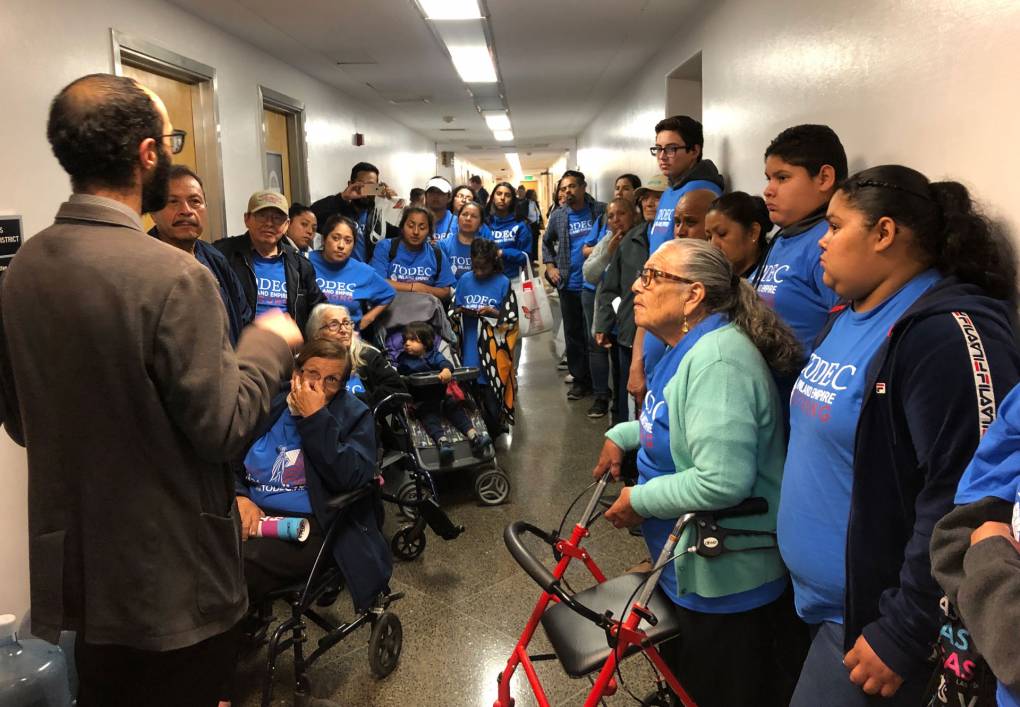
"caption": "Members of TODEC, a legal center and immigrant justice organization, listen to a staffer with Assemblymember Eloise Reyes' office in Sacramento in 2019. The group traveled to the Capitol to advocate for Medi-Cal expansion to undocumented seniors.",
"description": "Members of TODEC, a legal center and immigrant justice organization, listen to a staffer with Assemblymember Eloise Reyes' office in Sacramento in 2019. The group traveled to the Capitol to advocate for Medi-Cal expansion to undocumented seniors.",
"title": "TODEChallway",
"credit": "Courtesy TODEC",
"status": "inherit",
"altTag": null,
"isLoading": false,
"fetchFailed": false
},
"news_11818533": {
"type": "attachments",
"id": "news_11818533",
"meta": {
"index": "attachments_1716263798",
"site": "news",
"id": "11818533",
"found": true
},
"parent": 11818524,
"imgSizes": {
"apple_news_ca_landscape_5_5": {
"file": "https://ww2.kqed.org/app/uploads/sites/10/2020/05/RS42005_005_KQED_SanFrancisco_UCSF_03112020_6951-qut-1044x783.jpg",
"width": 1044,
"mimeType": "image/jpeg",
"height": 783
},
"apple_news_ca_square_4_0": {
"file": "https://ww2.kqed.org/app/uploads/sites/10/2020/05/RS42005_005_KQED_SanFrancisco_UCSF_03112020_6951-qut-470x470.jpg",
"width": 470,
"mimeType": "image/jpeg",
"height": 470
},
"twentyfourteen-full-width": {
"file": "https://ww2.kqed.org/app/uploads/sites/10/2020/05/RS42005_005_KQED_SanFrancisco_UCSF_03112020_6951-qut-1038x576.jpg",
"width": 1038,
"mimeType": "image/jpeg",
"height": 576
},
"thumbnail": {
"file": "https://ww2.kqed.org/app/uploads/sites/10/2020/05/RS42005_005_KQED_SanFrancisco_UCSF_03112020_6951-qut-160x107.jpg",
"width": 160,
"mimeType": "image/jpeg",
"height": 107
},
"post-thumbnail": {
"file": "https://ww2.kqed.org/app/uploads/sites/10/2020/05/RS42005_005_KQED_SanFrancisco_UCSF_03112020_6951-qut-672x372.jpg",
"width": 672,
"mimeType": "image/jpeg",
"height": 372
},
"kqedFullSize": {
"file": "https://ww2.kqed.org/app/uploads/sites/10/2020/05/RS42005_005_KQED_SanFrancisco_UCSF_03112020_6951-qut.jpg",
"width": 1920,
"height": 1280
},
"apple_news_ca_landscape_4_7": {
"file": "https://ww2.kqed.org/app/uploads/sites/10/2020/05/RS42005_005_KQED_SanFrancisco_UCSF_03112020_6951-qut-632x474.jpg",
"width": 632,
"mimeType": "image/jpeg",
"height": 474
},
"large": {
"file": "https://ww2.kqed.org/app/uploads/sites/10/2020/05/RS42005_005_KQED_SanFrancisco_UCSF_03112020_6951-qut-1020x680.jpg",
"width": 1020,
"mimeType": "image/jpeg",
"height": 680
},
"apple_news_ca_landscape_4_0": {
"file": "https://ww2.kqed.org/app/uploads/sites/10/2020/05/RS42005_005_KQED_SanFrancisco_UCSF_03112020_6951-qut-536x402.jpg",
"width": 536,
"mimeType": "image/jpeg",
"height": 402
},
"apple_news_ca_portrait_12_9": {
"file": "https://ww2.kqed.org/app/uploads/sites/10/2020/05/RS42005_005_KQED_SanFrancisco_UCSF_03112020_6951-qut-1122x1280.jpg",
"width": 1122,
"mimeType": "image/jpeg",
"height": 1280
},
"medium": {
"file": "https://ww2.kqed.org/app/uploads/sites/10/2020/05/RS42005_005_KQED_SanFrancisco_UCSF_03112020_6951-qut-800x533.jpg",
"width": 800,
"mimeType": "image/jpeg",
"height": 533
},
"apple_news_ca_portrait_4_0": {
"file": "https://ww2.kqed.org/app/uploads/sites/10/2020/05/RS42005_005_KQED_SanFrancisco_UCSF_03112020_6951-qut-354x472.jpg",
"width": 354,
"mimeType": "image/jpeg",
"height": 472
},
"apple_news_ca_portrait_9_7": {
"file": "https://ww2.kqed.org/app/uploads/sites/10/2020/05/RS42005_005_KQED_SanFrancisco_UCSF_03112020_6951-qut-840x1120.jpg",
"width": 840,
"mimeType": "image/jpeg",
"height": 1120
},
"apple_news_ca_landscape_12_9": {
"file": "https://ww2.kqed.org/app/uploads/sites/10/2020/05/RS42005_005_KQED_SanFrancisco_UCSF_03112020_6951-qut-1832x1280.jpg",
"width": 1832,
"mimeType": "image/jpeg",
"height": 1280
},
"apple_news_ca_square_9_7": {
"file": "https://ww2.kqed.org/app/uploads/sites/10/2020/05/RS42005_005_KQED_SanFrancisco_UCSF_03112020_6951-qut-1104x1104.jpg",
"width": 1104,
"mimeType": "image/jpeg",
"height": 1104
},
"apple_news_ca_portrait_4_7": {
"file": "https://ww2.kqed.org/app/uploads/sites/10/2020/05/RS42005_005_KQED_SanFrancisco_UCSF_03112020_6951-qut-414x552.jpg",
"width": 414,
"mimeType": "image/jpeg",
"height": 552
},
"apple_news_ca_square_12_9": {
"file": "https://ww2.kqed.org/app/uploads/sites/10/2020/05/RS42005_005_KQED_SanFrancisco_UCSF_03112020_6951-qut-1472x1280.jpg",
"width": 1472,
"mimeType": "image/jpeg",
"height": 1280
},
"apple_news_ca_portrait_5_5": {
"file": "https://ww2.kqed.org/app/uploads/sites/10/2020/05/RS42005_005_KQED_SanFrancisco_UCSF_03112020_6951-qut-687x916.jpg",
"width": 687,
"mimeType": "image/jpeg",
"height": 916
},
"full-width": {
"file": "https://ww2.kqed.org/app/uploads/sites/10/2020/05/RS42005_005_KQED_SanFrancisco_UCSF_03112020_6951-qut-1920x1280.jpg",
"width": 1920,
"mimeType": "image/jpeg",
"height": 1280
},
"apple_news_ca_square_4_7": {
"file": "https://ww2.kqed.org/app/uploads/sites/10/2020/05/RS42005_005_KQED_SanFrancisco_UCSF_03112020_6951-qut-550x550.jpg",
"width": 550,
"mimeType": "image/jpeg",
"height": 550
},
"apple_news_ca_landscape_9_7": {
"file": "https://ww2.kqed.org/app/uploads/sites/10/2020/05/RS42005_005_KQED_SanFrancisco_UCSF_03112020_6951-qut-1376x1032.jpg",
"width": 1376,
"mimeType": "image/jpeg",
"height": 1032
},
"apple_news_ca_square_5_5": {
"file": "https://ww2.kqed.org/app/uploads/sites/10/2020/05/RS42005_005_KQED_SanFrancisco_UCSF_03112020_6951-qut-912x912.jpg",
"width": 912,
"mimeType": "image/jpeg",
"height": 912
}
},
"publishDate": 1589511850,
"modified": 1589511887,
"caption": "Tents are set up outside of the UCSF Parnassus campus in San Francisco to triage patients with respiratory illness, on Mar. 11, 2020.",
"description": null,
"title": "RS42005_005_KQED_SanFrancisco_UCSF_03112020_6951-qut",
"credit": "Beth LaBerge/KQED",
"status": "inherit",
"isLoading": false,
"fetchFailed": false
},
"news_11813266": {
"type": "attachments",
"id": "news_11813266",
"meta": {
"index": "attachments_1716263798",
"site": "news",
"id": "11813266",
"found": true
},
"parent": 11813147,
"imgSizes": {
"apple_news_ca_landscape_5_5": {
"file": "https://ww2.kqed.org/app/uploads/sites/10/2020/04/RS42854_iStock-1141255408-qut-1044x783.jpg",
"width": 1044,
"mimeType": "image/jpeg",
"height": 783
},
"apple_news_ca_square_4_0": {
"file": "https://ww2.kqed.org/app/uploads/sites/10/2020/04/RS42854_iStock-1141255408-qut-470x470.jpg",
"width": 470,
"mimeType": "image/jpeg",
"height": 470
},
"twentyfourteen-full-width": {
"file": "https://ww2.kqed.org/app/uploads/sites/10/2020/04/RS42854_iStock-1141255408-qut-1038x576.jpg",
"width": 1038,
"mimeType": "image/jpeg",
"height": 576
},
"thumbnail": {
"file": "https://ww2.kqed.org/app/uploads/sites/10/2020/04/RS42854_iStock-1141255408-qut-160x107.jpg",
"width": 160,
"mimeType": "image/jpeg",
"height": 107
},
"post-thumbnail": {
"file": "https://ww2.kqed.org/app/uploads/sites/10/2020/04/RS42854_iStock-1141255408-qut-672x372.jpg",
"width": 672,
"mimeType": "image/jpeg",
"height": 372
},
"kqedFullSize": {
"file": "https://ww2.kqed.org/app/uploads/sites/10/2020/04/RS42854_iStock-1141255408-qut.jpg",
"width": 1920,
"height": 1280
},
"apple_news_ca_landscape_4_7": {
"file": "https://ww2.kqed.org/app/uploads/sites/10/2020/04/RS42854_iStock-1141255408-qut-632x474.jpg",
"width": 632,
"mimeType": "image/jpeg",
"height": 474
},
"large": {
"file": "https://ww2.kqed.org/app/uploads/sites/10/2020/04/RS42854_iStock-1141255408-qut-1020x680.jpg",
"width": 1020,
"mimeType": "image/jpeg",
"height": 680
},
"apple_news_ca_landscape_4_0": {
"file": "https://ww2.kqed.org/app/uploads/sites/10/2020/04/RS42854_iStock-1141255408-qut-536x402.jpg",
"width": 536,
"mimeType": "image/jpeg",
"height": 402
},
"apple_news_ca_portrait_12_9": {
"file": "https://ww2.kqed.org/app/uploads/sites/10/2020/04/RS42854_iStock-1141255408-qut-1122x1280.jpg",
"width": 1122,
"mimeType": "image/jpeg",
"height": 1280
},
"medium": {
"file": "https://ww2.kqed.org/app/uploads/sites/10/2020/04/RS42854_iStock-1141255408-qut-800x533.jpg",
"width": 800,
"mimeType": "image/jpeg",
"height": 533
},
"apple_news_ca_portrait_4_0": {
"file": "https://ww2.kqed.org/app/uploads/sites/10/2020/04/RS42854_iStock-1141255408-qut-354x472.jpg",
"width": 354,
"mimeType": "image/jpeg",
"height": 472
},
"apple_news_ca_portrait_9_7": {
"file": "https://ww2.kqed.org/app/uploads/sites/10/2020/04/RS42854_iStock-1141255408-qut-840x1120.jpg",
"width": 840,
"mimeType": "image/jpeg",
"height": 1120
},
"apple_news_ca_landscape_12_9": {
"file": "https://ww2.kqed.org/app/uploads/sites/10/2020/04/RS42854_iStock-1141255408-qut-1832x1280.jpg",
"width": 1832,
"mimeType": "image/jpeg",
"height": 1280
},
"apple_news_ca_square_9_7": {
"file": "https://ww2.kqed.org/app/uploads/sites/10/2020/04/RS42854_iStock-1141255408-qut-1104x1104.jpg",
"width": 1104,
"mimeType": "image/jpeg",
"height": 1104
},
"apple_news_ca_portrait_4_7": {
"file": "https://ww2.kqed.org/app/uploads/sites/10/2020/04/RS42854_iStock-1141255408-qut-414x552.jpg",
"width": 414,
"mimeType": "image/jpeg",
"height": 552
},
"apple_news_ca_square_12_9": {
"file": "https://ww2.kqed.org/app/uploads/sites/10/2020/04/RS42854_iStock-1141255408-qut-1472x1280.jpg",
"width": 1472,
"mimeType": "image/jpeg",
"height": 1280
},
"apple_news_ca_portrait_5_5": {
"file": "https://ww2.kqed.org/app/uploads/sites/10/2020/04/RS42854_iStock-1141255408-qut-687x916.jpg",
"width": 687,
"mimeType": "image/jpeg",
"height": 916
},
"full-width": {
"file": "https://ww2.kqed.org/app/uploads/sites/10/2020/04/RS42854_iStock-1141255408-qut-1920x1280.jpg",
"width": 1920,
"mimeType": "image/jpeg",
"height": 1280
},
"apple_news_ca_square_4_7": {
"file": "https://ww2.kqed.org/app/uploads/sites/10/2020/04/RS42854_iStock-1141255408-qut-550x550.jpg",
"width": 550,
"mimeType": "image/jpeg",
"height": 550
},
"apple_news_ca_landscape_9_7": {
"file": "https://ww2.kqed.org/app/uploads/sites/10/2020/04/RS42854_iStock-1141255408-qut-1376x1032.jpg",
"width": 1376,
"mimeType": "image/jpeg",
"height": 1032
},
"apple_news_ca_square_5_5": {
"file": "https://ww2.kqed.org/app/uploads/sites/10/2020/04/RS42854_iStock-1141255408-qut-912x912.jpg",
"width": 912,
"mimeType": "image/jpeg",
"height": 912
}
},
"publishDate": 1587431845,
"modified": 1587431897,
"caption": "The Centers for Medicare and Medicaid Services have expanded access to telehealth appointments for their beneficiaries during the coronavirus pandemic.",
"description": null,
"title": "professional doctor use computer",
"credit": "iStock",
"status": "inherit",
"isLoading": false,
"fetchFailed": false
},
"news_11794849": {
"type": "attachments",
"id": "news_11794849",
"meta": {
"index": "attachments_1716263798",
"site": "news",
"id": "11794849",
"found": true
},
"parent": 11794815,
"imgSizes": {
"apple_news_ca_landscape_5_5": {
"file": "https://ww2.kqed.org/app/uploads/sites/10/2020/01/GettyImages-93572495_1920x-1044x783.jpg",
"width": 1044,
"mimeType": "image/jpeg",
"height": 783
},
"apple_news_ca_square_4_0": {
"file": "https://ww2.kqed.org/app/uploads/sites/10/2020/01/GettyImages-93572495_1920x-470x470.jpg",
"width": 470,
"mimeType": "image/jpeg",
"height": 470
},
"twentyfourteen-full-width": {
"file": "https://ww2.kqed.org/app/uploads/sites/10/2020/01/GettyImages-93572495_1920x-1038x576.jpg",
"width": 1038,
"mimeType": "image/jpeg",
"height": 576
},
"thumbnail": {
"file": "https://ww2.kqed.org/app/uploads/sites/10/2020/01/GettyImages-93572495_1920x-160x105.jpg",
"width": 160,
"mimeType": "image/jpeg",
"height": 105
},
"post-thumbnail": {
"file": "https://ww2.kqed.org/app/uploads/sites/10/2020/01/GettyImages-93572495_1920x-672x372.jpg",
"width": 672,
"mimeType": "image/jpeg",
"height": 372
},
"kqedFullSize": {
"file": "https://ww2.kqed.org/app/uploads/sites/10/2020/01/GettyImages-93572495_1920x.jpg",
"width": 1920,
"height": 1261
},
"apple_news_ca_landscape_4_7": {
"file": "https://ww2.kqed.org/app/uploads/sites/10/2020/01/GettyImages-93572495_1920x-632x474.jpg",
"width": 632,
"mimeType": "image/jpeg",
"height": 474
},
"large": {
"file": "https://ww2.kqed.org/app/uploads/sites/10/2020/01/GettyImages-93572495_1920x-1020x670.jpg",
"width": 1020,
"mimeType": "image/jpeg",
"height": 670
},
"complete_open_graph": {
"file": "https://ww2.kqed.org/app/uploads/sites/10/2020/01/GettyImages-93572495_1920x-1200x788.jpg",
"width": 1200,
"mimeType": "image/jpeg",
"height": 788
},
"apple_news_ca_landscape_4_0": {
"file": "https://ww2.kqed.org/app/uploads/sites/10/2020/01/GettyImages-93572495_1920x-536x402.jpg",
"width": 536,
"mimeType": "image/jpeg",
"height": 402
},
"apple_news_ca_portrait_12_9": {
"file": "https://ww2.kqed.org/app/uploads/sites/10/2020/01/GettyImages-93572495_1920x-1122x1261.jpg",
"width": 1122,
"mimeType": "image/jpeg",
"height": 1261
},
"medium": {
"file": "https://ww2.kqed.org/app/uploads/sites/10/2020/01/GettyImages-93572495_1920x-800x525.jpg",
"width": 800,
"mimeType": "image/jpeg",
"height": 525
},
"apple_news_ca_portrait_4_0": {
"file": "https://ww2.kqed.org/app/uploads/sites/10/2020/01/GettyImages-93572495_1920x-354x472.jpg",
"width": 354,
"mimeType": "image/jpeg",
"height": 472
},
"apple_news_ca_portrait_9_7": {
"file": "https://ww2.kqed.org/app/uploads/sites/10/2020/01/GettyImages-93572495_1920x-840x1120.jpg",
"width": 840,
"mimeType": "image/jpeg",
"height": 1120
},
"apple_news_ca_landscape_12_9": {
"file": "https://ww2.kqed.org/app/uploads/sites/10/2020/01/GettyImages-93572495_1920x-1832x1261.jpg",
"width": 1832,
"mimeType": "image/jpeg",
"height": 1261
},
"apple_news_ca_square_9_7": {
"file": "https://ww2.kqed.org/app/uploads/sites/10/2020/01/GettyImages-93572495_1920x-1104x1104.jpg",
"width": 1104,
"mimeType": "image/jpeg",
"height": 1104
},
"apple_news_ca_portrait_4_7": {
"file": "https://ww2.kqed.org/app/uploads/sites/10/2020/01/GettyImages-93572495_1920x-414x552.jpg",
"width": 414,
"mimeType": "image/jpeg",
"height": 552
},
"apple_news_ca_square_12_9": {
"file": "https://ww2.kqed.org/app/uploads/sites/10/2020/01/GettyImages-93572495_1920x-1472x1261.jpg",
"width": 1472,
"mimeType": "image/jpeg",
"height": 1261
},
"apple_news_ca_portrait_5_5": {
"file": "https://ww2.kqed.org/app/uploads/sites/10/2020/01/GettyImages-93572495_1920x-687x916.jpg",
"width": 687,
"mimeType": "image/jpeg",
"height": 916
},
"full-width": {
"file": "https://ww2.kqed.org/app/uploads/sites/10/2020/01/GettyImages-93572495_1920x-1920x1261.jpg",
"width": 1920,
"mimeType": "image/jpeg",
"height": 1261
},
"apple_news_ca_square_4_7": {
"file": "https://ww2.kqed.org/app/uploads/sites/10/2020/01/GettyImages-93572495_1920x-550x550.jpg",
"width": 550,
"mimeType": "image/jpeg",
"height": 550
},
"apple_news_ca_landscape_9_7": {
"file": "https://ww2.kqed.org/app/uploads/sites/10/2020/01/GettyImages-93572495_1920x-1376x1032.jpg",
"width": 1376,
"mimeType": "image/jpeg",
"height": 1032
},
"apple_news_ca_square_5_5": {
"file": "https://ww2.kqed.org/app/uploads/sites/10/2020/01/GettyImages-93572495_1920x-912x912.jpg",
"width": 912,
"mimeType": "image/jpeg",
"height": 912
}
},
"publishDate": 1578521278,
"modified": 1578523428,
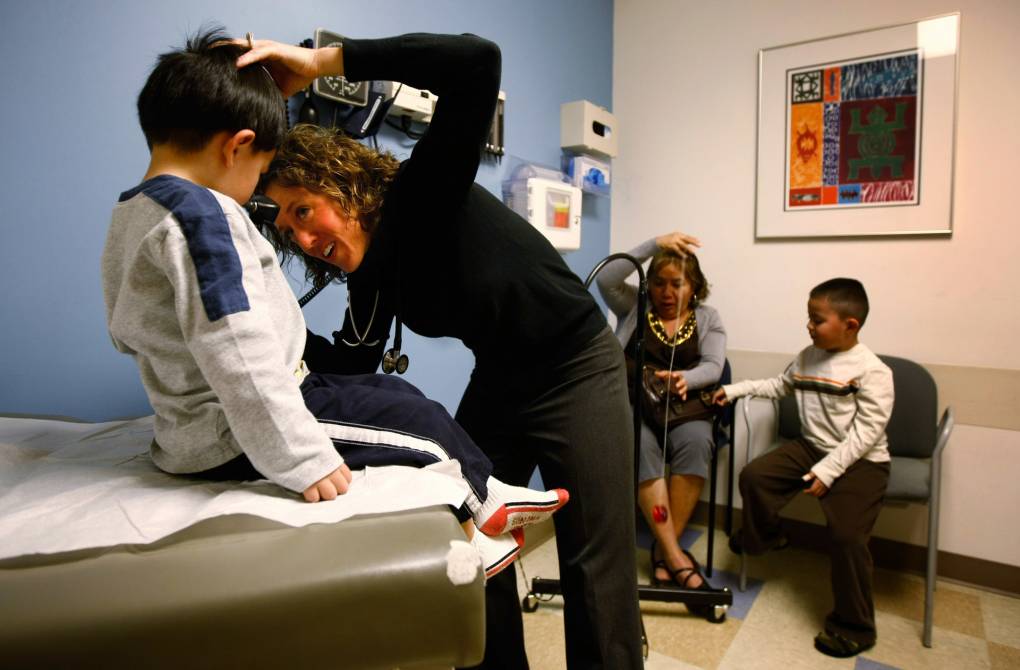
"caption": "Routine pediatric visits for millions of California children this year could involve questions about touchy family topics.",
"description": "Routine pediatric visits for millions of California children this year could involve questions about touchy family topics.",
"title": "Non-Profit Health Clinics Care For Uninsured",
"credit": "John Moore/Getty Images",
"status": "inherit",
"isLoading": false,
"fetchFailed": false
},
"news_11790358": {
"type": "attachments",
"id": "news_11790358",
"meta": {
"index": "attachments_1716263798",
"site": "news",
"id": "11790358",
"found": true
},
"parent": 11790352,
"imgSizes": {
"apple_news_ca_landscape_5_5": {
"file": "https://ww2.kqed.org/app/uploads/sites/10/2019/12/Donald-Trump-1044x783.jpg",
"width": 1044,
"mimeType": "image/jpeg",
"height": 783
},
"apple_news_ca_square_4_0": {
"file": "https://ww2.kqed.org/app/uploads/sites/10/2019/12/Donald-Trump-470x470.jpg",
"width": 470,
"mimeType": "image/jpeg",
"height": 470
},
"twentyfourteen-full-width": {
"file": "https://ww2.kqed.org/app/uploads/sites/10/2019/12/Donald-Trump-1038x576.jpg",
"width": 1038,
"mimeType": "image/jpeg",
"height": 576
},
"thumbnail": {
"file": "https://ww2.kqed.org/app/uploads/sites/10/2019/12/Donald-Trump-160x107.jpg",
"width": 160,
"mimeType": "image/jpeg",
"height": 107
},
"post-thumbnail": {
"file": "https://ww2.kqed.org/app/uploads/sites/10/2019/12/Donald-Trump-672x372.jpg",
"width": 672,
"mimeType": "image/jpeg",
"height": 372
},
"kqedFullSize": {
"file": "https://ww2.kqed.org/app/uploads/sites/10/2019/12/Donald-Trump.jpg",
"width": 1920,
"height": 1280
},
"apple_news_ca_landscape_4_7": {
"file": "https://ww2.kqed.org/app/uploads/sites/10/2019/12/Donald-Trump-632x474.jpg",
"width": 632,
"mimeType": "image/jpeg",
"height": 474
},
"large": {
"file": "https://ww2.kqed.org/app/uploads/sites/10/2019/12/Donald-Trump-1020x680.jpg",
"width": 1020,
"mimeType": "image/jpeg",
"height": 680
},
"complete_open_graph": {
"file": "https://ww2.kqed.org/app/uploads/sites/10/2019/12/Donald-Trump-1200x800.jpg",
"width": 1200,
"mimeType": "image/jpeg",
"height": 800
},
"apple_news_ca_landscape_4_0": {
"file": "https://ww2.kqed.org/app/uploads/sites/10/2019/12/Donald-Trump-536x402.jpg",
"width": 536,
"mimeType": "image/jpeg",
"height": 402
},
"apple_news_ca_portrait_12_9": {
"file": "https://ww2.kqed.org/app/uploads/sites/10/2019/12/Donald-Trump-1122x1280.jpg",
"width": 1122,
"mimeType": "image/jpeg",
"height": 1280
},
"medium": {
"file": "https://ww2.kqed.org/app/uploads/sites/10/2019/12/Donald-Trump-800x533.jpg",
"width": 800,
"mimeType": "image/jpeg",
"height": 533
},
"apple_news_ca_portrait_4_0": {
"file": "https://ww2.kqed.org/app/uploads/sites/10/2019/12/Donald-Trump-354x472.jpg",
"width": 354,
"mimeType": "image/jpeg",
"height": 472
},
"apple_news_ca_portrait_9_7": {
"file": "https://ww2.kqed.org/app/uploads/sites/10/2019/12/Donald-Trump-840x1120.jpg",
"width": 840,
"mimeType": "image/jpeg",
"height": 1120
},
"apple_news_ca_landscape_12_9": {
"file": "https://ww2.kqed.org/app/uploads/sites/10/2019/12/Donald-Trump-1832x1280.jpg",
"width": 1832,
"mimeType": "image/jpeg",
"height": 1280
},
"apple_news_ca_square_9_7": {
"file": "https://ww2.kqed.org/app/uploads/sites/10/2019/12/Donald-Trump-1104x1104.jpg",
"width": 1104,
"mimeType": "image/jpeg",
"height": 1104
},
"apple_news_ca_portrait_4_7": {
"file": "https://ww2.kqed.org/app/uploads/sites/10/2019/12/Donald-Trump-414x552.jpg",
"width": 414,
"mimeType": "image/jpeg",
"height": 552
},
"apple_news_ca_square_12_9": {
"file": "https://ww2.kqed.org/app/uploads/sites/10/2019/12/Donald-Trump-1472x1280.jpg",
"width": 1472,
"mimeType": "image/jpeg",
"height": 1280
},
"apple_news_ca_portrait_5_5": {
"file": "https://ww2.kqed.org/app/uploads/sites/10/2019/12/Donald-Trump-687x916.jpg",
"width": 687,
"mimeType": "image/jpeg",
"height": 916
},
"full-width": {
"file": "https://ww2.kqed.org/app/uploads/sites/10/2019/12/Donald-Trump-1920x1280.jpg",
"width": 1920,
"mimeType": "image/jpeg",
"height": 1280
},
"apple_news_ca_square_4_7": {
"file": "https://ww2.kqed.org/app/uploads/sites/10/2019/12/Donald-Trump-550x550.jpg",
"width": 550,
"mimeType": "image/jpeg",
"height": 550
},
"apple_news_ca_landscape_9_7": {
"file": "https://ww2.kqed.org/app/uploads/sites/10/2019/12/Donald-Trump-1376x1032.jpg",
"width": 1376,
"mimeType": "image/jpeg",
"height": 1032
},
"apple_news_ca_square_5_5": {
"file": "https://ww2.kqed.org/app/uploads/sites/10/2019/12/Donald-Trump-912x912.jpg",
"width": 912,
"mimeType": "image/jpeg",
"height": 912
}
},
"publishDate": 1575929855,
"modified": 1575929901,
"caption": "President Donald Trump at the White House on Dec. 6, 2019.",
"description": "President Donald Trump at the White House on Dec. 6, 2019.",
"title": "Donald-Trump",
"credit": "Chip Somodevilla/Getty Images",
"status": "inherit",
"isLoading": false,
"fetchFailed": false
},
"news_11780017": {
"type": "attachments",
"id": "news_11780017",
"meta": {
"index": "attachments_1716263798",
"site": "news",
"id": "11780017",
"found": true
},
"parent": 11780010,
"imgSizes": {
"apple_news_ca_landscape_5_5": {
"file": "https://ww2.kqed.org/app/uploads/sites/10/2019/10/iStock-1029339748-1044x783.jpg",
"width": 1044,
"mimeType": "image/jpeg",
"height": 783
},
"apple_news_ca_square_4_0": {
"file": "https://ww2.kqed.org/app/uploads/sites/10/2019/10/iStock-1029339748-470x470.jpg",
"width": 470,
"mimeType": "image/jpeg",
"height": 470
},
"twentyfourteen-full-width": {
"file": "https://ww2.kqed.org/app/uploads/sites/10/2019/10/iStock-1029339748-1038x576.jpg",
"width": 1038,
"mimeType": "image/jpeg",
"height": 576
},
"thumbnail": {
"file": "https://ww2.kqed.org/app/uploads/sites/10/2019/10/iStock-1029339748-160x106.jpg",
"width": 160,
"mimeType": "image/jpeg",
"height": 106
},
"post-thumbnail": {
"file": "https://ww2.kqed.org/app/uploads/sites/10/2019/10/iStock-1029339748-672x372.jpg",
"width": 672,
"mimeType": "image/jpeg",
"height": 372
},
"kqedFullSize": {
"file": "https://ww2.kqed.org/app/uploads/sites/10/2019/10/iStock-1029339748.jpg",
"width": 2125,
"height": 1411
},
"apple_news_ca_landscape_4_7": {
"file": "https://ww2.kqed.org/app/uploads/sites/10/2019/10/iStock-1029339748-632x474.jpg",
"width": 632,
"mimeType": "image/jpeg",
"height": 474
},
"large": {
"file": "https://ww2.kqed.org/app/uploads/sites/10/2019/10/iStock-1029339748-1020x677.jpg",
"width": 1020,
"mimeType": "image/jpeg",
"height": 677
},
"complete_open_graph": {
"file": "https://ww2.kqed.org/app/uploads/sites/10/2019/10/iStock-1029339748-1200x797.jpg",
"width": 1200,
"mimeType": "image/jpeg",
"height": 797
},
"apple_news_ca_landscape_4_0": {
"file": "https://ww2.kqed.org/app/uploads/sites/10/2019/10/iStock-1029339748-536x402.jpg",
"width": 536,
"mimeType": "image/jpeg",
"height": 402
},
"apple_news_ca_portrait_12_9": {
"file": "https://ww2.kqed.org/app/uploads/sites/10/2019/10/iStock-1029339748-1122x1411.jpg",
"width": 1122,
"mimeType": "image/jpeg",
"height": 1411
},
"medium": {
"file": "https://ww2.kqed.org/app/uploads/sites/10/2019/10/iStock-1029339748-800x531.jpg",
"width": 800,
"mimeType": "image/jpeg",
"height": 531
},
"apple_news_ca_portrait_4_0": {
"file": "https://ww2.kqed.org/app/uploads/sites/10/2019/10/iStock-1029339748-354x472.jpg",
"width": 354,
"mimeType": "image/jpeg",
"height": 472
},
"apple_news_ca_portrait_9_7": {
"file": "https://ww2.kqed.org/app/uploads/sites/10/2019/10/iStock-1029339748-840x1120.jpg",
"width": 840,
"mimeType": "image/jpeg",
"height": 1120
},
"apple_news_ca_landscape_12_9": {
"file": "https://ww2.kqed.org/app/uploads/sites/10/2019/10/iStock-1029339748-1832x1374.jpg",
"width": 1832,
"mimeType": "image/jpeg",
"height": 1374
},
"apple_news_ca_square_9_7": {
"file": "https://ww2.kqed.org/app/uploads/sites/10/2019/10/iStock-1029339748-1104x1104.jpg",
"width": 1104,
"mimeType": "image/jpeg",
"height": 1104
},
"apple_news_ca_portrait_4_7": {
"file": "https://ww2.kqed.org/app/uploads/sites/10/2019/10/iStock-1029339748-414x552.jpg",
"width": 414,
"mimeType": "image/jpeg",
"height": 552
},
"apple_news_ca_square_12_9": {
"file": "https://ww2.kqed.org/app/uploads/sites/10/2019/10/iStock-1029339748-1472x1411.jpg",
"width": 1472,
"mimeType": "image/jpeg",
"height": 1411
},
"apple_news_ca_portrait_5_5": {
"file": "https://ww2.kqed.org/app/uploads/sites/10/2019/10/iStock-1029339748-687x916.jpg",
"width": 687,
"mimeType": "image/jpeg",
"height": 916
},
"full-width": {
"file": "https://ww2.kqed.org/app/uploads/sites/10/2019/10/iStock-1029339748-1920x1275.jpg",
"width": 1920,
"mimeType": "image/jpeg",
"height": 1275
},
"apple_news_ca_square_4_7": {
"file": "https://ww2.kqed.org/app/uploads/sites/10/2019/10/iStock-1029339748-550x550.jpg",
"width": 550,
"mimeType": "image/jpeg",
"height": 550
},
"apple_news_ca_landscape_9_7": {
"file": "https://ww2.kqed.org/app/uploads/sites/10/2019/10/iStock-1029339748-1376x1032.jpg",
"width": 1376,
"mimeType": "image/jpeg",
"height": 1032
},
"apple_news_ca_square_5_5": {
"file": "https://ww2.kqed.org/app/uploads/sites/10/2019/10/iStock-1029339748-912x912.jpg",
"width": 912,
"mimeType": "image/jpeg",
"height": 912
}
},
"publishDate": 1571083752,
"modified": 1571083789,
"caption": null,
"description": null,
"title": "Man hand taking medicine",
"credit": "iStock",
"status": "inherit",
"isLoading": false,
"fetchFailed": false
},
"news_11777951": {
"type": "attachments",
"id": "news_11777951",
"meta": {
"index": "attachments_1716263798",
"site": "news",
"id": "11777951",
"found": true
},
"parent": 11777909,
"imgSizes": {
"apple_news_ca_landscape_5_5": {
"file": "https://ww2.kqed.org/app/uploads/sites/10/2019/10/Cuccinelli-1920-1044x783.jpg",
"width": 1044,
"mimeType": "image/jpeg",
"height": 783
},
"apple_news_ca_square_4_0": {
"file": "https://ww2.kqed.org/app/uploads/sites/10/2019/10/Cuccinelli-1920-470x470.jpg",
"width": 470,
"mimeType": "image/jpeg",
"height": 470
},
"twentyfourteen-full-width": {
"file": "https://ww2.kqed.org/app/uploads/sites/10/2019/10/Cuccinelli-1920-1038x576.jpg",
"width": 1038,
"mimeType": "image/jpeg",
"height": 576
},
"thumbnail": {
"file": "https://ww2.kqed.org/app/uploads/sites/10/2019/10/Cuccinelli-1920-160x107.jpg",
"width": 160,
"mimeType": "image/jpeg",
"height": 107
},
"post-thumbnail": {
"file": "https://ww2.kqed.org/app/uploads/sites/10/2019/10/Cuccinelli-1920-672x372.jpg",
"width": 672,
"mimeType": "image/jpeg",
"height": 372
},
"kqedFullSize": {
"file": "https://ww2.kqed.org/app/uploads/sites/10/2019/10/Cuccinelli-1920.jpg",
"width": 1920,
"height": 1280
},
"apple_news_ca_landscape_4_7": {
"file": "https://ww2.kqed.org/app/uploads/sites/10/2019/10/Cuccinelli-1920-632x474.jpg",
"width": 632,
"mimeType": "image/jpeg",
"height": 474
},
"large": {
"file": "https://ww2.kqed.org/app/uploads/sites/10/2019/10/Cuccinelli-1920-1020x680.jpg",
"width": 1020,
"mimeType": "image/jpeg",
"height": 680
},
"complete_open_graph": {
"file": "https://ww2.kqed.org/app/uploads/sites/10/2019/10/Cuccinelli-1920-1200x800.jpg",
"width": 1200,
"mimeType": "image/jpeg",
"height": 800
},
"apple_news_ca_landscape_4_0": {
"file": "https://ww2.kqed.org/app/uploads/sites/10/2019/10/Cuccinelli-1920-536x402.jpg",
"width": 536,
"mimeType": "image/jpeg",
"height": 402
},
"apple_news_ca_portrait_12_9": {
"file": "https://ww2.kqed.org/app/uploads/sites/10/2019/10/Cuccinelli-1920-1122x1280.jpg",
"width": 1122,
"mimeType": "image/jpeg",
"height": 1280
},
"medium": {
"file": "https://ww2.kqed.org/app/uploads/sites/10/2019/10/Cuccinelli-1920-800x533.jpg",
"width": 800,
"mimeType": "image/jpeg",
"height": 533
},
"apple_news_ca_portrait_4_0": {
"file": "https://ww2.kqed.org/app/uploads/sites/10/2019/10/Cuccinelli-1920-354x472.jpg",
"width": 354,
"mimeType": "image/jpeg",
"height": 472
},
"apple_news_ca_portrait_9_7": {
"file": "https://ww2.kqed.org/app/uploads/sites/10/2019/10/Cuccinelli-1920-840x1120.jpg",
"width": 840,
"mimeType": "image/jpeg",
"height": 1120
},
"apple_news_ca_landscape_12_9": {
"file": "https://ww2.kqed.org/app/uploads/sites/10/2019/10/Cuccinelli-1920-1832x1280.jpg",
"width": 1832,
"mimeType": "image/jpeg",
"height": 1280
},
"apple_news_ca_square_9_7": {
"file": "https://ww2.kqed.org/app/uploads/sites/10/2019/10/Cuccinelli-1920-1104x1104.jpg",
"width": 1104,
"mimeType": "image/jpeg",
"height": 1104
},
"apple_news_ca_portrait_4_7": {
"file": "https://ww2.kqed.org/app/uploads/sites/10/2019/10/Cuccinelli-1920-414x552.jpg",
"width": 414,
"mimeType": "image/jpeg",
"height": 552
},
"apple_news_ca_square_12_9": {
"file": "https://ww2.kqed.org/app/uploads/sites/10/2019/10/Cuccinelli-1920-1472x1280.jpg",
"width": 1472,
"mimeType": "image/jpeg",
"height": 1280
},
"apple_news_ca_portrait_5_5": {
"file": "https://ww2.kqed.org/app/uploads/sites/10/2019/10/Cuccinelli-1920-687x916.jpg",
"width": 687,
"mimeType": "image/jpeg",
"height": 916
},
"full-width": {
"file": "https://ww2.kqed.org/app/uploads/sites/10/2019/10/Cuccinelli-1920-1920x1280.jpg",
"width": 1920,
"mimeType": "image/jpeg",
"height": 1280
},
"apple_news_ca_square_4_7": {
"file": "https://ww2.kqed.org/app/uploads/sites/10/2019/10/Cuccinelli-1920-550x550.jpg",
"width": 550,
"mimeType": "image/jpeg",
"height": 550
},
"apple_news_ca_landscape_9_7": {
"file": "https://ww2.kqed.org/app/uploads/sites/10/2019/10/Cuccinelli-1920-1376x1032.jpg",
"width": 1376,
"mimeType": "image/jpeg",
"height": 1032
},
"apple_news_ca_square_5_5": {
"file": "https://ww2.kqed.org/app/uploads/sites/10/2019/10/Cuccinelli-1920-912x912.jpg",
"width": 912,
"mimeType": "image/jpeg",
"height": 912
}
},
"publishDate": 1570116145,
"modified": 1570116254,
"caption": "Acting Director of the U.S. Citizenship and Immigration Services Ken Cuccinelli speaks during a briefing at the White House Aug. 12, 2019, in Washington, D.C. - The Trump administration announced on Aug. 12, 2019 new rules that aim to deny permanent residency and citizenship benefits to migrants who receive food stamps, Medicaid and other public welfare.",
"description": "Acting Director of the U.S. Citizenship and Immigration Services Ken Cuccinelli speaks during a briefing at the White House Aug. 12, 2019, in Washington, D.C. - The Trump administration announced on Aug. 12, 2019 new rules that aim to deny permanent residency and citizenship benefits to migrants who receive food stamps, Medicaid and other public welfare.",
"title": "Cuccinelli-1920",
"credit": "Brendan Smialowski/AFP/Getty Images",
"status": "inherit",
"isLoading": false,
"fetchFailed": false
},
"news_11776050": {
"type": "attachments",
"id": "news_11776050",
"meta": {
"index": "attachments_1716263798",
"site": "news",
"id": "11776050",
"found": true
},
"title": "public charge photo 1",
"publishDate": 1569275086,
"status": "inherit",
"parent": 11776046,
"modified": 1762473306,
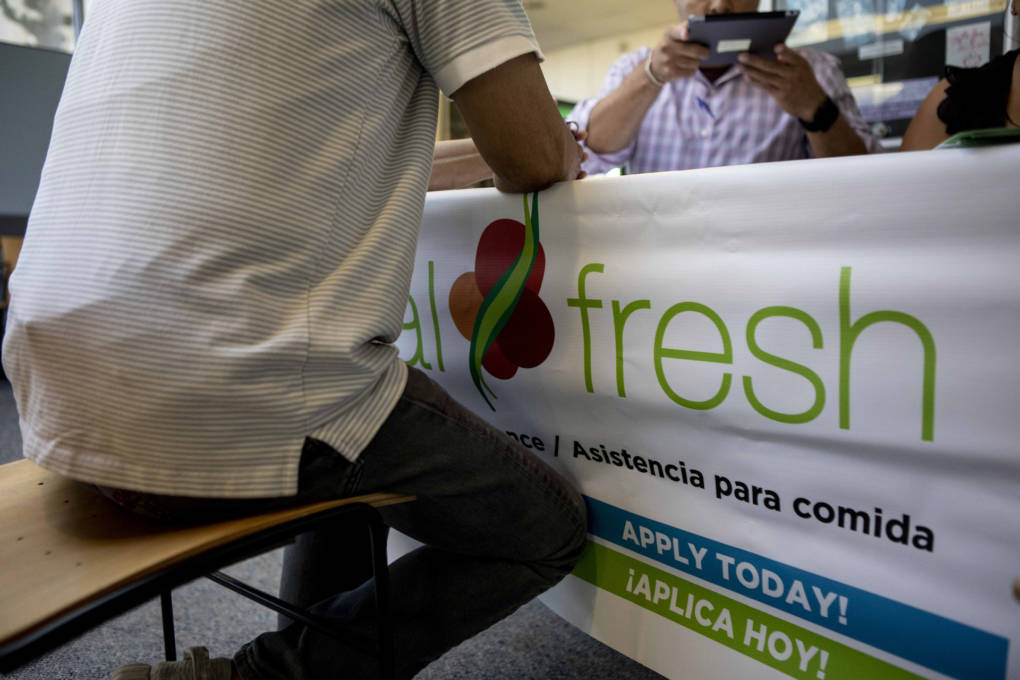
"caption": "An applicant signs up for food stamps, known as CalFresh in California, at a low-income health clinic in Contra Costa County. ",
"credit": "Anne Wernikoff/CalMatters",
"altTag": null,
"description": null,
"imgSizes": {
"thumbnail": {
"file": "https://cdn.kqed.org/wp-content/uploads/sites/10/2019/09/public-charge-photo-1-1-160x107.jpg",
"width": 160,
"height": 107,
"mimeType": "image/jpeg"
},
"medium": {
"file": "https://cdn.kqed.org/wp-content/uploads/sites/10/2019/09/public-charge-photo-1-1-800x533.jpg",
"width": 800,
"height": 533,
"mimeType": "image/jpeg"
},
"large": {
"file": "https://cdn.kqed.org/wp-content/uploads/sites/10/2019/09/public-charge-photo-1-1-1020x680.jpg",
"width": 1020,
"height": 680,
"mimeType": "image/jpeg"
},
"complete_open_graph": {
"file": "https://cdn.kqed.org/wp-content/uploads/sites/10/2019/09/public-charge-photo-1-1-1200x800.jpg",
"width": 1200,
"height": 800,
"mimeType": "image/jpeg"
},
"post-thumbnail": {
"file": "https://cdn.kqed.org/wp-content/uploads/sites/10/2019/09/public-charge-photo-1-1-672x372.jpg",
"width": 672,
"height": 372,
"mimeType": "image/jpeg"
},
"twentyfourteen-full-width": {
"file": "https://cdn.kqed.org/wp-content/uploads/sites/10/2019/09/public-charge-photo-1-1-1038x576.jpg",
"width": 1038,
"height": 576,
"mimeType": "image/jpeg"
},
"full-width": {
"file": "https://cdn.kqed.org/wp-content/uploads/sites/10/2019/09/public-charge-photo-1-1-1920x1280.jpg",
"width": 1920,
"height": 1280,
"mimeType": "image/jpeg"
},
"apple_news_ca_landscape_12_9": {
"file": "https://cdn.kqed.org/wp-content/uploads/sites/10/2019/09/public-charge-photo-1-1-1832x1280.jpg",
"width": 1832,
"height": 1280,
"mimeType": "image/jpeg"
},
"apple_news_ca_landscape_9_7": {
"file": "https://cdn.kqed.org/wp-content/uploads/sites/10/2019/09/public-charge-photo-1-1-1376x1032.jpg",
"width": 1376,
"height": 1032,
"mimeType": "image/jpeg"
},
"apple_news_ca_landscape_5_5": {
"file": "https://cdn.kqed.org/wp-content/uploads/sites/10/2019/09/public-charge-photo-1-1-1044x783.jpg",
"width": 1044,
"height": 783,
"mimeType": "image/jpeg"
},
"apple_news_ca_landscape_4_7": {
"file": "https://cdn.kqed.org/wp-content/uploads/sites/10/2019/09/public-charge-photo-1-1-632x474.jpg",
"width": 632,
"height": 474,
"mimeType": "image/jpeg"
},
"apple_news_ca_landscape_4_0": {
"file": "https://cdn.kqed.org/wp-content/uploads/sites/10/2019/09/public-charge-photo-1-1-536x402.jpg",
"width": 536,
"height": 402,
"mimeType": "image/jpeg"
},
"apple_news_ca_portrait_12_9": {
"file": "https://cdn.kqed.org/wp-content/uploads/sites/10/2019/09/public-charge-photo-1-1-1122x1280.jpg",
"width": 1122,
"height": 1280,
"mimeType": "image/jpeg"
},
"apple_news_ca_portrait_9_7": {
"file": "https://cdn.kqed.org/wp-content/uploads/sites/10/2019/09/public-charge-photo-1-1-840x1120.jpg",
"width": 840,
"height": 1120,
"mimeType": "image/jpeg"
},
"apple_news_ca_portrait_5_5": {
"file": "https://cdn.kqed.org/wp-content/uploads/sites/10/2019/09/public-charge-photo-1-1-687x916.jpg",
"width": 687,
"height": 916,
"mimeType": "image/jpeg"
},
"apple_news_ca_portrait_4_7": {
"file": "https://cdn.kqed.org/wp-content/uploads/sites/10/2019/09/public-charge-photo-1-1-414x552.jpg",
"width": 414,
"height": 552,
"mimeType": "image/jpeg"
},
"apple_news_ca_portrait_4_0": {
"file": "https://cdn.kqed.org/wp-content/uploads/sites/10/2019/09/public-charge-photo-1-1-354x472.jpg",
"width": 354,
"height": 472,
"mimeType": "image/jpeg"
},
"apple_news_ca_square_12_9": {
"file": "https://cdn.kqed.org/wp-content/uploads/sites/10/2019/09/public-charge-photo-1-1-1472x1280.jpg",
"width": 1472,
"height": 1280,
"mimeType": "image/jpeg"
},
"apple_news_ca_square_9_7": {
"file": "https://cdn.kqed.org/wp-content/uploads/sites/10/2019/09/public-charge-photo-1-1-1104x1104.jpg",
"width": 1104,
"height": 1104,
"mimeType": "image/jpeg"
},
"apple_news_ca_square_5_5": {
"file": "https://cdn.kqed.org/wp-content/uploads/sites/10/2019/09/public-charge-photo-1-1-912x912.jpg",
"width": 912,
"height": 912,
"mimeType": "image/jpeg"
},
"apple_news_ca_square_4_7": {
"file": "https://cdn.kqed.org/wp-content/uploads/sites/10/2019/09/public-charge-photo-1-1-550x550.jpg",
"width": 550,
"height": 550,
"mimeType": "image/jpeg"
},
"apple_news_ca_square_4_0": {
"file": "https://cdn.kqed.org/wp-content/uploads/sites/10/2019/09/public-charge-photo-1-1-470x470.jpg",
"width": 470,
"height": 470,
"mimeType": "image/jpeg"
},
"kqedFullSize": {
"file": "https://cdn.kqed.org/wp-content/uploads/sites/10/2019/09/public-charge-photo-1-1.jpg",
"width": 1920,
"height": 1280
}
},
"isLoading": false,
"fetchFailed": false
},
"news_11772338": {
"type": "attachments",
"id": "news_11772338",
"meta": {
"index": "attachments_1716263798",
"site": "news",
"id": "11772338",
"found": true
},
"parent": 11772337,
"imgSizes": {
"apple_news_ca_landscape_5_5": {
"file": "https://ww2.kqed.org/app/uploads/sites/10/2019/09/abortion-protest-1_wide-24782a340dee74860db37927e65f66560e9a9b64-1044x783.jpg",
"width": 1044,
"mimeType": "image/jpeg",
"height": 783
},
"apple_news_ca_square_4_0": {
"file": "https://ww2.kqed.org/app/uploads/sites/10/2019/09/abortion-protest-1_wide-24782a340dee74860db37927e65f66560e9a9b64-470x470.jpg",
"width": 470,
"mimeType": "image/jpeg",
"height": 470
},
"twentyfourteen-full-width": {
"file": "https://ww2.kqed.org/app/uploads/sites/10/2019/09/abortion-protest-1_wide-24782a340dee74860db37927e65f66560e9a9b64-1038x576.jpg",
"width": 1038,
"mimeType": "image/jpeg",
"height": 576
},
"thumbnail": {
"file": "https://ww2.kqed.org/app/uploads/sites/10/2019/09/abortion-protest-1_wide-24782a340dee74860db37927e65f66560e9a9b64-160x90.jpg",
"width": 160,
"mimeType": "image/jpeg",
"height": 90
},
"post-thumbnail": {
"file": "https://ww2.kqed.org/app/uploads/sites/10/2019/09/abortion-protest-1_wide-24782a340dee74860db37927e65f66560e9a9b64-672x372.jpg",
"width": 672,
"mimeType": "image/jpeg",
"height": 372
},
"kqedFullSize": {
"file": "https://ww2.kqed.org/app/uploads/sites/10/2019/09/abortion-protest-1_wide-24782a340dee74860db37927e65f66560e9a9b64-e1567695713366.jpg",
"width": 1920,
"height": 1080
},
"apple_news_ca_landscape_4_7": {
"file": "https://ww2.kqed.org/app/uploads/sites/10/2019/09/abortion-protest-1_wide-24782a340dee74860db37927e65f66560e9a9b64-632x474.jpg",
"width": 632,
"mimeType": "image/jpeg",
"height": 474
},
"large": {
"file": "https://ww2.kqed.org/app/uploads/sites/10/2019/09/abortion-protest-1_wide-24782a340dee74860db37927e65f66560e9a9b64-1020x574.jpg",
"width": 1020,
"mimeType": "image/jpeg",
"height": 574
},
"complete_open_graph": {
"file": "https://ww2.kqed.org/app/uploads/sites/10/2019/09/abortion-protest-1_wide-24782a340dee74860db37927e65f66560e9a9b64-1200x675.jpg",
"width": 1200,
"mimeType": "image/jpeg",
"height": 675
},
"apple_news_ca_landscape_4_0": {
"file": "https://ww2.kqed.org/app/uploads/sites/10/2019/09/abortion-protest-1_wide-24782a340dee74860db37927e65f66560e9a9b64-536x402.jpg",
"width": 536,
"mimeType": "image/jpeg",
"height": 402
},
"apple_news_ca_portrait_12_9": {
"file": "https://ww2.kqed.org/app/uploads/sites/10/2019/09/abortion-protest-1_wide-24782a340dee74860db37927e65f66560e9a9b64-1122x1496.jpg",
"width": 1122,
"mimeType": "image/jpeg",
"height": 1496
},
"medium": {
"file": "https://ww2.kqed.org/app/uploads/sites/10/2019/09/abortion-protest-1_wide-24782a340dee74860db37927e65f66560e9a9b64-800x450.jpg",
"width": 800,
"mimeType": "image/jpeg",
"height": 450
},
"apple_news_ca_portrait_4_0": {
"file": "https://ww2.kqed.org/app/uploads/sites/10/2019/09/abortion-protest-1_wide-24782a340dee74860db37927e65f66560e9a9b64-354x472.jpg",
"width": 354,
"mimeType": "image/jpeg",
"height": 472
},
"apple_news_ca_portrait_9_7": {
"file": "https://ww2.kqed.org/app/uploads/sites/10/2019/09/abortion-protest-1_wide-24782a340dee74860db37927e65f66560e9a9b64-840x1120.jpg",
"width": 840,
"mimeType": "image/jpeg",
"height": 1120
},
"apple_news_ca_landscape_12_9": {
"file": "https://ww2.kqed.org/app/uploads/sites/10/2019/09/abortion-protest-1_wide-24782a340dee74860db37927e65f66560e9a9b64-1832x1374.jpg",
"width": 1832,
"mimeType": "image/jpeg",
"height": 1374
},
"apple_news_ca_square_9_7": {
"file": "https://ww2.kqed.org/app/uploads/sites/10/2019/09/abortion-protest-1_wide-24782a340dee74860db37927e65f66560e9a9b64-1104x1104.jpg",
"width": 1104,
"mimeType": "image/jpeg",
"height": 1104
},
"apple_news_ca_portrait_4_7": {
"file": "https://ww2.kqed.org/app/uploads/sites/10/2019/09/abortion-protest-1_wide-24782a340dee74860db37927e65f66560e9a9b64-414x552.jpg",
"width": 414,
"mimeType": "image/jpeg",
"height": 552
},
"apple_news_ca_square_12_9": {
"file": "https://ww2.kqed.org/app/uploads/sites/10/2019/09/abortion-protest-1_wide-24782a340dee74860db37927e65f66560e9a9b64-1472x1472.jpg",
"width": 1472,
"mimeType": "image/jpeg",
"height": 1472
},
"apple_news_ca_portrait_5_5": {
"file": "https://ww2.kqed.org/app/uploads/sites/10/2019/09/abortion-protest-1_wide-24782a340dee74860db37927e65f66560e9a9b64-687x916.jpg",
"width": 687,
"mimeType": "image/jpeg",
"height": 916
},
"full-width": {
"file": "https://ww2.kqed.org/app/uploads/sites/10/2019/09/abortion-protest-1_wide-24782a340dee74860db37927e65f66560e9a9b64-1920x1080.jpg",
"width": 1920,
"mimeType": "image/jpeg",
"height": 1080
},
"apple_news_ca_square_4_7": {
"file": "https://ww2.kqed.org/app/uploads/sites/10/2019/09/abortion-protest-1_wide-24782a340dee74860db37927e65f66560e9a9b64-550x550.jpg",
"width": 550,
"mimeType": "image/jpeg",
"height": 550
},
"apple_news_ca_landscape_9_7": {
"file": "https://ww2.kqed.org/app/uploads/sites/10/2019/09/abortion-protest-1_wide-24782a340dee74860db37927e65f66560e9a9b64-1376x1032.jpg",
"width": 1376,
"mimeType": "image/jpeg",
"height": 1032
},
"apple_news_ca_square_5_5": {
"file": "https://ww2.kqed.org/app/uploads/sites/10/2019/09/abortion-protest-1_wide-24782a340dee74860db37927e65f66560e9a9b64-912x912.jpg",
"width": 912,
"mimeType": "image/jpeg",
"height": 912
}
},
"publishDate": 1567695296,
"modified": 1567695708,
"caption": "Abortion opponents in Sacramento protest legislation that would require public university campuses in California to provide the pills used in medication abortion.",
"description": "Abortion opponents in Sacramento, Calif., protest legislation that would require public university campuses in California to provide the pills used in medication abortion.",
"title": "Abortion opponents in Sacramento, Calif., protest legislation that would require public university campuses in California to provide the pills used in medication abortion.",
"credit": "April Dembosky/KQED",
"status": "inherit",
"isLoading": false,
"fetchFailed": false
},
"news_11754641": {
"type": "attachments",
"id": "news_11754641",
"meta": {
"index": "attachments_1716263798",
"site": "news",
"id": "11754641",
"found": true
},
"parent": 11754639,
"imgSizes": {
"apple_news_ca_landscape_5_5": {
"file": "https://ww2.kqed.org/app/uploads/sites/10/2019/06/Daniel-Giles-eyes-1044x783.jpg",
"width": 1044,
"mimeType": "image/jpeg",
"height": 783
},
"apple_news_ca_square_4_0": {
"file": "https://ww2.kqed.org/app/uploads/sites/10/2019/06/Daniel-Giles-eyes-470x470.jpg",
"width": 470,
"mimeType": "image/jpeg",
"height": 470
},
"twentyfourteen-full-width": {
"file": "https://ww2.kqed.org/app/uploads/sites/10/2019/06/Daniel-Giles-eyes-1038x576.jpg",
"width": 1038,
"mimeType": "image/jpeg",
"height": 576
},
"thumbnail": {
"file": "https://ww2.kqed.org/app/uploads/sites/10/2019/06/Daniel-Giles-eyes-160x120.jpg",
"width": 160,
"mimeType": "image/jpeg",
"height": 120
},
"post-thumbnail": {
"file": "https://ww2.kqed.org/app/uploads/sites/10/2019/06/Daniel-Giles-eyes-672x372.jpg",
"width": 672,
"mimeType": "image/jpeg",
"height": 372
},
"kqedFullSize": {
"file": "https://ww2.kqed.org/app/uploads/sites/10/2019/06/Daniel-Giles-eyes-e1560478102785.jpg",
"width": 1920,
"height": 1440
},
"apple_news_ca_landscape_4_7": {
"file": "https://ww2.kqed.org/app/uploads/sites/10/2019/06/Daniel-Giles-eyes-632x474.jpg",
"width": 632,
"mimeType": "image/jpeg",
"height": 474
},
"large": {
"file": "https://ww2.kqed.org/app/uploads/sites/10/2019/06/Daniel-Giles-eyes-1020x765.jpg",
"width": 1020,
"mimeType": "image/jpeg",
"height": 765
},
"complete_open_graph": {
"file": "https://ww2.kqed.org/app/uploads/sites/10/2019/06/Daniel-Giles-eyes-1200x900.jpg",
"width": 1200,
"mimeType": "image/jpeg",
"height": 900
},
"apple_news_ca_landscape_4_0": {
"file": "https://ww2.kqed.org/app/uploads/sites/10/2019/06/Daniel-Giles-eyes-536x402.jpg",
"width": 536,
"mimeType": "image/jpeg",
"height": 402
},
"apple_news_ca_portrait_12_9": {
"file": "https://ww2.kqed.org/app/uploads/sites/10/2019/06/Daniel-Giles-eyes-1122x1496.jpg",
"width": 1122,
"mimeType": "image/jpeg",
"height": 1496
},
"medium": {
"file": "https://ww2.kqed.org/app/uploads/sites/10/2019/06/Daniel-Giles-eyes-800x600.jpg",
"width": 800,
"mimeType": "image/jpeg",
"height": 600
},
"apple_news_ca_portrait_4_0": {
"file": "https://ww2.kqed.org/app/uploads/sites/10/2019/06/Daniel-Giles-eyes-354x472.jpg",
"width": 354,
"mimeType": "image/jpeg",
"height": 472
},
"apple_news_ca_portrait_9_7": {
"file": "https://ww2.kqed.org/app/uploads/sites/10/2019/06/Daniel-Giles-eyes-840x1120.jpg",
"width": 840,
"mimeType": "image/jpeg",
"height": 1120
},
"apple_news_ca_landscape_12_9": {
"file": "https://ww2.kqed.org/app/uploads/sites/10/2019/06/Daniel-Giles-eyes-1832x1374.jpg",
"width": 1832,
"mimeType": "image/jpeg",
"height": 1374
},
"apple_news_ca_square_9_7": {
"file": "https://ww2.kqed.org/app/uploads/sites/10/2019/06/Daniel-Giles-eyes-1104x1104.jpg",
"width": 1104,
"mimeType": "image/jpeg",
"height": 1104
},
"apple_news_ca_portrait_4_7": {
"file": "https://ww2.kqed.org/app/uploads/sites/10/2019/06/Daniel-Giles-eyes-414x552.jpg",
"width": 414,
"mimeType": "image/jpeg",
"height": 552
},
"apple_news_ca_square_12_9": {
"file": "https://ww2.kqed.org/app/uploads/sites/10/2019/06/Daniel-Giles-eyes-1472x1472.jpg",
"width": 1472,
"mimeType": "image/jpeg",
"height": 1472
},
"apple_news_ca_portrait_5_5": {
"file": "https://ww2.kqed.org/app/uploads/sites/10/2019/06/Daniel-Giles-eyes-687x916.jpg",
"width": 687,
"mimeType": "image/jpeg",
"height": 916
},
"full-width": {
"file": "https://ww2.kqed.org/app/uploads/sites/10/2019/06/Daniel-Giles-eyes-1920x1440.jpg",
"width": 1920,
"mimeType": "image/jpeg",
"height": 1440
},
"apple_news_ca_square_4_7": {
"file": "https://ww2.kqed.org/app/uploads/sites/10/2019/06/Daniel-Giles-eyes-550x550.jpg",
"width": 550,
"mimeType": "image/jpeg",
"height": 550
},
"apple_news_ca_landscape_9_7": {
"file": "https://ww2.kqed.org/app/uploads/sites/10/2019/06/Daniel-Giles-eyes-1376x1032.jpg",
"width": 1376,
"mimeType": "image/jpeg",
"height": 1032
},
"apple_news_ca_square_5_5": {
"file": "https://ww2.kqed.org/app/uploads/sites/10/2019/06/Daniel-Giles-eyes-912x912.jpg",
"width": 912,
"mimeType": "image/jpeg",
"height": 912
}
},
"publishDate": 1560478026,
"modified": 1563562220,
"caption": "Daniel Giles left Humboldt County to get drug treatment in San Francisco. He says he was as addicted to tattoos as he was to heroin and alcohol.",
"description": "Daniel Giles left Humboldt County to get drug treatment in San Francisco. He says he was as addicted to tattoos as he was to heroin and alcohol.",
"title": "Daniel Giles eyes",
"credit": "April Dembosky/KQED",
"status": "inherit",
"isLoading": false,
"fetchFailed": false
}
},
"audioPlayerReducer": {
"postId": "stream_live",
"isPaused": true,
"isPlaying": false,
"pfsActive": false,
"pledgeModalIsOpen": true,
"playerDrawerIsOpen": false,
"liveAudioPlayStartedAt": 0,
"liveAudioPlayContext": ""
},
"authorsReducer": {
"byline_news_11794815": {
"type": "authors",
"id": "byline_news_11794815",
"meta": {
"override": true
},
"slug": "byline_news_11794815",
"name": "\u003ca href=\"https://khn.org/news/author/barbara-feder-ostrov/\">Barbara Feder Ostrov\u003ca />",
"isLoading": false
},
"byline_news_11790352": {
"type": "authors",
"id": "byline_news_11790352",
"meta": {
"override": true
},
"slug": "byline_news_11790352",
"name": "Adam Beam \u003cbr> Associated Press",
"isLoading": false
},
"byline_news_11780010": {
"type": "authors",
"id": "byline_news_11780010",
"meta": {
"override": true
},
"slug": "byline_news_11780010",
"name": "\u003cstrong>Barbara Feder Ostrov and Harriet Blair Rowan\u003cbr>\u003ca href=\"https://khn.org/news/californias-new-transparency-law-reveals-steep-rise-in-wholesale-drug-prices/view/republish/\">Kaiser Health News\u003c/a>\u003c/strong>",
"isLoading": false
},
"byline_news_11776046": {
"type": "authors",
"id": "byline_news_11776046",
"meta": {
"override": true
},
"slug": "byline_news_11776046",
"name": "\u003ca href=\"https://calmatters.org/author/ericahellerstein/\">Erica Hellerstein\u003c/a>\u003cbr>The Mercury News",
"isLoading": false
},
"kqednewsstaffandwires": {
"type": "authors",
"id": "237",
"meta": {
"index": "authors_1716337520",
"id": "237",
"found": true
},
"name": "KQED News Staff and Wires",
"firstName": "KQED News Staff and Wires",
"lastName": null,
"slug": "kqednewsstaffandwires",
"email": "onlinenewsstaff@kqed.org",
"display_author_email": false,
"staff_mastheads": [],
"title": null,
"bio": null,
"avatar": "https://secure.gravatar.com/avatar/72295af8ebbfbd19a4948f5271285664?s=600&d=blank&r=g",
"twitter": null,
"facebook": null,
"instagram": null,
"linkedin": null,
"sites": [
{
"site": "arts",
"roles": [
"contributor"
]
},
{
"site": "news",
"roles": [
"contributor"
]
},
{
"site": "lowdown",
"roles": [
"author"
]
},
{
"site": "stateofhealth",
"roles": [
"contributor"
]
},
{
"site": "food",
"roles": [
"author"
]
}
],
"headData": {
"title": "KQED News Staff and Wires | KQED",
"description": null,
"ogImgSrc": "https://secure.gravatar.com/avatar/72295af8ebbfbd19a4948f5271285664?s=600&d=blank&r=g",
"twImgSrc": "https://secure.gravatar.com/avatar/72295af8ebbfbd19a4948f5271285664?s=600&d=blank&r=g"
},
"isLoading": false,
"link": "/author/kqednewsstaffandwires"
},
"tychehendricks": {
"type": "authors",
"id": "259",
"meta": {
"index": "authors_1716337520",
"id": "259",
"found": true
},
"name": "Tyche Hendricks",
"firstName": "Tyche",
"lastName": "Hendricks",
"slug": "tychehendricks",
"email": "thendricks@kqed.org",
"display_author_email": true,
"staff_mastheads": [
"news"
],
"title": "KQED Senior Editor, Immigration",
"bio": "\u003cspan style=\"font-weight: 400;\">Tyche Hendricks is KQED’s senior editor for immigration, leading coverage of the policy and politics that affect California’s immigrant communities. Her work for KQED’s radio and online audiences is also carried on NPR and other national outlets. She has been recognized with awards from the Radio and Television News Directors Association, the Society for Professional Journalists; the Education Writers Association; the Best of the West and the National Federation of Community Broadcasters. Before joining KQED in 2010, Tyche spent more than a dozen years as a newspaper reporter, notably at the \u003c/span>\u003ci>\u003cspan style=\"font-weight: 400;\">San Francisco Chronicle\u003c/span>\u003c/i>\u003cspan style=\"font-weight: 400;\">. At different times she has covered criminal justice, government and politics and urban planning. Tyche has taught in the MFA Creative Writing program at the University of San Francisco and at UC Berkeley’s Graduate School of Journalism, where she was co-director of a national immigration symposium for professional journalists. She is the author of \u003c/span>\u003ci>\u003cspan style=\"font-weight: 400;\">The Wind Doesn't Need a Passport: Stories from the U.S.-Mexico Borderlands\u003c/span>\u003c/i>\u003cspan style=\"font-weight: 400;\"> (University of California Press). \u003c/span>",
"avatar": "https://secure.gravatar.com/avatar/b8ee458e2731c2d43df86882ce17267e?s=600&d=blank&r=g",
"twitter": "tychehendricks",
"facebook": null,
"instagram": null,
"linkedin": null,
"sites": [
{
"site": "news",
"roles": [
"editor"
]
},
{
"site": "stateofhealth",
"roles": [
"editor"
]
}
],
"headData": {
"title": "Tyche Hendricks | KQED",
"description": "KQED Senior Editor, Immigration",
"ogImgSrc": "https://secure.gravatar.com/avatar/b8ee458e2731c2d43df86882ce17267e?s=600&d=blank&r=g",
"twImgSrc": "https://secure.gravatar.com/avatar/b8ee458e2731c2d43df86882ce17267e?s=600&d=blank&r=g"
},
"isLoading": false,
"link": "/author/tychehendricks"
},
"adembosky": {
"type": "authors",
"id": "3205",
"meta": {
"index": "authors_1716337520",
"id": "3205",
"found": true
},
"name": "April Dembosky",
"firstName": "April",
"lastName": "Dembosky",
"slug": "adembosky",
"email": "adembosky@kqed.org",
"display_author_email": false,
"staff_mastheads": [
"news",
"science"
],
"title": "KQED Health Correspondent",
"bio": "April Dembosky is the health correspondent for KQED News and a regular contributor to NPR. She specializes in covering altered states of mind, from postpartum depression to methamphetamine-induced psychosis to the insanity defense. Her investigative series on insurance companies sidestepping mental health laws won multiple awards, including first place in beat reporting from the national Association of Health Care Journalists. She is the recipient of numerous other prizes and fellowships, including a national Edward R. Murrow award for investigative reporting, a Society of Professional Journalists award for long-form storytelling, and a Carter Center Fellowship for Mental Health Journalism.\r\n\r\nDembosky reported and produced \u003cem>Soundtrack of Silence\u003c/em>, an audio documentary about music and memory that is currently being made into a feature film by Paramount Pictures.\r\n\r\nBefore joining KQED in 2013, Dembosky covered technology and Silicon Valley for \u003cem>The Financial Times of London,\u003c/em> and contributed business and arts stories to \u003cem>Marketplace \u003c/em>and \u003cem>The New York Times.\u003c/em> She got her undergraduate degree in philosophy from Smith College and her master's in journalism from the University of California, Berkeley. She is a classically trained violinist and proud alum of the first symphony orchestra at Burning Man.",
"avatar": "https://secure.gravatar.com/avatar/ef92999be4ceb9ea60701e7dc276f813?s=600&d=blank&r=g",
"twitter": "adembosky",
"facebook": null,
"instagram": null,
"linkedin": null,
"sites": [
{
"site": "arts",
"roles": [
"author"
]
},
{
"site": "news",
"roles": [
"editor"
]
},
{
"site": "futureofyou",
"roles": [
"author"
]
},
{
"site": "stateofhealth",
"roles": [
"editor"
]
},
{
"site": "science",
"roles": [
"editor"
]
},
{
"site": "forum",
"roles": [
"editor"
]
}
],
"headData": {
"title": "April Dembosky | KQED",
"description": "KQED Health Correspondent",
"ogImgSrc": "https://secure.gravatar.com/avatar/ef92999be4ceb9ea60701e7dc276f813?s=600&d=blank&r=g",
"twImgSrc": "https://secure.gravatar.com/avatar/ef92999be4ceb9ea60701e7dc276f813?s=600&d=blank&r=g"
},
"isLoading": false,
"link": "/author/adembosky"
},
"fjhabvala": {
"type": "authors",
"id": "8659",
"meta": {
"index": "authors_1716337520",
"id": "8659",
"found": true
},
"name": "Farida Jhabvala Romero",
"firstName": "Farida",
"lastName": "Jhabvala Romero",
"slug": "fjhabvala",
"email": "fjhabvala@kqed.org",
"display_author_email": true,
"staff_mastheads": [
"news"
],
"title": "KQED Contributor",
"bio": "Farida Jhabvala Romero is a Labor Correspondent for KQED. She previously covered immigration. Farida was \u003ca href=\"https://www.ccnma.org/2022-most-influential-latina-journalists\">named\u003c/a> one of the 10 Most Influential Latina Journalists in California in 2022 by the California Chicano News Media Association. Her work has won awards from the Society of Professional Journalists (Northern California), as well as a national and regional Edward M. Murrow Award for the collaborative reporting projects “Dangerous Air” and “Graying California.” Before joining KQED, Farida worked as a producer at Radio Bilingüe, a national public radio network. Farida earned her master’s degree in journalism from Stanford University.",
"avatar": "https://secure.gravatar.com/avatar/f9f022d4e2609741874222a1e9d41f48fea74011aa7c615eef91d9a50c944ebe?s=600&d=blank&r=g",
"twitter": "FaridaJhabvala",
"bluesky": null,
"facebook": null,
"instagram": null,
"linkedin": "https://www.linkedin.com/in/faridajhabvala/",
"sites": [
{
"site": "news",
"roles": [
"editor"
]
},
{
"site": "stateofhealth",
"roles": [
"author"
]
},
{
"site": "liveblog",
"roles": [
"author"
]
}
],
"headData": {
"title": "Farida Jhabvala Romero | KQED",
"description": "KQED Contributor",
"ogImgSrc": "https://secure.gravatar.com/avatar/f9f022d4e2609741874222a1e9d41f48fea74011aa7c615eef91d9a50c944ebe?s=600&d=blank&r=g",
"twImgSrc": "https://secure.gravatar.com/avatar/f9f022d4e2609741874222a1e9d41f48fea74011aa7c615eef91d9a50c944ebe?s=600&d=blank&r=g"
},
"isLoading": false,
"link": "/author/fjhabvala"
},
"nsparling": {
"type": "authors",
"id": "11655",
"meta": {
"index": "authors_1716337520",
"id": "11655",
"found": true
},
"name": "Nina Sparling",
"firstName": "Nina",
"lastName": "Sparling",
"slug": "nsparling",
"email": "nsparling@kqed.org",
"display_author_email": false,
"staff_mastheads": [],
"title": "KQED Contributor",
"bio": null,
"avatar": "https://secure.gravatar.com/avatar/4f605141f48bfba20520677de109f9bc?s=600&d=blank&r=g",
"twitter": null,
"facebook": null,
"instagram": null,
"linkedin": null,
"sites": [
{
"site": "",
"roles": [
"editor"
]
},
{
"site": "news",
"roles": [
"author"
]
},
{
"site": "forum",
"roles": [
"editor"
]
},
{
"site": "perspectives",
"roles": [
"editor"
]
}
],
"headData": {
"title": "Nina Sparling | KQED",
"description": "KQED Contributor",
"ogImgSrc": "https://secure.gravatar.com/avatar/4f605141f48bfba20520677de109f9bc?s=600&d=blank&r=g",
"twImgSrc": "https://secure.gravatar.com/avatar/4f605141f48bfba20520677de109f9bc?s=600&d=blank&r=g"
},
"isLoading": false,
"link": "/author/nsparling"
}
},
"pagesReducer": {
"news_tag_medi-cal": {
"type": "terms",
"id": "news_2605",
"meta": {
"index": "terms_1716263798",
"site": "news",
"id": "2605",
"score": 9.892363
},
"featImg": null,
"name": "Medi-Cal",
"description": null,
"taxonomy": "tag",
"headData": {
"twImgId": null,
"twTitle": null,
"ogTitle": null,
"ogImgId": null,
"twDescription": null,
"description": null,
"title": "Medi-Cal Archives | KQED News",
"ogDescription": null
},
"ttid": 2621,
"slug": "medi-cal",
"isLoading": false,
"title": "Medi-Cal",
"pageMeta": {
"site": "news",
"WpPageTemplate": "page-topic-editorial",
"currentPage": 8
},
"blocks": [
{
"blockName": "kqed/post-list",
"attrs": {
"layout": "cardArticle2",
"query": "posts/news?tag=medi-cal",
"seeMore": false,
"paginated": true,
"page": 8
}
},
{
"blockName": "kqed/ad"
}
]
}
},
"pfsSessionReducer": {},
"postsReducer": {
"stream_live": {
"type": "live",
"id": "stream_live",
"audioUrl": "https://streams.kqed.org/kqedradio",
"title": "Live Stream",
"excerpt": "Live Stream information currently unavailable.",
"link": "/radio",
"featImg": "",
"label": {
"name": "KQED Live",
"link": "/"
}
},
"stream_kqedNewscast": {
"type": "posts",
"id": "stream_kqedNewscast",
"audioUrl": "https://www.kqed.org/.stream/anon/radio/RDnews/newscast.mp3?_=1",
"title": "KQED Newscast",
"featImg": "",
"label": {
"name": "88.5 FM",
"link": "/"
}
},
"news_11882852": {
"type": "posts",
"id": "news_11882852",
"meta": {
"index": "posts_1716263798",
"site": "news",
"id": "11882852",
"score": null,
"sort": [
1627520108000
]
},
"guestAuthors": [],
"slug": "how-california-will-expand-medi-cal-to-include-more-low-income-immigrants",
"title": "How California Will Expand Medi-Cal to Include More Low-Income Immigrants",
"publishDate": 1627520108,
"format": "standard",
"headTitle": "How California Will Expand Medi-Cal to Include More Low-Income Immigrants | KQED",
"labelTerm": {
"site": "news"
},
"content": "\u003cp>Californians who are at least 50 and living in the country without permission are newly eligible for state health care coverage under legislation signed by Gov. Gavin Newsom on Tuesday, part of a record state budget that includes major investments in mental health, homelessness and housing.\u003c/p>\n\u003cp>The legislation to expand Medi-Cal coverage to low-income adults regardless of immigration status builds upon proposals pushed by Democrats to extend the state’s version of federal Medicaid to children in 2016 and to young adults under 26 in 2020.\u003c/p>\n\u003cp>Around 235,000 people are expected to benefit from this legislation.\u003c/p>\n\u003cul>\n\u003cli>\u003ca href=\"https://www.coveredca.com/health/medi-cal/\">\u003cstrong>Information on who qualifies for Medi-Cal and what are the steps needed to apply.\u003c/strong>\u003c/a>\u003c/li>\n\u003c/ul>\n\u003cp>“It’s a point of pride, it’s a point of principle, and it’s what marks our values here in the state of California,” Newsom said at the Clinica Sierra Vista Elm Community Health Center in Fresno.\u003c/p>\n\u003cp>“We believe in living together, and advancing and prospering together across every conceivable difference.”\u003c/p>\n\u003cp>The program will begin in May 2022. The income threshold to qualify for Medi-Cal is 138% of the federal poverty level or lower. To be eligible, individuals must earn less than $17,609 a year and $36,100 for a family of four.\u003c/p>\n\u003cp>Newsom added that the expansion will have an initial cost of $48 million and eventually cost $1.3 billion per year when the program is fully up and running\u003c/p>\n\u003cp>[pullquote align=\"right\" size=\"medium\" citation=\"Beatriz Hernandez, California Immigrant Policy Center\"]‘We all need this access to health care now and when we recover from the pandemic … we all contribute to the social fabric of this state.’[/pullquote]About 3.2 million people in the state of nearly 40 million are projected to not have health insurance next year, according to the Labor Center at the University of California, Berkeley. Roughly 1.5 million are unauthorized immigrants, making them \u003ca href=\"https://laborcenter.berkeley.edu/ca-coverage-gains-to-erode-without-further-state-action/\">the largest uninsured group in the state\u003c/a>.\u003c/p>\n\u003cp>California is among a small, but growing, group of states that are expanding health coverage to immigrants without legal status. Advocates of expanded coverage say that health care is a basic need and that the coronavirus pandemic underscored just how essential immigrants are in agriculture, food processing and other critical industries.\u003c/p>\n\u003cp>Detractors say taxpayer money should not be spent on unauthorized immigrants.\u003c/p>\n\u003cp>But immigrants residing without authorization in the United States \u003ca href=\"https://www.americanimmigrationcouncil.org/topics/tax-contributions\">pay billions of dollars in taxes\u003c/a> and often do \u003ca href=\"https://www.fwd.us/news/immigrant-essential-workers/\">essential work\u003c/a> in agriculture, food services, health care and other industries.\u003c/p>\n\u003cp>This population is also excluded from the Affordable Care Act and many \u003ca href=\"https://www.kqed.org/news/11874637/the-stimulus-gap-why-many-undocumented-immigrants-arent-getting-the-golden-state-stimulus-theyre-entitled-to\">missed out on pandemic-related stimulus checks\u003c/a> because they file federal taxes using what’s called an Individual Taxpayer Identification Number and not through a Social Security number.\u003c/p>\n\u003cp>Advocates also \u003ca href=\"https://www.kqed.org/news/11876312/activists-stage-die-in-at-newsom-residence-to-demand-more-relief-for-immigrant-workers\">point out\u003c/a> that throughout the pandemic, immigrants residing in the country without authorization, many of them above 50, have served in essential occupations that put them at greater risk of contracting COVID-19.\u003c/p>\n\u003cp>[aside label ='Related Coverage' tag='immigration']In recent years, the state began offering full-scope Medi-Cal — covering doctor’s visits, prescriptions, eye and dental care and other services — to low-income undocumented children and young adults up to age 26. But older immigrants have only been eligible for limited Medi-Cal, which only covers prenatal care and health emergencies.\u003c/p>\n\u003cp>Beatriz Hernandez, a fellow with the California Immigrant Policy Center, said at the signing event that she is undocumented and knows what it feels like to be denied health care. She is grateful for the new policy.\u003c/p>\n\u003cp>“We all need this access to health care now and when we recover from the pandemic. It doesn’t matter the color of our skin, or where we were born. We all deserve this, and we all contribute to the social fabric of this state,” she said.\u003c/p>\n\u003cp>\u003cem>While this specific Medi-Cal expansion does not begin till May 2022, you can review how to apply for Medi-Cal through the Covered California website in \u003ca href=\"https://www.coveredca.com/health/medi-cal/\">English\u003c/a>, \u003ca href=\"https://www.coveredca.com/espanol/health/medi-cal/\">Spanish\u003c/a>, \u003ca href=\"https://www.coveredca.com/chinese/\">Chinese\u003c/a> and \u003ca href=\"https://www.coveredca.com/tagalog/\">Tagalog\u003c/a>. Other languages are also available.\u003c/em>\u003c/p>\n\u003chr>\n\u003cp>\u003cem>This post includes reporting by KQED’s \u003ca href=\"https://www.kqed.org/author/fjhabvala\">Farida Jhabvala Romero\u003c/a> and The Associated Press.\u003c/em>\u003cbr>\n[ad fullwidth]\u003c/p>\n\u003cp>\u003c/p>\n",
"blocks": [],
"excerpt": "Undocumented immigrants over 50 will be eligible for Medi-Cal starting spring of 2022, which could benefit hundreds of thousands of seniors that meet the income requirements.",
"status": "publish",
"parent": 0,
"modified": 1738185393,
"stats": {
"hasAudio": false,
"hasVideo": false,
"hasChartOrMap": false,
"iframeSrcs": [],
"hasGoogleForm": false,
"hasGallery": false,
"hasHearkenModule": false,
"hasPolis": false,
"paragraphCount": 19,
"wordCount": 711
},
"headData": {
"title": "How California Will Expand Medi-Cal to Include More Low-Income Immigrants | KQED",
"description": "Undocumented immigrants over 50 will be eligible for Medi-Cal starting spring of 2022, which could benefit hundreds of thousands of seniors that meet the income requirements.",
"ogTitle": "",
"ogDescription": "",
"ogImgId": "news_11882903",
"twTitle": "",
"twDescription": "",
"twImgId": "news_11882903",
"schema": {
"@context": "https://schema.org",
"@type": "NewsArticle",
"headline": "How California Will Expand Medi-Cal to Include More Low-Income Immigrants",
"datePublished": "2021-07-28T17:55:08-07:00",
"dateModified": "2025-01-29T13:16:33-08:00",
"image": "https://cdn.kqed.org/wp-content/uploads/2020/02/KQED-OG-Image@1x.png",
"isAccessibleForFree": "True",
"publisher": {
"@type": "NewsMediaOrganization",
"@id": "https://www.kqed.org/#organization",
"name": "KQED",
"logo": "https://cdn.kqed.org/wp-content/uploads/2020/02/KQED-OG-Image@1x.png",
"url": "https://www.kqed.org",
"sameAs": [
"https://www.facebook.com/KQED",
"https://twitter.com/KQED",
"https://www.instagram.com/kqed/",
"https://www.tiktok.com/@kqedofficial",
"https://www.linkedin.com/company/kqed",
"https://www.youtube.com/channel/UCeC0IOo7i1P_61zVUWbJ4nw"
]
}
}
},
"sticky": false,
"path": "/news/11882852/how-california-will-expand-medi-cal-to-include-more-low-income-immigrants",
"audioTrackLength": null,
"parsedContent": [
{
"type": "contentString",
"content": "\u003cdiv class=\"post-body\">\u003cp>\u003cp>Californians who are at least 50 and living in the country without permission are newly eligible for state health care coverage under legislation signed by Gov. Gavin Newsom on Tuesday, part of a record state budget that includes major investments in mental health, homelessness and housing.\u003c/p>\n\u003cp>The legislation to expand Medi-Cal coverage to low-income adults regardless of immigration status builds upon proposals pushed by Democrats to extend the state’s version of federal Medicaid to children in 2016 and to young adults under 26 in 2020.\u003c/p>\n\u003cp>Around 235,000 people are expected to benefit from this legislation.\u003c/p>\n\u003cul>\n\u003cli>\u003ca href=\"https://www.coveredca.com/health/medi-cal/\">\u003cstrong>Information on who qualifies for Medi-Cal and what are the steps needed to apply.\u003c/strong>\u003c/a>\u003c/li>\n\u003c/ul>\n\u003cp>“It’s a point of pride, it’s a point of principle, and it’s what marks our values here in the state of California,” Newsom said at the Clinica Sierra Vista Elm Community Health Center in Fresno.\u003c/p>\n\u003cp>“We believe in living together, and advancing and prospering together across every conceivable difference.”\u003c/p>\n\u003cp>The program will begin in May 2022. The income threshold to qualify for Medi-Cal is 138% of the federal poverty level or lower. To be eligible, individuals must earn less than $17,609 a year and $36,100 for a family of four.\u003c/p>\n\u003cp>Newsom added that the expansion will have an initial cost of $48 million and eventually cost $1.3 billion per year when the program is fully up and running\u003c/p>\n\u003cp>\u003c/p>\u003c/div>",
"attributes": {
"named": {},
"numeric": []
}
},
{
"type": "component",
"content": "‘We all need this access to health care now and when we recover from the pandemic … we all contribute to the social fabric of this state.’",
"name": "pullquote",
"attributes": {
"named": {
"align": "right",
"size": "medium",
"citation": "Beatriz Hernandez, California Immigrant Policy Center",
"label": ""
},
"numeric": []
}
},
{
"type": "contentString",
"content": "\u003cdiv class=\"post-body\">\u003cp>About 3.2 million people in the state of nearly 40 million are projected to not have health insurance next year, according to the Labor Center at the University of California, Berkeley. Roughly 1.5 million are unauthorized immigrants, making them \u003ca href=\"https://laborcenter.berkeley.edu/ca-coverage-gains-to-erode-without-further-state-action/\">the largest uninsured group in the state\u003c/a>.\u003c/p>\n\u003cp>California is among a small, but growing, group of states that are expanding health coverage to immigrants without legal status. Advocates of expanded coverage say that health care is a basic need and that the coronavirus pandemic underscored just how essential immigrants are in agriculture, food processing and other critical industries.\u003c/p>\n\u003cp>Detractors say taxpayer money should not be spent on unauthorized immigrants.\u003c/p>\n\u003cp>But immigrants residing without authorization in the United States \u003ca href=\"https://www.americanimmigrationcouncil.org/topics/tax-contributions\">pay billions of dollars in taxes\u003c/a> and often do \u003ca href=\"https://www.fwd.us/news/immigrant-essential-workers/\">essential work\u003c/a> in agriculture, food services, health care and other industries.\u003c/p>\n\u003cp>This population is also excluded from the Affordable Care Act and many \u003ca href=\"https://www.kqed.org/news/11874637/the-stimulus-gap-why-many-undocumented-immigrants-arent-getting-the-golden-state-stimulus-theyre-entitled-to\">missed out on pandemic-related stimulus checks\u003c/a> because they file federal taxes using what’s called an Individual Taxpayer Identification Number and not through a Social Security number.\u003c/p>\n\u003cp>Advocates also \u003ca href=\"https://www.kqed.org/news/11876312/activists-stage-die-in-at-newsom-residence-to-demand-more-relief-for-immigrant-workers\">point out\u003c/a> that throughout the pandemic, immigrants residing in the country without authorization, many of them above 50, have served in essential occupations that put them at greater risk of contracting COVID-19.\u003c/p>\n\u003cp>\u003c/p>\u003c/div>",
"attributes": {
"named": {},
"numeric": []
}
},
{
"type": "component",
"content": "",
"name": "aside",
"attributes": {
"named": {
"label": "Related Coverage ",
"tag": "immigration"
},
"numeric": []
}
},
{
"type": "contentString",
"content": "\u003cdiv class=\"post-body\">\u003cp>In recent years, the state began offering full-scope Medi-Cal — covering doctor’s visits, prescriptions, eye and dental care and other services — to low-income undocumented children and young adults up to age 26. But older immigrants have only been eligible for limited Medi-Cal, which only covers prenatal care and health emergencies.\u003c/p>\n\u003cp>Beatriz Hernandez, a fellow with the California Immigrant Policy Center, said at the signing event that she is undocumented and knows what it feels like to be denied health care. She is grateful for the new policy.\u003c/p>\n\u003cp>“We all need this access to health care now and when we recover from the pandemic. It doesn’t matter the color of our skin, or where we were born. We all deserve this, and we all contribute to the social fabric of this state,” she said.\u003c/p>\n\u003cp>\u003cem>While this specific Medi-Cal expansion does not begin till May 2022, you can review how to apply for Medi-Cal through the Covered California website in \u003ca href=\"https://www.coveredca.com/health/medi-cal/\">English\u003c/a>, \u003ca href=\"https://www.coveredca.com/espanol/health/medi-cal/\">Spanish\u003c/a>, \u003ca href=\"https://www.coveredca.com/chinese/\">Chinese\u003c/a> and \u003ca href=\"https://www.coveredca.com/tagalog/\">Tagalog\u003c/a>. Other languages are also available.\u003c/em>\u003c/p>\n\u003chr>\n\u003cp>\u003cem>This post includes reporting by KQED’s \u003ca href=\"https://www.kqed.org/author/fjhabvala\">Farida Jhabvala Romero\u003c/a> and The Associated Press.\u003c/em>\u003cbr>\n\u003c/p>\u003c/div>",
"attributes": {
"named": {},
"numeric": []
}
},
{
"type": "component",
"content": "",
"name": "ad",
"attributes": {
"named": {
"label": "fullwidth"
},
"numeric": [
"fullwidth"
]
}
},
{
"type": "contentString",
"content": "\u003cdiv class=\"post-body\">\u003cp>\u003c/p>\n\u003cp>\u003c/p>\n\u003c/div>\u003c/p>",
"attributes": {
"named": {},
"numeric": []
}
}
],
"link": "/news/11882852/how-california-will-expand-medi-cal-to-include-more-low-income-immigrants",
"authors": [
"237"
],
"categories": [
"news_457",
"news_1169",
"news_8"
],
"tags": [
"news_27350",
"news_16",
"news_18543",
"news_20202",
"news_2605",
"news_244"
],
"featImg": "news_11882903",
"label": "news"
},
"news_11879724": {
"type": "posts",
"id": "news_11879724",
"meta": {
"index": "posts_1716263798",
"site": "news",
"id": "11879724",
"score": null,
"sort": [
1625009945000
]
},
"guestAuthors": [],
"slug": "so-thankful-california-to-offer-medi-cal-to-235000-undocumented-californians",
"title": "'So Thankful': California to Offer Medi-Cal to 235,000 Undocumented Adults",
"publishDate": 1625009945,
"format": "audio",
"headTitle": "‘So Thankful’: California to Offer Medi-Cal to 235,000 Undocumented Adults | KQED",
"labelTerm": {
"term": 72,
"site": "news"
},
"content": "\u003cp>Nearly a quarter of a million undocumented adults and seniors in California – many of whom are or have been essential workers – will gain access to low-cost or free medical services as early as next year under a groundbreaking budget deal approved Monday by the Legislature.\u003c/p>\n\u003cp>California is now positioned to officially become the first state in the nation to offer public health insurance to low-income, undocumented residents ages 50 and older, a highly vulnerable population which has been made even more vulnerable by the deadly COVID-19 pandemic.\u003c/p>\n\u003cp>Gov. Gavin Newsom is expected to sign the agreement into law before July 1.\u003c/p>\n\u003cp>State Insurance Commissioner Ricardo Lara, who as senator introduced the first (unsuccessful) \u003ca href=\"https://leginfo.legislature.ca.gov/faces/billTextClient.xhtml?bill_id=201320140SB1005\">bill\u003c/a> in 2014 to end the exclusion of undocumented immigrants from full Medi-Cal benefits, applauded the news as “a dream come true.”\u003c/p>\n\u003cp>“California’s immigrants have given so much to our state and now they’ll have the dignity of accessing health care,” Lara said. “Today the state Legislature and the governor will be erasing a vestige of discrimination against our immigrant communities that so many of us have fought for years to overcome.”\u003c/p>\n\u003cp>The whopping $262.6 billion state budget deal includes spending on a range of programs with an eye toward social equity, including other projects like universal transitional kindergarten, enhanced after-school and summer learning programs and an effort to make the state’s top public universities more accessible to in-state students.\u003c/p>\n\u003cp>[pullquote size=\"medium\" align=\"right\" citation=\"Isabel, 76-year-old farmworker\"]‘I am so thankful. I’m very excited. We worked so much in the fields and we never got any benefits.’[/pullquote]Assembly Budget Chair Phil Ting, D-San Francisco, said the record-breaking budget presents a once-in-a-lifetime opportunity.\u003c/p>\n\u003cp>“This is a budget that really demonstrates that our values are protecting the most vulnerable families, the families who need our help the most in the time of the pandemic. But also well into the future,” Ting said.\u003c/p>\n\u003cp>[ad fullwidth]\u003c/p>\n\u003cp>One of the \u003ca href=\"https://lao.ca.gov/Publications/Report/4423\">estimated 235,000 undocumented immigrants\u003c/a> who could benefit from low or no-cost health care is Isabel, a 76-year-old former farmworker who did not want her last name used because of her immigration status.\u003c/p>\n\u003cp>“I am so thankful. I’m very excited,” she said, her voice breaking. “We worked so much in the fields and we never got any benefits.”\u003c/p>\n\u003cp>Isabel, who picked crops for more than three decades, said she feared for her life after she became seriously ill with COVID-19. But she did not seek medical care because she lacked insurance and worried about the cost of seeing a doctor, she said in Spanish.\u003c/p>\n\u003cp>“It was very, very difficult,” said Isabel, adding that her daughter, who lives with her, also got sick with the virus. “When we went to sleep, we thought we wouldn’t rise in the morning.”\u003c/p>\n\u003cp>Nearly 1.5 million unauthorized immigrants lacked health insurance last year, the largest group of uninsured in the state, according to a \u003ca href=\"https://laborcenter.berkeley.edu/ca-coverage-gains-to-erode-without-further-state-action/\">report\u003c/a> by the UC Berkeley Labor Center.\u003c/p>\n\u003cp>Undocumented immigrants in the United States \u003ca href=\"https://www.americanimmigrationcouncil.org/topics/tax-contributions\">pay billions of dollars in taxes\u003c/a> and often do \u003ca href=\"https://www.fwd.us/news/immigrant-essential-workers/\">essential work\u003c/a> in agriculture, food services, health care and other industries. But they are excluded from the Affordable Care Act and they cannot purchase subsidized coverage through Covered California, the state’s ACA health exchange.\u003c/p>\n\u003cp>In recent years, the state began offering full-scope Medi-Cal – covering doctor’s visits, prescriptions, eye and dental care and other services – to low-income undocumented children and young adults up to age 26. But older immigrants have only been eligible for limited Medi-Cal, which only covers prenatal care and health emergencies.\u003c/p>\n\u003cp>The earliest newly eligible seniors and older adults could access full coverage is May 2022, according to state Sen. María Elena Durazo, D-Los Angeles, who championed the program’s expansion. It will cost up to $1.3 billion per year, once the changes are fully established, according to the \u003ca href=\"https://abgt.assembly.ca.gov/sites/abgt.assembly.ca.gov/files/Floor%20Report%20of%20the%202021-22%20Budget%20-%20%28June%2028%2C%202021%20Version%29.pdf\">budget agreement\u003c/a>.\u003c/p>\n\u003cp>Durazo and other advocates stressed that because most undocumented adults ages 50 and older are already enrolled in restricted Medi-Cal, the state is responsible for paying the cost of emergency room visits, which are much more expensive than preventive care.\u003c/p>\n\u003cp>“That’s not a smart use of our funds,” said Durazo. “It’s much better to use our funds for preventative, primary health care. And that really matters not only to the individuals, but it matters in terms of dollars and cents.”\u003c/p>\n\u003cp>[aside label='Related Coverage' tag='undocumented-immigrants']The budget deal also includes resources to begin offering regular food assistance benefits to low-income residents, regardless of immigration status.\u003c/p>\n\u003cp>Lawmakers approved funds – up to $280 million by 2023 – to expand the \u003ca href=\"https://www.kqed.org/news/11876704/essential-for-everyone-food-aid-bill-for-undocumented-californians-gains-momentum\">California Food Assistance Program\u003c/a>. CFAP currently provides food aid to thousands of legal immigrants and refugees who have been excluded from federally funded food stamps.\u003c/p>\n\u003cp>“We are grateful to state leaders for seizing this historic opportunity to take tangible steps toward ensuring that undocumented immigrants – our neighbors, friends, colleagues, and important members of our California communities – are no longer denied basic food assistance,” said Jared Call, senior policy advocate with Nourish California, in a statement.\u003c/p>\n\u003cp>Call, whose organization co-leads the Food for All campaign, said California is set to become the first state to offer food assistance to undocumented immigrants via a permanent program.\u003c/p>\n\u003cp>Even before the COVID pandemic in California, children in families that include undocumented immigrants were three to four times more likely to grow up with unmet basic needs compared to children in non-immigrant families, according to a \u003ca href=\"https://calbudgetcenter.org/resources/state-policymakers-can-provide-food-support-to-undocumented-and-mixed-status-california-families-blocked-by-federal-policies/\">report\u003c/a> by the California Budget and Policy Center.\u003c/p>\n\u003cp>Advocates say that the process for newly eligible undocumented people to sign up for state-funded health coverage or food aid will be no different than for others applying for Medi-Cal or CalFresh. Enrollment for food assistance benefits is set to start in 2023.\u003c/p>\n\u003cp>\u003cem>This story includes reporting from KQED’s Katie Orr.\u003c/em>\u003c/p>\n\u003cp>\u003c/p>\n",
"blocks": [],
"excerpt": "Under a groundbreaking budget deal approved Monday by the Legislature, California is set to expand Medi-Cal benefits to low-income, undocumented residents ages 50 and older.",
"status": "publish",
"parent": 0,
"modified": 1726006304,
"stats": {
"hasAudio": false,
"hasVideo": false,
"hasChartOrMap": false,
"iframeSrcs": [],
"hasGoogleForm": false,
"hasGallery": false,
"hasHearkenModule": false,
"hasPolis": false,
"paragraphCount": 27,
"wordCount": 1042
},
"headData": {
"title": "'So Thankful': California to Offer Medi-Cal to 235,000 Undocumented Adults | KQED",
"description": "Under a groundbreaking budget deal approved Monday by the Legislature, California is set to expand Medi-Cal benefits to low-income, undocumented residents ages 50 and older.",
"ogTitle": "",
"ogDescription": "",
"ogImgId": "",
"twTitle": "",
"twDescription": "",
"twImgId": "",
"schema": {
"@context": "https://schema.org",
"@type": "NewsArticle",
"headline": "'So Thankful': California to Offer Medi-Cal to 235,000 Undocumented Adults",
"datePublished": "2021-06-29T16:39:05-07:00",
"dateModified": "2024-09-10T15:11:44-07:00",
"image": "https://cdn.kqed.org/wp-content/uploads/2020/02/KQED-OG-Image@1x.png",
"isAccessibleForFree": "True",
"publisher": {
"@type": "NewsMediaOrganization",
"@id": "https://www.kqed.org/#organization",
"name": "KQED",
"logo": "https://cdn.kqed.org/wp-content/uploads/2020/02/KQED-OG-Image@1x.png",
"url": "https://www.kqed.org",
"sameAs": [
"https://www.facebook.com/KQED",
"https://twitter.com/KQED",
"https://www.instagram.com/kqed/",
"https://www.tiktok.com/@kqedofficial",
"https://www.linkedin.com/company/kqed",
"https://www.youtube.com/channel/UCeC0IOo7i1P_61zVUWbJ4nw"
]
}
}
},
"audioUrl": "https://traffic.omny.fm/d/clips/0af137ef-751e-4b19-a055-aaef00d2d578/ffca7e9f-6831-41c5-bcaf-aaef00f5a073/ed7cd5f0-d68c-4bca-ab70-ad560150cf6f/audio.mp3",
"sticky": false,
"excludeFromSiteSearch": "Include",
"path": "/news/11879724/so-thankful-california-to-offer-medi-cal-to-235000-undocumented-californians",
"audioDuration": 83000,
"audioTrackLength": null,
"parsedContent": [
{
"type": "contentString",
"content": "\u003cdiv class=\"post-body\">\u003cp>\u003cp>Nearly a quarter of a million undocumented adults and seniors in California – many of whom are or have been essential workers – will gain access to low-cost or free medical services as early as next year under a groundbreaking budget deal approved Monday by the Legislature.\u003c/p>\n\u003cp>California is now positioned to officially become the first state in the nation to offer public health insurance to low-income, undocumented residents ages 50 and older, a highly vulnerable population which has been made even more vulnerable by the deadly COVID-19 pandemic.\u003c/p>\n\u003cp>Gov. Gavin Newsom is expected to sign the agreement into law before July 1.\u003c/p>\n\u003cp>State Insurance Commissioner Ricardo Lara, who as senator introduced the first (unsuccessful) \u003ca href=\"https://leginfo.legislature.ca.gov/faces/billTextClient.xhtml?bill_id=201320140SB1005\">bill\u003c/a> in 2014 to end the exclusion of undocumented immigrants from full Medi-Cal benefits, applauded the news as “a dream come true.”\u003c/p>\n\u003cp>“California’s immigrants have given so much to our state and now they’ll have the dignity of accessing health care,” Lara said. “Today the state Legislature and the governor will be erasing a vestige of discrimination against our immigrant communities that so many of us have fought for years to overcome.”\u003c/p>\n\u003cp>The whopping $262.6 billion state budget deal includes spending on a range of programs with an eye toward social equity, including other projects like universal transitional kindergarten, enhanced after-school and summer learning programs and an effort to make the state’s top public universities more accessible to in-state students.\u003c/p>\n\u003cp>\u003c/p>\u003c/div>",
"attributes": {
"named": {},
"numeric": []
}
},
{
"type": "component",
"content": "‘I am so thankful. I’m very excited. We worked so much in the fields and we never got any benefits.’",
"name": "pullquote",
"attributes": {
"named": {
"size": "medium",
"align": "right",
"citation": "Isabel, 76-year-old farmworker",
"label": ""
},
"numeric": []
}
},
{
"type": "contentString",
"content": "\u003cdiv class=\"post-body\">\u003cp>Assembly Budget Chair Phil Ting, D-San Francisco, said the record-breaking budget presents a once-in-a-lifetime opportunity.\u003c/p>\n\u003cp>“This is a budget that really demonstrates that our values are protecting the most vulnerable families, the families who need our help the most in the time of the pandemic. But also well into the future,” Ting said.\u003c/p>\n\u003cp>\u003c/p>\u003c/div>",
"attributes": {
"named": {},
"numeric": []
}
},
{
"type": "component",
"content": "",
"name": "ad",
"attributes": {
"named": {
"label": "fullwidth"
},
"numeric": [
"fullwidth"
]
}
},
{
"type": "contentString",
"content": "\u003cdiv class=\"post-body\">\u003cp>\u003c/p>\n\u003cp>One of the \u003ca href=\"https://lao.ca.gov/Publications/Report/4423\">estimated 235,000 undocumented immigrants\u003c/a> who could benefit from low or no-cost health care is Isabel, a 76-year-old former farmworker who did not want her last name used because of her immigration status.\u003c/p>\n\u003cp>“I am so thankful. I’m very excited,” she said, her voice breaking. “We worked so much in the fields and we never got any benefits.”\u003c/p>\n\u003cp>Isabel, who picked crops for more than three decades, said she feared for her life after she became seriously ill with COVID-19. But she did not seek medical care because she lacked insurance and worried about the cost of seeing a doctor, she said in Spanish.\u003c/p>\n\u003cp>“It was very, very difficult,” said Isabel, adding that her daughter, who lives with her, also got sick with the virus. “When we went to sleep, we thought we wouldn’t rise in the morning.”\u003c/p>\n\u003cp>Nearly 1.5 million unauthorized immigrants lacked health insurance last year, the largest group of uninsured in the state, according to a \u003ca href=\"https://laborcenter.berkeley.edu/ca-coverage-gains-to-erode-without-further-state-action/\">report\u003c/a> by the UC Berkeley Labor Center.\u003c/p>\n\u003cp>Undocumented immigrants in the United States \u003ca href=\"https://www.americanimmigrationcouncil.org/topics/tax-contributions\">pay billions of dollars in taxes\u003c/a> and often do \u003ca href=\"https://www.fwd.us/news/immigrant-essential-workers/\">essential work\u003c/a> in agriculture, food services, health care and other industries. But they are excluded from the Affordable Care Act and they cannot purchase subsidized coverage through Covered California, the state’s ACA health exchange.\u003c/p>\n\u003cp>In recent years, the state began offering full-scope Medi-Cal – covering doctor’s visits, prescriptions, eye and dental care and other services – to low-income undocumented children and young adults up to age 26. But older immigrants have only been eligible for limited Medi-Cal, which only covers prenatal care and health emergencies.\u003c/p>\n\u003cp>The earliest newly eligible seniors and older adults could access full coverage is May 2022, according to state Sen. María Elena Durazo, D-Los Angeles, who championed the program’s expansion. It will cost up to $1.3 billion per year, once the changes are fully established, according to the \u003ca href=\"https://abgt.assembly.ca.gov/sites/abgt.assembly.ca.gov/files/Floor%20Report%20of%20the%202021-22%20Budget%20-%20%28June%2028%2C%202021%20Version%29.pdf\">budget agreement\u003c/a>.\u003c/p>\n\u003cp>Durazo and other advocates stressed that because most undocumented adults ages 50 and older are already enrolled in restricted Medi-Cal, the state is responsible for paying the cost of emergency room visits, which are much more expensive than preventive care.\u003c/p>\n\u003cp>“That’s not a smart use of our funds,” said Durazo. “It’s much better to use our funds for preventative, primary health care. And that really matters not only to the individuals, but it matters in terms of dollars and cents.”\u003c/p>\n\u003cp>\u003c/p>\u003c/div>",
"attributes": {
"named": {},
"numeric": []
}
},
{
"type": "component",
"content": "",
"name": "aside",
"attributes": {
"named": {
"label": "Related Coverage ",
"tag": "undocumented-immigrants"
},
"numeric": []
}
},
{
"type": "contentString",
"content": "\u003cdiv class=\"post-body\">\u003cp>The budget deal also includes resources to begin offering regular food assistance benefits to low-income residents, regardless of immigration status.\u003c/p>\n\u003cp>Lawmakers approved funds – up to $280 million by 2023 – to expand the \u003ca href=\"https://www.kqed.org/news/11876704/essential-for-everyone-food-aid-bill-for-undocumented-californians-gains-momentum\">California Food Assistance Program\u003c/a>. CFAP currently provides food aid to thousands of legal immigrants and refugees who have been excluded from federally funded food stamps.\u003c/p>\n\u003cp>“We are grateful to state leaders for seizing this historic opportunity to take tangible steps toward ensuring that undocumented immigrants – our neighbors, friends, colleagues, and important members of our California communities – are no longer denied basic food assistance,” said Jared Call, senior policy advocate with Nourish California, in a statement.\u003c/p>\n\u003cp>Call, whose organization co-leads the Food for All campaign, said California is set to become the first state to offer food assistance to undocumented immigrants via a permanent program.\u003c/p>\n\u003cp>Even before the COVID pandemic in California, children in families that include undocumented immigrants were three to four times more likely to grow up with unmet basic needs compared to children in non-immigrant families, according to a \u003ca href=\"https://calbudgetcenter.org/resources/state-policymakers-can-provide-food-support-to-undocumented-and-mixed-status-california-families-blocked-by-federal-policies/\">report\u003c/a> by the California Budget and Policy Center.\u003c/p>\n\u003cp>Advocates say that the process for newly eligible undocumented people to sign up for state-funded health coverage or food aid will be no different than for others applying for Medi-Cal or CalFresh. Enrollment for food assistance benefits is set to start in 2023.\u003c/p>\n\u003cp>\u003cem>This story includes reporting from KQED’s Katie Orr.\u003c/em>\u003c/p>\n\u003cp>\u003c/p>\n\u003c/div>\u003c/p>",
"attributes": {
"named": {},
"numeric": []
}
}
],
"link": "/news/11879724/so-thankful-california-to-offer-medi-cal-to-235000-undocumented-californians",
"authors": [
"8659"
],
"programs": [
"news_72"
],
"categories": [
"news_457",
"news_1169",
"news_8",
"news_13"
],
"tags": [
"news_18538",
"news_18543",
"news_20202",
"news_2605",
"news_17968",
"news_244"
],
"featImg": "news_11879843",
"label": "news_72"
},
"news_11879266": {
"type": "posts",
"id": "news_11879266",
"meta": {
"index": "posts_1716263798",
"site": "news",
"id": "11879266",
"score": null,
"sort": [
1624608115000
]
},
"guestAuthors": [],
"slug": "california-poised-to-offer-public-health-care-to-undocumented-elders-in-historic-moment",
"title": "California Poised to Offer Public Health Care to Undocumented Elders in 'Historic Moment'",
"publishDate": 1624608115,
"format": "standard",
"headTitle": "California Poised to Offer Public Health Care to Undocumented Elders in ‘Historic Moment’ | KQED",
"labelTerm": {
"site": "news"
},
"content": "\u003cp>Laura, 76, has not seen a doctor for years.\u003c/p>\n\u003cp>The former farmworker, who did not want her last name used because of her immigration status, said she is losing her eyesight and her feet are often swollen and in pain.\u003c/p>\n\u003cp>A grandmother, Laura also suffers from headaches and shortness of breath, months after she became seriously ill with COVID-19 during the winter surge. Through it all, she has relied on home remedies and not sought medical care because she lacks health insurance, she said, in Spanish.\u003c/p>\n\u003cp>“I don’t have any money. And at my age, there’s no work,” said Laura, who picked watermelon, zucchini, pumpkin and other crops for more than 20 years in fields in Southern California.\u003c/p>\n\u003cp>But Laura may soon get access to the medical services she desperately needs, at little or no cost.\u003c/p>\n\u003cp>California is on the verge of a historic step to offer public health insurance to low-income undocumented older adults — a population that has been particularly vulnerable during the COVID-19 pandemic but left out of federal assistance programs and other safety nets.\u003c/p>\n\u003cp>Gov. Gavin Newsom and legislative leaders are expected to announce an expansion to the Medi-Cal program in the coming days as part of a final deal on the state budget, according to advocates and legislative aides.\u003c/p>\n\u003cp>[ad fullwidth]\u003c/p>\n\u003cp>The most recent negotiations in Sacramento have centered on the lower age limit for those who will be newly eligible: 50 and older, as lawmakers have previously proposed; 60 and older, as Newsom offered; or somewhere in between.\u003c/p>\n\u003cp>“We are as certain as we can be that there will be something that comes into the final budget,” said Sarah Dar, who directs health and public benefits policy at the California Immigrant Policy Center. “And it’s really just a matter of ‘What’s the age they land on?‘”\u003c/p>\n\u003cp>[pullquote size=\"medium\" align=\"right\" citation=\"Luz Gallegos, director of TODEC, a legal center and immigrant justice organization\"]‘California continues to step up and defend all Californians, especially those who are most vulnerable, who don’t have any access to safety nets, but who contribute to our state economy, have been paying taxes… and have seen nothing in return.’[/pullquote]\u003c/p>\n\u003cp>In 2014, then-state Sen. Ricardo Lara introduced the first (unsuccessful) \u003ca href=\"https://leginfo.legislature.ca.gov/faces/billAnalysisClient.xhtml?bill_id=201320140SB1005\">bill\u003c/a> to make undocumented immigrants eligible for public health coverage.\u003c/p>\n\u003cp>Since then, California has enrolled undocumented children in full-scope Medi-Cal, offering free or low-cost preventative care, doctor visits, prescriptions, dental care, vision care and other services. Last year, the state became the first in the nation to offer health coverage to undocumented young adults through age 25.\u003c/p>\n\u003cp>But more than 1.3 million undocumented Californians are projected to lack health insurance next year, remaining the largest uninsured group in the state, according to a \u003ca href=\"https://laborcenter.berkeley.edu/undocumented-californians-projected-to-remain-the-largest-group-of-uninsured-in-the-state-in-2022/\">report\u003c/a> by the UC Berkeley Labor Center.\u003c/p>\n\u003cp>Estimates vary, but depending on the final age cutoff that Newsom and legislative leaders decide for this year’s budget, roughly 80,000 to more than 200,000 undocumented Californians could gain access to Medi-Cal, including many who have worked essential jobs that are key to the state’s economy.\u003c/p>\n\u003cp>Immigrant and health advocates who have pushed California for years to extend health coverage to undocumented immigrants savored the realization that finally, older adults will most likely be eligible for coverage.\u003c/p>\n\u003cp>“At last, justice does prevail. We are in a historic moment as Californians,” said Luz Gallegos, the executive director of TODEC, a legal center and immigrant justice organization in the Inland Empire and Coachella Valley.\u003c/p>\n\u003cp>“California continues to step up and defend all Californians, especially those who are most vulnerable, who don’t have any access to safety nets, but who contribute to our state economy, have been paying taxes … and have seen nothing in return,” she added.\u003c/p>\n\u003cfigure id=\"attachment_11879325\" class=\"wp-caption aligncenter\" style=\"max-width: 1242px\">\u003cimg loading=\"lazy\" decoding=\"async\" class=\"size-full wp-image-11879325\" src=\"https://ww2.kqed.org/app/uploads/sites/10/2021/06/Gallegos.jpg\" alt=\"\" width=\"1242\" height=\"806\" srcset=\"https://cdn.kqed.org/wp-content/uploads/sites/10/2021/06/Gallegos.jpg 1242w, https://cdn.kqed.org/wp-content/uploads/sites/10/2021/06/Gallegos-800x519.jpg 800w, https://cdn.kqed.org/wp-content/uploads/sites/10/2021/06/Gallegos-1020x662.jpg 1020w, https://cdn.kqed.org/wp-content/uploads/sites/10/2021/06/Gallegos-160x104.jpg 160w\" sizes=\"auto, (max-width: 1242px) 100vw, 1242px\">\u003cfigcaption class=\"wp-caption-text\">Luz Gallegos works on COVID-19 vaccine outreach for farmworkers in Thermal, Calif. this spring. \u003ccite>(Courtesy TODEC)\u003c/cite>\u003c/figcaption>\u003c/figure>\n\u003cp>The governor’s budget \u003ca href=\"http://www.ebudget.ca.gov/2021-22/pdf/Revised/BudgetSummary/HealthandHumanServices.pdf\">revision\u003c/a> from May includes nearly $860 million in annual state funds to expand Medi-Cal to low-income undocumented adults age 60 and older, with some of that funding available next year. The Legislature’s \u003ca href=\"https://abgt.assembly.ca.gov/sites/abgt.assembly.ca.gov/files/Floor%20Report%20of%20the%202021-22%20Budget%20-%20%28June%2011%2C%202021%20Version%29.pdf\">proposal\u003c/a> dedicates $1.3 billion in annual funds to cover undocumented adults age 50 and older once the program is fully established.\u003c/p>\n\u003cp>[aside label='Related Coverage' tag='undocumented-immigrants']Gallegos, who was born in the U.S. to farmworker immigrant parents, said this likely win is personal for her. In recent years, her undocumented uncle died from cancer, she said, after he delayed seeking medical care because he was uninsured. During the pandemic, farmworkers she knows died from COVID-19 while several others became ill with the virus.\u003c/p>\n\u003cp>“We honor their lives by continuing the struggle so we don’t see no more lives taken away from our communities,” said Gallegos, her voice breaking.\u003c/p>\n\u003cp>Currently, low-income undocumented immigrants who are 26 and older are eligible for limited Medi-Cal, which only covers health care emergencies or prenatal care if they are pregnant. Undocumented immigrants are excluded from the Affordable Care Act, and cannot purchase coverage through Covered California, the state’s ACA health exchange.\u003c/p>\n\u003cp>If they are not insured by an employer or able to purchase a private plan, they must generally rely on county health programs, which vary greatly throughout the state.\u003c/p>\n\u003cp>Last year, Gov. Newsom \u003ca href=\"https://www.kqed.org/news/11814885/as-pandemic-batters-californias-economy-plan-to-insure-undocumented-seniors-in-doubt\">proposed\u003c/a> offering full-scope Medi-Cal to undocumented seniors age 65 and older. But the plan didn’t go through, as the state projected a severe economic downturn and tax losses in the billions of dollars.\u003c/p>\n\u003cp>But the financial picture for California is starkly different this year, with the state logging an eye-popping budget surplus of \u003ca href=\"https://www.kqed.org/news/11874125/californias-historic-budget-surplus-is-it-76-billion-or-38-billion\">$76 billion\u003c/a>. In addition, the pandemic highlighted how “interconnected” public health really is, with all of us having to think about whether people around us wore masks, stood far enough apart, or were vaccinated, said Dar, with the California Immigrant Policy Center.\u003c/p>\n\u003cp>“And so to give health care access to this community would mean a healthier and stronger state for all Californians,” said Dar. “Increased productivity, better health outcomes, better public health.”\u003c/p>\n\u003cp>Some opponents have argued that funds to provide health coverage to undocumented people would be better spent on other needs, such as helping struggling U.S. citizens afford their own health insurance.\u003c/p>\n\u003cp>About two in three Californians support the idea of providing health coverage to undocumented immigrants, according to a \u003ca href=\"https://www.ppic.org/wp-content/uploads/ppic-statewide-survey-californians-and-their-government-march-2021.pdf\">recent survey\u003c/a> by the Public Policy Institute of California. But many Republicans oppose it, with nearly eight in 10 saying that they are not in favor.\u003c/p>\n\u003cp>This year, Illinois became the \u003ca href=\"https://www.povertylaw.org/article/health-coverage-available-to-undocumented-seniors-in-illinois/#:~:text=Fortunately%2C%20Illinois%20has%20become%20the,citizens%20age%2065%20or%20older.\">first state\u003c/a> to extend health insurance to undocumented seniors age 65 and older.\u003c/p>\n\u003cp>Former farmworker Laura hopes she will gain access to health coverage — and low-cost medical care — in California, where she has lived since the late 1980s, most recently in Riverside county.\u003c/p>\n\u003cp>“It would help me a lot to go to the doctor and get my eyes checked out,” Laura said. “It would be the best.”\u003c/p>\n\u003cp>[ad floatright]\u003c/p>\n",
"blocks": [],
"excerpt": "Gov. Newsom and legislative leaders are expected to announce an expansion to Medi-Cal in coming days as part of a final deal on the state budget, according to advocates and legislative aides.",
"status": "publish",
"parent": 0,
"modified": 1739493723,
"stats": {
"hasAudio": false,
"hasVideo": false,
"hasChartOrMap": false,
"iframeSrcs": [],
"hasGoogleForm": false,
"hasGallery": false,
"hasHearkenModule": false,
"hasPolis": false,
"paragraphCount": 32,
"wordCount": 1213
},
"headData": {
"title": "California Poised to Offer Public Health Care to Undocumented Elders in 'Historic Moment' | KQED",
"description": "Gov. Newsom and legislative leaders are expected to announce an expansion to Medi-Cal in coming days as part of a final deal on the state budget, according to advocates and legislative aides.",
"ogTitle": "",
"ogDescription": "",
"ogImgId": "",
"twTitle": "",
"twDescription": "",
"twImgId": "",
"schema": {
"@context": "https://schema.org",
"@type": "NewsArticle",
"headline": "California Poised to Offer Public Health Care to Undocumented Elders in 'Historic Moment'",
"datePublished": "2021-06-25T01:01:55-07:00",
"dateModified": "2025-02-13T16:42:03-08:00",
"image": "https://cdn.kqed.org/wp-content/uploads/2020/02/KQED-OG-Image@1x.png",
"isAccessibleForFree": "True",
"publisher": {
"@type": "NewsMediaOrganization",
"@id": "https://www.kqed.org/#organization",
"name": "KQED",
"logo": "https://cdn.kqed.org/wp-content/uploads/2020/02/KQED-OG-Image@1x.png",
"url": "https://www.kqed.org",
"sameAs": [
"https://www.facebook.com/KQED",
"https://twitter.com/KQED",
"https://www.instagram.com/kqed/",
"https://www.tiktok.com/@kqedofficial",
"https://www.linkedin.com/company/kqed",
"https://www.youtube.com/channel/UCeC0IOo7i1P_61zVUWbJ4nw"
]
}
}
},
"audioUrl": "https://traffic.omny.fm/d/clips/0af137ef-751e-4b19-a055-aaef00d2d578/ffca7e9f-6831-41c5-bcaf-aaef00f5a073/6b9ff4f7-cdd8-4da3-874c-ad52010f7700/audio.mp3",
"sticky": false,
"path": "/news/11879266/california-poised-to-offer-public-health-care-to-undocumented-elders-in-historic-moment",
"audioTrackLength": null,
"parsedContent": [
{
"type": "contentString",
"content": "\u003cdiv class=\"post-body\">\u003cp>\u003cp>Laura, 76, has not seen a doctor for years.\u003c/p>\n\u003cp>The former farmworker, who did not want her last name used because of her immigration status, said she is losing her eyesight and her feet are often swollen and in pain.\u003c/p>\n\u003cp>A grandmother, Laura also suffers from headaches and shortness of breath, months after she became seriously ill with COVID-19 during the winter surge. Through it all, she has relied on home remedies and not sought medical care because she lacks health insurance, she said, in Spanish.\u003c/p>\n\u003cp>“I don’t have any money. And at my age, there’s no work,” said Laura, who picked watermelon, zucchini, pumpkin and other crops for more than 20 years in fields in Southern California.\u003c/p>\n\u003cp>But Laura may soon get access to the medical services she desperately needs, at little or no cost.\u003c/p>\n\u003cp>California is on the verge of a historic step to offer public health insurance to low-income undocumented older adults — a population that has been particularly vulnerable during the COVID-19 pandemic but left out of federal assistance programs and other safety nets.\u003c/p>\n\u003cp>Gov. Gavin Newsom and legislative leaders are expected to announce an expansion to the Medi-Cal program in the coming days as part of a final deal on the state budget, according to advocates and legislative aides.\u003c/p>\n\u003cp>\u003c/p>\u003c/div>",
"attributes": {
"named": {},
"numeric": []
}
},
{
"type": "component",
"content": "",
"name": "ad",
"attributes": {
"named": {
"label": "fullwidth"
},
"numeric": [
"fullwidth"
]
}
},
{
"type": "contentString",
"content": "\u003cdiv class=\"post-body\">\u003cp>\u003c/p>\n\u003cp>The most recent negotiations in Sacramento have centered on the lower age limit for those who will be newly eligible: 50 and older, as lawmakers have previously proposed; 60 and older, as Newsom offered; or somewhere in between.\u003c/p>\n\u003cp>“We are as certain as we can be that there will be something that comes into the final budget,” said Sarah Dar, who directs health and public benefits policy at the California Immigrant Policy Center. “And it’s really just a matter of ‘What’s the age they land on?‘”\u003c/p>\n\u003cp>\u003c/p>\u003c/div>",
"attributes": {
"named": {},
"numeric": []
}
},
{
"type": "component",
"content": "‘California continues to step up and defend all Californians, especially those who are most vulnerable, who don’t have any access to safety nets, but who contribute to our state economy, have been paying taxes… and have seen nothing in return.’",
"name": "pullquote",
"attributes": {
"named": {
"size": "medium",
"align": "right",
"citation": "Luz Gallegos, director of TODEC, a legal center and immigrant justice organization",
"label": ""
},
"numeric": []
}
},
{
"type": "contentString",
"content": "\u003cdiv class=\"post-body\">\u003cp>\u003c/p>\n\u003cp>In 2014, then-state Sen. Ricardo Lara introduced the first (unsuccessful) \u003ca href=\"https://leginfo.legislature.ca.gov/faces/billAnalysisClient.xhtml?bill_id=201320140SB1005\">bill\u003c/a> to make undocumented immigrants eligible for public health coverage.\u003c/p>\n\u003cp>Since then, California has enrolled undocumented children in full-scope Medi-Cal, offering free or low-cost preventative care, doctor visits, prescriptions, dental care, vision care and other services. Last year, the state became the first in the nation to offer health coverage to undocumented young adults through age 25.\u003c/p>\n\u003cp>But more than 1.3 million undocumented Californians are projected to lack health insurance next year, remaining the largest uninsured group in the state, according to a \u003ca href=\"https://laborcenter.berkeley.edu/undocumented-californians-projected-to-remain-the-largest-group-of-uninsured-in-the-state-in-2022/\">report\u003c/a> by the UC Berkeley Labor Center.\u003c/p>\n\u003cp>Estimates vary, but depending on the final age cutoff that Newsom and legislative leaders decide for this year’s budget, roughly 80,000 to more than 200,000 undocumented Californians could gain access to Medi-Cal, including many who have worked essential jobs that are key to the state’s economy.\u003c/p>\n\u003cp>Immigrant and health advocates who have pushed California for years to extend health coverage to undocumented immigrants savored the realization that finally, older adults will most likely be eligible for coverage.\u003c/p>\n\u003cp>“At last, justice does prevail. We are in a historic moment as Californians,” said Luz Gallegos, the executive director of TODEC, a legal center and immigrant justice organization in the Inland Empire and Coachella Valley.\u003c/p>\n\u003cp>“California continues to step up and defend all Californians, especially those who are most vulnerable, who don’t have any access to safety nets, but who contribute to our state economy, have been paying taxes … and have seen nothing in return,” she added.\u003c/p>\n\u003cfigure id=\"attachment_11879325\" class=\"wp-caption aligncenter\" style=\"max-width: 1242px\">\u003cimg loading=\"lazy\" decoding=\"async\" class=\"size-full wp-image-11879325\" src=\"https://ww2.kqed.org/app/uploads/sites/10/2021/06/Gallegos.jpg\" alt=\"\" width=\"1242\" height=\"806\" srcset=\"https://cdn.kqed.org/wp-content/uploads/sites/10/2021/06/Gallegos.jpg 1242w, https://cdn.kqed.org/wp-content/uploads/sites/10/2021/06/Gallegos-800x519.jpg 800w, https://cdn.kqed.org/wp-content/uploads/sites/10/2021/06/Gallegos-1020x662.jpg 1020w, https://cdn.kqed.org/wp-content/uploads/sites/10/2021/06/Gallegos-160x104.jpg 160w\" sizes=\"auto, (max-width: 1242px) 100vw, 1242px\">\u003cfigcaption class=\"wp-caption-text\">Luz Gallegos works on COVID-19 vaccine outreach for farmworkers in Thermal, Calif. this spring. \u003ccite>(Courtesy TODEC)\u003c/cite>\u003c/figcaption>\u003c/figure>\n\u003cp>The governor’s budget \u003ca href=\"http://www.ebudget.ca.gov/2021-22/pdf/Revised/BudgetSummary/HealthandHumanServices.pdf\">revision\u003c/a> from May includes nearly $860 million in annual state funds to expand Medi-Cal to low-income undocumented adults age 60 and older, with some of that funding available next year. The Legislature’s \u003ca href=\"https://abgt.assembly.ca.gov/sites/abgt.assembly.ca.gov/files/Floor%20Report%20of%20the%202021-22%20Budget%20-%20%28June%2011%2C%202021%20Version%29.pdf\">proposal\u003c/a> dedicates $1.3 billion in annual funds to cover undocumented adults age 50 and older once the program is fully established.\u003c/p>\n\u003cp>\u003c/p>\u003c/div>",
"attributes": {
"named": {},
"numeric": []
}
},
{
"type": "component",
"content": "",
"name": "aside",
"attributes": {
"named": {
"label": "Related Coverage ",
"tag": "undocumented-immigrants"
},
"numeric": []
}
},
{
"type": "contentString",
"content": "\u003cdiv class=\"post-body\">\u003cp>Gallegos, who was born in the U.S. to farmworker immigrant parents, said this likely win is personal for her. In recent years, her undocumented uncle died from cancer, she said, after he delayed seeking medical care because he was uninsured. During the pandemic, farmworkers she knows died from COVID-19 while several others became ill with the virus.\u003c/p>\n\u003cp>“We honor their lives by continuing the struggle so we don’t see no more lives taken away from our communities,” said Gallegos, her voice breaking.\u003c/p>\n\u003cp>Currently, low-income undocumented immigrants who are 26 and older are eligible for limited Medi-Cal, which only covers health care emergencies or prenatal care if they are pregnant. Undocumented immigrants are excluded from the Affordable Care Act, and cannot purchase coverage through Covered California, the state’s ACA health exchange.\u003c/p>\n\u003cp>If they are not insured by an employer or able to purchase a private plan, they must generally rely on county health programs, which vary greatly throughout the state.\u003c/p>\n\u003cp>Last year, Gov. Newsom \u003ca href=\"https://www.kqed.org/news/11814885/as-pandemic-batters-californias-economy-plan-to-insure-undocumented-seniors-in-doubt\">proposed\u003c/a> offering full-scope Medi-Cal to undocumented seniors age 65 and older. But the plan didn’t go through, as the state projected a severe economic downturn and tax losses in the billions of dollars.\u003c/p>\n\u003cp>But the financial picture for California is starkly different this year, with the state logging an eye-popping budget surplus of \u003ca href=\"https://www.kqed.org/news/11874125/californias-historic-budget-surplus-is-it-76-billion-or-38-billion\">$76 billion\u003c/a>. In addition, the pandemic highlighted how “interconnected” public health really is, with all of us having to think about whether people around us wore masks, stood far enough apart, or were vaccinated, said Dar, with the California Immigrant Policy Center.\u003c/p>\n\u003cp>“And so to give health care access to this community would mean a healthier and stronger state for all Californians,” said Dar. “Increased productivity, better health outcomes, better public health.”\u003c/p>\n\u003cp>Some opponents have argued that funds to provide health coverage to undocumented people would be better spent on other needs, such as helping struggling U.S. citizens afford their own health insurance.\u003c/p>\n\u003cp>About two in three Californians support the idea of providing health coverage to undocumented immigrants, according to a \u003ca href=\"https://www.ppic.org/wp-content/uploads/ppic-statewide-survey-californians-and-their-government-march-2021.pdf\">recent survey\u003c/a> by the Public Policy Institute of California. But many Republicans oppose it, with nearly eight in 10 saying that they are not in favor.\u003c/p>\n\u003cp>This year, Illinois became the \u003ca href=\"https://www.povertylaw.org/article/health-coverage-available-to-undocumented-seniors-in-illinois/#:~:text=Fortunately%2C%20Illinois%20has%20become%20the,citizens%20age%2065%20or%20older.\">first state\u003c/a> to extend health insurance to undocumented seniors age 65 and older.\u003c/p>\n\u003cp>Former farmworker Laura hopes she will gain access to health coverage — and low-cost medical care — in California, where she has lived since the late 1980s, most recently in Riverside county.\u003c/p>\n\u003cp>“It would help me a lot to go to the doctor and get my eyes checked out,” Laura said. “It would be the best.”\u003c/p>\n\u003cp>\u003c/p>\u003c/div>",
"attributes": {
"named": {},
"numeric": []
}
},
{
"type": "component",
"content": "",
"name": "ad",
"attributes": {
"named": {
"label": "floatright"
},
"numeric": [
"floatright"
]
}
},
{
"type": "contentString",
"content": "\u003cdiv class=\"post-body\">\u003cp>\u003c/p>\n\u003c/div>\u003c/p>",
"attributes": {
"named": {},
"numeric": []
}
}
],
"link": "/news/11879266/california-poised-to-offer-public-health-care-to-undocumented-elders-in-historic-moment",
"authors": [
"8659"
],
"categories": [
"news_457",
"news_1169",
"news_34551",
"news_8",
"news_13"
],
"tags": [
"news_18538",
"news_27350",
"news_18269",
"news_27626",
"news_18543",
"news_20202",
"news_19904",
"news_2605",
"news_2081",
"news_244"
],
"featImg": "news_11879270",
"label": "news"
},
"news_11818524": {
"type": "posts",
"id": "news_11818524",
"meta": {
"index": "posts_1716263798",
"site": "news",
"id": "11818524",
"score": null,
"sort": [
1589513230000
]
},
"guestAuthors": [],
"slug": "governor-proposes-painful-cuts-to-health-care-programs-to-close-budget-shortfall",
"title": "Governor Proposes Painful Cuts to Health Care Programs to Close Budget Shortfall",
"publishDate": 1589513230,
"format": "standard",
"headTitle": "Governor Proposes Painful Cuts to Health Care Programs to Close Budget Shortfall | KQED",
"labelTerm": {},
"content": "\u003cp>With so many Californians losing jobs and health insurance because of the pandemic, the state estimates 2 million more people will sign up for Medi-Cal coverage this year, bringing the total caseload in the health care program for low-income Californians to 14.5 million people.\u003c/p>\n\u003cp>To pay for the increase in enrollment, Gov. Gavin Newsom wants to cut back on some of the benefits patients will receive and the rates doctors will get paid to see them.\u003c/p>\n\u003cp>“There are areas where we clearly can’t do what we wanted to do,” Newsom said during a press conference on Thursday. “We wanted to make more progress with the January budget. Unfortunately, that progress will be delayed.” [pullquote size=\"medium\" align=\"right\" citation=\"Dr. Peter N. Bretan, president of the California Medical Association\"]“This budget will widen the inequality gap between those on public and private insurance at a time when more Californians are struggling, and an additional 2 million low-income Californians will be dependent on Medi-Cal.”[/pullquote]\u003c/p>\n\u003cp>Services like vision care, podiatry, hearing aids, and speech and physical therapy will no longer be covered by Medi-Cal under the governor’s \u003ca href=\"http://www.ebudget.ca.gov/FullBudgetSummary.pdf\" target=\"_blank\" rel=\"noopener noreferrer\">revised budget\u003c/a>. Dental services will also be greatly reduced.\u003c/p>\n\u003cp>Many of these benefits had just been restored – letters went out to recipients in January that some were now available again – after they were cut in the last economic downturn.\u003c/p>\n\u003cp>“We spent a lot of time trying to work our way out of the hole that we dug 10 years ago during the Great Recession,” said Anthony Wright, executive director of Health Access California, an advocacy group. “And we’re looking to repeat the exact same mistakes of making these cuts that have these unintended consequences throughout the health system.”\u003c/p>\n\u003cp>The governor is also proposing to reroute $1.2 billion raised from the state’s tobacco tax. Instead of \u003ca href=\"https://www.kqed.org/stateofhealth/339838/is-the-fight-over-tobacco-tax-money-about-helping-patients-or-enriching-doctors\" target=\"_blank\" rel=\"noopener noreferrer\">increasing payments to doctors\u003c/a> and clinics that treat Medi-Cal patients, as the money was intended when it was passed by voters in 2016 as Proposition 56, the state would like to redirect it to fund the growth in general Medi-Cal costs.[ad fullwidth]\u003c/p>\n\u003cp>Doctors groups, which spent millions to help pass the tobacco tax, say this cut to reimbursement rates will create more pressure and uncertainty on physician practices at a time when many are already facing big drops in revenue because of canceled surgeries and appointments. Doctors say this could force them to limit the number of Medi-Cal patients they see.\u003c/p>\n\u003cp>“This budget will widen the inequality gap between those on public and private insurance at a time when more Californians are struggling, and an additional 2 million low-income Californians will be dependent on Medi-Cal,” said Dr. Peter N. Bretan, president of the California Medical Association. “The governor’s proposal will make it harder for those patients to get the care they need when they need it.” [aside tag=\"health, coronavirus\" label=\"More Related Coverage\"]\u003c/p>\n\u003cp>In addition to the cuts in services and reimbursement rates, the state is also scrapping various plans to expand and protect Medi-Cal coverage for seniors, in particular, for undocumented adults over age 65, which was one of the governor’s main goals in bringing the state closer to universal health coverage. Undocumented children and young adults will still be eligible.\u003c/p>\n\u003cp>Tens of thousands of older Californians who are blind and disabled and earn between $16,332 and $17,609 per year will not be able to get Medi-Cal coverage, as was originally proposed in the governor’s January draft budget. And a policy that would have prevented the state from taking Medi-Cal beneficiaries’ homes or estates as payment was rescinded, serving as a deterrent for some seniors to sign up, said Health Access’ Anthony Wright.\u003c/p>\n\u003cp>“These are cuts to senior care and coverage that are really troubling,” he said, “especially since seniors are the most at risk population in this COVID-19 crisis.”\u003c/p>\n\u003cp>\u003c/p>\n",
"blocks": [],
"excerpt": "Doctors and health advocates are unhappy with the governor's cuts to the state Medi-Cal program.",
"status": "publish",
"parent": 0,
"modified": 1738186602,
"stats": {
"hasAudio": false,
"hasVideo": false,
"hasChartOrMap": false,
"iframeSrcs": [],
"hasGoogleForm": false,
"hasGallery": false,
"hasHearkenModule": false,
"hasPolis": false,
"paragraphCount": 13,
"wordCount": 688
},
"headData": {
"title": "Governor Proposes Painful Cuts to Health Care Programs to Close Budget Shortfall | KQED",
"description": "Doctors and health advocates are unhappy with the governor's cuts to the state Medi-Cal program.",
"ogTitle": "",
"ogDescription": "",
"ogImgId": "",
"twTitle": "",
"twDescription": "",
"twImgId": "",
"schema": {
"@context": "https://schema.org",
"@type": "NewsArticle",
"headline": "Governor Proposes Painful Cuts to Health Care Programs to Close Budget Shortfall",
"datePublished": "2020-05-14T20:27:10-07:00",
"dateModified": "2025-01-29T13:36:42-08:00",
"image": "https://cdn.kqed.org/wp-content/uploads/2020/02/KQED-OG-Image@1x.png",
"isAccessibleForFree": "True",
"publisher": {
"@type": "NewsMediaOrganization",
"@id": "https://www.kqed.org/#organization",
"name": "KQED",
"logo": "https://cdn.kqed.org/wp-content/uploads/2020/02/KQED-OG-Image@1x.png",
"url": "https://www.kqed.org",
"sameAs": [
"https://www.facebook.com/KQED",
"https://twitter.com/KQED",
"https://www.instagram.com/kqed/",
"https://www.tiktok.com/@kqedofficial",
"https://www.linkedin.com/company/kqed",
"https://www.youtube.com/channel/UCeC0IOo7i1P_61zVUWbJ4nw"
]
}
}
},
"source": "Coronavirus",
"sourceUrl": "https://www.kqed.org/coronavirus",
"sticky": false,
"path": "/news/11818524/governor-proposes-painful-cuts-to-health-care-programs-to-close-budget-shortfall",
"audioTrackLength": null,
"parsedContent": [
{
"type": "contentString",
"content": "\u003cdiv class=\"post-body\">\u003cp>\u003cp>With so many Californians losing jobs and health insurance because of the pandemic, the state estimates 2 million more people will sign up for Medi-Cal coverage this year, bringing the total caseload in the health care program for low-income Californians to 14.5 million people.\u003c/p>\n\u003cp>To pay for the increase in enrollment, Gov. Gavin Newsom wants to cut back on some of the benefits patients will receive and the rates doctors will get paid to see them.\u003c/p>\n\u003cp>“There are areas where we clearly can’t do what we wanted to do,” Newsom said during a press conference on Thursday. “We wanted to make more progress with the January budget. Unfortunately, that progress will be delayed.” \u003c/p>\u003c/div>",
"attributes": {
"named": {},
"numeric": []
}
},
{
"type": "component",
"content": "“This budget will widen the inequality gap between those on public and private insurance at a time when more Californians are struggling, and an additional 2 million low-income Californians will be dependent on Medi-Cal.”",
"name": "pullquote",
"attributes": {
"named": {
"size": "medium",
"align": "right",
"citation": "Dr. Peter N. Bretan, president of the California Medical Association",
"label": ""
},
"numeric": []
}
},
{
"type": "contentString",
"content": "\u003cdiv class=\"post-body\">\u003cp>\u003c/p>\n\u003cp>Services like vision care, podiatry, hearing aids, and speech and physical therapy will no longer be covered by Medi-Cal under the governor’s \u003ca href=\"http://www.ebudget.ca.gov/FullBudgetSummary.pdf\" target=\"_blank\" rel=\"noopener noreferrer\">revised budget\u003c/a>. Dental services will also be greatly reduced.\u003c/p>\n\u003cp>Many of these benefits had just been restored – letters went out to recipients in January that some were now available again – after they were cut in the last economic downturn.\u003c/p>\n\u003cp>“We spent a lot of time trying to work our way out of the hole that we dug 10 years ago during the Great Recession,” said Anthony Wright, executive director of Health Access California, an advocacy group. “And we’re looking to repeat the exact same mistakes of making these cuts that have these unintended consequences throughout the health system.”\u003c/p>\n\u003cp>The governor is also proposing to reroute $1.2 billion raised from the state’s tobacco tax. Instead of \u003ca href=\"https://www.kqed.org/stateofhealth/339838/is-the-fight-over-tobacco-tax-money-about-helping-patients-or-enriching-doctors\" target=\"_blank\" rel=\"noopener noreferrer\">increasing payments to doctors\u003c/a> and clinics that treat Medi-Cal patients, as the money was intended when it was passed by voters in 2016 as Proposition 56, the state would like to redirect it to fund the growth in general Medi-Cal costs.\u003c/p>\u003c/div>",
"attributes": {
"named": {},
"numeric": []
}
},
{
"type": "component",
"content": "",
"name": "ad",
"attributes": {
"named": {
"label": "fullwidth"
},
"numeric": [
"fullwidth"
]
}
},
{
"type": "contentString",
"content": "\u003cdiv class=\"post-body\">\u003cp>\u003c/p>\n\u003cp>Doctors groups, which spent millions to help pass the tobacco tax, say this cut to reimbursement rates will create more pressure and uncertainty on physician practices at a time when many are already facing big drops in revenue because of canceled surgeries and appointments. Doctors say this could force them to limit the number of Medi-Cal patients they see.\u003c/p>\n\u003cp>“This budget will widen the inequality gap between those on public and private insurance at a time when more Californians are struggling, and an additional 2 million low-income Californians will be dependent on Medi-Cal,” said Dr. Peter N. Bretan, president of the California Medical Association. “The governor’s proposal will make it harder for those patients to get the care they need when they need it.” \u003c/p>\u003c/div>",
"attributes": {
"named": {},
"numeric": []
}
},
{
"type": "component",
"content": "",
"name": "aside",
"attributes": {
"named": {
"tag": "health, coronavirus",
"label": "More Related Coverage "
},
"numeric": []
}
},
{
"type": "contentString",
"content": "\u003cdiv class=\"post-body\">\u003cp>\u003c/p>\n\u003cp>In addition to the cuts in services and reimbursement rates, the state is also scrapping various plans to expand and protect Medi-Cal coverage for seniors, in particular, for undocumented adults over age 65, which was one of the governor’s main goals in bringing the state closer to universal health coverage. Undocumented children and young adults will still be eligible.\u003c/p>\n\u003cp>Tens of thousands of older Californians who are blind and disabled and earn between $16,332 and $17,609 per year will not be able to get Medi-Cal coverage, as was originally proposed in the governor’s January draft budget. And a policy that would have prevented the state from taking Medi-Cal beneficiaries’ homes or estates as payment was rescinded, serving as a deterrent for some seniors to sign up, said Health Access’ Anthony Wright.\u003c/p>\n\u003cp>“These are cuts to senior care and coverage that are really troubling,” he said, “especially since seniors are the most at risk population in this COVID-19 crisis.”\u003c/p>\n\u003cp>\u003c/p>\n\u003c/div>\u003c/p>",
"attributes": {
"named": {},
"numeric": []
}
}
],
"link": "/news/11818524/governor-proposes-painful-cuts-to-health-care-programs-to-close-budget-shortfall",
"authors": [
"3205"
],
"programs": [
"news_6944",
"news_72"
],
"categories": [
"news_1758",
"news_457",
"news_8",
"news_33520",
"news_13"
],
"tags": [
"news_1759",
"news_18538",
"news_27350",
"news_16",
"news_18543",
"news_2605"
],
"featImg": "news_11818533",
"label": "source_news_11818524"
},
"news_11813147": {
"type": "posts",
"id": "news_11813147",
"meta": {
"index": "posts_1716263798",
"site": "news",
"id": "11813147",
"score": null,
"sort": [
1587477637000
]
},
"guestAuthors": [],
"slug": "telemedicine-gets-a-boost-during-the-pandemic-heres-how-to-get-the-most-out-of-it",
"title": "Telemedicine Gets a Boost During the Pandemic — Here’s How to Get the Most Out of It",
"publishDate": 1587477637,
"format": "audio",
"headTitle": "Telemedicine Gets a Boost During the Pandemic — Here’s How to Get the Most Out of It | KQED",
"labelTerm": {
"site": "news"
},
"content": "\u003cp>In the midst of the COVID-19 pandemic, the Centers for Medicare and Medicaid Services have\u003ca href=\"https://www.cms.gov/newsroom/fact-sheets/medicare-telemedicine-health-care-provider-fact-sheet\"> expanded access to telemedicine appointments\u003c/a> for their beneficiaries. Thanks to a new waiver, more elderly and low-income people can now receive care from practitioners virtually — and doctors and patients across California are taking advantage of this new leeway.\u003c/p>\n\u003cp>Gabriela Hernandez, who is 38 weeks pregnant, is one of those patients. Normally, she would go to LifeLong Medical Care in Berkeley every few weeks for a check-up with Kim Cardoso, her certified nurse-midwife. But for the past few weeks, their appointments have been over the phone.\u003c/p>\n\u003cp>LifeLong is one of more than 1,000 community health centers in California. Many of these centers have dramatically cut back services under the shelter-in-place order to slow the spread of the novel coronavirus.\u003c/p>\n\u003cp>LifeLong closed all but five of its 14 clinics for in-person visits. Providers still see patients in person for the most urgent cases, but the majority are now virtual.\u003c/p>\n\u003cp>Community health centers like LifeLong depend on partial reimbursements from the Medi-Cal program to provide low-cost or free services. Typically, doctors and nurses have to see their patients in person for the clinic to qualify for those funds — but the recent waiver changed that. Now providers like LifeLong get to care for their patients over the phone, and get reimbursed.\u003c/p>\n\u003cp>[ad fullwidth]\u003c/p>\n\u003cp>Patients and doctors alike are adapting quickly. Hernandez learned how to take her own blood pressure using a wrist cuff she bought at CVS. She reports the numbers back to Cardoso, who records them into a digital chart.\u003c/p>\n\u003cp>“I think it’s a little high,” Hernandez told Cardoso. “It’s at 150 over 106.”\u003c/p>\n\u003cp>“Oh, I don’t like that,” Cardoso said. She asked Hernandez how she’s been eating and if she’s been exercising. Hernandez said she’s been walking around the backyard every day to stay active.\u003c/p>\n\u003cp>She told Cardoso she dropped off samples she took at a nearby lab, which is the kind of thing a medical assistant would normally do at a clinic.\u003c/p>\n\u003cfigure id=\"attachment_11813263\" class=\"wp-caption alignnone\" style=\"max-width: 800px\">\u003cimg loading=\"lazy\" decoding=\"async\" class=\"size-medium wp-image-11813263\" src=\"https://ww2.kqed.org/app/uploads/sites/10/2020/04/RS42853_KimCardoso-qut-800x533.jpg\" alt=\"\" width=\"800\" height=\"533\" srcset=\"https://cdn.kqed.org/wp-content/uploads/sites/10/2020/04/RS42853_KimCardoso-qut-800x533.jpg 800w, https://cdn.kqed.org/wp-content/uploads/sites/10/2020/04/RS42853_KimCardoso-qut-160x107.jpg 160w, https://cdn.kqed.org/wp-content/uploads/sites/10/2020/04/RS42853_KimCardoso-qut-1020x680.jpg 1020w, https://cdn.kqed.org/wp-content/uploads/sites/10/2020/04/RS42853_KimCardoso-qut.jpg 1920w\" sizes=\"auto, (max-width: 800px) 100vw, 800px\">\u003cfigcaption class=\"wp-caption-text\">Kim Cardoso meets with patients at the Ashby health center before the coronavirus pandemic. \u003ccite>(Courtesy of LifeLong Medical Care)\u003c/cite>\u003c/figcaption>\u003c/figure>\n\u003cp>The learning curve has been steep for everyone at LifeLong, said Chief Medical Officer Michael Stacey.\u003c/p>\n\u003cp>The ability to provide telemedicine services has been an essential lifeline for clinics like LifeLong, said Carmela Castellano-Garcia, president and CEO of the California Primary Care Association, a group that lobbies on behalf of community health centers.\u003c/p>\n\u003cp>“We’ve completely shifted our model of care,” Stacey said.\u003c/p>\n\u003cp>When Bay Area counties began issuing shelter-in-place orders in mid-March, LifeLong had to provide secure digital access to medical charts for many of its 61,000 patients in a matter of days. The clinic had to make sure its doctors and nurses had access to appropriate technology to spend their days sitting in front of a computer, instead of going from exam room to exam room.\u003c/p>\n\u003cp>The rapid change has put LifeLong and other facilities under financial pressure. The clinic has seen about a 35% reduction in visits, even with the switch to telemedicine. The implications of that are troubling, according to LifeLong Deputy Director Lucinda Bazile.\u003c/p>\n\u003cp>So far, LifeLong has reduced hours or furloughed 100 of its employees.\u003c/p>\n\u003cp>“It’s really stressful,” she said. “This is the work that we all chose and we want to make sure that this population gets the care that we need.”\u003c/p>\n\u003cp>[aside tag=\"coronavirus\" label=\"related coverage\"]\u003c/p>\n\u003cp>The clinic where Cardoso works was one of the sites to transition entirely to telemedicine. She has been adapting to new ways to provide that care, including finding the corners of her house with the best cellphone reception and explaining to patients that they might hear her dogs, chickens or kids in the background.\u003c/p>\n\u003cp>But she said that telemedicine isn’t a long-term or complete solution, particularly when it comes to the violence and depression screenings that are part of the routine care she provides. She can’t be certain that her patients are alone and able to speak freely when she asks them about interpersonal violence.\u003c/p>\n\u003cp>“Can they answer truthfully when I ask them if they’re safe?” Cardoso said.\u003c/p>\n\u003cp>Cardoso relies on visual cues and body language to read patients’ responses to sensitive questions about their mental health, something that’s more difficult to do over the phone.\u003c/p>\n\u003cp>Patients like Hernandez are relieved to have that support from a distance, even if it means a different kind of care.\u003c/p>\n\u003cp>“I really like it,” she said. “But I do miss going to the doctor and feeling the baby’s heartbeat.”\u003c/p>\n\u003ch3>How to Get the Most Out of Your Virtual Visit\u003c/h3>\n\u003cp>Here are some tips to help you know when to call your doctor and how to get the most out of your telemedicine appointment:\u003c/p>\n\u003cul>\n\u003cli>If you don’t have a primary care provider already, now is a good time to find one. Community health clinics like LifeLong Medical Care are still doing patient intake over the phone.\u003c/li>\n\u003cli>Prepare for your appointment. Make a list of what you want to talk about during the phone call or video visit to get the most out of it and help your doctors understand your needs. If you have a thermometer, scale or home blood pressure monitor, have it nearby in case your doctor asks you to use it.\u003c/li>\n\u003cli>Track your symptoms as they occur — write them down in your phone or on a sheet of paper. Pay attention to when the symptoms occur, when they get worse and if anything seems to trigger them.\u003c/li>\n\u003cli>Take pictures. If your symptoms include rashes, bites or moles, your doctor wants to see that. It can be helpful to circle the affected area with a pen.\u003c/li>\n\u003cli>Emergencies are still emergencies, so if you’re experiencing chest pain, weakness in one side of the face or body or a sudden thunder-clap headache, call 911 to speak with a professional who can evaluate you over the phone. Be prepared to describe your symptoms in a few sentences.\u003c/li>\n\u003c/ul>\n\u003cp>[ad floatright]\u003c/p>\n\u003cp>\u003cem>NPR’s Mara Gordon contributed to this report.\u003c/em>\u003c/p>\n\n",
"blocks": [],
"excerpt": "Medicare and Medicaid have expanded access to telemedicine appointments for patients during the coronavirus pandemic.",
"status": "publish",
"parent": 0,
"modified": 1738186608,
"stats": {
"hasAudio": false,
"hasVideo": false,
"hasChartOrMap": false,
"iframeSrcs": [],
"hasGoogleForm": false,
"hasGallery": false,
"hasHearkenModule": false,
"hasPolis": false,
"paragraphCount": 27,
"wordCount": 1075
},
"headData": {
"title": "Telemedicine Gets a Boost During the Pandemic — Here’s How to Get the Most Out of It | KQED",
"description": "Medicare and Medicaid have expanded access to telemedicine appointments for patients during the coronavirus pandemic.",
"ogTitle": "",
"ogDescription": "",
"ogImgId": "",
"twTitle": "",
"twDescription": "",
"twImgId": "",
"schema": {
"@context": "https://schema.org",
"@type": "NewsArticle",
"headline": "Telemedicine Gets a Boost During the Pandemic — Here’s How to Get the Most Out of It",
"datePublished": "2020-04-21T07:00:37-07:00",
"dateModified": "2025-01-29T13:36:48-08:00",
"image": "https://cdn.kqed.org/wp-content/uploads/2020/02/KQED-OG-Image@1x.png",
"isAccessibleForFree": "True",
"publisher": {
"@type": "NewsMediaOrganization",
"@id": "https://www.kqed.org/#organization",
"name": "KQED",
"logo": "https://cdn.kqed.org/wp-content/uploads/2020/02/KQED-OG-Image@1x.png",
"url": "https://www.kqed.org",
"sameAs": [
"https://www.facebook.com/KQED",
"https://twitter.com/KQED",
"https://www.instagram.com/kqed/",
"https://www.tiktok.com/@kqedofficial",
"https://www.linkedin.com/company/kqed",
"https://www.youtube.com/channel/UCeC0IOo7i1P_61zVUWbJ4nw"
]
}
}
},
"audioUrl": "https://traffic.omny.fm/d/clips/0af137ef-751e-4b19-a055-aaef00d2d578/ffca7e9f-6831-41c5-bcaf-aaef00f5a073/f5da9c85-7ec3-4d14-b53e-ab9801092cc1/audio.mp3",
"sticky": false,
"path": "/news/11813147/telemedicine-gets-a-boost-during-the-pandemic-heres-how-to-get-the-most-out-of-it",
"audioTrackLength": null,
"parsedContent": [
{
"type": "contentString",
"content": "\u003cdiv class=\"post-body\">\u003cp>\u003cp>In the midst of the COVID-19 pandemic, the Centers for Medicare and Medicaid Services have\u003ca href=\"https://www.cms.gov/newsroom/fact-sheets/medicare-telemedicine-health-care-provider-fact-sheet\"> expanded access to telemedicine appointments\u003c/a> for their beneficiaries. Thanks to a new waiver, more elderly and low-income people can now receive care from practitioners virtually — and doctors and patients across California are taking advantage of this new leeway.\u003c/p>\n\u003cp>Gabriela Hernandez, who is 38 weeks pregnant, is one of those patients. Normally, she would go to LifeLong Medical Care in Berkeley every few weeks for a check-up with Kim Cardoso, her certified nurse-midwife. But for the past few weeks, their appointments have been over the phone.\u003c/p>\n\u003cp>LifeLong is one of more than 1,000 community health centers in California. Many of these centers have dramatically cut back services under the shelter-in-place order to slow the spread of the novel coronavirus.\u003c/p>\n\u003cp>LifeLong closed all but five of its 14 clinics for in-person visits. Providers still see patients in person for the most urgent cases, but the majority are now virtual.\u003c/p>\n\u003cp>Community health centers like LifeLong depend on partial reimbursements from the Medi-Cal program to provide low-cost or free services. Typically, doctors and nurses have to see their patients in person for the clinic to qualify for those funds — but the recent waiver changed that. Now providers like LifeLong get to care for their patients over the phone, and get reimbursed.\u003c/p>\n\u003cp>\u003c/p>\u003c/div>",
"attributes": {
"named": {},
"numeric": []
}
},
{
"type": "component",
"content": "",
"name": "ad",
"attributes": {
"named": {
"label": "fullwidth"
},
"numeric": [
"fullwidth"
]
}
},
{
"type": "contentString",
"content": "\u003cdiv class=\"post-body\">\u003cp>\u003c/p>\n\u003cp>Patients and doctors alike are adapting quickly. Hernandez learned how to take her own blood pressure using a wrist cuff she bought at CVS. She reports the numbers back to Cardoso, who records them into a digital chart.\u003c/p>\n\u003cp>“I think it’s a little high,” Hernandez told Cardoso. “It’s at 150 over 106.”\u003c/p>\n\u003cp>“Oh, I don’t like that,” Cardoso said. She asked Hernandez how she’s been eating and if she’s been exercising. Hernandez said she’s been walking around the backyard every day to stay active.\u003c/p>\n\u003cp>She told Cardoso she dropped off samples she took at a nearby lab, which is the kind of thing a medical assistant would normally do at a clinic.\u003c/p>\n\u003cfigure id=\"attachment_11813263\" class=\"wp-caption alignnone\" style=\"max-width: 800px\">\u003cimg loading=\"lazy\" decoding=\"async\" class=\"size-medium wp-image-11813263\" src=\"https://ww2.kqed.org/app/uploads/sites/10/2020/04/RS42853_KimCardoso-qut-800x533.jpg\" alt=\"\" width=\"800\" height=\"533\" srcset=\"https://cdn.kqed.org/wp-content/uploads/sites/10/2020/04/RS42853_KimCardoso-qut-800x533.jpg 800w, https://cdn.kqed.org/wp-content/uploads/sites/10/2020/04/RS42853_KimCardoso-qut-160x107.jpg 160w, https://cdn.kqed.org/wp-content/uploads/sites/10/2020/04/RS42853_KimCardoso-qut-1020x680.jpg 1020w, https://cdn.kqed.org/wp-content/uploads/sites/10/2020/04/RS42853_KimCardoso-qut.jpg 1920w\" sizes=\"auto, (max-width: 800px) 100vw, 800px\">\u003cfigcaption class=\"wp-caption-text\">Kim Cardoso meets with patients at the Ashby health center before the coronavirus pandemic. \u003ccite>(Courtesy of LifeLong Medical Care)\u003c/cite>\u003c/figcaption>\u003c/figure>\n\u003cp>The learning curve has been steep for everyone at LifeLong, said Chief Medical Officer Michael Stacey.\u003c/p>\n\u003cp>The ability to provide telemedicine services has been an essential lifeline for clinics like LifeLong, said Carmela Castellano-Garcia, president and CEO of the California Primary Care Association, a group that lobbies on behalf of community health centers.\u003c/p>\n\u003cp>“We’ve completely shifted our model of care,” Stacey said.\u003c/p>\n\u003cp>When Bay Area counties began issuing shelter-in-place orders in mid-March, LifeLong had to provide secure digital access to medical charts for many of its 61,000 patients in a matter of days. The clinic had to make sure its doctors and nurses had access to appropriate technology to spend their days sitting in front of a computer, instead of going from exam room to exam room.\u003c/p>\n\u003cp>The rapid change has put LifeLong and other facilities under financial pressure. The clinic has seen about a 35% reduction in visits, even with the switch to telemedicine. The implications of that are troubling, according to LifeLong Deputy Director Lucinda Bazile.\u003c/p>\n\u003cp>So far, LifeLong has reduced hours or furloughed 100 of its employees.\u003c/p>\n\u003cp>“It’s really stressful,” she said. “This is the work that we all chose and we want to make sure that this population gets the care that we need.”\u003c/p>\n\u003cp>\u003c/p>\u003c/div>",
"attributes": {
"named": {},
"numeric": []
}
},
{
"type": "component",
"content": "",
"name": "aside",
"attributes": {
"named": {
"tag": "coronavirus",
"label": "related coverage "
},
"numeric": []
}
},
{
"type": "contentString",
"content": "\u003cdiv class=\"post-body\">\u003cp>\u003c/p>\n\u003cp>The clinic where Cardoso works was one of the sites to transition entirely to telemedicine. She has been adapting to new ways to provide that care, including finding the corners of her house with the best cellphone reception and explaining to patients that they might hear her dogs, chickens or kids in the background.\u003c/p>\n\u003cp>But she said that telemedicine isn’t a long-term or complete solution, particularly when it comes to the violence and depression screenings that are part of the routine care she provides. She can’t be certain that her patients are alone and able to speak freely when she asks them about interpersonal violence.\u003c/p>\n\u003cp>“Can they answer truthfully when I ask them if they’re safe?” Cardoso said.\u003c/p>\n\u003cp>Cardoso relies on visual cues and body language to read patients’ responses to sensitive questions about their mental health, something that’s more difficult to do over the phone.\u003c/p>\n\u003cp>Patients like Hernandez are relieved to have that support from a distance, even if it means a different kind of care.\u003c/p>\n\u003cp>“I really like it,” she said. “But I do miss going to the doctor and feeling the baby’s heartbeat.”\u003c/p>\n\u003ch3>How to Get the Most Out of Your Virtual Visit\u003c/h3>\n\u003cp>Here are some tips to help you know when to call your doctor and how to get the most out of your telemedicine appointment:\u003c/p>\n\u003cul>\n\u003cli>If you don’t have a primary care provider already, now is a good time to find one. Community health clinics like LifeLong Medical Care are still doing patient intake over the phone.\u003c/li>\n\u003cli>Prepare for your appointment. Make a list of what you want to talk about during the phone call or video visit to get the most out of it and help your doctors understand your needs. If you have a thermometer, scale or home blood pressure monitor, have it nearby in case your doctor asks you to use it.\u003c/li>\n\u003cli>Track your symptoms as they occur — write them down in your phone or on a sheet of paper. Pay attention to when the symptoms occur, when they get worse and if anything seems to trigger them.\u003c/li>\n\u003cli>Take pictures. If your symptoms include rashes, bites or moles, your doctor wants to see that. It can be helpful to circle the affected area with a pen.\u003c/li>\n\u003cli>Emergencies are still emergencies, so if you’re experiencing chest pain, weakness in one side of the face or body or a sudden thunder-clap headache, call 911 to speak with a professional who can evaluate you over the phone. Be prepared to describe your symptoms in a few sentences.\u003c/li>\n\u003c/ul>\n\u003cp>\u003c/p>\u003c/div>",
"attributes": {
"named": {},
"numeric": []
}
},
{
"type": "component",
"content": "",
"name": "ad",
"attributes": {
"named": {
"label": "floatright"
},
"numeric": [
"floatright"
]
}
},
{
"type": "contentString",
"content": "\u003cdiv class=\"post-body\">\u003cp>\u003c/p>\n\u003cp>\u003cem>NPR’s Mara Gordon contributed to this report.\u003c/em>\u003c/p>\n\n\u003c/div>\u003c/p>",
"attributes": {
"named": {},
"numeric": []
}
}
],
"link": "/news/11813147/telemedicine-gets-a-boost-during-the-pandemic-heres-how-to-get-the-most-out-of-it",
"authors": [
"11655"
],
"categories": [
"news_457",
"news_8"
],
"tags": [
"news_27350",
"news_18543",
"news_2605",
"news_20666",
"news_26763",
"news_27851"
],
"featImg": "news_11813266",
"label": "news"
},
"news_11794815": {
"type": "posts",
"id": "news_11794815",
"meta": {
"index": "posts_1716263798",
"site": "news",
"id": "11794815",
"score": null,
"sort": [
1578523754000
]
},
"guestAuthors": [],
"slug": "5-things-to-know-as-california-starts-screening-children-for-toxic-stress",
"title": "5 Things to Know as California Starts Screening Children for Toxic Stress",
"publishDate": 1578523754,
"format": "standard",
"headTitle": "5 Things to Know as California Starts Screening Children for Toxic Stress | KQED",
"labelTerm": {},
"content": "\u003cp>Starting this year, routine pediatric visits for millions of California children could involve questions about touchy family topics, such as divorce, unstable housing or a parent who struggles with alcoholism.\u003c/p>\n\u003cp>California now will pay doctors to screen patients for traumatic events known as adverse childhood experiences, or ACEs, if the patient is covered by Medi-Cal.\u003c/p>\n\u003cp>The screening program is rooted in \u003ca href=\"https://californiahealthline.org/news/california-looks-to-lead-nation-aces-screening-childhood-trauma/\" target=\"_blank\" rel=\"noopener noreferrer\">decades of research\u003c/a> that suggests children who endure sustained stress in their day-to-day lives undergo biochemical changes to their brains and bodies that can dramatically increase their risk of developing serious health problems, including heart disease, asthma, depression and cancer.\u003c/p>\n\u003cp>Health and welfare advocates hope that widespread screening of children for ACEs, accompanied by early intervention, will help reduce the ongoing stresses and skirt the onset of physical illness, or at least ensure an illness is treated.\u003c/p>\n\u003cp>[pullquote size=\"medium\" align=\"right\" citation=\"Dr. Dayna Long, a pediatrician at UCSF\"]‘We’re not going to make all the hard things go away, but we can help families build resilience and reduce stress.’[/pullquote]\u003c/p>\n\u003cp>The higher the number of such adverse events — and so, the higher a child’s ACEs “score” — the higher the risk of chronic illness and premature death. About 63% of Californians have experienced at least one adverse childhood event, and nearly 18% have faced four or more, according to state health officials.\u003c/p>\n\u003cp>California is the first state to create a formal reimbursement strategy for ACEs screening, and the program will be open to both children and adults enrolled in Medi-Cal. The initiative is part of a larger \u003ca href=\"https://www.dhcs.ca.gov/Documents/ACEs-AWARE-INITIATIVE.pdf\" target=\"_blank\" rel=\"noopener noreferrer\">ACEs awareness campaign\u003c/a> championed by the state’s first surgeon general, \u003ca href=\"https://www.ted.com/talks/nadine_burke_harris_how_childhood_trauma_affects_health_across_a_lifetime/discussion?CMP\" target=\"_blank\" rel=\"noopener noreferrer\">Dr. Nadine Burke Harris\u003c/a>, who is a national leader in the ACEs movement.\u003c/p>\n\u003cp>The public health impact could be significant as Medi-Cal covers 5.3 million kids — roughly 40% of all California children — and 6.3 million adults.\u003c/p>\n\u003cp>“It is a profound shift that’s going to change the type of prevention and management we do with families,” said Dr. Dayna Long, a pediatrician who is director of the Center for Child and Community Health at UCSF Benioff Children’s Hospital Oakland and helped develop the state-approved screening tool for children and teens. “We’re not going to make all the hard things go away, but we can help families build resilience and reduce stress.”\u003c/p>\n\u003cp>Here are five key things to know about ACEs and the state’s new screening program:\u003c/p>\n\u003ch4>1. How it Works\u003c/h4>\n\u003cp>At a typical well-child visit, parents or caregivers will be asked to fill out a state-approved \u003ca href=\"https://www.acesaware.org/wp-content/uploads/2019/12/PEARLS-Tool-Child-Parent-Caregiver-Report-De-Identified-English.pdf\" target=\"_blank\" rel=\"noopener noreferrer\">questionnaire\u003c/a> about potentially stressful experiences in their children’s lives. For children under age 12, caregivers fill out the survey. Young people ages 12-19 will complete their own questionnaire in addition to their caregivers’ questionnaire.\u003c/p>\n\u003cp>The questions will touch on 10 categories of adversity spanning the first 18 years of life: physical, emotional or sexual abuse; physical or emotional neglect; and experiences that could indicate household dysfunction, such as a parent who has a serious mental illness or addiction, having parents who are incarcerated or living in a home with domestic violence.\u003c/p>\n\u003cp>[aside postID=mindshift_54373 label='Does every moment matter?' hero=\"https://cdn.kqed.org/wp-content/uploads/sites/23/2019/09/happy-childhood-photos-de61f9ac60f2b9d24a1196c86e0d47be30eebaea-1020x765.jpg\"]The screening will measure for experiences that could regularly trigger fear and anxiety, including homelessness, not having enough food or the right kinds of food, and growing up in a neighborhood marred by drugs and violence.\u003c/p>\n\u003cp>Dr. Long acknowledged some caregivers and children might be reluctant or unwilling to disclose sensitive information, particularly if they fear shame or repercussions. “We acknowledge it takes time to build trust,” she said. “But we want to encourage families to have hard conversations with their doctors and to understand how stressful events over the life of the child are impacting that child’s health.”\u003c/p>\n\u003cp>Physicians will review the responses and discuss them with caregivers during the visit. Doctors will have access to free online training on how to communicate with families and connect them to community resources. Physicians will be eligible for a $29 reimbursement for each Medi-Cal patient screened.\u003c/p>\n\u003cp>The responses are considered confidential patient information and won’t be shared with state officials. But researchers hope that aggregated information will be studied to improve care for patients with high ACEs scores.\u003c/p>\n\u003ch4>2. Screenings Are Voluntary\u003c/h4>\n\u003cp>Doctors do not need to offer them, and patients and their caregivers do not have to participate. Doctors will need to complete online training before they can be paid for screening patients. The state will cover the costs of screening once a year for children and once in a lifetime for adults. But children are the main focus of the screening campaign.\u003c/p>\n\u003cp>[ad fullwidth]\u003c/p>\n\u003ch4>3. What Happens After the Screening Is Less Clear\u003c/h4>\n\u003cp>Community clinics often have social workers or “navigators” available to connect families to aid like food stamps or counseling. Doctors in private practice, however, are less likely to have those resources, said Dr. Eric Ball, an Orange County pediatrician who served on a committee advising the surgeon general on the ACEs campaign. Ball said local chapters of the American Academy of Pediatrics will work to educate doctors on how to help children who register high ACEs scores, because social services vary so much by county.\u003c/p>\n\u003cp>Doctors “are not going to get rich doing ACEs screenings, that’s not the point,” Ball said. “If we can pick up kids at higher risk for these issues down the road and mitigate it, that’s really exciting to me.”\u003c/p>\n\u003ch4>4. Researchers Aren’t Yet Sure Which Interventions Will Best Help Kids With High ACEs Scores\u003c/h4>\n\u003cp>Long and her UCSF Benioff colleagues are \u003ca href=\"https://clinicaltrials.ucsf.edu/trial/NCT04182906\" target=\"_blank\" rel=\"noopener noreferrer\">continuing to study\u003c/a> how well the ACEs screening works and what interventions might be most effective. It’s one thing to help hungry families sign up for food stamps and free school lunches. It’s less clear how to help a child whose parent is in prison. Researchers have identified protective factors that can help children better resist the effects of toxic stress, including nurturing relationships with trusted adults, such as grandparents or teachers.\u003c/p>\n\u003cp>“The fact of screening is also an intervention,” Long said. “Being able to sit in a room with a pediatrician is not going to make those hard experiences go away, but it creates a freedom to talk about some things that are solvable. That’s therapeutic in and of itself.”\u003c/p>\n\u003ch4>5. Not Everyone Agrees That Widespread ACEs Screening Is a Good Idea\u003c/h4>\n\u003cp>Sociologist David Finkelhor, director of the Crimes against Children Research Center at the University of New Hampshire, is among those who caution that universal screening for ACEs is premature, given there is little consensus about the potential negative effects of screening or the best interventions.\u003c/p>\n\u003cp>[aside postID=\"science_1938819,news_11724781,futureofyou_439851\" label=\"Related Coverage\"]“The good news is that we are focusing on these adversities that are clearly the source of so many downstream health and mental health problems,” Finkelhor said. “But the bad news is we’re moving way too fast, before we know how to best conduct this kind of screening and intervention, and we could get it wrong with pretty disastrous consequences.”\u003c/p>\n\u003cp>“Mostly, we don’t know what to do with somebody who has a high ACE score,” he said. “There are already long waits to get into family counseling or child mental health programs.”\u003c/p>\n\u003cp>For example, a doctor might be legally required to report previous abuse to authorities, upending a family even if the child no longer is exposed to the abuser, Finkelhor said.\u003c/p>\n\u003cp>“These are tough questions,” Long of UCSF acknowledged. Still, she said, screening is important, because it encourages physicians to engage in difficult conversations they might not otherwise have and pushes clinics to create links to supportive services and resources.\u003c/p>\n\u003cp>“That is the next phase, and that is important,” Long said. “We’re doing this because we care about your child and want them to grow into healthy adults.”\u003c/p>\n\u003cp>\u003cem>This \u003ca href=\"https://khn.org/\" target=\"_blank\" rel=\"noopener noreferrer\">KHN\u003c/a> story first published on \u003ca href=\"http://www.californiahealthline.org/\" target=\"_blank\" rel=\"noopener noreferrer\">California Healthline\u003c/a>, a service of the \u003ca href=\"http://www.chcf.org/\" target=\"_blank\" rel=\"noopener noreferrer\">California Health Care Foundation\u003c/a>.\u003c/em>\u003c/p>\n\u003cp>\u003cem>\u003ca href=\"http://www.kaiserhealthnews.org/\" target=\"_blank\" rel=\"noopener noreferrer\">Kaiser Health News\u003c/a> (KHN) is a national health policy news service. It is an editorially independent program of the \u003ca href=\"http://www.kff.org/\" target=\"_blank\" rel=\"noopener noreferrer\">Henry J. Kaiser Family Foundation\u003c/a> which is not affiliated with Kaiser Permanente.\u003c/em>\u003c/p>\n\u003cp>[ad floatright]\u003c/p>\n",
"blocks": [],
"excerpt": "California now will pay doctors to screen patients for traumatic events known as adverse childhood experiences, or ACEs, if the patient is covered by Medi-Cal.",
"status": "publish",
"parent": 0,
"modified": 1726007433,
"stats": {
"hasAudio": false,
"hasVideo": false,
"hasChartOrMap": false,
"iframeSrcs": [],
"hasGoogleForm": false,
"hasGallery": false,
"hasHearkenModule": false,
"hasPolis": false,
"paragraphCount": 31,
"wordCount": 1462
},
"headData": {
"title": "5 Things to Know as California Starts Screening Children for Toxic Stress | KQED",
"description": "California now will pay doctors to screen patients for traumatic events known as adverse childhood experiences, or ACEs, if the patient is covered by Medi-Cal.",
"ogTitle": "",
"ogDescription": "",
"ogImgId": "",
"twTitle": "",
"twDescription": "",
"twImgId": "",
"schema": {
"@context": "https://schema.org",
"@type": "NewsArticle",
"headline": "5 Things to Know as California Starts Screening Children for Toxic Stress",
"datePublished": "2020-01-08T14:49:14-08:00",
"dateModified": "2024-09-10T15:30:33-07:00",
"image": "https://cdn.kqed.org/wp-content/uploads/2020/02/KQED-OG-Image@1x.png",
"isAccessibleForFree": "True",
"publisher": {
"@type": "NewsMediaOrganization",
"@id": "https://www.kqed.org/#organization",
"name": "KQED",
"logo": "https://cdn.kqed.org/wp-content/uploads/2020/02/KQED-OG-Image@1x.png",
"url": "https://www.kqed.org",
"sameAs": [
"https://www.facebook.com/KQED",
"https://twitter.com/KQED",
"https://www.instagram.com/kqed/",
"https://www.tiktok.com/@kqedofficial",
"https://www.linkedin.com/company/kqed",
"https://www.youtube.com/channel/UCeC0IOo7i1P_61zVUWbJ4nw"
]
}
}
},
"source": "Kaiser Health News",
"sourceUrl": "https://khn.org/",
"sticky": false,
"nprByline": "\u003ca href=\"https://khn.org/news/author/barbara-feder-ostrov/\">Barbara Feder Ostrov\u003ca />",
"path": "/news/11794815/5-things-to-know-as-california-starts-screening-children-for-toxic-stress",
"audioTrackLength": null,
"parsedContent": [
{
"type": "contentString",
"content": "\u003cdiv class=\"post-body\">\u003cp>\u003cp>Starting this year, routine pediatric visits for millions of California children could involve questions about touchy family topics, such as divorce, unstable housing or a parent who struggles with alcoholism.\u003c/p>\n\u003cp>California now will pay doctors to screen patients for traumatic events known as adverse childhood experiences, or ACEs, if the patient is covered by Medi-Cal.\u003c/p>\n\u003cp>The screening program is rooted in \u003ca href=\"https://californiahealthline.org/news/california-looks-to-lead-nation-aces-screening-childhood-trauma/\" target=\"_blank\" rel=\"noopener noreferrer\">decades of research\u003c/a> that suggests children who endure sustained stress in their day-to-day lives undergo biochemical changes to their brains and bodies that can dramatically increase their risk of developing serious health problems, including heart disease, asthma, depression and cancer.\u003c/p>\n\u003cp>Health and welfare advocates hope that widespread screening of children for ACEs, accompanied by early intervention, will help reduce the ongoing stresses and skirt the onset of physical illness, or at least ensure an illness is treated.\u003c/p>\n\u003cp>\u003c/p>\u003c/div>",
"attributes": {
"named": {},
"numeric": []
}
},
{
"type": "component",
"content": "‘We’re not going to make all the hard things go away, but we can help families build resilience and reduce stress.’",
"name": "pullquote",
"attributes": {
"named": {
"size": "medium",
"align": "right",
"citation": "Dr. Dayna Long, a pediatrician at UCSF",
"label": ""
},
"numeric": []
}
},
{
"type": "contentString",
"content": "\u003cdiv class=\"post-body\">\u003cp>\u003c/p>\n\u003cp>The higher the number of such adverse events — and so, the higher a child’s ACEs “score” — the higher the risk of chronic illness and premature death. About 63% of Californians have experienced at least one adverse childhood event, and nearly 18% have faced four or more, according to state health officials.\u003c/p>\n\u003cp>California is the first state to create a formal reimbursement strategy for ACEs screening, and the program will be open to both children and adults enrolled in Medi-Cal. The initiative is part of a larger \u003ca href=\"https://www.dhcs.ca.gov/Documents/ACEs-AWARE-INITIATIVE.pdf\" target=\"_blank\" rel=\"noopener noreferrer\">ACEs awareness campaign\u003c/a> championed by the state’s first surgeon general, \u003ca href=\"https://www.ted.com/talks/nadine_burke_harris_how_childhood_trauma_affects_health_across_a_lifetime/discussion?CMP\" target=\"_blank\" rel=\"noopener noreferrer\">Dr. Nadine Burke Harris\u003c/a>, who is a national leader in the ACEs movement.\u003c/p>\n\u003cp>The public health impact could be significant as Medi-Cal covers 5.3 million kids — roughly 40% of all California children — and 6.3 million adults.\u003c/p>\n\u003cp>“It is a profound shift that’s going to change the type of prevention and management we do with families,” said Dr. Dayna Long, a pediatrician who is director of the Center for Child and Community Health at UCSF Benioff Children’s Hospital Oakland and helped develop the state-approved screening tool for children and teens. “We’re not going to make all the hard things go away, but we can help families build resilience and reduce stress.”\u003c/p>\n\u003cp>Here are five key things to know about ACEs and the state’s new screening program:\u003c/p>\n\u003ch4>1. How it Works\u003c/h4>\n\u003cp>At a typical well-child visit, parents or caregivers will be asked to fill out a state-approved \u003ca href=\"https://www.acesaware.org/wp-content/uploads/2019/12/PEARLS-Tool-Child-Parent-Caregiver-Report-De-Identified-English.pdf\" target=\"_blank\" rel=\"noopener noreferrer\">questionnaire\u003c/a> about potentially stressful experiences in their children’s lives. For children under age 12, caregivers fill out the survey. Young people ages 12-19 will complete their own questionnaire in addition to their caregivers’ questionnaire.\u003c/p>\n\u003cp>The questions will touch on 10 categories of adversity spanning the first 18 years of life: physical, emotional or sexual abuse; physical or emotional neglect; and experiences that could indicate household dysfunction, such as a parent who has a serious mental illness or addiction, having parents who are incarcerated or living in a home with domestic violence.\u003c/p>\n\u003cp>\u003c/p>\u003c/div>",
"attributes": {
"named": {},
"numeric": []
}
},
{
"type": "component",
"content": "",
"name": "aside",
"attributes": {
"named": {
"postid": "mindshift_54373",
"label": "Does every moment matter? ",
"hero": "https://cdn.kqed.org/wp-content/uploads/sites/23/2019/09/happy-childhood-photos-de61f9ac60f2b9d24a1196c86e0d47be30eebaea-1020x765.jpg"
},
"numeric": []
}
},
{
"type": "contentString",
"content": "\u003cdiv class=\"post-body\">\u003cp>The screening will measure for experiences that could regularly trigger fear and anxiety, including homelessness, not having enough food or the right kinds of food, and growing up in a neighborhood marred by drugs and violence.\u003c/p>\n\u003cp>Dr. Long acknowledged some caregivers and children might be reluctant or unwilling to disclose sensitive information, particularly if they fear shame or repercussions. “We acknowledge it takes time to build trust,” she said. “But we want to encourage families to have hard conversations with their doctors and to understand how stressful events over the life of the child are impacting that child’s health.”\u003c/p>\n\u003cp>Physicians will review the responses and discuss them with caregivers during the visit. Doctors will have access to free online training on how to communicate with families and connect them to community resources. Physicians will be eligible for a $29 reimbursement for each Medi-Cal patient screened.\u003c/p>\n\u003cp>The responses are considered confidential patient information and won’t be shared with state officials. But researchers hope that aggregated information will be studied to improve care for patients with high ACEs scores.\u003c/p>\n\u003ch4>2. Screenings Are Voluntary\u003c/h4>\n\u003cp>Doctors do not need to offer them, and patients and their caregivers do not have to participate. Doctors will need to complete online training before they can be paid for screening patients. The state will cover the costs of screening once a year for children and once in a lifetime for adults. But children are the main focus of the screening campaign.\u003c/p>\n\u003cp>\u003c/p>\u003c/div>",
"attributes": {
"named": {},
"numeric": []
}
},
{
"type": "component",
"content": "",
"name": "ad",
"attributes": {
"named": {
"label": "fullwidth"
},
"numeric": [
"fullwidth"
]
}
},
{
"type": "contentString",
"content": "\u003cdiv class=\"post-body\">\u003cp>\u003c/p>\n\u003ch4>3. What Happens After the Screening Is Less Clear\u003c/h4>\n\u003cp>Community clinics often have social workers or “navigators” available to connect families to aid like food stamps or counseling. Doctors in private practice, however, are less likely to have those resources, said Dr. Eric Ball, an Orange County pediatrician who served on a committee advising the surgeon general on the ACEs campaign. Ball said local chapters of the American Academy of Pediatrics will work to educate doctors on how to help children who register high ACEs scores, because social services vary so much by county.\u003c/p>\n\u003cp>Doctors “are not going to get rich doing ACEs screenings, that’s not the point,” Ball said. “If we can pick up kids at higher risk for these issues down the road and mitigate it, that’s really exciting to me.”\u003c/p>\n\u003ch4>4. Researchers Aren’t Yet Sure Which Interventions Will Best Help Kids With High ACEs Scores\u003c/h4>\n\u003cp>Long and her UCSF Benioff colleagues are \u003ca href=\"https://clinicaltrials.ucsf.edu/trial/NCT04182906\" target=\"_blank\" rel=\"noopener noreferrer\">continuing to study\u003c/a> how well the ACEs screening works and what interventions might be most effective. It’s one thing to help hungry families sign up for food stamps and free school lunches. It’s less clear how to help a child whose parent is in prison. Researchers have identified protective factors that can help children better resist the effects of toxic stress, including nurturing relationships with trusted adults, such as grandparents or teachers.\u003c/p>\n\u003cp>“The fact of screening is also an intervention,” Long said. “Being able to sit in a room with a pediatrician is not going to make those hard experiences go away, but it creates a freedom to talk about some things that are solvable. That’s therapeutic in and of itself.”\u003c/p>\n\u003ch4>5. Not Everyone Agrees That Widespread ACEs Screening Is a Good Idea\u003c/h4>\n\u003cp>Sociologist David Finkelhor, director of the Crimes against Children Research Center at the University of New Hampshire, is among those who caution that universal screening for ACEs is premature, given there is little consensus about the potential negative effects of screening or the best interventions.\u003c/p>\n\u003cp>\u003c/p>\u003c/div>",
"attributes": {
"named": {},
"numeric": []
}
},
{
"type": "component",
"content": "",
"name": "aside",
"attributes": {
"named": {
"postid": "science_1938819,news_11724781,futureofyou_439851",
"label": "Related Coverage "
},
"numeric": []
}
},
{
"type": "contentString",
"content": "\u003cdiv class=\"post-body\">\u003cp>“The good news is that we are focusing on these adversities that are clearly the source of so many downstream health and mental health problems,” Finkelhor said. “But the bad news is we’re moving way too fast, before we know how to best conduct this kind of screening and intervention, and we could get it wrong with pretty disastrous consequences.”\u003c/p>\n\u003cp>“Mostly, we don’t know what to do with somebody who has a high ACE score,” he said. “There are already long waits to get into family counseling or child mental health programs.”\u003c/p>\n\u003cp>For example, a doctor might be legally required to report previous abuse to authorities, upending a family even if the child no longer is exposed to the abuser, Finkelhor said.\u003c/p>\n\u003cp>“These are tough questions,” Long of UCSF acknowledged. Still, she said, screening is important, because it encourages physicians to engage in difficult conversations they might not otherwise have and pushes clinics to create links to supportive services and resources.\u003c/p>\n\u003cp>“That is the next phase, and that is important,” Long said. “We’re doing this because we care about your child and want them to grow into healthy adults.”\u003c/p>\n\u003cp>\u003cem>This \u003ca href=\"https://khn.org/\" target=\"_blank\" rel=\"noopener noreferrer\">KHN\u003c/a> story first published on \u003ca href=\"http://www.californiahealthline.org/\" target=\"_blank\" rel=\"noopener noreferrer\">California Healthline\u003c/a>, a service of the \u003ca href=\"http://www.chcf.org/\" target=\"_blank\" rel=\"noopener noreferrer\">California Health Care Foundation\u003c/a>.\u003c/em>\u003c/p>\n\u003cp>\u003cem>\u003ca href=\"http://www.kaiserhealthnews.org/\" target=\"_blank\" rel=\"noopener noreferrer\">Kaiser Health News\u003c/a> (KHN) is a national health policy news service. It is an editorially independent program of the \u003ca href=\"http://www.kff.org/\" target=\"_blank\" rel=\"noopener noreferrer\">Henry J. Kaiser Family Foundation\u003c/a> which is not affiliated with Kaiser Permanente.\u003c/em>\u003c/p>\n\u003cp>\u003c/p>\u003c/div>",
"attributes": {
"named": {},
"numeric": []
}
},
{
"type": "component",
"content": "",
"name": "ad",
"attributes": {
"named": {
"label": "floatright"
},
"numeric": [
"floatright"
]
}
},
{
"type": "contentString",
"content": "\u003cdiv class=\"post-body\">\u003cp>\u003c/p>\n\u003c/div>\u003c/p>",
"attributes": {
"named": {},
"numeric": []
}
}
],
"link": "/news/11794815/5-things-to-know-as-california-starts-screening-children-for-toxic-stress",
"authors": [
"byline_news_11794815"
],
"programs": [
"news_72"
],
"categories": [
"news_457",
"news_8"
],
"tags": [
"news_2043",
"news_18543",
"news_17762",
"news_2605",
"news_2138",
"news_20292"
],
"featImg": "news_11794849",
"label": "source_news_11794815"
},
"news_11790352": {
"type": "posts",
"id": "news_11790352",
"meta": {
"index": "posts_1716263798",
"site": "news",
"id": "11790352",
"score": null,
"sort": [
1575930681000
]
},
"parent": 0,
"labelTerm": {
"site": "news",
"term": 72
},
"blocks": [],
"publishDate": 1575930681,
"format": "standard",
"disqusTitle": "California Could Lose $2 Billion of Budget Surplus Due to Feud With Trump",
"title": "California Could Lose $2 Billion of Budget Surplus Due to Feud With Trump",
"headTitle": "The California Report | KQED News",
"content": "\u003cp>California is bracing for a much smaller budget surplus next year because of its ongoing feud with the Trump administration about a tax involving Medicaid, one of the state's chief budget writers said Monday.\u003c/p>\n\u003cp>California is projected to have a $7 billion surplus, with $3 billion of it available to spend on recurring programs.\u003c/p>\n\u003cp>But nearly $2 billion of that amount would only come if California is allowed to keep in place a tax on the companies that manage Medi-Cal, the state's Medicaid program. California needs permission from the federal government to do that — and state lawmakers are not sure they will get it.\u003c/p>\n\u003cp>Democratic state Assemblyman Phil Ting, chairman of the committee that writes the Assembly version of the budget, said lawmakers are planning on Trump declining to approve the tax, meaning only $1 billion of the surplus would be available to spend on recurring programs. \u003c/p>\n\u003cp>Preparing to spend that money while facing such uncertainty “wouldn't be the right thing to do,” Ting said.\u003c/p>\n\u003cp>“Every time there is an opportunity to fight with California, the Trump administration has really taken up that mantle and really tried at every turn to thwart many of our key policy agendas,” Ting said.\u003c/p>\n\u003cp>[ad fullwidth]\u003c/p>\n\u003cp>Sen. Holly Mitchell, chairwoman of the state Senate Budget Committee, said it was too early in the budget process to make such decisions. Gov. Gavin Newsom must send his budget proposal to the Legislature by Jan. 10. After that, the Legislature has until June 15 to pass it.\u003c/p>\n\u003cp>Mitchell said the Trump administration is more likely to oppose the tax if California's legislative leaders publicly say they are planning on that outcome.\u003c/p>\n\u003cp>“That's not a public statement I would have made today, personally,” Mitchell said. California has other issues in the works with the Trump administration, and the Legislature should be “strategic and smart” in its approach to the federal government, she said.\u003c/p>\n\u003cp>California has battled with the Trump administration this year over whether the state can set its own emission standards for cars and trucks and over proposed new rules governing the state's water. Democratic Attorney General Xavier Becerra has sued the administration more than 50 times over various administrative actions.\u003c/p>\n\u003cp>[aside postID=news_11741446 hero='https://ww2.kqed.org/news/wp-content/uploads/sites/10/2019/04/Becerra1-1280x800-1020x638.jpg']\u003c/p>\n\u003cp>Ting's comments came as he \u003ca href=\"https://twitter.com/PhilTing/status/1204125212402257920?s=20\">released his annual blueprint\u003c/a> for upcoming state spending. Ting said he wants the state to spend more money on mental health treatment for homeless people and prison inmates. He also wants the state to let low-income adults 65 and older who are living in the country illegally be eligible for the state-funded health insurance program.\u003c/p>\n\u003cp>Ting indicated it could be difficult to accomplish all of those things if the state only has $1 billion in new money that lawmakers can spend on recurring programs.\u003c/p>\n\u003cp>“A billion dollars goes really quickly when you're talking about higher education, health care, housing the homeless,” Ting said.\u003c/p>\n\u003cp>\u003cem>This post has been updated.\u003c/em>\u003c/p>\n\u003cp>\u003c/p>\n",
"disqusIdentifier": "11790352 https://ww2.kqed.org/news/?p=11790352",
"disqusUrl": "https://ww2.kqed.org/news/2019/12/09/california-could-lose-2-billion-of-budget-surplus-due-to-feud-with-trump/",
"stats": {
"hasVideo": false,
"hasChartOrMap": false,
"hasAudio": false,
"hasPolis": false,
"wordCount": 519,
"hasGoogleForm": false,
"hasGallery": false,
"hasHearkenModule": false,
"iframeSrcs": [],
"paragraphCount": 17
},
"modified": 1576007457,
"excerpt": "A huge chunk of a projected surplus would only materialize if California is allowed to keep a tax on companies that manage Medi-Cal. California needs federal permission to do that — and state lawmakers aren’t sure they’ll get it.",
"headData": {
"twImgId": "",
"twTitle": "",
"ogTitle": "",
"ogImgId": "",
"twDescription": "",
"description": "A huge chunk of a projected surplus would only materialize if California is allowed to keep a tax on companies that manage Medi-Cal. California needs federal permission to do that — and state lawmakers aren’t sure they’ll get it.",
"title": "California Could Lose $2 Billion of Budget Surplus Due to Feud With Trump | KQED",
"ogDescription": "",
"schema": {
"@context": "https://schema.org",
"@type": "NewsArticle",
"headline": "California Could Lose $2 Billion of Budget Surplus Due to Feud With Trump",
"datePublished": "2019-12-09T14:31:21-08:00",
"dateModified": "2019-12-10T11:50:57-08:00",
"image": "https://cdn.kqed.org/wp-content/uploads/2020/02/KQED-OG-Image@1x.png",
"isAccessibleForFree": "True",
"publisher": {
"@type": "NewsMediaOrganization",
"@id": "https://www.kqed.org/#organization",
"name": "KQED",
"logo": "https://cdn.kqed.org/wp-content/uploads/2020/02/KQED-OG-Image@1x.png",
"url": "https://www.kqed.org",
"sameAs": [
"https://www.facebook.com/KQED",
"https://twitter.com/KQED",
"https://www.instagram.com/kqed/",
"https://www.tiktok.com/@kqedofficial",
"https://www.linkedin.com/company/kqed",
"https://www.youtube.com/channel/UCeC0IOo7i1P_61zVUWbJ4nw"
]
}
}
},
"guestAuthors": [],
"slug": "california-could-lose-2-billion-of-budget-surplus-due-to-feud-with-trump",
"status": "publish",
"nprByline": "Adam Beam \u003cbr> Associated Press",
"audioTrackLength": 59,
"path": "/news/11790352/california-could-lose-2-billion-of-budget-surplus-due-to-feud-with-trump",
"audioUrl": "https://www.kqed.org/.stream/anon/radio/tcr/2019/12/BecerraLawsuit.mp3",
"audioDuration": 78000,
"parsedContent": [
{
"type": "contentString",
"content": "\u003cdiv class=\"post-body\">\u003cp>\u003cp>California is bracing for a much smaller budget surplus next year because of its ongoing feud with the Trump administration about a tax involving Medicaid, one of the state's chief budget writers said Monday.\u003c/p>\n\u003cp>California is projected to have a $7 billion surplus, with $3 billion of it available to spend on recurring programs.\u003c/p>\n\u003cp>But nearly $2 billion of that amount would only come if California is allowed to keep in place a tax on the companies that manage Medi-Cal, the state's Medicaid program. California needs permission from the federal government to do that — and state lawmakers are not sure they will get it.\u003c/p>\n\u003cp>Democratic state Assemblyman Phil Ting, chairman of the committee that writes the Assembly version of the budget, said lawmakers are planning on Trump declining to approve the tax, meaning only $1 billion of the surplus would be available to spend on recurring programs. \u003c/p>\n\u003cp>Preparing to spend that money while facing such uncertainty “wouldn't be the right thing to do,” Ting said.\u003c/p>\n\u003cp>“Every time there is an opportunity to fight with California, the Trump administration has really taken up that mantle and really tried at every turn to thwart many of our key policy agendas,” Ting said.\u003c/p>\n\u003cp>\u003c/p>\u003c/div>",
"attributes": {
"named": {},
"numeric": []
}
},
{
"type": "component",
"content": "",
"name": "ad",
"attributes": {
"named": {
"label": "fullwidth"
},
"numeric": [
"fullwidth"
]
}
},
{
"type": "contentString",
"content": "\u003cdiv class=\"post-body\">\u003cp>\u003c/p>\n\u003cp>Sen. Holly Mitchell, chairwoman of the state Senate Budget Committee, said it was too early in the budget process to make such decisions. Gov. Gavin Newsom must send his budget proposal to the Legislature by Jan. 10. After that, the Legislature has until June 15 to pass it.\u003c/p>\n\u003cp>Mitchell said the Trump administration is more likely to oppose the tax if California's legislative leaders publicly say they are planning on that outcome.\u003c/p>\n\u003cp>“That's not a public statement I would have made today, personally,” Mitchell said. California has other issues in the works with the Trump administration, and the Legislature should be “strategic and smart” in its approach to the federal government, she said.\u003c/p>\n\u003cp>California has battled with the Trump administration this year over whether the state can set its own emission standards for cars and trucks and over proposed new rules governing the state's water. Democratic Attorney General Xavier Becerra has sued the administration more than 50 times over various administrative actions.\u003c/p>\n\u003cp>\u003c/p>\u003c/div>",
"attributes": {
"named": {},
"numeric": []
}
},
{
"type": "component",
"content": "",
"name": "aside",
"attributes": {
"named": {
"postid": "news_11741446",
"hero": "https://ww2.kqed.org/news/wp-content/uploads/sites/10/2019/04/Becerra1-1280x800-1020x638.jpg",
"label": ""
},
"numeric": []
}
},
{
"type": "contentString",
"content": "\u003cdiv class=\"post-body\">\u003cp>\u003c/p>\n\u003cp>Ting's comments came as he \u003ca href=\"https://twitter.com/PhilTing/status/1204125212402257920?s=20\">released his annual blueprint\u003c/a> for upcoming state spending. Ting said he wants the state to spend more money on mental health treatment for homeless people and prison inmates. He also wants the state to let low-income adults 65 and older who are living in the country illegally be eligible for the state-funded health insurance program.\u003c/p>\n\u003cp>Ting indicated it could be difficult to accomplish all of those things if the state only has $1 billion in new money that lawmakers can spend on recurring programs.\u003c/p>\n\u003cp>“A billion dollars goes really quickly when you're talking about higher education, health care, housing the homeless,” Ting said.\u003c/p>\n\u003cp>\u003cem>This post has been updated.\u003c/em>\u003c/p>\n\u003cp>\u003c/p>\n\u003c/div>\u003c/p>",
"attributes": {
"named": {},
"numeric": []
}
}
],
"link": "/news/11790352/california-could-lose-2-billion-of-budget-surplus-due-to-feud-with-trump",
"authors": [
"byline_news_11790352"
],
"programs": [
"news_72"
],
"categories": [
"news_457",
"news_8",
"news_13"
],
"tags": [
"news_1759",
"news_402",
"news_1323",
"news_2605",
"news_20666",
"news_20720",
"news_26775",
"news_20378"
],
"featImg": "news_11790358",
"label": "news_72"
},
"news_11780010": {
"type": "posts",
"id": "news_11780010",
"meta": {
"index": "posts_1716263798",
"site": "news",
"id": "11780010",
"score": null,
"sort": [
1571083984000
]
},
"guestAuthors": [],
"slug": "californias-new-transparency-law-reveals-steep-rise-in-wholesale-drug-prices",
"title": "California’s New Transparency Law Reveals Steep Rise in Wholesale Drug Prices",
"publishDate": 1571083984,
"format": "standard",
"headTitle": "California’s New Transparency Law Reveals Steep Rise in Wholesale Drug Prices | KQED",
"labelTerm": {
"term": 72,
"site": "news"
},
"content": "\u003cp>Drugmakers fought hard against California’s groundbreaking drug price transparency law, passed in 2017. Now, state health officials have released their \u003ca href=\"https://oshpd.ca.gov/visualizations/prescription-drug-wholesale-acquisition-cost-increases/\">first report\u003c/a> on the price hikes those drug companies sought to shield.\u003c/p>\n\u003cp>Pharmaceutical companies raised the “wholesale acquisition cost” of their drugs — the list price for wholesalers without discounts or rebates — by a median of 25.8% from 2017 through the first quarter of 2019, according to the Office of Statewide Health Planning and Development. (The median is a value at the midpoint of data distribution.)\u003c/p>\n\u003cp>Generic drugs saw the largest median increase of 37.6% during that time. By comparison, the annual inflation rate during the period was 2%.\u003c/p>\n\u003cp>[aside link1=\"https://www.kqed.org/stateofhealth/223329/drug-price-transparency-laws-may-not-drive-down-spiraling-costs-for-consumers,Drug Price Transparency Laws May Not Drive Down Spiraling Costs for Consumers\" link2=\"https://www.kqed.org/stateofhealth/361263/other-states-closely-watching-fate-of-californias-drug-price-transparency-bill,Other States Closely Watching Fate of California Drug Price Transparency Bill\" label=\"Drug Price Transparency\"]Several drugs stood out for far heftier price increases: The cost of a generic liquid version of Prozac, for example, rose from $9 to $69 in just the first quarter of 2019, an increase of 667%. Guanfacine, a generic medication for attention deficit hyperactivity disorder (ADHD), on the market since 2010, rose more than 200% in the first quarter of 2019 to $87 for 100 2-milligram pills. Amneal Pharmaceuticals, which makes Guanfacine, cited “manufacturing costs” and “market conditions” as reasons for the price hike.\u003c/p>\n\u003cp>“Even at a time when there is a microscope on this industry, they’re going ahead with drug price increases for hundreds of drugs well above the rate of inflation,” said Anthony Wright, executive director of the California advocacy group Health Access.\u003c/p>\n\u003cp>The national debate over exorbitant prescription drug prices — and how to relieve them — was supposed to take center stage in recent weeks, as House Speaker Nancy Pelosi released \u003ca href=\"https://www.kqed.org/news/11775310/pelosi-unveils-plan-to-lower-prescription-drug-costs-a-rare-priority-shared-with-trump\" target=\"_blank\" rel=\"noopener\">a plan\u003c/a> to negotiate prices for as many as 250 name-brand drugs, including high-priced insulin, for Medicare beneficiaries. Another \u003ca href=\"https://www.cnbc.com/2019/07/23/key-senate-panel-unveils-bipartisan-bill-to-lower-drug-prices-for-seniors.html\">plan\u003c/a> under consideration in the Senate would set a maximum out-of-pocket cost for prescription drugs for Medicare patients and penalize drug companies if prices rose faster than inflation.\u003c/p>\n\u003cp>President Trump has also highlighted drug prices as an issue in his reelection campaign. But lawmakers’ efforts to hammer out legislation are likely to be overshadowed, for now, by presidential impeachment proceedings. In Nevada, health officials in early October \u003ca href=\"https://thenevadaindependent.com/article/nevada-levies-17-million-in-fines-on-drug-companies-for-noncompliance-with-diabetes-drug-transparency-law\">fined companies $17 million\u003c/a> for failing to comply with the state’s 2-year-old transparency law requiring diabetes drug manufacturers to disclose detailed financial and pricing information.\u003c/p>\n\u003cp>California’s new drug law requires companies to report drug price increases quarterly. Only companies that met certain standards — they raised the price of a drug within the first quarter and the price had risen by at least 16% since January 2017 — had to submit data. The companies that met the standards were required to provide pricing data for the previous five years. In its initial report, the state focused its analysis on drug-pricing trends for about 1,000 products from January 2017 through March 2019.\u003c/p>\n\u003cp>[ad fullwidth]\u003c/p>\n\u003cp>California’s transparency law also requires drugmakers to state why they are raising prices. Over time, that information, in addition to cost disclosures, could create “one of the more comprehensive and official drug databases on prices that we have nationwide,” Wright said. “That, in itself, is progress, so that we can get better information on the rationale for drug price increases.”\u003c/p>\n\u003cp>But the data does not reflect discounts and rebates for insurers and pharmacy benefit managers and bears little resemblance to what consumers actually pay, said Priscilla VanderVeer, a spokeswoman for the trade group Pharmaceutical Research and Manufacturers of America. The group filed a \u003ca href=\"https://www.documentcloud.org/documents/6440510-PHRMA-v-California-SB-17-COMPLAINT-12-8-17.html\">lawsuit\u003c/a> seeking to overturn the California legislation that has not yet been resolved.\u003c/p>\n\u003cp>“If transparency legislation only looks at one part of the pharmaceutical supply chain, without getting into the various middlemen like insurers and pharmacy benefit managers that ultimately determine what patients have to pay at the pharmacy counter, it won’t help patients access or afford their medicines,” VanderVeer said in an email.\u003c/p>\n\u003cp>State Sen. Richard Pan, D-Sacramento, a pediatrician who chairs the Senate Health Committee, agrees — up to a point.\u003c/p>\n\u003cp>“Transparency always has value,” Pan said. But policymakers need more data on how much insurers and consumers are spending on prescription drugs, he said.\u003c/p>\n\u003cp>And he wonders why the price of generic drugs, including those with plenty of competition, rose at higher rates.\u003c/p>\n\u003cp>His concerns were echoed by University of Southern California policy researchers, who recently published a \u003ca href=\"https://jamanetwork.com/journals/jamanetworkopen/fullarticle/2751892\">study\u003c/a> that concluded most state-level drug-transparency laws are “insufficient” to reveal the true transaction prices for prescription drugs, or where in the distribution system excessive profits lie.\u003c/p>\n\u003cp>[aside postID=\"news_11740765\"]“The question is, why are these prices going up? Typically, there are competing stories for that,” said Neeraj Sood, vice dean of the University of Southern California’s School of Public Policy and an author of the study. “Maybe cost of production is going up,” he said. “Maybe there’s a drug shortage, or some competitors got eliminated. This reporting of [wholesale acquisition cost] data doesn’t really tell us which of these stories is true.”\u003c/p>\n\u003cp>For now, California’s new data is not likely to be of much help to consumers, Pan said. But he said it might help state officials in their bid to overhaul the way the state purchases drugs for 13 million people served by Medi-Cal, the state’s Medicaid program for low-income residents. Gov. Gavin Newsom’s \u003ca href=\"https://www.sfchronicle.com/business/article/Will-Gavin-Newsom-s-plan-lower-prescription-14404947.php\">controversial plan\u003c/a> to have the state, rather than individual Medi-Cal managed-care plans, negotiate directly with drugmakers would save the state an estimated $393 million a year by 2023, according to the administration.\u003c/p>\n\u003cp>\u003cem>This \u003ca href=\"https://khn.org\">KHN\u003c/a> story first published on \u003ca href=\"http://www.californiahealthline.org/\">California Healthline\u003c/a>, a service of the \u003ca href=\"http://www.chcf.org/\">California Health Care Foundation\u003c/a>.\u003c/em>\u003c/p>\n\u003cp>\u003cem>\u003ca href=\"http://www.kaiserhealthnews.org/\">Kaiser Health News\u003c/a> (KHN) is a national health policy news service. It is an editorially independent program of the \u003ca href=\"http://www.kff.org/\">Henry J. Kaiser Family Foundation\u003c/a> which is not affiliated with Kaiser Permanente.\u003c/em>\u003c/p>\n\u003cp>\u003cimg decoding=\"async\" src=\"https://ssl.google-analytics.com/collect?v=1&t=event&ec=Republish&tid=UA-53070700-2&z=1571082607988&cid=2bb4d33e-9a0c-4133-b010-815b74d09391&ea=https%3A%2F%2Fkhn.org%2Fnews%2Fcalifornias-new-transparency-law-reveals-steep-rise-in-wholesale-drug-prices%2F&el=California%E2%80%99s%20New%20Transparency%20Law%20Reveals%20Steep%20Rise%20In%20Wholesale%20Drug%20Prices\">\u003c/p>\n\u003cp>\u003c/p>\n",
"blocks": [],
"excerpt": "The first transparency report on drug company pricing shows increases in costs by a median of 25.8% — but a number of advocates say that information might not be enough to help consumers.",
"status": "publish",
"parent": 0,
"modified": 1726007494,
"stats": {
"hasAudio": false,
"hasVideo": false,
"hasChartOrMap": false,
"iframeSrcs": [],
"hasGoogleForm": false,
"hasGallery": false,
"hasHearkenModule": false,
"hasPolis": false,
"paragraphCount": 22,
"wordCount": 1076
},
"headData": {
"title": "California’s New Transparency Law Reveals Steep Rise in Wholesale Drug Prices | KQED",
"description": "The first transparency report on drug company pricing shows increases in costs by a median of 25.8% — but a number of advocates say that information might not be enough to help consumers.",
"ogTitle": "",
"ogDescription": "",
"ogImgId": "",
"twTitle": "",
"twDescription": "",
"twImgId": "",
"schema": {
"@context": "https://schema.org",
"@type": "NewsArticle",
"headline": "California’s New Transparency Law Reveals Steep Rise in Wholesale Drug Prices",
"datePublished": "2019-10-14T13:13:04-07:00",
"dateModified": "2024-09-10T15:31:34-07:00",
"image": "https://cdn.kqed.org/wp-content/uploads/2020/02/KQED-OG-Image@1x.png",
"isAccessibleForFree": "True",
"publisher": {
"@type": "NewsMediaOrganization",
"@id": "https://www.kqed.org/#organization",
"name": "KQED",
"logo": "https://cdn.kqed.org/wp-content/uploads/2020/02/KQED-OG-Image@1x.png",
"url": "https://www.kqed.org",
"sameAs": [
"https://www.facebook.com/KQED",
"https://twitter.com/KQED",
"https://www.instagram.com/kqed/",
"https://www.tiktok.com/@kqedofficial",
"https://www.linkedin.com/company/kqed",
"https://www.youtube.com/channel/UCeC0IOo7i1P_61zVUWbJ4nw"
]
}
}
},
"sticky": false,
"nprByline": "\u003cstrong>Barbara Feder Ostrov and Harriet Blair Rowan\u003cbr>\u003ca href=\"https://khn.org/news/californias-new-transparency-law-reveals-steep-rise-in-wholesale-drug-prices/view/republish/\">Kaiser Health News\u003c/a>\u003c/strong>",
"path": "/news/11780010/californias-new-transparency-law-reveals-steep-rise-in-wholesale-drug-prices",
"audioTrackLength": null,
"parsedContent": [
{
"type": "contentString",
"content": "\u003cdiv class=\"post-body\">\u003cp>\u003cp>Drugmakers fought hard against California’s groundbreaking drug price transparency law, passed in 2017. Now, state health officials have released their \u003ca href=\"https://oshpd.ca.gov/visualizations/prescription-drug-wholesale-acquisition-cost-increases/\">first report\u003c/a> on the price hikes those drug companies sought to shield.\u003c/p>\n\u003cp>Pharmaceutical companies raised the “wholesale acquisition cost” of their drugs — the list price for wholesalers without discounts or rebates — by a median of 25.8% from 2017 through the first quarter of 2019, according to the Office of Statewide Health Planning and Development. (The median is a value at the midpoint of data distribution.)\u003c/p>\n\u003cp>Generic drugs saw the largest median increase of 37.6% during that time. By comparison, the annual inflation rate during the period was 2%.\u003c/p>\n\u003cp>\u003c/p>\u003c/div>",
"attributes": {
"named": {},
"numeric": []
}
},
{
"type": "component",
"content": "",
"name": "aside",
"attributes": {
"named": {
"link1": "https://www.kqed.org/stateofhealth/223329/drug-price-transparency-laws-may-not-drive-down-spiraling-costs-for-consumers,Drug Price Transparency Laws May Not Drive Down Spiraling Costs for Consumers",
"link2": "https://www.kqed.org/stateofhealth/361263/other-states-closely-watching-fate-of-californias-drug-price-transparency-bill,Other States Closely Watching Fate of California Drug Price Transparency Bill",
"label": "Drug Price Transparency "
},
"numeric": []
}
},
{
"type": "contentString",
"content": "\u003cdiv class=\"post-body\">\u003cp>Several drugs stood out for far heftier price increases: The cost of a generic liquid version of Prozac, for example, rose from $9 to $69 in just the first quarter of 2019, an increase of 667%. Guanfacine, a generic medication for attention deficit hyperactivity disorder (ADHD), on the market since 2010, rose more than 200% in the first quarter of 2019 to $87 for 100 2-milligram pills. Amneal Pharmaceuticals, which makes Guanfacine, cited “manufacturing costs” and “market conditions” as reasons for the price hike.\u003c/p>\n\u003cp>“Even at a time when there is a microscope on this industry, they’re going ahead with drug price increases for hundreds of drugs well above the rate of inflation,” said Anthony Wright, executive director of the California advocacy group Health Access.\u003c/p>\n\u003cp>The national debate over exorbitant prescription drug prices — and how to relieve them — was supposed to take center stage in recent weeks, as House Speaker Nancy Pelosi released \u003ca href=\"https://www.kqed.org/news/11775310/pelosi-unveils-plan-to-lower-prescription-drug-costs-a-rare-priority-shared-with-trump\" target=\"_blank\" rel=\"noopener\">a plan\u003c/a> to negotiate prices for as many as 250 name-brand drugs, including high-priced insulin, for Medicare beneficiaries. Another \u003ca href=\"https://www.cnbc.com/2019/07/23/key-senate-panel-unveils-bipartisan-bill-to-lower-drug-prices-for-seniors.html\">plan\u003c/a> under consideration in the Senate would set a maximum out-of-pocket cost for prescription drugs for Medicare patients and penalize drug companies if prices rose faster than inflation.\u003c/p>\n\u003cp>President Trump has also highlighted drug prices as an issue in his reelection campaign. But lawmakers’ efforts to hammer out legislation are likely to be overshadowed, for now, by presidential impeachment proceedings. In Nevada, health officials in early October \u003ca href=\"https://thenevadaindependent.com/article/nevada-levies-17-million-in-fines-on-drug-companies-for-noncompliance-with-diabetes-drug-transparency-law\">fined companies $17 million\u003c/a> for failing to comply with the state’s 2-year-old transparency law requiring diabetes drug manufacturers to disclose detailed financial and pricing information.\u003c/p>\n\u003cp>California’s new drug law requires companies to report drug price increases quarterly. Only companies that met certain standards — they raised the price of a drug within the first quarter and the price had risen by at least 16% since January 2017 — had to submit data. The companies that met the standards were required to provide pricing data for the previous five years. In its initial report, the state focused its analysis on drug-pricing trends for about 1,000 products from January 2017 through March 2019.\u003c/p>\n\u003cp>\u003c/p>\u003c/div>",
"attributes": {
"named": {},
"numeric": []
}
},
{
"type": "component",
"content": "",
"name": "ad",
"attributes": {
"named": {
"label": "fullwidth"
},
"numeric": [
"fullwidth"
]
}
},
{
"type": "contentString",
"content": "\u003cdiv class=\"post-body\">\u003cp>\u003c/p>\n\u003cp>California’s transparency law also requires drugmakers to state why they are raising prices. Over time, that information, in addition to cost disclosures, could create “one of the more comprehensive and official drug databases on prices that we have nationwide,” Wright said. “That, in itself, is progress, so that we can get better information on the rationale for drug price increases.”\u003c/p>\n\u003cp>But the data does not reflect discounts and rebates for insurers and pharmacy benefit managers and bears little resemblance to what consumers actually pay, said Priscilla VanderVeer, a spokeswoman for the trade group Pharmaceutical Research and Manufacturers of America. The group filed a \u003ca href=\"https://www.documentcloud.org/documents/6440510-PHRMA-v-California-SB-17-COMPLAINT-12-8-17.html\">lawsuit\u003c/a> seeking to overturn the California legislation that has not yet been resolved.\u003c/p>\n\u003cp>“If transparency legislation only looks at one part of the pharmaceutical supply chain, without getting into the various middlemen like insurers and pharmacy benefit managers that ultimately determine what patients have to pay at the pharmacy counter, it won’t help patients access or afford their medicines,” VanderVeer said in an email.\u003c/p>\n\u003cp>State Sen. Richard Pan, D-Sacramento, a pediatrician who chairs the Senate Health Committee, agrees — up to a point.\u003c/p>\n\u003cp>“Transparency always has value,” Pan said. But policymakers need more data on how much insurers and consumers are spending on prescription drugs, he said.\u003c/p>\n\u003cp>And he wonders why the price of generic drugs, including those with plenty of competition, rose at higher rates.\u003c/p>\n\u003cp>His concerns were echoed by University of Southern California policy researchers, who recently published a \u003ca href=\"https://jamanetwork.com/journals/jamanetworkopen/fullarticle/2751892\">study\u003c/a> that concluded most state-level drug-transparency laws are “insufficient” to reveal the true transaction prices for prescription drugs, or where in the distribution system excessive profits lie.\u003c/p>\n\u003cp>\u003c/p>\u003c/div>",
"attributes": {
"named": {},
"numeric": []
}
},
{
"type": "component",
"content": "",
"name": "aside",
"attributes": {
"named": {
"postid": "news_11740765",
"label": ""
},
"numeric": []
}
},
{
"type": "contentString",
"content": "\u003cdiv class=\"post-body\">\u003cp>“The question is, why are these prices going up? Typically, there are competing stories for that,” said Neeraj Sood, vice dean of the University of Southern California’s School of Public Policy and an author of the study. “Maybe cost of production is going up,” he said. “Maybe there’s a drug shortage, or some competitors got eliminated. This reporting of [wholesale acquisition cost] data doesn’t really tell us which of these stories is true.”\u003c/p>\n\u003cp>For now, California’s new data is not likely to be of much help to consumers, Pan said. But he said it might help state officials in their bid to overhaul the way the state purchases drugs for 13 million people served by Medi-Cal, the state’s Medicaid program for low-income residents. Gov. Gavin Newsom’s \u003ca href=\"https://www.sfchronicle.com/business/article/Will-Gavin-Newsom-s-plan-lower-prescription-14404947.php\">controversial plan\u003c/a> to have the state, rather than individual Medi-Cal managed-care plans, negotiate directly with drugmakers would save the state an estimated $393 million a year by 2023, according to the administration.\u003c/p>\n\u003cp>\u003cem>This \u003ca href=\"https://khn.org\">KHN\u003c/a> story first published on \u003ca href=\"http://www.californiahealthline.org/\">California Healthline\u003c/a>, a service of the \u003ca href=\"http://www.chcf.org/\">California Health Care Foundation\u003c/a>.\u003c/em>\u003c/p>\n\u003cp>\u003cem>\u003ca href=\"http://www.kaiserhealthnews.org/\">Kaiser Health News\u003c/a> (KHN) is a national health policy news service. It is an editorially independent program of the \u003ca href=\"http://www.kff.org/\">Henry J. Kaiser Family Foundation\u003c/a> which is not affiliated with Kaiser Permanente.\u003c/em>\u003c/p>\n\u003cp>\u003cimg decoding=\"async\" src=\"https://ssl.google-analytics.com/collect?v=1&t=event&ec=Republish&tid=UA-53070700-2&z=1571082607988&cid=2bb4d33e-9a0c-4133-b010-815b74d09391&ea=https%3A%2F%2Fkhn.org%2Fnews%2Fcalifornias-new-transparency-law-reveals-steep-rise-in-wholesale-drug-prices%2F&el=California%E2%80%99s%20New%20Transparency%20Law%20Reveals%20Steep%20Rise%20In%20Wholesale%20Drug%20Prices\">\u003c/p>\n\u003cp>\u003c/p>\n\u003c/div>\u003c/p>",
"attributes": {
"named": {},
"numeric": []
}
}
],
"link": "/news/11780010/californias-new-transparency-law-reveals-steep-rise-in-wholesale-drug-prices",
"authors": [
"byline_news_11780010"
],
"programs": [
"news_72"
],
"categories": [
"news_1758",
"news_457",
"news_8",
"news_13"
],
"tags": [
"news_18543",
"news_2605",
"news_18153"
],
"featImg": "news_11780017",
"label": "news_72"
},
"news_11777909": {
"type": "posts",
"id": "news_11777909",
"meta": {
"index": "posts_1716263798",
"site": "news",
"id": "11777909",
"score": null,
"sort": [
1570116399000
]
},
"parent": 0,
"labelTerm": {
"site": "news",
"term": 72
},
"blocks": [],
"publishDate": 1570116399,
"format": "audio",
"disqusTitle": "Federal Judge in Oakland Could Partially Block Trump Rule Targeting Low-Income Immigrants",
"title": "Federal Judge in Oakland Could Partially Block Trump Rule Targeting Low-Income Immigrants",
"headTitle": "The California Report | KQED News",
"content": "\u003cp>Lawyers for San Francisco and Santa Clara counties, the state of California and other plaintiffs tried to persuade a federal judge in Oakland Wednesday to block a Trump administration rule that would deny green cards to immigrants who use public benefits such as Medi-Cal, food stamps and housing vouchers.\u003c/p>\n\u003cp>The plaintiffs — who also include immigrant service providers, the states of Oregon, Maine and Pennsylvania, and the District of Columbia — say the \"public charge\" rule would cause them irreparable harm, forcing local governments to spend more to protect public health and increasing the likelihood of communicable disease outbreaks because fearful immigrants stop seeking medical care.\u003c/p>\n\u003cp>U.S. District Judge Phyllis Hamilton signaled that she would decide on whether to block the rule before Oct. 15, when it is set to go into effect.\u003c/p>\n\u003cp>But she chided the plaintiffs for failing to make a strong case — in legal briefs or in court — that a nationwide injunction is needed. And she stressed that the 9th U.S. Circuit Court of Appeals last month struck down another judge’s nationwide injunction on a federal asylum restriction.\u003c/p>\n\u003cp>\"You are requesting [this] without giving me the kind of road map that I think the 9th Circuit requires to enter a nationwide injunction,” Hamilton said. “It leads me to believe that you’re not really serious about me granting this if you haven’t addressed the issue.”\u003c/p>\n\u003cp>[ad fullwidth]\u003c/p>\n\u003cp>Plaintiffs’ attorneys responded that if the policy is blocked in only some states, it would create a confusing patchwork of regulation.\u003c/p>\n\u003cp>“Anything short of a nationwide injunction will leave our residents confused, scared and ultimately chilled from [using] these benefits,” said San Francisco Deputy City Attorney Matthew Goldberg.\u003c/p>\n\u003cp>Attorneys for the Trump administration, meanwhile, told the judge that the public charge rule is also being challenged in Chicago, New York, Spokane and elsewhere, and a nationwide ruling would interfere with those courts reaching their own decisions.\u003c/p>\n\u003cp>Wednesday’s hearing centered in part on what the term “public charge” actually means.\u003c/p>\n\u003cp>[aside tag='public-charge' label='Related Coverage']\u003c/p>\n\u003cp>U.S. Department of Justice lawyers argued that the new rule is in keeping with long-standing federal policy that requires immigrants to be self-sufficient in order to be granted legal permanent residence (known as a green card) — a path to eventual citizenship.\u003c/p>\n\u003cp>DOJ Deputy Assistant Attorney General Ethan Davis said the definition of public charge can include “any maintenance or public assistance from public funds.”\u003c/p>\n\u003cp>But plaintiffs argued that for more than 100 years, the government only considered someone a public charge if they had “primary dependence” on the government for survival, including people considered “paupers” and “lunatics.” They said the new rule improperly sweeps in immigrants who accept as little as $180 worth of non-cash assistance — including services such as health care that could actually help them work and become self-sufficient.\u003c/p>\n\u003cp>The states and counties also said they could lose millions of dollars in federal funds if immigrants drop out of Medicaid (known in California as Medi-Cal) for fear of jeopardizing their chance at a green card. San Francisco stands to lose $7.5 million a year and Santa Clara County $4.6 million, said Goldberg, but that doesn’t mean local governments will stop providing health services or nutrition assistance to local residents.\u003c/p>\n\u003cp>“We have a proprietary interest in the public health in our communities,” Goldberg said. “We have legal obligations to provide medical care to people who are uninsured.”\u003c/p>\n\u003cp>Arguing for the Trump administration, Davis countered that if local governments take a hit, it’s because they choose to spend their own funds on social services.\u003c/p>\n\u003cp>“They may spend more money on food pantries and the like, but that’s not a required consequence of the rule,” Davis said.\u003c/p>\n\u003cp>He added that losses by the plaintiffs are “highly speculative.”\u003c/p>\n\u003cp>But Goldberg said immigrants are already giving up public benefits.\u003c/p>\n\u003cp>“It’s the preferred outcome of the rule, the purpose of the rule,” he said.\u003c/p>\n\u003cp>Hamilton suggested she might block the public charge rule, but more narrowly than the plaintiffs requested. She called on both parties to submit additional briefs by Oct. 7 proposing a more limited ruling.\u003c/p>\n\u003cp>“Assuming I don’t issue a nationwide injunction and assuming I do think it should be enjoined,” she said, “I’d like to hear from both sides on what an injunction should look like.”\u003c/p>\n\u003cp>\u003c/p>\n\u003cp>\u003cem>KQED's Farida Jhabvala Romero contributed to this report.\u003c/em>\u003c/p>\n\n",
"disqusIdentifier": "11777909 https://ww2.kqed.org/news/?p=11777909",
"disqusUrl": "https://ww2.kqed.org/news/2019/10/03/federal-judge-in-oakland-could-partially-block-trump-rule-targeting-low-income-immigrants/",
"stats": {
"hasVideo": false,
"hasChartOrMap": false,
"hasAudio": false,
"hasPolis": false,
"wordCount": 784,
"hasGoogleForm": false,
"hasGallery": false,
"hasHearkenModule": false,
"iframeSrcs": [],
"paragraphCount": 25
},
"modified": 1570126375,
"excerpt": "In a legal challenge by California and local counties to the new 'public charge' rule, Judge Phyllis Hamilton suggested a narrow ruling rather than a nationwide injunction.",
"headData": {
"twImgId": "",
"twTitle": "",
"ogTitle": "",
"ogImgId": "",
"twDescription": "",
"description": "In a legal challenge by California and local counties to the new 'public charge' rule, Judge Phyllis Hamilton suggested a narrow ruling rather than a nationwide injunction.",
"title": "Federal Judge in Oakland Could Partially Block Trump Rule Targeting Low-Income Immigrants | KQED",
"ogDescription": "",
"schema": {
"@context": "https://schema.org",
"@type": "NewsArticle",
"headline": "Federal Judge in Oakland Could Partially Block Trump Rule Targeting Low-Income Immigrants",
"datePublished": "2019-10-03T08:26:39-07:00",
"dateModified": "2019-10-03T11:12:55-07:00",
"image": "https://cdn.kqed.org/wp-content/uploads/2020/02/KQED-OG-Image@1x.png",
"isAccessibleForFree": "True",
"publisher": {
"@type": "NewsMediaOrganization",
"@id": "https://www.kqed.org/#organization",
"name": "KQED",
"logo": "https://cdn.kqed.org/wp-content/uploads/2020/02/KQED-OG-Image@1x.png",
"url": "https://www.kqed.org",
"sameAs": [
"https://www.facebook.com/KQED",
"https://twitter.com/KQED",
"https://www.instagram.com/kqed/",
"https://www.tiktok.com/@kqedofficial",
"https://www.linkedin.com/company/kqed",
"https://www.youtube.com/channel/UCeC0IOo7i1P_61zVUWbJ4nw"
]
}
}
},
"guestAuthors": [],
"slug": "federal-judge-in-oakland-could-partially-block-trump-rule-targeting-low-income-immigrants",
"status": "publish",
"audioUrl": "https://www.kqed.org/.stream/anon/radio/RDnews/2019/10/RomeroPublicCharge.mp3",
"audioTrackLength": 81,
"path": "/news/11777909/federal-judge-in-oakland-could-partially-block-trump-rule-targeting-low-income-immigrants",
"audioDuration": 81000,
"parsedContent": [
{
"type": "contentString",
"content": "\u003cdiv class=\"post-body\">\u003cp>\u003cp>Lawyers for San Francisco and Santa Clara counties, the state of California and other plaintiffs tried to persuade a federal judge in Oakland Wednesday to block a Trump administration rule that would deny green cards to immigrants who use public benefits such as Medi-Cal, food stamps and housing vouchers.\u003c/p>\n\u003cp>The plaintiffs — who also include immigrant service providers, the states of Oregon, Maine and Pennsylvania, and the District of Columbia — say the \"public charge\" rule would cause them irreparable harm, forcing local governments to spend more to protect public health and increasing the likelihood of communicable disease outbreaks because fearful immigrants stop seeking medical care.\u003c/p>\n\u003cp>U.S. District Judge Phyllis Hamilton signaled that she would decide on whether to block the rule before Oct. 15, when it is set to go into effect.\u003c/p>\n\u003cp>But she chided the plaintiffs for failing to make a strong case — in legal briefs or in court — that a nationwide injunction is needed. And she stressed that the 9th U.S. Circuit Court of Appeals last month struck down another judge’s nationwide injunction on a federal asylum restriction.\u003c/p>\n\u003cp>\"You are requesting [this] without giving me the kind of road map that I think the 9th Circuit requires to enter a nationwide injunction,” Hamilton said. “It leads me to believe that you’re not really serious about me granting this if you haven’t addressed the issue.”\u003c/p>\n\u003cp>\u003c/p>\u003c/div>",
"attributes": {
"named": {},
"numeric": []
}
},
{
"type": "component",
"content": "",
"name": "ad",
"attributes": {
"named": {
"label": "fullwidth"
},
"numeric": [
"fullwidth"
]
}
},
{
"type": "contentString",
"content": "\u003cdiv class=\"post-body\">\u003cp>\u003c/p>\n\u003cp>Plaintiffs’ attorneys responded that if the policy is blocked in only some states, it would create a confusing patchwork of regulation.\u003c/p>\n\u003cp>“Anything short of a nationwide injunction will leave our residents confused, scared and ultimately chilled from [using] these benefits,” said San Francisco Deputy City Attorney Matthew Goldberg.\u003c/p>\n\u003cp>Attorneys for the Trump administration, meanwhile, told the judge that the public charge rule is also being challenged in Chicago, New York, Spokane and elsewhere, and a nationwide ruling would interfere with those courts reaching their own decisions.\u003c/p>\n\u003cp>Wednesday’s hearing centered in part on what the term “public charge” actually means.\u003c/p>\n\u003cp>\u003c/p>\u003c/div>",
"attributes": {
"named": {},
"numeric": []
}
},
{
"type": "component",
"content": "",
"name": "aside",
"attributes": {
"named": {
"tag": "public-charge",
"label": "Related Coverage "
},
"numeric": []
}
},
{
"type": "contentString",
"content": "\u003cdiv class=\"post-body\">\u003cp>\u003c/p>\n\u003cp>U.S. Department of Justice lawyers argued that the new rule is in keeping with long-standing federal policy that requires immigrants to be self-sufficient in order to be granted legal permanent residence (known as a green card) — a path to eventual citizenship.\u003c/p>\n\u003cp>DOJ Deputy Assistant Attorney General Ethan Davis said the definition of public charge can include “any maintenance or public assistance from public funds.”\u003c/p>\n\u003cp>But plaintiffs argued that for more than 100 years, the government only considered someone a public charge if they had “primary dependence” on the government for survival, including people considered “paupers” and “lunatics.” They said the new rule improperly sweeps in immigrants who accept as little as $180 worth of non-cash assistance — including services such as health care that could actually help them work and become self-sufficient.\u003c/p>\n\u003cp>The states and counties also said they could lose millions of dollars in federal funds if immigrants drop out of Medicaid (known in California as Medi-Cal) for fear of jeopardizing their chance at a green card. San Francisco stands to lose $7.5 million a year and Santa Clara County $4.6 million, said Goldberg, but that doesn’t mean local governments will stop providing health services or nutrition assistance to local residents.\u003c/p>\n\u003cp>“We have a proprietary interest in the public health in our communities,” Goldberg said. “We have legal obligations to provide medical care to people who are uninsured.”\u003c/p>\n\u003cp>Arguing for the Trump administration, Davis countered that if local governments take a hit, it’s because they choose to spend their own funds on social services.\u003c/p>\n\u003cp>“They may spend more money on food pantries and the like, but that’s not a required consequence of the rule,” Davis said.\u003c/p>\n\u003cp>He added that losses by the plaintiffs are “highly speculative.”\u003c/p>\n\u003cp>But Goldberg said immigrants are already giving up public benefits.\u003c/p>\n\u003cp>“It’s the preferred outcome of the rule, the purpose of the rule,” he said.\u003c/p>\n\u003cp>Hamilton suggested she might block the public charge rule, but more narrowly than the plaintiffs requested. She called on both parties to submit additional briefs by Oct. 7 proposing a more limited ruling.\u003c/p>\n\u003cp>“Assuming I don’t issue a nationwide injunction and assuming I do think it should be enjoined,” she said, “I’d like to hear from both sides on what an injunction should look like.”\u003c/p>\n\u003cp>\u003c/p>\n\u003cp>\u003cem>KQED's Farida Jhabvala Romero contributed to this report.\u003c/em>\u003c/p>\n\n\u003c/div>\u003c/p>",
"attributes": {
"named": {},
"numeric": []
}
}
],
"link": "/news/11777909/federal-judge-in-oakland-could-partially-block-trump-rule-targeting-low-income-immigrants",
"authors": [
"259"
],
"programs": [
"news_72"
],
"categories": [
"news_1169",
"news_6188",
"news_8"
],
"tags": [
"news_20829",
"news_20202",
"news_2605",
"news_20530",
"news_24494"
],
"featImg": "news_11777951",
"label": "news_72"
},
"news_11776046": {
"type": "posts",
"id": "news_11776046",
"meta": {
"index": "posts_1716263798",
"site": "news",
"id": "11776046",
"score": null,
"sort": [
1569281458000
]
},
"guestAuthors": [],
"slug": "immigrants-afraid-of-trumps-public-charge-rule-are-dropping-food-stamps-medical",
"title": "Immigrants Afraid of Trump’s 'Public Charge' Rule Are Dropping Food Stamps, MediCal",
"publishDate": 1569281458,
"format": "standard",
"headTitle": "Immigrants Afraid of Trump’s ‘Public Charge’ Rule Are Dropping Food Stamps, MediCal | KQED",
"labelTerm": {},
"content": "\u003cp>Last month, Yuri sat in her dining room in San Jose, turned on the TV, and heard something that made her sit up straight and sent her mind racing.\u003c/p>\n\u003cp>The Trump administration, the newscaster announced, had just published a new rule that could make it harder for immigrants to get a green card if they used, or were likely to use, public government benefits like food stamps or Medicaid.\u003c/p>\n\u003cp>Yuri, who came to the United States from Michoacán, Mexico, was enrolled in CalFresh, California’s food stamp program, for her seven children, who range in age from just over a month to 15 and who all were born in this country. But with the new rule, Yuri, wondered, would staying on food stamps imperil her asylum application or get her deported? Would she and her family have to move back to Michoacán, which has some of the worst cartel violence in Mexico?\u003c/p>\n\u003cp>[aside label=\"related coverage\" tag=\"public-charge\"]\u003c/p>\n\u003cp>She decided to terminate food stamps for her kids and to withdraw herself from MediCal, despite some health complications she said accompanied her latest pregnancy. She worries, she said, about how she will keep her children’s bellies full without food stamps. But she doesn’t want the use of social service programs to put her at risk of being deported.\u003c/p>\n\u003cp>Across California, the looming change, known as the “public charge” rule, is sowing confusion and fear within the immigrant community, causing many people to abandon programs for fear of retaliation from immigration authorities, according to nearly two dozen interviews with health care providers, lawyers, nonprofit organizations and social service agencies.\u003c/p>\n\u003cp>The new rule could affect more than 2 million Californians, most of whom are not subject to the regulation, and could result in 765,000 people withdrawing from MediCal and CalFresh, according to UCLA’s Center for Health Policy Research.\u003c/p>\n\u003cp>Yuri, who did not want her last name used for fear of drawing attention to her family, would not be affected by the rule change: Refugees and asylees are\u003ca href=\"https://www.uscis.gov/legal-resources/final-rule-public-charge-ground-inadmissibility\"> exempted\u003c/a> from the policy, as are the food stamps she gets for her children, who are citizens. But many immigrants like her, who are not subject to the rule, are feeling the chilling effect, with some withdrawing from social services unnecessarily.\u003c/p>\n\u003cp>Social service experts describe patients staying away from crucial medical appointments, domestic violence survivors avoiding food stamps, a crime victim with a humanitarian visa dropping health coverage during treatment for cancer and parents considering removing their children from benefits ranging from free and reduced school lunches to health coverage.\u003c/p>\n\u003cp>Currently, green card applicants must prove they will not be a financial burden — or a “public charge” — on the United States through use of cash welfare programs or publicly funded institutional care. The new regulation, which will take effect in mid-October, would expand the public charge definition to include Medicaid, food stamps and housing vouchers. Immigration officials will also consider income, education, English-language abilities and health when making a determination.\u003c/p>\n\u003cp>Claribel Chavez, an outreach worker for the Second Harvest Food Bank of Silicon Valley, said the primary reason the people she talks to resist signing up for food stamps is out of fear of being considered a public charge.\u003c/p>\n\u003cp>“They’re just not doing it because they are scared,” she said. “They say, ‘We would rather struggle than put our name into the system.’ It’s getting bad.”\u003c/p>\n\u003cp>In August, Santa Clara and San Francisco counties\u003ca href=\"https://www.sccgov.org/sites/cco/public-charge/pages/home.aspx\"> sued\u003c/a> the Trump administration over the regulation and filed a motion to block the rule before it takes effect. The\u003ca href=\"https://www.sccgov.org/sites/cco/public-charge/Documents/Counties_Prelimimary_Injunction_Motion.pdf\"> motion\u003c/a> argues that the rule, if implemented, would cause “irreparable harm” to the counties and “will cause individuals to dis-enroll from or forgo critical public benefits out of fear of potential immigration consequences.”\u003c/p>\n\u003cp>California is one of a\u003ca href=\"https://thehill.com/homenews/news/457485-washington-state-ag-files-lawsuit-over-trump-public-charge-rule\"> number\u003c/a> of states suing to block the policy.\u003c/p>\n\u003cp>In its\u003ca href=\"https://s3.amazonaws.com/public-inspection.federalregister.gov/2019-17142.pdf\"> publication\u003c/a> of the rule change, the Department of Homeland Security estimated that 324,000 people in households with non-citizens will withdraw or stay away from public benefits because of the change.\u003c/p>\n\u003cp>[pullquote size='medium' align='right' citation=\"Yuri, an asylum-seeker\"]‘We don’t want to have the risk. You never know what’s going to happen.’[/pullquote]But immigrants’ rights advocates said they expect the affected pool to be much larger, because the effects are trickling down to legal immigrants and mixed-status families who, fearing negative consequences, may now withdraw or stay away from housing assistance, health care or other social services. A recent\u003ca href=\"https://www.kff.org/report-section/estimated-impacts-of-final-public-charge-inadmissibility-rule-on-immigrants-and-medicaid-coverage-key-findings/\"> report\u003c/a> by the Kaiser Family Foundation, for example, estimated that the rule could result in up to 4.7 million people withdrawing from Medicaid and the Children’s Health Insurance Program (CHIP).\u003c/p>\n\u003cp>Although it is difficult to measure the full impacts of the policy before it takes effect, there are some indications that it may already be having an influence.\u003c/p>\n\u003cp>In San Francisco County, according to court records, food stamp enrollment in households with at least one noncitizen dropped sharply when the proposed rule was announced in the fall of 2018, while citizen household enrollment remained relatively steady.\u003c/p>\n\u003cp>In Santa Clara County, data provided in\u003ca href=\"https://www.sccgov.org/sites/cco/public-charge/Documents/Declaration_of_Director_of_DEBS_Angela_Shing.pdf\"> court records\u003c/a> indicates that the number of households receiving food stamps with at least one member who is not a citizen decreased 20% — or from about 15,000 to about 12,000 — from October 2018 to May 2019. During the same time period, food stamp enrollment in citizen households stayed at roughly 26,000. The records also show that MediCal participation in households with at least one noncitizen decreased more than 13% from the fall of 2018 to July 2019, while participation in citizen households increased 6%.\u003c/p>\n\u003cp>For health care providers in the Bay Area, the prospect of patients declining medical care is worrisome. Santa Clara County has the fourth-highest rate of tuberculosis in California, according to Dr. Sara Cody, the county’s director of public health, with almost 10% of that population infected with latent TB. Patients forgoing evaluation and treatment could heighten the risk of spreading infection to county residents, she said.\u003c/p>\n\u003cp>Jane Garcia, the chief executive officer of La Clinica, a health clinic that operates in Alameda, Solano and Contra Costa counties, said health care providers have reported patients skipping appointments and withdrawing from county health programs, as well as from MediCal. She said she gets three to four emails a day from doctors reporting appointment cancellations and no-shows.\u003c/p>\n\u003cp>Greg C. Garrett, the chief policy and external affairs officer of the Alameda Health Consortium, shared the story of a 13-year-old U.S. citizen with severe depression and schizophrenia whose mother withdrew her from health services because she was afraid of the public charge rule.\u003c/p>\n\u003cp>“Her provider told me she is having nightmares, wondering what is happening with this young girl because of her issues,” Garrett said.\u003c/p>\n\u003cp>[ad fullwidth]\u003c/p>\n\u003cp>Asylum-seekers and refugees would be exempt from the current rule, as would victims of domestic violence and trafficking. But advocates and lawyers who work with those populations say that many of them, too, are confused about the 800-plus-page rule and have asked if they should reconsider using benefits.\u003c/p>\n\u003cp>In addition, neither the Special Supplemental Nutrition Program for Women, Infants, and Children (WIC) nor free and reduced price school lunch programs would be affected by the change. But social service providers in the Bay Area say recipients of both benefits have expressed concern about continuing their enrollment.\u003c/p>\n\u003cp>As for Yuri, the path forward is one without CalFresh for her children, and although she is seeking the advice of an immigration lawyer, legal consultation seems unlikely to change her mind about withdrawing. For now, she said, it all just seems too uncertain.\u003c/p>\n\u003cp>“We don’t want to have the risk,” she said, rocking her newborn’s pink crib. “You never know what’s going to happen.”\u003c/p>\n\u003cp>\u003cem>Erica Hellerstein is a journalist at The Mercury News in San Jose working for The California Divide, a collaboration among newsrooms examining income inequity and economic survival in California.\u003c/em>\u003c/p>\n\u003cp>[ad floatright]\u003c/p>\n",
"blocks": [],
"excerpt": "A looming change in the \"public charge\" rule is sowing confusion and fear among immigrants, causing many to abandon public programs for fear of retaliation from authorities.\r\n",
"status": "publish",
"parent": 0,
"modified": 1721123337,
"stats": {
"hasAudio": false,
"hasVideo": false,
"hasChartOrMap": false,
"iframeSrcs": [],
"hasGoogleForm": false,
"hasGallery": false,
"hasHearkenModule": false,
"hasPolis": false,
"paragraphCount": 30,
"wordCount": 1400
},
"headData": {
"title": "Immigrants Afraid of Trump’s 'Public Charge' Rule Are Dropping Food Stamps, MediCal | KQED",
"description": "A looming change in the "public charge" rule is sowing confusion and fear among immigrants, causing many to abandon public programs for fear of retaliation from authorities.\r\n",
"ogTitle": "",
"ogDescription": "",
"ogImgId": "",
"twTitle": "",
"twDescription": "",
"twImgId": "",
"schema": {
"@context": "https://schema.org",
"@type": "NewsArticle",
"headline": "Immigrants Afraid of Trump’s 'Public Charge' Rule Are Dropping Food Stamps, MediCal",
"datePublished": "2019-09-23T16:30:58-07:00",
"dateModified": "2024-07-16T02:48:57-07:00",
"image": "https://cdn.kqed.org/wp-content/uploads/2020/02/KQED-OG-Image@1x.png",
"isAccessibleForFree": "True",
"publisher": {
"@type": "NewsMediaOrganization",
"@id": "https://www.kqed.org/#organization",
"name": "KQED",
"logo": "https://cdn.kqed.org/wp-content/uploads/2020/02/KQED-OG-Image@1x.png",
"url": "https://www.kqed.org",
"sameAs": [
"https://www.facebook.com/KQED",
"https://twitter.com/KQED",
"https://www.instagram.com/kqed/",
"https://www.tiktok.com/@kqedofficial",
"https://www.linkedin.com/company/kqed",
"https://www.youtube.com/channel/UCeC0IOo7i1P_61zVUWbJ4nw"
]
}
}
},
"source": "CalMatters",
"sourceUrl": "https://calmatters.org/",
"sticky": false,
"nprByline": "\u003ca href=\"https://calmatters.org/author/ericahellerstein/\">Erica Hellerstein\u003c/a>\u003cbr>The Mercury News",
"path": "/news/11776046/immigrants-afraid-of-trumps-public-charge-rule-are-dropping-food-stamps-medical",
"audioTrackLength": null,
"parsedContent": [
{
"type": "contentString",
"content": "\u003cdiv class=\"post-body\">\u003cp>\u003cp>Last month, Yuri sat in her dining room in San Jose, turned on the TV, and heard something that made her sit up straight and sent her mind racing.\u003c/p>\n\u003cp>The Trump administration, the newscaster announced, had just published a new rule that could make it harder for immigrants to get a green card if they used, or were likely to use, public government benefits like food stamps or Medicaid.\u003c/p>\n\u003cp>Yuri, who came to the United States from Michoacán, Mexico, was enrolled in CalFresh, California’s food stamp program, for her seven children, who range in age from just over a month to 15 and who all were born in this country. But with the new rule, Yuri, wondered, would staying on food stamps imperil her asylum application or get her deported? Would she and her family have to move back to Michoacán, which has some of the worst cartel violence in Mexico?\u003c/p>\n\u003cp>\u003c/p>\u003c/div>",
"attributes": {
"named": {},
"numeric": []
}
},
{
"type": "component",
"content": "",
"name": "aside",
"attributes": {
"named": {
"label": "related coverage ",
"tag": "public-charge"
},
"numeric": []
}
},
{
"type": "contentString",
"content": "\u003cdiv class=\"post-body\">\u003cp>\u003c/p>\n\u003cp>She decided to terminate food stamps for her kids and to withdraw herself from MediCal, despite some health complications she said accompanied her latest pregnancy. She worries, she said, about how she will keep her children’s bellies full without food stamps. But she doesn’t want the use of social service programs to put her at risk of being deported.\u003c/p>\n\u003cp>Across California, the looming change, known as the “public charge” rule, is sowing confusion and fear within the immigrant community, causing many people to abandon programs for fear of retaliation from immigration authorities, according to nearly two dozen interviews with health care providers, lawyers, nonprofit organizations and social service agencies.\u003c/p>\n\u003cp>The new rule could affect more than 2 million Californians, most of whom are not subject to the regulation, and could result in 765,000 people withdrawing from MediCal and CalFresh, according to UCLA’s Center for Health Policy Research.\u003c/p>\n\u003cp>Yuri, who did not want her last name used for fear of drawing attention to her family, would not be affected by the rule change: Refugees and asylees are\u003ca href=\"https://www.uscis.gov/legal-resources/final-rule-public-charge-ground-inadmissibility\"> exempted\u003c/a> from the policy, as are the food stamps she gets for her children, who are citizens. But many immigrants like her, who are not subject to the rule, are feeling the chilling effect, with some withdrawing from social services unnecessarily.\u003c/p>\n\u003cp>Social service experts describe patients staying away from crucial medical appointments, domestic violence survivors avoiding food stamps, a crime victim with a humanitarian visa dropping health coverage during treatment for cancer and parents considering removing their children from benefits ranging from free and reduced school lunches to health coverage.\u003c/p>\n\u003cp>Currently, green card applicants must prove they will not be a financial burden — or a “public charge” — on the United States through use of cash welfare programs or publicly funded institutional care. The new regulation, which will take effect in mid-October, would expand the public charge definition to include Medicaid, food stamps and housing vouchers. Immigration officials will also consider income, education, English-language abilities and health when making a determination.\u003c/p>\n\u003cp>Claribel Chavez, an outreach worker for the Second Harvest Food Bank of Silicon Valley, said the primary reason the people she talks to resist signing up for food stamps is out of fear of being considered a public charge.\u003c/p>\n\u003cp>“They’re just not doing it because they are scared,” she said. “They say, ‘We would rather struggle than put our name into the system.’ It’s getting bad.”\u003c/p>\n\u003cp>In August, Santa Clara and San Francisco counties\u003ca href=\"https://www.sccgov.org/sites/cco/public-charge/pages/home.aspx\"> sued\u003c/a> the Trump administration over the regulation and filed a motion to block the rule before it takes effect. The\u003ca href=\"https://www.sccgov.org/sites/cco/public-charge/Documents/Counties_Prelimimary_Injunction_Motion.pdf\"> motion\u003c/a> argues that the rule, if implemented, would cause “irreparable harm” to the counties and “will cause individuals to dis-enroll from or forgo critical public benefits out of fear of potential immigration consequences.”\u003c/p>\n\u003cp>California is one of a\u003ca href=\"https://thehill.com/homenews/news/457485-washington-state-ag-files-lawsuit-over-trump-public-charge-rule\"> number\u003c/a> of states suing to block the policy.\u003c/p>\n\u003cp>In its\u003ca href=\"https://s3.amazonaws.com/public-inspection.federalregister.gov/2019-17142.pdf\"> publication\u003c/a> of the rule change, the Department of Homeland Security estimated that 324,000 people in households with non-citizens will withdraw or stay away from public benefits because of the change.\u003c/p>\n\u003cp>\u003c/p>\u003c/div>",
"attributes": {
"named": {},
"numeric": []
}
},
{
"type": "component",
"content": "‘We don’t want to have the risk. You never know what’s going to happen.’",
"name": "pullquote",
"attributes": {
"named": {
"size": "medium",
"align": "right",
"citation": "Yuri, an asylum-seeker",
"label": ""
},
"numeric": []
}
},
{
"type": "contentString",
"content": "\u003cdiv class=\"post-body\">\u003cp>But immigrants’ rights advocates said they expect the affected pool to be much larger, because the effects are trickling down to legal immigrants and mixed-status families who, fearing negative consequences, may now withdraw or stay away from housing assistance, health care or other social services. A recent\u003ca href=\"https://www.kff.org/report-section/estimated-impacts-of-final-public-charge-inadmissibility-rule-on-immigrants-and-medicaid-coverage-key-findings/\"> report\u003c/a> by the Kaiser Family Foundation, for example, estimated that the rule could result in up to 4.7 million people withdrawing from Medicaid and the Children’s Health Insurance Program (CHIP).\u003c/p>\n\u003cp>Although it is difficult to measure the full impacts of the policy before it takes effect, there are some indications that it may already be having an influence.\u003c/p>\n\u003cp>In San Francisco County, according to court records, food stamp enrollment in households with at least one noncitizen dropped sharply when the proposed rule was announced in the fall of 2018, while citizen household enrollment remained relatively steady.\u003c/p>\n\u003cp>In Santa Clara County, data provided in\u003ca href=\"https://www.sccgov.org/sites/cco/public-charge/Documents/Declaration_of_Director_of_DEBS_Angela_Shing.pdf\"> court records\u003c/a> indicates that the number of households receiving food stamps with at least one member who is not a citizen decreased 20% — or from about 15,000 to about 12,000 — from October 2018 to May 2019. During the same time period, food stamp enrollment in citizen households stayed at roughly 26,000. The records also show that MediCal participation in households with at least one noncitizen decreased more than 13% from the fall of 2018 to July 2019, while participation in citizen households increased 6%.\u003c/p>\n\u003cp>For health care providers in the Bay Area, the prospect of patients declining medical care is worrisome. Santa Clara County has the fourth-highest rate of tuberculosis in California, according to Dr. Sara Cody, the county’s director of public health, with almost 10% of that population infected with latent TB. Patients forgoing evaluation and treatment could heighten the risk of spreading infection to county residents, she said.\u003c/p>\n\u003cp>Jane Garcia, the chief executive officer of La Clinica, a health clinic that operates in Alameda, Solano and Contra Costa counties, said health care providers have reported patients skipping appointments and withdrawing from county health programs, as well as from MediCal. She said she gets three to four emails a day from doctors reporting appointment cancellations and no-shows.\u003c/p>\n\u003cp>Greg C. Garrett, the chief policy and external affairs officer of the Alameda Health Consortium, shared the story of a 13-year-old U.S. citizen with severe depression and schizophrenia whose mother withdrew her from health services because she was afraid of the public charge rule.\u003c/p>\n\u003cp>“Her provider told me she is having nightmares, wondering what is happening with this young girl because of her issues,” Garrett said.\u003c/p>\n\u003cp>\u003c/p>\u003c/div>",
"attributes": {
"named": {},
"numeric": []
}
},
{
"type": "component",
"content": "",
"name": "ad",
"attributes": {
"named": {
"label": "fullwidth"
},
"numeric": [
"fullwidth"
]
}
},
{
"type": "contentString",
"content": "\u003cdiv class=\"post-body\">\u003cp>\u003c/p>\n\u003cp>Asylum-seekers and refugees would be exempt from the current rule, as would victims of domestic violence and trafficking. But advocates and lawyers who work with those populations say that many of them, too, are confused about the 800-plus-page rule and have asked if they should reconsider using benefits.\u003c/p>\n\u003cp>In addition, neither the Special Supplemental Nutrition Program for Women, Infants, and Children (WIC) nor free and reduced price school lunch programs would be affected by the change. But social service providers in the Bay Area say recipients of both benefits have expressed concern about continuing their enrollment.\u003c/p>\n\u003cp>As for Yuri, the path forward is one without CalFresh for her children, and although she is seeking the advice of an immigration lawyer, legal consultation seems unlikely to change her mind about withdrawing. For now, she said, it all just seems too uncertain.\u003c/p>\n\u003cp>“We don’t want to have the risk,” she said, rocking her newborn’s pink crib. “You never know what’s going to happen.”\u003c/p>\n\u003cp>\u003cem>Erica Hellerstein is a journalist at The Mercury News in San Jose working for The California Divide, a collaboration among newsrooms examining income inequity and economic survival in California.\u003c/em>\u003c/p>\n\u003cp>\u003c/p>\u003c/div>",
"attributes": {
"named": {},
"numeric": []
}
},
{
"type": "component",
"content": "",
"name": "ad",
"attributes": {
"named": {
"label": "floatright"
},
"numeric": [
"floatright"
]
}
},
{
"type": "contentString",
"content": "\u003cdiv class=\"post-body\">\u003cp>\u003c/p>\n\u003c/div>\u003c/p>",
"attributes": {
"named": {},
"numeric": []
}
}
],
"link": "/news/11776046/immigrants-afraid-of-trumps-public-charge-rule-are-dropping-food-stamps-medical",
"authors": [
"byline_news_11776046"
],
"programs": [
"news_72"
],
"categories": [
"news_1169",
"news_6188",
"news_8"
],
"tags": [
"news_23653",
"news_22578",
"news_19994",
"news_2605",
"news_24494",
"news_22992"
],
"featImg": "news_11776050",
"label": "source_news_11776046"
},
"news_11772337": {
"type": "posts",
"id": "news_11772337",
"meta": {
"index": "posts_1716263798",
"site": "news",
"id": "11772337",
"score": null,
"sort": [
1567696449000
]
},
"guestAuthors": [],
"slug": "california-again-considers-making-abortion-pills-available-at-public-colleges",
"title": "California Again Considers Making Abortion Pills Available at Public Colleges",
"publishDate": 1567696449,
"format": "standard",
"headTitle": "California Again Considers Making Abortion Pills Available at Public Colleges | KQED",
"labelTerm": {},
"content": "\u003cp>When Jessy Rosales was a sophomore at UC Riverside, she had a boyfriend and she was taking birth control pills. Then out of nowhere, she started feeling sick.\u003c/p>\n\u003cp>“I just thought it was the stomach flu,” she says. “It turns out I was pregnant.”\u003c/p>\n\u003cp>Rosales was clear that she was not ready to have a baby. She wanted a medication abortion, where she would take one pill at the clinic and a second one at home a day or two later to induce a miscarriage.\u003c/p>\n\u003cp>“I just wanted the intimacy of dealing with it on my own, in the privacy of my own home,” she says. “And being able to cry if I wanted to cry or just being able to curl up in my bed right away.”\u003c/p>\n\u003cp>Public university health centers in California do not perform abortions. But state lawmakers are expected to pass\u003ca href=\"https://leginfo.legislature.ca.gov/faces/billNavClient.xhtml?bill_id=201920200SB24\"> a bill\u003c/a> in the coming weeks that would require student health centers at all 34 state campuses to provide medication abortions. If the measure becomes law, it will be the first of its kind in the U.S.\u003c/p>\n\u003cp>[ad fullwidth]\u003c/p>\n\u003cp>The bill’s supporters say they want to remove the obstacles women face accessing medical abortion off campus. For example, Rosales was given three off-campus referrals for abortion providers by her student health center. But the first clinic she called didn’t perform abortions after all. The second didn’t take her insurance.\u003c/p>\n\u003cp>By the time she could get an appointment at a third clinic, she was already into the second trimester of pregnancy — too late for a medication abortion, which can only be done up to 10 weeks. Rosales ended up having a surgical procedure.\u003c/p>\n\u003cp>“The doctor kept telling me to relax … and I couldn’t because it just hurt so bad,” she recalls. “I was just afraid and alone.”\u003c/p>\n\u003cp>Rosales graduated last year and is now advocating for the bill (SB 24) as a reproductive justice activist with the Women’s Foundation of California. She wants other students to have easier access to the abortion pill than she did.\u003c/p>\n\u003cfigure id=\"attachment_11772339\" class=\"wp-caption aligncenter\" style=\"max-width: 800px\">\u003cimg loading=\"lazy\" decoding=\"async\" src=\"https://ww2.kqed.org/news/wp-content/uploads/sites/10/2019/09/jessy-rosales_wide-a7286be2cdb043d9198d5277d39ca62e8fe74a3d-800x450.jpg\" alt=\"It took too long for Jessy Rosales to find a clinic near the University of California, Riverside, that would provide a medication abortion and accept her insurance. She's now advocating for a state bill to make the pills available at public university health centers in California.\" width=\"800\" height=\"450\" class=\"size-medium wp-image-11772339\" srcset=\"https://cdn.kqed.org/wp-content/uploads/sites/10/2019/09/jessy-rosales_wide-a7286be2cdb043d9198d5277d39ca62e8fe74a3d-800x450.jpg 800w, https://cdn.kqed.org/wp-content/uploads/sites/10/2019/09/jessy-rosales_wide-a7286be2cdb043d9198d5277d39ca62e8fe74a3d-160x90.jpg 160w, https://cdn.kqed.org/wp-content/uploads/sites/10/2019/09/jessy-rosales_wide-a7286be2cdb043d9198d5277d39ca62e8fe74a3d-1020x573.jpg 1020w, https://cdn.kqed.org/wp-content/uploads/sites/10/2019/09/jessy-rosales_wide-a7286be2cdb043d9198d5277d39ca62e8fe74a3d-1200x675.jpg 1200w, https://cdn.kqed.org/wp-content/uploads/sites/10/2019/09/jessy-rosales_wide-a7286be2cdb043d9198d5277d39ca62e8fe74a3d-1920x1080.jpg 1920w, https://cdn.kqed.org/wp-content/uploads/sites/10/2019/09/jessy-rosales_wide-a7286be2cdb043d9198d5277d39ca62e8fe74a3d.jpg 1944w\" sizes=\"(max-width: 800px) 100vw, 800px\">\u003cfigcaption class=\"wp-caption-text\">It took too long for Jessy Rosales to find a clinic near UC Riverside, that would provide a medication abortion and accept her insurance. She’s now advocating for a state bill to make the pills available at public university health centers in California. \u003ccite>(Courtesy of Planned Parenthood )\u003c/cite>\u003c/figcaption>\u003c/figure>\n\u003cp>Opponents of the bill have organized several rallies against it. In August, about 60 protesters in yellow T-shirts gathered outside a church in Sacramento, their heads bowed as a priest led them in prayer. Then they marched around the state’s Capitol, chanting, “Don’t kill babies! Don’t kill babies!”\u003c/p>\n\u003cp>While a consortium of women’s groups that support abortion rights has promised to pay for all the required ultrasound equipment and upfront training costs of providing the abortion pill on campus, eventually universities would likely need to dip into tax dollars or student fees for ongoing costs.\u003c/p>\n\u003cp>Abortion opponents such as Michele LaMonica object to that.\u003c/p>\n\u003cp>“Not on my dime, not on my dime,” LaMonica says. “Tax me to help the homeless. Tax me to help social services, but don’t tax me to pay for the disposal of human life.”\u003c/p>\n\u003cp>[aside postID=\"news_11719509\" label=\"Previous Coverage\"]\u003c/p>\n\u003cp>Insurers are already required to cover abortion under California law, and state tax dollars do go toward abortions provided through Medi-Cal, the state version of Medicaid for low-income patients. However, none of the UC campuses and only some of the CSU campuses get reimbursed for health services through Medi-Cal. University officials testified during legislative hearings on the bill last year that it could be an administrative or fiscal burden to establish billing systems to provide the abortion pill on campus. They predicted that some clinical costs, as well as security and liability costs, could fall directly to the universities and get passed on to students.\u003c/p>\n\u003cp>Up to 519 women at public universities seek a medication abortion every month in California, according to\u003ca href=\"https://www.jahonline.org/article/S1054-139X(18)30185-X/fulltext\"> a study\u003c/a> published last summer in the Journal of Adolescent Health.\u003c/p>\n\u003cp>The same research found that off-campus abortion providers were an average of six miles away from public university campuses in California.\u003c/p>\n\u003cp>Former Gov. Jerry Brown cited this stat when \u003ca href=\"https://leginfo.legislature.ca.gov/faces/billStatusClient.xhtml?bill_id=201720180SB320\">he vetoed\u003c/a> a version of the same bill (\u003ca href=\"https://leginfo.legislature.ca.gov/faces/billTextClient.xhtml?bill_id=201720180SB320\">SB 320\u003c/a>) last year, saying the legislation was not necessary.\u003c/p>\n\u003cp>“Six miles away — that’s like a $5 Uber ride,” said abortion opponent Nick Reynosa, the Northern California regional coordinator for Students for Life of America.\u003c/p>\n\u003cp>He says the campaign is more about politics than need.\u003c/p>\n\u003cp>“Over the last decade, many pro-choice activists feel that in red states, there’s been a lot of momentum toward more abortion restrictions. This is a way to say, ‘No. Here, in blue California, we’re going to affirm or expand [the right to an abortion],’ ” Reynosa says.\u003c/p>\n\u003cp>The bill’s supporters don’t deny it. Phoebe Abramowitz was part of the student team that launched the campus campaign for medication abortions at UC Berkeley four years ago.\u003c/p>\n\u003cp>“Now that we’re doing statewide advocacy, we’re hoping to set a national precedent that we can, even in these really hostile times to women and queer people, move access to abortion forward,” she says. “It’s more important now than it even was a year ago.”\u003c/p>\n\u003cp>When Brown vetoed the bill last year, then-gubernatorial candidate Gavin Newsom said he\u003ca href=\"https://www.sfchronicle.com/politics/article/Gavin-Newsom-splits-with-Jerry-Brown-on-SF-drug-13275997.php\"> would have supported\u003c/a> it. He won the election about a month later, and advocates are optimistic that he will side with them this time around.\u003c/p>\n\u003cp>The state Legislature has until mid-September to pass the bill, and the governor has a month after that to sign or veto it. \u003c/p>\n\u003cp>\u003c/p>\n\u003cp>\u003cem>This story is part of NPR’s reporting partnership with KQED and \u003c/em>\u003ca href=\"http://www.kaiserhealthnews.org/\">\u003cem>Kaiser Health News\u003c/em>\u003c/a>\u003cem>.\u003c/em>\u003c/p>\n\n",
"blocks": [],
"excerpt": "State lawmakers are expected to pass a bill requiring campus health centers to provide pills used for medication abortions. If the measure becomes law, it will be the first of its kind in the U.S.",
"status": "publish",
"parent": 0,
"modified": 1721155145,
"stats": {
"hasAudio": false,
"hasVideo": false,
"hasChartOrMap": false,
"iframeSrcs": [],
"hasGoogleForm": false,
"hasGallery": false,
"hasHearkenModule": false,
"hasPolis": false,
"paragraphCount": 28,
"wordCount": 1021
},
"headData": {
"title": "California Again Considers Making Abortion Pills Available at Public Colleges | KQED",
"description": "State lawmakers are expected to pass a bill requiring campus health centers to provide pills used for medication abortions. If the measure becomes law, it will be the first of its kind in the U.S.",
"ogTitle": "",
"ogDescription": "",
"ogImgId": "",
"twTitle": "",
"twDescription": "",
"twImgId": "",
"schema": {
"@context": "https://schema.org",
"@type": "NewsArticle",
"headline": "California Again Considers Making Abortion Pills Available at Public Colleges",
"datePublished": "2019-09-05T08:14:09-07:00",
"dateModified": "2024-07-16T11:39:05-07:00",
"image": "https://cdn.kqed.org/wp-content/uploads/2020/02/KQED-OG-Image@1x.png",
"isAccessibleForFree": "True",
"publisher": {
"@type": "NewsMediaOrganization",
"@id": "https://www.kqed.org/#organization",
"name": "KQED",
"logo": "https://cdn.kqed.org/wp-content/uploads/2020/02/KQED-OG-Image@1x.png",
"url": "https://www.kqed.org",
"sameAs": [
"https://www.facebook.com/KQED",
"https://twitter.com/KQED",
"https://www.instagram.com/kqed/",
"https://www.tiktok.com/@kqedofficial",
"https://www.linkedin.com/company/kqed",
"https://www.youtube.com/channel/UCeC0IOo7i1P_61zVUWbJ4nw"
]
}
}
},
"source": "NPR",
"sourceUrl": "https://www.npr.org/",
"sticky": false,
"nprImageAgency": "April Dembosky/KQED",
"nprStoryId": "753784646",
"nprApiLink": "http://api.npr.org/query?id=753784646&apiKey=MDAxOTAwOTE4MDEyMTkxMDAzNjczZDljZA004",
"nprHtmlLink": "https://www.npr.org/sections/health-shots/2019/09/05/753784646/california-again-considers-making-abortion-pills-available-at-public-colleges?ft=nprml&f=753784646",
"nprRetrievedStory": "1",
"nprPubDate": "Thu, 05 Sep 2019 05:01:00 -0400",
"nprStoryDate": "Thu, 05 Sep 2019 05:01:04 -0400",
"nprLastModifiedDate": "Thu, 05 Sep 2019 05:01:04 -0400",
"nprAudio": "https://ondemand.npr.org/anon.npr-mp3/npr/wesat/2019/08/20190831_wesat_on_campus_abortion_pill.mp3?orgId=150&topicId=1027&d=237&story=753784646&ft=nprml&f=753784646",
"nprAudioM3u": "http://api.npr.org/m3u/1757562318-8b8616.m3u?orgId=150&topicId=1027&d=237&story=753784646&ft=nprml&f=753784646",
"audioTrackLength": 237,
"path": "/news/11772337/california-again-considers-making-abortion-pills-available-at-public-colleges",
"audioUrl": "https://ondemand.npr.org/anon.npr-mp3/npr/wesat/2019/08/20190831_wesat_on_campus_abortion_pill.mp3?orgId=150&topicId=1027&d=237&story=753784646&ft=nprml&f=753784646",
"parsedContent": [
{
"type": "contentString",
"content": "\u003cdiv class=\"post-body\">\u003cp>\u003cp>When Jessy Rosales was a sophomore at UC Riverside, she had a boyfriend and she was taking birth control pills. Then out of nowhere, she started feeling sick.\u003c/p>\n\u003cp>“I just thought it was the stomach flu,” she says. “It turns out I was pregnant.”\u003c/p>\n\u003cp>Rosales was clear that she was not ready to have a baby. She wanted a medication abortion, where she would take one pill at the clinic and a second one at home a day or two later to induce a miscarriage.\u003c/p>\n\u003cp>“I just wanted the intimacy of dealing with it on my own, in the privacy of my own home,” she says. “And being able to cry if I wanted to cry or just being able to curl up in my bed right away.”\u003c/p>\n\u003cp>Public university health centers in California do not perform abortions. But state lawmakers are expected to pass\u003ca href=\"https://leginfo.legislature.ca.gov/faces/billNavClient.xhtml?bill_id=201920200SB24\"> a bill\u003c/a> in the coming weeks that would require student health centers at all 34 state campuses to provide medication abortions. If the measure becomes law, it will be the first of its kind in the U.S.\u003c/p>\n\u003cp>\u003c/p>\u003c/div>",
"attributes": {
"named": {},
"numeric": []
}
},
{
"type": "component",
"content": "",
"name": "ad",
"attributes": {
"named": {
"label": "fullwidth"
},
"numeric": [
"fullwidth"
]
}
},
{
"type": "contentString",
"content": "\u003cdiv class=\"post-body\">\u003cp>\u003c/p>\n\u003cp>The bill’s supporters say they want to remove the obstacles women face accessing medical abortion off campus. For example, Rosales was given three off-campus referrals for abortion providers by her student health center. But the first clinic she called didn’t perform abortions after all. The second didn’t take her insurance.\u003c/p>\n\u003cp>By the time she could get an appointment at a third clinic, she was already into the second trimester of pregnancy — too late for a medication abortion, which can only be done up to 10 weeks. Rosales ended up having a surgical procedure.\u003c/p>\n\u003cp>“The doctor kept telling me to relax … and I couldn’t because it just hurt so bad,” she recalls. “I was just afraid and alone.”\u003c/p>\n\u003cp>Rosales graduated last year and is now advocating for the bill (SB 24) as a reproductive justice activist with the Women’s Foundation of California. She wants other students to have easier access to the abortion pill than she did.\u003c/p>\n\u003cfigure id=\"attachment_11772339\" class=\"wp-caption aligncenter\" style=\"max-width: 800px\">\u003cimg loading=\"lazy\" decoding=\"async\" src=\"https://ww2.kqed.org/news/wp-content/uploads/sites/10/2019/09/jessy-rosales_wide-a7286be2cdb043d9198d5277d39ca62e8fe74a3d-800x450.jpg\" alt=\"It took too long for Jessy Rosales to find a clinic near the University of California, Riverside, that would provide a medication abortion and accept her insurance. She's now advocating for a state bill to make the pills available at public university health centers in California.\" width=\"800\" height=\"450\" class=\"size-medium wp-image-11772339\" srcset=\"https://cdn.kqed.org/wp-content/uploads/sites/10/2019/09/jessy-rosales_wide-a7286be2cdb043d9198d5277d39ca62e8fe74a3d-800x450.jpg 800w, https://cdn.kqed.org/wp-content/uploads/sites/10/2019/09/jessy-rosales_wide-a7286be2cdb043d9198d5277d39ca62e8fe74a3d-160x90.jpg 160w, https://cdn.kqed.org/wp-content/uploads/sites/10/2019/09/jessy-rosales_wide-a7286be2cdb043d9198d5277d39ca62e8fe74a3d-1020x573.jpg 1020w, https://cdn.kqed.org/wp-content/uploads/sites/10/2019/09/jessy-rosales_wide-a7286be2cdb043d9198d5277d39ca62e8fe74a3d-1200x675.jpg 1200w, https://cdn.kqed.org/wp-content/uploads/sites/10/2019/09/jessy-rosales_wide-a7286be2cdb043d9198d5277d39ca62e8fe74a3d-1920x1080.jpg 1920w, https://cdn.kqed.org/wp-content/uploads/sites/10/2019/09/jessy-rosales_wide-a7286be2cdb043d9198d5277d39ca62e8fe74a3d.jpg 1944w\" sizes=\"(max-width: 800px) 100vw, 800px\">\u003cfigcaption class=\"wp-caption-text\">It took too long for Jessy Rosales to find a clinic near UC Riverside, that would provide a medication abortion and accept her insurance. She’s now advocating for a state bill to make the pills available at public university health centers in California. \u003ccite>(Courtesy of Planned Parenthood )\u003c/cite>\u003c/figcaption>\u003c/figure>\n\u003cp>Opponents of the bill have organized several rallies against it. In August, about 60 protesters in yellow T-shirts gathered outside a church in Sacramento, their heads bowed as a priest led them in prayer. Then they marched around the state’s Capitol, chanting, “Don’t kill babies! Don’t kill babies!”\u003c/p>\n\u003cp>While a consortium of women’s groups that support abortion rights has promised to pay for all the required ultrasound equipment and upfront training costs of providing the abortion pill on campus, eventually universities would likely need to dip into tax dollars or student fees for ongoing costs.\u003c/p>\n\u003cp>Abortion opponents such as Michele LaMonica object to that.\u003c/p>\n\u003cp>“Not on my dime, not on my dime,” LaMonica says. “Tax me to help the homeless. Tax me to help social services, but don’t tax me to pay for the disposal of human life.”\u003c/p>\n\u003cp>\u003c/p>\u003c/div>",
"attributes": {
"named": {},
"numeric": []
}
},
{
"type": "component",
"content": "",
"name": "aside",
"attributes": {
"named": {
"postid": "news_11719509",
"label": "Previous Coverage "
},
"numeric": []
}
},
{
"type": "contentString",
"content": "\u003cdiv class=\"post-body\">\u003cp>\u003c/p>\n\u003cp>Insurers are already required to cover abortion under California law, and state tax dollars do go toward abortions provided through Medi-Cal, the state version of Medicaid for low-income patients. However, none of the UC campuses and only some of the CSU campuses get reimbursed for health services through Medi-Cal. University officials testified during legislative hearings on the bill last year that it could be an administrative or fiscal burden to establish billing systems to provide the abortion pill on campus. They predicted that some clinical costs, as well as security and liability costs, could fall directly to the universities and get passed on to students.\u003c/p>\n\u003cp>Up to 519 women at public universities seek a medication abortion every month in California, according to\u003ca href=\"https://www.jahonline.org/article/S1054-139X(18)30185-X/fulltext\"> a study\u003c/a> published last summer in the Journal of Adolescent Health.\u003c/p>\n\u003cp>The same research found that off-campus abortion providers were an average of six miles away from public university campuses in California.\u003c/p>\n\u003cp>Former Gov. Jerry Brown cited this stat when \u003ca href=\"https://leginfo.legislature.ca.gov/faces/billStatusClient.xhtml?bill_id=201720180SB320\">he vetoed\u003c/a> a version of the same bill (\u003ca href=\"https://leginfo.legislature.ca.gov/faces/billTextClient.xhtml?bill_id=201720180SB320\">SB 320\u003c/a>) last year, saying the legislation was not necessary.\u003c/p>\n\u003cp>“Six miles away — that’s like a $5 Uber ride,” said abortion opponent Nick Reynosa, the Northern California regional coordinator for Students for Life of America.\u003c/p>\n\u003cp>He says the campaign is more about politics than need.\u003c/p>\n\u003cp>“Over the last decade, many pro-choice activists feel that in red states, there’s been a lot of momentum toward more abortion restrictions. This is a way to say, ‘No. Here, in blue California, we’re going to affirm or expand [the right to an abortion],’ ” Reynosa says.\u003c/p>\n\u003cp>The bill’s supporters don’t deny it. Phoebe Abramowitz was part of the student team that launched the campus campaign for medication abortions at UC Berkeley four years ago.\u003c/p>\n\u003cp>“Now that we’re doing statewide advocacy, we’re hoping to set a national precedent that we can, even in these really hostile times to women and queer people, move access to abortion forward,” she says. “It’s more important now than it even was a year ago.”\u003c/p>\n\u003cp>When Brown vetoed the bill last year, then-gubernatorial candidate Gavin Newsom said he\u003ca href=\"https://www.sfchronicle.com/politics/article/Gavin-Newsom-splits-with-Jerry-Brown-on-SF-drug-13275997.php\"> would have supported\u003c/a> it. He won the election about a month later, and advocates are optimistic that he will side with them this time around.\u003c/p>\n\u003cp>The state Legislature has until mid-September to pass the bill, and the governor has a month after that to sign or veto it. \u003c/p>\n\u003cp>\u003c/p>\n\u003cp>\u003cem>This story is part of NPR’s reporting partnership with KQED and \u003c/em>\u003ca href=\"http://www.kaiserhealthnews.org/\">\u003cem>Kaiser Health News\u003c/em>\u003c/a>\u003cem>.\u003c/em>\u003c/p>\n\n\u003c/div>\u003c/p>",
"attributes": {
"named": {},
"numeric": []
}
}
],
"link": "/news/11772337/california-again-considers-making-abortion-pills-available-at-public-colleges",
"authors": [
"3205"
],
"programs": [
"news_72"
],
"categories": [
"news_457",
"news_6188",
"news_8"
],
"tags": [
"news_866",
"news_221",
"news_2605",
"news_206"
],
"affiliates": [
"news_253"
],
"featImg": "news_11772338",
"label": "source_news_11772337"
},
"news_11754639": {
"type": "posts",
"id": "news_11754639",
"meta": {
"index": "posts_1716263798",
"site": "news",
"id": "11754639",
"score": null,
"sort": [
1563808791000
]
},
"guestAuthors": [],
"slug": "confusion-and-tension-between-counties-as-california-tests-new-drug-treatment-program",
"title": "Confusion and Tension Between Counties as California Tests New Drug Treatment Program",
"publishDate": 1563808791,
"format": "audio",
"headTitle": "Confusion and Tension Between Counties as California Tests New Drug Treatment Program | KQED",
"labelTerm": {
"term": 72,
"site": "news"
},
"content": "\u003cp>When Daniel Giles blinks, it looks like he might be wearing eye makeup. He has a tattoo across each of his eyelids that says “Born Dead.”\u003c/p>\n\u003cp>“It’s kind of like an existential reminder not to live in the past and to remember that I’m not always promised a tomorrow,” he says of his ink. “They’re a symbol of where I’ve been and what I’ve been through.”\u003c/p>\n\u003cp>[aside postID=\"news_11760625,news_11754493\" label=\"Related Coverage\"]\u003c/p>\n\u003cp>Giles was working in a redwood lumber mill in Humboldt County when his hand got crushed in an accident. He got hooked on the opiate pills the doctor prescribed for pain. Then he graduated to heroin. As he watched his friends overdose, he was afraid he was next.\u003c/p>\n\u003cp>But the drug treatment options there were slim. A friend told him about some great services in San Francisco.\u003c/p>\n\u003cp>“So I came down here. I raised a white flag of surrender, and I just came down here and checked myself in,” he says.\u003c/p>\n\u003cp>Giles has been in treatment since last November. San Francisco is one of the first counties in the state to roll out new updates to the Drug Medi-Cal program. Now the state gets more federal money to provide residential treatment for more people. But each county is responsible for running its own program. So while some bigger counties have gone all in, many rural counties, for financial or political reasons, have implemented the changes on a smaller scale; 18 opted out altogether.\u003c/p>\n\u003cp>[ad fullwidth]\u003c/p>\n\u003cp>“That creates a really perverse incentive,” says Stanford psychiatry professor Keith Humphreys, warning that some counties could exploit others’ willingness to act by doing nothing.\u003c/p>\n\u003cp>In Santa Clara County, where he lives, services are so generous that patients refer to it as Santa Claus County.\u003c/p>\n\u003cp>“So if you are a county that decides to invest a lot in addiction and mental health, does that lead other counties to say, ‘Why don’t we just give people bus tickets, rather than putting up our own money?’ ” Humphreys says.\u003c/p>\n\u003cp>[pullquote size=\"medium\" align=\"right\" citation=\"Keith Humphreys, Stanford University psychiatry professor \"]“So if you are a county that decides to invest a lot in addiction and mental health, does that lead other counties to say, ‘Why don’t we just give people bus tickets, rather than putting up our own money?’ “[/pullquote]\u003c/p>\n\u003cp>San Francisco was afraid of this. It considered a rule that said people who wanted to come here for treatment had to establish residency in the county first. That can take 60 days.\u003c/p>\n\u003cp>Treatment providers flipped.\u003c/p>\n\u003cp>“They could die! They could literally die between today and tomorrow,” says Vitka Eisen, CEO of HealthRIGHT 360, which has been testing the new Drug Medi-Cal program at its treatment centers in San Francisco for two years.\u003c/p>\n\u003cp>“A person who comes in for substance use disorder treatment today needs it today,” she says. “Because if they don’t, if we put any barrier up, they’re not going to get that treatment. What they might do is go around the corner and use drugs.”\u003c/p>\n\u003cp>In the end, San Francisco decided to admit people from other counties into residential treatment right away, as long as they agree to transfer their Medi-Cal benefits from their home county to San Francisco. But the state doesn’t pay until the transfer goes through, leaving San Francisco on the hook for those bills during the 60-day interim.\u003c/p>\n\u003cp>It’s unclear if other counties in a similar position will be that generous.\u003c/p>\n\u003cp>[pullquote size=\"medium\" align=\"right\" citation=\"Vitka Eisen, CEO of HealthRIGHT 360\"]“A person who comes in for substance use disorder treatment today needs it today. Because if they don’t, if we put any barrier up, they’re not going to get that treatment. What they might do is go around the corner and use drugs.”[/pullquote]\u003c/p>\n\u003cp>“There’s a lot of both confusion and tension around this county-by-county thing, particularly services that not every county has, like methadone treatment for opioid addiction,” says Margaret Kisliuk, the behavioral health administrator at Partnership HealthPlan, the insurer that is working to implement the new Drug Medi-Cal program in rural counties in Northern California. “It’s really hard if some counties are in and some are out.”\u003c/p>\n\u003cp>Humboldt County has an aggressive plan to implement the new program, she says, but it hasn’t yet. So residential treatment wasn’t available to Daniel Giles there when he decided he was ready to get sober. But he says he didn’t really want to do it in Humboldt anyway.\u003c/p>\n\u003cp>“Because I had two years on the streets. I knew a lot of people, and I know myself,” Giles says. “So, when I got out I think that it would have been really hard for me to separate myself in a small town from the people I’d gotten to know.”\u003c/p>\n\u003cp>He was in treatment for seven months — three in intensive residential treatment and four in outpatient treatment while he lived in one of San Francisco’s county-funded transitional housing units. He says, for him, starting his life over was best to do someplace far from home.\u003c/p>\n\u003cp>\u003c/p>\n",
"blocks": [],
"excerpt": "While some bigger counties in California have gone all in on updates to the Drug Medi-Cal program, many rural counties, for financial or political reasons, have implemented the changes on a smaller scale; 18 opted out altogether.",
"status": "publish",
"parent": 0,
"modified": 1726008547,
"stats": {
"hasAudio": false,
"hasVideo": false,
"hasChartOrMap": false,
"iframeSrcs": [],
"hasGoogleForm": false,
"hasGallery": false,
"hasHearkenModule": false,
"hasPolis": false,
"paragraphCount": 24,
"wordCount": 922
},
"headData": {
"title": "Confusion and Tension Between Counties as California Tests New Drug Treatment Program | KQED",
"description": "While some bigger counties in California have gone all in on updates to the Drug Medi-Cal program, many rural counties, for financial or political reasons, have implemented the changes on a smaller scale; 18 opted out altogether.",
"ogTitle": "",
"ogDescription": "",
"ogImgId": "",
"twTitle": "",
"twDescription": "",
"twImgId": "",
"schema": {
"@context": "https://schema.org",
"@type": "NewsArticle",
"headline": "Confusion and Tension Between Counties as California Tests New Drug Treatment Program",
"datePublished": "2019-07-22T08:19:51-07:00",
"dateModified": "2024-09-10T15:49:07-07:00",
"image": "https://cdn.kqed.org/wp-content/uploads/2020/02/KQED-OG-Image@1x.png",
"isAccessibleForFree": "True",
"publisher": {
"@type": "NewsMediaOrganization",
"@id": "https://www.kqed.org/#organization",
"name": "KQED",
"logo": "https://cdn.kqed.org/wp-content/uploads/2020/02/KQED-OG-Image@1x.png",
"url": "https://www.kqed.org",
"sameAs": [
"https://www.facebook.com/KQED",
"https://twitter.com/KQED",
"https://www.instagram.com/kqed/",
"https://www.tiktok.com/@kqedofficial",
"https://www.linkedin.com/company/kqed",
"https://www.youtube.com/channel/UCeC0IOo7i1P_61zVUWbJ4nw"
]
}
}
},
"audioUrl": "https://www.kqed.org/.stream/anon/radio/RDnews/2019/07/DemboskyDrugTreatment.mp3",
"sticky": false,
"audioTrackLength": 200,
"path": "/news/11754639/confusion-and-tension-between-counties-as-california-tests-new-drug-treatment-program",
"parsedContent": [
{
"type": "contentString",
"content": "\u003cdiv class=\"post-body\">\u003cp>\u003cp>When Daniel Giles blinks, it looks like he might be wearing eye makeup. He has a tattoo across each of his eyelids that says “Born Dead.”\u003c/p>\n\u003cp>“It’s kind of like an existential reminder not to live in the past and to remember that I’m not always promised a tomorrow,” he says of his ink. “They’re a symbol of where I’ve been and what I’ve been through.”\u003c/p>\n\u003cp>\u003c/p>\u003c/div>",
"attributes": {
"named": {},
"numeric": []
}
},
{
"type": "component",
"content": "",
"name": "aside",
"attributes": {
"named": {
"postid": "news_11760625,news_11754493",
"label": "Related Coverage "
},
"numeric": []
}
},
{
"type": "contentString",
"content": "\u003cdiv class=\"post-body\">\u003cp>\u003c/p>\n\u003cp>Giles was working in a redwood lumber mill in Humboldt County when his hand got crushed in an accident. He got hooked on the opiate pills the doctor prescribed for pain. Then he graduated to heroin. As he watched his friends overdose, he was afraid he was next.\u003c/p>\n\u003cp>But the drug treatment options there were slim. A friend told him about some great services in San Francisco.\u003c/p>\n\u003cp>“So I came down here. I raised a white flag of surrender, and I just came down here and checked myself in,” he says.\u003c/p>\n\u003cp>Giles has been in treatment since last November. San Francisco is one of the first counties in the state to roll out new updates to the Drug Medi-Cal program. Now the state gets more federal money to provide residential treatment for more people. But each county is responsible for running its own program. So while some bigger counties have gone all in, many rural counties, for financial or political reasons, have implemented the changes on a smaller scale; 18 opted out altogether.\u003c/p>\n\u003cp>\u003c/p>\u003c/div>",
"attributes": {
"named": {},
"numeric": []
}
},
{
"type": "component",
"content": "",
"name": "ad",
"attributes": {
"named": {
"label": "fullwidth"
},
"numeric": [
"fullwidth"
]
}
},
{
"type": "contentString",
"content": "\u003cdiv class=\"post-body\">\u003cp>\u003c/p>\n\u003cp>“That creates a really perverse incentive,” says Stanford psychiatry professor Keith Humphreys, warning that some counties could exploit others’ willingness to act by doing nothing.\u003c/p>\n\u003cp>In Santa Clara County, where he lives, services are so generous that patients refer to it as Santa Claus County.\u003c/p>\n\u003cp>“So if you are a county that decides to invest a lot in addiction and mental health, does that lead other counties to say, ‘Why don’t we just give people bus tickets, rather than putting up our own money?’ ” Humphreys says.\u003c/p>\n\u003cp>\u003c/p>\u003c/div>",
"attributes": {
"named": {},
"numeric": []
}
},
{
"type": "component",
"content": "“So if you are a county that decides to invest a lot in addiction and mental health, does that lead other counties to say, ‘Why don’t we just give people bus tickets, rather than putting up our own money?’ “",
"name": "pullquote",
"attributes": {
"named": {
"size": "medium",
"align": "right",
"citation": "Keith Humphreys, Stanford University psychiatry professor ",
"label": ""
},
"numeric": []
}
},
{
"type": "contentString",
"content": "\u003cdiv class=\"post-body\">\u003cp>\u003c/p>\n\u003cp>San Francisco was afraid of this. It considered a rule that said people who wanted to come here for treatment had to establish residency in the county first. That can take 60 days.\u003c/p>\n\u003cp>Treatment providers flipped.\u003c/p>\n\u003cp>“They could die! They could literally die between today and tomorrow,” says Vitka Eisen, CEO of HealthRIGHT 360, which has been testing the new Drug Medi-Cal program at its treatment centers in San Francisco for two years.\u003c/p>\n\u003cp>“A person who comes in for substance use disorder treatment today needs it today,” she says. “Because if they don’t, if we put any barrier up, they’re not going to get that treatment. What they might do is go around the corner and use drugs.”\u003c/p>\n\u003cp>In the end, San Francisco decided to admit people from other counties into residential treatment right away, as long as they agree to transfer their Medi-Cal benefits from their home county to San Francisco. But the state doesn’t pay until the transfer goes through, leaving San Francisco on the hook for those bills during the 60-day interim.\u003c/p>\n\u003cp>It’s unclear if other counties in a similar position will be that generous.\u003c/p>\n\u003cp>\u003c/p>\u003c/div>",
"attributes": {
"named": {},
"numeric": []
}
},
{
"type": "component",
"content": "“A person who comes in for substance use disorder treatment today needs it today. Because if they don’t, if we put any barrier up, they’re not going to get that treatment. What they might do is go around the corner and use drugs.”",
"name": "pullquote",
"attributes": {
"named": {
"size": "medium",
"align": "right",
"citation": "Vitka Eisen, CEO of HealthRIGHT 360",
"label": ""
},
"numeric": []
}
},
{
"type": "contentString",
"content": "\u003cdiv class=\"post-body\">\u003cp>\u003c/p>\n\u003cp>“There’s a lot of both confusion and tension around this county-by-county thing, particularly services that not every county has, like methadone treatment for opioid addiction,” says Margaret Kisliuk, the behavioral health administrator at Partnership HealthPlan, the insurer that is working to implement the new Drug Medi-Cal program in rural counties in Northern California. “It’s really hard if some counties are in and some are out.”\u003c/p>\n\u003cp>Humboldt County has an aggressive plan to implement the new program, she says, but it hasn’t yet. So residential treatment wasn’t available to Daniel Giles there when he decided he was ready to get sober. But he says he didn’t really want to do it in Humboldt anyway.\u003c/p>\n\u003cp>“Because I had two years on the streets. I knew a lot of people, and I know myself,” Giles says. “So, when I got out I think that it would have been really hard for me to separate myself in a small town from the people I’d gotten to know.”\u003c/p>\n\u003cp>He was in treatment for seven months — three in intensive residential treatment and four in outpatient treatment while he lived in one of San Francisco’s county-funded transitional housing units. He says, for him, starting his life over was best to do someplace far from home.\u003c/p>\n\u003cp>\u003c/p>\n\u003c/div>\u003c/p>",
"attributes": {
"named": {},
"numeric": []
}
}
],
"link": "/news/11754639/confusion-and-tension-between-counties-as-california-tests-new-drug-treatment-program",
"authors": [
"3205"
],
"programs": [
"news_72"
],
"categories": [
"news_457",
"news_8",
"news_13",
"news_356"
],
"tags": [
"news_21434",
"news_18543",
"news_2605"
],
"featImg": "news_11754641",
"label": "news_72"
}
},
"podcastsReducer": {
"isFetching": false,
"fetchFailed": false,
"hasFetched": false,
"podcasts": {}
},
"radioProgramsReducer": {
"isFetching": false,
"fetchFailed": false,
"hasFetched": false,
"radioPrograms": {}
},
"radioSearchSegmentsReducer": {},
"programsReducer": {
"all-things-considered": {
"id": "all-things-considered",
"title": "All Things Considered",
"info": "Every weekday, \u003cem>All Things Considered\u003c/em> hosts Robert Siegel, Audie Cornish, Ari Shapiro, and Kelly McEvers present the program's trademark mix of news, interviews, commentaries, reviews, and offbeat features. Michel Martin hosts on the weekends.",
"airtime": "MON-FRI 1pm-2pm, 4:30pm-6:30pm\u003cbr />SAT-SUN 5pm-6pm",
"imageSrc": "https://cdn.kqed.org/wp-content/uploads/2024/04/All-Things-Considered-Podcast-Tile-360x360-1.jpg",
"officialWebsiteLink": "https://www.npr.org/programs/all-things-considered/",
"meta": {
"site": "news",
"source": "npr"
},
"link": "/radio/program/all-things-considered"
},
"american-suburb-podcast": {
"id": "american-suburb-podcast",
"title": "American Suburb: The Podcast",
"tagline": "The flip side of gentrification, told through one town",
"info": "Gentrification is changing cities across America, forcing people from neighborhoods they have long called home. Call them the displaced. Now those priced out of the Bay Area are looking for a better life in an unlikely place. American Suburb follows this migration to one California town along the Delta, 45 miles from San Francisco. But is this once sleepy suburb ready for them?",
"imageSrc": "https://cdn.kqed.org/wp-content/uploads/2024/04/American-Suburb-Podcast-Tile-703x703-1.jpg",
"officialWebsiteLink": "/news/series/american-suburb-podcast",
"meta": {
"site": "news",
"source": "kqed",
"order": 19
},
"link": "/news/series/american-suburb-podcast/",
"subscribe": {
"npr": "https://rpb3r.app.goo.gl/RBrW",
"apple": "https://itunes.apple.com/WebObjects/MZStore.woa/wa/viewPodcast?mt=2&id=1287748328",
"tuneIn": "https://tunein.com/radio/American-Suburb-p1086805/",
"rss": "https://ww2.kqed.org/news/series/american-suburb-podcast/feed/podcast",
"google": "https://podcasts.google.com/feed/aHR0cHM6Ly9mZWVkcy5tZWdhcGhvbmUuZm0vS1FJTkMzMDExODgxNjA5"
}
},
"baycurious": {
"id": "baycurious",
"title": "Bay Curious",
"tagline": "Exploring the Bay Area, one question at a time",
"info": "KQED’s new podcast, Bay Curious, gets to the bottom of the mysteries — both profound and peculiar — that give the Bay Area its unique identity. And we’ll do it with your help! You ask the questions. You decide what Bay Curious investigates. And you join us on the journey to find the answers.",
"imageSrc": "https://cdn.kqed.org/wp-content/uploads/2024/04/Bay-Curious-Podcast-Tile-703x703-1.jpg",
"imageAlt": "KQED Bay Curious",
"officialWebsiteLink": "/news/series/baycurious",
"meta": {
"site": "news",
"source": "kqed",
"order": 3
},
"link": "/podcasts/baycurious",
"subscribe": {
"apple": "https://podcasts.apple.com/us/podcast/bay-curious/id1172473406",
"npr": "https://www.npr.org/podcasts/500557090/bay-curious",
"rss": "https://ww2.kqed.org/news/category/bay-curious-podcast/feed/podcast",
"amazon": "https://music.amazon.com/podcasts/9a90d476-aa04-455d-9a4c-0871ed6216d4/bay-curious",
"stitcher": "https://www.stitcher.com/podcast/kqed/bay-curious",
"spotify": "https://open.spotify.com/show/6O76IdmhixfijmhTZLIJ8k"
}
},
"bbc-world-service": {
"id": "bbc-world-service",
"title": "BBC World Service",
"info": "The day's top stories from BBC News compiled twice daily in the week, once at weekends.",
"airtime": "MON-FRI 9pm-10pm, TUE-FRI 1am-2am",
"imageSrc": "https://cdn.kqed.org/wp-content/uploads/2024/04/BBC-World-Service-Podcast-Tile-360x360-1.jpg",
"officialWebsiteLink": "https://www.bbc.co.uk/sounds/play/live:bbc_world_service",
"meta": {
"site": "news",
"source": "BBC World Service"
},
"link": "/radio/program/bbc-world-service",
"subscribe": {
"apple": "https://itunes.apple.com/us/podcast/global-news-podcast/id135067274?mt=2",
"tuneIn": "https://tunein.com/radio/BBC-World-Service-p455581/",
"rss": "https://podcasts.files.bbci.co.uk/p02nq0gn.rss"
}
},
"californiareport": {
"id": "californiareport",
"title": "The California Report",
"tagline": "California, day by day",
"info": "KQED’s statewide radio news program providing daily coverage of issues, trends and public policy decisions.",
"imageSrc": "https://cdn.kqed.org/wp-content/uploads/2024/04/The-California-Report-Podcast-Tile-703x703-1.jpg",
"imageAlt": "KQED The California Report",
"officialWebsiteLink": "/californiareport",
"meta": {
"site": "news",
"source": "kqed",
"order": 8
},
"link": "/californiareport",
"subscribe": {
"apple": "https://podcasts.apple.com/us/podcast/kqeds-the-california-report/id79681292",
"amazon": "https://music.amazon.com/podcasts/26099305-72af-4542-9dde-ac1807fe36d5/kqed-s-the-california-report",
"npr": "https://www.npr.org/podcasts/432285393/the-california-report",
"stitcher": "https://www.stitcher.com/podcast/kqedfm-kqeds-the-california-report-podcast-8838",
"rss": "https://ww2.kqed.org/news/tag/tcram/feed/podcast"
}
},
"californiareportmagazine": {
"id": "californiareportmagazine",
"title": "The California Report Magazine",
"tagline": "Your state, your stories",
"info": "Every week, The California Report Magazine takes you on a road trip for the ears: to visit the places and meet the people who make California unique. The in-depth storytelling podcast from the California Report.",
"airtime": "FRI 4:30pm-5pm, 6:30pm-7pm, 11pm-11:30pm",
"imageSrc": "https://cdn.kqed.org/wp-content/uploads/2024/04/The-California-Report-Magazine-Podcast-Tile-703x703-1.jpg",
"imageAlt": "KQED The California Report Magazine",
"officialWebsiteLink": "/californiareportmagazine",
"meta": {
"site": "news",
"source": "kqed",
"order": 10
},
"link": "/californiareportmagazine",
"subscribe": {
"apple": "https://podcasts.apple.com/us/podcast/the-california-report-magazine/id1314750545",
"google": "https://podcasts.google.com/feed/aHR0cHM6Ly9mZWVkcy5tZWdhcGhvbmUuZm0vS1FJTkM3NjkwNjk1OTAz",
"npr": "https://www.npr.org/podcasts/564733126/the-california-report-magazine",
"stitcher": "https://www.stitcher.com/podcast/kqed/the-california-report-magazine",
"rss": "https://ww2.kqed.org/news/tag/tcrmag/feed/podcast"
}
},
"city-arts": {
"id": "city-arts",
"title": "City Arts & Lectures",
"info": "A one-hour radio program to hear celebrated writers, artists and thinkers address contemporary ideas and values, often discussing the creative process. Please note: tapes or transcripts are not available",
"imageSrc": "https://ww2.kqed.org/radio/wp-content/uploads/sites/50/2018/05/cityartsandlecture-300x300.jpg",
"officialWebsiteLink": "https://www.cityarts.net/",
"airtime": "SUN 1pm-2pm, TUE 10pm, WED 1am",
"meta": {
"site": "news",
"source": "City Arts & Lectures"
},
"link": "https://www.cityarts.net",
"subscribe": {
"tuneIn": "https://tunein.com/radio/City-Arts-and-Lectures-p692/",
"rss": "https://www.cityarts.net/feed/"
}
},
"closealltabs": {
"id": "closealltabs",
"title": "Close All Tabs",
"tagline": "Your irreverent guide to the trends redefining our world",
"info": "Close All Tabs breaks down how digital culture shapes our world through thoughtful insights and irreverent humor.",
"imageSrc": "https://cdn.kqed.org/wp-content/uploads/2025/02/CAT_2_Tile-scaled.jpg",
"imageAlt": "KQED Close All Tabs",
"officialWebsiteLink": "/podcasts/closealltabs",
"meta": {
"site": "news",
"source": "kqed",
"order": 1
},
"link": "/podcasts/closealltabs",
"subscribe": {
"apple": "https://podcasts.apple.com/us/podcast/close-all-tabs/id214663465",
"rss": "https://feeds.megaphone.fm/KQINC6993880386",
"amazon": "https://music.amazon.com/podcasts/92d9d4ac-67a3-4eed-b10a-fb45d45b1ef2/close-all-tabs",
"spotify": "https://open.spotify.com/show/6LAJFHnGK1pYXYzv6SIol6?si=deb0cae19813417c"
}
},
"code-switch-life-kit": {
"id": "code-switch-life-kit",
"title": "Code Switch / Life Kit",
"info": "\u003cem>Code Switch\u003c/em>, which listeners will hear in the first part of the hour, has fearless and much-needed conversations about race. Hosted by journalists of color, the show tackles the subject of race head-on, exploring how it impacts every part of society — from politics and pop culture to history, sports and more.\u003cbr />\u003cbr />\u003cem>Life Kit\u003c/em>, which will be in the second part of the hour, guides you through spaces and feelings no one prepares you for — from finances to mental health, from workplace microaggressions to imposter syndrome, from relationships to parenting. The show features experts with real world experience and shares their knowledge. Because everyone needs a little help being human.\u003cbr />\u003cbr />\u003ca href=\"https://www.npr.org/podcasts/510312/codeswitch\">\u003cem>Code Switch\u003c/em> offical site and podcast\u003c/a>\u003cbr />\u003ca href=\"https://www.npr.org/lifekit\">\u003cem>Life Kit\u003c/em> offical site and podcast\u003c/a>\u003cbr />",
"airtime": "SUN 9pm-10pm",
"imageSrc": "https://cdn.kqed.org/wp-content/uploads/2024/04/Code-Switch-Life-Kit-Podcast-Tile-360x360-1.jpg",
"meta": {
"site": "radio",
"source": "npr"
},
"link": "/radio/program/code-switch-life-kit",
"subscribe": {
"apple": "https://podcasts.apple.com/podcast/1112190608?mt=2&at=11l79Y&ct=nprdirectory",
"google": "https://podcasts.google.com/feed/aHR0cHM6Ly93d3cubnByLm9yZy9yc3MvcG9kY2FzdC5waHA_aWQ9NTEwMzEy",
"spotify": "https://open.spotify.com/show/3bExJ9JQpkwNhoHvaIIuyV",
"rss": "https://feeds.npr.org/510312/podcast.xml"
}
},
"commonwealth-club": {
"id": "commonwealth-club",
"title": "Commonwealth Club of California Podcast",
"info": "The Commonwealth Club of California is the nation's oldest and largest public affairs forum. As a non-partisan forum, The Club brings to the public airwaves diverse viewpoints on important topics. The Club's weekly radio broadcast - the oldest in the U.S., dating back to 1924 - is carried across the nation on public radio stations and is now podcasting. Our website archive features audio of our recent programs, as well as selected speeches from our long and distinguished history. This podcast feed is usually updated twice a week and is always un-edited.",
"airtime": "THU 10pm, FRI 1am",
"imageSrc": "https://cdn.kqed.org/wp-content/uploads/2024/04/Commonwealth-Club-Podcast-Tile-360x360-1.jpg",
"officialWebsiteLink": "https://www.commonwealthclub.org/podcasts",
"meta": {
"site": "news",
"source": "Commonwealth Club of California"
},
"link": "/radio/program/commonwealth-club",
"subscribe": {
"apple": "https://itunes.apple.com/us/podcast/commonwealth-club-of-california-podcast/id976334034?mt=2",
"google": "https://podcasts.google.com/feed/aHR0cDovL3d3dy5jb21tb253ZWFsdGhjbHViLm9yZy9hdWRpby9wb2RjYXN0L3dlZWtseS54bWw",
"tuneIn": "https://tunein.com/radio/Commonwealth-Club-of-California-p1060/"
}
},
"forum": {
"id": "forum",
"title": "Forum",
"tagline": "The conversation starts here",
"info": "KQED’s live call-in program discussing local, state, national and international issues, as well as in-depth interviews.",
"airtime": "MON-FRI 9am-11am, 10pm-11pm",
"imageSrc": "https://cdn.kqed.org/wp-content/uploads/2024/04/Forum-Podcast-Tile-703x703-1.jpg",
"imageAlt": "KQED Forum with Mina Kim and Alexis Madrigal",
"officialWebsiteLink": "/forum",
"meta": {
"site": "news",
"source": "kqed",
"order": 9
},
"link": "/forum",
"subscribe": {
"apple": "https://podcasts.apple.com/us/podcast/kqeds-forum/id73329719",
"google": "https://podcasts.google.com/feed/aHR0cHM6Ly9mZWVkcy5tZWdhcGhvbmUuZm0vS1FJTkM5NTU3MzgxNjMz",
"npr": "https://www.npr.org/podcasts/432307980/forum",
"stitcher": "https://www.stitcher.com/podcast/kqedfm-kqeds-forum-podcast",
"rss": "https://feeds.megaphone.fm/KQINC9557381633"
}
},
"freakonomics-radio": {
"id": "freakonomics-radio",
"title": "Freakonomics Radio",
"info": "Freakonomics Radio is a one-hour award-winning podcast and public-radio project hosted by Stephen Dubner, with co-author Steve Levitt as a regular guest. It is produced in partnership with WNYC.",
"imageSrc": "https://ww2.kqed.org/news/wp-content/uploads/sites/10/2018/05/freakonomicsRadio.png",
"officialWebsiteLink": "http://freakonomics.com/",
"airtime": "SUN 1am-2am, SAT 3pm-4pm",
"meta": {
"site": "radio",
"source": "WNYC"
},
"link": "/radio/program/freakonomics-radio",
"subscribe": {
"npr": "https://rpb3r.app.goo.gl/4s8b",
"apple": "https://itunes.apple.com/us/podcast/freakonomics-radio/id354668519",
"tuneIn": "https://tunein.com/podcasts/WNYC-Podcasts/Freakonomics-Radio-p272293/",
"rss": "https://feeds.feedburner.com/freakonomicsradio"
}
},
"fresh-air": {
"id": "fresh-air",
"title": "Fresh Air",
"info": "Hosted by Terry Gross, \u003cem>Fresh Air from WHYY\u003c/em> is the Peabody Award-winning weekday magazine of contemporary arts and issues. One of public radio's most popular programs, Fresh Air features intimate conversations with today's biggest luminaries.",
"airtime": "MON-FRI 7pm-8pm",
"imageSrc": "https://cdn.kqed.org/wp-content/uploads/2024/04/Fresh-Air-Podcast-Tile-360x360-1.jpg",
"officialWebsiteLink": "https://www.npr.org/programs/fresh-air/",
"meta": {
"site": "radio",
"source": "npr"
},
"link": "/radio/program/fresh-air",
"subscribe": {
"npr": "https://rpb3r.app.goo.gl/4s8b",
"apple": "https://itunes.apple.com/WebObjects/MZStore.woa/wa/viewPodcast?s=143441&mt=2&id=214089682&at=11l79Y&ct=nprdirectory",
"tuneIn": "https://tunein.com/radio/Fresh-Air-p17/",
"rss": "https://feeds.npr.org/381444908/podcast.xml"
}
},
"here-and-now": {
"id": "here-and-now",
"title": "Here & Now",
"info": "A live production of NPR and WBUR Boston, in collaboration with stations across the country, Here & Now reflects the fluid world of news as it's happening in the middle of the day, with timely, in-depth news, interviews and conversation. Hosted by Robin Young, Jeremy Hobson and Tonya Mosley.",
"airtime": "MON-THU 11am-12pm",
"imageSrc": "https://cdn.kqed.org/wp-content/uploads/2024/04/Here-And-Now-Podcast-Tile-360x360-1.jpg",
"officialWebsiteLink": "http://www.wbur.org/hereandnow",
"meta": {
"site": "news",
"source": "npr"
},
"link": "/radio/program/here-and-now",
"subsdcribe": {
"apple": "https://itunes.apple.com/WebObjects/MZStore.woa/wa/viewPodcast?mt=2&id=426698661",
"tuneIn": "https://tunein.com/radio/Here--Now-p211/",
"rss": "https://feeds.npr.org/510051/podcast.xml"
}
},
"hidden-brain": {
"id": "hidden-brain",
"title": "Hidden Brain",
"info": "Shankar Vedantam uses science and storytelling to reveal the unconscious patterns that drive human behavior, shape our choices and direct our relationships.",
"imageSrc": "https://ww2.kqed.org/radio/wp-content/uploads/sites/50/2018/05/hiddenbrain.jpg",
"officialWebsiteLink": "https://www.npr.org/series/423302056/hidden-brain",
"airtime": "SUN 7pm-8pm",
"meta": {
"site": "news",
"source": "NPR"
},
"link": "/radio/program/hidden-brain",
"subscribe": {
"apple": "https://itunes.apple.com/us/podcast/hidden-brain/id1028908750?mt=2",
"tuneIn": "https://tunein.com/podcasts/Science-Podcasts/Hidden-Brain-p787503/",
"rss": "https://feeds.npr.org/510308/podcast.xml"
}
},
"how-i-built-this": {
"id": "how-i-built-this",
"title": "How I Built This with Guy Raz",
"info": "Guy Raz dives into the stories behind some of the world's best known companies. How I Built This weaves a narrative journey about innovators, entrepreneurs and idealists—and the movements they built.",
"imageSrc": "https://ww2.kqed.org/news/wp-content/uploads/sites/10/2018/05/howIBuiltThis.png",
"officialWebsiteLink": "https://www.npr.org/podcasts/510313/how-i-built-this",
"airtime": "SUN 7:30pm-8pm",
"meta": {
"site": "news",
"source": "npr"
},
"link": "/radio/program/how-i-built-this",
"subscribe": {
"npr": "https://rpb3r.app.goo.gl/3zxy",
"apple": "https://itunes.apple.com/us/podcast/how-i-built-this-with-guy-raz/id1150510297?mt=2",
"tuneIn": "https://tunein.com/podcasts/Arts--Culture-Podcasts/How-I-Built-This-p910896/",
"rss": "https://feeds.npr.org/510313/podcast.xml"
}
},
"hyphenacion": {
"id": "hyphenacion",
"title": "Hyphenación",
"tagline": "Where conversation and cultura meet",
"info": "What kind of no sabo word is Hyphenación? For us, it’s about living within a hyphenation. Like being a third-gen Mexican-American from the Texas border now living that Bay Area Chicano life. Like Xorje! Each week we bring together a couple of hyphenated Latinos to talk all about personal life choices: family, careers, relationships, belonging … everything is on the table. ",
"imageSrc": "https://cdn.kqed.org/wp-content/uploads/2025/03/Hyphenacion_FinalAssets_PodcastTile.png",
"imageAlt": "KQED Hyphenación",
"officialWebsiteLink": "/podcasts/hyphenacion",
"meta": {
"site": "news",
"source": "kqed",
"order": 15
},
"link": "/podcasts/hyphenacion",
"subscribe": {
"apple": "https://podcasts.apple.com/us/podcast/hyphenaci%C3%B3n/id1191591838",
"spotify": "https://open.spotify.com/show/2p3Fifq96nw9BPcmFdIq0o?si=39209f7b25774f38",
"youtube": "https://www.youtube.com/c/kqedarts",
"amazon": "https://music.amazon.com/podcasts/6c3dd23c-93fb-4aab-97ba-1725fa6315f1/hyphenaci%C3%B3n",
"rss": "https://feeds.megaphone.fm/KQINC2275451163"
}
},
"jerrybrown": {
"id": "jerrybrown",
"title": "The Political Mind of Jerry Brown",
"tagline": "Lessons from a lifetime in politics",
"info": "The Political Mind of Jerry Brown brings listeners the wisdom of the former Governor, Mayor, and presidential candidate. Scott Shafer interviewed Brown for more than 40 hours, covering the former governor's life and half-century in the political game – and Brown has some lessons he'd like to share. ",
"imageSrc": "https://cdn.kqed.org/wp-content/uploads/2024/04/The-Political-Mind-of-Jerry-Brown-Podcast-Tile-703x703-1.jpg",
"imageAlt": "KQED The Political Mind of Jerry Brown",
"officialWebsiteLink": "/podcasts/jerrybrown",
"meta": {
"site": "news",
"source": "kqed",
"order": 18
},
"link": "/podcasts/jerrybrown",
"subscribe": {
"npr": "https://www.npr.org/podcasts/790253322/the-political-mind-of-jerry-brown",
"apple": "https://itunes.apple.com/us/podcast/id1492194549",
"rss": "https://ww2.kqed.org/news/series/jerrybrown/feed/podcast/",
"tuneIn": "http://tun.in/pjGcK",
"stitcher": "https://www.stitcher.com/podcast/kqed/the-political-mind-of-jerry-brown",
"spotify": "https://open.spotify.com/show/54C1dmuyFyKMFttY6X2j6r?si=K8SgRCoISNK6ZbjpXrX5-w",
"amazon": "https://music.amazon.com/podcasts/44420f75-3b0e-4301-ab3b-16da6b09e543/the-political-mind-of-jerry-brown"
}
},
"latino-usa": {
"id": "latino-usa",
"title": "Latino USA",
"airtime": "MON 1am-2am, SUN 6pm-7pm",
"info": "Latino USA, the radio journal of news and culture, is the only national, English-language radio program produced from a Latino perspective.",
"imageSrc": "https://ww2.kqed.org/radio/wp-content/uploads/sites/50/2018/04/latinoUsa.jpg",
"officialWebsiteLink": "http://latinousa.org/",
"meta": {
"site": "news",
"source": "npr"
},
"link": "/radio/program/latino-usa",
"subscribe": {
"npr": "https://rpb3r.app.goo.gl/xtTd",
"apple": "https://itunes.apple.com/WebObjects/MZStore.woa/wa/viewPodcast?s=143441&mt=2&id=79681317&at=11l79Y&ct=nprdirectory",
"tuneIn": "https://tunein.com/radio/Latino-USA-p621/",
"rss": "https://feeds.npr.org/510016/podcast.xml"
}
},
"marketplace": {
"id": "marketplace",
"title": "Marketplace",
"info": "Our flagship program, helmed by Kai Ryssdal, examines what the day in money delivered, through stories, conversations, newsworthy numbers and more. Updated Monday through Friday at about 3:30 p.m. PT.",
"airtime": "MON-FRI 4pm-4:30pm, MON-WED 6:30pm-7pm",
"imageSrc": "https://cdn.kqed.org/wp-content/uploads/2024/04/Marketplace-Podcast-Tile-360x360-1.jpg",
"officialWebsiteLink": "https://www.marketplace.org/",
"meta": {
"site": "news",
"source": "American Public Media"
},
"link": "/radio/program/marketplace",
"subscribe": {
"apple": "https://itunes.apple.com/WebObjects/MZStore.woa/wa/viewPodcast?s=143441&mt=2&id=201853034&at=11l79Y&ct=nprdirectory",
"tuneIn": "https://tunein.com/radio/APM-Marketplace-p88/",
"rss": "https://feeds.publicradio.org/public_feeds/marketplace-pm/rss/rss"
}
},
"masters-of-scale": {
"id": "masters-of-scale",
"title": "Masters of Scale",
"info": "Masters of Scale is an original podcast in which LinkedIn co-founder and Greylock Partner Reid Hoffman sets out to describe and prove theories that explain how great entrepreneurs take their companies from zero to a gazillion in ingenious fashion.",
"airtime": "Every other Wednesday June 12 through October 16 at 8pm (repeats Thursdays at 2am)",
"imageSrc": "https://cdn.kqed.org/wp-content/uploads/2024/04/Masters-of-Scale-Podcast-Tile-360x360-1.jpg",
"officialWebsiteLink": "https://mastersofscale.com/",
"meta": {
"site": "radio",
"source": "WaitWhat"
},
"link": "/radio/program/masters-of-scale",
"subscribe": {
"apple": "http://mastersofscale.app.link/",
"rss": "https://rss.art19.com/masters-of-scale"
}
},
"mindshift": {
"id": "mindshift",
"title": "MindShift",
"tagline": "A podcast about the future of learning and how we raise our kids",
"info": "The MindShift podcast explores the innovations in education that are shaping how kids learn. Hosts Ki Sung and Katrina Schwartz introduce listeners to educators, researchers, parents and students who are developing effective ways to improve how kids learn. We cover topics like how fed-up administrators are developing surprising tactics to deal with classroom disruptions; how listening to podcasts are helping kids develop reading skills; the consequences of overparenting; and why interdisciplinary learning can engage students on all ends of the traditional achievement spectrum. This podcast is part of the MindShift education site, a division of KQED News. KQED is an NPR/PBS member station based in San Francisco. You can also visit the MindShift website for episodes and supplemental blog posts or tweet us \u003ca href=\"https://twitter.com/MindShiftKQED\">@MindShiftKQED\u003c/a> or visit us at \u003ca href=\"/mindshift\">MindShift.KQED.org\u003c/a>",
"imageSrc": "https://cdn.kqed.org/wp-content/uploads/2024/04/Mindshift-Podcast-Tile-703x703-1.jpg",
"imageAlt": "KQED MindShift: How We Will Learn",
"officialWebsiteLink": "/mindshift/",
"meta": {
"site": "news",
"source": "kqed",
"order": 12
},
"link": "/podcasts/mindshift",
"subscribe": {
"apple": "https://podcasts.apple.com/us/podcast/mindshift-podcast/id1078765985",
"google": "https://podcasts.google.com/feed/aHR0cHM6Ly9mZWVkcy5tZWdhcGhvbmUuZm0vS1FJTkM1NzY0NjAwNDI5",
"npr": "https://www.npr.org/podcasts/464615685/mind-shift-podcast",
"stitcher": "https://www.stitcher.com/podcast/kqed/stories-teachers-share",
"spotify": "https://open.spotify.com/show/0MxSpNYZKNprFLCl7eEtyx"
}
},
"morning-edition": {
"id": "morning-edition",
"title": "Morning Edition",
"info": "\u003cem>Morning Edition\u003c/em> takes listeners around the country and the world with multi-faceted stories and commentaries every weekday. Hosts Steve Inskeep, David Greene and Rachel Martin bring you the latest breaking news and features to prepare you for the day.",
"airtime": "MON-FRI 3am-9am",
"imageSrc": "https://cdn.kqed.org/wp-content/uploads/2024/04/Morning-Edition-Podcast-Tile-360x360-1.jpg",
"officialWebsiteLink": "https://www.npr.org/programs/morning-edition/",
"meta": {
"site": "news",
"source": "npr"
},
"link": "/radio/program/morning-edition"
},
"onourwatch": {
"id": "onourwatch",
"title": "On Our Watch",
"tagline": "Deeply-reported investigative journalism",
"info": "For decades, the process for how police police themselves has been inconsistent – if not opaque. In some states, like California, these proceedings were completely hidden. After a new police transparency law unsealed scores of internal affairs files, our reporters set out to examine these cases and the shadow world of police discipline. On Our Watch brings listeners into the rooms where officers are questioned and witnesses are interrogated to find out who this system is really protecting. Is it the officers, or the public they've sworn to serve?",
"imageSrc": "https://cdn.kqed.org/wp-content/uploads/2024/04/On-Our-Watch-Podcast-Tile-703x703-1.jpg",
"imageAlt": "On Our Watch from NPR and KQED",
"officialWebsiteLink": "/podcasts/onourwatch",
"meta": {
"site": "news",
"source": "kqed",
"order": 11
},
"link": "/podcasts/onourwatch",
"subscribe": {
"apple": "https://podcasts.apple.com/podcast/id1567098962",
"google": "https://podcasts.google.com/feed/aHR0cHM6Ly9mZWVkcy5ucHIub3JnLzUxMDM2MC9wb2RjYXN0LnhtbD9zYz1nb29nbGVwb2RjYXN0cw",
"npr": "https://rpb3r.app.goo.gl/onourwatch",
"spotify": "https://open.spotify.com/show/0OLWoyizopu6tY1XiuX70x",
"tuneIn": "https://tunein.com/radio/On-Our-Watch-p1436229/",
"stitcher": "https://www.stitcher.com/show/on-our-watch",
"rss": "https://feeds.npr.org/510360/podcast.xml"
}
},
"on-the-media": {
"id": "on-the-media",
"title": "On The Media",
"info": "Our weekly podcast explores how the media 'sausage' is made, casts an incisive eye on fluctuations in the marketplace of ideas, and examines threats to the freedom of information and expression in America and abroad. For one hour a week, the show tries to lift the veil from the process of \"making media,\" especially news media, because it's through that lens that we see the world and the world sees us",
"airtime": "SUN 2pm-3pm, MON 12am-1am",
"imageSrc": "https://ww2.kqed.org/radio/wp-content/uploads/sites/50/2018/04/onTheMedia.png",
"officialWebsiteLink": "https://www.wnycstudios.org/shows/otm",
"meta": {
"site": "news",
"source": "wnyc"
},
"link": "/radio/program/on-the-media",
"subscribe": {
"apple": "https://itunes.apple.com/us/podcast/on-the-media/id73330715?mt=2",
"tuneIn": "https://tunein.com/radio/On-the-Media-p69/",
"rss": "http://feeds.wnyc.org/onthemedia"
}
},
"pbs-newshour": {
"id": "pbs-newshour",
"title": "PBS NewsHour",
"info": "Analysis, background reports and updates from the PBS NewsHour putting today's news in context.",
"airtime": "MON-FRI 3pm-4pm",
"imageSrc": "https://cdn.kqed.org/wp-content/uploads/2024/04/PBS-News-Hour-Podcast-Tile-360x360-1.jpg",
"officialWebsiteLink": "https://www.pbs.org/newshour/",
"meta": {
"site": "news",
"source": "pbs"
},
"link": "/radio/program/pbs-newshour",
"subscribe": {
"apple": "https://itunes.apple.com/us/podcast/pbs-newshour-full-show/id394432287?mt=2",
"tuneIn": "https://tunein.com/radio/PBS-NewsHour---Full-Show-p425698/",
"rss": "https://www.pbs.org/newshour/feeds/rss/podcasts/show"
}
},
"perspectives": {
"id": "perspectives",
"title": "Perspectives",
"tagline": "KQED's series of daily listener commentaries since 1991",
"info": "KQED's series of daily listener commentaries since 1991.",
"imageSrc": "https://cdn.kqed.org/wp-content/uploads/2025/01/Perspectives_Tile_Final.jpg",
"imageAlt": "KQED Perspectives",
"officialWebsiteLink": "/perspectives/",
"meta": {
"site": "radio",
"source": "kqed",
"order": 14
},
"link": "/perspectives",
"subscribe": {
"apple": "https://podcasts.apple.com/us/podcast/id73801135",
"npr": "https://www.npr.org/podcasts/432309616/perspectives",
"rss": "https://ww2.kqed.org/perspectives/category/perspectives/feed/",
"google": "https://podcasts.google.com/feed/aHR0cHM6Ly93dzIua3FlZC5vcmcvcGVyc3BlY3RpdmVzL2NhdGVnb3J5L3BlcnNwZWN0aXZlcy9mZWVkLw"
}
},
"planet-money": {
"id": "planet-money",
"title": "Planet Money",
"info": "The economy explained. Imagine you could call up a friend and say, Meet me at the bar and tell me what's going on with the economy. Now imagine that's actually a fun evening.",
"airtime": "SUN 3pm-4pm",
"imageSrc": "https://ww2.kqed.org/radio/wp-content/uploads/sites/50/2018/04/planetmoney.jpg",
"officialWebsiteLink": "https://www.npr.org/sections/money/",
"meta": {
"site": "news",
"source": "npr"
},
"link": "/radio/program/planet-money",
"subscribe": {
"npr": "https://rpb3r.app.goo.gl/M4f5",
"apple": "https://itunes.apple.com/us/podcast/planet-money/id290783428?mt=2",
"tuneIn": "https://tunein.com/podcasts/Business--Economics-Podcasts/Planet-Money-p164680/",
"rss": "https://feeds.npr.org/510289/podcast.xml"
}
},
"politicalbreakdown": {
"id": "politicalbreakdown",
"title": "Political Breakdown",
"tagline": "Politics from a personal perspective",
"info": "Political Breakdown is a new series that explores the political intersection of California and the nation. Each week hosts Scott Shafer and Marisa Lagos are joined with a new special guest to unpack politics -- with personality — and offer an insider’s glimpse at how politics happens.",
"airtime": "THU 6:30pm-7pm",
"imageSrc": "https://cdn.kqed.org/wp-content/uploads/2024/04/Political-Breakdown-2024-Podcast-Tile-703x703-1.jpg",
"imageAlt": "KQED Political Breakdown",
"officialWebsiteLink": "/podcasts/politicalbreakdown",
"meta": {
"site": "radio",
"source": "kqed",
"order": 5
},
"link": "/podcasts/politicalbreakdown",
"subscribe": {
"apple": "https://podcasts.apple.com/us/podcast/political-breakdown/id1327641087",
"amazon": "https://music.amazon.com/podcasts/e0c2d153-ad36-4c8d-901d-f1da6a724824/political-breakdown",
"npr": "https://www.npr.org/podcasts/572155894/political-breakdown",
"stitcher": "https://www.stitcher.com/podcast/kqed/political-breakdown",
"spotify": "https://open.spotify.com/show/07RVyIjIdk2WDuVehvBMoN",
"rss": "https://ww2.kqed.org/news/tag/political-breakdown/feed/podcast"
}
},
"possible": {
"id": "possible",
"title": "Possible",
"info": "Possible is hosted by entrepreneur Reid Hoffman and writer Aria Finger. Together in Possible, Hoffman and Finger lead enlightening discussions about building a brighter collective future. The show features interviews with visionary guests like Trevor Noah, Sam Altman and Janette Sadik-Khan. Possible paints an optimistic portrait of the world we can create through science, policy, business, art and our shared humanity. It asks: What if everything goes right for once? How can we get there? Each episode also includes a short fiction story generated by advanced AI GPT-4, serving as a thought-provoking springboard to speculate how humanity could leverage technology for good.",
"airtime": "SUN 2pm",
"imageSrc": "https://cdn.kqed.org/wp-content/uploads/2024/04/Possible-Podcast-Tile-360x360-1.jpg",
"officialWebsiteLink": "https://www.possible.fm/",
"meta": {
"site": "news",
"source": "Possible"
},
"link": "/radio/program/possible",
"subscribe": {
"apple": "https://podcasts.apple.com/us/podcast/possible/id1677184070",
"spotify": "https://open.spotify.com/show/730YpdUSNlMyPQwNnyjp4k"
}
},
"pri-the-world": {
"id": "pri-the-world",
"title": "PRI's The World: Latest Edition",
"info": "Each weekday, host Marco Werman and his team of producers bring you the world's most interesting stories in an hour of radio that reminds us just how small our planet really is.",
"airtime": "MON-FRI 2pm-3pm",
"imageSrc": "https://cdn.kqed.org/wp-content/uploads/2024/04/The-World-Podcast-Tile-360x360-1.jpg",
"officialWebsiteLink": "https://www.pri.org/programs/the-world",
"meta": {
"site": "news",
"source": "PRI"
},
"link": "/radio/program/pri-the-world",
"subscribe": {
"apple": "https://itunes.apple.com/us/podcast/pris-the-world-latest-edition/id278196007?mt=2",
"tuneIn": "https://tunein.com/podcasts/News--Politics-Podcasts/PRIs-The-World-p24/",
"rss": "http://feeds.feedburner.com/pri/theworld"
}
},
"radiolab": {
"id": "radiolab",
"title": "Radiolab",
"info": "A two-time Peabody Award-winner, Radiolab is an investigation told through sounds and stories, and centered around one big idea. In the Radiolab world, information sounds like music and science and culture collide. Hosted by Jad Abumrad and Robert Krulwich, the show is designed for listeners who demand skepticism, but appreciate wonder. WNYC Studios is the producer of other leading podcasts including Freakonomics Radio, Death, Sex & Money, On the Media and many more.",
"airtime": "SUN 12am-1am, SAT 2pm-3pm",
"imageSrc": "https://ww2.kqed.org/radio/wp-content/uploads/sites/50/2018/04/radiolab1400.png",
"officialWebsiteLink": "https://www.wnycstudios.org/shows/radiolab/",
"meta": {
"site": "science",
"source": "WNYC"
},
"link": "/radio/program/radiolab",
"subscribe": {
"apple": "https://itunes.apple.com/us/podcast/radiolab/id152249110?mt=2",
"tuneIn": "https://tunein.com/radio/RadioLab-p68032/",
"rss": "https://feeds.wnyc.org/radiolab"
}
},
"reveal": {
"id": "reveal",
"title": "Reveal",
"info": "Created by The Center for Investigative Reporting and PRX, Reveal is public radios first one-hour weekly radio show and podcast dedicated to investigative reporting. Credible, fact based and without a partisan agenda, Reveal combines the power and artistry of driveway moment storytelling with data-rich reporting on critically important issues. The result is stories that inform and inspire, arming our listeners with information to right injustices, hold the powerful accountable and improve lives.Reveal is hosted by Al Letson and showcases the award-winning work of CIR and newsrooms large and small across the nation. In a radio and podcast market crowded with choices, Reveal focuses on important and often surprising stories that illuminate the world for our listeners.",
"airtime": "SAT 4pm-5pm",
"imageSrc": "https://ww2.kqed.org/radio/wp-content/uploads/sites/50/2018/04/reveal300px.png",
"officialWebsiteLink": "https://www.revealnews.org/episodes/",
"meta": {
"site": "news",
"source": "npr"
},
"link": "/radio/program/reveal",
"subscribe": {
"apple": "https://itunes.apple.com/us/podcast/reveal/id886009669",
"tuneIn": "https://tunein.com/radio/Reveal-p679597/",
"rss": "http://feeds.revealradio.org/revealpodcast"
}
},
"rightnowish": {
"id": "rightnowish",
"title": "Rightnowish",
"tagline": "Art is where you find it",
"info": "Rightnowish digs into life in the Bay Area right now… ish. Journalist Pendarvis Harshaw takes us to galleries painted on the sides of liquor stores in West Oakland. We'll dance in warehouses in the Bayview, make smoothies with kids in South Berkeley, and listen to classical music in a 1984 Cutlass Supreme in Richmond. Every week, Pen talks to movers and shakers about how the Bay Area shapes what they create, and how they shape the place we call home.",
"imageSrc": "https://cdn.kqed.org/wp-content/uploads/2024/04/Rightnowish-Podcast-Tile-500x500-1.jpg",
"imageAlt": "KQED Rightnowish with Pendarvis Harshaw",
"officialWebsiteLink": "/podcasts/rightnowish",
"meta": {
"site": "arts",
"source": "kqed",
"order": 16
},
"link": "/podcasts/rightnowish",
"subscribe": {
"npr": "https://www.npr.org/podcasts/721590300/rightnowish",
"rss": "https://ww2.kqed.org/arts/programs/rightnowish/feed/podcast",
"apple": "https://podcasts.apple.com/us/podcast/rightnowish/id1482187648",
"stitcher": "https://www.stitcher.com/podcast/kqed/rightnowish",
"google": "https://podcasts.google.com/feed/aHR0cHM6Ly9mZWVkcy5tZWdhcGhvbmUuZm0vS1FJTkMxMjU5MTY3NDc4",
"spotify": "https://open.spotify.com/show/7kEJuafTzTVan7B78ttz1I"
}
},
"science-friday": {
"id": "science-friday",
"title": "Science Friday",
"info": "Science Friday is a weekly science talk show, broadcast live over public radio stations nationwide. Each week, the show focuses on science topics that are in the news and tries to bring an educated, balanced discussion to bear on the scientific issues at hand. Panels of expert guests join host Ira Flatow, a veteran science journalist, to discuss science and to take questions from listeners during the call-in portion of the program.",
"airtime": "FRI 11am-1pm",
"imageSrc": "https://cdn.kqed.org/wp-content/uploads/2024/04/Science-Friday-Podcast-Tile-360x360-1.jpg",
"officialWebsiteLink": "https://www.wnycstudios.org/shows/science-friday",
"meta": {
"site": "news",
"source": "npr"
},
"link": "/radio/program/science-friday",
"subscribe": {
"apple": "https://itunes.apple.com/WebObjects/MZStore.woa/wa/viewPodcast?s=143441&mt=2&id=73329284&at=11l79Y&ct=nprdirectory",
"tuneIn": "https://tunein.com/radio/Science-Friday-p394/",
"rss": "http://feeds.wnyc.org/science-friday"
}
},
"snap-judgment": {
"id": "snap-judgment",
"title": "Snap Judgment",
"tagline": "Real stories with killer beats",
"info": "The Snap Judgment radio show and podcast mixes real stories with killer beats to produce cinematic, dramatic radio. Snap's musical brand of storytelling dares listeners to see the world through the eyes of another. This is storytelling... with a BEAT!! Snap first aired on public radio stations nationwide in July 2010. Today, Snap Judgment airs on over 450 public radio stations and is brought to the airwaves by KQED & PRX.",
"airtime": "SAT 1pm-2pm, 9pm-10pm",
"imageSrc": "https://cdn.kqed.org/wp-content/uploads/2024/05/Snap-Judgment-Podcast-Tile-703x703-1.jpg",
"imageAlt": "KQED Snap Judgment",
"officialWebsiteLink": "https://snapjudgment.org",
"meta": {
"site": "arts",
"source": "kqed",
"order": 4
},
"link": "https://snapjudgment.org",
"subscribe": {
"apple": "https://podcasts.apple.com/us/podcast/snap-judgment/id283657561",
"npr": "https://www.npr.org/podcasts/449018144/snap-judgment",
"stitcher": "https://www.pandora.com/podcast/snap-judgment/PC:241?source=stitcher-sunset",
"spotify": "https://open.spotify.com/show/3Cct7ZWmxHNAtLgBTqjC5v",
"rss": "https://snap.feed.snapjudgment.org/"
}
},
"soldout": {
"id": "soldout",
"title": "SOLD OUT: Rethinking Housing in America",
"tagline": "A new future for housing",
"info": "Sold Out: Rethinking Housing in America",
"imageSrc": "https://cdn.kqed.org/wp-content/uploads/2024/04/Sold-Out-Podcast-Tile-703x703-1.jpg",
"imageAlt": "KQED Sold Out: Rethinking Housing in America",
"officialWebsiteLink": "/podcasts/soldout",
"meta": {
"site": "news",
"source": "kqed",
"order": 13
},
"link": "/podcasts/soldout",
"subscribe": {
"npr": "https://www.npr.org/podcasts/911586047/s-o-l-d-o-u-t-a-new-future-for-housing",
"apple": "https://podcasts.apple.com/us/podcast/introducing-sold-out-rethinking-housing-in-america/id1531354937",
"rss": "https://feeds.megaphone.fm/soldout",
"spotify": "https://open.spotify.com/show/38dTBSk2ISFoPiyYNoKn1X",
"stitcher": "https://www.stitcher.com/podcast/kqed/sold-out-rethinking-housing-in-america",
"tunein": "https://tunein.com/radio/SOLD-OUT-Rethinking-Housing-in-America-p1365871/"
}
},
"spooked": {
"id": "spooked",
"title": "Spooked",
"tagline": "True-life supernatural stories",
"info": "",
"imageSrc": "https://cdn.kqed.org/wp-content/uploads/2024/10/Spooked-Podcast-Tile-703x703-1.jpg",
"imageAlt": "KQED Spooked",
"officialWebsiteLink": "https://spookedpodcast.org/",
"meta": {
"site": "news",
"source": "kqed",
"order": 7
},
"link": "https://spookedpodcast.org/",
"subscribe": {
"apple": "https://podcasts.apple.com/us/podcast/spooked/id1279361017",
"npr": "https://www.npr.org/podcasts/549547848/snap-judgment-presents-spooked",
"spotify": "https://open.spotify.com/show/76571Rfl3m7PLJQZKQIGCT",
"rss": "https://feeds.simplecast.com/TBotaapn"
}
},
"tech-nation": {
"id": "tech-nation",
"title": "Tech Nation Radio Podcast",
"info": "Tech Nation is a weekly public radio program, hosted by Dr. Moira Gunn. Founded in 1993, it has grown from a simple interview show to a multi-faceted production, featuring conversations with noted technology and science leaders, and a weekly science and technology-related commentary.",
"airtime": "FRI 10pm",
"imageSrc": "https://cdn.kqed.org/wp-content/uploads/2024/04/Tech-Nation-Radio-Podcast-Tile-360x360-1.jpg",
"officialWebsiteLink": "http://technation.podomatic.com/",
"meta": {
"site": "science",
"source": "Tech Nation Media"
},
"link": "/radio/program/tech-nation",
"subscribe": {
"rss": "https://technation.podomatic.com/rss2.xml"
}
},
"ted-radio-hour": {
"id": "ted-radio-hour",
"title": "TED Radio Hour",
"info": "The TED Radio Hour is a journey through fascinating ideas, astonishing inventions, fresh approaches to old problems, and new ways to think and create.",
"airtime": "SUN 3pm-4pm, SAT 10pm-11pm",
"imageSrc": "https://ww2.kqed.org/radio/wp-content/uploads/sites/50/2018/04/tedRadioHour.jpg",
"officialWebsiteLink": "https://www.npr.org/programs/ted-radio-hour/?showDate=2018-06-22",
"meta": {
"site": "news",
"source": "npr"
},
"link": "/radio/program/ted-radio-hour",
"subscribe": {
"npr": "https://rpb3r.app.goo.gl/8vsS",
"apple": "https://itunes.apple.com/WebObjects/MZStore.woa/wa/viewPodcast?s=143441&mt=2&id=523121474&at=11l79Y&ct=nprdirectory",
"tuneIn": "https://tunein.com/radio/TED-Radio-Hour-p418021/",
"rss": "https://feeds.npr.org/510298/podcast.xml"
}
},
"thebay": {
"id": "thebay",
"title": "The Bay",
"tagline": "Local news to keep you rooted",
"info": "Host Devin Katayama walks you through the biggest story of the day with reporters and newsmakers.",
"imageSrc": "https://cdn.kqed.org/wp-content/uploads/2024/04/The-Bay-Podcast-Tile-703x703-1.jpg",
"imageAlt": "KQED The Bay",
"officialWebsiteLink": "/podcasts/thebay",
"meta": {
"site": "radio",
"source": "kqed",
"order": 2
},
"link": "/podcasts/thebay",
"subscribe": {
"apple": "https://podcasts.apple.com/us/podcast/the-bay/id1350043452",
"amazon": "https://music.amazon.com/podcasts/d800ea4c-7a2c-42f2-b861-edaf78a5db0b/the-bay",
"npr": "https://www.npr.org/podcasts/586725995/the-bay",
"stitcher": "https://www.stitcher.com/podcast/kqed/the-bay",
"spotify": "https://open.spotify.com/show/4BIKBKIujizLHlIlBNaAqQ",
"rss": "https://feeds.megaphone.fm/KQINC8259786327"
}
},
"thelatest": {
"id": "thelatest",
"title": "The Latest",
"tagline": "Trusted local news in real time",
"info": "",
"imageSrc": "https://cdn.kqed.org/wp-content/uploads/2025/05/The-Latest-2025-Podcast-Tile-703x703-1.jpg",
"imageAlt": "KQED The Latest",
"officialWebsiteLink": "/thelatest",
"meta": {
"site": "news",
"source": "kqed",
"order": 6
},
"link": "/thelatest",
"subscribe": {
"apple": "https://podcasts.apple.com/us/podcast/the-latest-from-kqed/id1197721799",
"npr": "https://www.npr.org/podcasts/1257949365/the-latest-from-k-q-e-d",
"spotify": "https://open.spotify.com/show/5KIIXMgM9GTi5AepwOYvIZ?si=bd3053fec7244dba",
"rss": "https://feeds.megaphone.fm/KQINC9137121918"
}
},
"theleap": {
"id": "theleap",
"title": "The Leap",
"tagline": "What if you closed your eyes, and jumped?",
"info": "Stories about people making dramatic, risky changes, told by award-winning public radio reporter Judy Campbell.",
"imageSrc": "https://cdn.kqed.org/wp-content/uploads/2024/04/The-Leap-Podcast-Tile-703x703-1.jpg",
"imageAlt": "KQED The Leap",
"officialWebsiteLink": "/podcasts/theleap",
"meta": {
"site": "news",
"source": "kqed",
"order": 17
},
"link": "/podcasts/theleap",
"subscribe": {
"apple": "https://podcasts.apple.com/us/podcast/the-leap/id1046668171",
"npr": "https://www.npr.org/podcasts/447248267/the-leap",
"stitcher": "https://www.stitcher.com/podcast/kqed/the-leap",
"spotify": "https://open.spotify.com/show/3sSlVHHzU0ytLwuGs1SD1U",
"rss": "https://ww2.kqed.org/news/programs/the-leap/feed/podcast"
}
},
"the-moth-radio-hour": {
"id": "the-moth-radio-hour",
"title": "The Moth Radio Hour",
"info": "Since its launch in 1997, The Moth has presented thousands of true stories, told live and without notes, to standing-room-only crowds worldwide. Moth storytellers stand alone, under a spotlight, with only a microphone and a roomful of strangers. The storyteller and the audience embark on a high-wire act of shared experience which is both terrifying and exhilarating. Since 2008, The Moth podcast has featured many of our favorite stories told live on Moth stages around the country. For information on all of our programs and live events, visit themoth.org.",
"airtime": "SAT 8pm-9pm and SUN 11am-12pm",
"imageSrc": "https://ww2.kqed.org/radio/wp-content/uploads/sites/50/2018/04/theMoth.jpg",
"officialWebsiteLink": "https://themoth.org/",
"meta": {
"site": "arts",
"source": "prx"
},
"link": "/radio/program/the-moth-radio-hour",
"subscribe": {
"apple": "https://itunes.apple.com/us/podcast/the-moth-podcast/id275699983?mt=2",
"tuneIn": "https://tunein.com/radio/The-Moth-p273888/",
"rss": "http://feeds.themoth.org/themothpodcast"
}
},
"the-new-yorker-radio-hour": {
"id": "the-new-yorker-radio-hour",
"title": "The New Yorker Radio Hour",
"info": "The New Yorker Radio Hour is a weekly program presented by the magazine's editor, David Remnick, and produced by WNYC Studios and The New Yorker. Each episode features a diverse mix of interviews, profiles, storytelling, and an occasional burst of humor inspired by the magazine, and shaped by its writers, artists, and editors. This isn't a radio version of a magazine, but something all its own, reflecting the rich possibilities of audio storytelling and conversation. Theme music for the show was composed and performed by Merrill Garbus of tUnE-YArDs.",
"airtime": "SAT 10am-11am",
"imageSrc": "https://cdn.kqed.org/wp-content/uploads/2024/04/The-New-Yorker-Podcast-Tile-360x360-1.jpg",
"officialWebsiteLink": "https://www.wnycstudios.org/shows/tnyradiohour",
"meta": {
"site": "arts",
"source": "WNYC"
},
"link": "/radio/program/the-new-yorker-radio-hour",
"subscribe": {
"apple": "https://itunes.apple.com/us/podcast/id1050430296",
"tuneIn": "https://tunein.com/podcasts/WNYC-Podcasts/New-Yorker-Radio-Hour-p803804/",
"rss": "https://feeds.feedburner.com/newyorkerradiohour"
}
},
"the-sam-sanders-show": {
"id": "the-sam-sanders-show",
"title": "The Sam Sanders Show",
"info": "One of public radio's most dynamic voices, Sam Sanders helped launch The NPR Politics Podcast and hosted NPR's hit show It's Been A Minute. Now, the award-winning host returns with something brand new, The Sam Sanders Show. Every week, Sam Sanders and friends dig into the culture that shapes our lives: what's driving the biggest trends, how artists really think, and even the memes you can't stop scrolling past. Sam is beloved for his way of unpacking the world and bringing you up close to fresh currents and engaging conversations. The Sam Sanders Show is smart, funny and always a good time.",
"airtime": "FRI 12-1pm AND SAT 11am-12pm",
"imageSrc": "https://cdn.kqed.org/wp-content/uploads/2025/11/The-Sam-Sanders-Show-Podcast-Tile-400x400-1.jpg",
"officialWebsiteLink": "https://www.kcrw.com/shows/the-sam-sanders-show/latest",
"meta": {
"site": "arts",
"source": "KCRW"
},
"link": "https://www.kcrw.com/shows/the-sam-sanders-show/latest",
"subscribe": {
"rss": "https://feed.cdnstream1.com/zjb/feed/download/ac/28/59/ac28594c-e1d0-4231-8728-61865cdc80e8.xml"
}
},
"the-splendid-table": {
"id": "the-splendid-table",
"title": "The Splendid Table",
"info": "\u003cem>The Splendid Table\u003c/em> hosts our nation's conversations about cooking, sustainability and food culture.",
"imageSrc": "https://cdn.kqed.org/wp-content/uploads/2024/04/The-Splendid-Table-Podcast-Tile-360x360-1.jpg",
"officialWebsiteLink": "https://www.splendidtable.org/",
"airtime": "SUN 10-11 pm",
"meta": {
"site": "radio",
"source": "npr"
},
"link": "/radio/program/the-splendid-table"
},
"this-american-life": {
"id": "this-american-life",
"title": "This American Life",
"info": "This American Life is a weekly public radio show, heard by 2.2 million people on more than 500 stations. Another 2.5 million people download the weekly podcast. It is hosted by Ira Glass, produced in collaboration with Chicago Public Media, delivered to stations by PRX The Public Radio Exchange, and has won all of the major broadcasting awards.",
"airtime": "SAT 12pm-1pm, 7pm-8pm",
"imageSrc": "https://ww2.kqed.org/radio/wp-content/uploads/sites/50/2018/04/thisAmericanLife.png",
"officialWebsiteLink": "https://www.thisamericanlife.org/",
"meta": {
"site": "news",
"source": "wbez"
},
"link": "/radio/program/this-american-life",
"subscribe": {
"apple": "https://itunes.apple.com/WebObjects/MZStore.woa/wa/viewPodcast?s=143441&mt=2&id=201671138&at=11l79Y&ct=nprdirectory",
"rss": "https://www.thisamericanlife.org/podcast/rss.xml"
}
},
"tinydeskradio": {
"id": "tinydeskradio",
"title": "Tiny Desk Radio",
"info": "We're bringing the best of Tiny Desk to the airwaves, only on public radio.",
"airtime": "SUN 8pm and SAT 9pm",
"imageSrc": "https://cdn.kqed.org/wp-content/uploads/2025/04/300x300-For-Member-Station-Logo-Tiny-Desk-Radio-@2x.png",
"officialWebsiteLink": "https://www.npr.org/series/g-s1-52030/tiny-desk-radio",
"meta": {
"site": "news",
"source": "npr"
},
"link": "/radio/program/tinydeskradio",
"subscribe": {
"rss": "https://feeds.npr.org/g-s1-52030/rss.xml"
}
},
"wait-wait-dont-tell-me": {
"id": "wait-wait-dont-tell-me",
"title": "Wait Wait... Don't Tell Me!",
"info": "Peter Sagal and Bill Kurtis host the weekly NPR News quiz show alongside some of the best and brightest news and entertainment personalities.",
"airtime": "SUN 10am-11am, SAT 11am-12pm, SAT 6pm-7pm",
"imageSrc": "https://cdn.kqed.org/wp-content/uploads/2024/04/Wait-Wait-Podcast-Tile-300x300-1.jpg",
"officialWebsiteLink": "https://www.npr.org/programs/wait-wait-dont-tell-me/",
"meta": {
"site": "news",
"source": "npr"
},
"link": "/radio/program/wait-wait-dont-tell-me",
"subscribe": {
"npr": "https://rpb3r.app.goo.gl/Xogv",
"apple": "https://itunes.apple.com/WebObjects/MZStore.woa/wa/viewPodcast?s=143441&mt=2&id=121493804&at=11l79Y&ct=nprdirectory",
"tuneIn": "https://tunein.com/radio/Wait-Wait-Dont-Tell-Me-p46/",
"rss": "https://feeds.npr.org/344098539/podcast.xml"
}
},
"weekend-edition-saturday": {
"id": "weekend-edition-saturday",
"title": "Weekend Edition Saturday",
"info": "Weekend Edition Saturday wraps up the week's news and offers a mix of analysis and features on a wide range of topics, including arts, sports, entertainment, and human interest stories. The two-hour program is hosted by NPR's Peabody Award-winning Scott Simon.",
"airtime": "SAT 5am-10am",
"imageSrc": "https://cdn.kqed.org/wp-content/uploads/2024/04/Weekend-Edition-Podcast-Tile-360x360-1.jpg",
"officialWebsiteLink": "https://www.npr.org/programs/weekend-edition-saturday/",
"meta": {
"site": "news",
"source": "npr"
},
"link": "/radio/program/weekend-edition-saturday"
},
"weekend-edition-sunday": {
"id": "weekend-edition-sunday",
"title": "Weekend Edition Sunday",
"info": "Weekend Edition Sunday features interviews with newsmakers, artists, scientists, politicians, musicians, writers, theologians and historians. The program has covered news events from Nelson Mandela's 1990 release from a South African prison to the capture of Saddam Hussein.",
"airtime": "SUN 5am-10am",
"imageSrc": "https://cdn.kqed.org/wp-content/uploads/2024/04/Weekend-Edition-Podcast-Tile-360x360-1.jpg",
"officialWebsiteLink": "https://www.npr.org/programs/weekend-edition-sunday/",
"meta": {
"site": "news",
"source": "npr"
},
"link": "/radio/program/weekend-edition-sunday"
}
},
"racesReducer": {},
"racesGenElectionReducer": {},
"racesGenElection2026Reducer": {},
"radioSchedulesReducer": {},
"listsReducer": {
"posts/news?tag=medi-cal": {
"isFetching": false,
"latestQuery": {
"from": 84,
"size": 12
},
"vitalsOnly": false,
"totalRequested": 12,
"isLoading": false,
"isLoadingMore": true,
"total": {
"value": 135,
"relation": "eq"
},
"items": [
"news_11882852",
"news_11879724",
"news_11879266",
"news_11818524",
"news_11813147",
"news_11794815",
"news_11790352",
"news_11780010",
"news_11777909",
"news_11776046",
"news_11772337",
"news_11754639"
],
"complete": true
}
},
"recallGuideReducer": {
"intros": {},
"policy": {},
"candidates": {}
},
"savedArticleReducer": {
"articles": [],
"status": {}
},
"newslettersReducer": {
"isFetching": false,
"fetchFailed": false,
"hasFetched": false,
"newsletters": {},
"isSubscribing": false,
"isUnsubscribing": false,
"subscribedNewsletters": {}
},
"termsReducer": {
"about": {
"name": "About",
"type": "terms",
"id": "about",
"slug": "about",
"link": "/about",
"taxonomy": "site"
},
"arts": {
"name": "Arts & Culture",
"grouping": [
"arts",
"pop",
"trulyca"
],
"description": "KQED Arts provides daily in-depth coverage of the Bay Area's music, art, film, performing arts, literature and arts news, as well as cultural commentary and criticism.",
"type": "terms",
"id": "arts",
"slug": "arts",
"link": "/arts",
"taxonomy": "site"
},
"artschool": {
"name": "Art School",
"parent": "arts",
"type": "terms",
"id": "artschool",
"slug": "artschool",
"link": "/artschool",
"taxonomy": "site"
},
"bayareabites": {
"name": "KQED food",
"grouping": [
"food",
"bayareabites",
"checkplease"
],
"parent": "food",
"type": "terms",
"id": "bayareabites",
"slug": "bayareabites",
"link": "/food",
"taxonomy": "site"
},
"bayareahiphop": {
"name": "Bay Area Hiphop",
"type": "terms",
"id": "bayareahiphop",
"slug": "bayareahiphop",
"link": "/bayareahiphop",
"taxonomy": "site"
},
"campaign21": {
"name": "Campaign 21",
"type": "terms",
"id": "campaign21",
"slug": "campaign21",
"link": "/campaign21",
"taxonomy": "site"
},
"careers": {
"name": "Careers",
"type": "terms",
"id": "careers",
"slug": "careers",
"link": "/careers",
"taxonomy": "site"
},
"checkplease": {
"name": "KQED food",
"grouping": [
"food",
"bayareabites",
"checkplease"
],
"parent": "food",
"type": "terms",
"id": "checkplease",
"slug": "checkplease",
"link": "/food",
"taxonomy": "site"
},
"education": {
"name": "Education",
"grouping": [
"education"
],
"type": "terms",
"id": "education",
"slug": "education",
"link": "/education",
"taxonomy": "site"
},
"elections": {
"name": "Elections",
"type": "terms",
"id": "elections",
"slug": "elections",
"link": "/elections",
"taxonomy": "site"
},
"events": {
"name": "Events",
"type": "terms",
"id": "events",
"slug": "events",
"link": "/events",
"taxonomy": "site"
},
"event": {
"name": "Event",
"alias": "events",
"type": "terms",
"id": "event",
"slug": "event",
"link": "/event",
"taxonomy": "site"
},
"filmschoolshorts": {
"name": "Film School Shorts",
"type": "terms",
"id": "filmschoolshorts",
"slug": "filmschoolshorts",
"link": "/filmschoolshorts",
"taxonomy": "site"
},
"food": {
"name": "KQED food",
"grouping": [
"food",
"bayareabites",
"checkplease"
],
"type": "terms",
"id": "food",
"slug": "food",
"link": "/food",
"taxonomy": "site"
},
"forum": {
"name": "Forum",
"relatedContentQuery": "posts/forum?",
"parent": "news",
"type": "terms",
"id": "forum",
"slug": "forum",
"link": "/forum",
"taxonomy": "site"
},
"futureofyou": {
"name": "Future of You",
"grouping": [
"science",
"futureofyou"
],
"parent": "science",
"type": "terms",
"id": "futureofyou",
"slug": "futureofyou",
"link": "/futureofyou",
"taxonomy": "site"
},
"jpepinheart": {
"name": "KQED food",
"relatedContentQuery": "posts/food,bayareabites,checkplease",
"parent": "food",
"type": "terms",
"id": "jpepinheart",
"slug": "jpepinheart",
"link": "/food",
"taxonomy": "site"
},
"liveblog": {
"name": "Live Blog",
"type": "terms",
"id": "liveblog",
"slug": "liveblog",
"link": "/liveblog",
"taxonomy": "site"
},
"livetv": {
"name": "Live TV",
"parent": "tv",
"type": "terms",
"id": "livetv",
"slug": "livetv",
"link": "/livetv",
"taxonomy": "site"
},
"lowdown": {
"name": "The Lowdown",
"relatedContentQuery": "posts/lowdown?",
"parent": "news",
"type": "terms",
"id": "lowdown",
"slug": "lowdown",
"link": "/lowdown",
"taxonomy": "site"
},
"mindshift": {
"name": "Mindshift",
"parent": "news",
"description": "MindShift explores the future of education by highlighting the innovative – and sometimes counterintuitive – ways educators and parents are helping all children succeed.",
"type": "terms",
"id": "mindshift",
"slug": "mindshift",
"link": "/mindshift",
"taxonomy": "site"
},
"news": {
"name": "News",
"grouping": [
"news",
"forum"
],
"type": "terms",
"id": "news",
"slug": "news",
"link": "/news",
"taxonomy": "site"
},
"newsletters": {
"name": "newsletters",
"type": "terms",
"id": "newsletters",
"slug": "newsletters",
"link": "/newsletters",
"taxonomy": "site"
},
"perspectives": {
"name": "Perspectives",
"parent": "radio",
"type": "terms",
"id": "perspectives",
"slug": "perspectives",
"link": "/perspectives",
"taxonomy": "site"
},
"podcasts": {
"name": "Podcasts",
"type": "terms",
"id": "podcasts",
"slug": "podcasts",
"link": "/podcasts",
"taxonomy": "site"
},
"pop": {
"name": "Pop",
"parent": "arts",
"type": "terms",
"id": "pop",
"slug": "pop",
"link": "/pop",
"taxonomy": "site"
},
"pressroom": {
"name": "Pressroom",
"type": "terms",
"id": "pressroom",
"slug": "pressroom",
"link": "/pressroom",
"taxonomy": "site"
},
"quest": {
"name": "Quest",
"parent": "science",
"type": "terms",
"id": "quest",
"slug": "quest",
"link": "/quest",
"taxonomy": "site"
},
"radio": {
"name": "Radio",
"grouping": [
"forum",
"perspectives"
],
"description": "Listen to KQED Public Radio – home of Forum and The California Report – on 88.5 FM in San Francisco, 89.3 FM in Sacramento, 88.3 FM in Santa Rosa and 88.1 FM in Martinez.",
"type": "terms",
"id": "radio",
"slug": "radio",
"link": "/radio",
"taxonomy": "site"
},
"root": {
"name": "KQED",
"image": "https://ww2.kqed.org/app/uploads/2020/02/KQED-OG-Image@1x.png",
"imageWidth": 1200,
"imageHeight": 630,
"headData": {
"title": "KQED | News, Radio, Podcasts, TV | Public Media for Northern California",
"description": "KQED provides public radio, television, and independent reporting on issues that matter to the Bay Area. We’re the NPR and PBS member station for Northern California."
},
"type": "terms",
"id": "root",
"slug": "root",
"link": "/root",
"taxonomy": "site"
},
"science": {
"name": "Science",
"grouping": [
"science",
"futureofyou"
],
"description": "KQED Science brings you award-winning science and environment coverage from the Bay Area and beyond.",
"type": "terms",
"id": "science",
"slug": "science",
"link": "/science",
"taxonomy": "site"
},
"stateofhealth": {
"name": "State of Health",
"parent": "science",
"type": "terms",
"id": "stateofhealth",
"slug": "stateofhealth",
"link": "/stateofhealth",
"taxonomy": "site"
},
"support": {
"name": "Support",
"type": "terms",
"id": "support",
"slug": "support",
"link": "/support",
"taxonomy": "site"
},
"thedolist": {
"name": "The Do List",
"parent": "arts",
"type": "terms",
"id": "thedolist",
"slug": "thedolist",
"link": "/thedolist",
"taxonomy": "site"
},
"trulyca": {
"name": "Truly CA",
"grouping": [
"arts",
"pop",
"trulyca"
],
"parent": "arts",
"type": "terms",
"id": "trulyca",
"slug": "trulyca",
"link": "/trulyca",
"taxonomy": "site"
},
"tv": {
"name": "TV",
"type": "terms",
"id": "tv",
"slug": "tv",
"link": "/tv",
"taxonomy": "site"
},
"voterguide": {
"name": "Voter Guide",
"parent": "elections",
"alias": "elections",
"type": "terms",
"id": "voterguide",
"slug": "voterguide",
"link": "/voterguide",
"taxonomy": "site"
},
"guiaelectoral": {
"name": "Guia Electoral",
"parent": "elections",
"alias": "elections",
"type": "terms",
"id": "guiaelectoral",
"slug": "guiaelectoral",
"link": "/guiaelectoral",
"taxonomy": "site"
},
"news_tag_medi-cal": {
"isLoading": true
},
"news_2605": {
"type": "terms",
"id": "news_2605",
"meta": {
"index": "terms_1716263798",
"site": "news",
"id": "2605",
"found": true
},
"relationships": {},
"featImg": null,
"name": "Medi-Cal",
"description": null,
"taxonomy": "tag",
"headData": {
"twImgId": null,
"twTitle": null,
"ogTitle": null,
"ogImgId": null,
"twDescription": null,
"description": null,
"title": "Medi-Cal Archives | KQED News",
"ogDescription": null
},
"ttid": 2621,
"slug": "medi-cal",
"isLoading": false,
"link": "/news/tag/medi-cal"
},
"source_news_11818524": {
"type": "terms",
"id": "source_news_11818524",
"meta": {
"override": true
},
"name": "Coronavirus",
"link": "https://www.kqed.org/coronavirus",
"isLoading": false
},
"source_news_11794815": {
"type": "terms",
"id": "source_news_11794815",
"meta": {
"override": true
},
"name": "Kaiser Health News",
"link": "https://khn.org/",
"isLoading": false
},
"source_news_11776046": {
"type": "terms",
"id": "source_news_11776046",
"meta": {
"override": true
},
"name": "CalMatters",
"link": "https://calmatters.org/",
"isLoading": false
},
"source_news_11772337": {
"type": "terms",
"id": "source_news_11772337",
"meta": {
"override": true
},
"name": "NPR",
"link": "https://www.npr.org/",
"isLoading": false
},
"news_457": {
"type": "terms",
"id": "news_457",
"meta": {
"index": "terms_1716263798",
"site": "news",
"id": "457",
"found": true
},
"relationships": {},
"featImg": null,
"name": "Health",
"description": null,
"taxonomy": "category",
"headData": {
"twImgId": null,
"twTitle": null,
"ogTitle": null,
"ogImgId": null,
"twDescription": null,
"description": null,
"title": "Health Archives | KQED News",
"ogDescription": null
},
"ttid": 16998,
"slug": "health",
"isLoading": false,
"link": "/news/category/health"
},
"news_1169": {
"type": "terms",
"id": "news_1169",
"meta": {
"index": "terms_1716263798",
"site": "news",
"id": "1169",
"found": true
},
"relationships": {},
"featImg": null,
"name": "Immigration",
"description": null,
"taxonomy": "category",
"headData": {
"twImgId": null,
"twTitle": null,
"ogTitle": null,
"ogImgId": null,
"twDescription": null,
"description": null,
"title": "Immigration Archives | KQED News",
"ogDescription": null
},
"ttid": 1180,
"slug": "immigration",
"isLoading": false,
"link": "/news/category/immigration"
},
"news_8": {
"type": "terms",
"id": "news_8",
"meta": {
"index": "terms_1716263798",
"site": "news",
"id": "8",
"found": true
},
"relationships": {},
"featImg": null,
"name": "News",
"description": null,
"taxonomy": "category",
"headData": {
"twImgId": null,
"twTitle": null,
"ogTitle": null,
"ogImgId": null,
"twDescription": null,
"description": null,
"title": "News Archives | KQED News",
"ogDescription": null
},
"ttid": 8,
"slug": "news",
"isLoading": false,
"link": "/news/category/news"
},
"news_27350": {
"type": "terms",
"id": "news_27350",
"meta": {
"index": "terms_1716263798",
"site": "news",
"id": "27350",
"found": true
},
"relationships": {},
"featImg": null,
"name": "coronavirus",
"description": null,
"taxonomy": "tag",
"headData": {
"twImgId": null,
"twTitle": null,
"ogTitle": null,
"ogImgId": null,
"twDescription": null,
"description": null,
"title": "coronavirus Archives | KQED News",
"ogDescription": null
},
"ttid": 27367,
"slug": "coronavirus",
"isLoading": false,
"link": "/news/tag/coronavirus"
},
"news_16": {
"type": "terms",
"id": "news_16",
"meta": {
"index": "terms_1716263798",
"site": "news",
"id": "16",
"found": true
},
"relationships": {},
"featImg": null,
"name": "Gavin Newsom",
"description": null,
"taxonomy": "tag",
"headData": {
"twImgId": null,
"twTitle": null,
"ogTitle": null,
"ogImgId": null,
"twDescription": null,
"description": null,
"title": "Gavin Newsom Archives | KQED News",
"ogDescription": null
},
"ttid": 16,
"slug": "gavin-newsom",
"isLoading": false,
"link": "/news/tag/gavin-newsom"
},
"news_18543": {
"type": "terms",
"id": "news_18543",
"meta": {
"index": "terms_1716263798",
"site": "news",
"id": "18543",
"found": true
},
"relationships": {},
"featImg": null,
"name": "Health",
"description": null,
"taxonomy": "tag",
"headData": {
"twImgId": null,
"twTitle": null,
"ogTitle": null,
"ogImgId": null,
"twDescription": null,
"description": null,
"title": "Health Archives | KQED News",
"ogDescription": null
},
"ttid": 466,
"slug": "health",
"isLoading": false,
"link": "/news/tag/health"
},
"news_20202": {
"type": "terms",
"id": "news_20202",
"meta": {
"index": "terms_1716263798",
"site": "news",
"id": "20202",
"found": true
},
"relationships": {},
"featImg": null,
"name": "immigration",
"description": null,
"taxonomy": "tag",
"headData": {
"twImgId": null,
"twTitle": null,
"ogTitle": null,
"ogImgId": null,
"twDescription": null,
"description": null,
"title": "immigration Archives | KQED News",
"ogDescription": null
},
"ttid": 20219,
"slug": "immigration",
"isLoading": false,
"link": "/news/tag/immigration"
},
"news_244": {
"type": "terms",
"id": "news_244",
"meta": {
"index": "terms_1716263798",
"site": "news",
"id": "244",
"found": true
},
"relationships": {},
"featImg": null,
"name": "undocumented immigrants",
"description": null,
"taxonomy": "tag",
"headData": {
"twImgId": null,
"twTitle": null,
"ogTitle": null,
"ogImgId": null,
"twDescription": null,
"description": null,
"title": "undocumented immigrants Archives | KQED News",
"ogDescription": null
},
"ttid": 252,
"slug": "undocumented-immigrants",
"isLoading": false,
"link": "/news/tag/undocumented-immigrants"
},
"news_72": {
"type": "terms",
"id": "news_72",
"meta": {
"index": "terms_1716263798",
"site": "news",
"id": "72",
"found": true
},
"relationships": {},
"featImg": "https://ww2.kqed.org/app/uploads/sites/10/2014/10/TCR-2-Logo-Web-Banners-03.png",
"name": "The California Report",
"description": null,
"taxonomy": "program",
"headData": {
"twImgId": null,
"twTitle": null,
"ogTitle": null,
"ogImgId": null,
"twDescription": null,
"description": null,
"title": "The California Report Archives | KQED News",
"ogDescription": null
},
"ttid": 6969,
"slug": "the-california-report",
"isLoading": false,
"link": "/news/program/the-california-report"
},
"news_13": {
"type": "terms",
"id": "news_13",
"meta": {
"index": "terms_1716263798",
"site": "news",
"id": "13",
"found": true
},
"relationships": {},
"name": "Politics",
"slug": "politics",
"taxonomy": "category",
"description": null,
"featImg": null,
"headData": {
"title": "Politics | KQED News",
"description": null,
"ogTitle": null,
"ogDescription": null,
"ogImgId": null,
"twTitle": null,
"twDescription": null,
"twImgId": null
},
"ttid": 13,
"isLoading": false,
"link": "/news/category/politics"
},
"news_18538": {
"type": "terms",
"id": "news_18538",
"meta": {
"index": "terms_1716263798",
"site": "news",
"id": "18538",
"found": true
},
"relationships": {},
"featImg": null,
"name": "California",
"description": null,
"taxonomy": "tag",
"headData": {
"twImgId": null,
"twTitle": null,
"ogTitle": null,
"ogImgId": null,
"twDescription": null,
"description": null,
"title": "California Archives | KQED News",
"ogDescription": null
},
"ttid": 31,
"slug": "california",
"isLoading": false,
"link": "/news/tag/california"
},
"news_17968": {
"type": "terms",
"id": "news_17968",
"meta": {
"index": "terms_1716263798",
"site": "news",
"id": "17968",
"found": true
},
"relationships": {},
"name": "Politics",
"slug": "politics",
"taxonomy": "tag",
"description": null,
"featImg": null,
"headData": {
"title": "Politics | KQED News",
"description": null,
"ogTitle": null,
"ogDescription": null,
"ogImgId": null,
"twTitle": null,
"twDescription": null,
"twImgId": null
},
"ttid": 18002,
"isLoading": false,
"link": "/news/tag/politics"
},
"news_34551": {
"type": "terms",
"id": "news_34551",
"meta": {
"index": "terms_1716263798",
"site": "news",
"id": "34551",
"found": true
},
"relationships": {},
"name": "Labor",
"slug": "labor",
"taxonomy": "category",
"description": "We examine worker safety, workplace regulation, employment trends and union organizing.",
"featImg": null,
"headData": {
"title": "Labor | KQED News",
"description": "We examine worker safety, workplace regulation, employment trends and union organizing.",
"ogTitle": null,
"ogDescription": null,
"ogImgId": null,
"twTitle": null,
"twDescription": null,
"twImgId": null
},
"ttid": 34568,
"isLoading": false,
"link": "/news/category/labor"
},
"news_18269": {
"type": "terms",
"id": "news_18269",
"meta": {
"index": "terms_1716263798",
"site": "news",
"id": "18269",
"found": true
},
"relationships": {},
"featImg": null,
"name": "farmworkers",
"description": null,
"taxonomy": "tag",
"headData": {
"twImgId": null,
"twTitle": null,
"ogTitle": null,
"ogImgId": null,
"twDescription": null,
"description": null,
"title": "farmworkers Archives | KQED News",
"ogDescription": null
},
"ttid": 18303,
"slug": "farmworkers",
"isLoading": false,
"link": "/news/tag/farmworkers"
},
"news_27626": {
"type": "terms",
"id": "news_27626",
"meta": {
"index": "terms_1716263798",
"site": "news",
"id": "27626",
"found": true
},
"relationships": {},
"featImg": null,
"name": "featured-news",
"description": null,
"taxonomy": "tag",
"headData": {
"twImgId": null,
"twTitle": null,
"ogTitle": null,
"ogImgId": null,
"twDescription": null,
"description": null,
"title": "featured-news Archives | KQED News",
"ogDescription": null
},
"ttid": 27643,
"slug": "featured-news",
"isLoading": false,
"link": "/news/tag/featured-news"
},
"news_19904": {
"type": "terms",
"id": "news_19904",
"meta": {
"index": "terms_1716263798",
"site": "news",
"id": "19904",
"found": true
},
"relationships": {},
"name": "Labor",
"slug": "labor",
"taxonomy": "tag",
"description": null,
"featImg": null,
"headData": {
"title": "Labor | KQED News",
"description": null,
"ogTitle": null,
"ogDescription": null,
"ogImgId": null,
"twTitle": null,
"twDescription": null,
"twImgId": null
},
"ttid": 19921,
"isLoading": false,
"link": "/news/tag/labor"
},
"news_2081": {
"type": "terms",
"id": "news_2081",
"meta": {
"index": "terms_1716263798",
"site": "news",
"id": "2081",
"found": true
},
"relationships": {},
"featImg": null,
"name": "Seniors",
"description": null,
"taxonomy": "tag",
"headData": {
"twImgId": null,
"twTitle": null,
"ogTitle": null,
"ogImgId": null,
"twDescription": null,
"description": null,
"title": "Seniors Archives | KQED News",
"ogDescription": null
},
"ttid": 2096,
"slug": "seniors",
"isLoading": false,
"link": "/news/tag/seniors"
},
"news_6944": {
"type": "terms",
"id": "news_6944",
"meta": {
"index": "terms_1716263798",
"site": "news",
"id": "6944",
"found": true
},
"relationships": {},
"featImg": "https://ww2.kqed.org/app/uploads/sites/10/2014/10/News-Fix-Logo-Web-Banners-04.png",
"name": "News Fix",
"description": null,
"taxonomy": "program",
"headData": {
"twImgId": null,
"twTitle": null,
"ogTitle": null,
"ogImgId": null,
"twDescription": null,
"description": "The News Fix is a daily news podcast from KQED that breaks down the latest headlines and provides in-depth analysis of the stories that matter to the Bay Area.",
"title": "News Fix - Daily Dose of Bay Area News | KQED",
"ogDescription": null
},
"ttid": 6968,
"slug": "news-fix",
"isLoading": false,
"link": "/news/program/news-fix"
},
"news_1758": {
"type": "terms",
"id": "news_1758",
"meta": {
"index": "terms_1716263798",
"site": "news",
"id": "1758",
"found": true
},
"relationships": {},
"featImg": null,
"name": "Economy",
"description": null,
"taxonomy": "category",
"headData": {
"twImgId": null,
"twTitle": null,
"ogTitle": null,
"ogImgId": null,
"twDescription": null,
"description": "Full coverage of the economy",
"title": "Economy Archives | KQED News",
"ogDescription": null
},
"ttid": 2648,
"slug": "economy",
"isLoading": false,
"link": "/news/category/economy"
},
"news_33520": {
"type": "terms",
"id": "news_33520",
"meta": {
"index": "terms_1716263798",
"site": "news",
"id": "33520",
"found": true
},
"relationships": {},
"featImg": null,
"name": "Podcast",
"description": null,
"taxonomy": "category",
"headData": {
"twImgId": null,
"twTitle": null,
"ogTitle": null,
"ogImgId": null,
"twDescription": null,
"description": null,
"title": "Podcast Archives | KQED News",
"ogDescription": null
},
"ttid": 33537,
"slug": "podcast",
"isLoading": false,
"link": "/news/category/podcast"
},
"news_1759": {
"type": "terms",
"id": "news_1759",
"meta": {
"index": "terms_1716263798",
"site": "news",
"id": "1759",
"found": true
},
"relationships": {},
"featImg": null,
"name": "budget",
"description": null,
"taxonomy": "tag",
"headData": {
"twImgId": null,
"twTitle": null,
"ogTitle": null,
"ogImgId": null,
"twDescription": null,
"description": null,
"title": "budget Archives | KQED News",
"ogDescription": null
},
"ttid": 1772,
"slug": "budget",
"isLoading": false,
"link": "/news/tag/budget"
},
"news_20666": {
"type": "terms",
"id": "news_20666",
"meta": {
"index": "terms_1716263798",
"site": "news",
"id": "20666",
"found": true
},
"relationships": {},
"featImg": null,
"name": "Medicaid",
"description": null,
"taxonomy": "tag",
"headData": {
"twImgId": null,
"twTitle": null,
"ogTitle": null,
"ogImgId": null,
"twDescription": null,
"description": null,
"title": "Medicaid Archives | KQED News",
"ogDescription": null
},
"ttid": 20683,
"slug": "medicaid",
"isLoading": false,
"link": "/news/tag/medicaid"
},
"news_26763": {
"type": "terms",
"id": "news_26763",
"meta": {
"index": "terms_1716263798",
"site": "news",
"id": "26763",
"found": true
},
"relationships": {},
"featImg": null,
"name": "Medicare",
"description": null,
"taxonomy": "tag",
"headData": {
"twImgId": null,
"twTitle": null,
"ogTitle": null,
"ogImgId": null,
"twDescription": null,
"description": null,
"title": "Medicare Archives | KQED News",
"ogDescription": null
},
"ttid": 26780,
"slug": "medicare",
"isLoading": false,
"link": "/news/tag/medicare"
},
"news_27851": {
"type": "terms",
"id": "news_27851",
"meta": {
"index": "terms_1716263798",
"site": "news",
"id": "27851",
"found": true
},
"relationships": {},
"featImg": null,
"name": "thebay1a",
"description": null,
"taxonomy": "tag",
"headData": {
"twImgId": null,
"twTitle": null,
"ogTitle": null,
"ogImgId": null,
"twDescription": null,
"description": null,
"title": "thebay1a Archives | KQED News",
"ogDescription": null
},
"ttid": 27868,
"slug": "thebay1a",
"isLoading": false,
"link": "/news/tag/thebay1a"
},
"news_2043": {
"type": "terms",
"id": "news_2043",
"meta": {
"index": "terms_1716263798",
"site": "news",
"id": "2043",
"found": true
},
"relationships": {},
"featImg": null,
"name": "children",
"description": null,
"taxonomy": "tag",
"headData": {
"twImgId": null,
"twTitle": null,
"ogTitle": null,
"ogImgId": null,
"twDescription": null,
"description": null,
"title": "children Archives | KQED News",
"ogDescription": null
},
"ttid": 2058,
"slug": "children",
"isLoading": false,
"link": "/news/tag/children"
},
"news_17762": {
"type": "terms",
"id": "news_17762",
"meta": {
"index": "terms_1716263798",
"site": "news",
"id": "17762",
"found": true
},
"relationships": {},
"featImg": null,
"name": "kids",
"description": null,
"taxonomy": "tag",
"headData": {
"twImgId": null,
"twTitle": null,
"ogTitle": null,
"ogImgId": null,
"twDescription": null,
"description": null,
"title": "kids Archives | KQED News",
"ogDescription": null
},
"ttid": 17796,
"slug": "kids",
"isLoading": false,
"link": "/news/tag/kids"
},
"news_2138": {
"type": "terms",
"id": "news_2138",
"meta": {
"index": "terms_1716263798",
"site": "news",
"id": "2138",
"found": true
},
"relationships": {},
"featImg": null,
"name": "trauma",
"description": null,
"taxonomy": "tag",
"headData": {
"twImgId": null,
"twTitle": null,
"ogTitle": null,
"ogImgId": null,
"twDescription": null,
"description": null,
"title": "trauma Archives | KQED News",
"ogDescription": null
},
"ttid": 2153,
"slug": "trauma",
"isLoading": false,
"link": "/news/tag/trauma"
},
"news_20292": {
"type": "terms",
"id": "news_20292",
"meta": {
"index": "terms_1716263798",
"site": "news",
"id": "20292",
"found": true
},
"relationships": {},
"featImg": null,
"name": "UC San Francisco",
"description": null,
"taxonomy": "tag",
"headData": {
"twImgId": null,
"twTitle": null,
"ogTitle": null,
"ogImgId": null,
"twDescription": null,
"description": null,
"title": "UC San Francisco Archives | KQED News",
"ogDescription": null
},
"ttid": 20309,
"slug": "uc-san-francisco",
"isLoading": false,
"link": "/news/tag/uc-san-francisco"
},
"news_402": {
"type": "terms",
"id": "news_402",
"meta": {
"index": "terms_1716263798",
"site": "news",
"id": "402",
"found": true
},
"relationships": {},
"featImg": null,
"name": "California budget",
"description": null,
"taxonomy": "tag",
"headData": {
"twImgId": null,
"twTitle": null,
"ogTitle": null,
"ogImgId": null,
"twDescription": null,
"description": null,
"title": "California budget Archives | KQED News",
"ogDescription": null
},
"ttid": 410,
"slug": "california-budget",
"isLoading": false,
"link": "/news/tag/california-budget"
},
"news_1323": {
"type": "terms",
"id": "news_1323",
"meta": {
"index": "terms_1716263798",
"site": "news",
"id": "1323",
"found": true
},
"relationships": {},
"featImg": null,
"name": "Donald Trump",
"description": null,
"taxonomy": "tag",
"headData": {
"twImgId": null,
"twTitle": null,
"ogTitle": null,
"ogImgId": null,
"twDescription": null,
"description": null,
"title": "Donald Trump Archives | KQED News",
"ogDescription": null
},
"ttid": 1335,
"slug": "donald-trump",
"isLoading": false,
"link": "/news/tag/donald-trump"
},
"news_20720": {
"type": "terms",
"id": "news_20720",
"meta": {
"index": "terms_1716263798",
"site": "news",
"id": "20720",
"found": true
},
"relationships": {},
"featImg": null,
"name": "Phil Ting",
"description": null,
"taxonomy": "tag",
"headData": {
"twImgId": null,
"twTitle": null,
"ogTitle": null,
"ogImgId": null,
"twDescription": null,
"description": null,
"title": "Phil Ting Archives | KQED News",
"ogDescription": null
},
"ttid": 20737,
"slug": "phil-ting",
"isLoading": false,
"link": "/news/tag/phil-ting"
},
"news_26775": {
"type": "terms",
"id": "news_26775",
"meta": {
"index": "terms_1716263798",
"site": "news",
"id": "26775",
"found": true
},
"relationships": {},
"featImg": null,
"name": "SEG_TS",
"description": null,
"taxonomy": "tag",
"headData": {
"twImgId": null,
"twTitle": null,
"ogTitle": null,
"ogImgId": null,
"twDescription": null,
"description": null,
"title": "SEG_TS Archives | KQED News",
"ogDescription": null
},
"ttid": 26792,
"slug": "seg_ts",
"isLoading": false,
"link": "/news/tag/seg_ts"
},
"news_20378": {
"type": "terms",
"id": "news_20378",
"meta": {
"index": "terms_1716263798",
"site": "news",
"id": "20378",
"found": true
},
"relationships": {},
"featImg": null,
"name": "Xavier Becerra",
"description": null,
"taxonomy": "tag",
"headData": {
"twImgId": null,
"twTitle": null,
"ogTitle": null,
"ogImgId": null,
"twDescription": null,
"description": null,
"title": "Xavier Becerra Archives | KQED News",
"ogDescription": null
},
"ttid": 20395,
"slug": "xavier-becerra",
"isLoading": false,
"link": "/news/tag/xavier-becerra"
},
"news_18153": {
"type": "terms",
"id": "news_18153",
"meta": {
"index": "terms_1716263798",
"site": "news",
"id": "18153",
"found": true
},
"relationships": {},
"featImg": null,
"name": "Prescription Drugs",
"description": null,
"taxonomy": "tag",
"headData": {
"twImgId": null,
"twTitle": null,
"ogTitle": null,
"ogImgId": null,
"twDescription": null,
"description": null,
"title": "Prescription Drugs Archives | KQED News",
"ogDescription": null
},
"ttid": 18187,
"slug": "prescription-drugs",
"isLoading": false,
"link": "/news/tag/prescription-drugs"
},
"news_6188": {
"type": "terms",
"id": "news_6188",
"meta": {
"index": "terms_1716263798",
"site": "news",
"id": "6188",
"found": true
},
"relationships": {},
"featImg": null,
"name": "Law and Justice",
"description": null,
"taxonomy": "category",
"headData": {
"twImgId": null,
"twTitle": null,
"ogTitle": null,
"ogImgId": null,
"twDescription": null,
"description": null,
"title": "Law and Justice Archives | KQED News",
"ogDescription": null
},
"ttid": 6212,
"slug": "law-and-justice",
"isLoading": false,
"link": "/news/category/law-and-justice"
},
"news_20829": {
"type": "terms",
"id": "news_20829",
"meta": {
"index": "terms_1716263798",
"site": "news",
"id": "20829",
"found": true
},
"relationships": {},
"featImg": null,
"name": "green card",
"description": null,
"taxonomy": "tag",
"headData": {
"twImgId": null,
"twTitle": null,
"ogTitle": null,
"ogImgId": null,
"twDescription": null,
"description": null,
"title": "green card Archives | KQED News",
"ogDescription": null
},
"ttid": 20846,
"slug": "green-card",
"isLoading": false,
"link": "/news/tag/green-card"
},
"news_20530": {
"type": "terms",
"id": "news_20530",
"meta": {
"index": "terms_1716263798",
"site": "news",
"id": "20530",
"found": true
},
"relationships": {},
"featImg": null,
"name": "ninth circuit",
"description": null,
"taxonomy": "tag",
"headData": {
"twImgId": null,
"twTitle": null,
"ogTitle": null,
"ogImgId": null,
"twDescription": null,
"description": null,
"title": "ninth circuit Archives | KQED News",
"ogDescription": null
},
"ttid": 20547,
"slug": "ninth-circuit",
"isLoading": false,
"link": "/news/tag/ninth-circuit"
},
"news_24494": {
"type": "terms",
"id": "news_24494",
"meta": {
"index": "terms_1716263798",
"site": "news",
"id": "24494",
"found": true
},
"relationships": {},
"featImg": null,
"name": "public charge",
"description": null,
"taxonomy": "tag",
"headData": {
"twImgId": null,
"twTitle": null,
"ogTitle": null,
"ogImgId": null,
"twDescription": null,
"description": null,
"title": "public charge Archives | KQED News",
"ogDescription": null
},
"ttid": 24511,
"slug": "public-charge",
"isLoading": false,
"link": "/news/tag/public-charge"
},
"news_23653": {
"type": "terms",
"id": "news_23653",
"meta": {
"index": "terms_1716263798",
"site": "news",
"id": "23653",
"found": true
},
"relationships": {},
"featImg": null,
"name": "Asylum-seekers",
"description": null,
"taxonomy": "tag",
"headData": {
"twImgId": null,
"twTitle": null,
"ogTitle": null,
"ogImgId": null,
"twDescription": null,
"description": null,
"title": "Asylum-seekers Archives | KQED News",
"ogDescription": null
},
"ttid": 23670,
"slug": "asylum-seekers",
"isLoading": false,
"link": "/news/tag/asylum-seekers"
},
"news_22578": {
"type": "terms",
"id": "news_22578",
"meta": {
"index": "terms_1716263798",
"site": "news",
"id": "22578",
"found": true
},
"relationships": {},
"featImg": null,
"name": "CalFresh",
"description": null,
"taxonomy": "tag",
"headData": {
"twImgId": null,
"twTitle": null,
"ogTitle": null,
"ogImgId": null,
"twDescription": null,
"description": null,
"title": "CalFresh Archives | KQED News",
"ogDescription": null
},
"ttid": 22595,
"slug": "calfresh",
"isLoading": false,
"link": "/news/tag/calfresh"
},
"news_19994": {
"type": "terms",
"id": "news_19994",
"meta": {
"index": "terms_1716263798",
"site": "news",
"id": "19994",
"found": true
},
"relationships": {},
"featImg": null,
"name": "food stamps",
"description": null,
"taxonomy": "tag",
"headData": {
"twImgId": null,
"twTitle": null,
"ogTitle": null,
"ogImgId": null,
"twDescription": null,
"description": null,
"title": "food stamps Archives | KQED News",
"ogDescription": null
},
"ttid": 20011,
"slug": "food-stamps",
"isLoading": false,
"link": "/news/tag/food-stamps"
},
"news_22992": {
"type": "terms",
"id": "news_22992",
"meta": {
"index": "terms_1716263798",
"site": "news",
"id": "22992",
"found": true
},
"relationships": {},
"featImg": null,
"name": "snap",
"description": null,
"taxonomy": "tag",
"headData": {
"twImgId": null,
"twTitle": null,
"ogTitle": null,
"ogImgId": null,
"twDescription": null,
"description": null,
"title": "snap Archives | KQED News",
"ogDescription": null
},
"ttid": 23009,
"slug": "snap",
"isLoading": false,
"link": "/news/tag/snap"
},
"news_866": {
"type": "terms",
"id": "news_866",
"meta": {
"index": "terms_1716263798",
"site": "news",
"id": "866",
"found": true
},
"relationships": {},
"featImg": null,
"name": "abortion",
"description": null,
"taxonomy": "tag",
"headData": {
"twImgId": null,
"twTitle": null,
"ogTitle": null,
"ogImgId": null,
"twDescription": null,
"description": null,
"title": "abortion Archives | KQED News",
"ogDescription": null
},
"ttid": 876,
"slug": "abortion",
"isLoading": false,
"link": "/news/tag/abortion"
},
"news_221": {
"type": "terms",
"id": "news_221",
"meta": {
"index": "terms_1716263798",
"site": "news",
"id": "221",
"found": true
},
"relationships": {},
"featImg": null,
"name": "California State University",
"description": null,
"taxonomy": "tag",
"headData": {
"twImgId": null,
"twTitle": null,
"ogTitle": null,
"ogImgId": null,
"twDescription": null,
"description": null,
"title": "California State University Archives | KQED News",
"ogDescription": null
},
"ttid": 229,
"slug": "california-state-university",
"isLoading": false,
"link": "/news/tag/california-state-university"
},
"news_206": {
"type": "terms",
"id": "news_206",
"meta": {
"index": "terms_1716263798",
"site": "news",
"id": "206",
"found": true
},
"relationships": {},
"featImg": null,
"name": "University of California",
"description": null,
"taxonomy": "tag",
"headData": {
"twImgId": null,
"twTitle": null,
"ogTitle": null,
"ogImgId": null,
"twDescription": null,
"description": null,
"title": "University of California Archives | KQED News",
"ogDescription": null
},
"ttid": 214,
"slug": "university-of-california",
"isLoading": false,
"link": "/news/tag/university-of-california"
},
"news_253": {
"type": "terms",
"id": "news_253",
"meta": {
"index": "terms_1716263798",
"site": "news",
"id": "253",
"found": true
},
"relationships": {},
"featImg": null,
"name": "NPR",
"description": null,
"taxonomy": "affiliate",
"headData": {
"twImgId": null,
"twTitle": null,
"ogTitle": null,
"ogImgId": null,
"twDescription": null,
"description": "KQED is the NPR station for the Bay Area, providing award-winning news, programming, and community engagement.",
"title": "NPR Archives - Get the Latest News and Reports from California | KQED",
"ogDescription": null
},
"ttid": 7083,
"slug": "npr",
"isLoading": false,
"link": "/news/affiliate/npr"
},
"news_356": {
"type": "terms",
"id": "news_356",
"meta": {
"index": "terms_1716263798",
"site": "news",
"id": "356",
"found": true
},
"relationships": {},
"featImg": null,
"name": "Science",
"description": null,
"taxonomy": "category",
"headData": {
"twImgId": null,
"twTitle": null,
"ogTitle": null,
"ogImgId": null,
"twDescription": null,
"description": null,
"title": "Science Archives | KQED News",
"ogDescription": null
},
"ttid": 364,
"slug": "science",
"isLoading": false,
"link": "/news/category/science"
},
"news_21434": {
"type": "terms",
"id": "news_21434",
"meta": {
"index": "terms_1716263798",
"site": "news",
"id": "21434",
"found": true
},
"relationships": {},
"featImg": null,
"name": "addiction",
"description": null,
"taxonomy": "tag",
"headData": {
"twImgId": null,
"twTitle": null,
"ogTitle": null,
"ogImgId": null,
"twDescription": null,
"description": null,
"title": "addiction Archives | KQED News",
"ogDescription": null
},
"ttid": 21451,
"slug": "addiction",
"isLoading": false,
"link": "/news/tag/addiction"
}
},
"userPermissionsReducer": {
"wpLoggedIn": false
},
"eventsReducer": {},
"fssReducer": {},
"tvDailyScheduleReducer": {},
"tvWeeklyScheduleReducer": {},
"tvPrimetimeScheduleReducer": {},
"tvMonthlyScheduleReducer": {},
"userAccountReducer": {
"user": {
"email": null,
"emailStatus": "EMAIL_UNVALIDATED",
"loggedStatus": "LOGGED_OUT",
"loggingChecked": false,
"articles": [],
"firstName": null,
"lastName": null,
"phoneNumber": null,
"fetchingMembership": false,
"membershipError": false,
"memberships": [
{
"id": null,
"startDate": null,
"firstName": null,
"lastName": null,
"familyNumber": null,
"memberNumber": null,
"memberSince": null,
"expirationDate": null,
"pfsEligible": false,
"isSustaining": false,
"membershipLevel": "Prospect",
"membershipStatus": "Non Member",
"lastGiftDate": null,
"renewalDate": null,
"lastDonationAmount": null
}
]
},
"authModal": {
"isOpen": false,
"view": "LANDING_VIEW"
},
"error": null
},
"youthMediaReducer": {},
"checkPleaseReducer": {
"filterData": {
"region": {
"key": "Restaurant Region",
"filters": [
"Any Region"
]
},
"cuisine": {
"key": "Restaurant Cuisine",
"filters": [
"Any Cuisine"
]
}
},
"restaurantDataById": {},
"restaurantIdsSorted": [],
"error": null
},
"userAgentReducer": {
"userAgent": "Mozilla/5.0 AppleWebKit/537.36 (KHTML, like Gecko; compatible; ClaudeBot/1.0; +claudebot@anthropic.com)",
"isBot": true
},
"requestOutcomesReducer": {
"notFound": []
}
}