window.__IS_SSR__=true
window.__INITIAL_STATE__={
"attachmentsReducer": {
"audio_0": {
"type": "attachments",
"id": "audio_0",
"imgSizes": {
"kqedFullSize": {
"file": "https://ww2.kqed.org/news/wp-content/themes/KQED-unified/img/audio_bgs/background0.jpg"
}
}
},
"audio_1": {
"type": "attachments",
"id": "audio_1",
"imgSizes": {
"kqedFullSize": {
"file": "https://ww2.kqed.org/news/wp-content/themes/KQED-unified/img/audio_bgs/background1.jpg"
}
}
},
"audio_2": {
"type": "attachments",
"id": "audio_2",
"imgSizes": {
"kqedFullSize": {
"file": "https://ww2.kqed.org/news/wp-content/themes/KQED-unified/img/audio_bgs/background2.jpg"
}
}
},
"audio_3": {
"type": "attachments",
"id": "audio_3",
"imgSizes": {
"kqedFullSize": {
"file": "https://ww2.kqed.org/news/wp-content/themes/KQED-unified/img/audio_bgs/background3.jpg"
}
}
},
"audio_4": {
"type": "attachments",
"id": "audio_4",
"imgSizes": {
"kqedFullSize": {
"file": "https://ww2.kqed.org/news/wp-content/themes/KQED-unified/img/audio_bgs/background4.jpg"
}
}
},
"placeholder": {
"type": "attachments",
"id": "placeholder",
"imgSizes": {
"thumbnail": {
"file": "https://cdn.kqed.org/wp-content/uploads/2024/12/KQED-Default-Image-816638274-2000x1333-1-160x107.jpg",
"width": 160,
"height": 107,
"mimeType": "image/jpeg"
},
"medium": {
"file": "https://cdn.kqed.org/wp-content/uploads/2024/12/KQED-Default-Image-816638274-2000x1333-1-800x533.jpg",
"width": 800,
"height": 533,
"mimeType": "image/jpeg"
},
"medium_large": {
"file": "https://cdn.kqed.org/wp-content/uploads/2024/12/KQED-Default-Image-816638274-2000x1333-1-768x512.jpg",
"width": 768,
"height": 512,
"mimeType": "image/jpeg"
},
"large": {
"file": "https://cdn.kqed.org/wp-content/uploads/2024/12/KQED-Default-Image-816638274-2000x1333-1-1020x680.jpg",
"width": 1020,
"height": 680,
"mimeType": "image/jpeg"
},
"1536x1536": {
"file": "https://cdn.kqed.org/wp-content/uploads/2024/12/KQED-Default-Image-816638274-2000x1333-1-1536x1024.jpg",
"width": 1536,
"height": 1024,
"mimeType": "image/jpeg"
},
"fd-lrg": {
"file": "https://cdn.kqed.org/wp-content/uploads/2024/12/KQED-Default-Image-816638274-2000x1333-1-1536x1024.jpg",
"width": 1536,
"height": 1024,
"mimeType": "image/jpeg"
},
"fd-med": {
"file": "https://cdn.kqed.org/wp-content/uploads/2024/12/KQED-Default-Image-816638274-2000x1333-1-1020x680.jpg",
"width": 1020,
"height": 680,
"mimeType": "image/jpeg"
},
"fd-sm": {
"file": "https://cdn.kqed.org/wp-content/uploads/2024/12/KQED-Default-Image-816638274-2000x1333-1-800x533.jpg",
"width": 800,
"height": 533,
"mimeType": "image/jpeg"
},
"post-thumbnail": {
"file": "https://cdn.kqed.org/wp-content/uploads/2024/12/KQED-Default-Image-816638274-2000x1333-1-672x372.jpg",
"width": 672,
"height": 372,
"mimeType": "image/jpeg"
},
"twentyfourteen-full-width": {
"file": "https://cdn.kqed.org/wp-content/uploads/2024/12/KQED-Default-Image-816638274-2000x1333-1-1038x576.jpg",
"width": 1038,
"height": 576,
"mimeType": "image/jpeg"
},
"xxsmall": {
"file": "https://cdn.kqed.org/wp-content/uploads/2024/12/KQED-Default-Image-816638274-2000x1333-1-160x107.jpg",
"width": 160,
"height": 107,
"mimeType": "image/jpeg"
},
"xsmall": {
"file": "https://cdn.kqed.org/wp-content/uploads/2024/12/KQED-Default-Image-816638274-2000x1333-1-672x372.jpg",
"width": 672,
"height": 372,
"mimeType": "image/jpeg"
},
"small": {
"file": "https://cdn.kqed.org/wp-content/uploads/2024/12/KQED-Default-Image-816638274-2000x1333-1-672x372.jpg",
"width": 672,
"height": 372,
"mimeType": "image/jpeg"
},
"xlarge": {
"file": "https://cdn.kqed.org/wp-content/uploads/2024/12/KQED-Default-Image-816638274-2000x1333-1-1020x680.jpg",
"width": 1020,
"height": 680,
"mimeType": "image/jpeg"
},
"full-width": {
"file": "https://cdn.kqed.org/wp-content/uploads/2024/12/KQED-Default-Image-816638274-2000x1333-1-1920x1280.jpg",
"width": 1920,
"height": 1280,
"mimeType": "image/jpeg"
},
"guest-author-32": {
"file": "https://cdn.kqed.org/wp-content/uploads/2025/01/KQED-Default-Image-816638274-1333x1333-1-160x160.jpg",
"width": 32,
"height": 32,
"mimeType": "image/jpeg"
},
"guest-author-50": {
"file": "https://cdn.kqed.org/wp-content/uploads/2025/01/KQED-Default-Image-816638274-1333x1333-1-160x160.jpg",
"width": 50,
"height": 50,
"mimeType": "image/jpeg"
},
"guest-author-64": {
"file": "https://cdn.kqed.org/wp-content/uploads/2025/01/KQED-Default-Image-816638274-1333x1333-1-160x160.jpg",
"width": 64,
"height": 64,
"mimeType": "image/jpeg"
},
"guest-author-96": {
"file": "https://cdn.kqed.org/wp-content/uploads/2025/01/KQED-Default-Image-816638274-1333x1333-1-160x160.jpg",
"width": 96,
"height": 96,
"mimeType": "image/jpeg"
},
"guest-author-128": {
"file": "https://cdn.kqed.org/wp-content/uploads/2025/01/KQED-Default-Image-816638274-1333x1333-1-160x160.jpg",
"width": 128,
"height": 128,
"mimeType": "image/jpeg"
},
"detail": {
"file": "https://cdn.kqed.org/wp-content/uploads/2025/01/KQED-Default-Image-816638274-1333x1333-1-160x160.jpg",
"width": 160,
"height": 160,
"mimeType": "image/jpeg"
},
"kqedFullSize": {
"file": "https://cdn.kqed.org/wp-content/uploads/2024/12/KQED-Default-Image-816638274-2000x1333-1.jpg",
"width": 2000,
"height": 1333
}
}
},
"news_11928909": {
"type": "attachments",
"id": "news_11928909",
"meta": {
"index": "attachments_1716263798",
"site": "news",
"id": "11928909",
"found": true
},
"parent": 11928906,
"imgSizes": {
"twentyfourteen-full-width": {
"file": "https://ww2.kqed.org/app/uploads/sites/10/2022/10/Villa-1038x576.jpg",
"width": 1038,
"mimeType": "image/jpeg",
"height": 576
},
"thumbnail": {
"file": "https://ww2.kqed.org/app/uploads/sites/10/2022/10/Villa-160x90.jpg",
"width": 160,
"mimeType": "image/jpeg",
"height": 90
},
"post-thumbnail": {
"file": "https://ww2.kqed.org/app/uploads/sites/10/2022/10/Villa-672x372.jpg",
"width": 672,
"mimeType": "image/jpeg",
"height": 372
},
"kqedFullSize": {
"file": "https://ww2.kqed.org/app/uploads/sites/10/2022/10/Villa.jpg",
"width": 1760,
"height": 990
},
"large": {
"file": "https://ww2.kqed.org/app/uploads/sites/10/2022/10/Villa-1020x574.jpg",
"width": 1020,
"mimeType": "image/jpeg",
"height": 574
},
"1536x1536": {
"file": "https://ww2.kqed.org/app/uploads/sites/10/2022/10/Villa-1536x864.jpg",
"width": 1536,
"mimeType": "image/jpeg",
"height": 864
},
"medium": {
"file": "https://ww2.kqed.org/app/uploads/sites/10/2022/10/Villa-800x450.jpg",
"width": 800,
"mimeType": "image/jpeg",
"height": 450
}
},
"publishDate": 1665771554,
"modified": 1665771640,
"caption": "Los Angeles County Sheriff Alex Villanueva",
"description": null,
"title": "Villa",
"credit": "Dan Carino / LAist",
"status": "inherit",
"altTag": "An illustration of LA Sheriff Alex Villanueva",
"isLoading": false,
"fetchFailed": false
},
"news_11928680": {
"type": "attachments",
"id": "news_11928680",
"meta": {
"index": "attachments_1716263798",
"site": "news",
"id": "11928680",
"found": true
},
"parent": 11928625,
"imgSizes": {
"thumbnail": {
"file": "https://ww2.kqed.org/app/uploads/sites/10/2022/10/GettyImages-1242826736-160x107.jpg",
"width": 160,
"mimeType": "image/jpeg",
"height": 107
},
"post-thumbnail": {
"file": "https://ww2.kqed.org/app/uploads/sites/10/2022/10/GettyImages-1242826736-594x372.jpg",
"width": 594,
"mimeType": "image/jpeg",
"height": 372
},
"kqedFullSize": {
"file": "https://ww2.kqed.org/app/uploads/sites/10/2022/10/GettyImages-1242826736.jpg",
"width": 594,
"height": 396
}
},
"publishDate": 1665622654,
"modified": 1665667950,
"caption": null,
"description": "Former LA City Council President Nury Martinez announced her resignation as council member Wednesday.",
"title": "Heather Hutt appointment as interim council member for the 10th District.",
"credit": "Irfan Khan/Los Angeles Times via Getty Images",
"status": "inherit",
"altTag": "A Latina woman with a pink top sits behind a computer and looks away from the camera.",
"isLoading": false,
"fetchFailed": false
},
"news_11916224": {
"type": "attachments",
"id": "news_11916224",
"meta": {
"index": "attachments_1716263798",
"site": "news",
"id": "11916224",
"found": true
},
"parent": 11916115,
"imgSizes": {
"twentyfourteen-full-width": {
"file": "https://ww2.kqed.org/app/uploads/sites/10/2022/06/Marina-Crouse-Promo-Hat-1038x576.jpg",
"width": 1038,
"mimeType": "image/jpeg",
"height": 576
},
"thumbnail": {
"file": "https://ww2.kqed.org/app/uploads/sites/10/2022/06/Marina-Crouse-Promo-Hat-160x114.jpg",
"width": 160,
"mimeType": "image/jpeg",
"height": 114
},
"post-thumbnail": {
"file": "https://ww2.kqed.org/app/uploads/sites/10/2022/06/Marina-Crouse-Promo-Hat-672x372.jpg",
"width": 672,
"mimeType": "image/jpeg",
"height": 372
},
"kqedFullSize": {
"file": "https://ww2.kqed.org/app/uploads/sites/10/2022/06/Marina-Crouse-Promo-Hat-scaled.jpg",
"width": 2560,
"height": 1830
},
"2048x2048": {
"file": "https://ww2.kqed.org/app/uploads/sites/10/2022/06/Marina-Crouse-Promo-Hat-2048x1464.jpg",
"width": 2048,
"mimeType": "image/jpeg",
"height": 1464
},
"large": {
"file": "https://ww2.kqed.org/app/uploads/sites/10/2022/06/Marina-Crouse-Promo-Hat-1020x729.jpg",
"width": 1020,
"mimeType": "image/jpeg",
"height": 729
},
"1536x1536": {
"file": "https://ww2.kqed.org/app/uploads/sites/10/2022/06/Marina-Crouse-Promo-Hat-1536x1098.jpg",
"width": 1536,
"mimeType": "image/jpeg",
"height": 1098
},
"full-width": {
"file": "https://ww2.kqed.org/app/uploads/sites/10/2022/06/Marina-Crouse-Promo-Hat-1920x1372.jpg",
"width": 1920,
"mimeType": "image/jpeg",
"height": 1372
},
"medium": {
"file": "https://ww2.kqed.org/app/uploads/sites/10/2022/06/Marina-Crouse-Promo-Hat-800x572.jpg",
"width": 800,
"mimeType": "image/jpeg",
"height": 572
}
},
"publishDate": 1654558593,
"modified": 1654898227,
"caption": "Singer Marina Crouse just released her second album, 'Canto de mi corazon.'",
"description": null,
"title": "Marina Crouse Promo Hat",
"credit": "Courtesy of Pedro Lange",
"status": "inherit",
"altTag": "A black-and-white photo portrait of a woman smiling and wearing a top hat.",
"isLoading": false,
"fetchFailed": false
},
"news_11909405": {
"type": "attachments",
"id": "news_11909405",
"meta": {
"index": "attachments_1716263798",
"site": "news",
"id": "11909405",
"found": true
},
"parent": 11909366,
"imgSizes": {
"twentyfourteen-full-width": {
"file": "https://ww2.kqed.org/app/uploads/sites/10/2022/03/MARQUEE-926-1038x576.jpeg",
"width": 1038,
"mimeType": "image/jpeg",
"height": 576
},
"thumbnail": {
"file": "https://ww2.kqed.org/app/uploads/sites/10/2022/03/MARQUEE-926-160x90.jpeg",
"width": 160,
"mimeType": "image/jpeg",
"height": 90
},
"post-thumbnail": {
"file": "https://ww2.kqed.org/app/uploads/sites/10/2022/03/MARQUEE-926-672x372.jpeg",
"width": 672,
"mimeType": "image/jpeg",
"height": 372
},
"kqedFullSize": {
"file": "https://ww2.kqed.org/app/uploads/sites/10/2022/03/MARQUEE-926.jpeg",
"width": 1920,
"height": 1080
},
"large": {
"file": "https://ww2.kqed.org/app/uploads/sites/10/2022/03/MARQUEE-926-1020x574.jpeg",
"width": 1020,
"mimeType": "image/jpeg",
"height": 574
},
"1536x1536": {
"file": "https://ww2.kqed.org/app/uploads/sites/10/2022/03/MARQUEE-926-1536x864.jpeg",
"width": 1536,
"mimeType": "image/jpeg",
"height": 864
},
"medium": {
"file": "https://ww2.kqed.org/app/uploads/sites/10/2022/03/MARQUEE-926-800x450.jpeg",
"width": 800,
"mimeType": "image/jpeg",
"height": 450
}
},
"publishDate": 1648250566,
"modified": 1648250566,
"caption": null,
"description": null,
"title": "MARQUEE 926",
"credit": null,
"status": "inherit",
"altTag": null,
"isLoading": false,
"fetchFailed": false
},
"news_11907742": {
"type": "attachments",
"id": "news_11907742",
"meta": {
"index": "attachments_1716263798",
"site": "news",
"id": "11907742",
"found": true
},
"parent": 11907630,
"imgSizes": {
"twentyfourteen-full-width": {
"file": "https://ww2.kqed.org/app/uploads/sites/10/2022/03/RS54141_Ernie-Andrews-courtesy-of-HighNote-Records-qut-1038x576.jpg",
"width": 1038,
"mimeType": "image/jpeg",
"height": 576
},
"thumbnail": {
"file": "https://ww2.kqed.org/app/uploads/sites/10/2022/03/RS54141_Ernie-Andrews-courtesy-of-HighNote-Records-qut-160x90.jpg",
"width": 160,
"mimeType": "image/jpeg",
"height": 90
},
"post-thumbnail": {
"file": "https://ww2.kqed.org/app/uploads/sites/10/2022/03/RS54141_Ernie-Andrews-courtesy-of-HighNote-Records-qut-672x372.jpg",
"width": 672,
"mimeType": "image/jpeg",
"height": 372
},
"kqedFullSize": {
"file": "https://ww2.kqed.org/app/uploads/sites/10/2022/03/RS54141_Ernie-Andrews-courtesy-of-HighNote-Records-qut.jpg",
"width": 1270,
"height": 714
},
"large": {
"file": "https://ww2.kqed.org/app/uploads/sites/10/2022/03/RS54141_Ernie-Andrews-courtesy-of-HighNote-Records-qut-1020x573.jpg",
"width": 1020,
"mimeType": "image/jpeg",
"height": 573
},
"medium": {
"file": "https://ww2.kqed.org/app/uploads/sites/10/2022/03/RS54141_Ernie-Andrews-courtesy-of-HighNote-Records-qut-800x450.jpg",
"width": 800,
"mimeType": "image/jpeg",
"height": 450
}
},
"publishDate": 1646940949,
"modified": 1647037498,
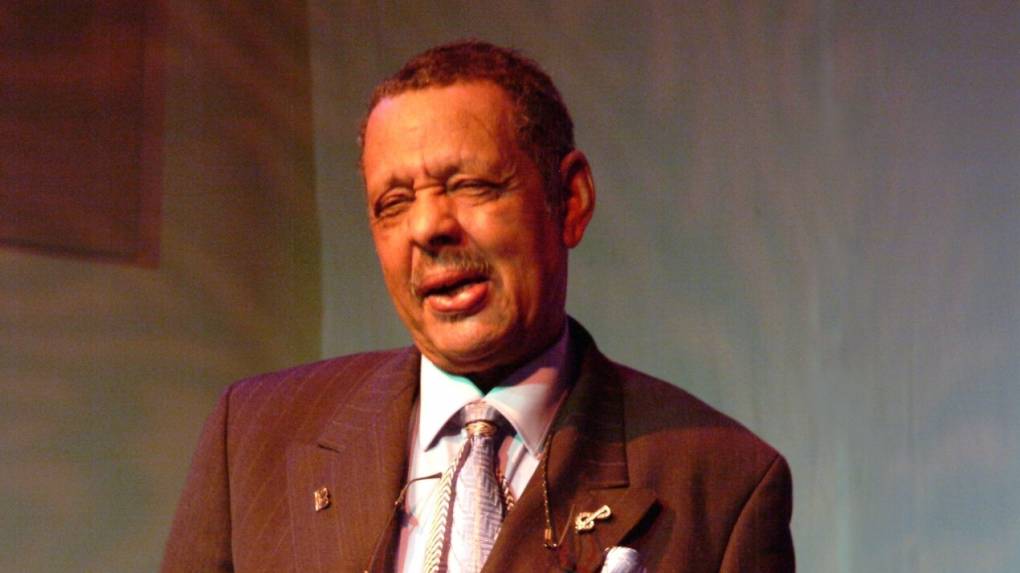
"caption": "Jazz vocalist Ernie Andrews died February 21, 2022, at the age of 94. Although he never became famous, his career spanned eight decades.",
"description": null,
"title": "RS54141_Ernie Andrews courtesy of HighNote Records-qut",
"credit": "Courtesy HighNote Records",
"status": "inherit",
"altTag": null,
"isLoading": false,
"fetchFailed": false
},
"news_11904090": {
"type": "attachments",
"id": "news_11904090",
"meta": {
"index": "attachments_1716263798",
"site": "news",
"id": "11904090",
"found": true
},
"parent": 11904089,
"imgSizes": {
"twentyfourteen-full-width": {
"file": "https://ww2.kqed.org/app/uploads/sites/10/2022/02/image1-1038x576.jpg",
"width": 1038,
"mimeType": "image/jpeg",
"height": 576
},
"thumbnail": {
"file": "https://ww2.kqed.org/app/uploads/sites/10/2022/02/image1-160x107.jpg",
"width": 160,
"mimeType": "image/jpeg",
"height": 107
},
"post-thumbnail": {
"file": "https://ww2.kqed.org/app/uploads/sites/10/2022/02/image1-672x372.jpg",
"width": 672,
"mimeType": "image/jpeg",
"height": 372
},
"kqedFullSize": {
"file": "https://ww2.kqed.org/app/uploads/sites/10/2022/02/image1.jpg",
"width": 1920,
"height": 1278
},
"large": {
"file": "https://ww2.kqed.org/app/uploads/sites/10/2022/02/image1-1020x679.jpg",
"width": 1020,
"mimeType": "image/jpeg",
"height": 679
},
"1536x1536": {
"file": "https://ww2.kqed.org/app/uploads/sites/10/2022/02/image1-1536x1022.jpg",
"width": 1536,
"mimeType": "image/jpeg",
"height": 1022
},
"medium": {
"file": "https://ww2.kqed.org/app/uploads/sites/10/2022/02/image1-800x533.jpg",
"width": 800,
"mimeType": "image/jpeg",
"height": 533
}
},
"publishDate": 1644007352,
"modified": 1644007352,
"caption": null,
"description": null,
"title": "image1",
"credit": null,
"status": "inherit",
"altTag": null,
"isLoading": false,
"fetchFailed": false
},
"news_11903922": {
"type": "attachments",
"id": "news_11903922",
"meta": {
"index": "attachments_1716263798",
"site": "news",
"id": "11903922",
"found": true
},
"parent": 11903812,
"imgSizes": {
"twentyfourteen-full-width": {
"file": "https://ww2.kqed.org/app/uploads/sites/10/2022/02/Crosswalk-1038x576.jpg",
"width": 1038,
"mimeType": "image/jpeg",
"height": 576
},
"thumbnail": {
"file": "https://ww2.kqed.org/app/uploads/sites/10/2022/02/Crosswalk-160x90.jpg",
"width": 160,
"mimeType": "image/jpeg",
"height": 90
},
"post-thumbnail": {
"file": "https://ww2.kqed.org/app/uploads/sites/10/2022/02/Crosswalk-672x372.jpg",
"width": 672,
"mimeType": "image/jpeg",
"height": 372
},
"kqedFullSize": {
"file": "https://ww2.kqed.org/app/uploads/sites/10/2022/02/Crosswalk-scaled-e1643926769102.jpg",
"width": 1920,
"height": 1080
},
"2048x2048": {
"file": "https://ww2.kqed.org/app/uploads/sites/10/2022/02/Crosswalk-2048x1152.jpg",
"width": 2048,
"mimeType": "image/jpeg",
"height": 1152
},
"large": {
"file": "https://ww2.kqed.org/app/uploads/sites/10/2022/02/Crosswalk-1020x574.jpg",
"width": 1020,
"mimeType": "image/jpeg",
"height": 574
},
"1536x1536": {
"file": "https://ww2.kqed.org/app/uploads/sites/10/2022/02/Crosswalk-1536x864.jpg",
"width": 1536,
"mimeType": "image/jpeg",
"height": 864
},
"full-width": {
"file": "https://ww2.kqed.org/app/uploads/sites/10/2022/02/Crosswalk-1920x1080.jpg",
"width": 1920,
"mimeType": "image/jpeg",
"height": 1080
},
"medium": {
"file": "https://ww2.kqed.org/app/uploads/sites/10/2022/02/Crosswalk-800x450.jpg",
"width": 800,
"mimeType": "image/jpeg",
"height": 450
}
},
"publishDate": 1643926743,
"modified": 1644014174,
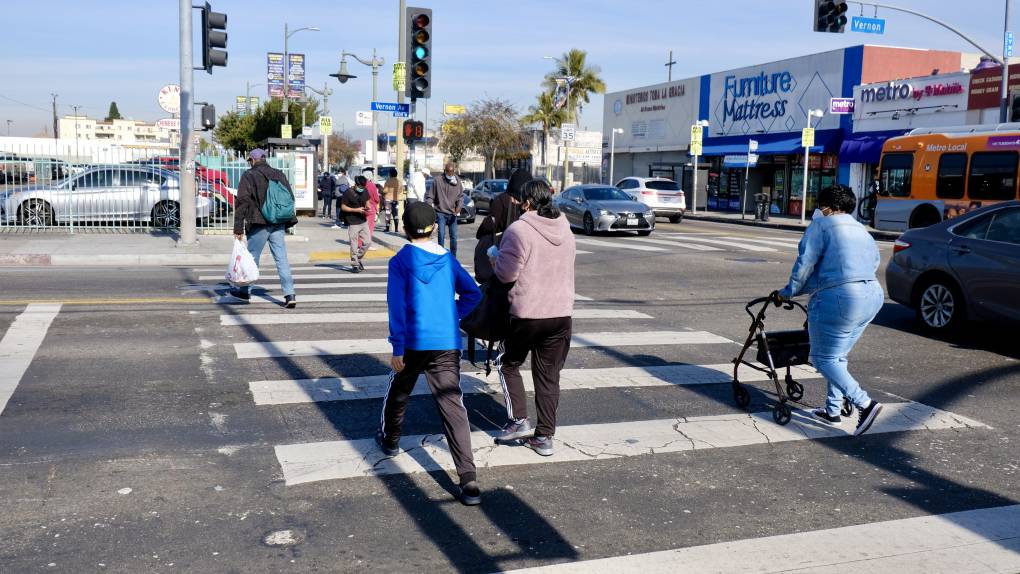
"caption": "Pedestrians crossing the street in South Los Angeles in January 2022.",
"description": null,
"title": "Crosswalk",
"credit": "Saul Gonzalez/KQED",
"status": "inherit",
"altTag": "Pedestrians cross a large street at a crosswalk.",
"isLoading": false,
"fetchFailed": false
},
"news_11903132": {
"type": "attachments",
"id": "news_11903132",
"meta": {
"index": "attachments_1716263798",
"site": "news",
"id": "11903132",
"found": true
},
"parent": 11902904,
"imgSizes": {
"twentyfourteen-full-width": {
"file": "https://ww2.kqed.org/app/uploads/sites/10/2022/01/01262022-HOMELESS-SERVICES-RN02-1038x576.jpg",
"width": 1038,
"mimeType": "image/jpeg",
"height": 576
},
"thumbnail": {
"file": "https://ww2.kqed.org/app/uploads/sites/10/2022/01/01262022-HOMELESS-SERVICES-RN02-160x109.jpg",
"width": 160,
"mimeType": "image/jpeg",
"height": 109
},
"post-thumbnail": {
"file": "https://ww2.kqed.org/app/uploads/sites/10/2022/01/01262022-HOMELESS-SERVICES-RN02-672x372.jpg",
"width": 672,
"mimeType": "image/jpeg",
"height": 372
},
"kqedFullSize": {
"file": "https://ww2.kqed.org/app/uploads/sites/10/2022/01/01262022-HOMELESS-SERVICES-RN02.jpg",
"width": 1200,
"height": 818
},
"large": {
"file": "https://ww2.kqed.org/app/uploads/sites/10/2022/01/01262022-HOMELESS-SERVICES-RN02-1020x695.jpg",
"width": 1020,
"mimeType": "image/jpeg",
"height": 695
},
"medium": {
"file": "https://ww2.kqed.org/app/uploads/sites/10/2022/01/01262022-HOMELESS-SERVICES-RN02-800x545.jpg",
"width": 800,
"mimeType": "image/jpeg",
"height": 545
}
},
"publishDate": 1643395028,
"modified": 1643652903,
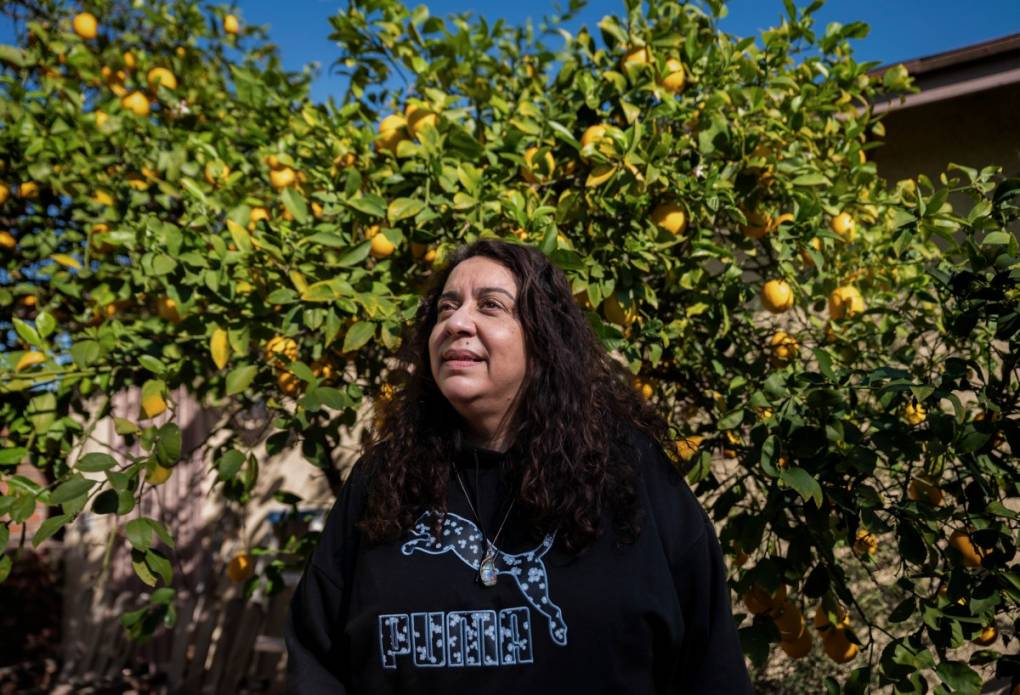
"caption": "Denise Velazquez in front of the lemon tree her grandmother planted in their family garden in Monterey Park. Velazquez left her position as an outreach worker with the Los Angeles Homeless Services Authority as her health worsened.",
"description": "Denise Velazquez in front of the lemon tree her grandmother planted in their family garden in Monterey Park.",
"title": "01262022-HOMELESS-SERVICES-RN02",
"credit": "Raquel Natalicchio/CalMatters",
"status": "inherit",
"altTag": "A person stands outside, in front of a lemon tree. They look away from the camera.",
"isLoading": false,
"fetchFailed": false
},
"news_11899387": {
"type": "attachments",
"id": "news_11899387",
"meta": {
"index": "attachments_1716263798",
"site": "news",
"id": "11899387",
"found": true
},
"parent": 11899353,
"imgSizes": {
"twentyfourteen-full-width": {
"file": "https://ww2.kqed.org/app/uploads/sites/10/2021/12/RS52423_IMG_3408-qut-1038x576.jpg",
"width": 1038,
"mimeType": "image/jpeg",
"height": 576
},
"thumbnail": {
"file": "https://ww2.kqed.org/app/uploads/sites/10/2021/12/RS52423_IMG_3408-qut-160x120.jpg",
"width": 160,
"mimeType": "image/jpeg",
"height": 120
},
"post-thumbnail": {
"file": "https://ww2.kqed.org/app/uploads/sites/10/2021/12/RS52423_IMG_3408-qut-672x372.jpg",
"width": 672,
"mimeType": "image/jpeg",
"height": 372
},
"kqedFullSize": {
"file": "https://ww2.kqed.org/app/uploads/sites/10/2021/12/RS52423_IMG_3408-qut.jpg",
"width": 1920,
"height": 1440
},
"large": {
"file": "https://ww2.kqed.org/app/uploads/sites/10/2021/12/RS52423_IMG_3408-qut-1020x765.jpg",
"width": 1020,
"mimeType": "image/jpeg",
"height": 765
},
"1536x1536": {
"file": "https://ww2.kqed.org/app/uploads/sites/10/2021/12/RS52423_IMG_3408-qut-1536x1152.jpg",
"width": 1536,
"mimeType": "image/jpeg",
"height": 1152
},
"medium": {
"file": "https://ww2.kqed.org/app/uploads/sites/10/2021/12/RS52423_IMG_3408-qut-800x600.jpg",
"width": 800,
"mimeType": "image/jpeg",
"height": 600
}
},
"publishDate": 1639684843,
"modified": 1639786730,
"caption": "The venerable 60-inch telescope at Mt. Wilson Observatory. According to telescope operator Tom Mason, this telescope was the largest one in the world when it was built in 1908.",
"description": "The venerable 60-inch telescope at Mount Wilson Observatory.",
"title": "RS52423_IMG_3408-qut",
"credit": "Peter Gilstrap",
"status": "inherit",
"altTag": "The view from the inside of a dome, that is split in half and the two sides are opening. In the opening, a large metallic structure passes through, made of many bars and rivets, much larger than many humans standing together.",
"isLoading": false,
"fetchFailed": false
},
"news_11895908": {
"type": "attachments",
"id": "news_11895908",
"meta": {
"index": "attachments_1716263798",
"site": "news",
"id": "11895908",
"found": true
},
"parent": 11895797,
"imgSizes": {
"twentyfourteen-full-width": {
"file": "https://ww2.kqed.org/app/uploads/sites/10/2021/11/110521-Redistricting-Election-MG-CM-01-1038x576.jpg",
"width": 1038,
"mimeType": "image/jpeg",
"height": 576
},
"thumbnail": {
"file": "https://ww2.kqed.org/app/uploads/sites/10/2021/11/110521-Redistricting-Election-MG-CM-01-160x120.jpg",
"width": 160,
"mimeType": "image/jpeg",
"height": 120
},
"post-thumbnail": {
"file": "https://ww2.kqed.org/app/uploads/sites/10/2021/11/110521-Redistricting-Election-MG-CM-01-672x372.jpg",
"width": 672,
"mimeType": "image/jpeg",
"height": 372
},
"kqedFullSize": {
"file": "https://ww2.kqed.org/app/uploads/sites/10/2021/11/110521-Redistricting-Election-MG-CM-01.jpg",
"width": 1665,
"height": 1249
},
"large": {
"file": "https://ww2.kqed.org/app/uploads/sites/10/2021/11/110521-Redistricting-Election-MG-CM-01-1020x765.jpg",
"width": 1020,
"mimeType": "image/jpeg",
"height": 765
},
"1536x1536": {
"file": "https://ww2.kqed.org/app/uploads/sites/10/2021/11/110521-Redistricting-Election-MG-CM-01-1536x1152.jpg",
"width": 1536,
"mimeType": "image/jpeg",
"height": 1152
},
"medium": {
"file": "https://ww2.kqed.org/app/uploads/sites/10/2021/11/110521-Redistricting-Election-MG-CM-01-800x600.jpg",
"width": 800,
"mimeType": "image/jpeg",
"height": 600
}
},
"publishDate": 1636589938,
"modified": 1636590116,
"caption": "The main responsibility of the Citizens Redistricting Commission is to ensure every district in the state — 52 for Congress, 80 for state Assembly and 40 for state Senate — has about the same number of people. That’s about 761,000 Californians in each congressional district, about 988,000 in state Senate districts and 494,000 in Assembly districts.",
"description": "The main responsibility of the Citizens Redistricting Commission is to ensure every district in the state — 52 for Congress, 80 for state Assembly and 40 for state Senate — has about the same number of people.",
"title": "110521-Redistricting-Election-MG-CM-01",
"credit": "Illustration by Miguel Gutierrez Jr., CalMatters; iStock",
"status": "inherit",
"altTag": "A drawing of an electoral box next to a geographic map that has had superimposed electoral district lines.",
"isLoading": false,
"fetchFailed": false
},
"news_11892344": {
"type": "attachments",
"id": "news_11892344",
"meta": {
"index": "attachments_1716263798",
"site": "news",
"id": "11892344",
"found": true
},
"parent": 11892339,
"imgSizes": {
"twentyfourteen-full-width": {
"file": "https://ww2.kqed.org/app/uploads/sites/10/2021/10/CalMatters_ElectionDistricts-1038x576.jpg",
"width": 1038,
"mimeType": "image/jpeg",
"height": 576
},
"thumbnail": {
"file": "https://ww2.kqed.org/app/uploads/sites/10/2021/10/CalMatters_ElectionDistricts-160x106.jpg",
"width": 160,
"mimeType": "image/jpeg",
"height": 106
},
"post-thumbnail": {
"file": "https://ww2.kqed.org/app/uploads/sites/10/2021/10/CalMatters_ElectionDistricts-672x372.jpg",
"width": 672,
"mimeType": "image/jpeg",
"height": 372
},
"kqedFullSize": {
"file": "https://ww2.kqed.org/app/uploads/sites/10/2021/10/CalMatters_ElectionDistricts.jpg",
"width": 1200,
"height": 793
},
"large": {
"file": "https://ww2.kqed.org/app/uploads/sites/10/2021/10/CalMatters_ElectionDistricts-1020x674.jpg",
"width": 1020,
"mimeType": "image/jpeg",
"height": 674
},
"medium": {
"file": "https://ww2.kqed.org/app/uploads/sites/10/2021/10/CalMatters_ElectionDistricts-800x529.jpg",
"width": 800,
"mimeType": "image/jpeg",
"height": 529
}
},
"publishDate": 1634249927,
"modified": 1634249971,
"caption": "A group of people pose in front of Phước Lộc Thọ in the Little Saigon neighborhood in Westminster on Oct. 12, 2021.",
"description": "A group of people pose in front of Phước Lộc Thọ in the Little Saigon neighborhood in Westminster on Oct. 12, 2021.",
"title": "CalMatters_ElectionDistricts",
"credit": "Deric Mendes/CalMatters",
"status": "inherit",
"altTag": "A group of people pose in front of an ornate building.",
"isLoading": false,
"fetchFailed": false
},
"news_11884873": {
"type": "attachments",
"id": "news_11884873",
"meta": {
"index": "attachments_1716263798",
"site": "news",
"id": "11884873",
"found": true
},
"parent": 11884783,
"imgSizes": {
"thumbnail": {
"file": "https://ww2.kqed.org/app/uploads/sites/10/2021/08/RS50619_Photo_1-qut-160x90.jpg",
"width": 160,
"mimeType": "image/jpeg",
"height": 90
},
"post-thumbnail": {
"file": "https://ww2.kqed.org/app/uploads/sites/10/2021/08/RS50619_Photo_1-qut-672x372.jpg",
"width": 672,
"mimeType": "image/jpeg",
"height": 372
},
"kqedFullSize": {
"file": "https://ww2.kqed.org/app/uploads/sites/10/2021/08/RS50619_Photo_1-qut.jpg",
"width": 960,
"height": 540
},
"medium": {
"file": "https://ww2.kqed.org/app/uploads/sites/10/2021/08/RS50619_Photo_1-qut-800x450.jpg",
"width": 800,
"mimeType": "image/jpeg",
"height": 450
}
},
"publishDate": 1628808916,
"modified": 1629754976,
"caption": "When Mauricio Hernández was a kid in Mexico, he dreamed about being on television. After he moved to Los Angeles, he got a chance to trick out the cars on the MTV show \"Pimp My Ride.\"",
"description": null,
"title": "RS50619_Photo_1-qut",
"credit": "Photo Courtesy of Mauricio Hernández",
"status": "inherit",
"altTag": null,
"isLoading": false,
"fetchFailed": false
}
},
"audioPlayerReducer": {
"postId": "stream_live",
"isPaused": true,
"isPlaying": false,
"pfsActive": false,
"pledgeModalIsOpen": true,
"playerDrawerIsOpen": false,
"liveAudioPlayStartedAt": 0,
"liveAudioPlayContext": ""
},
"authorsReducer": {
"byline_news_11928906": {
"type": "authors",
"id": "byline_news_11928906",
"meta": {
"override": true
},
"slug": "byline_news_11928906",
"name": "\u003ca class=\"Link\" href=\"https://laist.com/people/sophia-paliza-carre\" aria-label=\"Sophia Paliza-Carre\">Sophia Paliza-Carre\u003c/a> and \u003ca class=\"Link\" href=\"https://laist.com/people/francisco-aviles-pino\">francisco aviles pino\u003c/a>",
"isLoading": false
},
"byline_news_11916115": {
"type": "authors",
"id": "byline_news_11916115",
"meta": {
"override": true
},
"slug": "byline_news_11916115",
"name": "Amy Mayer",
"isLoading": false
},
"byline_news_11902904": {
"type": "authors",
"id": "byline_news_11902904",
"meta": {
"override": true
},
"slug": "byline_news_11902904",
"name": "\u003ca href=\"https://calmatters.org/author/manuela-tobias/\">Manuela Tobias\u003c/a>",
"isLoading": false
},
"byline_news_11895797": {
"type": "authors",
"id": "byline_news_11895797",
"meta": {
"override": true
},
"slug": "byline_news_11895797",
"name": "\u003ca href=\"https://calmatters.org/author/sameea-kamal/\">Sameea Kamal\u003c/a>",
"isLoading": false
},
"byline_news_11892339": {
"type": "authors",
"id": "byline_news_11892339",
"meta": {
"override": true
},
"slug": "byline_news_11892339",
"name": "Sameea Kamal",
"isLoading": false
},
"byline_news_11884783": {
"type": "authors",
"id": "byline_news_11884783",
"meta": {
"override": true
},
"slug": "byline_news_11884783",
"name": "Levi Bridges",
"isLoading": false
},
"agilbert": {
"type": "authors",
"id": "86",
"meta": {
"index": "authors_1716337520",
"id": "86",
"found": true
},
"name": "Andrew Gilbert",
"firstName": "Andrew",
"lastName": "Gilbert",
"slug": "agilbert",
"email": "jazzscribe@aol.com",
"display_author_email": false,
"staff_mastheads": [],
"title": "KQED Contributor",
"bio": "A Los Angeles native based in the Berkeley area since 1996, Andrew Gilbert covers jazz, international music and dance for KQED's \u003ci>California Report, \u003c/i>the\u003ci> Mercury News\u003c/i>, \u003ci>San Francisco Chronicle\u003c/i>, \u003ci>Berkeleyside.com\u003c/i>, and other publications. He is available for weddings and bar and bat mitzvahs. #jazzscribe",
"avatar": "https://secure.gravatar.com/avatar/d7bcafdbefdd39e9a68f88724ca616eb4e7a5a6bff9cdfb62de652a1e1751471?s=600&d=blank&r=g",
"twitter": null,
"bluesky": null,
"facebook": null,
"instagram": null,
"linkedin": null,
"sites": [
{
"site": "arts",
"roles": [
"Contributor",
"author"
]
},
{
"site": "news",
"roles": [
"author"
]
}
],
"headData": {
"title": "Andrew Gilbert | KQED",
"description": "KQED Contributor",
"ogImgSrc": "https://secure.gravatar.com/avatar/d7bcafdbefdd39e9a68f88724ca616eb4e7a5a6bff9cdfb62de652a1e1751471?s=600&d=blank&r=g",
"twImgSrc": "https://secure.gravatar.com/avatar/d7bcafdbefdd39e9a68f88724ca616eb4e7a5a6bff9cdfb62de652a1e1751471?s=600&d=blank&r=g"
},
"isLoading": false,
"link": "/author/agilbert"
},
"kqed": {
"type": "authors",
"id": "236",
"meta": {
"index": "authors_1716337520",
"id": "236",
"found": true
},
"name": "KQED News Staff",
"firstName": "KQED News Staff",
"lastName": null,
"slug": "kqed",
"email": "faq@kqed.org",
"display_author_email": false,
"staff_mastheads": [],
"title": null,
"bio": null,
"avatar": "https://secure.gravatar.com/avatar/ef0e801a68c4c54afa9180db14084167?s=600&d=blank&r=g",
"twitter": null,
"facebook": null,
"instagram": null,
"linkedin": null,
"sites": [
{
"site": "arts",
"roles": [
"contributor"
]
},
{
"site": "news",
"roles": [
"editor"
]
},
{
"site": "futureofyou",
"roles": [
"author"
]
}
],
"headData": {
"title": "KQED News Staff | KQED",
"description": null,
"ogImgSrc": "https://secure.gravatar.com/avatar/ef0e801a68c4c54afa9180db14084167?s=600&d=blank&r=g",
"twImgSrc": "https://secure.gravatar.com/avatar/ef0e801a68c4c54afa9180db14084167?s=600&d=blank&r=g"
},
"isLoading": false,
"link": "/author/kqed"
},
"kqednewsstaffandwires": {
"type": "authors",
"id": "237",
"meta": {
"index": "authors_1716337520",
"id": "237",
"found": true
},
"name": "KQED News Staff and Wires",
"firstName": "KQED News Staff and Wires",
"lastName": null,
"slug": "kqednewsstaffandwires",
"email": "onlinenewsstaff@kqed.org",
"display_author_email": false,
"staff_mastheads": [],
"title": null,
"bio": null,
"avatar": "https://secure.gravatar.com/avatar/72295af8ebbfbd19a4948f5271285664?s=600&d=blank&r=g",
"twitter": null,
"facebook": null,
"instagram": null,
"linkedin": null,
"sites": [
{
"site": "arts",
"roles": [
"contributor"
]
},
{
"site": "news",
"roles": [
"contributor"
]
},
{
"site": "lowdown",
"roles": [
"author"
]
},
{
"site": "stateofhealth",
"roles": [
"contributor"
]
},
{
"site": "food",
"roles": [
"author"
]
}
],
"headData": {
"title": "KQED News Staff and Wires | KQED",
"description": null,
"ogImgSrc": "https://secure.gravatar.com/avatar/72295af8ebbfbd19a4948f5271285664?s=600&d=blank&r=g",
"twImgSrc": "https://secure.gravatar.com/avatar/72295af8ebbfbd19a4948f5271285664?s=600&d=blank&r=g"
},
"isLoading": false,
"link": "/author/kqednewsstaffandwires"
},
"pgilstrap": {
"type": "authors",
"id": "11275",
"meta": {
"index": "authors_1716337520",
"id": "11275",
"found": true
},
"name": "Peter Gilstrap",
"firstName": "Peter",
"lastName": "Gilstrap",
"slug": "pgilstrap",
"email": "pgilstrap@sbcglobal.net",
"display_author_email": false,
"staff_mastheads": [],
"title": null,
"bio": null,
"avatar": "https://secure.gravatar.com/avatar/2bf93e4a8c1e35493845045175273916?s=600&d=blank&r=g",
"twitter": null,
"facebook": null,
"instagram": null,
"linkedin": null,
"sites": [
{
"site": "news",
"roles": [
"author"
]
}
],
"headData": {
"title": "Peter Gilstrap | KQED",
"description": null,
"ogImgSrc": "https://secure.gravatar.com/avatar/2bf93e4a8c1e35493845045175273916?s=600&d=blank&r=g",
"twImgSrc": "https://secure.gravatar.com/avatar/2bf93e4a8c1e35493845045175273916?s=600&d=blank&r=g"
},
"isLoading": false,
"link": "/author/pgilstrap"
},
"sgonzalez": {
"type": "authors",
"id": "11621",
"meta": {
"index": "authors_1716337520",
"id": "11621",
"found": true
},
"name": "Saul Gonzalez",
"firstName": "Saul",
"lastName": "Gonzalez",
"slug": "sgonzalez",
"email": "sgonzalez@KQED.org",
"display_author_email": false,
"staff_mastheads": [
"news"
],
"title": "Host, The California Report",
"bio": "A Golden State native, Saul has been the Los Angeles co-host of \u003cem>The California Report\u003c/em>since 2019, covering such issues as homelessness and housing policy, the state's response to climate change and the ravages of the Covid pandemic. Whenever possible, tries to be outside of the studio, connecting these big issues to the daily lives of Californians experiencing them in very personal ways.\r\n\r\nBefore joining KQED, Saul worked for the PBS \u003cem>NewsHour, Religion & Ethics Newsweekly, \u003c/em>and public radio affiliate KCRW in Santa Monica, where he also hosted the podcast series \"There Goes the Neighborhood\" about gentrification. For his work, Saul has been honored with several Emmys and is a two-time winner of the L.A. Press Club's Radio Journalist of the Year Award.\r\n\r\nWhen not working, Saul spends his time trying to hone his amateur photography skills and spending as much time as possible in bookstores and coffee houses.",
"avatar": "https://secure.gravatar.com/avatar/06e10f8ad252ef896cc4dc6bbee5f901?s=600&d=blank&r=g",
"twitter": null,
"facebook": null,
"instagram": null,
"linkedin": null,
"sites": [
{
"site": "news",
"roles": [
"author"
]
}
],
"headData": {
"title": "Saul Gonzalez | KQED",
"description": "Host, The California Report",
"ogImgSrc": "https://secure.gravatar.com/avatar/06e10f8ad252ef896cc4dc6bbee5f901?s=600&d=blank&r=g",
"twImgSrc": "https://secure.gravatar.com/avatar/06e10f8ad252ef896cc4dc6bbee5f901?s=600&d=blank&r=g"
},
"isLoading": false,
"link": "/author/sgonzalez"
}
},
"pagesReducer": {
"news_tag_los-angeles": {
"type": "terms",
"id": "news_4",
"meta": {
"index": "terms_1716263798",
"site": "news",
"id": "4",
"score": 8.557587
},
"featImg": null,
"name": "los angeles",
"description": null,
"taxonomy": "tag",
"headData": {
"twImgId": null,
"twTitle": null,
"ogTitle": null,
"ogImgId": null,
"twDescription": null,
"description": null,
"title": "los angeles Archives | KQED News",
"ogDescription": null
},
"ttid": 4,
"slug": "los-angeles",
"isLoading": false,
"title": "los angeles",
"pageMeta": {
"site": "news",
"WpPageTemplate": "page-topic-editorial",
"currentPage": 12
},
"blocks": [
{
"blockName": "kqed/post-list",
"attrs": {
"layout": "cardArticle2",
"query": "posts/news?tag=los-angeles",
"seeMore": false,
"paginated": true,
"page": 12
}
},
{
"blockName": "kqed/ad"
}
]
}
},
"pfsSessionReducer": {},
"postsReducer": {
"stream_live": {
"type": "live",
"id": "stream_live",
"audioUrl": "https://streams.kqed.org/kqedradio",
"title": "Live Stream",
"excerpt": "Live Stream information currently unavailable.",
"link": "/radio",
"featImg": "",
"label": {
"name": "KQED Live",
"link": "/"
}
},
"stream_kqedNewscast": {
"type": "posts",
"id": "stream_kqedNewscast",
"audioUrl": "https://www.kqed.org/.stream/anon/radio/RDnews/newscast.mp3?_=1",
"title": "KQED Newscast",
"featImg": "",
"label": {
"name": "88.5 FM",
"link": "/"
}
},
"news_11928906": {
"type": "posts",
"id": "news_11928906",
"meta": {
"index": "posts_1716263798",
"site": "news",
"id": "11928906",
"score": null,
"sort": [
1665785835000
]
},
"guestAuthors": [],
"slug": "imperfect-paradise-a-new-podcast-investigating-la-county-sheriff-alex-villanuevas-unlikely-rise-to-power",
"title": "'Imperfect Paradise': A New Podcast Investigating LA County Sheriff Alex Villanueva's Unlikely Rise to Power",
"publishDate": 1665785835,
"format": "standard",
"headTitle": "‘Imperfect Paradise’: A New Podcast Investigating LA County Sheriff Alex Villanueva’s Unlikely Rise to Power | KQED",
"labelTerm": {
"term": 26731,
"site": "news"
},
"content": "\u003cp>\u003cem>This week’s \u003ca href=\"https://www.kqed.org/californiareportmagazine\">California Report Magazine\u003c/a> features the first episode of the new LAist Studios podcast, Imperfect Paradise: The Sheriff. \u003c/em>\u003c/p>\n\u003cp>In 2018, Alex Villanueva ran a long-shot campaign for LA County Sheriff, framing himself as a progressive reformer and underdog maverick He was a retired lieutenant with almost no leadership experience. But he ran a savvy campaign, winning the endorsements of the LA County Democratic party, the deputies union, and immigrants rights groups, as well as the votes of Angelenos critical of former President Trump and supportive of police reform.\u003c/p>\n\u003cp>But soon after taking office, Villanueva became embroiled in a series of scandals of his own making. He \u003ca class=\"Link\" href=\"https://laist.com/news/criminal-justice/sheriff-villanueva-steps-into-countys-conflict-with-law-firm-over-mandoyan-case\">rehired a deputy\u003c/a> fired for domestic violence and lying. He \u003ca class=\"Link\" href=\"https://laist.com/news/criminal-justice/sheriff-villanueva-subpoena-continues-to-defy\">downplayed the severity of the department’s deputy gang problem.\u003c/a> And he opened a criminal investigation into \u003ca class=\"Link\" href=\"https://laist.com/news/criminal-justice/villanueva-abuse-of-power-subpoena-criminal-investigations-huntsman-oversight\">the inspector general who oversees the sheriff’s department\u003c/a> — among other controversies.\u003c/p>\n\u003cp>In the latest season of Imperfect Paradise: The Sheriff, \u003ca class=\"Link\" href=\"https://laist.com/people/frank-stoltze\">Frank Stoltze\u003c/a>, LAist’s civics and democracy correspondent, looks at Villanueva’s tenure as sheriff and asks: How could someone who ran as a progressive reformer end up as a darling of Fox News? How could LA County voters end up with someone so completely different from who they thought they were voting for?\u003c/p>\n\u003cp>\u003cstrong>[\u003ca href=\"https://laist.com/news/criminal-justice/alex-villanuevas-unlikely-rise-to-power-7-takeaways-from-our-new-podcast-about-the-sheriff\">7 Takeaways From the Podcast\u003c/a>]\u003c/strong>\u003c/p>\n\u003cp>\u003ca href=\"https://ww2.kqed.org/app/uploads/sites/10/2022/10/IPS3-Ad-Newsletter-Banner-970x2501-1.jpg\">\u003cimg loading=\"lazy\" decoding=\"async\" class=\"alignnone size-medium wp-image-11928910\" src=\"https://ww2.kqed.org/app/uploads/sites/10/2022/10/IPS3-Ad-Newsletter-Banner-970x2501-1-800x206.jpg\" alt=\"A banner illustration for the podcast.\" width=\"800\" height=\"206\" srcset=\"https://cdn.kqed.org/wp-content/uploads/sites/10/2022/10/IPS3-Ad-Newsletter-Banner-970x2501-1-800x206.jpg 800w, https://cdn.kqed.org/wp-content/uploads/sites/10/2022/10/IPS3-Ad-Newsletter-Banner-970x2501-1-160x41.jpg 160w, https://cdn.kqed.org/wp-content/uploads/sites/10/2022/10/IPS3-Ad-Newsletter-Banner-970x2501-1.jpg 970w\" sizes=\"(max-width: 800px) 100vw, 800px\">\u003c/a>\u003c/p>\n\u003cp>[ad fullwidth]\u003c/p>\n\u003cp>Over five episodes, Stoltze and his team of producers explore how Villanueva became head of the largest law enforcement agency west of the Mississippi, and how his leadership has left him vulnerable ahead of this fall’s election. The show draws on extensive interviews from \u003ca class=\"Link\" href=\"https://laist.com/news/are-la-sheriffs-deputies-harassing-the-families-of-people-they-shoot-and-kill\" target=\"_blank\" rel=\"noopener noreferrer\">families affected by deputy shootings and alleged harassment\u003c/a>, current and former department officials, LA County supervisors, the inspector general, and whistleblowers who are afraid to speak out without anonymity.\u003c/p>\n\u003cp>Filled with new reporting on the sheriff’s department, an exclusive sit-down with Villanueva,\u003cb> \u003c/b>and hosted by a reporter with 30 years of experience covering criminal justice in LA County, Imperfect Paradise: The Sheriff provides an unprecedented look at Villanueva and his legacy.\u003c/p>\n\u003cp>The first two episodes are set to air on October 5, with the rest released on a weekly basis.\u003c/p>\n\u003cp>\u003c/p>\n\u003cp>\u003cem>Listen & subscribe to Imperfect Paradise: The Sheriff, now on\u003c/em>\u003ca title=\"https://protect-us.mimecast.com/s/LE0gCYEM4NtkyW1gC0Ycp6?domain=podcasts.apple.com\" href=\"https://protect-us.mimecast.com/s/LE0gCYEM4NtkyW1gC0Ycp6?domain=podcasts.apple.com\" target=\"_blank\" rel=\"noopener noreferrer\"> \u003c/a>\u003cem>\u003cu>\u003ca title=\"https://protect-us.mimecast.com/s/LE0gCYEM4NtkyW1gC0Ycp6?domain=podcasts.apple.com\" href=\"https://protect-us.mimecast.com/s/LE0gCYEM4NtkyW1gC0Ycp6?domain=podcasts.apple.com\" target=\"_blank\" rel=\"noopener noreferrer\">Apple Podcasts\u003c/a>\u003c/u>,\u003c/em>\u003ca title=\"https://protect-us.mimecast.com/s/qwwcCZ6W5NuPWq4xFjed4M?domain=open.spotify.com\" href=\"https://protect-us.mimecast.com/s/qwwcCZ6W5NuPWq4xFjed4M?domain=open.spotify.com\" target=\"_blank\" rel=\"noopener noreferrer\"> \u003c/a>\u003cem>\u003cu>\u003ca title=\"https://protect-us.mimecast.com/s/qwwcCZ6W5NuPWq4xFjed4M?domain=open.spotify.com\" href=\"https://protect-us.mimecast.com/s/qwwcCZ6W5NuPWq4xFjed4M?domain=open.spotify.com\" target=\"_blank\" rel=\"noopener noreferrer\">Spotify\u003c/a>\u003c/u> or wherever you listen to podcasts.\u003c/em>\u003c/p>\n\n",
"blocks": [],
"excerpt": "A new LAist Studios podcast explores how Los Angeles County Sheriff Alex Villanueva became the head of the largest law enforcement agency west of the Mississippi, and how his controversial leadership has left him vulnerable ahead of this fall's election.",
"status": "publish",
"parent": 0,
"modified": 1721134558,
"stats": {
"hasAudio": false,
"hasVideo": false,
"hasChartOrMap": false,
"iframeSrcs": [],
"hasGoogleForm": false,
"hasGallery": false,
"hasHearkenModule": false,
"hasPolis": false,
"paragraphCount": 12,
"wordCount": 387
},
"headData": {
"title": "'Imperfect Paradise': A New Podcast Investigating LA County Sheriff Alex Villanueva's Unlikely Rise to Power | KQED",
"description": "A new LAist Studios podcast explores how Los Angeles County Sheriff Alex Villanueva became the head of the largest law enforcement agency west of the Mississippi, and how his controversial leadership has left him vulnerable ahead of this fall's election.",
"ogTitle": "",
"ogDescription": "",
"ogImgId": "",
"twTitle": "",
"twDescription": "",
"twImgId": "",
"schema": {
"@context": "https://schema.org",
"@type": "NewsArticle",
"headline": "'Imperfect Paradise': A New Podcast Investigating LA County Sheriff Alex Villanueva's Unlikely Rise to Power",
"datePublished": "2022-10-14T15:17:15-07:00",
"dateModified": "2024-07-16T05:55:58-07:00",
"image": "https://cdn.kqed.org/wp-content/uploads/2020/02/KQED-OG-Image@1x.png",
"isAccessibleForFree": "True",
"publisher": {
"@type": "NewsMediaOrganization",
"@id": "https://www.kqed.org/#organization",
"name": "KQED",
"logo": "https://cdn.kqed.org/wp-content/uploads/2020/02/KQED-OG-Image@1x.png",
"url": "https://www.kqed.org",
"sameAs": [
"https://www.facebook.com/KQED",
"https://twitter.com/KQED",
"https://www.instagram.com/kqed/",
"https://www.tiktok.com/@kqedofficial",
"https://www.linkedin.com/company/kqed",
"https://www.youtube.com/channel/UCeC0IOo7i1P_61zVUWbJ4nw"
]
}
}
},
"audioUrl": "https://dcs.megaphone.fm/KQINC7051781049.mp3?key=d8efdbcd548afecaf8ac1d60e658acae",
"sticky": false,
"nprByline": "\u003ca class=\"Link\" href=\"https://laist.com/people/sophia-paliza-carre\" aria-label=\"Sophia Paliza-Carre\">Sophia Paliza-Carre\u003c/a> and \u003ca class=\"Link\" href=\"https://laist.com/people/francisco-aviles-pino\">francisco aviles pino\u003c/a>",
"excludeFromSiteSearch": "Include",
"showOnAuthorArchivePages": "No",
"path": "/news/11928906/imperfect-paradise-a-new-podcast-investigating-la-county-sheriff-alex-villanuevas-unlikely-rise-to-power",
"audioTrackLength": null,
"parsedContent": [
{
"type": "contentString",
"content": "\u003cdiv class=\"post-body\">\u003cp>\u003cp>\u003cem>This week’s \u003ca href=\"https://www.kqed.org/californiareportmagazine\">California Report Magazine\u003c/a> features the first episode of the new LAist Studios podcast, Imperfect Paradise: The Sheriff. \u003c/em>\u003c/p>\n\u003cp>In 2018, Alex Villanueva ran a long-shot campaign for LA County Sheriff, framing himself as a progressive reformer and underdog maverick He was a retired lieutenant with almost no leadership experience. But he ran a savvy campaign, winning the endorsements of the LA County Democratic party, the deputies union, and immigrants rights groups, as well as the votes of Angelenos critical of former President Trump and supportive of police reform.\u003c/p>\n\u003cp>But soon after taking office, Villanueva became embroiled in a series of scandals of his own making. He \u003ca class=\"Link\" href=\"https://laist.com/news/criminal-justice/sheriff-villanueva-steps-into-countys-conflict-with-law-firm-over-mandoyan-case\">rehired a deputy\u003c/a> fired for domestic violence and lying. He \u003ca class=\"Link\" href=\"https://laist.com/news/criminal-justice/sheriff-villanueva-subpoena-continues-to-defy\">downplayed the severity of the department’s deputy gang problem.\u003c/a> And he opened a criminal investigation into \u003ca class=\"Link\" href=\"https://laist.com/news/criminal-justice/villanueva-abuse-of-power-subpoena-criminal-investigations-huntsman-oversight\">the inspector general who oversees the sheriff’s department\u003c/a> — among other controversies.\u003c/p>\n\u003cp>In the latest season of Imperfect Paradise: The Sheriff, \u003ca class=\"Link\" href=\"https://laist.com/people/frank-stoltze\">Frank Stoltze\u003c/a>, LAist’s civics and democracy correspondent, looks at Villanueva’s tenure as sheriff and asks: How could someone who ran as a progressive reformer end up as a darling of Fox News? How could LA County voters end up with someone so completely different from who they thought they were voting for?\u003c/p>\n\u003cp>\u003cstrong>[\u003ca href=\"https://laist.com/news/criminal-justice/alex-villanuevas-unlikely-rise-to-power-7-takeaways-from-our-new-podcast-about-the-sheriff\">7 Takeaways From the Podcast\u003c/a>]\u003c/strong>\u003c/p>\n\u003cp>\u003ca href=\"https://ww2.kqed.org/app/uploads/sites/10/2022/10/IPS3-Ad-Newsletter-Banner-970x2501-1.jpg\">\u003cimg loading=\"lazy\" decoding=\"async\" class=\"alignnone size-medium wp-image-11928910\" src=\"https://ww2.kqed.org/app/uploads/sites/10/2022/10/IPS3-Ad-Newsletter-Banner-970x2501-1-800x206.jpg\" alt=\"A banner illustration for the podcast.\" width=\"800\" height=\"206\" srcset=\"https://cdn.kqed.org/wp-content/uploads/sites/10/2022/10/IPS3-Ad-Newsletter-Banner-970x2501-1-800x206.jpg 800w, https://cdn.kqed.org/wp-content/uploads/sites/10/2022/10/IPS3-Ad-Newsletter-Banner-970x2501-1-160x41.jpg 160w, https://cdn.kqed.org/wp-content/uploads/sites/10/2022/10/IPS3-Ad-Newsletter-Banner-970x2501-1.jpg 970w\" sizes=\"(max-width: 800px) 100vw, 800px\">\u003c/a>\u003c/p>\n\u003cp>\u003c/p>\u003c/div>",
"attributes": {
"named": {},
"numeric": []
}
},
{
"type": "component",
"content": "",
"name": "ad",
"attributes": {
"named": {
"label": "fullwidth"
},
"numeric": [
"fullwidth"
]
}
},
{
"type": "contentString",
"content": "\u003cdiv class=\"post-body\">\u003cp>\u003c/p>\n\u003cp>Over five episodes, Stoltze and his team of producers explore how Villanueva became head of the largest law enforcement agency west of the Mississippi, and how his leadership has left him vulnerable ahead of this fall’s election. The show draws on extensive interviews from \u003ca class=\"Link\" href=\"https://laist.com/news/are-la-sheriffs-deputies-harassing-the-families-of-people-they-shoot-and-kill\" target=\"_blank\" rel=\"noopener noreferrer\">families affected by deputy shootings and alleged harassment\u003c/a>, current and former department officials, LA County supervisors, the inspector general, and whistleblowers who are afraid to speak out without anonymity.\u003c/p>\n\u003cp>Filled with new reporting on the sheriff’s department, an exclusive sit-down with Villanueva,\u003cb> \u003c/b>and hosted by a reporter with 30 years of experience covering criminal justice in LA County, Imperfect Paradise: The Sheriff provides an unprecedented look at Villanueva and his legacy.\u003c/p>\n\u003cp>The first two episodes are set to air on October 5, with the rest released on a weekly basis.\u003c/p>\n\u003cp>\u003c/p>\n\u003cp>\u003cem>Listen & subscribe to Imperfect Paradise: The Sheriff, now on\u003c/em>\u003ca title=\"https://protect-us.mimecast.com/s/LE0gCYEM4NtkyW1gC0Ycp6?domain=podcasts.apple.com\" href=\"https://protect-us.mimecast.com/s/LE0gCYEM4NtkyW1gC0Ycp6?domain=podcasts.apple.com\" target=\"_blank\" rel=\"noopener noreferrer\"> \u003c/a>\u003cem>\u003cu>\u003ca title=\"https://protect-us.mimecast.com/s/LE0gCYEM4NtkyW1gC0Ycp6?domain=podcasts.apple.com\" href=\"https://protect-us.mimecast.com/s/LE0gCYEM4NtkyW1gC0Ycp6?domain=podcasts.apple.com\" target=\"_blank\" rel=\"noopener noreferrer\">Apple Podcasts\u003c/a>\u003c/u>,\u003c/em>\u003ca title=\"https://protect-us.mimecast.com/s/qwwcCZ6W5NuPWq4xFjed4M?domain=open.spotify.com\" href=\"https://protect-us.mimecast.com/s/qwwcCZ6W5NuPWq4xFjed4M?domain=open.spotify.com\" target=\"_blank\" rel=\"noopener noreferrer\"> \u003c/a>\u003cem>\u003cu>\u003ca title=\"https://protect-us.mimecast.com/s/qwwcCZ6W5NuPWq4xFjed4M?domain=open.spotify.com\" href=\"https://protect-us.mimecast.com/s/qwwcCZ6W5NuPWq4xFjed4M?domain=open.spotify.com\" target=\"_blank\" rel=\"noopener noreferrer\">Spotify\u003c/a>\u003c/u> or wherever you listen to podcasts.\u003c/em>\u003c/p>\n\n\u003c/div>\u003c/p>",
"attributes": {
"named": {},
"numeric": []
}
}
],
"link": "/news/11928906/imperfect-paradise-a-new-podcast-investigating-la-county-sheriff-alex-villanuevas-unlikely-rise-to-power",
"authors": [
"byline_news_11928906"
],
"programs": [
"news_26731"
],
"categories": [
"news_8"
],
"tags": [
"news_19903",
"news_4",
"news_116"
],
"featImg": "news_11928909",
"label": "news_26731"
},
"news_11928625": {
"type": "posts",
"id": "news_11928625",
"meta": {
"index": "posts_1716263798",
"site": "news",
"id": "11928625",
"score": null,
"sort": [
1665624577000
]
},
"guestAuthors": [],
"slug": "disgraced-la-council-leader-resigns-amid-swelling-anger-over-racist-remarks",
"title": "Disgraced LA Council Leader Resigns Amid Swelling Anger Over Racist Remarks",
"publishDate": 1665624577,
"format": "standard",
"headTitle": "Disgraced LA Council Leader Resigns Amid Swelling Anger Over Racist Remarks | KQED",
"labelTerm": {
"site": "news"
},
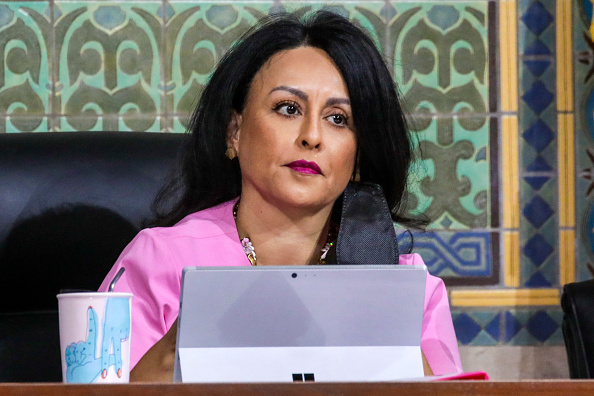
"content": "\u003cp>Former Los Angeles City Council President Nury Martinez on Wednesday announced she was resigning her seat amid recently revealed racist remarks she made last year during a closed-door meeting.\u003c/p>\n\u003cp>\u003ca href=\"https://www.latimes.com/california/story/2022-10-09/city-council-leaked-audio-nury-martinez-kevin-de-leon-gil-cedillo\">In the leaked recording\u003c/a>, which surfaced online this weekend, Martinez crudely disparaged the Black son of a white council member, among a slew of other racist snipes.\u003c/p>\n\u003cp>Her resignation statement did not mention those remarks, though in words directed at her daughter, she said: “I know I have fallen short recently of the expectations we have for our family. I vow to you that I will strive to be a better woman to make you proud.”\u003c/p>\n\u003cp>Martinez’s press release follows three days of angry protests at LA City Hall, with a growing number of local and national leaders, including President Biden, calling for her and the two other Democratic council members involved in the conversation to step down.[pullquote size=\"medium\" align=\"right\" citation=\"Mitch O'Farrell, acting president, LA City Council\"]‘For Los Angeles to heal, and for its City Council to govern, there must be accountability … I repeat my call on Councilmembers De León and Cedillo to also resign. There is no other way forward.’[/pullquote]The resignation also comes just hours after California Attorney General Rob Bonta said \u003ca href=\"https://www.latimes.com/california/story/2022-10-12/california-attorney-general-rob-bonta-redistricting-investigation-leaked-audio\">he would investigate Los Angeles’ redistricting process\u003c/a> that Martinez was discussing with fellow Councilmembers Kevin de León and Gil Cedillo, in which they schemed to protect Latino political strength in council districts. Bonta said the investigation could lead to civil liability or criminal charges, depending on what is found.\u003c/p>\n\u003cp>“It’s clear an investigation is sorely needed to help restore confidence in the redistricting process for the people of LA,” Bonta said.\u003c/p>\n\u003cp>Martinez, the first Latina to lead the Council, \u003ca href=\"https://apnews.com/article/los-angeles-city-council-nury-martinez-resignation-19571bf8ce0524dfa84b5784ce30f65d\">had stepped down as president on Monday\u003c/a> while still holding onto her seat. At the time, she said she was ashamed of her racist language, but stopped short of resigning.\u003c/p>\n\u003cp>In the recorded conversation, Martinez said that Councilmember Mike Bonin, who is white, handled his young Black son as if he were an “accessory” and said “parece changuito,” or “he’s like a monkey,” \u003ca href=\"https://www.latimes.com/california/story/2022-10-09/city-council-leaked-audio-nury-martinez-kevin-de-leon-gil-cedillo\">The Los Angeles Times reported Sunday\u003c/a>. She also referred to Bonin as a “little bitch.”\u003c/p>\n\u003cp>At another point on the hour-long recording, Martinez called Indigenous immigrants from the Mexican state of Oaxaca ugly, and made crass remarks about Jews and Armenians.\u003c/p>\n\u003cp>The council reconvened Wednesday, possibly to censure the three members, but it was unable to do business because a crowd of about 50 protesters drowned out the acting president, chanting slogans like, “No meeting without resignation.”\u003c/p>\n\u003cfigure id=\"attachment_11928686\" class=\"wp-caption alignnone\" style=\"max-width: 1024px\">\u003cimg loading=\"lazy\" decoding=\"async\" class=\"size-full wp-image-11928686\" src=\"https://ww2.kqed.org/app/uploads/sites/10/2022/10/GettyImages-1243898841-1.jpg\" alt=\"An angry crowd raise their fists in the City Hall Council chamber with a black woman in the center and foreground\" width=\"1024\" height=\"683\" srcset=\"https://cdn.kqed.org/wp-content/uploads/sites/10/2022/10/GettyImages-1243898841-1.jpg 1024w, https://cdn.kqed.org/wp-content/uploads/sites/10/2022/10/GettyImages-1243898841-1-800x534.jpg 800w, https://cdn.kqed.org/wp-content/uploads/sites/10/2022/10/GettyImages-1243898841-1-1020x680.jpg 1020w, https://cdn.kqed.org/wp-content/uploads/sites/10/2022/10/GettyImages-1243898841-1-160x107.jpg 160w\" sizes=\"(max-width: 1024px) 100vw, 1024px\">\u003cfigcaption class=\"wp-caption-text\">Protesters calling for the resignation of LA City Council members Nury Martinez, Kevin de León and Gil Cedillo at the Council meeting at City Hall on Tuesday. \u003ccite>(Gary Coronado/Los Angeles Times via Getty Images)\u003c/cite>\u003c/figcaption>\u003c/figure>\n\u003cp>A minimum of 10 out of 15 members necessary for a quorum had assembled, but the meeting was adjourned after one left. None of the three embattled council members showed up.\u003c/p>\n\u003cp>The Council cannot expel its own members. But acting Council President Mitch O’Farrell said that with no sign of anger subsiding, he didn’t think the body could resume its work until all three members stepped down.\u003c/p>\n\u003cp>“For Los Angeles to heal, and for its City Council to govern, there must be accountability,” he said in a statement. “I repeat my call on Councilmembers De León and Cedillo to also resign. There is no other way forward.”\u003c/p>\n\u003cp>The scene at City Hall was similarly raucous on Tuesday, when a large group of mostly African American and Latino protesters packed the Council chamber, chanting, “Resign, resign, resign,” and carrying signs with messages like “Take out the Trash” and “Shame on You!”\u003c/p>\n\u003cp>“These council members have to go! Their career needs to end,” said LA resident William Gude, one of the first to arrive that day.\u003c/p>\n\u003cp>He was joined by fellow resident Orma Mendez, who said, “We don’t need racists! We have to stand up and fight for our rights.”\u003c/p>\n\u003cp>During the session, Councilmember Bonin fought back tears when describing his reaction to the recording, and the emotional toll it had taken on his family and the city as a whole.\u003c/p>\n\u003cp>“I’m a dad who loves his son in ways that words cannot capture,” he said. “And I take a lot of hits and, hell, I know I invite a bunch of them. But my son? Man, that makes my soul bleed and it makes my temper burn. And I know I’m not alone because Los Angeles has spoken and it feels the same way.”\u003c/p>\n\u003cfigure id=\"attachment_11928688\" class=\"wp-caption alignnone\" style=\"max-width: 1024px\">\u003cimg loading=\"lazy\" decoding=\"async\" class=\"size-full wp-image-11928688\" src=\"https://ww2.kqed.org/app/uploads/sites/10/2022/10/GettyImages-1243902379-1.jpg\" alt=\"A white man in a suit with no tie wipes a tear from his eye as he stands behind a dais with people in the council chamber looking on\" width=\"1024\" height=\"683\" srcset=\"https://cdn.kqed.org/wp-content/uploads/sites/10/2022/10/GettyImages-1243902379-1.jpg 1024w, https://cdn.kqed.org/wp-content/uploads/sites/10/2022/10/GettyImages-1243902379-1-800x534.jpg 800w, https://cdn.kqed.org/wp-content/uploads/sites/10/2022/10/GettyImages-1243902379-1-1020x680.jpg 1020w, https://cdn.kqed.org/wp-content/uploads/sites/10/2022/10/GettyImages-1243902379-1-160x107.jpg 160w\" sizes=\"(max-width: 1024px) 100vw, 1024px\">\u003cfigcaption class=\"wp-caption-text\">LA City Council member Mike Bonin sheds tears as he speaks about the racist comments directed toward his son during Tuesday’s council meeting. \u003ccite>(Irfan Khan/Los Angeles Times via Getty Images)\u003c/cite>\u003c/figcaption>\u003c/figure>\n\u003cp>Martinez made history in 2019 when she became the first Latina elected to the Council presidency and described herself as “a glass-ceiling shattering leader who brings profound life experience as the proud daughter of working-class immigrants” on her website. She is the daughter of Mexican immigrants and was born and raised in the San Fernando Valley.\u003c/p>\n\u003cp>The scandal and its aftermath have inevitably resurfaced a larger conversation in Los Angeles about race, politics and power. The nation’s second largest city has a long history of political alliances built on racial, religious and geographic tensions and rivalries that often spill over into housing, education, jobs and prisons.\u003c/p>\n\u003cp>There have already been discussions about expanding the city’s 15-member City Council. At its current size, each Council member represents well over a quarter of a million people. A bigger Council, like those in New York or Chicago, some argue, would make it easier for elected officials to represent LA’s kaleidoscope of communities. Some reform advocates have also pushed to reexamine how the current City Council districts were drawn up, and to consider adopting new ones.\u003c/p>\n\u003cp>“One thing is we want to evaluate the redistricting process and ensure that redistricting isn’t used for City Council members to keep their seats safe but rather to ensure that everybody’s voices are heard,” said LA resident Shekinah Deocares, who attended Tuesday’s Council meeting. “We also want to create a system of accountability to make sure things like this don’t happen again.”\u003c/p>\n\u003cp>In a statement Tuesday, Los Angeles City Attorney Mike Feuer said, “It should be clear to everyone by now that leaving the power to draw their own district lines in the hands of the politicians who stand to benefit from how those lines are drawn is a massive conflict of interest and an invitation to the sort of backroom dealing this outrageous conversation revealed.”\u003c/p>\n\u003cp>\u003cem>This story includes reporting from KQED’s Saul Gonzalez and The Associated Press.\u003c/em>\u003c/p>\n\u003cp>[ad fullwidth]\u003c/p>\n\u003cp>[ad floatright]\u003c/p>\n",
"blocks": [],
"excerpt": "Former Los Angeles City Council President Nury Martinez announced she was resigning her seat amid a scandal over racist remarks that recently came to light in a leaked recording.",
"status": "publish",
"parent": 0,
"modified": 1721135265,
"stats": {
"hasAudio": false,
"hasVideo": false,
"hasChartOrMap": false,
"iframeSrcs": [],
"hasGoogleForm": false,
"hasGallery": false,
"hasHearkenModule": false,
"hasPolis": false,
"paragraphCount": 25,
"wordCount": 1203
},
"headData": {
"title": "Disgraced LA Council Leader Resigns Amid Swelling Anger Over Racist Remarks | KQED",
"description": "Former Los Angeles City Council President Nury Martinez announced she was resigning her seat amid a scandal over racist remarks that recently came to light in a leaked recording.",
"ogTitle": "",
"ogDescription": "",
"ogImgId": "",
"twTitle": "",
"twDescription": "",
"twImgId": "",
"schema": {
"@context": "https://schema.org",
"@type": "NewsArticle",
"headline": "Disgraced LA Council Leader Resigns Amid Swelling Anger Over Racist Remarks",
"datePublished": "2022-10-12T18:29:37-07:00",
"dateModified": "2024-07-16T06:07:45-07:00",
"image": "https://cdn.kqed.org/wp-content/uploads/2020/02/KQED-OG-Image@1x.png",
"isAccessibleForFree": "True",
"publisher": {
"@type": "NewsMediaOrganization",
"@id": "https://www.kqed.org/#organization",
"name": "KQED",
"logo": "https://cdn.kqed.org/wp-content/uploads/2020/02/KQED-OG-Image@1x.png",
"url": "https://www.kqed.org",
"sameAs": [
"https://www.facebook.com/KQED",
"https://twitter.com/KQED",
"https://www.instagram.com/kqed/",
"https://www.tiktok.com/@kqedofficial",
"https://www.linkedin.com/company/kqed",
"https://www.youtube.com/channel/UCeC0IOo7i1P_61zVUWbJ4nw"
]
}
}
},
"audioUrl": "https://traffic.omny.fm/d/clips/0af137ef-751e-4b19-a055-aaef00d2d578/ffca7e9f-6831-4[…]f-aaef00f5a073/6ad3fe09-84d2-4d6e-b9bb-af2c00f647dc/audio.mp3",
"sticky": false,
"excludeFromSiteSearch": "Include",
"path": "/news/11928625/disgraced-la-council-leader-resigns-amid-swelling-anger-over-racist-remarks",
"audioTrackLength": null,
"parsedContent": [
{
"type": "contentString",
"content": "\u003cdiv class=\"post-body\">\u003cp>\u003cp>Former Los Angeles City Council President Nury Martinez on Wednesday announced she was resigning her seat amid recently revealed racist remarks she made last year during a closed-door meeting.\u003c/p>\n\u003cp>\u003ca href=\"https://www.latimes.com/california/story/2022-10-09/city-council-leaked-audio-nury-martinez-kevin-de-leon-gil-cedillo\">In the leaked recording\u003c/a>, which surfaced online this weekend, Martinez crudely disparaged the Black son of a white council member, among a slew of other racist snipes.\u003c/p>\n\u003cp>Her resignation statement did not mention those remarks, though in words directed at her daughter, she said: “I know I have fallen short recently of the expectations we have for our family. I vow to you that I will strive to be a better woman to make you proud.”\u003c/p>\n\u003cp>Martinez’s press release follows three days of angry protests at LA City Hall, with a growing number of local and national leaders, including President Biden, calling for her and the two other Democratic council members involved in the conversation to step down.\u003c/p>\u003c/div>",
"attributes": {
"named": {},
"numeric": []
}
},
{
"type": "component",
"content": "‘For Los Angeles to heal, and for its City Council to govern, there must be accountability … I repeat my call on Councilmembers De León and Cedillo to also resign. There is no other way forward.’",
"name": "pullquote",
"attributes": {
"named": {
"size": "medium",
"align": "right",
"citation": "Mitch O'Farrell, acting president, LA City Council",
"label": ""
},
"numeric": []
}
},
{
"type": "contentString",
"content": "\u003cdiv class=\"post-body\">\u003cp>The resignation also comes just hours after California Attorney General Rob Bonta said \u003ca href=\"https://www.latimes.com/california/story/2022-10-12/california-attorney-general-rob-bonta-redistricting-investigation-leaked-audio\">he would investigate Los Angeles’ redistricting process\u003c/a> that Martinez was discussing with fellow Councilmembers Kevin de León and Gil Cedillo, in which they schemed to protect Latino political strength in council districts. Bonta said the investigation could lead to civil liability or criminal charges, depending on what is found.\u003c/p>\n\u003cp>“It’s clear an investigation is sorely needed to help restore confidence in the redistricting process for the people of LA,” Bonta said.\u003c/p>\n\u003cp>Martinez, the first Latina to lead the Council, \u003ca href=\"https://apnews.com/article/los-angeles-city-council-nury-martinez-resignation-19571bf8ce0524dfa84b5784ce30f65d\">had stepped down as president on Monday\u003c/a> while still holding onto her seat. At the time, she said she was ashamed of her racist language, but stopped short of resigning.\u003c/p>\n\u003cp>In the recorded conversation, Martinez said that Councilmember Mike Bonin, who is white, handled his young Black son as if he were an “accessory” and said “parece changuito,” or “he’s like a monkey,” \u003ca href=\"https://www.latimes.com/california/story/2022-10-09/city-council-leaked-audio-nury-martinez-kevin-de-leon-gil-cedillo\">The Los Angeles Times reported Sunday\u003c/a>. She also referred to Bonin as a “little bitch.”\u003c/p>\n\u003cp>At another point on the hour-long recording, Martinez called Indigenous immigrants from the Mexican state of Oaxaca ugly, and made crass remarks about Jews and Armenians.\u003c/p>\n\u003cp>The council reconvened Wednesday, possibly to censure the three members, but it was unable to do business because a crowd of about 50 protesters drowned out the acting president, chanting slogans like, “No meeting without resignation.”\u003c/p>\n\u003cfigure id=\"attachment_11928686\" class=\"wp-caption alignnone\" style=\"max-width: 1024px\">\u003cimg loading=\"lazy\" decoding=\"async\" class=\"size-full wp-image-11928686\" src=\"https://ww2.kqed.org/app/uploads/sites/10/2022/10/GettyImages-1243898841-1.jpg\" alt=\"An angry crowd raise their fists in the City Hall Council chamber with a black woman in the center and foreground\" width=\"1024\" height=\"683\" srcset=\"https://cdn.kqed.org/wp-content/uploads/sites/10/2022/10/GettyImages-1243898841-1.jpg 1024w, https://cdn.kqed.org/wp-content/uploads/sites/10/2022/10/GettyImages-1243898841-1-800x534.jpg 800w, https://cdn.kqed.org/wp-content/uploads/sites/10/2022/10/GettyImages-1243898841-1-1020x680.jpg 1020w, https://cdn.kqed.org/wp-content/uploads/sites/10/2022/10/GettyImages-1243898841-1-160x107.jpg 160w\" sizes=\"(max-width: 1024px) 100vw, 1024px\">\u003cfigcaption class=\"wp-caption-text\">Protesters calling for the resignation of LA City Council members Nury Martinez, Kevin de León and Gil Cedillo at the Council meeting at City Hall on Tuesday. \u003ccite>(Gary Coronado/Los Angeles Times via Getty Images)\u003c/cite>\u003c/figcaption>\u003c/figure>\n\u003cp>A minimum of 10 out of 15 members necessary for a quorum had assembled, but the meeting was adjourned after one left. None of the three embattled council members showed up.\u003c/p>\n\u003cp>The Council cannot expel its own members. But acting Council President Mitch O’Farrell said that with no sign of anger subsiding, he didn’t think the body could resume its work until all three members stepped down.\u003c/p>\n\u003cp>“For Los Angeles to heal, and for its City Council to govern, there must be accountability,” he said in a statement. “I repeat my call on Councilmembers De León and Cedillo to also resign. There is no other way forward.”\u003c/p>\n\u003cp>The scene at City Hall was similarly raucous on Tuesday, when a large group of mostly African American and Latino protesters packed the Council chamber, chanting, “Resign, resign, resign,” and carrying signs with messages like “Take out the Trash” and “Shame on You!”\u003c/p>\n\u003cp>“These council members have to go! Their career needs to end,” said LA resident William Gude, one of the first to arrive that day.\u003c/p>\n\u003cp>He was joined by fellow resident Orma Mendez, who said, “We don’t need racists! We have to stand up and fight for our rights.”\u003c/p>\n\u003cp>During the session, Councilmember Bonin fought back tears when describing his reaction to the recording, and the emotional toll it had taken on his family and the city as a whole.\u003c/p>\n\u003cp>“I’m a dad who loves his son in ways that words cannot capture,” he said. “And I take a lot of hits and, hell, I know I invite a bunch of them. But my son? Man, that makes my soul bleed and it makes my temper burn. And I know I’m not alone because Los Angeles has spoken and it feels the same way.”\u003c/p>\n\u003cfigure id=\"attachment_11928688\" class=\"wp-caption alignnone\" style=\"max-width: 1024px\">\u003cimg loading=\"lazy\" decoding=\"async\" class=\"size-full wp-image-11928688\" src=\"https://ww2.kqed.org/app/uploads/sites/10/2022/10/GettyImages-1243902379-1.jpg\" alt=\"A white man in a suit with no tie wipes a tear from his eye as he stands behind a dais with people in the council chamber looking on\" width=\"1024\" height=\"683\" srcset=\"https://cdn.kqed.org/wp-content/uploads/sites/10/2022/10/GettyImages-1243902379-1.jpg 1024w, https://cdn.kqed.org/wp-content/uploads/sites/10/2022/10/GettyImages-1243902379-1-800x534.jpg 800w, https://cdn.kqed.org/wp-content/uploads/sites/10/2022/10/GettyImages-1243902379-1-1020x680.jpg 1020w, https://cdn.kqed.org/wp-content/uploads/sites/10/2022/10/GettyImages-1243902379-1-160x107.jpg 160w\" sizes=\"(max-width: 1024px) 100vw, 1024px\">\u003cfigcaption class=\"wp-caption-text\">LA City Council member Mike Bonin sheds tears as he speaks about the racist comments directed toward his son during Tuesday’s council meeting. \u003ccite>(Irfan Khan/Los Angeles Times via Getty Images)\u003c/cite>\u003c/figcaption>\u003c/figure>\n\u003cp>Martinez made history in 2019 when she became the first Latina elected to the Council presidency and described herself as “a glass-ceiling shattering leader who brings profound life experience as the proud daughter of working-class immigrants” on her website. She is the daughter of Mexican immigrants and was born and raised in the San Fernando Valley.\u003c/p>\n\u003cp>The scandal and its aftermath have inevitably resurfaced a larger conversation in Los Angeles about race, politics and power. The nation’s second largest city has a long history of political alliances built on racial, religious and geographic tensions and rivalries that often spill over into housing, education, jobs and prisons.\u003c/p>\n\u003cp>There have already been discussions about expanding the city’s 15-member City Council. At its current size, each Council member represents well over a quarter of a million people. A bigger Council, like those in New York or Chicago, some argue, would make it easier for elected officials to represent LA’s kaleidoscope of communities. Some reform advocates have also pushed to reexamine how the current City Council districts were drawn up, and to consider adopting new ones.\u003c/p>\n\u003cp>“One thing is we want to evaluate the redistricting process and ensure that redistricting isn’t used for City Council members to keep their seats safe but rather to ensure that everybody’s voices are heard,” said LA resident Shekinah Deocares, who attended Tuesday’s Council meeting. “We also want to create a system of accountability to make sure things like this don’t happen again.”\u003c/p>\n\u003cp>In a statement Tuesday, Los Angeles City Attorney Mike Feuer said, “It should be clear to everyone by now that leaving the power to draw their own district lines in the hands of the politicians who stand to benefit from how those lines are drawn is a massive conflict of interest and an invitation to the sort of backroom dealing this outrageous conversation revealed.”\u003c/p>\n\u003cp>\u003cem>This story includes reporting from KQED’s Saul Gonzalez and The Associated Press.\u003c/em>\u003c/p>\n\u003cp>\u003c/p>\u003c/div>",
"attributes": {
"named": {},
"numeric": []
}
},
{
"type": "component",
"content": "",
"name": "ad",
"attributes": {
"named": {
"label": "fullwidth"
},
"numeric": [
"fullwidth"
]
}
},
{
"type": "contentString",
"content": "\u003cdiv class=\"post-body\">\u003cp>\u003c/p>\n\u003cp>\u003c/p>\u003c/div>",
"attributes": {
"named": {},
"numeric": []
}
},
{
"type": "component",
"content": "",
"name": "ad",
"attributes": {
"named": {
"label": "floatright"
},
"numeric": [
"floatright"
]
}
},
{
"type": "contentString",
"content": "\u003cdiv class=\"post-body\">\u003cp>\u003c/p>\n\u003c/div>\u003c/p>",
"attributes": {
"named": {},
"numeric": []
}
}
],
"link": "/news/11928625/disgraced-la-council-leader-resigns-amid-swelling-anger-over-racist-remarks",
"authors": [
"237"
],
"categories": [
"news_6188",
"news_8",
"news_13"
],
"tags": [
"news_4",
"news_17968"
],
"featImg": "news_11928680",
"label": "news"
},
"news_11916115": {
"type": "posts",
"id": "news_11916115",
"meta": {
"index": "posts_1716263798",
"site": "news",
"id": "11916115",
"score": null,
"sort": [
1654904356000
]
},
"guestAuthors": [],
"slug": "bay-area-chicana-blues-singers-new-album-is-a-celebration-of-spanish-a-language-she-fought-to-learn",
"title": "Bay Area Chicana Blues Singer's New Album Is a Celebration of Spanish — a Language She Fought to Learn",
"publishDate": 1654904356,
"format": "standard",
"headTitle": "Bay Area Chicana Blues Singer’s New Album Is a Celebration of Spanish — a Language She Fought to Learn | KQED",
"labelTerm": {
"term": 26731,
"site": "news"
},
"content": "\u003cp>When singer Marina Crouse was a child in Southern California, Spanish surrounded her but was not a language she spoke. She’s a fourth-generation Californian and a Chicana, but when she was born, in the late 1960s, speaking English was heavily prioritized.\u003c/p>\n\u003cp>“People now value being bilingual, but at that time, and before that, it was not necessarily valued,” says Crouse, who now lives in El Cerrito.\u003c/p>\n\u003cp>Eventually, as an adult, she made a concerted effort to learn Spanish. It was a pursuit she became so committed to that she has since become a Spanish professor at Diablo Valley College in Pleasant Hill.\u003c/p>\n\u003cp>But Crouse’s study of language and literature came only after she pursued a career in music.\u003c/p>\n\u003cfigure id=\"attachment_11916613\" class=\"wp-caption alignnone\" style=\"max-width: 800px\">\u003cimg loading=\"lazy\" decoding=\"async\" class=\"wp-image-11916613 size-medium\" src=\"https://ww2.kqed.org/app/uploads/sites/10/2022/06/IMG_8464-800x640.jpg\" alt=\"A women sings into a microphone.\" width=\"800\" height=\"640\" srcset=\"https://cdn.kqed.org/wp-content/uploads/sites/10/2022/06/IMG_8464-800x640.jpg 800w, https://cdn.kqed.org/wp-content/uploads/sites/10/2022/06/IMG_8464-1020x816.jpg 1020w, https://cdn.kqed.org/wp-content/uploads/sites/10/2022/06/IMG_8464-160x128.jpg 160w, https://cdn.kqed.org/wp-content/uploads/sites/10/2022/06/IMG_8464-1536x1229.jpg 1536w, https://cdn.kqed.org/wp-content/uploads/sites/10/2022/06/IMG_8464-1920x1536.jpg 1920w, https://cdn.kqed.org/wp-content/uploads/sites/10/2022/06/IMG_8464.jpg 2048w\" sizes=\"(max-width: 800px) 100vw, 800px\">\u003cfigcaption class=\"wp-caption-text\">Singer Marina Crouse is well-known for her throaty blues. But her new album features Spanish songs originally sung by ‘crossover‘ artist Eydie Gormé. \u003ccite>(R Hakins/Freight and Salvage)\u003c/cite>\u003c/figcaption>\u003c/figure>\n\u003cp>“I studied classical music [in college] and I thought I was going to be maybe an opera singer,” says Crouse.\u003c/p>\n\u003cp>[ad fullwidth]\u003c/p>\n\u003cp>But it was expensive to hire a teacher, and Crouse’s family couldn’t afford to help support her education. Crouse, who grew up in a lower-income, single-parent home, needed financial security, and wasn’t sure her love of music would translate into a true career.\u003c/p>\n\u003cp>Still, after college, graduate school, and a divorce, Crouse’s daughter encouraged her to return to music. She discovered that her bold, brassy voice was perfect for singing blues, and released her first album, “Never Too Soon,” in 2018.\u003c/p>\n\u003cp>https://youtu.be/O1-xmJmLTCQ\u003c/p>\n\u003cp>Now, Crouse is back with a new album , “\u003ca href=\"https://www.marinacrouse.com/music\">Canto de Mi Corazón\u003c/a>” (released by the Bay Area’s Little Village Foundation), that celebrates her love of the Spanish language. It’s also a tribute to an artist whose work has long inspired her.\u003c/p>\n\u003cfigure id=\"attachment_11916683\" class=\"wp-caption alignright\" style=\"max-width: 240px\">\u003ca href=\"https://ww2.kqed.org/app/uploads/sites/10/2022/06/IMG_8543.jpg\">\u003cimg loading=\"lazy\" decoding=\"async\" class=\"wp-image-11916683 size-full\" src=\"https://ww2.kqed.org/app/uploads/sites/10/2022/06/IMG_8543.jpg\" alt=\"A woman holds a record cover of an album called 'Amor' by Eydie Gormé and The Trio Los Panchos.\" width=\"240\" height=\"320\" srcset=\"https://cdn.kqed.org/wp-content/uploads/sites/10/2022/06/IMG_8543.jpg 240w, https://cdn.kqed.org/wp-content/uploads/sites/10/2022/06/IMG_8543-160x213.jpg 160w\" sizes=\"(max-width: 240px) 100vw, 240px\">\u003c/a>\u003cfigcaption class=\"wp-caption-text\">Marina Crouse holds a copy of the album ‘Amor’ performed by Eydie Gormé and The Trio Los Panchos. Crouse remembers her grandmother playing the record whenever she would visit her as a child in Los Angeles. \u003ccite>(Courtesy Marina Crouse)\u003c/cite>\u003c/figcaption>\u003c/figure>\n\u003cp>Like Crouse, the renowned singer \u003ca href=\"https://en.wikipedia.org/wiki/Eydie_Gorm%C3%A9\">Eydie Gormé\u003c/a> — who rose to stardom in the 1950s and 1960s — recorded in both English and Spanish. But Gormé’s background was a bit different: Her parents were Turkish-born Jews who emigrated to New York and spoke Ladino, a language derived from Spanish by Jews who were expelled from their homeland during the Spanish Inquisition. \u003ca href=\"https://www.youtube.com/watch?v=kQeGLk4nGus&ab_channel=iTubeNL\">Gormé performed in Spanish\u003c/a> with a group called The Trio Los Panchos, becoming among the earliest so-called “crossover” artists.\u003c/p>\n\u003cp>“Her music, and the music she did in Spanish with Trio Los Panchos, was probably the most memorable music for me growing up,” says Crouse, whose new album pays tribute to Gormé, with versions of the songs “Piel Canela, Sabor a Mi” and “Cuando Vuelva a tu Lado.” She sings the entire album in Spanish.\u003c/p>\n\u003cp>Crouse, who grew up in Los Angeles, says her childhood was difficult. She moved around a lot and attended many different schools, she recalls.\u003c/p>\n\u003cp>But when she was a child, her grandmother’s house was an anchor for her. And that’s where she first encountered Gormé’s music, immediately noticing how happy it made her grandmother.\u003c/p>\n\u003cfigure id=\"attachment_11916611\" class=\"wp-caption alignright\" style=\"max-width: 232px\">\u003ca href=\"https://ww2.kqed.org/app/uploads/sites/10/2022/06/Granny-.jpg\">\u003cimg loading=\"lazy\" decoding=\"async\" class=\"wp-image-11916611\" src=\"https://ww2.kqed.org/app/uploads/sites/10/2022/06/Granny-.jpg\" alt=\"A young girl and a baby sit on an elderly woman's lap.\" width=\"232\" height=\"185\" srcset=\"https://cdn.kqed.org/wp-content/uploads/sites/10/2022/06/Granny-.jpg 451w, https://cdn.kqed.org/wp-content/uploads/sites/10/2022/06/Granny--160x128.jpg 160w\" sizes=\"(max-width: 232px) 100vw, 232px\">\u003c/a>\u003cfigcaption class=\"wp-caption-text\">Marina Crouse (left) says listening to Eydie Gormé’s records in Spanish with her grandmother is among her favorite memories from a childhood that was otherwise turbulent. \u003ccite>(Courtesy Marina Crouse)\u003c/cite>\u003c/figcaption>\u003c/figure>\n\u003cp>“She had one of these big stereos that look like a 1960s TV console,” Crouse says. “And you would lift up the heavy top and put the records on in there and then the speakers were on each side.”\u003c/p>\n\u003cp>Crouse remembers studying the album covers, reading the names of songs and looking at the pictures. Even though she didn’t understand the lyrics back then, the music — and the experience — left a lasting impression.\u003c/p>\n\u003cp>“It was this sort of magical thing. And the music was so beautiful,” she says.\u003c/p>\n\u003cp>“Piel Canela” is one of Crouse’s favorite tracks on the new album.\u003c/p>\n\u003cp>“The lyrics are just so gorgeous,” she says. “It’s about brown skin, and the beauty of brown skin.”\u003c/p>\n\u003cp>Crouse says singing in Spanish “feels incredible” after the frustration she experienced as a child, when people often assumed she spoke Spanish, and she sometimes felt ashamed because she didn’t.\u003c/p>\n\u003cp>“I used to sort of phonetically sing along, but I didn’t really understand what they were talking about,” she says. “After spending all these years studying Spanish and teaching literature and poetry and really, you know, sinking into words, it just feels … it sounds very cliché — it just feels like home.”\u003c/p>\n\u003cp>https://youtu.be/p046AdGMDc4\u003c/p>\n\u003cp>\u003c/p>\n\u003cp>\u003cem>Marina Crouse plans to celebrate her new album at a \u003ca href=\"https://www.bandsintown.com/artist-rsvp/11902503?event_id=103493680&utm_campaign=event&utm_medium=api&app_id=WIX_marina-crouse-sings&utm_source=public_api&came_from=267&spn=0&signature=ZZea27e3c573a72de12bebfee46904818726858739fbb90311044b19ab85c27f88\">record release party \u003c/a>July 23 at The Sound Room in Oakland. \u003c/em>\u003c/p>\n\n",
"blocks": [],
"excerpt": "Blues vocalist Marina Crouse celebrates childhood memories with the vintage Spanish songs of Eydie Gormé.",
"status": "publish",
"parent": 0,
"modified": 1721156349,
"stats": {
"hasAudio": false,
"hasVideo": false,
"hasChartOrMap": false,
"iframeSrcs": [],
"hasGoogleForm": false,
"hasGallery": false,
"hasHearkenModule": false,
"hasPolis": false,
"paragraphCount": 22,
"wordCount": 872
},
"headData": {
"title": "Bay Area Chicana Blues Singer's New Album Is a Celebration of Spanish — a Language She Fought to Learn | KQED",
"description": "Blues vocalist Marina Crouse celebrates childhood memories with the vintage Spanish songs of Eydie Gormé.",
"ogTitle": "",
"ogDescription": "",
"ogImgId": "",
"twTitle": "",
"twDescription": "",
"twImgId": "",
"schema": {
"@context": "https://schema.org",
"@type": "NewsArticle",
"headline": "Bay Area Chicana Blues Singer's New Album Is a Celebration of Spanish — a Language She Fought to Learn",
"datePublished": "2022-06-10T16:39:16-07:00",
"dateModified": "2024-07-16T11:59:09-07:00",
"image": "https://cdn.kqed.org/wp-content/uploads/2020/02/KQED-OG-Image@1x.png",
"isAccessibleForFree": "True",
"publisher": {
"@type": "NewsMediaOrganization",
"@id": "https://www.kqed.org/#organization",
"name": "KQED",
"logo": "https://cdn.kqed.org/wp-content/uploads/2020/02/KQED-OG-Image@1x.png",
"url": "https://www.kqed.org",
"sameAs": [
"https://www.facebook.com/KQED",
"https://twitter.com/KQED",
"https://www.instagram.com/kqed/",
"https://www.tiktok.com/@kqedofficial",
"https://www.linkedin.com/company/kqed",
"https://www.youtube.com/channel/UCeC0IOo7i1P_61zVUWbJ4nw"
]
}
}
},
"audioUrl": "https://traffic.omny.fm/d/clips/0af137ef-751e-4b19-a055-aaef00d2d578/ffca7e9f-6831-41c5-bcaf-aaef00f5a073/e0fc7780-7ebb-4cd6-9a1e-aeb0012ca024/audio.mp3",
"sticky": false,
"nprByline": "Amy Mayer",
"excludeFromSiteSearch": "Include",
"showOnAuthorArchivePages": "No",
"path": "/news/11916115/bay-area-chicana-blues-singers-new-album-is-a-celebration-of-spanish-a-language-she-fought-to-learn",
"audioTrackLength": null,
"parsedContent": [
{
"type": "contentString",
"content": "\u003cdiv class=\"post-body\">\u003cp>\u003cp>When singer Marina Crouse was a child in Southern California, Spanish surrounded her but was not a language she spoke. She’s a fourth-generation Californian and a Chicana, but when she was born, in the late 1960s, speaking English was heavily prioritized.\u003c/p>\n\u003cp>“People now value being bilingual, but at that time, and before that, it was not necessarily valued,” says Crouse, who now lives in El Cerrito.\u003c/p>\n\u003cp>Eventually, as an adult, she made a concerted effort to learn Spanish. It was a pursuit she became so committed to that she has since become a Spanish professor at Diablo Valley College in Pleasant Hill.\u003c/p>\n\u003cp>But Crouse’s study of language and literature came only after she pursued a career in music.\u003c/p>\n\u003cfigure id=\"attachment_11916613\" class=\"wp-caption alignnone\" style=\"max-width: 800px\">\u003cimg loading=\"lazy\" decoding=\"async\" class=\"wp-image-11916613 size-medium\" src=\"https://ww2.kqed.org/app/uploads/sites/10/2022/06/IMG_8464-800x640.jpg\" alt=\"A women sings into a microphone.\" width=\"800\" height=\"640\" srcset=\"https://cdn.kqed.org/wp-content/uploads/sites/10/2022/06/IMG_8464-800x640.jpg 800w, https://cdn.kqed.org/wp-content/uploads/sites/10/2022/06/IMG_8464-1020x816.jpg 1020w, https://cdn.kqed.org/wp-content/uploads/sites/10/2022/06/IMG_8464-160x128.jpg 160w, https://cdn.kqed.org/wp-content/uploads/sites/10/2022/06/IMG_8464-1536x1229.jpg 1536w, https://cdn.kqed.org/wp-content/uploads/sites/10/2022/06/IMG_8464-1920x1536.jpg 1920w, https://cdn.kqed.org/wp-content/uploads/sites/10/2022/06/IMG_8464.jpg 2048w\" sizes=\"(max-width: 800px) 100vw, 800px\">\u003cfigcaption class=\"wp-caption-text\">Singer Marina Crouse is well-known for her throaty blues. But her new album features Spanish songs originally sung by ‘crossover‘ artist Eydie Gormé. \u003ccite>(R Hakins/Freight and Salvage)\u003c/cite>\u003c/figcaption>\u003c/figure>\n\u003cp>“I studied classical music [in college] and I thought I was going to be maybe an opera singer,” says Crouse.\u003c/p>\n\u003cp>\u003c/p>\u003c/div>",
"attributes": {
"named": {},
"numeric": []
}
},
{
"type": "component",
"content": "",
"name": "ad",
"attributes": {
"named": {
"label": "fullwidth"
},
"numeric": [
"fullwidth"
]
}
},
{
"type": "contentString",
"content": "\u003cdiv class=\"post-body\">\u003cp>\u003c/p>\n\u003cp>But it was expensive to hire a teacher, and Crouse’s family couldn’t afford to help support her education. Crouse, who grew up in a lower-income, single-parent home, needed financial security, and wasn’t sure her love of music would translate into a true career.\u003c/p>\n\u003cp>Still, after college, graduate school, and a divorce, Crouse’s daughter encouraged her to return to music. She discovered that her bold, brassy voice was perfect for singing blues, and released her first album, “Never Too Soon,” in 2018.\u003c/p>\u003c/p>\u003cp>\u003cspan class='utils-parseShortcode-shortcodes-__youtubeShortcode__embedYoutube'>\n \u003cspan class='utils-parseShortcode-shortcodes-__youtubeShortcode__embedYoutubeInside'>\n \u003ciframe\n loading='lazy'\n class='utils-parseShortcode-shortcodes-__youtubeShortcode__youtubePlayer'\n type='text/html'\n src='//www.youtube.com/embed/O1-xmJmLTCQ'\n title='//www.youtube.com/embed/O1-xmJmLTCQ'\n allowfullscreen='true'\n style='border:0;'>\u003c/iframe>\n \u003c/span>\n \u003c/span>\u003c/p>\u003cp>\u003cp>Now, Crouse is back with a new album , “\u003ca href=\"https://www.marinacrouse.com/music\">Canto de Mi Corazón\u003c/a>” (released by the Bay Area’s Little Village Foundation), that celebrates her love of the Spanish language. It’s also a tribute to an artist whose work has long inspired her.\u003c/p>\n\u003cfigure id=\"attachment_11916683\" class=\"wp-caption alignright\" style=\"max-width: 240px\">\u003ca href=\"https://ww2.kqed.org/app/uploads/sites/10/2022/06/IMG_8543.jpg\">\u003cimg loading=\"lazy\" decoding=\"async\" class=\"wp-image-11916683 size-full\" src=\"https://ww2.kqed.org/app/uploads/sites/10/2022/06/IMG_8543.jpg\" alt=\"A woman holds a record cover of an album called 'Amor' by Eydie Gormé and The Trio Los Panchos.\" width=\"240\" height=\"320\" srcset=\"https://cdn.kqed.org/wp-content/uploads/sites/10/2022/06/IMG_8543.jpg 240w, https://cdn.kqed.org/wp-content/uploads/sites/10/2022/06/IMG_8543-160x213.jpg 160w\" sizes=\"(max-width: 240px) 100vw, 240px\">\u003c/a>\u003cfigcaption class=\"wp-caption-text\">Marina Crouse holds a copy of the album ‘Amor’ performed by Eydie Gormé and The Trio Los Panchos. Crouse remembers her grandmother playing the record whenever she would visit her as a child in Los Angeles. \u003ccite>(Courtesy Marina Crouse)\u003c/cite>\u003c/figcaption>\u003c/figure>\n\u003cp>Like Crouse, the renowned singer \u003ca href=\"https://en.wikipedia.org/wiki/Eydie_Gorm%C3%A9\">Eydie Gormé\u003c/a> — who rose to stardom in the 1950s and 1960s — recorded in both English and Spanish. But Gormé’s background was a bit different: Her parents were Turkish-born Jews who emigrated to New York and spoke Ladino, a language derived from Spanish by Jews who were expelled from their homeland during the Spanish Inquisition. \u003ca href=\"https://www.youtube.com/watch?v=kQeGLk4nGus&ab_channel=iTubeNL\">Gormé performed in Spanish\u003c/a> with a group called The Trio Los Panchos, becoming among the earliest so-called “crossover” artists.\u003c/p>\n\u003cp>“Her music, and the music she did in Spanish with Trio Los Panchos, was probably the most memorable music for me growing up,” says Crouse, whose new album pays tribute to Gormé, with versions of the songs “Piel Canela, Sabor a Mi” and “Cuando Vuelva a tu Lado.” She sings the entire album in Spanish.\u003c/p>\n\u003cp>Crouse, who grew up in Los Angeles, says her childhood was difficult. She moved around a lot and attended many different schools, she recalls.\u003c/p>\n\u003cp>But when she was a child, her grandmother’s house was an anchor for her. And that’s where she first encountered Gormé’s music, immediately noticing how happy it made her grandmother.\u003c/p>\n\u003cfigure id=\"attachment_11916611\" class=\"wp-caption alignright\" style=\"max-width: 232px\">\u003ca href=\"https://ww2.kqed.org/app/uploads/sites/10/2022/06/Granny-.jpg\">\u003cimg loading=\"lazy\" decoding=\"async\" class=\"wp-image-11916611\" src=\"https://ww2.kqed.org/app/uploads/sites/10/2022/06/Granny-.jpg\" alt=\"A young girl and a baby sit on an elderly woman's lap.\" width=\"232\" height=\"185\" srcset=\"https://cdn.kqed.org/wp-content/uploads/sites/10/2022/06/Granny-.jpg 451w, https://cdn.kqed.org/wp-content/uploads/sites/10/2022/06/Granny--160x128.jpg 160w\" sizes=\"(max-width: 232px) 100vw, 232px\">\u003c/a>\u003cfigcaption class=\"wp-caption-text\">Marina Crouse (left) says listening to Eydie Gormé’s records in Spanish with her grandmother is among her favorite memories from a childhood that was otherwise turbulent. \u003ccite>(Courtesy Marina Crouse)\u003c/cite>\u003c/figcaption>\u003c/figure>\n\u003cp>“She had one of these big stereos that look like a 1960s TV console,” Crouse says. “And you would lift up the heavy top and put the records on in there and then the speakers were on each side.”\u003c/p>\n\u003cp>Crouse remembers studying the album covers, reading the names of songs and looking at the pictures. Even though she didn’t understand the lyrics back then, the music — and the experience — left a lasting impression.\u003c/p>\n\u003cp>“It was this sort of magical thing. And the music was so beautiful,” she says.\u003c/p>\n\u003cp>“Piel Canela” is one of Crouse’s favorite tracks on the new album.\u003c/p>\n\u003cp>“The lyrics are just so gorgeous,” she says. “It’s about brown skin, and the beauty of brown skin.”\u003c/p>\n\u003cp>Crouse says singing in Spanish “feels incredible” after the frustration she experienced as a child, when people often assumed she spoke Spanish, and she sometimes felt ashamed because she didn’t.\u003c/p>\n\u003cp>“I used to sort of phonetically sing along, but I didn’t really understand what they were talking about,” she says. “After spending all these years studying Spanish and teaching literature and poetry and really, you know, sinking into words, it just feels … it sounds very cliché — it just feels like home.”\u003c/p>\u003c/p>\u003cp>\u003cspan class='utils-parseShortcode-shortcodes-__youtubeShortcode__embedYoutube'>\n \u003cspan class='utils-parseShortcode-shortcodes-__youtubeShortcode__embedYoutubeInside'>\n \u003ciframe\n loading='lazy'\n class='utils-parseShortcode-shortcodes-__youtubeShortcode__youtubePlayer'\n type='text/html'\n src='//www.youtube.com/embed/p046AdGMDc4'\n title='//www.youtube.com/embed/p046AdGMDc4'\n allowfullscreen='true'\n style='border:0;'>\u003c/iframe>\n \u003c/span>\n \u003c/span>\u003c/p>\u003cp>\u003cp>\u003c/p>\n\u003cp>\u003cem>Marina Crouse plans to celebrate her new album at a \u003ca href=\"https://www.bandsintown.com/artist-rsvp/11902503?event_id=103493680&utm_campaign=event&utm_medium=api&app_id=WIX_marina-crouse-sings&utm_source=public_api&came_from=267&spn=0&signature=ZZea27e3c573a72de12bebfee46904818726858739fbb90311044b19ab85c27f88\">record release party \u003c/a>July 23 at The Sound Room in Oakland. \u003c/em>\u003c/p>\n\n\u003c/div>\u003c/p>",
"attributes": {
"named": {},
"numeric": []
}
}
],
"link": "/news/11916115/bay-area-chicana-blues-singers-new-album-is-a-celebration-of-spanish-a-language-she-fought-to-learn",
"authors": [
"byline_news_11916115"
],
"programs": [
"news_72",
"news_26731"
],
"categories": [
"news_223",
"news_8"
],
"tags": [
"news_22285",
"news_4",
"news_1425",
"news_17051",
"news_27160"
],
"featImg": "news_11916224",
"label": "news_26731"
},
"news_11909366": {
"type": "posts",
"id": "news_11909366",
"meta": {
"index": "posts_1716263798",
"site": "news",
"id": "11909366",
"score": null,
"sort": [
1648254140000
]
},
"guestAuthors": [],
"slug": "rep-adam-schiff-state-sen-sydney-kamlager-this-week-in-california-news",
"title": "Rep. Adam Schiff | State Sen. Sydney Kamlager | This Week in California News",
"publishDate": 1648254140,
"format": "video",
"headTitle": "Rep. Adam Schiff | State Sen. Sydney Kamlager | This Week in California News | KQED",
"labelTerm": {
"term": 7052,
"site": "news"
},
"content": "\u003cp>\u003cb>U.S. Response to War in Ukraine\u003cbr>\n\u003c/b>\u003cspan style=\"font-weight: 400\">This week, President Joe Biden traveled to Europe for emergency summits with other world leaders. He announced plans to ship liquified natural gas to Europe to reduce dependence on Russian oil and gas as well as more sanctions. We get reaction from California Congressmember Adam Schiff, D-Burbank, on how the U.S. is responding to the conflict in Ukraine.\u003c/span>\u003c/p>\n\u003cp>\u003cspan style=\"font-weight: 400\">Guest:\u003c/span>\u003c/p>\n\u003cul>\n\u003cli style=\"font-weight: 400\">\u003cspan style=\"font-weight: 400\">U.S. Rep. Adam Schiff, D-Calif.\u003c/span>\u003c/li>\n\u003c/ul>\n\u003cp> \u003c/p>\n\u003cp>\u003cb>California Cryptocurrency Bill\u003cbr>\n\u003c/b>\u003cspan style=\"font-weight: 400\">What if you could pay your state taxes using digital money? Colorado Gov. \u003c/span>\u003cspan style=\"font-weight: 400\">Jared Polis says his state will begin to accept cryptocurrency payments for state taxes and fees as early as this summer. Here\u003c/span>\u003cspan style=\"font-weight: 400\"> in the Golden State\u003c/span>\u003cspan style=\"font-weight: 400\">, \u003c/span>\u003cspan style=\"font-weight: 400\">State Sen. Sydney Kamlager has introduced a bill that aims to do something similar. \u003c/span>\u003c/p>\n\u003cp>\u003cspan style=\"font-weight: 400\">Guest:\u003c/span>\u003c/p>\n\u003cul>\n\u003cli style=\"font-weight: 400\">\u003cspan style=\"font-weight: 400\">State Sen. Sydney Kamlager, D-Los Angeles\u003c/span>\u003c/li>\n\u003c/ul>\n\u003cp> \u003c/p>\n\u003cp>[ad fullwidth]\u003c/p>\n\u003cp>\u003cb>This Week in California News and Politics\u003c/b>\u003cspan style=\"font-weight: 400\">\u003cbr>\n\u003c/span>\u003cspan style=\"font-weight: 400\">This week, Gov. Gavin Newsom proposed an $11 billion package to offset the burden of gas prices that have been rising over the past several weeks. His plan would send up to two $400 payments to registered vehicle owners and includes grants and reduced fares for public transit users. We also discuss international attempts to regulate high-tech companies, and the Los Angeles mayor’s race.\u003c/span>\u003c/p>\n\u003cp>\u003cspan style=\"font-weight: 400\">Guests:\u003c/span>\u003c/p>\n\u003cul>\n\u003cli style=\"font-weight: 400\">\u003cspan style=\"font-weight: 400\">Jeremy B. White, Politico California politics reporter\u003c/span>\u003c/li>\n\u003cli style=\"font-weight: 400\">\u003cspan style=\"font-weight: 400\">Rachael Myrow, KQED Silicon Valley News Desk senior editor\u003c/span>\u003c/li>\n\u003c/ul>\n\u003cp> \u003c/p>\n\u003cp>\u003c/p>\n\u003cp>\u003cb>Something Beautiful: Happy Hollow Park and Zoo\u003cbr>\n\u003c/b>\u003cspan style=\"font-weight: 400\">In this week’s Something Beautiful, we visit Happy Hollow, a small zoo and amusement park in San Jose that features rides for young children.\u003c/span>\u003c/p>\n\n",
"blocks": [],
"excerpt": null,
"status": "publish",
"parent": 0,
"modified": 1722645198,
"stats": {
"hasAudio": false,
"hasVideo": false,
"hasChartOrMap": false,
"iframeSrcs": [],
"hasGoogleForm": false,
"hasGallery": false,
"hasHearkenModule": false,
"hasPolis": false,
"paragraphCount": 9,
"wordCount": 269
},
"headData": {
"title": "Rep. Adam Schiff | State Sen. Sydney Kamlager | This Week in California News | KQED",
"description": "U.S. Response to War in Ukraine This week, President Joe Biden traveled to Europe for emergency summits with other world leaders. He announced plans to ship liquified natural gas to Europe to reduce dependence on Russian oil and gas as well as more sanctions. We get reaction from California Congressmember Adam Schiff, D-Burbank, on how the U.S. is responding to the conflict in Ukraine. Guest: U.S. Rep. Adam Schiff, D-Calif. California Cryptocurrency Bill What if you could pay your state taxes using digital money? Colorado Gov. Jared Polis says his state will begin to accept cryptocurrency payments for state",
"ogTitle": "",
"ogDescription": "",
"ogImgId": "",
"twTitle": "",
"twDescription": "",
"twImgId": "",
"schema": {
"@context": "https://schema.org",
"@type": "NewsArticle",
"headline": "Rep. Adam Schiff | State Sen. Sydney Kamlager | This Week in California News",
"datePublished": "2022-03-25T17:22:20-07:00",
"dateModified": "2024-08-02T17:33:18-07:00",
"image": "https://cdn.kqed.org/wp-content/uploads/2020/02/KQED-OG-Image@1x.png",
"isAccessibleForFree": "True",
"publisher": {
"@type": "NewsMediaOrganization",
"@id": "https://www.kqed.org/#organization",
"name": "KQED",
"logo": "https://cdn.kqed.org/wp-content/uploads/2020/02/KQED-OG-Image@1x.png",
"url": "https://www.kqed.org",
"sameAs": [
"https://www.facebook.com/KQED",
"https://twitter.com/KQED",
"https://www.instagram.com/kqed/",
"https://www.tiktok.com/@kqedofficial",
"https://www.linkedin.com/company/kqed",
"https://www.youtube.com/channel/UCeC0IOo7i1P_61zVUWbJ4nw"
]
}
}
},
"videoEmbed": "https://www.youtube.com/embed/KLccuIP250o",
"sticky": false,
"templateType": "standard",
"featuredImageType": "standard",
"excludeFromSiteSearch": "Include",
"path": "/news/11909366/rep-adam-schiff-state-sen-sydney-kamlager-this-week-in-california-news",
"audioTrackLength": null,
"parsedContent": [
{
"type": "contentString",
"content": "\u003cdiv class=\"post-body\">\u003cp>\u003cp>\u003cb>U.S. Response to War in Ukraine\u003cbr>\n\u003c/b>\u003cspan style=\"font-weight: 400\">This week, President Joe Biden traveled to Europe for emergency summits with other world leaders. He announced plans to ship liquified natural gas to Europe to reduce dependence on Russian oil and gas as well as more sanctions. We get reaction from California Congressmember Adam Schiff, D-Burbank, on how the U.S. is responding to the conflict in Ukraine.\u003c/span>\u003c/p>\n\u003cp>\u003cspan style=\"font-weight: 400\">Guest:\u003c/span>\u003c/p>\n\u003cul>\n\u003cli style=\"font-weight: 400\">\u003cspan style=\"font-weight: 400\">U.S. Rep. Adam Schiff, D-Calif.\u003c/span>\u003c/li>\n\u003c/ul>\n\u003cp> \u003c/p>\n\u003cp>\u003cb>California Cryptocurrency Bill\u003cbr>\n\u003c/b>\u003cspan style=\"font-weight: 400\">What if you could pay your state taxes using digital money? Colorado Gov. \u003c/span>\u003cspan style=\"font-weight: 400\">Jared Polis says his state will begin to accept cryptocurrency payments for state taxes and fees as early as this summer. Here\u003c/span>\u003cspan style=\"font-weight: 400\"> in the Golden State\u003c/span>\u003cspan style=\"font-weight: 400\">, \u003c/span>\u003cspan style=\"font-weight: 400\">State Sen. Sydney Kamlager has introduced a bill that aims to do something similar. \u003c/span>\u003c/p>\n\u003cp>\u003cspan style=\"font-weight: 400\">Guest:\u003c/span>\u003c/p>\n\u003cul>\n\u003cli style=\"font-weight: 400\">\u003cspan style=\"font-weight: 400\">State Sen. Sydney Kamlager, D-Los Angeles\u003c/span>\u003c/li>\n\u003c/ul>\n\u003cp> \u003c/p>\n\u003cp>\u003c/p>\u003c/div>",
"attributes": {
"named": {},
"numeric": []
}
},
{
"type": "component",
"content": "",
"name": "ad",
"attributes": {
"named": {
"label": "fullwidth"
},
"numeric": [
"fullwidth"
]
}
},
{
"type": "contentString",
"content": "\u003cdiv class=\"post-body\">\u003cp>\u003c/p>\n\u003cp>\u003cb>This Week in California News and Politics\u003c/b>\u003cspan style=\"font-weight: 400\">\u003cbr>\n\u003c/span>\u003cspan style=\"font-weight: 400\">This week, Gov. Gavin Newsom proposed an $11 billion package to offset the burden of gas prices that have been rising over the past several weeks. His plan would send up to two $400 payments to registered vehicle owners and includes grants and reduced fares for public transit users. We also discuss international attempts to regulate high-tech companies, and the Los Angeles mayor’s race.\u003c/span>\u003c/p>\n\u003cp>\u003cspan style=\"font-weight: 400\">Guests:\u003c/span>\u003c/p>\n\u003cul>\n\u003cli style=\"font-weight: 400\">\u003cspan style=\"font-weight: 400\">Jeremy B. White, Politico California politics reporter\u003c/span>\u003c/li>\n\u003cli style=\"font-weight: 400\">\u003cspan style=\"font-weight: 400\">Rachael Myrow, KQED Silicon Valley News Desk senior editor\u003c/span>\u003c/li>\n\u003c/ul>\n\u003cp> \u003c/p>\n\u003cp>\u003c/p>\n\u003cp>\u003cb>Something Beautiful: Happy Hollow Park and Zoo\u003cbr>\n\u003c/b>\u003cspan style=\"font-weight: 400\">In this week’s Something Beautiful, we visit Happy Hollow, a small zoo and amusement park in San Jose that features rides for young children.\u003c/span>\u003c/p>\n\n\u003c/div>\u003c/p>",
"attributes": {
"named": {},
"numeric": []
}
}
],
"link": "/news/11909366/rep-adam-schiff-state-sen-sydney-kamlager-this-week-in-california-news",
"authors": [
"236"
],
"programs": [
"news_7052"
],
"categories": [
"news_1758",
"news_457",
"news_6188",
"news_28250",
"news_8",
"news_13",
"news_248"
],
"tags": [
"news_20716",
"news_26650",
"news_19105",
"news_16",
"news_717",
"news_9",
"news_20297",
"news_19177",
"news_4",
"news_17968",
"news_2011",
"news_20279",
"news_18541",
"news_30632",
"news_26723"
],
"featImg": "news_11909405",
"label": "news_7052"
},
"news_11907630": {
"type": "posts",
"id": "news_11907630",
"meta": {
"index": "posts_1716263798",
"site": "news",
"id": "11907630",
"score": null,
"sort": [
1647032858000
]
},
"parent": 0,
"labelTerm": {
"site": "news",
"term": 26731
},
"blocks": [],
"publishDate": 1647032858,
"format": "standard",
"disqusTitle": "Legendary LA Jazz Vocalist Ernie Andrews Dies at 94",
"title": "Legendary LA Jazz Vocalist Ernie Andrews Dies at 94",
"headTitle": "The California Report Magazine | KQED News",
"content": "\u003cp>Los Angeles vocalist Ernie Andrews was one of jazz’s great ballad and blues men. A suave song stylist whose career spanned almost eight decades, he was one of the last direct links to the glory days of the Central Avenue scene in the 1940s, when LA boasted one of the nation’s most fecund and innovative Black music scenes. While Andrews never quite became a star, he was an indispensable figure in Southern California until his death on Feb. 21 at the age of 94.\u003c/p>\n\u003cfigure id=\"attachment_11907743\" class=\"wp-caption alignright\" style=\"max-width: 371px\">\u003cimg class=\"wp-image-11907743\" src=\"https://ww2.kqed.org/app/uploads/sites/10/2022/03/RS54142_Ernie-Andrews-How-About-Me-HighNote-HCD-7151-qut-800x800.jpg\" alt=\"\" width=\"371\" height=\"371\" srcset=\"https://ww2.kqed.org/app/uploads/sites/10/2022/03/RS54142_Ernie-Andrews-How-About-Me-HighNote-HCD-7151-qut-800x800.jpg 800w, https://ww2.kqed.org/app/uploads/sites/10/2022/03/RS54142_Ernie-Andrews-How-About-Me-HighNote-HCD-7151-qut-1020x1020.jpg 1020w, https://ww2.kqed.org/app/uploads/sites/10/2022/03/RS54142_Ernie-Andrews-How-About-Me-HighNote-HCD-7151-qut-160x160.jpg 160w, https://ww2.kqed.org/app/uploads/sites/10/2022/03/RS54142_Ernie-Andrews-How-About-Me-HighNote-HCD-7151-qut-1536x1536.jpg 1536w, https://ww2.kqed.org/app/uploads/sites/10/2022/03/RS54142_Ernie-Andrews-How-About-Me-HighNote-HCD-7151-qut.jpg 1920w\" sizes=\"(max-width: 371px) 100vw, 371px\">\u003cfigcaption class=\"wp-caption-text\">Ernie Andrews released the album 'How About Me' in 2006. \u003ccite>(Courtesy HighNote Records)\u003c/cite>\u003c/figcaption>\u003c/figure>\n\u003cp>Born in Philadelphia in 1927, Andrews spent several formative years as a teenager in New Orleans, where he started performing professionally. By the time he enrolled at Jefferson High (alongside classmates such as future tenor sax legend Dexter Gordon and trombonist/arranger Melba Liston), he was ready for the big time. After Andrews won a talent show at Central Avenue’s Lincoln Theatre, songwriter Joe Greene approached him about recording some of his material. Andrews wasn’t 18 yet when he scored a minor hit in 1945 with Greene’s “Soothe Me” (a song memorably revived by Shirley Horn in 1991).\u003c/p>\n\u003cp>Inspired by Billy Eckstine’s suave balladry and Jimmy Rushing’s Kansas City blues, Andrews had his own idiosyncratic sound from the beginning. Tall, lean and dapper, he infused even upbeat tunes with a melancholic air, but without a trace of self-pity. A master of dynamics, he could start a ballad with a supple purr and build to a fierce roar, then bring his volume down again without particularly calling attention to the shifts. He also honed a repertoire brimming with songs few other artists performed. While scatting wasn’t his forte, he could belt the blues with authority, or take a pop tune like James Taylor’s “Fire and Rain” and turn it into a jazz epic. Yet for much of his career he was overlooked by record labels and, sadly, under-documented.\u003c/p>\n\u003cp>https://youtu.be/hvis7fL7RCs\u003c/p>\n\u003cp>The confounding thing about Andrews isn’t that he was underappreciated. That’s pretty much the rule rather than the exception when it comes to male jazz singers. What’s so frustrating is that he seemed to come close to popular acclaim so many times. In hindsight, touring and recording as a member of trumpeter Harry James's band during his prime years from the late 1950s through the mid-'60s undermined Andrews’s ability to establish himself as a solo act. During this time before the British Invasion, jazz still occupied some prime cultural real estate.\u003c/p>\n\u003cp>[ad fullwidth]\u003c/p>\n\u003cp>Alto saxophone great Cannonball Adderley made the first attempt at reintroducing Andrews to jazz fans. He’d helped make vocalist Nancy Wilson a star in 1962 and tried the same thing with Andrews two years later with the album \"\u003ca href=\"https://www.allmusic.com/album/live-session%21-mw0000696378\">Live Session\u003c/a>,\" which describes the vocalist on the cover copy as “the exciting new voice,” blithely ignoring that he was already a well-traveled veteran with a hit two decades earlier. My favorite track is “\u003ca href=\"https://www.youtube.com/watch?v=S8Y78o7d3KA\">I’m Always Drunk in San Francisco\u003c/a>,” which could have done for Andrews what “I Left My Heart in San Francisco” did for Tony Bennett, but it never took off.\u003c/p>\n\u003cp>https://youtu.be/S8Y78o7d3KA\u003c/p>\n\u003cp>Guitar great Kenny Burrell featured Andrews on his high-profile \"\u003ca href=\"https://www.youtube.com/watch?v=fEFSeH3pD3E\">Ellington Is Forever\u003c/a>\" projects in the mid-1970s, another showcase that briefly raised the vocalist’s profile. At the same time, he also became the go-to vocalist for several big bands around Southern California, particularly the Capp-Pierce Juggernaut and later \u003ca href=\"https://www.youtube.com/watch?v=IbHmcIRptew\">Gene Harris and the Philip Morris Superband\u003c/a>, an all-star aggregation that toured the world underwritten by the tobacco company. The young lions took a swing at elevating Andrews when the Harper Brothers featured him on their 1992 album \"You Can Hide Inside the Music,\" which may have helped change his luck.\u003c/p>\n\u003cp>https://youtu.be/kK8O6Zuy-N0\u003c/p>\n\u003cp>\u003c/p>\n\u003cp>Over the next 12 years, he recorded more consistently than ever before, making half a dozen excellent albums for Muse and HighNote between 1993 and 2005. The last valiant effort to document the ageless Andrews was in 2014 when he was 86 years old and the Clayton-Hamilton Jazz Orchestra recorded \"The LA Treasures Project: Live at Alvas Showroom.\" The album also featured the commanding jazz and blues vocalist Barbara Morrison. They both sound magnificent, with Andrews displaying his impeccable phrasing on the classic Sammy Cahn and Jule Styne ballad “\u003ca href=\"https://www.youtube.com/watch?v=DJ2Uv0VlEUc\">Time After Time\u003c/a>.” Andrews sounds like he’s a lion in winter gently growling about his devotion, embodying jazz’s imperative to sing what you’ve lived.\u003c/p>\n\n",
"disqusIdentifier": "11907630 https://ww2.kqed.org/news/?p=11907630",
"disqusUrl": "https://ww2.kqed.org/news/2022/03/11/after-a-career-spanning-70-years-jazz-vocalist-ernie-andrews-dies-at-94/",
"stats": {
"hasVideo": false,
"hasChartOrMap": false,
"hasAudio": false,
"hasPolis": false,
"wordCount": 803,
"hasGoogleForm": false,
"hasGallery": false,
"hasHearkenModule": false,
"iframeSrcs": [],
"paragraphCount": 9
},
"modified": 1647037769,
"excerpt": "Andrews was a suave song stylist whose career spanned almost eight decades.",
"headData": {
"twImgId": "",
"twTitle": "",
"ogTitle": "",
"ogImgId": "",
"twDescription": "",
"description": "Andrews was a suave song stylist whose career spanned almost eight decades.",
"title": "Legendary LA Jazz Vocalist Ernie Andrews Dies at 94 | KQED",
"ogDescription": "",
"schema": {
"@context": "https://schema.org",
"@type": "NewsArticle",
"headline": "Legendary LA Jazz Vocalist Ernie Andrews Dies at 94",
"datePublished": "2022-03-11T13:07:38-08:00",
"dateModified": "2022-03-11T14:29:29-08:00",
"image": "https://cdn.kqed.org/wp-content/uploads/2020/02/KQED-OG-Image@1x.png",
"isAccessibleForFree": "True",
"publisher": {
"@type": "NewsMediaOrganization",
"@id": "https://www.kqed.org/#organization",
"name": "KQED",
"logo": "https://cdn.kqed.org/wp-content/uploads/2020/02/KQED-OG-Image@1x.png",
"url": "https://www.kqed.org",
"sameAs": [
"https://www.facebook.com/KQED",
"https://twitter.com/KQED",
"https://www.instagram.com/kqed/",
"https://www.tiktok.com/@kqedofficial",
"https://www.linkedin.com/company/kqed",
"https://www.youtube.com/channel/UCeC0IOo7i1P_61zVUWbJ4nw"
]
}
}
},
"guestAuthors": [],
"slug": "after-a-career-spanning-70-years-jazz-vocalist-ernie-andrews-dies-at-94",
"status": "publish",
"audioUrl": "https://traffic.omny.fm/d/clips/0af137ef-751e-4b19-a055-aaef00d2d578/ffca7e9f-6831-41c5-bcaf-aaef00f5a073/764be08f-95f9-42da-bc38-ae550136858a/audio.mp3",
"excludeFromSiteSearch": "Include",
"subhead": "Los Angeles vocalist Ernie Andrews was a suave song stylist whose career spanned almost eight decades. He died in February 2022.",
"path": "/news/11907630/after-a-career-spanning-70-years-jazz-vocalist-ernie-andrews-dies-at-94",
"audioTrackLength": null,
"parsedContent": [
{
"type": "contentString",
"content": "\u003cdiv class=\"post-body\">\u003cp>\u003cp>Los Angeles vocalist Ernie Andrews was one of jazz’s great ballad and blues men. A suave song stylist whose career spanned almost eight decades, he was one of the last direct links to the glory days of the Central Avenue scene in the 1940s, when LA boasted one of the nation’s most fecund and innovative Black music scenes. While Andrews never quite became a star, he was an indispensable figure in Southern California until his death on Feb. 21 at the age of 94.\u003c/p>\n\u003cfigure id=\"attachment_11907743\" class=\"wp-caption alignright\" style=\"max-width: 371px\">\u003cimg class=\"wp-image-11907743\" src=\"https://ww2.kqed.org/app/uploads/sites/10/2022/03/RS54142_Ernie-Andrews-How-About-Me-HighNote-HCD-7151-qut-800x800.jpg\" alt=\"\" width=\"371\" height=\"371\" srcset=\"https://ww2.kqed.org/app/uploads/sites/10/2022/03/RS54142_Ernie-Andrews-How-About-Me-HighNote-HCD-7151-qut-800x800.jpg 800w, https://ww2.kqed.org/app/uploads/sites/10/2022/03/RS54142_Ernie-Andrews-How-About-Me-HighNote-HCD-7151-qut-1020x1020.jpg 1020w, https://ww2.kqed.org/app/uploads/sites/10/2022/03/RS54142_Ernie-Andrews-How-About-Me-HighNote-HCD-7151-qut-160x160.jpg 160w, https://ww2.kqed.org/app/uploads/sites/10/2022/03/RS54142_Ernie-Andrews-How-About-Me-HighNote-HCD-7151-qut-1536x1536.jpg 1536w, https://ww2.kqed.org/app/uploads/sites/10/2022/03/RS54142_Ernie-Andrews-How-About-Me-HighNote-HCD-7151-qut.jpg 1920w\" sizes=\"(max-width: 371px) 100vw, 371px\">\u003cfigcaption class=\"wp-caption-text\">Ernie Andrews released the album 'How About Me' in 2006. \u003ccite>(Courtesy HighNote Records)\u003c/cite>\u003c/figcaption>\u003c/figure>\n\u003cp>Born in Philadelphia in 1927, Andrews spent several formative years as a teenager in New Orleans, where he started performing professionally. By the time he enrolled at Jefferson High (alongside classmates such as future tenor sax legend Dexter Gordon and trombonist/arranger Melba Liston), he was ready for the big time. After Andrews won a talent show at Central Avenue’s Lincoln Theatre, songwriter Joe Greene approached him about recording some of his material. Andrews wasn’t 18 yet when he scored a minor hit in 1945 with Greene’s “Soothe Me” (a song memorably revived by Shirley Horn in 1991).\u003c/p>\n\u003cp>Inspired by Billy Eckstine’s suave balladry and Jimmy Rushing’s Kansas City blues, Andrews had his own idiosyncratic sound from the beginning. Tall, lean and dapper, he infused even upbeat tunes with a melancholic air, but without a trace of self-pity. A master of dynamics, he could start a ballad with a supple purr and build to a fierce roar, then bring his volume down again without particularly calling attention to the shifts. He also honed a repertoire brimming with songs few other artists performed. While scatting wasn’t his forte, he could belt the blues with authority, or take a pop tune like James Taylor’s “Fire and Rain” and turn it into a jazz epic. Yet for much of his career he was overlooked by record labels and, sadly, under-documented.\u003c/p>\u003c/p>\u003cp>\u003cspan class='utils-parseShortcode-shortcodes-__youtubeShortcode__embedYoutube'>\n \u003cspan class='utils-parseShortcode-shortcodes-__youtubeShortcode__embedYoutubeInside'>\n \u003ciframe\n loading='lazy'\n class='utils-parseShortcode-shortcodes-__youtubeShortcode__youtubePlayer'\n type='text/html'\n src='//www.youtube.com/embed/hvis7fL7RCs'\n title='//www.youtube.com/embed/hvis7fL7RCs'\n allowfullscreen='true'\n style='border:0;'>\u003c/iframe>\n \u003c/span>\n \u003c/span>\u003c/p>\u003cp>\u003cp>The confounding thing about Andrews isn’t that he was underappreciated. That’s pretty much the rule rather than the exception when it comes to male jazz singers. What’s so frustrating is that he seemed to come close to popular acclaim so many times. In hindsight, touring and recording as a member of trumpeter Harry James's band during his prime years from the late 1950s through the mid-'60s undermined Andrews’s ability to establish himself as a solo act. During this time before the British Invasion, jazz still occupied some prime cultural real estate.\u003c/p>\n\u003cp>\u003c/p>\u003c/div>",
"attributes": {
"named": {},
"numeric": []
}
},
{
"type": "component",
"content": "",
"name": "ad",
"attributes": {
"named": {
"label": "fullwidth"
},
"numeric": [
"fullwidth"
]
}
},
{
"type": "contentString",
"content": "\u003cdiv class=\"post-body\">\u003cp>\u003c/p>\n\u003cp>Alto saxophone great Cannonball Adderley made the first attempt at reintroducing Andrews to jazz fans. He’d helped make vocalist Nancy Wilson a star in 1962 and tried the same thing with Andrews two years later with the album \"\u003ca href=\"https://www.allmusic.com/album/live-session%21-mw0000696378\">Live Session\u003c/a>,\" which describes the vocalist on the cover copy as “the exciting new voice,” blithely ignoring that he was already a well-traveled veteran with a hit two decades earlier. My favorite track is “\u003ca href=\"https://www.youtube.com/watch?v=S8Y78o7d3KA\">I’m Always Drunk in San Francisco\u003c/a>,” which could have done for Andrews what “I Left My Heart in San Francisco” did for Tony Bennett, but it never took off.\u003c/p>\u003c/p>\u003cp>\u003cspan class='utils-parseShortcode-shortcodes-__youtubeShortcode__embedYoutube'>\n \u003cspan class='utils-parseShortcode-shortcodes-__youtubeShortcode__embedYoutubeInside'>\n \u003ciframe\n loading='lazy'\n class='utils-parseShortcode-shortcodes-__youtubeShortcode__youtubePlayer'\n type='text/html'\n src='//www.youtube.com/embed/S8Y78o7d3KA'\n title='//www.youtube.com/embed/S8Y78o7d3KA'\n allowfullscreen='true'\n style='border:0;'>\u003c/iframe>\n \u003c/span>\n \u003c/span>\u003c/p>\u003cp>\u003cp>Guitar great Kenny Burrell featured Andrews on his high-profile \"\u003ca href=\"https://www.youtube.com/watch?v=fEFSeH3pD3E\">Ellington Is Forever\u003c/a>\" projects in the mid-1970s, another showcase that briefly raised the vocalist’s profile. At the same time, he also became the go-to vocalist for several big bands around Southern California, particularly the Capp-Pierce Juggernaut and later \u003ca href=\"https://www.youtube.com/watch?v=IbHmcIRptew\">Gene Harris and the Philip Morris Superband\u003c/a>, an all-star aggregation that toured the world underwritten by the tobacco company. The young lions took a swing at elevating Andrews when the Harper Brothers featured him on their 1992 album \"You Can Hide Inside the Music,\" which may have helped change his luck.\u003c/p>\u003c/p>\u003cp>\u003cspan class='utils-parseShortcode-shortcodes-__youtubeShortcode__embedYoutube'>\n \u003cspan class='utils-parseShortcode-shortcodes-__youtubeShortcode__embedYoutubeInside'>\n \u003ciframe\n loading='lazy'\n class='utils-parseShortcode-shortcodes-__youtubeShortcode__youtubePlayer'\n type='text/html'\n src='//www.youtube.com/embed/kK8O6Zuy-N0'\n title='//www.youtube.com/embed/kK8O6Zuy-N0'\n allowfullscreen='true'\n style='border:0;'>\u003c/iframe>\n \u003c/span>\n \u003c/span>\u003c/p>\u003cp>\u003cp>\u003c/p>\n\u003cp>Over the next 12 years, he recorded more consistently than ever before, making half a dozen excellent albums for Muse and HighNote between 1993 and 2005. The last valiant effort to document the ageless Andrews was in 2014 when he was 86 years old and the Clayton-Hamilton Jazz Orchestra recorded \"The LA Treasures Project: Live at Alvas Showroom.\" The album also featured the commanding jazz and blues vocalist Barbara Morrison. They both sound magnificent, with Andrews displaying his impeccable phrasing on the classic Sammy Cahn and Jule Styne ballad “\u003ca href=\"https://www.youtube.com/watch?v=DJ2Uv0VlEUc\">Time After Time\u003c/a>.” Andrews sounds like he’s a lion in winter gently growling about his devotion, embodying jazz’s imperative to sing what you’ve lived.\u003c/p>\n\n\u003c/div>\u003c/p>",
"attributes": {
"named": {},
"numeric": []
}
}
],
"link": "/news/11907630/after-a-career-spanning-70-years-jazz-vocalist-ernie-andrews-dies-at-94",
"authors": [
"86"
],
"programs": [
"news_72",
"news_26731"
],
"categories": [
"news_29992",
"news_8"
],
"tags": [
"news_30783",
"news_3771",
"news_4",
"news_1425"
],
"featImg": "news_11907742",
"label": "news_26731"
},
"news_11904089": {
"type": "posts",
"id": "news_11904089",
"meta": {
"index": "posts_1716263798",
"site": "news",
"id": "11904089",
"score": null,
"sort": [
1644021381000
]
},
"guestAuthors": [],
"slug": "oakland-mayor-libby-schaaf-this-week-in-california-news",
"title": "Oakland Mayor Libby Schaaf | This Week in California News",
"publishDate": 1644021381,
"format": "video",
"headTitle": "Oakland Mayor Libby Schaaf | This Week in California News | KQED",
"labelTerm": {
"term": 7052,
"site": "news"
},
"content": "\u003cp>\u003cb>Oakland Mayor Libby Schaaf\u003cbr>\n\u003c/b>\u003cspan style=\"font-weight: 400\">We talk with Oakland Mayor Libby Schaaf about the latest news, including plans to end the city’s Safe Oakland Streets, recent developments on the Oakland A’s proposed new stadium at Howard Terminal, her support of the Oakland Unified School District board’s plan to close or merge 15 schools, and whether the culture of Oakland’s police department has improved enough.\u003c/span>\u003c/p>\n\u003cp>\u003cspan style=\"font-weight: 400\">Guest:\u003c/span>\u003c/p>\n\u003cul>\n\u003cli style=\"font-weight: 400\">\u003cspan style=\"font-weight: 400\">Mayor Libby Schaaf, D-Oakland\u003c/span>\u003c/li>\n\u003c/ul>\n\u003cp>\u003cb>This Week in California News and Politics\u003cbr>\n\u003c/b>\u003cspan style=\"font-weight: 400\">Gov. Gavin Newsom is facing criticism after photos surfaced of him and other politicians, including San Francisco Mayor London Breed, without masks at the NFC Championship game in Los Angeles last Sunday, in violation of SoFi Stadium rules. We also talk about the end of death row at San Quentin State Prison, a new study that finds that alleviating poverty can help a baby’s brain development, and a contentious recall in Shasta County that is pitting Republicans against Republicans.\u003c/span>\u003c/p>\n\u003cp>\u003cspan style=\"font-weight: 400\">Guests:\u003c/span>\u003c/p>\n\u003cul>\n\u003cli style=\"font-weight: 400\">\u003cspan style=\"font-weight: 400\">Scott Shafer, KQED politics and government senior editor\u003c/span>\u003c/li>\n\u003cli style=\"font-weight: 400\">\u003cspan style=\"font-weight: 400\">Alexis Madrigal, KQED Forum co-host\u003c/span>\u003c/li>\n\u003c/ul>\n\u003cp>\u003cb>Something Beautiful: Oakland Zoo’s Glowfari\u003cbr>\n\u003c/b>\u003cspan style=\"font-weight: 400\">This week’s Something Beautiful is the Oakland Zoo’s annual Glowfari, where larger-than-life animal lanterns prowl the grounds alongside the zoo’s usual critters.\u003c/span>\u003c/p>\n\u003cp>[ad fullwidth]\u003c/p>\u003cp>\u003c/p>\n",
"blocks": [],
"excerpt": null,
"status": "publish",
"parent": 0,
"modified": 1723498596,
"stats": {
"hasAudio": false,
"hasVideo": false,
"hasChartOrMap": false,
"iframeSrcs": [],
"hasGoogleForm": false,
"hasGallery": false,
"hasHearkenModule": false,
"hasPolis": false,
"paragraphCount": 7,
"wordCount": 219
},
"headData": {
"title": "Oakland Mayor Libby Schaaf | This Week in California News | KQED",
"description": "Oakland Mayor Libby Schaaf We talk with Oakland Mayor Libby Schaaf about the latest news, including plans to end the city's Safe Oakland Streets, recent developments on the Oakland A's proposed new stadium at Howard Terminal, her support of the Oakland Unified School District board's plan to close or merge 15 schools, and whether the culture of Oakland's police department has improved enough. Guest: Mayor Libby Schaaf, D-Oakland This Week in California News and Politics Gov. Gavin Newsom is facing criticism after photos surfaced of him and other politicians, including San Francisco Mayor London Breed, without masks at the NFC",
"ogTitle": "",
"ogDescription": "",
"ogImgId": "",
"twTitle": "",
"twDescription": "",
"twImgId": "",
"schema": {
"@context": "https://schema.org",
"@type": "NewsArticle",
"headline": "Oakland Mayor Libby Schaaf | This Week in California News",
"datePublished": "2022-02-04T16:36:21-08:00",
"dateModified": "2024-08-12T14:36:36-07:00",
"image": "https://cdn.kqed.org/wp-content/uploads/2020/02/KQED-OG-Image@1x.png",
"isAccessibleForFree": "True",
"publisher": {
"@type": "NewsMediaOrganization",
"@id": "https://www.kqed.org/#organization",
"name": "KQED",
"logo": "https://cdn.kqed.org/wp-content/uploads/2020/02/KQED-OG-Image@1x.png",
"url": "https://www.kqed.org",
"sameAs": [
"https://www.facebook.com/KQED",
"https://twitter.com/KQED",
"https://www.instagram.com/kqed/",
"https://www.tiktok.com/@kqedofficial",
"https://www.linkedin.com/company/kqed",
"https://www.youtube.com/channel/UCeC0IOo7i1P_61zVUWbJ4nw"
]
}
}
},
"videoEmbed": "https://youtu.be/-9xrlBjyfc0",
"sticky": false,
"excludeFromSiteSearch": "Include",
"path": "/news/11904089/oakland-mayor-libby-schaaf-this-week-in-california-news",
"audioTrackLength": null,
"parsedContent": [
{
"type": "contentString",
"content": "\u003cdiv class=\"post-body\">\u003cp>\u003cp>\u003cb>Oakland Mayor Libby Schaaf\u003cbr>\n\u003c/b>\u003cspan style=\"font-weight: 400\">We talk with Oakland Mayor Libby Schaaf about the latest news, including plans to end the city’s Safe Oakland Streets, recent developments on the Oakland A’s proposed new stadium at Howard Terminal, her support of the Oakland Unified School District board’s plan to close or merge 15 schools, and whether the culture of Oakland’s police department has improved enough.\u003c/span>\u003c/p>\n\u003cp>\u003cspan style=\"font-weight: 400\">Guest:\u003c/span>\u003c/p>\n\u003cul>\n\u003cli style=\"font-weight: 400\">\u003cspan style=\"font-weight: 400\">Mayor Libby Schaaf, D-Oakland\u003c/span>\u003c/li>\n\u003c/ul>\n\u003cp>\u003cb>This Week in California News and Politics\u003cbr>\n\u003c/b>\u003cspan style=\"font-weight: 400\">Gov. Gavin Newsom is facing criticism after photos surfaced of him and other politicians, including San Francisco Mayor London Breed, without masks at the NFC Championship game in Los Angeles last Sunday, in violation of SoFi Stadium rules. We also talk about the end of death row at San Quentin State Prison, a new study that finds that alleviating poverty can help a baby’s brain development, and a contentious recall in Shasta County that is pitting Republicans against Republicans.\u003c/span>\u003c/p>\n\u003cp>\u003cspan style=\"font-weight: 400\">Guests:\u003c/span>\u003c/p>\n\u003cul>\n\u003cli style=\"font-weight: 400\">\u003cspan style=\"font-weight: 400\">Scott Shafer, KQED politics and government senior editor\u003c/span>\u003c/li>\n\u003cli style=\"font-weight: 400\">\u003cspan style=\"font-weight: 400\">Alexis Madrigal, KQED Forum co-host\u003c/span>\u003c/li>\n\u003c/ul>\n\u003cp>\u003cb>Something Beautiful: Oakland Zoo’s Glowfari\u003cbr>\n\u003c/b>\u003cspan style=\"font-weight: 400\">This week’s Something Beautiful is the Oakland Zoo’s annual Glowfari, where larger-than-life animal lanterns prowl the grounds alongside the zoo’s usual critters.\u003c/span>\u003c/p>\n\u003cp>\u003c/p>\u003c/div>",
"attributes": {
"named": {},
"numeric": []
}
},
{
"type": "component",
"content": "",
"name": "ad",
"attributes": {
"named": {
"label": "fullwidth"
},
"numeric": [
"fullwidth"
]
}
},
{
"type": "contentString",
"content": "\u003cdiv class=\"post-body\">\u003cp>\u003c/p>\u003cp>\u003c/p>\n\u003c/div>\u003c/p>",
"attributes": {
"named": {},
"numeric": []
}
}
],
"link": "/news/11904089/oakland-mayor-libby-schaaf-this-week-in-california-news",
"authors": [
"236"
],
"programs": [
"news_7052"
],
"categories": [
"news_223",
"news_1758",
"news_6188",
"news_8",
"news_13",
"news_356"
],
"tags": [
"news_18538",
"news_20013",
"news_16",
"news_9",
"news_5946",
"news_6905",
"news_6931",
"news_4",
"news_1353",
"news_38",
"news_163",
"news_30632",
"news_34078"
],
"featImg": "news_11904090",
"label": "news_7052"
},
"news_11903812": {
"type": "posts",
"id": "news_11903812",
"meta": {
"index": "posts_1716263798",
"site": "news",
"id": "11903812",
"score": null,
"sort": [
1644014451000
]
},
"guestAuthors": [],
"slug": "traffic-deaths-in-california-are-on-the-rise-heres-how-la-and-other-big-cities-are-trying-to-change-that",
"title": "Traffic Deaths in California Are on the Rise. Here's How LA and Other Big Cities Are Trying to Change That",
"publishDate": 1644014451,
"format": "standard",
"headTitle": "Traffic Deaths in California Are on the Rise. Here’s How LA and Other Big Cities Are Trying to Change That | KQED",
"labelTerm": {
"site": "news"
},
"content": "\u003cp>The worst day of Koi Finley’s life happened last January when she learned her father had just been struck and killed by a hit-and-run driver in downtown Los Angeles during his regular weekend bike ride. He was 46.\u003c/p>\n\u003cp>“That’s the craziest thing that anyone can tell you, that your father was literally hit by somebody,” Finley said. “‘Somebody killed your dad.'”\u003c/p>\n\u003cp>More than a year later, Finley, 19, is still grappling with the senselessness of her dad’s death, and the understanding that it is part of a larger, ongoing tragedy playing out on California’s streets.\u003c/p>\n\u003cp>There were an estimated 3,246 traffic fatalities across the state during the first nine months of 2021, a 17% increase from the same time period the previous year, \u003ca href=\"https://crashstats.nhtsa.dot.gov/Api/Public/ViewPublication/813240\">according to just-released National Traffic Highway Safety Administration data.\u003c/a>\u003c/p>\n\u003cp>The uptick was even sharper in Los Angeles, where Finley’s father was one of nearly 300 non-motorists killed in traffic accidents in 2021 — an increase of 20% from 2020. Of those deaths, 132 people were pedestrians.\u003c/p>\n\u003cfigure id=\"attachment_11903813\" class=\"wp-caption aligncenter\" style=\"max-width: 2560px\">\u003ca href=\"https://ww2.kqed.org/app/uploads/sites/10/2022/02/unnamed-2-scaled.jpg\">\u003cimg loading=\"lazy\" decoding=\"async\" class=\"wp-image-11903813 size-full\" src=\"https://ww2.kqed.org/app/uploads/sites/10/2022/02/unnamed-2-scaled.jpg\" alt=\"A young woman standing in a walkway.\" width=\"2560\" height=\"1920\" srcset=\"https://cdn.kqed.org/wp-content/uploads/sites/10/2022/02/unnamed-2-scaled.jpg 2560w, https://cdn.kqed.org/wp-content/uploads/sites/10/2022/02/unnamed-2-800x600.jpg 800w, https://cdn.kqed.org/wp-content/uploads/sites/10/2022/02/unnamed-2-1020x765.jpg 1020w, https://cdn.kqed.org/wp-content/uploads/sites/10/2022/02/unnamed-2-160x120.jpg 160w, https://cdn.kqed.org/wp-content/uploads/sites/10/2022/02/unnamed-2-1536x1152.jpg 1536w, https://cdn.kqed.org/wp-content/uploads/sites/10/2022/02/unnamed-2-2048x1536.jpg 2048w, https://cdn.kqed.org/wp-content/uploads/sites/10/2022/02/unnamed-2-1920x1440.jpg 1920w\" sizes=\"(max-width: 2560px) 100vw, 2560px\">\u003c/a>\u003cfigcaption class=\"wp-caption-text\">Koi Finley in Los Angeles on Jan. 18, 2022. \u003ccite>(Saul Gonzalez/KQED)\u003c/cite>\u003c/figcaption>\u003c/figure>\n\u003cp>“Every single one of those numbers is a tragedy,” said LA Department of Transportation General Manager Seleta Reynolds. “If we cannot get people from A to B and guarantee that they are safe, and that when somebody leaves in the morning, they’ll come home safely at night, then we haven’t fulfilled sort of a basic responsibility.”\u003c/p>\n\u003cp>Reynolds says her most important tool to reduce traffic injuries and deaths is a program called Vision Zero.\u003c/p>\n\u003cp>Inspired by traffic safety initiatives in Europe, and adopted by LA in 2015, the initiative has set the ambitious goal of eliminating all traffic-related fatalities in the city by the year 2025.[pullquote align=\"right\" size=\"medium\" citation=\"Seleta Reynolds, general manager, LA Department of Transportation\"]‘Every single one of those numbers is a tragedy. If we cannot get people from A to B and guarantee that they are safe, and that when somebody leaves in the morning, they’ll come home safely at night, then we haven’t fulfilled sort of a basic responsibility.’[/pullquote]Similar programs exist in other major urban areas around the state, including \u003ca href=\"https://www.visionzerosf.org/\">San Francisco\u003c/a> and \u003ca href=\"https://www.sandiego.gov/vision-zero\">San Diego\u003c/a>.\u003c/p>\n\u003cp>To reach their goal, LA officials are focused on improving what they call “high-injury network streets” — the 6% of all streets in the city that account for 70% of pedestrian deaths and injuries. Most are concentrated in the San Fernando Valley and South LA.\u003c/p>\n\u003cp>What do these streets have in common? They’re flat and wide, with relatively few traffic lights and crosswalks — all factors that often entice motorists to speed. Reynolds says speed is the No. 1 determinant of the severity of a car crash.\u003c/p>\n\u003cp>Through Vision Zero, the city is trying to remove lanes of traffic, widen bike lanes, and install additional crosswalks with big signs and flashing beacons to more effectively alert drivers to pedestrians and cyclists.\u003c/p>\n\u003cp>One example of these changes is a stretch of Adams Boulevard, south of the 10 Freeway in the city’s West Adams neighborhood. Like many other dangerous streets, it runs through predominantly lower-income Black and Latino neighborhoods.\u003c/p>\n\u003cp>“Motorists have used this roadway, this corridor, almost as a speedway,” says Yolanda Davis-Overstreet, a vice president of the West Adams Neighborhood Council and a traffic safety advocate.\u003c/p>\n\u003cp>Pedestrian safety is very much a racial and social justice issue, she notes, because so many of LA’s most dangerous streets run through communities of color, and Black and Latino residents make up a disproportionate number of traffic deaths.\u003c/p>\n\u003cfigure id=\"attachment_11903814\" class=\"wp-caption aligncenter\" style=\"max-width: 1880px\">\u003ca href=\"https://ww2.kqed.org/app/uploads/sites/10/2022/02/0.jpeg\">\u003cimg loading=\"lazy\" decoding=\"async\" class=\"size-full wp-image-11903814\" src=\"https://ww2.kqed.org/app/uploads/sites/10/2022/02/0.jpeg\" alt=\"A woman standing on a street corner.\" width=\"1880\" height=\"1410\" srcset=\"https://cdn.kqed.org/wp-content/uploads/sites/10/2022/02/0.jpeg 1880w, https://cdn.kqed.org/wp-content/uploads/sites/10/2022/02/0-800x600.jpeg 800w, https://cdn.kqed.org/wp-content/uploads/sites/10/2022/02/0-1020x765.jpeg 1020w, https://cdn.kqed.org/wp-content/uploads/sites/10/2022/02/0-160x120.jpeg 160w, https://cdn.kqed.org/wp-content/uploads/sites/10/2022/02/0-1536x1152.jpeg 1536w\" sizes=\"(max-width: 1880px) 100vw, 1880px\">\u003c/a>\u003cfigcaption class=\"wp-caption-text\">Yolanda Davis-Overstreet, a traffic safety advocate in Los Angeles, observes traffic on Dec. 18, 2022, along Adams Boulevard, where multiple pedestrians have been killed in collisions. \u003ccite>(Saul Gonzalez/KQED)\u003c/cite>\u003c/figcaption>\u003c/figure>\n\u003cp>“It is a justice issue and it is a safety issue in the community,” said Davis-Overstreet. “Our Black and Brown lives that have been lost because of the conditions we’ve lived under for decades.”\u003c/p>\n\u003cp>The recent safety upgrades along Adams Boulevard, she says, like the removal of a lane of traffic in each direction and the placement of enhanced crosswalks with big overhead lights, are a step in the right direction.\u003c/p>\n\u003cp>“It’s a behavioral change, where we have to slow it down,” said Davis-Overstreet on a recent morning, as she stood along the street watching the traffic go by.[aside label=\"Related Coverage\" tag=\"traffic-safety\"]The U.S. Department of Transportation just announced its own $5 billion safety initiative to fund local projects aimed at reducing dangerous speeding and improving pedestrian and cyclist infrastructure.\u003c/p>\n\u003cp>But despite LA’s efforts, traffic-related deaths and injuries have increased almost every year since the Vision Zero project was launched here in 2015, prompting some city leaders and safety advocates to accuse traffic officials of not moving nearly fast enough to make the streets safer.\u003c/p>\n\u003cp>Some critics argue that not enough money is being spent on the improvements, while others say local officials are prioritizing the plan’s implementation and failing to meet certain per-year metrics to reduce deaths and injuries.\u003c/p>\n\u003cp>But Seleta Reynolds, of LA’s Department of Transportation, says Vision Zero is only part of the solution to reducing traffic deaths.\u003c/p>\n\u003cp>She points to factors beyond traffic planners’ control, like America’s continuing love affair with big, heavy vehicles that greatly increase the chances a pedestrian or cyclist will die if hit.\u003c/p>\n\u003cp>Then there’s the challenge of distracted driving and the development of increasingly sophisticated car infotainment systems that keep motorists’ attention focused on screens instead of their surroundings, she said.\u003c/p>\n\u003cp>“About 80% of people driving are … actively using technology,” Reynolds said. “We also know that the majority of crashes happen when people driving take their eyes off the road for more than two seconds.”\u003c/p>\n\u003cfigure id=\"attachment_11903923\" class=\"wp-caption aligncenter\" style=\"max-width: 1920px\">\u003ca href=\"https://ww2.kqed.org/app/uploads/sites/10/2022/02/Crosswalk2-scaled-e1643926956960.jpg\">\u003cimg loading=\"lazy\" decoding=\"async\" class=\"size-full wp-image-11903923\" src=\"https://ww2.kqed.org/app/uploads/sites/10/2022/02/Crosswalk2-scaled-e1643926956960.jpg\" alt=\"A lone person crossing a broad street, with the sun rising behind her.\" width=\"1920\" height=\"1439\">\u003c/a>\u003cfigcaption class=\"wp-caption-text\">A woman crosses a large boulevard in Los Angeles’s MacArthur Park neighborhood. \u003ccite>(Saul Gonzalez/KQED)\u003c/cite>\u003c/figcaption>\u003c/figure>\n\u003cp>Reynolds also blames her city’s persistently high traffic fatality and injury rates on bad driving habits picked up by motorists during the early months of the pandemic, when streets were much emptier, and drivers were more prone to speed — an inclination that she says many drivers have unfortunately retained.\u003c/p>\n\u003cp>Although Reynolds acknowledges the city probably won’t meet the program’s goal of eliminating traffic deaths by 2025, she says aspiring to reach the Vision Zero goal is still worth it.\u003c/p>\n\u003cp>“We’ve set a milestone. We’ve set a year. And if we don’t get there, then I hope it will invite a lot of accountability and dialogue and discussion,” she said.\u003c/p>\n\u003cp>But that offers little comfort to Koi Finley, who is still grieving the loss of her father and worries that the streets are still just as dangerous as they were when he was killed.\u003c/p>\n\u003cp>“The city has said they want to make changes and fix things, but I feel like it hasn’t been a huge priority,” she said. “Something needs to be done. Something has to come from all of this, all of this heartache, all of this struggle.”[ad fullwidth]\u003c/p>\n\u003cp>[ad floatright]\u003c/p>\n",
"blocks": [],
"excerpt": "With the recent increase in traffic-related fatalities, Los Angeles and a number of other large cities in California have implemented Vision Zero, a campaign to make streets significantly safer for pedestrians and cyclists. ",
"status": "publish",
"parent": 0,
"modified": 1721110104,
"stats": {
"hasAudio": false,
"hasVideo": false,
"hasChartOrMap": false,
"iframeSrcs": [],
"hasGoogleForm": false,
"hasGallery": false,
"hasHearkenModule": false,
"hasPolis": false,
"paragraphCount": 29,
"wordCount": 1259
},
"headData": {
"title": "Traffic Deaths in California Are on the Rise. Here's How LA and Other Big Cities Are Trying to Change That | KQED",
"description": "With the recent increase in traffic-related fatalities, Los Angeles and a number of other large cities in California have implemented Vision Zero, a campaign to make streets significantly safer for pedestrians and cyclists. ",
"ogTitle": "",
"ogDescription": "",
"ogImgId": "",
"twTitle": "",
"twDescription": "",
"twImgId": "",
"schema": {
"@context": "https://schema.org",
"@type": "NewsArticle",
"headline": "Traffic Deaths in California Are on the Rise. Here's How LA and Other Big Cities Are Trying to Change That",
"datePublished": "2022-02-04T14:40:51-08:00",
"dateModified": "2024-07-15T23:08:24-07:00",
"image": "https://cdn.kqed.org/wp-content/uploads/2020/02/KQED-OG-Image@1x.png",
"isAccessibleForFree": "True",
"publisher": {
"@type": "NewsMediaOrganization",
"@id": "https://www.kqed.org/#organization",
"name": "KQED",
"logo": "https://cdn.kqed.org/wp-content/uploads/2020/02/KQED-OG-Image@1x.png",
"url": "https://www.kqed.org",
"sameAs": [
"https://www.facebook.com/KQED",
"https://twitter.com/KQED",
"https://www.instagram.com/kqed/",
"https://www.tiktok.com/@kqedofficial",
"https://www.linkedin.com/company/kqed",
"https://www.youtube.com/channel/UCeC0IOo7i1P_61zVUWbJ4nw"
]
}
}
},
"audioUrl": "https://kqed.slack.com/files/UL99C9VC0/F031BUW5L79/traffic_deaths_tcr.mp3",
"sticky": false,
"excludeFromSiteSearch": "Include",
"path": "/news/11903812/traffic-deaths-in-california-are-on-the-rise-heres-how-la-and-other-big-cities-are-trying-to-change-that",
"audioTrackLength": null,
"parsedContent": [
{
"type": "contentString",
"content": "\u003cdiv class=\"post-body\">\u003cp>\u003cp>The worst day of Koi Finley’s life happened last January when she learned her father had just been struck and killed by a hit-and-run driver in downtown Los Angeles during his regular weekend bike ride. He was 46.\u003c/p>\n\u003cp>“That’s the craziest thing that anyone can tell you, that your father was literally hit by somebody,” Finley said. “‘Somebody killed your dad.'”\u003c/p>\n\u003cp>More than a year later, Finley, 19, is still grappling with the senselessness of her dad’s death, and the understanding that it is part of a larger, ongoing tragedy playing out on California’s streets.\u003c/p>\n\u003cp>There were an estimated 3,246 traffic fatalities across the state during the first nine months of 2021, a 17% increase from the same time period the previous year, \u003ca href=\"https://crashstats.nhtsa.dot.gov/Api/Public/ViewPublication/813240\">according to just-released National Traffic Highway Safety Administration data.\u003c/a>\u003c/p>\n\u003cp>The uptick was even sharper in Los Angeles, where Finley’s father was one of nearly 300 non-motorists killed in traffic accidents in 2021 — an increase of 20% from 2020. Of those deaths, 132 people were pedestrians.\u003c/p>\n\u003cfigure id=\"attachment_11903813\" class=\"wp-caption aligncenter\" style=\"max-width: 2560px\">\u003ca href=\"https://ww2.kqed.org/app/uploads/sites/10/2022/02/unnamed-2-scaled.jpg\">\u003cimg loading=\"lazy\" decoding=\"async\" class=\"wp-image-11903813 size-full\" src=\"https://ww2.kqed.org/app/uploads/sites/10/2022/02/unnamed-2-scaled.jpg\" alt=\"A young woman standing in a walkway.\" width=\"2560\" height=\"1920\" srcset=\"https://cdn.kqed.org/wp-content/uploads/sites/10/2022/02/unnamed-2-scaled.jpg 2560w, https://cdn.kqed.org/wp-content/uploads/sites/10/2022/02/unnamed-2-800x600.jpg 800w, https://cdn.kqed.org/wp-content/uploads/sites/10/2022/02/unnamed-2-1020x765.jpg 1020w, https://cdn.kqed.org/wp-content/uploads/sites/10/2022/02/unnamed-2-160x120.jpg 160w, https://cdn.kqed.org/wp-content/uploads/sites/10/2022/02/unnamed-2-1536x1152.jpg 1536w, https://cdn.kqed.org/wp-content/uploads/sites/10/2022/02/unnamed-2-2048x1536.jpg 2048w, https://cdn.kqed.org/wp-content/uploads/sites/10/2022/02/unnamed-2-1920x1440.jpg 1920w\" sizes=\"(max-width: 2560px) 100vw, 2560px\">\u003c/a>\u003cfigcaption class=\"wp-caption-text\">Koi Finley in Los Angeles on Jan. 18, 2022. \u003ccite>(Saul Gonzalez/KQED)\u003c/cite>\u003c/figcaption>\u003c/figure>\n\u003cp>“Every single one of those numbers is a tragedy,” said LA Department of Transportation General Manager Seleta Reynolds. “If we cannot get people from A to B and guarantee that they are safe, and that when somebody leaves in the morning, they’ll come home safely at night, then we haven’t fulfilled sort of a basic responsibility.”\u003c/p>\n\u003cp>Reynolds says her most important tool to reduce traffic injuries and deaths is a program called Vision Zero.\u003c/p>\n\u003cp>Inspired by traffic safety initiatives in Europe, and adopted by LA in 2015, the initiative has set the ambitious goal of eliminating all traffic-related fatalities in the city by the year 2025.\u003c/p>\u003c/div>",
"attributes": {
"named": {},
"numeric": []
}
},
{
"type": "component",
"content": "‘Every single one of those numbers is a tragedy. If we cannot get people from A to B and guarantee that they are safe, and that when somebody leaves in the morning, they’ll come home safely at night, then we haven’t fulfilled sort of a basic responsibility.’",
"name": "pullquote",
"attributes": {
"named": {
"align": "right",
"size": "medium",
"citation": "Seleta Reynolds, general manager, LA Department of Transportation",
"label": ""
},
"numeric": []
}
},
{
"type": "contentString",
"content": "\u003cdiv class=\"post-body\">\u003cp>Similar programs exist in other major urban areas around the state, including \u003ca href=\"https://www.visionzerosf.org/\">San Francisco\u003c/a> and \u003ca href=\"https://www.sandiego.gov/vision-zero\">San Diego\u003c/a>.\u003c/p>\n\u003cp>To reach their goal, LA officials are focused on improving what they call “high-injury network streets” — the 6% of all streets in the city that account for 70% of pedestrian deaths and injuries. Most are concentrated in the San Fernando Valley and South LA.\u003c/p>\n\u003cp>What do these streets have in common? They’re flat and wide, with relatively few traffic lights and crosswalks — all factors that often entice motorists to speed. Reynolds says speed is the No. 1 determinant of the severity of a car crash.\u003c/p>\n\u003cp>Through Vision Zero, the city is trying to remove lanes of traffic, widen bike lanes, and install additional crosswalks with big signs and flashing beacons to more effectively alert drivers to pedestrians and cyclists.\u003c/p>\n\u003cp>One example of these changes is a stretch of Adams Boulevard, south of the 10 Freeway in the city’s West Adams neighborhood. Like many other dangerous streets, it runs through predominantly lower-income Black and Latino neighborhoods.\u003c/p>\n\u003cp>“Motorists have used this roadway, this corridor, almost as a speedway,” says Yolanda Davis-Overstreet, a vice president of the West Adams Neighborhood Council and a traffic safety advocate.\u003c/p>\n\u003cp>Pedestrian safety is very much a racial and social justice issue, she notes, because so many of LA’s most dangerous streets run through communities of color, and Black and Latino residents make up a disproportionate number of traffic deaths.\u003c/p>\n\u003cfigure id=\"attachment_11903814\" class=\"wp-caption aligncenter\" style=\"max-width: 1880px\">\u003ca href=\"https://ww2.kqed.org/app/uploads/sites/10/2022/02/0.jpeg\">\u003cimg loading=\"lazy\" decoding=\"async\" class=\"size-full wp-image-11903814\" src=\"https://ww2.kqed.org/app/uploads/sites/10/2022/02/0.jpeg\" alt=\"A woman standing on a street corner.\" width=\"1880\" height=\"1410\" srcset=\"https://cdn.kqed.org/wp-content/uploads/sites/10/2022/02/0.jpeg 1880w, https://cdn.kqed.org/wp-content/uploads/sites/10/2022/02/0-800x600.jpeg 800w, https://cdn.kqed.org/wp-content/uploads/sites/10/2022/02/0-1020x765.jpeg 1020w, https://cdn.kqed.org/wp-content/uploads/sites/10/2022/02/0-160x120.jpeg 160w, https://cdn.kqed.org/wp-content/uploads/sites/10/2022/02/0-1536x1152.jpeg 1536w\" sizes=\"(max-width: 1880px) 100vw, 1880px\">\u003c/a>\u003cfigcaption class=\"wp-caption-text\">Yolanda Davis-Overstreet, a traffic safety advocate in Los Angeles, observes traffic on Dec. 18, 2022, along Adams Boulevard, where multiple pedestrians have been killed in collisions. \u003ccite>(Saul Gonzalez/KQED)\u003c/cite>\u003c/figcaption>\u003c/figure>\n\u003cp>“It is a justice issue and it is a safety issue in the community,” said Davis-Overstreet. “Our Black and Brown lives that have been lost because of the conditions we’ve lived under for decades.”\u003c/p>\n\u003cp>The recent safety upgrades along Adams Boulevard, she says, like the removal of a lane of traffic in each direction and the placement of enhanced crosswalks with big overhead lights, are a step in the right direction.\u003c/p>\n\u003cp>“It’s a behavioral change, where we have to slow it down,” said Davis-Overstreet on a recent morning, as she stood along the street watching the traffic go by.\u003c/p>\u003c/div>",
"attributes": {
"named": {},
"numeric": []
}
},
{
"type": "component",
"content": "",
"name": "aside",
"attributes": {
"named": {
"label": "Related Coverage ",
"tag": "traffic-safety"
},
"numeric": []
}
},
{
"type": "contentString",
"content": "\u003cdiv class=\"post-body\">\u003cp>The U.S. Department of Transportation just announced its own $5 billion safety initiative to fund local projects aimed at reducing dangerous speeding and improving pedestrian and cyclist infrastructure.\u003c/p>\n\u003cp>But despite LA’s efforts, traffic-related deaths and injuries have increased almost every year since the Vision Zero project was launched here in 2015, prompting some city leaders and safety advocates to accuse traffic officials of not moving nearly fast enough to make the streets safer.\u003c/p>\n\u003cp>Some critics argue that not enough money is being spent on the improvements, while others say local officials are prioritizing the plan’s implementation and failing to meet certain per-year metrics to reduce deaths and injuries.\u003c/p>\n\u003cp>But Seleta Reynolds, of LA’s Department of Transportation, says Vision Zero is only part of the solution to reducing traffic deaths.\u003c/p>\n\u003cp>She points to factors beyond traffic planners’ control, like America’s continuing love affair with big, heavy vehicles that greatly increase the chances a pedestrian or cyclist will die if hit.\u003c/p>\n\u003cp>Then there’s the challenge of distracted driving and the development of increasingly sophisticated car infotainment systems that keep motorists’ attention focused on screens instead of their surroundings, she said.\u003c/p>\n\u003cp>“About 80% of people driving are … actively using technology,” Reynolds said. “We also know that the majority of crashes happen when people driving take their eyes off the road for more than two seconds.”\u003c/p>\n\u003cfigure id=\"attachment_11903923\" class=\"wp-caption aligncenter\" style=\"max-width: 1920px\">\u003ca href=\"https://ww2.kqed.org/app/uploads/sites/10/2022/02/Crosswalk2-scaled-e1643926956960.jpg\">\u003cimg loading=\"lazy\" decoding=\"async\" class=\"size-full wp-image-11903923\" src=\"https://ww2.kqed.org/app/uploads/sites/10/2022/02/Crosswalk2-scaled-e1643926956960.jpg\" alt=\"A lone person crossing a broad street, with the sun rising behind her.\" width=\"1920\" height=\"1439\">\u003c/a>\u003cfigcaption class=\"wp-caption-text\">A woman crosses a large boulevard in Los Angeles’s MacArthur Park neighborhood. \u003ccite>(Saul Gonzalez/KQED)\u003c/cite>\u003c/figcaption>\u003c/figure>\n\u003cp>Reynolds also blames her city’s persistently high traffic fatality and injury rates on bad driving habits picked up by motorists during the early months of the pandemic, when streets were much emptier, and drivers were more prone to speed — an inclination that she says many drivers have unfortunately retained.\u003c/p>\n\u003cp>Although Reynolds acknowledges the city probably won’t meet the program’s goal of eliminating traffic deaths by 2025, she says aspiring to reach the Vision Zero goal is still worth it.\u003c/p>\n\u003cp>“We’ve set a milestone. We’ve set a year. And if we don’t get there, then I hope it will invite a lot of accountability and dialogue and discussion,” she said.\u003c/p>\n\u003cp>But that offers little comfort to Koi Finley, who is still grieving the loss of her father and worries that the streets are still just as dangerous as they were when he was killed.\u003c/p>\n\u003cp>“The city has said they want to make changes and fix things, but I feel like it hasn’t been a huge priority,” she said. “Something needs to be done. Something has to come from all of this, all of this heartache, all of this struggle.”\u003c/p>\u003c/div>",
"attributes": {
"named": {},
"numeric": []
}
},
{
"type": "component",
"content": "",
"name": "ad",
"attributes": {
"named": {
"label": "fullwidth"
},
"numeric": [
"fullwidth"
]
}
},
{
"type": "contentString",
"content": "\u003cdiv class=\"post-body\">\u003cp>\u003c/p>\n\u003cp>\u003c/p>\u003c/div>",
"attributes": {
"named": {},
"numeric": []
}
},
{
"type": "component",
"content": "",
"name": "ad",
"attributes": {
"named": {
"label": "floatright"
},
"numeric": [
"floatright"
]
}
},
{
"type": "contentString",
"content": "\u003cdiv class=\"post-body\">\u003cp>\u003c/p>\n\u003c/div>\u003c/p>",
"attributes": {
"named": {},
"numeric": []
}
}
],
"link": "/news/11903812/traffic-deaths-in-california-are-on-the-rise-heres-how-la-and-other-big-cities-are-trying-to-change-that",
"authors": [
"11621"
],
"categories": [
"news_8"
],
"tags": [
"news_4",
"news_92",
"news_20517",
"news_18120"
],
"featImg": "news_11903922",
"label": "news"
},
"news_11902904": {
"type": "posts",
"id": "news_11902904",
"meta": {
"index": "posts_1716263798",
"site": "news",
"id": "11902904",
"score": null,
"sort": [
1643464835000
]
},
"guestAuthors": [],
"slug": "underpaid-and-burned-out-many-outreach-workers-for-unhoused-californians-are-leaving-their-jobs",
"title": "Underpaid and Burned Out: Many Outreach Workers for Unhoused Californians Are Leaving Their Jobs",
"publishDate": 1643464835,
"format": "standard",
"headTitle": "Underpaid and Burned Out: Many Outreach Workers for Unhoused Californians Are Leaving Their Jobs | KQED",
"labelTerm": {
"term": 18481,
"site": "news"
},
"content": "\u003cp>\u003ca href=\"https://calmatters.org/calmatters-en-espanol/2022/01/la-escasez-de-trabajadores-sociales-podria-bloquear-la-estrategia-para-indigentes-en-california/\">\u003cem>Leer en español.\u003c/em>\u003c/a>\u003c/p>\n\u003cp>In the middle of March last year,\u003ca href=\"https://www.latimes.com/homeless-housing/story/2021-03-13/echo-park-encampment-exposes-bigger-la-homeless-issues\"> Los Angeles officials were gearing up to clear an encampment of 200 unhoused persons\u003c/a> at Echo Park Lake.\u003c/p>\n\u003cp>For Denise Velazquez, 53, then an outreach worker with the Los Angeles Homeless Services Authority, her task was clear: Get 10 people indoors.\u003c/p>\n\u003cp>She helped her clients — who were cold, tired and desperate to shower — pack their bags and sign intake forms. She gave them hope that warmth was around the corner: hotel rooms under \u003ca href=\"https://calmatters.org/california-divide/2022/01/california-homeless-permanent-supportive-housing/\">Project Roomkey, the state’s program to shelter unhoused people most at risk of catching COVID-19\u003c/a>.\u003c/p>\n\u003cp>But orders changed overnight. Her agency had access to only three beds, and when she told her clients, they yelled, spit and lunged at her partner. Velazquez says she broke their trust — and that broke her heart.\u003c/p>\n\u003cp>“My stomach is feeling so uncomfortable and heart broken,” Velazquez wrote in an email to her supervisor on March 18, 2021.\u003c/p>\n\u003cp>LAHSA spokesperson Ahmad Chapman said various local service providers placed 176 of those at the Echo Park encampment in interim housing programs.\u003c/p>\n\u003cp>In the weeks that followed, Velazquez said her health deteriorated. Her blood pressure spiked, her diabetes worsened, and her anxiety and depression spiraled. Her employer granted her a medical leave of absence, but therapy revealed that the only way to heal, she said, was to quit. Abandoning her clients broke her heart all over again.\u003c/p>\n\u003cfigure id=\"attachment_11903130\" class=\"wp-caption alignnone\" style=\"max-width: 1200px\">\u003cimg loading=\"lazy\" decoding=\"async\" class=\"size-full wp-image-11903130\" src=\"https://ww2.kqed.org/app/uploads/sites/10/2022/01/01262022-HOMELESS-SERVICES-RN03.jpg\" alt=\"Two hands hold up a pair of boots. The boots are very worn out and stained with dirt and water.\" width=\"1200\" height=\"799\" srcset=\"https://cdn.kqed.org/wp-content/uploads/sites/10/2022/01/01262022-HOMELESS-SERVICES-RN03.jpg 1200w, https://cdn.kqed.org/wp-content/uploads/sites/10/2022/01/01262022-HOMELESS-SERVICES-RN03-800x533.jpg 800w, https://cdn.kqed.org/wp-content/uploads/sites/10/2022/01/01262022-HOMELESS-SERVICES-RN03-1020x679.jpg 1020w, https://cdn.kqed.org/wp-content/uploads/sites/10/2022/01/01262022-HOMELESS-SERVICES-RN03-160x107.jpg 160w\" sizes=\"auto, (max-width: 1200px) 100vw, 1200px\">\u003cfigcaption class=\"wp-caption-text\">Denise Velazquez holds the boots she got when she started working in homelessness outreach. \u003ccite>(Raquel Natalicchio/CalMatters)\u003c/cite>\u003c/figcaption>\u003c/figure>\n\u003cp>Turnover has long plagued the homeless services field. COVID-19 has only made the problem worse as \u003ca href=\"https://calmatters.org/series/california-workers-covid/\">the omicron surge causes worker shortages across California’s economy\u003c/a>. And without enough service workers, the state’s ambitious, multibillion-dollar strategy for reducing homelessness is unlikely to work.\u003c/p>\n\u003cp>Most people who enter social work know to expect small paychecks; they’re driven by compassion and a desire for positive change. But caring too much can be crushing when \u003ca href=\"https://calmatters.org/housing/homeless/2021/11/california-homeless-camps-clearing-plan/\">housing is elusive\u003c/a>, \u003ca href=\"https://calmatters.org/projects/mentally-ill-forced-treatment-conservatorship-california-debate/\">mental health services scant\u003c/a>, and communication splintered among the myriad entities who decide the fate of the unhoused.\u003c/p>\n\u003cp>“We’re paying these folks pennies on the dollar to burn themselves out completely,” said Tami McVay, assistant program director at \u003ca href=\"https://www.selfhelpenterprises.org/\">Self-Help Enterprises\u003c/a>, which serves lower-income communities in the San Joaquin Valley.\u003c/p>\n\u003cp>[aside postID=\"news_11901253\" hero=\"https://ww2.kqed.org/app/uploads/sites/10/2021/09/021_SanFrancisco_NewsomRecallEvent_09142021-1020x680.jpg\"]When you bring up staff turnover or vacancies with any provider or advocate, they nod vigorously. The mostly government-contracted private organizations serving people experiencing homelessness have waged an uphill battle to recruit and retain workers into their fast-growing workforce, including some formerly homeless individuals.\u003c/p>\n\u003cp>LA-based \u003ca href=\"https://epath.org/\">People Assisting the Homeless\u003c/a>, or PATH, which serves about a fifth of the state’s unhoused population, has hired seven recruiters to help fill 340 vacancies, out of 1,100 jobs, said CEO Jennifer Hark Dietz. It’s now taking an average of four months to fill any given spot.\u003c/p>\n\u003cp>And that’s before the latest homelessness budget, approved last summer by Gov. Gavin Newsom and the Legislature, \u003ca href=\"https://calmatters.org/explainers/californias-homelessness-crisis-explained/#a5795160-28e3-11ea-963d-8304ae9d247c\">floods providers with $12 billion over the next two years\u003c/a>. The state says the funding will require thousands of new positions in the homeless response system.\u003c/p>\n\u003cp>“We have all this money,” said Farrah McDaid Ting, a senior legislative representative with the California State Association of Counties. “Can we really do this if we don’t have the people? I think there could be a real limitation.”\u003c/p>\n\u003cfigure id=\"attachment_11903126\" class=\"wp-caption alignnone\" style=\"max-width: 1200px\">\u003cimg loading=\"lazy\" decoding=\"async\" class=\"size-full wp-image-11903126\" src=\"https://ww2.kqed.org/app/uploads/sites/10/2022/01/01262022-HOMELESS-SERVICES-RN05.jpg\" alt=\"Mel Tillekeratne stands against one of the walls of a Shower of Hope facility.\" width=\"1200\" height=\"799\" srcset=\"https://cdn.kqed.org/wp-content/uploads/sites/10/2022/01/01262022-HOMELESS-SERVICES-RN05.jpg 1200w, https://cdn.kqed.org/wp-content/uploads/sites/10/2022/01/01262022-HOMELESS-SERVICES-RN05-800x533.jpg 800w, https://cdn.kqed.org/wp-content/uploads/sites/10/2022/01/01262022-HOMELESS-SERVICES-RN05-1020x679.jpg 1020w, https://cdn.kqed.org/wp-content/uploads/sites/10/2022/01/01262022-HOMELESS-SERVICES-RN05-160x107.jpg 160w\" sizes=\"auto, (max-width: 1200px) 100vw, 1200px\">\u003cfigcaption class=\"wp-caption-text\">Mel Tillekeratne, executive director of The Shower of Hope. \u003ccite>(Raquel Natalicchio/CalMatters)\u003c/cite>\u003c/figcaption>\u003c/figure>\n\u003ch3>Good jobs wanted\u003c/h3>\n\u003cp>At the root of the worker shortage — which advocates say is really a shortage of good jobs — is low wages. Most homeless services organizations CalMatters spoke with pay starting frontline workers between $16 and $18 an hour, barely higher than minimum wage. They openly admit it’s far too little for the grueling labor, and often isn’t enough to live in expensive California cities.\u003c/p>\n\u003cp>“In the homeless services sector, it’s like: You didn’t get this paperwork in on time, I lost my housing, or my legs are hurting, I think I might have a blood clot,” said Mel Tillekeratne, executive director of \u003ca href=\"http://theshowerofhope.org/\">The Shower of Hope, which runs 22 mobile shower sites across Los Angeles County\u003c/a>. “It’s an unbelievably high amount of stress. I’ve seen so many outreach workers completely checked out.”\u003c/p>\n\u003cp>According to the U.S. Bureau of Labor Statistics, people employed in emergency and other relief services — including homeless service providers — \u003ca href=\"https://data.bls.gov/PDQWeb/en\">made an average annual salary of $49,616 in 2020\u003c/a>.\u003c/p>\n\u003cp>[pullquote align=\"right\" size=\"medium\" citation=\"Earl Edwards, doctoral candidate at UCLA\"]‘A lot of individuals didn’t see a pathway for them to stay doing this work.’[/pullquote]Why not pay more? Tillekeratne says government contracts usually cap personnel costs. He had to raise money privately, for example, to offer hazard pay at the start of the pandemic. Federal and state grants usually come in bursts and have short timelines, forcing organizations to fill temporary positions before they expire.\u003c/p>\n\u003cp>If they don’t leave homeless services completely, workers will switch jobs for $1 or $2 more an hour. Or, if they get promoted, they often lose direct contact with clients, adding to a sense that frontline work is undervalued, said Earl Edwards, a doctoral candidate at the University of California, Los Angeles \u003ca href=\"https://www.capolicylab.org/wp-content/uploads/2021/10/Inequity-in-the-PSH-System-in-Los-Angeles.pdf\">who interviewed 11 case managers\u003c/a>.\u003c/p>\n\u003cp>“A lot of individuals didn’t see a pathway for them to stay doing this work,” Edwards said.\u003c/p>\n\u003cp>Most organizations that serve unhoused individuals often hire people who are just exiting homelessness themselves: “That also adds an additional level of trauma,” he said. Shelter workers in Fresno constantly reach out about “unstable living arrangements of their own, asking for housing,” said Katie Wilbur, executive director of \u003ca href=\"https://www.rhcommunitybuilders.com/\">RH Community Builders\u003c/a>.\u003c/p>\n\u003cfigure id=\"attachment_11903133\" class=\"wp-caption alignnone\" style=\"max-width: 2000px\">\u003cimg loading=\"lazy\" decoding=\"async\" class=\"size-full wp-image-11903133\" src=\"https://ww2.kqed.org/app/uploads/sites/10/2022/01/012622-Homeless-Services-RN-CM-11.jpg\" alt=\"A person receives a haircut outdoors. The barber touches the hair of the person receiving the haircut.\" width=\"2000\" height=\"1331\" srcset=\"https://cdn.kqed.org/wp-content/uploads/sites/10/2022/01/012622-Homeless-Services-RN-CM-11.jpg 2000w, https://cdn.kqed.org/wp-content/uploads/sites/10/2022/01/012622-Homeless-Services-RN-CM-11-800x532.jpg 800w, https://cdn.kqed.org/wp-content/uploads/sites/10/2022/01/012622-Homeless-Services-RN-CM-11-1020x679.jpg 1020w, https://cdn.kqed.org/wp-content/uploads/sites/10/2022/01/012622-Homeless-Services-RN-CM-11-160x106.jpg 160w, https://cdn.kqed.org/wp-content/uploads/sites/10/2022/01/012622-Homeless-Services-RN-CM-11-1536x1022.jpg 1536w, https://cdn.kqed.org/wp-content/uploads/sites/10/2022/01/012622-Homeless-Services-RN-CM-11-1920x1278.jpg 1920w\" sizes=\"auto, (max-width: 2000px) 100vw, 2000px\">\u003cfigcaption class=\"wp-caption-text\">A volunteer barber cuts an unhoused person’s hair at Trinity Church in Riverside. Those who are unhoused come once a week to the church where they are offered haircuts, clothes, food and a shower. \u003ccite>(Raquel Natalicchio/CalMatters)\u003c/cite>\u003c/figcaption>\u003c/figure>\n\u003cp>The fewer employees with master’s degrees in social work often earn higher salaries, but even those aren’t high enough to keep them from more lucrative jobs, explains \u003ca href=\"https://www.apu.edu/bas/faculty/dgallup/\">Donna Gallup\u003c/a>, an assistant professor at Azusa Pacific’s Department of Social Work, who runs a pilot program to recruit more students into the homeless services field.\u003c/p>\n\u003cp>“If you have an opportunity as a graduate student, with student debt, you may select a school, a hospital or another nonprofit where you are not having to work with a stigmatized population that is very demanding, and the work conditions, especially with COVID,” Gallup said. “It has been a challenge.”\u003c/p>\n\u003cp>[aside postID=\"news_11877585\" hero=\"https://ww2.kqed.org/app/uploads/sites/10/2021/06/RS49286_002_LakeCounty_ProjectHomekey_05142021-qut-1020x680.jpg\"]Newsom’s \u003ca href=\"https://calmatters.org/politics/2022/01/california-budget-newsom/\">proposed 2022 budget, which still has to be negotiated with the Legislature\u003c/a>, includes $1.7 billion over three years to expand the state’s health and human services workforce “with improved diversity, wages and health equity outcomes,” said Rodger Butler, a spokesperson for the \u003ca href=\"https://www.chhs.ca.gov/\">California Health and Human Services Agency\u003c/a>. But even that may not be enough.\u003c/p>\n\u003cp>“Until … funding is commensurate to offer living wages across positions in the sector, it’ll be hard to train our way out of this crisis,” said Mari Castaldi, senior legislative advocate on homelessness at \u003ca href=\"https://www.housingca.org/\">Housing California\u003c/a>.\u003c/p>\n\u003cp>To increase the wages of the lowest-paid workers, the nonprofit is calling for a supplemental appropriation — \u003ca href=\"https://calmatters.org/explainers/californias-homelessness-crisis-explained/#a5795160-28e3-11ea-963d-8304ae9d247c\">on top of $2 billion over two years in flexible spending in last year’s budget\u003c/a> that cities and counties will use to pay nonprofit partners to run most of these homelessness programs.\u003c/p>\n\u003cp>“We don’t think it makes sense to say to service providers, ‘You get to choose between serving the number of clients that you set forth to serve, or increasing wages,’” Castaldi said.\u003c/p>\n\u003cp>\u003cimg loading=\"lazy\" decoding=\"async\" class=\"alignnone size-full wp-image-11903124\" src=\"https://ww2.kqed.org/app/uploads/sites/10/2022/01/01262022-HOMELESS-SERVICES-RN12.jpg\" alt=\"\" width=\"1200\" height=\"799\" srcset=\"https://cdn.kqed.org/wp-content/uploads/sites/10/2022/01/01262022-HOMELESS-SERVICES-RN12.jpg 1200w, https://cdn.kqed.org/wp-content/uploads/sites/10/2022/01/01262022-HOMELESS-SERVICES-RN12-800x533.jpg 800w, https://cdn.kqed.org/wp-content/uploads/sites/10/2022/01/01262022-HOMELESS-SERVICES-RN12-1020x679.jpg 1020w, https://cdn.kqed.org/wp-content/uploads/sites/10/2022/01/01262022-HOMELESS-SERVICES-RN12-160x107.jpg 160w\" sizes=\"auto, (max-width: 1200px) 100vw, 1200px\">\u003c/p>\n\u003ch3>\u003cstrong>Underpaid and burned out\u003c/strong>\u003c/h3>\n\u003cp>But pay is only one part of the problem, says Deborah Son, executive director of the National Association of Social Workers’ California chapter. She represents 9,000 of the state’s roughly 75,000 certified social workers — and says all of them are affected by\u003ca href=\"https://calmatters.org/explainers/housing-costs-high-california/\"> the severe shortage of affordable housing in California\u003c/a>.\u003c/p>\n\u003cp>“We can bulk up the workforce and get people jobs and create jobs,” she said, “but if we don’t create the housing structures that are necessary, and we’re talking about the intricate systems necessary, your efforts become moot.”\u003c/p>\n\u003cp>Following her stint at LAHSA, Velazquez found a new job at homeless services nonprofit \u003ca href=\"https://unionstationhs.org/\">Union Station Homeless Services\u003c/a> as a care coordinator, earning $24 an hour. Half of her 20 clients are in housing, and her job is to keep them there. Her other clients are trying — unsuccessfully since September — \u003ca href=\"https://calmatters.org/california-divide/2019/08/section-8-voucher-discrimination-california-housing-crisis/\">to get into a place using housing vouchers, which cover two-thirds of the rent\u003c/a>.\u003c/p>\n\u003cp>[aside postID=\"news_11870625\" hero=\"https://ww2.kqed.org/app/uploads/sites/10/2021/04/RS43040_011_KQED_SanFrancisco_TentEncampments_05052020-qut-1020x680.jpg\"]“There’s not enough apartments, and landlords don’t want them,” she said. “Legally [landlords] can’t say, ‘No, I’m not going to take a voucher.’ But they can say, ‘Oh, but your client has to have 650 credit score, and no evictions, and no criminal record.’”\u003c/p>\n\u003cp>“This is where the burnout comes,” she added. “It’s like, a case manager can do and do and do and we still feel we’re not doing it.”\u003c/p>\n\u003cp>In her new job, Velazquez said she feels heard when she brings up concerns. She gets a day off every two weeks to unwind, checks in with her supervisor regularly and participates in training and meditation.\u003c/p>\n\u003cp>Her own self-care is essential, too, she explains, holding up an angel aura quartz around her neck, which she uses to steel herself for difficult encounters. “This is like my sanctuary, away from everything,” she said, gesturing around her two-bedroom in Monterey Park. “When I sit in that chair, I feel like I’m getting a hug from my grandpa.”\u003c/p>\n\u003cp>\u003cimg loading=\"lazy\" decoding=\"async\" class=\"alignnone size-full wp-image-11903128\" src=\"https://ww2.kqed.org/app/uploads/sites/10/2022/01/01262022-HOMELESS-SERVICES-RN11.jpg\" alt=\"\" width=\"1200\" height=\"804\" srcset=\"https://cdn.kqed.org/wp-content/uploads/sites/10/2022/01/01262022-HOMELESS-SERVICES-RN11.jpg 1200w, https://cdn.kqed.org/wp-content/uploads/sites/10/2022/01/01262022-HOMELESS-SERVICES-RN11-800x536.jpg 800w, https://cdn.kqed.org/wp-content/uploads/sites/10/2022/01/01262022-HOMELESS-SERVICES-RN11-1020x683.jpg 1020w, https://cdn.kqed.org/wp-content/uploads/sites/10/2022/01/01262022-HOMELESS-SERVICES-RN11-160x107.jpg 160w\" sizes=\"auto, (max-width: 1200px) 100vw, 1200px\">\u003c/p>\n\u003ch3>\u003cstrong>The impact on clients\u003c/strong>\u003c/h3>\n\u003cp>Clients feel the brunt of turnover just as acutely.\u003c/p>\n\u003cp>A recent study found that in the last decade, \u003ca href=\"https://www.capolicylab.org/inequity-in-the-psh-system-in-los-angeles/\">more than a fifth of the 16,026 people in Los Angeles placed in permanent supportive housing\u003c/a> — which pairs rental assistance with case management, substance use programs and mental health treatment — plunged back into homelessness. Black tenants were the most likely to return to the streets or a shelter, and they cited high case-manager turnover as one of several factors.\u003c/p>\n\u003cp>“When you have a case manager who is trying to help you create long-term goals, but they’re only staying for three to six months, it prevents you from actually being able to follow through,” said Edwards of UCLA, a co-author of the study.\u003c/p>\n\u003cp>[aside label ='Related Coverage' tag='housing']Some tenants he spoke with were already on their sixth or seventh case manager while in permanent housing. In turn, some clients didn’t bother to learn their case manager’s names for a couple of months, making their jobs that much harder.\u003c/p>\n\u003cp>“Once you have one you can actually work with, next thing you know, you get a notice on your door, ‘Oh, well, hi, this will be my last week.’ And you’re like, ‘Damn. You just got here,’” said Theresa Winkler, who lives with her husband in permanent supportive housing in downtown LA’s Skid Row neighborhood.\u003c/p>\n\u003cp>Winkler, 58, said she has been living in permanent supportive housing for about a decade and was unhoused for about half her life before that. She said she has been clean from crack, heroin and alcohol for 15 years, and continues to seek help for post-traumatic stress disorder, anxiety and depression. But cycling through caseworker after caseworker — at least three in the last two years — is “straight frustrating.”\u003c/p>\n\u003cfigure id=\"attachment_11903122\" class=\"wp-caption alignnone\" style=\"max-width: 1200px\">\u003cimg loading=\"lazy\" decoding=\"async\" class=\"size-full wp-image-11903122\" src=\"https://ww2.kqed.org/app/uploads/sites/10/2022/01/01262022-HOMELESS-SERVICES-RN09.jpg\" alt=\"A wide shot of a multi-story residential structure.\" width=\"1200\" height=\"799\" srcset=\"https://cdn.kqed.org/wp-content/uploads/sites/10/2022/01/01262022-HOMELESS-SERVICES-RN09.jpg 1200w, https://cdn.kqed.org/wp-content/uploads/sites/10/2022/01/01262022-HOMELESS-SERVICES-RN09-800x533.jpg 800w, https://cdn.kqed.org/wp-content/uploads/sites/10/2022/01/01262022-HOMELESS-SERVICES-RN09-1020x679.jpg 1020w, https://cdn.kqed.org/wp-content/uploads/sites/10/2022/01/01262022-HOMELESS-SERVICES-RN09-160x107.jpg 160w\" sizes=\"auto, (max-width: 1200px) 100vw, 1200px\">\u003cfigcaption class=\"wp-caption-text\">Residences in the Skid Row Housing Trust in Skid Row in Los Angeles. \u003ccite>(Raquel Natalicchio/CalMatters)\u003c/cite>\u003c/figcaption>\u003c/figure>\n\u003cp>“With addiction, a relapse happens weeks before you pick up,” she explained. “If you know yourself and you see it coming, you’re able to go downstairs, talk to your caseworker, and tell her, ‘Hey, look, can I talk to you for a few minutes?’ But if you don’t have anybody you can trust to go in and talk to — because that’s the biggest word right there, trust — then hey, I’m back out there doing what I was doing in the beginning.”\u003c/p>\n\u003cp>Her husband, her doctors and her 12-step recovery program have helped her stay on track and find solace. So has reflecting on her progress.\u003c/p>\n\u003cp>“It’s nice for me to finally say, ‘You know what? I finally found peace,’” she said. “Because it’s hard to find peace. Look at where I’m at. I’m in the pits of hell.”\u003cbr>\n[ad fullwidth]\u003c/p>\n\u003cp>[ad floatright]\u003c/p>\n",
"blocks": [],
"excerpt": "Burnout and COVID are causing service workers for unhoused Californians to leave. Low pay makes it difficult to recruit new workers — but they're essential to the state's plans to reduce homelessness.",
"status": "publish",
"parent": 0,
"modified": 1740530034,
"stats": {
"hasAudio": false,
"hasVideo": false,
"hasChartOrMap": false,
"iframeSrcs": [],
"hasGoogleForm": false,
"hasGallery": false,
"hasHearkenModule": false,
"hasPolis": false,
"paragraphCount": 47,
"wordCount": 2285
},
"headData": {
"title": "Underpaid and Burned Out: Many Outreach Workers for Unhoused Californians Are Leaving Their Jobs | KQED",
"description": "Burnout and COVID are causing service workers for unhoused Californians to leave. Low pay makes it difficult to recruit new workers — but they're essential to the state's plans to reduce homelessness.",
"ogTitle": "",
"ogDescription": "",
"ogImgId": "",
"twTitle": "",
"twDescription": "",
"twImgId": "",
"schema": {
"@context": "https://schema.org",
"@type": "NewsArticle",
"headline": "Underpaid and Burned Out: Many Outreach Workers for Unhoused Californians Are Leaving Their Jobs",
"datePublished": "2022-01-29T06:00:35-08:00",
"dateModified": "2025-02-25T16:33:54-08:00",
"image": "https://cdn.kqed.org/wp-content/uploads/2020/02/KQED-OG-Image@1x.png",
"isAccessibleForFree": "True",
"publisher": {
"@type": "NewsMediaOrganization",
"@id": "https://www.kqed.org/#organization",
"name": "KQED",
"logo": "https://cdn.kqed.org/wp-content/uploads/2020/02/KQED-OG-Image@1x.png",
"url": "https://www.kqed.org",
"sameAs": [
"https://www.facebook.com/KQED",
"https://twitter.com/KQED",
"https://www.instagram.com/kqed/",
"https://www.tiktok.com/@kqedofficial",
"https://www.linkedin.com/company/kqed",
"https://www.youtube.com/channel/UCeC0IOo7i1P_61zVUWbJ4nw"
]
}
}
},
"sticky": false,
"nprByline": "\u003ca href=\"https://calmatters.org/author/manuela-tobias/\">Manuela Tobias\u003c/a>",
"excludeFromSiteSearch": "Include",
"showOnAuthorArchivePages": "No",
"path": "/news/11902904/underpaid-and-burned-out-many-outreach-workers-for-unhoused-californians-are-leaving-their-jobs",
"audioTrackLength": null,
"parsedContent": [
{
"type": "contentString",
"content": "\u003cdiv class=\"post-body\">\u003cp>\u003cp>\u003ca href=\"https://calmatters.org/calmatters-en-espanol/2022/01/la-escasez-de-trabajadores-sociales-podria-bloquear-la-estrategia-para-indigentes-en-california/\">\u003cem>Leer en español.\u003c/em>\u003c/a>\u003c/p>\n\u003cp>In the middle of March last year,\u003ca href=\"https://www.latimes.com/homeless-housing/story/2021-03-13/echo-park-encampment-exposes-bigger-la-homeless-issues\"> Los Angeles officials were gearing up to clear an encampment of 200 unhoused persons\u003c/a> at Echo Park Lake.\u003c/p>\n\u003cp>For Denise Velazquez, 53, then an outreach worker with the Los Angeles Homeless Services Authority, her task was clear: Get 10 people indoors.\u003c/p>\n\u003cp>She helped her clients — who were cold, tired and desperate to shower — pack their bags and sign intake forms. She gave them hope that warmth was around the corner: hotel rooms under \u003ca href=\"https://calmatters.org/california-divide/2022/01/california-homeless-permanent-supportive-housing/\">Project Roomkey, the state’s program to shelter unhoused people most at risk of catching COVID-19\u003c/a>.\u003c/p>\n\u003cp>But orders changed overnight. Her agency had access to only three beds, and when she told her clients, they yelled, spit and lunged at her partner. Velazquez says she broke their trust — and that broke her heart.\u003c/p>\n\u003cp>“My stomach is feeling so uncomfortable and heart broken,” Velazquez wrote in an email to her supervisor on March 18, 2021.\u003c/p>\n\u003cp>LAHSA spokesperson Ahmad Chapman said various local service providers placed 176 of those at the Echo Park encampment in interim housing programs.\u003c/p>\n\u003cp>In the weeks that followed, Velazquez said her health deteriorated. Her blood pressure spiked, her diabetes worsened, and her anxiety and depression spiraled. Her employer granted her a medical leave of absence, but therapy revealed that the only way to heal, she said, was to quit. Abandoning her clients broke her heart all over again.\u003c/p>\n\u003cfigure id=\"attachment_11903130\" class=\"wp-caption alignnone\" style=\"max-width: 1200px\">\u003cimg loading=\"lazy\" decoding=\"async\" class=\"size-full wp-image-11903130\" src=\"https://ww2.kqed.org/app/uploads/sites/10/2022/01/01262022-HOMELESS-SERVICES-RN03.jpg\" alt=\"Two hands hold up a pair of boots. The boots are very worn out and stained with dirt and water.\" width=\"1200\" height=\"799\" srcset=\"https://cdn.kqed.org/wp-content/uploads/sites/10/2022/01/01262022-HOMELESS-SERVICES-RN03.jpg 1200w, https://cdn.kqed.org/wp-content/uploads/sites/10/2022/01/01262022-HOMELESS-SERVICES-RN03-800x533.jpg 800w, https://cdn.kqed.org/wp-content/uploads/sites/10/2022/01/01262022-HOMELESS-SERVICES-RN03-1020x679.jpg 1020w, https://cdn.kqed.org/wp-content/uploads/sites/10/2022/01/01262022-HOMELESS-SERVICES-RN03-160x107.jpg 160w\" sizes=\"auto, (max-width: 1200px) 100vw, 1200px\">\u003cfigcaption class=\"wp-caption-text\">Denise Velazquez holds the boots she got when she started working in homelessness outreach. \u003ccite>(Raquel Natalicchio/CalMatters)\u003c/cite>\u003c/figcaption>\u003c/figure>\n\u003cp>Turnover has long plagued the homeless services field. COVID-19 has only made the problem worse as \u003ca href=\"https://calmatters.org/series/california-workers-covid/\">the omicron surge causes worker shortages across California’s economy\u003c/a>. And without enough service workers, the state’s ambitious, multibillion-dollar strategy for reducing homelessness is unlikely to work.\u003c/p>\n\u003cp>Most people who enter social work know to expect small paychecks; they’re driven by compassion and a desire for positive change. But caring too much can be crushing when \u003ca href=\"https://calmatters.org/housing/homeless/2021/11/california-homeless-camps-clearing-plan/\">housing is elusive\u003c/a>, \u003ca href=\"https://calmatters.org/projects/mentally-ill-forced-treatment-conservatorship-california-debate/\">mental health services scant\u003c/a>, and communication splintered among the myriad entities who decide the fate of the unhoused.\u003c/p>\n\u003cp>“We’re paying these folks pennies on the dollar to burn themselves out completely,” said Tami McVay, assistant program director at \u003ca href=\"https://www.selfhelpenterprises.org/\">Self-Help Enterprises\u003c/a>, which serves lower-income communities in the San Joaquin Valley.\u003c/p>\n\u003cp>\u003c/p>\u003c/div>",
"attributes": {
"named": {},
"numeric": []
}
},
{
"type": "component",
"content": "",
"name": "aside",
"attributes": {
"named": {
"postid": "news_11901253",
"hero": "https://ww2.kqed.org/app/uploads/sites/10/2021/09/021_SanFrancisco_NewsomRecallEvent_09142021-1020x680.jpg",
"label": ""
},
"numeric": []
}
},
{
"type": "contentString",
"content": "\u003cdiv class=\"post-body\">\u003cp>When you bring up staff turnover or vacancies with any provider or advocate, they nod vigorously. The mostly government-contracted private organizations serving people experiencing homelessness have waged an uphill battle to recruit and retain workers into their fast-growing workforce, including some formerly homeless individuals.\u003c/p>\n\u003cp>LA-based \u003ca href=\"https://epath.org/\">People Assisting the Homeless\u003c/a>, or PATH, which serves about a fifth of the state’s unhoused population, has hired seven recruiters to help fill 340 vacancies, out of 1,100 jobs, said CEO Jennifer Hark Dietz. It’s now taking an average of four months to fill any given spot.\u003c/p>\n\u003cp>And that’s before the latest homelessness budget, approved last summer by Gov. Gavin Newsom and the Legislature, \u003ca href=\"https://calmatters.org/explainers/californias-homelessness-crisis-explained/#a5795160-28e3-11ea-963d-8304ae9d247c\">floods providers with $12 billion over the next two years\u003c/a>. The state says the funding will require thousands of new positions in the homeless response system.\u003c/p>\n\u003cp>“We have all this money,” said Farrah McDaid Ting, a senior legislative representative with the California State Association of Counties. “Can we really do this if we don’t have the people? I think there could be a real limitation.”\u003c/p>\n\u003cfigure id=\"attachment_11903126\" class=\"wp-caption alignnone\" style=\"max-width: 1200px\">\u003cimg loading=\"lazy\" decoding=\"async\" class=\"size-full wp-image-11903126\" src=\"https://ww2.kqed.org/app/uploads/sites/10/2022/01/01262022-HOMELESS-SERVICES-RN05.jpg\" alt=\"Mel Tillekeratne stands against one of the walls of a Shower of Hope facility.\" width=\"1200\" height=\"799\" srcset=\"https://cdn.kqed.org/wp-content/uploads/sites/10/2022/01/01262022-HOMELESS-SERVICES-RN05.jpg 1200w, https://cdn.kqed.org/wp-content/uploads/sites/10/2022/01/01262022-HOMELESS-SERVICES-RN05-800x533.jpg 800w, https://cdn.kqed.org/wp-content/uploads/sites/10/2022/01/01262022-HOMELESS-SERVICES-RN05-1020x679.jpg 1020w, https://cdn.kqed.org/wp-content/uploads/sites/10/2022/01/01262022-HOMELESS-SERVICES-RN05-160x107.jpg 160w\" sizes=\"auto, (max-width: 1200px) 100vw, 1200px\">\u003cfigcaption class=\"wp-caption-text\">Mel Tillekeratne, executive director of The Shower of Hope. \u003ccite>(Raquel Natalicchio/CalMatters)\u003c/cite>\u003c/figcaption>\u003c/figure>\n\u003ch3>Good jobs wanted\u003c/h3>\n\u003cp>At the root of the worker shortage — which advocates say is really a shortage of good jobs — is low wages. Most homeless services organizations CalMatters spoke with pay starting frontline workers between $16 and $18 an hour, barely higher than minimum wage. They openly admit it’s far too little for the grueling labor, and often isn’t enough to live in expensive California cities.\u003c/p>\n\u003cp>“In the homeless services sector, it’s like: You didn’t get this paperwork in on time, I lost my housing, or my legs are hurting, I think I might have a blood clot,” said Mel Tillekeratne, executive director of \u003ca href=\"http://theshowerofhope.org/\">The Shower of Hope, which runs 22 mobile shower sites across Los Angeles County\u003c/a>. “It’s an unbelievably high amount of stress. I’ve seen so many outreach workers completely checked out.”\u003c/p>\n\u003cp>According to the U.S. Bureau of Labor Statistics, people employed in emergency and other relief services — including homeless service providers — \u003ca href=\"https://data.bls.gov/PDQWeb/en\">made an average annual salary of $49,616 in 2020\u003c/a>.\u003c/p>\n\u003cp>\u003c/p>\u003c/div>",
"attributes": {
"named": {},
"numeric": []
}
},
{
"type": "component",
"content": "‘A lot of individuals didn’t see a pathway for them to stay doing this work.’",
"name": "pullquote",
"attributes": {
"named": {
"align": "right",
"size": "medium",
"citation": "Earl Edwards, doctoral candidate at UCLA",
"label": ""
},
"numeric": []
}
},
{
"type": "contentString",
"content": "\u003cdiv class=\"post-body\">\u003cp>Why not pay more? Tillekeratne says government contracts usually cap personnel costs. He had to raise money privately, for example, to offer hazard pay at the start of the pandemic. Federal and state grants usually come in bursts and have short timelines, forcing organizations to fill temporary positions before they expire.\u003c/p>\n\u003cp>If they don’t leave homeless services completely, workers will switch jobs for $1 or $2 more an hour. Or, if they get promoted, they often lose direct contact with clients, adding to a sense that frontline work is undervalued, said Earl Edwards, a doctoral candidate at the University of California, Los Angeles \u003ca href=\"https://www.capolicylab.org/wp-content/uploads/2021/10/Inequity-in-the-PSH-System-in-Los-Angeles.pdf\">who interviewed 11 case managers\u003c/a>.\u003c/p>\n\u003cp>“A lot of individuals didn’t see a pathway for them to stay doing this work,” Edwards said.\u003c/p>\n\u003cp>Most organizations that serve unhoused individuals often hire people who are just exiting homelessness themselves: “That also adds an additional level of trauma,” he said. Shelter workers in Fresno constantly reach out about “unstable living arrangements of their own, asking for housing,” said Katie Wilbur, executive director of \u003ca href=\"https://www.rhcommunitybuilders.com/\">RH Community Builders\u003c/a>.\u003c/p>\n\u003cfigure id=\"attachment_11903133\" class=\"wp-caption alignnone\" style=\"max-width: 2000px\">\u003cimg loading=\"lazy\" decoding=\"async\" class=\"size-full wp-image-11903133\" src=\"https://ww2.kqed.org/app/uploads/sites/10/2022/01/012622-Homeless-Services-RN-CM-11.jpg\" alt=\"A person receives a haircut outdoors. The barber touches the hair of the person receiving the haircut.\" width=\"2000\" height=\"1331\" srcset=\"https://cdn.kqed.org/wp-content/uploads/sites/10/2022/01/012622-Homeless-Services-RN-CM-11.jpg 2000w, https://cdn.kqed.org/wp-content/uploads/sites/10/2022/01/012622-Homeless-Services-RN-CM-11-800x532.jpg 800w, https://cdn.kqed.org/wp-content/uploads/sites/10/2022/01/012622-Homeless-Services-RN-CM-11-1020x679.jpg 1020w, https://cdn.kqed.org/wp-content/uploads/sites/10/2022/01/012622-Homeless-Services-RN-CM-11-160x106.jpg 160w, https://cdn.kqed.org/wp-content/uploads/sites/10/2022/01/012622-Homeless-Services-RN-CM-11-1536x1022.jpg 1536w, https://cdn.kqed.org/wp-content/uploads/sites/10/2022/01/012622-Homeless-Services-RN-CM-11-1920x1278.jpg 1920w\" sizes=\"auto, (max-width: 2000px) 100vw, 2000px\">\u003cfigcaption class=\"wp-caption-text\">A volunteer barber cuts an unhoused person’s hair at Trinity Church in Riverside. Those who are unhoused come once a week to the church where they are offered haircuts, clothes, food and a shower. \u003ccite>(Raquel Natalicchio/CalMatters)\u003c/cite>\u003c/figcaption>\u003c/figure>\n\u003cp>The fewer employees with master’s degrees in social work often earn higher salaries, but even those aren’t high enough to keep them from more lucrative jobs, explains \u003ca href=\"https://www.apu.edu/bas/faculty/dgallup/\">Donna Gallup\u003c/a>, an assistant professor at Azusa Pacific’s Department of Social Work, who runs a pilot program to recruit more students into the homeless services field.\u003c/p>\n\u003cp>“If you have an opportunity as a graduate student, with student debt, you may select a school, a hospital or another nonprofit where you are not having to work with a stigmatized population that is very demanding, and the work conditions, especially with COVID,” Gallup said. “It has been a challenge.”\u003c/p>\n\u003cp>\u003c/p>\u003c/div>",
"attributes": {
"named": {},
"numeric": []
}
},
{
"type": "component",
"content": "",
"name": "aside",
"attributes": {
"named": {
"postid": "news_11877585",
"hero": "https://ww2.kqed.org/app/uploads/sites/10/2021/06/RS49286_002_LakeCounty_ProjectHomekey_05142021-qut-1020x680.jpg",
"label": ""
},
"numeric": []
}
},
{
"type": "contentString",
"content": "\u003cdiv class=\"post-body\">\u003cp>Newsom’s \u003ca href=\"https://calmatters.org/politics/2022/01/california-budget-newsom/\">proposed 2022 budget, which still has to be negotiated with the Legislature\u003c/a>, includes $1.7 billion over three years to expand the state’s health and human services workforce “with improved diversity, wages and health equity outcomes,” said Rodger Butler, a spokesperson for the \u003ca href=\"https://www.chhs.ca.gov/\">California Health and Human Services Agency\u003c/a>. But even that may not be enough.\u003c/p>\n\u003cp>“Until … funding is commensurate to offer living wages across positions in the sector, it’ll be hard to train our way out of this crisis,” said Mari Castaldi, senior legislative advocate on homelessness at \u003ca href=\"https://www.housingca.org/\">Housing California\u003c/a>.\u003c/p>\n\u003cp>To increase the wages of the lowest-paid workers, the nonprofit is calling for a supplemental appropriation — \u003ca href=\"https://calmatters.org/explainers/californias-homelessness-crisis-explained/#a5795160-28e3-11ea-963d-8304ae9d247c\">on top of $2 billion over two years in flexible spending in last year’s budget\u003c/a> that cities and counties will use to pay nonprofit partners to run most of these homelessness programs.\u003c/p>\n\u003cp>“We don’t think it makes sense to say to service providers, ‘You get to choose between serving the number of clients that you set forth to serve, or increasing wages,’” Castaldi said.\u003c/p>\n\u003cp>\u003cimg loading=\"lazy\" decoding=\"async\" class=\"alignnone size-full wp-image-11903124\" src=\"https://ww2.kqed.org/app/uploads/sites/10/2022/01/01262022-HOMELESS-SERVICES-RN12.jpg\" alt=\"\" width=\"1200\" height=\"799\" srcset=\"https://cdn.kqed.org/wp-content/uploads/sites/10/2022/01/01262022-HOMELESS-SERVICES-RN12.jpg 1200w, https://cdn.kqed.org/wp-content/uploads/sites/10/2022/01/01262022-HOMELESS-SERVICES-RN12-800x533.jpg 800w, https://cdn.kqed.org/wp-content/uploads/sites/10/2022/01/01262022-HOMELESS-SERVICES-RN12-1020x679.jpg 1020w, https://cdn.kqed.org/wp-content/uploads/sites/10/2022/01/01262022-HOMELESS-SERVICES-RN12-160x107.jpg 160w\" sizes=\"auto, (max-width: 1200px) 100vw, 1200px\">\u003c/p>\n\u003ch3>\u003cstrong>Underpaid and burned out\u003c/strong>\u003c/h3>\n\u003cp>But pay is only one part of the problem, says Deborah Son, executive director of the National Association of Social Workers’ California chapter. She represents 9,000 of the state’s roughly 75,000 certified social workers — and says all of them are affected by\u003ca href=\"https://calmatters.org/explainers/housing-costs-high-california/\"> the severe shortage of affordable housing in California\u003c/a>.\u003c/p>\n\u003cp>“We can bulk up the workforce and get people jobs and create jobs,” she said, “but if we don’t create the housing structures that are necessary, and we’re talking about the intricate systems necessary, your efforts become moot.”\u003c/p>\n\u003cp>Following her stint at LAHSA, Velazquez found a new job at homeless services nonprofit \u003ca href=\"https://unionstationhs.org/\">Union Station Homeless Services\u003c/a> as a care coordinator, earning $24 an hour. Half of her 20 clients are in housing, and her job is to keep them there. Her other clients are trying — unsuccessfully since September — \u003ca href=\"https://calmatters.org/california-divide/2019/08/section-8-voucher-discrimination-california-housing-crisis/\">to get into a place using housing vouchers, which cover two-thirds of the rent\u003c/a>.\u003c/p>\n\u003cp>\u003c/p>\u003c/div>",
"attributes": {
"named": {},
"numeric": []
}
},
{
"type": "component",
"content": "",
"name": "aside",
"attributes": {
"named": {
"postid": "news_11870625",
"hero": "https://ww2.kqed.org/app/uploads/sites/10/2021/04/RS43040_011_KQED_SanFrancisco_TentEncampments_05052020-qut-1020x680.jpg",
"label": ""
},
"numeric": []
}
},
{
"type": "contentString",
"content": "\u003cdiv class=\"post-body\">\u003cp>“There’s not enough apartments, and landlords don’t want them,” she said. “Legally [landlords] can’t say, ‘No, I’m not going to take a voucher.’ But they can say, ‘Oh, but your client has to have 650 credit score, and no evictions, and no criminal record.’”\u003c/p>\n\u003cp>“This is where the burnout comes,” she added. “It’s like, a case manager can do and do and do and we still feel we’re not doing it.”\u003c/p>\n\u003cp>In her new job, Velazquez said she feels heard when she brings up concerns. She gets a day off every two weeks to unwind, checks in with her supervisor regularly and participates in training and meditation.\u003c/p>\n\u003cp>Her own self-care is essential, too, she explains, holding up an angel aura quartz around her neck, which she uses to steel herself for difficult encounters. “This is like my sanctuary, away from everything,” she said, gesturing around her two-bedroom in Monterey Park. “When I sit in that chair, I feel like I’m getting a hug from my grandpa.”\u003c/p>\n\u003cp>\u003cimg loading=\"lazy\" decoding=\"async\" class=\"alignnone size-full wp-image-11903128\" src=\"https://ww2.kqed.org/app/uploads/sites/10/2022/01/01262022-HOMELESS-SERVICES-RN11.jpg\" alt=\"\" width=\"1200\" height=\"804\" srcset=\"https://cdn.kqed.org/wp-content/uploads/sites/10/2022/01/01262022-HOMELESS-SERVICES-RN11.jpg 1200w, https://cdn.kqed.org/wp-content/uploads/sites/10/2022/01/01262022-HOMELESS-SERVICES-RN11-800x536.jpg 800w, https://cdn.kqed.org/wp-content/uploads/sites/10/2022/01/01262022-HOMELESS-SERVICES-RN11-1020x683.jpg 1020w, https://cdn.kqed.org/wp-content/uploads/sites/10/2022/01/01262022-HOMELESS-SERVICES-RN11-160x107.jpg 160w\" sizes=\"auto, (max-width: 1200px) 100vw, 1200px\">\u003c/p>\n\u003ch3>\u003cstrong>The impact on clients\u003c/strong>\u003c/h3>\n\u003cp>Clients feel the brunt of turnover just as acutely.\u003c/p>\n\u003cp>A recent study found that in the last decade, \u003ca href=\"https://www.capolicylab.org/inequity-in-the-psh-system-in-los-angeles/\">more than a fifth of the 16,026 people in Los Angeles placed in permanent supportive housing\u003c/a> — which pairs rental assistance with case management, substance use programs and mental health treatment — plunged back into homelessness. Black tenants were the most likely to return to the streets or a shelter, and they cited high case-manager turnover as one of several factors.\u003c/p>\n\u003cp>“When you have a case manager who is trying to help you create long-term goals, but they’re only staying for three to six months, it prevents you from actually being able to follow through,” said Edwards of UCLA, a co-author of the study.\u003c/p>\n\u003cp>\u003c/p>\u003c/div>",
"attributes": {
"named": {},
"numeric": []
}
},
{
"type": "component",
"content": "",
"name": "aside",
"attributes": {
"named": {
"label": "Related Coverage ",
"tag": "housing"
},
"numeric": []
}
},
{
"type": "contentString",
"content": "\u003cdiv class=\"post-body\">\u003cp>Some tenants he spoke with were already on their sixth or seventh case manager while in permanent housing. In turn, some clients didn’t bother to learn their case manager’s names for a couple of months, making their jobs that much harder.\u003c/p>\n\u003cp>“Once you have one you can actually work with, next thing you know, you get a notice on your door, ‘Oh, well, hi, this will be my last week.’ And you’re like, ‘Damn. You just got here,’” said Theresa Winkler, who lives with her husband in permanent supportive housing in downtown LA’s Skid Row neighborhood.\u003c/p>\n\u003cp>Winkler, 58, said she has been living in permanent supportive housing for about a decade and was unhoused for about half her life before that. She said she has been clean from crack, heroin and alcohol for 15 years, and continues to seek help for post-traumatic stress disorder, anxiety and depression. But cycling through caseworker after caseworker — at least three in the last two years — is “straight frustrating.”\u003c/p>\n\u003cfigure id=\"attachment_11903122\" class=\"wp-caption alignnone\" style=\"max-width: 1200px\">\u003cimg loading=\"lazy\" decoding=\"async\" class=\"size-full wp-image-11903122\" src=\"https://ww2.kqed.org/app/uploads/sites/10/2022/01/01262022-HOMELESS-SERVICES-RN09.jpg\" alt=\"A wide shot of a multi-story residential structure.\" width=\"1200\" height=\"799\" srcset=\"https://cdn.kqed.org/wp-content/uploads/sites/10/2022/01/01262022-HOMELESS-SERVICES-RN09.jpg 1200w, https://cdn.kqed.org/wp-content/uploads/sites/10/2022/01/01262022-HOMELESS-SERVICES-RN09-800x533.jpg 800w, https://cdn.kqed.org/wp-content/uploads/sites/10/2022/01/01262022-HOMELESS-SERVICES-RN09-1020x679.jpg 1020w, https://cdn.kqed.org/wp-content/uploads/sites/10/2022/01/01262022-HOMELESS-SERVICES-RN09-160x107.jpg 160w\" sizes=\"auto, (max-width: 1200px) 100vw, 1200px\">\u003cfigcaption class=\"wp-caption-text\">Residences in the Skid Row Housing Trust in Skid Row in Los Angeles. \u003ccite>(Raquel Natalicchio/CalMatters)\u003c/cite>\u003c/figcaption>\u003c/figure>\n\u003cp>“With addiction, a relapse happens weeks before you pick up,” she explained. “If you know yourself and you see it coming, you’re able to go downstairs, talk to your caseworker, and tell her, ‘Hey, look, can I talk to you for a few minutes?’ But if you don’t have anybody you can trust to go in and talk to — because that’s the biggest word right there, trust — then hey, I’m back out there doing what I was doing in the beginning.”\u003c/p>\n\u003cp>Her husband, her doctors and her 12-step recovery program have helped her stay on track and find solace. So has reflecting on her progress.\u003c/p>\n\u003cp>“It’s nice for me to finally say, ‘You know what? I finally found peace,’” she said. “Because it’s hard to find peace. Look at where I’m at. I’m in the pits of hell.”\u003cbr>\n\u003c/p>\u003c/div>",
"attributes": {
"named": {},
"numeric": []
}
},
{
"type": "component",
"content": "",
"name": "ad",
"attributes": {
"named": {
"label": "fullwidth"
},
"numeric": [
"fullwidth"
]
}
},
{
"type": "contentString",
"content": "\u003cdiv class=\"post-body\">\u003cp>\u003c/p>\n\u003cp>\u003c/p>\u003c/div>",
"attributes": {
"named": {},
"numeric": []
}
},
{
"type": "component",
"content": "",
"name": "ad",
"attributes": {
"named": {
"label": "floatright"
},
"numeric": [
"floatright"
]
}
},
{
"type": "contentString",
"content": "\u003cdiv class=\"post-body\">\u003cp>\u003c/p>\n\u003c/div>\u003c/p>",
"attributes": {
"named": {},
"numeric": []
}
}
],
"link": "/news/11902904/underpaid-and-burned-out-many-outreach-workers-for-unhoused-californians-are-leaving-their-jobs",
"authors": [
"byline_news_11902904"
],
"categories": [
"news_6266",
"news_8"
],
"tags": [
"news_18538",
"news_21214",
"news_4020",
"news_4",
"news_2109",
"news_17954",
"news_29607"
],
"affiliates": [
"news_18481"
],
"featImg": "news_11903132",
"label": "news_18481"
},
"news_11899353": {
"type": "posts",
"id": "news_11899353",
"meta": {
"index": "posts_1716263798",
"site": "news",
"id": "11899353",
"score": null,
"sort": [
1639781153000
]
},
"guestAuthors": [],
"slug": "einstein-and-hubble-once-looked-into-these-iconic-la-telescopes-now-you-can-rent-them",
"title": "Einstein and Hubble Once Looked Into These Iconic LA Telescopes. Now, You Can Rent Them",
"publishDate": 1639781153,
"format": "standard",
"headTitle": "Einstein and Hubble Once Looked Into These Iconic LA Telescopes. Now, You Can Rent Them | KQED",
"labelTerm": {
"term": 26731,
"site": "news"
},
"content": "\u003cp>When night falls, you can stand almost anywhere in the San Gabriel Valley, look to the north at Mt. Wilson in the distance, and see the glowing lights of TV and radio antennae spiking into the darkness.\u003c/p>\n\u003cp>But that’s not all that’s up there.\u003c/p>\n\u003cp>Among the pine trees and coyotes, high above the humdrum, terra firma existence of Los Angeles mortals, sits the \u003ca href=\"https://www.mtwilson.edu/\">Mt. Wilson Observatory\u003c/a>.\u003c/p>\n\u003cp>For over a century, it’s been a gateway to the heavens.\u003c/p>\n\u003cp>The twin, chalk-white domes atop the ridge are home to two aging but still mighty telescopes. The 60- and 100-inch machines are arguably the most important in the history of astronomy.\u003cbr>\n[ad fullwidth]\u003cbr>\nSuperstars of astro science like Edwin Hubble, George Ellery Hale and Albert Einstein have looked through them.\u003c/p>\n\u003cp>And you can, too.\u003c/p>\n\u003cp>In fact, anyone can rent the scopes for the whole night. The rental includes an astronomer to guide your trip through the astonishing wonders of the dark and endless firmament. And snacks.\u003c/p>\n\u003cp>The 100-ton dome wails like a metallic banshee as it slowly turns to accommodate the view of the 60-inch telescope, a move it’s been making since things began here so long ago.\u003c/p>\n\u003cp>“In 1908, it was the largest telescope in the world,” said telescope operator Tom Mason. He’s one of a devoted cadre of amateur astronomers and retired engineers who keep things going atop Mt. Wilson. He’s been volunteering at the observatory for 17 years.\u003c/p>\n\u003cfigure id=\"attachment_11899383\" class=\"wp-caption alignnone\" style=\"max-width: 1920px\">\u003cimg loading=\"lazy\" decoding=\"async\" class=\"wp-image-11899383 size-full\" src=\"https://ww2.kqed.org/app/uploads/sites/10/2021/12/RS52421_IMG_3416-qut.jpg\" alt=\"A man wearing glasses sits on a chair in front of a desk and several computer screens. He looks at the camera.\" width=\"1920\" height=\"1440\" srcset=\"https://cdn.kqed.org/wp-content/uploads/sites/10/2021/12/RS52421_IMG_3416-qut.jpg 1920w, https://cdn.kqed.org/wp-content/uploads/sites/10/2021/12/RS52421_IMG_3416-qut-800x600.jpg 800w, https://cdn.kqed.org/wp-content/uploads/sites/10/2021/12/RS52421_IMG_3416-qut-1020x765.jpg 1020w, https://cdn.kqed.org/wp-content/uploads/sites/10/2021/12/RS52421_IMG_3416-qut-160x120.jpg 160w, https://cdn.kqed.org/wp-content/uploads/sites/10/2021/12/RS52421_IMG_3416-qut-1536x1152.jpg 1536w\" sizes=\"(max-width: 1920px) 100vw, 1920px\">\u003cfigcaption class=\"wp-caption-text\">Tom Mason has been guiding visitors through the heavens for 17 years. \u003ccite>(Peter Gilstrap)\u003c/cite>\u003c/figcaption>\u003c/figure>\n\u003cp>“It was the first telescope placed on a mountain this size,” he continued. “It was the first real enactment of the mirror-reflecting-type telescope. So you have a lot of history here.”\u003c/p>\n\u003cp>In the early part of the 20th century, conventional wisdom held that refracting telescopes were the only professional-grade instruments. Mt. Wilson’s mirror-based, reflecting technology proved that notion untrue, setting a new industry standard.\u003c/p>\n\u003cp>The telescope is a sight to behold. It’s an industrial latticework of tubular steel angled toward a crack in the dome like a cannon. It’s about the size of a crouching Tyrannosaurus rex. It’s painted baby blue.\u003c/p>\n\u003cp>The tube got here 113 years ago on the back of a truck that barely made it up the winding dirt road from Pasadena.\u003c/p>\n\u003cfigure id=\"attachment_11899385\" class=\"wp-caption alignnone\" style=\"max-width: 1705px\">\u003cimg loading=\"lazy\" decoding=\"async\" class=\"wp-image-11899385 size-full\" src=\"https://ww2.kqed.org/app/uploads/sites/10/2021/12/RS52424_p15150coll2_1549_full-qut-scaled.jpg\" alt=\"Albert Einstein wears a suit and stands on the steps leading to the Observatory\" width=\"1705\" height=\"2560\" srcset=\"https://cdn.kqed.org/wp-content/uploads/sites/10/2021/12/RS52424_p15150coll2_1549_full-qut-scaled.jpg 1705w, https://cdn.kqed.org/wp-content/uploads/sites/10/2021/12/RS52424_p15150coll2_1549_full-qut-800x1201.jpg 800w, https://cdn.kqed.org/wp-content/uploads/sites/10/2021/12/RS52424_p15150coll2_1549_full-qut-1020x1532.jpg 1020w, https://cdn.kqed.org/wp-content/uploads/sites/10/2021/12/RS52424_p15150coll2_1549_full-qut-160x240.jpg 160w, https://cdn.kqed.org/wp-content/uploads/sites/10/2021/12/RS52424_p15150coll2_1549_full-qut-1023x1536.jpg 1023w, https://cdn.kqed.org/wp-content/uploads/sites/10/2021/12/RS52424_p15150coll2_1549_full-qut-1364x2048.jpg 1364w\" sizes=\"(max-width: 1705px) 100vw, 1705px\">\u003cfigcaption class=\"wp-caption-text\">Albert Einstein at the Mt. Wilson Observatory in 1931 on one of his many research visits. \u003ccite>(Peter Gilstrap)\u003c/cite>\u003c/figcaption>\u003c/figure>\n\u003cp>The unbelievably delicate, 60-inch mirror that’s the reflecting heart of the scope arrived by a team of pack mules.\u003c/p>\n\u003cp>Since the machine opened its enormous eye on the skies, it’s lived to become the grandparent of virtually every modern scope in existence.\u003c/p>\n\u003cp>And while Los Angeles constantly grows and mutates upon itself, demolishing and building, again and again, year after year, on Mt. Wilson, things barely change.\u003c/p>\n\u003cp>“Now, do we have the technology to hook this up to a computer and guide it?” asks Mason. “Yes. But Mt. Wilson is not willing to trust it to a computer and that’s why we still operate it by hand.”\u003c/p>\n\u003cp>\u003cem>They don’t trust it to a computer.\u003c/em> It’s a notion that’s absolutely breathtaking in this day and age. The observatory operates on a DC power system that’s been refurbished over the years.\u003c/p>\n\u003cp>The operator’s desk is a simple control center that features buttons. Buttons you press to make things move. That’s it.\u003c/p>\n\u003cp>And don’t even think about cell reception up here.\u003c/p>\n\u003cp>That means you can look down the scope’s eyepiece at an ancient, long-dead star still beaming its ghost light toward Earth, but you can’t text anyone about it.\u003c/p>\n\u003cfigure id=\"attachment_11899370\" class=\"wp-caption alignnone\" style=\"max-width: 1920px\">\u003cimg loading=\"lazy\" decoding=\"async\" class=\"size-full wp-image-11899370\" src=\"https://ww2.kqed.org/app/uploads/sites/10/2021/12/RS52420_IMG_3395-qut.jpg\" alt=\"A large metallic building wit a dome on top of the ceiling in a green, rural setting.\" width=\"1920\" height=\"1440\" srcset=\"https://cdn.kqed.org/wp-content/uploads/sites/10/2021/12/RS52420_IMG_3395-qut.jpg 1920w, https://cdn.kqed.org/wp-content/uploads/sites/10/2021/12/RS52420_IMG_3395-qut-800x600.jpg 800w, https://cdn.kqed.org/wp-content/uploads/sites/10/2021/12/RS52420_IMG_3395-qut-1020x765.jpg 1020w, https://cdn.kqed.org/wp-content/uploads/sites/10/2021/12/RS52420_IMG_3395-qut-160x120.jpg 160w, https://cdn.kqed.org/wp-content/uploads/sites/10/2021/12/RS52420_IMG_3395-qut-1536x1152.jpg 1536w\" sizes=\"(max-width: 1920px) 100vw, 1920px\">\u003cfigcaption class=\"wp-caption-text\">The home of the 60-inch telescope atop Mt. Wilson, one of the most historic scopes on the planet. \u003ccite>(Peter Gilstrap)\u003c/cite>\u003c/figcaption>\u003c/figure>\n\u003ch3>\u003cstrong>This little dust spot, Earth\u003c/strong>\u003c/h3>\n\u003cp>Many celestial mysteries were solved at the observatory.\u003c/p>\n\u003cp>Scientist Harlow Shapley worked at Mt. Wilson from 1914 to 1921. He used the telescopes to determine the size of the Milky Way galaxy. Yes, the size of the galaxy. This guy you’ve never heard of did that.\u003c/p>\n\u003cp>[pullquote align=\"right\" size=\"medium\" citation=\"Tom Mason, telescope operator\"]‘So as big as it is out there, and everything that’s out there, you just keep going.’[/pullquote]He also found that Earth was not the center of that galaxy.\u003c/p>\n\u003cp>“So what did that do? That moved us out here off one of the arms of the galaxy,” said Mason. “Great discovery right here with the 60-inch telescope.”\u003c/p>\n\u003cp>And a blow to the ego of those who thought Earth was king of the hill.\u003c/p>\n\u003cp>“Well, our ego’s been blown a couple of times up here, ’cause we thought we were the only galaxy, and then Edwin Hubble came along and discovered that, yes, there is another galaxy out there. And now we’re in the billions-of-galaxies type thing,” said Mason.\u003c/p>\n\u003cp>It’s enough to make a person feel a bit tiny.\u003c/p>\n\u003cp>“Yes, it does,” Mason said. “Because of how big this is, but also as a Christian, it also brings my attention to something. The Scripture says, ‘Oh, Lord, oh, Lord, what is man that you are mindful of him, compared to this great universe you made?’\u003c/p>\n\u003cp>“So as big as it is out there, and everything that’s out there, you just keep going and keep going and keep going, and we keep learning about it. And [there’s] this little dust spot, the Earth, and then I’m a dust spot on that Earth. And He’s mindful of me. That’s also exciting.”\u003c/p>\n\u003cp>[aside label ='Related Stories' tag='science']Mason is a member of Christ Community Church in West Covina. Tonight some of his fellow church members are renting the telescope.\u003c/p>\n\u003cp>Vicki Heim is part of the congregation. When it comes to her favorite heavenly sighting, she doesn’t hesitate.\u003c/p>\n\u003cp>“Oh, I just love Saturn. That’s my favorite,” she said.\u003c/p>\n\u003cp>For Heim, the God-versus-science question is a nonissue. “To me, it just couldn’t be anything else but God’s creation,” she said. “Just no possibility.”\u003c/p>\n\u003cp>And that includes the telescope? Heim glances at the contraption peeping at the heavens. “Yeah,” she said, laughing. “Yeah.”\u003c/p>\n\u003ch3>\u003cstrong>A sanctuary of science\u003c/strong>\u003c/h3>\n\u003cp>For the 60-inch scope, your rental tab is $1,050 for a half-night and $1,700 for the entire night. Plus, you get coffee, cold cuts and brownies to go with the quasars, nebulas and white dwarfs.\u003c/p>\n\u003cp>So, how did this sanctuary of science become a fun night out for anyone with a credit card? Just too much light. Astronomy loves the darkness.\u003c/p>\n\u003cp>By the late 1990s, Los Angeles had become ground zero for light pollution. As scientific research was moving from Mt. Wilson to low-wattage places like Chile, the decision was made to open the facility to the public.\u003c/p>\n\u003cp>This rare opportunity has drawn all kinds of people up the mountain. Some come to marvel, and — though there’s a strict no-booze policy — others come to party.\u003c/p>\n\u003cp>“As a matter of fact, in the other dome tonight, there’s even a birthday party going on,” said Mason. “We’ve had engagements here, we’ve even had a wedding party that stopped by after the wedding before they started their honeymoon. Now, they didn’t stay too long, but that’s up to them.”\u003c/p>\n\u003ch3>\u003cstrong>A “divine order to things”\u003c/strong>\u003c/h3>\n\u003cp>Sunshine Daye came from Long Beach with an open mind and no real idea of what she would experience. She’s not part of the church group. A friend gave her a ticket.\u003c/p>\n\u003cp>As she stepped away from gazing through the telescope, she looked stunned — even with her mask on.\u003c/p>\n\u003cfigure id=\"attachment_11899388\" class=\"wp-caption alignnone\" style=\"max-width: 1920px\">\u003cimg loading=\"lazy\" decoding=\"async\" class=\"wp-image-11899388 size-full\" src=\"https://ww2.kqed.org/app/uploads/sites/10/2021/12/RS52422_IMG_3417-qut.jpg\" alt=\"A person stands in front of a very large telescope and holds their face mask in their hands.\" width=\"1920\" height=\"2560\" srcset=\"https://cdn.kqed.org/wp-content/uploads/sites/10/2021/12/RS52422_IMG_3417-qut.jpg 1920w, https://cdn.kqed.org/wp-content/uploads/sites/10/2021/12/RS52422_IMG_3417-qut-800x1067.jpg 800w, https://cdn.kqed.org/wp-content/uploads/sites/10/2021/12/RS52422_IMG_3417-qut-1020x1360.jpg 1020w, https://cdn.kqed.org/wp-content/uploads/sites/10/2021/12/RS52422_IMG_3417-qut-160x213.jpg 160w, https://cdn.kqed.org/wp-content/uploads/sites/10/2021/12/RS52422_IMG_3417-qut-1152x1536.jpg 1152w, https://cdn.kqed.org/wp-content/uploads/sites/10/2021/12/RS52422_IMG_3417-qut-1536x2048.jpg 1536w\" sizes=\"(max-width: 1920px) 100vw, 1920px\">\u003cfigcaption class=\"wp-caption-text\">Like Albert Einstein before her, Sunshine Daye traveled up Mt. Wilson to gaze through the scope. \u003ccite>(Peter Gilstrap)\u003c/cite>\u003c/figcaption>\u003c/figure>\n\u003cp>“Wow. I’m looking at what appears to be like dots, but they’re actually the planets, and as I fine-tune the eyepiece, I can actually see how different the two planets are. It’s amazing to be able to see that far,” she said.\u003c/p>\n\u003cp>So, looking through this mountaintop window into the distant reaches of space, what does she think about?\u003c/p>\n\u003cp>“I think about what’s happening out there in the sky is actually happening inside of me. Like all my cells and capillaries, my organs, how things are just kind of orbiting and rotating, how my lungs fill with air. There’s just like this divine order to things,” said Daye.\u003c/p>\n\u003cp>“Those are things I get to think about when I come to places like this. Having it to rent out and to be able to come and see this is absolutely awesome.”\u003c/p>\n\u003cp>\u003cem>This story was originally broadcast on \u003ca href=\"https://www.kcrw.com/news/shows/greater-la/observatory-la-sheriff-alex-villanueva-oc\">KCRW’s Greater LA\u003c/a>.\u003c/em>\u003cbr>\n[ad fullwidth]\u003c/p>\n\u003cp>[ad floatright]\u003c/p>\n",
"blocks": [],
"excerpt": "Thanks to a devoted team of volunteers, the Mt. Wilson Observatory, located outside Los Angeles, keeps its doors open to the public, making this important piece of scientific history available to all.",
"status": "publish",
"parent": 0,
"modified": 1721104544,
"stats": {
"hasAudio": false,
"hasVideo": false,
"hasChartOrMap": false,
"iframeSrcs": [],
"hasGoogleForm": false,
"hasGallery": false,
"hasHearkenModule": false,
"hasPolis": false,
"paragraphCount": 48,
"wordCount": 1577
},
"headData": {
"title": "Einstein and Hubble Once Looked Into These Iconic LA Telescopes. Now, You Can Rent Them | KQED",
"description": "Thanks to a devoted team of volunteers, the Mt. Wilson Observatory, located outside Los Angeles, keeps its doors open to the public, making this important piece of scientific history available to all.",
"ogTitle": "",
"ogDescription": "",
"ogImgId": "",
"twTitle": "",
"twDescription": "",
"twImgId": "",
"schema": {
"@context": "https://schema.org",
"@type": "NewsArticle",
"headline": "Einstein and Hubble Once Looked Into These Iconic LA Telescopes. Now, You Can Rent Them",
"datePublished": "2021-12-17T14:45:53-08:00",
"dateModified": "2024-07-15T21:35:44-07:00",
"image": "https://cdn.kqed.org/wp-content/uploads/2020/02/KQED-OG-Image@1x.png",
"isAccessibleForFree": "True",
"publisher": {
"@type": "NewsMediaOrganization",
"@id": "https://www.kqed.org/#organization",
"name": "KQED",
"logo": "https://cdn.kqed.org/wp-content/uploads/2020/02/KQED-OG-Image@1x.png",
"url": "https://www.kqed.org",
"sameAs": [
"https://www.facebook.com/KQED",
"https://twitter.com/KQED",
"https://www.instagram.com/kqed/",
"https://www.tiktok.com/@kqedofficial",
"https://www.linkedin.com/company/kqed",
"https://www.youtube.com/channel/UCeC0IOo7i1P_61zVUWbJ4nw"
]
}
}
},
"audioUrl": "https://traffic.omny.fm/d/clips/0af137ef-751e-4b19-a055-aaef00d2d578/ffca7e9f-6831-41c5-bcaf-aaef00f5a073/9a86d1bd-9cfc-4812-9dfe-ae0100403fe9/audio.mp3",
"sticky": false,
"excludeFromSiteSearch": "Include",
"path": "/news/11899353/einstein-and-hubble-once-looked-into-these-iconic-la-telescopes-now-you-can-rent-them",
"audioTrackLength": null,
"parsedContent": [
{
"type": "contentString",
"content": "\u003cdiv class=\"post-body\">\u003cp>\u003cp>When night falls, you can stand almost anywhere in the San Gabriel Valley, look to the north at Mt. Wilson in the distance, and see the glowing lights of TV and radio antennae spiking into the darkness.\u003c/p>\n\u003cp>But that’s not all that’s up there.\u003c/p>\n\u003cp>Among the pine trees and coyotes, high above the humdrum, terra firma existence of Los Angeles mortals, sits the \u003ca href=\"https://www.mtwilson.edu/\">Mt. Wilson Observatory\u003c/a>.\u003c/p>\n\u003cp>For over a century, it’s been a gateway to the heavens.\u003c/p>\n\u003cp>The twin, chalk-white domes atop the ridge are home to two aging but still mighty telescopes. The 60- and 100-inch machines are arguably the most important in the history of astronomy.\u003cbr>\n\u003c/p>\u003c/div>",
"attributes": {
"named": {},
"numeric": []
}
},
{
"type": "component",
"content": "",
"name": "ad",
"attributes": {
"named": {
"label": "fullwidth"
},
"numeric": [
"fullwidth"
]
}
},
{
"type": "contentString",
"content": "\u003cdiv class=\"post-body\">\u003cp>\u003cbr>\nSuperstars of astro science like Edwin Hubble, George Ellery Hale and Albert Einstein have looked through them.\u003c/p>\n\u003cp>And you can, too.\u003c/p>\n\u003cp>In fact, anyone can rent the scopes for the whole night. The rental includes an astronomer to guide your trip through the astonishing wonders of the dark and endless firmament. And snacks.\u003c/p>\n\u003cp>The 100-ton dome wails like a metallic banshee as it slowly turns to accommodate the view of the 60-inch telescope, a move it’s been making since things began here so long ago.\u003c/p>\n\u003cp>“In 1908, it was the largest telescope in the world,” said telescope operator Tom Mason. He’s one of a devoted cadre of amateur astronomers and retired engineers who keep things going atop Mt. Wilson. He’s been volunteering at the observatory for 17 years.\u003c/p>\n\u003cfigure id=\"attachment_11899383\" class=\"wp-caption alignnone\" style=\"max-width: 1920px\">\u003cimg loading=\"lazy\" decoding=\"async\" class=\"wp-image-11899383 size-full\" src=\"https://ww2.kqed.org/app/uploads/sites/10/2021/12/RS52421_IMG_3416-qut.jpg\" alt=\"A man wearing glasses sits on a chair in front of a desk and several computer screens. He looks at the camera.\" width=\"1920\" height=\"1440\" srcset=\"https://cdn.kqed.org/wp-content/uploads/sites/10/2021/12/RS52421_IMG_3416-qut.jpg 1920w, https://cdn.kqed.org/wp-content/uploads/sites/10/2021/12/RS52421_IMG_3416-qut-800x600.jpg 800w, https://cdn.kqed.org/wp-content/uploads/sites/10/2021/12/RS52421_IMG_3416-qut-1020x765.jpg 1020w, https://cdn.kqed.org/wp-content/uploads/sites/10/2021/12/RS52421_IMG_3416-qut-160x120.jpg 160w, https://cdn.kqed.org/wp-content/uploads/sites/10/2021/12/RS52421_IMG_3416-qut-1536x1152.jpg 1536w\" sizes=\"(max-width: 1920px) 100vw, 1920px\">\u003cfigcaption class=\"wp-caption-text\">Tom Mason has been guiding visitors through the heavens for 17 years. \u003ccite>(Peter Gilstrap)\u003c/cite>\u003c/figcaption>\u003c/figure>\n\u003cp>“It was the first telescope placed on a mountain this size,” he continued. “It was the first real enactment of the mirror-reflecting-type telescope. So you have a lot of history here.”\u003c/p>\n\u003cp>In the early part of the 20th century, conventional wisdom held that refracting telescopes were the only professional-grade instruments. Mt. Wilson’s mirror-based, reflecting technology proved that notion untrue, setting a new industry standard.\u003c/p>\n\u003cp>The telescope is a sight to behold. It’s an industrial latticework of tubular steel angled toward a crack in the dome like a cannon. It’s about the size of a crouching Tyrannosaurus rex. It’s painted baby blue.\u003c/p>\n\u003cp>The tube got here 113 years ago on the back of a truck that barely made it up the winding dirt road from Pasadena.\u003c/p>\n\u003cfigure id=\"attachment_11899385\" class=\"wp-caption alignnone\" style=\"max-width: 1705px\">\u003cimg loading=\"lazy\" decoding=\"async\" class=\"wp-image-11899385 size-full\" src=\"https://ww2.kqed.org/app/uploads/sites/10/2021/12/RS52424_p15150coll2_1549_full-qut-scaled.jpg\" alt=\"Albert Einstein wears a suit and stands on the steps leading to the Observatory\" width=\"1705\" height=\"2560\" srcset=\"https://cdn.kqed.org/wp-content/uploads/sites/10/2021/12/RS52424_p15150coll2_1549_full-qut-scaled.jpg 1705w, https://cdn.kqed.org/wp-content/uploads/sites/10/2021/12/RS52424_p15150coll2_1549_full-qut-800x1201.jpg 800w, https://cdn.kqed.org/wp-content/uploads/sites/10/2021/12/RS52424_p15150coll2_1549_full-qut-1020x1532.jpg 1020w, https://cdn.kqed.org/wp-content/uploads/sites/10/2021/12/RS52424_p15150coll2_1549_full-qut-160x240.jpg 160w, https://cdn.kqed.org/wp-content/uploads/sites/10/2021/12/RS52424_p15150coll2_1549_full-qut-1023x1536.jpg 1023w, https://cdn.kqed.org/wp-content/uploads/sites/10/2021/12/RS52424_p15150coll2_1549_full-qut-1364x2048.jpg 1364w\" sizes=\"(max-width: 1705px) 100vw, 1705px\">\u003cfigcaption class=\"wp-caption-text\">Albert Einstein at the Mt. Wilson Observatory in 1931 on one of his many research visits. \u003ccite>(Peter Gilstrap)\u003c/cite>\u003c/figcaption>\u003c/figure>\n\u003cp>The unbelievably delicate, 60-inch mirror that’s the reflecting heart of the scope arrived by a team of pack mules.\u003c/p>\n\u003cp>Since the machine opened its enormous eye on the skies, it’s lived to become the grandparent of virtually every modern scope in existence.\u003c/p>\n\u003cp>And while Los Angeles constantly grows and mutates upon itself, demolishing and building, again and again, year after year, on Mt. Wilson, things barely change.\u003c/p>\n\u003cp>“Now, do we have the technology to hook this up to a computer and guide it?” asks Mason. “Yes. But Mt. Wilson is not willing to trust it to a computer and that’s why we still operate it by hand.”\u003c/p>\n\u003cp>\u003cem>They don’t trust it to a computer.\u003c/em> It’s a notion that’s absolutely breathtaking in this day and age. The observatory operates on a DC power system that’s been refurbished over the years.\u003c/p>\n\u003cp>The operator’s desk is a simple control center that features buttons. Buttons you press to make things move. That’s it.\u003c/p>\n\u003cp>And don’t even think about cell reception up here.\u003c/p>\n\u003cp>That means you can look down the scope’s eyepiece at an ancient, long-dead star still beaming its ghost light toward Earth, but you can’t text anyone about it.\u003c/p>\n\u003cfigure id=\"attachment_11899370\" class=\"wp-caption alignnone\" style=\"max-width: 1920px\">\u003cimg loading=\"lazy\" decoding=\"async\" class=\"size-full wp-image-11899370\" src=\"https://ww2.kqed.org/app/uploads/sites/10/2021/12/RS52420_IMG_3395-qut.jpg\" alt=\"A large metallic building wit a dome on top of the ceiling in a green, rural setting.\" width=\"1920\" height=\"1440\" srcset=\"https://cdn.kqed.org/wp-content/uploads/sites/10/2021/12/RS52420_IMG_3395-qut.jpg 1920w, https://cdn.kqed.org/wp-content/uploads/sites/10/2021/12/RS52420_IMG_3395-qut-800x600.jpg 800w, https://cdn.kqed.org/wp-content/uploads/sites/10/2021/12/RS52420_IMG_3395-qut-1020x765.jpg 1020w, https://cdn.kqed.org/wp-content/uploads/sites/10/2021/12/RS52420_IMG_3395-qut-160x120.jpg 160w, https://cdn.kqed.org/wp-content/uploads/sites/10/2021/12/RS52420_IMG_3395-qut-1536x1152.jpg 1536w\" sizes=\"(max-width: 1920px) 100vw, 1920px\">\u003cfigcaption class=\"wp-caption-text\">The home of the 60-inch telescope atop Mt. Wilson, one of the most historic scopes on the planet. \u003ccite>(Peter Gilstrap)\u003c/cite>\u003c/figcaption>\u003c/figure>\n\u003ch3>\u003cstrong>This little dust spot, Earth\u003c/strong>\u003c/h3>\n\u003cp>Many celestial mysteries were solved at the observatory.\u003c/p>\n\u003cp>Scientist Harlow Shapley worked at Mt. Wilson from 1914 to 1921. He used the telescopes to determine the size of the Milky Way galaxy. Yes, the size of the galaxy. This guy you’ve never heard of did that.\u003c/p>\n\u003cp>\u003c/p>\u003c/div>",
"attributes": {
"named": {},
"numeric": []
}
},
{
"type": "component",
"content": "‘So as big as it is out there, and everything that’s out there, you just keep going.’",
"name": "pullquote",
"attributes": {
"named": {
"align": "right",
"size": "medium",
"citation": "Tom Mason, telescope operator",
"label": ""
},
"numeric": []
}
},
{
"type": "contentString",
"content": "\u003cdiv class=\"post-body\">\u003cp>He also found that Earth was not the center of that galaxy.\u003c/p>\n\u003cp>“So what did that do? That moved us out here off one of the arms of the galaxy,” said Mason. “Great discovery right here with the 60-inch telescope.”\u003c/p>\n\u003cp>And a blow to the ego of those who thought Earth was king of the hill.\u003c/p>\n\u003cp>“Well, our ego’s been blown a couple of times up here, ’cause we thought we were the only galaxy, and then Edwin Hubble came along and discovered that, yes, there is another galaxy out there. And now we’re in the billions-of-galaxies type thing,” said Mason.\u003c/p>\n\u003cp>It’s enough to make a person feel a bit tiny.\u003c/p>\n\u003cp>“Yes, it does,” Mason said. “Because of how big this is, but also as a Christian, it also brings my attention to something. The Scripture says, ‘Oh, Lord, oh, Lord, what is man that you are mindful of him, compared to this great universe you made?’\u003c/p>\n\u003cp>“So as big as it is out there, and everything that’s out there, you just keep going and keep going and keep going, and we keep learning about it. And [there’s] this little dust spot, the Earth, and then I’m a dust spot on that Earth. And He’s mindful of me. That’s also exciting.”\u003c/p>\n\u003cp>\u003c/p>\u003c/div>",
"attributes": {
"named": {},
"numeric": []
}
},
{
"type": "component",
"content": "",
"name": "aside",
"attributes": {
"named": {
"label": "Related Stories ",
"tag": "science"
},
"numeric": []
}
},
{
"type": "contentString",
"content": "\u003cdiv class=\"post-body\">\u003cp>Mason is a member of Christ Community Church in West Covina. Tonight some of his fellow church members are renting the telescope.\u003c/p>\n\u003cp>Vicki Heim is part of the congregation. When it comes to her favorite heavenly sighting, she doesn’t hesitate.\u003c/p>\n\u003cp>“Oh, I just love Saturn. That’s my favorite,” she said.\u003c/p>\n\u003cp>For Heim, the God-versus-science question is a nonissue. “To me, it just couldn’t be anything else but God’s creation,” she said. “Just no possibility.”\u003c/p>\n\u003cp>And that includes the telescope? Heim glances at the contraption peeping at the heavens. “Yeah,” she said, laughing. “Yeah.”\u003c/p>\n\u003ch3>\u003cstrong>A sanctuary of science\u003c/strong>\u003c/h3>\n\u003cp>For the 60-inch scope, your rental tab is $1,050 for a half-night and $1,700 for the entire night. Plus, you get coffee, cold cuts and brownies to go with the quasars, nebulas and white dwarfs.\u003c/p>\n\u003cp>So, how did this sanctuary of science become a fun night out for anyone with a credit card? Just too much light. Astronomy loves the darkness.\u003c/p>\n\u003cp>By the late 1990s, Los Angeles had become ground zero for light pollution. As scientific research was moving from Mt. Wilson to low-wattage places like Chile, the decision was made to open the facility to the public.\u003c/p>\n\u003cp>This rare opportunity has drawn all kinds of people up the mountain. Some come to marvel, and — though there’s a strict no-booze policy — others come to party.\u003c/p>\n\u003cp>“As a matter of fact, in the other dome tonight, there’s even a birthday party going on,” said Mason. “We’ve had engagements here, we’ve even had a wedding party that stopped by after the wedding before they started their honeymoon. Now, they didn’t stay too long, but that’s up to them.”\u003c/p>\n\u003ch3>\u003cstrong>A “divine order to things”\u003c/strong>\u003c/h3>\n\u003cp>Sunshine Daye came from Long Beach with an open mind and no real idea of what she would experience. She’s not part of the church group. A friend gave her a ticket.\u003c/p>\n\u003cp>As she stepped away from gazing through the telescope, she looked stunned — even with her mask on.\u003c/p>\n\u003cfigure id=\"attachment_11899388\" class=\"wp-caption alignnone\" style=\"max-width: 1920px\">\u003cimg loading=\"lazy\" decoding=\"async\" class=\"wp-image-11899388 size-full\" src=\"https://ww2.kqed.org/app/uploads/sites/10/2021/12/RS52422_IMG_3417-qut.jpg\" alt=\"A person stands in front of a very large telescope and holds their face mask in their hands.\" width=\"1920\" height=\"2560\" srcset=\"https://cdn.kqed.org/wp-content/uploads/sites/10/2021/12/RS52422_IMG_3417-qut.jpg 1920w, https://cdn.kqed.org/wp-content/uploads/sites/10/2021/12/RS52422_IMG_3417-qut-800x1067.jpg 800w, https://cdn.kqed.org/wp-content/uploads/sites/10/2021/12/RS52422_IMG_3417-qut-1020x1360.jpg 1020w, https://cdn.kqed.org/wp-content/uploads/sites/10/2021/12/RS52422_IMG_3417-qut-160x213.jpg 160w, https://cdn.kqed.org/wp-content/uploads/sites/10/2021/12/RS52422_IMG_3417-qut-1152x1536.jpg 1152w, https://cdn.kqed.org/wp-content/uploads/sites/10/2021/12/RS52422_IMG_3417-qut-1536x2048.jpg 1536w\" sizes=\"(max-width: 1920px) 100vw, 1920px\">\u003cfigcaption class=\"wp-caption-text\">Like Albert Einstein before her, Sunshine Daye traveled up Mt. Wilson to gaze through the scope. \u003ccite>(Peter Gilstrap)\u003c/cite>\u003c/figcaption>\u003c/figure>\n\u003cp>“Wow. I’m looking at what appears to be like dots, but they’re actually the planets, and as I fine-tune the eyepiece, I can actually see how different the two planets are. It’s amazing to be able to see that far,” she said.\u003c/p>\n\u003cp>So, looking through this mountaintop window into the distant reaches of space, what does she think about?\u003c/p>\n\u003cp>“I think about what’s happening out there in the sky is actually happening inside of me. Like all my cells and capillaries, my organs, how things are just kind of orbiting and rotating, how my lungs fill with air. There’s just like this divine order to things,” said Daye.\u003c/p>\n\u003cp>“Those are things I get to think about when I come to places like this. Having it to rent out and to be able to come and see this is absolutely awesome.”\u003c/p>\n\u003cp>\u003cem>This story was originally broadcast on \u003ca href=\"https://www.kcrw.com/news/shows/greater-la/observatory-la-sheriff-alex-villanueva-oc\">KCRW’s Greater LA\u003c/a>.\u003c/em>\u003cbr>\n\u003c/p>\u003c/div>",
"attributes": {
"named": {},
"numeric": []
}
},
{
"type": "component",
"content": "",
"name": "ad",
"attributes": {
"named": {
"label": "fullwidth"
},
"numeric": [
"fullwidth"
]
}
},
{
"type": "contentString",
"content": "\u003cdiv class=\"post-body\">\u003cp>\u003c/p>\n\u003cp>\u003c/p>\u003c/div>",
"attributes": {
"named": {},
"numeric": []
}
},
{
"type": "component",
"content": "",
"name": "ad",
"attributes": {
"named": {
"label": "floatright"
},
"numeric": [
"floatright"
]
}
},
{
"type": "contentString",
"content": "\u003cdiv class=\"post-body\">\u003cp>\u003c/p>\n\u003c/div>\u003c/p>",
"attributes": {
"named": {},
"numeric": []
}
}
],
"link": "/news/11899353/einstein-and-hubble-once-looked-into-these-iconic-la-telescopes-now-you-can-rent-them",
"authors": [
"11275"
],
"programs": [
"news_26731"
],
"categories": [
"news_8",
"news_356"
],
"tags": [
"news_442",
"news_4",
"news_30404",
"news_3187",
"news_30162"
],
"featImg": "news_11899387",
"label": "news_26731"
},
"news_11895797": {
"type": "posts",
"id": "news_11895797",
"meta": {
"index": "posts_1716263798",
"site": "news",
"id": "11895797",
"score": null,
"sort": [
1636590603000
]
},
"guestAuthors": [],
"slug": "californias-redistricting-commission-performs-a-tricky-balancing-act-in-redrawing-states-political-lines",
"title": "California's Redistricting Commission Performs a Tricky Balancing Act in Redrawing State's Political Lines",
"publishDate": 1636590603,
"format": "standard",
"headTitle": "California’s Redistricting Commission Performs a Tricky Balancing Act in Redrawing State’s Political Lines | KQED",
"labelTerm": {
"term": 18481,
"site": "news"
},
"content": "\u003cp>A congressional map that splits Long Beach into two. The city of Fresno divided into three congressional districts. A state Assembly district in the Central Valley that could reduce the power of Latino voters.\u003c/p>\n\u003cp>These are only a few of the potential flash points as California’s independent redistricting commission slogs through its third week of working on early drafts of new legislative and congressional districts for the 2022 election and beyond — and as it prepares to release its official preliminary maps today.\u003c/p>\n\u003cp>[aside postID=\"news_11894003\" hero=\"https://ww2.kqed.org/app/uploads/sites/10/2021/10/Bay_Area_by_Sentinel-2_2019-03-11_small_version-1020x720.jpeg\"]But redrawing lines in response to public comments, advocacy groups’ pleas and commissioners’ own concerns can require cascading changes elsewhere, or could even mean blowing up entire statewide maps. And the pressure is on because commissioners face a compressed timeline.\u003c/p>\n\u003cp>Their foremost duty is to ensure every district in the state — 52 for Congress, 80 for state Assembly and 40 for state Senate — has about the same number of people. That’s about 761,000 Californians in each congressional district, about 988,000 in state Senate districts and 494,000 in Assembly districts. That can get complicated fast while trying to meet other requirements, such as not diluting any ethnic group’s vote and keeping districts geographically compact.\u003c/p>\n\u003cp>It’s even more complex this year because California is losing a congressional seat for the first time ever — and much of the tension centers on those maps. A series of marathon and at-times confusing meetings isn’t helping matters, either.\u003c/p>\n\u003cp>The commissioners have been discussing rounds of regional “visualizations” — \u003ca href=\"https://www.wedrawthelinesca.org/11_7_9_21\">hypothetical scenarios based on their direction to the line-drawers\u003c/a> — while trying to incorporate some of the public input they’ve been receiving along the way, and in some cases going back to the drawing board.\u003c/p>\n\u003cp>In the first round of visualizations, for example, two longtime Black members of Congress were put in the same district in Los Angeles. That was fixed in the second round, but had ripple effects.\u003c/p>\n\u003cp>The panel is reviewing \u003ca href=\"https://d3n8a8pro7vhmx.cloudfront.net/ccrc/pages/10/attachments/original/1636074960/Agenda_-_Line_Drawing_Meetings_11.7-11.9.21_Final.pdf?1636074960\">the fourth set of these visualizations\u003c/a>, and worked late into Tuesday night. But there were apparently so many issues with \u003ca href=\"https://drive.google.com/file/d/1mQLTaP34jpKCHNLrR1rIcLur0WAB3Tja/view\">the third set of congressional districts\u003c/a> — where the biggest changes from existing districts are expected — that after a closed session Sunday, \u003ca href=\"https://twitter.com/CATargetBook/status/1457470063573749761?s=20\">the commission removed them from its website\u003c/a> until Monday.\u003cbr>\n[pullquote size='large' align='right']Redrawing lines in response to public comments, advocacy groups’ pleas and commissioners’ own concerns can require cascading changes elsewhere.[/pullquote]\u003cbr>\n“Basically what we’re saying is, ‘The map is a hot mess.’ Is that correct?” Commissioner Sara Sadhwani said at Monday’s meeting, referring to congressional districts in San Diego.\u003c/p>\n\u003cp>Nonetheless, the commission still plans to release its \u003ca href=\"https://twitter.com/WeDrawTheLines/status/1458227353285324804?s=20\">official preliminary maps on Wednesday\u003c/a>, ahead of a \u003ca href=\"https://d3n8a8pro7vhmx.cloudfront.net/ccrc/pages/10/attachments/original/1635536062/Agenda_11.15.21_%28DRAFT_-1%29_%281%29.pdf?1635536062\">November 15 deadline\u003c/a>. After that, \u003ca href=\"https://www.wedrawthelinesca.org/meetings\">no changes can be made for two weeks as public comment meetings start November 17\u003c/a>.\u003c/p>\n\u003cp>Then, there could still be significant changes between the preliminary maps and the final maps, which are due to the secretary of state’s office by a court-ordered deadline of December 27.\u003c/p>\n\u003cp>https://twitter.com/WeDrawTheLines/status/1456381250441134089\u003c/p>\n\u003cp>Especially given the condensed timeline, the preliminary maps won’t be perfect, said Fredy Ceja, communications director for the commission. The \u003ca href=\"https://twitter.com/CATargetBook/status/1458206538867175425?s=20\">commission is already acknowledging\u003c/a> that some districts still need a lot of work and that it will be doing \u003ca href=\"https://www.wedrawthelinesca.org/meetings\">a lot of line-drawing next month\u003c/a>.\u003c/p>\n\u003cp>[pullquote align=\"right\" size=\"medium\" citation=\"Fredy Ceja, communications director, California Citizens Redistricting Commission\"]‘You get instances where there’s conflicting public opinion or comment, where members of a community say they want to either go northeast, south or west.’[/pullquote]“The commissioners have been very, very responsive to the community. So if the community has said, ‘Hey, we want to stay lumped together with this community,’ they try to make that a possibility,” he told CalMatters.\u003c/p>\n\u003cp>“And of course, you get instances where there’s conflicting public opinion or comment, where members of a community say they want to either go northeast, south or west. They’re trying to weigh those conflicting opinions. But they’ve done it with a smile on their face nonetheless. I think they’re pretty excited to be at this juncture.”\u003c/p>\n\u003cp>Others aren’t as thrilled — either by the potential districts or \u003ca href=\"https://twitter.com/CATargetBook/status/1457580057010978822?s=20\">the convoluted deliberations so far\u003c/a>.\u003c/p>\n\u003cp>[ad fullwidth]\u003c/p>\n\u003ch3>Partisan jockeying\u003c/h3>\n\u003cp>Despite the mapping being done by an independent commission with a mix of Republicans, Democrats and independent members, the changes in districts still have ramifications for both parties — and \u003ca href=\"https://calmatters.org/politics/2021/09/california-congressional-districts-hidden-partisanship/\">hidden partisanship that continues to creep in\u003c/a>.\u003c/p>\n\u003cp>[aside postID=\"news_11895368\" hero=\"https://ww2.kqed.org/app/uploads/sites/10/2021/11/RS52162_IMG_3608-qut.jpg\"]And with control of Congress up for grabs, a lot of attention in California and across the country is focused on any built-in advantages for Democrats or Republicans in the new U.S. House districts heading into the 2022 election. That focus heightened after Republican wins in the Nov. 2 elections, including Glenn Youngkin flipping the Virginia governor seat.\u003c/p>\n\u003cp>California Democratic Party chair \u003ca href=\"https://twitter.com/rustyhicks/status/1456335589779943438?s=20\">Rusty Hicks warned that Republicans could take the House\u003c/a> by flipping only \u003ca href=\"https://pressgallery.house.gov/member-data/party-breakdown\">five seats nationally\u003c/a>, which they could achieve through gerrymandering, and said \u003ca href=\"https://twitter.com/rustyhicks/status/1457835888197529601?s=20\">some of the most competitive races are in the state\u003c/a>.\u003c/p>\n\u003cp>Rep. Kevin McCarthy — a Bakersfield Republican who hopes to replace Rep. Nancy Pelosi of San Francisco as House speaker — \u003ca href=\"https://www.sacbee.com/news/politics-government/capitol-alert/article255545466.html\">claimed that any Democrat who won in 2020 by 16 percentage points or less would have to fight for their seat next year\u003c/a>. That would include six California House Democrats. But McCarthy, himself, could have a mostly new district, based on the latest draft maps.\u003c/p>\n\u003cp>Currently, \u003ca href=\"https://ballotpedia.org/List_of_United_States_Representatives_from_California\">Republicans hold 11 of California’s 53 U.S. House seats\u003c/a>. The second round of maps suggested nine seats with an advantage for Republicans, according to an analysis by California Target Book, a political data firm.\u003c/p>\n\u003cp>The third set of lines showed nine districts where incumbents — some Republicans including Rep. Devin Nunes, as well as Democrats including Rep. Mike Levin — \u003ca href=\"https://elections.cdn.sos.ca.gov/ror/15day-recall-2021/congressional.pdf\">could face more competitive races, based on voter registration\u003c/a>.\u003c/p>\n\u003cfigure id=\"attachment_11872220\" class=\"wp-caption alignnone\" style=\"max-width: 1920px\">\u003cimg loading=\"lazy\" decoding=\"async\" class=\"size-full wp-image-11872220\" src=\"https://ww2.kqed.org/app/uploads/sites/10/2021/05/RS45480_028_KQED_Oakland_RegistrarofVoters_10272020-qut.jpg\" alt=\"\" width=\"1920\" height=\"1280\" srcset=\"https://cdn.kqed.org/wp-content/uploads/sites/10/2021/05/RS45480_028_KQED_Oakland_RegistrarofVoters_10272020-qut.jpg 1920w, https://cdn.kqed.org/wp-content/uploads/sites/10/2021/05/RS45480_028_KQED_Oakland_RegistrarofVoters_10272020-qut-800x533.jpg 800w, https://cdn.kqed.org/wp-content/uploads/sites/10/2021/05/RS45480_028_KQED_Oakland_RegistrarofVoters_10272020-qut-1020x680.jpg 1020w, https://cdn.kqed.org/wp-content/uploads/sites/10/2021/05/RS45480_028_KQED_Oakland_RegistrarofVoters_10272020-qut-160x107.jpg 160w, https://cdn.kqed.org/wp-content/uploads/sites/10/2021/05/RS45480_028_KQED_Oakland_RegistrarofVoters_10272020-qut-1536x1024.jpg 1536w\" sizes=\"(max-width: 1920px) 100vw, 1920px\">\u003cfigcaption class=\"wp-caption-text\">A voter check-in tent at the Alameda County Registrar of Voters on Oct. 27, 2020. \u003ccite>(Beth LaBerge/KQED)\u003c/cite>\u003c/figcaption>\u003c/figure>\n\u003ch3>Diluting voting power?\u003c/h3>\n\u003cp>Of the many challenges that the census data delay caused, the Voting Rights Act data analysis may have been one of the most consequential.\u003c/p>\n\u003cp>After population numbers, the second highest criteria is that the district lines must comply with the federal Voting Rights Act — specifically, ensuring that people of color have equal access to electing representatives of their choice.\u003c/p>\n\u003cp>In the initial scenarios, observers quickly flagged that longtime Reps. Karen Bass and Maxine Waters — both prominent Black Democrats — ended up in the same Los Angeles district. While that potential conflict was lessened because Bass is already running for Los Angeles mayor, the draft map resulted in only one L.A. district with at least 30% African American voters and likely to elect a Black representative.\u003c/p>\n\u003cp>That criticism was resolved in \u003ca href=\"https://twitter.com/myBlackCounts/status/1455699739651969027?s=20\">the second round of visualizations\u003c/a> released and debated last week, which included two LA districts with at least 30% Black voter registration. The latest maps keep those lines.\u003c/p>\n\u003cp>But James Woodson, policy director for the California Black Census and Redistricting Hub, said concerns remain about congressional districts that split Black communities throughout the Bay Area, particularly in Pittsburg and Antioch.\u003c/p>\n\u003cp>“It’s important that Black communities are kept together in this area,” Woodson said, pointing to the lack of resources for lower-income residents.\u003c/p>\n\u003cp>Woodson said the Hub also remains concerned about the “packing” of Black voters in Los Angeles into fewer Assembly districts and limiting their “political voice.”\u003c/p>\n\u003cp>After releasing draft maps for the Central Valley, the commission was inundated with calls from residents of both Kern and Fresno counties, who were strongly opposed to being grouped together in a congressional district.\u003c/p>\n\u003cp>Kern County residents spoke of concerns about competing water interests, as well as health equity, while residents from Fresno raised issues with the dilution of Latino votes by combining them with Kern County. But in the latest maps, they’re still together.\u003c/p>\n\u003cp>Fresno County residents also called in with their opposition to the city of Fresno being split into three different congressional districts.\u003c/p>\n\u003ch3>Defining community\u003c/h3>\n\u003cp>One of the cascading effects of preserving two Los Angeles congressional districts with sizable Black populations was breaking up Long Beach.\u003c/p>\n\u003cp>Commissioners noted the community input they heard from a broad swath of people in Long Beach, including the \u003ca href=\"https://twitter.com/eqca/status/1457461426159697920?s=20\">LGBTQ+\u003c/a> and \u003ca href=\"https://smallpdf.com/file#s=0c5a5a4e-768b-45d2-91b3-d69c04149535\">Latinx communities\u003c/a>, asking to unite the city in one congressional district. Now, Democrats Alan Lowenthal and Nanette Diaz Barragán represent parts of Long Beach.\u003c/p>\n\u003cp>In this week’s maps, Long Beach was split into two congressional districts. While commissioners acknowledged that wasn’t ideal, they said they wanted to be fair to other cities that were divided, including Irvine and other smaller cities.\u003c/p>\n\u003cp>If commissioners want to preserve the districts in Los Angeles and keep Long Beach together, however, they may need to cross county lines, something they initially tried to avoid.\u003c/p>\n\u003cp>Any changes to Long Beach could have a domino effect on the Vietnamese community in Orange County, which, despite residents’ calls to be grouped together as a community of interest, is primarily in a congressional district that divides Westminster and Garden Grove.\u003c/p>\n\u003cp>Another flash point is San Diego, where commissioners on Monday tried to create more Voting Rights Act districts with at least 50% voting-age populations of people of color, \u003ca href=\"https://www.sandiegouniontribune.com/news/politics/story/2021-11-07/state-redistricting\">including one to preserve a Latino voting bloc in the southern part of the county\u003c/a>.\u003c/p>\n\u003cp>[aside label ='Related Coverage' tag='politics']This week’s discussions did yield wins for some groups. The commission was able to keep the Hmong community in Central California together. Across congressional and legislative maps, most Native American tribes also were kept together.\u003c/p>\n\u003cp>And while the lines could change, \u003ca href=\"https://twitter.com/eqca/status/1457401281274777601?s=20\">Equality California, the largest LGBTQ+ civil rights group, hailed the congressional districts in San Francisco\u003c/a> for keeping the community together.\u003c/p>\n\u003cp>“This is a good draft for reactions,” commission Chair Trena Turner said Monday night after completing the latest round of congressional maps. “We feel better about the reactions.”\u003cbr>\n[ad fullwidth]\u003c/p>\n\u003cp>[ad floatright]\u003c/p>\n",
"blocks": [],
"excerpt": "The Citizens Redistricting Commission, California's independent redistricting commission, walks a fine line in balancing the interests and demands of multiple groups across the state as it drafts new legislative and congressional districts.",
"status": "publish",
"parent": 0,
"modified": 1728425564,
"stats": {
"hasAudio": false,
"hasVideo": false,
"hasChartOrMap": false,
"iframeSrcs": [],
"hasGoogleForm": false,
"hasGallery": false,
"hasHearkenModule": false,
"hasPolis": false,
"paragraphCount": 41,
"wordCount": 1763
},
"headData": {
"title": "California's Redistricting Commission Performs a Tricky Balancing Act in Redrawing State's Political Lines | KQED",
"description": "The Citizens Redistricting Commission, California's independent redistricting commission, walks a fine line in balancing the interests and demands of multiple groups across the state as it drafts new legislative and congressional districts.",
"ogTitle": "",
"ogDescription": "",
"ogImgId": "",
"twTitle": "",
"twDescription": "",
"twImgId": "",
"schema": {
"@context": "https://schema.org",
"@type": "NewsArticle",
"headline": "California's Redistricting Commission Performs a Tricky Balancing Act in Redrawing State's Political Lines",
"datePublished": "2021-11-10T16:30:03-08:00",
"dateModified": "2024-10-08T15:12:44-07:00",
"image": "https://cdn.kqed.org/wp-content/uploads/2020/02/KQED-OG-Image@1x.png",
"isAccessibleForFree": "True",
"publisher": {
"@type": "NewsMediaOrganization",
"@id": "https://www.kqed.org/#organization",
"name": "KQED",
"logo": "https://cdn.kqed.org/wp-content/uploads/2020/02/KQED-OG-Image@1x.png",
"url": "https://www.kqed.org",
"sameAs": [
"https://www.facebook.com/KQED",
"https://twitter.com/KQED",
"https://www.instagram.com/kqed/",
"https://www.tiktok.com/@kqedofficial",
"https://www.linkedin.com/company/kqed",
"https://www.youtube.com/channel/UCeC0IOo7i1P_61zVUWbJ4nw"
]
}
}
},
"sticky": false,
"nprByline": "\u003ca href=\"https://calmatters.org/author/sameea-kamal/\">Sameea Kamal\u003c/a>",
"excludeFromSiteSearch": "Include",
"path": "/news/11895797/californias-redistricting-commission-performs-a-tricky-balancing-act-in-redrawing-states-political-lines",
"audioTrackLength": null,
"parsedContent": [
{
"type": "contentString",
"content": "\u003cdiv class=\"post-body\">\u003cp>\u003cp>A congressional map that splits Long Beach into two. The city of Fresno divided into three congressional districts. A state Assembly district in the Central Valley that could reduce the power of Latino voters.\u003c/p>\n\u003cp>These are only a few of the potential flash points as California’s independent redistricting commission slogs through its third week of working on early drafts of new legislative and congressional districts for the 2022 election and beyond — and as it prepares to release its official preliminary maps today.\u003c/p>\n\u003cp>\u003c/p>\u003c/div>",
"attributes": {
"named": {},
"numeric": []
}
},
{
"type": "component",
"content": "",
"name": "aside",
"attributes": {
"named": {
"postid": "news_11894003",
"hero": "https://ww2.kqed.org/app/uploads/sites/10/2021/10/Bay_Area_by_Sentinel-2_2019-03-11_small_version-1020x720.jpeg",
"label": ""
},
"numeric": []
}
},
{
"type": "contentString",
"content": "\u003cdiv class=\"post-body\">\u003cp>But redrawing lines in response to public comments, advocacy groups’ pleas and commissioners’ own concerns can require cascading changes elsewhere, or could even mean blowing up entire statewide maps. And the pressure is on because commissioners face a compressed timeline.\u003c/p>\n\u003cp>Their foremost duty is to ensure every district in the state — 52 for Congress, 80 for state Assembly and 40 for state Senate — has about the same number of people. That’s about 761,000 Californians in each congressional district, about 988,000 in state Senate districts and 494,000 in Assembly districts. That can get complicated fast while trying to meet other requirements, such as not diluting any ethnic group’s vote and keeping districts geographically compact.\u003c/p>\n\u003cp>It’s even more complex this year because California is losing a congressional seat for the first time ever — and much of the tension centers on those maps. A series of marathon and at-times confusing meetings isn’t helping matters, either.\u003c/p>\n\u003cp>The commissioners have been discussing rounds of regional “visualizations” — \u003ca href=\"https://www.wedrawthelinesca.org/11_7_9_21\">hypothetical scenarios based on their direction to the line-drawers\u003c/a> — while trying to incorporate some of the public input they’ve been receiving along the way, and in some cases going back to the drawing board.\u003c/p>\n\u003cp>In the first round of visualizations, for example, two longtime Black members of Congress were put in the same district in Los Angeles. That was fixed in the second round, but had ripple effects.\u003c/p>\n\u003cp>The panel is reviewing \u003ca href=\"https://d3n8a8pro7vhmx.cloudfront.net/ccrc/pages/10/attachments/original/1636074960/Agenda_-_Line_Drawing_Meetings_11.7-11.9.21_Final.pdf?1636074960\">the fourth set of these visualizations\u003c/a>, and worked late into Tuesday night. But there were apparently so many issues with \u003ca href=\"https://drive.google.com/file/d/1mQLTaP34jpKCHNLrR1rIcLur0WAB3Tja/view\">the third set of congressional districts\u003c/a> — where the biggest changes from existing districts are expected — that after a closed session Sunday, \u003ca href=\"https://twitter.com/CATargetBook/status/1457470063573749761?s=20\">the commission removed them from its website\u003c/a> until Monday.\u003cbr>\n\u003c/p>\u003c/div>",
"attributes": {
"named": {},
"numeric": []
}
},
{
"type": "component",
"content": "Redrawing lines in response to public comments, advocacy groups’ pleas and commissioners’ own concerns can require cascading changes elsewhere.",
"name": "pullquote",
"attributes": {
"named": {
"size": "large",
"align": "right",
"label": ""
},
"numeric": []
}
},
{
"type": "contentString",
"content": "\u003cdiv class=\"post-body\">\u003cp>\u003cbr>\n“Basically what we’re saying is, ‘The map is a hot mess.’ Is that correct?” Commissioner Sara Sadhwani said at Monday’s meeting, referring to congressional districts in San Diego.\u003c/p>\n\u003cp>Nonetheless, the commission still plans to release its \u003ca href=\"https://twitter.com/WeDrawTheLines/status/1458227353285324804?s=20\">official preliminary maps on Wednesday\u003c/a>, ahead of a \u003ca href=\"https://d3n8a8pro7vhmx.cloudfront.net/ccrc/pages/10/attachments/original/1635536062/Agenda_11.15.21_%28DRAFT_-1%29_%281%29.pdf?1635536062\">November 15 deadline\u003c/a>. After that, \u003ca href=\"https://www.wedrawthelinesca.org/meetings\">no changes can be made for two weeks as public comment meetings start November 17\u003c/a>.\u003c/p>\n\u003cp>Then, there could still be significant changes between the preliminary maps and the final maps, which are due to the secretary of state’s office by a court-ordered deadline of December 27.\u003c/p>\u003c/p>\u003c/div>",
"attributes": {
"named": {},
"numeric": []
}
},
{
"type": "component",
"content": "",
"name": "singleTwitterStatus",
"attributes": {
"named": {
"id": "1456381250441134089"
},
"numeric": []
}
},
{
"type": "contentString",
"content": "\u003cdiv class=\"post-body\">\u003cp>\n\u003cp>Especially given the condensed timeline, the preliminary maps won’t be perfect, said Fredy Ceja, communications director for the commission. The \u003ca href=\"https://twitter.com/CATargetBook/status/1458206538867175425?s=20\">commission is already acknowledging\u003c/a> that some districts still need a lot of work and that it will be doing \u003ca href=\"https://www.wedrawthelinesca.org/meetings\">a lot of line-drawing next month\u003c/a>.\u003c/p>\n\u003cp>\u003c/p>\u003c/div>",
"attributes": {
"named": {},
"numeric": []
}
},
{
"type": "component",
"content": "‘You get instances where there’s conflicting public opinion or comment, where members of a community say they want to either go northeast, south or west.’",
"name": "pullquote",
"attributes": {
"named": {
"align": "right",
"size": "medium",
"citation": "Fredy Ceja, communications director, California Citizens Redistricting Commission",
"label": ""
},
"numeric": []
}
},
{
"type": "contentString",
"content": "\u003cdiv class=\"post-body\">\u003cp>“The commissioners have been very, very responsive to the community. So if the community has said, ‘Hey, we want to stay lumped together with this community,’ they try to make that a possibility,” he told CalMatters.\u003c/p>\n\u003cp>“And of course, you get instances where there’s conflicting public opinion or comment, where members of a community say they want to either go northeast, south or west. They’re trying to weigh those conflicting opinions. But they’ve done it with a smile on their face nonetheless. I think they’re pretty excited to be at this juncture.”\u003c/p>\n\u003cp>Others aren’t as thrilled — either by the potential districts or \u003ca href=\"https://twitter.com/CATargetBook/status/1457580057010978822?s=20\">the convoluted deliberations so far\u003c/a>.\u003c/p>\n\u003cp>\u003c/p>\u003c/div>",
"attributes": {
"named": {},
"numeric": []
}
},
{
"type": "component",
"content": "",
"name": "ad",
"attributes": {
"named": {
"label": "fullwidth"
},
"numeric": [
"fullwidth"
]
}
},
{
"type": "contentString",
"content": "\u003cdiv class=\"post-body\">\u003cp>\u003c/p>\n\u003ch3>Partisan jockeying\u003c/h3>\n\u003cp>Despite the mapping being done by an independent commission with a mix of Republicans, Democrats and independent members, the changes in districts still have ramifications for both parties — and \u003ca href=\"https://calmatters.org/politics/2021/09/california-congressional-districts-hidden-partisanship/\">hidden partisanship that continues to creep in\u003c/a>.\u003c/p>\n\u003cp>\u003c/p>\u003c/div>",
"attributes": {
"named": {},
"numeric": []
}
},
{
"type": "component",
"content": "",
"name": "aside",
"attributes": {
"named": {
"postid": "news_11895368",
"hero": "https://ww2.kqed.org/app/uploads/sites/10/2021/11/RS52162_IMG_3608-qut.jpg",
"label": ""
},
"numeric": []
}
},
{
"type": "contentString",
"content": "\u003cdiv class=\"post-body\">\u003cp>And with control of Congress up for grabs, a lot of attention in California and across the country is focused on any built-in advantages for Democrats or Republicans in the new U.S. House districts heading into the 2022 election. That focus heightened after Republican wins in the Nov. 2 elections, including Glenn Youngkin flipping the Virginia governor seat.\u003c/p>\n\u003cp>California Democratic Party chair \u003ca href=\"https://twitter.com/rustyhicks/status/1456335589779943438?s=20\">Rusty Hicks warned that Republicans could take the House\u003c/a> by flipping only \u003ca href=\"https://pressgallery.house.gov/member-data/party-breakdown\">five seats nationally\u003c/a>, which they could achieve through gerrymandering, and said \u003ca href=\"https://twitter.com/rustyhicks/status/1457835888197529601?s=20\">some of the most competitive races are in the state\u003c/a>.\u003c/p>\n\u003cp>Rep. Kevin McCarthy — a Bakersfield Republican who hopes to replace Rep. Nancy Pelosi of San Francisco as House speaker — \u003ca href=\"https://www.sacbee.com/news/politics-government/capitol-alert/article255545466.html\">claimed that any Democrat who won in 2020 by 16 percentage points or less would have to fight for their seat next year\u003c/a>. That would include six California House Democrats. But McCarthy, himself, could have a mostly new district, based on the latest draft maps.\u003c/p>\n\u003cp>Currently, \u003ca href=\"https://ballotpedia.org/List_of_United_States_Representatives_from_California\">Republicans hold 11 of California’s 53 U.S. House seats\u003c/a>. The second round of maps suggested nine seats with an advantage for Republicans, according to an analysis by California Target Book, a political data firm.\u003c/p>\n\u003cp>The third set of lines showed nine districts where incumbents — some Republicans including Rep. Devin Nunes, as well as Democrats including Rep. Mike Levin — \u003ca href=\"https://elections.cdn.sos.ca.gov/ror/15day-recall-2021/congressional.pdf\">could face more competitive races, based on voter registration\u003c/a>.\u003c/p>\n\u003cfigure id=\"attachment_11872220\" class=\"wp-caption alignnone\" style=\"max-width: 1920px\">\u003cimg loading=\"lazy\" decoding=\"async\" class=\"size-full wp-image-11872220\" src=\"https://ww2.kqed.org/app/uploads/sites/10/2021/05/RS45480_028_KQED_Oakland_RegistrarofVoters_10272020-qut.jpg\" alt=\"\" width=\"1920\" height=\"1280\" srcset=\"https://cdn.kqed.org/wp-content/uploads/sites/10/2021/05/RS45480_028_KQED_Oakland_RegistrarofVoters_10272020-qut.jpg 1920w, https://cdn.kqed.org/wp-content/uploads/sites/10/2021/05/RS45480_028_KQED_Oakland_RegistrarofVoters_10272020-qut-800x533.jpg 800w, https://cdn.kqed.org/wp-content/uploads/sites/10/2021/05/RS45480_028_KQED_Oakland_RegistrarofVoters_10272020-qut-1020x680.jpg 1020w, https://cdn.kqed.org/wp-content/uploads/sites/10/2021/05/RS45480_028_KQED_Oakland_RegistrarofVoters_10272020-qut-160x107.jpg 160w, https://cdn.kqed.org/wp-content/uploads/sites/10/2021/05/RS45480_028_KQED_Oakland_RegistrarofVoters_10272020-qut-1536x1024.jpg 1536w\" sizes=\"(max-width: 1920px) 100vw, 1920px\">\u003cfigcaption class=\"wp-caption-text\">A voter check-in tent at the Alameda County Registrar of Voters on Oct. 27, 2020. \u003ccite>(Beth LaBerge/KQED)\u003c/cite>\u003c/figcaption>\u003c/figure>\n\u003ch3>Diluting voting power?\u003c/h3>\n\u003cp>Of the many challenges that the census data delay caused, the Voting Rights Act data analysis may have been one of the most consequential.\u003c/p>\n\u003cp>After population numbers, the second highest criteria is that the district lines must comply with the federal Voting Rights Act — specifically, ensuring that people of color have equal access to electing representatives of their choice.\u003c/p>\n\u003cp>In the initial scenarios, observers quickly flagged that longtime Reps. Karen Bass and Maxine Waters — both prominent Black Democrats — ended up in the same Los Angeles district. While that potential conflict was lessened because Bass is already running for Los Angeles mayor, the draft map resulted in only one L.A. district with at least 30% African American voters and likely to elect a Black representative.\u003c/p>\n\u003cp>That criticism was resolved in \u003ca href=\"https://twitter.com/myBlackCounts/status/1455699739651969027?s=20\">the second round of visualizations\u003c/a> released and debated last week, which included two LA districts with at least 30% Black voter registration. The latest maps keep those lines.\u003c/p>\n\u003cp>But James Woodson, policy director for the California Black Census and Redistricting Hub, said concerns remain about congressional districts that split Black communities throughout the Bay Area, particularly in Pittsburg and Antioch.\u003c/p>\n\u003cp>“It’s important that Black communities are kept together in this area,” Woodson said, pointing to the lack of resources for lower-income residents.\u003c/p>\n\u003cp>Woodson said the Hub also remains concerned about the “packing” of Black voters in Los Angeles into fewer Assembly districts and limiting their “political voice.”\u003c/p>\n\u003cp>After releasing draft maps for the Central Valley, the commission was inundated with calls from residents of both Kern and Fresno counties, who were strongly opposed to being grouped together in a congressional district.\u003c/p>\n\u003cp>Kern County residents spoke of concerns about competing water interests, as well as health equity, while residents from Fresno raised issues with the dilution of Latino votes by combining them with Kern County. But in the latest maps, they’re still together.\u003c/p>\n\u003cp>Fresno County residents also called in with their opposition to the city of Fresno being split into three different congressional districts.\u003c/p>\n\u003ch3>Defining community\u003c/h3>\n\u003cp>One of the cascading effects of preserving two Los Angeles congressional districts with sizable Black populations was breaking up Long Beach.\u003c/p>\n\u003cp>Commissioners noted the community input they heard from a broad swath of people in Long Beach, including the \u003ca href=\"https://twitter.com/eqca/status/1457461426159697920?s=20\">LGBTQ+\u003c/a> and \u003ca href=\"https://smallpdf.com/file#s=0c5a5a4e-768b-45d2-91b3-d69c04149535\">Latinx communities\u003c/a>, asking to unite the city in one congressional district. Now, Democrats Alan Lowenthal and Nanette Diaz Barragán represent parts of Long Beach.\u003c/p>\n\u003cp>In this week’s maps, Long Beach was split into two congressional districts. While commissioners acknowledged that wasn’t ideal, they said they wanted to be fair to other cities that were divided, including Irvine and other smaller cities.\u003c/p>\n\u003cp>If commissioners want to preserve the districts in Los Angeles and keep Long Beach together, however, they may need to cross county lines, something they initially tried to avoid.\u003c/p>\n\u003cp>Any changes to Long Beach could have a domino effect on the Vietnamese community in Orange County, which, despite residents’ calls to be grouped together as a community of interest, is primarily in a congressional district that divides Westminster and Garden Grove.\u003c/p>\n\u003cp>Another flash point is San Diego, where commissioners on Monday tried to create more Voting Rights Act districts with at least 50% voting-age populations of people of color, \u003ca href=\"https://www.sandiegouniontribune.com/news/politics/story/2021-11-07/state-redistricting\">including one to preserve a Latino voting bloc in the southern part of the county\u003c/a>.\u003c/p>\n\u003cp>\u003c/p>\u003c/div>",
"attributes": {
"named": {},
"numeric": []
}
},
{
"type": "component",
"content": "",
"name": "aside",
"attributes": {
"named": {
"label": "Related Coverage ",
"tag": "politics"
},
"numeric": []
}
},
{
"type": "contentString",
"content": "\u003cdiv class=\"post-body\">\u003cp>This week’s discussions did yield wins for some groups. The commission was able to keep the Hmong community in Central California together. Across congressional and legislative maps, most Native American tribes also were kept together.\u003c/p>\n\u003cp>And while the lines could change, \u003ca href=\"https://twitter.com/eqca/status/1457401281274777601?s=20\">Equality California, the largest LGBTQ+ civil rights group, hailed the congressional districts in San Francisco\u003c/a> for keeping the community together.\u003c/p>\n\u003cp>“This is a good draft for reactions,” commission Chair Trena Turner said Monday night after completing the latest round of congressional maps. “We feel better about the reactions.”\u003cbr>\n\u003c/p>\u003c/div>",
"attributes": {
"named": {},
"numeric": []
}
},
{
"type": "component",
"content": "",
"name": "ad",
"attributes": {
"named": {
"label": "fullwidth"
},
"numeric": [
"fullwidth"
]
}
},
{
"type": "contentString",
"content": "\u003cdiv class=\"post-body\">\u003cp>\u003c/p>\n\u003cp>\u003c/p>\u003c/div>",
"attributes": {
"named": {},
"numeric": []
}
},
{
"type": "component",
"content": "",
"name": "ad",
"attributes": {
"named": {
"label": "floatright"
},
"numeric": [
"floatright"
]
}
},
{
"type": "contentString",
"content": "\u003cdiv class=\"post-body\">\u003cp>\u003c/p>\n\u003c/div>\u003c/p>",
"attributes": {
"named": {},
"numeric": []
}
}
],
"link": "/news/11895797/californias-redistricting-commission-performs-a-tricky-balancing-act-in-redrawing-states-political-lines",
"authors": [
"byline_news_11895797"
],
"categories": [
"news_8"
],
"tags": [
"news_26244",
"news_18538",
"news_29954",
"news_332",
"news_21405",
"news_1891",
"news_4",
"news_17968",
"news_282"
],
"affiliates": [
"news_18481"
],
"featImg": "news_11895908",
"label": "news_18481"
},
"news_11892339": {
"type": "posts",
"id": "news_11892339",
"meta": {
"index": "posts_1716263798",
"site": "news",
"id": "11892339",
"score": null,
"sort": [
1634253320000
]
},
"parent": 0,
"labelTerm": {},
"blocks": [],
"publishDate": 1634253320,
"format": "standard",
"disqusTitle": "Local Communities Push State Redistricting Commission to Keep 'Ethnic Enclaves' Together",
"title": "Local Communities Push State Redistricting Commission to Keep 'Ethnic Enclaves' Together",
"headTitle": "KQED News",
"content": "\u003cp>Redistricting — the redrawing of maps for congressional, legislative and local seats — happens every 10 years after the census. Its goal? To make sure everyone is represented equally.\u003c/p>\n\u003cp>In 2008, California voters took redistricting for state offices away from the Legislature — which often drew maps to the advantage of elected officials or one political party — and gave the power to an independent commission. In 2010, voters added congressional maps to the commission’s duties. One of the cardinal rules that voters set: Consider diversity, including abiding by the Voting Rights Act.\u003c/p>\n\u003cp>The track record of the Citizens Redistricting Commission is mixed on that score. Statewide, Latinos make up 30% of the voting age population, but \u003ca href=\"https://www.ppic.org/blog/redistricting-opens-new-opportunities-for-communities-of-color/?utm_source=ppic&utm_medium=email&utm_campaign=blog_subscriber\">are a majority in just 19% of the 173 congressional and legislative districts\u003c/a>, according to an analysis released Wednesday by the Public Policy Institute of California. And that’s only a slight increase from the 15% under the old maps. Asian Americans are nearly 15% of the population, but a majority in just one district, while there is still no district where African Americans are the majority.\u003c/p>\n\u003cp>Still, between 2012 and 2020, the commission’s new districts largely succeeded in helping to \u003ca href=\"http://schwarzeneggerinstitute.com/images/files/FINALRELEASE_USC_Schwarzenegger_Redistricting_Commission_Diversity_Report.pdf\">add elected officials of color\u003c/a> in California, according to a study by the USC Schwarzenegger Institute for State and Global Policy: The number of Latinos and Asian Americans elected to Congress doubled, and the numbers of Latino, Black and Asian American legislators also increased, compared to election results from the maps drawn by the Legislature after the 2000 census.[pullquote size=\"medium\" align=\"right\" citation=\"Ariana Marmolejo, communications associate, Communities for a New California Education Fund\"]'When communities are divided, they can't advocate for the things they need and for themselves.'[/pullquote]\u003c/p>\n\u003cp>This round of redistricting is the first under a new state law that prioritizes keeping “communities of interest,” including ethnic enclaves, together. The 2019 FAIR MAPS Act \u003ca href=\"https://www.sos.ca.gov/elections/helpful-resources/redistricting\">also requires public input\u003c/a> at every step of the process, so across California, local advocacy groups are banding together to propose maps.\u003c/p>\n\u003cp>But even these advocates say it’s impossible to take partisanship out of the process entirely. And this time around, the priority on diverse representation — and the fight for political power — is being complicated by several factors:\u003c/p>\n\u003cul>\n\u003cli>For the first time ever, \u003ca href=\"https://calmatters.org/politics/2021/04/california-congress-census/\">California is losing a congressional seat\u003c/a>. Experts say it will likely be carved out of Los Angeles County, where the population grew more slowly than the rest of the state. And that could set up a conflict between Latino and African American advocacy groups.\u003c/li>\n\u003cli>The challenges of conducting the 2020 census during the pandemic, and \u003ca href=\"https://www.npr.org/2020/09/18/911960963/how-trump-officials-cut-the-2020-census-short-amid-the-pandemic\">decisions made by the Trump administration\u003c/a>, may have resulted in \u003ca href=\"https://www.washingtonpost.com/dc-md-va/2021/10/13/2020-census-black-undercount/?utm_campaign=wp_main&utm_medium=social&utm_source=twitter\">undercounting African Americans at significantly higher rates than usual\u003c/a>. Facing delays, the Census Bureau has \u003ca href=\"https://www.npr.org/2021/10/08/1043506293/2020-census-results-accuracy-undercount-populations-post-enumeration-survey\">extended into early next year a follow-up door-to-door survey\u003c/a> to check possible undercounts, NPR reports.\u003c/li>\n\u003cli>And a sped-up redistricting timeline due to the delay of census data means less time for all involved to come up with proposed maps and to state their case.\u003c/li>\n\u003c/ul>\n\u003cp>The commission is \u003ca href=\"https://www.wedrawthelinesca.org/meetings\">holding a series of public hearings\u003c/a>, including today and Friday. It \u003ca href=\"https://www.wedrawthelinesca.org/10_4_21_handouts\">plans to release preliminary maps\u003c/a> for 52 U.S. House districts and 120 state Assembly and Senate districts by Nov. 15 and has until Dec. 27 to submit its final districts so they can be used for the June 2022 primaries. Here’s a look at some key community movements to shape the districts:\u003cbr>\n[ad fullwidth]\u003c/p>\n\u003ch3 id=\"h-los-angeles-county\">Los Angeles County\u003c/h3>\n\u003cp>The People’s Bloc — an alliance of 34 groups working to ensure that ethnic communities in Los Angeles County aren’t divided — was born with the 2020 census.\u003c/p>\n\u003cp>The bloc includes the Community Coalition of Los Angeles, founded by U.S. Rep. Karen Bass in 1990 to address substance addiction, poverty and crime in South Los Angeles. With a federal grant, Bass organized against \u003ca href=\"https://www.washingtonpost.com/politics/rep-karen-bass-fought-for-blacks-and-latinos-in-south-los-angeles-now-shes-on-bidens-vp-shortlist/2020/07/31/6d224a58-d1d3-11ea-8c55-61e7fa5e82ab_story.html\">a surplus of liquor stores\u003c/a> and for better land-use policies, school funding and foster care.\u003c/p>\n\u003cfigure class=\"wp-block-image size-large\">\n\u003cfigure id=\"attachment_211483\" class=\"wp-caption alignnone\" style=\"max-width: 780px\">\u003cimg class=\"wp-image-211483\" src=\"https://calmatters.network/wp-content/uploads/2021/10/101221_Rep_Karen_Bass_AP_CM_01.jpg\" alt='A woman with short hair, glasses, and a blue blazer, sitting behind a podium with a \"Ms. Bass\" nameplate, speaks before two American flags. ' width=\"780\" height=\"515\" data-recalc-dims=\"1\">\u003cfigcaption class=\"wp-caption-text\">U.S. Rep. Karen Bass of Los Angeles speaks during a House Judiciary Committee hearing in Washington. D.C., on June 10, 2020. (Erin Schaff/The New York Times via AP)\u003c/figcaption>\u003c/figure>\n\u003c/figure>\n\u003cp>The six-term representative and former Congressional Black Caucus chairperson \u003ca href=\"https://www.npr.org/2021/09/27/1040906831/rep-karen-bass-launches-campaign-to-be-the-next-mayor-of-los-angeles\">announced Sept. 27 that she’s running for L.A. mayor\u003c/a> this year. That has fueled speculation that, given the need to drop a district, the 37th District she represents could be redrawn in a way that dilutes the power of Black voters. The district includes the Los Angeles neighborhoods of Crenshaw, Baldwin Hills, Pico-Robertson and South Los Angeles, among others, as well as Culver City and the unincorporated communities of View Park and Ladera Heights.\u003c/p>\n\u003cp>Now, 29% of the district’s voting-age population is African American, 27% is Latino and 11% is Asian, according to the new PPIC analysis. The neighboring 43rd District, represented by Maxine Waters, is 28% Black, and the 44th District, represented by Nanette Barragán, is 22% Black.\u003c/p>\n\u003cp>During a redistricting commission meeting Wednesday, a consultant said that Black people often vote in concert with Latinos so they would be adequately represented in a coalition district. But several commissioners said based on public input, they would consider a Black majority congressional district in Los Angeles County. There are also maps that \u003ca href=\"https://twitter.com/CATargetBook/status/1448472822209155073?s=20\">would create as many as five Latino majority districts\u003c/a> in the county.\u003c/p>\n\u003cp>\u003cimg class=\"alignnone size-full wp-image-11892353\" src=\"https://ww2.kqed.org/app/uploads/sites/10/2021/10/Screen-Shot-2021-10-14-at-3.19.27-PM.png\" alt=\"A map of congressional districts in LA county with shading of representative ethnic populations who vote. \" width=\"1622\" height=\"1550\" srcset=\"https://ww2.kqed.org/app/uploads/sites/10/2021/10/Screen-Shot-2021-10-14-at-3.19.27-PM.png 1622w, https://ww2.kqed.org/app/uploads/sites/10/2021/10/Screen-Shot-2021-10-14-at-3.19.27-PM-800x764.png 800w, https://ww2.kqed.org/app/uploads/sites/10/2021/10/Screen-Shot-2021-10-14-at-3.19.27-PM-1020x975.png 1020w, https://ww2.kqed.org/app/uploads/sites/10/2021/10/Screen-Shot-2021-10-14-at-3.19.27-PM-160x153.png 160w, https://ww2.kqed.org/app/uploads/sites/10/2021/10/Screen-Shot-2021-10-14-at-3.19.27-PM-1536x1468.png 1536w\" sizes=\"(max-width: 1622px) 100vw, 1622px\">\u003c/p>\n\u003cp>Advocates say the need to keep Black communities together became clear during the 2003 flooding of Watts: In 2001, the neighborhood was divided into three different congressional and legislative districts, \u003ca href=\"https://www.commoncause.org/california/wp-content/uploads/sites/29/2021/01/Kathay-Redistricting-101.pdf\">confusing residents as to which representatives to turn to for help\u003c/a>, according to Common Cause, a government watchdog group. In the 2011 redistricting, the neighborhood was brought together into one district, the 44th.\u003c/p>\n\u003cp>In addition to that history, the need for the People’s Bloc became clear during the efforts last year to get people to fill out the census forms, said Kirk Samuels, director of civic engagement with the Community Coalition. The Trump administration’s move to add a citizenship question on the form deterred people from filling it out, as did COVID-19. The protests after the May 2020 police killing of George Floyd were another factor.\u003c/p>\n\u003cp>The new alliance is involved not only in the congressional map, but new city council districts \u003ca href=\"https://laccrc2021.org/\">being drawn by a local commission\u003c/a> appointed by council members and the mayor.\u003c/p>\n\u003cp>“We wanted to make sure that the Black community was protected throughout this redistricting process, that they are included in the process by having representatives that reflect their interests and their communities,” Samuels said.\u003c/p>\n\u003cp>Fair representation will help Black neighborhoods have access to funding and resources, he said: “We want to make sure that when these lines are drawn that they’re drawn in a way that brings assets back to these communities, that brings investment back to these communities.”\u003c/p>\n\u003ch3>Fresno County\u003c/h3>\n\u003cp>Fresno County isn’t the same county it was 20 years ago, or even 10 years ago. Its total population grew from 930,450 in 2010 to more than 1 million in the last decade, and its Hispanic/Latino population grew to 53.6% from 50.3%.\u003c/p>\n\u003cp>Both sides in the unsuccessful effort to recall Gov. Gavin Newsom \u003ca href=\"https://calmatters.org/projects/newsom-recall-latino-voters/\">focused on Latino voters\u003c/a>, who comprise California’s largest ethnic group, at 39% of the statewide population, and an increasing share of registered voters, at 28%.\u003c/p>\n\u003cp>With the changing population, it’s no surprise there was backlash to comments by some Fresno County supervisors, who \u003ca href=\"https://www.co.fresno.ca.us/home/showpublisheddocument/59806\">adopt the board districts\u003c/a>, about their intent to keep them largely the same.\u003c/p>\n\u003cp>[pullquote size=\"medium\" align=\"right\" citation=\"Kirk Samuels, director of civic engagement, Community Coalition of Los Angeles\"]'We wanted to make sure that the Black community was protected throughout this redistricting process.'[/pullquote]\u003c/p>\n\u003cp>After the ACLU sent a letter to supervisors on Sept. 16 warning that they would be violating the law, two \u003ca href=\"https://www.fresnobee.com/news/politics-government/article254619397.html#storylink=cpy\">told The Fresno Bee\u003c/a> that they would follow the law.\u003c/p>\n\u003cp>But activists are still wary.\u003c/p>\n\u003cp>“Twenty years ago they put a rubber stamp, and now they’re just fiddling around the edges,” said Pablo Rodriguez, founding executive director of Communities for a New California Education Fund, a group focused on civic engagement.\u003c/p>\n\u003cp>That can result in gerrymandering, either through “packing” — concentrating blocs of voters to limit their power to one district — or “cracking” — spreading voters out so that their influence is diluted.\u003c/p>\n\u003cp>Ariana Marmolejo, communications associate with the fund, said in the current proposed supervisor maps, every community of interest in the coalition is split. “When communities are divided, they can’t advocate for the things they need and for themselves,” Marmolejo said.\u003c/p>\n\u003cp>In Fresno County, that means being part of decisions on public health, public works projects and, in the bigger picture, the region’s growing inequality. Census data from 2019 showed that about 1 in every 5 residents was living in extreme poverty. And a history of exclusionary housing policies means that extreme poverty is concentrated into certain areas at \u003ca href=\"https://www.fresnobee.com/news/local/article209826869.html\">one of the highest rates in the nation\u003c/a>.\u003c/p>\n\u003cp>Without significant changes in supervisor districts, that cycle is likely to continue, Marmolejo said.\u003c/p>\n\u003cp>“Neighborhoods are going to change, kids are going to grow old. And then you’ve entirely disenfranchised a new generation of people,” Marmolejo said. “This has shaped Fresno. This is why we are where we are today.” [aside tag=\"politics\" label=\"More political reporting\"]\u003c/p>\n\u003cp>And while many of these community groups have long been organizing for representation, Marmolejo said the FAIR MAPS Act gives them support and legal protection. Another thing that helps: technology that lets groups share proposed maps and coordinate within the alliance, or even with other groups in the state.\u003c/p>\n\u003cp>“Even at the state level, because we lost a congressional district, everything in California is going to look different,” said Rodriguez. “There’s going to be a lot of tension … There are incredible ramifications. And we have to balance federal law with making sure we keep communities of interest whole.”\u003c/p>\n\u003ch3>Orange and San Diego counties\u003c/h3>\n\u003cp>While this year’s redistricting process fosters a more grassroots approach, it has its obstacles. Sometimes a single map can’t meet all the desires of every community. There are also limitations of the census data itself.\u003c/p>\n\u003cp>Orange County is home to “Little Arabia,” where there is a large Arab population, including immigrants and refugees. But according to census data, Arab Americans are counted as white. That means Arab American communities don’t always see the resources they need, said Rashad Al-Dabbagh, founder and executive director of the Arab American Civic Council in Anaheim.\u003c/p>\n\u003cfigure class=\"wp-block-image size-large\">\n\u003cfigure id=\"attachment_211591\" class=\"wp-caption alignnone\" style=\"max-width: 780px\">\u003cimg class=\"wp-image-211591\" src=\"https://calmatters.network/wp-content/uploads/2021/10/101321_Redistricting-LA_Little-Arabia_DM_CM_-03.jpg\" alt=\"Flags fly and hang from the roof tiles of a one-story shopping center, with sun rising on a tiered cement fountain in the parking lot.\" width=\"780\" height=\"515\" data-recalc-dims=\"1\">\u003cfigcaption class=\"wp-caption-text\">A parking plaza in the Little Arabia neighborhood of Anaheim is adorned with various flags from countries in the Middle East on Oct. 13, 2021. (Photo by Deric Mendes for CalMatters)\u003c/figcaption>\u003c/figure>\n\u003c/figure>\n\u003cp>As in the Central Valley, the demographics in Orange County have changed over the last 20 years, and the maps should reflect that, Al-Dabbagh said.\u003c/p>\n\u003cp>“That is the whole point of the census and redistricting — to ensure that communities have a say in this process,” he said. “We’re not a rich, white county like people assume, or how it used to be. We’re very diverse.”\u003c/p>\n\u003cp>The council is one of the 16 groups that make up the People’s Redistricting Alliance, which, like the other coalitions in the state, aims to make sure redistricting isn’t driven by partisanship or solely by race, but instead leads to representation of struggles of community members.\u003c/p>\n\u003cp>These include people who are struggling to pay rent, or who need services from a community center. “Those are the experiences that we wanted to be able to uplift, which are the experiences that are often erased from the process,” said Jonathan Paik, executive director of the Orange County Civic Engagement Table, which spearheaded the formation of the alliance.\u003c/p>\n\u003cp>In San Diego County, how residents’ different experiences should be considered in redistricting is up for debate. There has been a push for wealthier coastal cities to be grouped together, separate from inland communities, as well as a push to keep the military communities close to Camp Pendleton together.\u003c/p>\n\u003cp>And while the process is meant to be free of partisanship, \u003ca href=\"https://calmatters.org/politics/2021/09/california-congressional-districts-hidden-partisanship/\">it can still creep into public hearings\u003c/a>.\u003c/p>\n\u003cp>“It makes sense to me that people would be calling to ensure that there are districts that are drawn that will ensure their interests in farming, or equestrian desires, or parks or waterways or fire concerns,” said Citizens Redistricting Commissioner Trena Turner. “All of that makes sense — that you want a district drawn where an elected official will become one that understands your issues. “\u003c/p>\n\u003cp>The public comments that give Turner pause, though, are ones with threads of racism or prejudice.\u003c/p>\n\u003cp>“For me it’s one of those eyebrow-raising comments. Does that have to do anything with the issues you want to protect? Or are you making a judgment call about the people in that area?”\u003cimg id=\"republication-tracker-tool-source\" style=\"width: 1px;height: 1px\" src=\"https://calmatters.network/?republication-pixel=true&post=163557&ga=UA-59722930-8\"> she said.\u003c/p>\n\u003cp>[ad floatright]\u003c/p>\n",
"disqusIdentifier": "11892339 https://ww2.kqed.org/news/?p=11892339",
"disqusUrl": "https://ww2.kqed.org/news/2021/10/14/local-communities-push-state-redistricting-commission-to-keep-ethnic-enclaves-together/",
"stats": {
"hasVideo": false,
"hasChartOrMap": false,
"hasAudio": false,
"hasPolis": false,
"wordCount": 2232,
"hasGoogleForm": false,
"hasGallery": false,
"hasHearkenModule": false,
"iframeSrcs": [],
"paragraphCount": 44
},
"modified": 1634258185,
"excerpt": "Communities are pushing to recognize communities of color in redistricting of congressional, legislative and local seats after a wave of challenges, including the Trump administration's efforts to count fewer Black Americans, Indigenous people and people of color in the U.S. census.",
"headData": {
"twImgId": "",
"twTitle": "",
"ogTitle": "",
"ogImgId": "",
"twDescription": "",
"description": "Communities are pushing to recognize communities of color in redistricting of congressional, legislative and local seats after a wave of challenges, including the Trump administration's efforts to count fewer Black Americans, Indigenous people and people of color in the U.S. census.",
"title": "Local Communities Push State Redistricting Commission to Keep 'Ethnic Enclaves' Together | KQED",
"ogDescription": "",
"schema": {
"@context": "https://schema.org",
"@type": "NewsArticle",
"headline": "Local Communities Push State Redistricting Commission to Keep 'Ethnic Enclaves' Together",
"datePublished": "2021-10-14T16:15:20-07:00",
"dateModified": "2021-10-14T17:36:25-07:00",
"image": "https://cdn.kqed.org/wp-content/uploads/2020/02/KQED-OG-Image@1x.png",
"isAccessibleForFree": "True",
"publisher": {
"@type": "NewsMediaOrganization",
"@id": "https://www.kqed.org/#organization",
"name": "KQED",
"logo": "https://cdn.kqed.org/wp-content/uploads/2020/02/KQED-OG-Image@1x.png",
"url": "https://www.kqed.org",
"sameAs": [
"https://www.facebook.com/KQED",
"https://twitter.com/KQED",
"https://www.instagram.com/kqed/",
"https://www.tiktok.com/@kqedofficial",
"https://www.linkedin.com/company/kqed",
"https://www.youtube.com/channel/UCeC0IOo7i1P_61zVUWbJ4nw"
]
}
}
},
"guestAuthors": [],
"slug": "local-communities-push-state-redistricting-commission-to-keep-ethnic-enclaves-together",
"status": "publish",
"nprByline": "Sameea Kamal",
"source": "\u003ca href=\"https://calmatters.org/\">CalMatters\u003c/a>",
"path": "/news/11892339/local-communities-push-state-redistricting-commission-to-keep-ethnic-enclaves-together",
"audioTrackLength": null,
"parsedContent": [
{
"type": "contentString",
"content": "\u003cdiv class=\"post-body\">\u003cp>\u003cp>Redistricting — the redrawing of maps for congressional, legislative and local seats — happens every 10 years after the census. Its goal? To make sure everyone is represented equally.\u003c/p>\n\u003cp>In 2008, California voters took redistricting for state offices away from the Legislature — which often drew maps to the advantage of elected officials or one political party — and gave the power to an independent commission. In 2010, voters added congressional maps to the commission’s duties. One of the cardinal rules that voters set: Consider diversity, including abiding by the Voting Rights Act.\u003c/p>\n\u003cp>The track record of the Citizens Redistricting Commission is mixed on that score. Statewide, Latinos make up 30% of the voting age population, but \u003ca href=\"https://www.ppic.org/blog/redistricting-opens-new-opportunities-for-communities-of-color/?utm_source=ppic&utm_medium=email&utm_campaign=blog_subscriber\">are a majority in just 19% of the 173 congressional and legislative districts\u003c/a>, according to an analysis released Wednesday by the Public Policy Institute of California. And that’s only a slight increase from the 15% under the old maps. Asian Americans are nearly 15% of the population, but a majority in just one district, while there is still no district where African Americans are the majority.\u003c/p>\n\u003cp>Still, between 2012 and 2020, the commission’s new districts largely succeeded in helping to \u003ca href=\"http://schwarzeneggerinstitute.com/images/files/FINALRELEASE_USC_Schwarzenegger_Redistricting_Commission_Diversity_Report.pdf\">add elected officials of color\u003c/a> in California, according to a study by the USC Schwarzenegger Institute for State and Global Policy: The number of Latinos and Asian Americans elected to Congress doubled, and the numbers of Latino, Black and Asian American legislators also increased, compared to election results from the maps drawn by the Legislature after the 2000 census.\u003c/p>\u003c/div>",
"attributes": {
"named": {},
"numeric": []
}
},
{
"type": "component",
"content": "'When communities are divided, they can't advocate for the things they need and for themselves.'",
"name": "pullquote",
"attributes": {
"named": {
"size": "medium",
"align": "right",
"citation": "Ariana Marmolejo, communications associate, Communities for a New California Education Fund",
"label": ""
},
"numeric": []
}
},
{
"type": "contentString",
"content": "\u003cdiv class=\"post-body\">\u003cp>\u003c/p>\n\u003cp>This round of redistricting is the first under a new state law that prioritizes keeping “communities of interest,” including ethnic enclaves, together. The 2019 FAIR MAPS Act \u003ca href=\"https://www.sos.ca.gov/elections/helpful-resources/redistricting\">also requires public input\u003c/a> at every step of the process, so across California, local advocacy groups are banding together to propose maps.\u003c/p>\n\u003cp>But even these advocates say it’s impossible to take partisanship out of the process entirely. And this time around, the priority on diverse representation — and the fight for political power — is being complicated by several factors:\u003c/p>\n\u003cul>\n\u003cli>For the first time ever, \u003ca href=\"https://calmatters.org/politics/2021/04/california-congress-census/\">California is losing a congressional seat\u003c/a>. Experts say it will likely be carved out of Los Angeles County, where the population grew more slowly than the rest of the state. And that could set up a conflict between Latino and African American advocacy groups.\u003c/li>\n\u003cli>The challenges of conducting the 2020 census during the pandemic, and \u003ca href=\"https://www.npr.org/2020/09/18/911960963/how-trump-officials-cut-the-2020-census-short-amid-the-pandemic\">decisions made by the Trump administration\u003c/a>, may have resulted in \u003ca href=\"https://www.washingtonpost.com/dc-md-va/2021/10/13/2020-census-black-undercount/?utm_campaign=wp_main&utm_medium=social&utm_source=twitter\">undercounting African Americans at significantly higher rates than usual\u003c/a>. Facing delays, the Census Bureau has \u003ca href=\"https://www.npr.org/2021/10/08/1043506293/2020-census-results-accuracy-undercount-populations-post-enumeration-survey\">extended into early next year a follow-up door-to-door survey\u003c/a> to check possible undercounts, NPR reports.\u003c/li>\n\u003cli>And a sped-up redistricting timeline due to the delay of census data means less time for all involved to come up with proposed maps and to state their case.\u003c/li>\n\u003c/ul>\n\u003cp>The commission is \u003ca href=\"https://www.wedrawthelinesca.org/meetings\">holding a series of public hearings\u003c/a>, including today and Friday. It \u003ca href=\"https://www.wedrawthelinesca.org/10_4_21_handouts\">plans to release preliminary maps\u003c/a> for 52 U.S. House districts and 120 state Assembly and Senate districts by Nov. 15 and has until Dec. 27 to submit its final districts so they can be used for the June 2022 primaries. Here’s a look at some key community movements to shape the districts:\u003cbr>\n\u003c/p>\u003c/div>",
"attributes": {
"named": {},
"numeric": []
}
},
{
"type": "component",
"content": "",
"name": "ad",
"attributes": {
"named": {
"label": "fullwidth"
},
"numeric": [
"fullwidth"
]
}
},
{
"type": "contentString",
"content": "\u003cdiv class=\"post-body\">\u003cp>\u003c/p>\n\u003ch3 id=\"h-los-angeles-county\">Los Angeles County\u003c/h3>\n\u003cp>The People’s Bloc — an alliance of 34 groups working to ensure that ethnic communities in Los Angeles County aren’t divided — was born with the 2020 census.\u003c/p>\n\u003cp>The bloc includes the Community Coalition of Los Angeles, founded by U.S. Rep. Karen Bass in 1990 to address substance addiction, poverty and crime in South Los Angeles. With a federal grant, Bass organized against \u003ca href=\"https://www.washingtonpost.com/politics/rep-karen-bass-fought-for-blacks-and-latinos-in-south-los-angeles-now-shes-on-bidens-vp-shortlist/2020/07/31/6d224a58-d1d3-11ea-8c55-61e7fa5e82ab_story.html\">a surplus of liquor stores\u003c/a> and for better land-use policies, school funding and foster care.\u003c/p>\n\u003cfigure class=\"wp-block-image size-large\">\n\u003cfigure id=\"attachment_211483\" class=\"wp-caption alignnone\" style=\"max-width: 780px\">\u003cimg class=\"wp-image-211483\" src=\"https://calmatters.network/wp-content/uploads/2021/10/101221_Rep_Karen_Bass_AP_CM_01.jpg\" alt='A woman with short hair, glasses, and a blue blazer, sitting behind a podium with a \"Ms. Bass\" nameplate, speaks before two American flags. ' width=\"780\" height=\"515\" data-recalc-dims=\"1\">\u003cfigcaption class=\"wp-caption-text\">U.S. Rep. Karen Bass of Los Angeles speaks during a House Judiciary Committee hearing in Washington. D.C., on June 10, 2020. (Erin Schaff/The New York Times via AP)\u003c/figcaption>\u003c/figure>\n\u003c/figure>\n\u003cp>The six-term representative and former Congressional Black Caucus chairperson \u003ca href=\"https://www.npr.org/2021/09/27/1040906831/rep-karen-bass-launches-campaign-to-be-the-next-mayor-of-los-angeles\">announced Sept. 27 that she’s running for L.A. mayor\u003c/a> this year. That has fueled speculation that, given the need to drop a district, the 37th District she represents could be redrawn in a way that dilutes the power of Black voters. The district includes the Los Angeles neighborhoods of Crenshaw, Baldwin Hills, Pico-Robertson and South Los Angeles, among others, as well as Culver City and the unincorporated communities of View Park and Ladera Heights.\u003c/p>\n\u003cp>Now, 29% of the district’s voting-age population is African American, 27% is Latino and 11% is Asian, according to the new PPIC analysis. The neighboring 43rd District, represented by Maxine Waters, is 28% Black, and the 44th District, represented by Nanette Barragán, is 22% Black.\u003c/p>\n\u003cp>During a redistricting commission meeting Wednesday, a consultant said that Black people often vote in concert with Latinos so they would be adequately represented in a coalition district. But several commissioners said based on public input, they would consider a Black majority congressional district in Los Angeles County. There are also maps that \u003ca href=\"https://twitter.com/CATargetBook/status/1448472822209155073?s=20\">would create as many as five Latino majority districts\u003c/a> in the county.\u003c/p>\n\u003cp>\u003cimg class=\"alignnone size-full wp-image-11892353\" src=\"https://ww2.kqed.org/app/uploads/sites/10/2021/10/Screen-Shot-2021-10-14-at-3.19.27-PM.png\" alt=\"A map of congressional districts in LA county with shading of representative ethnic populations who vote. \" width=\"1622\" height=\"1550\" srcset=\"https://ww2.kqed.org/app/uploads/sites/10/2021/10/Screen-Shot-2021-10-14-at-3.19.27-PM.png 1622w, https://ww2.kqed.org/app/uploads/sites/10/2021/10/Screen-Shot-2021-10-14-at-3.19.27-PM-800x764.png 800w, https://ww2.kqed.org/app/uploads/sites/10/2021/10/Screen-Shot-2021-10-14-at-3.19.27-PM-1020x975.png 1020w, https://ww2.kqed.org/app/uploads/sites/10/2021/10/Screen-Shot-2021-10-14-at-3.19.27-PM-160x153.png 160w, https://ww2.kqed.org/app/uploads/sites/10/2021/10/Screen-Shot-2021-10-14-at-3.19.27-PM-1536x1468.png 1536w\" sizes=\"(max-width: 1622px) 100vw, 1622px\">\u003c/p>\n\u003cp>Advocates say the need to keep Black communities together became clear during the 2003 flooding of Watts: In 2001, the neighborhood was divided into three different congressional and legislative districts, \u003ca href=\"https://www.commoncause.org/california/wp-content/uploads/sites/29/2021/01/Kathay-Redistricting-101.pdf\">confusing residents as to which representatives to turn to for help\u003c/a>, according to Common Cause, a government watchdog group. In the 2011 redistricting, the neighborhood was brought together into one district, the 44th.\u003c/p>\n\u003cp>In addition to that history, the need for the People’s Bloc became clear during the efforts last year to get people to fill out the census forms, said Kirk Samuels, director of civic engagement with the Community Coalition. The Trump administration’s move to add a citizenship question on the form deterred people from filling it out, as did COVID-19. The protests after the May 2020 police killing of George Floyd were another factor.\u003c/p>\n\u003cp>The new alliance is involved not only in the congressional map, but new city council districts \u003ca href=\"https://laccrc2021.org/\">being drawn by a local commission\u003c/a> appointed by council members and the mayor.\u003c/p>\n\u003cp>“We wanted to make sure that the Black community was protected throughout this redistricting process, that they are included in the process by having representatives that reflect their interests and their communities,” Samuels said.\u003c/p>\n\u003cp>Fair representation will help Black neighborhoods have access to funding and resources, he said: “We want to make sure that when these lines are drawn that they’re drawn in a way that brings assets back to these communities, that brings investment back to these communities.”\u003c/p>\n\u003ch3>Fresno County\u003c/h3>\n\u003cp>Fresno County isn’t the same county it was 20 years ago, or even 10 years ago. Its total population grew from 930,450 in 2010 to more than 1 million in the last decade, and its Hispanic/Latino population grew to 53.6% from 50.3%.\u003c/p>\n\u003cp>Both sides in the unsuccessful effort to recall Gov. Gavin Newsom \u003ca href=\"https://calmatters.org/projects/newsom-recall-latino-voters/\">focused on Latino voters\u003c/a>, who comprise California’s largest ethnic group, at 39% of the statewide population, and an increasing share of registered voters, at 28%.\u003c/p>\n\u003cp>With the changing population, it’s no surprise there was backlash to comments by some Fresno County supervisors, who \u003ca href=\"https://www.co.fresno.ca.us/home/showpublisheddocument/59806\">adopt the board districts\u003c/a>, about their intent to keep them largely the same.\u003c/p>\n\u003cp>\u003c/p>\u003c/div>",
"attributes": {
"named": {},
"numeric": []
}
},
{
"type": "component",
"content": "'We wanted to make sure that the Black community was protected throughout this redistricting process.'",
"name": "pullquote",
"attributes": {
"named": {
"size": "medium",
"align": "right",
"citation": "Kirk Samuels, director of civic engagement, Community Coalition of Los Angeles",
"label": ""
},
"numeric": []
}
},
{
"type": "contentString",
"content": "\u003cdiv class=\"post-body\">\u003cp>\u003c/p>\n\u003cp>After the ACLU sent a letter to supervisors on Sept. 16 warning that they would be violating the law, two \u003ca href=\"https://www.fresnobee.com/news/politics-government/article254619397.html#storylink=cpy\">told The Fresno Bee\u003c/a> that they would follow the law.\u003c/p>\n\u003cp>But activists are still wary.\u003c/p>\n\u003cp>“Twenty years ago they put a rubber stamp, and now they’re just fiddling around the edges,” said Pablo Rodriguez, founding executive director of Communities for a New California Education Fund, a group focused on civic engagement.\u003c/p>\n\u003cp>That can result in gerrymandering, either through “packing” — concentrating blocs of voters to limit their power to one district — or “cracking” — spreading voters out so that their influence is diluted.\u003c/p>\n\u003cp>Ariana Marmolejo, communications associate with the fund, said in the current proposed supervisor maps, every community of interest in the coalition is split. “When communities are divided, they can’t advocate for the things they need and for themselves,” Marmolejo said.\u003c/p>\n\u003cp>In Fresno County, that means being part of decisions on public health, public works projects and, in the bigger picture, the region’s growing inequality. Census data from 2019 showed that about 1 in every 5 residents was living in extreme poverty. And a history of exclusionary housing policies means that extreme poverty is concentrated into certain areas at \u003ca href=\"https://www.fresnobee.com/news/local/article209826869.html\">one of the highest rates in the nation\u003c/a>.\u003c/p>\n\u003cp>Without significant changes in supervisor districts, that cycle is likely to continue, Marmolejo said.\u003c/p>\n\u003cp>“Neighborhoods are going to change, kids are going to grow old. And then you’ve entirely disenfranchised a new generation of people,” Marmolejo said. “This has shaped Fresno. This is why we are where we are today.” \u003c/p>\u003c/div>",
"attributes": {
"named": {},
"numeric": []
}
},
{
"type": "component",
"content": "",
"name": "aside",
"attributes": {
"named": {
"tag": "politics",
"label": "More political reporting "
},
"numeric": []
}
},
{
"type": "contentString",
"content": "\u003cdiv class=\"post-body\">\u003cp>\u003c/p>\n\u003cp>And while many of these community groups have long been organizing for representation, Marmolejo said the FAIR MAPS Act gives them support and legal protection. Another thing that helps: technology that lets groups share proposed maps and coordinate within the alliance, or even with other groups in the state.\u003c/p>\n\u003cp>“Even at the state level, because we lost a congressional district, everything in California is going to look different,” said Rodriguez. “There’s going to be a lot of tension … There are incredible ramifications. And we have to balance federal law with making sure we keep communities of interest whole.”\u003c/p>\n\u003ch3>Orange and San Diego counties\u003c/h3>\n\u003cp>While this year’s redistricting process fosters a more grassroots approach, it has its obstacles. Sometimes a single map can’t meet all the desires of every community. There are also limitations of the census data itself.\u003c/p>\n\u003cp>Orange County is home to “Little Arabia,” where there is a large Arab population, including immigrants and refugees. But according to census data, Arab Americans are counted as white. That means Arab American communities don’t always see the resources they need, said Rashad Al-Dabbagh, founder and executive director of the Arab American Civic Council in Anaheim.\u003c/p>\n\u003cfigure class=\"wp-block-image size-large\">\n\u003cfigure id=\"attachment_211591\" class=\"wp-caption alignnone\" style=\"max-width: 780px\">\u003cimg class=\"wp-image-211591\" src=\"https://calmatters.network/wp-content/uploads/2021/10/101321_Redistricting-LA_Little-Arabia_DM_CM_-03.jpg\" alt=\"Flags fly and hang from the roof tiles of a one-story shopping center, with sun rising on a tiered cement fountain in the parking lot.\" width=\"780\" height=\"515\" data-recalc-dims=\"1\">\u003cfigcaption class=\"wp-caption-text\">A parking plaza in the Little Arabia neighborhood of Anaheim is adorned with various flags from countries in the Middle East on Oct. 13, 2021. (Photo by Deric Mendes for CalMatters)\u003c/figcaption>\u003c/figure>\n\u003c/figure>\n\u003cp>As in the Central Valley, the demographics in Orange County have changed over the last 20 years, and the maps should reflect that, Al-Dabbagh said.\u003c/p>\n\u003cp>“That is the whole point of the census and redistricting — to ensure that communities have a say in this process,” he said. “We’re not a rich, white county like people assume, or how it used to be. We’re very diverse.”\u003c/p>\n\u003cp>The council is one of the 16 groups that make up the People’s Redistricting Alliance, which, like the other coalitions in the state, aims to make sure redistricting isn’t driven by partisanship or solely by race, but instead leads to representation of struggles of community members.\u003c/p>\n\u003cp>These include people who are struggling to pay rent, or who need services from a community center. “Those are the experiences that we wanted to be able to uplift, which are the experiences that are often erased from the process,” said Jonathan Paik, executive director of the Orange County Civic Engagement Table, which spearheaded the formation of the alliance.\u003c/p>\n\u003cp>In San Diego County, how residents’ different experiences should be considered in redistricting is up for debate. There has been a push for wealthier coastal cities to be grouped together, separate from inland communities, as well as a push to keep the military communities close to Camp Pendleton together.\u003c/p>\n\u003cp>And while the process is meant to be free of partisanship, \u003ca href=\"https://calmatters.org/politics/2021/09/california-congressional-districts-hidden-partisanship/\">it can still creep into public hearings\u003c/a>.\u003c/p>\n\u003cp>“It makes sense to me that people would be calling to ensure that there are districts that are drawn that will ensure their interests in farming, or equestrian desires, or parks or waterways or fire concerns,” said Citizens Redistricting Commissioner Trena Turner. “All of that makes sense — that you want a district drawn where an elected official will become one that understands your issues. “\u003c/p>\n\u003cp>The public comments that give Turner pause, though, are ones with threads of racism or prejudice.\u003c/p>\n\u003cp>“For me it’s one of those eyebrow-raising comments. Does that have to do anything with the issues you want to protect? Or are you making a judgment call about the people in that area?”\u003cimg id=\"republication-tracker-tool-source\" style=\"width: 1px;height: 1px\" src=\"https://calmatters.network/?republication-pixel=true&post=163557&ga=UA-59722930-8\"> she said.\u003c/p>\n\u003cp>\u003c/p>\u003c/div>",
"attributes": {
"named": {},
"numeric": []
}
},
{
"type": "component",
"content": "",
"name": "ad",
"attributes": {
"named": {
"label": "floatright"
},
"numeric": [
"floatright"
]
}
},
{
"type": "contentString",
"content": "\u003cdiv class=\"post-body\">\u003cp>\u003c/p>\n\u003c/div>\u003c/p>",
"attributes": {
"named": {},
"numeric": []
}
}
],
"link": "/news/11892339/local-communities-push-state-redistricting-commission-to-keep-ethnic-enclaves-together",
"authors": [
"byline_news_11892339"
],
"categories": [
"news_8",
"news_13"
],
"tags": [
"news_4",
"news_282"
],
"featImg": "news_11892344",
"label": "source_news_11892339"
},
"news_11884783": {
"type": "posts",
"id": "news_11884783",
"meta": {
"index": "posts_1716263798",
"site": "news",
"id": "11884783",
"score": null,
"sort": [
1629561654000
]
},
"guestAuthors": [],
"slug": "tuneame-la-nave-how-mauricio-hernandez-followed-his-dreams-on-two-sides-of-the-border",
"title": "Pimping His Ride: How Mauricio Hernández Followed His Dreams on Two Sides of the Border",
"publishDate": 1629561654,
"format": "standard",
"headTitle": "Pimping His Ride: How Mauricio Hernández Followed His Dreams on Two Sides of the Border | KQED",
"labelTerm": {},
"content": "\u003cp>When Mauricio Hernández met Arnold Schwarzenegger, the then-governor of California had just vetoed a \u003ca href=\"https://www.latimes.com/archives/la-xpm-2004-sep-23-me-bill23-story.html\" target=\"_blank\" rel=\"noopener noreferrer\">2004 bill\u003c/a> that would have allowed undocumented immigrants like him to get driver’s licenses. At the time, Hernández worked for a well-known body shop in Los Angeles called West Coast Customs, where Hollywood celebrities like Sylvester Stallone, Snoop Dogg and Paris Hilton often brought their cars to for repairs and customizations.\u003c/p>\n\u003cp>“When Schwarzenegger came to pick up his car, I drove it and handed him the keys,” Hernández said, chuckling.\u003c/p>\n\u003cp>Growing up in Mexico City, Hernández dreamed of being on television and becoming famous. He used to watch a kids’ show called “Chiquilladas” and aspired to be invited to be a part of the cast. When he was 8 years old, he learned that the show was offering acting lessons for kids. But his family didn’t have extra money to pay for them, so his dream was pushed to the back burner.\u003c/p>\n\u003cp>\u003c!-- iframe plugin v.4.3 wordpress.org/plugins/iframe/ -->\u003cbr>\n\u003ciframe loading=\"lazy\" width=\"800\" height=\"450\" src=\"https://www.youtube.com/embed/H2yUzmGAOxo\" title=\"YouTube video player\" frameborder=\"0\" allow=\"accelerometer; autoplay; clipboard-write; encrypted-media; gyroscope; picture-in-picture\" scrolling=\"yes\" class=\"iframe-class\">\u003c/iframe>\u003c/p>\n\u003cp>In high school Hernández started working at an auto repair shop to earn extra money. He liked working on cars — almost as much as he liked the idea of being on TV. He decided that he wanted to work on cars professionally.\u003c/p>\n\u003cp>In 1991, as a teenager, he crossed the U.S.-Mexico border with his brother. He then got a job working as a janitor at a body shop in Westchester, near the Los Angeles International Airport.\u003c/p>\n\u003cp>“The first time I seen a lowrider, I really went crazy,” Hernández said. “They used to make them dance and get up and spin around. And I was like, ‘How’d they do that?’”\u003c/p>\n\u003cfigure id=\"attachment_11884872\" class=\"wp-caption alignnone\" style=\"max-width: 800px\">\u003cimg loading=\"lazy\" decoding=\"async\" class=\"wp-image-11884872 size-medium\" src=\"https://ww2.kqed.org/app/uploads/sites/10/2021/08/RS50618_Photo_2-qut-800x533.jpg\" alt=\"\" width=\"800\" height=\"533\" srcset=\"https://cdn.kqed.org/wp-content/uploads/sites/10/2021/08/RS50618_Photo_2-qut-800x533.jpg 800w, https://cdn.kqed.org/wp-content/uploads/sites/10/2021/08/RS50618_Photo_2-qut-1020x680.jpg 1020w, https://cdn.kqed.org/wp-content/uploads/sites/10/2021/08/RS50618_Photo_2-qut-160x107.jpg 160w, https://cdn.kqed.org/wp-content/uploads/sites/10/2021/08/RS50618_Photo_2-qut-1536x1024.jpg 1536w, https://cdn.kqed.org/wp-content/uploads/sites/10/2021/08/RS50618_Photo_2-qut.jpg 1920w\" sizes=\"auto, (max-width: 800px) 100vw, 800px\">\u003cfigcaption class=\"wp-caption-text\">Mauricio Hernández grew up in a Mexico City neighborhood lined with mechanic shops and auto parts stores. (Photo courtesy Levi Bridges)\u003c/figcaption>\u003c/figure>\n\u003cp>Soon Hernández started picking up odd jobs fixing up cars. He had a cousin who was doing some gigs for \u003ca href=\"https://westcoastcustoms.com/\">West Coast Customs\u003c/a>.\u003c/p>\n\u003cp>\u003cspan class=\"Apple-converted-space\">Hernández and his cousin spent a long weekend doing the exterior work on a rickety old van for West Coast Customs. As they worked, a camera crew came out to film them. Hernández figured they were shooting a documentary, but he didn’t ask any questions.\u003c/span>\u003c/p>\n\u003cp>“We’re here to do the job. Our thing was the money. Never mind the cameras,” he said.\u003c/p>\n\u003cp>The following week, Hernández found out that they were filming the pilot episode of “\u003ca href=\"http://www.mtv.com/news/series/pimp-my-ride/\" target=\"_blank\" rel=\"noopener noreferrer\">Pimp My Ride\u003c/a>” — the MTV reality show hosted by the rapper Xzibit. Each episode featured West Coast Customs tricking out an old clunker and adding wild features like an Xbox or a jacuzzi. Hernández went on to work on many of the cars that appeared on the show.\u003c/p>\n\u003cp>\u003c!-- iframe plugin v.4.3 wordpress.org/plugins/iframe/ -->\u003cbr>\n\u003ciframe loading=\"lazy\" width=\"800\" height=\"450\" src=\"https://www.youtube.com/embed/EYtGosGqsZs\" title=\"YouTube video player\" frameborder=\"0\" allow=\"accelerometer; autoplay; clipboard-write; encrypted-media; gyroscope; picture-in-picture\" scrolling=\"yes\" class=\"iframe-class\">\u003c/iframe>\u003c/p>\n\u003cp>“We ended up doing ‘Pimp My Ride’ for six years,” he said. “Those six years were the happiest years of my life.”\u003c/p>\n\u003cp>The body shop soon launched its own reality show called “Street Customs.” Hernández became one of the show’s main characters — living his childhood fantasy on national TV in the United States. But he was also in California as an undocumented immigrant.\u003c/p>\n\u003cp>When his boss offered to sponsor Hernández with a U.S. visa if he returned to Mexico to open a West Coast Customs franchise, he jumped on the opportunity.\u003c/p>\n\u003cp>In the winter of 2009, Hernández said goodbye to his partner and three kids and flew to Mexico City.\u003cbr>\n[ad fullwidth]\u003c/p>\n\u003ch3>The world of “Tunéame la nave”\u003c/h3>\n\u003cp>When Hernández left Los Angeles, it was the first time in nearly 20 years that he had been back to Mexico City — the place where he grew up dreaming about being on television. And what’s extraordinary is that this dream of appearing on TV came true again, just not on the California side of the U.S.-Mexico border.\u003c/p>\n\u003cp>At the same time, Hernández worried that perhaps he’d made the wrong choice, and that this whole business venture in Mexico might fail. He promised his kids that he’d be back in California before the end of the year.\u003c/p>\n\u003cp>Once he’d returned to Mexico, the investors who brought the West Coast Customs brand there came up with the idea to launch a version of “Pimp My Ride” in Spanish. Hernández became the show’s host, and they called the show “Tunéame la nave,” a direct translation of “Pimp My Ride.”\u003c/p>\n\u003cp>\u003c!-- iframe plugin v.4.3 wordpress.org/plugins/iframe/ -->\u003cbr>\n\u003ciframe loading=\"lazy\" width=\"800\" height=\"450\" src=\"https://www.youtube.com/embed/E3FFB9Pcmis\" title=\"YouTube video player\" frameborder=\"0\" allow=\"accelerometer; autoplay; clipboard-write; encrypted-media; gyroscope; picture-in-picture\" scrolling=\"yes\" class=\"iframe-class\">\u003c/iframe>\u003c/p>\n\u003cp>Hernández designed most of “Tunéame la nave” himself. The premise of the show was that people would send in pictures of their cars each week. Hernández would choose which one would get tuned up. He wanted the show to be funny — less formal than “Pimp My Ride” — and something that Mexicans could identify with.\u003c/p>\n\u003cp>“I wanted to put the salsa in it,” Hernández recalled. “Mexicans, we always want to put chile in it, we want to put lemon in it, we want to put salt in it. So I wanted to put the spices in it.”\u003c/p>\n\u003cp>[pullquote align=\"right\" size=\"medium\" citation=\"Mauricio Hernández\"]‘I had a promise to my kids in the States … that I was going to come back on Christmas Eve so I could be with them.’[/pullquote]Soon “Tunéame la nave” was broadcast to every state in Mexico. For years, Hernández had done the grunt work on cars that appeared on “Pimp My Ride” — but he was always behind the scenes. Now he became famous in his own country, the Xzibit of Mexico’s version of “Pimp My Ride.”\u003c/p>\n\u003cp>Hernández said that his success in Mexico created a rift between him and Ryan Friedlinghaus, the owner of West Coast Customs in Los Angeles. Hernández arrived in Mexico believing that his former boss would sponsor him with a U.S. visa, which would allow him to return to his children in California.\u003c/p>\n\u003cp>But Hernández said that Friedlinghaus cut off communication with him in Mexico — he never helped Hernández get a visa. After multiple attempts to interview Friedlinghaus for this story, Friedlinghaus’s publicist sent an email saying they wish Hernández “our very best.”\u003c/p>\n\u003cfigure id=\"attachment_11885688\" class=\"wp-caption alignnone\" style=\"max-width: 800px\">\u003cimg loading=\"lazy\" decoding=\"async\" class=\"wp-image-11885688 size-medium\" src=\"https://ww2.kqed.org/app/uploads/sites/10/2021/08/RS50727_Photo_4-qut-800x530.jpg\" alt=\"\" width=\"800\" height=\"530\" srcset=\"https://cdn.kqed.org/wp-content/uploads/sites/10/2021/08/RS50727_Photo_4-qut-800x530.jpg 800w, https://cdn.kqed.org/wp-content/uploads/sites/10/2021/08/RS50727_Photo_4-qut-160x106.jpg 160w, https://cdn.kqed.org/wp-content/uploads/sites/10/2021/08/RS50727_Photo_4-qut.jpg 960w\" sizes=\"auto, (max-width: 800px) 100vw, 800px\">\u003cfigcaption class=\"wp-caption-text\">Mauricio Hernández still regularly holds events around Mexico for fans of his show “Tunéame la nave,” which was based on MTV’s hit show “Pimp My Ride.” (Photo courtesy Mauricio Hernández) \u003ccite>(Courtesy of Mauricio Hernández)\u003c/cite>\u003c/figcaption>\u003c/figure>\n\u003cp>But despite the fame he acquired from “Tunéame la nave,” Hernández didn’t want to stay in Mexico.\u003c/p>\n\u003cp>“I had a promise to my kids in the States,” Hernández said, “that I was gonna come back on Christmas Eve so I could be with them.”\u003c/p>\n\u003ch3>The crossing\u003c/h3>\n\u003cp>[aside label ='Related Coverage' tag='immigration']Hernández traveled to Tecate, a Mexican town on the border with California, and hired a coyote to take him to the United States. One night he set off with a group of about a dozen other migrants from Central America and Mexico around midnight and they began walking through the mountains into California.\u003c/p>\n\u003cp>“It was hard to cross at that moment,” Hernández said. “They had like so much security around the border.”\u003c/p>\n\u003cp>Hernández was a smoker and out of shape, so he had trouble keeping up with the group. Eventually, they all stopped in a cave up in the mountains. Mauricio collapsed on the ground and fell asleep.\u003c/p>\n\u003cp>“I don’t remember sleeping for a long time. But I do remember when I woke up. There was nobody at the cave,” Hernández said.\u003c/p>\n\u003cp>Hernández started walking through the darkness trying to find his way back to civilization. Soon, it started to rain. Hernández walked through the freezing cold, tripping and falling in these deep depressions in the earth that bruised his arms and legs.\u003c/p>\n\u003cp>“I was preparing myself to die,” Hernández said. “I remember I told God, ‘I don’t want to die like this, please.’”\u003c/p>\n\u003cp>Hernández had an old flip phone in his pocket that still had some battery left. He managed to call a Mexican emergency hotline. When the sun rose the next morning, an operator on the other end of the line was able to give Hernández directions back to Tecate based on landmarks he saw. A group of paramedics met Hernández at the edge of the city. Later, they told him that he nearly died from hypothermia.\u003c/p>\n\u003cp>Hernández never tried crossing the U.S. border again. Although his show, “Tunéame la nave” was eventually canceled, Hernández has formed a fulfilling life for himself in Mexico, where he runs his own body shop and regularly attends events where fans of the show come to get his autograph.\u003c/p>\n\u003cfigure id=\"attachment_11885687\" class=\"wp-caption alignnone\" style=\"max-width: 800px\">\u003cimg loading=\"lazy\" decoding=\"async\" class=\"size-medium wp-image-11885687\" src=\"https://ww2.kqed.org/app/uploads/sites/10/2021/08/RS50726_Photo_6-qut-800x533.jpg\" alt=\"\" width=\"800\" height=\"533\" srcset=\"https://cdn.kqed.org/wp-content/uploads/sites/10/2021/08/RS50726_Photo_6-qut-800x533.jpg 800w, https://cdn.kqed.org/wp-content/uploads/sites/10/2021/08/RS50726_Photo_6-qut-1020x680.jpg 1020w, https://cdn.kqed.org/wp-content/uploads/sites/10/2021/08/RS50726_Photo_6-qut-160x107.jpg 160w, https://cdn.kqed.org/wp-content/uploads/sites/10/2021/08/RS50726_Photo_6-qut-1536x1024.jpg 1536w, https://cdn.kqed.org/wp-content/uploads/sites/10/2021/08/RS50726_Photo_6-qut.jpg 1920w\" sizes=\"auto, (max-width: 800px) 100vw, 800px\">\u003cfigcaption class=\"wp-caption-text\">Today Mauricio Hernández runs his own body shop in Mexico City that does personal customization on cars. (Photo courtesy Levi Bridges) \u003ccite>(Levi Bridges)\u003c/cite>\u003c/figcaption>\u003c/figure>\n\u003cp>Today, he sometimes uses his fame to dissuade other Mexicans from trying to enter the United States.\u003c/p>\n\u003cp>“I tell them not to go, it’s not worth it,” Hernández said.\u003c/p>\n\u003cp>It’s hard to say whether things would have worked out so well for Hernández if he’d stayed in Mexico — whether he ever would have gotten a TV show or owned his own business.\u003c/p>\n\u003cp>Living in California was part of what helped make his dreams come true. But along with all the good things that came out of crossing the border, being an immigrant — and losing his connection to his children in California — also caused him a lot of pain. And Hernández wouldn’t wish that on anyone.\u003c/p>\n\u003cp>\u003cem>A version of this episode originally aired on the podcast \u003ca href=\"https://www.kcrw.com/culture/shows/unfictional\" target=\"_blank\" rel=\"noopener noreferrer\">UnFictional\u003c/a> by KCRW.\u003c/em>\u003cbr>\n[ad fullwidth]\u003c/p>\n\u003cp>[ad floatright]\u003c/p>\n",
"blocks": [],
"excerpt": "In the US, he worked in 'Pimp My Ride' and in Mexico, it was 'Tunéame la nave,' Mauricio Hernández helped pioneer TV shows that celebrated low-rider cars and culture.",
"status": "publish",
"parent": 0,
"modified": 1739493716,
"stats": {
"hasAudio": false,
"hasVideo": true,
"hasChartOrMap": false,
"iframeSrcs": [],
"hasGoogleForm": false,
"hasGallery": false,
"hasHearkenModule": false,
"hasPolis": false,
"paragraphCount": 41,
"wordCount": 1779
},
"headData": {
"title": "Pimping His Ride: How Mauricio Hernández Followed His Dreams on Two Sides of the Border | KQED",
"description": "In the US, he worked in 'Pimp My Ride' and in Mexico, it was 'Tunéame la nave,' Mauricio Hernández helped pioneer TV shows that celebrated low-rider cars and culture.",
"ogTitle": "",
"ogDescription": "",
"ogImgId": "",
"twTitle": "",
"twDescription": "",
"twImgId": "",
"schema": {
"@context": "https://schema.org",
"@type": "NewsArticle",
"headline": "Pimping His Ride: How Mauricio Hernández Followed His Dreams on Two Sides of the Border",
"datePublished": "2021-08-21T09:00:54-07:00",
"dateModified": "2025-02-13T16:41:56-08:00",
"image": "https://cdn.kqed.org/wp-content/uploads/2020/02/KQED-OG-Image@1x.png",
"isAccessibleForFree": "True",
"publisher": {
"@type": "NewsMediaOrganization",
"@id": "https://www.kqed.org/#organization",
"name": "KQED",
"logo": "https://cdn.kqed.org/wp-content/uploads/2020/02/KQED-OG-Image@1x.png",
"url": "https://www.kqed.org",
"sameAs": [
"https://www.facebook.com/KQED",
"https://twitter.com/KQED",
"https://www.instagram.com/kqed/",
"https://www.tiktok.com/@kqedofficial",
"https://www.linkedin.com/company/kqed",
"https://www.youtube.com/channel/UCeC0IOo7i1P_61zVUWbJ4nw"
]
}
}
},
"source": "The California Report Magazine",
"sourceUrl": "https://www.kqed.org/news/program/the-california-report-magazine",
"audioUrl": "https://traffic.omny.fm/d/clips/0af137ef-751e-4b19-a055-aaef00d2d578/ffca7e9f-6831-41c5-bcaf-aaef00f5a073/df0eb294-093d-4c5d-b913-ad8a016359d0/audio.mp3",
"sticky": false,
"nprByline": "Levi Bridges",
"path": "/news/11884783/tuneame-la-nave-how-mauricio-hernandez-followed-his-dreams-on-two-sides-of-the-border",
"audioTrackLength": null,
"parsedContent": [
{
"type": "contentString",
"content": "\u003cdiv class=\"post-body\">\u003cp>\u003cp>When Mauricio Hernández met Arnold Schwarzenegger, the then-governor of California had just vetoed a \u003ca href=\"https://www.latimes.com/archives/la-xpm-2004-sep-23-me-bill23-story.html\" target=\"_blank\" rel=\"noopener noreferrer\">2004 bill\u003c/a> that would have allowed undocumented immigrants like him to get driver’s licenses. At the time, Hernández worked for a well-known body shop in Los Angeles called West Coast Customs, where Hollywood celebrities like Sylvester Stallone, Snoop Dogg and Paris Hilton often brought their cars to for repairs and customizations.\u003c/p>\n\u003cp>“When Schwarzenegger came to pick up his car, I drove it and handed him the keys,” Hernández said, chuckling.\u003c/p>\n\u003cp>Growing up in Mexico City, Hernández dreamed of being on television and becoming famous. He used to watch a kids’ show called “Chiquilladas” and aspired to be invited to be a part of the cast. When he was 8 years old, he learned that the show was offering acting lessons for kids. But his family didn’t have extra money to pay for them, so his dream was pushed to the back burner.\u003c/p>\n\u003cp>\u003c!-- iframe plugin v.4.3 wordpress.org/plugins/iframe/ -->\u003cbr>\n\u003ciframe loading=\"lazy\" width=\"800\" height=\"450\" src=\"https://www.youtube.com/embed/H2yUzmGAOxo\" title=\"YouTube video player\" frameborder=\"0\" allow=\"accelerometer; autoplay; clipboard-write; encrypted-media; gyroscope; picture-in-picture\" scrolling=\"yes\" class=\"iframe-class\">\u003c/iframe>\u003c/p>\n\u003cp>In high school Hernández started working at an auto repair shop to earn extra money. He liked working on cars — almost as much as he liked the idea of being on TV. He decided that he wanted to work on cars professionally.\u003c/p>\n\u003cp>In 1991, as a teenager, he crossed the U.S.-Mexico border with his brother. He then got a job working as a janitor at a body shop in Westchester, near the Los Angeles International Airport.\u003c/p>\n\u003cp>“The first time I seen a lowrider, I really went crazy,” Hernández said. “They used to make them dance and get up and spin around. And I was like, ‘How’d they do that?’”\u003c/p>\n\u003cfigure id=\"attachment_11884872\" class=\"wp-caption alignnone\" style=\"max-width: 800px\">\u003cimg loading=\"lazy\" decoding=\"async\" class=\"wp-image-11884872 size-medium\" src=\"https://ww2.kqed.org/app/uploads/sites/10/2021/08/RS50618_Photo_2-qut-800x533.jpg\" alt=\"\" width=\"800\" height=\"533\" srcset=\"https://cdn.kqed.org/wp-content/uploads/sites/10/2021/08/RS50618_Photo_2-qut-800x533.jpg 800w, https://cdn.kqed.org/wp-content/uploads/sites/10/2021/08/RS50618_Photo_2-qut-1020x680.jpg 1020w, https://cdn.kqed.org/wp-content/uploads/sites/10/2021/08/RS50618_Photo_2-qut-160x107.jpg 160w, https://cdn.kqed.org/wp-content/uploads/sites/10/2021/08/RS50618_Photo_2-qut-1536x1024.jpg 1536w, https://cdn.kqed.org/wp-content/uploads/sites/10/2021/08/RS50618_Photo_2-qut.jpg 1920w\" sizes=\"auto, (max-width: 800px) 100vw, 800px\">\u003cfigcaption class=\"wp-caption-text\">Mauricio Hernández grew up in a Mexico City neighborhood lined with mechanic shops and auto parts stores. (Photo courtesy Levi Bridges)\u003c/figcaption>\u003c/figure>\n\u003cp>Soon Hernández started picking up odd jobs fixing up cars. He had a cousin who was doing some gigs for \u003ca href=\"https://westcoastcustoms.com/\">West Coast Customs\u003c/a>.\u003c/p>\n\u003cp>\u003cspan class=\"Apple-converted-space\">Hernández and his cousin spent a long weekend doing the exterior work on a rickety old van for West Coast Customs. As they worked, a camera crew came out to film them. Hernández figured they were shooting a documentary, but he didn’t ask any questions.\u003c/span>\u003c/p>\n\u003cp>“We’re here to do the job. Our thing was the money. Never mind the cameras,” he said.\u003c/p>\n\u003cp>The following week, Hernández found out that they were filming the pilot episode of “\u003ca href=\"http://www.mtv.com/news/series/pimp-my-ride/\" target=\"_blank\" rel=\"noopener noreferrer\">Pimp My Ride\u003c/a>” — the MTV reality show hosted by the rapper Xzibit. Each episode featured West Coast Customs tricking out an old clunker and adding wild features like an Xbox or a jacuzzi. Hernández went on to work on many of the cars that appeared on the show.\u003c/p>\n\u003cp>\u003c!-- iframe plugin v.4.3 wordpress.org/plugins/iframe/ -->\u003cbr>\n\u003ciframe loading=\"lazy\" width=\"800\" height=\"450\" src=\"https://www.youtube.com/embed/EYtGosGqsZs\" title=\"YouTube video player\" frameborder=\"0\" allow=\"accelerometer; autoplay; clipboard-write; encrypted-media; gyroscope; picture-in-picture\" scrolling=\"yes\" class=\"iframe-class\">\u003c/iframe>\u003c/p>\n\u003cp>“We ended up doing ‘Pimp My Ride’ for six years,” he said. “Those six years were the happiest years of my life.”\u003c/p>\n\u003cp>The body shop soon launched its own reality show called “Street Customs.” Hernández became one of the show’s main characters — living his childhood fantasy on national TV in the United States. But he was also in California as an undocumented immigrant.\u003c/p>\n\u003cp>When his boss offered to sponsor Hernández with a U.S. visa if he returned to Mexico to open a West Coast Customs franchise, he jumped on the opportunity.\u003c/p>\n\u003cp>In the winter of 2009, Hernández said goodbye to his partner and three kids and flew to Mexico City.\u003cbr>\n\u003c/p>\u003c/div>",
"attributes": {
"named": {},
"numeric": []
}
},
{
"type": "component",
"content": "",
"name": "ad",
"attributes": {
"named": {
"label": "fullwidth"
},
"numeric": [
"fullwidth"
]
}
},
{
"type": "contentString",
"content": "\u003cdiv class=\"post-body\">\u003cp>\u003c/p>\n\u003ch3>The world of “Tunéame la nave”\u003c/h3>\n\u003cp>When Hernández left Los Angeles, it was the first time in nearly 20 years that he had been back to Mexico City — the place where he grew up dreaming about being on television. And what’s extraordinary is that this dream of appearing on TV came true again, just not on the California side of the U.S.-Mexico border.\u003c/p>\n\u003cp>At the same time, Hernández worried that perhaps he’d made the wrong choice, and that this whole business venture in Mexico might fail. He promised his kids that he’d be back in California before the end of the year.\u003c/p>\n\u003cp>Once he’d returned to Mexico, the investors who brought the West Coast Customs brand there came up with the idea to launch a version of “Pimp My Ride” in Spanish. Hernández became the show’s host, and they called the show “Tunéame la nave,” a direct translation of “Pimp My Ride.”\u003c/p>\n\u003cp>\u003c!-- iframe plugin v.4.3 wordpress.org/plugins/iframe/ -->\u003cbr>\n\u003ciframe loading=\"lazy\" width=\"800\" height=\"450\" src=\"https://www.youtube.com/embed/E3FFB9Pcmis\" title=\"YouTube video player\" frameborder=\"0\" allow=\"accelerometer; autoplay; clipboard-write; encrypted-media; gyroscope; picture-in-picture\" scrolling=\"yes\" class=\"iframe-class\">\u003c/iframe>\u003c/p>\n\u003cp>Hernández designed most of “Tunéame la nave” himself. The premise of the show was that people would send in pictures of their cars each week. Hernández would choose which one would get tuned up. He wanted the show to be funny — less formal than “Pimp My Ride” — and something that Mexicans could identify with.\u003c/p>\n\u003cp>“I wanted to put the salsa in it,” Hernández recalled. “Mexicans, we always want to put chile in it, we want to put lemon in it, we want to put salt in it. So I wanted to put the spices in it.”\u003c/p>\n\u003cp>\u003c/p>\u003c/div>",
"attributes": {
"named": {},
"numeric": []
}
},
{
"type": "component",
"content": "‘I had a promise to my kids in the States … that I was going to come back on Christmas Eve so I could be with them.’",
"name": "pullquote",
"attributes": {
"named": {
"align": "right",
"size": "medium",
"citation": "Mauricio Hernández",
"label": ""
},
"numeric": []
}
},
{
"type": "contentString",
"content": "\u003cdiv class=\"post-body\">\u003cp>Soon “Tunéame la nave” was broadcast to every state in Mexico. For years, Hernández had done the grunt work on cars that appeared on “Pimp My Ride” — but he was always behind the scenes. Now he became famous in his own country, the Xzibit of Mexico’s version of “Pimp My Ride.”\u003c/p>\n\u003cp>Hernández said that his success in Mexico created a rift between him and Ryan Friedlinghaus, the owner of West Coast Customs in Los Angeles. Hernández arrived in Mexico believing that his former boss would sponsor him with a U.S. visa, which would allow him to return to his children in California.\u003c/p>\n\u003cp>But Hernández said that Friedlinghaus cut off communication with him in Mexico — he never helped Hernández get a visa. After multiple attempts to interview Friedlinghaus for this story, Friedlinghaus’s publicist sent an email saying they wish Hernández “our very best.”\u003c/p>\n\u003cfigure id=\"attachment_11885688\" class=\"wp-caption alignnone\" style=\"max-width: 800px\">\u003cimg loading=\"lazy\" decoding=\"async\" class=\"wp-image-11885688 size-medium\" src=\"https://ww2.kqed.org/app/uploads/sites/10/2021/08/RS50727_Photo_4-qut-800x530.jpg\" alt=\"\" width=\"800\" height=\"530\" srcset=\"https://cdn.kqed.org/wp-content/uploads/sites/10/2021/08/RS50727_Photo_4-qut-800x530.jpg 800w, https://cdn.kqed.org/wp-content/uploads/sites/10/2021/08/RS50727_Photo_4-qut-160x106.jpg 160w, https://cdn.kqed.org/wp-content/uploads/sites/10/2021/08/RS50727_Photo_4-qut.jpg 960w\" sizes=\"auto, (max-width: 800px) 100vw, 800px\">\u003cfigcaption class=\"wp-caption-text\">Mauricio Hernández still regularly holds events around Mexico for fans of his show “Tunéame la nave,” which was based on MTV’s hit show “Pimp My Ride.” (Photo courtesy Mauricio Hernández) \u003ccite>(Courtesy of Mauricio Hernández)\u003c/cite>\u003c/figcaption>\u003c/figure>\n\u003cp>But despite the fame he acquired from “Tunéame la nave,” Hernández didn’t want to stay in Mexico.\u003c/p>\n\u003cp>“I had a promise to my kids in the States,” Hernández said, “that I was gonna come back on Christmas Eve so I could be with them.”\u003c/p>\n\u003ch3>The crossing\u003c/h3>\n\u003cp>\u003c/p>\u003c/div>",
"attributes": {
"named": {},
"numeric": []
}
},
{
"type": "component",
"content": "",
"name": "aside",
"attributes": {
"named": {
"label": "Related Coverage ",
"tag": "immigration"
},
"numeric": []
}
},
{
"type": "contentString",
"content": "\u003cdiv class=\"post-body\">\u003cp>Hernández traveled to Tecate, a Mexican town on the border with California, and hired a coyote to take him to the United States. One night he set off with a group of about a dozen other migrants from Central America and Mexico around midnight and they began walking through the mountains into California.\u003c/p>\n\u003cp>“It was hard to cross at that moment,” Hernández said. “They had like so much security around the border.”\u003c/p>\n\u003cp>Hernández was a smoker and out of shape, so he had trouble keeping up with the group. Eventually, they all stopped in a cave up in the mountains. Mauricio collapsed on the ground and fell asleep.\u003c/p>\n\u003cp>“I don’t remember sleeping for a long time. But I do remember when I woke up. There was nobody at the cave,” Hernández said.\u003c/p>\n\u003cp>Hernández started walking through the darkness trying to find his way back to civilization. Soon, it started to rain. Hernández walked through the freezing cold, tripping and falling in these deep depressions in the earth that bruised his arms and legs.\u003c/p>\n\u003cp>“I was preparing myself to die,” Hernández said. “I remember I told God, ‘I don’t want to die like this, please.’”\u003c/p>\n\u003cp>Hernández had an old flip phone in his pocket that still had some battery left. He managed to call a Mexican emergency hotline. When the sun rose the next morning, an operator on the other end of the line was able to give Hernández directions back to Tecate based on landmarks he saw. A group of paramedics met Hernández at the edge of the city. Later, they told him that he nearly died from hypothermia.\u003c/p>\n\u003cp>Hernández never tried crossing the U.S. border again. Although his show, “Tunéame la nave” was eventually canceled, Hernández has formed a fulfilling life for himself in Mexico, where he runs his own body shop and regularly attends events where fans of the show come to get his autograph.\u003c/p>\n\u003cfigure id=\"attachment_11885687\" class=\"wp-caption alignnone\" style=\"max-width: 800px\">\u003cimg loading=\"lazy\" decoding=\"async\" class=\"size-medium wp-image-11885687\" src=\"https://ww2.kqed.org/app/uploads/sites/10/2021/08/RS50726_Photo_6-qut-800x533.jpg\" alt=\"\" width=\"800\" height=\"533\" srcset=\"https://cdn.kqed.org/wp-content/uploads/sites/10/2021/08/RS50726_Photo_6-qut-800x533.jpg 800w, https://cdn.kqed.org/wp-content/uploads/sites/10/2021/08/RS50726_Photo_6-qut-1020x680.jpg 1020w, https://cdn.kqed.org/wp-content/uploads/sites/10/2021/08/RS50726_Photo_6-qut-160x107.jpg 160w, https://cdn.kqed.org/wp-content/uploads/sites/10/2021/08/RS50726_Photo_6-qut-1536x1024.jpg 1536w, https://cdn.kqed.org/wp-content/uploads/sites/10/2021/08/RS50726_Photo_6-qut.jpg 1920w\" sizes=\"auto, (max-width: 800px) 100vw, 800px\">\u003cfigcaption class=\"wp-caption-text\">Today Mauricio Hernández runs his own body shop in Mexico City that does personal customization on cars. (Photo courtesy Levi Bridges) \u003ccite>(Levi Bridges)\u003c/cite>\u003c/figcaption>\u003c/figure>\n\u003cp>Today, he sometimes uses his fame to dissuade other Mexicans from trying to enter the United States.\u003c/p>\n\u003cp>“I tell them not to go, it’s not worth it,” Hernández said.\u003c/p>\n\u003cp>It’s hard to say whether things would have worked out so well for Hernández if he’d stayed in Mexico — whether he ever would have gotten a TV show or owned his own business.\u003c/p>\n\u003cp>Living in California was part of what helped make his dreams come true. But along with all the good things that came out of crossing the border, being an immigrant — and losing his connection to his children in California — also caused him a lot of pain. And Hernández wouldn’t wish that on anyone.\u003c/p>\n\u003cp>\u003cem>A version of this episode originally aired on the podcast \u003ca href=\"https://www.kcrw.com/culture/shows/unfictional\" target=\"_blank\" rel=\"noopener noreferrer\">UnFictional\u003c/a> by KCRW.\u003c/em>\u003cbr>\n\u003c/p>\u003c/div>",
"attributes": {
"named": {},
"numeric": []
}
},
{
"type": "component",
"content": "",
"name": "ad",
"attributes": {
"named": {
"label": "fullwidth"
},
"numeric": [
"fullwidth"
]
}
},
{
"type": "contentString",
"content": "\u003cdiv class=\"post-body\">\u003cp>\u003c/p>\n\u003cp>\u003c/p>\u003c/div>",
"attributes": {
"named": {},
"numeric": []
}
},
{
"type": "component",
"content": "",
"name": "ad",
"attributes": {
"named": {
"label": "floatright"
},
"numeric": [
"floatright"
]
}
},
{
"type": "contentString",
"content": "\u003cdiv class=\"post-body\">\u003cp>\u003c/p>\n\u003c/div>\u003c/p>",
"attributes": {
"named": {},
"numeric": []
}
}
],
"link": "/news/11884783/tuneame-la-nave-how-mauricio-hernandez-followed-his-dreams-on-two-sides-of-the-border",
"authors": [
"byline_news_11884783"
],
"programs": [
"news_72",
"news_26731"
],
"categories": [
"news_223",
"news_1169",
"news_8",
"news_33520"
],
"tags": [
"news_65",
"news_1202",
"news_27626",
"news_20202",
"news_4",
"news_29792",
"news_244"
],
"featImg": "news_11884873",
"label": "source_news_11884783"
}
},
"podcastsReducer": {
"isFetching": false,
"fetchFailed": false,
"hasFetched": false,
"podcasts": {}
},
"radioProgramsReducer": {
"isFetching": false,
"fetchFailed": false,
"hasFetched": false,
"radioPrograms": {}
},
"radioSearchSegmentsReducer": {},
"programsReducer": {
"all-things-considered": {
"id": "all-things-considered",
"title": "All Things Considered",
"info": "Every weekday, \u003cem>All Things Considered\u003c/em> hosts Robert Siegel, Audie Cornish, Ari Shapiro, and Kelly McEvers present the program's trademark mix of news, interviews, commentaries, reviews, and offbeat features. Michel Martin hosts on the weekends.",
"airtime": "MON-FRI 1pm-2pm, 4:30pm-6:30pm\u003cbr />SAT-SUN 5pm-6pm",
"imageSrc": "https://cdn.kqed.org/wp-content/uploads/2024/04/All-Things-Considered-Podcast-Tile-360x360-1.jpg",
"officialWebsiteLink": "https://www.npr.org/programs/all-things-considered/",
"meta": {
"site": "news",
"source": "npr"
},
"link": "/radio/program/all-things-considered"
},
"american-suburb-podcast": {
"id": "american-suburb-podcast",
"title": "American Suburb: The Podcast",
"tagline": "The flip side of gentrification, told through one town",
"info": "Gentrification is changing cities across America, forcing people from neighborhoods they have long called home. Call them the displaced. Now those priced out of the Bay Area are looking for a better life in an unlikely place. American Suburb follows this migration to one California town along the Delta, 45 miles from San Francisco. But is this once sleepy suburb ready for them?",
"imageSrc": "https://cdn.kqed.org/wp-content/uploads/2024/04/American-Suburb-Podcast-Tile-703x703-1.jpg",
"officialWebsiteLink": "/news/series/american-suburb-podcast",
"meta": {
"site": "news",
"source": "kqed",
"order": 19
},
"link": "/news/series/american-suburb-podcast/",
"subscribe": {
"npr": "https://rpb3r.app.goo.gl/RBrW",
"apple": "https://itunes.apple.com/WebObjects/MZStore.woa/wa/viewPodcast?mt=2&id=1287748328",
"tuneIn": "https://tunein.com/radio/American-Suburb-p1086805/",
"rss": "https://ww2.kqed.org/news/series/american-suburb-podcast/feed/podcast",
"google": "https://podcasts.google.com/feed/aHR0cHM6Ly9mZWVkcy5tZWdhcGhvbmUuZm0vS1FJTkMzMDExODgxNjA5"
}
},
"baycurious": {
"id": "baycurious",
"title": "Bay Curious",
"tagline": "Exploring the Bay Area, one question at a time",
"info": "KQED’s new podcast, Bay Curious, gets to the bottom of the mysteries — both profound and peculiar — that give the Bay Area its unique identity. And we’ll do it with your help! You ask the questions. You decide what Bay Curious investigates. And you join us on the journey to find the answers.",
"imageSrc": "https://cdn.kqed.org/wp-content/uploads/2024/04/Bay-Curious-Podcast-Tile-703x703-1.jpg",
"imageAlt": "KQED Bay Curious",
"officialWebsiteLink": "/news/series/baycurious",
"meta": {
"site": "news",
"source": "kqed",
"order": 3
},
"link": "/podcasts/baycurious",
"subscribe": {
"apple": "https://podcasts.apple.com/us/podcast/bay-curious/id1172473406",
"npr": "https://www.npr.org/podcasts/500557090/bay-curious",
"rss": "https://ww2.kqed.org/news/category/bay-curious-podcast/feed/podcast",
"amazon": "https://music.amazon.com/podcasts/9a90d476-aa04-455d-9a4c-0871ed6216d4/bay-curious",
"stitcher": "https://www.stitcher.com/podcast/kqed/bay-curious",
"spotify": "https://open.spotify.com/show/6O76IdmhixfijmhTZLIJ8k"
}
},
"bbc-world-service": {
"id": "bbc-world-service",
"title": "BBC World Service",
"info": "The day's top stories from BBC News compiled twice daily in the week, once at weekends.",
"airtime": "MON-FRI 9pm-10pm, TUE-FRI 1am-2am",
"imageSrc": "https://cdn.kqed.org/wp-content/uploads/2024/04/BBC-World-Service-Podcast-Tile-360x360-1.jpg",
"officialWebsiteLink": "https://www.bbc.co.uk/sounds/play/live:bbc_world_service",
"meta": {
"site": "news",
"source": "BBC World Service"
},
"link": "/radio/program/bbc-world-service",
"subscribe": {
"apple": "https://itunes.apple.com/us/podcast/global-news-podcast/id135067274?mt=2",
"tuneIn": "https://tunein.com/radio/BBC-World-Service-p455581/",
"rss": "https://podcasts.files.bbci.co.uk/p02nq0gn.rss"
}
},
"californiareport": {
"id": "californiareport",
"title": "The California Report",
"tagline": "California, day by day",
"info": "KQED’s statewide radio news program providing daily coverage of issues, trends and public policy decisions.",
"imageSrc": "https://cdn.kqed.org/wp-content/uploads/2024/04/The-California-Report-Podcast-Tile-703x703-1.jpg",
"imageAlt": "KQED The California Report",
"officialWebsiteLink": "/californiareport",
"meta": {
"site": "news",
"source": "kqed",
"order": 8
},
"link": "/californiareport",
"subscribe": {
"apple": "https://podcasts.apple.com/us/podcast/kqeds-the-california-report/id79681292",
"amazon": "https://music.amazon.com/podcasts/26099305-72af-4542-9dde-ac1807fe36d5/kqed-s-the-california-report",
"npr": "https://www.npr.org/podcasts/432285393/the-california-report",
"stitcher": "https://www.stitcher.com/podcast/kqedfm-kqeds-the-california-report-podcast-8838",
"rss": "https://ww2.kqed.org/news/tag/tcram/feed/podcast"
}
},
"californiareportmagazine": {
"id": "californiareportmagazine",
"title": "The California Report Magazine",
"tagline": "Your state, your stories",
"info": "Every week, The California Report Magazine takes you on a road trip for the ears: to visit the places and meet the people who make California unique. The in-depth storytelling podcast from the California Report.",
"airtime": "FRI 4:30pm-5pm, 6:30pm-7pm, 11pm-11:30pm",
"imageSrc": "https://cdn.kqed.org/wp-content/uploads/2024/04/The-California-Report-Magazine-Podcast-Tile-703x703-1.jpg",
"imageAlt": "KQED The California Report Magazine",
"officialWebsiteLink": "/californiareportmagazine",
"meta": {
"site": "news",
"source": "kqed",
"order": 10
},
"link": "/californiareportmagazine",
"subscribe": {
"apple": "https://podcasts.apple.com/us/podcast/the-california-report-magazine/id1314750545",
"google": "https://podcasts.google.com/feed/aHR0cHM6Ly9mZWVkcy5tZWdhcGhvbmUuZm0vS1FJTkM3NjkwNjk1OTAz",
"npr": "https://www.npr.org/podcasts/564733126/the-california-report-magazine",
"stitcher": "https://www.stitcher.com/podcast/kqed/the-california-report-magazine",
"rss": "https://ww2.kqed.org/news/tag/tcrmag/feed/podcast"
}
},
"city-arts": {
"id": "city-arts",
"title": "City Arts & Lectures",
"info": "A one-hour radio program to hear celebrated writers, artists and thinkers address contemporary ideas and values, often discussing the creative process. Please note: tapes or transcripts are not available",
"imageSrc": "https://ww2.kqed.org/radio/wp-content/uploads/sites/50/2018/05/cityartsandlecture-300x300.jpg",
"officialWebsiteLink": "https://www.cityarts.net/",
"airtime": "SUN 1pm-2pm, TUE 10pm, WED 1am",
"meta": {
"site": "news",
"source": "City Arts & Lectures"
},
"link": "https://www.cityarts.net",
"subscribe": {
"tuneIn": "https://tunein.com/radio/City-Arts-and-Lectures-p692/",
"rss": "https://www.cityarts.net/feed/"
}
},
"closealltabs": {
"id": "closealltabs",
"title": "Close All Tabs",
"tagline": "Your irreverent guide to the trends redefining our world",
"info": "Close All Tabs breaks down how digital culture shapes our world through thoughtful insights and irreverent humor.",
"imageSrc": "https://cdn.kqed.org/wp-content/uploads/2025/02/CAT_2_Tile-scaled.jpg",
"imageAlt": "KQED Close All Tabs",
"officialWebsiteLink": "/podcasts/closealltabs",
"meta": {
"site": "news",
"source": "kqed",
"order": 1
},
"link": "/podcasts/closealltabs",
"subscribe": {
"apple": "https://podcasts.apple.com/us/podcast/close-all-tabs/id214663465",
"rss": "https://feeds.megaphone.fm/KQINC6993880386",
"amazon": "https://music.amazon.com/podcasts/92d9d4ac-67a3-4eed-b10a-fb45d45b1ef2/close-all-tabs",
"spotify": "https://open.spotify.com/show/6LAJFHnGK1pYXYzv6SIol6?si=deb0cae19813417c"
}
},
"code-switch-life-kit": {
"id": "code-switch-life-kit",
"title": "Code Switch / Life Kit",
"info": "\u003cem>Code Switch\u003c/em>, which listeners will hear in the first part of the hour, has fearless and much-needed conversations about race. Hosted by journalists of color, the show tackles the subject of race head-on, exploring how it impacts every part of society — from politics and pop culture to history, sports and more.\u003cbr />\u003cbr />\u003cem>Life Kit\u003c/em>, which will be in the second part of the hour, guides you through spaces and feelings no one prepares you for — from finances to mental health, from workplace microaggressions to imposter syndrome, from relationships to parenting. The show features experts with real world experience and shares their knowledge. Because everyone needs a little help being human.\u003cbr />\u003cbr />\u003ca href=\"https://www.npr.org/podcasts/510312/codeswitch\">\u003cem>Code Switch\u003c/em> offical site and podcast\u003c/a>\u003cbr />\u003ca href=\"https://www.npr.org/lifekit\">\u003cem>Life Kit\u003c/em> offical site and podcast\u003c/a>\u003cbr />",
"airtime": "SUN 9pm-10pm",
"imageSrc": "https://cdn.kqed.org/wp-content/uploads/2024/04/Code-Switch-Life-Kit-Podcast-Tile-360x360-1.jpg",
"meta": {
"site": "radio",
"source": "npr"
},
"link": "/radio/program/code-switch-life-kit",
"subscribe": {
"apple": "https://podcasts.apple.com/podcast/1112190608?mt=2&at=11l79Y&ct=nprdirectory",
"google": "https://podcasts.google.com/feed/aHR0cHM6Ly93d3cubnByLm9yZy9yc3MvcG9kY2FzdC5waHA_aWQ9NTEwMzEy",
"spotify": "https://open.spotify.com/show/3bExJ9JQpkwNhoHvaIIuyV",
"rss": "https://feeds.npr.org/510312/podcast.xml"
}
},
"commonwealth-club": {
"id": "commonwealth-club",
"title": "Commonwealth Club of California Podcast",
"info": "The Commonwealth Club of California is the nation's oldest and largest public affairs forum. As a non-partisan forum, The Club brings to the public airwaves diverse viewpoints on important topics. The Club's weekly radio broadcast - the oldest in the U.S., dating back to 1924 - is carried across the nation on public radio stations and is now podcasting. Our website archive features audio of our recent programs, as well as selected speeches from our long and distinguished history. This podcast feed is usually updated twice a week and is always un-edited.",
"airtime": "THU 10pm, FRI 1am",
"imageSrc": "https://cdn.kqed.org/wp-content/uploads/2024/04/Commonwealth-Club-Podcast-Tile-360x360-1.jpg",
"officialWebsiteLink": "https://www.commonwealthclub.org/podcasts",
"meta": {
"site": "news",
"source": "Commonwealth Club of California"
},
"link": "/radio/program/commonwealth-club",
"subscribe": {
"apple": "https://itunes.apple.com/us/podcast/commonwealth-club-of-california-podcast/id976334034?mt=2",
"google": "https://podcasts.google.com/feed/aHR0cDovL3d3dy5jb21tb253ZWFsdGhjbHViLm9yZy9hdWRpby9wb2RjYXN0L3dlZWtseS54bWw",
"tuneIn": "https://tunein.com/radio/Commonwealth-Club-of-California-p1060/"
}
},
"forum": {
"id": "forum",
"title": "Forum",
"tagline": "The conversation starts here",
"info": "KQED’s live call-in program discussing local, state, national and international issues, as well as in-depth interviews.",
"airtime": "MON-FRI 9am-11am, 10pm-11pm",
"imageSrc": "https://cdn.kqed.org/wp-content/uploads/2024/04/Forum-Podcast-Tile-703x703-1.jpg",
"imageAlt": "KQED Forum with Mina Kim and Alexis Madrigal",
"officialWebsiteLink": "/forum",
"meta": {
"site": "news",
"source": "kqed",
"order": 9
},
"link": "/forum",
"subscribe": {
"apple": "https://podcasts.apple.com/us/podcast/kqeds-forum/id73329719",
"google": "https://podcasts.google.com/feed/aHR0cHM6Ly9mZWVkcy5tZWdhcGhvbmUuZm0vS1FJTkM5NTU3MzgxNjMz",
"npr": "https://www.npr.org/podcasts/432307980/forum",
"stitcher": "https://www.stitcher.com/podcast/kqedfm-kqeds-forum-podcast",
"rss": "https://feeds.megaphone.fm/KQINC9557381633"
}
},
"freakonomics-radio": {
"id": "freakonomics-radio",
"title": "Freakonomics Radio",
"info": "Freakonomics Radio is a one-hour award-winning podcast and public-radio project hosted by Stephen Dubner, with co-author Steve Levitt as a regular guest. It is produced in partnership with WNYC.",
"imageSrc": "https://ww2.kqed.org/news/wp-content/uploads/sites/10/2018/05/freakonomicsRadio.png",
"officialWebsiteLink": "http://freakonomics.com/",
"airtime": "SUN 1am-2am, SAT 3pm-4pm",
"meta": {
"site": "radio",
"source": "WNYC"
},
"link": "/radio/program/freakonomics-radio",
"subscribe": {
"npr": "https://rpb3r.app.goo.gl/4s8b",
"apple": "https://itunes.apple.com/us/podcast/freakonomics-radio/id354668519",
"tuneIn": "https://tunein.com/podcasts/WNYC-Podcasts/Freakonomics-Radio-p272293/",
"rss": "https://feeds.feedburner.com/freakonomicsradio"
}
},
"fresh-air": {
"id": "fresh-air",
"title": "Fresh Air",
"info": "Hosted by Terry Gross, \u003cem>Fresh Air from WHYY\u003c/em> is the Peabody Award-winning weekday magazine of contemporary arts and issues. One of public radio's most popular programs, Fresh Air features intimate conversations with today's biggest luminaries.",
"airtime": "MON-FRI 7pm-8pm",
"imageSrc": "https://cdn.kqed.org/wp-content/uploads/2024/04/Fresh-Air-Podcast-Tile-360x360-1.jpg",
"officialWebsiteLink": "https://www.npr.org/programs/fresh-air/",
"meta": {
"site": "radio",
"source": "npr"
},
"link": "/radio/program/fresh-air",
"subscribe": {
"npr": "https://rpb3r.app.goo.gl/4s8b",
"apple": "https://itunes.apple.com/WebObjects/MZStore.woa/wa/viewPodcast?s=143441&mt=2&id=214089682&at=11l79Y&ct=nprdirectory",
"tuneIn": "https://tunein.com/radio/Fresh-Air-p17/",
"rss": "https://feeds.npr.org/381444908/podcast.xml"
}
},
"here-and-now": {
"id": "here-and-now",
"title": "Here & Now",
"info": "A live production of NPR and WBUR Boston, in collaboration with stations across the country, Here & Now reflects the fluid world of news as it's happening in the middle of the day, with timely, in-depth news, interviews and conversation. Hosted by Robin Young, Jeremy Hobson and Tonya Mosley.",
"airtime": "MON-THU 11am-12pm",
"imageSrc": "https://cdn.kqed.org/wp-content/uploads/2024/04/Here-And-Now-Podcast-Tile-360x360-1.jpg",
"officialWebsiteLink": "http://www.wbur.org/hereandnow",
"meta": {
"site": "news",
"source": "npr"
},
"link": "/radio/program/here-and-now",
"subsdcribe": {
"apple": "https://itunes.apple.com/WebObjects/MZStore.woa/wa/viewPodcast?mt=2&id=426698661",
"tuneIn": "https://tunein.com/radio/Here--Now-p211/",
"rss": "https://feeds.npr.org/510051/podcast.xml"
}
},
"hidden-brain": {
"id": "hidden-brain",
"title": "Hidden Brain",
"info": "Shankar Vedantam uses science and storytelling to reveal the unconscious patterns that drive human behavior, shape our choices and direct our relationships.",
"imageSrc": "https://ww2.kqed.org/radio/wp-content/uploads/sites/50/2018/05/hiddenbrain.jpg",
"officialWebsiteLink": "https://www.npr.org/series/423302056/hidden-brain",
"airtime": "SUN 7pm-8pm",
"meta": {
"site": "news",
"source": "NPR"
},
"link": "/radio/program/hidden-brain",
"subscribe": {
"apple": "https://itunes.apple.com/us/podcast/hidden-brain/id1028908750?mt=2",
"tuneIn": "https://tunein.com/podcasts/Science-Podcasts/Hidden-Brain-p787503/",
"rss": "https://feeds.npr.org/510308/podcast.xml"
}
},
"how-i-built-this": {
"id": "how-i-built-this",
"title": "How I Built This with Guy Raz",
"info": "Guy Raz dives into the stories behind some of the world's best known companies. How I Built This weaves a narrative journey about innovators, entrepreneurs and idealists—and the movements they built.",
"imageSrc": "https://ww2.kqed.org/news/wp-content/uploads/sites/10/2018/05/howIBuiltThis.png",
"officialWebsiteLink": "https://www.npr.org/podcasts/510313/how-i-built-this",
"airtime": "SUN 7:30pm-8pm",
"meta": {
"site": "news",
"source": "npr"
},
"link": "/radio/program/how-i-built-this",
"subscribe": {
"npr": "https://rpb3r.app.goo.gl/3zxy",
"apple": "https://itunes.apple.com/us/podcast/how-i-built-this-with-guy-raz/id1150510297?mt=2",
"tuneIn": "https://tunein.com/podcasts/Arts--Culture-Podcasts/How-I-Built-This-p910896/",
"rss": "https://feeds.npr.org/510313/podcast.xml"
}
},
"hyphenacion": {
"id": "hyphenacion",
"title": "Hyphenación",
"tagline": "Where conversation and cultura meet",
"info": "What kind of no sabo word is Hyphenación? For us, it’s about living within a hyphenation. Like being a third-gen Mexican-American from the Texas border now living that Bay Area Chicano life. Like Xorje! Each week we bring together a couple of hyphenated Latinos to talk all about personal life choices: family, careers, relationships, belonging … everything is on the table. ",
"imageSrc": "https://cdn.kqed.org/wp-content/uploads/2025/03/Hyphenacion_FinalAssets_PodcastTile.png",
"imageAlt": "KQED Hyphenación",
"officialWebsiteLink": "/podcasts/hyphenacion",
"meta": {
"site": "news",
"source": "kqed",
"order": 15
},
"link": "/podcasts/hyphenacion",
"subscribe": {
"apple": "https://podcasts.apple.com/us/podcast/hyphenaci%C3%B3n/id1191591838",
"spotify": "https://open.spotify.com/show/2p3Fifq96nw9BPcmFdIq0o?si=39209f7b25774f38",
"youtube": "https://www.youtube.com/c/kqedarts",
"amazon": "https://music.amazon.com/podcasts/6c3dd23c-93fb-4aab-97ba-1725fa6315f1/hyphenaci%C3%B3n",
"rss": "https://feeds.megaphone.fm/KQINC2275451163"
}
},
"jerrybrown": {
"id": "jerrybrown",
"title": "The Political Mind of Jerry Brown",
"tagline": "Lessons from a lifetime in politics",
"info": "The Political Mind of Jerry Brown brings listeners the wisdom of the former Governor, Mayor, and presidential candidate. Scott Shafer interviewed Brown for more than 40 hours, covering the former governor's life and half-century in the political game – and Brown has some lessons he'd like to share. ",
"imageSrc": "https://cdn.kqed.org/wp-content/uploads/2024/04/The-Political-Mind-of-Jerry-Brown-Podcast-Tile-703x703-1.jpg",
"imageAlt": "KQED The Political Mind of Jerry Brown",
"officialWebsiteLink": "/podcasts/jerrybrown",
"meta": {
"site": "news",
"source": "kqed",
"order": 18
},
"link": "/podcasts/jerrybrown",
"subscribe": {
"npr": "https://www.npr.org/podcasts/790253322/the-political-mind-of-jerry-brown",
"apple": "https://itunes.apple.com/us/podcast/id1492194549",
"rss": "https://ww2.kqed.org/news/series/jerrybrown/feed/podcast/",
"tuneIn": "http://tun.in/pjGcK",
"stitcher": "https://www.stitcher.com/podcast/kqed/the-political-mind-of-jerry-brown",
"spotify": "https://open.spotify.com/show/54C1dmuyFyKMFttY6X2j6r?si=K8SgRCoISNK6ZbjpXrX5-w",
"amazon": "https://music.amazon.com/podcasts/44420f75-3b0e-4301-ab3b-16da6b09e543/the-political-mind-of-jerry-brown"
}
},
"latino-usa": {
"id": "latino-usa",
"title": "Latino USA",
"airtime": "MON 1am-2am, SUN 6pm-7pm",
"info": "Latino USA, the radio journal of news and culture, is the only national, English-language radio program produced from a Latino perspective.",
"imageSrc": "https://ww2.kqed.org/radio/wp-content/uploads/sites/50/2018/04/latinoUsa.jpg",
"officialWebsiteLink": "http://latinousa.org/",
"meta": {
"site": "news",
"source": "npr"
},
"link": "/radio/program/latino-usa",
"subscribe": {
"npr": "https://rpb3r.app.goo.gl/xtTd",
"apple": "https://itunes.apple.com/WebObjects/MZStore.woa/wa/viewPodcast?s=143441&mt=2&id=79681317&at=11l79Y&ct=nprdirectory",
"tuneIn": "https://tunein.com/radio/Latino-USA-p621/",
"rss": "https://feeds.npr.org/510016/podcast.xml"
}
},
"marketplace": {
"id": "marketplace",
"title": "Marketplace",
"info": "Our flagship program, helmed by Kai Ryssdal, examines what the day in money delivered, through stories, conversations, newsworthy numbers and more. Updated Monday through Friday at about 3:30 p.m. PT.",
"airtime": "MON-FRI 4pm-4:30pm, MON-WED 6:30pm-7pm",
"imageSrc": "https://cdn.kqed.org/wp-content/uploads/2024/04/Marketplace-Podcast-Tile-360x360-1.jpg",
"officialWebsiteLink": "https://www.marketplace.org/",
"meta": {
"site": "news",
"source": "American Public Media"
},
"link": "/radio/program/marketplace",
"subscribe": {
"apple": "https://itunes.apple.com/WebObjects/MZStore.woa/wa/viewPodcast?s=143441&mt=2&id=201853034&at=11l79Y&ct=nprdirectory",
"tuneIn": "https://tunein.com/radio/APM-Marketplace-p88/",
"rss": "https://feeds.publicradio.org/public_feeds/marketplace-pm/rss/rss"
}
},
"masters-of-scale": {
"id": "masters-of-scale",
"title": "Masters of Scale",
"info": "Masters of Scale is an original podcast in which LinkedIn co-founder and Greylock Partner Reid Hoffman sets out to describe and prove theories that explain how great entrepreneurs take their companies from zero to a gazillion in ingenious fashion.",
"airtime": "Every other Wednesday June 12 through October 16 at 8pm (repeats Thursdays at 2am)",
"imageSrc": "https://cdn.kqed.org/wp-content/uploads/2024/04/Masters-of-Scale-Podcast-Tile-360x360-1.jpg",
"officialWebsiteLink": "https://mastersofscale.com/",
"meta": {
"site": "radio",
"source": "WaitWhat"
},
"link": "/radio/program/masters-of-scale",
"subscribe": {
"apple": "http://mastersofscale.app.link/",
"rss": "https://rss.art19.com/masters-of-scale"
}
},
"mindshift": {
"id": "mindshift",
"title": "MindShift",
"tagline": "A podcast about the future of learning and how we raise our kids",
"info": "The MindShift podcast explores the innovations in education that are shaping how kids learn. Hosts Ki Sung and Katrina Schwartz introduce listeners to educators, researchers, parents and students who are developing effective ways to improve how kids learn. We cover topics like how fed-up administrators are developing surprising tactics to deal with classroom disruptions; how listening to podcasts are helping kids develop reading skills; the consequences of overparenting; and why interdisciplinary learning can engage students on all ends of the traditional achievement spectrum. This podcast is part of the MindShift education site, a division of KQED News. KQED is an NPR/PBS member station based in San Francisco. You can also visit the MindShift website for episodes and supplemental blog posts or tweet us \u003ca href=\"https://twitter.com/MindShiftKQED\">@MindShiftKQED\u003c/a> or visit us at \u003ca href=\"/mindshift\">MindShift.KQED.org\u003c/a>",
"imageSrc": "https://cdn.kqed.org/wp-content/uploads/2024/04/Mindshift-Podcast-Tile-703x703-1.jpg",
"imageAlt": "KQED MindShift: How We Will Learn",
"officialWebsiteLink": "/mindshift/",
"meta": {
"site": "news",
"source": "kqed",
"order": 12
},
"link": "/podcasts/mindshift",
"subscribe": {
"apple": "https://podcasts.apple.com/us/podcast/mindshift-podcast/id1078765985",
"google": "https://podcasts.google.com/feed/aHR0cHM6Ly9mZWVkcy5tZWdhcGhvbmUuZm0vS1FJTkM1NzY0NjAwNDI5",
"npr": "https://www.npr.org/podcasts/464615685/mind-shift-podcast",
"stitcher": "https://www.stitcher.com/podcast/kqed/stories-teachers-share",
"spotify": "https://open.spotify.com/show/0MxSpNYZKNprFLCl7eEtyx"
}
},
"morning-edition": {
"id": "morning-edition",
"title": "Morning Edition",
"info": "\u003cem>Morning Edition\u003c/em> takes listeners around the country and the world with multi-faceted stories and commentaries every weekday. Hosts Steve Inskeep, David Greene and Rachel Martin bring you the latest breaking news and features to prepare you for the day.",
"airtime": "MON-FRI 3am-9am",
"imageSrc": "https://cdn.kqed.org/wp-content/uploads/2024/04/Morning-Edition-Podcast-Tile-360x360-1.jpg",
"officialWebsiteLink": "https://www.npr.org/programs/morning-edition/",
"meta": {
"site": "news",
"source": "npr"
},
"link": "/radio/program/morning-edition"
},
"onourwatch": {
"id": "onourwatch",
"title": "On Our Watch",
"tagline": "Deeply-reported investigative journalism",
"info": "For decades, the process for how police police themselves has been inconsistent – if not opaque. In some states, like California, these proceedings were completely hidden. After a new police transparency law unsealed scores of internal affairs files, our reporters set out to examine these cases and the shadow world of police discipline. On Our Watch brings listeners into the rooms where officers are questioned and witnesses are interrogated to find out who this system is really protecting. Is it the officers, or the public they've sworn to serve?",
"imageSrc": "https://cdn.kqed.org/wp-content/uploads/2024/04/On-Our-Watch-Podcast-Tile-703x703-1.jpg",
"imageAlt": "On Our Watch from NPR and KQED",
"officialWebsiteLink": "/podcasts/onourwatch",
"meta": {
"site": "news",
"source": "kqed",
"order": 11
},
"link": "/podcasts/onourwatch",
"subscribe": {
"apple": "https://podcasts.apple.com/podcast/id1567098962",
"google": "https://podcasts.google.com/feed/aHR0cHM6Ly9mZWVkcy5ucHIub3JnLzUxMDM2MC9wb2RjYXN0LnhtbD9zYz1nb29nbGVwb2RjYXN0cw",
"npr": "https://rpb3r.app.goo.gl/onourwatch",
"spotify": "https://open.spotify.com/show/0OLWoyizopu6tY1XiuX70x",
"tuneIn": "https://tunein.com/radio/On-Our-Watch-p1436229/",
"stitcher": "https://www.stitcher.com/show/on-our-watch",
"rss": "https://feeds.npr.org/510360/podcast.xml"
}
},
"on-the-media": {
"id": "on-the-media",
"title": "On The Media",
"info": "Our weekly podcast explores how the media 'sausage' is made, casts an incisive eye on fluctuations in the marketplace of ideas, and examines threats to the freedom of information and expression in America and abroad. For one hour a week, the show tries to lift the veil from the process of \"making media,\" especially news media, because it's through that lens that we see the world and the world sees us",
"airtime": "SUN 2pm-3pm, MON 12am-1am",
"imageSrc": "https://ww2.kqed.org/radio/wp-content/uploads/sites/50/2018/04/onTheMedia.png",
"officialWebsiteLink": "https://www.wnycstudios.org/shows/otm",
"meta": {
"site": "news",
"source": "wnyc"
},
"link": "/radio/program/on-the-media",
"subscribe": {
"apple": "https://itunes.apple.com/us/podcast/on-the-media/id73330715?mt=2",
"tuneIn": "https://tunein.com/radio/On-the-Media-p69/",
"rss": "http://feeds.wnyc.org/onthemedia"
}
},
"pbs-newshour": {
"id": "pbs-newshour",
"title": "PBS NewsHour",
"info": "Analysis, background reports and updates from the PBS NewsHour putting today's news in context.",
"airtime": "MON-FRI 3pm-4pm",
"imageSrc": "https://cdn.kqed.org/wp-content/uploads/2024/04/PBS-News-Hour-Podcast-Tile-360x360-1.jpg",
"officialWebsiteLink": "https://www.pbs.org/newshour/",
"meta": {
"site": "news",
"source": "pbs"
},
"link": "/radio/program/pbs-newshour",
"subscribe": {
"apple": "https://itunes.apple.com/us/podcast/pbs-newshour-full-show/id394432287?mt=2",
"tuneIn": "https://tunein.com/radio/PBS-NewsHour---Full-Show-p425698/",
"rss": "https://www.pbs.org/newshour/feeds/rss/podcasts/show"
}
},
"perspectives": {
"id": "perspectives",
"title": "Perspectives",
"tagline": "KQED's series of daily listener commentaries since 1991",
"info": "KQED's series of daily listener commentaries since 1991.",
"imageSrc": "https://cdn.kqed.org/wp-content/uploads/2025/01/Perspectives_Tile_Final.jpg",
"imageAlt": "KQED Perspectives",
"officialWebsiteLink": "/perspectives/",
"meta": {
"site": "radio",
"source": "kqed",
"order": 14
},
"link": "/perspectives",
"subscribe": {
"apple": "https://podcasts.apple.com/us/podcast/id73801135",
"npr": "https://www.npr.org/podcasts/432309616/perspectives",
"rss": "https://ww2.kqed.org/perspectives/category/perspectives/feed/",
"google": "https://podcasts.google.com/feed/aHR0cHM6Ly93dzIua3FlZC5vcmcvcGVyc3BlY3RpdmVzL2NhdGVnb3J5L3BlcnNwZWN0aXZlcy9mZWVkLw"
}
},
"planet-money": {
"id": "planet-money",
"title": "Planet Money",
"info": "The economy explained. Imagine you could call up a friend and say, Meet me at the bar and tell me what's going on with the economy. Now imagine that's actually a fun evening.",
"airtime": "SUN 3pm-4pm",
"imageSrc": "https://ww2.kqed.org/radio/wp-content/uploads/sites/50/2018/04/planetmoney.jpg",
"officialWebsiteLink": "https://www.npr.org/sections/money/",
"meta": {
"site": "news",
"source": "npr"
},
"link": "/radio/program/planet-money",
"subscribe": {
"npr": "https://rpb3r.app.goo.gl/M4f5",
"apple": "https://itunes.apple.com/us/podcast/planet-money/id290783428?mt=2",
"tuneIn": "https://tunein.com/podcasts/Business--Economics-Podcasts/Planet-Money-p164680/",
"rss": "https://feeds.npr.org/510289/podcast.xml"
}
},
"politicalbreakdown": {
"id": "politicalbreakdown",
"title": "Political Breakdown",
"tagline": "Politics from a personal perspective",
"info": "Political Breakdown is a new series that explores the political intersection of California and the nation. Each week hosts Scott Shafer and Marisa Lagos are joined with a new special guest to unpack politics -- with personality — and offer an insider’s glimpse at how politics happens.",
"airtime": "THU 6:30pm-7pm",
"imageSrc": "https://cdn.kqed.org/wp-content/uploads/2024/04/Political-Breakdown-2024-Podcast-Tile-703x703-1.jpg",
"imageAlt": "KQED Political Breakdown",
"officialWebsiteLink": "/podcasts/politicalbreakdown",
"meta": {
"site": "radio",
"source": "kqed",
"order": 5
},
"link": "/podcasts/politicalbreakdown",
"subscribe": {
"apple": "https://podcasts.apple.com/us/podcast/political-breakdown/id1327641087",
"amazon": "https://music.amazon.com/podcasts/e0c2d153-ad36-4c8d-901d-f1da6a724824/political-breakdown",
"npr": "https://www.npr.org/podcasts/572155894/political-breakdown",
"stitcher": "https://www.stitcher.com/podcast/kqed/political-breakdown",
"spotify": "https://open.spotify.com/show/07RVyIjIdk2WDuVehvBMoN",
"rss": "https://ww2.kqed.org/news/tag/political-breakdown/feed/podcast"
}
},
"possible": {
"id": "possible",
"title": "Possible",
"info": "Possible is hosted by entrepreneur Reid Hoffman and writer Aria Finger. Together in Possible, Hoffman and Finger lead enlightening discussions about building a brighter collective future. The show features interviews with visionary guests like Trevor Noah, Sam Altman and Janette Sadik-Khan. Possible paints an optimistic portrait of the world we can create through science, policy, business, art and our shared humanity. It asks: What if everything goes right for once? How can we get there? Each episode also includes a short fiction story generated by advanced AI GPT-4, serving as a thought-provoking springboard to speculate how humanity could leverage technology for good.",
"airtime": "SUN 2pm",
"imageSrc": "https://cdn.kqed.org/wp-content/uploads/2024/04/Possible-Podcast-Tile-360x360-1.jpg",
"officialWebsiteLink": "https://www.possible.fm/",
"meta": {
"site": "news",
"source": "Possible"
},
"link": "/radio/program/possible",
"subscribe": {
"apple": "https://podcasts.apple.com/us/podcast/possible/id1677184070",
"spotify": "https://open.spotify.com/show/730YpdUSNlMyPQwNnyjp4k"
}
},
"pri-the-world": {
"id": "pri-the-world",
"title": "PRI's The World: Latest Edition",
"info": "Each weekday, host Marco Werman and his team of producers bring you the world's most interesting stories in an hour of radio that reminds us just how small our planet really is.",
"airtime": "MON-FRI 2pm-3pm",
"imageSrc": "https://cdn.kqed.org/wp-content/uploads/2024/04/The-World-Podcast-Tile-360x360-1.jpg",
"officialWebsiteLink": "https://www.pri.org/programs/the-world",
"meta": {
"site": "news",
"source": "PRI"
},
"link": "/radio/program/pri-the-world",
"subscribe": {
"apple": "https://itunes.apple.com/us/podcast/pris-the-world-latest-edition/id278196007?mt=2",
"tuneIn": "https://tunein.com/podcasts/News--Politics-Podcasts/PRIs-The-World-p24/",
"rss": "http://feeds.feedburner.com/pri/theworld"
}
},
"radiolab": {
"id": "radiolab",
"title": "Radiolab",
"info": "A two-time Peabody Award-winner, Radiolab is an investigation told through sounds and stories, and centered around one big idea. In the Radiolab world, information sounds like music and science and culture collide. Hosted by Jad Abumrad and Robert Krulwich, the show is designed for listeners who demand skepticism, but appreciate wonder. WNYC Studios is the producer of other leading podcasts including Freakonomics Radio, Death, Sex & Money, On the Media and many more.",
"airtime": "SUN 12am-1am, SAT 2pm-3pm",
"imageSrc": "https://ww2.kqed.org/radio/wp-content/uploads/sites/50/2018/04/radiolab1400.png",
"officialWebsiteLink": "https://www.wnycstudios.org/shows/radiolab/",
"meta": {
"site": "science",
"source": "WNYC"
},
"link": "/radio/program/radiolab",
"subscribe": {
"apple": "https://itunes.apple.com/us/podcast/radiolab/id152249110?mt=2",
"tuneIn": "https://tunein.com/radio/RadioLab-p68032/",
"rss": "https://feeds.wnyc.org/radiolab"
}
},
"reveal": {
"id": "reveal",
"title": "Reveal",
"info": "Created by The Center for Investigative Reporting and PRX, Reveal is public radios first one-hour weekly radio show and podcast dedicated to investigative reporting. Credible, fact based and without a partisan agenda, Reveal combines the power and artistry of driveway moment storytelling with data-rich reporting on critically important issues. The result is stories that inform and inspire, arming our listeners with information to right injustices, hold the powerful accountable and improve lives.Reveal is hosted by Al Letson and showcases the award-winning work of CIR and newsrooms large and small across the nation. In a radio and podcast market crowded with choices, Reveal focuses on important and often surprising stories that illuminate the world for our listeners.",
"airtime": "SAT 4pm-5pm",
"imageSrc": "https://ww2.kqed.org/radio/wp-content/uploads/sites/50/2018/04/reveal300px.png",
"officialWebsiteLink": "https://www.revealnews.org/episodes/",
"meta": {
"site": "news",
"source": "npr"
},
"link": "/radio/program/reveal",
"subscribe": {
"apple": "https://itunes.apple.com/us/podcast/reveal/id886009669",
"tuneIn": "https://tunein.com/radio/Reveal-p679597/",
"rss": "http://feeds.revealradio.org/revealpodcast"
}
},
"rightnowish": {
"id": "rightnowish",
"title": "Rightnowish",
"tagline": "Art is where you find it",
"info": "Rightnowish digs into life in the Bay Area right now… ish. Journalist Pendarvis Harshaw takes us to galleries painted on the sides of liquor stores in West Oakland. We'll dance in warehouses in the Bayview, make smoothies with kids in South Berkeley, and listen to classical music in a 1984 Cutlass Supreme in Richmond. Every week, Pen talks to movers and shakers about how the Bay Area shapes what they create, and how they shape the place we call home.",
"imageSrc": "https://cdn.kqed.org/wp-content/uploads/2024/04/Rightnowish-Podcast-Tile-500x500-1.jpg",
"imageAlt": "KQED Rightnowish with Pendarvis Harshaw",
"officialWebsiteLink": "/podcasts/rightnowish",
"meta": {
"site": "arts",
"source": "kqed",
"order": 16
},
"link": "/podcasts/rightnowish",
"subscribe": {
"npr": "https://www.npr.org/podcasts/721590300/rightnowish",
"rss": "https://ww2.kqed.org/arts/programs/rightnowish/feed/podcast",
"apple": "https://podcasts.apple.com/us/podcast/rightnowish/id1482187648",
"stitcher": "https://www.stitcher.com/podcast/kqed/rightnowish",
"google": "https://podcasts.google.com/feed/aHR0cHM6Ly9mZWVkcy5tZWdhcGhvbmUuZm0vS1FJTkMxMjU5MTY3NDc4",
"spotify": "https://open.spotify.com/show/7kEJuafTzTVan7B78ttz1I"
}
},
"science-friday": {
"id": "science-friday",
"title": "Science Friday",
"info": "Science Friday is a weekly science talk show, broadcast live over public radio stations nationwide. Each week, the show focuses on science topics that are in the news and tries to bring an educated, balanced discussion to bear on the scientific issues at hand. Panels of expert guests join host Ira Flatow, a veteran science journalist, to discuss science and to take questions from listeners during the call-in portion of the program.",
"airtime": "FRI 11am-1pm",
"imageSrc": "https://cdn.kqed.org/wp-content/uploads/2024/04/Science-Friday-Podcast-Tile-360x360-1.jpg",
"officialWebsiteLink": "https://www.wnycstudios.org/shows/science-friday",
"meta": {
"site": "news",
"source": "npr"
},
"link": "/radio/program/science-friday",
"subscribe": {
"apple": "https://itunes.apple.com/WebObjects/MZStore.woa/wa/viewPodcast?s=143441&mt=2&id=73329284&at=11l79Y&ct=nprdirectory",
"tuneIn": "https://tunein.com/radio/Science-Friday-p394/",
"rss": "http://feeds.wnyc.org/science-friday"
}
},
"snap-judgment": {
"id": "snap-judgment",
"title": "Snap Judgment",
"tagline": "Real stories with killer beats",
"info": "The Snap Judgment radio show and podcast mixes real stories with killer beats to produce cinematic, dramatic radio. Snap's musical brand of storytelling dares listeners to see the world through the eyes of another. This is storytelling... with a BEAT!! Snap first aired on public radio stations nationwide in July 2010. Today, Snap Judgment airs on over 450 public radio stations and is brought to the airwaves by KQED & PRX.",
"airtime": "SAT 1pm-2pm, 9pm-10pm",
"imageSrc": "https://cdn.kqed.org/wp-content/uploads/2024/05/Snap-Judgment-Podcast-Tile-703x703-1.jpg",
"imageAlt": "KQED Snap Judgment",
"officialWebsiteLink": "https://snapjudgment.org",
"meta": {
"site": "arts",
"source": "kqed",
"order": 4
},
"link": "https://snapjudgment.org",
"subscribe": {
"apple": "https://podcasts.apple.com/us/podcast/snap-judgment/id283657561",
"npr": "https://www.npr.org/podcasts/449018144/snap-judgment",
"stitcher": "https://www.pandora.com/podcast/snap-judgment/PC:241?source=stitcher-sunset",
"spotify": "https://open.spotify.com/show/3Cct7ZWmxHNAtLgBTqjC5v",
"rss": "https://snap.feed.snapjudgment.org/"
}
},
"soldout": {
"id": "soldout",
"title": "SOLD OUT: Rethinking Housing in America",
"tagline": "A new future for housing",
"info": "Sold Out: Rethinking Housing in America",
"imageSrc": "https://cdn.kqed.org/wp-content/uploads/2024/04/Sold-Out-Podcast-Tile-703x703-1.jpg",
"imageAlt": "KQED Sold Out: Rethinking Housing in America",
"officialWebsiteLink": "/podcasts/soldout",
"meta": {
"site": "news",
"source": "kqed",
"order": 13
},
"link": "/podcasts/soldout",
"subscribe": {
"npr": "https://www.npr.org/podcasts/911586047/s-o-l-d-o-u-t-a-new-future-for-housing",
"apple": "https://podcasts.apple.com/us/podcast/introducing-sold-out-rethinking-housing-in-america/id1531354937",
"rss": "https://feeds.megaphone.fm/soldout",
"spotify": "https://open.spotify.com/show/38dTBSk2ISFoPiyYNoKn1X",
"stitcher": "https://www.stitcher.com/podcast/kqed/sold-out-rethinking-housing-in-america",
"tunein": "https://tunein.com/radio/SOLD-OUT-Rethinking-Housing-in-America-p1365871/"
}
},
"spooked": {
"id": "spooked",
"title": "Spooked",
"tagline": "True-life supernatural stories",
"info": "",
"imageSrc": "https://cdn.kqed.org/wp-content/uploads/2024/10/Spooked-Podcast-Tile-703x703-1.jpg",
"imageAlt": "KQED Spooked",
"officialWebsiteLink": "https://spookedpodcast.org/",
"meta": {
"site": "news",
"source": "kqed",
"order": 7
},
"link": "https://spookedpodcast.org/",
"subscribe": {
"apple": "https://podcasts.apple.com/us/podcast/spooked/id1279361017",
"npr": "https://www.npr.org/podcasts/549547848/snap-judgment-presents-spooked",
"spotify": "https://open.spotify.com/show/76571Rfl3m7PLJQZKQIGCT",
"rss": "https://feeds.simplecast.com/TBotaapn"
}
},
"tech-nation": {
"id": "tech-nation",
"title": "Tech Nation Radio Podcast",
"info": "Tech Nation is a weekly public radio program, hosted by Dr. Moira Gunn. Founded in 1993, it has grown from a simple interview show to a multi-faceted production, featuring conversations with noted technology and science leaders, and a weekly science and technology-related commentary.",
"airtime": "FRI 10pm",
"imageSrc": "https://cdn.kqed.org/wp-content/uploads/2024/04/Tech-Nation-Radio-Podcast-Tile-360x360-1.jpg",
"officialWebsiteLink": "http://technation.podomatic.com/",
"meta": {
"site": "science",
"source": "Tech Nation Media"
},
"link": "/radio/program/tech-nation",
"subscribe": {
"rss": "https://technation.podomatic.com/rss2.xml"
}
},
"ted-radio-hour": {
"id": "ted-radio-hour",
"title": "TED Radio Hour",
"info": "The TED Radio Hour is a journey through fascinating ideas, astonishing inventions, fresh approaches to old problems, and new ways to think and create.",
"airtime": "SUN 3pm-4pm, SAT 10pm-11pm",
"imageSrc": "https://ww2.kqed.org/radio/wp-content/uploads/sites/50/2018/04/tedRadioHour.jpg",
"officialWebsiteLink": "https://www.npr.org/programs/ted-radio-hour/?showDate=2018-06-22",
"meta": {
"site": "news",
"source": "npr"
},
"link": "/radio/program/ted-radio-hour",
"subscribe": {
"npr": "https://rpb3r.app.goo.gl/8vsS",
"apple": "https://itunes.apple.com/WebObjects/MZStore.woa/wa/viewPodcast?s=143441&mt=2&id=523121474&at=11l79Y&ct=nprdirectory",
"tuneIn": "https://tunein.com/radio/TED-Radio-Hour-p418021/",
"rss": "https://feeds.npr.org/510298/podcast.xml"
}
},
"thebay": {
"id": "thebay",
"title": "The Bay",
"tagline": "Local news to keep you rooted",
"info": "Host Devin Katayama walks you through the biggest story of the day with reporters and newsmakers.",
"imageSrc": "https://cdn.kqed.org/wp-content/uploads/2024/04/The-Bay-Podcast-Tile-703x703-1.jpg",
"imageAlt": "KQED The Bay",
"officialWebsiteLink": "/podcasts/thebay",
"meta": {
"site": "radio",
"source": "kqed",
"order": 2
},
"link": "/podcasts/thebay",
"subscribe": {
"apple": "https://podcasts.apple.com/us/podcast/the-bay/id1350043452",
"amazon": "https://music.amazon.com/podcasts/d800ea4c-7a2c-42f2-b861-edaf78a5db0b/the-bay",
"npr": "https://www.npr.org/podcasts/586725995/the-bay",
"stitcher": "https://www.stitcher.com/podcast/kqed/the-bay",
"spotify": "https://open.spotify.com/show/4BIKBKIujizLHlIlBNaAqQ",
"rss": "https://feeds.megaphone.fm/KQINC8259786327"
}
},
"thelatest": {
"id": "thelatest",
"title": "The Latest",
"tagline": "Trusted local news in real time",
"info": "",
"imageSrc": "https://cdn.kqed.org/wp-content/uploads/2025/05/The-Latest-2025-Podcast-Tile-703x703-1.jpg",
"imageAlt": "KQED The Latest",
"officialWebsiteLink": "/thelatest",
"meta": {
"site": "news",
"source": "kqed",
"order": 6
},
"link": "/thelatest",
"subscribe": {
"apple": "https://podcasts.apple.com/us/podcast/the-latest-from-kqed/id1197721799",
"npr": "https://www.npr.org/podcasts/1257949365/the-latest-from-k-q-e-d",
"spotify": "https://open.spotify.com/show/5KIIXMgM9GTi5AepwOYvIZ?si=bd3053fec7244dba",
"rss": "https://feeds.megaphone.fm/KQINC9137121918"
}
},
"theleap": {
"id": "theleap",
"title": "The Leap",
"tagline": "What if you closed your eyes, and jumped?",
"info": "Stories about people making dramatic, risky changes, told by award-winning public radio reporter Judy Campbell.",
"imageSrc": "https://cdn.kqed.org/wp-content/uploads/2024/04/The-Leap-Podcast-Tile-703x703-1.jpg",
"imageAlt": "KQED The Leap",
"officialWebsiteLink": "/podcasts/theleap",
"meta": {
"site": "news",
"source": "kqed",
"order": 17
},
"link": "/podcasts/theleap",
"subscribe": {
"apple": "https://podcasts.apple.com/us/podcast/the-leap/id1046668171",
"npr": "https://www.npr.org/podcasts/447248267/the-leap",
"stitcher": "https://www.stitcher.com/podcast/kqed/the-leap",
"spotify": "https://open.spotify.com/show/3sSlVHHzU0ytLwuGs1SD1U",
"rss": "https://ww2.kqed.org/news/programs/the-leap/feed/podcast"
}
},
"the-moth-radio-hour": {
"id": "the-moth-radio-hour",
"title": "The Moth Radio Hour",
"info": "Since its launch in 1997, The Moth has presented thousands of true stories, told live and without notes, to standing-room-only crowds worldwide. Moth storytellers stand alone, under a spotlight, with only a microphone and a roomful of strangers. The storyteller and the audience embark on a high-wire act of shared experience which is both terrifying and exhilarating. Since 2008, The Moth podcast has featured many of our favorite stories told live on Moth stages around the country. For information on all of our programs and live events, visit themoth.org.",
"airtime": "SAT 8pm-9pm and SUN 11am-12pm",
"imageSrc": "https://ww2.kqed.org/radio/wp-content/uploads/sites/50/2018/04/theMoth.jpg",
"officialWebsiteLink": "https://themoth.org/",
"meta": {
"site": "arts",
"source": "prx"
},
"link": "/radio/program/the-moth-radio-hour",
"subscribe": {
"apple": "https://itunes.apple.com/us/podcast/the-moth-podcast/id275699983?mt=2",
"tuneIn": "https://tunein.com/radio/The-Moth-p273888/",
"rss": "http://feeds.themoth.org/themothpodcast"
}
},
"the-new-yorker-radio-hour": {
"id": "the-new-yorker-radio-hour",
"title": "The New Yorker Radio Hour",
"info": "The New Yorker Radio Hour is a weekly program presented by the magazine's editor, David Remnick, and produced by WNYC Studios and The New Yorker. Each episode features a diverse mix of interviews, profiles, storytelling, and an occasional burst of humor inspired by the magazine, and shaped by its writers, artists, and editors. This isn't a radio version of a magazine, but something all its own, reflecting the rich possibilities of audio storytelling and conversation. Theme music for the show was composed and performed by Merrill Garbus of tUnE-YArDs.",
"airtime": "SAT 10am-11am",
"imageSrc": "https://cdn.kqed.org/wp-content/uploads/2024/04/The-New-Yorker-Podcast-Tile-360x360-1.jpg",
"officialWebsiteLink": "https://www.wnycstudios.org/shows/tnyradiohour",
"meta": {
"site": "arts",
"source": "WNYC"
},
"link": "/radio/program/the-new-yorker-radio-hour",
"subscribe": {
"apple": "https://itunes.apple.com/us/podcast/id1050430296",
"tuneIn": "https://tunein.com/podcasts/WNYC-Podcasts/New-Yorker-Radio-Hour-p803804/",
"rss": "https://feeds.feedburner.com/newyorkerradiohour"
}
},
"the-sam-sanders-show": {
"id": "the-sam-sanders-show",
"title": "The Sam Sanders Show",
"info": "One of public radio's most dynamic voices, Sam Sanders helped launch The NPR Politics Podcast and hosted NPR's hit show It's Been A Minute. Now, the award-winning host returns with something brand new, The Sam Sanders Show. Every week, Sam Sanders and friends dig into the culture that shapes our lives: what's driving the biggest trends, how artists really think, and even the memes you can't stop scrolling past. Sam is beloved for his way of unpacking the world and bringing you up close to fresh currents and engaging conversations. The Sam Sanders Show is smart, funny and always a good time.",
"airtime": "FRI 12-1pm AND SAT 11am-12pm",
"imageSrc": "https://cdn.kqed.org/wp-content/uploads/2025/11/The-Sam-Sanders-Show-Podcast-Tile-400x400-1.jpg",
"officialWebsiteLink": "https://www.kcrw.com/shows/the-sam-sanders-show/latest",
"meta": {
"site": "arts",
"source": "KCRW"
},
"link": "https://www.kcrw.com/shows/the-sam-sanders-show/latest",
"subscribe": {
"rss": "https://feed.cdnstream1.com/zjb/feed/download/ac/28/59/ac28594c-e1d0-4231-8728-61865cdc80e8.xml"
}
},
"the-splendid-table": {
"id": "the-splendid-table",
"title": "The Splendid Table",
"info": "\u003cem>The Splendid Table\u003c/em> hosts our nation's conversations about cooking, sustainability and food culture.",
"imageSrc": "https://cdn.kqed.org/wp-content/uploads/2024/04/The-Splendid-Table-Podcast-Tile-360x360-1.jpg",
"officialWebsiteLink": "https://www.splendidtable.org/",
"airtime": "SUN 10-11 pm",
"meta": {
"site": "radio",
"source": "npr"
},
"link": "/radio/program/the-splendid-table"
},
"this-american-life": {
"id": "this-american-life",
"title": "This American Life",
"info": "This American Life is a weekly public radio show, heard by 2.2 million people on more than 500 stations. Another 2.5 million people download the weekly podcast. It is hosted by Ira Glass, produced in collaboration with Chicago Public Media, delivered to stations by PRX The Public Radio Exchange, and has won all of the major broadcasting awards.",
"airtime": "SAT 12pm-1pm, 7pm-8pm",
"imageSrc": "https://ww2.kqed.org/radio/wp-content/uploads/sites/50/2018/04/thisAmericanLife.png",
"officialWebsiteLink": "https://www.thisamericanlife.org/",
"meta": {
"site": "news",
"source": "wbez"
},
"link": "/radio/program/this-american-life",
"subscribe": {
"apple": "https://itunes.apple.com/WebObjects/MZStore.woa/wa/viewPodcast?s=143441&mt=2&id=201671138&at=11l79Y&ct=nprdirectory",
"rss": "https://www.thisamericanlife.org/podcast/rss.xml"
}
},
"tinydeskradio": {
"id": "tinydeskradio",
"title": "Tiny Desk Radio",
"info": "We're bringing the best of Tiny Desk to the airwaves, only on public radio.",
"airtime": "SUN 8pm and SAT 9pm",
"imageSrc": "https://cdn.kqed.org/wp-content/uploads/2025/04/300x300-For-Member-Station-Logo-Tiny-Desk-Radio-@2x.png",
"officialWebsiteLink": "https://www.npr.org/series/g-s1-52030/tiny-desk-radio",
"meta": {
"site": "news",
"source": "npr"
},
"link": "/radio/program/tinydeskradio",
"subscribe": {
"rss": "https://feeds.npr.org/g-s1-52030/rss.xml"
}
},
"wait-wait-dont-tell-me": {
"id": "wait-wait-dont-tell-me",
"title": "Wait Wait... Don't Tell Me!",
"info": "Peter Sagal and Bill Kurtis host the weekly NPR News quiz show alongside some of the best and brightest news and entertainment personalities.",
"airtime": "SUN 10am-11am, SAT 11am-12pm, SAT 6pm-7pm",
"imageSrc": "https://cdn.kqed.org/wp-content/uploads/2024/04/Wait-Wait-Podcast-Tile-300x300-1.jpg",
"officialWebsiteLink": "https://www.npr.org/programs/wait-wait-dont-tell-me/",
"meta": {
"site": "news",
"source": "npr"
},
"link": "/radio/program/wait-wait-dont-tell-me",
"subscribe": {
"npr": "https://rpb3r.app.goo.gl/Xogv",
"apple": "https://itunes.apple.com/WebObjects/MZStore.woa/wa/viewPodcast?s=143441&mt=2&id=121493804&at=11l79Y&ct=nprdirectory",
"tuneIn": "https://tunein.com/radio/Wait-Wait-Dont-Tell-Me-p46/",
"rss": "https://feeds.npr.org/344098539/podcast.xml"
}
},
"weekend-edition-saturday": {
"id": "weekend-edition-saturday",
"title": "Weekend Edition Saturday",
"info": "Weekend Edition Saturday wraps up the week's news and offers a mix of analysis and features on a wide range of topics, including arts, sports, entertainment, and human interest stories. The two-hour program is hosted by NPR's Peabody Award-winning Scott Simon.",
"airtime": "SAT 5am-10am",
"imageSrc": "https://cdn.kqed.org/wp-content/uploads/2024/04/Weekend-Edition-Podcast-Tile-360x360-1.jpg",
"officialWebsiteLink": "https://www.npr.org/programs/weekend-edition-saturday/",
"meta": {
"site": "news",
"source": "npr"
},
"link": "/radio/program/weekend-edition-saturday"
},
"weekend-edition-sunday": {
"id": "weekend-edition-sunday",
"title": "Weekend Edition Sunday",
"info": "Weekend Edition Sunday features interviews with newsmakers, artists, scientists, politicians, musicians, writers, theologians and historians. The program has covered news events from Nelson Mandela's 1990 release from a South African prison to the capture of Saddam Hussein.",
"airtime": "SUN 5am-10am",
"imageSrc": "https://cdn.kqed.org/wp-content/uploads/2024/04/Weekend-Edition-Podcast-Tile-360x360-1.jpg",
"officialWebsiteLink": "https://www.npr.org/programs/weekend-edition-sunday/",
"meta": {
"site": "news",
"source": "npr"
},
"link": "/radio/program/weekend-edition-sunday"
}
},
"racesReducer": {},
"racesGenElectionReducer": {},
"racesGenElection2026Reducer": {},
"radioSchedulesReducer": {},
"listsReducer": {
"posts/news?tag=los-angeles": {
"isFetching": false,
"latestQuery": {
"from": 132,
"size": 12
},
"vitalsOnly": false,
"totalRequested": 12,
"isLoading": false,
"isLoadingMore": true,
"total": {
"value": 431,
"relation": "eq"
},
"items": [
"news_11928906",
"news_11928625",
"news_11916115",
"news_11909366",
"news_11907630",
"news_11904089",
"news_11903812",
"news_11902904",
"news_11899353",
"news_11895797",
"news_11892339",
"news_11884783"
],
"complete": true
}
},
"recallGuideReducer": {
"intros": {},
"policy": {},
"candidates": {}
},
"savedArticleReducer": {
"articles": [],
"status": {}
},
"newslettersReducer": {
"isFetching": false,
"fetchFailed": false,
"hasFetched": false,
"newsletters": {},
"isSubscribing": false,
"isUnsubscribing": false,
"subscribedNewsletters": {}
},
"termsReducer": {
"about": {
"name": "About",
"type": "terms",
"id": "about",
"slug": "about",
"link": "/about",
"taxonomy": "site"
},
"arts": {
"name": "Arts & Culture",
"grouping": [
"arts",
"pop",
"trulyca"
],
"description": "KQED Arts provides daily in-depth coverage of the Bay Area's music, art, film, performing arts, literature and arts news, as well as cultural commentary and criticism.",
"type": "terms",
"id": "arts",
"slug": "arts",
"link": "/arts",
"taxonomy": "site"
},
"artschool": {
"name": "Art School",
"parent": "arts",
"type": "terms",
"id": "artschool",
"slug": "artschool",
"link": "/artschool",
"taxonomy": "site"
},
"bayareabites": {
"name": "KQED food",
"grouping": [
"food",
"bayareabites",
"checkplease"
],
"parent": "food",
"type": "terms",
"id": "bayareabites",
"slug": "bayareabites",
"link": "/food",
"taxonomy": "site"
},
"bayareahiphop": {
"name": "Bay Area Hiphop",
"type": "terms",
"id": "bayareahiphop",
"slug": "bayareahiphop",
"link": "/bayareahiphop",
"taxonomy": "site"
},
"campaign21": {
"name": "Campaign 21",
"type": "terms",
"id": "campaign21",
"slug": "campaign21",
"link": "/campaign21",
"taxonomy": "site"
},
"careers": {
"name": "Careers",
"type": "terms",
"id": "careers",
"slug": "careers",
"link": "/careers",
"taxonomy": "site"
},
"checkplease": {
"name": "KQED food",
"grouping": [
"food",
"bayareabites",
"checkplease"
],
"parent": "food",
"type": "terms",
"id": "checkplease",
"slug": "checkplease",
"link": "/food",
"taxonomy": "site"
},
"education": {
"name": "Education",
"grouping": [
"education"
],
"type": "terms",
"id": "education",
"slug": "education",
"link": "/education",
"taxonomy": "site"
},
"elections": {
"name": "Elections",
"type": "terms",
"id": "elections",
"slug": "elections",
"link": "/elections",
"taxonomy": "site"
},
"events": {
"name": "Events",
"type": "terms",
"id": "events",
"slug": "events",
"link": "/events",
"taxonomy": "site"
},
"event": {
"name": "Event",
"alias": "events",
"type": "terms",
"id": "event",
"slug": "event",
"link": "/event",
"taxonomy": "site"
},
"filmschoolshorts": {
"name": "Film School Shorts",
"type": "terms",
"id": "filmschoolshorts",
"slug": "filmschoolshorts",
"link": "/filmschoolshorts",
"taxonomy": "site"
},
"food": {
"name": "KQED food",
"grouping": [
"food",
"bayareabites",
"checkplease"
],
"type": "terms",
"id": "food",
"slug": "food",
"link": "/food",
"taxonomy": "site"
},
"forum": {
"name": "Forum",
"relatedContentQuery": "posts/forum?",
"parent": "news",
"type": "terms",
"id": "forum",
"slug": "forum",
"link": "/forum",
"taxonomy": "site"
},
"futureofyou": {
"name": "Future of You",
"grouping": [
"science",
"futureofyou"
],
"parent": "science",
"type": "terms",
"id": "futureofyou",
"slug": "futureofyou",
"link": "/futureofyou",
"taxonomy": "site"
},
"jpepinheart": {
"name": "KQED food",
"relatedContentQuery": "posts/food,bayareabites,checkplease",
"parent": "food",
"type": "terms",
"id": "jpepinheart",
"slug": "jpepinheart",
"link": "/food",
"taxonomy": "site"
},
"liveblog": {
"name": "Live Blog",
"type": "terms",
"id": "liveblog",
"slug": "liveblog",
"link": "/liveblog",
"taxonomy": "site"
},
"livetv": {
"name": "Live TV",
"parent": "tv",
"type": "terms",
"id": "livetv",
"slug": "livetv",
"link": "/livetv",
"taxonomy": "site"
},
"lowdown": {
"name": "The Lowdown",
"relatedContentQuery": "posts/lowdown?",
"parent": "news",
"type": "terms",
"id": "lowdown",
"slug": "lowdown",
"link": "/lowdown",
"taxonomy": "site"
},
"mindshift": {
"name": "Mindshift",
"parent": "news",
"description": "MindShift explores the future of education by highlighting the innovative – and sometimes counterintuitive – ways educators and parents are helping all children succeed.",
"type": "terms",
"id": "mindshift",
"slug": "mindshift",
"link": "/mindshift",
"taxonomy": "site"
},
"news": {
"name": "News",
"grouping": [
"news",
"forum"
],
"type": "terms",
"id": "news",
"slug": "news",
"link": "/news",
"taxonomy": "site"
},
"newsletters": {
"name": "newsletters",
"type": "terms",
"id": "newsletters",
"slug": "newsletters",
"link": "/newsletters",
"taxonomy": "site"
},
"perspectives": {
"name": "Perspectives",
"parent": "radio",
"type": "terms",
"id": "perspectives",
"slug": "perspectives",
"link": "/perspectives",
"taxonomy": "site"
},
"podcasts": {
"name": "Podcasts",
"type": "terms",
"id": "podcasts",
"slug": "podcasts",
"link": "/podcasts",
"taxonomy": "site"
},
"pop": {
"name": "Pop",
"parent": "arts",
"type": "terms",
"id": "pop",
"slug": "pop",
"link": "/pop",
"taxonomy": "site"
},
"pressroom": {
"name": "Pressroom",
"type": "terms",
"id": "pressroom",
"slug": "pressroom",
"link": "/pressroom",
"taxonomy": "site"
},
"quest": {
"name": "Quest",
"parent": "science",
"type": "terms",
"id": "quest",
"slug": "quest",
"link": "/quest",
"taxonomy": "site"
},
"radio": {
"name": "Radio",
"grouping": [
"forum",
"perspectives"
],
"description": "Listen to KQED Public Radio – home of Forum and The California Report – on 88.5 FM in San Francisco, 89.3 FM in Sacramento, 88.3 FM in Santa Rosa and 88.1 FM in Martinez.",
"type": "terms",
"id": "radio",
"slug": "radio",
"link": "/radio",
"taxonomy": "site"
},
"root": {
"name": "KQED",
"image": "https://ww2.kqed.org/app/uploads/2020/02/KQED-OG-Image@1x.png",
"imageWidth": 1200,
"imageHeight": 630,
"headData": {
"title": "KQED | News, Radio, Podcasts, TV | Public Media for Northern California",
"description": "KQED provides public radio, television, and independent reporting on issues that matter to the Bay Area. We’re the NPR and PBS member station for Northern California."
},
"type": "terms",
"id": "root",
"slug": "root",
"link": "/root",
"taxonomy": "site"
},
"science": {
"name": "Science",
"grouping": [
"science",
"futureofyou"
],
"description": "KQED Science brings you award-winning science and environment coverage from the Bay Area and beyond.",
"type": "terms",
"id": "science",
"slug": "science",
"link": "/science",
"taxonomy": "site"
},
"stateofhealth": {
"name": "State of Health",
"parent": "science",
"type": "terms",
"id": "stateofhealth",
"slug": "stateofhealth",
"link": "/stateofhealth",
"taxonomy": "site"
},
"support": {
"name": "Support",
"type": "terms",
"id": "support",
"slug": "support",
"link": "/support",
"taxonomy": "site"
},
"thedolist": {
"name": "The Do List",
"parent": "arts",
"type": "terms",
"id": "thedolist",
"slug": "thedolist",
"link": "/thedolist",
"taxonomy": "site"
},
"trulyca": {
"name": "Truly CA",
"grouping": [
"arts",
"pop",
"trulyca"
],
"parent": "arts",
"type": "terms",
"id": "trulyca",
"slug": "trulyca",
"link": "/trulyca",
"taxonomy": "site"
},
"tv": {
"name": "TV",
"type": "terms",
"id": "tv",
"slug": "tv",
"link": "/tv",
"taxonomy": "site"
},
"voterguide": {
"name": "Voter Guide",
"parent": "elections",
"alias": "elections",
"type": "terms",
"id": "voterguide",
"slug": "voterguide",
"link": "/voterguide",
"taxonomy": "site"
},
"guiaelectoral": {
"name": "Guia Electoral",
"parent": "elections",
"alias": "elections",
"type": "terms",
"id": "guiaelectoral",
"slug": "guiaelectoral",
"link": "/guiaelectoral",
"taxonomy": "site"
},
"news_tag_los-angeles": {
"isLoading": true
},
"news_4": {
"type": "terms",
"id": "news_4",
"meta": {
"index": "terms_1716263798",
"site": "news",
"id": "4",
"found": true
},
"relationships": {},
"featImg": null,
"name": "los angeles",
"description": null,
"taxonomy": "tag",
"headData": {
"twImgId": null,
"twTitle": null,
"ogTitle": null,
"ogImgId": null,
"twDescription": null,
"description": null,
"title": "los angeles Archives | KQED News",
"ogDescription": null
},
"ttid": 4,
"slug": "los-angeles",
"isLoading": false,
"link": "/news/tag/los-angeles"
},
"source_news_11892339": {
"type": "terms",
"id": "source_news_11892339",
"meta": {
"override": true
},
"name": "\u003ca href=\"https://calmatters.org/\">CalMatters\u003c/a>",
"isLoading": false
},
"source_news_11884783": {
"type": "terms",
"id": "source_news_11884783",
"meta": {
"override": true
},
"name": "The California Report Magazine",
"link": "https://www.kqed.org/news/program/the-california-report-magazine",
"isLoading": false
},
"news_26731": {
"type": "terms",
"id": "news_26731",
"meta": {
"index": "terms_1716263798",
"site": "news",
"id": "26731",
"found": true
},
"relationships": {},
"featImg": null,
"name": "The California Report Magazine",
"description": null,
"taxonomy": "program",
"headData": {
"twImgId": null,
"twTitle": null,
"ogTitle": null,
"ogImgId": null,
"twDescription": null,
"description": null,
"title": "The California Report Magazine Archives | KQED News",
"ogDescription": null
},
"ttid": 26748,
"slug": "the-california-report-magazine",
"isLoading": false,
"link": "/news/program/the-california-report-magazine"
},
"news_8": {
"type": "terms",
"id": "news_8",
"meta": {
"index": "terms_1716263798",
"site": "news",
"id": "8",
"found": true
},
"relationships": {},
"featImg": null,
"name": "News",
"description": null,
"taxonomy": "category",
"headData": {
"twImgId": null,
"twTitle": null,
"ogTitle": null,
"ogImgId": null,
"twDescription": null,
"description": null,
"title": "News Archives | KQED News",
"ogDescription": null
},
"ttid": 8,
"slug": "news",
"isLoading": false,
"link": "/news/category/news"
},
"news_19903": {
"type": "terms",
"id": "news_19903",
"meta": {
"index": "terms_1716263798",
"site": "news",
"id": "19903",
"found": true
},
"relationships": {},
"featImg": null,
"name": "law enforcement",
"description": null,
"taxonomy": "tag",
"headData": {
"twImgId": null,
"twTitle": null,
"ogTitle": null,
"ogImgId": null,
"twDescription": null,
"description": null,
"title": "law enforcement Archives | KQED News",
"ogDescription": null
},
"ttid": 19920,
"slug": "law-enforcement",
"isLoading": false,
"link": "/news/tag/law-enforcement"
},
"news_116": {
"type": "terms",
"id": "news_116",
"meta": {
"index": "terms_1716263798",
"site": "news",
"id": "116",
"found": true
},
"relationships": {},
"featImg": null,
"name": "police",
"description": null,
"taxonomy": "tag",
"headData": {
"twImgId": null,
"twTitle": null,
"ogTitle": null,
"ogImgId": null,
"twDescription": null,
"description": null,
"title": "police Archives | KQED News",
"ogDescription": null
},
"ttid": 120,
"slug": "police",
"isLoading": false,
"link": "/news/tag/police"
},
"news_6188": {
"type": "terms",
"id": "news_6188",
"meta": {
"index": "terms_1716263798",
"site": "news",
"id": "6188",
"found": true
},
"relationships": {},
"featImg": null,
"name": "Law and Justice",
"description": null,
"taxonomy": "category",
"headData": {
"twImgId": null,
"twTitle": null,
"ogTitle": null,
"ogImgId": null,
"twDescription": null,
"description": null,
"title": "Law and Justice Archives | KQED News",
"ogDescription": null
},
"ttid": 6212,
"slug": "law-and-justice",
"isLoading": false,
"link": "/news/category/law-and-justice"
},
"news_13": {
"type": "terms",
"id": "news_13",
"meta": {
"index": "terms_1716263798",
"site": "news",
"id": "13",
"found": true
},
"relationships": {},
"name": "Politics",
"slug": "politics",
"taxonomy": "category",
"description": null,
"featImg": null,
"headData": {
"title": "Politics | KQED News",
"description": null,
"ogTitle": null,
"ogDescription": null,
"ogImgId": null,
"twTitle": null,
"twDescription": null,
"twImgId": null
},
"ttid": 13,
"isLoading": false,
"link": "/news/category/politics"
},
"news_17968": {
"type": "terms",
"id": "news_17968",
"meta": {
"index": "terms_1716263798",
"site": "news",
"id": "17968",
"found": true
},
"relationships": {},
"name": "Politics",
"slug": "politics",
"taxonomy": "tag",
"description": null,
"featImg": null,
"headData": {
"title": "Politics | KQED News",
"description": null,
"ogTitle": null,
"ogDescription": null,
"ogImgId": null,
"twTitle": null,
"twDescription": null,
"twImgId": null
},
"ttid": 18002,
"isLoading": false,
"link": "/news/tag/politics"
},
"news_72": {
"type": "terms",
"id": "news_72",
"meta": {
"index": "terms_1716263798",
"site": "news",
"id": "72",
"found": true
},
"relationships": {},
"featImg": "https://ww2.kqed.org/app/uploads/sites/10/2014/10/TCR-2-Logo-Web-Banners-03.png",
"name": "The California Report",
"description": null,
"taxonomy": "program",
"headData": {
"twImgId": null,
"twTitle": null,
"ogTitle": null,
"ogImgId": null,
"twDescription": null,
"description": null,
"title": "The California Report Archives | KQED News",
"ogDescription": null
},
"ttid": 6969,
"slug": "the-california-report",
"isLoading": false,
"link": "/news/program/the-california-report"
},
"news_223": {
"type": "terms",
"id": "news_223",
"meta": {
"index": "terms_1716263798",
"site": "news",
"id": "223",
"found": true
},
"relationships": {},
"featImg": null,
"name": "Arts and Culture",
"description": null,
"taxonomy": "category",
"headData": {
"twImgId": null,
"twTitle": null,
"ogTitle": null,
"ogImgId": null,
"twDescription": null,
"description": null,
"title": "Arts and Culture Archives | KQED News",
"ogDescription": null
},
"ttid": 231,
"slug": "arts-and-culture",
"isLoading": false,
"link": "/news/category/arts-and-culture"
},
"news_22285": {
"type": "terms",
"id": "news_22285",
"meta": {
"index": "terms_1716263798",
"site": "news",
"id": "22285",
"found": true
},
"relationships": {},
"featImg": null,
"name": "El Cerrito",
"description": null,
"taxonomy": "tag",
"headData": {
"twImgId": null,
"twTitle": null,
"ogTitle": null,
"ogImgId": null,
"twDescription": null,
"description": null,
"title": "El Cerrito Archives | KQED News",
"ogDescription": null
},
"ttid": 22302,
"slug": "el-cerrito",
"isLoading": false,
"link": "/news/tag/el-cerrito"
},
"news_1425": {
"type": "terms",
"id": "news_1425",
"meta": {
"index": "terms_1716263798",
"site": "news",
"id": "1425",
"found": true
},
"relationships": {},
"featImg": null,
"name": "music",
"description": null,
"taxonomy": "tag",
"headData": {
"twImgId": null,
"twTitle": null,
"ogTitle": null,
"ogImgId": null,
"twDescription": null,
"description": null,
"title": "music Archives | KQED News",
"ogDescription": null
},
"ttid": 1437,
"slug": "music",
"isLoading": false,
"link": "/news/tag/music"
},
"news_17051": {
"type": "terms",
"id": "news_17051",
"meta": {
"index": "terms_1716263798",
"site": "news",
"id": "17051",
"found": true
},
"relationships": {},
"featImg": null,
"name": "Music Review",
"description": null,
"taxonomy": "tag",
"headData": {
"twImgId": null,
"twTitle": null,
"ogTitle": null,
"ogImgId": null,
"twDescription": null,
"description": null,
"title": "Music Review Archives | KQED News",
"ogDescription": null
},
"ttid": 17079,
"slug": "music-review",
"isLoading": false,
"link": "/news/tag/music-review"
},
"news_27160": {
"type": "terms",
"id": "news_27160",
"meta": {
"index": "terms_1716263798",
"site": "news",
"id": "27160",
"found": true
},
"relationships": {},
"featImg": null,
"name": "Spanish",
"description": null,
"taxonomy": "tag",
"headData": {
"twImgId": null,
"twTitle": null,
"ogTitle": null,
"ogImgId": null,
"twDescription": null,
"description": null,
"title": "Spanish Archives | KQED News",
"ogDescription": null
},
"ttid": 27177,
"slug": "spanish",
"isLoading": false,
"link": "/news/tag/spanish"
},
"news_7052": {
"type": "terms",
"id": "news_7052",
"meta": {
"index": "terms_1716263798",
"site": "news",
"id": "7052",
"found": true
},
"relationships": {
"ogImgId": {
"data": {
"type": "attachments",
"id": "news_117396"
}
}
},
"featImg": "https://ww2.kqed.org/app/uploads/sites/10/2014/10/KQED-Newsroom-Logo-Web-Banners-051.png",
"name": "KQED Newsroom",
"description": null,
"taxonomy": "program",
"headData": {
"twImgId": null,
"twTitle": null,
"ogTitle": "KQED Newsroom",
"ogImgId": "news_117396",
"twDescription": null,
"description": "KQED Newsroom airs every Friday on KQED-9",
"title": "KQED Newsroom | KQED Arts",
"ogDescription": "KQED Newsroom is our weekly show highlighting the issues that matter most to the people of Northern California."
},
"ttid": 7078,
"slug": "kqed-newsroom",
"isLoading": false,
"link": "/news/program/kqed-newsroom"
},
"news_1758": {
"type": "terms",
"id": "news_1758",
"meta": {
"index": "terms_1716263798",
"site": "news",
"id": "1758",
"found": true
},
"relationships": {},
"featImg": null,
"name": "Economy",
"description": null,
"taxonomy": "category",
"headData": {
"twImgId": null,
"twTitle": null,
"ogTitle": null,
"ogImgId": null,
"twDescription": null,
"description": "Full coverage of the economy",
"title": "Economy Archives | KQED News",
"ogDescription": null
},
"ttid": 2648,
"slug": "economy",
"isLoading": false,
"link": "/news/category/economy"
},
"news_457": {
"type": "terms",
"id": "news_457",
"meta": {
"index": "terms_1716263798",
"site": "news",
"id": "457",
"found": true
},
"relationships": {},
"featImg": null,
"name": "Health",
"description": null,
"taxonomy": "category",
"headData": {
"twImgId": null,
"twTitle": null,
"ogTitle": null,
"ogImgId": null,
"twDescription": null,
"description": null,
"title": "Health Archives | KQED News",
"ogDescription": null
},
"ttid": 16998,
"slug": "health",
"isLoading": false,
"link": "/news/category/health"
},
"news_28250": {
"type": "terms",
"id": "news_28250",
"meta": {
"index": "terms_1716263798",
"site": "news",
"id": "28250",
"found": true
},
"relationships": {},
"featImg": null,
"name": "Local",
"description": null,
"taxonomy": "category",
"headData": {
"twImgId": null,
"twTitle": null,
"ogTitle": null,
"ogImgId": null,
"twDescription": null,
"description": null,
"title": "Local Archives | KQED News",
"ogDescription": null
},
"ttid": 28267,
"slug": "local",
"isLoading": false,
"link": "/news/category/local"
},
"news_248": {
"type": "terms",
"id": "news_248",
"meta": {
"index": "terms_1716263798",
"site": "news",
"id": "248",
"found": true
},
"relationships": {},
"featImg": null,
"name": "Technology",
"description": null,
"taxonomy": "category",
"headData": {
"twImgId": null,
"twTitle": null,
"ogTitle": null,
"ogImgId": null,
"twDescription": null,
"description": null,
"title": "Technology Archives | KQED News",
"ogDescription": null
},
"ttid": 256,
"slug": "technology",
"isLoading": false,
"link": "/news/category/technology"
},
"news_20716": {
"type": "terms",
"id": "news_20716",
"meta": {
"index": "terms_1716263798",
"site": "news",
"id": "20716",
"found": true
},
"relationships": {},
"featImg": null,
"name": "Adam Schiff",
"description": null,
"taxonomy": "tag",
"headData": {
"twImgId": null,
"twTitle": null,
"ogTitle": null,
"ogImgId": null,
"twDescription": null,
"description": null,
"title": "Adam Schiff Archives | KQED News",
"ogDescription": null
},
"ttid": 20733,
"slug": "adam-schiff",
"isLoading": false,
"link": "/news/tag/adam-schiff"
},
"news_26650": {
"type": "terms",
"id": "news_26650",
"meta": {
"index": "terms_1716263798",
"site": "news",
"id": "26650",
"found": true
},
"relationships": {},
"featImg": null,
"name": "California State Legislature",
"description": null,
"taxonomy": "tag",
"headData": {
"twImgId": null,
"twTitle": null,
"ogTitle": null,
"ogImgId": null,
"twDescription": null,
"description": null,
"title": "California State Legislature Archives | KQED News",
"ogDescription": null
},
"ttid": 26667,
"slug": "california-state-legislature",
"isLoading": false,
"link": "/news/tag/california-state-legislature"
},
"news_19105": {
"type": "terms",
"id": "news_19105",
"meta": {
"index": "terms_1716263798",
"site": "news",
"id": "19105",
"found": true
},
"relationships": {},
"featImg": null,
"name": "gas tax",
"description": null,
"taxonomy": "tag",
"headData": {
"twImgId": null,
"twTitle": null,
"ogTitle": null,
"ogImgId": null,
"twDescription": null,
"description": null,
"title": "gas tax Archives | KQED News",
"ogDescription": null
},
"ttid": 19122,
"slug": "gas-tax",
"isLoading": false,
"link": "/news/tag/gas-tax"
},
"news_16": {
"type": "terms",
"id": "news_16",
"meta": {
"index": "terms_1716263798",
"site": "news",
"id": "16",
"found": true
},
"relationships": {},
"featImg": null,
"name": "Gavin Newsom",
"description": null,
"taxonomy": "tag",
"headData": {
"twImgId": null,
"twTitle": null,
"ogTitle": null,
"ogImgId": null,
"twDescription": null,
"description": null,
"title": "Gavin Newsom Archives | KQED News",
"ogDescription": null
},
"ttid": 16,
"slug": "gavin-newsom",
"isLoading": false,
"link": "/news/tag/gavin-newsom"
},
"news_717": {
"type": "terms",
"id": "news_717",
"meta": {
"index": "terms_1716263798",
"site": "news",
"id": "717",
"found": true
},
"relationships": {},
"featImg": null,
"name": "Joe Biden",
"description": null,
"taxonomy": "tag",
"headData": {
"twImgId": null,
"twTitle": null,
"ogTitle": null,
"ogImgId": null,
"twDescription": null,
"description": null,
"title": "Joe Biden Archives | KQED News",
"ogDescription": null
},
"ttid": 726,
"slug": "joe-biden",
"isLoading": false,
"link": "/news/tag/joe-biden"
},
"news_9": {
"type": "terms",
"id": "news_9",
"meta": {
"index": "terms_1716263798",
"site": "news",
"id": "9",
"found": true
},
"relationships": {},
"featImg": null,
"name": "KQED",
"description": null,
"taxonomy": "tag",
"headData": {
"twImgId": null,
"twTitle": null,
"ogTitle": null,
"ogImgId": null,
"twDescription": null,
"description": null,
"title": "KQED Archives | KQED News",
"ogDescription": null
},
"ttid": 150,
"slug": "kqed",
"isLoading": false,
"link": "/news/tag/kqed"
},
"news_20297": {
"type": "terms",
"id": "news_20297",
"meta": {
"index": "terms_1716263798",
"site": "news",
"id": "20297",
"found": true
},
"relationships": {},
"featImg": "https://ww2.kqed.org/app/uploads/sites/10/2014/10/KQED-Newsroom-Logo-Web-Banners-051.png",
"name": "KQED Newsroom Full Episodes",
"description": null,
"taxonomy": "tag",
"headData": {
"twImgId": null,
"twTitle": null,
"ogTitle": null,
"ogImgId": null,
"twDescription": null,
"description": null,
"title": "KQED Newsroom Full Episodes Archives | KQED News",
"ogDescription": null
},
"ttid": 20314,
"slug": "kqed-newsroom-episode",
"isLoading": false,
"link": "/news/tag/kqed-newsroom-episode"
},
"news_19177": {
"type": "terms",
"id": "news_19177",
"meta": {
"index": "terms_1716263798",
"site": "news",
"id": "19177",
"found": true
},
"relationships": {},
"featImg": null,
"name": "kqed-newsroom-featured",
"description": null,
"taxonomy": "tag",
"headData": {
"twImgId": null,
"twTitle": null,
"ogTitle": null,
"ogImgId": null,
"twDescription": null,
"description": null,
"title": "kqed-newsroom-featured Archives | KQED News",
"ogDescription": null
},
"ttid": 19194,
"slug": "kqed-newsroom-featured",
"isLoading": false,
"link": "/news/tag/kqed-newsroom-featured"
},
"news_2011": {
"type": "terms",
"id": "news_2011",
"meta": {
"index": "terms_1716263798",
"site": "news",
"id": "2011",
"found": true
},
"relationships": {},
"featImg": null,
"name": "Rachael Myrow",
"description": null,
"taxonomy": "tag",
"headData": {
"twImgId": null,
"twTitle": null,
"ogTitle": null,
"ogImgId": null,
"twDescription": null,
"description": null,
"title": "Rachael Myrow Archives | KQED News",
"ogDescription": null
},
"ttid": 2026,
"slug": "rachael-myrow-2",
"isLoading": false,
"link": "/news/tag/rachael-myrow-2"
},
"news_20279": {
"type": "terms",
"id": "news_20279",
"meta": {
"index": "terms_1716263798",
"site": "news",
"id": "20279",
"found": true
},
"relationships": {},
"featImg": null,
"name": "Russia",
"description": null,
"taxonomy": "tag",
"headData": {
"twImgId": null,
"twTitle": null,
"ogTitle": null,
"ogImgId": null,
"twDescription": null,
"description": null,
"title": "Russia Archives | KQED News",
"ogDescription": null
},
"ttid": 20296,
"slug": "russia",
"isLoading": false,
"link": "/news/tag/russia"
},
"news_18541": {
"type": "terms",
"id": "news_18541",
"meta": {
"index": "terms_1716263798",
"site": "news",
"id": "18541",
"found": true
},
"relationships": {},
"featImg": null,
"name": "San Jose",
"description": null,
"taxonomy": "tag",
"headData": {
"twImgId": null,
"twTitle": null,
"ogTitle": null,
"ogImgId": null,
"twDescription": null,
"description": null,
"title": "San Jose Archives | KQED News",
"ogDescription": null
},
"ttid": 91,
"slug": "san-jose",
"isLoading": false,
"link": "/news/tag/san-jose"
},
"news_30632": {
"type": "terms",
"id": "news_30632",
"meta": {
"index": "terms_1716263798",
"site": "news",
"id": "30632",
"found": true
},
"relationships": {},
"featImg": null,
"name": "Something Beautiful",
"description": null,
"taxonomy": "tag",
"headData": {
"twImgId": null,
"twTitle": null,
"ogTitle": null,
"ogImgId": null,
"twDescription": null,
"description": null,
"title": "Something Beautiful Archives | KQED News",
"ogDescription": null
},
"ttid": 30649,
"slug": "something-beautiful",
"isLoading": false,
"link": "/news/tag/something-beautiful"
},
"news_26723": {
"type": "terms",
"id": "news_26723",
"meta": {
"index": "terms_1716263798",
"site": "news",
"id": "26723",
"found": true
},
"relationships": {},
"featImg": null,
"name": "ukraine",
"description": null,
"taxonomy": "tag",
"headData": {
"twImgId": null,
"twTitle": null,
"ogTitle": null,
"ogImgId": null,
"twDescription": null,
"description": null,
"title": "ukraine Archives | KQED News",
"ogDescription": null
},
"ttid": 26740,
"slug": "ukraine",
"isLoading": false,
"link": "/news/tag/ukraine"
},
"news_29992": {
"type": "terms",
"id": "news_29992",
"meta": {
"index": "terms_1716263798",
"site": "news",
"id": "29992",
"found": true
},
"relationships": {},
"featImg": null,
"name": "Arts",
"description": null,
"taxonomy": "category",
"headData": {
"twImgId": null,
"twTitle": null,
"ogTitle": null,
"ogImgId": null,
"twDescription": null,
"description": null,
"title": "Arts Archives | KQED News",
"ogDescription": null
},
"ttid": 30009,
"slug": "arts",
"isLoading": false,
"link": "/news/category/arts"
},
"news_3771": {
"type": "terms",
"id": "news_3771",
"meta": {
"index": "terms_1716263798",
"site": "news",
"id": "3771",
"found": true
},
"relationships": {},
"featImg": null,
"name": "jazz",
"description": null,
"taxonomy": "tag",
"headData": {
"twImgId": null,
"twTitle": null,
"ogTitle": null,
"ogImgId": null,
"twDescription": null,
"description": null,
"title": "jazz Archives | KQED News",
"ogDescription": null
},
"ttid": 3789,
"slug": "jazz",
"isLoading": false,
"link": "/news/tag/jazz"
},
"news_356": {
"type": "terms",
"id": "news_356",
"meta": {
"index": "terms_1716263798",
"site": "news",
"id": "356",
"found": true
},
"relationships": {},
"featImg": null,
"name": "Science",
"description": null,
"taxonomy": "category",
"headData": {
"twImgId": null,
"twTitle": null,
"ogTitle": null,
"ogImgId": null,
"twDescription": null,
"description": null,
"title": "Science Archives | KQED News",
"ogDescription": null
},
"ttid": 364,
"slug": "science",
"isLoading": false,
"link": "/news/category/science"
},
"news_18538": {
"type": "terms",
"id": "news_18538",
"meta": {
"index": "terms_1716263798",
"site": "news",
"id": "18538",
"found": true
},
"relationships": {},
"featImg": null,
"name": "California",
"description": null,
"taxonomy": "tag",
"headData": {
"twImgId": null,
"twTitle": null,
"ogTitle": null,
"ogImgId": null,
"twDescription": null,
"description": null,
"title": "California Archives | KQED News",
"ogDescription": null
},
"ttid": 31,
"slug": "california",
"isLoading": false,
"link": "/news/tag/california"
},
"news_20013": {
"type": "terms",
"id": "news_20013",
"meta": {
"index": "terms_1716263798",
"site": "news",
"id": "20013",
"found": true
},
"relationships": {},
"featImg": null,
"name": "education",
"description": null,
"taxonomy": "tag",
"headData": {
"twImgId": null,
"twTitle": null,
"ogTitle": null,
"ogImgId": null,
"twDescription": null,
"description": null,
"title": "education Archives | KQED News",
"ogDescription": null
},
"ttid": 20030,
"slug": "education",
"isLoading": false,
"link": "/news/tag/education"
},
"news_5946": {
"type": "terms",
"id": "news_5946",
"meta": {
"index": "terms_1716263798",
"site": "news",
"id": "5946",
"found": true
},
"relationships": {},
"featImg": null,
"name": "KQED Forum",
"description": null,
"taxonomy": "tag",
"headData": {
"twImgId": null,
"twTitle": null,
"ogTitle": null,
"ogImgId": null,
"twDescription": null,
"description": null,
"title": "KQED Forum Archives | KQED News",
"ogDescription": null
},
"ttid": 5970,
"slug": "kqed-forum",
"isLoading": false,
"link": "/news/tag/kqed-forum"
},
"news_6905": {
"type": "terms",
"id": "news_6905",
"meta": {
"index": "terms_1716263798",
"site": "news",
"id": "6905",
"found": true
},
"relationships": {},
"featImg": null,
"name": "Libby Schaaf",
"description": null,
"taxonomy": "tag",
"headData": {
"twImgId": null,
"twTitle": null,
"ogTitle": null,
"ogImgId": null,
"twDescription": null,
"description": null,
"title": "Libby Schaaf Archives | KQED News",
"ogDescription": null
},
"ttid": 6929,
"slug": "libby-schaaf",
"isLoading": false,
"link": "/news/tag/libby-schaaf"
},
"news_6931": {
"type": "terms",
"id": "news_6931",
"meta": {
"index": "terms_1716263798",
"site": "news",
"id": "6931",
"found": true
},
"relationships": {},
"featImg": null,
"name": "London Breed",
"description": null,
"taxonomy": "tag",
"headData": {
"twImgId": null,
"twTitle": null,
"ogTitle": null,
"ogImgId": null,
"twDescription": null,
"description": null,
"title": "London Breed Archives | KQED News",
"ogDescription": null
},
"ttid": 6955,
"slug": "london-breed",
"isLoading": false,
"link": "/news/tag/london-breed"
},
"news_1353": {
"type": "terms",
"id": "news_1353",
"meta": {
"index": "terms_1716263798",
"site": "news",
"id": "1353",
"found": true
},
"relationships": {},
"featImg": null,
"name": "Oakland Zoo",
"description": null,
"taxonomy": "tag",
"headData": {
"twImgId": null,
"twTitle": null,
"ogTitle": null,
"ogImgId": null,
"twDescription": null,
"description": null,
"title": "Oakland Zoo Archives | KQED News",
"ogDescription": null
},
"ttid": 1365,
"slug": "oakland-zoo",
"isLoading": false,
"link": "/news/tag/oakland-zoo"
},
"news_38": {
"type": "terms",
"id": "news_38",
"meta": {
"index": "terms_1716263798",
"site": "news",
"id": "38",
"found": true
},
"relationships": {},
"featImg": null,
"name": "San Francisco",
"description": null,
"taxonomy": "tag",
"headData": {
"twImgId": null,
"twTitle": null,
"ogTitle": null,
"ogImgId": null,
"twDescription": null,
"description": null,
"title": "San Francisco Archives | KQED News",
"ogDescription": null
},
"ttid": 58,
"slug": "san-francisco",
"isLoading": false,
"link": "/news/tag/san-francisco"
},
"news_163": {
"type": "terms",
"id": "news_163",
"meta": {
"index": "terms_1716263798",
"site": "news",
"id": "163",
"found": true
},
"relationships": {},
"featImg": null,
"name": "Scott Shafer",
"description": null,
"taxonomy": "tag",
"headData": {
"twImgId": null,
"twTitle": null,
"ogTitle": null,
"ogImgId": null,
"twDescription": null,
"description": null,
"title": "Scott Shafer Archives | KQED News",
"ogDescription": null
},
"ttid": 170,
"slug": "scott-shafer",
"isLoading": false,
"link": "/news/tag/scott-shafer"
},
"news_34078": {
"type": "terms",
"id": "news_34078",
"meta": {
"index": "terms_1716263798",
"site": "news",
"id": "34078",
"found": true
},
"relationships": {},
"featImg": null,
"name": "sports",
"description": null,
"taxonomy": "tag",
"headData": {
"twImgId": null,
"twTitle": null,
"ogTitle": null,
"ogImgId": null,
"twDescription": null,
"description": null,
"title": "sports Archives | KQED News",
"ogDescription": null
},
"ttid": 34095,
"slug": "sports",
"isLoading": false,
"link": "/news/tag/sports"
},
"news_92": {
"type": "terms",
"id": "news_92",
"meta": {
"index": "terms_1716263798",
"site": "news",
"id": "92",
"found": true
},
"relationships": {},
"featImg": null,
"name": "traffic",
"description": null,
"taxonomy": "tag",
"headData": {
"twImgId": null,
"twTitle": null,
"ogTitle": null,
"ogImgId": null,
"twDescription": null,
"description": null,
"title": "traffic Archives | KQED News",
"ogDescription": null
},
"ttid": 95,
"slug": "traffic",
"isLoading": false,
"link": "/news/tag/traffic"
},
"news_20517": {
"type": "terms",
"id": "news_20517",
"meta": {
"index": "terms_1716263798",
"site": "news",
"id": "20517",
"found": true
},
"relationships": {},
"featImg": null,
"name": "transportation",
"description": null,
"taxonomy": "tag",
"headData": {
"twImgId": null,
"twTitle": null,
"ogTitle": null,
"ogImgId": null,
"twDescription": null,
"description": null,
"title": "transportation Archives | KQED News",
"ogDescription": null
},
"ttid": 20534,
"slug": "transportation",
"isLoading": false,
"link": "/news/tag/transportation"
},
"news_18120": {
"type": "terms",
"id": "news_18120",
"meta": {
"index": "terms_1716263798",
"site": "news",
"id": "18120",
"found": true
},
"relationships": {},
"featImg": null,
"name": "Vision Zero",
"description": null,
"taxonomy": "tag",
"headData": {
"twImgId": null,
"twTitle": null,
"ogTitle": null,
"ogImgId": null,
"twDescription": null,
"description": null,
"title": "Vision Zero Archives | KQED News",
"ogDescription": null
},
"ttid": 18154,
"slug": "vision-zero",
"isLoading": false,
"link": "/news/tag/vision-zero"
},
"news_6266": {
"type": "terms",
"id": "news_6266",
"meta": {
"index": "terms_1716263798",
"site": "news",
"id": "6266",
"found": true
},
"relationships": {},
"featImg": null,
"name": "Housing",
"description": null,
"taxonomy": "category",
"headData": {
"twImgId": null,
"twTitle": null,
"ogTitle": null,
"ogImgId": null,
"twDescription": null,
"description": null,
"title": "Housing Archives | KQED News",
"ogDescription": null
},
"ttid": 6290,
"slug": "housing",
"isLoading": false,
"link": "/news/category/housing"
},
"news_21214": {
"type": "terms",
"id": "news_21214",
"meta": {
"index": "terms_1716263798",
"site": "news",
"id": "21214",
"found": true
},
"relationships": {},
"featImg": null,
"name": "homeless encampments",
"description": null,
"taxonomy": "tag",
"headData": {
"twImgId": null,
"twTitle": null,
"ogTitle": null,
"ogImgId": null,
"twDescription": null,
"description": null,
"title": "homeless encampments Archives | KQED News",
"ogDescription": null
},
"ttid": 21231,
"slug": "homeless-encampments",
"isLoading": false,
"link": "/news/tag/homeless-encampments"
},
"news_4020": {
"type": "terms",
"id": "news_4020",
"meta": {
"index": "terms_1716263798",
"site": "news",
"id": "4020",
"found": true
},
"relationships": {},
"name": "Homelessness",
"slug": "homelessness",
"taxonomy": "tag",
"description": null,
"featImg": null,
"headData": {
"title": "Homelessness | KQED News",
"description": null,
"ogTitle": null,
"ogDescription": null,
"ogImgId": null,
"twTitle": null,
"twDescription": null,
"twImgId": null,
"metaRobotsNoIndex": "index"
},
"ttid": 4039,
"isLoading": false,
"link": "/news/tag/homelessness"
},
"news_2109": {
"type": "terms",
"id": "news_2109",
"meta": {
"index": "terms_1716263798",
"site": "news",
"id": "2109",
"found": true
},
"relationships": {},
"featImg": null,
"name": "mental health",
"description": null,
"taxonomy": "tag",
"headData": {
"twImgId": null,
"twTitle": null,
"ogTitle": null,
"ogImgId": null,
"twDescription": null,
"description": null,
"title": "mental health Archives | KQED News",
"ogDescription": null
},
"ttid": 2124,
"slug": "mental-health",
"isLoading": false,
"link": "/news/tag/mental-health"
},
"news_17954": {
"type": "terms",
"id": "news_17954",
"meta": {
"index": "terms_1716263798",
"site": "news",
"id": "17954",
"found": true
},
"relationships": {},
"featImg": null,
"name": "Skid Row",
"description": null,
"taxonomy": "tag",
"headData": {
"twImgId": null,
"twTitle": null,
"ogTitle": null,
"ogImgId": null,
"twDescription": null,
"description": null,
"title": "Skid Row Archives | KQED News",
"ogDescription": null
},
"ttid": 17988,
"slug": "skid-row",
"isLoading": false,
"link": "/news/tag/skid-row"
},
"news_29607": {
"type": "terms",
"id": "news_29607",
"meta": {
"index": "terms_1716263798",
"site": "news",
"id": "29607",
"found": true
},
"relationships": {},
"featImg": null,
"name": "unhoused",
"description": null,
"taxonomy": "tag",
"headData": {
"twImgId": null,
"twTitle": null,
"ogTitle": null,
"ogImgId": null,
"twDescription": null,
"description": null,
"title": "unhoused Archives | KQED News",
"ogDescription": null
},
"ttid": 29624,
"slug": "unhoused",
"isLoading": false,
"link": "/news/tag/unhoused"
},
"news_18481": {
"type": "terms",
"id": "news_18481",
"meta": {
"index": "terms_1716263798",
"site": "news",
"id": "18481",
"found": true
},
"relationships": {},
"featImg": null,
"name": "CALmatters",
"description": null,
"taxonomy": "affiliate",
"headData": {
"twImgId": null,
"twTitle": null,
"ogTitle": null,
"ogImgId": null,
"twDescription": null,
"description": null,
"title": "CALmatters Archives | KQED Arts",
"ogDescription": null
},
"ttid": 18515,
"slug": "calmatters",
"isLoading": false,
"link": "/news/affiliate/calmatters"
},
"news_442": {
"type": "terms",
"id": "news_442",
"meta": {
"index": "terms_1716263798",
"site": "news",
"id": "442",
"found": true
},
"relationships": {},
"featImg": null,
"name": "astronomy",
"description": null,
"taxonomy": "tag",
"headData": {
"twImgId": null,
"twTitle": null,
"ogTitle": null,
"ogImgId": null,
"twDescription": null,
"description": null,
"title": "astronomy Archives | KQED News",
"ogDescription": null
},
"ttid": 451,
"slug": "astronomy",
"isLoading": false,
"link": "/news/tag/astronomy"
},
"news_30404": {
"type": "terms",
"id": "news_30404",
"meta": {
"index": "terms_1716263798",
"site": "news",
"id": "30404",
"found": true
},
"relationships": {},
"name": "San Gabriel Valley",
"slug": "san-gabriel-valley",
"taxonomy": "tag",
"description": null,
"featImg": null,
"headData": {
"title": "San Gabriel Valley | KQED News",
"description": null,
"ogTitle": null,
"ogDescription": null,
"ogImgId": null,
"twTitle": null,
"twDescription": null,
"twImgId": null,
"metaRobotsNoIndex": "noindex"
},
"ttid": 30421,
"isLoading": false,
"link": "/news/tag/san-gabriel-valley"
},
"news_3187": {
"type": "terms",
"id": "news_3187",
"meta": {
"index": "terms_1716263798",
"site": "news",
"id": "3187",
"found": true
},
"relationships": {},
"featImg": null,
"name": "science",
"description": null,
"taxonomy": "tag",
"headData": {
"twImgId": null,
"twTitle": null,
"ogTitle": null,
"ogImgId": null,
"twDescription": null,
"description": null,
"title": "science Archives | KQED News",
"ogDescription": null
},
"ttid": 3205,
"slug": "science-2",
"isLoading": false,
"link": "/news/tag/science-2"
},
"news_30162": {
"type": "terms",
"id": "news_30162",
"meta": {
"index": "terms_1716263798",
"site": "news",
"id": "30162",
"found": true
},
"relationships": {},
"featImg": null,
"name": "The California Report Magazine",
"description": null,
"taxonomy": "tag",
"headData": {
"twImgId": null,
"twTitle": null,
"ogTitle": null,
"ogImgId": null,
"twDescription": null,
"description": null,
"title": "The California Report Magazine Archives | KQED News",
"ogDescription": null
},
"ttid": 30179,
"slug": "the-california-report-magazine",
"isLoading": false,
"link": "/news/tag/the-california-report-magazine"
},
"news_26244": {
"type": "terms",
"id": "news_26244",
"meta": {
"index": "terms_1716263798",
"site": "news",
"id": "26244",
"found": true
},
"relationships": {},
"name": "2020 census",
"slug": "2020-census",
"taxonomy": "tag",
"description": null,
"featImg": null,
"headData": {
"title": "2020 census | KQED News",
"description": null,
"ogTitle": null,
"ogDescription": null,
"ogImgId": null,
"twTitle": null,
"twDescription": null,
"twImgId": null,
"metaRobotsNoIndex": "noindex"
},
"ttid": 26261,
"isLoading": false,
"link": "/news/tag/2020-census"
},
"news_29954": {
"type": "terms",
"id": "news_29954",
"meta": {
"index": "terms_1716263798",
"site": "news",
"id": "29954",
"found": true
},
"relationships": {},
"featImg": null,
"name": "California Citizens Redistricting Commission",
"description": null,
"taxonomy": "tag",
"headData": {
"twImgId": null,
"twTitle": null,
"ogTitle": null,
"ogImgId": null,
"twDescription": null,
"description": null,
"title": "California Citizens Redistricting Commission Archives | KQED News",
"ogDescription": null
},
"ttid": 29971,
"slug": "california-citizens-redistricting-commission",
"isLoading": false,
"link": "/news/tag/california-citizens-redistricting-commission"
},
"news_332": {
"type": "terms",
"id": "news_332",
"meta": {
"index": "terms_1716263798",
"site": "news",
"id": "332",
"found": true
},
"relationships": {},
"featImg": null,
"name": "Citizens Redistricting Commission",
"description": null,
"taxonomy": "tag",
"headData": {
"twImgId": null,
"twTitle": null,
"ogTitle": null,
"ogImgId": null,
"twDescription": null,
"description": null,
"title": "Citizens Redistricting Commission Archives | KQED News",
"ogDescription": null
},
"ttid": 340,
"slug": "citizens-redistricting-commission",
"isLoading": false,
"link": "/news/tag/citizens-redistricting-commission"
},
"news_21405": {
"type": "terms",
"id": "news_21405",
"meta": {
"index": "terms_1716263798",
"site": "news",
"id": "21405",
"found": true
},
"relationships": {},
"featImg": null,
"name": "equity",
"description": null,
"taxonomy": "tag",
"headData": {
"twImgId": null,
"twTitle": null,
"ogTitle": null,
"ogImgId": null,
"twDescription": null,
"description": null,
"title": "equity Archives | KQED News",
"ogDescription": null
},
"ttid": 21422,
"slug": "equity",
"isLoading": false,
"link": "/news/tag/equity"
},
"news_1891": {
"type": "terms",
"id": "news_1891",
"meta": {
"index": "terms_1716263798",
"site": "news",
"id": "1891",
"found": true
},
"relationships": {},
"featImg": null,
"name": "Kevin McCarthy",
"description": null,
"taxonomy": "tag",
"headData": {
"twImgId": null,
"twTitle": null,
"ogTitle": null,
"ogImgId": null,
"twDescription": null,
"description": null,
"title": "Kevin McCarthy Archives | KQED News",
"ogDescription": null
},
"ttid": 1906,
"slug": "kevin-mccarthy",
"isLoading": false,
"link": "/news/tag/kevin-mccarthy"
},
"news_282": {
"type": "terms",
"id": "news_282",
"meta": {
"index": "terms_1716263798",
"site": "news",
"id": "282",
"found": true
},
"relationships": {},
"featImg": null,
"name": "redistricting",
"description": null,
"taxonomy": "tag",
"headData": {
"twImgId": null,
"twTitle": null,
"ogTitle": null,
"ogImgId": null,
"twDescription": null,
"description": null,
"title": "redistricting Archives | KQED News",
"ogDescription": null
},
"ttid": 290,
"slug": "redistricting",
"isLoading": false,
"link": "/news/tag/redistricting"
},
"news_1169": {
"type": "terms",
"id": "news_1169",
"meta": {
"index": "terms_1716263798",
"site": "news",
"id": "1169",
"found": true
},
"relationships": {},
"featImg": null,
"name": "Immigration",
"description": null,
"taxonomy": "category",
"headData": {
"twImgId": null,
"twTitle": null,
"ogTitle": null,
"ogImgId": null,
"twDescription": null,
"description": null,
"title": "Immigration Archives | KQED News",
"ogDescription": null
},
"ttid": 1180,
"slug": "immigration",
"isLoading": false,
"link": "/news/category/immigration"
},
"news_33520": {
"type": "terms",
"id": "news_33520",
"meta": {
"index": "terms_1716263798",
"site": "news",
"id": "33520",
"found": true
},
"relationships": {},
"featImg": null,
"name": "Podcast",
"description": null,
"taxonomy": "category",
"headData": {
"twImgId": null,
"twTitle": null,
"ogTitle": null,
"ogImgId": null,
"twDescription": null,
"description": null,
"title": "Podcast Archives | KQED News",
"ogDescription": null
},
"ttid": 33537,
"slug": "podcast",
"isLoading": false,
"link": "/news/category/podcast"
},
"news_65": {
"type": "terms",
"id": "news_65",
"meta": {
"index": "terms_1716263798",
"site": "news",
"id": "65",
"found": true
},
"relationships": {},
"featImg": null,
"name": "Arnold Schwarzenegger",
"description": null,
"taxonomy": "tag",
"headData": {
"twImgId": null,
"twTitle": null,
"ogTitle": null,
"ogImgId": null,
"twDescription": null,
"description": null,
"title": "Arnold Schwarzenegger Archives | KQED News",
"ogDescription": null
},
"ttid": 66,
"slug": "arnold-schwarzenegger",
"isLoading": false,
"link": "/news/tag/arnold-schwarzenegger"
},
"news_1202": {
"type": "terms",
"id": "news_1202",
"meta": {
"index": "terms_1716263798",
"site": "news",
"id": "1202",
"found": true
},
"relationships": {},
"featImg": null,
"name": "cars",
"description": null,
"taxonomy": "tag",
"headData": {
"twImgId": null,
"twTitle": null,
"ogTitle": null,
"ogImgId": null,
"twDescription": null,
"description": null,
"title": "cars Archives | KQED News",
"ogDescription": null
},
"ttid": 1214,
"slug": "cars",
"isLoading": false,
"link": "/news/tag/cars"
},
"news_27626": {
"type": "terms",
"id": "news_27626",
"meta": {
"index": "terms_1716263798",
"site": "news",
"id": "27626",
"found": true
},
"relationships": {},
"featImg": null,
"name": "featured-news",
"description": null,
"taxonomy": "tag",
"headData": {
"twImgId": null,
"twTitle": null,
"ogTitle": null,
"ogImgId": null,
"twDescription": null,
"description": null,
"title": "featured-news Archives | KQED News",
"ogDescription": null
},
"ttid": 27643,
"slug": "featured-news",
"isLoading": false,
"link": "/news/tag/featured-news"
},
"news_20202": {
"type": "terms",
"id": "news_20202",
"meta": {
"index": "terms_1716263798",
"site": "news",
"id": "20202",
"found": true
},
"relationships": {},
"featImg": null,
"name": "immigration",
"description": null,
"taxonomy": "tag",
"headData": {
"twImgId": null,
"twTitle": null,
"ogTitle": null,
"ogImgId": null,
"twDescription": null,
"description": null,
"title": "immigration Archives | KQED News",
"ogDescription": null
},
"ttid": 20219,
"slug": "immigration",
"isLoading": false,
"link": "/news/tag/immigration"
},
"news_29792": {
"type": "terms",
"id": "news_29792",
"meta": {
"index": "terms_1716263798",
"site": "news",
"id": "29792",
"found": true
},
"relationships": {},
"name": "lowrider",
"slug": "lowrider",
"taxonomy": "tag",
"description": null,
"featImg": null,
"headData": {
"title": "lowrider | KQED News",
"description": null,
"ogTitle": null,
"ogDescription": null,
"ogImgId": null,
"twTitle": null,
"twDescription": null,
"twImgId": null,
"metaRobotsNoIndex": "noindex"
},
"ttid": 29809,
"isLoading": false,
"link": "/news/tag/lowrider"
},
"news_244": {
"type": "terms",
"id": "news_244",
"meta": {
"index": "terms_1716263798",
"site": "news",
"id": "244",
"found": true
},
"relationships": {},
"featImg": null,
"name": "undocumented immigrants",
"description": null,
"taxonomy": "tag",
"headData": {
"twImgId": null,
"twTitle": null,
"ogTitle": null,
"ogImgId": null,
"twDescription": null,
"description": null,
"title": "undocumented immigrants Archives | KQED News",
"ogDescription": null
},
"ttid": 252,
"slug": "undocumented-immigrants",
"isLoading": false,
"link": "/news/tag/undocumented-immigrants"
}
},
"userPermissionsReducer": {
"wpLoggedIn": false
},
"eventsReducer": {},
"fssReducer": {},
"tvDailyScheduleReducer": {},
"tvWeeklyScheduleReducer": {},
"tvPrimetimeScheduleReducer": {},
"tvMonthlyScheduleReducer": {},
"userAccountReducer": {
"user": {
"email": null,
"emailStatus": "EMAIL_UNVALIDATED",
"loggedStatus": "LOGGED_OUT",
"loggingChecked": false,
"articles": [],
"firstName": null,
"lastName": null,
"phoneNumber": null,
"fetchingMembership": false,
"membershipError": false,
"memberships": [
{
"id": null,
"startDate": null,
"firstName": null,
"lastName": null,
"familyNumber": null,
"memberNumber": null,
"memberSince": null,
"expirationDate": null,
"pfsEligible": false,
"isSustaining": false,
"membershipLevel": "Prospect",
"membershipStatus": "Non Member",
"lastGiftDate": null,
"renewalDate": null,
"lastDonationAmount": null
}
]
},
"authModal": {
"isOpen": false,
"view": "LANDING_VIEW"
},
"error": null
},
"youthMediaReducer": {},
"checkPleaseReducer": {
"filterData": {
"region": {
"key": "Restaurant Region",
"filters": [
"Any Region"
]
},
"cuisine": {
"key": "Restaurant Cuisine",
"filters": [
"Any Cuisine"
]
}
},
"restaurantDataById": {},
"restaurantIdsSorted": [],
"error": null
},
"userAgentReducer": {
"userAgent": "Mozilla/5.0 AppleWebKit/537.36 (KHTML, like Gecko; compatible; ClaudeBot/1.0; +claudebot@anthropic.com)",
"isBot": true
},
"requestOutcomesReducer": {
"notFound": []
}
}