window.__IS_SSR__=true
window.__INITIAL_STATE__={
"attachmentsReducer": {
"audio_0": {
"type": "attachments",
"id": "audio_0",
"imgSizes": {
"kqedFullSize": {
"file": "https://ww2.kqed.org/news/wp-content/themes/KQED-unified/img/audio_bgs/background0.jpg"
}
}
},
"audio_1": {
"type": "attachments",
"id": "audio_1",
"imgSizes": {
"kqedFullSize": {
"file": "https://ww2.kqed.org/news/wp-content/themes/KQED-unified/img/audio_bgs/background1.jpg"
}
}
},
"audio_2": {
"type": "attachments",
"id": "audio_2",
"imgSizes": {
"kqedFullSize": {
"file": "https://ww2.kqed.org/news/wp-content/themes/KQED-unified/img/audio_bgs/background2.jpg"
}
}
},
"audio_3": {
"type": "attachments",
"id": "audio_3",
"imgSizes": {
"kqedFullSize": {
"file": "https://ww2.kqed.org/news/wp-content/themes/KQED-unified/img/audio_bgs/background3.jpg"
}
}
},
"audio_4": {
"type": "attachments",
"id": "audio_4",
"imgSizes": {
"kqedFullSize": {
"file": "https://ww2.kqed.org/news/wp-content/themes/KQED-unified/img/audio_bgs/background4.jpg"
}
}
},
"placeholder": {
"type": "attachments",
"id": "placeholder",
"imgSizes": {
"thumbnail": {
"file": "https://cdn.kqed.org/wp-content/uploads/2024/12/KQED-Default-Image-816638274-2000x1333-1-160x107.jpg",
"width": 160,
"height": 107,
"mimeType": "image/jpeg"
},
"medium": {
"file": "https://cdn.kqed.org/wp-content/uploads/2024/12/KQED-Default-Image-816638274-2000x1333-1-800x533.jpg",
"width": 800,
"height": 533,
"mimeType": "image/jpeg"
},
"medium_large": {
"file": "https://cdn.kqed.org/wp-content/uploads/2024/12/KQED-Default-Image-816638274-2000x1333-1-768x512.jpg",
"width": 768,
"height": 512,
"mimeType": "image/jpeg"
},
"large": {
"file": "https://cdn.kqed.org/wp-content/uploads/2024/12/KQED-Default-Image-816638274-2000x1333-1-1020x680.jpg",
"width": 1020,
"height": 680,
"mimeType": "image/jpeg"
},
"1536x1536": {
"file": "https://cdn.kqed.org/wp-content/uploads/2024/12/KQED-Default-Image-816638274-2000x1333-1-1536x1024.jpg",
"width": 1536,
"height": 1024,
"mimeType": "image/jpeg"
},
"fd-lrg": {
"file": "https://cdn.kqed.org/wp-content/uploads/2024/12/KQED-Default-Image-816638274-2000x1333-1-1536x1024.jpg",
"width": 1536,
"height": 1024,
"mimeType": "image/jpeg"
},
"fd-med": {
"file": "https://cdn.kqed.org/wp-content/uploads/2024/12/KQED-Default-Image-816638274-2000x1333-1-1020x680.jpg",
"width": 1020,
"height": 680,
"mimeType": "image/jpeg"
},
"fd-sm": {
"file": "https://cdn.kqed.org/wp-content/uploads/2024/12/KQED-Default-Image-816638274-2000x1333-1-800x533.jpg",
"width": 800,
"height": 533,
"mimeType": "image/jpeg"
},
"post-thumbnail": {
"file": "https://cdn.kqed.org/wp-content/uploads/2024/12/KQED-Default-Image-816638274-2000x1333-1-672x372.jpg",
"width": 672,
"height": 372,
"mimeType": "image/jpeg"
},
"twentyfourteen-full-width": {
"file": "https://cdn.kqed.org/wp-content/uploads/2024/12/KQED-Default-Image-816638274-2000x1333-1-1038x576.jpg",
"width": 1038,
"height": 576,
"mimeType": "image/jpeg"
},
"xxsmall": {
"file": "https://cdn.kqed.org/wp-content/uploads/2024/12/KQED-Default-Image-816638274-2000x1333-1-160x107.jpg",
"width": 160,
"height": 107,
"mimeType": "image/jpeg"
},
"xsmall": {
"file": "https://cdn.kqed.org/wp-content/uploads/2024/12/KQED-Default-Image-816638274-2000x1333-1-672x372.jpg",
"width": 672,
"height": 372,
"mimeType": "image/jpeg"
},
"small": {
"file": "https://cdn.kqed.org/wp-content/uploads/2024/12/KQED-Default-Image-816638274-2000x1333-1-672x372.jpg",
"width": 672,
"height": 372,
"mimeType": "image/jpeg"
},
"xlarge": {
"file": "https://cdn.kqed.org/wp-content/uploads/2024/12/KQED-Default-Image-816638274-2000x1333-1-1020x680.jpg",
"width": 1020,
"height": 680,
"mimeType": "image/jpeg"
},
"full-width": {
"file": "https://cdn.kqed.org/wp-content/uploads/2024/12/KQED-Default-Image-816638274-2000x1333-1-1920x1280.jpg",
"width": 1920,
"height": 1280,
"mimeType": "image/jpeg"
},
"guest-author-32": {
"file": "https://cdn.kqed.org/wp-content/uploads/2025/01/KQED-Default-Image-816638274-1333x1333-1-160x160.jpg",
"width": 32,
"height": 32,
"mimeType": "image/jpeg"
},
"guest-author-50": {
"file": "https://cdn.kqed.org/wp-content/uploads/2025/01/KQED-Default-Image-816638274-1333x1333-1-160x160.jpg",
"width": 50,
"height": 50,
"mimeType": "image/jpeg"
},
"guest-author-64": {
"file": "https://cdn.kqed.org/wp-content/uploads/2025/01/KQED-Default-Image-816638274-1333x1333-1-160x160.jpg",
"width": 64,
"height": 64,
"mimeType": "image/jpeg"
},
"guest-author-96": {
"file": "https://cdn.kqed.org/wp-content/uploads/2025/01/KQED-Default-Image-816638274-1333x1333-1-160x160.jpg",
"width": 96,
"height": 96,
"mimeType": "image/jpeg"
},
"guest-author-128": {
"file": "https://cdn.kqed.org/wp-content/uploads/2025/01/KQED-Default-Image-816638274-1333x1333-1-160x160.jpg",
"width": 128,
"height": 128,
"mimeType": "image/jpeg"
},
"detail": {
"file": "https://cdn.kqed.org/wp-content/uploads/2025/01/KQED-Default-Image-816638274-1333x1333-1-160x160.jpg",
"width": 160,
"height": 160,
"mimeType": "image/jpeg"
},
"kqedFullSize": {
"file": "https://cdn.kqed.org/wp-content/uploads/2024/12/KQED-Default-Image-816638274-2000x1333-1.jpg",
"width": 2000,
"height": 1333
}
}
},
"news_11801916": {
"type": "attachments",
"id": "news_11801916",
"meta": {
"index": "attachments_1716263798",
"site": "news",
"id": "11801916",
"found": true
},
"parent": 11801713,
"imgSizes": {
"apple_news_ca_landscape_5_5": {
"file": "https://ww2.kqed.org/app/uploads/sites/10/2020/02/Oumar-Yaide-1044x783.jpg",
"width": 1044,
"mimeType": "image/jpeg",
"height": 783
},
"apple_news_ca_square_4_0": {
"file": "https://ww2.kqed.org/app/uploads/sites/10/2020/02/Oumar-Yaide-470x470.jpg",
"width": 470,
"mimeType": "image/jpeg",
"height": 470
},
"twentyfourteen-full-width": {
"file": "https://ww2.kqed.org/app/uploads/sites/10/2020/02/Oumar-Yaide-1038x576.jpg",
"width": 1038,
"mimeType": "image/jpeg",
"height": 576
},
"thumbnail": {
"file": "https://ww2.kqed.org/app/uploads/sites/10/2020/02/Oumar-Yaide-160x121.jpg",
"width": 160,
"mimeType": "image/jpeg",
"height": 121
},
"post-thumbnail": {
"file": "https://ww2.kqed.org/app/uploads/sites/10/2020/02/Oumar-Yaide-672x372.jpg",
"width": 672,
"mimeType": "image/jpeg",
"height": 372
},
"kqedFullSize": {
"file": "https://ww2.kqed.org/app/uploads/sites/10/2020/02/Oumar-Yaide.jpg",
"width": 1920,
"height": 1450
},
"apple_news_ca_landscape_4_7": {
"file": "https://ww2.kqed.org/app/uploads/sites/10/2020/02/Oumar-Yaide-632x474.jpg",
"width": 632,
"mimeType": "image/jpeg",
"height": 474
},
"large": {
"file": "https://ww2.kqed.org/app/uploads/sites/10/2020/02/Oumar-Yaide-1020x770.jpg",
"width": 1020,
"mimeType": "image/jpeg",
"height": 770
},
"apple_news_ca_landscape_4_0": {
"file": "https://ww2.kqed.org/app/uploads/sites/10/2020/02/Oumar-Yaide-536x402.jpg",
"width": 536,
"mimeType": "image/jpeg",
"height": 402
},
"apple_news_ca_portrait_12_9": {
"file": "https://ww2.kqed.org/app/uploads/sites/10/2020/02/Oumar-Yaide-1122x1450.jpg",
"width": 1122,
"mimeType": "image/jpeg",
"height": 1450
},
"medium": {
"file": "https://ww2.kqed.org/app/uploads/sites/10/2020/02/Oumar-Yaide-800x604.jpg",
"width": 800,
"mimeType": "image/jpeg",
"height": 604
},
"apple_news_ca_portrait_4_0": {
"file": "https://ww2.kqed.org/app/uploads/sites/10/2020/02/Oumar-Yaide-354x472.jpg",
"width": 354,
"mimeType": "image/jpeg",
"height": 472
},
"apple_news_ca_portrait_9_7": {
"file": "https://ww2.kqed.org/app/uploads/sites/10/2020/02/Oumar-Yaide-840x1120.jpg",
"width": 840,
"mimeType": "image/jpeg",
"height": 1120
},
"apple_news_ca_landscape_12_9": {
"file": "https://ww2.kqed.org/app/uploads/sites/10/2020/02/Oumar-Yaide-1832x1374.jpg",
"width": 1832,
"mimeType": "image/jpeg",
"height": 1374
},
"apple_news_ca_square_9_7": {
"file": "https://ww2.kqed.org/app/uploads/sites/10/2020/02/Oumar-Yaide-1104x1104.jpg",
"width": 1104,
"mimeType": "image/jpeg",
"height": 1104
},
"apple_news_ca_portrait_4_7": {
"file": "https://ww2.kqed.org/app/uploads/sites/10/2020/02/Oumar-Yaide-414x552.jpg",
"width": 414,
"mimeType": "image/jpeg",
"height": 552
},
"apple_news_ca_square_12_9": {
"file": "https://ww2.kqed.org/app/uploads/sites/10/2020/02/Oumar-Yaide-1472x1450.jpg",
"width": 1472,
"mimeType": "image/jpeg",
"height": 1450
},
"apple_news_ca_portrait_5_5": {
"file": "https://ww2.kqed.org/app/uploads/sites/10/2020/02/Oumar-Yaide-687x916.jpg",
"width": 687,
"mimeType": "image/jpeg",
"height": 916
},
"full-width": {
"file": "https://ww2.kqed.org/app/uploads/sites/10/2020/02/Oumar-Yaide-1920x1450.jpg",
"width": 1920,
"mimeType": "image/jpeg",
"height": 1450
},
"apple_news_ca_square_4_7": {
"file": "https://ww2.kqed.org/app/uploads/sites/10/2020/02/Oumar-Yaide-550x550.jpg",
"width": 550,
"mimeType": "image/jpeg",
"height": 550
},
"apple_news_ca_landscape_9_7": {
"file": "https://ww2.kqed.org/app/uploads/sites/10/2020/02/Oumar-Yaide-1376x1032.jpg",
"width": 1376,
"mimeType": "image/jpeg",
"height": 1032
},
"apple_news_ca_square_5_5": {
"file": "https://ww2.kqed.org/app/uploads/sites/10/2020/02/Oumar-Yaide-912x912.jpg",
"width": 912,
"mimeType": "image/jpeg",
"height": 912
}
},
"publishDate": 1581729864,
"modified": 1581729906,
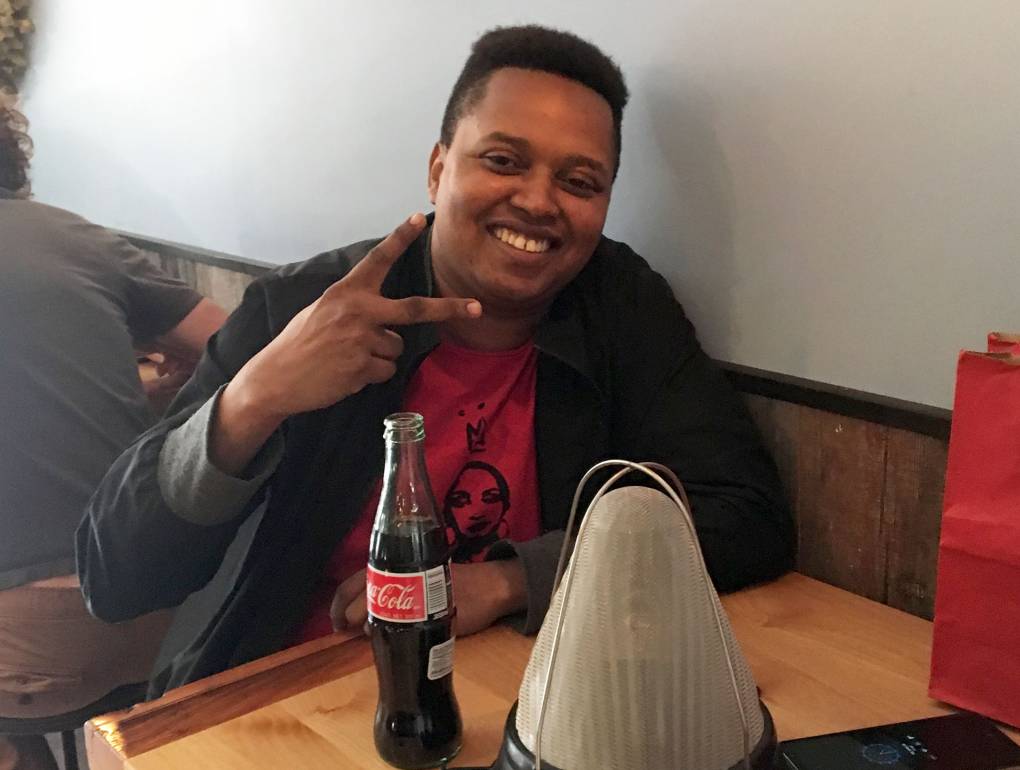
"caption": "Abderaman Oumar Yaide, a former San Francisco resident, was deported to his native Chad last year.",
"description": "Abderaman Oumar Yaide, a former San Francisco resident, was deported to his native Chad last year.",
"title": "Oumar-Yaide",
"credit": "Courtesy Pangea Legal Services",
"status": "inherit",
"isLoading": false,
"fetchFailed": false
},
"arts_13874543": {
"type": "attachments",
"id": "arts_13874543",
"meta": {
"index": "attachments_1716263798",
"site": "arts",
"id": "13874543",
"found": true
},
"parent": 13874503,
"imgSizes": {
"twentyfourteen-full-width": {
"file": "https://ww2.kqed.org/app/uploads/sites/2/2020/02/sf-pride-1038x576.jpg",
"width": 1038,
"mimeType": "image/jpeg",
"height": 576
},
"thumbnail": {
"file": "https://ww2.kqed.org/app/uploads/sites/2/2020/02/sf-pride-160x90.jpg",
"width": 160,
"mimeType": "image/jpeg",
"height": 90
},
"post-thumbnail": {
"file": "https://ww2.kqed.org/app/uploads/sites/2/2020/02/sf-pride-672x372.jpg",
"width": 672,
"mimeType": "image/jpeg",
"height": 372
},
"kqedFullSize": {
"file": "https://ww2.kqed.org/app/uploads/sites/2/2020/02/sf-pride.jpg",
"width": 1920,
"height": 1080
},
"large": {
"file": "https://ww2.kqed.org/app/uploads/sites/2/2020/02/sf-pride-1020x574.jpg",
"width": 1020,
"mimeType": "image/jpeg",
"height": 574
},
"full-width": {
"file": "https://ww2.kqed.org/app/uploads/sites/2/2020/02/sf-pride-1920x1080.jpg",
"width": 1920,
"mimeType": "image/jpeg",
"height": 1080
},
"medium": {
"file": "https://ww2.kqed.org/app/uploads/sites/2/2020/02/sf-pride-800x450.jpg",
"width": 800,
"mimeType": "image/jpeg",
"height": 450
},
"medium_large": {
"file": "https://ww2.kqed.org/app/uploads/sites/2/2020/02/sf-pride-768x432.jpg",
"width": 768,
"mimeType": "image/jpeg",
"height": 432
}
},
"publishDate": 1581028827,
"modified": 1581028902,
"caption": "People march during the San Francisco gay pride parade in San Francisco, California on June, 24, 2018.",
"description": "People march during the San Francisco gay pride parade in San Francisco, California on June, 24, 2018",
"title": "sf-pride",
"credit": "Josh Edelson/AFP via Getty Images",
"status": "inherit",
"isLoading": false,
"fetchFailed": false
},
"news_11794381": {
"type": "attachments",
"id": "news_11794381",
"meta": {
"index": "attachments_1716263798",
"site": "news",
"id": "11794381",
"found": true
},
"parent": 11794221,
"imgSizes": {
"apple_news_ca_landscape_5_5": {
"file": "https://ww2.kqed.org/app/uploads/sites/10/2020/01/PHOTO_Kat-6-qut-1044x783.jpg",
"width": 1044,
"mimeType": "image/jpeg",
"height": 783
},
"apple_news_ca_square_4_0": {
"file": "https://ww2.kqed.org/app/uploads/sites/10/2020/01/PHOTO_Kat-6-qut-470x470.jpg",
"width": 470,
"mimeType": "image/jpeg",
"height": 470
},
"twentyfourteen-full-width": {
"file": "https://ww2.kqed.org/app/uploads/sites/10/2020/01/PHOTO_Kat-6-qut-1038x576.jpg",
"width": 1038,
"mimeType": "image/jpeg",
"height": 576
},
"thumbnail": {
"file": "https://ww2.kqed.org/app/uploads/sites/10/2020/01/PHOTO_Kat-6-qut-160x90.jpg",
"width": 160,
"mimeType": "image/jpeg",
"height": 90
},
"post-thumbnail": {
"file": "https://ww2.kqed.org/app/uploads/sites/10/2020/01/PHOTO_Kat-6-qut-672x372.jpg",
"width": 672,
"mimeType": "image/jpeg",
"height": 372
},
"kqedFullSize": {
"file": "https://ww2.kqed.org/app/uploads/sites/10/2020/01/PHOTO_Kat-6-qut.jpg",
"width": 1920,
"height": 1080
},
"apple_news_ca_landscape_4_7": {
"file": "https://ww2.kqed.org/app/uploads/sites/10/2020/01/PHOTO_Kat-6-qut-632x474.jpg",
"width": 632,
"mimeType": "image/jpeg",
"height": 474
},
"large": {
"file": "https://ww2.kqed.org/app/uploads/sites/10/2020/01/PHOTO_Kat-6-qut-1020x574.jpg",
"width": 1020,
"mimeType": "image/jpeg",
"height": 574
},
"complete_open_graph": {
"file": "https://ww2.kqed.org/app/uploads/sites/10/2020/01/PHOTO_Kat-6-qut-1200x675.jpg",
"width": 1200,
"mimeType": "image/jpeg",
"height": 675
},
"apple_news_ca_landscape_4_0": {
"file": "https://ww2.kqed.org/app/uploads/sites/10/2020/01/PHOTO_Kat-6-qut-536x402.jpg",
"width": 536,
"mimeType": "image/jpeg",
"height": 402
},
"apple_news_ca_portrait_12_9": {
"file": "https://ww2.kqed.org/app/uploads/sites/10/2020/01/PHOTO_Kat-6-qut-1122x1080.jpg",
"width": 1122,
"mimeType": "image/jpeg",
"height": 1080
},
"medium": {
"file": "https://ww2.kqed.org/app/uploads/sites/10/2020/01/PHOTO_Kat-6-qut-800x450.jpg",
"width": 800,
"mimeType": "image/jpeg",
"height": 450
},
"apple_news_ca_portrait_4_0": {
"file": "https://ww2.kqed.org/app/uploads/sites/10/2020/01/PHOTO_Kat-6-qut-354x472.jpg",
"width": 354,
"mimeType": "image/jpeg",
"height": 472
},
"apple_news_ca_portrait_9_7": {
"file": "https://ww2.kqed.org/app/uploads/sites/10/2020/01/PHOTO_Kat-6-qut-840x1080.jpg",
"width": 840,
"mimeType": "image/jpeg",
"height": 1080
},
"apple_news_ca_landscape_12_9": {
"file": "https://ww2.kqed.org/app/uploads/sites/10/2020/01/PHOTO_Kat-6-qut-1832x1080.jpg",
"width": 1832,
"mimeType": "image/jpeg",
"height": 1080
},
"apple_news_ca_square_9_7": {
"file": "https://ww2.kqed.org/app/uploads/sites/10/2020/01/PHOTO_Kat-6-qut-1104x1080.jpg",
"width": 1104,
"mimeType": "image/jpeg",
"height": 1080
},
"apple_news_ca_portrait_4_7": {
"file": "https://ww2.kqed.org/app/uploads/sites/10/2020/01/PHOTO_Kat-6-qut-414x552.jpg",
"width": 414,
"mimeType": "image/jpeg",
"height": 552
},
"apple_news_ca_square_12_9": {
"file": "https://ww2.kqed.org/app/uploads/sites/10/2020/01/PHOTO_Kat-6-qut-1472x1080.jpg",
"width": 1472,
"mimeType": "image/jpeg",
"height": 1080
},
"apple_news_ca_portrait_5_5": {
"file": "https://ww2.kqed.org/app/uploads/sites/10/2020/01/PHOTO_Kat-6-qut-687x916.jpg",
"width": 687,
"mimeType": "image/jpeg",
"height": 916
},
"full-width": {
"file": "https://ww2.kqed.org/app/uploads/sites/10/2020/01/PHOTO_Kat-6-qut-1920x1080.jpg",
"width": 1920,
"mimeType": "image/jpeg",
"height": 1080
},
"apple_news_ca_square_4_7": {
"file": "https://ww2.kqed.org/app/uploads/sites/10/2020/01/PHOTO_Kat-6-qut-550x550.jpg",
"width": 550,
"mimeType": "image/jpeg",
"height": 550
},
"apple_news_ca_landscape_9_7": {
"file": "https://ww2.kqed.org/app/uploads/sites/10/2020/01/PHOTO_Kat-6-qut-1376x1032.jpg",
"width": 1376,
"mimeType": "image/jpeg",
"height": 1032
},
"apple_news_ca_square_5_5": {
"file": "https://ww2.kqed.org/app/uploads/sites/10/2020/01/PHOTO_Kat-6-qut-912x912.jpg",
"width": 912,
"mimeType": "image/jpeg",
"height": 912
}
},
"publishDate": 1578427150,
"modified": 1578519585,
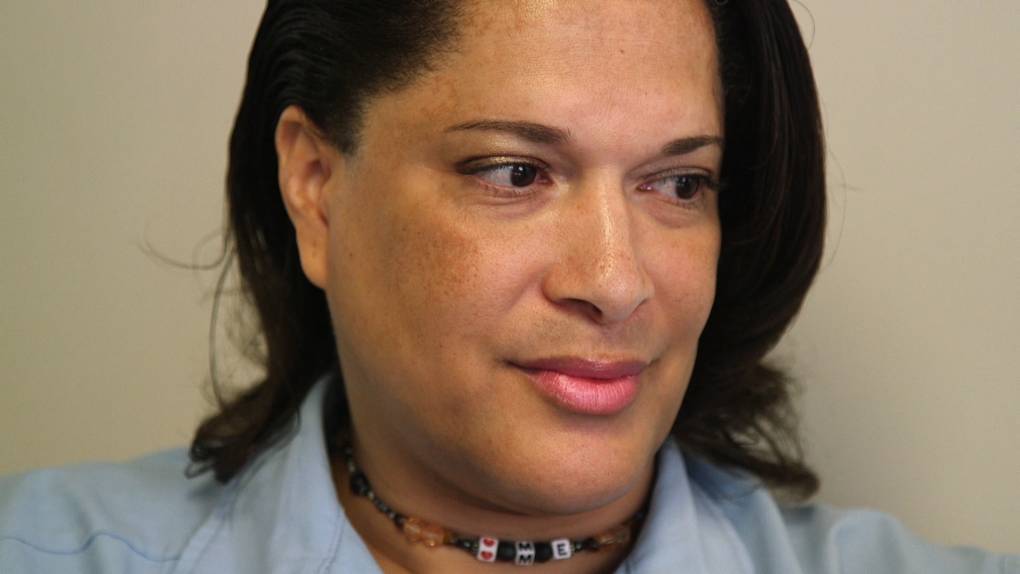
"caption": "Yekaterina Wesa Patience, a transgender woman housed at the California Medical Facility in Vacaville, on July 25, 2019.",
"description": "Yekaterina Wesa Patience, a transgender woman housed at the California Medical Facility in Vacaville, on July 25, 2019.",
"title": "PHOTO_Kat 6-qut",
"credit": "Monica Lam/KQED",
"status": "inherit",
"isLoading": false,
"fetchFailed": false
},
"arts_13871728": {
"type": "attachments",
"id": "arts_13871728",
"meta": {
"index": "attachments_1716263798",
"site": "arts",
"id": "13871728",
"found": true
},
"parent": 13871726,
"imgSizes": {
"twentyfourteen-full-width": {
"file": "https://ww2.kqed.org/app/uploads/sites/2/2019/12/Carlos-Uribe-1038x576.jpg",
"width": 1038,
"mimeType": "image/jpeg",
"height": 576
},
"thumbnail": {
"file": "https://ww2.kqed.org/app/uploads/sites/2/2019/12/Carlos-Uribe-160x90.jpg",
"width": 160,
"mimeType": "image/jpeg",
"height": 90
},
"post-thumbnail": {
"file": "https://ww2.kqed.org/app/uploads/sites/2/2019/12/Carlos-Uribe-672x372.jpg",
"width": 672,
"mimeType": "image/jpeg",
"height": 372
},
"kqedFullSize": {
"file": "https://ww2.kqed.org/app/uploads/sites/2/2019/12/Carlos-Uribe.jpg",
"width": 1920,
"height": 1080
},
"large": {
"file": "https://ww2.kqed.org/app/uploads/sites/2/2019/12/Carlos-Uribe-1020x574.jpg",
"width": 1020,
"mimeType": "image/jpeg",
"height": 574
},
"complete_open_graph": {
"file": "https://ww2.kqed.org/app/uploads/sites/2/2019/12/Carlos-Uribe-1200x675.jpg",
"width": 1200,
"mimeType": "image/jpeg",
"height": 675
},
"full-width": {
"file": "https://ww2.kqed.org/app/uploads/sites/2/2019/12/Carlos-Uribe-1920x1080.jpg",
"width": 1920,
"mimeType": "image/jpeg",
"height": 1080
},
"medium": {
"file": "https://ww2.kqed.org/app/uploads/sites/2/2019/12/Carlos-Uribe-800x450.jpg",
"width": 800,
"mimeType": "image/jpeg",
"height": 450
},
"medium_large": {
"file": "https://ww2.kqed.org/app/uploads/sites/2/2019/12/Carlos-Uribe-768x432.jpg",
"width": 768,
"mimeType": "image/jpeg",
"height": 432
}
},
"publishDate": 1576693583,
"modified": 1576693713,
"caption": "Carlos Uribe, general manager of Club 21 and Club BnB, sits upstairs at the Oakland nightclubs complex Dec. 17, 2019. ",
"description": "Carlos Uribe, general manager of Club 21 and Club BnB, sits upstairs at the Oakland nightclubs complex Dec. 17, 2019. ",
"title": "Carlos Uribe, general manager of Club 21 and Club BnB, sits upstairs at the Oakland nightclubs complex.",
"credit": "Sam Lefebvre/KQED",
"status": "inherit",
"isLoading": false,
"fetchFailed": false
},
"news_11724773": {
"type": "attachments",
"id": "news_11724773",
"meta": {
"index": "attachments_1716263798",
"site": "news",
"id": "11724773",
"found": true
},
"parent": 11724586,
"imgSizes": {
"twentyfourteen-full-width": {
"file": "https://ww2.kqed.org/app/uploads/sites/10/2019/02/Truvada-1038x576.jpg",
"width": 1038,
"mimeType": "image/jpeg",
"height": 576
},
"thumbnail": {
"file": "https://ww2.kqed.org/app/uploads/sites/10/2019/02/Truvada-160x104.jpg",
"width": 160,
"mimeType": "image/jpeg",
"height": 104
},
"post-thumbnail": {
"file": "https://ww2.kqed.org/app/uploads/sites/10/2019/02/Truvada-672x372.jpg",
"width": 672,
"mimeType": "image/jpeg",
"height": 372
},
"kqedFullSize": {
"file": "https://ww2.kqed.org/app/uploads/sites/10/2019/02/Truvada.jpg",
"width": 1920,
"height": 1244
},
"large": {
"file": "https://ww2.kqed.org/app/uploads/sites/10/2019/02/Truvada-1020x661.jpg",
"width": 1020,
"mimeType": "image/jpeg",
"height": 661
},
"complete_open_graph": {
"file": "https://ww2.kqed.org/app/uploads/sites/10/2019/02/Truvada-1200x778.jpg",
"width": 1200,
"mimeType": "image/jpeg",
"height": 778
},
"guest-author-50": {
"file": "https://ww2.kqed.org/app/uploads/sites/10/2019/02/Truvada-50x50.jpg",
"width": 50,
"mimeType": "image/jpeg",
"height": 50
},
"guest-author-96": {
"file": "https://ww2.kqed.org/app/uploads/sites/10/2019/02/Truvada-96x96.jpg",
"width": 96,
"mimeType": "image/jpeg",
"height": 96
},
"medium": {
"file": "https://ww2.kqed.org/app/uploads/sites/10/2019/02/Truvada-800x518.jpg",
"width": 800,
"mimeType": "image/jpeg",
"height": 518
},
"guest-author-64": {
"file": "https://ww2.kqed.org/app/uploads/sites/10/2019/02/Truvada-64x64.jpg",
"width": 64,
"mimeType": "image/jpeg",
"height": 64
},
"guest-author-32": {
"file": "https://ww2.kqed.org/app/uploads/sites/10/2019/02/Truvada-32x32.jpg",
"width": 32,
"mimeType": "image/jpeg",
"height": 32
},
"full-width": {
"file": "https://ww2.kqed.org/app/uploads/sites/10/2019/02/Truvada-1920x1244.jpg",
"width": 1920,
"mimeType": "image/jpeg",
"height": 1244
},
"detail": {
"file": "https://ww2.kqed.org/app/uploads/sites/10/2019/02/Truvada-150x150.jpg",
"width": 150,
"mimeType": "image/jpeg",
"height": 150
},
"guest-author-128": {
"file": "https://ww2.kqed.org/app/uploads/sites/10/2019/02/Truvada-128x128.jpg",
"width": 128,
"mimeType": "image/jpeg",
"height": 128
}
},
"publishDate": 1549661168,
"modified": 1549661209,
"caption": "Bottles of the antiretroviral drug Truvada.",
"description": "Bottles of the antiretroviral drug Truvada.",
"title": "Truvada",
"credit": "Justin Sullivan/Getty Images",
"status": "inherit",
"isLoading": false,
"fetchFailed": false
},
"news_11781816": {
"type": "attachments",
"id": "news_11781816",
"meta": {
"index": "attachments_1716263798",
"site": "news",
"id": "11781816",
"found": true
},
"parent": 11781775,
"imgSizes": {
"apple_news_ca_landscape_5_5": {
"file": "https://ww2.kqed.org/app/uploads/sites/10/2019/10/01.-MOONFACE-Podcast-Artwork-1044x783.jpg",
"width": 1044,
"mimeType": "image/jpeg",
"height": 783
},
"apple_news_ca_square_4_0": {
"file": "https://ww2.kqed.org/app/uploads/sites/10/2019/10/01.-MOONFACE-Podcast-Artwork-470x470.jpg",
"width": 470,
"mimeType": "image/jpeg",
"height": 470
},
"twentyfourteen-full-width": {
"file": "https://ww2.kqed.org/app/uploads/sites/10/2019/10/01.-MOONFACE-Podcast-Artwork-1038x576.jpg",
"width": 1038,
"mimeType": "image/jpeg",
"height": 576
},
"thumbnail": {
"file": "https://ww2.kqed.org/app/uploads/sites/10/2019/10/01.-MOONFACE-Podcast-Artwork-160x160.jpg",
"width": 160,
"mimeType": "image/jpeg",
"height": 160
},
"post-thumbnail": {
"file": "https://ww2.kqed.org/app/uploads/sites/10/2019/10/01.-MOONFACE-Podcast-Artwork-672x372.jpg",
"width": 672,
"mimeType": "image/jpeg",
"height": 372
},
"kqedFullSize": {
"file": "https://ww2.kqed.org/app/uploads/sites/10/2019/10/01.-MOONFACE-Podcast-Artwork.jpg",
"width": 3000,
"height": 3000
},
"apple_news_ca_landscape_4_7": {
"file": "https://ww2.kqed.org/app/uploads/sites/10/2019/10/01.-MOONFACE-Podcast-Artwork-632x474.jpg",
"width": 632,
"mimeType": "image/jpeg",
"height": 474
},
"large": {
"file": "https://ww2.kqed.org/app/uploads/sites/10/2019/10/01.-MOONFACE-Podcast-Artwork-1020x1020.jpg",
"width": 1020,
"mimeType": "image/jpeg",
"height": 1020
},
"complete_open_graph": {
"file": "https://ww2.kqed.org/app/uploads/sites/10/2019/10/01.-MOONFACE-Podcast-Artwork-1200x1200.jpg",
"width": 1200,
"mimeType": "image/jpeg",
"height": 1200
},
"apple_news_ca_landscape_4_0": {
"file": "https://ww2.kqed.org/app/uploads/sites/10/2019/10/01.-MOONFACE-Podcast-Artwork-536x402.jpg",
"width": 536,
"mimeType": "image/jpeg",
"height": 402
},
"apple_news_ca_portrait_12_9": {
"file": "https://ww2.kqed.org/app/uploads/sites/10/2019/10/01.-MOONFACE-Podcast-Artwork-1122x1496.jpg",
"width": 1122,
"mimeType": "image/jpeg",
"height": 1496
},
"medium": {
"file": "https://ww2.kqed.org/app/uploads/sites/10/2019/10/01.-MOONFACE-Podcast-Artwork-800x800.jpg",
"width": 800,
"mimeType": "image/jpeg",
"height": 800
},
"apple_news_ca_portrait_4_0": {
"file": "https://ww2.kqed.org/app/uploads/sites/10/2019/10/01.-MOONFACE-Podcast-Artwork-354x472.jpg",
"width": 354,
"mimeType": "image/jpeg",
"height": 472
},
"apple_news_ca_portrait_9_7": {
"file": "https://ww2.kqed.org/app/uploads/sites/10/2019/10/01.-MOONFACE-Podcast-Artwork-840x1120.jpg",
"width": 840,
"mimeType": "image/jpeg",
"height": 1120
},
"apple_news_ca_landscape_12_9": {
"file": "https://ww2.kqed.org/app/uploads/sites/10/2019/10/01.-MOONFACE-Podcast-Artwork-1832x1374.jpg",
"width": 1832,
"mimeType": "image/jpeg",
"height": 1374
},
"apple_news_ca_square_9_7": {
"file": "https://ww2.kqed.org/app/uploads/sites/10/2019/10/01.-MOONFACE-Podcast-Artwork-1104x1104.jpg",
"width": 1104,
"mimeType": "image/jpeg",
"height": 1104
},
"apple_news_ca_portrait_4_7": {
"file": "https://ww2.kqed.org/app/uploads/sites/10/2019/10/01.-MOONFACE-Podcast-Artwork-414x552.jpg",
"width": 414,
"mimeType": "image/jpeg",
"height": 552
},
"apple_news_ca_square_12_9": {
"file": "https://ww2.kqed.org/app/uploads/sites/10/2019/10/01.-MOONFACE-Podcast-Artwork-1472x1472.jpg",
"width": 1472,
"mimeType": "image/jpeg",
"height": 1472
},
"apple_news_ca_portrait_5_5": {
"file": "https://ww2.kqed.org/app/uploads/sites/10/2019/10/01.-MOONFACE-Podcast-Artwork-687x916.jpg",
"width": 687,
"mimeType": "image/jpeg",
"height": 916
},
"full-width": {
"file": "https://ww2.kqed.org/app/uploads/sites/10/2019/10/01.-MOONFACE-Podcast-Artwork-1920x1920.jpg",
"width": 1920,
"mimeType": "image/jpeg",
"height": 1920
},
"apple_news_ca_square_4_7": {
"file": "https://ww2.kqed.org/app/uploads/sites/10/2019/10/01.-MOONFACE-Podcast-Artwork-550x550.jpg",
"width": 550,
"mimeType": "image/jpeg",
"height": 550
},
"apple_news_ca_landscape_9_7": {
"file": "https://ww2.kqed.org/app/uploads/sites/10/2019/10/01.-MOONFACE-Podcast-Artwork-1376x1032.jpg",
"width": 1376,
"mimeType": "image/jpeg",
"height": 1032
},
"apple_news_ca_square_5_5": {
"file": "https://ww2.kqed.org/app/uploads/sites/10/2019/10/01.-MOONFACE-Podcast-Artwork-912x912.jpg",
"width": 912,
"mimeType": "image/jpeg",
"height": 912
}
},
"publishDate": 1571781653,
"modified": 1571781653,
"caption": null,
"description": null,
"title": "01. MOONFACE Podcast Artwork",
"credit": null,
"status": "inherit",
"isLoading": false,
"fetchFailed": false
},
"news_11779941": {
"type": "attachments",
"id": "news_11779941",
"meta": {
"index": "attachments_1716263798",
"site": "news",
"id": "11779941",
"found": true
},
"parent": 11779878,
"imgSizes": {
"apple_news_ca_square_4_0": {
"file": "https://ww2.kqed.org/app/uploads/sites/10/2019/10/GettyImages-1168450590-470x470.jpg",
"width": 470,
"mimeType": "image/jpeg",
"height": 470
},
"twentyfourteen-full-width": {
"file": "https://ww2.kqed.org/app/uploads/sites/10/2019/10/GettyImages-1168450590-1024x576.jpg",
"width": 1024,
"mimeType": "image/jpeg",
"height": 576
},
"thumbnail": {
"file": "https://ww2.kqed.org/app/uploads/sites/10/2019/10/GettyImages-1168450590-160x107.jpg",
"width": 160,
"mimeType": "image/jpeg",
"height": 107
},
"post-thumbnail": {
"file": "https://ww2.kqed.org/app/uploads/sites/10/2019/10/GettyImages-1168450590-672x372.jpg",
"width": 672,
"mimeType": "image/jpeg",
"height": 372
},
"kqedFullSize": {
"file": "https://ww2.kqed.org/app/uploads/sites/10/2019/10/GettyImages-1168450590.jpg",
"width": 1024,
"height": 683
},
"apple_news_ca_landscape_4_7": {
"file": "https://ww2.kqed.org/app/uploads/sites/10/2019/10/GettyImages-1168450590-632x474.jpg",
"width": 632,
"mimeType": "image/jpeg",
"height": 474
},
"large": {
"file": "https://ww2.kqed.org/app/uploads/sites/10/2019/10/GettyImages-1168450590-1020x680.jpg",
"width": 1020,
"mimeType": "image/jpeg",
"height": 680
},
"apple_news_ca_landscape_4_0": {
"file": "https://ww2.kqed.org/app/uploads/sites/10/2019/10/GettyImages-1168450590-536x402.jpg",
"width": 536,
"mimeType": "image/jpeg",
"height": 402
},
"medium": {
"file": "https://ww2.kqed.org/app/uploads/sites/10/2019/10/GettyImages-1168450590-800x534.jpg",
"width": 800,
"mimeType": "image/jpeg",
"height": 534
},
"apple_news_ca_portrait_4_0": {
"file": "https://ww2.kqed.org/app/uploads/sites/10/2019/10/GettyImages-1168450590-354x472.jpg",
"width": 354,
"mimeType": "image/jpeg",
"height": 472
},
"apple_news_ca_portrait_9_7": {
"file": "https://ww2.kqed.org/app/uploads/sites/10/2019/10/GettyImages-1168450590-840x683.jpg",
"width": 840,
"mimeType": "image/jpeg",
"height": 683
},
"apple_news_ca_portrait_4_7": {
"file": "https://ww2.kqed.org/app/uploads/sites/10/2019/10/GettyImages-1168450590-414x552.jpg",
"width": 414,
"mimeType": "image/jpeg",
"height": 552
},
"apple_news_ca_portrait_5_5": {
"file": "https://ww2.kqed.org/app/uploads/sites/10/2019/10/GettyImages-1168450590-687x683.jpg",
"width": 687,
"mimeType": "image/jpeg",
"height": 683
},
"apple_news_ca_square_4_7": {
"file": "https://ww2.kqed.org/app/uploads/sites/10/2019/10/GettyImages-1168450590-550x550.jpg",
"width": 550,
"mimeType": "image/jpeg",
"height": 550
},
"apple_news_ca_square_5_5": {
"file": "https://ww2.kqed.org/app/uploads/sites/10/2019/10/GettyImages-1168450590-912x683.jpg",
"width": 912,
"mimeType": "image/jpeg",
"height": 683
}
},
"publishDate": 1571069492,
"modified": 1571069542,
"caption": "Gov. Gavin Newsom at a press conference earlier this year.",
"description": "Gov. Gavin Newsom at a press conference earlier this year.",
"title": "California Governor Gavin Newsom And Attorney General Becerra Announce Legal Action On Immigration",
"credit": "Justin Sullivan/Getty Images",
"status": "inherit",
"isLoading": false,
"fetchFailed": false
},
"news_11770355": {
"type": "attachments",
"id": "news_11770355",
"meta": {
"index": "attachments_1716263798",
"site": "news",
"id": "11770355",
"found": true
},
"parent": 11770316,
"imgSizes": {
"apple_news_ca_landscape_5_5": {
"file": "https://ww2.kqed.org/app/uploads/sites/10/2019/08/GettyImages-958912264-1044x783.jpg",
"width": 1044,
"mimeType": "image/jpeg",
"height": 783
},
"apple_news_ca_square_4_0": {
"file": "https://ww2.kqed.org/app/uploads/sites/10/2019/08/GettyImages-958912264-470x470.jpg",
"width": 470,
"mimeType": "image/jpeg",
"height": 470
},
"twentyfourteen-full-width": {
"file": "https://ww2.kqed.org/app/uploads/sites/10/2019/08/GettyImages-958912264-1038x576.jpg",
"width": 1038,
"mimeType": "image/jpeg",
"height": 576
},
"thumbnail": {
"file": "https://ww2.kqed.org/app/uploads/sites/10/2019/08/GettyImages-958912264-160x108.jpg",
"width": 160,
"mimeType": "image/jpeg",
"height": 108
},
"post-thumbnail": {
"file": "https://ww2.kqed.org/app/uploads/sites/10/2019/08/GettyImages-958912264-672x372.jpg",
"width": 672,
"mimeType": "image/jpeg",
"height": 372
},
"kqedFullSize": {
"file": "https://ww2.kqed.org/app/uploads/sites/10/2019/08/GettyImages-958912264.jpg",
"width": 2048,
"height": 1378
},
"apple_news_ca_landscape_4_7": {
"file": "https://ww2.kqed.org/app/uploads/sites/10/2019/08/GettyImages-958912264-632x474.jpg",
"width": 632,
"mimeType": "image/jpeg",
"height": 474
},
"large": {
"file": "https://ww2.kqed.org/app/uploads/sites/10/2019/08/GettyImages-958912264-1020x686.jpg",
"width": 1020,
"mimeType": "image/jpeg",
"height": 686
},
"complete_open_graph": {
"file": "https://ww2.kqed.org/app/uploads/sites/10/2019/08/GettyImages-958912264-1200x807.jpg",
"width": 1200,
"mimeType": "image/jpeg",
"height": 807
},
"apple_news_ca_landscape_4_0": {
"file": "https://ww2.kqed.org/app/uploads/sites/10/2019/08/GettyImages-958912264-536x402.jpg",
"width": 536,
"mimeType": "image/jpeg",
"height": 402
},
"apple_news_ca_portrait_12_9": {
"file": "https://ww2.kqed.org/app/uploads/sites/10/2019/08/GettyImages-958912264-1122x1496.jpg",
"width": 1122,
"mimeType": "image/jpeg",
"height": 1496
},
"medium": {
"file": "https://ww2.kqed.org/app/uploads/sites/10/2019/08/GettyImages-958912264-800x538.jpg",
"width": 800,
"mimeType": "image/jpeg",
"height": 538
},
"apple_news_ca_portrait_4_0": {
"file": "https://ww2.kqed.org/app/uploads/sites/10/2019/08/GettyImages-958912264-354x472.jpg",
"width": 354,
"mimeType": "image/jpeg",
"height": 472
},
"apple_news_ca_portrait_9_7": {
"file": "https://ww2.kqed.org/app/uploads/sites/10/2019/08/GettyImages-958912264-840x1120.jpg",
"width": 840,
"mimeType": "image/jpeg",
"height": 1120
},
"apple_news_ca_landscape_12_9": {
"file": "https://ww2.kqed.org/app/uploads/sites/10/2019/08/GettyImages-958912264-1832x1374.jpg",
"width": 1832,
"mimeType": "image/jpeg",
"height": 1374
},
"apple_news_ca_square_9_7": {
"file": "https://ww2.kqed.org/app/uploads/sites/10/2019/08/GettyImages-958912264-1104x1104.jpg",
"width": 1104,
"mimeType": "image/jpeg",
"height": 1104
},
"apple_news_ca_portrait_4_7": {
"file": "https://ww2.kqed.org/app/uploads/sites/10/2019/08/GettyImages-958912264-414x552.jpg",
"width": 414,
"mimeType": "image/jpeg",
"height": 552
},
"apple_news_ca_square_12_9": {
"file": "https://ww2.kqed.org/app/uploads/sites/10/2019/08/GettyImages-958912264-1472x1472.jpg",
"width": 1472,
"mimeType": "image/jpeg",
"height": 1472
},
"apple_news_ca_portrait_5_5": {
"file": "https://ww2.kqed.org/app/uploads/sites/10/2019/08/GettyImages-958912264-687x916.jpg",
"width": 687,
"mimeType": "image/jpeg",
"height": 916
},
"full-width": {
"file": "https://ww2.kqed.org/app/uploads/sites/10/2019/08/GettyImages-958912264-1920x1292.jpg",
"width": 1920,
"mimeType": "image/jpeg",
"height": 1292
},
"apple_news_ca_square_4_7": {
"file": "https://ww2.kqed.org/app/uploads/sites/10/2019/08/GettyImages-958912264-550x550.jpg",
"width": 550,
"mimeType": "image/jpeg",
"height": 550
},
"apple_news_ca_landscape_9_7": {
"file": "https://ww2.kqed.org/app/uploads/sites/10/2019/08/GettyImages-958912264-1376x1032.jpg",
"width": 1376,
"mimeType": "image/jpeg",
"height": 1032
},
"apple_news_ca_square_5_5": {
"file": "https://ww2.kqed.org/app/uploads/sites/10/2019/08/GettyImages-958912264-912x912.jpg",
"width": 912,
"mimeType": "image/jpeg",
"height": 912
}
},
"publishDate": 1566935464,
"modified": 1566935516,
"caption": "San Francisco police chief Bill Scott at a news conference. ",
"description": "San Francisco police chief Bill Scott at a news conference. ",
"title": "San Francisco Mayor Mark Farrell And Police Chief Bill Scott To Announce 34 Million Dollar Public Safety Initiative",
"credit": "Justin Sullivan/Getty Images",
"status": "inherit",
"isLoading": false,
"fetchFailed": false
},
"news_11768137": {
"type": "attachments",
"id": "news_11768137",
"meta": {
"index": "attachments_1716263798",
"site": "news",
"id": "11768137",
"found": true
},
"parent": 11768015,
"imgSizes": {
"apple_news_ca_landscape_5_5": {
"file": "https://ww2.kqed.org/app/uploads/sites/10/2019/08/Block-Party-WeHo-1044x783.jpg",
"width": 1044,
"mimeType": "image/jpeg",
"height": 783
},
"apple_news_ca_square_4_0": {
"file": "https://ww2.kqed.org/app/uploads/sites/10/2019/08/Block-Party-WeHo-470x470.jpg",
"width": 470,
"mimeType": "image/jpeg",
"height": 470
},
"twentyfourteen-full-width": {
"file": "https://ww2.kqed.org/app/uploads/sites/10/2019/08/Block-Party-WeHo-1038x576.jpg",
"width": 1038,
"mimeType": "image/jpeg",
"height": 576
},
"thumbnail": {
"file": "https://ww2.kqed.org/app/uploads/sites/10/2019/08/Block-Party-WeHo-160x95.jpg",
"width": 160,
"mimeType": "image/jpeg",
"height": 95
},
"post-thumbnail": {
"file": "https://ww2.kqed.org/app/uploads/sites/10/2019/08/Block-Party-WeHo-672x372.jpg",
"width": 672,
"mimeType": "image/jpeg",
"height": 372
},
"kqedFullSize": {
"file": "https://ww2.kqed.org/app/uploads/sites/10/2019/08/Block-Party-WeHo.jpg",
"width": 1920,
"height": 1137
},
"apple_news_ca_landscape_4_7": {
"file": "https://ww2.kqed.org/app/uploads/sites/10/2019/08/Block-Party-WeHo-632x474.jpg",
"width": 632,
"mimeType": "image/jpeg",
"height": 474
},
"large": {
"file": "https://ww2.kqed.org/app/uploads/sites/10/2019/08/Block-Party-WeHo-1020x604.jpg",
"width": 1020,
"mimeType": "image/jpeg",
"height": 604
},
"complete_open_graph": {
"file": "https://ww2.kqed.org/app/uploads/sites/10/2019/08/Block-Party-WeHo-1200x711.jpg",
"width": 1200,
"mimeType": "image/jpeg",
"height": 711
},
"apple_news_ca_landscape_4_0": {
"file": "https://ww2.kqed.org/app/uploads/sites/10/2019/08/Block-Party-WeHo-536x402.jpg",
"width": 536,
"mimeType": "image/jpeg",
"height": 402
},
"apple_news_ca_portrait_12_9": {
"file": "https://ww2.kqed.org/app/uploads/sites/10/2019/08/Block-Party-WeHo-1122x1137.jpg",
"width": 1122,
"mimeType": "image/jpeg",
"height": 1137
},
"medium": {
"file": "https://ww2.kqed.org/app/uploads/sites/10/2019/08/Block-Party-WeHo-800x474.jpg",
"width": 800,
"mimeType": "image/jpeg",
"height": 474
},
"apple_news_ca_portrait_4_0": {
"file": "https://ww2.kqed.org/app/uploads/sites/10/2019/08/Block-Party-WeHo-354x472.jpg",
"width": 354,
"mimeType": "image/jpeg",
"height": 472
},
"apple_news_ca_portrait_9_7": {
"file": "https://ww2.kqed.org/app/uploads/sites/10/2019/08/Block-Party-WeHo-840x1120.jpg",
"width": 840,
"mimeType": "image/jpeg",
"height": 1120
},
"apple_news_ca_landscape_12_9": {
"file": "https://ww2.kqed.org/app/uploads/sites/10/2019/08/Block-Party-WeHo-1832x1137.jpg",
"width": 1832,
"mimeType": "image/jpeg",
"height": 1137
},
"apple_news_ca_square_9_7": {
"file": "https://ww2.kqed.org/app/uploads/sites/10/2019/08/Block-Party-WeHo-1104x1104.jpg",
"width": 1104,
"mimeType": "image/jpeg",
"height": 1104
},
"apple_news_ca_portrait_4_7": {
"file": "https://ww2.kqed.org/app/uploads/sites/10/2019/08/Block-Party-WeHo-414x552.jpg",
"width": 414,
"mimeType": "image/jpeg",
"height": 552
},
"apple_news_ca_square_12_9": {
"file": "https://ww2.kqed.org/app/uploads/sites/10/2019/08/Block-Party-WeHo-1472x1137.jpg",
"width": 1472,
"mimeType": "image/jpeg",
"height": 1137
},
"apple_news_ca_portrait_5_5": {
"file": "https://ww2.kqed.org/app/uploads/sites/10/2019/08/Block-Party-WeHo-687x916.jpg",
"width": 687,
"mimeType": "image/jpeg",
"height": 916
},
"full-width": {
"file": "https://ww2.kqed.org/app/uploads/sites/10/2019/08/Block-Party-WeHo-1920x1137.jpg",
"width": 1920,
"mimeType": "image/jpeg",
"height": 1137
},
"apple_news_ca_square_4_7": {
"file": "https://ww2.kqed.org/app/uploads/sites/10/2019/08/Block-Party-WeHo-550x550.jpg",
"width": 550,
"mimeType": "image/jpeg",
"height": 550
},
"apple_news_ca_landscape_9_7": {
"file": "https://ww2.kqed.org/app/uploads/sites/10/2019/08/Block-Party-WeHo-1376x1032.jpg",
"width": 1376,
"mimeType": "image/jpeg",
"height": 1032
},
"apple_news_ca_square_5_5": {
"file": "https://ww2.kqed.org/app/uploads/sites/10/2019/08/Block-Party-WeHo-912x912.jpg",
"width": 912,
"mimeType": "image/jpeg",
"height": 912
}
},
"publishDate": 1565998064,
"modified": 1565998199,
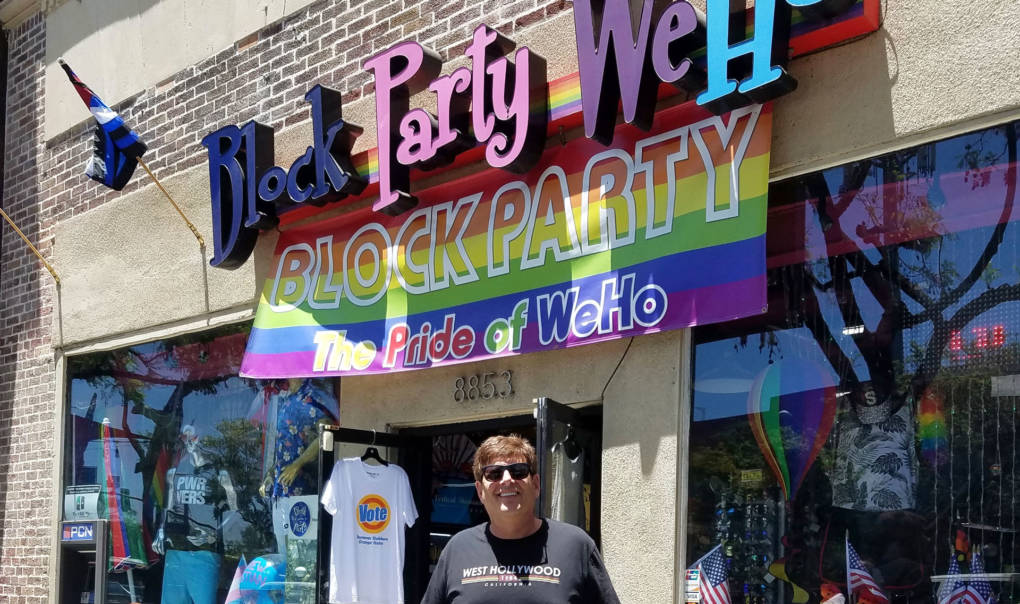
"caption": "Larry Block owns Block Party, one of a handful of gay-owned and gay-centric shops left on Santa Monica Blvd in West Hollywood. He worries the neighborhood is changing too much with all of the new mainstream businesses coming in. He’s lived in WeHo since 1985.",
"description": "Larry Block owns Block Party, one of a handful of gay-owned and gay-centric shops left on Santa Monica Blvd in West Hollywood. He worries the neighborhood is changing too much with all of the new mainstream businesses coming in. He’s lived in WeHo since 1985.",
"title": "Block-Party-WeHo",
"credit": "Elizabeth Aguilera/KPCC",
"status": "inherit",
"isLoading": false,
"fetchFailed": false
},
"news_11767993": {
"type": "attachments",
"id": "news_11767993",
"meta": {
"index": "attachments_1716263798",
"site": "news",
"id": "11767993",
"found": true
},
"parent": 11767976,
"imgSizes": {
"apple_news_ca_landscape_5_5": {
"file": "https://ww2.kqed.org/app/uploads/sites/10/2019/08/08162019_transgender-march_transgender-rights_transgender-students-qut-1044x783.jpg",
"width": 1044,
"mimeType": "image/jpeg",
"height": 783
},
"apple_news_ca_square_4_0": {
"file": "https://ww2.kqed.org/app/uploads/sites/10/2019/08/08162019_transgender-march_transgender-rights_transgender-students-qut-470x470.jpg",
"width": 470,
"mimeType": "image/jpeg",
"height": 470
},
"twentyfourteen-full-width": {
"file": "https://ww2.kqed.org/app/uploads/sites/10/2019/08/08162019_transgender-march_transgender-rights_transgender-students-qut-1038x576.jpg",
"width": 1038,
"mimeType": "image/jpeg",
"height": 576
},
"thumbnail": {
"file": "https://ww2.kqed.org/app/uploads/sites/10/2019/08/08162019_transgender-march_transgender-rights_transgender-students-qut-160x102.jpg",
"width": 160,
"mimeType": "image/jpeg",
"height": 102
},
"post-thumbnail": {
"file": "https://ww2.kqed.org/app/uploads/sites/10/2019/08/08162019_transgender-march_transgender-rights_transgender-students-qut-672x372.jpg",
"width": 672,
"mimeType": "image/jpeg",
"height": 372
},
"kqedFullSize": {
"file": "https://ww2.kqed.org/app/uploads/sites/10/2019/08/08162019_transgender-march_transgender-rights_transgender-students-qut.jpg",
"width": 1920,
"height": 1220
},
"apple_news_ca_landscape_4_7": {
"file": "https://ww2.kqed.org/app/uploads/sites/10/2019/08/08162019_transgender-march_transgender-rights_transgender-students-qut-632x474.jpg",
"width": 632,
"mimeType": "image/jpeg",
"height": 474
},
"large": {
"file": "https://ww2.kqed.org/app/uploads/sites/10/2019/08/08162019_transgender-march_transgender-rights_transgender-students-qut-1020x648.jpg",
"width": 1020,
"mimeType": "image/jpeg",
"height": 648
},
"complete_open_graph": {
"file": "https://ww2.kqed.org/app/uploads/sites/10/2019/08/08162019_transgender-march_transgender-rights_transgender-students-qut-1200x763.jpg",
"width": 1200,
"mimeType": "image/jpeg",
"height": 763
},
"apple_news_ca_landscape_4_0": {
"file": "https://ww2.kqed.org/app/uploads/sites/10/2019/08/08162019_transgender-march_transgender-rights_transgender-students-qut-536x402.jpg",
"width": 536,
"mimeType": "image/jpeg",
"height": 402
},
"apple_news_ca_portrait_12_9": {
"file": "https://ww2.kqed.org/app/uploads/sites/10/2019/08/08162019_transgender-march_transgender-rights_transgender-students-qut-1122x1220.jpg",
"width": 1122,
"mimeType": "image/jpeg",
"height": 1220
},
"medium": {
"file": "https://ww2.kqed.org/app/uploads/sites/10/2019/08/08162019_transgender-march_transgender-rights_transgender-students-qut-800x508.jpg",
"width": 800,
"mimeType": "image/jpeg",
"height": 508
},
"apple_news_ca_portrait_4_0": {
"file": "https://ww2.kqed.org/app/uploads/sites/10/2019/08/08162019_transgender-march_transgender-rights_transgender-students-qut-354x472.jpg",
"width": 354,
"mimeType": "image/jpeg",
"height": 472
},
"apple_news_ca_portrait_9_7": {
"file": "https://ww2.kqed.org/app/uploads/sites/10/2019/08/08162019_transgender-march_transgender-rights_transgender-students-qut-840x1120.jpg",
"width": 840,
"mimeType": "image/jpeg",
"height": 1120
},
"apple_news_ca_landscape_12_9": {
"file": "https://ww2.kqed.org/app/uploads/sites/10/2019/08/08162019_transgender-march_transgender-rights_transgender-students-qut-1832x1220.jpg",
"width": 1832,
"mimeType": "image/jpeg",
"height": 1220
},
"apple_news_ca_square_9_7": {
"file": "https://ww2.kqed.org/app/uploads/sites/10/2019/08/08162019_transgender-march_transgender-rights_transgender-students-qut-1104x1104.jpg",
"width": 1104,
"mimeType": "image/jpeg",
"height": 1104
},
"apple_news_ca_portrait_4_7": {
"file": "https://ww2.kqed.org/app/uploads/sites/10/2019/08/08162019_transgender-march_transgender-rights_transgender-students-qut-414x552.jpg",
"width": 414,
"mimeType": "image/jpeg",
"height": 552
},
"apple_news_ca_square_12_9": {
"file": "https://ww2.kqed.org/app/uploads/sites/10/2019/08/08162019_transgender-march_transgender-rights_transgender-students-qut-1472x1220.jpg",
"width": 1472,
"mimeType": "image/jpeg",
"height": 1220
},
"apple_news_ca_portrait_5_5": {
"file": "https://ww2.kqed.org/app/uploads/sites/10/2019/08/08162019_transgender-march_transgender-rights_transgender-students-qut-687x916.jpg",
"width": 687,
"mimeType": "image/jpeg",
"height": 916
},
"full-width": {
"file": "https://ww2.kqed.org/app/uploads/sites/10/2019/08/08162019_transgender-march_transgender-rights_transgender-students-qut-1920x1220.jpg",
"width": 1920,
"mimeType": "image/jpeg",
"height": 1220
},
"apple_news_ca_square_4_7": {
"file": "https://ww2.kqed.org/app/uploads/sites/10/2019/08/08162019_transgender-march_transgender-rights_transgender-students-qut-550x550.jpg",
"width": 550,
"mimeType": "image/jpeg",
"height": 550
},
"apple_news_ca_landscape_9_7": {
"file": "https://ww2.kqed.org/app/uploads/sites/10/2019/08/08162019_transgender-march_transgender-rights_transgender-students-qut-1376x1032.jpg",
"width": 1376,
"mimeType": "image/jpeg",
"height": 1032
},
"apple_news_ca_square_5_5": {
"file": "https://ww2.kqed.org/app/uploads/sites/10/2019/08/08162019_transgender-march_transgender-rights_transgender-students-qut-912x912.jpg",
"width": 912,
"mimeType": "image/jpeg",
"height": 912
}
},
"publishDate": 1565981677,
"modified": 1565981833,
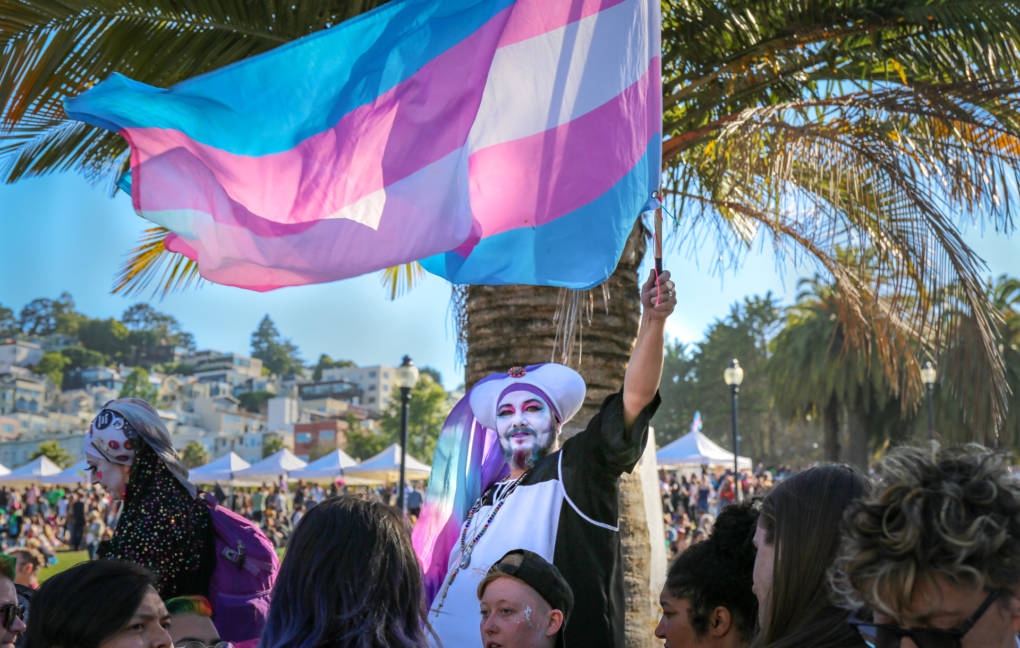
"caption": "A member of the Sisters of Perpetual Indulgence waves the transgender pride flag at Dolores Park during San Francisco Pride's Trans March on June 28, 2019.",
"description": null,
"title": "08162019_transgender march_transgender rights_transgender students-qut",
"credit": "Sruti Mamidanna/KQED",
"status": "inherit",
"isLoading": false,
"fetchFailed": false
},
"news_11767679": {
"type": "attachments",
"id": "news_11767679",
"meta": {
"index": "attachments_1716263798",
"site": "news",
"id": "11767679",
"found": true
},
"parent": 11767585,
"imgSizes": {
"apple_news_ca_landscape_5_5": {
"file": "https://ww2.kqed.org/app/uploads/sites/10/2019/08/RS15786_GettyImages-478632636-qut-1044x783.jpg",
"width": 1044,
"mimeType": "image/jpeg",
"height": 783
},
"apple_news_ca_square_4_0": {
"file": "https://ww2.kqed.org/app/uploads/sites/10/2019/08/RS15786_GettyImages-478632636-qut-470x470.jpg",
"width": 470,
"mimeType": "image/jpeg",
"height": 470
},
"twentyfourteen-full-width": {
"file": "https://ww2.kqed.org/app/uploads/sites/10/2019/08/RS15786_GettyImages-478632636-qut-1038x576.jpg",
"width": 1038,
"mimeType": "image/jpeg",
"height": 576
},
"thumbnail": {
"file": "https://ww2.kqed.org/app/uploads/sites/10/2019/08/RS15786_GettyImages-478632636-qut-160x105.jpg",
"width": 160,
"mimeType": "image/jpeg",
"height": 105
},
"post-thumbnail": {
"file": "https://ww2.kqed.org/app/uploads/sites/10/2019/08/RS15786_GettyImages-478632636-qut-672x372.jpg",
"width": 672,
"mimeType": "image/jpeg",
"height": 372
},
"kqedFullSize": {
"file": "https://ww2.kqed.org/app/uploads/sites/10/2019/08/RS15786_GettyImages-478632636-qut.jpg",
"width": 1920,
"height": 1256
},
"apple_news_ca_landscape_4_7": {
"file": "https://ww2.kqed.org/app/uploads/sites/10/2019/08/RS15786_GettyImages-478632636-qut-632x474.jpg",
"width": 632,
"mimeType": "image/jpeg",
"height": 474
},
"large": {
"file": "https://ww2.kqed.org/app/uploads/sites/10/2019/08/RS15786_GettyImages-478632636-qut-1020x667.jpg",
"width": 1020,
"mimeType": "image/jpeg",
"height": 667
},
"complete_open_graph": {
"file": "https://ww2.kqed.org/app/uploads/sites/10/2019/08/RS15786_GettyImages-478632636-qut-1200x785.jpg",
"width": 1200,
"mimeType": "image/jpeg",
"height": 785
},
"apple_news_ca_landscape_4_0": {
"file": "https://ww2.kqed.org/app/uploads/sites/10/2019/08/RS15786_GettyImages-478632636-qut-536x402.jpg",
"width": 536,
"mimeType": "image/jpeg",
"height": 402
},
"apple_news_ca_portrait_12_9": {
"file": "https://ww2.kqed.org/app/uploads/sites/10/2019/08/RS15786_GettyImages-478632636-qut-1122x1256.jpg",
"width": 1122,
"mimeType": "image/jpeg",
"height": 1256
},
"medium": {
"file": "https://ww2.kqed.org/app/uploads/sites/10/2019/08/RS15786_GettyImages-478632636-qut-800x523.jpg",
"width": 800,
"mimeType": "image/jpeg",
"height": 523
},
"apple_news_ca_portrait_4_0": {
"file": "https://ww2.kqed.org/app/uploads/sites/10/2019/08/RS15786_GettyImages-478632636-qut-354x472.jpg",
"width": 354,
"mimeType": "image/jpeg",
"height": 472
},
"apple_news_ca_portrait_9_7": {
"file": "https://ww2.kqed.org/app/uploads/sites/10/2019/08/RS15786_GettyImages-478632636-qut-840x1120.jpg",
"width": 840,
"mimeType": "image/jpeg",
"height": 1120
},
"apple_news_ca_landscape_12_9": {
"file": "https://ww2.kqed.org/app/uploads/sites/10/2019/08/RS15786_GettyImages-478632636-qut-1832x1256.jpg",
"width": 1832,
"mimeType": "image/jpeg",
"height": 1256
},
"apple_news_ca_square_9_7": {
"file": "https://ww2.kqed.org/app/uploads/sites/10/2019/08/RS15786_GettyImages-478632636-qut-1104x1104.jpg",
"width": 1104,
"mimeType": "image/jpeg",
"height": 1104
},
"apple_news_ca_portrait_4_7": {
"file": "https://ww2.kqed.org/app/uploads/sites/10/2019/08/RS15786_GettyImages-478632636-qut-414x552.jpg",
"width": 414,
"mimeType": "image/jpeg",
"height": 552
},
"apple_news_ca_square_12_9": {
"file": "https://ww2.kqed.org/app/uploads/sites/10/2019/08/RS15786_GettyImages-478632636-qut-1472x1256.jpg",
"width": 1472,
"mimeType": "image/jpeg",
"height": 1256
},
"apple_news_ca_portrait_5_5": {
"file": "https://ww2.kqed.org/app/uploads/sites/10/2019/08/RS15786_GettyImages-478632636-qut-687x916.jpg",
"width": 687,
"mimeType": "image/jpeg",
"height": 916
},
"full-width": {
"file": "https://ww2.kqed.org/app/uploads/sites/10/2019/08/RS15786_GettyImages-478632636-qut-1920x1256.jpg",
"width": 1920,
"mimeType": "image/jpeg",
"height": 1256
},
"apple_news_ca_square_4_7": {
"file": "https://ww2.kqed.org/app/uploads/sites/10/2019/08/RS15786_GettyImages-478632636-qut-550x550.jpg",
"width": 550,
"mimeType": "image/jpeg",
"height": 550
},
"apple_news_ca_landscape_9_7": {
"file": "https://ww2.kqed.org/app/uploads/sites/10/2019/08/RS15786_GettyImages-478632636-qut-1376x1032.jpg",
"width": 1376,
"mimeType": "image/jpeg",
"height": 1032
},
"apple_news_ca_square_5_5": {
"file": "https://ww2.kqed.org/app/uploads/sites/10/2019/08/RS15786_GettyImages-478632636-qut-912x912.jpg",
"width": 912,
"mimeType": "image/jpeg",
"height": 912
}
},
"publishDate": 1565828110,
"modified": 1565828157,
"caption": "Eight LGBTQ+ YouTube content creators are suing the platform over alleged discrimination. ",
"description": null,
"title": "RS15786_GettyImages-478632636-qut",
"credit": "MLADEN ANTONOV",
"status": "inherit",
"isLoading": false,
"fetchFailed": false
},
"news_11762018": {
"type": "attachments",
"id": "news_11762018",
"meta": {
"index": "attachments_1716263798",
"site": "news",
"id": "11762018",
"found": true
},
"parent": 11761995,
"imgSizes": {
"apple_news_ca_landscape_5_5": {
"file": "https://ww2.kqed.org/app/uploads/sites/10/2019/07/renamingberkeley_071719_final-1044x783.jpg",
"width": 1044,
"mimeType": "image/jpeg",
"height": 783
},
"apple_news_ca_square_4_0": {
"file": "https://ww2.kqed.org/app/uploads/sites/10/2019/07/renamingberkeley_071719_final-470x470.jpg",
"width": 470,
"mimeType": "image/jpeg",
"height": 470
},
"twentyfourteen-full-width": {
"file": "https://ww2.kqed.org/app/uploads/sites/10/2019/07/renamingberkeley_071719_final-1038x576.jpg",
"width": 1038,
"mimeType": "image/jpeg",
"height": 576
},
"thumbnail": {
"file": "https://ww2.kqed.org/app/uploads/sites/10/2019/07/renamingberkeley_071719_final-160x115.jpg",
"width": 160,
"mimeType": "image/jpeg",
"height": 115
},
"post-thumbnail": {
"file": "https://ww2.kqed.org/app/uploads/sites/10/2019/07/renamingberkeley_071719_final-672x372.jpg",
"width": 672,
"mimeType": "image/jpeg",
"height": 372
},
"kqedFullSize": {
"file": "https://ww2.kqed.org/app/uploads/sites/10/2019/07/renamingberkeley_071719_final.jpg",
"width": 1920,
"height": 1381
},
"apple_news_ca_landscape_4_7": {
"file": "https://ww2.kqed.org/app/uploads/sites/10/2019/07/renamingberkeley_071719_final-632x474.jpg",
"width": 632,
"mimeType": "image/jpeg",
"height": 474
},
"large": {
"file": "https://ww2.kqed.org/app/uploads/sites/10/2019/07/renamingberkeley_071719_final-1020x734.jpg",
"width": 1020,
"mimeType": "image/jpeg",
"height": 734
},
"complete_open_graph": {
"file": "https://ww2.kqed.org/app/uploads/sites/10/2019/07/renamingberkeley_071719_final-1200x863.jpg",
"width": 1200,
"mimeType": "image/jpeg",
"height": 863
},
"apple_news_ca_landscape_4_0": {
"file": "https://ww2.kqed.org/app/uploads/sites/10/2019/07/renamingberkeley_071719_final-536x402.jpg",
"width": 536,
"mimeType": "image/jpeg",
"height": 402
},
"apple_news_ca_portrait_12_9": {
"file": "https://ww2.kqed.org/app/uploads/sites/10/2019/07/renamingberkeley_071719_final-1122x1381.jpg",
"width": 1122,
"mimeType": "image/jpeg",
"height": 1381
},
"medium": {
"file": "https://ww2.kqed.org/app/uploads/sites/10/2019/07/renamingberkeley_071719_final-800x575.jpg",
"width": 800,
"mimeType": "image/jpeg",
"height": 575
},
"apple_news_ca_portrait_4_0": {
"file": "https://ww2.kqed.org/app/uploads/sites/10/2019/07/renamingberkeley_071719_final-354x472.jpg",
"width": 354,
"mimeType": "image/jpeg",
"height": 472
},
"apple_news_ca_portrait_9_7": {
"file": "https://ww2.kqed.org/app/uploads/sites/10/2019/07/renamingberkeley_071719_final-840x1120.jpg",
"width": 840,
"mimeType": "image/jpeg",
"height": 1120
},
"apple_news_ca_landscape_12_9": {
"file": "https://ww2.kqed.org/app/uploads/sites/10/2019/07/renamingberkeley_071719_final-1832x1374.jpg",
"width": 1832,
"mimeType": "image/jpeg",
"height": 1374
},
"apple_news_ca_square_9_7": {
"file": "https://ww2.kqed.org/app/uploads/sites/10/2019/07/renamingberkeley_071719_final-1104x1104.jpg",
"width": 1104,
"mimeType": "image/jpeg",
"height": 1104
},
"apple_news_ca_portrait_4_7": {
"file": "https://ww2.kqed.org/app/uploads/sites/10/2019/07/renamingberkeley_071719_final-414x552.jpg",
"width": 414,
"mimeType": "image/jpeg",
"height": 552
},
"apple_news_ca_square_12_9": {
"file": "https://ww2.kqed.org/app/uploads/sites/10/2019/07/renamingberkeley_071719_final-1472x1381.jpg",
"width": 1472,
"mimeType": "image/jpeg",
"height": 1381
},
"apple_news_ca_portrait_5_5": {
"file": "https://ww2.kqed.org/app/uploads/sites/10/2019/07/renamingberkeley_071719_final-687x916.jpg",
"width": 687,
"mimeType": "image/jpeg",
"height": 916
},
"full-width": {
"file": "https://ww2.kqed.org/app/uploads/sites/10/2019/07/renamingberkeley_071719_final-1920x1381.jpg",
"width": 1920,
"mimeType": "image/jpeg",
"height": 1381
},
"apple_news_ca_square_4_7": {
"file": "https://ww2.kqed.org/app/uploads/sites/10/2019/07/renamingberkeley_071719_final-550x550.jpg",
"width": 550,
"mimeType": "image/jpeg",
"height": 550
},
"apple_news_ca_landscape_9_7": {
"file": "https://ww2.kqed.org/app/uploads/sites/10/2019/07/renamingberkeley_071719_final-1376x1032.jpg",
"width": 1376,
"mimeType": "image/jpeg",
"height": 1032
},
"apple_news_ca_square_5_5": {
"file": "https://ww2.kqed.org/app/uploads/sites/10/2019/07/renamingberkeley_071719_final-912x912.jpg",
"width": 912,
"mimeType": "image/jpeg",
"height": 912
}
},
"publishDate": 1563402828,
"modified": 1563402866,
"caption": null,
"description": null,
"title": "renamingberkeley_071719_final",
"credit": null,
"status": "inherit",
"isLoading": false,
"fetchFailed": false
}
},
"audioPlayerReducer": {
"postId": "stream_live",
"isPaused": true,
"isPlaying": false,
"pfsActive": false,
"pledgeModalIsOpen": true,
"playerDrawerIsOpen": false,
"liveAudioPlayStartedAt": 0,
"liveAudioPlayContext": ""
},
"authorsReducer": {
"byline_news_11770316": {
"type": "authors",
"id": "byline_news_11770316",
"meta": {
"override": true
},
"slug": "byline_news_11770316",
"name": "Associated Press",
"isLoading": false
},
"byline_news_11768015": {
"type": "authors",
"id": "byline_news_11768015",
"meta": {
"override": true
},
"slug": "byline_news_11768015",
"name": "\u003ca href= \"https://calmatters.org/author/elizabeth-aguilera/\"> Elizabeth Aguilera \u003ca/>",
"isLoading": false
},
"byline_news_11767976": {
"type": "authors",
"id": "byline_news_11767976",
"meta": {
"override": true
},
"slug": "byline_news_11767976",
"name": "The Associated Press",
"isLoading": false
},
"rachael-myrow": {
"type": "authors",
"id": "251",
"meta": {
"index": "authors_1716337520",
"id": "251",
"found": true
},
"name": "Rachael Myrow",
"firstName": "Rachael",
"lastName": "Myrow",
"slug": "rachael-myrow",
"email": "rmyrow@kqed.org",
"display_author_email": true,
"staff_mastheads": [
"news"
],
"title": "Senior Editor of KQED's Silicon Valley News Desk",
"bio": "• I write and edit stories about how Silicon Valley power and policies shape everyday life in California. I’m also passionate about making Bay Area history and culture more accessible to a broad public. • I’ve been a journalist for most of my life, starting in high school with The Franklin Press in Los Angeles, where I grew up. While earning my first degree in English at UC Berkeley, I got my start in public radio at KALX-FM. After completing a second degree in journalism at Cal, I landed my first professional job at Marketplace, then moved on to KPCC (now LAist), and then KQED, where I hosted The California Report for more than seven years. • My reporting has appeared on NPR, The World, WBUR’s \u003ci>Here & Now\u003c/i>, and the BBC. I also guest host for KQED’s \u003ci>Forum\u003c/i>, as well as the Commonwealth Club in San Francisco. • I speak periodically on media, democracy and technology issues, and do voiceover work for documentaries and educational video projects. • Outside of the studio, you'll find me hiking Bay Area trails and whipping up Insta-ready meals in my kitchen. • I do not accept gifts, money, or favors from anyone connected to my reporting, I don't pay people for information, and I do not support or donate to political causes. • I strive to treat the people I report on with fairness, honesty, and respect. I also recognize there are often multiple sides to a story and work to verify information through multiple sources and documentation. If I get something wrong, I correct it.",
"avatar": "https://secure.gravatar.com/avatar/3ed8a3c5f26025e4a805ba634cda8cd764906b97438a6d9ce216b044e340da4e?s=600&d=blank&r=g",
"twitter": "rachaelmyrow",
"bluesky": null,
"facebook": null,
"instagram": null,
"linkedin": "https://www.linkedin.com/in/rachaelmyrow/",
"sites": [
{
"site": "arts",
"roles": [
"administrator"
]
},
{
"site": "news",
"roles": [
"edit_others_posts",
"editor"
]
},
{
"site": "futureofyou",
"roles": [
"editor"
]
},
{
"site": "bayareabites",
"roles": [
"editor"
]
},
{
"site": "stateofhealth",
"roles": [
"editor"
]
},
{
"site": "science",
"roles": [
"editor"
]
},
{
"site": "food",
"roles": [
"editor"
]
},
{
"site": "forum",
"roles": [
"editor"
]
},
{
"site": "liveblog",
"roles": [
"author"
]
}
],
"headData": {
"title": "Rachael Myrow | KQED",
"description": "Senior Editor of KQED's Silicon Valley News Desk",
"ogImgSrc": "https://secure.gravatar.com/avatar/3ed8a3c5f26025e4a805ba634cda8cd764906b97438a6d9ce216b044e340da4e?s=600&d=blank&r=g",
"twImgSrc": "https://secure.gravatar.com/avatar/3ed8a3c5f26025e4a805ba634cda8cd764906b97438a6d9ce216b044e340da4e?s=600&d=blank&r=g"
},
"isLoading": false,
"link": "/author/rachael-myrow"
},
"markfiore": {
"type": "authors",
"id": "3236",
"meta": {
"index": "authors_1716337520",
"id": "3236",
"found": true
},
"name": "Mark Fiore",
"firstName": "Mark",
"lastName": "Fiore",
"slug": "markfiore",
"email": "mark@markfiore.com",
"display_author_email": false,
"staff_mastheads": [
"news"
],
"title": "KQED News Cartoonist",
"bio": "\u003ca href=\"http://www.MarkFiore.com\">MarkFiore.com\u003c/a> | \u003ca href=\"https://twitter.com/markfiore\">Follow on Twitter\u003c/a> | \u003ca href=\"https://www.facebook.com/pages/Mark-Fiore-Animated-Political-Cartoons/94451707396?ref=bookmarks\">Facebook\u003c/a> | \u003ca href=\"mailto:mark@markfiore.com\">email\u003c/a>\r\n\r\nPulitzer Prize-winner, Mark Fiore, who the Wall Street Journal has called “the undisputed guru of the form,” creates animated political cartoons in San Francisco, where his work has been featured regularly on the San Francisco Chronicle’s web site, SFGate.com. His work has appeared on Newsweek.com, Slate.com, CBSNews.com, MotherJones.com, DailyKos.com and NPR’s web site. Fiore’s political animation has appeared on CNN, Frontline, Bill Moyers Journal, Salon.com and cable and broadcast outlets across the globe.\r\n\r\nBeginning his professional life by drawing traditional political cartoons for newspapers, Fiore’s work appeared in publications ranging from the Washington Post to the Los Angeles Times. In the late 1990s, he began to experiment with animating political cartoons and, after a short stint at the San Jose Mercury News as their staff cartoonist, Fiore devoted all his energies to animation.\r\nGrowing up in California, Fiore also spent a good portion of his life in the backwoods of Idaho. It was this combination that shaped him politically. Mark majored in political science at Colorado College, where, in a perfect send-off for a cartoonist, he received his diploma in 1991 as commencement speaker Dick Cheney smiled approvingly.\r\nMark Fiore was awarded the Pulitzer Prize for political cartooning in 2010, a Robert F. Kennedy Journalism Award in 2004 and has twice received an Online Journalism Award for commentary from the Online News Association (2002, 2008). Fiore has received two awards for his work in new media from the National Cartoonists Society (2001, 2002), and in 2006 received The James Madison Freedom of Information Award from The Society of Professional Journalists.",
"avatar": "https://secure.gravatar.com/avatar/fc4e2a612b15b67bad0c6f0e1db4ca9b?s=600&d=blank&r=g",
"twitter": "MarkFiore",
"facebook": null,
"instagram": "https://www.instagram.com/markfiore/?hl=en",
"linkedin": null,
"sites": [
{
"site": "arts",
"roles": [
"contributor"
]
},
{
"site": "news",
"roles": [
"editor"
]
},
{
"site": "futureofyou",
"roles": [
"editor"
]
},
{
"site": "science",
"roles": [
"editor"
]
}
],
"headData": {
"title": "Mark Fiore | KQED",
"description": "KQED News Cartoonist",
"ogImgSrc": "https://secure.gravatar.com/avatar/fc4e2a612b15b67bad0c6f0e1db4ca9b?s=600&d=blank&r=g",
"twImgSrc": "https://secure.gravatar.com/avatar/fc4e2a612b15b67bad0c6f0e1db4ca9b?s=600&d=blank&r=g"
},
"isLoading": false,
"link": "/author/markfiore"
},
"slefebvre": {
"type": "authors",
"id": "11091",
"meta": {
"index": "authors_1716337520",
"id": "11091",
"found": true
},
"name": "Sam Lefebvre",
"firstName": "Sam",
"lastName": "Lefebvre",
"slug": "slefebvre",
"email": "sdlefebvre@gmail.com",
"display_author_email": false,
"staff_mastheads": [],
"title": "KQED Contributor",
"bio": "Sam Lefebvre is an award-winning reporter at KQED Arts. He has worked as an editor and columnist at the \u003cem>East Bay Express\u003c/em>, \u003cem>SF Weekly \u003c/em>and Impose Magazine, and his journalism and criticism has appeared in \u003cem>The New York Times\u003c/em>, the Guardian and Pitchfork.",
"avatar": "https://secure.gravatar.com/avatar/49d39b42930b77fb13784ddd9fa63fe780666b71bf289368509dba576b64e69b?s=600&d=blank&r=g",
"twitter": "Lefebvre_Sam",
"bluesky": null,
"facebook": null,
"instagram": null,
"linkedin": null,
"sites": [
{
"site": "arts",
"roles": [
"subscriber"
]
},
{
"site": "news",
"roles": [
"author"
]
}
],
"headData": {
"title": "Sam Lefebvre | KQED",
"description": "KQED Contributor",
"ogImgSrc": "https://secure.gravatar.com/avatar/49d39b42930b77fb13784ddd9fa63fe780666b71bf289368509dba576b64e69b?s=600&d=blank&r=g",
"twImgSrc": "https://secure.gravatar.com/avatar/49d39b42930b77fb13784ddd9fa63fe780666b71bf289368509dba576b64e69b?s=600&d=blank&r=g"
},
"isLoading": false,
"link": "/author/slefebvre"
},
"shutson": {
"type": "authors",
"id": "11216",
"meta": {
"index": "authors_1716337520",
"id": "11216",
"found": true
},
"name": "Sonja Hutson",
"firstName": "Sonja",
"lastName": "Hutson",
"slug": "shutson",
"email": "shutson@kqed.org",
"display_author_email": false,
"staff_mastheads": [],
"title": "KQED Contributor",
"bio": "Sonja Hutson is a former reporter for KQED's Silicon Valley desk and weekend newscasts. She primarily covers tech and housing. Sonja is a Bay Area native and now lives in San Francisco. When she's not working, you can find her camping, skiing, scuba diving, and struggling with the New York Times Crossword. Email: \u003ca href=\"mailto:shutson@kqed.org\">shutson@kqed.org. \u003c/a>Twitter: \u003ca href=\"https://twitter.com/SonjaHutson\">@SonjaHutson\u003c/a>",
"avatar": "https://secure.gravatar.com/avatar/7537c5e36818614e599b6c0f41d72b7a?s=600&d=blank&r=g",
"twitter": "SonjaHutson",
"facebook": null,
"instagram": null,
"linkedin": null,
"sites": [
{
"site": "arts",
"roles": [
"author"
]
},
{
"site": "news",
"roles": [
"subscriber"
]
}
],
"headData": {
"title": "Sonja Hutson | KQED",
"description": "KQED Contributor",
"ogImgSrc": "https://secure.gravatar.com/avatar/7537c5e36818614e599b6c0f41d72b7a?s=600&d=blank&r=g",
"twImgSrc": "https://secure.gravatar.com/avatar/7537c5e36818614e599b6c0f41d72b7a?s=600&d=blank&r=g"
},
"isLoading": false,
"link": "/author/shutson"
},
"mleitsinger": {
"type": "authors",
"id": "11310",
"meta": {
"index": "authors_1716337520",
"id": "11310",
"found": true
},
"name": "Miranda Leitsinger",
"firstName": "Miranda",
"lastName": "Leitsinger",
"slug": "mleitsinger",
"email": "mleitsinger@KQED.org",
"display_author_email": false,
"staff_mastheads": [
"news"
],
"title": "KQED Contributor",
"bio": "Miranda Leitsinger has worked in journalism as a reporter and editor since 2000, including seven years at The Associated Press in locales such as Cambodia and Puerto Rico, four years at NBC News Digital in New York and 2.5 years at CNN.com International in Hong Kong. Major stories she has covered included sexual abuse in the yoga community, the rise of women in local politics post-2016 election, the struggle over LGBTQ inclusion in the Boy Scouts, aftermath of the 2004 and 2011 tsunamis, the Aurora movie theater attack, the Newtown school shooting, Superstorm Sandy and the Boston Marathon bombing.",
"avatar": "https://secure.gravatar.com/avatar/cdd00de7be92aab3b7fd3d915e02033d?s=600&d=blank&r=g",
"twitter": "mimileitsinger",
"facebook": null,
"instagram": null,
"linkedin": null,
"sites": [
{
"site": "arts",
"roles": [
"author"
]
},
{
"site": "news",
"roles": [
"subscriber"
]
},
{
"site": "futureofyou",
"roles": [
"editor"
]
},
{
"site": "stateofhealth",
"roles": [
"editor"
]
}
],
"headData": {
"title": "Miranda Leitsinger | KQED",
"description": "KQED Contributor",
"ogImgSrc": "https://secure.gravatar.com/avatar/cdd00de7be92aab3b7fd3d915e02033d?s=600&d=blank&r=g",
"twImgSrc": "https://secure.gravatar.com/avatar/cdd00de7be92aab3b7fd3d915e02033d?s=600&d=blank&r=g"
},
"isLoading": false,
"link": "/author/mleitsinger"
},
"nvoynovskaya": {
"type": "authors",
"id": "11387",
"meta": {
"index": "authors_1716337520",
"id": "11387",
"found": true
},
"name": "Nastia Voynovskaya",
"firstName": "Nastia",
"lastName": "Voynovskaya",
"slug": "nvoynovskaya",
"email": "nvoynovskaya@kqed.org",
"display_author_email": false,
"staff_mastheads": [
"arts"
],
"title": "Editor and reporter",
"bio": "Nastia Voynovskaya is a reporter, editor and host at KQED Arts & Culture. She's been covering the arts in the Bay Area for over a decade, with a focus on music, queer culture, labor issues and grassroots organizing. She has edited KQED story series such as Trans Bay: A History of San Francisco's Gender-Diverse Community, and co-created KQED's Bay Area hip-hop history project, That's My Word. Nastia's work has been recognized by the Society of Professional Journalists and San Francisco Press Club. She regularly appears on podcasts and radio programs, including NPR's All Songs Considered, and hosts live events where music, culture and conversation meet.",
"avatar": "https://secure.gravatar.com/avatar/5025ee460e5a85d69ca20ea6c6f2f80d7e17795c828f61ea3aecfcd924e9042e?s=600&d=blank&r=g",
"twitter": null,
"bluesky": null,
"facebook": null,
"instagram": "https://www.instagram.com/nananastia/",
"linkedin": null,
"sites": [
{
"site": "",
"roles": [
"editor"
]
},
{
"site": "arts",
"roles": [
"administrator"
]
},
{
"site": "news",
"roles": [
"editor"
]
},
{
"site": "pop",
"roles": [
"administrator"
]
},
{
"site": "bayareabites",
"roles": [
"editor"
]
},
{
"site": "podcasts",
"roles": [
"editor"
]
},
{
"site": "hiphop",
"roles": [
"editor"
]
}
],
"headData": {
"title": "Nastia Voynovskaya | KQED",
"description": "Editor and reporter",
"ogImgSrc": "https://secure.gravatar.com/avatar/5025ee460e5a85d69ca20ea6c6f2f80d7e17795c828f61ea3aecfcd924e9042e?s=600&d=blank&r=g",
"twImgSrc": "https://secure.gravatar.com/avatar/5025ee460e5a85d69ca20ea6c6f2f80d7e17795c828f61ea3aecfcd924e9042e?s=600&d=blank&r=g"
},
"isLoading": false,
"link": "/author/nvoynovskaya"
},
"mwiley": {
"type": "authors",
"id": "11526",
"meta": {
"index": "authors_1716337520",
"id": "11526",
"found": true
},
"name": "Michelle Wiley",
"firstName": "Michelle",
"lastName": "Wiley",
"slug": "mwiley",
"email": "mwiley@KQED.org",
"display_author_email": true,
"staff_mastheads": [],
"title": null,
"bio": "Michelle Wiley was the senior editor of weekends.",
"avatar": "https://secure.gravatar.com/avatar/3b897d82a09e8587e8e73fa69fbcc635?s=600&d=blank&r=g",
"twitter": "michelleewiley",
"facebook": null,
"instagram": null,
"linkedin": null,
"sites": [
{
"site": "",
"roles": [
"editor"
]
},
{
"site": "arts",
"roles": [
"editor"
]
},
{
"site": "news",
"roles": [
"subscriber"
]
},
{
"site": "lowdown",
"roles": [
"editor"
]
},
{
"site": "science",
"roles": [
"editor"
]
},
{
"site": "podcasts",
"roles": [
"editor"
]
}
],
"headData": {
"title": "Michelle Wiley | KQED",
"description": null,
"ogImgSrc": "https://secure.gravatar.com/avatar/3b897d82a09e8587e8e73fa69fbcc635?s=600&d=blank&r=g",
"twImgSrc": "https://secure.gravatar.com/avatar/3b897d82a09e8587e8e73fa69fbcc635?s=600&d=blank&r=g"
},
"isLoading": false,
"link": "/author/mwiley"
},
"mfharvin": {
"type": "authors",
"id": "11583",
"meta": {
"index": "authors_1716337520",
"id": "11583",
"found": true
},
"name": "Mary Franklin Harvin",
"firstName": "Mary Franklin",
"lastName": "Harvin",
"slug": "mfharvin",
"email": "mfharvin@KQED.org",
"display_author_email": false,
"staff_mastheads": [
"news"
],
"title": "KQED Contributor",
"bio": null,
"avatar": "https://secure.gravatar.com/avatar/0e53510a7d48cfbdebfc9b11357d845f?s=600&d=blank&r=g",
"twitter": "EmEffHarvin",
"facebook": null,
"instagram": null,
"linkedin": null,
"sites": [
{
"site": "news",
"roles": [
"author",
"edit_others_posts"
]
},
{
"site": "science",
"roles": [
"editor"
]
}
],
"headData": {
"title": "Mary Franklin Harvin | KQED",
"description": "KQED Contributor",
"ogImgSrc": "https://secure.gravatar.com/avatar/0e53510a7d48cfbdebfc9b11357d845f?s=600&d=blank&r=g",
"twImgSrc": "https://secure.gravatar.com/avatar/0e53510a7d48cfbdebfc9b11357d845f?s=600&d=blank&r=g"
},
"isLoading": false,
"link": "/author/mfharvin"
},
"awoelfle": {
"type": "authors",
"id": "11630",
"meta": {
"index": "authors_1716337520",
"id": "11630",
"found": true
},
"name": "Alice Woelfle",
"firstName": "Alice",
"lastName": "Woelfle",
"slug": "awoelfle",
"email": "awoelfle@KQED.org",
"display_author_email": false,
"staff_mastheads": [],
"title": null,
"bio": null,
"avatar": "https://secure.gravatar.com/avatar/00e46668235dc71f4a7513cf5eb31df3?s=600&d=blank&r=g",
"twitter": null,
"facebook": null,
"instagram": null,
"linkedin": null,
"sites": [
{
"site": "news",
"roles": [
"subscriber"
]
}
],
"headData": {
"title": "Alice Woelfle | KQED",
"description": null,
"ogImgSrc": "https://secure.gravatar.com/avatar/00e46668235dc71f4a7513cf5eb31df3?s=600&d=blank&r=g",
"twImgSrc": "https://secure.gravatar.com/avatar/00e46668235dc71f4a7513cf5eb31df3?s=600&d=blank&r=g"
},
"isLoading": false,
"link": "/author/awoelfle"
}
},
"pagesReducer": {
"news_tag_lgbtq": {
"type": "terms",
"id": "news_20004",
"meta": {
"index": "terms_1716263798",
"site": "news",
"id": "20004",
"score": 8.284364
},
"featImg": null,
"name": "LGBTQ",
"description": null,
"taxonomy": "tag",
"headData": {
"twImgId": null,
"twTitle": null,
"ogTitle": null,
"ogImgId": null,
"twDescription": null,
"description": null,
"title": "LGBTQ Archives | KQED News",
"ogDescription": null
},
"ttid": 20021,
"slug": "lgbtq",
"isLoading": false,
"title": "LGBTQ",
"pageMeta": {
"site": "news",
"WpPageTemplate": "page-topic-editorial",
"currentPage": 16
},
"blocks": [
{
"blockName": "kqed/post-list",
"attrs": {
"layout": "cardArticle2",
"query": "posts/news?tag=lgbtq",
"seeMore": false,
"paginated": true,
"page": 16
}
},
{
"blockName": "kqed/ad"
}
]
}
},
"pfsSessionReducer": {},
"postsReducer": {
"stream_live": {
"type": "live",
"id": "stream_live",
"audioUrl": "https://streams.kqed.org/kqedradio",
"title": "Live Stream",
"excerpt": "Live Stream information currently unavailable.",
"link": "/radio",
"featImg": "",
"label": {
"name": "KQED Live",
"link": "/"
}
},
"stream_kqedNewscast": {
"type": "posts",
"id": "stream_kqedNewscast",
"audioUrl": "https://www.kqed.org/.stream/anon/radio/RDnews/newscast.mp3?_=1",
"title": "KQED Newscast",
"featImg": "",
"label": {
"name": "88.5 FM",
"link": "/"
}
},
"news_11801713": {
"type": "posts",
"id": "news_11801713",
"meta": {
"index": "posts_1716263798",
"site": "news",
"id": "11801713",
"score": null,
"sort": [
1581771695000
]
},
"parent": 0,
"labelTerm": {
"site": "news"
},
"blocks": [],
"publishDate": 1581771695,
"format": "audio",
"disqusTitle": "Judge Orders Trump Administration to Quickly Bring Back SF Man Wrongly Deported to Chad",
"title": "Judge Orders Trump Administration to Quickly Bring Back SF Man Wrongly Deported to Chad",
"headTitle": "KQED News",
"content": "\u003cp>A federal judge in San Francisco told the Trump administration to expedite the return of a gay man who was deported to Chad last year while he was seeking asylum in the U.S.\u003c/p>\n\u003cp>U.S. District Judge Charles Breyer told federal officials, including a representative from the Department of Homeland Security, to speed up the delivery of a boarding document to Abderaman Oumar Yaide that will allow him to return to the United States.\u003c/p>\n\u003cp>And if they don't provide that letter before the next court-ordered status conference in two weeks?\u003c/p>\n\u003cp>\"The government needs to put a boarding letter for a plane in Oumar's hands by that time and, if not, he'll order someone from the State Department to appear in front of him in court,\" said Yaide's lawyer, Sean Lai McMahon with Pangea Legal Services.\u003c/p>\n\u003cp>Yaide came to San Francisco in 2009, seeking political asylum. His case was denied by an immigration judge in 2014, and for years he's been appealing the decision. Since then, Yaide has come out as gay.\u003c/p>\n\u003cfigure id=\"attachment_11801925\" class=\"wp-caption aligncenter\" style=\"max-width: 800px\">\u003cimg class=\"size-medium wp-image-11801925\" src=\"https://ww2.kqed.org/app/uploads/sites/10/2020/02/Oumar-Yaide-With-Friends-800x601.jpg\" alt=\"Oumar Yaide, pictured with friends in San Francisco, has been in hiding in Chad since he was deported. Yaide's lawyers say he fears for his life in Chad, which outlawed homosexuality in 2017.\" width=\"800\" height=\"601\" srcset=\"https://ww2.kqed.org/app/uploads/sites/10/2020/02/Oumar-Yaide-With-Friends-800x601.jpg 800w, https://ww2.kqed.org/app/uploads/sites/10/2020/02/Oumar-Yaide-With-Friends-160x120.jpg 160w, https://ww2.kqed.org/app/uploads/sites/10/2020/02/Oumar-Yaide-With-Friends-1020x766.jpg 1020w, https://ww2.kqed.org/app/uploads/sites/10/2020/02/Oumar-Yaide-With-Friends.jpg 1920w, https://ww2.kqed.org/app/uploads/sites/10/2020/02/Oumar-Yaide-With-Friends-1832x1374.jpg 1832w, https://ww2.kqed.org/app/uploads/sites/10/2020/02/Oumar-Yaide-With-Friends-1376x1032.jpg 1376w, https://ww2.kqed.org/app/uploads/sites/10/2020/02/Oumar-Yaide-With-Friends-1044x783.jpg 1044w, https://ww2.kqed.org/app/uploads/sites/10/2020/02/Oumar-Yaide-With-Friends-632x474.jpg 632w, https://ww2.kqed.org/app/uploads/sites/10/2020/02/Oumar-Yaide-With-Friends-536x402.jpg 536w\" sizes=\"(max-width: 800px) 100vw, 800px\">\u003cfigcaption class=\"wp-caption-text\">Oumar Yaide, pictured with friends in San Francisco, has been in hiding in Chad since he was deported. Yaide's lawyers say he fears for his life in Chad, which outlawed homosexuality in 2017. \u003ccite>(Courtesy Pangea Legal Services)\u003c/cite>\u003c/figcaption>\u003c/figure>\n\u003cp>In August 2019, Yaide was arrested by immigration officials and placed in deportation proceedings. He and his lawyers asked the Board of Immigration Appeals to reconsider his asylum claim due to the fact that Chad had \u003ca href=\"https://www.humandignitytrust.org/country-profile/chad/\" target=\"_blank\" rel=\"noopener noreferrer\">outlawed homosexuality\u003c/a> in 2017.\u003c/p>\n\u003cp>But while the appeal was being processed, Yaide was deported back to Chad, in Central Africa, where his lawyers say he fears he will be \"tortured and killed by his own family, clan or the government.\"\u003c/p>\n\u003cp>In December, Judge Breyer ordered the federal government to return him to the U.S.\u003c/p>\n\u003cp>Since being back in Chad, his lawyers said Yaide has been in hiding.\u003c/p>\n\u003cp>\"For the moment, he is not in immediate danger,\" McMahon said. \"But I think that every day that he spends there heightens the risk, and I don't want to keep taking that risk.\"\u003c/p>\n\u003cp>[ad fullwidth]\u003c/p>\n\u003cp>On Friday, McMahon reported that Yaide was able to obtain a Chadian passport. He did so with the help of a third party, in part because he’s afraid to go out in public, McMahon said. That brings him one step closer to being able to return to the U.S.\u003c/p>\n\u003cp>But, during the hearing, the government also said it would appeal the order to return Yaide.\u003c/p>\n\u003cp>\"It's incredibly surprising,” McMahon said. “When the judge issued his order on Dec. 18, he stayed the order, meaning it didn't go into effect in order to give the government time to appeal. So for them to file it now is frustrating for us.\"\u003c/p>\n\u003cp>Lawyers with the federal government said they're filing a \"protective appeal,\" a move that reserves the right to appeal the case, whether or not they follow through.\u003c/p>\n\u003cp>\"It seems like just another roadblock the government is putting in the way of Oumar's right to come back and seek asylum here,\" McMahon said.\u003c/p>\n\u003cp>Judge Breyer ordered the two sides to return to court on Feb. 28 to update him.\u003c/p>\n\u003cp>Several politicians have come out in support of Yaide, including U.S. \u003ca href=\"https://www.feinstein.senate.gov/public/index.cfm/press-releases?id=D71FF193-4D09-4D0D-8E62-F8D94745112D\" target=\"_blank\" rel=\"noopener noreferrer\">Sen. Dianne Feinstein\u003c/a>. Earlier this month, the San Francisco Board of Supervisors \u003ca href=\"https://missionlocal.org/2020/02/417035/\" target=\"_blank\" rel=\"noopener noreferrer\">unanimously approved\u003c/a> a resolution supporting his return.\u003c/p>\n\u003cp>State Sen Scott Wiener and Assemblymember David Chiu have also expressed their support on \u003ca href=\"https://twitter.com/DavidChiu/status/1227304498684743680?s=20\" target=\"_blank\" rel=\"noopener noreferrer\">Twitter\u003c/a>.\u003c/p>\n\u003cp>https://twitter.com/Scott_Wiener/status/1224011863152910343?s=20\u003c/p>\n\u003cp>\u003c/p>\n",
"disqusIdentifier": "11801713 https://ww2.kqed.org/news/?p=11801713",
"disqusUrl": "https://ww2.kqed.org/news/2020/02/15/judge-orders-trump-administration-to-quickly-bring-back-sf-man-wrongly-deported-to-chad/",
"stats": {
"hasVideo": false,
"hasChartOrMap": false,
"hasAudio": false,
"hasPolis": false,
"wordCount": 596,
"hasGoogleForm": false,
"hasGallery": false,
"hasHearkenModule": false,
"iframeSrcs": [],
"paragraphCount": 20
},
"modified": 1584742821,
"excerpt": "Oumar Yaide, who came to San Francisco in 2009 seeking political asylum, was deported last year. His lawyers say he fears for his life in Chad, which outlawed homosexuality in 2017.",
"headData": {
"twImgId": "",
"twTitle": "",
"ogTitle": "",
"ogImgId": "",
"twDescription": "",
"description": "Oumar Yaide, who came to San Francisco in 2009 seeking political asylum, was deported last year. His lawyers say he fears for his life in Chad, which outlawed homosexuality in 2017.",
"title": "Judge Orders Trump Administration to Quickly Bring Back SF Man Wrongly Deported to Chad | KQED",
"ogDescription": "",
"schema": {
"@context": "https://schema.org",
"@type": "NewsArticle",
"headline": "Judge Orders Trump Administration to Quickly Bring Back SF Man Wrongly Deported to Chad",
"datePublished": "2020-02-15T05:01:35-08:00",
"dateModified": "2020-03-20T15:20:21-07:00",
"image": "https://cdn.kqed.org/wp-content/uploads/2020/02/KQED-OG-Image@1x.png",
"isAccessibleForFree": "True",
"publisher": {
"@type": "NewsMediaOrganization",
"@id": "https://www.kqed.org/#organization",
"name": "KQED",
"logo": "https://cdn.kqed.org/wp-content/uploads/2020/02/KQED-OG-Image@1x.png",
"url": "https://www.kqed.org",
"sameAs": [
"https://www.facebook.com/KQED",
"https://twitter.com/KQED",
"https://www.instagram.com/kqed/",
"https://www.tiktok.com/@kqedofficial",
"https://www.linkedin.com/company/kqed",
"https://www.youtube.com/channel/UCeC0IOo7i1P_61zVUWbJ4nw"
]
}
}
},
"guestAuthors": [],
"slug": "judge-orders-trump-administration-to-quickly-bring-back-sf-man-wrongly-deported-to-chad",
"status": "publish",
"audioUrl": "https://www.kqed.org/.stream/anon/radio/RDnews/2020/02/WileyChadDeportationCase.mp3",
"audioTrackLength": 64,
"path": "/news/11801713/judge-orders-trump-administration-to-quickly-bring-back-sf-man-wrongly-deported-to-chad",
"audioDuration": 64000,
"parsedContent": [
{
"type": "contentString",
"content": "\u003cdiv class=\"post-body\">\u003cp>\u003cp>A federal judge in San Francisco told the Trump administration to expedite the return of a gay man who was deported to Chad last year while he was seeking asylum in the U.S.\u003c/p>\n\u003cp>U.S. District Judge Charles Breyer told federal officials, including a representative from the Department of Homeland Security, to speed up the delivery of a boarding document to Abderaman Oumar Yaide that will allow him to return to the United States.\u003c/p>\n\u003cp>And if they don't provide that letter before the next court-ordered status conference in two weeks?\u003c/p>\n\u003cp>\"The government needs to put a boarding letter for a plane in Oumar's hands by that time and, if not, he'll order someone from the State Department to appear in front of him in court,\" said Yaide's lawyer, Sean Lai McMahon with Pangea Legal Services.\u003c/p>\n\u003cp>Yaide came to San Francisco in 2009, seeking political asylum. His case was denied by an immigration judge in 2014, and for years he's been appealing the decision. Since then, Yaide has come out as gay.\u003c/p>\n\u003cfigure id=\"attachment_11801925\" class=\"wp-caption aligncenter\" style=\"max-width: 800px\">\u003cimg class=\"size-medium wp-image-11801925\" src=\"https://ww2.kqed.org/app/uploads/sites/10/2020/02/Oumar-Yaide-With-Friends-800x601.jpg\" alt=\"Oumar Yaide, pictured with friends in San Francisco, has been in hiding in Chad since he was deported. Yaide's lawyers say he fears for his life in Chad, which outlawed homosexuality in 2017.\" width=\"800\" height=\"601\" srcset=\"https://ww2.kqed.org/app/uploads/sites/10/2020/02/Oumar-Yaide-With-Friends-800x601.jpg 800w, https://ww2.kqed.org/app/uploads/sites/10/2020/02/Oumar-Yaide-With-Friends-160x120.jpg 160w, https://ww2.kqed.org/app/uploads/sites/10/2020/02/Oumar-Yaide-With-Friends-1020x766.jpg 1020w, https://ww2.kqed.org/app/uploads/sites/10/2020/02/Oumar-Yaide-With-Friends.jpg 1920w, https://ww2.kqed.org/app/uploads/sites/10/2020/02/Oumar-Yaide-With-Friends-1832x1374.jpg 1832w, https://ww2.kqed.org/app/uploads/sites/10/2020/02/Oumar-Yaide-With-Friends-1376x1032.jpg 1376w, https://ww2.kqed.org/app/uploads/sites/10/2020/02/Oumar-Yaide-With-Friends-1044x783.jpg 1044w, https://ww2.kqed.org/app/uploads/sites/10/2020/02/Oumar-Yaide-With-Friends-632x474.jpg 632w, https://ww2.kqed.org/app/uploads/sites/10/2020/02/Oumar-Yaide-With-Friends-536x402.jpg 536w\" sizes=\"(max-width: 800px) 100vw, 800px\">\u003cfigcaption class=\"wp-caption-text\">Oumar Yaide, pictured with friends in San Francisco, has been in hiding in Chad since he was deported. Yaide's lawyers say he fears for his life in Chad, which outlawed homosexuality in 2017. \u003ccite>(Courtesy Pangea Legal Services)\u003c/cite>\u003c/figcaption>\u003c/figure>\n\u003cp>In August 2019, Yaide was arrested by immigration officials and placed in deportation proceedings. He and his lawyers asked the Board of Immigration Appeals to reconsider his asylum claim due to the fact that Chad had \u003ca href=\"https://www.humandignitytrust.org/country-profile/chad/\" target=\"_blank\" rel=\"noopener noreferrer\">outlawed homosexuality\u003c/a> in 2017.\u003c/p>\n\u003cp>But while the appeal was being processed, Yaide was deported back to Chad, in Central Africa, where his lawyers say he fears he will be \"tortured and killed by his own family, clan or the government.\"\u003c/p>\n\u003cp>In December, Judge Breyer ordered the federal government to return him to the U.S.\u003c/p>\n\u003cp>Since being back in Chad, his lawyers said Yaide has been in hiding.\u003c/p>\n\u003cp>\"For the moment, he is not in immediate danger,\" McMahon said. \"But I think that every day that he spends there heightens the risk, and I don't want to keep taking that risk.\"\u003c/p>\n\u003cp>\u003c/p>\u003c/div>",
"attributes": {
"named": {},
"numeric": []
}
},
{
"type": "component",
"content": "",
"name": "ad",
"attributes": {
"named": {
"label": "fullwidth"
},
"numeric": [
"fullwidth"
]
}
},
{
"type": "contentString",
"content": "\u003cdiv class=\"post-body\">\u003cp>\u003c/p>\n\u003cp>On Friday, McMahon reported that Yaide was able to obtain a Chadian passport. He did so with the help of a third party, in part because he’s afraid to go out in public, McMahon said. That brings him one step closer to being able to return to the U.S.\u003c/p>\n\u003cp>But, during the hearing, the government also said it would appeal the order to return Yaide.\u003c/p>\n\u003cp>\"It's incredibly surprising,” McMahon said. “When the judge issued his order on Dec. 18, he stayed the order, meaning it didn't go into effect in order to give the government time to appeal. So for them to file it now is frustrating for us.\"\u003c/p>\n\u003cp>Lawyers with the federal government said they're filing a \"protective appeal,\" a move that reserves the right to appeal the case, whether or not they follow through.\u003c/p>\n\u003cp>\"It seems like just another roadblock the government is putting in the way of Oumar's right to come back and seek asylum here,\" McMahon said.\u003c/p>\n\u003cp>Judge Breyer ordered the two sides to return to court on Feb. 28 to update him.\u003c/p>\n\u003cp>Several politicians have come out in support of Yaide, including U.S. \u003ca href=\"https://www.feinstein.senate.gov/public/index.cfm/press-releases?id=D71FF193-4D09-4D0D-8E62-F8D94745112D\" target=\"_blank\" rel=\"noopener noreferrer\">Sen. Dianne Feinstein\u003c/a>. Earlier this month, the San Francisco Board of Supervisors \u003ca href=\"https://missionlocal.org/2020/02/417035/\" target=\"_blank\" rel=\"noopener noreferrer\">unanimously approved\u003c/a> a resolution supporting his return.\u003c/p>\n\u003cp>State Sen Scott Wiener and Assemblymember David Chiu have also expressed their support on \u003ca href=\"https://twitter.com/DavidChiu/status/1227304498684743680?s=20\" target=\"_blank\" rel=\"noopener noreferrer\">Twitter\u003c/a>.\u003c/p>\u003c/p>\u003c/div>",
"attributes": {
"named": {},
"numeric": []
}
},
{
"type": "component",
"content": "",
"name": "singleTwitterStatus",
"attributes": {
"named": {
"id": "1224011863152910343"
},
"numeric": []
}
},
{
"type": "contentString",
"content": "\u003cdiv class=\"post-body\">\u003cp>\n\u003cp>\u003c/p>\n\u003c/div>\u003c/p>",
"attributes": {
"named": {},
"numeric": []
}
}
],
"link": "/news/11801713/judge-orders-trump-administration-to-quickly-bring-back-sf-man-wrongly-deported-to-chad",
"authors": [
"11526"
],
"categories": [
"news_1169",
"news_6188",
"news_8",
"news_13"
],
"tags": [
"news_23087",
"news_26233",
"news_21143",
"news_19542",
"news_20202",
"news_20004",
"news_17968",
"news_196",
"news_1217"
],
"featImg": "news_11801916",
"label": "news"
},
"arts_13874503": {
"type": "posts",
"id": "arts_13874503",
"meta": {
"index": "posts_1716263798",
"site": "arts",
"id": "13874503",
"score": null,
"sort": [
1581031785000
]
},
"guestAuthors": [],
"slug": "sf-pride-board-rejects-motion-to-ban-alameda-county-sheriff-google-from-celebration",
"title": "SF Pride Board Rejects Motion to Ban Alameda County Sheriff, Google from Celebration",
"publishDate": 1581031785,
"format": "standard",
"headTitle": "SF Pride Board Rejects Motion to Ban Alameda County Sheriff, Google from Celebration | KQED",
"labelTerm": {
"site": "arts"
},
"content": "\u003cp>Fred Lopez, executive director of San Francisco Pride, announced Wednesday that the organization would reject an \u003ca href=\"https://www.sfgate.com/file/563/5/5635-Statement%20on%20amendments%20passed%20at%20SF%20Pride%20member%20meeting%2C%20Wednesday%2C%20January%2015th%2C%202020%20%281%29.pdf\" target=\"_blank\" rel=\"noopener noreferrer\">amendment\u003c/a> proposed by its members to ban the Alameda County Sheriff’s Office, Google and YouTube from participating in the 2020 Pride Parade.\u003c/p>\n\u003cp>“We have decided as a board there will not be a ban against Google nor the Alameda County Sheriff’s Office at this year’s Pride celebration,” Lopez said in a statement. “Instead, we are saying yes to inclusivity.”\u003c/p>\n\u003cp>SF Pride members voted in January to ban the Alameda County Sheriff’s Office from marching in uniform. The move followed the agency’s eviction enforcement action against \u003ca href=\"https://www.kqed.org/news/11795944/moms-4-housing-members-evicted-from-oakland-home-4-arrested\" target=\"_blank\" rel=\"noopener noreferrer\">Moms 4 Housing\u003c/a>, a coalition of activists and homeless mothers. The mothers and their children were occupying a previously vacant, investor-owned property in Oakland. After a judge upheld their eviction, the county sheriff’s early-morning ouster of the families—which included arrests, officers in riot gear and a bullet-resistant vehicle that resembled a military tank—drew national headlines and outcry from the public. [aside postid='arts_13857994']\u003c/p>\n\u003cp>SF Pride members also voted to ban YouTube and its parent company, Google, because of YouTube’s reluctance to censor hate speech. YouTube \u003ca href=\"https://www.vox.com/identities/2019/6/5/18653900/youtube-lgbtq-hate-speech-policy-carlos-maza-steven-crowder\" target=\"_blank\" rel=\"noopener noreferrer\">drew criticism\u003c/a> from the LGBTQ+ community and its allies in June, 2019 when Vox journalist Carlos Maza complained to the company about conservative YouTube celebrity Steven Crowder’s targeted harassment campaign against him, in which Crowder mocked the writer for his gay, Latinx identity in numerous videos. YouTube responded in a series of tweets from its official account, stating that it wouldn’t take down the videos.\u003c/p>\n\u003cp>“Opinions can be deeply offensive, but if they don’t violate our policies, they’ll remain on our site,” one of the \u003ca href=\"https://twitter.com/TeamYouTube/status/1136055805545857024\" target=\"_blank\" rel=\"noopener noreferrer\">tweets\u003c/a> read. (YouTube later \u003ca href=\"https://youtube.googleblog.com/2019/06/taking-harder-look-at-harassment.html\" target=\"_blank\" rel=\"noopener noreferrer\">demonetized\u003c/a> Crowder’s channel.)\u003c/p>\n\u003cp>[ad fullwidth]\u003c/p>\n\u003cp>Although the SF Pride members voted to ban Google and the Alameda County Sheriff’s Office, the resolution required approval from the organization’s board to go into effect—which it did not get.\u003c/p>\n\u003cp>In his statement, SF Pride’s Lopez appealed to unity. “The Alameda County Sheriff’s Department has not had its own contingent in the parade in years past, and Google has been a responsive corporate sponsor for more than a decade,” he said. “We are in agreement that banning those groups is not in the best interest of Pride and its members, who look forward to an inclusive event each year that reflects the diversity of our wonderful community.”\u003c/p>\n\u003cp>Laurence Berland, a former Google employee and one of the SF Pride members driving the effort to push Google and the sheriff’s office out of the parade, said he’s disappointed in the board’s decision. “In keeping Google in the parade, SF Pride spoke of the value of inclusivity. I guess that’s all about inclusivity of billion dollar corporations, not inclusivity of the LGBTQ+ community, whom YouTube continues to be exclusionary of and hostile toward,” he said to KQED in a text message. “Steven Crowder still gets to spread his message of hate, harassment and bigotry to four million followers. Is that what SF Pride wants to include?”\u003c/p>\n\u003cp>Spokespeople from Google and the Alameda County Sheriff’s Office told KQED that the organizations are pleased to continue participating in SF Pride. Ray Kelly, a sheriff’s spokesperson, said the department welcomes a dialogue to build more trust with the LGBTQ+ community. Indeed, tensions between LGBTQ+ people and law enforcement have persisted for decades: Pride originated with the Compton’s Cafeteria riot in San Francisco and Stonewall riots against police brutality in New York, which took place in the 1960s as a response to systemic police harassment and arrests of gay and transgender people. Today, while relations have somewhat cooled, activists point out that police play an active role in criminalizing homeless people and sex workers, populations that are disproportionately LGBTQ+.\u003c/p>\n\u003cp>Police marching in Pride celebrations has been a \u003ca href=\"https://www.kqed.org/arts/13857994/activists-demand-a-police-free-pride-as-sfpd-ramps-up-its-gay-friendly-image\" target=\"_blank\" rel=\"noopener noreferrer\">hot-button issue\u003c/a> within the LGBTQ+ community for years. Sacramento Pride banned uniformed officers from marching in the 2019 celebration, but \u003ca href=\"https://www.sacbee.com/news/local/article231181973.html\" target=\"_blank\" rel=\"noopener noreferrer\">reversed its decision\u003c/a> at the last minute after the department agreed to create an LGBTQ liaison within its outreach unit and implement other queer- and trans-friendly measures. Uniformed police are banned from Pride parades in Toronto, Minneapolis and Vancouver, and at 2019’s San Francisco Pride, activists \u003ca href=\"https://www.kqed.org/news/11758329/sf-pride-parade-briefly-halted-by-anti-police-anti-corporate-protest\" target=\"_blank\" rel=\"noopener noreferrer\">briefly halted the celebration\u003c/a> to protest the San Francisco Police Department’s inclusion as exhibitors.\u003c/p>\n\u003cp>\u003cb>\u003c/b>“What we learned from some of our communication back and forth with Pride was that there’s there’s a portion of the LGBTQ+ community that is distrustful of law enforcement and that goes back many years,” Kelly said. “So one of the things that we spoke with them about was, how can we build trust where it’s broken in portions of that community?”\u003c/p>\n\u003cp>Kelly also said county sheriff’s deputies didn’t want to evict Moms 4 Housing, but that “\u003cb>\u003c/b>we have to do what we’re lawfully obliged to do under our oath to make sure that we enforce the law.” He called the eviction a success in the sense that no one was injured.\u003c/p>\n\u003cp>A Google spokesperson told KQED, “Google has been a proud participant in San Francisco Pride for more than a decade and we will continue to support this important community organization and others like it here in San Francisco.”\u003c/p>\n\u003cp>\u003c/p>\n\u003cp>\u003cem>KQED’s Sara Hossaini contributed to this report.\u003c/em>\u003c/p>\n\n",
"blocks": [],
"excerpt": "Activists criticized Google's hate speech policies and the Alameda County Sheriff's eviction of Moms 4 Housing.",
"status": "publish",
"parent": 0,
"modified": 1726764314,
"stats": {
"hasAudio": false,
"hasVideo": false,
"hasChartOrMap": false,
"iframeSrcs": [],
"hasGoogleForm": false,
"hasGallery": false,
"hasHearkenModule": false,
"hasPolis": false,
"paragraphCount": 16,
"wordCount": 956
},
"headData": {
"title": "SF Pride Board Rejects Motion to Ban Alameda County Sheriff, Google from Celebration | KQED",
"description": "Activists criticized Google's hate speech policies and the Alameda County Sheriff's eviction of Moms 4 Housing.",
"ogTitle": "",
"ogDescription": "",
"ogImgId": "",
"twTitle": "",
"twDescription": "",
"twImgId": "",
"schema": {
"@context": "https://schema.org",
"@type": "Article",
"headline": "SF Pride Board Rejects Motion to Ban Alameda County Sheriff, Google from Celebration",
"datePublished": "2020-02-06T15:29:45-08:00",
"dateModified": "2024-09-19T09:45:14-07:00",
"image": "https://cdn.kqed.org/wp-content/uploads/2020/02/KQED-OG-Image@1x.png"
}
},
"sticky": false,
"templateType": "standard",
"featuredImageType": "standard",
"path": "/arts/13874503/sf-pride-board-rejects-motion-to-ban-alameda-county-sheriff-google-from-celebration",
"audioTrackLength": null,
"parsedContent": [
{
"type": "contentString",
"content": "\u003cdiv class=\"post-body\">\u003cp>\u003cp>Fred Lopez, executive director of San Francisco Pride, announced Wednesday that the organization would reject an \u003ca href=\"https://www.sfgate.com/file/563/5/5635-Statement%20on%20amendments%20passed%20at%20SF%20Pride%20member%20meeting%2C%20Wednesday%2C%20January%2015th%2C%202020%20%281%29.pdf\" target=\"_blank\" rel=\"noopener noreferrer\">amendment\u003c/a> proposed by its members to ban the Alameda County Sheriff’s Office, Google and YouTube from participating in the 2020 Pride Parade.\u003c/p>\n\u003cp>“We have decided as a board there will not be a ban against Google nor the Alameda County Sheriff’s Office at this year’s Pride celebration,” Lopez said in a statement. “Instead, we are saying yes to inclusivity.”\u003c/p>\n\u003cp>SF Pride members voted in January to ban the Alameda County Sheriff’s Office from marching in uniform. The move followed the agency’s eviction enforcement action against \u003ca href=\"https://www.kqed.org/news/11795944/moms-4-housing-members-evicted-from-oakland-home-4-arrested\" target=\"_blank\" rel=\"noopener noreferrer\">Moms 4 Housing\u003c/a>, a coalition of activists and homeless mothers. The mothers and their children were occupying a previously vacant, investor-owned property in Oakland. After a judge upheld their eviction, the county sheriff’s early-morning ouster of the families—which included arrests, officers in riot gear and a bullet-resistant vehicle that resembled a military tank—drew national headlines and outcry from the public. \u003c/p>\u003c/div>",
"attributes": {
"named": {},
"numeric": []
}
},
{
"type": "component",
"content": "",
"name": "aside",
"attributes": {
"named": {
"postid": "arts_13857994",
"label": ""
},
"numeric": []
}
},
{
"type": "contentString",
"content": "\u003cdiv class=\"post-body\">\u003cp>\u003c/p>\n\u003cp>SF Pride members also voted to ban YouTube and its parent company, Google, because of YouTube’s reluctance to censor hate speech. YouTube \u003ca href=\"https://www.vox.com/identities/2019/6/5/18653900/youtube-lgbtq-hate-speech-policy-carlos-maza-steven-crowder\" target=\"_blank\" rel=\"noopener noreferrer\">drew criticism\u003c/a> from the LGBTQ+ community and its allies in June, 2019 when Vox journalist Carlos Maza complained to the company about conservative YouTube celebrity Steven Crowder’s targeted harassment campaign against him, in which Crowder mocked the writer for his gay, Latinx identity in numerous videos. YouTube responded in a series of tweets from its official account, stating that it wouldn’t take down the videos.\u003c/p>\n\u003cp>“Opinions can be deeply offensive, but if they don’t violate our policies, they’ll remain on our site,” one of the \u003ca href=\"https://twitter.com/TeamYouTube/status/1136055805545857024\" target=\"_blank\" rel=\"noopener noreferrer\">tweets\u003c/a> read. (YouTube later \u003ca href=\"https://youtube.googleblog.com/2019/06/taking-harder-look-at-harassment.html\" target=\"_blank\" rel=\"noopener noreferrer\">demonetized\u003c/a> Crowder’s channel.)\u003c/p>\n\u003cp>\u003c/p>\u003c/div>",
"attributes": {
"named": {},
"numeric": []
}
},
{
"type": "component",
"content": "",
"name": "ad",
"attributes": {
"named": {
"label": "fullwidth"
},
"numeric": [
"fullwidth"
]
}
},
{
"type": "contentString",
"content": "\u003cdiv class=\"post-body\">\u003cp>\u003c/p>\n\u003cp>Although the SF Pride members voted to ban Google and the Alameda County Sheriff’s Office, the resolution required approval from the organization’s board to go into effect—which it did not get.\u003c/p>\n\u003cp>In his statement, SF Pride’s Lopez appealed to unity. “The Alameda County Sheriff’s Department has not had its own contingent in the parade in years past, and Google has been a responsive corporate sponsor for more than a decade,” he said. “We are in agreement that banning those groups is not in the best interest of Pride and its members, who look forward to an inclusive event each year that reflects the diversity of our wonderful community.”\u003c/p>\n\u003cp>Laurence Berland, a former Google employee and one of the SF Pride members driving the effort to push Google and the sheriff’s office out of the parade, said he’s disappointed in the board’s decision. “In keeping Google in the parade, SF Pride spoke of the value of inclusivity. I guess that’s all about inclusivity of billion dollar corporations, not inclusivity of the LGBTQ+ community, whom YouTube continues to be exclusionary of and hostile toward,” he said to KQED in a text message. “Steven Crowder still gets to spread his message of hate, harassment and bigotry to four million followers. Is that what SF Pride wants to include?”\u003c/p>\n\u003cp>Spokespeople from Google and the Alameda County Sheriff’s Office told KQED that the organizations are pleased to continue participating in SF Pride. Ray Kelly, a sheriff’s spokesperson, said the department welcomes a dialogue to build more trust with the LGBTQ+ community. Indeed, tensions between LGBTQ+ people and law enforcement have persisted for decades: Pride originated with the Compton’s Cafeteria riot in San Francisco and Stonewall riots against police brutality in New York, which took place in the 1960s as a response to systemic police harassment and arrests of gay and transgender people. Today, while relations have somewhat cooled, activists point out that police play an active role in criminalizing homeless people and sex workers, populations that are disproportionately LGBTQ+.\u003c/p>\n\u003cp>Police marching in Pride celebrations has been a \u003ca href=\"https://www.kqed.org/arts/13857994/activists-demand-a-police-free-pride-as-sfpd-ramps-up-its-gay-friendly-image\" target=\"_blank\" rel=\"noopener noreferrer\">hot-button issue\u003c/a> within the LGBTQ+ community for years. Sacramento Pride banned uniformed officers from marching in the 2019 celebration, but \u003ca href=\"https://www.sacbee.com/news/local/article231181973.html\" target=\"_blank\" rel=\"noopener noreferrer\">reversed its decision\u003c/a> at the last minute after the department agreed to create an LGBTQ liaison within its outreach unit and implement other queer- and trans-friendly measures. Uniformed police are banned from Pride parades in Toronto, Minneapolis and Vancouver, and at 2019’s San Francisco Pride, activists \u003ca href=\"https://www.kqed.org/news/11758329/sf-pride-parade-briefly-halted-by-anti-police-anti-corporate-protest\" target=\"_blank\" rel=\"noopener noreferrer\">briefly halted the celebration\u003c/a> to protest the San Francisco Police Department’s inclusion as exhibitors.\u003c/p>\n\u003cp>\u003cb>\u003c/b>“What we learned from some of our communication back and forth with Pride was that there’s there’s a portion of the LGBTQ+ community that is distrustful of law enforcement and that goes back many years,” Kelly said. “So one of the things that we spoke with them about was, how can we build trust where it’s broken in portions of that community?”\u003c/p>\n\u003cp>Kelly also said county sheriff’s deputies didn’t want to evict Moms 4 Housing, but that “\u003cb>\u003c/b>we have to do what we’re lawfully obliged to do under our oath to make sure that we enforce the law.” He called the eviction a success in the sense that no one was injured.\u003c/p>\n\u003cp>A Google spokesperson told KQED, “Google has been a proud participant in San Francisco Pride for more than a decade and we will continue to support this important community organization and others like it here in San Francisco.”\u003c/p>\n\u003cp>\u003c/p>\n\u003cp>\u003cem>KQED’s Sara Hossaini contributed to this report.\u003c/em>\u003c/p>\n\n\u003c/div>\u003c/p>",
"attributes": {
"named": {},
"numeric": []
}
}
],
"link": "/arts/13874503/sf-pride-board-rejects-motion-to-ban-alameda-county-sheriff-google-from-celebration",
"authors": [
"11387"
],
"categories": [
"arts_235"
],
"tags": [
"arts_1118",
"arts_2304",
"arts_4544",
"arts_3226",
"arts_5158",
"arts_7564"
],
"featImg": "arts_13874543",
"label": "arts"
},
"news_11794850": {
"type": "posts",
"id": "news_11794850",
"meta": {
"index": "posts_1716263798",
"site": "news",
"id": "11794850",
"score": null,
"sort": [
1578689314000
]
},
"guestAuthors": [],
"slug": "transgender-prisoners-transition-in-lockup-becoming-more-and-more-of-me",
"title": "Transgender Prisoners Transition in Lockup: 'Becoming More and More of Me'",
"publishDate": 1578689314,
"format": "standard",
"headTitle": "Transgender Prisoners Transition in Lockup: ‘Becoming More and More of Me’ | KQED",
"labelTerm": {
"term": 72,
"site": "news"
},
"content": "\u003cp>\u003cem>Reader advisory: \u003ci>Some accounts of violence in this story contain explicit details and strong language that some may find upsetting. This \u003c/i>\u003c/em>\u003ci>story is part of a \u003ca href=\"https://www.kqed.org/news/11794221/could-changing-how-transgender-inmates-are-housed-make-prison-safer-for-them\" target=\"_blank\" rel=\"noopener noreferrer\">larger piece\u003c/a> on transgender prisoners. \u003c/i>\u003c/p>\n\u003cp>In 2015, Yekaterina Wesa Patience found herself in a prison crisis bed. She said she could no longer play the tough guy — or any guy.\u003c/p>\n\u003cp>“I couldn’t do it no more. I kind of started having a little mental breakdown. … It was too painful,” she said.\u003c/p>\n\u003cp>Patience, 44, an inmate at the California Medical Facility in Vacaville, said she’d known she was a girl since her childhood in North Carolina.\u003c/p>\n\u003cp>At 14, she moved to California. There, she said she found herself on the streets of Los Angeles, a victim of child sex trafficking.\u003c/p>\n\u003cp>[pullquote size='medium' align='right' citation='Ava Fey, transgender prisoner at California Medical Facility']‘Prison is not the optimal place to go through a transition, especially the beginning. People are thinking you’re one thing and then all of a sudden you’re not. … On the streets that might break friendships. Here, it might get you stabbed.’[/pullquote]Patience said she had been homeless for nearly four years when she committed the crimes — first-degree murder, attempted first-degree murder and cruelty to a child — that sent her to prison at 20.\u003c/p>\n\u003cp>“I really have a hard time reconciling that I did something like that,” she said. “It seemed like I could have stopped everything and I didn’t — like my heart was too cold to do it.”\u003c/p>\n\u003cp>She’d do anything she could to change the past: “That was a damaging tragedy that ruined a whole lot of lives, and I was directly responsible.”\u003c/p>\n\u003cp>Prison was no place to be openly transgender. Two rapes in less than two years forced her into the closet, she said. There she stayed until about four years ago, when she found herself in the crisis bed.\u003c/p>\n\u003cp>“Despite knowing myself, the world told me different, and if I wanted to avoid problems I had to give the world what it wanted to see — and the world wanted to see a boy,” Patience said.\u003c/p>\n\u003cfigure id=\"attachment_11794275\" class=\"wp-caption alignnone\" style=\"max-width: 800px\">\u003cimg loading=\"lazy\" decoding=\"async\" class=\"size-medium wp-image-11794275\" src=\"https://ww2.kqed.org/app/uploads/sites/10/2020/01/TP_Transition_kat-reading-2-qut-800x450.jpg\" alt=\"Yekaterina Wesa Patience, a transgender woman housed at the California Medical Facility in Vacaville on July 25, 2019. Patience is an avid reader, estimating she has read thousands of books while in prison.\" width=\"800\" height=\"450\" srcset=\"https://cdn.kqed.org/wp-content/uploads/sites/10/2020/01/TP_Transition_kat-reading-2-qut-800x450.jpg 800w, https://cdn.kqed.org/wp-content/uploads/sites/10/2020/01/TP_Transition_kat-reading-2-qut-160x90.jpg 160w, https://cdn.kqed.org/wp-content/uploads/sites/10/2020/01/TP_Transition_kat-reading-2-qut-1020x574.jpg 1020w, https://cdn.kqed.org/wp-content/uploads/sites/10/2020/01/TP_Transition_kat-reading-2-qut-1200x675.jpg 1200w, https://cdn.kqed.org/wp-content/uploads/sites/10/2020/01/TP_Transition_kat-reading-2-qut.jpg 1920w\" sizes=\"(max-width: 800px) 100vw, 800px\">\u003cfigcaption class=\"wp-caption-text\">Yekaterina Wesa Patience, a transgender woman housed at the California Medical Facility in Vacaville on July 25, 2019. Patience is an avid reader, estimating she has read thousands of books while in prison. \u003ccite>(Monica Lam/KQED)\u003c/cite>\u003c/figcaption>\u003c/figure>\n\u003cp>She finally confided her secret to a nurse: “I have to admit, I’m a girl. … It’s the first time I’m really just admitting it and saying that this is who I’m going to be.”\u003c/p>\n\u003cp>Though it seemed like she had it together, “I would cry almost every night. … Because I never felt like I would ever get a chance to be me,” she said.\u003c/p>\n\u003cp>With the help of other transgender inmates, Patience began to come out.\u003c/p>\n\u003cp>“Now I’m becoming more and more of me, and the more I am, the less angry I am, the more able I am to just kind of love myself and be gentler to other people.”\u003c/p>\n\u003cfigure id=\"attachment_11794376\" class=\"wp-caption alignnone\" style=\"max-width: 800px\">\u003cimg loading=\"lazy\" decoding=\"async\" class=\"size-medium wp-image-11794376\" src=\"https://ww2.kqed.org/app/uploads/sites/10/2020/01/PHOTO_Mikayla-bball3-qut-800x450.jpg\" alt=\"Makayla Fennell, a transgender woman housed at the California Medical Facility in Vacaville, plays basketball with two other transgender women, including Yekaterina Wesa Patience (right), on June 11, 2019.\" width=\"800\" height=\"450\" srcset=\"https://cdn.kqed.org/wp-content/uploads/sites/10/2020/01/PHOTO_Mikayla-bball3-qut-800x450.jpg 800w, https://cdn.kqed.org/wp-content/uploads/sites/10/2020/01/PHOTO_Mikayla-bball3-qut-160x90.jpg 160w, https://cdn.kqed.org/wp-content/uploads/sites/10/2020/01/PHOTO_Mikayla-bball3-qut-1020x574.jpg 1020w, https://cdn.kqed.org/wp-content/uploads/sites/10/2020/01/PHOTO_Mikayla-bball3-qut-1200x675.jpg 1200w, https://cdn.kqed.org/wp-content/uploads/sites/10/2020/01/PHOTO_Mikayla-bball3-qut.jpg 1920w\" sizes=\"(max-width: 800px) 100vw, 800px\">\u003cfigcaption class=\"wp-caption-text\">Makayla Fennell, a transgender woman housed at the California Medical Facility in Vacaville, plays basketball with two other transgender women, including Yekaterina Wesa Patience (right), on June 11, 2019. \u003ccite>(Sruti Mamidanna/KQED)\u003c/cite>\u003c/figcaption>\u003c/figure>\n\u003cp>Patience, known as Kat, wrote about her struggles and transition over decades in prison, from her teen years to her 40s, in a short story she called “Platinum Linings” for the LGBTQ writing group at CMF.\u003c/p>\n\u003cp>\u003cem>” … my decisions, born and died in rage, put me so far away from where I started from. I never heard I’m proud of you as a child. In pain, my anger rose as I struggled to stand. To be more than I was ever allowed to imagine. Forced to live as a man …\u003c/em>\u003c/p>\n\u003cp>\u003cem>… I desperately needed to be locked away — jailed and be moved for the safety of all involved. It provided me time to reflect and change. To be a better person, grow and evolve. …\u003c/em>\u003c/p>\n\u003cp>\u003cem>If only those thoughts would have molded me as a child I may now be reading a better page. But then I wouldn’t be me, the woman, the Kat, that my transformation has made.”\u003c/em>\u003c/p>\n\u003ch2>‘I Just Jumped In’\u003c/h2>\n\u003cp>As a child growing up in West Covina, Ava Fey knew she was different. In private, she would dress up in her mother’s and then stepmother’s clothing.\u003c/p>\n\u003cp>“I had a pretty good idea I wasn’t like the other little boys,” she said.\u003c/p>\n\u003cfigure id=\"attachment_11794276\" class=\"wp-caption alignnone\" style=\"max-width: 800px\">\u003cimg loading=\"lazy\" decoding=\"async\" class=\"size-medium wp-image-11794276\" src=\"https://ww2.kqed.org/app/uploads/sites/10/2020/01/TP_transition_ava-11-qut-800x450.jpg\" alt=\"Ava Fey, a transgender woman who started taking hormone replacement therapy in January, at the California Medical Facility in Vacaville on June 11, 2019.\" width=\"800\" height=\"450\" srcset=\"https://cdn.kqed.org/wp-content/uploads/sites/10/2020/01/TP_transition_ava-11-qut-800x450.jpg 800w, https://cdn.kqed.org/wp-content/uploads/sites/10/2020/01/TP_transition_ava-11-qut-160x90.jpg 160w, https://cdn.kqed.org/wp-content/uploads/sites/10/2020/01/TP_transition_ava-11-qut-1020x574.jpg 1020w, https://cdn.kqed.org/wp-content/uploads/sites/10/2020/01/TP_transition_ava-11-qut-1200x675.jpg 1200w, https://cdn.kqed.org/wp-content/uploads/sites/10/2020/01/TP_transition_ava-11-qut.jpg 1920w\" sizes=\"(max-width: 800px) 100vw, 800px\">\u003cfigcaption class=\"wp-caption-text\">Ava Fey, a transgender woman who started taking hormone replacement therapy in January, at the California Medical Facility in Vacaville on June 11, 2019. \u003ccite>(Sruti Mamidanna/KQED)\u003c/cite>\u003c/figcaption>\u003c/figure>\n\u003cp>Like Patience, Fey, 58, ended up homeless and a victim of child sex trafficking on the streets around L.A., she said.\u003c/p>\n\u003cp>Fey said she first went to federal prison at age 20 for robbing banks. After a few years, she came out as transgender. After she was released, Fey lived as a woman until she landed in California state prison in 1995 for the arson death of her adopted father. His death haunts her to this day.\u003c/p>\n\u003cp>“Worst thing I’ve ever done in my life,” she said. “I didn’t mean for him to come to any harm. So when he did, it was even worse. … I’m not complaining about being in prison. I deserve to have come here.”\u003c/p>\n\u003cp>While in maximum security lockup in California, she tried to keep her gender identity under the radar.\u003c/p>\n\u003cp>“I didn’t want to get used and abused,” Fey said. “Once I got out of there, then I kind of loosened up. It took me a minute. And I just jumped in.”\u003c/p>\n\u003cp>[aside postID=news_11794221 hero='https://ww2.kqed.org/app/uploads/sites/10/2020/01/PHOTO_bikes7-qut-1020x574.jpg'] Fey shaved her beard and ordered makeup. In January 2019, a month after she transferred to the state prison in Vacaville, she started taking hormones. Still, it wasn’t easy going.\u003c/p>\n\u003cp>“Prison is not the optimal place to go through a transition, especially the beginning. People are thinking you’re one thing and then all of a sudden you’re not,” she said. “Some people get pissed off and it’s like, ‘Oh, you’ve been tricking me or lying to me.’ On the streets that might break friendships. Here, it might get you stabbed.”\u003c/p>\n\u003cp>In July, Fey said she could feel a difference from the hormones even if she wasn’t sure it showed all that much.\u003c/p>\n\u003cfigure id=\"attachment_11794380\" class=\"wp-caption alignnone\" style=\"max-width: 800px\">\u003cimg loading=\"lazy\" decoding=\"async\" class=\"size-medium wp-image-11794380\" src=\"https://ww2.kqed.org/app/uploads/sites/10/2020/01/PHOTO_Ava-table-3-qut-800x450.jpg\" alt=\"Ava Fey, a transgender woman who started taking hormone replacement therapy in January, at the California Medical Facility in Vacaville on June 11, 2019.\" width=\"800\" height=\"450\" srcset=\"https://cdn.kqed.org/wp-content/uploads/sites/10/2020/01/PHOTO_Ava-table-3-qut-800x450.jpg 800w, https://cdn.kqed.org/wp-content/uploads/sites/10/2020/01/PHOTO_Ava-table-3-qut-160x90.jpg 160w, https://cdn.kqed.org/wp-content/uploads/sites/10/2020/01/PHOTO_Ava-table-3-qut-1020x574.jpg 1020w, https://cdn.kqed.org/wp-content/uploads/sites/10/2020/01/PHOTO_Ava-table-3-qut-1200x675.jpg 1200w, https://cdn.kqed.org/wp-content/uploads/sites/10/2020/01/PHOTO_Ava-table-3-qut.jpg 1920w\" sizes=\"(max-width: 800px) 100vw, 800px\">\u003cfigcaption class=\"wp-caption-text\">Ava Fey, a transgender woman who started taking hormone replacement therapy in January, at the California Medical Facility in Vacaville on June 11, 2019. \u003ccite>(Sruti Mamidanna/KQED)\u003c/cite>\u003c/figcaption>\u003c/figure>\n\u003cp>During a transgender support group meeting at the California Medical Facility, Fey asked officials from the California Department of Corrections and Rehabilitation, who were accompanying reporters on a media visit, to provide transgender inmates with treatments like electrolysis and voice therapy.\u003c/p>\n\u003cp>“It is more than hormones and getting a vagina,” Fey said. “If you do just a part, what are you going to do, create a bearded lady? … That’s a circus freak show.”\u003c/p>\n\u003cp>[aside postID=news_11795125 hero='https://ww2.kqed.org/app/uploads/sites/10/2020/01/PHOTO_Kat-ID-1-qut-800x450.jpg']CDCR said medical interventions for transgender people don’t include wigs, facial or neck hair removal or voice therapy.\u003c/p>\n\u003cp>The state has provided hormone therapy to prisoners for years, CDCR said. Many of the transgender women at CMF said they’re receiving hormones; CDCR said shots were the most common method though pills are also administered.\u003c/p>\n\u003cp>“I need this because for decades … it’s almost like somebody dressed me up in the wrong skin. It is not being yourself,” Fey said of the medical treatments. “I’m a woman but somebody walking by might not catch that. How can you live if you’re not what you are?”\u003c/p>\n\u003cp>[ad fullwidth]\u003c/p>\n\u003cp>[ad floatright]\u003c/p>\n",
"blocks": [],
"excerpt": "Two transgender prisoners hid their gender identity for decades due to violence against them — or the threat of it — until they finally felt comfortable enough to come out behind bars.",
"status": "publish",
"parent": 0,
"modified": 1726007426,
"stats": {
"hasAudio": false,
"hasVideo": false,
"hasChartOrMap": false,
"iframeSrcs": [],
"hasGoogleForm": false,
"hasGallery": false,
"hasHearkenModule": false,
"hasPolis": false,
"paragraphCount": 35,
"wordCount": 1414
},
"headData": {
"title": "Transgender Prisoners Transition in Lockup: 'Becoming More and More of Me' | KQED",
"description": "Two transgender prisoners hid their gender identity for decades due to violence against them — or the threat of it — until they finally felt comfortable enough to come out behind bars.",
"ogTitle": "",
"ogDescription": "",
"ogImgId": "",
"twTitle": "",
"twDescription": "",
"twImgId": "",
"schema": {
"@context": "https://schema.org",
"@type": "NewsArticle",
"headline": "Transgender Prisoners Transition in Lockup: 'Becoming More and More of Me'",
"datePublished": "2020-01-10T12:48:34-08:00",
"dateModified": "2024-09-10T15:30:26-07:00",
"image": "https://cdn.kqed.org/wp-content/uploads/2020/02/KQED-OG-Image@1x.png",
"isAccessibleForFree": "True",
"publisher": {
"@type": "NewsMediaOrganization",
"@id": "https://www.kqed.org/#organization",
"name": "KQED",
"logo": "https://cdn.kqed.org/wp-content/uploads/2020/02/KQED-OG-Image@1x.png",
"url": "https://www.kqed.org",
"sameAs": [
"https://www.facebook.com/KQED",
"https://twitter.com/KQED",
"https://www.instagram.com/kqed/",
"https://www.tiktok.com/@kqedofficial",
"https://www.linkedin.com/company/kqed",
"https://www.youtube.com/channel/UCeC0IOo7i1P_61zVUWbJ4nw"
]
}
}
},
"audioUrl": "https://www.kqed.org/.stream/anon/radio/tcrmag/2020/01/MirandaTransPrisoners2way.mp3",
"sticky": false,
"audioTrackLength": 498,
"path": "/news/11794850/transgender-prisoners-transition-in-lockup-becoming-more-and-more-of-me",
"parsedContent": [
{
"type": "contentString",
"content": "\u003cdiv class=\"post-body\">\u003cp>\u003cp>\u003cem>Reader advisory: \u003ci>Some accounts of violence in this story contain explicit details and strong language that some may find upsetting. This \u003c/i>\u003c/em>\u003ci>story is part of a \u003ca href=\"https://www.kqed.org/news/11794221/could-changing-how-transgender-inmates-are-housed-make-prison-safer-for-them\" target=\"_blank\" rel=\"noopener noreferrer\">larger piece\u003c/a> on transgender prisoners. \u003c/i>\u003c/p>\n\u003cp>In 2015, Yekaterina Wesa Patience found herself in a prison crisis bed. She said she could no longer play the tough guy — or any guy.\u003c/p>\n\u003cp>“I couldn’t do it no more. I kind of started having a little mental breakdown. … It was too painful,” she said.\u003c/p>\n\u003cp>Patience, 44, an inmate at the California Medical Facility in Vacaville, said she’d known she was a girl since her childhood in North Carolina.\u003c/p>\n\u003cp>At 14, she moved to California. There, she said she found herself on the streets of Los Angeles, a victim of child sex trafficking.\u003c/p>\n\u003cp>\u003c/p>\u003c/div>",
"attributes": {
"named": {},
"numeric": []
}
},
{
"type": "component",
"content": "‘Prison is not the optimal place to go through a transition, especially the beginning. People are thinking you’re one thing and then all of a sudden you’re not. … On the streets that might break friendships. Here, it might get you stabbed.’",
"name": "pullquote",
"attributes": {
"named": {
"size": "medium",
"align": "right",
"citation": "Ava Fey, transgender prisoner at California Medical Facility",
"label": ""
},
"numeric": []
}
},
{
"type": "contentString",
"content": "\u003cdiv class=\"post-body\">\u003cp>Patience said she had been homeless for nearly four years when she committed the crimes — first-degree murder, attempted first-degree murder and cruelty to a child — that sent her to prison at 20.\u003c/p>\n\u003cp>“I really have a hard time reconciling that I did something like that,” she said. “It seemed like I could have stopped everything and I didn’t — like my heart was too cold to do it.”\u003c/p>\n\u003cp>She’d do anything she could to change the past: “That was a damaging tragedy that ruined a whole lot of lives, and I was directly responsible.”\u003c/p>\n\u003cp>Prison was no place to be openly transgender. Two rapes in less than two years forced her into the closet, she said. There she stayed until about four years ago, when she found herself in the crisis bed.\u003c/p>\n\u003cp>“Despite knowing myself, the world told me different, and if I wanted to avoid problems I had to give the world what it wanted to see — and the world wanted to see a boy,” Patience said.\u003c/p>\n\u003cfigure id=\"attachment_11794275\" class=\"wp-caption alignnone\" style=\"max-width: 800px\">\u003cimg loading=\"lazy\" decoding=\"async\" class=\"size-medium wp-image-11794275\" src=\"https://ww2.kqed.org/app/uploads/sites/10/2020/01/TP_Transition_kat-reading-2-qut-800x450.jpg\" alt=\"Yekaterina Wesa Patience, a transgender woman housed at the California Medical Facility in Vacaville on July 25, 2019. Patience is an avid reader, estimating she has read thousands of books while in prison.\" width=\"800\" height=\"450\" srcset=\"https://cdn.kqed.org/wp-content/uploads/sites/10/2020/01/TP_Transition_kat-reading-2-qut-800x450.jpg 800w, https://cdn.kqed.org/wp-content/uploads/sites/10/2020/01/TP_Transition_kat-reading-2-qut-160x90.jpg 160w, https://cdn.kqed.org/wp-content/uploads/sites/10/2020/01/TP_Transition_kat-reading-2-qut-1020x574.jpg 1020w, https://cdn.kqed.org/wp-content/uploads/sites/10/2020/01/TP_Transition_kat-reading-2-qut-1200x675.jpg 1200w, https://cdn.kqed.org/wp-content/uploads/sites/10/2020/01/TP_Transition_kat-reading-2-qut.jpg 1920w\" sizes=\"(max-width: 800px) 100vw, 800px\">\u003cfigcaption class=\"wp-caption-text\">Yekaterina Wesa Patience, a transgender woman housed at the California Medical Facility in Vacaville on July 25, 2019. Patience is an avid reader, estimating she has read thousands of books while in prison. \u003ccite>(Monica Lam/KQED)\u003c/cite>\u003c/figcaption>\u003c/figure>\n\u003cp>She finally confided her secret to a nurse: “I have to admit, I’m a girl. … It’s the first time I’m really just admitting it and saying that this is who I’m going to be.”\u003c/p>\n\u003cp>Though it seemed like she had it together, “I would cry almost every night. … Because I never felt like I would ever get a chance to be me,” she said.\u003c/p>\n\u003cp>With the help of other transgender inmates, Patience began to come out.\u003c/p>\n\u003cp>“Now I’m becoming more and more of me, and the more I am, the less angry I am, the more able I am to just kind of love myself and be gentler to other people.”\u003c/p>\n\u003cfigure id=\"attachment_11794376\" class=\"wp-caption alignnone\" style=\"max-width: 800px\">\u003cimg loading=\"lazy\" decoding=\"async\" class=\"size-medium wp-image-11794376\" src=\"https://ww2.kqed.org/app/uploads/sites/10/2020/01/PHOTO_Mikayla-bball3-qut-800x450.jpg\" alt=\"Makayla Fennell, a transgender woman housed at the California Medical Facility in Vacaville, plays basketball with two other transgender women, including Yekaterina Wesa Patience (right), on June 11, 2019.\" width=\"800\" height=\"450\" srcset=\"https://cdn.kqed.org/wp-content/uploads/sites/10/2020/01/PHOTO_Mikayla-bball3-qut-800x450.jpg 800w, https://cdn.kqed.org/wp-content/uploads/sites/10/2020/01/PHOTO_Mikayla-bball3-qut-160x90.jpg 160w, https://cdn.kqed.org/wp-content/uploads/sites/10/2020/01/PHOTO_Mikayla-bball3-qut-1020x574.jpg 1020w, https://cdn.kqed.org/wp-content/uploads/sites/10/2020/01/PHOTO_Mikayla-bball3-qut-1200x675.jpg 1200w, https://cdn.kqed.org/wp-content/uploads/sites/10/2020/01/PHOTO_Mikayla-bball3-qut.jpg 1920w\" sizes=\"(max-width: 800px) 100vw, 800px\">\u003cfigcaption class=\"wp-caption-text\">Makayla Fennell, a transgender woman housed at the California Medical Facility in Vacaville, plays basketball with two other transgender women, including Yekaterina Wesa Patience (right), on June 11, 2019. \u003ccite>(Sruti Mamidanna/KQED)\u003c/cite>\u003c/figcaption>\u003c/figure>\n\u003cp>Patience, known as Kat, wrote about her struggles and transition over decades in prison, from her teen years to her 40s, in a short story she called “Platinum Linings” for the LGBTQ writing group at CMF.\u003c/p>\n\u003cp>\u003cem>” … my decisions, born and died in rage, put me so far away from where I started from. I never heard I’m proud of you as a child. In pain, my anger rose as I struggled to stand. To be more than I was ever allowed to imagine. Forced to live as a man …\u003c/em>\u003c/p>\n\u003cp>\u003cem>… I desperately needed to be locked away — jailed and be moved for the safety of all involved. It provided me time to reflect and change. To be a better person, grow and evolve. …\u003c/em>\u003c/p>\n\u003cp>\u003cem>If only those thoughts would have molded me as a child I may now be reading a better page. But then I wouldn’t be me, the woman, the Kat, that my transformation has made.”\u003c/em>\u003c/p>\n\u003ch2>‘I Just Jumped In’\u003c/h2>\n\u003cp>As a child growing up in West Covina, Ava Fey knew she was different. In private, she would dress up in her mother’s and then stepmother’s clothing.\u003c/p>\n\u003cp>“I had a pretty good idea I wasn’t like the other little boys,” she said.\u003c/p>\n\u003cfigure id=\"attachment_11794276\" class=\"wp-caption alignnone\" style=\"max-width: 800px\">\u003cimg loading=\"lazy\" decoding=\"async\" class=\"size-medium wp-image-11794276\" src=\"https://ww2.kqed.org/app/uploads/sites/10/2020/01/TP_transition_ava-11-qut-800x450.jpg\" alt=\"Ava Fey, a transgender woman who started taking hormone replacement therapy in January, at the California Medical Facility in Vacaville on June 11, 2019.\" width=\"800\" height=\"450\" srcset=\"https://cdn.kqed.org/wp-content/uploads/sites/10/2020/01/TP_transition_ava-11-qut-800x450.jpg 800w, https://cdn.kqed.org/wp-content/uploads/sites/10/2020/01/TP_transition_ava-11-qut-160x90.jpg 160w, https://cdn.kqed.org/wp-content/uploads/sites/10/2020/01/TP_transition_ava-11-qut-1020x574.jpg 1020w, https://cdn.kqed.org/wp-content/uploads/sites/10/2020/01/TP_transition_ava-11-qut-1200x675.jpg 1200w, https://cdn.kqed.org/wp-content/uploads/sites/10/2020/01/TP_transition_ava-11-qut.jpg 1920w\" sizes=\"(max-width: 800px) 100vw, 800px\">\u003cfigcaption class=\"wp-caption-text\">Ava Fey, a transgender woman who started taking hormone replacement therapy in January, at the California Medical Facility in Vacaville on June 11, 2019. \u003ccite>(Sruti Mamidanna/KQED)\u003c/cite>\u003c/figcaption>\u003c/figure>\n\u003cp>Like Patience, Fey, 58, ended up homeless and a victim of child sex trafficking on the streets around L.A., she said.\u003c/p>\n\u003cp>Fey said she first went to federal prison at age 20 for robbing banks. After a few years, she came out as transgender. After she was released, Fey lived as a woman until she landed in California state prison in 1995 for the arson death of her adopted father. His death haunts her to this day.\u003c/p>\n\u003cp>“Worst thing I’ve ever done in my life,” she said. “I didn’t mean for him to come to any harm. So when he did, it was even worse. … I’m not complaining about being in prison. I deserve to have come here.”\u003c/p>\n\u003cp>While in maximum security lockup in California, she tried to keep her gender identity under the radar.\u003c/p>\n\u003cp>“I didn’t want to get used and abused,” Fey said. “Once I got out of there, then I kind of loosened up. It took me a minute. And I just jumped in.”\u003c/p>\n\u003cp>\u003c/p>\u003c/div>",
"attributes": {
"named": {},
"numeric": []
}
},
{
"type": "component",
"content": "",
"name": "aside",
"attributes": {
"named": {
"postid": "news_11794221",
"hero": "https://ww2.kqed.org/app/uploads/sites/10/2020/01/PHOTO_bikes7-qut-1020x574.jpg",
"label": ""
},
"numeric": []
}
},
{
"type": "contentString",
"content": "\u003cdiv class=\"post-body\">\u003cp> Fey shaved her beard and ordered makeup. In January 2019, a month after she transferred to the state prison in Vacaville, she started taking hormones. Still, it wasn’t easy going.\u003c/p>\n\u003cp>“Prison is not the optimal place to go through a transition, especially the beginning. People are thinking you’re one thing and then all of a sudden you’re not,” she said. “Some people get pissed off and it’s like, ‘Oh, you’ve been tricking me or lying to me.’ On the streets that might break friendships. Here, it might get you stabbed.”\u003c/p>\n\u003cp>In July, Fey said she could feel a difference from the hormones even if she wasn’t sure it showed all that much.\u003c/p>\n\u003cfigure id=\"attachment_11794380\" class=\"wp-caption alignnone\" style=\"max-width: 800px\">\u003cimg loading=\"lazy\" decoding=\"async\" class=\"size-medium wp-image-11794380\" src=\"https://ww2.kqed.org/app/uploads/sites/10/2020/01/PHOTO_Ava-table-3-qut-800x450.jpg\" alt=\"Ava Fey, a transgender woman who started taking hormone replacement therapy in January, at the California Medical Facility in Vacaville on June 11, 2019.\" width=\"800\" height=\"450\" srcset=\"https://cdn.kqed.org/wp-content/uploads/sites/10/2020/01/PHOTO_Ava-table-3-qut-800x450.jpg 800w, https://cdn.kqed.org/wp-content/uploads/sites/10/2020/01/PHOTO_Ava-table-3-qut-160x90.jpg 160w, https://cdn.kqed.org/wp-content/uploads/sites/10/2020/01/PHOTO_Ava-table-3-qut-1020x574.jpg 1020w, https://cdn.kqed.org/wp-content/uploads/sites/10/2020/01/PHOTO_Ava-table-3-qut-1200x675.jpg 1200w, https://cdn.kqed.org/wp-content/uploads/sites/10/2020/01/PHOTO_Ava-table-3-qut.jpg 1920w\" sizes=\"(max-width: 800px) 100vw, 800px\">\u003cfigcaption class=\"wp-caption-text\">Ava Fey, a transgender woman who started taking hormone replacement therapy in January, at the California Medical Facility in Vacaville on June 11, 2019. \u003ccite>(Sruti Mamidanna/KQED)\u003c/cite>\u003c/figcaption>\u003c/figure>\n\u003cp>During a transgender support group meeting at the California Medical Facility, Fey asked officials from the California Department of Corrections and Rehabilitation, who were accompanying reporters on a media visit, to provide transgender inmates with treatments like electrolysis and voice therapy.\u003c/p>\n\u003cp>“It is more than hormones and getting a vagina,” Fey said. “If you do just a part, what are you going to do, create a bearded lady? … That’s a circus freak show.”\u003c/p>\n\u003cp>\u003c/p>\u003c/div>",
"attributes": {
"named": {},
"numeric": []
}
},
{
"type": "component",
"content": "",
"name": "aside",
"attributes": {
"named": {
"postid": "news_11795125",
"hero": "https://ww2.kqed.org/app/uploads/sites/10/2020/01/PHOTO_Kat-ID-1-qut-800x450.jpg",
"label": ""
},
"numeric": []
}
},
{
"type": "contentString",
"content": "\u003cdiv class=\"post-body\">\u003cp>CDCR said medical interventions for transgender people don’t include wigs, facial or neck hair removal or voice therapy.\u003c/p>\n\u003cp>The state has provided hormone therapy to prisoners for years, CDCR said. Many of the transgender women at CMF said they’re receiving hormones; CDCR said shots were the most common method though pills are also administered.\u003c/p>\n\u003cp>“I need this because for decades … it’s almost like somebody dressed me up in the wrong skin. It is not being yourself,” Fey said of the medical treatments. “I’m a woman but somebody walking by might not catch that. How can you live if you’re not what you are?”\u003c/p>\n\u003cp>\u003c/p>\u003c/div>",
"attributes": {
"named": {},
"numeric": []
}
},
{
"type": "component",
"content": "",
"name": "ad",
"attributes": {
"named": {
"label": "fullwidth"
},
"numeric": [
"fullwidth"
]
}
},
{
"type": "contentString",
"content": "\u003cdiv class=\"post-body\">\u003cp>\u003c/p>\n\u003cp>\u003c/p>\u003c/div>",
"attributes": {
"named": {},
"numeric": []
}
},
{
"type": "component",
"content": "",
"name": "ad",
"attributes": {
"named": {
"label": "floatright"
},
"numeric": [
"floatright"
]
}
},
{
"type": "contentString",
"content": "\u003cdiv class=\"post-body\">\u003cp>\u003c/p>\n\u003c/div>\u003c/p>",
"attributes": {
"named": {},
"numeric": []
}
}
],
"link": "/news/11794850/transgender-prisoners-transition-in-lockup-becoming-more-and-more-of-me",
"authors": [
"11310"
],
"programs": [
"news_72"
],
"categories": [
"news_457",
"news_6188",
"news_8",
"news_13"
],
"tags": [
"news_1628",
"news_18543",
"news_20004",
"news_20003",
"news_17968",
"news_1217",
"news_2486",
"news_27264"
],
"featImg": "news_11794381",
"label": "news_72"
},
"arts_13871726": {
"type": "posts",
"id": "arts_13871726",
"meta": {
"index": "posts_1716263798",
"site": "arts",
"id": "13871726",
"score": null,
"sort": [
1576699296000
]
},
"guestAuthors": [],
"slug": "sf-developer-displaces-club-bnb-and-club-21-reducing-oakland-lgbtq-bars-by-half",
"title": "SF Developer Displaces Club BnB and Club 21, Reducing Oakland LGBTQ Bars By Half",
"publishDate": 1576699296,
"format": "standard",
"headTitle": "SF Developer Displaces Club BnB and Club 21, Reducing Oakland LGBTQ Bars By Half | KQED",
"labelTerm": {
"site": "arts"
},
"content": "\u003cp>\u003cem>Updated Monday, 10 a.m. \u003c/em>\u003c/p>\n\u003cp>Club BnB and Club 21, two adjoining LGBTQ nightclubs near downtown Oakland, will shutter by Jan. 15, 2020 as a result of the landlord doubling the rent, according to general manager Carlos Uribe.\u003c/p>\n\u003cp>The loss of the multi-floor clubs reduces the number of LGBTQ nightlife establishments in Oakland from four to two, with only Port Bar and the White Horse Inn remaining. “We’re losing a queer space to gentrification, one that specifically caters to people of color,” Uribe said.\u003c/p>\n\u003cp>The clubs, with a combined capacity of more than 700, regularly offer subsidized space to community groups. On weekends, the clubs draw hundreds of patrons for events such as drag bingo and La Bota Loca, a \u003cem>ranchera\u003c/em>– and \u003cem>banda\u003c/em>-themed party featuring DJs and internationally touring live acts.\u003c/p>\n\u003cp>“There’s nothing like it in Oakland,” Uribe said of La Bota Loca. “It’s a safe space for queer Latinx people centered on an aspect of Mexican culture that can be hyper-masculine.”\u003c/p>\n\u003cfigure id=\"attachment_13871729\" class=\"wp-caption aligncenter\" style=\"max-width: 800px\">\u003cimg loading=\"lazy\" decoding=\"async\" class=\"size-medium wp-image-13871729\" src=\"https://ww2.kqed.org/app/uploads/sites/2/2019/12/BnB-and-21-Exterior-800x450.jpg\" alt=\"Club BnB and Club 21, adjoining LGBTQ nightclubs near downtown Oakland, will shutter by Jan. 15, 2020.\" width=\"800\" height=\"450\" srcset=\"https://cdn.kqed.org/wp-content/uploads/sites/2/2019/12/BnB-and-21-Exterior-800x450.jpg 800w, https://cdn.kqed.org/wp-content/uploads/sites/2/2019/12/BnB-and-21-Exterior-160x90.jpg 160w, https://cdn.kqed.org/wp-content/uploads/sites/2/2019/12/BnB-and-21-Exterior-768x432.jpg 768w, https://cdn.kqed.org/wp-content/uploads/sites/2/2019/12/BnB-and-21-Exterior-1020x574.jpg 1020w, https://cdn.kqed.org/wp-content/uploads/sites/2/2019/12/BnB-and-21-Exterior-1200x675.jpg 1200w, https://cdn.kqed.org/wp-content/uploads/sites/2/2019/12/BnB-and-21-Exterior.jpg 1920w\" sizes=\"(max-width: 800px) 100vw, 800px\">\u003cfigcaption class=\"wp-caption-text\">Club BnB and Club 21, adjoining LGBTQ nightclubs near downtown Oakland, will shutter by Jan. 15, 2020. \u003ccite>(Sam Lefebvre/KQED)\u003c/cite>\u003c/figcaption>\u003c/figure>\n\u003cp>The Broadway and Franklin Street clubs employ some 40 people, many of them for more than a decade, and the businesses have in recent months sought a new location without success.\u003c/p>\n\u003cp>[ad fullwidth]\u003c/p>\n\u003cp>“The market is difficult,” Uribe said, noting the high-cost of commercial rent plus competition for suitable raw warehouse space from cannabis cultivators.\u003c/p>\n\u003cp>The 2120 Broadway property was acquired in May of 2018 for approximately $8 million by a company tied to Ellis Partners, a San Francisco real-estate developer, county records show.\u003c/p>\n\u003cp>Ellis proposed that the clubs either begin paying $45,040/month, more than twice their current rent, or leave the building by January, according to Uribe. The clubs are on a month-to-month lease.\u003c/p>\n\u003cfigure id=\"attachment_13871730\" class=\"wp-caption aligncenter\" style=\"max-width: 800px\">\u003cimg loading=\"lazy\" decoding=\"async\" class=\"size-medium wp-image-13871730\" src=\"https://ww2.kqed.org/app/uploads/sites/2/2019/12/2121-Franklin-Realty-Brochure-800x450.jpg\" alt='A realty brochure advertises the building as \"creative office space.\"' width=\"800\" height=\"450\" srcset=\"https://cdn.kqed.org/wp-content/uploads/sites/2/2019/12/2121-Franklin-Realty-Brochure-800x450.jpg 800w, https://cdn.kqed.org/wp-content/uploads/sites/2/2019/12/2121-Franklin-Realty-Brochure-160x90.jpg 160w, https://cdn.kqed.org/wp-content/uploads/sites/2/2019/12/2121-Franklin-Realty-Brochure-768x432.jpg 768w, https://cdn.kqed.org/wp-content/uploads/sites/2/2019/12/2121-Franklin-Realty-Brochure-1020x574.jpg 1020w, https://cdn.kqed.org/wp-content/uploads/sites/2/2019/12/2121-Franklin-Realty-Brochure-1200x675.jpg 1200w, https://cdn.kqed.org/wp-content/uploads/sites/2/2019/12/2121-Franklin-Realty-Brochure.jpg 1920w\" sizes=\"(max-width: 800px) 100vw, 800px\">\u003cfigcaption class=\"wp-caption-text\">A realty brochure advertises the building as “creative office space.”\u003c/figcaption>\u003c/figure>\n\u003cp>Ellis Partners did not respond to a request for comment Tuesday. In Oakland, the firm is known for developing an incoming 18-story office building at 1100 Broadway marketed as \u003ca href=\"https://www.thekeyoakland.com/\" target=\"_blank\" rel=\"noopener noreferrer\">The Key\u003c/a>.\u003c/p>\n\u003cp>A realty brochure acquired by KQED advertises the 23,000 square-foot Club BnB and Club 21 building as “creative office space” available in the third quarter of 2020. A rendering shows the exterior with an abstract design in place of the current water justice-themed mural from 2011.\u003c/p>\n\u003cp>Nancypili Hernandez, coordinator of the \u003cem>Water Writes\u003c/em> mural, which shows young people of color as environmental stewards, reached out to Ellis Partners after seeing the rendering published by KQED.\u003c/p>\n\u003cp>“The mock-up shows a white-washed wall with random abstract patterns where our mural lives,” Hernandez said. “This image holds value now more than ever, and we hope to work with the new owners to preserve it.”\u003c/p>\n\u003cp>The 6,000-square-foot piece features the work of artists including Vogue, Bounce, DIME, Agana, Cece Carpio and Josue Rojas, and is part of a multi-city series sponsored by environmentalist group the Estria Foundation.\u003c/p>\n\u003cp>Club BnB has existed in different locations in Oakland under the name Bench and Bar since 1976, Uribe said. It operated in the current building 2004-2010 before moving to 17th Street. Club 21 took its place in 2010, and then both clubs reopened in the current building in 2015.\u003c/p>\n\u003cp>\u003c/p>\n\u003cp>Uribe said the clubs’ parent company is owned by Frank Ciglar, a board member of the Oakland Pride organization, who bought out his former business partner Charles Bisbee in 2016.\u003c/p>\n\n",
"blocks": [],
"excerpt": "The adjoining LGBTQ nightclubs in downtown Oakland will shutter by Jan. 15, 2020. ",
"status": "publish",
"parent": 0,
"modified": 1726764579,
"stats": {
"hasAudio": false,
"hasVideo": false,
"hasChartOrMap": false,
"iframeSrcs": [],
"hasGoogleForm": false,
"hasGallery": false,
"hasHearkenModule": false,
"hasPolis": false,
"paragraphCount": 18,
"wordCount": 605
},
"headData": {
"title": "SF Developer Displaces Club BnB and Club 21, Reducing Oakland LGBTQ Bars By Half | KQED",
"description": "The adjoining LGBTQ nightclubs in downtown Oakland will shutter by Jan. 15, 2020. ",
"ogTitle": "",
"ogDescription": "",
"ogImgId": "",
"twTitle": "",
"twDescription": "",
"twImgId": "",
"schema": {
"@context": "https://schema.org",
"@type": "Article",
"headline": "SF Developer Displaces Club BnB and Club 21, Reducing Oakland LGBTQ Bars By Half",
"datePublished": "2019-12-18T12:01:36-08:00",
"dateModified": "2024-09-19T09:49:39-07:00",
"image": "https://cdn.kqed.org/wp-content/uploads/2020/02/KQED-OG-Image@1x.png"
}
},
"sticky": false,
"templateType": "standard",
"featuredImageType": "standard",
"path": "/arts/13871726/sf-developer-displaces-club-bnb-and-club-21-reducing-oakland-lgbtq-bars-by-half",
"audioTrackLength": null,
"parsedContent": [
{
"type": "contentString",
"content": "\u003cdiv class=\"post-body\">\u003cp>\u003cp>\u003cem>Updated Monday, 10 a.m. \u003c/em>\u003c/p>\n\u003cp>Club BnB and Club 21, two adjoining LGBTQ nightclubs near downtown Oakland, will shutter by Jan. 15, 2020 as a result of the landlord doubling the rent, according to general manager Carlos Uribe.\u003c/p>\n\u003cp>The loss of the multi-floor clubs reduces the number of LGBTQ nightlife establishments in Oakland from four to two, with only Port Bar and the White Horse Inn remaining. “We’re losing a queer space to gentrification, one that specifically caters to people of color,” Uribe said.\u003c/p>\n\u003cp>The clubs, with a combined capacity of more than 700, regularly offer subsidized space to community groups. On weekends, the clubs draw hundreds of patrons for events such as drag bingo and La Bota Loca, a \u003cem>ranchera\u003c/em>– and \u003cem>banda\u003c/em>-themed party featuring DJs and internationally touring live acts.\u003c/p>\n\u003cp>“There’s nothing like it in Oakland,” Uribe said of La Bota Loca. “It’s a safe space for queer Latinx people centered on an aspect of Mexican culture that can be hyper-masculine.”\u003c/p>\n\u003cfigure id=\"attachment_13871729\" class=\"wp-caption aligncenter\" style=\"max-width: 800px\">\u003cimg loading=\"lazy\" decoding=\"async\" class=\"size-medium wp-image-13871729\" src=\"https://ww2.kqed.org/app/uploads/sites/2/2019/12/BnB-and-21-Exterior-800x450.jpg\" alt=\"Club BnB and Club 21, adjoining LGBTQ nightclubs near downtown Oakland, will shutter by Jan. 15, 2020.\" width=\"800\" height=\"450\" srcset=\"https://cdn.kqed.org/wp-content/uploads/sites/2/2019/12/BnB-and-21-Exterior-800x450.jpg 800w, https://cdn.kqed.org/wp-content/uploads/sites/2/2019/12/BnB-and-21-Exterior-160x90.jpg 160w, https://cdn.kqed.org/wp-content/uploads/sites/2/2019/12/BnB-and-21-Exterior-768x432.jpg 768w, https://cdn.kqed.org/wp-content/uploads/sites/2/2019/12/BnB-and-21-Exterior-1020x574.jpg 1020w, https://cdn.kqed.org/wp-content/uploads/sites/2/2019/12/BnB-and-21-Exterior-1200x675.jpg 1200w, https://cdn.kqed.org/wp-content/uploads/sites/2/2019/12/BnB-and-21-Exterior.jpg 1920w\" sizes=\"(max-width: 800px) 100vw, 800px\">\u003cfigcaption class=\"wp-caption-text\">Club BnB and Club 21, adjoining LGBTQ nightclubs near downtown Oakland, will shutter by Jan. 15, 2020. \u003ccite>(Sam Lefebvre/KQED)\u003c/cite>\u003c/figcaption>\u003c/figure>\n\u003cp>The Broadway and Franklin Street clubs employ some 40 people, many of them for more than a decade, and the businesses have in recent months sought a new location without success.\u003c/p>\n\u003cp>\u003c/p>\u003c/div>",
"attributes": {
"named": {},
"numeric": []
}
},
{
"type": "component",
"content": "",
"name": "ad",
"attributes": {
"named": {
"label": "fullwidth"
},
"numeric": [
"fullwidth"
]
}
},
{
"type": "contentString",
"content": "\u003cdiv class=\"post-body\">\u003cp>\u003c/p>\n\u003cp>“The market is difficult,” Uribe said, noting the high-cost of commercial rent plus competition for suitable raw warehouse space from cannabis cultivators.\u003c/p>\n\u003cp>The 2120 Broadway property was acquired in May of 2018 for approximately $8 million by a company tied to Ellis Partners, a San Francisco real-estate developer, county records show.\u003c/p>\n\u003cp>Ellis proposed that the clubs either begin paying $45,040/month, more than twice their current rent, or leave the building by January, according to Uribe. The clubs are on a month-to-month lease.\u003c/p>\n\u003cfigure id=\"attachment_13871730\" class=\"wp-caption aligncenter\" style=\"max-width: 800px\">\u003cimg loading=\"lazy\" decoding=\"async\" class=\"size-medium wp-image-13871730\" src=\"https://ww2.kqed.org/app/uploads/sites/2/2019/12/2121-Franklin-Realty-Brochure-800x450.jpg\" alt='A realty brochure advertises the building as \"creative office space.\"' width=\"800\" height=\"450\" srcset=\"https://cdn.kqed.org/wp-content/uploads/sites/2/2019/12/2121-Franklin-Realty-Brochure-800x450.jpg 800w, https://cdn.kqed.org/wp-content/uploads/sites/2/2019/12/2121-Franklin-Realty-Brochure-160x90.jpg 160w, https://cdn.kqed.org/wp-content/uploads/sites/2/2019/12/2121-Franklin-Realty-Brochure-768x432.jpg 768w, https://cdn.kqed.org/wp-content/uploads/sites/2/2019/12/2121-Franklin-Realty-Brochure-1020x574.jpg 1020w, https://cdn.kqed.org/wp-content/uploads/sites/2/2019/12/2121-Franklin-Realty-Brochure-1200x675.jpg 1200w, https://cdn.kqed.org/wp-content/uploads/sites/2/2019/12/2121-Franklin-Realty-Brochure.jpg 1920w\" sizes=\"(max-width: 800px) 100vw, 800px\">\u003cfigcaption class=\"wp-caption-text\">A realty brochure advertises the building as “creative office space.”\u003c/figcaption>\u003c/figure>\n\u003cp>Ellis Partners did not respond to a request for comment Tuesday. In Oakland, the firm is known for developing an incoming 18-story office building at 1100 Broadway marketed as \u003ca href=\"https://www.thekeyoakland.com/\" target=\"_blank\" rel=\"noopener noreferrer\">The Key\u003c/a>.\u003c/p>\n\u003cp>A realty brochure acquired by KQED advertises the 23,000 square-foot Club BnB and Club 21 building as “creative office space” available in the third quarter of 2020. A rendering shows the exterior with an abstract design in place of the current water justice-themed mural from 2011.\u003c/p>\n\u003cp>Nancypili Hernandez, coordinator of the \u003cem>Water Writes\u003c/em> mural, which shows young people of color as environmental stewards, reached out to Ellis Partners after seeing the rendering published by KQED.\u003c/p>\n\u003cp>“The mock-up shows a white-washed wall with random abstract patterns where our mural lives,” Hernandez said. “This image holds value now more than ever, and we hope to work with the new owners to preserve it.”\u003c/p>\n\u003cp>The 6,000-square-foot piece features the work of artists including Vogue, Bounce, DIME, Agana, Cece Carpio and Josue Rojas, and is part of a multi-city series sponsored by environmentalist group the Estria Foundation.\u003c/p>\n\u003cp>Club BnB has existed in different locations in Oakland under the name Bench and Bar since 1976, Uribe said. It operated in the current building 2004-2010 before moving to 17th Street. Club 21 took its place in 2010, and then both clubs reopened in the current building in 2015.\u003c/p>\n\u003cp>\u003c/p>\n\u003cp>Uribe said the clubs’ parent company is owned by Frank Ciglar, a board member of the Oakland Pride organization, who bought out his former business partner Charles Bisbee in 2016.\u003c/p>\n\n\u003c/div>\u003c/p>",
"attributes": {
"named": {},
"numeric": []
}
}
],
"link": "/arts/13871726/sf-developer-displaces-club-bnb-and-club-21-reducing-oakland-lgbtq-bars-by-half",
"authors": [
"11091"
],
"categories": [
"arts_1",
"arts_69",
"arts_235"
],
"tags": [
"arts_5914",
"arts_1118",
"arts_1332",
"arts_3226",
"arts_746",
"arts_596",
"arts_1143"
],
"featImg": "arts_13871728",
"label": "arts"
},
"news_11790482": {
"type": "posts",
"id": "news_11790482",
"meta": {
"index": "posts_1716263798",
"site": "news",
"id": "11790482",
"score": null,
"sort": [
1576022933000
]
},
"guestAuthors": [],
"slug": "lgbtq-groups-call-on-facebook-to-remove-misleading-ads-about-hiv-prevention-drugs",
"title": "LGBTQ Groups Call on Facebook to Remove Misleading Ads About HIV Prevention Drugs",
"publishDate": 1576022933,
"format": "standard",
"headTitle": "LGBTQ Groups Call on Facebook to Remove Misleading Ads About HIV Prevention Drugs | KQED",
"labelTerm": {},
"content": "\u003cp>Nearly 60 LGBTQ and public health groups have signed an open letter accusing Facebook of running misleading ads about medication aimed to prevent the transmission of HIV. The ads, paid for by personal injury attorneys, claim so-called pre-exposure prophylaxis (PrEP) medications like Truvada can have serious side effects.\u003c/p>\n\u003cp>\u003ca href=\"https://www.washingtonpost.com/technology/2019/12/09/facebook-ads-are-pushing-misinformation-about-hiv-prevention-drugs-lgbt-activists-say-harming-public-health/\" target=\"_blank\" rel=\"noopener noreferrer\">The Washington Post\u003c/a> found one Facebook page called “\u003ca href=\"https://www.facebook.com/acaseforwomen/\" target=\"_blank\" rel=\"noopener noreferrer\">A Case For Women\u003c/a>,” which ran ads last fall that said, “Truvada and other HIV prevention medications have been linked to serious bone and kidney problems.”\u003c/p>\n\u003cp>Foster City-based Gilead Sciences makes two HIV prevention medications, the older Truvada and the newer Descovy. Studies indicate Descovy may cause fewer side effects than Truvada, which has been shown to negatively affect kidney and bone health, because of differences in the drugs’ active ingredients. But if an ad doesn’t specify which drug it’s referring to, or if it only mentions Truvada, it can sound like all PrEP treatments are potentially detrimental.\u003c/p>\n\u003cp>In an \u003ca href=\"https://www.glaad.org/blog/open-letter-facebook\" target=\"_blank\" rel=\"noopener noreferrer\">open letter\u003c/a>, 58 groups — including the Desmond Tutu HIV Foundation in South Africa and the San Francisco AIDS Foundation — argue Facebook is ignoring their concerns that these ads put “people’s lives in imminent danger” because they scare people away from medications that prevent HIV transmission.\u003c/p>\n\u003cblockquote>\u003cp>This issue goes beyond misinformation, as it puts real people’s lives in imminent danger. The U.S. Centers for Disease Control and Prevention reports that when taken daily, PrEP is highly effective for preventing HIV from sex or injection drug use. The CDC states: “Studies have shown that PrEP reduces the risk of getting HIV from sex by about 99% when taken daily.” The World Health Organization recommends that “people at substantial risk of HIV infection should be offered PrEP as an additional prevention choice, as part of comprehensive prevention.”\u003c/p>\u003c/blockquote>\n\u003cp>“There are many, many people out there who aren’t on it that should be,” said social psychology professor \u003ca href=\"https://www.philliphammack.com\" target=\"_blank\" rel=\"noopener noreferrer\">Phillip Hammack\u003c/a>, who directs the Sexual and Gender Diversity Laboratory at UC Santa Cruz.\u003c/p>\n\u003cp>[aside postID=\"news_11764275,news_11787003,news_11783864\" label=\"More on Facebook\"]“We have a moral obligation to ensure that the messaging about public health is not misleading. Pre-exposure prophylaxis (PrEP) has been an extremely effective way of addressing the spread of HIV among many populations, including gay and bisexual men,” Hammack added.\u003c/p>\n\u003cp>Ironically, the open letter was published on \u003ca href=\"https://www.glaad.org\" target=\"_blank\" rel=\"noopener noreferrer\">GLAAD’s website\u003c/a>, which \u003ca href=\"https://www.facebook.com/help/202924156415780\" target=\"_blank\" rel=\"noopener noreferrer\">advises Facebook\u003c/a> on LGBT issues.\u003c/p>\n\u003cp>In a statement, Facebook countered, “We value our work with LGBTQ groups and constantly seek their input. While these ads do not violate our ad policies nor have they been rated false by third-party fact-checkers, we’re always examining ways to improve and help these key groups better understand how we apply our policies.”\u003c/p>\n\u003cp>While he doesn’t use Facebook, long-term HIV+ patient \u003ca href=\"http://www.sjsu.edu/hsr/about/faculty/lecturers/kevinroe/index.html\" target=\"_blank\" rel=\"noopener noreferrer\">Kevin Roe\u003c/a>, a lecturer at San Jose State’s Department of Public Health and Recreation, said he “fully supports anti PreP (Truvada) ads.” After about ten years on Truvada, Roe developed “moderate kidney disease and a large kidney stone that had to be cut out and was 95% Truvada isolates.”\u003c/p>\n\u003cp>This isn’t the first time Facebook’s assessment of controversial advertisements put the social media giant in the crosshairs of public opinion.\u003c/p>\n\u003cp>Facebook CEO Mark Zuckerberg has experienced a great deal of blowback following his attempts to frame the conversation as one about free speech, including at this event hosted by Georgetown University:\u003c/p>\n\u003cp>[youtube https://www.youtube.com/watch?v=nP–X4GhuP4]There’s no legislation that requires social media platforms ban misleading or controversial content. But Facebook can choose to carve out a particular exemption — and it has, in the case of \u003ca href=\"https://about.fb.com/news/2019/03/combatting-vaccine-misinformation/\" target=\"_blank\" rel=\"noopener noreferrer\">anti-vaccine content\u003c/a> as recently as last March.\u003c/p>\n\u003cp>Just last week, Facebook \u003ca href=\"https://about.fb.com/news/2019/12/taking-action-against-ad-fraud/\" target=\"_blank\" rel=\"noopener noreferrer\">announced a lawsuit\u003c/a> against advertisers that encouraged people to install malware that “enabled the defendants to compromise people’s Facebook accounts and run deceptive ads promoting items such as counterfeit goods and diet pills.”\u003c/p>\n\u003cp>The vast majority of Facebook’s revenues are \u003ca href=\"https://investor.fb.com/investor-news/press-release-details/2019/Facebook-Reports-Third-Quarter-2019-Results/default.aspx\" target=\"_blank\" rel=\"noopener noreferrer\">driven by advertising\u003c/a>.\u003c/p>\n\u003cp>“Any kind of deterrent to this medication is not in the interest of public health,” said UCSC’s Hammack. “That’s the delicate balance, weighing the financial interests of a few and the larger, collective good for us all.”\u003c/p>\n\u003cp>[ad fullwidth]\u003c/p>\n\u003cp>\u003c/p>\n",
"blocks": [],
"excerpt": "Facebook refuses to remove ads claiming PrEP is dangerous, claiming the ads have not been \"rated false by third-party fact-checkers.\"",
"status": "publish",
"parent": 0,
"modified": 1729028652,
"stats": {
"hasAudio": false,
"hasVideo": true,
"hasChartOrMap": false,
"iframeSrcs": [],
"hasGoogleForm": false,
"hasGallery": false,
"hasHearkenModule": false,
"hasPolis": false,
"paragraphCount": 18,
"wordCount": 759
},
"headData": {
"title": "LGBTQ Groups Call on Facebook to Remove Misleading Ads About HIV Prevention Drugs | KQED",
"description": "Facebook refuses to remove ads claiming PrEP is dangerous, claiming the ads have not been "rated false by third-party fact-checkers."",
"ogTitle": "",
"ogDescription": "",
"ogImgId": "",
"twTitle": "",
"twDescription": "",
"twImgId": "",
"schema": {
"@context": "https://schema.org",
"@type": "NewsArticle",
"headline": "LGBTQ Groups Call on Facebook to Remove Misleading Ads About HIV Prevention Drugs",
"datePublished": "2019-12-10T16:08:53-08:00",
"dateModified": "2024-10-15T14:44:12-07:00",
"image": "https://cdn.kqed.org/wp-content/uploads/2020/02/KQED-OG-Image@1x.png",
"isAccessibleForFree": "True",
"publisher": {
"@type": "NewsMediaOrganization",
"@id": "https://www.kqed.org/#organization",
"name": "KQED",
"logo": "https://cdn.kqed.org/wp-content/uploads/2020/02/KQED-OG-Image@1x.png",
"url": "https://www.kqed.org",
"sameAs": [
"https://www.facebook.com/KQED",
"https://twitter.com/KQED",
"https://www.instagram.com/kqed/",
"https://www.tiktok.com/@kqedofficial",
"https://www.linkedin.com/company/kqed",
"https://www.youtube.com/channel/UCeC0IOo7i1P_61zVUWbJ4nw"
]
}
}
},
"source": "News",
"sourceUrl": "http://www.kqed.org/news/",
"sticky": false,
"audioTrackLength": 87,
"path": "/news/11790482/lgbtq-groups-call-on-facebook-to-remove-misleading-ads-about-hiv-prevention-drugs",
"parsedContent": [
{
"type": "contentString",
"content": "\u003cdiv class=\"post-body\">\u003cp>\u003cp>Nearly 60 LGBTQ and public health groups have signed an open letter accusing Facebook of running misleading ads about medication aimed to prevent the transmission of HIV. The ads, paid for by personal injury attorneys, claim so-called pre-exposure prophylaxis (PrEP) medications like Truvada can have serious side effects.\u003c/p>\n\u003cp>\u003ca href=\"https://www.washingtonpost.com/technology/2019/12/09/facebook-ads-are-pushing-misinformation-about-hiv-prevention-drugs-lgbt-activists-say-harming-public-health/\" target=\"_blank\" rel=\"noopener noreferrer\">The Washington Post\u003c/a> found one Facebook page called “\u003ca href=\"https://www.facebook.com/acaseforwomen/\" target=\"_blank\" rel=\"noopener noreferrer\">A Case For Women\u003c/a>,” which ran ads last fall that said, “Truvada and other HIV prevention medications have been linked to serious bone and kidney problems.”\u003c/p>\n\u003cp>Foster City-based Gilead Sciences makes two HIV prevention medications, the older Truvada and the newer Descovy. Studies indicate Descovy may cause fewer side effects than Truvada, which has been shown to negatively affect kidney and bone health, because of differences in the drugs’ active ingredients. But if an ad doesn’t specify which drug it’s referring to, or if it only mentions Truvada, it can sound like all PrEP treatments are potentially detrimental.\u003c/p>\n\u003cp>In an \u003ca href=\"https://www.glaad.org/blog/open-letter-facebook\" target=\"_blank\" rel=\"noopener noreferrer\">open letter\u003c/a>, 58 groups — including the Desmond Tutu HIV Foundation in South Africa and the San Francisco AIDS Foundation — argue Facebook is ignoring their concerns that these ads put “people’s lives in imminent danger” because they scare people away from medications that prevent HIV transmission.\u003c/p>\n\u003cblockquote>\u003cp>This issue goes beyond misinformation, as it puts real people’s lives in imminent danger. The U.S. Centers for Disease Control and Prevention reports that when taken daily, PrEP is highly effective for preventing HIV from sex or injection drug use. The CDC states: “Studies have shown that PrEP reduces the risk of getting HIV from sex by about 99% when taken daily.” The World Health Organization recommends that “people at substantial risk of HIV infection should be offered PrEP as an additional prevention choice, as part of comprehensive prevention.”\u003c/p>\u003c/blockquote>\n\u003cp>“There are many, many people out there who aren’t on it that should be,” said social psychology professor \u003ca href=\"https://www.philliphammack.com\" target=\"_blank\" rel=\"noopener noreferrer\">Phillip Hammack\u003c/a>, who directs the Sexual and Gender Diversity Laboratory at UC Santa Cruz.\u003c/p>\n\u003cp>\u003c/p>\u003c/div>",
"attributes": {
"named": {},
"numeric": []
}
},
{
"type": "component",
"content": "",
"name": "aside",
"attributes": {
"named": {
"postid": "news_11764275,news_11787003,news_11783864",
"label": "More on Facebook "
},
"numeric": []
}
},
{
"type": "contentString",
"content": "\u003cdiv class=\"post-body\">\u003cp>“We have a moral obligation to ensure that the messaging about public health is not misleading. Pre-exposure prophylaxis (PrEP) has been an extremely effective way of addressing the spread of HIV among many populations, including gay and bisexual men,” Hammack added.\u003c/p>\n\u003cp>Ironically, the open letter was published on \u003ca href=\"https://www.glaad.org\" target=\"_blank\" rel=\"noopener noreferrer\">GLAAD’s website\u003c/a>, which \u003ca href=\"https://www.facebook.com/help/202924156415780\" target=\"_blank\" rel=\"noopener noreferrer\">advises Facebook\u003c/a> on LGBT issues.\u003c/p>\n\u003cp>In a statement, Facebook countered, “We value our work with LGBTQ groups and constantly seek their input. While these ads do not violate our ad policies nor have they been rated false by third-party fact-checkers, we’re always examining ways to improve and help these key groups better understand how we apply our policies.”\u003c/p>\n\u003cp>While he doesn’t use Facebook, long-term HIV+ patient \u003ca href=\"http://www.sjsu.edu/hsr/about/faculty/lecturers/kevinroe/index.html\" target=\"_blank\" rel=\"noopener noreferrer\">Kevin Roe\u003c/a>, a lecturer at San Jose State’s Department of Public Health and Recreation, said he “fully supports anti PreP (Truvada) ads.” After about ten years on Truvada, Roe developed “moderate kidney disease and a large kidney stone that had to be cut out and was 95% Truvada isolates.”\u003c/p>\n\u003cp>This isn’t the first time Facebook’s assessment of controversial advertisements put the social media giant in the crosshairs of public opinion.\u003c/p>\n\u003cp>Facebook CEO Mark Zuckerberg has experienced a great deal of blowback following his attempts to frame the conversation as one about free speech, including at this event hosted by Georgetown University:\u003c/p>\n\u003cp>\u003c/p>\u003cp>\u003cspan class='utils-parseShortcode-shortcodes-__youtubeShortcode__embedYoutube'>\n \u003cspan class='utils-parseShortcode-shortcodes-__youtubeShortcode__embedYoutubeInside'>\n \u003ciframe\n loading='lazy'\n class='utils-parseShortcode-shortcodes-__youtubeShortcode__youtubePlayer'\n type='text/html'\n src='//www.youtube.com/embed/nP'\n title='//www.youtube.com/embed/nP'\n allowfullscreen='true'\n style='border:0;'>\u003c/iframe>\n \u003c/span>\n \u003c/span>\u003c/p>\u003cp>There’s no legislation that requires social media platforms ban misleading or controversial content. But Facebook can choose to carve out a particular exemption — and it has, in the case of \u003ca href=\"https://about.fb.com/news/2019/03/combatting-vaccine-misinformation/\" target=\"_blank\" rel=\"noopener noreferrer\">anti-vaccine content\u003c/a> as recently as last March.\u003c/p>\n\u003cp>Just last week, Facebook \u003ca href=\"https://about.fb.com/news/2019/12/taking-action-against-ad-fraud/\" target=\"_blank\" rel=\"noopener noreferrer\">announced a lawsuit\u003c/a> against advertisers that encouraged people to install malware that “enabled the defendants to compromise people’s Facebook accounts and run deceptive ads promoting items such as counterfeit goods and diet pills.”\u003c/p>\n\u003cp>The vast majority of Facebook’s revenues are \u003ca href=\"https://investor.fb.com/investor-news/press-release-details/2019/Facebook-Reports-Third-Quarter-2019-Results/default.aspx\" target=\"_blank\" rel=\"noopener noreferrer\">driven by advertising\u003c/a>.\u003c/p>\n\u003cp>“Any kind of deterrent to this medication is not in the interest of public health,” said UCSC’s Hammack. “That’s the delicate balance, weighing the financial interests of a few and the larger, collective good for us all.”\u003c/p>\n\u003cp>\u003c/p>\u003c/div>",
"attributes": {
"named": {},
"numeric": []
}
},
{
"type": "component",
"content": "",
"name": "ad",
"attributes": {
"named": {
"label": "fullwidth"
},
"numeric": [
"fullwidth"
]
}
},
{
"type": "contentString",
"content": "\u003cdiv class=\"post-body\">\u003cp>\u003c/p>\n\u003cp>\u003c/p>\n\u003c/div>\u003c/p>",
"attributes": {
"named": {},
"numeric": []
}
}
],
"link": "/news/11790482/lgbtq-groups-call-on-facebook-to-remove-misleading-ads-about-hiv-prevention-drugs",
"authors": [
"251"
],
"programs": [
"news_72"
],
"categories": [
"news_457",
"news_8",
"news_33520",
"news_248"
],
"tags": [
"news_249",
"news_18543",
"news_34036",
"news_2451",
"news_20004",
"news_2011",
"news_26775",
"news_1631",
"news_5800"
],
"featImg": "news_11724773",
"label": "source_news_11790482"
},
"news_11781775": {
"type": "posts",
"id": "news_11781775",
"meta": {
"index": "posts_1716263798",
"site": "news",
"id": "11781775",
"score": null,
"sort": [
1572108435000
]
},
"guestAuthors": [],
"slug": "fictional-podcast-moonface-shines-light-on-korean-american-queer-experience",
"title": "Fictional Podcast 'Moonface' Shines Light on Korean American Queer Experience",
"publishDate": 1572108435,
"format": "audio",
"headTitle": "Fictional Podcast ‘Moonface’ Shines Light on Korean American Queer Experience | KQED",
"labelTerm": {
"term": 26731,
"site": "news"
},
"content": "\u003cp>James Kim was working in the podcast industry when, frustrated by the lack of stories geared towards queer people of color, he decided to create his own. The result is \u003ca href=\"https://www.stitcher.com/podcast/james-kim-4/moonface\">Moonface\u003c/a>, a six-episode fictional podcast that tells an intimate story set in the suburban city of Downey, in Southeast Los Angeles County.\u003c/p>\n\u003cp>Like the podcast’s main character Paul, Kim was raised by Korean immigrants who wanted him to be American. In the podcast, Paul still lives with his mom, and hasn’t told her he’s gay. Kim also lived with his parents as an adult, and didn’t come out to them until he was in his early twenties.\u003c/p>\n\u003cp>The California Report Magazine’s host Sasha Khokha spoke with Kim shortly before the release of Moonface.\u003c/p>\n\u003cp>This conversation has been edited for length and clarity.\u003c/p>\n\u003cfigure id=\"attachment_11781817\" class=\"wp-caption alignnone\" style=\"max-width: 800px\">\u003cimg loading=\"lazy\" decoding=\"async\" class=\"size-medium wp-image-11781817\" src=\"https://ww2.kqed.org/news/wp-content/uploads/sites/10/2019/10/07.-James-Kim-photo-800x534.jpg\" alt=\"\" width=\"800\" height=\"534\" srcset=\"https://cdn.kqed.org/wp-content/uploads/sites/10/2019/10/07.-James-Kim-photo-800x534.jpg 800w, https://cdn.kqed.org/wp-content/uploads/sites/10/2019/10/07.-James-Kim-photo-160x107.jpg 160w, https://cdn.kqed.org/wp-content/uploads/sites/10/2019/10/07.-James-Kim-photo-1020x680.jpg 1020w, https://cdn.kqed.org/wp-content/uploads/sites/10/2019/10/07.-James-Kim-photo-1200x800.jpg 1200w, https://cdn.kqed.org/wp-content/uploads/sites/10/2019/10/07.-James-Kim-photo-1920x1281.jpg 1920w, https://cdn.kqed.org/wp-content/uploads/sites/10/2019/10/07.-James-Kim-photo.jpg 2048w\" sizes=\"(max-width: 800px) 100vw, 800px\">\u003cfigcaption class=\"wp-caption-text\">James Kim, the creator of the semi-autobiographical fiction podcast Moonface.\u003c/figcaption>\u003c/figure>\n\u003ch3>\u003cstrong>On Creating an Autobiographical Fiction Podcast\u003c/strong>\u003c/h3>\n\u003cp>Four or five years ago, there were not a lot of fiction podcasts out there geared towards queer people of color that told really small intimate stories. I wanted to tell those kinds of stories. I was working as a entertainment producer at the time and all these ideas are out there, but no one’s making them.\u003c/p>\n\u003cp>Here’s this medium where you have free rein, there’s no gatekeepers, and anyone can step into the space. So me trying to step into the space, having never written any sort of fiction at all, I knew I had to start with something that I knew deeply and personally. So I ended up writing something that was very closely related to my own personal experiences.\u003c/p>\n\u003ch3>\u003cstrong>On Communicating with his Korean-speaking Mother\u003c/strong>\u003c/h3>\n\u003cp>I was told by my parents that before I entered kindergarten I was able to speak Korean fluently. I talked to my parents about it and they didn’t want to take me to any sort of Korean language schools because they really wanted me to assimilate.\u003c/p>\n\u003cp>They came from Korea and immigrated here, and sacrificed a lot for me to have a better life. I guess in the process I started to reject Korean and so now with my parents, my mom doesn’t speak English well, and I don’t speak Korean well.\u003c/p>\n\u003cp>It’s getting much better, but there is that struggle of trying to have basic conversations and we’re just not able to communicate.\u003c/p>\n\u003cfigure id=\"attachment_11781822\" class=\"wp-caption alignnone\" style=\"max-width: 800px\">\u003cimg loading=\"lazy\" decoding=\"async\" class=\"size-medium wp-image-11781822\" src=\"https://ww2.kqed.org/news/wp-content/uploads/sites/10/2019/10/04.-MOONFACE-photo-2-credit-Chava-Sanchez-800x534.jpg\" alt=\"\" width=\"800\" height=\"534\" srcset=\"https://cdn.kqed.org/wp-content/uploads/sites/10/2019/10/04.-MOONFACE-photo-2-credit-Chava-Sanchez-800x534.jpg 800w, https://cdn.kqed.org/wp-content/uploads/sites/10/2019/10/04.-MOONFACE-photo-2-credit-Chava-Sanchez-160x107.jpg 160w, https://cdn.kqed.org/wp-content/uploads/sites/10/2019/10/04.-MOONFACE-photo-2-credit-Chava-Sanchez-1020x681.jpg 1020w, https://cdn.kqed.org/wp-content/uploads/sites/10/2019/10/04.-MOONFACE-photo-2-credit-Chava-Sanchez-1200x801.jpg 1200w, https://cdn.kqed.org/wp-content/uploads/sites/10/2019/10/04.-MOONFACE-photo-2-credit-Chava-Sanchez.jpg 1782w\" sizes=\"(max-width: 800px) 100vw, 800px\">\u003cfigcaption class=\"wp-caption-text\">(Chava Sanchez)\u003c/figcaption>\u003c/figure>\n\u003ch3>\u003cstrong>On Telling His Parents He is Gay\u003c/strong>\u003c/h3>\n\u003cp>When I was moving to Texas and I was in my early to mid 20’s, I kind of had this thought, “I’ve never had this conversation before. I don’t know how they’re going to handle this.”\u003c/p>\n\u003cp>We don’t talk about anything personal, we just don’t. So I didn’t know how they were gonna react and it was like 11 at night, and my mom’s in the kitchen and she’s helping me pack to leave for Texas. I just told her, “Mom, I’m gay.” And she’s just like, “Yeah, okay, okay, you know that’s your choice, your life.”\u003c/p>\n\u003cp>And she just kind of left it at that. It’s a weird relationship where, my mom is very open and very accepting of it and, and my dad is still processing the whole situation.\u003c/p>\n\u003ch3>\u003cstrong>On Living with his Parents as an Adult\u003c/strong>\u003c/h3>\n\u003cp>It’s kind of a situation that a lot of folks in their 20s find themselves in these days. I just wanted to make something where characters in the show aren’t ashamed of living at home. It’s a situation where it’s not just financial.\u003c/p>\n\u003cp>With immigrant families, you’re almost expected to live at home because they want you to help out. When your parents are getting older, they want someone to be there to take care of them. Even though I’ve moved out to my own house I’m going back to Downey every single weekend because I’m trying to take care of my parents and help them out.\u003c/p>\n\u003cfigure id=\"attachment_11781818\" class=\"wp-caption alignnone\" style=\"max-width: 800px\">\u003cimg loading=\"lazy\" decoding=\"async\" class=\"size-medium wp-image-11781818\" src=\"https://ww2.kqed.org/news/wp-content/uploads/sites/10/2019/10/03.-MOONFACE-photo-1-credit-Chava-Sanchez-800x534.jpg\" alt=\"\" width=\"800\" height=\"534\" srcset=\"https://cdn.kqed.org/wp-content/uploads/sites/10/2019/10/03.-MOONFACE-photo-1-credit-Chava-Sanchez-800x534.jpg 800w, https://cdn.kqed.org/wp-content/uploads/sites/10/2019/10/03.-MOONFACE-photo-1-credit-Chava-Sanchez-160x107.jpg 160w, https://cdn.kqed.org/wp-content/uploads/sites/10/2019/10/03.-MOONFACE-photo-1-credit-Chava-Sanchez-1020x681.jpg 1020w, https://cdn.kqed.org/wp-content/uploads/sites/10/2019/10/03.-MOONFACE-photo-1-credit-Chava-Sanchez-1200x801.jpg 1200w, https://cdn.kqed.org/wp-content/uploads/sites/10/2019/10/03.-MOONFACE-photo-1-credit-Chava-Sanchez.jpg 1782w\" sizes=\"(max-width: 800px) 100vw, 800px\">\u003cfigcaption class=\"wp-caption-text\">(Chava Sanchez)\u003c/figcaption>\u003c/figure>\n\u003ch3>\u003cstrong>On Downey, his Hometown\u003c/strong>\u003c/h3>\n\u003cp>I wanted to make Downey a central character because\u003cbr>\nwhen you grow up there you very much hate it. It’s 20 miles outside of everything amazing in Los Angeles. It’s 20 miles away from Hollywood. It’s 20 miles away from the beach. It’s 20 miles away from Disneyland, but in Downey there is nothing.\u003c/p>\n\u003cp>[aside tag=\"lgbtq, art\" label=\"More Related Stories\"]\u003c/p>\n\u003cp>Growing up, it was that suburban ‘I want to get out of here’ kind of vibe. A lot of people my age have this strange but also awesome pride about living in that city. I think it’s because it has a rich history of the Apollo program and \u003ca href=\"https://en.wikipedia.org/wiki/The_Carpenters\">The Carpenters\u003c/a> are from there, and you have the oldest operating McDonald’s there — all these cultural landmarks that have happened in the city, and that made it so great, and it’s just been forgotten.\u003c/p>\n\u003ch3>\u003cstrong>On Making Stories About Queer People of Color\u003c/strong>\u003c/h3>\n\u003cp>I set out to make this podcast for myself. I just want to make something that I purely, deeply enjoy. And if I make something like that and other people enjoy it, great. If nobody enjoys it but \u003cem>I\u003c/em> still enjoy it, then I’m still happy because it’s something that I can say I’m proud of.\u003c/p>\n\u003cp>I’m also including myself into a larger community that I feel like I belong to, which is queer people of color. Seeing those stories told in a very artful and intimate way, I want to make more queer stories that are high art and are treated with respect.\u003c/p>\n\u003cp>\u003cspan style=\"font-weight: 400\">[ad fullwidth]\u003c/span>\u003c/p>\n\u003cp>\u003c/p>\n",
"blocks": [],
"excerpt": "\"There were not a lot of fiction podcasts out there geared towards queer people of color that told really small intimate stories. I wanted to tell those kinds of stories,\" Kim says. His six-episode series 'Moonface' is out now.",
"status": "publish",
"parent": 0,
"modified": 1721155268,
"stats": {
"hasAudio": false,
"hasVideo": false,
"hasChartOrMap": false,
"iframeSrcs": [],
"hasGoogleForm": false,
"hasGallery": false,
"hasHearkenModule": false,
"hasPolis": false,
"paragraphCount": 21,
"wordCount": 1022
},
"headData": {
"title": "Fictional Podcast 'Moonface' Shines Light on Korean American Queer Experience | KQED",
"description": ""There were not a lot of fiction podcasts out there geared towards queer people of color that told really small intimate stories. I wanted to tell those kinds of stories," Kim says. His six-episode series 'Moonface' is out now.",
"ogTitle": "",
"ogDescription": "",
"ogImgId": "",
"twTitle": "",
"twDescription": "",
"twImgId": "",
"schema": {
"@context": "https://schema.org",
"@type": "NewsArticle",
"headline": "Fictional Podcast 'Moonface' Shines Light on Korean American Queer Experience",
"datePublished": "2019-10-26T09:47:15-07:00",
"dateModified": "2024-07-16T11:41:08-07:00",
"image": "https://cdn.kqed.org/wp-content/uploads/2020/02/KQED-OG-Image@1x.png",
"isAccessibleForFree": "True",
"publisher": {
"@type": "NewsMediaOrganization",
"@id": "https://www.kqed.org/#organization",
"name": "KQED",
"logo": "https://cdn.kqed.org/wp-content/uploads/2020/02/KQED-OG-Image@1x.png",
"url": "https://www.kqed.org",
"sameAs": [
"https://www.facebook.com/KQED",
"https://twitter.com/KQED",
"https://www.instagram.com/kqed/",
"https://www.tiktok.com/@kqedofficial",
"https://www.linkedin.com/company/kqed",
"https://www.youtube.com/channel/UCeC0IOo7i1P_61zVUWbJ4nw"
]
}
}
},
"audioUrl": "https://www.kqed.org/.stream/anon/radio/tcrmag/2019/10/Moonface2Way.mp3",
"sticky": false,
"audioTrackLength": 524,
"path": "/news/11781775/fictional-podcast-moonface-shines-light-on-korean-american-queer-experience",
"audioDuration": 522000,
"parsedContent": [
{
"type": "contentString",
"content": "\u003cdiv class=\"post-body\">\u003cp>\u003cp>James Kim was working in the podcast industry when, frustrated by the lack of stories geared towards queer people of color, he decided to create his own. The result is \u003ca href=\"https://www.stitcher.com/podcast/james-kim-4/moonface\">Moonface\u003c/a>, a six-episode fictional podcast that tells an intimate story set in the suburban city of Downey, in Southeast Los Angeles County.\u003c/p>\n\u003cp>Like the podcast’s main character Paul, Kim was raised by Korean immigrants who wanted him to be American. In the podcast, Paul still lives with his mom, and hasn’t told her he’s gay. Kim also lived with his parents as an adult, and didn’t come out to them until he was in his early twenties.\u003c/p>\n\u003cp>The California Report Magazine’s host Sasha Khokha spoke with Kim shortly before the release of Moonface.\u003c/p>\n\u003cp>This conversation has been edited for length and clarity.\u003c/p>\n\u003cfigure id=\"attachment_11781817\" class=\"wp-caption alignnone\" style=\"max-width: 800px\">\u003cimg loading=\"lazy\" decoding=\"async\" class=\"size-medium wp-image-11781817\" src=\"https://ww2.kqed.org/news/wp-content/uploads/sites/10/2019/10/07.-James-Kim-photo-800x534.jpg\" alt=\"\" width=\"800\" height=\"534\" srcset=\"https://cdn.kqed.org/wp-content/uploads/sites/10/2019/10/07.-James-Kim-photo-800x534.jpg 800w, https://cdn.kqed.org/wp-content/uploads/sites/10/2019/10/07.-James-Kim-photo-160x107.jpg 160w, https://cdn.kqed.org/wp-content/uploads/sites/10/2019/10/07.-James-Kim-photo-1020x680.jpg 1020w, https://cdn.kqed.org/wp-content/uploads/sites/10/2019/10/07.-James-Kim-photo-1200x800.jpg 1200w, https://cdn.kqed.org/wp-content/uploads/sites/10/2019/10/07.-James-Kim-photo-1920x1281.jpg 1920w, https://cdn.kqed.org/wp-content/uploads/sites/10/2019/10/07.-James-Kim-photo.jpg 2048w\" sizes=\"(max-width: 800px) 100vw, 800px\">\u003cfigcaption class=\"wp-caption-text\">James Kim, the creator of the semi-autobiographical fiction podcast Moonface.\u003c/figcaption>\u003c/figure>\n\u003ch3>\u003cstrong>On Creating an Autobiographical Fiction Podcast\u003c/strong>\u003c/h3>\n\u003cp>Four or five years ago, there were not a lot of fiction podcasts out there geared towards queer people of color that told really small intimate stories. I wanted to tell those kinds of stories. I was working as a entertainment producer at the time and all these ideas are out there, but no one’s making them.\u003c/p>\n\u003cp>Here’s this medium where you have free rein, there’s no gatekeepers, and anyone can step into the space. So me trying to step into the space, having never written any sort of fiction at all, I knew I had to start with something that I knew deeply and personally. So I ended up writing something that was very closely related to my own personal experiences.\u003c/p>\n\u003ch3>\u003cstrong>On Communicating with his Korean-speaking Mother\u003c/strong>\u003c/h3>\n\u003cp>I was told by my parents that before I entered kindergarten I was able to speak Korean fluently. I talked to my parents about it and they didn’t want to take me to any sort of Korean language schools because they really wanted me to assimilate.\u003c/p>\n\u003cp>They came from Korea and immigrated here, and sacrificed a lot for me to have a better life. I guess in the process I started to reject Korean and so now with my parents, my mom doesn’t speak English well, and I don’t speak Korean well.\u003c/p>\n\u003cp>It’s getting much better, but there is that struggle of trying to have basic conversations and we’re just not able to communicate.\u003c/p>\n\u003cfigure id=\"attachment_11781822\" class=\"wp-caption alignnone\" style=\"max-width: 800px\">\u003cimg loading=\"lazy\" decoding=\"async\" class=\"size-medium wp-image-11781822\" src=\"https://ww2.kqed.org/news/wp-content/uploads/sites/10/2019/10/04.-MOONFACE-photo-2-credit-Chava-Sanchez-800x534.jpg\" alt=\"\" width=\"800\" height=\"534\" srcset=\"https://cdn.kqed.org/wp-content/uploads/sites/10/2019/10/04.-MOONFACE-photo-2-credit-Chava-Sanchez-800x534.jpg 800w, https://cdn.kqed.org/wp-content/uploads/sites/10/2019/10/04.-MOONFACE-photo-2-credit-Chava-Sanchez-160x107.jpg 160w, https://cdn.kqed.org/wp-content/uploads/sites/10/2019/10/04.-MOONFACE-photo-2-credit-Chava-Sanchez-1020x681.jpg 1020w, https://cdn.kqed.org/wp-content/uploads/sites/10/2019/10/04.-MOONFACE-photo-2-credit-Chava-Sanchez-1200x801.jpg 1200w, https://cdn.kqed.org/wp-content/uploads/sites/10/2019/10/04.-MOONFACE-photo-2-credit-Chava-Sanchez.jpg 1782w\" sizes=\"(max-width: 800px) 100vw, 800px\">\u003cfigcaption class=\"wp-caption-text\">(Chava Sanchez)\u003c/figcaption>\u003c/figure>\n\u003ch3>\u003cstrong>On Telling His Parents He is Gay\u003c/strong>\u003c/h3>\n\u003cp>When I was moving to Texas and I was in my early to mid 20’s, I kind of had this thought, “I’ve never had this conversation before. I don’t know how they’re going to handle this.”\u003c/p>\n\u003cp>We don’t talk about anything personal, we just don’t. So I didn’t know how they were gonna react and it was like 11 at night, and my mom’s in the kitchen and she’s helping me pack to leave for Texas. I just told her, “Mom, I’m gay.” And she’s just like, “Yeah, okay, okay, you know that’s your choice, your life.”\u003c/p>\n\u003cp>And she just kind of left it at that. It’s a weird relationship where, my mom is very open and very accepting of it and, and my dad is still processing the whole situation.\u003c/p>\n\u003ch3>\u003cstrong>On Living with his Parents as an Adult\u003c/strong>\u003c/h3>\n\u003cp>It’s kind of a situation that a lot of folks in their 20s find themselves in these days. I just wanted to make something where characters in the show aren’t ashamed of living at home. It’s a situation where it’s not just financial.\u003c/p>\n\u003cp>With immigrant families, you’re almost expected to live at home because they want you to help out. When your parents are getting older, they want someone to be there to take care of them. Even though I’ve moved out to my own house I’m going back to Downey every single weekend because I’m trying to take care of my parents and help them out.\u003c/p>\n\u003cfigure id=\"attachment_11781818\" class=\"wp-caption alignnone\" style=\"max-width: 800px\">\u003cimg loading=\"lazy\" decoding=\"async\" class=\"size-medium wp-image-11781818\" src=\"https://ww2.kqed.org/news/wp-content/uploads/sites/10/2019/10/03.-MOONFACE-photo-1-credit-Chava-Sanchez-800x534.jpg\" alt=\"\" width=\"800\" height=\"534\" srcset=\"https://cdn.kqed.org/wp-content/uploads/sites/10/2019/10/03.-MOONFACE-photo-1-credit-Chava-Sanchez-800x534.jpg 800w, https://cdn.kqed.org/wp-content/uploads/sites/10/2019/10/03.-MOONFACE-photo-1-credit-Chava-Sanchez-160x107.jpg 160w, https://cdn.kqed.org/wp-content/uploads/sites/10/2019/10/03.-MOONFACE-photo-1-credit-Chava-Sanchez-1020x681.jpg 1020w, https://cdn.kqed.org/wp-content/uploads/sites/10/2019/10/03.-MOONFACE-photo-1-credit-Chava-Sanchez-1200x801.jpg 1200w, https://cdn.kqed.org/wp-content/uploads/sites/10/2019/10/03.-MOONFACE-photo-1-credit-Chava-Sanchez.jpg 1782w\" sizes=\"(max-width: 800px) 100vw, 800px\">\u003cfigcaption class=\"wp-caption-text\">(Chava Sanchez)\u003c/figcaption>\u003c/figure>\n\u003ch3>\u003cstrong>On Downey, his Hometown\u003c/strong>\u003c/h3>\n\u003cp>I wanted to make Downey a central character because\u003cbr>\nwhen you grow up there you very much hate it. It’s 20 miles outside of everything amazing in Los Angeles. It’s 20 miles away from Hollywood. It’s 20 miles away from the beach. It’s 20 miles away from Disneyland, but in Downey there is nothing.\u003c/p>\n\u003cp>\u003c/p>\u003c/div>",
"attributes": {
"named": {},
"numeric": []
}
},
{
"type": "component",
"content": "",
"name": "aside",
"attributes": {
"named": {
"tag": "lgbtq, art",
"label": "More Related Stories "
},
"numeric": []
}
},
{
"type": "contentString",
"content": "\u003cdiv class=\"post-body\">\u003cp>\u003c/p>\n\u003cp>Growing up, it was that suburban ‘I want to get out of here’ kind of vibe. A lot of people my age have this strange but also awesome pride about living in that city. I think it’s because it has a rich history of the Apollo program and \u003ca href=\"https://en.wikipedia.org/wiki/The_Carpenters\">The Carpenters\u003c/a> are from there, and you have the oldest operating McDonald’s there — all these cultural landmarks that have happened in the city, and that made it so great, and it’s just been forgotten.\u003c/p>\n\u003ch3>\u003cstrong>On Making Stories About Queer People of Color\u003c/strong>\u003c/h3>\n\u003cp>I set out to make this podcast for myself. I just want to make something that I purely, deeply enjoy. And if I make something like that and other people enjoy it, great. If nobody enjoys it but \u003cem>I\u003c/em> still enjoy it, then I’m still happy because it’s something that I can say I’m proud of.\u003c/p>\n\u003cp>I’m also including myself into a larger community that I feel like I belong to, which is queer people of color. Seeing those stories told in a very artful and intimate way, I want to make more queer stories that are high art and are treated with respect.\u003c/p>\n\u003cp>\u003cspan style=\"font-weight: 400\">\u003c/p>\u003c/div>",
"attributes": {
"named": {},
"numeric": []
}
},
{
"type": "component",
"content": "",
"name": "ad",
"attributes": {
"named": {
"label": "fullwidth"
},
"numeric": [
"fullwidth"
]
}
},
{
"type": "contentString",
"content": "\u003cdiv class=\"post-body\">\u003cp>\u003c/span>\u003c/p>\n\u003cp>\u003c/p>\n\u003c/div>\u003c/p>",
"attributes": {
"named": {},
"numeric": []
}
}
],
"link": "/news/11781775/fictional-podcast-moonface-shines-light-on-korean-american-queer-experience",
"authors": [
"11630"
],
"programs": [
"news_72",
"news_26731"
],
"categories": [
"news_223",
"news_1169",
"news_8"
],
"tags": [
"news_20202",
"news_20004"
],
"featImg": "news_11781816",
"label": "news_26731"
},
"news_11779878": {
"type": "posts",
"id": "news_11779878",
"meta": {
"index": "posts_1716263798",
"site": "news",
"id": "11779878",
"score": null,
"sort": [
1571069741000
]
},
"guestAuthors": [],
"slug": "governor-newsom-signs-and-vetos-reams-of-legislation-on-last-day-of-deadline",
"title": "Gov. Newsom Signs (and Vetoes) Reams of Legislation on Last Day of Deadline",
"publishDate": 1571069741,
"format": "standard",
"headTitle": "Gov. Newsom Signs (and Vetoes) Reams of Legislation on Last Day of Deadline | KQED",
"labelTerm": {
"term": 72,
"site": "news"
},
"content": "\u003cp>Sunday night was the final deadline for Gov. Gavin Newsom’s to sign or veto bills from the current legislative session — and he kept some legislators waiting until the last moments to find out if their bills were going to live or die.\u003c/p>\n\u003cp>On the last day before the deadline, Newsom announced he had signed 870 bills into law. But Sunday’s flurry of action included more vetoes than signings, mostly for things Newsom said the state could not afford to implement.\u003c/p>\n\u003cp>That included blocking a bill that would have required all schools to provide at least six weeks of pregnancy leave at full pay for staff. He also vetoed a bill requiring all elementary schools to have at least one full-day kindergarten program by 2022. Newsom did, though, sign into law a bill banning public high schools from starting class before 8:30 a.m. and middle schools from starting before 8 a.m. The governor’s office has \u003ca href=\"https://www.gov.ca.gov/2019/10/13/governor-newsom-takes-final-action-of-2019-legislative-season/\" target=\"_blank\" rel=\"noopener\">a full list of all the bills signed and vetoed on the last day\u003c/a>.\u003c/p>\n\u003cp>Over the last week, Newsom signed landmark legislation that ran the gamut from a ban on selling fur to a mandate that state university health centers stock abortion medication.\u003c/p>\n\u003cp>Below is a roundup of some of the standout bills signed in the lead up to the legislative deadline.\u003c/p>\n\u003ch3>Health and Aging\u003c/h3>\n\u003cp>\u003cstrong>SB 24:\u003c/strong> This bill, which is the first of it kind in the U.S., requires student health centers at all 34 UC and CSU campuses to provide medication abortions. The California Commission on the Status of Women and Girls will administer a Reproductive Health Fund to pay for the upfront costs of providing this option across campuses. But eventually universities may need to dip into tax dollars or student fees for ongoing costs — a funding avenue abortion opponents are against.\u003c/p>\n\u003cp>\u003cstrong>AB 824:\u003c/strong> By Assemblyman Jim Wood, D-Santa Rosa, and sponsored by Attorney General Xavier Becerra, this is another first-in-the-nation bill. It addresses pay-for-delay agreements, which saddle prescription drug users with debt. The new law tamps down on the practice of pharmaceutical drug companies paying their generic counterparts to delay the release of cheaper versions of drugs.\u003c/p>\n\u003cp>\u003cstrong>SB 464:\u003c/strong> The California Dignity in Pregnancy and Childbirth Act requires implicit bias training for all perinatal health care providers and better tracking of maternal deaths by the coroner’s office. \u003ca href=\"https://www.kqed.org/news/11760903/a-black-mother-told-not-to-scream-in-labor-asks-can-california-fix-racism-in-maternity-care\" target=\"_blank\" rel=\"noopener\">Mortality rates among black infants\u003c/a> in California are triple those of white infants, and black women are substantially more likely to suffer life-threatening complications during pregnancy.\u003c/p>\n\u003cp>\u003cstrong>SB 159:\u003c/strong> This bill by Sen. Scott Wiener, D-San Francisco, provides the HIV-prevention drugs, pre- and post-exposure prophylaxis (PrEP and PEP), \u003ca href=\"https://www.npr.org/2019/10/08/768313666/california-to-make-hiv-prevention-drugs-available-without-a-prescription\" target=\"_blank\" rel=\"noopener\">without a prescription\u003c/a>.\u003c/p>\n\u003cp>[ad fullwidth]\u003c/p>\n\u003ch3>Education\u003c/h3>\n\u003cp>\u003cstrong>SB 265:\u003c/strong> This amends a previous bill, the Child Hunger Prevention and Fair Treatment Act of 2017, to ensure students who receive free or reduced school lunches are offered the same meal as their peers. Previously, low-income students received an alternative lunch, which student advocates said singled them out.\u003c/p>\n\u003cp>“No more lunch shaming in CA,” \u003ca href=\"https://twitter.com/GavinNewsom/status/1183468717939683328\" target=\"_blank\" rel=\"noopener\"> Newsom\u003c/a> tweeted on Sunday. In August, Newsom met with Ryan Kyote, a 9-year-old from Napa, who used his lunch card to cover meals for other students.\u003c/p>\n\u003cp>https://twitter.com/CAgovernor/status/1159841764833988611\u003c/p>\n\u003cp>\u003cstrong>AB 493:\u003c/strong> This directs the California Department of Education to train teachers on how to best support LGBTQ students in middle and high school.\u003c/p>\n\u003cp>\u003cstrong>AB 982:\u003c/strong> The goal of this bill is to help students during periods of suspension stay on track with their schoolwork. The law mandates that schools provide homework assignments upon request to students suspended for two or more school days.\u003c/p>\n\u003cp>\u003cstrong>SB 328:\u003c/strong> California becomes the first state in the country to mandate later start times for public schools, with the hope of improving educational success with more sleep. The law will take effect over a phased-in period, ultimately requiring middle schools to start at or after 8 a.m. and high schools to start no earlier than 8:30 a.m. The law does not apply to optional early classes or to schools in some rural areas.\u003c/p>\n\u003cp>Here’s \u003ca href=\"https://www.gov.ca.gov/2019/10/12/governor-newsom-signs-legislation-to-create-more-inclusive-schools-and-expand-k-12-student-protections/\" target=\"_blank\" rel=\"noopener\">a list of most of the education bills\u003c/a> signed by the governor.\u003c/p>\n\u003ch3>Housing\u003c/h3>\n\u003cp>\u003cstrong>AB 1482: \u003c/strong>Considered the biggest victory for California renter protections in decades, this bill creates a statewide limit on rent increases of 5% plus inflation. It also requires that landlords provide a “just cause” when evicting tenants who have been renting for a year or more. The limits on rent hikes don’t go nearly as far as local rent control laws in places like San Francisco and Oakland, but it would cover millions of Californians whose units didn’t already have such protections. The bill will sunset after 10 years.\u003c/p>\n\u003cp>\u003cstrong>SB 330\u003c/strong>: From Sen. Nancy Skinner, D-Berkeley, this law aims to cut down on red tape and to speed up construction projects by making it harder for local governments to kill affordable housing developments and homeless shelters. The provision sunsets after five years.\u003c/p>\n\u003cp>\u003cstrong>AB 1738:\u003c/strong> On Sunday, Newsom also signed a streamlined process for creating more agricultural farmworker housing.\u003c/p>\n\u003ch3>The Environment\u003c/h3>\n\u003cp>\u003cstrong>AB 54:\u003c/strong> By Assemblyman Phil Ting, D-San Francisco, AB 54 brings temporary relief in the wake of the mass closures of recycling centers that came with the folding of RePlanet, the state’s largest recycling business. The bill provides $10 million for recycling centers and gives grocers a reprieve from paying some recycling fees.\u003c/p>\n\u003cp>\u003cstrong>AB 342:\u003c/strong> AB 342 rejects the Trump administration’s plans to use protected public lands for oil and gas production. It bars any state entity from entering into an agreement to authorize pipelines or other oil- or gas-related infrastructure built on state-owned land.\u003c/p>\n\u003cp>\u003cstrong>AB 1057:\u003c/strong> This renames the Division of Oil, Gas, and Geothermal Resources with the intent to also change the mission of the newly christened Geologic Energy Management Division. New leadership at the Department of Conservation, which oversees this division, and a new division supervisor underscore efforts to reroute the agency. The bill establishes protecting public health, safety and environmental quality as the agency’s new top priorities.\u003c/p>\n\u003cp>Here’s \u003ca href=\"https://www.gov.ca.gov/2019/10/12/governor-gavin-newsom-signs-six-bills-to-move-california-away-from-fossil-fuels/\" target=\"_blank\" rel=\"noopener\">the full list of bills\u003c/a> aimed at limiting and regulating fossil fuels, including requiring a process for cleaning up non-floating oil and conducting testing on abandoned wells.\u003c/p>\n\u003ch3>Animal Welfare\u003c/h3>\n\u003cp>\u003cstrong>AB 44:\u003c/strong> Anti-fur advocates have long sought to end the use of animals for their fur, and California is the first state in the nation to ban the creation of new fur products. Republican critics said the law was disrespectful to Native Americans, but there are exceptions in the bill for fur used by Native American tribes for traditional purposes.\u003c/p>\n\u003cp>\u003cstrong>SB 313:\u003c/strong> This bill would ban the use of wild animals in circus acts, including bears, elephants, tigers and monkeys. California is only the third state, after New Jersey and Hawaii to enact a ban like this.\u003c/p>\n\u003cp>\u003cstrong>AB 128\u003c/strong> protects California’s wild and domestic horses from slaughter and \u003cstrong>AB 1254\u003c/strong> bans bobcat hunting, trapping or killing until 2025. Notably, \u003cstrong>SB 395\u003c/strong>, signed Sunday night, would allow drivers to eat animals that they accidentally hit and kill with their car.\u003c/p>\n\u003ch3>Other Bills Worth Noting\u003c/h3>\n\u003cp>In criminal justice reform, \u003cstrong>AB 1076\u003c/strong> will make it easier for people to clear their records of old criminal offenses, \u003cstrong>AB 484\u003c/strong> give judges more leeway when sentencing offenders for certain drug crimes and \u003cstrong>SB 22\u003c/strong> requires new rape kits be submitted for testing within 20 days and actually be tested within 120 days.\u003c/p>\n\u003cp>\u003cstrong>AB 32\u003c/strong> bans any new contracts or contract renewals with private prisons. By 2028, the bill will also require California to stop holding inmates in for-profit prison facilities.\u003c/p>\n\u003cp>With an election year just a few months away, \u003cstrong>SB 72\u003c/strong> mandates same-day voter registration starting in 2020, though voters who wait until Election Day to register won’t be counted until their registration is cleared by county officials\u003c/p>\n\u003cp>Finally, Newsom signed a number of \u003ca href=\"https://www.gov.ca.gov/2019/10/10/governor-newsom-signs-worker-protection-bills-addressing-sexual-harassment-wages-and-health-protections/\" target=\"_blank\" rel=\"noopener\">sexual harassment protection-oriented bills\u003c/a> spurred by the #MeToo movement.\u003c/p>\n\u003cp>\u003cem>reporting from the Associated Press was used in this post.\u003c/em>\u003c/p>\n\u003cp>[ad floatright]\u003c/p>\n",
"blocks": [],
"excerpt": "Sunday was the last day for Gov. Gavin Newsom’s to sign or veto bills for the year. Here are some of the major new laws.",
"status": "publish",
"parent": 0,
"modified": 1722644667,
"stats": {
"hasAudio": false,
"hasVideo": false,
"hasChartOrMap": false,
"iframeSrcs": [],
"hasGoogleForm": false,
"hasGallery": false,
"hasHearkenModule": false,
"hasPolis": false,
"paragraphCount": 32,
"wordCount": 1379
},
"headData": {
"title": "Gov. Newsom Signs (and Vetoes) Reams of Legislation on Last Day of Deadline | KQED",
"description": "Sunday was the last day for Gov. Gavin Newsom’s to sign or veto bills for the year. Here are some of the major new laws.",
"ogTitle": "",
"ogDescription": "",
"ogImgId": "",
"twTitle": "",
"twDescription": "",
"twImgId": "",
"schema": {
"@context": "https://schema.org",
"@type": "NewsArticle",
"headline": "Gov. Newsom Signs (and Vetoes) Reams of Legislation on Last Day of Deadline",
"datePublished": "2019-10-14T09:15:41-07:00",
"dateModified": "2024-08-02T17:24:27-07:00",
"image": "https://cdn.kqed.org/wp-content/uploads/2020/02/KQED-OG-Image@1x.png",
"isAccessibleForFree": "True",
"publisher": {
"@type": "NewsMediaOrganization",
"@id": "https://www.kqed.org/#organization",
"name": "KQED",
"logo": "https://cdn.kqed.org/wp-content/uploads/2020/02/KQED-OG-Image@1x.png",
"url": "https://www.kqed.org",
"sameAs": [
"https://www.facebook.com/KQED",
"https://twitter.com/KQED",
"https://www.instagram.com/kqed/",
"https://www.tiktok.com/@kqedofficial",
"https://www.linkedin.com/company/kqed",
"https://www.youtube.com/channel/UCeC0IOo7i1P_61zVUWbJ4nw"
]
}
}
},
"sticky": false,
"path": "/news/11779878/governor-newsom-signs-and-vetos-reams-of-legislation-on-last-day-of-deadline",
"audioTrackLength": null,
"parsedContent": [
{
"type": "contentString",
"content": "\u003cdiv class=\"post-body\">\u003cp>\u003cp>Sunday night was the final deadline for Gov. Gavin Newsom’s to sign or veto bills from the current legislative session — and he kept some legislators waiting until the last moments to find out if their bills were going to live or die.\u003c/p>\n\u003cp>On the last day before the deadline, Newsom announced he had signed 870 bills into law. But Sunday’s flurry of action included more vetoes than signings, mostly for things Newsom said the state could not afford to implement.\u003c/p>\n\u003cp>That included blocking a bill that would have required all schools to provide at least six weeks of pregnancy leave at full pay for staff. He also vetoed a bill requiring all elementary schools to have at least one full-day kindergarten program by 2022. Newsom did, though, sign into law a bill banning public high schools from starting class before 8:30 a.m. and middle schools from starting before 8 a.m. The governor’s office has \u003ca href=\"https://www.gov.ca.gov/2019/10/13/governor-newsom-takes-final-action-of-2019-legislative-season/\" target=\"_blank\" rel=\"noopener\">a full list of all the bills signed and vetoed on the last day\u003c/a>.\u003c/p>\n\u003cp>Over the last week, Newsom signed landmark legislation that ran the gamut from a ban on selling fur to a mandate that state university health centers stock abortion medication.\u003c/p>\n\u003cp>Below is a roundup of some of the standout bills signed in the lead up to the legislative deadline.\u003c/p>\n\u003ch3>Health and Aging\u003c/h3>\n\u003cp>\u003cstrong>SB 24:\u003c/strong> This bill, which is the first of it kind in the U.S., requires student health centers at all 34 UC and CSU campuses to provide medication abortions. The California Commission on the Status of Women and Girls will administer a Reproductive Health Fund to pay for the upfront costs of providing this option across campuses. But eventually universities may need to dip into tax dollars or student fees for ongoing costs — a funding avenue abortion opponents are against.\u003c/p>\n\u003cp>\u003cstrong>AB 824:\u003c/strong> By Assemblyman Jim Wood, D-Santa Rosa, and sponsored by Attorney General Xavier Becerra, this is another first-in-the-nation bill. It addresses pay-for-delay agreements, which saddle prescription drug users with debt. The new law tamps down on the practice of pharmaceutical drug companies paying their generic counterparts to delay the release of cheaper versions of drugs.\u003c/p>\n\u003cp>\u003cstrong>SB 464:\u003c/strong> The California Dignity in Pregnancy and Childbirth Act requires implicit bias training for all perinatal health care providers and better tracking of maternal deaths by the coroner’s office. \u003ca href=\"https://www.kqed.org/news/11760903/a-black-mother-told-not-to-scream-in-labor-asks-can-california-fix-racism-in-maternity-care\" target=\"_blank\" rel=\"noopener\">Mortality rates among black infants\u003c/a> in California are triple those of white infants, and black women are substantially more likely to suffer life-threatening complications during pregnancy.\u003c/p>\n\u003cp>\u003cstrong>SB 159:\u003c/strong> This bill by Sen. Scott Wiener, D-San Francisco, provides the HIV-prevention drugs, pre- and post-exposure prophylaxis (PrEP and PEP), \u003ca href=\"https://www.npr.org/2019/10/08/768313666/california-to-make-hiv-prevention-drugs-available-without-a-prescription\" target=\"_blank\" rel=\"noopener\">without a prescription\u003c/a>.\u003c/p>\n\u003cp>\u003c/p>\u003c/div>",
"attributes": {
"named": {},
"numeric": []
}
},
{
"type": "component",
"content": "",
"name": "ad",
"attributes": {
"named": {
"label": "fullwidth"
},
"numeric": [
"fullwidth"
]
}
},
{
"type": "contentString",
"content": "\u003cdiv class=\"post-body\">\u003cp>\u003c/p>\n\u003ch3>Education\u003c/h3>\n\u003cp>\u003cstrong>SB 265:\u003c/strong> This amends a previous bill, the Child Hunger Prevention and Fair Treatment Act of 2017, to ensure students who receive free or reduced school lunches are offered the same meal as their peers. Previously, low-income students received an alternative lunch, which student advocates said singled them out.\u003c/p>\n\u003cp>“No more lunch shaming in CA,” \u003ca href=\"https://twitter.com/GavinNewsom/status/1183468717939683328\" target=\"_blank\" rel=\"noopener\"> Newsom\u003c/a> tweeted on Sunday. In August, Newsom met with Ryan Kyote, a 9-year-old from Napa, who used his lunch card to cover meals for other students.\u003c/p>\u003c/p>\u003c/div>",
"attributes": {
"named": {},
"numeric": []
}
},
{
"type": "component",
"content": "",
"name": "singleTwitterStatus",
"attributes": {
"named": {
"id": "1159841764833988611"
},
"numeric": []
}
},
{
"type": "contentString",
"content": "\u003cdiv class=\"post-body\">\u003cp>\n\u003cp>\u003cstrong>AB 493:\u003c/strong> This directs the California Department of Education to train teachers on how to best support LGBTQ students in middle and high school.\u003c/p>\n\u003cp>\u003cstrong>AB 982:\u003c/strong> The goal of this bill is to help students during periods of suspension stay on track with their schoolwork. The law mandates that schools provide homework assignments upon request to students suspended for two or more school days.\u003c/p>\n\u003cp>\u003cstrong>SB 328:\u003c/strong> California becomes the first state in the country to mandate later start times for public schools, with the hope of improving educational success with more sleep. The law will take effect over a phased-in period, ultimately requiring middle schools to start at or after 8 a.m. and high schools to start no earlier than 8:30 a.m. The law does not apply to optional early classes or to schools in some rural areas.\u003c/p>\n\u003cp>Here’s \u003ca href=\"https://www.gov.ca.gov/2019/10/12/governor-newsom-signs-legislation-to-create-more-inclusive-schools-and-expand-k-12-student-protections/\" target=\"_blank\" rel=\"noopener\">a list of most of the education bills\u003c/a> signed by the governor.\u003c/p>\n\u003ch3>Housing\u003c/h3>\n\u003cp>\u003cstrong>AB 1482: \u003c/strong>Considered the biggest victory for California renter protections in decades, this bill creates a statewide limit on rent increases of 5% plus inflation. It also requires that landlords provide a “just cause” when evicting tenants who have been renting for a year or more. The limits on rent hikes don’t go nearly as far as local rent control laws in places like San Francisco and Oakland, but it would cover millions of Californians whose units didn’t already have such protections. The bill will sunset after 10 years.\u003c/p>\n\u003cp>\u003cstrong>SB 330\u003c/strong>: From Sen. Nancy Skinner, D-Berkeley, this law aims to cut down on red tape and to speed up construction projects by making it harder for local governments to kill affordable housing developments and homeless shelters. The provision sunsets after five years.\u003c/p>\n\u003cp>\u003cstrong>AB 1738:\u003c/strong> On Sunday, Newsom also signed a streamlined process for creating more agricultural farmworker housing.\u003c/p>\n\u003ch3>The Environment\u003c/h3>\n\u003cp>\u003cstrong>AB 54:\u003c/strong> By Assemblyman Phil Ting, D-San Francisco, AB 54 brings temporary relief in the wake of the mass closures of recycling centers that came with the folding of RePlanet, the state’s largest recycling business. The bill provides $10 million for recycling centers and gives grocers a reprieve from paying some recycling fees.\u003c/p>\n\u003cp>\u003cstrong>AB 342:\u003c/strong> AB 342 rejects the Trump administration’s plans to use protected public lands for oil and gas production. It bars any state entity from entering into an agreement to authorize pipelines or other oil- or gas-related infrastructure built on state-owned land.\u003c/p>\n\u003cp>\u003cstrong>AB 1057:\u003c/strong> This renames the Division of Oil, Gas, and Geothermal Resources with the intent to also change the mission of the newly christened Geologic Energy Management Division. New leadership at the Department of Conservation, which oversees this division, and a new division supervisor underscore efforts to reroute the agency. The bill establishes protecting public health, safety and environmental quality as the agency’s new top priorities.\u003c/p>\n\u003cp>Here’s \u003ca href=\"https://www.gov.ca.gov/2019/10/12/governor-gavin-newsom-signs-six-bills-to-move-california-away-from-fossil-fuels/\" target=\"_blank\" rel=\"noopener\">the full list of bills\u003c/a> aimed at limiting and regulating fossil fuels, including requiring a process for cleaning up non-floating oil and conducting testing on abandoned wells.\u003c/p>\n\u003ch3>Animal Welfare\u003c/h3>\n\u003cp>\u003cstrong>AB 44:\u003c/strong> Anti-fur advocates have long sought to end the use of animals for their fur, and California is the first state in the nation to ban the creation of new fur products. Republican critics said the law was disrespectful to Native Americans, but there are exceptions in the bill for fur used by Native American tribes for traditional purposes.\u003c/p>\n\u003cp>\u003cstrong>SB 313:\u003c/strong> This bill would ban the use of wild animals in circus acts, including bears, elephants, tigers and monkeys. California is only the third state, after New Jersey and Hawaii to enact a ban like this.\u003c/p>\n\u003cp>\u003cstrong>AB 128\u003c/strong> protects California’s wild and domestic horses from slaughter and \u003cstrong>AB 1254\u003c/strong> bans bobcat hunting, trapping or killing until 2025. Notably, \u003cstrong>SB 395\u003c/strong>, signed Sunday night, would allow drivers to eat animals that they accidentally hit and kill with their car.\u003c/p>\n\u003ch3>Other Bills Worth Noting\u003c/h3>\n\u003cp>In criminal justice reform, \u003cstrong>AB 1076\u003c/strong> will make it easier for people to clear their records of old criminal offenses, \u003cstrong>AB 484\u003c/strong> give judges more leeway when sentencing offenders for certain drug crimes and \u003cstrong>SB 22\u003c/strong> requires new rape kits be submitted for testing within 20 days and actually be tested within 120 days.\u003c/p>\n\u003cp>\u003cstrong>AB 32\u003c/strong> bans any new contracts or contract renewals with private prisons. By 2028, the bill will also require California to stop holding inmates in for-profit prison facilities.\u003c/p>\n\u003cp>With an election year just a few months away, \u003cstrong>SB 72\u003c/strong> mandates same-day voter registration starting in 2020, though voters who wait until Election Day to register won’t be counted until their registration is cleared by county officials\u003c/p>\n\u003cp>Finally, Newsom signed a number of \u003ca href=\"https://www.gov.ca.gov/2019/10/10/governor-newsom-signs-worker-protection-bills-addressing-sexual-harassment-wages-and-health-protections/\" target=\"_blank\" rel=\"noopener\">sexual harassment protection-oriented bills\u003c/a> spurred by the #MeToo movement.\u003c/p>\n\u003cp>\u003cem>reporting from the Associated Press was used in this post.\u003c/em>\u003c/p>\n\u003cp>\u003c/p>\u003c/div>",
"attributes": {
"named": {},
"numeric": []
}
},
{
"type": "component",
"content": "",
"name": "ad",
"attributes": {
"named": {
"label": "floatright"
},
"numeric": [
"floatright"
]
}
},
{
"type": "contentString",
"content": "\u003cdiv class=\"post-body\">\u003cp>\u003c/p>\n\u003c/div>\u003c/p>",
"attributes": {
"named": {},
"numeric": []
}
}
],
"link": "/news/11779878/governor-newsom-signs-and-vetos-reams-of-legislation-on-last-day-of-deadline",
"authors": [
"11583"
],
"programs": [
"news_72"
],
"categories": [
"news_18540",
"news_19906",
"news_6266",
"news_1169",
"news_6188",
"news_8",
"news_13",
"news_356"
],
"tags": [
"news_866",
"news_23790",
"news_3921",
"news_2549",
"news_2704",
"news_20023",
"news_16",
"news_1775",
"news_2960",
"news_20004",
"news_21804",
"news_382",
"news_3365",
"news_17041"
],
"featImg": "news_11779941",
"label": "news_72"
},
"news_11770316": {
"type": "posts",
"id": "news_11770316",
"meta": {
"index": "posts_1716263798",
"site": "news",
"id": "11770316",
"score": null,
"sort": [
1566935799000
]
},
"guestAuthors": [],
"slug": "san-francisco-police-chief-apologizes-to-lgbtq-community",
"title": "San Francisco Police Chief Apologizes to LGBTQ Community for 'Harm That Was Caused'",
"publishDate": 1566935799,
"format": "standard",
"headTitle": "San Francisco Police Chief Apologizes to LGBTQ Community for ‘Harm That Was Caused’ | KQED",
"labelTerm": {
"site": "news"
},
"content": "\u003cp>San Francisco’s police chief apologized Monday for the way the department historically treated LGBTQ people and for “the harm that was caused.”\u003c/p>\n\u003cp>“Unless the wrongs of the past are acknowledged and dealt with appropriately, our past will continue to put a stain on the present and on our future,” Chief William Scott said during a “Reflection and Reconciliation Session” aimed at increasing trust between the LGBTQ community and police.\u003c/p>\n\u003cp>The forum was hosted by the San Francisco Police Department and GLIDE Memorial Church, which also provides a number of social services and programs.\u003c/p>\n\u003cp>https://twitter.com/GLIDEChurch/status/1166185555522015234\u003c/p>\n\u003cp>A police department release said input from the forum and other planned “listening sessions” will move the department “forward in ways that emphasize respect, safety and diversity.”\u003c/p>\n\u003cp>[aside postID=\"arts_11838357\" hero=\"https://ww2.kqed.org/wp-content/uploads/sites/2/2016/07/Drag-demonstrationCOVER-1180x664.jpg\"]\u003c/p>\n\u003cp>The event also marked the 53rd anniversary of \u003ca href=\"https://www.kqed.org/arts/11838357/in-66-on-one-hot-august-night-trans-women-fought-for-their-rights\" target=\"_blank\" rel=\"noopener\">the riot at Compton’s Cafeteria in the Tenderloin\u003c/a> when police tried to arrest a transgender woman and were met with resistance by a community tired of harassment. The 1966 confrontation was three years before New York’s famous Stonewall riots.\u003c/p>\n\u003cp>Historically, police were also known for beating gay men in the Castro district and arresting transgender women simply for wearing dresses.\u003c/p>\n\u003cp>“I and the men and women of this police department are truly sorry,” Scott told the audience at the GLIDE Memorial Church. “We are sorry for what happened. We are sorry for our role in it. And we are sorry for the harm that it caused.”\u003c/p>\n\u003cp>https://twitter.com/LeeHepner/status/1166214265696423941\u003c/p>\n\u003cp>Scott agreed to meet with LGBTQ community members after a Pride Parade march in July was disrupted by \u003ca href=\"https://www.kqed.org/news/11758329/sf-pride-parade-briefly-halted-by-anti-police-anti-corporate-protest\" target=\"_blank\" rel=\"noopener\">protesters opposed to a police and corporate presence\u003c/a>. According to authorities, about 40 people interrupted the parade for around an hour and two people were arrested after protesters broke down barricades and threw water bottles at police.\u003c/p>\n\u003cp>On Monday night, some people at the session asked whether the police department would agree not to have uniformed officers march in the Pride Parade.\u003c/p>\n\u003cp>But Cmdr. Teresa Ewins, a lesbian, said it was important “for kids to see us,” to show the LGBTQ presence in the department, the San Francisco Examiner \u003ca href=\"https://www.sfexaminer.com/news/sf-police-chief-apologizes-for-historic-abuse-against-transgender-community/\">reported.\u003c/a>\u003c/p>\n\u003cp>[aside postID=\"news_11758329\"]“Many of us joined to make a difference,” she said. “It’s a special day for me as well as everyone in the department who is LGBT.”\u003c/p>\n\u003cp>Some speakers also said more work needs to be done to reconcile police and the LGBTQ community.\u003c/p>\n\u003cp>Anubis Daugherty, 25, said he was homeless for six years and police sweeps of homeless communities disproportionately affected LGBTQ people who are a significant portion of homeless and impoverished people in the Tenderloin, \u003ca href=\"https://www.sfexaminer.com/news/sf-police-chief-apologizes-for-historic-abuse-against-transgender-community/\" target=\"_blank\" rel=\"noopener\">the Examiner reported\u003c/a>.\u003c/p>\n\u003cp>“I was born here, I was raised here,” Daugherty said. “If you want to truly apologize for something you have to stop what you’re doing.”\u003c/p>\n\u003cp>[ad fullwidth]\u003c/p>\n\u003cp>\u003c/p>\n",
"blocks": [],
"excerpt": "On the 53rd anniversary of the riot at Compton's Cafeteria in the Tenderloin, SFPD Chief William Scott apologized Monday during a listening session aimed at increasing trust between the LGBTQ community and police.",
"status": "publish",
"parent": 0,
"modified": 1721116955,
"stats": {
"hasAudio": false,
"hasVideo": false,
"hasChartOrMap": false,
"iframeSrcs": [],
"hasGoogleForm": false,
"hasGallery": false,
"hasHearkenModule": false,
"hasPolis": false,
"paragraphCount": 17,
"wordCount": 517
},
"headData": {
"title": "San Francisco Police Chief Apologizes to LGBTQ Community for 'Harm That Was Caused' | KQED",
"description": "On the 53rd anniversary of the riot at Compton's Cafeteria in the Tenderloin, SFPD Chief William Scott apologized Monday during a listening session aimed at increasing trust between the LGBTQ community and police.",
"ogTitle": "",
"ogDescription": "",
"ogImgId": "",
"twTitle": "",
"twDescription": "",
"twImgId": "",
"schema": {
"@context": "https://schema.org",
"@type": "NewsArticle",
"headline": "San Francisco Police Chief Apologizes to LGBTQ Community for 'Harm That Was Caused'",
"datePublished": "2019-08-27T12:56:39-07:00",
"dateModified": "2024-07-16T01:02:35-07:00",
"image": "https://cdn.kqed.org/wp-content/uploads/2020/02/KQED-OG-Image@1x.png",
"isAccessibleForFree": "True",
"publisher": {
"@type": "NewsMediaOrganization",
"@id": "https://www.kqed.org/#organization",
"name": "KQED",
"logo": "https://cdn.kqed.org/wp-content/uploads/2020/02/KQED-OG-Image@1x.png",
"url": "https://www.kqed.org",
"sameAs": [
"https://www.facebook.com/KQED",
"https://twitter.com/KQED",
"https://www.instagram.com/kqed/",
"https://www.tiktok.com/@kqedofficial",
"https://www.linkedin.com/company/kqed",
"https://www.youtube.com/channel/UCeC0IOo7i1P_61zVUWbJ4nw"
]
}
}
},
"sticky": false,
"nprByline": "Associated Press",
"path": "/news/11770316/san-francisco-police-chief-apologizes-to-lgbtq-community",
"audioTrackLength": null,
"parsedContent": [
{
"type": "contentString",
"content": "\u003cdiv class=\"post-body\">\u003cp>\u003cp>San Francisco’s police chief apologized Monday for the way the department historically treated LGBTQ people and for “the harm that was caused.”\u003c/p>\n\u003cp>“Unless the wrongs of the past are acknowledged and dealt with appropriately, our past will continue to put a stain on the present and on our future,” Chief William Scott said during a “Reflection and Reconciliation Session” aimed at increasing trust between the LGBTQ community and police.\u003c/p>\n\u003cp>The forum was hosted by the San Francisco Police Department and GLIDE Memorial Church, which also provides a number of social services and programs.\u003c/p>\u003c/p>\u003c/div>",
"attributes": {
"named": {},
"numeric": []
}
},
{
"type": "component",
"content": "",
"name": "singleTwitterStatus",
"attributes": {
"named": {
"id": "1166185555522015234"
},
"numeric": []
}
},
{
"type": "contentString",
"content": "\u003cdiv class=\"post-body\">\u003cp>\n\u003cp>A police department release said input from the forum and other planned “listening sessions” will move the department “forward in ways that emphasize respect, safety and diversity.”\u003c/p>\n\u003cp>\u003c/p>\u003c/div>",
"attributes": {
"named": {},
"numeric": []
}
},
{
"type": "component",
"content": "",
"name": "aside",
"attributes": {
"named": {
"postid": "arts_11838357",
"hero": "https://ww2.kqed.org/wp-content/uploads/sites/2/2016/07/Drag-demonstrationCOVER-1180x664.jpg",
"label": ""
},
"numeric": []
}
},
{
"type": "contentString",
"content": "\u003cdiv class=\"post-body\">\u003cp>\u003c/p>\n\u003cp>The event also marked the 53rd anniversary of \u003ca href=\"https://www.kqed.org/arts/11838357/in-66-on-one-hot-august-night-trans-women-fought-for-their-rights\" target=\"_blank\" rel=\"noopener\">the riot at Compton’s Cafeteria in the Tenderloin\u003c/a> when police tried to arrest a transgender woman and were met with resistance by a community tired of harassment. The 1966 confrontation was three years before New York’s famous Stonewall riots.\u003c/p>\n\u003cp>Historically, police were also known for beating gay men in the Castro district and arresting transgender women simply for wearing dresses.\u003c/p>\n\u003cp>“I and the men and women of this police department are truly sorry,” Scott told the audience at the GLIDE Memorial Church. “We are sorry for what happened. We are sorry for our role in it. And we are sorry for the harm that it caused.”\u003c/p>\u003c/p>\u003c/div>",
"attributes": {
"named": {},
"numeric": []
}
},
{
"type": "component",
"content": "",
"name": "singleTwitterStatus",
"attributes": {
"named": {
"id": "1166214265696423941"
},
"numeric": []
}
},
{
"type": "contentString",
"content": "\u003cdiv class=\"post-body\">\u003cp>\n\u003cp>Scott agreed to meet with LGBTQ community members after a Pride Parade march in July was disrupted by \u003ca href=\"https://www.kqed.org/news/11758329/sf-pride-parade-briefly-halted-by-anti-police-anti-corporate-protest\" target=\"_blank\" rel=\"noopener\">protesters opposed to a police and corporate presence\u003c/a>. According to authorities, about 40 people interrupted the parade for around an hour and two people were arrested after protesters broke down barricades and threw water bottles at police.\u003c/p>\n\u003cp>On Monday night, some people at the session asked whether the police department would agree not to have uniformed officers march in the Pride Parade.\u003c/p>\n\u003cp>But Cmdr. Teresa Ewins, a lesbian, said it was important “for kids to see us,” to show the LGBTQ presence in the department, the San Francisco Examiner \u003ca href=\"https://www.sfexaminer.com/news/sf-police-chief-apologizes-for-historic-abuse-against-transgender-community/\">reported.\u003c/a>\u003c/p>\n\u003cp>\u003c/p>\u003c/div>",
"attributes": {
"named": {},
"numeric": []
}
},
{
"type": "component",
"content": "",
"name": "aside",
"attributes": {
"named": {
"postid": "news_11758329",
"label": ""
},
"numeric": []
}
},
{
"type": "contentString",
"content": "\u003cdiv class=\"post-body\">\u003cp>“Many of us joined to make a difference,” she said. “It’s a special day for me as well as everyone in the department who is LGBT.”\u003c/p>\n\u003cp>Some speakers also said more work needs to be done to reconcile police and the LGBTQ community.\u003c/p>\n\u003cp>Anubis Daugherty, 25, said he was homeless for six years and police sweeps of homeless communities disproportionately affected LGBTQ people who are a significant portion of homeless and impoverished people in the Tenderloin, \u003ca href=\"https://www.sfexaminer.com/news/sf-police-chief-apologizes-for-historic-abuse-against-transgender-community/\" target=\"_blank\" rel=\"noopener\">the Examiner reported\u003c/a>.\u003c/p>\n\u003cp>“I was born here, I was raised here,” Daugherty said. “If you want to truly apologize for something you have to stop what you’re doing.”\u003c/p>\n\u003cp>\u003c/p>\u003c/div>",
"attributes": {
"named": {},
"numeric": []
}
},
{
"type": "component",
"content": "",
"name": "ad",
"attributes": {
"named": {
"label": "fullwidth"
},
"numeric": [
"fullwidth"
]
}
},
{
"type": "contentString",
"content": "\u003cdiv class=\"post-body\">\u003cp>\u003c/p>\n\u003cp>\u003c/p>\n\u003c/div>\u003c/p>",
"attributes": {
"named": {},
"numeric": []
}
}
],
"link": "/news/11770316/san-francisco-police-chief-apologizes-to-lgbtq-community",
"authors": [
"byline_news_11770316"
],
"categories": [
"news_223",
"news_6188",
"news_8"
],
"tags": [
"news_23544",
"news_3121",
"news_20004",
"news_38",
"news_20331",
"news_2486",
"news_20441"
],
"featImg": "news_11770355",
"label": "news"
},
"news_11768015": {
"type": "posts",
"id": "news_11768015",
"meta": {
"index": "posts_1716263798",
"site": "news",
"id": "11768015",
"score": null,
"sort": [
1566046865000
]
},
"parent": 0,
"labelTerm": {},
"blocks": [],
"publishDate": 1566046865,
"format": "standard",
"disqusTitle": "Gentrification is Changing Iconic Gay Neighborhoods in L.A. and S.F.",
"title": "Gentrification is Changing Iconic Gay Neighborhoods in L.A. and S.F.",
"headTitle": "The California Dream | The California Report | KQED News",
"content": "\u003cp>Wedged snugly between two of the most popular gay bars on Santa Monica Boulevard is Block Party, the “gayest” store in West Hollywood, selling men’s tank tops, swimwear and short shorts, party-themed cowboy hats and everything Pride from rainbow beanie babies to vivid striped jumpsuits.\u003c/p>\n\u003cp>On this stretch of what is loosely considered Boystown in the historically gay city, these three doors are some of the last gay-owned and gay-oriented businesses after a steady march of mainstream restaurants, bars and other retail have moved in.\u003c/p>\n\u003cp>[aside postID=\"news_11634601\" label=\"Bay Curious: A Changing Castro\" heroLink=\"https://ww2.kqed.org/wp-content/uploads/sites/10/2017/12/iStock-183834678-1180x882.jpg\"]\u003c/p>\n\u003cp>“We lost our community in the last three or four years,” said Larry Block from the sidewalk in front of his shop. Most of the other gay-owned clothing and retail owners have closed. Block opened Block Party in 2009 and has had retail businesses in West Hollywood for more than three decades.\u003c/p>\n\u003cp>He points to new restaurants and bars up and down the street that operate out of the former sites of gay men’s clothing stores. One of the oldest shops, Los Angeles Athletic Club, is having its final closing sale. Block places part of the blame on the city for freely issuing liquor licenses.\u003c/p>\n\u003cp>“This was the community in which the guys would come to shop. You know, gays like things a little tighter, a little shorter, a little skimpy or a little shearer. They like it a little sexier,” Block said. “Now, we’re just becoming a kind of big city. Money comes in, developments come in, restaurants come in.”\u003c/p>\n\u003cp>Experts say gay neighborhoods, once a haven for mainly gay men, have been shifting for more than a decade, driven by gentrification and other social factors including a wider acceptance of LGBTQ community. To make matters even more complicated, and expensive, Zillow released research in May showing that gay neighborhoods are so popular that buyers pay a premium to get in, sometimes hundreds of thousands of dollars.\u003c/p>\n\u003ch3>California’s Biggest Enclave: West Hollywood\u003c/h3>\n\u003cp>In California’s biggest enclave – the city of West Hollywood – change is afoot too, but it looks different, and the city is working hard to maintain much of its gay population and continues to keep them front and center in civic activities and benefits. The California dream many young gay people found there in the ’70s and ’80s, to be able to be themselves, to be safe and to be part of a community, is still alive albeit more expensive.\u003c/p>\n\u003cp>[pullquote size='medium' align='right' citation='Terry Beswick, executive director of the GLBT Historical Society']'There’s less necessity to move into gay neighborhoods for safety. We have more apps and online communities to find each other and find support for each other as we move into the post gay marriage era.'[/pullquote]\u003c/p>\n\u003cp>“California has long sought to make itself a place to welcome people who would feel more marginalized in other places,” said Gary Gates, a retired UCLA professor who spent his career studying LGBT communities. “Apart from the Brady Bunch version of the California dream, it’s been one about people going to a new place to feel more free, open and accepted.”\u003c/p>\n\u003cp>And that is still true in West Hollywood where longtime LGBTQ residents and younger people just arriving or visiting find a sense of community even with all of the change.\u003c/p>\n\u003cp>“West Hollywood is still our paradise,” Block said. “This is our Jerusalem.”\u003c/p>\n\u003cfigure id=\"attachment_11768058\" class=\"wp-caption alignnone\" style=\"max-width: 1920px\">\u003ca href=\"https://ww2.kqed.org/news/wp-content/uploads/sites/10/2019/08/38600_transform-e1565988560246.jpg\">\u003cimg class=\"size-full wp-image-11768058\" src=\"https://ww2.kqed.org/news/wp-content/uploads/sites/10/2019/08/38600_transform-e1565988560246.jpg\" alt=\"\" width=\"1920\" height=\"1440\">\u003c/a>\u003cfigcaption class=\"wp-caption-text\">Manny Lopez tries on a sparkly sequined top at Block Party in West Hollywood. He's looking for the perfect tank to wear to the pride celebration in San Diego. He lives in San Bernardino but he treks to WeHo as often as he can for the “community” he feels from being a gay neighborhood. \u003ccite>(Elizabeth Aguilera/CALMatters)\u003c/cite>\u003c/figcaption>\u003c/figure>\n\u003ch3>A Hollowed-Out Castro\u003c/h3>\n\u003cp>What is nipping at the edges of the gay community in West Hollywood has already swept through other gay neighborhoods across the country including Chelsea in New York, Dupont Circle in Washington, D.C. and The Castro in San Francisco.\u003c/p>\n\u003cp>High prices aren’t the only drivers of the change, said Alex Bitterman, professor and chair of architecture and design at Alfred State College in Upstate New York. Bitterman is co-writing a book about the evolution of gay neighborhoods and what factors are at play.\u003c/p>\n\u003cp>[aside postID=\"news_11758014\" label=\"Through a Neighborhood Fixture's Eyes\"]\u003c/p>\n\u003cp>These neighborhoods that have beckoned LGBTQ youth for decades have also been impacted by technology which makes it easier to find community and relationships online, broader social acceptance and whether young people feel the need or desire to live in enclave neighborhoods.\u003c/p>\n\u003cp>“The need to band together and to bolster one another is changing,” Bitterman said. “I don’t think it’s going away but the way we, as an isolated or ostracized community, gather is changing.”\u003c/p>\n\u003cp>In San Francisco’s Castro district, Terry Beswick, executive director of the GLBT Historical Society, sees the high housing prices and the greater acceptance across society as the biggest factors for the hollowing out of the Castro.\u003c/p>\n\u003cp>“There’s less necessity to move into gay neighborhoods for safety,” he said. “We have more apps and online communities to find each other and find support for each other as we move into the post gay marriage era.”\u003c/p>\n\u003cfigure id=\"attachment_11634607\" class=\"wp-caption aligncenter\" style=\"max-width: 800px\">\u003cimg src=\"https://ww2.kqed.org/news/wp-content/uploads/sites/10/2017/12/RS28194_Castro-2-qut-800x530.jpg\" alt=\"San Francisco's Castro District on Oct. 27, 2017. Many of the neighborhood's gay residents have been priced out in recent years.\" width=\"800\" height=\"530\" class=\"size-medium wp-image-11634607\" srcset=\"https://ww2.kqed.org/app/uploads/sites/10/2017/12/RS28194_Castro-2-qut-800x530.jpg 800w, https://ww2.kqed.org/app/uploads/sites/10/2017/12/RS28194_Castro-2-qut-160x106.jpg 160w, https://ww2.kqed.org/app/uploads/sites/10/2017/12/RS28194_Castro-2-qut-1020x676.jpg 1020w, https://ww2.kqed.org/app/uploads/sites/10/2017/12/RS28194_Castro-2-qut.jpg 1920w, https://ww2.kqed.org/app/uploads/sites/10/2017/12/RS28194_Castro-2-qut-1180x782.jpg 1180w, https://ww2.kqed.org/app/uploads/sites/10/2017/12/RS28194_Castro-2-qut-960x636.jpg 960w, https://ww2.kqed.org/app/uploads/sites/10/2017/12/RS28194_Castro-2-qut-240x159.jpg 240w, https://ww2.kqed.org/app/uploads/sites/10/2017/12/RS28194_Castro-2-qut-375x248.jpg 375w, https://ww2.kqed.org/app/uploads/sites/10/2017/12/RS28194_Castro-2-qut-520x345.jpg 520w\" sizes=\"(max-width: 800px) 100vw, 800px\">\u003cfigcaption class=\"wp-caption-text\">San Francisco's Castro District on Oct. 27, 2017. Many of the neighborhood's gay residents have been priced out in recent years. \u003ccite>(Ryan Levi/KQED)\u003c/cite>\u003c/figcaption>\u003c/figure>\n\u003ch3>Change With a New Generation\u003c/h3>\n\u003cp>But there is a generational difference, experts say.\u003c/p>\n\u003cp>Baby boomers and Gen Xer’s who created and flocked to gay neighborhoods grew up in a time when it was taboo to be gay and sometimes dangerous to reveal their sexual identity, even to family and friends.\u003c/p>\n\u003cp>“Young people are coming out in a different way, and what it means to them and how they live and the opportunities they have are different than previous generations. So their desire for exclusive gay options may be different than past generations,” said Gates. “They are growing up in a world that is quite different.”\u003c/p>\n\u003cp>Unlike other places, West Hollywood has been able to maintain a healthy gay population and is committed to its mission as an LGBTQ city, said Mayor John D’Amico.\u003c/p>\n\u003cp>[aside postID=\"news_11717648\" label=\"S.F.'s Tenderloin Establishes Trans District\"]\u003c/p>\n\u003cp>According to city surveys, its population remains about 45% LGBTQ – mainly gay men. By and large gay neighborhoods were established by gay men and are home to very few lesbians, transgender folks and gays of color.\u003c/p>\n\u003cp>West Hollywood is different because of its cityhood and that may be its saving grace, Gates said. It is able to do what bigger cities can’t, focus on the LGBTQ residents by providing services, support and events. The city is known for its gay-centric focus. It started the first registry of domestic partners, offers health services and has a HIV zero campaign to stop the transmission of the virus.\u003c/p>\n\u003cp>“It was founded to be an LGBT haven,” Gates said. “It is unique among LGBT enclaves”\u003c/p>\n\u003cp>Before it became a city, the 1.9 square-mile area was unincorporated and had been home to mobsters who served alcohol during the Prohibition, the first movie studio and, eventually, gay nightlife.\u003c/p>\n\u003cp>In 1984 it was incorporated as West Hollywood, home to more than 37,000 residents, many of them gay. It continues to be a beacon for LGBTQ folks, though it is much more expensive to move in than when D’Amico or councilwoman Lauren Meister arrived decades ago.\u003c/p>\n\u003cp>“They want to be here either to live or to work,” said Meister, who is not LGBTQ. “We have that edge. But I think it’s changing, and it’s changing partly because of the housing; and I think it’s also changing partly because of acceptance.”\u003c/p>\n\u003cp>For West Hollywood, where gay couples, who can now marry and have families, may be leaving for more suburban environs and some seniors may be retiring elsewhere there are still many aging gay residents who plan to stay.\u003c/p>\n\u003cp>That is creating a new moment in the city, said D’Amico.\u003c/p>\n\u003ch3>'We Got You'\u003c/h3>\n\u003cp>“We haven’t lost our identify as an LGBTQ center for Los Angeles,” he said.\u003c/p>\n\u003cp>[aside tag=\"lgbtq\" label=\"More related coverage\"]\u003c/p>\n\u003cp>D’Amico said there’s an assumption that the city isn’t as gay as it used to be but he says it’s just that younger, straight professionals who pull up a bar stool are more visible than the senior immigrants who have lived in the community previously.\u003c/p>\n\u003cp>Block is skeptical about the numbers the city touts. He has seen friends and neighbors move away – many to the latest gay mecca of Palm Springs – or to other parts of the city that are more affordable.\u003c/p>\n\u003cp>It’s important, Block said, because there are still young people, who like him, show up to come out or to find a safe place. That’s true even if the city can’t provide cheap housing anymore.\u003c/p>\n\u003cp>“We got you,” he said. “I mean, you’re amongst your own. I think that’s the most beautiful part of the community is that we are able to do that.”\u003c/p>\n\u003cp>[ad fullwidth]\u003c/p>\n\u003cp>\u003cem>The California Dream series is a statewide media collaboration of CALmatters, KPBS, KPCC, KQED and Capital Public Radio, with support from the Corporation for Public Broadcasting, the James Irvine Foundation and the College Futures Foundation.\u003c/em>\u003c/p>\n\u003cp>\u003ca href=\"https://ww2.kqed.org/news/wp-content/uploads/sites/10/2019/08/CADreamBanner-1-800x219.jpg\">\u003cimg class=\"alignnone size-full wp-image-11768052\" src=\"https://ww2.kqed.org/news/wp-content/uploads/sites/10/2019/08/CADreamBanner-1-800x219.jpg\" alt=\"\" width=\"800\" height=\"219\" srcset=\"https://ww2.kqed.org/app/uploads/sites/10/2019/08/CADreamBanner-1-800x219.jpg 800w, https://ww2.kqed.org/app/uploads/sites/10/2019/08/CADreamBanner-1-800x219-160x44.jpg 160w\" sizes=\"(max-width: 800px) 100vw, 800px\">\u003c/a>\u003c/p>\n\u003cp>[ad floatright]\u003c/p>\n",
"disqusIdentifier": "11768015 https://ww2.kqed.org/news/?p=11768015",
"disqusUrl": "https://ww2.kqed.org/news/2019/08/17/gentrification-is-changing-iconic-gay-neighborhoods-in-l-a-and-s-f/",
"stats": {
"hasVideo": false,
"hasChartOrMap": false,
"hasAudio": false,
"hasPolis": false,
"wordCount": 1673,
"hasGoogleForm": false,
"hasGallery": false,
"hasHearkenModule": false,
"iframeSrcs": [],
"paragraphCount": 42
},
"modified": 1565999008,
"excerpt": "Experts say gay neighborhoods, like S.F.'s Castro District, have been changing as home prices rise and cultural norms shift.",
"headData": {
"twImgId": "",
"twTitle": "",
"ogTitle": "",
"ogImgId": "",
"twDescription": "",
"description": "Experts say gay neighborhoods, like S.F.'s Castro District, have been changing as home prices rise and cultural norms shift.",
"title": "Gentrification is Changing Iconic Gay Neighborhoods in L.A. and S.F. | KQED",
"ogDescription": "",
"schema": {
"@context": "https://schema.org",
"@type": "NewsArticle",
"headline": "Gentrification is Changing Iconic Gay Neighborhoods in L.A. and S.F.",
"datePublished": "2019-08-17T06:01:05-07:00",
"dateModified": "2019-08-16T16:43:28-07:00",
"image": "https://cdn.kqed.org/wp-content/uploads/2020/02/KQED-OG-Image@1x.png",
"isAccessibleForFree": "True",
"publisher": {
"@type": "NewsMediaOrganization",
"@id": "https://www.kqed.org/#organization",
"name": "KQED",
"logo": "https://cdn.kqed.org/wp-content/uploads/2020/02/KQED-OG-Image@1x.png",
"url": "https://www.kqed.org",
"sameAs": [
"https://www.facebook.com/KQED",
"https://twitter.com/KQED",
"https://www.instagram.com/kqed/",
"https://www.tiktok.com/@kqedofficial",
"https://www.linkedin.com/company/kqed",
"https://www.youtube.com/channel/UCeC0IOo7i1P_61zVUWbJ4nw"
]
}
}
},
"guestAuthors": [],
"slug": "gentrification-is-changing-iconic-gay-neighborhoods-in-l-a-and-s-f",
"status": "publish",
"sourceUrl": "https://calmatters.org/",
"nprByline": "\u003ca href= \"https://calmatters.org/author/elizabeth-aguilera/\"> Elizabeth Aguilera \u003ca/>",
"source": "CALmatters",
"path": "/news/11768015/gentrification-is-changing-iconic-gay-neighborhoods-in-l-a-and-s-f",
"audioTrackLength": null,
"parsedContent": [
{
"type": "contentString",
"content": "\u003cdiv class=\"post-body\">\u003cp>\u003cp>Wedged snugly between two of the most popular gay bars on Santa Monica Boulevard is Block Party, the “gayest” store in West Hollywood, selling men’s tank tops, swimwear and short shorts, party-themed cowboy hats and everything Pride from rainbow beanie babies to vivid striped jumpsuits.\u003c/p>\n\u003cp>On this stretch of what is loosely considered Boystown in the historically gay city, these three doors are some of the last gay-owned and gay-oriented businesses after a steady march of mainstream restaurants, bars and other retail have moved in.\u003c/p>\n\u003cp>\u003c/p>\u003c/div>",
"attributes": {
"named": {},
"numeric": []
}
},
{
"type": "component",
"content": "",
"name": "aside",
"attributes": {
"named": {
"postid": "news_11634601",
"label": "Bay Curious: A Changing Castro ",
"herolink": "https://ww2.kqed.org/wp-content/uploads/sites/10/2017/12/iStock-183834678-1180x882.jpg"
},
"numeric": []
}
},
{
"type": "contentString",
"content": "\u003cdiv class=\"post-body\">\u003cp>\u003c/p>\n\u003cp>“We lost our community in the last three or four years,” said Larry Block from the sidewalk in front of his shop. Most of the other gay-owned clothing and retail owners have closed. Block opened Block Party in 2009 and has had retail businesses in West Hollywood for more than three decades.\u003c/p>\n\u003cp>He points to new restaurants and bars up and down the street that operate out of the former sites of gay men’s clothing stores. One of the oldest shops, Los Angeles Athletic Club, is having its final closing sale. Block places part of the blame on the city for freely issuing liquor licenses.\u003c/p>\n\u003cp>“This was the community in which the guys would come to shop. You know, gays like things a little tighter, a little shorter, a little skimpy or a little shearer. They like it a little sexier,” Block said. “Now, we’re just becoming a kind of big city. Money comes in, developments come in, restaurants come in.”\u003c/p>\n\u003cp>Experts say gay neighborhoods, once a haven for mainly gay men, have been shifting for more than a decade, driven by gentrification and other social factors including a wider acceptance of LGBTQ community. To make matters even more complicated, and expensive, Zillow released research in May showing that gay neighborhoods are so popular that buyers pay a premium to get in, sometimes hundreds of thousands of dollars.\u003c/p>\n\u003ch3>California’s Biggest Enclave: West Hollywood\u003c/h3>\n\u003cp>In California’s biggest enclave – the city of West Hollywood – change is afoot too, but it looks different, and the city is working hard to maintain much of its gay population and continues to keep them front and center in civic activities and benefits. The California dream many young gay people found there in the ’70s and ’80s, to be able to be themselves, to be safe and to be part of a community, is still alive albeit more expensive.\u003c/p>\n\u003cp>\u003c/p>\u003c/div>",
"attributes": {
"named": {},
"numeric": []
}
},
{
"type": "component",
"content": "'There’s less necessity to move into gay neighborhoods for safety. We have more apps and online communities to find each other and find support for each other as we move into the post gay marriage era.'",
"name": "pullquote",
"attributes": {
"named": {
"size": "medium",
"align": "right",
"citation": "Terry Beswick, executive director of the GLBT Historical Society",
"label": ""
},
"numeric": []
}
},
{
"type": "contentString",
"content": "\u003cdiv class=\"post-body\">\u003cp>\u003c/p>\n\u003cp>“California has long sought to make itself a place to welcome people who would feel more marginalized in other places,” said Gary Gates, a retired UCLA professor who spent his career studying LGBT communities. “Apart from the Brady Bunch version of the California dream, it’s been one about people going to a new place to feel more free, open and accepted.”\u003c/p>\n\u003cp>And that is still true in West Hollywood where longtime LGBTQ residents and younger people just arriving or visiting find a sense of community even with all of the change.\u003c/p>\n\u003cp>“West Hollywood is still our paradise,” Block said. “This is our Jerusalem.”\u003c/p>\n\u003cfigure id=\"attachment_11768058\" class=\"wp-caption alignnone\" style=\"max-width: 1920px\">\u003ca href=\"https://ww2.kqed.org/news/wp-content/uploads/sites/10/2019/08/38600_transform-e1565988560246.jpg\">\u003cimg class=\"size-full wp-image-11768058\" src=\"https://ww2.kqed.org/news/wp-content/uploads/sites/10/2019/08/38600_transform-e1565988560246.jpg\" alt=\"\" width=\"1920\" height=\"1440\">\u003c/a>\u003cfigcaption class=\"wp-caption-text\">Manny Lopez tries on a sparkly sequined top at Block Party in West Hollywood. He's looking for the perfect tank to wear to the pride celebration in San Diego. He lives in San Bernardino but he treks to WeHo as often as he can for the “community” he feels from being a gay neighborhood. \u003ccite>(Elizabeth Aguilera/CALMatters)\u003c/cite>\u003c/figcaption>\u003c/figure>\n\u003ch3>A Hollowed-Out Castro\u003c/h3>\n\u003cp>What is nipping at the edges of the gay community in West Hollywood has already swept through other gay neighborhoods across the country including Chelsea in New York, Dupont Circle in Washington, D.C. and The Castro in San Francisco.\u003c/p>\n\u003cp>High prices aren’t the only drivers of the change, said Alex Bitterman, professor and chair of architecture and design at Alfred State College in Upstate New York. Bitterman is co-writing a book about the evolution of gay neighborhoods and what factors are at play.\u003c/p>\n\u003cp>\u003c/p>\u003c/div>",
"attributes": {
"named": {},
"numeric": []
}
},
{
"type": "component",
"content": "",
"name": "aside",
"attributes": {
"named": {
"postid": "news_11758014",
"label": "Through a Neighborhood Fixture's Eyes "
},
"numeric": []
}
},
{
"type": "contentString",
"content": "\u003cdiv class=\"post-body\">\u003cp>\u003c/p>\n\u003cp>These neighborhoods that have beckoned LGBTQ youth for decades have also been impacted by technology which makes it easier to find community and relationships online, broader social acceptance and whether young people feel the need or desire to live in enclave neighborhoods.\u003c/p>\n\u003cp>“The need to band together and to bolster one another is changing,” Bitterman said. “I don’t think it’s going away but the way we, as an isolated or ostracized community, gather is changing.”\u003c/p>\n\u003cp>In San Francisco’s Castro district, Terry Beswick, executive director of the GLBT Historical Society, sees the high housing prices and the greater acceptance across society as the biggest factors for the hollowing out of the Castro.\u003c/p>\n\u003cp>“There’s less necessity to move into gay neighborhoods for safety,” he said. “We have more apps and online communities to find each other and find support for each other as we move into the post gay marriage era.”\u003c/p>\n\u003cfigure id=\"attachment_11634607\" class=\"wp-caption aligncenter\" style=\"max-width: 800px\">\u003cimg src=\"https://ww2.kqed.org/news/wp-content/uploads/sites/10/2017/12/RS28194_Castro-2-qut-800x530.jpg\" alt=\"San Francisco's Castro District on Oct. 27, 2017. Many of the neighborhood's gay residents have been priced out in recent years.\" width=\"800\" height=\"530\" class=\"size-medium wp-image-11634607\" srcset=\"https://ww2.kqed.org/app/uploads/sites/10/2017/12/RS28194_Castro-2-qut-800x530.jpg 800w, https://ww2.kqed.org/app/uploads/sites/10/2017/12/RS28194_Castro-2-qut-160x106.jpg 160w, https://ww2.kqed.org/app/uploads/sites/10/2017/12/RS28194_Castro-2-qut-1020x676.jpg 1020w, https://ww2.kqed.org/app/uploads/sites/10/2017/12/RS28194_Castro-2-qut.jpg 1920w, https://ww2.kqed.org/app/uploads/sites/10/2017/12/RS28194_Castro-2-qut-1180x782.jpg 1180w, https://ww2.kqed.org/app/uploads/sites/10/2017/12/RS28194_Castro-2-qut-960x636.jpg 960w, https://ww2.kqed.org/app/uploads/sites/10/2017/12/RS28194_Castro-2-qut-240x159.jpg 240w, https://ww2.kqed.org/app/uploads/sites/10/2017/12/RS28194_Castro-2-qut-375x248.jpg 375w, https://ww2.kqed.org/app/uploads/sites/10/2017/12/RS28194_Castro-2-qut-520x345.jpg 520w\" sizes=\"(max-width: 800px) 100vw, 800px\">\u003cfigcaption class=\"wp-caption-text\">San Francisco's Castro District on Oct. 27, 2017. Many of the neighborhood's gay residents have been priced out in recent years. \u003ccite>(Ryan Levi/KQED)\u003c/cite>\u003c/figcaption>\u003c/figure>\n\u003ch3>Change With a New Generation\u003c/h3>\n\u003cp>But there is a generational difference, experts say.\u003c/p>\n\u003cp>Baby boomers and Gen Xer’s who created and flocked to gay neighborhoods grew up in a time when it was taboo to be gay and sometimes dangerous to reveal their sexual identity, even to family and friends.\u003c/p>\n\u003cp>“Young people are coming out in a different way, and what it means to them and how they live and the opportunities they have are different than previous generations. So their desire for exclusive gay options may be different than past generations,” said Gates. “They are growing up in a world that is quite different.”\u003c/p>\n\u003cp>Unlike other places, West Hollywood has been able to maintain a healthy gay population and is committed to its mission as an LGBTQ city, said Mayor John D’Amico.\u003c/p>\n\u003cp>\u003c/p>\u003c/div>",
"attributes": {
"named": {},
"numeric": []
}
},
{
"type": "component",
"content": "",
"name": "aside",
"attributes": {
"named": {
"postid": "news_11717648",
"label": "S.F.'s Tenderloin Establishes Trans District "
},
"numeric": []
}
},
{
"type": "contentString",
"content": "\u003cdiv class=\"post-body\">\u003cp>\u003c/p>\n\u003cp>According to city surveys, its population remains about 45% LGBTQ – mainly gay men. By and large gay neighborhoods were established by gay men and are home to very few lesbians, transgender folks and gays of color.\u003c/p>\n\u003cp>West Hollywood is different because of its cityhood and that may be its saving grace, Gates said. It is able to do what bigger cities can’t, focus on the LGBTQ residents by providing services, support and events. The city is known for its gay-centric focus. It started the first registry of domestic partners, offers health services and has a HIV zero campaign to stop the transmission of the virus.\u003c/p>\n\u003cp>“It was founded to be an LGBT haven,” Gates said. “It is unique among LGBT enclaves”\u003c/p>\n\u003cp>Before it became a city, the 1.9 square-mile area was unincorporated and had been home to mobsters who served alcohol during the Prohibition, the first movie studio and, eventually, gay nightlife.\u003c/p>\n\u003cp>In 1984 it was incorporated as West Hollywood, home to more than 37,000 residents, many of them gay. It continues to be a beacon for LGBTQ folks, though it is much more expensive to move in than when D’Amico or councilwoman Lauren Meister arrived decades ago.\u003c/p>\n\u003cp>“They want to be here either to live or to work,” said Meister, who is not LGBTQ. “We have that edge. But I think it’s changing, and it’s changing partly because of the housing; and I think it’s also changing partly because of acceptance.”\u003c/p>\n\u003cp>For West Hollywood, where gay couples, who can now marry and have families, may be leaving for more suburban environs and some seniors may be retiring elsewhere there are still many aging gay residents who plan to stay.\u003c/p>\n\u003cp>That is creating a new moment in the city, said D’Amico.\u003c/p>\n\u003ch3>'We Got You'\u003c/h3>\n\u003cp>“We haven’t lost our identify as an LGBTQ center for Los Angeles,” he said.\u003c/p>\n\u003cp>\u003c/p>\u003c/div>",
"attributes": {
"named": {},
"numeric": []
}
},
{
"type": "component",
"content": "",
"name": "aside",
"attributes": {
"named": {
"tag": "lgbtq",
"label": "More related coverage "
},
"numeric": []
}
},
{
"type": "contentString",
"content": "\u003cdiv class=\"post-body\">\u003cp>\u003c/p>\n\u003cp>D’Amico said there’s an assumption that the city isn’t as gay as it used to be but he says it’s just that younger, straight professionals who pull up a bar stool are more visible than the senior immigrants who have lived in the community previously.\u003c/p>\n\u003cp>Block is skeptical about the numbers the city touts. He has seen friends and neighbors move away – many to the latest gay mecca of Palm Springs – or to other parts of the city that are more affordable.\u003c/p>\n\u003cp>It’s important, Block said, because there are still young people, who like him, show up to come out or to find a safe place. That’s true even if the city can’t provide cheap housing anymore.\u003c/p>\n\u003cp>“We got you,” he said. “I mean, you’re amongst your own. I think that’s the most beautiful part of the community is that we are able to do that.”\u003c/p>\n\u003cp>\u003c/p>\u003c/div>",
"attributes": {
"named": {},
"numeric": []
}
},
{
"type": "component",
"content": "",
"name": "ad",
"attributes": {
"named": {
"label": "fullwidth"
},
"numeric": [
"fullwidth"
]
}
},
{
"type": "contentString",
"content": "\u003cdiv class=\"post-body\">\u003cp>\u003c/p>\n\u003cp>\u003cem>The California Dream series is a statewide media collaboration of CALmatters, KPBS, KPCC, KQED and Capital Public Radio, with support from the Corporation for Public Broadcasting, the James Irvine Foundation and the College Futures Foundation.\u003c/em>\u003c/p>\n\u003cp>\u003ca href=\"https://ww2.kqed.org/news/wp-content/uploads/sites/10/2019/08/CADreamBanner-1-800x219.jpg\">\u003cimg class=\"alignnone size-full wp-image-11768052\" src=\"https://ww2.kqed.org/news/wp-content/uploads/sites/10/2019/08/CADreamBanner-1-800x219.jpg\" alt=\"\" width=\"800\" height=\"219\" srcset=\"https://ww2.kqed.org/app/uploads/sites/10/2019/08/CADreamBanner-1-800x219.jpg 800w, https://ww2.kqed.org/app/uploads/sites/10/2019/08/CADreamBanner-1-800x219-160x44.jpg 160w\" sizes=\"(max-width: 800px) 100vw, 800px\">\u003c/a>\u003c/p>\n\u003cp>\u003c/p>\u003c/div>",
"attributes": {
"named": {},
"numeric": []
}
},
{
"type": "component",
"content": "",
"name": "ad",
"attributes": {
"named": {
"label": "floatright"
},
"numeric": [
"floatright"
]
}
},
{
"type": "contentString",
"content": "\u003cdiv class=\"post-body\">\u003cp>\u003c/p>\n\u003c/div>\u003c/p>",
"attributes": {
"named": {},
"numeric": []
}
}
],
"link": "/news/11768015/gentrification-is-changing-iconic-gay-neighborhoods-in-l-a-and-s-f",
"authors": [
"byline_news_11768015"
],
"programs": [
"news_72"
],
"series": [
"news_21879"
],
"categories": [
"news_223",
"news_1758",
"news_6266",
"news_8"
],
"tags": [
"news_21840",
"news_21534",
"news_3252",
"news_4613",
"news_82",
"news_20004",
"news_20003"
],
"affiliates": [
"news_18481"
],
"featImg": "news_11768137",
"label": "source_news_11768015"
},
"news_11767976": {
"type": "posts",
"id": "news_11767976",
"meta": {
"index": "posts_1716263798",
"site": "news",
"id": "11767976",
"score": null,
"sort": [
1565985050000
]
},
"guestAuthors": [],
"slug": "transgender-grads-can-update-school-records-to-reflect-gender-identity-under-new-bill",
"title": "Transgender Grads Can Update School Records to Reflect Gender Identity, Under New Bill",
"publishDate": 1565985050,
"format": "standard",
"headTitle": "Transgender Grads Can Update School Records to Reflect Gender Identity, Under New Bill | KQED",
"labelTerm": {
"term": 72,
"site": "news"
},
"content": "\u003cp>California school districts would be required to update their records to reflect the names and genders of graduates who have changed them since getting their diplomas under a bill approved by state lawmakers on Thursday.\u003c/p>\n\u003cp>The measure lawmakers sent to Gov. Gavin Newsom is intended to particularly help transgender graduates or those who identify themselves as having no gender, said San Francisco Assemblyman David Chiu, co-author of \u003ca href=\"https://leginfo.legislature.ca.gov/faces/billTextClient.xhtml?bill_id=201920200AB711\" rel=\"noopener\" target=\"_blank\">AB 711\u003c/a>. \u003c/p>\n\u003cp>[aside tag='transgender' label='Related Coverage']\u003c/p>\n\u003cp>Those graduates already often face discrimination and their efforts to find jobs can be affected if their student records don’t reflect their legal name, he said. \u003c/p>\n\u003cp>Old records can also inadvertently reveal that a graduate is transgender when they have not otherwise made their transition public.\u003c/p>\n\u003cp>California law protects current transgender students from discrimination, but Chiu said some schools have been reluctant to issue new diplomas to graduates who have transitioned or come out as transgender or nonbinary after leaving school.\u003c/p>\n\u003cp>His bill requires school districts to update those former students’ diplomas, GEDs or transcripts upon request. That would include changing all references to the graduate’s previous name or gender.\u003c/p>\n\u003cp>[ad fullwidth]\u003c/p>\n\u003cp>“While this is a real problem that can negatively impact transgender and nonbinary Californians when applying for jobs or school, the overall cost of implementing this bill will be relatively minor,” Chiu said in a statement.\u003c/p>\n\u003cp>[pullquote]The bill requires school districts to update former students’ diplomas, GEDs or transcripts upon request.[/pullquote]\u003c/p>\n\u003cp>There was no formal opposition to the bill, including from school organizations.\u003c/p>\n\u003cp>The Transgender Law Center and Equality California sought the requirement. Equality California Executive Director Rick Zbur said in a statement that requiring academic records to accurately reflect a student’s legal name and gender “is just plain common sense.”\u003c/p>\n\u003cp>The bill passed both the Senate and Assembly with no negative votes, though Republican lawmakers withheld their votes.\u003c/p>\n\u003cp>\u003c/p>\n",
"blocks": [],
"excerpt": "Some California schools have been reluctant to issue new diplomas to graduates who have come out as transgender or nonbinary after graduating, said San Francisco Assemblyman David Chiu, the bill's co-author.",
"status": "publish",
"parent": 0,
"modified": 1738777610,
"stats": {
"hasAudio": false,
"hasVideo": false,
"hasChartOrMap": false,
"iframeSrcs": [],
"hasGoogleForm": false,
"hasGallery": false,
"hasHearkenModule": false,
"hasPolis": false,
"paragraphCount": 14,
"wordCount": 321
},
"headData": {
"title": "Transgender Grads Can Update School Records to Reflect Gender Identity, Under New Bill | KQED",
"description": "Some California schools have been reluctant to issue new diplomas to graduates who have come out as transgender or nonbinary after graduating, said San Francisco Assemblyman David Chiu, the bill's co-author.",
"ogTitle": "",
"ogDescription": "",
"ogImgId": "",
"twTitle": "",
"twDescription": "",
"twImgId": "",
"schema": {
"@context": "https://schema.org",
"@type": "NewsArticle",
"headline": "Transgender Grads Can Update School Records to Reflect Gender Identity, Under New Bill",
"datePublished": "2019-08-16T12:50:50-07:00",
"dateModified": "2025-02-05T09:46:50-08:00",
"image": "https://cdn.kqed.org/wp-content/uploads/2020/02/KQED-OG-Image@1x.png",
"isAccessibleForFree": "True",
"publisher": {
"@type": "NewsMediaOrganization",
"@id": "https://www.kqed.org/#organization",
"name": "KQED",
"logo": "https://cdn.kqed.org/wp-content/uploads/2020/02/KQED-OG-Image@1x.png",
"url": "https://www.kqed.org",
"sameAs": [
"https://www.facebook.com/KQED",
"https://twitter.com/KQED",
"https://www.instagram.com/kqed/",
"https://www.tiktok.com/@kqedofficial",
"https://www.linkedin.com/company/kqed",
"https://www.youtube.com/channel/UCeC0IOo7i1P_61zVUWbJ4nw"
]
}
}
},
"sticky": false,
"nprByline": "The Associated Press",
"path": "/news/11767976/transgender-grads-can-update-school-records-to-reflect-gender-identity-under-new-bill",
"audioTrackLength": null,
"parsedContent": [
{
"type": "contentString",
"content": "\u003cdiv class=\"post-body\">\u003cp>\u003cp>California school districts would be required to update their records to reflect the names and genders of graduates who have changed them since getting their diplomas under a bill approved by state lawmakers on Thursday.\u003c/p>\n\u003cp>The measure lawmakers sent to Gov. Gavin Newsom is intended to particularly help transgender graduates or those who identify themselves as having no gender, said San Francisco Assemblyman David Chiu, co-author of \u003ca href=\"https://leginfo.legislature.ca.gov/faces/billTextClient.xhtml?bill_id=201920200AB711\" rel=\"noopener\" target=\"_blank\">AB 711\u003c/a>. \u003c/p>\n\u003cp>\u003c/p>\u003c/div>",
"attributes": {
"named": {},
"numeric": []
}
},
{
"type": "component",
"content": "",
"name": "aside",
"attributes": {
"named": {
"tag": "transgender",
"label": "Related Coverage "
},
"numeric": []
}
},
{
"type": "contentString",
"content": "\u003cdiv class=\"post-body\">\u003cp>\u003c/p>\n\u003cp>Those graduates already often face discrimination and their efforts to find jobs can be affected if their student records don’t reflect their legal name, he said. \u003c/p>\n\u003cp>Old records can also inadvertently reveal that a graduate is transgender when they have not otherwise made their transition public.\u003c/p>\n\u003cp>California law protects current transgender students from discrimination, but Chiu said some schools have been reluctant to issue new diplomas to graduates who have transitioned or come out as transgender or nonbinary after leaving school.\u003c/p>\n\u003cp>His bill requires school districts to update those former students’ diplomas, GEDs or transcripts upon request. That would include changing all references to the graduate’s previous name or gender.\u003c/p>\n\u003cp>\u003c/p>\u003c/div>",
"attributes": {
"named": {},
"numeric": []
}
},
{
"type": "component",
"content": "",
"name": "ad",
"attributes": {
"named": {
"label": "fullwidth"
},
"numeric": [
"fullwidth"
]
}
},
{
"type": "contentString",
"content": "\u003cdiv class=\"post-body\">\u003cp>\u003c/p>\n\u003cp>“While this is a real problem that can negatively impact transgender and nonbinary Californians when applying for jobs or school, the overall cost of implementing this bill will be relatively minor,” Chiu said in a statement.\u003c/p>\n\u003cp>\u003c/p>\u003c/div>",
"attributes": {
"named": {},
"numeric": []
}
},
{
"type": "component",
"content": "The bill requires school districts to update former students’ diplomas, GEDs or transcripts upon request.",
"name": "pullquote",
"attributes": {
"named": {
"label": ""
},
"numeric": []
}
},
{
"type": "contentString",
"content": "\u003cdiv class=\"post-body\">\u003cp>\u003c/p>\n\u003cp>There was no formal opposition to the bill, including from school organizations.\u003c/p>\n\u003cp>The Transgender Law Center and Equality California sought the requirement. Equality California Executive Director Rick Zbur said in a statement that requiring academic records to accurately reflect a student’s legal name and gender “is just plain common sense.”\u003c/p>\n\u003cp>The bill passed both the Senate and Assembly with no negative votes, though Republican lawmakers withheld their votes.\u003c/p>\n\u003cp>\u003c/p>\n\u003c/div>\u003c/p>",
"attributes": {
"named": {},
"numeric": []
}
}
],
"link": "/news/11767976/transgender-grads-can-update-school-records-to-reflect-gender-identity-under-new-bill",
"authors": [
"byline_news_11767976"
],
"programs": [
"news_72"
],
"categories": [
"news_18540",
"news_8",
"news_33520",
"news_13"
],
"tags": [
"news_167",
"news_20004",
"news_20003",
"news_19345",
"news_2486"
],
"featImg": "news_11767993",
"label": "news_72"
},
"news_11767585": {
"type": "posts",
"id": "news_11767585",
"meta": {
"index": "posts_1716263798",
"site": "news",
"id": "11767585",
"score": null,
"sort": [
1565836236000
]
},
"parent": 0,
"labelTerm": {
"site": "news",
"term": 72
},
"blocks": [],
"publishDate": 1565836236,
"format": "audio",
"disqusTitle": "LGBTQ Creators Sue YouTube, Alleging It Discriminates Against Them",
"title": "LGBTQ Creators Sue YouTube, Alleging It Discriminates Against Them",
"headTitle": "The California Report | KQED News",
"content": "\u003cp>Eight LGBTQ YouTubers are suing the video-sharing platform, alleging it discriminates against them based on their sexual orientation or gender identity.\u003c/p>\n\u003cp>The lawsuit, filed in federal court in San Jose, alleges that the Google-owned company unfairly tags LGBTQ content as offensive or sexually explicit, which limits a video creator's ability to advertise or to make money from advertisements on their videos.\u003c/p>\n\u003cp>\"All we're saying here is the LGBT community wants a level playing field when it comes to content restriction, monetization of content and the right to advertise content,\" said Peter Obstler, the attorney representing YouTubers Chris Knight, Celso Dulay, Cameron Stiehl, Bria Kam, Chrissy Chambers, Chase Ross, Brett Somers and Lindsay Amer.\u003c/p>\n\u003cp>[ad fullwidth]\u003c/p>\n\u003cp>A YouTube spokesperson said their policies don't target LGBTQ content.\u003c/p>\n\u003cp>\"We’re proud that so many LGBTQ creators have chosen YouTube as a place to share their stories and build community. All content on our site is subject to the same policies,\" Alex Joseph, a YouTube representative, told \u003ca href=\"https://www.buzzfeednews.com/article/laurenstrapagiel/lgbtq-creators-youtube-lawsuit\" target=\"_blank\" rel=\"noopener\">Buzzfeed News\u003c/a>.\u003c/p>\n\u003cp>YouTube, based in San Bruno, has repeatedly come under fire for its treatment of LGBTQ content creators.\u003c/p>\n\u003cp>[aside tag='lgbtq-rights' label='Related Coverage']Most recently, the platform was criticized for saying videos by conservative comedian Steven Crowder containing homophobic and racist jokes about journalist Carlos Maza \u003ca href=\"https://twitter.com/TeamYouTube/status/1136341801109843968\">did not violate\u003c/a> its policies. The next day, the company took away Crowder's ability to make money from his channel.\u003c/p>\n\u003cp>YouTube CEO Susan Wojcicki apologized in June to LGBTQ content creators over that incident, The Verge \u003ca href=\"https://www.theverge.com/2019/6/10/18660473/youtube-lgbtq-susan-wojcicki-carlos-maza-steven-crowder\">reported\u003c/a>.\u003c/p>\n\u003cp>Conservatives have long complained that tech companies discriminate against them because of their views. Increasingly, liberals and LGBTQ people are arguing that their viewpoints are being discriminated against, too.\u003c/p>\n\u003cp>\"The whole nature of content moderation online, the whole process of editorially assigning what content gets more promotion or less, creates conflict,\" said Santa Clara University Law Professor Eric Goldman. \"The losers of that conflict are always going to feel like they didn't lose on the merits, that they lost based on bias. So that's why everyone feels like they're biased.\"\u003c/p>\n\u003cp>\u003c/p>\n",
"disqusIdentifier": "11767585 https://ww2.kqed.org/news/?p=11767585",
"disqusUrl": "https://ww2.kqed.org/news/2019/08/14/lgbtq-creators-sue-youtube-alleging-it-discriminates-against-them/",
"stats": {
"hasVideo": false,
"hasChartOrMap": false,
"hasAudio": false,
"hasPolis": false,
"wordCount": 355,
"hasGoogleForm": false,
"hasGallery": false,
"hasHearkenModule": false,
"iframeSrcs": [],
"paragraphCount": 12
},
"modified": 1565892399,
"excerpt": "The lawsuit alleges that YouTube unfairly tags LGBTQ content as offensive or sexually explicit — limiting a creator's ability to advertise or to make money from ads on their videos.",
"headData": {
"twImgId": "",
"twTitle": "",
"ogTitle": "",
"ogImgId": "",
"twDescription": "",
"description": "The lawsuit alleges that YouTube unfairly tags LGBTQ content as offensive or sexually explicit — limiting a creator's ability to advertise or to make money from ads on their videos.",
"title": "LGBTQ Creators Sue YouTube, Alleging It Discriminates Against Them | KQED",
"ogDescription": "",
"schema": {
"@context": "https://schema.org",
"@type": "NewsArticle",
"headline": "LGBTQ Creators Sue YouTube, Alleging It Discriminates Against Them",
"datePublished": "2019-08-14T19:30:36-07:00",
"dateModified": "2019-08-15T11:06:39-07:00",
"image": "https://cdn.kqed.org/wp-content/uploads/2020/02/KQED-OG-Image@1x.png",
"isAccessibleForFree": "True",
"publisher": {
"@type": "NewsMediaOrganization",
"@id": "https://www.kqed.org/#organization",
"name": "KQED",
"logo": "https://cdn.kqed.org/wp-content/uploads/2020/02/KQED-OG-Image@1x.png",
"url": "https://www.kqed.org",
"sameAs": [
"https://www.facebook.com/KQED",
"https://twitter.com/KQED",
"https://www.instagram.com/kqed/",
"https://www.tiktok.com/@kqedofficial",
"https://www.linkedin.com/company/kqed",
"https://www.youtube.com/channel/UCeC0IOo7i1P_61zVUWbJ4nw"
]
}
}
},
"guestAuthors": [],
"slug": "lgbtq-creators-sue-youtube-alleging-it-discriminates-against-them",
"status": "publish",
"audioUrl": "https://www.kqed.org/.stream/anon/radio/RDnews/2019/08/HutsonLGBTYouTube.mp3",
"audioTrackLength": 60,
"path": "/news/11767585/lgbtq-creators-sue-youtube-alleging-it-discriminates-against-them",
"audioDuration": 60000,
"parsedContent": [
{
"type": "contentString",
"content": "\u003cdiv class=\"post-body\">\u003cp>\u003cp>Eight LGBTQ YouTubers are suing the video-sharing platform, alleging it discriminates against them based on their sexual orientation or gender identity.\u003c/p>\n\u003cp>The lawsuit, filed in federal court in San Jose, alleges that the Google-owned company unfairly tags LGBTQ content as offensive or sexually explicit, which limits a video creator's ability to advertise or to make money from advertisements on their videos.\u003c/p>\n\u003cp>\"All we're saying here is the LGBT community wants a level playing field when it comes to content restriction, monetization of content and the right to advertise content,\" said Peter Obstler, the attorney representing YouTubers Chris Knight, Celso Dulay, Cameron Stiehl, Bria Kam, Chrissy Chambers, Chase Ross, Brett Somers and Lindsay Amer.\u003c/p>\n\u003cp>\u003c/p>\u003c/div>",
"attributes": {
"named": {},
"numeric": []
}
},
{
"type": "component",
"content": "",
"name": "ad",
"attributes": {
"named": {
"label": "fullwidth"
},
"numeric": [
"fullwidth"
]
}
},
{
"type": "contentString",
"content": "\u003cdiv class=\"post-body\">\u003cp>\u003c/p>\n\u003cp>A YouTube spokesperson said their policies don't target LGBTQ content.\u003c/p>\n\u003cp>\"We’re proud that so many LGBTQ creators have chosen YouTube as a place to share their stories and build community. All content on our site is subject to the same policies,\" Alex Joseph, a YouTube representative, told \u003ca href=\"https://www.buzzfeednews.com/article/laurenstrapagiel/lgbtq-creators-youtube-lawsuit\" target=\"_blank\" rel=\"noopener\">Buzzfeed News\u003c/a>.\u003c/p>\n\u003cp>YouTube, based in San Bruno, has repeatedly come under fire for its treatment of LGBTQ content creators.\u003c/p>\n\u003cp>\u003c/p>\u003c/div>",
"attributes": {
"named": {},
"numeric": []
}
},
{
"type": "component",
"content": "",
"name": "aside",
"attributes": {
"named": {
"tag": "lgbtq-rights",
"label": "Related Coverage "
},
"numeric": []
}
},
{
"type": "contentString",
"content": "\u003cdiv class=\"post-body\">\u003cp>Most recently, the platform was criticized for saying videos by conservative comedian Steven Crowder containing homophobic and racist jokes about journalist Carlos Maza \u003ca href=\"https://twitter.com/TeamYouTube/status/1136341801109843968\">did not violate\u003c/a> its policies. The next day, the company took away Crowder's ability to make money from his channel.\u003c/p>\n\u003cp>YouTube CEO Susan Wojcicki apologized in June to LGBTQ content creators over that incident, The Verge \u003ca href=\"https://www.theverge.com/2019/6/10/18660473/youtube-lgbtq-susan-wojcicki-carlos-maza-steven-crowder\">reported\u003c/a>.\u003c/p>\n\u003cp>Conservatives have long complained that tech companies discriminate against them because of their views. Increasingly, liberals and LGBTQ people are arguing that their viewpoints are being discriminated against, too.\u003c/p>\n\u003cp>\"The whole nature of content moderation online, the whole process of editorially assigning what content gets more promotion or less, creates conflict,\" said Santa Clara University Law Professor Eric Goldman. \"The losers of that conflict are always going to feel like they didn't lose on the merits, that they lost based on bias. So that's why everyone feels like they're biased.\"\u003c/p>\n\u003cp>\u003c/p>\n\u003c/div>\u003c/p>",
"attributes": {
"named": {},
"numeric": []
}
}
],
"link": "/news/11767585/lgbtq-creators-sue-youtube-alleging-it-discriminates-against-them",
"authors": [
"11216"
],
"programs": [
"news_72"
],
"categories": [
"news_223",
"news_8",
"news_248"
],
"tags": [
"news_93",
"news_82",
"news_20004",
"news_22585"
],
"featImg": "news_11767679",
"label": "news_72"
},
"news_11761995": {
"type": "posts",
"id": "news_11761995",
"meta": {
"index": "posts_1716263798",
"site": "news",
"id": "11761995",
"score": null,
"sort": [
1563403233000
]
},
"guestAuthors": [],
"slug": "so-much-to-rename-so-little-time",
"title": "So Much to Rename, So Little Time",
"publishDate": 1563403233,
"format": "standard",
"headTitle": "So Much to Rename, So Little Time | KQED",
"labelTerm": {
"term": 18515,
"site": "news"
},
"content": "\u003cp>On the same day the Berkeley City Council voted to rename manholes “\u003ca href=\"https://www.kqed.org/news/11762023/manhole-to-maintenance-hole-berkeley-proposes-gender-neutral-changes-to-city-code\" target=\"_blank\" rel=\"noopener\">maintenance holes\u003c/a>,” they also voted to \u003ca href=\"http://bit.ly/fioreberkeleygas\" target=\"_blank\" rel=\"noopener\">ban natural gas in most new buildings\u003c/a>.\u003c/p>\n\u003cp>Tuesday night’s council meeting was a busy one that wrestled with issues ranging from gender identity to fighting global warming.\u003c/p>\n\u003cp>Like many Bay Area cities, Berkeley is trying to cope with the impact of climate change, a booming economy and an affordable housing crisis.\u003c/p>\n\u003cp>Berkeley council members have been in the spotlight for blocking development in the midst of skyrocketing housing costs — but let’s just say\u003ca href=\"https://bpr.berkeley.edu/2017/10/31/zucchini-gate-or-bust-berkeleys-battle-for-affordable-housing/\" target=\"_blank\" rel=\"noopener\"> zucchinis seem to be doing just fine\u003c/a>.\u003c/p>\n\u003cp>[ad fullwidth]\u003c/p>\u003cp>\u003c/p>\n",
"blocks": [],
"excerpt": "On the same day the Berkeley City Council voted to rename manholes \"maintenance holes,\" they also voted to ban natural gas in most new buildings.",
"status": "publish",
"parent": 0,
"modified": 1726004106,
"stats": {
"hasAudio": false,
"hasVideo": false,
"hasChartOrMap": false,
"iframeSrcs": [],
"hasGoogleForm": false,
"hasGallery": false,
"hasHearkenModule": false,
"hasPolis": false,
"paragraphCount": 6,
"wordCount": 107
},
"headData": {
"title": "So Much to Rename, So Little Time | KQED",
"description": "On the same day the Berkeley City Council voted to rename manholes "maintenance holes," they also voted to ban natural gas in most new buildings.",
"ogTitle": "",
"ogDescription": "",
"ogImgId": "",
"twTitle": "",
"twDescription": "",
"twImgId": "",
"schema": {
"@context": "https://schema.org",
"@type": "NewsArticle",
"headline": "So Much to Rename, So Little Time",
"datePublished": "2019-07-17T15:40:33-07:00",
"dateModified": "2024-09-10T14:35:06-07:00",
"image": "https://cdn.kqed.org/wp-content/uploads/2020/02/KQED-OG-Image@1x.png",
"isAccessibleForFree": "True",
"publisher": {
"@type": "NewsMediaOrganization",
"@id": "https://www.kqed.org/#organization",
"name": "KQED",
"logo": "https://cdn.kqed.org/wp-content/uploads/2020/02/KQED-OG-Image@1x.png",
"url": "https://www.kqed.org",
"sameAs": [
"https://www.facebook.com/KQED",
"https://twitter.com/KQED",
"https://www.instagram.com/kqed/",
"https://www.tiktok.com/@kqedofficial",
"https://www.linkedin.com/company/kqed",
"https://www.youtube.com/channel/UCeC0IOo7i1P_61zVUWbJ4nw"
]
}
}
},
"sticky": false,
"path": "/news/11761995/so-much-to-rename-so-little-time",
"audioTrackLength": null,
"parsedContent": [
{
"type": "contentString",
"content": "\u003cdiv class=\"post-body\">\u003cp>\u003cp>On the same day the Berkeley City Council voted to rename manholes “\u003ca href=\"https://www.kqed.org/news/11762023/manhole-to-maintenance-hole-berkeley-proposes-gender-neutral-changes-to-city-code\" target=\"_blank\" rel=\"noopener\">maintenance holes\u003c/a>,” they also voted to \u003ca href=\"http://bit.ly/fioreberkeleygas\" target=\"_blank\" rel=\"noopener\">ban natural gas in most new buildings\u003c/a>.\u003c/p>\n\u003cp>Tuesday night’s council meeting was a busy one that wrestled with issues ranging from gender identity to fighting global warming.\u003c/p>\n\u003cp>Like many Bay Area cities, Berkeley is trying to cope with the impact of climate change, a booming economy and an affordable housing crisis.\u003c/p>\n\u003cp>Berkeley council members have been in the spotlight for blocking development in the midst of skyrocketing housing costs — but let’s just say\u003ca href=\"https://bpr.berkeley.edu/2017/10/31/zucchini-gate-or-bust-berkeleys-battle-for-affordable-housing/\" target=\"_blank\" rel=\"noopener\"> zucchinis seem to be doing just fine\u003c/a>.\u003c/p>\n\u003cp>\u003c/p>\u003c/div>",
"attributes": {
"named": {},
"numeric": []
}
},
{
"type": "component",
"content": "",
"name": "ad",
"attributes": {
"named": {
"label": "fullwidth"
},
"numeric": [
"fullwidth"
]
}
},
{
"type": "contentString",
"content": "\u003cdiv class=\"post-body\">\u003cp>\u003c/p>\u003cp>\u003c/p>\n\u003c/div>\u003c/p>",
"attributes": {
"named": {},
"numeric": []
}
}
],
"link": "/news/11761995/so-much-to-rename-so-little-time",
"authors": [
"3236"
],
"series": [
"news_18515"
],
"categories": [
"news_34165",
"news_1758",
"news_19906",
"news_6266",
"news_8",
"news_13",
"news_1397"
],
"tags": [
"news_3921",
"news_24805",
"news_129",
"news_255",
"news_328",
"news_20004",
"news_20949",
"news_19436"
],
"featImg": "news_11762018",
"label": "news_18515"
}
},
"podcastsReducer": {
"isFetching": false,
"fetchFailed": false,
"hasFetched": false,
"podcasts": {}
},
"radioProgramsReducer": {
"isFetching": false,
"fetchFailed": false,
"hasFetched": false,
"radioPrograms": {}
},
"radioSearchSegmentsReducer": {},
"programsReducer": {
"all-things-considered": {
"id": "all-things-considered",
"title": "All Things Considered",
"info": "Every weekday, \u003cem>All Things Considered\u003c/em> hosts Robert Siegel, Audie Cornish, Ari Shapiro, and Kelly McEvers present the program's trademark mix of news, interviews, commentaries, reviews, and offbeat features. Michel Martin hosts on the weekends.",
"airtime": "MON-FRI 1pm-2pm, 4:30pm-6:30pm\u003cbr />SAT-SUN 5pm-6pm",
"imageSrc": "https://cdn.kqed.org/wp-content/uploads/2024/04/All-Things-Considered-Podcast-Tile-360x360-1.jpg",
"officialWebsiteLink": "https://www.npr.org/programs/all-things-considered/",
"meta": {
"site": "news",
"source": "npr"
},
"link": "/radio/program/all-things-considered"
},
"american-suburb-podcast": {
"id": "american-suburb-podcast",
"title": "American Suburb: The Podcast",
"tagline": "The flip side of gentrification, told through one town",
"info": "Gentrification is changing cities across America, forcing people from neighborhoods they have long called home. Call them the displaced. Now those priced out of the Bay Area are looking for a better life in an unlikely place. American Suburb follows this migration to one California town along the Delta, 45 miles from San Francisco. But is this once sleepy suburb ready for them?",
"imageSrc": "https://cdn.kqed.org/wp-content/uploads/2024/04/American-Suburb-Podcast-Tile-703x703-1.jpg",
"officialWebsiteLink": "/news/series/american-suburb-podcast",
"meta": {
"site": "news",
"source": "kqed",
"order": 19
},
"link": "/news/series/american-suburb-podcast/",
"subscribe": {
"npr": "https://rpb3r.app.goo.gl/RBrW",
"apple": "https://itunes.apple.com/WebObjects/MZStore.woa/wa/viewPodcast?mt=2&id=1287748328",
"tuneIn": "https://tunein.com/radio/American-Suburb-p1086805/",
"rss": "https://ww2.kqed.org/news/series/american-suburb-podcast/feed/podcast",
"google": "https://podcasts.google.com/feed/aHR0cHM6Ly9mZWVkcy5tZWdhcGhvbmUuZm0vS1FJTkMzMDExODgxNjA5"
}
},
"baycurious": {
"id": "baycurious",
"title": "Bay Curious",
"tagline": "Exploring the Bay Area, one question at a time",
"info": "KQED’s new podcast, Bay Curious, gets to the bottom of the mysteries — both profound and peculiar — that give the Bay Area its unique identity. And we’ll do it with your help! You ask the questions. You decide what Bay Curious investigates. And you join us on the journey to find the answers.",
"imageSrc": "https://cdn.kqed.org/wp-content/uploads/2024/04/Bay-Curious-Podcast-Tile-703x703-1.jpg",
"imageAlt": "KQED Bay Curious",
"officialWebsiteLink": "/news/series/baycurious",
"meta": {
"site": "news",
"source": "kqed",
"order": 3
},
"link": "/podcasts/baycurious",
"subscribe": {
"apple": "https://podcasts.apple.com/us/podcast/bay-curious/id1172473406",
"npr": "https://www.npr.org/podcasts/500557090/bay-curious",
"rss": "https://ww2.kqed.org/news/category/bay-curious-podcast/feed/podcast",
"amazon": "https://music.amazon.com/podcasts/9a90d476-aa04-455d-9a4c-0871ed6216d4/bay-curious",
"stitcher": "https://www.stitcher.com/podcast/kqed/bay-curious",
"spotify": "https://open.spotify.com/show/6O76IdmhixfijmhTZLIJ8k"
}
},
"bbc-world-service": {
"id": "bbc-world-service",
"title": "BBC World Service",
"info": "The day's top stories from BBC News compiled twice daily in the week, once at weekends.",
"airtime": "MON-FRI 9pm-10pm, TUE-FRI 1am-2am",
"imageSrc": "https://cdn.kqed.org/wp-content/uploads/2024/04/BBC-World-Service-Podcast-Tile-360x360-1.jpg",
"officialWebsiteLink": "https://www.bbc.co.uk/sounds/play/live:bbc_world_service",
"meta": {
"site": "news",
"source": "BBC World Service"
},
"link": "/radio/program/bbc-world-service",
"subscribe": {
"apple": "https://itunes.apple.com/us/podcast/global-news-podcast/id135067274?mt=2",
"tuneIn": "https://tunein.com/radio/BBC-World-Service-p455581/",
"rss": "https://podcasts.files.bbci.co.uk/p02nq0gn.rss"
}
},
"californiareport": {
"id": "californiareport",
"title": "The California Report",
"tagline": "California, day by day",
"info": "KQED’s statewide radio news program providing daily coverage of issues, trends and public policy decisions.",
"imageSrc": "https://cdn.kqed.org/wp-content/uploads/2024/04/The-California-Report-Podcast-Tile-703x703-1.jpg",
"imageAlt": "KQED The California Report",
"officialWebsiteLink": "/californiareport",
"meta": {
"site": "news",
"source": "kqed",
"order": 8
},
"link": "/californiareport",
"subscribe": {
"apple": "https://podcasts.apple.com/us/podcast/kqeds-the-california-report/id79681292",
"amazon": "https://music.amazon.com/podcasts/26099305-72af-4542-9dde-ac1807fe36d5/kqed-s-the-california-report",
"npr": "https://www.npr.org/podcasts/432285393/the-california-report",
"stitcher": "https://www.stitcher.com/podcast/kqedfm-kqeds-the-california-report-podcast-8838",
"rss": "https://ww2.kqed.org/news/tag/tcram/feed/podcast"
}
},
"californiareportmagazine": {
"id": "californiareportmagazine",
"title": "The California Report Magazine",
"tagline": "Your state, your stories",
"info": "Every week, The California Report Magazine takes you on a road trip for the ears: to visit the places and meet the people who make California unique. The in-depth storytelling podcast from the California Report.",
"airtime": "FRI 4:30pm-5pm, 6:30pm-7pm, 11pm-11:30pm",
"imageSrc": "https://cdn.kqed.org/wp-content/uploads/2024/04/The-California-Report-Magazine-Podcast-Tile-703x703-1.jpg",
"imageAlt": "KQED The California Report Magazine",
"officialWebsiteLink": "/californiareportmagazine",
"meta": {
"site": "news",
"source": "kqed",
"order": 10
},
"link": "/californiareportmagazine",
"subscribe": {
"apple": "https://podcasts.apple.com/us/podcast/the-california-report-magazine/id1314750545",
"google": "https://podcasts.google.com/feed/aHR0cHM6Ly9mZWVkcy5tZWdhcGhvbmUuZm0vS1FJTkM3NjkwNjk1OTAz",
"npr": "https://www.npr.org/podcasts/564733126/the-california-report-magazine",
"stitcher": "https://www.stitcher.com/podcast/kqed/the-california-report-magazine",
"rss": "https://ww2.kqed.org/news/tag/tcrmag/feed/podcast"
}
},
"city-arts": {
"id": "city-arts",
"title": "City Arts & Lectures",
"info": "A one-hour radio program to hear celebrated writers, artists and thinkers address contemporary ideas and values, often discussing the creative process. Please note: tapes or transcripts are not available",
"imageSrc": "https://ww2.kqed.org/radio/wp-content/uploads/sites/50/2018/05/cityartsandlecture-300x300.jpg",
"officialWebsiteLink": "https://www.cityarts.net/",
"airtime": "SUN 1pm-2pm, TUE 10pm, WED 1am",
"meta": {
"site": "news",
"source": "City Arts & Lectures"
},
"link": "https://www.cityarts.net",
"subscribe": {
"tuneIn": "https://tunein.com/radio/City-Arts-and-Lectures-p692/",
"rss": "https://www.cityarts.net/feed/"
}
},
"closealltabs": {
"id": "closealltabs",
"title": "Close All Tabs",
"tagline": "Your irreverent guide to the trends redefining our world",
"info": "Close All Tabs breaks down how digital culture shapes our world through thoughtful insights and irreverent humor.",
"imageSrc": "https://cdn.kqed.org/wp-content/uploads/2025/02/CAT_2_Tile-scaled.jpg",
"imageAlt": "KQED Close All Tabs",
"officialWebsiteLink": "/podcasts/closealltabs",
"meta": {
"site": "news",
"source": "kqed",
"order": 1
},
"link": "/podcasts/closealltabs",
"subscribe": {
"apple": "https://podcasts.apple.com/us/podcast/close-all-tabs/id214663465",
"rss": "https://feeds.megaphone.fm/KQINC6993880386",
"amazon": "https://music.amazon.com/podcasts/92d9d4ac-67a3-4eed-b10a-fb45d45b1ef2/close-all-tabs",
"spotify": "https://open.spotify.com/show/6LAJFHnGK1pYXYzv6SIol6?si=deb0cae19813417c"
}
},
"code-switch-life-kit": {
"id": "code-switch-life-kit",
"title": "Code Switch / Life Kit",
"info": "\u003cem>Code Switch\u003c/em>, which listeners will hear in the first part of the hour, has fearless and much-needed conversations about race. Hosted by journalists of color, the show tackles the subject of race head-on, exploring how it impacts every part of society — from politics and pop culture to history, sports and more.\u003cbr />\u003cbr />\u003cem>Life Kit\u003c/em>, which will be in the second part of the hour, guides you through spaces and feelings no one prepares you for — from finances to mental health, from workplace microaggressions to imposter syndrome, from relationships to parenting. The show features experts with real world experience and shares their knowledge. Because everyone needs a little help being human.\u003cbr />\u003cbr />\u003ca href=\"https://www.npr.org/podcasts/510312/codeswitch\">\u003cem>Code Switch\u003c/em> offical site and podcast\u003c/a>\u003cbr />\u003ca href=\"https://www.npr.org/lifekit\">\u003cem>Life Kit\u003c/em> offical site and podcast\u003c/a>\u003cbr />",
"airtime": "SUN 9pm-10pm",
"imageSrc": "https://cdn.kqed.org/wp-content/uploads/2024/04/Code-Switch-Life-Kit-Podcast-Tile-360x360-1.jpg",
"meta": {
"site": "radio",
"source": "npr"
},
"link": "/radio/program/code-switch-life-kit",
"subscribe": {
"apple": "https://podcasts.apple.com/podcast/1112190608?mt=2&at=11l79Y&ct=nprdirectory",
"google": "https://podcasts.google.com/feed/aHR0cHM6Ly93d3cubnByLm9yZy9yc3MvcG9kY2FzdC5waHA_aWQ9NTEwMzEy",
"spotify": "https://open.spotify.com/show/3bExJ9JQpkwNhoHvaIIuyV",
"rss": "https://feeds.npr.org/510312/podcast.xml"
}
},
"commonwealth-club": {
"id": "commonwealth-club",
"title": "Commonwealth Club of California Podcast",
"info": "The Commonwealth Club of California is the nation's oldest and largest public affairs forum. As a non-partisan forum, The Club brings to the public airwaves diverse viewpoints on important topics. The Club's weekly radio broadcast - the oldest in the U.S., dating back to 1924 - is carried across the nation on public radio stations and is now podcasting. Our website archive features audio of our recent programs, as well as selected speeches from our long and distinguished history. This podcast feed is usually updated twice a week and is always un-edited.",
"airtime": "THU 10pm, FRI 1am",
"imageSrc": "https://cdn.kqed.org/wp-content/uploads/2024/04/Commonwealth-Club-Podcast-Tile-360x360-1.jpg",
"officialWebsiteLink": "https://www.commonwealthclub.org/podcasts",
"meta": {
"site": "news",
"source": "Commonwealth Club of California"
},
"link": "/radio/program/commonwealth-club",
"subscribe": {
"apple": "https://itunes.apple.com/us/podcast/commonwealth-club-of-california-podcast/id976334034?mt=2",
"google": "https://podcasts.google.com/feed/aHR0cDovL3d3dy5jb21tb253ZWFsdGhjbHViLm9yZy9hdWRpby9wb2RjYXN0L3dlZWtseS54bWw",
"tuneIn": "https://tunein.com/radio/Commonwealth-Club-of-California-p1060/"
}
},
"forum": {
"id": "forum",
"title": "Forum",
"tagline": "The conversation starts here",
"info": "KQED’s live call-in program discussing local, state, national and international issues, as well as in-depth interviews.",
"airtime": "MON-FRI 9am-11am, 10pm-11pm",
"imageSrc": "https://cdn.kqed.org/wp-content/uploads/2024/04/Forum-Podcast-Tile-703x703-1.jpg",
"imageAlt": "KQED Forum with Mina Kim and Alexis Madrigal",
"officialWebsiteLink": "/forum",
"meta": {
"site": "news",
"source": "kqed",
"order": 9
},
"link": "/forum",
"subscribe": {
"apple": "https://podcasts.apple.com/us/podcast/kqeds-forum/id73329719",
"google": "https://podcasts.google.com/feed/aHR0cHM6Ly9mZWVkcy5tZWdhcGhvbmUuZm0vS1FJTkM5NTU3MzgxNjMz",
"npr": "https://www.npr.org/podcasts/432307980/forum",
"stitcher": "https://www.stitcher.com/podcast/kqedfm-kqeds-forum-podcast",
"rss": "https://feeds.megaphone.fm/KQINC9557381633"
}
},
"freakonomics-radio": {
"id": "freakonomics-radio",
"title": "Freakonomics Radio",
"info": "Freakonomics Radio is a one-hour award-winning podcast and public-radio project hosted by Stephen Dubner, with co-author Steve Levitt as a regular guest. It is produced in partnership with WNYC.",
"imageSrc": "https://ww2.kqed.org/news/wp-content/uploads/sites/10/2018/05/freakonomicsRadio.png",
"officialWebsiteLink": "http://freakonomics.com/",
"airtime": "SUN 1am-2am, SAT 3pm-4pm",
"meta": {
"site": "radio",
"source": "WNYC"
},
"link": "/radio/program/freakonomics-radio",
"subscribe": {
"npr": "https://rpb3r.app.goo.gl/4s8b",
"apple": "https://itunes.apple.com/us/podcast/freakonomics-radio/id354668519",
"tuneIn": "https://tunein.com/podcasts/WNYC-Podcasts/Freakonomics-Radio-p272293/",
"rss": "https://feeds.feedburner.com/freakonomicsradio"
}
},
"fresh-air": {
"id": "fresh-air",
"title": "Fresh Air",
"info": "Hosted by Terry Gross, \u003cem>Fresh Air from WHYY\u003c/em> is the Peabody Award-winning weekday magazine of contemporary arts and issues. One of public radio's most popular programs, Fresh Air features intimate conversations with today's biggest luminaries.",
"airtime": "MON-FRI 7pm-8pm",
"imageSrc": "https://cdn.kqed.org/wp-content/uploads/2024/04/Fresh-Air-Podcast-Tile-360x360-1.jpg",
"officialWebsiteLink": "https://www.npr.org/programs/fresh-air/",
"meta": {
"site": "radio",
"source": "npr"
},
"link": "/radio/program/fresh-air",
"subscribe": {
"npr": "https://rpb3r.app.goo.gl/4s8b",
"apple": "https://itunes.apple.com/WebObjects/MZStore.woa/wa/viewPodcast?s=143441&mt=2&id=214089682&at=11l79Y&ct=nprdirectory",
"tuneIn": "https://tunein.com/radio/Fresh-Air-p17/",
"rss": "https://feeds.npr.org/381444908/podcast.xml"
}
},
"here-and-now": {
"id": "here-and-now",
"title": "Here & Now",
"info": "A live production of NPR and WBUR Boston, in collaboration with stations across the country, Here & Now reflects the fluid world of news as it's happening in the middle of the day, with timely, in-depth news, interviews and conversation. Hosted by Robin Young, Jeremy Hobson and Tonya Mosley.",
"airtime": "MON-THU 11am-12pm",
"imageSrc": "https://cdn.kqed.org/wp-content/uploads/2024/04/Here-And-Now-Podcast-Tile-360x360-1.jpg",
"officialWebsiteLink": "http://www.wbur.org/hereandnow",
"meta": {
"site": "news",
"source": "npr"
},
"link": "/radio/program/here-and-now",
"subsdcribe": {
"apple": "https://itunes.apple.com/WebObjects/MZStore.woa/wa/viewPodcast?mt=2&id=426698661",
"tuneIn": "https://tunein.com/radio/Here--Now-p211/",
"rss": "https://feeds.npr.org/510051/podcast.xml"
}
},
"hidden-brain": {
"id": "hidden-brain",
"title": "Hidden Brain",
"info": "Shankar Vedantam uses science and storytelling to reveal the unconscious patterns that drive human behavior, shape our choices and direct our relationships.",
"imageSrc": "https://ww2.kqed.org/radio/wp-content/uploads/sites/50/2018/05/hiddenbrain.jpg",
"officialWebsiteLink": "https://www.npr.org/series/423302056/hidden-brain",
"airtime": "SUN 7pm-8pm",
"meta": {
"site": "news",
"source": "NPR"
},
"link": "/radio/program/hidden-brain",
"subscribe": {
"apple": "https://itunes.apple.com/us/podcast/hidden-brain/id1028908750?mt=2",
"tuneIn": "https://tunein.com/podcasts/Science-Podcasts/Hidden-Brain-p787503/",
"rss": "https://feeds.npr.org/510308/podcast.xml"
}
},
"how-i-built-this": {
"id": "how-i-built-this",
"title": "How I Built This with Guy Raz",
"info": "Guy Raz dives into the stories behind some of the world's best known companies. How I Built This weaves a narrative journey about innovators, entrepreneurs and idealists—and the movements they built.",
"imageSrc": "https://ww2.kqed.org/news/wp-content/uploads/sites/10/2018/05/howIBuiltThis.png",
"officialWebsiteLink": "https://www.npr.org/podcasts/510313/how-i-built-this",
"airtime": "SUN 7:30pm-8pm",
"meta": {
"site": "news",
"source": "npr"
},
"link": "/radio/program/how-i-built-this",
"subscribe": {
"npr": "https://rpb3r.app.goo.gl/3zxy",
"apple": "https://itunes.apple.com/us/podcast/how-i-built-this-with-guy-raz/id1150510297?mt=2",
"tuneIn": "https://tunein.com/podcasts/Arts--Culture-Podcasts/How-I-Built-This-p910896/",
"rss": "https://feeds.npr.org/510313/podcast.xml"
}
},
"hyphenacion": {
"id": "hyphenacion",
"title": "Hyphenación",
"tagline": "Where conversation and cultura meet",
"info": "What kind of no sabo word is Hyphenación? For us, it’s about living within a hyphenation. Like being a third-gen Mexican-American from the Texas border now living that Bay Area Chicano life. Like Xorje! Each week we bring together a couple of hyphenated Latinos to talk all about personal life choices: family, careers, relationships, belonging … everything is on the table. ",
"imageSrc": "https://cdn.kqed.org/wp-content/uploads/2025/03/Hyphenacion_FinalAssets_PodcastTile.png",
"imageAlt": "KQED Hyphenación",
"officialWebsiteLink": "/podcasts/hyphenacion",
"meta": {
"site": "news",
"source": "kqed",
"order": 15
},
"link": "/podcasts/hyphenacion",
"subscribe": {
"apple": "https://podcasts.apple.com/us/podcast/hyphenaci%C3%B3n/id1191591838",
"spotify": "https://open.spotify.com/show/2p3Fifq96nw9BPcmFdIq0o?si=39209f7b25774f38",
"youtube": "https://www.youtube.com/c/kqedarts",
"amazon": "https://music.amazon.com/podcasts/6c3dd23c-93fb-4aab-97ba-1725fa6315f1/hyphenaci%C3%B3n",
"rss": "https://feeds.megaphone.fm/KQINC2275451163"
}
},
"jerrybrown": {
"id": "jerrybrown",
"title": "The Political Mind of Jerry Brown",
"tagline": "Lessons from a lifetime in politics",
"info": "The Political Mind of Jerry Brown brings listeners the wisdom of the former Governor, Mayor, and presidential candidate. Scott Shafer interviewed Brown for more than 40 hours, covering the former governor's life and half-century in the political game – and Brown has some lessons he'd like to share. ",
"imageSrc": "https://cdn.kqed.org/wp-content/uploads/2024/04/The-Political-Mind-of-Jerry-Brown-Podcast-Tile-703x703-1.jpg",
"imageAlt": "KQED The Political Mind of Jerry Brown",
"officialWebsiteLink": "/podcasts/jerrybrown",
"meta": {
"site": "news",
"source": "kqed",
"order": 18
},
"link": "/podcasts/jerrybrown",
"subscribe": {
"npr": "https://www.npr.org/podcasts/790253322/the-political-mind-of-jerry-brown",
"apple": "https://itunes.apple.com/us/podcast/id1492194549",
"rss": "https://ww2.kqed.org/news/series/jerrybrown/feed/podcast/",
"tuneIn": "http://tun.in/pjGcK",
"stitcher": "https://www.stitcher.com/podcast/kqed/the-political-mind-of-jerry-brown",
"spotify": "https://open.spotify.com/show/54C1dmuyFyKMFttY6X2j6r?si=K8SgRCoISNK6ZbjpXrX5-w",
"amazon": "https://music.amazon.com/podcasts/44420f75-3b0e-4301-ab3b-16da6b09e543/the-political-mind-of-jerry-brown"
}
},
"latino-usa": {
"id": "latino-usa",
"title": "Latino USA",
"airtime": "MON 1am-2am, SUN 6pm-7pm",
"info": "Latino USA, the radio journal of news and culture, is the only national, English-language radio program produced from a Latino perspective.",
"imageSrc": "https://ww2.kqed.org/radio/wp-content/uploads/sites/50/2018/04/latinoUsa.jpg",
"officialWebsiteLink": "http://latinousa.org/",
"meta": {
"site": "news",
"source": "npr"
},
"link": "/radio/program/latino-usa",
"subscribe": {
"npr": "https://rpb3r.app.goo.gl/xtTd",
"apple": "https://itunes.apple.com/WebObjects/MZStore.woa/wa/viewPodcast?s=143441&mt=2&id=79681317&at=11l79Y&ct=nprdirectory",
"tuneIn": "https://tunein.com/radio/Latino-USA-p621/",
"rss": "https://feeds.npr.org/510016/podcast.xml"
}
},
"marketplace": {
"id": "marketplace",
"title": "Marketplace",
"info": "Our flagship program, helmed by Kai Ryssdal, examines what the day in money delivered, through stories, conversations, newsworthy numbers and more. Updated Monday through Friday at about 3:30 p.m. PT.",
"airtime": "MON-FRI 4pm-4:30pm, MON-WED 6:30pm-7pm",
"imageSrc": "https://cdn.kqed.org/wp-content/uploads/2024/04/Marketplace-Podcast-Tile-360x360-1.jpg",
"officialWebsiteLink": "https://www.marketplace.org/",
"meta": {
"site": "news",
"source": "American Public Media"
},
"link": "/radio/program/marketplace",
"subscribe": {
"apple": "https://itunes.apple.com/WebObjects/MZStore.woa/wa/viewPodcast?s=143441&mt=2&id=201853034&at=11l79Y&ct=nprdirectory",
"tuneIn": "https://tunein.com/radio/APM-Marketplace-p88/",
"rss": "https://feeds.publicradio.org/public_feeds/marketplace-pm/rss/rss"
}
},
"masters-of-scale": {
"id": "masters-of-scale",
"title": "Masters of Scale",
"info": "Masters of Scale is an original podcast in which LinkedIn co-founder and Greylock Partner Reid Hoffman sets out to describe and prove theories that explain how great entrepreneurs take their companies from zero to a gazillion in ingenious fashion.",
"airtime": "Every other Wednesday June 12 through October 16 at 8pm (repeats Thursdays at 2am)",
"imageSrc": "https://cdn.kqed.org/wp-content/uploads/2024/04/Masters-of-Scale-Podcast-Tile-360x360-1.jpg",
"officialWebsiteLink": "https://mastersofscale.com/",
"meta": {
"site": "radio",
"source": "WaitWhat"
},
"link": "/radio/program/masters-of-scale",
"subscribe": {
"apple": "http://mastersofscale.app.link/",
"rss": "https://rss.art19.com/masters-of-scale"
}
},
"mindshift": {
"id": "mindshift",
"title": "MindShift",
"tagline": "A podcast about the future of learning and how we raise our kids",
"info": "The MindShift podcast explores the innovations in education that are shaping how kids learn. Hosts Ki Sung and Katrina Schwartz introduce listeners to educators, researchers, parents and students who are developing effective ways to improve how kids learn. We cover topics like how fed-up administrators are developing surprising tactics to deal with classroom disruptions; how listening to podcasts are helping kids develop reading skills; the consequences of overparenting; and why interdisciplinary learning can engage students on all ends of the traditional achievement spectrum. This podcast is part of the MindShift education site, a division of KQED News. KQED is an NPR/PBS member station based in San Francisco. You can also visit the MindShift website for episodes and supplemental blog posts or tweet us \u003ca href=\"https://twitter.com/MindShiftKQED\">@MindShiftKQED\u003c/a> or visit us at \u003ca href=\"/mindshift\">MindShift.KQED.org\u003c/a>",
"imageSrc": "https://cdn.kqed.org/wp-content/uploads/2024/04/Mindshift-Podcast-Tile-703x703-1.jpg",
"imageAlt": "KQED MindShift: How We Will Learn",
"officialWebsiteLink": "/mindshift/",
"meta": {
"site": "news",
"source": "kqed",
"order": 12
},
"link": "/podcasts/mindshift",
"subscribe": {
"apple": "https://podcasts.apple.com/us/podcast/mindshift-podcast/id1078765985",
"google": "https://podcasts.google.com/feed/aHR0cHM6Ly9mZWVkcy5tZWdhcGhvbmUuZm0vS1FJTkM1NzY0NjAwNDI5",
"npr": "https://www.npr.org/podcasts/464615685/mind-shift-podcast",
"stitcher": "https://www.stitcher.com/podcast/kqed/stories-teachers-share",
"spotify": "https://open.spotify.com/show/0MxSpNYZKNprFLCl7eEtyx"
}
},
"morning-edition": {
"id": "morning-edition",
"title": "Morning Edition",
"info": "\u003cem>Morning Edition\u003c/em> takes listeners around the country and the world with multi-faceted stories and commentaries every weekday. Hosts Steve Inskeep, David Greene and Rachel Martin bring you the latest breaking news and features to prepare you for the day.",
"airtime": "MON-FRI 3am-9am",
"imageSrc": "https://cdn.kqed.org/wp-content/uploads/2024/04/Morning-Edition-Podcast-Tile-360x360-1.jpg",
"officialWebsiteLink": "https://www.npr.org/programs/morning-edition/",
"meta": {
"site": "news",
"source": "npr"
},
"link": "/radio/program/morning-edition"
},
"onourwatch": {
"id": "onourwatch",
"title": "On Our Watch",
"tagline": "Deeply-reported investigative journalism",
"info": "For decades, the process for how police police themselves has been inconsistent – if not opaque. In some states, like California, these proceedings were completely hidden. After a new police transparency law unsealed scores of internal affairs files, our reporters set out to examine these cases and the shadow world of police discipline. On Our Watch brings listeners into the rooms where officers are questioned and witnesses are interrogated to find out who this system is really protecting. Is it the officers, or the public they've sworn to serve?",
"imageSrc": "https://cdn.kqed.org/wp-content/uploads/2024/04/On-Our-Watch-Podcast-Tile-703x703-1.jpg",
"imageAlt": "On Our Watch from NPR and KQED",
"officialWebsiteLink": "/podcasts/onourwatch",
"meta": {
"site": "news",
"source": "kqed",
"order": 11
},
"link": "/podcasts/onourwatch",
"subscribe": {
"apple": "https://podcasts.apple.com/podcast/id1567098962",
"google": "https://podcasts.google.com/feed/aHR0cHM6Ly9mZWVkcy5ucHIub3JnLzUxMDM2MC9wb2RjYXN0LnhtbD9zYz1nb29nbGVwb2RjYXN0cw",
"npr": "https://rpb3r.app.goo.gl/onourwatch",
"spotify": "https://open.spotify.com/show/0OLWoyizopu6tY1XiuX70x",
"tuneIn": "https://tunein.com/radio/On-Our-Watch-p1436229/",
"stitcher": "https://www.stitcher.com/show/on-our-watch",
"rss": "https://feeds.npr.org/510360/podcast.xml"
}
},
"on-the-media": {
"id": "on-the-media",
"title": "On The Media",
"info": "Our weekly podcast explores how the media 'sausage' is made, casts an incisive eye on fluctuations in the marketplace of ideas, and examines threats to the freedom of information and expression in America and abroad. For one hour a week, the show tries to lift the veil from the process of \"making media,\" especially news media, because it's through that lens that we see the world and the world sees us",
"airtime": "SUN 2pm-3pm, MON 12am-1am",
"imageSrc": "https://ww2.kqed.org/radio/wp-content/uploads/sites/50/2018/04/onTheMedia.png",
"officialWebsiteLink": "https://www.wnycstudios.org/shows/otm",
"meta": {
"site": "news",
"source": "wnyc"
},
"link": "/radio/program/on-the-media",
"subscribe": {
"apple": "https://itunes.apple.com/us/podcast/on-the-media/id73330715?mt=2",
"tuneIn": "https://tunein.com/radio/On-the-Media-p69/",
"rss": "http://feeds.wnyc.org/onthemedia"
}
},
"pbs-newshour": {
"id": "pbs-newshour",
"title": "PBS NewsHour",
"info": "Analysis, background reports and updates from the PBS NewsHour putting today's news in context.",
"airtime": "MON-FRI 3pm-4pm",
"imageSrc": "https://cdn.kqed.org/wp-content/uploads/2024/04/PBS-News-Hour-Podcast-Tile-360x360-1.jpg",
"officialWebsiteLink": "https://www.pbs.org/newshour/",
"meta": {
"site": "news",
"source": "pbs"
},
"link": "/radio/program/pbs-newshour",
"subscribe": {
"apple": "https://itunes.apple.com/us/podcast/pbs-newshour-full-show/id394432287?mt=2",
"tuneIn": "https://tunein.com/radio/PBS-NewsHour---Full-Show-p425698/",
"rss": "https://www.pbs.org/newshour/feeds/rss/podcasts/show"
}
},
"perspectives": {
"id": "perspectives",
"title": "Perspectives",
"tagline": "KQED's series of daily listener commentaries since 1991",
"info": "KQED's series of daily listener commentaries since 1991.",
"imageSrc": "https://cdn.kqed.org/wp-content/uploads/2025/01/Perspectives_Tile_Final.jpg",
"imageAlt": "KQED Perspectives",
"officialWebsiteLink": "/perspectives/",
"meta": {
"site": "radio",
"source": "kqed",
"order": 14
},
"link": "/perspectives",
"subscribe": {
"apple": "https://podcasts.apple.com/us/podcast/id73801135",
"npr": "https://www.npr.org/podcasts/432309616/perspectives",
"rss": "https://ww2.kqed.org/perspectives/category/perspectives/feed/",
"google": "https://podcasts.google.com/feed/aHR0cHM6Ly93dzIua3FlZC5vcmcvcGVyc3BlY3RpdmVzL2NhdGVnb3J5L3BlcnNwZWN0aXZlcy9mZWVkLw"
}
},
"planet-money": {
"id": "planet-money",
"title": "Planet Money",
"info": "The economy explained. Imagine you could call up a friend and say, Meet me at the bar and tell me what's going on with the economy. Now imagine that's actually a fun evening.",
"airtime": "SUN 3pm-4pm",
"imageSrc": "https://ww2.kqed.org/radio/wp-content/uploads/sites/50/2018/04/planetmoney.jpg",
"officialWebsiteLink": "https://www.npr.org/sections/money/",
"meta": {
"site": "news",
"source": "npr"
},
"link": "/radio/program/planet-money",
"subscribe": {
"npr": "https://rpb3r.app.goo.gl/M4f5",
"apple": "https://itunes.apple.com/us/podcast/planet-money/id290783428?mt=2",
"tuneIn": "https://tunein.com/podcasts/Business--Economics-Podcasts/Planet-Money-p164680/",
"rss": "https://feeds.npr.org/510289/podcast.xml"
}
},
"politicalbreakdown": {
"id": "politicalbreakdown",
"title": "Political Breakdown",
"tagline": "Politics from a personal perspective",
"info": "Political Breakdown is a new series that explores the political intersection of California and the nation. Each week hosts Scott Shafer and Marisa Lagos are joined with a new special guest to unpack politics -- with personality — and offer an insider’s glimpse at how politics happens.",
"airtime": "THU 6:30pm-7pm",
"imageSrc": "https://cdn.kqed.org/wp-content/uploads/2024/04/Political-Breakdown-2024-Podcast-Tile-703x703-1.jpg",
"imageAlt": "KQED Political Breakdown",
"officialWebsiteLink": "/podcasts/politicalbreakdown",
"meta": {
"site": "radio",
"source": "kqed",
"order": 5
},
"link": "/podcasts/politicalbreakdown",
"subscribe": {
"apple": "https://podcasts.apple.com/us/podcast/political-breakdown/id1327641087",
"amazon": "https://music.amazon.com/podcasts/e0c2d153-ad36-4c8d-901d-f1da6a724824/political-breakdown",
"npr": "https://www.npr.org/podcasts/572155894/political-breakdown",
"stitcher": "https://www.stitcher.com/podcast/kqed/political-breakdown",
"spotify": "https://open.spotify.com/show/07RVyIjIdk2WDuVehvBMoN",
"rss": "https://ww2.kqed.org/news/tag/political-breakdown/feed/podcast"
}
},
"possible": {
"id": "possible",
"title": "Possible",
"info": "Possible is hosted by entrepreneur Reid Hoffman and writer Aria Finger. Together in Possible, Hoffman and Finger lead enlightening discussions about building a brighter collective future. The show features interviews with visionary guests like Trevor Noah, Sam Altman and Janette Sadik-Khan. Possible paints an optimistic portrait of the world we can create through science, policy, business, art and our shared humanity. It asks: What if everything goes right for once? How can we get there? Each episode also includes a short fiction story generated by advanced AI GPT-4, serving as a thought-provoking springboard to speculate how humanity could leverage technology for good.",
"airtime": "SUN 2pm",
"imageSrc": "https://cdn.kqed.org/wp-content/uploads/2024/04/Possible-Podcast-Tile-360x360-1.jpg",
"officialWebsiteLink": "https://www.possible.fm/",
"meta": {
"site": "news",
"source": "Possible"
},
"link": "/radio/program/possible",
"subscribe": {
"apple": "https://podcasts.apple.com/us/podcast/possible/id1677184070",
"spotify": "https://open.spotify.com/show/730YpdUSNlMyPQwNnyjp4k"
}
},
"pri-the-world": {
"id": "pri-the-world",
"title": "PRI's The World: Latest Edition",
"info": "Each weekday, host Marco Werman and his team of producers bring you the world's most interesting stories in an hour of radio that reminds us just how small our planet really is.",
"airtime": "MON-FRI 2pm-3pm",
"imageSrc": "https://cdn.kqed.org/wp-content/uploads/2024/04/The-World-Podcast-Tile-360x360-1.jpg",
"officialWebsiteLink": "https://www.pri.org/programs/the-world",
"meta": {
"site": "news",
"source": "PRI"
},
"link": "/radio/program/pri-the-world",
"subscribe": {
"apple": "https://itunes.apple.com/us/podcast/pris-the-world-latest-edition/id278196007?mt=2",
"tuneIn": "https://tunein.com/podcasts/News--Politics-Podcasts/PRIs-The-World-p24/",
"rss": "http://feeds.feedburner.com/pri/theworld"
}
},
"radiolab": {
"id": "radiolab",
"title": "Radiolab",
"info": "A two-time Peabody Award-winner, Radiolab is an investigation told through sounds and stories, and centered around one big idea. In the Radiolab world, information sounds like music and science and culture collide. Hosted by Jad Abumrad and Robert Krulwich, the show is designed for listeners who demand skepticism, but appreciate wonder. WNYC Studios is the producer of other leading podcasts including Freakonomics Radio, Death, Sex & Money, On the Media and many more.",
"airtime": "SUN 12am-1am, SAT 2pm-3pm",
"imageSrc": "https://ww2.kqed.org/radio/wp-content/uploads/sites/50/2018/04/radiolab1400.png",
"officialWebsiteLink": "https://www.wnycstudios.org/shows/radiolab/",
"meta": {
"site": "science",
"source": "WNYC"
},
"link": "/radio/program/radiolab",
"subscribe": {
"apple": "https://itunes.apple.com/us/podcast/radiolab/id152249110?mt=2",
"tuneIn": "https://tunein.com/radio/RadioLab-p68032/",
"rss": "https://feeds.wnyc.org/radiolab"
}
},
"reveal": {
"id": "reveal",
"title": "Reveal",
"info": "Created by The Center for Investigative Reporting and PRX, Reveal is public radios first one-hour weekly radio show and podcast dedicated to investigative reporting. Credible, fact based and without a partisan agenda, Reveal combines the power and artistry of driveway moment storytelling with data-rich reporting on critically important issues. The result is stories that inform and inspire, arming our listeners with information to right injustices, hold the powerful accountable and improve lives.Reveal is hosted by Al Letson and showcases the award-winning work of CIR and newsrooms large and small across the nation. In a radio and podcast market crowded with choices, Reveal focuses on important and often surprising stories that illuminate the world for our listeners.",
"airtime": "SAT 4pm-5pm",
"imageSrc": "https://ww2.kqed.org/radio/wp-content/uploads/sites/50/2018/04/reveal300px.png",
"officialWebsiteLink": "https://www.revealnews.org/episodes/",
"meta": {
"site": "news",
"source": "npr"
},
"link": "/radio/program/reveal",
"subscribe": {
"apple": "https://itunes.apple.com/us/podcast/reveal/id886009669",
"tuneIn": "https://tunein.com/radio/Reveal-p679597/",
"rss": "http://feeds.revealradio.org/revealpodcast"
}
},
"rightnowish": {
"id": "rightnowish",
"title": "Rightnowish",
"tagline": "Art is where you find it",
"info": "Rightnowish digs into life in the Bay Area right now… ish. Journalist Pendarvis Harshaw takes us to galleries painted on the sides of liquor stores in West Oakland. We'll dance in warehouses in the Bayview, make smoothies with kids in South Berkeley, and listen to classical music in a 1984 Cutlass Supreme in Richmond. Every week, Pen talks to movers and shakers about how the Bay Area shapes what they create, and how they shape the place we call home.",
"imageSrc": "https://cdn.kqed.org/wp-content/uploads/2024/04/Rightnowish-Podcast-Tile-500x500-1.jpg",
"imageAlt": "KQED Rightnowish with Pendarvis Harshaw",
"officialWebsiteLink": "/podcasts/rightnowish",
"meta": {
"site": "arts",
"source": "kqed",
"order": 16
},
"link": "/podcasts/rightnowish",
"subscribe": {
"npr": "https://www.npr.org/podcasts/721590300/rightnowish",
"rss": "https://ww2.kqed.org/arts/programs/rightnowish/feed/podcast",
"apple": "https://podcasts.apple.com/us/podcast/rightnowish/id1482187648",
"stitcher": "https://www.stitcher.com/podcast/kqed/rightnowish",
"google": "https://podcasts.google.com/feed/aHR0cHM6Ly9mZWVkcy5tZWdhcGhvbmUuZm0vS1FJTkMxMjU5MTY3NDc4",
"spotify": "https://open.spotify.com/show/7kEJuafTzTVan7B78ttz1I"
}
},
"science-friday": {
"id": "science-friday",
"title": "Science Friday",
"info": "Science Friday is a weekly science talk show, broadcast live over public radio stations nationwide. Each week, the show focuses on science topics that are in the news and tries to bring an educated, balanced discussion to bear on the scientific issues at hand. Panels of expert guests join host Ira Flatow, a veteran science journalist, to discuss science and to take questions from listeners during the call-in portion of the program.",
"airtime": "FRI 11am-1pm",
"imageSrc": "https://cdn.kqed.org/wp-content/uploads/2024/04/Science-Friday-Podcast-Tile-360x360-1.jpg",
"officialWebsiteLink": "https://www.wnycstudios.org/shows/science-friday",
"meta": {
"site": "news",
"source": "npr"
},
"link": "/radio/program/science-friday",
"subscribe": {
"apple": "https://itunes.apple.com/WebObjects/MZStore.woa/wa/viewPodcast?s=143441&mt=2&id=73329284&at=11l79Y&ct=nprdirectory",
"tuneIn": "https://tunein.com/radio/Science-Friday-p394/",
"rss": "http://feeds.wnyc.org/science-friday"
}
},
"snap-judgment": {
"id": "snap-judgment",
"title": "Snap Judgment",
"tagline": "Real stories with killer beats",
"info": "The Snap Judgment radio show and podcast mixes real stories with killer beats to produce cinematic, dramatic radio. Snap's musical brand of storytelling dares listeners to see the world through the eyes of another. This is storytelling... with a BEAT!! Snap first aired on public radio stations nationwide in July 2010. Today, Snap Judgment airs on over 450 public radio stations and is brought to the airwaves by KQED & PRX.",
"airtime": "SAT 1pm-2pm, 9pm-10pm",
"imageSrc": "https://cdn.kqed.org/wp-content/uploads/2024/05/Snap-Judgment-Podcast-Tile-703x703-1.jpg",
"imageAlt": "KQED Snap Judgment",
"officialWebsiteLink": "https://snapjudgment.org",
"meta": {
"site": "arts",
"source": "kqed",
"order": 4
},
"link": "https://snapjudgment.org",
"subscribe": {
"apple": "https://podcasts.apple.com/us/podcast/snap-judgment/id283657561",
"npr": "https://www.npr.org/podcasts/449018144/snap-judgment",
"stitcher": "https://www.pandora.com/podcast/snap-judgment/PC:241?source=stitcher-sunset",
"spotify": "https://open.spotify.com/show/3Cct7ZWmxHNAtLgBTqjC5v",
"rss": "https://snap.feed.snapjudgment.org/"
}
},
"soldout": {
"id": "soldout",
"title": "SOLD OUT: Rethinking Housing in America",
"tagline": "A new future for housing",
"info": "Sold Out: Rethinking Housing in America",
"imageSrc": "https://cdn.kqed.org/wp-content/uploads/2024/04/Sold-Out-Podcast-Tile-703x703-1.jpg",
"imageAlt": "KQED Sold Out: Rethinking Housing in America",
"officialWebsiteLink": "/podcasts/soldout",
"meta": {
"site": "news",
"source": "kqed",
"order": 13
},
"link": "/podcasts/soldout",
"subscribe": {
"npr": "https://www.npr.org/podcasts/911586047/s-o-l-d-o-u-t-a-new-future-for-housing",
"apple": "https://podcasts.apple.com/us/podcast/introducing-sold-out-rethinking-housing-in-america/id1531354937",
"rss": "https://feeds.megaphone.fm/soldout",
"spotify": "https://open.spotify.com/show/38dTBSk2ISFoPiyYNoKn1X",
"stitcher": "https://www.stitcher.com/podcast/kqed/sold-out-rethinking-housing-in-america",
"tunein": "https://tunein.com/radio/SOLD-OUT-Rethinking-Housing-in-America-p1365871/"
}
},
"spooked": {
"id": "spooked",
"title": "Spooked",
"tagline": "True-life supernatural stories",
"info": "",
"imageSrc": "https://cdn.kqed.org/wp-content/uploads/2024/10/Spooked-Podcast-Tile-703x703-1.jpg",
"imageAlt": "KQED Spooked",
"officialWebsiteLink": "https://spookedpodcast.org/",
"meta": {
"site": "news",
"source": "kqed",
"order": 7
},
"link": "https://spookedpodcast.org/",
"subscribe": {
"apple": "https://podcasts.apple.com/us/podcast/spooked/id1279361017",
"npr": "https://www.npr.org/podcasts/549547848/snap-judgment-presents-spooked",
"spotify": "https://open.spotify.com/show/76571Rfl3m7PLJQZKQIGCT",
"rss": "https://feeds.simplecast.com/TBotaapn"
}
},
"tech-nation": {
"id": "tech-nation",
"title": "Tech Nation Radio Podcast",
"info": "Tech Nation is a weekly public radio program, hosted by Dr. Moira Gunn. Founded in 1993, it has grown from a simple interview show to a multi-faceted production, featuring conversations with noted technology and science leaders, and a weekly science and technology-related commentary.",
"airtime": "FRI 10pm",
"imageSrc": "https://cdn.kqed.org/wp-content/uploads/2024/04/Tech-Nation-Radio-Podcast-Tile-360x360-1.jpg",
"officialWebsiteLink": "http://technation.podomatic.com/",
"meta": {
"site": "science",
"source": "Tech Nation Media"
},
"link": "/radio/program/tech-nation",
"subscribe": {
"rss": "https://technation.podomatic.com/rss2.xml"
}
},
"ted-radio-hour": {
"id": "ted-radio-hour",
"title": "TED Radio Hour",
"info": "The TED Radio Hour is a journey through fascinating ideas, astonishing inventions, fresh approaches to old problems, and new ways to think and create.",
"airtime": "SUN 3pm-4pm, SAT 10pm-11pm",
"imageSrc": "https://ww2.kqed.org/radio/wp-content/uploads/sites/50/2018/04/tedRadioHour.jpg",
"officialWebsiteLink": "https://www.npr.org/programs/ted-radio-hour/?showDate=2018-06-22",
"meta": {
"site": "news",
"source": "npr"
},
"link": "/radio/program/ted-radio-hour",
"subscribe": {
"npr": "https://rpb3r.app.goo.gl/8vsS",
"apple": "https://itunes.apple.com/WebObjects/MZStore.woa/wa/viewPodcast?s=143441&mt=2&id=523121474&at=11l79Y&ct=nprdirectory",
"tuneIn": "https://tunein.com/radio/TED-Radio-Hour-p418021/",
"rss": "https://feeds.npr.org/510298/podcast.xml"
}
},
"thebay": {
"id": "thebay",
"title": "The Bay",
"tagline": "Local news to keep you rooted",
"info": "Host Devin Katayama walks you through the biggest story of the day with reporters and newsmakers.",
"imageSrc": "https://cdn.kqed.org/wp-content/uploads/2024/04/The-Bay-Podcast-Tile-703x703-1.jpg",
"imageAlt": "KQED The Bay",
"officialWebsiteLink": "/podcasts/thebay",
"meta": {
"site": "radio",
"source": "kqed",
"order": 2
},
"link": "/podcasts/thebay",
"subscribe": {
"apple": "https://podcasts.apple.com/us/podcast/the-bay/id1350043452",
"amazon": "https://music.amazon.com/podcasts/d800ea4c-7a2c-42f2-b861-edaf78a5db0b/the-bay",
"npr": "https://www.npr.org/podcasts/586725995/the-bay",
"stitcher": "https://www.stitcher.com/podcast/kqed/the-bay",
"spotify": "https://open.spotify.com/show/4BIKBKIujizLHlIlBNaAqQ",
"rss": "https://feeds.megaphone.fm/KQINC8259786327"
}
},
"thelatest": {
"id": "thelatest",
"title": "The Latest",
"tagline": "Trusted local news in real time",
"info": "",
"imageSrc": "https://cdn.kqed.org/wp-content/uploads/2025/05/The-Latest-2025-Podcast-Tile-703x703-1.jpg",
"imageAlt": "KQED The Latest",
"officialWebsiteLink": "/thelatest",
"meta": {
"site": "news",
"source": "kqed",
"order": 6
},
"link": "/thelatest",
"subscribe": {
"apple": "https://podcasts.apple.com/us/podcast/the-latest-from-kqed/id1197721799",
"npr": "https://www.npr.org/podcasts/1257949365/the-latest-from-k-q-e-d",
"spotify": "https://open.spotify.com/show/5KIIXMgM9GTi5AepwOYvIZ?si=bd3053fec7244dba",
"rss": "https://feeds.megaphone.fm/KQINC9137121918"
}
},
"theleap": {
"id": "theleap",
"title": "The Leap",
"tagline": "What if you closed your eyes, and jumped?",
"info": "Stories about people making dramatic, risky changes, told by award-winning public radio reporter Judy Campbell.",
"imageSrc": "https://cdn.kqed.org/wp-content/uploads/2024/04/The-Leap-Podcast-Tile-703x703-1.jpg",
"imageAlt": "KQED The Leap",
"officialWebsiteLink": "/podcasts/theleap",
"meta": {
"site": "news",
"source": "kqed",
"order": 17
},
"link": "/podcasts/theleap",
"subscribe": {
"apple": "https://podcasts.apple.com/us/podcast/the-leap/id1046668171",
"npr": "https://www.npr.org/podcasts/447248267/the-leap",
"stitcher": "https://www.stitcher.com/podcast/kqed/the-leap",
"spotify": "https://open.spotify.com/show/3sSlVHHzU0ytLwuGs1SD1U",
"rss": "https://ww2.kqed.org/news/programs/the-leap/feed/podcast"
}
},
"the-moth-radio-hour": {
"id": "the-moth-radio-hour",
"title": "The Moth Radio Hour",
"info": "Since its launch in 1997, The Moth has presented thousands of true stories, told live and without notes, to standing-room-only crowds worldwide. Moth storytellers stand alone, under a spotlight, with only a microphone and a roomful of strangers. The storyteller and the audience embark on a high-wire act of shared experience which is both terrifying and exhilarating. Since 2008, The Moth podcast has featured many of our favorite stories told live on Moth stages around the country. For information on all of our programs and live events, visit themoth.org.",
"airtime": "SAT 8pm-9pm and SUN 11am-12pm",
"imageSrc": "https://ww2.kqed.org/radio/wp-content/uploads/sites/50/2018/04/theMoth.jpg",
"officialWebsiteLink": "https://themoth.org/",
"meta": {
"site": "arts",
"source": "prx"
},
"link": "/radio/program/the-moth-radio-hour",
"subscribe": {
"apple": "https://itunes.apple.com/us/podcast/the-moth-podcast/id275699983?mt=2",
"tuneIn": "https://tunein.com/radio/The-Moth-p273888/",
"rss": "http://feeds.themoth.org/themothpodcast"
}
},
"the-new-yorker-radio-hour": {
"id": "the-new-yorker-radio-hour",
"title": "The New Yorker Radio Hour",
"info": "The New Yorker Radio Hour is a weekly program presented by the magazine's editor, David Remnick, and produced by WNYC Studios and The New Yorker. Each episode features a diverse mix of interviews, profiles, storytelling, and an occasional burst of humor inspired by the magazine, and shaped by its writers, artists, and editors. This isn't a radio version of a magazine, but something all its own, reflecting the rich possibilities of audio storytelling and conversation. Theme music for the show was composed and performed by Merrill Garbus of tUnE-YArDs.",
"airtime": "SAT 10am-11am",
"imageSrc": "https://cdn.kqed.org/wp-content/uploads/2024/04/The-New-Yorker-Podcast-Tile-360x360-1.jpg",
"officialWebsiteLink": "https://www.wnycstudios.org/shows/tnyradiohour",
"meta": {
"site": "arts",
"source": "WNYC"
},
"link": "/radio/program/the-new-yorker-radio-hour",
"subscribe": {
"apple": "https://itunes.apple.com/us/podcast/id1050430296",
"tuneIn": "https://tunein.com/podcasts/WNYC-Podcasts/New-Yorker-Radio-Hour-p803804/",
"rss": "https://feeds.feedburner.com/newyorkerradiohour"
}
},
"the-sam-sanders-show": {
"id": "the-sam-sanders-show",
"title": "The Sam Sanders Show",
"info": "One of public radio's most dynamic voices, Sam Sanders helped launch The NPR Politics Podcast and hosted NPR's hit show It's Been A Minute. Now, the award-winning host returns with something brand new, The Sam Sanders Show. Every week, Sam Sanders and friends dig into the culture that shapes our lives: what's driving the biggest trends, how artists really think, and even the memes you can't stop scrolling past. Sam is beloved for his way of unpacking the world and bringing you up close to fresh currents and engaging conversations. The Sam Sanders Show is smart, funny and always a good time.",
"airtime": "FRI 12-1pm AND SAT 11am-12pm",
"imageSrc": "https://cdn.kqed.org/wp-content/uploads/2025/11/The-Sam-Sanders-Show-Podcast-Tile-400x400-1.jpg",
"officialWebsiteLink": "https://www.kcrw.com/shows/the-sam-sanders-show/latest",
"meta": {
"site": "arts",
"source": "KCRW"
},
"link": "https://www.kcrw.com/shows/the-sam-sanders-show/latest",
"subscribe": {
"rss": "https://feed.cdnstream1.com/zjb/feed/download/ac/28/59/ac28594c-e1d0-4231-8728-61865cdc80e8.xml"
}
},
"the-splendid-table": {
"id": "the-splendid-table",
"title": "The Splendid Table",
"info": "\u003cem>The Splendid Table\u003c/em> hosts our nation's conversations about cooking, sustainability and food culture.",
"imageSrc": "https://cdn.kqed.org/wp-content/uploads/2024/04/The-Splendid-Table-Podcast-Tile-360x360-1.jpg",
"officialWebsiteLink": "https://www.splendidtable.org/",
"airtime": "SUN 10-11 pm",
"meta": {
"site": "radio",
"source": "npr"
},
"link": "/radio/program/the-splendid-table"
},
"this-american-life": {
"id": "this-american-life",
"title": "This American Life",
"info": "This American Life is a weekly public radio show, heard by 2.2 million people on more than 500 stations. Another 2.5 million people download the weekly podcast. It is hosted by Ira Glass, produced in collaboration with Chicago Public Media, delivered to stations by PRX The Public Radio Exchange, and has won all of the major broadcasting awards.",
"airtime": "SAT 12pm-1pm, 7pm-8pm",
"imageSrc": "https://ww2.kqed.org/radio/wp-content/uploads/sites/50/2018/04/thisAmericanLife.png",
"officialWebsiteLink": "https://www.thisamericanlife.org/",
"meta": {
"site": "news",
"source": "wbez"
},
"link": "/radio/program/this-american-life",
"subscribe": {
"apple": "https://itunes.apple.com/WebObjects/MZStore.woa/wa/viewPodcast?s=143441&mt=2&id=201671138&at=11l79Y&ct=nprdirectory",
"rss": "https://www.thisamericanlife.org/podcast/rss.xml"
}
},
"tinydeskradio": {
"id": "tinydeskradio",
"title": "Tiny Desk Radio",
"info": "We're bringing the best of Tiny Desk to the airwaves, only on public radio.",
"airtime": "SUN 8pm and SAT 9pm",
"imageSrc": "https://cdn.kqed.org/wp-content/uploads/2025/04/300x300-For-Member-Station-Logo-Tiny-Desk-Radio-@2x.png",
"officialWebsiteLink": "https://www.npr.org/series/g-s1-52030/tiny-desk-radio",
"meta": {
"site": "news",
"source": "npr"
},
"link": "/radio/program/tinydeskradio",
"subscribe": {
"rss": "https://feeds.npr.org/g-s1-52030/rss.xml"
}
},
"wait-wait-dont-tell-me": {
"id": "wait-wait-dont-tell-me",
"title": "Wait Wait... Don't Tell Me!",
"info": "Peter Sagal and Bill Kurtis host the weekly NPR News quiz show alongside some of the best and brightest news and entertainment personalities.",
"airtime": "SUN 10am-11am, SAT 11am-12pm, SAT 6pm-7pm",
"imageSrc": "https://cdn.kqed.org/wp-content/uploads/2024/04/Wait-Wait-Podcast-Tile-300x300-1.jpg",
"officialWebsiteLink": "https://www.npr.org/programs/wait-wait-dont-tell-me/",
"meta": {
"site": "news",
"source": "npr"
},
"link": "/radio/program/wait-wait-dont-tell-me",
"subscribe": {
"npr": "https://rpb3r.app.goo.gl/Xogv",
"apple": "https://itunes.apple.com/WebObjects/MZStore.woa/wa/viewPodcast?s=143441&mt=2&id=121493804&at=11l79Y&ct=nprdirectory",
"tuneIn": "https://tunein.com/radio/Wait-Wait-Dont-Tell-Me-p46/",
"rss": "https://feeds.npr.org/344098539/podcast.xml"
}
},
"weekend-edition-saturday": {
"id": "weekend-edition-saturday",
"title": "Weekend Edition Saturday",
"info": "Weekend Edition Saturday wraps up the week's news and offers a mix of analysis and features on a wide range of topics, including arts, sports, entertainment, and human interest stories. The two-hour program is hosted by NPR's Peabody Award-winning Scott Simon.",
"airtime": "SAT 5am-10am",
"imageSrc": "https://cdn.kqed.org/wp-content/uploads/2024/04/Weekend-Edition-Podcast-Tile-360x360-1.jpg",
"officialWebsiteLink": "https://www.npr.org/programs/weekend-edition-saturday/",
"meta": {
"site": "news",
"source": "npr"
},
"link": "/radio/program/weekend-edition-saturday"
},
"weekend-edition-sunday": {
"id": "weekend-edition-sunday",
"title": "Weekend Edition Sunday",
"info": "Weekend Edition Sunday features interviews with newsmakers, artists, scientists, politicians, musicians, writers, theologians and historians. The program has covered news events from Nelson Mandela's 1990 release from a South African prison to the capture of Saddam Hussein.",
"airtime": "SUN 5am-10am",
"imageSrc": "https://cdn.kqed.org/wp-content/uploads/2024/04/Weekend-Edition-Podcast-Tile-360x360-1.jpg",
"officialWebsiteLink": "https://www.npr.org/programs/weekend-edition-sunday/",
"meta": {
"site": "news",
"source": "npr"
},
"link": "/radio/program/weekend-edition-sunday"
}
},
"racesReducer": {},
"racesGenElectionReducer": {},
"racesGenElection2026Reducer": {},
"racesGenElection2026PresidentialReducer": {},
"radioSchedulesReducer": {},
"listsReducer": {
"posts/news?tag=lgbtq": {
"isFetching": false,
"latestQuery": {
"from": 180,
"size": 12
},
"vitalsOnly": false,
"totalRequested": 12,
"isLoading": false,
"isLoadingMore": true,
"total": {
"value": 263,
"relation": "eq"
},
"items": [
"news_11801713",
"arts_13874503",
"news_11794850",
"arts_13871726",
"news_11790482",
"news_11781775",
"news_11779878",
"news_11770316",
"news_11768015",
"news_11767976",
"news_11767585",
"news_11761995"
],
"complete": true
}
},
"recallGuideReducer": {
"intros": {},
"policy": {},
"candidates": {}
},
"savedArticleReducer": {
"articles": [],
"status": {}
},
"newslettersReducer": {
"isFetching": false,
"fetchFailed": false,
"hasFetched": false,
"newsletters": {},
"isSubscribing": false,
"isUnsubscribing": false,
"subscribedNewsletters": {}
},
"termsReducer": {
"about": {
"name": "About",
"type": "terms",
"id": "about",
"slug": "about",
"link": "/about",
"taxonomy": "site"
},
"arts": {
"name": "Arts & Culture",
"grouping": [
"arts",
"pop",
"trulyca"
],
"description": "KQED Arts provides daily in-depth coverage of the Bay Area's music, art, film, performing arts, literature and arts news, as well as cultural commentary and criticism.",
"type": "terms",
"id": "arts",
"slug": "arts",
"link": "/arts",
"taxonomy": "site"
},
"artschool": {
"name": "Art School",
"parent": "arts",
"type": "terms",
"id": "artschool",
"slug": "artschool",
"link": "/artschool",
"taxonomy": "site"
},
"bayareabites": {
"name": "KQED food",
"grouping": [
"food",
"bayareabites",
"checkplease"
],
"parent": "food",
"type": "terms",
"id": "bayareabites",
"slug": "bayareabites",
"link": "/food",
"taxonomy": "site"
},
"bayareahiphop": {
"name": "Bay Area Hiphop",
"type": "terms",
"id": "bayareahiphop",
"slug": "bayareahiphop",
"link": "/bayareahiphop",
"taxonomy": "site"
},
"campaign21": {
"name": "Campaign 21",
"type": "terms",
"id": "campaign21",
"slug": "campaign21",
"link": "/campaign21",
"taxonomy": "site"
},
"careers": {
"name": "Careers",
"type": "terms",
"id": "careers",
"slug": "careers",
"link": "/careers",
"taxonomy": "site"
},
"checkplease": {
"name": "KQED food",
"grouping": [
"food",
"bayareabites",
"checkplease"
],
"parent": "food",
"type": "terms",
"id": "checkplease",
"slug": "checkplease",
"link": "/food",
"taxonomy": "site"
},
"education": {
"name": "Education",
"grouping": [
"education"
],
"type": "terms",
"id": "education",
"slug": "education",
"link": "/education",
"taxonomy": "site"
},
"elections": {
"name": "Elections",
"type": "terms",
"id": "elections",
"slug": "elections",
"link": "/elections",
"taxonomy": "site"
},
"events": {
"name": "Events",
"type": "terms",
"id": "events",
"slug": "events",
"link": "/events",
"taxonomy": "site"
},
"event": {
"name": "Event",
"alias": "events",
"type": "terms",
"id": "event",
"slug": "event",
"link": "/event",
"taxonomy": "site"
},
"filmschoolshorts": {
"name": "Film School Shorts",
"type": "terms",
"id": "filmschoolshorts",
"slug": "filmschoolshorts",
"link": "/filmschoolshorts",
"taxonomy": "site"
},
"food": {
"name": "KQED food",
"grouping": [
"food",
"bayareabites",
"checkplease"
],
"type": "terms",
"id": "food",
"slug": "food",
"link": "/food",
"taxonomy": "site"
},
"forum": {
"name": "Forum",
"relatedContentQuery": "posts/forum?",
"parent": "news",
"type": "terms",
"id": "forum",
"slug": "forum",
"link": "/forum",
"taxonomy": "site"
},
"futureofyou": {
"name": "Future of You",
"grouping": [
"science",
"futureofyou"
],
"parent": "science",
"type": "terms",
"id": "futureofyou",
"slug": "futureofyou",
"link": "/futureofyou",
"taxonomy": "site"
},
"jpepinheart": {
"name": "KQED food",
"relatedContentQuery": "posts/food,bayareabites,checkplease",
"parent": "food",
"type": "terms",
"id": "jpepinheart",
"slug": "jpepinheart",
"link": "/food",
"taxonomy": "site"
},
"liveblog": {
"name": "Live Blog",
"type": "terms",
"id": "liveblog",
"slug": "liveblog",
"link": "/liveblog",
"taxonomy": "site"
},
"livetv": {
"name": "Live TV",
"parent": "tv",
"type": "terms",
"id": "livetv",
"slug": "livetv",
"link": "/livetv",
"taxonomy": "site"
},
"lowdown": {
"name": "The Lowdown",
"relatedContentQuery": "posts/lowdown?",
"parent": "news",
"type": "terms",
"id": "lowdown",
"slug": "lowdown",
"link": "/lowdown",
"taxonomy": "site"
},
"mindshift": {
"name": "Mindshift",
"parent": "news",
"description": "MindShift explores the future of education by highlighting the innovative – and sometimes counterintuitive – ways educators and parents are helping all children succeed.",
"type": "terms",
"id": "mindshift",
"slug": "mindshift",
"link": "/mindshift",
"taxonomy": "site"
},
"news": {
"name": "News",
"grouping": [
"news",
"forum"
],
"type": "terms",
"id": "news",
"slug": "news",
"link": "/news",
"taxonomy": "site"
},
"newsletters": {
"name": "newsletters",
"type": "terms",
"id": "newsletters",
"slug": "newsletters",
"link": "/newsletters",
"taxonomy": "site"
},
"perspectives": {
"name": "Perspectives",
"parent": "radio",
"type": "terms",
"id": "perspectives",
"slug": "perspectives",
"link": "/perspectives",
"taxonomy": "site"
},
"podcasts": {
"name": "Podcasts",
"type": "terms",
"id": "podcasts",
"slug": "podcasts",
"link": "/podcasts",
"taxonomy": "site"
},
"pop": {
"name": "Pop",
"parent": "arts",
"type": "terms",
"id": "pop",
"slug": "pop",
"link": "/pop",
"taxonomy": "site"
},
"pressroom": {
"name": "Pressroom",
"type": "terms",
"id": "pressroom",
"slug": "pressroom",
"link": "/pressroom",
"taxonomy": "site"
},
"quest": {
"name": "Quest",
"parent": "science",
"type": "terms",
"id": "quest",
"slug": "quest",
"link": "/quest",
"taxonomy": "site"
},
"radio": {
"name": "Radio",
"grouping": [
"forum",
"perspectives"
],
"description": "Listen to KQED Public Radio – home of Forum and The California Report – on 88.5 FM in San Francisco, 89.3 FM in Sacramento, 88.3 FM in Santa Rosa and 88.1 FM in Martinez.",
"type": "terms",
"id": "radio",
"slug": "radio",
"link": "/radio",
"taxonomy": "site"
},
"root": {
"name": "KQED",
"image": "https://ww2.kqed.org/app/uploads/2020/02/KQED-OG-Image@1x.png",
"imageWidth": 1200,
"imageHeight": 630,
"headData": {
"title": "KQED | News, Radio, Podcasts, TV | Public Media for Northern California",
"description": "KQED provides public radio, television, and independent reporting on issues that matter to the Bay Area. We’re the NPR and PBS member station for Northern California."
},
"type": "terms",
"id": "root",
"slug": "root",
"link": "/root",
"taxonomy": "site"
},
"science": {
"name": "Science",
"grouping": [
"science",
"futureofyou"
],
"description": "KQED Science brings you award-winning science and environment coverage from the Bay Area and beyond.",
"type": "terms",
"id": "science",
"slug": "science",
"link": "/science",
"taxonomy": "site"
},
"stateofhealth": {
"name": "State of Health",
"parent": "science",
"type": "terms",
"id": "stateofhealth",
"slug": "stateofhealth",
"link": "/stateofhealth",
"taxonomy": "site"
},
"support": {
"name": "Support",
"type": "terms",
"id": "support",
"slug": "support",
"link": "/support",
"taxonomy": "site"
},
"thedolist": {
"name": "The Do List",
"parent": "arts",
"type": "terms",
"id": "thedolist",
"slug": "thedolist",
"link": "/thedolist",
"taxonomy": "site"
},
"trulyca": {
"name": "Truly CA",
"grouping": [
"arts",
"pop",
"trulyca"
],
"parent": "arts",
"type": "terms",
"id": "trulyca",
"slug": "trulyca",
"link": "/trulyca",
"taxonomy": "site"
},
"tv": {
"name": "TV",
"type": "terms",
"id": "tv",
"slug": "tv",
"link": "/tv",
"taxonomy": "site"
},
"voterguide": {
"name": "Voter Guide",
"parent": "elections",
"alias": "elections",
"type": "terms",
"id": "voterguide",
"slug": "voterguide",
"link": "/voterguide",
"taxonomy": "site"
},
"guiaelectoral": {
"name": "Guia Electoral",
"parent": "elections",
"alias": "elections",
"type": "terms",
"id": "guiaelectoral",
"slug": "guiaelectoral",
"link": "/guiaelectoral",
"taxonomy": "site"
},
"news_tag_lgbtq": {
"isLoading": true
},
"news_20004": {
"type": "terms",
"id": "news_20004",
"meta": {
"index": "terms_1716263798",
"site": "news",
"id": "20004",
"found": true
},
"relationships": {},
"featImg": null,
"name": "LGBTQ",
"description": null,
"taxonomy": "tag",
"headData": {
"twImgId": null,
"twTitle": null,
"ogTitle": null,
"ogImgId": null,
"twDescription": null,
"description": null,
"title": "LGBTQ Archives | KQED News",
"ogDescription": null
},
"ttid": 20021,
"slug": "lgbtq",
"isLoading": false,
"link": "/news/tag/lgbtq"
},
"source_news_11790482": {
"type": "terms",
"id": "source_news_11790482",
"meta": {
"override": true
},
"name": "News",
"link": "http://www.kqed.org/news/",
"isLoading": false
},
"source_news_11768015": {
"type": "terms",
"id": "source_news_11768015",
"meta": {
"override": true
},
"name": "CALmatters",
"link": "https://calmatters.org/",
"isLoading": false
},
"news_1169": {
"type": "terms",
"id": "news_1169",
"meta": {
"index": "terms_1716263798",
"site": "news",
"id": "1169",
"found": true
},
"relationships": {},
"featImg": null,
"name": "Immigration",
"description": null,
"taxonomy": "category",
"headData": {
"twImgId": null,
"twTitle": null,
"ogTitle": null,
"ogImgId": null,
"twDescription": null,
"description": null,
"title": "Immigration Archives | KQED News",
"ogDescription": null
},
"ttid": 1180,
"slug": "immigration",
"isLoading": false,
"link": "/news/category/immigration"
},
"news_6188": {
"type": "terms",
"id": "news_6188",
"meta": {
"index": "terms_1716263798",
"site": "news",
"id": "6188",
"found": true
},
"relationships": {},
"featImg": null,
"name": "Law and Justice",
"description": null,
"taxonomy": "category",
"headData": {
"twImgId": null,
"twTitle": null,
"ogTitle": null,
"ogImgId": null,
"twDescription": null,
"description": null,
"title": "Law and Justice Archives | KQED News",
"ogDescription": null
},
"ttid": 6212,
"slug": "law-and-justice",
"isLoading": false,
"link": "/news/category/law-and-justice"
},
"news_8": {
"type": "terms",
"id": "news_8",
"meta": {
"index": "terms_1716263798",
"site": "news",
"id": "8",
"found": true
},
"relationships": {},
"featImg": null,
"name": "News",
"description": null,
"taxonomy": "category",
"headData": {
"twImgId": null,
"twTitle": null,
"ogTitle": null,
"ogImgId": null,
"twDescription": null,
"description": null,
"title": "News Archives | KQED News",
"ogDescription": null
},
"ttid": 8,
"slug": "news",
"isLoading": false,
"link": "/news/category/news"
},
"news_13": {
"type": "terms",
"id": "news_13",
"meta": {
"index": "terms_1716263798",
"site": "news",
"id": "13",
"found": true
},
"relationships": {},
"name": "Politics",
"slug": "politics",
"taxonomy": "category",
"description": null,
"featImg": null,
"headData": {
"title": "Politics | KQED News",
"description": null,
"ogTitle": null,
"ogDescription": null,
"ogImgId": null,
"twTitle": null,
"twDescription": null,
"twImgId": null
},
"ttid": 13,
"isLoading": false,
"link": "/news/category/politics"
},
"news_23087": {
"type": "terms",
"id": "news_23087",
"meta": {
"index": "terms_1716263798",
"site": "news",
"id": "23087",
"found": true
},
"relationships": {},
"featImg": null,
"name": "Asylum",
"description": null,
"taxonomy": "tag",
"headData": {
"twImgId": null,
"twTitle": null,
"ogTitle": null,
"ogImgId": null,
"twDescription": null,
"description": null,
"title": "Asylum Archives | KQED News",
"ogDescription": null
},
"ttid": 23104,
"slug": "asylum",
"isLoading": false,
"link": "/news/tag/asylum"
},
"news_26233": {
"type": "terms",
"id": "news_26233",
"meta": {
"index": "terms_1716263798",
"site": "news",
"id": "26233",
"found": true
},
"relationships": {},
"featImg": null,
"name": "asylum seeker",
"description": null,
"taxonomy": "tag",
"headData": {
"twImgId": null,
"twTitle": null,
"ogTitle": null,
"ogImgId": null,
"twDescription": null,
"description": null,
"title": "asylum seeker Archives | KQED News",
"ogDescription": null
},
"ttid": 26250,
"slug": "asylum-seeker",
"isLoading": false,
"link": "/news/tag/asylum-seeker"
},
"news_21143": {
"type": "terms",
"id": "news_21143",
"meta": {
"index": "terms_1716263798",
"site": "news",
"id": "21143",
"found": true
},
"relationships": {},
"featImg": null,
"name": "Deportees",
"description": null,
"taxonomy": "tag",
"headData": {
"twImgId": null,
"twTitle": null,
"ogTitle": null,
"ogImgId": null,
"twDescription": null,
"description": null,
"title": "Deportees Archives | KQED News",
"ogDescription": null
},
"ttid": 21160,
"slug": "deportees",
"isLoading": false,
"link": "/news/tag/deportees"
},
"news_19542": {
"type": "terms",
"id": "news_19542",
"meta": {
"index": "terms_1716263798",
"site": "news",
"id": "19542",
"found": true
},
"relationships": {},
"featImg": null,
"name": "featured",
"description": null,
"taxonomy": "tag",
"headData": {
"twImgId": null,
"twTitle": null,
"ogTitle": null,
"ogImgId": null,
"twDescription": null,
"description": null,
"title": "featured Archives | KQED News",
"ogDescription": null
},
"ttid": 19559,
"slug": "featured",
"isLoading": false,
"link": "/news/tag/featured"
},
"news_20202": {
"type": "terms",
"id": "news_20202",
"meta": {
"index": "terms_1716263798",
"site": "news",
"id": "20202",
"found": true
},
"relationships": {},
"featImg": null,
"name": "immigration",
"description": null,
"taxonomy": "tag",
"headData": {
"twImgId": null,
"twTitle": null,
"ogTitle": null,
"ogImgId": null,
"twDescription": null,
"description": null,
"title": "immigration Archives | KQED News",
"ogDescription": null
},
"ttid": 20219,
"slug": "immigration",
"isLoading": false,
"link": "/news/tag/immigration"
},
"news_17968": {
"type": "terms",
"id": "news_17968",
"meta": {
"index": "terms_1716263798",
"site": "news",
"id": "17968",
"found": true
},
"relationships": {},
"name": "Politics",
"slug": "politics",
"taxonomy": "tag",
"description": null,
"featImg": null,
"headData": {
"title": "Politics | KQED News",
"description": null,
"ogTitle": null,
"ogDescription": null,
"ogImgId": null,
"twTitle": null,
"twDescription": null,
"twImgId": null
},
"ttid": 18002,
"isLoading": false,
"link": "/news/tag/politics"
},
"news_196": {
"type": "terms",
"id": "news_196",
"meta": {
"index": "terms_1716263798",
"site": "news",
"id": "196",
"found": true
},
"relationships": {},
"featImg": null,
"name": "San Francisco Board of Supervisors",
"description": null,
"taxonomy": "tag",
"headData": {
"twImgId": null,
"twTitle": null,
"ogTitle": null,
"ogImgId": null,
"twDescription": null,
"description": null,
"title": "San Francisco Board of Supervisors Archives | KQED News",
"ogDescription": null
},
"ttid": 204,
"slug": "san-francisco-board-of-supervisors",
"isLoading": false,
"link": "/news/tag/san-francisco-board-of-supervisors"
},
"news_1217": {
"type": "terms",
"id": "news_1217",
"meta": {
"index": "terms_1716263798",
"site": "news",
"id": "1217",
"found": true
},
"relationships": {},
"featImg": null,
"name": "Scott Wiener",
"description": null,
"taxonomy": "tag",
"headData": {
"twImgId": null,
"twTitle": null,
"ogTitle": null,
"ogImgId": null,
"twDescription": null,
"description": null,
"title": "Scott Wiener Archives | KQED News",
"ogDescription": null
},
"ttid": 1229,
"slug": "scott-wiener",
"isLoading": false,
"link": "/news/tag/scott-wiener"
},
"arts_235": {
"type": "terms",
"id": "arts_235",
"meta": {
"index": "terms_1716263798",
"site": "arts",
"id": "235",
"found": true
},
"relationships": {},
"featImg": null,
"name": "News",
"description": null,
"taxonomy": "category",
"headData": {
"twImgId": null,
"twTitle": null,
"ogTitle": null,
"ogImgId": null,
"twDescription": null,
"description": null,
"title": "News Archives | KQED Arts",
"ogDescription": null
},
"ttid": 236,
"slug": "news",
"isLoading": false,
"link": "/arts/category/news"
},
"arts_1118": {
"type": "terms",
"id": "arts_1118",
"meta": {
"index": "terms_1716263798",
"site": "arts",
"id": "1118",
"found": true
},
"relationships": {},
"featImg": null,
"name": "featured",
"description": null,
"taxonomy": "tag",
"headData": {
"twImgId": null,
"twTitle": null,
"ogTitle": null,
"ogImgId": null,
"twDescription": null,
"description": null,
"title": "featured Archives | KQED Arts",
"ogDescription": null
},
"ttid": 1135,
"slug": "featured",
"isLoading": false,
"link": "/arts/tag/featured"
},
"arts_2304": {
"type": "terms",
"id": "arts_2304",
"meta": {
"index": "terms_1716263798",
"site": "arts",
"id": "2304",
"found": true
},
"relationships": {},
"featImg": null,
"name": "Google",
"description": null,
"taxonomy": "tag",
"headData": {
"twImgId": null,
"twTitle": null,
"ogTitle": null,
"ogImgId": null,
"twDescription": null,
"description": null,
"title": "Google Archives | KQED Arts",
"ogDescription": null
},
"ttid": 2316,
"slug": "google",
"isLoading": false,
"link": "/arts/tag/google"
},
"arts_4544": {
"type": "terms",
"id": "arts_4544",
"meta": {
"index": "terms_1716263798",
"site": "arts",
"id": "4544",
"found": true
},
"relationships": {},
"featImg": null,
"name": "Housing",
"description": null,
"taxonomy": "tag",
"headData": {
"twImgId": null,
"twTitle": null,
"ogTitle": null,
"ogImgId": null,
"twDescription": null,
"description": null,
"title": "Housing Archives | KQED Arts",
"ogDescription": null
},
"ttid": 4556,
"slug": "housing",
"isLoading": false,
"link": "/arts/tag/housing"
},
"arts_3226": {
"type": "terms",
"id": "arts_3226",
"meta": {
"index": "terms_1716263798",
"site": "arts",
"id": "3226",
"found": true
},
"relationships": {},
"name": "LGBTQ+",
"slug": "lgbtq",
"taxonomy": "tag",
"description": null,
"featImg": null,
"headData": {
"title": "LGBTQ+ | KQED Arts",
"description": null,
"ogTitle": null,
"ogDescription": null,
"ogImgId": null,
"twTitle": null,
"twDescription": null,
"twImgId": null
},
"ttid": 3238,
"isLoading": false,
"link": "/arts/tag/lgbtq"
},
"arts_5158": {
"type": "terms",
"id": "arts_5158",
"meta": {
"index": "terms_1716263798",
"site": "arts",
"id": "5158",
"found": true
},
"relationships": {},
"name": "Pride",
"slug": "pride",
"taxonomy": "tag",
"description": null,
"featImg": null,
"headData": {
"title": "Pride | KQED Arts",
"description": null,
"ogTitle": null,
"ogDescription": null,
"ogImgId": null,
"twTitle": null,
"twDescription": null,
"twImgId": null
},
"ttid": 5170,
"isLoading": false,
"link": "/arts/tag/pride"
},
"arts_7564": {
"type": "terms",
"id": "arts_7564",
"meta": {
"index": "terms_1716263798",
"site": "arts",
"id": "7564",
"found": true
},
"relationships": {},
"name": "SF Pride",
"slug": "sf-pride",
"taxonomy": "tag",
"description": null,
"featImg": null,
"headData": {
"title": "SF Pride | KQED Arts",
"description": null,
"ogTitle": null,
"ogDescription": null,
"ogImgId": null,
"twTitle": null,
"twDescription": null,
"twImgId": null
},
"ttid": 7576,
"isLoading": false,
"link": "/arts/tag/sf-pride"
},
"news_72": {
"type": "terms",
"id": "news_72",
"meta": {
"index": "terms_1716263798",
"site": "news",
"id": "72",
"found": true
},
"relationships": {},
"featImg": "https://ww2.kqed.org/app/uploads/sites/10/2014/10/TCR-2-Logo-Web-Banners-03.png",
"name": "The California Report",
"description": null,
"taxonomy": "program",
"headData": {
"twImgId": null,
"twTitle": null,
"ogTitle": null,
"ogImgId": null,
"twDescription": null,
"description": null,
"title": "The California Report Archives | KQED News",
"ogDescription": null
},
"ttid": 6969,
"slug": "the-california-report",
"isLoading": false,
"link": "/news/program/the-california-report"
},
"news_457": {
"type": "terms",
"id": "news_457",
"meta": {
"index": "terms_1716263798",
"site": "news",
"id": "457",
"found": true
},
"relationships": {},
"featImg": null,
"name": "Health",
"description": null,
"taxonomy": "category",
"headData": {
"twImgId": null,
"twTitle": null,
"ogTitle": null,
"ogImgId": null,
"twDescription": null,
"description": null,
"title": "Health Archives | KQED News",
"ogDescription": null
},
"ttid": 16998,
"slug": "health",
"isLoading": false,
"link": "/news/category/health"
},
"news_1628": {
"type": "terms",
"id": "news_1628",
"meta": {
"index": "terms_1716263798",
"site": "news",
"id": "1628",
"found": true
},
"relationships": {},
"featImg": null,
"name": "California Department of Corrections and Rehabilitation",
"description": null,
"taxonomy": "tag",
"headData": {
"twImgId": null,
"twTitle": null,
"ogTitle": null,
"ogImgId": null,
"twDescription": null,
"description": null,
"title": "California Department of Corrections and Rehabilitation Archives | KQED News",
"ogDescription": null
},
"ttid": 1640,
"slug": "california-department-of-corrections-and-rehabilitation",
"isLoading": false,
"link": "/news/tag/california-department-of-corrections-and-rehabilitation"
},
"news_18543": {
"type": "terms",
"id": "news_18543",
"meta": {
"index": "terms_1716263798",
"site": "news",
"id": "18543",
"found": true
},
"relationships": {},
"featImg": null,
"name": "Health",
"description": null,
"taxonomy": "tag",
"headData": {
"twImgId": null,
"twTitle": null,
"ogTitle": null,
"ogImgId": null,
"twDescription": null,
"description": null,
"title": "Health Archives | KQED News",
"ogDescription": null
},
"ttid": 466,
"slug": "health",
"isLoading": false,
"link": "/news/tag/health"
},
"news_20003": {
"type": "terms",
"id": "news_20003",
"meta": {
"index": "terms_1716263798",
"site": "news",
"id": "20003",
"found": true
},
"relationships": {},
"featImg": null,
"name": "LGBTQ community",
"description": null,
"taxonomy": "tag",
"headData": {
"twImgId": null,
"twTitle": null,
"ogTitle": null,
"ogImgId": null,
"twDescription": null,
"description": null,
"title": "LGBTQ community Archives | KQED News",
"ogDescription": null
},
"ttid": 20020,
"slug": "lgbtq-community",
"isLoading": false,
"link": "/news/tag/lgbtq-community"
},
"news_2486": {
"type": "terms",
"id": "news_2486",
"meta": {
"index": "terms_1716263798",
"site": "news",
"id": "2486",
"found": true
},
"relationships": {},
"featImg": null,
"name": "transgender",
"description": null,
"taxonomy": "tag",
"headData": {
"twImgId": null,
"twTitle": null,
"ogTitle": null,
"ogImgId": null,
"twDescription": null,
"description": null,
"title": "transgender Archives | KQED News",
"ogDescription": null
},
"ttid": 2501,
"slug": "transgender",
"isLoading": false,
"link": "/news/tag/transgender"
},
"news_27264": {
"type": "terms",
"id": "news_27264",
"meta": {
"index": "terms_1716263798",
"site": "news",
"id": "27264",
"found": true
},
"relationships": {},
"featImg": null,
"name": "Vacaville",
"description": null,
"taxonomy": "tag",
"headData": {
"twImgId": null,
"twTitle": null,
"ogTitle": null,
"ogImgId": null,
"twDescription": null,
"description": null,
"title": "Vacaville Archives | KQED News",
"ogDescription": null
},
"ttid": 27281,
"slug": "vacaville",
"isLoading": false,
"link": "/news/tag/vacaville"
},
"arts_1": {
"type": "terms",
"id": "arts_1",
"meta": {
"index": "terms_1716263798",
"site": "arts",
"id": "1",
"found": true
},
"relationships": {},
"featImg": null,
"name": "Arts",
"description": null,
"taxonomy": "category",
"headData": {
"twImgId": null,
"twTitle": null,
"ogTitle": null,
"ogImgId": null,
"twDescription": null,
"description": null,
"title": "Arts Archives | KQED Arts",
"ogDescription": null
},
"ttid": 1,
"slug": "arts",
"isLoading": false,
"link": "/arts/category/arts"
},
"arts_69": {
"type": "terms",
"id": "arts_69",
"meta": {
"index": "terms_1716263798",
"site": "arts",
"id": "69",
"found": true
},
"relationships": {},
"featImg": null,
"name": "Music",
"description": null,
"taxonomy": "category",
"headData": {
"twImgId": null,
"twTitle": null,
"ogTitle": null,
"ogImgId": null,
"twDescription": null,
"description": null,
"title": "Music Archives | KQED Arts",
"ogDescription": null
},
"ttid": 70,
"slug": "music",
"isLoading": false,
"link": "/arts/category/music"
},
"arts_5914": {
"type": "terms",
"id": "arts_5914",
"meta": {
"index": "terms_1716263798",
"site": "arts",
"id": "5914",
"found": true
},
"relationships": {},
"featImg": null,
"name": "displacement",
"description": null,
"taxonomy": "tag",
"headData": {
"twImgId": null,
"twTitle": null,
"ogTitle": null,
"ogImgId": null,
"twDescription": null,
"description": null,
"title": "displacement Archives | KQED Arts",
"ogDescription": null
},
"ttid": 5926,
"slug": "displacement",
"isLoading": false,
"link": "/arts/tag/displacement"
},
"arts_1332": {
"type": "terms",
"id": "arts_1332",
"meta": {
"index": "terms_1716263798",
"site": "arts",
"id": "1332",
"found": true
},
"relationships": {},
"featImg": null,
"name": "gentrification",
"description": null,
"taxonomy": "tag",
"headData": {
"twImgId": null,
"twTitle": null,
"ogTitle": null,
"ogImgId": null,
"twDescription": null,
"description": null,
"title": "gentrification Archives | KQED Arts",
"ogDescription": null
},
"ttid": 1344,
"slug": "gentrification",
"isLoading": false,
"link": "/arts/tag/gentrification"
},
"arts_746": {
"type": "terms",
"id": "arts_746",
"meta": {
"index": "terms_1716263798",
"site": "arts",
"id": "746",
"found": true
},
"relationships": {},
"featImg": null,
"name": "news",
"description": null,
"taxonomy": "tag",
"headData": {
"twImgId": null,
"twTitle": null,
"ogTitle": null,
"ogImgId": null,
"twDescription": null,
"description": null,
"title": "news Archives | KQED Arts",
"ogDescription": null
},
"ttid": 764,
"slug": "news-2",
"isLoading": false,
"link": "/arts/tag/news-2"
},
"arts_596": {
"type": "terms",
"id": "arts_596",
"meta": {
"index": "terms_1716263798",
"site": "arts",
"id": "596",
"found": true
},
"relationships": {},
"featImg": null,
"name": "ntv",
"description": null,
"taxonomy": "tag",
"headData": {
"twImgId": null,
"twTitle": null,
"ogTitle": null,
"ogImgId": null,
"twDescription": null,
"description": null,
"title": "ntv Archives | KQED Arts",
"ogDescription": null
},
"ttid": 602,
"slug": "ntv",
"isLoading": false,
"link": "/arts/tag/ntv"
},
"arts_1143": {
"type": "terms",
"id": "arts_1143",
"meta": {
"index": "terms_1716263798",
"site": "arts",
"id": "1143",
"found": true
},
"relationships": {},
"featImg": null,
"name": "Oakland",
"description": null,
"taxonomy": "tag",
"headData": {
"twImgId": null,
"twTitle": null,
"ogTitle": null,
"ogImgId": null,
"twDescription": null,
"description": null,
"title": "Oakland Archives | KQED Arts",
"ogDescription": null
},
"ttid": 692,
"slug": "oakland",
"isLoading": false,
"link": "/arts/tag/oakland"
},
"news_33520": {
"type": "terms",
"id": "news_33520",
"meta": {
"index": "terms_1716263798",
"site": "news",
"id": "33520",
"found": true
},
"relationships": {},
"featImg": null,
"name": "Podcast",
"description": null,
"taxonomy": "category",
"headData": {
"twImgId": null,
"twTitle": null,
"ogTitle": null,
"ogImgId": null,
"twDescription": null,
"description": null,
"title": "Podcast Archives | KQED News",
"ogDescription": null
},
"ttid": 33537,
"slug": "podcast",
"isLoading": false,
"link": "/news/category/podcast"
},
"news_248": {
"type": "terms",
"id": "news_248",
"meta": {
"index": "terms_1716263798",
"site": "news",
"id": "248",
"found": true
},
"relationships": {},
"featImg": null,
"name": "Technology",
"description": null,
"taxonomy": "category",
"headData": {
"twImgId": null,
"twTitle": null,
"ogTitle": null,
"ogImgId": null,
"twDescription": null,
"description": null,
"title": "Technology Archives | KQED News",
"ogDescription": null
},
"ttid": 256,
"slug": "technology",
"isLoading": false,
"link": "/news/category/technology"
},
"news_249": {
"type": "terms",
"id": "news_249",
"meta": {
"index": "terms_1716263798",
"site": "news",
"id": "249",
"found": true
},
"relationships": {},
"featImg": null,
"name": "Facebook",
"description": null,
"taxonomy": "tag",
"headData": {
"twImgId": null,
"twTitle": null,
"ogTitle": null,
"ogImgId": null,
"twDescription": null,
"description": null,
"title": "Facebook Archives | KQED News",
"ogDescription": null
},
"ttid": 257,
"slug": "facebook",
"isLoading": false,
"link": "/news/tag/facebook"
},
"news_34036": {
"type": "terms",
"id": "news_34036",
"meta": {
"index": "terms_1716263798",
"site": "news",
"id": "34036",
"found": true
},
"relationships": {},
"featImg": null,
"name": "HIV",
"description": null,
"taxonomy": "tag",
"headData": {
"twImgId": null,
"twTitle": null,
"ogTitle": null,
"ogImgId": null,
"twDescription": null,
"description": null,
"title": "HIV Archives | KQED News",
"ogDescription": null
},
"ttid": 34053,
"slug": "hiv",
"isLoading": false,
"link": "/news/tag/hiv"
},
"news_2451": {
"type": "terms",
"id": "news_2451",
"meta": {
"index": "terms_1716263798",
"site": "news",
"id": "2451",
"found": true
},
"relationships": {},
"featImg": null,
"name": "Instagram",
"description": null,
"taxonomy": "tag",
"headData": {
"twImgId": null,
"twTitle": null,
"ogTitle": null,
"ogImgId": null,
"twDescription": null,
"description": null,
"title": "Instagram Archives | KQED News",
"ogDescription": null
},
"ttid": 2466,
"slug": "instagram",
"isLoading": false,
"link": "/news/tag/instagram"
},
"news_2011": {
"type": "terms",
"id": "news_2011",
"meta": {
"index": "terms_1716263798",
"site": "news",
"id": "2011",
"found": true
},
"relationships": {},
"featImg": null,
"name": "Rachael Myrow",
"description": null,
"taxonomy": "tag",
"headData": {
"twImgId": null,
"twTitle": null,
"ogTitle": null,
"ogImgId": null,
"twDescription": null,
"description": null,
"title": "Rachael Myrow Archives | KQED News",
"ogDescription": null
},
"ttid": 2026,
"slug": "rachael-myrow-2",
"isLoading": false,
"link": "/news/tag/rachael-myrow-2"
},
"news_26775": {
"type": "terms",
"id": "news_26775",
"meta": {
"index": "terms_1716263798",
"site": "news",
"id": "26775",
"found": true
},
"relationships": {},
"featImg": null,
"name": "SEG_TS",
"description": null,
"taxonomy": "tag",
"headData": {
"twImgId": null,
"twTitle": null,
"ogTitle": null,
"ogImgId": null,
"twDescription": null,
"description": null,
"title": "SEG_TS Archives | KQED News",
"ogDescription": null
},
"ttid": 26792,
"slug": "seg_ts",
"isLoading": false,
"link": "/news/tag/seg_ts"
},
"news_1631": {
"type": "terms",
"id": "news_1631",
"meta": {
"index": "terms_1716263798",
"site": "news",
"id": "1631",
"found": true
},
"relationships": {},
"name": "Technology",
"slug": "technology",
"taxonomy": "tag",
"description": null,
"featImg": null,
"headData": {
"title": "Technology | KQED News",
"description": null,
"ogTitle": null,
"ogDescription": null,
"ogImgId": null,
"twTitle": null,
"twDescription": null,
"twImgId": null
},
"ttid": 1643,
"isLoading": false,
"link": "/news/tag/technology"
},
"news_5800": {
"type": "terms",
"id": "news_5800",
"meta": {
"index": "terms_1716263798",
"site": "news",
"id": "5800",
"found": true
},
"relationships": {},
"featImg": null,
"name": "Whatsapp",
"description": null,
"taxonomy": "tag",
"headData": {
"twImgId": null,
"twTitle": null,
"ogTitle": null,
"ogImgId": null,
"twDescription": null,
"description": null,
"title": "Whatsapp Archives | KQED News",
"ogDescription": null
},
"ttid": 5824,
"slug": "whatsapp",
"isLoading": false,
"link": "/news/tag/whatsapp"
},
"news_26731": {
"type": "terms",
"id": "news_26731",
"meta": {
"index": "terms_1716263798",
"site": "news",
"id": "26731",
"found": true
},
"relationships": {},
"featImg": null,
"name": "The California Report Magazine",
"description": null,
"taxonomy": "program",
"headData": {
"twImgId": null,
"twTitle": null,
"ogTitle": null,
"ogImgId": null,
"twDescription": null,
"description": null,
"title": "The California Report Magazine Archives | KQED News",
"ogDescription": null
},
"ttid": 26748,
"slug": "the-california-report-magazine",
"isLoading": false,
"link": "/news/program/the-california-report-magazine"
},
"news_223": {
"type": "terms",
"id": "news_223",
"meta": {
"index": "terms_1716263798",
"site": "news",
"id": "223",
"found": true
},
"relationships": {},
"featImg": null,
"name": "Arts and Culture",
"description": null,
"taxonomy": "category",
"headData": {
"twImgId": null,
"twTitle": null,
"ogTitle": null,
"ogImgId": null,
"twDescription": null,
"description": null,
"title": "Arts and Culture Archives | KQED News",
"ogDescription": null
},
"ttid": 231,
"slug": "arts-and-culture",
"isLoading": false,
"link": "/news/category/arts-and-culture"
},
"news_18540": {
"type": "terms",
"id": "news_18540",
"meta": {
"index": "terms_1716263798",
"site": "news",
"id": "18540",
"found": true
},
"relationships": {},
"featImg": null,
"name": "Education",
"description": null,
"taxonomy": "category",
"headData": {
"twImgId": null,
"twTitle": null,
"ogTitle": null,
"ogImgId": null,
"twDescription": null,
"description": null,
"title": "Education Archives | KQED News",
"ogDescription": null
},
"ttid": 2595,
"slug": "education",
"isLoading": false,
"link": "/news/category/education"
},
"news_19906": {
"type": "terms",
"id": "news_19906",
"meta": {
"index": "terms_1716263798",
"site": "news",
"id": "19906",
"found": true
},
"relationships": {},
"featImg": null,
"name": "Environment",
"description": null,
"taxonomy": "category",
"headData": {
"twImgId": null,
"twTitle": null,
"ogTitle": null,
"ogImgId": null,
"twDescription": null,
"description": null,
"title": "Environment Archives | KQED News",
"ogDescription": null
},
"ttid": 19923,
"slug": "environment",
"isLoading": false,
"link": "/news/category/environment"
},
"news_6266": {
"type": "terms",
"id": "news_6266",
"meta": {
"index": "terms_1716263798",
"site": "news",
"id": "6266",
"found": true
},
"relationships": {},
"featImg": null,
"name": "Housing",
"description": null,
"taxonomy": "category",
"headData": {
"twImgId": null,
"twTitle": null,
"ogTitle": null,
"ogImgId": null,
"twDescription": null,
"description": null,
"title": "Housing Archives | KQED News",
"ogDescription": null
},
"ttid": 6290,
"slug": "housing",
"isLoading": false,
"link": "/news/category/housing"
},
"news_356": {
"type": "terms",
"id": "news_356",
"meta": {
"index": "terms_1716263798",
"site": "news",
"id": "356",
"found": true
},
"relationships": {},
"featImg": null,
"name": "Science",
"description": null,
"taxonomy": "category",
"headData": {
"twImgId": null,
"twTitle": null,
"ogTitle": null,
"ogImgId": null,
"twDescription": null,
"description": null,
"title": "Science Archives | KQED News",
"ogDescription": null
},
"ttid": 364,
"slug": "science",
"isLoading": false,
"link": "/news/category/science"
},
"news_866": {
"type": "terms",
"id": "news_866",
"meta": {
"index": "terms_1716263798",
"site": "news",
"id": "866",
"found": true
},
"relationships": {},
"featImg": null,
"name": "abortion",
"description": null,
"taxonomy": "tag",
"headData": {
"twImgId": null,
"twTitle": null,
"ogTitle": null,
"ogImgId": null,
"twDescription": null,
"description": null,
"title": "abortion Archives | KQED News",
"ogDescription": null
},
"ttid": 876,
"slug": "abortion",
"isLoading": false,
"link": "/news/tag/abortion"
},
"news_23790": {
"type": "terms",
"id": "news_23790",
"meta": {
"index": "terms_1716263798",
"site": "news",
"id": "23790",
"found": true
},
"relationships": {},
"name": "abortion pill",
"slug": "abortion-pill",
"taxonomy": "tag",
"description": null,
"featImg": null,
"headData": {
"title": "abortion pill | KQED News",
"description": null,
"ogTitle": null,
"ogDescription": null,
"ogImgId": null,
"twTitle": null,
"twDescription": null,
"twImgId": null,
"metaRobotsNoIndex": "noindex"
},
"ttid": 23807,
"isLoading": false,
"link": "/news/tag/abortion-pill"
},
"news_3921": {
"type": "terms",
"id": "news_3921",
"meta": {
"index": "terms_1716263798",
"site": "news",
"id": "3921",
"found": true
},
"relationships": {},
"featImg": null,
"name": "affordable housing",
"description": null,
"taxonomy": "tag",
"headData": {
"twImgId": null,
"twTitle": null,
"ogTitle": null,
"ogImgId": null,
"twDescription": null,
"description": null,
"title": "affordable housing Archives | KQED News",
"ogDescription": null
},
"ttid": 3940,
"slug": "affordable-housing",
"isLoading": false,
"link": "/news/tag/affordable-housing"
},
"news_2549": {
"type": "terms",
"id": "news_2549",
"meta": {
"index": "terms_1716263798",
"site": "news",
"id": "2549",
"found": true
},
"relationships": {},
"featImg": null,
"name": "animal rights",
"description": null,
"taxonomy": "tag",
"headData": {
"twImgId": null,
"twTitle": null,
"ogTitle": null,
"ogImgId": null,
"twDescription": null,
"description": null,
"title": "animal rights Archives | KQED News",
"ogDescription": null
},
"ttid": 2564,
"slug": "animal-rights",
"isLoading": false,
"link": "/news/tag/animal-rights"
},
"news_2704": {
"type": "terms",
"id": "news_2704",
"meta": {
"index": "terms_1716263798",
"site": "news",
"id": "2704",
"found": true
},
"relationships": {},
"featImg": null,
"name": "California Legislature",
"description": null,
"taxonomy": "tag",
"headData": {
"twImgId": null,
"twTitle": null,
"ogTitle": null,
"ogImgId": null,
"twDescription": null,
"description": null,
"title": "California Legislature Archives | KQED News",
"ogDescription": null
},
"ttid": 2722,
"slug": "california-legislature",
"isLoading": false,
"link": "/news/tag/california-legislature"
},
"news_20023": {
"type": "terms",
"id": "news_20023",
"meta": {
"index": "terms_1716263798",
"site": "news",
"id": "20023",
"found": true
},
"relationships": {},
"featImg": null,
"name": "environment",
"description": null,
"taxonomy": "tag",
"headData": {
"twImgId": null,
"twTitle": null,
"ogTitle": null,
"ogImgId": null,
"twDescription": null,
"description": null,
"title": "environment Archives | KQED News",
"ogDescription": null
},
"ttid": 20040,
"slug": "environment",
"isLoading": false,
"link": "/news/tag/environment"
},
"news_16": {
"type": "terms",
"id": "news_16",
"meta": {
"index": "terms_1716263798",
"site": "news",
"id": "16",
"found": true
},
"relationships": {},
"featImg": null,
"name": "Gavin Newsom",
"description": null,
"taxonomy": "tag",
"headData": {
"twImgId": null,
"twTitle": null,
"ogTitle": null,
"ogImgId": null,
"twDescription": null,
"description": null,
"title": "Gavin Newsom Archives | KQED News",
"ogDescription": null
},
"ttid": 16,
"slug": "gavin-newsom",
"isLoading": false,
"link": "/news/tag/gavin-newsom"
},
"news_1775": {
"type": "terms",
"id": "news_1775",
"meta": {
"index": "terms_1716263798",
"site": "news",
"id": "1775",
"found": true
},
"relationships": {},
"featImg": null,
"name": "housing",
"description": null,
"taxonomy": "tag",
"headData": {
"twImgId": null,
"twTitle": null,
"ogTitle": null,
"ogImgId": null,
"twDescription": null,
"description": null,
"title": "housing Archives | KQED News",
"ogDescription": null
},
"ttid": 1790,
"slug": "housing",
"isLoading": false,
"link": "/news/tag/housing"
},
"news_2960": {
"type": "terms",
"id": "news_2960",
"meta": {
"index": "terms_1716263798",
"site": "news",
"id": "2960",
"found": true
},
"relationships": {},
"featImg": null,
"name": "legislation",
"description": null,
"taxonomy": "tag",
"headData": {
"twImgId": null,
"twTitle": null,
"ogTitle": null,
"ogImgId": null,
"twDescription": null,
"description": null,
"title": "legislation Archives | KQED News",
"ogDescription": null
},
"ttid": 2978,
"slug": "legislation",
"isLoading": false,
"link": "/news/tag/legislation"
},
"news_21804": {
"type": "terms",
"id": "news_21804",
"meta": {
"index": "terms_1716263798",
"site": "news",
"id": "21804",
"found": true
},
"relationships": {},
"featImg": null,
"name": "MeToo",
"description": null,
"taxonomy": "tag",
"headData": {
"twImgId": null,
"twTitle": null,
"ogTitle": null,
"ogImgId": null,
"twDescription": null,
"description": null,
"title": "MeToo Archives | KQED News",
"ogDescription": null
},
"ttid": 21821,
"slug": "metoo",
"isLoading": false,
"link": "/news/tag/metoo"
},
"news_382": {
"type": "terms",
"id": "news_382",
"meta": {
"index": "terms_1716263798",
"site": "news",
"id": "382",
"found": true
},
"relationships": {},
"featImg": null,
"name": "recycling",
"description": null,
"taxonomy": "tag",
"headData": {
"twImgId": null,
"twTitle": null,
"ogTitle": null,
"ogImgId": null,
"twDescription": null,
"description": null,
"title": "recycling Archives | KQED News",
"ogDescription": null
},
"ttid": 390,
"slug": "recycling",
"isLoading": false,
"link": "/news/tag/recycling"
},
"news_3365": {
"type": "terms",
"id": "news_3365",
"meta": {
"index": "terms_1716263798",
"site": "news",
"id": "3365",
"found": true
},
"relationships": {},
"featImg": null,
"name": "school lunch",
"description": null,
"taxonomy": "tag",
"headData": {
"twImgId": null,
"twTitle": null,
"ogTitle": null,
"ogImgId": null,
"twDescription": null,
"description": null,
"title": "school lunch Archives | KQED News",
"ogDescription": null
},
"ttid": 3383,
"slug": "school-lunch",
"isLoading": false,
"link": "/news/tag/school-lunch"
},
"news_17041": {
"type": "terms",
"id": "news_17041",
"meta": {
"index": "terms_1716263798",
"site": "news",
"id": "17041",
"found": true
},
"relationships": {},
"featImg": null,
"name": "the-california-report-featured",
"description": null,
"taxonomy": "tag",
"headData": {
"twImgId": null,
"twTitle": null,
"ogTitle": null,
"ogImgId": null,
"twDescription": null,
"description": null,
"title": "the-california-report-featured Archives | KQED News",
"ogDescription": null
},
"ttid": 17067,
"slug": "the-california-report-featured",
"isLoading": false,
"link": "/news/tag/the-california-report-featured"
},
"news_23544": {
"type": "terms",
"id": "news_23544",
"meta": {
"index": "terms_1716263798",
"site": "news",
"id": "23544",
"found": true
},
"relationships": {},
"featImg": null,
"name": "Compton's Cafeteria Riot",
"description": null,
"taxonomy": "tag",
"headData": {
"twImgId": null,
"twTitle": null,
"ogTitle": null,
"ogImgId": null,
"twDescription": null,
"description": null,
"title": "Compton's Cafeteria Riot Archives | KQED News",
"ogDescription": null
},
"ttid": 23561,
"slug": "comptons-cafeteria-riot",
"isLoading": false,
"link": "/news/tag/comptons-cafeteria-riot"
},
"news_3121": {
"type": "terms",
"id": "news_3121",
"meta": {
"index": "terms_1716263798",
"site": "news",
"id": "3121",
"found": true
},
"relationships": {},
"name": "Glide Memorial",
"slug": "glide-memorial",
"taxonomy": "tag",
"description": null,
"featImg": null,
"headData": {
"title": "Glide Memorial | KQED News",
"description": null,
"ogTitle": null,
"ogDescription": null,
"ogImgId": null,
"twTitle": null,
"twDescription": null,
"twImgId": null,
"metaRobotsNoIndex": "noindex"
},
"ttid": 3139,
"isLoading": false,
"link": "/news/tag/glide-memorial"
},
"news_38": {
"type": "terms",
"id": "news_38",
"meta": {
"index": "terms_1716263798",
"site": "news",
"id": "38",
"found": true
},
"relationships": {},
"featImg": null,
"name": "San Francisco",
"description": null,
"taxonomy": "tag",
"headData": {
"twImgId": null,
"twTitle": null,
"ogTitle": null,
"ogImgId": null,
"twDescription": null,
"description": null,
"title": "San Francisco Archives | KQED News",
"ogDescription": null
},
"ttid": 58,
"slug": "san-francisco",
"isLoading": false,
"link": "/news/tag/san-francisco"
},
"news_20331": {
"type": "terms",
"id": "news_20331",
"meta": {
"index": "terms_1716263798",
"site": "news",
"id": "20331",
"found": true
},
"relationships": {},
"featImg": null,
"name": "SFPD",
"description": null,
"taxonomy": "tag",
"headData": {
"twImgId": null,
"twTitle": null,
"ogTitle": null,
"ogImgId": null,
"twDescription": null,
"description": null,
"title": "SFPD Archives | KQED News",
"ogDescription": null
},
"ttid": 20348,
"slug": "sfpd",
"isLoading": false,
"link": "/news/tag/sfpd"
},
"news_20441": {
"type": "terms",
"id": "news_20441",
"meta": {
"index": "terms_1716263798",
"site": "news",
"id": "20441",
"found": true
},
"relationships": {},
"featImg": null,
"name": "William Scott",
"description": null,
"taxonomy": "tag",
"headData": {
"twImgId": null,
"twTitle": null,
"ogTitle": null,
"ogImgId": null,
"twDescription": null,
"description": null,
"title": "William Scott Archives | KQED News",
"ogDescription": null
},
"ttid": 20458,
"slug": "william-scott",
"isLoading": false,
"link": "/news/tag/william-scott"
},
"news_21879": {
"type": "terms",
"id": "news_21879",
"meta": {
"index": "terms_1716263798",
"site": "news",
"id": "21879",
"found": true
},
"relationships": {},
"featImg": "https://ww2.kqed.org/app/uploads/sites/10/2017/10/interstate-1920x1080-tight-crop.jpg",
"name": "The California Dream",
"description": "\u003ch1>The California Dream\u003c/h1>\r\nYou became a Californian because someone in your family believed in a dream. A strong public education. The promise of a job. The weather. (Ahhh, the weather.) In its long history, the California Dream has meant different things to different people. Today, the state’s identity is in marked contrast to the rest of the country. The dream may still be alive, but it’s challenged at every corner.\r\n\r\nWhat does it mean today?\r\n\r\nKQED and mission-driven media organizations around the state will explore the California Dream starting this year. Reporters and producers will tell the personal stories and discuss the ideas that make up the history, future and current state of the California Dream.\r\n\r\nIs the dream still attainable for most people who live here? \u003ca href=\"https://www.kqed.org/news/11671006/what-was-your-familys-california-dream\">\u003cstrong>Tell us your California Dream story\u003c/strong>\u003c/a>.\r\n\r\n\u003ca href=\"https://www.kqed.org/news/11671006/what-was-your-familys-california-dream\">\u003cimg class=\"aligncenter size-medium wp-image-11660152\" src=\"https://ww2.kqed.org/news/wp-content/uploads/sites/10/2018/04/CADreamBanner-1-800x219.jpg\" alt=\"\" width=\"800\" height=\"219\" />\u003c/a>",
"taxonomy": "series",
"headData": {
"twImgId": null,
"twTitle": null,
"ogTitle": null,
"ogImgId": null,
"twDescription": null,
"description": "The California Dream You became a Californian because someone in your family believed in a dream. A strong public education. The promise of a job. The weather. (Ahhh, the weather.) In its long history, the California Dream has meant different things to different people. Today, the state’s identity is in marked contrast to the rest of the country. The dream may still be alive, but it’s challenged at every corner. What does it mean today? KQED and mission-driven media organizations around the state will explore the California Dream starting this year. Reporters and producers will tell the personal stories and discuss the ideas that make up the history, future and current state of the California Dream. Is the dream still attainable for most people who live here? Tell us your California Dream story.",
"title": "The California Dream Archives | KQED News",
"ogDescription": null
},
"ttid": 21896,
"slug": "californiadream",
"isLoading": false,
"link": "/news/series/californiadream"
},
"news_1758": {
"type": "terms",
"id": "news_1758",
"meta": {
"index": "terms_1716263798",
"site": "news",
"id": "1758",
"found": true
},
"relationships": {},
"featImg": null,
"name": "Economy",
"description": null,
"taxonomy": "category",
"headData": {
"twImgId": null,
"twTitle": null,
"ogTitle": null,
"ogImgId": null,
"twDescription": null,
"description": "Full coverage of the economy",
"title": "Economy Archives | KQED News",
"ogDescription": null
},
"ttid": 2648,
"slug": "economy",
"isLoading": false,
"link": "/news/category/economy"
},
"news_21840": {
"type": "terms",
"id": "news_21840",
"meta": {
"index": "terms_1716263798",
"site": "news",
"id": "21840",
"found": true
},
"relationships": {},
"featImg": null,
"name": "California Dream",
"description": null,
"taxonomy": "tag",
"headData": {
"twImgId": null,
"twTitle": null,
"ogTitle": null,
"ogImgId": null,
"twDescription": null,
"description": null,
"title": "California Dream Archives | KQED News",
"ogDescription": null
},
"ttid": 21857,
"slug": "california-dream",
"isLoading": false,
"link": "/news/tag/california-dream"
},
"news_21534": {
"type": "terms",
"id": "news_21534",
"meta": {
"index": "terms_1716263798",
"site": "news",
"id": "21534",
"found": true
},
"relationships": {},
"featImg": null,
"name": "Castro",
"description": null,
"taxonomy": "tag",
"headData": {
"twImgId": null,
"twTitle": null,
"ogTitle": null,
"ogImgId": null,
"twDescription": null,
"description": null,
"title": "Castro Archives | KQED News",
"ogDescription": null
},
"ttid": 21551,
"slug": "castro",
"isLoading": false,
"link": "/news/tag/castro"
},
"news_3252": {
"type": "terms",
"id": "news_3252",
"meta": {
"index": "terms_1716263798",
"site": "news",
"id": "3252",
"found": true
},
"relationships": {},
"featImg": null,
"name": "Castro district",
"description": null,
"taxonomy": "tag",
"headData": {
"twImgId": null,
"twTitle": null,
"ogTitle": null,
"ogImgId": null,
"twDescription": null,
"description": null,
"title": "Castro district Archives | KQED News",
"ogDescription": null
},
"ttid": 3270,
"slug": "castro-district",
"isLoading": false,
"link": "/news/tag/castro-district"
},
"news_4613": {
"type": "terms",
"id": "news_4613",
"meta": {
"index": "terms_1716263798",
"site": "news",
"id": "4613",
"found": true
},
"relationships": {},
"featImg": null,
"name": "gentrification",
"description": null,
"taxonomy": "tag",
"headData": {
"twImgId": null,
"twTitle": null,
"ogTitle": null,
"ogImgId": null,
"twDescription": null,
"description": null,
"title": "gentrification Archives | KQED News",
"ogDescription": null
},
"ttid": 4632,
"slug": "gentrification",
"isLoading": false,
"link": "/news/tag/gentrification"
},
"news_82": {
"type": "terms",
"id": "news_82",
"meta": {
"index": "terms_1716263798",
"site": "news",
"id": "82",
"found": true
},
"relationships": {},
"featImg": null,
"name": "LGBT",
"description": null,
"taxonomy": "tag",
"headData": {
"twImgId": null,
"twTitle": null,
"ogTitle": null,
"ogImgId": null,
"twDescription": null,
"description": null,
"title": "LGBT Archives | KQED News",
"ogDescription": null
},
"ttid": 83,
"slug": "lgbt",
"isLoading": false,
"link": "/news/tag/lgbt"
},
"news_18481": {
"type": "terms",
"id": "news_18481",
"meta": {
"index": "terms_1716263798",
"site": "news",
"id": "18481",
"found": true
},
"relationships": {},
"featImg": null,
"name": "CALmatters",
"description": null,
"taxonomy": "affiliate",
"headData": {
"twImgId": null,
"twTitle": null,
"ogTitle": null,
"ogImgId": null,
"twDescription": null,
"description": null,
"title": "CALmatters Archives | KQED Arts",
"ogDescription": null
},
"ttid": 18515,
"slug": "calmatters",
"isLoading": false,
"link": "/news/affiliate/calmatters"
},
"news_167": {
"type": "terms",
"id": "news_167",
"meta": {
"index": "terms_1716263798",
"site": "news",
"id": "167",
"found": true
},
"relationships": {},
"featImg": null,
"name": "David Chiu",
"description": null,
"taxonomy": "tag",
"headData": {
"twImgId": null,
"twTitle": null,
"ogTitle": null,
"ogImgId": null,
"twDescription": null,
"description": null,
"title": "David Chiu Archives | KQED News",
"ogDescription": null
},
"ttid": 174,
"slug": "david-chiu",
"isLoading": false,
"link": "/news/tag/david-chiu"
},
"news_19345": {
"type": "terms",
"id": "news_19345",
"meta": {
"index": "terms_1716263798",
"site": "news",
"id": "19345",
"found": true
},
"relationships": {},
"featImg": null,
"name": "LGBTQ rights",
"description": null,
"taxonomy": "tag",
"headData": {
"twImgId": null,
"twTitle": null,
"ogTitle": null,
"ogImgId": null,
"twDescription": null,
"description": null,
"title": "LGBTQ rights Archives | KQED News",
"ogDescription": null
},
"ttid": 19362,
"slug": "lgbtq-rights",
"isLoading": false,
"link": "/news/tag/lgbtq-rights"
},
"news_93": {
"type": "terms",
"id": "news_93",
"meta": {
"index": "terms_1716263798",
"site": "news",
"id": "93",
"found": true
},
"relationships": {},
"featImg": null,
"name": "Google",
"description": null,
"taxonomy": "tag",
"headData": {
"twImgId": null,
"twTitle": null,
"ogTitle": null,
"ogImgId": null,
"twDescription": null,
"description": null,
"title": "Google Archives | KQED News",
"ogDescription": null
},
"ttid": 96,
"slug": "google",
"isLoading": false,
"link": "/news/tag/google"
},
"news_22585": {
"type": "terms",
"id": "news_22585",
"meta": {
"index": "terms_1716263798",
"site": "news",
"id": "22585",
"found": true
},
"relationships": {},
"featImg": null,
"name": "YouTube",
"description": null,
"taxonomy": "tag",
"headData": {
"twImgId": null,
"twTitle": null,
"ogTitle": null,
"ogImgId": null,
"twDescription": null,
"description": null,
"title": "YouTube Archives | KQED News",
"ogDescription": null
},
"ttid": 22602,
"slug": "youtube",
"isLoading": false,
"link": "/news/tag/youtube"
},
"news_18515": {
"type": "terms",
"id": "news_18515",
"meta": {
"index": "terms_1716263798",
"site": "news",
"id": "18515",
"found": true
},
"relationships": {},
"featImg": "https://ww2.kqed.org/app/uploads/sites/10/2015/09/DrawnBayHeader.jpg",
"name": "Mark Fiore: Drawn to the Bay",
"description": "\"Mark Fiore: Drawn to the Bay\" is a look at the Bay Area through the eyes of a longtime local cartoonist. Sometimes current, sometimes quirky, always interesting and engaging, you can find Drawn to the Bay here and on KQED’s Facebook, Twitter and Instagram feeds Monday through Friday. Mark Fiore is a Pulitzer Prize-winning political animator and cartoonist who hatched in California before the Intertubes were even invented.\r\n",
"taxonomy": "series",
"headData": {
"twImgId": null,
"twTitle": null,
"ogTitle": null,
"ogImgId": null,
"twDescription": null,
"description": "\"Mark Fiore: Drawn to the Bay\" is a look at the Bay Area through the eyes of a longtime local cartoonist. Sometimes current, sometimes quirky, always interesting and engaging, you can find Drawn to the Bay here and on KQED’s Facebook, Twitter and Instagram feeds Monday through Friday. Mark Fiore is a Pulitzer Prize-winning political animator and cartoonist who hatched in California before the Intertubes were even invented.",
"title": "Mark Fiore: Drawn to the Bay Archives | KQED News",
"ogDescription": null
},
"ttid": 18549,
"slug": "mark-fiore-drawn-to-the-bay",
"isLoading": false,
"link": "/news/series/mark-fiore-drawn-to-the-bay"
},
"news_34165": {
"type": "terms",
"id": "news_34165",
"meta": {
"index": "terms_1716263798",
"site": "news",
"id": "34165",
"found": true
},
"relationships": {},
"name": "Climate",
"slug": "climate",
"taxonomy": "category",
"description": null,
"featImg": null,
"headData": {
"title": "Climate Archives | KQED News",
"description": null,
"ogTitle": null,
"ogDescription": null,
"ogImgId": null,
"twTitle": null,
"twDescription": null,
"twImgId": null
},
"ttid": 34182,
"isLoading": false,
"link": "/news/category/climate"
},
"news_1397": {
"type": "terms",
"id": "news_1397",
"meta": {
"index": "terms_1716263798",
"site": "news",
"id": "1397",
"found": true
},
"relationships": {},
"featImg": null,
"name": "Transportation",
"description": null,
"taxonomy": "category",
"headData": {
"twImgId": null,
"twTitle": null,
"ogTitle": null,
"ogImgId": null,
"twDescription": null,
"description": null,
"title": "Transportation Archives | KQED News",
"ogDescription": null
},
"ttid": 1409,
"slug": "transportation",
"isLoading": false,
"link": "/news/category/transportation"
},
"news_24805": {
"type": "terms",
"id": "news_24805",
"meta": {
"index": "terms_1716263798",
"site": "news",
"id": "24805",
"found": true
},
"relationships": {},
"featImg": null,
"name": "affordable housing crisis",
"description": null,
"taxonomy": "tag",
"headData": {
"twImgId": null,
"twTitle": null,
"ogTitle": null,
"ogImgId": null,
"twDescription": null,
"description": null,
"title": "affordable housing crisis Archives | KQED News",
"ogDescription": null
},
"ttid": 24822,
"slug": "affordable-housing-crisis",
"isLoading": false,
"link": "/news/tag/affordable-housing-crisis"
},
"news_129": {
"type": "terms",
"id": "news_129",
"meta": {
"index": "terms_1716263798",
"site": "news",
"id": "129",
"found": true
},
"relationships": {},
"featImg": null,
"name": "Berkeley",
"description": null,
"taxonomy": "tag",
"headData": {
"twImgId": null,
"twTitle": null,
"ogTitle": null,
"ogImgId": null,
"twDescription": null,
"description": null,
"title": "Berkeley Archives | KQED News",
"ogDescription": null
},
"ttid": 133,
"slug": "berkeley",
"isLoading": false,
"link": "/news/tag/berkeley"
},
"news_255": {
"type": "terms",
"id": "news_255",
"meta": {
"index": "terms_1716263798",
"site": "news",
"id": "255",
"found": true
},
"relationships": {},
"featImg": null,
"name": "climate change",
"description": null,
"taxonomy": "tag",
"headData": {
"twImgId": null,
"twTitle": null,
"ogTitle": null,
"ogImgId": null,
"twDescription": null,
"description": null,
"title": "climate change Archives | KQED News",
"ogDescription": null
},
"ttid": 263,
"slug": "climate-change",
"isLoading": false,
"link": "/news/tag/climate-change"
},
"news_328": {
"type": "terms",
"id": "news_328",
"meta": {
"index": "terms_1716263798",
"site": "news",
"id": "328",
"found": true
},
"relationships": {},
"featImg": null,
"name": "global warming",
"description": null,
"taxonomy": "tag",
"headData": {
"twImgId": null,
"twTitle": null,
"ogTitle": null,
"ogImgId": null,
"twDescription": null,
"description": null,
"title": "global warming Archives | KQED News",
"ogDescription": null
},
"ttid": 336,
"slug": "global-warming",
"isLoading": false,
"link": "/news/tag/global-warming"
},
"news_20949": {
"type": "terms",
"id": "news_20949",
"meta": {
"index": "terms_1716263798",
"site": "news",
"id": "20949",
"found": true
},
"relationships": {},
"featImg": null,
"name": "mark-fiore-drawn-to-the-bay-featured",
"description": null,
"taxonomy": "tag",
"headData": {
"twImgId": null,
"twTitle": null,
"ogTitle": null,
"ogImgId": null,
"twDescription": null,
"description": null,
"title": "mark-fiore-drawn-to-the-bay-featured Archives | KQED News",
"ogDescription": null
},
"ttid": 20966,
"slug": "mark-fiore-drawn-to-the-bay-featured",
"isLoading": false,
"link": "/news/tag/mark-fiore-drawn-to-the-bay-featured"
},
"news_19436": {
"type": "terms",
"id": "news_19436",
"meta": {
"index": "terms_1716263798",
"site": "news",
"id": "19436",
"found": true
},
"relationships": {},
"featImg": null,
"name": "natural gas",
"description": null,
"taxonomy": "tag",
"headData": {
"twImgId": null,
"twTitle": null,
"ogTitle": null,
"ogImgId": null,
"twDescription": null,
"description": null,
"title": "natural gas Archives | KQED News",
"ogDescription": null
},
"ttid": 19453,
"slug": "natural-gas",
"isLoading": false,
"link": "/news/tag/natural-gas"
}
},
"userPermissionsReducer": {
"wpLoggedIn": false
},
"eventsReducer": {},
"fssReducer": {},
"tvDailyScheduleReducer": {},
"tvWeeklyScheduleReducer": {},
"tvPrimetimeScheduleReducer": {},
"tvMonthlyScheduleReducer": {},
"userAccountReducer": {
"user": {
"email": null,
"emailStatus": "EMAIL_UNVALIDATED",
"loggedStatus": "LOGGED_OUT",
"loggingChecked": false,
"articles": [],
"firstName": null,
"lastName": null,
"phoneNumber": null,
"fetchingMembership": false,
"membershipError": false,
"memberships": [
{
"id": null,
"startDate": null,
"firstName": null,
"lastName": null,
"familyNumber": null,
"memberNumber": null,
"memberSince": null,
"expirationDate": null,
"pfsEligible": false,
"isSustaining": false,
"membershipLevel": "Prospect",
"membershipStatus": "Non Member",
"lastGiftDate": null,
"renewalDate": null,
"lastDonationAmount": null
}
]
},
"authModal": {
"isOpen": false,
"view": "LANDING_VIEW"
},
"error": null
},
"youthMediaReducer": {},
"checkPleaseReducer": {
"filterData": {
"region": {
"key": "Restaurant Region",
"filters": [
"Any Region"
]
},
"cuisine": {
"key": "Restaurant Cuisine",
"filters": [
"Any Cuisine"
]
}
},
"restaurantDataById": {},
"restaurantIdsSorted": [],
"error": null
},
"userAgentReducer": {
"userAgent": "Mozilla/5.0 AppleWebKit/537.36 (KHTML, like Gecko; compatible; ClaudeBot/1.0; +claudebot@anthropic.com)",
"isBot": true
},
"requestOutcomesReducer": {
"notFound": []
}
}