window.__IS_SSR__=true
window.__INITIAL_STATE__={
"attachmentsReducer": {
"audio_0": {
"type": "attachments",
"id": "audio_0",
"imgSizes": {
"kqedFullSize": {
"file": "https://ww2.kqed.org/news/wp-content/themes/KQED-unified/img/audio_bgs/background0.jpg"
}
}
},
"audio_1": {
"type": "attachments",
"id": "audio_1",
"imgSizes": {
"kqedFullSize": {
"file": "https://ww2.kqed.org/news/wp-content/themes/KQED-unified/img/audio_bgs/background1.jpg"
}
}
},
"audio_2": {
"type": "attachments",
"id": "audio_2",
"imgSizes": {
"kqedFullSize": {
"file": "https://ww2.kqed.org/news/wp-content/themes/KQED-unified/img/audio_bgs/background2.jpg"
}
}
},
"audio_3": {
"type": "attachments",
"id": "audio_3",
"imgSizes": {
"kqedFullSize": {
"file": "https://ww2.kqed.org/news/wp-content/themes/KQED-unified/img/audio_bgs/background3.jpg"
}
}
},
"audio_4": {
"type": "attachments",
"id": "audio_4",
"imgSizes": {
"kqedFullSize": {
"file": "https://ww2.kqed.org/news/wp-content/themes/KQED-unified/img/audio_bgs/background4.jpg"
}
}
},
"placeholder": {
"type": "attachments",
"id": "placeholder",
"imgSizes": {
"thumbnail": {
"file": "https://cdn.kqed.org/wp-content/uploads/2024/12/KQED-Default-Image-816638274-2000x1333-1-160x107.jpg",
"width": 160,
"height": 107,
"mimeType": "image/jpeg"
},
"medium": {
"file": "https://cdn.kqed.org/wp-content/uploads/2024/12/KQED-Default-Image-816638274-2000x1333-1-800x533.jpg",
"width": 800,
"height": 533,
"mimeType": "image/jpeg"
},
"medium_large": {
"file": "https://cdn.kqed.org/wp-content/uploads/2024/12/KQED-Default-Image-816638274-2000x1333-1-768x512.jpg",
"width": 768,
"height": 512,
"mimeType": "image/jpeg"
},
"large": {
"file": "https://cdn.kqed.org/wp-content/uploads/2024/12/KQED-Default-Image-816638274-2000x1333-1-1020x680.jpg",
"width": 1020,
"height": 680,
"mimeType": "image/jpeg"
},
"1536x1536": {
"file": "https://cdn.kqed.org/wp-content/uploads/2024/12/KQED-Default-Image-816638274-2000x1333-1-1536x1024.jpg",
"width": 1536,
"height": 1024,
"mimeType": "image/jpeg"
},
"fd-lrg": {
"file": "https://cdn.kqed.org/wp-content/uploads/2024/12/KQED-Default-Image-816638274-2000x1333-1-1536x1024.jpg",
"width": 1536,
"height": 1024,
"mimeType": "image/jpeg"
},
"fd-med": {
"file": "https://cdn.kqed.org/wp-content/uploads/2024/12/KQED-Default-Image-816638274-2000x1333-1-1020x680.jpg",
"width": 1020,
"height": 680,
"mimeType": "image/jpeg"
},
"fd-sm": {
"file": "https://cdn.kqed.org/wp-content/uploads/2024/12/KQED-Default-Image-816638274-2000x1333-1-800x533.jpg",
"width": 800,
"height": 533,
"mimeType": "image/jpeg"
},
"post-thumbnail": {
"file": "https://cdn.kqed.org/wp-content/uploads/2024/12/KQED-Default-Image-816638274-2000x1333-1-672x372.jpg",
"width": 672,
"height": 372,
"mimeType": "image/jpeg"
},
"twentyfourteen-full-width": {
"file": "https://cdn.kqed.org/wp-content/uploads/2024/12/KQED-Default-Image-816638274-2000x1333-1-1038x576.jpg",
"width": 1038,
"height": 576,
"mimeType": "image/jpeg"
},
"xxsmall": {
"file": "https://cdn.kqed.org/wp-content/uploads/2024/12/KQED-Default-Image-816638274-2000x1333-1-160x107.jpg",
"width": 160,
"height": 107,
"mimeType": "image/jpeg"
},
"xsmall": {
"file": "https://cdn.kqed.org/wp-content/uploads/2024/12/KQED-Default-Image-816638274-2000x1333-1-672x372.jpg",
"width": 672,
"height": 372,
"mimeType": "image/jpeg"
},
"small": {
"file": "https://cdn.kqed.org/wp-content/uploads/2024/12/KQED-Default-Image-816638274-2000x1333-1-672x372.jpg",
"width": 672,
"height": 372,
"mimeType": "image/jpeg"
},
"xlarge": {
"file": "https://cdn.kqed.org/wp-content/uploads/2024/12/KQED-Default-Image-816638274-2000x1333-1-1020x680.jpg",
"width": 1020,
"height": 680,
"mimeType": "image/jpeg"
},
"full-width": {
"file": "https://cdn.kqed.org/wp-content/uploads/2024/12/KQED-Default-Image-816638274-2000x1333-1-1920x1280.jpg",
"width": 1920,
"height": 1280,
"mimeType": "image/jpeg"
},
"guest-author-32": {
"file": "https://cdn.kqed.org/wp-content/uploads/2025/01/KQED-Default-Image-816638274-1333x1333-1-160x160.jpg",
"width": 32,
"height": 32,
"mimeType": "image/jpeg"
},
"guest-author-50": {
"file": "https://cdn.kqed.org/wp-content/uploads/2025/01/KQED-Default-Image-816638274-1333x1333-1-160x160.jpg",
"width": 50,
"height": 50,
"mimeType": "image/jpeg"
},
"guest-author-64": {
"file": "https://cdn.kqed.org/wp-content/uploads/2025/01/KQED-Default-Image-816638274-1333x1333-1-160x160.jpg",
"width": 64,
"height": 64,
"mimeType": "image/jpeg"
},
"guest-author-96": {
"file": "https://cdn.kqed.org/wp-content/uploads/2025/01/KQED-Default-Image-816638274-1333x1333-1-160x160.jpg",
"width": 96,
"height": 96,
"mimeType": "image/jpeg"
},
"guest-author-128": {
"file": "https://cdn.kqed.org/wp-content/uploads/2025/01/KQED-Default-Image-816638274-1333x1333-1-160x160.jpg",
"width": 128,
"height": 128,
"mimeType": "image/jpeg"
},
"detail": {
"file": "https://cdn.kqed.org/wp-content/uploads/2025/01/KQED-Default-Image-816638274-1333x1333-1-160x160.jpg",
"width": 160,
"height": 160,
"mimeType": "image/jpeg"
},
"kqedFullSize": {
"file": "https://cdn.kqed.org/wp-content/uploads/2024/12/KQED-Default-Image-816638274-2000x1333-1.jpg",
"width": 2000,
"height": 1333
}
}
},
"news_11940019": {
"type": "attachments",
"id": "news_11940019",
"meta": {
"index": "attachments_1716263798",
"site": "news",
"id": "11940019",
"found": true
},
"title": "California Terra Gardens Mushroom Farm Mass Shooting",
"publishDate": 1675371144,
"status": "inherit",
"parent": 11940017,
"modified": 1706900985,
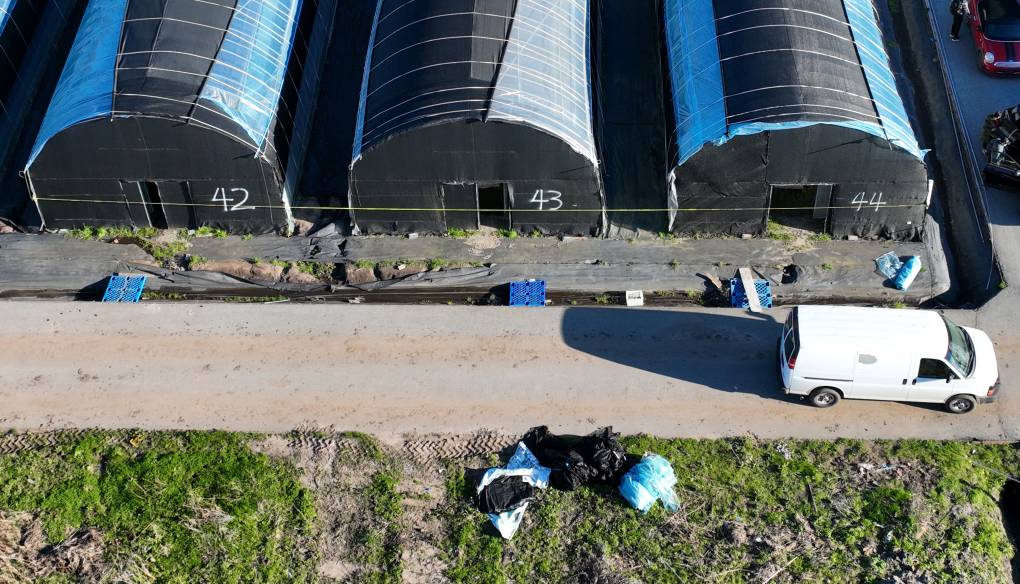
"caption": "Crime scene tape is seen from this drone view at the California Terra Gardens mushroom farm in Half Moon Bay on Wednesday, Jan. 25, 2023. Farm worker Chunli Zhao, 66, was booked on seven counts of murder after the Jan. 23 shooting. ",
"credit": "Jane Tyska/Digital First Media/East Bay Times via Getty Images",
"altTag": null,
"description": null,
"imgSizes": {
"medium": {
"file": "https://cdn.kqed.org/wp-content/uploads/sites/10/2023/02/GettyImages-1459869829-800x458.jpg",
"width": 800,
"height": 458,
"mimeType": "image/jpeg"
},
"large": {
"file": "https://cdn.kqed.org/wp-content/uploads/sites/10/2023/02/GettyImages-1459869829-1020x584.jpg",
"width": 1020,
"height": 584,
"mimeType": "image/jpeg"
},
"thumbnail": {
"file": "https://cdn.kqed.org/wp-content/uploads/sites/10/2023/02/GettyImages-1459869829-160x92.jpg",
"width": 160,
"height": 92,
"mimeType": "image/jpeg"
},
"1536x1536": {
"file": "https://cdn.kqed.org/wp-content/uploads/sites/10/2023/02/GettyImages-1459869829-1536x880.jpg",
"width": 1536,
"height": 880,
"mimeType": "image/jpeg"
},
"2048x2048": {
"file": "https://cdn.kqed.org/wp-content/uploads/sites/10/2023/02/GettyImages-1459869829-2048x1173.jpg",
"width": 2048,
"height": 1173,
"mimeType": "image/jpeg"
},
"post-thumbnail": {
"file": "https://cdn.kqed.org/wp-content/uploads/sites/10/2023/02/GettyImages-1459869829-672x372.jpg",
"width": 672,
"height": 372,
"mimeType": "image/jpeg"
},
"twentyfourteen-full-width": {
"file": "https://cdn.kqed.org/wp-content/uploads/sites/10/2023/02/GettyImages-1459869829-1038x576.jpg",
"width": 1038,
"height": 576,
"mimeType": "image/jpeg"
},
"full-width": {
"file": "https://cdn.kqed.org/wp-content/uploads/sites/10/2023/02/GettyImages-1459869829-1920x1100.jpg",
"width": 1920,
"height": 1100,
"mimeType": "image/jpeg"
},
"kqedFullSize": {
"file": "https://cdn.kqed.org/wp-content/uploads/sites/10/2023/02/GettyImages-1459869829-scaled-e1776791105481.jpg",
"width": 2000,
"height": 1145
}
},
"isLoading": false,
"fetchFailed": false
},
"news_11939858": {
"type": "attachments",
"id": "news_11939858",
"meta": {
"index": "attachments_1716263798",
"site": "news",
"id": "11939858",
"found": true
},
"parent": 11939848,
"imgSizes": {
"twentyfourteen-full-width": {
"file": "https://ww2.kqed.org/app/uploads/sites/10/2023/01/017_KQED_DomesticWorkerSocorroDiaz_01232023-1038x576.jpg",
"width": 1038,
"mimeType": "image/jpeg",
"height": 576
},
"thumbnail": {
"file": "https://ww2.kqed.org/app/uploads/sites/10/2023/01/017_KQED_DomesticWorkerSocorroDiaz_01232023-160x107.jpg",
"width": 160,
"mimeType": "image/jpeg",
"height": 107
},
"post-thumbnail": {
"file": "https://ww2.kqed.org/app/uploads/sites/10/2023/01/017_KQED_DomesticWorkerSocorroDiaz_01232023-672x372.jpg",
"width": 672,
"mimeType": "image/jpeg",
"height": 372
},
"kqedFullSize": {
"file": "https://ww2.kqed.org/app/uploads/sites/10/2023/01/017_KQED_DomesticWorkerSocorroDiaz_01232023.jpg",
"width": 1920,
"height": 1280
},
"large": {
"file": "https://ww2.kqed.org/app/uploads/sites/10/2023/01/017_KQED_DomesticWorkerSocorroDiaz_01232023-1020x680.jpg",
"width": 1020,
"mimeType": "image/jpeg",
"height": 680
},
"1536x1536": {
"file": "https://ww2.kqed.org/app/uploads/sites/10/2023/01/017_KQED_DomesticWorkerSocorroDiaz_01232023-1536x1024.jpg",
"width": 1536,
"mimeType": "image/jpeg",
"height": 1024
},
"medium": {
"file": "https://ww2.kqed.org/app/uploads/sites/10/2023/01/017_KQED_DomesticWorkerSocorroDiaz_01232023-800x533.jpg",
"width": 800,
"mimeType": "image/jpeg",
"height": 533
}
},
"publishDate": 1675201063,
"modified": 1675207397,
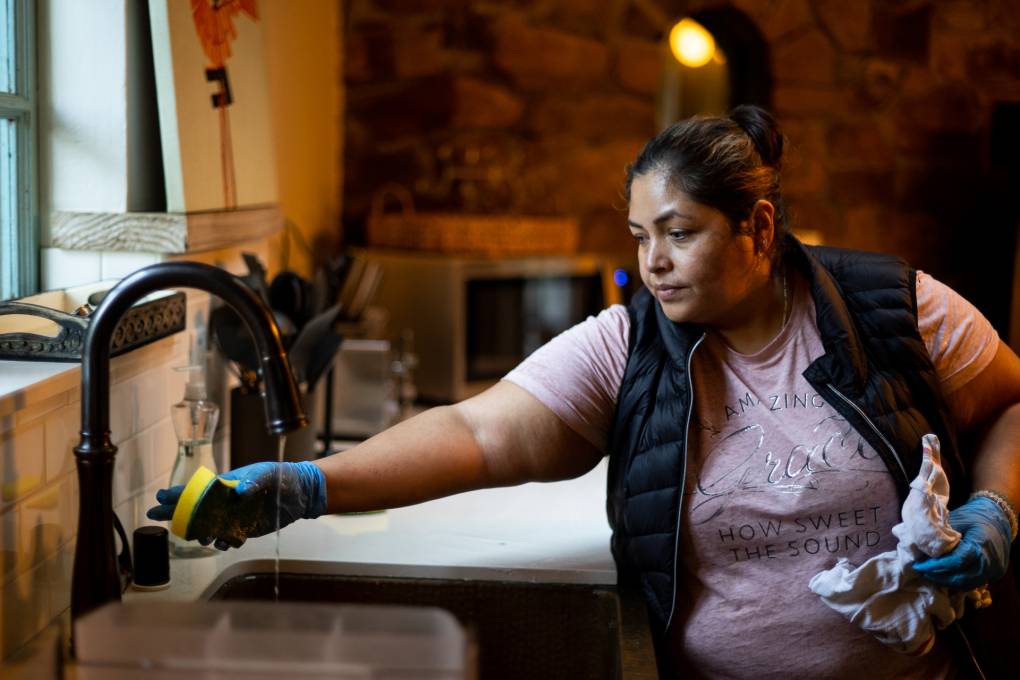
"caption": "Socorro Diaz scrubs kitchen counters during a house-cleaning job in Occidental, on Jan. 23, 2023. Diaz dealt with breathing issues after she was asked to clean a house filled with ash following the Tubbs wildfire.",
"description": null,
"title": "017_KQED_DomesticWorkerSocorroDiaz_01232023",
"credit": "Beth LaBerge/KQED",
"status": "inherit",
"altTag": "a Latina woman in a pink shirt and rubber gloves cleans a kitchen counter with a sponge",
"isLoading": false,
"fetchFailed": false
},
"news_11939415": {
"type": "attachments",
"id": "news_11939415",
"meta": {
"index": "attachments_1716263798",
"site": "news",
"id": "11939415",
"found": true
},
"parent": 11939412,
"imgSizes": {
"twentyfourteen-full-width": {
"file": "https://cdn.kqed.org/wp-content/uploads/sites/10/2023/01/GettyImages-1246581187-1038x576.jpg",
"width": 1038,
"mimeType": "image/jpeg",
"height": 576
},
"thumbnail": {
"file": "https://cdn.kqed.org/wp-content/uploads/sites/10/2023/01/GettyImages-1246581187-160x120.jpg",
"width": 160,
"mimeType": "image/jpeg",
"height": 120
},
"post-thumbnail": {
"file": "https://cdn.kqed.org/wp-content/uploads/sites/10/2023/01/GettyImages-1246581187-672x372.jpg",
"width": 672,
"mimeType": "image/jpeg",
"height": 372
},
"kqedFullSize": {
"file": "https://cdn.kqed.org/wp-content/uploads/sites/10/2023/01/GettyImages-1246581187-scaled.jpg",
"width": 2560,
"height": 1920
},
"2048x2048": {
"file": "https://cdn.kqed.org/wp-content/uploads/sites/10/2023/01/GettyImages-1246581187-2048x1536.jpg",
"width": 2048,
"mimeType": "image/jpeg",
"height": 1536
},
"large": {
"file": "https://cdn.kqed.org/wp-content/uploads/sites/10/2023/01/GettyImages-1246581187-1020x765.jpg",
"width": 1020,
"mimeType": "image/jpeg",
"height": 765
},
"1536x1536": {
"file": "https://cdn.kqed.org/wp-content/uploads/sites/10/2023/01/GettyImages-1246581187-1536x1152.jpg",
"width": 1536,
"mimeType": "image/jpeg",
"height": 1152
},
"full-width": {
"file": "https://cdn.kqed.org/wp-content/uploads/sites/10/2023/01/GettyImages-1246581187-1920x1440.jpg",
"width": 1920,
"mimeType": "image/jpeg",
"height": 1440
},
"medium": {
"file": "https://cdn.kqed.org/wp-content/uploads/sites/10/2023/01/GettyImages-1246581187-800x600.jpg",
"width": 800,
"mimeType": "image/jpeg",
"height": 600
}
},
"publishDate": 1674829153,
"modified": 1705699777,
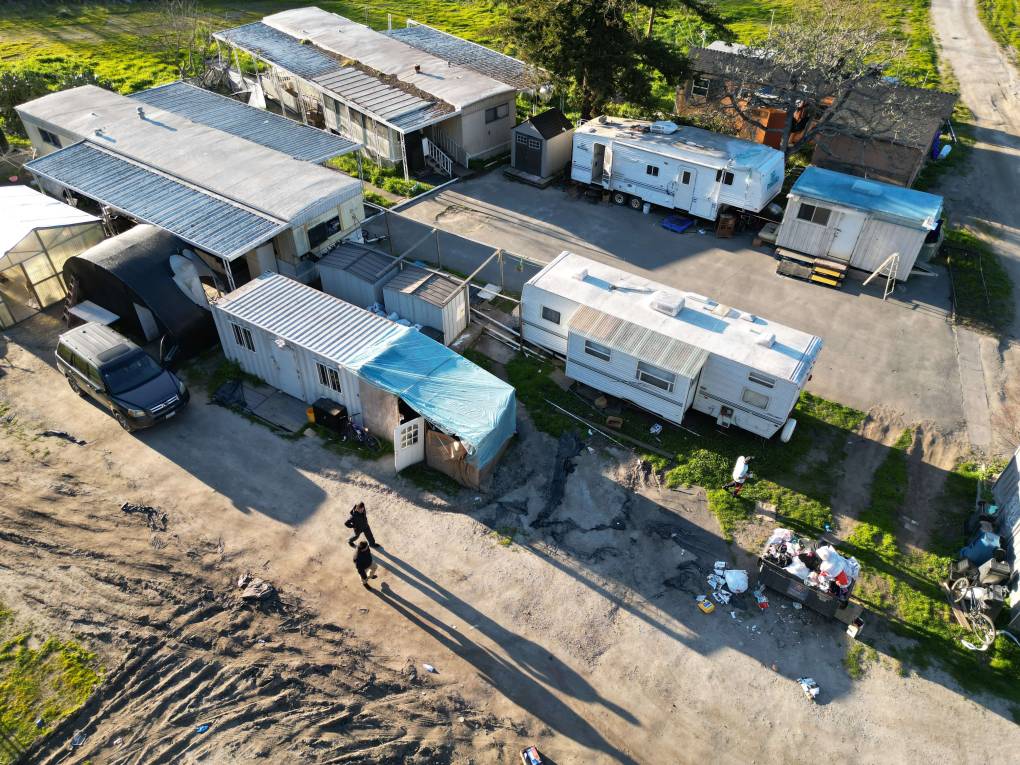
"caption": "An aerial view of some trailers that house farmworkers and their families at California Terra Garden in Half Moon Bay, as seen on Thursday, Jan. 26, 2023. The suspect in the mass killing is believed to have lived with his wife in one of the trailers. ",
"description": "Some of the housing provided to the farmworkers and their families at the mushroom farm on Thursday, Jan. 26, 2023 in Half Moon Bay, Calif. The suspect is said to live with his wife in the upper left house with blue tarp.",
"title": "CAHALFMOON",
"credit": "Paul Kuroda/Washington Post, via Getty Images",
"status": "inherit",
"altTag": "An aerial view of a number of trailers on a farm site.",
"isLoading": false,
"fetchFailed": false
},
"news_11939373": {
"type": "attachments",
"id": "news_11939373",
"meta": {
"index": "attachments_1716263798",
"site": "news",
"id": "11939373",
"found": true
},
"parent": 11939361,
"imgSizes": {
"twentyfourteen-full-width": {
"file": "https://ww2.kqed.org/app/uploads/sites/10/2023/01/GettyImages-1246507852-1024x576.jpg",
"width": 1024,
"mimeType": "image/jpeg",
"height": 576
},
"thumbnail": {
"file": "https://ww2.kqed.org/app/uploads/sites/10/2023/01/GettyImages-1246507852-160x107.jpg",
"width": 160,
"mimeType": "image/jpeg",
"height": 107
},
"post-thumbnail": {
"file": "https://ww2.kqed.org/app/uploads/sites/10/2023/01/GettyImages-1246507852-672x372.jpg",
"width": 672,
"mimeType": "image/jpeg",
"height": 372
},
"kqedFullSize": {
"file": "https://ww2.kqed.org/app/uploads/sites/10/2023/01/GettyImages-1246507852.jpg",
"width": 1024,
"height": 683
},
"large": {
"file": "https://ww2.kqed.org/app/uploads/sites/10/2023/01/GettyImages-1246507852-1020x680.jpg",
"width": 1020,
"mimeType": "image/jpeg",
"height": 680
},
"medium": {
"file": "https://ww2.kqed.org/app/uploads/sites/10/2023/01/GettyImages-1246507852-800x534.jpg",
"width": 800,
"mimeType": "image/jpeg",
"height": 534
}
},
"publishDate": 1674775294,
"modified": 1674780128,
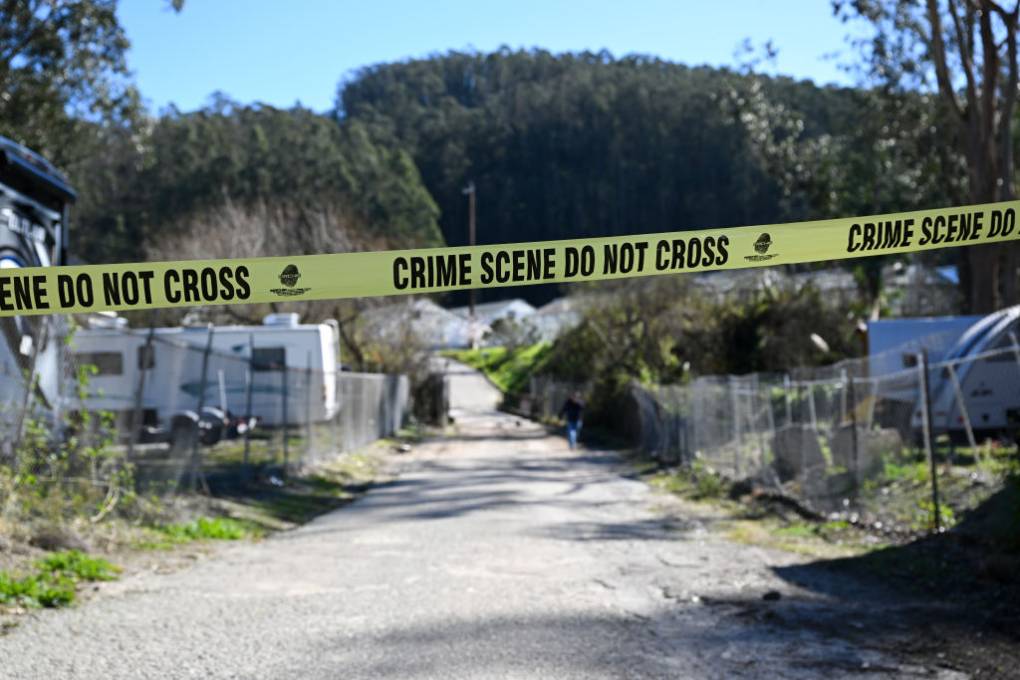
"caption": "Police cordon off the crime scene of a mass shooting that left seven people dead and one injured on Monday, in Half Moon Bay, on Jan. 24, 2023. The shooting happened at two locations, with four people killed at one farm and three at another. A 66-year-old man named Chunli Zhao was identified as the suspect and taken into custody, the San Mateo County Sheriff's Office said.",
"description": null,
"title": "California: Half Moon Bay shooting",
"credit": "Tayfun Coskun/Anadolu Agency via Getty Images",
"status": "inherit",
"altTag": "A crime scene tape cordons off hot houses and RVs and a road in the background.",
"isLoading": false,
"fetchFailed": false
},
"news_11937313": {
"type": "attachments",
"id": "news_11937313",
"meta": {
"index": "attachments_1716263798",
"site": "news",
"id": "11937313",
"found": true
},
"parent": 11937299,
"imgSizes": {
"twentyfourteen-full-width": {
"file": "https://ww2.kqed.org/app/uploads/sites/10/2023/01/GettyImages-1234628376-1024x576.jpg",
"width": 1024,
"mimeType": "image/jpeg",
"height": 576
},
"thumbnail": {
"file": "https://ww2.kqed.org/app/uploads/sites/10/2023/01/GettyImages-1234628376-160x107.jpg",
"width": 160,
"mimeType": "image/jpeg",
"height": 107
},
"post-thumbnail": {
"file": "https://ww2.kqed.org/app/uploads/sites/10/2023/01/GettyImages-1234628376-672x372.jpg",
"width": 672,
"mimeType": "image/jpeg",
"height": 372
},
"kqedFullSize": {
"file": "https://ww2.kqed.org/app/uploads/sites/10/2023/01/GettyImages-1234628376.jpg",
"width": 1024,
"height": 683
},
"large": {
"file": "https://ww2.kqed.org/app/uploads/sites/10/2023/01/GettyImages-1234628376-1020x680.jpg",
"width": 1020,
"mimeType": "image/jpeg",
"height": 680
},
"medium": {
"file": "https://ww2.kqed.org/app/uploads/sites/10/2023/01/GettyImages-1234628376-800x534.jpg",
"width": 800,
"mimeType": "image/jpeg",
"height": 534
}
},
"publishDate": 1673130591,
"modified": 1673326246,
"caption": "A view of California State University Long Beach campus, Aug. 11, 2021.",
"description": null,
"title": "US-HEALTH-VIRUS-EDUCATION-CALIFORNIA",
"credit": "Patrick T. Fallon/AFP via Getty Images",
"status": "inherit",
"altTag": "Three students walk on campus with trees around them and the tip of a dark glass pyramid in the background.",
"isLoading": false,
"fetchFailed": false
},
"news_11935944": {
"type": "attachments",
"id": "news_11935944",
"meta": {
"index": "attachments_1716263798",
"site": "news",
"id": "11935944",
"found": true
},
"parent": 11935942,
"imgSizes": {
"thumbnail": {
"file": "https://ww2.kqed.org/app/uploads/sites/10/2022/12/sick-girl-in-bed-160x93.png",
"width": 160,
"mimeType": "image/png",
"height": 93
},
"post-thumbnail": {
"file": "https://ww2.kqed.org/app/uploads/sites/10/2022/12/sick-girl-in-bed-672x372.png",
"width": 672,
"mimeType": "image/png",
"height": 372
},
"kqedFullSize": {
"file": "https://ww2.kqed.org/app/uploads/sites/10/2022/12/sick-girl-in-bed.png",
"width": 901,
"height": 526
},
"medium": {
"file": "https://ww2.kqed.org/app/uploads/sites/10/2022/12/sick-girl-in-bed-800x467.png",
"width": 800,
"mimeType": "image/png",
"height": 467
}
},
"publishDate": 1671511783,
"modified": 1671511809,
"caption": "La prestación de enfermedad por COVID-19 expira el 31 de diciembre para los trabajadores de California que cumplan los requisitos.",
"description": null,
"title": "sick girl in bed",
"credit": "Andrea Piacquadio/ Pexels",
"status": "inherit",
"altTag": null,
"isLoading": false,
"fetchFailed": false
},
"news_11935676": {
"type": "attachments",
"id": "news_11935676",
"meta": {
"index": "attachments_1716263798",
"site": "news",
"id": "11935676",
"found": true
},
"parent": 11935671,
"imgSizes": {
"twentyfourteen-full-width": {
"file": "https://ww2.kqed.org/app/uploads/sites/10/2022/12/GettyImages-1245190223-1024x576.jpg",
"width": 1024,
"mimeType": "image/jpeg",
"height": 576
},
"thumbnail": {
"file": "https://ww2.kqed.org/app/uploads/sites/10/2022/12/GettyImages-1245190223-160x107.jpg",
"width": 160,
"mimeType": "image/jpeg",
"height": 107
},
"post-thumbnail": {
"file": "https://ww2.kqed.org/app/uploads/sites/10/2022/12/GettyImages-1245190223-672x372.jpg",
"width": 672,
"mimeType": "image/jpeg",
"height": 372
},
"kqedFullSize": {
"file": "https://ww2.kqed.org/app/uploads/sites/10/2022/12/GettyImages-1245190223.jpg",
"width": 1024,
"height": 683
},
"large": {
"file": "https://ww2.kqed.org/app/uploads/sites/10/2022/12/GettyImages-1245190223-1020x680.jpg",
"width": 1020,
"mimeType": "image/jpeg",
"height": 680
},
"medium": {
"file": "https://ww2.kqed.org/app/uploads/sites/10/2022/12/GettyImages-1245190223-800x534.jpg",
"width": 800,
"mimeType": "image/jpeg",
"height": 534
}
},
"publishDate": 1671244316,
"modified": 1671465617,
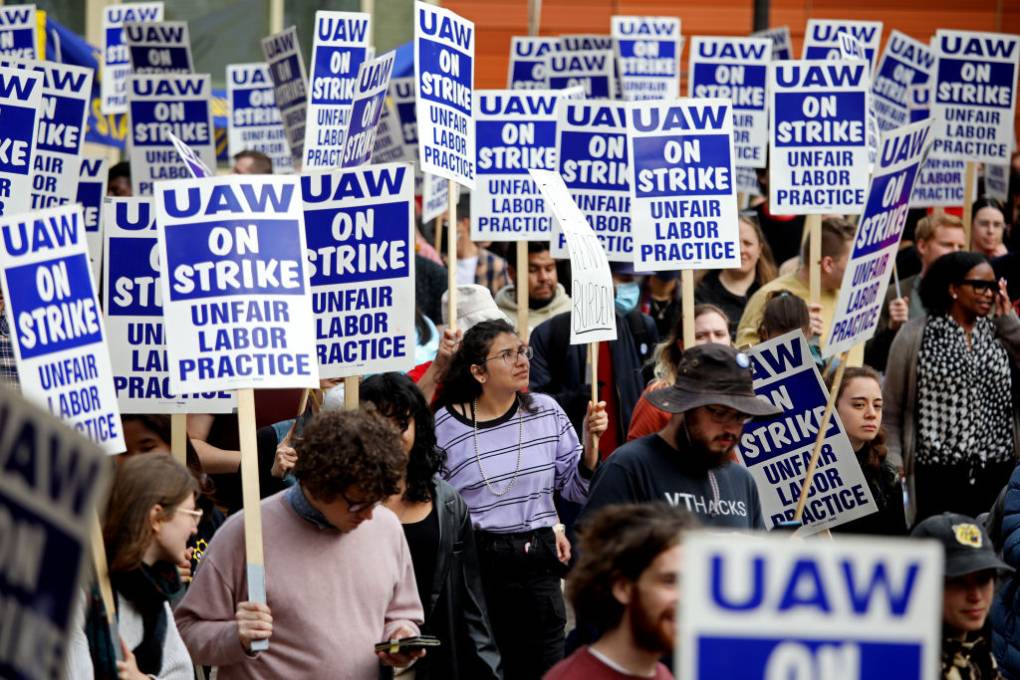
"caption": "University of California academic workers strike, walking the picket line on the campus of the University of California, Los Angeles on Monday, Nov. 28, 2022, in Los Angeles.",
"description": null,
"title": "As the nations largest ever strike of higher-education academic workers enters its third week Monday, with the crunch time of final exams just days away, fears are rising over long-lasting and unintended consequences to the University of Californias",
"credit": "Gary Coronado/Los Angeles Times via Getty Images",
"status": "inherit",
"altTag": "Striking academic workers hold signs and posters.",
"isLoading": false,
"fetchFailed": false
},
"news_11935603": {
"type": "attachments",
"id": "news_11935603",
"meta": {
"index": "attachments_1716263798",
"site": "news",
"id": "11935603",
"found": true
},
"parent": 11935574,
"imgSizes": {
"twentyfourteen-full-width": {
"file": "https://ww2.kqed.org/app/uploads/sites/10/2022/12/GettyImages-1302475655-1038x576.jpg",
"width": 1038,
"mimeType": "image/jpeg",
"height": 576
},
"thumbnail": {
"file": "https://ww2.kqed.org/app/uploads/sites/10/2022/12/GettyImages-1302475655-160x107.jpg",
"width": 160,
"mimeType": "image/jpeg",
"height": 107
},
"post-thumbnail": {
"file": "https://ww2.kqed.org/app/uploads/sites/10/2022/12/GettyImages-1302475655-672x372.jpg",
"width": 672,
"mimeType": "image/jpeg",
"height": 372
},
"kqedFullSize": {
"file": "https://ww2.kqed.org/app/uploads/sites/10/2022/12/GettyImages-1302475655.jpg",
"width": 2121,
"height": 1414
},
"2048x2048": {
"file": "https://ww2.kqed.org/app/uploads/sites/10/2022/12/GettyImages-1302475655-2048x1365.jpg",
"width": 2048,
"mimeType": "image/jpeg",
"height": 1365
},
"large": {
"file": "https://ww2.kqed.org/app/uploads/sites/10/2022/12/GettyImages-1302475655-1020x680.jpg",
"width": 1020,
"mimeType": "image/jpeg",
"height": 680
},
"1536x1536": {
"file": "https://ww2.kqed.org/app/uploads/sites/10/2022/12/GettyImages-1302475655-1536x1024.jpg",
"width": 1536,
"mimeType": "image/jpeg",
"height": 1024
},
"full-width": {
"file": "https://ww2.kqed.org/app/uploads/sites/10/2022/12/GettyImages-1302475655-1920x1280.jpg",
"width": 1920,
"mimeType": "image/jpeg",
"height": 1280
},
"medium": {
"file": "https://ww2.kqed.org/app/uploads/sites/10/2022/12/GettyImages-1302475655-800x533.jpg",
"width": 800,
"mimeType": "image/jpeg",
"height": 533
}
},
"publishDate": 1671229582,
"modified": 1671234784,
"caption": "A state law, passed earlier this year, requires companies to give workers up to two weeks of paid time off if they get sick from the coronavirus. But that law expires in December, and it's not clear whether lawmakers will extend it in 2023.",
"description": null,
"title": "Overhead view of woman working from home",
"credit": "Justin Paget/Getty Images",
"status": "inherit",
"altTag": "A woman's laptop with her arms in the shot, seen from above, and drinking tea in a home work area.",
"isLoading": false,
"fetchFailed": false
},
"news_11935427": {
"type": "attachments",
"id": "news_11935427",
"meta": {
"index": "attachments_1716263798",
"site": "news",
"id": "11935427",
"found": true
},
"parent": 11935402,
"imgSizes": {
"twentyfourteen-full-width": {
"file": "https://ww2.kqed.org/app/uploads/sites/10/2022/12/Screen-Shot-2022-12-15-at-1.16.54-PM-1038x576.png",
"width": 1038,
"mimeType": "image/png",
"height": 576
},
"thumbnail": {
"file": "https://ww2.kqed.org/app/uploads/sites/10/2022/12/Screen-Shot-2022-12-15-at-1.16.54-PM-160x105.png",
"width": 160,
"mimeType": "image/png",
"height": 105
},
"post-thumbnail": {
"file": "https://ww2.kqed.org/app/uploads/sites/10/2022/12/Screen-Shot-2022-12-15-at-1.16.54-PM-672x372.png",
"width": 672,
"mimeType": "image/png",
"height": 372
},
"kqedFullSize": {
"file": "https://ww2.kqed.org/app/uploads/sites/10/2022/12/Screen-Shot-2022-12-15-at-1.16.54-PM.png",
"width": 2390,
"height": 1572
},
"2048x2048": {
"file": "https://ww2.kqed.org/app/uploads/sites/10/2022/12/Screen-Shot-2022-12-15-at-1.16.54-PM-2048x1347.png",
"width": 2048,
"mimeType": "image/png",
"height": 1347
},
"large": {
"file": "https://ww2.kqed.org/app/uploads/sites/10/2022/12/Screen-Shot-2022-12-15-at-1.16.54-PM-1020x671.png",
"width": 1020,
"mimeType": "image/png",
"height": 671
},
"1536x1536": {
"file": "https://ww2.kqed.org/app/uploads/sites/10/2022/12/Screen-Shot-2022-12-15-at-1.16.54-PM-1536x1010.png",
"width": 1536,
"mimeType": "image/png",
"height": 1010
},
"full-width": {
"file": "https://ww2.kqed.org/app/uploads/sites/10/2022/12/Screen-Shot-2022-12-15-at-1.16.54-PM-1920x1263.png",
"width": 1920,
"mimeType": "image/png",
"height": 1263
},
"medium": {
"file": "https://ww2.kqed.org/app/uploads/sites/10/2022/12/Screen-Shot-2022-12-15-at-1.16.54-PM-800x526.png",
"width": 800,
"mimeType": "image/png",
"height": 526
}
},
"publishDate": 1671144963,
"modified": 1671147719,
"caption": "Hundreds of UC academic workers picketed for the fifth straight week at UCLA in Los Angeles on Dec. 14, 2022. The demonstration was held near the UCLA Meyer and Renee Luskin Conference Center where the UC Board of Regents was meeting.",
"description": null,
"title": "Screen Shot 2022-12-15 at 1.16.54 PM",
"credit": "Pablo Unzueta/CalMatters",
"status": "inherit",
"altTag": "A crowd of people wearing masks and holding signs that read \"UAW on Strike Unfair Labor Practice\" stand outside.",
"isLoading": false,
"fetchFailed": false
},
"news_11934951": {
"type": "attachments",
"id": "news_11934951",
"meta": {
"index": "attachments_1716263798",
"site": "news",
"id": "11934951",
"found": true
},
"parent": 11934949,
"imgSizes": {
"twentyfourteen-full-width": {
"file": "https://ww2.kqed.org/app/uploads/sites/10/2022/12/trans-couple-1020x576.jpg",
"width": 1020,
"mimeType": "image/jpeg",
"height": 576
},
"thumbnail": {
"file": "https://ww2.kqed.org/app/uploads/sites/10/2022/12/trans-couple-160x107.jpg",
"width": 160,
"mimeType": "image/jpeg",
"height": 107
},
"post-thumbnail": {
"file": "https://ww2.kqed.org/app/uploads/sites/10/2022/12/trans-couple-672x372.jpg",
"width": 672,
"mimeType": "image/jpeg",
"height": 372
},
"kqedFullSize": {
"file": "https://ww2.kqed.org/app/uploads/sites/10/2022/12/trans-couple.jpg",
"width": 1020,
"height": 680
},
"medium": {
"file": "https://ww2.kqed.org/app/uploads/sites/10/2022/12/trans-couple-800x533.jpg",
"width": 800,
"mimeType": "image/jpeg",
"height": 533
}
},
"publishDate": 1670781030,
"modified": 1670781198,
"caption": "Las solicitudes para GIFT se cierran el 15 de diciembre.",
"description": null,
"title": "trans couple",
"credit": "The Gender Spectrum Collection",
"status": "inherit",
"altTag": null,
"isLoading": false,
"fetchFailed": false
},
"news_11932635": {
"type": "attachments",
"id": "news_11932635",
"meta": {
"index": "attachments_1716263798",
"site": "news",
"id": "11932635",
"found": true
},
"parent": 11932633,
"imgSizes": {
"twentyfourteen-full-width": {
"file": "https://ww2.kqed.org/app/uploads/sites/10/2022/11/027_KQED_UCStrike_11152022-1038x576.jpg",
"width": 1038,
"mimeType": "image/jpeg",
"height": 576
},
"thumbnail": {
"file": "https://ww2.kqed.org/app/uploads/sites/10/2022/11/027_KQED_UCStrike_11152022-160x107.jpg",
"width": 160,
"mimeType": "image/jpeg",
"height": 107
},
"post-thumbnail": {
"file": "https://ww2.kqed.org/app/uploads/sites/10/2022/11/027_KQED_UCStrike_11152022-672x372.jpg",
"width": 672,
"mimeType": "image/jpeg",
"height": 372
},
"kqedFullSize": {
"file": "https://ww2.kqed.org/app/uploads/sites/10/2022/11/027_KQED_UCStrike_11152022.jpg",
"width": 1920,
"height": 1280
},
"large": {
"file": "https://ww2.kqed.org/app/uploads/sites/10/2022/11/027_KQED_UCStrike_11152022-1020x680.jpg",
"width": 1020,
"mimeType": "image/jpeg",
"height": 680
},
"1536x1536": {
"file": "https://ww2.kqed.org/app/uploads/sites/10/2022/11/027_KQED_UCStrike_11152022-1536x1024.jpg",
"width": 1536,
"mimeType": "image/jpeg",
"height": 1024
},
"medium": {
"file": "https://ww2.kqed.org/app/uploads/sites/10/2022/11/027_KQED_UCStrike_11152022-800x533.jpg",
"width": 800,
"mimeType": "image/jpeg",
"height": 533
}
},
"publishDate": 1668729120,
"modified": 1670882119,
"caption": "Staff members demonstrate at the UCSF Mission Bay campus on Nov. 15, 2022, during a strike among some 48,000 academic workers across all 10 University of California campuses. Following an agreement ratified on Friday, two of the four bargaining units on strike — postdoctoral scholars and academic researchers — were back at work on all 10 campuses on Monday. ",
"description": null,
"title": "027_KQED_UCStrike_11152022",
"credit": "Beth LaBerge/KQED",
"status": "inherit",
"altTag": "people march and hold signs reading 'UAW on strike unfair labor practice'",
"isLoading": false,
"fetchFailed": false
},
"news_11934996": {
"type": "attachments",
"id": "news_11934996",
"meta": {
"index": "attachments_1716263798",
"site": "news",
"id": "11934996",
"found": true
},
"parent": 11934993,
"imgSizes": {
"twentyfourteen-full-width": {
"file": "https://ww2.kqed.org/app/uploads/sites/10/2022/12/120922-Paid-Leave-Partner-CM-01-1038x576.jpg",
"width": 1038,
"mimeType": "image/jpeg",
"height": 576
},
"thumbnail": {
"file": "https://ww2.kqed.org/app/uploads/sites/10/2022/12/120922-Paid-Leave-Partner-CM-01-160x107.jpg",
"width": 160,
"mimeType": "image/jpeg",
"height": 107
},
"post-thumbnail": {
"file": "https://ww2.kqed.org/app/uploads/sites/10/2022/12/120922-Paid-Leave-Partner-CM-01-672x372.jpg",
"width": 672,
"mimeType": "image/jpeg",
"height": 372
},
"kqedFullSize": {
"file": "https://ww2.kqed.org/app/uploads/sites/10/2022/12/120922-Paid-Leave-Partner-CM-01.jpg",
"width": 2000,
"height": 1333
},
"large": {
"file": "https://ww2.kqed.org/app/uploads/sites/10/2022/12/120922-Paid-Leave-Partner-CM-01-1020x680.jpg",
"width": 1020,
"mimeType": "image/jpeg",
"height": 680
},
"1536x1536": {
"file": "https://ww2.kqed.org/app/uploads/sites/10/2022/12/120922-Paid-Leave-Partner-CM-01-1536x1024.jpg",
"width": 1536,
"mimeType": "image/jpeg",
"height": 1024
},
"full-width": {
"file": "https://ww2.kqed.org/app/uploads/sites/10/2022/12/120922-Paid-Leave-Partner-CM-01-1920x1280.jpg",
"width": 1920,
"mimeType": "image/jpeg",
"height": 1280
},
"medium": {
"file": "https://ww2.kqed.org/app/uploads/sites/10/2022/12/120922-Paid-Leave-Partner-CM-01-800x533.jpg",
"width": 800,
"mimeType": "image/jpeg",
"height": 533
}
},
"publishDate": 1670874616,
"modified": 1670881117,
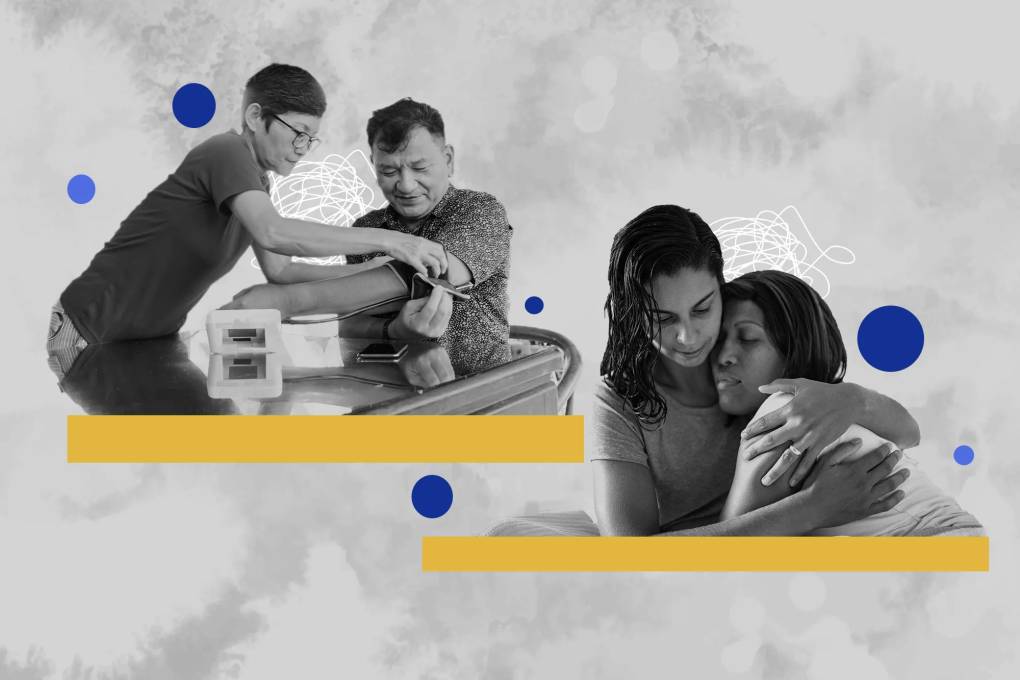
"caption": "Access to paid family leave decreases the likelihood that women will leave a job if their spouse has serious health issues, according to a new study.",
"description": null,
"title": "120922-Paid-Leave-Partner-CM-01",
"credit": "Illustration by Miguel Gutierrez Jr./CalMatters/iStock",
"status": "inherit",
"altTag": "a photo illustration shows an older woman helping an older man put a blood pressure cuff on, and a younger woman hugging what appears to be an older woman family member",
"isLoading": false,
"fetchFailed": false
}
},
"audioPlayerReducer": {
"postId": "stream_live",
"isPaused": true,
"isPlaying": false,
"pfsActive": false,
"pledgeModalIsOpen": true,
"playerDrawerIsOpen": false,
"liveAudioPlayStartedAt": 0,
"liveAudioPlayContext": ""
},
"authorsReducer": {
"byline_news_11937299": {
"type": "authors",
"id": "byline_news_11937299",
"meta": {
"override": true
},
"slug": "byline_news_11937299",
"name": "\u003ca href=\"https://edsource.org/author/asmith\">Ashley A. Smith\u003c/a>",
"isLoading": false
},
"byline_news_11935671": {
"type": "authors",
"id": "byline_news_11935671",
"meta": {
"override": true
},
"slug": "byline_news_11935671",
"name": "Julie Watson and Stefanie Dazio\u003cbr>The Associated Press",
"isLoading": false
},
"byline_news_11935574": {
"type": "authors",
"id": "byline_news_11935574",
"meta": {
"override": true
},
"slug": "byline_news_11935574",
"name": "Adam Beam\u003cbr>The Associated Press",
"isLoading": false
},
"byline_news_11935402": {
"type": "authors",
"id": "byline_news_11935402",
"meta": {
"override": true
},
"slug": "byline_news_11935402",
"name": "Mikhail Zinshteyn",
"isLoading": false
},
"byline_news_11934993": {
"type": "authors",
"id": "byline_news_11934993",
"meta": {
"override": true
},
"slug": "byline_news_11934993",
"name": "\u003ca href=\"https://calmatters.org/author/grace-gedye/\">Grace Gedye\u003c/a>",
"isLoading": false
},
"kqednewsstaffandwires": {
"type": "authors",
"id": "237",
"meta": {
"index": "authors_1716337520",
"id": "237",
"found": true
},
"name": "KQED News Staff and Wires",
"firstName": "KQED News Staff and Wires",
"lastName": null,
"slug": "kqednewsstaffandwires",
"email": "onlinenewsstaff@kqed.org",
"display_author_email": false,
"staff_mastheads": [],
"title": null,
"bio": null,
"avatar": "https://secure.gravatar.com/avatar/72295af8ebbfbd19a4948f5271285664?s=600&d=blank&r=g",
"twitter": null,
"facebook": null,
"instagram": null,
"linkedin": null,
"sites": [
{
"site": "arts",
"roles": [
"contributor"
]
},
{
"site": "news",
"roles": [
"contributor"
]
},
{
"site": "lowdown",
"roles": [
"author"
]
},
{
"site": "stateofhealth",
"roles": [
"contributor"
]
},
{
"site": "food",
"roles": [
"author"
]
}
],
"headData": {
"title": "KQED News Staff and Wires | KQED",
"description": null,
"ogImgSrc": "https://secure.gravatar.com/avatar/72295af8ebbfbd19a4948f5271285664?s=600&d=blank&r=g",
"twImgSrc": "https://secure.gravatar.com/avatar/72295af8ebbfbd19a4948f5271285664?s=600&d=blank&r=g"
},
"isLoading": false,
"link": "/author/kqednewsstaffandwires"
},
"carlysevern": {
"type": "authors",
"id": "3243",
"meta": {
"index": "authors_1716337520",
"id": "3243",
"found": true
},
"name": "Carly Severn",
"firstName": "Carly",
"lastName": "Severn",
"slug": "carlysevern",
"email": "csevern@kqed.org",
"display_author_email": false,
"staff_mastheads": [
"news"
],
"title": "Senior Editor, Audience News ",
"bio": "Carly is KQED's Senior Editor of Audience News on the Digital News team, and has reported for the California Report Magazine, Bay Curious and KQED Arts. She's formerly the host of \u003ca href=\"http://ww2.kqed.org/pop/category/the-cooler/\" rel=\"noopener noreferrer\">The Cooler\u003c/a> podcast.",
"avatar": "https://secure.gravatar.com/avatar/54037bf5c128fe678f0ef26cec97a93f2e7f220a22d7285703328f12c42c1b1d?s=600&d=blank&r=g",
"twitter": "teacupinthebay",
"bluesky": null,
"facebook": null,
"instagram": null,
"linkedin": null,
"sites": [
{
"site": "",
"roles": [
"editor"
]
},
{
"site": "arts",
"roles": [
"editor"
]
},
{
"site": "news",
"roles": [
"administrator"
]
},
{
"site": "pop",
"roles": [
"editor"
]
},
{
"site": "futureofyou",
"roles": [
"editor"
]
},
{
"site": "about",
"roles": [
"administrator"
]
},
{
"site": "mindshift",
"roles": [
"editor"
]
},
{
"site": "bayareabites",
"roles": [
"editor"
]
},
{
"site": "stateofhealth",
"roles": [
"editor"
]
},
{
"site": "science",
"roles": [
"editor"
]
},
{
"site": "food",
"roles": [
"contributor"
]
},
{
"site": "forum",
"roles": [
"editor"
]
},
{
"site": "perspectives",
"roles": [
"administrator"
]
},
{
"site": "liveblog",
"roles": [
"editor"
]
}
],
"headData": {
"title": "Carly Severn | KQED",
"description": "Senior Editor, Audience News ",
"ogImgSrc": "https://secure.gravatar.com/avatar/54037bf5c128fe678f0ef26cec97a93f2e7f220a22d7285703328f12c42c1b1d?s=600&d=blank&r=g",
"twImgSrc": "https://secure.gravatar.com/avatar/54037bf5c128fe678f0ef26cec97a93f2e7f220a22d7285703328f12c42c1b1d?s=600&d=blank&r=g"
},
"isLoading": false,
"link": "/author/carlysevern"
},
"ecruzguevarra": {
"type": "authors",
"id": "8654",
"meta": {
"index": "authors_1716337520",
"id": "8654",
"found": true
},
"name": "Ericka Cruz Guevarra",
"firstName": "Ericka",
"lastName": "Cruz Guevarra",
"slug": "ecruzguevarra",
"email": "ecruzguevarra@kqed.org",
"display_author_email": true,
"staff_mastheads": [
"news"
],
"title": "Producer, The Bay Podcast",
"bio": "Ericka Cruz Guevarra is host of \u003ca href=\"https://www.kqed.org/podcasts/thebay\">\u003cem>The Bay\u003c/em>\u003c/a> podcast at KQED. Before host, she was the show’s producer. Her work in that capacity includes a three-part reported series on policing in Vallejo, which won a 2020 excellence in journalism award from the Society of Professional Journalists. Ericka has worked as a breaking news reporter at Oregon Public Broadcasting, helped produce the Code Switch podcast, and was KQED’s inaugural Raul Ramirez Diversity Fund intern. She’s also an alumna of NPR’s Next Generation Radio program. Send her an email if you have strong feelings about whether Fairfield and Suisun City are the Bay. Ericka is represented by SAG-AFTRA.",
"avatar": "https://secure.gravatar.com/avatar/accefc1de4bafc7e234b69bcb9b6f6536c130fd84709bc3069ef11a78787e1bb?s=600&d=blank&r=g",
"twitter": "NotoriousECG",
"bluesky": null,
"facebook": null,
"instagram": null,
"linkedin": null,
"sites": [
{
"site": "arts",
"roles": [
"subscriber"
]
},
{
"site": "news",
"roles": [
"editor",
"manage_categories"
]
},
{
"site": "futureofyou",
"roles": [
"subscriber"
]
},
{
"site": "stateofhealth",
"roles": [
"subscriber"
]
},
{
"site": "science",
"roles": [
"editor"
]
},
{
"site": "forum",
"roles": [
"subscriber"
]
}
],
"headData": {
"title": "Ericka Cruz Guevarra | KQED",
"description": "Producer, The Bay Podcast",
"ogImgSrc": "https://secure.gravatar.com/avatar/accefc1de4bafc7e234b69bcb9b6f6536c130fd84709bc3069ef11a78787e1bb?s=600&d=blank&r=g",
"twImgSrc": "https://secure.gravatar.com/avatar/accefc1de4bafc7e234b69bcb9b6f6536c130fd84709bc3069ef11a78787e1bb?s=600&d=blank&r=g"
},
"isLoading": false,
"link": "/author/ecruzguevarra"
},
"fjhabvala": {
"type": "authors",
"id": "8659",
"meta": {
"index": "authors_1716337520",
"id": "8659",
"found": true
},
"name": "Farida Jhabvala Romero",
"firstName": "Farida",
"lastName": "Jhabvala Romero",
"slug": "fjhabvala",
"email": "fjhabvala@kqed.org",
"display_author_email": true,
"staff_mastheads": [
"news"
],
"title": "KQED Contributor",
"bio": "Farida Jhabvala Romero is a Labor Correspondent for KQED. She previously covered immigration. Farida was \u003ca href=\"https://www.ccnma.org/2022-most-influential-latina-journalists\">named\u003c/a> one of the 10 Most Influential Latina Journalists in California in 2022 by the California Chicano News Media Association. Her work has won awards from the Society of Professional Journalists (Northern California), as well as a national and regional Edward M. Murrow Award for the collaborative reporting projects “Dangerous Air” and “Graying California.” Before joining KQED, Farida worked as a producer at Radio Bilingüe, a national public radio network. Farida earned her master’s degree in journalism from Stanford University.",
"avatar": "https://secure.gravatar.com/avatar/f9f022d4e2609741874222a1e9d41f48fea74011aa7c615eef91d9a50c944ebe?s=600&d=blank&r=g",
"twitter": "FaridaJhabvala",
"bluesky": null,
"facebook": null,
"instagram": null,
"linkedin": "https://www.linkedin.com/in/faridajhabvala/",
"sites": [
{
"site": "news",
"roles": [
"editor"
]
},
{
"site": "stateofhealth",
"roles": [
"author"
]
},
{
"site": "liveblog",
"roles": [
"author"
]
}
],
"headData": {
"title": "Farida Jhabvala Romero | KQED",
"description": "KQED Contributor",
"ogImgSrc": "https://secure.gravatar.com/avatar/f9f022d4e2609741874222a1e9d41f48fea74011aa7c615eef91d9a50c944ebe?s=600&d=blank&r=g",
"twImgSrc": "https://secure.gravatar.com/avatar/f9f022d4e2609741874222a1e9d41f48fea74011aa7c615eef91d9a50c944ebe?s=600&d=blank&r=g"
},
"isLoading": false,
"link": "/author/fjhabvala"
},
"amontecillo": {
"type": "authors",
"id": "11649",
"meta": {
"index": "authors_1716337520",
"id": "11649",
"found": true
},
"name": "Alan Montecillo",
"firstName": "Alan",
"lastName": "Montecillo",
"slug": "amontecillo",
"email": "amontecillo@kqed.org",
"display_author_email": false,
"staff_mastheads": [
"news"
],
"title": "KQED Contributor",
"bio": "Alan Montecillo is the senior editor of \u003cem>\u003ca href=\"http://kqed.org/thebay\">The Bay\u003c/a>, \u003c/em> KQED's local news podcast. Before moving to the Bay Area, he worked as a senior talk show producer for WILL in Champaign-Urbana, Illinois and at Oregon Public Broadcasting in Portland, Oregon. He has won journalism awards from the Society of Professional Journalists Northern California, the Public Media Journalists Association, The Signal Awards, and has also received a regional Edward R. Murrow award. Alan is a Filipino American from Hong Kong and a graduate of Reed College.",
"avatar": "https://secure.gravatar.com/avatar/268f53a2066899ea9efdd8a5900218b17c822d9862cbc9326cccec53ef41d349?s=600&d=blank&r=g",
"twitter": "alanmontecillo",
"bluesky": null,
"facebook": null,
"instagram": null,
"linkedin": null,
"sites": [
{
"site": "",
"roles": [
"editor"
]
},
{
"site": "news",
"roles": [
"editor",
"manage_categories"
]
}
],
"headData": {
"title": "Alan Montecillo | KQED",
"description": "KQED Contributor",
"ogImgSrc": "https://secure.gravatar.com/avatar/268f53a2066899ea9efdd8a5900218b17c822d9862cbc9326cccec53ef41d349?s=600&d=blank&r=g",
"twImgSrc": "https://secure.gravatar.com/avatar/268f53a2066899ea9efdd8a5900218b17c822d9862cbc9326cccec53ef41d349?s=600&d=blank&r=g"
},
"isLoading": false,
"link": "/author/amontecillo"
},
"ccabreralomeli": {
"type": "authors",
"id": "11708",
"meta": {
"index": "authors_1716337520",
"id": "11708",
"found": true
},
"name": "Carlos Cabrera-Lomelí",
"firstName": "Carlos",
"lastName": "Cabrera-Lomelí",
"slug": "ccabreralomeli",
"email": "ccabreralomeli@KQED.org",
"display_author_email": true,
"staff_mastheads": [
"news"
],
"title": "Community Reporter",
"bio": "Carlos Cabrera-Lomelí is a community reporter with KQED's digital engagement team. He also reports and co-produces for KQED's bilingual news hub KQED en Español. He grew up in San Francisco's Mission District and has previously worked with Univision, 48 Hills and REFORMA in Mexico City.",
"avatar": "https://secure.gravatar.com/avatar/c309be9665e484f887b818c89e273ecc673004f426f36b24d00a4d813a2e0518?s=600&d=blank&r=g",
"twitter": "@LomeliCabrera",
"bluesky": null,
"facebook": null,
"instagram": null,
"linkedin": null,
"sites": [
{
"site": "arts",
"roles": [
"editor"
]
},
{
"site": "news",
"roles": [
"editor"
]
},
{
"site": "about",
"roles": [
"editor"
]
},
{
"site": "science",
"roles": [
"editor"
]
},
{
"site": "perspectives",
"roles": [
"editor"
]
},
{
"site": "elections",
"roles": [
"editor"
]
},
{
"site": "liveblog",
"roles": [
"contributor"
]
}
],
"headData": {
"title": "Carlos Cabrera-Lomelí | KQED",
"description": "Community Reporter",
"ogImgSrc": "https://secure.gravatar.com/avatar/c309be9665e484f887b818c89e273ecc673004f426f36b24d00a4d813a2e0518?s=600&d=blank&r=g",
"twImgSrc": "https://secure.gravatar.com/avatar/c309be9665e484f887b818c89e273ecc673004f426f36b24d00a4d813a2e0518?s=600&d=blank&r=g"
},
"isLoading": false,
"link": "/author/ccabreralomeli"
},
"mesquinca": {
"type": "authors",
"id": "11802",
"meta": {
"index": "authors_1716337520",
"id": "11802",
"found": true
},
"name": "Maria Esquinca",
"firstName": "Maria",
"lastName": "Esquinca",
"slug": "mesquinca",
"email": "mesquinca@kqed.org",
"display_author_email": false,
"staff_mastheads": [],
"title": "Producer, The Bay",
"bio": "María Esquinca is a producer of The Bay. Before that, she was a New York Women’s Foundation IGNITE Fellow at Latino USA. She worked at Radio Bilingue where she covered the San Joaquin Valley. Maria has interned at WLRN, News 21, The New York Times Student Journalism Institute and at Crain’s Detroit Business as a Dow Jones News Fund Business Reporting Intern. She is an MFA graduate from the University of Miami. In 2017, she graduated from the Walter Cronkite School of Journalism and Mass Communication with a Master of Mass Communication. A fronteriza, she was born in Ciudad Juárez, Chihuahua, Mexico and grew up in El Paso, Texas.",
"avatar": "https://secure.gravatar.com/avatar/77cedba18aae91da775038ba06dcd8d0?s=600&d=blank&r=g",
"twitter": "@m_esquinca",
"facebook": null,
"instagram": null,
"linkedin": null,
"sites": [
{
"site": "news",
"roles": []
}
],
"headData": {
"title": "Maria Esquinca | KQED",
"description": "Producer, The Bay",
"ogImgSrc": "https://secure.gravatar.com/avatar/77cedba18aae91da775038ba06dcd8d0?s=600&d=blank&r=g",
"twImgSrc": "https://secure.gravatar.com/avatar/77cedba18aae91da775038ba06dcd8d0?s=600&d=blank&r=g"
},
"isLoading": false,
"link": "/author/mesquinca"
},
"sjohnson": {
"type": "authors",
"id": "11840",
"meta": {
"index": "authors_1716337520",
"id": "11840",
"found": true
},
"name": "Sydney Johnson",
"firstName": "Sydney",
"lastName": "Johnson",
"slug": "sjohnson",
"email": "sjohnson@kqed.org",
"display_author_email": false,
"staff_mastheads": [
"news"
],
"title": "KQED Reporter",
"bio": "Sydney Johnson is a general assignment reporter at KQED. She previously reported on public health and city government at the San Francisco Examiner, and before that, she covered statewide education policy for EdSource. Her reporting has won multiple local, state and national awards. Sydney is a graduate of the University of California, Berkeley and lives in San Francisco.",
"avatar": "https://secure.gravatar.com/avatar/97855f2719b72ad6190b7c535fe642c8?s=600&d=blank&r=g",
"twitter": "sydneyfjohnson",
"facebook": null,
"instagram": null,
"linkedin": null,
"sites": [
{
"site": "news",
"roles": [
"editor"
]
}
],
"headData": {
"title": "Sydney Johnson | KQED",
"description": "KQED Reporter",
"ogImgSrc": "https://secure.gravatar.com/avatar/97855f2719b72ad6190b7c535fe642c8?s=600&d=blank&r=g",
"twImgSrc": "https://secure.gravatar.com/avatar/97855f2719b72ad6190b7c535fe642c8?s=600&d=blank&r=g"
},
"isLoading": false,
"link": "/author/sjohnson"
}
},
"pagesReducer": {
"news_tag_labor": {
"type": "terms",
"id": "news_19904",
"meta": {
"index": "terms_1716263798",
"site": "news",
"id": "19904",
"score": 8.558133
},
"name": "Labor",
"slug": "labor",
"taxonomy": "tag",
"description": null,
"featImg": null,
"headData": {
"title": "Labor | KQED News",
"description": null,
"ogTitle": null,
"ogDescription": null,
"ogImgId": null,
"twTitle": null,
"twDescription": null,
"twImgId": null
},
"ttid": 19921,
"isLoading": false,
"title": "Labor",
"pageMeta": {
"site": "news",
"WpPageTemplate": "page-topic-editorial",
"currentPage": 40
},
"blocks": [
{
"blockName": "kqed/post-list",
"attrs": {
"layout": "cardArticle2",
"query": "posts/news?tag=labor",
"seeMore": false,
"paginated": true,
"page": 40
}
},
{
"blockName": "kqed/ad"
}
]
}
},
"pfsSessionReducer": {},
"postsReducer": {
"stream_live": {
"type": "live",
"id": "stream_live",
"audioUrl": "https://streams.kqed.org/kqedradio",
"title": "Live Stream",
"excerpt": "Live Stream information currently unavailable.",
"link": "/radio",
"featImg": "",
"label": {
"name": "KQED Live",
"link": "/"
}
},
"stream_kqedNewscast": {
"type": "posts",
"id": "stream_kqedNewscast",
"audioUrl": "https://www.kqed.org/.stream/anon/radio/RDnews/newscast.mp3?_=1",
"title": "KQED Newscast",
"featImg": "",
"label": {
"name": "88.5 FM",
"link": "/"
}
},
"news_11940017": {
"type": "posts",
"id": "news_11940017",
"meta": {
"index": "posts_1716263798",
"site": "news",
"id": "11940017",
"score": null,
"sort": [
1675422027000
]
},
"guestAuthors": [],
"slug": "under-the-radar-half-moon-bay-and-the-vulnerability-of-farmwork",
"title": "‘Under the Radar’: Half Moon Bay and the Vulnerability of Farmworkers",
"publishDate": 1675422027,
"format": "standard",
"headTitle": "‘Under the Radar’: Half Moon Bay and the Vulnerability of Farmworkers | KQED",
"labelTerm": {},
"content": "\u003cp>\u003cspan style=\"font-weight: 400\">The mass shooting last Monday in Half Moon Bay that left 7 farmworkers dead has brought renewed attention to the living conditions of California farmworkers. State and local officials say they plan to investigate potential wage theft and safety violations at the two farms.\u003c/span>\u003c/p>\n\u003cp>\u003cspan style=\"font-weight: 400\">But more broadly, the issues that this mass shooting highlighted are not new: farmworkers across California make very low wages, struggle to afford housing, and are vulnerable to exploitation. And looming over it all is the fact that a majority are undocumented immigrants, with less power than most Americans.\u003c/span>\u003c/p>\n\u003cp>\u003cb>Guest: \u003c/b>\u003cspan style=\"font-weight: 400\">Farida Jhavala Romero, KQED labor correspondent\u003c/span>\u003c/p>\n\u003cp>\u003c!-- iframe plugin v.4.3 wordpress.org/plugins/iframe/ -->\u003cbr>\n\u003ciframe loading=\"lazy\" frameborder=\"0\" height=\"200\" scrolling=\"no\" src=\"https://playlist.megaphone.fm/?e=KQINC6307599565\" width=\"100%\" class=\"iframe-class\">\u003c/iframe>\u003c/p>\n\u003cp>\u003ca href=\"http://bit.ly/3jFz6QL\" target=\"_blank\" rel=\"noopener\">\u003cem>Episode Transcript \u003c/em>\u003c/a>\u003c/p>\n\u003cp>[ad fullwidth]\u003c/p>\n\u003cp>\u003c/p>\n\u003cp>\u003cb>Links:\u003c/b>\u003c/p>\n\u003cul>\n\u003cli style=\"font-weight: 400\">\u003ca href=\"https://www.gofundme.com/f/half-moon-bay-victims-fund\">\u003cspan style=\"font-weight: 400\">Half Moon Bay Victims Fund\u003c/span>\u003c/a>\u003c/li>\n\u003cli style=\"font-weight: 400\">\u003ca href=\"https://www.kqed.org/news/11939470/deplorable-heartbreaking-officials-pledge-to-investigate-labor-conditions-at-mushroom-farms-targeted-in-half-moon-bay-shootings\">\u003cspan style=\"font-weight: 400\">‘Deplorable, Heartbreaking’: Officials Pledge to Investigate Labor Conditions at Mushroom Farms Targeted in Half Moon Bay Shootings\u003c/span>\u003c/a>\u003c/li>\n\u003cli style=\"font-weight: 400\">\u003ca href=\"https://www.kqed.org/about/17653/help-make-the-bay-even-better\">\u003cspan style=\"font-weight: 400\">The Bay Survey: \u003c/span>\u003c/a>\u003cspan style=\"font-weight: 400\">Help Make The Bay Better!\u003c/span>\u003c/li>\n\u003c/ul>\n\n",
"blocks": [],
"excerpt": "The mass shooting last Monday in Half Moon Bay that left 7 farmworkers dead has brought renewed attention to the living conditions of California farmworkers. ",
"status": "publish",
"parent": 0,
"modified": 1721145842,
"stats": {
"hasAudio": true,
"hasVideo": false,
"hasChartOrMap": false,
"iframeSrcs": [],
"hasGoogleForm": false,
"hasGallery": false,
"hasHearkenModule": false,
"hasPolis": false,
"paragraphCount": 8,
"wordCount": 138
},
"headData": {
"title": "‘Under the Radar’: Half Moon Bay and the Vulnerability of Farmworkers | KQED",
"description": "The mass shooting last Monday in Half Moon Bay that left 7 farmworkers dead has brought renewed attention to the living conditions of California farmworkers. ",
"ogTitle": "",
"ogDescription": "",
"ogImgId": "",
"twTitle": "",
"twDescription": "",
"twImgId": "",
"schema": {
"@context": "https://schema.org",
"@type": "NewsArticle",
"headline": "‘Under the Radar’: Half Moon Bay and the Vulnerability of Farmworkers",
"datePublished": "2023-02-03T03:00:27-08:00",
"dateModified": "2024-07-16T09:04:02-07:00",
"image": "https://cdn.kqed.org/wp-content/uploads/2020/02/KQED-OG-Image@1x.png",
"isAccessibleForFree": "True",
"publisher": {
"@type": "NewsMediaOrganization",
"@id": "https://www.kqed.org/#organization",
"name": "KQED",
"logo": "https://cdn.kqed.org/wp-content/uploads/2020/02/KQED-OG-Image@1x.png",
"url": "https://www.kqed.org",
"sameAs": [
"https://www.facebook.com/KQED",
"https://twitter.com/KQED",
"https://www.instagram.com/kqed/",
"https://www.tiktok.com/@kqedofficial",
"https://www.linkedin.com/company/kqed",
"https://www.youtube.com/channel/UCeC0IOo7i1P_61zVUWbJ4nw"
]
}
}
},
"source": "The Bay",
"sourceUrl": "https://www.kqed.org/podcasts/thebay",
"audioUrl": "https://www.podtrac.com/pts/redirect.mp3/chrt.fm/track/A511B8/traffic.megaphone.fm/KQINC6307599565.mp3?updated=1675382892",
"sticky": false,
"excludeFromSiteSearch": "Include",
"articleAge": "0",
"path": "/news/11940017/under-the-radar-half-moon-bay-and-the-vulnerability-of-farmwork",
"audioTrackLength": null,
"parsedContent": [
{
"type": "contentString",
"content": "\u003cdiv class=\"post-body\">\u003cp>\u003cp>\u003cspan style=\"font-weight: 400\">The mass shooting last Monday in Half Moon Bay that left 7 farmworkers dead has brought renewed attention to the living conditions of California farmworkers. State and local officials say they plan to investigate potential wage theft and safety violations at the two farms.\u003c/span>\u003c/p>\n\u003cp>\u003cspan style=\"font-weight: 400\">But more broadly, the issues that this mass shooting highlighted are not new: farmworkers across California make very low wages, struggle to afford housing, and are vulnerable to exploitation. And looming over it all is the fact that a majority are undocumented immigrants, with less power than most Americans.\u003c/span>\u003c/p>\n\u003cp>\u003cb>Guest: \u003c/b>\u003cspan style=\"font-weight: 400\">Farida Jhavala Romero, KQED labor correspondent\u003c/span>\u003c/p>\n\u003cp>\u003c!-- iframe plugin v.4.3 wordpress.org/plugins/iframe/ -->\u003cbr>\n\u003ciframe loading=\"lazy\" frameborder=\"0\" height=\"200\" scrolling=\"no\" src=\"https://playlist.megaphone.fm/?e=KQINC6307599565\" width=\"100%\" class=\"iframe-class\">\u003c/iframe>\u003c/p>\n\u003cp>\u003ca href=\"http://bit.ly/3jFz6QL\" target=\"_blank\" rel=\"noopener\">\u003cem>Episode Transcript \u003c/em>\u003c/a>\u003c/p>\n\u003cp>\u003c/p>\u003c/div>",
"attributes": {
"named": {},
"numeric": []
}
},
{
"type": "component",
"content": "",
"name": "ad",
"attributes": {
"named": {
"label": "fullwidth"
},
"numeric": [
"fullwidth"
]
}
},
{
"type": "contentString",
"content": "\u003cdiv class=\"post-body\">\u003cp>\u003c/p>\n\u003cp>\u003c/p>\n\u003cp>\u003cb>Links:\u003c/b>\u003c/p>\n\u003cul>\n\u003cli style=\"font-weight: 400\">\u003ca href=\"https://www.gofundme.com/f/half-moon-bay-victims-fund\">\u003cspan style=\"font-weight: 400\">Half Moon Bay Victims Fund\u003c/span>\u003c/a>\u003c/li>\n\u003cli style=\"font-weight: 400\">\u003ca href=\"https://www.kqed.org/news/11939470/deplorable-heartbreaking-officials-pledge-to-investigate-labor-conditions-at-mushroom-farms-targeted-in-half-moon-bay-shootings\">\u003cspan style=\"font-weight: 400\">‘Deplorable, Heartbreaking’: Officials Pledge to Investigate Labor Conditions at Mushroom Farms Targeted in Half Moon Bay Shootings\u003c/span>\u003c/a>\u003c/li>\n\u003cli style=\"font-weight: 400\">\u003ca href=\"https://www.kqed.org/about/17653/help-make-the-bay-even-better\">\u003cspan style=\"font-weight: 400\">The Bay Survey: \u003c/span>\u003c/a>\u003cspan style=\"font-weight: 400\">Help Make The Bay Better!\u003c/span>\u003c/li>\n\u003c/ul>\n\n\u003c/div>\u003c/p>",
"attributes": {
"named": {},
"numeric": []
}
}
],
"link": "/news/11940017/under-the-radar-half-moon-bay-and-the-vulnerability-of-farmwork",
"authors": [
"8654",
"8659",
"11802",
"11649"
],
"programs": [
"news_28779"
],
"categories": [
"news_8",
"news_33520"
],
"tags": [
"news_18269",
"news_32332",
"news_19904",
"news_23074",
"news_22598"
],
"featImg": "news_11940019",
"label": "source_news_11940017"
},
"news_11939848": {
"type": "posts",
"id": "news_11939848",
"meta": {
"index": "posts_1716263798",
"site": "news",
"id": "11939848",
"score": null,
"sort": [
1675209866000
]
},
"guestAuthors": [],
"slug": "a-legacy-of-slavery-for-domestic-workers-californias-new-safety-guidelines-are-long-overdue-say-advocates",
"title": "'A Legacy of Slavery': For Domestic Workers, California's New Safety Guidelines Are Long Overdue, Say Advocates",
"publishDate": 1675209866,
"format": "standard",
"headTitle": "‘A Legacy of Slavery’: For Domestic Workers, California’s New Safety Guidelines Are Long Overdue, Say Advocates | KQED",
"labelTerm": {
"site": "news"
},
"content": "\u003cp>In 2017, about a week after the massive Tubbs wildfire destroyed parts of Santa Rosa, house cleaner Socorro Diaz got a call from one of her clients. They asked her to work at their home, which was still standing next to incinerated buildings in the Fountaingrove neighborhood.\u003c/p>\n\u003cp>When Diaz arrived, she found the house full of ash. She said she didn’t have a proper mask or gloves to clean what she would soon realize was toxic residue. And after days of handling and breathing it in, her skin itched, her head hurt and her nose bled.\u003c/p>\n\u003cp>[aside label=\"Related Stories\" postID=\"news_11810305,news_11886628,news_11900049\"]“The sensation of the air, of breathing, hurt inside my nose,” said Diaz, 42, a mother of three children. “The smell was toxic, harmful, and I didn’t really have the right equipment.”\u003c/p>\n\u003cp>Under state \u003ca href=\"https://www.easylawlookup.com/California-Law/Labor-Code/par-6114/_easylookup.blp?GO=Prepare&site=easy&print=&data=labor&p_start=319&p_end=339&p_para=6114&p_epara=7598&par=6114&displayer=YES#:~:text=6303.,agency%20other%20than%20the%20division.\">labor law\u003c/a>, employers of domestic service workers are not required to provide equipment or other conditions for a safe workplace, as is the case in other industries. That’s because household domestic service is not legally considered a form of “employment” — a remnant of slavery and sexist policies, according to historians. But stories like Diaz’s propelled a multiyear effort to gain full protections for this workforce, \u003ca href=\"https://www.dir.ca.gov/dosh/doshreg/House-Domestic/Literature-Review-2022.pdf\">estimated at more than 358,000 people (PDF)\u003c/a>, most of whom are immigrant women of color.\u003c/p>\n\u003cp>Now, California has issued new voluntary industry guidelines for people who employ domestic workers, to prevent injuries and illness. Worker advocates say it’s a critical step to eventually end the exclusion of cleaners, nannies, home care aides and day laborers — who work in \u003ca href=\"https://www.dir.ca.gov/dosh/doshreg/House-Domestic/Literature-Review-2022.pdf\">over 2 million California households (PDF)\u003c/a> — from bedrock workplace regulations.\u003c/p>\n\u003cp>The \u003ca href=\"https://www.dir.ca.gov/dosh/documents/Voluntary-Industry-Guidelines-SB-321.pdf\">safety guidance (PDF)\u003c/a>, published on Jan. 20, is the first in the nation to specifically cover the home as a workplace, say occupational health and safety experts.\u003c/p>\n\u003cp>“We are recognizing paid household labor as work worthy of protections, which is very historic,” said \u003ca href=\"https://www.femst.ucsb.edu/people/eileen-boris\">Eileen Boris\u003c/a>, an author of several history books on home caregivers and other domestic workers.\u003c/p>\n\u003cfigure id=\"attachment_11939861\" class=\"wp-caption aligncenter\" style=\"max-width: 800px\">\u003ca href=\"https://ww2.kqed.org/app/uploads/sites/10/2023/01/024_KQED_DomesticWorkerSocorroDiaz_01232023.jpg\">\u003cimg loading=\"lazy\" decoding=\"async\" class=\"size-medium wp-image-11939861\" src=\"https://ww2.kqed.org/app/uploads/sites/10/2023/01/024_KQED_DomesticWorkerSocorroDiaz_01232023-800x533.jpg\" alt=\"a portrait of a Latina woman in a pink shirt and vest with her hair pulled back, sitting with serious look on her face at an outdoor table\" width=\"800\" height=\"533\" srcset=\"https://cdn.kqed.org/wp-content/uploads/sites/10/2023/01/024_KQED_DomesticWorkerSocorroDiaz_01232023-800x533.jpg 800w, https://cdn.kqed.org/wp-content/uploads/sites/10/2023/01/024_KQED_DomesticWorkerSocorroDiaz_01232023-1020x680.jpg 1020w, https://cdn.kqed.org/wp-content/uploads/sites/10/2023/01/024_KQED_DomesticWorkerSocorroDiaz_01232023-160x107.jpg 160w, https://cdn.kqed.org/wp-content/uploads/sites/10/2023/01/024_KQED_DomesticWorkerSocorroDiaz_01232023-1536x1024.jpg 1536w, https://cdn.kqed.org/wp-content/uploads/sites/10/2023/01/024_KQED_DomesticWorkerSocorroDiaz_01232023.jpg 1920w\" sizes=\"(max-width: 800px) 100vw, 800px\">\u003c/a>\u003cfigcaption class=\"wp-caption-text\">Socorro Diaz sits outside a house-cleaning job in Occidental. \u003ccite>(Beth LaBerge/KQED)\u003c/cite>\u003c/figcaption>\u003c/figure>\n\u003cp>Boris and house cleaner Diaz both were part of a \u003ca href=\"https://www.dir.ca.gov/dosh/doshreg/House-Domestic/advisory-comm.html\">statewide advisory committee\u003c/a> made up of employers, workers, advocates and occupational safety experts who worked alongside state regulators to produce the official guidelines. The committee’s task was mandated by a recent law, \u003ca href=\"https://leginfo.legislature.ca.gov/faces/billNavClient.xhtml?bill_id=202120220SB321\">SB 321\u003c/a>.\u003c/p>\n\u003cp>Domestic service employees \u003ca href=\"https://academicworks.cuny.edu/cgi/viewcontent.cgi?article=1776&context=gc_pubs\">often report job-related sickness or injury\u003c/a> from exposure to toxic cleaning chemicals, contagious illnesses like COVID-19 and ergonomic hazards. Because of back injuries, home attendants have injury rates comparable to those of construction workers, according to figures from the U.S. Bureau of Labor Statistics.\u003c/p>\n\u003cp>The new guidelines outline best practices for employers — including not to expect domestic workers to clean ash from wildfires, fix roofs, trim tall trees, clear out pest infestations or do any work that requires specialized equipment or training.\u003c/p>\n\u003cp>Employers also are urged to prevent injuries and illness by labeling toxic substances in a language the worker understands; creating an emergency preparedness plan for earthquakes or wildfires; offering puncture-resistant gloves to caregivers who handle needles; and removing electrical cords, wrinkled carpets and other tripping hazards.\u003c/p>\n\u003cp>“These are not anti-employer guidelines,” said Boris, who has hired a house cleaner for many years. “These guidelines are to make a safe home space for all who live or work within.”\u003c/p>\n\u003cfigure id=\"attachment_11939876\" class=\"wp-caption aligncenter\" style=\"max-width: 800px\">\u003ca href=\"https://ww2.kqed.org/app/uploads/sites/10/2023/01/WhatsApp-Image-2021-05-02-at-10.02.52-AM.jpeg\">\u003cimg loading=\"lazy\" decoding=\"async\" class=\"size-medium wp-image-11939876\" src=\"https://ww2.kqed.org/app/uploads/sites/10/2023/01/WhatsApp-Image-2021-05-02-at-10.02.52-AM-800x518.jpeg\" alt=\"a large group of people is seen protesting, with a woman in the foreground holding an orange sign that reads 'Domestic workers are essential'\" width=\"800\" height=\"518\" srcset=\"https://cdn.kqed.org/wp-content/uploads/sites/10/2023/01/WhatsApp-Image-2021-05-02-at-10.02.52-AM-800x518.jpeg 800w, https://cdn.kqed.org/wp-content/uploads/sites/10/2023/01/WhatsApp-Image-2021-05-02-at-10.02.52-AM-1020x661.jpeg 1020w, https://cdn.kqed.org/wp-content/uploads/sites/10/2023/01/WhatsApp-Image-2021-05-02-at-10.02.52-AM-160x104.jpeg 160w, https://cdn.kqed.org/wp-content/uploads/sites/10/2023/01/WhatsApp-Image-2021-05-02-at-10.02.52-AM-1536x995.jpeg 1536w, https://cdn.kqed.org/wp-content/uploads/sites/10/2023/01/WhatsApp-Image-2021-05-02-at-10.02.52-AM.jpeg 1599w\" sizes=\"(max-width: 800px) 100vw, 800px\">\u003c/a>\u003cfigcaption class=\"wp-caption-text\">Domestic workers march to amplify their demands for health and safety protections in the workplace via Senate Bill 321 in Los Angeles on May 26, 2021. \u003ccite>(Brooke Anderson/California Domestic Worker Coalition)\u003c/cite>\u003c/figcaption>\u003c/figure>\n\u003cp>Currently, any complaints by domestic workers that reach state job safety and health regulators will likely not be pursued, said a spokesperson with the Department of Industrial Relations, which oversees those regulators.\u003c/p>\n\u003cp>That’s because the California Division of Occupational Safety and Health, known as Cal/OSHA, has jurisdiction over most workers — but not those engaged in domestic work. The exclusion is baked into the definition of “employment” in the state’s Labor Code 6303, which defines it as any trade, enterprise or occupation in which a person works for hire, “except household domestic service.”\u003c/p>\n\u003cp>“If the work is household domestic service, Cal/OSHA lacks the jurisdiction to issue citations,” said the DIR spokesperson, who declined to be named. “If the work is outside the household domestic service exception — for example, major construction work that includes adding a new bedroom — the Division would have jurisdiction to investigate and issue citations.”\u003c/p>\n\u003cp>Federal OSHA does cover some domestic service employees: those who are hired by a company, but not those \u003ca href=\"https://www.osha.gov/laws-regs/regulations/standardnumber/1975/1975.6\">hired privately by an individual\u003c/a> to work at their residence. In California, covered employees could report problems to that agency, but only if they work in areas of federal jurisdiction, such as U.S. military installations or national parks.\u003c/p>\n\u003cp>“Employees hired by a company which is employing them in areas of federal jurisdiction in California can complain to federal OSHA about accidents or hazards and we will evaluate the info and take appropriate action, which could include an investigation,” said Mike Petersen, a spokesperson with the U.S. Department of Labor.\u003c/p>\n\u003cp>The various exemptions of domestic workers from basic health and safety protections at the federal level and in most states is a legacy of slavery, when African American people were made to do unpaid domestic labor, and of sexism, which devalues work traditionally done by women, said Boris, a UC Santa Barbara professor of feminist studies.\u003c/p>\n\u003cfigure id=\"attachment_11939862\" class=\"wp-caption aligncenter\" style=\"max-width: 800px\">\u003ca href=\"https://ww2.kqed.org/app/uploads/sites/10/2023/01/009_KQED_DomesticWorkerSocorroDiaz_01232023.jpg\">\u003cimg loading=\"lazy\" decoding=\"async\" class=\"size-medium wp-image-11939862\" src=\"https://ww2.kqed.org/app/uploads/sites/10/2023/01/009_KQED_DomesticWorkerSocorroDiaz_01232023-800x533.jpg\" alt=\"a person is seen from the waist down wearing blue rubber gloves picking up cleaning supplies from a red bucket\" width=\"800\" height=\"533\" srcset=\"https://cdn.kqed.org/wp-content/uploads/sites/10/2023/01/009_KQED_DomesticWorkerSocorroDiaz_01232023-800x533.jpg 800w, https://cdn.kqed.org/wp-content/uploads/sites/10/2023/01/009_KQED_DomesticWorkerSocorroDiaz_01232023-1020x680.jpg 1020w, https://cdn.kqed.org/wp-content/uploads/sites/10/2023/01/009_KQED_DomesticWorkerSocorroDiaz_01232023-160x107.jpg 160w, https://cdn.kqed.org/wp-content/uploads/sites/10/2023/01/009_KQED_DomesticWorkerSocorroDiaz_01232023-1536x1024.jpg 1536w, https://cdn.kqed.org/wp-content/uploads/sites/10/2023/01/009_KQED_DomesticWorkerSocorroDiaz_01232023.jpg 1920w\" sizes=\"(max-width: 800px) 100vw, 800px\">\u003c/a>\u003cfigcaption class=\"wp-caption-text\">Socorro Diaz grabs cleaning solution during a house-cleaning job in Occidental. \u003ccite>(Beth LaBerge/KQED)\u003c/cite>\u003c/figcaption>\u003c/figure>\n\u003cp>Domestic workers were excluded from the 1938 Fair Labor Standards Act, a U.S. law that granted workers the nation’s first minimum wage and overtime pay. That omission continued into the early 1970s, when federal OSHA and its counterpart Cal/OSHA were created. It wasn’t until 1976 that the state began granting minimum wage and other labor protections to \u003ca href=\"https://www.cadomesticworkers.org/about/our-history/#:~:text=In%201976%2C%20California%20passed%20a,seniors%20and%20people%20with%20disabilities.\">some categories of domestic employees\u003c/a>.\u003c/p>\n\u003cp>Since then, California domestic workers have gained rights to overtime pay, paid sick leave and worker’s compensation benefits if they get injured on the job. But they continue to be excluded from state health and safety rules. Major obstacles to changing that have been concerns about privacy and anxiety over the weight of government regulation in the home, said Boris.\u003c/p>\n\u003cp>In 2020, Gov. Gavin Newsom vetoed a bill, \u003ca href=\"https://leginfo.legislature.ca.gov/faces/billNavClient.xhtml?bill_id=201920200SB1257\">SB 1257\u003c/a>, that would have extended state occupational health and safety protections to domestic workers. In his \u003ca href=\"https://leginfo.legislature.ca.gov/faces/billAnalysisClient.xhtml?bill_id=201920200SB1257\">veto message\u003c/a>, Newsom cited concerns that the proposed legislation would add millions of homes to the jurisdiction of Cal/OSHA — a severely understaffed agency — and would be too onerous for employers.[pullquote align=\"right\" size=\"medium\" citation=\"Kimberly Alvarenga, director, California Domestic Workers Coalition\"]‘California is leading the path to finally granting workers what they deserve, and putting the nails in outdated policies that should not exist in today’s world.’[/pullquote]“I strongly share the belief of the bill’s author and proponents that, like all other California workers, domestic service employees deserve protections to ensure that their workplaces are safe and healthy,” Newsom said. “However, new laws in this area must recognize that the places where people live cannot be treated in the exact same manner as a traditional workplace or worksite from a regulatory perspective.”\u003c/p>\n\u003cp>Several Republican state senators who voted against that bill, including Sens. Brian Dahle, Scott Wilk and Shannon Grove, declined requests for comment about their concerns with the measure.\u003c/p>\n\u003cp>In 2021, workers and advocates tried again to get legislators to strike the exemption from state law. After negotiations with Newsom, the measure that was ultimately enacted created the new voluntary guidelines.\u003c/p>\n\u003cp>Advocates wanted a law with more teeth, but they say they hope the voluntary guidance will be a first step toward allowing domestic workers to enjoy protections equal to those of other employees.\u003c/p>\n\u003cp>For starters, the guidelines identify which labor standards apply to the home and how, said Kimberly Alvarenga, who directs the California Domestic Workers Coalition.\u003c/p>\n\u003cp>“California is leading the path to finally granting workers what they deserve, and putting the nails in outdated policies that should not exist in today’s world,” said Alvarenga.\u003c/p>\n\u003cfigure id=\"attachment_11939864\" class=\"wp-caption aligncenter\" style=\"max-width: 800px\">\u003ca href=\"https://ww2.kqed.org/app/uploads/sites/10/2023/01/GettyImages-1244809469-scaled.jpg\">\u003cimg loading=\"lazy\" decoding=\"async\" class=\"size-medium wp-image-11939864\" src=\"https://ww2.kqed.org/app/uploads/sites/10/2023/01/GettyImages-1244809469-800x533.jpg\" alt=\"a woman in a blazer and sunglasses is seen clapping outside at a protest\" width=\"800\" height=\"533\" srcset=\"https://cdn.kqed.org/wp-content/uploads/sites/10/2023/01/GettyImages-1244809469-800x533.jpg 800w, https://cdn.kqed.org/wp-content/uploads/sites/10/2023/01/GettyImages-1244809469-1020x680.jpg 1020w, https://cdn.kqed.org/wp-content/uploads/sites/10/2023/01/GettyImages-1244809469-160x107.jpg 160w, https://cdn.kqed.org/wp-content/uploads/sites/10/2023/01/GettyImages-1244809469-1536x1024.jpg 1536w, https://cdn.kqed.org/wp-content/uploads/sites/10/2023/01/GettyImages-1244809469-2048x1365.jpg 2048w, https://cdn.kqed.org/wp-content/uploads/sites/10/2023/01/GettyImages-1244809469-1920x1280.jpg 1920w\" sizes=\"(max-width: 800px) 100vw, 800px\">\u003c/a>\u003cfigcaption class=\"wp-caption-text\">California Sen. María Elena Durazo, seen here at a rally in support of striking fast-food cooks and cashiers in Los Angeles and Orange counties, authored SB 321 and SB 1257. \u003ccite>(Genaro Molina/Los Angeles Times via Getty Images)\u003c/cite>\u003c/figcaption>\u003c/figure>\n\u003cp>The SB 321 advisory committee that developed the safety guidelines also issued \u003ca href=\"https://www.dir.ca.gov/dosh/documents/Policy-Recommendations-SB-321.pdf\">policy recommendations (PDF)\u003c/a> for the state Legislature and workplace regulators. Those include removing the household domestic services exclusion from the California Labor Code and establishing financial assistance for lower-income employers to get equipment they need to improve safety for workers, such as mechanical lifts.\u003c/p>\n\u003cp>State Sen. María Elena Durazo of Los Angeles, whose roots are in the labor movement, authored SB 321 and SB 1257. She plans to introduce another bill next month that would fulfill those recommendations.\u003c/p>\n\u003cp>She’s confident that this bill will pass, now that the building blocks have been laid by the newly issued guidelines and policy recommendations.\u003c/p>\n\u003cp>“We have to adjust. We can’t be living in the past. And this is definitely a legacy of slavery,” said Durazo. “We’ve got to move forward.”\u003c/p>\n\u003cp>[ad fullwidth]\u003c/p>\n\u003cp>[ad floatright]\u003c/p>\n",
"blocks": [],
"excerpt": "House cleaners and other domestic workers have long been excluded from state government-enforced health and safety protections. Advocates say new voluntary industry guidelines are a critical step forward.",
"status": "publish",
"parent": 0,
"modified": 1721134044,
"stats": {
"hasAudio": false,
"hasVideo": false,
"hasChartOrMap": false,
"iframeSrcs": [],
"hasGoogleForm": false,
"hasGallery": false,
"hasHearkenModule": false,
"hasPolis": false,
"paragraphCount": 32,
"wordCount": 1610
},
"headData": {
"title": "'A Legacy of Slavery': For Domestic Workers, California's New Safety Guidelines Are Long Overdue, Say Advocates | KQED",
"description": "House cleaners and other domestic workers have long been excluded from state government-enforced health and safety protections. Advocates say new voluntary industry guidelines are a critical step forward.",
"ogTitle": "",
"ogDescription": "",
"ogImgId": "",
"twTitle": "",
"twDescription": "",
"twImgId": "",
"schema": {
"@context": "https://schema.org",
"@type": "NewsArticle",
"headline": "'A Legacy of Slavery': For Domestic Workers, California's New Safety Guidelines Are Long Overdue, Say Advocates",
"datePublished": "2023-01-31T16:04:26-08:00",
"dateModified": "2024-07-16T05:47:24-07:00",
"image": "https://cdn.kqed.org/wp-content/uploads/2020/02/KQED-OG-Image@1x.png",
"isAccessibleForFree": "True",
"publisher": {
"@type": "NewsMediaOrganization",
"@id": "https://www.kqed.org/#organization",
"name": "KQED",
"logo": "https://cdn.kqed.org/wp-content/uploads/2020/02/KQED-OG-Image@1x.png",
"url": "https://www.kqed.org",
"sameAs": [
"https://www.facebook.com/KQED",
"https://twitter.com/KQED",
"https://www.instagram.com/kqed/",
"https://www.tiktok.com/@kqedofficial",
"https://www.linkedin.com/company/kqed",
"https://www.youtube.com/channel/UCeC0IOo7i1P_61zVUWbJ4nw"
]
}
}
},
"audioUrl": "https://traffic.omny.fm/d/clips/0af137ef-751e-4b19-a055-aaef00d2d578/ffca7e9f-6831-41c5-bcaf-aaef00f5a073/8cc6d74c-b3d3-4471-8f92-af9a011dc70b/audio.mp3",
"sticky": false,
"excludeFromSiteSearch": "Include",
"articleAge": "0",
"path": "/news/11939848/a-legacy-of-slavery-for-domestic-workers-californias-new-safety-guidelines-are-long-overdue-say-advocates",
"audioTrackLength": null,
"parsedContent": [
{
"type": "contentString",
"content": "\u003cdiv class=\"post-body\">\u003cp>\u003cp>In 2017, about a week after the massive Tubbs wildfire destroyed parts of Santa Rosa, house cleaner Socorro Diaz got a call from one of her clients. They asked her to work at their home, which was still standing next to incinerated buildings in the Fountaingrove neighborhood.\u003c/p>\n\u003cp>When Diaz arrived, she found the house full of ash. She said she didn’t have a proper mask or gloves to clean what she would soon realize was toxic residue. And after days of handling and breathing it in, her skin itched, her head hurt and her nose bled.\u003c/p>\n\u003cp>\u003c/p>\u003c/div>",
"attributes": {
"named": {},
"numeric": []
}
},
{
"type": "component",
"content": "",
"name": "aside",
"attributes": {
"named": {
"label": "Related Stories ",
"postid": "news_11810305,news_11886628,news_11900049"
},
"numeric": []
}
},
{
"type": "contentString",
"content": "\u003cdiv class=\"post-body\">\u003cp>“The sensation of the air, of breathing, hurt inside my nose,” said Diaz, 42, a mother of three children. “The smell was toxic, harmful, and I didn’t really have the right equipment.”\u003c/p>\n\u003cp>Under state \u003ca href=\"https://www.easylawlookup.com/California-Law/Labor-Code/par-6114/_easylookup.blp?GO=Prepare&site=easy&print=&data=labor&p_start=319&p_end=339&p_para=6114&p_epara=7598&par=6114&displayer=YES#:~:text=6303.,agency%20other%20than%20the%20division.\">labor law\u003c/a>, employers of domestic service workers are not required to provide equipment or other conditions for a safe workplace, as is the case in other industries. That’s because household domestic service is not legally considered a form of “employment” — a remnant of slavery and sexist policies, according to historians. But stories like Diaz’s propelled a multiyear effort to gain full protections for this workforce, \u003ca href=\"https://www.dir.ca.gov/dosh/doshreg/House-Domestic/Literature-Review-2022.pdf\">estimated at more than 358,000 people (PDF)\u003c/a>, most of whom are immigrant women of color.\u003c/p>\n\u003cp>Now, California has issued new voluntary industry guidelines for people who employ domestic workers, to prevent injuries and illness. Worker advocates say it’s a critical step to eventually end the exclusion of cleaners, nannies, home care aides and day laborers — who work in \u003ca href=\"https://www.dir.ca.gov/dosh/doshreg/House-Domestic/Literature-Review-2022.pdf\">over 2 million California households (PDF)\u003c/a> — from bedrock workplace regulations.\u003c/p>\n\u003cp>The \u003ca href=\"https://www.dir.ca.gov/dosh/documents/Voluntary-Industry-Guidelines-SB-321.pdf\">safety guidance (PDF)\u003c/a>, published on Jan. 20, is the first in the nation to specifically cover the home as a workplace, say occupational health and safety experts.\u003c/p>\n\u003cp>“We are recognizing paid household labor as work worthy of protections, which is very historic,” said \u003ca href=\"https://www.femst.ucsb.edu/people/eileen-boris\">Eileen Boris\u003c/a>, an author of several history books on home caregivers and other domestic workers.\u003c/p>\n\u003cfigure id=\"attachment_11939861\" class=\"wp-caption aligncenter\" style=\"max-width: 800px\">\u003ca href=\"https://ww2.kqed.org/app/uploads/sites/10/2023/01/024_KQED_DomesticWorkerSocorroDiaz_01232023.jpg\">\u003cimg loading=\"lazy\" decoding=\"async\" class=\"size-medium wp-image-11939861\" src=\"https://ww2.kqed.org/app/uploads/sites/10/2023/01/024_KQED_DomesticWorkerSocorroDiaz_01232023-800x533.jpg\" alt=\"a portrait of a Latina woman in a pink shirt and vest with her hair pulled back, sitting with serious look on her face at an outdoor table\" width=\"800\" height=\"533\" srcset=\"https://cdn.kqed.org/wp-content/uploads/sites/10/2023/01/024_KQED_DomesticWorkerSocorroDiaz_01232023-800x533.jpg 800w, https://cdn.kqed.org/wp-content/uploads/sites/10/2023/01/024_KQED_DomesticWorkerSocorroDiaz_01232023-1020x680.jpg 1020w, https://cdn.kqed.org/wp-content/uploads/sites/10/2023/01/024_KQED_DomesticWorkerSocorroDiaz_01232023-160x107.jpg 160w, https://cdn.kqed.org/wp-content/uploads/sites/10/2023/01/024_KQED_DomesticWorkerSocorroDiaz_01232023-1536x1024.jpg 1536w, https://cdn.kqed.org/wp-content/uploads/sites/10/2023/01/024_KQED_DomesticWorkerSocorroDiaz_01232023.jpg 1920w\" sizes=\"(max-width: 800px) 100vw, 800px\">\u003c/a>\u003cfigcaption class=\"wp-caption-text\">Socorro Diaz sits outside a house-cleaning job in Occidental. \u003ccite>(Beth LaBerge/KQED)\u003c/cite>\u003c/figcaption>\u003c/figure>\n\u003cp>Boris and house cleaner Diaz both were part of a \u003ca href=\"https://www.dir.ca.gov/dosh/doshreg/House-Domestic/advisory-comm.html\">statewide advisory committee\u003c/a> made up of employers, workers, advocates and occupational safety experts who worked alongside state regulators to produce the official guidelines. The committee’s task was mandated by a recent law, \u003ca href=\"https://leginfo.legislature.ca.gov/faces/billNavClient.xhtml?bill_id=202120220SB321\">SB 321\u003c/a>.\u003c/p>\n\u003cp>Domestic service employees \u003ca href=\"https://academicworks.cuny.edu/cgi/viewcontent.cgi?article=1776&context=gc_pubs\">often report job-related sickness or injury\u003c/a> from exposure to toxic cleaning chemicals, contagious illnesses like COVID-19 and ergonomic hazards. Because of back injuries, home attendants have injury rates comparable to those of construction workers, according to figures from the U.S. Bureau of Labor Statistics.\u003c/p>\n\u003cp>The new guidelines outline best practices for employers — including not to expect domestic workers to clean ash from wildfires, fix roofs, trim tall trees, clear out pest infestations or do any work that requires specialized equipment or training.\u003c/p>\n\u003cp>Employers also are urged to prevent injuries and illness by labeling toxic substances in a language the worker understands; creating an emergency preparedness plan for earthquakes or wildfires; offering puncture-resistant gloves to caregivers who handle needles; and removing electrical cords, wrinkled carpets and other tripping hazards.\u003c/p>\n\u003cp>“These are not anti-employer guidelines,” said Boris, who has hired a house cleaner for many years. “These guidelines are to make a safe home space for all who live or work within.”\u003c/p>\n\u003cfigure id=\"attachment_11939876\" class=\"wp-caption aligncenter\" style=\"max-width: 800px\">\u003ca href=\"https://ww2.kqed.org/app/uploads/sites/10/2023/01/WhatsApp-Image-2021-05-02-at-10.02.52-AM.jpeg\">\u003cimg loading=\"lazy\" decoding=\"async\" class=\"size-medium wp-image-11939876\" src=\"https://ww2.kqed.org/app/uploads/sites/10/2023/01/WhatsApp-Image-2021-05-02-at-10.02.52-AM-800x518.jpeg\" alt=\"a large group of people is seen protesting, with a woman in the foreground holding an orange sign that reads 'Domestic workers are essential'\" width=\"800\" height=\"518\" srcset=\"https://cdn.kqed.org/wp-content/uploads/sites/10/2023/01/WhatsApp-Image-2021-05-02-at-10.02.52-AM-800x518.jpeg 800w, https://cdn.kqed.org/wp-content/uploads/sites/10/2023/01/WhatsApp-Image-2021-05-02-at-10.02.52-AM-1020x661.jpeg 1020w, https://cdn.kqed.org/wp-content/uploads/sites/10/2023/01/WhatsApp-Image-2021-05-02-at-10.02.52-AM-160x104.jpeg 160w, https://cdn.kqed.org/wp-content/uploads/sites/10/2023/01/WhatsApp-Image-2021-05-02-at-10.02.52-AM-1536x995.jpeg 1536w, https://cdn.kqed.org/wp-content/uploads/sites/10/2023/01/WhatsApp-Image-2021-05-02-at-10.02.52-AM.jpeg 1599w\" sizes=\"(max-width: 800px) 100vw, 800px\">\u003c/a>\u003cfigcaption class=\"wp-caption-text\">Domestic workers march to amplify their demands for health and safety protections in the workplace via Senate Bill 321 in Los Angeles on May 26, 2021. \u003ccite>(Brooke Anderson/California Domestic Worker Coalition)\u003c/cite>\u003c/figcaption>\u003c/figure>\n\u003cp>Currently, any complaints by domestic workers that reach state job safety and health regulators will likely not be pursued, said a spokesperson with the Department of Industrial Relations, which oversees those regulators.\u003c/p>\n\u003cp>That’s because the California Division of Occupational Safety and Health, known as Cal/OSHA, has jurisdiction over most workers — but not those engaged in domestic work. The exclusion is baked into the definition of “employment” in the state’s Labor Code 6303, which defines it as any trade, enterprise or occupation in which a person works for hire, “except household domestic service.”\u003c/p>\n\u003cp>“If the work is household domestic service, Cal/OSHA lacks the jurisdiction to issue citations,” said the DIR spokesperson, who declined to be named. “If the work is outside the household domestic service exception — for example, major construction work that includes adding a new bedroom — the Division would have jurisdiction to investigate and issue citations.”\u003c/p>\n\u003cp>Federal OSHA does cover some domestic service employees: those who are hired by a company, but not those \u003ca href=\"https://www.osha.gov/laws-regs/regulations/standardnumber/1975/1975.6\">hired privately by an individual\u003c/a> to work at their residence. In California, covered employees could report problems to that agency, but only if they work in areas of federal jurisdiction, such as U.S. military installations or national parks.\u003c/p>\n\u003cp>“Employees hired by a company which is employing them in areas of federal jurisdiction in California can complain to federal OSHA about accidents or hazards and we will evaluate the info and take appropriate action, which could include an investigation,” said Mike Petersen, a spokesperson with the U.S. Department of Labor.\u003c/p>\n\u003cp>The various exemptions of domestic workers from basic health and safety protections at the federal level and in most states is a legacy of slavery, when African American people were made to do unpaid domestic labor, and of sexism, which devalues work traditionally done by women, said Boris, a UC Santa Barbara professor of feminist studies.\u003c/p>\n\u003cfigure id=\"attachment_11939862\" class=\"wp-caption aligncenter\" style=\"max-width: 800px\">\u003ca href=\"https://ww2.kqed.org/app/uploads/sites/10/2023/01/009_KQED_DomesticWorkerSocorroDiaz_01232023.jpg\">\u003cimg loading=\"lazy\" decoding=\"async\" class=\"size-medium wp-image-11939862\" src=\"https://ww2.kqed.org/app/uploads/sites/10/2023/01/009_KQED_DomesticWorkerSocorroDiaz_01232023-800x533.jpg\" alt=\"a person is seen from the waist down wearing blue rubber gloves picking up cleaning supplies from a red bucket\" width=\"800\" height=\"533\" srcset=\"https://cdn.kqed.org/wp-content/uploads/sites/10/2023/01/009_KQED_DomesticWorkerSocorroDiaz_01232023-800x533.jpg 800w, https://cdn.kqed.org/wp-content/uploads/sites/10/2023/01/009_KQED_DomesticWorkerSocorroDiaz_01232023-1020x680.jpg 1020w, https://cdn.kqed.org/wp-content/uploads/sites/10/2023/01/009_KQED_DomesticWorkerSocorroDiaz_01232023-160x107.jpg 160w, https://cdn.kqed.org/wp-content/uploads/sites/10/2023/01/009_KQED_DomesticWorkerSocorroDiaz_01232023-1536x1024.jpg 1536w, https://cdn.kqed.org/wp-content/uploads/sites/10/2023/01/009_KQED_DomesticWorkerSocorroDiaz_01232023.jpg 1920w\" sizes=\"(max-width: 800px) 100vw, 800px\">\u003c/a>\u003cfigcaption class=\"wp-caption-text\">Socorro Diaz grabs cleaning solution during a house-cleaning job in Occidental. \u003ccite>(Beth LaBerge/KQED)\u003c/cite>\u003c/figcaption>\u003c/figure>\n\u003cp>Domestic workers were excluded from the 1938 Fair Labor Standards Act, a U.S. law that granted workers the nation’s first minimum wage and overtime pay. That omission continued into the early 1970s, when federal OSHA and its counterpart Cal/OSHA were created. It wasn’t until 1976 that the state began granting minimum wage and other labor protections to \u003ca href=\"https://www.cadomesticworkers.org/about/our-history/#:~:text=In%201976%2C%20California%20passed%20a,seniors%20and%20people%20with%20disabilities.\">some categories of domestic employees\u003c/a>.\u003c/p>\n\u003cp>Since then, California domestic workers have gained rights to overtime pay, paid sick leave and worker’s compensation benefits if they get injured on the job. But they continue to be excluded from state health and safety rules. Major obstacles to changing that have been concerns about privacy and anxiety over the weight of government regulation in the home, said Boris.\u003c/p>\n\u003cp>In 2020, Gov. Gavin Newsom vetoed a bill, \u003ca href=\"https://leginfo.legislature.ca.gov/faces/billNavClient.xhtml?bill_id=201920200SB1257\">SB 1257\u003c/a>, that would have extended state occupational health and safety protections to domestic workers. In his \u003ca href=\"https://leginfo.legislature.ca.gov/faces/billAnalysisClient.xhtml?bill_id=201920200SB1257\">veto message\u003c/a>, Newsom cited concerns that the proposed legislation would add millions of homes to the jurisdiction of Cal/OSHA — a severely understaffed agency — and would be too onerous for employers.\u003c/p>\u003c/div>",
"attributes": {
"named": {},
"numeric": []
}
},
{
"type": "component",
"content": "‘California is leading the path to finally granting workers what they deserve, and putting the nails in outdated policies that should not exist in today’s world.’",
"name": "pullquote",
"attributes": {
"named": {
"align": "right",
"size": "medium",
"citation": "Kimberly Alvarenga, director, California Domestic Workers Coalition",
"label": ""
},
"numeric": []
}
},
{
"type": "contentString",
"content": "\u003cdiv class=\"post-body\">\u003cp>“I strongly share the belief of the bill’s author and proponents that, like all other California workers, domestic service employees deserve protections to ensure that their workplaces are safe and healthy,” Newsom said. “However, new laws in this area must recognize that the places where people live cannot be treated in the exact same manner as a traditional workplace or worksite from a regulatory perspective.”\u003c/p>\n\u003cp>Several Republican state senators who voted against that bill, including Sens. Brian Dahle, Scott Wilk and Shannon Grove, declined requests for comment about their concerns with the measure.\u003c/p>\n\u003cp>In 2021, workers and advocates tried again to get legislators to strike the exemption from state law. After negotiations with Newsom, the measure that was ultimately enacted created the new voluntary guidelines.\u003c/p>\n\u003cp>Advocates wanted a law with more teeth, but they say they hope the voluntary guidance will be a first step toward allowing domestic workers to enjoy protections equal to those of other employees.\u003c/p>\n\u003cp>For starters, the guidelines identify which labor standards apply to the home and how, said Kimberly Alvarenga, who directs the California Domestic Workers Coalition.\u003c/p>\n\u003cp>“California is leading the path to finally granting workers what they deserve, and putting the nails in outdated policies that should not exist in today’s world,” said Alvarenga.\u003c/p>\n\u003cfigure id=\"attachment_11939864\" class=\"wp-caption aligncenter\" style=\"max-width: 800px\">\u003ca href=\"https://ww2.kqed.org/app/uploads/sites/10/2023/01/GettyImages-1244809469-scaled.jpg\">\u003cimg loading=\"lazy\" decoding=\"async\" class=\"size-medium wp-image-11939864\" src=\"https://ww2.kqed.org/app/uploads/sites/10/2023/01/GettyImages-1244809469-800x533.jpg\" alt=\"a woman in a blazer and sunglasses is seen clapping outside at a protest\" width=\"800\" height=\"533\" srcset=\"https://cdn.kqed.org/wp-content/uploads/sites/10/2023/01/GettyImages-1244809469-800x533.jpg 800w, https://cdn.kqed.org/wp-content/uploads/sites/10/2023/01/GettyImages-1244809469-1020x680.jpg 1020w, https://cdn.kqed.org/wp-content/uploads/sites/10/2023/01/GettyImages-1244809469-160x107.jpg 160w, https://cdn.kqed.org/wp-content/uploads/sites/10/2023/01/GettyImages-1244809469-1536x1024.jpg 1536w, https://cdn.kqed.org/wp-content/uploads/sites/10/2023/01/GettyImages-1244809469-2048x1365.jpg 2048w, https://cdn.kqed.org/wp-content/uploads/sites/10/2023/01/GettyImages-1244809469-1920x1280.jpg 1920w\" sizes=\"(max-width: 800px) 100vw, 800px\">\u003c/a>\u003cfigcaption class=\"wp-caption-text\">California Sen. María Elena Durazo, seen here at a rally in support of striking fast-food cooks and cashiers in Los Angeles and Orange counties, authored SB 321 and SB 1257. \u003ccite>(Genaro Molina/Los Angeles Times via Getty Images)\u003c/cite>\u003c/figcaption>\u003c/figure>\n\u003cp>The SB 321 advisory committee that developed the safety guidelines also issued \u003ca href=\"https://www.dir.ca.gov/dosh/documents/Policy-Recommendations-SB-321.pdf\">policy recommendations (PDF)\u003c/a> for the state Legislature and workplace regulators. Those include removing the household domestic services exclusion from the California Labor Code and establishing financial assistance for lower-income employers to get equipment they need to improve safety for workers, such as mechanical lifts.\u003c/p>\n\u003cp>State Sen. María Elena Durazo of Los Angeles, whose roots are in the labor movement, authored SB 321 and SB 1257. She plans to introduce another bill next month that would fulfill those recommendations.\u003c/p>\n\u003cp>She’s confident that this bill will pass, now that the building blocks have been laid by the newly issued guidelines and policy recommendations.\u003c/p>\n\u003cp>“We have to adjust. We can’t be living in the past. And this is definitely a legacy of slavery,” said Durazo. “We’ve got to move forward.”\u003c/p>\n\u003cp>\u003c/p>\u003c/div>",
"attributes": {
"named": {},
"numeric": []
}
},
{
"type": "component",
"content": "",
"name": "ad",
"attributes": {
"named": {
"label": "fullwidth"
},
"numeric": [
"fullwidth"
]
}
},
{
"type": "contentString",
"content": "\u003cdiv class=\"post-body\">\u003cp>\u003c/p>\n\u003cp>\u003c/p>\u003c/div>",
"attributes": {
"named": {},
"numeric": []
}
},
{
"type": "component",
"content": "",
"name": "ad",
"attributes": {
"named": {
"label": "floatright"
},
"numeric": [
"floatright"
]
}
},
{
"type": "contentString",
"content": "\u003cdiv class=\"post-body\">\u003cp>\u003c/p>\n\u003c/div>\u003c/p>",
"attributes": {
"named": {},
"numeric": []
}
}
],
"link": "/news/11939848/a-legacy-of-slavery-for-domestic-workers-californias-new-safety-guidelines-are-long-overdue-say-advocates",
"authors": [
"8659"
],
"categories": [
"news_457",
"news_6188",
"news_8"
],
"tags": [
"news_6145",
"news_5043",
"news_26115",
"news_27626",
"news_19904",
"news_31387",
"news_23063"
],
"featImg": "news_11939858",
"label": "news"
},
"news_11939470": {
"type": "posts",
"id": "news_11939470",
"meta": {
"index": "posts_1716263798",
"site": "news",
"id": "11939470",
"score": null,
"sort": [
1674914456000
]
},
"parent": 0,
"labelTerm": {
"site": "news"
},
"blocks": [],
"publishDate": 1674914456,
"format": "standard",
"title": "'Deplorable, Heartbreaking': Officials Pledge to Investigate Labor Conditions at Mushroom Farms Targeted in Half Moon Bay Shootings",
"headTitle": "‘Deplorable, Heartbreaking’: Officials Pledge to Investigate Labor Conditions at Mushroom Farms Targeted in Half Moon Bay Shootings | KQED",
"content": "\u003cp>California and local officials say they plan to investigate potential wage theft and safety violations at the two Half Moon Bay farms where a gunman murdered seven of his co-workers on Monday.\u003c/p>\n\u003cp>“The workers were living in very, very poor conditions. Some were in very old trailers and others were living in shacks without running water or electricity,” San Mateo District Attorney Steve Wagstaffe told KQED, after his staff this week toured workers’ living quarters at California Terra Garden, the site of the first shooting, and where the suspect lived. “Really a type of living circumstance that I don’t think any of us think should exist in this country.”\u003c/p>\n\u003cp>[pullquote align=\"right\" size=\"medium\" citation=\"Cynthia Rice, California Rural Legal Assistance\"]‘Once an employer provides a worker housing, the worker becomes dependent on them not only for their wages but for their housing security and the security of their families.’[/pullquote]Wagstaffe noted that he was familiar only with living conditions at that farm, and not at Concord Farms, the site of the second shooting.\u003c/p>\n\u003cp>But, he said, San Mateo County officials would look into potential labor violations at both farm sites.\u003c/p>\n\u003cp>Speaking to reporters on Tuesday, Gov. Gavin Newsom called out the appalling living conditions of the mostly Latino and Asian immigrant agricultural workers on the two farms, some of whom, he said, live in on-site shipping containers and make as little as $9 an hour.\u003c/p>\n\u003cp>“Some of you should see where these folks are living, the conditions they are living in, in shipping containers. Folks getting $9 an hour with no health care, no support, no services,” Newsom said. “But they’re taking care of our health and providing a service to us each and every day.”\u003c/p>\n\u003cp>Following his visit to California Terra Garden this week, San Mateo County Supervisor Ray Mueller tweeted photos of worker housing, describing the conditions as “deplorable” and “heartbreaking.”\u003c/p>\n\u003cp>https://twitter.com/Ray_Mueller_/status/1618694092506152960\u003c/p>\n\u003cp>Despite Half Moon Bay’s location less than 30 miles south of San Francisco, agriculture remains a major part of the local economy, where lush flower farms dot the rolling hills above the ocean, and Brussels sprouts, artichokes and pumpkins are among the area’s highest-yielding crops.\u003c/p>\n\u003cp>Some \u003ca href=\"https://www.dol.gov/agencies/eta/national-agricultural-workers-survey/research/data-tables\">60% of California’s agricultural workers are undocumented immigrants\u003c/a>, according to the latest available data from the U.S. Department of Labor. Fears of deportation or workplace retaliation, farmworker advocates say, often keep workers from speaking out about unfair and sometimes illegal labor practices.\u003c/p>\n\u003cp>In 2021, \u003ca href=\"https://www.bls.gov/oes/current/oes452092.htm\">the average agricultural worker in California was paid just $15.28 an hour, and earned a yearly wage of $31,770\u003c/a>, according to data from the U.S. Bureau of Labor Statistics.\u003c/p>\n\u003cp>Farmworkers earning such low wages often have few housing options, particularly in the Bay Area, one of the most expensive regions in the state, said Cynthia Rice, director of litigation, advocacy and training at California Rural Legal Assistance. And if they choose to live where they work to save money on housing, they are often more vulnerable to wage theft and other abuses, she said.\u003c/p>\n\u003cp>[aside label=\"related coverage\" tag=\"half-moon-bay\"]“Once an employer provides a worker housing, the worker becomes dependent on them not only for their wages but for their housing security and the security of their families,” Rice said.\u003c/p>\n\u003cp>A spokesperson for the California Division of Occupational Safety and Health — also known as Cal/OSHA — and the state Labor Commissioner’s office, which investigates wage theft complaints, said the state’s inspection will “ensure that employees are being afforded all the protections of California labor laws.”\u003c/p>\n\u003cp>The spokesperson also emphasized that most workers in California, including agricultural workers, are “protected by the state’s labor laws and workplace safety and health regulations, regardless of their immigration status.”\u003c/p>\n\u003cp>District Attorney Wagstaffe also said that his office could potentially prosecute the owners of the farms, if evidence of serious violations was uncovered.\u003c/p>\n\u003cp>It would be familiar territory for Wagstaffe, who in 2021 prosecuted a Texas-based owner of a hemp farm in Half Moon Bay for withholding workers’ wages for six weeks.\u003c/p>\n\u003cp>Local labor advocates and city officials are hopeful the current focus on working conditions at farm sites in the area will spur positive changes.\u003c/p>\n\u003cp>“We have exposed how our farmworker community is living, let’s not ignore that. The mental health support they need, let’s not ignore that,” Half Moon Bay Vice Mayor Joaquin Jiménez Ureña told reporters. “Many come to this community for the pumpkin [festival] and ignore the farmworkers. Not today.”\u003c/p>\n\u003cp>Rice, of California Rural Legal Assistance, stressed that it shouldn’t take a mass shooting to bring light to the inequality that many farmworkers endure on a regular basis.\u003c/p>\n\u003cp>“It’s horrifying to think that it takes the death of so many people who are grouped together by virtue of the fact that they work to put food on our tables,” Rice said. “It will be another tragedy if there is no follow-up by enforcement agencies or others who can help these workers out.”\u003cbr>\n[ad fullwidth]\u003c/p>\n\u003cp>\u003c/p>\n",
"stats": {
"hasVideo": false,
"hasChartOrMap": false,
"hasAudio": false,
"hasPolis": false,
"wordCount": 896,
"hasGoogleForm": false,
"hasGallery": false,
"hasHearkenModule": false,
"iframeSrcs": [],
"paragraphCount": 21
},
"modified": 1701974445,
"excerpt": "Fears of deportation or workplace retaliation often keep farmworkers, many of whom are undocumented, from speaking out about unfair and sometimes illegal labor practices, advocates say.",
"headData": {
"twImgId": "",
"twTitle": "",
"socialTitle": "%%title%% %%page%% %%sep%%",
"ogTitle": "",
"ogImgId": "",
"twDescription": "",
"description": "Governor Gavin Newsom called out the appalling living conditions for the mostly Latino and Asian immigrant agricultural workers.",
"socialDescription": "Governor Gavin Newsom called out the appalling living conditions for the mostly Latino and Asian immigrant agricultural workers.",
"title": "'Deplorable, Heartbreaking': Officials Pledge to Investigate Labor Conditions at Mushroom Farms Targeted in Half Moon Bay Shootings |",
"ogDescription": "",
"schema": {
"@context": "https://schema.org",
"@type": "NewsArticle",
"headline": "'Deplorable, Heartbreaking': Officials Pledge to Investigate Labor Conditions at Mushroom Farms Targeted in Half Moon Bay Shootings",
"datePublished": "2023-01-28T06:00:56-08:00",
"dateModified": "2023-12-07T10:40:45-08:00",
"image": "https://cdn.kqed.org/wp-content/uploads/2020/02/KQED-OG-Image@1x.png",
"isAccessibleForFree": "True",
"publisher": {
"@type": "NewsMediaOrganization",
"@id": "https://www.kqed.org/#organization",
"name": "KQED",
"logo": "https://cdn.kqed.org/wp-content/uploads/2020/02/KQED-OG-Image@1x.png",
"url": "https://www.kqed.org",
"sameAs": [
"https://www.facebook.com/KQED",
"https://twitter.com/KQED",
"https://www.instagram.com/kqed/",
"https://www.tiktok.com/@kqedofficial",
"https://www.linkedin.com/company/kqed",
"https://www.youtube.com/channel/UCeC0IOo7i1P_61zVUWbJ4nw"
]
}
}
},
"guestAuthors": [],
"slug": "deplorable-heartbreaking-officials-pledge-to-investigate-labor-conditions-at-mushroom-farms-targeted-in-half-moon-bay-shootings",
"status": "publish",
"audioUrl": "https://traffic.omny.fm/d/clips/0af137ef-751e-4b19-a055-aaef00d2d578/ffca7e9f-6831-4[…]f-aaef00f5a073/a857fdc7-9ff1-400b-9837-af9701096124/audio.mp3",
"excludeFromSiteSearch": "Include",
"sticky": false,
"articleAge": "0",
"path": "/news/11939470/deplorable-heartbreaking-officials-pledge-to-investigate-labor-conditions-at-mushroom-farms-targeted-in-half-moon-bay-shootings",
"audioTrackLength": null,
"parsedContent": [
{
"type": "contentString",
"content": "\u003cdiv class=\"post-body\">\u003cp>\u003cp>California and local officials say they plan to investigate potential wage theft and safety violations at the two Half Moon Bay farms where a gunman murdered seven of his co-workers on Monday.\u003c/p>\n\u003cp>“The workers were living in very, very poor conditions. Some were in very old trailers and others were living in shacks without running water or electricity,” San Mateo District Attorney Steve Wagstaffe told KQED, after his staff this week toured workers’ living quarters at California Terra Garden, the site of the first shooting, and where the suspect lived. “Really a type of living circumstance that I don’t think any of us think should exist in this country.”\u003c/p>\n\u003cp>\u003c/p>\u003c/div>",
"attributes": {
"named": {},
"numeric": []
}
},
{
"type": "component",
"content": "‘Once an employer provides a worker housing, the worker becomes dependent on them not only for their wages but for their housing security and the security of their families.’",
"name": "pullquote",
"attributes": {
"named": {
"align": "right",
"size": "medium",
"citation": "Cynthia Rice, California Rural Legal Assistance",
"label": ""
},
"numeric": []
}
},
{
"type": "contentString",
"content": "\u003cdiv class=\"post-body\">\u003cp>Wagstaffe noted that he was familiar only with living conditions at that farm, and not at Concord Farms, the site of the second shooting.\u003c/p>\n\u003cp>But, he said, San Mateo County officials would look into potential labor violations at both farm sites.\u003c/p>\n\u003cp>Speaking to reporters on Tuesday, Gov. Gavin Newsom called out the appalling living conditions of the mostly Latino and Asian immigrant agricultural workers on the two farms, some of whom, he said, live in on-site shipping containers and make as little as $9 an hour.\u003c/p>\n\u003cp>“Some of you should see where these folks are living, the conditions they are living in, in shipping containers. Folks getting $9 an hour with no health care, no support, no services,” Newsom said. “But they’re taking care of our health and providing a service to us each and every day.”\u003c/p>\n\u003cp>Following his visit to California Terra Garden this week, San Mateo County Supervisor Ray Mueller tweeted photos of worker housing, describing the conditions as “deplorable” and “heartbreaking.”\u003c/p>\u003c/p>\u003c/div>",
"attributes": {
"named": {},
"numeric": []
}
},
{
"type": "component",
"content": "",
"name": "singleTwitterStatus",
"attributes": {
"named": {
"id": "1618694092506152960"
},
"numeric": []
}
},
{
"type": "contentString",
"content": "\u003cdiv class=\"post-body\">\u003cp>\n\u003cp>Despite Half Moon Bay’s location less than 30 miles south of San Francisco, agriculture remains a major part of the local economy, where lush flower farms dot the rolling hills above the ocean, and Brussels sprouts, artichokes and pumpkins are among the area’s highest-yielding crops.\u003c/p>\n\u003cp>Some \u003ca href=\"https://www.dol.gov/agencies/eta/national-agricultural-workers-survey/research/data-tables\">60% of California’s agricultural workers are undocumented immigrants\u003c/a>, according to the latest available data from the U.S. Department of Labor. Fears of deportation or workplace retaliation, farmworker advocates say, often keep workers from speaking out about unfair and sometimes illegal labor practices.\u003c/p>\n\u003cp>In 2021, \u003ca href=\"https://www.bls.gov/oes/current/oes452092.htm\">the average agricultural worker in California was paid just $15.28 an hour, and earned a yearly wage of $31,770\u003c/a>, according to data from the U.S. Bureau of Labor Statistics.\u003c/p>\n\u003cp>Farmworkers earning such low wages often have few housing options, particularly in the Bay Area, one of the most expensive regions in the state, said Cynthia Rice, director of litigation, advocacy and training at California Rural Legal Assistance. And if they choose to live where they work to save money on housing, they are often more vulnerable to wage theft and other abuses, she said.\u003c/p>\n\u003cp>\u003c/p>\u003c/div>",
"attributes": {
"named": {},
"numeric": []
}
},
{
"type": "component",
"content": "",
"name": "aside",
"attributes": {
"named": {
"label": "related coverage ",
"tag": "half-moon-bay"
},
"numeric": []
}
},
{
"type": "contentString",
"content": "\u003cdiv class=\"post-body\">\u003cp>“Once an employer provides a worker housing, the worker becomes dependent on them not only for their wages but for their housing security and the security of their families,” Rice said.\u003c/p>\n\u003cp>A spokesperson for the California Division of Occupational Safety and Health — also known as Cal/OSHA — and the state Labor Commissioner’s office, which investigates wage theft complaints, said the state’s inspection will “ensure that employees are being afforded all the protections of California labor laws.”\u003c/p>\n\u003cp>The spokesperson also emphasized that most workers in California, including agricultural workers, are “protected by the state’s labor laws and workplace safety and health regulations, regardless of their immigration status.”\u003c/p>\n\u003cp>District Attorney Wagstaffe also said that his office could potentially prosecute the owners of the farms, if evidence of serious violations was uncovered.\u003c/p>\n\u003cp>It would be familiar territory for Wagstaffe, who in 2021 prosecuted a Texas-based owner of a hemp farm in Half Moon Bay for withholding workers’ wages for six weeks.\u003c/p>\n\u003cp>Local labor advocates and city officials are hopeful the current focus on working conditions at farm sites in the area will spur positive changes.\u003c/p>\n\u003cp>“We have exposed how our farmworker community is living, let’s not ignore that. The mental health support they need, let’s not ignore that,” Half Moon Bay Vice Mayor Joaquin Jiménez Ureña told reporters. “Many come to this community for the pumpkin [festival] and ignore the farmworkers. Not today.”\u003c/p>\n\u003cp>Rice, of California Rural Legal Assistance, stressed that it shouldn’t take a mass shooting to bring light to the inequality that many farmworkers endure on a regular basis.\u003c/p>\n\u003cp>“It’s horrifying to think that it takes the death of so many people who are grouped together by virtue of the fact that they work to put food on our tables,” Rice said. “It will be another tragedy if there is no follow-up by enforcement agencies or others who can help these workers out.”\u003cbr>\n\u003c/p>\u003c/div>",
"attributes": {
"named": {},
"numeric": []
}
},
{
"type": "component",
"content": "",
"name": "ad",
"attributes": {
"named": {
"label": "fullwidth"
},
"numeric": [
"fullwidth"
]
}
},
{
"type": "contentString",
"content": "\u003cdiv class=\"post-body\">\u003cp>\u003c/p>\n\u003cp>\u003c/p>\n\u003c/div>\u003c/p>",
"attributes": {
"named": {},
"numeric": []
}
}
],
"link": "/news/11939470/deplorable-heartbreaking-officials-pledge-to-investigate-labor-conditions-at-mushroom-farms-targeted-in-half-moon-bay-shootings",
"authors": [
"11840",
"8659"
],
"categories": [
"news_1169",
"news_6188",
"news_8"
],
"tags": [
"news_1164",
"news_32332",
"news_20202",
"news_19904",
"news_18208"
],
"featImg": "news_11939415",
"label": "news"
},
"news_11939361": {
"type": "posts",
"id": "news_11939361",
"meta": {
"index": "posts_1716263798",
"site": "news",
"id": "11939361",
"score": null,
"sort": [
1674780762000
]
},
"guestAuthors": [],
"slug": "im-afraid-half-moon-bay-shootings-may-have-been-extreme-case-of-workplace-violence",
"title": "'I'm Afraid': Half Moon Bay Shootings Likely an Extreme Case of Workplace Violence",
"publishDate": 1674780762,
"format": "standard",
"headTitle": "‘I’m Afraid’: Half Moon Bay Shootings Likely an Extreme Case of Workplace Violence | KQED",
"labelTerm": {
"term": 72,
"site": "news"
},
"content": "\u003cp>\u003cstrong>Updated 3 p.m. Sunday, Jan. 29:\u003c/strong> Chunli Zhao, the man accused of killing seven people at two farms, said he was angered after his boss attempted to charge him $100 for damaged construction equipment, San Mateo County District Attorney Steve Wagstaffe told the Mercury News.\u003c/p>\n\u003cp>Wagstaffe also confirmed previous reporting by NBC Bay Area that Zhao confronted his boss and a co-worker, whom he blamed for a workplace accident, just before the shooting. The co-worker and boss whom Zhao confronted were reportedly among those shot.\u003c/p>\n\u003cp>\u003cstrong>Original story, Thursday, Jan. 26: \u003c/strong>Authorities are currently investigating whether the mass shooting in which seven agricultural workers were killed in Half Moon Bay on Monday was an instance of “workplace violence.”\u003c/p>\n\u003cp>Workplace violence, defined by the U.S. government as any act or threat of violence, harassment, intimidation or other threatening behavior on a work site, is one of the \u003ca href=\"https://www.osha.gov/workplace-violence\">leading causes\u003c/a> of occupational deaths in the United States.[aside label=\"Related Stories\" postID=\"forum_2010101891960,news_11938972\"]But mass shooting events like the one in Half Moon Bay are still relatively rare for work sites, according to occupational health and safety experts, even though shootings have accounted for the majority of workplace homicides in recent years.\u003c/p>\n\u003cp>“I’m afraid. The truth is, you’re afraid because you never know what’s going to happen,” said Lorena Villalobos, who works at a flower nursery near one of the farms that was attacked.\u003c/p>\n\u003cp>On Monday, seven farmworkers were killed in back-to-back shootings at two mushroom farms, Concord Farms and California Terra Garden (formerly known as Mountain Mushroom Farm), in the coastal agricultural town of Half Moon Bay.\u003c/p>\n\u003cp>The suspect, 66-year-old Chunli Zhao, had worked at both sites and was a current employee at the first site he allegedly attacked, county law enforcement officials said.\u003c/p>\n\u003cp>“All of the evidence we have points to this being the instance of workplace violence,” San Mateo County Sheriff Christina Corpus told reporters on Tuesday.\u003c/p>\n\u003cp>The farmworkers killed were Asian and Latino immigrants who lived at their work sites, as did children and other relatives.\u003c/p>\n\u003cp>Those killed include Zhishen Liu, 73; Aixiang Zhang, 74; Qizhong Cheng, 66; Jingzhi Lu, 64; Marciano Martínez Jiménez, 50; Yetao Bing, 43; and José Romero Pérez. Romero Pérez’s brother, Pedro, survived the attack and is now hospitalized. The ages of the Romero Pérez brothers have not yet been released. A family member told \u003cem>\u003ca href=\"https://www.mercurynews.com/2023/01/24/just-two-days-ago-we-were-talking-families-grieve-victims-of-half-moon-bay-massacre/'\">The Mercury News\u003c/a>\u003c/em> that Jose was in his late 30s and Pedro is in his 20s.[pullquote align=\"right\" size=\"medium\" citation=\"Joaquín Jimenez Ureña, vice mayor, Half Moon Bay\"]‘Some of the workers are coming forward with comments like, ‘What can we do if it happens again?’ All these questions are going through their minds.’[/pullquote]The attack is the deadliest mass shooting in San Mateo County’s history, according to District Attorney Stephen Wagstaffe.\u003c/p>\n\u003cp>While workplace homicides ticked up from 2014 to 2019, the most recent year that data is available, mass shootings like the one in Half Moon Bay this week make up only a small fraction of incidents.\u003c/p>\n\u003cp>Generally, workplace homicides tend to follow crime rates around the country, said Jordan Barab, deputy assistant secretary at the Occupational Safety and Health Administration during the Obama administration.\u003c/p>\n\u003cp>“Fatal workplace violence is a major issue,” Barab told KQED. But, “in terms of mass workplace shootings, those make major headlines and for good reason, but they don’t really account for any kind of significant proportion of homicides in the workplace.”\u003c/p>\n\u003cp>Workplace homicides peaked in 1994 at 1,080 and dropped significantly over the next two decades to 409 homicides in 2014. However, \u003ca href=\"https://blogs.cdc.gov/niosh-science-blog/2022/09/07/workplace-violence-indicators/\">workplace homicides crept up\u003c/a> between 2014 and 2019, from 409 to 454, or about 11%, according to the U.S. Bureau of Labor Statistics.\u003c/p>\n\u003cp>About 21% of workplace homicides between 2015 and 2019 occurred in sales and related occupations. Security guards and police officers accounted for 19% of workplace homicides during the same period, according to the Bureau of Labor Statistics. And 79% of workplace homicides were shootings.[aside postID=news_11939214 hero='https://ww2.kqed.org/app/uploads/sites/10/2023/01/GettyImages-1459291559-1020x763.jpg']Villalobos, the flower nursery worker, said that her sister heard the gunshots from Monday’s attack while working next to one of the farms.\u003c/p>\n\u003cp>She acknowledged the difficult scenario, that the suspect was an employee at the farm, but said she would feel safer if more security measures were in place at work sites like hers.\u003c/p>\n\u003cp>“I think more security is needed, so it’s safer. Like guards, or just close the doors so only workers can come in,” said Villalobos.\u003c/p>\n\u003cp>Zhao is charged with seven counts of murder and one count of attempted murder, plus enhancements on those counts for using a firearm.\u003c/p>\n\u003cp>Many people in the quiet coastal Half Moon Bay community remain on edge.\u003c/p>\n\u003cp>“We have calls from community members that would like to receive mental health support, who would like to speak with a clinician about what just happened in their lives,” said Vice Mayor Joaquín Jimenez Ureña. “Some of the workers are coming forward with comments like, ‘What can we do if it happens again?’ All these questions are going through their minds.”\u003c/p>\n\u003cp>\u003cem>KQED’s Madi Bolaños contributed to this story.\u003c/em>\u003c/p>\n\u003cp>[ad fullwidth]\u003c/p>\n\u003cp>\u003c/p>\n",
"blocks": [],
"excerpt": "The recent mass shootings in Half Moon Bay have rattled farmworkers there, who fear future such incidents of what authorities are investigating as 'workplace violence.'",
"status": "publish",
"parent": 0,
"modified": 1721133804,
"stats": {
"hasAudio": false,
"hasVideo": false,
"hasChartOrMap": false,
"iframeSrcs": [],
"hasGoogleForm": false,
"hasGallery": false,
"hasHearkenModule": false,
"hasPolis": false,
"paragraphCount": 23,
"wordCount": 933
},
"headData": {
"title": "'I'm Afraid': Half Moon Bay Shootings Likely an Extreme Case of Workplace Violence | KQED",
"description": "The recent mass shootings in Half Moon Bay have rattled farmworkers there, who fear future such incidents of what authorities are investigating as 'workplace violence.'",
"ogTitle": "",
"ogDescription": "",
"ogImgId": "",
"twTitle": "",
"twDescription": "",
"twImgId": "",
"schema": {
"@context": "https://schema.org",
"@type": "NewsArticle",
"headline": "'I'm Afraid': Half Moon Bay Shootings Likely an Extreme Case of Workplace Violence",
"datePublished": "2023-01-26T16:52:42-08:00",
"dateModified": "2024-07-16T05:43:24-07:00",
"image": "https://cdn.kqed.org/wp-content/uploads/2020/02/KQED-OG-Image@1x.png",
"isAccessibleForFree": "True",
"publisher": {
"@type": "NewsMediaOrganization",
"@id": "https://www.kqed.org/#organization",
"name": "KQED",
"logo": "https://cdn.kqed.org/wp-content/uploads/2020/02/KQED-OG-Image@1x.png",
"url": "https://www.kqed.org",
"sameAs": [
"https://www.facebook.com/KQED",
"https://twitter.com/KQED",
"https://www.instagram.com/kqed/",
"https://www.tiktok.com/@kqedofficial",
"https://www.linkedin.com/company/kqed",
"https://www.youtube.com/channel/UCeC0IOo7i1P_61zVUWbJ4nw"
]
}
}
},
"audioUrl": "https://traffic.omny.fm/d/clips/0af137ef-751e-4b19-a055-aaef00d2d578/ffca7e9f-6831-41c5-bcaf-aaef00f5a073/3bf0a5d4-b2df-448b-869f-af96010d6e52/audio.mp3",
"sticky": false,
"excludeFromSiteSearch": "Include",
"articleAge": "0",
"path": "/news/11939361/im-afraid-half-moon-bay-shootings-may-have-been-extreme-case-of-workplace-violence",
"audioTrackLength": null,
"parsedContent": [
{
"type": "contentString",
"content": "\u003cdiv class=\"post-body\">\u003cp>\u003cp>\u003cstrong>Updated 3 p.m. Sunday, Jan. 29:\u003c/strong> Chunli Zhao, the man accused of killing seven people at two farms, said he was angered after his boss attempted to charge him $100 for damaged construction equipment, San Mateo County District Attorney Steve Wagstaffe told the Mercury News.\u003c/p>\n\u003cp>Wagstaffe also confirmed previous reporting by NBC Bay Area that Zhao confronted his boss and a co-worker, whom he blamed for a workplace accident, just before the shooting. The co-worker and boss whom Zhao confronted were reportedly among those shot.\u003c/p>\n\u003cp>\u003cstrong>Original story, Thursday, Jan. 26: \u003c/strong>Authorities are currently investigating whether the mass shooting in which seven agricultural workers were killed in Half Moon Bay on Monday was an instance of “workplace violence.”\u003c/p>\n\u003cp>Workplace violence, defined by the U.S. government as any act or threat of violence, harassment, intimidation or other threatening behavior on a work site, is one of the \u003ca href=\"https://www.osha.gov/workplace-violence\">leading causes\u003c/a> of occupational deaths in the United States.\u003c/p>\u003c/div>",
"attributes": {
"named": {},
"numeric": []
}
},
{
"type": "component",
"content": "",
"name": "aside",
"attributes": {
"named": {
"label": "Related Stories ",
"postid": "forum_2010101891960,news_11938972"
},
"numeric": []
}
},
{
"type": "contentString",
"content": "\u003cdiv class=\"post-body\">\u003cp>But mass shooting events like the one in Half Moon Bay are still relatively rare for work sites, according to occupational health and safety experts, even though shootings have accounted for the majority of workplace homicides in recent years.\u003c/p>\n\u003cp>“I’m afraid. The truth is, you’re afraid because you never know what’s going to happen,” said Lorena Villalobos, who works at a flower nursery near one of the farms that was attacked.\u003c/p>\n\u003cp>On Monday, seven farmworkers were killed in back-to-back shootings at two mushroom farms, Concord Farms and California Terra Garden (formerly known as Mountain Mushroom Farm), in the coastal agricultural town of Half Moon Bay.\u003c/p>\n\u003cp>The suspect, 66-year-old Chunli Zhao, had worked at both sites and was a current employee at the first site he allegedly attacked, county law enforcement officials said.\u003c/p>\n\u003cp>“All of the evidence we have points to this being the instance of workplace violence,” San Mateo County Sheriff Christina Corpus told reporters on Tuesday.\u003c/p>\n\u003cp>The farmworkers killed were Asian and Latino immigrants who lived at their work sites, as did children and other relatives.\u003c/p>\n\u003cp>Those killed include Zhishen Liu, 73; Aixiang Zhang, 74; Qizhong Cheng, 66; Jingzhi Lu, 64; Marciano Martínez Jiménez, 50; Yetao Bing, 43; and José Romero Pérez. Romero Pérez’s brother, Pedro, survived the attack and is now hospitalized. The ages of the Romero Pérez brothers have not yet been released. A family member told \u003cem>\u003ca href=\"https://www.mercurynews.com/2023/01/24/just-two-days-ago-we-were-talking-families-grieve-victims-of-half-moon-bay-massacre/'\">The Mercury News\u003c/a>\u003c/em> that Jose was in his late 30s and Pedro is in his 20s.\u003c/p>\u003c/div>",
"attributes": {
"named": {},
"numeric": []
}
},
{
"type": "component",
"content": "‘Some of the workers are coming forward with comments like, ‘What can we do if it happens again?’ All these questions are going through their minds.’",
"name": "pullquote",
"attributes": {
"named": {
"align": "right",
"size": "medium",
"citation": "Joaquín Jimenez Ureña, vice mayor, Half Moon Bay",
"label": ""
},
"numeric": []
}
},
{
"type": "contentString",
"content": "\u003cdiv class=\"post-body\">\u003cp>The attack is the deadliest mass shooting in San Mateo County’s history, according to District Attorney Stephen Wagstaffe.\u003c/p>\n\u003cp>While workplace homicides ticked up from 2014 to 2019, the most recent year that data is available, mass shootings like the one in Half Moon Bay this week make up only a small fraction of incidents.\u003c/p>\n\u003cp>Generally, workplace homicides tend to follow crime rates around the country, said Jordan Barab, deputy assistant secretary at the Occupational Safety and Health Administration during the Obama administration.\u003c/p>\n\u003cp>“Fatal workplace violence is a major issue,” Barab told KQED. But, “in terms of mass workplace shootings, those make major headlines and for good reason, but they don’t really account for any kind of significant proportion of homicides in the workplace.”\u003c/p>\n\u003cp>Workplace homicides peaked in 1994 at 1,080 and dropped significantly over the next two decades to 409 homicides in 2014. However, \u003ca href=\"https://blogs.cdc.gov/niosh-science-blog/2022/09/07/workplace-violence-indicators/\">workplace homicides crept up\u003c/a> between 2014 and 2019, from 409 to 454, or about 11%, according to the U.S. Bureau of Labor Statistics.\u003c/p>\n\u003cp>About 21% of workplace homicides between 2015 and 2019 occurred in sales and related occupations. Security guards and police officers accounted for 19% of workplace homicides during the same period, according to the Bureau of Labor Statistics. And 79% of workplace homicides were shootings.\u003c/p>\u003c/div>",
"attributes": {
"named": {},
"numeric": []
}
},
{
"type": "component",
"content": "",
"name": "aside",
"attributes": {
"named": {
"postid": "news_11939214",
"hero": "https://ww2.kqed.org/app/uploads/sites/10/2023/01/GettyImages-1459291559-1020x763.jpg",
"label": ""
},
"numeric": []
}
},
{
"type": "contentString",
"content": "\u003cdiv class=\"post-body\">\u003cp>Villalobos, the flower nursery worker, said that her sister heard the gunshots from Monday’s attack while working next to one of the farms.\u003c/p>\n\u003cp>She acknowledged the difficult scenario, that the suspect was an employee at the farm, but said she would feel safer if more security measures were in place at work sites like hers.\u003c/p>\n\u003cp>“I think more security is needed, so it’s safer. Like guards, or just close the doors so only workers can come in,” said Villalobos.\u003c/p>\n\u003cp>Zhao is charged with seven counts of murder and one count of attempted murder, plus enhancements on those counts for using a firearm.\u003c/p>\n\u003cp>Many people in the quiet coastal Half Moon Bay community remain on edge.\u003c/p>\n\u003cp>“We have calls from community members that would like to receive mental health support, who would like to speak with a clinician about what just happened in their lives,” said Vice Mayor Joaquín Jimenez Ureña. “Some of the workers are coming forward with comments like, ‘What can we do if it happens again?’ All these questions are going through their minds.”\u003c/p>\n\u003cp>\u003cem>KQED’s Madi Bolaños contributed to this story.\u003c/em>\u003c/p>\n\u003cp>\u003c/p>\u003c/div>",
"attributes": {
"named": {},
"numeric": []
}
},
{
"type": "component",
"content": "",
"name": "ad",
"attributes": {
"named": {
"label": "fullwidth"
},
"numeric": [
"fullwidth"
]
}
},
{
"type": "contentString",
"content": "\u003cdiv class=\"post-body\">\u003cp>\u003c/p>\n\u003cp>\u003c/p>\n\u003c/div>\u003c/p>",
"attributes": {
"named": {},
"numeric": []
}
}
],
"link": "/news/11939361/im-afraid-half-moon-bay-shootings-may-have-been-extreme-case-of-workplace-violence",
"authors": [
"11840",
"8659"
],
"programs": [
"news_72"
],
"categories": [
"news_8"
],
"tags": [
"news_27626",
"news_1164",
"news_32332",
"news_19904",
"news_18939",
"news_23063"
],
"featImg": "news_11939373",
"label": "news_72"
},
"news_11937299": {
"type": "posts",
"id": "news_11937299",
"meta": {
"index": "posts_1716263798",
"site": "news",
"id": "11937299",
"score": null,
"sort": [
1673190025000
]
},
"guestAuthors": [],
"slug": "inspired-by-uc-cal-state-academic-student-employees-consider-striking-for-better-conditions",
"title": "Inspired by UC, Cal State Academic Student Employees Consider Striking for Better Conditions",
"publishDate": 1673190025,
"format": "standard",
"headTitle": "Inspired by UC, Cal State Academic Student Employees Consider Striking for Better Conditions | KQED",
"labelTerm": {},
"content": "\u003cp>When graduate students and researchers at the University of California launched the nation’s largest strike of academic workers in American history, they may have set an example for what California State University student employees might do this spring semester at the state’s other massive university system.\u003c/p>\n\u003cp>Cal State academic student employees, support staff and service workers in the nation’s largest university system have been demanding better wages and compensation for years. And multiple studies have concluded that CSU staff — including those who perform important teaching and grading functions — are underpaid.\u003c/p>\n\u003cp>“We will be fighting for a lot of the similar things that the UC folks have been fighting for,” said Lark Winner, president of UAW 4123, which represents more than 11,000 teaching assistants, graduate assistants and instructional student assistants across the 23 campus system. “Many of our members are rent-burdened, the vast majority of them have limited access to transit support, and our wages are not satisfactory to cover our living expenses.”[pullquote align=\"right\" size=\"medium\" citation=\"Lark Winner, president, UAW 4123\"]‘A strike didn’t have to happen if the UC had shown up to the table ready to negotiate fairly … We are hoping that the CSU is ready to negotiate a fair contract.’[/pullquote]UC academic workers recently reached an agreement with the university system and \u003ca href=\"https://edsource.org/updates/uc-academic-workers-ratify-contracts-ending-strike\">ratified new contracts that included improvements in salaries and working conditions\u003c/a>. But it came after weeks of disruption, grades delayed, classes canceled and research paused.\u003c/p>\n\u003cp>CSU will start bargaining with the academic student employees and other staff unions this spring. And if negotiations don’t go well, some workers have already expressed they’re not afraid to follow in UC workers’ steps and go on strike.\u003c/p>\n\u003cp>The scale of a work stoppage or strike at CSU might be less than UC experienced because the numbers of such employees are far less than the 48,000 UC academic workers. Plus, Cal State only offers a few doctoral programs, contrasted with the many at UC. Still, CSU graduate assistants and instructional student aides often teach courses, participate in research and provide grading.\u003c/p>\n\u003cp>In a statement, a representative from the chancellor’s office said, “The CSU deeply values its employees and is committed to ensuring competitive wages, benefits and rewarding careers that fulfill CSU’s mission of providing students access to a high-quality, affordable education.”\u003c/p>\n\u003cp>They went on to say they “look forward to meeting with UAW’s representatives and hope to have meaningful discussions at the bargaining table.”\u003c/p>\n\u003cp>Winner said she’s hopeful that CSU will be more willing to negotiate than UC initially was with its graduate employees.\u003c/p>\n\u003cp>“A strike didn’t have to happen if the UC had shown up to the table ready to negotiate fairly,” she said. “We are hoping that the CSU is ready to negotiate a fair contract, and we would hope that we would not have to strike for the CSU to negotiate fairly with us to reach a contract that is going to improve the quality of life for the academic workers.”[aside label=\"Related Stories\" postID=\"news_11932746,news_11936295,news_11932633\"]In their last contract two years ago, the student employees negotiated for a 19.7% increase to their minimum pay for all graduate and teaching assistants. But with most employees hired at or near the minimum wage, that increase has not provided enough to cover living expenses, Winner said.\u003c/p>\n\u003cp>Most graduate student academic employees are given about six hours a week to teach a college-level course, with many taking on two courses a semester. Typically, they average about $12,000 a year, Winner said.\u003c/p>\n\u003cp>Some of these student employees don’t just assist or help adjunct or full-time professors, either. They may teach the main courses without professors or lead discussion sections.\u003c/p>\n\u003cp>“These are graduate students who are pursuing their master’s degree,” Winner said. “One thing that we really need to fight for in this upcoming negotiation is one that was already fought for and won in the UC system, and that is tuition fee waivers.”\u003c/p>\n\u003cp>Unlike the UC, most CSU campuses don’t offer tuition waivers for graduate student employees. So it’s not uncommon for those people to pay more in tuition and fees every semester than they earn from their position working for the university, she said, adding that some departments force their graduate students to sign agreements that they won’t seek outside campus employment during their program. Only San Diego State and San José State offer tuition fee waivers to graduate employees.\u003c/p>\n\u003cp>“So folks are going into debt with student loans,” Winner said.\u003c/p>\n\u003cp>Francesca Felder, a graduate student studying philosophy at San Francisco State, has worked as a graduate teaching assistant on the campus for three semesters, which means that she’s taught philosophy and critical thinking courses at the university. But she also had to supplement her income by working as a barista, especially to “afford the Bay Area’s cost of living,” she said.\u003c/p>\n\u003cp>Felder’s CSU contract allowed her to work a maximum of two classes a semester. No graduate teaching assistants work more than 20 hours a week at the San Francisco campus, she said, adding that the time is spent teaching, hosting office hours and preparing the class.\u003c/p>\n\u003cp>Felder said that for six months of teaching two classes, she earned about $7,000 before tax.\u003c/p>\n\u003cp>“And I’m lucky because I live with a partner who makes a real salary, and I also have financial support from my parents and work as a barista,” she said. This past semester she stopped teaching to work as an instructional student aide and grade papers for $16.50 an hour.\u003c/p>\n\u003cp>Felder said there is a “talking point” from professors or administrators about “what a great educational opportunity it is for students to have the chance to work these jobs and that we get so much from being able to teach our peers and to teach other students.” And that talking point is used to justify the low compensation given to student employees, she said.\u003c/p>\n\u003cp>“That doesn’t mean that we shouldn’t be compensated fairly for our labor,” she said, adding that the low wages often hinder students of lower socioeconomic levels from becoming graduate and teaching assistants, often a first step toward careers in academia. “We love what we’re doing and deserve fair compensation and a say over our working conditions.”[pullquote align=\"right\" size=\"medium\" citation=\"CSU Chancellor's Office\"]‘The CSU deeply values its employees and is committed to ensuring competitive wages, benefits and rewarding careers that fulfill CSU’s mission of providing students access to a high-quality, affordable education.’[/pullquote]\u003ca href=\"https://edsource.org/2022/new-study-cal-state-system-needs-to-increase-staff-pay/672791\">CSU’s staff salary study\u003c/a>, released last April, included a list of improvements the system needed to make to boost compensation for more than 30,000 nonfaculty employees across 11 different bargaining units, including information technology, healthcare, clerical and custodial departments. But some of those improvements weren’t relevant to the student employees, who make up the largest bargaining unit of the group. For example, the need for a step-salary structure based on job levels was recommended to improve compensation for support staff over many years, but student employees may only work two or three years for their university.\u003c/p>\n\u003cp>But other issues affect the student workers, like the need for parental leave, health care and help with housing costs, Winner said.\u003c/p>\n\u003cp>“The CSU system actively promotes itself as being that gateway higher education system in California for first-generation college students, for students coming from marginalized backgrounds, and that includes nontraditional students who have children,” she said. “Yet there is no child care or parental benefits for these student workers.”\u003c/p>\n\u003cp>In September, CSU turned to the Legislature to help improve staff pay by \u003ca href=\"https://edsource.org/2022/cal-state-turns-to-the-legislature-to-help-fund-salaries-for-faculty-and-staff/678076\">requesting $261 million for raises\u003c/a> — a figure that still falls short of what is needed to cover staff and faculty salary increases. And this spring, the system is awaiting details of a faculty salary study, which they expect will also underscore that professors are poorly compensated compared with other universities.\u003c/p>\n\u003cp>\u003ca href=\"https://edsource.org/2023/could-cal-state-teaching-assistants-and-other-student-employees-follow-uc-to-a-strike/683513\">\u003cem>This story originally appeared in EdSource.\u003c/em>\u003c/a>\u003c/p>\n\u003cp>[ad fullwidth]\u003c/p>\n\u003cp>[ad floatright]\u003c/p>\n",
"blocks": [],
"excerpt": "Struggling with living expenses, and inspired by the recent strike at the University of California, 11,000 CSU student academic workers prepare to bargain.",
"status": "publish",
"parent": 0,
"modified": 1740612701,
"stats": {
"hasAudio": false,
"hasVideo": false,
"hasChartOrMap": false,
"iframeSrcs": [],
"hasGoogleForm": false,
"hasGallery": false,
"hasHearkenModule": false,
"hasPolis": false,
"paragraphCount": 26,
"wordCount": 1440
},
"headData": {
"title": "Inspired by UC, Cal State Academic Student Employees Consider Striking for Better Conditions | KQED",
"description": "Struggling with living expenses, and inspired by the recent strike at the University of California, 11,000 CSU student academic workers prepare to bargain.",
"ogTitle": "",
"ogDescription": "",
"ogImgId": "",
"twTitle": "",
"twDescription": "",
"twImgId": "",
"schema": {
"@context": "https://schema.org",
"@type": "NewsArticle",
"headline": "Inspired by UC, Cal State Academic Student Employees Consider Striking for Better Conditions",
"datePublished": "2023-01-08T07:00:25-08:00",
"dateModified": "2025-02-26T15:31:41-08:00",
"image": "https://cdn.kqed.org/wp-content/uploads/2020/02/KQED-OG-Image@1x.png",
"isAccessibleForFree": "True",
"publisher": {
"@type": "NewsMediaOrganization",
"@id": "https://www.kqed.org/#organization",
"name": "KQED",
"logo": "https://cdn.kqed.org/wp-content/uploads/2020/02/KQED-OG-Image@1x.png",
"url": "https://www.kqed.org",
"sameAs": [
"https://www.facebook.com/KQED",
"https://twitter.com/KQED",
"https://www.instagram.com/kqed/",
"https://www.tiktok.com/@kqedofficial",
"https://www.linkedin.com/company/kqed",
"https://www.youtube.com/channel/UCeC0IOo7i1P_61zVUWbJ4nw"
]
}
}
},
"source": "EDSOURCE",
"sourceUrl": "https://edsource.org/",
"sticky": false,
"nprByline": "\u003ca href=\"https://edsource.org/author/asmith\">Ashley A. Smith\u003c/a>",
"excludeFromSiteSearch": "Include",
"showOnAuthorArchivePages": "No",
"articleAge": "0",
"path": "/news/11937299/inspired-by-uc-cal-state-academic-student-employees-consider-striking-for-better-conditions",
"audioTrackLength": null,
"parsedContent": [
{
"type": "contentString",
"content": "\u003cdiv class=\"post-body\">\u003cp>\u003cp>When graduate students and researchers at the University of California launched the nation’s largest strike of academic workers in American history, they may have set an example for what California State University student employees might do this spring semester at the state’s other massive university system.\u003c/p>\n\u003cp>Cal State academic student employees, support staff and service workers in the nation’s largest university system have been demanding better wages and compensation for years. And multiple studies have concluded that CSU staff — including those who perform important teaching and grading functions — are underpaid.\u003c/p>\n\u003cp>“We will be fighting for a lot of the similar things that the UC folks have been fighting for,” said Lark Winner, president of UAW 4123, which represents more than 11,000 teaching assistants, graduate assistants and instructional student assistants across the 23 campus system. “Many of our members are rent-burdened, the vast majority of them have limited access to transit support, and our wages are not satisfactory to cover our living expenses.”\u003c/p>\u003c/div>",
"attributes": {
"named": {},
"numeric": []
}
},
{
"type": "component",
"content": "‘A strike didn’t have to happen if the UC had shown up to the table ready to negotiate fairly … We are hoping that the CSU is ready to negotiate a fair contract.’",
"name": "pullquote",
"attributes": {
"named": {
"align": "right",
"size": "medium",
"citation": "Lark Winner, president, UAW 4123",
"label": ""
},
"numeric": []
}
},
{
"type": "contentString",
"content": "\u003cdiv class=\"post-body\">\u003cp>UC academic workers recently reached an agreement with the university system and \u003ca href=\"https://edsource.org/updates/uc-academic-workers-ratify-contracts-ending-strike\">ratified new contracts that included improvements in salaries and working conditions\u003c/a>. But it came after weeks of disruption, grades delayed, classes canceled and research paused.\u003c/p>\n\u003cp>CSU will start bargaining with the academic student employees and other staff unions this spring. And if negotiations don’t go well, some workers have already expressed they’re not afraid to follow in UC workers’ steps and go on strike.\u003c/p>\n\u003cp>The scale of a work stoppage or strike at CSU might be less than UC experienced because the numbers of such employees are far less than the 48,000 UC academic workers. Plus, Cal State only offers a few doctoral programs, contrasted with the many at UC. Still, CSU graduate assistants and instructional student aides often teach courses, participate in research and provide grading.\u003c/p>\n\u003cp>In a statement, a representative from the chancellor’s office said, “The CSU deeply values its employees and is committed to ensuring competitive wages, benefits and rewarding careers that fulfill CSU’s mission of providing students access to a high-quality, affordable education.”\u003c/p>\n\u003cp>They went on to say they “look forward to meeting with UAW’s representatives and hope to have meaningful discussions at the bargaining table.”\u003c/p>\n\u003cp>Winner said she’s hopeful that CSU will be more willing to negotiate than UC initially was with its graduate employees.\u003c/p>\n\u003cp>“A strike didn’t have to happen if the UC had shown up to the table ready to negotiate fairly,” she said. “We are hoping that the CSU is ready to negotiate a fair contract, and we would hope that we would not have to strike for the CSU to negotiate fairly with us to reach a contract that is going to improve the quality of life for the academic workers.”\u003c/p>\u003c/div>",
"attributes": {
"named": {},
"numeric": []
}
},
{
"type": "component",
"content": "",
"name": "aside",
"attributes": {
"named": {
"label": "Related Stories ",
"postid": "news_11932746,news_11936295,news_11932633"
},
"numeric": []
}
},
{
"type": "contentString",
"content": "\u003cdiv class=\"post-body\">\u003cp>In their last contract two years ago, the student employees negotiated for a 19.7% increase to their minimum pay for all graduate and teaching assistants. But with most employees hired at or near the minimum wage, that increase has not provided enough to cover living expenses, Winner said.\u003c/p>\n\u003cp>Most graduate student academic employees are given about six hours a week to teach a college-level course, with many taking on two courses a semester. Typically, they average about $12,000 a year, Winner said.\u003c/p>\n\u003cp>Some of these student employees don’t just assist or help adjunct or full-time professors, either. They may teach the main courses without professors or lead discussion sections.\u003c/p>\n\u003cp>“These are graduate students who are pursuing their master’s degree,” Winner said. “One thing that we really need to fight for in this upcoming negotiation is one that was already fought for and won in the UC system, and that is tuition fee waivers.”\u003c/p>\n\u003cp>Unlike the UC, most CSU campuses don’t offer tuition waivers for graduate student employees. So it’s not uncommon for those people to pay more in tuition and fees every semester than they earn from their position working for the university, she said, adding that some departments force their graduate students to sign agreements that they won’t seek outside campus employment during their program. Only San Diego State and San José State offer tuition fee waivers to graduate employees.\u003c/p>\n\u003cp>“So folks are going into debt with student loans,” Winner said.\u003c/p>\n\u003cp>Francesca Felder, a graduate student studying philosophy at San Francisco State, has worked as a graduate teaching assistant on the campus for three semesters, which means that she’s taught philosophy and critical thinking courses at the university. But she also had to supplement her income by working as a barista, especially to “afford the Bay Area’s cost of living,” she said.\u003c/p>\n\u003cp>Felder’s CSU contract allowed her to work a maximum of two classes a semester. No graduate teaching assistants work more than 20 hours a week at the San Francisco campus, she said, adding that the time is spent teaching, hosting office hours and preparing the class.\u003c/p>\n\u003cp>Felder said that for six months of teaching two classes, she earned about $7,000 before tax.\u003c/p>\n\u003cp>“And I’m lucky because I live with a partner who makes a real salary, and I also have financial support from my parents and work as a barista,” she said. This past semester she stopped teaching to work as an instructional student aide and grade papers for $16.50 an hour.\u003c/p>\n\u003cp>Felder said there is a “talking point” from professors or administrators about “what a great educational opportunity it is for students to have the chance to work these jobs and that we get so much from being able to teach our peers and to teach other students.” And that talking point is used to justify the low compensation given to student employees, she said.\u003c/p>\n\u003cp>“That doesn’t mean that we shouldn’t be compensated fairly for our labor,” she said, adding that the low wages often hinder students of lower socioeconomic levels from becoming graduate and teaching assistants, often a first step toward careers in academia. “We love what we’re doing and deserve fair compensation and a say over our working conditions.”\u003c/p>\u003c/div>",
"attributes": {
"named": {},
"numeric": []
}
},
{
"type": "component",
"content": "‘The CSU deeply values its employees and is committed to ensuring competitive wages, benefits and rewarding careers that fulfill CSU’s mission of providing students access to a high-quality, affordable education.’",
"name": "pullquote",
"attributes": {
"named": {
"align": "right",
"size": "medium",
"citation": "CSU Chancellor's Office",
"label": ""
},
"numeric": []
}
},
{
"type": "contentString",
"content": "\u003cdiv class=\"post-body\">\u003cp>\u003ca href=\"https://edsource.org/2022/new-study-cal-state-system-needs-to-increase-staff-pay/672791\">CSU’s staff salary study\u003c/a>, released last April, included a list of improvements the system needed to make to boost compensation for more than 30,000 nonfaculty employees across 11 different bargaining units, including information technology, healthcare, clerical and custodial departments. But some of those improvements weren’t relevant to the student employees, who make up the largest bargaining unit of the group. For example, the need for a step-salary structure based on job levels was recommended to improve compensation for support staff over many years, but student employees may only work two or three years for their university.\u003c/p>\n\u003cp>But other issues affect the student workers, like the need for parental leave, health care and help with housing costs, Winner said.\u003c/p>\n\u003cp>“The CSU system actively promotes itself as being that gateway higher education system in California for first-generation college students, for students coming from marginalized backgrounds, and that includes nontraditional students who have children,” she said. “Yet there is no child care or parental benefits for these student workers.”\u003c/p>\n\u003cp>In September, CSU turned to the Legislature to help improve staff pay by \u003ca href=\"https://edsource.org/2022/cal-state-turns-to-the-legislature-to-help-fund-salaries-for-faculty-and-staff/678076\">requesting $261 million for raises\u003c/a> — a figure that still falls short of what is needed to cover staff and faculty salary increases. And this spring, the system is awaiting details of a faculty salary study, which they expect will also underscore that professors are poorly compensated compared with other universities.\u003c/p>\n\u003cp>\u003ca href=\"https://edsource.org/2023/could-cal-state-teaching-assistants-and-other-student-employees-follow-uc-to-a-strike/683513\">\u003cem>This story originally appeared in EdSource.\u003c/em>\u003c/a>\u003c/p>\n\u003cp>\u003c/p>\u003c/div>",
"attributes": {
"named": {},
"numeric": []
}
},
{
"type": "component",
"content": "",
"name": "ad",
"attributes": {
"named": {
"label": "fullwidth"
},
"numeric": [
"fullwidth"
]
}
},
{
"type": "contentString",
"content": "\u003cdiv class=\"post-body\">\u003cp>\u003c/p>\n\u003cp>\u003c/p>\u003c/div>",
"attributes": {
"named": {},
"numeric": []
}
},
{
"type": "component",
"content": "",
"name": "ad",
"attributes": {
"named": {
"label": "floatright"
},
"numeric": [
"floatright"
]
}
},
{
"type": "contentString",
"content": "\u003cdiv class=\"post-body\">\u003cp>\u003c/p>\n\u003c/div>\u003c/p>",
"attributes": {
"named": {},
"numeric": []
}
}
],
"link": "/news/11937299/inspired-by-uc-cal-state-academic-student-employees-consider-striking-for-better-conditions",
"authors": [
"byline_news_11937299"
],
"categories": [
"news_8"
],
"tags": [
"news_2776",
"news_221",
"news_18738",
"news_19904",
"news_379",
"news_206"
],
"featImg": "news_11937313",
"label": "source_news_11937299"
},
"news_11935942": {
"type": "posts",
"id": "news_11935942",
"meta": {
"index": "posts_1716263798",
"site": "news",
"id": "11935942",
"score": null,
"sort": [
1671714036000
]
},
"guestAuthors": [],
"slug": "horas-de-enfermedad-por-covid-19-este-beneficio-termina-el-1-de-enero-en-california",
"title": "Horas de enfermedad por COVID-19: Este beneficio termina el 1 de enero en California",
"publishDate": 1671714036,
"format": "image",
"headTitle": "Horas de enfermedad por COVID-19: Este beneficio termina el 1 de enero en California | KQED",
"labelTerm": {},
"content": "\u003cp>\u003ca href=\"https://www.kqed.org/news/11904834/covid-sick-pay-in-california-how-to-claim-this-new-paid-leave\">\u003cem>Read in English\u003c/em>\u003c/a>\u003c/p>\n\u003cp>Primero le compartimos el anuncio del Comisionado de Trabajo de California que explica las horas de enfermedad por COVID-19, en caso que tenga que presentárselo a su empleador.\u003c/p>\n\u003cul>\n\u003cli>\u003cstrong>\u003ca href=\"https://www.dir.ca.gov/dlse/COVID19resources/2022-COVID-19-SPSL-Poster.pdf\">Anuncio de horas pagadas de enfermedad suplementarias de COVID-19 (inglés, PDF)\u003c/a>\u003c/strong>\u003c/li>\n\u003cli>\u003cstrong>\u003ca href=\"https://www.dir.ca.gov/dlse/COVID19resources/Spanish/2022-COVID-19-SPSL-Poster.pdf\">Anuncio de horas pagadas de enfermedad suplementarias de COVID-19 (español, PDF)\u003c/a>\u003c/strong>\u003c/li>\n\u003c/ul>\n\u003cp>Si trabaja en California y se infecta por COVID-19, \u003cstrong>es posible que pueda solicitar hasta 80 horas pagadas de enfermedad, pero sólo hasta el 31 de diciembre de 2022\u003c/strong>.\u003c/p>\n\u003cp>Gracias a un \u003ca href=\"https://www.gov.ca.gov/2022/09/29/governor-newsom-issues-legislative-update-9-29-22/\">programa estatal que fue ampliado en septiembre hasta finales de año por el gobernador Gavin Newsom\u003c/a>, la baja remunerada sigue disponible por muchas razones relacionadas con una infección de COVID-19.\u003c/p>\n\u003cp>Siga leyendo para saber quién puede solicitar estas horas de enfermedad por COVID-19 antes de que expire el 31 de diciembre, para qué puede utilizarlas, cómo funcionan y cómo hacer frente a un empleador que le niega este beneficio.\u003c/p>\n\u003cp>\u003cstrong>Ir directamente a:\u003c/strong>\u003c/p>\n\u003cul>\n\u003cli>\u003ca href=\"#quien\">\u003cstrong>¿Quién tiene derecho a las horas por enfermedad de COVID-19?\u003c/strong>\u003c/a>\u003c/li>\n\u003cli>\u003ca href=\"#otras\">\u003cstrong>¿En qué otras situaciones (que no sea que yo me haya infectado) puedo usar esta baja por enfermedad?\u003c/strong>\u003c/a>\u003c/li>\n\u003cli>\u003ca href=\"#casa\">\u003cstrong>¿Puedo solicitar la baja por enfermedad de COVID-19 si trabajo desde casa?\u003c/strong>\u003c/a>\u003c/li>\n\u003cli>\u003ca href=\"#retro\">\u003cstrong>¿Puedo reclamar estas horas si ya me recuperé de una infección de COVID-19?\u003c/strong>\u003c/a>\u003c/li>\n\u003cli>\u003ca href=\"#jefe\">\u003cstrong>¿Cómo debo hablar con mi jefe sobre las horas por enfermedad de COVID-19?\u003c/strong>\u003c/a>\u003c/li>\n\u003cli>\u003ca href=\"#batallar\">\u003cstrong>Estoy batallando con mi jefe para que me otorgue las horas por enfermedad de COVID-19. ¿Qué puedo hacer?\u003c/strong>\u003c/a>\u003c/li>\n\u003c/ul>\n\u003ch2>En primer lugar: ¿Puedo reclamar las horas por enfermedad de COVID-19 después de la fecha límite oficial del 31 de diciembre?\u003c/h2>\n\u003cp>Sí puede hacerlo, siempre y cuando haya solicitado la baja por enfermedad en la fecha límite o antes.\u003c/p>\n\u003cp>El programa de \u003ca href=\"https://www.dir.ca.gov/dlse/COVID19Resources/Spanish/FAQ-for-SPSL-2021.html\">Licencia por Enfermedad Pagada Suplementaria por COVID-19 se extendió oficialmente\u003c/a> hasta el 31 de diciembre de 2022, más allá de su fecha de vencimiento original del 30 de septiembre. Entonces, ¿qué pasa si usted está en el proceso de reclamar estas horas cuando este benficio termine el 31 de diciembre? Por ejemplo, si da positivo por COVID-19 el 30 de diciembre, ¿todavía puede reclamar el pago por enfermedad?\u003c/p>\n\u003cp>En ese caso, la política de California es clara: “\u003ca href=\"https://www.dir.ca.gov/dlse/COVID19Resources/Spanish/2022-SPSL-FAQs.html\">Si la ley expira mientras que un empleado cubierto está tomando esta licencia\u003c/a>, el empleado puede terminar de tomar la cantidad de la Licencia de Enfermedad Pagada Suplementaria por COVID-19 de 2022 que tienen derecho a recibir.”\u003c/p>\n\u003cp>Esto significa que, siempre y cuando haya solicitado esta baja el 31 de diciembre o antes, puede seguir recibiendo las horas a las que tiene derecho. Si nunca ha solicitado horas por COVID-19, podría recibir hasta 80 horas en enero. Pero si intenta reclamar la baja por enfermedad por COVID-19 el 1 de enero o después, su solicitud será negada.\u003c/p>\n\u003cp>Prácticamente, esto significa que si está a finales de diciembre y sospecha que pudo haberse contagiado de COVID-19 durante las fiestas (o ha estado expuesto a alguien que lo tiene), es importante que se haga la prueba del virus tan pronto como pueda y empezar a solicitar la baja por COVID-19 hasta el 31 de diciembre. Asegúrese de contar con las suficientes pruebas rápidas de antígenos en su casa para que pueda acceder a una prueba a tiempo.\u003c/p>\n\u003cp>Este año, el 31 de diciembre cae en sábado, así que si se encuentra justo en la fecha límite y su organización no trabaja los fines de semana, asegúrese especialmente de documentar por escrito su solicitud para reclamar las horas de enfermedad por COVID-19. Esto lo puede hacer a través de un correo electrónico o un mensaje de texto a su empleador, que demostrará que efectivamente usted inició su solicitud de baja por COVID-19 antes de la fecha límite.[pullquote align=\"right\" size=\"medium\"]‘Este año, el 31 de diciembre cae en sábado, así que asegúrese de documentar por escrito su solicitud para reclamar las horas de enfermedad por COVID-19.’[/pullquote]¿Qué pasa si tenía programado tomar vacaciones durante las fiestas decembrinas pero da positivo en la prueba del coronavirus justo antes de sus vacaciones? Todavía puede pedir las horas de enfermedad por COVID-19, pero tendrá que informar a su empleador que está cancelando sus vacaciones y que en su lugar va a reclamar la licencia por enfermedad de COVID-19. De esta manera, podrá tomar tiempo para cuidar de su salud sin tener que usar sus días de vacaciones.\u003c/p>\n\u003cp>Y recuerde, hay varias otras razones relacionadas con COVID-19 que permiten utilizar las horas de enfermedad por COVID-19. Por ejemplo, si necesita tiempo para hacerse una prueba o tiene que cuidar a su hijo que ha dado positivo. Siga leyendo para obtener más información.\u003cbr>\n[ad fullwidth]\u003c/p>\n\u003ch2>\u003ca id=\"quien\">\u003c/a>¿Quién tiene derecho a la baja por enfermedad por COVID-19?\u003c/h2>\n\u003cp>Hasta el 31 de diciembre, usted puede solicitar horas de enfermedad por COVID-19 si trabaja en California para una empresa de 26 o más personas y por uno o varios de los siguientes motivos:\u003c/p>\n\u003cul>\n\u003cli>Usted tiene COVID-19.\u003c/li>\n\u003cli>Un familiar tiene COVID-19 y necesita cuidarlo.\u003c/li>\n\u003cli>Tiene que acudir a una cita para vacunarse (incluidas las dosis de refuerzo).\u003c/li>\n\u003cli>Tiene que recuperarse de una vacunación (incluye las dosis de refuerzo).\u003c/li>\n\u003cli>Tiene que cuidar a un familiar que necesita vacunarse o recuperarse de una vacuna o dosis de refuerzo.\u003c/li>\n\u003cli>Tiene que ocuparse de un niño que no puede ir a la escuela debido a cierres o cuarentenas relacionados con el virus.\u003c/li>\n\u003c/ul>\n\u003cp>Usted puede acceder a esta baja por enfermedad por COVID-19 independientemente de su estatus migratorio. Si prevé entrar en algún proceso de inmigración en el futuro, como solicitar la tarjeta verde, solicitar la baja por enfermedad por COVID-19 no le convierte en una carga pública.\u003c/p>\n\u003cfigure id=\"attachment_11935945\" class=\"wp-caption aligncenter\" style=\"max-width: 1020px\">\u003cimg loading=\"lazy\" decoding=\"async\" class=\"size-full wp-image-11935945\" src=\"https://ww2.kqed.org/app/uploads/sites/10/2022/12/at-home-antigen-tests-pic-1.jpg\" alt=\"\" width=\"1020\" height=\"680\" srcset=\"https://cdn.kqed.org/wp-content/uploads/sites/10/2022/12/at-home-antigen-tests-pic-1.jpg 1020w, https://cdn.kqed.org/wp-content/uploads/sites/10/2022/12/at-home-antigen-tests-pic-1-800x533.jpg 800w, https://cdn.kqed.org/wp-content/uploads/sites/10/2022/12/at-home-antigen-tests-pic-1-160x107.jpg 160w\" sizes=\"(max-width: 1020px) 100vw, 1020px\">\u003cfigcaption class=\"wp-caption-text\">Una pila de kits de pruebas caseras BinaxNow COVID-19. \u003ccite>(Nathan Howard/Getty Images)\u003c/cite>\u003c/figcaption>\u003c/figure>\n\u003ch2>¿Es esto lo mismo que “exclusion pay” o la “paga por exclusión” de California?\u003c/h2>\n\u003cp>No, esto se trata de otro tipo de permiso renumerado. La paga de exclusión de California es obligatoria por Cal/OSHA, y se refiere específicamente a los trabajadores contagiados por COVID-19 que presentan un riesgo de infectar directamente a sus colegas.\u003c/p>\n\u003cp>La normativa estatal obliga a las empresas a “excluir” a los empleados que hayan dado positivo a COVID-19 y a otros que hayan estado en estrecho contacto con casos positivos en el trabajo hasta que dejen de representar un riesgo de infección.\u003c/p>\n\u003cp>Si su empresa le pide que tome días libres debido a una posible exposición al COVID-19 en el lugar de trabajo, tiene que pagarle los días que no trabaje. Sin embargo, estos días no cuentan como días de enfermedad por COVID-19.\u003c/p>\n\u003cp>¿En qué se diferencia la indemnización por exclusión? A diferencia del pago por enfermedad de COVID-19, el pago por exclusión sólo se aplica cuando la exposición potencial por COVID-19 ocurre en su lugar de trabajo. Además, la regla de Cal/OSHA se aplica en casi todos los lugares de trabajo en el estado, incluyendo oficinas, fábricas y negocios al por menor, pero el pago por enfermedad por COVID-19 sólo se aplica a las empresas que emplean a 26 o más personas. \u003ca href=\"https://www.dir.ca.gov/Multilingual/Spanish/index.html\">Más información sobre la indemnización por exclusión\u003c/a>.\u003c/p>\n\u003cp>Si cree que ha contraído COVID-19 en su lugar de trabajo, puede solicitar una indemnización por accidente laboral que puede cubrir los costos de la atención médica, la pérdida de ingresos mientras esté de baja por enfermedad, e incluso los gastos de transporte. \u003ca href=\"https://www.kqed.org/news/11894053/got-covid-19-at-your-job-and-applying-for-workers-comp-in-california-heres-how-it-works\">Aprenda cómo funciona el proceso de indemnización laboral\u003c/a> (enlace sólo en inglés).\u003c/p>\n\u003cp>El pasado mes de abril, los \u003ca href=\"https://www.kqed.org/news/11911991/covid-pay-rules-for-workers-in-california-extended-through-end-of-year\">funcionarios ampliaron la ley estatal de pago por exclusión hasta finales de 2022\u003c/a> (enlace sólo en inglés), y \u003ca href=\"https://apnews.com/article/health-california-covid-b3bf719c7e8c099b99cc321f9af2a1f6\">expirará el 31 de diciembre junto con la política estatal de horas de enfermedad por COVID-19\u003c/a>.\u003c/p>\n\u003ch2>\u003ca id=\"casa\">\u003c/a>¿Puedo solicitar las horas de enfermedad por COVID-19 si trabajo desde casa?\u003c/h2>\n\u003cp>Sí. La baja por COVID-19 se aplica a todas las personas que den positivo al virus y trabajan para una empresa que emplee a 26 o más personas, independientemente de si trabajan desde casa o en un entorno presencial.\u003c/p>\n\u003cp>Recuerde que el subsidio de enfermedad por COVID-19 también cubre una serie de otras situaciones que no tienen que ver con la infección por COVID-19, como la necesidad de tiempo libre para vacunarse contra el coronavirus, o el cuidado de un familiar con COVID-19. Todas estas situaciones dan derecho a una baja por enfermedad, independientemente de si trabaja en un entorno presencial o trabaja desde casa.\u003c/p>\n\u003ch2>\u003ca id=\"otras\">\u003c/a>¿Cómo puedo usar las horas de enfermedad por COVID-19?\u003c/h2>\n\u003cp>Según las pautas estatales, un empleado de tiempo completo que trabaja en una empresa con 26 o más personas puede reclamar hasta 80 horas pagadas de enfermedad por razones relacionadas con COVID-19.\u003c/p>\n\u003cp>Sin embargo, el estado divide las 80 horas en dos tipos (o “fondos”) de hasta 40 horas cada uno, y la horas que puede utilizar depende del motivo por el que usted está reclamando estas horas.\u003c/p>\n\u003cp>\u003cstrong>Fondo A: La opción más flexible, que ofrece hasta 40 horas\u003c/strong>\u003c/p>\n\u003cp>Este fondo es más flexible, porque usted puede utilizar estas 40 horas para una amplia gama de razones relacionadas con COVID-19, por ejemplo, si es que:\u003c/p>\n\u003cul>\n\u003cli>Usted tiene COVID-19.\u003c/li>\n\u003cli>Un familiar tiene COVID-19 y necesita cuidarlo.\u003c/li>\n\u003cli>Tiene que acudir a una cita para vacunarse (incluidas las dosis de refuerzo, como las nuevas dosis de refuerzo bivalentes actualizadas).\u003c/li>\n\u003cli>Tiene que recuperarse de una vacunación (incluye las dosis de refuerzo).\u003c/li>\n\u003cli>Tiene que cuidar a un familiar que necesita vacunarse o recuperarse de una vacuna o dosis de refuerzo.\u003c/li>\n\u003cli>Tiene que ocuparse de un niño que no puede ir a la escuela debido a cierres o cuarentenas relacionados con el virus.\u003c/li>\n\u003c/ul>\n\u003cp>Steve Smith, director de comunicaciones de la Federación de Trabajadores de California, dijo que el fondo A se puede aplicar ampliamente para varias situaciones que harían que los trabajadores faltaran al trabajo como resultado de COVID-19.\u003c/p>\n\u003cp>Algo importante que hay que tener en cuenta sobre este fondo: si pide horas para recuperarse luego de ser vacunado, su empresa puede limitar el número de horas que puede solicitar. En algunos casos, su empresa puede imponer un límite de 24 horas de trabajo (o tres días).\u003c/p>\n\u003cp>Si necesita más horas, tendrá que presentar una nota de un médico que verifique que usted o el miembro de su familia siguen experimentando síntomas relacionados con la vacuna.\u003c/p>\n\u003cp>\u003cstrong>Fondo B: La opción menos flexible, que también ofrece hasta 40 horas.\u003c/strong>\u003c/p>\n\u003cp>El otro tipo de baja remunerada por COVID-19, el fondo B, es más restrictivo ya que sólo se puede acceder a estas horas cuando usted o un ser querido tenga el virus.\u003c/p>\n\u003cp>Para poder disponer de las horas del fondo B, tendrá que demostrar a su empresa que usted o alguien de su familia ha dado positivo, presentando una prueba de ese resultado positivo. Es posible que su empresa le pida más de un resultado, en función de la cantidad de horas de enfermedad que solicite.\u003c/p>\n\u003cfigure id=\"attachment_11935949\" class=\"wp-caption aligncenter\" style=\"max-width: 1020px\">\u003cimg loading=\"lazy\" decoding=\"async\" class=\"size-full wp-image-11935949\" src=\"https://ww2.kqed.org/app/uploads/sites/10/2022/12/COVID-19-AT-HOME-TEST.jpg\" alt=\"\" width=\"1020\" height=\"680\" srcset=\"https://cdn.kqed.org/wp-content/uploads/sites/10/2022/12/COVID-19-AT-HOME-TEST.jpg 1020w, https://cdn.kqed.org/wp-content/uploads/sites/10/2022/12/COVID-19-AT-HOME-TEST-800x533.jpg 800w, https://cdn.kqed.org/wp-content/uploads/sites/10/2022/12/COVID-19-AT-HOME-TEST-160x107.jpg 160w\" sizes=\"(max-width: 1020px) 100vw, 1020px\">\u003cfigcaption class=\"wp-caption-text\">Una prueba de COVID-19 casera que puede utilizarse como prueba de elegibilidad para la baja por enfermedad por COVID-19 de California. \u003ccite>(Beth LaBerge/KQED)\u003c/cite>\u003c/figcaption>\u003c/figure>\n\u003ch2>\u003ca id=\"jefe\">\u003c/a>¿Cómo puedo hablar con mi jefe si necesito pedir horas de enfermedad por COVID-19?\u003c/h2>\n\u003cp>Antes de hablar con su jefe sobre la baja por enfermedad por COVID-19, debe saber de qué fondo de horas va a utilizar, y asegurarse de que está eligiendo el adecuado para su situación. Recuerde que sólo puede acceder las horas de cada banco en determinadas circunstancias.\u003c/p>\n\u003cp>Verónica Chávez, abogada y directora interina de los derechos de los trabajadores en el Centro Legal de la Raza, una organización sin ánimo de lucro de servicios legales en Oakland, ofrece algunos consejos a trabajadores que buscan solictar horas de enfermedad por COVID-19.\u003c/p>\n\u003cp>Si está de baja porque ha dado positivo en una prueba de COVID-19, es posible (y legal) que su empleador le pida una prueba de su resultado positivo. Debería decidir de antemano cómo puede mostrar a su empleador los resultados, incluso si ha utilizado un kit de prueba casero. “Sea consciente del tipo de solicitud que está haciendo”, dice Chávez. “¿Qué información podría necesitar mi empleador para que pueda aprobar mi solicitud con mayor facilidad?”.[aside label='Más en español' tag='kqed-en-espanol']Recuerde que no necesita agotar un fondo de horas antes de retirarlas del otro. Si previamente usó algunas horas del fondo A, puede acceder al fondo B si lo necesita, aunque aún le queden horas en el fondo A. “No hay un orden para estos fondos”, explicó Chávez. “Una persona dispone de los dos”.\u003c/p>\n\u003cp>Si tiene pensado solicitar horas de ambos fondos, digamos que va a vacunarse y necesita dedicar algo de tiempo a cuidar a un ser querido que ha dado positivo, debe llevar un registro claro de cuántas horas va a necesitar y en qué días las va a utilizar.\u003c/p>\n\u003cp>Chávez recomienda “hacer la solicitud por escrito”, lo que podría ser un correo electrónico o un mensaje de texto. También puede pedir esas horas mediante una conversación verbal con su jefe, pero tenga cuidado: hacer eso podría dificultar que le aprueben su solicitud si su empleador luego dice que no recuerda haber aprobado esas horas, o que usted no cumple con los requisitos.\u003c/p>\n\u003cp>Además, si se acerca la fecha límite del 31 de diciembre para solicitar la baja por enfermedad por COVID-19, tenga pruebas de que inició esa solicitud antes o el mismo 31 de diciembre para que el empresario no pueda rechazar la solicitud alegando que le llegó demasiado tarde.\u003c/p>\n\u003ch2>\u003ca id=\"retro\">\u003c/a>¿Puedo reclamar estas horas de enfermedad por COVID-19 después de que me haya recuperado de una infección?\u003c/h2>\n\u003cp>En algunos casos. Si usó sus horas de enfermedad regulares (las que su empresa le otorgó cuando comenzó su empleo) por mótivos relacionados con el COVID-19 entre el 1 de enero de 2022 al 19 de febrero, usted puede reclamar esas horas a su empleador. Si tuviste que tomar licencia por enfermedad en ese mismo periodo y no fueron horas pagadas, también puedes pedir a tu empleador que te reembolse por las horas que no trabajaste, esto según Steve Smith, de la Federación de Trabajadores de California.\u003c/p>\n\u003cp>Las horas que reclame con carácter retroactivo pued en tomarse de cualquiera de los dos fondos. Sin embargo, tenga en cuenta que si decide tomar horas del fondo B, es posible que todavía tenga que verificar con su empleador que usted o un ser querido estaba enfermo con COVID-19 cuando tomó licencia por enfermedad no remunerada, y proporcionar una prueba positiva de ese período. Es posible que su empleador le exija más de una prueba positiva, en función del número de horas de permiso retribuido que solicite.\u003c/p>\n\u003ch2>¿Y si no trabajo a tiempo completo?\u003c/h2>\n\u003cp>Estos dos bancos de baja por enfermedad COVID ofrecen 40 horas cada uno (80 horas en total) si trabajas a tiempo completo. Si no trabajas a tiempo completo, explica Smith, “la cantidad de horas se calcula en función del número de horas semanales que trabajas”, para lo cual se tiene en cuenta el número de horas semanales que has trabajado en los últimos seis meses.\u003c/p>\n\u003cp>“Si ha trabajado por menos de seis meses, la ecuación es un poco diferente”, dice Smith, que añade que el Departamento de Relaciones Laborales ha hecho disponible \u003ca href=\"https://www.dir.ca.gov/dlse/COVID19Resources/Spanish/FAQ-for-SPSL-2021.html\">unas directrices para los trabajadores de medio tiempo sobre cómo calcular cuántas horas pueden recibir\u003c/a>.\u003c/p>\n\u003ch2>Ya que puedo utilizar estas horas de enfermedad si necesito cuidar a un miembro de mi familia que se enfermó de COVID-19, ¿quién cuenta como “mi familia”?\u003c/h2>\n\u003cp>“Creo que este es uno de los aspectos de la ley que puede resultar un poco complicado”, explica Smith.\u003c/p>\n\u003cp>Dice que un miembro de la familia “se puede considerar como alguien que vive en su casa”, pero reconoce que este tipo de definiciones se han vuelto más fluidas durante la pandemia, ya que personas no emparentadas se ponen en cuarentena o se aíslan juntas en la misma casa. Smith también da el ejemplo de adultos mayores que no viven con sus hijos adultos casa a tiempo completo, pero que requieren de sus cuidados, ya sea en su casa o en la suya porque tienen COVID-19.\u003c/p>\n\u003ch2>¿Qué tipo de prueba de COVID-19 debo de presentar si quiere acceder a las horas del fondo B?\u003c/h2>\n\u003cp>Smith dice que, en este momento, parece que los empleadores aceptarán una prueba PCR o una prueba de antígenos, y que las pruebas de antígenos realizadas en casa también son aceptables.\u003c/p>\n\u003cp>Dado que puede utilizar tanto el fondo A como el fondo B de la baja por enfermedad si usted o un miembro de su familia contrae COVID-19, Smith señala que es posible que tenga que proporcionar un segundo resultado positivo para poder acceder a sus horas.\u003cbr>\n“Por tanto, creemos que es una buena regla general que los trabajadores se hagan la prueba en cuanto presenten síntomas y que vuelvan a hacérsela si siguen sintiéndose mal al entrar en la segunda semana”, agregó.\u003c/p>\n\u003cfigure id=\"attachment_11928332\" class=\"wp-caption aligncenter\" style=\"max-width: 1536px\">\u003cimg loading=\"lazy\" decoding=\"async\" class=\"size-full wp-image-11928332\" src=\"https://ww2.kqed.org/app/uploads/sites/10/2022/10/nurse-prepares-booster-shot.jpg\" alt=\"Una persona con cubrebocas prepara una vacuna, lleva puesto guantes. Cerca de ella se encuentra una persona mayor, esperando recibir su vacuna.\" width=\"1536\" height=\"1022\" srcset=\"https://cdn.kqed.org/wp-content/uploads/sites/10/2022/10/nurse-prepares-booster-shot.jpg 1536w, https://cdn.kqed.org/wp-content/uploads/sites/10/2022/10/nurse-prepares-booster-shot-800x532.jpg 800w, https://cdn.kqed.org/wp-content/uploads/sites/10/2022/10/nurse-prepares-booster-shot-1020x679.jpg 1020w, https://cdn.kqed.org/wp-content/uploads/sites/10/2022/10/nurse-prepares-booster-shot-160x106.jpg 160w\" sizes=\"(max-width: 1536px) 100vw, 1536px\">\u003cfigcaption class=\"wp-caption-text\">Una enfermera prepara una primera dosis de la vacuna contra el coronavirus de Pfizer para José Luis Sánchez en una clínica de Pasadena, el 19 de agosto de 2021. \u003ccite>(Robyn Beck/AFP vía Getty Images)\u003c/cite>\u003c/figcaption>\u003c/figure>\n\u003ch2>¿Quién no puede solicitar las horas de enfermedad por COVID-19?\u003c/h2>\n\u003cp>Si trabaja para una empresa que tiene menos de 26 empleados, no puede reclamar esta nueva baja por enfermedad por COVID-19. Según el portal CalMatters, \u003ca href=\"https://calmatters.org/calmatters-en-espanol/2022/02/la-nueva-licencia-por-enfermedad-de-covid-dejaria-fuera-al-menos-a-1-de-cada-4-trabajadores-de-california/\">esto significa que aproximadamente 1 de cada 4 trabajadores de California están excluidos\u003c/a>.\u003c/p>\n\u003cp>Sin acceso a esta baja por enfermedad de COVID-19, \u003ca href=\"https://www.dir.ca.gov/dlse/Spanish/paid_sick_leave.htm\">la mayoría de los trabajadores de California sólo tienen derecho legalmente a un máximo de tres días de baja por enfermedad al año\u003c/a>.\u003c/p>\n\u003cp>Smith también señala que las pautas estatales dejan fuera a los trabajadores que son “clasificados como contratistas independientes”, como quienes trabajan para empresas como Uber, Lyft y DoorDash.\u003c/p>\n\u003cp>Si no califica para la baja por enfermedad por COVID-19, averigue si su ciudad o condado cuenta con un programa propio que ofrezca ayudas económicas a las personas que pierden su trabajo a causa de COVID-19. Desafortunadamente, muchos de estos programas establecidos durante la pandemia ya no están en vigor. El \u003ca href=\"https://sf.gov/es/node/6102\">programa Right to Recover\u003c/a> de San Francisco, por ejemplo, ofrecía fondos a los residentes que daban positivo a COVID-19 y no podían trabajar durante su recuperación, pero ya no está disponible.\u003c/p>\n\u003cp>También puede utilizar la \u003ca href=\"https://saferatwork.covid19.ca.gov/covid19-worker-benefits-and-leave-navigator/\">herramienta en línea de COVID-19 Worker Benefits and Leave de California\u003c/a> para explorar sus opciones de licencia durante la pandemia.\u003c/p>\n\u003ch2>\u003ca id=\"batallar\">\u003c/a>Estoy batallando con mi jefe para que me apruebe las horas de enfermedad ¿Qué debo hacer?\u003c/h2>\n\u003cp>\u003cstrong>Si su empleador dice que su empresa es demasiado pequeña para solicite la baja por enfermedad por COVID-19 …\u003c/strong>\u003c/p>\n\u003cp>Aunque la baja por enfermedad por COVID-19 sólo está disponible para las personas en California que trabajan para un empleador de 26 o más personas, Chávez señala que la ley no requiere que estos 26 o más trabajadores estén todos ubicados en California.\u003c/p>\n\u003cp>“La ley sólo cubre a los empleadores que tienen 26 o más empleados en todo el país”, dijo. “No se trata sólo de una oficina (en California)”. Así que si su empresa emplea a personas en varios estados, probablemente sea una buena idea comprobar el tamaño total de su fuerza laboral en todo el país, porque ese número total podría ser 26 o más.\u003c/p>\n\u003cp>\u003cstrong>Si su jefe dice que no tiene que proporcionar licencia por enfermedad por COVID-19 más allá del 30 de septiembre … \u003c/strong>\u003c/p>\n\u003cp>Eso no es cierto. \u003ca href=\"https://www.dir.ca.gov/dlse/COVID19Resources/Spanish/FAQ-for-SPSL-2021.html\">La Licencia por Enfermedad Pagada Suplementaria por COVID-19 fue oficialmente extendida\u003c/a> bajo la ley estatal hasta el 31 de diciembre de 2022, más allá de su fecha de expiración original del 30 de septiembre. Y si usted está reclamando esta licencia en o antes del 31 de diciembre, puede tomar la cantidad que le corresponde, hasta 80 horas en enero.\u003c/p>\n\u003cp>\u003ca href=\"https://www.gov.ca.gov/2022/09/29/governor-newsom-issues-legislative-update-9-29-22/\">Esta prórroga fue promulgada por el gobernador Newsom el 30 de septiembre\u003c/a> y todas las empresas de California con 26 o más empleados están ahora automáticamente sujetas a la prórroga.\u003c/p>\n\u003cp>\u003cstrong>Si su jefe le dice que no cumple con los requisitos para solicitar horas de enfermedad por COVID-19 …\u003c/strong>\u003c/p>\n\u003cp>Si su jefe rechaza su solicitud alegando que no sabe de qué está hablando usted, o que no cumple con los requisitos cuando usted cree lo contrario, Chávez recomienda volver a hacer la solicitud, pero esta vez incluya en su mensaje el recado de la Oficina del Comisionado de Trabajo que explica quién está cubierto por esta ley.\u003c/p>\n\u003cp>El recado está disponible en formato \u003ca href=\"https://www.dir.ca.gov/dlse/COVID19resources/2022-COVID-19-SPSL-Poster.pdf\">PDF en inglés\u003c/a> y también como \u003ca href=\"https://www.dir.ca.gov/dlse/COVID19resources/Spanish/2022-COVID-19-SPSL-Poster.pdf\">PDF en español\u003c/a>.\u003c/p>\n\u003cp>“Si siguen oponiéndose incluso después de ver algo bastante oficial de una agencia estatal, yo recomendaría ponerse en contacto con un abogado”, dijo Chávez. Ella señala que varias clínicas de ayuda legal en el Área de la Bahía ofrecen asistencia gratuita y pueden \u003ca href=\"https://www.dir.ca.gov/dlse/rci_osha_complaint.htm\">ayudarle a presentar una queja ante la Oficina del Comisionado Laboral\u003c/a>.\u003c/p>\n\u003cp>\u003cstrong>Si le preocupa tomar medidas en contra de su empleador … \u003c/strong>\u003c/p>\n\u003cp>Chávez entiende que algunos trabajadores se sientan nerviosos ante estas conversaciones difíciles, sobre todo si temen que su empleador tome represalias contra ellos reduciéndoles el salario o las horas de trabajo, o hasta despidiéndoles.\u003c/p>\n\u003cp>“Hay leyes que protegen a los trabajadores contra las represalias”, afirma. “Así que si eso ocurriera, ya sea una persona indocumentada, un ciudadano estadounidense o cualquier otra cosa, una persona puede presentar una queja por represalias”. \u003ca href=\"https://www.dir.ca.gov/dlse/rci_osha_complaint.htm\">Puede presentar una queja ante la Oficina del Comisionado Laboral en línea\u003c/a>, llamando al (714) 558-4913 o enviando un correo electrónico a \u003ca href=\"mailto:osharetaliation@dir.ca.gov\">osharetaliation@dir.ca.gov\u003c/a>.\u003c/p>\n\u003cp>Si sigue dudando en presentar una queja formal cuando su empleador se niega a atender su solicitud de baja por enfermedad o si no ha recibido respuesta de la Oficina del Comisionado Laboral, usted tiene otras opciones.\u003c/p>\n\u003cp>Existen algunos casos en los que Chávez y su oficina han ayudado a los trabajadores a asegurar la licencia por enfermedad por COVID-19 escribiendo una carta al empleador. “Acudan a abogados o a alguien que esté dispuesto a ayudarles con una carta en la que se exprese claramente lo que el empleador está obligado a hacer”, dijo.\u003c/p>\n\u003cp>He aquí algunas organizaciones que ofrecen asistencia jurídica gratuita a los trabajadores del Área de la Bahía:\u003c/p>\n\u003cul>\n\u003cli>\u003ca href=\"https://legalaidatwork.org/clinics-and-helplines/?lang=es\">Legal Aid at Work\u003c/a>: (415) 864-8208\u003c/li>\n\u003cli>\u003ca href=\"https://www.advancingjustice-alc.org/get-help\">Asian Americans Advancing Justice/Asian Law Caucus\u003c/a>: (415) 896-1701\u003c/li>\n\u003cli>\u003ca href=\"https://www.centrolegal.org/?lang=es\">Centro Legal de la Raza\u003c/a>: (510) 437-1554\u003c/li>\n\u003c/ul>\n\u003chr>\n\u003cp>\u003cem>Este artículo fue traducido por la periodista \u003ca href=\"https://www.kqed.org/author/mpena/\">María Peña\u003c/a> y editado por el periodista \u003ca href=\"https://www.kqed.org/author/ccabreralomeli\">Carlos Cabrera-Lomelí\u003c/a>.\u003c/em>\u003cbr>\n[ad fullwidth]\u003c/p>\n\u003cp>[ad floatright]\u003c/p>\n",
"blocks": [],
"excerpt": "Si se enferma de COVID-19 en California, puede recibir hasta 80 horas pagadas de enfermedad, pero sólo hasta el 31 de diciembre de 2022. Le explicamos cómo acceder a este beneficio.",
"status": "publish",
"parent": 0,
"modified": 1721158776,
"stats": {
"hasAudio": false,
"hasVideo": false,
"hasChartOrMap": false,
"iframeSrcs": [],
"hasGoogleForm": false,
"hasGallery": false,
"hasHearkenModule": false,
"hasPolis": false,
"paragraphCount": 70,
"wordCount": 4385
},
"headData": {
"title": "Horas de enfermedad por COVID-19: Este beneficio termina el 1 de enero en California | KQED",
"description": "Si se enferma de COVID-19 en California, puede recibir hasta 80 horas pagadas de enfermedad, pero sólo hasta el 31 de diciembre de 2022. Le explicamos cómo acceder a este beneficio.",
"ogTitle": "",
"ogDescription": "",
"ogImgId": "",
"twTitle": "",
"twDescription": "",
"twImgId": "",
"schema": {
"@context": "https://schema.org",
"@type": "NewsArticle",
"headline": "Horas de enfermedad por COVID-19: Este beneficio termina el 1 de enero en California",
"datePublished": "2022-12-22T05:00:36-08:00",
"dateModified": "2024-07-16T12:39:36-07:00",
"image": "https://cdn.kqed.org/wp-content/uploads/2020/02/KQED-OG-Image@1x.png",
"isAccessibleForFree": "True",
"publisher": {
"@type": "NewsMediaOrganization",
"@id": "https://www.kqed.org/#organization",
"name": "KQED",
"logo": "https://cdn.kqed.org/wp-content/uploads/2020/02/KQED-OG-Image@1x.png",
"url": "https://www.kqed.org",
"sameAs": [
"https://www.facebook.com/KQED",
"https://twitter.com/KQED",
"https://www.instagram.com/kqed/",
"https://www.tiktok.com/@kqedofficial",
"https://www.linkedin.com/company/kqed",
"https://www.youtube.com/channel/UCeC0IOo7i1P_61zVUWbJ4nw"
]
}
}
},
"source": "KQED en Español",
"sourceUrl": "https://www.kqed.org/kqedenespanol",
"sticky": false,
"excludeFromSiteSearch": "Include",
"articleAge": "0",
"path": "/news/11935942/horas-de-enfermedad-por-covid-19-este-beneficio-termina-el-1-de-enero-en-california",
"audioTrackLength": null,
"parsedContent": [
{
"type": "contentString",
"content": "\u003cdiv class=\"post-body\">\u003cp>\u003cp>\u003ca href=\"https://www.kqed.org/news/11904834/covid-sick-pay-in-california-how-to-claim-this-new-paid-leave\">\u003cem>Read in English\u003c/em>\u003c/a>\u003c/p>\n\u003cp>Primero le compartimos el anuncio del Comisionado de Trabajo de California que explica las horas de enfermedad por COVID-19, en caso que tenga que presentárselo a su empleador.\u003c/p>\n\u003cul>\n\u003cli>\u003cstrong>\u003ca href=\"https://www.dir.ca.gov/dlse/COVID19resources/2022-COVID-19-SPSL-Poster.pdf\">Anuncio de horas pagadas de enfermedad suplementarias de COVID-19 (inglés, PDF)\u003c/a>\u003c/strong>\u003c/li>\n\u003cli>\u003cstrong>\u003ca href=\"https://www.dir.ca.gov/dlse/COVID19resources/Spanish/2022-COVID-19-SPSL-Poster.pdf\">Anuncio de horas pagadas de enfermedad suplementarias de COVID-19 (español, PDF)\u003c/a>\u003c/strong>\u003c/li>\n\u003c/ul>\n\u003cp>Si trabaja en California y se infecta por COVID-19, \u003cstrong>es posible que pueda solicitar hasta 80 horas pagadas de enfermedad, pero sólo hasta el 31 de diciembre de 2022\u003c/strong>.\u003c/p>\n\u003cp>Gracias a un \u003ca href=\"https://www.gov.ca.gov/2022/09/29/governor-newsom-issues-legislative-update-9-29-22/\">programa estatal que fue ampliado en septiembre hasta finales de año por el gobernador Gavin Newsom\u003c/a>, la baja remunerada sigue disponible por muchas razones relacionadas con una infección de COVID-19.\u003c/p>\n\u003cp>Siga leyendo para saber quién puede solicitar estas horas de enfermedad por COVID-19 antes de que expire el 31 de diciembre, para qué puede utilizarlas, cómo funcionan y cómo hacer frente a un empleador que le niega este beneficio.\u003c/p>\n\u003cp>\u003cstrong>Ir directamente a:\u003c/strong>\u003c/p>\n\u003cul>\n\u003cli>\u003ca href=\"#quien\">\u003cstrong>¿Quién tiene derecho a las horas por enfermedad de COVID-19?\u003c/strong>\u003c/a>\u003c/li>\n\u003cli>\u003ca href=\"#otras\">\u003cstrong>¿En qué otras situaciones (que no sea que yo me haya infectado) puedo usar esta baja por enfermedad?\u003c/strong>\u003c/a>\u003c/li>\n\u003cli>\u003ca href=\"#casa\">\u003cstrong>¿Puedo solicitar la baja por enfermedad de COVID-19 si trabajo desde casa?\u003c/strong>\u003c/a>\u003c/li>\n\u003cli>\u003ca href=\"#retro\">\u003cstrong>¿Puedo reclamar estas horas si ya me recuperé de una infección de COVID-19?\u003c/strong>\u003c/a>\u003c/li>\n\u003cli>\u003ca href=\"#jefe\">\u003cstrong>¿Cómo debo hablar con mi jefe sobre las horas por enfermedad de COVID-19?\u003c/strong>\u003c/a>\u003c/li>\n\u003cli>\u003ca href=\"#batallar\">\u003cstrong>Estoy batallando con mi jefe para que me otorgue las horas por enfermedad de COVID-19. ¿Qué puedo hacer?\u003c/strong>\u003c/a>\u003c/li>\n\u003c/ul>\n\u003ch2>En primer lugar: ¿Puedo reclamar las horas por enfermedad de COVID-19 después de la fecha límite oficial del 31 de diciembre?\u003c/h2>\n\u003cp>Sí puede hacerlo, siempre y cuando haya solicitado la baja por enfermedad en la fecha límite o antes.\u003c/p>\n\u003cp>El programa de \u003ca href=\"https://www.dir.ca.gov/dlse/COVID19Resources/Spanish/FAQ-for-SPSL-2021.html\">Licencia por Enfermedad Pagada Suplementaria por COVID-19 se extendió oficialmente\u003c/a> hasta el 31 de diciembre de 2022, más allá de su fecha de vencimiento original del 30 de septiembre. Entonces, ¿qué pasa si usted está en el proceso de reclamar estas horas cuando este benficio termine el 31 de diciembre? Por ejemplo, si da positivo por COVID-19 el 30 de diciembre, ¿todavía puede reclamar el pago por enfermedad?\u003c/p>\n\u003cp>En ese caso, la política de California es clara: “\u003ca href=\"https://www.dir.ca.gov/dlse/COVID19Resources/Spanish/2022-SPSL-FAQs.html\">Si la ley expira mientras que un empleado cubierto está tomando esta licencia\u003c/a>, el empleado puede terminar de tomar la cantidad de la Licencia de Enfermedad Pagada Suplementaria por COVID-19 de 2022 que tienen derecho a recibir.”\u003c/p>\n\u003cp>Esto significa que, siempre y cuando haya solicitado esta baja el 31 de diciembre o antes, puede seguir recibiendo las horas a las que tiene derecho. Si nunca ha solicitado horas por COVID-19, podría recibir hasta 80 horas en enero. Pero si intenta reclamar la baja por enfermedad por COVID-19 el 1 de enero o después, su solicitud será negada.\u003c/p>\n\u003cp>Prácticamente, esto significa que si está a finales de diciembre y sospecha que pudo haberse contagiado de COVID-19 durante las fiestas (o ha estado expuesto a alguien que lo tiene), es importante que se haga la prueba del virus tan pronto como pueda y empezar a solicitar la baja por COVID-19 hasta el 31 de diciembre. Asegúrese de contar con las suficientes pruebas rápidas de antígenos en su casa para que pueda acceder a una prueba a tiempo.\u003c/p>\n\u003cp>Este año, el 31 de diciembre cae en sábado, así que si se encuentra justo en la fecha límite y su organización no trabaja los fines de semana, asegúrese especialmente de documentar por escrito su solicitud para reclamar las horas de enfermedad por COVID-19. Esto lo puede hacer a través de un correo electrónico o un mensaje de texto a su empleador, que demostrará que efectivamente usted inició su solicitud de baja por COVID-19 antes de la fecha límite.\u003c/p>\u003c/div>",
"attributes": {
"named": {},
"numeric": []
}
},
{
"type": "component",
"content": "‘Este año, el 31 de diciembre cae en sábado, así que asegúrese de documentar por escrito su solicitud para reclamar las horas de enfermedad por COVID-19.’",
"name": "pullquote",
"attributes": {
"named": {
"align": "right",
"size": "medium",
"label": ""
},
"numeric": []
}
},
{
"type": "contentString",
"content": "\u003cdiv class=\"post-body\">\u003cp>¿Qué pasa si tenía programado tomar vacaciones durante las fiestas decembrinas pero da positivo en la prueba del coronavirus justo antes de sus vacaciones? Todavía puede pedir las horas de enfermedad por COVID-19, pero tendrá que informar a su empleador que está cancelando sus vacaciones y que en su lugar va a reclamar la licencia por enfermedad de COVID-19. De esta manera, podrá tomar tiempo para cuidar de su salud sin tener que usar sus días de vacaciones.\u003c/p>\n\u003cp>Y recuerde, hay varias otras razones relacionadas con COVID-19 que permiten utilizar las horas de enfermedad por COVID-19. Por ejemplo, si necesita tiempo para hacerse una prueba o tiene que cuidar a su hijo que ha dado positivo. Siga leyendo para obtener más información.\u003cbr>\n\u003c/p>\u003c/div>",
"attributes": {
"named": {},
"numeric": []
}
},
{
"type": "component",
"content": "",
"name": "ad",
"attributes": {
"named": {
"label": "fullwidth"
},
"numeric": [
"fullwidth"
]
}
},
{
"type": "contentString",
"content": "\u003cdiv class=\"post-body\">\u003cp>\u003c/p>\n\u003ch2>\u003ca id=\"quien\">\u003c/a>¿Quién tiene derecho a la baja por enfermedad por COVID-19?\u003c/h2>\n\u003cp>Hasta el 31 de diciembre, usted puede solicitar horas de enfermedad por COVID-19 si trabaja en California para una empresa de 26 o más personas y por uno o varios de los siguientes motivos:\u003c/p>\n\u003cul>\n\u003cli>Usted tiene COVID-19.\u003c/li>\n\u003cli>Un familiar tiene COVID-19 y necesita cuidarlo.\u003c/li>\n\u003cli>Tiene que acudir a una cita para vacunarse (incluidas las dosis de refuerzo).\u003c/li>\n\u003cli>Tiene que recuperarse de una vacunación (incluye las dosis de refuerzo).\u003c/li>\n\u003cli>Tiene que cuidar a un familiar que necesita vacunarse o recuperarse de una vacuna o dosis de refuerzo.\u003c/li>\n\u003cli>Tiene que ocuparse de un niño que no puede ir a la escuela debido a cierres o cuarentenas relacionados con el virus.\u003c/li>\n\u003c/ul>\n\u003cp>Usted puede acceder a esta baja por enfermedad por COVID-19 independientemente de su estatus migratorio. Si prevé entrar en algún proceso de inmigración en el futuro, como solicitar la tarjeta verde, solicitar la baja por enfermedad por COVID-19 no le convierte en una carga pública.\u003c/p>\n\u003cfigure id=\"attachment_11935945\" class=\"wp-caption aligncenter\" style=\"max-width: 1020px\">\u003cimg loading=\"lazy\" decoding=\"async\" class=\"size-full wp-image-11935945\" src=\"https://ww2.kqed.org/app/uploads/sites/10/2022/12/at-home-antigen-tests-pic-1.jpg\" alt=\"\" width=\"1020\" height=\"680\" srcset=\"https://cdn.kqed.org/wp-content/uploads/sites/10/2022/12/at-home-antigen-tests-pic-1.jpg 1020w, https://cdn.kqed.org/wp-content/uploads/sites/10/2022/12/at-home-antigen-tests-pic-1-800x533.jpg 800w, https://cdn.kqed.org/wp-content/uploads/sites/10/2022/12/at-home-antigen-tests-pic-1-160x107.jpg 160w\" sizes=\"(max-width: 1020px) 100vw, 1020px\">\u003cfigcaption class=\"wp-caption-text\">Una pila de kits de pruebas caseras BinaxNow COVID-19. \u003ccite>(Nathan Howard/Getty Images)\u003c/cite>\u003c/figcaption>\u003c/figure>\n\u003ch2>¿Es esto lo mismo que “exclusion pay” o la “paga por exclusión” de California?\u003c/h2>\n\u003cp>No, esto se trata de otro tipo de permiso renumerado. La paga de exclusión de California es obligatoria por Cal/OSHA, y se refiere específicamente a los trabajadores contagiados por COVID-19 que presentan un riesgo de infectar directamente a sus colegas.\u003c/p>\n\u003cp>La normativa estatal obliga a las empresas a “excluir” a los empleados que hayan dado positivo a COVID-19 y a otros que hayan estado en estrecho contacto con casos positivos en el trabajo hasta que dejen de representar un riesgo de infección.\u003c/p>\n\u003cp>Si su empresa le pide que tome días libres debido a una posible exposición al COVID-19 en el lugar de trabajo, tiene que pagarle los días que no trabaje. Sin embargo, estos días no cuentan como días de enfermedad por COVID-19.\u003c/p>\n\u003cp>¿En qué se diferencia la indemnización por exclusión? A diferencia del pago por enfermedad de COVID-19, el pago por exclusión sólo se aplica cuando la exposición potencial por COVID-19 ocurre en su lugar de trabajo. Además, la regla de Cal/OSHA se aplica en casi todos los lugares de trabajo en el estado, incluyendo oficinas, fábricas y negocios al por menor, pero el pago por enfermedad por COVID-19 sólo se aplica a las empresas que emplean a 26 o más personas. \u003ca href=\"https://www.dir.ca.gov/Multilingual/Spanish/index.html\">Más información sobre la indemnización por exclusión\u003c/a>.\u003c/p>\n\u003cp>Si cree que ha contraído COVID-19 en su lugar de trabajo, puede solicitar una indemnización por accidente laboral que puede cubrir los costos de la atención médica, la pérdida de ingresos mientras esté de baja por enfermedad, e incluso los gastos de transporte. \u003ca href=\"https://www.kqed.org/news/11894053/got-covid-19-at-your-job-and-applying-for-workers-comp-in-california-heres-how-it-works\">Aprenda cómo funciona el proceso de indemnización laboral\u003c/a> (enlace sólo en inglés).\u003c/p>\n\u003cp>El pasado mes de abril, los \u003ca href=\"https://www.kqed.org/news/11911991/covid-pay-rules-for-workers-in-california-extended-through-end-of-year\">funcionarios ampliaron la ley estatal de pago por exclusión hasta finales de 2022\u003c/a> (enlace sólo en inglés), y \u003ca href=\"https://apnews.com/article/health-california-covid-b3bf719c7e8c099b99cc321f9af2a1f6\">expirará el 31 de diciembre junto con la política estatal de horas de enfermedad por COVID-19\u003c/a>.\u003c/p>\n\u003ch2>\u003ca id=\"casa\">\u003c/a>¿Puedo solicitar las horas de enfermedad por COVID-19 si trabajo desde casa?\u003c/h2>\n\u003cp>Sí. La baja por COVID-19 se aplica a todas las personas que den positivo al virus y trabajan para una empresa que emplee a 26 o más personas, independientemente de si trabajan desde casa o en un entorno presencial.\u003c/p>\n\u003cp>Recuerde que el subsidio de enfermedad por COVID-19 también cubre una serie de otras situaciones que no tienen que ver con la infección por COVID-19, como la necesidad de tiempo libre para vacunarse contra el coronavirus, o el cuidado de un familiar con COVID-19. Todas estas situaciones dan derecho a una baja por enfermedad, independientemente de si trabaja en un entorno presencial o trabaja desde casa.\u003c/p>\n\u003ch2>\u003ca id=\"otras\">\u003c/a>¿Cómo puedo usar las horas de enfermedad por COVID-19?\u003c/h2>\n\u003cp>Según las pautas estatales, un empleado de tiempo completo que trabaja en una empresa con 26 o más personas puede reclamar hasta 80 horas pagadas de enfermedad por razones relacionadas con COVID-19.\u003c/p>\n\u003cp>Sin embargo, el estado divide las 80 horas en dos tipos (o “fondos”) de hasta 40 horas cada uno, y la horas que puede utilizar depende del motivo por el que usted está reclamando estas horas.\u003c/p>\n\u003cp>\u003cstrong>Fondo A: La opción más flexible, que ofrece hasta 40 horas\u003c/strong>\u003c/p>\n\u003cp>Este fondo es más flexible, porque usted puede utilizar estas 40 horas para una amplia gama de razones relacionadas con COVID-19, por ejemplo, si es que:\u003c/p>\n\u003cul>\n\u003cli>Usted tiene COVID-19.\u003c/li>\n\u003cli>Un familiar tiene COVID-19 y necesita cuidarlo.\u003c/li>\n\u003cli>Tiene que acudir a una cita para vacunarse (incluidas las dosis de refuerzo, como las nuevas dosis de refuerzo bivalentes actualizadas).\u003c/li>\n\u003cli>Tiene que recuperarse de una vacunación (incluye las dosis de refuerzo).\u003c/li>\n\u003cli>Tiene que cuidar a un familiar que necesita vacunarse o recuperarse de una vacuna o dosis de refuerzo.\u003c/li>\n\u003cli>Tiene que ocuparse de un niño que no puede ir a la escuela debido a cierres o cuarentenas relacionados con el virus.\u003c/li>\n\u003c/ul>\n\u003cp>Steve Smith, director de comunicaciones de la Federación de Trabajadores de California, dijo que el fondo A se puede aplicar ampliamente para varias situaciones que harían que los trabajadores faltaran al trabajo como resultado de COVID-19.\u003c/p>\n\u003cp>Algo importante que hay que tener en cuenta sobre este fondo: si pide horas para recuperarse luego de ser vacunado, su empresa puede limitar el número de horas que puede solicitar. En algunos casos, su empresa puede imponer un límite de 24 horas de trabajo (o tres días).\u003c/p>\n\u003cp>Si necesita más horas, tendrá que presentar una nota de un médico que verifique que usted o el miembro de su familia siguen experimentando síntomas relacionados con la vacuna.\u003c/p>\n\u003cp>\u003cstrong>Fondo B: La opción menos flexible, que también ofrece hasta 40 horas.\u003c/strong>\u003c/p>\n\u003cp>El otro tipo de baja remunerada por COVID-19, el fondo B, es más restrictivo ya que sólo se puede acceder a estas horas cuando usted o un ser querido tenga el virus.\u003c/p>\n\u003cp>Para poder disponer de las horas del fondo B, tendrá que demostrar a su empresa que usted o alguien de su familia ha dado positivo, presentando una prueba de ese resultado positivo. Es posible que su empresa le pida más de un resultado, en función de la cantidad de horas de enfermedad que solicite.\u003c/p>\n\u003cfigure id=\"attachment_11935949\" class=\"wp-caption aligncenter\" style=\"max-width: 1020px\">\u003cimg loading=\"lazy\" decoding=\"async\" class=\"size-full wp-image-11935949\" src=\"https://ww2.kqed.org/app/uploads/sites/10/2022/12/COVID-19-AT-HOME-TEST.jpg\" alt=\"\" width=\"1020\" height=\"680\" srcset=\"https://cdn.kqed.org/wp-content/uploads/sites/10/2022/12/COVID-19-AT-HOME-TEST.jpg 1020w, https://cdn.kqed.org/wp-content/uploads/sites/10/2022/12/COVID-19-AT-HOME-TEST-800x533.jpg 800w, https://cdn.kqed.org/wp-content/uploads/sites/10/2022/12/COVID-19-AT-HOME-TEST-160x107.jpg 160w\" sizes=\"(max-width: 1020px) 100vw, 1020px\">\u003cfigcaption class=\"wp-caption-text\">Una prueba de COVID-19 casera que puede utilizarse como prueba de elegibilidad para la baja por enfermedad por COVID-19 de California. \u003ccite>(Beth LaBerge/KQED)\u003c/cite>\u003c/figcaption>\u003c/figure>\n\u003ch2>\u003ca id=\"jefe\">\u003c/a>¿Cómo puedo hablar con mi jefe si necesito pedir horas de enfermedad por COVID-19?\u003c/h2>\n\u003cp>Antes de hablar con su jefe sobre la baja por enfermedad por COVID-19, debe saber de qué fondo de horas va a utilizar, y asegurarse de que está eligiendo el adecuado para su situación. Recuerde que sólo puede acceder las horas de cada banco en determinadas circunstancias.\u003c/p>\n\u003cp>Verónica Chávez, abogada y directora interina de los derechos de los trabajadores en el Centro Legal de la Raza, una organización sin ánimo de lucro de servicios legales en Oakland, ofrece algunos consejos a trabajadores que buscan solictar horas de enfermedad por COVID-19.\u003c/p>\n\u003cp>Si está de baja porque ha dado positivo en una prueba de COVID-19, es posible (y legal) que su empleador le pida una prueba de su resultado positivo. Debería decidir de antemano cómo puede mostrar a su empleador los resultados, incluso si ha utilizado un kit de prueba casero. “Sea consciente del tipo de solicitud que está haciendo”, dice Chávez. “¿Qué información podría necesitar mi empleador para que pueda aprobar mi solicitud con mayor facilidad?”.\u003c/p>\u003c/div>",
"attributes": {
"named": {},
"numeric": []
}
},
{
"type": "component",
"content": "",
"name": "aside",
"attributes": {
"named": {
"label": "Más en español ",
"tag": "kqed-en-espanol"
},
"numeric": []
}
},
{
"type": "contentString",
"content": "\u003cdiv class=\"post-body\">\u003cp>Recuerde que no necesita agotar un fondo de horas antes de retirarlas del otro. Si previamente usó algunas horas del fondo A, puede acceder al fondo B si lo necesita, aunque aún le queden horas en el fondo A. “No hay un orden para estos fondos”, explicó Chávez. “Una persona dispone de los dos”.\u003c/p>\n\u003cp>Si tiene pensado solicitar horas de ambos fondos, digamos que va a vacunarse y necesita dedicar algo de tiempo a cuidar a un ser querido que ha dado positivo, debe llevar un registro claro de cuántas horas va a necesitar y en qué días las va a utilizar.\u003c/p>\n\u003cp>Chávez recomienda “hacer la solicitud por escrito”, lo que podría ser un correo electrónico o un mensaje de texto. También puede pedir esas horas mediante una conversación verbal con su jefe, pero tenga cuidado: hacer eso podría dificultar que le aprueben su solicitud si su empleador luego dice que no recuerda haber aprobado esas horas, o que usted no cumple con los requisitos.\u003c/p>\n\u003cp>Además, si se acerca la fecha límite del 31 de diciembre para solicitar la baja por enfermedad por COVID-19, tenga pruebas de que inició esa solicitud antes o el mismo 31 de diciembre para que el empresario no pueda rechazar la solicitud alegando que le llegó demasiado tarde.\u003c/p>\n\u003ch2>\u003ca id=\"retro\">\u003c/a>¿Puedo reclamar estas horas de enfermedad por COVID-19 después de que me haya recuperado de una infección?\u003c/h2>\n\u003cp>En algunos casos. Si usó sus horas de enfermedad regulares (las que su empresa le otorgó cuando comenzó su empleo) por mótivos relacionados con el COVID-19 entre el 1 de enero de 2022 al 19 de febrero, usted puede reclamar esas horas a su empleador. Si tuviste que tomar licencia por enfermedad en ese mismo periodo y no fueron horas pagadas, también puedes pedir a tu empleador que te reembolse por las horas que no trabajaste, esto según Steve Smith, de la Federación de Trabajadores de California.\u003c/p>\n\u003cp>Las horas que reclame con carácter retroactivo pued en tomarse de cualquiera de los dos fondos. Sin embargo, tenga en cuenta que si decide tomar horas del fondo B, es posible que todavía tenga que verificar con su empleador que usted o un ser querido estaba enfermo con COVID-19 cuando tomó licencia por enfermedad no remunerada, y proporcionar una prueba positiva de ese período. Es posible que su empleador le exija más de una prueba positiva, en función del número de horas de permiso retribuido que solicite.\u003c/p>\n\u003ch2>¿Y si no trabajo a tiempo completo?\u003c/h2>\n\u003cp>Estos dos bancos de baja por enfermedad COVID ofrecen 40 horas cada uno (80 horas en total) si trabajas a tiempo completo. Si no trabajas a tiempo completo, explica Smith, “la cantidad de horas se calcula en función del número de horas semanales que trabajas”, para lo cual se tiene en cuenta el número de horas semanales que has trabajado en los últimos seis meses.\u003c/p>\n\u003cp>“Si ha trabajado por menos de seis meses, la ecuación es un poco diferente”, dice Smith, que añade que el Departamento de Relaciones Laborales ha hecho disponible \u003ca href=\"https://www.dir.ca.gov/dlse/COVID19Resources/Spanish/FAQ-for-SPSL-2021.html\">unas directrices para los trabajadores de medio tiempo sobre cómo calcular cuántas horas pueden recibir\u003c/a>.\u003c/p>\n\u003ch2>Ya que puedo utilizar estas horas de enfermedad si necesito cuidar a un miembro de mi familia que se enfermó de COVID-19, ¿quién cuenta como “mi familia”?\u003c/h2>\n\u003cp>“Creo que este es uno de los aspectos de la ley que puede resultar un poco complicado”, explica Smith.\u003c/p>\n\u003cp>Dice que un miembro de la familia “se puede considerar como alguien que vive en su casa”, pero reconoce que este tipo de definiciones se han vuelto más fluidas durante la pandemia, ya que personas no emparentadas se ponen en cuarentena o se aíslan juntas en la misma casa. Smith también da el ejemplo de adultos mayores que no viven con sus hijos adultos casa a tiempo completo, pero que requieren de sus cuidados, ya sea en su casa o en la suya porque tienen COVID-19.\u003c/p>\n\u003ch2>¿Qué tipo de prueba de COVID-19 debo de presentar si quiere acceder a las horas del fondo B?\u003c/h2>\n\u003cp>Smith dice que, en este momento, parece que los empleadores aceptarán una prueba PCR o una prueba de antígenos, y que las pruebas de antígenos realizadas en casa también son aceptables.\u003c/p>\n\u003cp>Dado que puede utilizar tanto el fondo A como el fondo B de la baja por enfermedad si usted o un miembro de su familia contrae COVID-19, Smith señala que es posible que tenga que proporcionar un segundo resultado positivo para poder acceder a sus horas.\u003cbr>\n“Por tanto, creemos que es una buena regla general que los trabajadores se hagan la prueba en cuanto presenten síntomas y que vuelvan a hacérsela si siguen sintiéndose mal al entrar en la segunda semana”, agregó.\u003c/p>\n\u003cfigure id=\"attachment_11928332\" class=\"wp-caption aligncenter\" style=\"max-width: 1536px\">\u003cimg loading=\"lazy\" decoding=\"async\" class=\"size-full wp-image-11928332\" src=\"https://ww2.kqed.org/app/uploads/sites/10/2022/10/nurse-prepares-booster-shot.jpg\" alt=\"Una persona con cubrebocas prepara una vacuna, lleva puesto guantes. Cerca de ella se encuentra una persona mayor, esperando recibir su vacuna.\" width=\"1536\" height=\"1022\" srcset=\"https://cdn.kqed.org/wp-content/uploads/sites/10/2022/10/nurse-prepares-booster-shot.jpg 1536w, https://cdn.kqed.org/wp-content/uploads/sites/10/2022/10/nurse-prepares-booster-shot-800x532.jpg 800w, https://cdn.kqed.org/wp-content/uploads/sites/10/2022/10/nurse-prepares-booster-shot-1020x679.jpg 1020w, https://cdn.kqed.org/wp-content/uploads/sites/10/2022/10/nurse-prepares-booster-shot-160x106.jpg 160w\" sizes=\"(max-width: 1536px) 100vw, 1536px\">\u003cfigcaption class=\"wp-caption-text\">Una enfermera prepara una primera dosis de la vacuna contra el coronavirus de Pfizer para José Luis Sánchez en una clínica de Pasadena, el 19 de agosto de 2021. \u003ccite>(Robyn Beck/AFP vía Getty Images)\u003c/cite>\u003c/figcaption>\u003c/figure>\n\u003ch2>¿Quién no puede solicitar las horas de enfermedad por COVID-19?\u003c/h2>\n\u003cp>Si trabaja para una empresa que tiene menos de 26 empleados, no puede reclamar esta nueva baja por enfermedad por COVID-19. Según el portal CalMatters, \u003ca href=\"https://calmatters.org/calmatters-en-espanol/2022/02/la-nueva-licencia-por-enfermedad-de-covid-dejaria-fuera-al-menos-a-1-de-cada-4-trabajadores-de-california/\">esto significa que aproximadamente 1 de cada 4 trabajadores de California están excluidos\u003c/a>.\u003c/p>\n\u003cp>Sin acceso a esta baja por enfermedad de COVID-19, \u003ca href=\"https://www.dir.ca.gov/dlse/Spanish/paid_sick_leave.htm\">la mayoría de los trabajadores de California sólo tienen derecho legalmente a un máximo de tres días de baja por enfermedad al año\u003c/a>.\u003c/p>\n\u003cp>Smith también señala que las pautas estatales dejan fuera a los trabajadores que son “clasificados como contratistas independientes”, como quienes trabajan para empresas como Uber, Lyft y DoorDash.\u003c/p>\n\u003cp>Si no califica para la baja por enfermedad por COVID-19, averigue si su ciudad o condado cuenta con un programa propio que ofrezca ayudas económicas a las personas que pierden su trabajo a causa de COVID-19. Desafortunadamente, muchos de estos programas establecidos durante la pandemia ya no están en vigor. El \u003ca href=\"https://sf.gov/es/node/6102\">programa Right to Recover\u003c/a> de San Francisco, por ejemplo, ofrecía fondos a los residentes que daban positivo a COVID-19 y no podían trabajar durante su recuperación, pero ya no está disponible.\u003c/p>\n\u003cp>También puede utilizar la \u003ca href=\"https://saferatwork.covid19.ca.gov/covid19-worker-benefits-and-leave-navigator/\">herramienta en línea de COVID-19 Worker Benefits and Leave de California\u003c/a> para explorar sus opciones de licencia durante la pandemia.\u003c/p>\n\u003ch2>\u003ca id=\"batallar\">\u003c/a>Estoy batallando con mi jefe para que me apruebe las horas de enfermedad ¿Qué debo hacer?\u003c/h2>\n\u003cp>\u003cstrong>Si su empleador dice que su empresa es demasiado pequeña para solicite la baja por enfermedad por COVID-19 …\u003c/strong>\u003c/p>\n\u003cp>Aunque la baja por enfermedad por COVID-19 sólo está disponible para las personas en California que trabajan para un empleador de 26 o más personas, Chávez señala que la ley no requiere que estos 26 o más trabajadores estén todos ubicados en California.\u003c/p>\n\u003cp>“La ley sólo cubre a los empleadores que tienen 26 o más empleados en todo el país”, dijo. “No se trata sólo de una oficina (en California)”. Así que si su empresa emplea a personas en varios estados, probablemente sea una buena idea comprobar el tamaño total de su fuerza laboral en todo el país, porque ese número total podría ser 26 o más.\u003c/p>\n\u003cp>\u003cstrong>Si su jefe dice que no tiene que proporcionar licencia por enfermedad por COVID-19 más allá del 30 de septiembre … \u003c/strong>\u003c/p>\n\u003cp>Eso no es cierto. \u003ca href=\"https://www.dir.ca.gov/dlse/COVID19Resources/Spanish/FAQ-for-SPSL-2021.html\">La Licencia por Enfermedad Pagada Suplementaria por COVID-19 fue oficialmente extendida\u003c/a> bajo la ley estatal hasta el 31 de diciembre de 2022, más allá de su fecha de expiración original del 30 de septiembre. Y si usted está reclamando esta licencia en o antes del 31 de diciembre, puede tomar la cantidad que le corresponde, hasta 80 horas en enero.\u003c/p>\n\u003cp>\u003ca href=\"https://www.gov.ca.gov/2022/09/29/governor-newsom-issues-legislative-update-9-29-22/\">Esta prórroga fue promulgada por el gobernador Newsom el 30 de septiembre\u003c/a> y todas las empresas de California con 26 o más empleados están ahora automáticamente sujetas a la prórroga.\u003c/p>\n\u003cp>\u003cstrong>Si su jefe le dice que no cumple con los requisitos para solicitar horas de enfermedad por COVID-19 …\u003c/strong>\u003c/p>\n\u003cp>Si su jefe rechaza su solicitud alegando que no sabe de qué está hablando usted, o que no cumple con los requisitos cuando usted cree lo contrario, Chávez recomienda volver a hacer la solicitud, pero esta vez incluya en su mensaje el recado de la Oficina del Comisionado de Trabajo que explica quién está cubierto por esta ley.\u003c/p>\n\u003cp>El recado está disponible en formato \u003ca href=\"https://www.dir.ca.gov/dlse/COVID19resources/2022-COVID-19-SPSL-Poster.pdf\">PDF en inglés\u003c/a> y también como \u003ca href=\"https://www.dir.ca.gov/dlse/COVID19resources/Spanish/2022-COVID-19-SPSL-Poster.pdf\">PDF en español\u003c/a>.\u003c/p>\n\u003cp>“Si siguen oponiéndose incluso después de ver algo bastante oficial de una agencia estatal, yo recomendaría ponerse en contacto con un abogado”, dijo Chávez. Ella señala que varias clínicas de ayuda legal en el Área de la Bahía ofrecen asistencia gratuita y pueden \u003ca href=\"https://www.dir.ca.gov/dlse/rci_osha_complaint.htm\">ayudarle a presentar una queja ante la Oficina del Comisionado Laboral\u003c/a>.\u003c/p>\n\u003cp>\u003cstrong>Si le preocupa tomar medidas en contra de su empleador … \u003c/strong>\u003c/p>\n\u003cp>Chávez entiende que algunos trabajadores se sientan nerviosos ante estas conversaciones difíciles, sobre todo si temen que su empleador tome represalias contra ellos reduciéndoles el salario o las horas de trabajo, o hasta despidiéndoles.\u003c/p>\n\u003cp>“Hay leyes que protegen a los trabajadores contra las represalias”, afirma. “Así que si eso ocurriera, ya sea una persona indocumentada, un ciudadano estadounidense o cualquier otra cosa, una persona puede presentar una queja por represalias”. \u003ca href=\"https://www.dir.ca.gov/dlse/rci_osha_complaint.htm\">Puede presentar una queja ante la Oficina del Comisionado Laboral en línea\u003c/a>, llamando al (714) 558-4913 o enviando un correo electrónico a \u003ca href=\"mailto:osharetaliation@dir.ca.gov\">osharetaliation@dir.ca.gov\u003c/a>.\u003c/p>\n\u003cp>Si sigue dudando en presentar una queja formal cuando su empleador se niega a atender su solicitud de baja por enfermedad o si no ha recibido respuesta de la Oficina del Comisionado Laboral, usted tiene otras opciones.\u003c/p>\n\u003cp>Existen algunos casos en los que Chávez y su oficina han ayudado a los trabajadores a asegurar la licencia por enfermedad por COVID-19 escribiendo una carta al empleador. “Acudan a abogados o a alguien que esté dispuesto a ayudarles con una carta en la que se exprese claramente lo que el empleador está obligado a hacer”, dijo.\u003c/p>\n\u003cp>He aquí algunas organizaciones que ofrecen asistencia jurídica gratuita a los trabajadores del Área de la Bahía:\u003c/p>\n\u003cul>\n\u003cli>\u003ca href=\"https://legalaidatwork.org/clinics-and-helplines/?lang=es\">Legal Aid at Work\u003c/a>: (415) 864-8208\u003c/li>\n\u003cli>\u003ca href=\"https://www.advancingjustice-alc.org/get-help\">Asian Americans Advancing Justice/Asian Law Caucus\u003c/a>: (415) 896-1701\u003c/li>\n\u003cli>\u003ca href=\"https://www.centrolegal.org/?lang=es\">Centro Legal de la Raza\u003c/a>: (510) 437-1554\u003c/li>\n\u003c/ul>\n\u003chr>\n\u003cp>\u003cem>Este artículo fue traducido por la periodista \u003ca href=\"https://www.kqed.org/author/mpena/\">María Peña\u003c/a> y editado por el periodista \u003ca href=\"https://www.kqed.org/author/ccabreralomeli\">Carlos Cabrera-Lomelí\u003c/a>.\u003c/em>\u003cbr>\n\u003c/p>\u003c/div>",
"attributes": {
"named": {},
"numeric": []
}
},
{
"type": "component",
"content": "",
"name": "ad",
"attributes": {
"named": {
"label": "fullwidth"
},
"numeric": [
"fullwidth"
]
}
},
{
"type": "contentString",
"content": "\u003cdiv class=\"post-body\">\u003cp>\u003c/p>\n\u003cp>\u003c/p>\u003c/div>",
"attributes": {
"named": {},
"numeric": []
}
},
{
"type": "component",
"content": "",
"name": "ad",
"attributes": {
"named": {
"label": "floatright"
},
"numeric": [
"floatright"
]
}
},
{
"type": "contentString",
"content": "\u003cdiv class=\"post-body\">\u003cp>\u003c/p>\n\u003c/div>\u003c/p>",
"attributes": {
"named": {},
"numeric": []
}
}
],
"link": "/news/11935942/horas-de-enfermedad-por-covid-19-este-beneficio-termina-el-1-de-enero-en-california",
"authors": [
"3243",
"11708"
],
"categories": [
"news_457",
"news_28523",
"news_8"
],
"tags": [
"news_27350",
"news_30561",
"news_27504",
"news_28056",
"news_28586",
"news_29517",
"news_30152",
"news_27775",
"news_28444",
"news_19904",
"news_6703"
],
"featImg": "news_11935944",
"label": "source_news_11935942"
},
"news_11935671": {
"type": "posts",
"id": "news_11935671",
"meta": {
"index": "posts_1716263798",
"site": "news",
"id": "11935671",
"score": null,
"sort": [
1671312827000
]
},
"guestAuthors": [],
"slug": "university-of-california-workers-reach-deal-to-end-monthlong-strike",
"title": "Graduate Student Workers Reach Tentative Deal With UC to End 5-Week Strike",
"publishDate": 1671312827,
"format": "standard",
"headTitle": "Graduate Student Workers Reach Tentative Deal With UC to End 5-Week Strike | KQED",
"labelTerm": {
"site": "news"
},
"content": "\u003cp>\u003cb>Update, 5:10 p.m. Sunday: \u003c/b>After the University of California reached a tentative labor agreement on Friday with around 36,000 graduate student teaching assistants and academic workers for increased pay and benefits, some members of the bargaining team expressed their dissatisfaction that not all of their demands were met.\u003c/p>\n\u003cp>“The question in front of us, rather, is whether or not we have the strike power to improve upon these demands or whether or not it’s time to settle this contract so we can have the protections of a contract again,” said Jeremy Rud, a striking teacher’s assistant and Ph.D. candidate within the Department of Linguistics at UC Davis, during a virtual informational town hall meeting on Sunday. “Also, each day on strike delays the implementation of benefits we’ve won in a new contract, like family leave.”\u003c/p>\n\u003cp>United Auto Workers Local 2865’s recording secretary Janna Haider\u003cb> \u003c/b>from UC Santa Barbara voted no against the tentative agreement and said\u003cb> \u003c/b>what matters is the ability to withhold labor for the grade submission deadline when the university will feel the financial impact.\u003c/p>\n\u003cdiv class=\"vJOb1e aIfcHf qlOiDc\">\n\u003cdiv class=\"iRPxbe\">\n\u003cdiv class=\"GI74Re nDgy9d\">\n\u003cp>\u003cb>“\u003c/b>I think that if we’re lucky enough to vote no on this contract [and] continue on strike, we’re going to have to radically rethink what it means to be on strike and how withholding labor works and what solidarity actions we can engage in to support that withholding of labor,” said Haider in an interview. “What happened with Columbia [University] is that they were able to put a new strike authorization vote in the field to go on a different kind of strike, to go on an economic strike. And I’m hoping that we will have the opportunity to do that.”\u003c/p>\n\u003c/div>\n\u003c/div>\n\u003c/div>\n\u003cp>\u003cstrong>Original story, updated 7 p.m. Saturday: \u003c/strong>The University of California reached an agreement Friday with some 36,000 graduate student teaching assistants and other academic workers for increased pay and benefits that could potentially end a five-week strike at the prestigious state system.\u003c/p>\n\u003cp>The strike disrupted classes at all 10 of the university system’s campuses and was the largest strike of academic workers in the nation. The agreement still needs to be ratified before the strike officially ends.\u003c/p>\n\u003cp>The bargaining units said some workers will see raises of up to 66% in their two-and-a-half-year contracts.[aside postID=news_11934922 hero='https://ww2.kqed.org/app/uploads/sites/10/2022/12/GettyImages-1245438772-1020x680.jpg']The pay hikes and boost in benefits could have an impact beyond California. For several decades, colleges and universities have increasingly relied on faculty and graduate student employees to do teaching and research that had previously been handled by tenured track faculty — but without the same pay and benefits.\u003c/p>\n\u003cp>“These agreements will place our graduate student employees among the best supported in public higher education,” Michael V. Drake, president of the University of California, said in a news release Friday. “If approved, these contracts will honor their critical work and allow us to continue attracting the top academic talent from across California and around the world.”\u003c/p>\n\u003cp>At a media availability on Saturday morning, members of the \u003ca href=\"https://twitter.com/ucbsolidarity/status/1603933227181215745?s=20\">United Auto Workers Local 2865 celebrated the agreement\u003c/a>.\u003c/p>\n\u003cp>“This is a historic strike and we’ve won a historic agreement from the University of California that will result in teaching assistants getting raises between 55% and 80% over two years and student researchers seeing raises between 25% and 80% over that same time period,” said Rafael Jaime, president of UAW 2865. “This really goes a long way toward addressing the high cost of living, and it’s a major step toward building a more equitable UC that is accessible to workers from all backgrounds.”\u003c/p>\n\u003cp>“We are very, very proud of the work that we were able to achieve through our historic strike,” added Jaime.\u003c/p>\n\u003cp>But \u003ca href=\"https://drive.google.com/file/d/1xbl62KuqjhI_uG_sZk7ED_1HeVC5pg7g/view\">not everyone on the bargaining team agreed\u003c/a>. In a statement released Saturday evening, bargaining team members who voted against the tentative agreement said “if workers continue holding together and our strike is able to withstand this, then we can move the employer even more than we already have.”\u003c/p>\n\u003cp>“We are BT members and alternates who voted against this agreement based on our belief that the UC’s mediated proposals fail to deliver on the major demands of the strike,” read the statement. “More importantly, our assessment is that our strike remains very strong, and has unfulfilled potential to extract a better offer from the UC.”\u003c/p>\n\u003cp>The vote to ratify the tentative agreement is set for Monday, Dec. 19, with voting to open at 8 a.m. and close at 5 p.m.\u003c/p>\n\u003cp>“We have a democratic process that’s going to go up to the members and it’ll be up to each individual member to decide how to vote on this contract,” said Rafael Jaime. “We are a very large union with 36,000 people that will be heading to the polls to make a decision on this contract.”\u003c/p>\n\u003cp>The 32-day UC strike was being closely watched around the country, in part because it is the largest strike of academic workers in higher education, said William A. Herbert, executive director of the National Center for the Study of Collective Bargaining in Higher Education and the Professions at Hunter College in New York.\u003c/p>\n\u003cp>The strike at UC, like the others, is “providing guidance to indicate that strikes are very forceful means of accomplishing goals,” he said.[pullquote align=\"right\" size=\"medium\" citation=\"Michael V. Drake, president, University of California\"]‘These agreements will place our graduate student employees among the best supported in public higher education.’[/pullquote]The agreement comes weeks after the UC system reached a similar deal with postdoctoral employees and academic researchers who make up about 12,000 of the 48,000 union members who walked off the job and onto picket lines Nov. 14. That agreement will hike pay up to 29% and provide increased family leave, child care subsidies and lengthened appointments to ensure job security, according to a statement from United Auto Workers Local 5810.\u003c/p>\n\u003cp>The academic workers had argued they couldn’t afford to live in cities such as Los Angeles, San Diego and Berkeley — where housing costs are soaring — with the current salaries.\u003c/p>\n\u003cp>The strike came at a time of increased labor action nationwide, not just in higher education but among workers at Starbucks, Amazon and elsewhere and a groundswell of unionization efforts among graduate student employees at other universities.\u003c/p>\n\u003cp>Just this year, graduate student employees at MIT, Clark University, Fordham University, New Mexico State University, Washington State University and Worcester Polytechnic Institute all voted in favor of unionization.\u003c/p>\n\u003cp>\u003cem>This story includes reporting by KQED staff.\u003c/em>\u003c/p>\n\u003cp>[ad fullwidth]\u003c/p>\n\u003cp>[ad floatright]\u003c/p>\n",
"blocks": [],
"excerpt": "UC reached an agreement with some 36,000 graduate student teaching assistants and other academic workers for increased pay and benefits that, if ratified, would end one of the largest strikes in the history of US higher education.",
"status": "publish",
"parent": 0,
"modified": 1740182088,
"stats": {
"hasAudio": false,
"hasVideo": false,
"hasChartOrMap": false,
"iframeSrcs": [],
"hasGoogleForm": false,
"hasGallery": false,
"hasHearkenModule": false,
"hasPolis": false,
"paragraphCount": 23,
"wordCount": 1170
},
"headData": {
"title": "Graduate Student Workers Reach Tentative Deal With UC to End 5-Week Strike | KQED",
"description": "UC reached an agreement with some 36,000 graduate student teaching assistants and other academic workers for increased pay and benefits that, if ratified, would end one of the largest strikes in the history of US higher education.",
"ogTitle": "",
"ogDescription": "",
"ogImgId": "",
"twTitle": "",
"twDescription": "",
"twImgId": "",
"schema": {
"@context": "https://schema.org",
"@type": "NewsArticle",
"headline": "Graduate Student Workers Reach Tentative Deal With UC to End 5-Week Strike",
"datePublished": "2022-12-17T13:33:47-08:00",
"dateModified": "2025-02-21T15:54:48-08:00",
"image": "https://cdn.kqed.org/wp-content/uploads/2020/02/KQED-OG-Image@1x.png",
"isAccessibleForFree": "True",
"publisher": {
"@type": "NewsMediaOrganization",
"@id": "https://www.kqed.org/#organization",
"name": "KQED",
"logo": "https://cdn.kqed.org/wp-content/uploads/2020/02/KQED-OG-Image@1x.png",
"url": "https://www.kqed.org",
"sameAs": [
"https://www.facebook.com/KQED",
"https://twitter.com/KQED",
"https://www.instagram.com/kqed/",
"https://www.tiktok.com/@kqedofficial",
"https://www.linkedin.com/company/kqed",
"https://www.youtube.com/channel/UCeC0IOo7i1P_61zVUWbJ4nw"
]
}
}
},
"sticky": false,
"nprByline": "Julie Watson and Stefanie Dazio\u003cbr>The Associated Press",
"excludeFromSiteSearch": "Include",
"showOnAuthorArchivePages": "No",
"articleAge": "0",
"path": "/news/11935671/university-of-california-workers-reach-deal-to-end-monthlong-strike",
"audioTrackLength": null,
"parsedContent": [
{
"type": "contentString",
"content": "\u003cdiv class=\"post-body\">\u003cp>\u003cp>\u003cb>Update, 5:10 p.m. Sunday: \u003c/b>After the University of California reached a tentative labor agreement on Friday with around 36,000 graduate student teaching assistants and academic workers for increased pay and benefits, some members of the bargaining team expressed their dissatisfaction that not all of their demands were met.\u003c/p>\n\u003cp>“The question in front of us, rather, is whether or not we have the strike power to improve upon these demands or whether or not it’s time to settle this contract so we can have the protections of a contract again,” said Jeremy Rud, a striking teacher’s assistant and Ph.D. candidate within the Department of Linguistics at UC Davis, during a virtual informational town hall meeting on Sunday. “Also, each day on strike delays the implementation of benefits we’ve won in a new contract, like family leave.”\u003c/p>\n\u003cp>United Auto Workers Local 2865’s recording secretary Janna Haider\u003cb> \u003c/b>from UC Santa Barbara voted no against the tentative agreement and said\u003cb> \u003c/b>what matters is the ability to withhold labor for the grade submission deadline when the university will feel the financial impact.\u003c/p>\n\u003cdiv class=\"vJOb1e aIfcHf qlOiDc\">\n\u003cdiv class=\"iRPxbe\">\n\u003cdiv class=\"GI74Re nDgy9d\">\n\u003cp>\u003cb>“\u003c/b>I think that if we’re lucky enough to vote no on this contract [and] continue on strike, we’re going to have to radically rethink what it means to be on strike and how withholding labor works and what solidarity actions we can engage in to support that withholding of labor,” said Haider in an interview. “What happened with Columbia [University] is that they were able to put a new strike authorization vote in the field to go on a different kind of strike, to go on an economic strike. And I’m hoping that we will have the opportunity to do that.”\u003c/p>\n\u003c/div>\n\u003c/div>\n\u003c/div>\n\u003cp>\u003cstrong>Original story, updated 7 p.m. Saturday: \u003c/strong>The University of California reached an agreement Friday with some 36,000 graduate student teaching assistants and other academic workers for increased pay and benefits that could potentially end a five-week strike at the prestigious state system.\u003c/p>\n\u003cp>The strike disrupted classes at all 10 of the university system’s campuses and was the largest strike of academic workers in the nation. The agreement still needs to be ratified before the strike officially ends.\u003c/p>\n\u003cp>The bargaining units said some workers will see raises of up to 66% in their two-and-a-half-year contracts.\u003c/p>\u003c/div>",
"attributes": {
"named": {},
"numeric": []
}
},
{
"type": "component",
"content": "",
"name": "aside",
"attributes": {
"named": {
"postid": "news_11934922",
"hero": "https://ww2.kqed.org/app/uploads/sites/10/2022/12/GettyImages-1245438772-1020x680.jpg",
"label": ""
},
"numeric": []
}
},
{
"type": "contentString",
"content": "\u003cdiv class=\"post-body\">\u003cp>The pay hikes and boost in benefits could have an impact beyond California. For several decades, colleges and universities have increasingly relied on faculty and graduate student employees to do teaching and research that had previously been handled by tenured track faculty — but without the same pay and benefits.\u003c/p>\n\u003cp>“These agreements will place our graduate student employees among the best supported in public higher education,” Michael V. Drake, president of the University of California, said in a news release Friday. “If approved, these contracts will honor their critical work and allow us to continue attracting the top academic talent from across California and around the world.”\u003c/p>\n\u003cp>At a media availability on Saturday morning, members of the \u003ca href=\"https://twitter.com/ucbsolidarity/status/1603933227181215745?s=20\">United Auto Workers Local 2865 celebrated the agreement\u003c/a>.\u003c/p>\n\u003cp>“This is a historic strike and we’ve won a historic agreement from the University of California that will result in teaching assistants getting raises between 55% and 80% over two years and student researchers seeing raises between 25% and 80% over that same time period,” said Rafael Jaime, president of UAW 2865. “This really goes a long way toward addressing the high cost of living, and it’s a major step toward building a more equitable UC that is accessible to workers from all backgrounds.”\u003c/p>\n\u003cp>“We are very, very proud of the work that we were able to achieve through our historic strike,” added Jaime.\u003c/p>\n\u003cp>But \u003ca href=\"https://drive.google.com/file/d/1xbl62KuqjhI_uG_sZk7ED_1HeVC5pg7g/view\">not everyone on the bargaining team agreed\u003c/a>. In a statement released Saturday evening, bargaining team members who voted against the tentative agreement said “if workers continue holding together and our strike is able to withstand this, then we can move the employer even more than we already have.”\u003c/p>\n\u003cp>“We are BT members and alternates who voted against this agreement based on our belief that the UC’s mediated proposals fail to deliver on the major demands of the strike,” read the statement. “More importantly, our assessment is that our strike remains very strong, and has unfulfilled potential to extract a better offer from the UC.”\u003c/p>\n\u003cp>The vote to ratify the tentative agreement is set for Monday, Dec. 19, with voting to open at 8 a.m. and close at 5 p.m.\u003c/p>\n\u003cp>“We have a democratic process that’s going to go up to the members and it’ll be up to each individual member to decide how to vote on this contract,” said Rafael Jaime. “We are a very large union with 36,000 people that will be heading to the polls to make a decision on this contract.”\u003c/p>\n\u003cp>The 32-day UC strike was being closely watched around the country, in part because it is the largest strike of academic workers in higher education, said William A. Herbert, executive director of the National Center for the Study of Collective Bargaining in Higher Education and the Professions at Hunter College in New York.\u003c/p>\n\u003cp>The strike at UC, like the others, is “providing guidance to indicate that strikes are very forceful means of accomplishing goals,” he said.\u003c/p>\u003c/div>",
"attributes": {
"named": {},
"numeric": []
}
},
{
"type": "component",
"content": "‘These agreements will place our graduate student employees among the best supported in public higher education.’",
"name": "pullquote",
"attributes": {
"named": {
"align": "right",
"size": "medium",
"citation": "Michael V. Drake, president, University of California",
"label": ""
},
"numeric": []
}
},
{
"type": "contentString",
"content": "\u003cdiv class=\"post-body\">\u003cp>The agreement comes weeks after the UC system reached a similar deal with postdoctoral employees and academic researchers who make up about 12,000 of the 48,000 union members who walked off the job and onto picket lines Nov. 14. That agreement will hike pay up to 29% and provide increased family leave, child care subsidies and lengthened appointments to ensure job security, according to a statement from United Auto Workers Local 5810.\u003c/p>\n\u003cp>The academic workers had argued they couldn’t afford to live in cities such as Los Angeles, San Diego and Berkeley — where housing costs are soaring — with the current salaries.\u003c/p>\n\u003cp>The strike came at a time of increased labor action nationwide, not just in higher education but among workers at Starbucks, Amazon and elsewhere and a groundswell of unionization efforts among graduate student employees at other universities.\u003c/p>\n\u003cp>Just this year, graduate student employees at MIT, Clark University, Fordham University, New Mexico State University, Washington State University and Worcester Polytechnic Institute all voted in favor of unionization.\u003c/p>\n\u003cp>\u003cem>This story includes reporting by KQED staff.\u003c/em>\u003c/p>\n\u003cp>\u003c/p>\u003c/div>",
"attributes": {
"named": {},
"numeric": []
}
},
{
"type": "component",
"content": "",
"name": "ad",
"attributes": {
"named": {
"label": "fullwidth"
},
"numeric": [
"fullwidth"
]
}
},
{
"type": "contentString",
"content": "\u003cdiv class=\"post-body\">\u003cp>\u003c/p>\n\u003cp>\u003c/p>\u003c/div>",
"attributes": {
"named": {},
"numeric": []
}
},
{
"type": "component",
"content": "",
"name": "ad",
"attributes": {
"named": {
"label": "floatright"
},
"numeric": [
"floatright"
]
}
},
{
"type": "contentString",
"content": "\u003cdiv class=\"post-body\">\u003cp>\u003c/p>\n\u003c/div>\u003c/p>",
"attributes": {
"named": {},
"numeric": []
}
}
],
"link": "/news/11935671/university-of-california-workers-reach-deal-to-end-monthlong-strike",
"authors": [
"byline_news_11935671"
],
"categories": [
"news_8"
],
"tags": [
"news_19904",
"news_794"
],
"featImg": "news_11935676",
"label": "news"
},
"news_11935574": {
"type": "posts",
"id": "news_11935574",
"meta": {
"index": "posts_1716263798",
"site": "news",
"id": "11935574",
"score": null,
"sort": [
1671235394000
]
},
"guestAuthors": [],
"slug": "caught-covid-on-the-job-your-employer-no-longer-has-to-pay-you-to-stay-home-sick",
"title": "Caught COVID on the Job? Your Employer No Longer Has to Pay You to Stay Home Sick",
"publishDate": 1671235394,
"format": "standard",
"headTitle": "Caught COVID on the Job? Your Employer No Longer Has to Pay You to Stay Home Sick | KQED",
"labelTerm": {
"site": "news"
},
"content": "\u003cp>California will stop making companies pay employees who can’t work because they caught the coronavirus while on the job.\u003c/p>\n\u003cp>For the past two years, California workplace regulators have tried to slow the spread of the coronavirus by requiring infected workers to stay home while also guaranteeing them they would still be paid.\u003c/p>\n\u003cp>But Thursday, the California Occupational Safety and Health Standards Board voted to end that rule in 2023 — in part because the rule has become harder to enforce. Only people who caught the virus while at work have been eligible to keep getting paid. But the coronavirus is now so widespread that it’s much harder to tell where someone got sick.[aside label=\"Related Stories\" postID=\"news_11904834,news_11924327,news_11914657\"]Plus, changes in quarantine rules mean most workers are not required to stay home once they’ve been exposed to the virus as long as they don’t have symptoms and don’t test positive for the disease.\u003c/p>\n\u003cp>While the board approved the new rule by a 6–1 vote, many board members said they were disappointed the rule was changed. The new rules will last for two years because they are temporary regulations put in place in response to the pandemic.\u003c/p>\n\u003cp>Regulators will soon begin working on permanent rules, and on Thursday several board members promised to make sure the permanent rules include a requirement for sick workers to keep getting paid.\u003c/p>\n\u003cp>“We are now going to be telling workers they must be excluded from work if they are sick from workplace exposure, but we are not requiring they will be paid. We all know this will lead to people needing to work while sick,” board member Laura Stock said. “I really want to ensure that we won’t make this mistake again.”\u003c/p>\n\u003cp>Workers who do miss work because of the coronavirus can use sick leave. A state law, passed earlier this year, \u003ca href=\"https://apnews.com/article/coronavirus-pandemic-health-california-legislature-state-legislature-99c22806db26b6eecf40076de293c929\">requires companies to give workers up to two weeks of paid time off if they get sick from the coronavirus\u003c/a>. But that law expires in December, and it’s not clear whether lawmakers will extend it in 2023.\u003c/p>\n\u003cp>Not all workers have sick leave, including low-wage workers in the service industry like fast-food restaurant employees. Those workers can file for workers’ compensation benefits if they have to miss work because they have the coronavirus. But the process is arduous, and it’s no guarantee they will be approved.[pullquote align=\"right\" size=\"medium\" citation=\"Laura Stock, board member, OSHSB\"]‘We are now going to be telling workers they must be excluded from work if they are sick from workplace exposure, but we are not requiring they will be paid. We all know this will lead to people needing to work while sick.’[/pullquote]Mitch Steiger, senior legislative advocate for the California Labor Federation, said people who file workers’ compensation claims are five times more likely to be denied than people who file non-coronavirus claims.\u003c/p>\n\u003cp>“It doesn’t matter where the worker got the virus. To show up at work with it can then become a workplace outbreak,” Steiger said.\u003c/p>\n\u003cp>Although the rules about paying workers are changing, much of the other COVID-19 regulations are still in place. The state still has rules about ventilation, testing and how to handle outbreaks. Companies are still required to notify employees if they have been exposed to the virus while at work, and they have to make free coronavirus tests available to workers who have come in close contact with someone else on the job who has been infected.\u003c/p>\n\u003cp>Business groups on Thursday urged the board to reject the rules, arguing there don’t need to be any coronavirus standards at all. Democratic \u003ca href=\"https://apnews.com/article/health-california-covid-gavin-newsom-government-and-politics-0a013cc71e580d33fe59f93bc6c2b16e\">Gov. Gavin Newsom will end the state’s coronavirus emergency declaration in February\u003c/a> and all of the executive orders that came with it. On Thursday, the Orange County Health Care Agency announced it was shifting its coronavirus response “from an emergency posture to routine business operations.”\u003c/p>\n\u003cp>“Now is the moment to end this,” said Rob Moutrie, policy advocate for the California Chamber of Commerce.\u003c/p>\n\u003cp>[ad fullwidth]\u003c/p>\n\u003cp>\u003c/p>\n",
"blocks": [],
"excerpt": "California will stop making companies pay employees who can't work because they caught COVID on the job. Some fear this will lead to sick people coming to work, but business groups support the move.",
"status": "publish",
"parent": 0,
"modified": 1740182256,
"stats": {
"hasAudio": false,
"hasVideo": false,
"hasChartOrMap": false,
"iframeSrcs": [],
"hasGoogleForm": false,
"hasGallery": false,
"hasHearkenModule": false,
"hasPolis": false,
"paragraphCount": 14,
"wordCount": 713
},
"headData": {
"title": "Caught COVID on the Job? Your Employer No Longer Has to Pay You to Stay Home Sick | KQED",
"description": "California will stop making companies pay employees who can't work because they caught COVID on the job. Some fear this will lead to sick people coming to work, but business groups support the move.",
"ogTitle": "",
"ogDescription": "",
"ogImgId": "",
"twTitle": "",
"twDescription": "",
"twImgId": "",
"schema": {
"@context": "https://schema.org",
"@type": "NewsArticle",
"headline": "Caught COVID on the Job? Your Employer No Longer Has to Pay You to Stay Home Sick",
"datePublished": "2022-12-16T16:03:14-08:00",
"dateModified": "2025-02-21T15:57:36-08:00",
"image": "https://cdn.kqed.org/wp-content/uploads/2020/02/KQED-OG-Image@1x.png",
"isAccessibleForFree": "True",
"publisher": {
"@type": "NewsMediaOrganization",
"@id": "https://www.kqed.org/#organization",
"name": "KQED",
"logo": "https://cdn.kqed.org/wp-content/uploads/2020/02/KQED-OG-Image@1x.png",
"url": "https://www.kqed.org",
"sameAs": [
"https://www.facebook.com/KQED",
"https://twitter.com/KQED",
"https://www.instagram.com/kqed/",
"https://www.tiktok.com/@kqedofficial",
"https://www.linkedin.com/company/kqed",
"https://www.youtube.com/channel/UCeC0IOo7i1P_61zVUWbJ4nw"
]
}
}
},
"sticky": false,
"nprByline": "Adam Beam\u003cbr>The Associated Press",
"excludeFromSiteSearch": "Include",
"showOnAuthorArchivePages": "No",
"articleAge": "0",
"path": "/news/11935574/caught-covid-on-the-job-your-employer-no-longer-has-to-pay-you-to-stay-home-sick",
"audioTrackLength": null,
"parsedContent": [
{
"type": "contentString",
"content": "\u003cdiv class=\"post-body\">\u003cp>\u003cp>California will stop making companies pay employees who can’t work because they caught the coronavirus while on the job.\u003c/p>\n\u003cp>For the past two years, California workplace regulators have tried to slow the spread of the coronavirus by requiring infected workers to stay home while also guaranteeing them they would still be paid.\u003c/p>\n\u003cp>But Thursday, the California Occupational Safety and Health Standards Board voted to end that rule in 2023 — in part because the rule has become harder to enforce. Only people who caught the virus while at work have been eligible to keep getting paid. But the coronavirus is now so widespread that it’s much harder to tell where someone got sick.\u003c/p>\u003c/div>",
"attributes": {
"named": {},
"numeric": []
}
},
{
"type": "component",
"content": "",
"name": "aside",
"attributes": {
"named": {
"label": "Related Stories ",
"postid": "news_11904834,news_11924327,news_11914657"
},
"numeric": []
}
},
{
"type": "contentString",
"content": "\u003cdiv class=\"post-body\">\u003cp>Plus, changes in quarantine rules mean most workers are not required to stay home once they’ve been exposed to the virus as long as they don’t have symptoms and don’t test positive for the disease.\u003c/p>\n\u003cp>While the board approved the new rule by a 6–1 vote, many board members said they were disappointed the rule was changed. The new rules will last for two years because they are temporary regulations put in place in response to the pandemic.\u003c/p>\n\u003cp>Regulators will soon begin working on permanent rules, and on Thursday several board members promised to make sure the permanent rules include a requirement for sick workers to keep getting paid.\u003c/p>\n\u003cp>“We are now going to be telling workers they must be excluded from work if they are sick from workplace exposure, but we are not requiring they will be paid. We all know this will lead to people needing to work while sick,” board member Laura Stock said. “I really want to ensure that we won’t make this mistake again.”\u003c/p>\n\u003cp>Workers who do miss work because of the coronavirus can use sick leave. A state law, passed earlier this year, \u003ca href=\"https://apnews.com/article/coronavirus-pandemic-health-california-legislature-state-legislature-99c22806db26b6eecf40076de293c929\">requires companies to give workers up to two weeks of paid time off if they get sick from the coronavirus\u003c/a>. But that law expires in December, and it’s not clear whether lawmakers will extend it in 2023.\u003c/p>\n\u003cp>Not all workers have sick leave, including low-wage workers in the service industry like fast-food restaurant employees. Those workers can file for workers’ compensation benefits if they have to miss work because they have the coronavirus. But the process is arduous, and it’s no guarantee they will be approved.\u003c/p>\u003c/div>",
"attributes": {
"named": {},
"numeric": []
}
},
{
"type": "component",
"content": "‘We are now going to be telling workers they must be excluded from work if they are sick from workplace exposure, but we are not requiring they will be paid. We all know this will lead to people needing to work while sick.’",
"name": "pullquote",
"attributes": {
"named": {
"align": "right",
"size": "medium",
"citation": "Laura Stock, board member, OSHSB",
"label": ""
},
"numeric": []
}
},
{
"type": "contentString",
"content": "\u003cdiv class=\"post-body\">\u003cp>Mitch Steiger, senior legislative advocate for the California Labor Federation, said people who file workers’ compensation claims are five times more likely to be denied than people who file non-coronavirus claims.\u003c/p>\n\u003cp>“It doesn’t matter where the worker got the virus. To show up at work with it can then become a workplace outbreak,” Steiger said.\u003c/p>\n\u003cp>Although the rules about paying workers are changing, much of the other COVID-19 regulations are still in place. The state still has rules about ventilation, testing and how to handle outbreaks. Companies are still required to notify employees if they have been exposed to the virus while at work, and they have to make free coronavirus tests available to workers who have come in close contact with someone else on the job who has been infected.\u003c/p>\n\u003cp>Business groups on Thursday urged the board to reject the rules, arguing there don’t need to be any coronavirus standards at all. Democratic \u003ca href=\"https://apnews.com/article/health-california-covid-gavin-newsom-government-and-politics-0a013cc71e580d33fe59f93bc6c2b16e\">Gov. Gavin Newsom will end the state’s coronavirus emergency declaration in February\u003c/a> and all of the executive orders that came with it. On Thursday, the Orange County Health Care Agency announced it was shifting its coronavirus response “from an emergency posture to routine business operations.”\u003c/p>\n\u003cp>“Now is the moment to end this,” said Rob Moutrie, policy advocate for the California Chamber of Commerce.\u003c/p>\n\u003cp>\u003c/p>\u003c/div>",
"attributes": {
"named": {},
"numeric": []
}
},
{
"type": "component",
"content": "",
"name": "ad",
"attributes": {
"named": {
"label": "fullwidth"
},
"numeric": [
"fullwidth"
]
}
},
{
"type": "contentString",
"content": "\u003cdiv class=\"post-body\">\u003cp>\u003c/p>\n\u003cp>\u003c/p>\n\u003c/div>\u003c/p>",
"attributes": {
"named": {},
"numeric": []
}
}
],
"link": "/news/11935574/caught-covid-on-the-job-your-employer-no-longer-has-to-pay-you-to-stay-home-sick",
"authors": [
"byline_news_11935574"
],
"categories": [
"news_1758",
"news_457",
"news_8"
],
"tags": [
"news_30561",
"news_19904"
],
"featImg": "news_11935603",
"label": "news"
},
"news_11935402": {
"type": "posts",
"id": "news_11935402",
"meta": {
"index": "posts_1716263798",
"site": "news",
"id": "11935402",
"score": null,
"sort": [
1671148616000
]
},
"guestAuthors": [],
"slug": "striking-uc-grad-student-workers-turn-to-civil-disobedience-in-hopes-of-higher-wages",
"title": "Striking UC Grad Student Workers Turn to Civil Disobedience in Hopes of Higher Wages",
"publishDate": 1671148616,
"format": "standard",
"headTitle": "Striking UC Grad Student Workers Turn to Civil Disobedience in Hopes of Higher Wages | KQED",
"labelTerm": {},
"content": "\u003cp>As a labor standoff drags into its second month at the University of California, the graduate student workers on strike are bringing their fury — and hopes for higher wages and benefits — directly to UC leadership through civil disobedience and other tactics that go beyond standard picketing.\u003c/p>\n\u003cp>Across several episodes in recent weeks, dozens of striking academic workers have ramped up their activism, putting themselves in positions they know lead to handcuffs and arrest.\u003c/p>\n\u003cp>“There are lots of members who are very frustrated with the process so far … and they are ready to escalate, and they have been escalating by engaging in civil disobedience,” said Rafael Jaime, a doctoral candidate in English at UCLA who is president of United Auto Workers 2865, the union representing 19,000 mostly graduate students who work as teaching assistants, tutors and instructors.[pullquote size=\"medium\" align=\"right\" citation=\"Rafael Jaime, president, United Auto Workers 2865\"]‘There are lots of members who are very frustrated with the process so far … and they are ready to escalate, and they have been escalating by engaging in civil disobedience.’[/pullquote]\u003c/p>\n\u003cp>Several academic workers who were arrested in the Los Angeles area agreed, telling CalMatters that the slow pace of negotiations compelled them to ratchet up their protests, in particular targeting members of the UC Regents, the governing body that oversees the university system. The regents have huge sway over the decision-making of the UC Office of the President, which is handling the negotiations with the remaining 36,000 tutors, teaching assistants and graduate researchers on strike.\u003c/p>\n\u003cp>On Tuesday, 14 academic workers were arrested after two acts of protest forced the regents to temporarily halt their planned meeting for several hours.\u003c/p>\n\u003cp>The first wave of arrests occurred just before noon, after all but four of the roughly two dozen protesters who snuck into the well-guarded conference space filed out of the building and disrupted a closed meeting of the regents. The remaining four refused police orders to disperse.\u003c/p>\n\u003cp>The \u003ca href=\"https://twitter.com/mzinshteyn/status/1603151335314010113\">second set of arrests unfolded during the public comment period in the afternoon\u003c/a>. After a graduate worker pleaded with the regents to use their influence to offer the striking workers a better contract, 10 other graduate student workers crossed into the reserved area where regents sit during meetings and sat on the floor, shouting, “If we don’t get it, shut it down.”[aside postID=\"news_11934922,news_11932746,news_11932147\" label=\"Related Posts\"]\u003c/p>\n\u003cp>For roughly half an hour they chanted, clapped and sang to a nearly empty chamber as almost all the regents peeled off into a private room just moments after the unrest began. UC police eventually ordered the student workers to disperse. None did and all 10 were handcuffed as they sang, “Solidarity forever, for the union makes us strong” — the last two to be arrested carrying the solemn tune by themselves.\u003c/p>\n\u003cp>“The best way to get the deal is to have their negotiators negotiate with our negotiators,” said Regent Jay Sures in a brief interview during the demonstration. Asked whether shutting down the regents meeting compels him to encourage the UC to come to a deal quicker, Sures said, “No.”\u003c/p>\n\u003ch3>Trying to get heard\u003c/h3>\n\u003cp>“It’s clear that with all our striking and protesting and picketing, the university is just not listening to our demands, and they’re not responding,” said Omer Sohail, a graduate student researcher who was one of the four arrested in the morning disruption on charges of trespassing and unlawful assembly. “We do this because we feel like we’re powerless … and all we have is our bodies and our ability to disrupt a public meeting.”\u003c/p>\n\u003cp>Juan Pablo Gatica, a graduate student researcher who was one of the 10 arrested in the afternoon, said he viewed his civil disobedience as a way to escalate the strike effort after traditional picketing didn’t lead the UC to propose a salary offer he likes.\u003c/p>\n\u003cp>The acts coincided with a large rally steps from where the regents were meeting on the UCLA campus. Tom Morello, best known as guitarist for the politically left hard-rock group Rage Against the Machine, performed union protest songs.\u003c/p>\n\u003cp>“Whenever there’s a strike, I’ve got a guitar, I’m willing to play it,” Morello told CalMatters after his set. “My whole career has been about finding ways to use a guitar as a battering ram for social justice.”\u003c/p>\n\u003cp>Last week, scores of striking workers rallied outside the Los Angeles home of Sures, who is also vice chair of United Talent Agency — among the largest entertainment talent agencies in the country. Also in Los Angeles, another group of several dozen graduate student workers flooded the hallway and office of The David Geffen Company, directed by another UC regent, Richard Sherman, last Wednesday. As a result, 10 graduate workers were arrested, cited and given a court date.\u003c/p>\n\u003cp>The actions are an escalation “showing our power and willingness to fight for a fair contract,” said Riley Marshall, 24, a striking graduate academic worker who has helped to organize some of the civil disobedience in Los Angeles and was among the 10 union members arrested last week. “We aren’t just sticking to our departments. This is going after the totality of the UC.”\u003c/p>\n\u003cp>Across California, striking graduate workers have disrupted university operations through rallies, sit-ins and protests. Last Monday 17 graduate workers were arrested for trespassing \u003ca href=\"https://www.abc10.com/article/news/local/sacramento/trespassing-uc-workers-strike/103-1731f476-ec76-44e2-b3c2-fa346038e79c\">during a rally at the UC Office of the President in Sacramento\u003c/a>. The week before, strikers filled the hallway outside the office of UC Berkeley’s chancellor and then marched on her home. \u003ca href=\"https://twitter.com/uaw2865/status/1600717198065954816\">Strikers also rallied outside President Michael Drake’s UC residence\u003c/a> in Berkeley, a mansion \u003ca href=\"https://www.berkeleyside.org/2022/04/12/uc-buys-6-5-million-berkeley-mansion-president\">that the UC purchased last December for $6.5 million\u003c/a>. Striking workers have also occupied campus office buildings and events spaces.\u003c/p>\n\u003cp>Those efforts are an attempt by the striking workers to slow operations at the university system, a strategy the academic workers believe will get them closer to the labor contracts they want.\u003c/p>\n\u003cp>The strike, thought to be the largest-ever display of university workers withholding their labor in the U.S., has already resulted in missed finals and canceled classes for many of the UC’s more than 200,000 undergraduates. Graduate student workers provide much of the teaching and research at the university system. \u003ca href=\"https://cucfa.org/2022/11/response-to-pressure-to-pick-up-struck-work/\">Groups representing professors\u003c/a> vowed to support their strike and \u003ca href=\"https://ucaft.org/content/uaw-strike-solidarity-guidance\">opt out of performing\u003c/a> their grading and research labor.\u003c/p>\n\u003ch3>Opposing pay proposals\u003c/h3>\n\u003cp>The two remaining unions representing 36,000 graduate student workers are pushing for minimum salaries of $43,000 a year, down from their original demand of $54,000. Currently, the graduate student workers earn an average of $24,000, a salary the unions argue is insufficient to cover the cost of housing in California, especially in the expensive rental markets where UC campuses are located. The poverty line in California is \u003ca href=\"https://www.ppic.org/publication/poverty-in-california/\">$36,900 for a family of four\u003c/a>, according to the Public Policy Institute of California. Some graduate student workers take on jobs outside the university, \u003ca href=\"https://www.universityofcalifornia.edu/UAW#strike:~:text=At%20UC%2C%20academic%20student%20employment%20is%20strictly%20part%2Dtime%20in%20order%20to%20support%20students%20while%20they%20are%20pursuing%20their%20graduate%20or%20doctoral%20degree.\">even though the university prohibits additional work\u003c/a>. The UC also argues graduate student workers are part-time, officially working 20 hours a week. Graduate students contend their research and teaching work add up to a full-time schedule.\u003c/p>\n\u003cp>In its latest offer, the UC Office of the President proposed \u003ca href=\"https://www.universityofcalifornia.edu/UAW#strike:~:text=each%20bargaining%20unit%3A-,Academic%20Student%20Employees%20(ASEs),-All%20ASEs%20would\">raises of around 26% across three years\u003c/a> for most graduate students working as teaching assistants, tutors and instructors, in addition to pay bumps based on experience. The system said its latest offer would result in minimum salaries of $29,000 to $36,000 by fall 2024. The UC’s offer for the union on strike representing graduate student researchers would set a minimum salary of $33,500 to $48,500 by fall 2024.\u003c/p>\n\u003cp>The two sides are now beginning to meet with a mediator, current mayor of Sacramento Darrell Steinberg, \u003ca href=\"https://www.universityofcalifornia.edu/press-room/university-california-welcomes-selection-darrell-steinberg-mediator-negotiations-united\">to resolve the impasse\u003c/a>. Steinberg \u003ca href=\"https://about.kaiserpermanente.org/who-we-are/labor-relations/tentative-agreement-reached-with-nuhw-to-end-strike\">helped settle another labor dispute\u003c/a> in California this fall.\u003c/p>\n\u003cp>The UC and the unions have agreed on \u003ca href=\"https://www.fairucnow.org/bargaining/\">some workplace issues and benefits\u003c/a>, such as maternity leave, transit passes and anti-bullying protections. Two other bargaining teams, representing 12,000 academic workers, \u003ca href=\"https://www.kqed.org/news/11935018/uc-postdocs-and-researchers-back-at-work-after-ratifying-agreement-while-36000-academic-workers-remain-on-strike\">ratified their contracts with the UC last week\u003c/a> and returned to work.\u003c/p>\n\u003cp>So far the UC has been paying the striking academic workers during their work stoppage,\u003ca href=\"https://twitter.com/sruuaw/status/1602749545699385346\"> but the unions say that may soon end\u003c/a>.\u003c/p>\n\u003ch3>Planning civil disobedience\u003c/h3>\n\u003cp>The actions are proposed by local members, not the statewide union leadership, said Jaime, who makes $27,000 during the academic year through UCLA and pays $1,200 a month for his split of the rent and utilities for an apartment he shares with roommates.\u003c/p>\n\u003cp>Marshall, a UCLA academic worker who uses they/them pronouns, said they took part in a union-provided training on civil disobedience. The training taught Marshall how police order protesters to disperse, the process for an arrest and other worthwhile details, including that those jailed may not have access to prescription medicine or tampons.\u003c/p>\n\u003cp>From that training, Marshall and others agreed they’d generally comply with police during their protest at The David Geffen Company, but would refuse to leave. That group buy-in is important, Marshall said, because if one member provokes a police officer, other members could receive rougher treatment. Ultimately, Marshall and their striking colleagues were arrested for failure to disperse.\u003c/p>\n\u003cp>Marshall, a third-year graduate student worker in social psychology who earns $30,000 a year, manages a small WhatsApp group chat to plan acts of civil disobedience in Los Angeles. Marshall jokingly named it “totally spies” on their phone — a nod to an early 2000s animated show. The group researches what to expect at a protest site, exit strategies, whether there’s security personnel and how many strikers should take part in a given location, among other considerations.\u003c/p>\n\u003cp>The university wouldn’t say whether the protests are influencing its bargaining position. “Though the University respects the right of those on strike to peacefully protest, the activity is not a factor at the bargaining table,” wrote Brent Colburn, senior vice president of external relations and communications at the UC, in an email.\u003c/p>\n\u003cp>The university is also critical of tactics that target UC officials’ homes and businesses. “While we fully support protestors’ right to express their grievances through legal means, we believe that disruptions that fall outside of the law at private businesses or homes are inappropriate and uncalled for,” wrote Roqua Montez, spokesperson for the UC Office of the President.\u003c/p>\n\u003cp>Sures, the UC regent whose home the graduate student workers gathered in front of last week, said that no one from the unions reached out to talk to him first. He was home the day union members arrived, he said.\u003c/p>\n\u003ch3>Support from other unions\u003c/h3>\n\u003cp>California’s strong labor presence has helped the striking graduate student workers. The California Labor Federation, representing 1,200 unions and 2 million workers, \u003ca href=\"https://calaborfed.org/ca-labor-throws-its-weight-behind-academic-workers-at-uc/\">allowed its members to withhold their labor\u003c/a> in solidarity with the UC students.\u003c/p>\n\u003cp>Desmond Fonseca, a UCLA graduate student worker studying history, described an early morning when he and others on strike began picketing a campus construction site. Some of the unionized construction workers walked off the job. Grad student workers at UCLA have picketed delivery sites at the campus, prompting some drivers represented by the Teamsters union to turn around without dropping off shipments UCLA ordered, including sodas and parcels for research labs, Fonseca said.\u003c/p>\n\u003cp>Some unionized workers unaffiliated with the graduate workers have honored the picket line, confirmed Elizabeth Strater, communications director for the labor federation.\u003c/p>\n\u003cp>“When you have this kind of comprehensive solidarity, you are going to have a death of 1,000 logistical cuts keeping your operations running the way you’re used to,” Strater said.\u003c/p>\n\u003ch3>Winning over undergraduates\u003c/h3>\n\u003cp>Some graduate student workers are attempting to attract more undergraduate students to their cause. One approach is a petition to have the UC distribute partial tuition reimbursements to undergraduate students affected by the strike. So far around 3,300 presumed undergraduates have signed the petition.\u003c/p>\n\u003cp>“The purpose of a strike is to put pressure on the employer. However, as it stands, UC administrations have nothing to lose,” \u003ca href=\"https://sign.moveon.org/petitions/uc-students-demand-a-tuition-refund-for-each-day-missed-from-uaw-strike\">the petition reads\u003c/a>. “Students pay the same tuition regardless of how much time and learning we lose if a strike occurs.”\u003c/p>\n\u003cp>Aly Fritzmann, a UCLA graduate student researcher in atmospheric and oceanic science helping to organize the signature-gathering, said she feels for the undergraduate students who for weeks were enrolled in courses without teaching assistants providing lessons, grades or feedback on their assignments.\u003c/p>\n\u003cp>“Students did miss out on their education that they paid for and anticipated,” Fritzmann said.\u003c/p>\n\u003cp>Supporting partial tuition reimbursement for undergraduates is also “an expansion of our strike efforts and increasing our solidarity,” she said. Attracting more undergraduates to the union’s cause could help fill the chasm left by the 12,000 academic workers who agreed to new contracts last week and now can no longer strike.\u003c/p>\n\u003cp>Fritzmann prefers this strategy to the direct actions targeting UC leaders, including the UC regents. “It didn’t really seem like … targeting their spaces directly was the best use of all of our times,” said Fritzmann, who took part in the events targeting Sures. Still, she added, with 36,000 striking members there are many simultaneous approaches graduate student workers can pursue to pressure the UC.\u003c/p>\n\u003cp>On the final day of the fall term at UCLA last Friday, when many graduate students left home for the holidays, Marshall and about a half dozen other grad workers partially blocked the entry into the campus office where professors run their students’ multiple-choice exam responses through a grading machine.\u003c/p>\n\u003cp>With a laugh, Marshall said, “We called the Scantron machine a scab.”\u003c/p>\n\u003cp>[ad fullwidth]\u003c/p>\n\u003cp>[ad floatright]\u003c/p>\n",
"blocks": [],
"excerpt": "Teams of striking UC graduate student workers are willingly getting arrested in acts of civil disobedience. They view the strategy as a way to escalate their work stoppage, now in its fifth week.",
"status": "publish",
"parent": 0,
"modified": 1740182093,
"stats": {
"hasAudio": false,
"hasVideo": false,
"hasChartOrMap": false,
"iframeSrcs": [],
"hasGoogleForm": false,
"hasGallery": false,
"hasHearkenModule": false,
"hasPolis": false,
"paragraphCount": 44,
"wordCount": 2355
},
"headData": {
"title": "Striking UC Grad Student Workers Turn to Civil Disobedience in Hopes of Higher Wages | KQED",
"description": "Teams of striking UC graduate student workers are willingly getting arrested in acts of civil disobedience. They view the strategy as a way to escalate their work stoppage, now in its fifth week.",
"ogTitle": "",
"ogDescription": "",
"ogImgId": "",
"twTitle": "",
"twDescription": "",
"twImgId": "",
"schema": {
"@context": "https://schema.org",
"@type": "NewsArticle",
"headline": "Striking UC Grad Student Workers Turn to Civil Disobedience in Hopes of Higher Wages",
"datePublished": "2022-12-15T15:56:56-08:00",
"dateModified": "2025-02-21T15:54:53-08:00",
"image": "https://cdn.kqed.org/wp-content/uploads/2020/02/KQED-OG-Image@1x.png",
"isAccessibleForFree": "True",
"publisher": {
"@type": "NewsMediaOrganization",
"@id": "https://www.kqed.org/#organization",
"name": "KQED",
"logo": "https://cdn.kqed.org/wp-content/uploads/2020/02/KQED-OG-Image@1x.png",
"url": "https://www.kqed.org",
"sameAs": [
"https://www.facebook.com/KQED",
"https://twitter.com/KQED",
"https://www.instagram.com/kqed/",
"https://www.tiktok.com/@kqedofficial",
"https://www.linkedin.com/company/kqed",
"https://www.youtube.com/channel/UCeC0IOo7i1P_61zVUWbJ4nw"
]
}
}
},
"source": "CalMatters",
"sourceUrl": "https://calmatters.org/",
"sticky": false,
"nprByline": "Mikhail Zinshteyn",
"excludeFromSiteSearch": "Include",
"showOnAuthorArchivePages": "No",
"articleAge": "0",
"path": "/news/11935402/striking-uc-grad-student-workers-turn-to-civil-disobedience-in-hopes-of-higher-wages",
"audioTrackLength": null,
"parsedContent": [
{
"type": "contentString",
"content": "\u003cdiv class=\"post-body\">\u003cp>\u003cp>As a labor standoff drags into its second month at the University of California, the graduate student workers on strike are bringing their fury — and hopes for higher wages and benefits — directly to UC leadership through civil disobedience and other tactics that go beyond standard picketing.\u003c/p>\n\u003cp>Across several episodes in recent weeks, dozens of striking academic workers have ramped up their activism, putting themselves in positions they know lead to handcuffs and arrest.\u003c/p>\n\u003cp>“There are lots of members who are very frustrated with the process so far … and they are ready to escalate, and they have been escalating by engaging in civil disobedience,” said Rafael Jaime, a doctoral candidate in English at UCLA who is president of United Auto Workers 2865, the union representing 19,000 mostly graduate students who work as teaching assistants, tutors and instructors.\u003c/p>\u003c/div>",
"attributes": {
"named": {},
"numeric": []
}
},
{
"type": "component",
"content": "‘There are lots of members who are very frustrated with the process so far … and they are ready to escalate, and they have been escalating by engaging in civil disobedience.’",
"name": "pullquote",
"attributes": {
"named": {
"size": "medium",
"align": "right",
"citation": "Rafael Jaime, president, United Auto Workers 2865",
"label": ""
},
"numeric": []
}
},
{
"type": "contentString",
"content": "\u003cdiv class=\"post-body\">\u003cp>\u003c/p>\n\u003cp>Several academic workers who were arrested in the Los Angeles area agreed, telling CalMatters that the slow pace of negotiations compelled them to ratchet up their protests, in particular targeting members of the UC Regents, the governing body that oversees the university system. The regents have huge sway over the decision-making of the UC Office of the President, which is handling the negotiations with the remaining 36,000 tutors, teaching assistants and graduate researchers on strike.\u003c/p>\n\u003cp>On Tuesday, 14 academic workers were arrested after two acts of protest forced the regents to temporarily halt their planned meeting for several hours.\u003c/p>\n\u003cp>The first wave of arrests occurred just before noon, after all but four of the roughly two dozen protesters who snuck into the well-guarded conference space filed out of the building and disrupted a closed meeting of the regents. The remaining four refused police orders to disperse.\u003c/p>\n\u003cp>The \u003ca href=\"https://twitter.com/mzinshteyn/status/1603151335314010113\">second set of arrests unfolded during the public comment period in the afternoon\u003c/a>. After a graduate worker pleaded with the regents to use their influence to offer the striking workers a better contract, 10 other graduate student workers crossed into the reserved area where regents sit during meetings and sat on the floor, shouting, “If we don’t get it, shut it down.”\u003c/p>\u003c/div>",
"attributes": {
"named": {},
"numeric": []
}
},
{
"type": "component",
"content": "",
"name": "aside",
"attributes": {
"named": {
"postid": "news_11934922,news_11932746,news_11932147",
"label": "Related Posts "
},
"numeric": []
}
},
{
"type": "contentString",
"content": "\u003cdiv class=\"post-body\">\u003cp>\u003c/p>\n\u003cp>For roughly half an hour they chanted, clapped and sang to a nearly empty chamber as almost all the regents peeled off into a private room just moments after the unrest began. UC police eventually ordered the student workers to disperse. None did and all 10 were handcuffed as they sang, “Solidarity forever, for the union makes us strong” — the last two to be arrested carrying the solemn tune by themselves.\u003c/p>\n\u003cp>“The best way to get the deal is to have their negotiators negotiate with our negotiators,” said Regent Jay Sures in a brief interview during the demonstration. Asked whether shutting down the regents meeting compels him to encourage the UC to come to a deal quicker, Sures said, “No.”\u003c/p>\n\u003ch3>Trying to get heard\u003c/h3>\n\u003cp>“It’s clear that with all our striking and protesting and picketing, the university is just not listening to our demands, and they’re not responding,” said Omer Sohail, a graduate student researcher who was one of the four arrested in the morning disruption on charges of trespassing and unlawful assembly. “We do this because we feel like we’re powerless … and all we have is our bodies and our ability to disrupt a public meeting.”\u003c/p>\n\u003cp>Juan Pablo Gatica, a graduate student researcher who was one of the 10 arrested in the afternoon, said he viewed his civil disobedience as a way to escalate the strike effort after traditional picketing didn’t lead the UC to propose a salary offer he likes.\u003c/p>\n\u003cp>The acts coincided with a large rally steps from where the regents were meeting on the UCLA campus. Tom Morello, best known as guitarist for the politically left hard-rock group Rage Against the Machine, performed union protest songs.\u003c/p>\n\u003cp>“Whenever there’s a strike, I’ve got a guitar, I’m willing to play it,” Morello told CalMatters after his set. “My whole career has been about finding ways to use a guitar as a battering ram for social justice.”\u003c/p>\n\u003cp>Last week, scores of striking workers rallied outside the Los Angeles home of Sures, who is also vice chair of United Talent Agency — among the largest entertainment talent agencies in the country. Also in Los Angeles, another group of several dozen graduate student workers flooded the hallway and office of The David Geffen Company, directed by another UC regent, Richard Sherman, last Wednesday. As a result, 10 graduate workers were arrested, cited and given a court date.\u003c/p>\n\u003cp>The actions are an escalation “showing our power and willingness to fight for a fair contract,” said Riley Marshall, 24, a striking graduate academic worker who has helped to organize some of the civil disobedience in Los Angeles and was among the 10 union members arrested last week. “We aren’t just sticking to our departments. This is going after the totality of the UC.”\u003c/p>\n\u003cp>Across California, striking graduate workers have disrupted university operations through rallies, sit-ins and protests. Last Monday 17 graduate workers were arrested for trespassing \u003ca href=\"https://www.abc10.com/article/news/local/sacramento/trespassing-uc-workers-strike/103-1731f476-ec76-44e2-b3c2-fa346038e79c\">during a rally at the UC Office of the President in Sacramento\u003c/a>. The week before, strikers filled the hallway outside the office of UC Berkeley’s chancellor and then marched on her home. \u003ca href=\"https://twitter.com/uaw2865/status/1600717198065954816\">Strikers also rallied outside President Michael Drake’s UC residence\u003c/a> in Berkeley, a mansion \u003ca href=\"https://www.berkeleyside.org/2022/04/12/uc-buys-6-5-million-berkeley-mansion-president\">that the UC purchased last December for $6.5 million\u003c/a>. Striking workers have also occupied campus office buildings and events spaces.\u003c/p>\n\u003cp>Those efforts are an attempt by the striking workers to slow operations at the university system, a strategy the academic workers believe will get them closer to the labor contracts they want.\u003c/p>\n\u003cp>The strike, thought to be the largest-ever display of university workers withholding their labor in the U.S., has already resulted in missed finals and canceled classes for many of the UC’s more than 200,000 undergraduates. Graduate student workers provide much of the teaching and research at the university system. \u003ca href=\"https://cucfa.org/2022/11/response-to-pressure-to-pick-up-struck-work/\">Groups representing professors\u003c/a> vowed to support their strike and \u003ca href=\"https://ucaft.org/content/uaw-strike-solidarity-guidance\">opt out of performing\u003c/a> their grading and research labor.\u003c/p>\n\u003ch3>Opposing pay proposals\u003c/h3>\n\u003cp>The two remaining unions representing 36,000 graduate student workers are pushing for minimum salaries of $43,000 a year, down from their original demand of $54,000. Currently, the graduate student workers earn an average of $24,000, a salary the unions argue is insufficient to cover the cost of housing in California, especially in the expensive rental markets where UC campuses are located. The poverty line in California is \u003ca href=\"https://www.ppic.org/publication/poverty-in-california/\">$36,900 for a family of four\u003c/a>, according to the Public Policy Institute of California. Some graduate student workers take on jobs outside the university, \u003ca href=\"https://www.universityofcalifornia.edu/UAW#strike:~:text=At%20UC%2C%20academic%20student%20employment%20is%20strictly%20part%2Dtime%20in%20order%20to%20support%20students%20while%20they%20are%20pursuing%20their%20graduate%20or%20doctoral%20degree.\">even though the university prohibits additional work\u003c/a>. The UC also argues graduate student workers are part-time, officially working 20 hours a week. Graduate students contend their research and teaching work add up to a full-time schedule.\u003c/p>\n\u003cp>In its latest offer, the UC Office of the President proposed \u003ca href=\"https://www.universityofcalifornia.edu/UAW#strike:~:text=each%20bargaining%20unit%3A-,Academic%20Student%20Employees%20(ASEs),-All%20ASEs%20would\">raises of around 26% across three years\u003c/a> for most graduate students working as teaching assistants, tutors and instructors, in addition to pay bumps based on experience. The system said its latest offer would result in minimum salaries of $29,000 to $36,000 by fall 2024. The UC’s offer for the union on strike representing graduate student researchers would set a minimum salary of $33,500 to $48,500 by fall 2024.\u003c/p>\n\u003cp>The two sides are now beginning to meet with a mediator, current mayor of Sacramento Darrell Steinberg, \u003ca href=\"https://www.universityofcalifornia.edu/press-room/university-california-welcomes-selection-darrell-steinberg-mediator-negotiations-united\">to resolve the impasse\u003c/a>. Steinberg \u003ca href=\"https://about.kaiserpermanente.org/who-we-are/labor-relations/tentative-agreement-reached-with-nuhw-to-end-strike\">helped settle another labor dispute\u003c/a> in California this fall.\u003c/p>\n\u003cp>The UC and the unions have agreed on \u003ca href=\"https://www.fairucnow.org/bargaining/\">some workplace issues and benefits\u003c/a>, such as maternity leave, transit passes and anti-bullying protections. Two other bargaining teams, representing 12,000 academic workers, \u003ca href=\"https://www.kqed.org/news/11935018/uc-postdocs-and-researchers-back-at-work-after-ratifying-agreement-while-36000-academic-workers-remain-on-strike\">ratified their contracts with the UC last week\u003c/a> and returned to work.\u003c/p>\n\u003cp>So far the UC has been paying the striking academic workers during their work stoppage,\u003ca href=\"https://twitter.com/sruuaw/status/1602749545699385346\"> but the unions say that may soon end\u003c/a>.\u003c/p>\n\u003ch3>Planning civil disobedience\u003c/h3>\n\u003cp>The actions are proposed by local members, not the statewide union leadership, said Jaime, who makes $27,000 during the academic year through UCLA and pays $1,200 a month for his split of the rent and utilities for an apartment he shares with roommates.\u003c/p>\n\u003cp>Marshall, a UCLA academic worker who uses they/them pronouns, said they took part in a union-provided training on civil disobedience. The training taught Marshall how police order protesters to disperse, the process for an arrest and other worthwhile details, including that those jailed may not have access to prescription medicine or tampons.\u003c/p>\n\u003cp>From that training, Marshall and others agreed they’d generally comply with police during their protest at The David Geffen Company, but would refuse to leave. That group buy-in is important, Marshall said, because if one member provokes a police officer, other members could receive rougher treatment. Ultimately, Marshall and their striking colleagues were arrested for failure to disperse.\u003c/p>\n\u003cp>Marshall, a third-year graduate student worker in social psychology who earns $30,000 a year, manages a small WhatsApp group chat to plan acts of civil disobedience in Los Angeles. Marshall jokingly named it “totally spies” on their phone — a nod to an early 2000s animated show. The group researches what to expect at a protest site, exit strategies, whether there’s security personnel and how many strikers should take part in a given location, among other considerations.\u003c/p>\n\u003cp>The university wouldn’t say whether the protests are influencing its bargaining position. “Though the University respects the right of those on strike to peacefully protest, the activity is not a factor at the bargaining table,” wrote Brent Colburn, senior vice president of external relations and communications at the UC, in an email.\u003c/p>\n\u003cp>The university is also critical of tactics that target UC officials’ homes and businesses. “While we fully support protestors’ right to express their grievances through legal means, we believe that disruptions that fall outside of the law at private businesses or homes are inappropriate and uncalled for,” wrote Roqua Montez, spokesperson for the UC Office of the President.\u003c/p>\n\u003cp>Sures, the UC regent whose home the graduate student workers gathered in front of last week, said that no one from the unions reached out to talk to him first. He was home the day union members arrived, he said.\u003c/p>\n\u003ch3>Support from other unions\u003c/h3>\n\u003cp>California’s strong labor presence has helped the striking graduate student workers. The California Labor Federation, representing 1,200 unions and 2 million workers, \u003ca href=\"https://calaborfed.org/ca-labor-throws-its-weight-behind-academic-workers-at-uc/\">allowed its members to withhold their labor\u003c/a> in solidarity with the UC students.\u003c/p>\n\u003cp>Desmond Fonseca, a UCLA graduate student worker studying history, described an early morning when he and others on strike began picketing a campus construction site. Some of the unionized construction workers walked off the job. Grad student workers at UCLA have picketed delivery sites at the campus, prompting some drivers represented by the Teamsters union to turn around without dropping off shipments UCLA ordered, including sodas and parcels for research labs, Fonseca said.\u003c/p>\n\u003cp>Some unionized workers unaffiliated with the graduate workers have honored the picket line, confirmed Elizabeth Strater, communications director for the labor federation.\u003c/p>\n\u003cp>“When you have this kind of comprehensive solidarity, you are going to have a death of 1,000 logistical cuts keeping your operations running the way you’re used to,” Strater said.\u003c/p>\n\u003ch3>Winning over undergraduates\u003c/h3>\n\u003cp>Some graduate student workers are attempting to attract more undergraduate students to their cause. One approach is a petition to have the UC distribute partial tuition reimbursements to undergraduate students affected by the strike. So far around 3,300 presumed undergraduates have signed the petition.\u003c/p>\n\u003cp>“The purpose of a strike is to put pressure on the employer. However, as it stands, UC administrations have nothing to lose,” \u003ca href=\"https://sign.moveon.org/petitions/uc-students-demand-a-tuition-refund-for-each-day-missed-from-uaw-strike\">the petition reads\u003c/a>. “Students pay the same tuition regardless of how much time and learning we lose if a strike occurs.”\u003c/p>\n\u003cp>Aly Fritzmann, a UCLA graduate student researcher in atmospheric and oceanic science helping to organize the signature-gathering, said she feels for the undergraduate students who for weeks were enrolled in courses without teaching assistants providing lessons, grades or feedback on their assignments.\u003c/p>\n\u003cp>“Students did miss out on their education that they paid for and anticipated,” Fritzmann said.\u003c/p>\n\u003cp>Supporting partial tuition reimbursement for undergraduates is also “an expansion of our strike efforts and increasing our solidarity,” she said. Attracting more undergraduates to the union’s cause could help fill the chasm left by the 12,000 academic workers who agreed to new contracts last week and now can no longer strike.\u003c/p>\n\u003cp>Fritzmann prefers this strategy to the direct actions targeting UC leaders, including the UC regents. “It didn’t really seem like … targeting their spaces directly was the best use of all of our times,” said Fritzmann, who took part in the events targeting Sures. Still, she added, with 36,000 striking members there are many simultaneous approaches graduate student workers can pursue to pressure the UC.\u003c/p>\n\u003cp>On the final day of the fall term at UCLA last Friday, when many graduate students left home for the holidays, Marshall and about a half dozen other grad workers partially blocked the entry into the campus office where professors run their students’ multiple-choice exam responses through a grading machine.\u003c/p>\n\u003cp>With a laugh, Marshall said, “We called the Scantron machine a scab.”\u003c/p>\n\u003cp>\u003c/p>\u003c/div>",
"attributes": {
"named": {},
"numeric": []
}
},
{
"type": "component",
"content": "",
"name": "ad",
"attributes": {
"named": {
"label": "fullwidth"
},
"numeric": [
"fullwidth"
]
}
},
{
"type": "contentString",
"content": "\u003cdiv class=\"post-body\">\u003cp>\u003c/p>\n\u003cp>\u003c/p>\u003c/div>",
"attributes": {
"named": {},
"numeric": []
}
},
{
"type": "component",
"content": "",
"name": "ad",
"attributes": {
"named": {
"label": "floatright"
},
"numeric": [
"floatright"
]
}
},
{
"type": "contentString",
"content": "\u003cdiv class=\"post-body\">\u003cp>\u003c/p>\n\u003c/div>\u003c/p>",
"attributes": {
"named": {},
"numeric": []
}
}
],
"link": "/news/11935402/striking-uc-grad-student-workers-turn-to-civil-disobedience-in-hopes-of-higher-wages",
"authors": [
"byline_news_11935402"
],
"categories": [
"news_8"
],
"tags": [
"news_19904",
"news_20482",
"news_23180"
],
"featImg": "news_11935427",
"label": "source_news_11935402"
},
"news_11934949": {
"type": "posts",
"id": "news_11934949",
"meta": {
"index": "posts_1716263798",
"site": "news",
"id": "11934949",
"score": null,
"sort": [
1670882413000
]
},
"guestAuthors": [],
"slug": "gift-el-programa-de-san-francisco-que-otorgara-1200-al-mes-a-personas-transgenero",
"title": "'GIFT', el programa de San Francisco que otorgará $1,200 al mes a personas transgénero",
"publishDate": 1670882413,
"format": "image",
"headTitle": "‘GIFT’, el programa de San Francisco que otorgará $1,200 al mes a personas transgénero | KQED",
"labelTerm": {},
"content": "\u003cp>\u003ca href=\"https://www.kqed.org/news/11934613/gift-is-san-franciscos-guaranteed-income-program-for-transgender-people-heres-how-to-apply\">\u003cem>Read in English\u003c/em>\u003c/a>\u003c/p>\n\u003cp>El programa \u003ca href=\"https://www.giftincome.org/es/apply\">GIFT de San Francisco proporcionará a 55 personas trans que viven en la ciudad $1,200 dólares al mes\u003c/a> durante un máximo de 18 meses, y la fecha límite para solicitarlo se acerca rápidamente.\u003c/p>\n\u003cp>GIFT (por sus siglas en inglés), que significa Ingresos Garantizados para Personas Transgénero, \u003ca href=\"https://www.giftincome.org/es/faq\">es el primer programa de ingresos garantizados del Área de la Bahía que se centra exclusivamente en atender a las personas trans\u003c/a>. Este fue creado por la ciudad en colaboración con el centro comunitario de salud Lyon-Martin, el cual proporciona atención médica a las personas trans, no binarias e intersexuales, junto con las mujeres cisgénero que forman parte de la comunidad LGBTQA+, y el Distrito Transgénero de San Francisco, que trabaja para empoderar y visibilizar a las personas trans.\u003c/p>\n\u003cp>La fecha límite para \u003ca href=\"https://www.giftincome.org/es/apply\">solicitar GIFT\u003c/a> es el jueves 15 de diciembre. La aplicación de GIFT \u003ca href=\"https://www.giftincome.org/apply\">ya está disponible en línea\u003c/a> y en la misma página, puedes subir todos los documentos requeridos. \u003ca href=\"https://www.giftincome.org/es/apply\">El sitio de GIFT también está disponible en español\u003c/a>.\u003c/p>\n\u003cp>\u003ca href=\"https://www.giftincome.org/es/faq\">El sitio de GIFT incluye una sección de preguntas frecuentes\u003c/a>, y también hemos creado esta guía para responder a preguntas adicionales que el público ha hecho a KQED sobre el programa.\u003c/p>\n\u003cp>\u003cstrong>Ir a:\u003c/strong>\u003c/p>\n\u003cul>\n\u003cli>\u003ca href=\"#GIFT\">\u003cstrong>¿Quién puede solicitar la ayuda GIFT?\u003c/strong>\u003c/a>\u003c/li>\n\u003cli>\u003ca href=\"#impuestos\">\u003cstrong>¿Cómo funciona GIFT con mis impuestos o con otras prestaciones que esté recibiendo?\u003c/strong>\u003c/a>\u003c/li>\n\u003cli>\u003ca href=\"#vivienda\">\u003cstrong>¿Cómo puedo demostrar que vivo en San Francisco si mi situación de vivienda es complicada?\u003c/strong>\u003c/a>\u003c/li>\n\u003cli>\u003ca href=\"#encuestas\">\u003cstrong>¿Qué son las encuestas que los participantes tienen que hacer cada tres meses?\u003c/strong>\u003c/a>\u003c/li>\n\u003cli>\u003ca href=\"#puedo\">\u003cstrong>¿Dónde puedo hablar con alguien que me ayude a solicitar GIFT?\u003c/strong>\u003c/a>\u003c/li>\n\u003c/ul>\n\u003ch3>¿Qué es GIFT y para qué sirve el programa?\u003c/h3>\n\u003cp>El programa GIFT ofrecerá a 55 personas trans de San Francisco $1,200 dólares al mes durante 18 meses, desde enero de 2023 hasta junio de 2024. Los fondos se entregarán a los participantes a través de una tarjeta Visa de débito que el programa recargará con la misma cantidad cada mes.\u003c/p>\n\u003cp>Aubrey Davis, asociada ejecutiva del Distrito Transgénero, señala que muchas personas trans de San Francisco siguen teniendo dificultades para hacer alcanzar el dinero debido a la situación económica, pero también a causa de la intolerancia y discriminación.\u003c/p>\n\u003cp>Dice que algunas personas trans también se enfrentan a la falta de hogar y a la inseguridad de la vivienda después de haber sido expulsadas por la familia.\u003c/p>\n\u003cp>“Este programa propone mejorar este tipo de situación, hacer posible que las personas puedan mantenerse a sí mismas, que tengan un poco más de tranquilidad con sus finanzas”, dijo Davis. Añadió que no es fácil vivir en una de las ciudades más caras del país y la ayuda económica que ofrecería GIFT sería como una especie de salvavidas para cubrir algunos gastos esenciales.\u003cbr>\n[ad fullwidth]\u003c/p>\n\u003ch3>\u003ca id=\"GIFT\">\u003c/a>¿Quién puede aplicar a GIFT?\u003c/h3>\n\u003cp>Para poder solicitar GIFT, debe:\u003c/p>\n\u003cul>\n\u003cli>Tener 18 años o más\u003c/li>\n\u003cli>No percibir ingresos superiores a $600 dólares al mes\u003c/li>\n\u003cli>Vivir en la ciudad de San Francisco\u003c/li>\n\u003cli>Hablar con los organizadores de GIFT cada tres meses durante el programa para llenar una encuesta\u003c/li>\n\u003c/ul>\n\u003cp>Debe de completar y entregar su solicitud \u003cstrong>antes de la fecha límite del 15 de diciembre\u003c/strong>. Recuerde que sólo se seleccionarán 55 beneficiarios para este programa piloto.\u003c/p>\n\u003cp>Dado que la financiación procede de la ciudad de San Francisco, sólo los residentes de San Francisco podrán participar en el programa, y aquellos participantes inscritos si abandonan la ciudad también tendrán que abandonar el programa GIFT.\u003c/p>\n\u003ch3>\u003ca id=\"impuestos\">\u003c/a>¿Cómo incluyo GIFT en mis impuestos o en otras prestaciones que esté recibiendo?\u003c/h3>\n\u003cp>Tendrá que declarar a la Oficina de Impuestos sobre la Renta (IRS, por sus siglas en inglés) lo que ha recibido de GIFT cuando presente sus impuestos del 2023 en el 2024.\u003c/p>\n\u003cp>Otros organismos públicos, como la Administración del Seguro Social, también considerarán el GIFT como un ingreso, lo que podría afectar a otras prestaciones, como la Seguridad de Ingreso Suplementario (SSI por sus siglas en inglés).\u003c/p>\n\u003cp>“A veces se tarda décadas en conseguir la SSI y cuando por fin se recibe, sólo se puede ganar hasta cierto punto”, dijo Samuel Favela, asociado del programa en el Distrito Transgénero. El SSI y otros programas de ayuda del gobierno, como CalFresh, tienen estrictos límites de ingresos. Favela señala la posibilidad de que alguien pueda perder estas prestaciones si supera el límite de ingresos al recibir los fondos de GIFT.\u003c/p>\n\u003cp>Si es elegido para participar en GIFT y también recibe prestaciones estatales como CalFresh o CalWorks, Favela recomienda notificar a ese organismo de la existencia de GIFT antes de empezar a recibir dinero. “Si no lo comunica, le pasarán factura al final del programa”, dice Favela.\u003c/p>\n\u003cp>Sin embargo, Favela afirma que el equipo del Distrito Transexual se compromete a ayudar a la gente en estas situaciones delicadas, ya que la organización cree que alguien no debería tener que elegir entre dos salvavidas cuando se trata de sobrevivir.\u003c/p>\n\u003cp>“Hay exenciones a las que pueden acogerse y vamos a trabajar con ellos en eso también”, dijo Favela.\u003c/p>\n\u003cp>Pero lo más importante que puede hacer si recibe prestaciones del gobierno y está avanzando en el proceso de solicitud de GIFT es ser lo más transparente posible, tanto con los organizadores de GIFT, como con los organismos gubernamentales. “Su trabajador social es probablemente la mejor persona con la que debe ponerse en contacto, y quien también puede ponerse en contacto con nosotros”, añadió Favela.\u003c/p>\n\u003ch3>Trabajo de manera informal. ¿Qué puedo hacer para demostrar mis ingresos?\u003c/h3>\n\u003cp>En la página web de GIFT puede \u003ca href=\"https://www.giftincome.org/es/apply\">cargar diversos documentos para acompañar su solicitud\u003c/a> y comprobar sus ingresos. Puede incluir formularios W-2, talones de pago o incluso extractos bancarios. Las personas que sólo reciben ingresos del SSI o del SSDI pueden compartir las cartas que reciben de la Administración del Seguro Social confirmando que reciben estas prestaciones. También se aceptan las cartas de ayuda financiera de universidades o escuelas.\u003c/p>\n\u003cp>Pero si trabaja de manera informal y no dispone de documentación que acredite sus ingresos, puede presentar una carta de autocertificación. Este \u003ca href=\"https://www.giftincome.org/_files/ugd/40a234_33ab30018f9c4a53bc75aee82f583dcb.pdf\">formulario de declaración de ingresos está disponible en PDF\u003c/a> en el sitio web de GIFT, junto con otros documentos para descargar y utilizar, y le permite compartir cuántos ingresos tiene al mes, cuántas personas viven con usted y por qué no puede aportar pruebas de sus ingresos.\u003c/p>\n\u003cp>“Confiamos en que la gente nos facilite la información correcta y tenga buenas intenciones”, explica Favela, quien añade que son muy comprensivos con el hecho de que la gente tenga muchas formas distintas de ganarse la visa. “Así que si quieren hacernos saber que son trabajadores sexuales, y esto es lo que ganan al mes, sólo tienen que escribir un correo electrónico y llenar esa sección de esa manera”, dijo Favela.\u003c/p>\n\u003cfigure id=\"attachment_11934956\" class=\"wp-caption aligncenter\" style=\"max-width: 1920px\">\u003cimg loading=\"lazy\" decoding=\"async\" class=\"size-full wp-image-11934956\" src=\"https://ww2.kqed.org/app/uploads/sites/10/2022/12/HAND-ON-LAPTOP-ON-DESK-NEXT-TO-WINDOW-HERE.jpg\" alt=\"\" width=\"1920\" height=\"1280\" srcset=\"https://cdn.kqed.org/wp-content/uploads/sites/10/2022/12/HAND-ON-LAPTOP-ON-DESK-NEXT-TO-WINDOW-HERE.jpg 1920w, https://cdn.kqed.org/wp-content/uploads/sites/10/2022/12/HAND-ON-LAPTOP-ON-DESK-NEXT-TO-WINDOW-HERE-800x533.jpg 800w, https://cdn.kqed.org/wp-content/uploads/sites/10/2022/12/HAND-ON-LAPTOP-ON-DESK-NEXT-TO-WINDOW-HERE-1020x680.jpg 1020w, https://cdn.kqed.org/wp-content/uploads/sites/10/2022/12/HAND-ON-LAPTOP-ON-DESK-NEXT-TO-WINDOW-HERE-160x107.jpg 160w, https://cdn.kqed.org/wp-content/uploads/sites/10/2022/12/HAND-ON-LAPTOP-ON-DESK-NEXT-TO-WINDOW-HERE-1536x1024.jpg 1536w\" sizes=\"auto, (max-width: 1920px) 100vw, 1920px\">\u003cfigcaption class=\"wp-caption-text\">En el sitio web de GIFT, puede subir una serie de documentos para acompañar su solicitud y comprobar cuánto gana. \u003ccite>(Cottonbro/Pexels)\u003c/cite>\u003c/figcaption>\u003c/figure>\n\u003ch3>\u003ca id=\"vivienda\">\u003c/a>Mi situación de vivienda es complicada, o estoy entre dos alojamientos en este momento. ¿Cómo puedo demostrar que vivo en San Francisco?\u003c/h3>\n\u003cp>Al igual que para verificar sus ingresos, hay muchas formas de confirmar que vive actualmente en San Francisco. Si no tiene ningún recibo de PG&E o de una compañía telefónica que incluya su nombre y dirección actual, puede pedir a un trabajador social o proveedor de atención sanitaria o agencia con la que esté trabajando, que escriba una carta que confirme que vive en la ciudad.\u003c/p>\n\u003cp>Si se aloja en un albergue, puede solicitar una carta de verificación a la gerencia del albergue. Pero si eso tampoco es una opción, puede llenar otro \u003ca href=\"https://www.giftincome.org/_files/ugd/40a234_e495477cb1df47319fab57e3b20f314e.pdf\">formulario de autocertificación de residencia (PDF) disponible en el sitio web de GIFT\u003c/a>.\u003c/p>\n\u003cp>En el formulario de declaración de residencia, tendrá que confirmar que actualmente no tiene vivienda y que no hay ningún organismo u organización que pueda facilitarle una carta que confirme su situación de alojamiento. Una vez completado, \u003ca href=\"https://www.giftincome.org/es/apply\">puede subirlo al portal en línea con el resto de sus documentos\u003c/a>.\u003c/p>\n\u003ch3>\u003ca id=\"encuestas\">\u003c/a>¿Qué hay de esas encuestas de seguimiento que los participantes en GIFT tienen que hacer cada tres meses?\u003c/h3>\n\u003cp>Aubrey Davis, asociada ejecutiva del Distrito Transgénero, confirma que el objetivo de estos controles es saber cómo les va a la gente desde que inició el programa. “No estamos vigilando cómo gastan el dinero”, afirma Davis. “Pero nos gustaría saber cómo está mejorando su vida”.\u003c/p>\n\u003cp>La clínica Lyon-Martin y el Distrito Transgénero participarán en estos seguimientos, los cuales también verán si han cambiado las rutinas diarias y las responsabilidades de los participantes. Por ejemplo, explica Davis, “¿Están recibiendo la atención de salud mental que necesitan? ¿Pueden pagar la comida? ¿Pueden pagar el seguro? ¿Pueden acudir a las citas con el médico o conseguir recetas médicas?\u003c/p>\n\u003cp>En estas conversaciones, si un participante dice que necesita servicios de atención de salud, se le puede poner en contacto con los Servicios Comunitarios de Salud Lyon-Martin para que reciba tratamiento. Algunos de estos datos también se compartirán con la Oficina de Iniciativas Transgénero del Ayuntamiento. Sin embargo, el equipo del Distrito Transgénero aclaró que estos datos se utilizarán para comprender mejor el impacto del programa.\u003c/p>\n\u003cp>También es importante mencionar que las agencias de la ciudad no comparten información sobre el estatus migratorio de nadie con las agencias federales.\u003c/p>\n\u003ch3>¿Puedo participar en este programa si estoy indocumentado?\u003c/h3>\n\u003cp>Sí, y no necesita un número del Seguro Social para recibir los ingresos de GIFT.\u003c/p>\n\u003cp>\u003cstrong>Los organizadores dicen que las personas hispanohablantes monolingües, y los inmigrantes indocumentados tienen prioridad de inscripción.\u003c/strong>\u003c/p>\n\u003ch3>¿Cómo se elegirá exactamente a los participantes?\u003c/h3>\n\u003cp>El centro de Servicios Comunitarios de Salud Lyon-Martin y el Distrito Transgénero seleccionarán a los participantes al azar. Y en cuanto al público trans de San Francisco al que se quiere llegar, el programa todavía tiene “datos demográficos que estamos tratando de concretar”, dijo Favela.\u003c/p>\n\u003cp>\u003cstrong>“El 60% de las personas que vamos a intentar que participen en el programa son personas trans negras”, explicaron.\u003c/strong> “Así que en esa selección al azar, al menos el 60% van a ser [personas trans negras]”.\u003c/p>\n\u003cp>“Los clasificaremos según la categoría en la que se encuentren y luego simplemente haremos una selección al azar dentro de cada categoría”, añadió Davis.\u003c/p>\n\u003ch3>\u003ca id=\"puedo\">\u003c/a>¿Dónde puedo dirigirme?\u003c/h3>\n\u003cp>\u003ca href=\"https://www.giftincome.org/es/apply\">Dado que la solicitud GIFT sólo está disponible en línea\u003c/a>, puede resultar difícil presentarla para las personas que no tienen acceso regular a una computadora o una conexión estable a Internet.\u003c/p>\n\u003cp>Para ofrecer un asesoramiento más personalizado, el equipo del centro de Servicios Comunitarios de Salud Lyon-Martin está aceptando ayudar a personas interesadas sin cita previa a presentar su solicitud, o que tengan preguntas al respecto. Puede hablar en persona con el equipo en la clínica ubicada en el 1735 de la calle Mission, cerca de las líneas 14 y 49 de Muni. También puede llamarles al (415) 565-7667.\u003c/p>\n\u003cp>Davis, del Distrito Transgénero, también recomienda que acuda a su trabajador social si lo tiene. Si usted o alguien que usted conoce necesita más ayuda en español, Davis recomienda contactar a \u003ca href=\"https://ellaparatranslatinas.org/es/home\">El/La Para TransLatinas\u003c/a>, una organización que se centra en servir y abogar por las personas trans Latinx en el Área de la Bahía. Puede ponerse en contacto llamando al (415) 864-7278.\u003c/p>\n\u003cp>\u003cstrong>¿Quiere solicitar GIFT pero se siente inseguro o incluso nervioso por hacerlo?\u003c/strong>\u003c/p>\n\u003cp>“No tenga dudas”, exhorta Davis, añadiendo que, al tratarse de un programa piloto, este puede influir en lo que se pueda hacer en San Francisco, y potencialmente otras ciudades más.\u003c/p>\n\u003cp>“Por el momento, es una oportunidad única en la vida, y esto ayudará a muchas más personas trans, jóvenes trans y personas mayores trans en el futuro”, dijo.\u003c/p>\n\u003chr>\n\u003cp>\u003cem>Este artículo fue traducido por la periodista \u003ca href=\"https://www.kqed.org/author/mpena/\">María Peña\u003c/a> y editado por el periodista \u003ca href=\"https://www.kqed.org/author/ccabreralomeli\">Carlos Cabrera-Lomelí\u003c/a>.\u003c/em>\u003cbr>\n[ad fullwidth]\u003c/p>\n\u003cp>[ad floatright]\u003c/p>\n",
"blocks": [],
"excerpt": "El programa GIFT de San Francisco proporcionará a 55 personas trans que viven en la ciudad $1,200 dólares al mes durante un máximo de 18 meses. La fecha límite para aplicar es el 15 de diciembre.",
"status": "publish",
"parent": 0,
"modified": 1738777485,
"stats": {
"hasAudio": false,
"hasVideo": false,
"hasChartOrMap": false,
"iframeSrcs": [],
"hasGoogleForm": false,
"hasGallery": false,
"hasHearkenModule": false,
"hasPolis": false,
"paragraphCount": 43,
"wordCount": 2369
},
"headData": {
"title": "'GIFT', el programa de San Francisco que otorgará $1,200 al mes a personas transgénero | KQED",
"description": "El programa GIFT de San Francisco proporcionará a 55 personas trans que viven en la ciudad $1,200 dólares al mes durante un máximo de 18 meses. La fecha límite para aplicar es el 15 de diciembre.",
"ogTitle": "",
"ogDescription": "",
"ogImgId": "",
"twTitle": "",
"twDescription": "",
"twImgId": "",
"schema": {
"@context": "https://schema.org",
"@type": "NewsArticle",
"headline": "'GIFT', el programa de San Francisco que otorgará $1,200 al mes a personas transgénero",
"datePublished": "2022-12-12T14:00:13-08:00",
"dateModified": "2025-02-05T09:44:45-08:00",
"image": "https://cdn.kqed.org/wp-content/uploads/2020/02/KQED-OG-Image@1x.png",
"isAccessibleForFree": "True",
"publisher": {
"@type": "NewsMediaOrganization",
"@id": "https://www.kqed.org/#organization",
"name": "KQED",
"logo": "https://cdn.kqed.org/wp-content/uploads/2020/02/KQED-OG-Image@1x.png",
"url": "https://www.kqed.org",
"sameAs": [
"https://www.facebook.com/KQED",
"https://twitter.com/KQED",
"https://www.instagram.com/kqed/",
"https://www.tiktok.com/@kqedofficial",
"https://www.linkedin.com/company/kqed",
"https://www.youtube.com/channel/UCeC0IOo7i1P_61zVUWbJ4nw"
]
}
}
},
"source": "KQED en Español",
"sourceUrl": "https://www.kqed.org/kqedenespanol",
"sticky": false,
"excludeFromSiteSearch": "Include",
"path": "/news/11934949/gift-el-programa-de-san-francisco-que-otorgara-1200-al-mes-a-personas-transgenero",
"audioTrackLength": null,
"parsedContent": [
{
"type": "contentString",
"content": "\u003cdiv class=\"post-body\">\u003cp>\u003cp>\u003ca href=\"https://www.kqed.org/news/11934613/gift-is-san-franciscos-guaranteed-income-program-for-transgender-people-heres-how-to-apply\">\u003cem>Read in English\u003c/em>\u003c/a>\u003c/p>\n\u003cp>El programa \u003ca href=\"https://www.giftincome.org/es/apply\">GIFT de San Francisco proporcionará a 55 personas trans que viven en la ciudad $1,200 dólares al mes\u003c/a> durante un máximo de 18 meses, y la fecha límite para solicitarlo se acerca rápidamente.\u003c/p>\n\u003cp>GIFT (por sus siglas en inglés), que significa Ingresos Garantizados para Personas Transgénero, \u003ca href=\"https://www.giftincome.org/es/faq\">es el primer programa de ingresos garantizados del Área de la Bahía que se centra exclusivamente en atender a las personas trans\u003c/a>. Este fue creado por la ciudad en colaboración con el centro comunitario de salud Lyon-Martin, el cual proporciona atención médica a las personas trans, no binarias e intersexuales, junto con las mujeres cisgénero que forman parte de la comunidad LGBTQA+, y el Distrito Transgénero de San Francisco, que trabaja para empoderar y visibilizar a las personas trans.\u003c/p>\n\u003cp>La fecha límite para \u003ca href=\"https://www.giftincome.org/es/apply\">solicitar GIFT\u003c/a> es el jueves 15 de diciembre. La aplicación de GIFT \u003ca href=\"https://www.giftincome.org/apply\">ya está disponible en línea\u003c/a> y en la misma página, puedes subir todos los documentos requeridos. \u003ca href=\"https://www.giftincome.org/es/apply\">El sitio de GIFT también está disponible en español\u003c/a>.\u003c/p>\n\u003cp>\u003ca href=\"https://www.giftincome.org/es/faq\">El sitio de GIFT incluye una sección de preguntas frecuentes\u003c/a>, y también hemos creado esta guía para responder a preguntas adicionales que el público ha hecho a KQED sobre el programa.\u003c/p>\n\u003cp>\u003cstrong>Ir a:\u003c/strong>\u003c/p>\n\u003cul>\n\u003cli>\u003ca href=\"#GIFT\">\u003cstrong>¿Quién puede solicitar la ayuda GIFT?\u003c/strong>\u003c/a>\u003c/li>\n\u003cli>\u003ca href=\"#impuestos\">\u003cstrong>¿Cómo funciona GIFT con mis impuestos o con otras prestaciones que esté recibiendo?\u003c/strong>\u003c/a>\u003c/li>\n\u003cli>\u003ca href=\"#vivienda\">\u003cstrong>¿Cómo puedo demostrar que vivo en San Francisco si mi situación de vivienda es complicada?\u003c/strong>\u003c/a>\u003c/li>\n\u003cli>\u003ca href=\"#encuestas\">\u003cstrong>¿Qué son las encuestas que los participantes tienen que hacer cada tres meses?\u003c/strong>\u003c/a>\u003c/li>\n\u003cli>\u003ca href=\"#puedo\">\u003cstrong>¿Dónde puedo hablar con alguien que me ayude a solicitar GIFT?\u003c/strong>\u003c/a>\u003c/li>\n\u003c/ul>\n\u003ch3>¿Qué es GIFT y para qué sirve el programa?\u003c/h3>\n\u003cp>El programa GIFT ofrecerá a 55 personas trans de San Francisco $1,200 dólares al mes durante 18 meses, desde enero de 2023 hasta junio de 2024. Los fondos se entregarán a los participantes a través de una tarjeta Visa de débito que el programa recargará con la misma cantidad cada mes.\u003c/p>\n\u003cp>Aubrey Davis, asociada ejecutiva del Distrito Transgénero, señala que muchas personas trans de San Francisco siguen teniendo dificultades para hacer alcanzar el dinero debido a la situación económica, pero también a causa de la intolerancia y discriminación.\u003c/p>\n\u003cp>Dice que algunas personas trans también se enfrentan a la falta de hogar y a la inseguridad de la vivienda después de haber sido expulsadas por la familia.\u003c/p>\n\u003cp>“Este programa propone mejorar este tipo de situación, hacer posible que las personas puedan mantenerse a sí mismas, que tengan un poco más de tranquilidad con sus finanzas”, dijo Davis. Añadió que no es fácil vivir en una de las ciudades más caras del país y la ayuda económica que ofrecería GIFT sería como una especie de salvavidas para cubrir algunos gastos esenciales.\u003cbr>\n\u003c/p>\u003c/div>",
"attributes": {
"named": {},
"numeric": []
}
},
{
"type": "component",
"content": "",
"name": "ad",
"attributes": {
"named": {
"label": "fullwidth"
},
"numeric": [
"fullwidth"
]
}
},
{
"type": "contentString",
"content": "\u003cdiv class=\"post-body\">\u003cp>\u003c/p>\n\u003ch3>\u003ca id=\"GIFT\">\u003c/a>¿Quién puede aplicar a GIFT?\u003c/h3>\n\u003cp>Para poder solicitar GIFT, debe:\u003c/p>\n\u003cul>\n\u003cli>Tener 18 años o más\u003c/li>\n\u003cli>No percibir ingresos superiores a $600 dólares al mes\u003c/li>\n\u003cli>Vivir en la ciudad de San Francisco\u003c/li>\n\u003cli>Hablar con los organizadores de GIFT cada tres meses durante el programa para llenar una encuesta\u003c/li>\n\u003c/ul>\n\u003cp>Debe de completar y entregar su solicitud \u003cstrong>antes de la fecha límite del 15 de diciembre\u003c/strong>. Recuerde que sólo se seleccionarán 55 beneficiarios para este programa piloto.\u003c/p>\n\u003cp>Dado que la financiación procede de la ciudad de San Francisco, sólo los residentes de San Francisco podrán participar en el programa, y aquellos participantes inscritos si abandonan la ciudad también tendrán que abandonar el programa GIFT.\u003c/p>\n\u003ch3>\u003ca id=\"impuestos\">\u003c/a>¿Cómo incluyo GIFT en mis impuestos o en otras prestaciones que esté recibiendo?\u003c/h3>\n\u003cp>Tendrá que declarar a la Oficina de Impuestos sobre la Renta (IRS, por sus siglas en inglés) lo que ha recibido de GIFT cuando presente sus impuestos del 2023 en el 2024.\u003c/p>\n\u003cp>Otros organismos públicos, como la Administración del Seguro Social, también considerarán el GIFT como un ingreso, lo que podría afectar a otras prestaciones, como la Seguridad de Ingreso Suplementario (SSI por sus siglas en inglés).\u003c/p>\n\u003cp>“A veces se tarda décadas en conseguir la SSI y cuando por fin se recibe, sólo se puede ganar hasta cierto punto”, dijo Samuel Favela, asociado del programa en el Distrito Transgénero. El SSI y otros programas de ayuda del gobierno, como CalFresh, tienen estrictos límites de ingresos. Favela señala la posibilidad de que alguien pueda perder estas prestaciones si supera el límite de ingresos al recibir los fondos de GIFT.\u003c/p>\n\u003cp>Si es elegido para participar en GIFT y también recibe prestaciones estatales como CalFresh o CalWorks, Favela recomienda notificar a ese organismo de la existencia de GIFT antes de empezar a recibir dinero. “Si no lo comunica, le pasarán factura al final del programa”, dice Favela.\u003c/p>\n\u003cp>Sin embargo, Favela afirma que el equipo del Distrito Transexual se compromete a ayudar a la gente en estas situaciones delicadas, ya que la organización cree que alguien no debería tener que elegir entre dos salvavidas cuando se trata de sobrevivir.\u003c/p>\n\u003cp>“Hay exenciones a las que pueden acogerse y vamos a trabajar con ellos en eso también”, dijo Favela.\u003c/p>\n\u003cp>Pero lo más importante que puede hacer si recibe prestaciones del gobierno y está avanzando en el proceso de solicitud de GIFT es ser lo más transparente posible, tanto con los organizadores de GIFT, como con los organismos gubernamentales. “Su trabajador social es probablemente la mejor persona con la que debe ponerse en contacto, y quien también puede ponerse en contacto con nosotros”, añadió Favela.\u003c/p>\n\u003ch3>Trabajo de manera informal. ¿Qué puedo hacer para demostrar mis ingresos?\u003c/h3>\n\u003cp>En la página web de GIFT puede \u003ca href=\"https://www.giftincome.org/es/apply\">cargar diversos documentos para acompañar su solicitud\u003c/a> y comprobar sus ingresos. Puede incluir formularios W-2, talones de pago o incluso extractos bancarios. Las personas que sólo reciben ingresos del SSI o del SSDI pueden compartir las cartas que reciben de la Administración del Seguro Social confirmando que reciben estas prestaciones. También se aceptan las cartas de ayuda financiera de universidades o escuelas.\u003c/p>\n\u003cp>Pero si trabaja de manera informal y no dispone de documentación que acredite sus ingresos, puede presentar una carta de autocertificación. Este \u003ca href=\"https://www.giftincome.org/_files/ugd/40a234_33ab30018f9c4a53bc75aee82f583dcb.pdf\">formulario de declaración de ingresos está disponible en PDF\u003c/a> en el sitio web de GIFT, junto con otros documentos para descargar y utilizar, y le permite compartir cuántos ingresos tiene al mes, cuántas personas viven con usted y por qué no puede aportar pruebas de sus ingresos.\u003c/p>\n\u003cp>“Confiamos en que la gente nos facilite la información correcta y tenga buenas intenciones”, explica Favela, quien añade que son muy comprensivos con el hecho de que la gente tenga muchas formas distintas de ganarse la visa. “Así que si quieren hacernos saber que son trabajadores sexuales, y esto es lo que ganan al mes, sólo tienen que escribir un correo electrónico y llenar esa sección de esa manera”, dijo Favela.\u003c/p>\n\u003cfigure id=\"attachment_11934956\" class=\"wp-caption aligncenter\" style=\"max-width: 1920px\">\u003cimg loading=\"lazy\" decoding=\"async\" class=\"size-full wp-image-11934956\" src=\"https://ww2.kqed.org/app/uploads/sites/10/2022/12/HAND-ON-LAPTOP-ON-DESK-NEXT-TO-WINDOW-HERE.jpg\" alt=\"\" width=\"1920\" height=\"1280\" srcset=\"https://cdn.kqed.org/wp-content/uploads/sites/10/2022/12/HAND-ON-LAPTOP-ON-DESK-NEXT-TO-WINDOW-HERE.jpg 1920w, https://cdn.kqed.org/wp-content/uploads/sites/10/2022/12/HAND-ON-LAPTOP-ON-DESK-NEXT-TO-WINDOW-HERE-800x533.jpg 800w, https://cdn.kqed.org/wp-content/uploads/sites/10/2022/12/HAND-ON-LAPTOP-ON-DESK-NEXT-TO-WINDOW-HERE-1020x680.jpg 1020w, https://cdn.kqed.org/wp-content/uploads/sites/10/2022/12/HAND-ON-LAPTOP-ON-DESK-NEXT-TO-WINDOW-HERE-160x107.jpg 160w, https://cdn.kqed.org/wp-content/uploads/sites/10/2022/12/HAND-ON-LAPTOP-ON-DESK-NEXT-TO-WINDOW-HERE-1536x1024.jpg 1536w\" sizes=\"auto, (max-width: 1920px) 100vw, 1920px\">\u003cfigcaption class=\"wp-caption-text\">En el sitio web de GIFT, puede subir una serie de documentos para acompañar su solicitud y comprobar cuánto gana. \u003ccite>(Cottonbro/Pexels)\u003c/cite>\u003c/figcaption>\u003c/figure>\n\u003ch3>\u003ca id=\"vivienda\">\u003c/a>Mi situación de vivienda es complicada, o estoy entre dos alojamientos en este momento. ¿Cómo puedo demostrar que vivo en San Francisco?\u003c/h3>\n\u003cp>Al igual que para verificar sus ingresos, hay muchas formas de confirmar que vive actualmente en San Francisco. Si no tiene ningún recibo de PG&E o de una compañía telefónica que incluya su nombre y dirección actual, puede pedir a un trabajador social o proveedor de atención sanitaria o agencia con la que esté trabajando, que escriba una carta que confirme que vive en la ciudad.\u003c/p>\n\u003cp>Si se aloja en un albergue, puede solicitar una carta de verificación a la gerencia del albergue. Pero si eso tampoco es una opción, puede llenar otro \u003ca href=\"https://www.giftincome.org/_files/ugd/40a234_e495477cb1df47319fab57e3b20f314e.pdf\">formulario de autocertificación de residencia (PDF) disponible en el sitio web de GIFT\u003c/a>.\u003c/p>\n\u003cp>En el formulario de declaración de residencia, tendrá que confirmar que actualmente no tiene vivienda y que no hay ningún organismo u organización que pueda facilitarle una carta que confirme su situación de alojamiento. Una vez completado, \u003ca href=\"https://www.giftincome.org/es/apply\">puede subirlo al portal en línea con el resto de sus documentos\u003c/a>.\u003c/p>\n\u003ch3>\u003ca id=\"encuestas\">\u003c/a>¿Qué hay de esas encuestas de seguimiento que los participantes en GIFT tienen que hacer cada tres meses?\u003c/h3>\n\u003cp>Aubrey Davis, asociada ejecutiva del Distrito Transgénero, confirma que el objetivo de estos controles es saber cómo les va a la gente desde que inició el programa. “No estamos vigilando cómo gastan el dinero”, afirma Davis. “Pero nos gustaría saber cómo está mejorando su vida”.\u003c/p>\n\u003cp>La clínica Lyon-Martin y el Distrito Transgénero participarán en estos seguimientos, los cuales también verán si han cambiado las rutinas diarias y las responsabilidades de los participantes. Por ejemplo, explica Davis, “¿Están recibiendo la atención de salud mental que necesitan? ¿Pueden pagar la comida? ¿Pueden pagar el seguro? ¿Pueden acudir a las citas con el médico o conseguir recetas médicas?\u003c/p>\n\u003cp>En estas conversaciones, si un participante dice que necesita servicios de atención de salud, se le puede poner en contacto con los Servicios Comunitarios de Salud Lyon-Martin para que reciba tratamiento. Algunos de estos datos también se compartirán con la Oficina de Iniciativas Transgénero del Ayuntamiento. Sin embargo, el equipo del Distrito Transgénero aclaró que estos datos se utilizarán para comprender mejor el impacto del programa.\u003c/p>\n\u003cp>También es importante mencionar que las agencias de la ciudad no comparten información sobre el estatus migratorio de nadie con las agencias federales.\u003c/p>\n\u003ch3>¿Puedo participar en este programa si estoy indocumentado?\u003c/h3>\n\u003cp>Sí, y no necesita un número del Seguro Social para recibir los ingresos de GIFT.\u003c/p>\n\u003cp>\u003cstrong>Los organizadores dicen que las personas hispanohablantes monolingües, y los inmigrantes indocumentados tienen prioridad de inscripción.\u003c/strong>\u003c/p>\n\u003ch3>¿Cómo se elegirá exactamente a los participantes?\u003c/h3>\n\u003cp>El centro de Servicios Comunitarios de Salud Lyon-Martin y el Distrito Transgénero seleccionarán a los participantes al azar. Y en cuanto al público trans de San Francisco al que se quiere llegar, el programa todavía tiene “datos demográficos que estamos tratando de concretar”, dijo Favela.\u003c/p>\n\u003cp>\u003cstrong>“El 60% de las personas que vamos a intentar que participen en el programa son personas trans negras”, explicaron.\u003c/strong> “Así que en esa selección al azar, al menos el 60% van a ser [personas trans negras]”.\u003c/p>\n\u003cp>“Los clasificaremos según la categoría en la que se encuentren y luego simplemente haremos una selección al azar dentro de cada categoría”, añadió Davis.\u003c/p>\n\u003ch3>\u003ca id=\"puedo\">\u003c/a>¿Dónde puedo dirigirme?\u003c/h3>\n\u003cp>\u003ca href=\"https://www.giftincome.org/es/apply\">Dado que la solicitud GIFT sólo está disponible en línea\u003c/a>, puede resultar difícil presentarla para las personas que no tienen acceso regular a una computadora o una conexión estable a Internet.\u003c/p>\n\u003cp>Para ofrecer un asesoramiento más personalizado, el equipo del centro de Servicios Comunitarios de Salud Lyon-Martin está aceptando ayudar a personas interesadas sin cita previa a presentar su solicitud, o que tengan preguntas al respecto. Puede hablar en persona con el equipo en la clínica ubicada en el 1735 de la calle Mission, cerca de las líneas 14 y 49 de Muni. También puede llamarles al (415) 565-7667.\u003c/p>\n\u003cp>Davis, del Distrito Transgénero, también recomienda que acuda a su trabajador social si lo tiene. Si usted o alguien que usted conoce necesita más ayuda en español, Davis recomienda contactar a \u003ca href=\"https://ellaparatranslatinas.org/es/home\">El/La Para TransLatinas\u003c/a>, una organización que se centra en servir y abogar por las personas trans Latinx en el Área de la Bahía. Puede ponerse en contacto llamando al (415) 864-7278.\u003c/p>\n\u003cp>\u003cstrong>¿Quiere solicitar GIFT pero se siente inseguro o incluso nervioso por hacerlo?\u003c/strong>\u003c/p>\n\u003cp>“No tenga dudas”, exhorta Davis, añadiendo que, al tratarse de un programa piloto, este puede influir en lo que se pueda hacer en San Francisco, y potencialmente otras ciudades más.\u003c/p>\n\u003cp>“Por el momento, es una oportunidad única en la vida, y esto ayudará a muchas más personas trans, jóvenes trans y personas mayores trans en el futuro”, dijo.\u003c/p>\n\u003chr>\n\u003cp>\u003cem>Este artículo fue traducido por la periodista \u003ca href=\"https://www.kqed.org/author/mpena/\">María Peña\u003c/a> y editado por el periodista \u003ca href=\"https://www.kqed.org/author/ccabreralomeli\">Carlos Cabrera-Lomelí\u003c/a>.\u003c/em>\u003cbr>\n\u003c/p>\u003c/div>",
"attributes": {
"named": {},
"numeric": []
}
},
{
"type": "component",
"content": "",
"name": "ad",
"attributes": {
"named": {
"label": "fullwidth"
},
"numeric": [
"fullwidth"
]
}
},
{
"type": "contentString",
"content": "\u003cdiv class=\"post-body\">\u003cp>\u003c/p>\n\u003cp>\u003c/p>\u003c/div>",
"attributes": {
"named": {},
"numeric": []
}
},
{
"type": "component",
"content": "",
"name": "ad",
"attributes": {
"named": {
"label": "floatright"
},
"numeric": [
"floatright"
]
}
},
{
"type": "contentString",
"content": "\u003cdiv class=\"post-body\">\u003cp>\u003c/p>\n\u003c/div>\u003c/p>",
"attributes": {
"named": {},
"numeric": []
}
}
],
"link": "/news/11934949/gift-el-programa-de-san-francisco-que-otorgara-1200-al-mes-a-personas-transgenero",
"authors": [
"11708"
],
"categories": [
"news_1169",
"news_28523",
"news_34551",
"news_28250",
"news_8"
],
"tags": [
"news_28586",
"news_21405",
"news_30152",
"news_27775",
"news_28444",
"news_19904",
"news_20004",
"news_20003",
"news_38",
"news_2486"
],
"featImg": "news_11934951",
"label": "source_news_11934949"
},
"news_11935018": {
"type": "posts",
"id": "news_11935018",
"meta": {
"index": "posts_1716263798",
"site": "news",
"id": "11935018",
"score": null,
"sort": [
1670882322000
]
},
"guestAuthors": [],
"slug": "uc-postdocs-and-researchers-back-at-work-after-ratifying-agreement-while-36000-academic-workers-remain-on-strike",
"title": "'The Fight Is Not Over': UC Postdocs, Researchers Back at Work After Ratifying Contract, but 36,000 Academic Workers Still on Strike",
"publishDate": 1670882322,
"format": "standard",
"headTitle": "‘The Fight Is Not Over’: UC Postdocs, Researchers Back at Work After Ratifying Contract, but 36,000 Academic Workers Still on Strike | KQED",
"labelTerm": {
"site": "news"
},
"content": "\u003cp>Postdoctoral scholars and academic researchers were back at work Monday at all 10 of the University of California system’s campuses after ratifying a labor agreement, but thousands of other graduate students remain on strike.\u003c/p>\n\u003cp>The five-year agreement ratified Friday provides pay hikes of up to 20%, increased family leave, child care subsidies and lengthened appointments to ensure job security, according to a statement from United Auto Workers Local 5810. The agreement was ratified by a wide margin, with a final count of 89.4% of postdocs and 79.5% of academic researchers voting yes in favor of ratification, according to a statement from United Auto Workers locals 5810 and 2865.\u003c/p>\n\u003cp>[aside label=\"Related Stories\" postID=\"news_11932746,forum_2010101891301,news_11934922\"]The postdoctoral employees and academic researchers make up about 12,000 of the \u003ca href=\"https://www.kqed.org/forum/2010101891301/48000-academic-workers-strike-across-university-of-california-campuse\">48,000 union members who on Nov. 14 walked off the job and onto picket lines\u003c/a>. Approximately 36,000 graduate student teaching assistants, tutors and researchers are bargaining separately and remain on strike, calling for \u003ca href=\"https://www.kqed.org/news/11932746/why-uc-berkeley-academic-workers-are-striking\">increased pay and benefits\u003c/a>.\u003c/p>\n\u003cp>The past week has brought “a lot of emotions,” said Evan Holloway, a postdoctoral fellow in the department of psychiatry and behavioral sciences at the University of California, San Francisco and a member of the bargaining team for postdoctoral employees. While Holloway returned to work at his lab Monday, he spent that same night in Zoom meetings with members of other bargaining units, he said, sharing information and getting updates on how best to support those who are still striking.\u003c/p>\n\u003cp>“I’m feeling really pleased with ratifying our contract and closing that chapter for postdocs, and also feeling hopeful that grad workers will get a contract soon. So it’s back to work, but it’s not a return to quote-unquote ‘normal.’ Because the fight is not over,” Holloway said.\u003c/p>\n\u003cp>[ad fullwidth]\u003c/p>\n\u003cp>On Friday, the university and the union announced that they would enter mediation after failing to reach an agreement with two of the four bargaining units involved in the strike. A timeline for the mediation has not yet been set, but the parties announced Monday that Sacramento Mayor Darrell Steinberg will serve as mediator.\u003c/p>\n\u003cp>“Darrell Steinberg has developed a reputation as a fair-minded public servant and skilled negotiator who brings people together. I believe Mayor Steinberg is uniquely positioned to help facilitate a fair and reasonable contract that allows us to support our students as they work towards their degrees,” said Michael V. Drake, president of the University of California, in a statement. “Our faculty, students, and staff have shouldered the burden of a strike for far too long. We all know the tremendous impact our graduate student employees make, and it is my hope that with the mayor’s help we can quickly secure a fair deal that honors those contributions.”\u003c/p>\n\u003cp>Academic workers say they were left with no other choice but to strike to demand wages necessary to keep up with high rent in cities such as Berkeley, San Diego and Los Angeles.\u003c/p>\n\u003cp>Union leaders have called the strike “historic,” and described it as the largest work stoppage in the history of American higher education. It is being closely watched and could have a ripple effect at schools across the U.S. In the past few days alone, Holloway said he’s heard of academic workers at other universities reaching out for details of the UC postdocs’ new contract, or entering into negotiations in a way that shows the immediate impact of the strike.\u003c/p>\n\u003cp>“My understanding is that both management and academic worker unions at other universities have been paying attention to our struggle, to what we stand for and what we won,” he said. “So I do believe that there has already been an impact — definitely locally. But people on both sides are also paying attention across the country.”\u003c/p>\n\u003cp>\u003c/p>\n\u003cp>\u003cem>This story includes reporting from KQED’s Emma Silvers and The Associated Press.\u003c/em>\u003c/p>\n\n",
"blocks": [],
"excerpt": "The agreement provides pay hikes of up to 20%, increased family leave and child care subsidies. Meanwhile, Sacramento Mayor Darrell Steinberg is set to serve as mediator between UC and the two bargaining units that remain on strike.",
"status": "publish",
"parent": 0,
"modified": 1740182099,
"stats": {
"hasAudio": false,
"hasVideo": false,
"hasChartOrMap": false,
"iframeSrcs": [],
"hasGoogleForm": false,
"hasGallery": false,
"hasHearkenModule": false,
"hasPolis": false,
"paragraphCount": 13,
"wordCount": 676
},
"headData": {
"title": "'The Fight Is Not Over': UC Postdocs, Researchers Back at Work After Ratifying Contract, but 36,000 Academic Workers Still on Strike | KQED",
"description": "The agreement provides pay hikes of up to 20%, increased family leave and child care subsidies. Meanwhile, Sacramento Mayor Darrell Steinberg is set to serve as mediator between UC and the two bargaining units that remain on strike.",
"ogTitle": "",
"ogDescription": "",
"ogImgId": "",
"twTitle": "",
"twDescription": "",
"twImgId": "",
"schema": {
"@context": "https://schema.org",
"@type": "NewsArticle",
"headline": "'The Fight Is Not Over': UC Postdocs, Researchers Back at Work After Ratifying Contract, but 36,000 Academic Workers Still on Strike",
"datePublished": "2022-12-12T13:58:42-08:00",
"dateModified": "2025-02-21T15:54:59-08:00",
"image": "https://cdn.kqed.org/wp-content/uploads/2020/02/KQED-OG-Image@1x.png",
"isAccessibleForFree": "True",
"publisher": {
"@type": "NewsMediaOrganization",
"@id": "https://www.kqed.org/#organization",
"name": "KQED",
"logo": "https://cdn.kqed.org/wp-content/uploads/2020/02/KQED-OG-Image@1x.png",
"url": "https://www.kqed.org",
"sameAs": [
"https://www.facebook.com/KQED",
"https://twitter.com/KQED",
"https://www.instagram.com/kqed/",
"https://www.tiktok.com/@kqedofficial",
"https://www.linkedin.com/company/kqed",
"https://www.youtube.com/channel/UCeC0IOo7i1P_61zVUWbJ4nw"
]
}
}
},
"sticky": false,
"excludeFromSiteSearch": "Include",
"showOnAuthorArchivePages": "No",
"path": "/news/11935018/uc-postdocs-and-researchers-back-at-work-after-ratifying-agreement-while-36000-academic-workers-remain-on-strike",
"audioTrackLength": null,
"parsedContent": [
{
"type": "contentString",
"content": "\u003cdiv class=\"post-body\">\u003cp>\u003cp>Postdoctoral scholars and academic researchers were back at work Monday at all 10 of the University of California system’s campuses after ratifying a labor agreement, but thousands of other graduate students remain on strike.\u003c/p>\n\u003cp>The five-year agreement ratified Friday provides pay hikes of up to 20%, increased family leave, child care subsidies and lengthened appointments to ensure job security, according to a statement from United Auto Workers Local 5810. The agreement was ratified by a wide margin, with a final count of 89.4% of postdocs and 79.5% of academic researchers voting yes in favor of ratification, according to a statement from United Auto Workers locals 5810 and 2865.\u003c/p>\n\u003cp>\u003c/p>\u003c/div>",
"attributes": {
"named": {},
"numeric": []
}
},
{
"type": "component",
"content": "",
"name": "aside",
"attributes": {
"named": {
"label": "Related Stories ",
"postid": "news_11932746,forum_2010101891301,news_11934922"
},
"numeric": []
}
},
{
"type": "contentString",
"content": "\u003cdiv class=\"post-body\">\u003cp>The postdoctoral employees and academic researchers make up about 12,000 of the \u003ca href=\"https://www.kqed.org/forum/2010101891301/48000-academic-workers-strike-across-university-of-california-campuse\">48,000 union members who on Nov. 14 walked off the job and onto picket lines\u003c/a>. Approximately 36,000 graduate student teaching assistants, tutors and researchers are bargaining separately and remain on strike, calling for \u003ca href=\"https://www.kqed.org/news/11932746/why-uc-berkeley-academic-workers-are-striking\">increased pay and benefits\u003c/a>.\u003c/p>\n\u003cp>The past week has brought “a lot of emotions,” said Evan Holloway, a postdoctoral fellow in the department of psychiatry and behavioral sciences at the University of California, San Francisco and a member of the bargaining team for postdoctoral employees. While Holloway returned to work at his lab Monday, he spent that same night in Zoom meetings with members of other bargaining units, he said, sharing information and getting updates on how best to support those who are still striking.\u003c/p>\n\u003cp>“I’m feeling really pleased with ratifying our contract and closing that chapter for postdocs, and also feeling hopeful that grad workers will get a contract soon. So it’s back to work, but it’s not a return to quote-unquote ‘normal.’ Because the fight is not over,” Holloway said.\u003c/p>\n\u003cp>\u003c/p>\u003c/div>",
"attributes": {
"named": {},
"numeric": []
}
},
{
"type": "component",
"content": "",
"name": "ad",
"attributes": {
"named": {
"label": "fullwidth"
},
"numeric": [
"fullwidth"
]
}
},
{
"type": "contentString",
"content": "\u003cdiv class=\"post-body\">\u003cp>\u003c/p>\n\u003cp>On Friday, the university and the union announced that they would enter mediation after failing to reach an agreement with two of the four bargaining units involved in the strike. A timeline for the mediation has not yet been set, but the parties announced Monday that Sacramento Mayor Darrell Steinberg will serve as mediator.\u003c/p>\n\u003cp>“Darrell Steinberg has developed a reputation as a fair-minded public servant and skilled negotiator who brings people together. I believe Mayor Steinberg is uniquely positioned to help facilitate a fair and reasonable contract that allows us to support our students as they work towards their degrees,” said Michael V. Drake, president of the University of California, in a statement. “Our faculty, students, and staff have shouldered the burden of a strike for far too long. We all know the tremendous impact our graduate student employees make, and it is my hope that with the mayor’s help we can quickly secure a fair deal that honors those contributions.”\u003c/p>\n\u003cp>Academic workers say they were left with no other choice but to strike to demand wages necessary to keep up with high rent in cities such as Berkeley, San Diego and Los Angeles.\u003c/p>\n\u003cp>Union leaders have called the strike “historic,” and described it as the largest work stoppage in the history of American higher education. It is being closely watched and could have a ripple effect at schools across the U.S. In the past few days alone, Holloway said he’s heard of academic workers at other universities reaching out for details of the UC postdocs’ new contract, or entering into negotiations in a way that shows the immediate impact of the strike.\u003c/p>\n\u003cp>“My understanding is that both management and academic worker unions at other universities have been paying attention to our struggle, to what we stand for and what we won,” he said. “So I do believe that there has already been an impact — definitely locally. But people on both sides are also paying attention across the country.”\u003c/p>\n\u003cp>\u003c/p>\n\u003cp>\u003cem>This story includes reporting from KQED’s Emma Silvers and The Associated Press.\u003c/em>\u003c/p>\n\n\u003c/div>\u003c/p>",
"attributes": {
"named": {},
"numeric": []
}
}
],
"link": "/news/11935018/uc-postdocs-and-researchers-back-at-work-after-ratifying-agreement-while-36000-academic-workers-remain-on-strike",
"authors": [
"237"
],
"categories": [
"news_18540",
"news_8"
],
"tags": [
"news_19904",
"news_23180"
],
"featImg": "news_11932635",
"label": "news"
},
"news_11934993": {
"type": "posts",
"id": "news_11934993",
"meta": {
"index": "posts_1716263798",
"site": "news",
"id": "11934993",
"score": null,
"sort": [
1670881423000
]
},
"guestAuthors": [],
"slug": "paid-family-leave-in-california-keeps-women-employed-says-new-study",
"title": "Paid Family Leave in California Keeps Women Employed, Says New Study",
"publishDate": 1670881423,
"format": "standard",
"headTitle": "Paid Family Leave in California Keeps Women Employed, Says New Study | KQED",
"labelTerm": {
"term": 18481,
"site": "news"
},
"content": "\u003cp>If you work in California and your sister is undergoing cancer treatments, or your spouse gets knee surgery, you might be able to get paid while you take time off work to care for them.\u003c/p>\n\u003cp>It’s a less well-known part of California’s paid family leave benefit, which also covers new parents who leave work to care for and bond with their babies. Although the number of Californians, especially women, using paid leave for reasons beyond new babies has soared in the past two decades, still roughly \u003ca href=\"https://edd.ca.gov/siteassets/files/pdf_pub_ctr/de2530.pdf\">six times more use paid family leave to care for new children (PDF)\u003c/a> than use it to care for seriously ill family members.\u003c/p>\n\u003cp>While there’s \u003ca href=\"https://www.pewresearch.org/social-trends/2017/03/23/americans-widely-support-paid-family-and-medical-leave-but-differ-over-specific-policies/\">broad support for giving new parents paid time off\u003c/a> — a benefit that doesn’t exist across the U.S. — there’s less consensus around paid leave to care for ill family members. At the same time, research on the effects of paid family leave for anyone besides new parents has been limited.\u003c/p>\n\u003cp>A new study published today, though, finds that \u003ca href=\"https://www.nber.org/papers/w30739\">access to paid family leave decreases the likelihood that women leave a job if their spouse has serious health issues\u003c/a>.\u003c/p>\n\u003cp>\u003c!-- iframe plugin v.4.3 wordpress.org/plugins/iframe/ -->\u003cbr>\n\u003ciframe loading=\"lazy\" src=\"https://datawrapper.dwcdn.net/sBXr8/1/\" width=\"800\" height=\"600\" scrolling=\"yes\" class=\"iframe-class\" frameborder=\"0\">\u003c/iframe>\u003c/p>\n\u003cp>Researchers at Wellesley College and Stanford University looked at data for thousands of healthy, employed adults who had either a child undergoing surgery or hospitalization, or a spouse who had a health condition or a cognitive limitation and also had a major health event. They compared outcomes for people in California, New York and New Jersey before and after those states passed paid family leave, and also compared them to people in other states that lack family leave.\u003c/p>\n\u003cp>Women with spouses who had health issues saw the largest benefit. While all women were working at the outset, after their spouses had surgery or were hospitalized, roughly 10% of women left their jobs.\u003c/p>\n\u003cp>But, the study found, access to paid family leave more than halved the rate at which they left work. “We were surprised at how big this effect was,” said Maya Rossin-Slater, a health economist at Stanford and one of the paper’s authors.\u003c/p>\n\u003cp>[aside label=\"Related Stories\" postID=\"news_11926528,news_11881047,news_11904834\"]Rossin-Slater has seen the benefit play out in her own life: Her mother has taken paid leave twice for family caregiving purposes. Once was about 10 years ago, when Rossin-Slater herself had surgery, and the second time was more recently to care for Rossin-Slater’s uncle, who had cancer. “In fact, she was going to retire, but then she decided to not retire and instead use paid family leave,” Rossin-Slater said of her mom.\u003c/p>\n\u003cp>The study’s finding was concentrated among women with 12 or fewer years of education. Many women without college education work in low-paying jobs that don’t offer paid family leave benefits, Rossin-Slater said, so “in the absence of having a state-level program, these women by and large are left to kind of fend for themselves.”\u003c/p>\n\u003cp>Paid family leave didn’t have a meaningful impact on whether men stayed in their jobs if their spouses with a health condition had a major health event. Regardless of whether they had access to paid family leave, less than half of 1% of men in the study reported leaving their job to care for a family member or their home, Rossin-Slater said. “Just very few men do that, and so perhaps then it’s not surprising that [paid family leave] doesn’t really affect them,” she said.\u003c/p>\n\u003cp>Priyanka Anand, a health economist at George Mason University who has also studied the impacts of paid family leave, said she liked the research, particularly because it focuses on non-parental uses of paid leave, which has gotten little attention from researchers. There are strengths to the data the researchers used, she said, but one drawback is that a relatively small number of people actually had access to paid family leave: While more than 2,700 healthy spouses were in the sample, only 237 of them had access to paid family leave.\u003c/p>\n\u003cp>Some people are hesitant to take leave because they’re worried they might lose their job, or that they’ll be the first to go in future layoffs, or they’ll get passed over for raises or promotions, said Christina Irving, director of client services at San Francisco-based Family Caregiver Alliance.\u003c/p>\n\u003cp>[pullquote align=\"right\" size=\"medium\" citation=\"Maya Rossin-Slater, health economist, Stanford University\"]‘In the absence of having a state-level program, these women [in jobs without paid family leave] by and large are left to kind of fend for themselves.’[/pullquote]In 2020, state \u003ca href=\"https://leginfo.legislature.ca.gov/faces/billTextClient.xhtml?bill_id=201920200SB1383\">lawmakers expanded job protections for people who take leave\u003c/a>. Now, if you work at a company with five or more employees and meet work hour requirements, you can take unpaid leave to take care of a family member and be legally protected from losing your job. Previously, job protections generally covered people working at companies with at least 50 people at or near the worksite. Many people get both job protection and some pay during their leave, but the laws providing those two benefits are separate.\u003c/p>\n\u003cp>“Generally, folks are very concerned about how they can make sure that they keep their jobs,” said Katherine Wutchiett, senior staff attorney at Legal Aid at Work, a San Francisco nonprofit that provides legal services to lower-income workers. “If they have a spouse who’s facing a long-term disability and will be out of work, they might be the sole source of income for their family for the first time, making it all that more important that they’re able to keep their job.”\u003c/p>\n\u003cp>More change is coming in 2025, when \u003ca href=\"https://calmatters.org/california-divide/2022/09/paid-family-leave/\">lower-income workers will get to keep 90% of their paychecks\u003c/a> when they take paid family leave. Currently, workers get 60% to 70% of their wages when they take leave. Advocates pushed for the increase, saying that many lower-income workers couldn’t afford to take leave when it came with a large pay cut.\u003c/p>\n\u003cp>Another barrier to getting paid family leave is understanding what you’re eligible for and how, exactly, to get the benefits. Legal Aid at Work runs a hotline for people who have questions about paid leave and other workplace accommodations, or who need help with the process. It gets over 1,000 calls per year, according to Wutchiett.\u003c/p>\n\u003cp>Some version of paid family leave has been in place for nearly two decades. Yet, there’s still a need for lawyers who can help people through the process, said Rossin-Slater. That reflects negatively on how the program is being run, she said. “Ideally, people shouldn’t have to turn to a lawyer in order to be able to just access this benefit.”\u003c/p>\n\u003cp>[ad fullwidth]\u003c/p>\n\u003cp>[ad floatright]\u003c/p>\n",
"blocks": [],
"excerpt": "For women with spouses who have serious medical issues, access to paid family leave reduces the likelihood that they leave work, according to new research. ",
"status": "publish",
"parent": 0,
"modified": 1721136000,
"stats": {
"hasAudio": false,
"hasVideo": false,
"hasChartOrMap": true,
"iframeSrcs": [
"https://datawrapper.dwcdn.net/sBXr8/1/"
],
"hasGoogleForm": false,
"hasGallery": false,
"hasHearkenModule": false,
"hasPolis": false,
"paragraphCount": 20,
"wordCount": 1173
},
"headData": {
"title": "Paid Family Leave in California Keeps Women Employed, Says New Study | KQED",
"description": "For women with spouses who have serious medical issues, access to paid family leave reduces the likelihood that they leave work, according to new research. ",
"ogTitle": "",
"ogDescription": "",
"ogImgId": "",
"twTitle": "",
"twDescription": "",
"twImgId": "",
"schema": {
"@context": "https://schema.org",
"@type": "NewsArticle",
"headline": "Paid Family Leave in California Keeps Women Employed, Says New Study",
"datePublished": "2022-12-12T13:43:43-08:00",
"dateModified": "2024-07-16T06:20:00-07:00",
"image": "https://cdn.kqed.org/wp-content/uploads/2020/02/KQED-OG-Image@1x.png",
"isAccessibleForFree": "True",
"publisher": {
"@type": "NewsMediaOrganization",
"@id": "https://www.kqed.org/#organization",
"name": "KQED",
"logo": "https://cdn.kqed.org/wp-content/uploads/2020/02/KQED-OG-Image@1x.png",
"url": "https://www.kqed.org",
"sameAs": [
"https://www.facebook.com/KQED",
"https://twitter.com/KQED",
"https://www.instagram.com/kqed/",
"https://www.tiktok.com/@kqedofficial",
"https://www.linkedin.com/company/kqed",
"https://www.youtube.com/channel/UCeC0IOo7i1P_61zVUWbJ4nw"
]
}
}
},
"sticky": false,
"nprByline": "\u003ca href=\"https://calmatters.org/author/grace-gedye/\">Grace Gedye\u003c/a>",
"excludeFromSiteSearch": "Include",
"showOnAuthorArchivePages": "No",
"path": "/news/11934993/paid-family-leave-in-california-keeps-women-employed-says-new-study",
"audioTrackLength": null,
"parsedContent": [
{
"type": "contentString",
"content": "\u003cdiv class=\"post-body\">\u003cp>\u003cp>If you work in California and your sister is undergoing cancer treatments, or your spouse gets knee surgery, you might be able to get paid while you take time off work to care for them.\u003c/p>\n\u003cp>It’s a less well-known part of California’s paid family leave benefit, which also covers new parents who leave work to care for and bond with their babies. Although the number of Californians, especially women, using paid leave for reasons beyond new babies has soared in the past two decades, still roughly \u003ca href=\"https://edd.ca.gov/siteassets/files/pdf_pub_ctr/de2530.pdf\">six times more use paid family leave to care for new children (PDF)\u003c/a> than use it to care for seriously ill family members.\u003c/p>\n\u003cp>While there’s \u003ca href=\"https://www.pewresearch.org/social-trends/2017/03/23/americans-widely-support-paid-family-and-medical-leave-but-differ-over-specific-policies/\">broad support for giving new parents paid time off\u003c/a> — a benefit that doesn’t exist across the U.S. — there’s less consensus around paid leave to care for ill family members. At the same time, research on the effects of paid family leave for anyone besides new parents has been limited.\u003c/p>\n\u003cp>A new study published today, though, finds that \u003ca href=\"https://www.nber.org/papers/w30739\">access to paid family leave decreases the likelihood that women leave a job if their spouse has serious health issues\u003c/a>.\u003c/p>\n\u003cp>\u003c!-- iframe plugin v.4.3 wordpress.org/plugins/iframe/ -->\u003cbr>\n\u003ciframe loading=\"lazy\" src=\"https://datawrapper.dwcdn.net/sBXr8/1/\" width=\"800\" height=\"600\" scrolling=\"yes\" class=\"iframe-class\" frameborder=\"0\">\u003c/iframe>\u003c/p>\n\u003cp>Researchers at Wellesley College and Stanford University looked at data for thousands of healthy, employed adults who had either a child undergoing surgery or hospitalization, or a spouse who had a health condition or a cognitive limitation and also had a major health event. They compared outcomes for people in California, New York and New Jersey before and after those states passed paid family leave, and also compared them to people in other states that lack family leave.\u003c/p>\n\u003cp>Women with spouses who had health issues saw the largest benefit. While all women were working at the outset, after their spouses had surgery or were hospitalized, roughly 10% of women left their jobs.\u003c/p>\n\u003cp>But, the study found, access to paid family leave more than halved the rate at which they left work. “We were surprised at how big this effect was,” said Maya Rossin-Slater, a health economist at Stanford and one of the paper’s authors.\u003c/p>\n\u003cp>\u003c/p>\u003c/div>",
"attributes": {
"named": {},
"numeric": []
}
},
{
"type": "component",
"content": "",
"name": "aside",
"attributes": {
"named": {
"label": "Related Stories ",
"postid": "news_11926528,news_11881047,news_11904834"
},
"numeric": []
}
},
{
"type": "contentString",
"content": "\u003cdiv class=\"post-body\">\u003cp>Rossin-Slater has seen the benefit play out in her own life: Her mother has taken paid leave twice for family caregiving purposes. Once was about 10 years ago, when Rossin-Slater herself had surgery, and the second time was more recently to care for Rossin-Slater’s uncle, who had cancer. “In fact, she was going to retire, but then she decided to not retire and instead use paid family leave,” Rossin-Slater said of her mom.\u003c/p>\n\u003cp>The study’s finding was concentrated among women with 12 or fewer years of education. Many women without college education work in low-paying jobs that don’t offer paid family leave benefits, Rossin-Slater said, so “in the absence of having a state-level program, these women by and large are left to kind of fend for themselves.”\u003c/p>\n\u003cp>Paid family leave didn’t have a meaningful impact on whether men stayed in their jobs if their spouses with a health condition had a major health event. Regardless of whether they had access to paid family leave, less than half of 1% of men in the study reported leaving their job to care for a family member or their home, Rossin-Slater said. “Just very few men do that, and so perhaps then it’s not surprising that [paid family leave] doesn’t really affect them,” she said.\u003c/p>\n\u003cp>Priyanka Anand, a health economist at George Mason University who has also studied the impacts of paid family leave, said she liked the research, particularly because it focuses on non-parental uses of paid leave, which has gotten little attention from researchers. There are strengths to the data the researchers used, she said, but one drawback is that a relatively small number of people actually had access to paid family leave: While more than 2,700 healthy spouses were in the sample, only 237 of them had access to paid family leave.\u003c/p>\n\u003cp>Some people are hesitant to take leave because they’re worried they might lose their job, or that they’ll be the first to go in future layoffs, or they’ll get passed over for raises or promotions, said Christina Irving, director of client services at San Francisco-based Family Caregiver Alliance.\u003c/p>\n\u003cp>\u003c/p>\u003c/div>",
"attributes": {
"named": {},
"numeric": []
}
},
{
"type": "component",
"content": "‘In the absence of having a state-level program, these women [in jobs without paid family leave] by and large are left to kind of fend for themselves.’",
"name": "pullquote",
"attributes": {
"named": {
"align": "right",
"size": "medium",
"citation": "Maya Rossin-Slater, health economist, Stanford University",
"label": ""
},
"numeric": []
}
},
{
"type": "contentString",
"content": "\u003cdiv class=\"post-body\">\u003cp>In 2020, state \u003ca href=\"https://leginfo.legislature.ca.gov/faces/billTextClient.xhtml?bill_id=201920200SB1383\">lawmakers expanded job protections for people who take leave\u003c/a>. Now, if you work at a company with five or more employees and meet work hour requirements, you can take unpaid leave to take care of a family member and be legally protected from losing your job. Previously, job protections generally covered people working at companies with at least 50 people at or near the worksite. Many people get both job protection and some pay during their leave, but the laws providing those two benefits are separate.\u003c/p>\n\u003cp>“Generally, folks are very concerned about how they can make sure that they keep their jobs,” said Katherine Wutchiett, senior staff attorney at Legal Aid at Work, a San Francisco nonprofit that provides legal services to lower-income workers. “If they have a spouse who’s facing a long-term disability and will be out of work, they might be the sole source of income for their family for the first time, making it all that more important that they’re able to keep their job.”\u003c/p>\n\u003cp>More change is coming in 2025, when \u003ca href=\"https://calmatters.org/california-divide/2022/09/paid-family-leave/\">lower-income workers will get to keep 90% of their paychecks\u003c/a> when they take paid family leave. Currently, workers get 60% to 70% of their wages when they take leave. Advocates pushed for the increase, saying that many lower-income workers couldn’t afford to take leave when it came with a large pay cut.\u003c/p>\n\u003cp>Another barrier to getting paid family leave is understanding what you’re eligible for and how, exactly, to get the benefits. Legal Aid at Work runs a hotline for people who have questions about paid leave and other workplace accommodations, or who need help with the process. It gets over 1,000 calls per year, according to Wutchiett.\u003c/p>\n\u003cp>Some version of paid family leave has been in place for nearly two decades. Yet, there’s still a need for lawyers who can help people through the process, said Rossin-Slater. That reflects negatively on how the program is being run, she said. “Ideally, people shouldn’t have to turn to a lawyer in order to be able to just access this benefit.”\u003c/p>\n\u003cp>\u003c/p>\u003c/div>",
"attributes": {
"named": {},
"numeric": []
}
},
{
"type": "component",
"content": "",
"name": "ad",
"attributes": {
"named": {
"label": "fullwidth"
},
"numeric": [
"fullwidth"
]
}
},
{
"type": "contentString",
"content": "\u003cdiv class=\"post-body\">\u003cp>\u003c/p>\n\u003cp>\u003c/p>\u003c/div>",
"attributes": {
"named": {},
"numeric": []
}
},
{
"type": "component",
"content": "",
"name": "ad",
"attributes": {
"named": {
"label": "floatright"
},
"numeric": [
"floatright"
]
}
},
{
"type": "contentString",
"content": "\u003cdiv class=\"post-body\">\u003cp>\u003c/p>\n\u003c/div>\u003c/p>",
"attributes": {
"named": {},
"numeric": []
}
}
],
"link": "/news/11934993/paid-family-leave-in-california-keeps-women-employed-says-new-study",
"authors": [
"byline_news_11934993"
],
"categories": [
"news_1758",
"news_457",
"news_8"
],
"tags": [
"news_31080",
"news_19904",
"news_25405",
"news_2833"
],
"affiliates": [
"news_18481"
],
"featImg": "news_11934996",
"label": "news_18481"
}
},
"podcastsReducer": {
"isFetching": false,
"fetchFailed": false,
"hasFetched": false,
"podcasts": {}
},
"radioProgramsReducer": {
"isFetching": false,
"fetchFailed": false,
"hasFetched": false,
"radioPrograms": {}
},
"radioSearchSegmentsReducer": {},
"programsReducer": {
"all-things-considered": {
"id": "all-things-considered",
"title": "All Things Considered",
"info": "Every weekday, \u003cem>All Things Considered\u003c/em> hosts Robert Siegel, Audie Cornish, Ari Shapiro, and Kelly McEvers present the program's trademark mix of news, interviews, commentaries, reviews, and offbeat features. Michel Martin hosts on the weekends.",
"airtime": "MON-FRI 1pm-2pm, 4:30pm-6:30pm\u003cbr />SAT-SUN 5pm-6pm",
"imageSrc": "https://cdn.kqed.org/wp-content/uploads/2024/04/All-Things-Considered-Podcast-Tile-360x360-1.jpg",
"officialWebsiteLink": "https://www.npr.org/programs/all-things-considered/",
"meta": {
"site": "news",
"source": "npr"
},
"link": "/radio/program/all-things-considered"
},
"american-suburb-podcast": {
"id": "american-suburb-podcast",
"title": "American Suburb: The Podcast",
"tagline": "The flip side of gentrification, told through one town",
"info": "Gentrification is changing cities across America, forcing people from neighborhoods they have long called home. Call them the displaced. Now those priced out of the Bay Area are looking for a better life in an unlikely place. American Suburb follows this migration to one California town along the Delta, 45 miles from San Francisco. But is this once sleepy suburb ready for them?",
"imageSrc": "https://cdn.kqed.org/wp-content/uploads/2024/04/American-Suburb-Podcast-Tile-703x703-1.jpg",
"officialWebsiteLink": "/news/series/american-suburb-podcast",
"meta": {
"site": "news",
"source": "kqed",
"order": 19
},
"link": "/news/series/american-suburb-podcast/",
"subscribe": {
"npr": "https://rpb3r.app.goo.gl/RBrW",
"apple": "https://itunes.apple.com/WebObjects/MZStore.woa/wa/viewPodcast?mt=2&id=1287748328",
"tuneIn": "https://tunein.com/radio/American-Suburb-p1086805/",
"rss": "https://ww2.kqed.org/news/series/american-suburb-podcast/feed/podcast",
"google": "https://podcasts.google.com/feed/aHR0cHM6Ly9mZWVkcy5tZWdhcGhvbmUuZm0vS1FJTkMzMDExODgxNjA5"
}
},
"baycurious": {
"id": "baycurious",
"title": "Bay Curious",
"tagline": "Exploring the Bay Area, one question at a time",
"info": "KQED’s new podcast, Bay Curious, gets to the bottom of the mysteries — both profound and peculiar — that give the Bay Area its unique identity. And we’ll do it with your help! You ask the questions. You decide what Bay Curious investigates. And you join us on the journey to find the answers.",
"imageSrc": "https://cdn.kqed.org/wp-content/uploads/2024/04/Bay-Curious-Podcast-Tile-703x703-1.jpg",
"imageAlt": "KQED Bay Curious",
"officialWebsiteLink": "/news/series/baycurious",
"meta": {
"site": "news",
"source": "kqed",
"order": 3
},
"link": "/podcasts/baycurious",
"subscribe": {
"apple": "https://podcasts.apple.com/us/podcast/bay-curious/id1172473406",
"npr": "https://www.npr.org/podcasts/500557090/bay-curious",
"rss": "https://ww2.kqed.org/news/category/bay-curious-podcast/feed/podcast",
"amazon": "https://music.amazon.com/podcasts/9a90d476-aa04-455d-9a4c-0871ed6216d4/bay-curious",
"stitcher": "https://www.stitcher.com/podcast/kqed/bay-curious",
"spotify": "https://open.spotify.com/show/6O76IdmhixfijmhTZLIJ8k"
}
},
"bbc-world-service": {
"id": "bbc-world-service",
"title": "BBC World Service",
"info": "The day's top stories from BBC News compiled twice daily in the week, once at weekends.",
"airtime": "MON-FRI 9pm-10pm, TUE-FRI 1am-2am",
"imageSrc": "https://cdn.kqed.org/wp-content/uploads/2024/04/BBC-World-Service-Podcast-Tile-360x360-1.jpg",
"officialWebsiteLink": "https://www.bbc.co.uk/sounds/play/live:bbc_world_service",
"meta": {
"site": "news",
"source": "BBC World Service"
},
"link": "/radio/program/bbc-world-service",
"subscribe": {
"apple": "https://itunes.apple.com/us/podcast/global-news-podcast/id135067274?mt=2",
"tuneIn": "https://tunein.com/radio/BBC-World-Service-p455581/",
"rss": "https://podcasts.files.bbci.co.uk/p02nq0gn.rss"
}
},
"californiareport": {
"id": "californiareport",
"title": "The California Report",
"tagline": "California, day by day",
"info": "KQED’s statewide radio news program providing daily coverage of issues, trends and public policy decisions.",
"imageSrc": "https://cdn.kqed.org/wp-content/uploads/2024/04/The-California-Report-Podcast-Tile-703x703-1.jpg",
"imageAlt": "KQED The California Report",
"officialWebsiteLink": "/californiareport",
"meta": {
"site": "news",
"source": "kqed",
"order": 8
},
"link": "/californiareport",
"subscribe": {
"apple": "https://podcasts.apple.com/us/podcast/kqeds-the-california-report/id79681292",
"amazon": "https://music.amazon.com/podcasts/26099305-72af-4542-9dde-ac1807fe36d5/kqed-s-the-california-report",
"npr": "https://www.npr.org/podcasts/432285393/the-california-report",
"stitcher": "https://www.stitcher.com/podcast/kqedfm-kqeds-the-california-report-podcast-8838",
"rss": "https://ww2.kqed.org/news/tag/tcram/feed/podcast"
}
},
"californiareportmagazine": {
"id": "californiareportmagazine",
"title": "The California Report Magazine",
"tagline": "Your state, your stories",
"info": "Every week, The California Report Magazine takes you on a road trip for the ears: to visit the places and meet the people who make California unique. The in-depth storytelling podcast from the California Report.",
"airtime": "FRI 4:30pm-5pm, 6:30pm-7pm, 11pm-11:30pm",
"imageSrc": "https://cdn.kqed.org/wp-content/uploads/2024/04/The-California-Report-Magazine-Podcast-Tile-703x703-1.jpg",
"imageAlt": "KQED The California Report Magazine",
"officialWebsiteLink": "/californiareportmagazine",
"meta": {
"site": "news",
"source": "kqed",
"order": 10
},
"link": "/californiareportmagazine",
"subscribe": {
"apple": "https://podcasts.apple.com/us/podcast/the-california-report-magazine/id1314750545",
"google": "https://podcasts.google.com/feed/aHR0cHM6Ly9mZWVkcy5tZWdhcGhvbmUuZm0vS1FJTkM3NjkwNjk1OTAz",
"npr": "https://www.npr.org/podcasts/564733126/the-california-report-magazine",
"stitcher": "https://www.stitcher.com/podcast/kqed/the-california-report-magazine",
"rss": "https://ww2.kqed.org/news/tag/tcrmag/feed/podcast"
}
},
"city-arts": {
"id": "city-arts",
"title": "City Arts & Lectures",
"info": "A one-hour radio program to hear celebrated writers, artists and thinkers address contemporary ideas and values, often discussing the creative process. Please note: tapes or transcripts are not available",
"imageSrc": "https://ww2.kqed.org/radio/wp-content/uploads/sites/50/2018/05/cityartsandlecture-300x300.jpg",
"officialWebsiteLink": "https://www.cityarts.net/",
"airtime": "SUN 1pm-2pm, TUE 10pm, WED 1am",
"meta": {
"site": "news",
"source": "City Arts & Lectures"
},
"link": "https://www.cityarts.net",
"subscribe": {
"tuneIn": "https://tunein.com/radio/City-Arts-and-Lectures-p692/",
"rss": "https://www.cityarts.net/feed/"
}
},
"closealltabs": {
"id": "closealltabs",
"title": "Close All Tabs",
"tagline": "Your irreverent guide to the trends redefining our world",
"info": "Close All Tabs breaks down how digital culture shapes our world through thoughtful insights and irreverent humor.",
"imageSrc": "https://cdn.kqed.org/wp-content/uploads/2025/02/CAT_2_Tile-scaled.jpg",
"imageAlt": "KQED Close All Tabs",
"officialWebsiteLink": "/podcasts/closealltabs",
"meta": {
"site": "news",
"source": "kqed",
"order": 1
},
"link": "/podcasts/closealltabs",
"subscribe": {
"apple": "https://podcasts.apple.com/us/podcast/close-all-tabs/id214663465",
"rss": "https://feeds.megaphone.fm/KQINC6993880386",
"amazon": "https://music.amazon.com/podcasts/92d9d4ac-67a3-4eed-b10a-fb45d45b1ef2/close-all-tabs",
"spotify": "https://open.spotify.com/show/6LAJFHnGK1pYXYzv6SIol6?si=deb0cae19813417c"
}
},
"code-switch-life-kit": {
"id": "code-switch-life-kit",
"title": "Code Switch / Life Kit",
"info": "\u003cem>Code Switch\u003c/em>, which listeners will hear in the first part of the hour, has fearless and much-needed conversations about race. Hosted by journalists of color, the show tackles the subject of race head-on, exploring how it impacts every part of society — from politics and pop culture to history, sports and more.\u003cbr />\u003cbr />\u003cem>Life Kit\u003c/em>, which will be in the second part of the hour, guides you through spaces and feelings no one prepares you for — from finances to mental health, from workplace microaggressions to imposter syndrome, from relationships to parenting. The show features experts with real world experience and shares their knowledge. Because everyone needs a little help being human.\u003cbr />\u003cbr />\u003ca href=\"https://www.npr.org/podcasts/510312/codeswitch\">\u003cem>Code Switch\u003c/em> offical site and podcast\u003c/a>\u003cbr />\u003ca href=\"https://www.npr.org/lifekit\">\u003cem>Life Kit\u003c/em> offical site and podcast\u003c/a>\u003cbr />",
"airtime": "SUN 9pm-10pm",
"imageSrc": "https://cdn.kqed.org/wp-content/uploads/2024/04/Code-Switch-Life-Kit-Podcast-Tile-360x360-1.jpg",
"meta": {
"site": "radio",
"source": "npr"
},
"link": "/radio/program/code-switch-life-kit",
"subscribe": {
"apple": "https://podcasts.apple.com/podcast/1112190608?mt=2&at=11l79Y&ct=nprdirectory",
"google": "https://podcasts.google.com/feed/aHR0cHM6Ly93d3cubnByLm9yZy9yc3MvcG9kY2FzdC5waHA_aWQ9NTEwMzEy",
"spotify": "https://open.spotify.com/show/3bExJ9JQpkwNhoHvaIIuyV",
"rss": "https://feeds.npr.org/510312/podcast.xml"
}
},
"commonwealth-club": {
"id": "commonwealth-club",
"title": "Commonwealth Club of California Podcast",
"info": "The Commonwealth Club of California is the nation's oldest and largest public affairs forum. As a non-partisan forum, The Club brings to the public airwaves diverse viewpoints on important topics. The Club's weekly radio broadcast - the oldest in the U.S., dating back to 1924 - is carried across the nation on public radio stations and is now podcasting. Our website archive features audio of our recent programs, as well as selected speeches from our long and distinguished history. This podcast feed is usually updated twice a week and is always un-edited.",
"airtime": "THU 10pm, FRI 1am",
"imageSrc": "https://cdn.kqed.org/wp-content/uploads/2024/04/Commonwealth-Club-Podcast-Tile-360x360-1.jpg",
"officialWebsiteLink": "https://www.commonwealthclub.org/podcasts",
"meta": {
"site": "news",
"source": "Commonwealth Club of California"
},
"link": "/radio/program/commonwealth-club",
"subscribe": {
"apple": "https://itunes.apple.com/us/podcast/commonwealth-club-of-california-podcast/id976334034?mt=2",
"google": "https://podcasts.google.com/feed/aHR0cDovL3d3dy5jb21tb253ZWFsdGhjbHViLm9yZy9hdWRpby9wb2RjYXN0L3dlZWtseS54bWw",
"tuneIn": "https://tunein.com/radio/Commonwealth-Club-of-California-p1060/"
}
},
"forum": {
"id": "forum",
"title": "Forum",
"tagline": "The conversation starts here",
"info": "KQED’s live call-in program discussing local, state, national and international issues, as well as in-depth interviews.",
"airtime": "MON-FRI 9am-11am, 10pm-11pm",
"imageSrc": "https://cdn.kqed.org/wp-content/uploads/2024/04/Forum-Podcast-Tile-703x703-1.jpg",
"imageAlt": "KQED Forum with Mina Kim and Alexis Madrigal",
"officialWebsiteLink": "/forum",
"meta": {
"site": "news",
"source": "kqed",
"order": 9
},
"link": "/forum",
"subscribe": {
"apple": "https://podcasts.apple.com/us/podcast/kqeds-forum/id73329719",
"google": "https://podcasts.google.com/feed/aHR0cHM6Ly9mZWVkcy5tZWdhcGhvbmUuZm0vS1FJTkM5NTU3MzgxNjMz",
"npr": "https://www.npr.org/podcasts/432307980/forum",
"stitcher": "https://www.stitcher.com/podcast/kqedfm-kqeds-forum-podcast",
"rss": "https://feeds.megaphone.fm/KQINC9557381633"
}
},
"freakonomics-radio": {
"id": "freakonomics-radio",
"title": "Freakonomics Radio",
"info": "Freakonomics Radio is a one-hour award-winning podcast and public-radio project hosted by Stephen Dubner, with co-author Steve Levitt as a regular guest. It is produced in partnership with WNYC.",
"imageSrc": "https://ww2.kqed.org/news/wp-content/uploads/sites/10/2018/05/freakonomicsRadio.png",
"officialWebsiteLink": "http://freakonomics.com/",
"airtime": "SUN 1am-2am, SAT 3pm-4pm",
"meta": {
"site": "radio",
"source": "WNYC"
},
"link": "/radio/program/freakonomics-radio",
"subscribe": {
"npr": "https://rpb3r.app.goo.gl/4s8b",
"apple": "https://itunes.apple.com/us/podcast/freakonomics-radio/id354668519",
"tuneIn": "https://tunein.com/podcasts/WNYC-Podcasts/Freakonomics-Radio-p272293/",
"rss": "https://feeds.feedburner.com/freakonomicsradio"
}
},
"fresh-air": {
"id": "fresh-air",
"title": "Fresh Air",
"info": "Hosted by Terry Gross, \u003cem>Fresh Air from WHYY\u003c/em> is the Peabody Award-winning weekday magazine of contemporary arts and issues. One of public radio's most popular programs, Fresh Air features intimate conversations with today's biggest luminaries.",
"airtime": "MON-FRI 7pm-8pm",
"imageSrc": "https://cdn.kqed.org/wp-content/uploads/2024/04/Fresh-Air-Podcast-Tile-360x360-1.jpg",
"officialWebsiteLink": "https://www.npr.org/programs/fresh-air/",
"meta": {
"site": "radio",
"source": "npr"
},
"link": "/radio/program/fresh-air",
"subscribe": {
"npr": "https://rpb3r.app.goo.gl/4s8b",
"apple": "https://itunes.apple.com/WebObjects/MZStore.woa/wa/viewPodcast?s=143441&mt=2&id=214089682&at=11l79Y&ct=nprdirectory",
"tuneIn": "https://tunein.com/radio/Fresh-Air-p17/",
"rss": "https://feeds.npr.org/381444908/podcast.xml"
}
},
"here-and-now": {
"id": "here-and-now",
"title": "Here & Now",
"info": "A live production of NPR and WBUR Boston, in collaboration with stations across the country, Here & Now reflects the fluid world of news as it's happening in the middle of the day, with timely, in-depth news, interviews and conversation. Hosted by Robin Young, Jeremy Hobson and Tonya Mosley.",
"airtime": "MON-THU 11am-12pm",
"imageSrc": "https://cdn.kqed.org/wp-content/uploads/2024/04/Here-And-Now-Podcast-Tile-360x360-1.jpg",
"officialWebsiteLink": "http://www.wbur.org/hereandnow",
"meta": {
"site": "news",
"source": "npr"
},
"link": "/radio/program/here-and-now",
"subsdcribe": {
"apple": "https://itunes.apple.com/WebObjects/MZStore.woa/wa/viewPodcast?mt=2&id=426698661",
"tuneIn": "https://tunein.com/radio/Here--Now-p211/",
"rss": "https://feeds.npr.org/510051/podcast.xml"
}
},
"hidden-brain": {
"id": "hidden-brain",
"title": "Hidden Brain",
"info": "Shankar Vedantam uses science and storytelling to reveal the unconscious patterns that drive human behavior, shape our choices and direct our relationships.",
"imageSrc": "https://ww2.kqed.org/radio/wp-content/uploads/sites/50/2018/05/hiddenbrain.jpg",
"officialWebsiteLink": "https://www.npr.org/series/423302056/hidden-brain",
"airtime": "SUN 7pm-8pm",
"meta": {
"site": "news",
"source": "NPR"
},
"link": "/radio/program/hidden-brain",
"subscribe": {
"apple": "https://itunes.apple.com/us/podcast/hidden-brain/id1028908750?mt=2",
"tuneIn": "https://tunein.com/podcasts/Science-Podcasts/Hidden-Brain-p787503/",
"rss": "https://feeds.npr.org/510308/podcast.xml"
}
},
"how-i-built-this": {
"id": "how-i-built-this",
"title": "How I Built This with Guy Raz",
"info": "Guy Raz dives into the stories behind some of the world's best known companies. How I Built This weaves a narrative journey about innovators, entrepreneurs and idealists—and the movements they built.",
"imageSrc": "https://ww2.kqed.org/news/wp-content/uploads/sites/10/2018/05/howIBuiltThis.png",
"officialWebsiteLink": "https://www.npr.org/podcasts/510313/how-i-built-this",
"airtime": "SUN 7:30pm-8pm",
"meta": {
"site": "news",
"source": "npr"
},
"link": "/radio/program/how-i-built-this",
"subscribe": {
"npr": "https://rpb3r.app.goo.gl/3zxy",
"apple": "https://itunes.apple.com/us/podcast/how-i-built-this-with-guy-raz/id1150510297?mt=2",
"tuneIn": "https://tunein.com/podcasts/Arts--Culture-Podcasts/How-I-Built-This-p910896/",
"rss": "https://feeds.npr.org/510313/podcast.xml"
}
},
"hyphenacion": {
"id": "hyphenacion",
"title": "Hyphenación",
"tagline": "Where conversation and cultura meet",
"info": "What kind of no sabo word is Hyphenación? For us, it’s about living within a hyphenation. Like being a third-gen Mexican-American from the Texas border now living that Bay Area Chicano life. Like Xorje! Each week we bring together a couple of hyphenated Latinos to talk all about personal life choices: family, careers, relationships, belonging … everything is on the table. ",
"imageSrc": "https://cdn.kqed.org/wp-content/uploads/2025/03/Hyphenacion_FinalAssets_PodcastTile.png",
"imageAlt": "KQED Hyphenación",
"officialWebsiteLink": "/podcasts/hyphenacion",
"meta": {
"site": "news",
"source": "kqed",
"order": 15
},
"link": "/podcasts/hyphenacion",
"subscribe": {
"apple": "https://podcasts.apple.com/us/podcast/hyphenaci%C3%B3n/id1191591838",
"spotify": "https://open.spotify.com/show/2p3Fifq96nw9BPcmFdIq0o?si=39209f7b25774f38",
"youtube": "https://www.youtube.com/c/kqedarts",
"amazon": "https://music.amazon.com/podcasts/6c3dd23c-93fb-4aab-97ba-1725fa6315f1/hyphenaci%C3%B3n",
"rss": "https://feeds.megaphone.fm/KQINC2275451163"
}
},
"jerrybrown": {
"id": "jerrybrown",
"title": "The Political Mind of Jerry Brown",
"tagline": "Lessons from a lifetime in politics",
"info": "The Political Mind of Jerry Brown brings listeners the wisdom of the former Governor, Mayor, and presidential candidate. Scott Shafer interviewed Brown for more than 40 hours, covering the former governor's life and half-century in the political game – and Brown has some lessons he'd like to share. ",
"imageSrc": "https://cdn.kqed.org/wp-content/uploads/2024/04/The-Political-Mind-of-Jerry-Brown-Podcast-Tile-703x703-1.jpg",
"imageAlt": "KQED The Political Mind of Jerry Brown",
"officialWebsiteLink": "/podcasts/jerrybrown",
"meta": {
"site": "news",
"source": "kqed",
"order": 18
},
"link": "/podcasts/jerrybrown",
"subscribe": {
"npr": "https://www.npr.org/podcasts/790253322/the-political-mind-of-jerry-brown",
"apple": "https://itunes.apple.com/us/podcast/id1492194549",
"rss": "https://ww2.kqed.org/news/series/jerrybrown/feed/podcast/",
"tuneIn": "http://tun.in/pjGcK",
"stitcher": "https://www.stitcher.com/podcast/kqed/the-political-mind-of-jerry-brown",
"spotify": "https://open.spotify.com/show/54C1dmuyFyKMFttY6X2j6r?si=K8SgRCoISNK6ZbjpXrX5-w",
"amazon": "https://music.amazon.com/podcasts/44420f75-3b0e-4301-ab3b-16da6b09e543/the-political-mind-of-jerry-brown"
}
},
"latino-usa": {
"id": "latino-usa",
"title": "Latino USA",
"airtime": "MON 1am-2am, SUN 6pm-7pm",
"info": "Latino USA, the radio journal of news and culture, is the only national, English-language radio program produced from a Latino perspective.",
"imageSrc": "https://ww2.kqed.org/radio/wp-content/uploads/sites/50/2018/04/latinoUsa.jpg",
"officialWebsiteLink": "http://latinousa.org/",
"meta": {
"site": "news",
"source": "npr"
},
"link": "/radio/program/latino-usa",
"subscribe": {
"npr": "https://rpb3r.app.goo.gl/xtTd",
"apple": "https://itunes.apple.com/WebObjects/MZStore.woa/wa/viewPodcast?s=143441&mt=2&id=79681317&at=11l79Y&ct=nprdirectory",
"tuneIn": "https://tunein.com/radio/Latino-USA-p621/",
"rss": "https://feeds.npr.org/510016/podcast.xml"
}
},
"marketplace": {
"id": "marketplace",
"title": "Marketplace",
"info": "Our flagship program, helmed by Kai Ryssdal, examines what the day in money delivered, through stories, conversations, newsworthy numbers and more. Updated Monday through Friday at about 3:30 p.m. PT.",
"airtime": "MON-FRI 4pm-4:30pm, MON-WED 6:30pm-7pm",
"imageSrc": "https://cdn.kqed.org/wp-content/uploads/2024/04/Marketplace-Podcast-Tile-360x360-1.jpg",
"officialWebsiteLink": "https://www.marketplace.org/",
"meta": {
"site": "news",
"source": "American Public Media"
},
"link": "/radio/program/marketplace",
"subscribe": {
"apple": "https://itunes.apple.com/WebObjects/MZStore.woa/wa/viewPodcast?s=143441&mt=2&id=201853034&at=11l79Y&ct=nprdirectory",
"tuneIn": "https://tunein.com/radio/APM-Marketplace-p88/",
"rss": "https://feeds.publicradio.org/public_feeds/marketplace-pm/rss/rss"
}
},
"masters-of-scale": {
"id": "masters-of-scale",
"title": "Masters of Scale",
"info": "Masters of Scale is an original podcast in which LinkedIn co-founder and Greylock Partner Reid Hoffman sets out to describe and prove theories that explain how great entrepreneurs take their companies from zero to a gazillion in ingenious fashion.",
"airtime": "Every other Wednesday June 12 through October 16 at 8pm (repeats Thursdays at 2am)",
"imageSrc": "https://cdn.kqed.org/wp-content/uploads/2024/04/Masters-of-Scale-Podcast-Tile-360x360-1.jpg",
"officialWebsiteLink": "https://mastersofscale.com/",
"meta": {
"site": "radio",
"source": "WaitWhat"
},
"link": "/radio/program/masters-of-scale",
"subscribe": {
"apple": "http://mastersofscale.app.link/",
"rss": "https://rss.art19.com/masters-of-scale"
}
},
"mindshift": {
"id": "mindshift",
"title": "MindShift",
"tagline": "A podcast about the future of learning and how we raise our kids",
"info": "The MindShift podcast explores the innovations in education that are shaping how kids learn. Hosts Ki Sung and Katrina Schwartz introduce listeners to educators, researchers, parents and students who are developing effective ways to improve how kids learn. We cover topics like how fed-up administrators are developing surprising tactics to deal with classroom disruptions; how listening to podcasts are helping kids develop reading skills; the consequences of overparenting; and why interdisciplinary learning can engage students on all ends of the traditional achievement spectrum. This podcast is part of the MindShift education site, a division of KQED News. KQED is an NPR/PBS member station based in San Francisco. You can also visit the MindShift website for episodes and supplemental blog posts or tweet us \u003ca href=\"https://twitter.com/MindShiftKQED\">@MindShiftKQED\u003c/a> or visit us at \u003ca href=\"/mindshift\">MindShift.KQED.org\u003c/a>",
"imageSrc": "https://cdn.kqed.org/wp-content/uploads/2024/04/Mindshift-Podcast-Tile-703x703-1.jpg",
"imageAlt": "KQED MindShift: How We Will Learn",
"officialWebsiteLink": "/mindshift/",
"meta": {
"site": "news",
"source": "kqed",
"order": 12
},
"link": "/podcasts/mindshift",
"subscribe": {
"apple": "https://podcasts.apple.com/us/podcast/mindshift-podcast/id1078765985",
"google": "https://podcasts.google.com/feed/aHR0cHM6Ly9mZWVkcy5tZWdhcGhvbmUuZm0vS1FJTkM1NzY0NjAwNDI5",
"npr": "https://www.npr.org/podcasts/464615685/mind-shift-podcast",
"stitcher": "https://www.stitcher.com/podcast/kqed/stories-teachers-share",
"spotify": "https://open.spotify.com/show/0MxSpNYZKNprFLCl7eEtyx"
}
},
"morning-edition": {
"id": "morning-edition",
"title": "Morning Edition",
"info": "\u003cem>Morning Edition\u003c/em> takes listeners around the country and the world with multi-faceted stories and commentaries every weekday. Hosts Steve Inskeep, David Greene and Rachel Martin bring you the latest breaking news and features to prepare you for the day.",
"airtime": "MON-FRI 3am-9am",
"imageSrc": "https://cdn.kqed.org/wp-content/uploads/2024/04/Morning-Edition-Podcast-Tile-360x360-1.jpg",
"officialWebsiteLink": "https://www.npr.org/programs/morning-edition/",
"meta": {
"site": "news",
"source": "npr"
},
"link": "/radio/program/morning-edition"
},
"onourwatch": {
"id": "onourwatch",
"title": "On Our Watch",
"tagline": "Deeply-reported investigative journalism",
"info": "For decades, the process for how police police themselves has been inconsistent – if not opaque. In some states, like California, these proceedings were completely hidden. After a new police transparency law unsealed scores of internal affairs files, our reporters set out to examine these cases and the shadow world of police discipline. On Our Watch brings listeners into the rooms where officers are questioned and witnesses are interrogated to find out who this system is really protecting. Is it the officers, or the public they've sworn to serve?",
"imageSrc": "https://cdn.kqed.org/wp-content/uploads/2024/04/On-Our-Watch-Podcast-Tile-703x703-1.jpg",
"imageAlt": "On Our Watch from NPR and KQED",
"officialWebsiteLink": "/podcasts/onourwatch",
"meta": {
"site": "news",
"source": "kqed",
"order": 11
},
"link": "/podcasts/onourwatch",
"subscribe": {
"apple": "https://podcasts.apple.com/podcast/id1567098962",
"google": "https://podcasts.google.com/feed/aHR0cHM6Ly9mZWVkcy5ucHIub3JnLzUxMDM2MC9wb2RjYXN0LnhtbD9zYz1nb29nbGVwb2RjYXN0cw",
"npr": "https://rpb3r.app.goo.gl/onourwatch",
"spotify": "https://open.spotify.com/show/0OLWoyizopu6tY1XiuX70x",
"tuneIn": "https://tunein.com/radio/On-Our-Watch-p1436229/",
"stitcher": "https://www.stitcher.com/show/on-our-watch",
"rss": "https://feeds.npr.org/510360/podcast.xml"
}
},
"on-the-media": {
"id": "on-the-media",
"title": "On The Media",
"info": "Our weekly podcast explores how the media 'sausage' is made, casts an incisive eye on fluctuations in the marketplace of ideas, and examines threats to the freedom of information and expression in America and abroad. For one hour a week, the show tries to lift the veil from the process of \"making media,\" especially news media, because it's through that lens that we see the world and the world sees us",
"airtime": "SUN 2pm-3pm, MON 12am-1am",
"imageSrc": "https://ww2.kqed.org/radio/wp-content/uploads/sites/50/2018/04/onTheMedia.png",
"officialWebsiteLink": "https://www.wnycstudios.org/shows/otm",
"meta": {
"site": "news",
"source": "wnyc"
},
"link": "/radio/program/on-the-media",
"subscribe": {
"apple": "https://itunes.apple.com/us/podcast/on-the-media/id73330715?mt=2",
"tuneIn": "https://tunein.com/radio/On-the-Media-p69/",
"rss": "http://feeds.wnyc.org/onthemedia"
}
},
"pbs-newshour": {
"id": "pbs-newshour",
"title": "PBS NewsHour",
"info": "Analysis, background reports and updates from the PBS NewsHour putting today's news in context.",
"airtime": "MON-FRI 3pm-4pm",
"imageSrc": "https://cdn.kqed.org/wp-content/uploads/2024/04/PBS-News-Hour-Podcast-Tile-360x360-1.jpg",
"officialWebsiteLink": "https://www.pbs.org/newshour/",
"meta": {
"site": "news",
"source": "pbs"
},
"link": "/radio/program/pbs-newshour",
"subscribe": {
"apple": "https://itunes.apple.com/us/podcast/pbs-newshour-full-show/id394432287?mt=2",
"tuneIn": "https://tunein.com/radio/PBS-NewsHour---Full-Show-p425698/",
"rss": "https://www.pbs.org/newshour/feeds/rss/podcasts/show"
}
},
"perspectives": {
"id": "perspectives",
"title": "Perspectives",
"tagline": "KQED's series of daily listener commentaries since 1991",
"info": "KQED's series of daily listener commentaries since 1991.",
"imageSrc": "https://cdn.kqed.org/wp-content/uploads/2025/01/Perspectives_Tile_Final.jpg",
"imageAlt": "KQED Perspectives",
"officialWebsiteLink": "/perspectives/",
"meta": {
"site": "radio",
"source": "kqed",
"order": 14
},
"link": "/perspectives",
"subscribe": {
"apple": "https://podcasts.apple.com/us/podcast/id73801135",
"npr": "https://www.npr.org/podcasts/432309616/perspectives",
"rss": "https://ww2.kqed.org/perspectives/category/perspectives/feed/",
"google": "https://podcasts.google.com/feed/aHR0cHM6Ly93dzIua3FlZC5vcmcvcGVyc3BlY3RpdmVzL2NhdGVnb3J5L3BlcnNwZWN0aXZlcy9mZWVkLw"
}
},
"planet-money": {
"id": "planet-money",
"title": "Planet Money",
"info": "The economy explained. Imagine you could call up a friend and say, Meet me at the bar and tell me what's going on with the economy. Now imagine that's actually a fun evening.",
"airtime": "SUN 3pm-4pm",
"imageSrc": "https://ww2.kqed.org/radio/wp-content/uploads/sites/50/2018/04/planetmoney.jpg",
"officialWebsiteLink": "https://www.npr.org/sections/money/",
"meta": {
"site": "news",
"source": "npr"
},
"link": "/radio/program/planet-money",
"subscribe": {
"npr": "https://rpb3r.app.goo.gl/M4f5",
"apple": "https://itunes.apple.com/us/podcast/planet-money/id290783428?mt=2",
"tuneIn": "https://tunein.com/podcasts/Business--Economics-Podcasts/Planet-Money-p164680/",
"rss": "https://feeds.npr.org/510289/podcast.xml"
}
},
"politicalbreakdown": {
"id": "politicalbreakdown",
"title": "Political Breakdown",
"tagline": "Politics from a personal perspective",
"info": "Political Breakdown is a new series that explores the political intersection of California and the nation. Each week hosts Scott Shafer and Marisa Lagos are joined with a new special guest to unpack politics -- with personality — and offer an insider’s glimpse at how politics happens.",
"airtime": "THU 6:30pm-7pm",
"imageSrc": "https://cdn.kqed.org/wp-content/uploads/2024/04/Political-Breakdown-2024-Podcast-Tile-703x703-1.jpg",
"imageAlt": "KQED Political Breakdown",
"officialWebsiteLink": "/podcasts/politicalbreakdown",
"meta": {
"site": "radio",
"source": "kqed",
"order": 5
},
"link": "/podcasts/politicalbreakdown",
"subscribe": {
"apple": "https://podcasts.apple.com/us/podcast/political-breakdown/id1327641087",
"amazon": "https://music.amazon.com/podcasts/e0c2d153-ad36-4c8d-901d-f1da6a724824/political-breakdown",
"npr": "https://www.npr.org/podcasts/572155894/political-breakdown",
"stitcher": "https://www.stitcher.com/podcast/kqed/political-breakdown",
"spotify": "https://open.spotify.com/show/07RVyIjIdk2WDuVehvBMoN",
"rss": "https://ww2.kqed.org/news/tag/political-breakdown/feed/podcast"
}
},
"possible": {
"id": "possible",
"title": "Possible",
"info": "Possible is hosted by entrepreneur Reid Hoffman and writer Aria Finger. Together in Possible, Hoffman and Finger lead enlightening discussions about building a brighter collective future. The show features interviews with visionary guests like Trevor Noah, Sam Altman and Janette Sadik-Khan. Possible paints an optimistic portrait of the world we can create through science, policy, business, art and our shared humanity. It asks: What if everything goes right for once? How can we get there? Each episode also includes a short fiction story generated by advanced AI GPT-4, serving as a thought-provoking springboard to speculate how humanity could leverage technology for good.",
"airtime": "SUN 2pm",
"imageSrc": "https://cdn.kqed.org/wp-content/uploads/2024/04/Possible-Podcast-Tile-360x360-1.jpg",
"officialWebsiteLink": "https://www.possible.fm/",
"meta": {
"site": "news",
"source": "Possible"
},
"link": "/radio/program/possible",
"subscribe": {
"apple": "https://podcasts.apple.com/us/podcast/possible/id1677184070",
"spotify": "https://open.spotify.com/show/730YpdUSNlMyPQwNnyjp4k"
}
},
"pri-the-world": {
"id": "pri-the-world",
"title": "PRI's The World: Latest Edition",
"info": "Each weekday, host Marco Werman and his team of producers bring you the world's most interesting stories in an hour of radio that reminds us just how small our planet really is.",
"airtime": "MON-FRI 2pm-3pm",
"imageSrc": "https://cdn.kqed.org/wp-content/uploads/2024/04/The-World-Podcast-Tile-360x360-1.jpg",
"officialWebsiteLink": "https://www.pri.org/programs/the-world",
"meta": {
"site": "news",
"source": "PRI"
},
"link": "/radio/program/pri-the-world",
"subscribe": {
"apple": "https://itunes.apple.com/us/podcast/pris-the-world-latest-edition/id278196007?mt=2",
"tuneIn": "https://tunein.com/podcasts/News--Politics-Podcasts/PRIs-The-World-p24/",
"rss": "http://feeds.feedburner.com/pri/theworld"
}
},
"radiolab": {
"id": "radiolab",
"title": "Radiolab",
"info": "A two-time Peabody Award-winner, Radiolab is an investigation told through sounds and stories, and centered around one big idea. In the Radiolab world, information sounds like music and science and culture collide. Hosted by Jad Abumrad and Robert Krulwich, the show is designed for listeners who demand skepticism, but appreciate wonder. WNYC Studios is the producer of other leading podcasts including Freakonomics Radio, Death, Sex & Money, On the Media and many more.",
"airtime": "SUN 12am-1am, SAT 2pm-3pm",
"imageSrc": "https://ww2.kqed.org/radio/wp-content/uploads/sites/50/2018/04/radiolab1400.png",
"officialWebsiteLink": "https://www.wnycstudios.org/shows/radiolab/",
"meta": {
"site": "science",
"source": "WNYC"
},
"link": "/radio/program/radiolab",
"subscribe": {
"apple": "https://itunes.apple.com/us/podcast/radiolab/id152249110?mt=2",
"tuneIn": "https://tunein.com/radio/RadioLab-p68032/",
"rss": "https://feeds.wnyc.org/radiolab"
}
},
"reveal": {
"id": "reveal",
"title": "Reveal",
"info": "Created by The Center for Investigative Reporting and PRX, Reveal is public radios first one-hour weekly radio show and podcast dedicated to investigative reporting. Credible, fact based and without a partisan agenda, Reveal combines the power and artistry of driveway moment storytelling with data-rich reporting on critically important issues. The result is stories that inform and inspire, arming our listeners with information to right injustices, hold the powerful accountable and improve lives.Reveal is hosted by Al Letson and showcases the award-winning work of CIR and newsrooms large and small across the nation. In a radio and podcast market crowded with choices, Reveal focuses on important and often surprising stories that illuminate the world for our listeners.",
"airtime": "SAT 4pm-5pm",
"imageSrc": "https://ww2.kqed.org/radio/wp-content/uploads/sites/50/2018/04/reveal300px.png",
"officialWebsiteLink": "https://www.revealnews.org/episodes/",
"meta": {
"site": "news",
"source": "npr"
},
"link": "/radio/program/reveal",
"subscribe": {
"apple": "https://itunes.apple.com/us/podcast/reveal/id886009669",
"tuneIn": "https://tunein.com/radio/Reveal-p679597/",
"rss": "http://feeds.revealradio.org/revealpodcast"
}
},
"rightnowish": {
"id": "rightnowish",
"title": "Rightnowish",
"tagline": "Art is where you find it",
"info": "Rightnowish digs into life in the Bay Area right now… ish. Journalist Pendarvis Harshaw takes us to galleries painted on the sides of liquor stores in West Oakland. We'll dance in warehouses in the Bayview, make smoothies with kids in South Berkeley, and listen to classical music in a 1984 Cutlass Supreme in Richmond. Every week, Pen talks to movers and shakers about how the Bay Area shapes what they create, and how they shape the place we call home.",
"imageSrc": "https://cdn.kqed.org/wp-content/uploads/2024/04/Rightnowish-Podcast-Tile-500x500-1.jpg",
"imageAlt": "KQED Rightnowish with Pendarvis Harshaw",
"officialWebsiteLink": "/podcasts/rightnowish",
"meta": {
"site": "arts",
"source": "kqed",
"order": 16
},
"link": "/podcasts/rightnowish",
"subscribe": {
"npr": "https://www.npr.org/podcasts/721590300/rightnowish",
"rss": "https://ww2.kqed.org/arts/programs/rightnowish/feed/podcast",
"apple": "https://podcasts.apple.com/us/podcast/rightnowish/id1482187648",
"stitcher": "https://www.stitcher.com/podcast/kqed/rightnowish",
"google": "https://podcasts.google.com/feed/aHR0cHM6Ly9mZWVkcy5tZWdhcGhvbmUuZm0vS1FJTkMxMjU5MTY3NDc4",
"spotify": "https://open.spotify.com/show/7kEJuafTzTVan7B78ttz1I"
}
},
"science-friday": {
"id": "science-friday",
"title": "Science Friday",
"info": "Science Friday is a weekly science talk show, broadcast live over public radio stations nationwide. Each week, the show focuses on science topics that are in the news and tries to bring an educated, balanced discussion to bear on the scientific issues at hand. Panels of expert guests join host Ira Flatow, a veteran science journalist, to discuss science and to take questions from listeners during the call-in portion of the program.",
"airtime": "FRI 11am-1pm",
"imageSrc": "https://cdn.kqed.org/wp-content/uploads/2024/04/Science-Friday-Podcast-Tile-360x360-1.jpg",
"officialWebsiteLink": "https://www.wnycstudios.org/shows/science-friday",
"meta": {
"site": "news",
"source": "npr"
},
"link": "/radio/program/science-friday",
"subscribe": {
"apple": "https://itunes.apple.com/WebObjects/MZStore.woa/wa/viewPodcast?s=143441&mt=2&id=73329284&at=11l79Y&ct=nprdirectory",
"tuneIn": "https://tunein.com/radio/Science-Friday-p394/",
"rss": "http://feeds.wnyc.org/science-friday"
}
},
"snap-judgment": {
"id": "snap-judgment",
"title": "Snap Judgment",
"tagline": "Real stories with killer beats",
"info": "The Snap Judgment radio show and podcast mixes real stories with killer beats to produce cinematic, dramatic radio. Snap's musical brand of storytelling dares listeners to see the world through the eyes of another. This is storytelling... with a BEAT!! Snap first aired on public radio stations nationwide in July 2010. Today, Snap Judgment airs on over 450 public radio stations and is brought to the airwaves by KQED & PRX.",
"airtime": "SAT 1pm-2pm, 9pm-10pm",
"imageSrc": "https://cdn.kqed.org/wp-content/uploads/2024/05/Snap-Judgment-Podcast-Tile-703x703-1.jpg",
"imageAlt": "KQED Snap Judgment",
"officialWebsiteLink": "https://snapjudgment.org",
"meta": {
"site": "arts",
"source": "kqed",
"order": 4
},
"link": "https://snapjudgment.org",
"subscribe": {
"apple": "https://podcasts.apple.com/us/podcast/snap-judgment/id283657561",
"npr": "https://www.npr.org/podcasts/449018144/snap-judgment",
"stitcher": "https://www.pandora.com/podcast/snap-judgment/PC:241?source=stitcher-sunset",
"spotify": "https://open.spotify.com/show/3Cct7ZWmxHNAtLgBTqjC5v",
"rss": "https://snap.feed.snapjudgment.org/"
}
},
"soldout": {
"id": "soldout",
"title": "SOLD OUT: Rethinking Housing in America",
"tagline": "A new future for housing",
"info": "Sold Out: Rethinking Housing in America",
"imageSrc": "https://cdn.kqed.org/wp-content/uploads/2024/04/Sold-Out-Podcast-Tile-703x703-1.jpg",
"imageAlt": "KQED Sold Out: Rethinking Housing in America",
"officialWebsiteLink": "/podcasts/soldout",
"meta": {
"site": "news",
"source": "kqed",
"order": 13
},
"link": "/podcasts/soldout",
"subscribe": {
"npr": "https://www.npr.org/podcasts/911586047/s-o-l-d-o-u-t-a-new-future-for-housing",
"apple": "https://podcasts.apple.com/us/podcast/introducing-sold-out-rethinking-housing-in-america/id1531354937",
"rss": "https://feeds.megaphone.fm/soldout",
"spotify": "https://open.spotify.com/show/38dTBSk2ISFoPiyYNoKn1X",
"stitcher": "https://www.stitcher.com/podcast/kqed/sold-out-rethinking-housing-in-america",
"tunein": "https://tunein.com/radio/SOLD-OUT-Rethinking-Housing-in-America-p1365871/"
}
},
"spooked": {
"id": "spooked",
"title": "Spooked",
"tagline": "True-life supernatural stories",
"info": "",
"imageSrc": "https://cdn.kqed.org/wp-content/uploads/2024/10/Spooked-Podcast-Tile-703x703-1.jpg",
"imageAlt": "KQED Spooked",
"officialWebsiteLink": "https://spookedpodcast.org/",
"meta": {
"site": "news",
"source": "kqed",
"order": 7
},
"link": "https://spookedpodcast.org/",
"subscribe": {
"apple": "https://podcasts.apple.com/us/podcast/spooked/id1279361017",
"npr": "https://www.npr.org/podcasts/549547848/snap-judgment-presents-spooked",
"spotify": "https://open.spotify.com/show/76571Rfl3m7PLJQZKQIGCT",
"rss": "https://feeds.simplecast.com/TBotaapn"
}
},
"tech-nation": {
"id": "tech-nation",
"title": "Tech Nation Radio Podcast",
"info": "Tech Nation is a weekly public radio program, hosted by Dr. Moira Gunn. Founded in 1993, it has grown from a simple interview show to a multi-faceted production, featuring conversations with noted technology and science leaders, and a weekly science and technology-related commentary.",
"airtime": "FRI 10pm",
"imageSrc": "https://cdn.kqed.org/wp-content/uploads/2024/04/Tech-Nation-Radio-Podcast-Tile-360x360-1.jpg",
"officialWebsiteLink": "http://technation.podomatic.com/",
"meta": {
"site": "science",
"source": "Tech Nation Media"
},
"link": "/radio/program/tech-nation",
"subscribe": {
"rss": "https://technation.podomatic.com/rss2.xml"
}
},
"ted-radio-hour": {
"id": "ted-radio-hour",
"title": "TED Radio Hour",
"info": "The TED Radio Hour is a journey through fascinating ideas, astonishing inventions, fresh approaches to old problems, and new ways to think and create.",
"airtime": "SUN 3pm-4pm, SAT 10pm-11pm",
"imageSrc": "https://ww2.kqed.org/radio/wp-content/uploads/sites/50/2018/04/tedRadioHour.jpg",
"officialWebsiteLink": "https://www.npr.org/programs/ted-radio-hour/?showDate=2018-06-22",
"meta": {
"site": "news",
"source": "npr"
},
"link": "/radio/program/ted-radio-hour",
"subscribe": {
"npr": "https://rpb3r.app.goo.gl/8vsS",
"apple": "https://itunes.apple.com/WebObjects/MZStore.woa/wa/viewPodcast?s=143441&mt=2&id=523121474&at=11l79Y&ct=nprdirectory",
"tuneIn": "https://tunein.com/radio/TED-Radio-Hour-p418021/",
"rss": "https://feeds.npr.org/510298/podcast.xml"
}
},
"thebay": {
"id": "thebay",
"title": "The Bay",
"tagline": "Local news to keep you rooted",
"info": "Host Devin Katayama walks you through the biggest story of the day with reporters and newsmakers.",
"imageSrc": "https://cdn.kqed.org/wp-content/uploads/2024/04/The-Bay-Podcast-Tile-703x703-1.jpg",
"imageAlt": "KQED The Bay",
"officialWebsiteLink": "/podcasts/thebay",
"meta": {
"site": "radio",
"source": "kqed",
"order": 2
},
"link": "/podcasts/thebay",
"subscribe": {
"apple": "https://podcasts.apple.com/us/podcast/the-bay/id1350043452",
"amazon": "https://music.amazon.com/podcasts/d800ea4c-7a2c-42f2-b861-edaf78a5db0b/the-bay",
"npr": "https://www.npr.org/podcasts/586725995/the-bay",
"stitcher": "https://www.stitcher.com/podcast/kqed/the-bay",
"spotify": "https://open.spotify.com/show/4BIKBKIujizLHlIlBNaAqQ",
"rss": "https://feeds.megaphone.fm/KQINC8259786327"
}
},
"thelatest": {
"id": "thelatest",
"title": "The Latest",
"tagline": "Trusted local news in real time",
"info": "",
"imageSrc": "https://cdn.kqed.org/wp-content/uploads/2025/05/The-Latest-2025-Podcast-Tile-703x703-1.jpg",
"imageAlt": "KQED The Latest",
"officialWebsiteLink": "/thelatest",
"meta": {
"site": "news",
"source": "kqed",
"order": 6
},
"link": "/thelatest",
"subscribe": {
"apple": "https://podcasts.apple.com/us/podcast/the-latest-from-kqed/id1197721799",
"npr": "https://www.npr.org/podcasts/1257949365/the-latest-from-k-q-e-d",
"spotify": "https://open.spotify.com/show/5KIIXMgM9GTi5AepwOYvIZ?si=bd3053fec7244dba",
"rss": "https://feeds.megaphone.fm/KQINC9137121918"
}
},
"theleap": {
"id": "theleap",
"title": "The Leap",
"tagline": "What if you closed your eyes, and jumped?",
"info": "Stories about people making dramatic, risky changes, told by award-winning public radio reporter Judy Campbell.",
"imageSrc": "https://cdn.kqed.org/wp-content/uploads/2024/04/The-Leap-Podcast-Tile-703x703-1.jpg",
"imageAlt": "KQED The Leap",
"officialWebsiteLink": "/podcasts/theleap",
"meta": {
"site": "news",
"source": "kqed",
"order": 17
},
"link": "/podcasts/theleap",
"subscribe": {
"apple": "https://podcasts.apple.com/us/podcast/the-leap/id1046668171",
"npr": "https://www.npr.org/podcasts/447248267/the-leap",
"stitcher": "https://www.stitcher.com/podcast/kqed/the-leap",
"spotify": "https://open.spotify.com/show/3sSlVHHzU0ytLwuGs1SD1U",
"rss": "https://ww2.kqed.org/news/programs/the-leap/feed/podcast"
}
},
"the-moth-radio-hour": {
"id": "the-moth-radio-hour",
"title": "The Moth Radio Hour",
"info": "Since its launch in 1997, The Moth has presented thousands of true stories, told live and without notes, to standing-room-only crowds worldwide. Moth storytellers stand alone, under a spotlight, with only a microphone and a roomful of strangers. The storyteller and the audience embark on a high-wire act of shared experience which is both terrifying and exhilarating. Since 2008, The Moth podcast has featured many of our favorite stories told live on Moth stages around the country. For information on all of our programs and live events, visit themoth.org.",
"airtime": "SAT 8pm-9pm and SUN 11am-12pm",
"imageSrc": "https://ww2.kqed.org/radio/wp-content/uploads/sites/50/2018/04/theMoth.jpg",
"officialWebsiteLink": "https://themoth.org/",
"meta": {
"site": "arts",
"source": "prx"
},
"link": "/radio/program/the-moth-radio-hour",
"subscribe": {
"apple": "https://itunes.apple.com/us/podcast/the-moth-podcast/id275699983?mt=2",
"tuneIn": "https://tunein.com/radio/The-Moth-p273888/",
"rss": "http://feeds.themoth.org/themothpodcast"
}
},
"the-new-yorker-radio-hour": {
"id": "the-new-yorker-radio-hour",
"title": "The New Yorker Radio Hour",
"info": "The New Yorker Radio Hour is a weekly program presented by the magazine's editor, David Remnick, and produced by WNYC Studios and The New Yorker. Each episode features a diverse mix of interviews, profiles, storytelling, and an occasional burst of humor inspired by the magazine, and shaped by its writers, artists, and editors. This isn't a radio version of a magazine, but something all its own, reflecting the rich possibilities of audio storytelling and conversation. Theme music for the show was composed and performed by Merrill Garbus of tUnE-YArDs.",
"airtime": "SAT 10am-11am",
"imageSrc": "https://cdn.kqed.org/wp-content/uploads/2024/04/The-New-Yorker-Podcast-Tile-360x360-1.jpg",
"officialWebsiteLink": "https://www.wnycstudios.org/shows/tnyradiohour",
"meta": {
"site": "arts",
"source": "WNYC"
},
"link": "/radio/program/the-new-yorker-radio-hour",
"subscribe": {
"apple": "https://itunes.apple.com/us/podcast/id1050430296",
"tuneIn": "https://tunein.com/podcasts/WNYC-Podcasts/New-Yorker-Radio-Hour-p803804/",
"rss": "https://feeds.feedburner.com/newyorkerradiohour"
}
},
"the-sam-sanders-show": {
"id": "the-sam-sanders-show",
"title": "The Sam Sanders Show",
"info": "One of public radio's most dynamic voices, Sam Sanders helped launch The NPR Politics Podcast and hosted NPR's hit show It's Been A Minute. Now, the award-winning host returns with something brand new, The Sam Sanders Show. Every week, Sam Sanders and friends dig into the culture that shapes our lives: what's driving the biggest trends, how artists really think, and even the memes you can't stop scrolling past. Sam is beloved for his way of unpacking the world and bringing you up close to fresh currents and engaging conversations. The Sam Sanders Show is smart, funny and always a good time.",
"airtime": "FRI 12-1pm AND SAT 11am-12pm",
"imageSrc": "https://cdn.kqed.org/wp-content/uploads/2025/11/The-Sam-Sanders-Show-Podcast-Tile-400x400-1.jpg",
"officialWebsiteLink": "https://www.kcrw.com/shows/the-sam-sanders-show/latest",
"meta": {
"site": "arts",
"source": "KCRW"
},
"link": "https://www.kcrw.com/shows/the-sam-sanders-show/latest",
"subscribe": {
"rss": "https://feed.cdnstream1.com/zjb/feed/download/ac/28/59/ac28594c-e1d0-4231-8728-61865cdc80e8.xml"
}
},
"the-splendid-table": {
"id": "the-splendid-table",
"title": "The Splendid Table",
"info": "\u003cem>The Splendid Table\u003c/em> hosts our nation's conversations about cooking, sustainability and food culture.",
"imageSrc": "https://cdn.kqed.org/wp-content/uploads/2024/04/The-Splendid-Table-Podcast-Tile-360x360-1.jpg",
"officialWebsiteLink": "https://www.splendidtable.org/",
"airtime": "SUN 10-11 pm",
"meta": {
"site": "radio",
"source": "npr"
},
"link": "/radio/program/the-splendid-table"
},
"this-american-life": {
"id": "this-american-life",
"title": "This American Life",
"info": "This American Life is a weekly public radio show, heard by 2.2 million people on more than 500 stations. Another 2.5 million people download the weekly podcast. It is hosted by Ira Glass, produced in collaboration with Chicago Public Media, delivered to stations by PRX The Public Radio Exchange, and has won all of the major broadcasting awards.",
"airtime": "SAT 12pm-1pm, 7pm-8pm",
"imageSrc": "https://ww2.kqed.org/radio/wp-content/uploads/sites/50/2018/04/thisAmericanLife.png",
"officialWebsiteLink": "https://www.thisamericanlife.org/",
"meta": {
"site": "news",
"source": "wbez"
},
"link": "/radio/program/this-american-life",
"subscribe": {
"apple": "https://itunes.apple.com/WebObjects/MZStore.woa/wa/viewPodcast?s=143441&mt=2&id=201671138&at=11l79Y&ct=nprdirectory",
"rss": "https://www.thisamericanlife.org/podcast/rss.xml"
}
},
"tinydeskradio": {
"id": "tinydeskradio",
"title": "Tiny Desk Radio",
"info": "We're bringing the best of Tiny Desk to the airwaves, only on public radio.",
"airtime": "SUN 8pm and SAT 9pm",
"imageSrc": "https://cdn.kqed.org/wp-content/uploads/2025/04/300x300-For-Member-Station-Logo-Tiny-Desk-Radio-@2x.png",
"officialWebsiteLink": "https://www.npr.org/series/g-s1-52030/tiny-desk-radio",
"meta": {
"site": "news",
"source": "npr"
},
"link": "/radio/program/tinydeskradio",
"subscribe": {
"rss": "https://feeds.npr.org/g-s1-52030/rss.xml"
}
},
"wait-wait-dont-tell-me": {
"id": "wait-wait-dont-tell-me",
"title": "Wait Wait... Don't Tell Me!",
"info": "Peter Sagal and Bill Kurtis host the weekly NPR News quiz show alongside some of the best and brightest news and entertainment personalities.",
"airtime": "SUN 10am-11am, SAT 11am-12pm, SAT 6pm-7pm",
"imageSrc": "https://cdn.kqed.org/wp-content/uploads/2024/04/Wait-Wait-Podcast-Tile-300x300-1.jpg",
"officialWebsiteLink": "https://www.npr.org/programs/wait-wait-dont-tell-me/",
"meta": {
"site": "news",
"source": "npr"
},
"link": "/radio/program/wait-wait-dont-tell-me",
"subscribe": {
"npr": "https://rpb3r.app.goo.gl/Xogv",
"apple": "https://itunes.apple.com/WebObjects/MZStore.woa/wa/viewPodcast?s=143441&mt=2&id=121493804&at=11l79Y&ct=nprdirectory",
"tuneIn": "https://tunein.com/radio/Wait-Wait-Dont-Tell-Me-p46/",
"rss": "https://feeds.npr.org/344098539/podcast.xml"
}
},
"weekend-edition-saturday": {
"id": "weekend-edition-saturday",
"title": "Weekend Edition Saturday",
"info": "Weekend Edition Saturday wraps up the week's news and offers a mix of analysis and features on a wide range of topics, including arts, sports, entertainment, and human interest stories. The two-hour program is hosted by NPR's Peabody Award-winning Scott Simon.",
"airtime": "SAT 5am-10am",
"imageSrc": "https://cdn.kqed.org/wp-content/uploads/2024/04/Weekend-Edition-Podcast-Tile-360x360-1.jpg",
"officialWebsiteLink": "https://www.npr.org/programs/weekend-edition-saturday/",
"meta": {
"site": "news",
"source": "npr"
},
"link": "/radio/program/weekend-edition-saturday"
},
"weekend-edition-sunday": {
"id": "weekend-edition-sunday",
"title": "Weekend Edition Sunday",
"info": "Weekend Edition Sunday features interviews with newsmakers, artists, scientists, politicians, musicians, writers, theologians and historians. The program has covered news events from Nelson Mandela's 1990 release from a South African prison to the capture of Saddam Hussein.",
"airtime": "SUN 5am-10am",
"imageSrc": "https://cdn.kqed.org/wp-content/uploads/2024/04/Weekend-Edition-Podcast-Tile-360x360-1.jpg",
"officialWebsiteLink": "https://www.npr.org/programs/weekend-edition-sunday/",
"meta": {
"site": "news",
"source": "npr"
},
"link": "/radio/program/weekend-edition-sunday"
}
},
"racesReducer": {},
"racesGenElectionReducer": {},
"racesGenElection2026Reducer": {},
"radioSchedulesReducer": {},
"listsReducer": {
"posts/news?tag=labor": {
"isFetching": false,
"latestQuery": {
"from": 468,
"size": 12
},
"vitalsOnly": false,
"totalRequested": 12,
"isLoading": false,
"isLoadingMore": true,
"total": {
"value": 1073,
"relation": "eq"
},
"items": [
"news_11940017",
"news_11939848",
"news_11939470",
"news_11939361",
"news_11937299",
"news_11935942",
"news_11935671",
"news_11935574",
"news_11935402",
"news_11934949",
"news_11935018",
"news_11934993"
],
"complete": true
}
},
"recallGuideReducer": {
"intros": {},
"policy": {},
"candidates": {}
},
"savedArticleReducer": {
"articles": [],
"status": {}
},
"newslettersReducer": {
"isFetching": false,
"fetchFailed": false,
"hasFetched": false,
"newsletters": {},
"isSubscribing": false,
"isUnsubscribing": false,
"subscribedNewsletters": {}
},
"termsReducer": {
"about": {
"name": "About",
"type": "terms",
"id": "about",
"slug": "about",
"link": "/about",
"taxonomy": "site"
},
"arts": {
"name": "Arts & Culture",
"grouping": [
"arts",
"pop",
"trulyca"
],
"description": "KQED Arts provides daily in-depth coverage of the Bay Area's music, art, film, performing arts, literature and arts news, as well as cultural commentary and criticism.",
"type": "terms",
"id": "arts",
"slug": "arts",
"link": "/arts",
"taxonomy": "site"
},
"artschool": {
"name": "Art School",
"parent": "arts",
"type": "terms",
"id": "artschool",
"slug": "artschool",
"link": "/artschool",
"taxonomy": "site"
},
"bayareabites": {
"name": "KQED food",
"grouping": [
"food",
"bayareabites",
"checkplease"
],
"parent": "food",
"type": "terms",
"id": "bayareabites",
"slug": "bayareabites",
"link": "/food",
"taxonomy": "site"
},
"bayareahiphop": {
"name": "Bay Area Hiphop",
"type": "terms",
"id": "bayareahiphop",
"slug": "bayareahiphop",
"link": "/bayareahiphop",
"taxonomy": "site"
},
"campaign21": {
"name": "Campaign 21",
"type": "terms",
"id": "campaign21",
"slug": "campaign21",
"link": "/campaign21",
"taxonomy": "site"
},
"careers": {
"name": "Careers",
"type": "terms",
"id": "careers",
"slug": "careers",
"link": "/careers",
"taxonomy": "site"
},
"checkplease": {
"name": "KQED food",
"grouping": [
"food",
"bayareabites",
"checkplease"
],
"parent": "food",
"type": "terms",
"id": "checkplease",
"slug": "checkplease",
"link": "/food",
"taxonomy": "site"
},
"education": {
"name": "Education",
"grouping": [
"education"
],
"type": "terms",
"id": "education",
"slug": "education",
"link": "/education",
"taxonomy": "site"
},
"elections": {
"name": "Elections",
"type": "terms",
"id": "elections",
"slug": "elections",
"link": "/elections",
"taxonomy": "site"
},
"events": {
"name": "Events",
"type": "terms",
"id": "events",
"slug": "events",
"link": "/events",
"taxonomy": "site"
},
"event": {
"name": "Event",
"alias": "events",
"type": "terms",
"id": "event",
"slug": "event",
"link": "/event",
"taxonomy": "site"
},
"filmschoolshorts": {
"name": "Film School Shorts",
"type": "terms",
"id": "filmschoolshorts",
"slug": "filmschoolshorts",
"link": "/filmschoolshorts",
"taxonomy": "site"
},
"food": {
"name": "KQED food",
"grouping": [
"food",
"bayareabites",
"checkplease"
],
"type": "terms",
"id": "food",
"slug": "food",
"link": "/food",
"taxonomy": "site"
},
"forum": {
"name": "Forum",
"relatedContentQuery": "posts/forum?",
"parent": "news",
"type": "terms",
"id": "forum",
"slug": "forum",
"link": "/forum",
"taxonomy": "site"
},
"futureofyou": {
"name": "Future of You",
"grouping": [
"science",
"futureofyou"
],
"parent": "science",
"type": "terms",
"id": "futureofyou",
"slug": "futureofyou",
"link": "/futureofyou",
"taxonomy": "site"
},
"jpepinheart": {
"name": "KQED food",
"relatedContentQuery": "posts/food,bayareabites,checkplease",
"parent": "food",
"type": "terms",
"id": "jpepinheart",
"slug": "jpepinheart",
"link": "/food",
"taxonomy": "site"
},
"liveblog": {
"name": "Live Blog",
"type": "terms",
"id": "liveblog",
"slug": "liveblog",
"link": "/liveblog",
"taxonomy": "site"
},
"livetv": {
"name": "Live TV",
"parent": "tv",
"type": "terms",
"id": "livetv",
"slug": "livetv",
"link": "/livetv",
"taxonomy": "site"
},
"lowdown": {
"name": "The Lowdown",
"relatedContentQuery": "posts/lowdown?",
"parent": "news",
"type": "terms",
"id": "lowdown",
"slug": "lowdown",
"link": "/lowdown",
"taxonomy": "site"
},
"mindshift": {
"name": "Mindshift",
"parent": "news",
"description": "MindShift explores the future of education by highlighting the innovative – and sometimes counterintuitive – ways educators and parents are helping all children succeed.",
"type": "terms",
"id": "mindshift",
"slug": "mindshift",
"link": "/mindshift",
"taxonomy": "site"
},
"news": {
"name": "News",
"grouping": [
"news",
"forum"
],
"type": "terms",
"id": "news",
"slug": "news",
"link": "/news",
"taxonomy": "site"
},
"newsletters": {
"name": "newsletters",
"type": "terms",
"id": "newsletters",
"slug": "newsletters",
"link": "/newsletters",
"taxonomy": "site"
},
"perspectives": {
"name": "Perspectives",
"parent": "radio",
"type": "terms",
"id": "perspectives",
"slug": "perspectives",
"link": "/perspectives",
"taxonomy": "site"
},
"podcasts": {
"name": "Podcasts",
"type": "terms",
"id": "podcasts",
"slug": "podcasts",
"link": "/podcasts",
"taxonomy": "site"
},
"pop": {
"name": "Pop",
"parent": "arts",
"type": "terms",
"id": "pop",
"slug": "pop",
"link": "/pop",
"taxonomy": "site"
},
"pressroom": {
"name": "Pressroom",
"type": "terms",
"id": "pressroom",
"slug": "pressroom",
"link": "/pressroom",
"taxonomy": "site"
},
"quest": {
"name": "Quest",
"parent": "science",
"type": "terms",
"id": "quest",
"slug": "quest",
"link": "/quest",
"taxonomy": "site"
},
"radio": {
"name": "Radio",
"grouping": [
"forum",
"perspectives"
],
"description": "Listen to KQED Public Radio – home of Forum and The California Report – on 88.5 FM in San Francisco, 89.3 FM in Sacramento, 88.3 FM in Santa Rosa and 88.1 FM in Martinez.",
"type": "terms",
"id": "radio",
"slug": "radio",
"link": "/radio",
"taxonomy": "site"
},
"root": {
"name": "KQED",
"image": "https://ww2.kqed.org/app/uploads/2020/02/KQED-OG-Image@1x.png",
"imageWidth": 1200,
"imageHeight": 630,
"headData": {
"title": "KQED | News, Radio, Podcasts, TV | Public Media for Northern California",
"description": "KQED provides public radio, television, and independent reporting on issues that matter to the Bay Area. We’re the NPR and PBS member station for Northern California."
},
"type": "terms",
"id": "root",
"slug": "root",
"link": "/root",
"taxonomy": "site"
},
"science": {
"name": "Science",
"grouping": [
"science",
"futureofyou"
],
"description": "KQED Science brings you award-winning science and environment coverage from the Bay Area and beyond.",
"type": "terms",
"id": "science",
"slug": "science",
"link": "/science",
"taxonomy": "site"
},
"stateofhealth": {
"name": "State of Health",
"parent": "science",
"type": "terms",
"id": "stateofhealth",
"slug": "stateofhealth",
"link": "/stateofhealth",
"taxonomy": "site"
},
"support": {
"name": "Support",
"type": "terms",
"id": "support",
"slug": "support",
"link": "/support",
"taxonomy": "site"
},
"thedolist": {
"name": "The Do List",
"parent": "arts",
"type": "terms",
"id": "thedolist",
"slug": "thedolist",
"link": "/thedolist",
"taxonomy": "site"
},
"trulyca": {
"name": "Truly CA",
"grouping": [
"arts",
"pop",
"trulyca"
],
"parent": "arts",
"type": "terms",
"id": "trulyca",
"slug": "trulyca",
"link": "/trulyca",
"taxonomy": "site"
},
"tv": {
"name": "TV",
"type": "terms",
"id": "tv",
"slug": "tv",
"link": "/tv",
"taxonomy": "site"
},
"voterguide": {
"name": "Voter Guide",
"parent": "elections",
"alias": "elections",
"type": "terms",
"id": "voterguide",
"slug": "voterguide",
"link": "/voterguide",
"taxonomy": "site"
},
"guiaelectoral": {
"name": "Guia Electoral",
"parent": "elections",
"alias": "elections",
"type": "terms",
"id": "guiaelectoral",
"slug": "guiaelectoral",
"link": "/guiaelectoral",
"taxonomy": "site"
},
"news_tag_labor": {
"isLoading": true
},
"news_19904": {
"type": "terms",
"id": "news_19904",
"meta": {
"index": "terms_1716263798",
"site": "news",
"id": "19904",
"found": true
},
"relationships": {},
"name": "Labor",
"slug": "labor",
"taxonomy": "tag",
"description": null,
"featImg": null,
"headData": {
"title": "Labor | KQED News",
"description": null,
"ogTitle": null,
"ogDescription": null,
"ogImgId": null,
"twTitle": null,
"twDescription": null,
"twImgId": null
},
"ttid": 19921,
"isLoading": false,
"link": "/news/tag/labor"
},
"source_news_11940017": {
"type": "terms",
"id": "source_news_11940017",
"meta": {
"override": true
},
"name": "The Bay",
"link": "https://www.kqed.org/podcasts/thebay",
"isLoading": false
},
"source_news_11937299": {
"type": "terms",
"id": "source_news_11937299",
"meta": {
"override": true
},
"name": "EDSOURCE",
"link": "https://edsource.org/",
"isLoading": false
},
"source_news_11935942": {
"type": "terms",
"id": "source_news_11935942",
"meta": {
"override": true
},
"name": "KQED en Español",
"link": "https://www.kqed.org/kqedenespanol",
"isLoading": false
},
"source_news_11935402": {
"type": "terms",
"id": "source_news_11935402",
"meta": {
"override": true
},
"name": "CalMatters",
"link": "https://calmatters.org/",
"isLoading": false
},
"source_news_11934949": {
"type": "terms",
"id": "source_news_11934949",
"meta": {
"override": true
},
"name": "KQED en Español",
"link": "https://www.kqed.org/kqedenespanol",
"isLoading": false
},
"news_28779": {
"type": "terms",
"id": "news_28779",
"meta": {
"index": "terms_1716263798",
"site": "news",
"id": "28779",
"found": true
},
"relationships": {},
"featImg": null,
"name": "The Bay",
"description": null,
"taxonomy": "program",
"headData": {
"twImgId": null,
"twTitle": null,
"ogTitle": null,
"ogImgId": null,
"twDescription": null,
"description": "The Bay is a daily news and culture program from KQED that covers the latest headlines, trends, and stories that matter to the Bay Area.",
"title": "The Bay Area Archives | KQED",
"ogDescription": null
},
"ttid": 28796,
"slug": "the-bay",
"isLoading": false,
"link": "/news/program/the-bay"
},
"news_8": {
"type": "terms",
"id": "news_8",
"meta": {
"index": "terms_1716263798",
"site": "news",
"id": "8",
"found": true
},
"relationships": {},
"featImg": null,
"name": "News",
"description": null,
"taxonomy": "category",
"headData": {
"twImgId": null,
"twTitle": null,
"ogTitle": null,
"ogImgId": null,
"twDescription": null,
"description": null,
"title": "News Archives | KQED News",
"ogDescription": null
},
"ttid": 8,
"slug": "news",
"isLoading": false,
"link": "/news/category/news"
},
"news_33520": {
"type": "terms",
"id": "news_33520",
"meta": {
"index": "terms_1716263798",
"site": "news",
"id": "33520",
"found": true
},
"relationships": {},
"featImg": null,
"name": "Podcast",
"description": null,
"taxonomy": "category",
"headData": {
"twImgId": null,
"twTitle": null,
"ogTitle": null,
"ogImgId": null,
"twDescription": null,
"description": null,
"title": "Podcast Archives | KQED News",
"ogDescription": null
},
"ttid": 33537,
"slug": "podcast",
"isLoading": false,
"link": "/news/category/podcast"
},
"news_18269": {
"type": "terms",
"id": "news_18269",
"meta": {
"index": "terms_1716263798",
"site": "news",
"id": "18269",
"found": true
},
"relationships": {},
"featImg": null,
"name": "farmworkers",
"description": null,
"taxonomy": "tag",
"headData": {
"twImgId": null,
"twTitle": null,
"ogTitle": null,
"ogImgId": null,
"twDescription": null,
"description": null,
"title": "farmworkers Archives | KQED News",
"ogDescription": null
},
"ttid": 18303,
"slug": "farmworkers",
"isLoading": false,
"link": "/news/tag/farmworkers"
},
"news_32332": {
"type": "terms",
"id": "news_32332",
"meta": {
"index": "terms_1716263798",
"site": "news",
"id": "32332",
"found": true
},
"relationships": {},
"featImg": null,
"name": "half moon bay shooting",
"description": null,
"taxonomy": "tag",
"headData": {
"twImgId": null,
"twTitle": null,
"ogTitle": null,
"ogImgId": null,
"twDescription": null,
"description": null,
"title": "half moon bay shooting Archives | KQED News",
"ogDescription": null
},
"ttid": 32349,
"slug": "half-moon-bay-shooting",
"isLoading": false,
"link": "/news/tag/half-moon-bay-shooting"
},
"news_23074": {
"type": "terms",
"id": "news_23074",
"meta": {
"index": "terms_1716263798",
"site": "news",
"id": "23074",
"found": true
},
"relationships": {},
"featImg": null,
"name": "shootings",
"description": null,
"taxonomy": "tag",
"headData": {
"twImgId": null,
"twTitle": null,
"ogTitle": null,
"ogImgId": null,
"twDescription": null,
"description": null,
"title": "shootings Archives | KQED News",
"ogDescription": null
},
"ttid": 23091,
"slug": "shootings",
"isLoading": false,
"link": "/news/tag/shootings"
},
"news_22598": {
"type": "terms",
"id": "news_22598",
"meta": {
"index": "terms_1716263798",
"site": "news",
"id": "22598",
"found": true
},
"relationships": {},
"featImg": null,
"name": "The Bay",
"description": "\u003cimg class=\"alignnone size-medium wp-image-11638190\" src=\"https://ww2.kqed.org/news/wp-content/uploads/sites/10/2018/02/TheBay_1200x6301.png\" alt=\"\" />\r\n\u003cbr/>\r\n\r\nEvery good story starts local. So that’s where we start. \u003ci>The Bay\u003c/i> is storytelling for daily news. KQED host Devin Katayama talks with reporters to help us make sense of what’s happening in the Bay Area. One story. One conversation. One idea.\r\n\r\n\u003cstrong>Subscribe to The Bay:\u003c/strong>\r\n\r\n\u003ca href=\"https://itunes.apple.com/us/podcast/the-bay/id1350043452?mt=2\">\u003cimg src=\"https://ww2.kqed.org/news/wp-content/uploads/sites/10/2018/01/Listen_on_Apple_Podcasts_sRGB_US-e1515635079510.png\" />\u003c/a>",
"taxonomy": "tag",
"headData": {
"twImgId": null,
"twTitle": null,
"ogTitle": null,
"ogImgId": null,
"twDescription": null,
"description": "Every good story starts local. So that’s where we start. The Bay is storytelling for daily news. KQED host Devin Katayama talks with reporters to help us make sense of what’s happening in the Bay Area. One story. One conversation. One idea. Subscribe to The Bay:",
"title": "The Bay Archives | KQED News",
"ogDescription": null
},
"ttid": 22615,
"slug": "the-bay",
"isLoading": false,
"link": "/news/tag/the-bay"
},
"news_457": {
"type": "terms",
"id": "news_457",
"meta": {
"index": "terms_1716263798",
"site": "news",
"id": "457",
"found": true
},
"relationships": {},
"featImg": null,
"name": "Health",
"description": null,
"taxonomy": "category",
"headData": {
"twImgId": null,
"twTitle": null,
"ogTitle": null,
"ogImgId": null,
"twDescription": null,
"description": null,
"title": "Health Archives | KQED News",
"ogDescription": null
},
"ttid": 16998,
"slug": "health",
"isLoading": false,
"link": "/news/category/health"
},
"news_6188": {
"type": "terms",
"id": "news_6188",
"meta": {
"index": "terms_1716263798",
"site": "news",
"id": "6188",
"found": true
},
"relationships": {},
"featImg": null,
"name": "Law and Justice",
"description": null,
"taxonomy": "category",
"headData": {
"twImgId": null,
"twTitle": null,
"ogTitle": null,
"ogImgId": null,
"twDescription": null,
"description": null,
"title": "Law and Justice Archives | KQED News",
"ogDescription": null
},
"ttid": 6212,
"slug": "law-and-justice",
"isLoading": false,
"link": "/news/category/law-and-justice"
},
"news_6145": {
"type": "terms",
"id": "news_6145",
"meta": {
"index": "terms_1716263798",
"site": "news",
"id": "6145",
"found": true
},
"relationships": {},
"featImg": null,
"name": "Cal-OSHA",
"description": null,
"taxonomy": "tag",
"headData": {
"twImgId": null,
"twTitle": null,
"ogTitle": null,
"ogImgId": null,
"twDescription": null,
"description": null,
"title": "Cal-OSHA Archives | KQED News",
"ogDescription": null
},
"ttid": 6169,
"slug": "cal-osha",
"isLoading": false,
"link": "/news/tag/cal-osha"
},
"news_5043": {
"type": "terms",
"id": "news_5043",
"meta": {
"index": "terms_1716263798",
"site": "news",
"id": "5043",
"found": true
},
"relationships": {},
"featImg": null,
"name": "CalOSHA",
"description": null,
"taxonomy": "tag",
"headData": {
"twImgId": null,
"twTitle": null,
"ogTitle": null,
"ogImgId": null,
"twDescription": null,
"description": null,
"title": "CalOSHA Archives | KQED News",
"ogDescription": null
},
"ttid": 5063,
"slug": "calosha",
"isLoading": false,
"link": "/news/tag/calosha"
},
"news_26115": {
"type": "terms",
"id": "news_26115",
"meta": {
"index": "terms_1716263798",
"site": "news",
"id": "26115",
"found": true
},
"relationships": {},
"featImg": null,
"name": "domestic workers",
"description": null,
"taxonomy": "tag",
"headData": {
"twImgId": null,
"twTitle": null,
"ogTitle": null,
"ogImgId": null,
"twDescription": null,
"description": null,
"title": "domestic workers Archives | KQED News",
"ogDescription": null
},
"ttid": 26132,
"slug": "domestic-workers",
"isLoading": false,
"link": "/news/tag/domestic-workers"
},
"news_27626": {
"type": "terms",
"id": "news_27626",
"meta": {
"index": "terms_1716263798",
"site": "news",
"id": "27626",
"found": true
},
"relationships": {},
"featImg": null,
"name": "featured-news",
"description": null,
"taxonomy": "tag",
"headData": {
"twImgId": null,
"twTitle": null,
"ogTitle": null,
"ogImgId": null,
"twDescription": null,
"description": null,
"title": "featured-news Archives | KQED News",
"ogDescription": null
},
"ttid": 27643,
"slug": "featured-news",
"isLoading": false,
"link": "/news/tag/featured-news"
},
"news_31387": {
"type": "terms",
"id": "news_31387",
"meta": {
"index": "terms_1716263798",
"site": "news",
"id": "31387",
"found": true
},
"relationships": {},
"featImg": null,
"name": "workers' rights",
"description": null,
"taxonomy": "tag",
"headData": {
"twImgId": null,
"twTitle": null,
"ogTitle": null,
"ogImgId": null,
"twDescription": null,
"description": null,
"title": "workers' rights Archives | KQED News",
"ogDescription": null
},
"ttid": 31404,
"slug": "workers-rights",
"isLoading": false,
"link": "/news/tag/workers-rights"
},
"news_23063": {
"type": "terms",
"id": "news_23063",
"meta": {
"index": "terms_1716263798",
"site": "news",
"id": "23063",
"found": true
},
"relationships": {},
"featImg": null,
"name": "workplace safety",
"description": null,
"taxonomy": "tag",
"headData": {
"twImgId": null,
"twTitle": null,
"ogTitle": null,
"ogImgId": null,
"twDescription": null,
"description": null,
"title": "workplace safety Archives | KQED News",
"ogDescription": null
},
"ttid": 23080,
"slug": "workplace-safety",
"isLoading": false,
"link": "/news/tag/workplace-safety"
},
"news_1169": {
"type": "terms",
"id": "news_1169",
"meta": {
"index": "terms_1716263798",
"site": "news",
"id": "1169",
"found": true
},
"relationships": {},
"featImg": null,
"name": "Immigration",
"description": null,
"taxonomy": "category",
"headData": {
"twImgId": null,
"twTitle": null,
"ogTitle": null,
"ogImgId": null,
"twDescription": null,
"description": null,
"title": "Immigration Archives | KQED News",
"ogDescription": null
},
"ttid": 1180,
"slug": "immigration",
"isLoading": false,
"link": "/news/category/immigration"
},
"news_1164": {
"type": "terms",
"id": "news_1164",
"meta": {
"index": "terms_1716263798",
"site": "news",
"id": "1164",
"found": true
},
"relationships": {},
"featImg": null,
"name": "Half Moon Bay",
"description": null,
"taxonomy": "tag",
"headData": {
"twImgId": null,
"twTitle": null,
"ogTitle": null,
"ogImgId": null,
"twDescription": null,
"description": null,
"title": "Half Moon Bay Archives | KQED News",
"ogDescription": null
},
"ttid": 1175,
"slug": "half-moon-bay",
"isLoading": false,
"link": "/news/tag/half-moon-bay"
},
"news_20202": {
"type": "terms",
"id": "news_20202",
"meta": {
"index": "terms_1716263798",
"site": "news",
"id": "20202",
"found": true
},
"relationships": {},
"featImg": null,
"name": "immigration",
"description": null,
"taxonomy": "tag",
"headData": {
"twImgId": null,
"twTitle": null,
"ogTitle": null,
"ogImgId": null,
"twDescription": null,
"description": null,
"title": "immigration Archives | KQED News",
"ogDescription": null
},
"ttid": 20219,
"slug": "immigration",
"isLoading": false,
"link": "/news/tag/immigration"
},
"news_18208": {
"type": "terms",
"id": "news_18208",
"meta": {
"index": "terms_1716263798",
"site": "news",
"id": "18208",
"found": true
},
"relationships": {},
"featImg": null,
"name": "wage theft",
"description": null,
"taxonomy": "tag",
"headData": {
"twImgId": null,
"twTitle": null,
"ogTitle": null,
"ogImgId": null,
"twDescription": null,
"description": null,
"title": "wage theft Archives | KQED News",
"ogDescription": null
},
"ttid": 18242,
"slug": "wage-theft",
"isLoading": false,
"link": "/news/tag/wage-theft"
},
"news_72": {
"type": "terms",
"id": "news_72",
"meta": {
"index": "terms_1716263798",
"site": "news",
"id": "72",
"found": true
},
"relationships": {},
"featImg": "https://ww2.kqed.org/app/uploads/sites/10/2014/10/TCR-2-Logo-Web-Banners-03.png",
"name": "The California Report",
"description": null,
"taxonomy": "program",
"headData": {
"twImgId": null,
"twTitle": null,
"ogTitle": null,
"ogImgId": null,
"twDescription": null,
"description": null,
"title": "The California Report Archives | KQED News",
"ogDescription": null
},
"ttid": 6969,
"slug": "the-california-report",
"isLoading": false,
"link": "/news/program/the-california-report"
},
"news_18939": {
"type": "terms",
"id": "news_18939",
"meta": {
"index": "terms_1716263798",
"site": "news",
"id": "18939",
"found": true
},
"relationships": {},
"featImg": null,
"name": "mass shootings",
"description": null,
"taxonomy": "tag",
"headData": {
"twImgId": null,
"twTitle": null,
"ogTitle": null,
"ogImgId": null,
"twDescription": null,
"description": null,
"title": "mass shootings Archives | KQED News",
"ogDescription": null
},
"ttid": 18956,
"slug": "mass-shootings",
"isLoading": false,
"link": "/news/tag/mass-shootings"
},
"news_2776": {
"type": "terms",
"id": "news_2776",
"meta": {
"index": "terms_1716263798",
"site": "news",
"id": "2776",
"found": true
},
"relationships": {},
"featImg": null,
"name": "Cal State",
"description": null,
"taxonomy": "tag",
"headData": {
"twImgId": null,
"twTitle": null,
"ogTitle": null,
"ogImgId": null,
"twDescription": null,
"description": null,
"title": "Cal State Archives | KQED News",
"ogDescription": null
},
"ttid": 2794,
"slug": "cal-state",
"isLoading": false,
"link": "/news/tag/cal-state"
},
"news_221": {
"type": "terms",
"id": "news_221",
"meta": {
"index": "terms_1716263798",
"site": "news",
"id": "221",
"found": true
},
"relationships": {},
"featImg": null,
"name": "California State University",
"description": null,
"taxonomy": "tag",
"headData": {
"twImgId": null,
"twTitle": null,
"ogTitle": null,
"ogImgId": null,
"twDescription": null,
"description": null,
"title": "California State University Archives | KQED News",
"ogDescription": null
},
"ttid": 229,
"slug": "california-state-university",
"isLoading": false,
"link": "/news/tag/california-state-university"
},
"news_18738": {
"type": "terms",
"id": "news_18738",
"meta": {
"index": "terms_1716263798",
"site": "news",
"id": "18738",
"found": true
},
"relationships": {},
"featImg": null,
"name": "CSU",
"description": null,
"taxonomy": "tag",
"headData": {
"twImgId": null,
"twTitle": null,
"ogTitle": null,
"ogImgId": null,
"twDescription": null,
"description": null,
"title": "CSU Archives | KQED News",
"ogDescription": null
},
"ttid": 18755,
"slug": "csu",
"isLoading": false,
"link": "/news/tag/csu"
},
"news_379": {
"type": "terms",
"id": "news_379",
"meta": {
"index": "terms_1716263798",
"site": "news",
"id": "379",
"found": true
},
"relationships": {},
"featImg": null,
"name": "UC",
"description": null,
"taxonomy": "tag",
"headData": {
"twImgId": null,
"twTitle": null,
"ogTitle": null,
"ogImgId": null,
"twDescription": null,
"description": null,
"title": "UC Archives | KQED News",
"ogDescription": null
},
"ttid": 387,
"slug": "uc",
"isLoading": false,
"link": "/news/tag/uc"
},
"news_206": {
"type": "terms",
"id": "news_206",
"meta": {
"index": "terms_1716263798",
"site": "news",
"id": "206",
"found": true
},
"relationships": {},
"featImg": null,
"name": "University of California",
"description": null,
"taxonomy": "tag",
"headData": {
"twImgId": null,
"twTitle": null,
"ogTitle": null,
"ogImgId": null,
"twDescription": null,
"description": null,
"title": "University of California Archives | KQED News",
"ogDescription": null
},
"ttid": 214,
"slug": "university-of-california",
"isLoading": false,
"link": "/news/tag/university-of-california"
},
"news_28523": {
"type": "terms",
"id": "news_28523",
"meta": {
"index": "terms_1716263798",
"site": "news",
"id": "28523",
"found": true
},
"relationships": {},
"featImg": null,
"name": "KQED en Español",
"description": null,
"taxonomy": "category",
"headData": {
"twImgId": null,
"twTitle": null,
"ogTitle": null,
"ogImgId": null,
"twDescription": null,
"description": null,
"title": "KQED en Español Archives | KQED News",
"ogDescription": null
},
"ttid": 28540,
"slug": "kqed-en-espanol",
"isLoading": false,
"link": "/news/category/kqed-en-espanol"
},
"news_27350": {
"type": "terms",
"id": "news_27350",
"meta": {
"index": "terms_1716263798",
"site": "news",
"id": "27350",
"found": true
},
"relationships": {},
"featImg": null,
"name": "coronavirus",
"description": null,
"taxonomy": "tag",
"headData": {
"twImgId": null,
"twTitle": null,
"ogTitle": null,
"ogImgId": null,
"twDescription": null,
"description": null,
"title": "coronavirus Archives | KQED News",
"ogDescription": null
},
"ttid": 27367,
"slug": "coronavirus",
"isLoading": false,
"link": "/news/tag/coronavirus"
},
"news_30561": {
"type": "terms",
"id": "news_30561",
"meta": {
"index": "terms_1716263798",
"site": "news",
"id": "30561",
"found": true
},
"relationships": {},
"name": "COVID sick leave",
"slug": "covid-sick-leave",
"taxonomy": "tag",
"description": null,
"featImg": null,
"headData": {
"title": "COVID sick leave | KQED News",
"description": null,
"ogTitle": null,
"ogDescription": null,
"ogImgId": null,
"twTitle": null,
"twDescription": null,
"twImgId": null,
"metaRobotsNoIndex": "noindex"
},
"ttid": 30578,
"isLoading": false,
"link": "/news/tag/covid-sick-leave"
},
"news_27504": {
"type": "terms",
"id": "news_27504",
"meta": {
"index": "terms_1716263798",
"site": "news",
"id": "27504",
"found": true
},
"relationships": {},
"featImg": null,
"name": "covid-19",
"description": null,
"taxonomy": "tag",
"headData": {
"twImgId": null,
"twTitle": null,
"ogTitle": null,
"ogImgId": null,
"twDescription": null,
"description": null,
"title": "covid-19 Archives | KQED News",
"ogDescription": null
},
"ttid": 27521,
"slug": "covid-19",
"isLoading": false,
"link": "/news/tag/covid-19"
},
"news_28056": {
"type": "terms",
"id": "news_28056",
"meta": {
"index": "terms_1716263798",
"site": "news",
"id": "28056",
"found": true
},
"relationships": {},
"featImg": null,
"name": "el coronavirus",
"description": null,
"taxonomy": "tag",
"headData": {
"twImgId": null,
"twTitle": null,
"ogTitle": null,
"ogImgId": null,
"twDescription": null,
"description": null,
"title": "el coronavirus Archives | KQED News",
"ogDescription": null
},
"ttid": 28073,
"slug": "el-coronavirus",
"isLoading": false,
"link": "/news/tag/el-coronavirus"
},
"news_28586": {
"type": "terms",
"id": "news_28586",
"meta": {
"index": "terms_1716263798",
"site": "news",
"id": "28586",
"found": true
},
"relationships": {},
"featImg": null,
"name": "en español",
"description": null,
"taxonomy": "tag",
"headData": {
"twImgId": null,
"twTitle": null,
"ogTitle": null,
"ogImgId": null,
"twDescription": null,
"description": null,
"title": "en español Archives | KQED News",
"ogDescription": null
},
"ttid": 28603,
"slug": "en-espanol",
"isLoading": false,
"link": "/news/tag/en-espanol"
},
"news_29517": {
"type": "terms",
"id": "news_29517",
"meta": {
"index": "terms_1716263798",
"site": "news",
"id": "29517",
"found": true
},
"relationships": {},
"featImg": null,
"name": "guías",
"description": null,
"taxonomy": "tag",
"headData": {
"twImgId": null,
"twTitle": null,
"ogTitle": null,
"ogImgId": null,
"twDescription": null,
"description": null,
"title": "guías Archives | KQED News",
"ogDescription": null
},
"ttid": 29534,
"slug": "guias",
"isLoading": false,
"link": "/news/tag/guias"
},
"news_30152": {
"type": "terms",
"id": "news_30152",
"meta": {
"index": "terms_1716263798",
"site": "news",
"id": "30152",
"found": true
},
"relationships": {},
"featImg": null,
"name": "guías de KQED",
"description": null,
"taxonomy": "tag",
"headData": {
"twImgId": null,
"twTitle": null,
"ogTitle": null,
"ogImgId": null,
"twDescription": null,
"description": null,
"title": "guías de KQED Archives | KQED News",
"ogDescription": null
},
"ttid": 30169,
"slug": "guias-de-kqed",
"isLoading": false,
"link": "/news/tag/guias-de-kqed"
},
"news_27775": {
"type": "terms",
"id": "news_27775",
"meta": {
"index": "terms_1716263798",
"site": "news",
"id": "27775",
"found": true
},
"relationships": {},
"featImg": null,
"name": "kqed en español",
"description": null,
"taxonomy": "tag",
"headData": {
"twImgId": null,
"twTitle": null,
"ogTitle": null,
"ogImgId": null,
"twDescription": null,
"description": null,
"title": "kqed en español Archives | KQED News",
"ogDescription": null
},
"ttid": 27792,
"slug": "kqed-en-espanol",
"isLoading": false,
"link": "/news/tag/kqed-en-espanol"
},
"news_28444": {
"type": "terms",
"id": "news_28444",
"meta": {
"index": "terms_1716263798",
"site": "news",
"id": "28444",
"found": true
},
"relationships": {},
"featImg": null,
"name": "kqedenespanol",
"description": null,
"taxonomy": "tag",
"headData": {
"twImgId": null,
"twTitle": null,
"ogTitle": null,
"ogImgId": null,
"twDescription": null,
"description": null,
"title": "kqedenespanol Archives | KQED News",
"ogDescription": null
},
"ttid": 28461,
"slug": "kqedenespanol",
"isLoading": false,
"link": "/news/tag/kqedenespanol"
},
"news_6703": {
"type": "terms",
"id": "news_6703",
"meta": {
"index": "terms_1716263798",
"site": "news",
"id": "6703",
"found": true
},
"relationships": {},
"featImg": null,
"name": "Paid Sick Leave",
"description": null,
"taxonomy": "tag",
"headData": {
"twImgId": null,
"twTitle": null,
"ogTitle": null,
"ogImgId": null,
"twDescription": null,
"description": null,
"title": "Paid Sick Leave Archives | KQED News",
"ogDescription": null
},
"ttid": 6727,
"slug": "paid-sick-leave",
"isLoading": false,
"link": "/news/tag/paid-sick-leave"
},
"news_794": {
"type": "terms",
"id": "news_794",
"meta": {
"index": "terms_1716263798",
"site": "news",
"id": "794",
"found": true
},
"relationships": {},
"name": "Unions",
"slug": "unions",
"taxonomy": "tag",
"description": null,
"featImg": null,
"headData": {
"title": "Unions | KQED News",
"description": null,
"ogTitle": null,
"ogDescription": null,
"ogImgId": null,
"twTitle": null,
"twDescription": null,
"twImgId": null
},
"ttid": 804,
"isLoading": false,
"link": "/news/tag/unions"
},
"news_1758": {
"type": "terms",
"id": "news_1758",
"meta": {
"index": "terms_1716263798",
"site": "news",
"id": "1758",
"found": true
},
"relationships": {},
"featImg": null,
"name": "Economy",
"description": null,
"taxonomy": "category",
"headData": {
"twImgId": null,
"twTitle": null,
"ogTitle": null,
"ogImgId": null,
"twDescription": null,
"description": "Full coverage of the economy",
"title": "Economy Archives | KQED News",
"ogDescription": null
},
"ttid": 2648,
"slug": "economy",
"isLoading": false,
"link": "/news/category/economy"
},
"news_20482": {
"type": "terms",
"id": "news_20482",
"meta": {
"index": "terms_1716263798",
"site": "news",
"id": "20482",
"found": true
},
"relationships": {},
"featImg": null,
"name": "labor unions",
"description": null,
"taxonomy": "tag",
"headData": {
"twImgId": null,
"twTitle": null,
"ogTitle": null,
"ogImgId": null,
"twDescription": null,
"description": null,
"title": "labor unions Archives | KQED News",
"ogDescription": null
},
"ttid": 20499,
"slug": "labor-unions",
"isLoading": false,
"link": "/news/tag/labor-unions"
},
"news_23180": {
"type": "terms",
"id": "news_23180",
"meta": {
"index": "terms_1716263798",
"site": "news",
"id": "23180",
"found": true
},
"relationships": {},
"featImg": null,
"name": "UC strike",
"description": null,
"taxonomy": "tag",
"headData": {
"twImgId": null,
"twTitle": null,
"ogTitle": null,
"ogImgId": null,
"twDescription": null,
"description": null,
"title": "UC strike Archives | KQED News",
"ogDescription": null
},
"ttid": 23197,
"slug": "uc-strike",
"isLoading": false,
"link": "/news/tag/uc-strike"
},
"news_34551": {
"type": "terms",
"id": "news_34551",
"meta": {
"index": "terms_1716263798",
"site": "news",
"id": "34551",
"found": true
},
"relationships": {},
"name": "Labor",
"slug": "labor",
"taxonomy": "category",
"description": "We examine worker safety, workplace regulation, employment trends and union organizing.",
"featImg": null,
"headData": {
"title": "Labor | KQED News",
"description": "We examine worker safety, workplace regulation, employment trends and union organizing.",
"ogTitle": null,
"ogDescription": null,
"ogImgId": null,
"twTitle": null,
"twDescription": null,
"twImgId": null
},
"ttid": 34568,
"isLoading": false,
"link": "/news/category/labor"
},
"news_28250": {
"type": "terms",
"id": "news_28250",
"meta": {
"index": "terms_1716263798",
"site": "news",
"id": "28250",
"found": true
},
"relationships": {},
"featImg": null,
"name": "Local",
"description": null,
"taxonomy": "category",
"headData": {
"twImgId": null,
"twTitle": null,
"ogTitle": null,
"ogImgId": null,
"twDescription": null,
"description": null,
"title": "Local Archives | KQED News",
"ogDescription": null
},
"ttid": 28267,
"slug": "local",
"isLoading": false,
"link": "/news/category/local"
},
"news_21405": {
"type": "terms",
"id": "news_21405",
"meta": {
"index": "terms_1716263798",
"site": "news",
"id": "21405",
"found": true
},
"relationships": {},
"featImg": null,
"name": "equity",
"description": null,
"taxonomy": "tag",
"headData": {
"twImgId": null,
"twTitle": null,
"ogTitle": null,
"ogImgId": null,
"twDescription": null,
"description": null,
"title": "equity Archives | KQED News",
"ogDescription": null
},
"ttid": 21422,
"slug": "equity",
"isLoading": false,
"link": "/news/tag/equity"
},
"news_20004": {
"type": "terms",
"id": "news_20004",
"meta": {
"index": "terms_1716263798",
"site": "news",
"id": "20004",
"found": true
},
"relationships": {},
"featImg": null,
"name": "LGBTQ",
"description": null,
"taxonomy": "tag",
"headData": {
"twImgId": null,
"twTitle": null,
"ogTitle": null,
"ogImgId": null,
"twDescription": null,
"description": null,
"title": "LGBTQ Archives | KQED News",
"ogDescription": null
},
"ttid": 20021,
"slug": "lgbtq",
"isLoading": false,
"link": "/news/tag/lgbtq"
},
"news_20003": {
"type": "terms",
"id": "news_20003",
"meta": {
"index": "terms_1716263798",
"site": "news",
"id": "20003",
"found": true
},
"relationships": {},
"featImg": null,
"name": "LGBTQ community",
"description": null,
"taxonomy": "tag",
"headData": {
"twImgId": null,
"twTitle": null,
"ogTitle": null,
"ogImgId": null,
"twDescription": null,
"description": null,
"title": "LGBTQ community Archives | KQED News",
"ogDescription": null
},
"ttid": 20020,
"slug": "lgbtq-community",
"isLoading": false,
"link": "/news/tag/lgbtq-community"
},
"news_38": {
"type": "terms",
"id": "news_38",
"meta": {
"index": "terms_1716263798",
"site": "news",
"id": "38",
"found": true
},
"relationships": {},
"featImg": null,
"name": "San Francisco",
"description": null,
"taxonomy": "tag",
"headData": {
"twImgId": null,
"twTitle": null,
"ogTitle": null,
"ogImgId": null,
"twDescription": null,
"description": null,
"title": "San Francisco Archives | KQED News",
"ogDescription": null
},
"ttid": 58,
"slug": "san-francisco",
"isLoading": false,
"link": "/news/tag/san-francisco"
},
"news_2486": {
"type": "terms",
"id": "news_2486",
"meta": {
"index": "terms_1716263798",
"site": "news",
"id": "2486",
"found": true
},
"relationships": {},
"featImg": null,
"name": "transgender",
"description": null,
"taxonomy": "tag",
"headData": {
"twImgId": null,
"twTitle": null,
"ogTitle": null,
"ogImgId": null,
"twDescription": null,
"description": null,
"title": "transgender Archives | KQED News",
"ogDescription": null
},
"ttid": 2501,
"slug": "transgender",
"isLoading": false,
"link": "/news/tag/transgender"
},
"news_18540": {
"type": "terms",
"id": "news_18540",
"meta": {
"index": "terms_1716263798",
"site": "news",
"id": "18540",
"found": true
},
"relationships": {},
"featImg": null,
"name": "Education",
"description": null,
"taxonomy": "category",
"headData": {
"twImgId": null,
"twTitle": null,
"ogTitle": null,
"ogImgId": null,
"twDescription": null,
"description": null,
"title": "Education Archives | KQED News",
"ogDescription": null
},
"ttid": 2595,
"slug": "education",
"isLoading": false,
"link": "/news/category/education"
},
"news_31080": {
"type": "terms",
"id": "news_31080",
"meta": {
"index": "terms_1716263798",
"site": "news",
"id": "31080",
"found": true
},
"relationships": {},
"featImg": null,
"name": "benefits",
"description": null,
"taxonomy": "tag",
"headData": {
"twImgId": null,
"twTitle": null,
"ogTitle": null,
"ogImgId": null,
"twDescription": null,
"description": null,
"title": "benefits Archives | KQED News",
"ogDescription": null
},
"ttid": 31097,
"slug": "benefits",
"isLoading": false,
"link": "/news/tag/benefits"
},
"news_25405": {
"type": "terms",
"id": "news_25405",
"meta": {
"index": "terms_1716263798",
"site": "news",
"id": "25405",
"found": true
},
"relationships": {},
"featImg": null,
"name": "Paid Family Leave",
"description": null,
"taxonomy": "tag",
"headData": {
"twImgId": null,
"twTitle": null,
"ogTitle": null,
"ogImgId": null,
"twDescription": null,
"description": null,
"title": "Paid Family Leave Archives | KQED News",
"ogDescription": null
},
"ttid": 25422,
"slug": "paid-family-leave",
"isLoading": false,
"link": "/news/tag/paid-family-leave"
},
"news_2833": {
"type": "terms",
"id": "news_2833",
"meta": {
"index": "terms_1716263798",
"site": "news",
"id": "2833",
"found": true
},
"relationships": {},
"featImg": null,
"name": "women",
"description": null,
"taxonomy": "tag",
"headData": {
"twImgId": null,
"twTitle": null,
"ogTitle": null,
"ogImgId": null,
"twDescription": null,
"description": null,
"title": "women Archives | KQED News",
"ogDescription": null
},
"ttid": 2851,
"slug": "women",
"isLoading": false,
"link": "/news/tag/women"
},
"news_18481": {
"type": "terms",
"id": "news_18481",
"meta": {
"index": "terms_1716263798",
"site": "news",
"id": "18481",
"found": true
},
"relationships": {},
"featImg": null,
"name": "CALmatters",
"description": null,
"taxonomy": "affiliate",
"headData": {
"twImgId": null,
"twTitle": null,
"ogTitle": null,
"ogImgId": null,
"twDescription": null,
"description": null,
"title": "CALmatters Archives | KQED Arts",
"ogDescription": null
},
"ttid": 18515,
"slug": "calmatters",
"isLoading": false,
"link": "/news/affiliate/calmatters"
}
},
"userPermissionsReducer": {
"wpLoggedIn": false
},
"eventsReducer": {},
"fssReducer": {},
"tvDailyScheduleReducer": {},
"tvWeeklyScheduleReducer": {},
"tvPrimetimeScheduleReducer": {},
"tvMonthlyScheduleReducer": {},
"userAccountReducer": {
"user": {
"email": null,
"emailStatus": "EMAIL_UNVALIDATED",
"loggedStatus": "LOGGED_OUT",
"loggingChecked": false,
"articles": [],
"firstName": null,
"lastName": null,
"phoneNumber": null,
"fetchingMembership": false,
"membershipError": false,
"memberships": [
{
"id": null,
"startDate": null,
"firstName": null,
"lastName": null,
"familyNumber": null,
"memberNumber": null,
"memberSince": null,
"expirationDate": null,
"pfsEligible": false,
"isSustaining": false,
"membershipLevel": "Prospect",
"membershipStatus": "Non Member",
"lastGiftDate": null,
"renewalDate": null,
"lastDonationAmount": null
}
]
},
"authModal": {
"isOpen": false,
"view": "LANDING_VIEW"
},
"error": null
},
"youthMediaReducer": {},
"checkPleaseReducer": {
"filterData": {
"region": {
"key": "Restaurant Region",
"filters": [
"Any Region"
]
},
"cuisine": {
"key": "Restaurant Cuisine",
"filters": [
"Any Cuisine"
]
}
},
"restaurantDataById": {},
"restaurantIdsSorted": [],
"error": null
},
"userAgentReducer": {
"userAgent": "Mozilla/5.0 AppleWebKit/537.36 (KHTML, like Gecko; compatible; ClaudeBot/1.0; +claudebot@anthropic.com)",
"isBot": true
},
"requestOutcomesReducer": {
"notFound": []
}
}