window.__IS_SSR__=true
window.__INITIAL_STATE__={
"attachmentsReducer": {
"audio_0": {
"type": "attachments",
"id": "audio_0",
"imgSizes": {
"kqedFullSize": {
"file": "https://ww2.kqed.org/news/wp-content/themes/KQED-unified/img/audio_bgs/background0.jpg"
}
}
},
"audio_1": {
"type": "attachments",
"id": "audio_1",
"imgSizes": {
"kqedFullSize": {
"file": "https://ww2.kqed.org/news/wp-content/themes/KQED-unified/img/audio_bgs/background1.jpg"
}
}
},
"audio_2": {
"type": "attachments",
"id": "audio_2",
"imgSizes": {
"kqedFullSize": {
"file": "https://ww2.kqed.org/news/wp-content/themes/KQED-unified/img/audio_bgs/background2.jpg"
}
}
},
"audio_3": {
"type": "attachments",
"id": "audio_3",
"imgSizes": {
"kqedFullSize": {
"file": "https://ww2.kqed.org/news/wp-content/themes/KQED-unified/img/audio_bgs/background3.jpg"
}
}
},
"audio_4": {
"type": "attachments",
"id": "audio_4",
"imgSizes": {
"kqedFullSize": {
"file": "https://ww2.kqed.org/news/wp-content/themes/KQED-unified/img/audio_bgs/background4.jpg"
}
}
},
"placeholder": {
"type": "attachments",
"id": "placeholder",
"imgSizes": {
"thumbnail": {
"file": "https://cdn.kqed.org/wp-content/uploads/2024/12/KQED-Default-Image-816638274-2000x1333-1-160x107.jpg",
"width": 160,
"height": 107,
"mimeType": "image/jpeg"
},
"medium": {
"file": "https://cdn.kqed.org/wp-content/uploads/2024/12/KQED-Default-Image-816638274-2000x1333-1-800x533.jpg",
"width": 800,
"height": 533,
"mimeType": "image/jpeg"
},
"medium_large": {
"file": "https://cdn.kqed.org/wp-content/uploads/2024/12/KQED-Default-Image-816638274-2000x1333-1-768x512.jpg",
"width": 768,
"height": 512,
"mimeType": "image/jpeg"
},
"large": {
"file": "https://cdn.kqed.org/wp-content/uploads/2024/12/KQED-Default-Image-816638274-2000x1333-1-1020x680.jpg",
"width": 1020,
"height": 680,
"mimeType": "image/jpeg"
},
"1536x1536": {
"file": "https://cdn.kqed.org/wp-content/uploads/2024/12/KQED-Default-Image-816638274-2000x1333-1-1536x1024.jpg",
"width": 1536,
"height": 1024,
"mimeType": "image/jpeg"
},
"fd-lrg": {
"file": "https://cdn.kqed.org/wp-content/uploads/2024/12/KQED-Default-Image-816638274-2000x1333-1-1536x1024.jpg",
"width": 1536,
"height": 1024,
"mimeType": "image/jpeg"
},
"fd-med": {
"file": "https://cdn.kqed.org/wp-content/uploads/2024/12/KQED-Default-Image-816638274-2000x1333-1-1020x680.jpg",
"width": 1020,
"height": 680,
"mimeType": "image/jpeg"
},
"fd-sm": {
"file": "https://cdn.kqed.org/wp-content/uploads/2024/12/KQED-Default-Image-816638274-2000x1333-1-800x533.jpg",
"width": 800,
"height": 533,
"mimeType": "image/jpeg"
},
"post-thumbnail": {
"file": "https://cdn.kqed.org/wp-content/uploads/2024/12/KQED-Default-Image-816638274-2000x1333-1-672x372.jpg",
"width": 672,
"height": 372,
"mimeType": "image/jpeg"
},
"twentyfourteen-full-width": {
"file": "https://cdn.kqed.org/wp-content/uploads/2024/12/KQED-Default-Image-816638274-2000x1333-1-1038x576.jpg",
"width": 1038,
"height": 576,
"mimeType": "image/jpeg"
},
"xxsmall": {
"file": "https://cdn.kqed.org/wp-content/uploads/2024/12/KQED-Default-Image-816638274-2000x1333-1-160x107.jpg",
"width": 160,
"height": 107,
"mimeType": "image/jpeg"
},
"xsmall": {
"file": "https://cdn.kqed.org/wp-content/uploads/2024/12/KQED-Default-Image-816638274-2000x1333-1-672x372.jpg",
"width": 672,
"height": 372,
"mimeType": "image/jpeg"
},
"small": {
"file": "https://cdn.kqed.org/wp-content/uploads/2024/12/KQED-Default-Image-816638274-2000x1333-1-672x372.jpg",
"width": 672,
"height": 372,
"mimeType": "image/jpeg"
},
"xlarge": {
"file": "https://cdn.kqed.org/wp-content/uploads/2024/12/KQED-Default-Image-816638274-2000x1333-1-1020x680.jpg",
"width": 1020,
"height": 680,
"mimeType": "image/jpeg"
},
"full-width": {
"file": "https://cdn.kqed.org/wp-content/uploads/2024/12/KQED-Default-Image-816638274-2000x1333-1-1920x1280.jpg",
"width": 1920,
"height": 1280,
"mimeType": "image/jpeg"
},
"guest-author-32": {
"file": "https://cdn.kqed.org/wp-content/uploads/2025/01/KQED-Default-Image-816638274-1333x1333-1-160x160.jpg",
"width": 32,
"height": 32,
"mimeType": "image/jpeg"
},
"guest-author-50": {
"file": "https://cdn.kqed.org/wp-content/uploads/2025/01/KQED-Default-Image-816638274-1333x1333-1-160x160.jpg",
"width": 50,
"height": 50,
"mimeType": "image/jpeg"
},
"guest-author-64": {
"file": "https://cdn.kqed.org/wp-content/uploads/2025/01/KQED-Default-Image-816638274-1333x1333-1-160x160.jpg",
"width": 64,
"height": 64,
"mimeType": "image/jpeg"
},
"guest-author-96": {
"file": "https://cdn.kqed.org/wp-content/uploads/2025/01/KQED-Default-Image-816638274-1333x1333-1-160x160.jpg",
"width": 96,
"height": 96,
"mimeType": "image/jpeg"
},
"guest-author-128": {
"file": "https://cdn.kqed.org/wp-content/uploads/2025/01/KQED-Default-Image-816638274-1333x1333-1-160x160.jpg",
"width": 128,
"height": 128,
"mimeType": "image/jpeg"
},
"detail": {
"file": "https://cdn.kqed.org/wp-content/uploads/2025/01/KQED-Default-Image-816638274-1333x1333-1-160x160.jpg",
"width": 160,
"height": 160,
"mimeType": "image/jpeg"
},
"kqedFullSize": {
"file": "https://cdn.kqed.org/wp-content/uploads/2024/12/KQED-Default-Image-816638274-2000x1333-1.jpg",
"width": 2000,
"height": 1333
}
}
},
"news_11869026": {
"type": "attachments",
"id": "news_11869026",
"meta": {
"index": "attachments_1716263798",
"site": "news",
"id": "11869026",
"found": true
},
"parent": 11869017,
"imgSizes": {
"twentyfourteen-full-width": {
"file": "https://ww2.kqed.org/app/uploads/sites/10/2021/04/GettyImages-1311697473-1038x576.jpg",
"width": 1038,
"mimeType": "image/jpeg",
"height": 576
},
"thumbnail": {
"file": "https://ww2.kqed.org/app/uploads/sites/10/2021/04/GettyImages-1311697473-160x109.jpg",
"width": 160,
"mimeType": "image/jpeg",
"height": 109
},
"post-thumbnail": {
"file": "https://ww2.kqed.org/app/uploads/sites/10/2021/04/GettyImages-1311697473-672x372.jpg",
"width": 672,
"mimeType": "image/jpeg",
"height": 372
},
"kqedFullSize": {
"file": "https://ww2.kqed.org/app/uploads/sites/10/2021/04/GettyImages-1311697473-scaled.jpg",
"width": 2560,
"height": 1751
},
"2048x2048": {
"file": "https://ww2.kqed.org/app/uploads/sites/10/2021/04/GettyImages-1311697473-2048x1401.jpg",
"width": 2048,
"mimeType": "image/jpeg",
"height": 1401
},
"large": {
"file": "https://ww2.kqed.org/app/uploads/sites/10/2021/04/GettyImages-1311697473-1020x698.jpg",
"width": 1020,
"mimeType": "image/jpeg",
"height": 698
},
"1536x1536": {
"file": "https://ww2.kqed.org/app/uploads/sites/10/2021/04/GettyImages-1311697473-1536x1051.jpg",
"width": 1536,
"mimeType": "image/jpeg",
"height": 1051
},
"full-width": {
"file": "https://ww2.kqed.org/app/uploads/sites/10/2021/04/GettyImages-1311697473-1920x1314.jpg",
"width": 1920,
"mimeType": "image/jpeg",
"height": 1314
},
"medium": {
"file": "https://ww2.kqed.org/app/uploads/sites/10/2021/04/GettyImages-1311697473-800x547.jpg",
"width": 800,
"mimeType": "image/jpeg",
"height": 547
}
},
"publishDate": 1618235633,
"modified": 1634325881,
"caption": "Bryant Elementary School kindergarten teacher Chris Johnson sets up his classroom on April 9, 2021 in San Francisco.",
"description": "Bryant Elementary School kindergarten teacher Chris Johnson sets up his classroom on April 9, 2021 in San Francisco.",
"title": "SF Schools",
"credit": "Justin Sullivan/Getty Images",
"status": "inherit",
"altTag": "A school teacher places a placard down on a student's desk in a classroom.",
"isLoading": false,
"fetchFailed": false
},
"news_11892157": {
"type": "attachments",
"id": "news_11892157",
"meta": {
"index": "attachments_1716263798",
"site": "news",
"id": "11892157",
"found": true
},
"parent": 11892112,
"imgSizes": {
"twentyfourteen-full-width": {
"file": "https://ww2.kqed.org/app/uploads/sites/10/2021/10/GettyImages-1344305961-1038x576.jpg",
"width": 1038,
"mimeType": "image/jpeg",
"height": 576
},
"thumbnail": {
"file": "https://ww2.kqed.org/app/uploads/sites/10/2021/10/GettyImages-1344305961-160x107.jpg",
"width": 160,
"mimeType": "image/jpeg",
"height": 107
},
"post-thumbnail": {
"file": "https://ww2.kqed.org/app/uploads/sites/10/2021/10/GettyImages-1344305961-672x372.jpg",
"width": 672,
"mimeType": "image/jpeg",
"height": 372
},
"kqedFullSize": {
"file": "https://ww2.kqed.org/app/uploads/sites/10/2021/10/GettyImages-1344305961-scaled.jpg",
"width": 2560,
"height": 1706
},
"2048x2048": {
"file": "https://ww2.kqed.org/app/uploads/sites/10/2021/10/GettyImages-1344305961-2048x1365.jpg",
"width": 2048,
"mimeType": "image/jpeg",
"height": 1365
},
"large": {
"file": "https://ww2.kqed.org/app/uploads/sites/10/2021/10/GettyImages-1344305961-1020x680.jpg",
"width": 1020,
"mimeType": "image/jpeg",
"height": 680
},
"1536x1536": {
"file": "https://ww2.kqed.org/app/uploads/sites/10/2021/10/GettyImages-1344305961-1536x1024.jpg",
"width": 1536,
"mimeType": "image/jpeg",
"height": 1024
},
"full-width": {
"file": "https://ww2.kqed.org/app/uploads/sites/10/2021/10/GettyImages-1344305961-1920x1280.jpg",
"width": 1920,
"mimeType": "image/jpeg",
"height": 1280
},
"medium": {
"file": "https://ww2.kqed.org/app/uploads/sites/10/2021/10/GettyImages-1344305961-800x533.jpg",
"width": 800,
"mimeType": "image/jpeg",
"height": 533
}
},
"publishDate": 1634158971,
"modified": 1637707309,
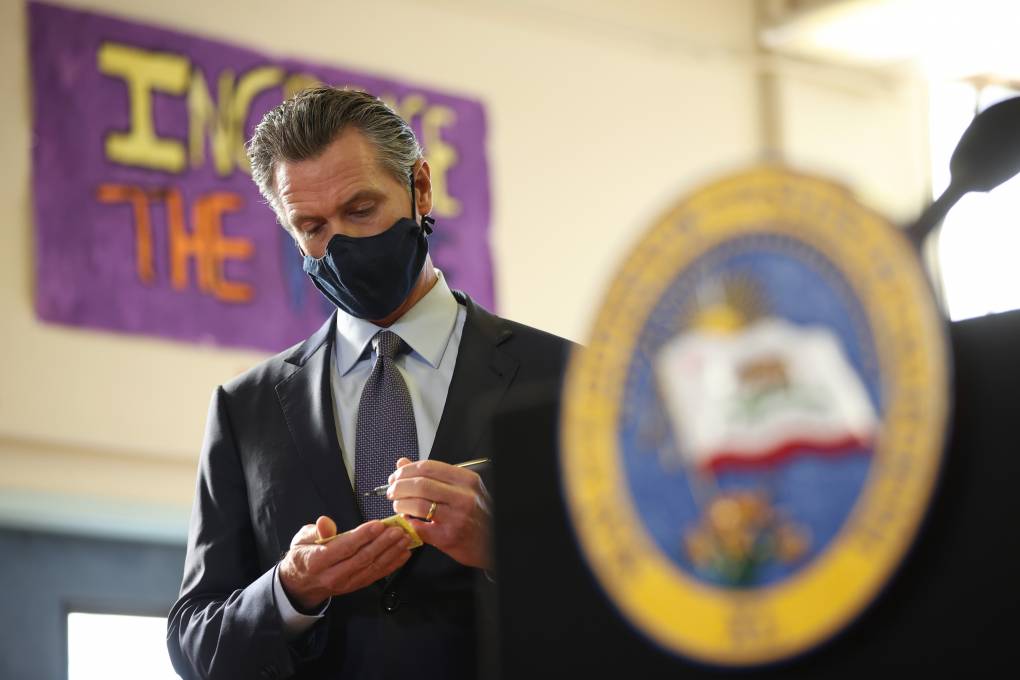
"caption": "Gov. Gavin Newsom takes notes before speaking at a news conference on Oct. 1, 2021, in San Francisco.",
"description": "Gov. Gavin Newsom takes notes before speaking at a news conference after meeting with students at James Denman Middle School on October 01, 2021 in San Francisco.",
"title": "California Governor Newsom Speaks On State's School Safety And Covid Prevention Efforts",
"credit": "Justin Sullivan/Getty Images",
"status": "inherit",
"altTag": "Gavin Newsom, wearing a black mask and standing beyond a podium with the Seal of California, scribbles in a tiny notepad.",
"isLoading": false,
"fetchFailed": false
},
"news_11867883": {
"type": "attachments",
"id": "news_11867883",
"meta": {
"index": "attachments_1716263798",
"site": "news",
"id": "11867883",
"found": true
},
"parent": 11867734,
"imgSizes": {
"twentyfourteen-full-width": {
"file": "https://ww2.kqed.org/app/uploads/sites/10/2021/04/Bharucha-peering-1024x576.jpg",
"width": 1024,
"mimeType": "image/jpeg",
"height": 576
},
"thumbnail": {
"file": "https://ww2.kqed.org/app/uploads/sites/10/2021/04/Bharucha-peering-160x118.jpg",
"width": 160,
"mimeType": "image/jpeg",
"height": 118
},
"post-thumbnail": {
"file": "https://ww2.kqed.org/app/uploads/sites/10/2021/04/Bharucha-peering-672x372.jpg",
"width": 672,
"mimeType": "image/jpeg",
"height": 372
},
"kqedFullSize": {
"file": "https://ww2.kqed.org/app/uploads/sites/10/2021/04/Bharucha-peering.jpg",
"width": 1024,
"height": 758
},
"large": {
"file": "https://ww2.kqed.org/app/uploads/sites/10/2021/04/Bharucha-peering-1020x755.jpg",
"width": 1020,
"mimeType": "image/jpeg",
"height": 755
},
"medium": {
"file": "https://ww2.kqed.org/app/uploads/sites/10/2021/04/Bharucha-peering-800x592.jpg",
"width": 800,
"mimeType": "image/jpeg",
"height": 592
}
},
"publishDate": 1617405546,
"modified": 1634061880,
"caption": "Dr. Parimal Bharucha peers through a makeshift wall inside the COVID-19 ICU at Mercy Hospital of Folsom, California.",
"description": "Dr. Parimal Bharucha peers through a makeshift wall inside the COVID-19 ICU at Mercy Hospital of Folsom.",
"title": "Bharucha-peering",
"credit": "Lesley McClurg/KQED",
"status": "inherit",
"altTag": "Someone in full personal protective equipment, including gloves and a hood with a clear face shield, looks through a plastic sheet taped to an opening in the wall with red duct tape.",
"isLoading": false,
"fetchFailed": false
},
"news_11881300": {
"type": "attachments",
"id": "news_11881300",
"meta": {
"index": "attachments_1716263798",
"site": "news",
"id": "11881300",
"found": true
},
"parent": 11881292,
"imgSizes": {
"twentyfourteen-full-width": {
"file": "https://ww2.kqed.org/app/uploads/sites/10/2021/07/Capitol-1180x787-3-1038x576.jpeg",
"width": 1038,
"mimeType": "image/jpeg",
"height": 576
},
"thumbnail": {
"file": "https://ww2.kqed.org/app/uploads/sites/10/2021/07/Capitol-1180x787-3-160x107.jpeg",
"width": 160,
"mimeType": "image/jpeg",
"height": 107
},
"post-thumbnail": {
"file": "https://ww2.kqed.org/app/uploads/sites/10/2021/07/Capitol-1180x787-3-672x372.jpeg",
"width": 672,
"mimeType": "image/jpeg",
"height": 372
},
"kqedFullSize": {
"file": "https://ww2.kqed.org/app/uploads/sites/10/2021/07/Capitol-1180x787-3.jpeg",
"width": 1180,
"height": 787
},
"large": {
"file": "https://ww2.kqed.org/app/uploads/sites/10/2021/07/Capitol-1180x787-3-1020x680.jpeg",
"width": 1020,
"mimeType": "image/jpeg",
"height": 680
},
"medium": {
"file": "https://ww2.kqed.org/app/uploads/sites/10/2021/07/Capitol-1180x787-3-800x534.jpeg",
"width": 800,
"mimeType": "image/jpeg",
"height": 534
}
},
"publishDate": 1626379331,
"modified": 1633991932,
"caption": "The California State Capitol.",
"description": null,
"title": "Gov. Schwarzenegger Delivers State Of The State Address",
"credit": "David Paul Morris/Getty Images",
"status": "inherit",
"altTag": "A Greek-style facade with pillars and a dome, with fir branches in the foreground.",
"isLoading": false,
"fetchFailed": false
},
"news_11891424": {
"type": "attachments",
"id": "news_11891424",
"meta": {
"index": "attachments_1716263798",
"site": "news",
"id": "11891424",
"found": true
},
"parent": 11891403,
"imgSizes": {
"twentyfourteen-full-width": {
"file": "https://ww2.kqed.org/app/uploads/sites/10/2021/10/RS51806_048_Oakland_HighlandHospitalBridgeProgram_10062021-qut-1038x576.jpg",
"width": 1038,
"mimeType": "image/jpeg",
"height": 576
},
"thumbnail": {
"file": "https://ww2.kqed.org/app/uploads/sites/10/2021/10/RS51806_048_Oakland_HighlandHospitalBridgeProgram_10062021-qut-160x107.jpg",
"width": 160,
"mimeType": "image/jpeg",
"height": 107
},
"post-thumbnail": {
"file": "https://ww2.kqed.org/app/uploads/sites/10/2021/10/RS51806_048_Oakland_HighlandHospitalBridgeProgram_10062021-qut-672x372.jpg",
"width": 672,
"mimeType": "image/jpeg",
"height": 372
},
"kqedFullSize": {
"file": "https://ww2.kqed.org/app/uploads/sites/10/2021/10/RS51806_048_Oakland_HighlandHospitalBridgeProgram_10062021-qut.jpg",
"width": 1920,
"height": 1280
},
"large": {
"file": "https://ww2.kqed.org/app/uploads/sites/10/2021/10/RS51806_048_Oakland_HighlandHospitalBridgeProgram_10062021-qut-1020x680.jpg",
"width": 1020,
"mimeType": "image/jpeg",
"height": 680
},
"1536x1536": {
"file": "https://ww2.kqed.org/app/uploads/sites/10/2021/10/RS51806_048_Oakland_HighlandHospitalBridgeProgram_10062021-qut-1536x1024.jpg",
"width": 1536,
"mimeType": "image/jpeg",
"height": 1024
},
"medium": {
"file": "https://ww2.kqed.org/app/uploads/sites/10/2021/10/RS51806_048_Oakland_HighlandHospitalBridgeProgram_10062021-qut-800x533.jpg",
"width": 800,
"mimeType": "image/jpeg",
"height": 533
}
},
"publishDate": 1633640215,
"modified": 1633744173,
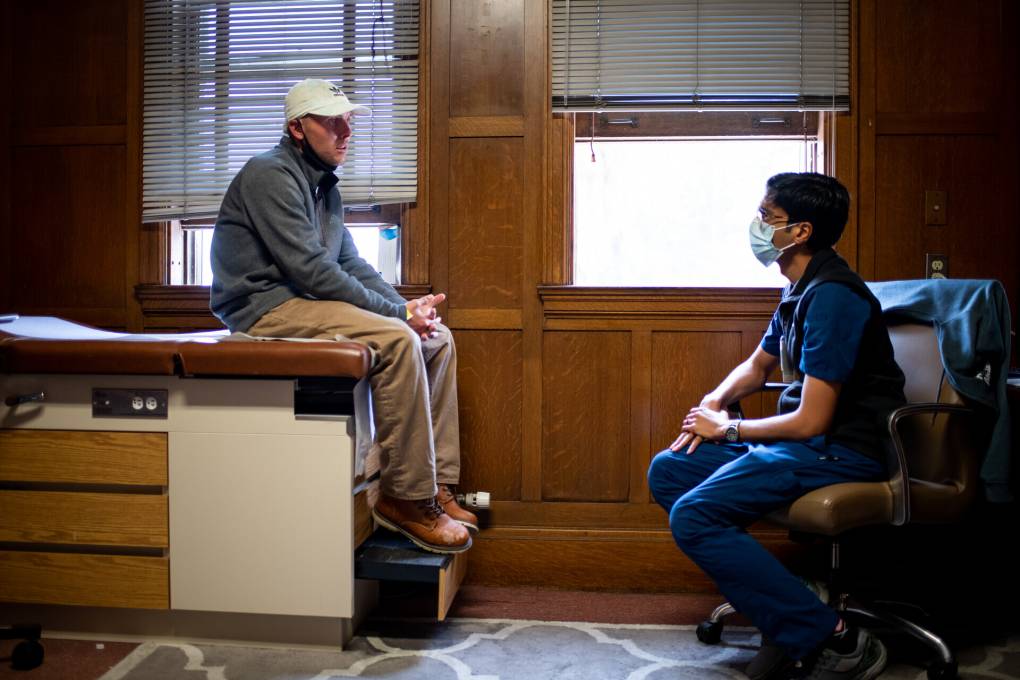
"caption": "Dr. Monish Ullal speaks with a patient at the Bridge substance use clinic at Highland Hospital in Oakland on Oct. 6, 2021.",
"description": null,
"title": "RS51806_048_Oakland_HighlandHospitalBridgeProgram_10062021-qut",
"credit": null,
"status": "inherit",
"altTag": "Two men in profile alongside wood paneling and windows, the patient sitting high up on an exam table, the doctor sitting facing him, wearing dark blue scrubs.",
"isLoading": false,
"fetchFailed": false
},
"news_11882934": {
"type": "attachments",
"id": "news_11882934",
"meta": {
"index": "attachments_1716263798",
"site": "news",
"id": "11882934",
"found": true
},
"parent": 11882027,
"imgSizes": {
"twentyfourteen-full-width": {
"file": "https://ww2.kqed.org/app/uploads/sites/10/2021/07/RS50436_009_Emeryville_COVIDMasks_07282021-qut-1038x576.jpeg",
"width": 1038,
"mimeType": "image/jpeg",
"height": 576
},
"thumbnail": {
"file": "https://ww2.kqed.org/app/uploads/sites/10/2021/07/RS50436_009_Emeryville_COVIDMasks_07282021-qut-160x107.jpeg",
"width": 160,
"mimeType": "image/jpeg",
"height": 107
},
"post-thumbnail": {
"file": "https://ww2.kqed.org/app/uploads/sites/10/2021/07/RS50436_009_Emeryville_COVIDMasks_07282021-qut-672x372.jpeg",
"width": 672,
"mimeType": "image/jpeg",
"height": 372
},
"kqedFullSize": {
"file": "https://ww2.kqed.org/app/uploads/sites/10/2021/07/RS50436_009_Emeryville_COVIDMasks_07282021-qut.jpeg",
"width": 1920,
"height": 1280
},
"large": {
"file": "https://ww2.kqed.org/app/uploads/sites/10/2021/07/RS50436_009_Emeryville_COVIDMasks_07282021-qut-1020x680.jpeg",
"width": 1020,
"mimeType": "image/jpeg",
"height": 680
},
"1536x1536": {
"file": "https://ww2.kqed.org/app/uploads/sites/10/2021/07/RS50436_009_Emeryville_COVIDMasks_07282021-qut-1536x1024.jpeg",
"width": 1536,
"mimeType": "image/jpeg",
"height": 1024
},
"medium": {
"file": "https://ww2.kqed.org/app/uploads/sites/10/2021/07/RS50436_009_Emeryville_COVIDMasks_07282021-qut-800x533.jpeg",
"width": 800,
"mimeType": "image/jpeg",
"height": 533
}
},
"publishDate": 1627577755,
"modified": 1646232281,
"caption": null,
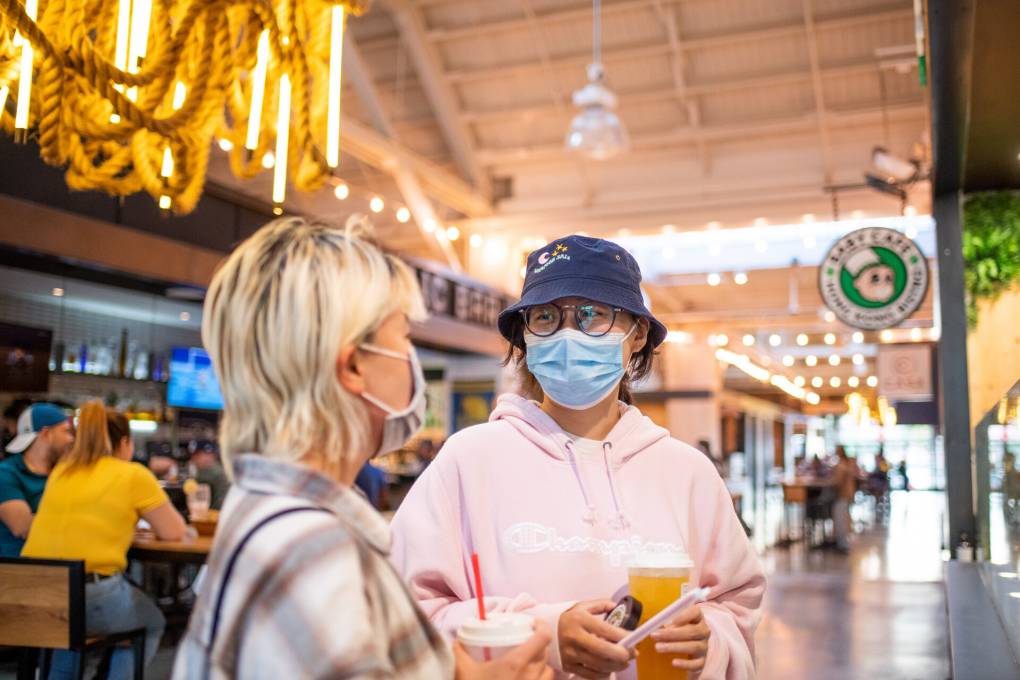
"description": "Two women wait for their drink order at The Public Market in Emeryville, California, on July 28, 2021.",
"title": "RS50436_009_Emeryville_COVIDMasks_07282021-qut",
"credit": "Beth LaBerge/KQED",
"status": "inherit",
"altTag": "Two women with masks in a high-ceilinged, brightly lit public market.",
"isLoading": false,
"fetchFailed": false
},
"news_11890993": {
"type": "attachments",
"id": "news_11890993",
"meta": {
"index": "attachments_1716263798",
"site": "news",
"id": "11890993",
"found": true
},
"parent": 11890421,
"imgSizes": {
"twentyfourteen-full-width": {
"file": "https://ww2.kqed.org/app/uploads/sites/10/2021/10/fentanylteststrips_annelisefinney-1038x576.jpg",
"width": 1038,
"mimeType": "image/jpeg",
"height": 576
},
"thumbnail": {
"file": "https://ww2.kqed.org/app/uploads/sites/10/2021/10/fentanylteststrips_annelisefinney-160x120.jpg",
"width": 160,
"mimeType": "image/jpeg",
"height": 120
},
"post-thumbnail": {
"file": "https://ww2.kqed.org/app/uploads/sites/10/2021/10/fentanylteststrips_annelisefinney-672x372.jpg",
"width": 672,
"mimeType": "image/jpeg",
"height": 372
},
"kqedFullSize": {
"file": "https://ww2.kqed.org/app/uploads/sites/10/2021/10/fentanylteststrips_annelisefinney-scaled-e1633393136850.jpg",
"width": 1920,
"height": 1440
},
"2048x2048": {
"file": "https://ww2.kqed.org/app/uploads/sites/10/2021/10/fentanylteststrips_annelisefinney-2048x1536.jpg",
"width": 2048,
"mimeType": "image/jpeg",
"height": 1536
},
"large": {
"file": "https://ww2.kqed.org/app/uploads/sites/10/2021/10/fentanylteststrips_annelisefinney-1020x765.jpg",
"width": 1020,
"mimeType": "image/jpeg",
"height": 765
},
"1536x1536": {
"file": "https://ww2.kqed.org/app/uploads/sites/10/2021/10/fentanylteststrips_annelisefinney-1536x1152.jpg",
"width": 1536,
"mimeType": "image/jpeg",
"height": 1152
},
"full-width": {
"file": "https://ww2.kqed.org/app/uploads/sites/10/2021/10/fentanylteststrips_annelisefinney-1920x1440.jpg",
"width": 1920,
"mimeType": "image/jpeg",
"height": 1440
},
"medium": {
"file": "https://ww2.kqed.org/app/uploads/sites/10/2021/10/fentanylteststrips_annelisefinney-800x600.jpg",
"width": 800,
"mimeType": "image/jpeg",
"height": 600
}
},
"publishDate": 1633389057,
"modified": 1633550442,
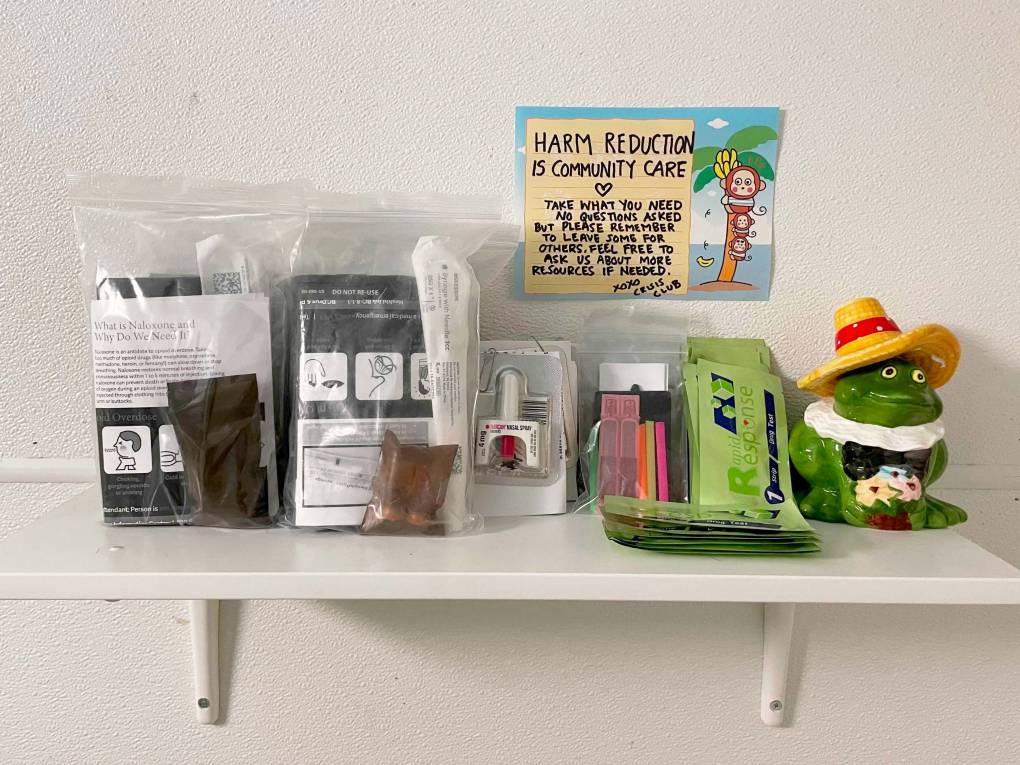
"caption": "A shelf in the restroom of Crisis Club Art Gallery in Oakland, which offers free fentanyl testing strips among other harm reduction supplies.",
"description": "The shelf in the restroom of Crisis Club Gallery in Oakland, where fentanyl test strips are offered at no expense. Co-owner Niko Nada said that having testing strips available at the gallery was nonnegotiable.",
"title": "fentanylteststrips_annelisefinney",
"credit": "Annelise Finney/KQED",
"status": "inherit",
"altTag": "Fentanyl testing strips on a bathroom shelf, next to other health-safety products.",
"isLoading": false,
"fetchFailed": false
},
"news_11891107": {
"type": "attachments",
"id": "news_11891107",
"meta": {
"index": "attachments_1716263798",
"site": "news",
"id": "11891107",
"found": true
},
"parent": 11891049,
"imgSizes": {
"twentyfourteen-full-width": {
"file": "https://ww2.kqed.org/app/uploads/sites/10/2021/10/Greta-at-Kaiser-protest-4-1038x576.jpg",
"width": 1038,
"mimeType": "image/jpeg",
"height": 576
},
"thumbnail": {
"file": "https://ww2.kqed.org/app/uploads/sites/10/2021/10/Greta-at-Kaiser-protest-4-160x120.jpg",
"width": 160,
"mimeType": "image/jpeg",
"height": 120
},
"post-thumbnail": {
"file": "https://ww2.kqed.org/app/uploads/sites/10/2021/10/Greta-at-Kaiser-protest-4-672x372.jpg",
"width": 672,
"mimeType": "image/jpeg",
"height": 372
},
"kqedFullSize": {
"file": "https://ww2.kqed.org/app/uploads/sites/10/2021/10/Greta-at-Kaiser-protest-4-scaled-e1633468544289.jpg",
"width": 1920,
"height": 1440
},
"2048x2048": {
"file": "https://ww2.kqed.org/app/uploads/sites/10/2021/10/Greta-at-Kaiser-protest-4-2048x1536.jpg",
"width": 2048,
"mimeType": "image/jpeg",
"height": 1536
},
"large": {
"file": "https://ww2.kqed.org/app/uploads/sites/10/2021/10/Greta-at-Kaiser-protest-4-1020x765.jpg",
"width": 1020,
"mimeType": "image/jpeg",
"height": 765
},
"1536x1536": {
"file": "https://ww2.kqed.org/app/uploads/sites/10/2021/10/Greta-at-Kaiser-protest-4-1536x1152.jpg",
"width": 1536,
"mimeType": "image/jpeg",
"height": 1152
},
"full-width": {
"file": "https://ww2.kqed.org/app/uploads/sites/10/2021/10/Greta-at-Kaiser-protest-4-1920x1440.jpg",
"width": 1920,
"mimeType": "image/jpeg",
"height": 1440
},
"medium": {
"file": "https://ww2.kqed.org/app/uploads/sites/10/2021/10/Greta-at-Kaiser-protest-4-800x600.jpg",
"width": 800,
"mimeType": "image/jpeg",
"height": 600
}
},
"publishDate": 1633468369,
"modified": 1633479606,
"caption": "When Greta Christina heard Kaiser Permanente mental health clinicians were staging a protest on Oct. 13, 2019, over long wait times for therapy, she showed up with her own sign. She's had to wait five to six weeks between therapy appointments for her depression.",
"description": null,
"title": "Greta at Kaiser protest 4",
"credit": "Courtesy of Ingrid Nelson",
"status": "inherit",
"altTag": "A woman holds a sign saying \"I Need Actual Therapy\" in front of a sign on a chain link fence reading, \"Has Kaiser Delayed or Denied Your Mental Health Care? Share Your Story.\"",
"isLoading": false,
"fetchFailed": false
},
"news_11890051": {
"type": "attachments",
"id": "news_11890051",
"meta": {
"index": "attachments_1716263798",
"site": "news",
"id": "11890051",
"found": true
},
"parent": 11889997,
"imgSizes": {
"twentyfourteen-full-width": {
"file": "https://ww2.kqed.org/app/uploads/sites/10/2021/09/RS48778_016_Berkeley_JocelynForemanSigningCeremony_04232021-qut-1038x576.jpg",
"width": 1038,
"mimeType": "image/jpeg",
"height": 576
},
"thumbnail": {
"file": "https://ww2.kqed.org/app/uploads/sites/10/2021/09/RS48778_016_Berkeley_JocelynForemanSigningCeremony_04232021-qut-160x107.jpg",
"width": 160,
"mimeType": "image/jpeg",
"height": 107
},
"post-thumbnail": {
"file": "https://ww2.kqed.org/app/uploads/sites/10/2021/09/RS48778_016_Berkeley_JocelynForemanSigningCeremony_04232021-qut-672x372.jpg",
"width": 672,
"mimeType": "image/jpeg",
"height": 372
},
"kqedFullSize": {
"file": "https://ww2.kqed.org/app/uploads/sites/10/2021/09/RS48778_016_Berkeley_JocelynForemanSigningCeremony_04232021-qut.jpg",
"width": 1574,
"height": 1049
},
"large": {
"file": "https://ww2.kqed.org/app/uploads/sites/10/2021/09/RS48778_016_Berkeley_JocelynForemanSigningCeremony_04232021-qut-1020x680.jpg",
"width": 1020,
"mimeType": "image/jpeg",
"height": 680
},
"1536x1536": {
"file": "https://ww2.kqed.org/app/uploads/sites/10/2021/09/RS48778_016_Berkeley_JocelynForemanSigningCeremony_04232021-qut-1536x1024.jpg",
"width": 1536,
"mimeType": "image/jpeg",
"height": 1024
},
"medium": {
"file": "https://ww2.kqed.org/app/uploads/sites/10/2021/09/RS48778_016_Berkeley_JocelynForemanSigningCeremony_04232021-qut-800x533.jpg",
"width": 800,
"mimeType": "image/jpeg",
"height": 533
}
},
"publishDate": 1632777124,
"modified": 1632859238,
"caption": "State Senator Nancy Skinner speaks at Malcolm X Elementary School in Berkeley on April 23, 2021. Earlier this year, Skinner introduced SB 65, which would write into state law a committee that would investigate every death of a birthing parent and allow for voluntary interviews of family members to better understand what happened.",
"description": "Senator Nancy Skinner speaks, next to Jocelyn Foreman, during a signing ceremony and celebration at Malcolm X Elementary School in Berkeley on April 23, 2021.",
"title": "RS48778_016_Berkeley_JocelynForemanSigningCeremony_04232021-qut",
"credit": "Beth LaBerge/KQED",
"status": "inherit",
"altTag": "Senator Nancy Skinner, wearing a face mask and standing in front of microphones, looks into the distance.",
"isLoading": false,
"fetchFailed": false
},
"news_11890904": {
"type": "attachments",
"id": "news_11890904",
"meta": {
"index": "attachments_1716263798",
"site": "news",
"id": "11890904",
"found": true
},
"parent": 11890903,
"imgSizes": {
"twentyfourteen-full-width": {
"file": "https://ww2.kqed.org/app/uploads/sites/10/2021/10/GettyImages-1235687551-1038x576.jpg",
"width": 1038,
"mimeType": "image/jpeg",
"height": 576
},
"thumbnail": {
"file": "https://ww2.kqed.org/app/uploads/sites/10/2021/10/GettyImages-1235687551-160x107.jpg",
"width": 160,
"mimeType": "image/jpeg",
"height": 107
},
"post-thumbnail": {
"file": "https://ww2.kqed.org/app/uploads/sites/10/2021/10/GettyImages-1235687551-672x372.jpg",
"width": 672,
"mimeType": "image/jpeg",
"height": 372
},
"kqedFullSize": {
"file": "https://ww2.kqed.org/app/uploads/sites/10/2021/10/GettyImages-1235687551-scaled.jpg",
"width": 2560,
"height": 1706
},
"2048x2048": {
"file": "https://ww2.kqed.org/app/uploads/sites/10/2021/10/GettyImages-1235687551-2048x1365.jpg",
"width": 2048,
"mimeType": "image/jpeg",
"height": 1365
},
"large": {
"file": "https://ww2.kqed.org/app/uploads/sites/10/2021/10/GettyImages-1235687551-1020x680.jpg",
"width": 1020,
"mimeType": "image/jpeg",
"height": 680
},
"1536x1536": {
"file": "https://ww2.kqed.org/app/uploads/sites/10/2021/10/GettyImages-1235687551-1536x1024.jpg",
"width": 1536,
"mimeType": "image/jpeg",
"height": 1024
},
"full-width": {
"file": "https://ww2.kqed.org/app/uploads/sites/10/2021/10/GettyImages-1235687551-1920x1280.jpg",
"width": 1920,
"mimeType": "image/jpeg",
"height": 1280
},
"medium": {
"file": "https://ww2.kqed.org/app/uploads/sites/10/2021/10/GettyImages-1235687551-800x533.jpg",
"width": 800,
"mimeType": "image/jpeg",
"height": 533
}
},
"publishDate": 1633365982,
"modified": 1633382632,
"caption": "Patrik Ernfors, standing to the right of the projection, member of the Nobel Committee for Physiology or Medicine, explains the research field of the winners of the 2021 Nobel Prize in Physiology or Medicine, during a press conference at the Karolinska Institute in Stockholm, Sweden, on Oct. 4, 2021. David Julius, UCSF faculty member, and Ardem Patapoutian, at the Scripps Research Institute ing La Jolla, won the Nobel Prize for discoveries on receptors for temperature and touch.",
"description": "Patrik Ernfors, standing to the right of the projection, member of the Nobel Committee for Physiology or Medicine, explains the research field of the winners of the 2021 Nobel Prize in Physiology or Medicine, during a press conference at the Karolinska Institute in Stockholm, Sweden, on October 4, 2021.",
"title": "SWEDEN-NOBEL-MEDICINE",
"credit": "Jonathan Nackstrand/AFP via Getty Images",
"status": "inherit",
"altTag": "A man behind a podium in an auditorium stands next to a projection showing the faces of the 2 researchers and a diagram of their prize-winning work.",
"isLoading": false,
"fetchFailed": false
},
"news_11890790": {
"type": "attachments",
"id": "news_11890790",
"meta": {
"index": "attachments_1716263798",
"site": "news",
"id": "11890790",
"found": true
},
"parent": 11890716,
"imgSizes": {
"twentyfourteen-full-width": {
"file": "https://ww2.kqed.org/app/uploads/sites/10/2021/10/lucky-getty-1038x576.jpg",
"width": 1038,
"mimeType": "image/jpeg",
"height": 576
},
"thumbnail": {
"file": "https://ww2.kqed.org/app/uploads/sites/10/2021/10/lucky-getty-160x115.jpg",
"width": 160,
"mimeType": "image/jpeg",
"height": 115
},
"post-thumbnail": {
"file": "https://ww2.kqed.org/app/uploads/sites/10/2021/10/lucky-getty-672x372.jpg",
"width": 672,
"mimeType": "image/jpeg",
"height": 372
},
"kqedFullSize": {
"file": "https://ww2.kqed.org/app/uploads/sites/10/2021/10/lucky-getty-scaled.jpg",
"width": 2560,
"height": 1842
},
"2048x2048": {
"file": "https://ww2.kqed.org/app/uploads/sites/10/2021/10/lucky-getty-2048x1473.jpg",
"width": 2048,
"mimeType": "image/jpeg",
"height": 1473
},
"large": {
"file": "https://ww2.kqed.org/app/uploads/sites/10/2021/10/lucky-getty-1020x734.jpg",
"width": 1020,
"mimeType": "image/jpeg",
"height": 734
},
"1536x1536": {
"file": "https://ww2.kqed.org/app/uploads/sites/10/2021/10/lucky-getty-1536x1105.jpg",
"width": 1536,
"mimeType": "image/jpeg",
"height": 1105
},
"full-width": {
"file": "https://ww2.kqed.org/app/uploads/sites/10/2021/10/lucky-getty-1920x1381.jpg",
"width": 1920,
"mimeType": "image/jpeg",
"height": 1381
},
"medium": {
"file": "https://ww2.kqed.org/app/uploads/sites/10/2021/10/lucky-getty-800x576.jpg",
"width": 800,
"mimeType": "image/jpeg",
"height": 576
}
},
"publishDate": 1633124447,
"modified": 1633135111,
"caption": "A customer leaves a Lucky store on July 27, 2020 in Larkspur, California.",
"description": "A customer leaves a Lucky store on July 27, 2020 in Larkspur, California.",
"title": "Supermarket Chain Albertsons, Owner Of Safeway And Other Grocery Stores, Sees Increases In Sales",
"credit": "Justin Sullivan/Getty Images",
"status": "inherit",
"altTag": "The front of a Lucky store, with its read \"Lucky\" sign above the awning.",
"isLoading": false,
"fetchFailed": false
},
"news_11728015": {
"type": "attachments",
"id": "news_11728015",
"meta": {
"index": "attachments_1716263798",
"site": "news",
"id": "11728015",
"found": true
},
"parent": 11728012,
"imgSizes": {
"twentyfourteen-full-width": {
"file": "https://ww2.kqed.org/app/uploads/sites/10/2019/02/Rick-Andrews-at-SF-AIDS-Foundation-1038x576.jpg",
"width": 1038,
"mimeType": "image/jpeg",
"height": 576
},
"thumbnail": {
"file": "https://ww2.kqed.org/app/uploads/sites/10/2019/02/Rick-Andrews-at-SF-AIDS-Foundation-160x106.jpg",
"width": 160,
"mimeType": "image/jpeg",
"height": 106
},
"post-thumbnail": {
"file": "https://ww2.kqed.org/app/uploads/sites/10/2019/02/Rick-Andrews-at-SF-AIDS-Foundation-672x372.jpg",
"width": 672,
"mimeType": "image/jpeg",
"height": 372
},
"kqedFullSize": {
"file": "https://ww2.kqed.org/app/uploads/sites/10/2019/02/Rick-Andrews-at-SF-AIDS-Foundation-e1550805739648.jpg",
"width": 1920,
"height": 1275
},
"large": {
"file": "https://ww2.kqed.org/app/uploads/sites/10/2019/02/Rick-Andrews-at-SF-AIDS-Foundation-1020x678.jpg",
"width": 1020,
"mimeType": "image/jpeg",
"height": 678
},
"complete_open_graph": {
"file": "https://ww2.kqed.org/app/uploads/sites/10/2019/02/Rick-Andrews-at-SF-AIDS-Foundation-1200x797.jpg",
"width": 1200,
"mimeType": "image/jpeg",
"height": 797
},
"guest-author-50": {
"file": "https://ww2.kqed.org/app/uploads/sites/10/2019/02/Rick-Andrews-at-SF-AIDS-Foundation-50x50.jpg",
"width": 50,
"mimeType": "image/jpeg",
"height": 50
},
"guest-author-96": {
"file": "https://ww2.kqed.org/app/uploads/sites/10/2019/02/Rick-Andrews-at-SF-AIDS-Foundation-96x96.jpg",
"width": 96,
"mimeType": "image/jpeg",
"height": 96
},
"medium": {
"file": "https://ww2.kqed.org/app/uploads/sites/10/2019/02/Rick-Andrews-at-SF-AIDS-Foundation-800x531.jpg",
"width": 800,
"mimeType": "image/jpeg",
"height": 531
},
"guest-author-64": {
"file": "https://ww2.kqed.org/app/uploads/sites/10/2019/02/Rick-Andrews-at-SF-AIDS-Foundation-64x64.jpg",
"width": 64,
"mimeType": "image/jpeg",
"height": 64
},
"guest-author-32": {
"file": "https://ww2.kqed.org/app/uploads/sites/10/2019/02/Rick-Andrews-at-SF-AIDS-Foundation-32x32.jpg",
"width": 32,
"mimeType": "image/jpeg",
"height": 32
},
"full-width": {
"file": "https://ww2.kqed.org/app/uploads/sites/10/2019/02/Rick-Andrews-at-SF-AIDS-Foundation-1920x1275.jpg",
"width": 1920,
"mimeType": "image/jpeg",
"height": 1275
},
"detail": {
"file": "https://ww2.kqed.org/app/uploads/sites/10/2019/02/Rick-Andrews-at-SF-AIDS-Foundation-150x150.jpg",
"width": 150,
"mimeType": "image/jpeg",
"height": 150
},
"guest-author-128": {
"file": "https://ww2.kqed.org/app/uploads/sites/10/2019/02/Rick-Andrews-at-SF-AIDS-Foundation-128x128.jpg",
"width": 128,
"mimeType": "image/jpeg",
"height": 128
}
},
"publishDate": 1550805715,
"modified": 1633040846,
"caption": "At the San Francisco AIDS Foundation, staff members Tyrone Clifford (left) and Rick Andrews demonstrate how a contingency management visit typically begins, with a participant picking up a specimen cup for a urine sample. If the sample tests negative for meth or cocaine use, the participant has an incentive dollar amount added to their 'bank,' which can later be traded for a gift card.",
"description": "At the San Francisco AIDS Foundation, staff members Tyrone Clifford (left) and Rick Andrews (right) demonstrate how a contingency management visit typically begins, with a participant picking up a specimen cup for a urine sample. If the sample tests negative for meth or cocaine use, the participant has an incentive dollar amount added to their 'bank' which can later be traded for a gift card.",
"title": "Rick Andrews at SF AIDS Foundation",
"credit": "Courtesy San Francisco AIDS Foundation",
"status": "inherit",
"altTag": "One man hands another an empty plastic cup.",
"isLoading": false,
"fetchFailed": false
}
},
"audioPlayerReducer": {
"postId": "stream_live",
"isPaused": true,
"isPlaying": false,
"pfsActive": false,
"pledgeModalIsOpen": true,
"playerDrawerIsOpen": false,
"liveAudioPlayStartedAt": 0,
"liveAudioPlayContext": ""
},
"authorsReducer": {
"byline_news_11892468": {
"type": "authors",
"id": "byline_news_11892468",
"meta": {
"override": true
},
"slug": "byline_news_11892468",
"name": "Diana Lambert",
"isLoading": false
},
"byline_news_11892112": {
"type": "authors",
"id": "byline_news_11892112",
"meta": {
"override": true
},
"slug": "byline_news_11892112",
"name": "\u003ca href=\"https://calmatters.org/author/laurel-rosenhall/\">Laurel Rosenhall\u003c/a>",
"isLoading": false
},
"byline_news_11891232": {
"type": "authors",
"id": "byline_news_11891232",
"meta": {
"override": true
},
"slug": "byline_news_11891232",
"name": "Marlena Jackson-Retondo and Susie Britton",
"isLoading": false
},
"byline_news_11890903": {
"type": "authors",
"id": "byline_news_11890903",
"meta": {
"override": true
},
"slug": "byline_news_11890903",
"name": "David Keyton, Maria Cheng \u003cbr> The Associated Press",
"isLoading": false
},
"dclyde": {
"type": "authors",
"id": "104",
"meta": {
"index": "authors_1716337520",
"id": "104",
"found": true
},
"name": "Don Clyde",
"firstName": "Don",
"lastName": "Clyde",
"slug": "dclyde",
"email": "dclyde@kqed.org",
"display_author_email": false,
"staff_mastheads": [],
"title": "KQED Contributor",
"bio": "Don Clyde is an online producer, reporter and copy editor for KQED News. Before venturing into journalism, he worked as a medical device engineer and scientist for nearly a decade after earning a degree in physics from UC Berkeley. He loves travel, reading, living in Oakland, and most importantly, a good walk. Email him at dclyde@kqed.org or follow him @clydedon.",
"avatar": "https://secure.gravatar.com/avatar/decd3e640c3eedbd0a574275aebb2d19?s=600&d=blank&r=g",
"twitter": "clydedon",
"facebook": null,
"instagram": null,
"linkedin": null,
"sites": [
{
"site": "artschool",
"roles": [
"editor"
]
},
{
"site": "news",
"roles": [
"administrator"
]
},
{
"site": "futureofyou",
"roles": [
"editor"
]
},
{
"site": "about",
"roles": [
"editor"
]
},
{
"site": "mindshift",
"roles": [
"contributor"
]
},
{
"site": "bayareabites",
"roles": [
"contributor"
]
},
{
"site": "lowdown",
"roles": [
"editor"
]
},
{
"site": "stateofhealth",
"roles": [
"administrator"
]
},
{
"site": "spark",
"roles": [
"administrator"
]
},
{
"site": "trulyca",
"roles": [
"administrator"
]
},
{
"site": "imagemakers",
"roles": [
"administrator"
]
},
{
"site": "science",
"roles": []
},
{
"site": "education",
"roles": [
"editor"
]
},
{
"site": "quest",
"roles": [
"subscriber"
]
},
{
"site": "checkplease",
"roles": [
"subscriber"
]
},
{
"site": "forum",
"roles": [
"editor"
]
},
{
"site": "perspectives",
"roles": [
"editor"
]
}
],
"headData": {
"title": "Don Clyde | KQED",
"description": "KQED Contributor",
"ogImgSrc": "https://secure.gravatar.com/avatar/decd3e640c3eedbd0a574275aebb2d19?s=600&d=blank&r=g",
"twImgSrc": "https://secure.gravatar.com/avatar/decd3e640c3eedbd0a574275aebb2d19?s=600&d=blank&r=g"
},
"isLoading": false,
"link": "/author/dclyde"
},
"kqednewsstaffandwires": {
"type": "authors",
"id": "237",
"meta": {
"index": "authors_1716337520",
"id": "237",
"found": true
},
"name": "KQED News Staff and Wires",
"firstName": "KQED News Staff and Wires",
"lastName": null,
"slug": "kqednewsstaffandwires",
"email": "onlinenewsstaff@kqed.org",
"display_author_email": false,
"staff_mastheads": [],
"title": null,
"bio": null,
"avatar": "https://secure.gravatar.com/avatar/72295af8ebbfbd19a4948f5271285664?s=600&d=blank&r=g",
"twitter": null,
"facebook": null,
"instagram": null,
"linkedin": null,
"sites": [
{
"site": "arts",
"roles": [
"contributor"
]
},
{
"site": "news",
"roles": [
"contributor"
]
},
{
"site": "lowdown",
"roles": [
"author"
]
},
{
"site": "stateofhealth",
"roles": [
"contributor"
]
},
{
"site": "food",
"roles": [
"author"
]
}
],
"headData": {
"title": "KQED News Staff and Wires | KQED",
"description": null,
"ogImgSrc": "https://secure.gravatar.com/avatar/72295af8ebbfbd19a4948f5271285664?s=600&d=blank&r=g",
"twImgSrc": "https://secure.gravatar.com/avatar/72295af8ebbfbd19a4948f5271285664?s=600&d=blank&r=g"
},
"isLoading": false,
"link": "/author/kqednewsstaffandwires"
},
"adembosky": {
"type": "authors",
"id": "3205",
"meta": {
"index": "authors_1716337520",
"id": "3205",
"found": true
},
"name": "April Dembosky",
"firstName": "April",
"lastName": "Dembosky",
"slug": "adembosky",
"email": "adembosky@kqed.org",
"display_author_email": false,
"staff_mastheads": [
"news",
"science"
],
"title": "KQED Health Correspondent",
"bio": "April Dembosky is the health correspondent for KQED News and a regular contributor to NPR. She specializes in covering altered states of mind, from postpartum depression to methamphetamine-induced psychosis to the insanity defense. Her investigative series on insurance companies sidestepping mental health laws won multiple awards, including first place in beat reporting from the national Association of Health Care Journalists. She is the recipient of numerous other prizes and fellowships, including a national Edward R. Murrow award for investigative reporting, a Society of Professional Journalists award for long-form storytelling, and a Carter Center Fellowship for Mental Health Journalism.\r\n\r\nDembosky reported and produced \u003cem>Soundtrack of Silence\u003c/em>, an audio documentary about music and memory that is currently being made into a feature film by Paramount Pictures.\r\n\r\nBefore joining KQED in 2013, Dembosky covered technology and Silicon Valley for \u003cem>The Financial Times of London,\u003c/em> and contributed business and arts stories to \u003cem>Marketplace \u003c/em>and \u003cem>The New York Times.\u003c/em> She got her undergraduate degree in philosophy from Smith College and her master's in journalism from the University of California, Berkeley. She is a classically trained violinist and proud alum of the first symphony orchestra at Burning Man.",
"avatar": "https://secure.gravatar.com/avatar/ef92999be4ceb9ea60701e7dc276f813?s=600&d=blank&r=g",
"twitter": "adembosky",
"facebook": null,
"instagram": null,
"linkedin": null,
"sites": [
{
"site": "arts",
"roles": [
"author"
]
},
{
"site": "news",
"roles": [
"editor"
]
},
{
"site": "futureofyou",
"roles": [
"author"
]
},
{
"site": "stateofhealth",
"roles": [
"editor"
]
},
{
"site": "science",
"roles": [
"editor"
]
},
{
"site": "forum",
"roles": [
"editor"
]
}
],
"headData": {
"title": "April Dembosky | KQED",
"description": "KQED Health Correspondent",
"ogImgSrc": "https://secure.gravatar.com/avatar/ef92999be4ceb9ea60701e7dc276f813?s=600&d=blank&r=g",
"twImgSrc": "https://secure.gravatar.com/avatar/ef92999be4ceb9ea60701e7dc276f813?s=600&d=blank&r=g"
},
"isLoading": false,
"link": "/author/adembosky"
},
"lesleymcclurg": {
"type": "authors",
"id": "11229",
"meta": {
"index": "authors_1716337520",
"id": "11229",
"found": true
},
"name": "Lesley McClurg",
"firstName": "Lesley",
"lastName": "McClurg",
"slug": "lesleymcclurg",
"email": "lmcclurg@KQED.org",
"display_author_email": false,
"staff_mastheads": [
"news",
"science"
],
"title": "KQED Health Correspondent",
"bio": "Lesley McClurg is a health correspondent and fill-in host whose work is regularly rebroadcast on NPR and PBS programs. She’s earned multiple regional Emmy awards, a national and a regional Edward R. Murrow award, and was named Best Beat Reporter by the Association of Health Care Journalists. The Society of Professional Journalists has recognized her work several times, and the Society of Environmental Journalists spotlighted her coverage of California’s historic drought.\r\n\r\nBefore joining KQED in 2016, Lesley covered food and sustainability for Capital Public Radio, environmental issues for Colorado Public Radio, and reported for KUOW and KCTS 9 in Seattle. Away from the newsroom, she loves skiing with her daughter, mountain biking with her partner, and playing with Ollie, the family’s goldendoodle. On deadline, she runs almost entirely on chocolate chips.\r\n\r\n ",
"avatar": "https://secure.gravatar.com/avatar/bab49e972ea10c774fe0f5e29dba1722b158f7c0d58a360923d1389d380b2978?s=600&d=blank&r=g",
"twitter": "lesleywmcclurg",
"bluesky": null,
"facebook": null,
"instagram": null,
"linkedin": null,
"sites": [
{
"site": "arts",
"roles": [
"author"
]
},
{
"site": "news",
"roles": [
"editor"
]
},
{
"site": "futureofyou",
"roles": [
"editor"
]
},
{
"site": "stateofhealth",
"roles": [
"author"
]
},
{
"site": "science",
"roles": [
"editor"
]
},
{
"site": "quest",
"roles": [
"subscriber"
]
},
{
"site": "forum",
"roles": [
"administrator"
]
},
{
"site": "liveblog",
"roles": [
"author"
]
}
],
"headData": {
"title": "Lesley McClurg | KQED",
"description": "KQED Health Correspondent",
"ogImgSrc": "https://secure.gravatar.com/avatar/bab49e972ea10c774fe0f5e29dba1722b158f7c0d58a360923d1389d380b2978?s=600&d=blank&r=g",
"twImgSrc": "https://secure.gravatar.com/avatar/bab49e972ea10c774fe0f5e29dba1722b158f7c0d58a360923d1389d380b2978?s=600&d=blank&r=g"
},
"isLoading": false,
"link": "/author/lesleymcclurg"
},
"lblanco": {
"type": "authors",
"id": "11357",
"meta": {
"index": "authors_1716337520",
"id": "11357",
"found": true
},
"name": "Lina Blanco",
"firstName": "Lina",
"lastName": "Blanco",
"slug": "lblanco",
"email": "lblanco@kqed.org",
"display_author_email": false,
"staff_mastheads": [],
"title": null,
"bio": "Lina was a Senior Engagement Platforms Manager for KQED News, producing engagement strategies on social media at \u003ca href=\"https://twitter.com/KQEDnews\">@KQEDNews, \u003c/a>via \u003ca href=\"https://www.kqed.org/about/newsletters/\">KQED's daily newsletter\u003c/a> as well as texting campaigns with KQED readers and listeners. She also co-produces for KQED's bilingual news hub \u003ca href=\"https://www.instagram.com/kqedenespanol/\">KQED en Español\u003c/a>.\r\n\r\nLina previously worked for \u003ca href=\"https://kqed.org/arts\">KQED Arts\u003c/a> — supporting audience engagement efforts on the weekly \u003ca href=\"https://www.kqed.org/podcasts/rightnowish\">\u003cem>Rightnowish\u003c/em> \u003c/a>podcast, Webby-winning video series \u003ca href=\"https://www.kqed.org/if-cities-could-dance\">\u003cem>If Cities Could Dance\u003c/em>\u003c/a>, and daily Arts & Culture reporting. She won a \u003ca href=\"https://www.kqed.org/pressroom/10884/murrow\">National 2019 Edward R. Murrow Award for Excellence in Social Media\u003c/a> for KQED's series \u003cem>The Hustle\u003c/em>.\r\n\r\nBefore KQED, Lina worked as a graphic designer and digital storytelling facilitator at the \u003ca href=\"https://www.nativehealth.org/\">Native American Health Center\u003c/a>.\r\n\r\nShe's mom to a senior Chihuahua (plus one black cat) and lives in West Sonoma County on a small farmstead.",
"avatar": "https://secure.gravatar.com/avatar/77ec326d67223c38a436b87bcfd2a2e8?s=600&d=mm&r=g",
"twitter": "LinaBlanco",
"facebook": null,
"instagram": null,
"linkedin": null,
"sites": [
{
"site": "arts",
"roles": [
"subscriber"
]
},
{
"site": "news",
"roles": [
"subscriber"
]
},
{
"site": "pop",
"roles": [
"administrator"
]
},
{
"site": "about",
"roles": [
"administrator"
]
},
{
"site": "bayareabites",
"roles": [
"editor"
]
},
{
"site": "science",
"roles": [
"editor"
]
},
{
"site": "checkplease",
"roles": [
"editor"
]
},
{
"site": "food",
"roles": []
},
{
"site": "perspectives",
"roles": [
"editor"
]
}
],
"headData": {
"title": "Lina Blanco | KQED",
"description": null,
"ogImgSrc": "https://secure.gravatar.com/avatar/77ec326d67223c38a436b87bcfd2a2e8?s=600&d=mm&r=g",
"twImgSrc": "https://secure.gravatar.com/avatar/77ec326d67223c38a436b87bcfd2a2e8?s=600&d=mm&r=g"
},
"isLoading": false,
"link": "/author/lblanco"
},
"ccabreralomeli": {
"type": "authors",
"id": "11708",
"meta": {
"index": "authors_1716337520",
"id": "11708",
"found": true
},
"name": "Carlos Cabrera-Lomelí",
"firstName": "Carlos",
"lastName": "Cabrera-Lomelí",
"slug": "ccabreralomeli",
"email": "ccabreralomeli@KQED.org",
"display_author_email": true,
"staff_mastheads": [
"news"
],
"title": "Community Reporter",
"bio": "Carlos Cabrera-Lomelí is a community reporter with KQED's digital engagement team. He also reports and co-produces for KQED's bilingual news hub KQED en Español. He grew up in San Francisco's Mission District and has previously worked with Univision, 48 Hills and REFORMA in Mexico City.",
"avatar": "https://secure.gravatar.com/avatar/c309be9665e484f887b818c89e273ecc673004f426f36b24d00a4d813a2e0518?s=600&d=blank&r=g",
"twitter": "@LomeliCabrera",
"bluesky": null,
"facebook": null,
"instagram": null,
"linkedin": null,
"sites": [
{
"site": "arts",
"roles": [
"editor"
]
},
{
"site": "news",
"roles": [
"editor"
]
},
{
"site": "about",
"roles": [
"editor"
]
},
{
"site": "science",
"roles": [
"editor"
]
},
{
"site": "perspectives",
"roles": [
"editor"
]
},
{
"site": "elections",
"roles": [
"editor"
]
},
{
"site": "liveblog",
"roles": [
"contributor"
]
}
],
"headData": {
"title": "Carlos Cabrera-Lomelí | KQED",
"description": "Community Reporter",
"ogImgSrc": "https://secure.gravatar.com/avatar/c309be9665e484f887b818c89e273ecc673004f426f36b24d00a4d813a2e0518?s=600&d=blank&r=g",
"twImgSrc": "https://secure.gravatar.com/avatar/c309be9665e484f887b818c89e273ecc673004f426f36b24d00a4d813a2e0518?s=600&d=blank&r=g"
},
"isLoading": false,
"link": "/author/ccabreralomeli"
},
"afinney": {
"type": "authors",
"id": "11772",
"meta": {
"index": "authors_1716337520",
"id": "11772",
"found": true
},
"name": "Annelise Finney",
"firstName": "Annelise",
"lastName": "Finney",
"slug": "afinney",
"email": "afinney@kqed.org",
"display_author_email": true,
"staff_mastheads": [
"news"
],
"title": "Reporter",
"bio": "Annelise reports on reparations in California and East Bay politics. She co-produced the Sunday Music Drop, a limited-term radio series featuring Bay Area musicians that aired between Sept 2022 and Oct 2024. She joined KQED in 2021 as a general assignment reporter and is an alumna of KALW's Audio Academy. She was born and raised in the East Bay. She is currently away from KQED completing a year-long reporting project in Berlin, Germany as a Alexander Von Humboldt German Chancellor Fellow.",
"avatar": "https://secure.gravatar.com/avatar/5fded66cae47704cdfc5021cde0f3aa4?s=600&d=blank&r=g",
"twitter": null,
"facebook": null,
"instagram": null,
"linkedin": null,
"sites": [
{
"site": "news",
"roles": [
"editor"
]
},
{
"site": "liveblog",
"roles": [
"author"
]
}
],
"headData": {
"title": "Annelise Finney | KQED",
"description": "Reporter",
"ogImgSrc": "https://secure.gravatar.com/avatar/5fded66cae47704cdfc5021cde0f3aa4?s=600&d=blank&r=g",
"twImgSrc": "https://secure.gravatar.com/avatar/5fded66cae47704cdfc5021cde0f3aa4?s=600&d=blank&r=g"
},
"isLoading": false,
"link": "/author/afinney"
}
},
"pagesReducer": {
"news_tag_health": {
"type": "terms",
"id": "news_18543",
"meta": {
"index": "terms_1716263798",
"site": "news",
"id": "18543",
"score": 6.886699
},
"featImg": null,
"name": "Health",
"description": null,
"taxonomy": "tag",
"headData": {
"twImgId": null,
"twTitle": null,
"ogTitle": null,
"ogImgId": null,
"twDescription": null,
"description": null,
"title": "Health Archives | KQED News",
"ogDescription": null
},
"ttid": 466,
"slug": "health",
"isLoading": false,
"title": "Health",
"pageMeta": {
"site": "news",
"WpPageTemplate": "page-topic-editorial",
"currentPage": 60
},
"blocks": [
{
"blockName": "kqed/post-list",
"attrs": {
"layout": "cardArticle2",
"query": "posts/news?tag=health",
"seeMore": false,
"paginated": true,
"page": 60
}
},
{
"blockName": "kqed/ad"
}
]
}
},
"pfsSessionReducer": {},
"postsReducer": {
"stream_live": {
"type": "live",
"id": "stream_live",
"audioUrl": "https://streams.kqed.org/kqedradio",
"title": "Live Stream",
"excerpt": "Live Stream information currently unavailable.",
"link": "/radio",
"featImg": "",
"label": {
"name": "KQED Live",
"link": "/"
}
},
"stream_kqedNewscast": {
"type": "posts",
"id": "stream_kqedNewscast",
"audioUrl": "https://www.kqed.org/.stream/anon/radio/RDnews/newscast.mp3?_=1",
"title": "KQED Newscast",
"featImg": "",
"label": {
"name": "88.5 FM",
"link": "/"
}
},
"news_11892468": {
"type": "posts",
"id": "news_11892468",
"meta": {
"index": "posts_1716263798",
"site": "news",
"id": "11892468",
"score": null,
"sort": [
1634330678000
]
},
"guestAuthors": [],
"slug": "officials-fear-vaccine-mandates-may-make-school-staffing-shortages-in-california-worse",
"title": "Officials Fear Vaccine Mandates May Make School Staffing Shortages in California Worse",
"publishDate": 1634330678,
"format": "standard",
"headTitle": "Officials Fear Vaccine Mandates May Make School Staffing Shortages in California Worse | KQED",
"labelTerm": {},
"content": "\u003cp>Some California school district superintendents, especially those in rural areas of the state, fear that teachers and other staff members will quit rather than be vaccinated or take weekly COVID-19 tests — a \u003ca class=\"external\" href=\"https://www.cdph.ca.gov/Programs/CID/DCDC/Pages/COVID-19/Order-of-the-State-Public-Health-Officer-Vaccine-Verification-for-Workers-in-Schools.aspx\" target=\"_blank\" rel=\"noopener noreferrer\">state requirement\u003c/a> that began Friday.\u003c/p>\n\u003cp>Many California districts are already struggling to staff schools, and even a moderate number of resignations would mean not only fewer teachers but fewer bus drivers, instructional aides and substitute teachers to keep schools running.\u003c/p>\n\u003cp>Tim Taylor, executive director of the Small School Districts’ Association, said superintendents have told him some of their employees have threatened to quit their jobs because of the mandates.\u003c/p>\n\u003cp>“There are employees that will refuse to take the test and the vaccination, which puts the school district in a situation where they would lose employees who would rather not give up their personal beliefs or who don’t trust the government,” he said.\u003c/p>\n\u003cp>The COVID requirements will become even stricter this summer. Earlier this month, Gov. Gavin Newsom announced that all public and private school students and employees \u003ca href=\"https://edsource.org/2021/california-to-require-covid-vaccine-for-all-students-newsom-says/661843\">must be vaccinated\u003c/a> by July to be on campuses. They will no longer be able to be tested as an alternative to a vaccine unless they are eligible for medical or personal belief exemptions.\u003c/p>\n\u003cp>[ad fullwidth]\u003c/p>\n\u003cp>Opinions about the mandates vary greatly and largely depend on the politics of the school community. School districts in more conservative areas of the state report more resistance to testing and vaccines than communities with more liberal residents.\u003c/p>\n\u003cp>“This conversation is playing out very differently depending what community you are in,” said Edgar Zazueta, senior director of policy of the Association of California School Administrators during his \u003ca class=\"external\" href=\"https://www.youtube.com/watch?v=xeUXKQpIvkI&t=1173s\" target=\"_blank\" rel=\"noopener noreferrer\">weekly legislative update\u003c/a> last week.\u003c/p>\n\u003cp>Superintendents in some districts are concerned about the potential for declining enrollment and increased staffing shortages because of the vaccine mandates, Zazueta said. On the flip side, he said the state mandate gives school districts like Los Angeles Unified that have instituted local vaccination mandates some cover in terms of defending themselves against legal challenges. [pullquote size=\"medium\" align=\"right\" citation=\"Sherri Morgan, executive director at Long Valley Charter School\"]“In January, if they say they have to be vaccinated, I don’t know how I will stay open.”[/pullquote]\u003c/p>\n\u003cp>In Modoc Joint Unified School District in Alturas, 31 teachers and other school staff are considering resigning because they don’t want to take the COVID test or get vaccinated, Taylor said.\u003c/p>\n\u003cp>In a small district like Modoc Joint Unified, which has 857 students, a loss of nearly half its employees could force it to close, Taylor said.\u003c/p>\n\u003cp>“We have never gotten to these crossroads,” Taylor said. “What if you can’t staff your schools? I don’t know what the answer is.”\u003c/p>\n\u003cp>Schools in many rural areas already have been \u003ca href=\"https://edsource.org/2021/covid-closes-rural-california-schools-as-delta-variant-spreads/660712\">struggling with staffing\u003c/a> shortages, which have been exacerbated this school year by high COVID infection rates and mandated quarantines, leaving classrooms without teachers.\u003c/p>\n\u003cp>Although there is more resistance to the mandates at rural schools, even the state’s largest district — Los Angeles Unified — is struggling to get its staff vaccinated. The district, which passed its own vaccine mandate for staff and students in September, recently moved its deadline for all staff to be fully vaccinated from Oct. 15 to Nov. 15.\u003c/p>\n\u003cp>At a \u003ca class=\"external\" href=\"https://lausd.granicus.com/player/clip/3864?&redirect=true\" target=\"_blank\" rel=\"noopener noreferrer\">school board meeting\u003c/a> on Sept. 28, district officials announced that only 1 in 5 employees had turned in proof of vaccination, according to the \u003ca class=\"external\" href=\"https://www.latimes.com/california/story/2021-10-11/l-a-unified-extends-vaccine-deadline-for-employees\" target=\"_blank\" rel=\"noopener noreferrer\">Los Angeles Times\u003c/a>. The district is trying to encourage vaccinations by hosting vaccine clinics on campuses, allowing staff up to three hours of paid time off to be vaccinated and hosting informational meetings for employees.\u003c/p>\n\u003cp>Los Angeles Unified School District Interim Superintendent Megan Reilly has said vaccines are the best way to keep kids in school.\u003c/p>\n\u003cp>“Vaccines are a game-changer for all of us,” she said in August. “They help reduce the chances of getting considerably sick and dying from the virus. We can and will protect our school communities by continuing to vaccinate employees and every eligible student.”\u003c/p>\n\u003cp>The school boards of Culver City Unified, West Contra Costa Unified, Oakland Unified, Piedmont Unified, San Diego Unified and, this week, Sacramento City Unified, also voted to establish vaccine mandates for eligible students and staff that will begin before the state mandate.\u003c/p>\n\u003cp>The \u003ca class=\"external\" href=\"https://www.gov.ca.gov/2021/10/01/california-becomes-first-state-in-nation-to-announce-covid-19-vaccine-requirements-for-schools/\" target=\"_blank\" rel=\"noopener noreferrer\">state mandate\u003c/a> is set to begin either Jan. 1 or July 1, depending on when the U.S. Food and Drug Administration fully approves the shot for children in each grade span — 7-12 and K-6. Only the Pfizer vaccine is fully approved for those 16 and older. The Pfizer vaccine also has emergency authorization for use in children ages 12 to 16.\u003c/p>\n\u003cp>Sacramento City Unified Superintendent Jorge Aguilar called the district’s \u003ca class=\"external\" href=\"https://www.scusd.edu/press-release/covid-19-vaccination-requirement-students-and-staff-approved-sacramento-city-unified\" target=\"_blank\" rel=\"noopener noreferrer\">vaccine mandate\u003c/a> “a bold stand to protect public health,” but warned the school board Tuesday that the requirement could increase staffing shortages in the district as students who don’t want to be vaccinated move to independent study.\u003c/p>\n\u003cp>“Our independent study program is already challenged under our current circumstances,” he said in a statement. “A statewide staffing shortage has been exacerbated by the pandemic, and Sac City Unified, like most districts across the state, has been struggling to fill positions, so we can meet current demand for independent study.”\u003c/p>\n\u003cp>The school board voted to require all eligible students and staff to show proof of vaccination, either first or second dose, by Nov. 30.\u003c/p>\n\u003cp>In San Diego Unified, school staff members have until Dec. 20 to receive both doses of the vaccine. That gives them two weeks over the winter break to achieve full immunity, said Andrew Sharp, spokesman for the district.\u003c/p>\n\u003cp>Sharp said it’s too early to know if the state vaccine mandate will affect staffing levels at the district. Currently, the district requires that staff either be vaccinated or tested for COVID-19. The human resources department hasn’t seen an exodus of staff as a result, he said.\u003c/p>\n\u003cp>District vaccine mandates aren’t likely in rural districts, where more community residents are opposed to vaccines. Staffing shortages are already severe in some of those districts, and school officials worry about filling positions if more employees leave.\u003c/p>\n\u003cp>Sherri Morgan, executive director at Long Valley Charter School in the small, conservative town of Doyle in Lassen County, said it’s difficult to find employees even in the best of times.\u003c/p>\n\u003cp>“Do you know where Doyle is?” she asked. “There is nothing for 40 miles north of Reno. It’s literally in the middle of nowhere.”\u003c/p>\n\u003cp>Every member of the Long Valley Charter School staff has indicated a willingness to take the COVID test, Morgan said. But she is nervous about what will happen when the option to test is taken away and the vaccine is mandated.\u003c/p>\n\u003cp>“In January, if they say they have to be vaccinated, I don’t know how I will stay open,” she said.\u003c/p>\n\u003cp>The district, which serves 230 students, already has counselors and other credentialed employees in classrooms filling in for teachers every day of the week, she said. [aside tag=\"education\" label=\"related coverage\"]\u003c/p>\n\u003cp>Morgan is particularly worried about what will happen if state legislators remove the option for personal exemptions.\u003c/p>\n\u003cp>“I’m not joking with you on this,” Morgan said. “I have thought about bringing in candidates from out of the country. I was close when COVID restrictions first happened.”\u003c/p>\n\u003cp>Lynn Pennock, an employee at Temecula Valley Unified School District in Riverside County, expressed her displeasure with the governor’s most recent vaccine mandate at a school \u003ca class=\"external\" href=\"https://www.youtube.com/watch?v=BRvGrmu46fU\" target=\"_blank\" rel=\"noopener noreferrer\">board meeting\u003c/a> on Oct. 5.\u003c/p>\n\u003cp>“I’m totally happy to take the test, preferably the spit test. I don’t want something up my nose,” said Pennock, who said she has never had COVID, although three people in her family have contracted the virus. “I will take it every week without taking that vaccine. I don’t feel I need to take the vaccine. So you know what it is honestly, it’s extortion. It’s not a choice anymore. You are mandating something and that’s extortion.”\u003c/p>\n\u003cp>At Clovis Unified, a district of nearly 43,000 students in Fresno County, opposition to COVID safety protocols has been heated.\u003c/p>\n\u003cp>Barry Jager, associate superintendent of human resources and employee relations at Clovis Unified, said the district is trying to accommodate staff who are hesitant to take the mandated COVID test by offering both the nasal swab and the less invasive saliva test.\u003c/p>\n\u003cp>The district has a shortage of instructional aides, bus drivers and substitute teachers, he said. Bus mechanics and district transportation managers are doubling as bus drivers, and human resources staff struggle to hire enough substitutes.\u003c/p>\n\u003cp>He expects the mandates — especially the vaccine mandate next year — will make it difficult to keep staff.\u003c/p>\n\u003cp>Konocti Unified School District officials struggle every year to find enough teachers and other staff for their schools. Assistant Superintendent Chris Schoeneman is certain the vaccine mandates will make staff shortages even worse in the district, which serves more than 3,700 students in rural Lake County.\u003c/p>\n\u003cp>Schoeneman supports the vaccine mandate but understands that not everyone shares his beliefs.\u003c/p>\n\u003cp>[ad floatright]\u003c/p>\n\u003cp>“I do see us losing good people who just believe strongly that they should never be mandated by the government on something like this,” he said. “Their reasons may be political, health-related, religious, etc., so there is a lot to consider for folks and be respectful about. … But bottom line is it looks like you will need to be vaccinated if you want to work in education in California.”\u003c/p>\n\n",
"blocks": [],
"excerpt": "Some school districts have already staffed classrooms with non-teaching staff in the face of a dire teachers shortage, one that has hit rural communities particularly hard.",
"status": "publish",
"parent": 0,
"modified": 1740699498,
"stats": {
"hasAudio": false,
"hasVideo": false,
"hasChartOrMap": false,
"iframeSrcs": [],
"hasGoogleForm": false,
"hasGallery": false,
"hasHearkenModule": false,
"hasPolis": false,
"paragraphCount": 42,
"wordCount": 1666
},
"headData": {
"title": "Officials Fear Vaccine Mandates May Make School Staffing Shortages in California Worse | KQED",
"description": "Some school districts have already staffed classrooms with non-teaching staff in the face of a dire teachers shortage, one that has hit rural communities particularly hard.",
"ogTitle": "",
"ogDescription": "",
"ogImgId": "",
"twTitle": "",
"twDescription": "",
"twImgId": "",
"schema": {
"@context": "https://schema.org",
"@type": "NewsArticle",
"headline": "Officials Fear Vaccine Mandates May Make School Staffing Shortages in California Worse",
"datePublished": "2021-10-15T13:44:38-07:00",
"dateModified": "2025-02-27T15:38:18-08:00",
"image": "https://cdn.kqed.org/wp-content/uploads/2020/02/KQED-OG-Image@1x.png",
"isAccessibleForFree": "True",
"publisher": {
"@type": "NewsMediaOrganization",
"@id": "https://www.kqed.org/#organization",
"name": "KQED",
"logo": "https://cdn.kqed.org/wp-content/uploads/2020/02/KQED-OG-Image@1x.png",
"url": "https://www.kqed.org",
"sameAs": [
"https://www.facebook.com/KQED",
"https://twitter.com/KQED",
"https://www.instagram.com/kqed/",
"https://www.tiktok.com/@kqedofficial",
"https://www.linkedin.com/company/kqed",
"https://www.youtube.com/channel/UCeC0IOo7i1P_61zVUWbJ4nw"
]
}
}
},
"source": "\u003ca href=\"www.edsource.org\">EdSource\u003c/a>",
"sticky": false,
"nprByline": "Diana Lambert",
"path": "/news/11892468/officials-fear-vaccine-mandates-may-make-school-staffing-shortages-in-california-worse",
"audioTrackLength": null,
"parsedContent": [
{
"type": "contentString",
"content": "\u003cdiv class=\"post-body\">\u003cp>\u003cp>Some California school district superintendents, especially those in rural areas of the state, fear that teachers and other staff members will quit rather than be vaccinated or take weekly COVID-19 tests — a \u003ca class=\"external\" href=\"https://www.cdph.ca.gov/Programs/CID/DCDC/Pages/COVID-19/Order-of-the-State-Public-Health-Officer-Vaccine-Verification-for-Workers-in-Schools.aspx\" target=\"_blank\" rel=\"noopener noreferrer\">state requirement\u003c/a> that began Friday.\u003c/p>\n\u003cp>Many California districts are already struggling to staff schools, and even a moderate number of resignations would mean not only fewer teachers but fewer bus drivers, instructional aides and substitute teachers to keep schools running.\u003c/p>\n\u003cp>Tim Taylor, executive director of the Small School Districts’ Association, said superintendents have told him some of their employees have threatened to quit their jobs because of the mandates.\u003c/p>\n\u003cp>“There are employees that will refuse to take the test and the vaccination, which puts the school district in a situation where they would lose employees who would rather not give up their personal beliefs or who don’t trust the government,” he said.\u003c/p>\n\u003cp>The COVID requirements will become even stricter this summer. Earlier this month, Gov. Gavin Newsom announced that all public and private school students and employees \u003ca href=\"https://edsource.org/2021/california-to-require-covid-vaccine-for-all-students-newsom-says/661843\">must be vaccinated\u003c/a> by July to be on campuses. They will no longer be able to be tested as an alternative to a vaccine unless they are eligible for medical or personal belief exemptions.\u003c/p>\n\u003cp>\u003c/p>\u003c/div>",
"attributes": {
"named": {},
"numeric": []
}
},
{
"type": "component",
"content": "",
"name": "ad",
"attributes": {
"named": {
"label": "fullwidth"
},
"numeric": [
"fullwidth"
]
}
},
{
"type": "contentString",
"content": "\u003cdiv class=\"post-body\">\u003cp>\u003c/p>\n\u003cp>Opinions about the mandates vary greatly and largely depend on the politics of the school community. School districts in more conservative areas of the state report more resistance to testing and vaccines than communities with more liberal residents.\u003c/p>\n\u003cp>“This conversation is playing out very differently depending what community you are in,” said Edgar Zazueta, senior director of policy of the Association of California School Administrators during his \u003ca class=\"external\" href=\"https://www.youtube.com/watch?v=xeUXKQpIvkI&t=1173s\" target=\"_blank\" rel=\"noopener noreferrer\">weekly legislative update\u003c/a> last week.\u003c/p>\n\u003cp>Superintendents in some districts are concerned about the potential for declining enrollment and increased staffing shortages because of the vaccine mandates, Zazueta said. On the flip side, he said the state mandate gives school districts like Los Angeles Unified that have instituted local vaccination mandates some cover in terms of defending themselves against legal challenges. \u003c/p>\u003c/div>",
"attributes": {
"named": {},
"numeric": []
}
},
{
"type": "component",
"content": "“In January, if they say they have to be vaccinated, I don’t know how I will stay open.”",
"name": "pullquote",
"attributes": {
"named": {
"size": "medium",
"align": "right",
"citation": "Sherri Morgan, executive director at Long Valley Charter School",
"label": ""
},
"numeric": []
}
},
{
"type": "contentString",
"content": "\u003cdiv class=\"post-body\">\u003cp>\u003c/p>\n\u003cp>In Modoc Joint Unified School District in Alturas, 31 teachers and other school staff are considering resigning because they don’t want to take the COVID test or get vaccinated, Taylor said.\u003c/p>\n\u003cp>In a small district like Modoc Joint Unified, which has 857 students, a loss of nearly half its employees could force it to close, Taylor said.\u003c/p>\n\u003cp>“We have never gotten to these crossroads,” Taylor said. “What if you can’t staff your schools? I don’t know what the answer is.”\u003c/p>\n\u003cp>Schools in many rural areas already have been \u003ca href=\"https://edsource.org/2021/covid-closes-rural-california-schools-as-delta-variant-spreads/660712\">struggling with staffing\u003c/a> shortages, which have been exacerbated this school year by high COVID infection rates and mandated quarantines, leaving classrooms without teachers.\u003c/p>\n\u003cp>Although there is more resistance to the mandates at rural schools, even the state’s largest district — Los Angeles Unified — is struggling to get its staff vaccinated. The district, which passed its own vaccine mandate for staff and students in September, recently moved its deadline for all staff to be fully vaccinated from Oct. 15 to Nov. 15.\u003c/p>\n\u003cp>At a \u003ca class=\"external\" href=\"https://lausd.granicus.com/player/clip/3864?&redirect=true\" target=\"_blank\" rel=\"noopener noreferrer\">school board meeting\u003c/a> on Sept. 28, district officials announced that only 1 in 5 employees had turned in proof of vaccination, according to the \u003ca class=\"external\" href=\"https://www.latimes.com/california/story/2021-10-11/l-a-unified-extends-vaccine-deadline-for-employees\" target=\"_blank\" rel=\"noopener noreferrer\">Los Angeles Times\u003c/a>. The district is trying to encourage vaccinations by hosting vaccine clinics on campuses, allowing staff up to three hours of paid time off to be vaccinated and hosting informational meetings for employees.\u003c/p>\n\u003cp>Los Angeles Unified School District Interim Superintendent Megan Reilly has said vaccines are the best way to keep kids in school.\u003c/p>\n\u003cp>“Vaccines are a game-changer for all of us,” she said in August. “They help reduce the chances of getting considerably sick and dying from the virus. We can and will protect our school communities by continuing to vaccinate employees and every eligible student.”\u003c/p>\n\u003cp>The school boards of Culver City Unified, West Contra Costa Unified, Oakland Unified, Piedmont Unified, San Diego Unified and, this week, Sacramento City Unified, also voted to establish vaccine mandates for eligible students and staff that will begin before the state mandate.\u003c/p>\n\u003cp>The \u003ca class=\"external\" href=\"https://www.gov.ca.gov/2021/10/01/california-becomes-first-state-in-nation-to-announce-covid-19-vaccine-requirements-for-schools/\" target=\"_blank\" rel=\"noopener noreferrer\">state mandate\u003c/a> is set to begin either Jan. 1 or July 1, depending on when the U.S. Food and Drug Administration fully approves the shot for children in each grade span — 7-12 and K-6. Only the Pfizer vaccine is fully approved for those 16 and older. The Pfizer vaccine also has emergency authorization for use in children ages 12 to 16.\u003c/p>\n\u003cp>Sacramento City Unified Superintendent Jorge Aguilar called the district’s \u003ca class=\"external\" href=\"https://www.scusd.edu/press-release/covid-19-vaccination-requirement-students-and-staff-approved-sacramento-city-unified\" target=\"_blank\" rel=\"noopener noreferrer\">vaccine mandate\u003c/a> “a bold stand to protect public health,” but warned the school board Tuesday that the requirement could increase staffing shortages in the district as students who don’t want to be vaccinated move to independent study.\u003c/p>\n\u003cp>“Our independent study program is already challenged under our current circumstances,” he said in a statement. “A statewide staffing shortage has been exacerbated by the pandemic, and Sac City Unified, like most districts across the state, has been struggling to fill positions, so we can meet current demand for independent study.”\u003c/p>\n\u003cp>The school board voted to require all eligible students and staff to show proof of vaccination, either first or second dose, by Nov. 30.\u003c/p>\n\u003cp>In San Diego Unified, school staff members have until Dec. 20 to receive both doses of the vaccine. That gives them two weeks over the winter break to achieve full immunity, said Andrew Sharp, spokesman for the district.\u003c/p>\n\u003cp>Sharp said it’s too early to know if the state vaccine mandate will affect staffing levels at the district. Currently, the district requires that staff either be vaccinated or tested for COVID-19. The human resources department hasn’t seen an exodus of staff as a result, he said.\u003c/p>\n\u003cp>District vaccine mandates aren’t likely in rural districts, where more community residents are opposed to vaccines. Staffing shortages are already severe in some of those districts, and school officials worry about filling positions if more employees leave.\u003c/p>\n\u003cp>Sherri Morgan, executive director at Long Valley Charter School in the small, conservative town of Doyle in Lassen County, said it’s difficult to find employees even in the best of times.\u003c/p>\n\u003cp>“Do you know where Doyle is?” she asked. “There is nothing for 40 miles north of Reno. It’s literally in the middle of nowhere.”\u003c/p>\n\u003cp>Every member of the Long Valley Charter School staff has indicated a willingness to take the COVID test, Morgan said. But she is nervous about what will happen when the option to test is taken away and the vaccine is mandated.\u003c/p>\n\u003cp>“In January, if they say they have to be vaccinated, I don’t know how I will stay open,” she said.\u003c/p>\n\u003cp>The district, which serves 230 students, already has counselors and other credentialed employees in classrooms filling in for teachers every day of the week, she said. \u003c/p>\u003c/div>",
"attributes": {
"named": {},
"numeric": []
}
},
{
"type": "component",
"content": "",
"name": "aside",
"attributes": {
"named": {
"tag": "education",
"label": "related coverage "
},
"numeric": []
}
},
{
"type": "contentString",
"content": "\u003cdiv class=\"post-body\">\u003cp>\u003c/p>\n\u003cp>Morgan is particularly worried about what will happen if state legislators remove the option for personal exemptions.\u003c/p>\n\u003cp>“I’m not joking with you on this,” Morgan said. “I have thought about bringing in candidates from out of the country. I was close when COVID restrictions first happened.”\u003c/p>\n\u003cp>Lynn Pennock, an employee at Temecula Valley Unified School District in Riverside County, expressed her displeasure with the governor’s most recent vaccine mandate at a school \u003ca class=\"external\" href=\"https://www.youtube.com/watch?v=BRvGrmu46fU\" target=\"_blank\" rel=\"noopener noreferrer\">board meeting\u003c/a> on Oct. 5.\u003c/p>\n\u003cp>“I’m totally happy to take the test, preferably the spit test. I don’t want something up my nose,” said Pennock, who said she has never had COVID, although three people in her family have contracted the virus. “I will take it every week without taking that vaccine. I don’t feel I need to take the vaccine. So you know what it is honestly, it’s extortion. It’s not a choice anymore. You are mandating something and that’s extortion.”\u003c/p>\n\u003cp>At Clovis Unified, a district of nearly 43,000 students in Fresno County, opposition to COVID safety protocols has been heated.\u003c/p>\n\u003cp>Barry Jager, associate superintendent of human resources and employee relations at Clovis Unified, said the district is trying to accommodate staff who are hesitant to take the mandated COVID test by offering both the nasal swab and the less invasive saliva test.\u003c/p>\n\u003cp>The district has a shortage of instructional aides, bus drivers and substitute teachers, he said. Bus mechanics and district transportation managers are doubling as bus drivers, and human resources staff struggle to hire enough substitutes.\u003c/p>\n\u003cp>He expects the mandates — especially the vaccine mandate next year — will make it difficult to keep staff.\u003c/p>\n\u003cp>Konocti Unified School District officials struggle every year to find enough teachers and other staff for their schools. Assistant Superintendent Chris Schoeneman is certain the vaccine mandates will make staff shortages even worse in the district, which serves more than 3,700 students in rural Lake County.\u003c/p>\n\u003cp>Schoeneman supports the vaccine mandate but understands that not everyone shares his beliefs.\u003c/p>\n\u003cp>\u003c/p>\u003c/div>",
"attributes": {
"named": {},
"numeric": []
}
},
{
"type": "component",
"content": "",
"name": "ad",
"attributes": {
"named": {
"label": "floatright"
},
"numeric": [
"floatright"
]
}
},
{
"type": "contentString",
"content": "\u003cdiv class=\"post-body\">\u003cp>\u003c/p>\n\u003cp>“I do see us losing good people who just believe strongly that they should never be mandated by the government on something like this,” he said. “Their reasons may be political, health-related, religious, etc., so there is a lot to consider for folks and be respectful about. … But bottom line is it looks like you will need to be vaccinated if you want to work in education in California.”\u003c/p>\n\n\u003c/div>\u003c/p>",
"attributes": {
"named": {},
"numeric": []
}
}
],
"link": "/news/11892468/officials-fear-vaccine-mandates-may-make-school-staffing-shortages-in-california-worse",
"authors": [
"byline_news_11892468"
],
"categories": [
"news_18540",
"news_457",
"news_8"
],
"tags": [
"news_29123",
"news_18543",
"news_24808",
"news_981"
],
"featImg": "news_11869026",
"label": "source_news_11892468"
},
"news_11892112": {
"type": "posts",
"id": "news_11892112",
"meta": {
"index": "posts_1716263798",
"site": "news",
"id": "11892112",
"score": null,
"sort": [
1634172720000
]
},
"guestAuthors": [],
"slug": "newsom-signs-plenty-of-bills-but-what-makes-him-kill-one",
"title": "Newsom Signs Plenty of Bills — But What Makes Him Kill One?",
"publishDate": 1634172720,
"format": "standard",
"headTitle": "Newsom Signs Plenty of Bills — But What Makes Him Kill One? | KQED",
"labelTerm": {
"term": 18481,
"site": "news"
},
"content": "\u003cp>Gov. Gavin Newsom has now completed three rounds of the annual ritual of deciding what should become law in California by giving a thumbs-up or thumbs-down to hundreds of bills sent to him by the Legislature.\u003c/p>\n\u003cp>[aside postID=\"news_11891336\" hero=\"https://ww2.kqed.org/app/uploads/sites/10/2021/07/Capitol-1180x787-3-1020x680.jpeg\"]In year one, he used the routine to demonstrate differences from his predecessor, signing dozens of bills that Jerry Brown had vetoed — but also vetoing a greater proportion of bills than Brown typically did.\u003c/p>\n\u003cp>In year two, with the Legislature largely sidelined by the COVID-19 pandemic, Newsom signed fewer new laws than any governor in more than 50 years, instead governing through numerous executive orders.\u003c/p>\n\u003cp>And this year, his third, Newsom used his veto pen at about half the rate he did in his first year as governor, saying “no” to about 8% of the 836 bills that hit his desk.\u003c/p>\n\u003cp>\u003c!-- iframe plugin v.4.3 wordpress.org/plugins/iframe/ -->\u003cbr>\n\u003ciframe loading=\"lazy\" src=\"https://e.infogram.com/_/hxNrlgiB93BuhlMnvrIa?src=embed\" title=\"2021 Vetoes\" width=\"800\" height=\"602\" scrolling=\"no\" frameborder=\"0\" style=\"border:none;\" allowfullscreen=\"allowfullscreen\" class=\"iframe-class\">\u003c/iframe>\u003c/p>\n\u003cp>In doing so, Newsom largely demonstrated a traditional governing philosophy, using his veto power to block bills that cost more than the state budgeted for, clashed with work already underway in his administration or were repeats of ideas he’d already nixed. Essentially, Newsom’s vetoes in 2021 proved more about what he has in common with his predecessors than how he is unique.\u003c/p>\n\u003cp>“He is similar to other governors in that there are some consistent themes or bases for governors to veto legislation,” said Chris Micheli, a lobbyist and attorney who teaches law school courses on the legislative process.\u003c/p>\n\u003cp>“His first year in office was very different.”\u003c/p>\n\u003cp>While Newsom held celebratory public events with legislators to sign their bills, he announced vetoes by listing them at the end of press releases. So, many of them flew under the radar. It required reading his veto messages to get explanations or justifications of why he didn’t believe the proposals should become law in California. On some bills, he cited multiple reasons.\u003c/p>\n\u003cp>Here are some key themes that emerged from Newsom’s 66 vetoes this year:\u003cbr>\n[ad fullwidth]\u003c/p>\n\u003ch3>\u003cstrong>That’s not in the budget\u003c/strong>\u003c/h3>\n\u003cp>Some bills advancing causes that Newsom has championed in the past got his thumbs-down nonetheless. Why? Because, he argued in many veto messages, the proposal would cost money the state had not budgeted for, \u003ca href=\"https://www.kqed.org/news/11862460/as-californias-rich-get-richer-state-expects-10-5-billion-surplus-despite-slow-economy\">despite an unprecedented windfall of state revenue and federal aid\u003c/a>.\u003c/p>\n\u003cp>That’s what Newsom said in nixing a bill to raise the amount of salary that workers can receive while taking paid family leave — even though he signed two expansions of the family leave program in years past.\u003c/p>\n\u003cp>[aside postID=\"news_11891396\" hero=\"https://ww2.kqed.org/app/uploads/sites/10/2021/05/SF-high-school-in-person-class-1020x680.jpg\"]A spokesperson from Newsom’s finance department told CalMatters that the bill would have hiked the cost for both employees and the state, including millions in computer upgrades and public outreach.\u003c/p>\n\u003cp>Newsom also made the cost argument in vetoing a huge expansion of college financial aid. Just months ago, he signed a budget that includes an additional $3.3 billion for colleges and universities, including $1.5 billion in increases for student grants and work study opportunities.\u003c/p>\n\u003cp>“Expanding access to financial aid has been a priority for my Administration,” the Governor wrote in his veto. But, he told lawmakers, massive changes to the system need to be considered as part of the regular budget process.\u003c/p>\n\u003ch3>\u003cstrong>Calling out repeat bills\u003c/strong>\u003c/h3>\n\u003cp>As he’s becoming more seasoned as governor, a new theme is emerging in Newsom’s vetoes: calling out the repeats.\u003c/p>\n\u003cp>“As I stated in a veto message on similar legislation in 2019,” Newsom wrote in nixing a bill that would prohibit paying petition circulators per signature gathered, “I appreciate the intent of this bill to incentivize grassroots support for the initiative, referendum, and recall process.”\u003c/p>\n\u003cp>[aside postID=\"news_11891010\" hero=\"https://ww2.kqed.org/app/uploads/uploads/sites/10/2021/10/illustration_NewsomMoney_v1-1020x678.jpg\"]But, he said, changing the way workers are paid to gather signatures could make the process more costly, giving wealthy interests even more influence over the initiative process.\u003c/p>\n\u003cp>Similarly, he vetoed legislation to let supervisors in state government settle disputes through binding arbitration by saying it could add costs and create conflicts with existing procedures, “the same concerns I had with a previous, nearly-identical bill … which I also vetoed.”\u003c/p>\n\u003cp>Former Gov. Brown — who saw plenty of repeats as California’s longest-serving governor — also had a habit of using his veto messages to highlight the rationale behind his prior vetoes.\u003c/p>\n\u003cp>\u003c!-- iframe plugin v.4.3 wordpress.org/plugins/iframe/ -->\u003cbr>\n\u003ciframe loading=\"lazy\" src=\"https://e.infogram.com/_/g74doLv8ZouV2FRyiUiB?src=embed\" title=\"Newsom vetoes compared to other governors, 2021\" width=\"800\" height=\"712\" scrolling=\"no\" frameborder=\"0\" style=\"border:none;\" allowfullscreen=\"allowfullscreen\" class=\"iframe-class\">\u003c/iframe>\u003c/p>\n\u003ch3>\u003cstrong>Overwhelming support is no guarantee\u003c/strong>\u003c/h3>\n\u003cp>Newsom blocked a number of bills that were not controversial as they moved through the Legislature, making his veto a surprise after proposals advanced for months drama-free.\u003c/p>\n\u003cp>An attempt to crack down on the use of “bots” to scoop up camping reservations at state parks, for example, passed the Legislature with sweeping bipartisan support and had no formal opposition. Newsom, however, said the bill is unnecessary because the state has added security measures on its camping reservation website.\u003c/p>\n\u003cp>[aside postID=\"news_11890615\" hero=\"https://ww2.kqed.org/app/uploads/sites/10/2021/09/GettyImages-1216832918-1020x680.jpg\"]\u003ca href=\"https://leginfo.legislature.ca.gov/faces/billNavClient.xhtml?bill_id=202120220SB494\">SB 494\u003c/a>, a measure requiring police officers to be trained in “interpersonal communication skills and ethical science-based interviewing,” similarly sailed through the Capitol without a single “no” vote.\u003c/p>\n\u003cp>Newsom said he likes the idea but doesn’t want to create a mandatory cost for police departments. In \u003ca href=\"https://www.gov.ca.gov/wp-content/uploads/2021/10/SB-494-Message-Scan.pdf\">vetoing the bill\u003c/a>, he said he’ll direct the commission that trains police to create the training course and leave it up to departments to decide whether their officers take it.\u003c/p>\n\u003cp>Patio umbrellas hardly seem like a controversial subject. Lawmakers overwhelmingly agreed that state law should allow alcohol manufacturers to give away promotional patio umbrellas to venues that sell their liquor.\u003c/p>\n\u003cp>But Newsom — owner of the PlumpJack wine and hospitality business, who often talks about launching a small wine shop as a young entrepreneur — vetoed the legislation, saying it would “increase alcohol signage and advertisements in public areas and disadvantage small alcohol manufacturers that cannot compete with the marketing budgets of multibillion-dollar corporations.”\u003c/p>\n\u003ch3>\u003cstrong>Approaching some new ideas with caution\u003c/strong>\u003c/h3>\n\u003cp>On two bills meant to address the scourge of drug addiction, Newsom just said no.\u003c/p>\n\u003cp>\u003ca href=\"https://leginfo.legislature.ca.gov/faces/billVotesClient.xhtml?bill_id=202120220AB1542\">AB 1542\u003c/a> would have allowed Yolo County to create a rehab program for people with a substance use disorder who commit certain crimes. The bill earned bipartisan support from lawmakers in both houses, but Newsom vetoed it saying it would lead to “forced treatment,” which could hinder “participants’ long-term recovery.”\u003c/p>\n\u003cp>[aside postID=\"news_11891403\" hero=\"https://ww2.kqed.org/app/uploads/sites/10/2021/10/RS51806_048_Oakland_HighlandHospitalBridgeProgram_10062021-qut-1020x680.jpg\"]Many progressive criminal justice reform groups opposed AB 1542, including the Drug Policy Alliance, whose board member George Soros donated $1 million to help Newsom fight last month’s recall.\u003c/p>\n\u003cp>At the same time, Newsom vetoed another bill that the Drug Policy Alliance supported, a measure to allow Medi-Cal to cover money paid to people recovering from drug addiction as an incentive to stay sober.\u003c/p>\n\u003cp>In his veto, Newsom wrote that the state is trying to launch a similar pilot project, the results of which he wants to evaluate before agreeing to any expansion. That bill cleared the Legislature with overwhelming bipartisan support, but was opposed by Newsom’s finance department.\u003c/p>\n\u003cp>Similarly, he blocked two proposals aimed at changing rules of the road for walkers and bicyclists. One would have decriminalized jaywalking and the other would have let bicyclists ride through stop signs.\u003c/p>\n\u003cp>Supporters of the jaywalking bill said people of color are unfairly targeted. Newsom agreed, but pointed out California’s high rate of pedestrian deaths and warned that the bill “will unintentionally reduce pedestrian safety and potentially increase fatalities or serious injuries.”\u003c/p>\n\u003cp>Likewise, Newsom said the bicyclist bill could backfire and increase collisions and deaths, especially among “children, who may not know how to judge vehicle speeds or exercise the necessary caution to yield to traffic when appropriate.”\u003c/p>\n\u003cp>\u003cem>CalMatters reporter Sameea Kamal contributed to this story.\u003c/em>\u003cbr>\n[ad fullwidth]\u003c/p>\n\u003cp>[ad floatright]\u003c/p>\n",
"blocks": [],
"excerpt": "Just this year, Gov. Gavin Newsom has vetoed dozens of bills, some that cost more than the state budgeted for, others that clashed with work already underway in his office or that were repeats of ideas he'd already rejected.",
"status": "publish",
"parent": 0,
"modified": 1726006168,
"stats": {
"hasAudio": false,
"hasVideo": false,
"hasChartOrMap": true,
"iframeSrcs": [
"https://e.infogram.com/_/hxNrlgiB93BuhlMnvrIa",
"https://e.infogram.com/_/g74doLv8ZouV2FRyiUiB"
],
"hasGoogleForm": false,
"hasGallery": false,
"hasHearkenModule": false,
"hasPolis": false,
"paragraphCount": 37,
"wordCount": 1401
},
"headData": {
"title": "Newsom Signs Plenty of Bills — But What Makes Him Kill One? | KQED",
"description": "Just this year, Gov. Gavin Newsom has vetoed dozens of bills, some that cost more than the state budgeted for, others that clashed with work already underway in his office or that were repeats of ideas he'd already rejected.",
"ogTitle": "",
"ogDescription": "",
"ogImgId": "",
"twTitle": "",
"twDescription": "",
"twImgId": "",
"schema": {
"@context": "https://schema.org",
"@type": "NewsArticle",
"headline": "Newsom Signs Plenty of Bills — But What Makes Him Kill One?",
"datePublished": "2021-10-13T17:52:00-07:00",
"dateModified": "2024-09-10T15:09:28-07:00",
"image": "https://cdn.kqed.org/wp-content/uploads/2020/02/KQED-OG-Image@1x.png",
"isAccessibleForFree": "True",
"publisher": {
"@type": "NewsMediaOrganization",
"@id": "https://www.kqed.org/#organization",
"name": "KQED",
"logo": "https://cdn.kqed.org/wp-content/uploads/2020/02/KQED-OG-Image@1x.png",
"url": "https://www.kqed.org",
"sameAs": [
"https://www.facebook.com/KQED",
"https://twitter.com/KQED",
"https://www.instagram.com/kqed/",
"https://www.tiktok.com/@kqedofficial",
"https://www.linkedin.com/company/kqed",
"https://www.youtube.com/channel/UCeC0IOo7i1P_61zVUWbJ4nw"
]
}
}
},
"sticky": false,
"nprByline": "\u003ca href=\"https://calmatters.org/author/laurel-rosenhall/\">Laurel Rosenhall\u003c/a>",
"path": "/news/11892112/newsom-signs-plenty-of-bills-but-what-makes-him-kill-one",
"audioTrackLength": null,
"parsedContent": [
{
"type": "contentString",
"content": "\u003cdiv class=\"post-body\">\u003cp>\u003cp>Gov. Gavin Newsom has now completed three rounds of the annual ritual of deciding what should become law in California by giving a thumbs-up or thumbs-down to hundreds of bills sent to him by the Legislature.\u003c/p>\n\u003cp>\u003c/p>\u003c/div>",
"attributes": {
"named": {},
"numeric": []
}
},
{
"type": "component",
"content": "",
"name": "aside",
"attributes": {
"named": {
"postid": "news_11891336",
"hero": "https://ww2.kqed.org/app/uploads/sites/10/2021/07/Capitol-1180x787-3-1020x680.jpeg",
"label": ""
},
"numeric": []
}
},
{
"type": "contentString",
"content": "\u003cdiv class=\"post-body\">\u003cp>In year one, he used the routine to demonstrate differences from his predecessor, signing dozens of bills that Jerry Brown had vetoed — but also vetoing a greater proportion of bills than Brown typically did.\u003c/p>\n\u003cp>In year two, with the Legislature largely sidelined by the COVID-19 pandemic, Newsom signed fewer new laws than any governor in more than 50 years, instead governing through numerous executive orders.\u003c/p>\n\u003cp>And this year, his third, Newsom used his veto pen at about half the rate he did in his first year as governor, saying “no” to about 8% of the 836 bills that hit his desk.\u003c/p>\n\u003cp>\u003c!-- iframe plugin v.4.3 wordpress.org/plugins/iframe/ -->\u003cbr>\n\u003ciframe loading=\"lazy\" src=\"https://e.infogram.com/_/hxNrlgiB93BuhlMnvrIa?src=embed\" title=\"2021 Vetoes\" width=\"800\" height=\"602\" scrolling=\"no\" frameborder=\"0\" style=\"border:none;\" allowfullscreen=\"allowfullscreen\" class=\"iframe-class\">\u003c/iframe>\u003c/p>\n\u003cp>In doing so, Newsom largely demonstrated a traditional governing philosophy, using his veto power to block bills that cost more than the state budgeted for, clashed with work already underway in his administration or were repeats of ideas he’d already nixed. Essentially, Newsom’s vetoes in 2021 proved more about what he has in common with his predecessors than how he is unique.\u003c/p>\n\u003cp>“He is similar to other governors in that there are some consistent themes or bases for governors to veto legislation,” said Chris Micheli, a lobbyist and attorney who teaches law school courses on the legislative process.\u003c/p>\n\u003cp>“His first year in office was very different.”\u003c/p>\n\u003cp>While Newsom held celebratory public events with legislators to sign their bills, he announced vetoes by listing them at the end of press releases. So, many of them flew under the radar. It required reading his veto messages to get explanations or justifications of why he didn’t believe the proposals should become law in California. On some bills, he cited multiple reasons.\u003c/p>\n\u003cp>Here are some key themes that emerged from Newsom’s 66 vetoes this year:\u003cbr>\n\u003c/p>\u003c/div>",
"attributes": {
"named": {},
"numeric": []
}
},
{
"type": "component",
"content": "",
"name": "ad",
"attributes": {
"named": {
"label": "fullwidth"
},
"numeric": [
"fullwidth"
]
}
},
{
"type": "contentString",
"content": "\u003cdiv class=\"post-body\">\u003cp>\u003c/p>\n\u003ch3>\u003cstrong>That’s not in the budget\u003c/strong>\u003c/h3>\n\u003cp>Some bills advancing causes that Newsom has championed in the past got his thumbs-down nonetheless. Why? Because, he argued in many veto messages, the proposal would cost money the state had not budgeted for, \u003ca href=\"https://www.kqed.org/news/11862460/as-californias-rich-get-richer-state-expects-10-5-billion-surplus-despite-slow-economy\">despite an unprecedented windfall of state revenue and federal aid\u003c/a>.\u003c/p>\n\u003cp>That’s what Newsom said in nixing a bill to raise the amount of salary that workers can receive while taking paid family leave — even though he signed two expansions of the family leave program in years past.\u003c/p>\n\u003cp>\u003c/p>\u003c/div>",
"attributes": {
"named": {},
"numeric": []
}
},
{
"type": "component",
"content": "",
"name": "aside",
"attributes": {
"named": {
"postid": "news_11891396",
"hero": "https://ww2.kqed.org/app/uploads/sites/10/2021/05/SF-high-school-in-person-class-1020x680.jpg",
"label": ""
},
"numeric": []
}
},
{
"type": "contentString",
"content": "\u003cdiv class=\"post-body\">\u003cp>A spokesperson from Newsom’s finance department told CalMatters that the bill would have hiked the cost for both employees and the state, including millions in computer upgrades and public outreach.\u003c/p>\n\u003cp>Newsom also made the cost argument in vetoing a huge expansion of college financial aid. Just months ago, he signed a budget that includes an additional $3.3 billion for colleges and universities, including $1.5 billion in increases for student grants and work study opportunities.\u003c/p>\n\u003cp>“Expanding access to financial aid has been a priority for my Administration,” the Governor wrote in his veto. But, he told lawmakers, massive changes to the system need to be considered as part of the regular budget process.\u003c/p>\n\u003ch3>\u003cstrong>Calling out repeat bills\u003c/strong>\u003c/h3>\n\u003cp>As he’s becoming more seasoned as governor, a new theme is emerging in Newsom’s vetoes: calling out the repeats.\u003c/p>\n\u003cp>“As I stated in a veto message on similar legislation in 2019,” Newsom wrote in nixing a bill that would prohibit paying petition circulators per signature gathered, “I appreciate the intent of this bill to incentivize grassroots support for the initiative, referendum, and recall process.”\u003c/p>\n\u003cp>\u003c/p>\u003c/div>",
"attributes": {
"named": {},
"numeric": []
}
},
{
"type": "component",
"content": "",
"name": "aside",
"attributes": {
"named": {
"postid": "news_11891010",
"hero": "https://ww2.kqed.org/app/uploads/uploads/sites/10/2021/10/illustration_NewsomMoney_v1-1020x678.jpg",
"label": ""
},
"numeric": []
}
},
{
"type": "contentString",
"content": "\u003cdiv class=\"post-body\">\u003cp>But, he said, changing the way workers are paid to gather signatures could make the process more costly, giving wealthy interests even more influence over the initiative process.\u003c/p>\n\u003cp>Similarly, he vetoed legislation to let supervisors in state government settle disputes through binding arbitration by saying it could add costs and create conflicts with existing procedures, “the same concerns I had with a previous, nearly-identical bill … which I also vetoed.”\u003c/p>\n\u003cp>Former Gov. Brown — who saw plenty of repeats as California’s longest-serving governor — also had a habit of using his veto messages to highlight the rationale behind his prior vetoes.\u003c/p>\n\u003cp>\u003c!-- iframe plugin v.4.3 wordpress.org/plugins/iframe/ -->\u003cbr>\n\u003ciframe loading=\"lazy\" src=\"https://e.infogram.com/_/g74doLv8ZouV2FRyiUiB?src=embed\" title=\"Newsom vetoes compared to other governors, 2021\" width=\"800\" height=\"712\" scrolling=\"no\" frameborder=\"0\" style=\"border:none;\" allowfullscreen=\"allowfullscreen\" class=\"iframe-class\">\u003c/iframe>\u003c/p>\n\u003ch3>\u003cstrong>Overwhelming support is no guarantee\u003c/strong>\u003c/h3>\n\u003cp>Newsom blocked a number of bills that were not controversial as they moved through the Legislature, making his veto a surprise after proposals advanced for months drama-free.\u003c/p>\n\u003cp>An attempt to crack down on the use of “bots” to scoop up camping reservations at state parks, for example, passed the Legislature with sweeping bipartisan support and had no formal opposition. Newsom, however, said the bill is unnecessary because the state has added security measures on its camping reservation website.\u003c/p>\n\u003cp>\u003c/p>\u003c/div>",
"attributes": {
"named": {},
"numeric": []
}
},
{
"type": "component",
"content": "",
"name": "aside",
"attributes": {
"named": {
"postid": "news_11890615",
"hero": "https://ww2.kqed.org/app/uploads/sites/10/2021/09/GettyImages-1216832918-1020x680.jpg",
"label": ""
},
"numeric": []
}
},
{
"type": "contentString",
"content": "\u003cdiv class=\"post-body\">\u003cp>\u003ca href=\"https://leginfo.legislature.ca.gov/faces/billNavClient.xhtml?bill_id=202120220SB494\">SB 494\u003c/a>, a measure requiring police officers to be trained in “interpersonal communication skills and ethical science-based interviewing,” similarly sailed through the Capitol without a single “no” vote.\u003c/p>\n\u003cp>Newsom said he likes the idea but doesn’t want to create a mandatory cost for police departments. In \u003ca href=\"https://www.gov.ca.gov/wp-content/uploads/2021/10/SB-494-Message-Scan.pdf\">vetoing the bill\u003c/a>, he said he’ll direct the commission that trains police to create the training course and leave it up to departments to decide whether their officers take it.\u003c/p>\n\u003cp>Patio umbrellas hardly seem like a controversial subject. Lawmakers overwhelmingly agreed that state law should allow alcohol manufacturers to give away promotional patio umbrellas to venues that sell their liquor.\u003c/p>\n\u003cp>But Newsom — owner of the PlumpJack wine and hospitality business, who often talks about launching a small wine shop as a young entrepreneur — vetoed the legislation, saying it would “increase alcohol signage and advertisements in public areas and disadvantage small alcohol manufacturers that cannot compete with the marketing budgets of multibillion-dollar corporations.”\u003c/p>\n\u003ch3>\u003cstrong>Approaching some new ideas with caution\u003c/strong>\u003c/h3>\n\u003cp>On two bills meant to address the scourge of drug addiction, Newsom just said no.\u003c/p>\n\u003cp>\u003ca href=\"https://leginfo.legislature.ca.gov/faces/billVotesClient.xhtml?bill_id=202120220AB1542\">AB 1542\u003c/a> would have allowed Yolo County to create a rehab program for people with a substance use disorder who commit certain crimes. The bill earned bipartisan support from lawmakers in both houses, but Newsom vetoed it saying it would lead to “forced treatment,” which could hinder “participants’ long-term recovery.”\u003c/p>\n\u003cp>\u003c/p>\u003c/div>",
"attributes": {
"named": {},
"numeric": []
}
},
{
"type": "component",
"content": "",
"name": "aside",
"attributes": {
"named": {
"postid": "news_11891403",
"hero": "https://ww2.kqed.org/app/uploads/sites/10/2021/10/RS51806_048_Oakland_HighlandHospitalBridgeProgram_10062021-qut-1020x680.jpg",
"label": ""
},
"numeric": []
}
},
{
"type": "contentString",
"content": "\u003cdiv class=\"post-body\">\u003cp>Many progressive criminal justice reform groups opposed AB 1542, including the Drug Policy Alliance, whose board member George Soros donated $1 million to help Newsom fight last month’s recall.\u003c/p>\n\u003cp>At the same time, Newsom vetoed another bill that the Drug Policy Alliance supported, a measure to allow Medi-Cal to cover money paid to people recovering from drug addiction as an incentive to stay sober.\u003c/p>\n\u003cp>In his veto, Newsom wrote that the state is trying to launch a similar pilot project, the results of which he wants to evaluate before agreeing to any expansion. That bill cleared the Legislature with overwhelming bipartisan support, but was opposed by Newsom’s finance department.\u003c/p>\n\u003cp>Similarly, he blocked two proposals aimed at changing rules of the road for walkers and bicyclists. One would have decriminalized jaywalking and the other would have let bicyclists ride through stop signs.\u003c/p>\n\u003cp>Supporters of the jaywalking bill said people of color are unfairly targeted. Newsom agreed, but pointed out California’s high rate of pedestrian deaths and warned that the bill “will unintentionally reduce pedestrian safety and potentially increase fatalities or serious injuries.”\u003c/p>\n\u003cp>Likewise, Newsom said the bicyclist bill could backfire and increase collisions and deaths, especially among “children, who may not know how to judge vehicle speeds or exercise the necessary caution to yield to traffic when appropriate.”\u003c/p>\n\u003cp>\u003cem>CalMatters reporter Sameea Kamal contributed to this story.\u003c/em>\u003cbr>\n\u003c/p>\u003c/div>",
"attributes": {
"named": {},
"numeric": []
}
},
{
"type": "component",
"content": "",
"name": "ad",
"attributes": {
"named": {
"label": "fullwidth"
},
"numeric": [
"fullwidth"
]
}
},
{
"type": "contentString",
"content": "\u003cdiv class=\"post-body\">\u003cp>\u003c/p>\n\u003cp>\u003c/p>\u003c/div>",
"attributes": {
"named": {},
"numeric": []
}
},
{
"type": "component",
"content": "",
"name": "ad",
"attributes": {
"named": {
"label": "floatright"
},
"numeric": [
"floatright"
]
}
},
{
"type": "contentString",
"content": "\u003cdiv class=\"post-body\">\u003cp>\u003c/p>\n\u003c/div>\u003c/p>",
"attributes": {
"named": {},
"numeric": []
}
}
],
"link": "/news/11892112/newsom-signs-plenty-of-bills-but-what-makes-him-kill-one",
"authors": [
"byline_news_11892112"
],
"categories": [
"news_457",
"news_6188",
"news_8",
"news_13"
],
"tags": [
"news_26542",
"news_16",
"news_18543",
"news_3172",
"news_20081",
"news_17968"
],
"affiliates": [
"news_18481"
],
"featImg": "news_11892157",
"label": "news_18481"
},
"news_11891232": {
"type": "posts",
"id": "news_11891232",
"meta": {
"index": "posts_1716263798",
"site": "news",
"id": "11891232",
"score": null,
"sort": [
1633989793000
]
},
"guestAuthors": [],
"slug": "we-are-human-beings-californias-health-care-workers-are-asking-for-empathy",
"title": "'We Are Human Beings': California's Health Care Workers Are Asking for Empathy",
"publishDate": 1633989793,
"format": "standard",
"headTitle": "‘We Are Human Beings’: California’s Health Care Workers Are Asking for Empathy | KQED",
"labelTerm": {
"site": "news"
},
"content": "\u003cp>In December 2020, \u003ca href=\"https://www.kqed.org/forum/2010101881066/california-healthcare-workers-share-experiences-from-covids-frontline\">KQED’s Forum interviewed four health workers\u003c/a> experiencing the front lines of the COVID crisis in California. At the time, cases were surging in California, and no coronavirus vaccines were yet available.\u003c/p>\n\u003cp>Nine months later, \u003ca href=\"https://www.kqed.org/forum/2010101885622/california-health-workers-reflect-on-covid-care-eighteen-months-into-the-pandemic\">Forum’s Mina Kim spoke with the same four health workers\u003c/a> about the changes they have seen, and the challenges they have faced in the last year.\u003c/p>\n\u003cp>Read on for the highlights of their conversation.\u003c/p>\n\u003ch3>A glimpse inside our hospitals\u003c/h3>\n\u003cp>Amy Arlund, a registered nurse at Kaiser Permanente Fresno Medical Center, noted that the dire capacity levels in her facility’s ICU experienced in the winter of 2020 had only gotten worse.\u003c/p>\n\u003cp>In December of 2020, said Arlund, “my ICU was at 100% capacity. I have a 12-bed ICU.”\u003c/p>\n\u003cp>“Here we are nine months later, my ICU is at 200% capacity. We’ve tried to divert patients to other hospitals, but unfortunately, there are no ICU beds available in the Central Valley for about a four-hour drive radius from here,” she said.\u003c/p>\n\u003cp>The overflow of patients in the Kaiser Permanente Fresno Medical Center has led to holding patients in the emergency room for days, and “patients who are in cardiac arrest on the regular floors,” said \u003ca href=\"https://www.kqed.org/news/11867734/we-spent-a-day-inside-a-hospital-heres-how-things-will-never-be-the-same-after-covid\">Dr. Parimal Bharucha\u003c/a>, a pulmonary critical care specialist for Dignity Health in the Sacramento area.\u003c/p>\n\u003cp>Dr. Alex McDonald, a family medicine specialist at Kaiser Permanente Fontana Medical Center in San Bernardino County, emphasized the importance of \u003ca href=\"https://www.kqed.org/news/11887909/when-to-get-your-2021-flu-shot-and-how-it-works-with-covid-vaccines\">getting a flu shot to prevent a flu surge\u003c/a> “on top of our already covered [COVID] surge.”\u003c/p>\n\u003cp>“For the first surge, people [had] a fear of COVID,” said Mawata Kamara, a registered nurse at Alameda Health System’s San Leandro Hospital. “But now it seems like everybody’s out, everybody is over the pandemic.” However, there are still patients who come into medical centers and ERs with symptoms of COVID and refuse to get vaccinated, she said.\u003c/p>\n\u003ch3>‘We are the targets’\u003c/h3>\n\u003cp>Conversations with patients about COVID have not gotten easier in the past nine months, say the health care workers who spoke with Forum.\u003c/p>\n\u003cp>Medical and health professionals are “contending with misinformation about the vaccine” being spread online and through social media, said Kaiser Permanente Fresno Medical Center’s Arlund, who noted that she lives and works “in a conservative part of the central San Joaquin Valley.”\u003cspan style=\"font-weight: 400;\">[aside postID=news_11867734 hero='https://cdn.kqed.org/wp-content/uploads/sites/10/2021/04/Bharucha-featured-1020x765.jpg']\u003c/span>\u003c/p>\n\u003cp>Arlund said she’s had to make difficult decisions in the ICU throughout the pandemic — and continue to have hard conversations with her patients.\u003c/p>\n\u003cp>“I was having to face dealing with these patients who were needing to compete for an ICU bed,” she said. “It has become more and more difficult to get through to people when they are lacking on oxygen to their brain for very prolonged periods of time.”\u003c/p>\n\u003cp>The amount of misinformation patients are encountering, said Arlund, is “voluminous.”\u003c/p>\n\u003cp>The health care workers who spoke with Forum emphasized the growth in threats and violence against medical professionals — although such workplace violence is something “we have always had to deal with,” said Arlund.\u003c/p>\n\u003cp>It is, she said, “sometimes very hard to put your own feelings and your emotions aside” when violence occurs. “It may not be personal, but … your own survival instincts kick in,” Arlund said.\u003c/p>\n\u003cp>“We had to go on lockdown about two weeks ago when we had a family member come into the ER,” said Kamara of Alameda Health System’s San Leandro Hospital. She related how a family member became agitated, was removed from the hospital and threatened to bring a firearm.\u003c/p>\n\u003cfigure id=\"attachment_11891806\" class=\"wp-caption alignnone\" style=\"max-width: 800px\">\u003cimg loading=\"lazy\" decoding=\"async\" class=\"wp-image-11891806 size-medium\" src=\"https://ww2.kqed.org/app/uploads/sites/10/2021/10/RS46498_GettyImages-1292815576-800x533.jpg\" alt=\"A medical professional wearing protective gear and a clear face shield is standing in a patient's room looking up at a monitor.\" width=\"800\" height=\"533\" srcset=\"https://cdn.kqed.org/wp-content/uploads/sites/10/2021/10/RS46498_GettyImages-1292815576-800x533.jpg 800w, https://cdn.kqed.org/wp-content/uploads/sites/10/2021/10/RS46498_GettyImages-1292815576-1020x680.jpg 1020w, https://cdn.kqed.org/wp-content/uploads/sites/10/2021/10/RS46498_GettyImages-1292815576-160x107.jpg 160w, https://cdn.kqed.org/wp-content/uploads/sites/10/2021/10/RS46498_GettyImages-1292815576-1536x1024.jpg 1536w, https://cdn.kqed.org/wp-content/uploads/sites/10/2021/10/RS46498_GettyImages-1292815576-2048x1365.jpg 2048w, https://cdn.kqed.org/wp-content/uploads/sites/10/2021/10/RS46498_GettyImages-1292815576-1920x1280.jpg 1920w\" sizes=\"auto, (max-width: 800px) 100vw, 800px\">\u003cfigcaption class=\"wp-caption-text\">A clinician cares for a COVID-19 patient in the intensive care unit (ICU) at Providence St. Mary Medical Center amid a surge in COVID-19 patients in Southern California on Dec. 23, 2020, in Apple Valley, California. \u003ccite>(Mario Tama/Getty Images)\u003c/cite>\u003c/figcaption>\u003c/figure>\n\u003cp>“It was really scary. It’s one of those things that you never believe that is going to happen at your facility. But then it does,” said Kamara.\u003c/p>\n\u003cp>“In December last year we were heroes,” said Sacramento’s Bharucha. Now, he said, “we are no longer heroes. We are actually villains. We are the targets.”\u003c/p>\n\u003cp>According to Bharucha, the conflict with patients and patients’ family members starts when there is initial mistrust. “It’s mind-boggling to me that patients and public out in the community are not ready to believe science, including the vaccine,” he said.\u003cspan style=\"font-weight: 400;\">[pullquote size='medium' align='right' citation=\"Dr. Alex McDonald, family medicine specialist\"]‘When it comes to COVID, or the vaccine, there’s like this alternate reality in some of these patients’ minds.’[/pullquote]\u003c/span>\u003c/p>\n\u003cp>“We do treat all the patients with the same empathy,” stressed Bharucha. “We are here to serve them. Except that we do ask for a little bit of dignity — a little bit of trust and respect.”\u003c/p>\n\u003cp>Family medicine specialist McDonald offered his perspective of COVID in an outpatient care setting, and spoke about the importance of establishing a relationship with his patients over many years.\u003c/p>\n\u003cp>“But when it comes to COVID, or the vaccine, there’s like this alternate reality in some of these patients’ minds — and they completely disregard [me], and they don’t want to hear anything.” said McDonald.\u003c/p>\n\u003cp>“It’s really insulting that they want to sort of pick and choose what pieces of information they want,” said McDonald. He recalled a recent patient who demanded to be prescribed ivermectin and hydroxychloroquine: “Both of which have been proven not to be effective at all to treat COVID,” and are \u003ca href=\"https://www.fda.gov/consumers/consumer-updates/why-you-should-not-use-ivermectin-treat-or-prevent-covid-19\">not approved by the FDA for COVID treatment\u003c/a>.\u003c/p>\n\u003cp>After the last eight months, McDonald said that his work has become “emotionally draining.”\u003c/p>\n\u003cp>[ad fullwidth]\u003c/p>\n\u003ch3>Looking to the future\u003c/h3>\n\u003cp>When asked about the efficacy of new COVID treatment options, Bharucha emphasized that current studies show “it is not a magic bullet.”\u003c/p>\n\u003cp>These treatment options work in the first five to 10 days, he said, “by reducing the amount of symptoms and by reducing the amount of time that you will share the virus with other people.” But the available evidence has “never shown that it will improve the rate of mortality.”\u003cspan style=\"font-weight: 400;\">[pullquote size='medium' align='right' citation=\"Dr. Parimal Bharucha, pulmonologist\"]‘We are here to serve [patients]. Except that we do ask for a little bit of dignity — a little bit of trust and respect.’[/pullquote]\u003c/span>\u003c/p>\n\u003cp>Bharucha said that \u003ca href=\"https://www.houstonmethodist.org/blog/articles/2021/jan/what-is-monoclonal-antibody-therapy-and-who-is-eligible-to-receive-it/\">monoclonal antibodies\u003c/a> are “a whole different set of treatment options, which we give to patients who come to urgent care or [the] emergency room in the very beginning phases of COVID, and who are at risk of progressing to the level that they can end up in the ICU.”\u003c/p>\n\u003cp>Bharucha stressed \u003ca href=\"https://www.kqed.org/news/11855623/where-can-i-get-a-covid-19-vaccine-in-the-bay-area-your-questions-answered\">the importance of getting vaccinated\u003c/a>. “If you have a vaccine, you can still get infected with COVID, but your risk is 1 in 11,000 versus 1 in 8 [if you’re unvaccinated],” he said.\u003c/p>\n\u003ch3>COVID patients are getting younger\u003c/h3>\n\u003cp>Arlund has noticed an increase in younger COVID patients in hospitals.\u003c/p>\n\u003cp>“I have had to watch patients that are the same age as me in their mid-forties leave their children orphaned, because neither of the parents were vaccinated,” said Arlund. “Ninety percent of the patients that I see are unvaccinated.”\u003c/p>\n\u003cp>Kamara said that she sees her young COVID patients “apologizing for not getting the vaccine. They realize that we’re risking our lives to take care of them.”\u003c/p>\n\u003cp>However, this is not the time to judge patients, she said, but rather a time to provide emotional and medical support. And health care workers are telling these stories “over and over again,” she said, out of a desire to motivate unvaccinated people to get their COVID shot. “Do it now. Don’t wait until you’re with us in the hospital,” said Kamara.\u003c/p>\n\u003cp>“We offer the vaccine to absolutely everyone that comes through the [hospital] doors,” echoed Arlund.\u003c/p>\n\u003cfigure id=\"attachment_11891807\" class=\"wp-caption alignnone\" style=\"max-width: 800px\">\u003cimg loading=\"lazy\" decoding=\"async\" class=\"wp-image-11891807 size-medium\" src=\"https://ww2.kqed.org/app/uploads/sites/10/2021/10/RS47378_GettyImages-1230161194-800x516.jpg\" alt=\"A gloved hand holding a covered syringe is prepping a patient's arm with an alcohol pad.\" width=\"800\" height=\"516\" srcset=\"https://cdn.kqed.org/wp-content/uploads/sites/10/2021/10/RS47378_GettyImages-1230161194-800x516.jpg 800w, https://cdn.kqed.org/wp-content/uploads/sites/10/2021/10/RS47378_GettyImages-1230161194-1020x658.jpg 1020w, https://cdn.kqed.org/wp-content/uploads/sites/10/2021/10/RS47378_GettyImages-1230161194-160x103.jpg 160w, https://cdn.kqed.org/wp-content/uploads/sites/10/2021/10/RS47378_GettyImages-1230161194-1536x990.jpg 1536w, https://cdn.kqed.org/wp-content/uploads/sites/10/2021/10/RS47378_GettyImages-1230161194-2048x1320.jpg 2048w, https://cdn.kqed.org/wp-content/uploads/sites/10/2021/10/RS47378_GettyImages-1230161194-1920x1238.jpg 1920w\" sizes=\"auto, (max-width: 800px) 100vw, 800px\">\u003cfigcaption class=\"wp-caption-text\">Nurse Eunice Lee prepares to give UCLA physician Russell Johnson an injection of the COVID-19 vaccine at Ronald Reagan UCLA Medical Center on Dec. 16, 2020, in Westwood, California. (Photo by Brian van der Brug-Pool/Getty Images) \u003ccite>(Brian van der Brug-Pool/Getty Images)\u003c/cite>\u003c/figcaption>\u003c/figure>\n\u003ch3>Mental health on the front line\u003c/h3>\n\u003cp>The health care workers who shared their thoughts with Forum all spoke to the toll COVID — and the misinformation around it — has taken on medical and health professionals.\u003c/p>\n\u003cp>“Having refrigerated trucks and a three-month backup at the morgue have never let up,” said Arlund. “Suicides are on the rise. I’ve had co-workers who have killed themselves because of the stress and the isolation.”\u003c/p>\n\u003cp>Bharucha speaks of the “mental exhaustion seeing patients suffer, day in and day out.”\u003c/p>\n\u003cp>“How long can one keep on doing this?” he asked.\u003c/p>\n\u003cp>Arlund stressed how the long-term emotional, mental and physical toll of the pandemic is prompting medical and health professionals to quit. “They are retiring much earlier than they had planned on,” she said.\u003c/p>\n\u003cp>There is “no way” she said, “for us to replace these nurses that have had 20, 30 years of experience.\u003c/p>\n\u003cp>As for the help available to health care workers, McDonald particularly praised \u003ca href=\"https://lookinside.kaiserpermanente.org/our-promise-to-mental-health/\">Kaiser Permanente’s Rise and Renew program\u003c/a>, which provides mental health services for frontline health care workers. Arlund’s union encouraged her to seek mental health services. “I was given the opportunity to step back” she said, and “that’s what I’ve had to do for my own mental health.”\u003c/p>\n\u003cp>Bharucha told Forum about \u003ca href=\"https://www.dignityhealth.org/sacramento/medical-group/mercy-medical-group/employer-resources/occupational-medicine/employee-assistance-program\">Dignity Health’s employee assistance program\u003c/a> for its health care workers, whose services include confidential counseling.\u003c/p>\n\u003cp>“We are human beings at the end of the day,” he said.\u003c/p>\n\u003cp>[ad floatright]\u003c/p>\n",
"blocks": [],
"excerpt": "KQED's Forum caught up with four health care workers many months after their first COVID-era interview. They say that in the intervening time, there's a lot that hasn't changed.",
"status": "publish",
"parent": 0,
"modified": 1739835211,
"stats": {
"hasAudio": false,
"hasVideo": false,
"hasChartOrMap": false,
"iframeSrcs": [],
"hasGoogleForm": false,
"hasGallery": false,
"hasHearkenModule": false,
"hasPolis": false,
"paragraphCount": 45,
"wordCount": 1744
},
"headData": {
"title": "'We Are Human Beings': California's Health Care Workers Are Asking for Empathy | KQED",
"description": "KQED's Forum caught up with four health care workers many months after their first COVID-era interview. They say that in the intervening time, there's a lot that hasn't changed.",
"ogTitle": "",
"ogDescription": "",
"ogImgId": "",
"twTitle": "",
"twDescription": "",
"twImgId": "",
"schema": {
"@context": "https://schema.org",
"@type": "NewsArticle",
"headline": "'We Are Human Beings': California's Health Care Workers Are Asking for Empathy",
"datePublished": "2021-10-11T15:03:13-07:00",
"dateModified": "2025-02-17T15:33:31-08:00",
"image": "https://cdn.kqed.org/wp-content/uploads/2020/02/KQED-OG-Image@1x.png",
"isAccessibleForFree": "True",
"publisher": {
"@type": "NewsMediaOrganization",
"@id": "https://www.kqed.org/#organization",
"name": "KQED",
"logo": "https://cdn.kqed.org/wp-content/uploads/2020/02/KQED-OG-Image@1x.png",
"url": "https://www.kqed.org",
"sameAs": [
"https://www.facebook.com/KQED",
"https://twitter.com/KQED",
"https://www.instagram.com/kqed/",
"https://www.tiktok.com/@kqedofficial",
"https://www.linkedin.com/company/kqed",
"https://www.youtube.com/channel/UCeC0IOo7i1P_61zVUWbJ4nw"
]
}
}
},
"sticky": false,
"nprByline": "Marlena Jackson-Retondo and Susie Britton",
"excludeFromSiteSearch": "Include",
"showOnAuthorArchivePages": "No",
"articleAge": "0",
"path": "/news/11891232/we-are-human-beings-californias-health-care-workers-are-asking-for-empathy",
"audioTrackLength": null,
"parsedContent": [
{
"type": "contentString",
"content": "\u003cdiv class=\"post-body\">\u003cp>\u003cp>In December 2020, \u003ca href=\"https://www.kqed.org/forum/2010101881066/california-healthcare-workers-share-experiences-from-covids-frontline\">KQED’s Forum interviewed four health workers\u003c/a> experiencing the front lines of the COVID crisis in California. At the time, cases were surging in California, and no coronavirus vaccines were yet available.\u003c/p>\n\u003cp>Nine months later, \u003ca href=\"https://www.kqed.org/forum/2010101885622/california-health-workers-reflect-on-covid-care-eighteen-months-into-the-pandemic\">Forum’s Mina Kim spoke with the same four health workers\u003c/a> about the changes they have seen, and the challenges they have faced in the last year.\u003c/p>\n\u003cp>Read on for the highlights of their conversation.\u003c/p>\n\u003ch3>A glimpse inside our hospitals\u003c/h3>\n\u003cp>Amy Arlund, a registered nurse at Kaiser Permanente Fresno Medical Center, noted that the dire capacity levels in her facility’s ICU experienced in the winter of 2020 had only gotten worse.\u003c/p>\n\u003cp>In December of 2020, said Arlund, “my ICU was at 100% capacity. I have a 12-bed ICU.”\u003c/p>\n\u003cp>“Here we are nine months later, my ICU is at 200% capacity. We’ve tried to divert patients to other hospitals, but unfortunately, there are no ICU beds available in the Central Valley for about a four-hour drive radius from here,” she said.\u003c/p>\n\u003cp>The overflow of patients in the Kaiser Permanente Fresno Medical Center has led to holding patients in the emergency room for days, and “patients who are in cardiac arrest on the regular floors,” said \u003ca href=\"https://www.kqed.org/news/11867734/we-spent-a-day-inside-a-hospital-heres-how-things-will-never-be-the-same-after-covid\">Dr. Parimal Bharucha\u003c/a>, a pulmonary critical care specialist for Dignity Health in the Sacramento area.\u003c/p>\n\u003cp>Dr. Alex McDonald, a family medicine specialist at Kaiser Permanente Fontana Medical Center in San Bernardino County, emphasized the importance of \u003ca href=\"https://www.kqed.org/news/11887909/when-to-get-your-2021-flu-shot-and-how-it-works-with-covid-vaccines\">getting a flu shot to prevent a flu surge\u003c/a> “on top of our already covered [COVID] surge.”\u003c/p>\n\u003cp>“For the first surge, people [had] a fear of COVID,” said Mawata Kamara, a registered nurse at Alameda Health System’s San Leandro Hospital. “But now it seems like everybody’s out, everybody is over the pandemic.” However, there are still patients who come into medical centers and ERs with symptoms of COVID and refuse to get vaccinated, she said.\u003c/p>\n\u003ch3>‘We are the targets’\u003c/h3>\n\u003cp>Conversations with patients about COVID have not gotten easier in the past nine months, say the health care workers who spoke with Forum.\u003c/p>\n\u003cp>Medical and health professionals are “contending with misinformation about the vaccine” being spread online and through social media, said Kaiser Permanente Fresno Medical Center’s Arlund, who noted that she lives and works “in a conservative part of the central San Joaquin Valley.”\u003cspan style=\"font-weight: 400;\">\u003c/p>\u003c/div>",
"attributes": {
"named": {},
"numeric": []
}
},
{
"type": "component",
"content": "",
"name": "aside",
"attributes": {
"named": {
"postid": "news_11867734",
"hero": "https://cdn.kqed.org/wp-content/uploads/sites/10/2021/04/Bharucha-featured-1020x765.jpg",
"label": ""
},
"numeric": []
}
},
{
"type": "contentString",
"content": "\u003cdiv class=\"post-body\">\u003cp>\u003c/span>\u003c/p>\n\u003cp>Arlund said she’s had to make difficult decisions in the ICU throughout the pandemic — and continue to have hard conversations with her patients.\u003c/p>\n\u003cp>“I was having to face dealing with these patients who were needing to compete for an ICU bed,” she said. “It has become more and more difficult to get through to people when they are lacking on oxygen to their brain for very prolonged periods of time.”\u003c/p>\n\u003cp>The amount of misinformation patients are encountering, said Arlund, is “voluminous.”\u003c/p>\n\u003cp>The health care workers who spoke with Forum emphasized the growth in threats and violence against medical professionals — although such workplace violence is something “we have always had to deal with,” said Arlund.\u003c/p>\n\u003cp>It is, she said, “sometimes very hard to put your own feelings and your emotions aside” when violence occurs. “It may not be personal, but … your own survival instincts kick in,” Arlund said.\u003c/p>\n\u003cp>“We had to go on lockdown about two weeks ago when we had a family member come into the ER,” said Kamara of Alameda Health System’s San Leandro Hospital. She related how a family member became agitated, was removed from the hospital and threatened to bring a firearm.\u003c/p>\n\u003cfigure id=\"attachment_11891806\" class=\"wp-caption alignnone\" style=\"max-width: 800px\">\u003cimg loading=\"lazy\" decoding=\"async\" class=\"wp-image-11891806 size-medium\" src=\"https://ww2.kqed.org/app/uploads/sites/10/2021/10/RS46498_GettyImages-1292815576-800x533.jpg\" alt=\"A medical professional wearing protective gear and a clear face shield is standing in a patient's room looking up at a monitor.\" width=\"800\" height=\"533\" srcset=\"https://cdn.kqed.org/wp-content/uploads/sites/10/2021/10/RS46498_GettyImages-1292815576-800x533.jpg 800w, https://cdn.kqed.org/wp-content/uploads/sites/10/2021/10/RS46498_GettyImages-1292815576-1020x680.jpg 1020w, https://cdn.kqed.org/wp-content/uploads/sites/10/2021/10/RS46498_GettyImages-1292815576-160x107.jpg 160w, https://cdn.kqed.org/wp-content/uploads/sites/10/2021/10/RS46498_GettyImages-1292815576-1536x1024.jpg 1536w, https://cdn.kqed.org/wp-content/uploads/sites/10/2021/10/RS46498_GettyImages-1292815576-2048x1365.jpg 2048w, https://cdn.kqed.org/wp-content/uploads/sites/10/2021/10/RS46498_GettyImages-1292815576-1920x1280.jpg 1920w\" sizes=\"auto, (max-width: 800px) 100vw, 800px\">\u003cfigcaption class=\"wp-caption-text\">A clinician cares for a COVID-19 patient in the intensive care unit (ICU) at Providence St. Mary Medical Center amid a surge in COVID-19 patients in Southern California on Dec. 23, 2020, in Apple Valley, California. \u003ccite>(Mario Tama/Getty Images)\u003c/cite>\u003c/figcaption>\u003c/figure>\n\u003cp>“It was really scary. It’s one of those things that you never believe that is going to happen at your facility. But then it does,” said Kamara.\u003c/p>\n\u003cp>“In December last year we were heroes,” said Sacramento’s Bharucha. Now, he said, “we are no longer heroes. We are actually villains. We are the targets.”\u003c/p>\n\u003cp>According to Bharucha, the conflict with patients and patients’ family members starts when there is initial mistrust. “It’s mind-boggling to me that patients and public out in the community are not ready to believe science, including the vaccine,” he said.\u003cspan style=\"font-weight: 400;\">\u003c/p>\u003c/div>",
"attributes": {
"named": {},
"numeric": []
}
},
{
"type": "component",
"content": "‘When it comes to COVID, or the vaccine, there’s like this alternate reality in some of these patients’ minds.’",
"name": "pullquote",
"attributes": {
"named": {
"size": "medium",
"align": "right",
"citation": "Dr. Alex McDonald, family medicine specialist",
"label": ""
},
"numeric": []
}
},
{
"type": "contentString",
"content": "\u003cdiv class=\"post-body\">\u003cp>\u003c/span>\u003c/p>\n\u003cp>“We do treat all the patients with the same empathy,” stressed Bharucha. “We are here to serve them. Except that we do ask for a little bit of dignity — a little bit of trust and respect.”\u003c/p>\n\u003cp>Family medicine specialist McDonald offered his perspective of COVID in an outpatient care setting, and spoke about the importance of establishing a relationship with his patients over many years.\u003c/p>\n\u003cp>“But when it comes to COVID, or the vaccine, there’s like this alternate reality in some of these patients’ minds — and they completely disregard [me], and they don’t want to hear anything.” said McDonald.\u003c/p>\n\u003cp>“It’s really insulting that they want to sort of pick and choose what pieces of information they want,” said McDonald. He recalled a recent patient who demanded to be prescribed ivermectin and hydroxychloroquine: “Both of which have been proven not to be effective at all to treat COVID,” and are \u003ca href=\"https://www.fda.gov/consumers/consumer-updates/why-you-should-not-use-ivermectin-treat-or-prevent-covid-19\">not approved by the FDA for COVID treatment\u003c/a>.\u003c/p>\n\u003cp>After the last eight months, McDonald said that his work has become “emotionally draining.”\u003c/p>\n\u003cp>\u003c/p>\u003c/div>",
"attributes": {
"named": {},
"numeric": []
}
},
{
"type": "component",
"content": "",
"name": "ad",
"attributes": {
"named": {
"label": "fullwidth"
},
"numeric": [
"fullwidth"
]
}
},
{
"type": "contentString",
"content": "\u003cdiv class=\"post-body\">\u003cp>\u003c/p>\n\u003ch3>Looking to the future\u003c/h3>\n\u003cp>When asked about the efficacy of new COVID treatment options, Bharucha emphasized that current studies show “it is not a magic bullet.”\u003c/p>\n\u003cp>These treatment options work in the first five to 10 days, he said, “by reducing the amount of symptoms and by reducing the amount of time that you will share the virus with other people.” But the available evidence has “never shown that it will improve the rate of mortality.”\u003cspan style=\"font-weight: 400;\">\u003c/p>\u003c/div>",
"attributes": {
"named": {},
"numeric": []
}
},
{
"type": "component",
"content": "‘We are here to serve [patients]. Except that we do ask for a little bit of dignity — a little bit of trust and respect.’",
"name": "pullquote",
"attributes": {
"named": {
"size": "medium",
"align": "right",
"citation": "Dr. Parimal Bharucha, pulmonologist",
"label": ""
},
"numeric": []
}
},
{
"type": "contentString",
"content": "\u003cdiv class=\"post-body\">\u003cp>\u003c/span>\u003c/p>\n\u003cp>Bharucha said that \u003ca href=\"https://www.houstonmethodist.org/blog/articles/2021/jan/what-is-monoclonal-antibody-therapy-and-who-is-eligible-to-receive-it/\">monoclonal antibodies\u003c/a> are “a whole different set of treatment options, which we give to patients who come to urgent care or [the] emergency room in the very beginning phases of COVID, and who are at risk of progressing to the level that they can end up in the ICU.”\u003c/p>\n\u003cp>Bharucha stressed \u003ca href=\"https://www.kqed.org/news/11855623/where-can-i-get-a-covid-19-vaccine-in-the-bay-area-your-questions-answered\">the importance of getting vaccinated\u003c/a>. “If you have a vaccine, you can still get infected with COVID, but your risk is 1 in 11,000 versus 1 in 8 [if you’re unvaccinated],” he said.\u003c/p>\n\u003ch3>COVID patients are getting younger\u003c/h3>\n\u003cp>Arlund has noticed an increase in younger COVID patients in hospitals.\u003c/p>\n\u003cp>“I have had to watch patients that are the same age as me in their mid-forties leave their children orphaned, because neither of the parents were vaccinated,” said Arlund. “Ninety percent of the patients that I see are unvaccinated.”\u003c/p>\n\u003cp>Kamara said that she sees her young COVID patients “apologizing for not getting the vaccine. They realize that we’re risking our lives to take care of them.”\u003c/p>\n\u003cp>However, this is not the time to judge patients, she said, but rather a time to provide emotional and medical support. And health care workers are telling these stories “over and over again,” she said, out of a desire to motivate unvaccinated people to get their COVID shot. “Do it now. Don’t wait until you’re with us in the hospital,” said Kamara.\u003c/p>\n\u003cp>“We offer the vaccine to absolutely everyone that comes through the [hospital] doors,” echoed Arlund.\u003c/p>\n\u003cfigure id=\"attachment_11891807\" class=\"wp-caption alignnone\" style=\"max-width: 800px\">\u003cimg loading=\"lazy\" decoding=\"async\" class=\"wp-image-11891807 size-medium\" src=\"https://ww2.kqed.org/app/uploads/sites/10/2021/10/RS47378_GettyImages-1230161194-800x516.jpg\" alt=\"A gloved hand holding a covered syringe is prepping a patient's arm with an alcohol pad.\" width=\"800\" height=\"516\" srcset=\"https://cdn.kqed.org/wp-content/uploads/sites/10/2021/10/RS47378_GettyImages-1230161194-800x516.jpg 800w, https://cdn.kqed.org/wp-content/uploads/sites/10/2021/10/RS47378_GettyImages-1230161194-1020x658.jpg 1020w, https://cdn.kqed.org/wp-content/uploads/sites/10/2021/10/RS47378_GettyImages-1230161194-160x103.jpg 160w, https://cdn.kqed.org/wp-content/uploads/sites/10/2021/10/RS47378_GettyImages-1230161194-1536x990.jpg 1536w, https://cdn.kqed.org/wp-content/uploads/sites/10/2021/10/RS47378_GettyImages-1230161194-2048x1320.jpg 2048w, https://cdn.kqed.org/wp-content/uploads/sites/10/2021/10/RS47378_GettyImages-1230161194-1920x1238.jpg 1920w\" sizes=\"auto, (max-width: 800px) 100vw, 800px\">\u003cfigcaption class=\"wp-caption-text\">Nurse Eunice Lee prepares to give UCLA physician Russell Johnson an injection of the COVID-19 vaccine at Ronald Reagan UCLA Medical Center on Dec. 16, 2020, in Westwood, California. (Photo by Brian van der Brug-Pool/Getty Images) \u003ccite>(Brian van der Brug-Pool/Getty Images)\u003c/cite>\u003c/figcaption>\u003c/figure>\n\u003ch3>Mental health on the front line\u003c/h3>\n\u003cp>The health care workers who shared their thoughts with Forum all spoke to the toll COVID — and the misinformation around it — has taken on medical and health professionals.\u003c/p>\n\u003cp>“Having refrigerated trucks and a three-month backup at the morgue have never let up,” said Arlund. “Suicides are on the rise. I’ve had co-workers who have killed themselves because of the stress and the isolation.”\u003c/p>\n\u003cp>Bharucha speaks of the “mental exhaustion seeing patients suffer, day in and day out.”\u003c/p>\n\u003cp>“How long can one keep on doing this?” he asked.\u003c/p>\n\u003cp>Arlund stressed how the long-term emotional, mental and physical toll of the pandemic is prompting medical and health professionals to quit. “They are retiring much earlier than they had planned on,” she said.\u003c/p>\n\u003cp>There is “no way” she said, “for us to replace these nurses that have had 20, 30 years of experience.\u003c/p>\n\u003cp>As for the help available to health care workers, McDonald particularly praised \u003ca href=\"https://lookinside.kaiserpermanente.org/our-promise-to-mental-health/\">Kaiser Permanente’s Rise and Renew program\u003c/a>, which provides mental health services for frontline health care workers. Arlund’s union encouraged her to seek mental health services. “I was given the opportunity to step back” she said, and “that’s what I’ve had to do for my own mental health.”\u003c/p>\n\u003cp>Bharucha told Forum about \u003ca href=\"https://www.dignityhealth.org/sacramento/medical-group/mercy-medical-group/employer-resources/occupational-medicine/employee-assistance-program\">Dignity Health’s employee assistance program\u003c/a> for its health care workers, whose services include confidential counseling.\u003c/p>\n\u003cp>“We are human beings at the end of the day,” he said.\u003c/p>\n\u003cp>\u003c/p>\u003c/div>",
"attributes": {
"named": {},
"numeric": []
}
},
{
"type": "component",
"content": "",
"name": "ad",
"attributes": {
"named": {
"label": "floatright"
},
"numeric": [
"floatright"
]
}
},
{
"type": "contentString",
"content": "\u003cdiv class=\"post-body\">\u003cp>\u003c/p>\n\u003c/div>\u003c/p>",
"attributes": {
"named": {},
"numeric": []
}
}
],
"link": "/news/11891232/we-are-human-beings-californias-health-care-workers-are-asking-for-empathy",
"authors": [
"byline_news_11891232"
],
"categories": [
"news_457",
"news_8"
],
"tags": [
"news_27350",
"news_27989",
"news_28801",
"news_18543",
"news_18659"
],
"featImg": "news_11867883",
"label": "news"
},
"news_11891336": {
"type": "posts",
"id": "news_11891336",
"meta": {
"index": "posts_1716263798",
"site": "news",
"id": "11891336",
"score": null,
"sort": [
1633809634000
]
},
"guestAuthors": [],
"slug": "the-big-california-bills-newsom-just-signed-into-law-or-scrapped",
"title": "The Major Bills Newsom Just Signed and Vetoed",
"publishDate": 1633809634,
"format": "standard",
"headTitle": "The Major Bills Newsom Just Signed and Vetoed | KQED",
"labelTerm": {
"site": "news"
},
"content": "\u003cp>Gov. Gavin Newsom approved a slew of new legislation in recent weeks, ahead of Sunday’s deadline. That hefty stack of bills — among the hundreds that crossed his desk — touches nearly every policy area, including housing, health, education and wildfire mitigation. The measures stand to affect millions of California residents.\u003c/p>\n\u003cp>The many noteworthy ones in the pile include \u003ca href=\"https://www.gov.ca.gov/2021/10/05/governor-newsom-signs-legislation-to-strengthen-state-unemployment-insurance-delivery-system/\">legislation to boost identity theft protection\u003c/a> at the state Employment Development Department, which may have paid out \u003ca href=\"https://calmatters.org/explainers/california-edd-unemployment-crisis-explained/\">up to $31 billion in fraudulent unemployment claims\u003c/a> since the beginning of the coronavirus pandemic. The governor also recently inked a bill adopting a universal \u003ca href=\"https://www.kqed.org/news/11890023/california-adopts-vote-by-mail-system-for-all-future-elections\">vote-by-mail\u003c/a> ballot system for all future elections, as well as a \u003ca href=\"https://www.kqed.org/news/11888891/bill-regulating-computer-driven-productivity-quotas-at-california-warehouses-lands-on-gov-newsoms-desk\">first-in-the-nation law aimed at protecting California workers in retail warehouses\u003c/a> like those run by Amazon.\u003c/p>\n\u003cp style=\"text-align: left\">Newsom also has vetoed a number of bills, including one that would have, among other things, \u003ca href=\"https://www.gov.ca.gov/wp-content/uploads/2021/10/AB-990-PDF.pdf\">established visitation as a civil right\u003c/a> to people who are incarcerated. Perhaps the biggest veto shocker so far this year has been \u003ca href=\"https://calmatters.org/politics/2021/07/california-paid-family-leave/\">his recent rejection of a bill that sought to increase pay rates during paid family leave\u003c/a>.\u003c/p>\n\u003cp>[aside label=\"related coverage\" tag=\"california-legislature\"]Below is a rundown of just some of the headline-grabbing legislation Newsom has recently signed.\u003c/p>\n\u003ch3>Education\u003c/h3>\n\u003cp>\u003cstrong>Universal pre-K, dual-immersion language programs, college savings accounts, ethnic studies\u003cbr>\n\u003c/strong>\u003cbr>\nOn Tuesday, Newsom \u003ca href=\"https://www.fresnobee.com/news/local/education-lab/article254772347.html\">signed a trio of bills\u003c/a>, part of a record-setting $124 billion investment in public schools. It includes about $2.7 billion to help create a universal pre-K program for 4-year-olds by 2025 and directs roughly $10 million to expand dual-immersion language programs. The package, a key part of Newsom’s long-touted California Comeback Plan, also includes $1.9 billion to help create college savings accounts of up to $1,500 for some students, as well as $170 million in ongoing funding.\u003c/p>\n\u003cp>\u003cstrong>Transferring to state universities and affordable student housing\u003cbr>\n\u003c/strong>\u003cbr>\nThe following day, the governor also signed a \u003ca href=\"https://edsource.org/2021/newsom-signs-bills-to-ease-college-transfer-and-improve-student-housing/662048\">$47.1 billion higher education package of bills\u003c/a>, including one making it easier for community college students to transfer to the California State University and University of California systems. The legislation also includes $2 billion in funds to increase affordable housing for students.\u003c/p>\n\u003cp>\u003cstrong>Ethnic studies curriculum\u003c/strong>\u003c/p>\n\u003cp>Newsom on Friday signed the aptly numbered \u003ca href=\"https://leginfo.legislature.ca.gov/faces/billTextClient.xhtml?bill_id=202120220AB101\">Assembly Bill 101\u003c/a>, making a one-semester ethnic studies class a graduation requirement for all California public high school students, beginning with the class of 2030. Newsom \u003ca href=\"https://edsource.org/2020/gov-newsom-vetoes-requirement-for-ethnic-studies-course-in-high-school/640877\">unexpectedly vetoed an initial version\u003c/a> of the bill last year, saying the model curriculum needed to be more inclusive. The bill was reintroduced in December after the curriculum had been thoroughly — and painstakingly — revised.\u003c/p>\n\u003ch3>Health\u003c/h3>\n\u003cp>\u003cstrong>Reducing wait times for mental health appointments\u003c/strong>\u003c/p>\n\u003cp>On Friday, Newsom signed \u003ca href=\"https://leginfo.legislature.ca.gov/faces/billNavClient.xhtml?bill_id=202120220SB221\">SB 221\u003c/a>, a bill to require health insurers across the state to reduce wait times for mental health appointments to no more than 10 business days. While current state law requires insurers to provide initial mental health appointments in 10 days, there is no clear regulation around follow-up appointments, resulting in what state Sen. Scott Wiener, D-San Francisco, the bill’s author, called “obscene delays.”\u003c/p>\n\u003cp>Half of Californians say they have to wait too long to see a mental health provider when they need one, \u003ca href=\"https://www.chcf.org/blog/californians-want-action-health-care-costs-mental-health-treatment/\">according to a survey by the California Health Care Foundation\u003c/a>. At Kaiser Permanente specifically, 87% of therapists said weekly appointments were not available to patients who needed them, according to a survey by the \u003ca href=\"https://nuhw.org/\">National Union of Healthcare Workers\u003c/a>, which represents Kaiser’s therapists and was the main sponsor of the bill. The bill passed both houses of the Legislature in a near-unanimous vote.\u003c/p>\n\u003cp>\u003ca href=\"https://www.kqed.org/news/11891049/california-bill-would-reduce-wait-times-for-mental-health-appointments\">Read KQED’s coverage of SB 221.\u003c/a>\u003c/p>\n\u003cp>\u003cstrong>VETOED: Incentives for people to not use drugs\u003cbr>\n\u003c/strong>\u003cbr>\nNewsom on Friday vetoed \u003ca href=\"https://leginfo.legislature.ca.gov/faces/billTextClient.xhtml?bill_id=202120220SB110\">SB 110\u003c/a>, a controversial bill which would have allowed Medi-Cal, the state’s Medicaid program, to provide money or gift cards as incentives for people struggling with drug addiction to stay off drugs — with the goal of encouraging more treatment centers to offer them.\u003c/p>\n\u003cp>“We need to embrace this proven, effective approach to meth addiction, make it clearly legal and start reimbursing for it, so we can address this health epidemic,” said state Sen. Scott Wiener, D-San Francisco, who sponsored the bill.\u003c/p>\n\u003cp style=\"text-align: left\">While suggesting he was open to the bill’s novel drug treatment approach, \u003ca href=\"https://www.gov.ca.gov/wp-content/uploads/2021/10/SB-110-1082021.pdf\">Newsom in his veto message said it was “premature,”\u003c/a> and called for further study.\u003c/p>\n\u003cp style=\"text-align: left\">\u003ca href=\"https://www.kqed.org/news/11854373/state-lawmakers-move-to-expand-effective-but-controversial-treatment-for-meth-addiction\">Read KQED’s coverage of SB 110.\u003c/a>\u003c/p>\n\u003ch3>Housing\u003c/h3>\n\u003cp>\u003cstrong>Streamlining housing approvals\u003c/strong>\u003c/p>\n\u003cp>Newsom approved three major housing bills in September, including \u003ca href=\"https://leginfo.legislature.ca.gov/faces/billNavClient.xhtml?bill_id=202120220SB8\">SB 8\u003c/a>, introduced by state Sen. Nancy Skinner, D-Berkeley, which extends through 2030 an existing law that expedites the approval process for housing projects and reduces fee increases on local housing applications.\u003c/p>\n\u003cp>The governor also signed \u003ca href=\"https://leginfo.legislature.ca.gov/faces/billNavClient.xhtml?bill_id=202120220SB9\">SB 9\u003c/a>, introduced by state Senate President Pro Tempore Toni Atkins, D-San Diego, which allows the development of up to two duplexes without local reviews or hearings, in neighborhoods in most cities that are currently zoned for single-family homes.\u003c/p>\n\u003cp>Lastly, Newsom signed \u003ca href=\"https://leginfo.legislature.ca.gov/faces/billTextClient.xhtml?bill_id=202120220SB10\">SB 10\u003c/a>, introduced by state Sen. Scott Wiener, D-San Francisco, which offers cities the option to rezone certain land for the construction of as many as 10 units while bypassing an initial review under the California Environmental Quality Act.\u003c/p>\n\u003cp>Read more about these three laws from \u003ca href=\"https://www.kqed.org/news/11889113/in-one-week-newsom-signed-three-major-housing-bills-heres-what-they-mean\">CalMatters\u003c/a>.\u003c/p>\n\u003ch3>Police reform\u003c/h3>\n\u003cp>Newsom signed a slate of new police reform bills into law on Sept. 30, including creating higher education standards for officers, requiring officers to intervene if they see a colleague using excessive force, banning certain physical holds that cause asphyxiation and laying out a process that will decertify officers who are found guilty of serious policy or criminal violations. The bills include:\u003c/p>\n\u003cul>\n\u003cli>\u003ca href=\"https://leginfo.legislature.ca.gov/faces/billTextClient.xhtml?bill_id=202120220SB2\">SB 2\u003c/a>, authored by state Sen. Steven Bradford, D-Gardena, which lays out a process that will decertify officers who are found guilty of serious policy or criminal violations, including using excessive force, committing sexual assault, intimidating witnesses, making a false arrest or report or participating in a law enforcement gang. Other grounds include “demonstrating bias” based on race, religion, gender identity, sexual orientation or mental disability, among other criteria.\u003c/li>\n\u003cli>\u003ca href=\"https://leginfo.legislature.ca.gov/faces/billNavClient.xhtml?bill_id=202120220SB16\">SB 16\u003c/a>, which expands state Sen. Nancy Skinner’s 2018 landmark police transparency law, SB 1421, or “The Right to Know Act,” which opened up three narrow categories of police records: investigations into deadly or serious use of force by police, investigations that found officers committed sexual assault on duty or told official lies. SB 16 opens up three more categories of records: investigations into officers who were found to have engaged in bias or discrimination, made unlawful arrests or searches, or used excessive or unreasonable force.\u003c/li>\n\u003cli>\u003ca href=\"https://leginfo.legislature.ca.gov/faces/billNavClient.xhtml?bill_id=202120220AB89\">AB 89\u003c/a>, authored by Assemblymember Reggie Jones-Sawyer, D-Los Angeles, which raises the minimum age of eligibility to become a cop from 18 to 21 and expands education requirements for officers.\u003c/li>\n\u003cli>\u003ca href=\"https://leginfo.legislature.ca.gov/faces/billTextClient.xhtml?bill_id=202120220AB26\">AB 26\u003c/a>, authored by Assemblymember Chris Holden, D-Pasadena, requires officers to intervene if they see a fellow officer using excessive force and protects them from retaliation if they report another officer for violating policy.\u003c/li>\n\u003c/ul>\n\u003cp>\u003ca href=\"https://www.kqed.org/news/11890615/newsom-signs-law-to-strip-badges-from-bad-officers\">Read KQED’s coverage of this slate of police reforms.\u003c/a>\u003c/p>\n\u003ch3>Climate change, drought, wildfires\u003c/h3>\n\u003cp>\u003cstrong>Climate change\u003c/strong>\u003c/p>\n\u003cp>Newsom on Sept. 23 signed a major \u003ca href=\"https://www.gov.ca.gov/wp-content/uploads/2021/09/NATION-LEADING-15B-CLIMATE-PACKAGE.pdf\">$15 billion climate change package\u003c/a>, as part of the state’s record-high budget. It directs $3.9 billion over the next three years to expand use of electric vehicles in the state, in accordance with \u003ca href=\"https://www.cnn.com/2020/10/03/cars/california-2035-zev-mandate/index.html\">Newsom’s mandate that only zero-emission new passenger cars and trucks be sold in California by 2035\u003c/a>. \u003ca href=\"https://www.kqed.org/science/1976869/heres-whats-inside-newsoms-whopping-15-billion-climate-spending-plan\">That pot\u003c/a> includes funding for new consumer rebates, the production of thousands of buses and heavy-duty trucks, and incentives for Californians with lower incomes to trade in their gas cars.\u003c/p>\n\u003cp>California also will spend $3.7 billion to: prepare communities to deal with sea-level rise, fund energy-efficient homes, and invest in lower-income communities and communities of color, with the goal of improving air quality and reducing heat disparities.\u003c/p>\n\u003cp>\u003cstrong>Drought\u003c/strong>\u003c/p>\n\u003cp>The same package allots about $5.2 billion to immediate drought relief and water measures, including money for projects to boost water recycling, reduce flooding risks and clean up contaminated groundwater.\u003c/p>\n\u003cp>\u003cstrong>Wildfires\u003c/strong>\u003c/p>\n\u003cp>The package also \u003ca href=\"https://apnews.com/article/climate-change-science-business-california-gavin-newsom-f867c179fa49f32c0ed7098e98e33aeb\">earmarks about $1 billion\u003c/a> in new spending for fire breaks, tree thinning and other measures meant to prevent fires from burning out of control.\u003c/p>\n\u003cp>And it includes $19 million for the state to work with tribes on prescribed burns — up from just $1 million last year — as well as training for firefighters. The state also plans to invest in micro-lumber mills and other businesses that reuse old wood from overgrown forests.\u003c/p>\n\u003cp>Less than a week later, Newsom signed \u003ca href=\"https://leginfo.legislature.ca.gov/faces/billTextClient.xhtml?bill_id=202120220AB642\">AB 642\u003c/a>, which requires the state to increase the workforce that can perform prescribed burns in an effort to eliminate fuels that have contributed to extremely destructive fires in the state. The bill, introduced by Assemblymember Laura Friedman, D-Glendale, also requires that Cal Fire create a cultural burning liaison position within the agency who will work with tribes and cultural practitioners to ensure the agency is respecting tribal sovereignty and enabling cultural fire traditions and practices to carry on.\u003c/p>\n\u003cp>“This speaks to the importance of communities, private landowners and private citizens in being part of the fire solutions,” said Lenya Quinn-Davidson, a fire adviser with the University of California Cooperative Extension who helped draft the legislation. “And you know that the agencies can’t do it on their own anymore. We have to work together.”\u003c/p>\n\u003cp>\u003ca href=\"https://www.kqed.org/science/1973196/the-karuk-used-fire-to-manage-the-forest-for-centuries-now-they-want-to-do-that-again\">Read KQED’s coverage of Native American fire techniques to manage forests.\u003c/a>\u003c/p>\n\u003cp>\u003cem>Reporting from KQED’s April Dembosky, Emily Hung, Sukey Lewis, Guy Marzorati and Danielle Venton was used in this post. Additional reporting from The Associated Press, CalMatters and NPR also was included.\u003c/em>\u003c/p>\n\u003cp>[ad fullwidth]\u003c/p>\n\u003cp>[ad floatright]\u003c/p>\n",
"blocks": [],
"excerpt": "The bills touch nearly every major policy area, including housing, health, education and wildfire mitigation.",
"status": "publish",
"parent": 0,
"modified": 1726006175,
"stats": {
"hasAudio": false,
"hasVideo": false,
"hasChartOrMap": false,
"iframeSrcs": [],
"hasGoogleForm": false,
"hasGallery": false,
"hasHearkenModule": false,
"hasPolis": false,
"paragraphCount": 34,
"wordCount": 1658
},
"headData": {
"title": "The Major Bills Newsom Just Signed and Vetoed | KQED",
"description": "The bills touch nearly every major policy area, including housing, health, education and wildfire mitigation.",
"ogTitle": "",
"ogDescription": "",
"ogImgId": "",
"twTitle": "",
"twDescription": "",
"twImgId": "",
"schema": {
"@context": "https://schema.org",
"@type": "NewsArticle",
"headline": "The Major Bills Newsom Just Signed and Vetoed",
"datePublished": "2021-10-09T13:00:34-07:00",
"dateModified": "2024-09-10T15:09:35-07:00",
"image": "https://cdn.kqed.org/wp-content/uploads/2020/02/KQED-OG-Image@1x.png",
"isAccessibleForFree": "True",
"publisher": {
"@type": "NewsMediaOrganization",
"@id": "https://www.kqed.org/#organization",
"name": "KQED",
"logo": "https://cdn.kqed.org/wp-content/uploads/2020/02/KQED-OG-Image@1x.png",
"url": "https://www.kqed.org",
"sameAs": [
"https://www.facebook.com/KQED",
"https://twitter.com/KQED",
"https://www.instagram.com/kqed/",
"https://www.tiktok.com/@kqedofficial",
"https://www.linkedin.com/company/kqed",
"https://www.youtube.com/channel/UCeC0IOo7i1P_61zVUWbJ4nw"
]
}
}
},
"sticky": false,
"path": "/news/11891336/the-big-california-bills-newsom-just-signed-into-law-or-scrapped",
"audioTrackLength": null,
"parsedContent": [
{
"type": "contentString",
"content": "\u003cdiv class=\"post-body\">\u003cp>\u003cp>Gov. Gavin Newsom approved a slew of new legislation in recent weeks, ahead of Sunday’s deadline. That hefty stack of bills — among the hundreds that crossed his desk — touches nearly every policy area, including housing, health, education and wildfire mitigation. The measures stand to affect millions of California residents.\u003c/p>\n\u003cp>The many noteworthy ones in the pile include \u003ca href=\"https://www.gov.ca.gov/2021/10/05/governor-newsom-signs-legislation-to-strengthen-state-unemployment-insurance-delivery-system/\">legislation to boost identity theft protection\u003c/a> at the state Employment Development Department, which may have paid out \u003ca href=\"https://calmatters.org/explainers/california-edd-unemployment-crisis-explained/\">up to $31 billion in fraudulent unemployment claims\u003c/a> since the beginning of the coronavirus pandemic. The governor also recently inked a bill adopting a universal \u003ca href=\"https://www.kqed.org/news/11890023/california-adopts-vote-by-mail-system-for-all-future-elections\">vote-by-mail\u003c/a> ballot system for all future elections, as well as a \u003ca href=\"https://www.kqed.org/news/11888891/bill-regulating-computer-driven-productivity-quotas-at-california-warehouses-lands-on-gov-newsoms-desk\">first-in-the-nation law aimed at protecting California workers in retail warehouses\u003c/a> like those run by Amazon.\u003c/p>\n\u003cp style=\"text-align: left\">Newsom also has vetoed a number of bills, including one that would have, among other things, \u003ca href=\"https://www.gov.ca.gov/wp-content/uploads/2021/10/AB-990-PDF.pdf\">established visitation as a civil right\u003c/a> to people who are incarcerated. Perhaps the biggest veto shocker so far this year has been \u003ca href=\"https://calmatters.org/politics/2021/07/california-paid-family-leave/\">his recent rejection of a bill that sought to increase pay rates during paid family leave\u003c/a>.\u003c/p>\n\u003cp>\u003c/p>\u003c/div>",
"attributes": {
"named": {},
"numeric": []
}
},
{
"type": "component",
"content": "",
"name": "aside",
"attributes": {
"named": {
"label": "related coverage ",
"tag": "california-legislature"
},
"numeric": []
}
},
{
"type": "contentString",
"content": "\u003cdiv class=\"post-body\">\u003cp>Below is a rundown of just some of the headline-grabbing legislation Newsom has recently signed.\u003c/p>\n\u003ch3>Education\u003c/h3>\n\u003cp>\u003cstrong>Universal pre-K, dual-immersion language programs, college savings accounts, ethnic studies\u003cbr>\n\u003c/strong>\u003cbr>\nOn Tuesday, Newsom \u003ca href=\"https://www.fresnobee.com/news/local/education-lab/article254772347.html\">signed a trio of bills\u003c/a>, part of a record-setting $124 billion investment in public schools. It includes about $2.7 billion to help create a universal pre-K program for 4-year-olds by 2025 and directs roughly $10 million to expand dual-immersion language programs. The package, a key part of Newsom’s long-touted California Comeback Plan, also includes $1.9 billion to help create college savings accounts of up to $1,500 for some students, as well as $170 million in ongoing funding.\u003c/p>\n\u003cp>\u003cstrong>Transferring to state universities and affordable student housing\u003cbr>\n\u003c/strong>\u003cbr>\nThe following day, the governor also signed a \u003ca href=\"https://edsource.org/2021/newsom-signs-bills-to-ease-college-transfer-and-improve-student-housing/662048\">$47.1 billion higher education package of bills\u003c/a>, including one making it easier for community college students to transfer to the California State University and University of California systems. The legislation also includes $2 billion in funds to increase affordable housing for students.\u003c/p>\n\u003cp>\u003cstrong>Ethnic studies curriculum\u003c/strong>\u003c/p>\n\u003cp>Newsom on Friday signed the aptly numbered \u003ca href=\"https://leginfo.legislature.ca.gov/faces/billTextClient.xhtml?bill_id=202120220AB101\">Assembly Bill 101\u003c/a>, making a one-semester ethnic studies class a graduation requirement for all California public high school students, beginning with the class of 2030. Newsom \u003ca href=\"https://edsource.org/2020/gov-newsom-vetoes-requirement-for-ethnic-studies-course-in-high-school/640877\">unexpectedly vetoed an initial version\u003c/a> of the bill last year, saying the model curriculum needed to be more inclusive. The bill was reintroduced in December after the curriculum had been thoroughly — and painstakingly — revised.\u003c/p>\n\u003ch3>Health\u003c/h3>\n\u003cp>\u003cstrong>Reducing wait times for mental health appointments\u003c/strong>\u003c/p>\n\u003cp>On Friday, Newsom signed \u003ca href=\"https://leginfo.legislature.ca.gov/faces/billNavClient.xhtml?bill_id=202120220SB221\">SB 221\u003c/a>, a bill to require health insurers across the state to reduce wait times for mental health appointments to no more than 10 business days. While current state law requires insurers to provide initial mental health appointments in 10 days, there is no clear regulation around follow-up appointments, resulting in what state Sen. Scott Wiener, D-San Francisco, the bill’s author, called “obscene delays.”\u003c/p>\n\u003cp>Half of Californians say they have to wait too long to see a mental health provider when they need one, \u003ca href=\"https://www.chcf.org/blog/californians-want-action-health-care-costs-mental-health-treatment/\">according to a survey by the California Health Care Foundation\u003c/a>. At Kaiser Permanente specifically, 87% of therapists said weekly appointments were not available to patients who needed them, according to a survey by the \u003ca href=\"https://nuhw.org/\">National Union of Healthcare Workers\u003c/a>, which represents Kaiser’s therapists and was the main sponsor of the bill. The bill passed both houses of the Legislature in a near-unanimous vote.\u003c/p>\n\u003cp>\u003ca href=\"https://www.kqed.org/news/11891049/california-bill-would-reduce-wait-times-for-mental-health-appointments\">Read KQED’s coverage of SB 221.\u003c/a>\u003c/p>\n\u003cp>\u003cstrong>VETOED: Incentives for people to not use drugs\u003cbr>\n\u003c/strong>\u003cbr>\nNewsom on Friday vetoed \u003ca href=\"https://leginfo.legislature.ca.gov/faces/billTextClient.xhtml?bill_id=202120220SB110\">SB 110\u003c/a>, a controversial bill which would have allowed Medi-Cal, the state’s Medicaid program, to provide money or gift cards as incentives for people struggling with drug addiction to stay off drugs — with the goal of encouraging more treatment centers to offer them.\u003c/p>\n\u003cp>“We need to embrace this proven, effective approach to meth addiction, make it clearly legal and start reimbursing for it, so we can address this health epidemic,” said state Sen. Scott Wiener, D-San Francisco, who sponsored the bill.\u003c/p>\n\u003cp style=\"text-align: left\">While suggesting he was open to the bill’s novel drug treatment approach, \u003ca href=\"https://www.gov.ca.gov/wp-content/uploads/2021/10/SB-110-1082021.pdf\">Newsom in his veto message said it was “premature,”\u003c/a> and called for further study.\u003c/p>\n\u003cp style=\"text-align: left\">\u003ca href=\"https://www.kqed.org/news/11854373/state-lawmakers-move-to-expand-effective-but-controversial-treatment-for-meth-addiction\">Read KQED’s coverage of SB 110.\u003c/a>\u003c/p>\n\u003ch3>Housing\u003c/h3>\n\u003cp>\u003cstrong>Streamlining housing approvals\u003c/strong>\u003c/p>\n\u003cp>Newsom approved three major housing bills in September, including \u003ca href=\"https://leginfo.legislature.ca.gov/faces/billNavClient.xhtml?bill_id=202120220SB8\">SB 8\u003c/a>, introduced by state Sen. Nancy Skinner, D-Berkeley, which extends through 2030 an existing law that expedites the approval process for housing projects and reduces fee increases on local housing applications.\u003c/p>\n\u003cp>The governor also signed \u003ca href=\"https://leginfo.legislature.ca.gov/faces/billNavClient.xhtml?bill_id=202120220SB9\">SB 9\u003c/a>, introduced by state Senate President Pro Tempore Toni Atkins, D-San Diego, which allows the development of up to two duplexes without local reviews or hearings, in neighborhoods in most cities that are currently zoned for single-family homes.\u003c/p>\n\u003cp>Lastly, Newsom signed \u003ca href=\"https://leginfo.legislature.ca.gov/faces/billTextClient.xhtml?bill_id=202120220SB10\">SB 10\u003c/a>, introduced by state Sen. Scott Wiener, D-San Francisco, which offers cities the option to rezone certain land for the construction of as many as 10 units while bypassing an initial review under the California Environmental Quality Act.\u003c/p>\n\u003cp>Read more about these three laws from \u003ca href=\"https://www.kqed.org/news/11889113/in-one-week-newsom-signed-three-major-housing-bills-heres-what-they-mean\">CalMatters\u003c/a>.\u003c/p>\n\u003ch3>Police reform\u003c/h3>\n\u003cp>Newsom signed a slate of new police reform bills into law on Sept. 30, including creating higher education standards for officers, requiring officers to intervene if they see a colleague using excessive force, banning certain physical holds that cause asphyxiation and laying out a process that will decertify officers who are found guilty of serious policy or criminal violations. The bills include:\u003c/p>\n\u003cul>\n\u003cli>\u003ca href=\"https://leginfo.legislature.ca.gov/faces/billTextClient.xhtml?bill_id=202120220SB2\">SB 2\u003c/a>, authored by state Sen. Steven Bradford, D-Gardena, which lays out a process that will decertify officers who are found guilty of serious policy or criminal violations, including using excessive force, committing sexual assault, intimidating witnesses, making a false arrest or report or participating in a law enforcement gang. Other grounds include “demonstrating bias” based on race, religion, gender identity, sexual orientation or mental disability, among other criteria.\u003c/li>\n\u003cli>\u003ca href=\"https://leginfo.legislature.ca.gov/faces/billNavClient.xhtml?bill_id=202120220SB16\">SB 16\u003c/a>, which expands state Sen. Nancy Skinner’s 2018 landmark police transparency law, SB 1421, or “The Right to Know Act,” which opened up three narrow categories of police records: investigations into deadly or serious use of force by police, investigations that found officers committed sexual assault on duty or told official lies. SB 16 opens up three more categories of records: investigations into officers who were found to have engaged in bias or discrimination, made unlawful arrests or searches, or used excessive or unreasonable force.\u003c/li>\n\u003cli>\u003ca href=\"https://leginfo.legislature.ca.gov/faces/billNavClient.xhtml?bill_id=202120220AB89\">AB 89\u003c/a>, authored by Assemblymember Reggie Jones-Sawyer, D-Los Angeles, which raises the minimum age of eligibility to become a cop from 18 to 21 and expands education requirements for officers.\u003c/li>\n\u003cli>\u003ca href=\"https://leginfo.legislature.ca.gov/faces/billTextClient.xhtml?bill_id=202120220AB26\">AB 26\u003c/a>, authored by Assemblymember Chris Holden, D-Pasadena, requires officers to intervene if they see a fellow officer using excessive force and protects them from retaliation if they report another officer for violating policy.\u003c/li>\n\u003c/ul>\n\u003cp>\u003ca href=\"https://www.kqed.org/news/11890615/newsom-signs-law-to-strip-badges-from-bad-officers\">Read KQED’s coverage of this slate of police reforms.\u003c/a>\u003c/p>\n\u003ch3>Climate change, drought, wildfires\u003c/h3>\n\u003cp>\u003cstrong>Climate change\u003c/strong>\u003c/p>\n\u003cp>Newsom on Sept. 23 signed a major \u003ca href=\"https://www.gov.ca.gov/wp-content/uploads/2021/09/NATION-LEADING-15B-CLIMATE-PACKAGE.pdf\">$15 billion climate change package\u003c/a>, as part of the state’s record-high budget. It directs $3.9 billion over the next three years to expand use of electric vehicles in the state, in accordance with \u003ca href=\"https://www.cnn.com/2020/10/03/cars/california-2035-zev-mandate/index.html\">Newsom’s mandate that only zero-emission new passenger cars and trucks be sold in California by 2035\u003c/a>. \u003ca href=\"https://www.kqed.org/science/1976869/heres-whats-inside-newsoms-whopping-15-billion-climate-spending-plan\">That pot\u003c/a> includes funding for new consumer rebates, the production of thousands of buses and heavy-duty trucks, and incentives for Californians with lower incomes to trade in their gas cars.\u003c/p>\n\u003cp>California also will spend $3.7 billion to: prepare communities to deal with sea-level rise, fund energy-efficient homes, and invest in lower-income communities and communities of color, with the goal of improving air quality and reducing heat disparities.\u003c/p>\n\u003cp>\u003cstrong>Drought\u003c/strong>\u003c/p>\n\u003cp>The same package allots about $5.2 billion to immediate drought relief and water measures, including money for projects to boost water recycling, reduce flooding risks and clean up contaminated groundwater.\u003c/p>\n\u003cp>\u003cstrong>Wildfires\u003c/strong>\u003c/p>\n\u003cp>The package also \u003ca href=\"https://apnews.com/article/climate-change-science-business-california-gavin-newsom-f867c179fa49f32c0ed7098e98e33aeb\">earmarks about $1 billion\u003c/a> in new spending for fire breaks, tree thinning and other measures meant to prevent fires from burning out of control.\u003c/p>\n\u003cp>And it includes $19 million for the state to work with tribes on prescribed burns — up from just $1 million last year — as well as training for firefighters. The state also plans to invest in micro-lumber mills and other businesses that reuse old wood from overgrown forests.\u003c/p>\n\u003cp>Less than a week later, Newsom signed \u003ca href=\"https://leginfo.legislature.ca.gov/faces/billTextClient.xhtml?bill_id=202120220AB642\">AB 642\u003c/a>, which requires the state to increase the workforce that can perform prescribed burns in an effort to eliminate fuels that have contributed to extremely destructive fires in the state. The bill, introduced by Assemblymember Laura Friedman, D-Glendale, also requires that Cal Fire create a cultural burning liaison position within the agency who will work with tribes and cultural practitioners to ensure the agency is respecting tribal sovereignty and enabling cultural fire traditions and practices to carry on.\u003c/p>\n\u003cp>“This speaks to the importance of communities, private landowners and private citizens in being part of the fire solutions,” said Lenya Quinn-Davidson, a fire adviser with the University of California Cooperative Extension who helped draft the legislation. “And you know that the agencies can’t do it on their own anymore. We have to work together.”\u003c/p>\n\u003cp>\u003ca href=\"https://www.kqed.org/science/1973196/the-karuk-used-fire-to-manage-the-forest-for-centuries-now-they-want-to-do-that-again\">Read KQED’s coverage of Native American fire techniques to manage forests.\u003c/a>\u003c/p>\n\u003cp>\u003cem>Reporting from KQED’s April Dembosky, Emily Hung, Sukey Lewis, Guy Marzorati and Danielle Venton was used in this post. Additional reporting from The Associated Press, CalMatters and NPR also was included.\u003c/em>\u003c/p>\n\u003cp>\u003c/p>\u003c/div>",
"attributes": {
"named": {},
"numeric": []
}
},
{
"type": "component",
"content": "",
"name": "ad",
"attributes": {
"named": {
"label": "fullwidth"
},
"numeric": [
"fullwidth"
]
}
},
{
"type": "contentString",
"content": "\u003cdiv class=\"post-body\">\u003cp>\u003c/p>\n\u003cp>\u003c/p>\u003c/div>",
"attributes": {
"named": {},
"numeric": []
}
},
{
"type": "component",
"content": "",
"name": "ad",
"attributes": {
"named": {
"label": "floatright"
},
"numeric": [
"floatright"
]
}
},
{
"type": "contentString",
"content": "\u003cdiv class=\"post-body\">\u003cp>\u003c/p>\n\u003c/div>\u003c/p>",
"attributes": {
"named": {},
"numeric": []
}
}
],
"link": "/news/11891336/the-big-california-bills-newsom-just-signed-into-law-or-scrapped",
"authors": [
"104"
],
"categories": [
"news_19906",
"news_457",
"news_6266",
"news_6188",
"news_8",
"news_13"
],
"tags": [
"news_2704",
"news_20013",
"news_27626",
"news_16",
"news_18543",
"news_1775",
"news_1852",
"news_20081",
"news_17968",
"news_4463"
],
"featImg": "news_11881300",
"label": "news"
},
"news_11891403": {
"type": "posts",
"id": "news_11891403",
"meta": {
"index": "posts_1716263798",
"site": "news",
"id": "11891403",
"score": null,
"sort": [
1633735805000
]
},
"guestAuthors": [],
"slug": "what-do-you-need-from-us-california-caregivers-trailblaze-solutions-for-people-who-use-deadly-drugs",
"title": "Asking People What They Need: California Caregivers Trailblaze Solutions for Those Dealing with Addiction",
"publishDate": 1633735805,
"format": "standard",
"headTitle": "Asking People What They Need: California Caregivers Trailblaze Solutions for Those Dealing with Addiction | KQED",
"labelTerm": {
"term": 26731,
"site": "news"
},
"content": "\u003cp>\u003cem>Jump to resources:\u003c/em>\u003c/p>\n\u003cul>\n\u003cli>\u003ca href=\"#support\">\u003cstrong>Where to find support for substance abuse disorder\u003c/strong>\u003c/a>\u003c/li>\n\u003c/ul>\n\u003cp>\u003cem>In this episode of The California Report Magazine, health reporters Lesley McClurg and April Dembosky take us inside hospitals and clinics to meet people dealing with substance addiction who are getting help in new ways. For the first time, doctors and caregivers are asking: What do you need from us?\u003c/em>\u003c/p>\n\u003cp>Last year more than 93,000 people died of drug overdoses nationwide, more than 10,000 of them in California. The public health crisis, which has spiked during COVID, is taking a horrific toll on communities and cities across the state.\u003c/p>\n\u003cp>For decades the state’s approach has been to punish people who do drugs. But it hasn’t worked.\u003c/p>\n\u003cp>“It’s more than a failure, it has been incredibly harmful,” said Dr. Monish Ullal, internal medicine physician and associate medical director of the Bridge clinic at Highland Hospital. “I think the war on drugs is one of the most disappointing things that our country has done in the last 30 years.”\u003c/p>\n\u003cp>Now policymakers are switching gears by recognizing addiction as a disease needing medical attention. California is investing large amounts of money in new models of treatment for those dealing with substance addiction. Two new programs are showing promise, and becoming models for the rest of the country.\u003c/p>\n\u003cfigure id=\"attachment_11891410\" class=\"wp-caption alignnone\" style=\"max-width: 800px\">\u003cimg loading=\"lazy\" decoding=\"async\" class=\"size-medium wp-image-11891410\" src=\"https://ww2.kqed.org/app/uploads/sites/10/2021/10/RS51782_024_Oakland_HighlandHospitalBridgeProgram_10062021-qut-1-800x533.jpg\" alt=\"\" width=\"800\" height=\"533\" srcset=\"https://cdn.kqed.org/wp-content/uploads/sites/10/2021/10/RS51782_024_Oakland_HighlandHospitalBridgeProgram_10062021-qut-1-800x533.jpg 800w, https://cdn.kqed.org/wp-content/uploads/sites/10/2021/10/RS51782_024_Oakland_HighlandHospitalBridgeProgram_10062021-qut-1-1020x680.jpg 1020w, https://cdn.kqed.org/wp-content/uploads/sites/10/2021/10/RS51782_024_Oakland_HighlandHospitalBridgeProgram_10062021-qut-1-160x107.jpg 160w, https://cdn.kqed.org/wp-content/uploads/sites/10/2021/10/RS51782_024_Oakland_HighlandHospitalBridgeProgram_10062021-qut-1-1536x1024.jpg 1536w, https://cdn.kqed.org/wp-content/uploads/sites/10/2021/10/RS51782_024_Oakland_HighlandHospitalBridgeProgram_10062021-qut-1.jpg 1920w\" sizes=\"(max-width: 800px) 100vw, 800px\">\u003cfigcaption class=\"wp-caption-text\">California Bridge Founding Member and Director of Harm Reduction Services Joshua Luftig speaks with a patient about Narcan at the Bridge substance use program at Highland Hospital in Oakland on Oct. 6, 2021 . \u003ccite>(Beth LeBerge/KQED)\u003c/cite>\u003c/figcaption>\u003c/figure>\n\u003ch3>\u003cb>Emergency rooms anchor recovery efforts\u003c/b>\u003c/h3>\n\u003cp>The first initiative is called \u003ca href=\"https://cabridge.org/\">CA Bridge\u003c/a>, and its goal is to initiate treatment for patients with a substance use disorder in the emergency department. It may be hard to believe, but treating substance addiction within a hospital is fairly recent strategy.\u003c/p>\n\u003cp>The program has a two-pronged approach. First, emergency medical physicians are trained to dispense medication to treat opioid use. Once a patient is stable, they are assigned a counselor or “substance use navigator” to ensure a strong hand-off to long-term treatment once they leave the ER.\u003c/p>\n\u003cfigure id=\"attachment_11891415\" class=\"wp-caption alignnone\" style=\"max-width: 800px\">\u003cimg loading=\"lazy\" decoding=\"async\" class=\"wp-image-11891415 size-medium\" src=\"https://ww2.kqed.org/app/uploads/sites/10/2021/10/RS51209_005_SanFrancisco_StFrancisER_08262021-qut-800x533.jpg\" alt=\"A woman with long hair, glasses, a mask, and a floral shirt points at a clipboard, which a doctor in blue scrubs and a mask looks at.\" width=\"800\" height=\"533\" srcset=\"https://cdn.kqed.org/wp-content/uploads/sites/10/2021/10/RS51209_005_SanFrancisco_StFrancisER_08262021-qut-800x533.jpg 800w, https://cdn.kqed.org/wp-content/uploads/sites/10/2021/10/RS51209_005_SanFrancisco_StFrancisER_08262021-qut-1020x680.jpg 1020w, https://cdn.kqed.org/wp-content/uploads/sites/10/2021/10/RS51209_005_SanFrancisco_StFrancisER_08262021-qut-160x107.jpg 160w, https://cdn.kqed.org/wp-content/uploads/sites/10/2021/10/RS51209_005_SanFrancisco_StFrancisER_08262021-qut-1536x1024.jpg 1536w, https://cdn.kqed.org/wp-content/uploads/sites/10/2021/10/RS51209_005_SanFrancisco_StFrancisER_08262021-qut.jpg 1920w\" sizes=\"(max-width: 800px) 100vw, 800px\">\u003cfigcaption class=\"wp-caption-text\">Substance Use Manager Monique Randolph speaks with a doctor at the Saint Francis Emergency Department in San Francisco on Aug. 26, 2021. \u003ccite>(Beth LeBerge/KQED)\u003c/cite>\u003c/figcaption>\u003c/figure>\n\u003cp>“Just letting them know it’s OK. We got you,” explained Christian Hailozian, a substance use navigator at Highland Hospital. “That extra kind of hand-holding that these patients need to really start that journey of recovery.”\u003c/p>\n\u003cp>[aside postID=\"news_11854373\" hero=\"https://ww2.kqed.org/app/uploads/sites/10/2019/02/Rick-Andrews-at-SF-AIDS-Foundation-1020x678.jpg\"]The pilot program, which started at eight California hospitals, worked so well that the state invested another $20 million last fall to expand the California Bridge model. Now 144, or about 40% of hospitals across the state, have staffed a substance use navigator. The goal is to enroll all remaining hospitals by 2025.\u003c/p>\n\u003cp>The other big initiative is a new treatment for addiction to methamphetamine or cocaine. While there are three FDA-approved medications available to treat opioid use disorder — the cornerstone of the Bridge program — there are none for stimulants.\u003c/p>\n\u003cp>“There’s a lot of hopelessness in the community using stimulants, a lot less belief that treatment will help them,” said Dr. Kelly Pfeifer, deputy director of behavioral health at the California Department of Health Care Services.\u003c/p>\n\u003cfigure id=\"attachment_11890594\" class=\"wp-caption alignnone\" style=\"max-width: 800px\">\u003cimg loading=\"lazy\" decoding=\"async\" class=\"size-medium wp-image-11890594\" src=\"https://ww2.kqed.org/app/uploads/sites/10/2021/01/rs46611_009_sanfrancisco_billylemon_01142021-qut-1536x1024-2-93d1d0b27c5ab9ae1460333fecf87ea21095e212-s1200-800x600.jpg\" alt=\"A man in sunglasses and a hat stands beneath a Pride flag outside a Victorian with a sign that says Castro Country Club.\" width=\"800\" height=\"600\" srcset=\"https://cdn.kqed.org/wp-content/uploads/sites/10/2021/01/rs46611_009_sanfrancisco_billylemon_01142021-qut-1536x1024-2-93d1d0b27c5ab9ae1460333fecf87ea21095e212-s1200-800x600.jpg 800w, https://cdn.kqed.org/wp-content/uploads/sites/10/2021/01/rs46611_009_sanfrancisco_billylemon_01142021-qut-1536x1024-2-93d1d0b27c5ab9ae1460333fecf87ea21095e212-s1200-1020x765.jpg 1020w, https://cdn.kqed.org/wp-content/uploads/sites/10/2021/01/rs46611_009_sanfrancisco_billylemon_01142021-qut-1536x1024-2-93d1d0b27c5ab9ae1460333fecf87ea21095e212-s1200-160x120.jpg 160w, https://cdn.kqed.org/wp-content/uploads/sites/10/2021/01/rs46611_009_sanfrancisco_billylemon_01142021-qut-1536x1024-2-93d1d0b27c5ab9ae1460333fecf87ea21095e212-s1200.jpg 1200w\" sizes=\"(max-width: 800px) 100vw, 800px\">\u003cfigcaption class=\"wp-caption-text\">Billy Lemon, 50, kicked his meth habit more than nine years ago after taking part in a ‘contingency management’ program for meth and cocaine users at the San Francisco AIDS Foundation. For every negative drug test, he earned a small amount of money. Lemon now runs the Castro Country Club, a recovery center in San Francisco. \u003ccite>(Beth LaBerge/KQED)\u003c/cite>\u003c/figcaption>\u003c/figure>\n\u003cp>\u003ca href=\"https://www.drugabuse.gov/news-events/news-releases/2021/09/methamphetamine-involved-overdose-deaths-nearly-tripled-between-2015-to-2019-nih-study-finds\">Meth-related overdoses have tripled nationwide\u003c/a> in recent years, and treatment providers are desperate to find something that works.\u003c/p>\n\u003cp>Providers have landed on a behavioral treatment that studies show is highly effective, but has been only narrowly deployed: \u003ca href=\"https://www.kqed.org/news/11854373/state-lawmakers-move-to-expand-effective-but-controversial-treatment-for-meth-addiction\">contingency management\u003c/a>, an incentive therapy that uses money or prizes to encourage people who use drugs not to use them.\u003c/p>\n\u003cp>California is betting big on contingency management. Lawmakers passed a bill that would authorize the state’s Medi-Cal program to offer the treatment. It’s awaiting Gov. Gavin Newsom’s signature, and state health officials also have requested permission from the federal government to provide the therapy to hundreds of thousands of Californians in lower-income households.\u003c/p>\n\u003cfigure id=\"attachment_11891417\" class=\"wp-caption alignnone\" style=\"max-width: 1920px\">\u003cimg loading=\"lazy\" decoding=\"async\" class=\"wp-image-11891417 size-full\" src=\"https://ww2.kqed.org/app/uploads/sites/10/2021/10/RS51766_007_Oakland_HighlandHospitalBridgeProgram_10062021-qut.jpg\" alt='A person wearing scrubs and a face mask moves through a door, next to a letterboard sign saying \"Welcome to the Bridge.\"' width=\"1920\" height=\"1280\" srcset=\"https://cdn.kqed.org/wp-content/uploads/sites/10/2021/10/RS51766_007_Oakland_HighlandHospitalBridgeProgram_10062021-qut.jpg 1920w, https://cdn.kqed.org/wp-content/uploads/sites/10/2021/10/RS51766_007_Oakland_HighlandHospitalBridgeProgram_10062021-qut-800x533.jpg 800w, https://cdn.kqed.org/wp-content/uploads/sites/10/2021/10/RS51766_007_Oakland_HighlandHospitalBridgeProgram_10062021-qut-1020x680.jpg 1020w, https://cdn.kqed.org/wp-content/uploads/sites/10/2021/10/RS51766_007_Oakland_HighlandHospitalBridgeProgram_10062021-qut-160x107.jpg 160w, https://cdn.kqed.org/wp-content/uploads/sites/10/2021/10/RS51766_007_Oakland_HighlandHospitalBridgeProgram_10062021-qut-1536x1024.jpg 1536w\" sizes=\"(max-width: 1920px) 100vw, 1920px\">\u003cfigcaption class=\"wp-caption-text\">Christian Hailozian, substance use navigator and program coordinator, walks out of the Bridge substance use program office at Highland Hospital in Oakland on Oct. 6, 2021. \u003ccite>(Beth LeBerge/KQED)\u003c/cite>\u003c/figcaption>\u003c/figure>\n\u003ch3>\u003ca id=\"support\">\u003c/a>Where to find support for substance abuse disorder\u003c/h3>\n\u003cul>\n\u003cli>If you are insured through Medi-Cal, you can access your county’s \u003cstrong>substance abuse disorder county access line\u003c/strong>. The resources offered vary by county. \u003ca href=\"https://www.dhcs.ca.gov/individuals/Pages/SUD_County_Access_Lines.aspx\">Find the list of phone numbers here.\u003c/a>\u003c/li>\n\u003cli>Most California counties participate in the \u003cstrong>Drug Medi-Cal Organized Delivery System\u003c/strong>, a 2015 expansion that provides more alcohol and drug use services to people in need. \u003ca href=\"https://choosechangeca.org/?campaign=print\">Get more information on how to access treatment for an opioid addiction here.\u003c/a>\u003c/li>\n\u003cli>The \u003ca href=\"https://www.sfaf.org/services/substance-use-treatment/\">\u003cstrong>San Francisco AIDS Foundation\u003c/strong>\u003c/a> offers a variety of initiatives that center harm reduction to support those dealing with substance addiction. This includes support for \u003ca href=\"https://www.sfaf.org/services/substance-use-treatment/cocaine-crack-use-support/\">cocaine and crack use\u003c/a>, \u003ca href=\"https://www.sfaf.org/services/substance-use-treatment/meth-use-support/\">meth use\u003c/a> and \u003ca href=\"https://www.sfaf.org/services/syringe-access-disposal/\">safe syringe disposal sites\u003c/a>.\u003c/li>\n\u003cli>Finding support for mental illness can sometimes be part of dealing with substance abuse. NAMI is the \u003cstrong>National Alliance on Mental Illness\u003c/strong>, and several counties have their own chapter. \u003ca href=\"https://namica.org/find-your-local-nami\">Find the closest one to you here.\u003c/a>\u003c/li>\n\u003cli>\u003ca href=\"https://cabridge.org/tools/resources/\">Providers wanting to learn how to make \u003cstrong>CA Bridge\u003c/strong> part of your work can learn more here.\u003c/a>\u003c/li>\n\u003c/ul>\n\u003cp>[ad fullwidth]\u003c/p>\n\u003cp>\u003c/p>\n",
"blocks": [],
"excerpt": "Across the state, providers are now expanding efforts to offer one-stop help at the ER and pay people to not consume drugs. ",
"status": "publish",
"parent": 0,
"modified": 1726006177,
"stats": {
"hasAudio": false,
"hasVideo": false,
"hasChartOrMap": false,
"iframeSrcs": [],
"hasGoogleForm": false,
"hasGallery": false,
"hasHearkenModule": false,
"hasPolis": false,
"paragraphCount": 17,
"wordCount": 966
},
"headData": {
"title": "Asking People What They Need: California Caregivers Trailblaze Solutions for Those Dealing with Addiction | KQED",
"description": "Across the state, providers are now expanding efforts to offer one-stop help at the ER and pay people to not consume drugs. ",
"ogTitle": "Asking People What They Need: California Caregivers Trailblaze Solutions for Those Dealing with Addiction",
"ogDescription": "",
"ogImgId": "",
"twTitle": "Asking People What They Need: California Caregivers Trailblaze Solutions for Those Dealing with Addiction",
"twDescription": "",
"twImgId": "",
"schema": {
"@context": "https://schema.org",
"@type": "NewsArticle",
"headline": "Asking People What They Need: California Caregivers Trailblaze Solutions for Those Dealing with Addiction",
"datePublished": "2021-10-08T16:30:05-07:00",
"dateModified": "2024-09-10T15:09:37-07:00",
"image": "https://cdn.kqed.org/wp-content/uploads/2020/02/KQED-OG-Image@1x.png",
"isAccessibleForFree": "True",
"publisher": {
"@type": "NewsMediaOrganization",
"@id": "https://www.kqed.org/#organization",
"name": "KQED",
"logo": "https://cdn.kqed.org/wp-content/uploads/2020/02/KQED-OG-Image@1x.png",
"url": "https://www.kqed.org",
"sameAs": [
"https://www.facebook.com/KQED",
"https://twitter.com/KQED",
"https://www.instagram.com/kqed/",
"https://www.tiktok.com/@kqedofficial",
"https://www.linkedin.com/company/kqed",
"https://www.youtube.com/channel/UCeC0IOo7i1P_61zVUWbJ4nw"
]
}
}
},
"audioUrl": "https://www.podtrac.com/pts/redirect.mp3/traffic.megaphone.fm/KQINC5446600155.mp3?updated=1633731083",
"sticky": false,
"path": "/news/11891403/what-do-you-need-from-us-california-caregivers-trailblaze-solutions-for-people-who-use-deadly-drugs",
"audioTrackLength": null,
"parsedContent": [
{
"type": "contentString",
"content": "\u003cdiv class=\"post-body\">\u003cp>\u003cp>\u003cem>Jump to resources:\u003c/em>\u003c/p>\n\u003cul>\n\u003cli>\u003ca href=\"#support\">\u003cstrong>Where to find support for substance abuse disorder\u003c/strong>\u003c/a>\u003c/li>\n\u003c/ul>\n\u003cp>\u003cem>In this episode of The California Report Magazine, health reporters Lesley McClurg and April Dembosky take us inside hospitals and clinics to meet people dealing with substance addiction who are getting help in new ways. For the first time, doctors and caregivers are asking: What do you need from us?\u003c/em>\u003c/p>\n\u003cp>Last year more than 93,000 people died of drug overdoses nationwide, more than 10,000 of them in California. The public health crisis, which has spiked during COVID, is taking a horrific toll on communities and cities across the state.\u003c/p>\n\u003cp>For decades the state’s approach has been to punish people who do drugs. But it hasn’t worked.\u003c/p>\n\u003cp>“It’s more than a failure, it has been incredibly harmful,” said Dr. Monish Ullal, internal medicine physician and associate medical director of the Bridge clinic at Highland Hospital. “I think the war on drugs is one of the most disappointing things that our country has done in the last 30 years.”\u003c/p>\n\u003cp>Now policymakers are switching gears by recognizing addiction as a disease needing medical attention. California is investing large amounts of money in new models of treatment for those dealing with substance addiction. Two new programs are showing promise, and becoming models for the rest of the country.\u003c/p>\n\u003cfigure id=\"attachment_11891410\" class=\"wp-caption alignnone\" style=\"max-width: 800px\">\u003cimg loading=\"lazy\" decoding=\"async\" class=\"size-medium wp-image-11891410\" src=\"https://ww2.kqed.org/app/uploads/sites/10/2021/10/RS51782_024_Oakland_HighlandHospitalBridgeProgram_10062021-qut-1-800x533.jpg\" alt=\"\" width=\"800\" height=\"533\" srcset=\"https://cdn.kqed.org/wp-content/uploads/sites/10/2021/10/RS51782_024_Oakland_HighlandHospitalBridgeProgram_10062021-qut-1-800x533.jpg 800w, https://cdn.kqed.org/wp-content/uploads/sites/10/2021/10/RS51782_024_Oakland_HighlandHospitalBridgeProgram_10062021-qut-1-1020x680.jpg 1020w, https://cdn.kqed.org/wp-content/uploads/sites/10/2021/10/RS51782_024_Oakland_HighlandHospitalBridgeProgram_10062021-qut-1-160x107.jpg 160w, https://cdn.kqed.org/wp-content/uploads/sites/10/2021/10/RS51782_024_Oakland_HighlandHospitalBridgeProgram_10062021-qut-1-1536x1024.jpg 1536w, https://cdn.kqed.org/wp-content/uploads/sites/10/2021/10/RS51782_024_Oakland_HighlandHospitalBridgeProgram_10062021-qut-1.jpg 1920w\" sizes=\"(max-width: 800px) 100vw, 800px\">\u003cfigcaption class=\"wp-caption-text\">California Bridge Founding Member and Director of Harm Reduction Services Joshua Luftig speaks with a patient about Narcan at the Bridge substance use program at Highland Hospital in Oakland on Oct. 6, 2021 . \u003ccite>(Beth LeBerge/KQED)\u003c/cite>\u003c/figcaption>\u003c/figure>\n\u003ch3>\u003cb>Emergency rooms anchor recovery efforts\u003c/b>\u003c/h3>\n\u003cp>The first initiative is called \u003ca href=\"https://cabridge.org/\">CA Bridge\u003c/a>, and its goal is to initiate treatment for patients with a substance use disorder in the emergency department. It may be hard to believe, but treating substance addiction within a hospital is fairly recent strategy.\u003c/p>\n\u003cp>The program has a two-pronged approach. First, emergency medical physicians are trained to dispense medication to treat opioid use. Once a patient is stable, they are assigned a counselor or “substance use navigator” to ensure a strong hand-off to long-term treatment once they leave the ER.\u003c/p>\n\u003cfigure id=\"attachment_11891415\" class=\"wp-caption alignnone\" style=\"max-width: 800px\">\u003cimg loading=\"lazy\" decoding=\"async\" class=\"wp-image-11891415 size-medium\" src=\"https://ww2.kqed.org/app/uploads/sites/10/2021/10/RS51209_005_SanFrancisco_StFrancisER_08262021-qut-800x533.jpg\" alt=\"A woman with long hair, glasses, a mask, and a floral shirt points at a clipboard, which a doctor in blue scrubs and a mask looks at.\" width=\"800\" height=\"533\" srcset=\"https://cdn.kqed.org/wp-content/uploads/sites/10/2021/10/RS51209_005_SanFrancisco_StFrancisER_08262021-qut-800x533.jpg 800w, https://cdn.kqed.org/wp-content/uploads/sites/10/2021/10/RS51209_005_SanFrancisco_StFrancisER_08262021-qut-1020x680.jpg 1020w, https://cdn.kqed.org/wp-content/uploads/sites/10/2021/10/RS51209_005_SanFrancisco_StFrancisER_08262021-qut-160x107.jpg 160w, https://cdn.kqed.org/wp-content/uploads/sites/10/2021/10/RS51209_005_SanFrancisco_StFrancisER_08262021-qut-1536x1024.jpg 1536w, https://cdn.kqed.org/wp-content/uploads/sites/10/2021/10/RS51209_005_SanFrancisco_StFrancisER_08262021-qut.jpg 1920w\" sizes=\"(max-width: 800px) 100vw, 800px\">\u003cfigcaption class=\"wp-caption-text\">Substance Use Manager Monique Randolph speaks with a doctor at the Saint Francis Emergency Department in San Francisco on Aug. 26, 2021. \u003ccite>(Beth LeBerge/KQED)\u003c/cite>\u003c/figcaption>\u003c/figure>\n\u003cp>“Just letting them know it’s OK. We got you,” explained Christian Hailozian, a substance use navigator at Highland Hospital. “That extra kind of hand-holding that these patients need to really start that journey of recovery.”\u003c/p>\n\u003cp>\u003c/p>\u003c/div>",
"attributes": {
"named": {},
"numeric": []
}
},
{
"type": "component",
"content": "",
"name": "aside",
"attributes": {
"named": {
"postid": "news_11854373",
"hero": "https://ww2.kqed.org/app/uploads/sites/10/2019/02/Rick-Andrews-at-SF-AIDS-Foundation-1020x678.jpg",
"label": ""
},
"numeric": []
}
},
{
"type": "contentString",
"content": "\u003cdiv class=\"post-body\">\u003cp>The pilot program, which started at eight California hospitals, worked so well that the state invested another $20 million last fall to expand the California Bridge model. Now 144, or about 40% of hospitals across the state, have staffed a substance use navigator. The goal is to enroll all remaining hospitals by 2025.\u003c/p>\n\u003cp>The other big initiative is a new treatment for addiction to methamphetamine or cocaine. While there are three FDA-approved medications available to treat opioid use disorder — the cornerstone of the Bridge program — there are none for stimulants.\u003c/p>\n\u003cp>“There’s a lot of hopelessness in the community using stimulants, a lot less belief that treatment will help them,” said Dr. Kelly Pfeifer, deputy director of behavioral health at the California Department of Health Care Services.\u003c/p>\n\u003cfigure id=\"attachment_11890594\" class=\"wp-caption alignnone\" style=\"max-width: 800px\">\u003cimg loading=\"lazy\" decoding=\"async\" class=\"size-medium wp-image-11890594\" src=\"https://ww2.kqed.org/app/uploads/sites/10/2021/01/rs46611_009_sanfrancisco_billylemon_01142021-qut-1536x1024-2-93d1d0b27c5ab9ae1460333fecf87ea21095e212-s1200-800x600.jpg\" alt=\"A man in sunglasses and a hat stands beneath a Pride flag outside a Victorian with a sign that says Castro Country Club.\" width=\"800\" height=\"600\" srcset=\"https://cdn.kqed.org/wp-content/uploads/sites/10/2021/01/rs46611_009_sanfrancisco_billylemon_01142021-qut-1536x1024-2-93d1d0b27c5ab9ae1460333fecf87ea21095e212-s1200-800x600.jpg 800w, https://cdn.kqed.org/wp-content/uploads/sites/10/2021/01/rs46611_009_sanfrancisco_billylemon_01142021-qut-1536x1024-2-93d1d0b27c5ab9ae1460333fecf87ea21095e212-s1200-1020x765.jpg 1020w, https://cdn.kqed.org/wp-content/uploads/sites/10/2021/01/rs46611_009_sanfrancisco_billylemon_01142021-qut-1536x1024-2-93d1d0b27c5ab9ae1460333fecf87ea21095e212-s1200-160x120.jpg 160w, https://cdn.kqed.org/wp-content/uploads/sites/10/2021/01/rs46611_009_sanfrancisco_billylemon_01142021-qut-1536x1024-2-93d1d0b27c5ab9ae1460333fecf87ea21095e212-s1200.jpg 1200w\" sizes=\"(max-width: 800px) 100vw, 800px\">\u003cfigcaption class=\"wp-caption-text\">Billy Lemon, 50, kicked his meth habit more than nine years ago after taking part in a ‘contingency management’ program for meth and cocaine users at the San Francisco AIDS Foundation. For every negative drug test, he earned a small amount of money. Lemon now runs the Castro Country Club, a recovery center in San Francisco. \u003ccite>(Beth LaBerge/KQED)\u003c/cite>\u003c/figcaption>\u003c/figure>\n\u003cp>\u003ca href=\"https://www.drugabuse.gov/news-events/news-releases/2021/09/methamphetamine-involved-overdose-deaths-nearly-tripled-between-2015-to-2019-nih-study-finds\">Meth-related overdoses have tripled nationwide\u003c/a> in recent years, and treatment providers are desperate to find something that works.\u003c/p>\n\u003cp>Providers have landed on a behavioral treatment that studies show is highly effective, but has been only narrowly deployed: \u003ca href=\"https://www.kqed.org/news/11854373/state-lawmakers-move-to-expand-effective-but-controversial-treatment-for-meth-addiction\">contingency management\u003c/a>, an incentive therapy that uses money or prizes to encourage people who use drugs not to use them.\u003c/p>\n\u003cp>California is betting big on contingency management. Lawmakers passed a bill that would authorize the state’s Medi-Cal program to offer the treatment. It’s awaiting Gov. Gavin Newsom’s signature, and state health officials also have requested permission from the federal government to provide the therapy to hundreds of thousands of Californians in lower-income households.\u003c/p>\n\u003cfigure id=\"attachment_11891417\" class=\"wp-caption alignnone\" style=\"max-width: 1920px\">\u003cimg loading=\"lazy\" decoding=\"async\" class=\"wp-image-11891417 size-full\" src=\"https://ww2.kqed.org/app/uploads/sites/10/2021/10/RS51766_007_Oakland_HighlandHospitalBridgeProgram_10062021-qut.jpg\" alt='A person wearing scrubs and a face mask moves through a door, next to a letterboard sign saying \"Welcome to the Bridge.\"' width=\"1920\" height=\"1280\" srcset=\"https://cdn.kqed.org/wp-content/uploads/sites/10/2021/10/RS51766_007_Oakland_HighlandHospitalBridgeProgram_10062021-qut.jpg 1920w, https://cdn.kqed.org/wp-content/uploads/sites/10/2021/10/RS51766_007_Oakland_HighlandHospitalBridgeProgram_10062021-qut-800x533.jpg 800w, https://cdn.kqed.org/wp-content/uploads/sites/10/2021/10/RS51766_007_Oakland_HighlandHospitalBridgeProgram_10062021-qut-1020x680.jpg 1020w, https://cdn.kqed.org/wp-content/uploads/sites/10/2021/10/RS51766_007_Oakland_HighlandHospitalBridgeProgram_10062021-qut-160x107.jpg 160w, https://cdn.kqed.org/wp-content/uploads/sites/10/2021/10/RS51766_007_Oakland_HighlandHospitalBridgeProgram_10062021-qut-1536x1024.jpg 1536w\" sizes=\"(max-width: 1920px) 100vw, 1920px\">\u003cfigcaption class=\"wp-caption-text\">Christian Hailozian, substance use navigator and program coordinator, walks out of the Bridge substance use program office at Highland Hospital in Oakland on Oct. 6, 2021. \u003ccite>(Beth LeBerge/KQED)\u003c/cite>\u003c/figcaption>\u003c/figure>\n\u003ch3>\u003ca id=\"support\">\u003c/a>Where to find support for substance abuse disorder\u003c/h3>\n\u003cul>\n\u003cli>If you are insured through Medi-Cal, you can access your county’s \u003cstrong>substance abuse disorder county access line\u003c/strong>. The resources offered vary by county. \u003ca href=\"https://www.dhcs.ca.gov/individuals/Pages/SUD_County_Access_Lines.aspx\">Find the list of phone numbers here.\u003c/a>\u003c/li>\n\u003cli>Most California counties participate in the \u003cstrong>Drug Medi-Cal Organized Delivery System\u003c/strong>, a 2015 expansion that provides more alcohol and drug use services to people in need. \u003ca href=\"https://choosechangeca.org/?campaign=print\">Get more information on how to access treatment for an opioid addiction here.\u003c/a>\u003c/li>\n\u003cli>The \u003ca href=\"https://www.sfaf.org/services/substance-use-treatment/\">\u003cstrong>San Francisco AIDS Foundation\u003c/strong>\u003c/a> offers a variety of initiatives that center harm reduction to support those dealing with substance addiction. This includes support for \u003ca href=\"https://www.sfaf.org/services/substance-use-treatment/cocaine-crack-use-support/\">cocaine and crack use\u003c/a>, \u003ca href=\"https://www.sfaf.org/services/substance-use-treatment/meth-use-support/\">meth use\u003c/a> and \u003ca href=\"https://www.sfaf.org/services/syringe-access-disposal/\">safe syringe disposal sites\u003c/a>.\u003c/li>\n\u003cli>Finding support for mental illness can sometimes be part of dealing with substance abuse. NAMI is the \u003cstrong>National Alliance on Mental Illness\u003c/strong>, and several counties have their own chapter. \u003ca href=\"https://namica.org/find-your-local-nami\">Find the closest one to you here.\u003c/a>\u003c/li>\n\u003cli>\u003ca href=\"https://cabridge.org/tools/resources/\">Providers wanting to learn how to make \u003cstrong>CA Bridge\u003c/strong> part of your work can learn more here.\u003c/a>\u003c/li>\n\u003c/ul>\n\u003cp>\u003c/p>\u003c/div>",
"attributes": {
"named": {},
"numeric": []
}
},
{
"type": "component",
"content": "",
"name": "ad",
"attributes": {
"named": {
"label": "fullwidth"
},
"numeric": [
"fullwidth"
]
}
},
{
"type": "contentString",
"content": "\u003cdiv class=\"post-body\">\u003cp>\u003c/p>\n\u003cp>\u003c/p>\n\u003c/div>\u003c/p>",
"attributes": {
"named": {},
"numeric": []
}
}
],
"link": "/news/11891403/what-do-you-need-from-us-california-caregivers-trailblaze-solutions-for-people-who-use-deadly-drugs",
"authors": [
"11229",
"3205"
],
"programs": [
"news_72",
"news_26731"
],
"categories": [
"news_457",
"news_8"
],
"tags": [
"news_21434",
"news_28991",
"news_18543",
"news_23654",
"news_18659",
"news_22661"
],
"featImg": "news_11891424",
"label": "news_26731"
},
"news_11891366": {
"type": "posts",
"id": "news_11891366",
"meta": {
"index": "posts_1716263798",
"site": "news",
"id": "11891366",
"score": null,
"sort": [
1633636728000
]
},
"guestAuthors": [],
"slug": "bay-area-health-officials-release-plans-for-lifting-indoor-mask-requirements",
"title": "Bay Area Health Officials Release Plans for Lifting Indoor Mask Requirements",
"publishDate": 1633636728,
"format": "standard",
"headTitle": "Bay Area Health Officials Release Plans for Lifting Indoor Mask Requirements | KQED",
"labelTerm": {
"site": "news"
},
"content": "\u003cp>Most Bay Area counties on Thursday announced criteria for eventually lifting mask mandates for indoor public spaces, including in bars, gyms and entertainment venues.\u003c/p>\n\u003cp>Health officers in Alameda, Contra Costa, Marin, Napa, San Francisco, San Mateo, Santa Clara and Sonoma counties and the city of Berkeley (which has its own health department) said they would lift masking requirements when their respective jurisdictions have reached three key benchmarks:\u003c/p>\n\u003cul>\n\u003cli>When that jurisdiction has moved into the yellow or “moderate” COVID-19 transmission tier — as established by the Centers for Disease Control and Prevention (CDC) — and remained there for a least three straight weeks.\u003c/li>\n\u003cli>When COVID-19 hospitalizations are “low and stable,” as determined by local health officials.\u003c/li>\n\u003cli>When 80% of each jurisdiction’s total population is fully vaccinated (two doses of either the Pfizer or Moderna vaccine, or one dose of the Johnson & Johnson vaccine), or when eight weeks have passed since federal emergency authorization of the COVID-19 vaccine for children age 5 to 11.\u003c/li>\n\u003c/ul>\n\u003cp>But getting there will likely take some time.\u003c/p>\n\u003cp>\u003ca href=\"https://covid.cdc.gov/covid-data-tracker/#county-view%7CCalifornia%7CRisk%7Ccommunity_transmission_level\">Most Bay Area counties are currently in the orange\u003c/a> — or “substantial” — transmission tier, according to the latest CDC reporting, and none are yet in the yellow.\u003c/p>\n\u003cp>Additionally, none have reached 80% vaccination among their full populations — which includes kids — although all but two of the eight counties have topped 70%.\u003c/p>\n\u003cp>\u003cstrong>\u003cem>\u003ca href=\"https://www.kqed.org/news/11859829/see-how-many-people-got-the-covid-19-vaccine-in-your-county-so-far\">See a map of vaccination rates by county.\u003c/a>\u003c/em>\u003c/strong>\u003c/p>\n\u003cp>But local officials say COVID-19 rates have dropped significantly throughout the region, following this summer’s spike brought on by the highly contagious delta variant.\u003c/p>\n\u003cp>“Our regional data is showing that the surge is now receding, and the Bay Area is one of the most vaccinated regions in the country,” Dr. Chris Farnitano, Contra Costa County’s health officer, said on Thursday. “So it is time to really plan for our next phase and an easing of some of these requirements.”\u003c/p>\n\u003cp>He said meeting the third metric — reaching an 80% vaccination rate or being able to give the vaccines to younger kids — is especially important.\u003c/p>\n\u003cp>It will “ensure that enough of the community is vaccinated to give us a fair degree of confidence that removing the mask requirement will not trigger another severe surge of cases and hospitalizations like we saw that began in late June and July with the arrival of the delta strain,” he said.\u003c/p>\n\u003cp>Some 72% of all residents in Contra Costa County are now fully vaccinated, and Farnitano predicted that, at the current pace, the county would crest 80% in the next two to three months.\u003c/p>\n\u003cp>[aside label ='More COVID-19 Coverage' tag='coronavirus']San Francisco Mayor London Breed said Thursday that, despite not yet meeting the criteria, the city — where more than 75% of residents are fully vaccinated — will forge ahead next week in easing its indoor mask requirements for some settings. Beginning Oct. 15, San Francisco will allow those in indoor settings with fewer than 100 people, like small offices, gyms and indoor college classes, to forgo face coverings if everyone can verify they are fully vaccinated.\u003c/p>\n\u003cp>“This is an important step forward for San Francisco, particularly for our downtown, because when I talk to office workers and business leaders, one of the things I continue to hear is that they’re anxious to get back to a more normal routine at work where they can interact with their colleagues,” Breed said in a statement.\u003c/p>\n\u003cp>The new guidelines do not pertain to Solano County, which is the only Bay Area county that did not issue a mask mandate in early August, amid the new wave of COVID-19 cases and hospitalizations.\u003c/p>\n\u003cp>Dr. Sara Cody, the health officer for Santa Clara County, where 75% of all residents are now fully vaccinated, stressed the importance of meeting all three benchmarks before lifting mask mandates.\u003c/p>\n\u003cp>“Essentially, we want to ensure that we have many layers of prevention,” she said. “We want to make sure that the vaccination layer is really robust before we peel back the masking layer.\u003c/p>\n\u003cp>There are roughly 175,000 kids age 5-11 in her county, Cody said, and making the vaccine available to them once federal officials give the green light will be a top priority.\u003c/p>\n\u003cp>“So that’s the size of the population that we anticipate will become newly eligible for vaccination,” she said. “And that’s the population that we’re going to be working very hard to ensure that there’s easy, accessible vaccinations available.”\u003c/p>\n\u003cp>The new guidelines come as \u003ca href=\"https://www.kqed.org/news/11891383/pfizer-asks-us-to-allow-covid-shots-for-kids-ages-5-to-11\">Pfizer on Thursday asked federal officials to allow use of its vaccine for kids age 5 to 11\u003c/a>. However, there is no clear timeline yet on when the shot will be approved for this age group.\u003c/p>\n\u003cp>https://twitter.com/TedrickG/status/1446138118067814408\u003c/p>\n\u003cp>When counties meet all three criteria and lift their mask mandates, residents will still be required to observe state and federal indoor mask rules, which include wearing a face covering when using public transportation and in state and federal buildings.\u003c/p>\n\u003cp>Individual businesses and places of worship also can still require people to wear masks even after their county’s mask order has been lifted.\u003c/p>\n\u003cp>Dr. Peter Chin-Hong, professor of medicine and an infectious disease specialist at UCSF, shared with KQED that it’s very likely that each county will fulfill all three requirements at different times. But he believes that the criteria provides a clear path that a county needs to take to move past mask mandates.\u003c/p>\n\u003cp>“It gives us some guideposts, instead of operating in a fog,” he said. “The criteria are transparent, so people know what we are looking at.”\u003c/p>\n\u003cp>\u003cem>This post includes reporting from KQED’s Ted Goldberg, Matthew Green and Tara Siler.\u003c/em>\u003cbr>\n[ad fullwidth]\u003c/p>\n\u003cp>\u003c/p>\n",
"blocks": [],
"excerpt": "Under the new guidelines, eight Bay Area counties will be able to lift their indoor mask mandates after meeting three key benchmarks that show a significant drop in COVID-19 transmission. ",
"status": "publish",
"parent": 0,
"modified": 1726006182,
"stats": {
"hasAudio": false,
"hasVideo": false,
"hasChartOrMap": false,
"iframeSrcs": [],
"hasGoogleForm": false,
"hasGallery": false,
"hasHearkenModule": false,
"hasPolis": false,
"paragraphCount": 25,
"wordCount": 990
},
"headData": {
"title": "Bay Area Health Officials Release Plans for Lifting Indoor Mask Requirements | KQED",
"description": "Under the new guidelines, eight Bay Area counties will be able to lift their indoor mask mandates after meeting three key benchmarks that show a significant drop in COVID-19 transmission. ",
"ogTitle": "",
"ogDescription": "",
"ogImgId": "",
"twTitle": "",
"twDescription": "",
"twImgId": "",
"schema": {
"@context": "https://schema.org",
"@type": "NewsArticle",
"headline": "Bay Area Health Officials Release Plans for Lifting Indoor Mask Requirements",
"datePublished": "2021-10-07T12:58:48-07:00",
"dateModified": "2024-09-10T15:09:42-07:00",
"image": "https://cdn.kqed.org/wp-content/uploads/2020/02/KQED-OG-Image@1x.png",
"isAccessibleForFree": "True",
"publisher": {
"@type": "NewsMediaOrganization",
"@id": "https://www.kqed.org/#organization",
"name": "KQED",
"logo": "https://cdn.kqed.org/wp-content/uploads/2020/02/KQED-OG-Image@1x.png",
"url": "https://www.kqed.org",
"sameAs": [
"https://www.facebook.com/KQED",
"https://twitter.com/KQED",
"https://www.instagram.com/kqed/",
"https://www.tiktok.com/@kqedofficial",
"https://www.linkedin.com/company/kqed",
"https://www.youtube.com/channel/UCeC0IOo7i1P_61zVUWbJ4nw"
]
}
}
},
"sticky": false,
"path": "/news/11891366/bay-area-health-officials-release-plans-for-lifting-indoor-mask-requirements",
"audioTrackLength": null,
"parsedContent": [
{
"type": "contentString",
"content": "\u003cdiv class=\"post-body\">\u003cp>\u003cp>Most Bay Area counties on Thursday announced criteria for eventually lifting mask mandates for indoor public spaces, including in bars, gyms and entertainment venues.\u003c/p>\n\u003cp>Health officers in Alameda, Contra Costa, Marin, Napa, San Francisco, San Mateo, Santa Clara and Sonoma counties and the city of Berkeley (which has its own health department) said they would lift masking requirements when their respective jurisdictions have reached three key benchmarks:\u003c/p>\n\u003cul>\n\u003cli>When that jurisdiction has moved into the yellow or “moderate” COVID-19 transmission tier — as established by the Centers for Disease Control and Prevention (CDC) — and remained there for a least three straight weeks.\u003c/li>\n\u003cli>When COVID-19 hospitalizations are “low and stable,” as determined by local health officials.\u003c/li>\n\u003cli>When 80% of each jurisdiction’s total population is fully vaccinated (two doses of either the Pfizer or Moderna vaccine, or one dose of the Johnson & Johnson vaccine), or when eight weeks have passed since federal emergency authorization of the COVID-19 vaccine for children age 5 to 11.\u003c/li>\n\u003c/ul>\n\u003cp>But getting there will likely take some time.\u003c/p>\n\u003cp>\u003ca href=\"https://covid.cdc.gov/covid-data-tracker/#county-view%7CCalifornia%7CRisk%7Ccommunity_transmission_level\">Most Bay Area counties are currently in the orange\u003c/a> — or “substantial” — transmission tier, according to the latest CDC reporting, and none are yet in the yellow.\u003c/p>\n\u003cp>Additionally, none have reached 80% vaccination among their full populations — which includes kids — although all but two of the eight counties have topped 70%.\u003c/p>\n\u003cp>\u003cstrong>\u003cem>\u003ca href=\"https://www.kqed.org/news/11859829/see-how-many-people-got-the-covid-19-vaccine-in-your-county-so-far\">See a map of vaccination rates by county.\u003c/a>\u003c/em>\u003c/strong>\u003c/p>\n\u003cp>But local officials say COVID-19 rates have dropped significantly throughout the region, following this summer’s spike brought on by the highly contagious delta variant.\u003c/p>\n\u003cp>“Our regional data is showing that the surge is now receding, and the Bay Area is one of the most vaccinated regions in the country,” Dr. Chris Farnitano, Contra Costa County’s health officer, said on Thursday. “So it is time to really plan for our next phase and an easing of some of these requirements.”\u003c/p>\n\u003cp>He said meeting the third metric — reaching an 80% vaccination rate or being able to give the vaccines to younger kids — is especially important.\u003c/p>\n\u003cp>It will “ensure that enough of the community is vaccinated to give us a fair degree of confidence that removing the mask requirement will not trigger another severe surge of cases and hospitalizations like we saw that began in late June and July with the arrival of the delta strain,” he said.\u003c/p>\n\u003cp>Some 72% of all residents in Contra Costa County are now fully vaccinated, and Farnitano predicted that, at the current pace, the county would crest 80% in the next two to three months.\u003c/p>\n\u003cp>\u003c/p>\u003c/div>",
"attributes": {
"named": {},
"numeric": []
}
},
{
"type": "component",
"content": "",
"name": "aside",
"attributes": {
"named": {
"label": "More COVID-19 Coverage ",
"tag": "coronavirus"
},
"numeric": []
}
},
{
"type": "contentString",
"content": "\u003cdiv class=\"post-body\">\u003cp>San Francisco Mayor London Breed said Thursday that, despite not yet meeting the criteria, the city — where more than 75% of residents are fully vaccinated — will forge ahead next week in easing its indoor mask requirements for some settings. Beginning Oct. 15, San Francisco will allow those in indoor settings with fewer than 100 people, like small offices, gyms and indoor college classes, to forgo face coverings if everyone can verify they are fully vaccinated.\u003c/p>\n\u003cp>“This is an important step forward for San Francisco, particularly for our downtown, because when I talk to office workers and business leaders, one of the things I continue to hear is that they’re anxious to get back to a more normal routine at work where they can interact with their colleagues,” Breed said in a statement.\u003c/p>\n\u003cp>The new guidelines do not pertain to Solano County, which is the only Bay Area county that did not issue a mask mandate in early August, amid the new wave of COVID-19 cases and hospitalizations.\u003c/p>\n\u003cp>Dr. Sara Cody, the health officer for Santa Clara County, where 75% of all residents are now fully vaccinated, stressed the importance of meeting all three benchmarks before lifting mask mandates.\u003c/p>\n\u003cp>“Essentially, we want to ensure that we have many layers of prevention,” she said. “We want to make sure that the vaccination layer is really robust before we peel back the masking layer.\u003c/p>\n\u003cp>There are roughly 175,000 kids age 5-11 in her county, Cody said, and making the vaccine available to them once federal officials give the green light will be a top priority.\u003c/p>\n\u003cp>“So that’s the size of the population that we anticipate will become newly eligible for vaccination,” she said. “And that’s the population that we’re going to be working very hard to ensure that there’s easy, accessible vaccinations available.”\u003c/p>\n\u003cp>The new guidelines come as \u003ca href=\"https://www.kqed.org/news/11891383/pfizer-asks-us-to-allow-covid-shots-for-kids-ages-5-to-11\">Pfizer on Thursday asked federal officials to allow use of its vaccine for kids age 5 to 11\u003c/a>. However, there is no clear timeline yet on when the shot will be approved for this age group.\u003c/p>\u003c/p>\u003c/div>",
"attributes": {
"named": {},
"numeric": []
}
},
{
"type": "component",
"content": "",
"name": "singleTwitterStatus",
"attributes": {
"named": {
"id": "1446138118067814408"
},
"numeric": []
}
},
{
"type": "contentString",
"content": "\u003cdiv class=\"post-body\">\u003cp>\n\u003cp>When counties meet all three criteria and lift their mask mandates, residents will still be required to observe state and federal indoor mask rules, which include wearing a face covering when using public transportation and in state and federal buildings.\u003c/p>\n\u003cp>Individual businesses and places of worship also can still require people to wear masks even after their county’s mask order has been lifted.\u003c/p>\n\u003cp>Dr. Peter Chin-Hong, professor of medicine and an infectious disease specialist at UCSF, shared with KQED that it’s very likely that each county will fulfill all three requirements at different times. But he believes that the criteria provides a clear path that a county needs to take to move past mask mandates.\u003c/p>\n\u003cp>“It gives us some guideposts, instead of operating in a fog,” he said. “The criteria are transparent, so people know what we are looking at.”\u003c/p>\n\u003cp>\u003cem>This post includes reporting from KQED’s Ted Goldberg, Matthew Green and Tara Siler.\u003c/em>\u003cbr>\n\u003c/p>\u003c/div>",
"attributes": {
"named": {},
"numeric": []
}
},
{
"type": "component",
"content": "",
"name": "ad",
"attributes": {
"named": {
"label": "fullwidth"
},
"numeric": [
"fullwidth"
]
}
},
{
"type": "contentString",
"content": "\u003cdiv class=\"post-body\">\u003cp>\u003c/p>\n\u003cp>\u003c/p>\n\u003c/div>\u003c/p>",
"attributes": {
"named": {},
"numeric": []
}
}
],
"link": "/news/11891366/bay-area-health-officials-release-plans-for-lifting-indoor-mask-requirements",
"authors": [
"11708"
],
"categories": [
"news_457",
"news_8"
],
"tags": [
"news_27350",
"news_29644",
"news_29660",
"news_27804",
"news_27626",
"news_18543",
"news_29535",
"news_29575"
],
"featImg": "news_11882934",
"label": "news"
},
"news_11890421": {
"type": "posts",
"id": "news_11890421",
"meta": {
"index": "posts_1716263798",
"site": "news",
"id": "11890421",
"score": null,
"sort": [
1633525227000
]
},
"guestAuthors": [],
"slug": "informed-consent-to-reduce-harm-some-bay-area-venues-are-providing-fentanyl-testing-strips-to-patrons",
"title": "'Informed Consent': To Reduce Harm, Some Bay Area Venues Are Providing Fentanyl Testing Strips to Patrons",
"publishDate": 1633525227,
"format": "standard",
"headTitle": "‘Informed Consent’: To Reduce Harm, Some Bay Area Venues Are Providing Fentanyl Testing Strips to Patrons | KQED",
"labelTerm": {
"site": "news"
},
"content": "\u003cp>\u003cem>Jump to resources:\u003c/em>\u003c/p>\n\u003cul>\n\u003cli>\u003cstrong>\u003ca href=\"#help\">Where to find fentanyl testing strips in the Bay Area\u003c/a>\u003c/strong>\u003c/li>\n\u003cli>\u003cstrong>\u003ca href=\"#prevention\">How to spot and prevent a fentanyl overdose\u003c/a>\u003c/strong>\u003c/li>\n\u003c/ul>\n\u003cp>Almost a year has passed since Crisis Club Gallery, a community space in Oakland, opened its doors, something that makes co-owner Niko Nada very proud.\u003c/p>\n\u003cp>“It took a few months of getting a bunch of kids who didn’t know about construction to do construction,” Nada said. “We built all these walls, we laid everything.”\u003c/p>\n\u003cp>Among other things, the group set up a shelf in the bathroom with a supply of fentanyl testing strips — small pieces of paper that can be used to identify whether a substance contains fentanyl. Anyone who comes into the gallery can take as many strips as they need.\u003c/p>\n\u003cp>On the shelf are also safe snorting and injection kits, and other products meant to help people who use drugs do so in the safest way possible.\u003c/p>\n\u003cp>[ad fullwidth]\u003c/p>\n\u003cp>Having this available at the gallery was nonnegotiable, said Nada, who uses “they/them” pronouns.\u003c/p>\n\u003cp>“Some places don’t want to stock these things because they think that is promoting drug use in their establishment,” they explained.\u003c/p>\n\u003cp>But Nada acknowledges that drug use is a part of many people’s lives, and has seen how lack of access to clean supplies or information can make the experience much more dangerous.\u003c/p>\n\u003cfigure id=\"attachment_11890996\" class=\"wp-caption aligncenter\" style=\"max-width: 1920px\">\u003cimg loading=\"lazy\" decoding=\"async\" class=\"wp-image-11890996\" src=\"https://ww2.kqed.org/app/uploads/sites/10/2021/10/Image-from-iOS-10-scaled.jpg\" alt=\"A person stands leaning their shoulder against the plate-glass storefront of an art gallery, ankles crossed.\" width=\"1920\" height=\"1440\" srcset=\"https://cdn.kqed.org/wp-content/uploads/sites/10/2021/10/Image-from-iOS-10-scaled.jpg 2560w, https://cdn.kqed.org/wp-content/uploads/sites/10/2021/10/Image-from-iOS-10-800x600.jpg 800w, https://cdn.kqed.org/wp-content/uploads/sites/10/2021/10/Image-from-iOS-10-1020x765.jpg 1020w, https://cdn.kqed.org/wp-content/uploads/sites/10/2021/10/Image-from-iOS-10-160x120.jpg 160w, https://cdn.kqed.org/wp-content/uploads/sites/10/2021/10/Image-from-iOS-10-1536x1152.jpg 1536w, https://cdn.kqed.org/wp-content/uploads/sites/10/2021/10/Image-from-iOS-10-2048x1536.jpg 2048w, https://cdn.kqed.org/wp-content/uploads/sites/10/2021/10/Image-from-iOS-10-1920x1440.jpg 1920w\" sizes=\"(max-width: 1920px) 100vw, 1920px\">\u003cfigcaption class=\"wp-caption-text\">Niko Nada stands outside Crisis Club Gallery in Oakland. Nada believes in a harm-reduction approach to help those who use drugs stay as safe as possible. \u003ccite>(Annelise Finney/KQED)\u003c/cite>\u003c/figcaption>\u003c/figure>\n\u003cp>The highly addictive synthetic opioid fentanyl is about 50 to 100 times more potent than morphine. It is often mixed with other drugs, like ketamine, ecstasy, cocaine and heroin to increase potency.\u003c/p>\n\u003cp>Nada also knows there is now much more fentanyl circulating throughout the Bay Area and the country than there used to be, resulting in an exponential spike in overdoses in recent years.\u003c/p>\n\u003cp>NPR recently \u003ca href=\"https://www.npr.org/2021/07/05/1013203805/party-drugs-are-being-increasingly-laced-with-fentanyl\">reported a rise in the use of drugs that are mixed with fentanyl\u003c/a>, with users often consuming it unknowingly, creating a serious health risk. The spike in availability is particularly pronounced in Northern California, where local \u003ca href=\"https://www.npr.org/2021/09/27/1040899776/dea-public-safety-alert-fake-prescription-drugs-fentanyl\">Drug Enforcement Administration agents already have seized roughly 163 pounds of fentanyl\u003c/a> in pill and powder form so far this year — a 155% increase over last year, the agency said.\u003c/p>\n\u003cp>The Bay Area, in particular, has been hit hard by the drug. In Alameda County, fentanyl overdoses jumped from 14 to 62 in just two years. Santa Clara County saw the region’s biggest fentanyl overdose rate increase, from just 11 cases in 2018 to 72 in 2020.\u003c/p>\n\u003cp>[aside postID=\"news_11874651\" hero=\"https://ww2.kqed.org/app/uploads/sites/10/2021/05/RS48996_006_MountainView_RobinDosskey_05122021-qut.jpg\"]\u003c/p>\n\u003cp>And in San Francisco, 396 overdoses from the drug were reported in 2020, a sixfold increase over those reported two years earlier. According to the county’s medical examiner, just over two-thirds of the city’s total overdose deaths this year have involved fentanyl.\u003c/p>\n\u003cp>Fentanyl testing strips are easy to use and effective, explained Dr. Hannah Snyder, an assistant professor at UCSF and director of the California Bridge program, which focuses on providing health care for people who use drugs.\u003c/p>\n\u003cp>When people want to use fentanyl testing strips, she said, “they can take a tiny amount out of whatever their drug is. Maybe it’s the edge off of a pill or residue.” That residue can then be mixed with a small amount of water and dipped in the testing strip. After a few minutes of drying, if two lines appear, that signifies a negative result. Just one line, however, means there is likely some trace of fentanyl in the other drug.\u003c/p>\n\u003cp>“It’s not a perfect test,” Snyder said, “but that’s really important so a person can say, ‘This is a drug that I think is too high-risk for me to take,’ or ‘This is a drug that I want to take with other people around me to make sure I’m safe.'”\u003c/p>\n\u003cp>Testing also allows people to make the decisions that can help reduce harm, she added.\u003c/p>\n\u003cp>Hospitals, health clinics and emergency departments are making these supplies available, too. But according to Nada, venues like galleries and bars can play a big role in increasing the rate of testing.\u003c/p>\n\u003cp>“[Business owners] have the resources to have a space that can be an influence,” said Nada, whose gallery receives testing supplies through a network of friends.\u003c/p>\n\u003cp>“In places like bars or clubs where drugs are around, whether we are acknowledging [it] or not, [we can be] the nudge in someone’s mental shoulder to be like, ‘Hey, take care of this.'”\u003c/p>\n\u003cp>[pullquote align=\"right\" size=\"medium\" citation=\"Alison Heller, co-founder of FentCheck\"]‘We’re trying to normalize. If you’re going to do drugs, test them first so you can have some informed consent before you ingest.’[/pullquote]Along with helping to run the gallery, Nada works a few days a week at Telegraph Beer Garden in Oakland, which also offers fentanyl testing strips. The bar receives the strips from FentCheck, an organization run by volunteers that supplies them to around 30 establishments in San Francisco and the East Bay.\u003c/p>\n\u003cp>“We’re trying to normalize. If you’re going to do drugs, test them first so you can have some informed consent before you ingest, and then you can make a plan,” said \u003ca href=\"https://oaklandside.org/2021/07/06/fentanyl-test-fentcheck-will-make-drug-use-safer/\">Alison Heller\u003c/a>, an Oakland resident who launched the project last year after months of extensive community outreach.\u003c/p>\n\u003cp>Heller said people who occasionally use party drugs like ecstasy or ketamine “don’t think this applies to them. Fentanyl feels to them very much like a heroin issue or cocaine issue.”\u003c/p>\n\u003cp>But those occasional users are especially vulnerable to unknowingly consuming fentanyl, she said.\u003c/p>\n\u003cp>And although fentanyl testing strips are usually available at harm-reduction clinics, not everybody knows about those sites, or feels comfortable going to them, Heller added. Providing them at clubs, bars and other nighttime venues, she said, is a way of offering them “where the community goes, and destigmatizing the process.”\u003c/p>\n\u003cp>Heller said she hopes making test strips easily accessible in social venues will have as much of a positive impact as did offering condoms in bars during the AIDS crisis in the 1980s.\u003c/p>\n\u003cp>“[Condoms do] not incentivize having sex in the bar bathroom, nor do fentanyl tests incentivize drug use in the venue,” she said.\u003c/p>\n\u003ch3>\u003cb>Available resources\u003c/b>\u003c/h3>\n\u003cp>\u003ca id=\"help\">\u003c/a>\u003cstrong>Where can you find testing strips in the Bay Area?\u003c/strong>\u003c/p>\n\u003cp>\u003cem>The following is a list of some of the establishments that offer fentanyl testing strips through FentCheck. The complete list \u003ca href=\"https://fentcheck.org/get-strips\">is available on the FentCheck website\u003c/a>:\u003c/em>\u003c/p>\n\u003cul>\n\u003cli>\u003cstrong>Beauty Bar\u003c/strong>: 2299 Mission Street, San Francisco\u003c/li>\n\u003cli>\u003cstrong>The Sycamore\u003c/strong>: 2140 Mission Street, San Francisco\u003c/li>\n\u003cli>\u003cstrong>Royal Cuckoo Market\u003c/strong>: 3368 19th Street, San Francisco\u003c/li>\n\u003cli>\u003cstrong>Bender’s Bar & Grill\u003c/strong>: 806 South Van Ness Avenue, San Francisco\u003c/li>\n\u003cli>\u003cstrong>Crisis Club Gallery\u003c/strong>: 5887 San Pablo Avenue, Oakland\u003c/li>\n\u003cli>\u003cstrong>Telegraph Beer Garden\u003c/strong>: 2318 Telegraph Avenue, Oakland\u003c/li>\n\u003cli>\u003cstrong>Ghost Town\u003c/strong>: 1960 Adeline Street, Oakland\u003c/li>\n\u003cli>\u003cstrong>King Kog Bicycle Shop\u003c/strong>: 327 17th Street, Oakland\u003c/li>\n\u003cli>\u003cstrong>Oakland Glow Studio\u003c/strong>: 4454 Piedmont Avenue, Unit A, Oakland\u003c/li>\n\u003cli>\u003cstrong>The Avenue\u003c/strong>: 4822 Telegraph Avenue, Oakland\u003c/li>\n\u003c/ul>\n\u003cp>\u003ca id=\"prevention\">\u003c/a>\u003cstrong>What can be done to prevent an overdose from turning fatal?\u003c/strong>\u003c/p>\n\u003cp>\u003ca href=\"https://www.facebook.com/SCCOverdosePrevention/\">Fatal opioid overdoses can be prevented\u003c/a> with a drug called \u003ca href=\"https://www.drugabuse.gov/publications/drugfacts/naloxone\">naloxone\u003c/a> (also known by the brand name Narcan), which temporarily attaches to opioid receptors and reverses and blocks the effects of other opioids. According to the \u003ca href=\"https://www.nih.gov/\">National Institutes of Health\u003c/a>, naloxone very rarely causes any serious side effects.\u003c/p>\n\u003cp>A number of Bay Area counties, including San Francisco and Santa Clara, provide \u003ca href=\"https://bhsd.sccgov.org/information-resources/opioid-overdose-prevention-project/rescue-and-training\">free naloxone/Narcan kits and training for how to use them\u003c/a> and for how \u003ca href=\"https://harmreduction.org/our-work/action/dope-project-san-francisco/\">to recognize signs of an overdose\u003c/a>.\u003c/p>\n\u003cp>\u003ca href=\"https://nabp.pharmacy/news/news-releases/california-pharmacists-may-now-dispense-naloxone-without-prescription/\">Pharmacists in California also are permitted to provide naloxone\u003c/a> without a doctor’s prescription.\u003c/p>\n\u003cp>Additionally, medication-assisted treatment for opioid addiction is widely available. Emergency doctors can prescribe FDA-approved drugs that treat opioid dependence and can arrange for patients to follow up at outpatient centers.\u003c/p>\n\u003cp>\u003cstrong>What are common signs of an overdose?\u003c/strong>\u003c/p>\n\u003cp>Someone may be overdosing if they’re acting groggy and lethargic or are barely able to stand, and if slow breathing grows irregular or even stops altogether. Very constricted pupils in someone’s eyes — known as “pinpoint pupils” — that don’t expand when exposed to light also are a common sign of an overdose.\u003c/p>\n\u003cp>[ad floatright]\u003c/p>\n\u003cp>\u003cem>This post includes reporting from Mohar Chatterjee and KQED’s Julie Small.\u003c/em>\u003c/p>\n\n",
"blocks": [],
"excerpt": "As more fentanyl overdoses are reported in the Bay Area and beyond, a growing number of venues are offering fentanyl testing strips that can help patrons find out what's in the drugs they consume.",
"status": "publish",
"parent": 0,
"modified": 1726006186,
"stats": {
"hasAudio": false,
"hasVideo": false,
"hasChartOrMap": false,
"iframeSrcs": [],
"hasGoogleForm": false,
"hasGallery": false,
"hasHearkenModule": false,
"hasPolis": false,
"paragraphCount": 40,
"wordCount": 1456
},
"headData": {
"title": "'Informed Consent': To Reduce Harm, Some Bay Area Venues Are Providing Fentanyl Testing Strips to Patrons | KQED",
"description": "As more fentanyl overdoses are reported in the Bay Area and beyond, a growing number of venues are offering fentanyl testing strips that can help patrons find out what's in the drugs they consume.",
"ogTitle": "",
"ogDescription": "",
"ogImgId": "",
"twTitle": "",
"twDescription": "",
"twImgId": "",
"schema": {
"@context": "https://schema.org",
"@type": "NewsArticle",
"headline": "'Informed Consent': To Reduce Harm, Some Bay Area Venues Are Providing Fentanyl Testing Strips to Patrons",
"datePublished": "2021-10-06T06:00:27-07:00",
"dateModified": "2024-09-10T15:09:46-07:00",
"image": "https://cdn.kqed.org/wp-content/uploads/2020/02/KQED-OG-Image@1x.png",
"isAccessibleForFree": "True",
"publisher": {
"@type": "NewsMediaOrganization",
"@id": "https://www.kqed.org/#organization",
"name": "KQED",
"logo": "https://cdn.kqed.org/wp-content/uploads/2020/02/KQED-OG-Image@1x.png",
"url": "https://www.kqed.org",
"sameAs": [
"https://www.facebook.com/KQED",
"https://twitter.com/KQED",
"https://www.instagram.com/kqed/",
"https://www.tiktok.com/@kqedofficial",
"https://www.linkedin.com/company/kqed",
"https://www.youtube.com/channel/UCeC0IOo7i1P_61zVUWbJ4nw"
]
}
}
},
"sticky": false,
"path": "/news/11890421/informed-consent-to-reduce-harm-some-bay-area-venues-are-providing-fentanyl-testing-strips-to-patrons",
"audioTrackLength": null,
"parsedContent": [
{
"type": "contentString",
"content": "\u003cdiv class=\"post-body\">\u003cp>\u003cp>\u003cem>Jump to resources:\u003c/em>\u003c/p>\n\u003cul>\n\u003cli>\u003cstrong>\u003ca href=\"#help\">Where to find fentanyl testing strips in the Bay Area\u003c/a>\u003c/strong>\u003c/li>\n\u003cli>\u003cstrong>\u003ca href=\"#prevention\">How to spot and prevent a fentanyl overdose\u003c/a>\u003c/strong>\u003c/li>\n\u003c/ul>\n\u003cp>Almost a year has passed since Crisis Club Gallery, a community space in Oakland, opened its doors, something that makes co-owner Niko Nada very proud.\u003c/p>\n\u003cp>“It took a few months of getting a bunch of kids who didn’t know about construction to do construction,” Nada said. “We built all these walls, we laid everything.”\u003c/p>\n\u003cp>Among other things, the group set up a shelf in the bathroom with a supply of fentanyl testing strips — small pieces of paper that can be used to identify whether a substance contains fentanyl. Anyone who comes into the gallery can take as many strips as they need.\u003c/p>\n\u003cp>On the shelf are also safe snorting and injection kits, and other products meant to help people who use drugs do so in the safest way possible.\u003c/p>\n\u003cp>\u003c/p>\u003c/div>",
"attributes": {
"named": {},
"numeric": []
}
},
{
"type": "component",
"content": "",
"name": "ad",
"attributes": {
"named": {
"label": "fullwidth"
},
"numeric": [
"fullwidth"
]
}
},
{
"type": "contentString",
"content": "\u003cdiv class=\"post-body\">\u003cp>\u003c/p>\n\u003cp>Having this available at the gallery was nonnegotiable, said Nada, who uses “they/them” pronouns.\u003c/p>\n\u003cp>“Some places don’t want to stock these things because they think that is promoting drug use in their establishment,” they explained.\u003c/p>\n\u003cp>But Nada acknowledges that drug use is a part of many people’s lives, and has seen how lack of access to clean supplies or information can make the experience much more dangerous.\u003c/p>\n\u003cfigure id=\"attachment_11890996\" class=\"wp-caption aligncenter\" style=\"max-width: 1920px\">\u003cimg loading=\"lazy\" decoding=\"async\" class=\"wp-image-11890996\" src=\"https://ww2.kqed.org/app/uploads/sites/10/2021/10/Image-from-iOS-10-scaled.jpg\" alt=\"A person stands leaning their shoulder against the plate-glass storefront of an art gallery, ankles crossed.\" width=\"1920\" height=\"1440\" srcset=\"https://cdn.kqed.org/wp-content/uploads/sites/10/2021/10/Image-from-iOS-10-scaled.jpg 2560w, https://cdn.kqed.org/wp-content/uploads/sites/10/2021/10/Image-from-iOS-10-800x600.jpg 800w, https://cdn.kqed.org/wp-content/uploads/sites/10/2021/10/Image-from-iOS-10-1020x765.jpg 1020w, https://cdn.kqed.org/wp-content/uploads/sites/10/2021/10/Image-from-iOS-10-160x120.jpg 160w, https://cdn.kqed.org/wp-content/uploads/sites/10/2021/10/Image-from-iOS-10-1536x1152.jpg 1536w, https://cdn.kqed.org/wp-content/uploads/sites/10/2021/10/Image-from-iOS-10-2048x1536.jpg 2048w, https://cdn.kqed.org/wp-content/uploads/sites/10/2021/10/Image-from-iOS-10-1920x1440.jpg 1920w\" sizes=\"(max-width: 1920px) 100vw, 1920px\">\u003cfigcaption class=\"wp-caption-text\">Niko Nada stands outside Crisis Club Gallery in Oakland. Nada believes in a harm-reduction approach to help those who use drugs stay as safe as possible. \u003ccite>(Annelise Finney/KQED)\u003c/cite>\u003c/figcaption>\u003c/figure>\n\u003cp>The highly addictive synthetic opioid fentanyl is about 50 to 100 times more potent than morphine. It is often mixed with other drugs, like ketamine, ecstasy, cocaine and heroin to increase potency.\u003c/p>\n\u003cp>Nada also knows there is now much more fentanyl circulating throughout the Bay Area and the country than there used to be, resulting in an exponential spike in overdoses in recent years.\u003c/p>\n\u003cp>NPR recently \u003ca href=\"https://www.npr.org/2021/07/05/1013203805/party-drugs-are-being-increasingly-laced-with-fentanyl\">reported a rise in the use of drugs that are mixed with fentanyl\u003c/a>, with users often consuming it unknowingly, creating a serious health risk. The spike in availability is particularly pronounced in Northern California, where local \u003ca href=\"https://www.npr.org/2021/09/27/1040899776/dea-public-safety-alert-fake-prescription-drugs-fentanyl\">Drug Enforcement Administration agents already have seized roughly 163 pounds of fentanyl\u003c/a> in pill and powder form so far this year — a 155% increase over last year, the agency said.\u003c/p>\n\u003cp>The Bay Area, in particular, has been hit hard by the drug. In Alameda County, fentanyl overdoses jumped from 14 to 62 in just two years. Santa Clara County saw the region’s biggest fentanyl overdose rate increase, from just 11 cases in 2018 to 72 in 2020.\u003c/p>\n\u003cp>\u003c/p>\u003c/div>",
"attributes": {
"named": {},
"numeric": []
}
},
{
"type": "component",
"content": "",
"name": "aside",
"attributes": {
"named": {
"postid": "news_11874651",
"hero": "https://ww2.kqed.org/app/uploads/sites/10/2021/05/RS48996_006_MountainView_RobinDosskey_05122021-qut.jpg",
"label": ""
},
"numeric": []
}
},
{
"type": "contentString",
"content": "\u003cdiv class=\"post-body\">\u003cp>\u003c/p>\n\u003cp>And in San Francisco, 396 overdoses from the drug were reported in 2020, a sixfold increase over those reported two years earlier. According to the county’s medical examiner, just over two-thirds of the city’s total overdose deaths this year have involved fentanyl.\u003c/p>\n\u003cp>Fentanyl testing strips are easy to use and effective, explained Dr. Hannah Snyder, an assistant professor at UCSF and director of the California Bridge program, which focuses on providing health care for people who use drugs.\u003c/p>\n\u003cp>When people want to use fentanyl testing strips, she said, “they can take a tiny amount out of whatever their drug is. Maybe it’s the edge off of a pill or residue.” That residue can then be mixed with a small amount of water and dipped in the testing strip. After a few minutes of drying, if two lines appear, that signifies a negative result. Just one line, however, means there is likely some trace of fentanyl in the other drug.\u003c/p>\n\u003cp>“It’s not a perfect test,” Snyder said, “but that’s really important so a person can say, ‘This is a drug that I think is too high-risk for me to take,’ or ‘This is a drug that I want to take with other people around me to make sure I’m safe.'”\u003c/p>\n\u003cp>Testing also allows people to make the decisions that can help reduce harm, she added.\u003c/p>\n\u003cp>Hospitals, health clinics and emergency departments are making these supplies available, too. But according to Nada, venues like galleries and bars can play a big role in increasing the rate of testing.\u003c/p>\n\u003cp>“[Business owners] have the resources to have a space that can be an influence,” said Nada, whose gallery receives testing supplies through a network of friends.\u003c/p>\n\u003cp>“In places like bars or clubs where drugs are around, whether we are acknowledging [it] or not, [we can be] the nudge in someone’s mental shoulder to be like, ‘Hey, take care of this.'”\u003c/p>\n\u003cp>\u003c/p>\u003c/div>",
"attributes": {
"named": {},
"numeric": []
}
},
{
"type": "component",
"content": "‘We’re trying to normalize. If you’re going to do drugs, test them first so you can have some informed consent before you ingest.’",
"name": "pullquote",
"attributes": {
"named": {
"align": "right",
"size": "medium",
"citation": "Alison Heller, co-founder of FentCheck",
"label": ""
},
"numeric": []
}
},
{
"type": "contentString",
"content": "\u003cdiv class=\"post-body\">\u003cp>Along with helping to run the gallery, Nada works a few days a week at Telegraph Beer Garden in Oakland, which also offers fentanyl testing strips. The bar receives the strips from FentCheck, an organization run by volunteers that supplies them to around 30 establishments in San Francisco and the East Bay.\u003c/p>\n\u003cp>“We’re trying to normalize. If you’re going to do drugs, test them first so you can have some informed consent before you ingest, and then you can make a plan,” said \u003ca href=\"https://oaklandside.org/2021/07/06/fentanyl-test-fentcheck-will-make-drug-use-safer/\">Alison Heller\u003c/a>, an Oakland resident who launched the project last year after months of extensive community outreach.\u003c/p>\n\u003cp>Heller said people who occasionally use party drugs like ecstasy or ketamine “don’t think this applies to them. Fentanyl feels to them very much like a heroin issue or cocaine issue.”\u003c/p>\n\u003cp>But those occasional users are especially vulnerable to unknowingly consuming fentanyl, she said.\u003c/p>\n\u003cp>And although fentanyl testing strips are usually available at harm-reduction clinics, not everybody knows about those sites, or feels comfortable going to them, Heller added. Providing them at clubs, bars and other nighttime venues, she said, is a way of offering them “where the community goes, and destigmatizing the process.”\u003c/p>\n\u003cp>Heller said she hopes making test strips easily accessible in social venues will have as much of a positive impact as did offering condoms in bars during the AIDS crisis in the 1980s.\u003c/p>\n\u003cp>“[Condoms do] not incentivize having sex in the bar bathroom, nor do fentanyl tests incentivize drug use in the venue,” she said.\u003c/p>\n\u003ch3>\u003cb>Available resources\u003c/b>\u003c/h3>\n\u003cp>\u003ca id=\"help\">\u003c/a>\u003cstrong>Where can you find testing strips in the Bay Area?\u003c/strong>\u003c/p>\n\u003cp>\u003cem>The following is a list of some of the establishments that offer fentanyl testing strips through FentCheck. The complete list \u003ca href=\"https://fentcheck.org/get-strips\">is available on the FentCheck website\u003c/a>:\u003c/em>\u003c/p>\n\u003cul>\n\u003cli>\u003cstrong>Beauty Bar\u003c/strong>: 2299 Mission Street, San Francisco\u003c/li>\n\u003cli>\u003cstrong>The Sycamore\u003c/strong>: 2140 Mission Street, San Francisco\u003c/li>\n\u003cli>\u003cstrong>Royal Cuckoo Market\u003c/strong>: 3368 19th Street, San Francisco\u003c/li>\n\u003cli>\u003cstrong>Bender’s Bar & Grill\u003c/strong>: 806 South Van Ness Avenue, San Francisco\u003c/li>\n\u003cli>\u003cstrong>Crisis Club Gallery\u003c/strong>: 5887 San Pablo Avenue, Oakland\u003c/li>\n\u003cli>\u003cstrong>Telegraph Beer Garden\u003c/strong>: 2318 Telegraph Avenue, Oakland\u003c/li>\n\u003cli>\u003cstrong>Ghost Town\u003c/strong>: 1960 Adeline Street, Oakland\u003c/li>\n\u003cli>\u003cstrong>King Kog Bicycle Shop\u003c/strong>: 327 17th Street, Oakland\u003c/li>\n\u003cli>\u003cstrong>Oakland Glow Studio\u003c/strong>: 4454 Piedmont Avenue, Unit A, Oakland\u003c/li>\n\u003cli>\u003cstrong>The Avenue\u003c/strong>: 4822 Telegraph Avenue, Oakland\u003c/li>\n\u003c/ul>\n\u003cp>\u003ca id=\"prevention\">\u003c/a>\u003cstrong>What can be done to prevent an overdose from turning fatal?\u003c/strong>\u003c/p>\n\u003cp>\u003ca href=\"https://www.facebook.com/SCCOverdosePrevention/\">Fatal opioid overdoses can be prevented\u003c/a> with a drug called \u003ca href=\"https://www.drugabuse.gov/publications/drugfacts/naloxone\">naloxone\u003c/a> (also known by the brand name Narcan), which temporarily attaches to opioid receptors and reverses and blocks the effects of other opioids. According to the \u003ca href=\"https://www.nih.gov/\">National Institutes of Health\u003c/a>, naloxone very rarely causes any serious side effects.\u003c/p>\n\u003cp>A number of Bay Area counties, including San Francisco and Santa Clara, provide \u003ca href=\"https://bhsd.sccgov.org/information-resources/opioid-overdose-prevention-project/rescue-and-training\">free naloxone/Narcan kits and training for how to use them\u003c/a> and for how \u003ca href=\"https://harmreduction.org/our-work/action/dope-project-san-francisco/\">to recognize signs of an overdose\u003c/a>.\u003c/p>\n\u003cp>\u003ca href=\"https://nabp.pharmacy/news/news-releases/california-pharmacists-may-now-dispense-naloxone-without-prescription/\">Pharmacists in California also are permitted to provide naloxone\u003c/a> without a doctor’s prescription.\u003c/p>\n\u003cp>Additionally, medication-assisted treatment for opioid addiction is widely available. Emergency doctors can prescribe FDA-approved drugs that treat opioid dependence and can arrange for patients to follow up at outpatient centers.\u003c/p>\n\u003cp>\u003cstrong>What are common signs of an overdose?\u003c/strong>\u003c/p>\n\u003cp>Someone may be overdosing if they’re acting groggy and lethargic or are barely able to stand, and if slow breathing grows irregular or even stops altogether. Very constricted pupils in someone’s eyes — known as “pinpoint pupils” — that don’t expand when exposed to light also are a common sign of an overdose.\u003c/p>\n\u003cp>\u003c/p>\u003c/div>",
"attributes": {
"named": {},
"numeric": []
}
},
{
"type": "component",
"content": "",
"name": "ad",
"attributes": {
"named": {
"label": "floatright"
},
"numeric": [
"floatright"
]
}
},
{
"type": "contentString",
"content": "\u003cdiv class=\"post-body\">\u003cp>\u003c/p>\n\u003cp>\u003cem>This post includes reporting from Mohar Chatterjee and KQED’s Julie Small.\u003c/em>\u003c/p>\n\n\u003c/div>\u003c/p>",
"attributes": {
"named": {},
"numeric": []
}
}
],
"link": "/news/11890421/informed-consent-to-reduce-harm-some-bay-area-venues-are-providing-fentanyl-testing-strips-to-patrons",
"authors": [
"11772",
"11708"
],
"categories": [
"news_457",
"news_6188",
"news_28250",
"news_8"
],
"tags": [
"news_21167",
"news_25703",
"news_25959",
"news_23051",
"news_29524",
"news_18543",
"news_59"
],
"featImg": "news_11890993",
"label": "news"
},
"news_11891049": {
"type": "posts",
"id": "news_11891049",
"meta": {
"index": "posts_1716263798",
"site": "news",
"id": "11891049",
"score": null,
"sort": [
1633469568000
]
},
"guestAuthors": [],
"slug": "california-bill-would-reduce-wait-times-for-mental-health-appointments",
"title": "California Bill Would Reduce Wait Times for Mental Health Appointments",
"publishDate": 1633469568,
"format": "standard",
"headTitle": "California Bill Would Reduce Wait Times for Mental Health Appointments | KQED",
"labelTerm": {
"site": "news"
},
"content": "\u003cp>When Greta Christina fell into a deep depression five years ago, she called up her therapist — someone she’d had a great connection with when she needed therapy in the past. And she was delighted to find out that he was now on staff at Kaiser Permanente, her insurer, meaning she wouldn’t have to pay out of pocket anymore to see him.\u003c/p>\n\u003cp>But the excitement was short-lived. Over time, her appointments went from every two weeks to every four and then to every five or six.\u003c/p>\n\u003cp>“To tell somebody with serious, chronic, disabling depression that they can only see their therapist every five or six weeks is like telling somebody with a broken leg that they can only see their physical therapist every five or six weeks,” she said. “It’s not enough. It’s not even close to enough.”\u003c/p>\n\u003cp>Then, this summer, Christina was diagnosed with breast cancer. Everything related to her cancer care — her mammogram, biopsy, surgery appointments — happened promptly, like a “well-oiled machine,” she said, while her depression care stumbles along.\u003c/p>\n\u003cp>[pullquote size=\"medium\" align=\"right\" citation=\"Greta Christina\"]‘To tell somebody with serious, chronic, disabling depression that they can only see their therapist every five or six weeks is like telling somebody with a broken leg that they can only see their physical therapist every five or six weeks. It’s not enough. It’s not even close to enough.’[/pullquote]\u003c/p>\n\u003cp>“It is a hot mess,” she said. “I need to be in therapy — I have cancer! And still nothing has changed.”\u003c/p>\n\u003cp>A bill sitting on Gov. Gavin Newsom’s desk aims to fix this problem for all Californians. \u003ca href=\"https://leginfo.legislature.ca.gov/faces/billNavClient.xhtml?bill_id=202120220SB221\">Senate Bill 221\u003c/a>, which passed both houses of the Legislature in a near unanimous vote, would require health insurers across the state to reduce those wait times to no more than 10 business days. While current state law requires insurers to provide initial mental health appointments in 10 days, there is no clear regulation around follow-up appointments, resulting in what state Sen. Scott Wiener, D-San Francisco, the bill’s author, calls “obscene delays.”\u003c/p>\n\u003cp>\u003ca href=\"https://www.chcf.org/blog/californians-want-action-health-care-costs-mental-health-treatment/\">Half of Californians say they have to wait too long to see a mental health provider when they need one\u003c/a>, according to a survey by the California Health Care Foundation. At Kaiser Permanente specifically, 87% of therapists said weekly appointments were not available to patients who needed it, according to a survey by the \u003ca href=\"https://nuhw.org/\">National Union of Healthcare Workers\u003c/a>, which represents Kaiser’s therapists and was the main sponsor of the bill.\u003c/p>\n\u003cp>“It just feels so unethical,” said triage therapist Brandi Plumley, referring to the typical two-month wait time she sees at Kaiser’s mental health clinic in Vallejo.\u003c/p>\n\u003cp>Every day she takes multiple crisis calls from patients who have a therapist assigned to them already, but can’t get in to see them, she said, adding the providers’ caseloads are “enormous.”\u003c/p>\n\u003cp>[ad fullwidth]\u003c/p>\n\u003cp>“It’s heartbreaking. And it eats on me day after day after day,” Plumley said. “What Kaiser simply needs to do is hire more clinicians.”\u003c/p>\n\u003cp>But Kaiser says there just aren’t enough out there. The integrated health system currently has 300 open clinical positions it is trying to fill, according to a statement from Yener Balan, Kaiser’s Northern California vice president of behavioral health. Even hiring more clinicians won’t solve the problem, Balan said, adding, “We all must reimagine our approach to the existing national model of care.”\u003c/p>\n\u003cp>Kaiser lodged formal concerns about the bill when it was first introduced, and the trade group representing insurers throughout the state, the California Association of Health Plans (CAHP), formally opposed the bill, saying a shortage of therapists would make it too difficult to meet the two-week mandate.\u003c/p>\n\u003cp>“The COVID-19 pandemic has only exacerbated this workforce shortage, and demand for these services [has] significantly increased,” said CAHP lobbyist Jedd Hampton at a state Senate hearing for the bill last spring, citing \u003ca href=\"https://healthforce.ucsf.edu/sites/healthforce.ucsf.edu/files/publication-pdf/California%E2%80%99s%20Current%20and%20Future%20Behavioral%20Health%20Workforce.pdf\">a UCLA study that predicted California would have nearly 30% fewer therapists than needed to meet demand by 2028\u003c/a>. “Simply put, mandating increased frequency of appointments without addressing the underlying workforce shortage will not lead to increased quality of care.”\u003c/p>\n\u003caside class=\"alignright\">\n\u003ch4 style=\"text-align: center\">\u003ca href=\"https://www.kqed.org/stateofhealth/series/state-of-mind\" target=\"_blank\" rel=\"noopener noreferrer\">\u003cspan style=\"color: #000000\">Special Series: State of Mind\u003c/span>\u003c/a>\u003c/h4>\n\u003cfigure>\u003ca href=\"https://www.kqed.org/stateofhealth/series/state-of-mind\" target=\"_blank\" rel=\"noopener noreferrer\">\u003cimg decoding=\"async\" src=\"https://ww2.kqed.org/app/uploads/sites/10/2016/08/RS20817_State-of-Mind-qut.jpg\" alt=\"\">\u003c/a>\u003c/figure>\n\u003cp style=\"text-align: left\">State of Mind: In this \u003ca href=\"https://www.kqed.org/stateofhealth/series/state-of-mind\">2016 special series by KQED’s The California Report and State of Health\u003c/a>, we traveled across the state to find out why it’s so difficult to get mental health care.\u003c/p>\n\u003c/aside>\n\u003cp>But lawmakers pushed back and \u003ca href=\"https://www.kqed.org/stateofhealth/185843/just-like-patients-therapists-also-battle-insurance-red-tape\">accused insurers of overstating the shortage\u003c/a>. If insurers want to attract more therapists to their networks, the responsibility is on them to pay better rates and reduce administrative burdens, said state Sen. Connie Leyva, D-Chino. And if insurers want more young people to enter the mental health care profession, they have to improve the salaries and working conditions of the field now, said state Sen. Richard Pan, D-Sacramento.\u003c/p>\n\u003cp>As bipartisan support for the bill grew, insurers withdrew their opposition. The bill passed the Legislature with 111 lawmakers voting for it and one voting against.\u003c/p>\n\u003cp>“COVID, and the fact that every single one of us has been impacted significantly in terms of our isolation, I believe, has made legislators’ focus, and their understanding of the importance of treatment, almost universal,” said Julie Snyder, government affairs director for the \u003ca href=\"https://steinberginstitute.org/\">Steinberg Institute\u003c/a>, a supporter of the bill.\u003c/p>\n\u003cp>The bill itself, which would take effect in July 2022 if signed by the governor, is a solid step forward toward improving access to mental health care, with communities of color standing to benefit the most, said Lonnie Snowden, professor of health policy and management at UC Berkeley.\u003c/p>\n\u003cp>African Americans, Asian Americans and Latinos face the most barriers getting into care, he said, and when people of color do come in for treatment, there is a high discontinuation rate.\u003c/p>\n\u003cp>“So anything you can do to speed up people’s future appointments is probably going to disproportionately benefit people who are already staying away because of barriers,” Snowden said. “If you can remove one of the barriers, they’re the ones who stand to benefit.”\u003c/p>\n\u003cp>But there has to be some form of oversight and enforcement for the new rules to work, said Keith Humphreys, a psychiatry professor at Stanford University. Kaiser has data systems that can track the time between appointments, but other insurers contract with therapists in private practice, who manage their own caseloads and schedules.\u003c/p>\n\u003cp>“Who would keep track of whether people who’ve been seen once were seen again in 10 days when \u003ca href=\"https://www.kqed.org/stateofhealth/185796/single-moms-search-for-therapist-foiled-by-insurance-companies\">it’s hard enough just to keep track of how many providers we have\u003c/a> and who they are seeing?” he said. “And if someone wasn’t seen again in 10 days, how do we tell the cases when they were denied care they wanted versus the cases where they decided one appointment is all they wanted?”\u003c/p>\n\u003cp>These are questions that will fall to state regulators, the California Department of Managed Health Care and the Department of Insurance.\u003c/p>\n\u003cp>Regardless, Greta Christina says she is desperate for the bill to become law. She’s thought about looking for a new therapist outside Kaiser so she can be seen more frequently. But she really likes her therapist. She says it’s too hard to think of starting over with someone new while she’s in the middle of a cancer crisis. So she has decided to wait.\u003c/p>\n\u003cp>“Knowing that this bill is on the horizon has been helping me hang on,” she said.\u003c/p>\n\u003cp>[ad floatright]\u003c/p>\n",
"blocks": [],
"excerpt": "Senate Bill 221, which passed both houses of the Legislature with a near unanimous vote, would require health insurers across the state to reduce wait times for mental health appointments to no more than 10 business days. The bill is currently on the governor's desk.",
"status": "publish",
"parent": 0,
"modified": 1738186523,
"stats": {
"hasAudio": false,
"hasVideo": false,
"hasChartOrMap": false,
"iframeSrcs": [],
"hasGoogleForm": false,
"hasGallery": false,
"hasHearkenModule": false,
"hasPolis": false,
"paragraphCount": 27,
"wordCount": 1320
},
"headData": {
"title": "California Bill Would Reduce Wait Times for Mental Health Appointments | KQED",
"description": "Senate Bill 221, which passed both houses of the Legislature with a near unanimous vote, would require health insurers across the state to reduce wait times for mental health appointments to no more than 10 business days. The bill is currently on the governor's desk.",
"ogTitle": "",
"ogDescription": "",
"ogImgId": "",
"twTitle": "",
"twDescription": "",
"twImgId": "",
"schema": {
"@context": "https://schema.org",
"@type": "NewsArticle",
"headline": "California Bill Would Reduce Wait Times for Mental Health Appointments",
"datePublished": "2021-10-05T14:32:48-07:00",
"dateModified": "2025-01-29T13:35:23-08:00",
"image": "https://cdn.kqed.org/wp-content/uploads/2020/02/KQED-OG-Image@1x.png",
"isAccessibleForFree": "True",
"publisher": {
"@type": "NewsMediaOrganization",
"@id": "https://www.kqed.org/#organization",
"name": "KQED",
"logo": "https://cdn.kqed.org/wp-content/uploads/2020/02/KQED-OG-Image@1x.png",
"url": "https://www.kqed.org",
"sameAs": [
"https://www.facebook.com/KQED",
"https://twitter.com/KQED",
"https://www.instagram.com/kqed/",
"https://www.tiktok.com/@kqedofficial",
"https://www.linkedin.com/company/kqed",
"https://www.youtube.com/channel/UCeC0IOo7i1P_61zVUWbJ4nw"
]
}
}
},
"audioUrl": "https://www.kqed.org/.stream/anon/radio/tcr/2021/10/DemboskyKaiserMental.mp3",
"sticky": false,
"excludeFromSiteSearch": "Include",
"path": "/news/11891049/california-bill-would-reduce-wait-times-for-mental-health-appointments",
"audioTrackLength": null,
"parsedContent": [
{
"type": "contentString",
"content": "\u003cdiv class=\"post-body\">\u003cp>\u003cp>When Greta Christina fell into a deep depression five years ago, she called up her therapist — someone she’d had a great connection with when she needed therapy in the past. And she was delighted to find out that he was now on staff at Kaiser Permanente, her insurer, meaning she wouldn’t have to pay out of pocket anymore to see him.\u003c/p>\n\u003cp>But the excitement was short-lived. Over time, her appointments went from every two weeks to every four and then to every five or six.\u003c/p>\n\u003cp>“To tell somebody with serious, chronic, disabling depression that they can only see their therapist every five or six weeks is like telling somebody with a broken leg that they can only see their physical therapist every five or six weeks,” she said. “It’s not enough. It’s not even close to enough.”\u003c/p>\n\u003cp>Then, this summer, Christina was diagnosed with breast cancer. Everything related to her cancer care — her mammogram, biopsy, surgery appointments — happened promptly, like a “well-oiled machine,” she said, while her depression care stumbles along.\u003c/p>\n\u003cp>\u003c/p>\u003c/div>",
"attributes": {
"named": {},
"numeric": []
}
},
{
"type": "component",
"content": "‘To tell somebody with serious, chronic, disabling depression that they can only see their therapist every five or six weeks is like telling somebody with a broken leg that they can only see their physical therapist every five or six weeks. It’s not enough. It’s not even close to enough.’",
"name": "pullquote",
"attributes": {
"named": {
"size": "medium",
"align": "right",
"citation": "Greta Christina",
"label": ""
},
"numeric": []
}
},
{
"type": "contentString",
"content": "\u003cdiv class=\"post-body\">\u003cp>\u003c/p>\n\u003cp>“It is a hot mess,” she said. “I need to be in therapy — I have cancer! And still nothing has changed.”\u003c/p>\n\u003cp>A bill sitting on Gov. Gavin Newsom’s desk aims to fix this problem for all Californians. \u003ca href=\"https://leginfo.legislature.ca.gov/faces/billNavClient.xhtml?bill_id=202120220SB221\">Senate Bill 221\u003c/a>, which passed both houses of the Legislature in a near unanimous vote, would require health insurers across the state to reduce those wait times to no more than 10 business days. While current state law requires insurers to provide initial mental health appointments in 10 days, there is no clear regulation around follow-up appointments, resulting in what state Sen. Scott Wiener, D-San Francisco, the bill’s author, calls “obscene delays.”\u003c/p>\n\u003cp>\u003ca href=\"https://www.chcf.org/blog/californians-want-action-health-care-costs-mental-health-treatment/\">Half of Californians say they have to wait too long to see a mental health provider when they need one\u003c/a>, according to a survey by the California Health Care Foundation. At Kaiser Permanente specifically, 87% of therapists said weekly appointments were not available to patients who needed it, according to a survey by the \u003ca href=\"https://nuhw.org/\">National Union of Healthcare Workers\u003c/a>, which represents Kaiser’s therapists and was the main sponsor of the bill.\u003c/p>\n\u003cp>“It just feels so unethical,” said triage therapist Brandi Plumley, referring to the typical two-month wait time she sees at Kaiser’s mental health clinic in Vallejo.\u003c/p>\n\u003cp>Every day she takes multiple crisis calls from patients who have a therapist assigned to them already, but can’t get in to see them, she said, adding the providers’ caseloads are “enormous.”\u003c/p>\n\u003cp>\u003c/p>\u003c/div>",
"attributes": {
"named": {},
"numeric": []
}
},
{
"type": "component",
"content": "",
"name": "ad",
"attributes": {
"named": {
"label": "fullwidth"
},
"numeric": [
"fullwidth"
]
}
},
{
"type": "contentString",
"content": "\u003cdiv class=\"post-body\">\u003cp>\u003c/p>\n\u003cp>“It’s heartbreaking. And it eats on me day after day after day,” Plumley said. “What Kaiser simply needs to do is hire more clinicians.”\u003c/p>\n\u003cp>But Kaiser says there just aren’t enough out there. The integrated health system currently has 300 open clinical positions it is trying to fill, according to a statement from Yener Balan, Kaiser’s Northern California vice president of behavioral health. Even hiring more clinicians won’t solve the problem, Balan said, adding, “We all must reimagine our approach to the existing national model of care.”\u003c/p>\n\u003cp>Kaiser lodged formal concerns about the bill when it was first introduced, and the trade group representing insurers throughout the state, the California Association of Health Plans (CAHP), formally opposed the bill, saying a shortage of therapists would make it too difficult to meet the two-week mandate.\u003c/p>\n\u003cp>“The COVID-19 pandemic has only exacerbated this workforce shortage, and demand for these services [has] significantly increased,” said CAHP lobbyist Jedd Hampton at a state Senate hearing for the bill last spring, citing \u003ca href=\"https://healthforce.ucsf.edu/sites/healthforce.ucsf.edu/files/publication-pdf/California%E2%80%99s%20Current%20and%20Future%20Behavioral%20Health%20Workforce.pdf\">a UCLA study that predicted California would have nearly 30% fewer therapists than needed to meet demand by 2028\u003c/a>. “Simply put, mandating increased frequency of appointments without addressing the underlying workforce shortage will not lead to increased quality of care.”\u003c/p>\n\u003caside class=\"alignright\">\n\u003ch4 style=\"text-align: center\">\u003ca href=\"https://www.kqed.org/stateofhealth/series/state-of-mind\" target=\"_blank\" rel=\"noopener noreferrer\">\u003cspan style=\"color: #000000\">Special Series: State of Mind\u003c/span>\u003c/a>\u003c/h4>\n\u003cfigure>\u003ca href=\"https://www.kqed.org/stateofhealth/series/state-of-mind\" target=\"_blank\" rel=\"noopener noreferrer\">\u003cimg decoding=\"async\" src=\"https://ww2.kqed.org/app/uploads/sites/10/2016/08/RS20817_State-of-Mind-qut.jpg\" alt=\"\">\u003c/a>\u003c/figure>\n\u003cp style=\"text-align: left\">State of Mind: In this \u003ca href=\"https://www.kqed.org/stateofhealth/series/state-of-mind\">2016 special series by KQED’s The California Report and State of Health\u003c/a>, we traveled across the state to find out why it’s so difficult to get mental health care.\u003c/p>\n\u003c/aside>\n\u003cp>But lawmakers pushed back and \u003ca href=\"https://www.kqed.org/stateofhealth/185843/just-like-patients-therapists-also-battle-insurance-red-tape\">accused insurers of overstating the shortage\u003c/a>. If insurers want to attract more therapists to their networks, the responsibility is on them to pay better rates and reduce administrative burdens, said state Sen. Connie Leyva, D-Chino. And if insurers want more young people to enter the mental health care profession, they have to improve the salaries and working conditions of the field now, said state Sen. Richard Pan, D-Sacramento.\u003c/p>\n\u003cp>As bipartisan support for the bill grew, insurers withdrew their opposition. The bill passed the Legislature with 111 lawmakers voting for it and one voting against.\u003c/p>\n\u003cp>“COVID, and the fact that every single one of us has been impacted significantly in terms of our isolation, I believe, has made legislators’ focus, and their understanding of the importance of treatment, almost universal,” said Julie Snyder, government affairs director for the \u003ca href=\"https://steinberginstitute.org/\">Steinberg Institute\u003c/a>, a supporter of the bill.\u003c/p>\n\u003cp>The bill itself, which would take effect in July 2022 if signed by the governor, is a solid step forward toward improving access to mental health care, with communities of color standing to benefit the most, said Lonnie Snowden, professor of health policy and management at UC Berkeley.\u003c/p>\n\u003cp>African Americans, Asian Americans and Latinos face the most barriers getting into care, he said, and when people of color do come in for treatment, there is a high discontinuation rate.\u003c/p>\n\u003cp>“So anything you can do to speed up people’s future appointments is probably going to disproportionately benefit people who are already staying away because of barriers,” Snowden said. “If you can remove one of the barriers, they’re the ones who stand to benefit.”\u003c/p>\n\u003cp>But there has to be some form of oversight and enforcement for the new rules to work, said Keith Humphreys, a psychiatry professor at Stanford University. Kaiser has data systems that can track the time between appointments, but other insurers contract with therapists in private practice, who manage their own caseloads and schedules.\u003c/p>\n\u003cp>“Who would keep track of whether people who’ve been seen once were seen again in 10 days when \u003ca href=\"https://www.kqed.org/stateofhealth/185796/single-moms-search-for-therapist-foiled-by-insurance-companies\">it’s hard enough just to keep track of how many providers we have\u003c/a> and who they are seeing?” he said. “And if someone wasn’t seen again in 10 days, how do we tell the cases when they were denied care they wanted versus the cases where they decided one appointment is all they wanted?”\u003c/p>\n\u003cp>These are questions that will fall to state regulators, the California Department of Managed Health Care and the Department of Insurance.\u003c/p>\n\u003cp>Regardless, Greta Christina says she is desperate for the bill to become law. She’s thought about looking for a new therapist outside Kaiser so she can be seen more frequently. But she really likes her therapist. She says it’s too hard to think of starting over with someone new while she’s in the middle of a cancer crisis. So she has decided to wait.\u003c/p>\n\u003cp>“Knowing that this bill is on the horizon has been helping me hang on,” she said.\u003c/p>\n\u003cp>\u003c/p>\u003c/div>",
"attributes": {
"named": {},
"numeric": []
}
},
{
"type": "component",
"content": "",
"name": "ad",
"attributes": {
"named": {
"label": "floatright"
},
"numeric": [
"floatright"
]
}
},
{
"type": "contentString",
"content": "\u003cdiv class=\"post-body\">\u003cp>\u003c/p>\n\u003c/div>\u003c/p>",
"attributes": {
"named": {},
"numeric": []
}
}
],
"link": "/news/11891049/california-bill-would-reduce-wait-times-for-mental-health-appointments",
"authors": [
"3205"
],
"categories": [
"news_457",
"news_8"
],
"tags": [
"news_18538",
"news_18543",
"news_2109",
"news_17968"
],
"featImg": "news_11891107",
"label": "news"
},
"news_11889997": {
"type": "posts",
"id": "news_11889997",
"meta": {
"index": "posts_1716263798",
"site": "news",
"id": "11889997",
"score": null,
"sort": [
1633380010000
]
},
"guestAuthors": [],
"slug": "new-momnibus-bill-wants-to-help-more-black-moms-survive-childbirth",
"title": "New California Law Aims to Help More Black and Indigenous People Survive Childbirth",
"publishDate": 1633380010,
"format": "standard",
"headTitle": "New California Law Aims to Help More Black and Indigenous People Survive Childbirth | KQED",
"labelTerm": {
"site": "news"
},
"content": "\u003cp>\u003cem>Updated Oct. 4, 2021, 2:30 p.m.\u003c/em>\u003c/p>\n\u003cp>Gov. Gavin Newsom signed a bill into law on Monday that aims to improve the survival rates of Black and Indigenous people and their babies during childbirth in California.\u003c/p>\n\u003cp>Black people were six times more likely to die within a year of pregnancy than white women from 2014 to 2016 and had a higher rate of death than Black women nationally from 2014 to 2017.\u003c/p>\n\u003cp>In California, Black and Native American babies die at a rate \u003ca href=\"https://leginfo.legislature.ca.gov/faces/billNavClient.xhtml?bill_id=202120220SB65\">more than double the state average\u003c/a>. Black birthing people die at more than three times the state average.\u003c/p>\n\u003cp>Senate Bill 65, also known as the California Momnibus Act, will collect more details about pregnancy-related deaths, diversify the experts looking at that data and require them to recommend ways to reduce racial and socioeconomic gaps. It also would expand access to doulas and midwives, whose presence can drive better care.\u003c/p>\n\u003cp>“Every individual deserves to have a healthy pregnancy and birth, and this bill will help make this a reality for more California families,” Newsom said in a press release. “It is unacceptable that the maternal and infant mortality rate among Black and Indigenous communities remains significantly higher than the state average.”\u003c/p>\n\u003cp>SB 65, co-authored by Democratic state Sen. Nancy Skinner, D-Berkeley, formalizes a committee that is tasked with investigating every death of a birthing person and allows for voluntary interviews of family members to better understand what happened. It also looks into pregnancy-related deaths among members of the LGBTQ+ community.\u003c/p>\n\u003cp>“Gov. Newsom’s signing SB 65, the California Momnibus Act, represents a significant victory for Black maternal and infant health. Despite our medical advances, more U.S. babies and mothers die during birth than in all other high-income countries, and these preventable deaths are disproportionately higher for Black families,” said Skinner, who is also vice chair of the Legislative Women’s Caucus. “With the enactment of SB 65, California will help close racial disparities in maternal and infant deaths and save lives.”\u003c/p>\n\u003cp>The bill also increases Medi-Cal coverage to a full year postpartum. Previously, birthing people in lower-income families were kicked off Medi-Cal, California’s version of the federal Medicaid program, two months after giving birth.\u003c/p>\n\u003cp>“This bill affirms here in California these kinds of disparities in our maternal and infant outcomes will no longer be tolerated,” said state Assemblymember Dr. Akilah Weber, D-San Diego, another co-author of SB 65.\u003c/p>\n\u003cp>\u003cem>See the signing below:\u003c/em>\u003c/p>\n\u003cp>https://youtu.be/mTDSMNyUNrQ\u003c/p>\n\u003cp>\u003cstrong>Original post: Sept. 27, 2021\u003c/strong>\u003c/p>\n\u003cp>California has among the lowest death rates nationally among pregnant and birthing people, but the numbers for Black people in those populations tell a different story.\u003c/p>\n\u003cp>They were six times more likely to die within a year of pregnancy than white women from 2014 to 2016 and had a higher rate of death than Black women nationally from 2014 to 2017, the most recent time frame for which data is available.\u003c/p>\n\u003cp>[pullquote align=\"right\" size=\"medium\" citation=\"Jen Flory, Western Center on Law and Poverty\"]‘It is going to take a serious investment and resources, whether that means providing every Black mother a doula or really investigating what’s happening when Black mothers die.’[/pullquote]A bill before Gov. Gavin Newsom aims to change that. Nicknamed the “Momnibus” bill, it would collect more details about pregnancy-related deaths, diversify the experts looking at that data and require them to recommend ways to reduce racial gaps. It also would expand access to doulas and midwives, whose presence can drive better care.\u003c/p>\n\u003cp>“If you really want to address the issue, it is going to take a serious investment and resources, whether that means providing every Black mother a doula or really investigating what’s happening when Black mothers die,” said Jen Flory, policy advocate for the Western Center on Law and Poverty, which supports the bill.\u003c/p>\n\u003cp>Newsom backed past efforts to improve care for Black pregnant people by requiring implicit bias training for health care workers involved in perinatal care, and he’s made support for women and new birthing people a priority for his administration. But his Department of Finance opposes the bill because the $6.7 million price tag for expanded data collection wasn’t included in the state budget. Newsom hasn’t said whether he’ll sign it.\u003c/p>\n\u003cp>Among wealthy nations, the United States ranks poorly in death rates of birthing people, and California’s effort is part of a national push to improve outcomes. Back in 2020, Democratic legislators on Capitol Hill introduced the Black Maternal Health Momnibus Act, which received the support of then-Senator Kamala Harris. But the bill never got a vote.\u003c/p>\n\u003cp>During his campaign, President Joe Biden lauded California’s efforts to reduce deaths, and in April he recognized Black Maternal Health Week.\u003cbr>\n[ad fullwidth]\u003cbr>\nThere are two ways to track deaths: The mortality rate for birthing people, used globally, counts deaths during pregnancy and within 42 days of giving birth. The pregnancy-related mortality rate, used in California and some other states, tracks deaths within a year of giving birth. The Centers for Disease Control and Prevention looks at both, though data lags and isn’t available to compare across states for the latter measure.\u003c/p>\n\u003cp>Earlier this month, the California Department of Public Health released a report tracking California’s outcomes from 2008 to 2016. Deaths of birthing people within a year of pregnancy hit a low in 2012, with fewer than 10 per 100,000 live births. It ticked up to about 14 deaths in 2016, slightly behind the national rate of almost 17 deaths. Using the mortality rate of birthing people, California ranked only behind Illinois for lowest death rates in 2019.\u003c/p>\n\u003cp>[pullquote align=\"right\" size=\"medium\" citation=\"Kimberly D. Gregory, Cedars-Sinai Medical Center\"]‘There is a disparity between Black and white women and it’s not getting better.’[/pullquote]But the rate for Black birthing people was far higher. From 2014 to 2016 in California, about 56 Black birthing people died per 100,000 live births, compared to 13 Asian, 11 Latina and fewer than 10 white birthing people. Nationally, Black birthing people died at a rate of nearly 42 per 100,000 live births from 2014 to 2017. California’s Black birthing people died at six times the rate of white birthing people, up from three times the rate in 2008.\u003c/p>\n\u003cp>“The reality is there is a disparity between Black and white women and it’s not getting better,” said Kimberly D. Gregory, director of maternal fetal medicine at Cedars-Sinai Medical Center in Los Angeles and a former member of California’s pregnancy surveillance committee.\u003c/p>\n\u003cp>The committee plans to release data on pregnancy-related deaths through 2020 by next year. It relies on grant funding.\u003c/p>\n\u003cp>SB 65, authored by Democratic state Sen. Nancy Skinner, \u003ca href=\"https://leginfo.legislature.ca.gov/faces/billNavClient.xhtml?bill_id=202120220SB65\">aims to write the committee into state law\u003c/a> and strengthen its data collection and duties. It would require the committee to have 13 members, including doctors, midwives, doulas and community advocates and would include a tribal representative. According to the bill’s text, California’s Native American infant mortality rate is 11.7 deaths per 1,000 live births, which is far above the state’s average of 4.2 deaths per 1,000 live births.\u003c/p>\n\u003cp>Most of the committee’s current members are doctors.\u003c/p>\n\u003cp>The committee would investigate every death of a birthing person and allow for voluntary interviews of family members to better understand what happened. The committee would have to publish its findings and recommendations every three years. It would also look into pregnancy-related deaths among members of the LGBTQ+ community.\u003c/p>\n\u003cp>“We can make better decisions about prevention, intervention, systems changes, not only at the hospital level but at the community level,” said Mashariki Kudumu, director of maternal and infant health initiatives for the \u003ca href=\"https://www.marchofdimes.org/news/march-of-dimes-greater-los-angeles-division-board.aspx\">March of Dimes, Greater Los Angeles\u003c/a>, which is a co-sponsor of the bill. “What comes with diverse and different perspectives are better changes to systems that improve care.”\u003c/p>\n\u003cp>Kudumu is also trained as a doula. Newsom in his state budget made doulas a covered benefit under Medi-Cal, the state’s health insurance program for lower-income people, following states including New York and Illinois. Doulas are trained to assist and advocate for birthing people in pregnancy and during and after birth. Research shows their presence reduces pregnancy complications and low birthweight in babies.\u003c/p>\n\u003cp>[aside label ='Related Coverage' tag='health-equity']The benefit takes effect next year, and the bill before Newsom would establish a group to study its use. The proposal also expands training for midwives.\u003c/p>\n\u003cp>Kudumu said she’s helped birthing people stick to their birthing plans in the face of pressure from doctors and provided them with nursing and lactation support.\u003c/p>\n\u003cp>She knows the value from personal experience. When Kudumu delivered her son prematurely, she felt disrespected by the doctor because she’s a Black woman who was on Medi-Cal at the time while she was in graduate school.\u003c/p>\n\u003cp>Kudumu had to fight to ensure her son got breastmilk instead of formula while he was in the newborn intensive care unit. She remembers the doctor’s attitude changing when another doula at the hospital came up to greet her.\u003c/p>\n\u003cp>“We want to make sure that this resource, that evidence shows improves health outcomes, is more accessible to people,” she said.\u003c/p>\n\u003cp>\u003cem>Original reporting for this post was from Kathleen Ronayne of the The Associated Press. KQED’s April Dembosky contributed reporting to the updates.\u003c/em>\u003cbr>\n[ad fullwidth]\u003c/p>\n\u003cp>[ad floatright]\u003c/p>\n",
"blocks": [],
"excerpt": "SB 65 formalizes a committee that is tasked with investigating every death of a birthing person and allows for voluntary interviews of family members to better understand what happened. It also looks into pregnancy-related deaths among members of the LGBTQ+ community.",
"status": "publish",
"parent": 0,
"modified": 1738185761,
"stats": {
"hasAudio": false,
"hasVideo": false,
"hasChartOrMap": false,
"iframeSrcs": [],
"hasGoogleForm": false,
"hasGallery": false,
"hasHearkenModule": false,
"hasPolis": false,
"paragraphCount": 35,
"wordCount": 1647
},
"headData": {
"title": "New California Law Aims to Help More Black and Indigenous People Survive Childbirth | KQED",
"description": "SB 65 formalizes a committee that is tasked with investigating every death of a birthing person and allows for voluntary interviews of family members to better understand what happened. It also looks into pregnancy-related deaths among members of the LGBTQ+ community.",
"ogTitle": "",
"ogDescription": "",
"ogImgId": "",
"twTitle": "",
"twDescription": "",
"twImgId": "",
"schema": {
"@context": "https://schema.org",
"@type": "NewsArticle",
"headline": "New California Law Aims to Help More Black and Indigenous People Survive Childbirth",
"datePublished": "2021-10-04T13:40:10-07:00",
"dateModified": "2025-01-29T13:22:41-08:00",
"image": "https://cdn.kqed.org/wp-content/uploads/2020/02/KQED-OG-Image@1x.png",
"isAccessibleForFree": "True",
"publisher": {
"@type": "NewsMediaOrganization",
"@id": "https://www.kqed.org/#organization",
"name": "KQED",
"logo": "https://cdn.kqed.org/wp-content/uploads/2020/02/KQED-OG-Image@1x.png",
"url": "https://www.kqed.org",
"sameAs": [
"https://www.facebook.com/KQED",
"https://twitter.com/KQED",
"https://www.instagram.com/kqed/",
"https://www.tiktok.com/@kqedofficial",
"https://www.linkedin.com/company/kqed",
"https://www.youtube.com/channel/UCeC0IOo7i1P_61zVUWbJ4nw"
]
}
}
},
"sticky": false,
"path": "/news/11889997/new-momnibus-bill-wants-to-help-more-black-moms-survive-childbirth",
"audioTrackLength": null,
"parsedContent": [
{
"type": "contentString",
"content": "\u003cdiv class=\"post-body\">\u003cp>\u003cp>\u003cem>Updated Oct. 4, 2021, 2:30 p.m.\u003c/em>\u003c/p>\n\u003cp>Gov. Gavin Newsom signed a bill into law on Monday that aims to improve the survival rates of Black and Indigenous people and their babies during childbirth in California.\u003c/p>\n\u003cp>Black people were six times more likely to die within a year of pregnancy than white women from 2014 to 2016 and had a higher rate of death than Black women nationally from 2014 to 2017.\u003c/p>\n\u003cp>In California, Black and Native American babies die at a rate \u003ca href=\"https://leginfo.legislature.ca.gov/faces/billNavClient.xhtml?bill_id=202120220SB65\">more than double the state average\u003c/a>. Black birthing people die at more than three times the state average.\u003c/p>\n\u003cp>Senate Bill 65, also known as the California Momnibus Act, will collect more details about pregnancy-related deaths, diversify the experts looking at that data and require them to recommend ways to reduce racial and socioeconomic gaps. It also would expand access to doulas and midwives, whose presence can drive better care.\u003c/p>\n\u003cp>“Every individual deserves to have a healthy pregnancy and birth, and this bill will help make this a reality for more California families,” Newsom said in a press release. “It is unacceptable that the maternal and infant mortality rate among Black and Indigenous communities remains significantly higher than the state average.”\u003c/p>\n\u003cp>SB 65, co-authored by Democratic state Sen. Nancy Skinner, D-Berkeley, formalizes a committee that is tasked with investigating every death of a birthing person and allows for voluntary interviews of family members to better understand what happened. It also looks into pregnancy-related deaths among members of the LGBTQ+ community.\u003c/p>\n\u003cp>“Gov. Newsom’s signing SB 65, the California Momnibus Act, represents a significant victory for Black maternal and infant health. Despite our medical advances, more U.S. babies and mothers die during birth than in all other high-income countries, and these preventable deaths are disproportionately higher for Black families,” said Skinner, who is also vice chair of the Legislative Women’s Caucus. “With the enactment of SB 65, California will help close racial disparities in maternal and infant deaths and save lives.”\u003c/p>\n\u003cp>The bill also increases Medi-Cal coverage to a full year postpartum. Previously, birthing people in lower-income families were kicked off Medi-Cal, California’s version of the federal Medicaid program, two months after giving birth.\u003c/p>\n\u003cp>“This bill affirms here in California these kinds of disparities in our maternal and infant outcomes will no longer be tolerated,” said state Assemblymember Dr. Akilah Weber, D-San Diego, another co-author of SB 65.\u003c/p>\n\u003cp>\u003cem>See the signing below:\u003c/em>\u003c/p>\u003c/p>\u003cp>\u003cspan class='utils-parseShortcode-shortcodes-__youtubeShortcode__embedYoutube'>\n \u003cspan class='utils-parseShortcode-shortcodes-__youtubeShortcode__embedYoutubeInside'>\n \u003ciframe\n loading='lazy'\n class='utils-parseShortcode-shortcodes-__youtubeShortcode__youtubePlayer'\n type='text/html'\n src='//www.youtube.com/embed/mTDSMNyUNrQ'\n title='//www.youtube.com/embed/mTDSMNyUNrQ'\n allowfullscreen='true'\n style='border:0;'>\u003c/iframe>\n \u003c/span>\n \u003c/span>\u003c/p>\u003cp>\u003cp>\u003cstrong>Original post: Sept. 27, 2021\u003c/strong>\u003c/p>\n\u003cp>California has among the lowest death rates nationally among pregnant and birthing people, but the numbers for Black people in those populations tell a different story.\u003c/p>\n\u003cp>They were six times more likely to die within a year of pregnancy than white women from 2014 to 2016 and had a higher rate of death than Black women nationally from 2014 to 2017, the most recent time frame for which data is available.\u003c/p>\n\u003cp>\u003c/p>\u003c/div>",
"attributes": {
"named": {},
"numeric": []
}
},
{
"type": "component",
"content": "‘It is going to take a serious investment and resources, whether that means providing every Black mother a doula or really investigating what’s happening when Black mothers die.’",
"name": "pullquote",
"attributes": {
"named": {
"align": "right",
"size": "medium",
"citation": "Jen Flory, Western Center on Law and Poverty",
"label": ""
},
"numeric": []
}
},
{
"type": "contentString",
"content": "\u003cdiv class=\"post-body\">\u003cp>A bill before Gov. Gavin Newsom aims to change that. Nicknamed the “Momnibus” bill, it would collect more details about pregnancy-related deaths, diversify the experts looking at that data and require them to recommend ways to reduce racial gaps. It also would expand access to doulas and midwives, whose presence can drive better care.\u003c/p>\n\u003cp>“If you really want to address the issue, it is going to take a serious investment and resources, whether that means providing every Black mother a doula or really investigating what’s happening when Black mothers die,” said Jen Flory, policy advocate for the Western Center on Law and Poverty, which supports the bill.\u003c/p>\n\u003cp>Newsom backed past efforts to improve care for Black pregnant people by requiring implicit bias training for health care workers involved in perinatal care, and he’s made support for women and new birthing people a priority for his administration. But his Department of Finance opposes the bill because the $6.7 million price tag for expanded data collection wasn’t included in the state budget. Newsom hasn’t said whether he’ll sign it.\u003c/p>\n\u003cp>Among wealthy nations, the United States ranks poorly in death rates of birthing people, and California’s effort is part of a national push to improve outcomes. Back in 2020, Democratic legislators on Capitol Hill introduced the Black Maternal Health Momnibus Act, which received the support of then-Senator Kamala Harris. But the bill never got a vote.\u003c/p>\n\u003cp>During his campaign, President Joe Biden lauded California’s efforts to reduce deaths, and in April he recognized Black Maternal Health Week.\u003cbr>\n\u003c/p>\u003c/div>",
"attributes": {
"named": {},
"numeric": []
}
},
{
"type": "component",
"content": "",
"name": "ad",
"attributes": {
"named": {
"label": "fullwidth"
},
"numeric": [
"fullwidth"
]
}
},
{
"type": "contentString",
"content": "\u003cdiv class=\"post-body\">\u003cp>\u003cbr>\nThere are two ways to track deaths: The mortality rate for birthing people, used globally, counts deaths during pregnancy and within 42 days of giving birth. The pregnancy-related mortality rate, used in California and some other states, tracks deaths within a year of giving birth. The Centers for Disease Control and Prevention looks at both, though data lags and isn’t available to compare across states for the latter measure.\u003c/p>\n\u003cp>Earlier this month, the California Department of Public Health released a report tracking California’s outcomes from 2008 to 2016. Deaths of birthing people within a year of pregnancy hit a low in 2012, with fewer than 10 per 100,000 live births. It ticked up to about 14 deaths in 2016, slightly behind the national rate of almost 17 deaths. Using the mortality rate of birthing people, California ranked only behind Illinois for lowest death rates in 2019.\u003c/p>\n\u003cp>\u003c/p>\u003c/div>",
"attributes": {
"named": {},
"numeric": []
}
},
{
"type": "component",
"content": "‘There is a disparity between Black and white women and it’s not getting better.’",
"name": "pullquote",
"attributes": {
"named": {
"align": "right",
"size": "medium",
"citation": "Kimberly D. Gregory, Cedars-Sinai Medical Center",
"label": ""
},
"numeric": []
}
},
{
"type": "contentString",
"content": "\u003cdiv class=\"post-body\">\u003cp>But the rate for Black birthing people was far higher. From 2014 to 2016 in California, about 56 Black birthing people died per 100,000 live births, compared to 13 Asian, 11 Latina and fewer than 10 white birthing people. Nationally, Black birthing people died at a rate of nearly 42 per 100,000 live births from 2014 to 2017. California’s Black birthing people died at six times the rate of white birthing people, up from three times the rate in 2008.\u003c/p>\n\u003cp>“The reality is there is a disparity between Black and white women and it’s not getting better,” said Kimberly D. Gregory, director of maternal fetal medicine at Cedars-Sinai Medical Center in Los Angeles and a former member of California’s pregnancy surveillance committee.\u003c/p>\n\u003cp>The committee plans to release data on pregnancy-related deaths through 2020 by next year. It relies on grant funding.\u003c/p>\n\u003cp>SB 65, authored by Democratic state Sen. Nancy Skinner, \u003ca href=\"https://leginfo.legislature.ca.gov/faces/billNavClient.xhtml?bill_id=202120220SB65\">aims to write the committee into state law\u003c/a> and strengthen its data collection and duties. It would require the committee to have 13 members, including doctors, midwives, doulas and community advocates and would include a tribal representative. According to the bill’s text, California’s Native American infant mortality rate is 11.7 deaths per 1,000 live births, which is far above the state’s average of 4.2 deaths per 1,000 live births.\u003c/p>\n\u003cp>Most of the committee’s current members are doctors.\u003c/p>\n\u003cp>The committee would investigate every death of a birthing person and allow for voluntary interviews of family members to better understand what happened. The committee would have to publish its findings and recommendations every three years. It would also look into pregnancy-related deaths among members of the LGBTQ+ community.\u003c/p>\n\u003cp>“We can make better decisions about prevention, intervention, systems changes, not only at the hospital level but at the community level,” said Mashariki Kudumu, director of maternal and infant health initiatives for the \u003ca href=\"https://www.marchofdimes.org/news/march-of-dimes-greater-los-angeles-division-board.aspx\">March of Dimes, Greater Los Angeles\u003c/a>, which is a co-sponsor of the bill. “What comes with diverse and different perspectives are better changes to systems that improve care.”\u003c/p>\n\u003cp>Kudumu is also trained as a doula. Newsom in his state budget made doulas a covered benefit under Medi-Cal, the state’s health insurance program for lower-income people, following states including New York and Illinois. Doulas are trained to assist and advocate for birthing people in pregnancy and during and after birth. Research shows their presence reduces pregnancy complications and low birthweight in babies.\u003c/p>\n\u003cp>\u003c/p>\u003c/div>",
"attributes": {
"named": {},
"numeric": []
}
},
{
"type": "component",
"content": "",
"name": "aside",
"attributes": {
"named": {
"label": "Related Coverage ",
"tag": "health-equity"
},
"numeric": []
}
},
{
"type": "contentString",
"content": "\u003cdiv class=\"post-body\">\u003cp>The benefit takes effect next year, and the bill before Newsom would establish a group to study its use. The proposal also expands training for midwives.\u003c/p>\n\u003cp>Kudumu said she’s helped birthing people stick to their birthing plans in the face of pressure from doctors and provided them with nursing and lactation support.\u003c/p>\n\u003cp>She knows the value from personal experience. When Kudumu delivered her son prematurely, she felt disrespected by the doctor because she’s a Black woman who was on Medi-Cal at the time while she was in graduate school.\u003c/p>\n\u003cp>Kudumu had to fight to ensure her son got breastmilk instead of formula while he was in the newborn intensive care unit. She remembers the doctor’s attitude changing when another doula at the hospital came up to greet her.\u003c/p>\n\u003cp>“We want to make sure that this resource, that evidence shows improves health outcomes, is more accessible to people,” she said.\u003c/p>\n\u003cp>\u003cem>Original reporting for this post was from Kathleen Ronayne of the The Associated Press. KQED’s April Dembosky contributed reporting to the updates.\u003c/em>\u003cbr>\n\u003c/p>\u003c/div>",
"attributes": {
"named": {},
"numeric": []
}
},
{
"type": "component",
"content": "",
"name": "ad",
"attributes": {
"named": {
"label": "fullwidth"
},
"numeric": [
"fullwidth"
]
}
},
{
"type": "contentString",
"content": "\u003cdiv class=\"post-body\">\u003cp>\u003c/p>\n\u003cp>\u003c/p>\u003c/div>",
"attributes": {
"named": {},
"numeric": []
}
},
{
"type": "component",
"content": "",
"name": "ad",
"attributes": {
"named": {
"label": "floatright"
},
"numeric": [
"floatright"
]
}
},
{
"type": "contentString",
"content": "\u003cdiv class=\"post-body\">\u003cp>\u003c/p>\n\u003c/div>\u003c/p>",
"attributes": {
"named": {},
"numeric": []
}
}
],
"link": "/news/11889997/new-momnibus-bill-wants-to-help-more-black-moms-survive-childbirth",
"authors": [
"237"
],
"categories": [
"news_457",
"news_8"
],
"tags": [
"news_28272",
"news_29948",
"news_16",
"news_18543",
"news_2605",
"news_19743",
"news_3673",
"news_19960"
],
"featImg": "news_11890051",
"label": "news"
},
"news_11890903": {
"type": "posts",
"id": "news_11890903",
"meta": {
"index": "posts_1716263798",
"site": "news",
"id": "11890903",
"score": null,
"sort": [
1633367546000
]
},
"guestAuthors": [],
"slug": "two-california-scientists-clinch-nobel-prize-for-research-on-how-humans-perceive-heat-and-touch",
"title": "SF Scientist Among Pair of California Researchers Awarded Nobel Prize for Work on How Humans Perceive Heat and Touch",
"publishDate": 1633367546,
"format": "standard",
"headTitle": "SF Scientist Among Pair of California Researchers Awarded Nobel Prize for Work on How Humans Perceive Heat and Touch | KQED",
"labelTerm": {
"site": "news"
},
"content": "\u003cp>Two scientists based in California won the Nobel Prize in medicine on Monday for their discoveries into how the human body perceives temperature and touch, revelations that could lead to new ways of treating pain or even heart disease.\u003c/p>\n\u003cp>[pullquote align=\"right\" size=\"medium\" citation=\"Thomas Perlmann, secretary-general of the Nobel Committee\"]‘This really unlocks one of the secrets of nature … It’s actually something that is crucial for our survival.’[/pullquote]One of the researchers is \u003ca href=\"https://www.ucsf.edu/news/2021/09/421481/david-julius-wins-nobel-prize-work-pain-sensation\">David Julius, a biochemist and molecular biologist at UCSF\u003c/a>. A few hundred miles south, Ardem Patapoutian at Scripps Research Institute in La Jolla also separately identified receptors in the skin that respond to heat and pressure.\u003c/p>\n\u003cp>Some hope the discoveries could eventually lead to pain treatments that reduce dependence on highly addictive opioids. But the breakthroughs, which happened decades ago, have not yet yielded many effective new therapies.\u003c/p>\n\u003cp>Julius used capsaicin, the active component in chili peppers, to help pinpoint the nerve sensors that respond to heat, the Nobel Committee said. Patapoutian found pressure-sensitive sensors in cells that respond to mechanical stimulation.\u003c/p>\n\u003cp>“This really unlocks one of the secrets of nature,” said Thomas Perlmann, secretary-general of the committee, in announcing the winners. “It’s actually something that is crucial for our survival, so it’s a very important and profound discovery.”\u003c/p>\n\u003cp>In keeping with a long tradition of difficulties in alerting Nobel winners, Julius, 65, said he was awakened by what he thought was a prank phone call shortly before the prize was announced.\u003c/p>\n\u003cp>“My phone sort of bleeped, and it was from a relative who had been contacted by somebody on the Nobel Committee trying to find my phone number,” he said from his home in San Francisco, where it was the middle of the night.\u003c/p>\n\u003cp>It was only when his wife heard Perlmann’s voice — his wife worked with Perlmann years ago, Julius said — and confirmed it was indeed the secretary-general of the committee who was calling, that he realized it wasn’t a joke.\u003c/p>\n\u003cp>Julius later said he hoped his work would lead to the development of new pain drugs, explaining that the biology behind even everyday activities can have enormous significance.\u003c/p>\n\u003cp>“We eat chili peppers and menthol, but oftentimes, you don’t think about how that works,” he said.\u003c/p>\n\u003cp>[ad fullwidth]\u003c/p>\n\u003cp>The Nobel Committee said their discoveries get at “one of the great mysteries facing humanity”: how we sense our environment.\u003c/p>\n\u003cp>The choice of winners underscored how little scientists knew about that question before the discoveries — and how much there still is to learn, said Oscar Marin, director of the MRC Centre for Neurodevelopmental Disorders at King’s College London.\u003c/p>\n\u003cp>“While we understood the physiology of the senses, what we didn’t understand was how we sensed differences in temperature or pressure,” Marin said. “Knowing how our body senses these changes is fundamental because once we know those molecules, they can be targeted. It’s like finding a lock, and now we know the precise keys that will be necessary to unlock it.”\u003c/p>\n\u003cp>Marin predicted that new treatments for pain would likely come first, but that understanding how the body detects changes in pressure could eventually lead to drugs for heart disease, if scientists can figure out how to alleviate pressure on blood vessels and other organs.\u003c/p>\n\u003cp>Richard Harris, of the Chronic Pain and Fatigue Research Center at the University of Michigan, also said the new laureates’ work might help design new pain medications, but noted the field has long been stalled.\u003c/p>\n\u003cp>He said that because pain also includes a psychological component, simply identifying how it is triggered in the body isn’t necessarily enough to address it. Still, he said Julius’s and Patapoutian’s work likely would help doctors better treat pain that is caused by things like extreme temperatures and chemical burns.\u003c/p>\n\u003cp>“Their discoveries are giving us the first inkling of how this type of pain starts, but whether it’s involved in many chronic pain patients remains to be seen,” he said.\u003c/p>\n\u003cp>Still, Fiona Boissonade, a pain specialist at the University of Sheffield in the U.K., said the Nobel laureates’ work was especially relevant for the one in five people globally who suffer from chronic pain.\u003c/p>\n\u003cp>Such pain — including from arthritis, migraines and chronic back problems — “is a huge medical problem, and it’s quite poorly treated across the board,” she said. “Their research may lead us to identify new compounds that are effective in treating pain that don’t come with the devastating impact of opioids,” which have spawned a crisis of addiction in the U.S.\u003c/p>\n\u003cp>[aside label ='Related Coverage' tag='science']The Nobel Committee tweeted a photo of Patapoutian in bed with his son while he watched the announcement on his computer.\u003c/p>\n\u003cp>“A day to be thankful: this country gave me a chance with a great education and support for basic research. And for my labbies and collaborators for partnering with me,” Patapoutian, who was born in Lebanon, tweeted.\u003c/p>\n\u003cp>The prestigious award comes with a gold medal and 10 million Swedish kronor (over $1.14 million). The prize money comes from a bequest left by the prize’s creator, Swedish inventor Alfred Nobel, who died in 1896.\u003c/p>\n\u003cp>The prize is the first to be awarded this year. The other prizes are for outstanding work in the fields of physics, chemistry, literature, peace and economics.\u003cbr>\n[ad fullwidth]\u003c/p>\n\u003cp>\u003c/p>\n",
"blocks": [],
"excerpt": "David Julius, a San Francisco-based biochemist at UCSF, is one of the recipients of this year's Nobel Prize in Physiology or Medicine for his research on capsaicin.",
"status": "publish",
"parent": 0,
"modified": 1726006195,
"stats": {
"hasAudio": false,
"hasVideo": false,
"hasChartOrMap": false,
"iframeSrcs": [],
"hasGoogleForm": false,
"hasGallery": false,
"hasHearkenModule": false,
"hasPolis": false,
"paragraphCount": 25,
"wordCount": 947
},
"headData": {
"title": "SF Scientist Among Pair of California Researchers Awarded Nobel Prize for Work on How Humans Perceive Heat and Touch | KQED",
"description": "David Julius, a San Francisco-based biochemist at UCSF, is one of the recipients of this year's Nobel Prize in Physiology or Medicine for his research on capsaicin.",
"ogTitle": "SF Scientist Among Pair Awarded Nobel Prize for Research on How Humans Perceive Heat and Touch",
"ogDescription": "",
"ogImgId": "",
"twTitle": "SF Scientist Among Pair Awarded Nobel Prize for Research on How Humans Perceive Heat and Touch",
"twDescription": "",
"twImgId": "",
"schema": {
"@context": "https://schema.org",
"@type": "NewsArticle",
"headline": "SF Scientist Among Pair of California Researchers Awarded Nobel Prize for Work on How Humans Perceive Heat and Touch",
"datePublished": "2021-10-04T10:12:26-07:00",
"dateModified": "2024-09-10T15:09:55-07:00",
"image": "https://cdn.kqed.org/wp-content/uploads/2020/02/KQED-OG-Image@1x.png",
"isAccessibleForFree": "True",
"publisher": {
"@type": "NewsMediaOrganization",
"@id": "https://www.kqed.org/#organization",
"name": "KQED",
"logo": "https://cdn.kqed.org/wp-content/uploads/2020/02/KQED-OG-Image@1x.png",
"url": "https://www.kqed.org",
"sameAs": [
"https://www.facebook.com/KQED",
"https://twitter.com/KQED",
"https://www.instagram.com/kqed/",
"https://www.tiktok.com/@kqedofficial",
"https://www.linkedin.com/company/kqed",
"https://www.youtube.com/channel/UCeC0IOo7i1P_61zVUWbJ4nw"
]
}
}
},
"sticky": false,
"nprByline": "David Keyton, Maria Cheng \u003cbr> The Associated Press",
"path": "/news/11890903/two-california-scientists-clinch-nobel-prize-for-research-on-how-humans-perceive-heat-and-touch",
"audioTrackLength": null,
"parsedContent": [
{
"type": "contentString",
"content": "\u003cdiv class=\"post-body\">\u003cp>\u003cp>Two scientists based in California won the Nobel Prize in medicine on Monday for their discoveries into how the human body perceives temperature and touch, revelations that could lead to new ways of treating pain or even heart disease.\u003c/p>\n\u003cp>\u003c/p>\u003c/div>",
"attributes": {
"named": {},
"numeric": []
}
},
{
"type": "component",
"content": "‘This really unlocks one of the secrets of nature … It’s actually something that is crucial for our survival.’",
"name": "pullquote",
"attributes": {
"named": {
"align": "right",
"size": "medium",
"citation": "Thomas Perlmann, secretary-general of the Nobel Committee",
"label": ""
},
"numeric": []
}
},
{
"type": "contentString",
"content": "\u003cdiv class=\"post-body\">\u003cp>One of the researchers is \u003ca href=\"https://www.ucsf.edu/news/2021/09/421481/david-julius-wins-nobel-prize-work-pain-sensation\">David Julius, a biochemist and molecular biologist at UCSF\u003c/a>. A few hundred miles south, Ardem Patapoutian at Scripps Research Institute in La Jolla also separately identified receptors in the skin that respond to heat and pressure.\u003c/p>\n\u003cp>Some hope the discoveries could eventually lead to pain treatments that reduce dependence on highly addictive opioids. But the breakthroughs, which happened decades ago, have not yet yielded many effective new therapies.\u003c/p>\n\u003cp>Julius used capsaicin, the active component in chili peppers, to help pinpoint the nerve sensors that respond to heat, the Nobel Committee said. Patapoutian found pressure-sensitive sensors in cells that respond to mechanical stimulation.\u003c/p>\n\u003cp>“This really unlocks one of the secrets of nature,” said Thomas Perlmann, secretary-general of the committee, in announcing the winners. “It’s actually something that is crucial for our survival, so it’s a very important and profound discovery.”\u003c/p>\n\u003cp>In keeping with a long tradition of difficulties in alerting Nobel winners, Julius, 65, said he was awakened by what he thought was a prank phone call shortly before the prize was announced.\u003c/p>\n\u003cp>“My phone sort of bleeped, and it was from a relative who had been contacted by somebody on the Nobel Committee trying to find my phone number,” he said from his home in San Francisco, where it was the middle of the night.\u003c/p>\n\u003cp>It was only when his wife heard Perlmann’s voice — his wife worked with Perlmann years ago, Julius said — and confirmed it was indeed the secretary-general of the committee who was calling, that he realized it wasn’t a joke.\u003c/p>\n\u003cp>Julius later said he hoped his work would lead to the development of new pain drugs, explaining that the biology behind even everyday activities can have enormous significance.\u003c/p>\n\u003cp>“We eat chili peppers and menthol, but oftentimes, you don’t think about how that works,” he said.\u003c/p>\n\u003cp>\u003c/p>\u003c/div>",
"attributes": {
"named": {},
"numeric": []
}
},
{
"type": "component",
"content": "",
"name": "ad",
"attributes": {
"named": {
"label": "fullwidth"
},
"numeric": [
"fullwidth"
]
}
},
{
"type": "contentString",
"content": "\u003cdiv class=\"post-body\">\u003cp>\u003c/p>\n\u003cp>The Nobel Committee said their discoveries get at “one of the great mysteries facing humanity”: how we sense our environment.\u003c/p>\n\u003cp>The choice of winners underscored how little scientists knew about that question before the discoveries — and how much there still is to learn, said Oscar Marin, director of the MRC Centre for Neurodevelopmental Disorders at King’s College London.\u003c/p>\n\u003cp>“While we understood the physiology of the senses, what we didn’t understand was how we sensed differences in temperature or pressure,” Marin said. “Knowing how our body senses these changes is fundamental because once we know those molecules, they can be targeted. It’s like finding a lock, and now we know the precise keys that will be necessary to unlock it.”\u003c/p>\n\u003cp>Marin predicted that new treatments for pain would likely come first, but that understanding how the body detects changes in pressure could eventually lead to drugs for heart disease, if scientists can figure out how to alleviate pressure on blood vessels and other organs.\u003c/p>\n\u003cp>Richard Harris, of the Chronic Pain and Fatigue Research Center at the University of Michigan, also said the new laureates’ work might help design new pain medications, but noted the field has long been stalled.\u003c/p>\n\u003cp>He said that because pain also includes a psychological component, simply identifying how it is triggered in the body isn’t necessarily enough to address it. Still, he said Julius’s and Patapoutian’s work likely would help doctors better treat pain that is caused by things like extreme temperatures and chemical burns.\u003c/p>\n\u003cp>“Their discoveries are giving us the first inkling of how this type of pain starts, but whether it’s involved in many chronic pain patients remains to be seen,” he said.\u003c/p>\n\u003cp>Still, Fiona Boissonade, a pain specialist at the University of Sheffield in the U.K., said the Nobel laureates’ work was especially relevant for the one in five people globally who suffer from chronic pain.\u003c/p>\n\u003cp>Such pain — including from arthritis, migraines and chronic back problems — “is a huge medical problem, and it’s quite poorly treated across the board,” she said. “Their research may lead us to identify new compounds that are effective in treating pain that don’t come with the devastating impact of opioids,” which have spawned a crisis of addiction in the U.S.\u003c/p>\n\u003cp>\u003c/p>\u003c/div>",
"attributes": {
"named": {},
"numeric": []
}
},
{
"type": "component",
"content": "",
"name": "aside",
"attributes": {
"named": {
"label": "Related Coverage ",
"tag": "science"
},
"numeric": []
}
},
{
"type": "contentString",
"content": "\u003cdiv class=\"post-body\">\u003cp>The Nobel Committee tweeted a photo of Patapoutian in bed with his son while he watched the announcement on his computer.\u003c/p>\n\u003cp>“A day to be thankful: this country gave me a chance with a great education and support for basic research. And for my labbies and collaborators for partnering with me,” Patapoutian, who was born in Lebanon, tweeted.\u003c/p>\n\u003cp>The prestigious award comes with a gold medal and 10 million Swedish kronor (over $1.14 million). The prize money comes from a bequest left by the prize’s creator, Swedish inventor Alfred Nobel, who died in 1896.\u003c/p>\n\u003cp>The prize is the first to be awarded this year. The other prizes are for outstanding work in the fields of physics, chemistry, literature, peace and economics.\u003cbr>\n\u003c/p>\u003c/div>",
"attributes": {
"named": {},
"numeric": []
}
},
{
"type": "component",
"content": "",
"name": "ad",
"attributes": {
"named": {
"label": "fullwidth"
},
"numeric": [
"fullwidth"
]
}
},
{
"type": "contentString",
"content": "\u003cdiv class=\"post-body\">\u003cp>\u003c/p>\n\u003cp>\u003c/p>\n\u003c/div>\u003c/p>",
"attributes": {
"named": {},
"numeric": []
}
}
],
"link": "/news/11890903/two-california-scientists-clinch-nobel-prize-for-research-on-how-humans-perceive-heat-and-touch",
"authors": [
"byline_news_11890903"
],
"categories": [
"news_457",
"news_8",
"news_356"
],
"tags": [
"news_18543",
"news_3332",
"news_3187",
"news_20292",
"news_922"
],
"featImg": "news_11890904",
"label": "news"
},
"news_11890716": {
"type": "posts",
"id": "news_11890716",
"meta": {
"index": "posts_1716263798",
"site": "news",
"id": "11890716",
"score": null,
"sort": [
1633131941000
]
},
"guestAuthors": [],
"slug": "calfresh-benefits-increase-significantly-just-as-other-safety-net-programs-expire",
"title": "CalFresh Benefits Just Increased Significantly. Here’s How To Access Them.",
"publishDate": 1633131941,
"format": "standard",
"headTitle": "CalFresh Benefits Just Increased Significantly. Here’s How To Access Them. | KQED",
"labelTerm": {
"site": "news"
},
"content": "\u003cp>Recipients of the \u003ca href=\"https://www.cdss.ca.gov/inforesources/calfresh\">CalFresh\u003c/a> food program will see a significant jump in payments starting Friday — just as some of California’s major coronavirus-related benefit programs end.\u003c/p>\n\u003cul>\n\u003cli>\u003cstrong>Jump to: \u003c/strong>\u003ca href=\"#apply\">\u003cstrong>How to apply for CalFresh benefits\u003c/strong>\u003c/a>\u003c/li>\n\u003c/ul>\n\u003cp>CalFresh benefits will go up permanently by about 22% over pre-pandemic levels, the first major increase in nearly 50 years.\u003c/p>\n\u003cp>That amounts to \u003ca href=\"https://news.sccgov.org/news-release/calfresh-benefits-increase-first-time-nearly-50-years\">roughly $155 more per month for a family of four with the maximum benefit\u003c/a> — or about $53 more than the benefits offered through temporary pandemic relief, according to a statement from Santa Clara County.\u003c/p>\n\u003cp>CalFresh is the state’s version of the federal Supplemental Nutrition Assistance Program, or SNAP, which provides food benefits — also known as food stamps — to lower-income families.\u003c/p>\n\u003cp>In July 2021, more than \u003ca href=\"https://public.tableau.com/app/profile/california.department.of.social.services/viz/CFdashboard-PUBLIC/Home\">2.4 million households, or 4.3 million people, used CalFresh\u003c/a>, the largest food assistance program in the state.\u003c/p>\n\u003cp>In Santa Clara County alone, more than 62,000 households received CalFresh benefits in July, an increase of more than 20% over pre-pandemic levels, the county reported.[aside postID='news_11888843,news_11889738,science_1976551' label='Find Out About Other Support Programs']“These are members of our community who, before the pandemic, already faced more obstacles than everyone else,” Angela Shing, director of employment and benefits services for the Santa Clara County Social Services Agency, said in a press release.\u003c/p>\n\u003cp>Children and people 65 and older make up more than half of those receiving assistance in the county, the statement said, noting that groups hardest hit by the pandemic, including Latino, Black, and Vietnamese community members, were also overrepresented in enrollment, according to the statement.\u003c/p>\n\u003cp>“The more resources we have to make life more equitable for all residents, the more resilient we are as a community,” Shing said.\u003c/p>\n\u003cp>CalFresh benefits are distributed on electronic benefit transfer cards, which can be used at grocery stores and farmers markets. Beneficiaries can also purchase groceries online for home delivery through major retailers like Amazon, Walmart, and participating grocery chains.\u003c/p>\n\u003cp>The increase in CalFresh benefits comes just months after the state announced it would \u003ca href=\"https://www.kqed.org/news/11881642/california-launches-the-largest-free-school-lunch-program-in-the-country\">offer all 6.2 million public school students the option to eat school breakfasts and lunches for free this year\u003c/a>, regardless of household income.\u003c/p>\n\u003cp>The Public Policy Institute of California reported Friday that \u003ca href=\"https://www.ppic.org/blog/expansions-to-food-assistance-could-reduce-child-poverty/\">the two expanded benefits together “could lower poverty among school-aged children [in California]\u003c/a> by 1.3 percentage points relative to a pre-pandemic baseline, lifting 90,000 children out of poverty.”\u003c/p>\n\u003cp>According to the U.S. Department of Agriculture, more than 42 million people rely on SNAP to feed their families. The \u003ca href=\"https://www.fns.usda.gov/cnpp/usda-food-plans-cost-food-reports\">USDA recently reevaluated how it sets SNAP benefits\u003c/a>, increasing allotted payments by over 20% for the first time since the program started in in 1975 — resulting in the Oct. 1 increase.\u003c/p>\n\u003cp>That increase starts as other food benefits end, including a temporary 15% boost in SNAP payments that started in January 2021, and expired Thursday. It also comes a month after federal pandemic unemployment assistance dried up, and just a day after \u003ca href=\"https://www.kqed.org/news/11889738/covid-rent-relief-what-renters-and-landlords-need-to-know-as-californias-eviction-moratorium-ends\">California’s eviction moratorium\u003c/a> and extended sick leave rules expired.\u003c/p>\n\u003ch3>\u003ca id=\"apply\">\u003c/a>How to get the CalFresh benefits increase\u003c/h3>\n\u003cp>If you’re already a \u003ca href=\"http://calfresh.dss.ca.gov/food/\" target=\"_blank\" rel=\"noopener noreferrer\">CalFresh\u003c/a> recipient, you should already see an increase in your monthly benefits starting Oct. 1. If you’re experiencing problems or have questions about your current CalFresh benefits, the state recommends that you \u003ca href=\"https://www.cdss.ca.gov/Benefits-Services/Cash-Assistance/CalWORKS/County-Offices\" target=\"_blank\" rel=\"noopener noreferrer\">contact your county’s social services agency\u003c/a>.\u003c/p>\n\u003cp>New CalFresh applicants can \u003ca href=\"https://www.getcalfresh.org/\" target=\"_blank\" rel=\"noopener noreferrer\">start their application online in English, Spanish or Chinese\u003c/a> using the state’s official site, or by calling (877) 847-3663. You can also apply in person at your county’s designated CalFresh Office.\u003c/p>\n\u003cp>\u003cimg loading=\"lazy\" decoding=\"async\" class=\"aligncenter size-large wp-image-11891175\" src=\"https://ww2.kqed.org/app/uploads/sites/10/2021/10/CalFreshApplicationWebsite-1020x679.png\" alt=\"Screenshot of the states' application website for CalFresh benefits.\" width=\"640\" height=\"426\" srcset=\"https://cdn.kqed.org/wp-content/uploads/sites/10/2021/10/CalFreshApplicationWebsite-1020x679.png 1020w, https://cdn.kqed.org/wp-content/uploads/sites/10/2021/10/CalFreshApplicationWebsite-800x533.png 800w, https://cdn.kqed.org/wp-content/uploads/sites/10/2021/10/CalFreshApplicationWebsite-160x107.png 160w, https://cdn.kqed.org/wp-content/uploads/sites/10/2021/10/CalFreshApplicationWebsite.png 1281w\" sizes=\"(max-width: 640px) 100vw, 640px\">\u003c/p>\n\u003cp>\u003cstrong>New CalFresh applicants must:\u003c/strong>\u003c/p>\n\u003cul>\n\u003cli>Be 18 years or older to apply for themselves or for their household\u003c/li>\n\u003cli>Meet \u003ca href=\"https://www.cdss.ca.gov/inforesources/cdss-programs/calfresh/eligibility-and-issuance-requirements#income\">federal low-income eligibility rules\u003c/a>\u003c/li>\n\u003c/ul>\n\u003cp>Remember, public charge rules\u003ca href=\"https://www.cdss.ca.gov/calfreshoutreach/res/4.%20ImmigrationandPublicCharge.pdf\" target=\"_blank\" rel=\"noopener noreferrer\"> do not apply to programs like CalFresh, WIC (California Special Supplemental Nutrition Program for Women, Infants, and Children) and free or reduced-cost lunch programs\u003c/a>, and any immigration information will remain private. The California Department of Social Services ensures that applying for CalFresh will not affect your green card or application for U.S. citizenship.\u003c/p>\n\u003cp>All children born in the U.S. can get CalFresh benefits if they qualify. It does not matter where their parents were born. For details on eligibility requirements for people who immigrated to the U.S., \u003ca href=\"https://www.cdss.ca.gov/inforesources/cdss-programs/calfresh/eligibility-and-issuance-requirements#income\" target=\"_blank\" rel=\"noopener noreferrer\">see the state’s website for complete information\u003c/a>.\u003c/p>\n\u003cp>CalFresh says it should take 10 minutes to apply online. New applicants should receive a call from a county representative for a short interview within a week.\u003c/p>\n\u003cp>As of Sept. 1, the CalFresh application site states that counties are receiving more applications than usual and application processing may be delayed.\u003c/p>\n\u003cp>\u003cstrong>\u003cem>Check out more data, including enrollment at the county level, on the \u003ca href=\"https://public.tableau.com/app/profile/california.department.of.social.services/viz/CFdashboard-PUBLIC/Home\">California Department of Social Services’ CalFresh Data Dashboard\u003c/a>.\u003c/em>\u003c/strong>\u003cbr>\n[ad fullwidth]\u003c/p>\n\u003cp>\u003c/p>\n",
"blocks": [],
"excerpt": "Learn about the increase in CalFresh benefits: the largest food assistance program in the state, used by 4.3 million people as of July 2021.",
"status": "publish",
"parent": 0,
"modified": 1726006198,
"stats": {
"hasAudio": false,
"hasVideo": false,
"hasChartOrMap": false,
"iframeSrcs": [],
"hasGoogleForm": false,
"hasGallery": false,
"hasHearkenModule": false,
"hasPolis": false,
"paragraphCount": 23,
"wordCount": 820
},
"headData": {
"title": "CalFresh Benefits Just Increased Significantly. Here’s How To Access Them. | KQED",
"description": "Learn about the increase in CalFresh benefits: the largest food assistance program in the state, used by 4.3 million people as of July 2021.",
"ogTitle": "",
"ogDescription": "",
"ogImgId": "",
"twTitle": "",
"twDescription": "",
"twImgId": "",
"schema": {
"@context": "https://schema.org",
"@type": "NewsArticle",
"headline": "CalFresh Benefits Just Increased Significantly. Here’s How To Access Them.",
"datePublished": "2021-10-01T16:45:41-07:00",
"dateModified": "2024-09-10T15:09:58-07:00",
"image": "https://cdn.kqed.org/wp-content/uploads/2020/02/KQED-OG-Image@1x.png",
"isAccessibleForFree": "True",
"publisher": {
"@type": "NewsMediaOrganization",
"@id": "https://www.kqed.org/#organization",
"name": "KQED",
"logo": "https://cdn.kqed.org/wp-content/uploads/2020/02/KQED-OG-Image@1x.png",
"url": "https://www.kqed.org",
"sameAs": [
"https://www.facebook.com/KQED",
"https://twitter.com/KQED",
"https://www.instagram.com/kqed/",
"https://www.tiktok.com/@kqedofficial",
"https://www.linkedin.com/company/kqed",
"https://www.youtube.com/channel/UCeC0IOo7i1P_61zVUWbJ4nw"
]
}
}
},
"sticky": false,
"path": "/news/11890716/calfresh-benefits-increase-significantly-just-as-other-safety-net-programs-expire",
"audioTrackLength": null,
"parsedContent": [
{
"type": "contentString",
"content": "\u003cdiv class=\"post-body\">\u003cp>\u003cp>Recipients of the \u003ca href=\"https://www.cdss.ca.gov/inforesources/calfresh\">CalFresh\u003c/a> food program will see a significant jump in payments starting Friday — just as some of California’s major coronavirus-related benefit programs end.\u003c/p>\n\u003cul>\n\u003cli>\u003cstrong>Jump to: \u003c/strong>\u003ca href=\"#apply\">\u003cstrong>How to apply for CalFresh benefits\u003c/strong>\u003c/a>\u003c/li>\n\u003c/ul>\n\u003cp>CalFresh benefits will go up permanently by about 22% over pre-pandemic levels, the first major increase in nearly 50 years.\u003c/p>\n\u003cp>That amounts to \u003ca href=\"https://news.sccgov.org/news-release/calfresh-benefits-increase-first-time-nearly-50-years\">roughly $155 more per month for a family of four with the maximum benefit\u003c/a> — or about $53 more than the benefits offered through temporary pandemic relief, according to a statement from Santa Clara County.\u003c/p>\n\u003cp>CalFresh is the state’s version of the federal Supplemental Nutrition Assistance Program, or SNAP, which provides food benefits — also known as food stamps — to lower-income families.\u003c/p>\n\u003cp>In July 2021, more than \u003ca href=\"https://public.tableau.com/app/profile/california.department.of.social.services/viz/CFdashboard-PUBLIC/Home\">2.4 million households, or 4.3 million people, used CalFresh\u003c/a>, the largest food assistance program in the state.\u003c/p>\n\u003cp>In Santa Clara County alone, more than 62,000 households received CalFresh benefits in July, an increase of more than 20% over pre-pandemic levels, the county reported.\u003c/p>\u003c/div>",
"attributes": {
"named": {},
"numeric": []
}
},
{
"type": "component",
"content": "",
"name": "aside",
"attributes": {
"named": {
"postid": "news_11888843,news_11889738,science_1976551",
"label": "Find Out About Other Support Programs "
},
"numeric": []
}
},
{
"type": "contentString",
"content": "\u003cdiv class=\"post-body\">\u003cp>“These are members of our community who, before the pandemic, already faced more obstacles than everyone else,” Angela Shing, director of employment and benefits services for the Santa Clara County Social Services Agency, said in a press release.\u003c/p>\n\u003cp>Children and people 65 and older make up more than half of those receiving assistance in the county, the statement said, noting that groups hardest hit by the pandemic, including Latino, Black, and Vietnamese community members, were also overrepresented in enrollment, according to the statement.\u003c/p>\n\u003cp>“The more resources we have to make life more equitable for all residents, the more resilient we are as a community,” Shing said.\u003c/p>\n\u003cp>CalFresh benefits are distributed on electronic benefit transfer cards, which can be used at grocery stores and farmers markets. Beneficiaries can also purchase groceries online for home delivery through major retailers like Amazon, Walmart, and participating grocery chains.\u003c/p>\n\u003cp>The increase in CalFresh benefits comes just months after the state announced it would \u003ca href=\"https://www.kqed.org/news/11881642/california-launches-the-largest-free-school-lunch-program-in-the-country\">offer all 6.2 million public school students the option to eat school breakfasts and lunches for free this year\u003c/a>, regardless of household income.\u003c/p>\n\u003cp>The Public Policy Institute of California reported Friday that \u003ca href=\"https://www.ppic.org/blog/expansions-to-food-assistance-could-reduce-child-poverty/\">the two expanded benefits together “could lower poverty among school-aged children [in California]\u003c/a> by 1.3 percentage points relative to a pre-pandemic baseline, lifting 90,000 children out of poverty.”\u003c/p>\n\u003cp>According to the U.S. Department of Agriculture, more than 42 million people rely on SNAP to feed their families. The \u003ca href=\"https://www.fns.usda.gov/cnpp/usda-food-plans-cost-food-reports\">USDA recently reevaluated how it sets SNAP benefits\u003c/a>, increasing allotted payments by over 20% for the first time since the program started in in 1975 — resulting in the Oct. 1 increase.\u003c/p>\n\u003cp>That increase starts as other food benefits end, including a temporary 15% boost in SNAP payments that started in January 2021, and expired Thursday. It also comes a month after federal pandemic unemployment assistance dried up, and just a day after \u003ca href=\"https://www.kqed.org/news/11889738/covid-rent-relief-what-renters-and-landlords-need-to-know-as-californias-eviction-moratorium-ends\">California’s eviction moratorium\u003c/a> and extended sick leave rules expired.\u003c/p>\n\u003ch3>\u003ca id=\"apply\">\u003c/a>How to get the CalFresh benefits increase\u003c/h3>\n\u003cp>If you’re already a \u003ca href=\"http://calfresh.dss.ca.gov/food/\" target=\"_blank\" rel=\"noopener noreferrer\">CalFresh\u003c/a> recipient, you should already see an increase in your monthly benefits starting Oct. 1. If you’re experiencing problems or have questions about your current CalFresh benefits, the state recommends that you \u003ca href=\"https://www.cdss.ca.gov/Benefits-Services/Cash-Assistance/CalWORKS/County-Offices\" target=\"_blank\" rel=\"noopener noreferrer\">contact your county’s social services agency\u003c/a>.\u003c/p>\n\u003cp>New CalFresh applicants can \u003ca href=\"https://www.getcalfresh.org/\" target=\"_blank\" rel=\"noopener noreferrer\">start their application online in English, Spanish or Chinese\u003c/a> using the state’s official site, or by calling (877) 847-3663. You can also apply in person at your county’s designated CalFresh Office.\u003c/p>\n\u003cp>\u003cimg loading=\"lazy\" decoding=\"async\" class=\"aligncenter size-large wp-image-11891175\" src=\"https://ww2.kqed.org/app/uploads/sites/10/2021/10/CalFreshApplicationWebsite-1020x679.png\" alt=\"Screenshot of the states' application website for CalFresh benefits.\" width=\"640\" height=\"426\" srcset=\"https://cdn.kqed.org/wp-content/uploads/sites/10/2021/10/CalFreshApplicationWebsite-1020x679.png 1020w, https://cdn.kqed.org/wp-content/uploads/sites/10/2021/10/CalFreshApplicationWebsite-800x533.png 800w, https://cdn.kqed.org/wp-content/uploads/sites/10/2021/10/CalFreshApplicationWebsite-160x107.png 160w, https://cdn.kqed.org/wp-content/uploads/sites/10/2021/10/CalFreshApplicationWebsite.png 1281w\" sizes=\"(max-width: 640px) 100vw, 640px\">\u003c/p>\n\u003cp>\u003cstrong>New CalFresh applicants must:\u003c/strong>\u003c/p>\n\u003cul>\n\u003cli>Be 18 years or older to apply for themselves or for their household\u003c/li>\n\u003cli>Meet \u003ca href=\"https://www.cdss.ca.gov/inforesources/cdss-programs/calfresh/eligibility-and-issuance-requirements#income\">federal low-income eligibility rules\u003c/a>\u003c/li>\n\u003c/ul>\n\u003cp>Remember, public charge rules\u003ca href=\"https://www.cdss.ca.gov/calfreshoutreach/res/4.%20ImmigrationandPublicCharge.pdf\" target=\"_blank\" rel=\"noopener noreferrer\"> do not apply to programs like CalFresh, WIC (California Special Supplemental Nutrition Program for Women, Infants, and Children) and free or reduced-cost lunch programs\u003c/a>, and any immigration information will remain private. The California Department of Social Services ensures that applying for CalFresh will not affect your green card or application for U.S. citizenship.\u003c/p>\n\u003cp>All children born in the U.S. can get CalFresh benefits if they qualify. It does not matter where their parents were born. For details on eligibility requirements for people who immigrated to the U.S., \u003ca href=\"https://www.cdss.ca.gov/inforesources/cdss-programs/calfresh/eligibility-and-issuance-requirements#income\" target=\"_blank\" rel=\"noopener noreferrer\">see the state’s website for complete information\u003c/a>.\u003c/p>\n\u003cp>CalFresh says it should take 10 minutes to apply online. New applicants should receive a call from a county representative for a short interview within a week.\u003c/p>\n\u003cp>As of Sept. 1, the CalFresh application site states that counties are receiving more applications than usual and application processing may be delayed.\u003c/p>\n\u003cp>\u003cstrong>\u003cem>Check out more data, including enrollment at the county level, on the \u003ca href=\"https://public.tableau.com/app/profile/california.department.of.social.services/viz/CFdashboard-PUBLIC/Home\">California Department of Social Services’ CalFresh Data Dashboard\u003c/a>.\u003c/em>\u003c/strong>\u003cbr>\n\u003c/p>\u003c/div>",
"attributes": {
"named": {},
"numeric": []
}
},
{
"type": "component",
"content": "",
"name": "ad",
"attributes": {
"named": {
"label": "fullwidth"
},
"numeric": [
"fullwidth"
]
}
},
{
"type": "contentString",
"content": "\u003cdiv class=\"post-body\">\u003cp>\u003c/p>\n\u003cp>\u003c/p>\n\u003c/div>\u003c/p>",
"attributes": {
"named": {},
"numeric": []
}
}
],
"link": "/news/11890716/calfresh-benefits-increase-significantly-just-as-other-safety-net-programs-expire",
"authors": [
"104",
"11357"
],
"categories": [
"news_457",
"news_8"
],
"tags": [
"news_22578",
"news_19994",
"news_18543",
"news_22992"
],
"featImg": "news_11890790",
"label": "news"
},
"news_11854373": {
"type": "posts",
"id": "news_11854373",
"meta": {
"index": "posts_1716263798",
"site": "news",
"id": "11854373",
"score": null,
"sort": [
1633033555000
]
},
"guestAuthors": [],
"slug": "state-lawmakers-move-to-expand-effective-but-controversial-treatment-for-meth-addiction",
"title": "California May Be First State to Try Treatment That Pays People Not to Use Meth",
"publishDate": 1633033555,
"format": "standard",
"headTitle": "California May Be First State to Try Treatment That Pays People Not to Use Meth | KQED",
"labelTerm": {
"site": "news"
},
"content": "\u003cp>\u003cem>This is an updated version of a post that originally published on Jan. 8, 2021.\u003c/em>\u003c/p>\n\u003cp>When Billy Lemon was trying to kick his methamphetamine addiction, he went to a drug treatment program at the \u003ca href=\"https://www.sfaf.org/programs/stonewall-project/positive-reinforcement-opportunity-project-prop/\">San Francisco AIDS Foundation\u003c/a> three times a week and peed in a cup. If it tested negative for meth, he got paid about $7.\u003c/p>\n\u003cp>“For somebody who had not had any legitimate money — without committing felonies — that seemed like a cool thing,” says Lemon, who was arrested three times for selling meth before starting recovery.\u003c/p>\n\u003cp>The payments were part of an addiction treatment called contingency management, which incentivizes people who use drugs with money or gift cards to stay off drugs. At the end of 12 weeks, after all his drug tests came back negative for meth, Lemon received $330. But for him, it was about more than just the money. It was being told: Good job.\u003c/p>\n\u003cp>“It was the first opportunity where I was like, I have self-worth still. It’s buried. This person sees it and is willing to give me $7, just to take care of myself. That was very motivating,” he says.\u003c/p>\n\u003cp>[ad fullwidth]\u003c/p>\n\u003cp>As overdoses and public health costs related to meth and cocaine use continue to spiral in California, state officials are desperate for more effective treatment options and are pursuing legislation and appealing to federal regulators to make contingency management more widely available. Washington, Montana and West Virginia also are exploring similar strategies.\u003c/p>\n\u003cp>Studies show that contingency management works. The principles of the treatment — positive reinforcement, primarily — are used widely in weight loss, fitness programs and in families, as parents coax their children into adopting positive behaviors, rather than punishing them for negative ones.\u003c/p>\n\u003cp>Research shows \u003ca href=\"https://storage.googleapis.com/plos-corpus-prod/10.1371/journal.pmed.1002715/1/pmed.1002715.pdf?X-Goog-Algorithm=GOOG4-RSA-SHA256&X-Goog-Credential=wombat-sa%40plos-prod.iam.gserviceaccount.com%2F20210929%2Fauto%2Fstorage%2Fgoog4_request&X-Goog-Date=20210929T232600Z&X-Goog-Expires=86400&X-Goog-SignedHeaders=host&X-Goog-Signature=8ba0451331864aa0a608d27dd38a8ae12ef6d372577b881c1b72cb88ab1cd31b9d94fecb10bcb04531eb11cfb80f52f66dd6340900f283f5d531a060199ec8c367378ba7a307aa4052a6918f894eb8ecd4c365f1a14e49ad0542a8492a9514cf6e73f0db0f9faa1d76b8a5aeae8414aa583705837f15700bd2f775c1f23cd8a8fee87a111dc35589bc511b5d3b286a5bdb6d82b9ce9805dae8aa1d1e625da68a93a69bc05a1f912e1122188f1581aab89412f8c58d7b7acf37791f58986c5abe48d2af8f8e680049df1828ec0f7f06c363743b96f24f487da86f2acfb898052eb6991eb32a542c03d2f02ee7292197125f28ee4a7fcdb4033b7f3ee3a79ee0ef\">contingency management is the most effective treatment for meth or cocaine addiction\u003c/a>, especially when combined with other behavioral therapy. At the San Francisco AIDS Foundation, 63% of people who participated in the program in 2019 stopped using meth entirely, and another 19% reduced their use.\u003c/p>\n\u003cfigure id=\"attachment_11890594\" class=\"wp-caption aligncenter\" style=\"max-width: 800px\">\u003cimg loading=\"lazy\" decoding=\"async\" class=\"wp-image-11890594 size-medium\" src=\"https://ww2.kqed.org/app/uploads/sites/10/2021/01/rs46611_009_sanfrancisco_billylemon_01142021-qut-1536x1024-2-93d1d0b27c5ab9ae1460333fecf87ea21095e212-s1200-800x600.jpg\" alt=\"A man in sunglasses and a hat stands beneath a Pride flag outside a Victorian with a sign that says Castro Country Club.\" width=\"800\" height=\"600\" srcset=\"https://cdn.kqed.org/wp-content/uploads/sites/10/2021/01/rs46611_009_sanfrancisco_billylemon_01142021-qut-1536x1024-2-93d1d0b27c5ab9ae1460333fecf87ea21095e212-s1200-800x600.jpg 800w, https://cdn.kqed.org/wp-content/uploads/sites/10/2021/01/rs46611_009_sanfrancisco_billylemon_01142021-qut-1536x1024-2-93d1d0b27c5ab9ae1460333fecf87ea21095e212-s1200-1020x765.jpg 1020w, https://cdn.kqed.org/wp-content/uploads/sites/10/2021/01/rs46611_009_sanfrancisco_billylemon_01142021-qut-1536x1024-2-93d1d0b27c5ab9ae1460333fecf87ea21095e212-s1200-160x120.jpg 160w, https://cdn.kqed.org/wp-content/uploads/sites/10/2021/01/rs46611_009_sanfrancisco_billylemon_01142021-qut-1536x1024-2-93d1d0b27c5ab9ae1460333fecf87ea21095e212-s1200.jpg 1200w\" sizes=\"(max-width: 800px) 100vw, 800px\">\u003cfigcaption class=\"wp-caption-text\">Billy Lemon, 50, kicked his meth habit more than nine years ago after taking part in a ‘contingency management’ program for people who use meth and cocaine at the San Francisco AIDS Foundation. For every negative drug test, he earned a small amount of money. Lemon now runs the Castro Country Club, a recovery center in San Francisco. \u003ccite>(Beth LaBerge/KQED)\u003c/cite>\u003c/figcaption>\u003c/figure>\n\u003cp>The Department of Veterans Affairs has relied on the therapy to treat 5,600 vets over the last 10 years. Of the 73,000 urine samples collected in the VA program, 92% tested negative for drugs, according to \u003ca href=\"https://blogs.va.gov/VAntage/64870/how-va-uses-contingency-management-help-veterans-stay-drug-free/\">Dominick DePhilippis\u003c/a>, a clinical psychologist at the Philadelphia Center of Excellence for Substance Abuse Treatment and Education who helped launch the VA’s program.\u003c/p>\n\u003cp>“Patients often come to treatment ambivalent about change. Why? Because substance use is so seductive. It provides powerful, immediate reinforcement,” DePhilippis says. “Whereas recovery, its immediate consequences, are often unpleasant: withdrawal symptoms, a clear-eyed view of the devastated landscape that is one’s life.”\u003c/p>\n\u003cp>Contingency management embraces this challenge head on, he adds, by offering immediate rewards and reinforcement for abstinence. The small payments or prizes aim to rewire the brain’s reward system, so the person seeks the money or gift card to get a dopamine release, instead of meth or coke.\u003c/p>\n\u003cp>“You’re like, ‘Oh! Oh! I can feel good without the daily use of that substance. Let me try and go one more week,'” says Lemon. “And then all of a sudden, you’re at 90 days and you’ve actually made a change.”\u003c/p>\n\u003cp>Despite its effectiveness, the treatment is controversial. \u003ca href=\"https://www.ncbi.nlm.nih.gov/pmc/articles/PMC3049167/\">Critics have scoffed at the idea of paying people who use drugs not to use drugs\u003c/a>, calling it unethical or a bribe. Most insurers don’t cover it. Neither do state Medicaid programs. The \u003ca href=\"https://www.healthaffairs.org/do/10.1377/hblog20200305.965186/full/\">feds generally forbid them from offering financial incentives to patients\u003c/a>, as a protection against fraud and waste, and state officials have interpreted that rule as prohibiting reimbursement for contingency management.\u003c/p>\n\u003ch3>California will try to scale up an effective treatment for stimulant addiction\u003c/h3>\n\u003cp>But as the drug epidemic continues to worsen throughout California and the nation, with \u003ca href=\"https://www.drugabuse.gov/news-events/news-releases/2021/09/methamphetamine-involved-overdose-deaths-nearly-tripled-between-2015-to-2019-nih-study-finds\">overdoses from stimulants like meth tripling in recent years\u003c/a>, state officials are questioning those policies and pushing for changes. Critics are softening their stance. A bill now on the governor’s desk — \u003ca href=\"https://leginfo.legislature.ca.gov/faces/billTextClient.xhtml?bill_id=202120220SB110\">Senate Bill 110\u003c/a> — would allow the state’s Medicaid program to pay for contingency management services, with the goal of encouraging more drug treatment centers to offer it.\u003c/p>\n\u003cp>“We need to embrace this proven, effective approach to meth addiction, make it clearly legal and start reimbursing for it, so we can address this health epidemic,” says state Sen. Scott Wiener, D-San Francisco, who sponsored the bill.\u003c/p>\n\u003cp>[aside label=\"related coverage\" tag=\"drug-addiction\"]\u003c/p>\n\u003cp>Wiener says he was surprised to see the bill pass the California Legislature with near unanimous, bipartisan support.\u003c/p>\n\u003cp>“The Republicans love it,” he says. “I didn’t think they would, but they actually like it because there’s an abstinence component to it: We pay you money and you abstain from using.”\u003c/p>\n\u003cp>The state’s Department of Health Care Services, which runs California’s Medicaid program, known as Medi-Cal, also is on board. Department leaders have already asked federal regulators for explicit permission to offer contingency management through a statewide pilot project, and the feds appear poised to grant it.\u003c/p>\n\u003cp>Until quite recently, the federal government has been reluctant to relax rules that bar public health programs from offering contingency management. In 2020, during the Trump administration, treatment experts asked the U.S. Department of Health and Human Services to waive the rules for two years, but \u003ca href=\"https://www.nytimes.com/2020/10/27/health/meth-addiction-treatment.html\">the agency refused\u003c/a>.\u003c/p>\n\u003cp>“It’s clear the [Trump] administration had minimal interest in looking at evidence or science, on a wide variety of topics,” says Laura Thomas, director of harm reduction policy at the San Francisco AIDS Foundation, which helped sponsor the bill.\u003c/p>\n\u003cp>The Biden administration, on the other hand, specifically stated in its \u003ca href=\"https://www.whitehouse.gov/wp-content/uploads/2021/03/BidenHarris-Statement-of-Drug-Policy-Priorities-April-1.pdf\">2021 drug control policy\u003c/a> that one of its main priorities is to “identify and address policy barriers related to contingency management.”\u003c/p>\n\u003ch3>As stimulant overdoses soar, California looks to a proven behavioral intervention\u003c/h3>\n\u003cp>The need is urgent, explains \u003ca href=\"https://www.chcf.org/person/kelly-pfeifer/\">Dr. Kelly Pfeifer\u003c/a>, deputy director of behavioral health at the California Department of Health Care Services. In 2020, \u003ca href=\"https://www.dhcs.ca.gov/services/Documents/CA-Overdose-Increases-2020.pdf\">more Californians died from meth and cocaine overdoses than from fentanyl overdoses\u003c/a>, and stimulant abuse is wreaking havoc on California’s jails and courts, foster care and hospitals.\u003c/p>\n\u003cp>“Which are obviously not only devastating to the person and the family, but very expensive for our health care system,” Pfiefer says.\u003c/p>\n\u003cp>There’s also an increasing sense of hopelessness among people who use stimulants, she adds, because of the lack of effective, available treatments. For opioid addiction, there are now three FDA-approved medication therapies: methadone, buprenorphine and naltrexone. For meth and coke, there are no such medications.\u003c/p>\n\u003cp>Making contingency management more widely available would make more people willing to seek treatment, Pfiefer says.\u003c/p>\n\u003cp>“Because people will see success stories,” she says. “They’ll see friends and family getting treatment and getting help and getting better.”\u003c/p>\n\u003cp>One drawback of contingency management is that the \u003ca href=\"https://pubmed.ncbi.nlm.nih.gov/24750232/\">benefits may dwindle once the active treatment ends\u003c/a>. For that reason, some doctors believe the incentive treatment should be delivered continuously, in the same way that medication therapies for opioid use disorder are sometimes prescribed indefinitely. But new research indicates the benefits may last longer than previously thought. In a review of 23 previously published trials, researchers at the University of Connecticut found that people who participated in contingency management were \u003ca href=\"https://pubmed.ncbi.nlm.nih.gov/33507776/\">22% more likely to be abstinent six months after treatment ended\u003c/a> than people who received other treatments.\u003c/p>\n\u003cp>For Billy Lemon, contingency management was just what he needed to jumpstart his recovery, and to stay the course in residential rehab. When he cashed out all his incentive payments, he used the $330 to buy himself a new cellphone.\u003c/p>\n\u003cp>“Because up until then, ‘Breaking Bad’-style is burner phones,” he says, referring to the prepaid disposable phones that people who sell drugs use, then discard, to avoid detection by the police. “My number was never the same.”\u003c/p>\n\u003cp>Now, nine years later, \u003ca href=\"https://www.kqed.org/news/11855841/kamala-harris-is-my-fairy-godmother-a-vp-super-fan-says-she-saved-his-life\">he’s still sober\u003c/a> — he runs the Castro Country Club, a recovery space in San Francisco — and the number he got with his new phone is still his number.\u003c/p>\n\u003cp>“It’s a nice reminder of what making good decisions for yourself can turn into,” he says.\u003c/p>\n\u003cp>[ad floatright]\u003c/p>\n\u003cp>\u003cem>This story comes from NPR’s health reporting partnership with KQED and Kaiser Health News.\u003c/em>\u003c/p>\n\n",
"blocks": [],
"excerpt": "A bill now on the governor's desk would allow the state's Medicaid program to pay for contingency management services, with the goal of encouraging more drug treatment centers to offer it.",
"status": "publish",
"parent": 0,
"modified": 1726006202,
"stats": {
"hasAudio": false,
"hasVideo": false,
"hasChartOrMap": false,
"iframeSrcs": [],
"hasGoogleForm": false,
"hasGallery": false,
"hasHearkenModule": false,
"hasPolis": false,
"paragraphCount": 35,
"wordCount": 1498
},
"headData": {
"title": "California May Be First State to Try Treatment That Pays People Not to Use Meth | KQED",
"description": "A bill now on the governor's desk would allow the state's Medicaid program to pay for contingency management services, with the goal of encouraging more drug treatment centers to offer it.",
"ogTitle": "",
"ogDescription": "",
"ogImgId": "",
"twTitle": "",
"twDescription": "",
"twImgId": "",
"schema": {
"@context": "https://schema.org",
"@type": "NewsArticle",
"headline": "California May Be First State to Try Treatment That Pays People Not to Use Meth",
"datePublished": "2021-09-30T13:25:55-07:00",
"dateModified": "2024-09-10T15:10:02-07:00",
"image": "https://cdn.kqed.org/wp-content/uploads/2020/02/KQED-OG-Image@1x.png",
"isAccessibleForFree": "True",
"publisher": {
"@type": "NewsMediaOrganization",
"@id": "https://www.kqed.org/#organization",
"name": "KQED",
"logo": "https://cdn.kqed.org/wp-content/uploads/2020/02/KQED-OG-Image@1x.png",
"url": "https://www.kqed.org",
"sameAs": [
"https://www.facebook.com/KQED",
"https://twitter.com/KQED",
"https://www.instagram.com/kqed/",
"https://www.tiktok.com/@kqedofficial",
"https://www.linkedin.com/company/kqed",
"https://www.youtube.com/channel/UCeC0IOo7i1P_61zVUWbJ4nw"
]
}
}
},
"audioUrl": "https://ww2.kqed.org/app/uploads/sites/10/2021/09/20210928_atc_pay_to_stop_meth.mp3",
"sticky": false,
"path": "/news/11854373/state-lawmakers-move-to-expand-effective-but-controversial-treatment-for-meth-addiction",
"audioTrackLength": null,
"parsedContent": [
{
"type": "contentString",
"content": "\u003cdiv class=\"post-body\">\u003cp>\u003cp>\u003cem>This is an updated version of a post that originally published on Jan. 8, 2021.\u003c/em>\u003c/p>\n\u003cp>When Billy Lemon was trying to kick his methamphetamine addiction, he went to a drug treatment program at the \u003ca href=\"https://www.sfaf.org/programs/stonewall-project/positive-reinforcement-opportunity-project-prop/\">San Francisco AIDS Foundation\u003c/a> three times a week and peed in a cup. If it tested negative for meth, he got paid about $7.\u003c/p>\n\u003cp>“For somebody who had not had any legitimate money — without committing felonies — that seemed like a cool thing,” says Lemon, who was arrested three times for selling meth before starting recovery.\u003c/p>\n\u003cp>The payments were part of an addiction treatment called contingency management, which incentivizes people who use drugs with money or gift cards to stay off drugs. At the end of 12 weeks, after all his drug tests came back negative for meth, Lemon received $330. But for him, it was about more than just the money. It was being told: Good job.\u003c/p>\n\u003cp>“It was the first opportunity where I was like, I have self-worth still. It’s buried. This person sees it and is willing to give me $7, just to take care of myself. That was very motivating,” he says.\u003c/p>\n\u003cp>\u003c/p>\u003c/div>",
"attributes": {
"named": {},
"numeric": []
}
},
{
"type": "component",
"content": "",
"name": "ad",
"attributes": {
"named": {
"label": "fullwidth"
},
"numeric": [
"fullwidth"
]
}
},
{
"type": "contentString",
"content": "\u003cdiv class=\"post-body\">\u003cp>\u003c/p>\n\u003cp>As overdoses and public health costs related to meth and cocaine use continue to spiral in California, state officials are desperate for more effective treatment options and are pursuing legislation and appealing to federal regulators to make contingency management more widely available. Washington, Montana and West Virginia also are exploring similar strategies.\u003c/p>\n\u003cp>Studies show that contingency management works. The principles of the treatment — positive reinforcement, primarily — are used widely in weight loss, fitness programs and in families, as parents coax their children into adopting positive behaviors, rather than punishing them for negative ones.\u003c/p>\n\u003cp>Research shows \u003ca href=\"https://storage.googleapis.com/plos-corpus-prod/10.1371/journal.pmed.1002715/1/pmed.1002715.pdf?X-Goog-Algorithm=GOOG4-RSA-SHA256&X-Goog-Credential=wombat-sa%40plos-prod.iam.gserviceaccount.com%2F20210929%2Fauto%2Fstorage%2Fgoog4_request&X-Goog-Date=20210929T232600Z&X-Goog-Expires=86400&X-Goog-SignedHeaders=host&X-Goog-Signature=8ba0451331864aa0a608d27dd38a8ae12ef6d372577b881c1b72cb88ab1cd31b9d94fecb10bcb04531eb11cfb80f52f66dd6340900f283f5d531a060199ec8c367378ba7a307aa4052a6918f894eb8ecd4c365f1a14e49ad0542a8492a9514cf6e73f0db0f9faa1d76b8a5aeae8414aa583705837f15700bd2f775c1f23cd8a8fee87a111dc35589bc511b5d3b286a5bdb6d82b9ce9805dae8aa1d1e625da68a93a69bc05a1f912e1122188f1581aab89412f8c58d7b7acf37791f58986c5abe48d2af8f8e680049df1828ec0f7f06c363743b96f24f487da86f2acfb898052eb6991eb32a542c03d2f02ee7292197125f28ee4a7fcdb4033b7f3ee3a79ee0ef\">contingency management is the most effective treatment for meth or cocaine addiction\u003c/a>, especially when combined with other behavioral therapy. At the San Francisco AIDS Foundation, 63% of people who participated in the program in 2019 stopped using meth entirely, and another 19% reduced their use.\u003c/p>\n\u003cfigure id=\"attachment_11890594\" class=\"wp-caption aligncenter\" style=\"max-width: 800px\">\u003cimg loading=\"lazy\" decoding=\"async\" class=\"wp-image-11890594 size-medium\" src=\"https://ww2.kqed.org/app/uploads/sites/10/2021/01/rs46611_009_sanfrancisco_billylemon_01142021-qut-1536x1024-2-93d1d0b27c5ab9ae1460333fecf87ea21095e212-s1200-800x600.jpg\" alt=\"A man in sunglasses and a hat stands beneath a Pride flag outside a Victorian with a sign that says Castro Country Club.\" width=\"800\" height=\"600\" srcset=\"https://cdn.kqed.org/wp-content/uploads/sites/10/2021/01/rs46611_009_sanfrancisco_billylemon_01142021-qut-1536x1024-2-93d1d0b27c5ab9ae1460333fecf87ea21095e212-s1200-800x600.jpg 800w, https://cdn.kqed.org/wp-content/uploads/sites/10/2021/01/rs46611_009_sanfrancisco_billylemon_01142021-qut-1536x1024-2-93d1d0b27c5ab9ae1460333fecf87ea21095e212-s1200-1020x765.jpg 1020w, https://cdn.kqed.org/wp-content/uploads/sites/10/2021/01/rs46611_009_sanfrancisco_billylemon_01142021-qut-1536x1024-2-93d1d0b27c5ab9ae1460333fecf87ea21095e212-s1200-160x120.jpg 160w, https://cdn.kqed.org/wp-content/uploads/sites/10/2021/01/rs46611_009_sanfrancisco_billylemon_01142021-qut-1536x1024-2-93d1d0b27c5ab9ae1460333fecf87ea21095e212-s1200.jpg 1200w\" sizes=\"(max-width: 800px) 100vw, 800px\">\u003cfigcaption class=\"wp-caption-text\">Billy Lemon, 50, kicked his meth habit more than nine years ago after taking part in a ‘contingency management’ program for people who use meth and cocaine at the San Francisco AIDS Foundation. For every negative drug test, he earned a small amount of money. Lemon now runs the Castro Country Club, a recovery center in San Francisco. \u003ccite>(Beth LaBerge/KQED)\u003c/cite>\u003c/figcaption>\u003c/figure>\n\u003cp>The Department of Veterans Affairs has relied on the therapy to treat 5,600 vets over the last 10 years. Of the 73,000 urine samples collected in the VA program, 92% tested negative for drugs, according to \u003ca href=\"https://blogs.va.gov/VAntage/64870/how-va-uses-contingency-management-help-veterans-stay-drug-free/\">Dominick DePhilippis\u003c/a>, a clinical psychologist at the Philadelphia Center of Excellence for Substance Abuse Treatment and Education who helped launch the VA’s program.\u003c/p>\n\u003cp>“Patients often come to treatment ambivalent about change. Why? Because substance use is so seductive. It provides powerful, immediate reinforcement,” DePhilippis says. “Whereas recovery, its immediate consequences, are often unpleasant: withdrawal symptoms, a clear-eyed view of the devastated landscape that is one’s life.”\u003c/p>\n\u003cp>Contingency management embraces this challenge head on, he adds, by offering immediate rewards and reinforcement for abstinence. The small payments or prizes aim to rewire the brain’s reward system, so the person seeks the money or gift card to get a dopamine release, instead of meth or coke.\u003c/p>\n\u003cp>“You’re like, ‘Oh! Oh! I can feel good without the daily use of that substance. Let me try and go one more week,'” says Lemon. “And then all of a sudden, you’re at 90 days and you’ve actually made a change.”\u003c/p>\n\u003cp>Despite its effectiveness, the treatment is controversial. \u003ca href=\"https://www.ncbi.nlm.nih.gov/pmc/articles/PMC3049167/\">Critics have scoffed at the idea of paying people who use drugs not to use drugs\u003c/a>, calling it unethical or a bribe. Most insurers don’t cover it. Neither do state Medicaid programs. The \u003ca href=\"https://www.healthaffairs.org/do/10.1377/hblog20200305.965186/full/\">feds generally forbid them from offering financial incentives to patients\u003c/a>, as a protection against fraud and waste, and state officials have interpreted that rule as prohibiting reimbursement for contingency management.\u003c/p>\n\u003ch3>California will try to scale up an effective treatment for stimulant addiction\u003c/h3>\n\u003cp>But as the drug epidemic continues to worsen throughout California and the nation, with \u003ca href=\"https://www.drugabuse.gov/news-events/news-releases/2021/09/methamphetamine-involved-overdose-deaths-nearly-tripled-between-2015-to-2019-nih-study-finds\">overdoses from stimulants like meth tripling in recent years\u003c/a>, state officials are questioning those policies and pushing for changes. Critics are softening their stance. A bill now on the governor’s desk — \u003ca href=\"https://leginfo.legislature.ca.gov/faces/billTextClient.xhtml?bill_id=202120220SB110\">Senate Bill 110\u003c/a> — would allow the state’s Medicaid program to pay for contingency management services, with the goal of encouraging more drug treatment centers to offer it.\u003c/p>\n\u003cp>“We need to embrace this proven, effective approach to meth addiction, make it clearly legal and start reimbursing for it, so we can address this health epidemic,” says state Sen. Scott Wiener, D-San Francisco, who sponsored the bill.\u003c/p>\n\u003cp>\u003c/p>\u003c/div>",
"attributes": {
"named": {},
"numeric": []
}
},
{
"type": "component",
"content": "",
"name": "aside",
"attributes": {
"named": {
"label": "related coverage ",
"tag": "drug-addiction"
},
"numeric": []
}
},
{
"type": "contentString",
"content": "\u003cdiv class=\"post-body\">\u003cp>\u003c/p>\n\u003cp>Wiener says he was surprised to see the bill pass the California Legislature with near unanimous, bipartisan support.\u003c/p>\n\u003cp>“The Republicans love it,” he says. “I didn’t think they would, but they actually like it because there’s an abstinence component to it: We pay you money and you abstain from using.”\u003c/p>\n\u003cp>The state’s Department of Health Care Services, which runs California’s Medicaid program, known as Medi-Cal, also is on board. Department leaders have already asked federal regulators for explicit permission to offer contingency management through a statewide pilot project, and the feds appear poised to grant it.\u003c/p>\n\u003cp>Until quite recently, the federal government has been reluctant to relax rules that bar public health programs from offering contingency management. In 2020, during the Trump administration, treatment experts asked the U.S. Department of Health and Human Services to waive the rules for two years, but \u003ca href=\"https://www.nytimes.com/2020/10/27/health/meth-addiction-treatment.html\">the agency refused\u003c/a>.\u003c/p>\n\u003cp>“It’s clear the [Trump] administration had minimal interest in looking at evidence or science, on a wide variety of topics,” says Laura Thomas, director of harm reduction policy at the San Francisco AIDS Foundation, which helped sponsor the bill.\u003c/p>\n\u003cp>The Biden administration, on the other hand, specifically stated in its \u003ca href=\"https://www.whitehouse.gov/wp-content/uploads/2021/03/BidenHarris-Statement-of-Drug-Policy-Priorities-April-1.pdf\">2021 drug control policy\u003c/a> that one of its main priorities is to “identify and address policy barriers related to contingency management.”\u003c/p>\n\u003ch3>As stimulant overdoses soar, California looks to a proven behavioral intervention\u003c/h3>\n\u003cp>The need is urgent, explains \u003ca href=\"https://www.chcf.org/person/kelly-pfeifer/\">Dr. Kelly Pfeifer\u003c/a>, deputy director of behavioral health at the California Department of Health Care Services. In 2020, \u003ca href=\"https://www.dhcs.ca.gov/services/Documents/CA-Overdose-Increases-2020.pdf\">more Californians died from meth and cocaine overdoses than from fentanyl overdoses\u003c/a>, and stimulant abuse is wreaking havoc on California’s jails and courts, foster care and hospitals.\u003c/p>\n\u003cp>“Which are obviously not only devastating to the person and the family, but very expensive for our health care system,” Pfiefer says.\u003c/p>\n\u003cp>There’s also an increasing sense of hopelessness among people who use stimulants, she adds, because of the lack of effective, available treatments. For opioid addiction, there are now three FDA-approved medication therapies: methadone, buprenorphine and naltrexone. For meth and coke, there are no such medications.\u003c/p>\n\u003cp>Making contingency management more widely available would make more people willing to seek treatment, Pfiefer says.\u003c/p>\n\u003cp>“Because people will see success stories,” she says. “They’ll see friends and family getting treatment and getting help and getting better.”\u003c/p>\n\u003cp>One drawback of contingency management is that the \u003ca href=\"https://pubmed.ncbi.nlm.nih.gov/24750232/\">benefits may dwindle once the active treatment ends\u003c/a>. For that reason, some doctors believe the incentive treatment should be delivered continuously, in the same way that medication therapies for opioid use disorder are sometimes prescribed indefinitely. But new research indicates the benefits may last longer than previously thought. In a review of 23 previously published trials, researchers at the University of Connecticut found that people who participated in contingency management were \u003ca href=\"https://pubmed.ncbi.nlm.nih.gov/33507776/\">22% more likely to be abstinent six months after treatment ended\u003c/a> than people who received other treatments.\u003c/p>\n\u003cp>For Billy Lemon, contingency management was just what he needed to jumpstart his recovery, and to stay the course in residential rehab. When he cashed out all his incentive payments, he used the $330 to buy himself a new cellphone.\u003c/p>\n\u003cp>“Because up until then, ‘Breaking Bad’-style is burner phones,” he says, referring to the prepaid disposable phones that people who sell drugs use, then discard, to avoid detection by the police. “My number was never the same.”\u003c/p>\n\u003cp>Now, nine years later, \u003ca href=\"https://www.kqed.org/news/11855841/kamala-harris-is-my-fairy-godmother-a-vp-super-fan-says-she-saved-his-life\">he’s still sober\u003c/a> — he runs the Castro Country Club, a recovery space in San Francisco — and the number he got with his new phone is still his number.\u003c/p>\n\u003cp>“It’s a nice reminder of what making good decisions for yourself can turn into,” he says.\u003c/p>\n\u003cp>\u003c/p>\u003c/div>",
"attributes": {
"named": {},
"numeric": []
}
},
{
"type": "component",
"content": "",
"name": "ad",
"attributes": {
"named": {
"label": "floatright"
},
"numeric": [
"floatright"
]
}
},
{
"type": "contentString",
"content": "\u003cdiv class=\"post-body\">\u003cp>\u003c/p>\n\u003cp>\u003cem>This story comes from NPR’s health reporting partnership with KQED and Kaiser Health News.\u003c/em>\u003c/p>\n\n\u003c/div>\u003c/p>",
"attributes": {
"named": {},
"numeric": []
}
}
],
"link": "/news/11854373/state-lawmakers-move-to-expand-effective-but-controversial-treatment-for-meth-addiction",
"authors": [
"3205"
],
"categories": [
"news_457",
"news_8"
],
"tags": [
"news_28991",
"news_25968",
"news_18543"
],
"featImg": "news_11728015",
"label": "news"
}
},
"podcastsReducer": {
"isFetching": false,
"fetchFailed": false,
"hasFetched": false,
"podcasts": {}
},
"radioProgramsReducer": {
"isFetching": false,
"fetchFailed": false,
"hasFetched": false,
"radioPrograms": {}
},
"radioSearchSegmentsReducer": {},
"programsReducer": {
"all-things-considered": {
"id": "all-things-considered",
"title": "All Things Considered",
"info": "Every weekday, \u003cem>All Things Considered\u003c/em> hosts Robert Siegel, Audie Cornish, Ari Shapiro, and Kelly McEvers present the program's trademark mix of news, interviews, commentaries, reviews, and offbeat features. Michel Martin hosts on the weekends.",
"airtime": "MON-FRI 1pm-2pm, 4:30pm-6:30pm\u003cbr />SAT-SUN 5pm-6pm",
"imageSrc": "https://cdn.kqed.org/wp-content/uploads/2024/04/All-Things-Considered-Podcast-Tile-360x360-1.jpg",
"officialWebsiteLink": "https://www.npr.org/programs/all-things-considered/",
"meta": {
"site": "news",
"source": "npr"
},
"link": "/radio/program/all-things-considered"
},
"american-suburb-podcast": {
"id": "american-suburb-podcast",
"title": "American Suburb: The Podcast",
"tagline": "The flip side of gentrification, told through one town",
"info": "Gentrification is changing cities across America, forcing people from neighborhoods they have long called home. Call them the displaced. Now those priced out of the Bay Area are looking for a better life in an unlikely place. American Suburb follows this migration to one California town along the Delta, 45 miles from San Francisco. But is this once sleepy suburb ready for them?",
"imageSrc": "https://cdn.kqed.org/wp-content/uploads/2024/04/American-Suburb-Podcast-Tile-703x703-1.jpg",
"officialWebsiteLink": "/news/series/american-suburb-podcast",
"meta": {
"site": "news",
"source": "kqed",
"order": 19
},
"link": "/news/series/american-suburb-podcast/",
"subscribe": {
"npr": "https://rpb3r.app.goo.gl/RBrW",
"apple": "https://itunes.apple.com/WebObjects/MZStore.woa/wa/viewPodcast?mt=2&id=1287748328",
"tuneIn": "https://tunein.com/radio/American-Suburb-p1086805/",
"rss": "https://ww2.kqed.org/news/series/american-suburb-podcast/feed/podcast",
"google": "https://podcasts.google.com/feed/aHR0cHM6Ly9mZWVkcy5tZWdhcGhvbmUuZm0vS1FJTkMzMDExODgxNjA5"
}
},
"baycurious": {
"id": "baycurious",
"title": "Bay Curious",
"tagline": "Exploring the Bay Area, one question at a time",
"info": "KQED’s new podcast, Bay Curious, gets to the bottom of the mysteries — both profound and peculiar — that give the Bay Area its unique identity. And we’ll do it with your help! You ask the questions. You decide what Bay Curious investigates. And you join us on the journey to find the answers.",
"imageSrc": "https://cdn.kqed.org/wp-content/uploads/2024/04/Bay-Curious-Podcast-Tile-703x703-1.jpg",
"imageAlt": "KQED Bay Curious",
"officialWebsiteLink": "/news/series/baycurious",
"meta": {
"site": "news",
"source": "kqed",
"order": 3
},
"link": "/podcasts/baycurious",
"subscribe": {
"apple": "https://podcasts.apple.com/us/podcast/bay-curious/id1172473406",
"npr": "https://www.npr.org/podcasts/500557090/bay-curious",
"rss": "https://ww2.kqed.org/news/category/bay-curious-podcast/feed/podcast",
"amazon": "https://music.amazon.com/podcasts/9a90d476-aa04-455d-9a4c-0871ed6216d4/bay-curious",
"stitcher": "https://www.stitcher.com/podcast/kqed/bay-curious",
"spotify": "https://open.spotify.com/show/6O76IdmhixfijmhTZLIJ8k"
}
},
"bbc-world-service": {
"id": "bbc-world-service",
"title": "BBC World Service",
"info": "The day's top stories from BBC News compiled twice daily in the week, once at weekends.",
"airtime": "MON-FRI 9pm-10pm, TUE-FRI 1am-2am",
"imageSrc": "https://cdn.kqed.org/wp-content/uploads/2024/04/BBC-World-Service-Podcast-Tile-360x360-1.jpg",
"officialWebsiteLink": "https://www.bbc.co.uk/sounds/play/live:bbc_world_service",
"meta": {
"site": "news",
"source": "BBC World Service"
},
"link": "/radio/program/bbc-world-service",
"subscribe": {
"apple": "https://itunes.apple.com/us/podcast/global-news-podcast/id135067274?mt=2",
"tuneIn": "https://tunein.com/radio/BBC-World-Service-p455581/",
"rss": "https://podcasts.files.bbci.co.uk/p02nq0gn.rss"
}
},
"californiareport": {
"id": "californiareport",
"title": "The California Report",
"tagline": "California, day by day",
"info": "KQED’s statewide radio news program providing daily coverage of issues, trends and public policy decisions.",
"imageSrc": "https://cdn.kqed.org/wp-content/uploads/2024/04/The-California-Report-Podcast-Tile-703x703-1.jpg",
"imageAlt": "KQED The California Report",
"officialWebsiteLink": "/californiareport",
"meta": {
"site": "news",
"source": "kqed",
"order": 8
},
"link": "/californiareport",
"subscribe": {
"apple": "https://podcasts.apple.com/us/podcast/kqeds-the-california-report/id79681292",
"amazon": "https://music.amazon.com/podcasts/26099305-72af-4542-9dde-ac1807fe36d5/kqed-s-the-california-report",
"npr": "https://www.npr.org/podcasts/432285393/the-california-report",
"stitcher": "https://www.stitcher.com/podcast/kqedfm-kqeds-the-california-report-podcast-8838",
"rss": "https://ww2.kqed.org/news/tag/tcram/feed/podcast"
}
},
"californiareportmagazine": {
"id": "californiareportmagazine",
"title": "The California Report Magazine",
"tagline": "Your state, your stories",
"info": "Every week, The California Report Magazine takes you on a road trip for the ears: to visit the places and meet the people who make California unique. The in-depth storytelling podcast from the California Report.",
"airtime": "FRI 4:30pm-5pm, 6:30pm-7pm, 11pm-11:30pm",
"imageSrc": "https://cdn.kqed.org/wp-content/uploads/2024/04/The-California-Report-Magazine-Podcast-Tile-703x703-1.jpg",
"imageAlt": "KQED The California Report Magazine",
"officialWebsiteLink": "/californiareportmagazine",
"meta": {
"site": "news",
"source": "kqed",
"order": 10
},
"link": "/californiareportmagazine",
"subscribe": {
"apple": "https://podcasts.apple.com/us/podcast/the-california-report-magazine/id1314750545",
"google": "https://podcasts.google.com/feed/aHR0cHM6Ly9mZWVkcy5tZWdhcGhvbmUuZm0vS1FJTkM3NjkwNjk1OTAz",
"npr": "https://www.npr.org/podcasts/564733126/the-california-report-magazine",
"stitcher": "https://www.stitcher.com/podcast/kqed/the-california-report-magazine",
"rss": "https://ww2.kqed.org/news/tag/tcrmag/feed/podcast"
}
},
"city-arts": {
"id": "city-arts",
"title": "City Arts & Lectures",
"info": "A one-hour radio program to hear celebrated writers, artists and thinkers address contemporary ideas and values, often discussing the creative process. Please note: tapes or transcripts are not available",
"imageSrc": "https://ww2.kqed.org/radio/wp-content/uploads/sites/50/2018/05/cityartsandlecture-300x300.jpg",
"officialWebsiteLink": "https://www.cityarts.net/",
"airtime": "SUN 1pm-2pm, TUE 10pm, WED 1am",
"meta": {
"site": "news",
"source": "City Arts & Lectures"
},
"link": "https://www.cityarts.net",
"subscribe": {
"tuneIn": "https://tunein.com/radio/City-Arts-and-Lectures-p692/",
"rss": "https://www.cityarts.net/feed/"
}
},
"closealltabs": {
"id": "closealltabs",
"title": "Close All Tabs",
"tagline": "Your irreverent guide to the trends redefining our world",
"info": "Close All Tabs breaks down how digital culture shapes our world through thoughtful insights and irreverent humor.",
"imageSrc": "https://cdn.kqed.org/wp-content/uploads/2025/02/CAT_2_Tile-scaled.jpg",
"imageAlt": "KQED Close All Tabs",
"officialWebsiteLink": "/podcasts/closealltabs",
"meta": {
"site": "news",
"source": "kqed",
"order": 1
},
"link": "/podcasts/closealltabs",
"subscribe": {
"apple": "https://podcasts.apple.com/us/podcast/close-all-tabs/id214663465",
"rss": "https://feeds.megaphone.fm/KQINC6993880386",
"amazon": "https://music.amazon.com/podcasts/92d9d4ac-67a3-4eed-b10a-fb45d45b1ef2/close-all-tabs",
"spotify": "https://open.spotify.com/show/6LAJFHnGK1pYXYzv6SIol6?si=deb0cae19813417c"
}
},
"code-switch-life-kit": {
"id": "code-switch-life-kit",
"title": "Code Switch / Life Kit",
"info": "\u003cem>Code Switch\u003c/em>, which listeners will hear in the first part of the hour, has fearless and much-needed conversations about race. Hosted by journalists of color, the show tackles the subject of race head-on, exploring how it impacts every part of society — from politics and pop culture to history, sports and more.\u003cbr />\u003cbr />\u003cem>Life Kit\u003c/em>, which will be in the second part of the hour, guides you through spaces and feelings no one prepares you for — from finances to mental health, from workplace microaggressions to imposter syndrome, from relationships to parenting. The show features experts with real world experience and shares their knowledge. Because everyone needs a little help being human.\u003cbr />\u003cbr />\u003ca href=\"https://www.npr.org/podcasts/510312/codeswitch\">\u003cem>Code Switch\u003c/em> offical site and podcast\u003c/a>\u003cbr />\u003ca href=\"https://www.npr.org/lifekit\">\u003cem>Life Kit\u003c/em> offical site and podcast\u003c/a>\u003cbr />",
"airtime": "SUN 9pm-10pm",
"imageSrc": "https://cdn.kqed.org/wp-content/uploads/2024/04/Code-Switch-Life-Kit-Podcast-Tile-360x360-1.jpg",
"meta": {
"site": "radio",
"source": "npr"
},
"link": "/radio/program/code-switch-life-kit",
"subscribe": {
"apple": "https://podcasts.apple.com/podcast/1112190608?mt=2&at=11l79Y&ct=nprdirectory",
"google": "https://podcasts.google.com/feed/aHR0cHM6Ly93d3cubnByLm9yZy9yc3MvcG9kY2FzdC5waHA_aWQ9NTEwMzEy",
"spotify": "https://open.spotify.com/show/3bExJ9JQpkwNhoHvaIIuyV",
"rss": "https://feeds.npr.org/510312/podcast.xml"
}
},
"commonwealth-club": {
"id": "commonwealth-club",
"title": "Commonwealth Club of California Podcast",
"info": "The Commonwealth Club of California is the nation's oldest and largest public affairs forum. As a non-partisan forum, The Club brings to the public airwaves diverse viewpoints on important topics. The Club's weekly radio broadcast - the oldest in the U.S., dating back to 1924 - is carried across the nation on public radio stations and is now podcasting. Our website archive features audio of our recent programs, as well as selected speeches from our long and distinguished history. This podcast feed is usually updated twice a week and is always un-edited.",
"airtime": "THU 10pm, FRI 1am",
"imageSrc": "https://cdn.kqed.org/wp-content/uploads/2024/04/Commonwealth-Club-Podcast-Tile-360x360-1.jpg",
"officialWebsiteLink": "https://www.commonwealthclub.org/podcasts",
"meta": {
"site": "news",
"source": "Commonwealth Club of California"
},
"link": "/radio/program/commonwealth-club",
"subscribe": {
"apple": "https://itunes.apple.com/us/podcast/commonwealth-club-of-california-podcast/id976334034?mt=2",
"google": "https://podcasts.google.com/feed/aHR0cDovL3d3dy5jb21tb253ZWFsdGhjbHViLm9yZy9hdWRpby9wb2RjYXN0L3dlZWtseS54bWw",
"tuneIn": "https://tunein.com/radio/Commonwealth-Club-of-California-p1060/"
}
},
"forum": {
"id": "forum",
"title": "Forum",
"tagline": "The conversation starts here",
"info": "KQED’s live call-in program discussing local, state, national and international issues, as well as in-depth interviews.",
"airtime": "MON-FRI 9am-11am, 10pm-11pm",
"imageSrc": "https://cdn.kqed.org/wp-content/uploads/2024/04/Forum-Podcast-Tile-703x703-1.jpg",
"imageAlt": "KQED Forum with Mina Kim and Alexis Madrigal",
"officialWebsiteLink": "/forum",
"meta": {
"site": "news",
"source": "kqed",
"order": 9
},
"link": "/forum",
"subscribe": {
"apple": "https://podcasts.apple.com/us/podcast/kqeds-forum/id73329719",
"google": "https://podcasts.google.com/feed/aHR0cHM6Ly9mZWVkcy5tZWdhcGhvbmUuZm0vS1FJTkM5NTU3MzgxNjMz",
"npr": "https://www.npr.org/podcasts/432307980/forum",
"stitcher": "https://www.stitcher.com/podcast/kqedfm-kqeds-forum-podcast",
"rss": "https://feeds.megaphone.fm/KQINC9557381633"
}
},
"freakonomics-radio": {
"id": "freakonomics-radio",
"title": "Freakonomics Radio",
"info": "Freakonomics Radio is a one-hour award-winning podcast and public-radio project hosted by Stephen Dubner, with co-author Steve Levitt as a regular guest. It is produced in partnership with WNYC.",
"imageSrc": "https://ww2.kqed.org/news/wp-content/uploads/sites/10/2018/05/freakonomicsRadio.png",
"officialWebsiteLink": "http://freakonomics.com/",
"airtime": "SUN 1am-2am, SAT 3pm-4pm",
"meta": {
"site": "radio",
"source": "WNYC"
},
"link": "/radio/program/freakonomics-radio",
"subscribe": {
"npr": "https://rpb3r.app.goo.gl/4s8b",
"apple": "https://itunes.apple.com/us/podcast/freakonomics-radio/id354668519",
"tuneIn": "https://tunein.com/podcasts/WNYC-Podcasts/Freakonomics-Radio-p272293/",
"rss": "https://feeds.feedburner.com/freakonomicsradio"
}
},
"fresh-air": {
"id": "fresh-air",
"title": "Fresh Air",
"info": "Hosted by Terry Gross, \u003cem>Fresh Air from WHYY\u003c/em> is the Peabody Award-winning weekday magazine of contemporary arts and issues. One of public radio's most popular programs, Fresh Air features intimate conversations with today's biggest luminaries.",
"airtime": "MON-FRI 7pm-8pm",
"imageSrc": "https://cdn.kqed.org/wp-content/uploads/2024/04/Fresh-Air-Podcast-Tile-360x360-1.jpg",
"officialWebsiteLink": "https://www.npr.org/programs/fresh-air/",
"meta": {
"site": "radio",
"source": "npr"
},
"link": "/radio/program/fresh-air",
"subscribe": {
"npr": "https://rpb3r.app.goo.gl/4s8b",
"apple": "https://itunes.apple.com/WebObjects/MZStore.woa/wa/viewPodcast?s=143441&mt=2&id=214089682&at=11l79Y&ct=nprdirectory",
"tuneIn": "https://tunein.com/radio/Fresh-Air-p17/",
"rss": "https://feeds.npr.org/381444908/podcast.xml"
}
},
"here-and-now": {
"id": "here-and-now",
"title": "Here & Now",
"info": "A live production of NPR and WBUR Boston, in collaboration with stations across the country, Here & Now reflects the fluid world of news as it's happening in the middle of the day, with timely, in-depth news, interviews and conversation. Hosted by Robin Young, Jeremy Hobson and Tonya Mosley.",
"airtime": "MON-THU 11am-12pm",
"imageSrc": "https://cdn.kqed.org/wp-content/uploads/2024/04/Here-And-Now-Podcast-Tile-360x360-1.jpg",
"officialWebsiteLink": "http://www.wbur.org/hereandnow",
"meta": {
"site": "news",
"source": "npr"
},
"link": "/radio/program/here-and-now",
"subsdcribe": {
"apple": "https://itunes.apple.com/WebObjects/MZStore.woa/wa/viewPodcast?mt=2&id=426698661",
"tuneIn": "https://tunein.com/radio/Here--Now-p211/",
"rss": "https://feeds.npr.org/510051/podcast.xml"
}
},
"hidden-brain": {
"id": "hidden-brain",
"title": "Hidden Brain",
"info": "Shankar Vedantam uses science and storytelling to reveal the unconscious patterns that drive human behavior, shape our choices and direct our relationships.",
"imageSrc": "https://ww2.kqed.org/radio/wp-content/uploads/sites/50/2018/05/hiddenbrain.jpg",
"officialWebsiteLink": "https://www.npr.org/series/423302056/hidden-brain",
"airtime": "SUN 7pm-8pm",
"meta": {
"site": "news",
"source": "NPR"
},
"link": "/radio/program/hidden-brain",
"subscribe": {
"apple": "https://itunes.apple.com/us/podcast/hidden-brain/id1028908750?mt=2",
"tuneIn": "https://tunein.com/podcasts/Science-Podcasts/Hidden-Brain-p787503/",
"rss": "https://feeds.npr.org/510308/podcast.xml"
}
},
"how-i-built-this": {
"id": "how-i-built-this",
"title": "How I Built This with Guy Raz",
"info": "Guy Raz dives into the stories behind some of the world's best known companies. How I Built This weaves a narrative journey about innovators, entrepreneurs and idealists—and the movements they built.",
"imageSrc": "https://ww2.kqed.org/news/wp-content/uploads/sites/10/2018/05/howIBuiltThis.png",
"officialWebsiteLink": "https://www.npr.org/podcasts/510313/how-i-built-this",
"airtime": "SUN 7:30pm-8pm",
"meta": {
"site": "news",
"source": "npr"
},
"link": "/radio/program/how-i-built-this",
"subscribe": {
"npr": "https://rpb3r.app.goo.gl/3zxy",
"apple": "https://itunes.apple.com/us/podcast/how-i-built-this-with-guy-raz/id1150510297?mt=2",
"tuneIn": "https://tunein.com/podcasts/Arts--Culture-Podcasts/How-I-Built-This-p910896/",
"rss": "https://feeds.npr.org/510313/podcast.xml"
}
},
"hyphenacion": {
"id": "hyphenacion",
"title": "Hyphenación",
"tagline": "Where conversation and cultura meet",
"info": "What kind of no sabo word is Hyphenación? For us, it’s about living within a hyphenation. Like being a third-gen Mexican-American from the Texas border now living that Bay Area Chicano life. Like Xorje! Each week we bring together a couple of hyphenated Latinos to talk all about personal life choices: family, careers, relationships, belonging … everything is on the table. ",
"imageSrc": "https://cdn.kqed.org/wp-content/uploads/2025/03/Hyphenacion_FinalAssets_PodcastTile.png",
"imageAlt": "KQED Hyphenación",
"officialWebsiteLink": "/podcasts/hyphenacion",
"meta": {
"site": "news",
"source": "kqed",
"order": 15
},
"link": "/podcasts/hyphenacion",
"subscribe": {
"apple": "https://podcasts.apple.com/us/podcast/hyphenaci%C3%B3n/id1191591838",
"spotify": "https://open.spotify.com/show/2p3Fifq96nw9BPcmFdIq0o?si=39209f7b25774f38",
"youtube": "https://www.youtube.com/c/kqedarts",
"amazon": "https://music.amazon.com/podcasts/6c3dd23c-93fb-4aab-97ba-1725fa6315f1/hyphenaci%C3%B3n",
"rss": "https://feeds.megaphone.fm/KQINC2275451163"
}
},
"jerrybrown": {
"id": "jerrybrown",
"title": "The Political Mind of Jerry Brown",
"tagline": "Lessons from a lifetime in politics",
"info": "The Political Mind of Jerry Brown brings listeners the wisdom of the former Governor, Mayor, and presidential candidate. Scott Shafer interviewed Brown for more than 40 hours, covering the former governor's life and half-century in the political game – and Brown has some lessons he'd like to share. ",
"imageSrc": "https://cdn.kqed.org/wp-content/uploads/2024/04/The-Political-Mind-of-Jerry-Brown-Podcast-Tile-703x703-1.jpg",
"imageAlt": "KQED The Political Mind of Jerry Brown",
"officialWebsiteLink": "/podcasts/jerrybrown",
"meta": {
"site": "news",
"source": "kqed",
"order": 18
},
"link": "/podcasts/jerrybrown",
"subscribe": {
"npr": "https://www.npr.org/podcasts/790253322/the-political-mind-of-jerry-brown",
"apple": "https://itunes.apple.com/us/podcast/id1492194549",
"rss": "https://ww2.kqed.org/news/series/jerrybrown/feed/podcast/",
"tuneIn": "http://tun.in/pjGcK",
"stitcher": "https://www.stitcher.com/podcast/kqed/the-political-mind-of-jerry-brown",
"spotify": "https://open.spotify.com/show/54C1dmuyFyKMFttY6X2j6r?si=K8SgRCoISNK6ZbjpXrX5-w",
"amazon": "https://music.amazon.com/podcasts/44420f75-3b0e-4301-ab3b-16da6b09e543/the-political-mind-of-jerry-brown"
}
},
"latino-usa": {
"id": "latino-usa",
"title": "Latino USA",
"airtime": "MON 1am-2am, SUN 6pm-7pm",
"info": "Latino USA, the radio journal of news and culture, is the only national, English-language radio program produced from a Latino perspective.",
"imageSrc": "https://ww2.kqed.org/radio/wp-content/uploads/sites/50/2018/04/latinoUsa.jpg",
"officialWebsiteLink": "http://latinousa.org/",
"meta": {
"site": "news",
"source": "npr"
},
"link": "/radio/program/latino-usa",
"subscribe": {
"npr": "https://rpb3r.app.goo.gl/xtTd",
"apple": "https://itunes.apple.com/WebObjects/MZStore.woa/wa/viewPodcast?s=143441&mt=2&id=79681317&at=11l79Y&ct=nprdirectory",
"tuneIn": "https://tunein.com/radio/Latino-USA-p621/",
"rss": "https://feeds.npr.org/510016/podcast.xml"
}
},
"marketplace": {
"id": "marketplace",
"title": "Marketplace",
"info": "Our flagship program, helmed by Kai Ryssdal, examines what the day in money delivered, through stories, conversations, newsworthy numbers and more. Updated Monday through Friday at about 3:30 p.m. PT.",
"airtime": "MON-FRI 4pm-4:30pm, MON-WED 6:30pm-7pm",
"imageSrc": "https://cdn.kqed.org/wp-content/uploads/2024/04/Marketplace-Podcast-Tile-360x360-1.jpg",
"officialWebsiteLink": "https://www.marketplace.org/",
"meta": {
"site": "news",
"source": "American Public Media"
},
"link": "/radio/program/marketplace",
"subscribe": {
"apple": "https://itunes.apple.com/WebObjects/MZStore.woa/wa/viewPodcast?s=143441&mt=2&id=201853034&at=11l79Y&ct=nprdirectory",
"tuneIn": "https://tunein.com/radio/APM-Marketplace-p88/",
"rss": "https://feeds.publicradio.org/public_feeds/marketplace-pm/rss/rss"
}
},
"masters-of-scale": {
"id": "masters-of-scale",
"title": "Masters of Scale",
"info": "Masters of Scale is an original podcast in which LinkedIn co-founder and Greylock Partner Reid Hoffman sets out to describe and prove theories that explain how great entrepreneurs take their companies from zero to a gazillion in ingenious fashion.",
"airtime": "Every other Wednesday June 12 through October 16 at 8pm (repeats Thursdays at 2am)",
"imageSrc": "https://cdn.kqed.org/wp-content/uploads/2024/04/Masters-of-Scale-Podcast-Tile-360x360-1.jpg",
"officialWebsiteLink": "https://mastersofscale.com/",
"meta": {
"site": "radio",
"source": "WaitWhat"
},
"link": "/radio/program/masters-of-scale",
"subscribe": {
"apple": "http://mastersofscale.app.link/",
"rss": "https://rss.art19.com/masters-of-scale"
}
},
"mindshift": {
"id": "mindshift",
"title": "MindShift",
"tagline": "A podcast about the future of learning and how we raise our kids",
"info": "The MindShift podcast explores the innovations in education that are shaping how kids learn. Hosts Ki Sung and Katrina Schwartz introduce listeners to educators, researchers, parents and students who are developing effective ways to improve how kids learn. We cover topics like how fed-up administrators are developing surprising tactics to deal with classroom disruptions; how listening to podcasts are helping kids develop reading skills; the consequences of overparenting; and why interdisciplinary learning can engage students on all ends of the traditional achievement spectrum. This podcast is part of the MindShift education site, a division of KQED News. KQED is an NPR/PBS member station based in San Francisco. You can also visit the MindShift website for episodes and supplemental blog posts or tweet us \u003ca href=\"https://twitter.com/MindShiftKQED\">@MindShiftKQED\u003c/a> or visit us at \u003ca href=\"/mindshift\">MindShift.KQED.org\u003c/a>",
"imageSrc": "https://cdn.kqed.org/wp-content/uploads/2024/04/Mindshift-Podcast-Tile-703x703-1.jpg",
"imageAlt": "KQED MindShift: How We Will Learn",
"officialWebsiteLink": "/mindshift/",
"meta": {
"site": "news",
"source": "kqed",
"order": 12
},
"link": "/podcasts/mindshift",
"subscribe": {
"apple": "https://podcasts.apple.com/us/podcast/mindshift-podcast/id1078765985",
"google": "https://podcasts.google.com/feed/aHR0cHM6Ly9mZWVkcy5tZWdhcGhvbmUuZm0vS1FJTkM1NzY0NjAwNDI5",
"npr": "https://www.npr.org/podcasts/464615685/mind-shift-podcast",
"stitcher": "https://www.stitcher.com/podcast/kqed/stories-teachers-share",
"spotify": "https://open.spotify.com/show/0MxSpNYZKNprFLCl7eEtyx"
}
},
"morning-edition": {
"id": "morning-edition",
"title": "Morning Edition",
"info": "\u003cem>Morning Edition\u003c/em> takes listeners around the country and the world with multi-faceted stories and commentaries every weekday. Hosts Steve Inskeep, David Greene and Rachel Martin bring you the latest breaking news and features to prepare you for the day.",
"airtime": "MON-FRI 3am-9am",
"imageSrc": "https://cdn.kqed.org/wp-content/uploads/2024/04/Morning-Edition-Podcast-Tile-360x360-1.jpg",
"officialWebsiteLink": "https://www.npr.org/programs/morning-edition/",
"meta": {
"site": "news",
"source": "npr"
},
"link": "/radio/program/morning-edition"
},
"onourwatch": {
"id": "onourwatch",
"title": "On Our Watch",
"tagline": "Deeply-reported investigative journalism",
"info": "For decades, the process for how police police themselves has been inconsistent – if not opaque. In some states, like California, these proceedings were completely hidden. After a new police transparency law unsealed scores of internal affairs files, our reporters set out to examine these cases and the shadow world of police discipline. On Our Watch brings listeners into the rooms where officers are questioned and witnesses are interrogated to find out who this system is really protecting. Is it the officers, or the public they've sworn to serve?",
"imageSrc": "https://cdn.kqed.org/wp-content/uploads/2024/04/On-Our-Watch-Podcast-Tile-703x703-1.jpg",
"imageAlt": "On Our Watch from NPR and KQED",
"officialWebsiteLink": "/podcasts/onourwatch",
"meta": {
"site": "news",
"source": "kqed",
"order": 11
},
"link": "/podcasts/onourwatch",
"subscribe": {
"apple": "https://podcasts.apple.com/podcast/id1567098962",
"google": "https://podcasts.google.com/feed/aHR0cHM6Ly9mZWVkcy5ucHIub3JnLzUxMDM2MC9wb2RjYXN0LnhtbD9zYz1nb29nbGVwb2RjYXN0cw",
"npr": "https://rpb3r.app.goo.gl/onourwatch",
"spotify": "https://open.spotify.com/show/0OLWoyizopu6tY1XiuX70x",
"tuneIn": "https://tunein.com/radio/On-Our-Watch-p1436229/",
"stitcher": "https://www.stitcher.com/show/on-our-watch",
"rss": "https://feeds.npr.org/510360/podcast.xml"
}
},
"on-the-media": {
"id": "on-the-media",
"title": "On The Media",
"info": "Our weekly podcast explores how the media 'sausage' is made, casts an incisive eye on fluctuations in the marketplace of ideas, and examines threats to the freedom of information and expression in America and abroad. For one hour a week, the show tries to lift the veil from the process of \"making media,\" especially news media, because it's through that lens that we see the world and the world sees us",
"airtime": "SUN 2pm-3pm, MON 12am-1am",
"imageSrc": "https://ww2.kqed.org/radio/wp-content/uploads/sites/50/2018/04/onTheMedia.png",
"officialWebsiteLink": "https://www.wnycstudios.org/shows/otm",
"meta": {
"site": "news",
"source": "wnyc"
},
"link": "/radio/program/on-the-media",
"subscribe": {
"apple": "https://itunes.apple.com/us/podcast/on-the-media/id73330715?mt=2",
"tuneIn": "https://tunein.com/radio/On-the-Media-p69/",
"rss": "http://feeds.wnyc.org/onthemedia"
}
},
"pbs-newshour": {
"id": "pbs-newshour",
"title": "PBS NewsHour",
"info": "Analysis, background reports and updates from the PBS NewsHour putting today's news in context.",
"airtime": "MON-FRI 3pm-4pm",
"imageSrc": "https://cdn.kqed.org/wp-content/uploads/2024/04/PBS-News-Hour-Podcast-Tile-360x360-1.jpg",
"officialWebsiteLink": "https://www.pbs.org/newshour/",
"meta": {
"site": "news",
"source": "pbs"
},
"link": "/radio/program/pbs-newshour",
"subscribe": {
"apple": "https://itunes.apple.com/us/podcast/pbs-newshour-full-show/id394432287?mt=2",
"tuneIn": "https://tunein.com/radio/PBS-NewsHour---Full-Show-p425698/",
"rss": "https://www.pbs.org/newshour/feeds/rss/podcasts/show"
}
},
"perspectives": {
"id": "perspectives",
"title": "Perspectives",
"tagline": "KQED's series of daily listener commentaries since 1991",
"info": "KQED's series of daily listener commentaries since 1991.",
"imageSrc": "https://cdn.kqed.org/wp-content/uploads/2025/01/Perspectives_Tile_Final.jpg",
"imageAlt": "KQED Perspectives",
"officialWebsiteLink": "/perspectives/",
"meta": {
"site": "radio",
"source": "kqed",
"order": 14
},
"link": "/perspectives",
"subscribe": {
"apple": "https://podcasts.apple.com/us/podcast/id73801135",
"npr": "https://www.npr.org/podcasts/432309616/perspectives",
"rss": "https://ww2.kqed.org/perspectives/category/perspectives/feed/",
"google": "https://podcasts.google.com/feed/aHR0cHM6Ly93dzIua3FlZC5vcmcvcGVyc3BlY3RpdmVzL2NhdGVnb3J5L3BlcnNwZWN0aXZlcy9mZWVkLw"
}
},
"planet-money": {
"id": "planet-money",
"title": "Planet Money",
"info": "The economy explained. Imagine you could call up a friend and say, Meet me at the bar and tell me what's going on with the economy. Now imagine that's actually a fun evening.",
"airtime": "SUN 3pm-4pm",
"imageSrc": "https://ww2.kqed.org/radio/wp-content/uploads/sites/50/2018/04/planetmoney.jpg",
"officialWebsiteLink": "https://www.npr.org/sections/money/",
"meta": {
"site": "news",
"source": "npr"
},
"link": "/radio/program/planet-money",
"subscribe": {
"npr": "https://rpb3r.app.goo.gl/M4f5",
"apple": "https://itunes.apple.com/us/podcast/planet-money/id290783428?mt=2",
"tuneIn": "https://tunein.com/podcasts/Business--Economics-Podcasts/Planet-Money-p164680/",
"rss": "https://feeds.npr.org/510289/podcast.xml"
}
},
"politicalbreakdown": {
"id": "politicalbreakdown",
"title": "Political Breakdown",
"tagline": "Politics from a personal perspective",
"info": "Political Breakdown is a new series that explores the political intersection of California and the nation. Each week hosts Scott Shafer and Marisa Lagos are joined with a new special guest to unpack politics -- with personality — and offer an insider’s glimpse at how politics happens.",
"airtime": "THU 6:30pm-7pm",
"imageSrc": "https://cdn.kqed.org/wp-content/uploads/2024/04/Political-Breakdown-2024-Podcast-Tile-703x703-1.jpg",
"imageAlt": "KQED Political Breakdown",
"officialWebsiteLink": "/podcasts/politicalbreakdown",
"meta": {
"site": "radio",
"source": "kqed",
"order": 5
},
"link": "/podcasts/politicalbreakdown",
"subscribe": {
"apple": "https://podcasts.apple.com/us/podcast/political-breakdown/id1327641087",
"amazon": "https://music.amazon.com/podcasts/e0c2d153-ad36-4c8d-901d-f1da6a724824/political-breakdown",
"npr": "https://www.npr.org/podcasts/572155894/political-breakdown",
"stitcher": "https://www.stitcher.com/podcast/kqed/political-breakdown",
"spotify": "https://open.spotify.com/show/07RVyIjIdk2WDuVehvBMoN",
"rss": "https://ww2.kqed.org/news/tag/political-breakdown/feed/podcast"
}
},
"possible": {
"id": "possible",
"title": "Possible",
"info": "Possible is hosted by entrepreneur Reid Hoffman and writer Aria Finger. Together in Possible, Hoffman and Finger lead enlightening discussions about building a brighter collective future. The show features interviews with visionary guests like Trevor Noah, Sam Altman and Janette Sadik-Khan. Possible paints an optimistic portrait of the world we can create through science, policy, business, art and our shared humanity. It asks: What if everything goes right for once? How can we get there? Each episode also includes a short fiction story generated by advanced AI GPT-4, serving as a thought-provoking springboard to speculate how humanity could leverage technology for good.",
"airtime": "SUN 2pm",
"imageSrc": "https://cdn.kqed.org/wp-content/uploads/2024/04/Possible-Podcast-Tile-360x360-1.jpg",
"officialWebsiteLink": "https://www.possible.fm/",
"meta": {
"site": "news",
"source": "Possible"
},
"link": "/radio/program/possible",
"subscribe": {
"apple": "https://podcasts.apple.com/us/podcast/possible/id1677184070",
"spotify": "https://open.spotify.com/show/730YpdUSNlMyPQwNnyjp4k"
}
},
"pri-the-world": {
"id": "pri-the-world",
"title": "PRI's The World: Latest Edition",
"info": "Each weekday, host Marco Werman and his team of producers bring you the world's most interesting stories in an hour of radio that reminds us just how small our planet really is.",
"airtime": "MON-FRI 2pm-3pm",
"imageSrc": "https://cdn.kqed.org/wp-content/uploads/2024/04/The-World-Podcast-Tile-360x360-1.jpg",
"officialWebsiteLink": "https://www.pri.org/programs/the-world",
"meta": {
"site": "news",
"source": "PRI"
},
"link": "/radio/program/pri-the-world",
"subscribe": {
"apple": "https://itunes.apple.com/us/podcast/pris-the-world-latest-edition/id278196007?mt=2",
"tuneIn": "https://tunein.com/podcasts/News--Politics-Podcasts/PRIs-The-World-p24/",
"rss": "http://feeds.feedburner.com/pri/theworld"
}
},
"radiolab": {
"id": "radiolab",
"title": "Radiolab",
"info": "A two-time Peabody Award-winner, Radiolab is an investigation told through sounds and stories, and centered around one big idea. In the Radiolab world, information sounds like music and science and culture collide. Hosted by Jad Abumrad and Robert Krulwich, the show is designed for listeners who demand skepticism, but appreciate wonder. WNYC Studios is the producer of other leading podcasts including Freakonomics Radio, Death, Sex & Money, On the Media and many more.",
"airtime": "SUN 12am-1am, SAT 2pm-3pm",
"imageSrc": "https://ww2.kqed.org/radio/wp-content/uploads/sites/50/2018/04/radiolab1400.png",
"officialWebsiteLink": "https://www.wnycstudios.org/shows/radiolab/",
"meta": {
"site": "science",
"source": "WNYC"
},
"link": "/radio/program/radiolab",
"subscribe": {
"apple": "https://itunes.apple.com/us/podcast/radiolab/id152249110?mt=2",
"tuneIn": "https://tunein.com/radio/RadioLab-p68032/",
"rss": "https://feeds.wnyc.org/radiolab"
}
},
"reveal": {
"id": "reveal",
"title": "Reveal",
"info": "Created by The Center for Investigative Reporting and PRX, Reveal is public radios first one-hour weekly radio show and podcast dedicated to investigative reporting. Credible, fact based and without a partisan agenda, Reveal combines the power and artistry of driveway moment storytelling with data-rich reporting on critically important issues. The result is stories that inform and inspire, arming our listeners with information to right injustices, hold the powerful accountable and improve lives.Reveal is hosted by Al Letson and showcases the award-winning work of CIR and newsrooms large and small across the nation. In a radio and podcast market crowded with choices, Reveal focuses on important and often surprising stories that illuminate the world for our listeners.",
"airtime": "SAT 4pm-5pm",
"imageSrc": "https://ww2.kqed.org/radio/wp-content/uploads/sites/50/2018/04/reveal300px.png",
"officialWebsiteLink": "https://www.revealnews.org/episodes/",
"meta": {
"site": "news",
"source": "npr"
},
"link": "/radio/program/reveal",
"subscribe": {
"apple": "https://itunes.apple.com/us/podcast/reveal/id886009669",
"tuneIn": "https://tunein.com/radio/Reveal-p679597/",
"rss": "http://feeds.revealradio.org/revealpodcast"
}
},
"rightnowish": {
"id": "rightnowish",
"title": "Rightnowish",
"tagline": "Art is where you find it",
"info": "Rightnowish digs into life in the Bay Area right now… ish. Journalist Pendarvis Harshaw takes us to galleries painted on the sides of liquor stores in West Oakland. We'll dance in warehouses in the Bayview, make smoothies with kids in South Berkeley, and listen to classical music in a 1984 Cutlass Supreme in Richmond. Every week, Pen talks to movers and shakers about how the Bay Area shapes what they create, and how they shape the place we call home.",
"imageSrc": "https://cdn.kqed.org/wp-content/uploads/2024/04/Rightnowish-Podcast-Tile-500x500-1.jpg",
"imageAlt": "KQED Rightnowish with Pendarvis Harshaw",
"officialWebsiteLink": "/podcasts/rightnowish",
"meta": {
"site": "arts",
"source": "kqed",
"order": 16
},
"link": "/podcasts/rightnowish",
"subscribe": {
"npr": "https://www.npr.org/podcasts/721590300/rightnowish",
"rss": "https://ww2.kqed.org/arts/programs/rightnowish/feed/podcast",
"apple": "https://podcasts.apple.com/us/podcast/rightnowish/id1482187648",
"stitcher": "https://www.stitcher.com/podcast/kqed/rightnowish",
"google": "https://podcasts.google.com/feed/aHR0cHM6Ly9mZWVkcy5tZWdhcGhvbmUuZm0vS1FJTkMxMjU5MTY3NDc4",
"spotify": "https://open.spotify.com/show/7kEJuafTzTVan7B78ttz1I"
}
},
"science-friday": {
"id": "science-friday",
"title": "Science Friday",
"info": "Science Friday is a weekly science talk show, broadcast live over public radio stations nationwide. Each week, the show focuses on science topics that are in the news and tries to bring an educated, balanced discussion to bear on the scientific issues at hand. Panels of expert guests join host Ira Flatow, a veteran science journalist, to discuss science and to take questions from listeners during the call-in portion of the program.",
"airtime": "FRI 11am-1pm",
"imageSrc": "https://cdn.kqed.org/wp-content/uploads/2024/04/Science-Friday-Podcast-Tile-360x360-1.jpg",
"officialWebsiteLink": "https://www.wnycstudios.org/shows/science-friday",
"meta": {
"site": "news",
"source": "npr"
},
"link": "/radio/program/science-friday",
"subscribe": {
"apple": "https://itunes.apple.com/WebObjects/MZStore.woa/wa/viewPodcast?s=143441&mt=2&id=73329284&at=11l79Y&ct=nprdirectory",
"tuneIn": "https://tunein.com/radio/Science-Friday-p394/",
"rss": "http://feeds.wnyc.org/science-friday"
}
},
"snap-judgment": {
"id": "snap-judgment",
"title": "Snap Judgment",
"tagline": "Real stories with killer beats",
"info": "The Snap Judgment radio show and podcast mixes real stories with killer beats to produce cinematic, dramatic radio. Snap's musical brand of storytelling dares listeners to see the world through the eyes of another. This is storytelling... with a BEAT!! Snap first aired on public radio stations nationwide in July 2010. Today, Snap Judgment airs on over 450 public radio stations and is brought to the airwaves by KQED & PRX.",
"airtime": "SAT 1pm-2pm, 9pm-10pm",
"imageSrc": "https://cdn.kqed.org/wp-content/uploads/2024/05/Snap-Judgment-Podcast-Tile-703x703-1.jpg",
"imageAlt": "KQED Snap Judgment",
"officialWebsiteLink": "https://snapjudgment.org",
"meta": {
"site": "arts",
"source": "kqed",
"order": 4
},
"link": "https://snapjudgment.org",
"subscribe": {
"apple": "https://podcasts.apple.com/us/podcast/snap-judgment/id283657561",
"npr": "https://www.npr.org/podcasts/449018144/snap-judgment",
"stitcher": "https://www.pandora.com/podcast/snap-judgment/PC:241?source=stitcher-sunset",
"spotify": "https://open.spotify.com/show/3Cct7ZWmxHNAtLgBTqjC5v",
"rss": "https://snap.feed.snapjudgment.org/"
}
},
"soldout": {
"id": "soldout",
"title": "SOLD OUT: Rethinking Housing in America",
"tagline": "A new future for housing",
"info": "Sold Out: Rethinking Housing in America",
"imageSrc": "https://cdn.kqed.org/wp-content/uploads/2024/04/Sold-Out-Podcast-Tile-703x703-1.jpg",
"imageAlt": "KQED Sold Out: Rethinking Housing in America",
"officialWebsiteLink": "/podcasts/soldout",
"meta": {
"site": "news",
"source": "kqed",
"order": 13
},
"link": "/podcasts/soldout",
"subscribe": {
"npr": "https://www.npr.org/podcasts/911586047/s-o-l-d-o-u-t-a-new-future-for-housing",
"apple": "https://podcasts.apple.com/us/podcast/introducing-sold-out-rethinking-housing-in-america/id1531354937",
"rss": "https://feeds.megaphone.fm/soldout",
"spotify": "https://open.spotify.com/show/38dTBSk2ISFoPiyYNoKn1X",
"stitcher": "https://www.stitcher.com/podcast/kqed/sold-out-rethinking-housing-in-america",
"tunein": "https://tunein.com/radio/SOLD-OUT-Rethinking-Housing-in-America-p1365871/"
}
},
"spooked": {
"id": "spooked",
"title": "Spooked",
"tagline": "True-life supernatural stories",
"info": "",
"imageSrc": "https://cdn.kqed.org/wp-content/uploads/2024/10/Spooked-Podcast-Tile-703x703-1.jpg",
"imageAlt": "KQED Spooked",
"officialWebsiteLink": "https://spookedpodcast.org/",
"meta": {
"site": "news",
"source": "kqed",
"order": 7
},
"link": "https://spookedpodcast.org/",
"subscribe": {
"apple": "https://podcasts.apple.com/us/podcast/spooked/id1279361017",
"npr": "https://www.npr.org/podcasts/549547848/snap-judgment-presents-spooked",
"spotify": "https://open.spotify.com/show/76571Rfl3m7PLJQZKQIGCT",
"rss": "https://feeds.simplecast.com/TBotaapn"
}
},
"tech-nation": {
"id": "tech-nation",
"title": "Tech Nation Radio Podcast",
"info": "Tech Nation is a weekly public radio program, hosted by Dr. Moira Gunn. Founded in 1993, it has grown from a simple interview show to a multi-faceted production, featuring conversations with noted technology and science leaders, and a weekly science and technology-related commentary.",
"airtime": "FRI 10pm",
"imageSrc": "https://cdn.kqed.org/wp-content/uploads/2024/04/Tech-Nation-Radio-Podcast-Tile-360x360-1.jpg",
"officialWebsiteLink": "http://technation.podomatic.com/",
"meta": {
"site": "science",
"source": "Tech Nation Media"
},
"link": "/radio/program/tech-nation",
"subscribe": {
"rss": "https://technation.podomatic.com/rss2.xml"
}
},
"ted-radio-hour": {
"id": "ted-radio-hour",
"title": "TED Radio Hour",
"info": "The TED Radio Hour is a journey through fascinating ideas, astonishing inventions, fresh approaches to old problems, and new ways to think and create.",
"airtime": "SUN 3pm-4pm, SAT 10pm-11pm",
"imageSrc": "https://ww2.kqed.org/radio/wp-content/uploads/sites/50/2018/04/tedRadioHour.jpg",
"officialWebsiteLink": "https://www.npr.org/programs/ted-radio-hour/?showDate=2018-06-22",
"meta": {
"site": "news",
"source": "npr"
},
"link": "/radio/program/ted-radio-hour",
"subscribe": {
"npr": "https://rpb3r.app.goo.gl/8vsS",
"apple": "https://itunes.apple.com/WebObjects/MZStore.woa/wa/viewPodcast?s=143441&mt=2&id=523121474&at=11l79Y&ct=nprdirectory",
"tuneIn": "https://tunein.com/radio/TED-Radio-Hour-p418021/",
"rss": "https://feeds.npr.org/510298/podcast.xml"
}
},
"thebay": {
"id": "thebay",
"title": "The Bay",
"tagline": "Local news to keep you rooted",
"info": "Host Devin Katayama walks you through the biggest story of the day with reporters and newsmakers.",
"imageSrc": "https://cdn.kqed.org/wp-content/uploads/2024/04/The-Bay-Podcast-Tile-703x703-1.jpg",
"imageAlt": "KQED The Bay",
"officialWebsiteLink": "/podcasts/thebay",
"meta": {
"site": "radio",
"source": "kqed",
"order": 2
},
"link": "/podcasts/thebay",
"subscribe": {
"apple": "https://podcasts.apple.com/us/podcast/the-bay/id1350043452",
"amazon": "https://music.amazon.com/podcasts/d800ea4c-7a2c-42f2-b861-edaf78a5db0b/the-bay",
"npr": "https://www.npr.org/podcasts/586725995/the-bay",
"stitcher": "https://www.stitcher.com/podcast/kqed/the-bay",
"spotify": "https://open.spotify.com/show/4BIKBKIujizLHlIlBNaAqQ",
"rss": "https://feeds.megaphone.fm/KQINC8259786327"
}
},
"thelatest": {
"id": "thelatest",
"title": "The Latest",
"tagline": "Trusted local news in real time",
"info": "",
"imageSrc": "https://cdn.kqed.org/wp-content/uploads/2025/05/The-Latest-2025-Podcast-Tile-703x703-1.jpg",
"imageAlt": "KQED The Latest",
"officialWebsiteLink": "/thelatest",
"meta": {
"site": "news",
"source": "kqed",
"order": 6
},
"link": "/thelatest",
"subscribe": {
"apple": "https://podcasts.apple.com/us/podcast/the-latest-from-kqed/id1197721799",
"npr": "https://www.npr.org/podcasts/1257949365/the-latest-from-k-q-e-d",
"spotify": "https://open.spotify.com/show/5KIIXMgM9GTi5AepwOYvIZ?si=bd3053fec7244dba",
"rss": "https://feeds.megaphone.fm/KQINC9137121918"
}
},
"theleap": {
"id": "theleap",
"title": "The Leap",
"tagline": "What if you closed your eyes, and jumped?",
"info": "Stories about people making dramatic, risky changes, told by award-winning public radio reporter Judy Campbell.",
"imageSrc": "https://cdn.kqed.org/wp-content/uploads/2024/04/The-Leap-Podcast-Tile-703x703-1.jpg",
"imageAlt": "KQED The Leap",
"officialWebsiteLink": "/podcasts/theleap",
"meta": {
"site": "news",
"source": "kqed",
"order": 17
},
"link": "/podcasts/theleap",
"subscribe": {
"apple": "https://podcasts.apple.com/us/podcast/the-leap/id1046668171",
"npr": "https://www.npr.org/podcasts/447248267/the-leap",
"stitcher": "https://www.stitcher.com/podcast/kqed/the-leap",
"spotify": "https://open.spotify.com/show/3sSlVHHzU0ytLwuGs1SD1U",
"rss": "https://ww2.kqed.org/news/programs/the-leap/feed/podcast"
}
},
"the-moth-radio-hour": {
"id": "the-moth-radio-hour",
"title": "The Moth Radio Hour",
"info": "Since its launch in 1997, The Moth has presented thousands of true stories, told live and without notes, to standing-room-only crowds worldwide. Moth storytellers stand alone, under a spotlight, with only a microphone and a roomful of strangers. The storyteller and the audience embark on a high-wire act of shared experience which is both terrifying and exhilarating. Since 2008, The Moth podcast has featured many of our favorite stories told live on Moth stages around the country. For information on all of our programs and live events, visit themoth.org.",
"airtime": "SAT 8pm-9pm and SUN 11am-12pm",
"imageSrc": "https://ww2.kqed.org/radio/wp-content/uploads/sites/50/2018/04/theMoth.jpg",
"officialWebsiteLink": "https://themoth.org/",
"meta": {
"site": "arts",
"source": "prx"
},
"link": "/radio/program/the-moth-radio-hour",
"subscribe": {
"apple": "https://itunes.apple.com/us/podcast/the-moth-podcast/id275699983?mt=2",
"tuneIn": "https://tunein.com/radio/The-Moth-p273888/",
"rss": "http://feeds.themoth.org/themothpodcast"
}
},
"the-new-yorker-radio-hour": {
"id": "the-new-yorker-radio-hour",
"title": "The New Yorker Radio Hour",
"info": "The New Yorker Radio Hour is a weekly program presented by the magazine's editor, David Remnick, and produced by WNYC Studios and The New Yorker. Each episode features a diverse mix of interviews, profiles, storytelling, and an occasional burst of humor inspired by the magazine, and shaped by its writers, artists, and editors. This isn't a radio version of a magazine, but something all its own, reflecting the rich possibilities of audio storytelling and conversation. Theme music for the show was composed and performed by Merrill Garbus of tUnE-YArDs.",
"airtime": "SAT 10am-11am",
"imageSrc": "https://cdn.kqed.org/wp-content/uploads/2024/04/The-New-Yorker-Podcast-Tile-360x360-1.jpg",
"officialWebsiteLink": "https://www.wnycstudios.org/shows/tnyradiohour",
"meta": {
"site": "arts",
"source": "WNYC"
},
"link": "/radio/program/the-new-yorker-radio-hour",
"subscribe": {
"apple": "https://itunes.apple.com/us/podcast/id1050430296",
"tuneIn": "https://tunein.com/podcasts/WNYC-Podcasts/New-Yorker-Radio-Hour-p803804/",
"rss": "https://feeds.feedburner.com/newyorkerradiohour"
}
},
"the-sam-sanders-show": {
"id": "the-sam-sanders-show",
"title": "The Sam Sanders Show",
"info": "One of public radio's most dynamic voices, Sam Sanders helped launch The NPR Politics Podcast and hosted NPR's hit show It's Been A Minute. Now, the award-winning host returns with something brand new, The Sam Sanders Show. Every week, Sam Sanders and friends dig into the culture that shapes our lives: what's driving the biggest trends, how artists really think, and even the memes you can't stop scrolling past. Sam is beloved for his way of unpacking the world and bringing you up close to fresh currents and engaging conversations. The Sam Sanders Show is smart, funny and always a good time.",
"airtime": "FRI 12-1pm AND SAT 11am-12pm",
"imageSrc": "https://cdn.kqed.org/wp-content/uploads/2025/11/The-Sam-Sanders-Show-Podcast-Tile-400x400-1.jpg",
"officialWebsiteLink": "https://www.kcrw.com/shows/the-sam-sanders-show/latest",
"meta": {
"site": "arts",
"source": "KCRW"
},
"link": "https://www.kcrw.com/shows/the-sam-sanders-show/latest",
"subscribe": {
"rss": "https://feed.cdnstream1.com/zjb/feed/download/ac/28/59/ac28594c-e1d0-4231-8728-61865cdc80e8.xml"
}
},
"the-splendid-table": {
"id": "the-splendid-table",
"title": "The Splendid Table",
"info": "\u003cem>The Splendid Table\u003c/em> hosts our nation's conversations about cooking, sustainability and food culture.",
"imageSrc": "https://cdn.kqed.org/wp-content/uploads/2024/04/The-Splendid-Table-Podcast-Tile-360x360-1.jpg",
"officialWebsiteLink": "https://www.splendidtable.org/",
"airtime": "SUN 10-11 pm",
"meta": {
"site": "radio",
"source": "npr"
},
"link": "/radio/program/the-splendid-table"
},
"this-american-life": {
"id": "this-american-life",
"title": "This American Life",
"info": "This American Life is a weekly public radio show, heard by 2.2 million people on more than 500 stations. Another 2.5 million people download the weekly podcast. It is hosted by Ira Glass, produced in collaboration with Chicago Public Media, delivered to stations by PRX The Public Radio Exchange, and has won all of the major broadcasting awards.",
"airtime": "SAT 12pm-1pm, 7pm-8pm",
"imageSrc": "https://ww2.kqed.org/radio/wp-content/uploads/sites/50/2018/04/thisAmericanLife.png",
"officialWebsiteLink": "https://www.thisamericanlife.org/",
"meta": {
"site": "news",
"source": "wbez"
},
"link": "/radio/program/this-american-life",
"subscribe": {
"apple": "https://itunes.apple.com/WebObjects/MZStore.woa/wa/viewPodcast?s=143441&mt=2&id=201671138&at=11l79Y&ct=nprdirectory",
"rss": "https://www.thisamericanlife.org/podcast/rss.xml"
}
},
"tinydeskradio": {
"id": "tinydeskradio",
"title": "Tiny Desk Radio",
"info": "We're bringing the best of Tiny Desk to the airwaves, only on public radio.",
"airtime": "SUN 8pm and SAT 9pm",
"imageSrc": "https://cdn.kqed.org/wp-content/uploads/2025/04/300x300-For-Member-Station-Logo-Tiny-Desk-Radio-@2x.png",
"officialWebsiteLink": "https://www.npr.org/series/g-s1-52030/tiny-desk-radio",
"meta": {
"site": "news",
"source": "npr"
},
"link": "/radio/program/tinydeskradio",
"subscribe": {
"rss": "https://feeds.npr.org/g-s1-52030/rss.xml"
}
},
"wait-wait-dont-tell-me": {
"id": "wait-wait-dont-tell-me",
"title": "Wait Wait... Don't Tell Me!",
"info": "Peter Sagal and Bill Kurtis host the weekly NPR News quiz show alongside some of the best and brightest news and entertainment personalities.",
"airtime": "SUN 10am-11am, SAT 11am-12pm, SAT 6pm-7pm",
"imageSrc": "https://cdn.kqed.org/wp-content/uploads/2024/04/Wait-Wait-Podcast-Tile-300x300-1.jpg",
"officialWebsiteLink": "https://www.npr.org/programs/wait-wait-dont-tell-me/",
"meta": {
"site": "news",
"source": "npr"
},
"link": "/radio/program/wait-wait-dont-tell-me",
"subscribe": {
"npr": "https://rpb3r.app.goo.gl/Xogv",
"apple": "https://itunes.apple.com/WebObjects/MZStore.woa/wa/viewPodcast?s=143441&mt=2&id=121493804&at=11l79Y&ct=nprdirectory",
"tuneIn": "https://tunein.com/radio/Wait-Wait-Dont-Tell-Me-p46/",
"rss": "https://feeds.npr.org/344098539/podcast.xml"
}
},
"weekend-edition-saturday": {
"id": "weekend-edition-saturday",
"title": "Weekend Edition Saturday",
"info": "Weekend Edition Saturday wraps up the week's news and offers a mix of analysis and features on a wide range of topics, including arts, sports, entertainment, and human interest stories. The two-hour program is hosted by NPR's Peabody Award-winning Scott Simon.",
"airtime": "SAT 5am-10am",
"imageSrc": "https://cdn.kqed.org/wp-content/uploads/2024/04/Weekend-Edition-Podcast-Tile-360x360-1.jpg",
"officialWebsiteLink": "https://www.npr.org/programs/weekend-edition-saturday/",
"meta": {
"site": "news",
"source": "npr"
},
"link": "/radio/program/weekend-edition-saturday"
},
"weekend-edition-sunday": {
"id": "weekend-edition-sunday",
"title": "Weekend Edition Sunday",
"info": "Weekend Edition Sunday features interviews with newsmakers, artists, scientists, politicians, musicians, writers, theologians and historians. The program has covered news events from Nelson Mandela's 1990 release from a South African prison to the capture of Saddam Hussein.",
"airtime": "SUN 5am-10am",
"imageSrc": "https://cdn.kqed.org/wp-content/uploads/2024/04/Weekend-Edition-Podcast-Tile-360x360-1.jpg",
"officialWebsiteLink": "https://www.npr.org/programs/weekend-edition-sunday/",
"meta": {
"site": "news",
"source": "npr"
},
"link": "/radio/program/weekend-edition-sunday"
}
},
"racesReducer": {},
"racesGenElectionReducer": {},
"racesGenElection2026Reducer": {},
"radioSchedulesReducer": {},
"listsReducer": {
"posts/news?tag=health": {
"isFetching": false,
"latestQuery": {
"from": 708,
"size": 12
},
"vitalsOnly": false,
"totalRequested": 12,
"isLoading": false,
"isLoadingMore": true,
"total": {
"value": 1634,
"relation": "eq"
},
"items": [
"news_11892468",
"news_11892112",
"news_11891232",
"news_11891336",
"news_11891403",
"news_11891366",
"news_11890421",
"news_11891049",
"news_11889997",
"news_11890903",
"news_11890716",
"news_11854373"
],
"complete": true
}
},
"recallGuideReducer": {
"intros": {},
"policy": {},
"candidates": {}
},
"savedArticleReducer": {
"articles": [],
"status": {}
},
"newslettersReducer": {
"isFetching": false,
"fetchFailed": false,
"hasFetched": false,
"newsletters": {},
"isSubscribing": false,
"isUnsubscribing": false,
"subscribedNewsletters": {}
},
"termsReducer": {
"about": {
"name": "About",
"type": "terms",
"id": "about",
"slug": "about",
"link": "/about",
"taxonomy": "site"
},
"arts": {
"name": "Arts & Culture",
"grouping": [
"arts",
"pop",
"trulyca"
],
"description": "KQED Arts provides daily in-depth coverage of the Bay Area's music, art, film, performing arts, literature and arts news, as well as cultural commentary and criticism.",
"type": "terms",
"id": "arts",
"slug": "arts",
"link": "/arts",
"taxonomy": "site"
},
"artschool": {
"name": "Art School",
"parent": "arts",
"type": "terms",
"id": "artschool",
"slug": "artschool",
"link": "/artschool",
"taxonomy": "site"
},
"bayareabites": {
"name": "KQED food",
"grouping": [
"food",
"bayareabites",
"checkplease"
],
"parent": "food",
"type": "terms",
"id": "bayareabites",
"slug": "bayareabites",
"link": "/food",
"taxonomy": "site"
},
"bayareahiphop": {
"name": "Bay Area Hiphop",
"type": "terms",
"id": "bayareahiphop",
"slug": "bayareahiphop",
"link": "/bayareahiphop",
"taxonomy": "site"
},
"campaign21": {
"name": "Campaign 21",
"type": "terms",
"id": "campaign21",
"slug": "campaign21",
"link": "/campaign21",
"taxonomy": "site"
},
"careers": {
"name": "Careers",
"type": "terms",
"id": "careers",
"slug": "careers",
"link": "/careers",
"taxonomy": "site"
},
"checkplease": {
"name": "KQED food",
"grouping": [
"food",
"bayareabites",
"checkplease"
],
"parent": "food",
"type": "terms",
"id": "checkplease",
"slug": "checkplease",
"link": "/food",
"taxonomy": "site"
},
"education": {
"name": "Education",
"grouping": [
"education"
],
"type": "terms",
"id": "education",
"slug": "education",
"link": "/education",
"taxonomy": "site"
},
"elections": {
"name": "Elections",
"type": "terms",
"id": "elections",
"slug": "elections",
"link": "/elections",
"taxonomy": "site"
},
"events": {
"name": "Events",
"type": "terms",
"id": "events",
"slug": "events",
"link": "/events",
"taxonomy": "site"
},
"event": {
"name": "Event",
"alias": "events",
"type": "terms",
"id": "event",
"slug": "event",
"link": "/event",
"taxonomy": "site"
},
"filmschoolshorts": {
"name": "Film School Shorts",
"type": "terms",
"id": "filmschoolshorts",
"slug": "filmschoolshorts",
"link": "/filmschoolshorts",
"taxonomy": "site"
},
"food": {
"name": "KQED food",
"grouping": [
"food",
"bayareabites",
"checkplease"
],
"type": "terms",
"id": "food",
"slug": "food",
"link": "/food",
"taxonomy": "site"
},
"forum": {
"name": "Forum",
"relatedContentQuery": "posts/forum?",
"parent": "news",
"type": "terms",
"id": "forum",
"slug": "forum",
"link": "/forum",
"taxonomy": "site"
},
"futureofyou": {
"name": "Future of You",
"grouping": [
"science",
"futureofyou"
],
"parent": "science",
"type": "terms",
"id": "futureofyou",
"slug": "futureofyou",
"link": "/futureofyou",
"taxonomy": "site"
},
"jpepinheart": {
"name": "KQED food",
"relatedContentQuery": "posts/food,bayareabites,checkplease",
"parent": "food",
"type": "terms",
"id": "jpepinheart",
"slug": "jpepinheart",
"link": "/food",
"taxonomy": "site"
},
"liveblog": {
"name": "Live Blog",
"type": "terms",
"id": "liveblog",
"slug": "liveblog",
"link": "/liveblog",
"taxonomy": "site"
},
"livetv": {
"name": "Live TV",
"parent": "tv",
"type": "terms",
"id": "livetv",
"slug": "livetv",
"link": "/livetv",
"taxonomy": "site"
},
"lowdown": {
"name": "The Lowdown",
"relatedContentQuery": "posts/lowdown?",
"parent": "news",
"type": "terms",
"id": "lowdown",
"slug": "lowdown",
"link": "/lowdown",
"taxonomy": "site"
},
"mindshift": {
"name": "Mindshift",
"parent": "news",
"description": "MindShift explores the future of education by highlighting the innovative – and sometimes counterintuitive – ways educators and parents are helping all children succeed.",
"type": "terms",
"id": "mindshift",
"slug": "mindshift",
"link": "/mindshift",
"taxonomy": "site"
},
"news": {
"name": "News",
"grouping": [
"news",
"forum"
],
"type": "terms",
"id": "news",
"slug": "news",
"link": "/news",
"taxonomy": "site"
},
"newsletters": {
"name": "newsletters",
"type": "terms",
"id": "newsletters",
"slug": "newsletters",
"link": "/newsletters",
"taxonomy": "site"
},
"perspectives": {
"name": "Perspectives",
"parent": "radio",
"type": "terms",
"id": "perspectives",
"slug": "perspectives",
"link": "/perspectives",
"taxonomy": "site"
},
"podcasts": {
"name": "Podcasts",
"type": "terms",
"id": "podcasts",
"slug": "podcasts",
"link": "/podcasts",
"taxonomy": "site"
},
"pop": {
"name": "Pop",
"parent": "arts",
"type": "terms",
"id": "pop",
"slug": "pop",
"link": "/pop",
"taxonomy": "site"
},
"pressroom": {
"name": "Pressroom",
"type": "terms",
"id": "pressroom",
"slug": "pressroom",
"link": "/pressroom",
"taxonomy": "site"
},
"quest": {
"name": "Quest",
"parent": "science",
"type": "terms",
"id": "quest",
"slug": "quest",
"link": "/quest",
"taxonomy": "site"
},
"radio": {
"name": "Radio",
"grouping": [
"forum",
"perspectives"
],
"description": "Listen to KQED Public Radio – home of Forum and The California Report – on 88.5 FM in San Francisco, 89.3 FM in Sacramento, 88.3 FM in Santa Rosa and 88.1 FM in Martinez.",
"type": "terms",
"id": "radio",
"slug": "radio",
"link": "/radio",
"taxonomy": "site"
},
"root": {
"name": "KQED",
"image": "https://ww2.kqed.org/app/uploads/2020/02/KQED-OG-Image@1x.png",
"imageWidth": 1200,
"imageHeight": 630,
"headData": {
"title": "KQED | News, Radio, Podcasts, TV | Public Media for Northern California",
"description": "KQED provides public radio, television, and independent reporting on issues that matter to the Bay Area. We’re the NPR and PBS member station for Northern California."
},
"type": "terms",
"id": "root",
"slug": "root",
"link": "/root",
"taxonomy": "site"
},
"science": {
"name": "Science",
"grouping": [
"science",
"futureofyou"
],
"description": "KQED Science brings you award-winning science and environment coverage from the Bay Area and beyond.",
"type": "terms",
"id": "science",
"slug": "science",
"link": "/science",
"taxonomy": "site"
},
"stateofhealth": {
"name": "State of Health",
"parent": "science",
"type": "terms",
"id": "stateofhealth",
"slug": "stateofhealth",
"link": "/stateofhealth",
"taxonomy": "site"
},
"support": {
"name": "Support",
"type": "terms",
"id": "support",
"slug": "support",
"link": "/support",
"taxonomy": "site"
},
"thedolist": {
"name": "The Do List",
"parent": "arts",
"type": "terms",
"id": "thedolist",
"slug": "thedolist",
"link": "/thedolist",
"taxonomy": "site"
},
"trulyca": {
"name": "Truly CA",
"grouping": [
"arts",
"pop",
"trulyca"
],
"parent": "arts",
"type": "terms",
"id": "trulyca",
"slug": "trulyca",
"link": "/trulyca",
"taxonomy": "site"
},
"tv": {
"name": "TV",
"type": "terms",
"id": "tv",
"slug": "tv",
"link": "/tv",
"taxonomy": "site"
},
"voterguide": {
"name": "Voter Guide",
"parent": "elections",
"alias": "elections",
"type": "terms",
"id": "voterguide",
"slug": "voterguide",
"link": "/voterguide",
"taxonomy": "site"
},
"guiaelectoral": {
"name": "Guia Electoral",
"parent": "elections",
"alias": "elections",
"type": "terms",
"id": "guiaelectoral",
"slug": "guiaelectoral",
"link": "/guiaelectoral",
"taxonomy": "site"
},
"news_tag_health": {
"isLoading": true
},
"news_18543": {
"type": "terms",
"id": "news_18543",
"meta": {
"index": "terms_1716263798",
"site": "news",
"id": "18543",
"found": true
},
"relationships": {},
"featImg": null,
"name": "Health",
"description": null,
"taxonomy": "tag",
"headData": {
"twImgId": null,
"twTitle": null,
"ogTitle": null,
"ogImgId": null,
"twDescription": null,
"description": null,
"title": "Health Archives | KQED News",
"ogDescription": null
},
"ttid": 466,
"slug": "health",
"isLoading": false,
"link": "/news/tag/health"
},
"source_news_11892468": {
"type": "terms",
"id": "source_news_11892468",
"meta": {
"override": true
},
"name": "\u003ca href=\"www.edsource.org\">EdSource\u003c/a>",
"isLoading": false
},
"news_18540": {
"type": "terms",
"id": "news_18540",
"meta": {
"index": "terms_1716263798",
"site": "news",
"id": "18540",
"found": true
},
"relationships": {},
"featImg": null,
"name": "Education",
"description": null,
"taxonomy": "category",
"headData": {
"twImgId": null,
"twTitle": null,
"ogTitle": null,
"ogImgId": null,
"twDescription": null,
"description": null,
"title": "Education Archives | KQED News",
"ogDescription": null
},
"ttid": 2595,
"slug": "education",
"isLoading": false,
"link": "/news/category/education"
},
"news_457": {
"type": "terms",
"id": "news_457",
"meta": {
"index": "terms_1716263798",
"site": "news",
"id": "457",
"found": true
},
"relationships": {},
"featImg": null,
"name": "Health",
"description": null,
"taxonomy": "category",
"headData": {
"twImgId": null,
"twTitle": null,
"ogTitle": null,
"ogImgId": null,
"twDescription": null,
"description": null,
"title": "Health Archives | KQED News",
"ogDescription": null
},
"ttid": 16998,
"slug": "health",
"isLoading": false,
"link": "/news/category/health"
},
"news_8": {
"type": "terms",
"id": "news_8",
"meta": {
"index": "terms_1716263798",
"site": "news",
"id": "8",
"found": true
},
"relationships": {},
"featImg": null,
"name": "News",
"description": null,
"taxonomy": "category",
"headData": {
"twImgId": null,
"twTitle": null,
"ogTitle": null,
"ogImgId": null,
"twDescription": null,
"description": null,
"title": "News Archives | KQED News",
"ogDescription": null
},
"ttid": 8,
"slug": "news",
"isLoading": false,
"link": "/news/category/news"
},
"news_29123": {
"type": "terms",
"id": "news_29123",
"meta": {
"index": "terms_1716263798",
"site": "news",
"id": "29123",
"found": true
},
"relationships": {},
"featImg": null,
"name": "covid testing",
"description": null,
"taxonomy": "tag",
"headData": {
"twImgId": null,
"twTitle": null,
"ogTitle": null,
"ogImgId": null,
"twDescription": null,
"description": null,
"title": "covid testing Archives | KQED News",
"ogDescription": null
},
"ttid": 29140,
"slug": "covid-testing",
"isLoading": false,
"link": "/news/tag/covid-testing"
},
"news_24808": {
"type": "terms",
"id": "news_24808",
"meta": {
"index": "terms_1716263798",
"site": "news",
"id": "24808",
"found": true
},
"relationships": {},
"featImg": null,
"name": "Los Angeles Unified School District",
"description": null,
"taxonomy": "tag",
"headData": {
"twImgId": null,
"twTitle": null,
"ogTitle": null,
"ogImgId": null,
"twDescription": null,
"description": null,
"title": "Los Angeles Unified School District Archives | KQED News",
"ogDescription": null
},
"ttid": 24825,
"slug": "los-angeles-unified-school-district",
"isLoading": false,
"link": "/news/tag/los-angeles-unified-school-district"
},
"news_981": {
"type": "terms",
"id": "news_981",
"meta": {
"index": "terms_1716263798",
"site": "news",
"id": "981",
"found": true
},
"relationships": {},
"name": "Vaccines",
"slug": "vaccines",
"taxonomy": "tag",
"description": null,
"featImg": null,
"headData": {
"title": "Vaccines | KQED News",
"description": null,
"ogTitle": null,
"ogDescription": null,
"ogImgId": null,
"twTitle": null,
"twDescription": null,
"twImgId": null
},
"ttid": 991,
"isLoading": false,
"link": "/news/tag/vaccines"
},
"news_6188": {
"type": "terms",
"id": "news_6188",
"meta": {
"index": "terms_1716263798",
"site": "news",
"id": "6188",
"found": true
},
"relationships": {},
"featImg": null,
"name": "Law and Justice",
"description": null,
"taxonomy": "category",
"headData": {
"twImgId": null,
"twTitle": null,
"ogTitle": null,
"ogImgId": null,
"twDescription": null,
"description": null,
"title": "Law and Justice Archives | KQED News",
"ogDescription": null
},
"ttid": 6212,
"slug": "law-and-justice",
"isLoading": false,
"link": "/news/category/law-and-justice"
},
"news_13": {
"type": "terms",
"id": "news_13",
"meta": {
"index": "terms_1716263798",
"site": "news",
"id": "13",
"found": true
},
"relationships": {},
"name": "Politics",
"slug": "politics",
"taxonomy": "category",
"description": null,
"featImg": null,
"headData": {
"title": "Politics | KQED News",
"description": null,
"ogTitle": null,
"ogDescription": null,
"ogImgId": null,
"twTitle": null,
"twDescription": null,
"twImgId": null
},
"ttid": 13,
"isLoading": false,
"link": "/news/category/politics"
},
"news_26542": {
"type": "terms",
"id": "news_26542",
"meta": {
"index": "terms_1716263798",
"site": "news",
"id": "26542",
"found": true
},
"relationships": {},
"featImg": null,
"name": "CA Legislature",
"description": null,
"taxonomy": "tag",
"headData": {
"twImgId": null,
"twTitle": null,
"ogTitle": null,
"ogImgId": null,
"twDescription": null,
"description": null,
"title": "CA Legislature Archives | KQED News",
"ogDescription": null
},
"ttid": 26559,
"slug": "ca-legislature",
"isLoading": false,
"link": "/news/tag/ca-legislature"
},
"news_16": {
"type": "terms",
"id": "news_16",
"meta": {
"index": "terms_1716263798",
"site": "news",
"id": "16",
"found": true
},
"relationships": {},
"featImg": null,
"name": "Gavin Newsom",
"description": null,
"taxonomy": "tag",
"headData": {
"twImgId": null,
"twTitle": null,
"ogTitle": null,
"ogImgId": null,
"twDescription": null,
"description": null,
"title": "Gavin Newsom Archives | KQED News",
"ogDescription": null
},
"ttid": 16,
"slug": "gavin-newsom",
"isLoading": false,
"link": "/news/tag/gavin-newsom"
},
"news_3172": {
"type": "terms",
"id": "news_3172",
"meta": {
"index": "terms_1716263798",
"site": "news",
"id": "3172",
"found": true
},
"relationships": {},
"featImg": null,
"name": "lobbying",
"description": null,
"taxonomy": "tag",
"headData": {
"twImgId": null,
"twTitle": null,
"ogTitle": null,
"ogImgId": null,
"twDescription": null,
"description": null,
"title": "lobbying Archives | KQED News",
"ogDescription": null
},
"ttid": 3190,
"slug": "lobbying",
"isLoading": false,
"link": "/news/tag/lobbying"
},
"news_20081": {
"type": "terms",
"id": "news_20081",
"meta": {
"index": "terms_1716263798",
"site": "news",
"id": "20081",
"found": true
},
"relationships": {},
"featImg": null,
"name": "police reform",
"description": null,
"taxonomy": "tag",
"headData": {
"twImgId": null,
"twTitle": null,
"ogTitle": null,
"ogImgId": null,
"twDescription": null,
"description": null,
"title": "police reform Archives | KQED News",
"ogDescription": null
},
"ttid": 20098,
"slug": "police-reform",
"isLoading": false,
"link": "/news/tag/police-reform"
},
"news_17968": {
"type": "terms",
"id": "news_17968",
"meta": {
"index": "terms_1716263798",
"site": "news",
"id": "17968",
"found": true
},
"relationships": {},
"name": "Politics",
"slug": "politics",
"taxonomy": "tag",
"description": null,
"featImg": null,
"headData": {
"title": "Politics | KQED News",
"description": null,
"ogTitle": null,
"ogDescription": null,
"ogImgId": null,
"twTitle": null,
"twDescription": null,
"twImgId": null
},
"ttid": 18002,
"isLoading": false,
"link": "/news/tag/politics"
},
"news_18481": {
"type": "terms",
"id": "news_18481",
"meta": {
"index": "terms_1716263798",
"site": "news",
"id": "18481",
"found": true
},
"relationships": {},
"featImg": null,
"name": "CALmatters",
"description": null,
"taxonomy": "affiliate",
"headData": {
"twImgId": null,
"twTitle": null,
"ogTitle": null,
"ogImgId": null,
"twDescription": null,
"description": null,
"title": "CALmatters Archives | KQED Arts",
"ogDescription": null
},
"ttid": 18515,
"slug": "calmatters",
"isLoading": false,
"link": "/news/affiliate/calmatters"
},
"news_27350": {
"type": "terms",
"id": "news_27350",
"meta": {
"index": "terms_1716263798",
"site": "news",
"id": "27350",
"found": true
},
"relationships": {},
"featImg": null,
"name": "coronavirus",
"description": null,
"taxonomy": "tag",
"headData": {
"twImgId": null,
"twTitle": null,
"ogTitle": null,
"ogImgId": null,
"twDescription": null,
"description": null,
"title": "coronavirus Archives | KQED News",
"ogDescription": null
},
"ttid": 27367,
"slug": "coronavirus",
"isLoading": false,
"link": "/news/tag/coronavirus"
},
"news_27989": {
"type": "terms",
"id": "news_27989",
"meta": {
"index": "terms_1716263798",
"site": "news",
"id": "27989",
"found": true
},
"relationships": {},
"featImg": null,
"name": "covid",
"description": null,
"taxonomy": "tag",
"headData": {
"twImgId": null,
"twTitle": null,
"ogTitle": null,
"ogImgId": null,
"twDescription": null,
"description": null,
"title": "covid Archives | KQED News",
"ogDescription": null
},
"ttid": 28006,
"slug": "covid",
"isLoading": false,
"link": "/news/tag/covid"
},
"news_28801": {
"type": "terms",
"id": "news_28801",
"meta": {
"index": "terms_1716263798",
"site": "news",
"id": "28801",
"found": true
},
"relationships": {},
"name": "COVID vaccines",
"slug": "covid-vaccines",
"taxonomy": "tag",
"description": null,
"featImg": null,
"headData": {
"title": "COVID vaccines | KQED News",
"description": null,
"ogTitle": null,
"ogDescription": null,
"ogImgId": null,
"twTitle": null,
"twDescription": null,
"twImgId": null
},
"ttid": 28818,
"isLoading": false,
"link": "/news/tag/covid-vaccines"
},
"news_18659": {
"type": "terms",
"id": "news_18659",
"meta": {
"index": "terms_1716263798",
"site": "news",
"id": "18659",
"found": true
},
"relationships": {},
"featImg": null,
"name": "hospitals",
"description": null,
"taxonomy": "tag",
"headData": {
"twImgId": null,
"twTitle": null,
"ogTitle": null,
"ogImgId": null,
"twDescription": null,
"description": null,
"title": "hospitals Archives | KQED News",
"ogDescription": null
},
"ttid": 18676,
"slug": "hospitals",
"isLoading": false,
"link": "/news/tag/hospitals"
},
"news_19906": {
"type": "terms",
"id": "news_19906",
"meta": {
"index": "terms_1716263798",
"site": "news",
"id": "19906",
"found": true
},
"relationships": {},
"featImg": null,
"name": "Environment",
"description": null,
"taxonomy": "category",
"headData": {
"twImgId": null,
"twTitle": null,
"ogTitle": null,
"ogImgId": null,
"twDescription": null,
"description": null,
"title": "Environment Archives | KQED News",
"ogDescription": null
},
"ttid": 19923,
"slug": "environment",
"isLoading": false,
"link": "/news/category/environment"
},
"news_6266": {
"type": "terms",
"id": "news_6266",
"meta": {
"index": "terms_1716263798",
"site": "news",
"id": "6266",
"found": true
},
"relationships": {},
"featImg": null,
"name": "Housing",
"description": null,
"taxonomy": "category",
"headData": {
"twImgId": null,
"twTitle": null,
"ogTitle": null,
"ogImgId": null,
"twDescription": null,
"description": null,
"title": "Housing Archives | KQED News",
"ogDescription": null
},
"ttid": 6290,
"slug": "housing",
"isLoading": false,
"link": "/news/category/housing"
},
"news_2704": {
"type": "terms",
"id": "news_2704",
"meta": {
"index": "terms_1716263798",
"site": "news",
"id": "2704",
"found": true
},
"relationships": {},
"featImg": null,
"name": "California Legislature",
"description": null,
"taxonomy": "tag",
"headData": {
"twImgId": null,
"twTitle": null,
"ogTitle": null,
"ogImgId": null,
"twDescription": null,
"description": null,
"title": "California Legislature Archives | KQED News",
"ogDescription": null
},
"ttid": 2722,
"slug": "california-legislature",
"isLoading": false,
"link": "/news/tag/california-legislature"
},
"news_20013": {
"type": "terms",
"id": "news_20013",
"meta": {
"index": "terms_1716263798",
"site": "news",
"id": "20013",
"found": true
},
"relationships": {},
"featImg": null,
"name": "education",
"description": null,
"taxonomy": "tag",
"headData": {
"twImgId": null,
"twTitle": null,
"ogTitle": null,
"ogImgId": null,
"twDescription": null,
"description": null,
"title": "education Archives | KQED News",
"ogDescription": null
},
"ttid": 20030,
"slug": "education",
"isLoading": false,
"link": "/news/tag/education"
},
"news_27626": {
"type": "terms",
"id": "news_27626",
"meta": {
"index": "terms_1716263798",
"site": "news",
"id": "27626",
"found": true
},
"relationships": {},
"featImg": null,
"name": "featured-news",
"description": null,
"taxonomy": "tag",
"headData": {
"twImgId": null,
"twTitle": null,
"ogTitle": null,
"ogImgId": null,
"twDescription": null,
"description": null,
"title": "featured-news Archives | KQED News",
"ogDescription": null
},
"ttid": 27643,
"slug": "featured-news",
"isLoading": false,
"link": "/news/tag/featured-news"
},
"news_1775": {
"type": "terms",
"id": "news_1775",
"meta": {
"index": "terms_1716263798",
"site": "news",
"id": "1775",
"found": true
},
"relationships": {},
"featImg": null,
"name": "housing",
"description": null,
"taxonomy": "tag",
"headData": {
"twImgId": null,
"twTitle": null,
"ogTitle": null,
"ogImgId": null,
"twDescription": null,
"description": null,
"title": "housing Archives | KQED News",
"ogDescription": null
},
"ttid": 1790,
"slug": "housing",
"isLoading": false,
"link": "/news/tag/housing"
},
"news_1852": {
"type": "terms",
"id": "news_1852",
"meta": {
"index": "terms_1716263798",
"site": "news",
"id": "1852",
"found": true
},
"relationships": {},
"featImg": null,
"name": "legislature",
"description": null,
"taxonomy": "tag",
"headData": {
"twImgId": null,
"twTitle": null,
"ogTitle": null,
"ogImgId": null,
"twDescription": null,
"description": null,
"title": "legislature Archives | KQED News",
"ogDescription": null
},
"ttid": 1867,
"slug": "legislature",
"isLoading": false,
"link": "/news/tag/legislature"
},
"news_4463": {
"type": "terms",
"id": "news_4463",
"meta": {
"index": "terms_1716263798",
"site": "news",
"id": "4463",
"found": true
},
"relationships": {},
"featImg": null,
"name": "wildfires",
"description": null,
"taxonomy": "tag",
"headData": {
"twImgId": null,
"twTitle": null,
"ogTitle": null,
"ogImgId": null,
"twDescription": null,
"description": null,
"title": "wildfires Archives | KQED News",
"ogDescription": null
},
"ttid": 4482,
"slug": "wildfires",
"isLoading": false,
"link": "/news/tag/wildfires"
},
"news_72": {
"type": "terms",
"id": "news_72",
"meta": {
"index": "terms_1716263798",
"site": "news",
"id": "72",
"found": true
},
"relationships": {},
"featImg": "https://ww2.kqed.org/app/uploads/sites/10/2014/10/TCR-2-Logo-Web-Banners-03.png",
"name": "The California Report",
"description": null,
"taxonomy": "program",
"headData": {
"twImgId": null,
"twTitle": null,
"ogTitle": null,
"ogImgId": null,
"twDescription": null,
"description": null,
"title": "The California Report Archives | KQED News",
"ogDescription": null
},
"ttid": 6969,
"slug": "the-california-report",
"isLoading": false,
"link": "/news/program/the-california-report"
},
"news_26731": {
"type": "terms",
"id": "news_26731",
"meta": {
"index": "terms_1716263798",
"site": "news",
"id": "26731",
"found": true
},
"relationships": {},
"featImg": null,
"name": "The California Report Magazine",
"description": null,
"taxonomy": "program",
"headData": {
"twImgId": null,
"twTitle": null,
"ogTitle": null,
"ogImgId": null,
"twDescription": null,
"description": null,
"title": "The California Report Magazine Archives | KQED News",
"ogDescription": null
},
"ttid": 26748,
"slug": "the-california-report-magazine",
"isLoading": false,
"link": "/news/program/the-california-report-magazine"
},
"news_21434": {
"type": "terms",
"id": "news_21434",
"meta": {
"index": "terms_1716263798",
"site": "news",
"id": "21434",
"found": true
},
"relationships": {},
"featImg": null,
"name": "addiction",
"description": null,
"taxonomy": "tag",
"headData": {
"twImgId": null,
"twTitle": null,
"ogTitle": null,
"ogImgId": null,
"twDescription": null,
"description": null,
"title": "addiction Archives | KQED News",
"ogDescription": null
},
"ttid": 21451,
"slug": "addiction",
"isLoading": false,
"link": "/news/tag/addiction"
},
"news_28991": {
"type": "terms",
"id": "news_28991",
"meta": {
"index": "terms_1716263798",
"site": "news",
"id": "28991",
"found": true
},
"relationships": {},
"featImg": null,
"name": "addiction treatment",
"description": null,
"taxonomy": "tag",
"headData": {
"twImgId": null,
"twTitle": null,
"ogTitle": null,
"ogImgId": null,
"twDescription": null,
"description": null,
"title": "addiction treatment Archives | KQED News",
"ogDescription": null
},
"ttid": 29008,
"slug": "addiction-treatment",
"isLoading": false,
"link": "/news/tag/addiction-treatment"
},
"news_23654": {
"type": "terms",
"id": "news_23654",
"meta": {
"index": "terms_1716263798",
"site": "news",
"id": "23654",
"found": true
},
"relationships": {},
"featImg": null,
"name": "Highland Hospital",
"description": null,
"taxonomy": "tag",
"headData": {
"twImgId": null,
"twTitle": null,
"ogTitle": null,
"ogImgId": null,
"twDescription": null,
"description": null,
"title": "Highland Hospital Archives | KQED News",
"ogDescription": null
},
"ttid": 23671,
"slug": "highland-hospital",
"isLoading": false,
"link": "/news/tag/highland-hospital"
},
"news_22661": {
"type": "terms",
"id": "news_22661",
"meta": {
"index": "terms_1716263798",
"site": "news",
"id": "22661",
"found": true
},
"relationships": {},
"featImg": null,
"name": "overdose",
"description": null,
"taxonomy": "tag",
"headData": {
"twImgId": null,
"twTitle": null,
"ogTitle": null,
"ogImgId": null,
"twDescription": null,
"description": null,
"title": "overdose Archives | KQED News",
"ogDescription": null
},
"ttid": 22678,
"slug": "overdose",
"isLoading": false,
"link": "/news/tag/overdose"
},
"news_29644": {
"type": "terms",
"id": "news_29644",
"meta": {
"index": "terms_1716263798",
"site": "news",
"id": "29644",
"found": true
},
"relationships": {},
"featImg": null,
"name": "delta variant",
"description": null,
"taxonomy": "tag",
"headData": {
"twImgId": null,
"twTitle": null,
"ogTitle": null,
"ogImgId": null,
"twDescription": null,
"description": null,
"title": "delta variant Archives | KQED News",
"ogDescription": null
},
"ttid": 29661,
"slug": "delta-variant",
"isLoading": false,
"link": "/news/tag/delta-variant"
},
"news_29660": {
"type": "terms",
"id": "news_29660",
"meta": {
"index": "terms_1716263798",
"site": "news",
"id": "29660",
"found": true
},
"relationships": {},
"featImg": null,
"name": "face mask",
"description": null,
"taxonomy": "tag",
"headData": {
"twImgId": null,
"twTitle": null,
"ogTitle": null,
"ogImgId": null,
"twDescription": null,
"description": null,
"title": "face mask Archives | KQED News",
"ogDescription": null
},
"ttid": 29677,
"slug": "face-mask",
"isLoading": false,
"link": "/news/tag/face-mask"
},
"news_27804": {
"type": "terms",
"id": "news_27804",
"meta": {
"index": "terms_1716263798",
"site": "news",
"id": "27804",
"found": true
},
"relationships": {},
"featImg": null,
"name": "face masks",
"description": null,
"taxonomy": "tag",
"headData": {
"twImgId": null,
"twTitle": null,
"ogTitle": null,
"ogImgId": null,
"twDescription": null,
"description": null,
"title": "face masks Archives | KQED News",
"ogDescription": null
},
"ttid": 27821,
"slug": "face-masks",
"isLoading": false,
"link": "/news/tag/face-masks"
},
"news_29535": {
"type": "terms",
"id": "news_29535",
"meta": {
"index": "terms_1716263798",
"site": "news",
"id": "29535",
"found": true
},
"relationships": {},
"featImg": null,
"name": "mask mandate",
"description": null,
"taxonomy": "tag",
"headData": {
"twImgId": null,
"twTitle": null,
"ogTitle": null,
"ogImgId": null,
"twDescription": null,
"description": null,
"title": "mask mandate Archives | KQED News",
"ogDescription": null
},
"ttid": 29552,
"slug": "mask-mandate",
"isLoading": false,
"link": "/news/tag/mask-mandate"
},
"news_29575": {
"type": "terms",
"id": "news_29575",
"meta": {
"index": "terms_1716263798",
"site": "news",
"id": "29575",
"found": true
},
"relationships": {},
"featImg": null,
"name": "mask mandates",
"description": null,
"taxonomy": "tag",
"headData": {
"twImgId": null,
"twTitle": null,
"ogTitle": null,
"ogImgId": null,
"twDescription": null,
"description": null,
"title": "mask mandates Archives | KQED News",
"ogDescription": null
},
"ttid": 29592,
"slug": "mask-mandates",
"isLoading": false,
"link": "/news/tag/mask-mandates"
},
"news_28250": {
"type": "terms",
"id": "news_28250",
"meta": {
"index": "terms_1716263798",
"site": "news",
"id": "28250",
"found": true
},
"relationships": {},
"featImg": null,
"name": "Local",
"description": null,
"taxonomy": "category",
"headData": {
"twImgId": null,
"twTitle": null,
"ogTitle": null,
"ogImgId": null,
"twDescription": null,
"description": null,
"title": "Local Archives | KQED News",
"ogDescription": null
},
"ttid": 28267,
"slug": "local",
"isLoading": false,
"link": "/news/category/local"
},
"news_21167": {
"type": "terms",
"id": "news_21167",
"meta": {
"index": "terms_1716263798",
"site": "news",
"id": "21167",
"found": true
},
"relationships": {},
"name": "Affordable Health Care Act",
"slug": "affordable-health-care-act",
"taxonomy": "tag",
"description": null,
"featImg": null,
"headData": {
"title": "Affordable Health Care Act | KQED News",
"description": null,
"ogTitle": null,
"ogDescription": null,
"ogImgId": null,
"twTitle": null,
"twDescription": null,
"twImgId": null,
"metaRobotsNoIndex": "noindex"
},
"ttid": 21184,
"isLoading": false,
"link": "/news/tag/affordable-health-care-act"
},
"news_25703": {
"type": "terms",
"id": "news_25703",
"meta": {
"index": "terms_1716263798",
"site": "news",
"id": "25703",
"found": true
},
"relationships": {},
"featImg": null,
"name": "drug abuse",
"description": null,
"taxonomy": "tag",
"headData": {
"twImgId": null,
"twTitle": null,
"ogTitle": null,
"ogImgId": null,
"twDescription": null,
"description": null,
"title": "drug abuse Archives | KQED News",
"ogDescription": null
},
"ttid": 25720,
"slug": "drug-abuse",
"isLoading": false,
"link": "/news/tag/drug-abuse"
},
"news_25959": {
"type": "terms",
"id": "news_25959",
"meta": {
"index": "terms_1716263798",
"site": "news",
"id": "25959",
"found": true
},
"relationships": {},
"featImg": null,
"name": "drug treatment",
"description": null,
"taxonomy": "tag",
"headData": {
"twImgId": null,
"twTitle": null,
"ogTitle": null,
"ogImgId": null,
"twDescription": null,
"description": null,
"title": "drug treatment Archives | KQED News",
"ogDescription": null
},
"ttid": 25976,
"slug": "drug-treatment",
"isLoading": false,
"link": "/news/tag/drug-treatment"
},
"news_23051": {
"type": "terms",
"id": "news_23051",
"meta": {
"index": "terms_1716263798",
"site": "news",
"id": "23051",
"found": true
},
"relationships": {},
"featImg": null,
"name": "fentanyl",
"description": null,
"taxonomy": "tag",
"headData": {
"twImgId": null,
"twTitle": null,
"ogTitle": null,
"ogImgId": null,
"twDescription": null,
"description": null,
"title": "fentanyl Archives | KQED News",
"ogDescription": null
},
"ttid": 23068,
"slug": "fentanyl",
"isLoading": false,
"link": "/news/tag/fentanyl"
},
"news_29524": {
"type": "terms",
"id": "news_29524",
"meta": {
"index": "terms_1716263798",
"site": "news",
"id": "29524",
"found": true
},
"relationships": {},
"featImg": null,
"name": "Fentanyl overdoses",
"description": null,
"taxonomy": "tag",
"headData": {
"twImgId": null,
"twTitle": null,
"ogTitle": null,
"ogImgId": null,
"twDescription": null,
"description": null,
"title": "Fentanyl overdoses Archives | KQED News",
"ogDescription": null
},
"ttid": 29541,
"slug": "fentanyl-overdoses",
"isLoading": false,
"link": "/news/tag/fentanyl-overdoses"
},
"news_59": {
"type": "terms",
"id": "news_59",
"meta": {
"index": "terms_1716263798",
"site": "news",
"id": "59",
"found": true
},
"relationships": {},
"featImg": null,
"name": "night life",
"description": null,
"taxonomy": "tag",
"headData": {
"twImgId": null,
"twTitle": null,
"ogTitle": null,
"ogImgId": null,
"twDescription": null,
"description": null,
"title": "night life Archives | KQED News",
"ogDescription": null
},
"ttid": 60,
"slug": "night-life",
"isLoading": false,
"link": "/news/tag/night-life"
},
"news_18538": {
"type": "terms",
"id": "news_18538",
"meta": {
"index": "terms_1716263798",
"site": "news",
"id": "18538",
"found": true
},
"relationships": {},
"featImg": null,
"name": "California",
"description": null,
"taxonomy": "tag",
"headData": {
"twImgId": null,
"twTitle": null,
"ogTitle": null,
"ogImgId": null,
"twDescription": null,
"description": null,
"title": "California Archives | KQED News",
"ogDescription": null
},
"ttid": 31,
"slug": "california",
"isLoading": false,
"link": "/news/tag/california"
},
"news_2109": {
"type": "terms",
"id": "news_2109",
"meta": {
"index": "terms_1716263798",
"site": "news",
"id": "2109",
"found": true
},
"relationships": {},
"featImg": null,
"name": "mental health",
"description": null,
"taxonomy": "tag",
"headData": {
"twImgId": null,
"twTitle": null,
"ogTitle": null,
"ogImgId": null,
"twDescription": null,
"description": null,
"title": "mental health Archives | KQED News",
"ogDescription": null
},
"ttid": 2124,
"slug": "mental-health",
"isLoading": false,
"link": "/news/tag/mental-health"
},
"news_28272": {
"type": "terms",
"id": "news_28272",
"meta": {
"index": "terms_1716263798",
"site": "news",
"id": "28272",
"found": true
},
"relationships": {},
"featImg": null,
"name": "black californians",
"description": null,
"taxonomy": "tag",
"headData": {
"twImgId": null,
"twTitle": null,
"ogTitle": null,
"ogImgId": null,
"twDescription": null,
"description": null,
"title": "black californians Archives | KQED News",
"ogDescription": null
},
"ttid": 28289,
"slug": "black-californians",
"isLoading": false,
"link": "/news/tag/black-californians"
},
"news_29948": {
"type": "terms",
"id": "news_29948",
"meta": {
"index": "terms_1716263798",
"site": "news",
"id": "29948",
"found": true
},
"relationships": {},
"name": "black maternal health",
"slug": "black-maternal-health",
"taxonomy": "tag",
"description": null,
"featImg": null,
"headData": {
"title": "black maternal health | KQED News",
"description": null,
"ogTitle": null,
"ogDescription": null,
"ogImgId": null,
"twTitle": null,
"twDescription": null,
"twImgId": null,
"metaRobotsNoIndex": "noindex"
},
"ttid": 29965,
"isLoading": false,
"link": "/news/tag/black-maternal-health"
},
"news_2605": {
"type": "terms",
"id": "news_2605",
"meta": {
"index": "terms_1716263798",
"site": "news",
"id": "2605",
"found": true
},
"relationships": {},
"featImg": null,
"name": "Medi-Cal",
"description": null,
"taxonomy": "tag",
"headData": {
"twImgId": null,
"twTitle": null,
"ogTitle": null,
"ogImgId": null,
"twDescription": null,
"description": null,
"title": "Medi-Cal Archives | KQED News",
"ogDescription": null
},
"ttid": 2621,
"slug": "medi-cal",
"isLoading": false,
"link": "/news/tag/medi-cal"
},
"news_19743": {
"type": "terms",
"id": "news_19743",
"meta": {
"index": "terms_1716263798",
"site": "news",
"id": "19743",
"found": true
},
"relationships": {},
"featImg": null,
"name": "motherhood",
"description": null,
"taxonomy": "tag",
"headData": {
"twImgId": null,
"twTitle": null,
"ogTitle": null,
"ogImgId": null,
"twDescription": null,
"description": null,
"title": "motherhood Archives | KQED News",
"ogDescription": null
},
"ttid": 19760,
"slug": "motherhood",
"isLoading": false,
"link": "/news/tag/motherhood"
},
"news_3673": {
"type": "terms",
"id": "news_3673",
"meta": {
"index": "terms_1716263798",
"site": "news",
"id": "3673",
"found": true
},
"relationships": {},
"featImg": null,
"name": "Nancy Skinner",
"description": null,
"taxonomy": "tag",
"headData": {
"twImgId": null,
"twTitle": null,
"ogTitle": null,
"ogImgId": null,
"twDescription": null,
"description": null,
"title": "Nancy Skinner Archives | KQED News",
"ogDescription": null
},
"ttid": 3691,
"slug": "nancy-skinner",
"isLoading": false,
"link": "/news/tag/nancy-skinner"
},
"news_19960": {
"type": "terms",
"id": "news_19960",
"meta": {
"index": "terms_1716263798",
"site": "news",
"id": "19960",
"found": true
},
"relationships": {},
"featImg": null,
"name": "public health",
"description": null,
"taxonomy": "tag",
"headData": {
"twImgId": null,
"twTitle": null,
"ogTitle": null,
"ogImgId": null,
"twDescription": null,
"description": null,
"title": "public health Archives | KQED News",
"ogDescription": null
},
"ttid": 19977,
"slug": "public-health",
"isLoading": false,
"link": "/news/tag/public-health"
},
"news_356": {
"type": "terms",
"id": "news_356",
"meta": {
"index": "terms_1716263798",
"site": "news",
"id": "356",
"found": true
},
"relationships": {},
"featImg": null,
"name": "Science",
"description": null,
"taxonomy": "category",
"headData": {
"twImgId": null,
"twTitle": null,
"ogTitle": null,
"ogImgId": null,
"twDescription": null,
"description": null,
"title": "Science Archives | KQED News",
"ogDescription": null
},
"ttid": 364,
"slug": "science",
"isLoading": false,
"link": "/news/category/science"
},
"news_3332": {
"type": "terms",
"id": "news_3332",
"meta": {
"index": "terms_1716263798",
"site": "news",
"id": "3332",
"found": true
},
"relationships": {},
"featImg": null,
"name": "Nobel Prize",
"description": null,
"taxonomy": "tag",
"headData": {
"twImgId": null,
"twTitle": null,
"ogTitle": null,
"ogImgId": null,
"twDescription": null,
"description": null,
"title": "Nobel Prize Archives | KQED News",
"ogDescription": null
},
"ttid": 3350,
"slug": "nobel-prize",
"isLoading": false,
"link": "/news/tag/nobel-prize"
},
"news_3187": {
"type": "terms",
"id": "news_3187",
"meta": {
"index": "terms_1716263798",
"site": "news",
"id": "3187",
"found": true
},
"relationships": {},
"featImg": null,
"name": "science",
"description": null,
"taxonomy": "tag",
"headData": {
"twImgId": null,
"twTitle": null,
"ogTitle": null,
"ogImgId": null,
"twDescription": null,
"description": null,
"title": "science Archives | KQED News",
"ogDescription": null
},
"ttid": 3205,
"slug": "science-2",
"isLoading": false,
"link": "/news/tag/science-2"
},
"news_20292": {
"type": "terms",
"id": "news_20292",
"meta": {
"index": "terms_1716263798",
"site": "news",
"id": "20292",
"found": true
},
"relationships": {},
"featImg": null,
"name": "UC San Francisco",
"description": null,
"taxonomy": "tag",
"headData": {
"twImgId": null,
"twTitle": null,
"ogTitle": null,
"ogImgId": null,
"twDescription": null,
"description": null,
"title": "UC San Francisco Archives | KQED News",
"ogDescription": null
},
"ttid": 20309,
"slug": "uc-san-francisco",
"isLoading": false,
"link": "/news/tag/uc-san-francisco"
},
"news_922": {
"type": "terms",
"id": "news_922",
"meta": {
"index": "terms_1716263798",
"site": "news",
"id": "922",
"found": true
},
"relationships": {},
"featImg": null,
"name": "ucsf",
"description": null,
"taxonomy": "tag",
"headData": {
"twImgId": null,
"twTitle": null,
"ogTitle": null,
"ogImgId": null,
"twDescription": null,
"description": null,
"title": "ucsf Archives | KQED News",
"ogDescription": null
},
"ttid": 932,
"slug": "ucsf",
"isLoading": false,
"link": "/news/tag/ucsf"
},
"news_22578": {
"type": "terms",
"id": "news_22578",
"meta": {
"index": "terms_1716263798",
"site": "news",
"id": "22578",
"found": true
},
"relationships": {},
"featImg": null,
"name": "CalFresh",
"description": null,
"taxonomy": "tag",
"headData": {
"twImgId": null,
"twTitle": null,
"ogTitle": null,
"ogImgId": null,
"twDescription": null,
"description": null,
"title": "CalFresh Archives | KQED News",
"ogDescription": null
},
"ttid": 22595,
"slug": "calfresh",
"isLoading": false,
"link": "/news/tag/calfresh"
},
"news_19994": {
"type": "terms",
"id": "news_19994",
"meta": {
"index": "terms_1716263798",
"site": "news",
"id": "19994",
"found": true
},
"relationships": {},
"featImg": null,
"name": "food stamps",
"description": null,
"taxonomy": "tag",
"headData": {
"twImgId": null,
"twTitle": null,
"ogTitle": null,
"ogImgId": null,
"twDescription": null,
"description": null,
"title": "food stamps Archives | KQED News",
"ogDescription": null
},
"ttid": 20011,
"slug": "food-stamps",
"isLoading": false,
"link": "/news/tag/food-stamps"
},
"news_22992": {
"type": "terms",
"id": "news_22992",
"meta": {
"index": "terms_1716263798",
"site": "news",
"id": "22992",
"found": true
},
"relationships": {},
"featImg": null,
"name": "snap",
"description": null,
"taxonomy": "tag",
"headData": {
"twImgId": null,
"twTitle": null,
"ogTitle": null,
"ogImgId": null,
"twDescription": null,
"description": null,
"title": "snap Archives | KQED News",
"ogDescription": null
},
"ttid": 23009,
"slug": "snap",
"isLoading": false,
"link": "/news/tag/snap"
},
"news_25968": {
"type": "terms",
"id": "news_25968",
"meta": {
"index": "terms_1716263798",
"site": "news",
"id": "25968",
"found": true
},
"relationships": {},
"featImg": null,
"name": "drug addiction",
"description": null,
"taxonomy": "tag",
"headData": {
"twImgId": null,
"twTitle": null,
"ogTitle": null,
"ogImgId": null,
"twDescription": null,
"description": null,
"title": "drug addiction Archives | KQED News",
"ogDescription": null
},
"ttid": 25985,
"slug": "drug-addiction",
"isLoading": false,
"link": "/news/tag/drug-addiction"
}
},
"userPermissionsReducer": {
"wpLoggedIn": false
},
"eventsReducer": {},
"fssReducer": {},
"tvDailyScheduleReducer": {},
"tvWeeklyScheduleReducer": {},
"tvPrimetimeScheduleReducer": {},
"tvMonthlyScheduleReducer": {},
"userAccountReducer": {
"user": {
"email": null,
"emailStatus": "EMAIL_UNVALIDATED",
"loggedStatus": "LOGGED_OUT",
"loggingChecked": false,
"articles": [],
"firstName": null,
"lastName": null,
"phoneNumber": null,
"fetchingMembership": false,
"membershipError": false,
"memberships": [
{
"id": null,
"startDate": null,
"firstName": null,
"lastName": null,
"familyNumber": null,
"memberNumber": null,
"memberSince": null,
"expirationDate": null,
"pfsEligible": false,
"isSustaining": false,
"membershipLevel": "Prospect",
"membershipStatus": "Non Member",
"lastGiftDate": null,
"renewalDate": null,
"lastDonationAmount": null
}
]
},
"authModal": {
"isOpen": false,
"view": "LANDING_VIEW"
},
"error": null
},
"youthMediaReducer": {},
"checkPleaseReducer": {
"filterData": {
"region": {
"key": "Restaurant Region",
"filters": [
"Any Region"
]
},
"cuisine": {
"key": "Restaurant Cuisine",
"filters": [
"Any Cuisine"
]
}
},
"restaurantDataById": {},
"restaurantIdsSorted": [],
"error": null
},
"userAgentReducer": {
"userAgent": "Mozilla/5.0 AppleWebKit/537.36 (KHTML, like Gecko; compatible; ClaudeBot/1.0; +claudebot@anthropic.com)",
"isBot": true
},
"requestOutcomesReducer": {
"notFound": []
}
}