window.__IS_SSR__=true
window.__INITIAL_STATE__={
"attachmentsReducer": {
"audio_0": {
"type": "attachments",
"id": "audio_0",
"imgSizes": {
"kqedFullSize": {
"file": "https://ww2.kqed.org/news/wp-content/themes/KQED-unified/img/audio_bgs/background0.jpg"
}
}
},
"audio_1": {
"type": "attachments",
"id": "audio_1",
"imgSizes": {
"kqedFullSize": {
"file": "https://ww2.kqed.org/news/wp-content/themes/KQED-unified/img/audio_bgs/background1.jpg"
}
}
},
"audio_2": {
"type": "attachments",
"id": "audio_2",
"imgSizes": {
"kqedFullSize": {
"file": "https://ww2.kqed.org/news/wp-content/themes/KQED-unified/img/audio_bgs/background2.jpg"
}
}
},
"audio_3": {
"type": "attachments",
"id": "audio_3",
"imgSizes": {
"kqedFullSize": {
"file": "https://ww2.kqed.org/news/wp-content/themes/KQED-unified/img/audio_bgs/background3.jpg"
}
}
},
"audio_4": {
"type": "attachments",
"id": "audio_4",
"imgSizes": {
"kqedFullSize": {
"file": "https://ww2.kqed.org/news/wp-content/themes/KQED-unified/img/audio_bgs/background4.jpg"
}
}
},
"placeholder": {
"type": "attachments",
"id": "placeholder",
"imgSizes": {
"thumbnail": {
"file": "https://cdn.kqed.org/wp-content/uploads/2024/12/KQED-Default-Image-816638274-2000x1333-1-160x107.jpg",
"width": 160,
"height": 107,
"mimeType": "image/jpeg"
},
"medium": {
"file": "https://cdn.kqed.org/wp-content/uploads/2024/12/KQED-Default-Image-816638274-2000x1333-1-800x533.jpg",
"width": 800,
"height": 533,
"mimeType": "image/jpeg"
},
"medium_large": {
"file": "https://cdn.kqed.org/wp-content/uploads/2024/12/KQED-Default-Image-816638274-2000x1333-1-768x512.jpg",
"width": 768,
"height": 512,
"mimeType": "image/jpeg"
},
"large": {
"file": "https://cdn.kqed.org/wp-content/uploads/2024/12/KQED-Default-Image-816638274-2000x1333-1-1020x680.jpg",
"width": 1020,
"height": 680,
"mimeType": "image/jpeg"
},
"1536x1536": {
"file": "https://cdn.kqed.org/wp-content/uploads/2024/12/KQED-Default-Image-816638274-2000x1333-1-1536x1024.jpg",
"width": 1536,
"height": 1024,
"mimeType": "image/jpeg"
},
"fd-lrg": {
"file": "https://cdn.kqed.org/wp-content/uploads/2024/12/KQED-Default-Image-816638274-2000x1333-1-1536x1024.jpg",
"width": 1536,
"height": 1024,
"mimeType": "image/jpeg"
},
"fd-med": {
"file": "https://cdn.kqed.org/wp-content/uploads/2024/12/KQED-Default-Image-816638274-2000x1333-1-1020x680.jpg",
"width": 1020,
"height": 680,
"mimeType": "image/jpeg"
},
"fd-sm": {
"file": "https://cdn.kqed.org/wp-content/uploads/2024/12/KQED-Default-Image-816638274-2000x1333-1-800x533.jpg",
"width": 800,
"height": 533,
"mimeType": "image/jpeg"
},
"post-thumbnail": {
"file": "https://cdn.kqed.org/wp-content/uploads/2024/12/KQED-Default-Image-816638274-2000x1333-1-672x372.jpg",
"width": 672,
"height": 372,
"mimeType": "image/jpeg"
},
"twentyfourteen-full-width": {
"file": "https://cdn.kqed.org/wp-content/uploads/2024/12/KQED-Default-Image-816638274-2000x1333-1-1038x576.jpg",
"width": 1038,
"height": 576,
"mimeType": "image/jpeg"
},
"xxsmall": {
"file": "https://cdn.kqed.org/wp-content/uploads/2024/12/KQED-Default-Image-816638274-2000x1333-1-160x107.jpg",
"width": 160,
"height": 107,
"mimeType": "image/jpeg"
},
"xsmall": {
"file": "https://cdn.kqed.org/wp-content/uploads/2024/12/KQED-Default-Image-816638274-2000x1333-1-672x372.jpg",
"width": 672,
"height": 372,
"mimeType": "image/jpeg"
},
"small": {
"file": "https://cdn.kqed.org/wp-content/uploads/2024/12/KQED-Default-Image-816638274-2000x1333-1-672x372.jpg",
"width": 672,
"height": 372,
"mimeType": "image/jpeg"
},
"xlarge": {
"file": "https://cdn.kqed.org/wp-content/uploads/2024/12/KQED-Default-Image-816638274-2000x1333-1-1020x680.jpg",
"width": 1020,
"height": 680,
"mimeType": "image/jpeg"
},
"full-width": {
"file": "https://cdn.kqed.org/wp-content/uploads/2024/12/KQED-Default-Image-816638274-2000x1333-1-1920x1280.jpg",
"width": 1920,
"height": 1280,
"mimeType": "image/jpeg"
},
"guest-author-32": {
"file": "https://cdn.kqed.org/wp-content/uploads/2025/01/KQED-Default-Image-816638274-1333x1333-1-160x160.jpg",
"width": 32,
"height": 32,
"mimeType": "image/jpeg"
},
"guest-author-50": {
"file": "https://cdn.kqed.org/wp-content/uploads/2025/01/KQED-Default-Image-816638274-1333x1333-1-160x160.jpg",
"width": 50,
"height": 50,
"mimeType": "image/jpeg"
},
"guest-author-64": {
"file": "https://cdn.kqed.org/wp-content/uploads/2025/01/KQED-Default-Image-816638274-1333x1333-1-160x160.jpg",
"width": 64,
"height": 64,
"mimeType": "image/jpeg"
},
"guest-author-96": {
"file": "https://cdn.kqed.org/wp-content/uploads/2025/01/KQED-Default-Image-816638274-1333x1333-1-160x160.jpg",
"width": 96,
"height": 96,
"mimeType": "image/jpeg"
},
"guest-author-128": {
"file": "https://cdn.kqed.org/wp-content/uploads/2025/01/KQED-Default-Image-816638274-1333x1333-1-160x160.jpg",
"width": 128,
"height": 128,
"mimeType": "image/jpeg"
},
"detail": {
"file": "https://cdn.kqed.org/wp-content/uploads/2025/01/KQED-Default-Image-816638274-1333x1333-1-160x160.jpg",
"width": 160,
"height": 160,
"mimeType": "image/jpeg"
},
"kqedFullSize": {
"file": "https://cdn.kqed.org/wp-content/uploads/2024/12/KQED-Default-Image-816638274-2000x1333-1.jpg",
"width": 2000,
"height": 1333
}
}
},
"news_12076267": {
"type": "attachments",
"id": "news_12076267",
"meta": {
"index": "attachments_1716263798",
"site": "news",
"id": "12076267",
"found": true
},
"title": "IMG_1385",
"publishDate": 1773336843,
"status": "inherit",
"parent": 12076062,
"modified": 1773336881,
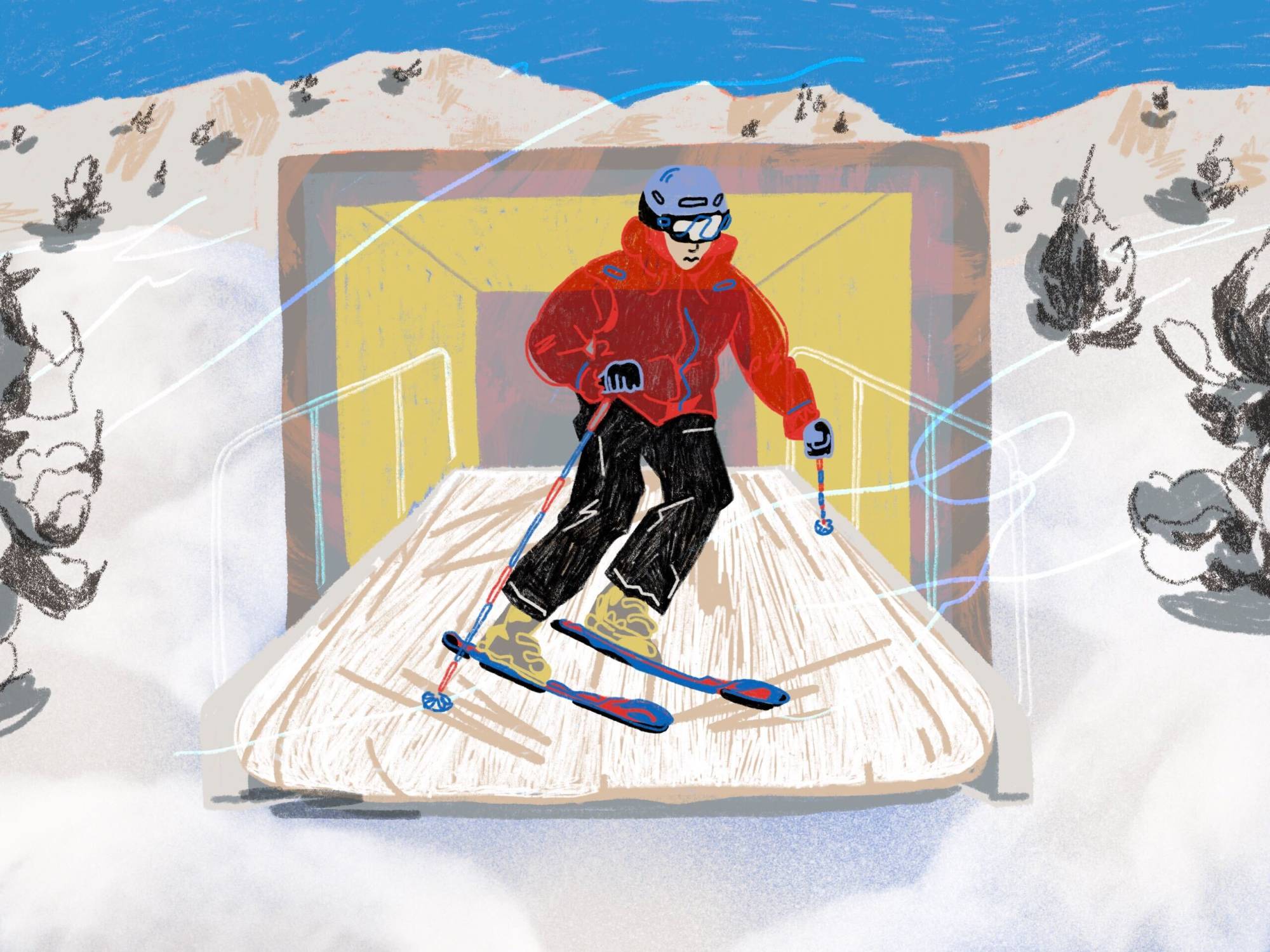
"caption": "How can indoor facilities train skiers and snowboarders to carve on a carpet?\r\n",
"credit": "Anna Vignet/KQED",
"altTag": null,
"description": null,
"imgSizes": {
"medium": {
"file": "https://cdn.kqed.org/wp-content/uploads/sites/10/2026/03/IMG_1385-2000x1500.jpg",
"width": 2000,
"height": 1500,
"mimeType": "image/jpeg"
},
"large": {
"file": "https://cdn.kqed.org/wp-content/uploads/sites/10/2026/03/IMG_1385-2000x1500.jpg",
"width": 2000,
"height": 1500,
"mimeType": "image/jpeg"
},
"thumbnail": {
"file": "https://cdn.kqed.org/wp-content/uploads/sites/10/2026/03/IMG_1385-160x120.jpg",
"width": 160,
"height": 120,
"mimeType": "image/jpeg"
},
"1536x1536": {
"file": "https://cdn.kqed.org/wp-content/uploads/sites/10/2026/03/IMG_1385-1536x1152.jpg",
"width": 1536,
"height": 1152,
"mimeType": "image/jpeg"
},
"2048x2048": {
"file": "https://cdn.kqed.org/wp-content/uploads/sites/10/2026/03/IMG_1385-2048x1536.jpg",
"width": 2048,
"height": 1536,
"mimeType": "image/jpeg"
},
"post-thumbnail": {
"file": "https://cdn.kqed.org/wp-content/uploads/sites/10/2026/03/IMG_1385-672x372.jpg",
"width": 672,
"height": 372,
"mimeType": "image/jpeg"
},
"twentyfourteen-full-width": {
"file": "https://cdn.kqed.org/wp-content/uploads/sites/10/2026/03/IMG_1385-1038x576.jpg",
"width": 1038,
"height": 576,
"mimeType": "image/jpeg"
},
"full-width": {
"file": "https://cdn.kqed.org/wp-content/uploads/sites/10/2026/03/IMG_1385-2000x1500.jpg",
"width": 2000,
"height": 1500,
"mimeType": "image/jpeg"
},
"npr-cds-wide": {
"file": "https://cdn.kqed.org/wp-content/uploads/sites/10/2026/03/IMG_1385-1200x675.jpg",
"width": 1200,
"height": 675,
"mimeType": "image/jpeg"
},
"kqedFullSize": {
"file": "https://cdn.kqed.org/wp-content/uploads/sites/10/2026/03/IMG_1385.jpg",
"width": 2560,
"height": 1920
}
},
"isLoading": false,
"fetchFailed": false
},
"news_12037951": {
"type": "attachments",
"id": "news_12037951",
"meta": {
"index": "attachments_1716263798",
"site": "news",
"id": "12037951",
"found": true
},
"title": "20250428_WARRANTLESSSEARCHES_GC-27-KQED",
"publishDate": 1745872938,
"status": "inherit",
"parent": 12039092,
"modified": 1746647464,
"caption": "Mayor Daniel Lurie attends a press conference announcing the San Francisco Sheriff’s Office’s plan to resume warrantless searches of criminal defendants who have been released and awaiting trial, outside of City Hall on April 28, 2025.",
"credit": "Gina Castro/KQED",
"altTag": null,
"description": null,
"imgSizes": {
"medium": {
"file": "https://cdn.kqed.org/wp-content/uploads/sites/10/2025/04/20250428_WARRANTLESSSEARCHES_GC-27-KQED-800x533.jpg",
"width": 800,
"height": 533,
"mimeType": "image/jpeg"
},
"large": {
"file": "https://cdn.kqed.org/wp-content/uploads/sites/10/2025/04/20250428_WARRANTLESSSEARCHES_GC-27-KQED-1020x680.jpg",
"width": 1020,
"height": 680,
"mimeType": "image/jpeg"
},
"thumbnail": {
"file": "https://cdn.kqed.org/wp-content/uploads/sites/10/2025/04/20250428_WARRANTLESSSEARCHES_GC-27-KQED-160x107.jpg",
"width": 160,
"height": 107,
"mimeType": "image/jpeg"
},
"1536x1536": {
"file": "https://cdn.kqed.org/wp-content/uploads/sites/10/2025/04/20250428_WARRANTLESSSEARCHES_GC-27-KQED-1536x1024.jpg",
"width": 1536,
"height": 1024,
"mimeType": "image/jpeg"
},
"post-thumbnail": {
"file": "https://cdn.kqed.org/wp-content/uploads/sites/10/2025/04/20250428_WARRANTLESSSEARCHES_GC-27-KQED-672x372.jpg",
"width": 672,
"height": 372,
"mimeType": "image/jpeg"
},
"twentyfourteen-full-width": {
"file": "https://cdn.kqed.org/wp-content/uploads/sites/10/2025/04/20250428_WARRANTLESSSEARCHES_GC-27-KQED-1038x576.jpg",
"width": 1038,
"height": 576,
"mimeType": "image/jpeg"
},
"full-width": {
"file": "https://cdn.kqed.org/wp-content/uploads/sites/10/2025/04/20250428_WARRANTLESSSEARCHES_GC-27-KQED-1920x1280.jpg",
"width": 1920,
"height": 1280,
"mimeType": "image/jpeg"
},
"kqedFullSize": {
"file": "https://cdn.kqed.org/wp-content/uploads/sites/10/2025/04/20250428_WARRANTLESSSEARCHES_GC-27-KQED.jpg",
"width": 2000,
"height": 1333
}
},
"isLoading": false,
"fetchFailed": false
},
"news_11958378": {
"type": "attachments",
"id": "news_11958378",
"meta": {
"index": "attachments_1716263798",
"site": "news",
"id": "11958378",
"found": true
},
"title": "RS62463_010_KQED_LagunaHondaHospital_01312023-KQED",
"publishDate": 1692221115,
"status": "inherit",
"parent": 12079126,
"modified": 1775683972,
"caption": "The Laguna Honda Hospital administration building in San Francisco on Jan. 31, 2023.",
"credit": "Beth LaBerge/KQED",
"altTag": "Signage reading Laguna Honda Hospital over the entryway to a large tile-roofed building.",
"description": null,
"imgSizes": {
"medium": {
"file": "https://cdn.kqed.org/wp-content/uploads/sites/10/2023/08/RS62463_010_KQED_LagunaHondaHospital_01312023-KQED-800x533.jpg",
"width": 800,
"height": 533,
"mimeType": "image/jpeg"
},
"large": {
"file": "https://cdn.kqed.org/wp-content/uploads/sites/10/2023/08/RS62463_010_KQED_LagunaHondaHospital_01312023-KQED-1020x680.jpg",
"width": 1020,
"height": 680,
"mimeType": "image/jpeg"
},
"thumbnail": {
"file": "https://cdn.kqed.org/wp-content/uploads/sites/10/2023/08/RS62463_010_KQED_LagunaHondaHospital_01312023-KQED-160x107.jpg",
"width": 160,
"height": 107,
"mimeType": "image/jpeg"
},
"1536x1536": {
"file": "https://cdn.kqed.org/wp-content/uploads/sites/10/2023/08/RS62463_010_KQED_LagunaHondaHospital_01312023-KQED-1536x1024.jpg",
"width": 1536,
"height": 1024,
"mimeType": "image/jpeg"
},
"post-thumbnail": {
"file": "https://cdn.kqed.org/wp-content/uploads/sites/10/2023/08/RS62463_010_KQED_LagunaHondaHospital_01312023-KQED-672x372.jpg",
"width": 672,
"height": 372,
"mimeType": "image/jpeg"
},
"twentyfourteen-full-width": {
"file": "https://cdn.kqed.org/wp-content/uploads/sites/10/2023/08/RS62463_010_KQED_LagunaHondaHospital_01312023-KQED-1038x576.jpg",
"width": 1038,
"height": 576,
"mimeType": "image/jpeg"
},
"full-width": {
"file": "https://cdn.kqed.org/wp-content/uploads/sites/10/2023/08/RS62463_010_KQED_LagunaHondaHospital_01312023-KQED-1920x1280.jpg",
"width": 1920,
"height": 1280,
"mimeType": "image/jpeg"
},
"kqedFullSize": {
"file": "https://cdn.kqed.org/wp-content/uploads/sites/10/2023/08/RS62463_010_KQED_LagunaHondaHospital_01312023-KQED.jpg",
"width": 2000,
"height": 1333
}
},
"isLoading": false,
"fetchFailed": false
},
"news_12075558": {
"type": "attachments",
"id": "news_12075558",
"meta": {
"index": "attachments_1716263798",
"site": "news",
"id": "12075558",
"found": true
},
"title": "030526_ SOCIAL WORKER SAFETY _GH_018-KQED",
"publishDate": 1772753697,
"status": "inherit",
"parent": 0,
"modified": 1772757890,
"caption": "Union members and health care workers march toward UCSF Medical Center at Mission Bay in San Francisco on March 5, 2026, led by clinical pharmacist Matias Campos (center-left), to deliver safety demands to university leaders following the fatal stabbing of social worker Alberto Rangel.",
"credit": "Gustavo Hernandez/KQED",
"altTag": null,
"description": null,
"imgSizes": {
"thumbnail": {
"file": "https://cdn.kqed.org/wp-content/uploads/sites/10/2026/03/030526_-SOCIAL-WORKER-SAFETY-_GH_018-KQED-160x107.jpg",
"width": 160,
"height": 107,
"mimeType": "image/jpeg"
},
"1536x1536": {
"file": "https://cdn.kqed.org/wp-content/uploads/sites/10/2026/03/030526_-SOCIAL-WORKER-SAFETY-_GH_018-KQED-1536x1024.jpg",
"width": 1536,
"height": 1024,
"mimeType": "image/jpeg"
},
"post-thumbnail": {
"file": "https://cdn.kqed.org/wp-content/uploads/sites/10/2026/03/030526_-SOCIAL-WORKER-SAFETY-_GH_018-KQED-672x372.jpg",
"width": 672,
"height": 372,
"mimeType": "image/jpeg"
},
"twentyfourteen-full-width": {
"file": "https://cdn.kqed.org/wp-content/uploads/sites/10/2026/03/030526_-SOCIAL-WORKER-SAFETY-_GH_018-KQED-1038x576.jpg",
"width": 1038,
"height": 576,
"mimeType": "image/jpeg"
},
"npr-cds-wide": {
"file": "https://cdn.kqed.org/wp-content/uploads/sites/10/2026/03/030526_-SOCIAL-WORKER-SAFETY-_GH_018-KQED-1200x675.jpg",
"width": 1200,
"height": 675,
"mimeType": "image/jpeg"
},
"kqedFullSize": {
"file": "https://cdn.kqed.org/wp-content/uploads/sites/10/2026/03/030526_-SOCIAL-WORKER-SAFETY-_GH_018-KQED.jpg",
"width": 2000,
"height": 1333
}
},
"isLoading": false,
"fetchFailed": false
},
"news_12071050": {
"type": "attachments",
"id": "news_12071050",
"meta": {
"index": "attachments_1716263798",
"site": "news",
"id": "12071050",
"found": true
},
"title": "012326_SINGINGHEALTH_GH_011-KQED",
"publishDate": 1769458027,
"status": "inherit",
"parent": 0,
"modified": 1772067315,
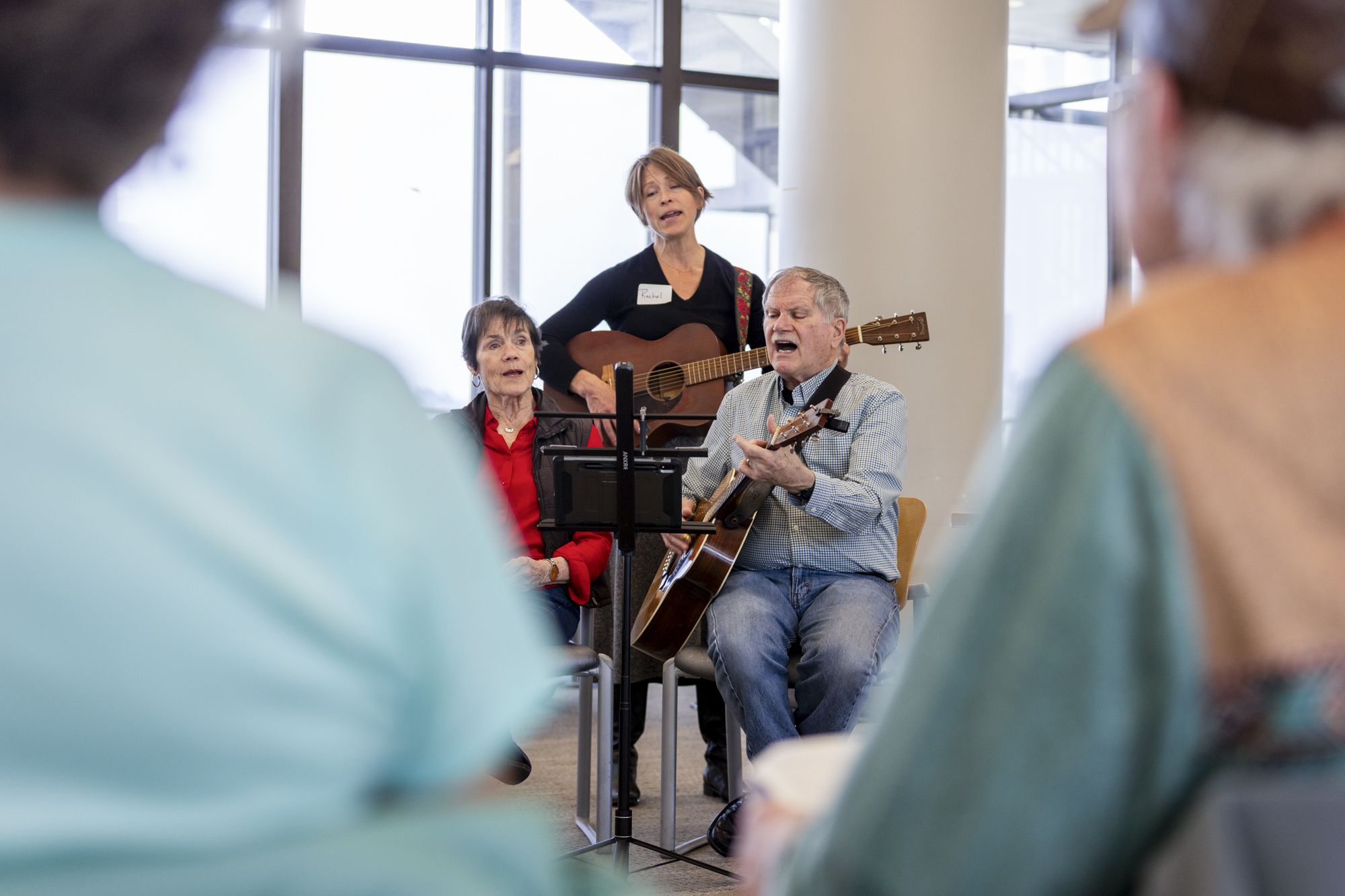
"caption": "Pat Ronzone, left, Rachel Main, center, and Joe Debellis perform during a Music Mends Minds group singing event at CPMC’s Davies Campus in San Francisco on Jan. 23, 2026.",
"credit": "Gustavo Hernandez/KQED",
"altTag": null,
"description": null,
"imgSizes": {
"thumbnail": {
"file": "https://cdn.kqed.org/wp-content/uploads/sites/10/2026/01/012326_SINGINGHEALTH_GH_011-KQED-160x107.jpg",
"width": 160,
"height": 107,
"mimeType": "image/jpeg"
},
"1536x1536": {
"file": "https://cdn.kqed.org/wp-content/uploads/sites/10/2026/01/012326_SINGINGHEALTH_GH_011-KQED-1536x1024.jpg",
"width": 1536,
"height": 1024,
"mimeType": "image/jpeg"
},
"post-thumbnail": {
"file": "https://cdn.kqed.org/wp-content/uploads/sites/10/2026/01/012326_SINGINGHEALTH_GH_011-KQED-672x372.jpg",
"width": 672,
"height": 372,
"mimeType": "image/jpeg"
},
"twentyfourteen-full-width": {
"file": "https://cdn.kqed.org/wp-content/uploads/sites/10/2026/01/012326_SINGINGHEALTH_GH_011-KQED-1038x576.jpg",
"width": 1038,
"height": 576,
"mimeType": "image/jpeg"
},
"npr-cds-wide": {
"file": "https://cdn.kqed.org/wp-content/uploads/sites/10/2026/01/012326_SINGINGHEALTH_GH_011-KQED-1200x675.jpg",
"width": 1200,
"height": 675,
"mimeType": "image/jpeg"
},
"kqedFullSize": {
"file": "https://cdn.kqed.org/wp-content/uploads/sites/10/2026/01/012326_SINGINGHEALTH_GH_011-KQED.jpg",
"width": 2000,
"height": 1333
}
},
"isLoading": false,
"fetchFailed": false
},
"news_12070630": {
"type": "attachments",
"id": "news_12070630",
"meta": {
"index": "attachments_1716263798",
"site": "news",
"id": "12070630",
"found": true
},
"title": "260116-NewsomLuriePresser-32-BL_qed",
"publishDate": 1769028322,
"status": "inherit",
"parent": 12070628,
"modified": 1769028339,
"caption": "Gov. Gavin Newsom speaks during a press conference at the Friendship House Association of American Indians in San Francisco on Jan. 16, 2026.",
"credit": "Beth LaBerge/KQED",
"altTag": null,
"description": null,
"imgSizes": {
"thumbnail": {
"file": "https://cdn.kqed.org/wp-content/uploads/sites/10/2026/01/260116-NewsomLuriePresser-32-BL_qed-160x107.jpg",
"width": 160,
"height": 107,
"mimeType": "image/jpeg"
},
"1536x1536": {
"file": "https://cdn.kqed.org/wp-content/uploads/sites/10/2026/01/260116-NewsomLuriePresser-32-BL_qed-1536x1024.jpg",
"width": 1536,
"height": 1024,
"mimeType": "image/jpeg"
},
"post-thumbnail": {
"file": "https://cdn.kqed.org/wp-content/uploads/sites/10/2026/01/260116-NewsomLuriePresser-32-BL_qed-672x372.jpg",
"width": 672,
"height": 372,
"mimeType": "image/jpeg"
},
"twentyfourteen-full-width": {
"file": "https://cdn.kqed.org/wp-content/uploads/sites/10/2026/01/260116-NewsomLuriePresser-32-BL_qed-1038x576.jpg",
"width": 1038,
"height": 576,
"mimeType": "image/jpeg"
},
"npr-cds-wide": {
"file": "https://cdn.kqed.org/wp-content/uploads/sites/10/2026/01/260116-NewsomLuriePresser-32-BL_qed-1200x675.jpg",
"width": 1200,
"height": 675,
"mimeType": "image/jpeg"
},
"kqedFullSize": {
"file": "https://cdn.kqed.org/wp-content/uploads/sites/10/2026/01/260116-NewsomLuriePresser-32-BL_qed.jpg",
"width": 2000,
"height": 1333
}
},
"isLoading": false,
"fetchFailed": false
},
"news_12074924": {
"type": "attachments",
"id": "news_12074924",
"meta": {
"index": "attachments_1716263798",
"site": "news",
"id": "12074924",
"found": true
},
"title": "Panda Express In San Diego",
"publishDate": 1772229380,
"status": "inherit",
"parent": 12074909,
"modified": 1772231452,
"caption": "A Panda Express logo is displayed on a sign outside their restaurant on Nov. 8, 2025, in San Diego, California.",
"credit": "Kevin Carter/Getty Images",
"altTag": null,
"description": null,
"imgSizes": {
"thumbnail": {
"file": "https://cdn.kqed.org/wp-content/uploads/sites/10/2026/02/PandaExpressRestaurantSignGetty-160x107.jpg",
"width": 160,
"height": 107,
"mimeType": "image/jpeg"
},
"1536x1536": {
"file": "https://cdn.kqed.org/wp-content/uploads/sites/10/2026/02/PandaExpressRestaurantSignGetty-1536x1024.jpg",
"width": 1536,
"height": 1024,
"mimeType": "image/jpeg"
},
"post-thumbnail": {
"file": "https://cdn.kqed.org/wp-content/uploads/sites/10/2026/02/PandaExpressRestaurantSignGetty-672x372.jpg",
"width": 672,
"height": 372,
"mimeType": "image/jpeg"
},
"twentyfourteen-full-width": {
"file": "https://cdn.kqed.org/wp-content/uploads/sites/10/2026/02/PandaExpressRestaurantSignGetty-1038x576.jpg",
"width": 1038,
"height": 576,
"mimeType": "image/jpeg"
},
"npr-cds-wide": {
"file": "https://cdn.kqed.org/wp-content/uploads/sites/10/2026/02/PandaExpressRestaurantSignGetty-1200x675.jpg",
"width": 1200,
"height": 675,
"mimeType": "image/jpeg"
},
"kqedFullSize": {
"file": "https://cdn.kqed.org/wp-content/uploads/sites/10/2026/02/PandaExpressRestaurantSignGetty.jpg",
"width": 2000,
"height": 1333
}
},
"isLoading": false,
"fetchFailed": false
},
"news_12074472": {
"type": "attachments",
"id": "news_12074472",
"meta": {
"index": "attachments_1716263798",
"site": "news",
"id": "12074472",
"found": true
},
"title": "022426_ALAMEDA COUNTY HEALTH CUTS _GH_003-KQED",
"publishDate": 1771972837,
"status": "inherit",
"parent": 0,
"modified": 1771972878,
"caption": "Resident physicians hold signs during a “unity break” outside Highland Hospital in Oakland on Feb. 24, 2026, calling attention to layoffs, staffing shortages and contract negotiations with Alameda Health System, including an ICE protocol.",
"credit": "Gustavo Hernandez/KQED",
"altTag": null,
"description": null,
"imgSizes": {
"thumbnail": {
"file": "https://cdn.kqed.org/wp-content/uploads/sites/10/2026/02/022426_ALAMEDA-COUNTY-HEALTH-CUTS-_GH_003-KQED-160x107.jpg",
"width": 160,
"height": 107,
"mimeType": "image/jpeg"
},
"1536x1536": {
"file": "https://cdn.kqed.org/wp-content/uploads/sites/10/2026/02/022426_ALAMEDA-COUNTY-HEALTH-CUTS-_GH_003-KQED-1536x1024.jpg",
"width": 1536,
"height": 1024,
"mimeType": "image/jpeg"
},
"post-thumbnail": {
"file": "https://cdn.kqed.org/wp-content/uploads/sites/10/2026/02/022426_ALAMEDA-COUNTY-HEALTH-CUTS-_GH_003-KQED-672x372.jpg",
"width": 672,
"height": 372,
"mimeType": "image/jpeg"
},
"twentyfourteen-full-width": {
"file": "https://cdn.kqed.org/wp-content/uploads/sites/10/2026/02/022426_ALAMEDA-COUNTY-HEALTH-CUTS-_GH_003-KQED-1038x576.jpg",
"width": 1038,
"height": 576,
"mimeType": "image/jpeg"
},
"npr-cds-wide": {
"file": "https://cdn.kqed.org/wp-content/uploads/sites/10/2026/02/022426_ALAMEDA-COUNTY-HEALTH-CUTS-_GH_003-KQED-1200x675.jpg",
"width": 1200,
"height": 675,
"mimeType": "image/jpeg"
},
"kqedFullSize": {
"file": "https://cdn.kqed.org/wp-content/uploads/sites/10/2026/02/022426_ALAMEDA-COUNTY-HEALTH-CUTS-_GH_003-KQED.jpg",
"width": 2000,
"height": 1333
}
},
"isLoading": false,
"fetchFailed": false
},
"news_12073904": {
"type": "attachments",
"id": "news_12073904",
"meta": {
"index": "attachments_1716263798",
"site": "news",
"id": "12073904",
"found": true
},
"title": "260219-STRIKINGKAISERWORKERS00420_TV-KQED",
"publishDate": 1771537913,
"status": "inherit",
"parent": 12073887,
"modified": 1771879049,
"caption": "Chris Pyper (left), a physician assistant from Kaiser San Leandro, marches while on strike outside Kaiser Permanente Oakland Medical Center in Oakland on Feb. 19, 2026.",
"credit": "Tâm Vũ/KQED",
"altTag": null,
"description": null,
"imgSizes": {
"thumbnail": {
"file": "https://cdn.kqed.org/wp-content/uploads/sites/10/2026/02/260219-STRIKINGKAISERWORKERS00420_TV-KQED-160x107.jpg",
"width": 160,
"height": 107,
"mimeType": "image/jpeg"
},
"1536x1536": {
"file": "https://cdn.kqed.org/wp-content/uploads/sites/10/2026/02/260219-STRIKINGKAISERWORKERS00420_TV-KQED-1536x1025.jpg",
"width": 1536,
"height": 1025,
"mimeType": "image/jpeg"
},
"post-thumbnail": {
"file": "https://cdn.kqed.org/wp-content/uploads/sites/10/2026/02/260219-STRIKINGKAISERWORKERS00420_TV-KQED-672x372.jpg",
"width": 672,
"height": 372,
"mimeType": "image/jpeg"
},
"twentyfourteen-full-width": {
"file": "https://cdn.kqed.org/wp-content/uploads/sites/10/2026/02/260219-STRIKINGKAISERWORKERS00420_TV-KQED-1038x576.jpg",
"width": 1038,
"height": 576,
"mimeType": "image/jpeg"
},
"npr-cds-wide": {
"file": "https://cdn.kqed.org/wp-content/uploads/sites/10/2026/02/260219-STRIKINGKAISERWORKERS00420_TV-KQED-1200x675.jpg",
"width": 1200,
"height": 675,
"mimeType": "image/jpeg"
},
"kqedFullSize": {
"file": "https://cdn.kqed.org/wp-content/uploads/sites/10/2026/02/260219-STRIKINGKAISERWORKERS00420_TV-KQED.jpg",
"width": 2000,
"height": 1334
}
},
"isLoading": false,
"fetchFailed": false
},
"news_12074055": {
"type": "attachments",
"id": "news_12074055",
"meta": {
"index": "attachments_1716263798",
"site": "news",
"id": "12074055",
"found": true
},
"title": "LA-Senior-Center-IK-CM-01",
"publishDate": 1771614951,
"status": "inherit",
"parent": 12074051,
"modified": 1771614976,
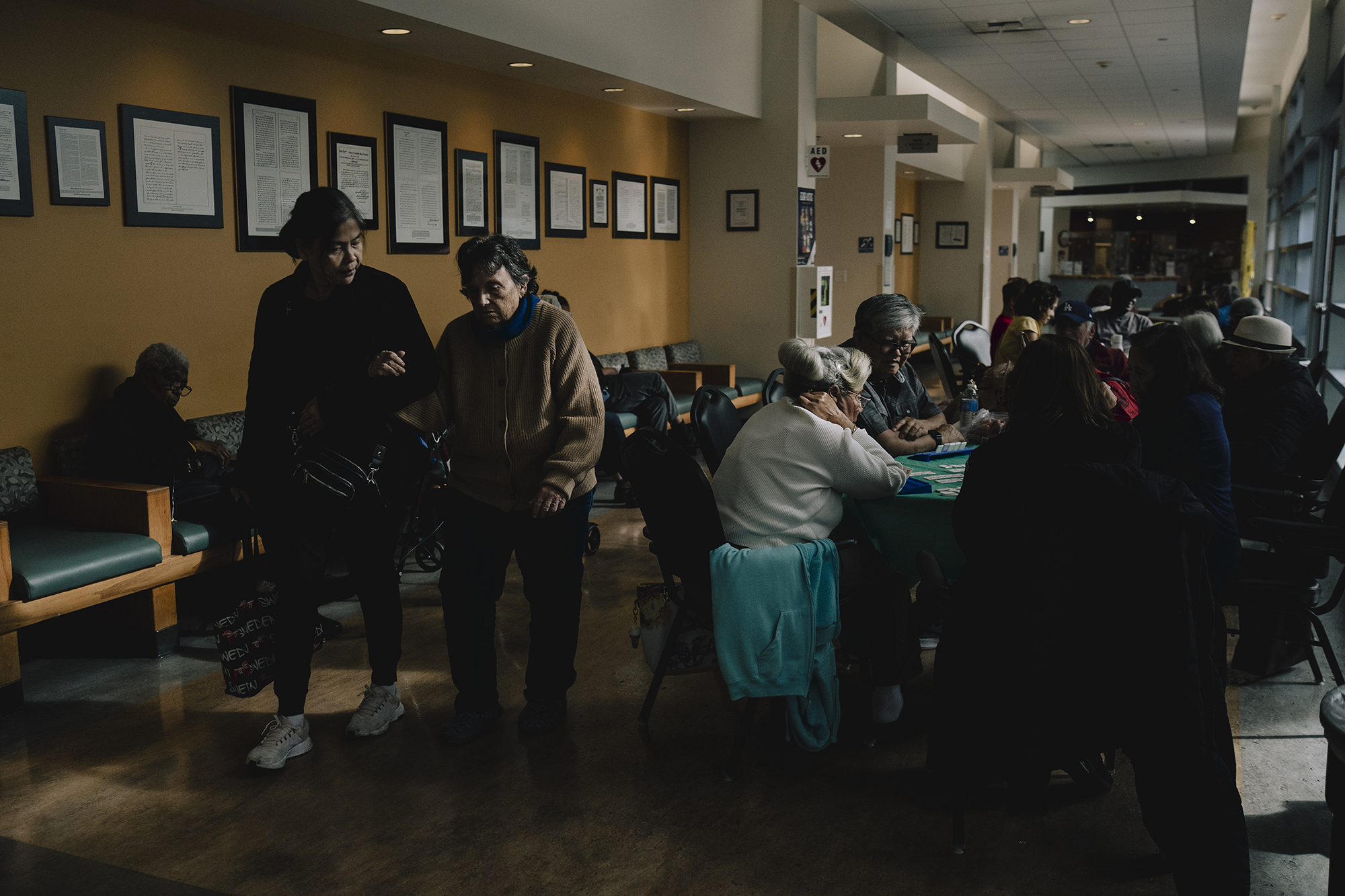
"caption": "Members gather in the main hallway at the Culver City Senior Center, which serves adults 50 years of age and older with a variety of classes and programs. In 2024, the Center had 4,000 registered members. ",
"credit": "Isadora Kosofsky for CalMatters/CatchLight",
"altTag": null,
"description": null,
"imgSizes": {
"thumbnail": {
"file": "https://cdn.kqed.org/wp-content/uploads/sites/10/2026/02/LA-Senior-Center-IK-CM-01-160x107.jpg",
"width": 160,
"height": 107,
"mimeType": "image/jpeg"
},
"1536x1536": {
"file": "https://cdn.kqed.org/wp-content/uploads/sites/10/2026/02/LA-Senior-Center-IK-CM-01-1536x1024.jpg",
"width": 1536,
"height": 1024,
"mimeType": "image/jpeg"
},
"post-thumbnail": {
"file": "https://cdn.kqed.org/wp-content/uploads/sites/10/2026/02/LA-Senior-Center-IK-CM-01-672x372.jpg",
"width": 672,
"height": 372,
"mimeType": "image/jpeg"
},
"twentyfourteen-full-width": {
"file": "https://cdn.kqed.org/wp-content/uploads/sites/10/2026/02/LA-Senior-Center-IK-CM-01-1038x576.jpg",
"width": 1038,
"height": 576,
"mimeType": "image/jpeg"
},
"npr-cds-wide": {
"file": "https://cdn.kqed.org/wp-content/uploads/sites/10/2026/02/LA-Senior-Center-IK-CM-01-1200x675.jpg",
"width": 1200,
"height": 675,
"mimeType": "image/jpeg"
},
"kqedFullSize": {
"file": "https://cdn.kqed.org/wp-content/uploads/sites/10/2026/02/LA-Senior-Center-IK-CM-01.jpg",
"width": 2000,
"height": 1333
}
},
"isLoading": false,
"fetchFailed": false
},
"news_12073906": {
"type": "attachments",
"id": "news_12073906",
"meta": {
"index": "attachments_1716263798",
"site": "news",
"id": "12073906",
"found": true
},
"title": "260219-STRIKINGKAISERWORKERS01224_TV-KQED",
"publishDate": 1771537935,
"status": "inherit",
"parent": 0,
"modified": 1771544711,
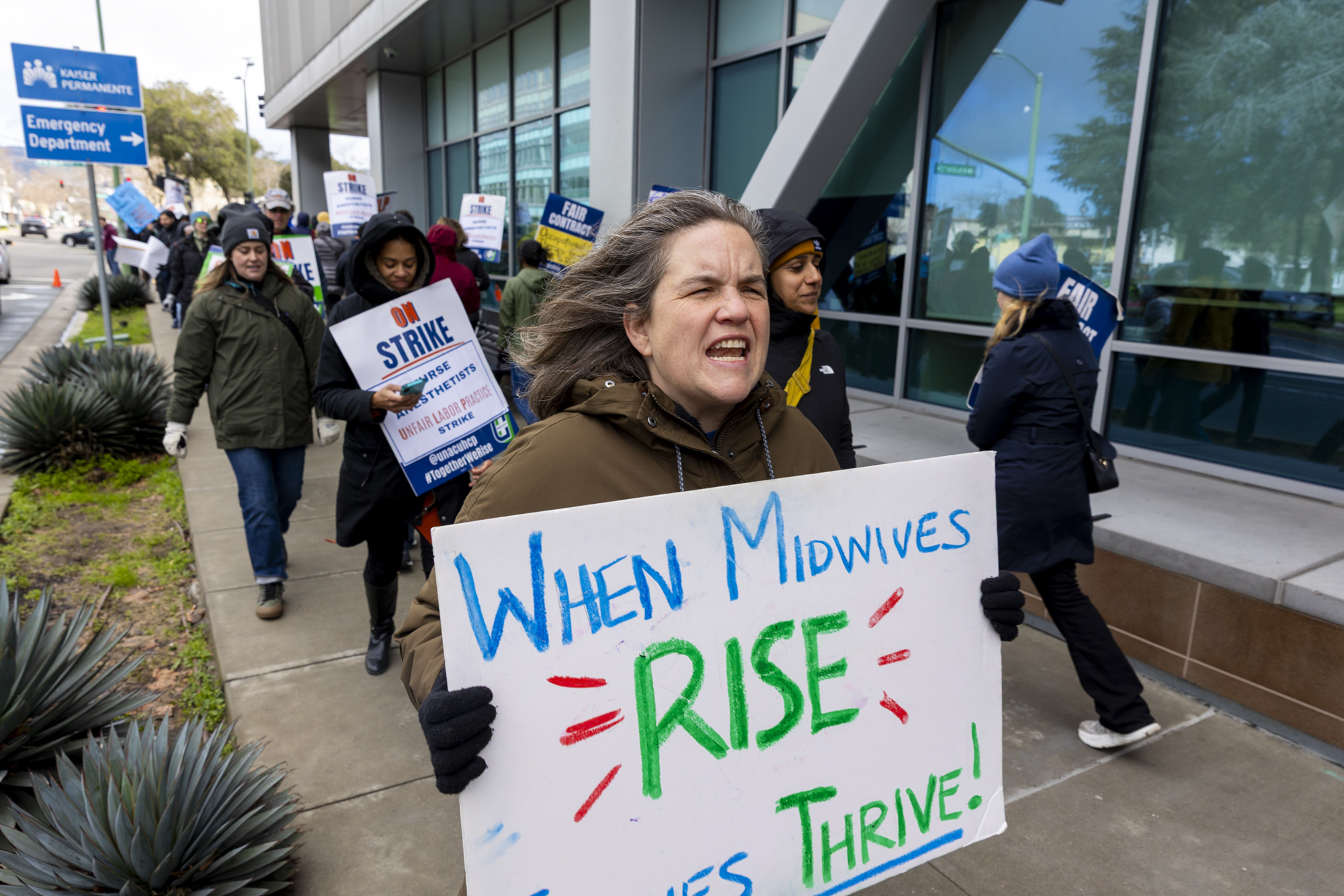
"caption": "Darcy Stanley, a nurse midwife from Kaiser Oakland, on strike at the picket line outside Kaiser Permanente Oakland Medical Center in Oakland on Feb. 19, 2026. Kaiser workers on the picket lines have gone without their paychecks for four weeks, and many are facing financial and other difficulties.",
"credit": "Tâm Vũ/KQED",
"altTag": null,
"description": null,
"imgSizes": {
"thumbnail": {
"file": "https://cdn.kqed.org/wp-content/uploads/sites/10/2026/02/260219-STRIKINGKAISERWORKERS01224_TV-KQED-160x107.jpg",
"width": 160,
"height": 107,
"mimeType": "image/jpeg"
},
"1536x1536": {
"file": "https://cdn.kqed.org/wp-content/uploads/sites/10/2026/02/260219-STRIKINGKAISERWORKERS01224_TV-KQED-1536x1025.jpg",
"width": 1536,
"height": 1025,
"mimeType": "image/jpeg"
},
"post-thumbnail": {
"file": "https://cdn.kqed.org/wp-content/uploads/sites/10/2026/02/260219-STRIKINGKAISERWORKERS01224_TV-KQED-672x372.jpg",
"width": 672,
"height": 372,
"mimeType": "image/jpeg"
},
"twentyfourteen-full-width": {
"file": "https://cdn.kqed.org/wp-content/uploads/sites/10/2026/02/260219-STRIKINGKAISERWORKERS01224_TV-KQED-1038x576.jpg",
"width": 1038,
"height": 576,
"mimeType": "image/jpeg"
},
"npr-cds-wide": {
"file": "https://cdn.kqed.org/wp-content/uploads/sites/10/2026/02/260219-STRIKINGKAISERWORKERS01224_TV-KQED-1200x675.jpg",
"width": 1200,
"height": 675,
"mimeType": "image/jpeg"
},
"kqedFullSize": {
"file": "https://cdn.kqed.org/wp-content/uploads/sites/10/2026/02/260219-STRIKINGKAISERWORKERS01224_TV-KQED.jpg",
"width": 2000,
"height": 1334
}
},
"isLoading": false,
"fetchFailed": false
},
"news_12073915": {
"type": "attachments",
"id": "news_12073915",
"meta": {
"index": "attachments_1716263798",
"site": "news",
"id": "12073915",
"found": true
},
"title": "038_KQED_KaiserStrikeOakland_08192022_qed (2)",
"publishDate": 1771539636,
"status": "inherit",
"parent": 12073839,
"modified": 1771539650,
"caption": "Kaiser mental health care workers and supporters march from Oakland Kaiser Medical Center to Kaiser's corporate headquarters on Friday, Aug. 19, 2022, the fifth day of an open-ended strike.",
"credit": "Beth LaBerge/KQED",
"altTag": null,
"description": null,
"imgSizes": {
"thumbnail": {
"file": "https://cdn.kqed.org/wp-content/uploads/sites/10/2026/02/038_KQED_KaiserStrikeOakland_08192022_qed-2-160x107.jpg",
"width": 160,
"height": 107,
"mimeType": "image/jpeg"
},
"1536x1536": {
"file": "https://cdn.kqed.org/wp-content/uploads/sites/10/2026/02/038_KQED_KaiserStrikeOakland_08192022_qed-2-1536x1024.jpg",
"width": 1536,
"height": 1024,
"mimeType": "image/jpeg"
},
"post-thumbnail": {
"file": "https://cdn.kqed.org/wp-content/uploads/sites/10/2026/02/038_KQED_KaiserStrikeOakland_08192022_qed-2-672x372.jpg",
"width": 672,
"height": 372,
"mimeType": "image/jpeg"
},
"twentyfourteen-full-width": {
"file": "https://cdn.kqed.org/wp-content/uploads/sites/10/2026/02/038_KQED_KaiserStrikeOakland_08192022_qed-2-1038x576.jpg",
"width": 1038,
"height": 576,
"mimeType": "image/jpeg"
},
"npr-cds-wide": {
"file": "https://cdn.kqed.org/wp-content/uploads/sites/10/2026/02/038_KQED_KaiserStrikeOakland_08192022_qed-2-1200x675.jpg",
"width": 1200,
"height": 675,
"mimeType": "image/jpeg"
},
"kqedFullSize": {
"file": "https://cdn.kqed.org/wp-content/uploads/sites/10/2026/02/038_KQED_KaiserStrikeOakland_08192022_qed-2.jpg",
"width": 2000,
"height": 1333
}
},
"isLoading": false,
"fetchFailed": false
}
},
"audioPlayerReducer": {
"postId": "stream_live",
"isPaused": true,
"isPlaying": false,
"pfsActive": false,
"pledgeModalIsOpen": true,
"playerDrawerIsOpen": false,
"liveAudioPlayStartedAt": 0,
"liveAudioPlayContext": ""
},
"authorsReducer": {
"byline_news_12074051": {
"type": "authors",
"id": "byline_news_12074051",
"meta": {
"override": true
},
"slug": "byline_news_12074051",
"name": "Joe Garcia, CalMatters",
"isLoading": false
},
"adembosky": {
"type": "authors",
"id": "3205",
"meta": {
"index": "authors_1716337520",
"id": "3205",
"found": true
},
"name": "April Dembosky",
"firstName": "April",
"lastName": "Dembosky",
"slug": "adembosky",
"email": "adembosky@kqed.org",
"display_author_email": false,
"staff_mastheads": [
"news",
"science"
],
"title": "KQED Health Correspondent",
"bio": "April Dembosky is the health correspondent for KQED News and a regular contributor to NPR. She specializes in covering altered states of mind, from postpartum depression to methamphetamine-induced psychosis to the insanity defense. Her investigative series on insurance companies sidestepping mental health laws won multiple awards, including first place in beat reporting from the national Association of Health Care Journalists. She is the recipient of numerous other prizes and fellowships, including a national Edward R. Murrow award for investigative reporting, a Society of Professional Journalists award for long-form storytelling, and a Carter Center Fellowship for Mental Health Journalism.\r\n\r\nDembosky reported and produced \u003cem>Soundtrack of Silence\u003c/em>, an audio documentary about music and memory that is currently being made into a feature film by Paramount Pictures.\r\n\r\nBefore joining KQED in 2013, Dembosky covered technology and Silicon Valley for \u003cem>The Financial Times of London,\u003c/em> and contributed business and arts stories to \u003cem>Marketplace \u003c/em>and \u003cem>The New York Times.\u003c/em> She got her undergraduate degree in philosophy from Smith College and her master's in journalism from the University of California, Berkeley. She is a classically trained violinist and proud alum of the first symphony orchestra at Burning Man.",
"avatar": "https://secure.gravatar.com/avatar/ef92999be4ceb9ea60701e7dc276f813?s=600&d=blank&r=g",
"twitter": "adembosky",
"facebook": null,
"instagram": null,
"linkedin": null,
"sites": [
{
"site": "arts",
"roles": [
"author"
]
},
{
"site": "news",
"roles": [
"editor"
]
},
{
"site": "futureofyou",
"roles": [
"author"
]
},
{
"site": "stateofhealth",
"roles": [
"editor"
]
},
{
"site": "science",
"roles": [
"editor"
]
},
{
"site": "forum",
"roles": [
"editor"
]
}
],
"headData": {
"title": "April Dembosky | KQED",
"description": "KQED Health Correspondent",
"ogImgSrc": "https://secure.gravatar.com/avatar/ef92999be4ceb9ea60701e7dc276f813?s=600&d=blank&r=g",
"twImgSrc": "https://secure.gravatar.com/avatar/ef92999be4ceb9ea60701e7dc276f813?s=600&d=blank&r=g"
},
"isLoading": false,
"link": "/author/adembosky"
},
"carlysevern": {
"type": "authors",
"id": "3243",
"meta": {
"index": "authors_1716337520",
"id": "3243",
"found": true
},
"name": "Carly Severn",
"firstName": "Carly",
"lastName": "Severn",
"slug": "carlysevern",
"email": "csevern@kqed.org",
"display_author_email": false,
"staff_mastheads": [
"news"
],
"title": "Senior Editor, Audience News ",
"bio": "Carly is KQED's Senior Editor of Audience News on the Digital News team, and has reported for the California Report Magazine, Bay Curious and KQED Arts. She's formerly the host of \u003ca href=\"http://ww2.kqed.org/pop/category/the-cooler/\" rel=\"noopener noreferrer\">The Cooler\u003c/a> podcast.",
"avatar": "https://secure.gravatar.com/avatar/2d8d6765f186e64c798cf7f0c8088a41?s=600&d=blank&r=g",
"twitter": "teacupinthebay",
"facebook": null,
"instagram": null,
"linkedin": null,
"sites": [
{
"site": "",
"roles": [
"editor"
]
},
{
"site": "arts",
"roles": [
"editor"
]
},
{
"site": "news",
"roles": [
"administrator"
]
},
{
"site": "pop",
"roles": [
"editor"
]
},
{
"site": "futureofyou",
"roles": [
"editor"
]
},
{
"site": "about",
"roles": [
"administrator"
]
},
{
"site": "mindshift",
"roles": [
"editor"
]
},
{
"site": "bayareabites",
"roles": [
"editor"
]
},
{
"site": "stateofhealth",
"roles": [
"editor"
]
},
{
"site": "science",
"roles": [
"editor"
]
},
{
"site": "food",
"roles": [
"contributor"
]
},
{
"site": "forum",
"roles": [
"editor"
]
},
{
"site": "perspectives",
"roles": [
"administrator"
]
},
{
"site": "liveblog",
"roles": [
"editor"
]
}
],
"headData": {
"title": "Carly Severn | KQED",
"description": "Senior Editor, Audience News ",
"ogImgSrc": "https://secure.gravatar.com/avatar/2d8d6765f186e64c798cf7f0c8088a41?s=600&d=blank&r=g",
"twImgSrc": "https://secure.gravatar.com/avatar/2d8d6765f186e64c798cf7f0c8088a41?s=600&d=blank&r=g"
},
"isLoading": false,
"link": "/author/carlysevern"
},
"fjhabvala": {
"type": "authors",
"id": "8659",
"meta": {
"index": "authors_1716337520",
"id": "8659",
"found": true
},
"name": "Farida Jhabvala Romero",
"firstName": "Farida",
"lastName": "Jhabvala Romero",
"slug": "fjhabvala",
"email": "fjhabvala@kqed.org",
"display_author_email": true,
"staff_mastheads": [
"news"
],
"title": "KQED Contributor",
"bio": "\u003cspan style=\"font-weight: 400;\">Farida Jhabvala Romero is a Labor Correspondent for KQED. She previously covered immigration. Farida was \u003ca href=\"https://www.ccnma.org/2022-most-influential-latina-journalists\">named\u003c/a> one of the 10 Most Influential Latina Journalists in California in 2022 by the California Chicano News Media Association. Her work has won awards from the Society of Professional Journalists (Northern California), as well as a national and regional Edward M. Murrow Award for the collaborative reporting projects “Dangerous Air” and “Graying California.” \u003c/span>\u003cspan style=\"font-weight: 400;\">Before joining KQED, Farida worked as a producer at Radio Bilingüe, a national public radio network. Farida earned her master’s degree in journalism from Stanford University.\u003c/span>",
"avatar": "https://secure.gravatar.com/avatar/c3ab27c5554b67b478f80971e515aa02?s=600&d=blank&r=g",
"twitter": "FaridaJhabvala",
"facebook": null,
"instagram": null,
"linkedin": "https://www.linkedin.com/in/faridajhabvala/",
"sites": [
{
"site": "news",
"roles": [
"editor"
]
},
{
"site": "stateofhealth",
"roles": [
"author"
]
}
],
"headData": {
"title": "Farida Jhabvala Romero | KQED",
"description": "KQED Contributor",
"ogImgSrc": "https://secure.gravatar.com/avatar/c3ab27c5554b67b478f80971e515aa02?s=600&d=blank&r=g",
"twImgSrc": "https://secure.gravatar.com/avatar/c3ab27c5554b67b478f80971e515aa02?s=600&d=blank&r=g"
},
"isLoading": false,
"link": "/author/fjhabvala"
},
"vrancano": {
"type": "authors",
"id": "11276",
"meta": {
"index": "authors_1716337520",
"id": "11276",
"found": true
},
"name": "Vanessa Rancaño",
"firstName": "Vanessa",
"lastName": "Rancaño",
"slug": "vrancano",
"email": "vrancano@kqed.org",
"display_author_email": false,
"staff_mastheads": [
"news"
],
"title": "Reporter, Housing",
"bio": "Vanessa Rancaño is a features reporter for KQED. She’s also covered homelessness and education for the station and reported from the Central Valley. Her work has aired across public radio, from flagship national news shows to longform narrative podcasts. Before taking up a mic, she worked as a freelance print journalist. She’s been recognized with a number of national and regional awards. Vanessa grew up in California's Central Valley. She's a former NPR Kroc Fellow, and a graduate of the UC Berkeley Graduate School of Journalism.",
"avatar": "https://secure.gravatar.com/avatar/b3a383dfb0e7ee1c17568f2cf067904ab654d6e3de9743fc661f3c788ade1bed?s=600&d=blank&r=g",
"twitter": "vanessarancano",
"bluesky": null,
"facebook": null,
"instagram": null,
"linkedin": null,
"sites": [
{
"site": "arts",
"roles": [
"editor"
]
},
{
"site": "news",
"roles": [
"editor"
]
},
{
"site": "liveblog",
"roles": [
"contributor"
]
}
],
"headData": {
"title": "Vanessa Rancaño | KQED",
"description": "Reporter, Housing",
"ogImgSrc": "https://secure.gravatar.com/avatar/b3a383dfb0e7ee1c17568f2cf067904ab654d6e3de9743fc661f3c788ade1bed?s=600&d=blank&r=g",
"twImgSrc": "https://secure.gravatar.com/avatar/b3a383dfb0e7ee1c17568f2cf067904ab654d6e3de9743fc661f3c788ade1bed?s=600&d=blank&r=g"
},
"isLoading": false,
"link": "/author/vrancano"
},
"sjohnson": {
"type": "authors",
"id": "11840",
"meta": {
"index": "authors_1716337520",
"id": "11840",
"found": true
},
"name": "Sydney Johnson",
"firstName": "Sydney",
"lastName": "Johnson",
"slug": "sjohnson",
"email": "sjohnson@kqed.org",
"display_author_email": false,
"staff_mastheads": [
"news"
],
"title": "KQED Reporter",
"bio": "Sydney Johnson is a general assignment reporter at KQED. She previously reported on public health and city government at the San Francisco Examiner, and before that, she covered statewide education policy for EdSource. Her reporting has won multiple local, state and national awards. Sydney is a graduate of the University of California, Berkeley and lives in San Francisco.",
"avatar": "https://secure.gravatar.com/avatar/97855f2719b72ad6190b7c535fe642c8?s=600&d=blank&r=g",
"twitter": "sydneyfjohnson",
"facebook": null,
"instagram": null,
"linkedin": null,
"sites": [
{
"site": "news",
"roles": [
"editor"
]
}
],
"headData": {
"title": "Sydney Johnson | KQED",
"description": "KQED Reporter",
"ogImgSrc": "https://secure.gravatar.com/avatar/97855f2719b72ad6190b7c535fe642c8?s=600&d=blank&r=g",
"twImgSrc": "https://secure.gravatar.com/avatar/97855f2719b72ad6190b7c535fe642c8?s=600&d=blank&r=g"
},
"isLoading": false,
"link": "/author/sjohnson"
},
"kdebenedetti": {
"type": "authors",
"id": "11913",
"meta": {
"index": "authors_1716337520",
"id": "11913",
"found": true
},
"name": "Katie DeBenedetti",
"firstName": "Katie",
"lastName": "DeBenedetti",
"slug": "kdebenedetti",
"email": "kdebenedetti@kqed.org",
"display_author_email": false,
"staff_mastheads": [
"news",
"science"
],
"title": "KQED Contributor",
"bio": "Katie DeBenedetti is a digital reporter covering daily news for the Express Desk. Prior to joining KQED as a culture reporting intern in January 2024, she covered education and city government for the Napa Valley Register.",
"avatar": "https://secure.gravatar.com/avatar/6e31073cb8f7e4214ab03f42771d0f45?s=600&d=blank&r=g",
"twitter": null,
"facebook": null,
"instagram": null,
"linkedin": null,
"sites": [
{
"site": "news",
"roles": [
"author"
]
},
{
"site": "science",
"roles": [
"author"
]
},
{
"site": "liveblog",
"roles": [
"author"
]
}
],
"headData": {
"title": "Katie DeBenedetti | KQED",
"description": "KQED Contributor",
"ogImgSrc": "https://secure.gravatar.com/avatar/6e31073cb8f7e4214ab03f42771d0f45?s=600&d=blank&r=g",
"twImgSrc": "https://secure.gravatar.com/avatar/6e31073cb8f7e4214ab03f42771d0f45?s=600&d=blank&r=g"
},
"isLoading": false,
"link": "/author/kdebenedetti"
},
"sarahwright": {
"type": "authors",
"id": "11956",
"meta": {
"index": "authors_1716337520",
"id": "11956",
"found": true
},
"name": "Sarah Wright",
"firstName": "Sarah",
"lastName": "Wright",
"slug": "sarahwright",
"email": "swright@kqed.org",
"display_author_email": true,
"staff_mastheads": [],
"title": "Outdoors Engagement Reporter",
"bio": "Sarah Wright is KQED's Outdoors Engagement Reporter. Originally from Lake Tahoe, she completed a thru-hike of the Pacific Crest Trail in 2019 and was a U.S. Fulbright Program grantee to Argentina in 2023. Her journalism has appeared in The Guardian, The San Francisco Standard, The Palo Alto Weekly and the Half Moon Bay Review.",
"avatar": "https://secure.gravatar.com/avatar/c161a3d6441865cba25e6db4fa561099ad665799e9432e34da2b84d7e371524c?s=600&d=blank&r=g",
"twitter": null,
"bluesky": null,
"facebook": null,
"instagram": null,
"linkedin": null,
"sites": [
{
"site": "arts",
"roles": [
"editor"
]
},
{
"site": "news",
"roles": [
"editor"
]
},
{
"site": "science",
"roles": [
"contributor",
"author"
]
},
{
"site": "forum",
"roles": [
"editor"
]
}
],
"headData": {
"title": "Sarah Wright | KQED",
"description": "Outdoors Engagement Reporter",
"ogImgSrc": "https://secure.gravatar.com/avatar/c161a3d6441865cba25e6db4fa561099ad665799e9432e34da2b84d7e371524c?s=600&d=blank&r=g",
"twImgSrc": "https://secure.gravatar.com/avatar/c161a3d6441865cba25e6db4fa561099ad665799e9432e34da2b84d7e371524c?s=600&d=blank&r=g"
},
"isLoading": false,
"link": "/author/sarahwright"
},
"sprabha": {
"type": "authors",
"id": "11976",
"meta": {
"index": "authors_1716337520",
"id": "11976",
"found": true
},
"name": "Srishti Prabha",
"firstName": "Srishti",
"lastName": "Prabha",
"slug": "sprabha",
"email": "sprabha@KQED.org",
"display_author_email": false,
"staff_mastheads": [],
"title": "KQED Contributor",
"bio": null,
"avatar": "https://secure.gravatar.com/avatar/cc4d8ef770090714faad7e1d24857f806d09340456c5734167b9a6361b175d7d?s=600&d=blank&r=g",
"twitter": null,
"bluesky": null,
"facebook": null,
"instagram": null,
"linkedin": null,
"sites": [
{
"site": "news",
"roles": [
"editor"
]
}
],
"headData": {
"title": "Srishti Prabha | KQED",
"description": "KQED Contributor",
"ogImgSrc": "https://secure.gravatar.com/avatar/cc4d8ef770090714faad7e1d24857f806d09340456c5734167b9a6361b175d7d?s=600&d=blank&r=g",
"twImgSrc": "https://secure.gravatar.com/avatar/cc4d8ef770090714faad7e1d24857f806d09340456c5734167b9a6361b175d7d?s=600&d=blank&r=g"
},
"isLoading": false,
"link": "/author/sprabha"
}
},
"pagesReducer": {
"news_tag_health": {
"type": "terms",
"id": "news_18543",
"meta": {
"index": "terms_1716263798",
"site": "news",
"id": "18543",
"score": 6.8845096
},
"featImg": null,
"name": "Health",
"description": null,
"taxonomy": "tag",
"headData": {
"twImgId": null,
"twTitle": null,
"ogTitle": null,
"ogImgId": null,
"twDescription": null,
"description": null,
"title": "Health Archives | KQED News",
"ogDescription": null
},
"ttid": 466,
"slug": "health",
"isLoading": false,
"title": "Health",
"pageMeta": {
"site": "news",
"WpPageTemplate": "page-topic-editorial",
"currentPage": 5
},
"blocks": [
{
"blockName": "kqed/post-list",
"attrs": {
"layout": "cardArticle2",
"query": "posts/news?tag=health",
"seeMore": false,
"paginated": true,
"page": 5
}
},
{
"blockName": "kqed/ad"
}
]
}
},
"pfsSessionReducer": {},
"postsReducer": {
"stream_live": {
"type": "live",
"id": "stream_live",
"audioUrl": "https://streams.kqed.org/kqedradio",
"title": "Live Stream",
"excerpt": "Live Stream information currently unavailable.",
"link": "/radio",
"featImg": "",
"label": {
"name": "KQED Live",
"link": "/"
}
},
"stream_kqedNewscast": {
"type": "posts",
"id": "stream_kqedNewscast",
"audioUrl": "https://www.kqed.org/.stream/anon/radio/RDnews/newscast.mp3?_=1",
"title": "KQED Newscast",
"featImg": "",
"label": {
"name": "88.5 FM",
"link": "/"
}
},
"news_12076062": {
"type": "posts",
"id": "news_12076062",
"meta": {
"index": "posts_1716263798",
"site": "news",
"id": "12076062",
"score": null,
"sort": [
1773446567000
]
},
"guestAuthors": [],
"slug": "inspired-by-the-winter-olympics-you-can-learn-to-ski-in-san-francisco",
"title": "Inspired by the Winter Olympics? You Can Learn to Ski in San Francisco",
"publishDate": 1773446567,
"format": "standard",
"headTitle": "Inspired by the Winter Olympics? You Can Learn to Ski in San Francisco | KQED",
"labelTerm": {
"site": "news"
},
"content": "\u003cp>Kellan Hirschler is standing in a large room in \u003ca href=\"https://www.kqed.org/news/tag/san-francisco\">San Francisco\u003c/a> — learning how to snowboard.\u003c/p>\n\u003cp>Hirschler, a 30-year-old nurse who lives in the Castro District, is a student at Adventurous Sports, an indoor ski school in the city’s Hayes Valley area. Here, aspiring skiers and snowboarders like her can get some turns in — snow and ice not included.\u003c/p>\n\u003cp>Hirschler said her partner being an avid skier made her want to be able to keep up on the mountain. “So I was like, ‘You know what? It’s time,’” she said. “I need to get a little serious.”\u003c/p>\n\u003cp>\u003ca href=\"https://adventurous.com/\">Adventurous Sports\u003c/a> has been in business for around two decades. But in January of 2024, the ski school moved from its Potrero Hill location to Hayes Valley with upgraded “ski decks” — carpeted treadmills that attempt to simulate skiing on a real hill — and plans to build out an area for boot fitting as well.\u003c/p>\n\u003cp>[ad fullwidth]\u003c/p>\n\u003cp>Adventurous offers lessons for new and experienced ski and snowboarders alike, with an emphasis on perfecting the technique of carving: the smooth arc of the ski or snowboard that’s accomplished by slowly rolling the ankles and knees onto one edge, then the other.\u003c/p>\n\u003cul>\n\u003cli>\u003cstrong>Jump straight to: \u003ca href=\"#FacilitiesintheBayAreathatofferdrylandskitraining\">Facilities in the Bay Area that offer dry land ski training\u003c/a>\u003c/strong>\u003c/li>\n\u003c/ul>\n\u003cp>Owner Sarah Cooper said training indoors is not meant to fully replace learning and progressing on a real ski hill, but rather to accelerate muscle memory and confidence once a person hits the actual slopes.\u003c/p>\n\u003cp>The setup of the facility — where teachers are positioned below the incline of the treadmill, eye to eye with their students’ hips and legs — allows them to watch and critique students’ every move, said Cooper, even at high speeds.\u003c/p>\n\u003cfigure id=\"attachment_12076273\" class=\"wp-caption aligncenter\" style=\"max-width: 2000px\">\u003cimg loading=\"lazy\" decoding=\"async\" class=\"size-full wp-image-12076273\" src=\"https://cdn.kqed.org/wp-content/uploads/sites/10/2026/03/Adventurous.jpg\" alt=\"\" width=\"2000\" height=\"1500\" srcset=\"https://cdn.kqed.org/wp-content/uploads/sites/10/2026/03/Adventurous.jpg 2000w, https://cdn.kqed.org/wp-content/uploads/sites/10/2026/03/Adventurous-160x120.jpg 160w, https://cdn.kqed.org/wp-content/uploads/sites/10/2026/03/Adventurous-1536x1152.jpg 1536w\" sizes=\"auto, (max-width: 2000px) 100vw, 2000px\">\u003cfigcaption class=\"wp-caption-text\">An Adventurous client works on ski drills on one of the company’s indoor decks. \u003ccite>(Courtesy of Adventurous )\u003c/cite>\u003c/figcaption>\u003c/figure>\n\u003cp>“We can see everything on every single person’s body,” she said. “Every movement, their timing, their confidence, their comfort.”\u003c/p>\n\u003cp>Joad Stein, an instructor at Adventurous who is also an expert outdoor skier, had just returned from a ski trip to Tahoe. Getting on the deck to demonstrate, he said he found skiing on the simulator to be the much more demanding option.\u003c/p>\n\u003cp>“I have to remind myself to be more patient with my movements, which makes it harder,” he said. “If I want to have nice, graceful turns, I really have to take my sweet time.”\u003c/p>\n\u003ch2>Movement matters\u003c/h2>\n\u003cp>But does all this indoor work on carving actually produce results on the slopes?\u003c/p>\n\u003cp>There has been very little scientific research on these types of ski decks. A \u003ca href=\"https://pmc.ncbi.nlm.nih.gov/articles/PMC3761755/\">2013 study \u003c/a>found the benefits of training on ski simulators to be minimal, but it only tested two types of ski simulators — neither of which was particularly similar to the type of deck used at Adventurous.\u003c/p>\n\u003cp>Cooper said many Adventurous clients have reported positive impacts of their indoor training, and that Olympic athletes, including Mikaela Shiffrin, have spoken about their experiences of using indoor decks as part of their training.\u003c/p>\n\u003cp>And on-hill ski instructors say any type of dry land training, especially the kind that works the same core and leg muscles as skiing and snowboarding, is going to help performance on the mountain.\u003c/p>\n\u003cfigure id=\"attachment_12076274\" class=\"wp-caption aligncenter\" style=\"max-width: 2000px\">\u003cimg loading=\"lazy\" decoding=\"async\" class=\"size-full wp-image-12076274\" src=\"https://cdn.kqed.org/wp-content/uploads/sites/10/2026/03/Adventurous-2.jpg\" alt=\"\" width=\"2000\" height=\"1500\" srcset=\"https://cdn.kqed.org/wp-content/uploads/sites/10/2026/03/Adventurous-2.jpg 2000w, https://cdn.kqed.org/wp-content/uploads/sites/10/2026/03/Adventurous-2-160x120.jpg 160w, https://cdn.kqed.org/wp-content/uploads/sites/10/2026/03/Adventurous-2-1536x1152.jpg 1536w\" sizes=\"auto, (max-width: 2000px) 100vw, 2000px\">\u003cfigcaption class=\"wp-caption-text\">An Adventurous client works on a “power roll” drill on one of the company’s indoor decks. \u003ccite>(Courtesy of Adventurous )\u003c/cite>\u003c/figcaption>\u003c/figure>\n\u003cp>“That fitness \u003cem>will \u003c/em>translate,” said Jon Tekulve, director of ski services at Diamond Peak Ski Resort in Tahoe. “The movements are still there, and learning those can be helpful.”\u003c/p>\n\u003cp>Around 80% of the adults taught at Diamond Peak have never been on snow before. But Tekulve warned that beginners who start indoors may be taken aback by the role that being outside plays in skiing, because the carpet and indoor environment are so consistent.\u003c/p>\n\u003cp>“Being out in the elements is different,” he said. “Sun and shade spots on the mountain can be the difference between going really fast and really slow.”\u003c/p>\n\u003cp>Plus, he said, who would want to miss out on the mountain views?\u003c/p>\n\u003cp>Cooper acknowledges there is one major factor about skiing for real that she cannot prepare her students for on the Adventurous simulator: “The snow is just gonna ‘feel slippery’ — that’s what everyone says,” she said.\u003c/p>\n\u003cp>Hirschler said she’s proud of the progress she’s made so far with her indoor lessons. She’s even able to ride on the indoor carpet without keeping her hands on the safety bar, and is working on visualizing being on a mountain instead of inside.\u003c/p>\n\u003cp>“But is it gonna transition well to the mountain? I don’t know,” she mused.\u003c/p>\n\u003cp>“I’ll be starting with the bunny hill for sure.”\u003c/p>\n\u003ch2>\u003ca id=\"FacilitiesintheBayAreathatofferdrylandskitraining\">\u003c/a>Where to learn how to ski indoors in the Bay Area\u003c/h2>\n\u003cp>\u003ca href=\"https://adventurous.com/\">\u003cstrong>Adventurous Sports\u003c/strong>\u003c/a>\u003cstrong>, San Francisco\u003c/strong>\u003c/p>\n\u003cp>Located in Hayes Valley, this indoor ski school emphasizes carving and requires all first-timers to complete an hourlong intro class to get familiar with skiing on their carpeted treadmill.\u003c/p>\n\u003cp>\u003cstrong>Cost: \u003c/strong>The intro lesson costs $185 in the winter and $145 in the summer. You can then purchase packages of multiple lessons, and more experienced skiers and riders can also book cheaper conditioning sessions.[aside postID=news_12066608 hero='https://cdn.kqed.org/wp-content/uploads/sites/10/2025/12/251209-SNOWY-TAHOE-CS-KQED.jpg']\u003c/p>\n\u003cp>\u003ca href=\"https://freeslope.com/\">\u003cstrong>Freeslope,\u003c/strong>\u003c/a>\u003cstrong> Fremont\u003c/strong>\u003c/p>\n\u003cp>Want to practice your skills on mats and dry slopes before heading to the park? The East Bay’s Freeslope offers beginner lessons and workshops most days of the week, plus drop-in sessions to practice what you’ve learned.\u003c/p>\n\u003cp>Cost: Intro lessons cost $120, and workshops range from $40-$80. You can purchase a drop-in session for $35.\u003c/p>\n\u003cp>\u003ca href=\"https://houseofair.com/san-francisco/\">\u003cstrong>House of Air,\u003c/strong>\u003c/a>\u003cstrong> San Francisco\u003c/strong>\u003c/p>\n\u003cp>This indoor trampoline park near San Francisco’s Crissy Field offers a \u003ca href=\"https://houseofair.com/san-francisco/programs/adults/\">Slopestyle Workshop\u003c/a> for free skiers to work on aerial tricks and hitting park features like boxes and rails.\u003c/p>\n\u003cp>Cost: $40 for per hour for adults and $60 for kids.\u003c/p>\n\u003cp>\u003cem>Clarification: The radio version of this story, which aired Feb. 18, 2026, discussed the lack of research into the impacts of indoor ski decks. The broadcast mentioned “little scientific evidence” in reference to a lack of peer-reviewed studies from universities and similar entities. In a follow-up email from Sarah Cooper, owner of Adventurous Sports, she acknowledged the well-established positive experiences of some Olympic athletes who have used indoor ski decks, and shared similar testimonials from Adventurous clients.\u003c/em>\u003c/p>\n\u003cp>[ad floatright]\u003c/p>\n",
"blocks": [],
"excerpt": "How indoor facilities train skiers and snowboarders to carve on a carpet.",
"status": "publish",
"parent": 0,
"modified": 1773446571,
"stats": {
"hasAudio": false,
"hasVideo": false,
"hasChartOrMap": false,
"iframeSrcs": [],
"hasGoogleForm": false,
"hasGallery": false,
"hasHearkenModule": false,
"hasPolis": false,
"paragraphCount": 34,
"wordCount": 1131
},
"headData": {
"title": "Inspired by the Winter Olympics? You Can Learn to Ski in San Francisco | KQED",
"description": "How indoor facilities train skiers and snowboarders to carve on a carpet.",
"ogTitle": "",
"ogDescription": "",
"ogImgId": "",
"twTitle": "",
"twDescription": "",
"twImgId": "",
"schema": {
"@context": "https://schema.org",
"@type": "NewsArticle",
"headline": "Inspired by the Winter Olympics? You Can Learn to Ski in San Francisco",
"datePublished": "2026-03-13T17:02:47-07:00",
"dateModified": "2026-03-13T17:02:51-07:00",
"image": "https://cdn.kqed.org/wp-content/uploads/2020/02/KQED-OG-Image@1x.png",
"isAccessibleForFree": "True",
"publisher": {
"@type": "NewsMediaOrganization",
"@id": "https://www.kqed.org/#organization",
"name": "KQED",
"logo": "https://cdn.kqed.org/wp-content/uploads/2020/02/KQED-OG-Image@1x.png",
"url": "https://www.kqed.org",
"sameAs": [
"https://www.facebook.com/KQED",
"https://twitter.com/KQED",
"https://www.instagram.com/kqed/",
"https://www.tiktok.com/@kqedofficial",
"https://www.linkedin.com/company/kqed",
"https://www.youtube.com/channel/UCeC0IOo7i1P_61zVUWbJ4nw"
]
}
}
},
"primaryCategory": {
"termId": 34168,
"slug": "guides-and-explainers",
"name": "Guides and Explainers"
},
"audioUrl": "https://traffic.omny.fm/d/clips/0af137ef-751e-4b19-a055-aaef00d2d578/ffca7e9f-6831-41c5-bcaf-aaef00f5a073/8483f86f-a033-4c81-8701-b3f5011c144d/audio.mp3",
"sticky": false,
"nprStoryId": "kqed-12076062",
"templateType": "standard",
"featuredImageType": "standard",
"excludeFromSiteSearch": "Include",
"articleAge": "0",
"path": "/news/12076062/inspired-by-the-winter-olympics-you-can-learn-to-ski-in-san-francisco",
"audioTrackLength": null,
"parsedContent": [
{
"type": "contentString",
"content": "\u003cdiv class=\"post-body\">\u003cp>\u003cp>Kellan Hirschler is standing in a large room in \u003ca href=\"https://www.kqed.org/news/tag/san-francisco\">San Francisco\u003c/a> — learning how to snowboard.\u003c/p>\n\u003cp>Hirschler, a 30-year-old nurse who lives in the Castro District, is a student at Adventurous Sports, an indoor ski school in the city’s Hayes Valley area. Here, aspiring skiers and snowboarders like her can get some turns in — snow and ice not included.\u003c/p>\n\u003cp>Hirschler said her partner being an avid skier made her want to be able to keep up on the mountain. “So I was like, ‘You know what? It’s time,’” she said. “I need to get a little serious.”\u003c/p>\n\u003cp>\u003ca href=\"https://adventurous.com/\">Adventurous Sports\u003c/a> has been in business for around two decades. But in January of 2024, the ski school moved from its Potrero Hill location to Hayes Valley with upgraded “ski decks” — carpeted treadmills that attempt to simulate skiing on a real hill — and plans to build out an area for boot fitting as well.\u003c/p>\n\u003cp>\u003c/p>\u003c/div>",
"attributes": {
"named": {},
"numeric": []
}
},
{
"type": "component",
"content": "",
"name": "ad",
"attributes": {
"named": {
"label": "fullwidth"
},
"numeric": [
"fullwidth"
]
}
},
{
"type": "contentString",
"content": "\u003cdiv class=\"post-body\">\u003cp>\u003c/p>\n\u003cp>Adventurous offers lessons for new and experienced ski and snowboarders alike, with an emphasis on perfecting the technique of carving: the smooth arc of the ski or snowboard that’s accomplished by slowly rolling the ankles and knees onto one edge, then the other.\u003c/p>\n\u003cul>\n\u003cli>\u003cstrong>Jump straight to: \u003ca href=\"#FacilitiesintheBayAreathatofferdrylandskitraining\">Facilities in the Bay Area that offer dry land ski training\u003c/a>\u003c/strong>\u003c/li>\n\u003c/ul>\n\u003cp>Owner Sarah Cooper said training indoors is not meant to fully replace learning and progressing on a real ski hill, but rather to accelerate muscle memory and confidence once a person hits the actual slopes.\u003c/p>\n\u003cp>The setup of the facility — where teachers are positioned below the incline of the treadmill, eye to eye with their students’ hips and legs — allows them to watch and critique students’ every move, said Cooper, even at high speeds.\u003c/p>\n\u003cfigure id=\"attachment_12076273\" class=\"wp-caption aligncenter\" style=\"max-width: 2000px\">\u003cimg loading=\"lazy\" decoding=\"async\" class=\"size-full wp-image-12076273\" src=\"https://cdn.kqed.org/wp-content/uploads/sites/10/2026/03/Adventurous.jpg\" alt=\"\" width=\"2000\" height=\"1500\" srcset=\"https://cdn.kqed.org/wp-content/uploads/sites/10/2026/03/Adventurous.jpg 2000w, https://cdn.kqed.org/wp-content/uploads/sites/10/2026/03/Adventurous-160x120.jpg 160w, https://cdn.kqed.org/wp-content/uploads/sites/10/2026/03/Adventurous-1536x1152.jpg 1536w\" sizes=\"auto, (max-width: 2000px) 100vw, 2000px\">\u003cfigcaption class=\"wp-caption-text\">An Adventurous client works on ski drills on one of the company’s indoor decks. \u003ccite>(Courtesy of Adventurous )\u003c/cite>\u003c/figcaption>\u003c/figure>\n\u003cp>“We can see everything on every single person’s body,” she said. “Every movement, their timing, their confidence, their comfort.”\u003c/p>\n\u003cp>Joad Stein, an instructor at Adventurous who is also an expert outdoor skier, had just returned from a ski trip to Tahoe. Getting on the deck to demonstrate, he said he found skiing on the simulator to be the much more demanding option.\u003c/p>\n\u003cp>“I have to remind myself to be more patient with my movements, which makes it harder,” he said. “If I want to have nice, graceful turns, I really have to take my sweet time.”\u003c/p>\n\u003ch2>Movement matters\u003c/h2>\n\u003cp>But does all this indoor work on carving actually produce results on the slopes?\u003c/p>\n\u003cp>There has been very little scientific research on these types of ski decks. A \u003ca href=\"https://pmc.ncbi.nlm.nih.gov/articles/PMC3761755/\">2013 study \u003c/a>found the benefits of training on ski simulators to be minimal, but it only tested two types of ski simulators — neither of which was particularly similar to the type of deck used at Adventurous.\u003c/p>\n\u003cp>Cooper said many Adventurous clients have reported positive impacts of their indoor training, and that Olympic athletes, including Mikaela Shiffrin, have spoken about their experiences of using indoor decks as part of their training.\u003c/p>\n\u003cp>And on-hill ski instructors say any type of dry land training, especially the kind that works the same core and leg muscles as skiing and snowboarding, is going to help performance on the mountain.\u003c/p>\n\u003cfigure id=\"attachment_12076274\" class=\"wp-caption aligncenter\" style=\"max-width: 2000px\">\u003cimg loading=\"lazy\" decoding=\"async\" class=\"size-full wp-image-12076274\" src=\"https://cdn.kqed.org/wp-content/uploads/sites/10/2026/03/Adventurous-2.jpg\" alt=\"\" width=\"2000\" height=\"1500\" srcset=\"https://cdn.kqed.org/wp-content/uploads/sites/10/2026/03/Adventurous-2.jpg 2000w, https://cdn.kqed.org/wp-content/uploads/sites/10/2026/03/Adventurous-2-160x120.jpg 160w, https://cdn.kqed.org/wp-content/uploads/sites/10/2026/03/Adventurous-2-1536x1152.jpg 1536w\" sizes=\"auto, (max-width: 2000px) 100vw, 2000px\">\u003cfigcaption class=\"wp-caption-text\">An Adventurous client works on a “power roll” drill on one of the company’s indoor decks. \u003ccite>(Courtesy of Adventurous )\u003c/cite>\u003c/figcaption>\u003c/figure>\n\u003cp>“That fitness \u003cem>will \u003c/em>translate,” said Jon Tekulve, director of ski services at Diamond Peak Ski Resort in Tahoe. “The movements are still there, and learning those can be helpful.”\u003c/p>\n\u003cp>Around 80% of the adults taught at Diamond Peak have never been on snow before. But Tekulve warned that beginners who start indoors may be taken aback by the role that being outside plays in skiing, because the carpet and indoor environment are so consistent.\u003c/p>\n\u003cp>“Being out in the elements is different,” he said. “Sun and shade spots on the mountain can be the difference between going really fast and really slow.”\u003c/p>\n\u003cp>Plus, he said, who would want to miss out on the mountain views?\u003c/p>\n\u003cp>Cooper acknowledges there is one major factor about skiing for real that she cannot prepare her students for on the Adventurous simulator: “The snow is just gonna ‘feel slippery’ — that’s what everyone says,” she said.\u003c/p>\n\u003cp>Hirschler said she’s proud of the progress she’s made so far with her indoor lessons. She’s even able to ride on the indoor carpet without keeping her hands on the safety bar, and is working on visualizing being on a mountain instead of inside.\u003c/p>\n\u003cp>“But is it gonna transition well to the mountain? I don’t know,” she mused.\u003c/p>\n\u003cp>“I’ll be starting with the bunny hill for sure.”\u003c/p>\n\u003ch2>\u003ca id=\"FacilitiesintheBayAreathatofferdrylandskitraining\">\u003c/a>Where to learn how to ski indoors in the Bay Area\u003c/h2>\n\u003cp>\u003ca href=\"https://adventurous.com/\">\u003cstrong>Adventurous Sports\u003c/strong>\u003c/a>\u003cstrong>, San Francisco\u003c/strong>\u003c/p>\n\u003cp>Located in Hayes Valley, this indoor ski school emphasizes carving and requires all first-timers to complete an hourlong intro class to get familiar with skiing on their carpeted treadmill.\u003c/p>\n\u003cp>\u003cstrong>Cost: \u003c/strong>The intro lesson costs $185 in the winter and $145 in the summer. You can then purchase packages of multiple lessons, and more experienced skiers and riders can also book cheaper conditioning sessions.\u003c/p>\u003c/div>",
"attributes": {
"named": {},
"numeric": []
}
},
{
"type": "component",
"content": "",
"name": "aside",
"attributes": {
"named": {
"postid": "news_12066608",
"hero": "https://cdn.kqed.org/wp-content/uploads/sites/10/2025/12/251209-SNOWY-TAHOE-CS-KQED.jpg",
"label": ""
},
"numeric": []
}
},
{
"type": "contentString",
"content": "\u003cdiv class=\"post-body\">\u003cp>\u003c/p>\n\u003cp>\u003ca href=\"https://freeslope.com/\">\u003cstrong>Freeslope,\u003c/strong>\u003c/a>\u003cstrong> Fremont\u003c/strong>\u003c/p>\n\u003cp>Want to practice your skills on mats and dry slopes before heading to the park? The East Bay’s Freeslope offers beginner lessons and workshops most days of the week, plus drop-in sessions to practice what you’ve learned.\u003c/p>\n\u003cp>Cost: Intro lessons cost $120, and workshops range from $40-$80. You can purchase a drop-in session for $35.\u003c/p>\n\u003cp>\u003ca href=\"https://houseofair.com/san-francisco/\">\u003cstrong>House of Air,\u003c/strong>\u003c/a>\u003cstrong> San Francisco\u003c/strong>\u003c/p>\n\u003cp>This indoor trampoline park near San Francisco’s Crissy Field offers a \u003ca href=\"https://houseofair.com/san-francisco/programs/adults/\">Slopestyle Workshop\u003c/a> for free skiers to work on aerial tricks and hitting park features like boxes and rails.\u003c/p>\n\u003cp>Cost: $40 for per hour for adults and $60 for kids.\u003c/p>\n\u003cp>\u003cem>Clarification: The radio version of this story, which aired Feb. 18, 2026, discussed the lack of research into the impacts of indoor ski decks. The broadcast mentioned “little scientific evidence” in reference to a lack of peer-reviewed studies from universities and similar entities. In a follow-up email from Sarah Cooper, owner of Adventurous Sports, she acknowledged the well-established positive experiences of some Olympic athletes who have used indoor ski decks, and shared similar testimonials from Adventurous clients.\u003c/em>\u003c/p>\n\u003cp>\u003c/p>\u003c/div>",
"attributes": {
"named": {},
"numeric": []
}
},
{
"type": "component",
"content": "",
"name": "ad",
"attributes": {
"named": {
"label": "floatright"
},
"numeric": [
"floatright"
]
}
},
{
"type": "contentString",
"content": "\u003cdiv class=\"post-body\">\u003cp>\u003c/p>\n\u003c/div>\u003c/p>",
"attributes": {
"named": {},
"numeric": []
}
}
],
"link": "/news/12076062/inspired-by-the-winter-olympics-you-can-learn-to-ski-in-san-francisco",
"authors": [
"11956"
],
"categories": [
"news_31795",
"news_34168",
"news_10"
],
"tags": [
"news_32707",
"news_18543",
"news_4058",
"news_36526",
"news_34078",
"news_1855"
],
"featImg": "news_12076267",
"label": "news"
},
"news_12076293": {
"type": "posts",
"id": "news_12076293",
"meta": {
"index": "posts_1716263798",
"site": "news",
"id": "12076293",
"score": null,
"sort": [
1773354617000
]
},
"guestAuthors": [],
"slug": "san-francisco-receives-100-million-prop-1-windfall-to-expand-treatment-beds",
"title": "San Francisco Receives $100 Million Proposition 1 Windfall to Expand Treatment Beds",
"publishDate": 1773354617,
"format": "standard",
"headTitle": "San Francisco Receives $100 Million Proposition 1 Windfall to Expand Treatment Beds | KQED",
"labelTerm": {
"site": "news"
},
"content": "\u003cp>As San Francisco faces a looming budget deficit, city leaders are breathing a momentary sigh of relief thanks to around $100 million in new state funding that will go toward expanding local psychiatric and addiction treatment beds.\u003c/p>\n\u003cp>The latest funding comes from \u003ca href=\"https://www.kqed.org/news/11980415/newsom-celebrates-proposition-1-victory-after-sleepless-weeks\">Proposition 1\u003c/a>, a $6.4 billion bond that California voters passed in 2024, and will specifically fund additional beds at three different locations in San Francisco.\u003c/p>\n\u003cp>It comes as the city is also proposing to cut millions of dollars across departments, including public health, to close a nearly $900 million budget shortfall and amid federal funding cuts.\u003c/p>\n\u003cp>[ad fullwidth]\u003c/p>\n\u003cp>“These investments strengthen our city’s ability to respond with compassion and accountability. Facing a serious budget deficit as we are here in the city, we are leveraging every possible funding source,” Lurie said as he announced the funding on Thursday. “We’re not simply pouring money into something that’s broken, but investing in solutions that get people off the streets, into treatment and on a path to recovery.”\u003c/p>\n\u003cp>Already, California has distributed nearly $4.17 billion across the state in one-time Proposition 1 dollars to support nearly 7,000 residential treatment beds and 27,500 outpatient treatment slots, although \u003ca href=\"https://www.kqed.org/news/12076232/projects-under-initial-prop-1-funding-hit-delays\">some projects have been delayed\u003c/a>.\u003c/p>\n\u003cfigure id=\"attachment_12036369\" class=\"wp-caption aligncenter\" style=\"max-width: 2000px\">\u003cimg loading=\"lazy\" decoding=\"async\" class=\"size-full wp-image-12036369\" src=\"https://cdn.kqed.org/wp-content/uploads/sites/10/2025/04/019_KQED_EmbarcaderoNavigationCenter_01302020_7872_qed.jpg\" alt=\"\" width=\"2000\" height=\"1331\" srcset=\"https://cdn.kqed.org/wp-content/uploads/sites/10/2025/04/019_KQED_EmbarcaderoNavigationCenter_01302020_7872_qed.jpg 2000w, https://cdn.kqed.org/wp-content/uploads/sites/10/2025/04/019_KQED_EmbarcaderoNavigationCenter_01302020_7872_qed-800x532.jpg 800w, https://cdn.kqed.org/wp-content/uploads/sites/10/2025/04/019_KQED_EmbarcaderoNavigationCenter_01302020_7872_qed-1020x679.jpg 1020w, https://cdn.kqed.org/wp-content/uploads/sites/10/2025/04/019_KQED_EmbarcaderoNavigationCenter_01302020_7872_qed-160x106.jpg 160w, https://cdn.kqed.org/wp-content/uploads/sites/10/2025/04/019_KQED_EmbarcaderoNavigationCenter_01302020_7872_qed-1536x1022.jpg 1536w, https://cdn.kqed.org/wp-content/uploads/sites/10/2025/04/019_KQED_EmbarcaderoNavigationCenter_01302020_7872_qed-1920x1278.jpg 1920w\" sizes=\"auto, (max-width: 2000px) 100vw, 2000px\">\u003cfigcaption class=\"wp-caption-text\">The dormitory at the Embarcadero SAFE Navigation Center at the corner of Embarcadero and Beale Street in San Francisco on Jan. 30, 2020. San Francisco plans to expand a program pairing shelter beds at the Adante Hotel on Geary Street in Lower Nob Hill with access to addiction treatment, to intervene in the city’s drug crisis. \u003ccite>(Beth LaBerge/KQED)\u003c/cite>\u003c/figcaption>\u003c/figure>\n\u003cp>San Francisco received funding for 73 new locked and dual diagnosis treatment beds through the bond program last year.\u003c/p>\n\u003cp>In this latest funding round, local health officials plan to put $70.2 million toward 50 sub-acute beds and six acute psychiatric beds at UCSF Health Hyde Hospital, $14.2 million toward 44 treatment beds on Treasure Island and $11.2 million toward opening a sobering center in an unused city property at 1660 Mission St.\u003c/p>\n\u003cp>Health Director Daniel Tsai said the funding is desperately needed. The city has a dearth of adequate and \u003ca href=\"https://www.findtreatment-sf.org/\">available beds\u003c/a>, which means that people who are ready for treatment must often leave the city.[aside postID=news_12075619 hero='https://cdn.kqed.org/wp-content/uploads/sites/10/2025/12/250418-SFPDFile-46-BL_qed.jpg']The move can pull them away from their support network, making their recovery even more difficult, or it can deter them from treatment entirely. “There are simply not enough beds. We are sending people as far as Santa Barbara for this level of care,” Tsai said on Thursday. “In many cases, folks are left on the street because there is no appropriate level of care.”\u003c/p>\n\u003cp>Construction for the new beds on Treasure Island is slated to begin in winter of 2026 at a 64,000-square-foot, six-story building located at Tradewinds Avenue and Mackey Lane. About 172 existing recovery beds on Treasure Island will also be relocated from the former U.S. Navy housing on the island to the site that is slated to be redeveloped.\u003c/p>\n\u003cp>Timelines for the other two projects were not specified, but Tsai said they will begin “as fast as humanely possible.”\u003c/p>\n\u003cp>City officials added that the vision for the site at 1660 Mission St. includes a sobering center that also serves as a hub for other public health care services, like pharmacy pick-ups, case worker meetings and other health assessments.\u003c/p>\n\u003cp>It would be the second sobering center that Lurie’s administration has attempted, after the city recently announced the upcoming opening of the so-called \u003ca href=\"https://www.kqed.org/news/12073638/san-francisco-moves-ahead-with-sobering-center-despite-legal-risk-memo\">RESET Center\u003c/a>, where police are expected to drop off people they arrest for outdoor drug use, rather than taking them to jail for booking.\u003c/p>\n\u003cfigure id=\"attachment_12038603\" class=\"wp-caption aligncenter\" style=\"max-width: 2000px\">\u003cimg loading=\"lazy\" decoding=\"async\" class=\"size-full wp-image-12038603\" src=\"https://cdn.kqed.org/wp-content/uploads/sites/10/2025/05/250502-TENDERLOINTRIAGECENTER-02-BL-KQED.jpg\" alt=\"\" width=\"2000\" height=\"1333\" srcset=\"https://cdn.kqed.org/wp-content/uploads/sites/10/2025/05/250502-TENDERLOINTRIAGECENTER-02-BL-KQED.jpg 2000w, https://cdn.kqed.org/wp-content/uploads/sites/10/2025/05/250502-TENDERLOINTRIAGECENTER-02-BL-KQED-800x533.jpg 800w, https://cdn.kqed.org/wp-content/uploads/sites/10/2025/05/250502-TENDERLOINTRIAGECENTER-02-BL-KQED-1020x680.jpg 1020w, https://cdn.kqed.org/wp-content/uploads/sites/10/2025/05/250502-TENDERLOINTRIAGECENTER-02-BL-KQED-160x107.jpg 160w, https://cdn.kqed.org/wp-content/uploads/sites/10/2025/05/250502-TENDERLOINTRIAGECENTER-02-BL-KQED-1536x1024.jpg 1536w, https://cdn.kqed.org/wp-content/uploads/sites/10/2025/05/250502-TENDERLOINTRIAGECENTER-02-BL-KQED-1920x1280.jpg 1920w\" sizes=\"auto, (max-width: 2000px) 100vw, 2000px\">\u003cfigcaption class=\"wp-caption-text\">A new behavioral health center at 822 Geary St., opened by the Department of Public Health, in San Francisco on May 2, 2025, is geared toward treating unhoused individuals experiencing a behavioral health crisis. \u003ccite>(Beth LaBerge/KQED)\u003c/cite>\u003c/figcaption>\u003c/figure>\n\u003cp>However, if someone has an outstanding warrant or other reason for arrest along with drug use, they could still be booked into jail. Some studies have shown that the risk of fatal and non-fatal \u003ca href=\"https://pmc.ncbi.nlm.nih.gov/articles/PMC10795482/\">overdose dramatically increases\u003c/a> following a release from jail or prison. That, along with Lurie’s controversial decision to \u003ca href=\"https://www.kqed.org/news/12032239/overdoses-climb-lurie-orders-scaling-back-harm-reduction-programs\">scale back many of the city’s harm reduction\u003c/a> public health programs, has alarmed some addiction experts and advocates.\u003c/p>\n\u003cp>The new funding comes almost a year after Lurie opened a \u003ca href=\"https://www.kqed.org/news/12038376/tenderloin-welcomes-mental-health-clinic-demands-broader-city-action-on-homelessness\">mental health crisis center at 822 Geary St.\u003c/a>, also intended for first responders to drop off people struggling on the street. Individuals can also walk in themselves for a quiet space to relax and get connected with medical professionals.\u003c/p>\n\u003cp>“These programs will provide much-needed mental health services to some of our most vulnerable individuals in the community and support them on their road to recovery,” Crestwood CEO Patty Bloom said in a statement.\u003c/p>\n\u003cp>The health organization will operate the new 50 locked beds at Health Hyde Hospital for people under mental health conservatorship, and it currently oversees the stabilization center at 822 Geary St.\u003c/p>\n\u003cfigure id=\"attachment_12026726\" class=\"wp-caption aligncenter\" style=\"max-width: 2000px\">\u003cimg loading=\"lazy\" decoding=\"async\" class=\"size-full wp-image-12026726\" src=\"https://cdn.kqed.org/wp-content/uploads/sites/10/2025/02/20250211_SFPOLICETRIAGE_GC-20-KQED.jpg\" alt=\"\" width=\"2000\" height=\"1333\" srcset=\"https://cdn.kqed.org/wp-content/uploads/sites/10/2025/02/20250211_SFPOLICETRIAGE_GC-20-KQED.jpg 2000w, https://cdn.kqed.org/wp-content/uploads/sites/10/2025/02/20250211_SFPOLICETRIAGE_GC-20-KQED-800x533.jpg 800w, https://cdn.kqed.org/wp-content/uploads/sites/10/2025/02/20250211_SFPOLICETRIAGE_GC-20-KQED-1020x680.jpg 1020w, https://cdn.kqed.org/wp-content/uploads/sites/10/2025/02/20250211_SFPOLICETRIAGE_GC-20-KQED-160x107.jpg 160w, https://cdn.kqed.org/wp-content/uploads/sites/10/2025/02/20250211_SFPOLICETRIAGE_GC-20-KQED-1536x1024.jpg 1536w, https://cdn.kqed.org/wp-content/uploads/sites/10/2025/02/20250211_SFPOLICETRIAGE_GC-20-KQED-1920x1280.jpg 1920w\" sizes=\"auto, (max-width: 2000px) 100vw, 2000px\">\u003cfigcaption class=\"wp-caption-text\">James Patrick McDonald on Sixth Street in San Francisco after visiting the outdoor triage center to get a shelter space on Feb. 11, 2025. He has a broken hip. “I’ve been on the streets so long, I just want off,” he said. “I just want to cry.” \u003ccite>(Gina Castro/KQED)\u003c/cite>\u003c/figcaption>\u003c/figure>\n\u003cp>Lurie’s \u003ca href=\"https://www.kqed.org/news/12028499/can-sfs-new-triage-centers-help-solve-the-addiction-crisis\">police-friendly triage center on Sixth Street\u003c/a>, however, did not have the same success and has quietly tapered off services such as offering a place to sit and get a hot coffee on the often-hectic South of Market neighborhood stretch, or sign up for social services.\u003c/p>\n\u003cp>Meanwhile, overdose rates have fluctuated on a month-to-month basis but \u003ca href=\"https://www.sf.gov/data--preliminary-unintentional-drug-overdose-deaths\">remain high in San Francisco\u003c/a>, with fentanyl still one of the most common substances involved in accidental overdose death.\u003c/p>\n\u003cp>On Thursday, the mayor touted the progress the city has made on street-level conditions, one of the key issues he campaigned on before entering office. Last month, the city saw a drop in tent encampments and more people participating in Journey Home, a program that covers transportation out of the city for unhoused people.\u003c/p>\n\u003cp>“We know that we have challenges on our streets, but with this momentum, we will continue to push for results for the people of San Francisco,” Lurie said. “We must keep going.”\u003c/p>\n\u003cp>[ad floatright]\u003c/p>\n",
"blocks": [],
"excerpt": "San Francisco received funding for 73 new locked and dual diagnosis treatment beds through the bond program last year.",
"status": "publish",
"parent": 0,
"modified": 1773430574,
"stats": {
"hasAudio": false,
"hasVideo": false,
"hasChartOrMap": false,
"iframeSrcs": [],
"hasGoogleForm": false,
"hasGallery": false,
"hasHearkenModule": false,
"hasPolis": false,
"paragraphCount": 22,
"wordCount": 1109
},
"headData": {
"title": "San Francisco Receives $100 Million Proposition 1 Windfall to Expand Treatment Beds | KQED",
"description": "San Francisco received funding for 73 new locked and dual diagnosis treatment beds through the bond program last year.",
"ogTitle": "",
"ogDescription": "",
"ogImgId": "",
"twTitle": "",
"twDescription": "",
"twImgId": "",
"schema": {
"@context": "https://schema.org",
"@type": "NewsArticle",
"headline": "San Francisco Receives $100 Million Proposition 1 Windfall to Expand Treatment Beds",
"datePublished": "2026-03-12T15:30:17-07:00",
"dateModified": "2026-03-13T12:36:14-07:00",
"image": "https://cdn.kqed.org/wp-content/uploads/2020/02/KQED-OG-Image@1x.png",
"isAccessibleForFree": "True",
"publisher": {
"@type": "NewsMediaOrganization",
"@id": "https://www.kqed.org/#organization",
"name": "KQED",
"logo": "https://cdn.kqed.org/wp-content/uploads/2020/02/KQED-OG-Image@1x.png",
"url": "https://www.kqed.org",
"sameAs": [
"https://www.facebook.com/KQED",
"https://twitter.com/KQED",
"https://www.instagram.com/kqed/",
"https://www.tiktok.com/@kqedofficial",
"https://www.linkedin.com/company/kqed",
"https://www.youtube.com/channel/UCeC0IOo7i1P_61zVUWbJ4nw"
]
}
}
},
"primaryCategory": {
"termId": 28250,
"slug": "local",
"name": "Local"
},
"sticky": false,
"nprStoryId": "kqed-12076293",
"templateType": "standard",
"featuredImageType": "standard",
"excludeFromSiteSearch": "Include",
"articleAge": "0",
"path": "/news/12076293/san-francisco-receives-100-million-prop-1-windfall-to-expand-treatment-beds",
"audioTrackLength": null,
"parsedContent": [
{
"type": "contentString",
"content": "\u003cdiv class=\"post-body\">\u003cp>\u003cp>As San Francisco faces a looming budget deficit, city leaders are breathing a momentary sigh of relief thanks to around $100 million in new state funding that will go toward expanding local psychiatric and addiction treatment beds.\u003c/p>\n\u003cp>The latest funding comes from \u003ca href=\"https://www.kqed.org/news/11980415/newsom-celebrates-proposition-1-victory-after-sleepless-weeks\">Proposition 1\u003c/a>, a $6.4 billion bond that California voters passed in 2024, and will specifically fund additional beds at three different locations in San Francisco.\u003c/p>\n\u003cp>It comes as the city is also proposing to cut millions of dollars across departments, including public health, to close a nearly $900 million budget shortfall and amid federal funding cuts.\u003c/p>\n\u003cp>\u003c/p>\u003c/div>",
"attributes": {
"named": {},
"numeric": []
}
},
{
"type": "component",
"content": "",
"name": "ad",
"attributes": {
"named": {
"label": "fullwidth"
},
"numeric": [
"fullwidth"
]
}
},
{
"type": "contentString",
"content": "\u003cdiv class=\"post-body\">\u003cp>\u003c/p>\n\u003cp>“These investments strengthen our city’s ability to respond with compassion and accountability. Facing a serious budget deficit as we are here in the city, we are leveraging every possible funding source,” Lurie said as he announced the funding on Thursday. “We’re not simply pouring money into something that’s broken, but investing in solutions that get people off the streets, into treatment and on a path to recovery.”\u003c/p>\n\u003cp>Already, California has distributed nearly $4.17 billion across the state in one-time Proposition 1 dollars to support nearly 7,000 residential treatment beds and 27,500 outpatient treatment slots, although \u003ca href=\"https://www.kqed.org/news/12076232/projects-under-initial-prop-1-funding-hit-delays\">some projects have been delayed\u003c/a>.\u003c/p>\n\u003cfigure id=\"attachment_12036369\" class=\"wp-caption aligncenter\" style=\"max-width: 2000px\">\u003cimg loading=\"lazy\" decoding=\"async\" class=\"size-full wp-image-12036369\" src=\"https://cdn.kqed.org/wp-content/uploads/sites/10/2025/04/019_KQED_EmbarcaderoNavigationCenter_01302020_7872_qed.jpg\" alt=\"\" width=\"2000\" height=\"1331\" srcset=\"https://cdn.kqed.org/wp-content/uploads/sites/10/2025/04/019_KQED_EmbarcaderoNavigationCenter_01302020_7872_qed.jpg 2000w, https://cdn.kqed.org/wp-content/uploads/sites/10/2025/04/019_KQED_EmbarcaderoNavigationCenter_01302020_7872_qed-800x532.jpg 800w, https://cdn.kqed.org/wp-content/uploads/sites/10/2025/04/019_KQED_EmbarcaderoNavigationCenter_01302020_7872_qed-1020x679.jpg 1020w, https://cdn.kqed.org/wp-content/uploads/sites/10/2025/04/019_KQED_EmbarcaderoNavigationCenter_01302020_7872_qed-160x106.jpg 160w, https://cdn.kqed.org/wp-content/uploads/sites/10/2025/04/019_KQED_EmbarcaderoNavigationCenter_01302020_7872_qed-1536x1022.jpg 1536w, https://cdn.kqed.org/wp-content/uploads/sites/10/2025/04/019_KQED_EmbarcaderoNavigationCenter_01302020_7872_qed-1920x1278.jpg 1920w\" sizes=\"auto, (max-width: 2000px) 100vw, 2000px\">\u003cfigcaption class=\"wp-caption-text\">The dormitory at the Embarcadero SAFE Navigation Center at the corner of Embarcadero and Beale Street in San Francisco on Jan. 30, 2020. San Francisco plans to expand a program pairing shelter beds at the Adante Hotel on Geary Street in Lower Nob Hill with access to addiction treatment, to intervene in the city’s drug crisis. \u003ccite>(Beth LaBerge/KQED)\u003c/cite>\u003c/figcaption>\u003c/figure>\n\u003cp>San Francisco received funding for 73 new locked and dual diagnosis treatment beds through the bond program last year.\u003c/p>\n\u003cp>In this latest funding round, local health officials plan to put $70.2 million toward 50 sub-acute beds and six acute psychiatric beds at UCSF Health Hyde Hospital, $14.2 million toward 44 treatment beds on Treasure Island and $11.2 million toward opening a sobering center in an unused city property at 1660 Mission St.\u003c/p>\n\u003cp>Health Director Daniel Tsai said the funding is desperately needed. The city has a dearth of adequate and \u003ca href=\"https://www.findtreatment-sf.org/\">available beds\u003c/a>, which means that people who are ready for treatment must often leave the city.\u003c/p>\u003c/div>",
"attributes": {
"named": {},
"numeric": []
}
},
{
"type": "component",
"content": "",
"name": "aside",
"attributes": {
"named": {
"postid": "news_12075619",
"hero": "https://cdn.kqed.org/wp-content/uploads/sites/10/2025/12/250418-SFPDFile-46-BL_qed.jpg",
"label": ""
},
"numeric": []
}
},
{
"type": "contentString",
"content": "\u003cdiv class=\"post-body\">\u003cp>The move can pull them away from their support network, making their recovery even more difficult, or it can deter them from treatment entirely. “There are simply not enough beds. We are sending people as far as Santa Barbara for this level of care,” Tsai said on Thursday. “In many cases, folks are left on the street because there is no appropriate level of care.”\u003c/p>\n\u003cp>Construction for the new beds on Treasure Island is slated to begin in winter of 2026 at a 64,000-square-foot, six-story building located at Tradewinds Avenue and Mackey Lane. About 172 existing recovery beds on Treasure Island will also be relocated from the former U.S. Navy housing on the island to the site that is slated to be redeveloped.\u003c/p>\n\u003cp>Timelines for the other two projects were not specified, but Tsai said they will begin “as fast as humanely possible.”\u003c/p>\n\u003cp>City officials added that the vision for the site at 1660 Mission St. includes a sobering center that also serves as a hub for other public health care services, like pharmacy pick-ups, case worker meetings and other health assessments.\u003c/p>\n\u003cp>It would be the second sobering center that Lurie’s administration has attempted, after the city recently announced the upcoming opening of the so-called \u003ca href=\"https://www.kqed.org/news/12073638/san-francisco-moves-ahead-with-sobering-center-despite-legal-risk-memo\">RESET Center\u003c/a>, where police are expected to drop off people they arrest for outdoor drug use, rather than taking them to jail for booking.\u003c/p>\n\u003cfigure id=\"attachment_12038603\" class=\"wp-caption aligncenter\" style=\"max-width: 2000px\">\u003cimg loading=\"lazy\" decoding=\"async\" class=\"size-full wp-image-12038603\" src=\"https://cdn.kqed.org/wp-content/uploads/sites/10/2025/05/250502-TENDERLOINTRIAGECENTER-02-BL-KQED.jpg\" alt=\"\" width=\"2000\" height=\"1333\" srcset=\"https://cdn.kqed.org/wp-content/uploads/sites/10/2025/05/250502-TENDERLOINTRIAGECENTER-02-BL-KQED.jpg 2000w, https://cdn.kqed.org/wp-content/uploads/sites/10/2025/05/250502-TENDERLOINTRIAGECENTER-02-BL-KQED-800x533.jpg 800w, https://cdn.kqed.org/wp-content/uploads/sites/10/2025/05/250502-TENDERLOINTRIAGECENTER-02-BL-KQED-1020x680.jpg 1020w, https://cdn.kqed.org/wp-content/uploads/sites/10/2025/05/250502-TENDERLOINTRIAGECENTER-02-BL-KQED-160x107.jpg 160w, https://cdn.kqed.org/wp-content/uploads/sites/10/2025/05/250502-TENDERLOINTRIAGECENTER-02-BL-KQED-1536x1024.jpg 1536w, https://cdn.kqed.org/wp-content/uploads/sites/10/2025/05/250502-TENDERLOINTRIAGECENTER-02-BL-KQED-1920x1280.jpg 1920w\" sizes=\"auto, (max-width: 2000px) 100vw, 2000px\">\u003cfigcaption class=\"wp-caption-text\">A new behavioral health center at 822 Geary St., opened by the Department of Public Health, in San Francisco on May 2, 2025, is geared toward treating unhoused individuals experiencing a behavioral health crisis. \u003ccite>(Beth LaBerge/KQED)\u003c/cite>\u003c/figcaption>\u003c/figure>\n\u003cp>However, if someone has an outstanding warrant or other reason for arrest along with drug use, they could still be booked into jail. Some studies have shown that the risk of fatal and non-fatal \u003ca href=\"https://pmc.ncbi.nlm.nih.gov/articles/PMC10795482/\">overdose dramatically increases\u003c/a> following a release from jail or prison. That, along with Lurie’s controversial decision to \u003ca href=\"https://www.kqed.org/news/12032239/overdoses-climb-lurie-orders-scaling-back-harm-reduction-programs\">scale back many of the city’s harm reduction\u003c/a> public health programs, has alarmed some addiction experts and advocates.\u003c/p>\n\u003cp>The new funding comes almost a year after Lurie opened a \u003ca href=\"https://www.kqed.org/news/12038376/tenderloin-welcomes-mental-health-clinic-demands-broader-city-action-on-homelessness\">mental health crisis center at 822 Geary St.\u003c/a>, also intended for first responders to drop off people struggling on the street. Individuals can also walk in themselves for a quiet space to relax and get connected with medical professionals.\u003c/p>\n\u003cp>“These programs will provide much-needed mental health services to some of our most vulnerable individuals in the community and support them on their road to recovery,” Crestwood CEO Patty Bloom said in a statement.\u003c/p>\n\u003cp>The health organization will operate the new 50 locked beds at Health Hyde Hospital for people under mental health conservatorship, and it currently oversees the stabilization center at 822 Geary St.\u003c/p>\n\u003cfigure id=\"attachment_12026726\" class=\"wp-caption aligncenter\" style=\"max-width: 2000px\">\u003cimg loading=\"lazy\" decoding=\"async\" class=\"size-full wp-image-12026726\" src=\"https://cdn.kqed.org/wp-content/uploads/sites/10/2025/02/20250211_SFPOLICETRIAGE_GC-20-KQED.jpg\" alt=\"\" width=\"2000\" height=\"1333\" srcset=\"https://cdn.kqed.org/wp-content/uploads/sites/10/2025/02/20250211_SFPOLICETRIAGE_GC-20-KQED.jpg 2000w, https://cdn.kqed.org/wp-content/uploads/sites/10/2025/02/20250211_SFPOLICETRIAGE_GC-20-KQED-800x533.jpg 800w, https://cdn.kqed.org/wp-content/uploads/sites/10/2025/02/20250211_SFPOLICETRIAGE_GC-20-KQED-1020x680.jpg 1020w, https://cdn.kqed.org/wp-content/uploads/sites/10/2025/02/20250211_SFPOLICETRIAGE_GC-20-KQED-160x107.jpg 160w, https://cdn.kqed.org/wp-content/uploads/sites/10/2025/02/20250211_SFPOLICETRIAGE_GC-20-KQED-1536x1024.jpg 1536w, https://cdn.kqed.org/wp-content/uploads/sites/10/2025/02/20250211_SFPOLICETRIAGE_GC-20-KQED-1920x1280.jpg 1920w\" sizes=\"auto, (max-width: 2000px) 100vw, 2000px\">\u003cfigcaption class=\"wp-caption-text\">James Patrick McDonald on Sixth Street in San Francisco after visiting the outdoor triage center to get a shelter space on Feb. 11, 2025. He has a broken hip. “I’ve been on the streets so long, I just want off,” he said. “I just want to cry.” \u003ccite>(Gina Castro/KQED)\u003c/cite>\u003c/figcaption>\u003c/figure>\n\u003cp>Lurie’s \u003ca href=\"https://www.kqed.org/news/12028499/can-sfs-new-triage-centers-help-solve-the-addiction-crisis\">police-friendly triage center on Sixth Street\u003c/a>, however, did not have the same success and has quietly tapered off services such as offering a place to sit and get a hot coffee on the often-hectic South of Market neighborhood stretch, or sign up for social services.\u003c/p>\n\u003cp>Meanwhile, overdose rates have fluctuated on a month-to-month basis but \u003ca href=\"https://www.sf.gov/data--preliminary-unintentional-drug-overdose-deaths\">remain high in San Francisco\u003c/a>, with fentanyl still one of the most common substances involved in accidental overdose death.\u003c/p>\n\u003cp>On Thursday, the mayor touted the progress the city has made on street-level conditions, one of the key issues he campaigned on before entering office. Last month, the city saw a drop in tent encampments and more people participating in Journey Home, a program that covers transportation out of the city for unhoused people.\u003c/p>\n\u003cp>“We know that we have challenges on our streets, but with this momentum, we will continue to push for results for the people of San Francisco,” Lurie said. “We must keep going.”\u003c/p>\n\u003cp>\u003c/p>\u003c/div>",
"attributes": {
"named": {},
"numeric": []
}
},
{
"type": "component",
"content": "",
"name": "ad",
"attributes": {
"named": {
"label": "floatright"
},
"numeric": [
"floatright"
]
}
},
{
"type": "contentString",
"content": "\u003cdiv class=\"post-body\">\u003cp>\u003c/p>\n\u003c/div>\u003c/p>",
"attributes": {
"named": {},
"numeric": []
}
}
],
"link": "/news/12076293/san-francisco-receives-100-million-prop-1-windfall-to-expand-treatment-beds",
"authors": [
"11840"
],
"categories": [
"news_28250",
"news_8",
"news_13"
],
"tags": [
"news_34055",
"news_18543",
"news_1775",
"news_17968",
"news_31304",
"news_38"
],
"featImg": "news_12037951",
"label": "news"
},
"news_12075819": {
"type": "posts",
"id": "news_12075819",
"meta": {
"index": "posts_1716263798",
"site": "news",
"id": "12075819",
"score": null,
"sort": [
1773089786000
]
},
"guestAuthors": [],
"slug": "san-francisco-to-pay-family-claiming-wrongful-death-after-laguna-honda-transfers",
"title": "San Francisco to Pay Family Claiming Wrongful Death After Laguna Honda Transfers",
"publishDate": 1773089786,
"format": "standard",
"headTitle": "San Francisco to Pay Family Claiming Wrongful Death After Laguna Honda Transfers | KQED",
"labelTerm": {
"site": "news"
},
"content": "\u003cp>San Francisco \u003ca href=\"https://sfgov.legistar.com/LegislationDetail.aspx?ID=7858210&GUID=73DF6CC5-C865-4168-B284-4E9B0B35C1AA\">has agreed to pay $500,000\u003c/a> to a family that sued for wrongful death and elder abuse after their relative died following his transfer out of Laguna Honda Hospital and Rehabilitation Center.\u003c/p>\n\u003cp>The settlement was approved by the Board of Supervisors on Tuesday and comes after an overhaul of Laguna Honda, a safety net hospital for low-income patients with complex medical needs, which lost its certification in 2022 after failing a series of safety inspections.\u003c/p>\n\u003cp>While working to regain good standing, state and federal regulators \u003ca href=\"https://www.kqed.org/news/11939793/were-down-to-the-wire-again-feds-to-decide-this-week-if-laguna-honda-must-resume-patient-transfers\">forced the hospital to prepare for potential closure\u003c/a> and some residents were discharged or transferred to other skilled nursing facilities.\u003c/p>\n\u003cp>[ad fullwidth]\u003c/p>\n\u003cp>Several people died shortly after moving, which some nursing home watchdogs have attributed to a detrimental disruption in care during the relocation process, known as transfer trauma.\u003c/p>\n\u003cp>“They thought it was necessary to keep Laguna Honda from being shut down by the state. But in fact, what they were doing was more harmful,” said Teresa Palmer, an advocate with the social justice organization Gray Panthers who worked as a physician at Laguna Honda from 1989 to 2004. “They were violating patients’ rights and safety and discharging them illegally to nursing homes where they wouldn’t get as good care.”\u003c/p>\n\u003cfigure id=\"attachment_11940770\" class=\"wp-caption aligncenter\" style=\"max-width: 1920px\">\u003cimg loading=\"lazy\" decoding=\"async\" class=\"size-full wp-image-11940770\" src=\"https://cdn.kqed.org/wp-content/uploads/sites/10/2023/02/RS62526_02022023_lagunahondapresser-308-qut-1.jpg\" alt=\"Three women with banners stand outside the Laguna Honda hospital entrance with protest signs in their hands.\" width=\"1920\" height=\"1277\" srcset=\"https://cdn.kqed.org/wp-content/uploads/sites/10/2023/02/RS62526_02022023_lagunahondapresser-308-qut-1.jpg 1920w, https://cdn.kqed.org/wp-content/uploads/sites/10/2023/02/RS62526_02022023_lagunahondapresser-308-qut-1-800x532.jpg 800w, https://cdn.kqed.org/wp-content/uploads/sites/10/2023/02/RS62526_02022023_lagunahondapresser-308-qut-1-1020x678.jpg 1020w, https://cdn.kqed.org/wp-content/uploads/sites/10/2023/02/RS62526_02022023_lagunahondapresser-308-qut-1-160x106.jpg 160w, https://cdn.kqed.org/wp-content/uploads/sites/10/2023/02/RS62526_02022023_lagunahondapresser-308-qut-1-1536x1022.jpg 1536w\" sizes=\"auto, (max-width: 1920px) 100vw, 1920px\">\u003cfigcaption class=\"wp-caption-text\">Cristina Gutierrez, 74, speaks out during a protest against the discharge and transfer of patients from the Laguna Honda Hospital and Rehabilitation Center, in San Francisco, on Feb. 2, 2023. \u003ccite>(Kori Suzuki/KQED)\u003c/cite>\u003c/figcaption>\u003c/figure>\n\u003cp>The Pham family sued the city and county of San Francisco in 2023, alleging elder abuse and neglect, violation of patients’ rights and wrongful death for their father, Quy Pham, who had moved into Laguna Honda in 2021 and lived with Alzheimer’s disease.\u003c/p>\n\u003cp>As Laguna Honda worked toward recertification, which it \u003ca href=\"https://www.kqed.org/news/11958392/medi-cal-reinstates-laguna-honda-in-major-win-for-the-states-largest-public-nursing-home\">achieved in 2023\u003c/a>, state and federal regulators urged the hospital to discharge and transfer patients. According to the complaint, the Pham family was contacted during that time and told that a bed would be available for their father at Seton Hospital in Daly City.\u003c/p>\n\u003cp>“They didn’t want him to go there, but they reluctantly agreed because they felt pressured,” said Kathryn Stebner, the attorney representing the Pham family.[aside postID=news_12064768 hero='https://cdn.kqed.org/wp-content/uploads/sites/10/2025/11/008_KQED_LagunaHondaHospital_01312023_qed.jpg']Their father left Laguna Honda on July 8 and died on July 25 at Seton, the complaint states. He was 80 years old.\u003c/p>\n\u003cp>“They noticed a quick decline, and he died really quickly after,” Stebner said, adding that Pham required assistance for just about every aspect of daily living. “There are laws and regulations that say what exactly is to be done if someone is transferred and we alleged they did not prepare him for this. If people with dementia are moved, even to a different building, they can go downhill immediately.”\u003c/p>\n\u003cp>Stebner’s firm initially filed three lawsuits alleging that transfer trauma led to wrongful death after the hospital began transferring patients. Two of those cases were dismissed, and Pham’s case ended with a settlement.\u003c/p>\n\u003cp>“Although defendants knew of conditions that made [Pham] unable to provide for his own basic needs as described herein, defendants recklessly and egregiously denied and withheld goods or services necessary to meet [Pham]’s basic needs,” the complaint reads.\u003c/p>\n\u003cp>In November 2025, San Francisco agreed to pay \u003ca href=\"https://www.kqed.org/news/12064768/sf-to-pay-5-8-million-in-class-action-settlement-over-elder-abuse-at-laguna-honda\">$5.8 million in a class action settlement\u003c/a> over elder abuse claims at Laguna Honda between 2016 and 2019.\u003c/p>\n\u003cfigure id=\"attachment_11958178\" class=\"wp-caption aligncenter\" style=\"max-width: 1920px\">\u003cimg loading=\"lazy\" decoding=\"async\" class=\"size-full wp-image-11958178\" src=\"https://cdn.kqed.org/wp-content/uploads/sites/10/2023/08/RS62466_012_KQED_LagunaHondaHospital_01312023-qut.jpg\" alt='The entryway to a hospital driveway with a sign that reads, \"Main Hospital Entrance and Residences.\"' width=\"1920\" height=\"1280\" srcset=\"https://cdn.kqed.org/wp-content/uploads/sites/10/2023/08/RS62466_012_KQED_LagunaHondaHospital_01312023-qut.jpg 1920w, https://cdn.kqed.org/wp-content/uploads/sites/10/2023/08/RS62466_012_KQED_LagunaHondaHospital_01312023-qut-800x533.jpg 800w, https://cdn.kqed.org/wp-content/uploads/sites/10/2023/08/RS62466_012_KQED_LagunaHondaHospital_01312023-qut-1020x680.jpg 1020w, https://cdn.kqed.org/wp-content/uploads/sites/10/2023/08/RS62466_012_KQED_LagunaHondaHospital_01312023-qut-160x107.jpg 160w, https://cdn.kqed.org/wp-content/uploads/sites/10/2023/08/RS62466_012_KQED_LagunaHondaHospital_01312023-qut-1536x1024.jpg 1536w\" sizes=\"auto, (max-width: 1920px) 100vw, 1920px\">\u003cfigcaption class=\"wp-caption-text\">A sign points to the main entrance to the Laguna Honda Hospital in San Francisco on Jan. 31, 2023. \u003ccite>(Beth LaBerge/KQED)\u003c/cite>\u003c/figcaption>\u003c/figure>\n\u003cp>The Department of Public Health, which runs Laguna Honda, declined to comment and referred KQED to the city attorney’s office.\u003c/p>\n\u003cp>“We believe the proposed settlement is an appropriate resolution given the inherent costs of continued litigation,” said Jen Kwart, a spokesperson for the San Francisco City Attorney’s Office.\u003c/p>\n\u003cp>Stebner said the settlement with the Pham family is the last remaining lawsuit her firm has closed stemming from the turmoil at Laguna Honda while it faced potential closure.\u003c/p>\n\u003cp>“I’m hoping that by filing all these lawsuits that the families can hold the city and county accountable and I hope we did do that,” Stebner said. “And hopefully this journey is over.”\u003c/p>\n\u003cp>\u003c/p>\n",
"blocks": [],
"excerpt": "The settlement with the Pham family is the last remaining lawsuit stemming from the turmoil at Laguna Honda while it faced potential closure. ",
"status": "publish",
"parent": 0,
"modified": 1773179881,
"stats": {
"hasAudio": false,
"hasVideo": false,
"hasChartOrMap": false,
"iframeSrcs": [],
"hasGoogleForm": false,
"hasGallery": false,
"hasHearkenModule": false,
"hasPolis": false,
"paragraphCount": 18,
"wordCount": 737
},
"headData": {
"title": "San Francisco to Pay Family Claiming Wrongful Death After Laguna Honda Transfers | KQED",
"description": "The settlement with the Pham family is the last remaining lawsuit stemming from the turmoil at Laguna Honda while it faced potential closure. ",
"ogTitle": "",
"ogDescription": "",
"ogImgId": "",
"twTitle": "",
"twDescription": "",
"twImgId": "",
"schema": {
"@context": "https://schema.org",
"@type": "NewsArticle",
"headline": "San Francisco to Pay Family Claiming Wrongful Death After Laguna Honda Transfers",
"datePublished": "2026-03-09T13:56:26-07:00",
"dateModified": "2026-03-10T14:58:01-07:00",
"image": "https://cdn.kqed.org/wp-content/uploads/2020/02/KQED-OG-Image@1x.png",
"isAccessibleForFree": "True",
"publisher": {
"@type": "NewsMediaOrganization",
"@id": "https://www.kqed.org/#organization",
"name": "KQED",
"logo": "https://cdn.kqed.org/wp-content/uploads/2020/02/KQED-OG-Image@1x.png",
"url": "https://www.kqed.org",
"sameAs": [
"https://www.facebook.com/KQED",
"https://twitter.com/KQED",
"https://www.instagram.com/kqed/",
"https://www.tiktok.com/@kqedofficial",
"https://www.linkedin.com/company/kqed",
"https://www.youtube.com/channel/UCeC0IOo7i1P_61zVUWbJ4nw"
]
}
}
},
"primaryCategory": {
"termId": 6188,
"slug": "law-and-justice",
"name": "Law and Justice"
},
"sticky": false,
"nprStoryId": "kqed-12075819",
"templateType": "standard",
"featuredImageType": "standard",
"excludeFromSiteSearch": "Include",
"articleAge": "0",
"path": "/news/12075819/san-francisco-to-pay-family-claiming-wrongful-death-after-laguna-honda-transfers",
"audioTrackLength": null,
"parsedContent": [
{
"type": "contentString",
"content": "\u003cdiv class=\"post-body\">\u003cp>\u003cp>San Francisco \u003ca href=\"https://sfgov.legistar.com/LegislationDetail.aspx?ID=7858210&GUID=73DF6CC5-C865-4168-B284-4E9B0B35C1AA\">has agreed to pay $500,000\u003c/a> to a family that sued for wrongful death and elder abuse after their relative died following his transfer out of Laguna Honda Hospital and Rehabilitation Center.\u003c/p>\n\u003cp>The settlement was approved by the Board of Supervisors on Tuesday and comes after an overhaul of Laguna Honda, a safety net hospital for low-income patients with complex medical needs, which lost its certification in 2022 after failing a series of safety inspections.\u003c/p>\n\u003cp>While working to regain good standing, state and federal regulators \u003ca href=\"https://www.kqed.org/news/11939793/were-down-to-the-wire-again-feds-to-decide-this-week-if-laguna-honda-must-resume-patient-transfers\">forced the hospital to prepare for potential closure\u003c/a> and some residents were discharged or transferred to other skilled nursing facilities.\u003c/p>\n\u003cp>\u003c/p>\u003c/div>",
"attributes": {
"named": {},
"numeric": []
}
},
{
"type": "component",
"content": "",
"name": "ad",
"attributes": {
"named": {
"label": "fullwidth"
},
"numeric": [
"fullwidth"
]
}
},
{
"type": "contentString",
"content": "\u003cdiv class=\"post-body\">\u003cp>\u003c/p>\n\u003cp>Several people died shortly after moving, which some nursing home watchdogs have attributed to a detrimental disruption in care during the relocation process, known as transfer trauma.\u003c/p>\n\u003cp>“They thought it was necessary to keep Laguna Honda from being shut down by the state. But in fact, what they were doing was more harmful,” said Teresa Palmer, an advocate with the social justice organization Gray Panthers who worked as a physician at Laguna Honda from 1989 to 2004. “They were violating patients’ rights and safety and discharging them illegally to nursing homes where they wouldn’t get as good care.”\u003c/p>\n\u003cfigure id=\"attachment_11940770\" class=\"wp-caption aligncenter\" style=\"max-width: 1920px\">\u003cimg loading=\"lazy\" decoding=\"async\" class=\"size-full wp-image-11940770\" src=\"https://cdn.kqed.org/wp-content/uploads/sites/10/2023/02/RS62526_02022023_lagunahondapresser-308-qut-1.jpg\" alt=\"Three women with banners stand outside the Laguna Honda hospital entrance with protest signs in their hands.\" width=\"1920\" height=\"1277\" srcset=\"https://cdn.kqed.org/wp-content/uploads/sites/10/2023/02/RS62526_02022023_lagunahondapresser-308-qut-1.jpg 1920w, https://cdn.kqed.org/wp-content/uploads/sites/10/2023/02/RS62526_02022023_lagunahondapresser-308-qut-1-800x532.jpg 800w, https://cdn.kqed.org/wp-content/uploads/sites/10/2023/02/RS62526_02022023_lagunahondapresser-308-qut-1-1020x678.jpg 1020w, https://cdn.kqed.org/wp-content/uploads/sites/10/2023/02/RS62526_02022023_lagunahondapresser-308-qut-1-160x106.jpg 160w, https://cdn.kqed.org/wp-content/uploads/sites/10/2023/02/RS62526_02022023_lagunahondapresser-308-qut-1-1536x1022.jpg 1536w\" sizes=\"auto, (max-width: 1920px) 100vw, 1920px\">\u003cfigcaption class=\"wp-caption-text\">Cristina Gutierrez, 74, speaks out during a protest against the discharge and transfer of patients from the Laguna Honda Hospital and Rehabilitation Center, in San Francisco, on Feb. 2, 2023. \u003ccite>(Kori Suzuki/KQED)\u003c/cite>\u003c/figcaption>\u003c/figure>\n\u003cp>The Pham family sued the city and county of San Francisco in 2023, alleging elder abuse and neglect, violation of patients’ rights and wrongful death for their father, Quy Pham, who had moved into Laguna Honda in 2021 and lived with Alzheimer’s disease.\u003c/p>\n\u003cp>As Laguna Honda worked toward recertification, which it \u003ca href=\"https://www.kqed.org/news/11958392/medi-cal-reinstates-laguna-honda-in-major-win-for-the-states-largest-public-nursing-home\">achieved in 2023\u003c/a>, state and federal regulators urged the hospital to discharge and transfer patients. According to the complaint, the Pham family was contacted during that time and told that a bed would be available for their father at Seton Hospital in Daly City.\u003c/p>\n\u003cp>“They didn’t want him to go there, but they reluctantly agreed because they felt pressured,” said Kathryn Stebner, the attorney representing the Pham family.\u003c/p>\u003c/div>",
"attributes": {
"named": {},
"numeric": []
}
},
{
"type": "component",
"content": "",
"name": "aside",
"attributes": {
"named": {
"postid": "news_12064768",
"hero": "https://cdn.kqed.org/wp-content/uploads/sites/10/2025/11/008_KQED_LagunaHondaHospital_01312023_qed.jpg",
"label": ""
},
"numeric": []
}
},
{
"type": "contentString",
"content": "\u003cdiv class=\"post-body\">\u003cp>Their father left Laguna Honda on July 8 and died on July 25 at Seton, the complaint states. He was 80 years old.\u003c/p>\n\u003cp>“They noticed a quick decline, and he died really quickly after,” Stebner said, adding that Pham required assistance for just about every aspect of daily living. “There are laws and regulations that say what exactly is to be done if someone is transferred and we alleged they did not prepare him for this. If people with dementia are moved, even to a different building, they can go downhill immediately.”\u003c/p>\n\u003cp>Stebner’s firm initially filed three lawsuits alleging that transfer trauma led to wrongful death after the hospital began transferring patients. Two of those cases were dismissed, and Pham’s case ended with a settlement.\u003c/p>\n\u003cp>“Although defendants knew of conditions that made [Pham] unable to provide for his own basic needs as described herein, defendants recklessly and egregiously denied and withheld goods or services necessary to meet [Pham]’s basic needs,” the complaint reads.\u003c/p>\n\u003cp>In November 2025, San Francisco agreed to pay \u003ca href=\"https://www.kqed.org/news/12064768/sf-to-pay-5-8-million-in-class-action-settlement-over-elder-abuse-at-laguna-honda\">$5.8 million in a class action settlement\u003c/a> over elder abuse claims at Laguna Honda between 2016 and 2019.\u003c/p>\n\u003cfigure id=\"attachment_11958178\" class=\"wp-caption aligncenter\" style=\"max-width: 1920px\">\u003cimg loading=\"lazy\" decoding=\"async\" class=\"size-full wp-image-11958178\" src=\"https://cdn.kqed.org/wp-content/uploads/sites/10/2023/08/RS62466_012_KQED_LagunaHondaHospital_01312023-qut.jpg\" alt='The entryway to a hospital driveway with a sign that reads, \"Main Hospital Entrance and Residences.\"' width=\"1920\" height=\"1280\" srcset=\"https://cdn.kqed.org/wp-content/uploads/sites/10/2023/08/RS62466_012_KQED_LagunaHondaHospital_01312023-qut.jpg 1920w, https://cdn.kqed.org/wp-content/uploads/sites/10/2023/08/RS62466_012_KQED_LagunaHondaHospital_01312023-qut-800x533.jpg 800w, https://cdn.kqed.org/wp-content/uploads/sites/10/2023/08/RS62466_012_KQED_LagunaHondaHospital_01312023-qut-1020x680.jpg 1020w, https://cdn.kqed.org/wp-content/uploads/sites/10/2023/08/RS62466_012_KQED_LagunaHondaHospital_01312023-qut-160x107.jpg 160w, https://cdn.kqed.org/wp-content/uploads/sites/10/2023/08/RS62466_012_KQED_LagunaHondaHospital_01312023-qut-1536x1024.jpg 1536w\" sizes=\"auto, (max-width: 1920px) 100vw, 1920px\">\u003cfigcaption class=\"wp-caption-text\">A sign points to the main entrance to the Laguna Honda Hospital in San Francisco on Jan. 31, 2023. \u003ccite>(Beth LaBerge/KQED)\u003c/cite>\u003c/figcaption>\u003c/figure>\n\u003cp>The Department of Public Health, which runs Laguna Honda, declined to comment and referred KQED to the city attorney’s office.\u003c/p>\n\u003cp>“We believe the proposed settlement is an appropriate resolution given the inherent costs of continued litigation,” said Jen Kwart, a spokesperson for the San Francisco City Attorney’s Office.\u003c/p>\n\u003cp>Stebner said the settlement with the Pham family is the last remaining lawsuit her firm has closed stemming from the turmoil at Laguna Honda while it faced potential closure.\u003c/p>\n\u003cp>“I’m hoping that by filing all these lawsuits that the families can hold the city and county accountable and I hope we did do that,” Stebner said. “And hopefully this journey is over.”\u003c/p>\n\u003cp>\u003c/p>\n\u003c/div>\u003c/p>",
"attributes": {
"named": {},
"numeric": []
}
}
],
"link": "/news/12075819/san-francisco-to-pay-family-claiming-wrongful-death-after-laguna-honda-transfers",
"authors": [
"11840"
],
"categories": [
"news_457",
"news_6188",
"news_28250",
"news_8"
],
"tags": [
"news_18543",
"news_26092",
"news_19954",
"news_21891",
"news_38",
"news_3064"
],
"featImg": "news_11958378",
"label": "news"
},
"news_12075387": {
"type": "posts",
"id": "news_12075387",
"meta": {
"index": "posts_1716263798",
"site": "news",
"id": "12075387",
"score": null,
"sort": [
1772820164000
]
},
"guestAuthors": [],
"slug": "hospital-security-debate-swirls-after-san-francisco-social-worker-stabbing",
"title": "Hospital Security Debate Swirls After San Francisco Social Worker Stabbing",
"publishDate": 1772820164,
"format": "standard",
"headTitle": "Hospital Security Debate Swirls After San Francisco Social Worker Stabbing | KQED",
"labelTerm": {
"site": "news"
},
"content": "\u003cp>Standing in the lobby of the University of California, San Francisco, administration offices on Thursday, Alejandro Alvarez was struck by the line of six security officers preventing him and other social workers from going upstairs.\u003c/p>\n\u003cp>“That’s five more than we had,” said Alvarez, one of dozens of UCSF social workers who flooded the lobby during their lunch break in an attempt to meet with Chancellor Sam Hawgood and demand changes to \u003ca href=\"https://www.kqed.org/news/12068599/salt-to-a-wound-social-workers-still-reeling-in-aftermath-of-ward-86-stabbing\">safety protocols at San Francisco General Hospital\u003c/a> and other facilities.\u003c/p>\n\u003cp>The rally occurred nearly three months after \u003ca href=\"https://www.kqed.org/news/12066248/stabbing-at-san-francisco-general-hospital-leaves-social-worker-in-critical-condition\">a patient fatally stabbed their colleague\u003c/a>, Alberto Rangel, at the city’s historic HIV/AIDS clinic, Ward 86 at SF General, last December.\u003c/p>\n\u003cp>[ad fullwidth]\u003c/p>\n\u003cp>Staff issued warnings in the weeks leading up to his death about the alleged killer, Wilfredo Tortolero-Arriechi, who they said had threatened violence toward a doctor before Rangel stepped in to try to calm him down and was attacked.\u003c/p>\n\u003cp>San Francisco’s Department of Public Health oversees SF General alongside UCSF. Union representatives say they’ve met with Public Health Director Daniel Tsai and Mayor Daniel Lurie in the weeks and months since Rangel’s death.\u003c/p>\n\u003cfigure id=\"attachment_12075559\" class=\"wp-caption aligncenter\" style=\"max-width: 2000px\">\u003cimg loading=\"lazy\" decoding=\"async\" class=\"size-full wp-image-12075559\" src=\"https://cdn.kqed.org/wp-content/uploads/sites/10/2026/03/030526_-SOCIAL-WORKER-SAFETY-_GH_019-KQED.jpg\" alt=\"\" width=\"2000\" height=\"1333\" srcset=\"https://cdn.kqed.org/wp-content/uploads/sites/10/2026/03/030526_-SOCIAL-WORKER-SAFETY-_GH_019-KQED.jpg 2000w, https://cdn.kqed.org/wp-content/uploads/sites/10/2026/03/030526_-SOCIAL-WORKER-SAFETY-_GH_019-KQED-160x107.jpg 160w, https://cdn.kqed.org/wp-content/uploads/sites/10/2026/03/030526_-SOCIAL-WORKER-SAFETY-_GH_019-KQED-1536x1024.jpg 1536w\" sizes=\"auto, (max-width: 2000px) 100vw, 2000px\">\u003cfigcaption class=\"wp-caption-text\">A supporter holds a sign reading “Protect Our Workers” during a rally outside UCSF Medical Center at Mission Bay in San Francisco on March 5, 2026, where union members gathered to demand stronger protections for health care workers following the fatal stabbing of social worker Alberto Rangel. \u003ccite>(Gustavo Hernandez/KQED)\u003c/cite>\u003c/figcaption>\u003c/figure>\n\u003cp>But they’ve yet to have a direct sit-down with UCSF leadership, and their frustration is boiling over.\u003c/p>\n\u003cp>\u003cspan style=\"font-weight: 400\">UCSF said university representatives, including the dean of the UCSF School of Medicine and the vice dean, have met with Ward 86 staff who were affected by the stabbing. But union officials said those meetings have not included the chancellor and other “decision makers.”\u003c/span>\u003c/p>\n\u003cp>Some staff have yet to return to work because they’re experiencing the same post-traumatic stress symptoms they’re used to diagnosing and treating in their patients.\u003c/p>\n\u003cp>“Alberto’s blood is on their hands!” yelled one social worker to the UCSF labor and employee relations official who came downstairs to take the letter with their safety demands. “He was killed at work!” another cried.[aside postID=news_12068599 hero='https://cdn.kqed.org/wp-content/uploads/sites/10/2025/12/251230-SFSocialWorker-19-BL.jpg']The months following Rangel’s tragic death have been heavy with loss and fear of danger in the workplace.\u003c/p>\n\u003cp>Findings from a recent survey conducted by the union representing UCSF social workers say that the vast majority of workers have directly experienced or witnessed violence.\u003c/p>\n\u003cp>Nearly 90% reported having experienced physical, sexual or verbal threats, assault or intimidation on the job, according to the survey. Around 20% of social workers said they have been violently assaulted on the job, and 50% of respondents said they have been sexually assaulted or harassed.\u003c/p>\n\u003cp>In response to the survey results, UCSF issued a statement saying, “We have not independently reviewed the underlying data or methodology. We are interested in learning more about the information generated.”\u003c/p>\n\u003cp>While a criminal investigation into the stabbing is still ongoing, UCSF and the Department of Public Health have implemented several changes on site at Ward 86, which opened in 1983 and today serves many low-income patients with dual diagnoses.\u003c/p>\n\u003cp>They’ve created a 24/7 threat management team to triage and respond to non-emergency safety concerns, added panic buttons at some sites, and updated their security training plans and developed new threat-escalation protocols for staff.\u003c/p>\n\u003cfigure id=\"attachment_12075556\" class=\"wp-caption aligncenter\" style=\"max-width: 2000px\">\u003cimg loading=\"lazy\" decoding=\"async\" class=\"size-full wp-image-12075556\" src=\"https://cdn.kqed.org/wp-content/uploads/sites/10/2026/03/030526_-SOCIAL-WORKER-SAFETY-_GH_013-KQED.jpg\" alt=\"\" width=\"2000\" height=\"1333\" srcset=\"https://cdn.kqed.org/wp-content/uploads/sites/10/2026/03/030526_-SOCIAL-WORKER-SAFETY-_GH_013-KQED.jpg 2000w, https://cdn.kqed.org/wp-content/uploads/sites/10/2026/03/030526_-SOCIAL-WORKER-SAFETY-_GH_013-KQED-160x107.jpg 160w, https://cdn.kqed.org/wp-content/uploads/sites/10/2026/03/030526_-SOCIAL-WORKER-SAFETY-_GH_013-KQED-1536x1024.jpg 1536w\" sizes=\"auto, (max-width: 2000px) 100vw, 2000px\">\u003cfigcaption class=\"wp-caption-text\">Tia Blackburn, a clinical social worker of four years, addresses workers and supporters during a rally outside UCSF Medical Center at Mission Bay in San Francisco on March 5, 2026, calling for stronger workplace safety protections following the fatal stabbing of social worker Alberto Rangel. \u003ccite>(Gustavo Hernandez/KQED)\u003c/cite>\u003c/figcaption>\u003c/figure>\n\u003cp>The city said it has also increased security staffing at Ward 86 and other sites, an issue many social workers said has been top of mind since before the December incident.\u003c/p>\n\u003cp>Prior to the stabbing, SF General had reduced staffing of sheriff’s deputies from 45 in 2022 to 28 at the end of 2025, according to Ken Lomba, president of the San Francisco Deputy Sheriffs’ Association. Multiple workers and a patient told KQED that Ward 86 did not have any metal detectors on-site either.\u003c/p>\n\u003cp>As additional safety measures have been added to Ward 86, social workers at other clinics said on Thursday that they’re still waiting for the same kind of response where they work.\u003c/p>\n\u003cp>“We just heard today that any changes needed to our clinic, be that like metal detectors or more panic buttons, could take over a year, so that’s frustrating to hear,” said Nicole Morris, a clinical social worker on the CityWide stabilization team.\u003c/p>\n\u003cfigure id=\"attachment_12066544\" class=\"wp-caption aligncenter\" style=\"max-width: 2000px\">\u003cimg loading=\"lazy\" decoding=\"async\" class=\"size-full wp-image-12066544\" src=\"https://cdn.kqed.org/wp-content/uploads/sites/10/2025/12/251209-SFGENERALMEMORIAL-01-BL-KQED.jpg\" alt=\"\" width=\"2000\" height=\"1333\" srcset=\"https://cdn.kqed.org/wp-content/uploads/sites/10/2025/12/251209-SFGENERALMEMORIAL-01-BL-KQED.jpg 2000w, https://cdn.kqed.org/wp-content/uploads/sites/10/2025/12/251209-SFGENERALMEMORIAL-01-BL-KQED-160x107.jpg 160w, https://cdn.kqed.org/wp-content/uploads/sites/10/2025/12/251209-SFGENERALMEMORIAL-01-BL-KQED-1536x1024.jpg 1536w\" sizes=\"auto, (max-width: 2000px) 100vw, 2000px\">\u003cfigcaption class=\"wp-caption-text\">A memorial for social worker Alberto Rangel, who was fatally stabbed on Dec. 4 at Zuckerberg San Francisco General Hospital, outside the hospital on Dec. 9, 2025. \u003ccite>(Beth LaBerge/KQED)\u003c/cite>\u003c/figcaption>\u003c/figure>\n\u003cp>But part of the low security is by design. SF General and Ward 86 often care for patients that other hospitals and clinics may refuse, whether that’s due to lack of insurance or the complexity and challenge of the medical and behavioral needs they present.\u003c/p>\n\u003cp>So too much security or barriers to entry could cause vulnerable patients to avoid care altogether, patient advocates say. Adding too much police presence or security measures has become a point of friction, even in an industry that’s known for having the highest rate of non-fatal injuries, according to data from the Bureau of Labor Statistics.\u003c/p>\n\u003cp>“This is a very challenging industry to work in. You have risk factors, you are dealing with a public that’s sick, hurting, in pain, all of the above, trying to get access to care,” said Cammie Chaumont Menendez, a research epidemiologist with the U.S. Department of Health and Human Services.[aside postID=news_12066395 hero='https://cdn.kqed.org/wp-content/uploads/sites/10/2025/12/San-Francisco-General-Hospital-Getty.jpg']“It might be alarming for patients who are seeking care to go to a hospital that has metal detectors everywhere. Because health care is based in large part on skill, but also on trust.”\u003c/p>\n\u003cp>Alvarez, who stepped in to pull the patient off of Rangel during the stabbing, said his safety concerns have been made worse by a warped public narrative of the event.\u003c/p>\n\u003cp>“I was the individual who physically intervened in an attempt to stop the attack. A sheriff’s deputy who was present on the unit and assigned to provide safety support did not immediately intervene and was prompted by staff before taking action,” Alvarez said at Thursday’s rally. “When staff have to guide the sheriff to a life-threatening moment, that tells us something in the system is not working.”\u003c/p>\n\u003cp>Still, some patients say they feel safer with the added security.\u003c/p>\n\u003cp>Charles Adams, a longtime Ward 86 patient, was in the clinic on the day Rangel was attacked. He is seeing a therapist but still struggling with nightmares from the event. But he’s seen the gradual security enhancements at his doctor’s office and said that’s made it easier for him to return.\u003c/p>\n\u003cfigure id=\"attachment_12075557\" class=\"wp-caption aligncenter\" style=\"max-width: 2000px\">\u003cimg loading=\"lazy\" decoding=\"async\" class=\"size-full wp-image-12075557\" src=\"https://cdn.kqed.org/wp-content/uploads/sites/10/2026/03/030526_-SOCIAL-WORKER-SAFETY-_GH_016-KQED.jpg\" alt=\"\" width=\"2000\" height=\"1333\" srcset=\"https://cdn.kqed.org/wp-content/uploads/sites/10/2026/03/030526_-SOCIAL-WORKER-SAFETY-_GH_016-KQED.jpg 2000w, https://cdn.kqed.org/wp-content/uploads/sites/10/2026/03/030526_-SOCIAL-WORKER-SAFETY-_GH_016-KQED-160x107.jpg 160w, https://cdn.kqed.org/wp-content/uploads/sites/10/2026/03/030526_-SOCIAL-WORKER-SAFETY-_GH_016-KQED-1536x1024.jpg 1536w\" sizes=\"auto, (max-width: 2000px) 100vw, 2000px\">\u003cfigcaption class=\"wp-caption-text\">San Francisco Supervisor Shamann Walton speaks to workers and union members gathered outside UCSF Medical Center at Mission Bay in San Francisco on March 5, 2026, during a rally demanding stronger safety protections for employees following the killing of social worker Alberto Rangel. \u003ccite>(Gustavo Hernandez/KQED)\u003c/cite>\u003c/figcaption>\u003c/figure>\n\u003cp>There’s now a locker system outside of the entrance where people can leave their personal items with no questions asked before passing through a metal detector.\u003c/p>\n\u003cp>“I feel a lot more comfortable about the safety of the building itself,” Adams said. “But the safety risk factor has always been there because of who the clientele is here. A lot of folks are at the lowest economic level, coming off of the streets or maybe under the influence.”\u003c/p>\n\u003cp>Along with more adequate security, social workers are asking for the hospital to beef up its behavioral health workforce, lower case loads and boost pay for their line of work.\u003c/p>\n\u003cp>“We’ve appreciated meeting with the mayor and the public health director, but the staffing funds come specifically from UCSF. They have not increased any staffing. And they haven’t added any resources that we need to also implement the changes and the protocols that have been enacted,” said Julia Pascoe, a Ward 86 social worker.\u003c/p>\n\u003cp>Nearly 71% of those surveyed said they considered leaving their positions at UCSF due to safety concerns.\u003c/p>\n\u003cfigure id=\"attachment_12075560\" class=\"wp-caption aligncenter\" style=\"max-width: 2000px\">\u003cimg loading=\"lazy\" decoding=\"async\" class=\"size-full wp-image-12075560\" src=\"https://cdn.kqed.org/wp-content/uploads/sites/10/2026/03/030526_-SOCIAL-WORKER-SAFETY-_GH_024-KQED.jpg\" alt=\"\" width=\"2000\" height=\"1333\" srcset=\"https://cdn.kqed.org/wp-content/uploads/sites/10/2026/03/030526_-SOCIAL-WORKER-SAFETY-_GH_024-KQED.jpg 2000w, https://cdn.kqed.org/wp-content/uploads/sites/10/2026/03/030526_-SOCIAL-WORKER-SAFETY-_GH_024-KQED-160x107.jpg 160w, https://cdn.kqed.org/wp-content/uploads/sites/10/2026/03/030526_-SOCIAL-WORKER-SAFETY-_GH_024-KQED-1536x1024.jpg 1536w\" sizes=\"auto, (max-width: 2000px) 100vw, 2000px\">\u003cfigcaption class=\"wp-caption-text\">Dozens of union members and supporters gather inside UCSF Medical Center at Mission Bay in San Francisco on March 5, 2026, demanding stronger safety protections for employees following the fatal stabbing of social worker Alberto Rangel. \u003ccite>(Gustavo Hernandez/KQED)\u003c/cite>\u003c/figcaption>\u003c/figure>\n\u003cp>In response to funding and staffing demands, UCSF officials said the union and university recently reached a labor agreement that includes compensation terms. “Any additional compensation proposals must be addressed through the systemwide bargaining process,” the statement reads.\u003c/p>\n\u003cp>Pascoe, Alvarez and other social workers say they still don’t feel ready to return.\u003c/p>\n\u003cp>Going back without adding even more resources to implement the changes feels “even less safe than it was before,” Pascoe said. “And it was incredibly unsafe before.”\u003c/p>\n\u003cp>[ad floatright]\u003c/p>\n",
"blocks": [],
"excerpt": " More than one in five social workers say they have been assaulted on the job, according to a recent union survey.",
"status": "publish",
"parent": 0,
"modified": 1773093220,
"stats": {
"hasAudio": false,
"hasVideo": false,
"hasChartOrMap": false,
"iframeSrcs": [],
"hasGoogleForm": false,
"hasGallery": false,
"hasHearkenModule": false,
"hasPolis": false,
"paragraphCount": 35,
"wordCount": 1613
},
"headData": {
"title": "Hospital Security Debate Swirls After San Francisco Social Worker Stabbing | KQED",
"description": " More than one in five social workers say they have been assaulted on the job, according to a recent union survey.",
"ogTitle": "",
"ogDescription": "",
"ogImgId": "",
"twTitle": "",
"twDescription": "",
"twImgId": "",
"schema": {
"@context": "https://schema.org",
"@type": "NewsArticle",
"headline": "Hospital Security Debate Swirls After San Francisco Social Worker Stabbing",
"datePublished": "2026-03-06T10:02:44-08:00",
"dateModified": "2026-03-09T14:53:40-07:00",
"image": "https://cdn.kqed.org/wp-content/uploads/2020/02/KQED-OG-Image@1x.png",
"isAccessibleForFree": "True",
"publisher": {
"@type": "NewsMediaOrganization",
"@id": "https://www.kqed.org/#organization",
"name": "KQED",
"logo": "https://cdn.kqed.org/wp-content/uploads/2020/02/KQED-OG-Image@1x.png",
"url": "https://www.kqed.org",
"sameAs": [
"https://www.facebook.com/KQED",
"https://twitter.com/KQED",
"https://www.instagram.com/kqed/",
"https://www.tiktok.com/@kqedofficial",
"https://www.linkedin.com/company/kqed",
"https://www.youtube.com/channel/UCeC0IOo7i1P_61zVUWbJ4nw"
]
}
}
},
"primaryCategory": {
"termId": 457,
"slug": "health",
"name": "Health"
},
"sticky": false,
"nprStoryId": "kqed-12075387",
"templateType": "standard",
"featuredImageType": "standard",
"excludeFromSiteSearch": "Include",
"articleAge": "0",
"path": "/news/12075387/hospital-security-debate-swirls-after-san-francisco-social-worker-stabbing",
"audioTrackLength": null,
"parsedContent": [
{
"type": "contentString",
"content": "\u003cdiv class=\"post-body\">\u003cp>\u003cp>Standing in the lobby of the University of California, San Francisco, administration offices on Thursday, Alejandro Alvarez was struck by the line of six security officers preventing him and other social workers from going upstairs.\u003c/p>\n\u003cp>“That’s five more than we had,” said Alvarez, one of dozens of UCSF social workers who flooded the lobby during their lunch break in an attempt to meet with Chancellor Sam Hawgood and demand changes to \u003ca href=\"https://www.kqed.org/news/12068599/salt-to-a-wound-social-workers-still-reeling-in-aftermath-of-ward-86-stabbing\">safety protocols at San Francisco General Hospital\u003c/a> and other facilities.\u003c/p>\n\u003cp>The rally occurred nearly three months after \u003ca href=\"https://www.kqed.org/news/12066248/stabbing-at-san-francisco-general-hospital-leaves-social-worker-in-critical-condition\">a patient fatally stabbed their colleague\u003c/a>, Alberto Rangel, at the city’s historic HIV/AIDS clinic, Ward 86 at SF General, last December.\u003c/p>\n\u003cp>\u003c/p>\u003c/div>",
"attributes": {
"named": {},
"numeric": []
}
},
{
"type": "component",
"content": "",
"name": "ad",
"attributes": {
"named": {
"label": "fullwidth"
},
"numeric": [
"fullwidth"
]
}
},
{
"type": "contentString",
"content": "\u003cdiv class=\"post-body\">\u003cp>\u003c/p>\n\u003cp>Staff issued warnings in the weeks leading up to his death about the alleged killer, Wilfredo Tortolero-Arriechi, who they said had threatened violence toward a doctor before Rangel stepped in to try to calm him down and was attacked.\u003c/p>\n\u003cp>San Francisco’s Department of Public Health oversees SF General alongside UCSF. Union representatives say they’ve met with Public Health Director Daniel Tsai and Mayor Daniel Lurie in the weeks and months since Rangel’s death.\u003c/p>\n\u003cfigure id=\"attachment_12075559\" class=\"wp-caption aligncenter\" style=\"max-width: 2000px\">\u003cimg loading=\"lazy\" decoding=\"async\" class=\"size-full wp-image-12075559\" src=\"https://cdn.kqed.org/wp-content/uploads/sites/10/2026/03/030526_-SOCIAL-WORKER-SAFETY-_GH_019-KQED.jpg\" alt=\"\" width=\"2000\" height=\"1333\" srcset=\"https://cdn.kqed.org/wp-content/uploads/sites/10/2026/03/030526_-SOCIAL-WORKER-SAFETY-_GH_019-KQED.jpg 2000w, https://cdn.kqed.org/wp-content/uploads/sites/10/2026/03/030526_-SOCIAL-WORKER-SAFETY-_GH_019-KQED-160x107.jpg 160w, https://cdn.kqed.org/wp-content/uploads/sites/10/2026/03/030526_-SOCIAL-WORKER-SAFETY-_GH_019-KQED-1536x1024.jpg 1536w\" sizes=\"auto, (max-width: 2000px) 100vw, 2000px\">\u003cfigcaption class=\"wp-caption-text\">A supporter holds a sign reading “Protect Our Workers” during a rally outside UCSF Medical Center at Mission Bay in San Francisco on March 5, 2026, where union members gathered to demand stronger protections for health care workers following the fatal stabbing of social worker Alberto Rangel. \u003ccite>(Gustavo Hernandez/KQED)\u003c/cite>\u003c/figcaption>\u003c/figure>\n\u003cp>But they’ve yet to have a direct sit-down with UCSF leadership, and their frustration is boiling over.\u003c/p>\n\u003cp>\u003cspan style=\"font-weight: 400\">UCSF said university representatives, including the dean of the UCSF School of Medicine and the vice dean, have met with Ward 86 staff who were affected by the stabbing. But union officials said those meetings have not included the chancellor and other “decision makers.”\u003c/span>\u003c/p>\n\u003cp>Some staff have yet to return to work because they’re experiencing the same post-traumatic stress symptoms they’re used to diagnosing and treating in their patients.\u003c/p>\n\u003cp>“Alberto’s blood is on their hands!” yelled one social worker to the UCSF labor and employee relations official who came downstairs to take the letter with their safety demands. “He was killed at work!” another cried.\u003c/p>\u003c/div>",
"attributes": {
"named": {},
"numeric": []
}
},
{
"type": "component",
"content": "",
"name": "aside",
"attributes": {
"named": {
"postid": "news_12068599",
"hero": "https://cdn.kqed.org/wp-content/uploads/sites/10/2025/12/251230-SFSocialWorker-19-BL.jpg",
"label": ""
},
"numeric": []
}
},
{
"type": "contentString",
"content": "\u003cdiv class=\"post-body\">\u003cp>The months following Rangel’s tragic death have been heavy with loss and fear of danger in the workplace.\u003c/p>\n\u003cp>Findings from a recent survey conducted by the union representing UCSF social workers say that the vast majority of workers have directly experienced or witnessed violence.\u003c/p>\n\u003cp>Nearly 90% reported having experienced physical, sexual or verbal threats, assault or intimidation on the job, according to the survey. Around 20% of social workers said they have been violently assaulted on the job, and 50% of respondents said they have been sexually assaulted or harassed.\u003c/p>\n\u003cp>In response to the survey results, UCSF issued a statement saying, “We have not independently reviewed the underlying data or methodology. We are interested in learning more about the information generated.”\u003c/p>\n\u003cp>While a criminal investigation into the stabbing is still ongoing, UCSF and the Department of Public Health have implemented several changes on site at Ward 86, which opened in 1983 and today serves many low-income patients with dual diagnoses.\u003c/p>\n\u003cp>They’ve created a 24/7 threat management team to triage and respond to non-emergency safety concerns, added panic buttons at some sites, and updated their security training plans and developed new threat-escalation protocols for staff.\u003c/p>\n\u003cfigure id=\"attachment_12075556\" class=\"wp-caption aligncenter\" style=\"max-width: 2000px\">\u003cimg loading=\"lazy\" decoding=\"async\" class=\"size-full wp-image-12075556\" src=\"https://cdn.kqed.org/wp-content/uploads/sites/10/2026/03/030526_-SOCIAL-WORKER-SAFETY-_GH_013-KQED.jpg\" alt=\"\" width=\"2000\" height=\"1333\" srcset=\"https://cdn.kqed.org/wp-content/uploads/sites/10/2026/03/030526_-SOCIAL-WORKER-SAFETY-_GH_013-KQED.jpg 2000w, https://cdn.kqed.org/wp-content/uploads/sites/10/2026/03/030526_-SOCIAL-WORKER-SAFETY-_GH_013-KQED-160x107.jpg 160w, https://cdn.kqed.org/wp-content/uploads/sites/10/2026/03/030526_-SOCIAL-WORKER-SAFETY-_GH_013-KQED-1536x1024.jpg 1536w\" sizes=\"auto, (max-width: 2000px) 100vw, 2000px\">\u003cfigcaption class=\"wp-caption-text\">Tia Blackburn, a clinical social worker of four years, addresses workers and supporters during a rally outside UCSF Medical Center at Mission Bay in San Francisco on March 5, 2026, calling for stronger workplace safety protections following the fatal stabbing of social worker Alberto Rangel. \u003ccite>(Gustavo Hernandez/KQED)\u003c/cite>\u003c/figcaption>\u003c/figure>\n\u003cp>The city said it has also increased security staffing at Ward 86 and other sites, an issue many social workers said has been top of mind since before the December incident.\u003c/p>\n\u003cp>Prior to the stabbing, SF General had reduced staffing of sheriff’s deputies from 45 in 2022 to 28 at the end of 2025, according to Ken Lomba, president of the San Francisco Deputy Sheriffs’ Association. Multiple workers and a patient told KQED that Ward 86 did not have any metal detectors on-site either.\u003c/p>\n\u003cp>As additional safety measures have been added to Ward 86, social workers at other clinics said on Thursday that they’re still waiting for the same kind of response where they work.\u003c/p>\n\u003cp>“We just heard today that any changes needed to our clinic, be that like metal detectors or more panic buttons, could take over a year, so that’s frustrating to hear,” said Nicole Morris, a clinical social worker on the CityWide stabilization team.\u003c/p>\n\u003cfigure id=\"attachment_12066544\" class=\"wp-caption aligncenter\" style=\"max-width: 2000px\">\u003cimg loading=\"lazy\" decoding=\"async\" class=\"size-full wp-image-12066544\" src=\"https://cdn.kqed.org/wp-content/uploads/sites/10/2025/12/251209-SFGENERALMEMORIAL-01-BL-KQED.jpg\" alt=\"\" width=\"2000\" height=\"1333\" srcset=\"https://cdn.kqed.org/wp-content/uploads/sites/10/2025/12/251209-SFGENERALMEMORIAL-01-BL-KQED.jpg 2000w, https://cdn.kqed.org/wp-content/uploads/sites/10/2025/12/251209-SFGENERALMEMORIAL-01-BL-KQED-160x107.jpg 160w, https://cdn.kqed.org/wp-content/uploads/sites/10/2025/12/251209-SFGENERALMEMORIAL-01-BL-KQED-1536x1024.jpg 1536w\" sizes=\"auto, (max-width: 2000px) 100vw, 2000px\">\u003cfigcaption class=\"wp-caption-text\">A memorial for social worker Alberto Rangel, who was fatally stabbed on Dec. 4 at Zuckerberg San Francisco General Hospital, outside the hospital on Dec. 9, 2025. \u003ccite>(Beth LaBerge/KQED)\u003c/cite>\u003c/figcaption>\u003c/figure>\n\u003cp>But part of the low security is by design. SF General and Ward 86 often care for patients that other hospitals and clinics may refuse, whether that’s due to lack of insurance or the complexity and challenge of the medical and behavioral needs they present.\u003c/p>\n\u003cp>So too much security or barriers to entry could cause vulnerable patients to avoid care altogether, patient advocates say. Adding too much police presence or security measures has become a point of friction, even in an industry that’s known for having the highest rate of non-fatal injuries, according to data from the Bureau of Labor Statistics.\u003c/p>\n\u003cp>“This is a very challenging industry to work in. You have risk factors, you are dealing with a public that’s sick, hurting, in pain, all of the above, trying to get access to care,” said Cammie Chaumont Menendez, a research epidemiologist with the U.S. Department of Health and Human Services.\u003c/p>\u003c/div>",
"attributes": {
"named": {},
"numeric": []
}
},
{
"type": "component",
"content": "",
"name": "aside",
"attributes": {
"named": {
"postid": "news_12066395",
"hero": "https://cdn.kqed.org/wp-content/uploads/sites/10/2025/12/San-Francisco-General-Hospital-Getty.jpg",
"label": ""
},
"numeric": []
}
},
{
"type": "contentString",
"content": "\u003cdiv class=\"post-body\">\u003cp>“It might be alarming for patients who are seeking care to go to a hospital that has metal detectors everywhere. Because health care is based in large part on skill, but also on trust.”\u003c/p>\n\u003cp>Alvarez, who stepped in to pull the patient off of Rangel during the stabbing, said his safety concerns have been made worse by a warped public narrative of the event.\u003c/p>\n\u003cp>“I was the individual who physically intervened in an attempt to stop the attack. A sheriff’s deputy who was present on the unit and assigned to provide safety support did not immediately intervene and was prompted by staff before taking action,” Alvarez said at Thursday’s rally. “When staff have to guide the sheriff to a life-threatening moment, that tells us something in the system is not working.”\u003c/p>\n\u003cp>Still, some patients say they feel safer with the added security.\u003c/p>\n\u003cp>Charles Adams, a longtime Ward 86 patient, was in the clinic on the day Rangel was attacked. He is seeing a therapist but still struggling with nightmares from the event. But he’s seen the gradual security enhancements at his doctor’s office and said that’s made it easier for him to return.\u003c/p>\n\u003cfigure id=\"attachment_12075557\" class=\"wp-caption aligncenter\" style=\"max-width: 2000px\">\u003cimg loading=\"lazy\" decoding=\"async\" class=\"size-full wp-image-12075557\" src=\"https://cdn.kqed.org/wp-content/uploads/sites/10/2026/03/030526_-SOCIAL-WORKER-SAFETY-_GH_016-KQED.jpg\" alt=\"\" width=\"2000\" height=\"1333\" srcset=\"https://cdn.kqed.org/wp-content/uploads/sites/10/2026/03/030526_-SOCIAL-WORKER-SAFETY-_GH_016-KQED.jpg 2000w, https://cdn.kqed.org/wp-content/uploads/sites/10/2026/03/030526_-SOCIAL-WORKER-SAFETY-_GH_016-KQED-160x107.jpg 160w, https://cdn.kqed.org/wp-content/uploads/sites/10/2026/03/030526_-SOCIAL-WORKER-SAFETY-_GH_016-KQED-1536x1024.jpg 1536w\" sizes=\"auto, (max-width: 2000px) 100vw, 2000px\">\u003cfigcaption class=\"wp-caption-text\">San Francisco Supervisor Shamann Walton speaks to workers and union members gathered outside UCSF Medical Center at Mission Bay in San Francisco on March 5, 2026, during a rally demanding stronger safety protections for employees following the killing of social worker Alberto Rangel. \u003ccite>(Gustavo Hernandez/KQED)\u003c/cite>\u003c/figcaption>\u003c/figure>\n\u003cp>There’s now a locker system outside of the entrance where people can leave their personal items with no questions asked before passing through a metal detector.\u003c/p>\n\u003cp>“I feel a lot more comfortable about the safety of the building itself,” Adams said. “But the safety risk factor has always been there because of who the clientele is here. A lot of folks are at the lowest economic level, coming off of the streets or maybe under the influence.”\u003c/p>\n\u003cp>Along with more adequate security, social workers are asking for the hospital to beef up its behavioral health workforce, lower case loads and boost pay for their line of work.\u003c/p>\n\u003cp>“We’ve appreciated meeting with the mayor and the public health director, but the staffing funds come specifically from UCSF. They have not increased any staffing. And they haven’t added any resources that we need to also implement the changes and the protocols that have been enacted,” said Julia Pascoe, a Ward 86 social worker.\u003c/p>\n\u003cp>Nearly 71% of those surveyed said they considered leaving their positions at UCSF due to safety concerns.\u003c/p>\n\u003cfigure id=\"attachment_12075560\" class=\"wp-caption aligncenter\" style=\"max-width: 2000px\">\u003cimg loading=\"lazy\" decoding=\"async\" class=\"size-full wp-image-12075560\" src=\"https://cdn.kqed.org/wp-content/uploads/sites/10/2026/03/030526_-SOCIAL-WORKER-SAFETY-_GH_024-KQED.jpg\" alt=\"\" width=\"2000\" height=\"1333\" srcset=\"https://cdn.kqed.org/wp-content/uploads/sites/10/2026/03/030526_-SOCIAL-WORKER-SAFETY-_GH_024-KQED.jpg 2000w, https://cdn.kqed.org/wp-content/uploads/sites/10/2026/03/030526_-SOCIAL-WORKER-SAFETY-_GH_024-KQED-160x107.jpg 160w, https://cdn.kqed.org/wp-content/uploads/sites/10/2026/03/030526_-SOCIAL-WORKER-SAFETY-_GH_024-KQED-1536x1024.jpg 1536w\" sizes=\"auto, (max-width: 2000px) 100vw, 2000px\">\u003cfigcaption class=\"wp-caption-text\">Dozens of union members and supporters gather inside UCSF Medical Center at Mission Bay in San Francisco on March 5, 2026, demanding stronger safety protections for employees following the fatal stabbing of social worker Alberto Rangel. \u003ccite>(Gustavo Hernandez/KQED)\u003c/cite>\u003c/figcaption>\u003c/figure>\n\u003cp>In response to funding and staffing demands, UCSF officials said the union and university recently reached a labor agreement that includes compensation terms. “Any additional compensation proposals must be addressed through the systemwide bargaining process,” the statement reads.\u003c/p>\n\u003cp>Pascoe, Alvarez and other social workers say they still don’t feel ready to return.\u003c/p>\n\u003cp>Going back without adding even more resources to implement the changes feels “even less safe than it was before,” Pascoe said. “And it was incredibly unsafe before.”\u003c/p>\n\u003cp>\u003c/p>\u003c/div>",
"attributes": {
"named": {},
"numeric": []
}
},
{
"type": "component",
"content": "",
"name": "ad",
"attributes": {
"named": {
"label": "floatright"
},
"numeric": [
"floatright"
]
}
},
{
"type": "contentString",
"content": "\u003cdiv class=\"post-body\">\u003cp>\u003c/p>\n\u003c/div>\u003c/p>",
"attributes": {
"named": {},
"numeric": []
}
}
],
"link": "/news/12075387/hospital-security-debate-swirls-after-san-francisco-social-worker-stabbing",
"authors": [
"11840"
],
"categories": [
"news_457",
"news_34551",
"news_28250",
"news_8"
],
"tags": [
"news_18543",
"news_24939",
"news_19904",
"news_17996",
"news_20220",
"news_922",
"news_35754",
"news_23063"
],
"featImg": "news_12075558",
"label": "news"
},
"news_12074674": {
"type": "posts",
"id": "news_12074674",
"meta": {
"index": "posts_1716263798",
"site": "news",
"id": "12074674",
"score": null,
"sort": [
1772816406000
]
},
"guestAuthors": [],
"slug": "music-creates-connections-for-bay-area-residents-and-families-confronting-memory-loss",
"title": "Music Creates Connections for Bay Area Residents and Families Confronting Memory Loss",
"publishDate": 1772816406,
"format": "standard",
"headTitle": "Music Creates Connections for Bay Area Residents and Families Confronting Memory Loss | KQED",
"labelTerm": {
"term": 26731,
"site": "news"
},
"content": "\u003cp>On a recent weekday afternoon, about 15 people sat in a circle in a light-filled room above the Sutter Health emergency room in San Francisco. Facing one another, they each held a packet containing music and lyrics of songs from the 1960s.\u003c/p>\n\u003cp>Together, they began singing the Beatles classic, “Here Comes the Sun.”\u003c/p>\n\u003cp>Then, they paused. Some needed help turning the page or finding the lyrics. Others hummed while waiting to rejoin the group. No one rushed them. After a moment, they began again.\u003c/p>\n\u003cp>[ad fullwidth]\u003c/p>\n\u003cp>Once a month at Sutter Health’s \u003ca href=\"https://www.sutterhealth.org/giving/giving-opportunities/neuroscience/ray-dolby-brain-health-center\">Brain Health Center\u003c/a> in San Francisco, people living with Alzheimer’s disease and other forms of cognitive decline gather alongside their caregivers, spouses and friends to sing together — part of a growing effort to support patients living with memory loss beyond medication.\u003c/p>\n\u003cp>In California, the Alzheimer’s Association \u003ca href=\"https://www.alz.org/getmedia/4e2d7fc8-0a5e-4e03-858b-0c106f07d8f0/california-cog-brfss-fact-sheet.pdf\">reports\u003c/a> that one in 10 adults age 45 and older experiences confusion or memory loss. Research shows\u003ca href=\"https://pmc.ncbi.nlm.nih.gov/articles/PMC9796133/\"> music can help\u003c/a> people with conditions like Alzheimer’s and dementia as a complement to medical care.\u003c/p>\n\u003cfigure id=\"attachment_12071051\" class=\"wp-caption aligncenter\" style=\"max-width: 2000px\">\u003ca href=\"https://cdn.kqed.org/wp-content/uploads/sites/10/2026/01/012326_SINGINGHEALTH_GH_012-KQED.jpg\">\u003cimg loading=\"lazy\" decoding=\"async\" class=\"size-full wp-image-12071051\" src=\"https://cdn.kqed.org/wp-content/uploads/sites/10/2026/01/012326_SINGINGHEALTH_GH_012-KQED.jpg\" alt=\"\" width=\"2000\" height=\"1333\" srcset=\"https://cdn.kqed.org/wp-content/uploads/sites/10/2026/01/012326_SINGINGHEALTH_GH_012-KQED.jpg 2000w, https://cdn.kqed.org/wp-content/uploads/sites/10/2026/01/012326_SINGINGHEALTH_GH_012-KQED-160x107.jpg 160w, https://cdn.kqed.org/wp-content/uploads/sites/10/2026/01/012326_SINGINGHEALTH_GH_012-KQED-1536x1024.jpg 1536w\" sizes=\"auto, (max-width: 2000px) 100vw, 2000px\">\u003c/a>\u003cfigcaption class=\"wp-caption-text\">Joe Debellis passes a tambourine to Pat Ronzone during a Music Mends Minds group singing event hosted by Sutter’s Ray Dolby Brain Health Center at CPMC’s Davies Campus in San Francisco on Jan. 23, 2026. \u003ccite>(Gustavo Hernandez/KQED)\u003c/cite>\u003c/figcaption>\u003c/figure>\n\u003cp>The \u003ca href=\"https://acrobat.adobe.com/id/urn:aaid:sc:VA6C2:21dea527-cdcd-4f55-8ee5-ea73036142bc\">“Music Mends Minds” sessions at Sutter Health\u003c/a>, which are free to join, are led by Pat Ronzone and Joe Debellis, a married musical duo who have performed together since 2009. Ronzone now lives with cognitive decline, and Debellis has watched participants, including his wife, benefit from the singing circles.\u003c/p>\n\u003cp>“Music is a different circuit from memory,” said Debellis. “People who don’t remember my name are able to take to music, and it seems to be incorporated not just in the speech side of the brain but throughout the whole being.”\u003c/p>\n\u003cp>He notices something else happen when the group sings together.\u003c/p>\n\u003cp>“Trying to decide who was memory-impaired and a caregiver, when singing, it’s just not obvious,” said Debellis.\u003c/p>\n\u003cp>This program that uses music to supplement medical care was the brainchild of cognitive neurologist Dr. Armen Moughamian. With Alzheimer’s, where brain function is lost over time, medications can slow progression of the disease, explained Moughamian, but primarily in early stages. By the time Alzheimer’s reaches its later stages, many patients no longer qualify for medical treatments, making music an approach that can offer relief at any stage of the disease.\u003c/p>\n\u003cp>“There’s a lot of literature supporting non-medication ways to help patients manage the disease,” Moughamian explained. “And one aspect of that is building community, bringing patients together and using music.”[aside postID=news_12058091 hero='https://cdn.kqed.org/wp-content/uploads/sites/10/2025/09/250831-CREATIVEMUTUALAID00140_TV-KQED.jpg']The goal, he said, is not restoring memory, but rather improving quality of life for people in all stages of cognitive decline.\u003c/p>\n\u003cp>“When language gets affected, people struggle to communicate, but music can transcend language,” said Moughamian, “It becomes a way of communicating and it calms people.”\u003c/p>\n\u003cp>And music can help surface memories.\u003c/p>\n\u003cp>The group was singing “King of the Road” when Lauri Musumeche, who was diagnosed with Alzheimer’s three years ago, became overcome with emotion. The melody reminded her of her 98-year-old father, who used to play the harmonica.\u003c/p>\n\u003cp>“He did play [this song] for me one time, so it makes me want to cry,” she said.\u003c/p>\n\u003cp>Her friend Kandy Jones drove her from Livermore to attend, and has witnessed music prompting recall outside these sessions.\u003c/p>\n\u003cp>“I’ll say a phrase from a song and she immediately starts singing it,” Jones said. “It’s a real trigger.”\u003c/p>\n\u003cp>For Musumeche, the benefit is emotional as much as cognitive.\u003c/p>\n\u003cp>“It helps me feel good,” she said. “When you have Alzheimer’s, you’re always kind of sad.”\u003c/p>\n\u003cfigure id=\"attachment_12071048\" class=\"wp-caption aligncenter\" style=\"max-width: 2000px\">\u003ca href=\"https://cdn.kqed.org/wp-content/uploads/sites/10/2026/01/012326_SINGINGHEALTH_GH_002-KQED.jpg\">\u003cimg loading=\"lazy\" decoding=\"async\" class=\"size-full wp-image-12071048\" src=\"https://cdn.kqed.org/wp-content/uploads/sites/10/2026/01/012326_SINGINGHEALTH_GH_002-KQED.jpg\" alt=\"\" width=\"2000\" height=\"1333\" srcset=\"https://cdn.kqed.org/wp-content/uploads/sites/10/2026/01/012326_SINGINGHEALTH_GH_002-KQED.jpg 2000w, https://cdn.kqed.org/wp-content/uploads/sites/10/2026/01/012326_SINGINGHEALTH_GH_002-KQED-160x107.jpg 160w, https://cdn.kqed.org/wp-content/uploads/sites/10/2026/01/012326_SINGINGHEALTH_GH_002-KQED-1536x1024.jpg 1536w\" sizes=\"auto, (max-width: 2000px) 100vw, 2000px\">\u003c/a>\u003cfigcaption class=\"wp-caption-text\">Rachel Main, support services coordinator at Sutter’s Ray Dolby Brain Health Center, holds up a song list during a Music Mends Minds group singing event themed “Songs of the ’60s” at CPMC’s Davies Campus in San Francisco on Jan. 23, 2026 \u003ccite>(Gustavo Hernandez/KQED)\u003c/cite>\u003c/figcaption>\u003c/figure>\n\u003cp>For Jim Hayden, the group helps preserve part of his wife Sandy Noltimier’s identity. She studied vocal performance, sang in a symphony chorus and performed as part of an A capella trio called PMS for decades before developing Alzheimer’s.\u003c/p>\n\u003cp>“She’s doing what she loves. It’s something she’s still good at,” said Hayden.\u003c/p>\n\u003cp>Noltimier said she values the absence of judgment and being less self-critical.\u003c/p>\n\u003cp>“This is a place where I don’t have to feel like someone’s listening too closely or saying I did it wrong,” she explained. “Everybody here has something they’re working through, and that makes it easier.”\u003c/p>\n\u003cp>Noltimier and Hayden attend together not as caregiver and patient but as partners. The hour gives them a shared activity that Alzheimer’s has not taken away.\u003c/p>\n\u003cp>“We’re always trying to drown each other out,” laughed Hayden.\u003c/p>\n\u003cp>By the time the session came to an end, the participants had run through nearly ten songs, clapping and tapping their feet to “Puff the Magic Dragon” and “Itsy Bitsy Teenie Weenie Yellow Polka Dot Bikini.”\u003c/p>\n\u003cp>And next month, they’ll come back and sing a repertoire of songs reflective of Spring, dust the cobwebs off of another set of lyrics from their youth, and perhaps, unlock significant memories.\u003c/p>\n\u003cp>\u003c/p>\n",
"blocks": [],
"excerpt": "At a San Francisco singing circle, people experiencing cognitive decline and their caregivers join together to lift their spirits and improve their lives.",
"status": "publish",
"parent": 0,
"modified": 1774981834,
"stats": {
"hasAudio": false,
"hasVideo": false,
"hasChartOrMap": false,
"iframeSrcs": [],
"hasGoogleForm": false,
"hasGallery": false,
"hasHearkenModule": false,
"hasPolis": false,
"paragraphCount": 29,
"wordCount": 976
},
"headData": {
"title": "Music Creates Connections for Bay Area Residents and Families Confronting Memory Loss | KQED",
"description": "At a San Francisco singing circle, people experiencing cognitive decline and their caregivers join together to lift their spirits and improve their lives.",
"ogTitle": "",
"ogDescription": "",
"ogImgId": "",
"twTitle": "",
"twDescription": "",
"twImgId": "",
"schema": {
"@context": "https://schema.org",
"@type": "NewsArticle",
"headline": "Music Creates Connections for Bay Area Residents and Families Confronting Memory Loss",
"datePublished": "2026-03-06T09:00:06-08:00",
"dateModified": "2026-03-31T11:30:34-07:00",
"image": "https://cdn.kqed.org/wp-content/uploads/2020/02/KQED-OG-Image@1x.png",
"isAccessibleForFree": "True",
"publisher": {
"@type": "NewsMediaOrganization",
"@id": "https://www.kqed.org/#organization",
"name": "KQED",
"logo": "https://cdn.kqed.org/wp-content/uploads/2020/02/KQED-OG-Image@1x.png",
"url": "https://www.kqed.org",
"sameAs": [
"https://www.facebook.com/KQED",
"https://twitter.com/KQED",
"https://www.instagram.com/kqed/",
"https://www.tiktok.com/@kqedofficial",
"https://www.linkedin.com/company/kqed",
"https://www.youtube.com/channel/UCeC0IOo7i1P_61zVUWbJ4nw"
]
}
}
},
"primaryCategory": {
"termId": 33520,
"slug": "podcast",
"name": "Podcast"
},
"audioUrl": "https://traffic.omny.fm/d/clips/0af137ef-751e-4b19-a055-aaef00d2d578/ffca7e9f-6831-41c5-bcaf-aaef00f5a073/13c7bec9-528f-468c-b0f0-b4030000d149/audio.mp3",
"sticky": false,
"nprStoryId": "kqed-12074674",
"templateType": "standard",
"featuredImageType": "standard",
"excludeFromSiteSearch": "Include",
"showOnAuthorArchivePages": "No",
"articleAge": "0",
"path": "/news/12074674/music-creates-connections-for-bay-area-residents-and-families-confronting-memory-loss",
"audioTrackLength": null,
"parsedContent": [
{
"type": "contentString",
"content": "\u003cdiv class=\"post-body\">\u003cp>\u003cp>On a recent weekday afternoon, about 15 people sat in a circle in a light-filled room above the Sutter Health emergency room in San Francisco. Facing one another, they each held a packet containing music and lyrics of songs from the 1960s.\u003c/p>\n\u003cp>Together, they began singing the Beatles classic, “Here Comes the Sun.”\u003c/p>\n\u003cp>Then, they paused. Some needed help turning the page or finding the lyrics. Others hummed while waiting to rejoin the group. No one rushed them. After a moment, they began again.\u003c/p>\n\u003cp>\u003c/p>\u003c/div>",
"attributes": {
"named": {},
"numeric": []
}
},
{
"type": "component",
"content": "",
"name": "ad",
"attributes": {
"named": {
"label": "fullwidth"
},
"numeric": [
"fullwidth"
]
}
},
{
"type": "contentString",
"content": "\u003cdiv class=\"post-body\">\u003cp>\u003c/p>\n\u003cp>Once a month at Sutter Health’s \u003ca href=\"https://www.sutterhealth.org/giving/giving-opportunities/neuroscience/ray-dolby-brain-health-center\">Brain Health Center\u003c/a> in San Francisco, people living with Alzheimer’s disease and other forms of cognitive decline gather alongside their caregivers, spouses and friends to sing together — part of a growing effort to support patients living with memory loss beyond medication.\u003c/p>\n\u003cp>In California, the Alzheimer’s Association \u003ca href=\"https://www.alz.org/getmedia/4e2d7fc8-0a5e-4e03-858b-0c106f07d8f0/california-cog-brfss-fact-sheet.pdf\">reports\u003c/a> that one in 10 adults age 45 and older experiences confusion or memory loss. Research shows\u003ca href=\"https://pmc.ncbi.nlm.nih.gov/articles/PMC9796133/\"> music can help\u003c/a> people with conditions like Alzheimer’s and dementia as a complement to medical care.\u003c/p>\n\u003cfigure id=\"attachment_12071051\" class=\"wp-caption aligncenter\" style=\"max-width: 2000px\">\u003ca href=\"https://cdn.kqed.org/wp-content/uploads/sites/10/2026/01/012326_SINGINGHEALTH_GH_012-KQED.jpg\">\u003cimg loading=\"lazy\" decoding=\"async\" class=\"size-full wp-image-12071051\" src=\"https://cdn.kqed.org/wp-content/uploads/sites/10/2026/01/012326_SINGINGHEALTH_GH_012-KQED.jpg\" alt=\"\" width=\"2000\" height=\"1333\" srcset=\"https://cdn.kqed.org/wp-content/uploads/sites/10/2026/01/012326_SINGINGHEALTH_GH_012-KQED.jpg 2000w, https://cdn.kqed.org/wp-content/uploads/sites/10/2026/01/012326_SINGINGHEALTH_GH_012-KQED-160x107.jpg 160w, https://cdn.kqed.org/wp-content/uploads/sites/10/2026/01/012326_SINGINGHEALTH_GH_012-KQED-1536x1024.jpg 1536w\" sizes=\"auto, (max-width: 2000px) 100vw, 2000px\">\u003c/a>\u003cfigcaption class=\"wp-caption-text\">Joe Debellis passes a tambourine to Pat Ronzone during a Music Mends Minds group singing event hosted by Sutter’s Ray Dolby Brain Health Center at CPMC’s Davies Campus in San Francisco on Jan. 23, 2026. \u003ccite>(Gustavo Hernandez/KQED)\u003c/cite>\u003c/figcaption>\u003c/figure>\n\u003cp>The \u003ca href=\"https://acrobat.adobe.com/id/urn:aaid:sc:VA6C2:21dea527-cdcd-4f55-8ee5-ea73036142bc\">“Music Mends Minds” sessions at Sutter Health\u003c/a>, which are free to join, are led by Pat Ronzone and Joe Debellis, a married musical duo who have performed together since 2009. Ronzone now lives with cognitive decline, and Debellis has watched participants, including his wife, benefit from the singing circles.\u003c/p>\n\u003cp>“Music is a different circuit from memory,” said Debellis. “People who don’t remember my name are able to take to music, and it seems to be incorporated not just in the speech side of the brain but throughout the whole being.”\u003c/p>\n\u003cp>He notices something else happen when the group sings together.\u003c/p>\n\u003cp>“Trying to decide who was memory-impaired and a caregiver, when singing, it’s just not obvious,” said Debellis.\u003c/p>\n\u003cp>This program that uses music to supplement medical care was the brainchild of cognitive neurologist Dr. Armen Moughamian. With Alzheimer’s, where brain function is lost over time, medications can slow progression of the disease, explained Moughamian, but primarily in early stages. By the time Alzheimer’s reaches its later stages, many patients no longer qualify for medical treatments, making music an approach that can offer relief at any stage of the disease.\u003c/p>\n\u003cp>“There’s a lot of literature supporting non-medication ways to help patients manage the disease,” Moughamian explained. “And one aspect of that is building community, bringing patients together and using music.”\u003c/p>\u003c/div>",
"attributes": {
"named": {},
"numeric": []
}
},
{
"type": "component",
"content": "",
"name": "aside",
"attributes": {
"named": {
"postid": "news_12058091",
"hero": "https://cdn.kqed.org/wp-content/uploads/sites/10/2025/09/250831-CREATIVEMUTUALAID00140_TV-KQED.jpg",
"label": ""
},
"numeric": []
}
},
{
"type": "contentString",
"content": "\u003cdiv class=\"post-body\">\u003cp>The goal, he said, is not restoring memory, but rather improving quality of life for people in all stages of cognitive decline.\u003c/p>\n\u003cp>“When language gets affected, people struggle to communicate, but music can transcend language,” said Moughamian, “It becomes a way of communicating and it calms people.”\u003c/p>\n\u003cp>And music can help surface memories.\u003c/p>\n\u003cp>The group was singing “King of the Road” when Lauri Musumeche, who was diagnosed with Alzheimer’s three years ago, became overcome with emotion. The melody reminded her of her 98-year-old father, who used to play the harmonica.\u003c/p>\n\u003cp>“He did play [this song] for me one time, so it makes me want to cry,” she said.\u003c/p>\n\u003cp>Her friend Kandy Jones drove her from Livermore to attend, and has witnessed music prompting recall outside these sessions.\u003c/p>\n\u003cp>“I’ll say a phrase from a song and she immediately starts singing it,” Jones said. “It’s a real trigger.”\u003c/p>\n\u003cp>For Musumeche, the benefit is emotional as much as cognitive.\u003c/p>\n\u003cp>“It helps me feel good,” she said. “When you have Alzheimer’s, you’re always kind of sad.”\u003c/p>\n\u003cfigure id=\"attachment_12071048\" class=\"wp-caption aligncenter\" style=\"max-width: 2000px\">\u003ca href=\"https://cdn.kqed.org/wp-content/uploads/sites/10/2026/01/012326_SINGINGHEALTH_GH_002-KQED.jpg\">\u003cimg loading=\"lazy\" decoding=\"async\" class=\"size-full wp-image-12071048\" src=\"https://cdn.kqed.org/wp-content/uploads/sites/10/2026/01/012326_SINGINGHEALTH_GH_002-KQED.jpg\" alt=\"\" width=\"2000\" height=\"1333\" srcset=\"https://cdn.kqed.org/wp-content/uploads/sites/10/2026/01/012326_SINGINGHEALTH_GH_002-KQED.jpg 2000w, https://cdn.kqed.org/wp-content/uploads/sites/10/2026/01/012326_SINGINGHEALTH_GH_002-KQED-160x107.jpg 160w, https://cdn.kqed.org/wp-content/uploads/sites/10/2026/01/012326_SINGINGHEALTH_GH_002-KQED-1536x1024.jpg 1536w\" sizes=\"auto, (max-width: 2000px) 100vw, 2000px\">\u003c/a>\u003cfigcaption class=\"wp-caption-text\">Rachel Main, support services coordinator at Sutter’s Ray Dolby Brain Health Center, holds up a song list during a Music Mends Minds group singing event themed “Songs of the ’60s” at CPMC’s Davies Campus in San Francisco on Jan. 23, 2026 \u003ccite>(Gustavo Hernandez/KQED)\u003c/cite>\u003c/figcaption>\u003c/figure>\n\u003cp>For Jim Hayden, the group helps preserve part of his wife Sandy Noltimier’s identity. She studied vocal performance, sang in a symphony chorus and performed as part of an A capella trio called PMS for decades before developing Alzheimer’s.\u003c/p>\n\u003cp>“She’s doing what she loves. It’s something she’s still good at,” said Hayden.\u003c/p>\n\u003cp>Noltimier said she values the absence of judgment and being less self-critical.\u003c/p>\n\u003cp>“This is a place where I don’t have to feel like someone’s listening too closely or saying I did it wrong,” she explained. “Everybody here has something they’re working through, and that makes it easier.”\u003c/p>\n\u003cp>Noltimier and Hayden attend together not as caregiver and patient but as partners. The hour gives them a shared activity that Alzheimer’s has not taken away.\u003c/p>\n\u003cp>“We’re always trying to drown each other out,” laughed Hayden.\u003c/p>\n\u003cp>By the time the session came to an end, the participants had run through nearly ten songs, clapping and tapping their feet to “Puff the Magic Dragon” and “Itsy Bitsy Teenie Weenie Yellow Polka Dot Bikini.”\u003c/p>\n\u003cp>And next month, they’ll come back and sing a repertoire of songs reflective of Spring, dust the cobwebs off of another set of lyrics from their youth, and perhaps, unlock significant memories.\u003c/p>\n\u003cp>\u003c/p>\n\u003c/div>\u003c/p>",
"attributes": {
"named": {},
"numeric": []
}
}
],
"link": "/news/12074674/music-creates-connections-for-bay-area-residents-and-families-confronting-memory-loss",
"authors": [
"11976"
],
"programs": [
"news_26731"
],
"categories": [
"news_31795",
"news_457",
"news_8",
"news_33520"
],
"tags": [
"news_21407",
"news_18538",
"news_27626",
"news_18543",
"news_2109",
"news_38"
],
"featImg": "news_12071050",
"label": "news_26731"
},
"news_12075065": {
"type": "posts",
"id": "news_12075065",
"meta": {
"index": "posts_1716263798",
"site": "news",
"id": "12075065",
"score": null,
"sort": [
1772480915000
]
},
"guestAuthors": [],
"slug": "newsom-expands-mental-health-court-program-and-calls-out-sf-for-falling-behind",
"title": "Newsom Expands Mental Health Court Program — and Calls Out SF for Falling Behind",
"publishDate": 1772480915,
"format": "standard",
"headTitle": "Newsom Expands Mental Health Court Program — and Calls Out SF for Falling Behind | KQED",
"labelTerm": {
"site": "news"
},
"content": "\u003cp>Gov. Gavin Newsom announced Monday that California is expanding resources to support its first-of-its-kind \u003ca href=\"https://www.kqed.org/news/12007175/care-court-was-supposed-to-help-those-hardest-to-treat-heres-how-its-going\">mental health court program\u003c/a>, but threatened to divert those funds from counties, including multiple in the Bay Area, where implementation is falling behind.\u003c/p>\n\u003cp>Two years after the launch of the CARE Court program, which aims to connect unhoused Californians suffering from psychosis with housing and treatment plans, Newsom’s office awarded an additional $291 million toward housing and behavioral health services. The governor’s office is also adding accountability measures to speed up the adoption of CARE Court programs for counties like San Francisco, where the programs are struggling to connect people to services.\u003c/p>\n\u003cp>“Through CARE Court, we have seen inspirational stories of recovery and resilience, but many counties continue to lag behind their peers,” Newsom said in a statement. “Local leaders have a moral and legal obligation to deliver this transformational tool for those who need it most. We will not accept failure and excuses when lives are on the line.”\u003c/p>\n\u003cp>[ad fullwidth]\u003c/p>\n\u003cp>In October 2023, counties across the state began rolling out CARE Court programs created by the Community Assistance, Recovery, and Empowerment Act. All 58 counties implemented the programs by the end of 2024. The legislation aims to make it easier for first responders, doctors and family members to petition the court to help people suffering from psychosis due to schizophrenia and other behavioral health challenges.\u003c/p>\n\u003cp>If a case is accepted, a civil court judge presents a voluntary treatment plan, which can include access to housing, mental health counseling, medication and other services. If the person refuses, a judge can compel them into treatment.\u003c/p>\n\u003cp>So far, it’s \u003ca href=\"https://www.kqed.org/news/12073589/californias-care-court-is-falling-short-of-expectations\">failed to keep up with expectations\u003c/a> in some parts of the state. While Newsom’s office predicted CARE could reach \u003ca href=\"https://www.kqed.org/news/12007175/care-court-was-supposed-to-help-those-hardest-to-treat-heres-how-its-going\">7,000 to 12,000 people annually\u003c/a> when it was introduced, only about 3,800 CARE petitions have been submitted to courts. An additional 4,000 cases where people have been considered for CARE have been diverted by connecting them with services without court participation, Newsom’s office said.\u003c/p>\n\u003cfigure id=\"attachment_12047982\" class=\"wp-caption aligncenter\" style=\"max-width: 2000px\">\u003cimg loading=\"lazy\" decoding=\"async\" class=\"size-full wp-image-12047982\" src=\"https://cdn.kqed.org/wp-content/uploads/sites/10/2025/07/230707-ORANGE-COUNTY-CARE-COURT-AD-02-KQED.jpg\" alt=\"\" width=\"2000\" height=\"1333\" srcset=\"https://cdn.kqed.org/wp-content/uploads/sites/10/2025/07/230707-ORANGE-COUNTY-CARE-COURT-AD-02-KQED.jpg 2000w, https://cdn.kqed.org/wp-content/uploads/sites/10/2025/07/230707-ORANGE-COUNTY-CARE-COURT-AD-02-KQED-160x107.jpg 160w, https://cdn.kqed.org/wp-content/uploads/sites/10/2025/07/230707-ORANGE-COUNTY-CARE-COURT-AD-02-KQED-1536x1024.jpg 1536w\" sizes=\"auto, (max-width: 2000px) 100vw, 2000px\">\u003cfigcaption class=\"wp-caption-text\">Orange County Superior Court will technically house the local CARE Court, though judges say they will more likely hold meetings with patients at a more neutral site, like a conference room at the county health office. \u003ccite>(April Dembosky/KQED)\u003c/cite>\u003c/figcaption>\u003c/figure>\n\u003cp>Le Ondra Clark Harvey, the CEO of the advocacy organization California Council of Community Behavioral Health Agencies, said she had “expected more” when the program was initially announced.\u003c/p>\n\u003cp>“I do believe that the trickle [of cases] may represent that there’s not enough thoughtfulness and planning around coordination and tracking,” she told KQED. “We know as providers on the ground that every handoff matters and that people can easily fall through the safety net if that’s not done and crafted very well.”\u003c/p>\n\u003cp>Still, CARE \u003ca href=\"https://www.kqed.org/news/12059464/newsom-expands-care-court-mental-health-law-to-reach-more-californians\">expanded in October\u003c/a> to include people experiencing psychotic symptoms as a result of bipolar disorder. Now, Newsom is throwing additional resources behind the program — and calling out counties, like San Francisco, that are underperforming.\u003c/p>\n\u003cp>Newsom said that his office would direct $131.8 million in Proposition 1 funding to eight Homekey+ affordable housing projects, which provide supportive housing with services for veterans, people who are at-risk or experiencing homelessness, or living with behavioral health challenges.\u003c/p>\n\u003cp>Newsom’s office estimates that the funding will create 443 additional homes across the communities, including in Stockton and Contra Costa County.\u003c/p>\n\u003cp>The other $159 million is in newly awarded Homeless Housing Assistance and Prevention funding, which will go toward 20 regions throughout the state to create permanent housing, sustain interim housing and “accelerate proven local interventions.”[aside postID=news_12073589 hero='https://cdn.kqed.org/wp-content/uploads/sites/10/2026/02/CARECourt_SFChronicle-2000x1333.jpg']Among those counties is Alameda, which Newsom called a “shining example” of CARE implementation. The county has one of the highest rates of petitions submitted per capita, and has seen an 11% drop in unsheltered homelessness since 2023.\u003c/p>\n\u003cp>San Francisco and Santa Clara counties, by contrast, are among 10 that have struggled to implement CARE programs. Both had fewer than 100 petitions in 2025, according to a new state dashboard, and San Francisco has seen a significantly lower percentage decrease in unsheltered homelessness than the state average since 2023.\u003c/p>\n\u003cp>“There are counties that haven’t gotten it done, like Santa Clara County,” Newsom said. “We’re calling [San Francisco] out as well.”\u003c/p>\n\u003cp>“They’re the care court ICU,” Newsom said, referring to the term his office has coined for the 10 “bottom” counties in terms of implementation.\u003c/p>\n\u003cp>Santa Clara recorded just 47 CARE petitions in 2025, equaling a rate of about two petitions per 100,000 residents, compared to the state’s six. New state data tracking counties’ progress on reducing unsheltered homelessness says that the county does not have publicly available data. But last year’s point-in-time count in its most populous city, San José — where Mayor Matt Mahan has also cracked down on street homelessness and encampments — reported a 10% drop between 2023 and 2025.\u003c/p>\n\u003cp>“Long before the creation of CARE Court, the County of Santa Clara has been at the forefront of innovative strategies to address the behavioral health crisis facing California,” Santa Clara County Executive James Williams said in a statement. “Our approach is grounded in what works: rapidly connecting people to clinically appropriate treatment and housing, rather than defaulting to lengthy, costly, and often inadequate court-based processes that do not produce better outcomes.”\u003c/p>\n\u003cp>Williams called the CARE program “one tool among many. He said via email that counties need sustained funding and partnership, not “reducing a complex system to a single scorecard.”\u003c/p>\n\u003cp>In a statement, San Francisco Mayor Daniel Lurie’s office, which has been focused on the homelessness crisis since taking office in 2024, said it “has been using every tool in our toolbox to address the crisis on our streets — reimagining street outreach and adding recovery and treatment resources so we can get people off the street and connected to the support they need.”\u003c/p>\n\u003cp>“Today, encampments are at record lows, more people are getting connected to shelter and treatment, and San Franciscans feel safer than they have in years,” a spokesperson for the office said in a statement.\u003c/p>\n\u003cfigure id=\"attachment_12070970\" class=\"wp-caption aligncenter\" style=\"max-width: 2000px\">\u003cimg loading=\"lazy\" decoding=\"async\" class=\"size-full wp-image-12070970\" src=\"https://cdn.kqed.org/wp-content/uploads/sites/10/2026/01/260123-SIGNATUREKICKOFF00606_TV-KQED.jpg\" alt=\"\" width=\"2000\" height=\"1333\" srcset=\"https://cdn.kqed.org/wp-content/uploads/sites/10/2026/01/260123-SIGNATUREKICKOFF00606_TV-KQED.jpg 2000w, https://cdn.kqed.org/wp-content/uploads/sites/10/2026/01/260123-SIGNATUREKICKOFF00606_TV-KQED-160x107.jpg 160w, https://cdn.kqed.org/wp-content/uploads/sites/10/2026/01/260123-SIGNATUREKICKOFF00606_TV-KQED-1536x1024.jpg 1536w\" sizes=\"auto, (max-width: 2000px) 100vw, 2000px\">\u003cfigcaption class=\"wp-caption-text\">Mayor Daniel Lurie speaks on his support for California Senate Bill 63 at a press conference at Embarcadero Plaza in San Francisco on Jan. 23, 2026. \u003ccite>(Tâm Vũ/KQED)\u003c/cite>\u003c/figcaption>\u003c/figure>\n\u003cp>But \u003ca href=\"https://www.accountability.ca.gov/county/san-francisco/housing/\">state data shows\u003c/a> that the city has seen just a 1% decline in unsheltered homelessness since 2023, compared to California’s 9% drop. Fifty CARE petitions were filed in 2025. As of last September, about two-thirds of submitted petitions were dismissed, according to an \u003ca href=\"https://calmatters.org/health/mental-health/2025/09/care-court-2025-data/\">investigation by \u003cem>CalMatters\u003c/em>\u003c/a>.\u003c/p>\n\u003cp>The state dashboard notes that the city has increased its number of beds available for unhoused residents by nearly 10% since 2024.\u003c/p>\n\u003cp>\u003cspan style=\"font-weight: 400;\">Clark Harvey said flagging the counties that are performing both well and poorly is important to identify what is and isn’t working, and help bring struggling counties up to speed.\u003c/span>\u003c/p>\n\u003cp>“It’s really now time to drill down and say, ‘Why aren’t things working well for these 10 counties? What can we do to support them? And what can we do to ensure that people aren’t cycling back through the system?’” she said.[aside postID=news_12074462 hero='https://cdn.kqed.org/wp-content/uploads/sites/10/2026/02/022426_ALAMEDA-COUNTY-HEALTH-CUTS-_GH_003-KQED.jpg']\u003cspan style=\"font-weight: 400;\">But Monica Porter Gilbert with the advocacy group Disability Rights California said she was concerned about how the governor’s office is measuring a county’s performance on its new accountability dashboard.\u003c/span>\u003c/p>\n\u003cp>\u003cspan style=\"font-weight: 400;\"> “We’re not seeing a ton of rigor in how the governor is defining performance or underperformance,” she told KQED. \u003c/span>\u003c/p>\n\u003cp>\u003cspan style=\"font-weight: 400;\">She said she was concerned about the number of petitions a county receives being considered a marker of success. \u003c/span>\u003c/p>\n\u003cp>\u003cspan style=\"font-weight: 400;\">“What CARE Court does is it orders people into services without increasing access to them,” she told KQED. \u003c/span>\u003c/p>\n\u003cp>\u003cspan style=\"font-weight: 400;\">She said that the program’s first annual report found that more than half of CARE participants were unable to receive at least one mental health service that was part of their treatment plan, such as peer support, medication or therapy. \u003c/span>\u003c/p>\n\u003cp>\u003cspan style=\"font-weight: 400;\">The report cited administrative delays like pending applications for services, or a lack of availability of some services in some counties, as well as coordination mishaps that led to these issues.\u003c/span>\u003c/p>\n\u003cp>\u003cspan style=\"font-weight: 400;\">“The California Legislature did some analysis this past summer and found CARE Court to be — and this is a quote from them — a very expensive way to coordinate but not directly provide important services,” Gilbert said.\u003c/span>\u003c/p>\n\u003cp>\u003cspan style=\"font-weight: 400;\">Despite awarding San Francisco \u003c/span>\u003ca href=\"https://www.kqed.org/news/12070144/lurie-newsom-tout-millions-in-homelessness-funding-for-san-francisco-amid-budget-blows\">\u003cspan style=\"font-weight: 400;\">nearly $40 million\u003c/span>\u003c/a>\u003cspan style=\"font-weight: 400;\"> in HHAP funding in January, the governor suggested that money could be diverted from those counties in his May budget revision if they don’t improve implementation.\u003c/span>\u003c/p>\n\u003cp>\u003cspan style=\"font-weight: 400;\">“I’m happy to direct every damn penny in these programs to the counties that are getting things done,” Newsom said. “I’m not interested in funding failure.”\u003c/span>\u003c/p>\n\u003cp>\u003ci>\u003cspan style=\"font-weight: 400;\">KQED’s \u003c/span>\u003c/i>\u003ca href=\"https://www.kqed.org/author/vrancano\">\u003ci>\u003cspan style=\"font-weight: 400;\">Vanessa Rancaño\u003c/span>\u003c/i>\u003c/a>\u003ci>\u003cspan style=\"font-weight: 400;\"> contributed to this report. \u003c/span>\u003c/i>\u003c/p>\n\u003cp>[ad floatright]\u003c/p>\n",
"blocks": [],
"excerpt": "Two years after the launch of CARE Court, Newsom said his office would invest hundreds of millions more dollars and aim to speed up adoption in underperforming counties like San Francisco.",
"status": "publish",
"parent": 0,
"modified": 1772498248,
"stats": {
"hasAudio": false,
"hasVideo": false,
"hasChartOrMap": false,
"iframeSrcs": [],
"hasGoogleForm": false,
"hasGallery": false,
"hasHearkenModule": false,
"hasPolis": false,
"paragraphCount": 34,
"wordCount": 1600
},
"headData": {
"title": "Newsom Expands Mental Health Court Program — and Calls Out SF for Falling Behind | KQED",
"description": "Two years after the launch of CARE Court, Newsom said his office would invest hundreds of millions more dollars and aim to speed up adoption in underperforming counties like San Francisco.",
"ogTitle": "",
"ogDescription": "",
"ogImgId": "",
"twTitle": "",
"twDescription": "",
"twImgId": "",
"schema": {
"@context": "https://schema.org",
"@type": "NewsArticle",
"headline": "Newsom Expands Mental Health Court Program — and Calls Out SF for Falling Behind",
"datePublished": "2026-03-02T11:48:35-08:00",
"dateModified": "2026-03-02T16:37:28-08:00",
"image": "https://cdn.kqed.org/wp-content/uploads/2020/02/KQED-OG-Image@1x.png",
"isAccessibleForFree": "True",
"publisher": {
"@type": "NewsMediaOrganization",
"@id": "https://www.kqed.org/#organization",
"name": "KQED",
"logo": "https://cdn.kqed.org/wp-content/uploads/2020/02/KQED-OG-Image@1x.png",
"url": "https://www.kqed.org",
"sameAs": [
"https://www.facebook.com/KQED",
"https://twitter.com/KQED",
"https://www.instagram.com/kqed/",
"https://www.tiktok.com/@kqedofficial",
"https://www.linkedin.com/company/kqed",
"https://www.youtube.com/channel/UCeC0IOo7i1P_61zVUWbJ4nw"
]
}
}
},
"primaryCategory": {
"termId": 457,
"slug": "health",
"name": "Health"
},
"sticky": false,
"nprStoryId": "kqed-12075065",
"templateType": "standard",
"featuredImageType": "standard",
"excludeFromSiteSearch": "Include",
"articleAge": "0",
"path": "/news/12075065/newsom-expands-mental-health-court-program-and-calls-out-sf-for-falling-behind",
"audioTrackLength": null,
"parsedContent": [
{
"type": "contentString",
"content": "\u003cdiv class=\"post-body\">\u003cp>\u003cp>Gov. Gavin Newsom announced Monday that California is expanding resources to support its first-of-its-kind \u003ca href=\"https://www.kqed.org/news/12007175/care-court-was-supposed-to-help-those-hardest-to-treat-heres-how-its-going\">mental health court program\u003c/a>, but threatened to divert those funds from counties, including multiple in the Bay Area, where implementation is falling behind.\u003c/p>\n\u003cp>Two years after the launch of the CARE Court program, which aims to connect unhoused Californians suffering from psychosis with housing and treatment plans, Newsom’s office awarded an additional $291 million toward housing and behavioral health services. The governor’s office is also adding accountability measures to speed up the adoption of CARE Court programs for counties like San Francisco, where the programs are struggling to connect people to services.\u003c/p>\n\u003cp>“Through CARE Court, we have seen inspirational stories of recovery and resilience, but many counties continue to lag behind their peers,” Newsom said in a statement. “Local leaders have a moral and legal obligation to deliver this transformational tool for those who need it most. We will not accept failure and excuses when lives are on the line.”\u003c/p>\n\u003cp>\u003c/p>\u003c/div>",
"attributes": {
"named": {},
"numeric": []
}
},
{
"type": "component",
"content": "",
"name": "ad",
"attributes": {
"named": {
"label": "fullwidth"
},
"numeric": [
"fullwidth"
]
}
},
{
"type": "contentString",
"content": "\u003cdiv class=\"post-body\">\u003cp>\u003c/p>\n\u003cp>In October 2023, counties across the state began rolling out CARE Court programs created by the Community Assistance, Recovery, and Empowerment Act. All 58 counties implemented the programs by the end of 2024. The legislation aims to make it easier for first responders, doctors and family members to petition the court to help people suffering from psychosis due to schizophrenia and other behavioral health challenges.\u003c/p>\n\u003cp>If a case is accepted, a civil court judge presents a voluntary treatment plan, which can include access to housing, mental health counseling, medication and other services. If the person refuses, a judge can compel them into treatment.\u003c/p>\n\u003cp>So far, it’s \u003ca href=\"https://www.kqed.org/news/12073589/californias-care-court-is-falling-short-of-expectations\">failed to keep up with expectations\u003c/a> in some parts of the state. While Newsom’s office predicted CARE could reach \u003ca href=\"https://www.kqed.org/news/12007175/care-court-was-supposed-to-help-those-hardest-to-treat-heres-how-its-going\">7,000 to 12,000 people annually\u003c/a> when it was introduced, only about 3,800 CARE petitions have been submitted to courts. An additional 4,000 cases where people have been considered for CARE have been diverted by connecting them with services without court participation, Newsom’s office said.\u003c/p>\n\u003cfigure id=\"attachment_12047982\" class=\"wp-caption aligncenter\" style=\"max-width: 2000px\">\u003cimg loading=\"lazy\" decoding=\"async\" class=\"size-full wp-image-12047982\" src=\"https://cdn.kqed.org/wp-content/uploads/sites/10/2025/07/230707-ORANGE-COUNTY-CARE-COURT-AD-02-KQED.jpg\" alt=\"\" width=\"2000\" height=\"1333\" srcset=\"https://cdn.kqed.org/wp-content/uploads/sites/10/2025/07/230707-ORANGE-COUNTY-CARE-COURT-AD-02-KQED.jpg 2000w, https://cdn.kqed.org/wp-content/uploads/sites/10/2025/07/230707-ORANGE-COUNTY-CARE-COURT-AD-02-KQED-160x107.jpg 160w, https://cdn.kqed.org/wp-content/uploads/sites/10/2025/07/230707-ORANGE-COUNTY-CARE-COURT-AD-02-KQED-1536x1024.jpg 1536w\" sizes=\"auto, (max-width: 2000px) 100vw, 2000px\">\u003cfigcaption class=\"wp-caption-text\">Orange County Superior Court will technically house the local CARE Court, though judges say they will more likely hold meetings with patients at a more neutral site, like a conference room at the county health office. \u003ccite>(April Dembosky/KQED)\u003c/cite>\u003c/figcaption>\u003c/figure>\n\u003cp>Le Ondra Clark Harvey, the CEO of the advocacy organization California Council of Community Behavioral Health Agencies, said she had “expected more” when the program was initially announced.\u003c/p>\n\u003cp>“I do believe that the trickle [of cases] may represent that there’s not enough thoughtfulness and planning around coordination and tracking,” she told KQED. “We know as providers on the ground that every handoff matters and that people can easily fall through the safety net if that’s not done and crafted very well.”\u003c/p>\n\u003cp>Still, CARE \u003ca href=\"https://www.kqed.org/news/12059464/newsom-expands-care-court-mental-health-law-to-reach-more-californians\">expanded in October\u003c/a> to include people experiencing psychotic symptoms as a result of bipolar disorder. Now, Newsom is throwing additional resources behind the program — and calling out counties, like San Francisco, that are underperforming.\u003c/p>\n\u003cp>Newsom said that his office would direct $131.8 million in Proposition 1 funding to eight Homekey+ affordable housing projects, which provide supportive housing with services for veterans, people who are at-risk or experiencing homelessness, or living with behavioral health challenges.\u003c/p>\n\u003cp>Newsom’s office estimates that the funding will create 443 additional homes across the communities, including in Stockton and Contra Costa County.\u003c/p>\n\u003cp>The other $159 million is in newly awarded Homeless Housing Assistance and Prevention funding, which will go toward 20 regions throughout the state to create permanent housing, sustain interim housing and “accelerate proven local interventions.”\u003c/p>\u003c/div>",
"attributes": {
"named": {},
"numeric": []
}
},
{
"type": "component",
"content": "",
"name": "aside",
"attributes": {
"named": {
"postid": "news_12073589",
"hero": "https://cdn.kqed.org/wp-content/uploads/sites/10/2026/02/CARECourt_SFChronicle-2000x1333.jpg",
"label": ""
},
"numeric": []
}
},
{
"type": "contentString",
"content": "\u003cdiv class=\"post-body\">\u003cp>Among those counties is Alameda, which Newsom called a “shining example” of CARE implementation. The county has one of the highest rates of petitions submitted per capita, and has seen an 11% drop in unsheltered homelessness since 2023.\u003c/p>\n\u003cp>San Francisco and Santa Clara counties, by contrast, are among 10 that have struggled to implement CARE programs. Both had fewer than 100 petitions in 2025, according to a new state dashboard, and San Francisco has seen a significantly lower percentage decrease in unsheltered homelessness than the state average since 2023.\u003c/p>\n\u003cp>“There are counties that haven’t gotten it done, like Santa Clara County,” Newsom said. “We’re calling [San Francisco] out as well.”\u003c/p>\n\u003cp>“They’re the care court ICU,” Newsom said, referring to the term his office has coined for the 10 “bottom” counties in terms of implementation.\u003c/p>\n\u003cp>Santa Clara recorded just 47 CARE petitions in 2025, equaling a rate of about two petitions per 100,000 residents, compared to the state’s six. New state data tracking counties’ progress on reducing unsheltered homelessness says that the county does not have publicly available data. But last year’s point-in-time count in its most populous city, San José — where Mayor Matt Mahan has also cracked down on street homelessness and encampments — reported a 10% drop between 2023 and 2025.\u003c/p>\n\u003cp>“Long before the creation of CARE Court, the County of Santa Clara has been at the forefront of innovative strategies to address the behavioral health crisis facing California,” Santa Clara County Executive James Williams said in a statement. “Our approach is grounded in what works: rapidly connecting people to clinically appropriate treatment and housing, rather than defaulting to lengthy, costly, and often inadequate court-based processes that do not produce better outcomes.”\u003c/p>\n\u003cp>Williams called the CARE program “one tool among many. He said via email that counties need sustained funding and partnership, not “reducing a complex system to a single scorecard.”\u003c/p>\n\u003cp>In a statement, San Francisco Mayor Daniel Lurie’s office, which has been focused on the homelessness crisis since taking office in 2024, said it “has been using every tool in our toolbox to address the crisis on our streets — reimagining street outreach and adding recovery and treatment resources so we can get people off the street and connected to the support they need.”\u003c/p>\n\u003cp>“Today, encampments are at record lows, more people are getting connected to shelter and treatment, and San Franciscans feel safer than they have in years,” a spokesperson for the office said in a statement.\u003c/p>\n\u003cfigure id=\"attachment_12070970\" class=\"wp-caption aligncenter\" style=\"max-width: 2000px\">\u003cimg loading=\"lazy\" decoding=\"async\" class=\"size-full wp-image-12070970\" src=\"https://cdn.kqed.org/wp-content/uploads/sites/10/2026/01/260123-SIGNATUREKICKOFF00606_TV-KQED.jpg\" alt=\"\" width=\"2000\" height=\"1333\" srcset=\"https://cdn.kqed.org/wp-content/uploads/sites/10/2026/01/260123-SIGNATUREKICKOFF00606_TV-KQED.jpg 2000w, https://cdn.kqed.org/wp-content/uploads/sites/10/2026/01/260123-SIGNATUREKICKOFF00606_TV-KQED-160x107.jpg 160w, https://cdn.kqed.org/wp-content/uploads/sites/10/2026/01/260123-SIGNATUREKICKOFF00606_TV-KQED-1536x1024.jpg 1536w\" sizes=\"auto, (max-width: 2000px) 100vw, 2000px\">\u003cfigcaption class=\"wp-caption-text\">Mayor Daniel Lurie speaks on his support for California Senate Bill 63 at a press conference at Embarcadero Plaza in San Francisco on Jan. 23, 2026. \u003ccite>(Tâm Vũ/KQED)\u003c/cite>\u003c/figcaption>\u003c/figure>\n\u003cp>But \u003ca href=\"https://www.accountability.ca.gov/county/san-francisco/housing/\">state data shows\u003c/a> that the city has seen just a 1% decline in unsheltered homelessness since 2023, compared to California’s 9% drop. Fifty CARE petitions were filed in 2025. As of last September, about two-thirds of submitted petitions were dismissed, according to an \u003ca href=\"https://calmatters.org/health/mental-health/2025/09/care-court-2025-data/\">investigation by \u003cem>CalMatters\u003c/em>\u003c/a>.\u003c/p>\n\u003cp>The state dashboard notes that the city has increased its number of beds available for unhoused residents by nearly 10% since 2024.\u003c/p>\n\u003cp>\u003cspan style=\"font-weight: 400;\">Clark Harvey said flagging the counties that are performing both well and poorly is important to identify what is and isn’t working, and help bring struggling counties up to speed.\u003c/span>\u003c/p>\n\u003cp>“It’s really now time to drill down and say, ‘Why aren’t things working well for these 10 counties? What can we do to support them? And what can we do to ensure that people aren’t cycling back through the system?’” she said.\u003c/p>\u003c/div>",
"attributes": {
"named": {},
"numeric": []
}
},
{
"type": "component",
"content": "",
"name": "aside",
"attributes": {
"named": {
"postid": "news_12074462",
"hero": "https://cdn.kqed.org/wp-content/uploads/sites/10/2026/02/022426_ALAMEDA-COUNTY-HEALTH-CUTS-_GH_003-KQED.jpg",
"label": ""
},
"numeric": []
}
},
{
"type": "contentString",
"content": "\u003cdiv class=\"post-body\">\u003cp>\u003cspan style=\"font-weight: 400;\">But Monica Porter Gilbert with the advocacy group Disability Rights California said she was concerned about how the governor’s office is measuring a county’s performance on its new accountability dashboard.\u003c/span>\u003c/p>\n\u003cp>\u003cspan style=\"font-weight: 400;\"> “We’re not seeing a ton of rigor in how the governor is defining performance or underperformance,” she told KQED. \u003c/span>\u003c/p>\n\u003cp>\u003cspan style=\"font-weight: 400;\">She said she was concerned about the number of petitions a county receives being considered a marker of success. \u003c/span>\u003c/p>\n\u003cp>\u003cspan style=\"font-weight: 400;\">“What CARE Court does is it orders people into services without increasing access to them,” she told KQED. \u003c/span>\u003c/p>\n\u003cp>\u003cspan style=\"font-weight: 400;\">She said that the program’s first annual report found that more than half of CARE participants were unable to receive at least one mental health service that was part of their treatment plan, such as peer support, medication or therapy. \u003c/span>\u003c/p>\n\u003cp>\u003cspan style=\"font-weight: 400;\">The report cited administrative delays like pending applications for services, or a lack of availability of some services in some counties, as well as coordination mishaps that led to these issues.\u003c/span>\u003c/p>\n\u003cp>\u003cspan style=\"font-weight: 400;\">“The California Legislature did some analysis this past summer and found CARE Court to be — and this is a quote from them — a very expensive way to coordinate but not directly provide important services,” Gilbert said.\u003c/span>\u003c/p>\n\u003cp>\u003cspan style=\"font-weight: 400;\">Despite awarding San Francisco \u003c/span>\u003ca href=\"https://www.kqed.org/news/12070144/lurie-newsom-tout-millions-in-homelessness-funding-for-san-francisco-amid-budget-blows\">\u003cspan style=\"font-weight: 400;\">nearly $40 million\u003c/span>\u003c/a>\u003cspan style=\"font-weight: 400;\"> in HHAP funding in January, the governor suggested that money could be diverted from those counties in his May budget revision if they don’t improve implementation.\u003c/span>\u003c/p>\n\u003cp>\u003cspan style=\"font-weight: 400;\">“I’m happy to direct every damn penny in these programs to the counties that are getting things done,” Newsom said. “I’m not interested in funding failure.”\u003c/span>\u003c/p>\n\u003cp>\u003ci>\u003cspan style=\"font-weight: 400;\">KQED’s \u003c/span>\u003c/i>\u003ca href=\"https://www.kqed.org/author/vrancano\">\u003ci>\u003cspan style=\"font-weight: 400;\">Vanessa Rancaño\u003c/span>\u003c/i>\u003c/a>\u003ci>\u003cspan style=\"font-weight: 400;\"> contributed to this report. \u003c/span>\u003c/i>\u003c/p>\n\u003cp>\u003c/p>\u003c/div>",
"attributes": {
"named": {},
"numeric": []
}
},
{
"type": "component",
"content": "",
"name": "ad",
"attributes": {
"named": {
"label": "floatright"
},
"numeric": [
"floatright"
]
}
},
{
"type": "contentString",
"content": "\u003cdiv class=\"post-body\">\u003cp>\u003c/p>\n\u003c/div>\u003c/p>",
"attributes": {
"named": {},
"numeric": []
}
}
],
"link": "/news/12075065/newsom-expands-mental-health-court-program-and-calls-out-sf-for-falling-behind",
"authors": [
"11913"
],
"categories": [
"news_31795",
"news_457",
"news_8"
],
"tags": [
"news_18538",
"news_31336",
"news_27626",
"news_16",
"news_18543",
"news_35118",
"news_35994"
],
"featImg": "news_12070630",
"label": "news"
},
"news_12074909": {
"type": "posts",
"id": "news_12074909",
"meta": {
"index": "posts_1716263798",
"site": "news",
"id": "12074909",
"score": null,
"sort": [
1772230957000
]
},
"guestAuthors": [],
"slug": "measles-exposure-burlingame-panda-express-santa-clara-san-mateo-symptoms-vaccines-mmr-cases-in-vaccinated-people",
"title": "Possible Measles Exposure in Burlingame Panda Express, Health Officials Warn",
"publishDate": 1772230957,
"format": "standard",
"headTitle": "Possible Measles Exposure in Burlingame Panda Express, Health Officials Warn | KQED",
"labelTerm": {
"site": "news"
},
"content": "\u003cp>A \u003ca href=\"https://www.kqed.org/news/tag/santa-clara\">Santa Clara\u003c/a> County resident with an active measles infection may have exposed others while visiting a Burlingame restaurant this week, Santa Clara County public health officials said.\u003c/p>\n\u003cp>The Santa Clara County Public Health Department said in \u003ca href=\"https://publichealth.santaclaracounty.gov/diseases/measles\">a statement on Friday\u003c/a> that the adult measles patient had “recently returned from international travel,” and that their case was reported to the county late Wednesday.\u003c/p>\n\u003cp>Officials said the possible exposures may have occurred at a \u003ca href=\"https://www.google.com/maps/place/Panda+Express/data=!4m2!3m1!1s0x0:0xf0dbe274f0920e84?sa=X&ved=1t:2428&ictx=111\">Panda Express,\u003c/a> located at 1453 Burlingame Ave., in San Mateo County, on \u003ca href=\"https://publichealth.santaclaracounty.gov/diseases/measles\">either Monday or Tuesday\u003c/a> between 11:30 a.m. and 1:30 p.m.\u003c/p>\n\u003cp>[ad fullwidth]\u003c/p>\n\u003cp>The fast food restaurant is located in Burlingame’s Fox Mall Shopping Center, off El Camino Real.\u003c/p>\n\u003cul>\n\u003cli>\u003cstrong>Jump straight to: \u003ca href=\"#Howcanvaccinatedpeoplegetmeasles\">How can vaccinated people get measles?\u003c/a>\u003c/strong>\u003c/li>\n\u003c/ul>\n\u003cp>The measles patient “visited private work and healthcare locations” in addition to dining at the Panda Express location, according to a statement from the county.\u003c/p>\n\u003cfigure id=\"attachment_12074921\" class=\"wp-caption aligncenter\" style=\"max-width: 2000px\">\u003cimg loading=\"lazy\" decoding=\"async\" class=\"size-full wp-image-12074921\" src=\"https://cdn.kqed.org/wp-content/uploads/sites/10/2026/02/MeaslesGetty.jpg\" alt=\"\" width=\"2000\" height=\"1362\" srcset=\"https://cdn.kqed.org/wp-content/uploads/sites/10/2026/02/MeaslesGetty.jpg 2000w, https://cdn.kqed.org/wp-content/uploads/sites/10/2026/02/MeaslesGetty-160x109.jpg 160w, https://cdn.kqed.org/wp-content/uploads/sites/10/2026/02/MeaslesGetty-1536x1046.jpg 1536w\" sizes=\"auto, (max-width: 2000px) 100vw, 2000px\">\u003cfigcaption class=\"wp-caption-text\">Vials of measles, mumps and rubella vaccine are displayed on a counter at a Walgreens Pharmacy on Jan. 26, 2015, in Mill Valley, California. \u003ccite>(Photo illustration by Justin Sullivan/Getty Images)\u003c/cite>\u003c/figcaption>\u003c/figure>\n\u003cp>Santa Clara public health officials said they are working with neighboring San Mateo and the California Department of Public Health “to identify and contact all individuals who may have been exposed.”\u003c/p>\n\u003cp>The infected person was previously vaccinated against measles (more on this below), and “is now isolating at home,” according to the county.\u003c/p>\n\u003ch2>What should I do if I think I was exposed to measles?\u003c/h2>\n\u003cp>According to the Santa Clara County Public Health Department, members of the public who “may have been exposed at the following location and times should stay home and contact their health provider immediately before seeking care.”\u003c/p>\n\u003ch2>What are the symptoms of measles?\u003c/h2>\n\u003cp>Symptoms of measles include fever, cough, runny nose and pink eye, followed a few days later by a rash.\u003c/p>\n\u003cp>These symptoms can emerge between \u003ca href=\"https://www.cdc.gov/measles/signs-symptoms/\">seven and 21 days\u003c/a> after exposure.\u003c/p>\n\u003cp>The CDC has \u003ca href=\"https://www.cdc.gov/measles/signs-symptoms/index.html\">a timeline \u003c/a>of how measles symptoms appear on the body and \u003ca href=\"https://www.cdc.gov/measles/signs-symptoms/photos.html\">how to recognize\u003c/a> a measles rash.\u003c/p>\n\u003ch2>\u003ca id=\"Howcanvaccinatedpeoplegetmeasles\">\u003c/a>How can a vaccinated person get measles?\u003c/h2>\n\u003cp>Measles is preventable with the combined measles, mumps and rubella vaccine, and vaccination against measles has for decades been part of \u003ca href=\"https://www.cdc.gov/measles/about/history.html\">routine childhood immunization\u003c/a>. The \u003ca href=\"https://www.cdc.gov/measles/about/questions.html?CDC_AAref_Val=https://www.cdc.gov/measles/about/faqs.html\">CDC said\u003c/a> two doses of the measles vaccine are “about 97% effective” at preventing measles if you’re exposed, and one dose is “about 93% effective.”\u003c/p>\n\u003cp>According to the CDC, \u003ca href=\"https://www.cdc.gov/measles/data-research/index.html\">92% of 2026 measles cases \u003c/a>nationwide have occurred in people who either aren’t vaccinated or whose vaccination status is unknown, and 4% of patients report only having one MMR shot.\u003c/p>\n\u003cp>But the CDC’s 2026 data also show that 4% of measles cases are in people who’ve had both MMR doses — as is the case with the Santa Clara patient reported Friday.[aside postID=news_12073722 hero='https://cdn.kqed.org/wp-content/uploads/sites/10/2024/03/GettyImages-1718981175_qut-1020x681.jpg']So-called breakthrough cases in vaccinated measles patients are not unprecedented, according to Dr. Sarah Rudman, Santa Clara County’s health officer.\u003c/p>\n\u003cp>Rudman said that when “there’s this much measles spreading around, both around the country and internationally,” vaccinated people can still be infected, although it’s less common. Rudman clarified that the majority of cases still occur in unvaccinated people.\u003c/p>\n\u003cp>Rudman also echoed \u003ca href=\"https://www.kqed.org/news/12070907/measles-san-francisco-bay-area-2026-is-there-outbreak-mmr-vaccine-booster\">the CDC’s guidance\u003c/a> that measles cases in vaccinated people tend to be less severe than in unvaccinated people. People with two MMR vaccine doses are likely to only be “moderately sick,” she said, and recovering “faster and are less infectious, which means the disease spreads less.”\u003c/p>\n\u003cp>“That’s one more reason why it’s so important for the community to have high rates of immunity against measles by being up to date on vaccination,” she said.\u003c/p>\n\u003cp>What if you have two vaccine doses but are now worried about being infected with measles? Rudman said that for most people who have a record of their vaccination or a childhood case of measles, “it’s not necessary to go \u003ca href=\"https://www.kqed.org/news/12073722/2026-measles-cases-mmr-vaccine-how-to-get-titer-test-immunity-antibodies-extra-dose\">check your measles immunity status\u003c/a>.”\u003c/p>\n\u003cp>However, Rudman said, for those who are vulnerable due to their medical history, an upcoming travel plan or medical treatment, “it might make sense to talk to your doctor and check your immune status.” She said this can be done by verifying vaccination records or by a blood test for proof of immunity.\u003c/p>\n\u003cp>\u003cstrong>Read more about how \u003c/strong>\u003ca href=\"https://www.kqed.org/news/12073722/2026-measles-cases-mmr-vaccine-how-to-get-titer-test-immunity-antibodies-extra-dose\">\u003cstrong>titer tests can assess your immunity\u003c/strong>\u003c/a>\u003cstrong> against measles, and how to ask your provider about getting one.\u003c/strong>\u003c/p>\n\u003ch2>What’s going on with measles in 2026?\u003c/h2>\n\u003cp>The Santa Clara case marks the \u003ca href=\"https://www.cdph.ca.gov/Programs/CID/DCDC/Pages/Immunization/measles.aspx\">22nd\u003c/a> measles case in California in 2026, with the county’s first confirmed measles case in a resident since May 2025. It’s believed to be the Bay Area’s fourth measles case in 2026, with \u003ca href=\"https://www.kqed.org/news/12070907/measles-san-francisco-bay-area-2026-is-there-outbreak-mmr-vaccine-booster\">previous cases reported by San Mateo and Napa counties.\u003c/a>\u003c/p>\n\u003cp>According to the Centers for Disease Control and Prevention’s most recent \u003ca href=\"https://www.cdc.gov/measles/data-research/index.html\">data\u003c/a>, 1,136 cases of the highly contagious disease have already been reported around the United States this year — with the majority of cases fueled by an outbreak in South Carolina. Last year saw \u003ca href=\"https://www.cdc.gov/measles/data-research/index.html\">a total of 2,144 confirmed cases,\u003c/a> in contrast to just 285 cases in 2024.\u003c/p>\n\u003cp>\u003cem>KQED’s \u003c/em>\u003ca href=\"https://www.kqed.org/author/vrancano\">\u003cem>Vanessa Rancaño \u003c/em>\u003c/a>\u003cem>contributed to this report.\u003c/em>\u003c/p>\n\u003cp>\u003c/p>\n",
"blocks": [],
"excerpt": "The case is believed to be the fourth measles case in the Bay Area this year.",
"status": "publish",
"parent": 0,
"modified": 1772232415,
"stats": {
"hasAudio": false,
"hasVideo": false,
"hasChartOrMap": false,
"iframeSrcs": [],
"hasGoogleForm": false,
"hasGallery": false,
"hasHearkenModule": false,
"hasPolis": false,
"paragraphCount": 25,
"wordCount": 923
},
"headData": {
"title": "Possible Measles Exposure in Burlingame Panda Express, Health Officials Warn | KQED",
"description": "The case is believed to be the fourth measles case in the Bay Area this year.",
"ogTitle": "",
"ogDescription": "",
"ogImgId": "",
"twTitle": "",
"twDescription": "",
"twImgId": "",
"schema": {
"@context": "https://schema.org",
"@type": "NewsArticle",
"headline": "Possible Measles Exposure in Burlingame Panda Express, Health Officials Warn",
"datePublished": "2026-02-27T14:22:37-08:00",
"dateModified": "2026-02-27T14:46:55-08:00",
"image": "https://cdn.kqed.org/wp-content/uploads/2020/02/KQED-OG-Image@1x.png",
"isAccessibleForFree": "True",
"publisher": {
"@type": "NewsMediaOrganization",
"@id": "https://www.kqed.org/#organization",
"name": "KQED",
"logo": "https://cdn.kqed.org/wp-content/uploads/2020/02/KQED-OG-Image@1x.png",
"url": "https://www.kqed.org",
"sameAs": [
"https://www.facebook.com/KQED",
"https://twitter.com/KQED",
"https://www.instagram.com/kqed/",
"https://www.tiktok.com/@kqedofficial",
"https://www.linkedin.com/company/kqed",
"https://www.youtube.com/channel/UCeC0IOo7i1P_61zVUWbJ4nw"
]
}
}
},
"primaryCategory": {
"termId": 34168,
"slug": "guides-and-explainers",
"name": "Guides and Explainers"
},
"sticky": false,
"nprStoryId": "kqed-12074909",
"templateType": "standard",
"featuredImageType": "standard",
"excludeFromSiteSearch": "Include",
"articleAge": "0",
"path": "/news/12074909/measles-exposure-burlingame-panda-express-santa-clara-san-mateo-symptoms-vaccines-mmr-cases-in-vaccinated-people",
"audioTrackLength": null,
"parsedContent": [
{
"type": "contentString",
"content": "\u003cdiv class=\"post-body\">\u003cp>\u003cp>A \u003ca href=\"https://www.kqed.org/news/tag/santa-clara\">Santa Clara\u003c/a> County resident with an active measles infection may have exposed others while visiting a Burlingame restaurant this week, Santa Clara County public health officials said.\u003c/p>\n\u003cp>The Santa Clara County Public Health Department said in \u003ca href=\"https://publichealth.santaclaracounty.gov/diseases/measles\">a statement on Friday\u003c/a> that the adult measles patient had “recently returned from international travel,” and that their case was reported to the county late Wednesday.\u003c/p>\n\u003cp>Officials said the possible exposures may have occurred at a \u003ca href=\"https://www.google.com/maps/place/Panda+Express/data=!4m2!3m1!1s0x0:0xf0dbe274f0920e84?sa=X&ved=1t:2428&ictx=111\">Panda Express,\u003c/a> located at 1453 Burlingame Ave., in San Mateo County, on \u003ca href=\"https://publichealth.santaclaracounty.gov/diseases/measles\">either Monday or Tuesday\u003c/a> between 11:30 a.m. and 1:30 p.m.\u003c/p>\n\u003cp>\u003c/p>\u003c/div>",
"attributes": {
"named": {},
"numeric": []
}
},
{
"type": "component",
"content": "",
"name": "ad",
"attributes": {
"named": {
"label": "fullwidth"
},
"numeric": [
"fullwidth"
]
}
},
{
"type": "contentString",
"content": "\u003cdiv class=\"post-body\">\u003cp>\u003c/p>\n\u003cp>The fast food restaurant is located in Burlingame’s Fox Mall Shopping Center, off El Camino Real.\u003c/p>\n\u003cul>\n\u003cli>\u003cstrong>Jump straight to: \u003ca href=\"#Howcanvaccinatedpeoplegetmeasles\">How can vaccinated people get measles?\u003c/a>\u003c/strong>\u003c/li>\n\u003c/ul>\n\u003cp>The measles patient “visited private work and healthcare locations” in addition to dining at the Panda Express location, according to a statement from the county.\u003c/p>\n\u003cfigure id=\"attachment_12074921\" class=\"wp-caption aligncenter\" style=\"max-width: 2000px\">\u003cimg loading=\"lazy\" decoding=\"async\" class=\"size-full wp-image-12074921\" src=\"https://cdn.kqed.org/wp-content/uploads/sites/10/2026/02/MeaslesGetty.jpg\" alt=\"\" width=\"2000\" height=\"1362\" srcset=\"https://cdn.kqed.org/wp-content/uploads/sites/10/2026/02/MeaslesGetty.jpg 2000w, https://cdn.kqed.org/wp-content/uploads/sites/10/2026/02/MeaslesGetty-160x109.jpg 160w, https://cdn.kqed.org/wp-content/uploads/sites/10/2026/02/MeaslesGetty-1536x1046.jpg 1536w\" sizes=\"auto, (max-width: 2000px) 100vw, 2000px\">\u003cfigcaption class=\"wp-caption-text\">Vials of measles, mumps and rubella vaccine are displayed on a counter at a Walgreens Pharmacy on Jan. 26, 2015, in Mill Valley, California. \u003ccite>(Photo illustration by Justin Sullivan/Getty Images)\u003c/cite>\u003c/figcaption>\u003c/figure>\n\u003cp>Santa Clara public health officials said they are working with neighboring San Mateo and the California Department of Public Health “to identify and contact all individuals who may have been exposed.”\u003c/p>\n\u003cp>The infected person was previously vaccinated against measles (more on this below), and “is now isolating at home,” according to the county.\u003c/p>\n\u003ch2>What should I do if I think I was exposed to measles?\u003c/h2>\n\u003cp>According to the Santa Clara County Public Health Department, members of the public who “may have been exposed at the following location and times should stay home and contact their health provider immediately before seeking care.”\u003c/p>\n\u003ch2>What are the symptoms of measles?\u003c/h2>\n\u003cp>Symptoms of measles include fever, cough, runny nose and pink eye, followed a few days later by a rash.\u003c/p>\n\u003cp>These symptoms can emerge between \u003ca href=\"https://www.cdc.gov/measles/signs-symptoms/\">seven and 21 days\u003c/a> after exposure.\u003c/p>\n\u003cp>The CDC has \u003ca href=\"https://www.cdc.gov/measles/signs-symptoms/index.html\">a timeline \u003c/a>of how measles symptoms appear on the body and \u003ca href=\"https://www.cdc.gov/measles/signs-symptoms/photos.html\">how to recognize\u003c/a> a measles rash.\u003c/p>\n\u003ch2>\u003ca id=\"Howcanvaccinatedpeoplegetmeasles\">\u003c/a>How can a vaccinated person get measles?\u003c/h2>\n\u003cp>Measles is preventable with the combined measles, mumps and rubella vaccine, and vaccination against measles has for decades been part of \u003ca href=\"https://www.cdc.gov/measles/about/history.html\">routine childhood immunization\u003c/a>. The \u003ca href=\"https://www.cdc.gov/measles/about/questions.html?CDC_AAref_Val=https://www.cdc.gov/measles/about/faqs.html\">CDC said\u003c/a> two doses of the measles vaccine are “about 97% effective” at preventing measles if you’re exposed, and one dose is “about 93% effective.”\u003c/p>\n\u003cp>According to the CDC, \u003ca href=\"https://www.cdc.gov/measles/data-research/index.html\">92% of 2026 measles cases \u003c/a>nationwide have occurred in people who either aren’t vaccinated or whose vaccination status is unknown, and 4% of patients report only having one MMR shot.\u003c/p>\n\u003cp>But the CDC’s 2026 data also show that 4% of measles cases are in people who’ve had both MMR doses — as is the case with the Santa Clara patient reported Friday.\u003c/p>\u003c/div>",
"attributes": {
"named": {},
"numeric": []
}
},
{
"type": "component",
"content": "",
"name": "aside",
"attributes": {
"named": {
"postid": "news_12073722",
"hero": "https://cdn.kqed.org/wp-content/uploads/sites/10/2024/03/GettyImages-1718981175_qut-1020x681.jpg",
"label": ""
},
"numeric": []
}
},
{
"type": "contentString",
"content": "\u003cdiv class=\"post-body\">\u003cp>So-called breakthrough cases in vaccinated measles patients are not unprecedented, according to Dr. Sarah Rudman, Santa Clara County’s health officer.\u003c/p>\n\u003cp>Rudman said that when “there’s this much measles spreading around, both around the country and internationally,” vaccinated people can still be infected, although it’s less common. Rudman clarified that the majority of cases still occur in unvaccinated people.\u003c/p>\n\u003cp>Rudman also echoed \u003ca href=\"https://www.kqed.org/news/12070907/measles-san-francisco-bay-area-2026-is-there-outbreak-mmr-vaccine-booster\">the CDC’s guidance\u003c/a> that measles cases in vaccinated people tend to be less severe than in unvaccinated people. People with two MMR vaccine doses are likely to only be “moderately sick,” she said, and recovering “faster and are less infectious, which means the disease spreads less.”\u003c/p>\n\u003cp>“That’s one more reason why it’s so important for the community to have high rates of immunity against measles by being up to date on vaccination,” she said.\u003c/p>\n\u003cp>What if you have two vaccine doses but are now worried about being infected with measles? Rudman said that for most people who have a record of their vaccination or a childhood case of measles, “it’s not necessary to go \u003ca href=\"https://www.kqed.org/news/12073722/2026-measles-cases-mmr-vaccine-how-to-get-titer-test-immunity-antibodies-extra-dose\">check your measles immunity status\u003c/a>.”\u003c/p>\n\u003cp>However, Rudman said, for those who are vulnerable due to their medical history, an upcoming travel plan or medical treatment, “it might make sense to talk to your doctor and check your immune status.” She said this can be done by verifying vaccination records or by a blood test for proof of immunity.\u003c/p>\n\u003cp>\u003cstrong>Read more about how \u003c/strong>\u003ca href=\"https://www.kqed.org/news/12073722/2026-measles-cases-mmr-vaccine-how-to-get-titer-test-immunity-antibodies-extra-dose\">\u003cstrong>titer tests can assess your immunity\u003c/strong>\u003c/a>\u003cstrong> against measles, and how to ask your provider about getting one.\u003c/strong>\u003c/p>\n\u003ch2>What’s going on with measles in 2026?\u003c/h2>\n\u003cp>The Santa Clara case marks the \u003ca href=\"https://www.cdph.ca.gov/Programs/CID/DCDC/Pages/Immunization/measles.aspx\">22nd\u003c/a> measles case in California in 2026, with the county’s first confirmed measles case in a resident since May 2025. It’s believed to be the Bay Area’s fourth measles case in 2026, with \u003ca href=\"https://www.kqed.org/news/12070907/measles-san-francisco-bay-area-2026-is-there-outbreak-mmr-vaccine-booster\">previous cases reported by San Mateo and Napa counties.\u003c/a>\u003c/p>\n\u003cp>According to the Centers for Disease Control and Prevention’s most recent \u003ca href=\"https://www.cdc.gov/measles/data-research/index.html\">data\u003c/a>, 1,136 cases of the highly contagious disease have already been reported around the United States this year — with the majority of cases fueled by an outbreak in South Carolina. Last year saw \u003ca href=\"https://www.cdc.gov/measles/data-research/index.html\">a total of 2,144 confirmed cases,\u003c/a> in contrast to just 285 cases in 2024.\u003c/p>\n\u003cp>\u003cem>KQED’s \u003c/em>\u003ca href=\"https://www.kqed.org/author/vrancano\">\u003cem>Vanessa Rancaño \u003c/em>\u003c/a>\u003cem>contributed to this report.\u003c/em>\u003c/p>\n\u003cp>\u003c/p>\n\u003c/div>\u003c/p>",
"attributes": {
"named": {},
"numeric": []
}
}
],
"link": "/news/12074909/measles-exposure-burlingame-panda-express-santa-clara-san-mateo-symptoms-vaccines-mmr-cases-in-vaccinated-people",
"authors": [
"3243"
],
"categories": [
"news_34168",
"news_457",
"news_28250"
],
"tags": [
"news_32707",
"news_1386",
"news_20006",
"news_35888",
"news_18543",
"news_17604",
"news_19960",
"news_18188"
],
"featImg": "news_12074924",
"label": "news"
},
"news_12074462": {
"type": "posts",
"id": "news_12074462",
"meta": {
"index": "posts_1716263798",
"site": "news",
"id": "12074462",
"score": null,
"sort": [
1772052474000
]
},
"guestAuthors": [],
"slug": "alameda-county-officials-look-to-stave-off-mass-hospital-layoffs-as-medicaid-cuts-loom",
"title": "Alameda County Officials Look to Stave Off Mass Hospital Layoffs as Medicaid Cuts Loom",
"publishDate": 1772052474,
"format": "standard",
"headTitle": "Alameda County Officials Look to Stave Off Mass Hospital Layoffs as Medicaid Cuts Loom | KQED",
"labelTerm": {
"site": "news"
},
"content": "\u003cp>\u003ca href=\"https://www.kqed.org/news/tag/alameda-county\">Alameda County\u003c/a> leaders are sounding cautiously optimistic about stopping mass layoffs at the East Bay’s public safety-net hospital system ahead of a hearing on the layoff plan on Wednesday.\u003c/p>\n\u003cp>The \u003ca href=\"https://www.alamedahealthsystem.org/service-reductions/\">latest proposal\u003c/a> from Alameda Health System would cut 187 positions, down from earlier plans for close to 300, as executives brace for \u003ca href=\"https://www.kqed.org/science/1997707/how-will-trumps-mega-bill-impact-health-care-in-california\">major reductions in Medicaid revenue\u003c/a> because of HR 1 — the so-called “Big Beautiful Bill” signed into law by President Donald Trump last year.\u003c/p>\n\u003cp>The 187 full-time-equivalent positions equate to 211 individuals, AHS said, some of them working part-time. Those 211 employees have already received layoff notices with a March 9 separation date, though that could change. The cuts would affect nurses, therapists, food workers and administrative assistants, among others, and would eliminate some programs completely, including two that provide outpatient behavioral health services.\u003c/p>\n\u003cp>[ad fullwidth]\u003c/p>\n\u003cp>At a rally outside Wilma Chan Highland Hospital Campus in Oakland on Tuesday, Alameda County Supervisor Nate Miley urged health care workers to weigh in \u003ca href=\"https://alamedacounty.granicus.com/AgendaViewer.php?view_id=2&event_id=7805\">at the hearing\u003c/a>.\u003c/p>\n\u003cp>“Speak your mind, let us know how these reductions in force, the reduction in labor, is going to impact safety net services so that the Board of Supervisors can come to the rescue,” he said.\u003c/p>\n\u003cp>The layoff plans come as AHS expects to lose over $100 million a year by 2030 as a result of HR 1 and its Medicaid cuts, a spokesperson \u003ca href=\"https://www.kqed.org/news/12068383/alameda-health-system-to-lay-off-hundreds-in-january-after-massive-federal-cuts\">previously told KQED\u003c/a>. Medicaid payments make up about 60% of the health system’s revenue.\u003c/p>\n\u003cfigure id=\"attachment_12074475\" class=\"wp-caption aligncenter\" style=\"max-width: 2000px\">\u003cimg loading=\"lazy\" decoding=\"async\" class=\"size-full wp-image-12074475\" src=\"https://cdn.kqed.org/wp-content/uploads/sites/10/2026/02/022426_ALAMEDA-COUNTY-HEALTH-CUTS-_GH_015-KQED.jpg\" alt=\"\" width=\"2000\" height=\"1333\" srcset=\"https://cdn.kqed.org/wp-content/uploads/sites/10/2026/02/022426_ALAMEDA-COUNTY-HEALTH-CUTS-_GH_015-KQED.jpg 2000w, https://cdn.kqed.org/wp-content/uploads/sites/10/2026/02/022426_ALAMEDA-COUNTY-HEALTH-CUTS-_GH_015-KQED-160x107.jpg 160w, https://cdn.kqed.org/wp-content/uploads/sites/10/2026/02/022426_ALAMEDA-COUNTY-HEALTH-CUTS-_GH_015-KQED-1536x1024.jpg 1536w\" sizes=\"auto, (max-width: 2000px) 100vw, 2000px\">\u003cfigcaption class=\"wp-caption-text\">Alameda County Supervisor Nate Miley, who represents District 4, speaks during a resident physician “unity break” outside Highland Hospital in Oakland on Feb. 24, 2026. \u003ccite>(Gustavo Hernandez/KQED)\u003c/cite>\u003c/figcaption>\u003c/figure>\n\u003cp>Miley, who leads the Board of Supervisors’ health committee, said he met with AHS leaders last week and sees a path for the county to come up with funding to suspend the layoffs — at least in the short term.\u003c/p>\n\u003cp>The current estimate, he said, is that AHS needs between $44 million and $52 million to hold back layoffs for a year. AHS officials confirmed that they are in conversations with the county “about ways they can help us, given the extensive funding cuts we’re facing,” but wouldn’t confirm the figures Miley provided, saying it was “premature.”\u003c/p>\n\u003cp>“My hope is the county is going to be able to kick in at least the initial $11 [million] to $13 million so that we can suspend the layoffs for a period of time,” Miley said.[aside postID=news_12072837 hero='https://cdn.kqed.org/wp-content/uploads/sites/10/2026/02/020926_KAISERSTRIKE_8137B-KQED.jpg']He aims to create a working group made up of labor leaders, county staff, supervisors and Alameda Health System administrators and trustees to develop a more long-term plan.\u003c/p>\n\u003cp>Miley suggested that revenue from \u003ca href=\"https://www.acgov.org/board/bos_calendar/documents/MeasureWAllocationPresentation.pdf\">Measures W\u003c/a> \u003ca href=\"https://budget.alamedacountyca.gov/Content/pdf/FY24-25/FY2024-25ProposedBudget-7_10_24.pdf?utm_source=chatgpt.com\">and A\u003c/a> — sales taxes approved by voters to raise money for medical and essential services, among other things — could help offset some of the cuts.\u003c/p>\n\u003cp>He also floated the idea of the county easing up, at least temporarily, on repayment of what’s known as the “net negative balance,” essentially a county line of credit that Alameda Health System uses to cover expenses when bills come due before large state or federal reimbursements arrive.\u003c/p>\n\u003cp>“There are avenues we can pursue,” he said, noting that cuts to non-safety-net services might be left standing. “There might be some things that are good to have but are not necessary.”\u003c/p>\n\u003cp>Supervisor Nikki Fortunato Bas agreed that the county can likely stanch the bleeding in the near term, but she emphasized that the real solutions are systemic: “It’s about single payer. It’s about making sure that we close the loophole in Prop. 13 and really address how resources and wealth are distributed in our country, as well as our state and our communities.”\u003c/p>\n\u003cfigure id=\"attachment_12074473\" class=\"wp-caption aligncenter\" style=\"max-width: 2000px\">\u003cimg loading=\"lazy\" decoding=\"async\" class=\"size-full wp-image-12074473\" src=\"https://cdn.kqed.org/wp-content/uploads/sites/10/2026/02/022426_ALAMEDA-COUNTY-HEALTH-CUTS-_GH_007-KQED.jpg\" alt=\"\" width=\"2000\" height=\"1333\" srcset=\"https://cdn.kqed.org/wp-content/uploads/sites/10/2026/02/022426_ALAMEDA-COUNTY-HEALTH-CUTS-_GH_007-KQED.jpg 2000w, https://cdn.kqed.org/wp-content/uploads/sites/10/2026/02/022426_ALAMEDA-COUNTY-HEALTH-CUTS-_GH_007-KQED-160x107.jpg 160w, https://cdn.kqed.org/wp-content/uploads/sites/10/2026/02/022426_ALAMEDA-COUNTY-HEALTH-CUTS-_GH_007-KQED-1536x1024.jpg 1536w\" sizes=\"auto, (max-width: 2000px) 100vw, 2000px\">\u003cfigcaption class=\"wp-caption-text\">Nikki Fortunato Bas, a member of the Alameda County Board of Supervisors, speaks during a resident physician “unity break” outside Highland Hospital in Oakland on Feb. 24, 2026. Physicians cited layoffs, staffing shortages and contract negotiations with Alameda Health System. \u003ccite>(Gustavo Hernandez/KQED)\u003c/cite>\u003c/figcaption>\u003c/figure>\n\u003cp>In the meantime, she said she would seek to hold AHS accountable for doing everything possible to raise revenue and ensure officials there are “very clear and thoughtful about what they’re looking at, and that they’re actually talking in good faith with our labor partners to make sure that we’re addressing all the potential impacts.”\u003c/p>\n\u003cp>Some AHS employees and their unions have criticized system executives for acting rashly.\u003c/p>\n\u003cp>“These layoffs are anticipatory,” said Dr. Elijah Lustig, a resident physician at Highland Hospital and union leader with the Committee of Interns and Residents, part of Service Employees International Union.\u003c/p>\n\u003cp>“They’re not talking to our department heads before instituting cuts or proposing layoffs,” he said of the process. “The people who are deciding who gets fired, frankly, do not have a good grasp on how this hospital runs, on what services are crucial, on what services are impacted.”\u003c/p>\n\u003cfigure id=\"attachment_12074474\" class=\"wp-caption aligncenter\" style=\"max-width: 2000px\">\u003cimg loading=\"lazy\" decoding=\"async\" class=\"size-full wp-image-12074474\" src=\"https://cdn.kqed.org/wp-content/uploads/sites/10/2026/02/022426_ALAMEDA-COUNTY-HEALTH-CUTS-_GH_010-KQED.jpg\" alt=\"\" width=\"2000\" height=\"1333\" srcset=\"https://cdn.kqed.org/wp-content/uploads/sites/10/2026/02/022426_ALAMEDA-COUNTY-HEALTH-CUTS-_GH_010-KQED.jpg 2000w, https://cdn.kqed.org/wp-content/uploads/sites/10/2026/02/022426_ALAMEDA-COUNTY-HEALTH-CUTS-_GH_010-KQED-160x107.jpg 160w, https://cdn.kqed.org/wp-content/uploads/sites/10/2026/02/022426_ALAMEDA-COUNTY-HEALTH-CUTS-_GH_010-KQED-1536x1024.jpg 1536w\" sizes=\"auto, (max-width: 2000px) 100vw, 2000px\">\u003cfigcaption class=\"wp-caption-text\">The Wilma Chan Highland Hospital Campus is seen through flowering branches in Oakland on Feb. 24, 2026. The hospital is part of Alameda Health System. \u003ccite>(Gustavo Hernandez/KQED)\u003c/cite>\u003c/figcaption>\u003c/figure>\n\u003cp>In a statement, AHS said it “must take a proactive approach” to reducing costs. “We do not approach this painful decision lightly,” it said. “However, AHS reasonably predicts that it will run out of funds within six months, by August of 2026, if it does not act now.”\u003c/p>\n\u003cp>Wednesday’s hearing is required by law to give the public an opportunity to comment on the proposed cuts to health care services. Supervisors won’t take any action there, but Miley said he hopes the board will reach a decision on allocating funding to prevent layoffs as soon as March 3.\u003c/p>\n\u003cp>The hearing takes place at 3 p.m. at the Alameda County Administration Building, Board of Supervisors’ Chambers, Fifth Floor, Room 512, 1221 Oak St.\u003c/p>\n\u003cp>\u003c/p>\n",
"blocks": [],
"excerpt": "Alameda Health System, the East Bay’s public safety-net hospital system, is proposing about 200 layoffs as executives brace for major reductions in Medicaid revenue.",
"status": "publish",
"parent": 0,
"modified": 1772055397,
"stats": {
"hasAudio": false,
"hasVideo": false,
"hasChartOrMap": false,
"iframeSrcs": [],
"hasGoogleForm": false,
"hasGallery": false,
"hasHearkenModule": false,
"hasPolis": false,
"paragraphCount": 22,
"wordCount": 1038
},
"headData": {
"title": "Alameda County Officials Look to Stave Off Mass Hospital Layoffs as Medicaid Cuts Loom | KQED",
"description": "Alameda Health System, the East Bay’s public safety-net hospital system, is proposing about 200 layoffs as executives brace for major reductions in Medicaid revenue.",
"ogTitle": "",
"ogDescription": "",
"ogImgId": "",
"twTitle": "",
"twDescription": "",
"twImgId": "",
"schema": {
"@context": "https://schema.org",
"@type": "NewsArticle",
"headline": "Alameda County Officials Look to Stave Off Mass Hospital Layoffs as Medicaid Cuts Loom",
"datePublished": "2026-02-25T12:47:54-08:00",
"dateModified": "2026-02-25T13:36:37-08:00",
"image": "https://cdn.kqed.org/wp-content/uploads/2020/02/KQED-OG-Image@1x.png",
"isAccessibleForFree": "True",
"publisher": {
"@type": "NewsMediaOrganization",
"@id": "https://www.kqed.org/#organization",
"name": "KQED",
"logo": "https://cdn.kqed.org/wp-content/uploads/2020/02/KQED-OG-Image@1x.png",
"url": "https://www.kqed.org",
"sameAs": [
"https://www.facebook.com/KQED",
"https://twitter.com/KQED",
"https://www.instagram.com/kqed/",
"https://www.tiktok.com/@kqedofficial",
"https://www.linkedin.com/company/kqed",
"https://www.youtube.com/channel/UCeC0IOo7i1P_61zVUWbJ4nw"
]
}
}
},
"primaryCategory": {
"termId": 34551,
"slug": "labor",
"name": "Labor"
},
"sticky": false,
"nprStoryId": "kqed-12074462",
"templateType": "standard",
"featuredImageType": "standard",
"excludeFromSiteSearch": "Include",
"articleAge": "0",
"path": "/news/12074462/alameda-county-officials-look-to-stave-off-mass-hospital-layoffs-as-medicaid-cuts-loom",
"audioTrackLength": null,
"parsedContent": [
{
"type": "contentString",
"content": "\u003cdiv class=\"post-body\">\u003cp>\u003cp>\u003ca href=\"https://www.kqed.org/news/tag/alameda-county\">Alameda County\u003c/a> leaders are sounding cautiously optimistic about stopping mass layoffs at the East Bay’s public safety-net hospital system ahead of a hearing on the layoff plan on Wednesday.\u003c/p>\n\u003cp>The \u003ca href=\"https://www.alamedahealthsystem.org/service-reductions/\">latest proposal\u003c/a> from Alameda Health System would cut 187 positions, down from earlier plans for close to 300, as executives brace for \u003ca href=\"https://www.kqed.org/science/1997707/how-will-trumps-mega-bill-impact-health-care-in-california\">major reductions in Medicaid revenue\u003c/a> because of HR 1 — the so-called “Big Beautiful Bill” signed into law by President Donald Trump last year.\u003c/p>\n\u003cp>The 187 full-time-equivalent positions equate to 211 individuals, AHS said, some of them working part-time. Those 211 employees have already received layoff notices with a March 9 separation date, though that could change. The cuts would affect nurses, therapists, food workers and administrative assistants, among others, and would eliminate some programs completely, including two that provide outpatient behavioral health services.\u003c/p>\n\u003cp>\u003c/p>\u003c/div>",
"attributes": {
"named": {},
"numeric": []
}
},
{
"type": "component",
"content": "",
"name": "ad",
"attributes": {
"named": {
"label": "fullwidth"
},
"numeric": [
"fullwidth"
]
}
},
{
"type": "contentString",
"content": "\u003cdiv class=\"post-body\">\u003cp>\u003c/p>\n\u003cp>At a rally outside Wilma Chan Highland Hospital Campus in Oakland on Tuesday, Alameda County Supervisor Nate Miley urged health care workers to weigh in \u003ca href=\"https://alamedacounty.granicus.com/AgendaViewer.php?view_id=2&event_id=7805\">at the hearing\u003c/a>.\u003c/p>\n\u003cp>“Speak your mind, let us know how these reductions in force, the reduction in labor, is going to impact safety net services so that the Board of Supervisors can come to the rescue,” he said.\u003c/p>\n\u003cp>The layoff plans come as AHS expects to lose over $100 million a year by 2030 as a result of HR 1 and its Medicaid cuts, a spokesperson \u003ca href=\"https://www.kqed.org/news/12068383/alameda-health-system-to-lay-off-hundreds-in-january-after-massive-federal-cuts\">previously told KQED\u003c/a>. Medicaid payments make up about 60% of the health system’s revenue.\u003c/p>\n\u003cfigure id=\"attachment_12074475\" class=\"wp-caption aligncenter\" style=\"max-width: 2000px\">\u003cimg loading=\"lazy\" decoding=\"async\" class=\"size-full wp-image-12074475\" src=\"https://cdn.kqed.org/wp-content/uploads/sites/10/2026/02/022426_ALAMEDA-COUNTY-HEALTH-CUTS-_GH_015-KQED.jpg\" alt=\"\" width=\"2000\" height=\"1333\" srcset=\"https://cdn.kqed.org/wp-content/uploads/sites/10/2026/02/022426_ALAMEDA-COUNTY-HEALTH-CUTS-_GH_015-KQED.jpg 2000w, https://cdn.kqed.org/wp-content/uploads/sites/10/2026/02/022426_ALAMEDA-COUNTY-HEALTH-CUTS-_GH_015-KQED-160x107.jpg 160w, https://cdn.kqed.org/wp-content/uploads/sites/10/2026/02/022426_ALAMEDA-COUNTY-HEALTH-CUTS-_GH_015-KQED-1536x1024.jpg 1536w\" sizes=\"auto, (max-width: 2000px) 100vw, 2000px\">\u003cfigcaption class=\"wp-caption-text\">Alameda County Supervisor Nate Miley, who represents District 4, speaks during a resident physician “unity break” outside Highland Hospital in Oakland on Feb. 24, 2026. \u003ccite>(Gustavo Hernandez/KQED)\u003c/cite>\u003c/figcaption>\u003c/figure>\n\u003cp>Miley, who leads the Board of Supervisors’ health committee, said he met with AHS leaders last week and sees a path for the county to come up with funding to suspend the layoffs — at least in the short term.\u003c/p>\n\u003cp>The current estimate, he said, is that AHS needs between $44 million and $52 million to hold back layoffs for a year. AHS officials confirmed that they are in conversations with the county “about ways they can help us, given the extensive funding cuts we’re facing,” but wouldn’t confirm the figures Miley provided, saying it was “premature.”\u003c/p>\n\u003cp>“My hope is the county is going to be able to kick in at least the initial $11 [million] to $13 million so that we can suspend the layoffs for a period of time,” Miley said.\u003c/p>\u003c/div>",
"attributes": {
"named": {},
"numeric": []
}
},
{
"type": "component",
"content": "",
"name": "aside",
"attributes": {
"named": {
"postid": "news_12072837",
"hero": "https://cdn.kqed.org/wp-content/uploads/sites/10/2026/02/020926_KAISERSTRIKE_8137B-KQED.jpg",
"label": ""
},
"numeric": []
}
},
{
"type": "contentString",
"content": "\u003cdiv class=\"post-body\">\u003cp>He aims to create a working group made up of labor leaders, county staff, supervisors and Alameda Health System administrators and trustees to develop a more long-term plan.\u003c/p>\n\u003cp>Miley suggested that revenue from \u003ca href=\"https://www.acgov.org/board/bos_calendar/documents/MeasureWAllocationPresentation.pdf\">Measures W\u003c/a> \u003ca href=\"https://budget.alamedacountyca.gov/Content/pdf/FY24-25/FY2024-25ProposedBudget-7_10_24.pdf?utm_source=chatgpt.com\">and A\u003c/a> — sales taxes approved by voters to raise money for medical and essential services, among other things — could help offset some of the cuts.\u003c/p>\n\u003cp>He also floated the idea of the county easing up, at least temporarily, on repayment of what’s known as the “net negative balance,” essentially a county line of credit that Alameda Health System uses to cover expenses when bills come due before large state or federal reimbursements arrive.\u003c/p>\n\u003cp>“There are avenues we can pursue,” he said, noting that cuts to non-safety-net services might be left standing. “There might be some things that are good to have but are not necessary.”\u003c/p>\n\u003cp>Supervisor Nikki Fortunato Bas agreed that the county can likely stanch the bleeding in the near term, but she emphasized that the real solutions are systemic: “It’s about single payer. It’s about making sure that we close the loophole in Prop. 13 and really address how resources and wealth are distributed in our country, as well as our state and our communities.”\u003c/p>\n\u003cfigure id=\"attachment_12074473\" class=\"wp-caption aligncenter\" style=\"max-width: 2000px\">\u003cimg loading=\"lazy\" decoding=\"async\" class=\"size-full wp-image-12074473\" src=\"https://cdn.kqed.org/wp-content/uploads/sites/10/2026/02/022426_ALAMEDA-COUNTY-HEALTH-CUTS-_GH_007-KQED.jpg\" alt=\"\" width=\"2000\" height=\"1333\" srcset=\"https://cdn.kqed.org/wp-content/uploads/sites/10/2026/02/022426_ALAMEDA-COUNTY-HEALTH-CUTS-_GH_007-KQED.jpg 2000w, https://cdn.kqed.org/wp-content/uploads/sites/10/2026/02/022426_ALAMEDA-COUNTY-HEALTH-CUTS-_GH_007-KQED-160x107.jpg 160w, https://cdn.kqed.org/wp-content/uploads/sites/10/2026/02/022426_ALAMEDA-COUNTY-HEALTH-CUTS-_GH_007-KQED-1536x1024.jpg 1536w\" sizes=\"auto, (max-width: 2000px) 100vw, 2000px\">\u003cfigcaption class=\"wp-caption-text\">Nikki Fortunato Bas, a member of the Alameda County Board of Supervisors, speaks during a resident physician “unity break” outside Highland Hospital in Oakland on Feb. 24, 2026. Physicians cited layoffs, staffing shortages and contract negotiations with Alameda Health System. \u003ccite>(Gustavo Hernandez/KQED)\u003c/cite>\u003c/figcaption>\u003c/figure>\n\u003cp>In the meantime, she said she would seek to hold AHS accountable for doing everything possible to raise revenue and ensure officials there are “very clear and thoughtful about what they’re looking at, and that they’re actually talking in good faith with our labor partners to make sure that we’re addressing all the potential impacts.”\u003c/p>\n\u003cp>Some AHS employees and their unions have criticized system executives for acting rashly.\u003c/p>\n\u003cp>“These layoffs are anticipatory,” said Dr. Elijah Lustig, a resident physician at Highland Hospital and union leader with the Committee of Interns and Residents, part of Service Employees International Union.\u003c/p>\n\u003cp>“They’re not talking to our department heads before instituting cuts or proposing layoffs,” he said of the process. “The people who are deciding who gets fired, frankly, do not have a good grasp on how this hospital runs, on what services are crucial, on what services are impacted.”\u003c/p>\n\u003cfigure id=\"attachment_12074474\" class=\"wp-caption aligncenter\" style=\"max-width: 2000px\">\u003cimg loading=\"lazy\" decoding=\"async\" class=\"size-full wp-image-12074474\" src=\"https://cdn.kqed.org/wp-content/uploads/sites/10/2026/02/022426_ALAMEDA-COUNTY-HEALTH-CUTS-_GH_010-KQED.jpg\" alt=\"\" width=\"2000\" height=\"1333\" srcset=\"https://cdn.kqed.org/wp-content/uploads/sites/10/2026/02/022426_ALAMEDA-COUNTY-HEALTH-CUTS-_GH_010-KQED.jpg 2000w, https://cdn.kqed.org/wp-content/uploads/sites/10/2026/02/022426_ALAMEDA-COUNTY-HEALTH-CUTS-_GH_010-KQED-160x107.jpg 160w, https://cdn.kqed.org/wp-content/uploads/sites/10/2026/02/022426_ALAMEDA-COUNTY-HEALTH-CUTS-_GH_010-KQED-1536x1024.jpg 1536w\" sizes=\"auto, (max-width: 2000px) 100vw, 2000px\">\u003cfigcaption class=\"wp-caption-text\">The Wilma Chan Highland Hospital Campus is seen through flowering branches in Oakland on Feb. 24, 2026. The hospital is part of Alameda Health System. \u003ccite>(Gustavo Hernandez/KQED)\u003c/cite>\u003c/figcaption>\u003c/figure>\n\u003cp>In a statement, AHS said it “must take a proactive approach” to reducing costs. “We do not approach this painful decision lightly,” it said. “However, AHS reasonably predicts that it will run out of funds within six months, by August of 2026, if it does not act now.”\u003c/p>\n\u003cp>Wednesday’s hearing is required by law to give the public an opportunity to comment on the proposed cuts to health care services. Supervisors won’t take any action there, but Miley said he hopes the board will reach a decision on allocating funding to prevent layoffs as soon as March 3.\u003c/p>\n\u003cp>The hearing takes place at 3 p.m. at the Alameda County Administration Building, Board of Supervisors’ Chambers, Fifth Floor, Room 512, 1221 Oak St.\u003c/p>\n\u003cp>\u003c/p>\n\u003c/div>\u003c/p>",
"attributes": {
"named": {},
"numeric": []
}
}
],
"link": "/news/12074462/alameda-county-officials-look-to-stave-off-mass-hospital-layoffs-as-medicaid-cuts-loom",
"authors": [
"11276"
],
"categories": [
"news_457",
"news_34551",
"news_28250",
"news_8"
],
"tags": [
"news_18848",
"news_260",
"news_18352",
"news_27626",
"news_18543",
"news_35118",
"news_19904"
],
"featImg": "news_12074472",
"label": "news"
},
"news_12074265": {
"type": "posts",
"id": "news_12074265",
"meta": {
"index": "posts_1716263798",
"site": "news",
"id": "12074265",
"score": null,
"sort": [
1771956175000
]
},
"guestAuthors": [],
"slug": "widespread-kaiser-strike-to-end-after-4-weeks-with-no-deal-yet",
"title": "Widespread Kaiser Strike Ends After 4 Weeks With No Full Deal Yet",
"publishDate": 1771956175,
"format": "standard",
"headTitle": "Widespread Kaiser Strike Ends After 4 Weeks With No Full Deal Yet | KQED",
"labelTerm": {
"site": "news"
},
"content": "\u003cp>A four-week strike by thousands of \u003ca href=\"https://www.kqed.org/news/tag/kaiser-permanente\">Kaiser Permanente\u003c/a> health care workers in California and Hawaii ended Tuesday morning, even though no full contract deal has been reached.\u003c/p>\n\u003cp>The walkout \u003ca href=\"https://www.kqed.org/news/12071014/kaiser-strike-sees-thousands-walk-out-in-california-this-time-with-no-end-in-sight\">initially involved\u003c/a> up to 31,000 nurses, physician assistants, physical therapists, optometrists and others. Following significant movement at the bargaining table over the weekend, according to the union, no picket lines were held Monday as return-to-work agreements were finalized.\u003c/p>\n\u003cp>“We decided to end this because we were making meaningful progress at the tables. And returning to work allows us to closely deal with the issues, the few that are still outstanding, while getting back to taking care of our patients,” said Elizabeth Hawkins, secretary of the United Nurses Associations of California/Union of Health Care Professionals.\u003c/p>\n\u003cp>[ad fullwidth]\u003c/p>\n\u003cp>Nurses and other health care workers who walked picket lines several days a week are now expected to return to clinics and hospitals as early as Tuesday.\u003c/p>\n\u003cp>In a statement, Kaiser, which hired contingency staffers during the strike, said it was working to schedule returning employees over the coming days.\u003c/p>\n\u003cp>The Oakland-based health care organization said union leadership recently accepted an across-the-board 21.5% wage increase over four years that Kaiser had offered since October 2025. The union sought a 25% raise.\u003c/p>\n\u003cfigure id=\"attachment_12073903\" class=\"wp-caption aligncenter\" style=\"max-width: 2000px\">\u003cimg loading=\"lazy\" decoding=\"async\" class=\"size-full wp-image-12073903\" src=\"https://cdn.kqed.org/wp-content/uploads/sites/10/2026/02/260219-STRIKINGKAISERWORKERS00368_TV-KQED.jpg\" alt=\"\" width=\"2000\" height=\"1334\" srcset=\"https://cdn.kqed.org/wp-content/uploads/sites/10/2026/02/260219-STRIKINGKAISERWORKERS00368_TV-KQED.jpg 2000w, https://cdn.kqed.org/wp-content/uploads/sites/10/2026/02/260219-STRIKINGKAISERWORKERS00368_TV-KQED-160x107.jpg 160w, https://cdn.kqed.org/wp-content/uploads/sites/10/2026/02/260219-STRIKINGKAISERWORKERS00368_TV-KQED-1536x1025.jpg 1536w\" sizes=\"auto, (max-width: 2000px) 100vw, 2000px\">\u003cfigcaption class=\"wp-caption-text\">Workers on strike at the picket line outside Kaiser Permanente Oakland Medical Center in Oakland on Feb. 19, 2026. Kaiser workers on the picket lines have gone without their paychecks for four weeks, and many are facing financial and other difficulties. \u003ccite>(Tâm Vũ/KQED)\u003c/cite>\u003c/figcaption>\u003c/figure>\n\u003cp>“We have remained committed to reaching agreements that recognize the vital contributions of our employees while ensuring excellent, affordable care for our members,” Kaiser’s statement said. “Importantly, the increase is higher than any other health care provider in the country and keeps our employees at above market pay and among the best paid caregivers in the country.”\u003c/p>\n\u003cp>As the strike dragged on, the nation’s largest private nonprofit health care organization drew a hard line, maintaining that anything higher than a 21.5% raise would be unsustainable and lead it to increase premiums for its more than 9 million customers in California. The union said it acquiesced on wages because Kaiser agreed to additional improvements in safe staffing, recruitment and retention.\u003c/p>\n\u003cp>Both parties have been focused on completing contracts for each of dozens of local units forming UNAC/UHCP, Hawkins said. Kaiser walked away from bargaining on a long-standing national contract in December, a move the union calls unlawful and said partly led to the strike.\u003c/p>\n\u003cp>Pressure had been mounting on both parties to end the walkout, which began Jan. 26 and was dubbed the largest open-ended strike by nurses and other health care workers in the U.S. Top priorities in negotiations for Kaiser employees have been staffing levels and compensation, common concerns for health care workers nationwide.[aside postID=news_12073887 hero='https://cdn.kqed.org/wp-content/uploads/sites/10/2026/02/260219-STRIKINGKAISERWORKERS01224_TV-KQED.jpg']The company reassigned non-picketing staffers, rescheduled non-urgent surgeries and modified other appointments at affected locations. But some patients were frustrated by \u003ca href=\"https://www.kqed.org/news/12072837/kaiser-strike-delays-surgeries-disrupts-care-as-more-workers-walk-off-jobs\">delays\u003c/a> in their operations, especially in Southern California, where most striking union members are located.\u003c/p>\n\u003cp>At the picket lines, several workers told KQED they were \u003ca href=\"https://www.kqed.org/news/12073887/californias-striking-kaiser-workers-without-pay-for-weeks-feel-the-financial-pressure\">financially and emotionally stressed\u003c/a> by forgoing their paychecks for weeks, as the union did not offer assistance via a strike fund.\u003c/p>\n\u003cp>Last week, Kaiser said about 40% of nurses and pharmacists across striking locations had returned to their jobs, though union officials countered that those figures were inflated.\u003c/p>\n\u003cp>“While they will keep negotiating, they are losing leverage by going back to work, which suggests that they didn’t feel they had the capacity to sustain the strike any longer,” said Rebecca Givan, an associate professor of labor studies and employment relations at Rutgers University who specializes in the health care industry. “This is a tough outcome for these workers.”\u003c/p>\n\u003cp>Givan contrasted the outcome in California and Hawaii with a weeks-long strike by about 15,000 nurses in New York City, which led to significant employer concessions, including maintenance of health care benefits and improvements to pay and staffing, before workers agreed to return to their jobs.\u003c/p>\n\u003cp>Michelle Baird, a nurse midwife at Kaiser Oakland, said she would have preferred to end the strike with a contract deal in hand, but she’s cautiously optimistic about what’s left of the bargaining progress.\u003c/p>\n\u003cfigure id=\"attachment_12073902\" class=\"wp-caption aligncenter\" style=\"max-width: 2000px\">\u003cimg loading=\"lazy\" decoding=\"async\" class=\"size-full wp-image-12073902\" src=\"https://cdn.kqed.org/wp-content/uploads/sites/10/2026/02/260219-STRIKINGKAISERWORKERS00295_TV-KQED.jpg\" alt=\"\" width=\"2000\" height=\"1334\" srcset=\"https://cdn.kqed.org/wp-content/uploads/sites/10/2026/02/260219-STRIKINGKAISERWORKERS00295_TV-KQED.jpg 2000w, https://cdn.kqed.org/wp-content/uploads/sites/10/2026/02/260219-STRIKINGKAISERWORKERS00295_TV-KQED-160x107.jpg 160w, https://cdn.kqed.org/wp-content/uploads/sites/10/2026/02/260219-STRIKINGKAISERWORKERS00295_TV-KQED-1536x1025.jpg 1536w\" sizes=\"auto, (max-width: 2000px) 100vw, 2000px\">\u003cfigcaption class=\"wp-caption-text\">Michelle Baird, a nurse midwife from Kaiser Oakland, poses for a portrait while on strike at the picket line outside Kaiser Permanente Oakland Medical Center in Oakland on Feb. 19, 2026. \u003ccite>(Tâm Vũ/KQED)\u003c/cite>\u003c/figcaption>\u003c/figure>\n\u003cp>“Kaiser really saw how united we were and how strong we were, and even though we don’t have a contract in place now, I believe that my employer is negotiating in good faith and has been at the bargaining table,” said Baird, 53. ”I’m definitely feeling more like there’s a good chance of getting the things that we need in a contract, even if we don’t get everything we want.”\u003c/p>\n\u003cp>Baird said she was looking forward to seeing patients and regaining her income. She’s nervous about the strain that the long strike could have on her relationships with co-workers who pitched in more hours to continue caring for patients. Still, she feels the strike will likely lead to improvements for patients.\u003c/p>\n\u003cp>“Even with the disruptions in patient care, if we have a solid contract, we’ll have much more staff continuity. We’ll have people who are dedicated to being there, it will decrease the risks of turnover. And I think in the long run, it’s better for patients,” she said.\u003c/p>\n\u003cfigure id=\"attachment_12073905\" class=\"wp-caption aligncenter\" style=\"max-width: 2000px\">\u003cimg loading=\"lazy\" decoding=\"async\" class=\"size-full wp-image-12073905\" src=\"https://cdn.kqed.org/wp-content/uploads/sites/10/2026/02/260219-STRIKINGKAISERWORKERS01145_TV-KQED.jpg\" alt=\"\" width=\"2000\" height=\"1334\" srcset=\"https://cdn.kqed.org/wp-content/uploads/sites/10/2026/02/260219-STRIKINGKAISERWORKERS01145_TV-KQED.jpg 2000w, https://cdn.kqed.org/wp-content/uploads/sites/10/2026/02/260219-STRIKINGKAISERWORKERS01145_TV-KQED-160x107.jpg 160w, https://cdn.kqed.org/wp-content/uploads/sites/10/2026/02/260219-STRIKINGKAISERWORKERS01145_TV-KQED-1536x1025.jpg 1536w\" sizes=\"auto, (max-width: 2000px) 100vw, 2000px\">\u003cfigcaption class=\"wp-caption-text\">Workers on strike at the picket line outside Kaiser Permanente Oakland Medical Center in Oakland on Feb. 19, 2026. \u003ccite>(Tâm Vũ/KQED)\u003c/cite>\u003c/figcaption>\u003c/figure>\n\u003cp>Hawkins, the UNAC/UHCP secretary, said the union had not held a walkout at Kaiser for about 45 years prior to last year, when two much shorter strikes were held.\u003c/p>\n\u003cp>Labor experts said the company had a shining reputation as an employer with positive labor relations, but the recent walkout suggested a turning point for Kaiser, which has expanded to eight states and the District of Columbia.\u003c/p>\n\u003cp>Kaiser, which has dismissed employee claims of chronic understaffing and long delays for patients, said its health care workers are already paid on average more than those at other companies.\u003c/p>\n\u003cp>Health care workers in California often earn more money than in other states, which labor experts say is due to the state’s high cost of living and unionization in the industry. Registered nurses, for example, make an annual \u003ca href=\"https://www.bls.gov/oes/2019/may/oes291141.htm\">mean of $113,200\u003c/a> in California, significantly higher than the national mean of $77,500, according to the U.S. Bureau of Labor Statistics.\u003c/p>\n\u003cp>[ad floatright]\u003c/p>\n",
"blocks": [],
"excerpt": "The large, open-ended strike had led to frustrations by some patients over delayed care as well as difficulties for workers who went weeks without a paycheck.",
"status": "publish",
"parent": 0,
"modified": 1771958809,
"stats": {
"hasAudio": false,
"hasVideo": false,
"hasChartOrMap": false,
"iframeSrcs": [],
"hasGoogleForm": false,
"hasGallery": false,
"hasHearkenModule": false,
"hasPolis": false,
"paragraphCount": 24,
"wordCount": 1176
},
"headData": {
"title": "Widespread Kaiser Strike Ends After 4 Weeks With No Full Deal Yet | KQED",
"description": "The large, open-ended strike had led to frustrations by some patients over delayed care as well as difficulties for workers who went weeks without a paycheck.",
"ogTitle": "",
"ogDescription": "",
"ogImgId": "",
"twTitle": "",
"twDescription": "",
"twImgId": "",
"schema": {
"@context": "https://schema.org",
"@type": "NewsArticle",
"headline": "Widespread Kaiser Strike Ends After 4 Weeks With No Full Deal Yet",
"datePublished": "2026-02-24T10:02:55-08:00",
"dateModified": "2026-02-24T10:46:49-08:00",
"image": "https://cdn.kqed.org/wp-content/uploads/2020/02/KQED-OG-Image@1x.png",
"isAccessibleForFree": "True",
"publisher": {
"@type": "NewsMediaOrganization",
"@id": "https://www.kqed.org/#organization",
"name": "KQED",
"logo": "https://cdn.kqed.org/wp-content/uploads/2020/02/KQED-OG-Image@1x.png",
"url": "https://www.kqed.org",
"sameAs": [
"https://www.facebook.com/KQED",
"https://twitter.com/KQED",
"https://www.instagram.com/kqed/",
"https://www.tiktok.com/@kqedofficial",
"https://www.linkedin.com/company/kqed",
"https://www.youtube.com/channel/UCeC0IOo7i1P_61zVUWbJ4nw"
]
}
}
},
"primaryCategory": {
"termId": 34551,
"slug": "labor",
"name": "Labor"
},
"sticky": false,
"nprStoryId": "kqed-12074265",
"templateType": "standard",
"featuredImageType": "standard",
"excludeFromSiteSearch": "Include",
"articleAge": "0",
"path": "/news/12074265/widespread-kaiser-strike-to-end-after-4-weeks-with-no-deal-yet",
"audioTrackLength": null,
"parsedContent": [
{
"type": "contentString",
"content": "\u003cdiv class=\"post-body\">\u003cp>\u003cp>A four-week strike by thousands of \u003ca href=\"https://www.kqed.org/news/tag/kaiser-permanente\">Kaiser Permanente\u003c/a> health care workers in California and Hawaii ended Tuesday morning, even though no full contract deal has been reached.\u003c/p>\n\u003cp>The walkout \u003ca href=\"https://www.kqed.org/news/12071014/kaiser-strike-sees-thousands-walk-out-in-california-this-time-with-no-end-in-sight\">initially involved\u003c/a> up to 31,000 nurses, physician assistants, physical therapists, optometrists and others. Following significant movement at the bargaining table over the weekend, according to the union, no picket lines were held Monday as return-to-work agreements were finalized.\u003c/p>\n\u003cp>“We decided to end this because we were making meaningful progress at the tables. And returning to work allows us to closely deal with the issues, the few that are still outstanding, while getting back to taking care of our patients,” said Elizabeth Hawkins, secretary of the United Nurses Associations of California/Union of Health Care Professionals.\u003c/p>\n\u003cp>\u003c/p>\u003c/div>",
"attributes": {
"named": {},
"numeric": []
}
},
{
"type": "component",
"content": "",
"name": "ad",
"attributes": {
"named": {
"label": "fullwidth"
},
"numeric": [
"fullwidth"
]
}
},
{
"type": "contentString",
"content": "\u003cdiv class=\"post-body\">\u003cp>\u003c/p>\n\u003cp>Nurses and other health care workers who walked picket lines several days a week are now expected to return to clinics and hospitals as early as Tuesday.\u003c/p>\n\u003cp>In a statement, Kaiser, which hired contingency staffers during the strike, said it was working to schedule returning employees over the coming days.\u003c/p>\n\u003cp>The Oakland-based health care organization said union leadership recently accepted an across-the-board 21.5% wage increase over four years that Kaiser had offered since October 2025. The union sought a 25% raise.\u003c/p>\n\u003cfigure id=\"attachment_12073903\" class=\"wp-caption aligncenter\" style=\"max-width: 2000px\">\u003cimg loading=\"lazy\" decoding=\"async\" class=\"size-full wp-image-12073903\" src=\"https://cdn.kqed.org/wp-content/uploads/sites/10/2026/02/260219-STRIKINGKAISERWORKERS00368_TV-KQED.jpg\" alt=\"\" width=\"2000\" height=\"1334\" srcset=\"https://cdn.kqed.org/wp-content/uploads/sites/10/2026/02/260219-STRIKINGKAISERWORKERS00368_TV-KQED.jpg 2000w, https://cdn.kqed.org/wp-content/uploads/sites/10/2026/02/260219-STRIKINGKAISERWORKERS00368_TV-KQED-160x107.jpg 160w, https://cdn.kqed.org/wp-content/uploads/sites/10/2026/02/260219-STRIKINGKAISERWORKERS00368_TV-KQED-1536x1025.jpg 1536w\" sizes=\"auto, (max-width: 2000px) 100vw, 2000px\">\u003cfigcaption class=\"wp-caption-text\">Workers on strike at the picket line outside Kaiser Permanente Oakland Medical Center in Oakland on Feb. 19, 2026. Kaiser workers on the picket lines have gone without their paychecks for four weeks, and many are facing financial and other difficulties. \u003ccite>(Tâm Vũ/KQED)\u003c/cite>\u003c/figcaption>\u003c/figure>\n\u003cp>“We have remained committed to reaching agreements that recognize the vital contributions of our employees while ensuring excellent, affordable care for our members,” Kaiser’s statement said. “Importantly, the increase is higher than any other health care provider in the country and keeps our employees at above market pay and among the best paid caregivers in the country.”\u003c/p>\n\u003cp>As the strike dragged on, the nation’s largest private nonprofit health care organization drew a hard line, maintaining that anything higher than a 21.5% raise would be unsustainable and lead it to increase premiums for its more than 9 million customers in California. The union said it acquiesced on wages because Kaiser agreed to additional improvements in safe staffing, recruitment and retention.\u003c/p>\n\u003cp>Both parties have been focused on completing contracts for each of dozens of local units forming UNAC/UHCP, Hawkins said. Kaiser walked away from bargaining on a long-standing national contract in December, a move the union calls unlawful and said partly led to the strike.\u003c/p>\n\u003cp>Pressure had been mounting on both parties to end the walkout, which began Jan. 26 and was dubbed the largest open-ended strike by nurses and other health care workers in the U.S. Top priorities in negotiations for Kaiser employees have been staffing levels and compensation, common concerns for health care workers nationwide.\u003c/p>\u003c/div>",
"attributes": {
"named": {},
"numeric": []
}
},
{
"type": "component",
"content": "",
"name": "aside",
"attributes": {
"named": {
"postid": "news_12073887",
"hero": "https://cdn.kqed.org/wp-content/uploads/sites/10/2026/02/260219-STRIKINGKAISERWORKERS01224_TV-KQED.jpg",
"label": ""
},
"numeric": []
}
},
{
"type": "contentString",
"content": "\u003cdiv class=\"post-body\">\u003cp>The company reassigned non-picketing staffers, rescheduled non-urgent surgeries and modified other appointments at affected locations. But some patients were frustrated by \u003ca href=\"https://www.kqed.org/news/12072837/kaiser-strike-delays-surgeries-disrupts-care-as-more-workers-walk-off-jobs\">delays\u003c/a> in their operations, especially in Southern California, where most striking union members are located.\u003c/p>\n\u003cp>At the picket lines, several workers told KQED they were \u003ca href=\"https://www.kqed.org/news/12073887/californias-striking-kaiser-workers-without-pay-for-weeks-feel-the-financial-pressure\">financially and emotionally stressed\u003c/a> by forgoing their paychecks for weeks, as the union did not offer assistance via a strike fund.\u003c/p>\n\u003cp>Last week, Kaiser said about 40% of nurses and pharmacists across striking locations had returned to their jobs, though union officials countered that those figures were inflated.\u003c/p>\n\u003cp>“While they will keep negotiating, they are losing leverage by going back to work, which suggests that they didn’t feel they had the capacity to sustain the strike any longer,” said Rebecca Givan, an associate professor of labor studies and employment relations at Rutgers University who specializes in the health care industry. “This is a tough outcome for these workers.”\u003c/p>\n\u003cp>Givan contrasted the outcome in California and Hawaii with a weeks-long strike by about 15,000 nurses in New York City, which led to significant employer concessions, including maintenance of health care benefits and improvements to pay and staffing, before workers agreed to return to their jobs.\u003c/p>\n\u003cp>Michelle Baird, a nurse midwife at Kaiser Oakland, said she would have preferred to end the strike with a contract deal in hand, but she’s cautiously optimistic about what’s left of the bargaining progress.\u003c/p>\n\u003cfigure id=\"attachment_12073902\" class=\"wp-caption aligncenter\" style=\"max-width: 2000px\">\u003cimg loading=\"lazy\" decoding=\"async\" class=\"size-full wp-image-12073902\" src=\"https://cdn.kqed.org/wp-content/uploads/sites/10/2026/02/260219-STRIKINGKAISERWORKERS00295_TV-KQED.jpg\" alt=\"\" width=\"2000\" height=\"1334\" srcset=\"https://cdn.kqed.org/wp-content/uploads/sites/10/2026/02/260219-STRIKINGKAISERWORKERS00295_TV-KQED.jpg 2000w, https://cdn.kqed.org/wp-content/uploads/sites/10/2026/02/260219-STRIKINGKAISERWORKERS00295_TV-KQED-160x107.jpg 160w, https://cdn.kqed.org/wp-content/uploads/sites/10/2026/02/260219-STRIKINGKAISERWORKERS00295_TV-KQED-1536x1025.jpg 1536w\" sizes=\"auto, (max-width: 2000px) 100vw, 2000px\">\u003cfigcaption class=\"wp-caption-text\">Michelle Baird, a nurse midwife from Kaiser Oakland, poses for a portrait while on strike at the picket line outside Kaiser Permanente Oakland Medical Center in Oakland on Feb. 19, 2026. \u003ccite>(Tâm Vũ/KQED)\u003c/cite>\u003c/figcaption>\u003c/figure>\n\u003cp>“Kaiser really saw how united we were and how strong we were, and even though we don’t have a contract in place now, I believe that my employer is negotiating in good faith and has been at the bargaining table,” said Baird, 53. ”I’m definitely feeling more like there’s a good chance of getting the things that we need in a contract, even if we don’t get everything we want.”\u003c/p>\n\u003cp>Baird said she was looking forward to seeing patients and regaining her income. She’s nervous about the strain that the long strike could have on her relationships with co-workers who pitched in more hours to continue caring for patients. Still, she feels the strike will likely lead to improvements for patients.\u003c/p>\n\u003cp>“Even with the disruptions in patient care, if we have a solid contract, we’ll have much more staff continuity. We’ll have people who are dedicated to being there, it will decrease the risks of turnover. And I think in the long run, it’s better for patients,” she said.\u003c/p>\n\u003cfigure id=\"attachment_12073905\" class=\"wp-caption aligncenter\" style=\"max-width: 2000px\">\u003cimg loading=\"lazy\" decoding=\"async\" class=\"size-full wp-image-12073905\" src=\"https://cdn.kqed.org/wp-content/uploads/sites/10/2026/02/260219-STRIKINGKAISERWORKERS01145_TV-KQED.jpg\" alt=\"\" width=\"2000\" height=\"1334\" srcset=\"https://cdn.kqed.org/wp-content/uploads/sites/10/2026/02/260219-STRIKINGKAISERWORKERS01145_TV-KQED.jpg 2000w, https://cdn.kqed.org/wp-content/uploads/sites/10/2026/02/260219-STRIKINGKAISERWORKERS01145_TV-KQED-160x107.jpg 160w, https://cdn.kqed.org/wp-content/uploads/sites/10/2026/02/260219-STRIKINGKAISERWORKERS01145_TV-KQED-1536x1025.jpg 1536w\" sizes=\"auto, (max-width: 2000px) 100vw, 2000px\">\u003cfigcaption class=\"wp-caption-text\">Workers on strike at the picket line outside Kaiser Permanente Oakland Medical Center in Oakland on Feb. 19, 2026. \u003ccite>(Tâm Vũ/KQED)\u003c/cite>\u003c/figcaption>\u003c/figure>\n\u003cp>Hawkins, the UNAC/UHCP secretary, said the union had not held a walkout at Kaiser for about 45 years prior to last year, when two much shorter strikes were held.\u003c/p>\n\u003cp>Labor experts said the company had a shining reputation as an employer with positive labor relations, but the recent walkout suggested a turning point for Kaiser, which has expanded to eight states and the District of Columbia.\u003c/p>\n\u003cp>Kaiser, which has dismissed employee claims of chronic understaffing and long delays for patients, said its health care workers are already paid on average more than those at other companies.\u003c/p>\n\u003cp>Health care workers in California often earn more money than in other states, which labor experts say is due to the state’s high cost of living and unionization in the industry. Registered nurses, for example, make an annual \u003ca href=\"https://www.bls.gov/oes/2019/may/oes291141.htm\">mean of $113,200\u003c/a> in California, significantly higher than the national mean of $77,500, according to the U.S. Bureau of Labor Statistics.\u003c/p>\n\u003cp>\u003c/p>\u003c/div>",
"attributes": {
"named": {},
"numeric": []
}
},
{
"type": "component",
"content": "",
"name": "ad",
"attributes": {
"named": {
"label": "floatright"
},
"numeric": [
"floatright"
]
}
},
{
"type": "contentString",
"content": "\u003cdiv class=\"post-body\">\u003cp>\u003c/p>\n\u003c/div>\u003c/p>",
"attributes": {
"named": {},
"numeric": []
}
}
],
"link": "/news/12074265/widespread-kaiser-strike-to-end-after-4-weeks-with-no-deal-yet",
"authors": [
"8659"
],
"categories": [
"news_457",
"news_34551",
"news_8"
],
"tags": [
"news_1386",
"news_18543",
"news_35118",
"news_24939",
"news_421",
"news_33310",
"news_19904",
"news_24590"
],
"featImg": "news_12073904",
"label": "news"
},
"news_12074051": {
"type": "posts",
"id": "news_12074051",
"meta": {
"index": "posts_1716263798",
"site": "news",
"id": "12074051",
"score": null,
"sort": [
1771790405000
]
},
"guestAuthors": [],
"slug": "how-an-aging-california-is-turning-to-senior-centers-for-romance-community-and-health",
"title": "How an Aging California Is Turning to Senior Centers for Romance, Community and Health",
"publishDate": 1771790405,
"format": "image",
"headTitle": "How an Aging California Is Turning to Senior Centers for Romance, Community and Health | KQED",
"labelTerm": {},
"content": "\u003cp>\u003cem>This story was originally published by \u003ca href=\"https://calmatters.org/\">CalMatters\u003c/a>. \u003ca href=\"https://calmatters.org/subscribe-to-calmatters/\">Sign up\u003c/a> for their newsletters.\u003c/em>\u003c/p>\n\u003cp>[dropcap]A[/dropcap]lmeter Carroll sits alone on a couch inside the Watts Senior Citizen Community Center.\u003c/p>\n\u003cp>It’s almost noon, but the place is nearly empty. Fitness mats and other workout gear lay stacked in a distant corner. No one shows up for a morning gym class except her.\u003c/p>\n\u003cp>[ad fullwidth]\u003c/p>\n\u003cp>She points across the room to a wall covered with photos of smiling, well-dressed Black men and women gathered at events throughout the years. “They’re all gone. Everyone on that wall. Passed away.”\u003c/p>\n\u003cp>It’s the same in her personal life. Widowed once, Almeter lost a second partner years later to COVID. For the most part, she likes being independent and taking care of herself.\u003c/p>\n\u003cp>“Of course, I get lonely,” she says. “I miss my husband. I miss my boyfriend.”\u003c/p>\n\u003cfigure id=\"attachment_12074089\" class=\"wp-caption aligncenter\" style=\"max-width: 2500px\">\u003cimg loading=\"lazy\" decoding=\"async\" class=\"size-full wp-image-12074089\" src=\"https://cdn.kqed.org/wp-content/uploads/sites/10/2026/02/021326-LA-Senior-Center-IK-CM-01-DIP-1-KQED.jpg\" alt=\"\" width=\"2500\" height=\"823\" srcset=\"https://cdn.kqed.org/wp-content/uploads/sites/10/2026/02/021326-LA-Senior-Center-IK-CM-01-DIP-1-KQED.jpg 2500w, https://cdn.kqed.org/wp-content/uploads/sites/10/2026/02/021326-LA-Senior-Center-IK-CM-01-DIP-1-KQED-2000x658.jpg 2000w, https://cdn.kqed.org/wp-content/uploads/sites/10/2026/02/021326-LA-Senior-Center-IK-CM-01-DIP-1-KQED-160x53.jpg 160w, https://cdn.kqed.org/wp-content/uploads/sites/10/2026/02/021326-LA-Senior-Center-IK-CM-01-DIP-1-KQED-1536x506.jpg 1536w, https://cdn.kqed.org/wp-content/uploads/sites/10/2026/02/021326-LA-Senior-Center-IK-CM-01-DIP-1-KQED-2048x674.jpg 2048w\" sizes=\"auto, (max-width: 2500px) 100vw, 2500px\">\u003cfigcaption class=\"wp-caption-text\">Left: A memorial wall honoring past members at the Watts Senior Center in Los Angeles. Right: Almeter Carroll, 87, sits at the Watts Senior Center in Los Angeles. “I like coming here, I like getting together with the group and playing cards,” said Ms. Carroll. “People come for fellowship. To talk.” She added, “The pandemic did a lot to this place and to my church.” \u003ccite>(Isadora Kosofsky for CatchLight/CalMatters)\u003c/cite>\u003c/figcaption>\u003c/figure>\n\u003cp>She speaks of these things matter-of-factly, but still holds a positive outlook and carries a knowing smile.\u003c/p>\n\u003cp>Quiet as it may be at the moment, the Watts Center will begin to buzz with activity come lunchtime. Almeter will be surrounded by friends soon enough.\u003c/p>\n\u003cfigure id=\"attachment_12074063\" class=\"wp-caption aligncenter\" style=\"max-width: 2000px\">\u003cimg loading=\"lazy\" decoding=\"async\" class=\"size-full wp-image-12074063\" src=\"https://cdn.kqed.org/wp-content/uploads/sites/10/2026/02/221326-LA-Senior-Center-IK-CM-04.jpeg\" alt=\"\" width=\"2000\" height=\"1333\" srcset=\"https://cdn.kqed.org/wp-content/uploads/sites/10/2026/02/221326-LA-Senior-Center-IK-CM-04.jpeg 2000w, https://cdn.kqed.org/wp-content/uploads/sites/10/2026/02/221326-LA-Senior-Center-IK-CM-04-160x107.jpeg 160w, https://cdn.kqed.org/wp-content/uploads/sites/10/2026/02/221326-LA-Senior-Center-IK-CM-04-1536x1024.jpeg 1536w\" sizes=\"auto, (max-width: 2000px) 100vw, 2000px\">\u003cfigcaption class=\"wp-caption-text\">Shane Shabad, 90, sits at Palisades Park in Santa Monica. Shane has lived alone for over a decade and struggles with vision loss associated with macular degeneration. He became increasingly socially isolated during the pandemic. \u003ccite>(Isadora Kosofsky for CalMatters/CatchLight)\u003c/cite>\u003c/figcaption>\u003c/figure>\n\u003cp>\u003ca href=\"https://www.kqed.org/news/tag/seniors\">Older adults\u003c/a> represent a significantly expanding portion of California’s population. By 2030, individuals over age 65 will begin to outnumber those under 18. But living longer also means people will see more loss, experience more grief and face more isolation.\u003c/p>\n\u003cp>\u003ca href=\"https://calmatters.org/health/mental-health/2026/02/look-inside-los-angeles-senior-centers/\">Neighborhood senior centers\u003c/a> may offer a good solution. They localize important resources and provide a safe, accessible space where older adults can go to find community and friendship.\u003c/p>\n\u003cp>“They’re absolutely essential and critical and part of the backbone of older adult services in our state,” said California Department of Aging Director Susan DeMarois. “They’re integral to our communities.”\u003c/p>\n\u003cfigure id=\"attachment_12074090\" class=\"wp-caption aligncenter\" style=\"max-width: 2021px\">\u003cimg loading=\"lazy\" decoding=\"async\" class=\"wp-image-12074090 size-full\" src=\"https://cdn.kqed.org/wp-content/uploads/sites/10/2026/02/021326-LA-Senior-Center-IK-CM-01-DIP-2-KQED.jpg\" alt=\"\" width=\"2021\" height=\"1500\" srcset=\"https://cdn.kqed.org/wp-content/uploads/sites/10/2026/02/021326-LA-Senior-Center-IK-CM-01-DIP-2-KQED.jpg 2021w, https://cdn.kqed.org/wp-content/uploads/sites/10/2026/02/021326-LA-Senior-Center-IK-CM-01-DIP-2-KQED-2000x1484.jpg 2000w, https://cdn.kqed.org/wp-content/uploads/sites/10/2026/02/021326-LA-Senior-Center-IK-CM-01-DIP-2-KQED-160x119.jpg 160w, https://cdn.kqed.org/wp-content/uploads/sites/10/2026/02/021326-LA-Senior-Center-IK-CM-01-DIP-2-KQED-1536x1140.jpg 1536w\" sizes=\"auto, (max-width: 2021px) 100vw, 2021px\">\u003cfigcaption class=\"wp-caption-text\">Left: Beverlee Kelly, 70, spends time at Kenneth Hahn State Recreation Area in Los Angeles. Ms. Kelly used to be active at a senior center near her home before the pandemic. She has not returned since the shutdown in 2020 due to health concerns, as she is unvaccinated. Right: Shane Shabad, 90, stands in his apartment in Santa Monica. \u003ccite>(Isadora Kosofsky for CalMatters/CatchLight)\u003c/cite>\u003c/figcaption>\u003c/figure>\n\u003cp>Under Gov. Gavin Newsom, the aging department drew up a 10-year master plan that lays out five “bold” goals essential for sustaining longevity — housing, health care, inclusion, caregiving and affordability.\u003c/p>\n\u003cp>Senior centers can address the inclusion component, although how exactly remains unclear.\u003c/p>\n\u003cp>\u003ca href=\"https://calmatters.org/health/mental-health/2026/02/senior-centers-what-we-learned/\">No two senior centers are alike\u003c/a>. Local demographics and economic factors shape each center’s unique dynamics. With hardly any state oversight, most are largely left to themselves to figure out their own best practices.\u003c/p>\n\u003cp>In fact, no one can even say how many are operating in the state.\u003c/p>\n\u003cfigure id=\"attachment_12074094\" class=\"wp-caption aligncenter\" style=\"max-width: 2500px\">\u003cimg loading=\"lazy\" decoding=\"async\" class=\"wp-image-12074094 size-full\" src=\"https://cdn.kqed.org/wp-content/uploads/sites/10/2026/02/021326-LA-Senior-Center-IK-CM-01-DIP-3-KQED.jpg\" alt=\"\" width=\"2500\" height=\"823\" srcset=\"https://cdn.kqed.org/wp-content/uploads/sites/10/2026/02/021326-LA-Senior-Center-IK-CM-01-DIP-3-KQED.jpg 2500w, https://cdn.kqed.org/wp-content/uploads/sites/10/2026/02/021326-LA-Senior-Center-IK-CM-01-DIP-3-KQED-2000x658.jpg 2000w, https://cdn.kqed.org/wp-content/uploads/sites/10/2026/02/021326-LA-Senior-Center-IK-CM-01-DIP-3-KQED-160x53.jpg 160w, https://cdn.kqed.org/wp-content/uploads/sites/10/2026/02/021326-LA-Senior-Center-IK-CM-01-DIP-3-KQED-1536x506.jpg 1536w, https://cdn.kqed.org/wp-content/uploads/sites/10/2026/02/021326-LA-Senior-Center-IK-CM-01-DIP-3-KQED-2048x674.jpg 2048w\" sizes=\"auto, (max-width: 2500px) 100vw, 2500px\">\u003cfigcaption class=\"wp-caption-text\">Left: Lewis Brown, 80, Director, sits in his office at the Tehachapi Senior Center. Right: Tony Kotch, 86, sits at a table for lunch at the Tehachapi Senior Center. The Tehachapi Senior Center is volunteer-run, and the older adults cover costs through donations. Older adults residing in rural areas are at an increased risk of social isolation. \u003ccite>(Isadora Kosofsky for CalMatters/CatchLight)\u003c/cite>\u003c/figcaption>\u003c/figure>\n\u003cp>Former Surgeon General Dr. Vivek Murthy sounded an alarm in naming loneliness and social isolation a national epidemic in a \u003ca href=\"https://www.hhs.gov/sites/default/files/surgeon-general-social-connection-advisory.pdf\">2023 report\u003c/a> — equating the long-term health effects with smoking 15 cigarettes a day. One in five older Californians like Almeter live alone, making it even more difficult for them to maintain social connections.\u003c/p>\n\u003cp>Going to the senior center may benefit a person’s mental and physical health, according to a 2025 study by researchers from California State University, Northridge, and Kaiser Permanente. They distributed surveys at 23 Los Angeles-area senior centers to gauge how attendance affected the well-being of participants.\u003c/p>\n\u003cp>People who attended frequently — several times a week — or over long periods of time had better mental health and felt less lonely. Frequent senior center attendance was associated with a greater reduction in loneliness among users under age 75, while the positive relationship between senior center attendance and physical health was more evident among users over age 75. Based on those findings, the authors encouraged local officials and doctors “to promote” senior centers as a healthy resource.\u003c/p>\n\u003cfigure id=\"attachment_12074062\" class=\"wp-caption aligncenter\" style=\"max-width: 2000px\">\u003cimg loading=\"lazy\" decoding=\"async\" class=\"size-full wp-image-12074062\" src=\"https://cdn.kqed.org/wp-content/uploads/sites/10/2026/02/3LA-Senior-Center-IK-CM-09.jpeg\" alt=\"\" width=\"2000\" height=\"1333\" srcset=\"https://cdn.kqed.org/wp-content/uploads/sites/10/2026/02/3LA-Senior-Center-IK-CM-09.jpeg 2000w, https://cdn.kqed.org/wp-content/uploads/sites/10/2026/02/3LA-Senior-Center-IK-CM-09-160x107.jpeg 160w, https://cdn.kqed.org/wp-content/uploads/sites/10/2026/02/3LA-Senior-Center-IK-CM-09-1536x1024.jpeg 1536w\" sizes=\"auto, (max-width: 2000px) 100vw, 2000px\">\u003cfigcaption class=\"wp-caption-text\">Residents of an affordable senior housing complex in Santa Monica stand in a hallway in 2020. \u003ccite>(Isadora Kosofsky for CalMatters/CatchLight)\u003c/cite>\u003c/figcaption>\u003c/figure>\n\u003cp>Hit hard by the social distancing impacts of COVID, community-based centers faced significant challenges when things began to return to normal. Older adults stayed away for some time out of caution.\u003c/p>\n\u003cp>But some returned to centers with a renewed focus on health and well-being. Rather than look for traditional recreation like bingo, post-COVID older adults wanted to see fitness classes and longevity training.\u003c/p>\n\u003cp>“As the population changes, as the opportunities change, as the needs change — senior centers evolve with that,” said Dianne Stone of the National Council on Aging. “At the core of it, senior centers are highly social places. It’s all about creating opportunities for social engagement.\u003c/p>\n\u003cp>“That might be just sitting around having a cup of coffee. It might be taking a class and finding people that are interested in the same things you’re interested in. But all of it is an opportunity to come in and meet people.”\u003c/p>\n\u003ch2>\u003cstrong>Karaoke, tai chi and romance\u003c/strong>\u003c/h2>\n\u003cp>Less than 20 miles from Watts, the Culver City Senior Center surges with energy and enthusiasm. Sunlight filters through large glass windows onto tables bustling with Mah Jong and other games. For $20 a year, participants get daily access to rooms filled with exercise classes, arts and crafts workshops and movie screenings.\u003c/p>\n\u003cp>Members gather early to hit the gym as soon as doors open at 9 a.m. Billiards players bring their own cues to shoot pool. Twice a week, packed-house karaoke sessions involve not just free-spirited singing, but also plenty of dancing.\u003c/p>\n\u003cfigure id=\"attachment_12074091\" class=\"wp-caption aligncenter\" style=\"max-width: 2019px\">\u003cimg loading=\"lazy\" decoding=\"async\" class=\"wp-image-12074091 size-full\" src=\"https://cdn.kqed.org/wp-content/uploads/sites/10/2026/02/021326-LA-Senior-Center-IK-CM-01-DIP-4-KQED.jpg\" alt=\"\" width=\"2019\" height=\"1500\" srcset=\"https://cdn.kqed.org/wp-content/uploads/sites/10/2026/02/021326-LA-Senior-Center-IK-CM-01-DIP-4-KQED.jpg 2019w, https://cdn.kqed.org/wp-content/uploads/sites/10/2026/02/021326-LA-Senior-Center-IK-CM-01-DIP-4-KQED-2000x1486.jpg 2000w, https://cdn.kqed.org/wp-content/uploads/sites/10/2026/02/021326-LA-Senior-Center-IK-CM-01-DIP-4-KQED-160x119.jpg 160w, https://cdn.kqed.org/wp-content/uploads/sites/10/2026/02/021326-LA-Senior-Center-IK-CM-01-DIP-4-KQED-1536x1141.jpg 1536w\" sizes=\"auto, (max-width: 2019px) 100vw, 2019px\">\u003cfigcaption class=\"wp-caption-text\">Members dance during weekly karaoke at the Culver City Senior Center. Some older adults attend the center with their caregivers, who are also members. \u003ccite>(Isadora Kosofsky for CalMatters/CatchLight)\u003c/cite>\u003c/figcaption>\u003c/figure>\n\u003cp>On a sunny, gorgeous day in mid-November, the karaoke team brought microphones and speakers out into the fresh air of Culver’s spacious central courtyard.\u003c/p>\n\u003cp>Selvee Provost bounced around and chatted knowingly with almost every person sitting under the verandas and shade umbrellas. As people took turns singing, she danced intermittently with different friends. Her simple social activity appeared to come naturally, but it was in the aftermath of loss and loneliness.\u003c/p>\n\u003cfigure id=\"attachment_12074059\" class=\"wp-caption aligncenter\" style=\"max-width: 2000px\">\u003cimg loading=\"lazy\" decoding=\"async\" class=\"size-full wp-image-12074059\" src=\"https://cdn.kqed.org/wp-content/uploads/sites/10/2026/02/1-LA-Senior-Center-IK-CM-12.jpeg\" alt=\"\" width=\"2000\" height=\"1333\" srcset=\"https://cdn.kqed.org/wp-content/uploads/sites/10/2026/02/1-LA-Senior-Center-IK-CM-12.jpeg 2000w, https://cdn.kqed.org/wp-content/uploads/sites/10/2026/02/1-LA-Senior-Center-IK-CM-12-160x107.jpeg 160w, https://cdn.kqed.org/wp-content/uploads/sites/10/2026/02/1-LA-Senior-Center-IK-CM-12-1536x1024.jpeg 1536w\" sizes=\"auto, (max-width: 2000px) 100vw, 2000px\">\u003cfigcaption class=\"wp-caption-text\">Toni DiModica, 84, and Jim Diego, 82, dance during karaoke, as Verna Akwa, 77, sings, and Lee Karol, 69, and Stan Kamens, 78, manage the program at the Culver City Senior Center. \u003ccite>(Isadora Kosofsky for CalMatters/CatchLight)\u003c/cite>\u003c/figcaption>\u003c/figure>\n\u003cp>Selvee first came to the Culver Center with her husband, Jim, in 2018. When COVID hit, things shut down. Then Jim died, and Selvee felt utterly alone. She could feel herself spiraling down in isolation.\u003c/p>\n\u003cp>“I knew if I sit at home and keep thinking about Jim, I’m gonna get more and more depressed,” she said. “That’s what motivated me to come here and try a class or something — just try anything.”\u003c/p>\n\u003cfigure id=\"attachment_12074092\" class=\"wp-caption aligncenter\" style=\"max-width: 2019px\">\u003cimg loading=\"lazy\" decoding=\"async\" class=\"size-full wp-image-12074092\" src=\"https://cdn.kqed.org/wp-content/uploads/sites/10/2026/02/021326-LA-Senior-Center-IK-CM-01-DIP-5-KQED.jpg\" alt=\"\" width=\"2019\" height=\"1500\" srcset=\"https://cdn.kqed.org/wp-content/uploads/sites/10/2026/02/021326-LA-Senior-Center-IK-CM-01-DIP-5-KQED.jpg 2019w, https://cdn.kqed.org/wp-content/uploads/sites/10/2026/02/021326-LA-Senior-Center-IK-CM-01-DIP-5-KQED-2000x1486.jpg 2000w, https://cdn.kqed.org/wp-content/uploads/sites/10/2026/02/021326-LA-Senior-Center-IK-CM-01-DIP-5-KQED-160x119.jpg 160w, https://cdn.kqed.org/wp-content/uploads/sites/10/2026/02/021326-LA-Senior-Center-IK-CM-01-DIP-5-KQED-1536x1141.jpg 1536w\" sizes=\"auto, (max-width: 2019px) 100vw, 2019px\">\u003cfigcaption class=\"wp-caption-text\">Left: Cristina Guevara, 78, embraces Julia Sedana, 82, at the Lincoln Heights Senior Center. Right: Selvee Provost, 67, bows during a Tai-Chi class at the Culver City Senior Center. \u003ccite>(Isadora Kosofsky for CalMatters/CatchLight)\u003c/cite>\u003c/figcaption>\u003c/figure>\n\u003cp>Tai chi became her pathway to community. “I didn’t know anybody, really. But by going to this class, I met people and learned they have a group about dealing with grief.”\u003c/p>\n\u003cp>That’s where she met Daniel Kerson. He’d lost his wife at almost the same time as Selvee lost Jim. “Both of us really needed to find companionship to survive,” she said. They moved in together right away and now come to the center throughout the week for classes, events and to socialize.\u003c/p>\n\u003cfigure id=\"attachment_12074060\" class=\"wp-caption aligncenter\" style=\"max-width: 2000px\">\u003cimg loading=\"lazy\" decoding=\"async\" class=\"size-full wp-image-12074060\" src=\"https://cdn.kqed.org/wp-content/uploads/sites/10/2026/02/NOT4FILE-021326-LA-Senior-Center-IK-CM-15.jpeg\" alt=\"\" width=\"2000\" height=\"1333\" srcset=\"https://cdn.kqed.org/wp-content/uploads/sites/10/2026/02/NOT4FILE-021326-LA-Senior-Center-IK-CM-15.jpeg 2000w, https://cdn.kqed.org/wp-content/uploads/sites/10/2026/02/NOT4FILE-021326-LA-Senior-Center-IK-CM-15-160x107.jpeg 160w, https://cdn.kqed.org/wp-content/uploads/sites/10/2026/02/NOT4FILE-021326-LA-Senior-Center-IK-CM-15-1536x1024.jpeg 1536w\" sizes=\"auto, (max-width: 2000px) 100vw, 2000px\">\u003cfigcaption class=\"wp-caption-text\">Steve Gelb, 78, brushes his hair while seated in the courtyard at the Culver City Senior Center. \u003ccite>(Isadora Kosofsky for CatchLight/CalMatters)\u003c/cite>\u003c/figcaption>\u003c/figure>\n\u003cp>Louis Cangemi, a newcomer over the last few months, mingled with Selvee and made his own rounds amongst the outdoor karaoke singers and dancers.\u003c/p>\n\u003cp>“I heard about this place and came to meet more people,” said the energetic 80-year-old. “I’m still a bachelor, so I hope to hit it off here with more women.”\u003c/p>\n\u003cp>But he might encounter a bit of competition. Other men like Jim Diego, 82, have been dancing and courting at Culver for years ahead of Cangemi.\u003c/p>\n\u003cp>\u003c!-- iframe plugin v.4.3 wordpress.org/plugins/iframe/ -->\u003cbr>\n\u003ciframe loading=\"lazy\" title=\"Find a public senior center in Los Angeles\" aria-label=\"Locator map\" id=\"datawrapper-chart-cMgPL\" src=\"https://datawrapper.dwcdn.net/cMgPL/4/\" scrolling=\"no\" frameborder=\"0\" style=\"width: 0; min-width: 100% !important; border: none;\" height=\"695\" data-external=\"1\" width=\"100%\" class=\"iframe-class\">\u003c/iframe>\u003c/p>\n\u003cp>Coffee, tea and art — “Cafe, te y arte” — are the kind of social opportunities that begin each weekday at the Lincoln Heights Senior Citizen Center, all gratis for the mostly Spanish-speaking older adults who make themselves at home here. In one large community room, they share galletas and pasteles along with the free coffee.\u003c/p>\n\u003cp>As mid-morning hits, fitness classes like chair yoga and Latin dance entice a dozen or so participants — predominantly women — to move, smile and laugh together beside the room’s raised performance stage. The men mostly sit and watch.\u003c/p>\n\u003cp>Twice a week, la lotería keeps the tables full for a couple of hours. Holiday dances draw crowds of over a hundred and feature DJs and live musicians.\u003c/p>\n\u003cfigure id=\"attachment_12074064\" class=\"wp-caption aligncenter\" style=\"max-width: 2000px\">\u003cimg loading=\"lazy\" decoding=\"async\" class=\"size-full wp-image-12074064\" src=\"https://cdn.kqed.org/wp-content/uploads/sites/10/2026/02/NOT4FILE-021326-LA-Senior-Center-IK-CM-16.jpeg\" alt=\"\" width=\"2000\" height=\"1333\" srcset=\"https://cdn.kqed.org/wp-content/uploads/sites/10/2026/02/NOT4FILE-021326-LA-Senior-Center-IK-CM-16.jpeg 2000w, https://cdn.kqed.org/wp-content/uploads/sites/10/2026/02/NOT4FILE-021326-LA-Senior-Center-IK-CM-16-160x107.jpeg 160w, https://cdn.kqed.org/wp-content/uploads/sites/10/2026/02/NOT4FILE-021326-LA-Senior-Center-IK-CM-16-1536x1024.jpeg 1536w\" sizes=\"auto, (max-width: 2000px) 100vw, 2000px\">\u003cfigcaption class=\"wp-caption-text\">Chris Garcia, 78, dances with Eva De La Torre, 75, alongside other members of the Lincoln Heights Senior Center during a Halloween party in the Lincoln Heights neighborhood in Los Angeles. \u003ccite>(Isadora Kosofsky for CalMatters/CatchLight)\u003c/cite>\u003c/figcaption>\u003c/figure>\n\u003cp>“It’s such a lovely community,” said the Lincoln Heights director and one-man staff, Anthony Montiel. “I’m really fortunate to be part of this.”\u003c/p>\n\u003cp>As director, he maintains the schedule of classes and fills in wherever necessary. People are asked to contribute a few dollars per class, if they can afford it.\u003c/p>\n\u003cp>In his backroom office, he logs in and accounts for handfuls of dog-eared $1 bills.\u003c/p>\n\u003cp>A lone ping pong player looks for the director in the afternoons. If he’s not too busy with his other duties, he’ll take a break for a quick match. “We have practically a brand new table,” said Montiel. “It’s nice equipment, but the guy usually has no one to play with but me.”\u003c/p>\n\u003ch2>\u003cstrong>Shared meals, shared space, shared community\u003c/strong>\u003c/h2>\n\u003cp>Putting a finger on the pulse of how senior centers maintain relevance, adapt and thrive is no easy task. Each center relies on a mix of different funding and resources.\u003c/p>\n\u003cp>Besides the classes and activities, subsidized lunch programs at all these centers play a crucial role in helping older adults stay healthy. The nutritionally balanced meals provide free or low-cost sustenance, but offering the food in a shared, congregate space might be equally just as vital.\u003c/p>\n\u003cfigure id=\"attachment_12074065\" class=\"wp-caption aligncenter\" style=\"max-width: 2000px\">\u003cimg loading=\"lazy\" decoding=\"async\" class=\"size-full wp-image-12074065\" src=\"https://cdn.kqed.org/wp-content/uploads/sites/10/2026/02/NOT4FILE-021326-LA-Senior-Center-IK-CM-17.jpg\" alt=\"\" width=\"2000\" height=\"1333\" srcset=\"https://cdn.kqed.org/wp-content/uploads/sites/10/2026/02/NOT4FILE-021326-LA-Senior-Center-IK-CM-17.jpg 2000w, https://cdn.kqed.org/wp-content/uploads/sites/10/2026/02/NOT4FILE-021326-LA-Senior-Center-IK-CM-17-160x107.jpg 160w, https://cdn.kqed.org/wp-content/uploads/sites/10/2026/02/NOT4FILE-021326-LA-Senior-Center-IK-CM-17-1536x1024.jpg 1536w\" sizes=\"auto, (max-width: 2000px) 100vw, 2000px\">\u003cfigcaption class=\"wp-caption-text\">Members gather at different tables in the afternoon at the Lincoln Heights Senior Center in Los Angeles. \u003ccite>(Isadora Kosofsky for CalMatters/CatchLight)\u003c/cite>\u003c/figcaption>\u003c/figure>\n\u003cp>“When people are able to go to a setting like a senior center to enjoy a meal in the company of others, possibly to have music and entertainment and activities, that can be really good for people’s mental health,” said DeMarois of the Department of Aging. “That’s a big part of it — just trying to foster that connection and engagement on the preventive side.”\u003c/p>\n\u003cp>Congregate setting meal programs accounted for over 2.3 million older adult meals in the City of Los Angeles and in L.A. County in 2024, according to California Department of Aging records. But this data is not specific to senior centers, as it also includes meals in senior care facilities and other older adult group spaces.\u003c/p>\n\u003cp>“When it comes to senior centers, there is not good data,” said Stone. “There is not that central database of senior centers or community-based organizations, and there’s not even a shared definition of what they are.\u003c/p>\n\u003cfigure id=\"attachment_12074093\" class=\"wp-caption aligncenter\" style=\"max-width: 2500px\">\u003cimg loading=\"lazy\" decoding=\"async\" class=\"wp-image-12074093 size-full\" src=\"https://cdn.kqed.org/wp-content/uploads/sites/10/2026/02/021326-LA-Senior-Center-IK-CM-01-DIP-6-KQED.jpg\" alt=\"\" width=\"2500\" height=\"823\" srcset=\"https://cdn.kqed.org/wp-content/uploads/sites/10/2026/02/021326-LA-Senior-Center-IK-CM-01-DIP-6-KQED.jpg 2500w, https://cdn.kqed.org/wp-content/uploads/sites/10/2026/02/021326-LA-Senior-Center-IK-CM-01-DIP-6-KQED-2000x658.jpg 2000w, https://cdn.kqed.org/wp-content/uploads/sites/10/2026/02/021326-LA-Senior-Center-IK-CM-01-DIP-6-KQED-160x53.jpg 160w, https://cdn.kqed.org/wp-content/uploads/sites/10/2026/02/021326-LA-Senior-Center-IK-CM-01-DIP-6-KQED-1536x506.jpg 1536w, https://cdn.kqed.org/wp-content/uploads/sites/10/2026/02/021326-LA-Senior-Center-IK-CM-01-DIP-6-KQED-2048x674.jpg 2048w\" sizes=\"auto, (max-width: 2500px) 100vw, 2500px\">\u003cfigcaption class=\"wp-caption-text\">Left: Maudell Robinson, 95, at the Watts Senior Center in Los Angeles. Right: A member of the Watts Senior Center prepares to depart for the day in Los Angeles. \u003ccite>(Isadora Kosofsky for CalMatters/CatchLight)\u003c/cite>\u003c/figcaption>\u003c/figure>\n\u003cp>“Senior centers are community responses to community aging. No two are the same because no two communities are the same.”\u003c/p>\n\u003cp>Speaking anecdotally from her own experience, Stone sees the bulk of most senior center populations as being between 75 and 85 years old. But that age range is evolving as older adult communities expand.[aside postID=news_12050210 hero='https://cdn.kqed.org/wp-content/uploads/sites/10/2025/07/la-seniors-688a20454f1fc.jpg']DeMarois sees the same dynamics taking shape. “When we talk about people 60-plus, we’re experiencing the greatest longevity ever right now,” she said. “The fastest growing demographic in California is 85-plus. We’re talking about four decades of life for many people from 60 to 100, so their needs and preferences will change over time.”\u003c/p>\n\u003cp>Back in Watts, Almeter’s not much interested in a free meal. “I eat my own food.” She sits around as other older adults filter into the center one by one. Many grab their subsidized lunch in styrofoam containers and soon walk right back out the door.\u003c/p>\n\u003cp>She waits patiently for her friends to arrive — women like Luretha Muckelroy, Maudell Robinson and Watts advisory board member Linda Cleveland. They gather here two or three times each week to play Spades or Bid Whist, card games that evoke plenty of smack talking and mirth.\u003c/p>\n\u003cp>“We need more men around here,” said Linda, as she noted the all-female crowd. Older adult males show up for some functions and events, but women seem to comprise most of the Watts Center attendance.\u003c/p>\n\u003cfigure id=\"attachment_12074066\" class=\"wp-caption aligncenter\" style=\"max-width: 2000px\">\u003cimg loading=\"lazy\" decoding=\"async\" class=\"size-full wp-image-12074066\" src=\"https://cdn.kqed.org/wp-content/uploads/sites/10/2026/02/NOT4FILE-021326-LA-Senior-Center-IK-CM-20.jpeg\" alt=\"\" width=\"2000\" height=\"1333\" srcset=\"https://cdn.kqed.org/wp-content/uploads/sites/10/2026/02/NOT4FILE-021326-LA-Senior-Center-IK-CM-20.jpeg 2000w, https://cdn.kqed.org/wp-content/uploads/sites/10/2026/02/NOT4FILE-021326-LA-Senior-Center-IK-CM-20-160x107.jpeg 160w, https://cdn.kqed.org/wp-content/uploads/sites/10/2026/02/NOT4FILE-021326-LA-Senior-Center-IK-CM-20-1536x1024.jpeg 1536w\" sizes=\"auto, (max-width: 2000px) 100vw, 2000px\">\u003cfigcaption class=\"wp-caption-text\">Sharron Robinson, 80, Laura Shroder, 89, and Johnnie Devereaux, 86, hold hands and dance as other members sing karaoke at the Culver City Senior Center. \u003ccite>(Isadora Kosofsky for CatchLight/CalMatters)\u003c/cite>\u003c/figcaption>\u003c/figure>\n\u003cp>For a few hours, the close-knit group makes the place come alive. Four players compete in two-person teams, while others keep tally. The losing team must vacate their seats.\u003c/p>\n\u003cp>They laugh, point fingers and chastise one another — all in good fun. The games can sometimes get heated. In between hands and shuffles, they share snacks and pour sodas.\u003c/p>\n\u003cp>When asked how she feels about aging alone, Almeter answers without hesitation. “Oh, I love being 87. It’s great to be alive.”\u003c/p>\n\u003cp>\u003cem>Joe Garcia is a California Local News fellow. \u003c/em>\u003cem>This story was produced jointly by CalMatters and CatchLight as part of our \u003c/em>\u003ca href=\"https://www.catchlight.io/mental-health\">\u003cem>mental health initiative\u003c/em>\u003c/a>\u003cem>.\u003c/em>\u003c/p>\n\u003cp>\u003cem>This article was \u003ca href=\"https://calmatters.org/health/mental-health/2026/02/senior-centers-aging-health/\">originally published on CalMatters\u003c/a> and was republished under the \u003ca href=\"https://creativecommons.org/licenses/by-nc-nd/4.0/\">Creative Commons Attribution-NonCommercial-NoDerivatives\u003c/a> license.\u003c/em>\u003c/p>\n\u003cp>[ad floatright]\u003c/p>\n",
"blocks": [],
"excerpt": "No two senior centers are alike. We visited three very different venues in L.A. to learn how they’re changing for California’s aging population.",
"status": "publish",
"parent": 0,
"modified": 1772219529,
"stats": {
"hasAudio": false,
"hasVideo": false,
"hasChartOrMap": true,
"iframeSrcs": [
"https://datawrapper.dwcdn.net/cMgPL/4/"
],
"hasGoogleForm": false,
"hasGallery": false,
"hasHearkenModule": false,
"hasPolis": false,
"paragraphCount": 58,
"wordCount": 2632
},
"headData": {
"title": "How an Aging California Is Turning to Senior Centers for Romance, Community and Health | KQED",
"description": "No two senior centers are alike. We visited three very different venues in L.A. to learn how they’re changing for California’s aging population.",
"ogTitle": "",
"ogDescription": "",
"ogImgId": "",
"twTitle": "",
"twDescription": "",
"twImgId": "",
"schema": {
"@context": "https://schema.org",
"@type": "NewsArticle",
"headline": "How an Aging California Is Turning to Senior Centers for Romance, Community and Health",
"datePublished": "2026-02-22T12:00:05-08:00",
"dateModified": "2026-02-27T11:12:09-08:00",
"image": "https://cdn.kqed.org/wp-content/uploads/2020/02/KQED-OG-Image@1x.png",
"isAccessibleForFree": "True",
"publisher": {
"@type": "NewsMediaOrganization",
"@id": "https://www.kqed.org/#organization",
"name": "KQED",
"logo": "https://cdn.kqed.org/wp-content/uploads/2020/02/KQED-OG-Image@1x.png",
"url": "https://www.kqed.org",
"sameAs": [
"https://www.facebook.com/KQED",
"https://twitter.com/KQED",
"https://www.instagram.com/kqed/",
"https://www.tiktok.com/@kqedofficial",
"https://www.linkedin.com/company/kqed",
"https://www.youtube.com/channel/UCeC0IOo7i1P_61zVUWbJ4nw"
]
}
}
},
"primaryCategory": {
"termId": 31795,
"slug": "california",
"name": "California"
},
"source": "CalMatters",
"sourceUrl": "https://calmatters.org/",
"sticky": false,
"nprByline": "Joe Garcia, CalMatters",
"nprStoryId": "kqed-12074051",
"templateType": "standard",
"featuredImageType": "standard",
"excludeFromSiteSearch": "Include",
"showOnAuthorArchivePages": "No",
"articleAge": "0",
"path": "/news/12074051/how-an-aging-california-is-turning-to-senior-centers-for-romance-community-and-health",
"audioTrackLength": null,
"parsedContent": [
{
"type": "contentString",
"content": "\u003cdiv class=\"post-body\">\u003cp>\u003cp>\u003cem>This story was originally published by \u003ca href=\"https://calmatters.org/\">CalMatters\u003c/a>. \u003ca href=\"https://calmatters.org/subscribe-to-calmatters/\">Sign up\u003c/a> for their newsletters.\u003c/em>\u003c/p>\n\u003cp>\u003c/p>\u003cp>\u003cspan class=\"utils-parseShortcode-shortcodes-__dropcapShortcode__dropcap\">A\u003c/span>\u003c/p>\u003cp>lmeter Carroll sits alone on a couch inside the Watts Senior Citizen Community Center.\u003c/p>\n\u003cp>It’s almost noon, but the place is nearly empty. Fitness mats and other workout gear lay stacked in a distant corner. No one shows up for a morning gym class except her.\u003c/p>\n\u003cp>\u003c/p>\u003c/div>",
"attributes": {
"named": {},
"numeric": []
}
},
{
"type": "component",
"content": "",
"name": "ad",
"attributes": {
"named": {
"label": "fullwidth"
},
"numeric": [
"fullwidth"
]
}
},
{
"type": "contentString",
"content": "\u003cdiv class=\"post-body\">\u003cp>\u003c/p>\n\u003cp>She points across the room to a wall covered with photos of smiling, well-dressed Black men and women gathered at events throughout the years. “They’re all gone. Everyone on that wall. Passed away.”\u003c/p>\n\u003cp>It’s the same in her personal life. Widowed once, Almeter lost a second partner years later to COVID. For the most part, she likes being independent and taking care of herself.\u003c/p>\n\u003cp>“Of course, I get lonely,” she says. “I miss my husband. I miss my boyfriend.”\u003c/p>\n\u003cfigure id=\"attachment_12074089\" class=\"wp-caption aligncenter\" style=\"max-width: 2500px\">\u003cimg loading=\"lazy\" decoding=\"async\" class=\"size-full wp-image-12074089\" src=\"https://cdn.kqed.org/wp-content/uploads/sites/10/2026/02/021326-LA-Senior-Center-IK-CM-01-DIP-1-KQED.jpg\" alt=\"\" width=\"2500\" height=\"823\" srcset=\"https://cdn.kqed.org/wp-content/uploads/sites/10/2026/02/021326-LA-Senior-Center-IK-CM-01-DIP-1-KQED.jpg 2500w, https://cdn.kqed.org/wp-content/uploads/sites/10/2026/02/021326-LA-Senior-Center-IK-CM-01-DIP-1-KQED-2000x658.jpg 2000w, https://cdn.kqed.org/wp-content/uploads/sites/10/2026/02/021326-LA-Senior-Center-IK-CM-01-DIP-1-KQED-160x53.jpg 160w, https://cdn.kqed.org/wp-content/uploads/sites/10/2026/02/021326-LA-Senior-Center-IK-CM-01-DIP-1-KQED-1536x506.jpg 1536w, https://cdn.kqed.org/wp-content/uploads/sites/10/2026/02/021326-LA-Senior-Center-IK-CM-01-DIP-1-KQED-2048x674.jpg 2048w\" sizes=\"auto, (max-width: 2500px) 100vw, 2500px\">\u003cfigcaption class=\"wp-caption-text\">Left: A memorial wall honoring past members at the Watts Senior Center in Los Angeles. Right: Almeter Carroll, 87, sits at the Watts Senior Center in Los Angeles. “I like coming here, I like getting together with the group and playing cards,” said Ms. Carroll. “People come for fellowship. To talk.” She added, “The pandemic did a lot to this place and to my church.” \u003ccite>(Isadora Kosofsky for CatchLight/CalMatters)\u003c/cite>\u003c/figcaption>\u003c/figure>\n\u003cp>She speaks of these things matter-of-factly, but still holds a positive outlook and carries a knowing smile.\u003c/p>\n\u003cp>Quiet as it may be at the moment, the Watts Center will begin to buzz with activity come lunchtime. Almeter will be surrounded by friends soon enough.\u003c/p>\n\u003cfigure id=\"attachment_12074063\" class=\"wp-caption aligncenter\" style=\"max-width: 2000px\">\u003cimg loading=\"lazy\" decoding=\"async\" class=\"size-full wp-image-12074063\" src=\"https://cdn.kqed.org/wp-content/uploads/sites/10/2026/02/221326-LA-Senior-Center-IK-CM-04.jpeg\" alt=\"\" width=\"2000\" height=\"1333\" srcset=\"https://cdn.kqed.org/wp-content/uploads/sites/10/2026/02/221326-LA-Senior-Center-IK-CM-04.jpeg 2000w, https://cdn.kqed.org/wp-content/uploads/sites/10/2026/02/221326-LA-Senior-Center-IK-CM-04-160x107.jpeg 160w, https://cdn.kqed.org/wp-content/uploads/sites/10/2026/02/221326-LA-Senior-Center-IK-CM-04-1536x1024.jpeg 1536w\" sizes=\"auto, (max-width: 2000px) 100vw, 2000px\">\u003cfigcaption class=\"wp-caption-text\">Shane Shabad, 90, sits at Palisades Park in Santa Monica. Shane has lived alone for over a decade and struggles with vision loss associated with macular degeneration. He became increasingly socially isolated during the pandemic. \u003ccite>(Isadora Kosofsky for CalMatters/CatchLight)\u003c/cite>\u003c/figcaption>\u003c/figure>\n\u003cp>\u003ca href=\"https://www.kqed.org/news/tag/seniors\">Older adults\u003c/a> represent a significantly expanding portion of California’s population. By 2030, individuals over age 65 will begin to outnumber those under 18. But living longer also means people will see more loss, experience more grief and face more isolation.\u003c/p>\n\u003cp>\u003ca href=\"https://calmatters.org/health/mental-health/2026/02/look-inside-los-angeles-senior-centers/\">Neighborhood senior centers\u003c/a> may offer a good solution. They localize important resources and provide a safe, accessible space where older adults can go to find community and friendship.\u003c/p>\n\u003cp>“They’re absolutely essential and critical and part of the backbone of older adult services in our state,” said California Department of Aging Director Susan DeMarois. “They’re integral to our communities.”\u003c/p>\n\u003cfigure id=\"attachment_12074090\" class=\"wp-caption aligncenter\" style=\"max-width: 2021px\">\u003cimg loading=\"lazy\" decoding=\"async\" class=\"wp-image-12074090 size-full\" src=\"https://cdn.kqed.org/wp-content/uploads/sites/10/2026/02/021326-LA-Senior-Center-IK-CM-01-DIP-2-KQED.jpg\" alt=\"\" width=\"2021\" height=\"1500\" srcset=\"https://cdn.kqed.org/wp-content/uploads/sites/10/2026/02/021326-LA-Senior-Center-IK-CM-01-DIP-2-KQED.jpg 2021w, https://cdn.kqed.org/wp-content/uploads/sites/10/2026/02/021326-LA-Senior-Center-IK-CM-01-DIP-2-KQED-2000x1484.jpg 2000w, https://cdn.kqed.org/wp-content/uploads/sites/10/2026/02/021326-LA-Senior-Center-IK-CM-01-DIP-2-KQED-160x119.jpg 160w, https://cdn.kqed.org/wp-content/uploads/sites/10/2026/02/021326-LA-Senior-Center-IK-CM-01-DIP-2-KQED-1536x1140.jpg 1536w\" sizes=\"auto, (max-width: 2021px) 100vw, 2021px\">\u003cfigcaption class=\"wp-caption-text\">Left: Beverlee Kelly, 70, spends time at Kenneth Hahn State Recreation Area in Los Angeles. Ms. Kelly used to be active at a senior center near her home before the pandemic. She has not returned since the shutdown in 2020 due to health concerns, as she is unvaccinated. Right: Shane Shabad, 90, stands in his apartment in Santa Monica. \u003ccite>(Isadora Kosofsky for CalMatters/CatchLight)\u003c/cite>\u003c/figcaption>\u003c/figure>\n\u003cp>Under Gov. Gavin Newsom, the aging department drew up a 10-year master plan that lays out five “bold” goals essential for sustaining longevity — housing, health care, inclusion, caregiving and affordability.\u003c/p>\n\u003cp>Senior centers can address the inclusion component, although how exactly remains unclear.\u003c/p>\n\u003cp>\u003ca href=\"https://calmatters.org/health/mental-health/2026/02/senior-centers-what-we-learned/\">No two senior centers are alike\u003c/a>. Local demographics and economic factors shape each center’s unique dynamics. With hardly any state oversight, most are largely left to themselves to figure out their own best practices.\u003c/p>\n\u003cp>In fact, no one can even say how many are operating in the state.\u003c/p>\n\u003cfigure id=\"attachment_12074094\" class=\"wp-caption aligncenter\" style=\"max-width: 2500px\">\u003cimg loading=\"lazy\" decoding=\"async\" class=\"wp-image-12074094 size-full\" src=\"https://cdn.kqed.org/wp-content/uploads/sites/10/2026/02/021326-LA-Senior-Center-IK-CM-01-DIP-3-KQED.jpg\" alt=\"\" width=\"2500\" height=\"823\" srcset=\"https://cdn.kqed.org/wp-content/uploads/sites/10/2026/02/021326-LA-Senior-Center-IK-CM-01-DIP-3-KQED.jpg 2500w, https://cdn.kqed.org/wp-content/uploads/sites/10/2026/02/021326-LA-Senior-Center-IK-CM-01-DIP-3-KQED-2000x658.jpg 2000w, https://cdn.kqed.org/wp-content/uploads/sites/10/2026/02/021326-LA-Senior-Center-IK-CM-01-DIP-3-KQED-160x53.jpg 160w, https://cdn.kqed.org/wp-content/uploads/sites/10/2026/02/021326-LA-Senior-Center-IK-CM-01-DIP-3-KQED-1536x506.jpg 1536w, https://cdn.kqed.org/wp-content/uploads/sites/10/2026/02/021326-LA-Senior-Center-IK-CM-01-DIP-3-KQED-2048x674.jpg 2048w\" sizes=\"auto, (max-width: 2500px) 100vw, 2500px\">\u003cfigcaption class=\"wp-caption-text\">Left: Lewis Brown, 80, Director, sits in his office at the Tehachapi Senior Center. Right: Tony Kotch, 86, sits at a table for lunch at the Tehachapi Senior Center. The Tehachapi Senior Center is volunteer-run, and the older adults cover costs through donations. Older adults residing in rural areas are at an increased risk of social isolation. \u003ccite>(Isadora Kosofsky for CalMatters/CatchLight)\u003c/cite>\u003c/figcaption>\u003c/figure>\n\u003cp>Former Surgeon General Dr. Vivek Murthy sounded an alarm in naming loneliness and social isolation a national epidemic in a \u003ca href=\"https://www.hhs.gov/sites/default/files/surgeon-general-social-connection-advisory.pdf\">2023 report\u003c/a> — equating the long-term health effects with smoking 15 cigarettes a day. One in five older Californians like Almeter live alone, making it even more difficult for them to maintain social connections.\u003c/p>\n\u003cp>Going to the senior center may benefit a person’s mental and physical health, according to a 2025 study by researchers from California State University, Northridge, and Kaiser Permanente. They distributed surveys at 23 Los Angeles-area senior centers to gauge how attendance affected the well-being of participants.\u003c/p>\n\u003cp>People who attended frequently — several times a week — or over long periods of time had better mental health and felt less lonely. Frequent senior center attendance was associated with a greater reduction in loneliness among users under age 75, while the positive relationship between senior center attendance and physical health was more evident among users over age 75. Based on those findings, the authors encouraged local officials and doctors “to promote” senior centers as a healthy resource.\u003c/p>\n\u003cfigure id=\"attachment_12074062\" class=\"wp-caption aligncenter\" style=\"max-width: 2000px\">\u003cimg loading=\"lazy\" decoding=\"async\" class=\"size-full wp-image-12074062\" src=\"https://cdn.kqed.org/wp-content/uploads/sites/10/2026/02/3LA-Senior-Center-IK-CM-09.jpeg\" alt=\"\" width=\"2000\" height=\"1333\" srcset=\"https://cdn.kqed.org/wp-content/uploads/sites/10/2026/02/3LA-Senior-Center-IK-CM-09.jpeg 2000w, https://cdn.kqed.org/wp-content/uploads/sites/10/2026/02/3LA-Senior-Center-IK-CM-09-160x107.jpeg 160w, https://cdn.kqed.org/wp-content/uploads/sites/10/2026/02/3LA-Senior-Center-IK-CM-09-1536x1024.jpeg 1536w\" sizes=\"auto, (max-width: 2000px) 100vw, 2000px\">\u003cfigcaption class=\"wp-caption-text\">Residents of an affordable senior housing complex in Santa Monica stand in a hallway in 2020. \u003ccite>(Isadora Kosofsky for CalMatters/CatchLight)\u003c/cite>\u003c/figcaption>\u003c/figure>\n\u003cp>Hit hard by the social distancing impacts of COVID, community-based centers faced significant challenges when things began to return to normal. Older adults stayed away for some time out of caution.\u003c/p>\n\u003cp>But some returned to centers with a renewed focus on health and well-being. Rather than look for traditional recreation like bingo, post-COVID older adults wanted to see fitness classes and longevity training.\u003c/p>\n\u003cp>“As the population changes, as the opportunities change, as the needs change — senior centers evolve with that,” said Dianne Stone of the National Council on Aging. “At the core of it, senior centers are highly social places. It’s all about creating opportunities for social engagement.\u003c/p>\n\u003cp>“That might be just sitting around having a cup of coffee. It might be taking a class and finding people that are interested in the same things you’re interested in. But all of it is an opportunity to come in and meet people.”\u003c/p>\n\u003ch2>\u003cstrong>Karaoke, tai chi and romance\u003c/strong>\u003c/h2>\n\u003cp>Less than 20 miles from Watts, the Culver City Senior Center surges with energy and enthusiasm. Sunlight filters through large glass windows onto tables bustling with Mah Jong and other games. For $20 a year, participants get daily access to rooms filled with exercise classes, arts and crafts workshops and movie screenings.\u003c/p>\n\u003cp>Members gather early to hit the gym as soon as doors open at 9 a.m. Billiards players bring their own cues to shoot pool. Twice a week, packed-house karaoke sessions involve not just free-spirited singing, but also plenty of dancing.\u003c/p>\n\u003cfigure id=\"attachment_12074091\" class=\"wp-caption aligncenter\" style=\"max-width: 2019px\">\u003cimg loading=\"lazy\" decoding=\"async\" class=\"wp-image-12074091 size-full\" src=\"https://cdn.kqed.org/wp-content/uploads/sites/10/2026/02/021326-LA-Senior-Center-IK-CM-01-DIP-4-KQED.jpg\" alt=\"\" width=\"2019\" height=\"1500\" srcset=\"https://cdn.kqed.org/wp-content/uploads/sites/10/2026/02/021326-LA-Senior-Center-IK-CM-01-DIP-4-KQED.jpg 2019w, https://cdn.kqed.org/wp-content/uploads/sites/10/2026/02/021326-LA-Senior-Center-IK-CM-01-DIP-4-KQED-2000x1486.jpg 2000w, https://cdn.kqed.org/wp-content/uploads/sites/10/2026/02/021326-LA-Senior-Center-IK-CM-01-DIP-4-KQED-160x119.jpg 160w, https://cdn.kqed.org/wp-content/uploads/sites/10/2026/02/021326-LA-Senior-Center-IK-CM-01-DIP-4-KQED-1536x1141.jpg 1536w\" sizes=\"auto, (max-width: 2019px) 100vw, 2019px\">\u003cfigcaption class=\"wp-caption-text\">Members dance during weekly karaoke at the Culver City Senior Center. Some older adults attend the center with their caregivers, who are also members. \u003ccite>(Isadora Kosofsky for CalMatters/CatchLight)\u003c/cite>\u003c/figcaption>\u003c/figure>\n\u003cp>On a sunny, gorgeous day in mid-November, the karaoke team brought microphones and speakers out into the fresh air of Culver’s spacious central courtyard.\u003c/p>\n\u003cp>Selvee Provost bounced around and chatted knowingly with almost every person sitting under the verandas and shade umbrellas. As people took turns singing, she danced intermittently with different friends. Her simple social activity appeared to come naturally, but it was in the aftermath of loss and loneliness.\u003c/p>\n\u003cfigure id=\"attachment_12074059\" class=\"wp-caption aligncenter\" style=\"max-width: 2000px\">\u003cimg loading=\"lazy\" decoding=\"async\" class=\"size-full wp-image-12074059\" src=\"https://cdn.kqed.org/wp-content/uploads/sites/10/2026/02/1-LA-Senior-Center-IK-CM-12.jpeg\" alt=\"\" width=\"2000\" height=\"1333\" srcset=\"https://cdn.kqed.org/wp-content/uploads/sites/10/2026/02/1-LA-Senior-Center-IK-CM-12.jpeg 2000w, https://cdn.kqed.org/wp-content/uploads/sites/10/2026/02/1-LA-Senior-Center-IK-CM-12-160x107.jpeg 160w, https://cdn.kqed.org/wp-content/uploads/sites/10/2026/02/1-LA-Senior-Center-IK-CM-12-1536x1024.jpeg 1536w\" sizes=\"auto, (max-width: 2000px) 100vw, 2000px\">\u003cfigcaption class=\"wp-caption-text\">Toni DiModica, 84, and Jim Diego, 82, dance during karaoke, as Verna Akwa, 77, sings, and Lee Karol, 69, and Stan Kamens, 78, manage the program at the Culver City Senior Center. \u003ccite>(Isadora Kosofsky for CalMatters/CatchLight)\u003c/cite>\u003c/figcaption>\u003c/figure>\n\u003cp>Selvee first came to the Culver Center with her husband, Jim, in 2018. When COVID hit, things shut down. Then Jim died, and Selvee felt utterly alone. She could feel herself spiraling down in isolation.\u003c/p>\n\u003cp>“I knew if I sit at home and keep thinking about Jim, I’m gonna get more and more depressed,” she said. “That’s what motivated me to come here and try a class or something — just try anything.”\u003c/p>\n\u003cfigure id=\"attachment_12074092\" class=\"wp-caption aligncenter\" style=\"max-width: 2019px\">\u003cimg loading=\"lazy\" decoding=\"async\" class=\"size-full wp-image-12074092\" src=\"https://cdn.kqed.org/wp-content/uploads/sites/10/2026/02/021326-LA-Senior-Center-IK-CM-01-DIP-5-KQED.jpg\" alt=\"\" width=\"2019\" height=\"1500\" srcset=\"https://cdn.kqed.org/wp-content/uploads/sites/10/2026/02/021326-LA-Senior-Center-IK-CM-01-DIP-5-KQED.jpg 2019w, https://cdn.kqed.org/wp-content/uploads/sites/10/2026/02/021326-LA-Senior-Center-IK-CM-01-DIP-5-KQED-2000x1486.jpg 2000w, https://cdn.kqed.org/wp-content/uploads/sites/10/2026/02/021326-LA-Senior-Center-IK-CM-01-DIP-5-KQED-160x119.jpg 160w, https://cdn.kqed.org/wp-content/uploads/sites/10/2026/02/021326-LA-Senior-Center-IK-CM-01-DIP-5-KQED-1536x1141.jpg 1536w\" sizes=\"auto, (max-width: 2019px) 100vw, 2019px\">\u003cfigcaption class=\"wp-caption-text\">Left: Cristina Guevara, 78, embraces Julia Sedana, 82, at the Lincoln Heights Senior Center. Right: Selvee Provost, 67, bows during a Tai-Chi class at the Culver City Senior Center. \u003ccite>(Isadora Kosofsky for CalMatters/CatchLight)\u003c/cite>\u003c/figcaption>\u003c/figure>\n\u003cp>Tai chi became her pathway to community. “I didn’t know anybody, really. But by going to this class, I met people and learned they have a group about dealing with grief.”\u003c/p>\n\u003cp>That’s where she met Daniel Kerson. He’d lost his wife at almost the same time as Selvee lost Jim. “Both of us really needed to find companionship to survive,” she said. They moved in together right away and now come to the center throughout the week for classes, events and to socialize.\u003c/p>\n\u003cfigure id=\"attachment_12074060\" class=\"wp-caption aligncenter\" style=\"max-width: 2000px\">\u003cimg loading=\"lazy\" decoding=\"async\" class=\"size-full wp-image-12074060\" src=\"https://cdn.kqed.org/wp-content/uploads/sites/10/2026/02/NOT4FILE-021326-LA-Senior-Center-IK-CM-15.jpeg\" alt=\"\" width=\"2000\" height=\"1333\" srcset=\"https://cdn.kqed.org/wp-content/uploads/sites/10/2026/02/NOT4FILE-021326-LA-Senior-Center-IK-CM-15.jpeg 2000w, https://cdn.kqed.org/wp-content/uploads/sites/10/2026/02/NOT4FILE-021326-LA-Senior-Center-IK-CM-15-160x107.jpeg 160w, https://cdn.kqed.org/wp-content/uploads/sites/10/2026/02/NOT4FILE-021326-LA-Senior-Center-IK-CM-15-1536x1024.jpeg 1536w\" sizes=\"auto, (max-width: 2000px) 100vw, 2000px\">\u003cfigcaption class=\"wp-caption-text\">Steve Gelb, 78, brushes his hair while seated in the courtyard at the Culver City Senior Center. \u003ccite>(Isadora Kosofsky for CatchLight/CalMatters)\u003c/cite>\u003c/figcaption>\u003c/figure>\n\u003cp>Louis Cangemi, a newcomer over the last few months, mingled with Selvee and made his own rounds amongst the outdoor karaoke singers and dancers.\u003c/p>\n\u003cp>“I heard about this place and came to meet more people,” said the energetic 80-year-old. “I’m still a bachelor, so I hope to hit it off here with more women.”\u003c/p>\n\u003cp>But he might encounter a bit of competition. Other men like Jim Diego, 82, have been dancing and courting at Culver for years ahead of Cangemi.\u003c/p>\n\u003cp>\u003c!-- iframe plugin v.4.3 wordpress.org/plugins/iframe/ -->\u003cbr>\n\u003ciframe loading=\"lazy\" title=\"Find a public senior center in Los Angeles\" aria-label=\"Locator map\" id=\"datawrapper-chart-cMgPL\" src=\"https://datawrapper.dwcdn.net/cMgPL/4/\" scrolling=\"no\" frameborder=\"0\" style=\"width: 0; min-width: 100% !important; border: none;\" height=\"695\" data-external=\"1\" width=\"100%\" class=\"iframe-class\">\u003c/iframe>\u003c/p>\n\u003cp>Coffee, tea and art — “Cafe, te y arte” — are the kind of social opportunities that begin each weekday at the Lincoln Heights Senior Citizen Center, all gratis for the mostly Spanish-speaking older adults who make themselves at home here. In one large community room, they share galletas and pasteles along with the free coffee.\u003c/p>\n\u003cp>As mid-morning hits, fitness classes like chair yoga and Latin dance entice a dozen or so participants — predominantly women — to move, smile and laugh together beside the room’s raised performance stage. The men mostly sit and watch.\u003c/p>\n\u003cp>Twice a week, la lotería keeps the tables full for a couple of hours. Holiday dances draw crowds of over a hundred and feature DJs and live musicians.\u003c/p>\n\u003cfigure id=\"attachment_12074064\" class=\"wp-caption aligncenter\" style=\"max-width: 2000px\">\u003cimg loading=\"lazy\" decoding=\"async\" class=\"size-full wp-image-12074064\" src=\"https://cdn.kqed.org/wp-content/uploads/sites/10/2026/02/NOT4FILE-021326-LA-Senior-Center-IK-CM-16.jpeg\" alt=\"\" width=\"2000\" height=\"1333\" srcset=\"https://cdn.kqed.org/wp-content/uploads/sites/10/2026/02/NOT4FILE-021326-LA-Senior-Center-IK-CM-16.jpeg 2000w, https://cdn.kqed.org/wp-content/uploads/sites/10/2026/02/NOT4FILE-021326-LA-Senior-Center-IK-CM-16-160x107.jpeg 160w, https://cdn.kqed.org/wp-content/uploads/sites/10/2026/02/NOT4FILE-021326-LA-Senior-Center-IK-CM-16-1536x1024.jpeg 1536w\" sizes=\"auto, (max-width: 2000px) 100vw, 2000px\">\u003cfigcaption class=\"wp-caption-text\">Chris Garcia, 78, dances with Eva De La Torre, 75, alongside other members of the Lincoln Heights Senior Center during a Halloween party in the Lincoln Heights neighborhood in Los Angeles. \u003ccite>(Isadora Kosofsky for CalMatters/CatchLight)\u003c/cite>\u003c/figcaption>\u003c/figure>\n\u003cp>“It’s such a lovely community,” said the Lincoln Heights director and one-man staff, Anthony Montiel. “I’m really fortunate to be part of this.”\u003c/p>\n\u003cp>As director, he maintains the schedule of classes and fills in wherever necessary. People are asked to contribute a few dollars per class, if they can afford it.\u003c/p>\n\u003cp>In his backroom office, he logs in and accounts for handfuls of dog-eared $1 bills.\u003c/p>\n\u003cp>A lone ping pong player looks for the director in the afternoons. If he’s not too busy with his other duties, he’ll take a break for a quick match. “We have practically a brand new table,” said Montiel. “It’s nice equipment, but the guy usually has no one to play with but me.”\u003c/p>\n\u003ch2>\u003cstrong>Shared meals, shared space, shared community\u003c/strong>\u003c/h2>\n\u003cp>Putting a finger on the pulse of how senior centers maintain relevance, adapt and thrive is no easy task. Each center relies on a mix of different funding and resources.\u003c/p>\n\u003cp>Besides the classes and activities, subsidized lunch programs at all these centers play a crucial role in helping older adults stay healthy. The nutritionally balanced meals provide free or low-cost sustenance, but offering the food in a shared, congregate space might be equally just as vital.\u003c/p>\n\u003cfigure id=\"attachment_12074065\" class=\"wp-caption aligncenter\" style=\"max-width: 2000px\">\u003cimg loading=\"lazy\" decoding=\"async\" class=\"size-full wp-image-12074065\" src=\"https://cdn.kqed.org/wp-content/uploads/sites/10/2026/02/NOT4FILE-021326-LA-Senior-Center-IK-CM-17.jpg\" alt=\"\" width=\"2000\" height=\"1333\" srcset=\"https://cdn.kqed.org/wp-content/uploads/sites/10/2026/02/NOT4FILE-021326-LA-Senior-Center-IK-CM-17.jpg 2000w, https://cdn.kqed.org/wp-content/uploads/sites/10/2026/02/NOT4FILE-021326-LA-Senior-Center-IK-CM-17-160x107.jpg 160w, https://cdn.kqed.org/wp-content/uploads/sites/10/2026/02/NOT4FILE-021326-LA-Senior-Center-IK-CM-17-1536x1024.jpg 1536w\" sizes=\"auto, (max-width: 2000px) 100vw, 2000px\">\u003cfigcaption class=\"wp-caption-text\">Members gather at different tables in the afternoon at the Lincoln Heights Senior Center in Los Angeles. \u003ccite>(Isadora Kosofsky for CalMatters/CatchLight)\u003c/cite>\u003c/figcaption>\u003c/figure>\n\u003cp>“When people are able to go to a setting like a senior center to enjoy a meal in the company of others, possibly to have music and entertainment and activities, that can be really good for people’s mental health,” said DeMarois of the Department of Aging. “That’s a big part of it — just trying to foster that connection and engagement on the preventive side.”\u003c/p>\n\u003cp>Congregate setting meal programs accounted for over 2.3 million older adult meals in the City of Los Angeles and in L.A. County in 2024, according to California Department of Aging records. But this data is not specific to senior centers, as it also includes meals in senior care facilities and other older adult group spaces.\u003c/p>\n\u003cp>“When it comes to senior centers, there is not good data,” said Stone. “There is not that central database of senior centers or community-based organizations, and there’s not even a shared definition of what they are.\u003c/p>\n\u003cfigure id=\"attachment_12074093\" class=\"wp-caption aligncenter\" style=\"max-width: 2500px\">\u003cimg loading=\"lazy\" decoding=\"async\" class=\"wp-image-12074093 size-full\" src=\"https://cdn.kqed.org/wp-content/uploads/sites/10/2026/02/021326-LA-Senior-Center-IK-CM-01-DIP-6-KQED.jpg\" alt=\"\" width=\"2500\" height=\"823\" srcset=\"https://cdn.kqed.org/wp-content/uploads/sites/10/2026/02/021326-LA-Senior-Center-IK-CM-01-DIP-6-KQED.jpg 2500w, https://cdn.kqed.org/wp-content/uploads/sites/10/2026/02/021326-LA-Senior-Center-IK-CM-01-DIP-6-KQED-2000x658.jpg 2000w, https://cdn.kqed.org/wp-content/uploads/sites/10/2026/02/021326-LA-Senior-Center-IK-CM-01-DIP-6-KQED-160x53.jpg 160w, https://cdn.kqed.org/wp-content/uploads/sites/10/2026/02/021326-LA-Senior-Center-IK-CM-01-DIP-6-KQED-1536x506.jpg 1536w, https://cdn.kqed.org/wp-content/uploads/sites/10/2026/02/021326-LA-Senior-Center-IK-CM-01-DIP-6-KQED-2048x674.jpg 2048w\" sizes=\"auto, (max-width: 2500px) 100vw, 2500px\">\u003cfigcaption class=\"wp-caption-text\">Left: Maudell Robinson, 95, at the Watts Senior Center in Los Angeles. Right: A member of the Watts Senior Center prepares to depart for the day in Los Angeles. \u003ccite>(Isadora Kosofsky for CalMatters/CatchLight)\u003c/cite>\u003c/figcaption>\u003c/figure>\n\u003cp>“Senior centers are community responses to community aging. No two are the same because no two communities are the same.”\u003c/p>\n\u003cp>Speaking anecdotally from her own experience, Stone sees the bulk of most senior center populations as being between 75 and 85 years old. But that age range is evolving as older adult communities expand.\u003c/p>\u003c/div>",
"attributes": {
"named": {},
"numeric": []
}
},
{
"type": "component",
"content": "",
"name": "aside",
"attributes": {
"named": {
"postid": "news_12050210",
"hero": "https://cdn.kqed.org/wp-content/uploads/sites/10/2025/07/la-seniors-688a20454f1fc.jpg",
"label": ""
},
"numeric": []
}
},
{
"type": "contentString",
"content": "\u003cdiv class=\"post-body\">\u003cp>DeMarois sees the same dynamics taking shape. “When we talk about people 60-plus, we’re experiencing the greatest longevity ever right now,” she said. “The fastest growing demographic in California is 85-plus. We’re talking about four decades of life for many people from 60 to 100, so their needs and preferences will change over time.”\u003c/p>\n\u003cp>Back in Watts, Almeter’s not much interested in a free meal. “I eat my own food.” She sits around as other older adults filter into the center one by one. Many grab their subsidized lunch in styrofoam containers and soon walk right back out the door.\u003c/p>\n\u003cp>She waits patiently for her friends to arrive — women like Luretha Muckelroy, Maudell Robinson and Watts advisory board member Linda Cleveland. They gather here two or three times each week to play Spades or Bid Whist, card games that evoke plenty of smack talking and mirth.\u003c/p>\n\u003cp>“We need more men around here,” said Linda, as she noted the all-female crowd. Older adult males show up for some functions and events, but women seem to comprise most of the Watts Center attendance.\u003c/p>\n\u003cfigure id=\"attachment_12074066\" class=\"wp-caption aligncenter\" style=\"max-width: 2000px\">\u003cimg loading=\"lazy\" decoding=\"async\" class=\"size-full wp-image-12074066\" src=\"https://cdn.kqed.org/wp-content/uploads/sites/10/2026/02/NOT4FILE-021326-LA-Senior-Center-IK-CM-20.jpeg\" alt=\"\" width=\"2000\" height=\"1333\" srcset=\"https://cdn.kqed.org/wp-content/uploads/sites/10/2026/02/NOT4FILE-021326-LA-Senior-Center-IK-CM-20.jpeg 2000w, https://cdn.kqed.org/wp-content/uploads/sites/10/2026/02/NOT4FILE-021326-LA-Senior-Center-IK-CM-20-160x107.jpeg 160w, https://cdn.kqed.org/wp-content/uploads/sites/10/2026/02/NOT4FILE-021326-LA-Senior-Center-IK-CM-20-1536x1024.jpeg 1536w\" sizes=\"auto, (max-width: 2000px) 100vw, 2000px\">\u003cfigcaption class=\"wp-caption-text\">Sharron Robinson, 80, Laura Shroder, 89, and Johnnie Devereaux, 86, hold hands and dance as other members sing karaoke at the Culver City Senior Center. \u003ccite>(Isadora Kosofsky for CatchLight/CalMatters)\u003c/cite>\u003c/figcaption>\u003c/figure>\n\u003cp>For a few hours, the close-knit group makes the place come alive. Four players compete in two-person teams, while others keep tally. The losing team must vacate their seats.\u003c/p>\n\u003cp>They laugh, point fingers and chastise one another — all in good fun. The games can sometimes get heated. In between hands and shuffles, they share snacks and pour sodas.\u003c/p>\n\u003cp>When asked how she feels about aging alone, Almeter answers without hesitation. “Oh, I love being 87. It’s great to be alive.”\u003c/p>\n\u003cp>\u003cem>Joe Garcia is a California Local News fellow. \u003c/em>\u003cem>This story was produced jointly by CalMatters and CatchLight as part of our \u003c/em>\u003ca href=\"https://www.catchlight.io/mental-health\">\u003cem>mental health initiative\u003c/em>\u003c/a>\u003cem>.\u003c/em>\u003c/p>\n\u003cp>\u003cem>This article was \u003ca href=\"https://calmatters.org/health/mental-health/2026/02/senior-centers-aging-health/\">originally published on CalMatters\u003c/a> and was republished under the \u003ca href=\"https://creativecommons.org/licenses/by-nc-nd/4.0/\">Creative Commons Attribution-NonCommercial-NoDerivatives\u003c/a> license.\u003c/em>\u003c/p>\n\u003cp>\u003c/p>\u003c/div>",
"attributes": {
"named": {},
"numeric": []
}
},
{
"type": "component",
"content": "",
"name": "ad",
"attributes": {
"named": {
"label": "floatright"
},
"numeric": [
"floatright"
]
}
},
{
"type": "contentString",
"content": "\u003cdiv class=\"post-body\">\u003cp>\u003c/p>\n\u003c/div>\u003c/p>",
"attributes": {
"named": {},
"numeric": []
}
}
],
"link": "/news/12074051/how-an-aging-california-is-turning-to-senior-centers-for-romance-community-and-health",
"authors": [
"byline_news_12074051"
],
"categories": [
"news_31795",
"news_34169",
"news_457",
"news_8"
],
"tags": [
"news_18538",
"news_22960",
"news_27626",
"news_16",
"news_18543",
"news_17996",
"news_2672",
"news_25798"
],
"affiliates": [
"news_18481"
],
"featImg": "news_12074055",
"label": "source_news_12074051"
},
"news_12073887": {
"type": "posts",
"id": "news_12073887",
"meta": {
"index": "posts_1716263798",
"site": "news",
"id": "12073887",
"score": null,
"sort": [
1771611359000
]
},
"guestAuthors": [],
"slug": "californias-striking-kaiser-workers-without-pay-for-weeks-feel-the-financial-pressure",
"title": "California’s Striking Kaiser Workers, Without Pay for Weeks, Feel the Financial Pressure",
"publishDate": 1771611359,
"format": "standard",
"headTitle": "California’s Striking Kaiser Workers, Without Pay for Weeks, Feel the Financial Pressure | KQED",
"labelTerm": {
"site": "news"
},
"content": "\u003cp>For the last month, Chris Pyper and his partner, a fellow \u003ca href=\"https://www.kqed.org/news/tag/kaiser-permanente\">Kaiser Permanente\u003c/a> physician assistant, have gone without paychecks while walking picket lines outside the nonprofit health care giant’s facilities in Oakland, Santa Clara and south Sacramento.\u003c/p>\n\u003cp>The couple is surviving on savings, but they’re not sure how much longer they can forgo both of their incomes and still pay the mortgage for the Oakland home they recently bought.\u003c/p>\n\u003cp>“There’s a lot of pressure,” said Pyper, 39, as rain drenched him and dozens of picketers outside Kaiser’s Oakland Medical Center this week. “It’s a sacrifice. Hoping that this is going to produce a good contract. And I’m willing to stay out as long as we need to get a fair contract.”\u003c/p>\n\u003cp>[ad fullwidth]\u003c/p>\n\u003cp>As an estimated tens of thousands of Kaiser health care employees stretch \u003ca href=\"https://www.kqed.org/news/12071014/kaiser-strike-sees-thousands-walk-out-in-california-this-time-with-no-end-in-sight\">their open-ended strike\u003c/a> in California and Hawaii into a fourth week, several told KQED they worry about how they’ll afford rent, student loan payments, child care expenses and other bills if the union and employer fail to reach a deal soon.\u003c/p>\n\u003cp>Their union, which led two much shorter walkouts at Kaiser last fall, is not offering financial assistance for the nurses, physician assistants, physical therapists, pharmacists and others relinquishing wages to strike. Some said they are dipping into retirement accounts, increasing credit card debt or considering part-time jobs elsewhere to make ends meet.\u003c/p>\n\u003cp>Yet, even with dwindling or depleted savings accounts, the strikers said they remain determined to hold the line for their livelihoods and job improvements they hope will benefit patients.\u003c/p>\n\u003cfigure id=\"attachment_12073902\" class=\"wp-caption aligncenter\" style=\"max-width: 2000px\">\u003cimg loading=\"lazy\" decoding=\"async\" class=\"size-full wp-image-12073902\" src=\"https://cdn.kqed.org/wp-content/uploads/sites/10/2026/02/260219-STRIKINGKAISERWORKERS00295_TV-KQED.jpg\" alt=\"\" width=\"2000\" height=\"1334\" srcset=\"https://cdn.kqed.org/wp-content/uploads/sites/10/2026/02/260219-STRIKINGKAISERWORKERS00295_TV-KQED.jpg 2000w, https://cdn.kqed.org/wp-content/uploads/sites/10/2026/02/260219-STRIKINGKAISERWORKERS00295_TV-KQED-160x107.jpg 160w, https://cdn.kqed.org/wp-content/uploads/sites/10/2026/02/260219-STRIKINGKAISERWORKERS00295_TV-KQED-1536x1025.jpg 1536w\" sizes=\"auto, (max-width: 2000px) 100vw, 2000px\">\u003cfigcaption class=\"wp-caption-text\">Michelle Baird, a nurse midwife from Kaiser Oakland, poses for a portrait while on strike at the picket line outside Kaiser Permanente Oakland Medical Center in Oakland on Feb. 19, 2026. \u003ccite>(Tâm Vũ/KQED)\u003c/cite>\u003c/figcaption>\u003c/figure>\n\u003cp>“I am constantly in this state of low-grade panic,” said Michelle Baird, a nurse midwife who has delivered babies and cared for mothers since 2015 at Kaiser facilities in Oakland, Berkeley and Pinole. “I really am good at not sounding or looking panicked because the work I do needs calmness, but I don’t feel calm at all.”\u003c/p>\n\u003cp>A self-described pessimist, the 53-year-old steeled herself early for the possibility that Kaiser could take months to make significant concessions in bargaining. In preparation, Baird worked as many shifts as she could before she and up to 31,000 health care professionals walked off their jobs on Jan. 26.\u003c/p>\n\u003cp>Now, Baird said her household in Berkeley has already canceled subscriptions, stopped online shopping and quit eating out at restaurants. She hopes she won’t have to borrow against her daughter’s college fund and is looking for a job that she could add to her schedule, even after the walkout ends.\u003c/p>\n\u003cp>“Really, it’s just tightening the belt, pinching pennies and worrying a lot,” said Baird, who added that her top priorities have been ensuring fair pay and keeping affordable health care benefits when she eventually retires.\u003c/p>\n\u003ch2>‘They’ve forgotten the health care workers’\u003c/h2>\n\u003cp>The employees want Kaiser, the nation’s largest private nonprofit health care organization, to invest more revenues in its workforce and allow more worker input on staffing and scheduling, which they said would decrease wait times for patients and improve care. The company has largely dismissed claims of chronic understaffing or deteriorating services, and it said anything more than its offer for a 21.5% wage increase over four years would be unsustainable and force it to increase premiums for customers.\u003c/p>\n\u003cp>Kaiser, which has expanded operations to eight states and the District of Columbia, made a net income of \u003ca href=\"https://about.kaiserpermanente.org/news/press-release-archive/kaiser-permanente-risant-health-report-2025-financial-results\">$9.3 billion\u003c/a> last year, driven largely by investment gains, and nearly $13 billion in 2024, while holding reserves estimated at $66 billion or more. The Oakland-based company contends its reserves should pay for pensions, building maintenance and other long-term financial commitments, as well as serve as a rainy day fund.\u003c/p>\n\u003cfigure id=\"attachment_12073904\" class=\"wp-caption aligncenter\" style=\"max-width: 2000px\">\u003cimg loading=\"lazy\" decoding=\"async\" class=\"size-full wp-image-12073904\" src=\"https://cdn.kqed.org/wp-content/uploads/sites/10/2026/02/260219-STRIKINGKAISERWORKERS00420_TV-KQED.jpg\" alt=\"\" width=\"2000\" height=\"1334\" srcset=\"https://cdn.kqed.org/wp-content/uploads/sites/10/2026/02/260219-STRIKINGKAISERWORKERS00420_TV-KQED.jpg 2000w, https://cdn.kqed.org/wp-content/uploads/sites/10/2026/02/260219-STRIKINGKAISERWORKERS00420_TV-KQED-160x107.jpg 160w, https://cdn.kqed.org/wp-content/uploads/sites/10/2026/02/260219-STRIKINGKAISERWORKERS00420_TV-KQED-1536x1025.jpg 1536w\" sizes=\"auto, (max-width: 2000px) 100vw, 2000px\">\u003cfigcaption class=\"wp-caption-text\">Chris Pyper (left), a physician assistant from Kaiser San Leandro, marches while on strike outside Kaiser Permanente Oakland Medical Center in Oakland on Feb. 19, 2026. \u003ccite>(Tâm Vũ/KQED)\u003c/cite>\u003c/figcaption>\u003c/figure>\n\u003cp>But employees on the picket line doubt that argument. Pyper, who works in the orthopedic surgery department in San Leandro, said Kaiser has pushed hard to cut the retirement, health care and other benefits of newer union members like himself, leaving him no choice but to strike.\u003c/p>\n\u003cp>“Kaiser is sitting on a lot of money they’ve made over the past few years,” said Pyper, who is paying monthly for student loans. “They’re expanding in the other states, and it just kind of feels like they’ve forgotten the health care workers who are doing a lot of the patient care.”\u003c/p>\n\u003cp>In a statement, Kaiser said its employees “deserve a fair contract that reflects their value.” The company, which stopped bargaining on a long-standing national contract including big-ticket issues such as across-the-board wage increases, said it’s making progress with the smaller, local units forming the United Nurses Association of California/Union of Healthcare Professionals.[aside postID=news_12073839 hero='https://cdn.kqed.org/wp-content/uploads/sites/10/2026/02/038_KQED_KaiserStrikeOakland_08192022_qed-2.jpg']“Once we reach agreement at each of these respective local tables on the open issues from the national table, we will be ready to close each agreement and get the contracts signed,” Kaiser’s statement said.\u003c/p>\n\u003cp>Kaiser has asked a federal court to declare it is not obligated to negotiate a national deal with UNAC/UHCP. The company argues that the union broke contractual commitments to work collaboratively, including by \u003ca href=\"https://www.unacuhcp.org/news/profits-over-patients-new-report-details-kaisers-financial-practices-and-patient-harm/\">issuing a report\u003c/a> last month alleging that Kaiser prioritizes profits over patient care and invests in private prison companies that run immigration detention centers. Kaiser also said the union withheld information it needed to reduce disruptions to patient care during the current strike.\u003c/p>\n\u003cp>UNAC/UHCP has called Kaiser’s move to walk away from months of national bargaining unlawful, and it opposes the company’s proposal to shift all of its bargaining to dozens of local units. Executive secretary Elizabeth Hawkins said the union is considering its options to resolve issues related to staffing levels, workflow and patient access that have left some Kaiser patients waiting months to get specialty medical care.\u003c/p>\n\u003cp>“We’ve been looking at multiple avenues to settle this strike,” said Hawkins, a former registered nurse at Kaiser for 31 years. “It’s a very fluid, dynamic process that we’re going through. And right now, I’m not prepared to speculate on how this is going to unfold.”\u003c/p>\n\u003cp>This month, Kaiser \u003ca href=\"https://www.kqed.org/news/12073484/kaiser-workers-say-patients-deserve-better-mental-health-care-after-31m-settlement\">agreed to pay\u003c/a> $31 million to resolve \u003ca href=\"https://www.dol.gov/newsroom/releases/ebsa/ebsa20260210\">federal investigations\u003c/a> over long wait times and other problems for millions of California patients seeking mental health and substance use care. The deal comes two years after the company settled with the state for $200 million over similar issues. Kaiser therapists in Northern California with a separate union are about to finish voting on whether to authorize a \u003ca href=\"https://www.kqed.org/news/12073839/kaiser-therapists-take-key-step-toward-1-day-strike\">one-day strike\u003c/a>.\u003c/p>\n\u003ch2>Problems mount as strike persists\u003c/h2>\n\u003cp>Meanwhile, pressure is growing on Kaiser and UNAC/UHCP to compromise as the current walkout drags on.\u003c/p>\n\u003cp>Kaiser said more employees are crossing picket lines and returning to work, including more than 40% of nurses and pharmacists across striking locations. Hawkins called those figures inflated, adding that most members plan to keep withholding their labor as long as necessary.\u003c/p>\n\u003cp>Kaiser, which is likely spending millions of dollars on contingency workers to help cover staffing shortages left by striking workers, faces criticism from \u003ca href=\"https://www.kqed.org/news/12072837/kaiser-strike-delays-surgeries-disrupts-care-as-more-workers-walk-off-jobs\">patients reporting delayed\u003c/a> surgeries and treatments due to the labor conflict. Physicians and other employees continuing to work inside hospitals and clinics have also been left picking up the slack for weeks.\u003c/p>\n\u003cfigure id=\"attachment_12073905\" class=\"wp-caption aligncenter\" style=\"max-width: 2000px\">\u003cimg loading=\"lazy\" decoding=\"async\" class=\"size-full wp-image-12073905\" src=\"https://cdn.kqed.org/wp-content/uploads/sites/10/2026/02/260219-STRIKINGKAISERWORKERS01145_TV-KQED.jpg\" alt=\"\" width=\"2000\" height=\"1334\" srcset=\"https://cdn.kqed.org/wp-content/uploads/sites/10/2026/02/260219-STRIKINGKAISERWORKERS01145_TV-KQED.jpg 2000w, https://cdn.kqed.org/wp-content/uploads/sites/10/2026/02/260219-STRIKINGKAISERWORKERS01145_TV-KQED-160x107.jpg 160w, https://cdn.kqed.org/wp-content/uploads/sites/10/2026/02/260219-STRIKINGKAISERWORKERS01145_TV-KQED-1536x1025.jpg 1536w\" sizes=\"auto, (max-width: 2000px) 100vw, 2000px\">\u003cfigcaption class=\"wp-caption-text\">Workers on strike at the picket line outside Kaiser Permanente Oakland Medical Center in Oakland on Feb. 19, 2026. \u003ccite>(Tâm Vũ/KQED)\u003c/cite>\u003c/figcaption>\u003c/figure>\n\u003cp>Maggie Burtch, a nurse midwife in Antioch and Walnut Creek, said that in addition to the financial stress her family faces to pay for their mortgage and child care, she’s concerned the long walkout will strain her relationships with obstetrics physicians and other co-workers who are not on strike and continue to attend to patients.\u003c/p>\n\u003cp>“This has been really tough on our OB team, who also have kids at home, and I hear they’re working double the hours that they normally work to cover us, and that doesn’t feel great,” said Burtch, 41, the mother of two young children. “So I’m really worried about what that’s going to feel like when we reenter. What are the vibes going to be? I’m worried it’s going to feel different.”\u003c/p>\n\u003cp>Still, Burtch believes walking off her job was the right choice. She’s been frustrated by the pace of negotiations and disappointed by what she described as Kaiser’s hard-line stance during the strike and negotiations with midwives, who unionized to maintain their benefits.[aside postID=news_12072837 hero='https://cdn.kqed.org/wp-content/uploads/sites/10/2026/02/020926_KAISERSTRIKE_8137B-KQED.jpg']\u003cstrong>“\u003c/strong>It’s really made me rethink whether or not this is the place that I want to continue to work, even though I love what I do,” said Burtch, who lives in Oakland. “But it’s hard to work a job where you just feel so undervalued.”\u003c/p>\n\u003cp>Being away from patients also pains Brianca Hutchins, a pediatric occupational therapist who helps rehabilitate children with disabilities and special needs.\u003c/p>\n\u003cp>The 32-year-old, who often refers to her patients as “kiddos,” said wait times for patients at Kaiser are a top concern. She has been stretched thin trying to see up to 11 patients with complex medical histories per shift, and communicate with their families and providers to follow up on their care.\u003c/p>\n\u003cp>“We are drowning time-wise,” said Hutchins of her team at Kaiser San José. “We really want support with workload and staffing.”\u003c/p>\n\u003cp>After all this time on picket lines, she appreciates getting to know other workers from different departments on strike, sharing camaraderie and mutual support. But her stress is ramping up, she said.\u003c/p>\n\u003cp>“I’m not sleeping. My anxiety is through the roof,” Hutchins said. “Now that we’re in week four, the guilt for leaving my patients is in full swing. And then money-wise, I finally looked at my bank account and cried.”\u003c/p>\n\u003cp>[ad floatright]\u003c/p>\n",
"blocks": [],
"excerpt": "As the large strike by Kaiser Permanente health care workers stretches on, several said they are diving into savings, taking on debt and looking for side jobs.",
"status": "publish",
"parent": 0,
"modified": 1771618212,
"stats": {
"hasAudio": false,
"hasVideo": false,
"hasChartOrMap": false,
"iframeSrcs": [],
"hasGoogleForm": false,
"hasGallery": false,
"hasHearkenModule": false,
"hasPolis": false,
"paragraphCount": 32,
"wordCount": 1816
},
"headData": {
"title": "California’s Striking Kaiser Workers, Without Pay for Weeks, Feel the Financial Pressure | KQED",
"description": "As the large strike by Kaiser Permanente health care workers stretches on, several said they are diving into savings, taking on debt and looking for side jobs.",
"ogTitle": "",
"ogDescription": "",
"ogImgId": "",
"twTitle": "",
"twDescription": "",
"twImgId": "",
"schema": {
"@context": "https://schema.org",
"@type": "NewsArticle",
"headline": "California’s Striking Kaiser Workers, Without Pay for Weeks, Feel the Financial Pressure",
"datePublished": "2026-02-20T10:15:59-08:00",
"dateModified": "2026-02-20T12:10:12-08:00",
"image": "https://cdn.kqed.org/wp-content/uploads/2020/02/KQED-OG-Image@1x.png",
"isAccessibleForFree": "True",
"publisher": {
"@type": "NewsMediaOrganization",
"@id": "https://www.kqed.org/#organization",
"name": "KQED",
"logo": "https://cdn.kqed.org/wp-content/uploads/2020/02/KQED-OG-Image@1x.png",
"url": "https://www.kqed.org",
"sameAs": [
"https://www.facebook.com/KQED",
"https://twitter.com/KQED",
"https://www.instagram.com/kqed/",
"https://www.tiktok.com/@kqedofficial",
"https://www.linkedin.com/company/kqed",
"https://www.youtube.com/channel/UCeC0IOo7i1P_61zVUWbJ4nw"
]
}
}
},
"primaryCategory": {
"termId": 34551,
"slug": "labor",
"name": "Labor"
},
"audioUrl": "https://traffic.omny.fm/d/clips/0af137ef-751e-4b19-a055-aaef00d2d578/ffca7e9f-6831-4[…]f-aaef00f5a073/a6149736-f99f-429f-9e3e-b3f700ff5c52/audio.mp3",
"sticky": false,
"nprStoryId": "kqed-12073887",
"templateType": "standard",
"featuredImageType": "standard",
"excludeFromSiteSearch": "Include",
"articleAge": "0",
"path": "/news/12073887/californias-striking-kaiser-workers-without-pay-for-weeks-feel-the-financial-pressure",
"audioTrackLength": null,
"parsedContent": [
{
"type": "contentString",
"content": "\u003cdiv class=\"post-body\">\u003cp>\u003cp>For the last month, Chris Pyper and his partner, a fellow \u003ca href=\"https://www.kqed.org/news/tag/kaiser-permanente\">Kaiser Permanente\u003c/a> physician assistant, have gone without paychecks while walking picket lines outside the nonprofit health care giant’s facilities in Oakland, Santa Clara and south Sacramento.\u003c/p>\n\u003cp>The couple is surviving on savings, but they’re not sure how much longer they can forgo both of their incomes and still pay the mortgage for the Oakland home they recently bought.\u003c/p>\n\u003cp>“There’s a lot of pressure,” said Pyper, 39, as rain drenched him and dozens of picketers outside Kaiser’s Oakland Medical Center this week. “It’s a sacrifice. Hoping that this is going to produce a good contract. And I’m willing to stay out as long as we need to get a fair contract.”\u003c/p>\n\u003cp>\u003c/p>\u003c/div>",
"attributes": {
"named": {},
"numeric": []
}
},
{
"type": "component",
"content": "",
"name": "ad",
"attributes": {
"named": {
"label": "fullwidth"
},
"numeric": [
"fullwidth"
]
}
},
{
"type": "contentString",
"content": "\u003cdiv class=\"post-body\">\u003cp>\u003c/p>\n\u003cp>As an estimated tens of thousands of Kaiser health care employees stretch \u003ca href=\"https://www.kqed.org/news/12071014/kaiser-strike-sees-thousands-walk-out-in-california-this-time-with-no-end-in-sight\">their open-ended strike\u003c/a> in California and Hawaii into a fourth week, several told KQED they worry about how they’ll afford rent, student loan payments, child care expenses and other bills if the union and employer fail to reach a deal soon.\u003c/p>\n\u003cp>Their union, which led two much shorter walkouts at Kaiser last fall, is not offering financial assistance for the nurses, physician assistants, physical therapists, pharmacists and others relinquishing wages to strike. Some said they are dipping into retirement accounts, increasing credit card debt or considering part-time jobs elsewhere to make ends meet.\u003c/p>\n\u003cp>Yet, even with dwindling or depleted savings accounts, the strikers said they remain determined to hold the line for their livelihoods and job improvements they hope will benefit patients.\u003c/p>\n\u003cfigure id=\"attachment_12073902\" class=\"wp-caption aligncenter\" style=\"max-width: 2000px\">\u003cimg loading=\"lazy\" decoding=\"async\" class=\"size-full wp-image-12073902\" src=\"https://cdn.kqed.org/wp-content/uploads/sites/10/2026/02/260219-STRIKINGKAISERWORKERS00295_TV-KQED.jpg\" alt=\"\" width=\"2000\" height=\"1334\" srcset=\"https://cdn.kqed.org/wp-content/uploads/sites/10/2026/02/260219-STRIKINGKAISERWORKERS00295_TV-KQED.jpg 2000w, https://cdn.kqed.org/wp-content/uploads/sites/10/2026/02/260219-STRIKINGKAISERWORKERS00295_TV-KQED-160x107.jpg 160w, https://cdn.kqed.org/wp-content/uploads/sites/10/2026/02/260219-STRIKINGKAISERWORKERS00295_TV-KQED-1536x1025.jpg 1536w\" sizes=\"auto, (max-width: 2000px) 100vw, 2000px\">\u003cfigcaption class=\"wp-caption-text\">Michelle Baird, a nurse midwife from Kaiser Oakland, poses for a portrait while on strike at the picket line outside Kaiser Permanente Oakland Medical Center in Oakland on Feb. 19, 2026. \u003ccite>(Tâm Vũ/KQED)\u003c/cite>\u003c/figcaption>\u003c/figure>\n\u003cp>“I am constantly in this state of low-grade panic,” said Michelle Baird, a nurse midwife who has delivered babies and cared for mothers since 2015 at Kaiser facilities in Oakland, Berkeley and Pinole. “I really am good at not sounding or looking panicked because the work I do needs calmness, but I don’t feel calm at all.”\u003c/p>\n\u003cp>A self-described pessimist, the 53-year-old steeled herself early for the possibility that Kaiser could take months to make significant concessions in bargaining. In preparation, Baird worked as many shifts as she could before she and up to 31,000 health care professionals walked off their jobs on Jan. 26.\u003c/p>\n\u003cp>Now, Baird said her household in Berkeley has already canceled subscriptions, stopped online shopping and quit eating out at restaurants. She hopes she won’t have to borrow against her daughter’s college fund and is looking for a job that she could add to her schedule, even after the walkout ends.\u003c/p>\n\u003cp>“Really, it’s just tightening the belt, pinching pennies and worrying a lot,” said Baird, who added that her top priorities have been ensuring fair pay and keeping affordable health care benefits when she eventually retires.\u003c/p>\n\u003ch2>‘They’ve forgotten the health care workers’\u003c/h2>\n\u003cp>The employees want Kaiser, the nation’s largest private nonprofit health care organization, to invest more revenues in its workforce and allow more worker input on staffing and scheduling, which they said would decrease wait times for patients and improve care. The company has largely dismissed claims of chronic understaffing or deteriorating services, and it said anything more than its offer for a 21.5% wage increase over four years would be unsustainable and force it to increase premiums for customers.\u003c/p>\n\u003cp>Kaiser, which has expanded operations to eight states and the District of Columbia, made a net income of \u003ca href=\"https://about.kaiserpermanente.org/news/press-release-archive/kaiser-permanente-risant-health-report-2025-financial-results\">$9.3 billion\u003c/a> last year, driven largely by investment gains, and nearly $13 billion in 2024, while holding reserves estimated at $66 billion or more. The Oakland-based company contends its reserves should pay for pensions, building maintenance and other long-term financial commitments, as well as serve as a rainy day fund.\u003c/p>\n\u003cfigure id=\"attachment_12073904\" class=\"wp-caption aligncenter\" style=\"max-width: 2000px\">\u003cimg loading=\"lazy\" decoding=\"async\" class=\"size-full wp-image-12073904\" src=\"https://cdn.kqed.org/wp-content/uploads/sites/10/2026/02/260219-STRIKINGKAISERWORKERS00420_TV-KQED.jpg\" alt=\"\" width=\"2000\" height=\"1334\" srcset=\"https://cdn.kqed.org/wp-content/uploads/sites/10/2026/02/260219-STRIKINGKAISERWORKERS00420_TV-KQED.jpg 2000w, https://cdn.kqed.org/wp-content/uploads/sites/10/2026/02/260219-STRIKINGKAISERWORKERS00420_TV-KQED-160x107.jpg 160w, https://cdn.kqed.org/wp-content/uploads/sites/10/2026/02/260219-STRIKINGKAISERWORKERS00420_TV-KQED-1536x1025.jpg 1536w\" sizes=\"auto, (max-width: 2000px) 100vw, 2000px\">\u003cfigcaption class=\"wp-caption-text\">Chris Pyper (left), a physician assistant from Kaiser San Leandro, marches while on strike outside Kaiser Permanente Oakland Medical Center in Oakland on Feb. 19, 2026. \u003ccite>(Tâm Vũ/KQED)\u003c/cite>\u003c/figcaption>\u003c/figure>\n\u003cp>But employees on the picket line doubt that argument. Pyper, who works in the orthopedic surgery department in San Leandro, said Kaiser has pushed hard to cut the retirement, health care and other benefits of newer union members like himself, leaving him no choice but to strike.\u003c/p>\n\u003cp>“Kaiser is sitting on a lot of money they’ve made over the past few years,” said Pyper, who is paying monthly for student loans. “They’re expanding in the other states, and it just kind of feels like they’ve forgotten the health care workers who are doing a lot of the patient care.”\u003c/p>\n\u003cp>In a statement, Kaiser said its employees “deserve a fair contract that reflects their value.” The company, which stopped bargaining on a long-standing national contract including big-ticket issues such as across-the-board wage increases, said it’s making progress with the smaller, local units forming the United Nurses Association of California/Union of Healthcare Professionals.\u003c/p>\u003c/div>",
"attributes": {
"named": {},
"numeric": []
}
},
{
"type": "component",
"content": "",
"name": "aside",
"attributes": {
"named": {
"postid": "news_12073839",
"hero": "https://cdn.kqed.org/wp-content/uploads/sites/10/2026/02/038_KQED_KaiserStrikeOakland_08192022_qed-2.jpg",
"label": ""
},
"numeric": []
}
},
{
"type": "contentString",
"content": "\u003cdiv class=\"post-body\">\u003cp>“Once we reach agreement at each of these respective local tables on the open issues from the national table, we will be ready to close each agreement and get the contracts signed,” Kaiser’s statement said.\u003c/p>\n\u003cp>Kaiser has asked a federal court to declare it is not obligated to negotiate a national deal with UNAC/UHCP. The company argues that the union broke contractual commitments to work collaboratively, including by \u003ca href=\"https://www.unacuhcp.org/news/profits-over-patients-new-report-details-kaisers-financial-practices-and-patient-harm/\">issuing a report\u003c/a> last month alleging that Kaiser prioritizes profits over patient care and invests in private prison companies that run immigration detention centers. Kaiser also said the union withheld information it needed to reduce disruptions to patient care during the current strike.\u003c/p>\n\u003cp>UNAC/UHCP has called Kaiser’s move to walk away from months of national bargaining unlawful, and it opposes the company’s proposal to shift all of its bargaining to dozens of local units. Executive secretary Elizabeth Hawkins said the union is considering its options to resolve issues related to staffing levels, workflow and patient access that have left some Kaiser patients waiting months to get specialty medical care.\u003c/p>\n\u003cp>“We’ve been looking at multiple avenues to settle this strike,” said Hawkins, a former registered nurse at Kaiser for 31 years. “It’s a very fluid, dynamic process that we’re going through. And right now, I’m not prepared to speculate on how this is going to unfold.”\u003c/p>\n\u003cp>This month, Kaiser \u003ca href=\"https://www.kqed.org/news/12073484/kaiser-workers-say-patients-deserve-better-mental-health-care-after-31m-settlement\">agreed to pay\u003c/a> $31 million to resolve \u003ca href=\"https://www.dol.gov/newsroom/releases/ebsa/ebsa20260210\">federal investigations\u003c/a> over long wait times and other problems for millions of California patients seeking mental health and substance use care. The deal comes two years after the company settled with the state for $200 million over similar issues. Kaiser therapists in Northern California with a separate union are about to finish voting on whether to authorize a \u003ca href=\"https://www.kqed.org/news/12073839/kaiser-therapists-take-key-step-toward-1-day-strike\">one-day strike\u003c/a>.\u003c/p>\n\u003ch2>Problems mount as strike persists\u003c/h2>\n\u003cp>Meanwhile, pressure is growing on Kaiser and UNAC/UHCP to compromise as the current walkout drags on.\u003c/p>\n\u003cp>Kaiser said more employees are crossing picket lines and returning to work, including more than 40% of nurses and pharmacists across striking locations. Hawkins called those figures inflated, adding that most members plan to keep withholding their labor as long as necessary.\u003c/p>\n\u003cp>Kaiser, which is likely spending millions of dollars on contingency workers to help cover staffing shortages left by striking workers, faces criticism from \u003ca href=\"https://www.kqed.org/news/12072837/kaiser-strike-delays-surgeries-disrupts-care-as-more-workers-walk-off-jobs\">patients reporting delayed\u003c/a> surgeries and treatments due to the labor conflict. Physicians and other employees continuing to work inside hospitals and clinics have also been left picking up the slack for weeks.\u003c/p>\n\u003cfigure id=\"attachment_12073905\" class=\"wp-caption aligncenter\" style=\"max-width: 2000px\">\u003cimg loading=\"lazy\" decoding=\"async\" class=\"size-full wp-image-12073905\" src=\"https://cdn.kqed.org/wp-content/uploads/sites/10/2026/02/260219-STRIKINGKAISERWORKERS01145_TV-KQED.jpg\" alt=\"\" width=\"2000\" height=\"1334\" srcset=\"https://cdn.kqed.org/wp-content/uploads/sites/10/2026/02/260219-STRIKINGKAISERWORKERS01145_TV-KQED.jpg 2000w, https://cdn.kqed.org/wp-content/uploads/sites/10/2026/02/260219-STRIKINGKAISERWORKERS01145_TV-KQED-160x107.jpg 160w, https://cdn.kqed.org/wp-content/uploads/sites/10/2026/02/260219-STRIKINGKAISERWORKERS01145_TV-KQED-1536x1025.jpg 1536w\" sizes=\"auto, (max-width: 2000px) 100vw, 2000px\">\u003cfigcaption class=\"wp-caption-text\">Workers on strike at the picket line outside Kaiser Permanente Oakland Medical Center in Oakland on Feb. 19, 2026. \u003ccite>(Tâm Vũ/KQED)\u003c/cite>\u003c/figcaption>\u003c/figure>\n\u003cp>Maggie Burtch, a nurse midwife in Antioch and Walnut Creek, said that in addition to the financial stress her family faces to pay for their mortgage and child care, she’s concerned the long walkout will strain her relationships with obstetrics physicians and other co-workers who are not on strike and continue to attend to patients.\u003c/p>\n\u003cp>“This has been really tough on our OB team, who also have kids at home, and I hear they’re working double the hours that they normally work to cover us, and that doesn’t feel great,” said Burtch, 41, the mother of two young children. “So I’m really worried about what that’s going to feel like when we reenter. What are the vibes going to be? I’m worried it’s going to feel different.”\u003c/p>\n\u003cp>Still, Burtch believes walking off her job was the right choice. She’s been frustrated by the pace of negotiations and disappointed by what she described as Kaiser’s hard-line stance during the strike and negotiations with midwives, who unionized to maintain their benefits.\u003c/p>\u003c/div>",
"attributes": {
"named": {},
"numeric": []
}
},
{
"type": "component",
"content": "",
"name": "aside",
"attributes": {
"named": {
"postid": "news_12072837",
"hero": "https://cdn.kqed.org/wp-content/uploads/sites/10/2026/02/020926_KAISERSTRIKE_8137B-KQED.jpg",
"label": ""
},
"numeric": []
}
},
{
"type": "contentString",
"content": "\u003cdiv class=\"post-body\">\u003cp>\u003cstrong>“\u003c/strong>It’s really made me rethink whether or not this is the place that I want to continue to work, even though I love what I do,” said Burtch, who lives in Oakland. “But it’s hard to work a job where you just feel so undervalued.”\u003c/p>\n\u003cp>Being away from patients also pains Brianca Hutchins, a pediatric occupational therapist who helps rehabilitate children with disabilities and special needs.\u003c/p>\n\u003cp>The 32-year-old, who often refers to her patients as “kiddos,” said wait times for patients at Kaiser are a top concern. She has been stretched thin trying to see up to 11 patients with complex medical histories per shift, and communicate with their families and providers to follow up on their care.\u003c/p>\n\u003cp>“We are drowning time-wise,” said Hutchins of her team at Kaiser San José. “We really want support with workload and staffing.”\u003c/p>\n\u003cp>After all this time on picket lines, she appreciates getting to know other workers from different departments on strike, sharing camaraderie and mutual support. But her stress is ramping up, she said.\u003c/p>\n\u003cp>“I’m not sleeping. My anxiety is through the roof,” Hutchins said. “Now that we’re in week four, the guilt for leaving my patients is in full swing. And then money-wise, I finally looked at my bank account and cried.”\u003c/p>\n\u003cp>\u003c/p>\u003c/div>",
"attributes": {
"named": {},
"numeric": []
}
},
{
"type": "component",
"content": "",
"name": "ad",
"attributes": {
"named": {
"label": "floatright"
},
"numeric": [
"floatright"
]
}
},
{
"type": "contentString",
"content": "\u003cdiv class=\"post-body\">\u003cp>\u003c/p>\n\u003c/div>\u003c/p>",
"attributes": {
"named": {},
"numeric": []
}
}
],
"link": "/news/12073887/californias-striking-kaiser-workers-without-pay-for-weeks-feel-the-financial-pressure",
"authors": [
"8659"
],
"categories": [
"news_457",
"news_34551",
"news_28250",
"news_8"
],
"tags": [
"news_1386",
"news_27626",
"news_18543",
"news_24939",
"news_421",
"news_33310",
"news_19904",
"news_24590"
],
"featImg": "news_12073906",
"label": "news"
},
"news_12073839": {
"type": "posts",
"id": "news_12073839",
"meta": {
"index": "posts_1716263798",
"site": "news",
"id": "12073839",
"score": null,
"sort": [
1771596027000
]
},
"guestAuthors": [],
"slug": "kaiser-therapists-take-key-step-toward-1-day-strike",
"title": "Kaiser Therapists Take Key Step Toward 1-Day Strike",
"publishDate": 1771596027,
"format": "standard",
"headTitle": "Kaiser Therapists Take Key Step Toward 1-Day Strike | KQED",
"labelTerm": {
"site": "news"
},
"content": "\u003cp>Mental health clinicians at Kaiser locations throughout Northern California are voting through Saturday to decide whether to hold a one-day strike this spring over \u003ca href=\"https://www.kqed.org/science/1999553/will-ai-replace-your-therapist-kaiser-wont-say-no\">proposed changes\u003c/a> to care protocols they say will diminish their working conditions or harm patients.\u003c/p>\n\u003cp>About 2,400 therapists and social workers, represented by the\u003ca href=\"https://home.nuhw.org/\"> National Union of Health Care Workers\u003c/a>, have been negotiating their next contract since June, with talks reaching an impasse in recent months.\u003c/p>\n\u003cp>“We all find ourselves confronting a Kaiser that no longer seeks input from its caregivers,” said Shay Loftus, a psychologist at Kaiser in Fairfield. “Kaiser management wants us to be cogs in their machine, but that’s not how health care, especially mental health care, works best for patients.”\u003c/p>\n\u003cp>[ad fullwidth]\u003c/p>\n\u003cp>The small but mighty union has a track record of forcing improvements to working conditions and patient care through its advocacy. This has included backing laws that\u003ca href=\"https://www.kqed.org/news/11891049/california-bill-would-reduce-wait-times-for-mental-health-appointments\"> mandate shorter wait times\u003c/a> for individual therapy at Kaiser and going on strike for 10 weeks in 2022 to secure more time in their schedules for administrative work, like calling patients or reviewing charts.\u003c/p>\n\u003cp>They say Kaiser is now trying to claw back both of those wins in the current contract, in addition to setting the stage for laying off therapists or \u003ca href=\"https://www.kqed.org/news/12073484/kaiser-workers-say-patients-deserve-better-mental-health-care-after-31m-settlement\">replacing them with artificial intelligence\u003c/a>.\u003c/p>\n\u003cfigure id=\"attachment_12073919\" class=\"wp-caption aligncenter\" style=\"max-width: 2000px\">\u003cimg loading=\"lazy\" decoding=\"async\" class=\"wp-image-12073919 size-full\" src=\"https://cdn.kqed.org/wp-content/uploads/sites/10/2026/02/032_KQED_KaiserStrikeOakland_08192022_qed.jpg\" alt=\"\" width=\"2000\" height=\"1333\" srcset=\"https://cdn.kqed.org/wp-content/uploads/sites/10/2026/02/032_KQED_KaiserStrikeOakland_08192022_qed.jpg 2000w, https://cdn.kqed.org/wp-content/uploads/sites/10/2026/02/032_KQED_KaiserStrikeOakland_08192022_qed-160x107.jpg 160w, https://cdn.kqed.org/wp-content/uploads/sites/10/2026/02/032_KQED_KaiserStrikeOakland_08192022_qed-1536x1024.jpg 1536w\" sizes=\"auto, (max-width: 2000px) 100vw, 2000px\">\u003cfigcaption class=\"wp-caption-text\">Kaiser mental health care workers and supporters march from Oakland Kaiser Medical Center to Kaiser’s corporate headquarters on Friday, Aug. 19, 2022. \u003ccite>(Beth LaBerge/KQED)\u003c/cite>\u003c/figcaption>\u003c/figure>\n\u003cp>But the union’s top complaint centers on a new system Kaiser rolled out for triaging mental health patients in 2024 that replaces intake clinicians with unlicensed phone operators or an e-visit, where an algorithm determines the level of care based on questions the patient answers in an app or online.\u003c/p>\n\u003cp>Therapists say patients are funneled into non-urgent therapy when they should have been directed to intensive services or the hospital.\u003c/p>\n\u003cp>“Telephone service reps book people in completely inappropriate slots,” said Molly Parsons, an individual and couples therapist at Kaiser’s Pleasanton clinic. “It delays care and potentially harms patients who need immediate interventions.”[aside postID=science_1999553 hero='https://cdn.kqed.org/wp-content/uploads/sites/35/2025/11/251126-AI-KAISER-KQED_1.jpg']The two sides are not yet aligned on wage increases, which are typically negotiated last, but the union said this strike is about seeking agreement on the non-economic issues first. A spokesperson said the union is still engaged in sporadic bargaining sessions with Kaiser and is set to meet with the company for another session next week.\u003c/p>\n\u003cp>In a statement, Kaiser said that AI tools are designed to “support — not replace — human judgment and care,” and that technology is evaluated for performance, safety, clinical usability, accuracy, equitability and satisfaction.\u003c/p>\n\u003cp>“We believe AI has the potential to help clinicians and employees spend more time focused on patient care, improve the patient experience, and enhance fairness and quality in health outcomes,” spokesperson Lena Howland said via email. “Human assessment and clinical expertise always guide care delivery.”\u003c/p>\n\u003cp>The union will finalize voting to authorize the strike over the weekend and said as of Thursday, about 70% of the membership had cast votes.\u003c/p>\n\u003cp>If it garners member support, the union plans to schedule the work stoppage for later in March. They must give 10 days’ advance notice.\u003c/p>\n\u003cfigure id=\"attachment_12073923\" class=\"wp-caption aligncenter\" style=\"max-width: 2000px\">\u003cimg loading=\"lazy\" decoding=\"async\" class=\"wp-image-12073923 size-full\" src=\"https://cdn.kqed.org/wp-content/uploads/sites/10/2026/02/033_KQED_KaiserStrikeOakland_08192022_qed.jpg\" alt=\"\" width=\"2000\" height=\"1333\" srcset=\"https://cdn.kqed.org/wp-content/uploads/sites/10/2026/02/033_KQED_KaiserStrikeOakland_08192022_qed.jpg 2000w, https://cdn.kqed.org/wp-content/uploads/sites/10/2026/02/033_KQED_KaiserStrikeOakland_08192022_qed-160x107.jpg 160w, https://cdn.kqed.org/wp-content/uploads/sites/10/2026/02/033_KQED_KaiserStrikeOakland_08192022_qed-1536x1024.jpg 1536w\" sizes=\"auto, (max-width: 2000px) 100vw, 2000px\">\u003cfigcaption class=\"wp-caption-text\">Kaiser mental health care workers and supporters march from Oakland Kaiser Medical Center to Kaiser’s corporate headquarters on Friday, Aug. 19, 2022. \u003ccite>(Beth LaBerge/KQED)\u003c/cite>\u003c/figcaption>\u003c/figure>\n\u003cp>After striking for 10 weeks without pay over their last contract, then seeing their \u003ca href=\"https://www.healthcaredive.com/news/kaiser-permanente-mental-health-workers-contract-southern-california/747638/\">sister union\u003c/a> in Southern California call an open-ended strike that lasted more than six months, appetite for anything more than a one-day walkout was low this time around.\u003c/p>\n\u003cp>“It doesn’t seem like members are that jazzed about an ongoing, open-ended strike,” Parsons said. “There’s a fear, not only for how that would impact us as clinicians, but a fear of how it would impact our clients and patient care. And so, a one-day strike, we’re hoping to get more people involved.”\u003c/p>\n\u003cp>That will have less negative impact on patients, she added, “but it will show Kaiser that we’re serious about this.”\u003c/p>\n\u003cp>\u003cem>KQED’s \u003c/em>\u003ca href=\"https://www.kqed.org/author/kdebenedetti\">\u003cem>Katie DeBenedetti\u003c/em>\u003c/a>\u003cem> contributed to this report.\u003c/em>\u003c/p>\n\u003cp>\u003c/p>\n",
"blocks": [],
"excerpt": "Mental health staff throughout Northern California are deciding whether to hold a daylong walkout to protest proposed changes.",
"status": "publish",
"parent": 0,
"modified": 1771543760,
"stats": {
"hasAudio": false,
"hasVideo": false,
"hasChartOrMap": false,
"iframeSrcs": [],
"hasGoogleForm": false,
"hasGallery": false,
"hasHearkenModule": false,
"hasPolis": false,
"paragraphCount": 18,
"wordCount": 743
},
"headData": {
"title": "Kaiser Therapists Take Key Step Toward 1-Day Strike | KQED",
"description": "Mental health staff throughout Northern California are deciding whether to hold a daylong walkout to protest proposed changes.",
"ogTitle": "",
"ogDescription": "",
"ogImgId": "",
"twTitle": "",
"twDescription": "",
"twImgId": "",
"schema": {
"@context": "https://schema.org",
"@type": "NewsArticle",
"headline": "Kaiser Therapists Take Key Step Toward 1-Day Strike",
"datePublished": "2026-02-20T06:00:27-08:00",
"dateModified": "2026-02-19T15:29:20-08:00",
"image": "https://cdn.kqed.org/wp-content/uploads/2020/02/KQED-OG-Image@1x.png",
"isAccessibleForFree": "True",
"publisher": {
"@type": "NewsMediaOrganization",
"@id": "https://www.kqed.org/#organization",
"name": "KQED",
"logo": "https://cdn.kqed.org/wp-content/uploads/2020/02/KQED-OG-Image@1x.png",
"url": "https://www.kqed.org",
"sameAs": [
"https://www.facebook.com/KQED",
"https://twitter.com/KQED",
"https://www.instagram.com/kqed/",
"https://www.tiktok.com/@kqedofficial",
"https://www.linkedin.com/company/kqed",
"https://www.youtube.com/channel/UCeC0IOo7i1P_61zVUWbJ4nw"
]
}
}
},
"primaryCategory": {
"termId": 34551,
"slug": "labor",
"name": "Labor"
},
"sticky": false,
"templateType": "standard",
"featuredImageType": "standard",
"excludeFromSiteSearch": "Include",
"articleAge": "0",
"path": "/news/12073839/kaiser-therapists-take-key-step-toward-1-day-strike",
"audioTrackLength": null,
"parsedContent": [
{
"type": "contentString",
"content": "\u003cdiv class=\"post-body\">\u003cp>\u003cp>Mental health clinicians at Kaiser locations throughout Northern California are voting through Saturday to decide whether to hold a one-day strike this spring over \u003ca href=\"https://www.kqed.org/science/1999553/will-ai-replace-your-therapist-kaiser-wont-say-no\">proposed changes\u003c/a> to care protocols they say will diminish their working conditions or harm patients.\u003c/p>\n\u003cp>About 2,400 therapists and social workers, represented by the\u003ca href=\"https://home.nuhw.org/\"> National Union of Health Care Workers\u003c/a>, have been negotiating their next contract since June, with talks reaching an impasse in recent months.\u003c/p>\n\u003cp>“We all find ourselves confronting a Kaiser that no longer seeks input from its caregivers,” said Shay Loftus, a psychologist at Kaiser in Fairfield. “Kaiser management wants us to be cogs in their machine, but that’s not how health care, especially mental health care, works best for patients.”\u003c/p>\n\u003cp>\u003c/p>\u003c/div>",
"attributes": {
"named": {},
"numeric": []
}
},
{
"type": "component",
"content": "",
"name": "ad",
"attributes": {
"named": {
"label": "fullwidth"
},
"numeric": [
"fullwidth"
]
}
},
{
"type": "contentString",
"content": "\u003cdiv class=\"post-body\">\u003cp>\u003c/p>\n\u003cp>The small but mighty union has a track record of forcing improvements to working conditions and patient care through its advocacy. This has included backing laws that\u003ca href=\"https://www.kqed.org/news/11891049/california-bill-would-reduce-wait-times-for-mental-health-appointments\"> mandate shorter wait times\u003c/a> for individual therapy at Kaiser and going on strike for 10 weeks in 2022 to secure more time in their schedules for administrative work, like calling patients or reviewing charts.\u003c/p>\n\u003cp>They say Kaiser is now trying to claw back both of those wins in the current contract, in addition to setting the stage for laying off therapists or \u003ca href=\"https://www.kqed.org/news/12073484/kaiser-workers-say-patients-deserve-better-mental-health-care-after-31m-settlement\">replacing them with artificial intelligence\u003c/a>.\u003c/p>\n\u003cfigure id=\"attachment_12073919\" class=\"wp-caption aligncenter\" style=\"max-width: 2000px\">\u003cimg loading=\"lazy\" decoding=\"async\" class=\"wp-image-12073919 size-full\" src=\"https://cdn.kqed.org/wp-content/uploads/sites/10/2026/02/032_KQED_KaiserStrikeOakland_08192022_qed.jpg\" alt=\"\" width=\"2000\" height=\"1333\" srcset=\"https://cdn.kqed.org/wp-content/uploads/sites/10/2026/02/032_KQED_KaiserStrikeOakland_08192022_qed.jpg 2000w, https://cdn.kqed.org/wp-content/uploads/sites/10/2026/02/032_KQED_KaiserStrikeOakland_08192022_qed-160x107.jpg 160w, https://cdn.kqed.org/wp-content/uploads/sites/10/2026/02/032_KQED_KaiserStrikeOakland_08192022_qed-1536x1024.jpg 1536w\" sizes=\"auto, (max-width: 2000px) 100vw, 2000px\">\u003cfigcaption class=\"wp-caption-text\">Kaiser mental health care workers and supporters march from Oakland Kaiser Medical Center to Kaiser’s corporate headquarters on Friday, Aug. 19, 2022. \u003ccite>(Beth LaBerge/KQED)\u003c/cite>\u003c/figcaption>\u003c/figure>\n\u003cp>But the union’s top complaint centers on a new system Kaiser rolled out for triaging mental health patients in 2024 that replaces intake clinicians with unlicensed phone operators or an e-visit, where an algorithm determines the level of care based on questions the patient answers in an app or online.\u003c/p>\n\u003cp>Therapists say patients are funneled into non-urgent therapy when they should have been directed to intensive services or the hospital.\u003c/p>\n\u003cp>“Telephone service reps book people in completely inappropriate slots,” said Molly Parsons, an individual and couples therapist at Kaiser’s Pleasanton clinic. “It delays care and potentially harms patients who need immediate interventions.”\u003c/p>\u003c/div>",
"attributes": {
"named": {},
"numeric": []
}
},
{
"type": "component",
"content": "",
"name": "aside",
"attributes": {
"named": {
"postid": "science_1999553",
"hero": "https://cdn.kqed.org/wp-content/uploads/sites/35/2025/11/251126-AI-KAISER-KQED_1.jpg",
"label": ""
},
"numeric": []
}
},
{
"type": "contentString",
"content": "\u003cdiv class=\"post-body\">\u003cp>The two sides are not yet aligned on wage increases, which are typically negotiated last, but the union said this strike is about seeking agreement on the non-economic issues first. A spokesperson said the union is still engaged in sporadic bargaining sessions with Kaiser and is set to meet with the company for another session next week.\u003c/p>\n\u003cp>In a statement, Kaiser said that AI tools are designed to “support — not replace — human judgment and care,” and that technology is evaluated for performance, safety, clinical usability, accuracy, equitability and satisfaction.\u003c/p>\n\u003cp>“We believe AI has the potential to help clinicians and employees spend more time focused on patient care, improve the patient experience, and enhance fairness and quality in health outcomes,” spokesperson Lena Howland said via email. “Human assessment and clinical expertise always guide care delivery.”\u003c/p>\n\u003cp>The union will finalize voting to authorize the strike over the weekend and said as of Thursday, about 70% of the membership had cast votes.\u003c/p>\n\u003cp>If it garners member support, the union plans to schedule the work stoppage for later in March. They must give 10 days’ advance notice.\u003c/p>\n\u003cfigure id=\"attachment_12073923\" class=\"wp-caption aligncenter\" style=\"max-width: 2000px\">\u003cimg loading=\"lazy\" decoding=\"async\" class=\"wp-image-12073923 size-full\" src=\"https://cdn.kqed.org/wp-content/uploads/sites/10/2026/02/033_KQED_KaiserStrikeOakland_08192022_qed.jpg\" alt=\"\" width=\"2000\" height=\"1333\" srcset=\"https://cdn.kqed.org/wp-content/uploads/sites/10/2026/02/033_KQED_KaiserStrikeOakland_08192022_qed.jpg 2000w, https://cdn.kqed.org/wp-content/uploads/sites/10/2026/02/033_KQED_KaiserStrikeOakland_08192022_qed-160x107.jpg 160w, https://cdn.kqed.org/wp-content/uploads/sites/10/2026/02/033_KQED_KaiserStrikeOakland_08192022_qed-1536x1024.jpg 1536w\" sizes=\"auto, (max-width: 2000px) 100vw, 2000px\">\u003cfigcaption class=\"wp-caption-text\">Kaiser mental health care workers and supporters march from Oakland Kaiser Medical Center to Kaiser’s corporate headquarters on Friday, Aug. 19, 2022. \u003ccite>(Beth LaBerge/KQED)\u003c/cite>\u003c/figcaption>\u003c/figure>\n\u003cp>After striking for 10 weeks without pay over their last contract, then seeing their \u003ca href=\"https://www.healthcaredive.com/news/kaiser-permanente-mental-health-workers-contract-southern-california/747638/\">sister union\u003c/a> in Southern California call an open-ended strike that lasted more than six months, appetite for anything more than a one-day walkout was low this time around.\u003c/p>\n\u003cp>“It doesn’t seem like members are that jazzed about an ongoing, open-ended strike,” Parsons said. “There’s a fear, not only for how that would impact us as clinicians, but a fear of how it would impact our clients and patient care. And so, a one-day strike, we’re hoping to get more people involved.”\u003c/p>\n\u003cp>That will have less negative impact on patients, she added, “but it will show Kaiser that we’re serious about this.”\u003c/p>\n\u003cp>\u003cem>KQED’s \u003c/em>\u003ca href=\"https://www.kqed.org/author/kdebenedetti\">\u003cem>Katie DeBenedetti\u003c/em>\u003c/a>\u003cem> contributed to this report.\u003c/em>\u003c/p>\n\u003cp>\u003c/p>\n\u003c/div>\u003c/p>",
"attributes": {
"named": {},
"numeric": []
}
}
],
"link": "/news/12073839/kaiser-therapists-take-key-step-toward-1-day-strike",
"authors": [
"3205"
],
"categories": [
"news_457",
"news_34551",
"news_28250",
"news_8"
],
"tags": [
"news_1386",
"news_18538",
"news_27626",
"news_18543",
"news_24939",
"news_421",
"news_33310",
"news_19904",
"news_24590"
],
"featImg": "news_12073915",
"label": "news"
}
},
"podcastsReducer": {
"isFetching": false,
"fetchFailed": false,
"hasFetched": false,
"podcasts": {}
},
"radioProgramsReducer": {
"isFetching": false,
"fetchFailed": false,
"hasFetched": false,
"radioPrograms": {}
},
"programsReducer": {
"all-things-considered": {
"id": "all-things-considered",
"title": "All Things Considered",
"info": "Every weekday, \u003cem>All Things Considered\u003c/em> hosts Robert Siegel, Audie Cornish, Ari Shapiro, and Kelly McEvers present the program's trademark mix of news, interviews, commentaries, reviews, and offbeat features. Michel Martin hosts on the weekends.",
"airtime": "MON-FRI 1pm-2pm, 4:30pm-6:30pm\u003cbr />SAT-SUN 5pm-6pm",
"imageSrc": "https://cdn.kqed.org/wp-content/uploads/2024/04/All-Things-Considered-Podcast-Tile-360x360-1.jpg",
"officialWebsiteLink": "https://www.npr.org/programs/all-things-considered/",
"meta": {
"site": "news",
"source": "npr"
},
"link": "/radio/program/all-things-considered"
},
"american-suburb-podcast": {
"id": "american-suburb-podcast",
"title": "American Suburb: The Podcast",
"tagline": "The flip side of gentrification, told through one town",
"info": "Gentrification is changing cities across America, forcing people from neighborhoods they have long called home. Call them the displaced. Now those priced out of the Bay Area are looking for a better life in an unlikely place. American Suburb follows this migration to one California town along the Delta, 45 miles from San Francisco. But is this once sleepy suburb ready for them?",
"imageSrc": "https://cdn.kqed.org/wp-content/uploads/2024/04/American-Suburb-Podcast-Tile-703x703-1.jpg",
"officialWebsiteLink": "/news/series/american-suburb-podcast",
"meta": {
"site": "news",
"source": "kqed",
"order": 19
},
"link": "/news/series/american-suburb-podcast/",
"subscribe": {
"npr": "https://rpb3r.app.goo.gl/RBrW",
"apple": "https://itunes.apple.com/WebObjects/MZStore.woa/wa/viewPodcast?mt=2&id=1287748328",
"tuneIn": "https://tunein.com/radio/American-Suburb-p1086805/",
"rss": "https://ww2.kqed.org/news/series/american-suburb-podcast/feed/podcast",
"google": "https://podcasts.google.com/feed/aHR0cHM6Ly9mZWVkcy5tZWdhcGhvbmUuZm0vS1FJTkMzMDExODgxNjA5"
}
},
"baycurious": {
"id": "baycurious",
"title": "Bay Curious",
"tagline": "Exploring the Bay Area, one question at a time",
"info": "KQED’s new podcast, Bay Curious, gets to the bottom of the mysteries — both profound and peculiar — that give the Bay Area its unique identity. And we’ll do it with your help! You ask the questions. You decide what Bay Curious investigates. And you join us on the journey to find the answers.",
"imageSrc": "https://cdn.kqed.org/wp-content/uploads/2024/04/Bay-Curious-Podcast-Tile-703x703-1.jpg",
"imageAlt": "KQED Bay Curious",
"officialWebsiteLink": "/news/series/baycurious",
"meta": {
"site": "news",
"source": "kqed",
"order": 3
},
"link": "/podcasts/baycurious",
"subscribe": {
"apple": "https://podcasts.apple.com/us/podcast/bay-curious/id1172473406",
"npr": "https://www.npr.org/podcasts/500557090/bay-curious",
"rss": "https://ww2.kqed.org/news/category/bay-curious-podcast/feed/podcast",
"amazon": "https://music.amazon.com/podcasts/9a90d476-aa04-455d-9a4c-0871ed6216d4/bay-curious",
"stitcher": "https://www.stitcher.com/podcast/kqed/bay-curious",
"spotify": "https://open.spotify.com/show/6O76IdmhixfijmhTZLIJ8k"
}
},
"bbc-world-service": {
"id": "bbc-world-service",
"title": "BBC World Service",
"info": "The day's top stories from BBC News compiled twice daily in the week, once at weekends.",
"airtime": "MON-FRI 9pm-10pm, TUE-FRI 1am-2am",
"imageSrc": "https://cdn.kqed.org/wp-content/uploads/2024/04/BBC-World-Service-Podcast-Tile-360x360-1.jpg",
"officialWebsiteLink": "https://www.bbc.co.uk/sounds/play/live:bbc_world_service",
"meta": {
"site": "news",
"source": "BBC World Service"
},
"link": "/radio/program/bbc-world-service",
"subscribe": {
"apple": "https://itunes.apple.com/us/podcast/global-news-podcast/id135067274?mt=2",
"tuneIn": "https://tunein.com/radio/BBC-World-Service-p455581/",
"rss": "https://podcasts.files.bbci.co.uk/p02nq0gn.rss"
}
},
"californiareport": {
"id": "californiareport",
"title": "The California Report",
"tagline": "California, day by day",
"info": "KQED’s statewide radio news program providing daily coverage of issues, trends and public policy decisions.",
"imageSrc": "https://cdn.kqed.org/wp-content/uploads/2024/04/The-California-Report-Podcast-Tile-703x703-1.jpg",
"imageAlt": "KQED The California Report",
"officialWebsiteLink": "/californiareport",
"meta": {
"site": "news",
"source": "kqed",
"order": 8
},
"link": "/californiareport",
"subscribe": {
"apple": "https://podcasts.apple.com/us/podcast/kqeds-the-california-report/id79681292",
"amazon": "https://music.amazon.com/podcasts/26099305-72af-4542-9dde-ac1807fe36d5/kqed-s-the-california-report",
"npr": "https://www.npr.org/podcasts/432285393/the-california-report",
"stitcher": "https://www.stitcher.com/podcast/kqedfm-kqeds-the-california-report-podcast-8838",
"rss": "https://ww2.kqed.org/news/tag/tcram/feed/podcast"
}
},
"californiareportmagazine": {
"id": "californiareportmagazine",
"title": "The California Report Magazine",
"tagline": "Your state, your stories",
"info": "Every week, The California Report Magazine takes you on a road trip for the ears: to visit the places and meet the people who make California unique. The in-depth storytelling podcast from the California Report.",
"airtime": "FRI 4:30pm-5pm, 6:30pm-7pm, 11pm-11:30pm",
"imageSrc": "https://cdn.kqed.org/wp-content/uploads/2024/04/The-California-Report-Magazine-Podcast-Tile-703x703-1.jpg",
"imageAlt": "KQED The California Report Magazine",
"officialWebsiteLink": "/californiareportmagazine",
"meta": {
"site": "news",
"source": "kqed",
"order": 10
},
"link": "/californiareportmagazine",
"subscribe": {
"apple": "https://podcasts.apple.com/us/podcast/the-california-report-magazine/id1314750545",
"google": "https://podcasts.google.com/feed/aHR0cHM6Ly9mZWVkcy5tZWdhcGhvbmUuZm0vS1FJTkM3NjkwNjk1OTAz",
"npr": "https://www.npr.org/podcasts/564733126/the-california-report-magazine",
"stitcher": "https://www.stitcher.com/podcast/kqed/the-california-report-magazine",
"rss": "https://ww2.kqed.org/news/tag/tcrmag/feed/podcast"
}
},
"city-arts": {
"id": "city-arts",
"title": "City Arts & Lectures",
"info": "A one-hour radio program to hear celebrated writers, artists and thinkers address contemporary ideas and values, often discussing the creative process. Please note: tapes or transcripts are not available",
"imageSrc": "https://ww2.kqed.org/radio/wp-content/uploads/sites/50/2018/05/cityartsandlecture-300x300.jpg",
"officialWebsiteLink": "https://www.cityarts.net/",
"airtime": "SUN 1pm-2pm, TUE 10pm, WED 1am",
"meta": {
"site": "news",
"source": "City Arts & Lectures"
},
"link": "https://www.cityarts.net",
"subscribe": {
"tuneIn": "https://tunein.com/radio/City-Arts-and-Lectures-p692/",
"rss": "https://www.cityarts.net/feed/"
}
},
"closealltabs": {
"id": "closealltabs",
"title": "Close All Tabs",
"tagline": "Your irreverent guide to the trends redefining our world",
"info": "Close All Tabs breaks down how digital culture shapes our world through thoughtful insights and irreverent humor.",
"imageSrc": "https://cdn.kqed.org/wp-content/uploads/2025/02/CAT_2_Tile-scaled.jpg",
"imageAlt": "KQED Close All Tabs",
"officialWebsiteLink": "/podcasts/closealltabs",
"meta": {
"site": "news",
"source": "kqed",
"order": 1
},
"link": "/podcasts/closealltabs",
"subscribe": {
"apple": "https://podcasts.apple.com/us/podcast/close-all-tabs/id214663465",
"rss": "https://feeds.megaphone.fm/KQINC6993880386",
"amazon": "https://music.amazon.com/podcasts/92d9d4ac-67a3-4eed-b10a-fb45d45b1ef2/close-all-tabs",
"spotify": "https://open.spotify.com/show/6LAJFHnGK1pYXYzv6SIol6?si=deb0cae19813417c"
}
},
"code-switch-life-kit": {
"id": "code-switch-life-kit",
"title": "Code Switch / Life Kit",
"info": "\u003cem>Code Switch\u003c/em>, which listeners will hear in the first part of the hour, has fearless and much-needed conversations about race. Hosted by journalists of color, the show tackles the subject of race head-on, exploring how it impacts every part of society — from politics and pop culture to history, sports and more.\u003cbr />\u003cbr />\u003cem>Life Kit\u003c/em>, which will be in the second part of the hour, guides you through spaces and feelings no one prepares you for — from finances to mental health, from workplace microaggressions to imposter syndrome, from relationships to parenting. The show features experts with real world experience and shares their knowledge. Because everyone needs a little help being human.\u003cbr />\u003cbr />\u003ca href=\"https://www.npr.org/podcasts/510312/codeswitch\">\u003cem>Code Switch\u003c/em> offical site and podcast\u003c/a>\u003cbr />\u003ca href=\"https://www.npr.org/lifekit\">\u003cem>Life Kit\u003c/em> offical site and podcast\u003c/a>\u003cbr />",
"airtime": "SUN 9pm-10pm",
"imageSrc": "https://cdn.kqed.org/wp-content/uploads/2024/04/Code-Switch-Life-Kit-Podcast-Tile-360x360-1.jpg",
"meta": {
"site": "radio",
"source": "npr"
},
"link": "/radio/program/code-switch-life-kit",
"subscribe": {
"apple": "https://podcasts.apple.com/podcast/1112190608?mt=2&at=11l79Y&ct=nprdirectory",
"google": "https://podcasts.google.com/feed/aHR0cHM6Ly93d3cubnByLm9yZy9yc3MvcG9kY2FzdC5waHA_aWQ9NTEwMzEy",
"spotify": "https://open.spotify.com/show/3bExJ9JQpkwNhoHvaIIuyV",
"rss": "https://feeds.npr.org/510312/podcast.xml"
}
},
"commonwealth-club": {
"id": "commonwealth-club",
"title": "Commonwealth Club of California Podcast",
"info": "The Commonwealth Club of California is the nation's oldest and largest public affairs forum. As a non-partisan forum, The Club brings to the public airwaves diverse viewpoints on important topics. The Club's weekly radio broadcast - the oldest in the U.S., dating back to 1924 - is carried across the nation on public radio stations and is now podcasting. Our website archive features audio of our recent programs, as well as selected speeches from our long and distinguished history. This podcast feed is usually updated twice a week and is always un-edited.",
"airtime": "THU 10pm, FRI 1am",
"imageSrc": "https://cdn.kqed.org/wp-content/uploads/2024/04/Commonwealth-Club-Podcast-Tile-360x360-1.jpg",
"officialWebsiteLink": "https://www.commonwealthclub.org/podcasts",
"meta": {
"site": "news",
"source": "Commonwealth Club of California"
},
"link": "/radio/program/commonwealth-club",
"subscribe": {
"apple": "https://itunes.apple.com/us/podcast/commonwealth-club-of-california-podcast/id976334034?mt=2",
"google": "https://podcasts.google.com/feed/aHR0cDovL3d3dy5jb21tb253ZWFsdGhjbHViLm9yZy9hdWRpby9wb2RjYXN0L3dlZWtseS54bWw",
"tuneIn": "https://tunein.com/radio/Commonwealth-Club-of-California-p1060/"
}
},
"forum": {
"id": "forum",
"title": "Forum",
"tagline": "The conversation starts here",
"info": "KQED’s live call-in program discussing local, state, national and international issues, as well as in-depth interviews.",
"airtime": "MON-FRI 9am-11am, 10pm-11pm",
"imageSrc": "https://cdn.kqed.org/wp-content/uploads/2024/04/Forum-Podcast-Tile-703x703-1.jpg",
"imageAlt": "KQED Forum with Mina Kim and Alexis Madrigal",
"officialWebsiteLink": "/forum",
"meta": {
"site": "news",
"source": "kqed",
"order": 9
},
"link": "/forum",
"subscribe": {
"apple": "https://podcasts.apple.com/us/podcast/kqeds-forum/id73329719",
"google": "https://podcasts.google.com/feed/aHR0cHM6Ly9mZWVkcy5tZWdhcGhvbmUuZm0vS1FJTkM5NTU3MzgxNjMz",
"npr": "https://www.npr.org/podcasts/432307980/forum",
"stitcher": "https://www.stitcher.com/podcast/kqedfm-kqeds-forum-podcast",
"rss": "https://feeds.megaphone.fm/KQINC9557381633"
}
},
"freakonomics-radio": {
"id": "freakonomics-radio",
"title": "Freakonomics Radio",
"info": "Freakonomics Radio is a one-hour award-winning podcast and public-radio project hosted by Stephen Dubner, with co-author Steve Levitt as a regular guest. It is produced in partnership with WNYC.",
"imageSrc": "https://ww2.kqed.org/news/wp-content/uploads/sites/10/2018/05/freakonomicsRadio.png",
"officialWebsiteLink": "http://freakonomics.com/",
"airtime": "SUN 1am-2am, SAT 3pm-4pm",
"meta": {
"site": "radio",
"source": "WNYC"
},
"link": "/radio/program/freakonomics-radio",
"subscribe": {
"npr": "https://rpb3r.app.goo.gl/4s8b",
"apple": "https://itunes.apple.com/us/podcast/freakonomics-radio/id354668519",
"tuneIn": "https://tunein.com/podcasts/WNYC-Podcasts/Freakonomics-Radio-p272293/",
"rss": "https://feeds.feedburner.com/freakonomicsradio"
}
},
"fresh-air": {
"id": "fresh-air",
"title": "Fresh Air",
"info": "Hosted by Terry Gross, \u003cem>Fresh Air from WHYY\u003c/em> is the Peabody Award-winning weekday magazine of contemporary arts and issues. One of public radio's most popular programs, Fresh Air features intimate conversations with today's biggest luminaries.",
"airtime": "MON-FRI 7pm-8pm",
"imageSrc": "https://cdn.kqed.org/wp-content/uploads/2024/04/Fresh-Air-Podcast-Tile-360x360-1.jpg",
"officialWebsiteLink": "https://www.npr.org/programs/fresh-air/",
"meta": {
"site": "radio",
"source": "npr"
},
"link": "/radio/program/fresh-air",
"subscribe": {
"npr": "https://rpb3r.app.goo.gl/4s8b",
"apple": "https://itunes.apple.com/WebObjects/MZStore.woa/wa/viewPodcast?s=143441&mt=2&id=214089682&at=11l79Y&ct=nprdirectory",
"tuneIn": "https://tunein.com/radio/Fresh-Air-p17/",
"rss": "https://feeds.npr.org/381444908/podcast.xml"
}
},
"here-and-now": {
"id": "here-and-now",
"title": "Here & Now",
"info": "A live production of NPR and WBUR Boston, in collaboration with stations across the country, Here & Now reflects the fluid world of news as it's happening in the middle of the day, with timely, in-depth news, interviews and conversation. Hosted by Robin Young, Jeremy Hobson and Tonya Mosley.",
"airtime": "MON-THU 11am-12pm",
"imageSrc": "https://cdn.kqed.org/wp-content/uploads/2024/04/Here-And-Now-Podcast-Tile-360x360-1.jpg",
"officialWebsiteLink": "http://www.wbur.org/hereandnow",
"meta": {
"site": "news",
"source": "npr"
},
"link": "/radio/program/here-and-now",
"subsdcribe": {
"apple": "https://itunes.apple.com/WebObjects/MZStore.woa/wa/viewPodcast?mt=2&id=426698661",
"tuneIn": "https://tunein.com/radio/Here--Now-p211/",
"rss": "https://feeds.npr.org/510051/podcast.xml"
}
},
"hidden-brain": {
"id": "hidden-brain",
"title": "Hidden Brain",
"info": "Shankar Vedantam uses science and storytelling to reveal the unconscious patterns that drive human behavior, shape our choices and direct our relationships.",
"imageSrc": "https://ww2.kqed.org/radio/wp-content/uploads/sites/50/2018/05/hiddenbrain.jpg",
"officialWebsiteLink": "https://www.npr.org/series/423302056/hidden-brain",
"airtime": "SUN 7pm-8pm",
"meta": {
"site": "news",
"source": "NPR"
},
"link": "/radio/program/hidden-brain",
"subscribe": {
"apple": "https://itunes.apple.com/us/podcast/hidden-brain/id1028908750?mt=2",
"tuneIn": "https://tunein.com/podcasts/Science-Podcasts/Hidden-Brain-p787503/",
"rss": "https://feeds.npr.org/510308/podcast.xml"
}
},
"how-i-built-this": {
"id": "how-i-built-this",
"title": "How I Built This with Guy Raz",
"info": "Guy Raz dives into the stories behind some of the world's best known companies. How I Built This weaves a narrative journey about innovators, entrepreneurs and idealists—and the movements they built.",
"imageSrc": "https://ww2.kqed.org/news/wp-content/uploads/sites/10/2018/05/howIBuiltThis.png",
"officialWebsiteLink": "https://www.npr.org/podcasts/510313/how-i-built-this",
"airtime": "SUN 7:30pm-8pm",
"meta": {
"site": "news",
"source": "npr"
},
"link": "/radio/program/how-i-built-this",
"subscribe": {
"npr": "https://rpb3r.app.goo.gl/3zxy",
"apple": "https://itunes.apple.com/us/podcast/how-i-built-this-with-guy-raz/id1150510297?mt=2",
"tuneIn": "https://tunein.com/podcasts/Arts--Culture-Podcasts/How-I-Built-This-p910896/",
"rss": "https://feeds.npr.org/510313/podcast.xml"
}
},
"hyphenacion": {
"id": "hyphenacion",
"title": "Hyphenación",
"tagline": "Where conversation and cultura meet",
"info": "What kind of no sabo word is Hyphenación? For us, it’s about living within a hyphenation. Like being a third-gen Mexican-American from the Texas border now living that Bay Area Chicano life. Like Xorje! Each week we bring together a couple of hyphenated Latinos to talk all about personal life choices: family, careers, relationships, belonging … everything is on the table. ",
"imageSrc": "https://cdn.kqed.org/wp-content/uploads/2025/03/Hyphenacion_FinalAssets_PodcastTile.png",
"imageAlt": "KQED Hyphenación",
"officialWebsiteLink": "/podcasts/hyphenacion",
"meta": {
"site": "news",
"source": "kqed",
"order": 15
},
"link": "/podcasts/hyphenacion",
"subscribe": {
"apple": "https://podcasts.apple.com/us/podcast/hyphenaci%C3%B3n/id1191591838",
"spotify": "https://open.spotify.com/show/2p3Fifq96nw9BPcmFdIq0o?si=39209f7b25774f38",
"youtube": "https://www.youtube.com/c/kqedarts",
"amazon": "https://music.amazon.com/podcasts/6c3dd23c-93fb-4aab-97ba-1725fa6315f1/hyphenaci%C3%B3n",
"rss": "https://feeds.megaphone.fm/KQINC2275451163"
}
},
"jerrybrown": {
"id": "jerrybrown",
"title": "The Political Mind of Jerry Brown",
"tagline": "Lessons from a lifetime in politics",
"info": "The Political Mind of Jerry Brown brings listeners the wisdom of the former Governor, Mayor, and presidential candidate. Scott Shafer interviewed Brown for more than 40 hours, covering the former governor's life and half-century in the political game – and Brown has some lessons he'd like to share. ",
"imageSrc": "https://cdn.kqed.org/wp-content/uploads/2024/04/The-Political-Mind-of-Jerry-Brown-Podcast-Tile-703x703-1.jpg",
"imageAlt": "KQED The Political Mind of Jerry Brown",
"officialWebsiteLink": "/podcasts/jerrybrown",
"meta": {
"site": "news",
"source": "kqed",
"order": 18
},
"link": "/podcasts/jerrybrown",
"subscribe": {
"npr": "https://www.npr.org/podcasts/790253322/the-political-mind-of-jerry-brown",
"apple": "https://itunes.apple.com/us/podcast/id1492194549",
"rss": "https://ww2.kqed.org/news/series/jerrybrown/feed/podcast/",
"tuneIn": "http://tun.in/pjGcK",
"stitcher": "https://www.stitcher.com/podcast/kqed/the-political-mind-of-jerry-brown",
"spotify": "https://open.spotify.com/show/54C1dmuyFyKMFttY6X2j6r?si=K8SgRCoISNK6ZbjpXrX5-w",
"amazon": "https://music.amazon.com/podcasts/44420f75-3b0e-4301-ab3b-16da6b09e543/the-political-mind-of-jerry-brown"
}
},
"latino-usa": {
"id": "latino-usa",
"title": "Latino USA",
"airtime": "MON 1am-2am, SUN 6pm-7pm",
"info": "Latino USA, the radio journal of news and culture, is the only national, English-language radio program produced from a Latino perspective.",
"imageSrc": "https://ww2.kqed.org/radio/wp-content/uploads/sites/50/2018/04/latinoUsa.jpg",
"officialWebsiteLink": "http://latinousa.org/",
"meta": {
"site": "news",
"source": "npr"
},
"link": "/radio/program/latino-usa",
"subscribe": {
"npr": "https://rpb3r.app.goo.gl/xtTd",
"apple": "https://itunes.apple.com/WebObjects/MZStore.woa/wa/viewPodcast?s=143441&mt=2&id=79681317&at=11l79Y&ct=nprdirectory",
"tuneIn": "https://tunein.com/radio/Latino-USA-p621/",
"rss": "https://feeds.npr.org/510016/podcast.xml"
}
},
"marketplace": {
"id": "marketplace",
"title": "Marketplace",
"info": "Our flagship program, helmed by Kai Ryssdal, examines what the day in money delivered, through stories, conversations, newsworthy numbers and more. Updated Monday through Friday at about 3:30 p.m. PT.",
"airtime": "MON-FRI 4pm-4:30pm, MON-WED 6:30pm-7pm",
"imageSrc": "https://cdn.kqed.org/wp-content/uploads/2024/04/Marketplace-Podcast-Tile-360x360-1.jpg",
"officialWebsiteLink": "https://www.marketplace.org/",
"meta": {
"site": "news",
"source": "American Public Media"
},
"link": "/radio/program/marketplace",
"subscribe": {
"apple": "https://itunes.apple.com/WebObjects/MZStore.woa/wa/viewPodcast?s=143441&mt=2&id=201853034&at=11l79Y&ct=nprdirectory",
"tuneIn": "https://tunein.com/radio/APM-Marketplace-p88/",
"rss": "https://feeds.publicradio.org/public_feeds/marketplace-pm/rss/rss"
}
},
"masters-of-scale": {
"id": "masters-of-scale",
"title": "Masters of Scale",
"info": "Masters of Scale is an original podcast in which LinkedIn co-founder and Greylock Partner Reid Hoffman sets out to describe and prove theories that explain how great entrepreneurs take their companies from zero to a gazillion in ingenious fashion.",
"airtime": "Every other Wednesday June 12 through October 16 at 8pm (repeats Thursdays at 2am)",
"imageSrc": "https://cdn.kqed.org/wp-content/uploads/2024/04/Masters-of-Scale-Podcast-Tile-360x360-1.jpg",
"officialWebsiteLink": "https://mastersofscale.com/",
"meta": {
"site": "radio",
"source": "WaitWhat"
},
"link": "/radio/program/masters-of-scale",
"subscribe": {
"apple": "http://mastersofscale.app.link/",
"rss": "https://rss.art19.com/masters-of-scale"
}
},
"mindshift": {
"id": "mindshift",
"title": "MindShift",
"tagline": "A podcast about the future of learning and how we raise our kids",
"info": "The MindShift podcast explores the innovations in education that are shaping how kids learn. Hosts Ki Sung and Katrina Schwartz introduce listeners to educators, researchers, parents and students who are developing effective ways to improve how kids learn. We cover topics like how fed-up administrators are developing surprising tactics to deal with classroom disruptions; how listening to podcasts are helping kids develop reading skills; the consequences of overparenting; and why interdisciplinary learning can engage students on all ends of the traditional achievement spectrum. This podcast is part of the MindShift education site, a division of KQED News. KQED is an NPR/PBS member station based in San Francisco. You can also visit the MindShift website for episodes and supplemental blog posts or tweet us \u003ca href=\"https://twitter.com/MindShiftKQED\">@MindShiftKQED\u003c/a> or visit us at \u003ca href=\"/mindshift\">MindShift.KQED.org\u003c/a>",
"imageSrc": "https://cdn.kqed.org/wp-content/uploads/2024/04/Mindshift-Podcast-Tile-703x703-1.jpg",
"imageAlt": "KQED MindShift: How We Will Learn",
"officialWebsiteLink": "/mindshift/",
"meta": {
"site": "news",
"source": "kqed",
"order": 12
},
"link": "/podcasts/mindshift",
"subscribe": {
"apple": "https://podcasts.apple.com/us/podcast/mindshift-podcast/id1078765985",
"google": "https://podcasts.google.com/feed/aHR0cHM6Ly9mZWVkcy5tZWdhcGhvbmUuZm0vS1FJTkM1NzY0NjAwNDI5",
"npr": "https://www.npr.org/podcasts/464615685/mind-shift-podcast",
"stitcher": "https://www.stitcher.com/podcast/kqed/stories-teachers-share",
"spotify": "https://open.spotify.com/show/0MxSpNYZKNprFLCl7eEtyx"
}
},
"morning-edition": {
"id": "morning-edition",
"title": "Morning Edition",
"info": "\u003cem>Morning Edition\u003c/em> takes listeners around the country and the world with multi-faceted stories and commentaries every weekday. Hosts Steve Inskeep, David Greene and Rachel Martin bring you the latest breaking news and features to prepare you for the day.",
"airtime": "MON-FRI 3am-9am",
"imageSrc": "https://cdn.kqed.org/wp-content/uploads/2024/04/Morning-Edition-Podcast-Tile-360x360-1.jpg",
"officialWebsiteLink": "https://www.npr.org/programs/morning-edition/",
"meta": {
"site": "news",
"source": "npr"
},
"link": "/radio/program/morning-edition"
},
"onourwatch": {
"id": "onourwatch",
"title": "On Our Watch",
"tagline": "Deeply-reported investigative journalism",
"info": "For decades, the process for how police police themselves has been inconsistent – if not opaque. In some states, like California, these proceedings were completely hidden. After a new police transparency law unsealed scores of internal affairs files, our reporters set out to examine these cases and the shadow world of police discipline. On Our Watch brings listeners into the rooms where officers are questioned and witnesses are interrogated to find out who this system is really protecting. Is it the officers, or the public they've sworn to serve?",
"imageSrc": "https://cdn.kqed.org/wp-content/uploads/2024/04/On-Our-Watch-Podcast-Tile-703x703-1.jpg",
"imageAlt": "On Our Watch from NPR and KQED",
"officialWebsiteLink": "/podcasts/onourwatch",
"meta": {
"site": "news",
"source": "kqed",
"order": 11
},
"link": "/podcasts/onourwatch",
"subscribe": {
"apple": "https://podcasts.apple.com/podcast/id1567098962",
"google": "https://podcasts.google.com/feed/aHR0cHM6Ly9mZWVkcy5ucHIub3JnLzUxMDM2MC9wb2RjYXN0LnhtbD9zYz1nb29nbGVwb2RjYXN0cw",
"npr": "https://rpb3r.app.goo.gl/onourwatch",
"spotify": "https://open.spotify.com/show/0OLWoyizopu6tY1XiuX70x",
"tuneIn": "https://tunein.com/radio/On-Our-Watch-p1436229/",
"stitcher": "https://www.stitcher.com/show/on-our-watch",
"rss": "https://feeds.npr.org/510360/podcast.xml"
}
},
"on-the-media": {
"id": "on-the-media",
"title": "On The Media",
"info": "Our weekly podcast explores how the media 'sausage' is made, casts an incisive eye on fluctuations in the marketplace of ideas, and examines threats to the freedom of information and expression in America and abroad. For one hour a week, the show tries to lift the veil from the process of \"making media,\" especially news media, because it's through that lens that we see the world and the world sees us",
"airtime": "SUN 2pm-3pm, MON 12am-1am",
"imageSrc": "https://ww2.kqed.org/radio/wp-content/uploads/sites/50/2018/04/onTheMedia.png",
"officialWebsiteLink": "https://www.wnycstudios.org/shows/otm",
"meta": {
"site": "news",
"source": "wnyc"
},
"link": "/radio/program/on-the-media",
"subscribe": {
"apple": "https://itunes.apple.com/us/podcast/on-the-media/id73330715?mt=2",
"tuneIn": "https://tunein.com/radio/On-the-Media-p69/",
"rss": "http://feeds.wnyc.org/onthemedia"
}
},
"pbs-newshour": {
"id": "pbs-newshour",
"title": "PBS NewsHour",
"info": "Analysis, background reports and updates from the PBS NewsHour putting today's news in context.",
"airtime": "MON-FRI 3pm-4pm",
"imageSrc": "https://cdn.kqed.org/wp-content/uploads/2024/04/PBS-News-Hour-Podcast-Tile-360x360-1.jpg",
"officialWebsiteLink": "https://www.pbs.org/newshour/",
"meta": {
"site": "news",
"source": "pbs"
},
"link": "/radio/program/pbs-newshour",
"subscribe": {
"apple": "https://itunes.apple.com/us/podcast/pbs-newshour-full-show/id394432287?mt=2",
"tuneIn": "https://tunein.com/radio/PBS-NewsHour---Full-Show-p425698/",
"rss": "https://www.pbs.org/newshour/feeds/rss/podcasts/show"
}
},
"perspectives": {
"id": "perspectives",
"title": "Perspectives",
"tagline": "KQED's series of daily listener commentaries since 1991",
"info": "KQED's series of daily listener commentaries since 1991.",
"imageSrc": "https://cdn.kqed.org/wp-content/uploads/2025/01/Perspectives_Tile_Final.jpg",
"imageAlt": "KQED Perspectives",
"officialWebsiteLink": "/perspectives/",
"meta": {
"site": "radio",
"source": "kqed",
"order": 14
},
"link": "/perspectives",
"subscribe": {
"apple": "https://podcasts.apple.com/us/podcast/id73801135",
"npr": "https://www.npr.org/podcasts/432309616/perspectives",
"rss": "https://ww2.kqed.org/perspectives/category/perspectives/feed/",
"google": "https://podcasts.google.com/feed/aHR0cHM6Ly93dzIua3FlZC5vcmcvcGVyc3BlY3RpdmVzL2NhdGVnb3J5L3BlcnNwZWN0aXZlcy9mZWVkLw"
}
},
"planet-money": {
"id": "planet-money",
"title": "Planet Money",
"info": "The economy explained. Imagine you could call up a friend and say, Meet me at the bar and tell me what's going on with the economy. Now imagine that's actually a fun evening.",
"airtime": "SUN 3pm-4pm",
"imageSrc": "https://ww2.kqed.org/radio/wp-content/uploads/sites/50/2018/04/planetmoney.jpg",
"officialWebsiteLink": "https://www.npr.org/sections/money/",
"meta": {
"site": "news",
"source": "npr"
},
"link": "/radio/program/planet-money",
"subscribe": {
"npr": "https://rpb3r.app.goo.gl/M4f5",
"apple": "https://itunes.apple.com/us/podcast/planet-money/id290783428?mt=2",
"tuneIn": "https://tunein.com/podcasts/Business--Economics-Podcasts/Planet-Money-p164680/",
"rss": "https://feeds.npr.org/510289/podcast.xml"
}
},
"politicalbreakdown": {
"id": "politicalbreakdown",
"title": "Political Breakdown",
"tagline": "Politics from a personal perspective",
"info": "Political Breakdown is a new series that explores the political intersection of California and the nation. Each week hosts Scott Shafer and Marisa Lagos are joined with a new special guest to unpack politics -- with personality — and offer an insider’s glimpse at how politics happens.",
"airtime": "THU 6:30pm-7pm",
"imageSrc": "https://cdn.kqed.org/wp-content/uploads/2024/04/Political-Breakdown-2024-Podcast-Tile-703x703-1.jpg",
"imageAlt": "KQED Political Breakdown",
"officialWebsiteLink": "/podcasts/politicalbreakdown",
"meta": {
"site": "radio",
"source": "kqed",
"order": 5
},
"link": "/podcasts/politicalbreakdown",
"subscribe": {
"apple": "https://podcasts.apple.com/us/podcast/political-breakdown/id1327641087",
"amazon": "https://music.amazon.com/podcasts/e0c2d153-ad36-4c8d-901d-f1da6a724824/political-breakdown",
"npr": "https://www.npr.org/podcasts/572155894/political-breakdown",
"stitcher": "https://www.stitcher.com/podcast/kqed/political-breakdown",
"spotify": "https://open.spotify.com/show/07RVyIjIdk2WDuVehvBMoN",
"rss": "https://ww2.kqed.org/news/tag/political-breakdown/feed/podcast"
}
},
"possible": {
"id": "possible",
"title": "Possible",
"info": "Possible is hosted by entrepreneur Reid Hoffman and writer Aria Finger. Together in Possible, Hoffman and Finger lead enlightening discussions about building a brighter collective future. The show features interviews with visionary guests like Trevor Noah, Sam Altman and Janette Sadik-Khan. Possible paints an optimistic portrait of the world we can create through science, policy, business, art and our shared humanity. It asks: What if everything goes right for once? How can we get there? Each episode also includes a short fiction story generated by advanced AI GPT-4, serving as a thought-provoking springboard to speculate how humanity could leverage technology for good.",
"airtime": "SUN 2pm",
"imageSrc": "https://cdn.kqed.org/wp-content/uploads/2024/04/Possible-Podcast-Tile-360x360-1.jpg",
"officialWebsiteLink": "https://www.possible.fm/",
"meta": {
"site": "news",
"source": "Possible"
},
"link": "/radio/program/possible",
"subscribe": {
"apple": "https://podcasts.apple.com/us/podcast/possible/id1677184070",
"spotify": "https://open.spotify.com/show/730YpdUSNlMyPQwNnyjp4k"
}
},
"pri-the-world": {
"id": "pri-the-world",
"title": "PRI's The World: Latest Edition",
"info": "Each weekday, host Marco Werman and his team of producers bring you the world's most interesting stories in an hour of radio that reminds us just how small our planet really is.",
"airtime": "MON-FRI 2pm-3pm",
"imageSrc": "https://cdn.kqed.org/wp-content/uploads/2024/04/The-World-Podcast-Tile-360x360-1.jpg",
"officialWebsiteLink": "https://www.pri.org/programs/the-world",
"meta": {
"site": "news",
"source": "PRI"
},
"link": "/radio/program/pri-the-world",
"subscribe": {
"apple": "https://itunes.apple.com/us/podcast/pris-the-world-latest-edition/id278196007?mt=2",
"tuneIn": "https://tunein.com/podcasts/News--Politics-Podcasts/PRIs-The-World-p24/",
"rss": "http://feeds.feedburner.com/pri/theworld"
}
},
"radiolab": {
"id": "radiolab",
"title": "Radiolab",
"info": "A two-time Peabody Award-winner, Radiolab is an investigation told through sounds and stories, and centered around one big idea. In the Radiolab world, information sounds like music and science and culture collide. Hosted by Jad Abumrad and Robert Krulwich, the show is designed for listeners who demand skepticism, but appreciate wonder. WNYC Studios is the producer of other leading podcasts including Freakonomics Radio, Death, Sex & Money, On the Media and many more.",
"airtime": "SUN 12am-1am, SAT 2pm-3pm",
"imageSrc": "https://ww2.kqed.org/radio/wp-content/uploads/sites/50/2018/04/radiolab1400.png",
"officialWebsiteLink": "https://www.wnycstudios.org/shows/radiolab/",
"meta": {
"site": "science",
"source": "WNYC"
},
"link": "/radio/program/radiolab",
"subscribe": {
"apple": "https://itunes.apple.com/us/podcast/radiolab/id152249110?mt=2",
"tuneIn": "https://tunein.com/radio/RadioLab-p68032/",
"rss": "https://feeds.wnyc.org/radiolab"
}
},
"reveal": {
"id": "reveal",
"title": "Reveal",
"info": "Created by The Center for Investigative Reporting and PRX, Reveal is public radios first one-hour weekly radio show and podcast dedicated to investigative reporting. Credible, fact based and without a partisan agenda, Reveal combines the power and artistry of driveway moment storytelling with data-rich reporting on critically important issues. The result is stories that inform and inspire, arming our listeners with information to right injustices, hold the powerful accountable and improve lives.Reveal is hosted by Al Letson and showcases the award-winning work of CIR and newsrooms large and small across the nation. In a radio and podcast market crowded with choices, Reveal focuses on important and often surprising stories that illuminate the world for our listeners.",
"airtime": "SAT 4pm-5pm",
"imageSrc": "https://ww2.kqed.org/radio/wp-content/uploads/sites/50/2018/04/reveal300px.png",
"officialWebsiteLink": "https://www.revealnews.org/episodes/",
"meta": {
"site": "news",
"source": "npr"
},
"link": "/radio/program/reveal",
"subscribe": {
"apple": "https://itunes.apple.com/us/podcast/reveal/id886009669",
"tuneIn": "https://tunein.com/radio/Reveal-p679597/",
"rss": "http://feeds.revealradio.org/revealpodcast"
}
},
"rightnowish": {
"id": "rightnowish",
"title": "Rightnowish",
"tagline": "Art is where you find it",
"info": "Rightnowish digs into life in the Bay Area right now… ish. Journalist Pendarvis Harshaw takes us to galleries painted on the sides of liquor stores in West Oakland. We'll dance in warehouses in the Bayview, make smoothies with kids in South Berkeley, and listen to classical music in a 1984 Cutlass Supreme in Richmond. Every week, Pen talks to movers and shakers about how the Bay Area shapes what they create, and how they shape the place we call home.",
"imageSrc": "https://cdn.kqed.org/wp-content/uploads/2024/04/Rightnowish-Podcast-Tile-500x500-1.jpg",
"imageAlt": "KQED Rightnowish with Pendarvis Harshaw",
"officialWebsiteLink": "/podcasts/rightnowish",
"meta": {
"site": "arts",
"source": "kqed",
"order": 16
},
"link": "/podcasts/rightnowish",
"subscribe": {
"npr": "https://www.npr.org/podcasts/721590300/rightnowish",
"rss": "https://ww2.kqed.org/arts/programs/rightnowish/feed/podcast",
"apple": "https://podcasts.apple.com/us/podcast/rightnowish/id1482187648",
"stitcher": "https://www.stitcher.com/podcast/kqed/rightnowish",
"google": "https://podcasts.google.com/feed/aHR0cHM6Ly9mZWVkcy5tZWdhcGhvbmUuZm0vS1FJTkMxMjU5MTY3NDc4",
"spotify": "https://open.spotify.com/show/7kEJuafTzTVan7B78ttz1I"
}
},
"science-friday": {
"id": "science-friday",
"title": "Science Friday",
"info": "Science Friday is a weekly science talk show, broadcast live over public radio stations nationwide. Each week, the show focuses on science topics that are in the news and tries to bring an educated, balanced discussion to bear on the scientific issues at hand. Panels of expert guests join host Ira Flatow, a veteran science journalist, to discuss science and to take questions from listeners during the call-in portion of the program.",
"airtime": "FRI 11am-1pm",
"imageSrc": "https://cdn.kqed.org/wp-content/uploads/2024/04/Science-Friday-Podcast-Tile-360x360-1.jpg",
"officialWebsiteLink": "https://www.wnycstudios.org/shows/science-friday",
"meta": {
"site": "news",
"source": "npr"
},
"link": "/radio/program/science-friday",
"subscribe": {
"apple": "https://itunes.apple.com/WebObjects/MZStore.woa/wa/viewPodcast?s=143441&mt=2&id=73329284&at=11l79Y&ct=nprdirectory",
"tuneIn": "https://tunein.com/radio/Science-Friday-p394/",
"rss": "http://feeds.wnyc.org/science-friday"
}
},
"snap-judgment": {
"id": "snap-judgment",
"title": "Snap Judgment",
"tagline": "Real stories with killer beats",
"info": "The Snap Judgment radio show and podcast mixes real stories with killer beats to produce cinematic, dramatic radio. Snap's musical brand of storytelling dares listeners to see the world through the eyes of another. This is storytelling... with a BEAT!! Snap first aired on public radio stations nationwide in July 2010. Today, Snap Judgment airs on over 450 public radio stations and is brought to the airwaves by KQED & PRX.",
"airtime": "SAT 1pm-2pm, 9pm-10pm",
"imageSrc": "https://cdn.kqed.org/wp-content/uploads/2024/05/Snap-Judgment-Podcast-Tile-703x703-1.jpg",
"imageAlt": "KQED Snap Judgment",
"officialWebsiteLink": "https://snapjudgment.org",
"meta": {
"site": "arts",
"source": "kqed",
"order": 4
},
"link": "https://snapjudgment.org",
"subscribe": {
"apple": "https://podcasts.apple.com/us/podcast/snap-judgment/id283657561",
"npr": "https://www.npr.org/podcasts/449018144/snap-judgment",
"stitcher": "https://www.pandora.com/podcast/snap-judgment/PC:241?source=stitcher-sunset",
"spotify": "https://open.spotify.com/show/3Cct7ZWmxHNAtLgBTqjC5v",
"rss": "https://snap.feed.snapjudgment.org/"
}
},
"soldout": {
"id": "soldout",
"title": "SOLD OUT: Rethinking Housing in America",
"tagline": "A new future for housing",
"info": "Sold Out: Rethinking Housing in America",
"imageSrc": "https://cdn.kqed.org/wp-content/uploads/2024/04/Sold-Out-Podcast-Tile-703x703-1.jpg",
"imageAlt": "KQED Sold Out: Rethinking Housing in America",
"officialWebsiteLink": "/podcasts/soldout",
"meta": {
"site": "news",
"source": "kqed",
"order": 13
},
"link": "/podcasts/soldout",
"subscribe": {
"npr": "https://www.npr.org/podcasts/911586047/s-o-l-d-o-u-t-a-new-future-for-housing",
"apple": "https://podcasts.apple.com/us/podcast/introducing-sold-out-rethinking-housing-in-america/id1531354937",
"rss": "https://feeds.megaphone.fm/soldout",
"spotify": "https://open.spotify.com/show/38dTBSk2ISFoPiyYNoKn1X",
"stitcher": "https://www.stitcher.com/podcast/kqed/sold-out-rethinking-housing-in-america",
"tunein": "https://tunein.com/radio/SOLD-OUT-Rethinking-Housing-in-America-p1365871/"
}
},
"spooked": {
"id": "spooked",
"title": "Spooked",
"tagline": "True-life supernatural stories",
"info": "",
"imageSrc": "https://cdn.kqed.org/wp-content/uploads/2024/10/Spooked-Podcast-Tile-703x703-1.jpg",
"imageAlt": "KQED Spooked",
"officialWebsiteLink": "https://spookedpodcast.org/",
"meta": {
"site": "news",
"source": "kqed",
"order": 7
},
"link": "https://spookedpodcast.org/",
"subscribe": {
"apple": "https://podcasts.apple.com/us/podcast/spooked/id1279361017",
"npr": "https://www.npr.org/podcasts/549547848/snap-judgment-presents-spooked",
"spotify": "https://open.spotify.com/show/76571Rfl3m7PLJQZKQIGCT",
"rss": "https://feeds.simplecast.com/TBotaapn"
}
},
"tech-nation": {
"id": "tech-nation",
"title": "Tech Nation Radio Podcast",
"info": "Tech Nation is a weekly public radio program, hosted by Dr. Moira Gunn. Founded in 1993, it has grown from a simple interview show to a multi-faceted production, featuring conversations with noted technology and science leaders, and a weekly science and technology-related commentary.",
"airtime": "FRI 10pm",
"imageSrc": "https://cdn.kqed.org/wp-content/uploads/2024/04/Tech-Nation-Radio-Podcast-Tile-360x360-1.jpg",
"officialWebsiteLink": "http://technation.podomatic.com/",
"meta": {
"site": "science",
"source": "Tech Nation Media"
},
"link": "/radio/program/tech-nation",
"subscribe": {
"rss": "https://technation.podomatic.com/rss2.xml"
}
},
"ted-radio-hour": {
"id": "ted-radio-hour",
"title": "TED Radio Hour",
"info": "The TED Radio Hour is a journey through fascinating ideas, astonishing inventions, fresh approaches to old problems, and new ways to think and create.",
"airtime": "SUN 3pm-4pm, SAT 10pm-11pm",
"imageSrc": "https://ww2.kqed.org/radio/wp-content/uploads/sites/50/2018/04/tedRadioHour.jpg",
"officialWebsiteLink": "https://www.npr.org/programs/ted-radio-hour/?showDate=2018-06-22",
"meta": {
"site": "news",
"source": "npr"
},
"link": "/radio/program/ted-radio-hour",
"subscribe": {
"npr": "https://rpb3r.app.goo.gl/8vsS",
"apple": "https://itunes.apple.com/WebObjects/MZStore.woa/wa/viewPodcast?s=143441&mt=2&id=523121474&at=11l79Y&ct=nprdirectory",
"tuneIn": "https://tunein.com/radio/TED-Radio-Hour-p418021/",
"rss": "https://feeds.npr.org/510298/podcast.xml"
}
},
"thebay": {
"id": "thebay",
"title": "The Bay",
"tagline": "Local news to keep you rooted",
"info": "Host Devin Katayama walks you through the biggest story of the day with reporters and newsmakers.",
"imageSrc": "https://cdn.kqed.org/wp-content/uploads/2024/04/The-Bay-Podcast-Tile-703x703-1.jpg",
"imageAlt": "KQED The Bay",
"officialWebsiteLink": "/podcasts/thebay",
"meta": {
"site": "radio",
"source": "kqed",
"order": 2
},
"link": "/podcasts/thebay",
"subscribe": {
"apple": "https://podcasts.apple.com/us/podcast/the-bay/id1350043452",
"amazon": "https://music.amazon.com/podcasts/d800ea4c-7a2c-42f2-b861-edaf78a5db0b/the-bay",
"npr": "https://www.npr.org/podcasts/586725995/the-bay",
"stitcher": "https://www.stitcher.com/podcast/kqed/the-bay",
"spotify": "https://open.spotify.com/show/4BIKBKIujizLHlIlBNaAqQ",
"rss": "https://feeds.megaphone.fm/KQINC8259786327"
}
},
"thelatest": {
"id": "thelatest",
"title": "The Latest",
"tagline": "Trusted local news in real time",
"info": "",
"imageSrc": "https://cdn.kqed.org/wp-content/uploads/2025/05/The-Latest-2025-Podcast-Tile-703x703-1.jpg",
"imageAlt": "KQED The Latest",
"officialWebsiteLink": "/thelatest",
"meta": {
"site": "news",
"source": "kqed",
"order": 6
},
"link": "/thelatest",
"subscribe": {
"apple": "https://podcasts.apple.com/us/podcast/the-latest-from-kqed/id1197721799",
"npr": "https://www.npr.org/podcasts/1257949365/the-latest-from-k-q-e-d",
"spotify": "https://open.spotify.com/show/5KIIXMgM9GTi5AepwOYvIZ?si=bd3053fec7244dba",
"rss": "https://feeds.megaphone.fm/KQINC9137121918"
}
},
"theleap": {
"id": "theleap",
"title": "The Leap",
"tagline": "What if you closed your eyes, and jumped?",
"info": "Stories about people making dramatic, risky changes, told by award-winning public radio reporter Judy Campbell.",
"imageSrc": "https://cdn.kqed.org/wp-content/uploads/2024/04/The-Leap-Podcast-Tile-703x703-1.jpg",
"imageAlt": "KQED The Leap",
"officialWebsiteLink": "/podcasts/theleap",
"meta": {
"site": "news",
"source": "kqed",
"order": 17
},
"link": "/podcasts/theleap",
"subscribe": {
"apple": "https://podcasts.apple.com/us/podcast/the-leap/id1046668171",
"npr": "https://www.npr.org/podcasts/447248267/the-leap",
"stitcher": "https://www.stitcher.com/podcast/kqed/the-leap",
"spotify": "https://open.spotify.com/show/3sSlVHHzU0ytLwuGs1SD1U",
"rss": "https://ww2.kqed.org/news/programs/the-leap/feed/podcast"
}
},
"the-moth-radio-hour": {
"id": "the-moth-radio-hour",
"title": "The Moth Radio Hour",
"info": "Since its launch in 1997, The Moth has presented thousands of true stories, told live and without notes, to standing-room-only crowds worldwide. Moth storytellers stand alone, under a spotlight, with only a microphone and a roomful of strangers. The storyteller and the audience embark on a high-wire act of shared experience which is both terrifying and exhilarating. Since 2008, The Moth podcast has featured many of our favorite stories told live on Moth stages around the country. For information on all of our programs and live events, visit themoth.org.",
"airtime": "SAT 8pm-9pm and SUN 11am-12pm",
"imageSrc": "https://ww2.kqed.org/radio/wp-content/uploads/sites/50/2018/04/theMoth.jpg",
"officialWebsiteLink": "https://themoth.org/",
"meta": {
"site": "arts",
"source": "prx"
},
"link": "/radio/program/the-moth-radio-hour",
"subscribe": {
"apple": "https://itunes.apple.com/us/podcast/the-moth-podcast/id275699983?mt=2",
"tuneIn": "https://tunein.com/radio/The-Moth-p273888/",
"rss": "http://feeds.themoth.org/themothpodcast"
}
},
"the-new-yorker-radio-hour": {
"id": "the-new-yorker-radio-hour",
"title": "The New Yorker Radio Hour",
"info": "The New Yorker Radio Hour is a weekly program presented by the magazine's editor, David Remnick, and produced by WNYC Studios and The New Yorker. Each episode features a diverse mix of interviews, profiles, storytelling, and an occasional burst of humor inspired by the magazine, and shaped by its writers, artists, and editors. This isn't a radio version of a magazine, but something all its own, reflecting the rich possibilities of audio storytelling and conversation. Theme music for the show was composed and performed by Merrill Garbus of tUnE-YArDs.",
"airtime": "SAT 10am-11am",
"imageSrc": "https://cdn.kqed.org/wp-content/uploads/2024/04/The-New-Yorker-Podcast-Tile-360x360-1.jpg",
"officialWebsiteLink": "https://www.wnycstudios.org/shows/tnyradiohour",
"meta": {
"site": "arts",
"source": "WNYC"
},
"link": "/radio/program/the-new-yorker-radio-hour",
"subscribe": {
"apple": "https://itunes.apple.com/us/podcast/id1050430296",
"tuneIn": "https://tunein.com/podcasts/WNYC-Podcasts/New-Yorker-Radio-Hour-p803804/",
"rss": "https://feeds.feedburner.com/newyorkerradiohour"
}
},
"the-sam-sanders-show": {
"id": "the-sam-sanders-show",
"title": "The Sam Sanders Show",
"info": "One of public radio's most dynamic voices, Sam Sanders helped launch The NPR Politics Podcast and hosted NPR's hit show It's Been A Minute. Now, the award-winning host returns with something brand new, The Sam Sanders Show. Every week, Sam Sanders and friends dig into the culture that shapes our lives: what's driving the biggest trends, how artists really think, and even the memes you can't stop scrolling past. Sam is beloved for his way of unpacking the world and bringing you up close to fresh currents and engaging conversations. The Sam Sanders Show is smart, funny and always a good time.",
"airtime": "FRI 12-1pm AND SAT 11am-12pm",
"imageSrc": "https://cdn.kqed.org/wp-content/uploads/2025/11/The-Sam-Sanders-Show-Podcast-Tile-400x400-1.jpg",
"officialWebsiteLink": "https://www.kcrw.com/shows/the-sam-sanders-show/latest",
"meta": {
"site": "arts",
"source": "KCRW"
},
"link": "https://www.kcrw.com/shows/the-sam-sanders-show/latest",
"subscribe": {
"rss": "https://feed.cdnstream1.com/zjb/feed/download/ac/28/59/ac28594c-e1d0-4231-8728-61865cdc80e8.xml"
}
},
"the-splendid-table": {
"id": "the-splendid-table",
"title": "The Splendid Table",
"info": "\u003cem>The Splendid Table\u003c/em> hosts our nation's conversations about cooking, sustainability and food culture.",
"imageSrc": "https://cdn.kqed.org/wp-content/uploads/2024/04/The-Splendid-Table-Podcast-Tile-360x360-1.jpg",
"officialWebsiteLink": "https://www.splendidtable.org/",
"airtime": "SUN 10-11 pm",
"meta": {
"site": "radio",
"source": "npr"
},
"link": "/radio/program/the-splendid-table"
},
"this-american-life": {
"id": "this-american-life",
"title": "This American Life",
"info": "This American Life is a weekly public radio show, heard by 2.2 million people on more than 500 stations. Another 2.5 million people download the weekly podcast. It is hosted by Ira Glass, produced in collaboration with Chicago Public Media, delivered to stations by PRX The Public Radio Exchange, and has won all of the major broadcasting awards.",
"airtime": "SAT 12pm-1pm, 7pm-8pm",
"imageSrc": "https://ww2.kqed.org/radio/wp-content/uploads/sites/50/2018/04/thisAmericanLife.png",
"officialWebsiteLink": "https://www.thisamericanlife.org/",
"meta": {
"site": "news",
"source": "wbez"
},
"link": "/radio/program/this-american-life",
"subscribe": {
"apple": "https://itunes.apple.com/WebObjects/MZStore.woa/wa/viewPodcast?s=143441&mt=2&id=201671138&at=11l79Y&ct=nprdirectory",
"rss": "https://www.thisamericanlife.org/podcast/rss.xml"
}
},
"tinydeskradio": {
"id": "tinydeskradio",
"title": "Tiny Desk Radio",
"info": "We're bringing the best of Tiny Desk to the airwaves, only on public radio.",
"airtime": "SUN 8pm and SAT 9pm",
"imageSrc": "https://cdn.kqed.org/wp-content/uploads/2025/04/300x300-For-Member-Station-Logo-Tiny-Desk-Radio-@2x.png",
"officialWebsiteLink": "https://www.npr.org/series/g-s1-52030/tiny-desk-radio",
"meta": {
"site": "news",
"source": "npr"
},
"link": "/radio/program/tinydeskradio",
"subscribe": {
"rss": "https://feeds.npr.org/g-s1-52030/rss.xml"
}
},
"wait-wait-dont-tell-me": {
"id": "wait-wait-dont-tell-me",
"title": "Wait Wait... Don't Tell Me!",
"info": "Peter Sagal and Bill Kurtis host the weekly NPR News quiz show alongside some of the best and brightest news and entertainment personalities.",
"airtime": "SUN 10am-11am, SAT 11am-12pm, SAT 6pm-7pm",
"imageSrc": "https://cdn.kqed.org/wp-content/uploads/2024/04/Wait-Wait-Podcast-Tile-300x300-1.jpg",
"officialWebsiteLink": "https://www.npr.org/programs/wait-wait-dont-tell-me/",
"meta": {
"site": "news",
"source": "npr"
},
"link": "/radio/program/wait-wait-dont-tell-me",
"subscribe": {
"npr": "https://rpb3r.app.goo.gl/Xogv",
"apple": "https://itunes.apple.com/WebObjects/MZStore.woa/wa/viewPodcast?s=143441&mt=2&id=121493804&at=11l79Y&ct=nprdirectory",
"tuneIn": "https://tunein.com/radio/Wait-Wait-Dont-Tell-Me-p46/",
"rss": "https://feeds.npr.org/344098539/podcast.xml"
}
},
"weekend-edition-saturday": {
"id": "weekend-edition-saturday",
"title": "Weekend Edition Saturday",
"info": "Weekend Edition Saturday wraps up the week's news and offers a mix of analysis and features on a wide range of topics, including arts, sports, entertainment, and human interest stories. The two-hour program is hosted by NPR's Peabody Award-winning Scott Simon.",
"airtime": "SAT 5am-10am",
"imageSrc": "https://cdn.kqed.org/wp-content/uploads/2024/04/Weekend-Edition-Podcast-Tile-360x360-1.jpg",
"officialWebsiteLink": "https://www.npr.org/programs/weekend-edition-saturday/",
"meta": {
"site": "news",
"source": "npr"
},
"link": "/radio/program/weekend-edition-saturday"
},
"weekend-edition-sunday": {
"id": "weekend-edition-sunday",
"title": "Weekend Edition Sunday",
"info": "Weekend Edition Sunday features interviews with newsmakers, artists, scientists, politicians, musicians, writers, theologians and historians. The program has covered news events from Nelson Mandela's 1990 release from a South African prison to the capture of Saddam Hussein.",
"airtime": "SUN 5am-10am",
"imageSrc": "https://cdn.kqed.org/wp-content/uploads/2024/04/Weekend-Edition-Podcast-Tile-360x360-1.jpg",
"officialWebsiteLink": "https://www.npr.org/programs/weekend-edition-sunday/",
"meta": {
"site": "news",
"source": "npr"
},
"link": "/radio/program/weekend-edition-sunday"
}
},
"racesReducer": {},
"racesGenElectionReducer": {},
"racesGenElection2026Reducer": {},
"radioSchedulesReducer": {},
"listsReducer": {
"posts/news?tag=health": {
"isFetching": false,
"latestQuery": {
"from": 48,
"size": 12
},
"vitalsOnly": false,
"totalRequested": 12,
"isLoading": false,
"isLoadingMore": true,
"total": {
"value": 1609,
"relation": "eq"
},
"items": [
"news_12076062",
"news_12076293",
"news_12075819",
"news_12075387",
"news_12074674",
"news_12075065",
"news_12074909",
"news_12074462",
"news_12074265",
"news_12074051",
"news_12073887",
"news_12073839"
],
"complete": true
}
},
"recallGuideReducer": {
"intros": {},
"policy": {},
"candidates": {}
},
"savedArticleReducer": {
"articles": [],
"status": {}
},
"newslettersReducer": {
"isFetching": false,
"fetchFailed": false,
"hasFetched": false,
"newsletters": {},
"isSubscribing": false,
"isUnsubscribing": false,
"subscribedNewsletters": {}
},
"termsReducer": {
"about": {
"name": "About",
"type": "terms",
"id": "about",
"slug": "about",
"link": "/about",
"taxonomy": "site"
},
"arts": {
"name": "Arts & Culture",
"grouping": [
"arts",
"pop",
"trulyca"
],
"description": "KQED Arts provides daily in-depth coverage of the Bay Area's music, art, film, performing arts, literature and arts news, as well as cultural commentary and criticism.",
"type": "terms",
"id": "arts",
"slug": "arts",
"link": "/arts",
"taxonomy": "site"
},
"artschool": {
"name": "Art School",
"parent": "arts",
"type": "terms",
"id": "artschool",
"slug": "artschool",
"link": "/artschool",
"taxonomy": "site"
},
"bayareabites": {
"name": "KQED food",
"grouping": [
"food",
"bayareabites",
"checkplease"
],
"parent": "food",
"type": "terms",
"id": "bayareabites",
"slug": "bayareabites",
"link": "/food",
"taxonomy": "site"
},
"bayareahiphop": {
"name": "Bay Area Hiphop",
"type": "terms",
"id": "bayareahiphop",
"slug": "bayareahiphop",
"link": "/bayareahiphop",
"taxonomy": "site"
},
"campaign21": {
"name": "Campaign 21",
"type": "terms",
"id": "campaign21",
"slug": "campaign21",
"link": "/campaign21",
"taxonomy": "site"
},
"careers": {
"name": "Careers",
"type": "terms",
"id": "careers",
"slug": "careers",
"link": "/careers",
"taxonomy": "site"
},
"checkplease": {
"name": "KQED food",
"grouping": [
"food",
"bayareabites",
"checkplease"
],
"parent": "food",
"type": "terms",
"id": "checkplease",
"slug": "checkplease",
"link": "/food",
"taxonomy": "site"
},
"education": {
"name": "Education",
"grouping": [
"education"
],
"type": "terms",
"id": "education",
"slug": "education",
"link": "/education",
"taxonomy": "site"
},
"elections": {
"name": "Elections",
"type": "terms",
"id": "elections",
"slug": "elections",
"link": "/elections",
"taxonomy": "site"
},
"events": {
"name": "Events",
"type": "terms",
"id": "events",
"slug": "events",
"link": "/events",
"taxonomy": "site"
},
"event": {
"name": "Event",
"alias": "events",
"type": "terms",
"id": "event",
"slug": "event",
"link": "/event",
"taxonomy": "site"
},
"filmschoolshorts": {
"name": "Film School Shorts",
"type": "terms",
"id": "filmschoolshorts",
"slug": "filmschoolshorts",
"link": "/filmschoolshorts",
"taxonomy": "site"
},
"food": {
"name": "KQED food",
"grouping": [
"food",
"bayareabites",
"checkplease"
],
"type": "terms",
"id": "food",
"slug": "food",
"link": "/food",
"taxonomy": "site"
},
"forum": {
"name": "Forum",
"relatedContentQuery": "posts/forum?",
"parent": "news",
"type": "terms",
"id": "forum",
"slug": "forum",
"link": "/forum",
"taxonomy": "site"
},
"futureofyou": {
"name": "Future of You",
"grouping": [
"science",
"futureofyou"
],
"parent": "science",
"type": "terms",
"id": "futureofyou",
"slug": "futureofyou",
"link": "/futureofyou",
"taxonomy": "site"
},
"jpepinheart": {
"name": "KQED food",
"relatedContentQuery": "posts/food,bayareabites,checkplease",
"parent": "food",
"type": "terms",
"id": "jpepinheart",
"slug": "jpepinheart",
"link": "/food",
"taxonomy": "site"
},
"liveblog": {
"name": "Live Blog",
"type": "terms",
"id": "liveblog",
"slug": "liveblog",
"link": "/liveblog",
"taxonomy": "site"
},
"livetv": {
"name": "Live TV",
"parent": "tv",
"type": "terms",
"id": "livetv",
"slug": "livetv",
"link": "/livetv",
"taxonomy": "site"
},
"lowdown": {
"name": "The Lowdown",
"relatedContentQuery": "posts/lowdown?",
"parent": "news",
"type": "terms",
"id": "lowdown",
"slug": "lowdown",
"link": "/lowdown",
"taxonomy": "site"
},
"mindshift": {
"name": "Mindshift",
"parent": "news",
"description": "MindShift explores the future of education by highlighting the innovative – and sometimes counterintuitive – ways educators and parents are helping all children succeed.",
"type": "terms",
"id": "mindshift",
"slug": "mindshift",
"link": "/mindshift",
"taxonomy": "site"
},
"news": {
"name": "News",
"grouping": [
"news",
"forum"
],
"type": "terms",
"id": "news",
"slug": "news",
"link": "/news",
"taxonomy": "site"
},
"newsletters": {
"name": "newsletters",
"type": "terms",
"id": "newsletters",
"slug": "newsletters",
"link": "/newsletters",
"taxonomy": "site"
},
"perspectives": {
"name": "Perspectives",
"parent": "radio",
"type": "terms",
"id": "perspectives",
"slug": "perspectives",
"link": "/perspectives",
"taxonomy": "site"
},
"podcasts": {
"name": "Podcasts",
"type": "terms",
"id": "podcasts",
"slug": "podcasts",
"link": "/podcasts",
"taxonomy": "site"
},
"pop": {
"name": "Pop",
"parent": "arts",
"type": "terms",
"id": "pop",
"slug": "pop",
"link": "/pop",
"taxonomy": "site"
},
"pressroom": {
"name": "Pressroom",
"type": "terms",
"id": "pressroom",
"slug": "pressroom",
"link": "/pressroom",
"taxonomy": "site"
},
"quest": {
"name": "Quest",
"parent": "science",
"type": "terms",
"id": "quest",
"slug": "quest",
"link": "/quest",
"taxonomy": "site"
},
"radio": {
"name": "Radio",
"grouping": [
"forum",
"perspectives"
],
"description": "Listen to KQED Public Radio – home of Forum and The California Report – on 88.5 FM in San Francisco, 89.3 FM in Sacramento, 88.3 FM in Santa Rosa and 88.1 FM in Martinez.",
"type": "terms",
"id": "radio",
"slug": "radio",
"link": "/radio",
"taxonomy": "site"
},
"root": {
"name": "KQED",
"image": "https://ww2.kqed.org/app/uploads/2020/02/KQED-OG-Image@1x.png",
"imageWidth": 1200,
"imageHeight": 630,
"headData": {
"title": "KQED | News, Radio, Podcasts, TV | Public Media for Northern California",
"description": "KQED provides public radio, television, and independent reporting on issues that matter to the Bay Area. We’re the NPR and PBS member station for Northern California."
},
"type": "terms",
"id": "root",
"slug": "root",
"link": "/root",
"taxonomy": "site"
},
"science": {
"name": "Science",
"grouping": [
"science",
"futureofyou"
],
"description": "KQED Science brings you award-winning science and environment coverage from the Bay Area and beyond.",
"type": "terms",
"id": "science",
"slug": "science",
"link": "/science",
"taxonomy": "site"
},
"stateofhealth": {
"name": "State of Health",
"parent": "science",
"type": "terms",
"id": "stateofhealth",
"slug": "stateofhealth",
"link": "/stateofhealth",
"taxonomy": "site"
},
"support": {
"name": "Support",
"type": "terms",
"id": "support",
"slug": "support",
"link": "/support",
"taxonomy": "site"
},
"thedolist": {
"name": "The Do List",
"parent": "arts",
"type": "terms",
"id": "thedolist",
"slug": "thedolist",
"link": "/thedolist",
"taxonomy": "site"
},
"trulyca": {
"name": "Truly CA",
"grouping": [
"arts",
"pop",
"trulyca"
],
"parent": "arts",
"type": "terms",
"id": "trulyca",
"slug": "trulyca",
"link": "/trulyca",
"taxonomy": "site"
},
"tv": {
"name": "TV",
"type": "terms",
"id": "tv",
"slug": "tv",
"link": "/tv",
"taxonomy": "site"
},
"voterguide": {
"name": "Voter Guide",
"parent": "elections",
"alias": "elections",
"type": "terms",
"id": "voterguide",
"slug": "voterguide",
"link": "/voterguide",
"taxonomy": "site"
},
"guiaelectoral": {
"name": "Guia Electoral",
"parent": "elections",
"alias": "elections",
"type": "terms",
"id": "guiaelectoral",
"slug": "guiaelectoral",
"link": "/guiaelectoral",
"taxonomy": "site"
},
"news_tag_health": {
"isLoading": true
},
"news_18543": {
"type": "terms",
"id": "news_18543",
"meta": {
"index": "terms_1716263798",
"site": "news",
"id": "18543",
"found": true
},
"relationships": {},
"featImg": null,
"name": "Health",
"description": null,
"taxonomy": "tag",
"headData": {
"twImgId": null,
"twTitle": null,
"ogTitle": null,
"ogImgId": null,
"twDescription": null,
"description": null,
"title": "Health Archives | KQED News",
"ogDescription": null
},
"ttid": 466,
"slug": "health",
"isLoading": false,
"link": "/news/tag/health"
},
"source_news_12074051": {
"type": "terms",
"id": "source_news_12074051",
"meta": {
"override": true
},
"name": "CalMatters",
"link": "https://calmatters.org/",
"isLoading": false
},
"news_31795": {
"type": "terms",
"id": "news_31795",
"meta": {
"index": "terms_1716263798",
"site": "news",
"id": "31795",
"found": true
},
"relationships": {},
"featImg": null,
"name": "California",
"description": null,
"taxonomy": "category",
"headData": {
"twImgId": null,
"twTitle": null,
"ogTitle": null,
"ogImgId": null,
"twDescription": null,
"description": null,
"title": "California Archives | KQED News",
"ogDescription": null
},
"ttid": 31812,
"slug": "california",
"isLoading": false,
"link": "/news/category/california"
},
"news_34168": {
"type": "terms",
"id": "news_34168",
"meta": {
"index": "terms_1716263798",
"site": "news",
"id": "34168",
"found": true
},
"relationships": {},
"name": "Guides and Explainers",
"slug": "guides-and-explainers",
"taxonomy": "category",
"description": null,
"featImg": null,
"headData": {
"title": "Guides and Explainers Archives | KQED News",
"description": null,
"ogTitle": null,
"ogDescription": null,
"ogImgId": null,
"twTitle": null,
"twDescription": null,
"twImgId": null
},
"ttid": 34185,
"isLoading": false,
"link": "/news/category/guides-and-explainers"
},
"news_10": {
"type": "terms",
"id": "news_10",
"meta": {
"index": "terms_1716263798",
"site": "news",
"id": "10",
"found": true
},
"relationships": {},
"featImg": null,
"name": "Sports",
"description": null,
"taxonomy": "category",
"headData": {
"twImgId": null,
"twTitle": null,
"ogTitle": null,
"ogImgId": null,
"twDescription": null,
"description": null,
"title": "Sports Archives | KQED News",
"ogDescription": null
},
"ttid": 10,
"slug": "sports",
"isLoading": false,
"link": "/news/category/sports"
},
"news_32707": {
"type": "terms",
"id": "news_32707",
"meta": {
"index": "terms_1716263798",
"site": "news",
"id": "32707",
"found": true
},
"relationships": {},
"featImg": null,
"name": "audience-news",
"description": null,
"taxonomy": "tag",
"headData": {
"twImgId": null,
"twTitle": null,
"ogTitle": null,
"ogImgId": null,
"twDescription": null,
"description": null,
"title": "audience-news Archives | KQED News",
"ogDescription": null
},
"ttid": 32724,
"slug": "audience-news",
"isLoading": false,
"link": "/news/tag/audience-news"
},
"news_4058": {
"type": "terms",
"id": "news_4058",
"meta": {
"index": "terms_1716263798",
"site": "news",
"id": "4058",
"found": true
},
"relationships": {},
"name": "indoors",
"slug": "indoors",
"taxonomy": "tag",
"description": null,
"featImg": null,
"headData": {
"title": "indoors | KQED News",
"description": null,
"ogTitle": null,
"ogDescription": null,
"ogImgId": null,
"twTitle": null,
"twDescription": null,
"twImgId": null,
"metaRobotsNoIndex": "noindex"
},
"ttid": 4077,
"isLoading": false,
"link": "/news/tag/indoors"
},
"news_36526": {
"type": "terms",
"id": "news_36526",
"meta": {
"index": "terms_1716263798",
"site": "news",
"id": "36526",
"found": true
},
"relationships": {},
"name": "skiers",
"slug": "skiers",
"taxonomy": "tag",
"description": null,
"featImg": null,
"headData": {
"title": "skiers | KQED News",
"description": null,
"ogTitle": null,
"ogDescription": null,
"ogImgId": null,
"twTitle": null,
"twDescription": null,
"twImgId": null
},
"ttid": 36543,
"isLoading": false,
"link": "/news/tag/skiers"
},
"news_34078": {
"type": "terms",
"id": "news_34078",
"meta": {
"index": "terms_1716263798",
"site": "news",
"id": "34078",
"found": true
},
"relationships": {},
"featImg": null,
"name": "sports",
"description": null,
"taxonomy": "tag",
"headData": {
"twImgId": null,
"twTitle": null,
"ogTitle": null,
"ogImgId": null,
"twDescription": null,
"description": null,
"title": "sports Archives | KQED News",
"ogDescription": null
},
"ttid": 34095,
"slug": "sports",
"isLoading": false,
"link": "/news/tag/sports"
},
"news_1855": {
"type": "terms",
"id": "news_1855",
"meta": {
"index": "terms_1716263798",
"site": "news",
"id": "1855",
"found": true
},
"relationships": {},
"featImg": null,
"name": "travel",
"description": null,
"taxonomy": "tag",
"headData": {
"twImgId": null,
"twTitle": null,
"ogTitle": null,
"ogImgId": null,
"twDescription": null,
"description": null,
"title": "travel Archives | KQED News",
"ogDescription": null
},
"ttid": 1870,
"slug": "travel",
"isLoading": false,
"link": "/news/tag/travel"
},
"news_33738": {
"type": "terms",
"id": "news_33738",
"meta": {
"index": "terms_1716263798",
"site": "news",
"id": "33738",
"found": true
},
"relationships": {},
"featImg": null,
"name": "California",
"description": null,
"taxonomy": "interest",
"headData": {
"twImgId": null,
"twTitle": null,
"ogTitle": null,
"ogImgId": null,
"twDescription": null,
"description": null,
"title": "California Archives | KQED News",
"ogDescription": null
},
"ttid": 33755,
"slug": "california",
"isLoading": false,
"link": "/news/interest/california"
},
"news_33749": {
"type": "terms",
"id": "news_33749",
"meta": {
"index": "terms_1716263798",
"site": "news",
"id": "33749",
"found": true
},
"relationships": {},
"featImg": null,
"name": "Entertainment",
"description": null,
"taxonomy": "interest",
"headData": {
"twImgId": null,
"twTitle": null,
"ogTitle": null,
"ogImgId": null,
"twDescription": null,
"description": null,
"title": "Entertainment Archives | KQED News",
"ogDescription": null
},
"ttid": 33766,
"slug": "entertainment",
"isLoading": false,
"link": "/news/interest/entertainment"
},
"news_33733": {
"type": "terms",
"id": "news_33733",
"meta": {
"index": "terms_1716263798",
"site": "news",
"id": "33733",
"found": true
},
"relationships": {},
"featImg": null,
"name": "News",
"description": null,
"taxonomy": "interest",
"headData": {
"twImgId": null,
"twTitle": null,
"ogTitle": null,
"ogImgId": null,
"twDescription": null,
"description": null,
"title": "News Archives | KQED News",
"ogDescription": null
},
"ttid": 33750,
"slug": "news",
"isLoading": false,
"link": "/news/interest/news"
},
"news_28250": {
"type": "terms",
"id": "news_28250",
"meta": {
"index": "terms_1716263798",
"site": "news",
"id": "28250",
"found": true
},
"relationships": {},
"featImg": null,
"name": "Local",
"description": null,
"taxonomy": "category",
"headData": {
"twImgId": null,
"twTitle": null,
"ogTitle": null,
"ogImgId": null,
"twDescription": null,
"description": null,
"title": "Local Archives | KQED News",
"ogDescription": null
},
"ttid": 28267,
"slug": "local",
"isLoading": false,
"link": "/news/category/local"
},
"news_8": {
"type": "terms",
"id": "news_8",
"meta": {
"index": "terms_1716263798",
"site": "news",
"id": "8",
"found": true
},
"relationships": {},
"featImg": null,
"name": "News",
"description": null,
"taxonomy": "category",
"headData": {
"twImgId": null,
"twTitle": null,
"ogTitle": null,
"ogImgId": null,
"twDescription": null,
"description": null,
"title": "News Archives | KQED News",
"ogDescription": null
},
"ttid": 8,
"slug": "news",
"isLoading": false,
"link": "/news/category/news"
},
"news_13": {
"type": "terms",
"id": "news_13",
"meta": {
"index": "terms_1716263798",
"site": "news",
"id": "13",
"found": true
},
"relationships": {},
"name": "Politics",
"slug": "politics",
"taxonomy": "category",
"description": null,
"featImg": null,
"headData": {
"title": "Politics | KQED News",
"description": null,
"ogTitle": null,
"ogDescription": null,
"ogImgId": null,
"twTitle": null,
"twDescription": null,
"twImgId": null
},
"ttid": 13,
"isLoading": false,
"link": "/news/category/politics"
},
"news_34055": {
"type": "terms",
"id": "news_34055",
"meta": {
"index": "terms_1716263798",
"site": "news",
"id": "34055",
"found": true
},
"relationships": {},
"name": "Daniel Lurie",
"slug": "daniel-lurie",
"taxonomy": "tag",
"description": null,
"featImg": null,
"headData": {
"title": "Daniel Lurie | KQED News",
"description": null,
"ogTitle": null,
"ogDescription": null,
"ogImgId": null,
"twTitle": null,
"twDescription": null,
"twImgId": null
},
"ttid": 34072,
"isLoading": false,
"link": "/news/tag/daniel-lurie"
},
"news_1775": {
"type": "terms",
"id": "news_1775",
"meta": {
"index": "terms_1716263798",
"site": "news",
"id": "1775",
"found": true
},
"relationships": {},
"featImg": null,
"name": "housing",
"description": null,
"taxonomy": "tag",
"headData": {
"twImgId": null,
"twTitle": null,
"ogTitle": null,
"ogImgId": null,
"twDescription": null,
"description": null,
"title": "housing Archives | KQED News",
"ogDescription": null
},
"ttid": 1790,
"slug": "housing",
"isLoading": false,
"link": "/news/tag/housing"
},
"news_17968": {
"type": "terms",
"id": "news_17968",
"meta": {
"index": "terms_1716263798",
"site": "news",
"id": "17968",
"found": true
},
"relationships": {},
"name": "Politics",
"slug": "politics",
"taxonomy": "tag",
"description": null,
"featImg": null,
"headData": {
"title": "Politics | KQED News",
"description": null,
"ogTitle": null,
"ogDescription": null,
"ogImgId": null,
"twTitle": null,
"twDescription": null,
"twImgId": null
},
"ttid": 18002,
"isLoading": false,
"link": "/news/tag/politics"
},
"news_31304": {
"type": "terms",
"id": "news_31304",
"meta": {
"index": "terms_1716263798",
"site": "news",
"id": "31304",
"found": true
},
"relationships": {},
"name": "prop 1",
"slug": "prop-1",
"taxonomy": "tag",
"description": null,
"featImg": null,
"headData": {
"title": "prop 1 | KQED News",
"description": null,
"ogTitle": null,
"ogDescription": null,
"ogImgId": null,
"twTitle": null,
"twDescription": null,
"twImgId": null,
"metaRobotsNoIndex": "noindex"
},
"ttid": 31321,
"isLoading": false,
"link": "/news/tag/prop-1"
},
"news_38": {
"type": "terms",
"id": "news_38",
"meta": {
"index": "terms_1716263798",
"site": "news",
"id": "38",
"found": true
},
"relationships": {},
"featImg": null,
"name": "San Francisco",
"description": null,
"taxonomy": "tag",
"headData": {
"twImgId": null,
"twTitle": null,
"ogTitle": null,
"ogImgId": null,
"twDescription": null,
"description": null,
"title": "San Francisco Archives | KQED News",
"ogDescription": null
},
"ttid": 58,
"slug": "san-francisco",
"isLoading": false,
"link": "/news/tag/san-francisco"
},
"news_33729": {
"type": "terms",
"id": "news_33729",
"meta": {
"index": "terms_1716263798",
"site": "news",
"id": "33729",
"found": true
},
"relationships": {},
"featImg": null,
"name": "San Francisco",
"description": null,
"taxonomy": "interest",
"headData": {
"twImgId": null,
"twTitle": null,
"ogTitle": null,
"ogImgId": null,
"twDescription": null,
"description": null,
"title": "San Francisco Archives | KQED News",
"ogDescription": null
},
"ttid": 33746,
"slug": "san-francisco",
"isLoading": false,
"link": "/news/interest/san-francisco"
},
"news_457": {
"type": "terms",
"id": "news_457",
"meta": {
"index": "terms_1716263798",
"site": "news",
"id": "457",
"found": true
},
"relationships": {},
"featImg": null,
"name": "Health",
"description": null,
"taxonomy": "category",
"headData": {
"twImgId": null,
"twTitle": null,
"ogTitle": null,
"ogImgId": null,
"twDescription": null,
"description": null,
"title": "Health Archives | KQED News",
"ogDescription": null
},
"ttid": 16998,
"slug": "health",
"isLoading": false,
"link": "/news/category/health"
},
"news_6188": {
"type": "terms",
"id": "news_6188",
"meta": {
"index": "terms_1716263798",
"site": "news",
"id": "6188",
"found": true
},
"relationships": {},
"featImg": null,
"name": "Law and Justice",
"description": null,
"taxonomy": "category",
"headData": {
"twImgId": null,
"twTitle": null,
"ogTitle": null,
"ogImgId": null,
"twDescription": null,
"description": null,
"title": "Law and Justice Archives | KQED News",
"ogDescription": null
},
"ttid": 6212,
"slug": "law-and-justice",
"isLoading": false,
"link": "/news/category/law-and-justice"
},
"news_26092": {
"type": "terms",
"id": "news_26092",
"meta": {
"index": "terms_1716263798",
"site": "news",
"id": "26092",
"found": true
},
"relationships": {},
"featImg": null,
"name": "laguna honda hospital",
"description": null,
"taxonomy": "tag",
"headData": {
"twImgId": null,
"twTitle": null,
"ogTitle": null,
"ogImgId": null,
"twDescription": null,
"description": null,
"title": "laguna honda hospital Archives | KQED News",
"ogDescription": null
},
"ttid": 26109,
"slug": "laguna-honda-hospital",
"isLoading": false,
"link": "/news/tag/laguna-honda-hospital"
},
"news_19954": {
"type": "terms",
"id": "news_19954",
"meta": {
"index": "terms_1716263798",
"site": "news",
"id": "19954",
"found": true
},
"relationships": {},
"featImg": null,
"name": "Law and Justice",
"description": null,
"taxonomy": "tag",
"headData": {
"twImgId": null,
"twTitle": null,
"ogTitle": null,
"ogImgId": null,
"twDescription": null,
"description": null,
"title": "Law and Justice Archives | KQED News",
"ogDescription": null
},
"ttid": 19971,
"slug": "law-and-justice",
"isLoading": false,
"link": "/news/tag/law-and-justice"
},
"news_21891": {
"type": "terms",
"id": "news_21891",
"meta": {
"index": "terms_1716263798",
"site": "news",
"id": "21891",
"found": true
},
"relationships": {},
"featImg": null,
"name": "lawsuits",
"description": null,
"taxonomy": "tag",
"headData": {
"twImgId": null,
"twTitle": null,
"ogTitle": null,
"ogImgId": null,
"twDescription": null,
"description": null,
"title": "lawsuits Archives | KQED News",
"ogDescription": null
},
"ttid": 21908,
"slug": "lawsuits",
"isLoading": false,
"link": "/news/tag/lawsuits"
},
"news_3064": {
"type": "terms",
"id": "news_3064",
"meta": {
"index": "terms_1716263798",
"site": "news",
"id": "3064",
"found": true
},
"relationships": {},
"featImg": null,
"name": "settlement",
"description": null,
"taxonomy": "tag",
"headData": {
"twImgId": null,
"twTitle": null,
"ogTitle": null,
"ogImgId": null,
"twDescription": null,
"description": null,
"title": "settlement Archives | KQED News",
"ogDescription": null
},
"ttid": 3082,
"slug": "settlement",
"isLoading": false,
"link": "/news/tag/settlement"
},
"news_33747": {
"type": "terms",
"id": "news_33747",
"meta": {
"index": "terms_1716263798",
"site": "news",
"id": "33747",
"found": true
},
"relationships": {},
"featImg": null,
"name": "Health",
"description": null,
"taxonomy": "interest",
"headData": {
"twImgId": null,
"twTitle": null,
"ogTitle": null,
"ogImgId": null,
"twDescription": null,
"description": null,
"title": "Health Archives | KQED News",
"ogDescription": null
},
"ttid": 33764,
"slug": "health",
"isLoading": false,
"link": "/news/interest/health"
},
"news_34551": {
"type": "terms",
"id": "news_34551",
"meta": {
"index": "terms_1716263798",
"site": "news",
"id": "34551",
"found": true
},
"relationships": {},
"name": "Labor",
"slug": "labor",
"taxonomy": "category",
"description": "We examine worker safety, workplace regulation, employment trends and union organizing.",
"featImg": null,
"headData": {
"title": "Labor | KQED News",
"description": "We examine worker safety, workplace regulation, employment trends and union organizing.",
"ogTitle": null,
"ogDescription": null,
"ogImgId": null,
"twTitle": null,
"twDescription": null,
"twImgId": null
},
"ttid": 34568,
"isLoading": false,
"link": "/news/category/labor"
},
"news_24939": {
"type": "terms",
"id": "news_24939",
"meta": {
"index": "terms_1716263798",
"site": "news",
"id": "24939",
"found": true
},
"relationships": {},
"featImg": null,
"name": "health care workers",
"description": null,
"taxonomy": "tag",
"headData": {
"twImgId": null,
"twTitle": null,
"ogTitle": null,
"ogImgId": null,
"twDescription": null,
"description": null,
"title": "health care workers Archives | KQED News",
"ogDescription": null
},
"ttid": 24956,
"slug": "health-care-workers",
"isLoading": false,
"link": "/news/tag/health-care-workers"
},
"news_19904": {
"type": "terms",
"id": "news_19904",
"meta": {
"index": "terms_1716263798",
"site": "news",
"id": "19904",
"found": true
},
"relationships": {},
"name": "Labor",
"slug": "labor",
"taxonomy": "tag",
"description": null,
"featImg": null,
"headData": {
"title": "Labor | KQED News",
"description": null,
"ogTitle": null,
"ogDescription": null,
"ogImgId": null,
"twTitle": null,
"twDescription": null,
"twImgId": null
},
"ttid": 19921,
"isLoading": false,
"link": "/news/tag/labor"
},
"news_17996": {
"type": "terms",
"id": "news_17996",
"meta": {
"index": "terms_1716263798",
"site": "news",
"id": "17996",
"found": true
},
"relationships": {},
"featImg": null,
"name": "News",
"description": null,
"taxonomy": "tag",
"headData": {
"twImgId": null,
"twTitle": null,
"ogTitle": null,
"ogImgId": null,
"twDescription": null,
"description": null,
"title": "News Archives | KQED News",
"ogDescription": null
},
"ttid": 18030,
"slug": "news",
"isLoading": false,
"link": "/news/tag/news"
},
"news_20220": {
"type": "terms",
"id": "news_20220",
"meta": {
"index": "terms_1716263798",
"site": "news",
"id": "20220",
"found": true
},
"relationships": {},
"featImg": null,
"name": "San Francisco General Hospital",
"description": null,
"taxonomy": "tag",
"headData": {
"twImgId": null,
"twTitle": null,
"ogTitle": null,
"ogImgId": null,
"twDescription": null,
"description": null,
"title": "San Francisco General Hospital Archives | KQED News",
"ogDescription": null
},
"ttid": 20237,
"slug": "san-francisco-general-hospital",
"isLoading": false,
"link": "/news/tag/san-francisco-general-hospital"
},
"news_922": {
"type": "terms",
"id": "news_922",
"meta": {
"index": "terms_1716263798",
"site": "news",
"id": "922",
"found": true
},
"relationships": {},
"featImg": null,
"name": "ucsf",
"description": null,
"taxonomy": "tag",
"headData": {
"twImgId": null,
"twTitle": null,
"ogTitle": null,
"ogImgId": null,
"twDescription": null,
"description": null,
"title": "ucsf Archives | KQED News",
"ogDescription": null
},
"ttid": 932,
"slug": "ucsf",
"isLoading": false,
"link": "/news/tag/ucsf"
},
"news_35754": {
"type": "terms",
"id": "news_35754",
"meta": {
"index": "terms_1716263798",
"site": "news",
"id": "35754",
"found": true
},
"relationships": {},
"name": "workplace protections",
"slug": "workplace-protections",
"taxonomy": "tag",
"description": null,
"featImg": null,
"headData": {
"title": "workplace protections | KQED News",
"description": null,
"ogTitle": null,
"ogDescription": null,
"ogImgId": null,
"twTitle": null,
"twDescription": null,
"twImgId": null
},
"ttid": 35771,
"isLoading": false,
"link": "/news/tag/workplace-protections"
},
"news_23063": {
"type": "terms",
"id": "news_23063",
"meta": {
"index": "terms_1716263798",
"site": "news",
"id": "23063",
"found": true
},
"relationships": {},
"featImg": null,
"name": "workplace safety",
"description": null,
"taxonomy": "tag",
"headData": {
"twImgId": null,
"twTitle": null,
"ogTitle": null,
"ogImgId": null,
"twDescription": null,
"description": null,
"title": "workplace safety Archives | KQED News",
"ogDescription": null
},
"ttid": 23080,
"slug": "workplace-safety",
"isLoading": false,
"link": "/news/tag/workplace-safety"
},
"news_26731": {
"type": "terms",
"id": "news_26731",
"meta": {
"index": "terms_1716263798",
"site": "news",
"id": "26731",
"found": true
},
"relationships": {},
"featImg": null,
"name": "The California Report Magazine",
"description": null,
"taxonomy": "program",
"headData": {
"twImgId": null,
"twTitle": null,
"ogTitle": null,
"ogImgId": null,
"twDescription": null,
"description": null,
"title": "The California Report Magazine Archives | KQED News",
"ogDescription": null
},
"ttid": 26748,
"slug": "the-california-report-magazine",
"isLoading": false,
"link": "/news/program/the-california-report-magazine"
},
"news_33520": {
"type": "terms",
"id": "news_33520",
"meta": {
"index": "terms_1716263798",
"site": "news",
"id": "33520",
"found": true
},
"relationships": {},
"featImg": null,
"name": "Podcast",
"description": null,
"taxonomy": "category",
"headData": {
"twImgId": null,
"twTitle": null,
"ogTitle": null,
"ogImgId": null,
"twDescription": null,
"description": null,
"title": "Podcast Archives | KQED News",
"ogDescription": null
},
"ttid": 33537,
"slug": "podcast",
"isLoading": false,
"link": "/news/category/podcast"
},
"news_21407": {
"type": "terms",
"id": "news_21407",
"meta": {
"index": "terms_1716263798",
"site": "news",
"id": "21407",
"found": true
},
"relationships": {},
"featImg": null,
"name": "Alzheimer's",
"description": null,
"taxonomy": "tag",
"headData": {
"twImgId": null,
"twTitle": null,
"ogTitle": null,
"ogImgId": null,
"twDescription": null,
"description": null,
"title": "Alzheimer's Archives | KQED News",
"ogDescription": null
},
"ttid": 21424,
"slug": "alzheimers",
"isLoading": false,
"link": "/news/tag/alzheimers"
},
"news_18538": {
"type": "terms",
"id": "news_18538",
"meta": {
"index": "terms_1716263798",
"site": "news",
"id": "18538",
"found": true
},
"relationships": {},
"featImg": null,
"name": "California",
"description": null,
"taxonomy": "tag",
"headData": {
"twImgId": null,
"twTitle": null,
"ogTitle": null,
"ogImgId": null,
"twDescription": null,
"description": null,
"title": "California Archives | KQED News",
"ogDescription": null
},
"ttid": 31,
"slug": "california",
"isLoading": false,
"link": "/news/tag/california"
},
"news_27626": {
"type": "terms",
"id": "news_27626",
"meta": {
"index": "terms_1716263798",
"site": "news",
"id": "27626",
"found": true
},
"relationships": {},
"featImg": null,
"name": "featured-news",
"description": null,
"taxonomy": "tag",
"headData": {
"twImgId": null,
"twTitle": null,
"ogTitle": null,
"ogImgId": null,
"twDescription": null,
"description": null,
"title": "featured-news Archives | KQED News",
"ogDescription": null
},
"ttid": 27643,
"slug": "featured-news",
"isLoading": false,
"link": "/news/tag/featured-news"
},
"news_2109": {
"type": "terms",
"id": "news_2109",
"meta": {
"index": "terms_1716263798",
"site": "news",
"id": "2109",
"found": true
},
"relationships": {},
"featImg": null,
"name": "mental health",
"description": null,
"taxonomy": "tag",
"headData": {
"twImgId": null,
"twTitle": null,
"ogTitle": null,
"ogImgId": null,
"twDescription": null,
"description": null,
"title": "mental health Archives | KQED News",
"ogDescription": null
},
"ttid": 2124,
"slug": "mental-health",
"isLoading": false,
"link": "/news/tag/mental-health"
},
"news_31336": {
"type": "terms",
"id": "news_31336",
"meta": {
"index": "terms_1716263798",
"site": "news",
"id": "31336",
"found": true
},
"relationships": {},
"featImg": null,
"name": "CARE court",
"description": null,
"taxonomy": "tag",
"headData": {
"twImgId": null,
"twTitle": null,
"ogTitle": null,
"ogImgId": null,
"twDescription": null,
"description": null,
"title": "CARE court Archives | KQED News",
"ogDescription": null
},
"ttid": 31353,
"slug": "care-court",
"isLoading": false,
"link": "/news/tag/care-court"
},
"news_16": {
"type": "terms",
"id": "news_16",
"meta": {
"index": "terms_1716263798",
"site": "news",
"id": "16",
"found": true
},
"relationships": {},
"featImg": null,
"name": "Gavin Newsom",
"description": null,
"taxonomy": "tag",
"headData": {
"twImgId": null,
"twTitle": null,
"ogTitle": null,
"ogImgId": null,
"twDescription": null,
"description": null,
"title": "Gavin Newsom Archives | KQED News",
"ogDescription": null
},
"ttid": 16,
"slug": "gavin-newsom",
"isLoading": false,
"link": "/news/tag/gavin-newsom"
},
"news_35118": {
"type": "terms",
"id": "news_35118",
"meta": {
"index": "terms_1716263798",
"site": "news",
"id": "35118",
"found": true
},
"relationships": {},
"name": "health care",
"slug": "health-care",
"taxonomy": "tag",
"description": null,
"featImg": null,
"headData": {
"title": "health care | KQED News",
"description": null,
"ogTitle": null,
"ogDescription": null,
"ogImgId": null,
"twTitle": null,
"twDescription": null,
"twImgId": null
},
"ttid": 35135,
"isLoading": false,
"link": "/news/tag/health-care"
},
"news_35994": {
"type": "terms",
"id": "news_35994",
"meta": {
"index": "terms_1716263798",
"site": "news",
"id": "35994",
"found": true
},
"relationships": {},
"name": "mental health care",
"slug": "mental-health-care",
"taxonomy": "tag",
"description": null,
"featImg": null,
"headData": {
"title": "mental health care | KQED News",
"description": null,
"ogTitle": null,
"ogDescription": null,
"ogImgId": null,
"twTitle": null,
"twDescription": null,
"twImgId": null
},
"ttid": 36011,
"isLoading": false,
"link": "/news/tag/mental-health-care"
},
"news_1386": {
"type": "terms",
"id": "news_1386",
"meta": {
"index": "terms_1716263798",
"site": "news",
"id": "1386",
"found": true
},
"relationships": {},
"featImg": null,
"name": "Bay Area",
"description": null,
"taxonomy": "tag",
"headData": {
"twImgId": null,
"twTitle": null,
"ogTitle": null,
"ogImgId": null,
"twDescription": null,
"description": null,
"title": "Bay Area Archives | KQED News",
"ogDescription": null
},
"ttid": 1398,
"slug": "bay-area",
"isLoading": false,
"link": "/news/tag/bay-area"
},
"news_20006": {
"type": "terms",
"id": "news_20006",
"meta": {
"index": "terms_1716263798",
"site": "news",
"id": "20006",
"found": true
},
"relationships": {},
"name": "Burlingame",
"slug": "burlingame",
"taxonomy": "tag",
"description": null,
"featImg": null,
"headData": {
"title": "Burlingame | KQED News",
"description": null,
"ogTitle": null,
"ogDescription": null,
"ogImgId": null,
"twTitle": null,
"twDescription": null,
"twImgId": null,
"metaRobotsNoIndex": "noindex"
},
"ttid": 20023,
"isLoading": false,
"link": "/news/tag/burlingame"
},
"news_35888": {
"type": "terms",
"id": "news_35888",
"meta": {
"index": "terms_1716263798",
"site": "news",
"id": "35888",
"found": true
},
"relationships": {},
"name": "featured-audience-news",
"slug": "featured-audience-news",
"taxonomy": "tag",
"description": null,
"featImg": null,
"headData": {
"title": "featured-audience-news | KQED News",
"description": null,
"ogTitle": null,
"ogDescription": null,
"ogImgId": null,
"twTitle": null,
"twDescription": null,
"twImgId": null
},
"ttid": 35905,
"isLoading": false,
"link": "/news/tag/featured-audience-news"
},
"news_17604": {
"type": "terms",
"id": "news_17604",
"meta": {
"index": "terms_1716263798",
"site": "news",
"id": "17604",
"found": true
},
"relationships": {},
"featImg": null,
"name": "measles",
"description": null,
"taxonomy": "tag",
"headData": {
"twImgId": null,
"twTitle": null,
"ogTitle": null,
"ogImgId": null,
"twDescription": null,
"description": null,
"title": "measles Archives | KQED News",
"ogDescription": null
},
"ttid": 17638,
"slug": "measles",
"isLoading": false,
"link": "/news/tag/measles"
},
"news_19960": {
"type": "terms",
"id": "news_19960",
"meta": {
"index": "terms_1716263798",
"site": "news",
"id": "19960",
"found": true
},
"relationships": {},
"featImg": null,
"name": "public health",
"description": null,
"taxonomy": "tag",
"headData": {
"twImgId": null,
"twTitle": null,
"ogTitle": null,
"ogImgId": null,
"twDescription": null,
"description": null,
"title": "public health Archives | KQED News",
"ogDescription": null
},
"ttid": 19977,
"slug": "public-health",
"isLoading": false,
"link": "/news/tag/public-health"
},
"news_18188": {
"type": "terms",
"id": "news_18188",
"meta": {
"index": "terms_1716263798",
"site": "news",
"id": "18188",
"found": true
},
"relationships": {},
"featImg": null,
"name": "Santa Clara County",
"description": null,
"taxonomy": "tag",
"headData": {
"twImgId": null,
"twTitle": null,
"ogTitle": null,
"ogImgId": null,
"twDescription": null,
"description": null,
"title": "Santa Clara County Archives | KQED News",
"ogDescription": null
},
"ttid": 18222,
"slug": "santa-clara-county",
"isLoading": false,
"link": "/news/tag/santa-clara-county"
},
"news_18848": {
"type": "terms",
"id": "news_18848",
"meta": {
"index": "terms_1716263798",
"site": "news",
"id": "18848",
"found": true
},
"relationships": {},
"featImg": null,
"name": "Alameda",
"description": null,
"taxonomy": "tag",
"headData": {
"twImgId": null,
"twTitle": null,
"ogTitle": null,
"ogImgId": null,
"twDescription": null,
"description": null,
"title": "Alameda Archives | KQED News",
"ogDescription": null
},
"ttid": 18865,
"slug": "alameda",
"isLoading": false,
"link": "/news/tag/alameda"
},
"news_260": {
"type": "terms",
"id": "news_260",
"meta": {
"index": "terms_1716263798",
"site": "news",
"id": "260",
"found": true
},
"relationships": {},
"featImg": null,
"name": "Alameda County",
"description": null,
"taxonomy": "tag",
"headData": {
"twImgId": null,
"twTitle": null,
"ogTitle": null,
"ogImgId": null,
"twDescription": null,
"description": null,
"title": "Alameda County Archives | KQED News",
"ogDescription": null
},
"ttid": 268,
"slug": "alameda-county",
"isLoading": false,
"link": "/news/tag/alameda-county"
},
"news_18352": {
"type": "terms",
"id": "news_18352",
"meta": {
"index": "terms_1716263798",
"site": "news",
"id": "18352",
"found": true
},
"relationships": {},
"featImg": null,
"name": "East Bay",
"description": null,
"taxonomy": "tag",
"headData": {
"twImgId": null,
"twTitle": null,
"ogTitle": null,
"ogImgId": null,
"twDescription": null,
"description": null,
"title": "East Bay Archives | KQED News",
"ogDescription": null
},
"ttid": 18386,
"slug": "east-bay",
"isLoading": false,
"link": "/news/tag/east-bay"
},
"news_33741": {
"type": "terms",
"id": "news_33741",
"meta": {
"index": "terms_1716263798",
"site": "news",
"id": "33741",
"found": true
},
"relationships": {},
"featImg": null,
"name": "East Bay",
"description": null,
"taxonomy": "interest",
"headData": {
"twImgId": null,
"twTitle": null,
"ogTitle": null,
"ogImgId": null,
"twDescription": null,
"description": null,
"title": "East Bay Archives | KQED News",
"ogDescription": null
},
"ttid": 33758,
"slug": "east-bay",
"isLoading": false,
"link": "/news/interest/east-bay"
},
"news_421": {
"type": "terms",
"id": "news_421",
"meta": {
"index": "terms_1716263798",
"site": "news",
"id": "421",
"found": true
},
"relationships": {},
"featImg": null,
"name": "Kaiser Permanente",
"description": null,
"taxonomy": "tag",
"headData": {
"twImgId": null,
"twTitle": null,
"ogTitle": null,
"ogImgId": null,
"twDescription": null,
"description": null,
"title": "Kaiser Permanente Archives | KQED News",
"ogDescription": null
},
"ttid": 430,
"slug": "kaiser-permanente",
"isLoading": false,
"link": "/news/tag/kaiser-permanente"
},
"news_33310": {
"type": "terms",
"id": "news_33310",
"meta": {
"index": "terms_1716263798",
"site": "news",
"id": "33310",
"found": true
},
"relationships": {},
"name": "kaiser workers",
"slug": "kaiser-workers",
"taxonomy": "tag",
"description": null,
"featImg": null,
"headData": {
"title": "kaiser workers | KQED News",
"description": null,
"ogTitle": null,
"ogDescription": null,
"ogImgId": null,
"twTitle": null,
"twDescription": null,
"twImgId": null,
"metaRobotsNoIndex": "noindex"
},
"ttid": 33327,
"isLoading": false,
"link": "/news/tag/kaiser-workers"
},
"news_24590": {
"type": "terms",
"id": "news_24590",
"meta": {
"index": "terms_1716263798",
"site": "news",
"id": "24590",
"found": true
},
"relationships": {},
"featImg": null,
"name": "labor strikes",
"description": null,
"taxonomy": "tag",
"headData": {
"twImgId": null,
"twTitle": null,
"ogTitle": null,
"ogImgId": null,
"twDescription": null,
"description": null,
"title": "labor strikes Archives | KQED News",
"ogDescription": null
},
"ttid": 24607,
"slug": "labor-strikes",
"isLoading": false,
"link": "/news/tag/labor-strikes"
},
"news_34169": {
"type": "terms",
"id": "news_34169",
"meta": {
"index": "terms_1716263798",
"site": "news",
"id": "34169",
"found": true
},
"relationships": {},
"name": "Cultural Commentary",
"slug": "cultural-commentary",
"taxonomy": "category",
"description": null,
"featImg": null,
"headData": {
"title": "Cultural Commentary Archives | KQED News",
"description": null,
"ogTitle": null,
"ogDescription": null,
"ogImgId": null,
"twTitle": null,
"twDescription": null,
"twImgId": null
},
"ttid": 34186,
"isLoading": false,
"link": "/news/category/cultural-commentary"
},
"news_22960": {
"type": "terms",
"id": "news_22960",
"meta": {
"index": "terms_1716263798",
"site": "news",
"id": "22960",
"found": true
},
"relationships": {},
"featImg": null,
"name": "community",
"description": null,
"taxonomy": "tag",
"headData": {
"twImgId": null,
"twTitle": null,
"ogTitle": null,
"ogImgId": null,
"twDescription": null,
"description": null,
"title": "community Archives | KQED News",
"ogDescription": null
},
"ttid": 22977,
"slug": "community",
"isLoading": false,
"link": "/news/tag/community"
},
"news_2672": {
"type": "terms",
"id": "news_2672",
"meta": {
"index": "terms_1716263798",
"site": "news",
"id": "2672",
"found": true
},
"relationships": {},
"featImg": null,
"name": "Photography",
"description": "Witness the Bay Area through captivating images and compelling narratives. Explore the latest visually-driven storytelling by KQED and immerse yourself in the heart of our community.",
"taxonomy": "tag",
"headData": {
"twImgId": null,
"twTitle": null,
"ogTitle": null,
"ogImgId": null,
"twDescription": null,
"description": "Witness the Bay Area through captivating images and compelling narratives. Explore the latest visually-driven storytelling by KQED and immerse yourself in the heart of our community.",
"title": "Photography Archives | KQED News",
"ogDescription": null
},
"ttid": 2689,
"slug": "photography",
"isLoading": false,
"link": "/news/tag/photography"
},
"news_25798": {
"type": "terms",
"id": "news_25798",
"meta": {
"index": "terms_1716263798",
"site": "news",
"id": "25798",
"found": true
},
"relationships": {},
"featImg": null,
"name": "senior citizens",
"description": null,
"taxonomy": "tag",
"headData": {
"twImgId": null,
"twTitle": null,
"ogTitle": null,
"ogImgId": null,
"twDescription": null,
"description": null,
"title": "senior citizens Archives | KQED News",
"ogDescription": null
},
"ttid": 25815,
"slug": "senior-citizens",
"isLoading": false,
"link": "/news/tag/senior-citizens"
},
"news_18481": {
"type": "terms",
"id": "news_18481",
"meta": {
"index": "terms_1716263798",
"site": "news",
"id": "18481",
"found": true
},
"relationships": {},
"featImg": null,
"name": "CALmatters",
"description": null,
"taxonomy": "affiliate",
"headData": {
"twImgId": null,
"twTitle": null,
"ogTitle": null,
"ogImgId": null,
"twDescription": null,
"description": null,
"title": "CALmatters Archives | KQED Arts",
"ogDescription": null
},
"ttid": 18515,
"slug": "calmatters",
"isLoading": false,
"link": "/news/affiliate/calmatters"
}
},
"userPermissionsReducer": {
"wpLoggedIn": false
},
"eventsReducer": {},
"fssReducer": {},
"tvDailyScheduleReducer": {},
"tvWeeklyScheduleReducer": {},
"tvPrimetimeScheduleReducer": {},
"tvMonthlyScheduleReducer": {},
"userAccountReducer": {
"user": {
"email": null,
"emailStatus": "EMAIL_UNVALIDATED",
"loggedStatus": "LOGGED_OUT",
"loggingChecked": false,
"articles": [],
"firstName": null,
"lastName": null,
"phoneNumber": null,
"fetchingMembership": false,
"membershipError": false,
"memberships": [
{
"id": null,
"startDate": null,
"firstName": null,
"lastName": null,
"familyNumber": null,
"memberNumber": null,
"memberSince": null,
"expirationDate": null,
"pfsEligible": false,
"isSustaining": false,
"membershipLevel": "Prospect",
"membershipStatus": "Non Member",
"lastGiftDate": null,
"renewalDate": null,
"lastDonationAmount": null
}
]
},
"authModal": {
"isOpen": false,
"view": "LANDING_VIEW"
},
"error": null
},
"youthMediaReducer": {},
"checkPleaseReducer": {
"filterData": {
"region": {
"key": "Restaurant Region",
"filters": [
"Any Region"
]
},
"cuisine": {
"key": "Restaurant Cuisine",
"filters": [
"Any Cuisine"
]
}
},
"restaurantDataById": {},
"restaurantIdsSorted": [],
"error": null
},
"userAgentReducer": {
"userAgent": "Mozilla/5.0 AppleWebKit/537.36 (KHTML, like Gecko; compatible; ClaudeBot/1.0; +claudebot@anthropic.com)",
"isBot": true
}
}