Caltrans I-580 Truck Ban Study Finds Modest Health Gains, Major Traffic Shifts
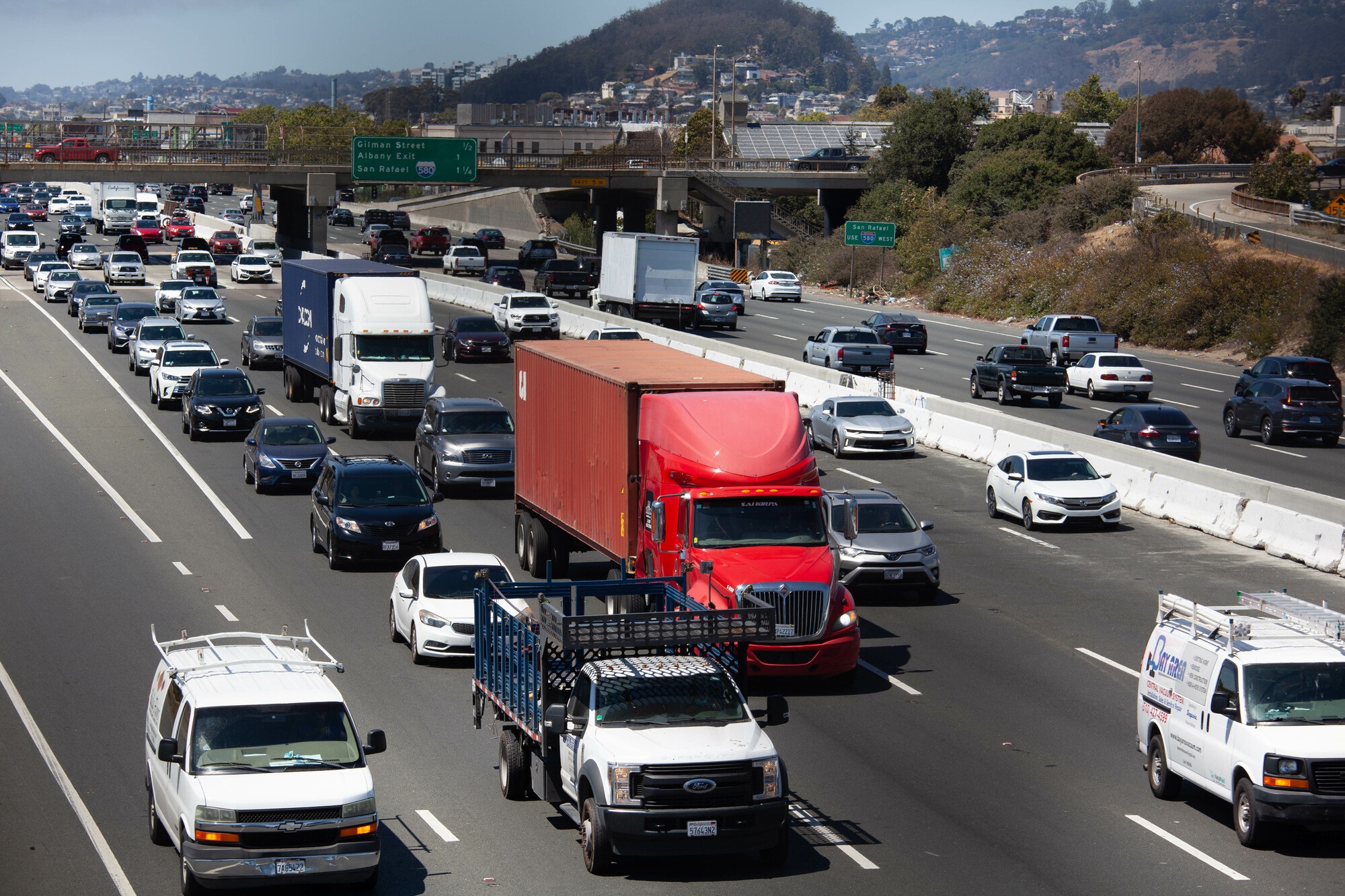
In a long-awaited preliminary study, Caltrans found that lifting a decades-old truck ban on Interstate 580 would add about 3,800 large vehicles to the highway daily — and reduce truck traffic along parallel Interstate 880.
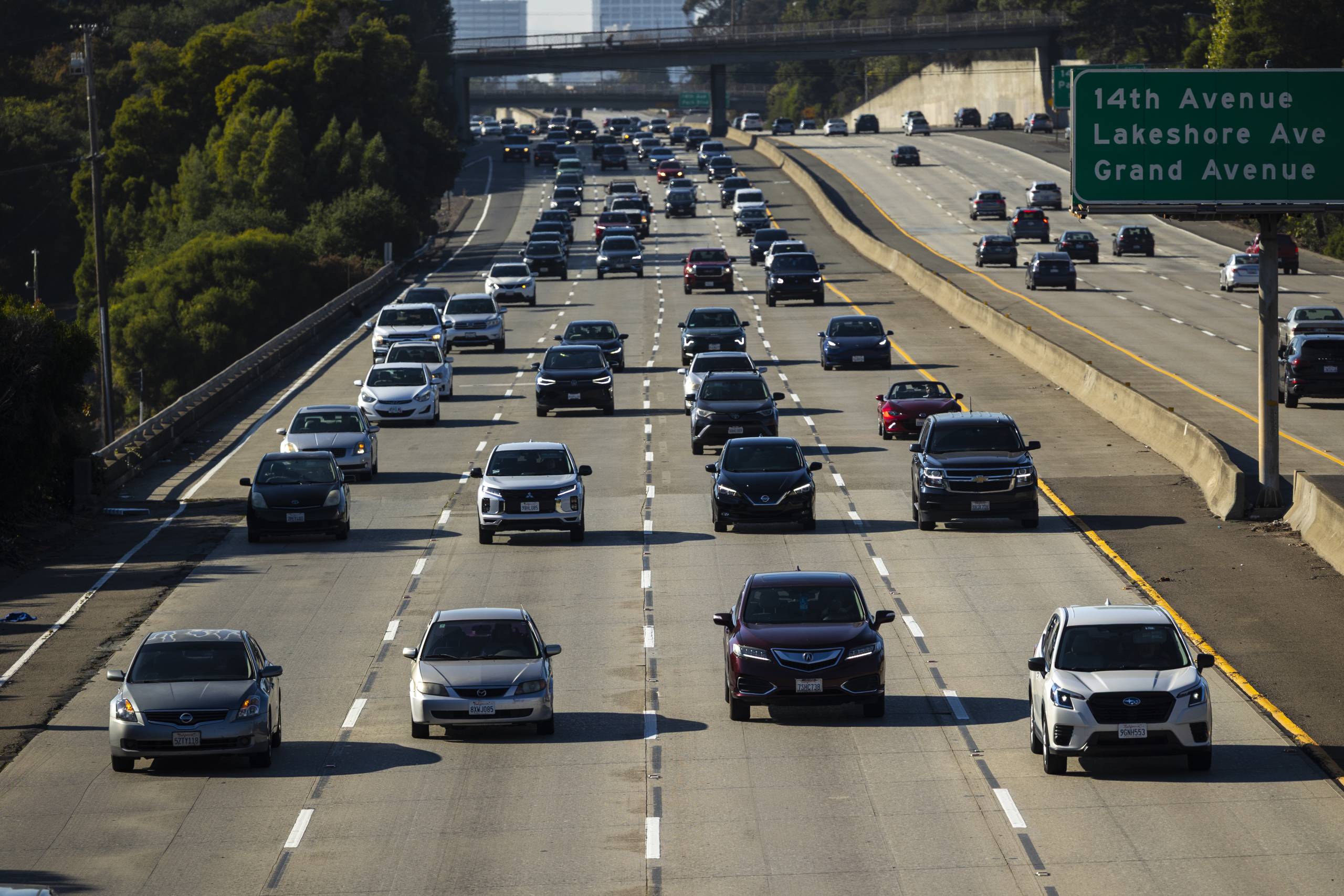
The findings come as the state’s transportation department examines the potential traffic, health and equity impacts of removing a more than 70-year-old ban on trucks heavier than 9,000 pounds, with the exception of some buses and paratransit vehicles, from the highway running along the base of the East Bay Hills in Oakland and San Leandro.
Oakland residents have raised concerns for years about the health impacts of the ban, which diverts most truck traffic coming through the East Bay to I-880.
As the trucks bring goods to the East Oakland port, they also deliver noise, air pollution and a heightened risk of asthma and cancer.
More than half of residents living along I-880 are environmentally burdened — meaning they carry the heaviest pollution, health, and economic burdens — compared to just 8.7% of residents living along I-580, according to the Caltrans study.
Caltrans said the study will not result in any change to the status of the ban or produce a recommendation around keeping or removing the ban. Only the state Legislature can lift the ban.
Even so, the study has drawn criticism from residents who worry that removing the ban will spread more pollution throughout the East Bay.
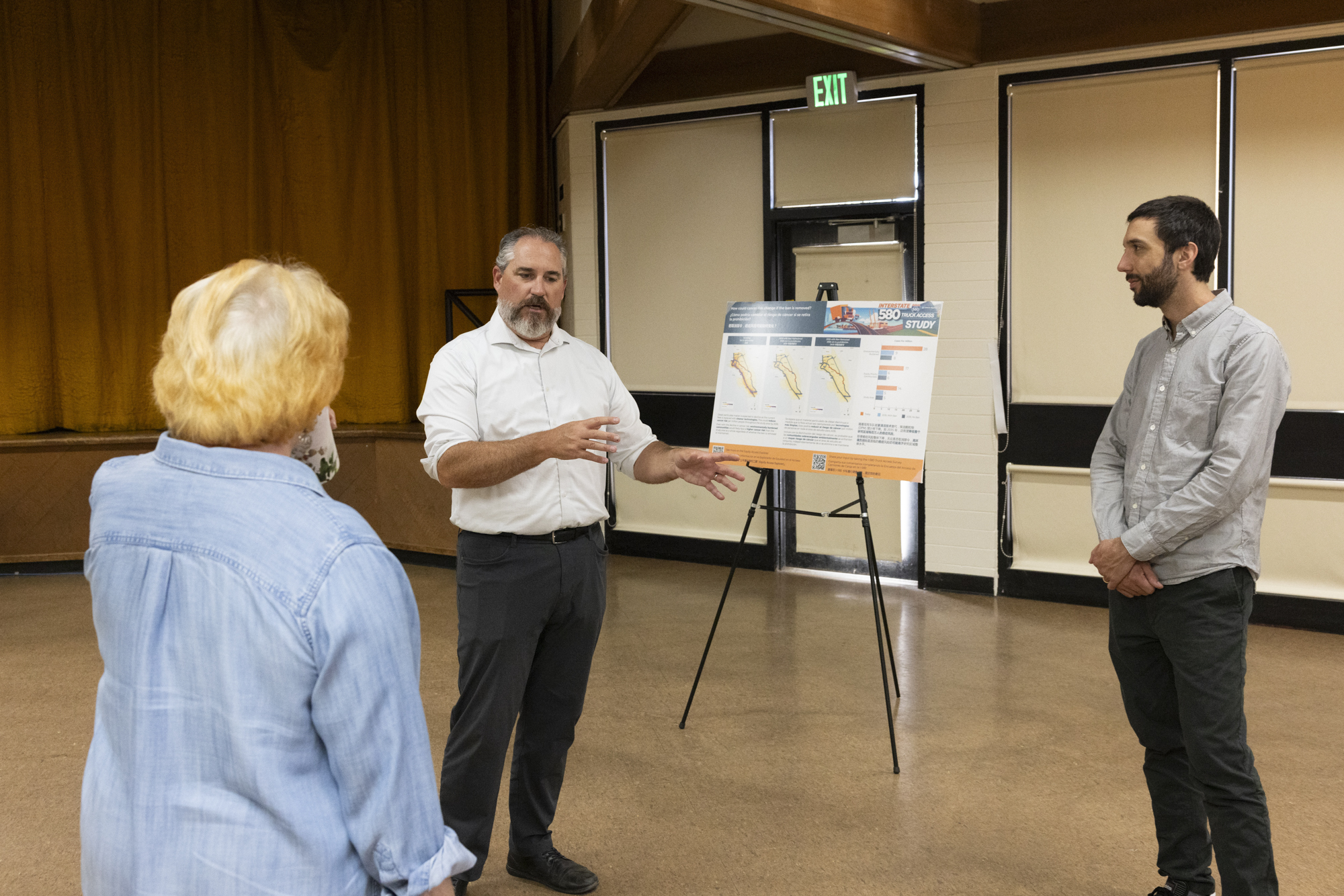
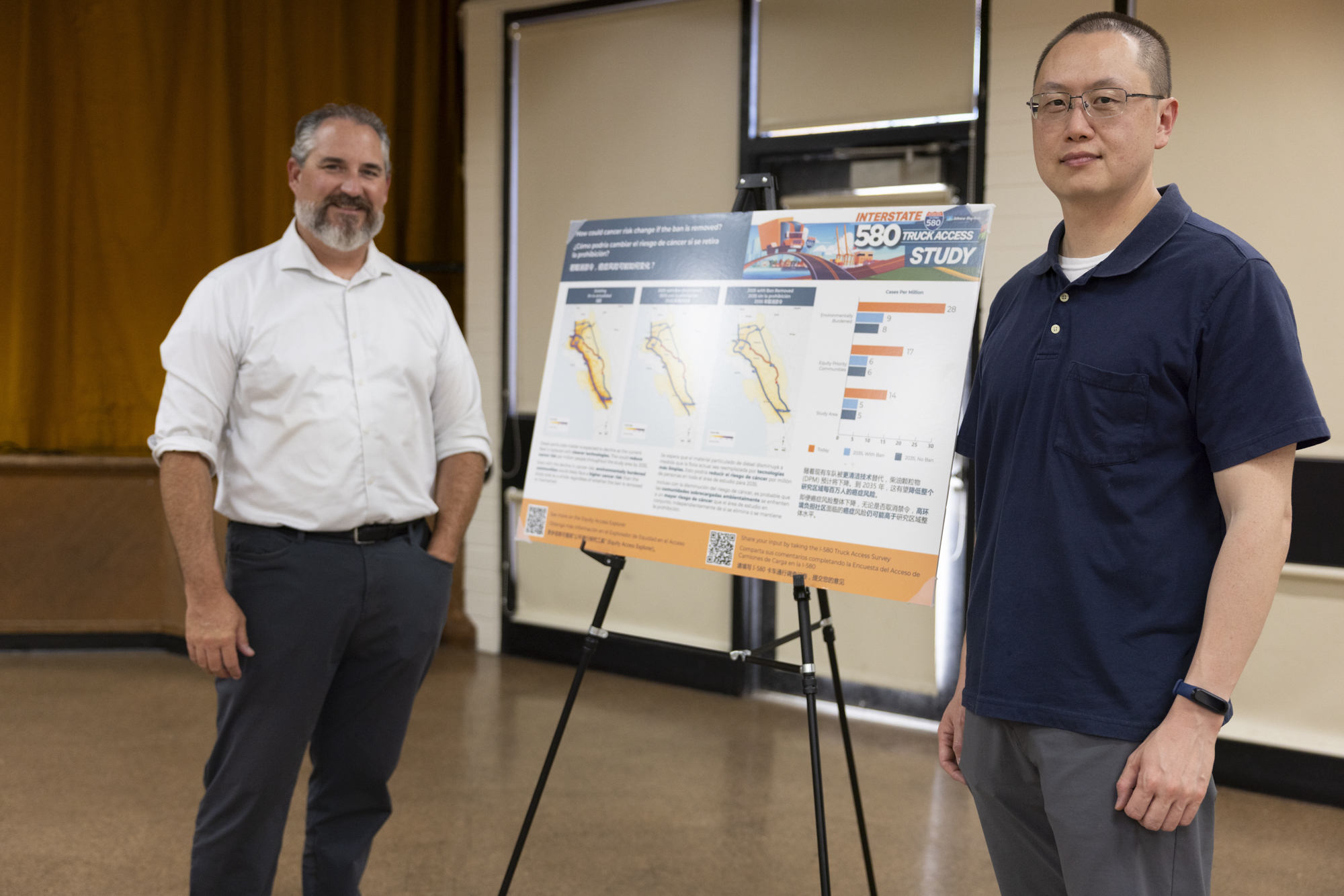
On Wednesday, Caltrans presented its initial findings with a poster session at the Oakland Public Library’s West Oakland branch as part of a series of community engagement events.
Diane Russell, a member of No Big-Rigs on I-580 — which opposes lifting the ban — attended and said she learned about the projected impacts on cancer and asthma as well as the projected traffic flows from the poster session.
Russell said she opposed the ban because there are a higher number of sensitive sites like hospitals along I-580.
“Keep the ban and mitigate the bad influences along 880 for the people who live there, because it is inequitable,” Russell said.
Cameron Oakes, deputy district director of transportation and local assistance at Caltrans, said that the study is responding to concerns around freight traffic raised in community action plans from West and East Oakland focused on air quality and transit equity.
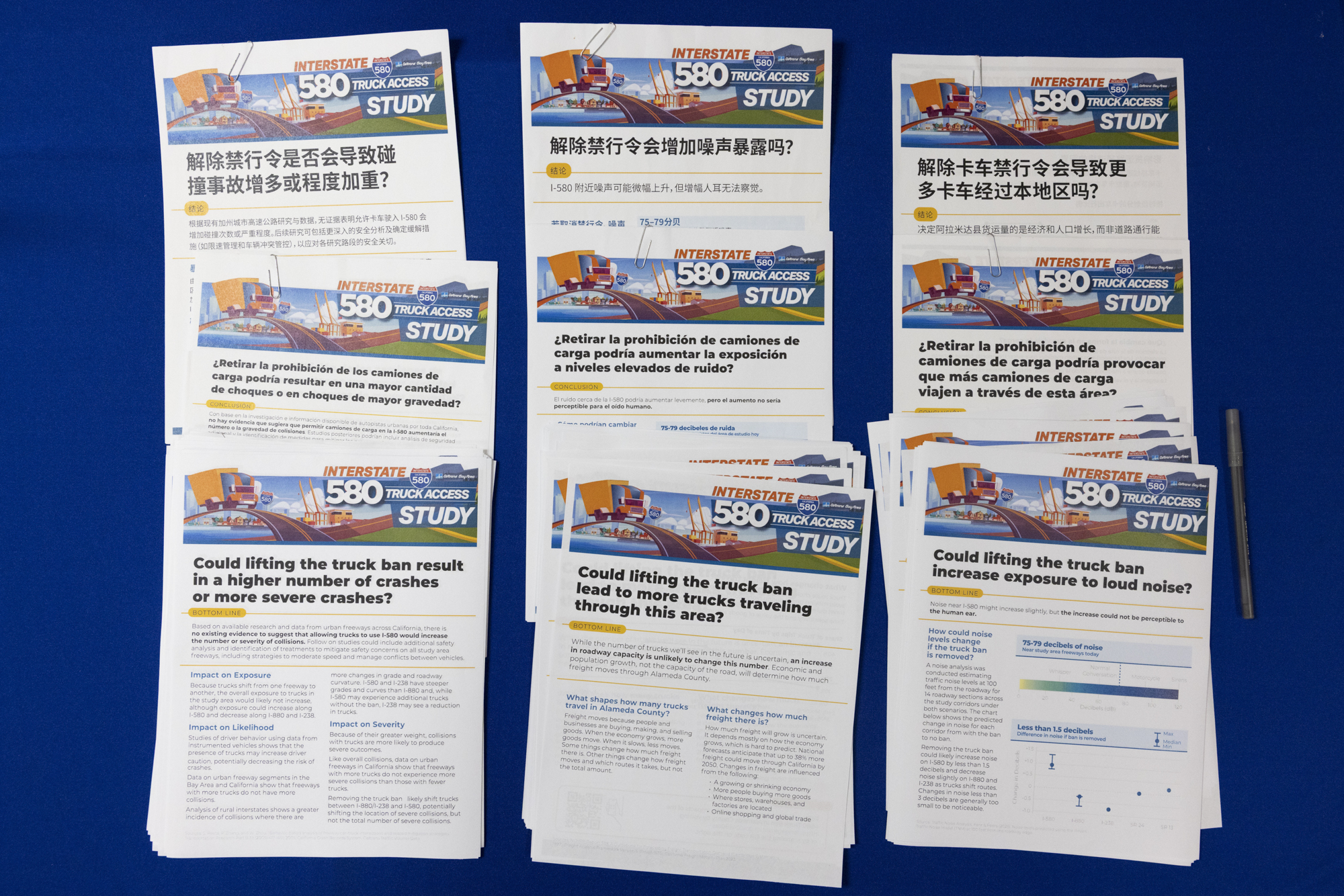
Caltrans examined the potential impacts of lifting the I-580 truck ban for communities living along both highways by modeling traffic flows and air quality scenarios along each road in 2035.
The study found that lifting the ban would reduce truck traffic along I-880 from roughly 9,200 trucks per day to about 6,200.
However, the study found environmentally burdened communities would see only a slightly lower cancer risk with the ban removed. A “no-ban” scenario would shift the cancer risk from 9 cases per million to 8 cases per million.
The initial findings do suggest, though, an overall reduction in cancer risk in the entire study area through 2035 — largely due to projected improvements in trucking fuels as California moves to meet higher air quality standards, Oakes said.
The current analysis is based on old diesel-powered trucks being replaced by new diesel-powered trucks, not electric or hydrogen, according to Oakes.
Caltrans will continue to share the study’s preliminary findings and seek input on other ways to reduce the impact of freight traffic on communities. The final sharing session will take place Aug. 11 at the South Berkeley Farmers Market.
Other solutions included constructing sound walls, expanding support for zero-emission truck standards, increasing tree planting and centering restorative justice.
Caltrans’ survey asking community members how the study findings impact their opinion on lifting the ban is now live. They plan to release their final report this winter.