UC Doctors Seek to Unionize 10,000 Colleagues in Massive Campaign
The University of California is confronting a large unionization effort among employees who have historically stayed outside of unions: doctors.
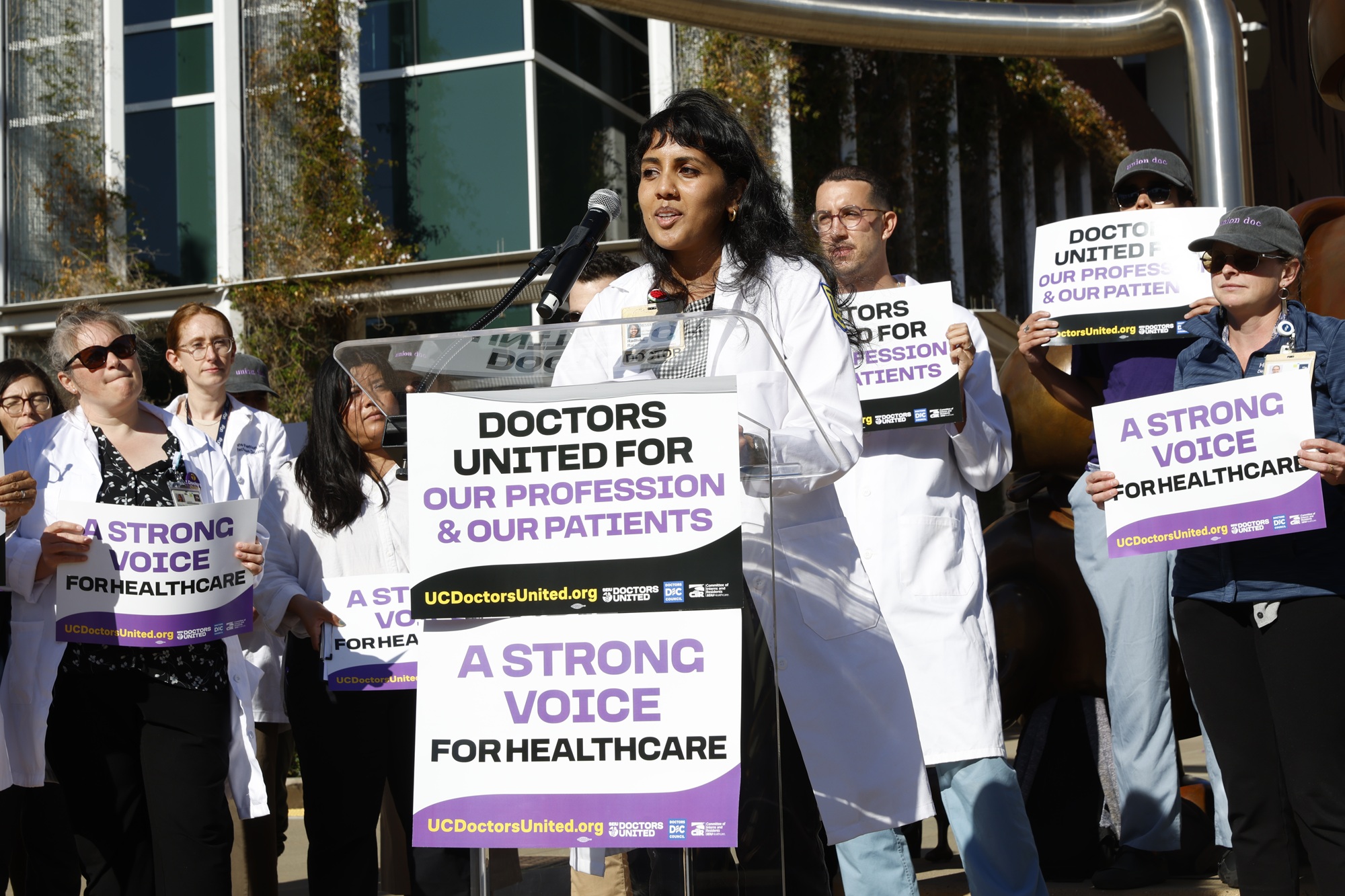
At Zuckerberg San Francisco General Hospital on Thursday, physicians announced their plans to form a union with SEIU Doctors United — a partnership between Doctors Council, Service Employees International Union and Committee of Interns and Residents that represents more than 45,000 doctors nationwide.
The move points to a marked shift in the healthcare industry, where in the past, it has been somewhat rare for generally highly paid doctors to join unions.
But interest in collective bargaining within the medical profession has accelerated, particularly post-pandemic, as more physicians report deteriorating working conditions and a loss of clinical autonomy amidst an increasingly consolidated and profit-driven industry.
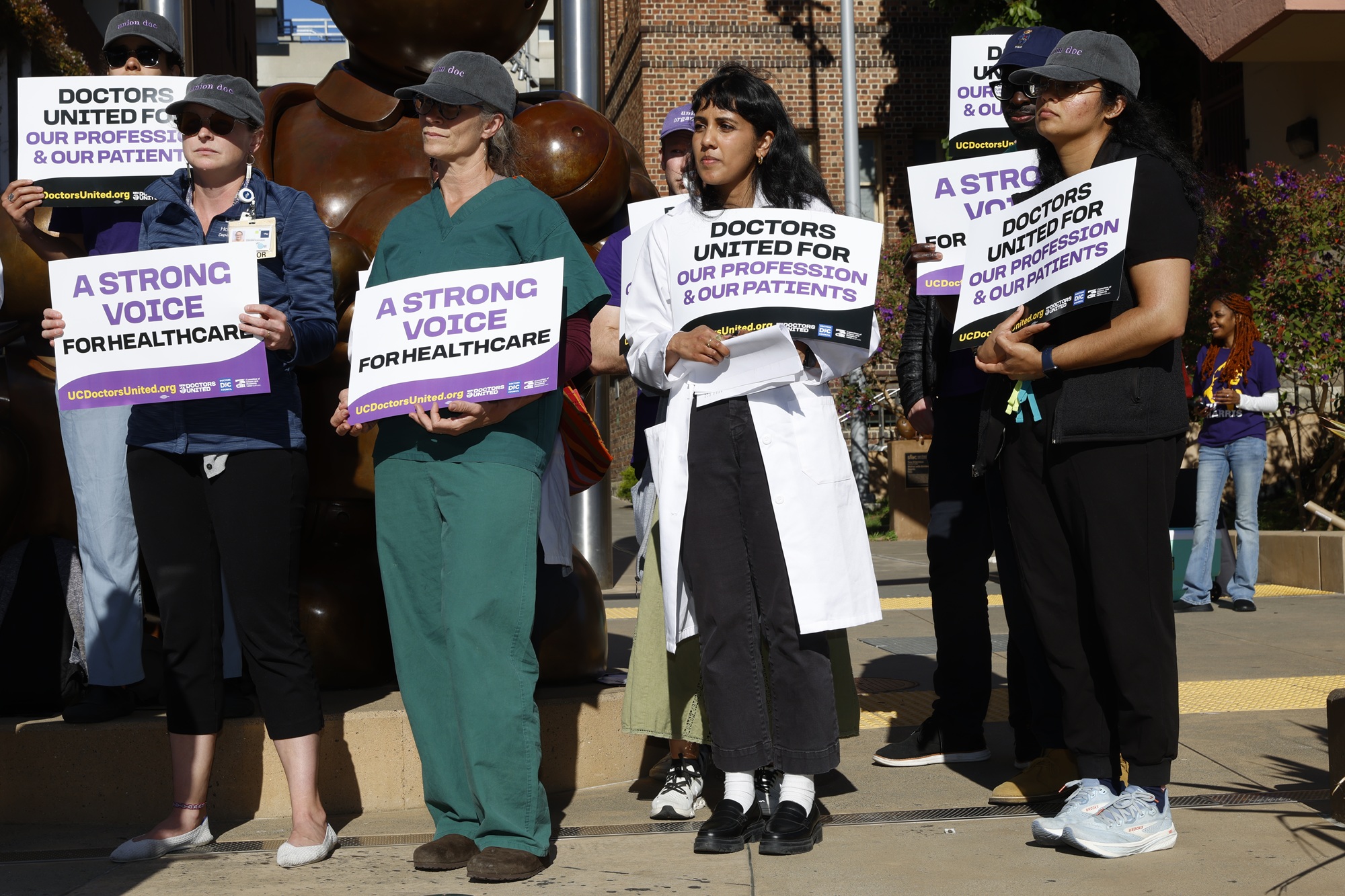
Attending physicians at UC, who make clinical decisions and often supervise residents and medical students, said they are stretched thin with unsustainable patient loads, understaffing and less decision-making power — concerns often echoed by nurses and other patient care workers with higher union participation rates.
“Sometimes I do feel, especially as a primary care physician, overwhelmed,” Dr. Radhika Rajan, a UCSF pediatrician at SF General, told KQED. “The work that we have to do does not stop when we are leaving [the] clinic.
“So many of us are excited to unionize because the goal is to be able to have the resources to provide better care for our patients,” she said.
In a statement, UC said it takes concerns about physicians’ workload, staffing and professional support seriously, adding that burnout is a nationwide challenge driven by workforce shortages and other factors. UC Health leaders regularly work with staff physicians to improve the job environment and evaluate hiring and retention needs, the university said.

“We remain committed to listening to physicians and clinical faculty, addressing concerns and continuously improving the experience of the people who make UC Health’s clinical, educational and research missions possible,” UC’s statement said. “UC Health locations continually assess staffing, recruitment, security practices and workplace needs, recognizing that conditions vary across specialties, departments and care settings.”
About $24 billion, nearly 40% of the university’s total revenue last year, came from its six academic health centers, serving 2.5 million Californians. UC is the state’s second largest employer and the nation’s largest public healthcare system.
Labor experts said it’s unlikely that university executives would welcome a new large doctors’ union. If the UC Doctors United organizing campaign is successful, it could inspire doctors elsewhere to seek a collective voice on the job, according to John Logan, director of labor and employment studies at San Francisco State University.
A second union, University Professional & Technical Employees, is also organizing attending physicians at UC. According to Logan, over half of these doctors systemwide would have to show union support in order for the university to be required to recognize them as a unit.
“People who run the university undoubtedly will not want 10,000 doctors at the UC system to unionize and to have to bargain collectively over things that they can unilaterally decide at the moment,” Logan said.
The university this month reached a tentative agreement with the Committee of Interns and Residents, which represents 6,400 resident physicians and fellows who generally earn lower incomes than attending doctors. The deal includes an 18% salary increase and improvements to address emergency room capacity.
In California, attending physicians earn more than $200,000 per year on average, depending on location, experience and specialty, according to Salary.com.
Nationwide, less than 10% of practicing physicians are union members.
This story was updated to include a comment from the University of California, which did not respond before original publication.