window.__IS_SSR__=true
window.__INITIAL_STATE__={
"attachmentsReducer": {
"audio_0": {
"type": "attachments",
"id": "audio_0",
"imgSizes": {
"kqedFullSize": {
"file": "https://ww2.kqed.org/news/wp-content/themes/KQED-unified/img/audio_bgs/background0.jpg"
}
}
},
"audio_1": {
"type": "attachments",
"id": "audio_1",
"imgSizes": {
"kqedFullSize": {
"file": "https://ww2.kqed.org/news/wp-content/themes/KQED-unified/img/audio_bgs/background1.jpg"
}
}
},
"audio_2": {
"type": "attachments",
"id": "audio_2",
"imgSizes": {
"kqedFullSize": {
"file": "https://ww2.kqed.org/news/wp-content/themes/KQED-unified/img/audio_bgs/background2.jpg"
}
}
},
"audio_3": {
"type": "attachments",
"id": "audio_3",
"imgSizes": {
"kqedFullSize": {
"file": "https://ww2.kqed.org/news/wp-content/themes/KQED-unified/img/audio_bgs/background3.jpg"
}
}
},
"audio_4": {
"type": "attachments",
"id": "audio_4",
"imgSizes": {
"kqedFullSize": {
"file": "https://ww2.kqed.org/news/wp-content/themes/KQED-unified/img/audio_bgs/background4.jpg"
}
}
},
"placeholder": {
"type": "attachments",
"id": "placeholder",
"imgSizes": {
"thumbnail": {
"file": "https://cdn.kqed.org/wp-content/uploads/2024/12/KQED-Default-Image-816638274-2000x1333-1-160x107.jpg",
"width": 160,
"height": 107,
"mimeType": "image/jpeg"
},
"medium": {
"file": "https://cdn.kqed.org/wp-content/uploads/2024/12/KQED-Default-Image-816638274-2000x1333-1-800x533.jpg",
"width": 800,
"height": 533,
"mimeType": "image/jpeg"
},
"medium_large": {
"file": "https://cdn.kqed.org/wp-content/uploads/2024/12/KQED-Default-Image-816638274-2000x1333-1-768x512.jpg",
"width": 768,
"height": 512,
"mimeType": "image/jpeg"
},
"large": {
"file": "https://cdn.kqed.org/wp-content/uploads/2024/12/KQED-Default-Image-816638274-2000x1333-1-1020x680.jpg",
"width": 1020,
"height": 680,
"mimeType": "image/jpeg"
},
"1536x1536": {
"file": "https://cdn.kqed.org/wp-content/uploads/2024/12/KQED-Default-Image-816638274-2000x1333-1-1536x1024.jpg",
"width": 1536,
"height": 1024,
"mimeType": "image/jpeg"
},
"fd-lrg": {
"file": "https://cdn.kqed.org/wp-content/uploads/2024/12/KQED-Default-Image-816638274-2000x1333-1-1536x1024.jpg",
"width": 1536,
"height": 1024,
"mimeType": "image/jpeg"
},
"fd-med": {
"file": "https://cdn.kqed.org/wp-content/uploads/2024/12/KQED-Default-Image-816638274-2000x1333-1-1020x680.jpg",
"width": 1020,
"height": 680,
"mimeType": "image/jpeg"
},
"fd-sm": {
"file": "https://cdn.kqed.org/wp-content/uploads/2024/12/KQED-Default-Image-816638274-2000x1333-1-800x533.jpg",
"width": 800,
"height": 533,
"mimeType": "image/jpeg"
},
"post-thumbnail": {
"file": "https://cdn.kqed.org/wp-content/uploads/2024/12/KQED-Default-Image-816638274-2000x1333-1-672x372.jpg",
"width": 672,
"height": 372,
"mimeType": "image/jpeg"
},
"twentyfourteen-full-width": {
"file": "https://cdn.kqed.org/wp-content/uploads/2024/12/KQED-Default-Image-816638274-2000x1333-1-1038x576.jpg",
"width": 1038,
"height": 576,
"mimeType": "image/jpeg"
},
"xxsmall": {
"file": "https://cdn.kqed.org/wp-content/uploads/2024/12/KQED-Default-Image-816638274-2000x1333-1-160x107.jpg",
"width": 160,
"height": 107,
"mimeType": "image/jpeg"
},
"xsmall": {
"file": "https://cdn.kqed.org/wp-content/uploads/2024/12/KQED-Default-Image-816638274-2000x1333-1-672x372.jpg",
"width": 672,
"height": 372,
"mimeType": "image/jpeg"
},
"small": {
"file": "https://cdn.kqed.org/wp-content/uploads/2024/12/KQED-Default-Image-816638274-2000x1333-1-672x372.jpg",
"width": 672,
"height": 372,
"mimeType": "image/jpeg"
},
"xlarge": {
"file": "https://cdn.kqed.org/wp-content/uploads/2024/12/KQED-Default-Image-816638274-2000x1333-1-1020x680.jpg",
"width": 1020,
"height": 680,
"mimeType": "image/jpeg"
},
"full-width": {
"file": "https://cdn.kqed.org/wp-content/uploads/2024/12/KQED-Default-Image-816638274-2000x1333-1-1920x1280.jpg",
"width": 1920,
"height": 1280,
"mimeType": "image/jpeg"
},
"guest-author-32": {
"file": "https://cdn.kqed.org/wp-content/uploads/2025/01/KQED-Default-Image-816638274-1333x1333-1-160x160.jpg",
"width": 32,
"height": 32,
"mimeType": "image/jpeg"
},
"guest-author-50": {
"file": "https://cdn.kqed.org/wp-content/uploads/2025/01/KQED-Default-Image-816638274-1333x1333-1-160x160.jpg",
"width": 50,
"height": 50,
"mimeType": "image/jpeg"
},
"guest-author-64": {
"file": "https://cdn.kqed.org/wp-content/uploads/2025/01/KQED-Default-Image-816638274-1333x1333-1-160x160.jpg",
"width": 64,
"height": 64,
"mimeType": "image/jpeg"
},
"guest-author-96": {
"file": "https://cdn.kqed.org/wp-content/uploads/2025/01/KQED-Default-Image-816638274-1333x1333-1-160x160.jpg",
"width": 96,
"height": 96,
"mimeType": "image/jpeg"
},
"guest-author-128": {
"file": "https://cdn.kqed.org/wp-content/uploads/2025/01/KQED-Default-Image-816638274-1333x1333-1-160x160.jpg",
"width": 128,
"height": 128,
"mimeType": "image/jpeg"
},
"detail": {
"file": "https://cdn.kqed.org/wp-content/uploads/2025/01/KQED-Default-Image-816638274-1333x1333-1-160x160.jpg",
"width": 160,
"height": 160,
"mimeType": "image/jpeg"
},
"kqedFullSize": {
"file": "https://cdn.kqed.org/wp-content/uploads/2024/12/KQED-Default-Image-816638274-2000x1333-1.jpg",
"width": 2000,
"height": 1333
}
}
},
"news_11980289": {
"type": "attachments",
"id": "news_11980289",
"meta": {
"index": "attachments_1716263798",
"site": "news",
"id": "11980289",
"found": true
},
"parent": 11980260,
"imgSizes": {
"twentyfourteen-full-width": {
"file": "https://cdn.kqed.org/wp-content/uploads/sites/10/2024/03/GettyImages-1718981175_qut-1038x576.jpg",
"width": 1038,
"mimeType": "image/jpeg",
"height": 576
},
"thumbnail": {
"file": "https://cdn.kqed.org/wp-content/uploads/sites/10/2024/03/GettyImages-1718981175_qut-160x107.jpg",
"width": 160,
"mimeType": "image/jpeg",
"height": 107
},
"post-thumbnail": {
"file": "https://cdn.kqed.org/wp-content/uploads/sites/10/2024/03/GettyImages-1718981175_qut-672x372.jpg",
"width": 672,
"mimeType": "image/jpeg",
"height": 372
},
"kqedFullSize": {
"file": "https://cdn.kqed.org/wp-content/uploads/sites/10/2024/03/GettyImages-1718981175_qut.jpg",
"width": 1920,
"height": 1281
},
"large": {
"file": "https://cdn.kqed.org/wp-content/uploads/sites/10/2024/03/GettyImages-1718981175_qut-1020x681.jpg",
"width": 1020,
"mimeType": "image/jpeg",
"height": 681
},
"1536x1536": {
"file": "https://cdn.kqed.org/wp-content/uploads/sites/10/2024/03/GettyImages-1718981175_qut-1536x1025.jpg",
"width": 1536,
"mimeType": "image/jpeg",
"height": 1025
},
"medium": {
"file": "https://cdn.kqed.org/wp-content/uploads/sites/10/2024/03/GettyImages-1718981175_qut-800x534.jpg",
"width": 800,
"mimeType": "image/jpeg",
"height": 534
}
},
"publishDate": 1711042990,
"modified": 1711043063,
"caption": "How the “titer test” for people who have been vaccinated against measles works — and what to do if your test shows waning immunity.\r\n",
"description": null,
"title": "measles-vaccine",
"credit": "Andrii Zorii/Getty ",
"status": "inherit",
"altTag": "A pair of gloved hands fills a syringe from a vial of vaccine.",
"isLoading": false,
"fetchFailed": false
},
"news_11947188": {
"type": "attachments",
"id": "news_11947188",
"meta": {
"index": "attachments_1716263798",
"site": "news",
"id": "11947188",
"found": true
},
"parent": 11947102,
"imgSizes": {
"twentyfourteen-full-width": {
"file": "https://ww2.kqed.org/app/uploads/sites/10/2023/04/018_KQED_UCSFBenioffChildrensHospStrike_04192023-1038x576.jpg",
"width": 1038,
"mimeType": "image/jpeg",
"height": 576
},
"thumbnail": {
"file": "https://ww2.kqed.org/app/uploads/sites/10/2023/04/018_KQED_UCSFBenioffChildrensHospStrike_04192023-160x107.jpg",
"width": 160,
"mimeType": "image/jpeg",
"height": 107
},
"post-thumbnail": {
"file": "https://ww2.kqed.org/app/uploads/sites/10/2023/04/018_KQED_UCSFBenioffChildrensHospStrike_04192023-672x372.jpg",
"width": 672,
"mimeType": "image/jpeg",
"height": 372
},
"kqedFullSize": {
"file": "https://ww2.kqed.org/app/uploads/sites/10/2023/04/018_KQED_UCSFBenioffChildrensHospStrike_04192023.jpg",
"width": 1920,
"height": 1280
},
"large": {
"file": "https://ww2.kqed.org/app/uploads/sites/10/2023/04/018_KQED_UCSFBenioffChildrensHospStrike_04192023-1020x680.jpg",
"width": 1020,
"mimeType": "image/jpeg",
"height": 680
},
"1536x1536": {
"file": "https://ww2.kqed.org/app/uploads/sites/10/2023/04/018_KQED_UCSFBenioffChildrensHospStrike_04192023-1536x1024.jpg",
"width": 1536,
"mimeType": "image/jpeg",
"height": 1024
},
"medium": {
"file": "https://ww2.kqed.org/app/uploads/sites/10/2023/04/018_KQED_UCSFBenioffChildrensHospStrike_04192023-800x533.jpg",
"width": 800,
"mimeType": "image/jpeg",
"height": 533
}
},
"publishDate": 1681947416,
"modified": 1681947752,
"caption": "Hospital employees and supporters gather for a rally outside of the UCSF Benioff Children's Hospital in Oakland on April 19, 2023, during a one-day strike authorized by more than 1,200 members of the National Union of Healthcare Workers at the Oakland and Walnut Creek hospitals.",
"description": null,
"title": "018_KQED_UCSFBenioffChildrensHospStrike_04192023",
"credit": "Beth LaBerge/KQED",
"status": "inherit",
"altTag": "Hundreds of protestors in red T-shirts hold red and yellow picket signs outside of UCSF Benioff Children's Hospital Oakland.",
"isLoading": false,
"fetchFailed": false
},
"news_12073071": {
"type": "attachments",
"id": "news_12073071",
"meta": {
"index": "attachments_1716263798",
"site": "news",
"id": "12073071",
"found": true
},
"title": "20251105_URBANSTRATEGY_PL_01-KQED",
"publishDate": 1770762003,
"status": "inherit",
"parent": 0,
"modified": 1770762068,
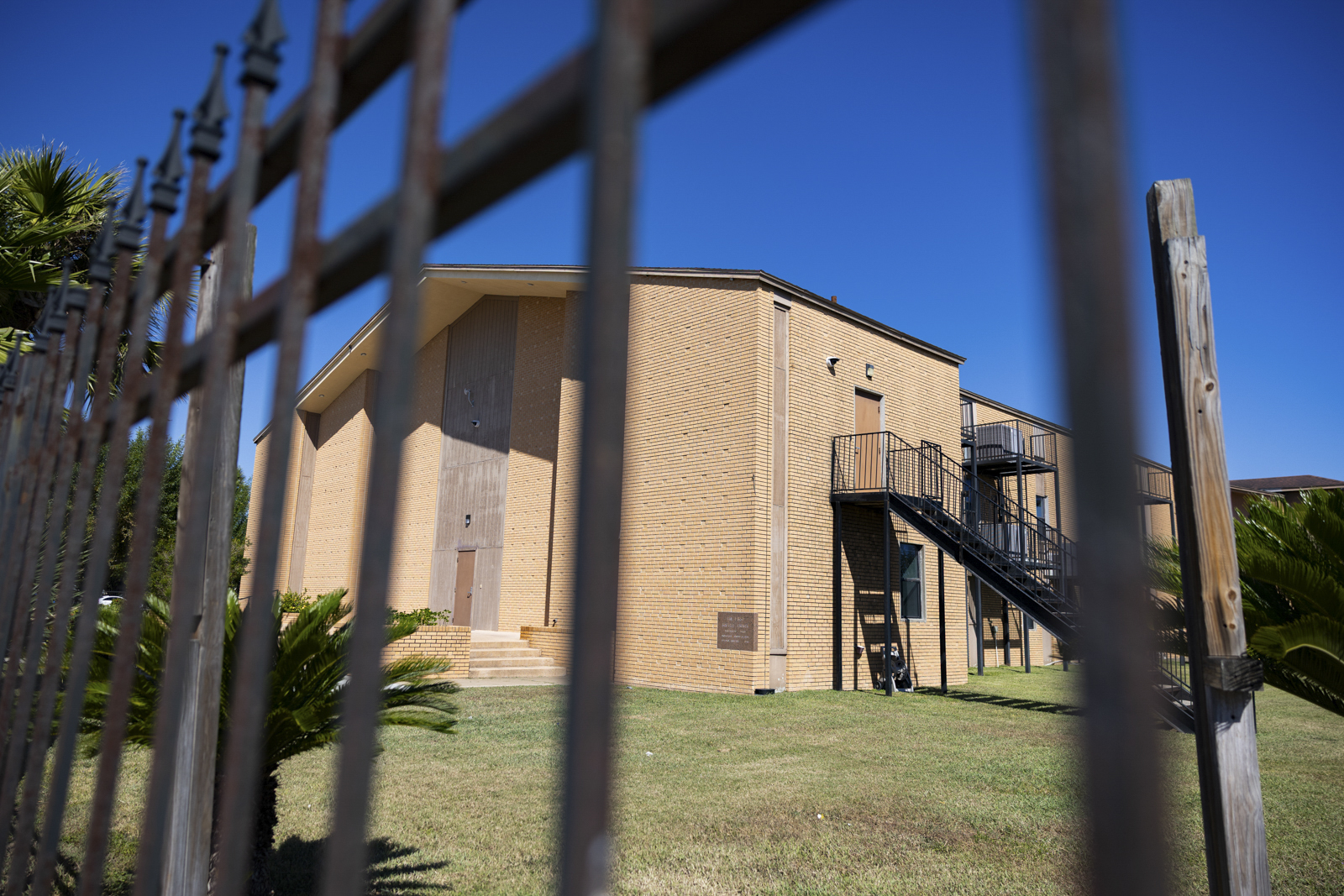
"caption": "The Trump administration is sending pregnant unaccompanied minors to a Texas shelter, shown above, that has been flagged as medically inadequate. The facility is run by the for-profit contractor Urban Strategies, whose founder and president, Lisa Cummins, has said the company is “deeply committed to the care and well-being of the children we serve.” Sources familiar with the facility dispute that characterization.",
"credit": "Patricia Lim/KUT News",
"altTag": null,
"description": null,
"imgSizes": {
"thumbnail": {
"file": "https://cdn.kqed.org/wp-content/uploads/sites/10/2026/02/20251105_URBANSTRATEGY_PL_01-KQED-160x107.jpg",
"width": 160,
"height": 107,
"mimeType": "image/jpeg"
},
"1536x1536": {
"file": "https://cdn.kqed.org/wp-content/uploads/sites/10/2026/02/20251105_URBANSTRATEGY_PL_01-KQED-1536x1024.jpg",
"width": 1536,
"height": 1024,
"mimeType": "image/jpeg"
},
"post-thumbnail": {
"file": "https://cdn.kqed.org/wp-content/uploads/sites/10/2026/02/20251105_URBANSTRATEGY_PL_01-KQED-672x372.jpg",
"width": 672,
"height": 372,
"mimeType": "image/jpeg"
},
"twentyfourteen-full-width": {
"file": "https://cdn.kqed.org/wp-content/uploads/sites/10/2026/02/20251105_URBANSTRATEGY_PL_01-KQED-1038x576.jpg",
"width": 1038,
"height": 576,
"mimeType": "image/jpeg"
},
"npr-cds-wide": {
"file": "https://cdn.kqed.org/wp-content/uploads/sites/10/2026/02/20251105_URBANSTRATEGY_PL_01-KQED-1200x675.jpg",
"width": 1200,
"height": 675,
"mimeType": "image/jpeg"
},
"kqedFullSize": {
"file": "https://cdn.kqed.org/wp-content/uploads/sites/10/2026/02/20251105_URBANSTRATEGY_PL_01-KQED.jpg",
"width": 1600,
"height": 1067
}
},
"isLoading": false,
"fetchFailed": false
},
"news_12073091": {
"type": "attachments",
"id": "news_12073091",
"meta": {
"index": "attachments_1716263798",
"site": "news",
"id": "12073091",
"found": true
},
"title": "260210-BAD BUGS-01-KQED",
"publishDate": 1770766267,
"status": "inherit",
"parent": 0,
"modified": 1770766870,
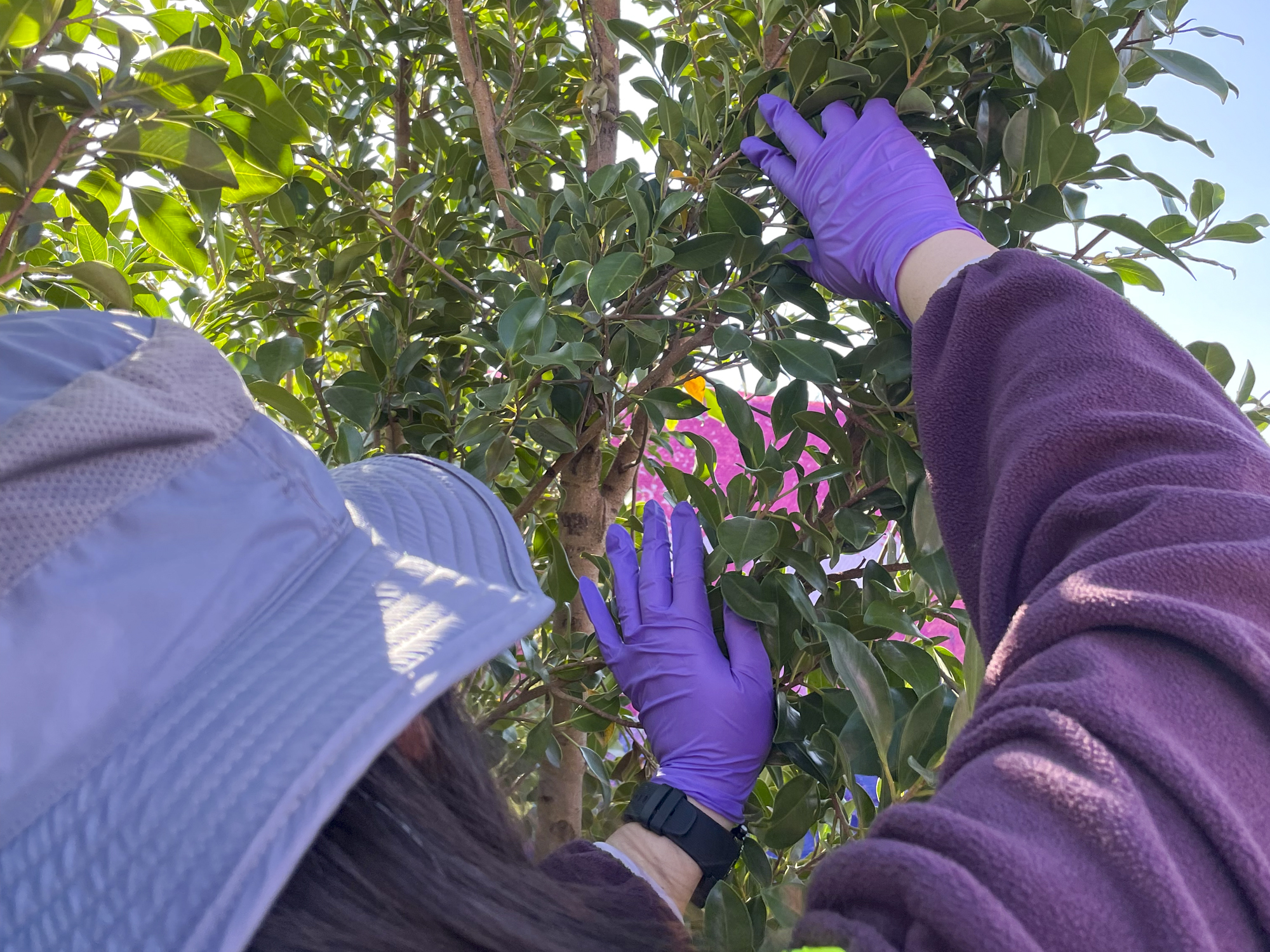
"caption": "Amy Chang, an agricultural inspector for the County of Santa Clara, looks for invasive pests on plant decor used at Levi’s Stadium during Super Bowl LX.",
"credit": "Courtesy of Carolyn Lê/SCC CEPA",
"altTag": null,
"description": null,
"imgSizes": {
"thumbnail": {
"file": "https://cdn.kqed.org/wp-content/uploads/sites/10/2026/02/260210-BAD-BUGS-01-KQED-160x120.jpg",
"width": 160,
"height": 120,
"mimeType": "image/jpeg"
},
"1536x1536": {
"file": "https://cdn.kqed.org/wp-content/uploads/sites/10/2026/02/260210-BAD-BUGS-01-KQED-1536x1152.jpg",
"width": 1536,
"height": 1152,
"mimeType": "image/jpeg"
},
"post-thumbnail": {
"file": "https://cdn.kqed.org/wp-content/uploads/sites/10/2026/02/260210-BAD-BUGS-01-KQED-672x372.jpg",
"width": 672,
"height": 372,
"mimeType": "image/jpeg"
},
"twentyfourteen-full-width": {
"file": "https://cdn.kqed.org/wp-content/uploads/sites/10/2026/02/260210-BAD-BUGS-01-KQED-1038x576.jpg",
"width": 1038,
"height": 576,
"mimeType": "image/jpeg"
},
"npr-cds-wide": {
"file": "https://cdn.kqed.org/wp-content/uploads/sites/10/2026/02/260210-BAD-BUGS-01-KQED-1200x675.jpg",
"width": 1200,
"height": 675,
"mimeType": "image/jpeg"
},
"kqedFullSize": {
"file": "https://cdn.kqed.org/wp-content/uploads/sites/10/2026/02/260210-BAD-BUGS-01-KQED.jpg",
"width": 2000,
"height": 1500
}
},
"isLoading": false,
"fetchFailed": false
},
"news_12072987": {
"type": "attachments",
"id": "news_12072987",
"meta": {
"index": "attachments_1716263798",
"site": "news",
"id": "12072987",
"found": true
},
"title": "020926_KAISERSTRIKE_8137B-KQED",
"publishDate": 1770747058,
"status": "inherit",
"parent": 0,
"modified": 1770747219,
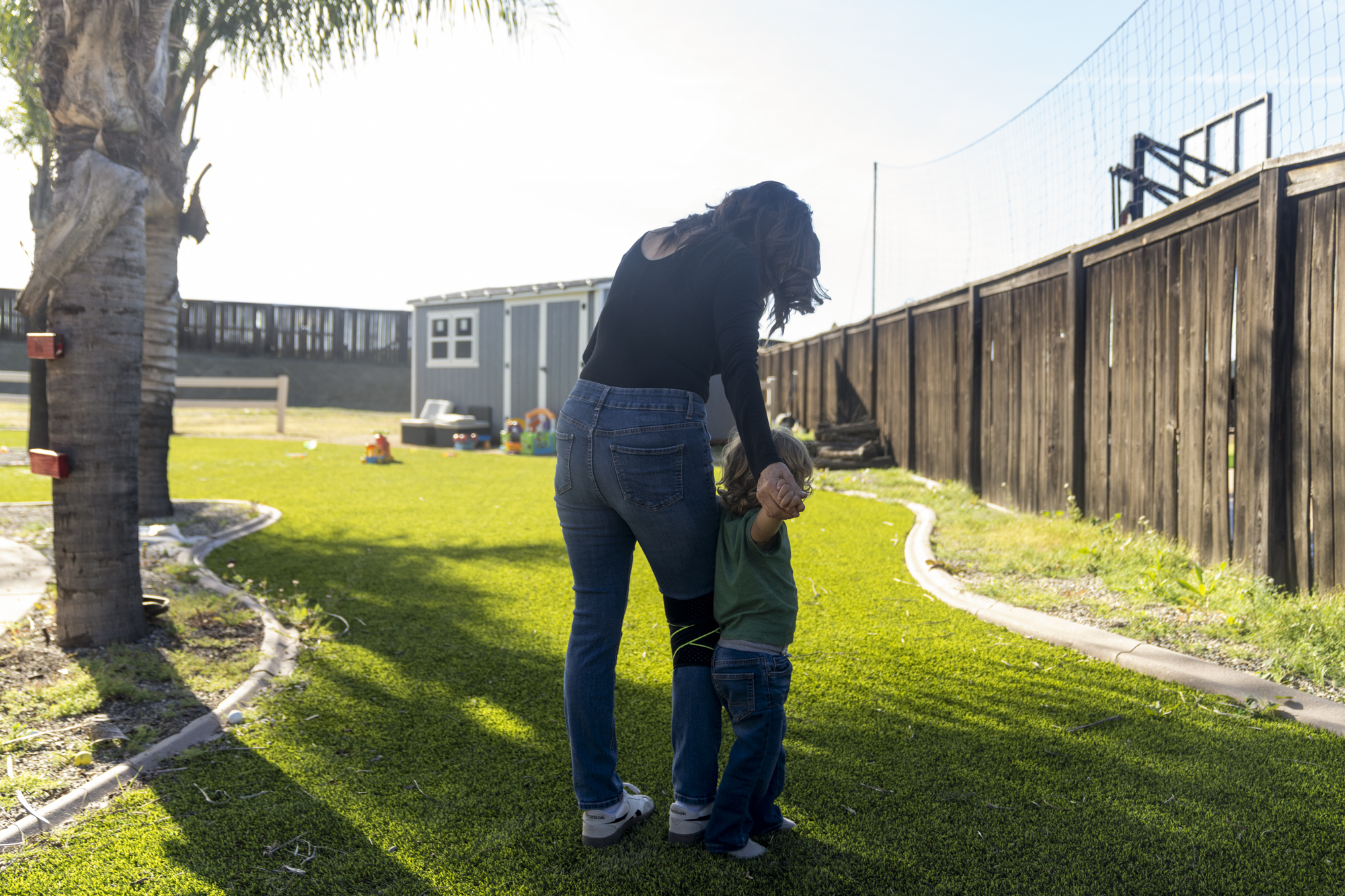
"caption": "Carrie Esqueda plays with one of her grandkids at her home in Wildomar on Feb. 9, 2026.",
"credit": "Lauren Justice for KQED",
"altTag": null,
"description": null,
"imgSizes": {
"thumbnail": {
"file": "https://cdn.kqed.org/wp-content/uploads/sites/10/2026/02/020926_KAISERSTRIKE_8137B-KQED-160x107.jpg",
"width": 160,
"height": 107,
"mimeType": "image/jpeg"
},
"1536x1536": {
"file": "https://cdn.kqed.org/wp-content/uploads/sites/10/2026/02/020926_KAISERSTRIKE_8137B-KQED-1536x1024.jpg",
"width": 1536,
"height": 1024,
"mimeType": "image/jpeg"
},
"post-thumbnail": {
"file": "https://cdn.kqed.org/wp-content/uploads/sites/10/2026/02/020926_KAISERSTRIKE_8137B-KQED-672x372.jpg",
"width": 672,
"height": 372,
"mimeType": "image/jpeg"
},
"twentyfourteen-full-width": {
"file": "https://cdn.kqed.org/wp-content/uploads/sites/10/2026/02/020926_KAISERSTRIKE_8137B-KQED-1038x576.jpg",
"width": 1038,
"height": 576,
"mimeType": "image/jpeg"
},
"npr-cds-wide": {
"file": "https://cdn.kqed.org/wp-content/uploads/sites/10/2026/02/020926_KAISERSTRIKE_8137B-KQED-1200x675.jpg",
"width": 1200,
"height": 675,
"mimeType": "image/jpeg"
},
"kqedFullSize": {
"file": "https://cdn.kqed.org/wp-content/uploads/sites/10/2026/02/020926_KAISERSTRIKE_8137B-KQED.jpg",
"width": 2000,
"height": 1333
}
},
"isLoading": false,
"fetchFailed": false
},
"news_12071399": {
"type": "attachments",
"id": "news_12071399",
"meta": {
"index": "attachments_1716263798",
"site": "news",
"id": "12071399",
"found": true
},
"title": "Steve Hilton at KQED in San Francisco on Jan. 22, 2026.",
"publishDate": 1769633753,
"status": "inherit",
"parent": 12071206,
"modified": 1769633772,
"caption": "Steve Hilton at KQED in San Francisco on Jan. 22, 2026.",
"credit": "Martin do Nascimento/KQED",
"altTag": null,
"description": null,
"imgSizes": {
"thumbnail": {
"file": "https://cdn.kqed.org/wp-content/uploads/sites/10/2026/01/260122-STEVE-HILTON-ON-PB-MD-04-KQED-1-160x107.jpg",
"width": 160,
"height": 107,
"mimeType": "image/jpeg"
},
"1536x1536": {
"file": "https://cdn.kqed.org/wp-content/uploads/sites/10/2026/01/260122-STEVE-HILTON-ON-PB-MD-04-KQED-1-1536x1025.jpg",
"width": 1536,
"height": 1025,
"mimeType": "image/jpeg"
},
"post-thumbnail": {
"file": "https://cdn.kqed.org/wp-content/uploads/sites/10/2026/01/260122-STEVE-HILTON-ON-PB-MD-04-KQED-1-672x372.jpg",
"width": 672,
"height": 372,
"mimeType": "image/jpeg"
},
"twentyfourteen-full-width": {
"file": "https://cdn.kqed.org/wp-content/uploads/sites/10/2026/01/260122-STEVE-HILTON-ON-PB-MD-04-KQED-1-1038x576.jpg",
"width": 1038,
"height": 576,
"mimeType": "image/jpeg"
},
"npr-cds-wide": {
"file": "https://cdn.kqed.org/wp-content/uploads/sites/10/2026/01/260122-STEVE-HILTON-ON-PB-MD-04-KQED-1-1200x675.jpg",
"width": 1200,
"height": 675,
"mimeType": "image/jpeg"
},
"kqedFullSize": {
"file": "https://cdn.kqed.org/wp-content/uploads/sites/10/2026/01/260122-STEVE-HILTON-ON-PB-MD-04-KQED-1.jpg",
"width": 2000,
"height": 1334
}
},
"isLoading": false,
"fetchFailed": false
},
"news_12070909": {
"type": "attachments",
"id": "news_12070909",
"meta": {
"index": "attachments_1716263798",
"site": "news",
"id": "12070909",
"found": true
},
"title": "US-HEALTH-IMMUNIZATION-VACCINES",
"publishDate": 1769196427,
"status": "inherit",
"parent": 12070907,
"modified": 1781476064,
"caption": "A vial of the Measles, Mumps, and Rubella (MMR) vaccination for children is displayed during an immunization event at the L.A. Care and Blue Shield of California Promise Health Plan Community Resource Center in the Panorama City neighborhood of Los Angeles, California, on Oct. 24, 2025. ",
"credit": "Patrick T. Fallon/AFP via Getty Images",
"altTag": null,
"description": null,
"imgSizes": {
"medium": {
"file": "https://cdn.kqed.org/wp-content/uploads/sites/10/2026/01/GettyImages-2242752228-2000x1333.jpg",
"width": 2000,
"height": 1333,
"mimeType": "image/jpeg"
},
"large": {
"file": "https://cdn.kqed.org/wp-content/uploads/sites/10/2026/01/GettyImages-2242752228-2000x1333.jpg",
"width": 2000,
"height": 1333,
"mimeType": "image/jpeg"
},
"thumbnail": {
"file": "https://cdn.kqed.org/wp-content/uploads/sites/10/2026/01/GettyImages-2242752228-160x107.jpg",
"width": 160,
"height": 107,
"mimeType": "image/jpeg"
},
"1536x1536": {
"file": "https://cdn.kqed.org/wp-content/uploads/sites/10/2026/01/GettyImages-2242752228-1536x1024.jpg",
"width": 1536,
"height": 1024,
"mimeType": "image/jpeg"
},
"2048x2048": {
"file": "https://cdn.kqed.org/wp-content/uploads/sites/10/2026/01/GettyImages-2242752228-2048x1365.jpg",
"width": 2048,
"height": 1365,
"mimeType": "image/jpeg"
},
"post-thumbnail": {
"file": "https://cdn.kqed.org/wp-content/uploads/sites/10/2026/01/GettyImages-2242752228-672x372.jpg",
"width": 672,
"height": 372,
"mimeType": "image/jpeg"
},
"twentyfourteen-full-width": {
"file": "https://cdn.kqed.org/wp-content/uploads/sites/10/2026/01/GettyImages-2242752228-1038x576.jpg",
"width": 1038,
"height": 576,
"mimeType": "image/jpeg"
},
"full-width": {
"file": "https://cdn.kqed.org/wp-content/uploads/sites/10/2026/01/GettyImages-2242752228-2000x1333.jpg",
"width": 2000,
"height": 1333,
"mimeType": "image/jpeg"
},
"npr-cds-wide": {
"file": "https://cdn.kqed.org/wp-content/uploads/sites/10/2026/01/GettyImages-2242752228-1200x675.jpg",
"width": 1200,
"height": 675,
"mimeType": "image/jpeg"
},
"kqedFullSize": {
"file": "https://cdn.kqed.org/wp-content/uploads/sites/10/2026/01/GettyImages-2242752228-scaled-e1769196948121.jpg",
"width": 2000,
"height": 1334
}
},
"isLoading": false,
"fetchFailed": false
},
"news_12070342": {
"type": "attachments",
"id": "news_12070342",
"meta": {
"index": "attachments_1716263798",
"site": "news",
"id": "12070342",
"found": true
},
"title": "deathcap 1",
"publishDate": 1768775639,
"status": "inherit",
"parent": 12070341,
"modified": 1768775670,
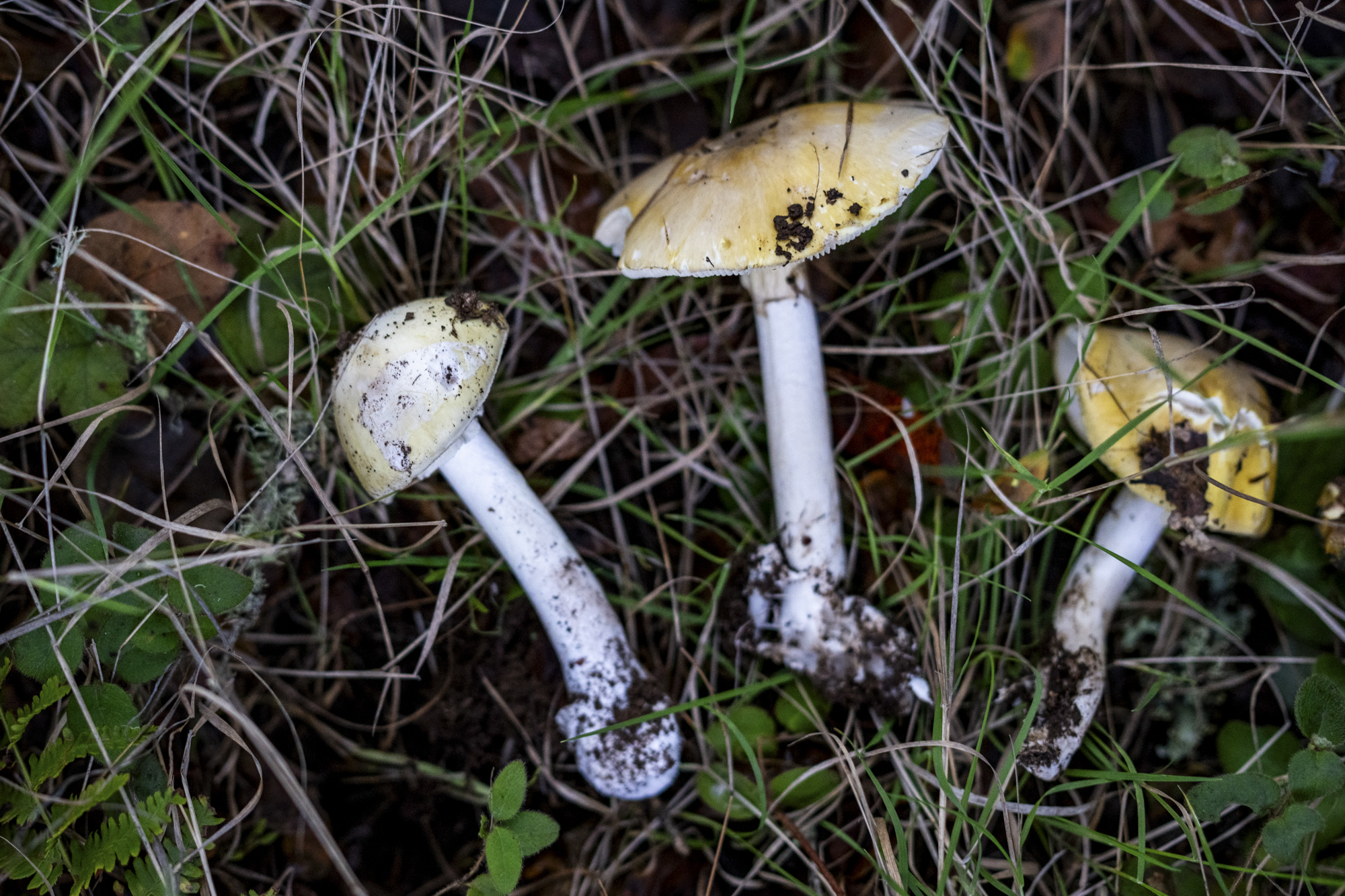
"caption": "Setas venenosas junto a un sendero durante una excursión educativa para recolectar setas en el Parque Regional Anthony Chabot, en Oakland, el 12 de diciembre de 2025. La recolección de setas no está permitida en el parque. Las autoridades sanitarias de California advirtieron a la población que dejara de recolectarlas después de que 24 personas enfermaron. Dos necesitaron un trasplante de hígado y una falleció.",
"credit": "Beth LaBerge/KQED",
"altTag": null,
"description": null,
"imgSizes": {
"thumbnail": {
"file": "https://cdn.kqed.org/wp-content/uploads/sites/10/2026/01/deathcap-1-160x107.jpg",
"width": 160,
"height": 107,
"mimeType": "image/jpeg"
},
"1536x1536": {
"file": "https://cdn.kqed.org/wp-content/uploads/sites/10/2026/01/deathcap-1-1536x1024.jpg",
"width": 1536,
"height": 1024,
"mimeType": "image/jpeg"
},
"post-thumbnail": {
"file": "https://cdn.kqed.org/wp-content/uploads/sites/10/2026/01/deathcap-1-672x372.jpg",
"width": 672,
"height": 372,
"mimeType": "image/jpeg"
},
"twentyfourteen-full-width": {
"file": "https://cdn.kqed.org/wp-content/uploads/sites/10/2026/01/deathcap-1-1038x576.jpg",
"width": 1038,
"height": 576,
"mimeType": "image/jpeg"
},
"npr-cds-wide": {
"file": "https://cdn.kqed.org/wp-content/uploads/sites/10/2026/01/deathcap-1-1200x675.jpg",
"width": 1200,
"height": 675,
"mimeType": "image/jpeg"
},
"kqedFullSize": {
"file": "https://cdn.kqed.org/wp-content/uploads/sites/10/2026/01/deathcap-1.jpg",
"width": 2000,
"height": 1333
}
},
"isLoading": false,
"fetchFailed": false
},
"news_12070655": {
"type": "attachments",
"id": "news_12070655",
"meta": {
"index": "attachments_1716263798",
"site": "news",
"id": "12070655",
"found": true
},
"title": "Woman undergoing prenatal exam with her husband.",
"publishDate": 1769032938,
"status": "inherit",
"parent": 12070643,
"modified": 1769032989,
"caption": "A woman during her prenatal exam with her husband.",
"credit": "DRS Productions via Getty Images",
"altTag": null,
"description": null,
"imgSizes": {
"thumbnail": {
"file": "https://cdn.kqed.org/wp-content/uploads/sites/10/2026/01/ivfchanges-160x107.jpg",
"width": 160,
"height": 107,
"mimeType": "image/jpeg"
},
"1536x1536": {
"file": "https://cdn.kqed.org/wp-content/uploads/sites/10/2026/01/ivfchanges-1536x1024.jpg",
"width": 1536,
"height": 1024,
"mimeType": "image/jpeg"
},
"post-thumbnail": {
"file": "https://cdn.kqed.org/wp-content/uploads/sites/10/2026/01/ivfchanges-672x372.jpg",
"width": 672,
"height": 372,
"mimeType": "image/jpeg"
},
"twentyfourteen-full-width": {
"file": "https://cdn.kqed.org/wp-content/uploads/sites/10/2026/01/ivfchanges-1038x576.jpg",
"width": 1038,
"height": 576,
"mimeType": "image/jpeg"
},
"npr-cds-wide": {
"file": "https://cdn.kqed.org/wp-content/uploads/sites/10/2026/01/ivfchanges-1200x675.jpg",
"width": 1200,
"height": 675,
"mimeType": "image/jpeg"
},
"kqedFullSize": {
"file": "https://cdn.kqed.org/wp-content/uploads/sites/10/2026/01/ivfchanges.jpg",
"width": 1980,
"height": 1320
}
},
"isLoading": false,
"fetchFailed": false
},
"news_12070142": {
"type": "attachments",
"id": "news_12070142",
"meta": {
"index": "attachments_1716263798",
"site": "news",
"id": "12070142",
"found": true
},
"title": "Emma's room 2",
"publishDate": 1768584118,
"status": "inherit",
"parent": 12070141,
"modified": 1768607308,
"caption": "Emma Denice Milligan and her caregiver, Wanda Kincy, laugh in her Oakland home on Dec. 12, 2025. ",
"credit": "Courtesy of Hyeyoon Cho",
"altTag": null,
"description": null,
"imgSizes": {
"thumbnail": {
"file": "https://cdn.kqed.org/wp-content/uploads/sites/10/2026/01/Emmas-room-2-160x107.jpg",
"width": 160,
"height": 107,
"mimeType": "image/jpeg"
},
"1536x1536": {
"file": "https://cdn.kqed.org/wp-content/uploads/sites/10/2026/01/Emmas-room-2-1536x1023.jpg",
"width": 1536,
"height": 1023,
"mimeType": "image/jpeg"
},
"post-thumbnail": {
"file": "https://cdn.kqed.org/wp-content/uploads/sites/10/2026/01/Emmas-room-2-672x372.jpg",
"width": 672,
"height": 372,
"mimeType": "image/jpeg"
},
"twentyfourteen-full-width": {
"file": "https://cdn.kqed.org/wp-content/uploads/sites/10/2026/01/Emmas-room-2-1038x576.jpg",
"width": 1038,
"height": 576,
"mimeType": "image/jpeg"
},
"npr-cds-wide": {
"file": "https://cdn.kqed.org/wp-content/uploads/sites/10/2026/01/Emmas-room-2-1200x675.jpg",
"width": 1200,
"height": 675,
"mimeType": "image/jpeg"
},
"kqedFullSize": {
"file": "https://cdn.kqed.org/wp-content/uploads/sites/10/2026/01/Emmas-room-2.jpg",
"width": 1960,
"height": 1306
}
},
"isLoading": false,
"fetchFailed": false
},
"news_12070160": {
"type": "attachments",
"id": "news_12070160",
"meta": {
"index": "attachments_1716263798",
"site": "news",
"id": "12070160",
"found": true
},
"title": "Stone countertop fabricator polishes the surface of a countertop",
"publishDate": 1768587044,
"status": "inherit",
"parent": 12070138,
"modified": 1768587086,
"caption": "A stone countertop fabricator polishes the surface of a countertop at a shop on Oct. 31, 2023, in Sun Valley, California.",
"credit": "Brian van der Brug/Los Angeles Times via Getty Images",
"altTag": null,
"description": null,
"imgSizes": {
"thumbnail": {
"file": "https://cdn.kqed.org/wp-content/uploads/sites/10/2026/01/StoneWorkerGetty2-160x111.jpg",
"width": 160,
"height": 111,
"mimeType": "image/jpeg"
},
"1536x1536": {
"file": "https://cdn.kqed.org/wp-content/uploads/sites/10/2026/01/StoneWorkerGetty2-1536x1068.jpg",
"width": 1536,
"height": 1068,
"mimeType": "image/jpeg"
},
"post-thumbnail": {
"file": "https://cdn.kqed.org/wp-content/uploads/sites/10/2026/01/StoneWorkerGetty2-672x372.jpg",
"width": 672,
"height": 372,
"mimeType": "image/jpeg"
},
"twentyfourteen-full-width": {
"file": "https://cdn.kqed.org/wp-content/uploads/sites/10/2026/01/StoneWorkerGetty2-1038x576.jpg",
"width": 1038,
"height": 576,
"mimeType": "image/jpeg"
},
"npr-cds-wide": {
"file": "https://cdn.kqed.org/wp-content/uploads/sites/10/2026/01/StoneWorkerGetty2-1200x675.jpg",
"width": 1200,
"height": 675,
"mimeType": "image/jpeg"
},
"kqedFullSize": {
"file": "https://cdn.kqed.org/wp-content/uploads/sites/10/2026/01/StoneWorkerGetty2.jpg",
"width": 2000,
"height": 1390
}
},
"isLoading": false,
"fetchFailed": false
},
"news_12069982": {
"type": "attachments",
"id": "news_12069982",
"meta": {
"index": "attachments_1716263798",
"site": "news",
"id": "12069982",
"found": true
},
"title": "California Suspends Law Banning Oil Drilling Near Homes And Schools",
"publishDate": 1768501642,
"status": "inherit",
"parent": 12069975,
"modified": 1768518982,
"caption": "An oil pumpjack stands idle near homes as people walk with dogs on Feb. 9, 2023, in Signal Hill, California. California law S.B. 1137, which required a safety buffer zone of 3,200 feet around homes and schools for new oil and gas drilling, was suspended after the petroleum industry collected enough signatures in a petition campaign to place a referendum on the 2024 general election ballot. The bill was originally signed into law by Gov. Gavin Newsom last year and also banned new drilling near parks, health care facilities, prisons and businesses open to the public. ",
"credit": "Mario Tama/Getty Images",
"altTag": null,
"description": null,
"imgSizes": {
"thumbnail": {
"file": "https://cdn.kqed.org/wp-content/uploads/sites/10/2026/01/OilDrillingGetty-160x107.jpg",
"width": 160,
"height": 107,
"mimeType": "image/jpeg"
},
"1536x1536": {
"file": "https://cdn.kqed.org/wp-content/uploads/sites/10/2026/01/OilDrillingGetty-1536x1024.jpg",
"width": 1536,
"height": 1024,
"mimeType": "image/jpeg"
},
"post-thumbnail": {
"file": "https://cdn.kqed.org/wp-content/uploads/sites/10/2026/01/OilDrillingGetty-672x372.jpg",
"width": 672,
"height": 372,
"mimeType": "image/jpeg"
},
"twentyfourteen-full-width": {
"file": "https://cdn.kqed.org/wp-content/uploads/sites/10/2026/01/OilDrillingGetty-1038x576.jpg",
"width": 1038,
"height": 576,
"mimeType": "image/jpeg"
},
"npr-cds-wide": {
"file": "https://cdn.kqed.org/wp-content/uploads/sites/10/2026/01/OilDrillingGetty-1200x675.jpg",
"width": 1200,
"height": 675,
"mimeType": "image/jpeg"
},
"kqedFullSize": {
"file": "https://cdn.kqed.org/wp-content/uploads/sites/10/2026/01/OilDrillingGetty.jpg",
"width": 2000,
"height": 1333
}
},
"isLoading": false,
"fetchFailed": false
}
},
"audioPlayerReducer": {
"postId": "stream_live",
"isPaused": true,
"isPlaying": false,
"pfsActive": false,
"pledgeModalIsOpen": true,
"playerDrawerIsOpen": false,
"liveAudioPlayStartedAt": 0,
"liveAudioPlayContext": ""
},
"authorsReducer": {
"byline_news_12072843": {
"type": "authors",
"id": "byline_news_12072843",
"meta": {
"override": true
},
"slug": "byline_news_12072843",
"name": "Mark Betancourt The California Newsroom, The Texas Newsroom",
"isLoading": false
},
"byline_news_12070141": {
"type": "authors",
"id": "byline_news_12070141",
"meta": {
"override": true
},
"slug": "byline_news_12070141",
"name": "Hyeyoon Cho",
"isLoading": false
},
"minakim": {
"type": "authors",
"id": "243",
"meta": {
"index": "authors_1716337520",
"id": "243",
"found": true
},
"name": "Mina Kim",
"firstName": "Mina",
"lastName": "Kim",
"slug": "minakim",
"email": "mkim@kqed.org",
"display_author_email": false,
"staff_mastheads": [
"news"
],
"title": "Host, Forum",
"bio": "Mina Kim is host of the 10 a.m. statewide hour of Forum; a live daily talk show for curious Californians on issues that matter to the state and nation, with a particular emphasis on race and equity.\r\n\r\nBefore joining the Forum team, Mina was KQED’s evening news anchor, and health reporter for The California Report. Her award-winning work has included natural disasters in Napa and gun violence in Oakland. Mina grew up in St. John’s, Newfoundland.",
"avatar": "https://secure.gravatar.com/avatar/145ce657a2d08cb86d93686beb958982?s=600&d=blank&r=g",
"twitter": "mkimreporter",
"facebook": null,
"instagram": null,
"linkedin": null,
"sites": [
{
"site": "news",
"roles": [
"contributor"
]
},
{
"site": "stateofhealth",
"roles": [
"author"
]
},
{
"site": "forum",
"roles": [
"editor"
]
}
],
"headData": {
"title": "Mina Kim | KQED",
"description": "Host, Forum",
"ogImgSrc": "https://secure.gravatar.com/avatar/145ce657a2d08cb86d93686beb958982?s=600&d=blank&r=g",
"twImgSrc": "https://secure.gravatar.com/avatar/145ce657a2d08cb86d93686beb958982?s=600&d=blank&r=g"
},
"isLoading": false,
"link": "/author/minakim"
},
"adembosky": {
"type": "authors",
"id": "3205",
"meta": {
"index": "authors_1716337520",
"id": "3205",
"found": true
},
"name": "April Dembosky",
"firstName": "April",
"lastName": "Dembosky",
"slug": "adembosky",
"email": "adembosky@kqed.org",
"display_author_email": false,
"staff_mastheads": [
"news",
"science"
],
"title": "KQED Health Correspondent",
"bio": "April Dembosky is the health correspondent for KQED News and a regular contributor to NPR. She specializes in covering altered states of mind, from postpartum depression to methamphetamine-induced psychosis to the insanity defense. Her investigative series on insurance companies sidestepping mental health laws won multiple awards, including first place in beat reporting from the national Association of Health Care Journalists. She is the recipient of numerous other prizes and fellowships, including a national Edward R. Murrow award for investigative reporting, a Society of Professional Journalists award for long-form storytelling, and a Carter Center Fellowship for Mental Health Journalism.\r\n\r\nDembosky reported and produced \u003cem>Soundtrack of Silence\u003c/em>, an audio documentary about music and memory that is currently being made into a feature film by Paramount Pictures.\r\n\r\nBefore joining KQED in 2013, Dembosky covered technology and Silicon Valley for \u003cem>The Financial Times of London,\u003c/em> and contributed business and arts stories to \u003cem>Marketplace \u003c/em>and \u003cem>The New York Times.\u003c/em> She got her undergraduate degree in philosophy from Smith College and her master's in journalism from the University of California, Berkeley. She is a classically trained violinist and proud alum of the first symphony orchestra at Burning Man.",
"avatar": "https://secure.gravatar.com/avatar/ef92999be4ceb9ea60701e7dc276f813?s=600&d=blank&r=g",
"twitter": "adembosky",
"facebook": null,
"instagram": null,
"linkedin": null,
"sites": [
{
"site": "arts",
"roles": [
"author"
]
},
{
"site": "news",
"roles": [
"editor"
]
},
{
"site": "futureofyou",
"roles": [
"author"
]
},
{
"site": "stateofhealth",
"roles": [
"editor"
]
},
{
"site": "science",
"roles": [
"editor"
]
},
{
"site": "forum",
"roles": [
"editor"
]
}
],
"headData": {
"title": "April Dembosky | KQED",
"description": "KQED Health Correspondent",
"ogImgSrc": "https://secure.gravatar.com/avatar/ef92999be4ceb9ea60701e7dc276f813?s=600&d=blank&r=g",
"twImgSrc": "https://secure.gravatar.com/avatar/ef92999be4ceb9ea60701e7dc276f813?s=600&d=blank&r=g"
},
"isLoading": false,
"link": "/author/adembosky"
},
"mlagos": {
"type": "authors",
"id": "3239",
"meta": {
"index": "authors_1716337520",
"id": "3239",
"found": true
},
"name": "Marisa Lagos",
"firstName": "Marisa",
"lastName": "Lagos",
"slug": "mlagos",
"email": "mlagos@kqed.org",
"display_author_email": false,
"staff_mastheads": [
"news"
],
"title": "KQED Contributor",
"bio": "Marisa Lagos is a correspondent for KQED’s California Politics and Government Desk and co-hosts the award-winning show and podcast, Political Breakdown. At KQED, Lagos also conducts reporting, analysis and investigations into state, local and national politics for radio, TV, online and onstage. In 2022, she and co-host, Scott Shafer, moderated the only gubernatorial debate in California. In 2020, the \u003ci>Washington Post\u003c/i> named her one of the top political journalists in California; she was nominated for a Peabody and won several other awards for her work investigating the 2017 California wildfires. She has worked at the \u003ci>San Francisco Chronicle\u003c/i>, \u003ci>San Francisco Examiner\u003c/i> and \u003ci>Los Angeles Times\u003c/i>. A UC Santa Barbara graduate, she lives in San Francisco with her two sons and husband.",
"avatar": "https://secure.gravatar.com/avatar/a261a0d3696fc066871ef96b85b5e7d2?s=600&d=blank&r=g",
"twitter": "@mlagos",
"facebook": null,
"instagram": null,
"linkedin": null,
"sites": [
{
"site": "arts",
"roles": [
"author"
]
},
{
"site": "news",
"roles": [
"editor"
]
},
{
"site": "science",
"roles": [
"editor"
]
},
{
"site": "forum",
"roles": [
"author"
]
},
{
"site": "liveblog",
"roles": [
"author"
]
}
],
"headData": {
"title": "Marisa Lagos | KQED",
"description": "KQED Contributor",
"ogImgSrc": "https://secure.gravatar.com/avatar/a261a0d3696fc066871ef96b85b5e7d2?s=600&d=blank&r=g",
"twImgSrc": "https://secure.gravatar.com/avatar/a261a0d3696fc066871ef96b85b5e7d2?s=600&d=blank&r=g"
},
"isLoading": false,
"link": "/author/mlagos"
},
"carlysevern": {
"type": "authors",
"id": "3243",
"meta": {
"index": "authors_1716337520",
"id": "3243",
"found": true
},
"name": "Carly Severn",
"firstName": "Carly",
"lastName": "Severn",
"slug": "carlysevern",
"email": "csevern@kqed.org",
"display_author_email": false,
"staff_mastheads": [
"news"
],
"title": "Senior Editor, Audience News ",
"bio": "Carly is KQED's Senior Editor of Audience News on the Digital News team, and has reported for the California Report Magazine, Bay Curious and KQED Arts. She's formerly the host of \u003ca href=\"http://ww2.kqed.org/pop/category/the-cooler/\" rel=\"noopener noreferrer\">The Cooler\u003c/a> podcast.",
"avatar": "https://secure.gravatar.com/avatar/2d8d6765f186e64c798cf7f0c8088a41?s=600&d=blank&r=g",
"twitter": "teacupinthebay",
"facebook": null,
"instagram": null,
"linkedin": null,
"sites": [
{
"site": "",
"roles": [
"editor"
]
},
{
"site": "arts",
"roles": [
"editor"
]
},
{
"site": "news",
"roles": [
"administrator"
]
},
{
"site": "pop",
"roles": [
"editor"
]
},
{
"site": "futureofyou",
"roles": [
"editor"
]
},
{
"site": "about",
"roles": [
"administrator"
]
},
{
"site": "mindshift",
"roles": [
"editor"
]
},
{
"site": "bayareabites",
"roles": [
"editor"
]
},
{
"site": "stateofhealth",
"roles": [
"editor"
]
},
{
"site": "science",
"roles": [
"editor"
]
},
{
"site": "food",
"roles": [
"contributor"
]
},
{
"site": "forum",
"roles": [
"editor"
]
},
{
"site": "perspectives",
"roles": [
"administrator"
]
},
{
"site": "liveblog",
"roles": [
"editor"
]
}
],
"headData": {
"title": "Carly Severn | KQED",
"description": "Senior Editor, Audience News ",
"ogImgSrc": "https://secure.gravatar.com/avatar/2d8d6765f186e64c798cf7f0c8088a41?s=600&d=blank&r=g",
"twImgSrc": "https://secure.gravatar.com/avatar/2d8d6765f186e64c798cf7f0c8088a41?s=600&d=blank&r=g"
},
"isLoading": false,
"link": "/author/carlysevern"
},
"fjhabvala": {
"type": "authors",
"id": "8659",
"meta": {
"index": "authors_1716337520",
"id": "8659",
"found": true
},
"name": "Farida Jhabvala Romero",
"firstName": "Farida",
"lastName": "Jhabvala Romero",
"slug": "fjhabvala",
"email": "fjhabvala@kqed.org",
"display_author_email": true,
"staff_mastheads": [
"news"
],
"title": "KQED Contributor",
"bio": "\u003cspan style=\"font-weight: 400;\">Farida Jhabvala Romero is a Labor Correspondent for KQED. She previously covered immigration. Farida was \u003ca href=\"https://www.ccnma.org/2022-most-influential-latina-journalists\">named\u003c/a> one of the 10 Most Influential Latina Journalists in California in 2022 by the California Chicano News Media Association. Her work has won awards from the Society of Professional Journalists (Northern California), as well as a national and regional Edward M. Murrow Award for the collaborative reporting projects “Dangerous Air” and “Graying California.” \u003c/span>\u003cspan style=\"font-weight: 400;\">Before joining KQED, Farida worked as a producer at Radio Bilingüe, a national public radio network. Farida earned her master’s degree in journalism from Stanford University.\u003c/span>",
"avatar": "https://secure.gravatar.com/avatar/c3ab27c5554b67b478f80971e515aa02?s=600&d=blank&r=g",
"twitter": "FaridaJhabvala",
"facebook": null,
"instagram": null,
"linkedin": "https://www.linkedin.com/in/faridajhabvala/",
"sites": [
{
"site": "news",
"roles": [
"editor"
]
},
{
"site": "stateofhealth",
"roles": [
"author"
]
}
],
"headData": {
"title": "Farida Jhabvala Romero | KQED",
"description": "KQED Contributor",
"ogImgSrc": "https://secure.gravatar.com/avatar/c3ab27c5554b67b478f80971e515aa02?s=600&d=blank&r=g",
"twImgSrc": "https://secure.gravatar.com/avatar/c3ab27c5554b67b478f80971e515aa02?s=600&d=blank&r=g"
},
"isLoading": false,
"link": "/author/fjhabvala"
},
"csmith": {
"type": "authors",
"id": "11603",
"meta": {
"index": "authors_1716337520",
"id": "11603",
"found": true
},
"name": "Caroline Smith",
"firstName": "Caroline",
"lastName": "Smith",
"slug": "csmith",
"email": "csmith@kqed.org",
"display_author_email": true,
"staff_mastheads": [
"news"
],
"title": "Producer, Forum",
"bio": "Caroline Smith is a producer for \u003cem>Forum\u003c/em>, producing more than 500 segments since joining the team in 2019 as an intern. From the Bay Area, Smith graduated with a B.A. in Rhetoric from UC Berkeley and is an alumnus of \u003cem>The Daily Californian.\u003c/em> They have received multiple San Francisco Press Club awards, a Fulbright scholarship and the ICFJ's Arthur F. Burns Fellowship, through which they reported from Berlin for one of Germany's largest national newspapers.",
"avatar": "https://secure.gravatar.com/avatar/191832bcd9809e2c67810a34b813b4b6c43fcba15f499f526da57b7161b4c778?s=600&d=blank&r=g",
"twitter": null,
"bluesky": null,
"facebook": null,
"instagram": null,
"linkedin": null,
"sites": [
{
"site": "arts",
"roles": [
"editor"
]
},
{
"site": "news",
"roles": [
"author"
]
},
{
"site": "mindshift",
"roles": [
"editor"
]
},
{
"site": "forum",
"roles": [
"administrator"
]
},
{
"site": "perspectives",
"roles": [
"editor"
]
}
],
"headData": {
"title": "Caroline Smith | KQED",
"description": "Producer, Forum",
"ogImgSrc": "https://secure.gravatar.com/avatar/191832bcd9809e2c67810a34b813b4b6c43fcba15f499f526da57b7161b4c778?s=600&d=blank&r=g",
"twImgSrc": "https://secure.gravatar.com/avatar/191832bcd9809e2c67810a34b813b4b6c43fcba15f499f526da57b7161b4c778?s=600&d=blank&r=g"
},
"isLoading": false,
"link": "/author/csmith"
},
"nkhan": {
"type": "authors",
"id": "11867",
"meta": {
"index": "authors_1716337520",
"id": "11867",
"found": true
},
"name": "Nisa Khan",
"firstName": "Nisa",
"lastName": "Khan",
"slug": "nkhan",
"email": "nkhan@kqed.org",
"display_author_email": false,
"staff_mastheads": [],
"title": "KQED Contributor",
"bio": "Nisa Khan is a reporter for KQED's Audience News Desk. She was formerly a data reporter at Michigan Radio. She earned a Bachelor of Science in Information from the University of Michigan and a Master of Arts in Communication from Stanford University.",
"avatar": "https://secure.gravatar.com/avatar/a3bf1efcfbe7658d13a434cc54d0b2e3?s=600&d=blank&r=g",
"twitter": "mnisakhan",
"bluesky": null,
"facebook": null,
"instagram": null,
"linkedin": null,
"sites": [
{
"site": "arts",
"roles": [
"editor"
]
},
{
"site": "news",
"roles": [
"editor"
]
},
{
"site": "science",
"roles": [
"editor",
"author"
]
},
{
"site": "forum",
"roles": [
"editor"
]
},
{
"site": "liveblog",
"roles": [
"contributor"
]
}
],
"headData": {
"title": "Nisa Khan | KQED",
"description": "KQED Contributor",
"ogImgSrc": "https://secure.gravatar.com/avatar/a3bf1efcfbe7658d13a434cc54d0b2e3?s=600&d=blank&r=g",
"twImgSrc": "https://secure.gravatar.com/avatar/a3bf1efcfbe7658d13a434cc54d0b2e3?s=600&d=blank&r=g"
},
"isLoading": false,
"link": "/author/nkhan"
},
"jgeha": {
"type": "authors",
"id": "11906",
"meta": {
"index": "authors_1716337520",
"id": "11906",
"found": true
},
"name": "Joseph Geha",
"firstName": "Joseph",
"lastName": "Geha",
"slug": "jgeha",
"email": "jgeha@kqed.org",
"display_author_email": false,
"staff_mastheads": [
"news",
"science"
],
"title": "KQED Contributor",
"bio": null,
"avatar": "https://secure.gravatar.com/avatar/ea84d2b6dd93d6369d453edf19dd583f117cd1759d2d9c9c92f9de77017354fe?s=600&d=blank&r=g",
"twitter": null,
"bluesky": null,
"facebook": null,
"instagram": null,
"linkedin": null,
"sites": [
{
"site": "news",
"roles": [
"editor"
]
},
{
"site": "liveblog",
"roles": [
"author"
]
}
],
"headData": {
"title": "Joseph Geha | KQED",
"description": "KQED Contributor",
"ogImgSrc": "https://secure.gravatar.com/avatar/ea84d2b6dd93d6369d453edf19dd583f117cd1759d2d9c9c92f9de77017354fe?s=600&d=blank&r=g",
"twImgSrc": "https://secure.gravatar.com/avatar/ea84d2b6dd93d6369d453edf19dd583f117cd1759d2d9c9c92f9de77017354fe?s=600&d=blank&r=g"
},
"isLoading": false,
"link": "/author/jgeha"
},
"emanoukian": {
"type": "authors",
"id": "11925",
"meta": {
"index": "authors_1716337520",
"id": "11925",
"found": true
},
"name": "Elize Manoukian",
"firstName": "Elize",
"lastName": "Manoukian",
"slug": "emanoukian",
"email": "emanoukian@KQED.org",
"display_author_email": false,
"staff_mastheads": [
"news"
],
"title": "Digital Producer",
"bio": null,
"avatar": "https://secure.gravatar.com/avatar/4525f1a8e46ccb30933b32653d9772064cfefe3fa655eb45b3b3a80341f6bdad?s=600&d=blank&r=g",
"twitter": null,
"bluesky": null,
"facebook": null,
"instagram": null,
"linkedin": null,
"sites": [
{
"site": "arts",
"roles": [
"editor"
]
},
{
"site": "news",
"roles": [
"editor"
]
},
{
"site": "science",
"roles": [
"editor"
]
}
],
"headData": {
"title": "Elize Manoukian | KQED",
"description": "Digital Producer",
"ogImgSrc": "https://secure.gravatar.com/avatar/4525f1a8e46ccb30933b32653d9772064cfefe3fa655eb45b3b3a80341f6bdad?s=600&d=blank&r=g",
"twImgSrc": "https://secure.gravatar.com/avatar/4525f1a8e46ccb30933b32653d9772064cfefe3fa655eb45b3b3a80341f6bdad?s=600&d=blank&r=g"
},
"isLoading": false,
"link": "/author/emanoukian"
},
"epeppel": {
"type": "authors",
"id": "11989",
"meta": {
"index": "authors_1716337520",
"id": "11989",
"found": true
},
"name": "Eliza Peppel",
"firstName": "Eliza",
"lastName": "Peppel",
"slug": "epeppel",
"email": "epeppel@kqed.org",
"display_author_email": false,
"staff_mastheads": [
"news",
"science",
"arts"
],
"title": null,
"bio": "Eliza is an award-winning journalist living in Oakland. She was previously a reporting fellow at KALW, where she reported daily news and long-form radio features. Eliza studied journalism at Fordham University in The Bronx during the COVID-19 pandemic. She grew up mainly in California and spent a few childhood years in Aix en Provence, France.",
"avatar": "https://secure.gravatar.com/avatar/7fcfcd6fdbaa62c5112d3ec9bc0b9b34?s=600&d=blank&r=g",
"twitter": null,
"bluesky": null,
"facebook": null,
"instagram": null,
"linkedin": null,
"sites": [
{
"site": "news",
"roles": [
"contributor"
]
},
{
"site": "science",
"roles": [
"contributor"
]
}
],
"headData": {
"title": "Eliza Peppel | KQED",
"description": null,
"ogImgSrc": "https://secure.gravatar.com/avatar/7fcfcd6fdbaa62c5112d3ec9bc0b9b34?s=600&d=blank&r=g",
"twImgSrc": "https://secure.gravatar.com/avatar/7fcfcd6fdbaa62c5112d3ec9bc0b9b34?s=600&d=blank&r=g"
},
"isLoading": false,
"link": "/author/epeppel"
}
},
"pagesReducer": {
"news_tag_health": {
"type": "terms",
"id": "news_18543",
"meta": {
"index": "terms_1716263798",
"site": "news",
"id": "18543",
"score": 6.883923
},
"featImg": null,
"name": "Health",
"description": null,
"taxonomy": "tag",
"headData": {
"twImgId": null,
"twTitle": null,
"ogTitle": null,
"ogImgId": null,
"twDescription": null,
"description": null,
"title": "Health Archives | KQED News",
"ogDescription": null
},
"ttid": 466,
"slug": "health",
"isLoading": false,
"title": "Health",
"pageMeta": {
"site": "news",
"WpPageTemplate": "page-topic-editorial",
"currentPage": 6
},
"blocks": [
{
"blockName": "kqed/post-list",
"attrs": {
"layout": "cardArticle2",
"query": "posts/news?tag=health",
"seeMore": false,
"paginated": true,
"page": 6
}
},
{
"blockName": "kqed/ad"
}
]
}
},
"pfsSessionReducer": {},
"postsReducer": {
"stream_live": {
"type": "live",
"id": "stream_live",
"audioUrl": "https://streams.kqed.org/kqedradio",
"title": "Live Stream",
"excerpt": "Live Stream information currently unavailable.",
"link": "/radio",
"featImg": "",
"label": {
"name": "KQED Live",
"link": "/"
}
},
"stream_kqedNewscast": {
"type": "posts",
"id": "stream_kqedNewscast",
"audioUrl": "https://www.kqed.org/.stream/anon/radio/RDnews/newscast.mp3?_=1",
"title": "KQED Newscast",
"featImg": "",
"label": {
"name": "88.5 FM",
"link": "/"
}
},
"news_12073722": {
"type": "posts",
"id": "news_12073722",
"meta": {
"index": "posts_1716263798",
"site": "news",
"id": "12073722",
"score": null,
"sort": [
1771588851000
]
},
"guestAuthors": [],
"slug": "2026-measles-cases-mmr-vaccine-how-to-get-titer-test-immunity-antibodies-extra-dose",
"title": "I’m Vaccinated Against Measles. How Can I Check if I’m Still Fully Immune?",
"publishDate": 1771588851,
"format": "standard",
"headTitle": "I’m Vaccinated Against Measles. How Can I Check if I’m Still Fully Immune? | KQED",
"labelTerm": {
"site": "news"
},
"content": "\u003cp>\u003ca href=\"https://www.kqed.org/news/tag/measles\">Measles\u003c/a> cases have soared nationwide in the first two months of 2026.\u003c/p>\n\u003cp>According to the Centers for Disease Control and Prevention’s most recent \u003ca href=\"https://www.cdc.gov/measles/data-research/index.html\">data\u003c/a>, 982 cases of the highly contagious disease have already been reported around the United States this year — with around 70% of cases fueled by an outbreak in South Carolina. Last year saw \u003ca href=\"https://www.cdc.gov/measles/data-research/index.html\">a total of 2,144 confirmed cases,\u003c/a> in contrast to just 285 cases in 2024.\u003c/p>\n\u003cp>California has not escaped either, and the state’s first three measles cases in 2026 were\u003ca href=\"https://www.kqed.org/news/12070907/measles-san-francisco-bay-area-2026-is-there-outbreak-mmr-vaccine-booster#booster\"> all in Bay Area residents\u003c/a>. But in the past weeks, more cases have been reported in Southern California and Shasta County, totaling \u003ca href=\"https://www.cdph.ca.gov/Programs/CID/DCDC/Pages/Immunization/measles.aspx\">21 cases statewide\u003c/a> this year.\u003c/p>\n\u003cp>[ad fullwidth]\u003c/p>\n\u003cp>Measles is preventable with the combined Measles, Mumps and Rubella (MMR) vaccine, and vaccination against measles has been part of \u003ca href=\"https://www.cdc.gov/measles/about/history.html\">routine childhood immunization\u003c/a> for decades.\u003c/p>\n\u003cp>“Most Americans who went to school in America will have both MMR vaccines completed, and then should be protected against the measles,” Napa public health officer Dr. Christine Wu told KQED in January after the county reported its first measles case since 2012.\u003c/p>\n\u003ch2>A way to test for measles immunity\u003c/h2>\n\u003cp>According to the CDC, 94% of 2026 measles cases nationwide are in people who either aren’t vaccinated or whose vaccination status is unknown.\u003c/p>\n\u003cp>But given that measles can be fatal to some people — and serious impacts from an infection can appear\u003ca href=\"https://www.npr.org/sections/shots-health-news/2025/03/17/nx-s1-5328765/measles-outbreak-health-risk\"> years later \u003c/a>— even those who’ve had their MMR vaccine may be concerned about how protected they still are against the disease.\u003c/p>\n\u003cfigure id=\"attachment_12041432\" class=\"wp-caption aligncenter\" style=\"max-width: 1600px\">\u003cimg loading=\"lazy\" decoding=\"async\" class=\"size-full wp-image-12041432\" src=\"https://cdn.kqed.org/wp-content/uploads/sites/10/2025/05/npr.brightspotcdn-1-copy-1.jpg\" alt=\"\" width=\"1600\" height=\"1065\" srcset=\"https://cdn.kqed.org/wp-content/uploads/sites/10/2025/05/npr.brightspotcdn-1-copy-1.jpg 1600w, https://cdn.kqed.org/wp-content/uploads/sites/10/2025/05/npr.brightspotcdn-1-copy-1-800x533.jpg 800w, https://cdn.kqed.org/wp-content/uploads/sites/10/2025/05/npr.brightspotcdn-1-copy-1-1020x679.jpg 1020w, https://cdn.kqed.org/wp-content/uploads/sites/10/2025/05/npr.brightspotcdn-1-copy-1-160x107.jpg 160w, https://cdn.kqed.org/wp-content/uploads/sites/10/2025/05/npr.brightspotcdn-1-copy-1-1536x1022.jpg 1536w\" sizes=\"auto, (max-width: 1600px) 100vw, 1600px\">\u003cfigcaption class=\"wp-caption-text\">A measles advisory is shown tacked to a bulletin board outside Gaines County Courthouse in Seminole, Texas, on April 9. The Texas Department of State Health Services has confirmed hundreds of measles cases. \u003ccite>(Brandon Bell/Getty Images)\u003c/cite>\u003c/figcaption>\u003c/figure>\n\u003cp>A simple blood test — known as a “titer test” — is a way medical professionals can see how much immunity a person still has against a disease like measles.\u003c/p>\n\u003cp>“Now people are worried, they’re getting tested,” said Dr. Abraar Karan, an infectious disease expert at Stanford University School of Medicine.\u003c/p>\n\u003cp>KQED spoke to Karan about how the titer test works, how to get one, the risk of measles to vaccinated people and how immunity can change over time.\u003c/p>\n\u003ch2>What is a titer test?\u003c/h2>\n\u003cp>A\u003ca href=\"https://www.ucsfhealth.org/medical-tests/antibody-titer-blood-test\"> “titer”\u003c/a> means the antibody level in the blood, and a titer test is a simple blood test “to see if your body can mount an immune response — or does mount an immune response — to the pathogen in question,” Karan said.\u003c/p>\n\u003cp>These antibodies being present “basically tell you if you’ve either been exposed by infection or by vaccination to the pathogens at hand,” Karan said. So when it comes to measles, a titer test that shows low or negative antibodies can therefore indicate you might be at greater risk of infection.\u003c/p>\n\u003cp>To receive this blood test, Karan recommends you first chat with your regular health care provider, who can order it. The test is given just like other kinds of lab work you might receive.\u003c/p>\n\u003ch2>Hold on — I’m vaccinated, so how could my immunity to measles go down?\u003c/h2>\n\u003cp>In the U.S., measles was \u003ca href=\"https://www.cdc.gov/measles/data-research/index.html#cdc_data_surveillance_section_6-history-of-measles-cases\">officially eliminated\u003c/a> — meaning that new cases stem only from international travel and not continuing circulation — in 2000.\u003c/p>\n\u003cp>This lack of measles circulating means you’re not continuously reexposed to the virus, Karan said: So even if you get the “quite durable immunity” of the MMR vaccine, without that exposure over time, a person’s immune response and their antibodies “can wane.”[aside postID=science_1996377 hero='https://cdn.kqed.org/wp-content/uploads/sites/35/2015/05/41314-thumb.jpg']If this is the case, why haven’t providers recommended that \u003cem>everybody \u003c/em>take a titer test in the last few decades?\u003c/p>\n\u003cp>Because even if the antibody immunity that a vaccine offers starts to wane, that doesn’t actually mean you have \u003cem>no \u003c/em>protection from measles, stressed Karan.\u003c/p>\n\u003cp>This is because a person’s immune system “is more than just antibodies,” he said. “You also have T cells, other components of your immune system, that are there to fight off the virus.”\u003c/p>\n\u003cp>So even if a titer test shows negative antibodies for measles, “It could actually still be that you’re protected through other mechanisms of your immune system, like \u003ca href=\"https://www.scientificamerican.com/article/can-a-cell-remember/\">your cellular memory.\u003c/a>”\u003c/p>\n\u003cp>However, now that measles is circulating once again in the U.S., waning immunity unfortunately presents an issue. And increased measles circulation also poses a particular infection risk to immunocompromised people, those who don’t know their MMR status and babies who haven’t been able to get their two shots yet, stressed Karan.\u003c/p>\n\u003ch2>Does my risk of waning immunity increase with age?\u003c/h2>\n\u003cp>Yes, Karan said — an older person has a higher chance of lower titers, compared to someone whose MMR vaccine was more recent. While the length of time since you got your shots can play a factor, your immune system can also potentially weaken over time, Karan said.\u003c/p>\n\u003cp>An additional risk factor for older people is their birth year. Given how prevalent measles was in the U.S. before widespread vaccination, people born before 1957 aren’t routinely offered the MMR vaccine because they’re presumed to already have\u003ca href=\"https://www.cdc.gov/vaccines/vpd/mmr/hcp/recommendations.html#immunity\"> immunity from measles \u003c/a>from a previous infection. The flipside of this: someone who’s 69 or older might not have actually \u003cem>had \u003c/em>measles back then, so they’re lacking both infection-based immunity and the vaccine itself.\u003c/p>\n\u003cp>Also, \u003ca href=\"https://www.kqed.org/news/12070907/measles-san-francisco-bay-area-2026-is-there-outbreak-mmr-vaccine-booster#booster\">people born between 1957 and 1969\u003c/a> may not have received two full MMR doses and should talk to their health care provider about possibly getting another vaccination.\u003c/p>\n\u003ch2>If my blood test shows my measles immunity has waned, what then?\u003c/h2>\n\u003cp>The most likely outcome of a titer test that shows low immunity to measles is that your provider will recommend you get another dose of the MMR vaccine.\u003c/p>\n\u003cp>Getting another dose of the MMR vaccine is safe even if you \u003cem>do \u003c/em>have remaining immunity. “There is no harm in \u003ca href=\"https://www.cdc.gov/measles/about/questions.html\">getting another dose \u003c/a>of MMR vaccine if you may already be immune to measles (or mumps or rubella),” according to the CDC.\u003c/p>\n\u003cp>What’s more, “some providers may just give you another dose without doing the [titer] test,” Karan said.\u003c/p>\n\u003cfigure id=\"attachment_12070909\" class=\"wp-caption aligncenter\" style=\"max-width: 2000px\">\u003cimg loading=\"lazy\" decoding=\"async\" class=\"size-full wp-image-12070909\" src=\"https://cdn.kqed.org/wp-content/uploads/sites/10/2026/01/GettyImages-2242752228-scaled-e1769196948121.jpg\" alt=\"\" width=\"2000\" height=\"1334\">\u003cfigcaption class=\"wp-caption-text\">A vial of the Measles, Mumps, and Rubella (MMR) vaccination for children is displayed during an immunization event at the L.A. Care and Blue Shield of California Promise Health Plan Community Resource Center in the Panorama City neighborhood of Los Angeles, California, on Oct. 24, 2025. \u003ccite>(Patrick T. Fallon/AFP Photo by PATRICK T. FALLON/AFP via Getty Images)\u003c/cite>\u003c/figcaption>\u003c/figure>\n\u003cp>Karan noted that the titer test isn’t the only way to measure immunity, but it’s unlikely that a provider would suggest you undergo \u003cem>another \u003c/em>test after getting your titers checked — and would most likely just recommend an additional MMR dose.\u003c/p>\n\u003cp>“Most people are not going to be able to order tests that are going to look at other kinds of immune response to measles besides just this antibody test,” he said. “So what they’ll do is they’ll just give you a dose of the vaccine. There’s no health risks.”\u003c/p>\n\u003cp>One situation in which a provider might \u003cem>not \u003c/em>recommend an extra MMR dose: “If you’re immunocompromised to a significant degree, this might be something to discuss with your provider,” Karan said.\u003c/p>\n\u003cp>“There are scenarios when you don’t give people a live virus vaccine,” he said. “So that’s going to be an individual decision — and this is why the conversation has to be had with your provider before you go and do it.”\u003c/p>\n\u003ch2>Does insurance cover a titer test?\u003c/h2>\n\u003cp>As with all things related to health insurance in the United States, there’s no clear answer to this question.\u003c/p>\n\u003cp>One thing’s for sure: It’ll help if your provider can show the test is medically necessary.\u003c/p>\n\u003cp>While it would depend on your individual insurance, “I think the case could be made that if somebody was in a high measles area — an area that has a measles outbreak, for instance — typical public health guidance is that if you’re in an outbreak zone, either you just get another dose of MMR or you get tested,” Karan said.\u003c/p>\n\u003cp>[ad fullwidth]\u003c/p>\n\u003cp>Among the groups Karan said are frequently offered titer tests by providers: health care workers who’ll be treating measles patients, older and immunocompromised people and those who will be traveling to areas with measles outbreaks. “So in that sense, I would suspect that you can make the argument … that if it wasn’t covered, that it should be,” he said.\u003c/p>\n\u003cp>If in doubt, check with your insurer before getting the test to make sure it’ll be covered — to avoid getting stung with an unexpected bill.\u003c/p>\n\u003ch2>Isn’t the MMR vaccine supposed to prevent measles infections altogether?\u003c/h2>\n\u003cp>Six years of living with COVID-19 have taught us that being vaccinated against a virus doesn’t necessarily mean you won’t get infected with that virus. The COVID-19 vaccine, for example, does \u003ca href=\"https://www.cdc.gov/ncird/whats-new/5-things-you-should-know.html\">somewhat reduce \u003c/a>your chances of being infected, but it also means you’re much less likely to get severely ill if you do get infected.\u003c/p>\n\u003cp>However, the measles vaccine \u003cem>is \u003c/em>incredibly effective at protecting against infections, the\u003ca href=\"https://www.cdc.gov/measles/about/questions.html?CDC_AAref_Val=https://www.cdc.gov/measles/about/faqs.html\"> CDC said\u003c/a>, and two doses of measles vaccine are “about 97% effective” at preventing measles if you’re exposed. (One dose is “about 93% effective.”)\u003c/p>\n\u003cfigure id=\"attachment_11637594\" class=\"wp-caption aligncenter\" style=\"max-width: 1920px\">\u003cimg loading=\"lazy\" decoding=\"async\" class=\"wp-image-11637594 size-full\" src=\"https://cdn.kqed.org/wp-content/uploads/sites/10/2017/12/cdc2-56d6541a1f7f207304cbeeb9e43447a980db708a-e1513449017120.jpg\" alt=\"A report from the Washington Post said the health agency was issued a list of prohibited words from the Trump administration.\" width=\"1920\" height=\"1440\">\u003cfigcaption class=\"wp-caption-text\">According to the Centers for Disease Control and Prevention, the measles vaccine is highly effective — two doses are about 97% effective at preventing measles after exposure, while one dose is about 93% effective. \u003ccite>(Kevin C. Cox/Getty Images)\u003c/cite>\u003c/figcaption>\u003c/figure>\n\u003cp>These percentages mean that “about three out of 100” people vaccinated against measles \u003cem>will \u003c/em>still get measles after exposure, according to \u003ca href=\"https://www.cdc.gov/measles/about/questions.html?CDC_AAref_Val=https://www.cdc.gov/measles/about/faqs.html\">the CDC\u003c/a>. Karan noted that health officials are already seeing this in the South Carolina outbreak: “It’s a minority, but there are still a double-digit number of cases that were fully vaccinated.”\u003c/p>\n\u003cp>The CDC said that experts “aren’t sure why” breakthrough cases happen, but they suspect this could be due to the responsiveness of an individual’s immune system to the vaccine. It’s also possible that these vaccinated people are getting “a much higher dose of virus when they were exposed,” Karan said.\u003c/p>\n\u003ch2>So what happens when a vaccinated person gets measles?\u003c/h2>\n\u003cp>Regardless of why it happens, there’s at least some good news about these rare cases: “Fully vaccinated people who get measles seem more likely to have a milder illness,” the CDC said — and fully vaccinated people “seem also less likely to spread the disease to other people.”\u003c/p>\n\u003cp>In practice, this means that if you were vaccinated and were infected with measles, theoretically, “you would either not show symptoms at all, or you may have very mild symptoms,” Karan said.\u003c/p>\n\u003cp>“You would not expect someone to have a full-blown measles infection the way someone that’s not vaccinated — or who doesn’t have — immunity would have.”\u003c/p>\n\u003ch2>All this is making me paranoid about if I even got my MMR shots. How can I check?\u003c/h2>\n\u003cp>There’s no national organization that maintains Americans’\u003ca href=\"https://www.cdc.gov/vaccines-adults/recommended-vaccines/keeping-vaccine-records-up-to-date.html?CDC_AAref_Val=https://www.cdc.gov/vaccines/adults/vaccination-records.html\"> vaccination records\u003c/a>. Ways that the CDC suggests to track down your own records include:\u003c/p>\n\u003cul>\n\u003cli>Ask your parents or caregivers for \u003ca href=\"https://www.cdc.gov/vaccines-children/records/?CDC_AAref_Val=https://www.cdc.gov/vaccines/parents/records/keeping-track.html\">records \u003c/a>of your childhood immunizations (or look in saved documents from your childhood, like baby books).\u003c/li>\n\u003cli>Consult a state immunization registry like the California Department of Public Health’s \u003ca href=\"https://myvaccinerecord.cdph.ca.gov/\">Digital Vaccine Record \u003c/a>portal.\u003c/li>\n\u003cli>Ask your doctor or public health clinic, but remember that these records may only be stored for a limited time.\u003c/li>\n\u003c/ul>\n\u003cp>The CDC\u003ca href=\"https://www.cdc.gov/vaccines-adults/recommended-vaccines/keeping-vaccine-records-up-to-date.html?CDC_AAref_Val=https://www.cdc.gov/vaccines/adults/vaccination-records.html\"> has a guide \u003c/a>to tracking down your vaccination records.\u003c/p>\n\u003cp>[ad floatright]\u003c/p>\n",
"blocks": [],
"excerpt": "How the “titer test” for people who have been vaccinated against measles works — and what to do if your test shows waning immunity.",
"status": "publish",
"parent": 0,
"modified": 1772043442,
"stats": {
"hasAudio": false,
"hasVideo": false,
"hasChartOrMap": false,
"iframeSrcs": [],
"hasGoogleForm": false,
"hasGallery": false,
"hasHearkenModule": false,
"hasPolis": false,
"paragraphCount": 46,
"wordCount": 2065
},
"headData": {
"title": "I’m Vaccinated Against Measles. How Can I Check if I’m Still Fully Immune? | KQED",
"description": "How the “titer test” for people who have been vaccinated against measles works — and what to do if your test shows waning immunity.",
"ogTitle": "",
"ogDescription": "",
"ogImgId": "",
"twTitle": "",
"twDescription": "",
"twImgId": "",
"schema": {
"@context": "https://schema.org",
"@type": "NewsArticle",
"headline": "I’m Vaccinated Against Measles. How Can I Check if I’m Still Fully Immune?",
"datePublished": "2026-02-20T04:00:51-08:00",
"dateModified": "2026-02-25T10:17:22-08:00",
"image": "https://cdn.kqed.org/wp-content/uploads/2020/02/KQED-OG-Image@1x.png",
"isAccessibleForFree": "True",
"publisher": {
"@type": "NewsMediaOrganization",
"@id": "https://www.kqed.org/#organization",
"name": "KQED",
"logo": "https://cdn.kqed.org/wp-content/uploads/2020/02/KQED-OG-Image@1x.png",
"url": "https://www.kqed.org",
"sameAs": [
"https://www.facebook.com/KQED",
"https://twitter.com/KQED",
"https://www.instagram.com/kqed/",
"https://www.tiktok.com/@kqedofficial",
"https://www.linkedin.com/company/kqed",
"https://www.youtube.com/channel/UCeC0IOo7i1P_61zVUWbJ4nw"
]
}
}
},
"primaryCategory": {
"termId": 34168,
"slug": "guides-and-explainers",
"name": "Guides and Explainers"
},
"sticky": false,
"nprStoryId": "kqed-12073722",
"templateType": "standard",
"featuredImageType": "standard",
"excludeFromSiteSearch": "Include",
"articleAge": "0",
"path": "/news/12073722/2026-measles-cases-mmr-vaccine-how-to-get-titer-test-immunity-antibodies-extra-dose",
"audioTrackLength": null,
"parsedContent": [
{
"type": "contentString",
"content": "\u003cdiv class=\"post-body\">\u003cp>\u003cp>\u003ca href=\"https://www.kqed.org/news/tag/measles\">Measles\u003c/a> cases have soared nationwide in the first two months of 2026.\u003c/p>\n\u003cp>According to the Centers for Disease Control and Prevention’s most recent \u003ca href=\"https://www.cdc.gov/measles/data-research/index.html\">data\u003c/a>, 982 cases of the highly contagious disease have already been reported around the United States this year — with around 70% of cases fueled by an outbreak in South Carolina. Last year saw \u003ca href=\"https://www.cdc.gov/measles/data-research/index.html\">a total of 2,144 confirmed cases,\u003c/a> in contrast to just 285 cases in 2024.\u003c/p>\n\u003cp>California has not escaped either, and the state’s first three measles cases in 2026 were\u003ca href=\"https://www.kqed.org/news/12070907/measles-san-francisco-bay-area-2026-is-there-outbreak-mmr-vaccine-booster#booster\"> all in Bay Area residents\u003c/a>. But in the past weeks, more cases have been reported in Southern California and Shasta County, totaling \u003ca href=\"https://www.cdph.ca.gov/Programs/CID/DCDC/Pages/Immunization/measles.aspx\">21 cases statewide\u003c/a> this year.\u003c/p>\n\u003cp>\u003c/p>\u003c/div>",
"attributes": {
"named": {},
"numeric": []
}
},
{
"type": "component",
"content": "",
"name": "ad",
"attributes": {
"named": {
"label": "fullwidth"
},
"numeric": [
"fullwidth"
]
}
},
{
"type": "contentString",
"content": "\u003cdiv class=\"post-body\">\u003cp>\u003c/p>\n\u003cp>Measles is preventable with the combined Measles, Mumps and Rubella (MMR) vaccine, and vaccination against measles has been part of \u003ca href=\"https://www.cdc.gov/measles/about/history.html\">routine childhood immunization\u003c/a> for decades.\u003c/p>\n\u003cp>“Most Americans who went to school in America will have both MMR vaccines completed, and then should be protected against the measles,” Napa public health officer Dr. Christine Wu told KQED in January after the county reported its first measles case since 2012.\u003c/p>\n\u003ch2>A way to test for measles immunity\u003c/h2>\n\u003cp>According to the CDC, 94% of 2026 measles cases nationwide are in people who either aren’t vaccinated or whose vaccination status is unknown.\u003c/p>\n\u003cp>But given that measles can be fatal to some people — and serious impacts from an infection can appear\u003ca href=\"https://www.npr.org/sections/shots-health-news/2025/03/17/nx-s1-5328765/measles-outbreak-health-risk\"> years later \u003c/a>— even those who’ve had their MMR vaccine may be concerned about how protected they still are against the disease.\u003c/p>\n\u003cfigure id=\"attachment_12041432\" class=\"wp-caption aligncenter\" style=\"max-width: 1600px\">\u003cimg loading=\"lazy\" decoding=\"async\" class=\"size-full wp-image-12041432\" src=\"https://cdn.kqed.org/wp-content/uploads/sites/10/2025/05/npr.brightspotcdn-1-copy-1.jpg\" alt=\"\" width=\"1600\" height=\"1065\" srcset=\"https://cdn.kqed.org/wp-content/uploads/sites/10/2025/05/npr.brightspotcdn-1-copy-1.jpg 1600w, https://cdn.kqed.org/wp-content/uploads/sites/10/2025/05/npr.brightspotcdn-1-copy-1-800x533.jpg 800w, https://cdn.kqed.org/wp-content/uploads/sites/10/2025/05/npr.brightspotcdn-1-copy-1-1020x679.jpg 1020w, https://cdn.kqed.org/wp-content/uploads/sites/10/2025/05/npr.brightspotcdn-1-copy-1-160x107.jpg 160w, https://cdn.kqed.org/wp-content/uploads/sites/10/2025/05/npr.brightspotcdn-1-copy-1-1536x1022.jpg 1536w\" sizes=\"auto, (max-width: 1600px) 100vw, 1600px\">\u003cfigcaption class=\"wp-caption-text\">A measles advisory is shown tacked to a bulletin board outside Gaines County Courthouse in Seminole, Texas, on April 9. The Texas Department of State Health Services has confirmed hundreds of measles cases. \u003ccite>(Brandon Bell/Getty Images)\u003c/cite>\u003c/figcaption>\u003c/figure>\n\u003cp>A simple blood test — known as a “titer test” — is a way medical professionals can see how much immunity a person still has against a disease like measles.\u003c/p>\n\u003cp>“Now people are worried, they’re getting tested,” said Dr. Abraar Karan, an infectious disease expert at Stanford University School of Medicine.\u003c/p>\n\u003cp>KQED spoke to Karan about how the titer test works, how to get one, the risk of measles to vaccinated people and how immunity can change over time.\u003c/p>\n\u003ch2>What is a titer test?\u003c/h2>\n\u003cp>A\u003ca href=\"https://www.ucsfhealth.org/medical-tests/antibody-titer-blood-test\"> “titer”\u003c/a> means the antibody level in the blood, and a titer test is a simple blood test “to see if your body can mount an immune response — or does mount an immune response — to the pathogen in question,” Karan said.\u003c/p>\n\u003cp>These antibodies being present “basically tell you if you’ve either been exposed by infection or by vaccination to the pathogens at hand,” Karan said. So when it comes to measles, a titer test that shows low or negative antibodies can therefore indicate you might be at greater risk of infection.\u003c/p>\n\u003cp>To receive this blood test, Karan recommends you first chat with your regular health care provider, who can order it. The test is given just like other kinds of lab work you might receive.\u003c/p>\n\u003ch2>Hold on — I’m vaccinated, so how could my immunity to measles go down?\u003c/h2>\n\u003cp>In the U.S., measles was \u003ca href=\"https://www.cdc.gov/measles/data-research/index.html#cdc_data_surveillance_section_6-history-of-measles-cases\">officially eliminated\u003c/a> — meaning that new cases stem only from international travel and not continuing circulation — in 2000.\u003c/p>\n\u003cp>This lack of measles circulating means you’re not continuously reexposed to the virus, Karan said: So even if you get the “quite durable immunity” of the MMR vaccine, without that exposure over time, a person’s immune response and their antibodies “can wane.”\u003c/p>\u003c/div>",
"attributes": {
"named": {},
"numeric": []
}
},
{
"type": "component",
"content": "",
"name": "aside",
"attributes": {
"named": {
"postid": "science_1996377",
"hero": "https://cdn.kqed.org/wp-content/uploads/sites/35/2015/05/41314-thumb.jpg",
"label": ""
},
"numeric": []
}
},
{
"type": "contentString",
"content": "\u003cdiv class=\"post-body\">\u003cp>If this is the case, why haven’t providers recommended that \u003cem>everybody \u003c/em>take a titer test in the last few decades?\u003c/p>\n\u003cp>Because even if the antibody immunity that a vaccine offers starts to wane, that doesn’t actually mean you have \u003cem>no \u003c/em>protection from measles, stressed Karan.\u003c/p>\n\u003cp>This is because a person’s immune system “is more than just antibodies,” he said. “You also have T cells, other components of your immune system, that are there to fight off the virus.”\u003c/p>\n\u003cp>So even if a titer test shows negative antibodies for measles, “It could actually still be that you’re protected through other mechanisms of your immune system, like \u003ca href=\"https://www.scientificamerican.com/article/can-a-cell-remember/\">your cellular memory.\u003c/a>”\u003c/p>\n\u003cp>However, now that measles is circulating once again in the U.S., waning immunity unfortunately presents an issue. And increased measles circulation also poses a particular infection risk to immunocompromised people, those who don’t know their MMR status and babies who haven’t been able to get their two shots yet, stressed Karan.\u003c/p>\n\u003ch2>Does my risk of waning immunity increase with age?\u003c/h2>\n\u003cp>Yes, Karan said — an older person has a higher chance of lower titers, compared to someone whose MMR vaccine was more recent. While the length of time since you got your shots can play a factor, your immune system can also potentially weaken over time, Karan said.\u003c/p>\n\u003cp>An additional risk factor for older people is their birth year. Given how prevalent measles was in the U.S. before widespread vaccination, people born before 1957 aren’t routinely offered the MMR vaccine because they’re presumed to already have\u003ca href=\"https://www.cdc.gov/vaccines/vpd/mmr/hcp/recommendations.html#immunity\"> immunity from measles \u003c/a>from a previous infection. The flipside of this: someone who’s 69 or older might not have actually \u003cem>had \u003c/em>measles back then, so they’re lacking both infection-based immunity and the vaccine itself.\u003c/p>\n\u003cp>Also, \u003ca href=\"https://www.kqed.org/news/12070907/measles-san-francisco-bay-area-2026-is-there-outbreak-mmr-vaccine-booster#booster\">people born between 1957 and 1969\u003c/a> may not have received two full MMR doses and should talk to their health care provider about possibly getting another vaccination.\u003c/p>\n\u003ch2>If my blood test shows my measles immunity has waned, what then?\u003c/h2>\n\u003cp>The most likely outcome of a titer test that shows low immunity to measles is that your provider will recommend you get another dose of the MMR vaccine.\u003c/p>\n\u003cp>Getting another dose of the MMR vaccine is safe even if you \u003cem>do \u003c/em>have remaining immunity. “There is no harm in \u003ca href=\"https://www.cdc.gov/measles/about/questions.html\">getting another dose \u003c/a>of MMR vaccine if you may already be immune to measles (or mumps or rubella),” according to the CDC.\u003c/p>\n\u003cp>What’s more, “some providers may just give you another dose without doing the [titer] test,” Karan said.\u003c/p>\n\u003cfigure id=\"attachment_12070909\" class=\"wp-caption aligncenter\" style=\"max-width: 2000px\">\u003cimg loading=\"lazy\" decoding=\"async\" class=\"size-full wp-image-12070909\" src=\"https://cdn.kqed.org/wp-content/uploads/sites/10/2026/01/GettyImages-2242752228-scaled-e1769196948121.jpg\" alt=\"\" width=\"2000\" height=\"1334\">\u003cfigcaption class=\"wp-caption-text\">A vial of the Measles, Mumps, and Rubella (MMR) vaccination for children is displayed during an immunization event at the L.A. Care and Blue Shield of California Promise Health Plan Community Resource Center in the Panorama City neighborhood of Los Angeles, California, on Oct. 24, 2025. \u003ccite>(Patrick T. Fallon/AFP Photo by PATRICK T. FALLON/AFP via Getty Images)\u003c/cite>\u003c/figcaption>\u003c/figure>\n\u003cp>Karan noted that the titer test isn’t the only way to measure immunity, but it’s unlikely that a provider would suggest you undergo \u003cem>another \u003c/em>test after getting your titers checked — and would most likely just recommend an additional MMR dose.\u003c/p>\n\u003cp>“Most people are not going to be able to order tests that are going to look at other kinds of immune response to measles besides just this antibody test,” he said. “So what they’ll do is they’ll just give you a dose of the vaccine. There’s no health risks.”\u003c/p>\n\u003cp>One situation in which a provider might \u003cem>not \u003c/em>recommend an extra MMR dose: “If you’re immunocompromised to a significant degree, this might be something to discuss with your provider,” Karan said.\u003c/p>\n\u003cp>“There are scenarios when you don’t give people a live virus vaccine,” he said. “So that’s going to be an individual decision — and this is why the conversation has to be had with your provider before you go and do it.”\u003c/p>\n\u003ch2>Does insurance cover a titer test?\u003c/h2>\n\u003cp>As with all things related to health insurance in the United States, there’s no clear answer to this question.\u003c/p>\n\u003cp>One thing’s for sure: It’ll help if your provider can show the test is medically necessary.\u003c/p>\n\u003cp>While it would depend on your individual insurance, “I think the case could be made that if somebody was in a high measles area — an area that has a measles outbreak, for instance — typical public health guidance is that if you’re in an outbreak zone, either you just get another dose of MMR or you get tested,” Karan said.\u003c/p>\n\u003cp>\u003c/p>\u003c/div>",
"attributes": {
"named": {},
"numeric": []
}
},
{
"type": "component",
"content": "",
"name": "ad",
"attributes": {
"named": {
"label": "fullwidth"
},
"numeric": [
"fullwidth"
]
}
},
{
"type": "contentString",
"content": "\u003cdiv class=\"post-body\">\u003cp>\u003c/p>\n\u003cp>Among the groups Karan said are frequently offered titer tests by providers: health care workers who’ll be treating measles patients, older and immunocompromised people and those who will be traveling to areas with measles outbreaks. “So in that sense, I would suspect that you can make the argument … that if it wasn’t covered, that it should be,” he said.\u003c/p>\n\u003cp>If in doubt, check with your insurer before getting the test to make sure it’ll be covered — to avoid getting stung with an unexpected bill.\u003c/p>\n\u003ch2>Isn’t the MMR vaccine supposed to prevent measles infections altogether?\u003c/h2>\n\u003cp>Six years of living with COVID-19 have taught us that being vaccinated against a virus doesn’t necessarily mean you won’t get infected with that virus. The COVID-19 vaccine, for example, does \u003ca href=\"https://www.cdc.gov/ncird/whats-new/5-things-you-should-know.html\">somewhat reduce \u003c/a>your chances of being infected, but it also means you’re much less likely to get severely ill if you do get infected.\u003c/p>\n\u003cp>However, the measles vaccine \u003cem>is \u003c/em>incredibly effective at protecting against infections, the\u003ca href=\"https://www.cdc.gov/measles/about/questions.html?CDC_AAref_Val=https://www.cdc.gov/measles/about/faqs.html\"> CDC said\u003c/a>, and two doses of measles vaccine are “about 97% effective” at preventing measles if you’re exposed. (One dose is “about 93% effective.”)\u003c/p>\n\u003cfigure id=\"attachment_11637594\" class=\"wp-caption aligncenter\" style=\"max-width: 1920px\">\u003cimg loading=\"lazy\" decoding=\"async\" class=\"wp-image-11637594 size-full\" src=\"https://cdn.kqed.org/wp-content/uploads/sites/10/2017/12/cdc2-56d6541a1f7f207304cbeeb9e43447a980db708a-e1513449017120.jpg\" alt=\"A report from the Washington Post said the health agency was issued a list of prohibited words from the Trump administration.\" width=\"1920\" height=\"1440\">\u003cfigcaption class=\"wp-caption-text\">According to the Centers for Disease Control and Prevention, the measles vaccine is highly effective — two doses are about 97% effective at preventing measles after exposure, while one dose is about 93% effective. \u003ccite>(Kevin C. Cox/Getty Images)\u003c/cite>\u003c/figcaption>\u003c/figure>\n\u003cp>These percentages mean that “about three out of 100” people vaccinated against measles \u003cem>will \u003c/em>still get measles after exposure, according to \u003ca href=\"https://www.cdc.gov/measles/about/questions.html?CDC_AAref_Val=https://www.cdc.gov/measles/about/faqs.html\">the CDC\u003c/a>. Karan noted that health officials are already seeing this in the South Carolina outbreak: “It’s a minority, but there are still a double-digit number of cases that were fully vaccinated.”\u003c/p>\n\u003cp>The CDC said that experts “aren’t sure why” breakthrough cases happen, but they suspect this could be due to the responsiveness of an individual’s immune system to the vaccine. It’s also possible that these vaccinated people are getting “a much higher dose of virus when they were exposed,” Karan said.\u003c/p>\n\u003ch2>So what happens when a vaccinated person gets measles?\u003c/h2>\n\u003cp>Regardless of why it happens, there’s at least some good news about these rare cases: “Fully vaccinated people who get measles seem more likely to have a milder illness,” the CDC said — and fully vaccinated people “seem also less likely to spread the disease to other people.”\u003c/p>\n\u003cp>In practice, this means that if you were vaccinated and were infected with measles, theoretically, “you would either not show symptoms at all, or you may have very mild symptoms,” Karan said.\u003c/p>\n\u003cp>“You would not expect someone to have a full-blown measles infection the way someone that’s not vaccinated — or who doesn’t have — immunity would have.”\u003c/p>\n\u003ch2>All this is making me paranoid about if I even got my MMR shots. How can I check?\u003c/h2>\n\u003cp>There’s no national organization that maintains Americans’\u003ca href=\"https://www.cdc.gov/vaccines-adults/recommended-vaccines/keeping-vaccine-records-up-to-date.html?CDC_AAref_Val=https://www.cdc.gov/vaccines/adults/vaccination-records.html\"> vaccination records\u003c/a>. Ways that the CDC suggests to track down your own records include:\u003c/p>\n\u003cul>\n\u003cli>Ask your parents or caregivers for \u003ca href=\"https://www.cdc.gov/vaccines-children/records/?CDC_AAref_Val=https://www.cdc.gov/vaccines/parents/records/keeping-track.html\">records \u003c/a>of your childhood immunizations (or look in saved documents from your childhood, like baby books).\u003c/li>\n\u003cli>Consult a state immunization registry like the California Department of Public Health’s \u003ca href=\"https://myvaccinerecord.cdph.ca.gov/\">Digital Vaccine Record \u003c/a>portal.\u003c/li>\n\u003cli>Ask your doctor or public health clinic, but remember that these records may only be stored for a limited time.\u003c/li>\n\u003c/ul>\n\u003cp>The CDC\u003ca href=\"https://www.cdc.gov/vaccines-adults/recommended-vaccines/keeping-vaccine-records-up-to-date.html?CDC_AAref_Val=https://www.cdc.gov/vaccines/adults/vaccination-records.html\"> has a guide \u003c/a>to tracking down your vaccination records.\u003c/p>\n\u003cp>\u003c/p>\u003c/div>",
"attributes": {
"named": {},
"numeric": []
}
},
{
"type": "component",
"content": "",
"name": "ad",
"attributes": {
"named": {
"label": "floatright"
},
"numeric": [
"floatright"
]
}
},
{
"type": "contentString",
"content": "\u003cdiv class=\"post-body\">\u003cp>\u003c/p>\n\u003c/div>\u003c/p>",
"attributes": {
"named": {},
"numeric": []
}
}
],
"link": "/news/12073722/2026-measles-cases-mmr-vaccine-how-to-get-titer-test-immunity-antibodies-extra-dose",
"authors": [
"3243"
],
"categories": [
"news_34168",
"news_457"
],
"tags": [
"news_32707",
"news_35888",
"news_18543",
"news_17604",
"news_19960"
],
"featImg": "news_11980289",
"label": "news"
},
"news_12073484": {
"type": "posts",
"id": "news_12073484",
"meta": {
"index": "posts_1716263798",
"site": "news",
"id": "12073484",
"score": null,
"sort": [
1771023408000
]
},
"guestAuthors": [],
"slug": "kaiser-workers-say-patients-deserve-better-mental-health-care-after-31m-settlement",
"title": "Kaiser Workers Say Patients Deserve Better Mental Health Care After $31M Settlement",
"publishDate": 1771023408,
"format": "standard",
"headTitle": "Kaiser Workers Say Patients Deserve Better Mental Health Care After $31M Settlement | KQED",
"labelTerm": {
"site": "news"
},
"content": "\u003cp>\u003ca href=\"https://www.kqed.org/news/tag/kaiser-permanente\">Kaiser Permanente\u003c/a> will pay a $31 million settlement with the federal government over the company’s mental health care practices, according to an agreement reached this week that followed an investigation into the company’s compliance with mental health laws.\u003c/p>\n\u003cp>But the therapists and other mental health workers employed by the health care provider said they remain concerned that patients in California are still struggling to get the timely help they need.\u003c/p>\n\u003cp>On Tuesday, the U.S. Department of Labor \u003ca href=\"https://www.dol.gov/newsroom/releases/ebsa/ebsa20260210\">announced\u003c/a> it ordered the Oakland-based health care giant to reimburse Kaiser members in the Golden State for more than $28 million in costs incurred when seeking out-of-network mental health and substance use disorder treatment — saying in a statement that the company failed “to provide timely and appropriate access” to those services between January 2021 and September 2024. Kaiser will also pay a $2.8 million penalty to the federal government.\u003c/p>\n\u003cp>[ad fullwidth]\u003c/p>\n\u003cp>Critics for years have alleged that Kaiser has not maintained adequate provider networks for mental health and substance use disorder care, forcing many patients to pay for health care services out of pocket. Mental health care workers said they first took their concerns to Kaiser management, where they were not addressed, then brought them to the attention of the federal labor agency.\u003c/p>\n\u003cp>In a statement, Kaiser attributed the lack of consistent access to care to surges in demand for mental health care treatment over the past six years, triggered by the pandemic.\u003c/p>\n\u003cp>“These challenges made it very difficult for our members to get consistent access to the care they needed when they needed it,” spokesperson Lena Howland said. “We are committed to reimbursing those members who tried but may have been unable to get timely care from Kaiser Permanente in that time.”\u003c/p>\n\u003cfigure id=\"attachment_12059848\" class=\"wp-caption aligncenter\" style=\"max-width: 2000px\">\u003cimg loading=\"lazy\" decoding=\"async\" class=\"size-full wp-image-12059848\" src=\"https://cdn.kqed.org/wp-content/uploads/sites/10/2025/10/251014-KAISER-STRIKE-START-MD-04-KQED.jpg\" alt=\"\" width=\"2000\" height=\"1334\" srcset=\"https://cdn.kqed.org/wp-content/uploads/sites/10/2025/10/251014-KAISER-STRIKE-START-MD-04-KQED.jpg 2000w, https://cdn.kqed.org/wp-content/uploads/sites/10/2025/10/251014-KAISER-STRIKE-START-MD-04-KQED-160x107.jpg 160w, https://cdn.kqed.org/wp-content/uploads/sites/10/2025/10/251014-KAISER-STRIKE-START-MD-04-KQED-1536x1025.jpg 1536w\" sizes=\"auto, (max-width: 2000px) 100vw, 2000px\">\u003cfigcaption class=\"wp-caption-text\">Workers strike outside of the Kaiser Permanente Oakland Medical Center in Oakland on Oct. 14, 2025. \u003ccite>(Martin do Nascimento/KQED)\u003c/cite>\u003c/figcaption>\u003c/figure>\n\u003cp>In the midst of a \u003ca href=\"https://www.cdc.gov/mental-health/about/what-cdc-is-doing.html\">national\u003c/a> mental health crisis, finding a therapist, especially one who accepts insurance,\u003ca href=\"https://www.kqed.org/stateofhealth/series/state-of-mind\"> has become notoriously difficult\u003c/a> as the field struggles with workforce shortages and low reimbursement rates.\u003c/p>\n\u003cp>Kaiser has grappled with these industry-wide challenges for\u003ca href=\"https://www.kqed.org/stateofhealth/21358/kaiser-agrees-to-pay-4-million-fine-over-mental-health-care-drops-lawsuit\"> over a decade\u003c/a>. California regulators have\u003ca href=\"https://www.kqed.org/news/11791527/kaiser-therapists-strike-again-over-long-wait-times\"> repeatedly cited the company\u003c/a> for making patients wait\u003ca href=\"https://www.kqed.org/news/11891049/california-bill-would-reduce-wait-times-for-mental-health-appointments\"> too long\u003c/a> for mental health appointments, ordering Kaiser to address persistent issues.\u003c/p>\n\u003cp>The National Union of Healthcare Workers, which represents Kaiser Permanente’s 4,800 mental health professionals in California and Hawaii, said Friday that the health care giant’s proposals in ongoing contract negotiations indicate that patients hoping for shorter wait times and greater access to therapists may expect business as usual.\u003c/p>\n\u003cp>“A lot of our therapists still can’t see patients for weeks at a time,” said Matthew Artz, a union spokesperson. “Some of them can’t ‘refer out’ to outside providers. And even if Kaiser is increasing its network, it’s doing other things to diminish care.”[aside postID=news_12072837 hero='https://cdn.kqed.org/wp-content/uploads/sites/10/2026/02/020926_KAISERSTRIKE_8137B-KQED.jpg']One of the major points of contention is Kaiser’s use of telephone operators and \u003ca href=\"https://www.kqed.org/science/1999553/will-ai-replace-your-therapist-kaiser-wont-say-no\">artificial intelligence to triage\u003c/a> and treat mental health patients. Kaiser uses those intermediaries, the union said, to determine how quickly a patient needs care.\u003c/p>\n\u003cp>In contract negotiations with therapists in Northern California, the union said Kaiser is seeking free rein to push patients into AI-based therapy protocols that Artz argued would diminish the quality of care. However, the company has said its AI tools don’t make medical decisions or replace human care.\u003c/p>\n\u003cp>“Kaiser is not acting like a health care provider that has seen the errors of its ways and wants to provide better mental health care,” Artz said. “It’s really acting like an insurance company that still wants to spend as little money as possible on mental health and just try to avoid getting in trouble.”\u003c/p>\n\u003cp>The settlement comes less than three years after Kaiser agreed to pay a $200 million penalty, including a historic $50 million fine, as part of a settlement related to California’s 2021 parity law, designed to provide equal access to mental and physical health. As part of \u003ca href=\"https://url.us.m.mimecastprotect.com/s/zMY5CADmygFGn4yOs9iRIGs93S?domain=wpso.dmhc.ca.gov\">that agreement\u003c/a>, Kaiser acknowledged at that time that it lacked “sufficient behavioral health providers” and that “this lack of clinical staff has resulted in excessive wait times for enrollee individual therapy appointments.”\u003c/p>\n\u003cp>Tens of thousands of Kaiser Permanente nurses, pharmacists and other physical health care workers \u003ca href=\"https://www.kqed.org/news/12072837/kaiser-strike-delays-surgeries-disrupts-care-as-more-workers-walk-off-jobs\">are on strike\u003c/a> across the state over stalled contract talks, staffing levels and pay. NUHW members, who went on a 10-week strike in 2022, are voting on whether to join their colleagues on the picket lines.\u003c/p>\n\u003cp>“Kaiser therapists have been very willing to go on strike in order to advocate for better patient care and better working conditions,” Artz said.\u003c/p>\n\u003cp>\u003cem>KQED’s Desmond Meagley contributed to this report. \u003c/em>\u003c/p>\n\u003cp>\u003c/p>\n",
"blocks": [],
"excerpt": "Kaiser therapists and mental health workers are considering joining the tens of thousands of nurses, pharmacists and other physical health care workers who are currently striking. ",
"status": "publish",
"parent": 0,
"modified": 1771027563,
"stats": {
"hasAudio": false,
"hasVideo": false,
"hasChartOrMap": false,
"iframeSrcs": [],
"hasGoogleForm": false,
"hasGallery": false,
"hasHearkenModule": false,
"hasPolis": false,
"paragraphCount": 18,
"wordCount": 842
},
"headData": {
"title": "Kaiser Workers Say Patients Deserve Better Mental Health Care After $31M Settlement | KQED",
"description": "Kaiser therapists and mental health workers are considering joining the tens of thousands of nurses, pharmacists and other physical health care workers who are currently striking. ",
"ogTitle": "",
"ogDescription": "",
"ogImgId": "",
"twTitle": "",
"twDescription": "",
"twImgId": "",
"schema": {
"@context": "https://schema.org",
"@type": "NewsArticle",
"headline": "Kaiser Workers Say Patients Deserve Better Mental Health Care After $31M Settlement",
"datePublished": "2026-02-13T14:56:48-08:00",
"dateModified": "2026-02-13T16:06:03-08:00",
"image": "https://cdn.kqed.org/wp-content/uploads/2020/02/KQED-OG-Image@1x.png",
"isAccessibleForFree": "True",
"publisher": {
"@type": "NewsMediaOrganization",
"@id": "https://www.kqed.org/#organization",
"name": "KQED",
"logo": "https://cdn.kqed.org/wp-content/uploads/2020/02/KQED-OG-Image@1x.png",
"url": "https://www.kqed.org",
"sameAs": [
"https://www.facebook.com/KQED",
"https://twitter.com/KQED",
"https://www.instagram.com/kqed/",
"https://www.tiktok.com/@kqedofficial",
"https://www.linkedin.com/company/kqed",
"https://www.youtube.com/channel/UCeC0IOo7i1P_61zVUWbJ4nw"
]
}
}
},
"primaryCategory": {
"termId": 457,
"slug": "health",
"name": "Health"
},
"sticky": false,
"nprStoryId": "kqed-12073484",
"templateType": "standard",
"featuredImageType": "standard",
"excludeFromSiteSearch": "Include",
"articleAge": "0",
"path": "/news/12073484/kaiser-workers-say-patients-deserve-better-mental-health-care-after-31m-settlement",
"audioTrackLength": null,
"parsedContent": [
{
"type": "contentString",
"content": "\u003cdiv class=\"post-body\">\u003cp>\u003cp>\u003ca href=\"https://www.kqed.org/news/tag/kaiser-permanente\">Kaiser Permanente\u003c/a> will pay a $31 million settlement with the federal government over the company’s mental health care practices, according to an agreement reached this week that followed an investigation into the company’s compliance with mental health laws.\u003c/p>\n\u003cp>But the therapists and other mental health workers employed by the health care provider said they remain concerned that patients in California are still struggling to get the timely help they need.\u003c/p>\n\u003cp>On Tuesday, the U.S. Department of Labor \u003ca href=\"https://www.dol.gov/newsroom/releases/ebsa/ebsa20260210\">announced\u003c/a> it ordered the Oakland-based health care giant to reimburse Kaiser members in the Golden State for more than $28 million in costs incurred when seeking out-of-network mental health and substance use disorder treatment — saying in a statement that the company failed “to provide timely and appropriate access” to those services between January 2021 and September 2024. Kaiser will also pay a $2.8 million penalty to the federal government.\u003c/p>\n\u003cp>\u003c/p>\u003c/div>",
"attributes": {
"named": {},
"numeric": []
}
},
{
"type": "component",
"content": "",
"name": "ad",
"attributes": {
"named": {
"label": "fullwidth"
},
"numeric": [
"fullwidth"
]
}
},
{
"type": "contentString",
"content": "\u003cdiv class=\"post-body\">\u003cp>\u003c/p>\n\u003cp>Critics for years have alleged that Kaiser has not maintained adequate provider networks for mental health and substance use disorder care, forcing many patients to pay for health care services out of pocket. Mental health care workers said they first took their concerns to Kaiser management, where they were not addressed, then brought them to the attention of the federal labor agency.\u003c/p>\n\u003cp>In a statement, Kaiser attributed the lack of consistent access to care to surges in demand for mental health care treatment over the past six years, triggered by the pandemic.\u003c/p>\n\u003cp>“These challenges made it very difficult for our members to get consistent access to the care they needed when they needed it,” spokesperson Lena Howland said. “We are committed to reimbursing those members who tried but may have been unable to get timely care from Kaiser Permanente in that time.”\u003c/p>\n\u003cfigure id=\"attachment_12059848\" class=\"wp-caption aligncenter\" style=\"max-width: 2000px\">\u003cimg loading=\"lazy\" decoding=\"async\" class=\"size-full wp-image-12059848\" src=\"https://cdn.kqed.org/wp-content/uploads/sites/10/2025/10/251014-KAISER-STRIKE-START-MD-04-KQED.jpg\" alt=\"\" width=\"2000\" height=\"1334\" srcset=\"https://cdn.kqed.org/wp-content/uploads/sites/10/2025/10/251014-KAISER-STRIKE-START-MD-04-KQED.jpg 2000w, https://cdn.kqed.org/wp-content/uploads/sites/10/2025/10/251014-KAISER-STRIKE-START-MD-04-KQED-160x107.jpg 160w, https://cdn.kqed.org/wp-content/uploads/sites/10/2025/10/251014-KAISER-STRIKE-START-MD-04-KQED-1536x1025.jpg 1536w\" sizes=\"auto, (max-width: 2000px) 100vw, 2000px\">\u003cfigcaption class=\"wp-caption-text\">Workers strike outside of the Kaiser Permanente Oakland Medical Center in Oakland on Oct. 14, 2025. \u003ccite>(Martin do Nascimento/KQED)\u003c/cite>\u003c/figcaption>\u003c/figure>\n\u003cp>In the midst of a \u003ca href=\"https://www.cdc.gov/mental-health/about/what-cdc-is-doing.html\">national\u003c/a> mental health crisis, finding a therapist, especially one who accepts insurance,\u003ca href=\"https://www.kqed.org/stateofhealth/series/state-of-mind\"> has become notoriously difficult\u003c/a> as the field struggles with workforce shortages and low reimbursement rates.\u003c/p>\n\u003cp>Kaiser has grappled with these industry-wide challenges for\u003ca href=\"https://www.kqed.org/stateofhealth/21358/kaiser-agrees-to-pay-4-million-fine-over-mental-health-care-drops-lawsuit\"> over a decade\u003c/a>. California regulators have\u003ca href=\"https://www.kqed.org/news/11791527/kaiser-therapists-strike-again-over-long-wait-times\"> repeatedly cited the company\u003c/a> for making patients wait\u003ca href=\"https://www.kqed.org/news/11891049/california-bill-would-reduce-wait-times-for-mental-health-appointments\"> too long\u003c/a> for mental health appointments, ordering Kaiser to address persistent issues.\u003c/p>\n\u003cp>The National Union of Healthcare Workers, which represents Kaiser Permanente’s 4,800 mental health professionals in California and Hawaii, said Friday that the health care giant’s proposals in ongoing contract negotiations indicate that patients hoping for shorter wait times and greater access to therapists may expect business as usual.\u003c/p>\n\u003cp>“A lot of our therapists still can’t see patients for weeks at a time,” said Matthew Artz, a union spokesperson. “Some of them can’t ‘refer out’ to outside providers. And even if Kaiser is increasing its network, it’s doing other things to diminish care.”\u003c/p>\u003c/div>",
"attributes": {
"named": {},
"numeric": []
}
},
{
"type": "component",
"content": "",
"name": "aside",
"attributes": {
"named": {
"postid": "news_12072837",
"hero": "https://cdn.kqed.org/wp-content/uploads/sites/10/2026/02/020926_KAISERSTRIKE_8137B-KQED.jpg",
"label": ""
},
"numeric": []
}
},
{
"type": "contentString",
"content": "\u003cdiv class=\"post-body\">\u003cp>One of the major points of contention is Kaiser’s use of telephone operators and \u003ca href=\"https://www.kqed.org/science/1999553/will-ai-replace-your-therapist-kaiser-wont-say-no\">artificial intelligence to triage\u003c/a> and treat mental health patients. Kaiser uses those intermediaries, the union said, to determine how quickly a patient needs care.\u003c/p>\n\u003cp>In contract negotiations with therapists in Northern California, the union said Kaiser is seeking free rein to push patients into AI-based therapy protocols that Artz argued would diminish the quality of care. However, the company has said its AI tools don’t make medical decisions or replace human care.\u003c/p>\n\u003cp>“Kaiser is not acting like a health care provider that has seen the errors of its ways and wants to provide better mental health care,” Artz said. “It’s really acting like an insurance company that still wants to spend as little money as possible on mental health and just try to avoid getting in trouble.”\u003c/p>\n\u003cp>The settlement comes less than three years after Kaiser agreed to pay a $200 million penalty, including a historic $50 million fine, as part of a settlement related to California’s 2021 parity law, designed to provide equal access to mental and physical health. As part of \u003ca href=\"https://url.us.m.mimecastprotect.com/s/zMY5CADmygFGn4yOs9iRIGs93S?domain=wpso.dmhc.ca.gov\">that agreement\u003c/a>, Kaiser acknowledged at that time that it lacked “sufficient behavioral health providers” and that “this lack of clinical staff has resulted in excessive wait times for enrollee individual therapy appointments.”\u003c/p>\n\u003cp>Tens of thousands of Kaiser Permanente nurses, pharmacists and other physical health care workers \u003ca href=\"https://www.kqed.org/news/12072837/kaiser-strike-delays-surgeries-disrupts-care-as-more-workers-walk-off-jobs\">are on strike\u003c/a> across the state over stalled contract talks, staffing levels and pay. NUHW members, who went on a 10-week strike in 2022, are voting on whether to join their colleagues on the picket lines.\u003c/p>\n\u003cp>“Kaiser therapists have been very willing to go on strike in order to advocate for better patient care and better working conditions,” Artz said.\u003c/p>\n\u003cp>\u003cem>KQED’s Desmond Meagley contributed to this report. \u003c/em>\u003c/p>\n\u003cp>\u003c/p>\n\u003c/div>\u003c/p>",
"attributes": {
"named": {},
"numeric": []
}
}
],
"link": "/news/12073484/kaiser-workers-say-patients-deserve-better-mental-health-care-after-31m-settlement",
"authors": [
"11925"
],
"categories": [
"news_457",
"news_34551",
"news_8"
],
"tags": [
"news_18543",
"news_24939",
"news_421",
"news_19904",
"news_2109",
"news_35994"
],
"featImg": "news_11947188",
"label": "news"
},
"news_12072843": {
"type": "posts",
"id": "news_12072843",
"meta": {
"index": "posts_1716263798",
"site": "news",
"id": "12072843",
"score": null,
"sort": [
1770827422000
]
},
"guestAuthors": [],
"slug": "texas-trump-immigration-pregnant-migrants-shelter",
"title": "Trump Administration Sends Pregnant Unaccompanied Minors to Texas Shelter Flagged as Medically Inadequate",
"publishDate": 1770827422,
"format": "standard",
"headTitle": "Trump Administration Sends Pregnant Unaccompanied Minors to Texas Shelter Flagged as Medically Inadequate | KQED",
"labelTerm": {
"site": "news"
},
"content": "\u003cp>The \u003ca href=\"https://www.kqed.org/news/tag/donald-trump\">Trump\u003c/a> administration is sending all pregnant unaccompanied minors apprehended by immigration enforcement to a single group shelter in South Texas. The decision was made over urgent objections from the government’s own health and child welfare officials, who say both the facility and the region lack the specialized care the girls need.\u003c/p>\n\u003cp>That’s according to seven sources who work at the Office of Refugee Resettlement within the U.S. Department of Health and Human Services, which handles the custody and care of children who cross the border without a parent or legal guardian, or are separated from family by immigration authorities. All of the sources declined to be named for fear of retaliation.\u003c/p>\n\u003cp>Since late July, more than a dozen pregnant minors have been placed at the Texas facility, which is located in the small border city of San Benito. Some were as young as 13, and at least half of those taken in so far became pregnant as a result of rape, sources said. Their pregnancies are considered\u003ca href=\"https://www.sciencedirect.com/science/article/pii/S1877575625000722\"> high risk\u003c/a> by definition, particularly for the\u003ca href=\"https://utswmed.org/medblog/early-teen-pregnancy-health-risks/\"> youngest\u003c/a> girls.\u003c/p>\n\u003cp>[ad fullwidth]\u003c/p>\n\u003cp>“This group of kids is clearly recognized as our most vulnerable,” one of the sources said. Rank-and-file staff, the source said, are “losing sleep over it, wondering if kids are going to be placed in programs where they’re not going to have access to the care they need.”\u003c/p>\n\u003cp>The move marks a sharp departure from longstanding federal practice, which placed pregnant, unaccompanied migrant children in ORR shelters or foster homes around the country that are equipped to handle high-risk pregnancies. ORR sources, along with more than a dozen former government officials, health care professionals, migrant advocates and civil rights attorneys, said they worry the Trump administration is putting children in danger at the San Benito shelter to advance an ideological goal: denying them access to abortion by placing them in a state where it’s virtually banned.\u003c/p>\n\u003cfigure id=\"attachment_12073141\" class=\"wp-caption aligncenter\" style=\"max-width: 1600px\">\u003cimg loading=\"lazy\" decoding=\"async\" class=\"wp-image-12073141 size-full\" src=\"https://cdn.kqed.org/wp-content/uploads/sites/10/2026/02/20251104_GlobalX_PL_03.jpg\" alt=\"\" width=\"1600\" height=\"1067\" srcset=\"https://cdn.kqed.org/wp-content/uploads/sites/10/2026/02/20251104_GlobalX_PL_03.jpg 1600w, https://cdn.kqed.org/wp-content/uploads/sites/10/2026/02/20251104_GlobalX_PL_03-160x107.jpg 160w, https://cdn.kqed.org/wp-content/uploads/sites/10/2026/02/20251104_GlobalX_PL_03-1536x1024.jpg 1536w\" sizes=\"auto, (max-width: 1600px) 100vw, 1600px\">\u003cfigcaption class=\"wp-caption-text\">A Global X plane sits on a runway near Valley International Airport in Harlington, Texas, on Nov. 4, 2025. The Charter airline operates most deportation flights for U.S. Immigration and Customs Enforcement, transporting migrants across the country and abroad. \u003ccite>(Patricia Lim/KUT News)\u003c/cite>\u003c/figcaption>\u003c/figure>\n\u003cp>“This is 100% and exclusively about abortion,” said Jonathan White, a longtime federal health official who ran ORR’s unaccompanied children program for part of President Donald Trump’s first term. White, who recently retired from the government, said the administration tried and failed to restrict abortion access for unaccompanied minors in 2017. “Now they casually roll out what they brutally fought to accomplish last time and didn’t.”\u003c/p>\n\u003cp>Asked via email why the administration is sending pregnant children to San Benito, an HHS spokesperson who asked not to be named wrote that “ORR’s placement decisions are guided by child welfare best practices and are designed to ensure each child is housed in the safest, most developmentally appropriate setting, including for children who are pregnant or parenting.”\u003c/p>\n\u003cp>But several of the ORR officials took issue with the agency’s statement. “ORR is supposed to be a child welfare organization,” one of them said. “Putting pregnant kids in San Benito is not a decision you make when you care about children’s safety.”\u003c/p>\n\u003cp>ORR’s acting director, Angie Salazar, instructed agency staff to send “any pregnant children” to San Benito beginning July 22, 2025, according to an internal email obtained as part of a six-month investigation by The California Newsroom and The Texas Newsroom, public media collaboratives that worked together to produce this story.\u003c/p>\n\u003cfigure id=\"attachment_12073165\" class=\"wp-caption aligncenter\" style=\"max-width: 1920px\">\u003cimg loading=\"lazy\" decoding=\"async\" class=\"size-full wp-image-12073165\" src=\"https://cdn.kqed.org/wp-content/uploads/sites/10/2026/02/KQED-Email-2.jpg\" alt=\"\" width=\"1920\" height=\"700\" srcset=\"https://cdn.kqed.org/wp-content/uploads/sites/10/2026/02/KQED-Email-2.jpg 1920w, https://cdn.kqed.org/wp-content/uploads/sites/10/2026/02/KQED-Email-2-160x58.jpg 160w, https://cdn.kqed.org/wp-content/uploads/sites/10/2026/02/KQED-Email-2-1536x560.jpg 1536w\" sizes=\"auto, (max-width: 1920px) 100vw, 1920px\">\u003cfigcaption class=\"wp-caption-text\">A screenshot of a July 22, 2025, email notifying ORR supervisors of a directive to send pregnant unaccompanied minors to a single shelter in San Benito, Texas, despite objections from the government’s own health and child welfare officials.\u003c/figcaption>\u003c/figure>\n\u003cp>Several sources said a handful of pregnant girls have mistakenly been placed in other shelters because immigration authorities didn’t know they were pregnant when they were transferred to ORR custody.\u003c/p>\n\u003cp>Since the July order, none of the pregnant girls at the San Benito facility have experienced major medical problems, according to ORR sources and Aimee Korolev, deputy director of ProBAR, an organization that provides legal services to children there. They said several of the girls have given birth and are detained with their infants.\u003c/p>\n\u003cp>But officials interviewed for this story said they worry the shelter is only one high-risk pregnancy away from catastrophe.\u003c/p>\n\u003cp>“I feel like we’re just waiting for something terrible to happen,” one of the ORR sources said.\u003c/p>\n\u003ch2>‘Blown away by the level of risk’\u003c/h2>\n\u003cp>There are dozens of ORR shelters or foster homes across the country that are designated to care for pregnant unaccompanied children, according to ORR officials, with 14 in California alone. None of the officials could recall a time when all of the pregnant minors in the agency’s custody were concentrated in one shelter.\u003c/p>\n\u003cp>Detaining them in San Benito, Texas, doctors and public health experts said, is a dangerous gambit.\u003c/p>\n\u003cfigure id=\"attachment_12073147\" class=\"wp-caption aligncenter\" style=\"max-width: 1600px\">\u003cimg loading=\"lazy\" decoding=\"async\" class=\"wp-image-12073147 size-full\" src=\"https://cdn.kqed.org/wp-content/uploads/sites/10/2026/02/20251105_UrbanStrategy_PL_06.jpg\" alt=\"\" width=\"1600\" height=\"1067\" srcset=\"https://cdn.kqed.org/wp-content/uploads/sites/10/2026/02/20251105_UrbanStrategy_PL_06.jpg 1600w, https://cdn.kqed.org/wp-content/uploads/sites/10/2026/02/20251105_UrbanStrategy_PL_06-160x107.jpg 160w, https://cdn.kqed.org/wp-content/uploads/sites/10/2026/02/20251105_UrbanStrategy_PL_06-1536x1024.jpg 1536w\" sizes=\"auto, (max-width: 1600px) 100vw, 1600px\">\u003cfigcaption class=\"wp-caption-text\">Parked white vans inside a gated building at Urban Strategies, a facility that holds unaccompanied minor immigrants under contract with the US Office of Refugee Resettlement, in San Benito, Texas, on Nov. 5, 2025. Refugio San Benito is a facility operated by the group Urban Strategies. \u003ccite>(Patricia Lim/KUT News)\u003c/cite>\u003c/figcaption>\u003c/figure>\n\u003cp>“It’s not good to be a pregnant person in Texas, no matter who you are,” said Annie Leone, a nurse midwife who recently spent five years caring for pregnant and postpartum migrant women and girls at a large family shelter not far from San Benito. “So, to put pregnant migrant kids in Texas, and then in one of the worst health care regions of Texas, is not good at all.”\u003c/p>\n\u003cp>The specialized obstetric care that exists in Texas is mostly available \u003ca href=\"https://www.smfm.org/find-an-mfm?MapView=true&Address=San%20Benito%2C%20TX%2C%20USA&Latitude=26.132576&Longitude=-97.6311006&Radius=100\">in its larger cities\u003c/a>, hours from San Benito. And several factors, including \u003ca href=\"https://www.npr.org/sections/shots-health-news/2025/09/16/nx-s1-5542408/health-insurance-obbba-texas-uninsurance-rates\">the high number of uninsured patients\u003c/a>, have eroded the availability of \u003ca href=\"https://www.commonwealthfund.org/publications/scorecard/2024/jul/2024-state-scorecard-womens-health-and-reproductive-care\">health care across the state\u003c/a>.\u003c/p>\n\u003cp>Furthermore, Texas’ near-ban on abortion has been \u003ca href=\"https://www.propublica.org/article/high-risk-pregnancies-chronic-conditions-abortion-bans\">especially devastating to obstetric care\u003c/a>. The law allows an exception in cases where the mother’s life is in danger or one of her bodily functions is at risk, but doctors have been confused as to what that means.\u003c/p>\n\u003cp>Many doctors have \u003ca href=\"https://19thnews.org/2023/06/abortion-gender-affirming-care-bans-doctors-leaving-texas/\">left to practice elsewhere\u003c/a>, and those who’ve stayed are often \u003ca href=\"https://assets-us-01.kc-usercontent.com/9fd8e81d-74db-00ef-d0b1-5d17c12fdda9/34392fc8-1c9a-48a2-be8f-3f79d8a4a7d5/FINAL-TX-OBGYN-Workforce-Study_2024-10_f.pdf\">scared\u003c/a> to perform procedures they worry could come with criminal charges. While Texas passed a law \u003ca href=\"https://www.npr.org/2025/07/19/nx-s1-5445143/texas-abortion-life-of-mother\">clarifying the exceptions\u003c/a> last year, experts \u003ca href=\"https://www.propublica.org/article/texas-medical-board-abortion-training-doctors\">have said\u003c/a> it may not be enough to assuage doctors’ fears.[aside postID=news_12067561 hero='https://cdn.kqed.org/wp-content/uploads/sites/10/2025/12/MexicoBorderChildrenGetty.jpg']Several maternal health experts described a sobering list of dangers for the girls at the San Benito shelter: If one of them develops an \u003ca href=\"https://www.acog.org/advocacy/facts-are-important/understanding-ectopic-pregnancy\">ectopic pregnancy\u003c/a> (where the fertilized egg implants outside the uterus), if she \u003ca href=\"https://www.ncbi.nlm.nih.gov/search/research-news/16798/\">miscarries\u003c/a> or if her \u003ca href=\"https://www.reuters.com/article/fact-check/termination-of-pregnancy-can-be-necessary-to-save-a-womans-life-experts-say-idUSL1N2TC0VD/\">water breaks too early\u003c/a> and she gets an infection, the\u003ca href=\"https://www.acog.org/news/news-releases/2019/09/abortion-can-be-medically-necessary\"> emergency care she needs\u003c/a> could be \u003ca href=\"https://www.propublica.org/series/life-of-the-mother\">delayed or denied by doctors\u003c/a> wary of the abortion ban.\u003c/p>\n\u003cp>Getting the care that is available could take too long to save her life or the baby’s, they added.\u003c/p>\n\u003cp>Adolescents are also more likely to give birth early, which can be life-threatening for both mother and baby. The youngest face complications during labor and delivery because their pelvises aren’t fully developed, said Dr. Anne-Marie Amies Oelschlager, an obstetrician in Washington state who specializes in adolescent pregnancy.\u003c/p>\n\u003cp>“These are young adolescents who are still going through puberty,” she said. “Their bodies are still changing.”\u003c/p>\n\u003cp>Pregnant girls who recently endured the often harrowing journey to the U.S. face even more risk, obstetrics experts said. Many \u003ca href=\"https://pmc.ncbi.nlm.nih.gov/articles/PMC6752644/\">have been raped\u003c/a> along the way and have sexually transmitted infections that can be dangerous during pregnancy. Add to that \u003ca href=\"https://www.projecthope.org/wp-content/uploads/2024/04/Project-Hope-Mexico-NEW-FINAL-1_19_23.pdf\">little to no access to prenatal care\u003c/a> or \u003ca href=\"https://www.borderreport.com/hot-topics/immigration/many-migrants-arriving-at-border-malnourished-health-experts-say/\">proper nourishment\u003c/a>, and then the trauma of \u003ca href=\"https://pmc.ncbi.nlm.nih.gov/articles/PMC8570101/\">being detained\u003c/a>.\u003c/p>\n\u003cp>“You couldn’t set up a worse scenario,” said Dr. Blair Cushing, who runs a women’s health clinic in McAllen, about 45 minutes from San Benito. “I’m kind of blown away by the level of risk that they’re concentrating in this facility.”\u003c/p>\n\u003ch2>A history of problems\u003c/h2>\n\u003cp>The San Benito shelter is owned and operated by Urban Strategies, a for-profit company that has contracted with the federal government to care for unaccompanied children for more than a decade, according to \u003ca href=\"http://usaspending.gov\">USAspending.gov\u003c/a>.\u003c/p>\n\u003cp>The main building, an old tan brick Baptist Church, occupies a city block in downtown San Benito, a quiet town of about 25,000. The church was converted to a migrant shelter in 2015 and was managed by two other contractors before Urban Strategies \u003ca href=\"https://www.federalregister.gov/documents/2021/11/30/2021-25971/announcement-of-intent-to-issue-replacement-award-to-provide-residential-services-shelter\">took it over in 2021\u003c/a>.\u003c/p>\n\u003cp>On a fall day last year, there were no signs of activity at the facility, though children’s lawn toys and playground equipment were visible behind a wooden fence. A guard was stationed at one of the entrances.\u003c/p>\n\u003cfigure id=\"attachment_12073070\" class=\"wp-caption aligncenter\" style=\"max-width: 1600px\">\u003cimg loading=\"lazy\" decoding=\"async\" class=\"size-full wp-image-12073070\" src=\"https://cdn.kqed.org/wp-content/uploads/sites/10/2026/02/20251104_MELIZA_PL_01-KQED.jpg\" alt=\"\" width=\"1600\" height=\"1067\" srcset=\"https://cdn.kqed.org/wp-content/uploads/sites/10/2026/02/20251104_MELIZA_PL_01-KQED.jpg 1600w, https://cdn.kqed.org/wp-content/uploads/sites/10/2026/02/20251104_MELIZA_PL_01-KQED-160x107.jpg 160w, https://cdn.kqed.org/wp-content/uploads/sites/10/2026/02/20251104_MELIZA_PL_01-KQED-1536x1024.jpg 1536w\" sizes=\"auto, (max-width: 1600px) 100vw, 1600px\">\u003cfigcaption class=\"wp-caption-text\">Meliza Fonseca lives across the street from the San Benito shelter. She said she occasionally sees children in the yard on weekends, “but for the most part, you don’t see them.” \u003ccite>(Patricia Lim/KUT)\u003c/cite>\u003c/figcaption>\u003c/figure>\n\u003cp>“It’s pretty quiet, just like it is today,” said Meliza Fonseca, who lives nearby. “That’s the way it is every day.”\u003c/p>\n\u003cp>She said she occasionally sees kids playing in the yard on weekends, “but for the most part, you don’t see them.”\u003c/p>\n\u003cp>Reached by email, the founder and president of Urban Strategies, Lisa Cummins, wrote that the company is “deeply committed to the care and well-being of the children we serve,” but directed any questions about ORR-contracted shelters to the federal agency.\u003c/p>\n\u003cp>When asked about the San Benito facility, the ORR spokesperson wrote that “Urban Strategies has a long-standing record of delivering high-quality care to pregnant unaccompanied minors, with a consistently low staff turnover.”\u003c/p>\n\u003cfigure id=\"attachment_12073142\" class=\"wp-caption aligncenter\" style=\"max-width: 1600px\">\u003cimg loading=\"lazy\" decoding=\"async\" class=\"size-full wp-image-12073142\" src=\"https://cdn.kqed.org/wp-content/uploads/sites/10/2026/02/20251105_UrbanStrategy_PL_04.jpg\" alt=\"\" width=\"1600\" height=\"1067\" srcset=\"https://cdn.kqed.org/wp-content/uploads/sites/10/2026/02/20251105_UrbanStrategy_PL_04.jpg 1600w, https://cdn.kqed.org/wp-content/uploads/sites/10/2026/02/20251105_UrbanStrategy_PL_04-160x107.jpg 160w, https://cdn.kqed.org/wp-content/uploads/sites/10/2026/02/20251105_UrbanStrategy_PL_04-1536x1024.jpg 1536w\" sizes=\"auto, (max-width: 1600px) 100vw, 1600px\">\u003cfigcaption class=\"wp-caption-text\">A gated building at Urban Strategies, a facility that holds unaccompanied minor immigrants under contract with the U.S. Office of Refugee Resettlement, in San Benito, Texas, on Nov. 5, 2025. \u003ccite>(Patricia Lim/KUT News)\u003c/cite>\u003c/figcaption>\u003c/figure>\n\u003cp>But agency sources who spoke with the newsrooms said that as recently as 2024, staff members at the shelter failed to arrange timely medical appointments for pregnant girls or immediately share critical health information with the federal agency and discharged them without arrangements to continue their medical care.\u003c/p>\n\u003cp>ORR temporarily barred the shelter from receiving pregnant girls while Urban Strategies implemented a remediation plan, but the plan did not add staff or enhance their qualifications, the sources said.\u003c/p>\n\u003cp>[ad fullwidth]\u003c/p>\n\u003cp>Several sources inside the agency said its leadership was provided with a list of shelters that are better prepared to handle children with high-risk pregnancies. All of those shelters are located outside of Texas, in regions where the full range of necessary medical care is available. Yet the directive to place them at San Benito remains.\u003c/p>\n\u003cp>“It’s cruel, it’s just cruel,” one of the officials said. “They don’t care about any of these kids. They’re playing politics with children’s health.”\u003c/p>\n\u003ch2>‘A dress rehearsal’\u003c/h2>\n\u003cp>Jonathan White, who ran ORR’s unaccompanied children program from January of 2017 to March of 2018, said he wasn’t surprised to learn that the new administration is moving pregnant unaccompanied children to Texas.\u003c/p>\n\u003cp>“I’ve been expecting this since Trump returned to office,” White said in an interview.\u003c/p>\n\u003cp>He said he views the San Benito order as a continuation of an anti-abortion policy shift that began in 2017, which “ultimately proved to be a dress rehearsal for the current administration.”\u003c/p>\n\u003cfigure id=\"attachment_12073151\" class=\"wp-caption aligncenter\" style=\"max-width: 1600px\">\u003cimg loading=\"lazy\" decoding=\"async\" class=\"wp-image-12073151 size-full\" src=\"https://cdn.kqed.org/wp-content/uploads/sites/10/2026/02/20251105_RioGrande_PL_02.jpg\" alt=\"\" width=\"1600\" height=\"1067\" srcset=\"https://cdn.kqed.org/wp-content/uploads/sites/10/2026/02/20251105_RioGrande_PL_02.jpg 1600w, https://cdn.kqed.org/wp-content/uploads/sites/10/2026/02/20251105_RioGrande_PL_02-160x107.jpg 160w, https://cdn.kqed.org/wp-content/uploads/sites/10/2026/02/20251105_RioGrande_PL_02-1536x1024.jpg 1536w\" sizes=\"auto, (max-width: 1600px) 100vw, 1600px\">\u003cfigcaption class=\"wp-caption-text\">The Rio Grande is seen near the Old Hidalgo Pumphouse Museum in Hidalgo, Texas, on Nov. 5, 2025. Migrants often cross the river en route to the United States. \u003ccite>(Patricia Lim/KUT News)\u003c/cite>\u003c/figcaption>\u003c/figure>\n\u003cp>Scott Lloyd, the agency’s director at the time, denied girls in ORR custody permission to end their pregnancies, \u003ca href=\"https://www.acludc.org/cases/jd-v-azar-formerly-garza-v-azar-and-garza-v-hargan-challenging-trump-administrations-refusal/\">court records show\u003c/a>. Lloyd also required the girls to get counseling about the benefits of motherhood and the harms of abortion and personally pleaded with some of them to reconsider.\u003c/p>\n\u003cp>“I worked to treat all of the children in ORR care with dignity, including the unborn children,” Lloyd told the newsrooms in an email.\u003c/p>\n\u003cp>In the fall of 2017, the American Civil Liberties Union filed a \u003ca href=\"https://www.aclu.org/cases/garza-v-hargan-challenge-trump-administrations-attempts-block-abortions-young-immigrant-women\">class action lawsuit\u003c/a> against Lloyd and the Trump administration on behalf of pregnant girls in ORR custody. The ACLU argued that denying the girls abortions violated their constitutional rights, established by the Supreme Court in its 1973 Roe v. Wade decision.[aside postID=news_12071297 hero='https://cdn.kqed.org/wp-content/uploads/sites/10/2026/01/AP26020826398216-KQED.jpg']Not long after the lawsuit was filed, White said he received a late-night phone call from Lloyd, who had a request. He wanted White to transfer an unaccompanied pregnant girl who was seeking an abortion to a migrant shelter in Texas, where, under state law, it would have been too late for her to terminate her pregnancy.\u003c/p>\n\u003cp>White believed following the order would have been unlawful because it might have denied the girl access to legal relief under the lawsuit, so he refused. The girl was not transferred.\u003c/p>\n\u003cp>Lloyd, who has since left the government, told the newsrooms he didn’t believe his request was illegal.\u003c/p>\n\u003cp>The class action lawsuit was \u003ca href=\"https://www.aclu.org/press-releases/result-aclu-litigation-trump-administration-ends-policy-prohibiting-immigrant-minors\">settled in 2020\u003c/a>; the first Trump administration agreed not to interfere with abortion access for migrant youth in federal custody going forward. Four years later, the Biden administration cemented the deal in official\u003ca href=\"https://www.govinfo.gov/content/pkg/FR-2024-04-30/pdf/2024-08329.pdf#page=219\"> regulations\u003c/a>: If a child who wanted to terminate her pregnancy was detained in a state where it was not legal, ORR had to move them to a state where it was.\u003c/p>\n\u003cp>That rule remains in place, and the agency appears to be following it; ORR has transferred two pregnant girls out of Texas since July, though agency sources said one of them chose not to terminate her pregnancy.\u003c/p>\n\u003cp>But now that Trump is back in office, his administration is working to kill the policy.\u003c/p>\n\u003ch2>‘Elegant and simple’\u003c/h2>\n\u003cp>Even before Trump won reelection, policymakers in his circle were planning a renewed attempt to restrict abortion rights for unaccompanied minors.\u003c/p>\n\u003cp>Project 2025, the Heritage Foundation’s blueprint for a politically conservative overhaul of the federal government, \u003ca href=\"https://static.heritage.org/project2025/2025_MandateForLeadership_FULL.pdf#page=510\">called for\u003c/a> ORR to stop facilitating abortions for children in its care. The plan advised the government not to detain unaccompanied children in states where abortion is available.\u003c/p>\n\u003cp>Such a change is now possible, Project 2025 argued, because Roe v. Wade is no longer an obstacle. Since the Supreme Court overturned the landmark decision in 2022, there is no longer a federal right to abortion.\u003c/p>\n\u003cfigure id=\"attachment_11918029\" class=\"wp-caption aligncenter\" style=\"max-width: 2000px\">\u003cimg loading=\"lazy\" decoding=\"async\" class=\"size-full wp-image-11918029\" src=\"https://cdn.kqed.org/wp-content/uploads/sites/10/2022/06/gettyimages-1241510158_wide-618b2eab892ca9097bca6e83bd698df2d7f47782-scaled-e1770775479336.jpg\" alt=\"A sign that reads 'We Dissent' is held up in the foreground. The Supreme Court can be seen in the background.\" width=\"2000\" height=\"1125\">\u003cfigcaption class=\"wp-caption-text\">Abortion rights activists rally outside of the U.S. Supreme Court after the overturning of Roe Vs. Wade, in Washington, D.C., on June 24, 2022. \u003ccite>(Mandel Ngan/AFP/Getty Images)\u003c/cite>\u003c/figcaption>\u003c/figure>\n\u003cp>Upon returning to office, Trump signed an \u003ca href=\"https://www.whitehouse.gov/presidential-actions/2025/01/enforcing-the-hyde-amendment/\">executive order\u003c/a> “to end the forced use of Federal taxpayer dollars to fund or promote elective abortion.”\u003c/p>\n\u003cp>Then, in early July, the Department of Justice \u003ca href=\"https://www.justice.gov/olc/media/1408241/dl\">reconsidered a longstanding federal law\u003c/a> governing the use of taxpayer money for abortion. The DOJ concluded that the government cannot pay to transport detainees from one state to another to facilitate abortion access, except in cases of rape or incest or to save the life of the mother.\u003c/p>\n\u003cp>And now, ORR is working to rescind the Biden-era requirement that pregnant girls requesting an abortion be moved to states where it’s available. On Jan. 23, the agency \u003ca href=\"https://www.reginfo.gov/public/do/eoDetails?rrid=1252114\">submitted the proposed change\u003c/a> for government approval, though it has not yet published the details.[aside postID=news_12071206 hero='https://cdn.kqed.org/wp-content/uploads/sites/10/2026/01/260122-STEVE-HILTON-ON-PB-MD-04-KQED-1.jpg']Several of the ORR officials who spoke with the newsrooms said it’s unclear whether children in the agency’s custody who have been raped or need emergency medical care will still be allowed to get abortions.\u003c/p>\n\u003cp>“HHS does not comment on pending or pre-decisional rulemaking,” the agency’s spokesperson wrote when asked for details of the regulatory change. “ORR will continue to comply with all applicable federal laws, including requirements for providing necessary medical care to children in ORR custody.”\u003c/p>\n\u003cp>But the day the change was submitted, an unnamed Health and Human Services spokesperson told \u003ca href=\"https://www.dailysignal.com/2026/01/23/exclusive-hhs-advances-rule-ending-taxpayer-funded-abortion-travel-for-alien-children/\">\u003cem>The Daily Signal\u003c/em>\u003c/a>, a conservative news site, “Our goal is to save lives both for these young children that are coming across the border, that are pregnant, and to save the lives of their unborn babies.”\u003c/p>\n\u003cp>Like other experts who spoke with the newsrooms, White, the former head of ORR’s unaccompanied children program, said he thinks the San Benito directive and the anti-abortion rule change are meant to work hand in hand: Once pregnant children are placed at the San Benito shelter, the new regulations could mean they cannot be moved out of Texas to get abortions — even if keeping them there puts them at risk.\u003c/p>\n\u003cp>“It’s so elegant and simple,” White said. “All they have to do is send them to Texas.”\u003c/p>\n\u003cp>\u003cem>Mose Buchele with The Texas Newsroom contributed reporting.\u003c/em>\u003c/p>\n\u003cp>\u003cem>This story was produced by \u003c/em>\u003ca href=\"https://www.kqed.org/californianewsroom\">\u003cem>The California Newsroom\u003c/em>\u003c/a>\u003cem> and \u003c/em>\u003ca href=\"https://www.kut.org/texasnewsroom\">\u003cem>The Texas Newsroom\u003c/em>\u003c/a>\u003cem>. The California Newsroom is a collaboration of public media outlets that includes NPR, CalMatters, KQED (San Francisco), LAist and KCRW (Los Angeles), KPBS (San Diego) and other stations across the state. The Texas Newsroom is a public radio journalism collaboration that includes NPR, KERA (North Texas), Houston Public Media, KUT (Austin), Texas Public Radio (San Antonio) and other stations across the state.\u003c/em>\u003c/p>\n\u003cp>[ad floatright]\u003c/p>\n",
"blocks": [],
"excerpt": "Government sources and advocates for migrant children worry the administration is concentrating pregnant unaccompanied minors in Texas to restrict their access to abortion.",
"status": "publish",
"parent": 0,
"modified": 1782154227,
"stats": {
"hasAudio": false,
"hasVideo": false,
"hasChartOrMap": false,
"iframeSrcs": [],
"hasGoogleForm": false,
"hasGallery": false,
"hasHearkenModule": false,
"hasPolis": false,
"paragraphCount": 61,
"wordCount": 3046
},
"headData": {
"title": "Trump Administration Sends Pregnant Unaccompanied Minors to Texas Shelter Flagged as Medically Inadequate | KQED",
"description": "Government sources and advocates for migrant children worry the administration is concentrating pregnant unaccompanied minors in Texas to restrict their access to abortion.",
"ogTitle": "",
"ogDescription": "",
"ogImgId": "",
"twTitle": "",
"twDescription": "",
"twImgId": "",
"schema": {
"@context": "https://schema.org",
"@type": "NewsArticle",
"headline": "Trump Administration Sends Pregnant Unaccompanied Minors to Texas Shelter Flagged as Medically Inadequate",
"datePublished": "2026-02-11T08:30:22-08:00",
"dateModified": "2026-06-22T11:50:27-07:00",
"image": "https://cdn.kqed.org/wp-content/uploads/2020/02/KQED-OG-Image@1x.png",
"isAccessibleForFree": "True",
"publisher": {
"@type": "NewsMediaOrganization",
"@id": "https://www.kqed.org/#organization",
"name": "KQED",
"logo": "https://cdn.kqed.org/wp-content/uploads/2020/02/KQED-OG-Image@1x.png",
"url": "https://www.kqed.org",
"sameAs": [
"https://www.facebook.com/KQED",
"https://twitter.com/KQED",
"https://www.instagram.com/kqed/",
"https://www.tiktok.com/@kqedofficial",
"https://www.linkedin.com/company/kqed",
"https://www.youtube.com/channel/UCeC0IOo7i1P_61zVUWbJ4nw"
]
}
}
},
"primaryCategory": {
"termId": 1169,
"slug": "immigration",
"name": "Immigration"
},
"sticky": false,
"nprByline": "Mark Betancourt The California Newsroom, The Texas Newsroom",
"nprStoryId": "kqed-12072843",
"templateType": "standard",
"featuredImageType": "standard",
"excludeFromSiteSearch": "Include",
"showOnAuthorArchivePages": "No",
"articleAge": "0",
"path": "/news/12072843/texas-trump-immigration-pregnant-migrants-shelter",
"audioTrackLength": null,
"parsedContent": [
{
"type": "contentString",
"content": "\u003cdiv class=\"post-body\">\u003cp>\u003cp>The \u003ca href=\"https://www.kqed.org/news/tag/donald-trump\">Trump\u003c/a> administration is sending all pregnant unaccompanied minors apprehended by immigration enforcement to a single group shelter in South Texas. The decision was made over urgent objections from the government’s own health and child welfare officials, who say both the facility and the region lack the specialized care the girls need.\u003c/p>\n\u003cp>That’s according to seven sources who work at the Office of Refugee Resettlement within the U.S. Department of Health and Human Services, which handles the custody and care of children who cross the border without a parent or legal guardian, or are separated from family by immigration authorities. All of the sources declined to be named for fear of retaliation.\u003c/p>\n\u003cp>Since late July, more than a dozen pregnant minors have been placed at the Texas facility, which is located in the small border city of San Benito. Some were as young as 13, and at least half of those taken in so far became pregnant as a result of rape, sources said. Their pregnancies are considered\u003ca href=\"https://www.sciencedirect.com/science/article/pii/S1877575625000722\"> high risk\u003c/a> by definition, particularly for the\u003ca href=\"https://utswmed.org/medblog/early-teen-pregnancy-health-risks/\"> youngest\u003c/a> girls.\u003c/p>\n\u003cp>\u003c/p>\u003c/div>",
"attributes": {
"named": {},
"numeric": []
}
},
{
"type": "component",
"content": "",
"name": "ad",
"attributes": {
"named": {
"label": "fullwidth"
},
"numeric": [
"fullwidth"
]
}
},
{
"type": "contentString",
"content": "\u003cdiv class=\"post-body\">\u003cp>\u003c/p>\n\u003cp>“This group of kids is clearly recognized as our most vulnerable,” one of the sources said. Rank-and-file staff, the source said, are “losing sleep over it, wondering if kids are going to be placed in programs where they’re not going to have access to the care they need.”\u003c/p>\n\u003cp>The move marks a sharp departure from longstanding federal practice, which placed pregnant, unaccompanied migrant children in ORR shelters or foster homes around the country that are equipped to handle high-risk pregnancies. ORR sources, along with more than a dozen former government officials, health care professionals, migrant advocates and civil rights attorneys, said they worry the Trump administration is putting children in danger at the San Benito shelter to advance an ideological goal: denying them access to abortion by placing them in a state where it’s virtually banned.\u003c/p>\n\u003cfigure id=\"attachment_12073141\" class=\"wp-caption aligncenter\" style=\"max-width: 1600px\">\u003cimg loading=\"lazy\" decoding=\"async\" class=\"wp-image-12073141 size-full\" src=\"https://cdn.kqed.org/wp-content/uploads/sites/10/2026/02/20251104_GlobalX_PL_03.jpg\" alt=\"\" width=\"1600\" height=\"1067\" srcset=\"https://cdn.kqed.org/wp-content/uploads/sites/10/2026/02/20251104_GlobalX_PL_03.jpg 1600w, https://cdn.kqed.org/wp-content/uploads/sites/10/2026/02/20251104_GlobalX_PL_03-160x107.jpg 160w, https://cdn.kqed.org/wp-content/uploads/sites/10/2026/02/20251104_GlobalX_PL_03-1536x1024.jpg 1536w\" sizes=\"auto, (max-width: 1600px) 100vw, 1600px\">\u003cfigcaption class=\"wp-caption-text\">A Global X plane sits on a runway near Valley International Airport in Harlington, Texas, on Nov. 4, 2025. The Charter airline operates most deportation flights for U.S. Immigration and Customs Enforcement, transporting migrants across the country and abroad. \u003ccite>(Patricia Lim/KUT News)\u003c/cite>\u003c/figcaption>\u003c/figure>\n\u003cp>“This is 100% and exclusively about abortion,” said Jonathan White, a longtime federal health official who ran ORR’s unaccompanied children program for part of President Donald Trump’s first term. White, who recently retired from the government, said the administration tried and failed to restrict abortion access for unaccompanied minors in 2017. “Now they casually roll out what they brutally fought to accomplish last time and didn’t.”\u003c/p>\n\u003cp>Asked via email why the administration is sending pregnant children to San Benito, an HHS spokesperson who asked not to be named wrote that “ORR’s placement decisions are guided by child welfare best practices and are designed to ensure each child is housed in the safest, most developmentally appropriate setting, including for children who are pregnant or parenting.”\u003c/p>\n\u003cp>But several of the ORR officials took issue with the agency’s statement. “ORR is supposed to be a child welfare organization,” one of them said. “Putting pregnant kids in San Benito is not a decision you make when you care about children’s safety.”\u003c/p>\n\u003cp>ORR’s acting director, Angie Salazar, instructed agency staff to send “any pregnant children” to San Benito beginning July 22, 2025, according to an internal email obtained as part of a six-month investigation by The California Newsroom and The Texas Newsroom, public media collaboratives that worked together to produce this story.\u003c/p>\n\u003cfigure id=\"attachment_12073165\" class=\"wp-caption aligncenter\" style=\"max-width: 1920px\">\u003cimg loading=\"lazy\" decoding=\"async\" class=\"size-full wp-image-12073165\" src=\"https://cdn.kqed.org/wp-content/uploads/sites/10/2026/02/KQED-Email-2.jpg\" alt=\"\" width=\"1920\" height=\"700\" srcset=\"https://cdn.kqed.org/wp-content/uploads/sites/10/2026/02/KQED-Email-2.jpg 1920w, https://cdn.kqed.org/wp-content/uploads/sites/10/2026/02/KQED-Email-2-160x58.jpg 160w, https://cdn.kqed.org/wp-content/uploads/sites/10/2026/02/KQED-Email-2-1536x560.jpg 1536w\" sizes=\"auto, (max-width: 1920px) 100vw, 1920px\">\u003cfigcaption class=\"wp-caption-text\">A screenshot of a July 22, 2025, email notifying ORR supervisors of a directive to send pregnant unaccompanied minors to a single shelter in San Benito, Texas, despite objections from the government’s own health and child welfare officials.\u003c/figcaption>\u003c/figure>\n\u003cp>Several sources said a handful of pregnant girls have mistakenly been placed in other shelters because immigration authorities didn’t know they were pregnant when they were transferred to ORR custody.\u003c/p>\n\u003cp>Since the July order, none of the pregnant girls at the San Benito facility have experienced major medical problems, according to ORR sources and Aimee Korolev, deputy director of ProBAR, an organization that provides legal services to children there. They said several of the girls have given birth and are detained with their infants.\u003c/p>\n\u003cp>But officials interviewed for this story said they worry the shelter is only one high-risk pregnancy away from catastrophe.\u003c/p>\n\u003cp>“I feel like we’re just waiting for something terrible to happen,” one of the ORR sources said.\u003c/p>\n\u003ch2>‘Blown away by the level of risk’\u003c/h2>\n\u003cp>There are dozens of ORR shelters or foster homes across the country that are designated to care for pregnant unaccompanied children, according to ORR officials, with 14 in California alone. None of the officials could recall a time when all of the pregnant minors in the agency’s custody were concentrated in one shelter.\u003c/p>\n\u003cp>Detaining them in San Benito, Texas, doctors and public health experts said, is a dangerous gambit.\u003c/p>\n\u003cfigure id=\"attachment_12073147\" class=\"wp-caption aligncenter\" style=\"max-width: 1600px\">\u003cimg loading=\"lazy\" decoding=\"async\" class=\"wp-image-12073147 size-full\" src=\"https://cdn.kqed.org/wp-content/uploads/sites/10/2026/02/20251105_UrbanStrategy_PL_06.jpg\" alt=\"\" width=\"1600\" height=\"1067\" srcset=\"https://cdn.kqed.org/wp-content/uploads/sites/10/2026/02/20251105_UrbanStrategy_PL_06.jpg 1600w, https://cdn.kqed.org/wp-content/uploads/sites/10/2026/02/20251105_UrbanStrategy_PL_06-160x107.jpg 160w, https://cdn.kqed.org/wp-content/uploads/sites/10/2026/02/20251105_UrbanStrategy_PL_06-1536x1024.jpg 1536w\" sizes=\"auto, (max-width: 1600px) 100vw, 1600px\">\u003cfigcaption class=\"wp-caption-text\">Parked white vans inside a gated building at Urban Strategies, a facility that holds unaccompanied minor immigrants under contract with the US Office of Refugee Resettlement, in San Benito, Texas, on Nov. 5, 2025. Refugio San Benito is a facility operated by the group Urban Strategies. \u003ccite>(Patricia Lim/KUT News)\u003c/cite>\u003c/figcaption>\u003c/figure>\n\u003cp>“It’s not good to be a pregnant person in Texas, no matter who you are,” said Annie Leone, a nurse midwife who recently spent five years caring for pregnant and postpartum migrant women and girls at a large family shelter not far from San Benito. “So, to put pregnant migrant kids in Texas, and then in one of the worst health care regions of Texas, is not good at all.”\u003c/p>\n\u003cp>The specialized obstetric care that exists in Texas is mostly available \u003ca href=\"https://www.smfm.org/find-an-mfm?MapView=true&Address=San%20Benito%2C%20TX%2C%20USA&Latitude=26.132576&Longitude=-97.6311006&Radius=100\">in its larger cities\u003c/a>, hours from San Benito. And several factors, including \u003ca href=\"https://www.npr.org/sections/shots-health-news/2025/09/16/nx-s1-5542408/health-insurance-obbba-texas-uninsurance-rates\">the high number of uninsured patients\u003c/a>, have eroded the availability of \u003ca href=\"https://www.commonwealthfund.org/publications/scorecard/2024/jul/2024-state-scorecard-womens-health-and-reproductive-care\">health care across the state\u003c/a>.\u003c/p>\n\u003cp>Furthermore, Texas’ near-ban on abortion has been \u003ca href=\"https://www.propublica.org/article/high-risk-pregnancies-chronic-conditions-abortion-bans\">especially devastating to obstetric care\u003c/a>. The law allows an exception in cases where the mother’s life is in danger or one of her bodily functions is at risk, but doctors have been confused as to what that means.\u003c/p>\n\u003cp>Many doctors have \u003ca href=\"https://19thnews.org/2023/06/abortion-gender-affirming-care-bans-doctors-leaving-texas/\">left to practice elsewhere\u003c/a>, and those who’ve stayed are often \u003ca href=\"https://assets-us-01.kc-usercontent.com/9fd8e81d-74db-00ef-d0b1-5d17c12fdda9/34392fc8-1c9a-48a2-be8f-3f79d8a4a7d5/FINAL-TX-OBGYN-Workforce-Study_2024-10_f.pdf\">scared\u003c/a> to perform procedures they worry could come with criminal charges. While Texas passed a law \u003ca href=\"https://www.npr.org/2025/07/19/nx-s1-5445143/texas-abortion-life-of-mother\">clarifying the exceptions\u003c/a> last year, experts \u003ca href=\"https://www.propublica.org/article/texas-medical-board-abortion-training-doctors\">have said\u003c/a> it may not be enough to assuage doctors’ fears.\u003c/p>\u003c/div>",
"attributes": {
"named": {},
"numeric": []
}
},
{
"type": "component",
"content": "",
"name": "aside",
"attributes": {
"named": {
"postid": "news_12067561",
"hero": "https://cdn.kqed.org/wp-content/uploads/sites/10/2025/12/MexicoBorderChildrenGetty.jpg",
"label": ""
},
"numeric": []
}
},
{
"type": "contentString",
"content": "\u003cdiv class=\"post-body\">\u003cp>Several maternal health experts described a sobering list of dangers for the girls at the San Benito shelter: If one of them develops an \u003ca href=\"https://www.acog.org/advocacy/facts-are-important/understanding-ectopic-pregnancy\">ectopic pregnancy\u003c/a> (where the fertilized egg implants outside the uterus), if she \u003ca href=\"https://www.ncbi.nlm.nih.gov/search/research-news/16798/\">miscarries\u003c/a> or if her \u003ca href=\"https://www.reuters.com/article/fact-check/termination-of-pregnancy-can-be-necessary-to-save-a-womans-life-experts-say-idUSL1N2TC0VD/\">water breaks too early\u003c/a> and she gets an infection, the\u003ca href=\"https://www.acog.org/news/news-releases/2019/09/abortion-can-be-medically-necessary\"> emergency care she needs\u003c/a> could be \u003ca href=\"https://www.propublica.org/series/life-of-the-mother\">delayed or denied by doctors\u003c/a> wary of the abortion ban.\u003c/p>\n\u003cp>Getting the care that is available could take too long to save her life or the baby’s, they added.\u003c/p>\n\u003cp>Adolescents are also more likely to give birth early, which can be life-threatening for both mother and baby. The youngest face complications during labor and delivery because their pelvises aren’t fully developed, said Dr. Anne-Marie Amies Oelschlager, an obstetrician in Washington state who specializes in adolescent pregnancy.\u003c/p>\n\u003cp>“These are young adolescents who are still going through puberty,” she said. “Their bodies are still changing.”\u003c/p>\n\u003cp>Pregnant girls who recently endured the often harrowing journey to the U.S. face even more risk, obstetrics experts said. Many \u003ca href=\"https://pmc.ncbi.nlm.nih.gov/articles/PMC6752644/\">have been raped\u003c/a> along the way and have sexually transmitted infections that can be dangerous during pregnancy. Add to that \u003ca href=\"https://www.projecthope.org/wp-content/uploads/2024/04/Project-Hope-Mexico-NEW-FINAL-1_19_23.pdf\">little to no access to prenatal care\u003c/a> or \u003ca href=\"https://www.borderreport.com/hot-topics/immigration/many-migrants-arriving-at-border-malnourished-health-experts-say/\">proper nourishment\u003c/a>, and then the trauma of \u003ca href=\"https://pmc.ncbi.nlm.nih.gov/articles/PMC8570101/\">being detained\u003c/a>.\u003c/p>\n\u003cp>“You couldn’t set up a worse scenario,” said Dr. Blair Cushing, who runs a women’s health clinic in McAllen, about 45 minutes from San Benito. “I’m kind of blown away by the level of risk that they’re concentrating in this facility.”\u003c/p>\n\u003ch2>A history of problems\u003c/h2>\n\u003cp>The San Benito shelter is owned and operated by Urban Strategies, a for-profit company that has contracted with the federal government to care for unaccompanied children for more than a decade, according to \u003ca href=\"http://usaspending.gov\">USAspending.gov\u003c/a>.\u003c/p>\n\u003cp>The main building, an old tan brick Baptist Church, occupies a city block in downtown San Benito, a quiet town of about 25,000. The church was converted to a migrant shelter in 2015 and was managed by two other contractors before Urban Strategies \u003ca href=\"https://www.federalregister.gov/documents/2021/11/30/2021-25971/announcement-of-intent-to-issue-replacement-award-to-provide-residential-services-shelter\">took it over in 2021\u003c/a>.\u003c/p>\n\u003cp>On a fall day last year, there were no signs of activity at the facility, though children’s lawn toys and playground equipment were visible behind a wooden fence. A guard was stationed at one of the entrances.\u003c/p>\n\u003cfigure id=\"attachment_12073070\" class=\"wp-caption aligncenter\" style=\"max-width: 1600px\">\u003cimg loading=\"lazy\" decoding=\"async\" class=\"size-full wp-image-12073070\" src=\"https://cdn.kqed.org/wp-content/uploads/sites/10/2026/02/20251104_MELIZA_PL_01-KQED.jpg\" alt=\"\" width=\"1600\" height=\"1067\" srcset=\"https://cdn.kqed.org/wp-content/uploads/sites/10/2026/02/20251104_MELIZA_PL_01-KQED.jpg 1600w, https://cdn.kqed.org/wp-content/uploads/sites/10/2026/02/20251104_MELIZA_PL_01-KQED-160x107.jpg 160w, https://cdn.kqed.org/wp-content/uploads/sites/10/2026/02/20251104_MELIZA_PL_01-KQED-1536x1024.jpg 1536w\" sizes=\"auto, (max-width: 1600px) 100vw, 1600px\">\u003cfigcaption class=\"wp-caption-text\">Meliza Fonseca lives across the street from the San Benito shelter. She said she occasionally sees children in the yard on weekends, “but for the most part, you don’t see them.” \u003ccite>(Patricia Lim/KUT)\u003c/cite>\u003c/figcaption>\u003c/figure>\n\u003cp>“It’s pretty quiet, just like it is today,” said Meliza Fonseca, who lives nearby. “That’s the way it is every day.”\u003c/p>\n\u003cp>She said she occasionally sees kids playing in the yard on weekends, “but for the most part, you don’t see them.”\u003c/p>\n\u003cp>Reached by email, the founder and president of Urban Strategies, Lisa Cummins, wrote that the company is “deeply committed to the care and well-being of the children we serve,” but directed any questions about ORR-contracted shelters to the federal agency.\u003c/p>\n\u003cp>When asked about the San Benito facility, the ORR spokesperson wrote that “Urban Strategies has a long-standing record of delivering high-quality care to pregnant unaccompanied minors, with a consistently low staff turnover.”\u003c/p>\n\u003cfigure id=\"attachment_12073142\" class=\"wp-caption aligncenter\" style=\"max-width: 1600px\">\u003cimg loading=\"lazy\" decoding=\"async\" class=\"size-full wp-image-12073142\" src=\"https://cdn.kqed.org/wp-content/uploads/sites/10/2026/02/20251105_UrbanStrategy_PL_04.jpg\" alt=\"\" width=\"1600\" height=\"1067\" srcset=\"https://cdn.kqed.org/wp-content/uploads/sites/10/2026/02/20251105_UrbanStrategy_PL_04.jpg 1600w, https://cdn.kqed.org/wp-content/uploads/sites/10/2026/02/20251105_UrbanStrategy_PL_04-160x107.jpg 160w, https://cdn.kqed.org/wp-content/uploads/sites/10/2026/02/20251105_UrbanStrategy_PL_04-1536x1024.jpg 1536w\" sizes=\"auto, (max-width: 1600px) 100vw, 1600px\">\u003cfigcaption class=\"wp-caption-text\">A gated building at Urban Strategies, a facility that holds unaccompanied minor immigrants under contract with the U.S. Office of Refugee Resettlement, in San Benito, Texas, on Nov. 5, 2025. \u003ccite>(Patricia Lim/KUT News)\u003c/cite>\u003c/figcaption>\u003c/figure>\n\u003cp>But agency sources who spoke with the newsrooms said that as recently as 2024, staff members at the shelter failed to arrange timely medical appointments for pregnant girls or immediately share critical health information with the federal agency and discharged them without arrangements to continue their medical care.\u003c/p>\n\u003cp>ORR temporarily barred the shelter from receiving pregnant girls while Urban Strategies implemented a remediation plan, but the plan did not add staff or enhance their qualifications, the sources said.\u003c/p>\n\u003cp>\u003c/p>\u003c/div>",
"attributes": {
"named": {},
"numeric": []
}
},
{
"type": "component",
"content": "",
"name": "ad",
"attributes": {
"named": {
"label": "fullwidth"
},
"numeric": [
"fullwidth"
]
}
},
{
"type": "contentString",
"content": "\u003cdiv class=\"post-body\">\u003cp>\u003c/p>\n\u003cp>Several sources inside the agency said its leadership was provided with a list of shelters that are better prepared to handle children with high-risk pregnancies. All of those shelters are located outside of Texas, in regions where the full range of necessary medical care is available. Yet the directive to place them at San Benito remains.\u003c/p>\n\u003cp>“It’s cruel, it’s just cruel,” one of the officials said. “They don’t care about any of these kids. They’re playing politics with children’s health.”\u003c/p>\n\u003ch2>‘A dress rehearsal’\u003c/h2>\n\u003cp>Jonathan White, who ran ORR’s unaccompanied children program from January of 2017 to March of 2018, said he wasn’t surprised to learn that the new administration is moving pregnant unaccompanied children to Texas.\u003c/p>\n\u003cp>“I’ve been expecting this since Trump returned to office,” White said in an interview.\u003c/p>\n\u003cp>He said he views the San Benito order as a continuation of an anti-abortion policy shift that began in 2017, which “ultimately proved to be a dress rehearsal for the current administration.”\u003c/p>\n\u003cfigure id=\"attachment_12073151\" class=\"wp-caption aligncenter\" style=\"max-width: 1600px\">\u003cimg loading=\"lazy\" decoding=\"async\" class=\"wp-image-12073151 size-full\" src=\"https://cdn.kqed.org/wp-content/uploads/sites/10/2026/02/20251105_RioGrande_PL_02.jpg\" alt=\"\" width=\"1600\" height=\"1067\" srcset=\"https://cdn.kqed.org/wp-content/uploads/sites/10/2026/02/20251105_RioGrande_PL_02.jpg 1600w, https://cdn.kqed.org/wp-content/uploads/sites/10/2026/02/20251105_RioGrande_PL_02-160x107.jpg 160w, https://cdn.kqed.org/wp-content/uploads/sites/10/2026/02/20251105_RioGrande_PL_02-1536x1024.jpg 1536w\" sizes=\"auto, (max-width: 1600px) 100vw, 1600px\">\u003cfigcaption class=\"wp-caption-text\">The Rio Grande is seen near the Old Hidalgo Pumphouse Museum in Hidalgo, Texas, on Nov. 5, 2025. Migrants often cross the river en route to the United States. \u003ccite>(Patricia Lim/KUT News)\u003c/cite>\u003c/figcaption>\u003c/figure>\n\u003cp>Scott Lloyd, the agency’s director at the time, denied girls in ORR custody permission to end their pregnancies, \u003ca href=\"https://www.acludc.org/cases/jd-v-azar-formerly-garza-v-azar-and-garza-v-hargan-challenging-trump-administrations-refusal/\">court records show\u003c/a>. Lloyd also required the girls to get counseling about the benefits of motherhood and the harms of abortion and personally pleaded with some of them to reconsider.\u003c/p>\n\u003cp>“I worked to treat all of the children in ORR care with dignity, including the unborn children,” Lloyd told the newsrooms in an email.\u003c/p>\n\u003cp>In the fall of 2017, the American Civil Liberties Union filed a \u003ca href=\"https://www.aclu.org/cases/garza-v-hargan-challenge-trump-administrations-attempts-block-abortions-young-immigrant-women\">class action lawsuit\u003c/a> against Lloyd and the Trump administration on behalf of pregnant girls in ORR custody. The ACLU argued that denying the girls abortions violated their constitutional rights, established by the Supreme Court in its 1973 Roe v. Wade decision.\u003c/p>\u003c/div>",
"attributes": {
"named": {},
"numeric": []
}
},
{
"type": "component",
"content": "",
"name": "aside",
"attributes": {
"named": {
"postid": "news_12071297",
"hero": "https://cdn.kqed.org/wp-content/uploads/sites/10/2026/01/AP26020826398216-KQED.jpg",
"label": ""
},
"numeric": []
}
},
{
"type": "contentString",
"content": "\u003cdiv class=\"post-body\">\u003cp>Not long after the lawsuit was filed, White said he received a late-night phone call from Lloyd, who had a request. He wanted White to transfer an unaccompanied pregnant girl who was seeking an abortion to a migrant shelter in Texas, where, under state law, it would have been too late for her to terminate her pregnancy.\u003c/p>\n\u003cp>White believed following the order would have been unlawful because it might have denied the girl access to legal relief under the lawsuit, so he refused. The girl was not transferred.\u003c/p>\n\u003cp>Lloyd, who has since left the government, told the newsrooms he didn’t believe his request was illegal.\u003c/p>\n\u003cp>The class action lawsuit was \u003ca href=\"https://www.aclu.org/press-releases/result-aclu-litigation-trump-administration-ends-policy-prohibiting-immigrant-minors\">settled in 2020\u003c/a>; the first Trump administration agreed not to interfere with abortion access for migrant youth in federal custody going forward. Four years later, the Biden administration cemented the deal in official\u003ca href=\"https://www.govinfo.gov/content/pkg/FR-2024-04-30/pdf/2024-08329.pdf#page=219\"> regulations\u003c/a>: If a child who wanted to terminate her pregnancy was detained in a state where it was not legal, ORR had to move them to a state where it was.\u003c/p>\n\u003cp>That rule remains in place, and the agency appears to be following it; ORR has transferred two pregnant girls out of Texas since July, though agency sources said one of them chose not to terminate her pregnancy.\u003c/p>\n\u003cp>But now that Trump is back in office, his administration is working to kill the policy.\u003c/p>\n\u003ch2>‘Elegant and simple’\u003c/h2>\n\u003cp>Even before Trump won reelection, policymakers in his circle were planning a renewed attempt to restrict abortion rights for unaccompanied minors.\u003c/p>\n\u003cp>Project 2025, the Heritage Foundation’s blueprint for a politically conservative overhaul of the federal government, \u003ca href=\"https://static.heritage.org/project2025/2025_MandateForLeadership_FULL.pdf#page=510\">called for\u003c/a> ORR to stop facilitating abortions for children in its care. The plan advised the government not to detain unaccompanied children in states where abortion is available.\u003c/p>\n\u003cp>Such a change is now possible, Project 2025 argued, because Roe v. Wade is no longer an obstacle. Since the Supreme Court overturned the landmark decision in 2022, there is no longer a federal right to abortion.\u003c/p>\n\u003cfigure id=\"attachment_11918029\" class=\"wp-caption aligncenter\" style=\"max-width: 2000px\">\u003cimg loading=\"lazy\" decoding=\"async\" class=\"size-full wp-image-11918029\" src=\"https://cdn.kqed.org/wp-content/uploads/sites/10/2022/06/gettyimages-1241510158_wide-618b2eab892ca9097bca6e83bd698df2d7f47782-scaled-e1770775479336.jpg\" alt=\"A sign that reads 'We Dissent' is held up in the foreground. The Supreme Court can be seen in the background.\" width=\"2000\" height=\"1125\">\u003cfigcaption class=\"wp-caption-text\">Abortion rights activists rally outside of the U.S. Supreme Court after the overturning of Roe Vs. Wade, in Washington, D.C., on June 24, 2022. \u003ccite>(Mandel Ngan/AFP/Getty Images)\u003c/cite>\u003c/figcaption>\u003c/figure>\n\u003cp>Upon returning to office, Trump signed an \u003ca href=\"https://www.whitehouse.gov/presidential-actions/2025/01/enforcing-the-hyde-amendment/\">executive order\u003c/a> “to end the forced use of Federal taxpayer dollars to fund or promote elective abortion.”\u003c/p>\n\u003cp>Then, in early July, the Department of Justice \u003ca href=\"https://www.justice.gov/olc/media/1408241/dl\">reconsidered a longstanding federal law\u003c/a> governing the use of taxpayer money for abortion. The DOJ concluded that the government cannot pay to transport detainees from one state to another to facilitate abortion access, except in cases of rape or incest or to save the life of the mother.\u003c/p>\n\u003cp>And now, ORR is working to rescind the Biden-era requirement that pregnant girls requesting an abortion be moved to states where it’s available. On Jan. 23, the agency \u003ca href=\"https://www.reginfo.gov/public/do/eoDetails?rrid=1252114\">submitted the proposed change\u003c/a> for government approval, though it has not yet published the details.\u003c/p>\u003c/div>",
"attributes": {
"named": {},
"numeric": []
}
},
{
"type": "component",
"content": "",
"name": "aside",
"attributes": {
"named": {
"postid": "news_12071206",
"hero": "https://cdn.kqed.org/wp-content/uploads/sites/10/2026/01/260122-STEVE-HILTON-ON-PB-MD-04-KQED-1.jpg",
"label": ""
},
"numeric": []
}
},
{
"type": "contentString",
"content": "\u003cdiv class=\"post-body\">\u003cp>Several of the ORR officials who spoke with the newsrooms said it’s unclear whether children in the agency’s custody who have been raped or need emergency medical care will still be allowed to get abortions.\u003c/p>\n\u003cp>“HHS does not comment on pending or pre-decisional rulemaking,” the agency’s spokesperson wrote when asked for details of the regulatory change. “ORR will continue to comply with all applicable federal laws, including requirements for providing necessary medical care to children in ORR custody.”\u003c/p>\n\u003cp>But the day the change was submitted, an unnamed Health and Human Services spokesperson told \u003ca href=\"https://www.dailysignal.com/2026/01/23/exclusive-hhs-advances-rule-ending-taxpayer-funded-abortion-travel-for-alien-children/\">\u003cem>The Daily Signal\u003c/em>\u003c/a>, a conservative news site, “Our goal is to save lives both for these young children that are coming across the border, that are pregnant, and to save the lives of their unborn babies.”\u003c/p>\n\u003cp>Like other experts who spoke with the newsrooms, White, the former head of ORR’s unaccompanied children program, said he thinks the San Benito directive and the anti-abortion rule change are meant to work hand in hand: Once pregnant children are placed at the San Benito shelter, the new regulations could mean they cannot be moved out of Texas to get abortions — even if keeping them there puts them at risk.\u003c/p>\n\u003cp>“It’s so elegant and simple,” White said. “All they have to do is send them to Texas.”\u003c/p>\n\u003cp>\u003cem>Mose Buchele with The Texas Newsroom contributed reporting.\u003c/em>\u003c/p>\n\u003cp>\u003cem>This story was produced by \u003c/em>\u003ca href=\"https://www.kqed.org/californianewsroom\">\u003cem>The California Newsroom\u003c/em>\u003c/a>\u003cem> and \u003c/em>\u003ca href=\"https://www.kut.org/texasnewsroom\">\u003cem>The Texas Newsroom\u003c/em>\u003c/a>\u003cem>. The California Newsroom is a collaboration of public media outlets that includes NPR, CalMatters, KQED (San Francisco), LAist and KCRW (Los Angeles), KPBS (San Diego) and other stations across the state. The Texas Newsroom is a public radio journalism collaboration that includes NPR, KERA (North Texas), Houston Public Media, KUT (Austin), Texas Public Radio (San Antonio) and other stations across the state.\u003c/em>\u003c/p>\n\u003cp>\u003c/p>\u003c/div>",
"attributes": {
"named": {},
"numeric": []
}
},
{
"type": "component",
"content": "",
"name": "ad",
"attributes": {
"named": {
"label": "floatright"
},
"numeric": [
"floatright"
]
}
},
{
"type": "contentString",
"content": "\u003cdiv class=\"post-body\">\u003cp>\u003c/p>\n\u003c/div>\u003c/p>",
"attributes": {
"named": {},
"numeric": []
}
}
],
"link": "/news/12072843/texas-trump-immigration-pregnant-migrants-shelter",
"authors": [
"byline_news_12072843"
],
"categories": [
"news_31795",
"news_457",
"news_1169",
"news_8",
"news_13"
],
"tags": [
"news_30251",
"news_22880",
"news_34389",
"news_18538",
"news_36765",
"news_1323",
"news_18543",
"news_35118",
"news_20202",
"news_21771",
"news_21540",
"news_6886",
"news_18077",
"news_1917"
],
"featImg": "news_12073071",
"label": "news"
},
"news_12072953": {
"type": "posts",
"id": "news_12072953",
"meta": {
"index": "posts_1716263798",
"site": "news",
"id": "12072953",
"score": null,
"sort": [
1770768986000
]
},
"guestAuthors": [],
"slug": "small-south-bay-agency-supports-super-bowl-with-bug-sleuths",
"title": "Bad Bunny’s Super Bowl Halftime Show Helps a Santa Clara County Agency Go Viral",
"publishDate": 1770768986,
"format": "standard",
"headTitle": "Bad Bunny’s Super Bowl Halftime Show Helps a Santa Clara County Agency Go Viral | KQED",
"labelTerm": {
"site": "news"
},
"content": "\u003cp>Days after \u003ca href=\"https://www.kqed.org/news/tag/super-bowl\">Super Bowl\u003c/a> LX, the buzz from \u003ca href=\"https://www.kqed.org/news/tag/bad-bunny\">Bad Bunny\u003c/a>’s halftime show is still tearing across the internet, with a lot of the focus on behind-the-scenes clips shared by supporting performers dressed as bushy sugarcane plants.\u003c/p>\n\u003cp>The visuals of dozens of people marching on and off the field at Levi’s Stadium in Santa Clara donning head-to-toe grassy getups offer fans a glimpse of just how much effort goes into throwing a massive event like the Super Bowl, and how some critical supporting roles might often go unseen.\u003c/p>\n\u003cp>In the wave of flora fixation, a little-known government agency in Santa Clara County is capitalizing on the cultural moment and hoping to earn a bigger following with some social media savvy.\u003c/p>\n\u003cp>[ad fullwidth]\u003c/p>\n\u003cp>The Consumer and Environmental Protection Agency has garnered hundreds of thousands of views and thousands of likes on some recent posts tying its government work hunting for bad bugs to the halftime show and the big game. It’s quite a feat for an \u003ca href=\"https://www.instagram.com/cepa.scc/\">account\u003c/a> started last fall that had fewer than 100 followers at the time of this writing.\u003c/p>\n\u003cp>“You never really know what’s going to take off and what people are going to be excited about,” said Ericka Mora, the county’s acting deputy agricultural commissioner. “But I’m really excited that hopefully this drives more people to start following the CEPA accounts that we have so that they can learn a lot more.”\u003c/p>\n\u003cp>The agency oversees a host of \u003ca href=\"https://cepa.santaclaracounty.gov/home\">functions\u003c/a>, including animal services, hazardous waste and mosquito control, among others. Its Division of Agriculture is responsible for ensuring local farms and plant life are kept safe from invasive pests, especially the glassy-winged sharpshooter.\u003c/p>\n\u003cfigure id=\"attachment_12073092\" class=\"wp-caption aligncenter\" style=\"max-width: 2000px\">\u003cimg loading=\"lazy\" decoding=\"async\" class=\"size-full wp-image-12073092\" src=\"https://cdn.kqed.org/wp-content/uploads/sites/10/2026/02/260210-BAD-BUGS-02-KQED.jpg\" alt=\"\" width=\"2000\" height=\"1500\" srcset=\"https://cdn.kqed.org/wp-content/uploads/sites/10/2026/02/260210-BAD-BUGS-02-KQED.jpg 2000w, https://cdn.kqed.org/wp-content/uploads/sites/10/2026/02/260210-BAD-BUGS-02-KQED-160x120.jpg 160w, https://cdn.kqed.org/wp-content/uploads/sites/10/2026/02/260210-BAD-BUGS-02-KQED-1536x1152.jpg 1536w\" sizes=\"auto, (max-width: 2000px) 100vw, 2000px\">\u003cfigcaption class=\"wp-caption-text\">Carly Miranda Lopez and Amy Chang, agricultural inspectors for the County of Santa Clara, look for invasive pests on plant decor used at Levi’s Stadium during Super Bowl LX. \u003ccite>(Courtesy of Carolyn Lê/SCC CEPA)\u003c/cite>\u003c/figcaption>\u003c/figure>\n\u003cp>The leafhopping bug is native to the southeastern U.S. and northeastern Mexico, but has established itself in Southern and Central California, as well. It can wreak havoc on grapevines by spreading a bacterium that causes Pierce’s disease, which the USDA said affects grape quality and production, and eventually kills the vines.\u003c/p>\n\u003cp>So when Super Bowl planners decided there needed to be about four semi-truckloads worth of hedges, trees and other live plant decor shipped into Santa Clara to spruce up the surroundings of Levi’s Stadium, staff from CEPA’s Division of Agriculture were called in for inspections.\u003c/p>\n\u003cp>“Definitely the scale of this event was larger than something that we normally deal with, but we were able to pool our resources together and finish the inspection over the course of about two afternoons,” said Carly Miranda Lopez, an associate biologist with the Division of Agriculture.\u003c/p>\n\u003cp>The small teams of inspectors worked to comb through the branches and leaves, checking their undersides for any trace of the sharpshooter or its egg casings. Thankfully, only one “egg scar” was found, which Lopez said indicates the bug was neutralized by a parasite long before it got to Santa Clara.[aside postID=news_12072822 hero='https://cdn.kqed.org/wp-content/uploads/sites/10/2026/02/GettyImages-2260613719-2000x1469.jpg']“I definitely thought it was cool and a little weird. I never thought stepping into this job that I would be part of an inspection for the Super Bowl at Levi’s Stadium,” said Lopez, who is a 49ers fan and was saddened her team didn’t make the championship. “I’m very glad that I was able to be a part of it with my colleagues who share that sort of pride around the event, representing our county.”\u003c/p>\n\u003cp>Following Lopez and other inspectors was Carolyn Lê, the senior communications officer for CEPA, who did some “content farming,” filming the staff as they went about their work.\u003c/p>\n\u003cp>Lê collaborated with her staff to post some cheeky and well-timed videos featuring the inspectors, and also clips of the halftime show itself, calling attention to all the plant life portrayed.\u003c/p>\n\u003cp>“POV: You tune into the halftime show, but you’re an agricultural inspector, so all you can think about are the plants,” some of the text over one \u003ca href=\"https://www.instagram.com/cepa.scc/reel/DUhTjJKkTCk/\">video\u003c/a> read, earning nearly 8,000 likes as of Tuesday.\u003c/p>\n\u003cp>“We’re approaching this in a way where it’s like, ‘Hey, we work for the government. This is the type of work that we do, and sometimes people don’t find it very fascinating, but we really love it,’” Lê said.\u003c/p>\n\u003cp>“We were pretty shocked” at the level of engagement the posts received, she said, even though the team knew there’d be a lot of eyes on videos related to Bad Bunny and the Super Bowl.\u003c/p>\n\u003cfigure id=\"attachment_12071720\" class=\"wp-caption aligncenter\" style=\"max-width: 2000px\">\u003cimg loading=\"lazy\" decoding=\"async\" class=\"size-full wp-image-12071720\" src=\"https://cdn.kqed.org/wp-content/uploads/sites/10/2026/01/260128-superbowlfile00030_TV_qed.jpg\" alt=\"\" width=\"2000\" height=\"1333\" srcset=\"https://cdn.kqed.org/wp-content/uploads/sites/10/2026/01/260128-superbowlfile00030_TV_qed.jpg 2000w, https://cdn.kqed.org/wp-content/uploads/sites/10/2026/01/260128-superbowlfile00030_TV_qed-160x107.jpg 160w, https://cdn.kqed.org/wp-content/uploads/sites/10/2026/01/260128-superbowlfile00030_TV_qed-1536x1024.jpg 1536w\" sizes=\"auto, (max-width: 2000px) 100vw, 2000px\">\u003cfigcaption class=\"wp-caption-text\">A Super Bowl Banner decorates the exterior of Levi’s Stadium in San Jose on Jan. 28, 2026. \u003ccite>(Tâm Vũ/KQED)\u003c/cite>\u003c/figcaption>\u003c/figure>\n\u003cp>Another successful \u003ca href=\"https://www.instagram.com/cepa.scc/reel/DUhn1wukczA/\">post\u003c/a> was rooted in a brief moment of panic Lê had when she saw the sugarcane grasses on screen and worried her team had missed some plants in their inspection, only to realize through other social posts that they were people.\u003c/p>\n\u003cp>“We’re just pretty grateful for the social media platform to allow us to connect with other people and then draw them into understanding why inspecting plants is so important,” she added.\u003c/p>\n\u003cp>The account also got a huge response from a video featuring the county’s animal services staff and a series of shots of \u003ca href=\"https://www.instagram.com/cepa.scc/reel/DUdv6OAkXmb/\">bunnies\u003c/a> at the county’s animal shelter, with a caption that said, “Looking for a bad bunny.”\u003c/p>\n\u003cp>“I was very surprised when I came to work on Monday morning and saw over the weekend, the posts had had thousands of views, hundreds of likes and was continuing to grow,” Lopez said.\u003c/p>\n\u003cp>“Most of our work is done behind the scenes, so kind of bringing it to the forefront of Instagram’s algorithm can be a great way to show the community what kind of services they have through us.”\u003c/p>\n\u003cp>\u003c/p>\n",
"blocks": [],
"excerpt": "A little-known Santa Clara County agency is using social media savvy to capitalize on the Bad Bunny and Super Bowl cultural moment.",
"status": "publish",
"parent": 0,
"modified": 1770770224,
"stats": {
"hasAudio": false,
"hasVideo": false,
"hasChartOrMap": false,
"iframeSrcs": [],
"hasGoogleForm": false,
"hasGallery": false,
"hasHearkenModule": false,
"hasPolis": false,
"paragraphCount": 22,
"wordCount": 1064
},
"headData": {
"title": "Bad Bunny’s Super Bowl Halftime Show Helps a Santa Clara County Agency Go Viral | KQED",
"description": "A little-known Santa Clara County agency is using social media savvy to capitalize on the Bad Bunny and Super Bowl cultural moment.",
"ogTitle": "",
"ogDescription": "",
"ogImgId": "",
"twTitle": "",
"twDescription": "",
"twImgId": "",
"schema": {
"@context": "https://schema.org",
"@type": "NewsArticle",
"headline": "Bad Bunny’s Super Bowl Halftime Show Helps a Santa Clara County Agency Go Viral",
"datePublished": "2026-02-10T16:16:26-08:00",
"dateModified": "2026-02-10T16:37:04-08:00",
"image": "https://cdn.kqed.org/wp-content/uploads/2020/02/KQED-OG-Image@1x.png",
"isAccessibleForFree": "True",
"publisher": {
"@type": "NewsMediaOrganization",
"@id": "https://www.kqed.org/#organization",
"name": "KQED",
"logo": "https://cdn.kqed.org/wp-content/uploads/2020/02/KQED-OG-Image@1x.png",
"url": "https://www.kqed.org",
"sameAs": [
"https://www.facebook.com/KQED",
"https://twitter.com/KQED",
"https://www.instagram.com/kqed/",
"https://www.tiktok.com/@kqedofficial",
"https://www.linkedin.com/company/kqed",
"https://www.youtube.com/channel/UCeC0IOo7i1P_61zVUWbJ4nw"
]
}
}
},
"primaryCategory": {
"termId": 457,
"slug": "health",
"name": "Health"
},
"sticky": false,
"nprStoryId": "kqed-12072953",
"templateType": "standard",
"featuredImageType": "standard",
"excludeFromSiteSearch": "Include",
"articleAge": "0",
"path": "/news/12072953/small-south-bay-agency-supports-super-bowl-with-bug-sleuths",
"audioTrackLength": null,
"parsedContent": [
{
"type": "contentString",
"content": "\u003cdiv class=\"post-body\">\u003cp>\u003cp>Days after \u003ca href=\"https://www.kqed.org/news/tag/super-bowl\">Super Bowl\u003c/a> LX, the buzz from \u003ca href=\"https://www.kqed.org/news/tag/bad-bunny\">Bad Bunny\u003c/a>’s halftime show is still tearing across the internet, with a lot of the focus on behind-the-scenes clips shared by supporting performers dressed as bushy sugarcane plants.\u003c/p>\n\u003cp>The visuals of dozens of people marching on and off the field at Levi’s Stadium in Santa Clara donning head-to-toe grassy getups offer fans a glimpse of just how much effort goes into throwing a massive event like the Super Bowl, and how some critical supporting roles might often go unseen.\u003c/p>\n\u003cp>In the wave of flora fixation, a little-known government agency in Santa Clara County is capitalizing on the cultural moment and hoping to earn a bigger following with some social media savvy.\u003c/p>\n\u003cp>\u003c/p>\u003c/div>",
"attributes": {
"named": {},
"numeric": []
}
},
{
"type": "component",
"content": "",
"name": "ad",
"attributes": {
"named": {
"label": "fullwidth"
},
"numeric": [
"fullwidth"
]
}
},
{
"type": "contentString",
"content": "\u003cdiv class=\"post-body\">\u003cp>\u003c/p>\n\u003cp>The Consumer and Environmental Protection Agency has garnered hundreds of thousands of views and thousands of likes on some recent posts tying its government work hunting for bad bugs to the halftime show and the big game. It’s quite a feat for an \u003ca href=\"https://www.instagram.com/cepa.scc/\">account\u003c/a> started last fall that had fewer than 100 followers at the time of this writing.\u003c/p>\n\u003cp>“You never really know what’s going to take off and what people are going to be excited about,” said Ericka Mora, the county’s acting deputy agricultural commissioner. “But I’m really excited that hopefully this drives more people to start following the CEPA accounts that we have so that they can learn a lot more.”\u003c/p>\n\u003cp>The agency oversees a host of \u003ca href=\"https://cepa.santaclaracounty.gov/home\">functions\u003c/a>, including animal services, hazardous waste and mosquito control, among others. Its Division of Agriculture is responsible for ensuring local farms and plant life are kept safe from invasive pests, especially the glassy-winged sharpshooter.\u003c/p>\n\u003cfigure id=\"attachment_12073092\" class=\"wp-caption aligncenter\" style=\"max-width: 2000px\">\u003cimg loading=\"lazy\" decoding=\"async\" class=\"size-full wp-image-12073092\" src=\"https://cdn.kqed.org/wp-content/uploads/sites/10/2026/02/260210-BAD-BUGS-02-KQED.jpg\" alt=\"\" width=\"2000\" height=\"1500\" srcset=\"https://cdn.kqed.org/wp-content/uploads/sites/10/2026/02/260210-BAD-BUGS-02-KQED.jpg 2000w, https://cdn.kqed.org/wp-content/uploads/sites/10/2026/02/260210-BAD-BUGS-02-KQED-160x120.jpg 160w, https://cdn.kqed.org/wp-content/uploads/sites/10/2026/02/260210-BAD-BUGS-02-KQED-1536x1152.jpg 1536w\" sizes=\"auto, (max-width: 2000px) 100vw, 2000px\">\u003cfigcaption class=\"wp-caption-text\">Carly Miranda Lopez and Amy Chang, agricultural inspectors for the County of Santa Clara, look for invasive pests on plant decor used at Levi’s Stadium during Super Bowl LX. \u003ccite>(Courtesy of Carolyn Lê/SCC CEPA)\u003c/cite>\u003c/figcaption>\u003c/figure>\n\u003cp>The leafhopping bug is native to the southeastern U.S. and northeastern Mexico, but has established itself in Southern and Central California, as well. It can wreak havoc on grapevines by spreading a bacterium that causes Pierce’s disease, which the USDA said affects grape quality and production, and eventually kills the vines.\u003c/p>\n\u003cp>So when Super Bowl planners decided there needed to be about four semi-truckloads worth of hedges, trees and other live plant decor shipped into Santa Clara to spruce up the surroundings of Levi’s Stadium, staff from CEPA’s Division of Agriculture were called in for inspections.\u003c/p>\n\u003cp>“Definitely the scale of this event was larger than something that we normally deal with, but we were able to pool our resources together and finish the inspection over the course of about two afternoons,” said Carly Miranda Lopez, an associate biologist with the Division of Agriculture.\u003c/p>\n\u003cp>The small teams of inspectors worked to comb through the branches and leaves, checking their undersides for any trace of the sharpshooter or its egg casings. Thankfully, only one “egg scar” was found, which Lopez said indicates the bug was neutralized by a parasite long before it got to Santa Clara.\u003c/p>\u003c/div>",
"attributes": {
"named": {},
"numeric": []
}
},
{
"type": "component",
"content": "",
"name": "aside",
"attributes": {
"named": {
"postid": "news_12072822",
"hero": "https://cdn.kqed.org/wp-content/uploads/sites/10/2026/02/GettyImages-2260613719-2000x1469.jpg",
"label": ""
},
"numeric": []
}
},
{
"type": "contentString",
"content": "\u003cdiv class=\"post-body\">\u003cp>“I definitely thought it was cool and a little weird. I never thought stepping into this job that I would be part of an inspection for the Super Bowl at Levi’s Stadium,” said Lopez, who is a 49ers fan and was saddened her team didn’t make the championship. “I’m very glad that I was able to be a part of it with my colleagues who share that sort of pride around the event, representing our county.”\u003c/p>\n\u003cp>Following Lopez and other inspectors was Carolyn Lê, the senior communications officer for CEPA, who did some “content farming,” filming the staff as they went about their work.\u003c/p>\n\u003cp>Lê collaborated with her staff to post some cheeky and well-timed videos featuring the inspectors, and also clips of the halftime show itself, calling attention to all the plant life portrayed.\u003c/p>\n\u003cp>“POV: You tune into the halftime show, but you’re an agricultural inspector, so all you can think about are the plants,” some of the text over one \u003ca href=\"https://www.instagram.com/cepa.scc/reel/DUhTjJKkTCk/\">video\u003c/a> read, earning nearly 8,000 likes as of Tuesday.\u003c/p>\n\u003cp>“We’re approaching this in a way where it’s like, ‘Hey, we work for the government. This is the type of work that we do, and sometimes people don’t find it very fascinating, but we really love it,’” Lê said.\u003c/p>\n\u003cp>“We were pretty shocked” at the level of engagement the posts received, she said, even though the team knew there’d be a lot of eyes on videos related to Bad Bunny and the Super Bowl.\u003c/p>\n\u003cfigure id=\"attachment_12071720\" class=\"wp-caption aligncenter\" style=\"max-width: 2000px\">\u003cimg loading=\"lazy\" decoding=\"async\" class=\"size-full wp-image-12071720\" src=\"https://cdn.kqed.org/wp-content/uploads/sites/10/2026/01/260128-superbowlfile00030_TV_qed.jpg\" alt=\"\" width=\"2000\" height=\"1333\" srcset=\"https://cdn.kqed.org/wp-content/uploads/sites/10/2026/01/260128-superbowlfile00030_TV_qed.jpg 2000w, https://cdn.kqed.org/wp-content/uploads/sites/10/2026/01/260128-superbowlfile00030_TV_qed-160x107.jpg 160w, https://cdn.kqed.org/wp-content/uploads/sites/10/2026/01/260128-superbowlfile00030_TV_qed-1536x1024.jpg 1536w\" sizes=\"auto, (max-width: 2000px) 100vw, 2000px\">\u003cfigcaption class=\"wp-caption-text\">A Super Bowl Banner decorates the exterior of Levi’s Stadium in San Jose on Jan. 28, 2026. \u003ccite>(Tâm Vũ/KQED)\u003c/cite>\u003c/figcaption>\u003c/figure>\n\u003cp>Another successful \u003ca href=\"https://www.instagram.com/cepa.scc/reel/DUhn1wukczA/\">post\u003c/a> was rooted in a brief moment of panic Lê had when she saw the sugarcane grasses on screen and worried her team had missed some plants in their inspection, only to realize through other social posts that they were people.\u003c/p>\n\u003cp>“We’re just pretty grateful for the social media platform to allow us to connect with other people and then draw them into understanding why inspecting plants is so important,” she added.\u003c/p>\n\u003cp>The account also got a huge response from a video featuring the county’s animal services staff and a series of shots of \u003ca href=\"https://www.instagram.com/cepa.scc/reel/DUdv6OAkXmb/\">bunnies\u003c/a> at the county’s animal shelter, with a caption that said, “Looking for a bad bunny.”\u003c/p>\n\u003cp>“I was very surprised when I came to work on Monday morning and saw over the weekend, the posts had had thousands of views, hundreds of likes and was continuing to grow,” Lopez said.\u003c/p>\n\u003cp>“Most of our work is done behind the scenes, so kind of bringing it to the forefront of Instagram’s algorithm can be a great way to show the community what kind of services they have through us.”\u003c/p>\n\u003cp>\u003c/p>\n\u003c/div>\u003c/p>",
"attributes": {
"named": {},
"numeric": []
}
}
],
"link": "/news/12072953/small-south-bay-agency-supports-super-bowl-with-bug-sleuths",
"authors": [
"11906"
],
"categories": [
"news_457",
"news_8",
"news_10"
],
"tags": [
"news_21506",
"news_28199",
"news_18543",
"news_18410",
"news_1749",
"news_21285",
"news_783"
],
"featImg": "news_12073091",
"label": "news"
},
"news_12072837": {
"type": "posts",
"id": "news_12072837",
"meta": {
"index": "posts_1716263798",
"site": "news",
"id": "12072837",
"score": null,
"sort": [
1770767573000
]
},
"guestAuthors": [],
"slug": "kaiser-strike-delays-surgeries-disrupts-care-as-more-workers-walk-off-jobs",
"title": "Kaiser Strike Delays Surgeries, Disrupts Care as More Workers Walk Off Jobs",
"publishDate": 1770767573,
"format": "standard",
"headTitle": "Kaiser Strike Delays Surgeries, Disrupts Care as More Workers Walk Off Jobs | KQED",
"labelTerm": {
"site": "news"
},
"content": "\u003cp>Carrie Esqueda’s injured knee has hurt since last summer, sometimes agonizingly so. It hurts when she tries to walk in her hilly Riverside County neighborhood and show homes to real estate clients. The 57-year-old misses the regular one-hour strolls with friends that kept her healthy and fit.\u003c/p>\n\u003cp>After months waiting for a high-demand surgery at Kaiser Permanente to repair her torn meniscus, Esqueda said the procedure was scheduled for Jan. 29. But the night before, the nonprofit health care organization called with bad news: Her operation was canceled due to \u003ca href=\"https://www.kqed.org/news/12071014/kaiser-strike-sees-thousands-walk-out-in-california-this-time-with-no-end-in-sight\">an employee strike\u003c/a>.\u003c/p>\n\u003cp>“I was absolutely devastated. I literally wanted to cry,” Esqueda said. “I am in constant pain. I cannot really walk without a knee brace because it always feels like it’s going to buckle. So I’ve been in a bad situation. And now, who knows how long it’ll take.”\u003c/p>\n\u003cp>[ad fullwidth]\u003c/p>\n\u003cp>Esqueda is one of a growing number of patients reporting delays in care as a labor conflict intensifies at Kaiser, rippling across California and Hawaii, with no contract deal in sight. Meanwhile, the ranks of up to 31,000 nurses, physician assistants, physical therapists and other health care workers striking for a third week over staffing levels and compensation swelled on Monday, as thousands more employees walked off pharmacy and laboratory jobs.\u003c/p>\n\u003cp>The Oakland-based health care giant, which has kept most of its facilities open, declined requests for more information on how many procedures it has postponed since the strike began on Jan. 26.\u003c/p>\n\u003cp>The company has relocated staffers to affected hospitals and medical offices, and hired temporary workers, a mounting expense that could add up to millions of dollars per week. Some pharmacies will close.\u003c/p>\n\u003cfigure id=\"attachment_12072988\" class=\"wp-caption aligncenter\" style=\"max-width: 2000px\">\u003cimg loading=\"lazy\" decoding=\"async\" class=\"size-full wp-image-12072988\" src=\"https://cdn.kqed.org/wp-content/uploads/sites/10/2026/02/020926_KAISERSTRIKE_8239B-KQED.jpg\" alt=\"\" width=\"2000\" height=\"1333\" srcset=\"https://cdn.kqed.org/wp-content/uploads/sites/10/2026/02/020926_KAISERSTRIKE_8239B-KQED.jpg 2000w, https://cdn.kqed.org/wp-content/uploads/sites/10/2026/02/020926_KAISERSTRIKE_8239B-KQED-160x107.jpg 160w, https://cdn.kqed.org/wp-content/uploads/sites/10/2026/02/020926_KAISERSTRIKE_8239B-KQED-1536x1024.jpg 1536w\" sizes=\"auto, (max-width: 2000px) 100vw, 2000px\">\u003cfigcaption class=\"wp-caption-text\">Carrie Esqueda wears a knee brace at home in Wildomar on Feb. 9, 2026. \u003ccite>(Lauren Justice for KQED)\u003c/cite>\u003c/figcaption>\u003c/figure>\n\u003cp>“Kaiser Permanente remains committed to its nurses, employees, and patients and focused on reaching a fair agreement that recognizes employees’ value while protecting access to affordable, quality care for the members and patients who rely on us every day,” a company statement said.\u003c/p>\n\u003cp>While Kaiser said its doctors, nurses and contingency personnel are working to meet members’ needs, the nurse anesthetists and other highly specialized professionals who are on the picket lines can be hard to replace. Disruptions are especially affecting patients in Southern California, where most of the workers on strike are based.\u003c/p>\n\u003cp>Dozens of cancer patients have said on social media that their chemotherapy treatments were canceled or moved with little warning to non-Kaiser facilities that required further travel, while others described deserted hospital halls and long pharmacy wait lines. Several patients told KQED that their postponed hip replacement and other surgeries due to the staffing shortages left them depressed and struggling.\u003c/p>\n\u003cp>“I feel angry and hopeless because my surgery has been delayed by five weeks, and that’s five more weeks of my life waiting to get back to normal,” said Kayla Howell, whose Jan. 27 operation to repair a torn ACL was rescheduled to March. “Having that taken away, you realize, ‘Oh my God, I use my leg for everything, even taking a shower is extremely difficult and painful.’”[aside postID=news_12070141 hero='https://cdn.kqed.org/wp-content/uploads/sites/10/2026/01/Emmas-room-2.jpg']The 27-year-old kindergarten teacher assistant in San José had enlisted her mother to travel from Ireland to help with post-surgery recovery, including the weeks Howell must spend on crutches. But the setback upended those plans, as rebooking her mother’s flight and lodging would cost hundreds more dollars.\u003c/p>\n\u003cp>“It’s just so frustrating because we just want care, and we deserve care. I pay my health insurance, and I pay my premiums, and where is that money going?” she said, adding that she wants Kaiser executives to work urgently to resolve the strike. “Help people get care, because that’s what their company is supposed to be for. But instead, people are suffering.”\u003c/p>\n\u003cp>Meanwhile, labor negotiations are at a standstill, with both parties accusing each other of halting progress. Kaiser is refusing to meet with national union negotiators, saying it is shifting unresolved contract issues to local bargaining tables. The union, which has called that move illegal, filed a federal unfair labor practices complaint against Kaiser.\u003c/p>\n\u003cp>Union-represented employees want a 25% raise over a four-year contract, with no cuts to pensions and other benefits, as well as more input on scheduling and staffing ratios. The company, which has dismissed claims of chronic understaffing or declining patient care, has stuck for months to its offer to increase wages by 21.5%.\u003c/p>\n\u003cp>“I’ve put all of these years into this company, and to see that it has come to this, it’s very overwhelming and it’s heartbreaking,” said Christina Thomas, a 40-year-old pharmacy technician with the United Food and Commercial Workers who walked off the job this week.\u003c/p>\n\u003cp>The mother of two said wages have not kept up with inflation, while she and co-workers struggle to fill thousands of prescriptions daily at a Lancaster pharmacy.\u003c/p>\n\u003cfigure id=\"attachment_11963409\" class=\"wp-caption aligncenter\" style=\"max-width: 2000px\">\u003cimg loading=\"lazy\" decoding=\"async\" class=\"size-full wp-image-11963409\" src=\"https://cdn.kqed.org/wp-content/uploads/sites/10/2023/10/231004-KAISER-STRIKE-MD-10-KQED.jpg\" alt='A large modern building with the words \"Kaiser Permanente\" across the top.' width=\"2000\" height=\"1333\" srcset=\"https://cdn.kqed.org/wp-content/uploads/sites/10/2023/10/231004-KAISER-STRIKE-MD-10-KQED.jpg 2000w, https://cdn.kqed.org/wp-content/uploads/sites/10/2023/10/231004-KAISER-STRIKE-MD-10-KQED-800x533.jpg 800w, https://cdn.kqed.org/wp-content/uploads/sites/10/2023/10/231004-KAISER-STRIKE-MD-10-KQED-1020x680.jpg 1020w, https://cdn.kqed.org/wp-content/uploads/sites/10/2023/10/231004-KAISER-STRIKE-MD-10-KQED-160x107.jpg 160w, https://cdn.kqed.org/wp-content/uploads/sites/10/2023/10/231004-KAISER-STRIKE-MD-10-KQED-1536x1024.jpg 1536w, https://cdn.kqed.org/wp-content/uploads/sites/10/2023/10/231004-KAISER-STRIKE-MD-10-KQED-1920x1280.jpg 1920w\" sizes=\"auto, (max-width: 2000px) 100vw, 2000px\">\u003cfigcaption class=\"wp-caption-text\">The Kaiser Permanente Oakland Medical Center in Oakland on Oct. 4, 2023. \u003ccite>(Martin do Nascimento/KQED)\u003c/cite>\u003c/figcaption>\u003c/figure>\n\u003cp>“At the end of the day, we are striking for our patients, and so that Kaiser can wake up and come back to the table,” she said.\u003c/p>\n\u003cp>As a nonprofit health plan and care provider, Kaiser reinvests its revenue into facilities and services for patients. The organization, founded in 1945, has grown to serve more than 12 million people in eight states and the District of Columbia, emphasizing preventive care.\u003c/p>\n\u003cp>Company executives argue that greater wage raises are unsustainable and would increase members’ premiums at a time when massive budget cuts to Medicaid and other federal policies could make insurance unaffordable for millions of Americans. Under the Trump administration, Kaiser and other health care systems face an uncertain financial forecast with potential revenue losses and increased costs.\u003c/p>\n\u003cp>As the work stoppage drags on in California, where most Kaiser customers are located, the company risks increasing reputational damage among not only its patients but also its workforce, resulting in longer-term costs, according to health care business experts.\u003c/p>\n\u003cfigure id=\"attachment_12073048\" class=\"wp-caption alignleft\" style=\"max-width: 1333px\">\u003cimg loading=\"lazy\" decoding=\"async\" class=\"wp-image-12073048 size-full\" src=\"https://cdn.kqed.org/wp-content/uploads/sites/10/2026/02/020926_KAISERSTRIKE_8223B-KQED.jpg\" alt=\"\" width=\"1333\" height=\"2000\" srcset=\"https://cdn.kqed.org/wp-content/uploads/sites/10/2026/02/020926_KAISERSTRIKE_8223B-KQED.jpg 1333w, https://cdn.kqed.org/wp-content/uploads/sites/10/2026/02/020926_KAISERSTRIKE_8223B-KQED-160x240.jpg 160w, https://cdn.kqed.org/wp-content/uploads/sites/10/2026/02/020926_KAISERSTRIKE_8223B-KQED-1024x1536.jpg 1024w\" sizes=\"auto, (max-width: 1333px) 100vw, 1333px\">\u003cfigcaption class=\"wp-caption-text\">Carrie Esqueda at home in Wildomar, California, on Monday, Feb. 9, 2026. \u003ccite>(Lauren Justice for KQED)\u003c/cite>\u003c/figcaption>\u003c/figure>\n\u003cp>“The bigger economic risk isn’t what the strike costs this week, but it’s what happens if workforce distrust becomes structural at Kaiser, because you will get higher turnover, you’re going to have higher recruitment costs,” said Michael Skolnik, academic director of the Dominican University of California’s health care executive MBA program.\u003c/p>\n\u003cp>Patients like Alice Gallagher sympathize with the strikers but fear further disruptions. Last week, the San Diego County clarinetist said she was temporarily unable to order her medication for epilepsy via the Kaiser app. She tried calling her local pharmacy and then a regional number, she said, but nobody would help her.\u003c/p>\n\u003cp>Gallagher, 46, started to panic.\u003c/p>\n\u003cp>“If I don’t have my medication, I end up in the hospital… because my seizures are so bad once they get out of control,” she said, adding that, as she can’t drive, it would take her hours to travel on paratransit to visit her pharmacy.\u003c/p>\n\u003cp>Gallagher was later able to order her prescriptions online. But the experience left her wondering about other vulnerable patients in need of timely care.\u003c/p>\n\u003cp>“I had my moment of panic,” she said. “But for someone who’s just been diagnosed with something and feels overwhelmed, or someone who has cancer and then they are at the mercy of this stalemate in the negotiations, that’s who’s really suffering. That’s what’s really tough here.”\u003c/p>\n\u003cp>Esqueda, the real estate agent with a torn meniscus, said that she’s watching the news daily, hoping that Kaiser ends the strike so that she can get the surgery she needs to heal.\u003c/p>\n\u003cp>“I’m just praying that they get to some resolution,” Esqueda said. “I hope they listen and take into consideration that there are people’s lives that are being turned upside down.”\u003c/p>\n\u003cp>[ad floatright]\u003c/p>\n",
"blocks": [],
"excerpt": "A growing number of patients are experiencing delays in care as a labor conflict intensifies at Kaiser, rippling across California and Hawaii, with no contract deal in sight. ",
"status": "publish",
"parent": 0,
"modified": 1770769086,
"stats": {
"hasAudio": false,
"hasVideo": false,
"hasChartOrMap": false,
"iframeSrcs": [],
"hasGoogleForm": false,
"hasGallery": false,
"hasHearkenModule": false,
"hasPolis": false,
"paragraphCount": 29,
"wordCount": 1416
},
"headData": {
"title": "Kaiser Strike Delays Surgeries, Disrupts Care as More Workers Walk Off Jobs | KQED",
"description": "A growing number of patients are experiencing delays in care as a labor conflict intensifies at Kaiser, rippling across California and Hawaii, with no contract deal in sight. ",
"ogTitle": "",
"ogDescription": "",
"ogImgId": "",
"twTitle": "",
"twDescription": "",
"twImgId": "",
"schema": {
"@context": "https://schema.org",
"@type": "NewsArticle",
"headline": "Kaiser Strike Delays Surgeries, Disrupts Care as More Workers Walk Off Jobs",
"datePublished": "2026-02-10T15:52:53-08:00",
"dateModified": "2026-02-10T16:18:06-08:00",
"image": "https://cdn.kqed.org/wp-content/uploads/2020/02/KQED-OG-Image@1x.png",
"isAccessibleForFree": "True",
"publisher": {
"@type": "NewsMediaOrganization",
"@id": "https://www.kqed.org/#organization",
"name": "KQED",
"logo": "https://cdn.kqed.org/wp-content/uploads/2020/02/KQED-OG-Image@1x.png",
"url": "https://www.kqed.org",
"sameAs": [
"https://www.facebook.com/KQED",
"https://twitter.com/KQED",
"https://www.instagram.com/kqed/",
"https://www.tiktok.com/@kqedofficial",
"https://www.linkedin.com/company/kqed",
"https://www.youtube.com/channel/UCeC0IOo7i1P_61zVUWbJ4nw"
]
}
}
},
"primaryCategory": {
"termId": 34551,
"slug": "labor",
"name": "Labor"
},
"sticky": false,
"nprStoryId": "kqed-12072837",
"templateType": "standard",
"featuredImageType": "standard",
"excludeFromSiteSearch": "Include",
"articleAge": "0",
"path": "/news/12072837/kaiser-strike-delays-surgeries-disrupts-care-as-more-workers-walk-off-jobs",
"audioTrackLength": null,
"parsedContent": [
{
"type": "contentString",
"content": "\u003cdiv class=\"post-body\">\u003cp>\u003cp>Carrie Esqueda’s injured knee has hurt since last summer, sometimes agonizingly so. It hurts when she tries to walk in her hilly Riverside County neighborhood and show homes to real estate clients. The 57-year-old misses the regular one-hour strolls with friends that kept her healthy and fit.\u003c/p>\n\u003cp>After months waiting for a high-demand surgery at Kaiser Permanente to repair her torn meniscus, Esqueda said the procedure was scheduled for Jan. 29. But the night before, the nonprofit health care organization called with bad news: Her operation was canceled due to \u003ca href=\"https://www.kqed.org/news/12071014/kaiser-strike-sees-thousands-walk-out-in-california-this-time-with-no-end-in-sight\">an employee strike\u003c/a>.\u003c/p>\n\u003cp>“I was absolutely devastated. I literally wanted to cry,” Esqueda said. “I am in constant pain. I cannot really walk without a knee brace because it always feels like it’s going to buckle. So I’ve been in a bad situation. And now, who knows how long it’ll take.”\u003c/p>\n\u003cp>\u003c/p>\u003c/div>",
"attributes": {
"named": {},
"numeric": []
}
},
{
"type": "component",
"content": "",
"name": "ad",
"attributes": {
"named": {
"label": "fullwidth"
},
"numeric": [
"fullwidth"
]
}
},
{
"type": "contentString",
"content": "\u003cdiv class=\"post-body\">\u003cp>\u003c/p>\n\u003cp>Esqueda is one of a growing number of patients reporting delays in care as a labor conflict intensifies at Kaiser, rippling across California and Hawaii, with no contract deal in sight. Meanwhile, the ranks of up to 31,000 nurses, physician assistants, physical therapists and other health care workers striking for a third week over staffing levels and compensation swelled on Monday, as thousands more employees walked off pharmacy and laboratory jobs.\u003c/p>\n\u003cp>The Oakland-based health care giant, which has kept most of its facilities open, declined requests for more information on how many procedures it has postponed since the strike began on Jan. 26.\u003c/p>\n\u003cp>The company has relocated staffers to affected hospitals and medical offices, and hired temporary workers, a mounting expense that could add up to millions of dollars per week. Some pharmacies will close.\u003c/p>\n\u003cfigure id=\"attachment_12072988\" class=\"wp-caption aligncenter\" style=\"max-width: 2000px\">\u003cimg loading=\"lazy\" decoding=\"async\" class=\"size-full wp-image-12072988\" src=\"https://cdn.kqed.org/wp-content/uploads/sites/10/2026/02/020926_KAISERSTRIKE_8239B-KQED.jpg\" alt=\"\" width=\"2000\" height=\"1333\" srcset=\"https://cdn.kqed.org/wp-content/uploads/sites/10/2026/02/020926_KAISERSTRIKE_8239B-KQED.jpg 2000w, https://cdn.kqed.org/wp-content/uploads/sites/10/2026/02/020926_KAISERSTRIKE_8239B-KQED-160x107.jpg 160w, https://cdn.kqed.org/wp-content/uploads/sites/10/2026/02/020926_KAISERSTRIKE_8239B-KQED-1536x1024.jpg 1536w\" sizes=\"auto, (max-width: 2000px) 100vw, 2000px\">\u003cfigcaption class=\"wp-caption-text\">Carrie Esqueda wears a knee brace at home in Wildomar on Feb. 9, 2026. \u003ccite>(Lauren Justice for KQED)\u003c/cite>\u003c/figcaption>\u003c/figure>\n\u003cp>“Kaiser Permanente remains committed to its nurses, employees, and patients and focused on reaching a fair agreement that recognizes employees’ value while protecting access to affordable, quality care for the members and patients who rely on us every day,” a company statement said.\u003c/p>\n\u003cp>While Kaiser said its doctors, nurses and contingency personnel are working to meet members’ needs, the nurse anesthetists and other highly specialized professionals who are on the picket lines can be hard to replace. Disruptions are especially affecting patients in Southern California, where most of the workers on strike are based.\u003c/p>\n\u003cp>Dozens of cancer patients have said on social media that their chemotherapy treatments were canceled or moved with little warning to non-Kaiser facilities that required further travel, while others described deserted hospital halls and long pharmacy wait lines. Several patients told KQED that their postponed hip replacement and other surgeries due to the staffing shortages left them depressed and struggling.\u003c/p>\n\u003cp>“I feel angry and hopeless because my surgery has been delayed by five weeks, and that’s five more weeks of my life waiting to get back to normal,” said Kayla Howell, whose Jan. 27 operation to repair a torn ACL was rescheduled to March. “Having that taken away, you realize, ‘Oh my God, I use my leg for everything, even taking a shower is extremely difficult and painful.’”\u003c/p>\u003c/div>",
"attributes": {
"named": {},
"numeric": []
}
},
{
"type": "component",
"content": "",
"name": "aside",
"attributes": {
"named": {
"postid": "news_12070141",
"hero": "https://cdn.kqed.org/wp-content/uploads/sites/10/2026/01/Emmas-room-2.jpg",
"label": ""
},
"numeric": []
}
},
{
"type": "contentString",
"content": "\u003cdiv class=\"post-body\">\u003cp>The 27-year-old kindergarten teacher assistant in San José had enlisted her mother to travel from Ireland to help with post-surgery recovery, including the weeks Howell must spend on crutches. But the setback upended those plans, as rebooking her mother’s flight and lodging would cost hundreds more dollars.\u003c/p>\n\u003cp>“It’s just so frustrating because we just want care, and we deserve care. I pay my health insurance, and I pay my premiums, and where is that money going?” she said, adding that she wants Kaiser executives to work urgently to resolve the strike. “Help people get care, because that’s what their company is supposed to be for. But instead, people are suffering.”\u003c/p>\n\u003cp>Meanwhile, labor negotiations are at a standstill, with both parties accusing each other of halting progress. Kaiser is refusing to meet with national union negotiators, saying it is shifting unresolved contract issues to local bargaining tables. The union, which has called that move illegal, filed a federal unfair labor practices complaint against Kaiser.\u003c/p>\n\u003cp>Union-represented employees want a 25% raise over a four-year contract, with no cuts to pensions and other benefits, as well as more input on scheduling and staffing ratios. The company, which has dismissed claims of chronic understaffing or declining patient care, has stuck for months to its offer to increase wages by 21.5%.\u003c/p>\n\u003cp>“I’ve put all of these years into this company, and to see that it has come to this, it’s very overwhelming and it’s heartbreaking,” said Christina Thomas, a 40-year-old pharmacy technician with the United Food and Commercial Workers who walked off the job this week.\u003c/p>\n\u003cp>The mother of two said wages have not kept up with inflation, while she and co-workers struggle to fill thousands of prescriptions daily at a Lancaster pharmacy.\u003c/p>\n\u003cfigure id=\"attachment_11963409\" class=\"wp-caption aligncenter\" style=\"max-width: 2000px\">\u003cimg loading=\"lazy\" decoding=\"async\" class=\"size-full wp-image-11963409\" src=\"https://cdn.kqed.org/wp-content/uploads/sites/10/2023/10/231004-KAISER-STRIKE-MD-10-KQED.jpg\" alt='A large modern building with the words \"Kaiser Permanente\" across the top.' width=\"2000\" height=\"1333\" srcset=\"https://cdn.kqed.org/wp-content/uploads/sites/10/2023/10/231004-KAISER-STRIKE-MD-10-KQED.jpg 2000w, https://cdn.kqed.org/wp-content/uploads/sites/10/2023/10/231004-KAISER-STRIKE-MD-10-KQED-800x533.jpg 800w, https://cdn.kqed.org/wp-content/uploads/sites/10/2023/10/231004-KAISER-STRIKE-MD-10-KQED-1020x680.jpg 1020w, https://cdn.kqed.org/wp-content/uploads/sites/10/2023/10/231004-KAISER-STRIKE-MD-10-KQED-160x107.jpg 160w, https://cdn.kqed.org/wp-content/uploads/sites/10/2023/10/231004-KAISER-STRIKE-MD-10-KQED-1536x1024.jpg 1536w, https://cdn.kqed.org/wp-content/uploads/sites/10/2023/10/231004-KAISER-STRIKE-MD-10-KQED-1920x1280.jpg 1920w\" sizes=\"auto, (max-width: 2000px) 100vw, 2000px\">\u003cfigcaption class=\"wp-caption-text\">The Kaiser Permanente Oakland Medical Center in Oakland on Oct. 4, 2023. \u003ccite>(Martin do Nascimento/KQED)\u003c/cite>\u003c/figcaption>\u003c/figure>\n\u003cp>“At the end of the day, we are striking for our patients, and so that Kaiser can wake up and come back to the table,” she said.\u003c/p>\n\u003cp>As a nonprofit health plan and care provider, Kaiser reinvests its revenue into facilities and services for patients. The organization, founded in 1945, has grown to serve more than 12 million people in eight states and the District of Columbia, emphasizing preventive care.\u003c/p>\n\u003cp>Company executives argue that greater wage raises are unsustainable and would increase members’ premiums at a time when massive budget cuts to Medicaid and other federal policies could make insurance unaffordable for millions of Americans. Under the Trump administration, Kaiser and other health care systems face an uncertain financial forecast with potential revenue losses and increased costs.\u003c/p>\n\u003cp>As the work stoppage drags on in California, where most Kaiser customers are located, the company risks increasing reputational damage among not only its patients but also its workforce, resulting in longer-term costs, according to health care business experts.\u003c/p>\n\u003cfigure id=\"attachment_12073048\" class=\"wp-caption alignleft\" style=\"max-width: 1333px\">\u003cimg loading=\"lazy\" decoding=\"async\" class=\"wp-image-12073048 size-full\" src=\"https://cdn.kqed.org/wp-content/uploads/sites/10/2026/02/020926_KAISERSTRIKE_8223B-KQED.jpg\" alt=\"\" width=\"1333\" height=\"2000\" srcset=\"https://cdn.kqed.org/wp-content/uploads/sites/10/2026/02/020926_KAISERSTRIKE_8223B-KQED.jpg 1333w, https://cdn.kqed.org/wp-content/uploads/sites/10/2026/02/020926_KAISERSTRIKE_8223B-KQED-160x240.jpg 160w, https://cdn.kqed.org/wp-content/uploads/sites/10/2026/02/020926_KAISERSTRIKE_8223B-KQED-1024x1536.jpg 1024w\" sizes=\"auto, (max-width: 1333px) 100vw, 1333px\">\u003cfigcaption class=\"wp-caption-text\">Carrie Esqueda at home in Wildomar, California, on Monday, Feb. 9, 2026. \u003ccite>(Lauren Justice for KQED)\u003c/cite>\u003c/figcaption>\u003c/figure>\n\u003cp>“The bigger economic risk isn’t what the strike costs this week, but it’s what happens if workforce distrust becomes structural at Kaiser, because you will get higher turnover, you’re going to have higher recruitment costs,” said Michael Skolnik, academic director of the Dominican University of California’s health care executive MBA program.\u003c/p>\n\u003cp>Patients like Alice Gallagher sympathize with the strikers but fear further disruptions. Last week, the San Diego County clarinetist said she was temporarily unable to order her medication for epilepsy via the Kaiser app. She tried calling her local pharmacy and then a regional number, she said, but nobody would help her.\u003c/p>\n\u003cp>Gallagher, 46, started to panic.\u003c/p>\n\u003cp>“If I don’t have my medication, I end up in the hospital… because my seizures are so bad once they get out of control,” she said, adding that, as she can’t drive, it would take her hours to travel on paratransit to visit her pharmacy.\u003c/p>\n\u003cp>Gallagher was later able to order her prescriptions online. But the experience left her wondering about other vulnerable patients in need of timely care.\u003c/p>\n\u003cp>“I had my moment of panic,” she said. “But for someone who’s just been diagnosed with something and feels overwhelmed, or someone who has cancer and then they are at the mercy of this stalemate in the negotiations, that’s who’s really suffering. That’s what’s really tough here.”\u003c/p>\n\u003cp>Esqueda, the real estate agent with a torn meniscus, said that she’s watching the news daily, hoping that Kaiser ends the strike so that she can get the surgery she needs to heal.\u003c/p>\n\u003cp>“I’m just praying that they get to some resolution,” Esqueda said. “I hope they listen and take into consideration that there are people’s lives that are being turned upside down.”\u003c/p>\n\u003cp>\u003c/p>\u003c/div>",
"attributes": {
"named": {},
"numeric": []
}
},
{
"type": "component",
"content": "",
"name": "ad",
"attributes": {
"named": {
"label": "floatright"
},
"numeric": [
"floatright"
]
}
},
{
"type": "contentString",
"content": "\u003cdiv class=\"post-body\">\u003cp>\u003c/p>\n\u003c/div>\u003c/p>",
"attributes": {
"named": {},
"numeric": []
}
}
],
"link": "/news/12072837/kaiser-strike-delays-surgeries-disrupts-care-as-more-workers-walk-off-jobs",
"authors": [
"8659"
],
"categories": [
"news_31795",
"news_457",
"news_34551",
"news_8"
],
"tags": [
"news_1386",
"news_18543",
"news_35118",
"news_24939",
"news_421",
"news_33310",
"news_19904",
"news_24590"
],
"featImg": "news_12072987",
"label": "news"
},
"news_12071206": {
"type": "posts",
"id": "news_12071206",
"meta": {
"index": "posts_1716263798",
"site": "news",
"id": "12071206",
"score": null,
"sort": [
1769557409000
]
},
"guestAuthors": [],
"slug": "gop-candidate-steve-hilton-would-extradite-california-abortion-doctor-to-louisiana",
"title": "GOP Candidate Steve Hilton Would Extradite California Abortion Doctor to Louisiana",
"publishDate": 1769557409,
"format": "standard",
"headTitle": "GOP Candidate Steve Hilton Would Extradite California Abortion Doctor to Louisiana | KQED",
"labelTerm": {
"site": "news"
},
"content": "\u003cp>\u003ca href=\"https://www.kqed.org/news/tag/steve-hilton\">Steve Hilton\u003c/a>, a leading Republican candidate for \u003ca href=\"https://www.kqed.org/news/tag/california\">California\u003c/a> governor, said he would allow Louisiana to extradite a Bay Area abortion doctor to face charges if he’s elected, despite state laws prohibiting cooperation and strong public support for reproductive rights.\u003c/p>\n\u003cp>Gov. Gavin Newsom earlier this month \u003ca href=\"https://www.kqed.org/news/12069971/california-lawmakers-defend-doctor-as-states-clash-over-abortion\">rejected\u003c/a> Louisiana’s request to send Healdsburg physician Dr. Rémy Coeytaux to face charges there. Coeytaux is accused of prescribing and mailing abortion pills to a Louisiana woman in October 2023 and was \u003ca href=\"https://www.nytimes.com/2026/01/13/us/louisiana-abortion-pills-california-indictment.html\">indicted\u003c/a> by the state’s GOP attorney general earlier this month.\u003c/p>\n\u003cp>In rejecting the request, Newsom \u003ca href=\"https://www.gov.ca.gov/2026/01/14/governor-newsom-rejects-louisianas-attempt-to-extradite-california-doctor-for-providing-abortion-care/\">cited\u003c/a> an \u003ca href=\"https://www.gov.ca.gov/wp-content/uploads/2022/06/6.27.22-EO-N-12-22-Reproductive-Freedom.pdf?emrc=4e1397\">executive order\u003c/a> he signed in 2022, shortly after the U.S. Supreme Court overturned Roe v. Wade. That executive order expressly bars the state from cooperating with extradition requests from other states investigating reproductive health care.\u003c/p>\n\u003cp>[ad fullwidth]\u003c/p>\n\u003cp>He also pointed to California’s telemedicine abortion \u003ca href=\"https://leginfo.legislature.ca.gov/faces/billTextClient.xhtml?bill_id=202320240SB345\">shield law\u003c/a>, which protects anyone who provides or receives reproductive health care in the state. The law is part of a suite of protections lawmakers passed in response to the Supreme Court’s decision, though it took effect after Coeytaux allegedly mailed the abortion pills.\u003c/p>\n\u003cp>Speaking on KQED’s \u003cem>\u003ca href=\"https://www.kqed.org/podcasts/politicalbreakdown\">Political Breakdown\u003c/a>\u003c/em> podcast, Hilton said he understands that California voters have \u003ca href=\"https://www.kqed.org/news/11931183/californians-vote-to-protect-abortion-in-constitution\">enshrined the right to abortion in the state constitution\u003c/a>, but said he would still “enforce the law” — referring to Louisiana’s law.\u003c/p>\n\u003cp>“Louisiana voted one way. California voted a different way. That’s the beauty of our federalist system, and I think that’s exactly right,” Hilton said. “But you can’t have one state imposing its will on another.”\u003c/p>\n\u003cfigure id=\"attachment_12006082\" class=\"wp-caption aligncenter\" style=\"max-width: 2000px\">\u003cimg loading=\"lazy\" decoding=\"async\" class=\"wp-image-12006082 size-full\" src=\"https://cdn.kqed.org/wp-content/uploads/sites/10/2024/09/US-and-California-Flags-Getty.jpg\" alt=\"\" width=\"2000\" height=\"1333\" srcset=\"https://cdn.kqed.org/wp-content/uploads/sites/10/2024/09/US-and-California-Flags-Getty.jpg 2000w, https://cdn.kqed.org/wp-content/uploads/sites/10/2024/09/US-and-California-Flags-Getty-800x533.jpg 800w, https://cdn.kqed.org/wp-content/uploads/sites/10/2024/09/US-and-California-Flags-Getty-1020x680.jpg 1020w, https://cdn.kqed.org/wp-content/uploads/sites/10/2024/09/US-and-California-Flags-Getty-160x107.jpg 160w, https://cdn.kqed.org/wp-content/uploads/sites/10/2024/09/US-and-California-Flags-Getty-1536x1024.jpg 1536w, https://cdn.kqed.org/wp-content/uploads/sites/10/2024/09/US-and-California-Flags-Getty-1920x1280.jpg 1920w\" sizes=\"auto, (max-width: 2000px) 100vw, 2000px\">\u003cfigcaption class=\"wp-caption-text\">Steve Hilton, a leading Republican candidate for California governor, said he would allow Louisiana to extradite a Bay Area abortion doctor if elected, despite California laws barring such cooperation and broad public support for reproductive rights. \u003ccite>(Studio One-One/Getty Images)\u003c/cite>\u003c/figcaption>\u003c/figure>\n\u003cp>Hilton said he’s always supported the “decentralization of power” and believes decisions should be made as close as possible to the people. He argued that’s what the Supreme Court did when it overturned Roe v. Wade, handing decisions over abortion access to the states.\u003c/p>\n\u003cp>In this case, Hilton said by not honoring the extradition request, California is trying to impose its will on Louisiana.\u003c/p>\n\u003cp>“Louisiana is trying to uphold what its people voted for, and California is undermining it,” he said. “And I don’t think that’s right. Just as I wouldn’t want to see Louisiana coming in and undermining something that we voted for here in California.”\u003c/p>\n\u003cp>Louisiana has also tried to extradite a doctor from New York, a request that Democratic Gov. Kathy Hochul has \u003ca href=\"https://www.nytimes.com/2025/02/13/nyregion/abortion-extradition-louisiana-doctor.html\">also refused\u003c/a>.[aside postID=news_12069984 hero='https://cdn.kqed.org/wp-content/uploads/sites/10/2025/10/251014-KAISER-STRIKE-START-MD-06-KQED.jpg']Reproductive rights advocates slammed Hilton’s position. Planned Parenthood Affiliates of California CEO and President Jodi Hicks accused Hilton of “brazenly” rejecting California’s “values and leadership as a reproductive freedom state.”\u003c/p>\n\u003cp>“Any governor or future governor’s job is to protect the values and principles here in California — and certainly ones that Californians have voted on,” Hicks said, noting that Proposition 1, which enshrined abortion access in the state constitution, passed with 67% support. “Their job is to protect those principles and anyone in California, including our California providers.”\u003c/p>\n\u003cp>Mini Timmaraju, president and CEO of the national group Reproductive Freedom for All, called Louisiana’s extradition attempts “outrageous and dangerous\u003cstrong>,” \u003c/strong>saying in a written statement that by leaving abortion to the states, President Donald Trump has given “anti-abortion extremists free rein to criminalize providers, terrorize patients, and reach beyond state lines to block care.”\u003c/p>\n\u003cp>“This is not a moment for capitulation,” she said. “The next governor of California must be an unequivocal champion for reproductive freedom, willing to push back against the extremists working to undermine our fundamental rights.”\u003c/p>\n\u003cp>UC Davis law professor Mary Ziegler, an expert on reproductive rights and laws, said California’s shield law may not technically prevent a governor from agreeing to an extradition order, but it would effectively prevent the extradition from happening.\u003c/p>\n\u003cp>That’s because the law prohibits state and local government employees and contractors from participating in an extradition relating to abortion care, meaning a judge would not legally be able to issue an arrest warrant, and police could not take someone into custody.\u003c/p>\n\u003cfigure id=\"attachment_12040027\" class=\"wp-caption aligncenter\" style=\"max-width: 2000px\">\u003cimg loading=\"lazy\" decoding=\"async\" class=\"size-full wp-image-12040027\" src=\"https://cdn.kqed.org/wp-content/uploads/sites/10/2025/05/GavinNewsom2025AP2.jpg\" alt=\"\" width=\"2000\" height=\"1333\" srcset=\"https://cdn.kqed.org/wp-content/uploads/sites/10/2025/05/GavinNewsom2025AP2.jpg 2000w, https://cdn.kqed.org/wp-content/uploads/sites/10/2025/05/GavinNewsom2025AP2-800x533.jpg 800w, https://cdn.kqed.org/wp-content/uploads/sites/10/2025/05/GavinNewsom2025AP2-1020x680.jpg 1020w, https://cdn.kqed.org/wp-content/uploads/sites/10/2025/05/GavinNewsom2025AP2-160x107.jpg 160w, https://cdn.kqed.org/wp-content/uploads/sites/10/2025/05/GavinNewsom2025AP2-1536x1024.jpg 1536w, https://cdn.kqed.org/wp-content/uploads/sites/10/2025/05/GavinNewsom2025AP2-1920x1280.jpg 1920w\" sizes=\"auto, (max-width: 2000px) 100vw, 2000px\">\u003cfigcaption class=\"wp-caption-text\">Gov. Gavin Newsom stands in front of a state flag during a press conference about President Donald Trump’s tariffs on Wednesday, April 16, 2025, at an almond farm in Ceres, California. \u003ccite>(Noah Berger/AP Photo)\u003c/cite>\u003c/figcaption>\u003c/figure>\n\u003cp>“It’s true that there’s an executive order that Newsom introduced that could be rescinded,” by a future governor, Ziegler said. “But then there’s just the statute, which the governor on his own couldn’t rescind … There are a lot of limits on what other actors can do in terms of arrest and extradition.”\u003c/p>\n\u003cp>A governor, she said, “isn’t going to roll up and arrest people and extradite them.”\u003c/p>\n\u003cp>Ziegler said Newsom likely cited the executive order in Coeytaux’s case because the alleged shipment of medication to Louisiana occurred in October 2023, months before California’s shield law took effect.\u003c/p>\n\u003cp>More broadly, she said, the situation illustrates how complicated the legal landscape has become since Roe v. Wade was overturned.\u003c/p>\n\u003cp>“It’s a zero-sum game,” Ziegler said. “One state is imposing its will on the other. It’s just a question of which one.”\u003c/p>\n\u003cp>“That’s why the whole leaving it to the states thing wasn’t going to work, because the states were going to take diametrically opposed positions,” she said.\u003c/p>\n\u003cfigure id=\"attachment_12070825\" class=\"wp-caption aligncenter\" style=\"max-width: 2000px\">\u003cimg loading=\"lazy\" decoding=\"async\" class=\"size-full wp-image-12070825\" src=\"https://cdn.kqed.org/wp-content/uploads/sites/10/2026/01/260122-STEVE-HILTON-ON-PB-MD-05-KQED_1.jpg\" alt=\"\" width=\"2000\" height=\"1334\" srcset=\"https://cdn.kqed.org/wp-content/uploads/sites/10/2026/01/260122-STEVE-HILTON-ON-PB-MD-05-KQED_1.jpg 2000w, https://cdn.kqed.org/wp-content/uploads/sites/10/2026/01/260122-STEVE-HILTON-ON-PB-MD-05-KQED_1-160x107.jpg 160w, https://cdn.kqed.org/wp-content/uploads/sites/10/2026/01/260122-STEVE-HILTON-ON-PB-MD-05-KQED_1-1536x1025.jpg 1536w\" sizes=\"auto, (max-width: 2000px) 100vw, 2000px\">\u003cfigcaption class=\"wp-caption-text\">Steve Hilton speaks with Scott Shafer and Marisa Lagos on Political Breakdown at KQED in San Francisco on Jan. 22, 2026. \u003ccite>(Martin do Nascimento/KQED)\u003c/cite>\u003c/figcaption>\u003c/figure>\n\u003cp>Hilton’s remarks come as the race to succeed Newsom remains wide open. Despite Democrats outnumbering Republicans nearly two-to-one in the state — and the fact that no Republican has won statewide office in California in 20 years — Hilton has \u003ca href=\"https://emersoncollegepolling.com/california-2026-new-poll/\">led some recent polls\u003c/a>, along with another GOP candidate, Riverside County Sheriff Chad Bianco.\u003c/p>\n\u003cp>The Democratic field is large, and support among those candidates remains fractured, leading to some consternation among Democrats that the two GOP candidates could make it into a November runoff; California’s election system allows the top two vote-getters to advance, regardless of party.\u003c/p>\n\u003cp>But surveys also show a wide swath of the electorate is still undecided.\u003c/p>\n\u003cp>Hilton has largely avoided talking about abortion on the campaign trail. But in an interview last summer with Orange County evangelical pastor Jack Hibbs, he\u003ca href=\"https://www.instagram.com/reel/DMSzxq8PCuV/\"> talked about\u003c/a> moving the state “towards life.” He called abortion an “awful, awful outcome” and said he would encourage adoption.\u003c/p>\n\u003cp>Hibbs, the founder and senior pastor at Calvary Chapel Chino Hills, \u003ca href=\"https://www.facebook.com/watch/?v=26039887812314763\">endorsed\u003c/a> Hilton last week, sharing an audio clip where Hilton also said he would end the use of taxpayer funds to promote what he called “abortion tourism” if elected governor.\u003c/p>\n\u003cp>[ad floatright]\u003c/p>\n",
"blocks": [],
"excerpt": "Steve Hilton, a leading Republican candidate, says he would allow the extradition despite state laws barring such a transfer.",
"status": "publish",
"parent": 0,
"modified": 1769633778,
"stats": {
"hasAudio": false,
"hasVideo": false,
"hasChartOrMap": false,
"iframeSrcs": [],
"hasGoogleForm": false,
"hasGallery": false,
"hasHearkenModule": false,
"hasPolis": false,
"paragraphCount": 28,
"wordCount": 1250
},
"headData": {
"title": "GOP Candidate Steve Hilton Would Extradite California Abortion Doctor to Louisiana | KQED",
"description": "Steve Hilton, a leading Republican candidate, says he would allow the extradition despite state laws barring such a transfer.",
"ogTitle": "",
"ogDescription": "",
"ogImgId": "",
"twTitle": "",
"twDescription": "",
"twImgId": "",
"schema": {
"@context": "https://schema.org",
"@type": "NewsArticle",
"headline": "GOP Candidate Steve Hilton Would Extradite California Abortion Doctor to Louisiana",
"datePublished": "2026-01-27T15:43:29-08:00",
"dateModified": "2026-01-28T12:56:18-08:00",
"image": "https://cdn.kqed.org/wp-content/uploads/2020/02/KQED-OG-Image@1x.png",
"isAccessibleForFree": "True",
"publisher": {
"@type": "NewsMediaOrganization",
"@id": "https://www.kqed.org/#organization",
"name": "KQED",
"logo": "https://cdn.kqed.org/wp-content/uploads/2020/02/KQED-OG-Image@1x.png",
"url": "https://www.kqed.org",
"sameAs": [
"https://www.facebook.com/KQED",
"https://twitter.com/KQED",
"https://www.instagram.com/kqed/",
"https://www.tiktok.com/@kqedofficial",
"https://www.linkedin.com/company/kqed",
"https://www.youtube.com/channel/UCeC0IOo7i1P_61zVUWbJ4nw"
]
}
}
},
"primaryCategory": {
"termId": 13,
"slug": "politics",
"name": "Politics"
},
"sticky": false,
"nprStoryId": "kqed-12071206",
"templateType": "standard",
"featuredImageType": "standard",
"excludeFromSiteSearch": "Include",
"articleAge": "0",
"path": "/news/12071206/gop-candidate-steve-hilton-would-extradite-california-abortion-doctor-to-louisiana",
"audioTrackLength": null,
"parsedContent": [
{
"type": "contentString",
"content": "\u003cdiv class=\"post-body\">\u003cp>\u003cp>\u003ca href=\"https://www.kqed.org/news/tag/steve-hilton\">Steve Hilton\u003c/a>, a leading Republican candidate for \u003ca href=\"https://www.kqed.org/news/tag/california\">California\u003c/a> governor, said he would allow Louisiana to extradite a Bay Area abortion doctor to face charges if he’s elected, despite state laws prohibiting cooperation and strong public support for reproductive rights.\u003c/p>\n\u003cp>Gov. Gavin Newsom earlier this month \u003ca href=\"https://www.kqed.org/news/12069971/california-lawmakers-defend-doctor-as-states-clash-over-abortion\">rejected\u003c/a> Louisiana’s request to send Healdsburg physician Dr. Rémy Coeytaux to face charges there. Coeytaux is accused of prescribing and mailing abortion pills to a Louisiana woman in October 2023 and was \u003ca href=\"https://www.nytimes.com/2026/01/13/us/louisiana-abortion-pills-california-indictment.html\">indicted\u003c/a> by the state’s GOP attorney general earlier this month.\u003c/p>\n\u003cp>In rejecting the request, Newsom \u003ca href=\"https://www.gov.ca.gov/2026/01/14/governor-newsom-rejects-louisianas-attempt-to-extradite-california-doctor-for-providing-abortion-care/\">cited\u003c/a> an \u003ca href=\"https://www.gov.ca.gov/wp-content/uploads/2022/06/6.27.22-EO-N-12-22-Reproductive-Freedom.pdf?emrc=4e1397\">executive order\u003c/a> he signed in 2022, shortly after the U.S. Supreme Court overturned Roe v. Wade. That executive order expressly bars the state from cooperating with extradition requests from other states investigating reproductive health care.\u003c/p>\n\u003cp>\u003c/p>\u003c/div>",
"attributes": {
"named": {},
"numeric": []
}
},
{
"type": "component",
"content": "",
"name": "ad",
"attributes": {
"named": {
"label": "fullwidth"
},
"numeric": [
"fullwidth"
]
}
},
{
"type": "contentString",
"content": "\u003cdiv class=\"post-body\">\u003cp>\u003c/p>\n\u003cp>He also pointed to California’s telemedicine abortion \u003ca href=\"https://leginfo.legislature.ca.gov/faces/billTextClient.xhtml?bill_id=202320240SB345\">shield law\u003c/a>, which protects anyone who provides or receives reproductive health care in the state. The law is part of a suite of protections lawmakers passed in response to the Supreme Court’s decision, though it took effect after Coeytaux allegedly mailed the abortion pills.\u003c/p>\n\u003cp>Speaking on KQED’s \u003cem>\u003ca href=\"https://www.kqed.org/podcasts/politicalbreakdown\">Political Breakdown\u003c/a>\u003c/em> podcast, Hilton said he understands that California voters have \u003ca href=\"https://www.kqed.org/news/11931183/californians-vote-to-protect-abortion-in-constitution\">enshrined the right to abortion in the state constitution\u003c/a>, but said he would still “enforce the law” — referring to Louisiana’s law.\u003c/p>\n\u003cp>“Louisiana voted one way. California voted a different way. That’s the beauty of our federalist system, and I think that’s exactly right,” Hilton said. “But you can’t have one state imposing its will on another.”\u003c/p>\n\u003cfigure id=\"attachment_12006082\" class=\"wp-caption aligncenter\" style=\"max-width: 2000px\">\u003cimg loading=\"lazy\" decoding=\"async\" class=\"wp-image-12006082 size-full\" src=\"https://cdn.kqed.org/wp-content/uploads/sites/10/2024/09/US-and-California-Flags-Getty.jpg\" alt=\"\" width=\"2000\" height=\"1333\" srcset=\"https://cdn.kqed.org/wp-content/uploads/sites/10/2024/09/US-and-California-Flags-Getty.jpg 2000w, https://cdn.kqed.org/wp-content/uploads/sites/10/2024/09/US-and-California-Flags-Getty-800x533.jpg 800w, https://cdn.kqed.org/wp-content/uploads/sites/10/2024/09/US-and-California-Flags-Getty-1020x680.jpg 1020w, https://cdn.kqed.org/wp-content/uploads/sites/10/2024/09/US-and-California-Flags-Getty-160x107.jpg 160w, https://cdn.kqed.org/wp-content/uploads/sites/10/2024/09/US-and-California-Flags-Getty-1536x1024.jpg 1536w, https://cdn.kqed.org/wp-content/uploads/sites/10/2024/09/US-and-California-Flags-Getty-1920x1280.jpg 1920w\" sizes=\"auto, (max-width: 2000px) 100vw, 2000px\">\u003cfigcaption class=\"wp-caption-text\">Steve Hilton, a leading Republican candidate for California governor, said he would allow Louisiana to extradite a Bay Area abortion doctor if elected, despite California laws barring such cooperation and broad public support for reproductive rights. \u003ccite>(Studio One-One/Getty Images)\u003c/cite>\u003c/figcaption>\u003c/figure>\n\u003cp>Hilton said he’s always supported the “decentralization of power” and believes decisions should be made as close as possible to the people. He argued that’s what the Supreme Court did when it overturned Roe v. Wade, handing decisions over abortion access to the states.\u003c/p>\n\u003cp>In this case, Hilton said by not honoring the extradition request, California is trying to impose its will on Louisiana.\u003c/p>\n\u003cp>“Louisiana is trying to uphold what its people voted for, and California is undermining it,” he said. “And I don’t think that’s right. Just as I wouldn’t want to see Louisiana coming in and undermining something that we voted for here in California.”\u003c/p>\n\u003cp>Louisiana has also tried to extradite a doctor from New York, a request that Democratic Gov. Kathy Hochul has \u003ca href=\"https://www.nytimes.com/2025/02/13/nyregion/abortion-extradition-louisiana-doctor.html\">also refused\u003c/a>.\u003c/p>\u003c/div>",
"attributes": {
"named": {},
"numeric": []
}
},
{
"type": "component",
"content": "",
"name": "aside",
"attributes": {
"named": {
"postid": "news_12069984",
"hero": "https://cdn.kqed.org/wp-content/uploads/sites/10/2025/10/251014-KAISER-STRIKE-START-MD-06-KQED.jpg",
"label": ""
},
"numeric": []
}
},
{
"type": "contentString",
"content": "\u003cdiv class=\"post-body\">\u003cp>Reproductive rights advocates slammed Hilton’s position. Planned Parenthood Affiliates of California CEO and President Jodi Hicks accused Hilton of “brazenly” rejecting California’s “values and leadership as a reproductive freedom state.”\u003c/p>\n\u003cp>“Any governor or future governor’s job is to protect the values and principles here in California — and certainly ones that Californians have voted on,” Hicks said, noting that Proposition 1, which enshrined abortion access in the state constitution, passed with 67% support. “Their job is to protect those principles and anyone in California, including our California providers.”\u003c/p>\n\u003cp>Mini Timmaraju, president and CEO of the national group Reproductive Freedom for All, called Louisiana’s extradition attempts “outrageous and dangerous\u003cstrong>,” \u003c/strong>saying in a written statement that by leaving abortion to the states, President Donald Trump has given “anti-abortion extremists free rein to criminalize providers, terrorize patients, and reach beyond state lines to block care.”\u003c/p>\n\u003cp>“This is not a moment for capitulation,” she said. “The next governor of California must be an unequivocal champion for reproductive freedom, willing to push back against the extremists working to undermine our fundamental rights.”\u003c/p>\n\u003cp>UC Davis law professor Mary Ziegler, an expert on reproductive rights and laws, said California’s shield law may not technically prevent a governor from agreeing to an extradition order, but it would effectively prevent the extradition from happening.\u003c/p>\n\u003cp>That’s because the law prohibits state and local government employees and contractors from participating in an extradition relating to abortion care, meaning a judge would not legally be able to issue an arrest warrant, and police could not take someone into custody.\u003c/p>\n\u003cfigure id=\"attachment_12040027\" class=\"wp-caption aligncenter\" style=\"max-width: 2000px\">\u003cimg loading=\"lazy\" decoding=\"async\" class=\"size-full wp-image-12040027\" src=\"https://cdn.kqed.org/wp-content/uploads/sites/10/2025/05/GavinNewsom2025AP2.jpg\" alt=\"\" width=\"2000\" height=\"1333\" srcset=\"https://cdn.kqed.org/wp-content/uploads/sites/10/2025/05/GavinNewsom2025AP2.jpg 2000w, https://cdn.kqed.org/wp-content/uploads/sites/10/2025/05/GavinNewsom2025AP2-800x533.jpg 800w, https://cdn.kqed.org/wp-content/uploads/sites/10/2025/05/GavinNewsom2025AP2-1020x680.jpg 1020w, https://cdn.kqed.org/wp-content/uploads/sites/10/2025/05/GavinNewsom2025AP2-160x107.jpg 160w, https://cdn.kqed.org/wp-content/uploads/sites/10/2025/05/GavinNewsom2025AP2-1536x1024.jpg 1536w, https://cdn.kqed.org/wp-content/uploads/sites/10/2025/05/GavinNewsom2025AP2-1920x1280.jpg 1920w\" sizes=\"auto, (max-width: 2000px) 100vw, 2000px\">\u003cfigcaption class=\"wp-caption-text\">Gov. Gavin Newsom stands in front of a state flag during a press conference about President Donald Trump’s tariffs on Wednesday, April 16, 2025, at an almond farm in Ceres, California. \u003ccite>(Noah Berger/AP Photo)\u003c/cite>\u003c/figcaption>\u003c/figure>\n\u003cp>“It’s true that there’s an executive order that Newsom introduced that could be rescinded,” by a future governor, Ziegler said. “But then there’s just the statute, which the governor on his own couldn’t rescind … There are a lot of limits on what other actors can do in terms of arrest and extradition.”\u003c/p>\n\u003cp>A governor, she said, “isn’t going to roll up and arrest people and extradite them.”\u003c/p>\n\u003cp>Ziegler said Newsom likely cited the executive order in Coeytaux’s case because the alleged shipment of medication to Louisiana occurred in October 2023, months before California’s shield law took effect.\u003c/p>\n\u003cp>More broadly, she said, the situation illustrates how complicated the legal landscape has become since Roe v. Wade was overturned.\u003c/p>\n\u003cp>“It’s a zero-sum game,” Ziegler said. “One state is imposing its will on the other. It’s just a question of which one.”\u003c/p>\n\u003cp>“That’s why the whole leaving it to the states thing wasn’t going to work, because the states were going to take diametrically opposed positions,” she said.\u003c/p>\n\u003cfigure id=\"attachment_12070825\" class=\"wp-caption aligncenter\" style=\"max-width: 2000px\">\u003cimg loading=\"lazy\" decoding=\"async\" class=\"size-full wp-image-12070825\" src=\"https://cdn.kqed.org/wp-content/uploads/sites/10/2026/01/260122-STEVE-HILTON-ON-PB-MD-05-KQED_1.jpg\" alt=\"\" width=\"2000\" height=\"1334\" srcset=\"https://cdn.kqed.org/wp-content/uploads/sites/10/2026/01/260122-STEVE-HILTON-ON-PB-MD-05-KQED_1.jpg 2000w, https://cdn.kqed.org/wp-content/uploads/sites/10/2026/01/260122-STEVE-HILTON-ON-PB-MD-05-KQED_1-160x107.jpg 160w, https://cdn.kqed.org/wp-content/uploads/sites/10/2026/01/260122-STEVE-HILTON-ON-PB-MD-05-KQED_1-1536x1025.jpg 1536w\" sizes=\"auto, (max-width: 2000px) 100vw, 2000px\">\u003cfigcaption class=\"wp-caption-text\">Steve Hilton speaks with Scott Shafer and Marisa Lagos on Political Breakdown at KQED in San Francisco on Jan. 22, 2026. \u003ccite>(Martin do Nascimento/KQED)\u003c/cite>\u003c/figcaption>\u003c/figure>\n\u003cp>Hilton’s remarks come as the race to succeed Newsom remains wide open. Despite Democrats outnumbering Republicans nearly two-to-one in the state — and the fact that no Republican has won statewide office in California in 20 years — Hilton has \u003ca href=\"https://emersoncollegepolling.com/california-2026-new-poll/\">led some recent polls\u003c/a>, along with another GOP candidate, Riverside County Sheriff Chad Bianco.\u003c/p>\n\u003cp>The Democratic field is large, and support among those candidates remains fractured, leading to some consternation among Democrats that the two GOP candidates could make it into a November runoff; California’s election system allows the top two vote-getters to advance, regardless of party.\u003c/p>\n\u003cp>But surveys also show a wide swath of the electorate is still undecided.\u003c/p>\n\u003cp>Hilton has largely avoided talking about abortion on the campaign trail. But in an interview last summer with Orange County evangelical pastor Jack Hibbs, he\u003ca href=\"https://www.instagram.com/reel/DMSzxq8PCuV/\"> talked about\u003c/a> moving the state “towards life.” He called abortion an “awful, awful outcome” and said he would encourage adoption.\u003c/p>\n\u003cp>Hibbs, the founder and senior pastor at Calvary Chapel Chino Hills, \u003ca href=\"https://www.facebook.com/watch/?v=26039887812314763\">endorsed\u003c/a> Hilton last week, sharing an audio clip where Hilton also said he would end the use of taxpayer funds to promote what he called “abortion tourism” if elected governor.\u003c/p>\n\u003cp>\u003c/p>\u003c/div>",
"attributes": {
"named": {},
"numeric": []
}
},
{
"type": "component",
"content": "",
"name": "ad",
"attributes": {
"named": {
"label": "floatright"
},
"numeric": [
"floatright"
]
}
},
{
"type": "contentString",
"content": "\u003cdiv class=\"post-body\">\u003cp>\u003c/p>\n\u003c/div>\u003c/p>",
"attributes": {
"named": {},
"numeric": []
}
}
],
"link": "/news/12071206/gop-candidate-steve-hilton-would-extradite-california-abortion-doctor-to-louisiana",
"authors": [
"3239"
],
"categories": [
"news_457",
"news_8",
"news_13"
],
"tags": [
"news_22880",
"news_34389",
"news_18538",
"news_29125",
"news_35699",
"news_34377",
"news_18543",
"news_35118",
"news_17968",
"news_35821",
"news_18077",
"news_1917"
],
"featImg": "news_12071399",
"label": "news"
},
"news_12070907": {
"type": "posts",
"id": "news_12070907",
"meta": {
"index": "posts_1716263798",
"site": "news",
"id": "12070907",
"score": null,
"sort": [
1769198224000
]
},
"guestAuthors": [],
"slug": "measles-san-francisco-bay-area-2026-is-there-outbreak-mmr-vaccine-booster",
"title": "New Measles Cases in the Bay Area: How to Check Your Vaccination Status and Who Needs a Booster",
"publishDate": 1769198224,
"format": "standard",
"headTitle": "New Measles Cases in the Bay Area: How to Check Your Vaccination Status and Who Needs a Booster | KQED",
"labelTerm": {
"site": "news"
},
"content": "\u003cp>Napa and San Mateo counties confirmed two new \u003ca href=\"https://www.kqed.org/news/tag/measles\">measles cases\u003c/a> on Wednesday — Napa County’s first measles patient since 2012.\u003c/p>\n\u003cp>The announcements of the Bay Area’s second and third cases make the region the home of California’s only \u003ca href=\"https://www.cdph.ca.gov/Programs/CID/DCDC/Pages/Immunization/measles.aspx\">reported \u003c/a>measles cases in 2026 so far, amid outbreaks across the country of the highly contagious viral illness.\u003c/p>\n\u003cp>San Mateo County confirmed its second 2026 case of measles in a county resident Wednesday, after previously detecting an\u003ca href=\"https://www.kqed.org/news/12069161/californias-first-measles-case-of-2026-appears-to-be-unvaccinated-patient-in-bay-area\"> earlier case — the first measles detection in the state this year— on Jan. 8\u003c/a>. Both patients are adults who had recently traveled outside the United States, according to county spokesperson Preston Merchant. San Mateo’s only 2025 case was also related to international travel, Merchant added.\u003c/p>\n\u003cp>[ad fullwidth]\u003c/p>\n\u003cp>The Napa County Health & Human Services Agency confirmed that its case of measles was in \u003ca href=\"https://www.napacounty.gov/m/newsflash/home/detail/805\">an unvaccinated child who became ill after traveling out of state\u003c/a> to \u003ca href=\"https://www.bbc.com/news/articles/clyezjke80jo\">South Carolina, where the disease is currently surging\u003c/a>. Health officials in the county have said there is no health risk to the general population, regardless of where in the Bay Area you are, and are working with the California Department of Public Health to notify anyone who may potentially have been exposed by the child.\u003c/p>\n\u003cp>Nonetheless, Dr. Christine Wu, public health officer for Napa County, urged anyone in the Bay Area who isn’t vaccinated to contact their healthcare provider and seek out the shot. “We don’t know when a case will pop up,” she said. “And so, your best protection is to get vaccinated at this point.”\u003c/p>\n\u003cul>\n\u003cli>\u003cstrong>Jump straight to: \u003c/strong>\u003cstrong>\u003ca href=\"#booster\">Who should get a measles booster?\u003c/a>\u003c/strong>\u003c/li>\n\u003c/ul>\n\u003cp>While San Mateo’s first 2026 measles patient was unvaccinated, the second reported having received only one dose of the combined Measles, Mumps, and Rubella (MMR) vaccine as a child, which Merchant said San Mateo health officials haven’t yet been able to confirm.\u003c/p>\n\u003cp>Two doses of the MMR vaccine are recommended for maximum protection against measles.\u003c/p>\n\u003cfigure id=\"attachment_12042202\" class=\"wp-caption aligncenter\" style=\"max-width: 2000px\">\u003ca href=\"https://cdn.kqed.org/wp-content/uploads/sites/10/2025/05/measels.jpg\">\u003cimg loading=\"lazy\" decoding=\"async\" class=\"size-full wp-image-12042202\" src=\"https://cdn.kqed.org/wp-content/uploads/sites/10/2025/05/measels.jpg\" alt=\"\" width=\"2000\" height=\"1125\" srcset=\"https://cdn.kqed.org/wp-content/uploads/sites/10/2025/05/measels.jpg 2000w, https://cdn.kqed.org/wp-content/uploads/sites/10/2025/05/measels-800x450.jpg 800w, https://cdn.kqed.org/wp-content/uploads/sites/10/2025/05/measels-1020x574.jpg 1020w, https://cdn.kqed.org/wp-content/uploads/sites/10/2025/05/measels-160x90.jpg 160w, https://cdn.kqed.org/wp-content/uploads/sites/10/2025/05/measels-1536x864.jpg 1536w, https://cdn.kqed.org/wp-content/uploads/sites/10/2025/05/measels-1920x1080.jpg 1920w\" sizes=\"auto, (max-width: 2000px) 100vw, 2000px\">\u003c/a>\u003cfigcaption class=\"wp-caption-text\">Measles virus particle, illustration. This virus, from the Morbillivirus group of viruses, consists of an RNA (ribonucleic acid) core surrounded by an envelope studded with surface proteins haemagglutinin-neuraminidase and fusion protein, which are used to attach to and penetrate a host cell. \u003ccite>(Kateryna Kon/Science Photo Library)\u003c/cite>\u003c/figcaption>\u003c/figure>\n\u003cp>But what if you were vaccinated against measles as a child, are you still up to date? Do you need a booster dose? Keep reading for what to know about measles in the Bay Area and around the country right now, how the measles vaccine works and which groups should speak to their health care provider about finding another shot. Or jump straight to:\u003c/p>\n\u003cul>\n\u003cli>\u003cstrong>\u003ca href=\"#outbreak\">Is there a measles outbreak in the Bay Area?\u003c/a>\u003c/strong>\u003c/li>\n\u003cli>\u003cstrong>\u003ca href=\"#MMR\">When would I have received the MMR vaccines?\u003c/a>\u003c/strong>\u003c/li>\n\u003cli>\u003cstrong>\u003ca href=\"#still\">Can you still get measles if you’re vaccinated?\u003c/a>\u003c/strong>\u003c/li>\n\u003c/ul>\n\u003ch2>\u003cstrong>What’s the measles risk in the Bay Area right now?\u003c/strong>\u003c/h2>\n\u003cp>Measles is a highly contagious virus spread through direct contact with infectious droplets and through the air when a person with measles breathes, coughs or sneezes.[aside postID=news_12069161 hero='https://cdn.kqed.org/wp-content/uploads/sites/10/2026/01/MeaslesAP.jpg']Symptoms of measles include fever, cough, runny nose and pink eye, followed a few days later by a rash. \u003ca href=\"https://www.cdc.gov/measles/signs-symptoms/\">These symptoms can emerge between seven and 21 days after exposure.\u003c/a> In some people, measles can be fatal. In others, the impacts of an infection can linger — or appear —\u003ca href=\"https://www.npr.org/sections/shots-health-news/2025/03/17/nx-s1-5328765/measles-outbreak-health-risk\"> years afterward. \u003c/a>\u003c/p>\n\u003cp>Following the second San Mateo case, a contact tracing investigation has been completed with “the exposed persons identified,” said Merchant. There are no suspected secondary cases, he confirmed.\u003c/p>\n\u003cp>About one in five unvaccinated people who become infected with measles will\u003ca href=\"https://www.cdc.gov/measles/signs-symptoms/\"> require \u003c/a>hospitalization, according to the CDC.\u003c/p>\n\u003cp>In recent weeks, Stanford University’s WastewaterSCAN team — which monitors viruses in human sewage — has detected multiple instances of measles in \u003ca href=\"https://data.wastewaterscan.org/?charts=CjIQACABSABaBk4gR2VuZXIKMjAyNS0xMi0xMXIKMjAyNi0wMS0yMooBBmNlM2MxMMABAQ%3D%3D&selectedChartId=ce3c10&selectedLocation=%7B%22level%22%3A%22other%22,%22label%22%3A%22California%22,%22value%22%3A%22California%22,%22otherCategory%22%3A%22States%22%7D&plantId=07ced721\">wastewater around the Bay Area\u003c/a>. Measles was also recently detected in wastewater from Santa Clara and Solano counties, neither of which have reported any positive measles cases this year.\u003c/p>\n\u003ch2>\u003cstrong>Does this mean there’s a measles \u003ca id=\"outbreak\">\u003c/a>outbreak in the Bay Area — or California — right now?\u003c/strong>\u003c/h2>\n\u003cp>No. CDPH defines an “outbreak” as three or more related cases. The two San Mateo cases and Napa case are all unconnected.\u003c/p>\n\u003cp>The last major measles surge in California was \u003ca href=\"https://www.cdph.ca.gov/Programs/CID/DCDC/Pages/Immunization/measles.aspx\">in 2019\u003c/a>, when 41 cases were associated with six separate outbreaks, bringing the state’s yearly total to 73. The largest outbreak that year resulted in 21 individual measles cases. Before that, an outbreak associated with Disneyland visits resulted in at least 131 Californians being infected with measles between December 2014 and April 2015.\u003c/p>\n\u003ch2>\u003cstrong>What is the state of measles in the U.S. right now?\u003c/strong>\u003c/h2>\n\u003cp>The California Department of Public Health’s \u003ca href=\"https://www.cdph.ca.gov/Programs/CID/DCDC/Pages/Immunization/measles.aspx\">statewide measles dashboard,\u003c/a> which is updated every Tuesday, currently reflects only the Bay Area’s three measles cases.\u003c/p>\n\u003cp>According to the CDC’s most recently-available \u003ca href=\"https://www.cdc.gov/measles/data-research/index.html\">data\u003c/a> from Jan. 23, 416 cases of measles have already been reported around the U.S. so far in 2026. The \u003ca href=\"https://www.bbc.com/news/articles/clyezjke80jo\">majority \u003c/a>of those cases are in South Carolina, which has reported \u003cspan style=\"font-weight: 400\">338 \u003c/span>cases to the CDC this month alone.\u003c/p>\n\u003cfigure id=\"attachment_12041432\" class=\"wp-caption aligncenter\" style=\"max-width: 1600px\">\u003ca href=\"https://cdn.kqed.org/wp-content/uploads/sites/10/2025/05/npr.brightspotcdn-1-copy-1.jpg\">\u003cimg loading=\"lazy\" decoding=\"async\" class=\"size-full wp-image-12041432\" src=\"https://cdn.kqed.org/wp-content/uploads/sites/10/2025/05/npr.brightspotcdn-1-copy-1.jpg\" alt=\"\" width=\"1600\" height=\"1065\" srcset=\"https://cdn.kqed.org/wp-content/uploads/sites/10/2025/05/npr.brightspotcdn-1-copy-1.jpg 1600w, https://cdn.kqed.org/wp-content/uploads/sites/10/2025/05/npr.brightspotcdn-1-copy-1-800x533.jpg 800w, https://cdn.kqed.org/wp-content/uploads/sites/10/2025/05/npr.brightspotcdn-1-copy-1-1020x679.jpg 1020w, https://cdn.kqed.org/wp-content/uploads/sites/10/2025/05/npr.brightspotcdn-1-copy-1-160x107.jpg 160w, https://cdn.kqed.org/wp-content/uploads/sites/10/2025/05/npr.brightspotcdn-1-copy-1-1536x1022.jpg 1536w\" sizes=\"auto, (max-width: 1600px) 100vw, 1600px\">\u003c/a>\u003cfigcaption class=\"wp-caption-text\">A measles advisory is shown tacked to a bulletin board outside Gaines County Courthouse in Seminole, Texas, on April 9. 2025. \u003ccite>(Brandon Bell/Getty Images)\u003c/cite>\u003c/figcaption>\u003c/figure>\n\u003cp>Nationwide, 94% of measles cases in January were in people who weren’t vaccinated or whose vaccination status was unknown. Around 86% of patients were under the age of 20.\u003c/p>\n\u003cp>Last year saw \u003ca href=\"https://www.cdc.gov/measles/data-research/index.html\">a total of 2,144 confirmed cases, \u003c/a> according to the CDC data — the highest since the U.S. eliminated the disease in the year 2000. These included 25\u003ca href=\"https://www.cdph.ca.gov/Programs/CID/DCDC/Pages/Immunization/Measles-Activity-Archive.aspx\"> cases \u003c/a>of measles in California, including Bay Area cases in Contra Costa, San Mateo and Santa Clara counties.\u003c/p>\n\u003cp>The CDC defines “\u003ca href=\"https://www.cdc.gov/measles/data-research/index.html#cdc_data_surveillance_section_6-history-of-measles-cases\">elimination\u003c/a>” as having new cases that stem only from international travel, when someone is infected abroad and then re-enters the U.S. In the 1990s, cases reached levels as \u003ca href=\"https://www.cdc.gov/measles/data-research/index.html\">high as 27,808\u003c/a>.\u003c/p>\n\u003cp>But now, as cases continue to climb in South Carolina, \u003ca href=\"https://www.latimes.com/science/story/2026-01-22/measles-resurgence-puts-u-s-at-risk-of-losing-its-elimination-status\">experts have warned \u003c/a>that the U.S. is at risk of losing this elimination status for measles. In April, the Pan American Health Organization, an office of the World Health Organization, will assess whether the same measles strain that caused a major outbreak in Texas almost a year ago has continued to spread uninterrupted — which would see the WHO conclude that measles is no longer eliminated in the U.S.\u003c/p>\n\u003ch2>\u003cstrong>What is the measles \u003ca id=\"MMR\">\u003c/a>vaccine, and when would I have gotten it?\u003c/strong>\u003c/h2>\n\u003cp>Measles is preventable with the combined Measles, Mumps, and Rubella (MMR) vaccine, and vaccination against measles has been part of \u003ca href=\"https://www.cdc.gov/measles/about/history.html\">routine childhood immunization\u003c/a> for decades.[aside postID=science_1996377 hero='https://cdn.kqed.org/wp-content/uploads/sites/35/2015/05/41314-thumb.jpg']“Most Americans who went to school in America will have both MMR vaccines completed, and then should be protected against the measles,” Napa public health officer Dr. Christine Wu said.\u003c/p>\n\u003cp>There’s also a combined Measles, Mumps, Rubella and Varicella, or MMRV, vaccine, but it’s \u003ca href=\"https://www.cdc.gov/vaccines/vpd/mmr/public/index.html\">only licensed\u003c/a> for use in children between ages 1 to 12 years old.\u003c/p>\n\u003cp>CDPH \u003ca href=\"https://myturn.ca.gov/en_US/Questions-and-answers.html?name=question&tab=9\">affirms\u003c/a> that “MMR vaccines are very safe and effective,” and as with “any medicine, there can be side effects, but they are usually mild and go away on their own.”\u003c/p>\n\u003cp>The CDC recommends that everyone over 12 months of age be vaccinated against measles, with children receiving the first of \u003ca href=\"https://www.cdc.gov/vaccines/vpd/mmr/public/index.html\">two doses of the MMR vaccine \u003c/a>between 12 to 15 months of age. The second dose is recommended between 4 to 6 years of age. This vaccine provides lifetime protection against measles, so if you got your MMR vaccine as a child, you’re considered up-to-date on your vaccine.\u003c/p>\n\u003cp>According to CDC data from the 2023-24 school year, California has \u003ca href=\"https://www.cdc.gov/measles/data-research/index.html\">a 96.2% \u003c/a>vaccination rate against measles.\u003c/p>\n\u003ch2>\u003cstrong>If \u003ca id=\"booster\">\u003c/a>I’m up-to-date on my measles vaccines, do I need a measles booster?\u003c/strong>\u003c/h2>\n\u003cp>No. The CDC’s longtime advice says: If you had two doses of measles vaccine as a child according to the U.S. \u003ca href=\"https://www.cdc.gov/measles/about/questions.html?CDC_AAref_Val=https://www.cdc.gov/measles/about/faqs.html\">vaccination schedule\u003c/a>, the CDC considers you “protected for life” and you “do not ever need a booster dose.”\u003c/p>\n\u003cp>In fact, said Wu, the second dose of your MMR vaccine is actually considered your booster “that provides a lifelong immunity.”\u003c/p>\n\u003cp>There are, however, two groups of older adults who received childhood measles vaccinations but who should still talk to their health care provider about possibly getting another vaccination:\u003c/p>\n\u003cp>\u003cstrong>People born between 1957 and 1969\u003c/strong>\u003c/p>\n\u003cp>If you are in this age group, which would make you between 56 and 68 years old today, it’s likely you only received one dose of the MMR vaccine and should consider getting a second dose, according to Bay Area health officers in 2025.\u003c/p>\n\u003cp>\u003cstrong>What if you were born before 1957?\u003c/strong>\u003c/p>\n\u003cp>According to the CDC, everyone born before this year is presumed to have\u003ca href=\"https://www.cdc.gov/vaccines/vpd/mmr/hcp/recommendations.html#immunity\"> immunity from measles \u003c/a>from a previous infection, given how widespread the virus was during that period — although \u003ca href=\"https://www.yalemedicine.org/news/should-you-get-a-measles-vaccine-booster\">people \u003c/a>in this age group who work in health care and who don’t have any written evidence of this immunity should get the MMR vaccine anyway.\u003c/p>\n\u003cp>\u003cstrong>People who received the ‘killed’ measles vaccine between 1963 and 1967\u003c/strong>\u003c/p>\n\u003cp>The “killed,” or inactivated, \u003ca href=\"https://www.cdc.gov/measles/about/questions.html?CDC_AAref_Val=https://www.cdc.gov/measles/about/faqs.html#cdc_generic_section_1-protection-against-measles\">measles vaccine \u003c/a>was an earlier formulation of the measles vaccine that was only used for this brief period in the 1960s, for fewer than one million people. Because it was found to be ineffective and replaced with the current live vaccine, people who know they received this particular version of the vaccine “should talk to their health care provider about\u003ca href=\"https://www.cdc.gov/measles/about/questions.html?CDC_AAref_Val=https://www.cdc.gov/measles/about/faqs.html#cdc_generic_section_1-protection-against-measles\"> getting revaccinated\u003c/a>” with the MMR vaccine, according to the CDC.\u003c/p>\n\u003cp>“There is no harm in \u003ca href=\"https://www.cdc.gov/measles/about/questions.html\">getting another dose \u003c/a>of MMR vaccine if you may already be immune to measles (or mumps or rubella),” according to the CDC.\u003c/p>\n\u003ch2>\u003cstrong>I don’t know if I’m vaccinated against measles. How can I check?\u003c/strong>\u003c/h2>\n\u003cp>There’s no national organization that maintains Americans’\u003ca href=\"https://www.cdc.gov/vaccines-adults/recommended-vaccines/keeping-vaccine-records-up-to-date.html?CDC_AAref_Val=https://www.cdc.gov/vaccines/adults/vaccination-records.html\"> vaccination records\u003c/a>. Ways that the CDC suggests to track down your own records include:\u003c/p>\n\u003cul>\n\u003cli>Ask your parents or caregivers for \u003ca href=\"https://www.cdc.gov/vaccines-children/records/?CDC_AAref_Val=https://www.cdc.gov/vaccines/parents/records/keeping-track.html\">records \u003c/a>of your childhood immunizations (or look in saved documents from your childhood, like baby books).\u003c/li>\n\u003cli>Consult a state immunization registry like the California Department of Public Health’s \u003ca href=\"https://myvaccinerecord.cdph.ca.gov/\">Digital Vaccine Record \u003c/a>portal.\u003c/li>\n\u003cli>Ask your doctor or public health clinic, but remember that these records may only be stored for a limited time.\u003c/li>\n\u003c/ul>\n\u003cp>The CDC\u003ca href=\"https://www.cdc.gov/vaccines-adults/recommended-vaccines/keeping-vaccine-records-up-to-date.html?CDC_AAref_Val=https://www.cdc.gov/vaccines/adults/vaccination-records.html\"> has a guide \u003c/a>to tracking down your vaccination records.\u003c/p>\n\u003cfigure id=\"attachment_11980289\" class=\"wp-caption aligncenter\" style=\"max-width: 1920px\">\u003ca href=\"https://cdn.kqed.org/wp-content/uploads/sites/10/2024/03/GettyImages-1718981175_qut.jpg\">\u003cimg loading=\"lazy\" decoding=\"async\" class=\"size-full wp-image-11980289\" src=\"https://cdn.kqed.org/wp-content/uploads/sites/10/2024/03/GettyImages-1718981175_qut.jpg\" alt=\"A pair of gloved hands fills a syringe from a vial of vaccine.\" width=\"1920\" height=\"1281\" srcset=\"https://cdn.kqed.org/wp-content/uploads/sites/10/2024/03/GettyImages-1718981175_qut.jpg 1920w, https://cdn.kqed.org/wp-content/uploads/sites/10/2024/03/GettyImages-1718981175_qut-800x534.jpg 800w, https://cdn.kqed.org/wp-content/uploads/sites/10/2024/03/GettyImages-1718981175_qut-1020x681.jpg 1020w, https://cdn.kqed.org/wp-content/uploads/sites/10/2024/03/GettyImages-1718981175_qut-160x107.jpg 160w, https://cdn.kqed.org/wp-content/uploads/sites/10/2024/03/GettyImages-1718981175_qut-1536x1025.jpg 1536w\" sizes=\"auto, (max-width: 1920px) 100vw, 1920px\">\u003c/a>\u003cfigcaption class=\"wp-caption-text\">The measles vaccine is offered as part of routine childhood immunizations in the United States. \u003ccite>(Andrii Zorii/Getty )\u003c/cite>\u003c/figcaption>\u003c/figure>\n\u003cp>Another reason to check your vaccination status if you’re unsure: Possessing documentation of your vaccination status “can help you avoid being quarantined if you are exposed,” according to a 2025 advisory from Bay Area health officers.\u003c/p>\n\u003cp>And if you can’t find any sign that you or your family have received a measles vaccine?\u003c/p>\n\u003cp>“Teenagers and adults with no evidence of immunity should be vaccinated right away,” they added — something the \u003ca href=\"https://www.cdc.gov/vaccines-adults/recommended-vaccines/keeping-vaccine-records-up-to-date.html?CDC_AAref_Val=https://www.cdc.gov/vaccines/adults/vaccination-records.html\">CDC echoes\u003c/a>.\u003c/p>\n\u003cp>Your health provider can also order “a simple blood test,” said Wu, to check whether or not you are immune from measles, either from vaccination or from a childhood infection.\u003c/p>\n\u003ch2>\u003cstrong>If I’m vaccinated,\u003ca id=\"still\">\u003c/a> am I still at risk of getting measles?\u003c/strong>\u003c/h2>\n\u003cp>Six years of living with COVID-19 have taught us that being vaccinated against a virus doesn’t necessarily mean you won’t get infected with that virus. The COVID-19 vaccine, for example, does somewhat reduce your chances of being infected — although the\u003ca href=\"https://www.cdc.gov/ncird/whats-new/5-things-you-should-know.html\"> CDC said \u003c/a>that “protection against infection tends to be modest and sometimes short-lived” — but it also means you’re much less likely to get severely ill if you do get infected.\u003c/p>\n\u003cp>However, the measles vaccine \u003cem>is \u003c/em>incredibly effective at protecting against infections, the\u003ca href=\"https://www.cdc.gov/measles/about/questions.html?CDC_AAref_Val=https://www.cdc.gov/measles/about/faqs.html\"> CDC said\u003c/a>, and two doses of measles vaccine are “about 97% effective” at preventing measles if you’re exposed. (One dose is “about 93% effective.”)\u003c/p>\n\u003cp>As for why “about three out of 100” people vaccinated against measles will still get measles after exposure — also known as breakthrough cases — \u003ca href=\"https://www.cdc.gov/measles/about/questions.html?CDC_AAref_Val=https://www.cdc.gov/measles/about/faqs.html\">the CDC said \u003c/a>that experts “aren’t sure why” and that this could be due to the responsiveness of an individual’s immune system to the vaccine.\u003c/p>\n\u003cp>“But the good news is, fully vaccinated people who get measles seem more likely to have a milder illness,” the CDC said — and fully vaccinated people “seem also less likely to spread the disease to other people.”\u003c/p>\n\u003ch2>\u003cstrong>Where can I find a measles vaccine in the Bay Area?\u003c/strong>\u003c/h2>\n\u003cp>If you have health insurance, the\u003ca href=\"https://www.cdc.gov/measles/vaccines/index.html?CDC_AA_refVal=https%3A%2F%2Fwww.cdc.gov%2Fvaccines%2Fvpd%2Fmmr%2Fpublic%2Findex.html\"> CDC’s \u003c/a>recommendation of these shots means that your insurer should cover the costs. The CDC’s\u003ca href=\"https://www.npr.org/sections/shots-health-news/2026/01/05/nx-s1-5667199/cdc-vaccine-schedule-children\"> recent changes\u003c/a> to the U.S. vaccine schedule for children under the leadership of U.S. Health and Human Services Secretary Robert F. Kennedy Jr. do not affect the agency’s recommendation of the MMR vaccine or insurance coverage of these shots. In 2025, Kennedy dissolved the CDC’s Advisory Committee on Immunization Practices and \u003ca href=\"https://www.reuters.com/business/healthcare-pharmaceuticals/us-health-chief-kennedy-names-new-members-vaccine-advisory-committee-2025-06-11/\">replaced its members with a number of doctors and researchers \u003c/a>who have repeatedly questioned, without evidence, the safety of commonly used vaccines and ingredients.\u003c/p>\n\u003cp>You can find appointments for an MMR vaccine at:\u003c/p>\n\u003cul>\n\u003cli>Your regular health care provider.\u003c/li>\n\u003cli>A local pharmacy like \u003ca href=\"https://www.cvs.com/minuteclinic/services/mmr-measles-mumps-rubella\">CVS \u003c/a>or \u003ca href=\"https://www.walgreens.com/topic/pharmacy/scheduler/measles-mumps-rubella-mmr-vaccine_38.jsp\">Walgreens.\u003c/a>\u003c/li>\n\u003cli>\u003ca href=\"https://www.vaccines.gov/en/\">vaccines.gov\u003c/a>, the federal government’s vaccine locator.\u003c/li>\n\u003cli>\u003ca href=\"https://myturn.ca.gov/vaccinelocator.html\">myturn.ca.gov\u003c/a>, the state’s vaccine locator.\u003c/li>\n\u003c/ul>\n\u003cp>For those without insurance: Uninsured children ages 18 and under can get free DTaP vaccines — and other no-cost immunizations — as part of the \u003ca href=\"https://www.cdc.gov/vaccines/programs/vfc/index.html\">Vaccines for Children Program\u003c/a>. People without insurance can get the MMR vaccine at a lower cost — or even free\u003ca href=\"https://eziz.org/assets/docs/IMM-1247.pdf\"> if they qualify \u003c/a>for the Vaccines for Adults Program — from several providers and community clinics around the Bay Area, including:\u003c/p>\n\u003cul>\n\u003cli>San Francisco Department of Public Health’s \u003ca href=\"https://www.sf.gov/information/aitc-services-and-prices\">AITC clinic.\u003c/a>\u003c/li>\n\u003cli>Contra Costa Public Health \u003ca href=\"https://cchealth.org/immunization/clinics.php#Uninsured\">Immunization Clinics.\u003c/a>\u003c/li>\n\u003cli>Alameda County \u003ca href=\"https://acphd.org/clinics/\">Immunization Clinics.\u003c/a>\u003c/li>\n\u003c/ul>\n\u003cp>\u003cem>KQED’s \u003c/em>\u003ca href=\"https://www.kqed.org/author/skennedy\">\u003cem>Samantha Kennedy \u003c/em>\u003c/a>\u003cem>and \u003c/em>\u003ca href=\"https://www.kqed.org/author/nkhan\">\u003cem>Nisa Khan\u003c/em>\u003c/a>\u003cem> contributed to this report. \u003c/em>\u003c/p>\n\u003cp> \u003c/p>\n\u003cp>[ad floatright]\u003c/p>\n",
"blocks": [],
"excerpt": "The Bay Area has three total cases of the measles — California’s only reported cases so far in 2026. Here’s what you should know to stay safe. \r\n",
"status": "publish",
"parent": 0,
"modified": 1769550012,
"stats": {
"hasAudio": false,
"hasVideo": false,
"hasChartOrMap": false,
"iframeSrcs": [],
"hasGoogleForm": false,
"hasGallery": false,
"hasHearkenModule": false,
"hasPolis": false,
"paragraphCount": 51,
"wordCount": 2447
},
"headData": {
"title": "New Measles Cases in the Bay Area: How to Check Your Vaccination Status and Who Needs a Booster | KQED",
"description": "The Bay Area has three total cases of the measles — California’s only reported cases so far in 2026. Here’s what you should know to stay safe. \r\n",
"ogTitle": "",
"ogDescription": "",
"ogImgId": "",
"twTitle": "",
"twDescription": "",
"twImgId": "",
"schema": {
"@context": "https://schema.org",
"@type": "NewsArticle",
"headline": "New Measles Cases in the Bay Area: How to Check Your Vaccination Status and Who Needs a Booster",
"datePublished": "2026-01-23T11:57:04-08:00",
"dateModified": "2026-01-27T13:40:12-08:00",
"image": "https://cdn.kqed.org/wp-content/uploads/2020/02/KQED-OG-Image@1x.png",
"isAccessibleForFree": "True",
"publisher": {
"@type": "NewsMediaOrganization",
"@id": "https://www.kqed.org/#organization",
"name": "KQED",
"logo": "https://cdn.kqed.org/wp-content/uploads/2020/02/KQED-OG-Image@1x.png",
"url": "https://www.kqed.org",
"sameAs": [
"https://www.facebook.com/KQED",
"https://twitter.com/KQED",
"https://www.instagram.com/kqed/",
"https://www.tiktok.com/@kqedofficial",
"https://www.linkedin.com/company/kqed",
"https://www.youtube.com/channel/UCeC0IOo7i1P_61zVUWbJ4nw"
]
}
}
},
"primaryCategory": {
"termId": 8,
"slug": "news",
"name": "News"
},
"sticky": false,
"nprStoryId": "kqed-12070907",
"templateType": "standard",
"featuredImageType": "standard",
"excludeFromSiteSearch": "Include",
"articleAge": "0",
"path": "/news/12070907/measles-san-francisco-bay-area-2026-is-there-outbreak-mmr-vaccine-booster",
"audioTrackLength": null,
"parsedContent": [
{
"type": "contentString",
"content": "\u003cdiv class=\"post-body\">\u003cp>\u003cp>Napa and San Mateo counties confirmed two new \u003ca href=\"https://www.kqed.org/news/tag/measles\">measles cases\u003c/a> on Wednesday — Napa County’s first measles patient since 2012.\u003c/p>\n\u003cp>The announcements of the Bay Area’s second and third cases make the region the home of California’s only \u003ca href=\"https://www.cdph.ca.gov/Programs/CID/DCDC/Pages/Immunization/measles.aspx\">reported \u003c/a>measles cases in 2026 so far, amid outbreaks across the country of the highly contagious viral illness.\u003c/p>\n\u003cp>San Mateo County confirmed its second 2026 case of measles in a county resident Wednesday, after previously detecting an\u003ca href=\"https://www.kqed.org/news/12069161/californias-first-measles-case-of-2026-appears-to-be-unvaccinated-patient-in-bay-area\"> earlier case — the first measles detection in the state this year— on Jan. 8\u003c/a>. Both patients are adults who had recently traveled outside the United States, according to county spokesperson Preston Merchant. San Mateo’s only 2025 case was also related to international travel, Merchant added.\u003c/p>\n\u003cp>\u003c/p>\u003c/div>",
"attributes": {
"named": {},
"numeric": []
}
},
{
"type": "component",
"content": "",
"name": "ad",
"attributes": {
"named": {
"label": "fullwidth"
},
"numeric": [
"fullwidth"
]
}
},
{
"type": "contentString",
"content": "\u003cdiv class=\"post-body\">\u003cp>\u003c/p>\n\u003cp>The Napa County Health & Human Services Agency confirmed that its case of measles was in \u003ca href=\"https://www.napacounty.gov/m/newsflash/home/detail/805\">an unvaccinated child who became ill after traveling out of state\u003c/a> to \u003ca href=\"https://www.bbc.com/news/articles/clyezjke80jo\">South Carolina, where the disease is currently surging\u003c/a>. Health officials in the county have said there is no health risk to the general population, regardless of where in the Bay Area you are, and are working with the California Department of Public Health to notify anyone who may potentially have been exposed by the child.\u003c/p>\n\u003cp>Nonetheless, Dr. Christine Wu, public health officer for Napa County, urged anyone in the Bay Area who isn’t vaccinated to contact their healthcare provider and seek out the shot. “We don’t know when a case will pop up,” she said. “And so, your best protection is to get vaccinated at this point.”\u003c/p>\n\u003cul>\n\u003cli>\u003cstrong>Jump straight to: \u003c/strong>\u003cstrong>\u003ca href=\"#booster\">Who should get a measles booster?\u003c/a>\u003c/strong>\u003c/li>\n\u003c/ul>\n\u003cp>While San Mateo’s first 2026 measles patient was unvaccinated, the second reported having received only one dose of the combined Measles, Mumps, and Rubella (MMR) vaccine as a child, which Merchant said San Mateo health officials haven’t yet been able to confirm.\u003c/p>\n\u003cp>Two doses of the MMR vaccine are recommended for maximum protection against measles.\u003c/p>\n\u003cfigure id=\"attachment_12042202\" class=\"wp-caption aligncenter\" style=\"max-width: 2000px\">\u003ca href=\"https://cdn.kqed.org/wp-content/uploads/sites/10/2025/05/measels.jpg\">\u003cimg loading=\"lazy\" decoding=\"async\" class=\"size-full wp-image-12042202\" src=\"https://cdn.kqed.org/wp-content/uploads/sites/10/2025/05/measels.jpg\" alt=\"\" width=\"2000\" height=\"1125\" srcset=\"https://cdn.kqed.org/wp-content/uploads/sites/10/2025/05/measels.jpg 2000w, https://cdn.kqed.org/wp-content/uploads/sites/10/2025/05/measels-800x450.jpg 800w, https://cdn.kqed.org/wp-content/uploads/sites/10/2025/05/measels-1020x574.jpg 1020w, https://cdn.kqed.org/wp-content/uploads/sites/10/2025/05/measels-160x90.jpg 160w, https://cdn.kqed.org/wp-content/uploads/sites/10/2025/05/measels-1536x864.jpg 1536w, https://cdn.kqed.org/wp-content/uploads/sites/10/2025/05/measels-1920x1080.jpg 1920w\" sizes=\"auto, (max-width: 2000px) 100vw, 2000px\">\u003c/a>\u003cfigcaption class=\"wp-caption-text\">Measles virus particle, illustration. This virus, from the Morbillivirus group of viruses, consists of an RNA (ribonucleic acid) core surrounded by an envelope studded with surface proteins haemagglutinin-neuraminidase and fusion protein, which are used to attach to and penetrate a host cell. \u003ccite>(Kateryna Kon/Science Photo Library)\u003c/cite>\u003c/figcaption>\u003c/figure>\n\u003cp>But what if you were vaccinated against measles as a child, are you still up to date? Do you need a booster dose? Keep reading for what to know about measles in the Bay Area and around the country right now, how the measles vaccine works and which groups should speak to their health care provider about finding another shot. Or jump straight to:\u003c/p>\n\u003cul>\n\u003cli>\u003cstrong>\u003ca href=\"#outbreak\">Is there a measles outbreak in the Bay Area?\u003c/a>\u003c/strong>\u003c/li>\n\u003cli>\u003cstrong>\u003ca href=\"#MMR\">When would I have received the MMR vaccines?\u003c/a>\u003c/strong>\u003c/li>\n\u003cli>\u003cstrong>\u003ca href=\"#still\">Can you still get measles if you’re vaccinated?\u003c/a>\u003c/strong>\u003c/li>\n\u003c/ul>\n\u003ch2>\u003cstrong>What’s the measles risk in the Bay Area right now?\u003c/strong>\u003c/h2>\n\u003cp>Measles is a highly contagious virus spread through direct contact with infectious droplets and through the air when a person with measles breathes, coughs or sneezes.\u003c/p>\u003c/div>",
"attributes": {
"named": {},
"numeric": []
}
},
{
"type": "component",
"content": "",
"name": "aside",
"attributes": {
"named": {
"postid": "news_12069161",
"hero": "https://cdn.kqed.org/wp-content/uploads/sites/10/2026/01/MeaslesAP.jpg",
"label": ""
},
"numeric": []
}
},
{
"type": "contentString",
"content": "\u003cdiv class=\"post-body\">\u003cp>Symptoms of measles include fever, cough, runny nose and pink eye, followed a few days later by a rash. \u003ca href=\"https://www.cdc.gov/measles/signs-symptoms/\">These symptoms can emerge between seven and 21 days after exposure.\u003c/a> In some people, measles can be fatal. In others, the impacts of an infection can linger — or appear —\u003ca href=\"https://www.npr.org/sections/shots-health-news/2025/03/17/nx-s1-5328765/measles-outbreak-health-risk\"> years afterward. \u003c/a>\u003c/p>\n\u003cp>Following the second San Mateo case, a contact tracing investigation has been completed with “the exposed persons identified,” said Merchant. There are no suspected secondary cases, he confirmed.\u003c/p>\n\u003cp>About one in five unvaccinated people who become infected with measles will\u003ca href=\"https://www.cdc.gov/measles/signs-symptoms/\"> require \u003c/a>hospitalization, according to the CDC.\u003c/p>\n\u003cp>In recent weeks, Stanford University’s WastewaterSCAN team — which monitors viruses in human sewage — has detected multiple instances of measles in \u003ca href=\"https://data.wastewaterscan.org/?charts=CjIQACABSABaBk4gR2VuZXIKMjAyNS0xMi0xMXIKMjAyNi0wMS0yMooBBmNlM2MxMMABAQ%3D%3D&selectedChartId=ce3c10&selectedLocation=%7B%22level%22%3A%22other%22,%22label%22%3A%22California%22,%22value%22%3A%22California%22,%22otherCategory%22%3A%22States%22%7D&plantId=07ced721\">wastewater around the Bay Area\u003c/a>. Measles was also recently detected in wastewater from Santa Clara and Solano counties, neither of which have reported any positive measles cases this year.\u003c/p>\n\u003ch2>\u003cstrong>Does this mean there’s a measles \u003ca id=\"outbreak\">\u003c/a>outbreak in the Bay Area — or California — right now?\u003c/strong>\u003c/h2>\n\u003cp>No. CDPH defines an “outbreak” as three or more related cases. The two San Mateo cases and Napa case are all unconnected.\u003c/p>\n\u003cp>The last major measles surge in California was \u003ca href=\"https://www.cdph.ca.gov/Programs/CID/DCDC/Pages/Immunization/measles.aspx\">in 2019\u003c/a>, when 41 cases were associated with six separate outbreaks, bringing the state’s yearly total to 73. The largest outbreak that year resulted in 21 individual measles cases. Before that, an outbreak associated with Disneyland visits resulted in at least 131 Californians being infected with measles between December 2014 and April 2015.\u003c/p>\n\u003ch2>\u003cstrong>What is the state of measles in the U.S. right now?\u003c/strong>\u003c/h2>\n\u003cp>The California Department of Public Health’s \u003ca href=\"https://www.cdph.ca.gov/Programs/CID/DCDC/Pages/Immunization/measles.aspx\">statewide measles dashboard,\u003c/a> which is updated every Tuesday, currently reflects only the Bay Area’s three measles cases.\u003c/p>\n\u003cp>According to the CDC’s most recently-available \u003ca href=\"https://www.cdc.gov/measles/data-research/index.html\">data\u003c/a> from Jan. 23, 416 cases of measles have already been reported around the U.S. so far in 2026. The \u003ca href=\"https://www.bbc.com/news/articles/clyezjke80jo\">majority \u003c/a>of those cases are in South Carolina, which has reported \u003cspan style=\"font-weight: 400\">338 \u003c/span>cases to the CDC this month alone.\u003c/p>\n\u003cfigure id=\"attachment_12041432\" class=\"wp-caption aligncenter\" style=\"max-width: 1600px\">\u003ca href=\"https://cdn.kqed.org/wp-content/uploads/sites/10/2025/05/npr.brightspotcdn-1-copy-1.jpg\">\u003cimg loading=\"lazy\" decoding=\"async\" class=\"size-full wp-image-12041432\" src=\"https://cdn.kqed.org/wp-content/uploads/sites/10/2025/05/npr.brightspotcdn-1-copy-1.jpg\" alt=\"\" width=\"1600\" height=\"1065\" srcset=\"https://cdn.kqed.org/wp-content/uploads/sites/10/2025/05/npr.brightspotcdn-1-copy-1.jpg 1600w, https://cdn.kqed.org/wp-content/uploads/sites/10/2025/05/npr.brightspotcdn-1-copy-1-800x533.jpg 800w, https://cdn.kqed.org/wp-content/uploads/sites/10/2025/05/npr.brightspotcdn-1-copy-1-1020x679.jpg 1020w, https://cdn.kqed.org/wp-content/uploads/sites/10/2025/05/npr.brightspotcdn-1-copy-1-160x107.jpg 160w, https://cdn.kqed.org/wp-content/uploads/sites/10/2025/05/npr.brightspotcdn-1-copy-1-1536x1022.jpg 1536w\" sizes=\"auto, (max-width: 1600px) 100vw, 1600px\">\u003c/a>\u003cfigcaption class=\"wp-caption-text\">A measles advisory is shown tacked to a bulletin board outside Gaines County Courthouse in Seminole, Texas, on April 9. 2025. \u003ccite>(Brandon Bell/Getty Images)\u003c/cite>\u003c/figcaption>\u003c/figure>\n\u003cp>Nationwide, 94% of measles cases in January were in people who weren’t vaccinated or whose vaccination status was unknown. Around 86% of patients were under the age of 20.\u003c/p>\n\u003cp>Last year saw \u003ca href=\"https://www.cdc.gov/measles/data-research/index.html\">a total of 2,144 confirmed cases, \u003c/a> according to the CDC data — the highest since the U.S. eliminated the disease in the year 2000. These included 25\u003ca href=\"https://www.cdph.ca.gov/Programs/CID/DCDC/Pages/Immunization/Measles-Activity-Archive.aspx\"> cases \u003c/a>of measles in California, including Bay Area cases in Contra Costa, San Mateo and Santa Clara counties.\u003c/p>\n\u003cp>The CDC defines “\u003ca href=\"https://www.cdc.gov/measles/data-research/index.html#cdc_data_surveillance_section_6-history-of-measles-cases\">elimination\u003c/a>” as having new cases that stem only from international travel, when someone is infected abroad and then re-enters the U.S. In the 1990s, cases reached levels as \u003ca href=\"https://www.cdc.gov/measles/data-research/index.html\">high as 27,808\u003c/a>.\u003c/p>\n\u003cp>But now, as cases continue to climb in South Carolina, \u003ca href=\"https://www.latimes.com/science/story/2026-01-22/measles-resurgence-puts-u-s-at-risk-of-losing-its-elimination-status\">experts have warned \u003c/a>that the U.S. is at risk of losing this elimination status for measles. In April, the Pan American Health Organization, an office of the World Health Organization, will assess whether the same measles strain that caused a major outbreak in Texas almost a year ago has continued to spread uninterrupted — which would see the WHO conclude that measles is no longer eliminated in the U.S.\u003c/p>\n\u003ch2>\u003cstrong>What is the measles \u003ca id=\"MMR\">\u003c/a>vaccine, and when would I have gotten it?\u003c/strong>\u003c/h2>\n\u003cp>Measles is preventable with the combined Measles, Mumps, and Rubella (MMR) vaccine, and vaccination against measles has been part of \u003ca href=\"https://www.cdc.gov/measles/about/history.html\">routine childhood immunization\u003c/a> for decades.\u003c/p>\u003c/div>",
"attributes": {
"named": {},
"numeric": []
}
},
{
"type": "component",
"content": "",
"name": "aside",
"attributes": {
"named": {
"postid": "science_1996377",
"hero": "https://cdn.kqed.org/wp-content/uploads/sites/35/2015/05/41314-thumb.jpg",
"label": ""
},
"numeric": []
}
},
{
"type": "contentString",
"content": "\u003cdiv class=\"post-body\">\u003cp>“Most Americans who went to school in America will have both MMR vaccines completed, and then should be protected against the measles,” Napa public health officer Dr. Christine Wu said.\u003c/p>\n\u003cp>There’s also a combined Measles, Mumps, Rubella and Varicella, or MMRV, vaccine, but it’s \u003ca href=\"https://www.cdc.gov/vaccines/vpd/mmr/public/index.html\">only licensed\u003c/a> for use in children between ages 1 to 12 years old.\u003c/p>\n\u003cp>CDPH \u003ca href=\"https://myturn.ca.gov/en_US/Questions-and-answers.html?name=question&tab=9\">affirms\u003c/a> that “MMR vaccines are very safe and effective,” and as with “any medicine, there can be side effects, but they are usually mild and go away on their own.”\u003c/p>\n\u003cp>The CDC recommends that everyone over 12 months of age be vaccinated against measles, with children receiving the first of \u003ca href=\"https://www.cdc.gov/vaccines/vpd/mmr/public/index.html\">two doses of the MMR vaccine \u003c/a>between 12 to 15 months of age. The second dose is recommended between 4 to 6 years of age. This vaccine provides lifetime protection against measles, so if you got your MMR vaccine as a child, you’re considered up-to-date on your vaccine.\u003c/p>\n\u003cp>According to CDC data from the 2023-24 school year, California has \u003ca href=\"https://www.cdc.gov/measles/data-research/index.html\">a 96.2% \u003c/a>vaccination rate against measles.\u003c/p>\n\u003ch2>\u003cstrong>If \u003ca id=\"booster\">\u003c/a>I’m up-to-date on my measles vaccines, do I need a measles booster?\u003c/strong>\u003c/h2>\n\u003cp>No. The CDC’s longtime advice says: If you had two doses of measles vaccine as a child according to the U.S. \u003ca href=\"https://www.cdc.gov/measles/about/questions.html?CDC_AAref_Val=https://www.cdc.gov/measles/about/faqs.html\">vaccination schedule\u003c/a>, the CDC considers you “protected for life” and you “do not ever need a booster dose.”\u003c/p>\n\u003cp>In fact, said Wu, the second dose of your MMR vaccine is actually considered your booster “that provides a lifelong immunity.”\u003c/p>\n\u003cp>There are, however, two groups of older adults who received childhood measles vaccinations but who should still talk to their health care provider about possibly getting another vaccination:\u003c/p>\n\u003cp>\u003cstrong>People born between 1957 and 1969\u003c/strong>\u003c/p>\n\u003cp>If you are in this age group, which would make you between 56 and 68 years old today, it’s likely you only received one dose of the MMR vaccine and should consider getting a second dose, according to Bay Area health officers in 2025.\u003c/p>\n\u003cp>\u003cstrong>What if you were born before 1957?\u003c/strong>\u003c/p>\n\u003cp>According to the CDC, everyone born before this year is presumed to have\u003ca href=\"https://www.cdc.gov/vaccines/vpd/mmr/hcp/recommendations.html#immunity\"> immunity from measles \u003c/a>from a previous infection, given how widespread the virus was during that period — although \u003ca href=\"https://www.yalemedicine.org/news/should-you-get-a-measles-vaccine-booster\">people \u003c/a>in this age group who work in health care and who don’t have any written evidence of this immunity should get the MMR vaccine anyway.\u003c/p>\n\u003cp>\u003cstrong>People who received the ‘killed’ measles vaccine between 1963 and 1967\u003c/strong>\u003c/p>\n\u003cp>The “killed,” or inactivated, \u003ca href=\"https://www.cdc.gov/measles/about/questions.html?CDC_AAref_Val=https://www.cdc.gov/measles/about/faqs.html#cdc_generic_section_1-protection-against-measles\">measles vaccine \u003c/a>was an earlier formulation of the measles vaccine that was only used for this brief period in the 1960s, for fewer than one million people. Because it was found to be ineffective and replaced with the current live vaccine, people who know they received this particular version of the vaccine “should talk to their health care provider about\u003ca href=\"https://www.cdc.gov/measles/about/questions.html?CDC_AAref_Val=https://www.cdc.gov/measles/about/faqs.html#cdc_generic_section_1-protection-against-measles\"> getting revaccinated\u003c/a>” with the MMR vaccine, according to the CDC.\u003c/p>\n\u003cp>“There is no harm in \u003ca href=\"https://www.cdc.gov/measles/about/questions.html\">getting another dose \u003c/a>of MMR vaccine if you may already be immune to measles (or mumps or rubella),” according to the CDC.\u003c/p>\n\u003ch2>\u003cstrong>I don’t know if I’m vaccinated against measles. How can I check?\u003c/strong>\u003c/h2>\n\u003cp>There’s no national organization that maintains Americans’\u003ca href=\"https://www.cdc.gov/vaccines-adults/recommended-vaccines/keeping-vaccine-records-up-to-date.html?CDC_AAref_Val=https://www.cdc.gov/vaccines/adults/vaccination-records.html\"> vaccination records\u003c/a>. Ways that the CDC suggests to track down your own records include:\u003c/p>\n\u003cul>\n\u003cli>Ask your parents or caregivers for \u003ca href=\"https://www.cdc.gov/vaccines-children/records/?CDC_AAref_Val=https://www.cdc.gov/vaccines/parents/records/keeping-track.html\">records \u003c/a>of your childhood immunizations (or look in saved documents from your childhood, like baby books).\u003c/li>\n\u003cli>Consult a state immunization registry like the California Department of Public Health’s \u003ca href=\"https://myvaccinerecord.cdph.ca.gov/\">Digital Vaccine Record \u003c/a>portal.\u003c/li>\n\u003cli>Ask your doctor or public health clinic, but remember that these records may only be stored for a limited time.\u003c/li>\n\u003c/ul>\n\u003cp>The CDC\u003ca href=\"https://www.cdc.gov/vaccines-adults/recommended-vaccines/keeping-vaccine-records-up-to-date.html?CDC_AAref_Val=https://www.cdc.gov/vaccines/adults/vaccination-records.html\"> has a guide \u003c/a>to tracking down your vaccination records.\u003c/p>\n\u003cfigure id=\"attachment_11980289\" class=\"wp-caption aligncenter\" style=\"max-width: 1920px\">\u003ca href=\"https://cdn.kqed.org/wp-content/uploads/sites/10/2024/03/GettyImages-1718981175_qut.jpg\">\u003cimg loading=\"lazy\" decoding=\"async\" class=\"size-full wp-image-11980289\" src=\"https://cdn.kqed.org/wp-content/uploads/sites/10/2024/03/GettyImages-1718981175_qut.jpg\" alt=\"A pair of gloved hands fills a syringe from a vial of vaccine.\" width=\"1920\" height=\"1281\" srcset=\"https://cdn.kqed.org/wp-content/uploads/sites/10/2024/03/GettyImages-1718981175_qut.jpg 1920w, https://cdn.kqed.org/wp-content/uploads/sites/10/2024/03/GettyImages-1718981175_qut-800x534.jpg 800w, https://cdn.kqed.org/wp-content/uploads/sites/10/2024/03/GettyImages-1718981175_qut-1020x681.jpg 1020w, https://cdn.kqed.org/wp-content/uploads/sites/10/2024/03/GettyImages-1718981175_qut-160x107.jpg 160w, https://cdn.kqed.org/wp-content/uploads/sites/10/2024/03/GettyImages-1718981175_qut-1536x1025.jpg 1536w\" sizes=\"auto, (max-width: 1920px) 100vw, 1920px\">\u003c/a>\u003cfigcaption class=\"wp-caption-text\">The measles vaccine is offered as part of routine childhood immunizations in the United States. \u003ccite>(Andrii Zorii/Getty )\u003c/cite>\u003c/figcaption>\u003c/figure>\n\u003cp>Another reason to check your vaccination status if you’re unsure: Possessing documentation of your vaccination status “can help you avoid being quarantined if you are exposed,” according to a 2025 advisory from Bay Area health officers.\u003c/p>\n\u003cp>And if you can’t find any sign that you or your family have received a measles vaccine?\u003c/p>\n\u003cp>“Teenagers and adults with no evidence of immunity should be vaccinated right away,” they added — something the \u003ca href=\"https://www.cdc.gov/vaccines-adults/recommended-vaccines/keeping-vaccine-records-up-to-date.html?CDC_AAref_Val=https://www.cdc.gov/vaccines/adults/vaccination-records.html\">CDC echoes\u003c/a>.\u003c/p>\n\u003cp>Your health provider can also order “a simple blood test,” said Wu, to check whether or not you are immune from measles, either from vaccination or from a childhood infection.\u003c/p>\n\u003ch2>\u003cstrong>If I’m vaccinated,\u003ca id=\"still\">\u003c/a> am I still at risk of getting measles?\u003c/strong>\u003c/h2>\n\u003cp>Six years of living with COVID-19 have taught us that being vaccinated against a virus doesn’t necessarily mean you won’t get infected with that virus. The COVID-19 vaccine, for example, does somewhat reduce your chances of being infected — although the\u003ca href=\"https://www.cdc.gov/ncird/whats-new/5-things-you-should-know.html\"> CDC said \u003c/a>that “protection against infection tends to be modest and sometimes short-lived” — but it also means you’re much less likely to get severely ill if you do get infected.\u003c/p>\n\u003cp>However, the measles vaccine \u003cem>is \u003c/em>incredibly effective at protecting against infections, the\u003ca href=\"https://www.cdc.gov/measles/about/questions.html?CDC_AAref_Val=https://www.cdc.gov/measles/about/faqs.html\"> CDC said\u003c/a>, and two doses of measles vaccine are “about 97% effective” at preventing measles if you’re exposed. (One dose is “about 93% effective.”)\u003c/p>\n\u003cp>As for why “about three out of 100” people vaccinated against measles will still get measles after exposure — also known as breakthrough cases — \u003ca href=\"https://www.cdc.gov/measles/about/questions.html?CDC_AAref_Val=https://www.cdc.gov/measles/about/faqs.html\">the CDC said \u003c/a>that experts “aren’t sure why” and that this could be due to the responsiveness of an individual’s immune system to the vaccine.\u003c/p>\n\u003cp>“But the good news is, fully vaccinated people who get measles seem more likely to have a milder illness,” the CDC said — and fully vaccinated people “seem also less likely to spread the disease to other people.”\u003c/p>\n\u003ch2>\u003cstrong>Where can I find a measles vaccine in the Bay Area?\u003c/strong>\u003c/h2>\n\u003cp>If you have health insurance, the\u003ca href=\"https://www.cdc.gov/measles/vaccines/index.html?CDC_AA_refVal=https%3A%2F%2Fwww.cdc.gov%2Fvaccines%2Fvpd%2Fmmr%2Fpublic%2Findex.html\"> CDC’s \u003c/a>recommendation of these shots means that your insurer should cover the costs. The CDC’s\u003ca href=\"https://www.npr.org/sections/shots-health-news/2026/01/05/nx-s1-5667199/cdc-vaccine-schedule-children\"> recent changes\u003c/a> to the U.S. vaccine schedule for children under the leadership of U.S. Health and Human Services Secretary Robert F. Kennedy Jr. do not affect the agency’s recommendation of the MMR vaccine or insurance coverage of these shots. In 2025, Kennedy dissolved the CDC’s Advisory Committee on Immunization Practices and \u003ca href=\"https://www.reuters.com/business/healthcare-pharmaceuticals/us-health-chief-kennedy-names-new-members-vaccine-advisory-committee-2025-06-11/\">replaced its members with a number of doctors and researchers \u003c/a>who have repeatedly questioned, without evidence, the safety of commonly used vaccines and ingredients.\u003c/p>\n\u003cp>You can find appointments for an MMR vaccine at:\u003c/p>\n\u003cul>\n\u003cli>Your regular health care provider.\u003c/li>\n\u003cli>A local pharmacy like \u003ca href=\"https://www.cvs.com/minuteclinic/services/mmr-measles-mumps-rubella\">CVS \u003c/a>or \u003ca href=\"https://www.walgreens.com/topic/pharmacy/scheduler/measles-mumps-rubella-mmr-vaccine_38.jsp\">Walgreens.\u003c/a>\u003c/li>\n\u003cli>\u003ca href=\"https://www.vaccines.gov/en/\">vaccines.gov\u003c/a>, the federal government’s vaccine locator.\u003c/li>\n\u003cli>\u003ca href=\"https://myturn.ca.gov/vaccinelocator.html\">myturn.ca.gov\u003c/a>, the state’s vaccine locator.\u003c/li>\n\u003c/ul>\n\u003cp>For those without insurance: Uninsured children ages 18 and under can get free DTaP vaccines — and other no-cost immunizations — as part of the \u003ca href=\"https://www.cdc.gov/vaccines/programs/vfc/index.html\">Vaccines for Children Program\u003c/a>. People without insurance can get the MMR vaccine at a lower cost — or even free\u003ca href=\"https://eziz.org/assets/docs/IMM-1247.pdf\"> if they qualify \u003c/a>for the Vaccines for Adults Program — from several providers and community clinics around the Bay Area, including:\u003c/p>\n\u003cul>\n\u003cli>San Francisco Department of Public Health’s \u003ca href=\"https://www.sf.gov/information/aitc-services-and-prices\">AITC clinic.\u003c/a>\u003c/li>\n\u003cli>Contra Costa Public Health \u003ca href=\"https://cchealth.org/immunization/clinics.php#Uninsured\">Immunization Clinics.\u003c/a>\u003c/li>\n\u003cli>Alameda County \u003ca href=\"https://acphd.org/clinics/\">Immunization Clinics.\u003c/a>\u003c/li>\n\u003c/ul>\n\u003cp>\u003cem>KQED’s \u003c/em>\u003ca href=\"https://www.kqed.org/author/skennedy\">\u003cem>Samantha Kennedy \u003c/em>\u003c/a>\u003cem>and \u003c/em>\u003ca href=\"https://www.kqed.org/author/nkhan\">\u003cem>Nisa Khan\u003c/em>\u003c/a>\u003cem> contributed to this report. \u003c/em>\u003c/p>\n\u003cp> \u003c/p>\n\u003cp>\u003c/p>\u003c/div>",
"attributes": {
"named": {},
"numeric": []
}
},
{
"type": "component",
"content": "",
"name": "ad",
"attributes": {
"named": {
"label": "floatright"
},
"numeric": [
"floatright"
]
}
},
{
"type": "contentString",
"content": "\u003cdiv class=\"post-body\">\u003cp>\u003c/p>\n\u003c/div>\u003c/p>",
"attributes": {
"named": {},
"numeric": []
}
}
],
"link": "/news/12070907/measles-san-francisco-bay-area-2026-is-there-outbreak-mmr-vaccine-booster",
"authors": [
"3243"
],
"categories": [
"news_457",
"news_8",
"news_356"
],
"tags": [
"news_32707",
"news_6456",
"news_18543",
"news_2496",
"news_17604",
"news_551",
"news_3228"
],
"featImg": "news_12070909",
"label": "news"
},
"news_12070341": {
"type": "posts",
"id": "news_12070341",
"meta": {
"index": "posts_1716263798",
"site": "news",
"id": "12070341",
"score": null,
"sort": [
1769176859000
]
},
"guestAuthors": [],
"slug": "setas-venenosas-california",
"title": "Conozca el llamado \"hongo de la muerte\" que ha envenenado a docenas de personas en California",
"publishDate": 1769176859,
"format": "standard",
"headTitle": "Conozca el llamado “hongo de la muerte” que ha envenenado a docenas de personas en California | KQED",
"labelTerm": {},
"content": "\u003cp>\u003cem>\u003ca href=\"https://www.kqed.org/science/1999700/super-bloom-of-death-caps-sparks-largest-outbreak-of-mushroom-poisonings-in-decades\">Read in English\u003c/a>\u003c/em>\u003c/p>\n\u003cp>Tras las primeras lluvias del año, hace dos diciembres, Noé y sus hermanos salieron de excursión a las colinas de Santa Rosa, donde \u003ca href=\"https://ww2.kqed.org/news/lp-post-preview?preview_id=12070350&_thumbnail_id=&pformat=&post_id=12070350\">encontraron hongos silvestres\u003c/a>. Esa noche los frieron y los acompañaron con unas cervezas\u003c/p>\n\u003cp>En lugar de dormir, pasaron la noche mareados, vomitando y luchando contra una diarrea intensa. Los calambres retorcían el estómago de Noé como un trapo mojado.\u003c/p>\n\u003cp>[ad fullwidth]\u003c/p>\n\u003cp>Al día siguiente, ya en el hospital, los médicos le dijeron que necesitaba con urgencia un trasplante de hígado. Si no encontraban un donante en una semana, moriría. Tenía 36 años.\u003c/p>\n\u003cp>“Me asusté al pensar que quizá no volvería a ver a mi familia”, dijo Noé.\u003c/p>\n\u003cp>Él y su equipo médico pidieron a KQED que no usara su apellido por preocupación por su salud y seguridad. “Los hongos de aquí se ven igual que los que solíamos comer en México, pero no eran lo mismo.”\u003c/p>\n\u003cp>Este otoño, las temperaturas cálidas y las lluvias tempranas han provocado, según los micólogos, una “superfloración” de setas venenosas conocidas como el “hongo de la muerte”, en California. Más de 30 personas ya se enfermaron, tres necestaron un trasplante de hígado y otras tres han fallecido. Según expertos de salud pública, esto representa el mayor brote de intoxicaciones por hongos en al menos tres décadas y por esa razón, funcionarios estatales están pidiendo a la población que deje de recolectar setas durante el resto de la temporada de lluvias.\u003c/p>\n\u003cp>“Estos casos suelen presentarse en comunidades inmigrantes que quizá no hablan inglés y tienen experiencia recolectando setas en otros países”, explica Craig Smollin, profesor de medicina de urgencias en el Centro Médico de la Universidad de California San Francisco (o UCSF por sus siglas en inglés) y director médico de la división de San Francisco del Sistema de Control de Envenenamientos de California. Según Smollin, los pacientes afectados por este brote proceden de México, Guatemala y China. “Es muy fácil confundir una seta venenosa con una comestible. Es un error muy fácil de cometer”.\u003c/p>\n\u003cfigure id=\"attachment_12070343\" class=\"wp-caption aligncenter\" style=\"max-width: 1536px\">\u003cimg loading=\"lazy\" decoding=\"async\" class=\"size-full wp-image-12070343\" src=\"https://cdn.kqed.org/wp-content/uploads/sites/10/2026/01/craig-pic.jpg\" alt=\"\" width=\"1536\" height=\"1024\" srcset=\"https://cdn.kqed.org/wp-content/uploads/sites/10/2026/01/craig-pic.jpg 1536w, https://cdn.kqed.org/wp-content/uploads/sites/10/2026/01/craig-pic-160x107.jpg 160w\" sizes=\"auto, (max-width: 1536px) 100vw, 1536px\">\u003cfigcaption class=\"wp-caption-text\">Craig Smollin, profesor de emergencias médicas en el Centro Médico UCSF y director médico de la división de San Francisco del Sistema de Control de Envenenamientos de California, en el hospital general Zuckerberg de San Francisco, el 9 de diciembre de 2025. \u003ccite>(Beth La Berge/KQED)\u003c/cite>\u003c/figcaption>\u003c/figure>\n\u003cp>Sin embargo, los expertos y aficionados locales en setas se quejaron de que la recomendación general del estado de dejar de recolectarlas era demasiado amplia y podía provocar micofobia, un miedo irracional a los hongos. \u003ca href=\"https://www.cdc.gov/mmwr/volumes/66/wr/mm6621a1.htm\">Cuando 14 personas enfermaron\u003c/a> durante la última superfloración de la seta mortal en 2016, las autoridades sanitarias de California aconsejaron a la población que “actuara con precaución” al recolectar setas silvestres.\u003c/p>\n\u003cp>Pidieron a la gente que “tuviera cuidado” \u003ca href=\"https://www.fox8live.com/story/20076860/two-residents-in-elder-home-renew-mushroom-warnings/\">en 2012\u003c/a>, después de que una cuidadora en una residencia para ancianos en Loomis sirviera sopa hecha con setas que había recolectado en el patio trasero, lo que provocó la muerte accidental de \u003ca href=\"https://abcnews.go.com/Health/mushrooms-kill-fourth-california-senior-us-cases-rise/story?id=17826740\">cuatro personas mayores\u003c/a>.[aside label='Más en español' tag='kqed-en-espanol']“Realmente creemos que es mejor informarse sobre estos seres milagrosos y sorprendentes que son las setas”, afirma Sita Davis, que organiza excursiones para recolectar setas durante la temporada de lluvias invernales en el norte de California y luego pasa la temporada de lluvias de verano viviendo y recolectando setas en México.\u003c/p>\n\u003cp>Para Davis, la recolección de setas es una especie de práctica espiritual, una forma de comunicarse con la naturaleza y deleitarse con la generosidad de la tierra. Ella recomienda aprender sobre una seta a la vez, “construyendo una relación” con ella poco a poco.\u003c/p>\n\u003cp>Una tarde de diciembre, en una ruta de senderismo en Oakland, dio la vuelta a unos troncos cubiertos de setas de cola de pavo, trepó por senderos laterales para acariciar un racimo de setas de cardo, olfateó el tallo de un agaricus y rascó la parte inferior esponjosa de un boleto, todo ello para demostrar los fundamentos de la identificación de setas, incluidas las venenosas.\u003c/p>\n\u003cp>“¿Bajo qué árbol crece? ¿Cómo huele? ¿Cuál es su textura? ¿De qué color es?”, preguntó. “Todas estas maravillosas preguntas sirven para averiguar si una seta es de las que quieres llevarte a casa o no”.\u003c/p>\n\u003cp>En la cima de la colina, bajo un extenso roble, Davis rebuscó entre un montón de hojas para descubrir una seta con un tallo blanco y delgado y un sombrero verde amarillento caído. Había todo un grupo de ellas cerca.\u003c/p>\n\u003cp>“Hemos encontrado algunas setas venenosas”, anunció, también conocidas como amanita phalloides.\u003c/p>\n\u003cfigure id=\"attachment_12070344\" class=\"wp-caption aligncenter\" style=\"max-width: 1536px\">\u003cimg loading=\"lazy\" decoding=\"async\" class=\"size-full wp-image-12070344\" src=\"https://cdn.kqed.org/wp-content/uploads/sites/10/2026/01/posters-in-office.jpg\" alt=\"\" width=\"1536\" height=\"1024\" srcset=\"https://cdn.kqed.org/wp-content/uploads/sites/10/2026/01/posters-in-office.jpg 1536w, https://cdn.kqed.org/wp-content/uploads/sites/10/2026/01/posters-in-office-160x107.jpg 160w\" sizes=\"auto, (max-width: 1536px) 100vw, 1536px\">\u003cfigcaption class=\"wp-caption-text\">Información colocada en la pared de las oficinas del Sistema de Control de Envenenamientos de California en el Hospital General Zuckerberg de San Francisco, con respecto al 9 de diciembre de 2025. \u003ccite>(Beth La Berge/KQED)\u003c/cite>\u003c/figcaption>\u003c/figure>\n\u003cp>Se parecen mucho a los Césares, un tipo de amanita comestible que crece en México, donde existe una profunda tradición cultural y culinaria de recolección de hongos, dijo Davis, especialmente entre comunidades indígenas. Uno de los grupos de casos de este otoño se concentró entre inmigrantes mixtecos del sur de México que ahora viven en el Valle de Salinas.\u003c/p>\n\u003cp>Puede que sean expertos en México, pero sus conocimientos no sirven aquí porque las especies son diferentes”, dijo Debbie Viess, cofundadora de la \u003ca href=\"https://www.bayareamushrooms.org/\">Bay Area Mycological Society\u003c/a>.\u003c/p>\n\u003cp>En definitiva, según los expertos, nunca se debe comer una seta que no se pueda identificar con total certeza.\u003c/p>\n\u003cp>“Puede ser un error mortal”, dijo Davis.\u003c/p>\n\u003cfigure id=\"attachment_12070345\" class=\"wp-caption aligncenter\" style=\"max-width: 1536px\">\u003cimg loading=\"lazy\" decoding=\"async\" class=\"size-full wp-image-12070345\" src=\"https://cdn.kqed.org/wp-content/uploads/sites/10/2026/01/hand-holding-mushroom.jpg\" alt=\"\" width=\"1536\" height=\"1024\" srcset=\"https://cdn.kqed.org/wp-content/uploads/sites/10/2026/01/hand-holding-mushroom.jpg 1536w, https://cdn.kqed.org/wp-content/uploads/sites/10/2026/01/hand-holding-mushroom-160x107.jpg 160w\" sizes=\"auto, (max-width: 1536px) 100vw, 1536px\">\u003cfigcaption class=\"wp-caption-text\">Sita Davis holds a mushroom during an educational mushroom walk at Anthony Chabot Regional Park in Oakland on Dec. 12, 2025. Mushroom foraging is not allowed in the park. \u003ccite>(Beth LaBerge/KQED)\u003c/cite>\u003c/figcaption>\u003c/figure>\n\u003cp>Un error que las autoridades sanitarias, como el Dr. Smollin, quieren evitar a toda costa, sobre todo porque la intoxicación por hongos se diagnostica con facilidad de forma errónea: muchos médicos de urgencias la confunden con una gastroenteritis común, envían a los pacientes a casa demasiado pronto y pierden la oportunidad de frenar el avance de un daño hepático grave. Entre los afectados este otoño hubo una familia de siete personas, incluido un niño pequeño. Smollin mantiene su advertencia generalizada.\u003c/p>\n\u003cp>“Prefiero que la comunidad micológica se me eche encima por ser demasiado tajante y decir que no se debe recolectar, antes que ver a un niño de 19 meses de edad en lista de espera para un trasplante”, afirmó.\u003c/p>\n\u003cp>Tras su trasplante de hígado, Noé dijo que piensa lo mismo. Ya no come hongos silvestres, ni ningún tipo de hongo, en realidad.\u003c/p>\n\u003cp>“Con solo olerlos me mareo”, dijo.\u003c/p>\n\u003chr>\n\u003cp>\u003cem>Este artículo fue traducido por la periodista, \u003ca href=\"https://twitter.com/soytapatia\">María Peña\u003c/a>.\u003c/em>\u003c/p>\n\u003cp>[ad fullwidth]\u003c/p>\n\u003cp>[ad floatright]\u003c/p>\n",
"blocks": [],
"excerpt": "Decenas de personas en California se han enfermado luego de comer una seta conocida como \"oronja verde\". Esta seta venenosa se parece mucho a otras especies que se come en otras partes del mundo.",
"status": "publish",
"parent": 0,
"modified": 1769124056,
"stats": {
"hasAudio": false,
"hasVideo": false,
"hasChartOrMap": false,
"iframeSrcs": [],
"hasGoogleForm": false,
"hasGallery": false,
"hasHearkenModule": false,
"hasPolis": false,
"paragraphCount": 27,
"wordCount": 1326
},
"headData": {
"title": "Conozca el llamado \"hongo de la muerte\" que ha envenenado a docenas de personas en California | KQED",
"description": "Decenas de personas en California se han enfermado luego de comer una seta conocida como "oronja verde". Esta seta venenosa se parece mucho a otras especies que se come en otras partes del mundo.",
"ogTitle": "",
"ogDescription": "",
"ogImgId": "",
"twTitle": "",
"twDescription": "",
"twImgId": "",
"translatedArticles": [
{
"path": "/science/1999700/super-bloom-of-death-caps-sparks-largest-outbreak-of-mushroom-poisonings-in-decades",
"lang": "en"
}
],
"schema": {
"@context": "https://schema.org",
"@type": "NewsArticle",
"headline": "Conozca el llamado \"hongo de la muerte\" que ha envenenado a docenas de personas en California",
"datePublished": "2026-01-23T06:00:59-08:00",
"dateModified": "2026-01-22T15:20:56-08:00",
"image": "https://cdn.kqed.org/wp-content/uploads/2020/02/KQED-OG-Image@1x.png",
"isAccessibleForFree": "True",
"publisher": {
"@type": "NewsMediaOrganization",
"@id": "https://www.kqed.org/#organization",
"name": "KQED",
"logo": "https://cdn.kqed.org/wp-content/uploads/2020/02/KQED-OG-Image@1x.png",
"url": "https://www.kqed.org",
"sameAs": [
"https://www.facebook.com/KQED",
"https://twitter.com/KQED",
"https://www.instagram.com/kqed/",
"https://www.tiktok.com/@kqedofficial",
"https://www.linkedin.com/company/kqed",
"https://www.youtube.com/channel/UCeC0IOo7i1P_61zVUWbJ4nw"
]
}
}
},
"primaryCategory": {
"termId": 28523,
"slug": "kqed-en-espanol",
"name": "KQED en Español"
},
"source": "KQED en Español",
"sourceUrl": "https://www.kqed.org/kqedenespanol",
"audioUrl": "https://traffic.omny.fm/d/clips/0af137ef-751e-4b19-a055-aaef00d2d578/ffca7e9f-6831-41c5-bcaf-aaef00f5a073/50997fc2-8332-48fc-8baa-b3b801195c10/audio.mp3",
"sticky": false,
"templateType": "standard",
"featuredImageType": "standard",
"excludeFromSiteSearch": "Include",
"articleAge": "0",
"path": "/news/12070341/setas-venenosas-california",
"audioTrackLength": null,
"parsedContent": [
{
"type": "contentString",
"content": "\u003cdiv class=\"post-body\">\u003cp>\u003cp>\u003cem>\u003ca href=\"https://www.kqed.org/science/1999700/super-bloom-of-death-caps-sparks-largest-outbreak-of-mushroom-poisonings-in-decades\">Read in English\u003c/a>\u003c/em>\u003c/p>\n\u003cp>Tras las primeras lluvias del año, hace dos diciembres, Noé y sus hermanos salieron de excursión a las colinas de Santa Rosa, donde \u003ca href=\"https://ww2.kqed.org/news/lp-post-preview?preview_id=12070350&_thumbnail_id=&pformat=&post_id=12070350\">encontraron hongos silvestres\u003c/a>. Esa noche los frieron y los acompañaron con unas cervezas\u003c/p>\n\u003cp>En lugar de dormir, pasaron la noche mareados, vomitando y luchando contra una diarrea intensa. Los calambres retorcían el estómago de Noé como un trapo mojado.\u003c/p>\n\u003cp>\u003c/p>\u003c/div>",
"attributes": {
"named": {},
"numeric": []
}
},
{
"type": "component",
"content": "",
"name": "ad",
"attributes": {
"named": {
"label": "fullwidth"
},
"numeric": [
"fullwidth"
]
}
},
{
"type": "contentString",
"content": "\u003cdiv class=\"post-body\">\u003cp>\u003c/p>\n\u003cp>Al día siguiente, ya en el hospital, los médicos le dijeron que necesitaba con urgencia un trasplante de hígado. Si no encontraban un donante en una semana, moriría. Tenía 36 años.\u003c/p>\n\u003cp>“Me asusté al pensar que quizá no volvería a ver a mi familia”, dijo Noé.\u003c/p>\n\u003cp>Él y su equipo médico pidieron a KQED que no usara su apellido por preocupación por su salud y seguridad. “Los hongos de aquí se ven igual que los que solíamos comer en México, pero no eran lo mismo.”\u003c/p>\n\u003cp>Este otoño, las temperaturas cálidas y las lluvias tempranas han provocado, según los micólogos, una “superfloración” de setas venenosas conocidas como el “hongo de la muerte”, en California. Más de 30 personas ya se enfermaron, tres necestaron un trasplante de hígado y otras tres han fallecido. Según expertos de salud pública, esto representa el mayor brote de intoxicaciones por hongos en al menos tres décadas y por esa razón, funcionarios estatales están pidiendo a la población que deje de recolectar setas durante el resto de la temporada de lluvias.\u003c/p>\n\u003cp>“Estos casos suelen presentarse en comunidades inmigrantes que quizá no hablan inglés y tienen experiencia recolectando setas en otros países”, explica Craig Smollin, profesor de medicina de urgencias en el Centro Médico de la Universidad de California San Francisco (o UCSF por sus siglas en inglés) y director médico de la división de San Francisco del Sistema de Control de Envenenamientos de California. Según Smollin, los pacientes afectados por este brote proceden de México, Guatemala y China. “Es muy fácil confundir una seta venenosa con una comestible. Es un error muy fácil de cometer”.\u003c/p>\n\u003cfigure id=\"attachment_12070343\" class=\"wp-caption aligncenter\" style=\"max-width: 1536px\">\u003cimg loading=\"lazy\" decoding=\"async\" class=\"size-full wp-image-12070343\" src=\"https://cdn.kqed.org/wp-content/uploads/sites/10/2026/01/craig-pic.jpg\" alt=\"\" width=\"1536\" height=\"1024\" srcset=\"https://cdn.kqed.org/wp-content/uploads/sites/10/2026/01/craig-pic.jpg 1536w, https://cdn.kqed.org/wp-content/uploads/sites/10/2026/01/craig-pic-160x107.jpg 160w\" sizes=\"auto, (max-width: 1536px) 100vw, 1536px\">\u003cfigcaption class=\"wp-caption-text\">Craig Smollin, profesor de emergencias médicas en el Centro Médico UCSF y director médico de la división de San Francisco del Sistema de Control de Envenenamientos de California, en el hospital general Zuckerberg de San Francisco, el 9 de diciembre de 2025. \u003ccite>(Beth La Berge/KQED)\u003c/cite>\u003c/figcaption>\u003c/figure>\n\u003cp>Sin embargo, los expertos y aficionados locales en setas se quejaron de que la recomendación general del estado de dejar de recolectarlas era demasiado amplia y podía provocar micofobia, un miedo irracional a los hongos. \u003ca href=\"https://www.cdc.gov/mmwr/volumes/66/wr/mm6621a1.htm\">Cuando 14 personas enfermaron\u003c/a> durante la última superfloración de la seta mortal en 2016, las autoridades sanitarias de California aconsejaron a la población que “actuara con precaución” al recolectar setas silvestres.\u003c/p>\n\u003cp>Pidieron a la gente que “tuviera cuidado” \u003ca href=\"https://www.fox8live.com/story/20076860/two-residents-in-elder-home-renew-mushroom-warnings/\">en 2012\u003c/a>, después de que una cuidadora en una residencia para ancianos en Loomis sirviera sopa hecha con setas que había recolectado en el patio trasero, lo que provocó la muerte accidental de \u003ca href=\"https://abcnews.go.com/Health/mushrooms-kill-fourth-california-senior-us-cases-rise/story?id=17826740\">cuatro personas mayores\u003c/a>.\u003c/p>\u003c/div>",
"attributes": {
"named": {},
"numeric": []
}
},
{
"type": "component",
"content": "",
"name": "aside",
"attributes": {
"named": {
"label": "Más en español ",
"tag": "kqed-en-espanol"
},
"numeric": []
}
},
{
"type": "contentString",
"content": "\u003cdiv class=\"post-body\">\u003cp>“Realmente creemos que es mejor informarse sobre estos seres milagrosos y sorprendentes que son las setas”, afirma Sita Davis, que organiza excursiones para recolectar setas durante la temporada de lluvias invernales en el norte de California y luego pasa la temporada de lluvias de verano viviendo y recolectando setas en México.\u003c/p>\n\u003cp>Para Davis, la recolección de setas es una especie de práctica espiritual, una forma de comunicarse con la naturaleza y deleitarse con la generosidad de la tierra. Ella recomienda aprender sobre una seta a la vez, “construyendo una relación” con ella poco a poco.\u003c/p>\n\u003cp>Una tarde de diciembre, en una ruta de senderismo en Oakland, dio la vuelta a unos troncos cubiertos de setas de cola de pavo, trepó por senderos laterales para acariciar un racimo de setas de cardo, olfateó el tallo de un agaricus y rascó la parte inferior esponjosa de un boleto, todo ello para demostrar los fundamentos de la identificación de setas, incluidas las venenosas.\u003c/p>\n\u003cp>“¿Bajo qué árbol crece? ¿Cómo huele? ¿Cuál es su textura? ¿De qué color es?”, preguntó. “Todas estas maravillosas preguntas sirven para averiguar si una seta es de las que quieres llevarte a casa o no”.\u003c/p>\n\u003cp>En la cima de la colina, bajo un extenso roble, Davis rebuscó entre un montón de hojas para descubrir una seta con un tallo blanco y delgado y un sombrero verde amarillento caído. Había todo un grupo de ellas cerca.\u003c/p>\n\u003cp>“Hemos encontrado algunas setas venenosas”, anunció, también conocidas como amanita phalloides.\u003c/p>\n\u003cfigure id=\"attachment_12070344\" class=\"wp-caption aligncenter\" style=\"max-width: 1536px\">\u003cimg loading=\"lazy\" decoding=\"async\" class=\"size-full wp-image-12070344\" src=\"https://cdn.kqed.org/wp-content/uploads/sites/10/2026/01/posters-in-office.jpg\" alt=\"\" width=\"1536\" height=\"1024\" srcset=\"https://cdn.kqed.org/wp-content/uploads/sites/10/2026/01/posters-in-office.jpg 1536w, https://cdn.kqed.org/wp-content/uploads/sites/10/2026/01/posters-in-office-160x107.jpg 160w\" sizes=\"auto, (max-width: 1536px) 100vw, 1536px\">\u003cfigcaption class=\"wp-caption-text\">Información colocada en la pared de las oficinas del Sistema de Control de Envenenamientos de California en el Hospital General Zuckerberg de San Francisco, con respecto al 9 de diciembre de 2025. \u003ccite>(Beth La Berge/KQED)\u003c/cite>\u003c/figcaption>\u003c/figure>\n\u003cp>Se parecen mucho a los Césares, un tipo de amanita comestible que crece en México, donde existe una profunda tradición cultural y culinaria de recolección de hongos, dijo Davis, especialmente entre comunidades indígenas. Uno de los grupos de casos de este otoño se concentró entre inmigrantes mixtecos del sur de México que ahora viven en el Valle de Salinas.\u003c/p>\n\u003cp>Puede que sean expertos en México, pero sus conocimientos no sirven aquí porque las especies son diferentes”, dijo Debbie Viess, cofundadora de la \u003ca href=\"https://www.bayareamushrooms.org/\">Bay Area Mycological Society\u003c/a>.\u003c/p>\n\u003cp>En definitiva, según los expertos, nunca se debe comer una seta que no se pueda identificar con total certeza.\u003c/p>\n\u003cp>“Puede ser un error mortal”, dijo Davis.\u003c/p>\n\u003cfigure id=\"attachment_12070345\" class=\"wp-caption aligncenter\" style=\"max-width: 1536px\">\u003cimg loading=\"lazy\" decoding=\"async\" class=\"size-full wp-image-12070345\" src=\"https://cdn.kqed.org/wp-content/uploads/sites/10/2026/01/hand-holding-mushroom.jpg\" alt=\"\" width=\"1536\" height=\"1024\" srcset=\"https://cdn.kqed.org/wp-content/uploads/sites/10/2026/01/hand-holding-mushroom.jpg 1536w, https://cdn.kqed.org/wp-content/uploads/sites/10/2026/01/hand-holding-mushroom-160x107.jpg 160w\" sizes=\"auto, (max-width: 1536px) 100vw, 1536px\">\u003cfigcaption class=\"wp-caption-text\">Sita Davis holds a mushroom during an educational mushroom walk at Anthony Chabot Regional Park in Oakland on Dec. 12, 2025. Mushroom foraging is not allowed in the park. \u003ccite>(Beth LaBerge/KQED)\u003c/cite>\u003c/figcaption>\u003c/figure>\n\u003cp>Un error que las autoridades sanitarias, como el Dr. Smollin, quieren evitar a toda costa, sobre todo porque la intoxicación por hongos se diagnostica con facilidad de forma errónea: muchos médicos de urgencias la confunden con una gastroenteritis común, envían a los pacientes a casa demasiado pronto y pierden la oportunidad de frenar el avance de un daño hepático grave. Entre los afectados este otoño hubo una familia de siete personas, incluido un niño pequeño. Smollin mantiene su advertencia generalizada.\u003c/p>\n\u003cp>“Prefiero que la comunidad micológica se me eche encima por ser demasiado tajante y decir que no se debe recolectar, antes que ver a un niño de 19 meses de edad en lista de espera para un trasplante”, afirmó.\u003c/p>\n\u003cp>Tras su trasplante de hígado, Noé dijo que piensa lo mismo. Ya no come hongos silvestres, ni ningún tipo de hongo, en realidad.\u003c/p>\n\u003cp>“Con solo olerlos me mareo”, dijo.\u003c/p>\n\u003chr>\n\u003cp>\u003cem>Este artículo fue traducido por la periodista, \u003ca href=\"https://twitter.com/soytapatia\">María Peña\u003c/a>.\u003c/em>\u003c/p>\n\u003cp>\u003c/p>\u003c/div>",
"attributes": {
"named": {},
"numeric": []
}
},
{
"type": "component",
"content": "",
"name": "ad",
"attributes": {
"named": {
"label": "fullwidth"
},
"numeric": [
"fullwidth"
]
}
},
{
"type": "contentString",
"content": "\u003cdiv class=\"post-body\">\u003cp>\u003c/p>\n\u003cp>\u003c/p>\u003c/div>",
"attributes": {
"named": {},
"numeric": []
}
},
{
"type": "component",
"content": "",
"name": "ad",
"attributes": {
"named": {
"label": "floatright"
},
"numeric": [
"floatright"
]
}
},
{
"type": "contentString",
"content": "\u003cdiv class=\"post-body\">\u003cp>\u003c/p>\n\u003c/div>\u003c/p>",
"attributes": {
"named": {},
"numeric": []
}
}
],
"link": "/news/12070341/setas-venenosas-california",
"authors": [
"3205"
],
"categories": [
"news_31795",
"news_19906",
"news_457",
"news_28523",
"news_28250",
"news_8",
"news_356"
],
"tags": [
"news_28586",
"news_30152",
"news_18543",
"news_27775",
"news_28444",
"news_36379"
],
"featImg": "news_12070342",
"label": "source_news_12070341"
},
"news_12070643": {
"type": "posts",
"id": "news_12070643",
"meta": {
"index": "posts_1716263798",
"site": "news",
"id": "12070643",
"score": null,
"sort": [
1769094001000
]
},
"guestAuthors": [],
"slug": "what-to-know-about-californias-law-expanding-ivf-access-in-2026",
"title": "What to Know about California’s Law Expanding IVF Access in 2026",
"publishDate": 1769094001,
"format": "standard",
"headTitle": "What to Know about California’s Law Expanding IVF Access in 2026 | KQED",
"labelTerm": {
"site": "news"
},
"content": "\u003cp>Sarah Jolly has been trying to conceive with her husband for five years.\u003c/p>\n\u003cp>The couple bought a house on the Central Coast in 2021 as newlyweds and thought they were “doing everything correct, financially,” Jolly said.\u003c/p>\n\u003cp>But in reality, “we had no idea how many years infertility would strap us” when it came to their finances, she said. “It is one of the hardest things I’ve ever been through.”\u003c/p>\n\u003cp>[ad fullwidth]\u003c/p>\n\u003cp>Testing, \u003cem>traveling \u003c/em>to get tested, seeking a diagnosis and treatments like intrauterine insemination have so far cost the couple around $15,000.\u003c/p>\n\u003cp>In vitro fertilization — when \u003ca href=\"https://crh.ucsf.edu/fertility-treatment/in-vitro-fertilization-ivf/\">eggs are paired with sperm in a lab and placed in the uterus\u003c/a> — was out of their reach, price-wise. One cycle of IVF in California could \u003ca href=\"https://www.pfcla.com/blog/ivf-costs-california\">potentially cost more than $20,000\u003c/a>.\u003c/p>\n\u003cfigure id=\"attachment_12070657\" class=\"wp-caption aligncenter\" style=\"max-width: 2000px\">\u003cimg loading=\"lazy\" decoding=\"async\" class=\"size-full wp-image-12070657\" src=\"https://cdn.kqed.org/wp-content/uploads/sites/10/2026/01/embryologist.jpg\" alt=\"\" width=\"2000\" height=\"1334\" srcset=\"https://cdn.kqed.org/wp-content/uploads/sites/10/2026/01/embryologist.jpg 2000w, https://cdn.kqed.org/wp-content/uploads/sites/10/2026/01/embryologist-160x107.jpg 160w, https://cdn.kqed.org/wp-content/uploads/sites/10/2026/01/embryologist-1536x1025.jpg 1536w\" sizes=\"auto, (max-width: 2000px) 100vw, 2000px\">\u003cfigcaption class=\"wp-caption-text\">Illia Brusianskyi, a senior embryologist in Fountain Valley, CA., prepares embryos for genetic testing on Feb. 29, 2024. \u003ccite>(Jay L. Clendenin via Getty Images)\u003c/cite>\u003c/figcaption>\u003c/figure>\n\u003cp>“There are so many people in our situation, but also learning that infertility is not covered by insurance,” Jolly said. “It’s not really supported.”\u003c/p>\n\u003cp>It’s why Jolly is so encouraged by \u003ca href=\"https://www.kqed.org/forum/2010101912616/new-california-ivf-law-dramatically-expands-access\">a new state law\u003c/a> kicking in this month, which requires large employer-sponsored health plans to cover up to three cycles of IVF, plus other infertility services.\u003c/p>\n\u003cp>“I love that this law is being passed,” she said. “Taking the financial burden out of those choices would be life-changing for us.”[aside postID=news_12069971 hero='https://cdn.kqed.org/wp-content/uploads/sites/10/2025/09/GavinNewsomAP.jpg']California is now the \u003ca href=\"https://www.kqed.org/forum/2010101912616/new-california-ivf-law-dramatically-expands-access\">15th state in the country\u003c/a> to adopt insurance mandates around IVF. The Society for Assisted Reproductive Technology’s most recent numbers show that in 2023 alone, \u003ca href=\"https://www.asrm.org/news-and-events/asrm-news/press-releasesbulletins/us-ivf-usage-increases-in-2023-leads-to-over-95000-babies-born/\">95,000 babies were born through IVF usage\u003c/a> in the United States.\u003c/p>\n\u003cp>As \u003ca href=\"https://stateline.org/2025/08/25/as-republicans-spar-over-ivf-some-turn-to-obscure-maha-backed-alternative/\">conservative attacks on IVF\u003c/a> and \u003ca href=\"https://fightforfamilies.resolve.org/\">the overturning of \u003cem>Roe v. Wade\u003c/em>\u003c/a>\u003cem> — \u003c/em>which previously protected \u003ca href=\"https://www.kqed.org/news/tag/abortion\">abortion rights\u003c/a> in the U.S. — have left \u003ca href=\"https://www.americanprogress.org/article/how-the-alabama-ivf-ruling-is-connected-to-upcoming-supreme-court-cases-on-abortion/\">IVF and its providers with an uncertain legal future\u003c/a>, this new state law is another example of how California has been \u003ca href=\"https://www.kqed.org/news/tag/abortion\">strengthening its reproductive rights\u003c/a> amidst an increasingly hostile federal landscape.\u003c/p>\n\u003cp>\u003ca href=\"https://www.kqed.org/forum/2010101912616/new-california-ivf-law-dramatically-expands-access\">KQED \u003cem>Forum’s\u003c/em>\u003c/a> Mina Kim spoke to Jolly, the bill’s author, San Fernando Valley state Sen. Caroline Menjivar and Shefali Luthra, \u003ca href=\"https://19thnews.org/author/shefali-luthra/\">reporter at The 19th \u003c/a>on what Californians can expect to see from the new IVF law kicking in this January.\u003c/p>\n\u003ch2>\u003cstrong>What is the new California IVF law? \u003c/strong>\u003c/h2>\n\u003cp>The \u003ca href=\"https://leginfo.legislature.ca.gov/faces/billTextClient.xhtml?bill_id=202320240SB729\">new law\u003c/a>, Senate Bill 729, dictates that large insurance groups (defined as \u003ca href=\"https://www.ivyfertility.com/news/california-senate-bill-729-faq\">101 or more employees\u003c/a>) must expand their services to cover infertility treatments and diagnoses.\u003c/p>\n\u003cp>In addition, according to \u003ca href=\"https://leginfo.legislature.ca.gov/faces/billTextClient.xhtml?bill_id=202320240SB729\">the bill’s text\u003c/a>, large health insurance groups also must be able to cover “a maximum of 3 completed \u003ca href=\"https://www.pfcla.com/blog/egg-retrieval-process-what-to-expect\">oocyte retrievals\u003c/a>.”\u003c/p>\n\u003cp>An array of other \u003ca href=\"https://www.dmhc.ca.gov/Portals/0/Docs/OPL/APL25-021-ImplementationofSenateBill729(2024)(12_30_2025).pdf?ver=U9xFsGl6wZuNEyfFwRISFw%3d%3d\">fertility-related services (link to PDF)\u003c/a> may include:\u003c/p>\n\u003cul>\n\u003cli>Unlimited embryo transfers\u003c/li>\n\u003cli>Tubal evaluation and uterine evaluation\u003c/li>\n\u003cli>Sperm DNA fragmentation analysis\u003c/li>\n\u003cli>Thyroid function testing\u003c/li>\n\u003cli>Ovarian reserve testing\u003c/li>\n\u003cli>Procurement of donor semen, oocyte and embryo\u003c/li>\n\u003cli>Physician services, including consultation and referral.\u003c/li>\n\u003cli>Surgery to treat infertility\u003c/li>\n\u003cli>Medication to treat infertility\u003c/li>\n\u003cli>Infectious disease screening and testing\u003c/li>\n\u003cli>Medication to induce ovulation.\u003c/li>\n\u003c/ul>\n\u003cp>Keep in mind that some of these services are for \u003ca href=\"https://www.dmhc.ca.gov/Portals/0/Docs/OPL/APL25-021-ImplementationofSenateBill729(2024)(12_30_2025).pdf?ver=U9xFsGl6wZuNEyfFwRISFw%3d%3d\">“medically necessary”\u003c/a> cases of infertility — like \u003ca href=\"https://resolve.org/learn/financial-resources/insurance-coverage/understanding-californias-ivf-insurance-law/\">egg freezing before cancer treatment\u003c/a>. But the law is “pretty broad in some ways,” \u003ca href=\"https://19thnews.org/author/shefali-luthra/\">The 19th\u003c/a>’s Luthra said.\u003c/p>\n\u003cp>“It’s for treatment of infertility diagnosis and fertility treatment even beyond IVF,” Luthra said. “This creates a benefit structure for anyone who is navigating fertility to really get a sense of what might be causing that and how to treat that — whether it is IVF or something else that could help you become a parent.”\u003c/p>\n\u003ch2>\u003cstrong>When does this law kick in?\u003c/strong>\u003c/h2>\n\u003cp>The law kicks in for health insurance contracts \u003ca href=\"https://sd20.senate.ca.gov/news/millions-californians-now-have-health-plan-coverage-infertility-and-fertility-services\">issued or renewed\u003c/a> on or after January 2026.\u003c/p>\n\u003cp>According to the national fertility organization Resolve, if an \u003ca href=\"https://resolve.org/learn/financial-resources/insurance-coverage/understanding-californias-ivf-insurance-law/\">“employer’s plan renews later in the year, coverage under California’s IVF mandate may not begin until that renewal date.”\u003c/a>\u003c/p>\n\u003cp>The law will be \u003ca href=\"https://sd20.senate.ca.gov/news/millions-californians-now-have-health-plan-coverage-infertility-and-fertility-services\">delayed\u003c/a> for public employees who work for entities like the state government and are covered by \u003ca href=\"https://www.calpers.ca.gov/\">CalPERS\u003c/a>. For them, the law will start on July 1, 2027.\u003c/p>\n\u003ch2>\u003cstrong>Who does this law impact?\u003c/strong>\u003c/h2>\n\u003cp>Anyone interested in having children. By adjusting the definition of infertility, the state law has now \u003ca href=\"https://calmatters.org/health/2025/12/aetna-lawsuit-lgbtq-ivf-fertility/\">expanded access\u003c/a> to LGBTQ+ couples or single people who would often have to pay out of pocket for multiple treatments, Mejivar said.\u003c/p>\n\u003cp>Previously, the definition of infertility for major insurance companies like Aetna would include a person \u003ca href=\"https://calmatters.org/health/2025/12/aetna-lawsuit-lgbtq-ivf-fertility/\">attesting they’d been having heterosexual sex for a year\u003c/a>.\u003c/p>\n\u003cp>“I’m glad that we outlawed that 30-year-old description,” Mejivar said.\u003c/p>\n\u003ch2>\u003cstrong>Are there exceptions to the law? \u003c/strong>\u003c/h2>\n\u003cp>\u003ca href=\"https://leginfo.legislature.ca.gov/faces/billTextClient.xhtml?bill_id=202320240SB729\">Religious employers\u003c/a>, small group employers and self-funded employers are \u003ca href=\"https://www.ccrmivf.com/blog/california-sb729-fertility-coverage/\">exempt\u003c/a> from this law. (But they can \u003ca href=\"https://www.blueshieldca.com/en/broker/resources/mandates\">opt to offer\u003c/a> these services, and employees of such organizations can \u003ca href=\"https://www.ccrmivf.com/blog/california-sb729-fertility-coverage/\">discuss options\u003c/a> with their human resources team.)\u003c/p>\n\u003cp>In addition to expanding to small individual health plans, Mejivar is also hoping to see the expansion reach Covered California: the state’s marketplace for plans offered under the Affordable Care Act.\u003c/p>\n\u003cfigure id=\"attachment_12052572\" class=\"wp-caption aligncenter\" style=\"max-width: 2000px\">\u003cimg loading=\"lazy\" decoding=\"async\" class=\"size-full wp-image-12052572\" src=\"https://cdn.kqed.org/wp-content/uploads/sites/10/2025/08/042924_Covered-CA_AH_06.jpg\" alt='A woman wearing a black and white striped shirt walks past a building with a sign that says \"Health Insurance Covered California.\"' width=\"2000\" height=\"1333\" srcset=\"https://cdn.kqed.org/wp-content/uploads/sites/10/2025/08/042924_Covered-CA_AH_06.jpg 2000w, https://cdn.kqed.org/wp-content/uploads/sites/10/2025/08/042924_Covered-CA_AH_06-160x107.jpg 160w, https://cdn.kqed.org/wp-content/uploads/sites/10/2025/08/042924_Covered-CA_AH_06-1536x1024.jpg 1536w\" sizes=\"auto, (max-width: 2000px) 100vw, 2000px\">\u003cfigcaption class=\"wp-caption-text\">A Covered California Enrollment Center in Chula Vista on April 29, 2024. \u003ccite>(Adriana Heldiz / CalMatters)\u003c/cite>\u003c/figcaption>\u003c/figure>\n\u003cp>“We passed my bill, the governor signed it, and it’s now up to the federal government to approve it,” she said. “But we just got a letter that said that [federal officials are] putting a pause on all approvals.”\u003c/p>\n\u003cp>“It wasn’t a rejection. They’re just putting a pause,” she added. “We’re hopeful that they’re going to be coming back in approving what’s called the essential health benefits so that we can get more millions of people under other plans covered for IVF and fertility services.”\u003c/p>\n\u003cp>\u003c/p>\n",
"blocks": [],
"excerpt": "A new California state is rapidly expanding access to fertility treatments. Here’s what to know.",
"status": "publish",
"parent": 0,
"modified": 1769039817,
"stats": {
"hasAudio": false,
"hasVideo": false,
"hasChartOrMap": false,
"iframeSrcs": [],
"hasGoogleForm": false,
"hasGallery": false,
"hasHearkenModule": false,
"hasPolis": false,
"paragraphCount": 27,
"wordCount": 1011
},
"headData": {
"title": "What to Know about California’s Law Expanding IVF Access in 2026 | KQED",
"description": "A new California state is rapidly expanding access to fertility treatments. Here’s what to know.",
"ogTitle": "",
"ogDescription": "",
"ogImgId": "",
"twTitle": "",
"twDescription": "",
"twImgId": "",
"schema": {
"@context": "https://schema.org",
"@type": "NewsArticle",
"headline": "What to Know about California’s Law Expanding IVF Access in 2026",
"datePublished": "2026-01-22T07:00:01-08:00",
"dateModified": "2026-01-21T15:56:57-08:00",
"image": "https://cdn.kqed.org/wp-content/uploads/2020/02/KQED-OG-Image@1x.png",
"isAccessibleForFree": "True",
"publisher": {
"@type": "NewsMediaOrganization",
"@id": "https://www.kqed.org/#organization",
"name": "KQED",
"logo": "https://cdn.kqed.org/wp-content/uploads/2020/02/KQED-OG-Image@1x.png",
"url": "https://www.kqed.org",
"sameAs": [
"https://www.facebook.com/KQED",
"https://twitter.com/KQED",
"https://www.instagram.com/kqed/",
"https://www.tiktok.com/@kqedofficial",
"https://www.linkedin.com/company/kqed",
"https://www.youtube.com/channel/UCeC0IOo7i1P_61zVUWbJ4nw"
]
}
}
},
"primaryCategory": {
"termId": 34168,
"slug": "guides-and-explainers",
"name": "Guides and Explainers"
},
"sticky": false,
"templateType": "standard",
"featuredImageType": "standard",
"excludeFromSiteSearch": "Include",
"articleAge": "0",
"path": "/news/12070643/what-to-know-about-californias-law-expanding-ivf-access-in-2026",
"audioTrackLength": null,
"parsedContent": [
{
"type": "contentString",
"content": "\u003cdiv class=\"post-body\">\u003cp>\u003cp>Sarah Jolly has been trying to conceive with her husband for five years.\u003c/p>\n\u003cp>The couple bought a house on the Central Coast in 2021 as newlyweds and thought they were “doing everything correct, financially,” Jolly said.\u003c/p>\n\u003cp>But in reality, “we had no idea how many years infertility would strap us” when it came to their finances, she said. “It is one of the hardest things I’ve ever been through.”\u003c/p>\n\u003cp>\u003c/p>\u003c/div>",
"attributes": {
"named": {},
"numeric": []
}
},
{
"type": "component",
"content": "",
"name": "ad",
"attributes": {
"named": {
"label": "fullwidth"
},
"numeric": [
"fullwidth"
]
}
},
{
"type": "contentString",
"content": "\u003cdiv class=\"post-body\">\u003cp>\u003c/p>\n\u003cp>Testing, \u003cem>traveling \u003c/em>to get tested, seeking a diagnosis and treatments like intrauterine insemination have so far cost the couple around $15,000.\u003c/p>\n\u003cp>In vitro fertilization — when \u003ca href=\"https://crh.ucsf.edu/fertility-treatment/in-vitro-fertilization-ivf/\">eggs are paired with sperm in a lab and placed in the uterus\u003c/a> — was out of their reach, price-wise. One cycle of IVF in California could \u003ca href=\"https://www.pfcla.com/blog/ivf-costs-california\">potentially cost more than $20,000\u003c/a>.\u003c/p>\n\u003cfigure id=\"attachment_12070657\" class=\"wp-caption aligncenter\" style=\"max-width: 2000px\">\u003cimg loading=\"lazy\" decoding=\"async\" class=\"size-full wp-image-12070657\" src=\"https://cdn.kqed.org/wp-content/uploads/sites/10/2026/01/embryologist.jpg\" alt=\"\" width=\"2000\" height=\"1334\" srcset=\"https://cdn.kqed.org/wp-content/uploads/sites/10/2026/01/embryologist.jpg 2000w, https://cdn.kqed.org/wp-content/uploads/sites/10/2026/01/embryologist-160x107.jpg 160w, https://cdn.kqed.org/wp-content/uploads/sites/10/2026/01/embryologist-1536x1025.jpg 1536w\" sizes=\"auto, (max-width: 2000px) 100vw, 2000px\">\u003cfigcaption class=\"wp-caption-text\">Illia Brusianskyi, a senior embryologist in Fountain Valley, CA., prepares embryos for genetic testing on Feb. 29, 2024. \u003ccite>(Jay L. Clendenin via Getty Images)\u003c/cite>\u003c/figcaption>\u003c/figure>\n\u003cp>“There are so many people in our situation, but also learning that infertility is not covered by insurance,” Jolly said. “It’s not really supported.”\u003c/p>\n\u003cp>It’s why Jolly is so encouraged by \u003ca href=\"https://www.kqed.org/forum/2010101912616/new-california-ivf-law-dramatically-expands-access\">a new state law\u003c/a> kicking in this month, which requires large employer-sponsored health plans to cover up to three cycles of IVF, plus other infertility services.\u003c/p>\n\u003cp>“I love that this law is being passed,” she said. “Taking the financial burden out of those choices would be life-changing for us.”\u003c/p>\u003c/div>",
"attributes": {
"named": {},
"numeric": []
}
},
{
"type": "component",
"content": "",
"name": "aside",
"attributes": {
"named": {
"postid": "news_12069971",
"hero": "https://cdn.kqed.org/wp-content/uploads/sites/10/2025/09/GavinNewsomAP.jpg",
"label": ""
},
"numeric": []
}
},
{
"type": "contentString",
"content": "\u003cdiv class=\"post-body\">\u003cp>California is now the \u003ca href=\"https://www.kqed.org/forum/2010101912616/new-california-ivf-law-dramatically-expands-access\">15th state in the country\u003c/a> to adopt insurance mandates around IVF. The Society for Assisted Reproductive Technology’s most recent numbers show that in 2023 alone, \u003ca href=\"https://www.asrm.org/news-and-events/asrm-news/press-releasesbulletins/us-ivf-usage-increases-in-2023-leads-to-over-95000-babies-born/\">95,000 babies were born through IVF usage\u003c/a> in the United States.\u003c/p>\n\u003cp>As \u003ca href=\"https://stateline.org/2025/08/25/as-republicans-spar-over-ivf-some-turn-to-obscure-maha-backed-alternative/\">conservative attacks on IVF\u003c/a> and \u003ca href=\"https://fightforfamilies.resolve.org/\">the overturning of \u003cem>Roe v. Wade\u003c/em>\u003c/a>\u003cem> — \u003c/em>which previously protected \u003ca href=\"https://www.kqed.org/news/tag/abortion\">abortion rights\u003c/a> in the U.S. — have left \u003ca href=\"https://www.americanprogress.org/article/how-the-alabama-ivf-ruling-is-connected-to-upcoming-supreme-court-cases-on-abortion/\">IVF and its providers with an uncertain legal future\u003c/a>, this new state law is another example of how California has been \u003ca href=\"https://www.kqed.org/news/tag/abortion\">strengthening its reproductive rights\u003c/a> amidst an increasingly hostile federal landscape.\u003c/p>\n\u003cp>\u003ca href=\"https://www.kqed.org/forum/2010101912616/new-california-ivf-law-dramatically-expands-access\">KQED \u003cem>Forum’s\u003c/em>\u003c/a> Mina Kim spoke to Jolly, the bill’s author, San Fernando Valley state Sen. Caroline Menjivar and Shefali Luthra, \u003ca href=\"https://19thnews.org/author/shefali-luthra/\">reporter at The 19th \u003c/a>on what Californians can expect to see from the new IVF law kicking in this January.\u003c/p>\n\u003ch2>\u003cstrong>What is the new California IVF law? \u003c/strong>\u003c/h2>\n\u003cp>The \u003ca href=\"https://leginfo.legislature.ca.gov/faces/billTextClient.xhtml?bill_id=202320240SB729\">new law\u003c/a>, Senate Bill 729, dictates that large insurance groups (defined as \u003ca href=\"https://www.ivyfertility.com/news/california-senate-bill-729-faq\">101 or more employees\u003c/a>) must expand their services to cover infertility treatments and diagnoses.\u003c/p>\n\u003cp>In addition, according to \u003ca href=\"https://leginfo.legislature.ca.gov/faces/billTextClient.xhtml?bill_id=202320240SB729\">the bill’s text\u003c/a>, large health insurance groups also must be able to cover “a maximum of 3 completed \u003ca href=\"https://www.pfcla.com/blog/egg-retrieval-process-what-to-expect\">oocyte retrievals\u003c/a>.”\u003c/p>\n\u003cp>An array of other \u003ca href=\"https://www.dmhc.ca.gov/Portals/0/Docs/OPL/APL25-021-ImplementationofSenateBill729(2024)(12_30_2025).pdf?ver=U9xFsGl6wZuNEyfFwRISFw%3d%3d\">fertility-related services (link to PDF)\u003c/a> may include:\u003c/p>\n\u003cul>\n\u003cli>Unlimited embryo transfers\u003c/li>\n\u003cli>Tubal evaluation and uterine evaluation\u003c/li>\n\u003cli>Sperm DNA fragmentation analysis\u003c/li>\n\u003cli>Thyroid function testing\u003c/li>\n\u003cli>Ovarian reserve testing\u003c/li>\n\u003cli>Procurement of donor semen, oocyte and embryo\u003c/li>\n\u003cli>Physician services, including consultation and referral.\u003c/li>\n\u003cli>Surgery to treat infertility\u003c/li>\n\u003cli>Medication to treat infertility\u003c/li>\n\u003cli>Infectious disease screening and testing\u003c/li>\n\u003cli>Medication to induce ovulation.\u003c/li>\n\u003c/ul>\n\u003cp>Keep in mind that some of these services are for \u003ca href=\"https://www.dmhc.ca.gov/Portals/0/Docs/OPL/APL25-021-ImplementationofSenateBill729(2024)(12_30_2025).pdf?ver=U9xFsGl6wZuNEyfFwRISFw%3d%3d\">“medically necessary”\u003c/a> cases of infertility — like \u003ca href=\"https://resolve.org/learn/financial-resources/insurance-coverage/understanding-californias-ivf-insurance-law/\">egg freezing before cancer treatment\u003c/a>. But the law is “pretty broad in some ways,” \u003ca href=\"https://19thnews.org/author/shefali-luthra/\">The 19th\u003c/a>’s Luthra said.\u003c/p>\n\u003cp>“It’s for treatment of infertility diagnosis and fertility treatment even beyond IVF,” Luthra said. “This creates a benefit structure for anyone who is navigating fertility to really get a sense of what might be causing that and how to treat that — whether it is IVF or something else that could help you become a parent.”\u003c/p>\n\u003ch2>\u003cstrong>When does this law kick in?\u003c/strong>\u003c/h2>\n\u003cp>The law kicks in for health insurance contracts \u003ca href=\"https://sd20.senate.ca.gov/news/millions-californians-now-have-health-plan-coverage-infertility-and-fertility-services\">issued or renewed\u003c/a> on or after January 2026.\u003c/p>\n\u003cp>According to the national fertility organization Resolve, if an \u003ca href=\"https://resolve.org/learn/financial-resources/insurance-coverage/understanding-californias-ivf-insurance-law/\">“employer’s plan renews later in the year, coverage under California’s IVF mandate may not begin until that renewal date.”\u003c/a>\u003c/p>\n\u003cp>The law will be \u003ca href=\"https://sd20.senate.ca.gov/news/millions-californians-now-have-health-plan-coverage-infertility-and-fertility-services\">delayed\u003c/a> for public employees who work for entities like the state government and are covered by \u003ca href=\"https://www.calpers.ca.gov/\">CalPERS\u003c/a>. For them, the law will start on July 1, 2027.\u003c/p>\n\u003ch2>\u003cstrong>Who does this law impact?\u003c/strong>\u003c/h2>\n\u003cp>Anyone interested in having children. By adjusting the definition of infertility, the state law has now \u003ca href=\"https://calmatters.org/health/2025/12/aetna-lawsuit-lgbtq-ivf-fertility/\">expanded access\u003c/a> to LGBTQ+ couples or single people who would often have to pay out of pocket for multiple treatments, Mejivar said.\u003c/p>\n\u003cp>Previously, the definition of infertility for major insurance companies like Aetna would include a person \u003ca href=\"https://calmatters.org/health/2025/12/aetna-lawsuit-lgbtq-ivf-fertility/\">attesting they’d been having heterosexual sex for a year\u003c/a>.\u003c/p>\n\u003cp>“I’m glad that we outlawed that 30-year-old description,” Mejivar said.\u003c/p>\n\u003ch2>\u003cstrong>Are there exceptions to the law? \u003c/strong>\u003c/h2>\n\u003cp>\u003ca href=\"https://leginfo.legislature.ca.gov/faces/billTextClient.xhtml?bill_id=202320240SB729\">Religious employers\u003c/a>, small group employers and self-funded employers are \u003ca href=\"https://www.ccrmivf.com/blog/california-sb729-fertility-coverage/\">exempt\u003c/a> from this law. (But they can \u003ca href=\"https://www.blueshieldca.com/en/broker/resources/mandates\">opt to offer\u003c/a> these services, and employees of such organizations can \u003ca href=\"https://www.ccrmivf.com/blog/california-sb729-fertility-coverage/\">discuss options\u003c/a> with their human resources team.)\u003c/p>\n\u003cp>In addition to expanding to small individual health plans, Mejivar is also hoping to see the expansion reach Covered California: the state’s marketplace for plans offered under the Affordable Care Act.\u003c/p>\n\u003cfigure id=\"attachment_12052572\" class=\"wp-caption aligncenter\" style=\"max-width: 2000px\">\u003cimg loading=\"lazy\" decoding=\"async\" class=\"size-full wp-image-12052572\" src=\"https://cdn.kqed.org/wp-content/uploads/sites/10/2025/08/042924_Covered-CA_AH_06.jpg\" alt='A woman wearing a black and white striped shirt walks past a building with a sign that says \"Health Insurance Covered California.\"' width=\"2000\" height=\"1333\" srcset=\"https://cdn.kqed.org/wp-content/uploads/sites/10/2025/08/042924_Covered-CA_AH_06.jpg 2000w, https://cdn.kqed.org/wp-content/uploads/sites/10/2025/08/042924_Covered-CA_AH_06-160x107.jpg 160w, https://cdn.kqed.org/wp-content/uploads/sites/10/2025/08/042924_Covered-CA_AH_06-1536x1024.jpg 1536w\" sizes=\"auto, (max-width: 2000px) 100vw, 2000px\">\u003cfigcaption class=\"wp-caption-text\">A Covered California Enrollment Center in Chula Vista on April 29, 2024. \u003ccite>(Adriana Heldiz / CalMatters)\u003c/cite>\u003c/figcaption>\u003c/figure>\n\u003cp>“We passed my bill, the governor signed it, and it’s now up to the federal government to approve it,” she said. “But we just got a letter that said that [federal officials are] putting a pause on all approvals.”\u003c/p>\n\u003cp>“It wasn’t a rejection. They’re just putting a pause,” she added. “We’re hopeful that they’re going to be coming back in approving what’s called the essential health benefits so that we can get more millions of people under other plans covered for IVF and fertility services.”\u003c/p>\n\u003cp>\u003c/p>\n\u003c/div>\u003c/p>",
"attributes": {
"named": {},
"numeric": []
}
}
],
"link": "/news/12070643/what-to-know-about-californias-law-expanding-ivf-access-in-2026",
"authors": [
"11867",
"11603",
"243"
],
"categories": [
"news_31795",
"news_34168",
"news_457",
"news_8"
],
"tags": [
"news_2409",
"news_32707",
"news_18538",
"news_5164",
"news_35888",
"news_35520",
"news_18543",
"news_35118",
"news_1054",
"news_18077"
],
"featImg": "news_12070655",
"label": "news"
},
"news_12070141": {
"type": "posts",
"id": "news_12070141",
"meta": {
"index": "posts_1716263798",
"site": "news",
"id": "12070141",
"score": null,
"sort": [
1768744841000
]
},
"guestAuthors": [],
"slug": "id-be-left-alone-medicaid-cuts-put-disabled-patients-in-home-care-at-risk",
"title": "‘I’d Be Left Alone’: Medicaid Cuts Put Disabled Patients’ In-Home Care at Risk",
"publishDate": 1768744841,
"format": "standard",
"headTitle": "‘I’d Be Left Alone’: Medicaid Cuts Put Disabled Patients’ In-Home Care at Risk | KQED",
"labelTerm": {
"site": "news"
},
"content": "\u003cp>Emma Denice Milligan can be a prankster. Her warm eyes, big smile and wheelchair can be misleading, said her caregiver, Wanda Kincy. But Emma once crashed a wedding and helped herself to the food. Another time, she put herself on a plane from \u003ca href=\"https://www.kqed.org/news/tag/oakland\">Oakland\u003c/a> to Chicago to meet her high school sweetheart without telling her caregivers.\u003c/p>\n\u003cp>Kincy points two fingers at her own eyes and then at Milligan’s. “I know you,” she said with a grin.\u003c/p>\n\u003cp>Kincy arrives at the Oakland home Milligan shares with her aunt and uncle at 8 a.m., five days a week, staying until at least 10 p.m. and overnight on Thursdays and Fridays. She helps Milligan, 57, get dressed, bathed and ready for her adult day program. Kincy books Milligan’s paratransit rides, times medication reminders and keeps track of the small details that make her independence possible.\u003c/p>\n\u003cp>[ad fullwidth]\u003c/p>\n\u003cp>The care Kincy provides is covered through California’s Medicaid program, also known as Medi-Cal. Federal cuts have many advocates worried about the future of such care.\u003c/p>\n\u003cp>Under federal law, most home- and community-based services are optional benefits, meaning states can choose whether to include services like personal care in their Medicaid plans and how broadly to offer them.\u003c/p>\n\u003cp>In California, Medicaid covers in-home supportive services to Californians who are elderly, blind or disabled and would otherwise be at risk of nursing home placement. The federal government reimburses California for about half of the cost of IHSS.\u003c/p>\n\u003cfigure id=\"attachment_12070295\" class=\"wp-caption aligncenter\" style=\"max-width: 2000px\">\u003cimg loading=\"lazy\" decoding=\"async\" class=\"size-full wp-image-12070295\" src=\"https://cdn.kqed.org/wp-content/uploads/sites/10/2026/01/InHomeCare2.jpg\" alt=\"\" width=\"2000\" height=\"1333\" srcset=\"https://cdn.kqed.org/wp-content/uploads/sites/10/2026/01/InHomeCare2.jpg 2000w, https://cdn.kqed.org/wp-content/uploads/sites/10/2026/01/InHomeCare2-160x107.jpg 160w, https://cdn.kqed.org/wp-content/uploads/sites/10/2026/01/InHomeCare2-1536x1024.jpg 1536w\" sizes=\"auto, (max-width: 2000px) 100vw, 2000px\">\u003cfigcaption class=\"wp-caption-text\">In her Oakland home on Dec. 12, 2025, Emma Denice Milligan smiles at her caregiver, Wanda Kincy, as Kincy recounts how Milligan has coped with the death of her mother, Carolyn Milligan, a human rights activist who worked on housing rights in Chicago and served Black communities in Oakland, in 2023. \u003ccite>(Courtesy of Hyeyoon Cho)\u003c/cite>\u003c/figcaption>\u003c/figure>\n\u003cp>In-home services enable Milligan’s family to hire Kincy to assist with daily personal care and household tasks so Milligan can remain safely in her family home.\u003c/p>\n\u003cp>“If I lose Wanda, then I would probably have to go to a facility,” she said. “People at the facility don’t care. I would be calling them for help, and they wouldn’t come. I’d be left alone and be wet all night, because I can’t go to the bathroom.”\u003c/p>\n\u003cp>Milligan has received IHSS on and off while living in both California and Chicago. In 2011, she moved to Oakland and has relied on the program continuously since. But there is a growing concern about how long the services can last.[aside postID=news_12068383 hero='https://ww2.kqed.org/app/uploads/sites/10/2020/04/001_KQED_Oakland_HighlandHospital_041152020-1020x680.jpg']In July, Congress approved roughly $1 trillion in Medicaid cuts over the next decade, beginning in 2026. Because the federal government pays roughly 54% of California’s total home- and community-based services costs, the impending cuts immediately raised alarm.\u003c/p>\n\u003cp>The \u003ca href=\"https://www.whitehouse.gov/articles/2025/06/myth-vs-fact-the-one-big-beautiful-bill/\">White House\u003c/a> has said the budget package would not affect Medicaid coverage for people with disabilities. Advocates warn the changes will nonetheless fall heavily on home- and community-based services, which aren’t protected like nursing home services. They say optional services are often the first to be reduced.\u003c/p>\n\u003cp>Hagar Dickman, a senior attorney at Justice in Aging, said the risk to in-home services is not theoretical. During last year’s state budget negotiations, she said, Gov. Gavin Newsom’s administration initially looked to IHSS as one of the first areas to cut when facing a projected shortfall.\u003c/p>\n\u003cp>“In the May budget revision, home- and community-based services were immediately on the table,” Dickman said.\u003c/p>\n\u003cp>The budget proposed \u003ca href=\"https://calbudgetcenter.org/resources/first-look-understanding-the-governors-2025-26-may-revision/#h-revised-budget-fails-to-invest-in-older-adults-and-californians-with-disabilities\">over $1 billion\u003c/a> in mostly ongoing cuts to in-home supportive services, including limits on provider pay and hours and the elimination of benefits for certain groups. Although this was not adopted in the final budget, a plan for freezing new Medi-Cal enrollments from undocumented adults, including IHSS eligibility, was adopted and is set to begin in 2026, while existing enrollees retain coverage. \u003c/p>\n\u003cfigure id=\"attachment_12070297\" class=\"wp-caption aligncenter\" style=\"max-width: 2000px\">\u003cimg loading=\"lazy\" decoding=\"async\" class=\"size-full wp-image-12070297\" src=\"https://cdn.kqed.org/wp-content/uploads/sites/10/2026/01/InHomeCare3.jpg\" alt=\"\" width=\"2000\" height=\"1333\" srcset=\"https://cdn.kqed.org/wp-content/uploads/sites/10/2026/01/InHomeCare3.jpg 2000w, https://cdn.kqed.org/wp-content/uploads/sites/10/2026/01/InHomeCare3-160x107.jpg 160w, https://cdn.kqed.org/wp-content/uploads/sites/10/2026/01/InHomeCare3-1536x1024.jpg 1536w\" sizes=\"auto, (max-width: 2000px) 100vw, 2000px\">\u003cfigcaption class=\"wp-caption-text\">Emma Denice Milligan jokes with Wanda Kincy in Ability Now, an Oakland-based adult day center for people with disabilities, on Nov. 20, 2025. \u003ccite>(Courtesy of Hyeyoon Cho)\u003c/cite>\u003c/figcaption>\u003c/figure>\n\u003cp>Dickman said this episode underscored how quickly optional services can be targeted.\u003c/p>\n\u003cp>“When states are under pressure, they go after HCBS [home- and community-based services] first because they’re optional under federal law,” she said.\u003c/p>\n\u003cp>Congress has agreed to restructure \u003ca href=\"https://calbudgetcenter.org/resources/how-federal-funding-cuts-threaten-the-health-of-californians/\">Medicaid\u003c/a> by reducing the federal government’s share of reimbursements, restricting how states raise Medicaid revenue and imposing new eligibility checks, work requirements and exclusions for certain immigrant groups.\u003c/p>\n\u003cp>A recent analysis by the \u003ca href=\"https://www.chcf.org/wp-content/uploads/2025/10/HowCutsMediCalHomeCommunityBasedServicesImpactCA.pdf\">California Health Care Foundation \u003c/a>suggests the consequences could be costly. If the state reduces HCBS by 10% in response to federal cuts, California could face roughly $1 billion in added Medicaid expenses as more residents are moved into institutional settings.[aside postID=news_12068555 hero='https://ww2.kqed.org/app/uploads/sites/10/2022/07/GettyImages-1197447255-1020x680.jpg']“The federal Medicaid cuts are an absolute disaster for HCBS,” said Sabrina Epstein, a policy analyst at Disability Rights California. She said the cuts will push many people off Medicaid, leaving them without access to the only program that funds round-the-clock in-home support.\u003c/p>\n\u003cp>“People will be forced into nursing homes or left to rely on unpaid family care,” Epstein said.\u003c/p>\n\u003cp>During the Great Recession, the federal government gave states more money for Medicaid. Researchers at UCSF and the Disability Rights Education and Defense Fund \u003ca href=\"https://geigergibson.publichealth.gwu.edu/sites/g/files/zaxdzs4421/files/2025-04/Kaye%20HCBS%20Cuts%202010-2012%20%282%29%20%281%29.pdf\">examined what happened\u003c/a> when Congress ended enhanced federal Medicaid funding to states between 2010 and 2012.\u003c/p>\n\u003cp>Every state responded by cutting home- and community-based services in some way — reducing benefits, the number of people covered, or both. Waiting lists for home care grew across the country.\u003c/p>\n\u003cp>California will not be able to absorb the loss if federal Medicaid cuts take effect in 2026, said Mike Pereira, executive director of Ala Costa Centers in Berkeley, which offers adult day services to people with developmental disabilities.\u003c/p>\n\u003cp>“We’re all bracing,” he said. “We’re watching the sand run out of the hourglass.”\u003c/p>\n\u003ch2>Round-the-clock care\u003c/h2>\n\u003cp>Milligan’s bedroom is crowded but intentional. A metal lift helps get her out of bed. A tray table holds adaptive cups and utensils. Framed photographs line the walls: Emma smiling at family gatherings, dressed up for celebrations, captured at different points in her life. One large portrait shows her late mother smiling for the camera.\u003c/p>\n\u003cp>Milligan’s uncle, Austin Long-Scott, is in his 80s and has Parkinson’s disease, which has increasingly limited what he can physically do. His wife, Ethel, is also in her 80s and not able to do as much as she used to do for Milligan.\u003c/p>\n\u003cp>“We used to stay with her 24/7,” Austin Long-Scott said. “We can’t do that anymore.”\u003c/p>\n\u003cfigure id=\"attachment_12070294\" class=\"wp-caption aligncenter\" style=\"max-width: 2000px\">\u003cimg loading=\"lazy\" decoding=\"async\" class=\"size-full wp-image-12070294\" src=\"https://cdn.kqed.org/wp-content/uploads/sites/10/2026/01/InHomeCare1.jpg\" alt=\"\" width=\"2000\" height=\"1333\" srcset=\"https://cdn.kqed.org/wp-content/uploads/sites/10/2026/01/InHomeCare1.jpg 2000w, https://cdn.kqed.org/wp-content/uploads/sites/10/2026/01/InHomeCare1-160x107.jpg 160w, https://cdn.kqed.org/wp-content/uploads/sites/10/2026/01/InHomeCare1-1536x1024.jpg 1536w\" sizes=\"auto, (max-width: 2000px) 100vw, 2000px\">\u003cfigcaption class=\"wp-caption-text\">Photos of Emma Denice Milligan with friends and pastors sit in the corner of her room in Oakland on Dec. 12, 2025. \u003ccite>(Courtesy of Hyeyoon Cho)\u003c/cite>\u003c/figcaption>\u003c/figure>\n\u003cp>In October, Milligan had a setback, spending weeks in the hospital as doctors struggled to manage severe chest and stomach pain. Kincy often stayed with her, helping communicate with nurses and doctors, monitoring pain levels and watching for changes.\u003c/p>\n\u003cp>Without IHSS, Long-Scott said, their options would be grim. Paying out of pocket to retain Kincy would be financially overwhelming.\u003c/p>\n\u003cp>Without a caregiver, Milligan would not be able to speak at churches and community organizations about disability justice or connect domestic violence survivors with resources, advocacy that she’s been committed to for more than a decade.[aside postID=news_12069772 hero='https://cdn.kqed.org/wp-content/uploads/sites/10/2026/01/011426_SF-VA-CUTS-_GH_013-KQED.jpg']Kincy reads the statements Milligan writes and facilitates questions from the audience. Their coordination allows Milligan to remain active in her community.\u003c/p>\n\u003cp>“The two of them just bonded,” Long-Scott said. “It was almost instant.”\u003c/p>\n\u003cp>In the afternoons, Milligan attends Ability Now Bay Area, a center for people with disabilities. There, she is developing a business idea on adaptive clothing, which grew out of her daily care needs. She wants to design garments secured with snaps, magnets or velcro — clothing that can be put on and taken off with minimal movement.\u003c/p>\n\u003cp>Fridays leave small joys for Milligan: browsing with Kincy at Macy’s Backstage in Pleasanton or getting dumplings in Alameda. Recently, at an outlet store in Berkeley, Kincy used her charms to talk a cashier into reducing the price of a new jacket for Milligan by 15%. They were thrilled about the bargain.\u003c/p>\n\u003cp>Milligan appreciates Kincy and the programs that enable her to remain vibrant in her community. “People I meet at Ability Now and the community around me understand me. They can relate,” she said. “Wanda and I always crack up when we’re there. They bring a lot of joy.”\u003c/p>\n\u003cp>\u003cem>This story is part of \u003c/em>\u003ca href=\"https://archive.is/o/DQQxE/https:/hub.journalism.berkeley.edu/thestakes/\">\u003cem>“The Stakes,”\u003c/em>\u003c/a>\u003cem> a UC Berkeley Journalism project on executive orders and actions affecting Californians and their communities.\u003c/em>\u003c/p>\n\u003cp>[ad floatright]\u003c/p>\n",
"blocks": [],
"excerpt": "After Congress approved roughly $1 trillion in Medicaid cuts over the next decade, California advocates are worried about the future of home-based care covered by Medi-Cal.\r\n",
"status": "publish",
"parent": 0,
"modified": 1769115366,
"stats": {
"hasAudio": false,
"hasVideo": false,
"hasChartOrMap": false,
"iframeSrcs": [],
"hasGoogleForm": false,
"hasGallery": false,
"hasHearkenModule": false,
"hasPolis": false,
"paragraphCount": 35,
"wordCount": 1557
},
"headData": {
"title": "‘I’d Be Left Alone’: Medicaid Cuts Put Disabled Patients’ In-Home Care at Risk | KQED",
"description": "After Congress approved roughly $1 trillion in Medicaid cuts over the next decade, California advocates are worried about the future of home-based care covered by Medi-Cal.\r\n",
"ogTitle": "",
"ogDescription": "",
"ogImgId": "",
"twTitle": "",
"twDescription": "",
"twImgId": "",
"schema": {
"@context": "https://schema.org",
"@type": "NewsArticle",
"headline": "‘I’d Be Left Alone’: Medicaid Cuts Put Disabled Patients’ In-Home Care at Risk",
"datePublished": "2026-01-18T06:00:41-08:00",
"dateModified": "2026-01-22T12:56:06-08:00",
"image": "https://cdn.kqed.org/wp-content/uploads/2020/02/KQED-OG-Image@1x.png",
"isAccessibleForFree": "True",
"publisher": {
"@type": "NewsMediaOrganization",
"@id": "https://www.kqed.org/#organization",
"name": "KQED",
"logo": "https://cdn.kqed.org/wp-content/uploads/2020/02/KQED-OG-Image@1x.png",
"url": "https://www.kqed.org",
"sameAs": [
"https://www.facebook.com/KQED",
"https://twitter.com/KQED",
"https://www.instagram.com/kqed/",
"https://www.tiktok.com/@kqedofficial",
"https://www.linkedin.com/company/kqed",
"https://www.youtube.com/channel/UCeC0IOo7i1P_61zVUWbJ4nw"
]
}
}
},
"primaryCategory": {
"termId": 457,
"slug": "health",
"name": "Health"
},
"sticky": false,
"nprByline": "Hyeyoon Cho",
"nprStoryId": "kqed-12070141",
"templateType": "standard",
"featuredImageType": "standard",
"excludeFromSiteSearch": "Include",
"showOnAuthorArchivePages": "No",
"articleAge": "0",
"path": "/news/12070141/id-be-left-alone-medicaid-cuts-put-disabled-patients-in-home-care-at-risk",
"audioTrackLength": null,
"parsedContent": [
{
"type": "contentString",
"content": "\u003cdiv class=\"post-body\">\u003cp>\u003cp>Emma Denice Milligan can be a prankster. Her warm eyes, big smile and wheelchair can be misleading, said her caregiver, Wanda Kincy. But Emma once crashed a wedding and helped herself to the food. Another time, she put herself on a plane from \u003ca href=\"https://www.kqed.org/news/tag/oakland\">Oakland\u003c/a> to Chicago to meet her high school sweetheart without telling her caregivers.\u003c/p>\n\u003cp>Kincy points two fingers at her own eyes and then at Milligan’s. “I know you,” she said with a grin.\u003c/p>\n\u003cp>Kincy arrives at the Oakland home Milligan shares with her aunt and uncle at 8 a.m., five days a week, staying until at least 10 p.m. and overnight on Thursdays and Fridays. She helps Milligan, 57, get dressed, bathed and ready for her adult day program. Kincy books Milligan’s paratransit rides, times medication reminders and keeps track of the small details that make her independence possible.\u003c/p>\n\u003cp>\u003c/p>\u003c/div>",
"attributes": {
"named": {},
"numeric": []
}
},
{
"type": "component",
"content": "",
"name": "ad",
"attributes": {
"named": {
"label": "fullwidth"
},
"numeric": [
"fullwidth"
]
}
},
{
"type": "contentString",
"content": "\u003cdiv class=\"post-body\">\u003cp>\u003c/p>\n\u003cp>The care Kincy provides is covered through California’s Medicaid program, also known as Medi-Cal. Federal cuts have many advocates worried about the future of such care.\u003c/p>\n\u003cp>Under federal law, most home- and community-based services are optional benefits, meaning states can choose whether to include services like personal care in their Medicaid plans and how broadly to offer them.\u003c/p>\n\u003cp>In California, Medicaid covers in-home supportive services to Californians who are elderly, blind or disabled and would otherwise be at risk of nursing home placement. The federal government reimburses California for about half of the cost of IHSS.\u003c/p>\n\u003cfigure id=\"attachment_12070295\" class=\"wp-caption aligncenter\" style=\"max-width: 2000px\">\u003cimg loading=\"lazy\" decoding=\"async\" class=\"size-full wp-image-12070295\" src=\"https://cdn.kqed.org/wp-content/uploads/sites/10/2026/01/InHomeCare2.jpg\" alt=\"\" width=\"2000\" height=\"1333\" srcset=\"https://cdn.kqed.org/wp-content/uploads/sites/10/2026/01/InHomeCare2.jpg 2000w, https://cdn.kqed.org/wp-content/uploads/sites/10/2026/01/InHomeCare2-160x107.jpg 160w, https://cdn.kqed.org/wp-content/uploads/sites/10/2026/01/InHomeCare2-1536x1024.jpg 1536w\" sizes=\"auto, (max-width: 2000px) 100vw, 2000px\">\u003cfigcaption class=\"wp-caption-text\">In her Oakland home on Dec. 12, 2025, Emma Denice Milligan smiles at her caregiver, Wanda Kincy, as Kincy recounts how Milligan has coped with the death of her mother, Carolyn Milligan, a human rights activist who worked on housing rights in Chicago and served Black communities in Oakland, in 2023. \u003ccite>(Courtesy of Hyeyoon Cho)\u003c/cite>\u003c/figcaption>\u003c/figure>\n\u003cp>In-home services enable Milligan’s family to hire Kincy to assist with daily personal care and household tasks so Milligan can remain safely in her family home.\u003c/p>\n\u003cp>“If I lose Wanda, then I would probably have to go to a facility,” she said. “People at the facility don’t care. I would be calling them for help, and they wouldn’t come. I’d be left alone and be wet all night, because I can’t go to the bathroom.”\u003c/p>\n\u003cp>Milligan has received IHSS on and off while living in both California and Chicago. In 2011, she moved to Oakland and has relied on the program continuously since. But there is a growing concern about how long the services can last.\u003c/p>\u003c/div>",
"attributes": {
"named": {},
"numeric": []
}
},
{
"type": "component",
"content": "",
"name": "aside",
"attributes": {
"named": {
"postid": "news_12068383",
"hero": "https://ww2.kqed.org/app/uploads/sites/10/2020/04/001_KQED_Oakland_HighlandHospital_041152020-1020x680.jpg",
"label": ""
},
"numeric": []
}
},
{
"type": "contentString",
"content": "\u003cdiv class=\"post-body\">\u003cp>In July, Congress approved roughly $1 trillion in Medicaid cuts over the next decade, beginning in 2026. Because the federal government pays roughly 54% of California’s total home- and community-based services costs, the impending cuts immediately raised alarm.\u003c/p>\n\u003cp>The \u003ca href=\"https://www.whitehouse.gov/articles/2025/06/myth-vs-fact-the-one-big-beautiful-bill/\">White House\u003c/a> has said the budget package would not affect Medicaid coverage for people with disabilities. Advocates warn the changes will nonetheless fall heavily on home- and community-based services, which aren’t protected like nursing home services. They say optional services are often the first to be reduced.\u003c/p>\n\u003cp>Hagar Dickman, a senior attorney at Justice in Aging, said the risk to in-home services is not theoretical. During last year’s state budget negotiations, she said, Gov. Gavin Newsom’s administration initially looked to IHSS as one of the first areas to cut when facing a projected shortfall.\u003c/p>\n\u003cp>“In the May budget revision, home- and community-based services were immediately on the table,” Dickman said.\u003c/p>\n\u003cp>The budget proposed \u003ca href=\"https://calbudgetcenter.org/resources/first-look-understanding-the-governors-2025-26-may-revision/#h-revised-budget-fails-to-invest-in-older-adults-and-californians-with-disabilities\">over $1 billion\u003c/a> in mostly ongoing cuts to in-home supportive services, including limits on provider pay and hours and the elimination of benefits for certain groups. Although this was not adopted in the final budget, a plan for freezing new Medi-Cal enrollments from undocumented adults, including IHSS eligibility, was adopted and is set to begin in 2026, while existing enrollees retain coverage. \u003c/p>\n\u003cfigure id=\"attachment_12070297\" class=\"wp-caption aligncenter\" style=\"max-width: 2000px\">\u003cimg loading=\"lazy\" decoding=\"async\" class=\"size-full wp-image-12070297\" src=\"https://cdn.kqed.org/wp-content/uploads/sites/10/2026/01/InHomeCare3.jpg\" alt=\"\" width=\"2000\" height=\"1333\" srcset=\"https://cdn.kqed.org/wp-content/uploads/sites/10/2026/01/InHomeCare3.jpg 2000w, https://cdn.kqed.org/wp-content/uploads/sites/10/2026/01/InHomeCare3-160x107.jpg 160w, https://cdn.kqed.org/wp-content/uploads/sites/10/2026/01/InHomeCare3-1536x1024.jpg 1536w\" sizes=\"auto, (max-width: 2000px) 100vw, 2000px\">\u003cfigcaption class=\"wp-caption-text\">Emma Denice Milligan jokes with Wanda Kincy in Ability Now, an Oakland-based adult day center for people with disabilities, on Nov. 20, 2025. \u003ccite>(Courtesy of Hyeyoon Cho)\u003c/cite>\u003c/figcaption>\u003c/figure>\n\u003cp>Dickman said this episode underscored how quickly optional services can be targeted.\u003c/p>\n\u003cp>“When states are under pressure, they go after HCBS [home- and community-based services] first because they’re optional under federal law,” she said.\u003c/p>\n\u003cp>Congress has agreed to restructure \u003ca href=\"https://calbudgetcenter.org/resources/how-federal-funding-cuts-threaten-the-health-of-californians/\">Medicaid\u003c/a> by reducing the federal government’s share of reimbursements, restricting how states raise Medicaid revenue and imposing new eligibility checks, work requirements and exclusions for certain immigrant groups.\u003c/p>\n\u003cp>A recent analysis by the \u003ca href=\"https://www.chcf.org/wp-content/uploads/2025/10/HowCutsMediCalHomeCommunityBasedServicesImpactCA.pdf\">California Health Care Foundation \u003c/a>suggests the consequences could be costly. If the state reduces HCBS by 10% in response to federal cuts, California could face roughly $1 billion in added Medicaid expenses as more residents are moved into institutional settings.\u003c/p>\u003c/div>",
"attributes": {
"named": {},
"numeric": []
}
},
{
"type": "component",
"content": "",
"name": "aside",
"attributes": {
"named": {
"postid": "news_12068555",
"hero": "https://ww2.kqed.org/app/uploads/sites/10/2022/07/GettyImages-1197447255-1020x680.jpg",
"label": ""
},
"numeric": []
}
},
{
"type": "contentString",
"content": "\u003cdiv class=\"post-body\">\u003cp>“The federal Medicaid cuts are an absolute disaster for HCBS,” said Sabrina Epstein, a policy analyst at Disability Rights California. She said the cuts will push many people off Medicaid, leaving them without access to the only program that funds round-the-clock in-home support.\u003c/p>\n\u003cp>“People will be forced into nursing homes or left to rely on unpaid family care,” Epstein said.\u003c/p>\n\u003cp>During the Great Recession, the federal government gave states more money for Medicaid. Researchers at UCSF and the Disability Rights Education and Defense Fund \u003ca href=\"https://geigergibson.publichealth.gwu.edu/sites/g/files/zaxdzs4421/files/2025-04/Kaye%20HCBS%20Cuts%202010-2012%20%282%29%20%281%29.pdf\">examined what happened\u003c/a> when Congress ended enhanced federal Medicaid funding to states between 2010 and 2012.\u003c/p>\n\u003cp>Every state responded by cutting home- and community-based services in some way — reducing benefits, the number of people covered, or both. Waiting lists for home care grew across the country.\u003c/p>\n\u003cp>California will not be able to absorb the loss if federal Medicaid cuts take effect in 2026, said Mike Pereira, executive director of Ala Costa Centers in Berkeley, which offers adult day services to people with developmental disabilities.\u003c/p>\n\u003cp>“We’re all bracing,” he said. “We’re watching the sand run out of the hourglass.”\u003c/p>\n\u003ch2>Round-the-clock care\u003c/h2>\n\u003cp>Milligan’s bedroom is crowded but intentional. A metal lift helps get her out of bed. A tray table holds adaptive cups and utensils. Framed photographs line the walls: Emma smiling at family gatherings, dressed up for celebrations, captured at different points in her life. One large portrait shows her late mother smiling for the camera.\u003c/p>\n\u003cp>Milligan’s uncle, Austin Long-Scott, is in his 80s and has Parkinson’s disease, which has increasingly limited what he can physically do. His wife, Ethel, is also in her 80s and not able to do as much as she used to do for Milligan.\u003c/p>\n\u003cp>“We used to stay with her 24/7,” Austin Long-Scott said. “We can’t do that anymore.”\u003c/p>\n\u003cfigure id=\"attachment_12070294\" class=\"wp-caption aligncenter\" style=\"max-width: 2000px\">\u003cimg loading=\"lazy\" decoding=\"async\" class=\"size-full wp-image-12070294\" src=\"https://cdn.kqed.org/wp-content/uploads/sites/10/2026/01/InHomeCare1.jpg\" alt=\"\" width=\"2000\" height=\"1333\" srcset=\"https://cdn.kqed.org/wp-content/uploads/sites/10/2026/01/InHomeCare1.jpg 2000w, https://cdn.kqed.org/wp-content/uploads/sites/10/2026/01/InHomeCare1-160x107.jpg 160w, https://cdn.kqed.org/wp-content/uploads/sites/10/2026/01/InHomeCare1-1536x1024.jpg 1536w\" sizes=\"auto, (max-width: 2000px) 100vw, 2000px\">\u003cfigcaption class=\"wp-caption-text\">Photos of Emma Denice Milligan with friends and pastors sit in the corner of her room in Oakland on Dec. 12, 2025. \u003ccite>(Courtesy of Hyeyoon Cho)\u003c/cite>\u003c/figcaption>\u003c/figure>\n\u003cp>In October, Milligan had a setback, spending weeks in the hospital as doctors struggled to manage severe chest and stomach pain. Kincy often stayed with her, helping communicate with nurses and doctors, monitoring pain levels and watching for changes.\u003c/p>\n\u003cp>Without IHSS, Long-Scott said, their options would be grim. Paying out of pocket to retain Kincy would be financially overwhelming.\u003c/p>\n\u003cp>Without a caregiver, Milligan would not be able to speak at churches and community organizations about disability justice or connect domestic violence survivors with resources, advocacy that she’s been committed to for more than a decade.\u003c/p>\u003c/div>",
"attributes": {
"named": {},
"numeric": []
}
},
{
"type": "component",
"content": "",
"name": "aside",
"attributes": {
"named": {
"postid": "news_12069772",
"hero": "https://cdn.kqed.org/wp-content/uploads/sites/10/2026/01/011426_SF-VA-CUTS-_GH_013-KQED.jpg",
"label": ""
},
"numeric": []
}
},
{
"type": "contentString",
"content": "\u003cdiv class=\"post-body\">\u003cp>Kincy reads the statements Milligan writes and facilitates questions from the audience. Their coordination allows Milligan to remain active in her community.\u003c/p>\n\u003cp>“The two of them just bonded,” Long-Scott said. “It was almost instant.”\u003c/p>\n\u003cp>In the afternoons, Milligan attends Ability Now Bay Area, a center for people with disabilities. There, she is developing a business idea on adaptive clothing, which grew out of her daily care needs. She wants to design garments secured with snaps, magnets or velcro — clothing that can be put on and taken off with minimal movement.\u003c/p>\n\u003cp>Fridays leave small joys for Milligan: browsing with Kincy at Macy’s Backstage in Pleasanton or getting dumplings in Alameda. Recently, at an outlet store in Berkeley, Kincy used her charms to talk a cashier into reducing the price of a new jacket for Milligan by 15%. They were thrilled about the bargain.\u003c/p>\n\u003cp>Milligan appreciates Kincy and the programs that enable her to remain vibrant in her community. “People I meet at Ability Now and the community around me understand me. They can relate,” she said. “Wanda and I always crack up when we’re there. They bring a lot of joy.”\u003c/p>\n\u003cp>\u003cem>This story is part of \u003c/em>\u003ca href=\"https://archive.is/o/DQQxE/https:/hub.journalism.berkeley.edu/thestakes/\">\u003cem>“The Stakes,”\u003c/em>\u003c/a>\u003cem> a UC Berkeley Journalism project on executive orders and actions affecting Californians and their communities.\u003c/em>\u003c/p>\n\u003cp>\u003c/p>\u003c/div>",
"attributes": {
"named": {},
"numeric": []
}
},
{
"type": "component",
"content": "",
"name": "ad",
"attributes": {
"named": {
"label": "floatright"
},
"numeric": [
"floatright"
]
}
},
{
"type": "contentString",
"content": "\u003cdiv class=\"post-body\">\u003cp>\u003c/p>\n\u003c/div>\u003c/p>",
"attributes": {
"named": {},
"numeric": []
}
}
],
"link": "/news/12070141/id-be-left-alone-medicaid-cuts-put-disabled-patients-in-home-care-at-risk",
"authors": [
"byline_news_12070141"
],
"categories": [
"news_31795",
"news_1758",
"news_457",
"news_8",
"news_13"
],
"tags": [
"news_18538",
"news_20149",
"news_1323",
"news_27626",
"news_35063",
"news_34927",
"news_18543",
"news_35118",
"news_2605",
"news_20666",
"news_17996",
"news_34054",
"news_17968"
],
"featImg": "news_12070142",
"label": "news"
},
"news_12070138": {
"type": "posts",
"id": "news_12070138",
"meta": {
"index": "posts_1716263798",
"site": "news",
"id": "12070138",
"score": null,
"sort": [
1768587394000
]
},
"guestAuthors": [],
"slug": "stone-industry-proposes-self-policing-as-california-weighs-artificial-stone-ban",
"title": "Stone Industry Proposes Self-Policing as California Weighs Artificial Stone Ban",
"publishDate": 1768587394,
"format": "standard",
"headTitle": "Stone Industry Proposes Self-Policing as California Weighs Artificial Stone Ban | KQED",
"labelTerm": {
"site": "news"
},
"content": "\u003cp>Facing a proposal in California to \u003ca href=\"https://www.kqed.org/news/12064693/california-doctors-urge-ban-on-engineered-stone-as-silicosis-cases-surge\">ban the use of a popular countertop material\u003c/a> linked to a growing lung disease killing stonecutters, industry representatives said they are taking steps to self-police and tackle the crisis.\u003c/p>\n\u003cp>Artificial stone is linked to an aggressive form of silicosis among workers who have inhaled toxic silica dust generated when cutting and shaping slabs of the material, also known as engineered stone or quartz.\u003c/p>\n\u003cp>The International Surface Fabricators Association, with support from large artificial stone manufacturers, has resurfaced plans to establish a private certification program overseen by the industry to ensure only fabrication shops following required safety measures handle the controversial slabs.\u003c/p>\n\u003cp>[ad fullwidth]\u003c/p>\n\u003cp>The group aims to begin piloting business certification in Southern California, the nation’s silicosis epicenter, as early as this summer, according to testimony by ISFA’s CEO Laurie Weber to California regulators on Thursday in Sacramento. The audit and training program, which would be expanded statewide later in the year, aims to protect workers without banning artificial stone, she added.\u003c/p>\n\u003cp>“We believe that bans happen when systems fail, and we’re here to help fix the system,” Weber said. “We want an opportunity to sit at the table and talk about how to solve this together.”\u003c/p>\n\u003cp>Close to 500 stonecutters have \u003ca href=\"https://www.kqed.org/news/11969381/california-regulators-to-vote-on-emergency-rules-for-stonecutters-safety\">contracted the incurable disease\u003c/a> in California, including 54 who’ve undergone lung transplants and 27 who have died since 2019, according to tracking efforts by state health authorities. Nearly all those sick are Latino men, many of them immigrants.\u003c/p>\n\u003cfigure id=\"attachment_12064718\" class=\"wp-caption aligncenter\" style=\"max-width: 2000px\">\u003cimg loading=\"lazy\" decoding=\"async\" class=\"size-full wp-image-12064718\" src=\"https://cdn.kqed.org/wp-content/uploads/sites/10/2025/11/251119-Miners-Lung-silicosis-01-KQED.jpg\" alt=\"\" width=\"2000\" height=\"1500\" srcset=\"https://cdn.kqed.org/wp-content/uploads/sites/10/2025/11/251119-Miners-Lung-silicosis-01-KQED.jpg 2000w, https://cdn.kqed.org/wp-content/uploads/sites/10/2025/11/251119-Miners-Lung-silicosis-01-KQED-160x120.jpg 160w, https://cdn.kqed.org/wp-content/uploads/sites/10/2025/11/251119-Miners-Lung-silicosis-01-KQED-1536x1152.jpg 1536w\" sizes=\"auto, (max-width: 2000px) 100vw, 2000px\">\u003cfigcaption class=\"wp-caption-text\">A photo of a pair lungs with silicosis used in a Cal/OSHA presentation slide about the disease, and rising number of cases in California, at a public meeting on Nov. 13, 2025. \u003ccite>(Courtesy of Museomed via Wikimedia Commons)\u003c/cite>\u003c/figcaption>\u003c/figure>\n\u003cp>Occupational safety experts say mounting scientific evidence shows that engineered stone dust is much more dangerous than that released by marble and other natural stones, though large U.S. manufacturers of the factory-made material, such as Cambria, dispute that assessment.\u003c/p>\n\u003cp>A medical association petitioned the California Occupational Safety and Health Standards Board last month to \u003ca href=\"https://www.kqed.org/news/12067166/health-emergency-california-doctors-urge-ban-of-countertop-material-linked-to-deadly-disease\">prohibit dust-producing tasks\u003c/a> on engineered stone with more than 1% crystalline silica, including slicing and polishing. According to the Western Occupational Environmental Medicine Association, a ban would encourage the use of safer substitutes now sold in the U.S. and Australia by some manufacturers, such as Caesarstone and Cosentino. Australia prohibited the sale of engineered stone with more than 1% crystalline silica in 2024.\u003c/p>\n\u003cp>“The clock is ticking as we discuss, as we try this and that. Why are we protecting this cosmetic material for which there is a particularly appropriate and excellent substitute?” Dr. Robert Blink, an occupational medicine doctor in San Francisco and the association’s former president, said during the board meeting in response to ISFA’s licensing plan. “Why are we doing this while we’re waiting for people to die?”[aside postID=news_12069714 hero='https://cdn.kqed.org/wp-content/uploads/sites/10/2026/01/StoneworkerGetty.jpg']The testimony came a day after Cambria and other beleaguered industry representatives testified before a U.S. House subcommittee in support of a bill that would \u003ca href=\"https://www.kqed.org/news/12069714/as-california-silicosis-cases-rise-engineered-stone-industry-seeks-immunity-in-dc\">immunize their companies\u003c/a> from hundreds of lawsuits by sick stoneworkers. \u003ca href=\"https://www.congress.gov/bill/119th-congress/house-bill/5437/text\">H.R. 5437\u003c/a>, introduced by California Rep. Tom McClintock last September, would prohibit civil lawsuits against stone slab manufacturers or sellers for harm resulting from the alteration of their products and dismiss pending claims.\u003c/p>\n\u003cp>Rebecca Schult, Cambria’s chief legal officer, traveled from the Washington, D.C., hearing to the board meeting in Sacramento. The Minnesota-based company accounts for 40-50% of artificial stone produced in the U.S., though most of the material is imported from other countries, she said. Cambria, which also owns fabrication shops, has not yet developed alternatives to its high-silica artificial stone products.\u003c/p>\n\u003cp>“I’ll do my very best to be here going forward as well so that we can work on this together,” Schult told the regulators. “Quartz slab products can be cut safely.”\u003c/p>\n\u003cp>Weber said the industry pushed for a licensing system to be included in a state bill that \u003ca href=\"https://www.kqed.org/news/12033036/california-bill-moves-forward-protect-stonecutters-deadly-disease\">went into effect this year\u003c/a>, which reinforces workplace protections to prevent silicosis. She said it’s unclear why the bill’s final version did not include a certification initiative.\u003c/p>\n\u003cfigure id=\"attachment_12033047\" class=\"wp-caption aligncenter\" style=\"max-width: 1999px\">\u003cimg loading=\"lazy\" decoding=\"async\" class=\"size-full wp-image-12033047\" src=\"https://cdn.kqed.org/wp-content/uploads/sites/10/2025/03/231017-StonecutterSilicosis-002-BL_qed.jpg\" alt=\"\" width=\"1999\" height=\"1333\" srcset=\"https://cdn.kqed.org/wp-content/uploads/sites/10/2025/03/231017-StonecutterSilicosis-002-BL_qed.jpg 1999w, https://cdn.kqed.org/wp-content/uploads/sites/10/2025/03/231017-StonecutterSilicosis-002-BL_qed-800x533.jpg 800w, https://cdn.kqed.org/wp-content/uploads/sites/10/2025/03/231017-StonecutterSilicosis-002-BL_qed-1020x680.jpg 1020w, https://cdn.kqed.org/wp-content/uploads/sites/10/2025/03/231017-StonecutterSilicosis-002-BL_qed-160x107.jpg 160w, https://cdn.kqed.org/wp-content/uploads/sites/10/2025/03/231017-StonecutterSilicosis-002-BL_qed-1536x1024.jpg 1536w, https://cdn.kqed.org/wp-content/uploads/sites/10/2025/03/231017-StonecutterSilicosis-002-BL_qed-1920x1280.jpg 1920w\" sizes=\"auto, (max-width: 1999px) 100vw, 1999px\">\u003cfigcaption class=\"wp-caption-text\">A stone fabricator places his hand on a table that he cut at his home in San Francisco on Oct. 17, 2023. \u003ccite>(Beth LaBerge/KQED)\u003c/cite>\u003c/figcaption>\u003c/figure>\n\u003cp>Two years ago, California approved the nation’s strictest rules to try to protect stonecutters. But the sophisticated measures, which prohibit the dry cutting of engineered stone to suppress dust and require employers to provide workers with respirators that can cost more than $1,000 each, are unfeasible for most fabrication businesses, according to employers and workplace regulators. About 95% of countertop fabrication shops that Cal/OSHA inspectors have visited were not following the required protections.\u003c/p>\n\u003cp>Advocates who have surveyed and informed stonecutters about silica hazards in the Los Angeles area said they doubted an industry certification initiative would help protect many from the disease.\u003c/p>\n\u003cp>“The challenge here is that the industry wants to essentially police itself under the proposal that they presented today,” Maegan Ortiz, who directs the Instituto de Educación Popular del Sur de California, said. “I think if history has shown us anything, big industries do not do very well at that.\u003cem>”\u003c/em>\u003c/p>\n\u003cp>Silicosis has also been found among stoneworkers in Illinois, Colorado, Utah, Washington and other states where engineered stone is cut, though medical experts believe the illness is severely underreported.\u003c/p>\n\u003cp>\u003c/p>\n",
"blocks": [],
"excerpt": "As California regulators consider banning high-silica engineered stone linked to deadly silicosis, countertop manufacturers and industry groups are proposing a voluntary certification program to regulate fabrication shops and avoid stricter state action.",
"status": "publish",
"parent": 0,
"modified": 1768590203,
"stats": {
"hasAudio": false,
"hasVideo": false,
"hasChartOrMap": false,
"iframeSrcs": [],
"hasGoogleForm": false,
"hasGallery": false,
"hasHearkenModule": false,
"hasPolis": false,
"paragraphCount": 18,
"wordCount": 952
},
"headData": {
"title": "Stone Industry Proposes Self-Policing as California Weighs Artificial Stone Ban | KQED",
"description": "As California regulators consider banning high-silica engineered stone linked to deadly silicosis, countertop manufacturers and industry groups are proposing a voluntary certification program to regulate fabrication shops and avoid stricter state action.",
"ogTitle": "",
"ogDescription": "",
"ogImgId": "",
"twTitle": "",
"twDescription": "",
"twImgId": "",
"schema": {
"@context": "https://schema.org",
"@type": "NewsArticle",
"headline": "Stone Industry Proposes Self-Policing as California Weighs Artificial Stone Ban",
"datePublished": "2026-01-16T10:16:34-08:00",
"dateModified": "2026-01-16T11:03:23-08:00",
"image": "https://cdn.kqed.org/wp-content/uploads/2020/02/KQED-OG-Image@1x.png",
"isAccessibleForFree": "True",
"publisher": {
"@type": "NewsMediaOrganization",
"@id": "https://www.kqed.org/#organization",
"name": "KQED",
"logo": "https://cdn.kqed.org/wp-content/uploads/2020/02/KQED-OG-Image@1x.png",
"url": "https://www.kqed.org",
"sameAs": [
"https://www.facebook.com/KQED",
"https://twitter.com/KQED",
"https://www.instagram.com/kqed/",
"https://www.tiktok.com/@kqedofficial",
"https://www.linkedin.com/company/kqed",
"https://www.youtube.com/channel/UCeC0IOo7i1P_61zVUWbJ4nw"
]
}
}
},
"primaryCategory": {
"termId": 34551,
"slug": "labor",
"name": "Labor"
},
"sticky": false,
"nprStoryId": "kqed-12070138",
"templateType": "standard",
"featuredImageType": "standard",
"excludeFromSiteSearch": "Include",
"articleAge": "0",
"path": "/news/12070138/stone-industry-proposes-self-policing-as-california-weighs-artificial-stone-ban",
"audioTrackLength": null,
"parsedContent": [
{
"type": "contentString",
"content": "\u003cdiv class=\"post-body\">\u003cp>\u003cp>Facing a proposal in California to \u003ca href=\"https://www.kqed.org/news/12064693/california-doctors-urge-ban-on-engineered-stone-as-silicosis-cases-surge\">ban the use of a popular countertop material\u003c/a> linked to a growing lung disease killing stonecutters, industry representatives said they are taking steps to self-police and tackle the crisis.\u003c/p>\n\u003cp>Artificial stone is linked to an aggressive form of silicosis among workers who have inhaled toxic silica dust generated when cutting and shaping slabs of the material, also known as engineered stone or quartz.\u003c/p>\n\u003cp>The International Surface Fabricators Association, with support from large artificial stone manufacturers, has resurfaced plans to establish a private certification program overseen by the industry to ensure only fabrication shops following required safety measures handle the controversial slabs.\u003c/p>\n\u003cp>\u003c/p>\u003c/div>",
"attributes": {
"named": {},
"numeric": []
}
},
{
"type": "component",
"content": "",
"name": "ad",
"attributes": {
"named": {
"label": "fullwidth"
},
"numeric": [
"fullwidth"
]
}
},
{
"type": "contentString",
"content": "\u003cdiv class=\"post-body\">\u003cp>\u003c/p>\n\u003cp>The group aims to begin piloting business certification in Southern California, the nation’s silicosis epicenter, as early as this summer, according to testimony by ISFA’s CEO Laurie Weber to California regulators on Thursday in Sacramento. The audit and training program, which would be expanded statewide later in the year, aims to protect workers without banning artificial stone, she added.\u003c/p>\n\u003cp>“We believe that bans happen when systems fail, and we’re here to help fix the system,” Weber said. “We want an opportunity to sit at the table and talk about how to solve this together.”\u003c/p>\n\u003cp>Close to 500 stonecutters have \u003ca href=\"https://www.kqed.org/news/11969381/california-regulators-to-vote-on-emergency-rules-for-stonecutters-safety\">contracted the incurable disease\u003c/a> in California, including 54 who’ve undergone lung transplants and 27 who have died since 2019, according to tracking efforts by state health authorities. Nearly all those sick are Latino men, many of them immigrants.\u003c/p>\n\u003cfigure id=\"attachment_12064718\" class=\"wp-caption aligncenter\" style=\"max-width: 2000px\">\u003cimg loading=\"lazy\" decoding=\"async\" class=\"size-full wp-image-12064718\" src=\"https://cdn.kqed.org/wp-content/uploads/sites/10/2025/11/251119-Miners-Lung-silicosis-01-KQED.jpg\" alt=\"\" width=\"2000\" height=\"1500\" srcset=\"https://cdn.kqed.org/wp-content/uploads/sites/10/2025/11/251119-Miners-Lung-silicosis-01-KQED.jpg 2000w, https://cdn.kqed.org/wp-content/uploads/sites/10/2025/11/251119-Miners-Lung-silicosis-01-KQED-160x120.jpg 160w, https://cdn.kqed.org/wp-content/uploads/sites/10/2025/11/251119-Miners-Lung-silicosis-01-KQED-1536x1152.jpg 1536w\" sizes=\"auto, (max-width: 2000px) 100vw, 2000px\">\u003cfigcaption class=\"wp-caption-text\">A photo of a pair lungs with silicosis used in a Cal/OSHA presentation slide about the disease, and rising number of cases in California, at a public meeting on Nov. 13, 2025. \u003ccite>(Courtesy of Museomed via Wikimedia Commons)\u003c/cite>\u003c/figcaption>\u003c/figure>\n\u003cp>Occupational safety experts say mounting scientific evidence shows that engineered stone dust is much more dangerous than that released by marble and other natural stones, though large U.S. manufacturers of the factory-made material, such as Cambria, dispute that assessment.\u003c/p>\n\u003cp>A medical association petitioned the California Occupational Safety and Health Standards Board last month to \u003ca href=\"https://www.kqed.org/news/12067166/health-emergency-california-doctors-urge-ban-of-countertop-material-linked-to-deadly-disease\">prohibit dust-producing tasks\u003c/a> on engineered stone with more than 1% crystalline silica, including slicing and polishing. According to the Western Occupational Environmental Medicine Association, a ban would encourage the use of safer substitutes now sold in the U.S. and Australia by some manufacturers, such as Caesarstone and Cosentino. Australia prohibited the sale of engineered stone with more than 1% crystalline silica in 2024.\u003c/p>\n\u003cp>“The clock is ticking as we discuss, as we try this and that. Why are we protecting this cosmetic material for which there is a particularly appropriate and excellent substitute?” Dr. Robert Blink, an occupational medicine doctor in San Francisco and the association’s former president, said during the board meeting in response to ISFA’s licensing plan. “Why are we doing this while we’re waiting for people to die?”\u003c/p>\u003c/div>",
"attributes": {
"named": {},
"numeric": []
}
},
{
"type": "component",
"content": "",
"name": "aside",
"attributes": {
"named": {
"postid": "news_12069714",
"hero": "https://cdn.kqed.org/wp-content/uploads/sites/10/2026/01/StoneworkerGetty.jpg",
"label": ""
},
"numeric": []
}
},
{
"type": "contentString",
"content": "\u003cdiv class=\"post-body\">\u003cp>The testimony came a day after Cambria and other beleaguered industry representatives testified before a U.S. House subcommittee in support of a bill that would \u003ca href=\"https://www.kqed.org/news/12069714/as-california-silicosis-cases-rise-engineered-stone-industry-seeks-immunity-in-dc\">immunize their companies\u003c/a> from hundreds of lawsuits by sick stoneworkers. \u003ca href=\"https://www.congress.gov/bill/119th-congress/house-bill/5437/text\">H.R. 5437\u003c/a>, introduced by California Rep. Tom McClintock last September, would prohibit civil lawsuits against stone slab manufacturers or sellers for harm resulting from the alteration of their products and dismiss pending claims.\u003c/p>\n\u003cp>Rebecca Schult, Cambria’s chief legal officer, traveled from the Washington, D.C., hearing to the board meeting in Sacramento. The Minnesota-based company accounts for 40-50% of artificial stone produced in the U.S., though most of the material is imported from other countries, she said. Cambria, which also owns fabrication shops, has not yet developed alternatives to its high-silica artificial stone products.\u003c/p>\n\u003cp>“I’ll do my very best to be here going forward as well so that we can work on this together,” Schult told the regulators. “Quartz slab products can be cut safely.”\u003c/p>\n\u003cp>Weber said the industry pushed for a licensing system to be included in a state bill that \u003ca href=\"https://www.kqed.org/news/12033036/california-bill-moves-forward-protect-stonecutters-deadly-disease\">went into effect this year\u003c/a>, which reinforces workplace protections to prevent silicosis. She said it’s unclear why the bill’s final version did not include a certification initiative.\u003c/p>\n\u003cfigure id=\"attachment_12033047\" class=\"wp-caption aligncenter\" style=\"max-width: 1999px\">\u003cimg loading=\"lazy\" decoding=\"async\" class=\"size-full wp-image-12033047\" src=\"https://cdn.kqed.org/wp-content/uploads/sites/10/2025/03/231017-StonecutterSilicosis-002-BL_qed.jpg\" alt=\"\" width=\"1999\" height=\"1333\" srcset=\"https://cdn.kqed.org/wp-content/uploads/sites/10/2025/03/231017-StonecutterSilicosis-002-BL_qed.jpg 1999w, https://cdn.kqed.org/wp-content/uploads/sites/10/2025/03/231017-StonecutterSilicosis-002-BL_qed-800x533.jpg 800w, https://cdn.kqed.org/wp-content/uploads/sites/10/2025/03/231017-StonecutterSilicosis-002-BL_qed-1020x680.jpg 1020w, https://cdn.kqed.org/wp-content/uploads/sites/10/2025/03/231017-StonecutterSilicosis-002-BL_qed-160x107.jpg 160w, https://cdn.kqed.org/wp-content/uploads/sites/10/2025/03/231017-StonecutterSilicosis-002-BL_qed-1536x1024.jpg 1536w, https://cdn.kqed.org/wp-content/uploads/sites/10/2025/03/231017-StonecutterSilicosis-002-BL_qed-1920x1280.jpg 1920w\" sizes=\"auto, (max-width: 1999px) 100vw, 1999px\">\u003cfigcaption class=\"wp-caption-text\">A stone fabricator places his hand on a table that he cut at his home in San Francisco on Oct. 17, 2023. \u003ccite>(Beth LaBerge/KQED)\u003c/cite>\u003c/figcaption>\u003c/figure>\n\u003cp>Two years ago, California approved the nation’s strictest rules to try to protect stonecutters. But the sophisticated measures, which prohibit the dry cutting of engineered stone to suppress dust and require employers to provide workers with respirators that can cost more than $1,000 each, are unfeasible for most fabrication businesses, according to employers and workplace regulators. About 95% of countertop fabrication shops that Cal/OSHA inspectors have visited were not following the required protections.\u003c/p>\n\u003cp>Advocates who have surveyed and informed stonecutters about silica hazards in the Los Angeles area said they doubted an industry certification initiative would help protect many from the disease.\u003c/p>\n\u003cp>“The challenge here is that the industry wants to essentially police itself under the proposal that they presented today,” Maegan Ortiz, who directs the Instituto de Educación Popular del Sur de California, said. “I think if history has shown us anything, big industries do not do very well at that.\u003cem>”\u003c/em>\u003c/p>\n\u003cp>Silicosis has also been found among stoneworkers in Illinois, Colorado, Utah, Washington and other states where engineered stone is cut, though medical experts believe the illness is severely underreported.\u003c/p>\n\u003cp>\u003c/p>\n\u003c/div>\u003c/p>",
"attributes": {
"named": {},
"numeric": []
}
}
],
"link": "/news/12070138/stone-industry-proposes-self-policing-as-california-weighs-artificial-stone-ban",
"authors": [
"8659"
],
"categories": [
"news_31795",
"news_457",
"news_34551",
"news_8"
],
"tags": [
"news_18538",
"news_18543",
"news_35825",
"news_19904",
"news_17996",
"news_3195",
"news_32943",
"news_36128",
"news_23007",
"news_35754",
"news_23063"
],
"featImg": "news_12070160",
"label": "news"
},
"news_12069975": {
"type": "posts",
"id": "news_12069975",
"meta": {
"index": "posts_1716263798",
"site": "news",
"id": "12069975",
"score": null,
"sort": [
1768517159000
]
},
"guestAuthors": [],
"slug": "trump-administration-sues-california-to-allow-oil-wells-near-schools-and-hospitals",
"title": "Trump Administration Sues California to Allow Oil Wells Near Schools and Hospitals",
"publishDate": 1768517159,
"format": "standard",
"headTitle": "Trump Administration Sues California to Allow Oil Wells Near Schools and Hospitals | KQED",
"labelTerm": {
"site": "news"
},
"content": "\u003cp>The Trump administration is suing California over a law that prevents oil and gas drilling within 3,200 feet of homes, hospitals and schools — the latest in the power struggle between the state and federal government over energy rights.\u003c/p>\n\u003cp>The complaint, filed Wednesday by the Department of Justice, argued that a law signed by Gov. Gavin Newsom in 2022 — \u003ca href=\"https://legiscan.com/CA/text/SB1137/id/2606996\">SB 1137\u003c/a> — violates longstanding federal law allowing the government to lease public lands for oil, gas, coal, and other minerals.\u003c/p>\n\u003cp>The law, which creates one-kilometer “health-buffer zones” around “sensitive spaces,” according to the California Department of Conservation website, will shut down one-third of all federally authorized oil and gas leases in the state.\u003c/p>\n\u003cp>[ad fullwidth]\u003c/p>\n\u003cp>The guidelines were developed \u003ca href=\"https://www.gov.ca.gov/2021/10/21/california-moves-to-prevent-new-oil-drilling-near-communities-expand-health-protections-2/\">based\u003c/a> on recommendations from a 15-person expert panel to effectively protect residents from harmful emissions.\u003c/p>\n\u003cp>About 8% of California’s population \u003ca href=\"https://earthjustice.org/press/2025/community-groups-will-have-a-voice-in-lawsuit-challenging-ca-oil-gas-setbacks-rule\">lives\u003c/a> within this distance to an oil or gas well. Low-income people are disproportionately affected by resulting health risks.\u003c/p>\n\u003cp>“The Trump administration just sued California for keeping oil wells away from elementary schools, homes, day cares, hospitals, and parks. Think about that,” said Anthony Martinez, a spokesperson for Newsom.\u003c/p>\n\u003cfigure id=\"attachment_12055465\" class=\"wp-caption aligncenter\" style=\"max-width: 2000px\">\u003cimg loading=\"lazy\" decoding=\"async\" class=\"size-full wp-image-12055465\" src=\"https://cdn.kqed.org/wp-content/uploads/sites/10/2025/09/250509-BeniciaRefinery-31-BL_qed.jpg\" alt=\"\" width=\"2000\" height=\"1333\" srcset=\"https://cdn.kqed.org/wp-content/uploads/sites/10/2025/09/250509-BeniciaRefinery-31-BL_qed.jpg 2000w, https://cdn.kqed.org/wp-content/uploads/sites/10/2025/09/250509-BeniciaRefinery-31-BL_qed-160x107.jpg 160w, https://cdn.kqed.org/wp-content/uploads/sites/10/2025/09/250509-BeniciaRefinery-31-BL_qed-1536x1024.jpg 1536w\" sizes=\"auto, (max-width: 2000px) 100vw, 2000px\">\u003cfigcaption class=\"wp-caption-text\">The Valero Benicia Refinery in Benicia, on May 8, 2025, which processes up to 170,000 barrels of oil a day, making gasoline, diesel, and other fuels for California. Valero plans to shut down the Benicia refinery by April 2026, citing high costs and strict environmental rules. \u003ccite>(Beth LaBerge/KQED)\u003c/cite>\u003c/figcaption>\u003c/figure>\n\u003cp>“SB 1137 creates a science-based buffer zone so kids can go to school, families can live in their homes, and communities can exist without breathing toxic fumes that cause asthma, birth defects, and cancer.”\u003c/p>\n\u003cp>This comes days after the Trump administration sued \u003ca href=\"https://www.kqed.org/news/12068858/trump-administration-sues-morgan-hill-petaluma-over-local-natural-gas-bans\">two Bay Area cities over energy-efficiency\u003c/a> measures, blocking natural-gas infrastructure in new construction.\u003c/p>\n\u003cp>And in November, President Donald Trump \u003ca href=\"https://www.kqed.org/science/1999366/california-leaders-blast-trumps-idiotic-plan-to-kickstart-offshore-oil-drilling\">proposed\u003c/a> to ramp up oil drilling off the California coast, outraging many state officials.[aside postID=news_11940704 hero='https://ww2.kqed.org/app/uploads/sites/10/2023/02/RS62774_GettyImages-941954046-qut-1020x680.jpg']In April, Trump \u003ca href=\"https://www.whitehouse.gov/presidential-actions/2025/04/protecting-american-energy-from-state-overreach/?utm_medium=email&utm_source=govdelivery\">directed\u003c/a> the Justice Department to target state laws that banned or limited the production of energy, “particularly oil, natural gas, coal, hydropower, geothermal, biofuel, critical mineral, and nuclear energy resources”.\u003c/p>\n\u003cp>Trump has claimed that increasing the use of these resources domestically will make energy more affordable, and has said his administration is committed to “unleashing American energy.”\u003c/p>\n\u003cp>“This is yet another unconstitutional and radical policy from Gavin Newsom that threatens our country’s energy independence and makes energy more expensive for the American people,” U.S. Attorney General Pamela Bondi said.\u003c/p>\n\u003cp>“In accordance with President Trump’s executive orders, this Department of Justice will continue to fight burdensome regulations that violate federal law and hamper domestic energy production — especially in California, where Newsom is clearly intent on subverting federal law at every opportunity.”\u003c/p>\n\u003cp>The complaint directly references the \u003ca href=\"https://www.govinfo.gov/content/pkg/COMPS-8336/pdf/COMPS-8336.pdf\">Mineral Leasing Act\u003c/a>, passed in 1920. The law’s text states: “Prior to issuance of any coal lease, the Secretary shall consider effects which mining of the proposed lease might have on an impacted community or area, including, but not limited to, impacts on the environment, on agricultural and other economic activities, and on public services.”\u003c/p>\n\u003cfigure id=\"attachment_12014668\" class=\"wp-caption aligncenter\" style=\"max-width: 2000px\">\u003cimg loading=\"lazy\" decoding=\"async\" class=\"size-full wp-image-12014668\" src=\"https://cdn.kqed.org/wp-content/uploads/sites/10/2024/11/TrumpOilGasRegulationsAP.jpg\" alt=\"\" width=\"2000\" height=\"1333\" srcset=\"https://cdn.kqed.org/wp-content/uploads/sites/10/2024/11/TrumpOilGasRegulationsAP.jpg 2000w, https://cdn.kqed.org/wp-content/uploads/sites/10/2024/11/TrumpOilGasRegulationsAP-800x533.jpg 800w, https://cdn.kqed.org/wp-content/uploads/sites/10/2024/11/TrumpOilGasRegulationsAP-1020x680.jpg 1020w, https://cdn.kqed.org/wp-content/uploads/sites/10/2024/11/TrumpOilGasRegulationsAP-160x107.jpg 160w, https://cdn.kqed.org/wp-content/uploads/sites/10/2024/11/TrumpOilGasRegulationsAP-1536x1024.jpg 1536w, https://cdn.kqed.org/wp-content/uploads/sites/10/2024/11/TrumpOilGasRegulationsAP-1920x1280.jpg 1920w\" sizes=\"auto, (max-width: 2000px) 100vw, 2000px\">\u003cfigcaption class=\"wp-caption-text\">President Donald Trump arrives to deliver remarks about American energy production during a visit to the Double Eagle Energy Oil Rig on July 29, 2020, in Midland, Texas. \u003ccite>(Evan Vucci/AP Photo)\u003c/cite>\u003c/figcaption>\u003c/figure>\n\u003cp>Kassie Siegel, director of the Center for Biological Diversity’s Climate Law Institute, suggested the Trump administration was working on behalf of the oil lobby, which \u003ca href=\"https://www.gov.ca.gov/2024/06/27/california-beats-big-oil-again/\">failed\u003c/a> to overturn SB 1137 in 2024.\u003c/p>\n\u003cp>“Big Oil backed down from their deceitful referendum campaign because Californians wouldn’t stand for it,” Siegel said. “This is a last-ditch attempt to overturn the law’s critical health protections. I’m confident this historic law will stand.”\u003c/p>\n\u003cp>Siegel added that if the Trump administration’s attempt to strike down California’s law is successful, it would set a “terrible precedent” for environmental protections nationwide.\u003c/p>\n\u003cp>\u003c/p>\n",
"blocks": [],
"excerpt": "The lawsuit is the latest power struggle between the state and U.S. government over energy rights.",
"status": "publish",
"parent": 0,
"modified": 1768601290,
"stats": {
"hasAudio": false,
"hasVideo": false,
"hasChartOrMap": false,
"iframeSrcs": [],
"hasGoogleForm": false,
"hasGallery": false,
"hasHearkenModule": false,
"hasPolis": false,
"paragraphCount": 18,
"wordCount": 707
},
"headData": {
"title": "Trump Administration Sues California to Allow Oil Wells Near Schools and Hospitals | KQED",
"description": "The lawsuit is the latest power struggle between the state and U.S. government over energy rights.",
"ogTitle": "",
"ogDescription": "",
"ogImgId": "",
"twTitle": "",
"twDescription": "",
"twImgId": "",
"schema": {
"@context": "https://schema.org",
"@type": "NewsArticle",
"headline": "Trump Administration Sues California to Allow Oil Wells Near Schools and Hospitals",
"datePublished": "2026-01-15T14:45:59-08:00",
"dateModified": "2026-01-16T14:08:10-08:00",
"image": "https://cdn.kqed.org/wp-content/uploads/2020/02/KQED-OG-Image@1x.png",
"isAccessibleForFree": "True",
"publisher": {
"@type": "NewsMediaOrganization",
"@id": "https://www.kqed.org/#organization",
"name": "KQED",
"logo": "https://cdn.kqed.org/wp-content/uploads/2020/02/KQED-OG-Image@1x.png",
"url": "https://www.kqed.org",
"sameAs": [
"https://www.facebook.com/KQED",
"https://twitter.com/KQED",
"https://www.instagram.com/kqed/",
"https://www.tiktok.com/@kqedofficial",
"https://www.linkedin.com/company/kqed",
"https://www.youtube.com/channel/UCeC0IOo7i1P_61zVUWbJ4nw"
]
}
}
},
"primaryCategory": {
"termId": 13,
"slug": "politics",
"name": "Politics"
},
"sticky": false,
"nprStoryId": "kqed-12069975",
"templateType": "standard",
"featuredImageType": "standard",
"excludeFromSiteSearch": "Include",
"showOnAuthorArchivePages": "No",
"articleAge": "0",
"path": "/news/12069975/trump-administration-sues-california-to-allow-oil-wells-near-schools-and-hospitals",
"audioTrackLength": null,
"parsedContent": [
{
"type": "contentString",
"content": "\u003cdiv class=\"post-body\">\u003cp>\u003cp>The Trump administration is suing California over a law that prevents oil and gas drilling within 3,200 feet of homes, hospitals and schools — the latest in the power struggle between the state and federal government over energy rights.\u003c/p>\n\u003cp>The complaint, filed Wednesday by the Department of Justice, argued that a law signed by Gov. Gavin Newsom in 2022 — \u003ca href=\"https://legiscan.com/CA/text/SB1137/id/2606996\">SB 1137\u003c/a> — violates longstanding federal law allowing the government to lease public lands for oil, gas, coal, and other minerals.\u003c/p>\n\u003cp>The law, which creates one-kilometer “health-buffer zones” around “sensitive spaces,” according to the California Department of Conservation website, will shut down one-third of all federally authorized oil and gas leases in the state.\u003c/p>\n\u003cp>\u003c/p>\u003c/div>",
"attributes": {
"named": {},
"numeric": []
}
},
{
"type": "component",
"content": "",
"name": "ad",
"attributes": {
"named": {
"label": "fullwidth"
},
"numeric": [
"fullwidth"
]
}
},
{
"type": "contentString",
"content": "\u003cdiv class=\"post-body\">\u003cp>\u003c/p>\n\u003cp>The guidelines were developed \u003ca href=\"https://www.gov.ca.gov/2021/10/21/california-moves-to-prevent-new-oil-drilling-near-communities-expand-health-protections-2/\">based\u003c/a> on recommendations from a 15-person expert panel to effectively protect residents from harmful emissions.\u003c/p>\n\u003cp>About 8% of California’s population \u003ca href=\"https://earthjustice.org/press/2025/community-groups-will-have-a-voice-in-lawsuit-challenging-ca-oil-gas-setbacks-rule\">lives\u003c/a> within this distance to an oil or gas well. Low-income people are disproportionately affected by resulting health risks.\u003c/p>\n\u003cp>“The Trump administration just sued California for keeping oil wells away from elementary schools, homes, day cares, hospitals, and parks. Think about that,” said Anthony Martinez, a spokesperson for Newsom.\u003c/p>\n\u003cfigure id=\"attachment_12055465\" class=\"wp-caption aligncenter\" style=\"max-width: 2000px\">\u003cimg loading=\"lazy\" decoding=\"async\" class=\"size-full wp-image-12055465\" src=\"https://cdn.kqed.org/wp-content/uploads/sites/10/2025/09/250509-BeniciaRefinery-31-BL_qed.jpg\" alt=\"\" width=\"2000\" height=\"1333\" srcset=\"https://cdn.kqed.org/wp-content/uploads/sites/10/2025/09/250509-BeniciaRefinery-31-BL_qed.jpg 2000w, https://cdn.kqed.org/wp-content/uploads/sites/10/2025/09/250509-BeniciaRefinery-31-BL_qed-160x107.jpg 160w, https://cdn.kqed.org/wp-content/uploads/sites/10/2025/09/250509-BeniciaRefinery-31-BL_qed-1536x1024.jpg 1536w\" sizes=\"auto, (max-width: 2000px) 100vw, 2000px\">\u003cfigcaption class=\"wp-caption-text\">The Valero Benicia Refinery in Benicia, on May 8, 2025, which processes up to 170,000 barrels of oil a day, making gasoline, diesel, and other fuels for California. Valero plans to shut down the Benicia refinery by April 2026, citing high costs and strict environmental rules. \u003ccite>(Beth LaBerge/KQED)\u003c/cite>\u003c/figcaption>\u003c/figure>\n\u003cp>“SB 1137 creates a science-based buffer zone so kids can go to school, families can live in their homes, and communities can exist without breathing toxic fumes that cause asthma, birth defects, and cancer.”\u003c/p>\n\u003cp>This comes days after the Trump administration sued \u003ca href=\"https://www.kqed.org/news/12068858/trump-administration-sues-morgan-hill-petaluma-over-local-natural-gas-bans\">two Bay Area cities over energy-efficiency\u003c/a> measures, blocking natural-gas infrastructure in new construction.\u003c/p>\n\u003cp>And in November, President Donald Trump \u003ca href=\"https://www.kqed.org/science/1999366/california-leaders-blast-trumps-idiotic-plan-to-kickstart-offshore-oil-drilling\">proposed\u003c/a> to ramp up oil drilling off the California coast, outraging many state officials.\u003c/p>\u003c/div>",
"attributes": {
"named": {},
"numeric": []
}
},
{
"type": "component",
"content": "",
"name": "aside",
"attributes": {
"named": {
"postid": "news_11940704",
"hero": "https://ww2.kqed.org/app/uploads/sites/10/2023/02/RS62774_GettyImages-941954046-qut-1020x680.jpg",
"label": ""
},
"numeric": []
}
},
{
"type": "contentString",
"content": "\u003cdiv class=\"post-body\">\u003cp>In April, Trump \u003ca href=\"https://www.whitehouse.gov/presidential-actions/2025/04/protecting-american-energy-from-state-overreach/?utm_medium=email&utm_source=govdelivery\">directed\u003c/a> the Justice Department to target state laws that banned or limited the production of energy, “particularly oil, natural gas, coal, hydropower, geothermal, biofuel, critical mineral, and nuclear energy resources”.\u003c/p>\n\u003cp>Trump has claimed that increasing the use of these resources domestically will make energy more affordable, and has said his administration is committed to “unleashing American energy.”\u003c/p>\n\u003cp>“This is yet another unconstitutional and radical policy from Gavin Newsom that threatens our country’s energy independence and makes energy more expensive for the American people,” U.S. Attorney General Pamela Bondi said.\u003c/p>\n\u003cp>“In accordance with President Trump’s executive orders, this Department of Justice will continue to fight burdensome regulations that violate federal law and hamper domestic energy production — especially in California, where Newsom is clearly intent on subverting federal law at every opportunity.”\u003c/p>\n\u003cp>The complaint directly references the \u003ca href=\"https://www.govinfo.gov/content/pkg/COMPS-8336/pdf/COMPS-8336.pdf\">Mineral Leasing Act\u003c/a>, passed in 1920. The law’s text states: “Prior to issuance of any coal lease, the Secretary shall consider effects which mining of the proposed lease might have on an impacted community or area, including, but not limited to, impacts on the environment, on agricultural and other economic activities, and on public services.”\u003c/p>\n\u003cfigure id=\"attachment_12014668\" class=\"wp-caption aligncenter\" style=\"max-width: 2000px\">\u003cimg loading=\"lazy\" decoding=\"async\" class=\"size-full wp-image-12014668\" src=\"https://cdn.kqed.org/wp-content/uploads/sites/10/2024/11/TrumpOilGasRegulationsAP.jpg\" alt=\"\" width=\"2000\" height=\"1333\" srcset=\"https://cdn.kqed.org/wp-content/uploads/sites/10/2024/11/TrumpOilGasRegulationsAP.jpg 2000w, https://cdn.kqed.org/wp-content/uploads/sites/10/2024/11/TrumpOilGasRegulationsAP-800x533.jpg 800w, https://cdn.kqed.org/wp-content/uploads/sites/10/2024/11/TrumpOilGasRegulationsAP-1020x680.jpg 1020w, https://cdn.kqed.org/wp-content/uploads/sites/10/2024/11/TrumpOilGasRegulationsAP-160x107.jpg 160w, https://cdn.kqed.org/wp-content/uploads/sites/10/2024/11/TrumpOilGasRegulationsAP-1536x1024.jpg 1536w, https://cdn.kqed.org/wp-content/uploads/sites/10/2024/11/TrumpOilGasRegulationsAP-1920x1280.jpg 1920w\" sizes=\"auto, (max-width: 2000px) 100vw, 2000px\">\u003cfigcaption class=\"wp-caption-text\">President Donald Trump arrives to deliver remarks about American energy production during a visit to the Double Eagle Energy Oil Rig on July 29, 2020, in Midland, Texas. \u003ccite>(Evan Vucci/AP Photo)\u003c/cite>\u003c/figcaption>\u003c/figure>\n\u003cp>Kassie Siegel, director of the Center for Biological Diversity’s Climate Law Institute, suggested the Trump administration was working on behalf of the oil lobby, which \u003ca href=\"https://www.gov.ca.gov/2024/06/27/california-beats-big-oil-again/\">failed\u003c/a> to overturn SB 1137 in 2024.\u003c/p>\n\u003cp>“Big Oil backed down from their deceitful referendum campaign because Californians wouldn’t stand for it,” Siegel said. “This is a last-ditch attempt to overturn the law’s critical health protections. I’m confident this historic law will stand.”\u003c/p>\n\u003cp>Siegel added that if the Trump administration’s attempt to strike down California’s law is successful, it would set a “terrible precedent” for environmental protections nationwide.\u003c/p>\n\u003cp>\u003c/p>\n\u003c/div>\u003c/p>",
"attributes": {
"named": {},
"numeric": []
}
}
],
"link": "/news/12069975/trump-administration-sues-california-to-allow-oil-wells-near-schools-and-hospitals",
"authors": [
"11989"
],
"categories": [
"news_31795",
"news_34165",
"news_19906",
"news_457",
"news_8",
"news_13"
],
"tags": [
"news_18538",
"news_28708",
"news_30911",
"news_1323",
"news_18543",
"news_18659",
"news_21891",
"news_3111",
"news_17781",
"news_21390",
"news_17968",
"news_19960",
"news_2998"
],
"featImg": "news_12069982",
"label": "news"
}
},
"podcastsReducer": {
"isFetching": false,
"fetchFailed": false,
"hasFetched": false,
"podcasts": {}
},
"radioProgramsReducer": {
"isFetching": false,
"fetchFailed": false,
"hasFetched": false,
"radioPrograms": {}
},
"programsReducer": {
"all-things-considered": {
"id": "all-things-considered",
"title": "All Things Considered",
"info": "Every weekday, \u003cem>All Things Considered\u003c/em> hosts Robert Siegel, Audie Cornish, Ari Shapiro, and Kelly McEvers present the program's trademark mix of news, interviews, commentaries, reviews, and offbeat features. Michel Martin hosts on the weekends.",
"airtime": "MON-FRI 1pm-2pm, 4:30pm-6:30pm\u003cbr />SAT-SUN 5pm-6pm",
"imageSrc": "https://cdn.kqed.org/wp-content/uploads/2024/04/All-Things-Considered-Podcast-Tile-360x360-1.jpg",
"officialWebsiteLink": "https://www.npr.org/programs/all-things-considered/",
"meta": {
"site": "news",
"source": "npr"
},
"link": "/radio/program/all-things-considered"
},
"american-suburb-podcast": {
"id": "american-suburb-podcast",
"title": "American Suburb: The Podcast",
"tagline": "The flip side of gentrification, told through one town",
"info": "Gentrification is changing cities across America, forcing people from neighborhoods they have long called home. Call them the displaced. Now those priced out of the Bay Area are looking for a better life in an unlikely place. American Suburb follows this migration to one California town along the Delta, 45 miles from San Francisco. But is this once sleepy suburb ready for them?",
"imageSrc": "https://cdn.kqed.org/wp-content/uploads/2024/04/American-Suburb-Podcast-Tile-703x703-1.jpg",
"officialWebsiteLink": "/news/series/american-suburb-podcast",
"meta": {
"site": "news",
"source": "kqed",
"order": 19
},
"link": "/news/series/american-suburb-podcast/",
"subscribe": {
"npr": "https://rpb3r.app.goo.gl/RBrW",
"apple": "https://itunes.apple.com/WebObjects/MZStore.woa/wa/viewPodcast?mt=2&id=1287748328",
"tuneIn": "https://tunein.com/radio/American-Suburb-p1086805/",
"rss": "https://ww2.kqed.org/news/series/american-suburb-podcast/feed/podcast",
"google": "https://podcasts.google.com/feed/aHR0cHM6Ly9mZWVkcy5tZWdhcGhvbmUuZm0vS1FJTkMzMDExODgxNjA5"
}
},
"baycurious": {
"id": "baycurious",
"title": "Bay Curious",
"tagline": "Exploring the Bay Area, one question at a time",
"info": "KQED’s new podcast, Bay Curious, gets to the bottom of the mysteries — both profound and peculiar — that give the Bay Area its unique identity. And we’ll do it with your help! You ask the questions. You decide what Bay Curious investigates. And you join us on the journey to find the answers.",
"imageSrc": "https://cdn.kqed.org/wp-content/uploads/2024/04/Bay-Curious-Podcast-Tile-703x703-1.jpg",
"imageAlt": "KQED Bay Curious",
"officialWebsiteLink": "/news/series/baycurious",
"meta": {
"site": "news",
"source": "kqed",
"order": 3
},
"link": "/podcasts/baycurious",
"subscribe": {
"apple": "https://podcasts.apple.com/us/podcast/bay-curious/id1172473406",
"npr": "https://www.npr.org/podcasts/500557090/bay-curious",
"rss": "https://ww2.kqed.org/news/category/bay-curious-podcast/feed/podcast",
"amazon": "https://music.amazon.com/podcasts/9a90d476-aa04-455d-9a4c-0871ed6216d4/bay-curious",
"stitcher": "https://www.stitcher.com/podcast/kqed/bay-curious",
"spotify": "https://open.spotify.com/show/6O76IdmhixfijmhTZLIJ8k"
}
},
"bbc-world-service": {
"id": "bbc-world-service",
"title": "BBC World Service",
"info": "The day's top stories from BBC News compiled twice daily in the week, once at weekends.",
"airtime": "MON-FRI 9pm-10pm, TUE-FRI 1am-2am",
"imageSrc": "https://cdn.kqed.org/wp-content/uploads/2024/04/BBC-World-Service-Podcast-Tile-360x360-1.jpg",
"officialWebsiteLink": "https://www.bbc.co.uk/sounds/play/live:bbc_world_service",
"meta": {
"site": "news",
"source": "BBC World Service"
},
"link": "/radio/program/bbc-world-service",
"subscribe": {
"apple": "https://itunes.apple.com/us/podcast/global-news-podcast/id135067274?mt=2",
"tuneIn": "https://tunein.com/radio/BBC-World-Service-p455581/",
"rss": "https://podcasts.files.bbci.co.uk/p02nq0gn.rss"
}
},
"californiareport": {
"id": "californiareport",
"title": "The California Report",
"tagline": "California, day by day",
"info": "KQED’s statewide radio news program providing daily coverage of issues, trends and public policy decisions.",
"imageSrc": "https://cdn.kqed.org/wp-content/uploads/2024/04/The-California-Report-Podcast-Tile-703x703-1.jpg",
"imageAlt": "KQED The California Report",
"officialWebsiteLink": "/californiareport",
"meta": {
"site": "news",
"source": "kqed",
"order": 8
},
"link": "/californiareport",
"subscribe": {
"apple": "https://podcasts.apple.com/us/podcast/kqeds-the-california-report/id79681292",
"amazon": "https://music.amazon.com/podcasts/26099305-72af-4542-9dde-ac1807fe36d5/kqed-s-the-california-report",
"npr": "https://www.npr.org/podcasts/432285393/the-california-report",
"stitcher": "https://www.stitcher.com/podcast/kqedfm-kqeds-the-california-report-podcast-8838",
"rss": "https://ww2.kqed.org/news/tag/tcram/feed/podcast"
}
},
"californiareportmagazine": {
"id": "californiareportmagazine",
"title": "The California Report Magazine",
"tagline": "Your state, your stories",
"info": "Every week, The California Report Magazine takes you on a road trip for the ears: to visit the places and meet the people who make California unique. The in-depth storytelling podcast from the California Report.",
"airtime": "FRI 4:30pm-5pm, 6:30pm-7pm, 11pm-11:30pm",
"imageSrc": "https://cdn.kqed.org/wp-content/uploads/2024/04/The-California-Report-Magazine-Podcast-Tile-703x703-1.jpg",
"imageAlt": "KQED The California Report Magazine",
"officialWebsiteLink": "/californiareportmagazine",
"meta": {
"site": "news",
"source": "kqed",
"order": 10
},
"link": "/californiareportmagazine",
"subscribe": {
"apple": "https://podcasts.apple.com/us/podcast/the-california-report-magazine/id1314750545",
"google": "https://podcasts.google.com/feed/aHR0cHM6Ly9mZWVkcy5tZWdhcGhvbmUuZm0vS1FJTkM3NjkwNjk1OTAz",
"npr": "https://www.npr.org/podcasts/564733126/the-california-report-magazine",
"stitcher": "https://www.stitcher.com/podcast/kqed/the-california-report-magazine",
"rss": "https://ww2.kqed.org/news/tag/tcrmag/feed/podcast"
}
},
"city-arts": {
"id": "city-arts",
"title": "City Arts & Lectures",
"info": "A one-hour radio program to hear celebrated writers, artists and thinkers address contemporary ideas and values, often discussing the creative process. Please note: tapes or transcripts are not available",
"imageSrc": "https://ww2.kqed.org/radio/wp-content/uploads/sites/50/2018/05/cityartsandlecture-300x300.jpg",
"officialWebsiteLink": "https://www.cityarts.net/",
"airtime": "SUN 1pm-2pm, TUE 10pm, WED 1am",
"meta": {
"site": "news",
"source": "City Arts & Lectures"
},
"link": "https://www.cityarts.net",
"subscribe": {
"tuneIn": "https://tunein.com/radio/City-Arts-and-Lectures-p692/",
"rss": "https://www.cityarts.net/feed/"
}
},
"closealltabs": {
"id": "closealltabs",
"title": "Close All Tabs",
"tagline": "Your irreverent guide to the trends redefining our world",
"info": "Close All Tabs breaks down how digital culture shapes our world through thoughtful insights and irreverent humor.",
"imageSrc": "https://cdn.kqed.org/wp-content/uploads/2025/02/CAT_2_Tile-scaled.jpg",
"imageAlt": "KQED Close All Tabs",
"officialWebsiteLink": "/podcasts/closealltabs",
"meta": {
"site": "news",
"source": "kqed",
"order": 1
},
"link": "/podcasts/closealltabs",
"subscribe": {
"apple": "https://podcasts.apple.com/us/podcast/close-all-tabs/id214663465",
"rss": "https://feeds.megaphone.fm/KQINC6993880386",
"amazon": "https://music.amazon.com/podcasts/92d9d4ac-67a3-4eed-b10a-fb45d45b1ef2/close-all-tabs",
"spotify": "https://open.spotify.com/show/6LAJFHnGK1pYXYzv6SIol6?si=deb0cae19813417c"
}
},
"code-switch-life-kit": {
"id": "code-switch-life-kit",
"title": "Code Switch / Life Kit",
"info": "\u003cem>Code Switch\u003c/em>, which listeners will hear in the first part of the hour, has fearless and much-needed conversations about race. Hosted by journalists of color, the show tackles the subject of race head-on, exploring how it impacts every part of society — from politics and pop culture to history, sports and more.\u003cbr />\u003cbr />\u003cem>Life Kit\u003c/em>, which will be in the second part of the hour, guides you through spaces and feelings no one prepares you for — from finances to mental health, from workplace microaggressions to imposter syndrome, from relationships to parenting. The show features experts with real world experience and shares their knowledge. Because everyone needs a little help being human.\u003cbr />\u003cbr />\u003ca href=\"https://www.npr.org/podcasts/510312/codeswitch\">\u003cem>Code Switch\u003c/em> offical site and podcast\u003c/a>\u003cbr />\u003ca href=\"https://www.npr.org/lifekit\">\u003cem>Life Kit\u003c/em> offical site and podcast\u003c/a>\u003cbr />",
"airtime": "SUN 9pm-10pm",
"imageSrc": "https://cdn.kqed.org/wp-content/uploads/2024/04/Code-Switch-Life-Kit-Podcast-Tile-360x360-1.jpg",
"meta": {
"site": "radio",
"source": "npr"
},
"link": "/radio/program/code-switch-life-kit",
"subscribe": {
"apple": "https://podcasts.apple.com/podcast/1112190608?mt=2&at=11l79Y&ct=nprdirectory",
"google": "https://podcasts.google.com/feed/aHR0cHM6Ly93d3cubnByLm9yZy9yc3MvcG9kY2FzdC5waHA_aWQ9NTEwMzEy",
"spotify": "https://open.spotify.com/show/3bExJ9JQpkwNhoHvaIIuyV",
"rss": "https://feeds.npr.org/510312/podcast.xml"
}
},
"commonwealth-club": {
"id": "commonwealth-club",
"title": "Commonwealth Club of California Podcast",
"info": "The Commonwealth Club of California is the nation's oldest and largest public affairs forum. As a non-partisan forum, The Club brings to the public airwaves diverse viewpoints on important topics. The Club's weekly radio broadcast - the oldest in the U.S., dating back to 1924 - is carried across the nation on public radio stations and is now podcasting. Our website archive features audio of our recent programs, as well as selected speeches from our long and distinguished history. This podcast feed is usually updated twice a week and is always un-edited.",
"airtime": "THU 10pm, FRI 1am",
"imageSrc": "https://cdn.kqed.org/wp-content/uploads/2024/04/Commonwealth-Club-Podcast-Tile-360x360-1.jpg",
"officialWebsiteLink": "https://www.commonwealthclub.org/podcasts",
"meta": {
"site": "news",
"source": "Commonwealth Club of California"
},
"link": "/radio/program/commonwealth-club",
"subscribe": {
"apple": "https://itunes.apple.com/us/podcast/commonwealth-club-of-california-podcast/id976334034?mt=2",
"google": "https://podcasts.google.com/feed/aHR0cDovL3d3dy5jb21tb253ZWFsdGhjbHViLm9yZy9hdWRpby9wb2RjYXN0L3dlZWtseS54bWw",
"tuneIn": "https://tunein.com/radio/Commonwealth-Club-of-California-p1060/"
}
},
"forum": {
"id": "forum",
"title": "Forum",
"tagline": "The conversation starts here",
"info": "KQED’s live call-in program discussing local, state, national and international issues, as well as in-depth interviews.",
"airtime": "MON-FRI 9am-11am, 10pm-11pm",
"imageSrc": "https://cdn.kqed.org/wp-content/uploads/2024/04/Forum-Podcast-Tile-703x703-1.jpg",
"imageAlt": "KQED Forum with Mina Kim and Alexis Madrigal",
"officialWebsiteLink": "/forum",
"meta": {
"site": "news",
"source": "kqed",
"order": 9
},
"link": "/forum",
"subscribe": {
"apple": "https://podcasts.apple.com/us/podcast/kqeds-forum/id73329719",
"google": "https://podcasts.google.com/feed/aHR0cHM6Ly9mZWVkcy5tZWdhcGhvbmUuZm0vS1FJTkM5NTU3MzgxNjMz",
"npr": "https://www.npr.org/podcasts/432307980/forum",
"stitcher": "https://www.stitcher.com/podcast/kqedfm-kqeds-forum-podcast",
"rss": "https://feeds.megaphone.fm/KQINC9557381633"
}
},
"freakonomics-radio": {
"id": "freakonomics-radio",
"title": "Freakonomics Radio",
"info": "Freakonomics Radio is a one-hour award-winning podcast and public-radio project hosted by Stephen Dubner, with co-author Steve Levitt as a regular guest. It is produced in partnership with WNYC.",
"imageSrc": "https://ww2.kqed.org/news/wp-content/uploads/sites/10/2018/05/freakonomicsRadio.png",
"officialWebsiteLink": "http://freakonomics.com/",
"airtime": "SUN 1am-2am, SAT 3pm-4pm",
"meta": {
"site": "radio",
"source": "WNYC"
},
"link": "/radio/program/freakonomics-radio",
"subscribe": {
"npr": "https://rpb3r.app.goo.gl/4s8b",
"apple": "https://itunes.apple.com/us/podcast/freakonomics-radio/id354668519",
"tuneIn": "https://tunein.com/podcasts/WNYC-Podcasts/Freakonomics-Radio-p272293/",
"rss": "https://feeds.feedburner.com/freakonomicsradio"
}
},
"fresh-air": {
"id": "fresh-air",
"title": "Fresh Air",
"info": "Hosted by Terry Gross, \u003cem>Fresh Air from WHYY\u003c/em> is the Peabody Award-winning weekday magazine of contemporary arts and issues. One of public radio's most popular programs, Fresh Air features intimate conversations with today's biggest luminaries.",
"airtime": "MON-FRI 7pm-8pm",
"imageSrc": "https://cdn.kqed.org/wp-content/uploads/2024/04/Fresh-Air-Podcast-Tile-360x360-1.jpg",
"officialWebsiteLink": "https://www.npr.org/programs/fresh-air/",
"meta": {
"site": "radio",
"source": "npr"
},
"link": "/radio/program/fresh-air",
"subscribe": {
"npr": "https://rpb3r.app.goo.gl/4s8b",
"apple": "https://itunes.apple.com/WebObjects/MZStore.woa/wa/viewPodcast?s=143441&mt=2&id=214089682&at=11l79Y&ct=nprdirectory",
"tuneIn": "https://tunein.com/radio/Fresh-Air-p17/",
"rss": "https://feeds.npr.org/381444908/podcast.xml"
}
},
"here-and-now": {
"id": "here-and-now",
"title": "Here & Now",
"info": "A live production of NPR and WBUR Boston, in collaboration with stations across the country, Here & Now reflects the fluid world of news as it's happening in the middle of the day, with timely, in-depth news, interviews and conversation. Hosted by Robin Young, Jeremy Hobson and Tonya Mosley.",
"airtime": "MON-THU 11am-12pm",
"imageSrc": "https://cdn.kqed.org/wp-content/uploads/2024/04/Here-And-Now-Podcast-Tile-360x360-1.jpg",
"officialWebsiteLink": "http://www.wbur.org/hereandnow",
"meta": {
"site": "news",
"source": "npr"
},
"link": "/radio/program/here-and-now",
"subsdcribe": {
"apple": "https://itunes.apple.com/WebObjects/MZStore.woa/wa/viewPodcast?mt=2&id=426698661",
"tuneIn": "https://tunein.com/radio/Here--Now-p211/",
"rss": "https://feeds.npr.org/510051/podcast.xml"
}
},
"hidden-brain": {
"id": "hidden-brain",
"title": "Hidden Brain",
"info": "Shankar Vedantam uses science and storytelling to reveal the unconscious patterns that drive human behavior, shape our choices and direct our relationships.",
"imageSrc": "https://ww2.kqed.org/radio/wp-content/uploads/sites/50/2018/05/hiddenbrain.jpg",
"officialWebsiteLink": "https://www.npr.org/series/423302056/hidden-brain",
"airtime": "SUN 7pm-8pm",
"meta": {
"site": "news",
"source": "NPR"
},
"link": "/radio/program/hidden-brain",
"subscribe": {
"apple": "https://itunes.apple.com/us/podcast/hidden-brain/id1028908750?mt=2",
"tuneIn": "https://tunein.com/podcasts/Science-Podcasts/Hidden-Brain-p787503/",
"rss": "https://feeds.npr.org/510308/podcast.xml"
}
},
"how-i-built-this": {
"id": "how-i-built-this",
"title": "How I Built This with Guy Raz",
"info": "Guy Raz dives into the stories behind some of the world's best known companies. How I Built This weaves a narrative journey about innovators, entrepreneurs and idealists—and the movements they built.",
"imageSrc": "https://ww2.kqed.org/news/wp-content/uploads/sites/10/2018/05/howIBuiltThis.png",
"officialWebsiteLink": "https://www.npr.org/podcasts/510313/how-i-built-this",
"airtime": "SUN 7:30pm-8pm",
"meta": {
"site": "news",
"source": "npr"
},
"link": "/radio/program/how-i-built-this",
"subscribe": {
"npr": "https://rpb3r.app.goo.gl/3zxy",
"apple": "https://itunes.apple.com/us/podcast/how-i-built-this-with-guy-raz/id1150510297?mt=2",
"tuneIn": "https://tunein.com/podcasts/Arts--Culture-Podcasts/How-I-Built-This-p910896/",
"rss": "https://feeds.npr.org/510313/podcast.xml"
}
},
"hyphenacion": {
"id": "hyphenacion",
"title": "Hyphenación",
"tagline": "Where conversation and cultura meet",
"info": "What kind of no sabo word is Hyphenación? For us, it’s about living within a hyphenation. Like being a third-gen Mexican-American from the Texas border now living that Bay Area Chicano life. Like Xorje! Each week we bring together a couple of hyphenated Latinos to talk all about personal life choices: family, careers, relationships, belonging … everything is on the table. ",
"imageSrc": "https://cdn.kqed.org/wp-content/uploads/2025/03/Hyphenacion_FinalAssets_PodcastTile.png",
"imageAlt": "KQED Hyphenación",
"officialWebsiteLink": "/podcasts/hyphenacion",
"meta": {
"site": "news",
"source": "kqed",
"order": 15
},
"link": "/podcasts/hyphenacion",
"subscribe": {
"apple": "https://podcasts.apple.com/us/podcast/hyphenaci%C3%B3n/id1191591838",
"spotify": "https://open.spotify.com/show/2p3Fifq96nw9BPcmFdIq0o?si=39209f7b25774f38",
"youtube": "https://www.youtube.com/c/kqedarts",
"amazon": "https://music.amazon.com/podcasts/6c3dd23c-93fb-4aab-97ba-1725fa6315f1/hyphenaci%C3%B3n",
"rss": "https://feeds.megaphone.fm/KQINC2275451163"
}
},
"jerrybrown": {
"id": "jerrybrown",
"title": "The Political Mind of Jerry Brown",
"tagline": "Lessons from a lifetime in politics",
"info": "The Political Mind of Jerry Brown brings listeners the wisdom of the former Governor, Mayor, and presidential candidate. Scott Shafer interviewed Brown for more than 40 hours, covering the former governor's life and half-century in the political game – and Brown has some lessons he'd like to share. ",
"imageSrc": "https://cdn.kqed.org/wp-content/uploads/2024/04/The-Political-Mind-of-Jerry-Brown-Podcast-Tile-703x703-1.jpg",
"imageAlt": "KQED The Political Mind of Jerry Brown",
"officialWebsiteLink": "/podcasts/jerrybrown",
"meta": {
"site": "news",
"source": "kqed",
"order": 18
},
"link": "/podcasts/jerrybrown",
"subscribe": {
"npr": "https://www.npr.org/podcasts/790253322/the-political-mind-of-jerry-brown",
"apple": "https://itunes.apple.com/us/podcast/id1492194549",
"rss": "https://ww2.kqed.org/news/series/jerrybrown/feed/podcast/",
"tuneIn": "http://tun.in/pjGcK",
"stitcher": "https://www.stitcher.com/podcast/kqed/the-political-mind-of-jerry-brown",
"spotify": "https://open.spotify.com/show/54C1dmuyFyKMFttY6X2j6r?si=K8SgRCoISNK6ZbjpXrX5-w",
"amazon": "https://music.amazon.com/podcasts/44420f75-3b0e-4301-ab3b-16da6b09e543/the-political-mind-of-jerry-brown"
}
},
"latino-usa": {
"id": "latino-usa",
"title": "Latino USA",
"airtime": "MON 1am-2am, SUN 6pm-7pm",
"info": "Latino USA, the radio journal of news and culture, is the only national, English-language radio program produced from a Latino perspective.",
"imageSrc": "https://ww2.kqed.org/radio/wp-content/uploads/sites/50/2018/04/latinoUsa.jpg",
"officialWebsiteLink": "http://latinousa.org/",
"meta": {
"site": "news",
"source": "npr"
},
"link": "/radio/program/latino-usa",
"subscribe": {
"npr": "https://rpb3r.app.goo.gl/xtTd",
"apple": "https://itunes.apple.com/WebObjects/MZStore.woa/wa/viewPodcast?s=143441&mt=2&id=79681317&at=11l79Y&ct=nprdirectory",
"tuneIn": "https://tunein.com/radio/Latino-USA-p621/",
"rss": "https://feeds.npr.org/510016/podcast.xml"
}
},
"marketplace": {
"id": "marketplace",
"title": "Marketplace",
"info": "Our flagship program, helmed by Kai Ryssdal, examines what the day in money delivered, through stories, conversations, newsworthy numbers and more. Updated Monday through Friday at about 3:30 p.m. PT.",
"airtime": "MON-FRI 4pm-4:30pm, MON-WED 6:30pm-7pm",
"imageSrc": "https://cdn.kqed.org/wp-content/uploads/2024/04/Marketplace-Podcast-Tile-360x360-1.jpg",
"officialWebsiteLink": "https://www.marketplace.org/",
"meta": {
"site": "news",
"source": "American Public Media"
},
"link": "/radio/program/marketplace",
"subscribe": {
"apple": "https://itunes.apple.com/WebObjects/MZStore.woa/wa/viewPodcast?s=143441&mt=2&id=201853034&at=11l79Y&ct=nprdirectory",
"tuneIn": "https://tunein.com/radio/APM-Marketplace-p88/",
"rss": "https://feeds.publicradio.org/public_feeds/marketplace-pm/rss/rss"
}
},
"masters-of-scale": {
"id": "masters-of-scale",
"title": "Masters of Scale",
"info": "Masters of Scale is an original podcast in which LinkedIn co-founder and Greylock Partner Reid Hoffman sets out to describe and prove theories that explain how great entrepreneurs take their companies from zero to a gazillion in ingenious fashion.",
"airtime": "Every other Wednesday June 12 through October 16 at 8pm (repeats Thursdays at 2am)",
"imageSrc": "https://cdn.kqed.org/wp-content/uploads/2024/04/Masters-of-Scale-Podcast-Tile-360x360-1.jpg",
"officialWebsiteLink": "https://mastersofscale.com/",
"meta": {
"site": "radio",
"source": "WaitWhat"
},
"link": "/radio/program/masters-of-scale",
"subscribe": {
"apple": "http://mastersofscale.app.link/",
"rss": "https://rss.art19.com/masters-of-scale"
}
},
"mindshift": {
"id": "mindshift",
"title": "MindShift",
"tagline": "A podcast about the future of learning and how we raise our kids",
"info": "The MindShift podcast explores the innovations in education that are shaping how kids learn. Hosts Ki Sung and Katrina Schwartz introduce listeners to educators, researchers, parents and students who are developing effective ways to improve how kids learn. We cover topics like how fed-up administrators are developing surprising tactics to deal with classroom disruptions; how listening to podcasts are helping kids develop reading skills; the consequences of overparenting; and why interdisciplinary learning can engage students on all ends of the traditional achievement spectrum. This podcast is part of the MindShift education site, a division of KQED News. KQED is an NPR/PBS member station based in San Francisco. You can also visit the MindShift website for episodes and supplemental blog posts or tweet us \u003ca href=\"https://twitter.com/MindShiftKQED\">@MindShiftKQED\u003c/a> or visit us at \u003ca href=\"/mindshift\">MindShift.KQED.org\u003c/a>",
"imageSrc": "https://cdn.kqed.org/wp-content/uploads/2024/04/Mindshift-Podcast-Tile-703x703-1.jpg",
"imageAlt": "KQED MindShift: How We Will Learn",
"officialWebsiteLink": "/mindshift/",
"meta": {
"site": "news",
"source": "kqed",
"order": 12
},
"link": "/podcasts/mindshift",
"subscribe": {
"apple": "https://podcasts.apple.com/us/podcast/mindshift-podcast/id1078765985",
"google": "https://podcasts.google.com/feed/aHR0cHM6Ly9mZWVkcy5tZWdhcGhvbmUuZm0vS1FJTkM1NzY0NjAwNDI5",
"npr": "https://www.npr.org/podcasts/464615685/mind-shift-podcast",
"stitcher": "https://www.stitcher.com/podcast/kqed/stories-teachers-share",
"spotify": "https://open.spotify.com/show/0MxSpNYZKNprFLCl7eEtyx"
}
},
"morning-edition": {
"id": "morning-edition",
"title": "Morning Edition",
"info": "\u003cem>Morning Edition\u003c/em> takes listeners around the country and the world with multi-faceted stories and commentaries every weekday. Hosts Steve Inskeep, David Greene and Rachel Martin bring you the latest breaking news and features to prepare you for the day.",
"airtime": "MON-FRI 3am-9am",
"imageSrc": "https://cdn.kqed.org/wp-content/uploads/2024/04/Morning-Edition-Podcast-Tile-360x360-1.jpg",
"officialWebsiteLink": "https://www.npr.org/programs/morning-edition/",
"meta": {
"site": "news",
"source": "npr"
},
"link": "/radio/program/morning-edition"
},
"onourwatch": {
"id": "onourwatch",
"title": "On Our Watch",
"tagline": "Deeply-reported investigative journalism",
"info": "For decades, the process for how police police themselves has been inconsistent – if not opaque. In some states, like California, these proceedings were completely hidden. After a new police transparency law unsealed scores of internal affairs files, our reporters set out to examine these cases and the shadow world of police discipline. On Our Watch brings listeners into the rooms where officers are questioned and witnesses are interrogated to find out who this system is really protecting. Is it the officers, or the public they've sworn to serve?",
"imageSrc": "https://cdn.kqed.org/wp-content/uploads/2024/04/On-Our-Watch-Podcast-Tile-703x703-1.jpg",
"imageAlt": "On Our Watch from NPR and KQED",
"officialWebsiteLink": "/podcasts/onourwatch",
"meta": {
"site": "news",
"source": "kqed",
"order": 11
},
"link": "/podcasts/onourwatch",
"subscribe": {
"apple": "https://podcasts.apple.com/podcast/id1567098962",
"google": "https://podcasts.google.com/feed/aHR0cHM6Ly9mZWVkcy5ucHIub3JnLzUxMDM2MC9wb2RjYXN0LnhtbD9zYz1nb29nbGVwb2RjYXN0cw",
"npr": "https://rpb3r.app.goo.gl/onourwatch",
"spotify": "https://open.spotify.com/show/0OLWoyizopu6tY1XiuX70x",
"tuneIn": "https://tunein.com/radio/On-Our-Watch-p1436229/",
"stitcher": "https://www.stitcher.com/show/on-our-watch",
"rss": "https://feeds.npr.org/510360/podcast.xml"
}
},
"on-the-media": {
"id": "on-the-media",
"title": "On The Media",
"info": "Our weekly podcast explores how the media 'sausage' is made, casts an incisive eye on fluctuations in the marketplace of ideas, and examines threats to the freedom of information and expression in America and abroad. For one hour a week, the show tries to lift the veil from the process of \"making media,\" especially news media, because it's through that lens that we see the world and the world sees us",
"airtime": "SUN 2pm-3pm, MON 12am-1am",
"imageSrc": "https://ww2.kqed.org/radio/wp-content/uploads/sites/50/2018/04/onTheMedia.png",
"officialWebsiteLink": "https://www.wnycstudios.org/shows/otm",
"meta": {
"site": "news",
"source": "wnyc"
},
"link": "/radio/program/on-the-media",
"subscribe": {
"apple": "https://itunes.apple.com/us/podcast/on-the-media/id73330715?mt=2",
"tuneIn": "https://tunein.com/radio/On-the-Media-p69/",
"rss": "http://feeds.wnyc.org/onthemedia"
}
},
"pbs-newshour": {
"id": "pbs-newshour",
"title": "PBS NewsHour",
"info": "Analysis, background reports and updates from the PBS NewsHour putting today's news in context.",
"airtime": "MON-FRI 3pm-4pm",
"imageSrc": "https://cdn.kqed.org/wp-content/uploads/2024/04/PBS-News-Hour-Podcast-Tile-360x360-1.jpg",
"officialWebsiteLink": "https://www.pbs.org/newshour/",
"meta": {
"site": "news",
"source": "pbs"
},
"link": "/radio/program/pbs-newshour",
"subscribe": {
"apple": "https://itunes.apple.com/us/podcast/pbs-newshour-full-show/id394432287?mt=2",
"tuneIn": "https://tunein.com/radio/PBS-NewsHour---Full-Show-p425698/",
"rss": "https://www.pbs.org/newshour/feeds/rss/podcasts/show"
}
},
"perspectives": {
"id": "perspectives",
"title": "Perspectives",
"tagline": "KQED's series of daily listener commentaries since 1991",
"info": "KQED's series of daily listener commentaries since 1991.",
"imageSrc": "https://cdn.kqed.org/wp-content/uploads/2025/01/Perspectives_Tile_Final.jpg",
"imageAlt": "KQED Perspectives",
"officialWebsiteLink": "/perspectives/",
"meta": {
"site": "radio",
"source": "kqed",
"order": 14
},
"link": "/perspectives",
"subscribe": {
"apple": "https://podcasts.apple.com/us/podcast/id73801135",
"npr": "https://www.npr.org/podcasts/432309616/perspectives",
"rss": "https://ww2.kqed.org/perspectives/category/perspectives/feed/",
"google": "https://podcasts.google.com/feed/aHR0cHM6Ly93dzIua3FlZC5vcmcvcGVyc3BlY3RpdmVzL2NhdGVnb3J5L3BlcnNwZWN0aXZlcy9mZWVkLw"
}
},
"planet-money": {
"id": "planet-money",
"title": "Planet Money",
"info": "The economy explained. Imagine you could call up a friend and say, Meet me at the bar and tell me what's going on with the economy. Now imagine that's actually a fun evening.",
"airtime": "SUN 3pm-4pm",
"imageSrc": "https://ww2.kqed.org/radio/wp-content/uploads/sites/50/2018/04/planetmoney.jpg",
"officialWebsiteLink": "https://www.npr.org/sections/money/",
"meta": {
"site": "news",
"source": "npr"
},
"link": "/radio/program/planet-money",
"subscribe": {
"npr": "https://rpb3r.app.goo.gl/M4f5",
"apple": "https://itunes.apple.com/us/podcast/planet-money/id290783428?mt=2",
"tuneIn": "https://tunein.com/podcasts/Business--Economics-Podcasts/Planet-Money-p164680/",
"rss": "https://feeds.npr.org/510289/podcast.xml"
}
},
"politicalbreakdown": {
"id": "politicalbreakdown",
"title": "Political Breakdown",
"tagline": "Politics from a personal perspective",
"info": "Political Breakdown is a new series that explores the political intersection of California and the nation. Each week hosts Scott Shafer and Marisa Lagos are joined with a new special guest to unpack politics -- with personality — and offer an insider’s glimpse at how politics happens.",
"airtime": "THU 6:30pm-7pm",
"imageSrc": "https://cdn.kqed.org/wp-content/uploads/2024/04/Political-Breakdown-2024-Podcast-Tile-703x703-1.jpg",
"imageAlt": "KQED Political Breakdown",
"officialWebsiteLink": "/podcasts/politicalbreakdown",
"meta": {
"site": "radio",
"source": "kqed",
"order": 5
},
"link": "/podcasts/politicalbreakdown",
"subscribe": {
"apple": "https://podcasts.apple.com/us/podcast/political-breakdown/id1327641087",
"amazon": "https://music.amazon.com/podcasts/e0c2d153-ad36-4c8d-901d-f1da6a724824/political-breakdown",
"npr": "https://www.npr.org/podcasts/572155894/political-breakdown",
"stitcher": "https://www.stitcher.com/podcast/kqed/political-breakdown",
"spotify": "https://open.spotify.com/show/07RVyIjIdk2WDuVehvBMoN",
"rss": "https://ww2.kqed.org/news/tag/political-breakdown/feed/podcast"
}
},
"possible": {
"id": "possible",
"title": "Possible",
"info": "Possible is hosted by entrepreneur Reid Hoffman and writer Aria Finger. Together in Possible, Hoffman and Finger lead enlightening discussions about building a brighter collective future. The show features interviews with visionary guests like Trevor Noah, Sam Altman and Janette Sadik-Khan. Possible paints an optimistic portrait of the world we can create through science, policy, business, art and our shared humanity. It asks: What if everything goes right for once? How can we get there? Each episode also includes a short fiction story generated by advanced AI GPT-4, serving as a thought-provoking springboard to speculate how humanity could leverage technology for good.",
"airtime": "SUN 2pm",
"imageSrc": "https://cdn.kqed.org/wp-content/uploads/2024/04/Possible-Podcast-Tile-360x360-1.jpg",
"officialWebsiteLink": "https://www.possible.fm/",
"meta": {
"site": "news",
"source": "Possible"
},
"link": "/radio/program/possible",
"subscribe": {
"apple": "https://podcasts.apple.com/us/podcast/possible/id1677184070",
"spotify": "https://open.spotify.com/show/730YpdUSNlMyPQwNnyjp4k"
}
},
"pri-the-world": {
"id": "pri-the-world",
"title": "PRI's The World: Latest Edition",
"info": "Each weekday, host Marco Werman and his team of producers bring you the world's most interesting stories in an hour of radio that reminds us just how small our planet really is.",
"airtime": "MON-FRI 2pm-3pm",
"imageSrc": "https://cdn.kqed.org/wp-content/uploads/2024/04/The-World-Podcast-Tile-360x360-1.jpg",
"officialWebsiteLink": "https://www.pri.org/programs/the-world",
"meta": {
"site": "news",
"source": "PRI"
},
"link": "/radio/program/pri-the-world",
"subscribe": {
"apple": "https://itunes.apple.com/us/podcast/pris-the-world-latest-edition/id278196007?mt=2",
"tuneIn": "https://tunein.com/podcasts/News--Politics-Podcasts/PRIs-The-World-p24/",
"rss": "http://feeds.feedburner.com/pri/theworld"
}
},
"radiolab": {
"id": "radiolab",
"title": "Radiolab",
"info": "A two-time Peabody Award-winner, Radiolab is an investigation told through sounds and stories, and centered around one big idea. In the Radiolab world, information sounds like music and science and culture collide. Hosted by Jad Abumrad and Robert Krulwich, the show is designed for listeners who demand skepticism, but appreciate wonder. WNYC Studios is the producer of other leading podcasts including Freakonomics Radio, Death, Sex & Money, On the Media and many more.",
"airtime": "SUN 12am-1am, SAT 2pm-3pm",
"imageSrc": "https://ww2.kqed.org/radio/wp-content/uploads/sites/50/2018/04/radiolab1400.png",
"officialWebsiteLink": "https://www.wnycstudios.org/shows/radiolab/",
"meta": {
"site": "science",
"source": "WNYC"
},
"link": "/radio/program/radiolab",
"subscribe": {
"apple": "https://itunes.apple.com/us/podcast/radiolab/id152249110?mt=2",
"tuneIn": "https://tunein.com/radio/RadioLab-p68032/",
"rss": "https://feeds.wnyc.org/radiolab"
}
},
"reveal": {
"id": "reveal",
"title": "Reveal",
"info": "Created by The Center for Investigative Reporting and PRX, Reveal is public radios first one-hour weekly radio show and podcast dedicated to investigative reporting. Credible, fact based and without a partisan agenda, Reveal combines the power and artistry of driveway moment storytelling with data-rich reporting on critically important issues. The result is stories that inform and inspire, arming our listeners with information to right injustices, hold the powerful accountable and improve lives.Reveal is hosted by Al Letson and showcases the award-winning work of CIR and newsrooms large and small across the nation. In a radio and podcast market crowded with choices, Reveal focuses on important and often surprising stories that illuminate the world for our listeners.",
"airtime": "SAT 4pm-5pm",
"imageSrc": "https://ww2.kqed.org/radio/wp-content/uploads/sites/50/2018/04/reveal300px.png",
"officialWebsiteLink": "https://www.revealnews.org/episodes/",
"meta": {
"site": "news",
"source": "npr"
},
"link": "/radio/program/reveal",
"subscribe": {
"apple": "https://itunes.apple.com/us/podcast/reveal/id886009669",
"tuneIn": "https://tunein.com/radio/Reveal-p679597/",
"rss": "http://feeds.revealradio.org/revealpodcast"
}
},
"rightnowish": {
"id": "rightnowish",
"title": "Rightnowish",
"tagline": "Art is where you find it",
"info": "Rightnowish digs into life in the Bay Area right now… ish. Journalist Pendarvis Harshaw takes us to galleries painted on the sides of liquor stores in West Oakland. We'll dance in warehouses in the Bayview, make smoothies with kids in South Berkeley, and listen to classical music in a 1984 Cutlass Supreme in Richmond. Every week, Pen talks to movers and shakers about how the Bay Area shapes what they create, and how they shape the place we call home.",
"imageSrc": "https://cdn.kqed.org/wp-content/uploads/2024/04/Rightnowish-Podcast-Tile-500x500-1.jpg",
"imageAlt": "KQED Rightnowish with Pendarvis Harshaw",
"officialWebsiteLink": "/podcasts/rightnowish",
"meta": {
"site": "arts",
"source": "kqed",
"order": 16
},
"link": "/podcasts/rightnowish",
"subscribe": {
"npr": "https://www.npr.org/podcasts/721590300/rightnowish",
"rss": "https://ww2.kqed.org/arts/programs/rightnowish/feed/podcast",
"apple": "https://podcasts.apple.com/us/podcast/rightnowish/id1482187648",
"stitcher": "https://www.stitcher.com/podcast/kqed/rightnowish",
"google": "https://podcasts.google.com/feed/aHR0cHM6Ly9mZWVkcy5tZWdhcGhvbmUuZm0vS1FJTkMxMjU5MTY3NDc4",
"spotify": "https://open.spotify.com/show/7kEJuafTzTVan7B78ttz1I"
}
},
"science-friday": {
"id": "science-friday",
"title": "Science Friday",
"info": "Science Friday is a weekly science talk show, broadcast live over public radio stations nationwide. Each week, the show focuses on science topics that are in the news and tries to bring an educated, balanced discussion to bear on the scientific issues at hand. Panels of expert guests join host Ira Flatow, a veteran science journalist, to discuss science and to take questions from listeners during the call-in portion of the program.",
"airtime": "FRI 11am-1pm",
"imageSrc": "https://cdn.kqed.org/wp-content/uploads/2024/04/Science-Friday-Podcast-Tile-360x360-1.jpg",
"officialWebsiteLink": "https://www.wnycstudios.org/shows/science-friday",
"meta": {
"site": "news",
"source": "npr"
},
"link": "/radio/program/science-friday",
"subscribe": {
"apple": "https://itunes.apple.com/WebObjects/MZStore.woa/wa/viewPodcast?s=143441&mt=2&id=73329284&at=11l79Y&ct=nprdirectory",
"tuneIn": "https://tunein.com/radio/Science-Friday-p394/",
"rss": "http://feeds.wnyc.org/science-friday"
}
},
"snap-judgment": {
"id": "snap-judgment",
"title": "Snap Judgment",
"tagline": "Real stories with killer beats",
"info": "The Snap Judgment radio show and podcast mixes real stories with killer beats to produce cinematic, dramatic radio. Snap's musical brand of storytelling dares listeners to see the world through the eyes of another. This is storytelling... with a BEAT!! Snap first aired on public radio stations nationwide in July 2010. Today, Snap Judgment airs on over 450 public radio stations and is brought to the airwaves by KQED & PRX.",
"airtime": "SAT 1pm-2pm, 9pm-10pm",
"imageSrc": "https://cdn.kqed.org/wp-content/uploads/2024/05/Snap-Judgment-Podcast-Tile-703x703-1.jpg",
"imageAlt": "KQED Snap Judgment",
"officialWebsiteLink": "https://snapjudgment.org",
"meta": {
"site": "arts",
"source": "kqed",
"order": 4
},
"link": "https://snapjudgment.org",
"subscribe": {
"apple": "https://podcasts.apple.com/us/podcast/snap-judgment/id283657561",
"npr": "https://www.npr.org/podcasts/449018144/snap-judgment",
"stitcher": "https://www.pandora.com/podcast/snap-judgment/PC:241?source=stitcher-sunset",
"spotify": "https://open.spotify.com/show/3Cct7ZWmxHNAtLgBTqjC5v",
"rss": "https://snap.feed.snapjudgment.org/"
}
},
"soldout": {
"id": "soldout",
"title": "SOLD OUT: Rethinking Housing in America",
"tagline": "A new future for housing",
"info": "Sold Out: Rethinking Housing in America",
"imageSrc": "https://cdn.kqed.org/wp-content/uploads/2024/04/Sold-Out-Podcast-Tile-703x703-1.jpg",
"imageAlt": "KQED Sold Out: Rethinking Housing in America",
"officialWebsiteLink": "/podcasts/soldout",
"meta": {
"site": "news",
"source": "kqed",
"order": 13
},
"link": "/podcasts/soldout",
"subscribe": {
"npr": "https://www.npr.org/podcasts/911586047/s-o-l-d-o-u-t-a-new-future-for-housing",
"apple": "https://podcasts.apple.com/us/podcast/introducing-sold-out-rethinking-housing-in-america/id1531354937",
"rss": "https://feeds.megaphone.fm/soldout",
"spotify": "https://open.spotify.com/show/38dTBSk2ISFoPiyYNoKn1X",
"stitcher": "https://www.stitcher.com/podcast/kqed/sold-out-rethinking-housing-in-america",
"tunein": "https://tunein.com/radio/SOLD-OUT-Rethinking-Housing-in-America-p1365871/"
}
},
"spooked": {
"id": "spooked",
"title": "Spooked",
"tagline": "True-life supernatural stories",
"info": "",
"imageSrc": "https://cdn.kqed.org/wp-content/uploads/2024/10/Spooked-Podcast-Tile-703x703-1.jpg",
"imageAlt": "KQED Spooked",
"officialWebsiteLink": "https://spookedpodcast.org/",
"meta": {
"site": "news",
"source": "kqed",
"order": 7
},
"link": "https://spookedpodcast.org/",
"subscribe": {
"apple": "https://podcasts.apple.com/us/podcast/spooked/id1279361017",
"npr": "https://www.npr.org/podcasts/549547848/snap-judgment-presents-spooked",
"spotify": "https://open.spotify.com/show/76571Rfl3m7PLJQZKQIGCT",
"rss": "https://feeds.simplecast.com/TBotaapn"
}
},
"tech-nation": {
"id": "tech-nation",
"title": "Tech Nation Radio Podcast",
"info": "Tech Nation is a weekly public radio program, hosted by Dr. Moira Gunn. Founded in 1993, it has grown from a simple interview show to a multi-faceted production, featuring conversations with noted technology and science leaders, and a weekly science and technology-related commentary.",
"airtime": "FRI 10pm",
"imageSrc": "https://cdn.kqed.org/wp-content/uploads/2024/04/Tech-Nation-Radio-Podcast-Tile-360x360-1.jpg",
"officialWebsiteLink": "http://technation.podomatic.com/",
"meta": {
"site": "science",
"source": "Tech Nation Media"
},
"link": "/radio/program/tech-nation",
"subscribe": {
"rss": "https://technation.podomatic.com/rss2.xml"
}
},
"ted-radio-hour": {
"id": "ted-radio-hour",
"title": "TED Radio Hour",
"info": "The TED Radio Hour is a journey through fascinating ideas, astonishing inventions, fresh approaches to old problems, and new ways to think and create.",
"airtime": "SUN 3pm-4pm, SAT 10pm-11pm",
"imageSrc": "https://ww2.kqed.org/radio/wp-content/uploads/sites/50/2018/04/tedRadioHour.jpg",
"officialWebsiteLink": "https://www.npr.org/programs/ted-radio-hour/?showDate=2018-06-22",
"meta": {
"site": "news",
"source": "npr"
},
"link": "/radio/program/ted-radio-hour",
"subscribe": {
"npr": "https://rpb3r.app.goo.gl/8vsS",
"apple": "https://itunes.apple.com/WebObjects/MZStore.woa/wa/viewPodcast?s=143441&mt=2&id=523121474&at=11l79Y&ct=nprdirectory",
"tuneIn": "https://tunein.com/radio/TED-Radio-Hour-p418021/",
"rss": "https://feeds.npr.org/510298/podcast.xml"
}
},
"thebay": {
"id": "thebay",
"title": "The Bay",
"tagline": "Local news to keep you rooted",
"info": "Host Devin Katayama walks you through the biggest story of the day with reporters and newsmakers.",
"imageSrc": "https://cdn.kqed.org/wp-content/uploads/2024/04/The-Bay-Podcast-Tile-703x703-1.jpg",
"imageAlt": "KQED The Bay",
"officialWebsiteLink": "/podcasts/thebay",
"meta": {
"site": "radio",
"source": "kqed",
"order": 2
},
"link": "/podcasts/thebay",
"subscribe": {
"apple": "https://podcasts.apple.com/us/podcast/the-bay/id1350043452",
"amazon": "https://music.amazon.com/podcasts/d800ea4c-7a2c-42f2-b861-edaf78a5db0b/the-bay",
"npr": "https://www.npr.org/podcasts/586725995/the-bay",
"stitcher": "https://www.stitcher.com/podcast/kqed/the-bay",
"spotify": "https://open.spotify.com/show/4BIKBKIujizLHlIlBNaAqQ",
"rss": "https://feeds.megaphone.fm/KQINC8259786327"
}
},
"thelatest": {
"id": "thelatest",
"title": "The Latest",
"tagline": "Trusted local news in real time",
"info": "",
"imageSrc": "https://cdn.kqed.org/wp-content/uploads/2025/05/The-Latest-2025-Podcast-Tile-703x703-1.jpg",
"imageAlt": "KQED The Latest",
"officialWebsiteLink": "/thelatest",
"meta": {
"site": "news",
"source": "kqed",
"order": 6
},
"link": "/thelatest",
"subscribe": {
"apple": "https://podcasts.apple.com/us/podcast/the-latest-from-kqed/id1197721799",
"npr": "https://www.npr.org/podcasts/1257949365/the-latest-from-k-q-e-d",
"spotify": "https://open.spotify.com/show/5KIIXMgM9GTi5AepwOYvIZ?si=bd3053fec7244dba",
"rss": "https://feeds.megaphone.fm/KQINC9137121918"
}
},
"theleap": {
"id": "theleap",
"title": "The Leap",
"tagline": "What if you closed your eyes, and jumped?",
"info": "Stories about people making dramatic, risky changes, told by award-winning public radio reporter Judy Campbell.",
"imageSrc": "https://cdn.kqed.org/wp-content/uploads/2024/04/The-Leap-Podcast-Tile-703x703-1.jpg",
"imageAlt": "KQED The Leap",
"officialWebsiteLink": "/podcasts/theleap",
"meta": {
"site": "news",
"source": "kqed",
"order": 17
},
"link": "/podcasts/theleap",
"subscribe": {
"apple": "https://podcasts.apple.com/us/podcast/the-leap/id1046668171",
"npr": "https://www.npr.org/podcasts/447248267/the-leap",
"stitcher": "https://www.stitcher.com/podcast/kqed/the-leap",
"spotify": "https://open.spotify.com/show/3sSlVHHzU0ytLwuGs1SD1U",
"rss": "https://ww2.kqed.org/news/programs/the-leap/feed/podcast"
}
},
"the-moth-radio-hour": {
"id": "the-moth-radio-hour",
"title": "The Moth Radio Hour",
"info": "Since its launch in 1997, The Moth has presented thousands of true stories, told live and without notes, to standing-room-only crowds worldwide. Moth storytellers stand alone, under a spotlight, with only a microphone and a roomful of strangers. The storyteller and the audience embark on a high-wire act of shared experience which is both terrifying and exhilarating. Since 2008, The Moth podcast has featured many of our favorite stories told live on Moth stages around the country. For information on all of our programs and live events, visit themoth.org.",
"airtime": "SAT 8pm-9pm and SUN 11am-12pm",
"imageSrc": "https://ww2.kqed.org/radio/wp-content/uploads/sites/50/2018/04/theMoth.jpg",
"officialWebsiteLink": "https://themoth.org/",
"meta": {
"site": "arts",
"source": "prx"
},
"link": "/radio/program/the-moth-radio-hour",
"subscribe": {
"apple": "https://itunes.apple.com/us/podcast/the-moth-podcast/id275699983?mt=2",
"tuneIn": "https://tunein.com/radio/The-Moth-p273888/",
"rss": "http://feeds.themoth.org/themothpodcast"
}
},
"the-new-yorker-radio-hour": {
"id": "the-new-yorker-radio-hour",
"title": "The New Yorker Radio Hour",
"info": "The New Yorker Radio Hour is a weekly program presented by the magazine's editor, David Remnick, and produced by WNYC Studios and The New Yorker. Each episode features a diverse mix of interviews, profiles, storytelling, and an occasional burst of humor inspired by the magazine, and shaped by its writers, artists, and editors. This isn't a radio version of a magazine, but something all its own, reflecting the rich possibilities of audio storytelling and conversation. Theme music for the show was composed and performed by Merrill Garbus of tUnE-YArDs.",
"airtime": "SAT 10am-11am",
"imageSrc": "https://cdn.kqed.org/wp-content/uploads/2024/04/The-New-Yorker-Podcast-Tile-360x360-1.jpg",
"officialWebsiteLink": "https://www.wnycstudios.org/shows/tnyradiohour",
"meta": {
"site": "arts",
"source": "WNYC"
},
"link": "/radio/program/the-new-yorker-radio-hour",
"subscribe": {
"apple": "https://itunes.apple.com/us/podcast/id1050430296",
"tuneIn": "https://tunein.com/podcasts/WNYC-Podcasts/New-Yorker-Radio-Hour-p803804/",
"rss": "https://feeds.feedburner.com/newyorkerradiohour"
}
},
"the-sam-sanders-show": {
"id": "the-sam-sanders-show",
"title": "The Sam Sanders Show",
"info": "One of public radio's most dynamic voices, Sam Sanders helped launch The NPR Politics Podcast and hosted NPR's hit show It's Been A Minute. Now, the award-winning host returns with something brand new, The Sam Sanders Show. Every week, Sam Sanders and friends dig into the culture that shapes our lives: what's driving the biggest trends, how artists really think, and even the memes you can't stop scrolling past. Sam is beloved for his way of unpacking the world and bringing you up close to fresh currents and engaging conversations. The Sam Sanders Show is smart, funny and always a good time.",
"airtime": "FRI 12-1pm AND SAT 11am-12pm",
"imageSrc": "https://cdn.kqed.org/wp-content/uploads/2025/11/The-Sam-Sanders-Show-Podcast-Tile-400x400-1.jpg",
"officialWebsiteLink": "https://www.kcrw.com/shows/the-sam-sanders-show/latest",
"meta": {
"site": "arts",
"source": "KCRW"
},
"link": "https://www.kcrw.com/shows/the-sam-sanders-show/latest",
"subscribe": {
"rss": "https://feed.cdnstream1.com/zjb/feed/download/ac/28/59/ac28594c-e1d0-4231-8728-61865cdc80e8.xml"
}
},
"the-splendid-table": {
"id": "the-splendid-table",
"title": "The Splendid Table",
"info": "\u003cem>The Splendid Table\u003c/em> hosts our nation's conversations about cooking, sustainability and food culture.",
"imageSrc": "https://cdn.kqed.org/wp-content/uploads/2024/04/The-Splendid-Table-Podcast-Tile-360x360-1.jpg",
"officialWebsiteLink": "https://www.splendidtable.org/",
"airtime": "SUN 10-11 pm",
"meta": {
"site": "radio",
"source": "npr"
},
"link": "/radio/program/the-splendid-table"
},
"this-american-life": {
"id": "this-american-life",
"title": "This American Life",
"info": "This American Life is a weekly public radio show, heard by 2.2 million people on more than 500 stations. Another 2.5 million people download the weekly podcast. It is hosted by Ira Glass, produced in collaboration with Chicago Public Media, delivered to stations by PRX The Public Radio Exchange, and has won all of the major broadcasting awards.",
"airtime": "SAT 12pm-1pm, 7pm-8pm",
"imageSrc": "https://ww2.kqed.org/radio/wp-content/uploads/sites/50/2018/04/thisAmericanLife.png",
"officialWebsiteLink": "https://www.thisamericanlife.org/",
"meta": {
"site": "news",
"source": "wbez"
},
"link": "/radio/program/this-american-life",
"subscribe": {
"apple": "https://itunes.apple.com/WebObjects/MZStore.woa/wa/viewPodcast?s=143441&mt=2&id=201671138&at=11l79Y&ct=nprdirectory",
"rss": "https://www.thisamericanlife.org/podcast/rss.xml"
}
},
"tinydeskradio": {
"id": "tinydeskradio",
"title": "Tiny Desk Radio",
"info": "We're bringing the best of Tiny Desk to the airwaves, only on public radio.",
"airtime": "SUN 8pm and SAT 9pm",
"imageSrc": "https://cdn.kqed.org/wp-content/uploads/2025/04/300x300-For-Member-Station-Logo-Tiny-Desk-Radio-@2x.png",
"officialWebsiteLink": "https://www.npr.org/series/g-s1-52030/tiny-desk-radio",
"meta": {
"site": "news",
"source": "npr"
},
"link": "/radio/program/tinydeskradio",
"subscribe": {
"rss": "https://feeds.npr.org/g-s1-52030/rss.xml"
}
},
"wait-wait-dont-tell-me": {
"id": "wait-wait-dont-tell-me",
"title": "Wait Wait... Don't Tell Me!",
"info": "Peter Sagal and Bill Kurtis host the weekly NPR News quiz show alongside some of the best and brightest news and entertainment personalities.",
"airtime": "SUN 10am-11am, SAT 11am-12pm, SAT 6pm-7pm",
"imageSrc": "https://cdn.kqed.org/wp-content/uploads/2024/04/Wait-Wait-Podcast-Tile-300x300-1.jpg",
"officialWebsiteLink": "https://www.npr.org/programs/wait-wait-dont-tell-me/",
"meta": {
"site": "news",
"source": "npr"
},
"link": "/radio/program/wait-wait-dont-tell-me",
"subscribe": {
"npr": "https://rpb3r.app.goo.gl/Xogv",
"apple": "https://itunes.apple.com/WebObjects/MZStore.woa/wa/viewPodcast?s=143441&mt=2&id=121493804&at=11l79Y&ct=nprdirectory",
"tuneIn": "https://tunein.com/radio/Wait-Wait-Dont-Tell-Me-p46/",
"rss": "https://feeds.npr.org/344098539/podcast.xml"
}
},
"weekend-edition-saturday": {
"id": "weekend-edition-saturday",
"title": "Weekend Edition Saturday",
"info": "Weekend Edition Saturday wraps up the week's news and offers a mix of analysis and features on a wide range of topics, including arts, sports, entertainment, and human interest stories. The two-hour program is hosted by NPR's Peabody Award-winning Scott Simon.",
"airtime": "SAT 5am-10am",
"imageSrc": "https://cdn.kqed.org/wp-content/uploads/2024/04/Weekend-Edition-Podcast-Tile-360x360-1.jpg",
"officialWebsiteLink": "https://www.npr.org/programs/weekend-edition-saturday/",
"meta": {
"site": "news",
"source": "npr"
},
"link": "/radio/program/weekend-edition-saturday"
},
"weekend-edition-sunday": {
"id": "weekend-edition-sunday",
"title": "Weekend Edition Sunday",
"info": "Weekend Edition Sunday features interviews with newsmakers, artists, scientists, politicians, musicians, writers, theologians and historians. The program has covered news events from Nelson Mandela's 1990 release from a South African prison to the capture of Saddam Hussein.",
"airtime": "SUN 5am-10am",
"imageSrc": "https://cdn.kqed.org/wp-content/uploads/2024/04/Weekend-Edition-Podcast-Tile-360x360-1.jpg",
"officialWebsiteLink": "https://www.npr.org/programs/weekend-edition-sunday/",
"meta": {
"site": "news",
"source": "npr"
},
"link": "/radio/program/weekend-edition-sunday"
}
},
"racesReducer": {},
"racesGenElectionReducer": {},
"racesGenElection2026Reducer": {},
"radioSchedulesReducer": {},
"listsReducer": {
"posts/news?tag=health": {
"isFetching": false,
"latestQuery": {
"from": 60,
"size": 12
},
"vitalsOnly": false,
"totalRequested": 12,
"isLoading": false,
"isLoadingMore": true,
"total": {
"value": 1609,
"relation": "eq"
},
"items": [
"news_12073722",
"news_12073484",
"news_12072843",
"news_12072953",
"news_12072837",
"news_12071206",
"news_12070907",
"news_12070341",
"news_12070643",
"news_12070141",
"news_12070138",
"news_12069975"
],
"complete": true
}
},
"recallGuideReducer": {
"intros": {},
"policy": {},
"candidates": {}
},
"savedArticleReducer": {
"articles": [],
"status": {}
},
"newslettersReducer": {
"isFetching": false,
"fetchFailed": false,
"hasFetched": false,
"newsletters": {},
"isSubscribing": false,
"isUnsubscribing": false,
"subscribedNewsletters": {}
},
"termsReducer": {
"about": {
"name": "About",
"type": "terms",
"id": "about",
"slug": "about",
"link": "/about",
"taxonomy": "site"
},
"arts": {
"name": "Arts & Culture",
"grouping": [
"arts",
"pop",
"trulyca"
],
"description": "KQED Arts provides daily in-depth coverage of the Bay Area's music, art, film, performing arts, literature and arts news, as well as cultural commentary and criticism.",
"type": "terms",
"id": "arts",
"slug": "arts",
"link": "/arts",
"taxonomy": "site"
},
"artschool": {
"name": "Art School",
"parent": "arts",
"type": "terms",
"id": "artschool",
"slug": "artschool",
"link": "/artschool",
"taxonomy": "site"
},
"bayareabites": {
"name": "KQED food",
"grouping": [
"food",
"bayareabites",
"checkplease"
],
"parent": "food",
"type": "terms",
"id": "bayareabites",
"slug": "bayareabites",
"link": "/food",
"taxonomy": "site"
},
"bayareahiphop": {
"name": "Bay Area Hiphop",
"type": "terms",
"id": "bayareahiphop",
"slug": "bayareahiphop",
"link": "/bayareahiphop",
"taxonomy": "site"
},
"campaign21": {
"name": "Campaign 21",
"type": "terms",
"id": "campaign21",
"slug": "campaign21",
"link": "/campaign21",
"taxonomy": "site"
},
"careers": {
"name": "Careers",
"type": "terms",
"id": "careers",
"slug": "careers",
"link": "/careers",
"taxonomy": "site"
},
"checkplease": {
"name": "KQED food",
"grouping": [
"food",
"bayareabites",
"checkplease"
],
"parent": "food",
"type": "terms",
"id": "checkplease",
"slug": "checkplease",
"link": "/food",
"taxonomy": "site"
},
"education": {
"name": "Education",
"grouping": [
"education"
],
"type": "terms",
"id": "education",
"slug": "education",
"link": "/education",
"taxonomy": "site"
},
"elections": {
"name": "Elections",
"type": "terms",
"id": "elections",
"slug": "elections",
"link": "/elections",
"taxonomy": "site"
},
"events": {
"name": "Events",
"type": "terms",
"id": "events",
"slug": "events",
"link": "/events",
"taxonomy": "site"
},
"event": {
"name": "Event",
"alias": "events",
"type": "terms",
"id": "event",
"slug": "event",
"link": "/event",
"taxonomy": "site"
},
"filmschoolshorts": {
"name": "Film School Shorts",
"type": "terms",
"id": "filmschoolshorts",
"slug": "filmschoolshorts",
"link": "/filmschoolshorts",
"taxonomy": "site"
},
"food": {
"name": "KQED food",
"grouping": [
"food",
"bayareabites",
"checkplease"
],
"type": "terms",
"id": "food",
"slug": "food",
"link": "/food",
"taxonomy": "site"
},
"forum": {
"name": "Forum",
"relatedContentQuery": "posts/forum?",
"parent": "news",
"type": "terms",
"id": "forum",
"slug": "forum",
"link": "/forum",
"taxonomy": "site"
},
"futureofyou": {
"name": "Future of You",
"grouping": [
"science",
"futureofyou"
],
"parent": "science",
"type": "terms",
"id": "futureofyou",
"slug": "futureofyou",
"link": "/futureofyou",
"taxonomy": "site"
},
"jpepinheart": {
"name": "KQED food",
"relatedContentQuery": "posts/food,bayareabites,checkplease",
"parent": "food",
"type": "terms",
"id": "jpepinheart",
"slug": "jpepinheart",
"link": "/food",
"taxonomy": "site"
},
"liveblog": {
"name": "Live Blog",
"type": "terms",
"id": "liveblog",
"slug": "liveblog",
"link": "/liveblog",
"taxonomy": "site"
},
"livetv": {
"name": "Live TV",
"parent": "tv",
"type": "terms",
"id": "livetv",
"slug": "livetv",
"link": "/livetv",
"taxonomy": "site"
},
"lowdown": {
"name": "The Lowdown",
"relatedContentQuery": "posts/lowdown?",
"parent": "news",
"type": "terms",
"id": "lowdown",
"slug": "lowdown",
"link": "/lowdown",
"taxonomy": "site"
},
"mindshift": {
"name": "Mindshift",
"parent": "news",
"description": "MindShift explores the future of education by highlighting the innovative – and sometimes counterintuitive – ways educators and parents are helping all children succeed.",
"type": "terms",
"id": "mindshift",
"slug": "mindshift",
"link": "/mindshift",
"taxonomy": "site"
},
"news": {
"name": "News",
"grouping": [
"news",
"forum"
],
"type": "terms",
"id": "news",
"slug": "news",
"link": "/news",
"taxonomy": "site"
},
"newsletters": {
"name": "newsletters",
"type": "terms",
"id": "newsletters",
"slug": "newsletters",
"link": "/newsletters",
"taxonomy": "site"
},
"perspectives": {
"name": "Perspectives",
"parent": "radio",
"type": "terms",
"id": "perspectives",
"slug": "perspectives",
"link": "/perspectives",
"taxonomy": "site"
},
"podcasts": {
"name": "Podcasts",
"type": "terms",
"id": "podcasts",
"slug": "podcasts",
"link": "/podcasts",
"taxonomy": "site"
},
"pop": {
"name": "Pop",
"parent": "arts",
"type": "terms",
"id": "pop",
"slug": "pop",
"link": "/pop",
"taxonomy": "site"
},
"pressroom": {
"name": "Pressroom",
"type": "terms",
"id": "pressroom",
"slug": "pressroom",
"link": "/pressroom",
"taxonomy": "site"
},
"quest": {
"name": "Quest",
"parent": "science",
"type": "terms",
"id": "quest",
"slug": "quest",
"link": "/quest",
"taxonomy": "site"
},
"radio": {
"name": "Radio",
"grouping": [
"forum",
"perspectives"
],
"description": "Listen to KQED Public Radio – home of Forum and The California Report – on 88.5 FM in San Francisco, 89.3 FM in Sacramento, 88.3 FM in Santa Rosa and 88.1 FM in Martinez.",
"type": "terms",
"id": "radio",
"slug": "radio",
"link": "/radio",
"taxonomy": "site"
},
"root": {
"name": "KQED",
"image": "https://ww2.kqed.org/app/uploads/2020/02/KQED-OG-Image@1x.png",
"imageWidth": 1200,
"imageHeight": 630,
"headData": {
"title": "KQED | News, Radio, Podcasts, TV | Public Media for Northern California",
"description": "KQED provides public radio, television, and independent reporting on issues that matter to the Bay Area. We’re the NPR and PBS member station for Northern California."
},
"type": "terms",
"id": "root",
"slug": "root",
"link": "/root",
"taxonomy": "site"
},
"science": {
"name": "Science",
"grouping": [
"science",
"futureofyou"
],
"description": "KQED Science brings you award-winning science and environment coverage from the Bay Area and beyond.",
"type": "terms",
"id": "science",
"slug": "science",
"link": "/science",
"taxonomy": "site"
},
"stateofhealth": {
"name": "State of Health",
"parent": "science",
"type": "terms",
"id": "stateofhealth",
"slug": "stateofhealth",
"link": "/stateofhealth",
"taxonomy": "site"
},
"support": {
"name": "Support",
"type": "terms",
"id": "support",
"slug": "support",
"link": "/support",
"taxonomy": "site"
},
"thedolist": {
"name": "The Do List",
"parent": "arts",
"type": "terms",
"id": "thedolist",
"slug": "thedolist",
"link": "/thedolist",
"taxonomy": "site"
},
"trulyca": {
"name": "Truly CA",
"grouping": [
"arts",
"pop",
"trulyca"
],
"parent": "arts",
"type": "terms",
"id": "trulyca",
"slug": "trulyca",
"link": "/trulyca",
"taxonomy": "site"
},
"tv": {
"name": "TV",
"type": "terms",
"id": "tv",
"slug": "tv",
"link": "/tv",
"taxonomy": "site"
},
"voterguide": {
"name": "Voter Guide",
"parent": "elections",
"alias": "elections",
"type": "terms",
"id": "voterguide",
"slug": "voterguide",
"link": "/voterguide",
"taxonomy": "site"
},
"guiaelectoral": {
"name": "Guia Electoral",
"parent": "elections",
"alias": "elections",
"type": "terms",
"id": "guiaelectoral",
"slug": "guiaelectoral",
"link": "/guiaelectoral",
"taxonomy": "site"
},
"news_tag_health": {
"isLoading": true
},
"news_18543": {
"type": "terms",
"id": "news_18543",
"meta": {
"index": "terms_1716263798",
"site": "news",
"id": "18543",
"found": true
},
"relationships": {},
"featImg": null,
"name": "Health",
"description": null,
"taxonomy": "tag",
"headData": {
"twImgId": null,
"twTitle": null,
"ogTitle": null,
"ogImgId": null,
"twDescription": null,
"description": null,
"title": "Health Archives | KQED News",
"ogDescription": null
},
"ttid": 466,
"slug": "health",
"isLoading": false,
"link": "/news/tag/health"
},
"source_news_12070341": {
"type": "terms",
"id": "source_news_12070341",
"meta": {
"override": true
},
"name": "KQED en Español",
"link": "https://www.kqed.org/kqedenespanol",
"isLoading": false
},
"news_34168": {
"type": "terms",
"id": "news_34168",
"meta": {
"index": "terms_1716263798",
"site": "news",
"id": "34168",
"found": true
},
"relationships": {},
"name": "Guides and Explainers",
"slug": "guides-and-explainers",
"taxonomy": "category",
"description": null,
"featImg": null,
"headData": {
"title": "Guides and Explainers Archives | KQED News",
"description": null,
"ogTitle": null,
"ogDescription": null,
"ogImgId": null,
"twTitle": null,
"twDescription": null,
"twImgId": null
},
"ttid": 34185,
"isLoading": false,
"link": "/news/category/guides-and-explainers"
},
"news_457": {
"type": "terms",
"id": "news_457",
"meta": {
"index": "terms_1716263798",
"site": "news",
"id": "457",
"found": true
},
"relationships": {},
"featImg": null,
"name": "Health",
"description": null,
"taxonomy": "category",
"headData": {
"twImgId": null,
"twTitle": null,
"ogTitle": null,
"ogImgId": null,
"twDescription": null,
"description": null,
"title": "Health Archives | KQED News",
"ogDescription": null
},
"ttid": 16998,
"slug": "health",
"isLoading": false,
"link": "/news/category/health"
},
"news_32707": {
"type": "terms",
"id": "news_32707",
"meta": {
"index": "terms_1716263798",
"site": "news",
"id": "32707",
"found": true
},
"relationships": {},
"featImg": null,
"name": "audience-news",
"description": null,
"taxonomy": "tag",
"headData": {
"twImgId": null,
"twTitle": null,
"ogTitle": null,
"ogImgId": null,
"twDescription": null,
"description": null,
"title": "audience-news Archives | KQED News",
"ogDescription": null
},
"ttid": 32724,
"slug": "audience-news",
"isLoading": false,
"link": "/news/tag/audience-news"
},
"news_35888": {
"type": "terms",
"id": "news_35888",
"meta": {
"index": "terms_1716263798",
"site": "news",
"id": "35888",
"found": true
},
"relationships": {},
"name": "featured-audience-news",
"slug": "featured-audience-news",
"taxonomy": "tag",
"description": null,
"featImg": null,
"headData": {
"title": "featured-audience-news | KQED News",
"description": null,
"ogTitle": null,
"ogDescription": null,
"ogImgId": null,
"twTitle": null,
"twDescription": null,
"twImgId": null
},
"ttid": 35905,
"isLoading": false,
"link": "/news/tag/featured-audience-news"
},
"news_17604": {
"type": "terms",
"id": "news_17604",
"meta": {
"index": "terms_1716263798",
"site": "news",
"id": "17604",
"found": true
},
"relationships": {},
"featImg": null,
"name": "measles",
"description": null,
"taxonomy": "tag",
"headData": {
"twImgId": null,
"twTitle": null,
"ogTitle": null,
"ogImgId": null,
"twDescription": null,
"description": null,
"title": "measles Archives | KQED News",
"ogDescription": null
},
"ttid": 17638,
"slug": "measles",
"isLoading": false,
"link": "/news/tag/measles"
},
"news_19960": {
"type": "terms",
"id": "news_19960",
"meta": {
"index": "terms_1716263798",
"site": "news",
"id": "19960",
"found": true
},
"relationships": {},
"featImg": null,
"name": "public health",
"description": null,
"taxonomy": "tag",
"headData": {
"twImgId": null,
"twTitle": null,
"ogTitle": null,
"ogImgId": null,
"twDescription": null,
"description": null,
"title": "public health Archives | KQED News",
"ogDescription": null
},
"ttid": 19977,
"slug": "public-health",
"isLoading": false,
"link": "/news/tag/public-health"
},
"news_33747": {
"type": "terms",
"id": "news_33747",
"meta": {
"index": "terms_1716263798",
"site": "news",
"id": "33747",
"found": true
},
"relationships": {},
"featImg": null,
"name": "Health",
"description": null,
"taxonomy": "interest",
"headData": {
"twImgId": null,
"twTitle": null,
"ogTitle": null,
"ogImgId": null,
"twDescription": null,
"description": null,
"title": "Health Archives | KQED News",
"ogDescription": null
},
"ttid": 33764,
"slug": "health",
"isLoading": false,
"link": "/news/interest/health"
},
"news_33733": {
"type": "terms",
"id": "news_33733",
"meta": {
"index": "terms_1716263798",
"site": "news",
"id": "33733",
"found": true
},
"relationships": {},
"featImg": null,
"name": "News",
"description": null,
"taxonomy": "interest",
"headData": {
"twImgId": null,
"twTitle": null,
"ogTitle": null,
"ogImgId": null,
"twDescription": null,
"description": null,
"title": "News Archives | KQED News",
"ogDescription": null
},
"ttid": 33750,
"slug": "news",
"isLoading": false,
"link": "/news/interest/news"
},
"news_34551": {
"type": "terms",
"id": "news_34551",
"meta": {
"index": "terms_1716263798",
"site": "news",
"id": "34551",
"found": true
},
"relationships": {},
"name": "Labor",
"slug": "labor",
"taxonomy": "category",
"description": "We examine worker safety, workplace regulation, employment trends and union organizing.",
"featImg": null,
"headData": {
"title": "Labor | KQED News",
"description": "We examine worker safety, workplace regulation, employment trends and union organizing.",
"ogTitle": null,
"ogDescription": null,
"ogImgId": null,
"twTitle": null,
"twDescription": null,
"twImgId": null
},
"ttid": 34568,
"isLoading": false,
"link": "/news/category/labor"
},
"news_8": {
"type": "terms",
"id": "news_8",
"meta": {
"index": "terms_1716263798",
"site": "news",
"id": "8",
"found": true
},
"relationships": {},
"featImg": null,
"name": "News",
"description": null,
"taxonomy": "category",
"headData": {
"twImgId": null,
"twTitle": null,
"ogTitle": null,
"ogImgId": null,
"twDescription": null,
"description": null,
"title": "News Archives | KQED News",
"ogDescription": null
},
"ttid": 8,
"slug": "news",
"isLoading": false,
"link": "/news/category/news"
},
"news_24939": {
"type": "terms",
"id": "news_24939",
"meta": {
"index": "terms_1716263798",
"site": "news",
"id": "24939",
"found": true
},
"relationships": {},
"featImg": null,
"name": "health care workers",
"description": null,
"taxonomy": "tag",
"headData": {
"twImgId": null,
"twTitle": null,
"ogTitle": null,
"ogImgId": null,
"twDescription": null,
"description": null,
"title": "health care workers Archives | KQED News",
"ogDescription": null
},
"ttid": 24956,
"slug": "health-care-workers",
"isLoading": false,
"link": "/news/tag/health-care-workers"
},
"news_421": {
"type": "terms",
"id": "news_421",
"meta": {
"index": "terms_1716263798",
"site": "news",
"id": "421",
"found": true
},
"relationships": {},
"featImg": null,
"name": "Kaiser Permanente",
"description": null,
"taxonomy": "tag",
"headData": {
"twImgId": null,
"twTitle": null,
"ogTitle": null,
"ogImgId": null,
"twDescription": null,
"description": null,
"title": "Kaiser Permanente Archives | KQED News",
"ogDescription": null
},
"ttid": 430,
"slug": "kaiser-permanente",
"isLoading": false,
"link": "/news/tag/kaiser-permanente"
},
"news_19904": {
"type": "terms",
"id": "news_19904",
"meta": {
"index": "terms_1716263798",
"site": "news",
"id": "19904",
"found": true
},
"relationships": {},
"name": "Labor",
"slug": "labor",
"taxonomy": "tag",
"description": null,
"featImg": null,
"headData": {
"title": "Labor | KQED News",
"description": null,
"ogTitle": null,
"ogDescription": null,
"ogImgId": null,
"twTitle": null,
"twDescription": null,
"twImgId": null
},
"ttid": 19921,
"isLoading": false,
"link": "/news/tag/labor"
},
"news_2109": {
"type": "terms",
"id": "news_2109",
"meta": {
"index": "terms_1716263798",
"site": "news",
"id": "2109",
"found": true
},
"relationships": {},
"featImg": null,
"name": "mental health",
"description": null,
"taxonomy": "tag",
"headData": {
"twImgId": null,
"twTitle": null,
"ogTitle": null,
"ogImgId": null,
"twDescription": null,
"description": null,
"title": "mental health Archives | KQED News",
"ogDescription": null
},
"ttid": 2124,
"slug": "mental-health",
"isLoading": false,
"link": "/news/tag/mental-health"
},
"news_35994": {
"type": "terms",
"id": "news_35994",
"meta": {
"index": "terms_1716263798",
"site": "news",
"id": "35994",
"found": true
},
"relationships": {},
"name": "mental health care",
"slug": "mental-health-care",
"taxonomy": "tag",
"description": null,
"featImg": null,
"headData": {
"title": "mental health care | KQED News",
"description": null,
"ogTitle": null,
"ogDescription": null,
"ogImgId": null,
"twTitle": null,
"twDescription": null,
"twImgId": null
},
"ttid": 36011,
"isLoading": false,
"link": "/news/tag/mental-health-care"
},
"news_31795": {
"type": "terms",
"id": "news_31795",
"meta": {
"index": "terms_1716263798",
"site": "news",
"id": "31795",
"found": true
},
"relationships": {},
"featImg": null,
"name": "California",
"description": null,
"taxonomy": "category",
"headData": {
"twImgId": null,
"twTitle": null,
"ogTitle": null,
"ogImgId": null,
"twDescription": null,
"description": null,
"title": "California Archives | KQED News",
"ogDescription": null
},
"ttid": 31812,
"slug": "california",
"isLoading": false,
"link": "/news/category/california"
},
"news_1169": {
"type": "terms",
"id": "news_1169",
"meta": {
"index": "terms_1716263798",
"site": "news",
"id": "1169",
"found": true
},
"relationships": {},
"featImg": null,
"name": "Immigration",
"description": null,
"taxonomy": "category",
"headData": {
"twImgId": null,
"twTitle": null,
"ogTitle": null,
"ogImgId": null,
"twDescription": null,
"description": null,
"title": "Immigration Archives | KQED News",
"ogDescription": null
},
"ttid": 1180,
"slug": "immigration",
"isLoading": false,
"link": "/news/category/immigration"
},
"news_13": {
"type": "terms",
"id": "news_13",
"meta": {
"index": "terms_1716263798",
"site": "news",
"id": "13",
"found": true
},
"relationships": {},
"name": "Politics",
"slug": "politics",
"taxonomy": "category",
"description": null,
"featImg": null,
"headData": {
"title": "Politics | KQED News",
"description": null,
"ogTitle": null,
"ogDescription": null,
"ogImgId": null,
"twTitle": null,
"twDescription": null,
"twImgId": null
},
"ttid": 13,
"isLoading": false,
"link": "/news/category/politics"
},
"news_30251": {
"type": "terms",
"id": "news_30251",
"meta": {
"index": "terms_1716263798",
"site": "news",
"id": "30251",
"found": true
},
"relationships": {},
"featImg": null,
"name": "abortion access",
"description": null,
"taxonomy": "tag",
"headData": {
"twImgId": null,
"twTitle": null,
"ogTitle": null,
"ogImgId": null,
"twDescription": null,
"description": null,
"title": "abortion access Archives | KQED News",
"ogDescription": null
},
"ttid": 30268,
"slug": "abortion-access",
"isLoading": false,
"link": "/news/tag/abortion-access"
},
"news_22880": {
"type": "terms",
"id": "news_22880",
"meta": {
"index": "terms_1716263798",
"site": "news",
"id": "22880",
"found": true
},
"relationships": {},
"featImg": null,
"name": "abortion rights",
"description": null,
"taxonomy": "tag",
"headData": {
"twImgId": null,
"twTitle": null,
"ogTitle": null,
"ogImgId": null,
"twDescription": null,
"description": null,
"title": "abortion rights Archives | KQED News",
"ogDescription": null
},
"ttid": 22897,
"slug": "abortion-rights",
"isLoading": false,
"link": "/news/tag/abortion-rights"
},
"news_34389": {
"type": "terms",
"id": "news_34389",
"meta": {
"index": "terms_1716263798",
"site": "news",
"id": "34389",
"found": true
},
"relationships": {},
"name": "abortions",
"slug": "abortions",
"taxonomy": "tag",
"description": null,
"featImg": null,
"headData": {
"title": "abortions | KQED News",
"description": null,
"ogTitle": null,
"ogDescription": null,
"ogImgId": null,
"twTitle": null,
"twDescription": null,
"twImgId": null,
"metaRobotsNoIndex": "noindex"
},
"ttid": 34406,
"isLoading": false,
"link": "/news/tag/abortions"
},
"news_18538": {
"type": "terms",
"id": "news_18538",
"meta": {
"index": "terms_1716263798",
"site": "news",
"id": "18538",
"found": true
},
"relationships": {},
"featImg": null,
"name": "California",
"description": null,
"taxonomy": "tag",
"headData": {
"twImgId": null,
"twTitle": null,
"ogTitle": null,
"ogImgId": null,
"twDescription": null,
"description": null,
"title": "California Archives | KQED News",
"ogDescription": null
},
"ttid": 31,
"slug": "california",
"isLoading": false,
"link": "/news/tag/california"
},
"news_36765": {
"type": "terms",
"id": "news_36765",
"meta": {
"index": "terms_1716263798",
"site": "news",
"id": "36765",
"found": true
},
"relationships": {},
"name": "California Newsroom",
"slug": "california-newsroom",
"taxonomy": "tag",
"description": "Tag that will file all California Newsroom-related stories to the California Newsroom landing page.",
"featImg": null,
"headData": {
"title": "California Newsroom | KQED News",
"description": "Tag that will file all California Newsroom-related stories to the California Newsroom landing page.",
"ogTitle": null,
"ogDescription": null,
"ogImgId": null,
"twTitle": null,
"twDescription": null,
"twImgId": null
},
"ttid": 36782,
"isLoading": false,
"link": "/news/tag/california-newsroom"
},
"news_1323": {
"type": "terms",
"id": "news_1323",
"meta": {
"index": "terms_1716263798",
"site": "news",
"id": "1323",
"found": true
},
"relationships": {},
"featImg": null,
"name": "Donald Trump",
"description": null,
"taxonomy": "tag",
"headData": {
"twImgId": null,
"twTitle": null,
"ogTitle": null,
"ogImgId": null,
"twDescription": null,
"description": null,
"title": "Donald Trump Archives | KQED News",
"ogDescription": null
},
"ttid": 1335,
"slug": "donald-trump",
"isLoading": false,
"link": "/news/tag/donald-trump"
},
"news_35118": {
"type": "terms",
"id": "news_35118",
"meta": {
"index": "terms_1716263798",
"site": "news",
"id": "35118",
"found": true
},
"relationships": {},
"name": "health care",
"slug": "health-care",
"taxonomy": "tag",
"description": null,
"featImg": null,
"headData": {
"title": "health care | KQED News",
"description": null,
"ogTitle": null,
"ogDescription": null,
"ogImgId": null,
"twTitle": null,
"twDescription": null,
"twImgId": null
},
"ttid": 35135,
"isLoading": false,
"link": "/news/tag/health-care"
},
"news_20202": {
"type": "terms",
"id": "news_20202",
"meta": {
"index": "terms_1716263798",
"site": "news",
"id": "20202",
"found": true
},
"relationships": {},
"featImg": null,
"name": "immigration",
"description": null,
"taxonomy": "tag",
"headData": {
"twImgId": null,
"twTitle": null,
"ogTitle": null,
"ogImgId": null,
"twDescription": null,
"description": null,
"title": "immigration Archives | KQED News",
"ogDescription": null
},
"ttid": 20219,
"slug": "immigration",
"isLoading": false,
"link": "/news/tag/immigration"
},
"news_21771": {
"type": "terms",
"id": "news_21771",
"meta": {
"index": "terms_1716263798",
"site": "news",
"id": "21771",
"found": true
},
"relationships": {},
"featImg": null,
"name": "pregnancy",
"description": null,
"taxonomy": "tag",
"headData": {
"twImgId": null,
"twTitle": null,
"ogTitle": null,
"ogImgId": null,
"twDescription": null,
"description": null,
"title": "pregnancy Archives | KQED News",
"ogDescription": null
},
"ttid": 21788,
"slug": "pregnancy",
"isLoading": false,
"link": "/news/tag/pregnancy"
},
"news_21540": {
"type": "terms",
"id": "news_21540",
"meta": {
"index": "terms_1716263798",
"site": "news",
"id": "21540",
"found": true
},
"relationships": {},
"featImg": null,
"name": "Texas",
"description": null,
"taxonomy": "tag",
"headData": {
"twImgId": null,
"twTitle": null,
"ogTitle": null,
"ogImgId": null,
"twDescription": null,
"description": null,
"title": "Texas Archives | KQED News",
"ogDescription": null
},
"ttid": 21557,
"slug": "texas",
"isLoading": false,
"link": "/news/tag/texas"
},
"news_6886": {
"type": "terms",
"id": "news_6886",
"meta": {
"index": "terms_1716263798",
"site": "news",
"id": "6886",
"found": true
},
"relationships": {},
"featImg": null,
"name": "unaccompanied minors",
"description": null,
"taxonomy": "tag",
"headData": {
"twImgId": null,
"twTitle": null,
"ogTitle": null,
"ogImgId": null,
"twDescription": null,
"description": null,
"title": "unaccompanied minors Archives | KQED News",
"ogDescription": null
},
"ttid": 6910,
"slug": "unaccompanied-minors",
"isLoading": false,
"link": "/news/tag/unaccompanied-minors"
},
"news_18077": {
"type": "terms",
"id": "news_18077",
"meta": {
"index": "terms_1716263798",
"site": "news",
"id": "18077",
"found": true
},
"relationships": {},
"featImg": null,
"name": "Women's Health",
"description": null,
"taxonomy": "tag",
"headData": {
"twImgId": null,
"twTitle": null,
"ogTitle": null,
"ogImgId": null,
"twDescription": null,
"description": null,
"title": "Women's Health Archives | KQED News",
"ogDescription": null
},
"ttid": 18111,
"slug": "womens-health",
"isLoading": false,
"link": "/news/tag/womens-health"
},
"news_1917": {
"type": "terms",
"id": "news_1917",
"meta": {
"index": "terms_1716263798",
"site": "news",
"id": "1917",
"found": true
},
"relationships": {},
"featImg": null,
"name": "women's rights",
"description": null,
"taxonomy": "tag",
"headData": {
"twImgId": null,
"twTitle": null,
"ogTitle": null,
"ogImgId": null,
"twDescription": null,
"description": null,
"title": "women's rights Archives | KQED News",
"ogDescription": null
},
"ttid": 1932,
"slug": "womens-rights",
"isLoading": false,
"link": "/news/tag/womens-rights"
},
"news_33734": {
"type": "terms",
"id": "news_33734",
"meta": {
"index": "terms_1716263798",
"site": "news",
"id": "33734",
"found": true
},
"relationships": {},
"featImg": null,
"name": "Local Politics",
"description": null,
"taxonomy": "interest",
"headData": {
"twImgId": null,
"twTitle": null,
"ogTitle": null,
"ogImgId": null,
"twDescription": null,
"description": null,
"title": "Local Politics Archives | KQED News",
"ogDescription": null
},
"ttid": 33751,
"slug": "local-politics",
"isLoading": false,
"link": "/news/interest/local-politics"
},
"news_10": {
"type": "terms",
"id": "news_10",
"meta": {
"index": "terms_1716263798",
"site": "news",
"id": "10",
"found": true
},
"relationships": {},
"featImg": null,
"name": "Sports",
"description": null,
"taxonomy": "category",
"headData": {
"twImgId": null,
"twTitle": null,
"ogTitle": null,
"ogImgId": null,
"twDescription": null,
"description": null,
"title": "Sports Archives | KQED News",
"ogDescription": null
},
"ttid": 10,
"slug": "sports",
"isLoading": false,
"link": "/news/category/sports"
},
"news_21506": {
"type": "terms",
"id": "news_21506",
"meta": {
"index": "terms_1716263798",
"site": "news",
"id": "21506",
"found": true
},
"relationships": {},
"featImg": null,
"name": "Environmental Protection Agency",
"description": null,
"taxonomy": "tag",
"headData": {
"twImgId": null,
"twTitle": null,
"ogTitle": null,
"ogImgId": null,
"twDescription": null,
"description": null,
"title": "Environmental Protection Agency Archives | KQED News",
"ogDescription": null
},
"ttid": 21523,
"slug": "environmental-protection-agency",
"isLoading": false,
"link": "/news/tag/environmental-protection-agency"
},
"news_28199": {
"type": "terms",
"id": "news_28199",
"meta": {
"index": "terms_1716263798",
"site": "news",
"id": "28199",
"found": true
},
"relationships": {},
"featImg": null,
"name": "featured-science",
"description": null,
"taxonomy": "tag",
"headData": {
"twImgId": null,
"twTitle": null,
"ogTitle": null,
"ogImgId": null,
"twDescription": null,
"description": null,
"title": "featured-science Archives | KQED News",
"ogDescription": null
},
"ttid": 28216,
"slug": "featured-science",
"isLoading": false,
"link": "/news/tag/featured-science"
},
"news_18410": {
"type": "terms",
"id": "news_18410",
"meta": {
"index": "terms_1716263798",
"site": "news",
"id": "18410",
"found": true
},
"relationships": {},
"featImg": null,
"name": "insects",
"description": null,
"taxonomy": "tag",
"headData": {
"twImgId": null,
"twTitle": null,
"ogTitle": null,
"ogImgId": null,
"twDescription": null,
"description": null,
"title": "insects Archives | KQED News",
"ogDescription": null
},
"ttid": 18444,
"slug": "insects",
"isLoading": false,
"link": "/news/tag/insects"
},
"news_1749": {
"type": "terms",
"id": "news_1749",
"meta": {
"index": "terms_1716263798",
"site": "news",
"id": "1749",
"found": true
},
"relationships": {},
"featImg": null,
"name": "Santa Clara",
"description": null,
"taxonomy": "tag",
"headData": {
"twImgId": null,
"twTitle": null,
"ogTitle": null,
"ogImgId": null,
"twDescription": null,
"description": null,
"title": "Santa Clara Archives | KQED News",
"ogDescription": null
},
"ttid": 1761,
"slug": "santa-clara",
"isLoading": false,
"link": "/news/tag/santa-clara"
},
"news_21285": {
"type": "terms",
"id": "news_21285",
"meta": {
"index": "terms_1716263798",
"site": "news",
"id": "21285",
"found": true
},
"relationships": {},
"featImg": null,
"name": "South Bay",
"description": null,
"taxonomy": "tag",
"headData": {
"twImgId": null,
"twTitle": null,
"ogTitle": null,
"ogImgId": null,
"twDescription": null,
"description": null,
"title": "South Bay Archives | KQED News",
"ogDescription": null
},
"ttid": 21302,
"slug": "south-bay",
"isLoading": false,
"link": "/news/tag/south-bay"
},
"news_783": {
"type": "terms",
"id": "news_783",
"meta": {
"index": "terms_1716263798",
"site": "news",
"id": "783",
"found": true
},
"relationships": {},
"featImg": null,
"name": "Super Bowl",
"description": null,
"taxonomy": "tag",
"headData": {
"twImgId": null,
"twTitle": null,
"ogTitle": null,
"ogImgId": null,
"twDescription": null,
"description": null,
"title": "Super Bowl Archives | KQED News",
"ogDescription": null
},
"ttid": 792,
"slug": "super-bowl",
"isLoading": false,
"link": "/news/tag/super-bowl"
},
"news_33731": {
"type": "terms",
"id": "news_33731",
"meta": {
"index": "terms_1716263798",
"site": "news",
"id": "33731",
"found": true
},
"relationships": {},
"featImg": null,
"name": "South Bay",
"description": null,
"taxonomy": "interest",
"headData": {
"twImgId": null,
"twTitle": null,
"ogTitle": null,
"ogImgId": null,
"twDescription": null,
"description": null,
"title": "South Bay Archives | KQED News",
"ogDescription": null
},
"ttid": 33748,
"slug": "south-bay",
"isLoading": false,
"link": "/news/interest/south-bay"
},
"news_1386": {
"type": "terms",
"id": "news_1386",
"meta": {
"index": "terms_1716263798",
"site": "news",
"id": "1386",
"found": true
},
"relationships": {},
"featImg": null,
"name": "Bay Area",
"description": null,
"taxonomy": "tag",
"headData": {
"twImgId": null,
"twTitle": null,
"ogTitle": null,
"ogImgId": null,
"twDescription": null,
"description": null,
"title": "Bay Area Archives | KQED News",
"ogDescription": null
},
"ttid": 1398,
"slug": "bay-area",
"isLoading": false,
"link": "/news/tag/bay-area"
},
"news_33310": {
"type": "terms",
"id": "news_33310",
"meta": {
"index": "terms_1716263798",
"site": "news",
"id": "33310",
"found": true
},
"relationships": {},
"name": "kaiser workers",
"slug": "kaiser-workers",
"taxonomy": "tag",
"description": null,
"featImg": null,
"headData": {
"title": "kaiser workers | KQED News",
"description": null,
"ogTitle": null,
"ogDescription": null,
"ogImgId": null,
"twTitle": null,
"twDescription": null,
"twImgId": null,
"metaRobotsNoIndex": "noindex"
},
"ttid": 33327,
"isLoading": false,
"link": "/news/tag/kaiser-workers"
},
"news_24590": {
"type": "terms",
"id": "news_24590",
"meta": {
"index": "terms_1716263798",
"site": "news",
"id": "24590",
"found": true
},
"relationships": {},
"featImg": null,
"name": "labor strikes",
"description": null,
"taxonomy": "tag",
"headData": {
"twImgId": null,
"twTitle": null,
"ogTitle": null,
"ogImgId": null,
"twDescription": null,
"description": null,
"title": "labor strikes Archives | KQED News",
"ogDescription": null
},
"ttid": 24607,
"slug": "labor-strikes",
"isLoading": false,
"link": "/news/tag/labor-strikes"
},
"news_33738": {
"type": "terms",
"id": "news_33738",
"meta": {
"index": "terms_1716263798",
"site": "news",
"id": "33738",
"found": true
},
"relationships": {},
"featImg": null,
"name": "California",
"description": null,
"taxonomy": "interest",
"headData": {
"twImgId": null,
"twTitle": null,
"ogTitle": null,
"ogImgId": null,
"twDescription": null,
"description": null,
"title": "California Archives | KQED News",
"ogDescription": null
},
"ttid": 33755,
"slug": "california",
"isLoading": false,
"link": "/news/interest/california"
},
"news_29125": {
"type": "terms",
"id": "news_29125",
"meta": {
"index": "terms_1716263798",
"site": "news",
"id": "29125",
"found": true
},
"relationships": {},
"featImg": null,
"name": "california governor",
"description": null,
"taxonomy": "tag",
"headData": {
"twImgId": null,
"twTitle": null,
"ogTitle": null,
"ogImgId": null,
"twDescription": null,
"description": null,
"title": "california governor Archives | KQED News",
"ogDescription": null
},
"ttid": 29142,
"slug": "california-governor",
"isLoading": false,
"link": "/news/tag/california-governor"
},
"news_35699": {
"type": "terms",
"id": "news_35699",
"meta": {
"index": "terms_1716263798",
"site": "news",
"id": "35699",
"found": true
},
"relationships": {},
"name": "california governor's race",
"slug": "california-governors-race",
"taxonomy": "tag",
"description": null,
"featImg": null,
"headData": {
"title": "california governor's race | KQED News",
"description": null,
"ogTitle": null,
"ogDescription": null,
"ogImgId": null,
"twTitle": null,
"twDescription": null,
"twImgId": null
},
"ttid": 35716,
"isLoading": false,
"link": "/news/tag/california-governors-race"
},
"news_34377": {
"type": "terms",
"id": "news_34377",
"meta": {
"index": "terms_1716263798",
"site": "news",
"id": "34377",
"found": true
},
"relationships": {},
"name": "featured-politics",
"slug": "featured-politics",
"taxonomy": "tag",
"description": null,
"featImg": null,
"headData": {
"title": "featured-politics Archives | KQED News",
"description": null,
"ogTitle": null,
"ogDescription": null,
"ogImgId": null,
"twTitle": null,
"twDescription": null,
"twImgId": null
},
"ttid": 34394,
"isLoading": false,
"link": "/news/tag/featured-politics"
},
"news_17968": {
"type": "terms",
"id": "news_17968",
"meta": {
"index": "terms_1716263798",
"site": "news",
"id": "17968",
"found": true
},
"relationships": {},
"name": "Politics",
"slug": "politics",
"taxonomy": "tag",
"description": null,
"featImg": null,
"headData": {
"title": "Politics | KQED News",
"description": null,
"ogTitle": null,
"ogDescription": null,
"ogImgId": null,
"twTitle": null,
"twDescription": null,
"twImgId": null
},
"ttid": 18002,
"isLoading": false,
"link": "/news/tag/politics"
},
"news_35821": {
"type": "terms",
"id": "news_35821",
"meta": {
"index": "terms_1716263798",
"site": "news",
"id": "35821",
"found": true
},
"relationships": {},
"name": "Steve Hilton",
"slug": "steve-hilton",
"taxonomy": "tag",
"description": null,
"featImg": null,
"headData": {
"title": "Steve Hilton | KQED News",
"description": null,
"ogTitle": null,
"ogDescription": null,
"ogImgId": null,
"twTitle": null,
"twDescription": null,
"twImgId": null
},
"ttid": 35838,
"isLoading": false,
"link": "/news/tag/steve-hilton"
},
"news_356": {
"type": "terms",
"id": "news_356",
"meta": {
"index": "terms_1716263798",
"site": "news",
"id": "356",
"found": true
},
"relationships": {},
"featImg": null,
"name": "Science",
"description": null,
"taxonomy": "category",
"headData": {
"twImgId": null,
"twTitle": null,
"ogTitle": null,
"ogImgId": null,
"twDescription": null,
"description": null,
"title": "Science Archives | KQED News",
"ogDescription": null
},
"ttid": 364,
"slug": "science",
"isLoading": false,
"link": "/news/category/science"
},
"news_6456": {
"type": "terms",
"id": "news_6456",
"meta": {
"index": "terms_1716263798",
"site": "news",
"id": "6456",
"found": true
},
"relationships": {},
"featImg": null,
"name": "CDPH",
"description": null,
"taxonomy": "tag",
"headData": {
"twImgId": null,
"twTitle": null,
"ogTitle": null,
"ogImgId": null,
"twDescription": null,
"description": null,
"title": "CDPH Archives | KQED News",
"ogDescription": null
},
"ttid": 6480,
"slug": "cdph",
"isLoading": false,
"link": "/news/tag/cdph"
},
"news_2496": {
"type": "terms",
"id": "news_2496",
"meta": {
"index": "terms_1716263798",
"site": "news",
"id": "2496",
"found": true
},
"relationships": {},
"featImg": null,
"name": "infectious disease",
"description": null,
"taxonomy": "tag",
"headData": {
"twImgId": null,
"twTitle": null,
"ogTitle": null,
"ogImgId": null,
"twDescription": null,
"description": null,
"title": "infectious disease Archives | KQED News",
"ogDescription": null
},
"ttid": 2511,
"slug": "infectious-disease",
"isLoading": false,
"link": "/news/tag/infectious-disease"
},
"news_551": {
"type": "terms",
"id": "news_551",
"meta": {
"index": "terms_1716263798",
"site": "news",
"id": "551",
"found": true
},
"relationships": {},
"featImg": null,
"name": "San Mateo County",
"description": null,
"taxonomy": "tag",
"headData": {
"twImgId": null,
"twTitle": null,
"ogTitle": null,
"ogImgId": null,
"twDescription": null,
"description": null,
"title": "San Mateo County Archives | KQED News",
"ogDescription": null
},
"ttid": 560,
"slug": "san-mateo-county",
"isLoading": false,
"link": "/news/tag/san-mateo-county"
},
"news_3228": {
"type": "terms",
"id": "news_3228",
"meta": {
"index": "terms_1716263798",
"site": "news",
"id": "3228",
"found": true
},
"relationships": {},
"featImg": null,
"name": "vaccination",
"description": null,
"taxonomy": "tag",
"headData": {
"twImgId": null,
"twTitle": null,
"ogTitle": null,
"ogImgId": null,
"twDescription": null,
"description": null,
"title": "vaccination Archives | KQED News",
"ogDescription": null
},
"ttid": 3246,
"slug": "vaccination",
"isLoading": false,
"link": "/news/tag/vaccination"
},
"news_33744": {
"type": "terms",
"id": "news_33744",
"meta": {
"index": "terms_1716263798",
"site": "news",
"id": "33744",
"found": true
},
"relationships": {},
"featImg": null,
"name": "Peninsula",
"description": null,
"taxonomy": "interest",
"headData": {
"twImgId": null,
"twTitle": null,
"ogTitle": null,
"ogImgId": null,
"twDescription": null,
"description": null,
"title": "Peninsula Archives | KQED News",
"ogDescription": null
},
"ttid": 33761,
"slug": "peninsula",
"isLoading": false,
"link": "/news/interest/peninsula"
},
"news_33737": {
"type": "terms",
"id": "news_33737",
"meta": {
"index": "terms_1716263798",
"site": "news",
"id": "33737",
"found": true
},
"relationships": {},
"featImg": null,
"name": "Science",
"description": null,
"taxonomy": "interest",
"headData": {
"twImgId": null,
"twTitle": null,
"ogTitle": null,
"ogImgId": null,
"twDescription": null,
"description": null,
"title": "Science Archives | KQED News",
"ogDescription": null
},
"ttid": 33754,
"slug": "science",
"isLoading": false,
"link": "/news/interest/science"
},
"news_19906": {
"type": "terms",
"id": "news_19906",
"meta": {
"index": "terms_1716263798",
"site": "news",
"id": "19906",
"found": true
},
"relationships": {},
"featImg": null,
"name": "Environment",
"description": null,
"taxonomy": "category",
"headData": {
"twImgId": null,
"twTitle": null,
"ogTitle": null,
"ogImgId": null,
"twDescription": null,
"description": null,
"title": "Environment Archives | KQED News",
"ogDescription": null
},
"ttid": 19923,
"slug": "environment",
"isLoading": false,
"link": "/news/category/environment"
},
"news_28523": {
"type": "terms",
"id": "news_28523",
"meta": {
"index": "terms_1716263798",
"site": "news",
"id": "28523",
"found": true
},
"relationships": {},
"featImg": null,
"name": "KQED en Español",
"description": null,
"taxonomy": "category",
"headData": {
"twImgId": null,
"twTitle": null,
"ogTitle": null,
"ogImgId": null,
"twDescription": null,
"description": null,
"title": "KQED en Español Archives | KQED News",
"ogDescription": null
},
"ttid": 28540,
"slug": "kqed-en-espanol",
"isLoading": false,
"link": "/news/category/kqed-en-espanol"
},
"news_28250": {
"type": "terms",
"id": "news_28250",
"meta": {
"index": "terms_1716263798",
"site": "news",
"id": "28250",
"found": true
},
"relationships": {},
"featImg": null,
"name": "Local",
"description": null,
"taxonomy": "category",
"headData": {
"twImgId": null,
"twTitle": null,
"ogTitle": null,
"ogImgId": null,
"twDescription": null,
"description": null,
"title": "Local Archives | KQED News",
"ogDescription": null
},
"ttid": 28267,
"slug": "local",
"isLoading": false,
"link": "/news/category/local"
},
"news_28586": {
"type": "terms",
"id": "news_28586",
"meta": {
"index": "terms_1716263798",
"site": "news",
"id": "28586",
"found": true
},
"relationships": {},
"featImg": null,
"name": "en español",
"description": null,
"taxonomy": "tag",
"headData": {
"twImgId": null,
"twTitle": null,
"ogTitle": null,
"ogImgId": null,
"twDescription": null,
"description": null,
"title": "en español Archives | KQED News",
"ogDescription": null
},
"ttid": 28603,
"slug": "en-espanol",
"isLoading": false,
"link": "/news/tag/en-espanol"
},
"news_30152": {
"type": "terms",
"id": "news_30152",
"meta": {
"index": "terms_1716263798",
"site": "news",
"id": "30152",
"found": true
},
"relationships": {},
"featImg": null,
"name": "guías de KQED",
"description": null,
"taxonomy": "tag",
"headData": {
"twImgId": null,
"twTitle": null,
"ogTitle": null,
"ogImgId": null,
"twDescription": null,
"description": null,
"title": "guías de KQED Archives | KQED News",
"ogDescription": null
},
"ttid": 30169,
"slug": "guias-de-kqed",
"isLoading": false,
"link": "/news/tag/guias-de-kqed"
},
"news_27775": {
"type": "terms",
"id": "news_27775",
"meta": {
"index": "terms_1716263798",
"site": "news",
"id": "27775",
"found": true
},
"relationships": {},
"featImg": null,
"name": "kqed en español",
"description": null,
"taxonomy": "tag",
"headData": {
"twImgId": null,
"twTitle": null,
"ogTitle": null,
"ogImgId": null,
"twDescription": null,
"description": null,
"title": "kqed en español Archives | KQED News",
"ogDescription": null
},
"ttid": 27792,
"slug": "kqed-en-espanol",
"isLoading": false,
"link": "/news/tag/kqed-en-espanol"
},
"news_28444": {
"type": "terms",
"id": "news_28444",
"meta": {
"index": "terms_1716263798",
"site": "news",
"id": "28444",
"found": true
},
"relationships": {},
"featImg": null,
"name": "kqedenespanol",
"description": null,
"taxonomy": "tag",
"headData": {
"twImgId": null,
"twTitle": null,
"ogTitle": null,
"ogImgId": null,
"twDescription": null,
"description": null,
"title": "kqedenespanol Archives | KQED News",
"ogDescription": null
},
"ttid": 28461,
"slug": "kqedenespanol",
"isLoading": false,
"link": "/news/tag/kqedenespanol"
},
"news_36379": {
"type": "terms",
"id": "news_36379",
"meta": {
"index": "terms_1716263798",
"site": "news",
"id": "36379",
"found": true
},
"relationships": {},
"name": "outdoors",
"slug": "outdoors",
"taxonomy": "tag",
"description": null,
"featImg": null,
"headData": {
"title": "outdoors | KQED News",
"description": null,
"ogTitle": null,
"ogDescription": null,
"ogImgId": null,
"twTitle": null,
"twDescription": null,
"twImgId": null
},
"ttid": 36396,
"isLoading": false,
"link": "/news/tag/outdoors"
},
"news_33743": {
"type": "terms",
"id": "news_33743",
"meta": {
"index": "terms_1716263798",
"site": "news",
"id": "33743",
"found": true
},
"relationships": {},
"featImg": null,
"name": "North Bay",
"description": null,
"taxonomy": "interest",
"headData": {
"twImgId": null,
"twTitle": null,
"ogTitle": null,
"ogImgId": null,
"twDescription": null,
"description": null,
"title": "North Bay Archives | KQED News",
"ogDescription": null
},
"ttid": 33760,
"slug": "north-bay",
"isLoading": false,
"link": "/news/interest/north-bay"
},
"news_2409": {
"type": "terms",
"id": "news_2409",
"meta": {
"index": "terms_1716263798",
"site": "news",
"id": "2409",
"found": true
},
"relationships": {},
"featImg": null,
"name": "Affordable Care Act",
"description": null,
"taxonomy": "tag",
"headData": {
"twImgId": null,
"twTitle": null,
"ogTitle": null,
"ogImgId": null,
"twDescription": null,
"description": null,
"title": "Affordable Care Act Archives | KQED News",
"ogDescription": null
},
"ttid": 2424,
"slug": "affordable-care-act",
"isLoading": false,
"link": "/news/tag/affordable-care-act"
},
"news_5164": {
"type": "terms",
"id": "news_5164",
"meta": {
"index": "terms_1716263798",
"site": "news",
"id": "5164",
"found": true
},
"relationships": {},
"featImg": null,
"name": "Covered California",
"description": null,
"taxonomy": "tag",
"headData": {
"twImgId": null,
"twTitle": null,
"ogTitle": null,
"ogImgId": null,
"twDescription": null,
"description": null,
"title": "Covered California Archives | KQED News",
"ogDescription": null
},
"ttid": 5185,
"slug": "covered-california",
"isLoading": false,
"link": "/news/tag/covered-california"
},
"news_35520": {
"type": "terms",
"id": "news_35520",
"meta": {
"index": "terms_1716263798",
"site": "news",
"id": "35520",
"found": true
},
"relationships": {},
"name": "fertility clinic",
"slug": "fertility-clinic",
"taxonomy": "tag",
"description": null,
"featImg": null,
"headData": {
"title": "fertility clinic | KQED News",
"description": null,
"ogTitle": null,
"ogDescription": null,
"ogImgId": null,
"twTitle": null,
"twDescription": null,
"twImgId": null
},
"ttid": 35537,
"isLoading": false,
"link": "/news/tag/fertility-clinic"
},
"news_1054": {
"type": "terms",
"id": "news_1054",
"meta": {
"index": "terms_1716263798",
"site": "news",
"id": "1054",
"found": true
},
"relationships": {},
"featImg": null,
"name": "health insurance",
"description": null,
"taxonomy": "tag",
"headData": {
"twImgId": null,
"twTitle": null,
"ogTitle": null,
"ogImgId": null,
"twDescription": null,
"description": null,
"title": "health insurance Archives | KQED News",
"ogDescription": null
},
"ttid": 1065,
"slug": "health-insurance",
"isLoading": false,
"link": "/news/tag/health-insurance"
},
"news_1758": {
"type": "terms",
"id": "news_1758",
"meta": {
"index": "terms_1716263798",
"site": "news",
"id": "1758",
"found": true
},
"relationships": {},
"featImg": null,
"name": "Economy",
"description": null,
"taxonomy": "category",
"headData": {
"twImgId": null,
"twTitle": null,
"ogTitle": null,
"ogImgId": null,
"twDescription": null,
"description": "Full coverage of the economy",
"title": "Economy Archives | KQED News",
"ogDescription": null
},
"ttid": 2648,
"slug": "economy",
"isLoading": false,
"link": "/news/category/economy"
},
"news_20149": {
"type": "terms",
"id": "news_20149",
"meta": {
"index": "terms_1716263798",
"site": "news",
"id": "20149",
"found": true
},
"relationships": {},
"featImg": null,
"name": "Congress",
"description": null,
"taxonomy": "tag",
"headData": {
"twImgId": null,
"twTitle": null,
"ogTitle": null,
"ogImgId": null,
"twDescription": null,
"description": null,
"title": "Congress Archives | KQED News",
"ogDescription": null
},
"ttid": 20166,
"slug": "congress",
"isLoading": false,
"link": "/news/tag/congress"
},
"news_27626": {
"type": "terms",
"id": "news_27626",
"meta": {
"index": "terms_1716263798",
"site": "news",
"id": "27626",
"found": true
},
"relationships": {},
"featImg": null,
"name": "featured-news",
"description": null,
"taxonomy": "tag",
"headData": {
"twImgId": null,
"twTitle": null,
"ogTitle": null,
"ogImgId": null,
"twDescription": null,
"description": null,
"title": "featured-news Archives | KQED News",
"ogDescription": null
},
"ttid": 27643,
"slug": "featured-news",
"isLoading": false,
"link": "/news/tag/featured-news"
},
"news_35063": {
"type": "terms",
"id": "news_35063",
"meta": {
"index": "terms_1716263798",
"site": "news",
"id": "35063",
"found": true
},
"relationships": {},
"name": "federal funding",
"slug": "federal-funding",
"taxonomy": "tag",
"description": null,
"featImg": null,
"headData": {
"title": "federal funding | KQED News",
"description": null,
"ogTitle": null,
"ogDescription": null,
"ogImgId": null,
"twTitle": null,
"twDescription": null,
"twImgId": null
},
"ttid": 35080,
"isLoading": false,
"link": "/news/tag/federal-funding"
},
"news_34927": {
"type": "terms",
"id": "news_34927",
"meta": {
"index": "terms_1716263798",
"site": "news",
"id": "34927",
"found": true
},
"relationships": {},
"name": "federal funds",
"slug": "federal-funds",
"taxonomy": "tag",
"description": null,
"featImg": null,
"headData": {
"title": "federal funds | KQED News",
"description": null,
"ogTitle": null,
"ogDescription": null,
"ogImgId": null,
"twTitle": null,
"twDescription": null,
"twImgId": null
},
"ttid": 34944,
"isLoading": false,
"link": "/news/tag/federal-funds"
},
"news_2605": {
"type": "terms",
"id": "news_2605",
"meta": {
"index": "terms_1716263798",
"site": "news",
"id": "2605",
"found": true
},
"relationships": {},
"featImg": null,
"name": "Medi-Cal",
"description": null,
"taxonomy": "tag",
"headData": {
"twImgId": null,
"twTitle": null,
"ogTitle": null,
"ogImgId": null,
"twDescription": null,
"description": null,
"title": "Medi-Cal Archives | KQED News",
"ogDescription": null
},
"ttid": 2621,
"slug": "medi-cal",
"isLoading": false,
"link": "/news/tag/medi-cal"
},
"news_20666": {
"type": "terms",
"id": "news_20666",
"meta": {
"index": "terms_1716263798",
"site": "news",
"id": "20666",
"found": true
},
"relationships": {},
"featImg": null,
"name": "Medicaid",
"description": null,
"taxonomy": "tag",
"headData": {
"twImgId": null,
"twTitle": null,
"ogTitle": null,
"ogImgId": null,
"twDescription": null,
"description": null,
"title": "Medicaid Archives | KQED News",
"ogDescription": null
},
"ttid": 20683,
"slug": "medicaid",
"isLoading": false,
"link": "/news/tag/medicaid"
},
"news_17996": {
"type": "terms",
"id": "news_17996",
"meta": {
"index": "terms_1716263798",
"site": "news",
"id": "17996",
"found": true
},
"relationships": {},
"featImg": null,
"name": "News",
"description": null,
"taxonomy": "tag",
"headData": {
"twImgId": null,
"twTitle": null,
"ogTitle": null,
"ogImgId": null,
"twDescription": null,
"description": null,
"title": "News Archives | KQED News",
"ogDescription": null
},
"ttid": 18030,
"slug": "news",
"isLoading": false,
"link": "/news/tag/news"
},
"news_34054": {
"type": "terms",
"id": "news_34054",
"meta": {
"index": "terms_1716263798",
"site": "news",
"id": "34054",
"found": true
},
"relationships": {},
"featImg": null,
"name": "oakland",
"description": null,
"taxonomy": "tag",
"headData": {
"twImgId": null,
"twTitle": null,
"ogTitle": null,
"ogImgId": null,
"twDescription": null,
"description": null,
"title": "oakland Archives | KQED News",
"ogDescription": null
},
"ttid": 34071,
"slug": "oakland",
"isLoading": false,
"link": "/news/tag/oakland"
},
"news_33730": {
"type": "terms",
"id": "news_33730",
"meta": {
"index": "terms_1716263798",
"site": "news",
"id": "33730",
"found": true
},
"relationships": {},
"featImg": null,
"name": "Oakland",
"description": null,
"taxonomy": "interest",
"headData": {
"twImgId": null,
"twTitle": null,
"ogTitle": null,
"ogImgId": null,
"twDescription": null,
"description": null,
"title": "Oakland Archives | KQED News",
"ogDescription": null
},
"ttid": 33747,
"slug": "oakland",
"isLoading": false,
"link": "/news/interest/oakland"
},
"news_35825": {
"type": "terms",
"id": "news_35825",
"meta": {
"index": "terms_1716263798",
"site": "news",
"id": "35825",
"found": true
},
"relationships": {},
"name": "immigrant workers",
"slug": "immigrant-workers",
"taxonomy": "tag",
"description": null,
"featImg": null,
"headData": {
"title": "immigrant workers | KQED News",
"description": null,
"ogTitle": null,
"ogDescription": null,
"ogImgId": null,
"twTitle": null,
"twDescription": null,
"twImgId": null
},
"ttid": 35842,
"isLoading": false,
"link": "/news/tag/immigrant-workers"
},
"news_3195": {
"type": "terms",
"id": "news_3195",
"meta": {
"index": "terms_1716263798",
"site": "news",
"id": "3195",
"found": true
},
"relationships": {},
"featImg": null,
"name": "regulation",
"description": null,
"taxonomy": "tag",
"headData": {
"twImgId": null,
"twTitle": null,
"ogTitle": null,
"ogImgId": null,
"twDescription": null,
"description": null,
"title": "regulation Archives | KQED News",
"ogDescription": null
},
"ttid": 3213,
"slug": "regulation",
"isLoading": false,
"link": "/news/tag/regulation"
},
"news_32943": {
"type": "terms",
"id": "news_32943",
"meta": {
"index": "terms_1716263798",
"site": "news",
"id": "32943",
"found": true
},
"relationships": {},
"featImg": null,
"name": "silicosis",
"description": null,
"taxonomy": "tag",
"headData": {
"twImgId": null,
"twTitle": null,
"ogTitle": null,
"ogImgId": null,
"twDescription": null,
"description": null,
"title": "silicosis Archives | KQED News",
"ogDescription": null
},
"ttid": 32960,
"slug": "silicosis",
"isLoading": false,
"link": "/news/tag/silicosis"
},
"news_36128": {
"type": "terms",
"id": "news_36128",
"meta": {
"index": "terms_1716263798",
"site": "news",
"id": "36128",
"found": true
},
"relationships": {},
"name": "stoneworkers",
"slug": "stoneworkers",
"taxonomy": "tag",
"description": null,
"featImg": null,
"headData": {
"title": "stoneworkers | KQED News",
"description": null,
"ogTitle": null,
"ogDescription": null,
"ogImgId": null,
"twTitle": null,
"twDescription": null,
"twImgId": null
},
"ttid": 36145,
"isLoading": false,
"link": "/news/tag/stoneworkers"
},
"news_23007": {
"type": "terms",
"id": "news_23007",
"meta": {
"index": "terms_1716263798",
"site": "news",
"id": "23007",
"found": true
},
"relationships": {},
"featImg": null,
"name": "worker safety",
"description": null,
"taxonomy": "tag",
"headData": {
"twImgId": null,
"twTitle": null,
"ogTitle": null,
"ogImgId": null,
"twDescription": null,
"description": null,
"title": "worker safety Archives | KQED News",
"ogDescription": null
},
"ttid": 23024,
"slug": "worker-safety",
"isLoading": false,
"link": "/news/tag/worker-safety"
},
"news_35754": {
"type": "terms",
"id": "news_35754",
"meta": {
"index": "terms_1716263798",
"site": "news",
"id": "35754",
"found": true
},
"relationships": {},
"name": "workplace protections",
"slug": "workplace-protections",
"taxonomy": "tag",
"description": null,
"featImg": null,
"headData": {
"title": "workplace protections | KQED News",
"description": null,
"ogTitle": null,
"ogDescription": null,
"ogImgId": null,
"twTitle": null,
"twDescription": null,
"twImgId": null
},
"ttid": 35771,
"isLoading": false,
"link": "/news/tag/workplace-protections"
},
"news_23063": {
"type": "terms",
"id": "news_23063",
"meta": {
"index": "terms_1716263798",
"site": "news",
"id": "23063",
"found": true
},
"relationships": {},
"featImg": null,
"name": "workplace safety",
"description": null,
"taxonomy": "tag",
"headData": {
"twImgId": null,
"twTitle": null,
"ogTitle": null,
"ogImgId": null,
"twDescription": null,
"description": null,
"title": "workplace safety Archives | KQED News",
"ogDescription": null
},
"ttid": 23080,
"slug": "workplace-safety",
"isLoading": false,
"link": "/news/tag/workplace-safety"
},
"news_34165": {
"type": "terms",
"id": "news_34165",
"meta": {
"index": "terms_1716263798",
"site": "news",
"id": "34165",
"found": true
},
"relationships": {},
"name": "Climate",
"slug": "climate",
"taxonomy": "category",
"description": null,
"featImg": null,
"headData": {
"title": "Climate Archives | KQED News",
"description": null,
"ogTitle": null,
"ogDescription": null,
"ogImgId": null,
"twTitle": null,
"twDescription": null,
"twImgId": null
},
"ttid": 34182,
"isLoading": false,
"link": "/news/category/climate"
},
"news_28708": {
"type": "terms",
"id": "news_28708",
"meta": {
"index": "terms_1716263798",
"site": "news",
"id": "28708",
"found": true
},
"relationships": {},
"featImg": null,
"name": "california oil",
"description": null,
"taxonomy": "tag",
"headData": {
"twImgId": null,
"twTitle": null,
"ogTitle": null,
"ogImgId": null,
"twDescription": null,
"description": null,
"title": "california oil Archives | KQED News",
"ogDescription": null
},
"ttid": 28725,
"slug": "california-oil",
"isLoading": false,
"link": "/news/tag/california-oil"
},
"news_30911": {
"type": "terms",
"id": "news_30911",
"meta": {
"index": "terms_1716263798",
"site": "news",
"id": "30911",
"found": true
},
"relationships": {},
"featImg": null,
"name": "california schools",
"description": null,
"taxonomy": "tag",
"headData": {
"twImgId": null,
"twTitle": null,
"ogTitle": null,
"ogImgId": null,
"twDescription": null,
"description": null,
"title": "california schools Archives | KQED News",
"ogDescription": null
},
"ttid": 30928,
"slug": "california-schools",
"isLoading": false,
"link": "/news/tag/california-schools"
},
"news_18659": {
"type": "terms",
"id": "news_18659",
"meta": {
"index": "terms_1716263798",
"site": "news",
"id": "18659",
"found": true
},
"relationships": {},
"featImg": null,
"name": "hospitals",
"description": null,
"taxonomy": "tag",
"headData": {
"twImgId": null,
"twTitle": null,
"ogTitle": null,
"ogImgId": null,
"twDescription": null,
"description": null,
"title": "hospitals Archives | KQED News",
"ogDescription": null
},
"ttid": 18676,
"slug": "hospitals",
"isLoading": false,
"link": "/news/tag/hospitals"
},
"news_21891": {
"type": "terms",
"id": "news_21891",
"meta": {
"index": "terms_1716263798",
"site": "news",
"id": "21891",
"found": true
},
"relationships": {},
"featImg": null,
"name": "lawsuits",
"description": null,
"taxonomy": "tag",
"headData": {
"twImgId": null,
"twTitle": null,
"ogTitle": null,
"ogImgId": null,
"twDescription": null,
"description": null,
"title": "lawsuits Archives | KQED News",
"ogDescription": null
},
"ttid": 21908,
"slug": "lawsuits",
"isLoading": false,
"link": "/news/tag/lawsuits"
},
"news_3111": {
"type": "terms",
"id": "news_3111",
"meta": {
"index": "terms_1716263798",
"site": "news",
"id": "3111",
"found": true
},
"relationships": {},
"featImg": null,
"name": "oil",
"description": null,
"taxonomy": "tag",
"headData": {
"twImgId": null,
"twTitle": null,
"ogTitle": null,
"ogImgId": null,
"twDescription": null,
"description": null,
"title": "oil Archives | KQED News",
"ogDescription": null
},
"ttid": 3129,
"slug": "oil",
"isLoading": false,
"link": "/news/tag/oil"
},
"news_17781": {
"type": "terms",
"id": "news_17781",
"meta": {
"index": "terms_1716263798",
"site": "news",
"id": "17781",
"found": true
},
"relationships": {},
"featImg": null,
"name": "oil drilling",
"description": null,
"taxonomy": "tag",
"headData": {
"twImgId": null,
"twTitle": null,
"ogTitle": null,
"ogImgId": null,
"twDescription": null,
"description": null,
"title": "oil drilling Archives | KQED News",
"ogDescription": null
},
"ttid": 17815,
"slug": "oil-drilling",
"isLoading": false,
"link": "/news/tag/oil-drilling"
},
"news_21390": {
"type": "terms",
"id": "news_21390",
"meta": {
"index": "terms_1716263798",
"site": "news",
"id": "21390",
"found": true
},
"relationships": {},
"featImg": null,
"name": "oil industry",
"description": null,
"taxonomy": "tag",
"headData": {
"twImgId": null,
"twTitle": null,
"ogTitle": null,
"ogImgId": null,
"twDescription": null,
"description": null,
"title": "oil industry Archives | KQED News",
"ogDescription": null
},
"ttid": 21407,
"slug": "oil-industry",
"isLoading": false,
"link": "/news/tag/oil-industry"
},
"news_2998": {
"type": "terms",
"id": "news_2998",
"meta": {
"index": "terms_1716263798",
"site": "news",
"id": "2998",
"found": true
},
"relationships": {},
"featImg": null,
"name": "schools",
"description": null,
"taxonomy": "tag",
"headData": {
"twImgId": null,
"twTitle": null,
"ogTitle": null,
"ogImgId": null,
"twDescription": null,
"description": null,
"title": "schools Archives | KQED News",
"ogDescription": null
},
"ttid": 3016,
"slug": "schools",
"isLoading": false,
"link": "/news/tag/schools"
}
},
"userPermissionsReducer": {
"wpLoggedIn": false
},
"eventsReducer": {},
"fssReducer": {},
"tvDailyScheduleReducer": {},
"tvWeeklyScheduleReducer": {},
"tvPrimetimeScheduleReducer": {},
"tvMonthlyScheduleReducer": {},
"userAccountReducer": {
"user": {
"email": null,
"emailStatus": "EMAIL_UNVALIDATED",
"loggedStatus": "LOGGED_OUT",
"loggingChecked": false,
"articles": [],
"firstName": null,
"lastName": null,
"phoneNumber": null,
"fetchingMembership": false,
"membershipError": false,
"memberships": [
{
"id": null,
"startDate": null,
"firstName": null,
"lastName": null,
"familyNumber": null,
"memberNumber": null,
"memberSince": null,
"expirationDate": null,
"pfsEligible": false,
"isSustaining": false,
"membershipLevel": "Prospect",
"membershipStatus": "Non Member",
"lastGiftDate": null,
"renewalDate": null,
"lastDonationAmount": null
}
]
},
"authModal": {
"isOpen": false,
"view": "LANDING_VIEW"
},
"error": null
},
"youthMediaReducer": {},
"checkPleaseReducer": {
"filterData": {
"region": {
"key": "Restaurant Region",
"filters": [
"Any Region"
]
},
"cuisine": {
"key": "Restaurant Cuisine",
"filters": [
"Any Cuisine"
]
}
},
"restaurantDataById": {},
"restaurantIdsSorted": [],
"error": null
},
"userAgentReducer": {
"userAgent": "Mozilla/5.0 AppleWebKit/537.36 (KHTML, like Gecko; compatible; ClaudeBot/1.0; +claudebot@anthropic.com)",
"isBot": true
}
}