window.__IS_SSR__=true
window.__INITIAL_STATE__={
"attachmentsReducer": {
"audio_0": {
"type": "attachments",
"id": "audio_0",
"imgSizes": {
"kqedFullSize": {
"file": "https://ww2.kqed.org/news/wp-content/themes/KQED-unified/img/audio_bgs/background0.jpg"
}
}
},
"audio_1": {
"type": "attachments",
"id": "audio_1",
"imgSizes": {
"kqedFullSize": {
"file": "https://ww2.kqed.org/news/wp-content/themes/KQED-unified/img/audio_bgs/background1.jpg"
}
}
},
"audio_2": {
"type": "attachments",
"id": "audio_2",
"imgSizes": {
"kqedFullSize": {
"file": "https://ww2.kqed.org/news/wp-content/themes/KQED-unified/img/audio_bgs/background2.jpg"
}
}
},
"audio_3": {
"type": "attachments",
"id": "audio_3",
"imgSizes": {
"kqedFullSize": {
"file": "https://ww2.kqed.org/news/wp-content/themes/KQED-unified/img/audio_bgs/background3.jpg"
}
}
},
"audio_4": {
"type": "attachments",
"id": "audio_4",
"imgSizes": {
"kqedFullSize": {
"file": "https://ww2.kqed.org/news/wp-content/themes/KQED-unified/img/audio_bgs/background4.jpg"
}
}
},
"placeholder": {
"type": "attachments",
"id": "placeholder",
"imgSizes": {
"thumbnail": {
"file": "https://cdn.kqed.org/wp-content/uploads/2024/12/KQED-Default-Image-816638274-2000x1333-1-160x107.jpg",
"width": 160,
"height": 107,
"mimeType": "image/jpeg"
},
"medium": {
"file": "https://cdn.kqed.org/wp-content/uploads/2024/12/KQED-Default-Image-816638274-2000x1333-1-800x533.jpg",
"width": 800,
"height": 533,
"mimeType": "image/jpeg"
},
"medium_large": {
"file": "https://cdn.kqed.org/wp-content/uploads/2024/12/KQED-Default-Image-816638274-2000x1333-1-768x512.jpg",
"width": 768,
"height": 512,
"mimeType": "image/jpeg"
},
"large": {
"file": "https://cdn.kqed.org/wp-content/uploads/2024/12/KQED-Default-Image-816638274-2000x1333-1-1020x680.jpg",
"width": 1020,
"height": 680,
"mimeType": "image/jpeg"
},
"1536x1536": {
"file": "https://cdn.kqed.org/wp-content/uploads/2024/12/KQED-Default-Image-816638274-2000x1333-1-1536x1024.jpg",
"width": 1536,
"height": 1024,
"mimeType": "image/jpeg"
},
"fd-lrg": {
"file": "https://cdn.kqed.org/wp-content/uploads/2024/12/KQED-Default-Image-816638274-2000x1333-1-1536x1024.jpg",
"width": 1536,
"height": 1024,
"mimeType": "image/jpeg"
},
"fd-med": {
"file": "https://cdn.kqed.org/wp-content/uploads/2024/12/KQED-Default-Image-816638274-2000x1333-1-1020x680.jpg",
"width": 1020,
"height": 680,
"mimeType": "image/jpeg"
},
"fd-sm": {
"file": "https://cdn.kqed.org/wp-content/uploads/2024/12/KQED-Default-Image-816638274-2000x1333-1-800x533.jpg",
"width": 800,
"height": 533,
"mimeType": "image/jpeg"
},
"post-thumbnail": {
"file": "https://cdn.kqed.org/wp-content/uploads/2024/12/KQED-Default-Image-816638274-2000x1333-1-672x372.jpg",
"width": 672,
"height": 372,
"mimeType": "image/jpeg"
},
"twentyfourteen-full-width": {
"file": "https://cdn.kqed.org/wp-content/uploads/2024/12/KQED-Default-Image-816638274-2000x1333-1-1038x576.jpg",
"width": 1038,
"height": 576,
"mimeType": "image/jpeg"
},
"xxsmall": {
"file": "https://cdn.kqed.org/wp-content/uploads/2024/12/KQED-Default-Image-816638274-2000x1333-1-160x107.jpg",
"width": 160,
"height": 107,
"mimeType": "image/jpeg"
},
"xsmall": {
"file": "https://cdn.kqed.org/wp-content/uploads/2024/12/KQED-Default-Image-816638274-2000x1333-1-672x372.jpg",
"width": 672,
"height": 372,
"mimeType": "image/jpeg"
},
"small": {
"file": "https://cdn.kqed.org/wp-content/uploads/2024/12/KQED-Default-Image-816638274-2000x1333-1-672x372.jpg",
"width": 672,
"height": 372,
"mimeType": "image/jpeg"
},
"xlarge": {
"file": "https://cdn.kqed.org/wp-content/uploads/2024/12/KQED-Default-Image-816638274-2000x1333-1-1020x680.jpg",
"width": 1020,
"height": 680,
"mimeType": "image/jpeg"
},
"full-width": {
"file": "https://cdn.kqed.org/wp-content/uploads/2024/12/KQED-Default-Image-816638274-2000x1333-1-1920x1280.jpg",
"width": 1920,
"height": 1280,
"mimeType": "image/jpeg"
},
"guest-author-32": {
"file": "https://cdn.kqed.org/wp-content/uploads/2025/01/KQED-Default-Image-816638274-1333x1333-1-160x160.jpg",
"width": 32,
"height": 32,
"mimeType": "image/jpeg"
},
"guest-author-50": {
"file": "https://cdn.kqed.org/wp-content/uploads/2025/01/KQED-Default-Image-816638274-1333x1333-1-160x160.jpg",
"width": 50,
"height": 50,
"mimeType": "image/jpeg"
},
"guest-author-64": {
"file": "https://cdn.kqed.org/wp-content/uploads/2025/01/KQED-Default-Image-816638274-1333x1333-1-160x160.jpg",
"width": 64,
"height": 64,
"mimeType": "image/jpeg"
},
"guest-author-96": {
"file": "https://cdn.kqed.org/wp-content/uploads/2025/01/KQED-Default-Image-816638274-1333x1333-1-160x160.jpg",
"width": 96,
"height": 96,
"mimeType": "image/jpeg"
},
"guest-author-128": {
"file": "https://cdn.kqed.org/wp-content/uploads/2025/01/KQED-Default-Image-816638274-1333x1333-1-160x160.jpg",
"width": 128,
"height": 128,
"mimeType": "image/jpeg"
},
"detail": {
"file": "https://cdn.kqed.org/wp-content/uploads/2025/01/KQED-Default-Image-816638274-1333x1333-1-160x160.jpg",
"width": 160,
"height": 160,
"mimeType": "image/jpeg"
},
"kqedFullSize": {
"file": "https://cdn.kqed.org/wp-content/uploads/2024/12/KQED-Default-Image-816638274-2000x1333-1.jpg",
"width": 2000,
"height": 1333
}
}
},
"news_12082759": {
"type": "attachments",
"id": "news_12082759",
"meta": {
"index": "attachments_1716263798",
"site": "news",
"id": "12082759",
"found": true
},
"title": "KQED_RURALMATERNALHEALTH_HIRES_02-KQED",
"publishDate": 1778178604,
"status": "inherit",
"parent": 0,
"modified": 1778178629,
"caption": "Midwife Laura Doyle listens to Leslie Booher’s baby’s heartbeat using a fetal doppler during an exam at Moonstone Midwives Birth Center on Monday, May 4, 2026 in Eureka, Calif. Appointments with the midwives last an hour, unlike the typical 10 to 15 minute checkup with an OB-GYN, and allow the midwives to discuss a comprehensive number of topics with expecting parents.",
"credit": "Alexandra Hootnick for KQED",
"altTag": null,
"description": null,
"imgSizes": {
"thumbnail": {
"file": "https://cdn.kqed.org/wp-content/uploads/sites/10/2026/05/KQED_RURALMATERNALHEALTH_HIRES_02-KQED-160x107.jpg",
"width": 160,
"height": 107,
"mimeType": "image/jpeg"
},
"1536x1536": {
"file": "https://cdn.kqed.org/wp-content/uploads/sites/10/2026/05/KQED_RURALMATERNALHEALTH_HIRES_02-KQED-1536x1024.jpg",
"width": 1536,
"height": 1024,
"mimeType": "image/jpeg"
},
"post-thumbnail": {
"file": "https://cdn.kqed.org/wp-content/uploads/sites/10/2026/05/KQED_RURALMATERNALHEALTH_HIRES_02-KQED-672x372.jpg",
"width": 672,
"height": 372,
"mimeType": "image/jpeg"
},
"twentyfourteen-full-width": {
"file": "https://cdn.kqed.org/wp-content/uploads/sites/10/2026/05/KQED_RURALMATERNALHEALTH_HIRES_02-KQED-1038x576.jpg",
"width": 1038,
"height": 576,
"mimeType": "image/jpeg"
},
"npr-cds-wide": {
"file": "https://cdn.kqed.org/wp-content/uploads/sites/10/2026/05/KQED_RURALMATERNALHEALTH_HIRES_02-KQED-1200x675.jpg",
"width": 1200,
"height": 675,
"mimeType": "image/jpeg"
},
"npr-cds-square": {
"file": "https://cdn.kqed.org/wp-content/uploads/sites/10/2026/05/KQED_RURALMATERNALHEALTH_HIRES_02-KQED-600x600.jpg",
"width": 600,
"height": 600,
"mimeType": "image/jpeg"
},
"kqedFullSize": {
"file": "https://cdn.kqed.org/wp-content/uploads/sites/10/2026/05/KQED_RURALMATERNALHEALTH_HIRES_02-KQED.jpg",
"width": 2000,
"height": 1333
}
},
"isLoading": false,
"fetchFailed": false
},
"news_12082676": {
"type": "attachments",
"id": "news_12082676",
"meta": {
"index": "attachments_1716263798",
"site": "news",
"id": "12082676",
"found": true
},
"title": "homekeyhead",
"publishDate": 1778173169,
"status": "inherit",
"parent": 12082668,
"modified": 1778173202,
"caption": "The Quality Inn & Suites building along Conejo Boulevard stands vacant in Thousand Oaks on Feb. 26, 2026.",
"credit": "Julie Leopo-Bermudez for CalMatters",
"altTag": null,
"description": null,
"imgSizes": {
"thumbnail": {
"file": "https://cdn.kqed.org/wp-content/uploads/sites/10/2026/05/homekeyhead-160x107.jpeg",
"width": 160,
"height": 107,
"mimeType": "image/jpeg"
},
"1536x1536": {
"file": "https://cdn.kqed.org/wp-content/uploads/sites/10/2026/05/homekeyhead-1536x1024.jpeg",
"width": 1536,
"height": 1024,
"mimeType": "image/jpeg"
},
"post-thumbnail": {
"file": "https://cdn.kqed.org/wp-content/uploads/sites/10/2026/05/homekeyhead-672x372.jpeg",
"width": 672,
"height": 372,
"mimeType": "image/jpeg"
},
"twentyfourteen-full-width": {
"file": "https://cdn.kqed.org/wp-content/uploads/sites/10/2026/05/homekeyhead-1038x576.jpeg",
"width": 1038,
"height": 576,
"mimeType": "image/jpeg"
},
"npr-cds-wide": {
"file": "https://cdn.kqed.org/wp-content/uploads/sites/10/2026/05/homekeyhead-1200x675.jpeg",
"width": 1200,
"height": 675,
"mimeType": "image/jpeg"
},
"npr-cds-square": {
"file": "https://cdn.kqed.org/wp-content/uploads/sites/10/2026/05/homekeyhead-600x600.jpeg",
"width": 600,
"height": 600,
"mimeType": "image/jpeg"
},
"kqedFullSize": {
"file": "https://cdn.kqed.org/wp-content/uploads/sites/10/2026/05/homekeyhead.jpeg",
"width": 2000,
"height": 1333
}
},
"isLoading": false,
"fetchFailed": false
},
"news_12034081": {
"type": "attachments",
"id": "news_12034081",
"meta": {
"index": "attachments_1716263798",
"site": "news",
"id": "12034081",
"found": true
},
"title": "250401-REGIONALMED-JG-3_qed",
"publishDate": 1743539487,
"status": "inherit",
"parent": 12033787,
"modified": 1743539530,
"caption": "Santa Clara County CEO James R. Williams speaks at a press conference on April 1, 2025.",
"credit": "Joseph Geha/KQED",
"altTag": null,
"description": null,
"imgSizes": {
"medium": {
"file": "https://cdn.kqed.org/wp-content/uploads/sites/10/2025/04/250401-REGIONALMED-JG-3_qed-800x533.jpg",
"width": 800,
"height": 533,
"mimeType": "image/jpeg"
},
"large": {
"file": "https://cdn.kqed.org/wp-content/uploads/sites/10/2025/04/250401-REGIONALMED-JG-3_qed-1020x680.jpg",
"width": 1020,
"height": 680,
"mimeType": "image/jpeg"
},
"thumbnail": {
"file": "https://cdn.kqed.org/wp-content/uploads/sites/10/2025/04/250401-REGIONALMED-JG-3_qed-160x107.jpg",
"width": 160,
"height": 107,
"mimeType": "image/jpeg"
},
"1536x1536": {
"file": "https://cdn.kqed.org/wp-content/uploads/sites/10/2025/04/250401-REGIONALMED-JG-3_qed-1536x1024.jpg",
"width": 1536,
"height": 1024,
"mimeType": "image/jpeg"
},
"post-thumbnail": {
"file": "https://cdn.kqed.org/wp-content/uploads/sites/10/2025/04/250401-REGIONALMED-JG-3_qed-672x372.jpg",
"width": 672,
"height": 372,
"mimeType": "image/jpeg"
},
"twentyfourteen-full-width": {
"file": "https://cdn.kqed.org/wp-content/uploads/sites/10/2025/04/250401-REGIONALMED-JG-3_qed-1038x576.jpg",
"width": 1038,
"height": 576,
"mimeType": "image/jpeg"
},
"full-width": {
"file": "https://cdn.kqed.org/wp-content/uploads/sites/10/2025/04/250401-REGIONALMED-JG-3_qed-1920x1280.jpg",
"width": 1920,
"height": 1280,
"mimeType": "image/jpeg"
},
"kqedFullSize": {
"file": "https://cdn.kqed.org/wp-content/uploads/sites/10/2025/04/250401-REGIONALMED-JG-3_qed.jpg",
"width": 2000,
"height": 1333
}
},
"isLoading": false,
"fetchFailed": false
},
"news_12078941": {
"type": "attachments",
"id": "news_12078941",
"meta": {
"index": "attachments_1716263798",
"site": "news",
"id": "12078941",
"found": true
},
"title": "033126Free Clinics Brentwood_GH_012_qed",
"publishDate": 1775580864,
"status": "inherit",
"parent": 0,
"modified": 1777931814,
"caption": "Dorina Salgado-Moraida, co-founder of Hijas del Campo, steps out of a Contra Costa Health Department mobile clinic used to deliver free medical services directly to underserved communities, on March 31, 2026, in Brentwood, California.",
"credit": "Gustavo Hernandez/KQED",
"altTag": null,
"description": null,
"imgSizes": {
"thumbnail": {
"file": "https://cdn.kqed.org/wp-content/uploads/sites/10/2026/04/033126Free-Clinics-Brentwood_GH_012_qed-160x107.jpg",
"width": 160,
"height": 107,
"mimeType": "image/jpeg"
},
"1536x1536": {
"file": "https://cdn.kqed.org/wp-content/uploads/sites/10/2026/04/033126Free-Clinics-Brentwood_GH_012_qed-1536x1024.jpg",
"width": 1536,
"height": 1024,
"mimeType": "image/jpeg"
},
"post-thumbnail": {
"file": "https://cdn.kqed.org/wp-content/uploads/sites/10/2026/04/033126Free-Clinics-Brentwood_GH_012_qed-672x372.jpg",
"width": 672,
"height": 372,
"mimeType": "image/jpeg"
},
"twentyfourteen-full-width": {
"file": "https://cdn.kqed.org/wp-content/uploads/sites/10/2026/04/033126Free-Clinics-Brentwood_GH_012_qed-1038x576.jpg",
"width": 1038,
"height": 576,
"mimeType": "image/jpeg"
},
"npr-cds-wide": {
"file": "https://cdn.kqed.org/wp-content/uploads/sites/10/2026/04/033126Free-Clinics-Brentwood_GH_012_qed-1200x675.jpg",
"width": 1200,
"height": 675,
"mimeType": "image/jpeg"
},
"npr-cds-square": {
"file": "https://cdn.kqed.org/wp-content/uploads/sites/10/2026/04/033126Free-Clinics-Brentwood_GH_012_qed-600x600.jpg",
"width": 600,
"height": 600,
"mimeType": "image/jpeg"
},
"kqedFullSize": {
"file": "https://cdn.kqed.org/wp-content/uploads/sites/10/2026/04/033126Free-Clinics-Brentwood_GH_012_qed.jpg",
"width": 2000,
"height": 1333
}
},
"isLoading": false,
"fetchFailed": false
},
"news_12081556": {
"type": "attachments",
"id": "news_12081556",
"meta": {
"index": "attachments_1716263798",
"site": "news",
"id": "12081556",
"found": true
},
"title": "042706MOUNTAIN VIEW WATER_GH_001-KQED",
"publishDate": 1777329051,
"status": "inherit",
"parent": 12081508,
"modified": 1777393521,
"caption": "Water pours from a hydrant as a crew member collects a sample on Cuesta Drive in Mountain View on April 27, 2026. The testing is part of efforts to restore safe drinking water to affected homes.",
"credit": "Gustavo Hernandez/KQED",
"altTag": null,
"description": null,
"imgSizes": {
"thumbnail": {
"file": "https://cdn.kqed.org/wp-content/uploads/sites/10/2026/04/042706MOUNTAIN-VIEW-WATER_GH_001-KQED-160x107.jpg",
"width": 160,
"height": 107,
"mimeType": "image/jpeg"
},
"1536x1536": {
"file": "https://cdn.kqed.org/wp-content/uploads/sites/10/2026/04/042706MOUNTAIN-VIEW-WATER_GH_001-KQED-1536x1024.jpg",
"width": 1536,
"height": 1024,
"mimeType": "image/jpeg"
},
"post-thumbnail": {
"file": "https://cdn.kqed.org/wp-content/uploads/sites/10/2026/04/042706MOUNTAIN-VIEW-WATER_GH_001-KQED-672x372.jpg",
"width": 672,
"height": 372,
"mimeType": "image/jpeg"
},
"twentyfourteen-full-width": {
"file": "https://cdn.kqed.org/wp-content/uploads/sites/10/2026/04/042706MOUNTAIN-VIEW-WATER_GH_001-KQED-1038x576.jpg",
"width": 1038,
"height": 576,
"mimeType": "image/jpeg"
},
"npr-cds-wide": {
"file": "https://cdn.kqed.org/wp-content/uploads/sites/10/2026/04/042706MOUNTAIN-VIEW-WATER_GH_001-KQED-1200x675.jpg",
"width": 1200,
"height": 675,
"mimeType": "image/jpeg"
},
"npr-cds-square": {
"file": "https://cdn.kqed.org/wp-content/uploads/sites/10/2026/04/042706MOUNTAIN-VIEW-WATER_GH_001-KQED-600x600.jpg",
"width": 600,
"height": 600,
"mimeType": "image/jpeg"
},
"kqedFullSize": {
"file": "https://cdn.kqed.org/wp-content/uploads/sites/10/2026/04/042706MOUNTAIN-VIEW-WATER_GH_001-KQED.jpg",
"width": 2000,
"height": 1333
}
},
"isLoading": false,
"fetchFailed": false
},
"news_12082062": {
"type": "attachments",
"id": "news_12082062",
"meta": {
"index": "attachments_1716263798",
"site": "news",
"id": "12082062",
"found": true
},
"title": "Candidates For Governor Of California Debate In San Francisco",
"publishDate": 1777655103,
"status": "inherit",
"parent": 12082059,
"modified": 1777662131,
"caption": "Xavier Becerra, Democratic gubernatorial candidate for California, speaks during a gubernatorial debate at KRON Studios in San Francisco on Wednesday, April 22, 2026. California will hold its primary election on June 2, where the top two finishers advance to the general election in November regardless of party affiliation. ",
"credit": "Jason Henry/Nexstar/Bloomberg Pool via Getty Images",
"altTag": null,
"description": null,
"imgSizes": {
"thumbnail": {
"file": "https://cdn.kqed.org/wp-content/uploads/sites/10/2026/05/XavierBecerra-160x107.jpg",
"width": 160,
"height": 107,
"mimeType": "image/jpeg"
},
"1536x1536": {
"file": "https://cdn.kqed.org/wp-content/uploads/sites/10/2026/05/XavierBecerra-1536x1024.jpg",
"width": 1536,
"height": 1024,
"mimeType": "image/jpeg"
},
"post-thumbnail": {
"file": "https://cdn.kqed.org/wp-content/uploads/sites/10/2026/05/XavierBecerra-672x372.jpg",
"width": 672,
"height": 372,
"mimeType": "image/jpeg"
},
"twentyfourteen-full-width": {
"file": "https://cdn.kqed.org/wp-content/uploads/sites/10/2026/05/XavierBecerra-1038x576.jpg",
"width": 1038,
"height": 576,
"mimeType": "image/jpeg"
},
"npr-cds-wide": {
"file": "https://cdn.kqed.org/wp-content/uploads/sites/10/2026/05/XavierBecerra-1200x675.jpg",
"width": 1200,
"height": 675,
"mimeType": "image/jpeg"
},
"npr-cds-square": {
"file": "https://cdn.kqed.org/wp-content/uploads/sites/10/2026/05/XavierBecerra-600x600.jpg",
"width": 600,
"height": 600,
"mimeType": "image/jpeg"
},
"kqedFullSize": {
"file": "https://cdn.kqed.org/wp-content/uploads/sites/10/2026/05/XavierBecerra.jpg",
"width": 2000,
"height": 1333
}
},
"isLoading": false,
"fetchFailed": false
},
"news_12081896": {
"type": "attachments",
"id": "news_12081896",
"meta": {
"index": "attachments_1716263798",
"site": "news",
"id": "12081896",
"found": true
},
"title": "042906RESET CENTER_GH_018-KQED",
"publishDate": 1777567646,
"status": "inherit",
"parent": 0,
"modified": 1777567671,
"caption": "Monitoring screens and medical equipment are displayed inside the RESET Center, which will be overseen by the San Francisco Sheriff’s Office, in San Francisco on April 29, 2026.",
"credit": "Gustavo Hernandez/KQED",
"altTag": null,
"description": null,
"imgSizes": {
"thumbnail": {
"file": "https://cdn.kqed.org/wp-content/uploads/sites/10/2026/04/042906RESET-CENTER_GH_018-KQED-160x107.jpg",
"width": 160,
"height": 107,
"mimeType": "image/jpeg"
},
"1536x1536": {
"file": "https://cdn.kqed.org/wp-content/uploads/sites/10/2026/04/042906RESET-CENTER_GH_018-KQED-1536x1024.jpg",
"width": 1536,
"height": 1024,
"mimeType": "image/jpeg"
},
"post-thumbnail": {
"file": "https://cdn.kqed.org/wp-content/uploads/sites/10/2026/04/042906RESET-CENTER_GH_018-KQED-672x372.jpg",
"width": 672,
"height": 372,
"mimeType": "image/jpeg"
},
"twentyfourteen-full-width": {
"file": "https://cdn.kqed.org/wp-content/uploads/sites/10/2026/04/042906RESET-CENTER_GH_018-KQED-1038x576.jpg",
"width": 1038,
"height": 576,
"mimeType": "image/jpeg"
},
"npr-cds-wide": {
"file": "https://cdn.kqed.org/wp-content/uploads/sites/10/2026/04/042906RESET-CENTER_GH_018-KQED-1200x675.jpg",
"width": 1200,
"height": 675,
"mimeType": "image/jpeg"
},
"npr-cds-square": {
"file": "https://cdn.kqed.org/wp-content/uploads/sites/10/2026/04/042906RESET-CENTER_GH_018-KQED-600x600.jpg",
"width": 600,
"height": 600,
"mimeType": "image/jpeg"
},
"kqedFullSize": {
"file": "https://cdn.kqed.org/wp-content/uploads/sites/10/2026/04/042906RESET-CENTER_GH_018-KQED.jpg",
"width": 2000,
"height": 1333
}
},
"isLoading": false,
"fetchFailed": false
},
"news_11695474": {
"type": "attachments",
"id": "news_11695474",
"meta": {
"index": "attachments_1716263798",
"site": "news",
"id": "11695474",
"found": true
},
"title": null,
"publishDate": 1538246889,
"status": "inherit",
"parent": 11695471,
"modified": 1777297231,
"caption": "Fungal spores are carried in the dust. Activities including farming in the Central Valley contribute to the spread of the spores.",
"credit": "Robin Beck/Getty Images",
"altTag": null,
"description": null,
"imgSizes": {
"thumbnail": {
"file": "https://cdn.kqed.org/wp-content/uploads/sites/10/2018/09/RS6665_85475461-160x108.jpg",
"width": 160,
"height": 108,
"mimeType": "image/jpeg"
},
"medium": {
"file": "https://cdn.kqed.org/wp-content/uploads/sites/10/2018/09/RS6665_85475461-800x539.jpg",
"width": 800,
"height": 539,
"mimeType": "image/jpeg"
},
"large": {
"file": "https://cdn.kqed.org/wp-content/uploads/sites/10/2018/09/RS6665_85475461-1020x687.jpg",
"width": 1020,
"height": 687,
"mimeType": "image/jpeg"
},
"complete_open_graph": {
"file": "https://cdn.kqed.org/wp-content/uploads/sites/10/2018/09/RS6665_85475461-1200x808.jpg",
"width": 1200,
"height": 808,
"mimeType": "image/jpeg"
},
"fd-lrg": {
"file": "https://cdn.kqed.org/wp-content/uploads/sites/10/2018/09/RS6665_85475461-1920x1294.jpg",
"width": 1920,
"height": 1294,
"mimeType": "image/jpeg"
},
"fd-med": {
"file": "https://cdn.kqed.org/wp-content/uploads/sites/10/2018/09/RS6665_85475461-1180x795.jpg",
"width": 1180,
"height": 795,
"mimeType": "image/jpeg"
},
"fd-sm": {
"file": "https://cdn.kqed.org/wp-content/uploads/sites/10/2018/09/RS6665_85475461-960x647.jpg",
"width": 960,
"height": 647,
"mimeType": "image/jpeg"
},
"post-thumbnail": {
"file": "https://cdn.kqed.org/wp-content/uploads/sites/10/2018/09/RS6665_85475461-672x372.jpg",
"width": 672,
"height": 372,
"mimeType": "image/jpeg"
},
"twentyfourteen-full-width": {
"file": "https://cdn.kqed.org/wp-content/uploads/sites/10/2018/09/RS6665_85475461-1038x576.jpg",
"width": 1038,
"height": 576,
"mimeType": "image/jpeg"
},
"xxsmall": {
"file": "https://cdn.kqed.org/wp-content/uploads/sites/10/2018/09/RS6665_85475461-240x162.jpg",
"width": 240,
"height": 162,
"mimeType": "image/jpeg"
},
"xsmall": {
"file": "https://cdn.kqed.org/wp-content/uploads/sites/10/2018/09/RS6665_85475461-375x253.jpg",
"width": 375,
"height": 253,
"mimeType": "image/jpeg"
},
"small": {
"file": "https://cdn.kqed.org/wp-content/uploads/sites/10/2018/09/RS6665_85475461-520x350.jpg",
"width": 520,
"height": 350,
"mimeType": "image/jpeg"
},
"xlarge": {
"file": "https://cdn.kqed.org/wp-content/uploads/sites/10/2018/09/RS6665_85475461-1180x795.jpg",
"width": 1180,
"height": 795,
"mimeType": "image/jpeg"
},
"full-width": {
"file": "https://cdn.kqed.org/wp-content/uploads/sites/10/2018/09/RS6665_85475461-1920x1294.jpg",
"width": 1920,
"height": 1294,
"mimeType": "image/jpeg"
},
"guest-author-32": {
"file": "https://cdn.kqed.org/wp-content/uploads/sites/10/2018/09/RS6665_85475461-32x32.jpg",
"width": 32,
"height": 32,
"mimeType": "image/jpeg"
},
"guest-author-50": {
"file": "https://cdn.kqed.org/wp-content/uploads/sites/10/2018/09/RS6665_85475461-50x50.jpg",
"width": 50,
"height": 50,
"mimeType": "image/jpeg"
},
"guest-author-64": {
"file": "https://cdn.kqed.org/wp-content/uploads/sites/10/2018/09/RS6665_85475461-64x64.jpg",
"width": 64,
"height": 64,
"mimeType": "image/jpeg"
},
"guest-author-96": {
"file": "https://cdn.kqed.org/wp-content/uploads/sites/10/2018/09/RS6665_85475461-96x96.jpg",
"width": 96,
"height": 96,
"mimeType": "image/jpeg"
},
"guest-author-128": {
"file": "https://cdn.kqed.org/wp-content/uploads/sites/10/2018/09/RS6665_85475461-128x128.jpg",
"width": 128,
"height": 128,
"mimeType": "image/jpeg"
},
"detail": {
"file": "https://cdn.kqed.org/wp-content/uploads/sites/10/2018/09/RS6665_85475461-150x150.jpg",
"width": 150,
"height": 150,
"mimeType": "image/jpeg"
},
"kqedFullSize": {
"file": "https://cdn.kqed.org/wp-content/uploads/sites/10/2018/09/RS6665_85475461-e1538246933664.jpg",
"width": 1920,
"height": 1294
}
},
"isLoading": false,
"fetchFailed": false
},
"news_12081402": {
"type": "attachments",
"id": "news_12081402",
"meta": {
"index": "attachments_1716263798",
"site": "news",
"id": "12081402",
"found": true
},
"title": "UCBNoPhones4",
"publishDate": 1777073735,
"status": "inherit",
"parent": 12081336,
"modified": 1777074238,
"caption": "Students at UC Berkeley set up handwritten signs and played a variety of games during a phone-free party on campus on Friday, April 24, 2026.",
"credit": "Eliza Peppel/KQED",
"altTag": null,
"description": null,
"imgSizes": {
"thumbnail": {
"file": "https://cdn.kqed.org/wp-content/uploads/sites/10/2026/04/UCBNoPhones4-160x120.jpg",
"width": 160,
"height": 120,
"mimeType": "image/jpeg"
},
"1536x1536": {
"file": "https://cdn.kqed.org/wp-content/uploads/sites/10/2026/04/UCBNoPhones4-1536x1152.jpg",
"width": 1536,
"height": 1152,
"mimeType": "image/jpeg"
},
"post-thumbnail": {
"file": "https://cdn.kqed.org/wp-content/uploads/sites/10/2026/04/UCBNoPhones4-672x372.jpg",
"width": 672,
"height": 372,
"mimeType": "image/jpeg"
},
"twentyfourteen-full-width": {
"file": "https://cdn.kqed.org/wp-content/uploads/sites/10/2026/04/UCBNoPhones4-1038x576.jpg",
"width": 1038,
"height": 576,
"mimeType": "image/jpeg"
},
"npr-cds-wide": {
"file": "https://cdn.kqed.org/wp-content/uploads/sites/10/2026/04/UCBNoPhones4-1200x675.jpg",
"width": 1200,
"height": 675,
"mimeType": "image/jpeg"
},
"npr-cds-square": {
"file": "https://cdn.kqed.org/wp-content/uploads/sites/10/2026/04/UCBNoPhones4-600x600.jpg",
"width": 600,
"height": 600,
"mimeType": "image/jpeg"
},
"kqedFullSize": {
"file": "https://cdn.kqed.org/wp-content/uploads/sites/10/2026/04/UCBNoPhones4.jpg",
"width": 2000,
"height": 1500
}
},
"isLoading": false,
"fetchFailed": false
},
"news_11969941": {
"type": "attachments",
"id": "news_11969941",
"meta": {
"index": "attachments_1716263798",
"site": "news",
"id": "11969941",
"found": true
},
"parent": 0,
"imgSizes": {
"twentyfourteen-full-width": {
"file": "https://cdn.kqed.org/wp-content/uploads/sites/10/2023/12/231214-SF-OVERDOSE-GETTY-SS-KQED-1038x576.jpg",
"width": 1038,
"mimeType": "image/jpeg",
"height": 576
},
"thumbnail": {
"file": "https://cdn.kqed.org/wp-content/uploads/sites/10/2023/12/231214-SF-OVERDOSE-GETTY-SS-KQED-160x107.jpg",
"width": 160,
"mimeType": "image/jpeg",
"height": 107
},
"post-thumbnail": {
"file": "https://cdn.kqed.org/wp-content/uploads/sites/10/2023/12/231214-SF-OVERDOSE-GETTY-SS-KQED-672x372.jpg",
"width": 672,
"mimeType": "image/jpeg",
"height": 372
},
"kqedFullSize": {
"file": "https://cdn.kqed.org/wp-content/uploads/sites/10/2023/12/231214-SF-OVERDOSE-GETTY-SS-KQED.jpg",
"width": 2000,
"height": 1334
},
"large": {
"file": "https://cdn.kqed.org/wp-content/uploads/sites/10/2023/12/231214-SF-OVERDOSE-GETTY-SS-KQED-1020x680.jpg",
"width": 1020,
"mimeType": "image/jpeg",
"height": 680
},
"1536x1536": {
"file": "https://cdn.kqed.org/wp-content/uploads/sites/10/2023/12/231214-SF-OVERDOSE-GETTY-SS-KQED-1536x1025.jpg",
"width": 1536,
"mimeType": "image/jpeg",
"height": 1025
},
"full-width": {
"file": "https://cdn.kqed.org/wp-content/uploads/sites/10/2023/12/231214-SF-OVERDOSE-GETTY-SS-KQED-1920x1281.jpg",
"width": 1920,
"mimeType": "image/jpeg",
"height": 1281
},
"medium": {
"file": "https://cdn.kqed.org/wp-content/uploads/sites/10/2023/12/231214-SF-OVERDOSE-GETTY-SS-KQED-800x534.jpg",
"width": 800,
"mimeType": "image/jpeg",
"height": 534
}
},
"publishDate": 1702603508,
"modified": 1710287802,
"caption": "Flowers lay on the sidewalk where a 16-year-old girl died from a possible overdose in the SoMa neighborhood of San Francisco on Feb. 20, 2022.",
"description": null,
"title": "teendeath0220",
"credit": "Scott Strazzante/San Francisco Chronicle via Getty Images",
"status": "inherit",
"altTag": "A bouquet of flowers lays on the sidewalk beside a chainlink fence in an urban setting.",
"isLoading": false,
"fetchFailed": false
},
"news_12076578": {
"type": "attachments",
"id": "news_12076578",
"meta": {
"index": "attachments_1716263798",
"site": "news",
"id": "12076578",
"found": true
},
"title": "20260309_MIGNON_20-KQED",
"publishDate": 1773679184,
"status": "inherit",
"parent": 12080800,
"modified": 1777075707,
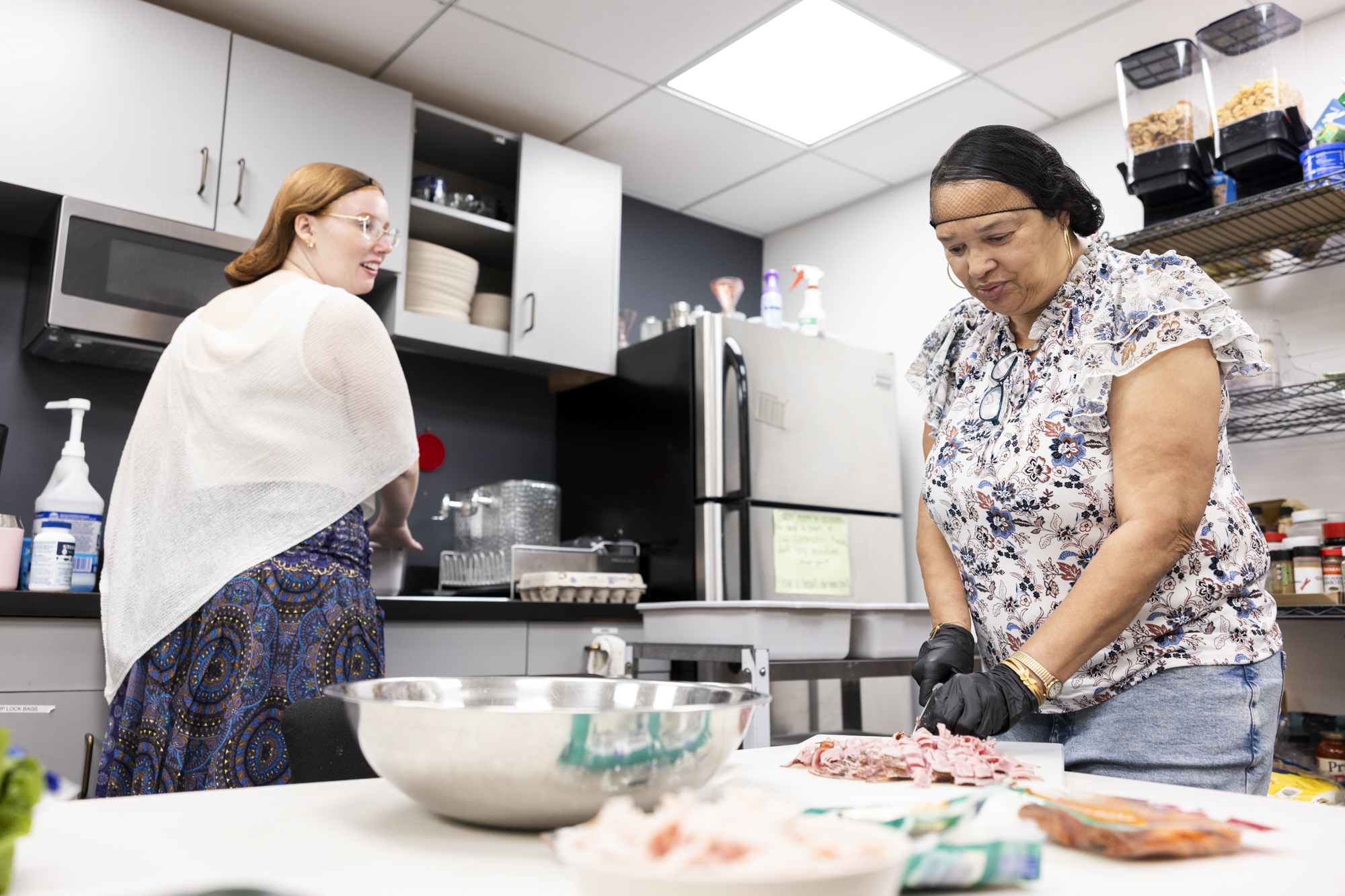
"caption": "Program director McKenzie Dowdle, left, helps Mignon Annette Poon prepare lunch for members and staff in the kitchen at Fountain House Hollywood, also known as “the clubhouse” in Los Angeles, on March 9, 2026. The clubhouse provides a non-clinical community for people living with serious mental illness who receive assistance in the Hollywood area. Poon works on the hospitality team, helping prepare meals for any members who want to stop in for lunch.",
"credit": "Alisha Jucevic/KQED",
"altTag": null,
"description": null,
"imgSizes": {
"thumbnail": {
"file": "https://cdn.kqed.org/wp-content/uploads/sites/10/2026/03/20260309_MIGNON_20-KQED-160x107.jpg",
"width": 160,
"height": 107,
"mimeType": "image/jpeg"
},
"1536x1536": {
"file": "https://cdn.kqed.org/wp-content/uploads/sites/10/2026/03/20260309_MIGNON_20-KQED-1536x1024.jpg",
"width": 1536,
"height": 1024,
"mimeType": "image/jpeg"
},
"post-thumbnail": {
"file": "https://cdn.kqed.org/wp-content/uploads/sites/10/2026/03/20260309_MIGNON_20-KQED-672x372.jpg",
"width": 672,
"height": 372,
"mimeType": "image/jpeg"
},
"twentyfourteen-full-width": {
"file": "https://cdn.kqed.org/wp-content/uploads/sites/10/2026/03/20260309_MIGNON_20-KQED-1038x576.jpg",
"width": 1038,
"height": 576,
"mimeType": "image/jpeg"
},
"npr-cds-wide": {
"file": "https://cdn.kqed.org/wp-content/uploads/sites/10/2026/03/20260309_MIGNON_20-KQED-1200x675.jpg",
"width": 1200,
"height": 675,
"mimeType": "image/jpeg"
},
"kqedFullSize": {
"file": "https://cdn.kqed.org/wp-content/uploads/sites/10/2026/03/20260309_MIGNON_20-KQED.jpg",
"width": 2000,
"height": 1333
}
},
"isLoading": false,
"fetchFailed": false
},
"news_11949273": {
"type": "attachments",
"id": "news_11949273",
"meta": {
"index": "attachments_1716263798",
"site": "news",
"id": "11949273",
"found": true
},
"parent": 11949180,
"imgSizes": {
"twentyfourteen-full-width": {
"file": "https://ww2.kqed.org/app/uploads/sites/10/2023/05/RS65506_GettyImages-1428290091-1-qut-1038x576.jpg",
"width": 1038,
"mimeType": "image/jpeg",
"height": 576
},
"thumbnail": {
"file": "https://ww2.kqed.org/app/uploads/sites/10/2023/05/RS65506_GettyImages-1428290091-1-qut-160x127.jpg",
"width": 160,
"mimeType": "image/jpeg",
"height": 127
},
"post-thumbnail": {
"file": "https://ww2.kqed.org/app/uploads/sites/10/2023/05/RS65506_GettyImages-1428290091-1-qut-672x372.jpg",
"width": 672,
"mimeType": "image/jpeg",
"height": 372
},
"kqedFullSize": {
"file": "https://ww2.kqed.org/app/uploads/sites/10/2023/05/RS65506_GettyImages-1428290091-1-qut.jpg",
"width": 1920,
"height": 1523
},
"large": {
"file": "https://ww2.kqed.org/app/uploads/sites/10/2023/05/RS65506_GettyImages-1428290091-1-qut-1020x809.jpg",
"width": 1020,
"mimeType": "image/jpeg",
"height": 809
},
"1536x1536": {
"file": "https://ww2.kqed.org/app/uploads/sites/10/2023/05/RS65506_GettyImages-1428290091-1-qut-1536x1218.jpg",
"width": 1536,
"mimeType": "image/jpeg",
"height": 1218
},
"medium": {
"file": "https://ww2.kqed.org/app/uploads/sites/10/2023/05/RS65506_GettyImages-1428290091-1-qut-800x635.jpg",
"width": 800,
"mimeType": "image/jpeg",
"height": 635
}
},
"publishDate": 1683903141,
"modified": 1687395979,
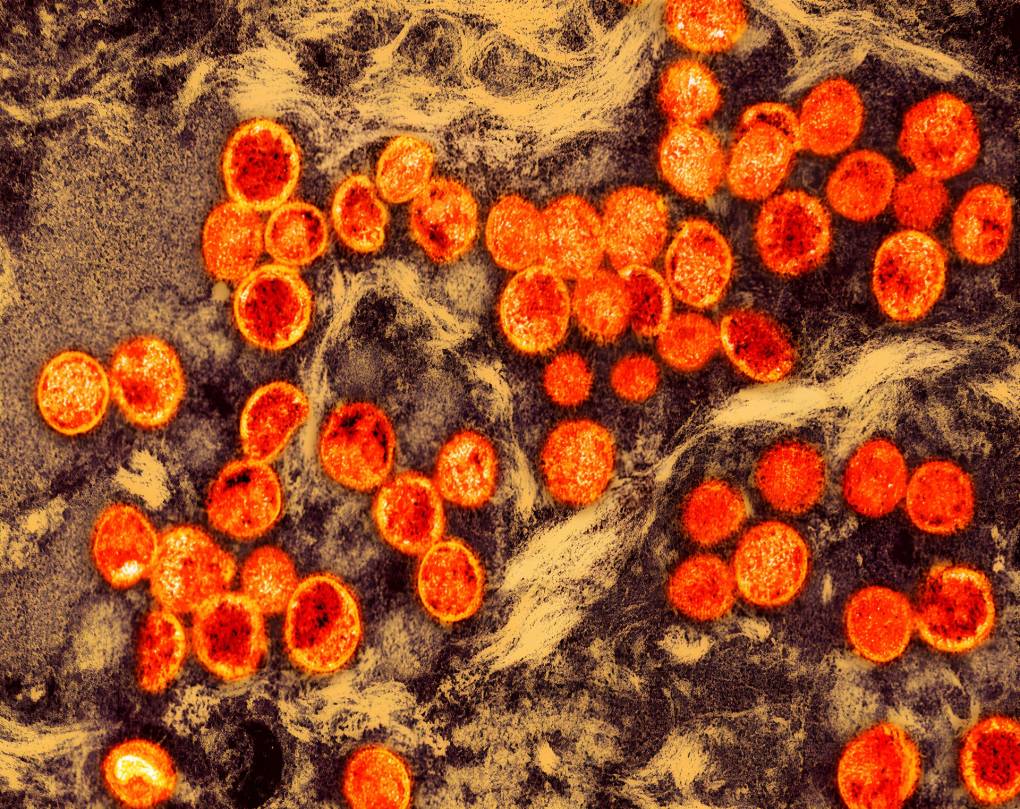
"caption": "Colorized transmission electron micrograph of mpox virus particles (orange) found within an infected cell (brown), cultured in a laboratory.",
"description": null,
"title": "mpox-monkeypox-virus",
"credit": "NIH-NIAID/Image Point FR/BSIP/Universal Images Group via Getty Images",
"status": "inherit",
"altTag": "Small circular patterns float in a dense, thick brown substance.",
"isLoading": false,
"fetchFailed": false
}
},
"audioPlayerReducer": {
"postId": "stream_live",
"isPaused": true,
"isPlaying": false,
"pfsActive": false,
"pledgeModalIsOpen": true,
"playerDrawerIsOpen": false,
"liveAudioPlayStartedAt": 0,
"liveAudioPlayContext": ""
},
"authorsReducer": {
"byline_news_12082596": {
"type": "authors",
"id": "byline_news_12082596",
"meta": {
"override": true
},
"slug": "byline_news_12082596",
"name": "Clare Wiley",
"isLoading": false
},
"byline_news_12082668": {
"type": "authors",
"id": "byline_news_12082668",
"meta": {
"override": true
},
"slug": "byline_news_12082668",
"name": "Lauren Hepler and Marisa Kendall, CalMatters",
"isLoading": false
},
"byline_news_12082251": {
"type": "authors",
"id": "byline_news_12082251",
"meta": {
"override": true
},
"slug": "byline_news_12082251",
"name": "Carlos Cabrera-Lomelí and Gustavo Hernandez",
"isLoading": false
},
"byline_news_12080800": {
"type": "authors",
"id": "byline_news_12080800",
"meta": {
"override": true
},
"slug": "byline_news_12080800",
"name": "Lee Romney",
"isLoading": false
},
"kqed": {
"type": "authors",
"id": "236",
"meta": {
"index": "authors_1716337520",
"id": "236",
"found": true
},
"name": "KQED News Staff",
"firstName": "KQED News Staff",
"lastName": null,
"slug": "kqed",
"email": "faq@kqed.org",
"display_author_email": false,
"staff_mastheads": [],
"title": null,
"bio": null,
"avatar": "https://secure.gravatar.com/avatar/ef0e801a68c4c54afa9180db14084167?s=600&d=blank&r=g",
"twitter": null,
"facebook": null,
"instagram": null,
"linkedin": null,
"sites": [
{
"site": "arts",
"roles": [
"contributor"
]
},
{
"site": "news",
"roles": [
"editor"
]
},
{
"site": "futureofyou",
"roles": [
"author"
]
}
],
"headData": {
"title": "KQED News Staff | KQED",
"description": null,
"ogImgSrc": "https://secure.gravatar.com/avatar/ef0e801a68c4c54afa9180db14084167?s=600&d=blank&r=g",
"twImgSrc": "https://secure.gravatar.com/avatar/ef0e801a68c4c54afa9180db14084167?s=600&d=blank&r=g"
},
"isLoading": false,
"link": "/author/kqed"
},
"adembosky": {
"type": "authors",
"id": "3205",
"meta": {
"index": "authors_1716337520",
"id": "3205",
"found": true
},
"name": "April Dembosky",
"firstName": "April",
"lastName": "Dembosky",
"slug": "adembosky",
"email": "adembosky@kqed.org",
"display_author_email": false,
"staff_mastheads": [
"news",
"science"
],
"title": "KQED Health Correspondent",
"bio": "April Dembosky is the health correspondent for KQED News and a regular contributor to NPR. She specializes in covering altered states of mind, from postpartum depression to methamphetamine-induced psychosis to the insanity defense. Her investigative series on insurance companies sidestepping mental health laws won multiple awards, including first place in beat reporting from the national Association of Health Care Journalists. She is the recipient of numerous other prizes and fellowships, including a national Edward R. Murrow award for investigative reporting, a Society of Professional Journalists award for long-form storytelling, and a Carter Center Fellowship for Mental Health Journalism.\r\n\r\nDembosky reported and produced \u003cem>Soundtrack of Silence\u003c/em>, an audio documentary about music and memory that is currently being made into a feature film by Paramount Pictures.\r\n\r\nBefore joining KQED in 2013, Dembosky covered technology and Silicon Valley for \u003cem>The Financial Times of London,\u003c/em> and contributed business and arts stories to \u003cem>Marketplace \u003c/em>and \u003cem>The New York Times.\u003c/em> She got her undergraduate degree in philosophy from Smith College and her master's in journalism from the University of California, Berkeley. She is a classically trained violinist and proud alum of the first symphony orchestra at Burning Man.",
"avatar": "https://secure.gravatar.com/avatar/ef92999be4ceb9ea60701e7dc276f813?s=600&d=blank&r=g",
"twitter": "adembosky",
"facebook": null,
"instagram": null,
"linkedin": null,
"sites": [
{
"site": "arts",
"roles": [
"author"
]
},
{
"site": "news",
"roles": [
"editor"
]
},
{
"site": "futureofyou",
"roles": [
"author"
]
},
{
"site": "stateofhealth",
"roles": [
"editor"
]
},
{
"site": "science",
"roles": [
"editor"
]
},
{
"site": "forum",
"roles": [
"editor"
]
}
],
"headData": {
"title": "April Dembosky | KQED",
"description": "KQED Health Correspondent",
"ogImgSrc": "https://secure.gravatar.com/avatar/ef92999be4ceb9ea60701e7dc276f813?s=600&d=blank&r=g",
"twImgSrc": "https://secure.gravatar.com/avatar/ef92999be4ceb9ea60701e7dc276f813?s=600&d=blank&r=g"
},
"isLoading": false,
"link": "/author/adembosky"
},
"carlysevern": {
"type": "authors",
"id": "3243",
"meta": {
"index": "authors_1716337520",
"id": "3243",
"found": true
},
"name": "Carly Severn",
"firstName": "Carly",
"lastName": "Severn",
"slug": "carlysevern",
"email": "csevern@kqed.org",
"display_author_email": false,
"staff_mastheads": [
"news"
],
"title": "Senior Editor, Audience News ",
"bio": "Carly is KQED's Senior Editor of Audience News on the Digital News team, and has reported for the California Report Magazine, Bay Curious and KQED Arts. She's formerly the host of \u003ca href=\"http://ww2.kqed.org/pop/category/the-cooler/\" rel=\"noopener noreferrer\">The Cooler\u003c/a> podcast.",
"avatar": "https://secure.gravatar.com/avatar/2d8d6765f186e64c798cf7f0c8088a41?s=600&d=blank&r=g",
"twitter": "teacupinthebay",
"facebook": null,
"instagram": null,
"linkedin": null,
"sites": [
{
"site": "",
"roles": [
"editor"
]
},
{
"site": "arts",
"roles": [
"editor"
]
},
{
"site": "news",
"roles": [
"administrator"
]
},
{
"site": "pop",
"roles": [
"editor"
]
},
{
"site": "futureofyou",
"roles": [
"editor"
]
},
{
"site": "about",
"roles": [
"administrator"
]
},
{
"site": "mindshift",
"roles": [
"editor"
]
},
{
"site": "bayareabites",
"roles": [
"editor"
]
},
{
"site": "stateofhealth",
"roles": [
"editor"
]
},
{
"site": "science",
"roles": [
"editor"
]
},
{
"site": "food",
"roles": [
"contributor"
]
},
{
"site": "forum",
"roles": [
"editor"
]
},
{
"site": "perspectives",
"roles": [
"administrator"
]
},
{
"site": "liveblog",
"roles": [
"editor"
]
}
],
"headData": {
"title": "Carly Severn | KQED",
"description": "Senior Editor, Audience News ",
"ogImgSrc": "https://secure.gravatar.com/avatar/2d8d6765f186e64c798cf7f0c8088a41?s=600&d=blank&r=g",
"twImgSrc": "https://secure.gravatar.com/avatar/2d8d6765f186e64c798cf7f0c8088a41?s=600&d=blank&r=g"
},
"isLoading": false,
"link": "/author/carlysevern"
},
"jlara": {
"type": "authors",
"id": "11761",
"meta": {
"index": "authors_1716337520",
"id": "11761",
"found": true
},
"name": "Juan Carlos Lara",
"firstName": "Juan Carlos",
"lastName": "Lara",
"slug": "jlara",
"email": "jlara@kqed.org",
"display_author_email": false,
"staff_mastheads": [],
"title": "KQED Contributor",
"bio": null,
"avatar": "https://secure.gravatar.com/avatar/19e2052b9b05657c5ff2af2121846e9c?s=600&d=blank&r=g",
"twitter": null,
"facebook": null,
"instagram": null,
"linkedin": null,
"sites": [
{
"site": "arts",
"roles": [
"editor"
]
},
{
"site": "news",
"roles": [
"editor"
]
},
{
"site": "forum",
"roles": [
"editor"
]
},
{
"site": "liveblog",
"roles": [
"contributor"
]
}
],
"headData": {
"title": "Juan Carlos Lara | KQED",
"description": "KQED Contributor",
"ogImgSrc": "https://secure.gravatar.com/avatar/19e2052b9b05657c5ff2af2121846e9c?s=600&d=blank&r=g",
"twImgSrc": "https://secure.gravatar.com/avatar/19e2052b9b05657c5ff2af2121846e9c?s=600&d=blank&r=g"
},
"isLoading": false,
"link": "/author/jlara"
},
"sjohnson": {
"type": "authors",
"id": "11840",
"meta": {
"index": "authors_1716337520",
"id": "11840",
"found": true
},
"name": "Sydney Johnson",
"firstName": "Sydney",
"lastName": "Johnson",
"slug": "sjohnson",
"email": "sjohnson@kqed.org",
"display_author_email": false,
"staff_mastheads": [
"news"
],
"title": "KQED Reporter",
"bio": "Sydney Johnson is a general assignment reporter at KQED. She previously reported on public health and city government at the San Francisco Examiner, and before that, she covered statewide education policy for EdSource. Her reporting has won multiple local, state and national awards. Sydney is a graduate of the University of California, Berkeley and lives in San Francisco.",
"avatar": "https://secure.gravatar.com/avatar/97855f2719b72ad6190b7c535fe642c8?s=600&d=blank&r=g",
"twitter": "sydneyfjohnson",
"facebook": null,
"instagram": null,
"linkedin": null,
"sites": [
{
"site": "news",
"roles": [
"editor"
]
}
],
"headData": {
"title": "Sydney Johnson | KQED",
"description": "KQED Reporter",
"ogImgSrc": "https://secure.gravatar.com/avatar/97855f2719b72ad6190b7c535fe642c8?s=600&d=blank&r=g",
"twImgSrc": "https://secure.gravatar.com/avatar/97855f2719b72ad6190b7c535fe642c8?s=600&d=blank&r=g"
},
"isLoading": false,
"link": "/author/sjohnson"
},
"jgeha": {
"type": "authors",
"id": "11906",
"meta": {
"index": "authors_1716337520",
"id": "11906",
"found": true
},
"name": "Joseph Geha",
"firstName": "Joseph",
"lastName": "Geha",
"slug": "jgeha",
"email": "jgeha@kqed.org",
"display_author_email": false,
"staff_mastheads": [
"news",
"science"
],
"title": "KQED Contributor",
"bio": null,
"avatar": "https://secure.gravatar.com/avatar/ea84d2b6dd93d6369d453edf19dd583f117cd1759d2d9c9c92f9de77017354fe?s=600&d=blank&r=g",
"twitter": null,
"bluesky": null,
"facebook": null,
"instagram": null,
"linkedin": null,
"sites": [
{
"site": "news",
"roles": [
"editor"
]
},
{
"site": "liveblog",
"roles": [
"author"
]
}
],
"headData": {
"title": "Joseph Geha | KQED",
"description": "KQED Contributor",
"ogImgSrc": "https://secure.gravatar.com/avatar/ea84d2b6dd93d6369d453edf19dd583f117cd1759d2d9c9c92f9de77017354fe?s=600&d=blank&r=g",
"twImgSrc": "https://secure.gravatar.com/avatar/ea84d2b6dd93d6369d453edf19dd583f117cd1759d2d9c9c92f9de77017354fe?s=600&d=blank&r=g"
},
"isLoading": false,
"link": "/author/jgeha"
},
"aaliahmad": {
"type": "authors",
"id": "11986",
"meta": {
"index": "authors_1716337520",
"id": "11986",
"found": true
},
"name": "Ayah Ali-Ahmad",
"firstName": "Ayah",
"lastName": "Ali-Ahmad",
"slug": "aaliahmad",
"email": "aaliahmad@KQED.org",
"display_author_email": false,
"staff_mastheads": [],
"title": "KQED Contributor",
"bio": null,
"avatar": "https://secure.gravatar.com/avatar/7f340465c69a2c816f6c07000137a3ee?s=600&d=blank&r=g",
"twitter": "ayahaliahmad",
"bluesky": null,
"facebook": null,
"instagram": null,
"linkedin": null,
"sites": [
{
"site": "news",
"roles": [
"author"
]
}
],
"headData": {
"title": "Ayah Ali-Ahmad | KQED",
"description": "KQED Contributor",
"ogImgSrc": "https://secure.gravatar.com/avatar/7f340465c69a2c816f6c07000137a3ee?s=600&d=blank&r=g",
"twImgSrc": "https://secure.gravatar.com/avatar/7f340465c69a2c816f6c07000137a3ee?s=600&d=blank&r=g"
},
"isLoading": false,
"link": "/author/aaliahmad"
},
"epeppel": {
"type": "authors",
"id": "11989",
"meta": {
"index": "authors_1716337520",
"id": "11989",
"found": true
},
"name": "Eliza Peppel",
"firstName": "Eliza",
"lastName": "Peppel",
"slug": "epeppel",
"email": "epeppel@kqed.org",
"display_author_email": false,
"staff_mastheads": [
"news",
"science",
"arts"
],
"title": null,
"bio": "Eliza is an award-winning journalist living in Oakland. She was previously a reporting fellow at KALW, where she reported daily news and long-form radio features. Eliza studied journalism at Fordham University in The Bronx during the COVID-19 pandemic. She grew up mainly in California and spent a few childhood years in Aix en Provence, France.",
"avatar": "https://secure.gravatar.com/avatar/7fcfcd6fdbaa62c5112d3ec9bc0b9b34?s=600&d=blank&r=g",
"twitter": null,
"bluesky": null,
"facebook": null,
"instagram": null,
"linkedin": null,
"sites": [
{
"site": "news",
"roles": [
"contributor"
]
},
{
"site": "science",
"roles": [
"contributor"
]
}
],
"headData": {
"title": "Eliza Peppel | KQED",
"description": null,
"ogImgSrc": "https://secure.gravatar.com/avatar/7fcfcd6fdbaa62c5112d3ec9bc0b9b34?s=600&d=blank&r=g",
"twImgSrc": "https://secure.gravatar.com/avatar/7fcfcd6fdbaa62c5112d3ec9bc0b9b34?s=600&d=blank&r=g"
},
"isLoading": false,
"link": "/author/epeppel"
}
},
"pagesReducer": {
"news_tag_health": {
"type": "terms",
"id": "news_18543",
"meta": {
"index": "terms_1716263798",
"site": "news",
"id": "18543",
"score": 6.8845096
},
"featImg": null,
"name": "Health",
"description": null,
"taxonomy": "tag",
"headData": {
"twImgId": null,
"twTitle": null,
"ogTitle": null,
"ogImgId": null,
"twDescription": null,
"description": null,
"title": "Health Archives | KQED News",
"ogDescription": null
},
"ttid": 466,
"slug": "health",
"isLoading": false,
"title": "Health",
"pageMeta": {
"site": "news",
"WpPageTemplate": "page-topic-editorial",
"currentPage": 3
},
"blocks": [
{
"blockName": "kqed/post-list",
"attrs": {
"layout": "cardArticle2",
"query": "posts/news?tag=health",
"seeMore": false,
"paginated": true,
"page": 3
}
},
{
"blockName": "kqed/ad"
}
]
}
},
"pfsSessionReducer": {},
"postsReducer": {
"stream_live": {
"type": "live",
"id": "stream_live",
"audioUrl": "https://streams.kqed.org/kqedradio",
"title": "Live Stream",
"excerpt": "Live Stream information currently unavailable.",
"link": "/radio",
"featImg": "",
"label": {
"name": "KQED Live",
"link": "/"
}
},
"stream_kqedNewscast": {
"type": "posts",
"id": "stream_kqedNewscast",
"audioUrl": "https://www.kqed.org/.stream/anon/radio/RDnews/newscast.mp3?_=1",
"title": "KQED Newscast",
"featImg": "",
"label": {
"name": "88.5 FM",
"link": "/"
}
},
"news_12082596": {
"type": "posts",
"id": "news_12082596",
"meta": {
"index": "posts_1716263798",
"site": "news",
"id": "12082596",
"score": null,
"sort": [
1778256002000
]
},
"guestAuthors": [],
"slug": "in-northern-californias-maternity-desert-a-humboldt-midwife-offers-intimate-births",
"title": "In Northern California’s Maternity Desert, a Humboldt Midwife Offers Intimate Births",
"publishDate": 1778256002,
"format": "standard",
"headTitle": "In Northern California’s Maternity Desert, a Humboldt Midwife Offers Intimate Births | KQED",
"labelTerm": {
"term": 26731,
"site": "news"
},
"content": "\u003cp>Between her two young toddlers, her work as a seaweed farmer on \u003ca href=\"https://www.kqed.org/news/tag/humboldt-county\">Humboldt County’s \u003c/a>coast, and a third baby on the way, Leslie Booher doesn’t have a lot of spare time.\u003c/p>\n\u003cp>But her prenatal appointments with her \u003ca href=\"https://midwifemade.com/2509-2/\">midwife, Laura Doyle\u003c/a>, give Booher the opportunity to really focus on the pregnancy.\u003c/p>\n\u003cp>“For me, feeling more informed and curious makes you feel much more empowered in your body,” she said.\u003c/p>\n\u003cp>[ad fullwidth]\u003c/p>\n\u003cp>Unlike the \u003ca href=\"https://www.uclahealth.org/medical-services/birthplace/pregnancy-newborn-health/prenatal-education/your-pregnancy/schedule-prenatal-care\">typical\u003c/a> 10- to 15-minute OB check-up, Booher and Doyle spent a full hour together in early March, chatting on a comfortable sofa at \u003ca href=\"https://www.moonstonemidwives.com/\">Moonstone Midwives Birth Center\u003c/a> in Eureka, California. The cozy room where they met has kids’ toys in one corner, calm pastel-colored paintings on the wall, and feels more like a friend’s living room than a clinic.\u003c/p>\n\u003cp>Doyle listened to the baby’s heartbeat, took Booher’s blood pressure, and reviewed her blood test results. The midwife also asked about Booher’s stress levels, whether she’s exercising, and if she’s getting enough time to herself.\u003c/p>\n\u003cfigure id=\"attachment_12082734\" class=\"wp-caption aligncenter\" style=\"max-width: 2000px\">\u003cimg loading=\"lazy\" decoding=\"async\" class=\"wp-image-12082734 size-full\" src=\"https://cdn.kqed.org/wp-content/uploads/sites/10/2026/05/KQED_RURALMATERNALHEALTH_HIRES_08-KQED.jpg\" alt=\"\" width=\"2000\" height=\"1333\" srcset=\"https://cdn.kqed.org/wp-content/uploads/sites/10/2026/05/KQED_RURALMATERNALHEALTH_HIRES_08-KQED.jpg 2000w, https://cdn.kqed.org/wp-content/uploads/sites/10/2026/05/KQED_RURALMATERNALHEALTH_HIRES_08-KQED-160x107.jpg 160w, https://cdn.kqed.org/wp-content/uploads/sites/10/2026/05/KQED_RURALMATERNALHEALTH_HIRES_08-KQED-1536x1024.jpg 1536w\" sizes=\"auto, (max-width: 2000px) 100vw, 2000px\">\u003cfigcaption class=\"wp-caption-text\">Midwife Laura Doyle measures expecting parent Leslie Booher’s fundal height during an appointment at Moonstone Midwives Birth Center in Eureka on May 4, 2026. \u003ccite>(Alexandra Hootnick for KQED)\u003c/cite>\u003c/figcaption>\u003c/figure>\n\u003cp>“In prenatal care, what I am learning the most is who this person is,” Doyle said. “Yes, I look at blood work. Yes, I’m feeling babies and their growth. More importantly, I’m like: ‘Who are you? What are the relationships like in your life? Are you supported? Are you fearful?’”\u003c/p>\n\u003cp>She continued: “Every little story I get out of somebody is like telling me so much about how they are, and often, how their birth will be.”\u003c/p>\n\u003cp>Across California, and across the U.S., there are now fewer places in which to give birth. Hospitals — facing rising costs, staff shortages and falling birth rates — are \u003ca href=\"https://calmatters.org/health/2024/09/new-maternity-care-closures/\">closing\u003c/a> maternity wards.\u003c/p>\n\u003cp>Rural parts of the state are especially impacted: many women in these regions must travel for hours in labor to give birth, which can cause \u003ca href=\"https://www.sciline.org/public-health/obstetric-care-rural-america/\">serious complications\u003c/a> for moms and babies, including a \u003ca href=\"https://www.sciline.org/public-health/obstetric-care-rural-america/\">higher risk\u003c/a> of pre-term births, c-sections and infant deaths. In California, the \u003ca href=\"https://www.cdph.ca.gov/Programs/CFH/DMCAH/Pages/Health-Topics/Pregnancy-Related-Mortality.aspx\">maternal mortality rate\u003c/a> is higher in rural communities than in urban areas.\u003c/p>\n\u003cp>In Humboldt and other northwestern parts of the state, two hospitals have closed their labor and delivery units in the past five years, leaving the entire county with just one hospital in which to give birth, Providence St. Joseph in Eureka.\u003c/p>\n\u003cp>[aside postID=news_12007627 hero='https://cdn.kqed.org/wp-content/uploads/sites/10/2024/10/AGBontaAP1-1020x680.jpg']\u003c/p>\n\u003cp>“People are coming from a couple hours [away] to have their babies,” Doyle said. “We only have one hospital that is doing deliveries for hours in every direction. It’s super stressful.”\u003c/p>\n\u003cp>Abundant research has shown that midwifery care leads to \u003ca href=\"https://medicine.yale.edu/news-article/the-value-of-midwives-during-prenatal-care-and-birth/\">better\u003c/a> \u003ca href=\"https://pubmed.ncbi.nlm.nih.gov/29944777/\">outcomes\u003c/a> for many of these challenges. As medically-trained healthcare professionals, midwives offer a different kind of care that can help meet this need. They can place IVs, do sutures, and give antibiotics — but they don’t administer epidurals or perform c-sections.\u003c/p>\n\u003cp>“Doing unmedicated birth means we’re relying on preventative care, so good nutrition, really good sleep, low stress and getting these babies in an optimal position,” Doyle said. “Unfortunately, standard medical practice doesn’t have time for that.”\u003c/p>\n\u003cp>And they offer women longer prenatal appointments, safe birth outside a hospital setting, and regular postpartum check-ups —a crucial time, because \u003ca href=\"https://www.ncbi.nlm.nih.gov/books/NBK592630/\">most pregnancy-related deaths\u003c/a> occur in the postpartum period.\u003c/p>\n\u003cp>But the vast majority of people can’t afford midwifery care. Midwives are not covered by most insurers, and incredibly low reimbursement rates mean that most midwives also can’t accept low-income clients on Medi-Cal. Holly Smith, a midwife and co-lead of \u003ca href=\"https://www.midwiferyaccessca.org/\">Midwifery Access California\u003c/a>, estimated that Medi-Cal reimburses around $3,000 per birth.\u003c/p>\n\u003cp>“Midwives across the state have told us that the minimum they need is $7,000-$8,000 per birth, in order to sustain their practice,” said Smith, adding that the actual cost is around $14,000-$15,000.\u003c/p>\n\u003cp>Doyle has found a way to serve low-income families in Humboldt, where the median household income is about 60% of the state median.\u003c/p>\n\u003cp>“I always say, we’re all working hard to be poor,” Doyle said. “The stress is real for most people in this community.”\u003c/p>\n\u003cfigure id=\"attachment_12082736\" class=\"wp-caption aligncenter\" style=\"max-width: 2000px\">\u003ca href=\"https://cdn.kqed.org/wp-content/uploads/sites/10/2026/05/KQED_RURALMATERNALHEALTH_HIRES_16-KQED.jpg\">\u003cimg loading=\"lazy\" decoding=\"async\" class=\"size-full wp-image-12082736\" src=\"https://cdn.kqed.org/wp-content/uploads/sites/10/2026/05/KQED_RURALMATERNALHEALTH_HIRES_16-KQED.jpg\" alt=\"\" width=\"2000\" height=\"1333\" srcset=\"https://cdn.kqed.org/wp-content/uploads/sites/10/2026/05/KQED_RURALMATERNALHEALTH_HIRES_16-KQED.jpg 2000w, https://cdn.kqed.org/wp-content/uploads/sites/10/2026/05/KQED_RURALMATERNALHEALTH_HIRES_16-KQED-160x107.jpg 160w, https://cdn.kqed.org/wp-content/uploads/sites/10/2026/05/KQED_RURALMATERNALHEALTH_HIRES_16-KQED-1536x1024.jpg 1536w\" sizes=\"auto, (max-width: 2000px) 100vw, 2000px\">\u003c/a>\u003cfigcaption class=\"wp-caption-text\">Midwife Laura Doyle at Moonstone Midwives Birth Center in Eureka on May 4, 2026. \u003ccite>(Alexandra Hootnick for KQED)\u003c/cite>\u003c/figcaption>\u003c/figure>\n\u003cfigure id=\"attachment_12082737\" class=\"wp-caption aligncenter\" style=\"max-width: 2000px\">\u003cimg loading=\"lazy\" decoding=\"async\" class=\"wp-image-12082737 size-full\" src=\"https://cdn.kqed.org/wp-content/uploads/sites/10/2026/05/KQED_RURALMATERNALHEALTH_HIRES_29-KQED.jpg\" alt=\"\" width=\"2000\" height=\"1333\" srcset=\"https://cdn.kqed.org/wp-content/uploads/sites/10/2026/05/KQED_RURALMATERNALHEALTH_HIRES_29-KQED.jpg 2000w, https://cdn.kqed.org/wp-content/uploads/sites/10/2026/05/KQED_RURALMATERNALHEALTH_HIRES_29-KQED-160x107.jpg 160w, https://cdn.kqed.org/wp-content/uploads/sites/10/2026/05/KQED_RURALMATERNALHEALTH_HIRES_29-KQED-1536x1024.jpg 1536w\" sizes=\"auto, (max-width: 2000px) 100vw, 2000px\">\u003cfigcaption class=\"wp-caption-text\">Midwife Laura Doyle (right) chats with expecting parent Kaylee Biane and her daughter Josie in the waiting room at Moonstone Midwives Birth Center in Eureka on May 4, 2026. \u003ccite>(Alexandra Hootnick for KQED)\u003c/cite>\u003c/figcaption>\u003c/figure>\n\u003cp>After a year of meetings, Doyle was able to negotiate a better deal with the local Medi-Cal payer in Humboldt, Partnership Healthplan. This makes her birth center one of the very few in California able to accept low-income families. Around 75% of current Moonstone clients are on Medi-Cal.\u003c/p>\n\u003cp>“It’s so frustrating to know that you can only have this if you can afford it,” said Doyle. “That is just wrong. Everybody should have access to good midwifery care. It’s really been the motivator of my career: people should be empowered in their birth experience no matter who they are.”\u003c/p>\n\u003cp>Moonstone is located opposite Humboldt’s last remaining labor and delivery ward, at Providence St. Joseph, so that if a birthing person wants an epidural, needs surgery or the baby has to go to the NICU, the transfer is quick and easy.\u003c/p>\n\u003cp>“We’ve always been able to reach out to doctors and consult with them,” Doyle said, of the hospital staff. “We’ve built that rapport; they trust us and we trust them.”\u003c/p>\n\u003cp>Community midwives, meaning those who don’t work in a hospital, attend around \u003ca href=\"https://www.chcf.org/wp-content/uploads/2023/11/MaternityCareAlmanac2023.pdf\">1% of births\u003c/a> in California — but \u003ca href=\"https://www.chcf.org/wp-content/uploads/2018/09/ListeningMothersCAFullSurveyReport2018.pdf\">research\u003c/a> \u003ca href=\"https://www.chcf.org/resource/advancing-midwifery-birth-equity-california/\">has shown\u003c/a> that more birthing people would like to have this kind of care.\u003c/p>\n\u003cp>Some women seek midwifery care because they’ve had a difficult experience in the hospital. Claire Henderson gave birth at Mad River Community Hospital nearby in Arcata, before it closed its maternity ward in 2024.\u003c/p>\n\u003cp>“They had three birthing rooms and at that time I think nine babies were being born, or were just born, so there was no room for me,” Henderson said. “But I was in full labor, so they stuck me in this little exam room we called a ‘closet,’ and that’s where I had my baby.”\u003c/p>\n\u003cp>Henderson said she felt unheard by the hospital staff, who kept offering her medicine she didn’t want. Even though her baby was born healthy, she felt overwhelmed — so when she got pregnant a second time, she knew she wanted a midwife instead.\u003c/p>\n\u003cp>“I believe in hospital births, but I knew I wanted a natural, physiological birth,” she said, “uninterrupted as much as possible, and to have everything calm down.”\u003c/p>\n\u003cp>[aside postID=news_12080800 hero='https://cdn.kqed.org/wp-content/uploads/sites/10/2026/03/20260309_MIGNON_20-KQED.jpg']\u003c/p>\n\u003cp>At Moonstone, Henderson gave birth in a birth suite with the lights dimmed low. “I was very present in my body and brain. The midwives checked the baby here and there, but I wasn’t on continuous monitoring — they left us alone a lot of the time. I was laughing in between contractions. It felt so natural.”\u003c/p>\n\u003cp>Even so, Henderson said: “Birth is really hard. It was still one of the most intense pains of my life. But I didn’t need anything for [it]. I just needed to feel secure and safe – and that was my team and the environment.”\u003c/p>\n\u003cp>Doyle said she gave birth to her first baby at home in a very remote area, supported by midwives.\u003c/p>\n\u003cp>“The most impactful thing was their patience, and [the way they] really listened to me,” she said.\u003c/p>\n\u003cp>Doyle trained as a midwife herself and after many years of attending home births, she opened Moonstone with \u003cspan style=\"font-weight: 400\">co-owner Calista Young\u003c/span> in 2014. It’s still the county’s only birth center.\u003c/p>\n\u003cp>“I think we have a really unique culture in Humboldt,” she said. “I always call it the ‘707 culture.’ It’s like a different way of being, and a lot of it was driven by the outlaw culture of marijuana growing.”\u003c/p>\n\u003cp>Doyle believes that mindset has influenced birthing people’s approach to their healthcare.\u003c/p>\n\u003cp>“A lot of these women are like, ‘No, I’m not doing that. I’m declining this, I’m declining that,” she said. “‘I want to do it this way.’”\u003c/p>\n\u003cfigure id=\"attachment_12082740\" class=\"wp-caption aligncenter\" style=\"max-width: 2000px\">\u003ca href=\"https://cdn.kqed.org/wp-content/uploads/sites/10/2026/05/KQED_RURALMATERNALHEALTH_HIRES_37-KQED.jpg\">\u003cimg loading=\"lazy\" decoding=\"async\" class=\"size-full wp-image-12082740\" src=\"https://cdn.kqed.org/wp-content/uploads/sites/10/2026/05/KQED_RURALMATERNALHEALTH_HIRES_37-KQED.jpg\" alt=\"\" width=\"2000\" height=\"1333\" srcset=\"https://cdn.kqed.org/wp-content/uploads/sites/10/2026/05/KQED_RURALMATERNALHEALTH_HIRES_37-KQED.jpg 2000w, https://cdn.kqed.org/wp-content/uploads/sites/10/2026/05/KQED_RURALMATERNALHEALTH_HIRES_37-KQED-160x107.jpg 160w, https://cdn.kqed.org/wp-content/uploads/sites/10/2026/05/KQED_RURALMATERNALHEALTH_HIRES_37-KQED-1536x1024.jpg 1536w\" sizes=\"auto, (max-width: 2000px) 100vw, 2000px\">\u003c/a>\u003cfigcaption class=\"wp-caption-text\">The exterior of Moonstone Midwives Birth Center in Eureka on May 4, 2026. The midwives moved to this location in January of 2026 in order to be closer to Providence St. Joseph, the one remaining hospital with a labor and delivery unit in Humboldt county. \u003ccite>(Alexandra Hootnick for KQED)\u003c/cite>\u003c/figcaption>\u003c/figure>\n\u003cp>On a typical day at the birth center, pregnant women will come in for their check-ups or group prenatal classes, while new moms can join postpartum support groups. Moonstone has two birth suites which resemble hotel rooms: comfy queen beds and large tubs for water birth.\u003c/p>\n\u003cp>Occasionally a mom will drop by with her newborn and a box of cookies or muffins for the midwives, as a little token of thanks. Doyle has lost count of how many babies she’s delivered, but estimated she’s passed the 1,000 mark.\u003c/p>\n\u003cp>“You can tell that’s what’s happened when I’m going through the grocery store,” she said, laughing, “because I see everybody and it’s hard to get anywhere, which is the sweet thing about being in a small town.”\u003c/p>\n\u003cp>\u003cem>Clare Wiley is a Los Angeles based reporter covering women’s health. \u003c/em>\u003c/p>\n\u003cp>\u003cem>This story was co-published and supported by the journalism nonprofit the \u003c/em>\u003ca href=\"https://emea01.safelinks.protection.outlook.com/?url=https%3A%2F%2F705e1645.streak-link.com%2FC1mohHHz81VdDMSRUwkUFhI3%2Fhttp%253A%252F%252Fwww.economichardship.org%252F&data=05%7C02%7C%7C2df2b5528d9e466cdb2608de94ebfbf4%7C84df9e7fe9f640afb435aaaaaaaaaaaa%7C1%7C0%7C639111938429288639%7CUnknown%7CTWFpbGZsb3d8eyJFbXB0eU1hcGkiOnRydWUsIlYiOiIwLjAuMDAwMCIsIlAiOiJXaW4zMiIsIkFOIjoiTWFpbCIsIldUIjoyfQ%3D%3D%7C0%7C%7C%7C&sdata=0NPfR6pRTwbXNJHuUbcNiAt3kkjrCO%2Bl7shM6fBqucc%3D&reserved=0\">\u003cem>Economic Hardship Reporting Project\u003c/em>\u003c/a>\u003cem>. \u003c/em>\u003c/p>\n\u003cp> \u003c/p>\n\u003cp> \u003c/p>\n\u003cp>[ad floatright]\u003c/p>\n",
"blocks": [],
"excerpt": "As hospitals across the state shutter, rural midwives provide specialized, and sometimes lifesaving, medical care. \r\n",
"status": "publish",
"parent": 0,
"modified": 1778623020,
"stats": {
"hasAudio": false,
"hasVideo": false,
"hasChartOrMap": false,
"iframeSrcs": [],
"hasGoogleForm": false,
"hasGallery": false,
"hasHearkenModule": false,
"hasPolis": false,
"paragraphCount": 44,
"wordCount": 1760
},
"headData": {
"title": "In Northern California’s Maternity Desert, a Humboldt Midwife Offers Intimate Births | KQED",
"description": "As hospitals across the state shutter, rural midwives provide specialized, and sometimes lifesaving, medical care. \r\n",
"ogTitle": "",
"ogDescription": "",
"ogImgId": "",
"twTitle": "",
"twDescription": "",
"twImgId": "",
"schema": {
"@context": "https://schema.org",
"@type": "NewsArticle",
"headline": "In Northern California’s Maternity Desert, a Humboldt Midwife Offers Intimate Births",
"datePublished": "2026-05-08T09:00:02-07:00",
"dateModified": "2026-05-12T14:57:00-07:00",
"image": "https://cdn.kqed.org/wp-content/uploads/2020/02/KQED-OG-Image@1x.png",
"isAccessibleForFree": "True",
"publisher": {
"@type": "NewsMediaOrganization",
"@id": "https://www.kqed.org/#organization",
"name": "KQED",
"logo": "https://cdn.kqed.org/wp-content/uploads/2020/02/KQED-OG-Image@1x.png",
"url": "https://www.kqed.org",
"sameAs": [
"https://www.facebook.com/KQED",
"https://twitter.com/KQED",
"https://www.instagram.com/kqed/",
"https://www.tiktok.com/@kqedofficial",
"https://www.linkedin.com/company/kqed",
"https://www.youtube.com/channel/UCeC0IOo7i1P_61zVUWbJ4nw"
]
}
}
},
"primaryCategory": {
"termId": 457,
"slug": "health",
"name": "Health"
},
"audioUrl": "https://traffic.omny.fm/d/clips/0af137ef-751e-4b19-a055-aaef00d2d578/ffca7e9f-6831-41c5-bcaf-aaef00f5a073/3a8085e8-931a-4470-b825-b44301594462/audio.mp3",
"sticky": false,
"nprByline": "Clare Wiley",
"nprStoryId": "kqed-12082596",
"templateType": "standard",
"featuredImageType": "standard",
"excludeFromSiteSearch": "Include",
"showOnAuthorArchivePages": "No",
"articleAge": "0",
"path": "/news/12082596/in-northern-californias-maternity-desert-a-humboldt-midwife-offers-intimate-births",
"audioTrackLength": null,
"parsedContent": [
{
"type": "contentString",
"content": "\u003cdiv class=\"post-body\">\u003cp>\u003cp>Between her two young toddlers, her work as a seaweed farmer on \u003ca href=\"https://www.kqed.org/news/tag/humboldt-county\">Humboldt County’s \u003c/a>coast, and a third baby on the way, Leslie Booher doesn’t have a lot of spare time.\u003c/p>\n\u003cp>But her prenatal appointments with her \u003ca href=\"https://midwifemade.com/2509-2/\">midwife, Laura Doyle\u003c/a>, give Booher the opportunity to really focus on the pregnancy.\u003c/p>\n\u003cp>“For me, feeling more informed and curious makes you feel much more empowered in your body,” she said.\u003c/p>\n\u003cp>\u003c/p>\u003c/div>",
"attributes": {
"named": {},
"numeric": []
}
},
{
"type": "component",
"content": "",
"name": "ad",
"attributes": {
"named": {
"label": "fullwidth"
},
"numeric": [
"fullwidth"
]
}
},
{
"type": "contentString",
"content": "\u003cdiv class=\"post-body\">\u003cp>\u003c/p>\n\u003cp>Unlike the \u003ca href=\"https://www.uclahealth.org/medical-services/birthplace/pregnancy-newborn-health/prenatal-education/your-pregnancy/schedule-prenatal-care\">typical\u003c/a> 10- to 15-minute OB check-up, Booher and Doyle spent a full hour together in early March, chatting on a comfortable sofa at \u003ca href=\"https://www.moonstonemidwives.com/\">Moonstone Midwives Birth Center\u003c/a> in Eureka, California. The cozy room where they met has kids’ toys in one corner, calm pastel-colored paintings on the wall, and feels more like a friend’s living room than a clinic.\u003c/p>\n\u003cp>Doyle listened to the baby’s heartbeat, took Booher’s blood pressure, and reviewed her blood test results. The midwife also asked about Booher’s stress levels, whether she’s exercising, and if she’s getting enough time to herself.\u003c/p>\n\u003cfigure id=\"attachment_12082734\" class=\"wp-caption aligncenter\" style=\"max-width: 2000px\">\u003cimg loading=\"lazy\" decoding=\"async\" class=\"wp-image-12082734 size-full\" src=\"https://cdn.kqed.org/wp-content/uploads/sites/10/2026/05/KQED_RURALMATERNALHEALTH_HIRES_08-KQED.jpg\" alt=\"\" width=\"2000\" height=\"1333\" srcset=\"https://cdn.kqed.org/wp-content/uploads/sites/10/2026/05/KQED_RURALMATERNALHEALTH_HIRES_08-KQED.jpg 2000w, https://cdn.kqed.org/wp-content/uploads/sites/10/2026/05/KQED_RURALMATERNALHEALTH_HIRES_08-KQED-160x107.jpg 160w, https://cdn.kqed.org/wp-content/uploads/sites/10/2026/05/KQED_RURALMATERNALHEALTH_HIRES_08-KQED-1536x1024.jpg 1536w\" sizes=\"auto, (max-width: 2000px) 100vw, 2000px\">\u003cfigcaption class=\"wp-caption-text\">Midwife Laura Doyle measures expecting parent Leslie Booher’s fundal height during an appointment at Moonstone Midwives Birth Center in Eureka on May 4, 2026. \u003ccite>(Alexandra Hootnick for KQED)\u003c/cite>\u003c/figcaption>\u003c/figure>\n\u003cp>“In prenatal care, what I am learning the most is who this person is,” Doyle said. “Yes, I look at blood work. Yes, I’m feeling babies and their growth. More importantly, I’m like: ‘Who are you? What are the relationships like in your life? Are you supported? Are you fearful?’”\u003c/p>\n\u003cp>She continued: “Every little story I get out of somebody is like telling me so much about how they are, and often, how their birth will be.”\u003c/p>\n\u003cp>Across California, and across the U.S., there are now fewer places in which to give birth. Hospitals — facing rising costs, staff shortages and falling birth rates — are \u003ca href=\"https://calmatters.org/health/2024/09/new-maternity-care-closures/\">closing\u003c/a> maternity wards.\u003c/p>\n\u003cp>Rural parts of the state are especially impacted: many women in these regions must travel for hours in labor to give birth, which can cause \u003ca href=\"https://www.sciline.org/public-health/obstetric-care-rural-america/\">serious complications\u003c/a> for moms and babies, including a \u003ca href=\"https://www.sciline.org/public-health/obstetric-care-rural-america/\">higher risk\u003c/a> of pre-term births, c-sections and infant deaths. In California, the \u003ca href=\"https://www.cdph.ca.gov/Programs/CFH/DMCAH/Pages/Health-Topics/Pregnancy-Related-Mortality.aspx\">maternal mortality rate\u003c/a> is higher in rural communities than in urban areas.\u003c/p>\n\u003cp>In Humboldt and other northwestern parts of the state, two hospitals have closed their labor and delivery units in the past five years, leaving the entire county with just one hospital in which to give birth, Providence St. Joseph in Eureka.\u003c/p>\n\u003cp>\u003c/p>\u003c/div>",
"attributes": {
"named": {},
"numeric": []
}
},
{
"type": "component",
"content": "",
"name": "aside",
"attributes": {
"named": {
"postid": "news_12007627",
"hero": "https://cdn.kqed.org/wp-content/uploads/sites/10/2024/10/AGBontaAP1-1020x680.jpg",
"label": ""
},
"numeric": []
}
},
{
"type": "contentString",
"content": "\u003cdiv class=\"post-body\">\u003cp>\u003c/p>\n\u003cp>“People are coming from a couple hours [away] to have their babies,” Doyle said. “We only have one hospital that is doing deliveries for hours in every direction. It’s super stressful.”\u003c/p>\n\u003cp>Abundant research has shown that midwifery care leads to \u003ca href=\"https://medicine.yale.edu/news-article/the-value-of-midwives-during-prenatal-care-and-birth/\">better\u003c/a> \u003ca href=\"https://pubmed.ncbi.nlm.nih.gov/29944777/\">outcomes\u003c/a> for many of these challenges. As medically-trained healthcare professionals, midwives offer a different kind of care that can help meet this need. They can place IVs, do sutures, and give antibiotics — but they don’t administer epidurals or perform c-sections.\u003c/p>\n\u003cp>“Doing unmedicated birth means we’re relying on preventative care, so good nutrition, really good sleep, low stress and getting these babies in an optimal position,” Doyle said. “Unfortunately, standard medical practice doesn’t have time for that.”\u003c/p>\n\u003cp>And they offer women longer prenatal appointments, safe birth outside a hospital setting, and regular postpartum check-ups —a crucial time, because \u003ca href=\"https://www.ncbi.nlm.nih.gov/books/NBK592630/\">most pregnancy-related deaths\u003c/a> occur in the postpartum period.\u003c/p>\n\u003cp>But the vast majority of people can’t afford midwifery care. Midwives are not covered by most insurers, and incredibly low reimbursement rates mean that most midwives also can’t accept low-income clients on Medi-Cal. Holly Smith, a midwife and co-lead of \u003ca href=\"https://www.midwiferyaccessca.org/\">Midwifery Access California\u003c/a>, estimated that Medi-Cal reimburses around $3,000 per birth.\u003c/p>\n\u003cp>“Midwives across the state have told us that the minimum they need is $7,000-$8,000 per birth, in order to sustain their practice,” said Smith, adding that the actual cost is around $14,000-$15,000.\u003c/p>\n\u003cp>Doyle has found a way to serve low-income families in Humboldt, where the median household income is about 60% of the state median.\u003c/p>\n\u003cp>“I always say, we’re all working hard to be poor,” Doyle said. “The stress is real for most people in this community.”\u003c/p>\n\u003cfigure id=\"attachment_12082736\" class=\"wp-caption aligncenter\" style=\"max-width: 2000px\">\u003ca href=\"https://cdn.kqed.org/wp-content/uploads/sites/10/2026/05/KQED_RURALMATERNALHEALTH_HIRES_16-KQED.jpg\">\u003cimg loading=\"lazy\" decoding=\"async\" class=\"size-full wp-image-12082736\" src=\"https://cdn.kqed.org/wp-content/uploads/sites/10/2026/05/KQED_RURALMATERNALHEALTH_HIRES_16-KQED.jpg\" alt=\"\" width=\"2000\" height=\"1333\" srcset=\"https://cdn.kqed.org/wp-content/uploads/sites/10/2026/05/KQED_RURALMATERNALHEALTH_HIRES_16-KQED.jpg 2000w, https://cdn.kqed.org/wp-content/uploads/sites/10/2026/05/KQED_RURALMATERNALHEALTH_HIRES_16-KQED-160x107.jpg 160w, https://cdn.kqed.org/wp-content/uploads/sites/10/2026/05/KQED_RURALMATERNALHEALTH_HIRES_16-KQED-1536x1024.jpg 1536w\" sizes=\"auto, (max-width: 2000px) 100vw, 2000px\">\u003c/a>\u003cfigcaption class=\"wp-caption-text\">Midwife Laura Doyle at Moonstone Midwives Birth Center in Eureka on May 4, 2026. \u003ccite>(Alexandra Hootnick for KQED)\u003c/cite>\u003c/figcaption>\u003c/figure>\n\u003cfigure id=\"attachment_12082737\" class=\"wp-caption aligncenter\" style=\"max-width: 2000px\">\u003cimg loading=\"lazy\" decoding=\"async\" class=\"wp-image-12082737 size-full\" src=\"https://cdn.kqed.org/wp-content/uploads/sites/10/2026/05/KQED_RURALMATERNALHEALTH_HIRES_29-KQED.jpg\" alt=\"\" width=\"2000\" height=\"1333\" srcset=\"https://cdn.kqed.org/wp-content/uploads/sites/10/2026/05/KQED_RURALMATERNALHEALTH_HIRES_29-KQED.jpg 2000w, https://cdn.kqed.org/wp-content/uploads/sites/10/2026/05/KQED_RURALMATERNALHEALTH_HIRES_29-KQED-160x107.jpg 160w, https://cdn.kqed.org/wp-content/uploads/sites/10/2026/05/KQED_RURALMATERNALHEALTH_HIRES_29-KQED-1536x1024.jpg 1536w\" sizes=\"auto, (max-width: 2000px) 100vw, 2000px\">\u003cfigcaption class=\"wp-caption-text\">Midwife Laura Doyle (right) chats with expecting parent Kaylee Biane and her daughter Josie in the waiting room at Moonstone Midwives Birth Center in Eureka on May 4, 2026. \u003ccite>(Alexandra Hootnick for KQED)\u003c/cite>\u003c/figcaption>\u003c/figure>\n\u003cp>After a year of meetings, Doyle was able to negotiate a better deal with the local Medi-Cal payer in Humboldt, Partnership Healthplan. This makes her birth center one of the very few in California able to accept low-income families. Around 75% of current Moonstone clients are on Medi-Cal.\u003c/p>\n\u003cp>“It’s so frustrating to know that you can only have this if you can afford it,” said Doyle. “That is just wrong. Everybody should have access to good midwifery care. It’s really been the motivator of my career: people should be empowered in their birth experience no matter who they are.”\u003c/p>\n\u003cp>Moonstone is located opposite Humboldt’s last remaining labor and delivery ward, at Providence St. Joseph, so that if a birthing person wants an epidural, needs surgery or the baby has to go to the NICU, the transfer is quick and easy.\u003c/p>\n\u003cp>“We’ve always been able to reach out to doctors and consult with them,” Doyle said, of the hospital staff. “We’ve built that rapport; they trust us and we trust them.”\u003c/p>\n\u003cp>Community midwives, meaning those who don’t work in a hospital, attend around \u003ca href=\"https://www.chcf.org/wp-content/uploads/2023/11/MaternityCareAlmanac2023.pdf\">1% of births\u003c/a> in California — but \u003ca href=\"https://www.chcf.org/wp-content/uploads/2018/09/ListeningMothersCAFullSurveyReport2018.pdf\">research\u003c/a> \u003ca href=\"https://www.chcf.org/resource/advancing-midwifery-birth-equity-california/\">has shown\u003c/a> that more birthing people would like to have this kind of care.\u003c/p>\n\u003cp>Some women seek midwifery care because they’ve had a difficult experience in the hospital. Claire Henderson gave birth at Mad River Community Hospital nearby in Arcata, before it closed its maternity ward in 2024.\u003c/p>\n\u003cp>“They had three birthing rooms and at that time I think nine babies were being born, or were just born, so there was no room for me,” Henderson said. “But I was in full labor, so they stuck me in this little exam room we called a ‘closet,’ and that’s where I had my baby.”\u003c/p>\n\u003cp>Henderson said she felt unheard by the hospital staff, who kept offering her medicine she didn’t want. Even though her baby was born healthy, she felt overwhelmed — so when she got pregnant a second time, she knew she wanted a midwife instead.\u003c/p>\n\u003cp>“I believe in hospital births, but I knew I wanted a natural, physiological birth,” she said, “uninterrupted as much as possible, and to have everything calm down.”\u003c/p>\n\u003cp>\u003c/p>\u003c/div>",
"attributes": {
"named": {},
"numeric": []
}
},
{
"type": "component",
"content": "",
"name": "aside",
"attributes": {
"named": {
"postid": "news_12080800",
"hero": "https://cdn.kqed.org/wp-content/uploads/sites/10/2026/03/20260309_MIGNON_20-KQED.jpg",
"label": ""
},
"numeric": []
}
},
{
"type": "contentString",
"content": "\u003cdiv class=\"post-body\">\u003cp>\u003c/p>\n\u003cp>At Moonstone, Henderson gave birth in a birth suite with the lights dimmed low. “I was very present in my body and brain. The midwives checked the baby here and there, but I wasn’t on continuous monitoring — they left us alone a lot of the time. I was laughing in between contractions. It felt so natural.”\u003c/p>\n\u003cp>Even so, Henderson said: “Birth is really hard. It was still one of the most intense pains of my life. But I didn’t need anything for [it]. I just needed to feel secure and safe – and that was my team and the environment.”\u003c/p>\n\u003cp>Doyle said she gave birth to her first baby at home in a very remote area, supported by midwives.\u003c/p>\n\u003cp>“The most impactful thing was their patience, and [the way they] really listened to me,” she said.\u003c/p>\n\u003cp>Doyle trained as a midwife herself and after many years of attending home births, she opened Moonstone with \u003cspan style=\"font-weight: 400\">co-owner Calista Young\u003c/span> in 2014. It’s still the county’s only birth center.\u003c/p>\n\u003cp>“I think we have a really unique culture in Humboldt,” she said. “I always call it the ‘707 culture.’ It’s like a different way of being, and a lot of it was driven by the outlaw culture of marijuana growing.”\u003c/p>\n\u003cp>Doyle believes that mindset has influenced birthing people’s approach to their healthcare.\u003c/p>\n\u003cp>“A lot of these women are like, ‘No, I’m not doing that. I’m declining this, I’m declining that,” she said. “‘I want to do it this way.’”\u003c/p>\n\u003cfigure id=\"attachment_12082740\" class=\"wp-caption aligncenter\" style=\"max-width: 2000px\">\u003ca href=\"https://cdn.kqed.org/wp-content/uploads/sites/10/2026/05/KQED_RURALMATERNALHEALTH_HIRES_37-KQED.jpg\">\u003cimg loading=\"lazy\" decoding=\"async\" class=\"size-full wp-image-12082740\" src=\"https://cdn.kqed.org/wp-content/uploads/sites/10/2026/05/KQED_RURALMATERNALHEALTH_HIRES_37-KQED.jpg\" alt=\"\" width=\"2000\" height=\"1333\" srcset=\"https://cdn.kqed.org/wp-content/uploads/sites/10/2026/05/KQED_RURALMATERNALHEALTH_HIRES_37-KQED.jpg 2000w, https://cdn.kqed.org/wp-content/uploads/sites/10/2026/05/KQED_RURALMATERNALHEALTH_HIRES_37-KQED-160x107.jpg 160w, https://cdn.kqed.org/wp-content/uploads/sites/10/2026/05/KQED_RURALMATERNALHEALTH_HIRES_37-KQED-1536x1024.jpg 1536w\" sizes=\"auto, (max-width: 2000px) 100vw, 2000px\">\u003c/a>\u003cfigcaption class=\"wp-caption-text\">The exterior of Moonstone Midwives Birth Center in Eureka on May 4, 2026. The midwives moved to this location in January of 2026 in order to be closer to Providence St. Joseph, the one remaining hospital with a labor and delivery unit in Humboldt county. \u003ccite>(Alexandra Hootnick for KQED)\u003c/cite>\u003c/figcaption>\u003c/figure>\n\u003cp>On a typical day at the birth center, pregnant women will come in for their check-ups or group prenatal classes, while new moms can join postpartum support groups. Moonstone has two birth suites which resemble hotel rooms: comfy queen beds and large tubs for water birth.\u003c/p>\n\u003cp>Occasionally a mom will drop by with her newborn and a box of cookies or muffins for the midwives, as a little token of thanks. Doyle has lost count of how many babies she’s delivered, but estimated she’s passed the 1,000 mark.\u003c/p>\n\u003cp>“You can tell that’s what’s happened when I’m going through the grocery store,” she said, laughing, “because I see everybody and it’s hard to get anywhere, which is the sweet thing about being in a small town.”\u003c/p>\n\u003cp>\u003cem>Clare Wiley is a Los Angeles based reporter covering women’s health. \u003c/em>\u003c/p>\n\u003cp>\u003cem>This story was co-published and supported by the journalism nonprofit the \u003c/em>\u003ca href=\"https://emea01.safelinks.protection.outlook.com/?url=https%3A%2F%2F705e1645.streak-link.com%2FC1mohHHz81VdDMSRUwkUFhI3%2Fhttp%253A%252F%252Fwww.economichardship.org%252F&data=05%7C02%7C%7C2df2b5528d9e466cdb2608de94ebfbf4%7C84df9e7fe9f640afb435aaaaaaaaaaaa%7C1%7C0%7C639111938429288639%7CUnknown%7CTWFpbGZsb3d8eyJFbXB0eU1hcGkiOnRydWUsIlYiOiIwLjAuMDAwMCIsIlAiOiJXaW4zMiIsIkFOIjoiTWFpbCIsIldUIjoyfQ%3D%3D%7C0%7C%7C%7C&sdata=0NPfR6pRTwbXNJHuUbcNiAt3kkjrCO%2Bl7shM6fBqucc%3D&reserved=0\">\u003cem>Economic Hardship Reporting Project\u003c/em>\u003c/a>\u003cem>. \u003c/em>\u003c/p>\n\u003cp> \u003c/p>\n\u003cp> \u003c/p>\n\u003cp>\u003c/p>\u003c/div>",
"attributes": {
"named": {},
"numeric": []
}
},
{
"type": "component",
"content": "",
"name": "ad",
"attributes": {
"named": {
"label": "floatright"
},
"numeric": [
"floatright"
]
}
},
{
"type": "contentString",
"content": "\u003cdiv class=\"post-body\">\u003cp>\u003c/p>\n\u003c/div>\u003c/p>",
"attributes": {
"named": {},
"numeric": []
}
}
],
"link": "/news/12082596/in-northern-californias-maternity-desert-a-humboldt-midwife-offers-intimate-births",
"authors": [
"byline_news_12082596"
],
"programs": [
"news_72",
"news_26731"
],
"categories": [
"news_31795",
"news_457",
"news_8",
"news_33520"
],
"tags": [
"news_18538",
"news_27626",
"news_18543",
"news_34207",
"news_5923",
"news_34540",
"news_21603",
"news_30162",
"news_18077"
],
"featImg": "news_12082759",
"label": "news_26731"
},
"news_12082668": {
"type": "posts",
"id": "news_12082668",
"meta": {
"index": "posts_1716263798",
"site": "news",
"id": "12082668",
"score": null,
"sort": [
1778179058000
]
},
"guestAuthors": [],
"slug": "did-newsoms-3-8-billion-hotels-to-housing-program-pay-off",
"title": "Did Newsom’s $3.8 Billion Hotels-to-Housing Program Pay Off?",
"publishDate": 1778179058,
"format": "standard",
"headTitle": "Did Newsom’s $3.8 Billion Hotels-to-Housing Program Pay Off? | KQED",
"labelTerm": {},
"content": "\u003cp>\u003c!-- Creative Commons Attribution-NonCommercial-NoDerivatives https://creativecommons.org/licenses/by-nc-nd/4.0/ -->\u003c/p>\n\u003cp>\u003cem>This story was originally published by \u003ca href=\"https://calmatters.org/\">CalMatters\u003c/a>. \u003ca href=\"https://calmatters.org/subscribe-to-calmatters/\">Sign up\u003c/a> for their newsletters.\u003c/em>\u003c/p>\n\u003cp>As \u003ca href=\"https://www.kqed.org/news/tag/covid-19\">COVID-19\u003c/a> tore through California, Jennifer Hark Dietz had a decision to make. The state was making perhaps its biggest push ever to get people off the street, offering up billions of dollars for cities and organizations like hers to turn old motels into new homes.\u003c/p>\n\u003cp>It was risky. The Homekey program came with up-front cash and a promise to move fast and cut red tape. But it also meant taking on old buildings with little vetting, which had the potential to put a developer in a deep financial hole.\u003c/p>\n\u003cp>At first, the gamble paid off. In just a few months, Hark Dietz’s nonprofit, People Assisting The Homeless, was housing people in the old 40-room Hollywood Orchid Suites in Los Angeles. She called it a “shining light” for what seemed possible with the radical new program.\u003c/p>\n\u003cp>[ad fullwidth]\u003c/p>\n\u003cp>But then came a pale pink Travelodge in the suburb of Gardena. The city of LA had already bought the motel for $9 million, and Hark Dietz said her team didn’t have a chance to vet or tour the site. They’d only seen online photos and basic inspection reports before they took it over in December 2020. A city consultant estimated that it would take about $50,000 to start moving people into the roadside motel.\u003c/p>\n\u003cp>“Of course,” she said, “we know now that’s not the case.”\u003c/p>\n\u003cp>More than five years and nearly $3 million later, the motel — which turned out to need all new windows, plumbing and electrical, among other issues — was still vacant earlier this year. There was plywood over some of the windows, and someone had graffitied a ghost on one side.\u003c/p>\n\u003cfigure id=\"attachment_12082684\" class=\"wp-caption aligncenter\" style=\"max-width: 2000px\">\u003cimg loading=\"lazy\" decoding=\"async\" class=\"size-full wp-image-12082684\" src=\"https://cdn.kqed.org/wp-content/uploads/sites/10/2026/05/homekey2.jpeg\" alt=\"\" width=\"2000\" height=\"1334\" srcset=\"https://cdn.kqed.org/wp-content/uploads/sites/10/2026/05/homekey2.jpeg 2000w, https://cdn.kqed.org/wp-content/uploads/sites/10/2026/05/homekey2-160x107.jpeg 160w, https://cdn.kqed.org/wp-content/uploads/sites/10/2026/05/homekey2-1536x1025.jpeg 1536w\" sizes=\"auto, (max-width: 2000px) 100vw, 2000px\">\u003cfigcaption class=\"wp-caption-text\">Live Oak Apartments in Ukiah on Feb. 26. Live Oak offers its residents access to common spaces, such as a community garden and meeting rooms for visitors. \u003ccite>(Manuel Orbegozo for CalMatters)\u003c/cite>\u003c/figcaption>\u003c/figure>\n\u003cp>The boom-or-bust results in Los Angeles underscore how little is known publicly about a generational project with a high price tag and even higher stakes. Some projects were huge successes. Others were total failures. Dozens remain stuck in limbo. CalMatters found there’s been little public accountability for any of it.\u003c/p>\n\u003cp>Launched by Gov. Gavin Newsom in the summer of 2020, Homekey awarded more than $3.8 billion to local governments to convert motels and other buildings into homeless housing, thrusting many local governments into a new role running multimillion-dollar real estate projects. Cities and counties could hire outside contractors to help or do the work themselves, skipping some of the usual building process for the sake of speed.\u003c/p>\n\u003cp>It was unlike anything the state had ever done, largely because it sprang from desperation. Homekey launched during peak COVID, five months before vaccines were available, and after cities had already moved thousands of unhoused people into motels through \u003ca href=\"https://calmatters.org/housing/homelessness/2024/05/california-homeless-project-roomkey/\">Project Roomkey\u003c/a>, another Newsom program. But those rooms were temporary, and officials were scrambling to prevent a mass exodus back to the streets.[aside postID=news_12082132 hero='https://cdn.kqed.org/wp-content/uploads/sites/10/2025/04/250218-SFDowntown-12-BL_qed-1020x680.jpg']With Homekey, local officials across the state bought and gutted Motel 6s, Best Westerns and roadside inns. They got more creative as the program evolved: Tiny homes sprouted in Silicon Valley, and Santa Cruz retrofitted an old dentist’s office. In Southern California, housing took shape in a former Tri-Delt sorority house, an earthquake-stricken church and a hostel that once served as a refuge for Japanese Americans returning from World War II internment.\u003c/p>\n\u003cp>“What we’re doing here today is multiples of what any state in American history has committed to address this crisis of homelessness,” Newsom said at a \u003ca href=\"https://calmatters.org/housing/homelessness/2021/05/newsom-end-homelessness-pandemic-lessons/\">2021 press conference\u003c/a> announcing a major Homekey expansion.\u003c/p>\n\u003cp>The program came with little built-in oversight. Earlier this year, state lawmakers killed a bill to audit Homekey. No state agency has publicly analyzed the program in detail to find out what’s working and what’s not.\u003c/p>\n\u003cp>The challenge now: A new and more complex phase is already underway with up to $2 billion from the \u003ca href=\"https://calmatters.org/health/mental-health/2025/06/prop-1-mental-health-awards/\">voter-approved Prop. 1\u003c/a> mental health bond. But no one has publicly accounted for how many of the program’s original projects stalled out and how many succeeded.\u003c/p>\n\u003cp>To find out what happened, CalMatters filed more than 100 public records requests with cities and counties that were awarded Homekey funds. We asked for key details on 250 projects announced through the end of 2024, covering all but a handful of projects for which less public data was available. Those state and local records — along with dozens of visits to Homekey sites, plus interviews with people who built and lived in them — create a first-of-its-kind window into how it all played out.\u003c/p>\n\u003cp>Among our findings:\u003c/p>\n\u003cul>\n\u003cli>\u003cstrong>Homekey made producing housing simpler. But it came at a cost\u003c/strong>. Homekey provided billions of dollars in housing funding up front, allowing some developers to sidestep the usual webs of investors and lenders and finish much faster than normal. But fewer funders also means less oversight. With rushed vetting, some projects got bogged down in delays, blown budgets or worse. At least one Homekey developer was forced out of business by an unwieldy project. Another is facing fraud charges.\u003c/li>\n\u003cli>\u003cstrong>When Homekey worked, those involved stress that it \u003c/strong>\u003cstrong>\u003cem>really\u003c/em>\u003c/strong>\u003cstrong> worked.\u003c/strong> Nearly 13,500 people now live at Homekey sites, according to the state Housing Department. For small and rural communities, such as Glenn County, the program provided crucial cash for their first-ever homeless housing. Officials from Mendocino County to Ventura say they were able to stabilize people longer term by adding stronger ties to public services and extra investment in resources such as counseling.\u003c/li>\n\u003cli>\u003cstrong>Those successes magnify the opportunities squandered. \u003c/strong>Projects involving about 3,000 homes — roughly 1 in 5 promised by the program — weren’t finished as of the end of last year. Another 2,000 units have people living in them on a temporary basis but haven’t been converted into permanent housing, the program’s main goal. In 10 instances involving 500 more units, the state publicized grants that later were canceled or that never materialized because local officials or developers backed out.\u003c/li>\n\u003cli>\u003cstrong>A lack of transparency raises familiar questions about the program’s future\u003c/strong>. State officials stress that they have extended deadlines and improved vetting for the program’s latest bond-funded iteration, Homekey+. But they refused to publicly provide details about that vetting process. And as homeless services providers have long warned, there remains no guaranteed state funding to keep existing or planned Homekey projects going.\u003c/li>\n\u003c/ul>\n\u003cp>Yes, many Homekey projects opened late or over budget. But, officials emphasize, they still opened.\u003c/p>\n\u003cp>Newsom said he considers the program a “phenomenal success.”\u003c/p>\n\u003cfigure id=\"attachment_12076525\" class=\"wp-caption aligncenter\" style=\"max-width: 2000px\">\u003cimg loading=\"lazy\" decoding=\"async\" class=\"size-full wp-image-12076525\" src=\"https://cdn.kqed.org/wp-content/uploads/sites/10/2026/03/260116-NewsomLuriePresser-33-BL_qed.jpg\" alt=\"\" width=\"2000\" height=\"1333\" srcset=\"https://cdn.kqed.org/wp-content/uploads/sites/10/2026/03/260116-NewsomLuriePresser-33-BL_qed.jpg 2000w, https://cdn.kqed.org/wp-content/uploads/sites/10/2026/03/260116-NewsomLuriePresser-33-BL_qed-160x107.jpg 160w, https://cdn.kqed.org/wp-content/uploads/sites/10/2026/03/260116-NewsomLuriePresser-33-BL_qed-1536x1024.jpg 1536w\" sizes=\"auto, (max-width: 2000px) 100vw, 2000px\">\u003cfigcaption class=\"wp-caption-text\">Gov. Gavin Newsom speaks during a press conference at the Friendship House Association of American Indians in San Francisco on Jan. 16, 2026.\u003c/figcaption>\u003c/figure>\n\u003cp>“We’re talking about hundreds and hundreds of projects all across the state of California that they’re trying to manage and organize and operate,” he said when CalMatters asked about it at a recent press conference. “And I imagine each one of them brings its own opportunities and own challenges as we move forward and implement at a scale we’ve never implemented in the state’s history.”\u003c/p>\n\u003cp>Taryn Sandulyak knows that better than most. The Bay Area developer thought Homekey might be her big break, but it ultimately put her out of business. She sees a fundamental mismatch at the heart of the program. It wanted high quality, high speed and low budgets.\u003c/p>\n\u003cp>“You can only have two of those,” Sandulyak said. “You really can’t ever have three. That’s the issue with Homekey, is they give you not quite enough money to do it, and they want you to do it really, really fast and really, really well.”\u003c/p>\n\u003cp>The chasm between Homekey successes and failures isn’t a simple, one-size-fits-all story. But it does provide an outline of what it will take to make good on California’s big effort to finally make a dent in its homelessness crisis.\u003c/p>\n\u003ch2>‘Failing was not an option’\u003c/h2>\n\u003cp>On the west side of Ventura, just as the surf town creeps up into the hills toward Ojai, sits what used to be one of the city’s worst nuisance properties: a nearly 100-year-old apartment building once known, in a nod to local drug slang, as the “Booyah Mansion.”\u003c/p>\n\u003cp>The city’s housing authority, Ventura Housing, cobbled together enough money in 2019 to buy the building. But it didn’t have enough cash to fix all 300-something code violations at the crime-ridden property — until Homekey came along.\u003c/p>\n\u003cp>“We had some scary stuff go on here,” said Karen Flock, Ventura Housing’s real estate development director. “This property failing was not an option.”\u003c/p>\n\u003cfigure id=\"attachment_12082685\" class=\"wp-caption aligncenter\" style=\"max-width: 2000px\">\u003cimg loading=\"lazy\" decoding=\"async\" class=\"size-full wp-image-12082685\" src=\"https://cdn.kqed.org/wp-content/uploads/sites/10/2026/05/homekey3.jpeg\" alt=\"\" width=\"2000\" height=\"1334\" srcset=\"https://cdn.kqed.org/wp-content/uploads/sites/10/2026/05/homekey3.jpeg 2000w, https://cdn.kqed.org/wp-content/uploads/sites/10/2026/05/homekey3-160x107.jpeg 160w, https://cdn.kqed.org/wp-content/uploads/sites/10/2026/05/homekey3-1536x1025.jpeg 1536w\" sizes=\"auto, (max-width: 2000px) 100vw, 2000px\">\u003cfigcaption class=\"wp-caption-text\">Live Oak Apartments in Ukiah on Feb. 26. Live Oak offers its residents access to common spaces, such as a community garden and meeting rooms for visitors. \u003ccite>(Manuel Orbegozo for CalMatters)\u003c/cite>\u003c/figcaption>\u003c/figure>\n\u003cp>Now known as El Portal, the 29-unit apartment complex today serves as a lifeline for a mother with 9-year-old twins, one severely autistic. It’s a refuge for a woman who lived for six years in a city-funded Tuff Shed. Another neighbor still keeps his shopping cart from the street in his apartment as a reminder of what he’s been through, and why he can never go back.\u003c/p>\n\u003cp>Ventura and other cities and counties that were able to pull off Homekey projects relatively on time and on budget credit a variety of factors for their success. Some grantees provided services themselves rather than contracting them out, better integrating public resources. Others raised extra money for on-site social services or worked closely with first responders to head off concerns about crime and stabilize residents.\u003c/p>\n\u003cp>Jeffrey Lambert, CEO of Ventura Housing, said the crucial thing was realizing early that Homekey money alone isn’t nearly enough. Instead, the city combined it with other public and private funding, staffing and resources. Projects that failed or got stuck in limbo often fell apart after they ran out of money.\u003c/p>\n\u003cp>“Homekey works,” Lambert said, “because of all the stuff added on top of it.”\u003c/p>\n\u003cp>\u003c!-- iframe plugin v.4.3 wordpress.org/plugins/iframe/ -->\u003cbr>\n\u003ciframe loading=\"lazy\" title=\"Look up Homekey projects in your city or county\" aria-label=\"Table\" id=\"datawrapper-chart-kiDgD\" src=\"https://datawrapper.dwcdn.net/kiDgD/8/\" scrolling=\"no\" frameborder=\"0\" style=\"width: 0; min-width: 100% !important; border: none;\" height=\"550\" data-external=\"1\" width=\"100%\" class=\"iframe-class\">\u003c/iframe>\u003c/p>\n\u003cp>For housing researchers such as Ryan Finnigan, deputy director of research at UC Berkeley’s Terner Center for Housing Innovation, the real strength of Homekey was not the building minutiae. It was an attempt to challenge the state’s status quo of painstakingly slow housing development while people kept pouring onto the streets.\u003c/p>\n\u003cp>“If we’re not willing to try a new approach,” he said, “then we’re not going to learn as much about how we can be more creative, how we can work with more urgency than the current systems.”\u003c/p>\n\u003cp>As fraught and full of delays as the construction process can be, getting a project completed is often just the first hurdle for Homekey. Once a project opens its doors, it typically needs significant resources in addition to the state funding. Mendocino County credits much of its project’s success to extra services for residents, which aren’t paid for by the state grant, said Megan Van Sant, a senior program manager for the county who oversees the Homekey site.\u003c/p>\n\u003cp>At the former Best Western hotel now known as Live Oak Apartments, there’s a therapist on retainer for tenants, plus a dog trainer paid to work with problem pets. Both try to help residents resolve any issues that come up before they escalate into grounds for an eviction.\u003c/p>\n\u003cp>To provide those extras, the county runs the project itself, rather than contracting with an outside service provider as many Homekey projects do. Two county staffers work full-time inside the building, using their connections to do everything from enrolling residents in Medi-Cal to pairing them with mental health services.\u003c/p>\n\u003cp>All that is expensive.\u003c/p>\n\u003cfigure id=\"attachment_12082686\" class=\"wp-caption aligncenter\" style=\"max-width: 2000px\">\u003cimg loading=\"lazy\" decoding=\"async\" class=\"size-full wp-image-12082686\" src=\"https://cdn.kqed.org/wp-content/uploads/sites/10/2026/05/homekey4.jpeg\" alt=\"\" width=\"2000\" height=\"1334\" srcset=\"https://cdn.kqed.org/wp-content/uploads/sites/10/2026/05/homekey4.jpeg 2000w, https://cdn.kqed.org/wp-content/uploads/sites/10/2026/05/homekey4-160x107.jpeg 160w, https://cdn.kqed.org/wp-content/uploads/sites/10/2026/05/homekey4-1536x1025.jpeg 1536w\" sizes=\"auto, (max-width: 2000px) 100vw, 2000px\">\u003cfigcaption class=\"wp-caption-text\">Resident Sherry Collins inside her room at Live Oak Apartments in Ukiah on Feb. 26. \u003ccite>(Manuel Orbegozo for CalMatters)\u003c/cite>\u003c/figcaption>\u003c/figure>\n\u003cp>“I think the state should continue to support these projects,” Van Sant said. “The state asked communities to do these projects, and they cost more to do well than what you can earn in rent.”\u003c/p>\n\u003cp>Sherry Collins, 66, moved into the project three years ago, at a time when she was terrified of what would come next. Her husband had died, her health was failing, she couldn’t work, and she couldn’t afford to keep living in her cabin in the tiny coastal city of Fort Bragg.\u003c/p>\n\u003cp>Now she feels like she’s home. Collins decorated the window of her room with little red and pink hearts and adopted a kitten with extra toes, whom she named Mr. Handsome.\u003c/p>\n\u003cp>She continues to deal with health challenges after losing a leg to diabetes about a year ago. The building has only four units accessible for people with disabilities, making it a challenge to accommodate everyone, but one recently opened up for Collins, where she can more comfortably shower.\u003c/p>\n\u003cp>“They have been awesome to me,” Collins said. “They’re more like family.”\u003c/p>\n\u003ch2>Never-ending projects\u003c/h2>\n\u003cp>For Sandulyak, Homekey was too good to refuse.\u003c/p>\n\u003cp>Five years earlier she had co-founded Firm Foundation Community Housing, which helped Bay Area churches turn their parking lots and backyards into tiny homes for homeless residents.\u003c/p>\n\u003cp>Homekey was a once-in-a-lifetime opportunity to dramatically scale up that vision by using millions in state funds to house dozens of people in Vallejo. It would be the small nonprofit’s most ambitious project by far.\u003c/p>\n\u003cfigure id=\"attachment_12082687\" class=\"wp-caption aligncenter\" style=\"max-width: 2000px\">\u003cimg loading=\"lazy\" decoding=\"async\" class=\"size-full wp-image-12082687\" src=\"https://cdn.kqed.org/wp-content/uploads/sites/10/2026/05/homekey5.jpeg\" alt=\"\" width=\"2000\" height=\"1333\" srcset=\"https://cdn.kqed.org/wp-content/uploads/sites/10/2026/05/homekey5.jpeg 2000w, https://cdn.kqed.org/wp-content/uploads/sites/10/2026/05/homekey5-160x107.jpeg 160w, https://cdn.kqed.org/wp-content/uploads/sites/10/2026/05/homekey5-1536x1024.jpeg 1536w\" sizes=\"auto, (max-width: 2000px) 100vw, 2000px\">\u003cfigcaption class=\"wp-caption-text\">The official ribbon cutting at the grand opening of Broadway Village in Vallejo on March 5. \u003ccite>(Nathan Weyland for CalMatters)\u003c/cite>\u003c/figcaption>\u003c/figure>\n\u003cp>Sandulyak never suspected that by applying for Homekey, she had doomed her organization.\u003c/p>\n\u003cp>Firm Foundation was awarded $12 million in 2022 to build a 47-unit modular apartment building called the Broadway Project. Over the next four years, nearly everything that could go wrong did.\u003c/p>\n\u003cp>Some problems had nothing to do with Homekey. The general contractor went bankrupt, and the nonprofit tapped to operate the facility squabbled with the city, leaving the project in limbo for a year. The state wouldn’t let Firm Foundation pick a new partner to run the housing, which Sandulyak says further delayed the opening.\u003c/p>\n\u003cp>Other problems were directly related to Homekey. By design, the program forced cities to take a much more hands-on role with housing development than they were used to. Vallejo wasn’t prepared for that responsibility. It fumbled its attempt to get a key federal grant and failed to set up important safeguards that protect affordable housing projects from financial risks.\u003c/p>\n\u003cp>Soon, Sandulyak had $2 million in bills and no way to pay them. With construction three-quarters done, the project ran out of money. Firm Foundation was forced to stop work.\u003c/p>\n\u003cp>It became such a nightmare that the Vallejo City Council asked for an independent audit to find out what went wrong and why. The \u003ca href=\"https://www.documentcloud.org/documents/28094481-vallejo-broadway-affordable-housing-report/\">audit blamed\u003c/a> both the city and Firm Foundation for allowing the project to run out of money before it was finished. Firm Foundation vastly underestimated the project’s cost, and the city bungled efforts to secure additional funds.\u003c/p>\n\u003cp>In some ways, the audit found, the very nature of Homekey helped set the project up for failure.\u003c/p>\n\u003cfigure id=\"attachment_12023514\" class=\"wp-caption aligncenter\" style=\"max-width: 2000px\">\u003cimg loading=\"lazy\" decoding=\"async\" class=\"size-full wp-image-12023514\" src=\"https://cdn.kqed.org/wp-content/uploads/sites/10/2025/01/20250114_Mare-Island_DMB_00333.jpg\" alt=\"\" width=\"2000\" height=\"1333\" srcset=\"https://cdn.kqed.org/wp-content/uploads/sites/10/2025/01/20250114_Mare-Island_DMB_00333.jpg 2000w, https://cdn.kqed.org/wp-content/uploads/sites/10/2025/01/20250114_Mare-Island_DMB_00333-800x533.jpg 800w, https://cdn.kqed.org/wp-content/uploads/sites/10/2025/01/20250114_Mare-Island_DMB_00333-1020x680.jpg 1020w, https://cdn.kqed.org/wp-content/uploads/sites/10/2025/01/20250114_Mare-Island_DMB_00333-160x107.jpg 160w, https://cdn.kqed.org/wp-content/uploads/sites/10/2025/01/20250114_Mare-Island_DMB_00333-1536x1024.jpg 1536w, https://cdn.kqed.org/wp-content/uploads/sites/10/2025/01/20250114_Mare-Island_DMB_00333-1920x1280.jpg 1920w\" sizes=\"auto, (max-width: 2000px) 100vw, 2000px\">\u003cfigcaption class=\"wp-caption-text\">A kayaker floats down the Napa River past the Navy Yard of Mare Island in the city of Vallejo, Tuesday, Jan. 14, 2025. \u003ccite>(David M. Barreda/KQED)\u003c/cite>\u003c/figcaption>\u003c/figure>\n\u003cp>One big problem was the timeline. Homekey required projects to finish construction within one year of their award, and to move people in 90 days after that. To meet those deadlines, Firm Foundation created budgets before the architectural drawings were even done, contributing to serious cost underestimates, the audit found.\u003c/p>\n\u003cp>The audit also found a lack of oversight at the Broadway Project, which it said is typical of Homekey projects. Normally, a single affordable housing project uses funding from multiple sources, including the city, the county, the state, federal funds, tax credits, private banks and more. The more funders and investors, the more eyes watching and holding the developer accountable. With Homekey, the city applying for the grant typically takes on all those risks by itself, the audit found.\u003c/p>\n\u003cp>On a recent Thursday morning, Sandulyak gathered with city officials and her construction partners in front of a crowd to celebrate what they, at times, had thought would be impossible: the Broadway Project was finally open. Behind them rose the terracotta-colored wall of the sleek, new, modular apartment building. A red ribbon waited in front of them.\u003c/p>\n\u003cp>On the count of three, Sandulyak helped Vallejo’s assistant city manager snip the ribbon. The crowd cheered.\u003c/p>\n\u003cp>The project ended up coming in two and a half years late and 70% over budget. Despite those setbacks, the audit found it \u003cem>still \u003c/em>cost less per unit and was built more quickly than the region’s average affordable housing project.\u003c/p>\n\u003cp>But it cost Sandulyak everything. She laid off three of her four employees, and she plans to lay off the last one and dissolve her organization. The nonprofit is still on the hook for more than $1 million in unpaid bills related to the project.\u003c/p>\n\u003cfigure id=\"attachment_12082708\" class=\"wp-caption aligncenter\" style=\"max-width: 1980px\">\u003cimg loading=\"lazy\" decoding=\"async\" class=\"size-full wp-image-12082708\" src=\"https://cdn.kqed.org/wp-content/uploads/sites/10/2026/05/GettyImages-2172244931.jpg\" alt=\"\" width=\"1980\" height=\"1367\" srcset=\"https://cdn.kqed.org/wp-content/uploads/sites/10/2026/05/GettyImages-2172244931.jpg 1980w, https://cdn.kqed.org/wp-content/uploads/sites/10/2026/05/GettyImages-2172244931-160x110.jpg 160w, https://cdn.kqed.org/wp-content/uploads/sites/10/2026/05/GettyImages-2172244931-1536x1060.jpg 1536w\" sizes=\"auto, (max-width: 1980px) 100vw, 1980px\">\u003cfigcaption class=\"wp-caption-text\">Governor Gavin Newsom speaks during a press conference of housing & homelessness with new legislation and funding and bills signing, along with other local, state and federal leaders are gathered in San Francisco, California, United States on Sept. 19, 2024. \u003ccite>(Tayfun Coskun/Anadolu via Getty Images)\u003c/cite>\u003c/figcaption>\u003c/figure>\n\u003cp>Despite her pride in the finished building, Sandulyak wonders how much more housing her nonprofit could have built — if only she’d never applied for Homekey.\u003c/p>\n\u003cp>Still, 52 people now have somewhere to call home.\u003c/p>\n\u003cp>“I’m unshaken in my belief that that is worth it,” Sandulyak said.\u003c/p>\n\u003cp>One of those people is 62-year-old Terrence White, a former refinery worker who was forced into early retirement by an injury and can’t afford market-rate rent. Now, he pays $294 a month and finally has his own place.\u003c/p>\n\u003cp>“It feels wonderful,” he said.\u003c/p>\n\u003ch2>The Homekey gold rush\u003c/h2>\n\u003cp>During the frantic first two years of Homekey, when many experienced affordable housing developers were sitting out the untested new program, an LA company called Shangri-La Industries stepped in to help fill the void. It scored nearly $115 million in contracts to build 500 homes for homeless Californians in cities from Salinas to San Bernardino.\u003c/p>\n\u003cp>But a \u003ca href=\"https://www.documentcloud.org/documents/28097013-holmes-indictment/\">federal indictment\u003c/a> and a separate civil lawsuit allege that millions in state funds instead went to fund a lavish lifestyle for the company’s chief financial officer.\u003c/p>\n\u003cp>Among the charges attributed in \u003ca href=\"https://www.documentcloud.org/documents/28097094-shangri-la-v-holmes/\">court records\u003c/a> to Shangri-La’s former CFO, Cody Holmes: $46,000 in monthly rent for a Beverly Hills house with a pool. Designer gifts for a girlfriend, including a $127,000 diamond necklace and a $111,000 crocodile Birkin bag. A $5,000-a-month lease on a Ferrari Portofino. Another $53,000 for Coachella passes, and $44,000 for flights on private jets.\u003c/p>\n\u003cfigure id=\"attachment_12082689\" class=\"wp-caption aligncenter\" style=\"max-width: 2000px\">\u003cimg loading=\"lazy\" decoding=\"async\" class=\"size-full wp-image-12082689\" src=\"https://cdn.kqed.org/wp-content/uploads/sites/10/2026/05/homekey7.jpeg\" alt=\"\" width=\"2000\" height=\"1333\" srcset=\"https://cdn.kqed.org/wp-content/uploads/sites/10/2026/05/homekey7.jpeg 2000w, https://cdn.kqed.org/wp-content/uploads/sites/10/2026/05/homekey7-160x107.jpeg 160w, https://cdn.kqed.org/wp-content/uploads/sites/10/2026/05/homekey7-1536x1024.jpeg 1536w\" sizes=\"auto, (max-width: 2000px) 100vw, 2000px\">\u003cfigcaption class=\"wp-caption-text\">The Quality Inn & Suites building, a former Shangri-La project, stands vacant in Thousand Oaks on Feb. 26. \u003ccite>(Julie Leopo-Bermudez for CalMatters)\u003c/cite>\u003c/figcaption>\u003c/figure>\n\u003cp>All this while many of the desperately needed motel rooms sat empty.\u003c/p>\n\u003cp>Homekey set a low bar for contractors to qualify: They had to have worked on at least two affordable housing projects that included at least one homeless tenant.\u003c/p>\n\u003cp>Shangri-La easily cleared that hurdle. But had any state or local officials done more digging, they might have seen warning signs.\u003c/p>\n\u003cp>Shangri-La’s construction business was sued twice for breach of contract in \u003ca href=\"https://www.documentcloud.org/documents/28094732-shangri-la-2018-breach-contract-complaint/\">2018\u003c/a> and \u003ca href=\"https://www.documentcloud.org/documents/28094731-shangri-la-2019-contract-fraud-complaint/\">2019\u003c/a>, court records show, after two firms alleged that it failed to pay them. The company was also a contractor on a troubled LA veteran housing project, where records first \u003ca href=\"https://www.kcrw.com/shows/greater-la/stories/30-million-motel-homeless-shelter-prop-hhh-taxpayer-oversight-la\">reported by KCRW\u003c/a> show Shangri-La partners sold the property to themselves, increasing the project’s budget by $8 million.\u003c/p>\n\u003cp>With Homekey, federal \u003ca href=\"https://www.justice.gov/usao-cdca/pr/beverly-hills-man-arrested-brentwood-man-charged-separate-criminal-cases-linked-fraud\">prosecutors allege\u003c/a> that Holmes “knowingly submitted fake bank records” to the state Housing Department to boost Shangri-La’s credentials — financial claims that state officials apparently failed to verify with the banks. Holmes has pleaded not guilty, and an attorney representing him declined to comment.\u003c/p>\n\u003cp>As the company took on the Homekey projects, property records show that entities connected to Shangri-La or its partners paid around $13 million for actress Milla Jovovich’s Beverly Hills mansion, adding to a portfolio that included a $7 million oceanfront home in Long Beach purchased two years earlier.\u003c/p>\n\u003cfigure id=\"attachment_12082690\" class=\"wp-caption aligncenter\" style=\"max-width: 2000px\">\u003cimg loading=\"lazy\" decoding=\"async\" class=\"size-full wp-image-12082690\" src=\"https://cdn.kqed.org/wp-content/uploads/sites/10/2026/05/homekey8.jpeg\" alt=\"\" width=\"2000\" height=\"1334\" srcset=\"https://cdn.kqed.org/wp-content/uploads/sites/10/2026/05/homekey8.jpeg 2000w, https://cdn.kqed.org/wp-content/uploads/sites/10/2026/05/homekey8-160x107.jpeg 160w, https://cdn.kqed.org/wp-content/uploads/sites/10/2026/05/homekey8-1536x1025.jpeg 1536w\" sizes=\"auto, (max-width: 2000px) 100vw, 2000px\">\u003cfigcaption class=\"wp-caption-text\">The Quality Inn & Suites building, a former Shangri-La project, stands vacant in Thousand Oaks on Feb. 26. \u003ccite>(Julie Leopo-Bermudez for CalMatters)\u003c/cite>\u003c/figcaption>\u003c/figure>\n\u003cp>In a separate \u003ca href=\"https://www.documentcloud.org/documents/28093061-hcd-vs-shangri-la-complaint/\">civil fraud case\u003c/a>, state prosecutors allege in court records that Shangri-La went behind the state’s back and took out undisclosed loans on the Homekey buildings, giving up control of the sites and violating their contract with the state. That became a major problem when the company defaulted on the loans.\u003c/p>\n\u003cp>For several of the properties, no one had filed crucial paperwork to ensure that they remained affordable housing. After the buildings ended up in foreclosure, some were scooped up by companies with no commitment to homeless housing.\u003c/p>\n\u003cp>Homekey contracts tasked local officials with vetting projects and reviewing contractors’ organizational documents, budgets and other key details. But records show state officials also reviewed Shangri-La’s financials, and once they paid out the Homekey money, they failed to verify that paperwork was completed to restrict the buildings to affordable housing.[aside postID=news_12068047 hero='https://cdn.kqed.org/wp-content/uploads/sites/10/2025/12/20251211_YOUTHHOMELESSNESS_DECEMBER_GH-5-KQED.jpg']The state Housing Department and several local governments that hired Shangri-La for Homekey projects declined to comment, citing ongoing litigation.\u003c/p>\n\u003cp>Andy Meyers, the former CEO of Shangri-La, acknowledged in an interview that he had “a lack of control” over his company. He has sued Holmes for fraud. He also blamed the local and state officials.\u003c/p>\n\u003cp>“My CFO had a lot of wrongdoing,” he said. “But it was a confluence of events that caused each project to go bad.”\u003c/p>\n\u003cp>Meyers said officials’ failure to file the proper affordable housing restrictions, which were also required by his lender, triggered a financial disaster that led his company to default on some of the properties. On two projects that Shangri-La did open in San Bernardino and Salinas, he estimated that the company incurred around $11 million in unexpected costs.\u003c/p>\n\u003cp>“We have spent so much money following their guidelines and following their timetables,” he said, “and they never followed their guidelines or timetables.”\u003c/p>\n\u003cp>Monterey County Supervisor Chris Lopez rallied support for a Homekey project in his hometown of King City. He thought Shangri-La made sense for four projects in the county, since it had already opened one Homekey site in Salinas.\u003c/p>\n\u003cp>But it didn’t take long for constituents to start asking why rooms were sitting empty behind chain-link fences.\u003c/p>\n\u003cfigure id=\"attachment_12028078\" class=\"wp-caption aligncenter\" style=\"max-width: 1568px\">\u003cimg loading=\"lazy\" decoding=\"async\" class=\"size-full wp-image-12028078\" src=\"https://cdn.kqed.org/wp-content/uploads/sites/10/2025/02/021125-ICE-Schools-Salinas-LV_34-copy.jpg\" alt=\"\" width=\"1568\" height=\"1045\" srcset=\"https://cdn.kqed.org/wp-content/uploads/sites/10/2025/02/021125-ICE-Schools-Salinas-LV_34-copy.jpg 1568w, https://cdn.kqed.org/wp-content/uploads/sites/10/2025/02/021125-ICE-Schools-Salinas-LV_34-copy-800x533.jpg 800w, https://cdn.kqed.org/wp-content/uploads/sites/10/2025/02/021125-ICE-Schools-Salinas-LV_34-copy-1020x680.jpg 1020w, https://cdn.kqed.org/wp-content/uploads/sites/10/2025/02/021125-ICE-Schools-Salinas-LV_34-copy-160x107.jpg 160w, https://cdn.kqed.org/wp-content/uploads/sites/10/2025/02/021125-ICE-Schools-Salinas-LV_34-copy-1536x1024.jpg 1536w\" sizes=\"auto, (max-width: 1568px) 100vw, 1568px\">\u003cfigcaption class=\"wp-caption-text\">A person drives a tractor through a field of crops on farmland near Salinas on Feb. 11, 2025. \u003ccite>(Larry Valenzuela/CalMatters/CatchLight Local)\u003c/cite>\u003c/figcaption>\u003c/figure>\n\u003cp>“The longer it went on without seeing any movement, the flag started to get raised,” Lopez said. “I was starting to hear less and less communication and more sort of finger pointing\u003cem>.”\u003c/em>\u003c/p>\n\u003cp>Local officials like Lopez had to start from scratch, raising millions more dollars to revive the projects as encampments swelled. It took 10 different deals totaling $16 million to open the King City project in March, three years behind schedule.\u003c/p>\n\u003cp>The full trail of Shangri-La’s deceit stretches from the state’s agricultural heartland to the edge of the Southern California desert. A $27 million Thousand Oaks hotel project sits abandoned today, robbing a region of 77 homes while it had a decade-long housing waitlist. Another $16 million project scrapped in Salinas would have provided 58 homes. Officials still plan to salvage 200 homes in other parts of Monterey County. The only two Shangri-La projects that stayed open during the legal battle, two motels in Southern California, were full of people who were plunged into messy foreclosure disputes.\u003c/p>\n\u003cp>Carrie Harmon, San Bernardino County’s director of community development and housing, said in an email that “the county entered into this effort in good faith, relying on representations that later proved to be inaccurate.”[aside postID=news_12082518 hero='https://cdn.kqed.org/wp-content/uploads/sites/10/2026/05/OAKRIDGE_11_qed-1.jpg']Even some of those whose Homekey projects went well say they’re not surprised that things went sideways. In Mendocino County, Van Sant said the state’s oversight was limited to quarterly progress reports. Once the money was spent, the state stopped asking for any information at all.\u003c/p>\n\u003cp>“They gave us a bunch of money, made us do some paperwork, and then they’re out of here,” Van Sant said.\u003c/p>\n\u003cp>For Colleen Robinson, public officials’ failure to see the red flags with Shangri-La was life-changing.\u003c/p>\n\u003cp>Robinson, now 62, survived years on the street after losing her job and fleeing a bad relationship. The All Star Lodge in downtown San Bernardino was her chance to start over. Shangri-La did manage to renovate and open that project in late 2022.\u003c/p>\n\u003cp>Two years later, the bank foreclosed. Because no one had put the affordable housing restriction on the property, the new owner told Robinson and other tenants that it was going to quadruple the rent. She said the new owner neglected the building; weeds and stray cats reclaimed the parking lot, police sirens blared, and neighbors died with little explanation.\u003c/p>\n\u003cp>“This would give hell a run for its money,” Robinson said.\u003c/p>\n\u003cp>Harmon said the county was still trying to buy the building and figure something out, but Robinson didn’t wait around to see how the saga ended. On a Thursday in February, she packed up and boarded a Greyhound bus for Iowa, where one of her children lives.\u003c/p>\n\u003ch2>Homeless veterans still waiting\u003c/h2>\n\u003cp>Some Homekey projects still haven’t opened.\u003c/p>\n\u003cp>Santa Cruz County has three badly delayed Homekey projects, one of which will be more than four years late when it is slated to finally be finished at the end of next year. For that project, the county obtained more than $6 million to convert rustic vacation cabins under a grove of redwood trees into housing for homeless veterans. The state initially set a completion deadline of 2023, but the project ran out of money before it crossed the finish line, forcing construction to stop.\u003c/p>\n\u003cp>There were many reasons why, but one stands out: underestimating the cost, said Robert Ratner, director of Santa Cruz County’s Housing for Health division.\u003c/p>\n\u003cfigure id=\"attachment_12082694\" class=\"wp-caption aligncenter\" style=\"max-width: 2000px\">\u003cimg loading=\"lazy\" decoding=\"async\" class=\"size-full wp-image-12082694\" src=\"https://cdn.kqed.org/wp-content/uploads/sites/10/2026/05/homekey9.jpeg\" alt=\"\" width=\"2000\" height=\"1333\" srcset=\"https://cdn.kqed.org/wp-content/uploads/sites/10/2026/05/homekey9.jpeg 2000w, https://cdn.kqed.org/wp-content/uploads/sites/10/2026/05/homekey9-160x107.jpeg 160w, https://cdn.kqed.org/wp-content/uploads/sites/10/2026/05/homekey9-1536x1024.jpeg 1536w\" sizes=\"auto, (max-width: 2000px) 100vw, 2000px\">\u003cfigcaption class=\"wp-caption-text\">An unfinished motel conversion in the Encino neighborhood of Los Angeles on January 27. The project is expected to finish more than a year after the original deadline, city records show. \u003ccite>(Courtesy of CalMatters)\u003c/cite>\u003c/figcaption>\u003c/figure>\n\u003cp>The developers had never undertaken a project this large, and that inexperience contributed to the budgeting error, Ratner said. But so did the design of Homekey, which capped what the state was willing to pay per unit at about half what it takes to build affordable housing in some parts of California.\u003c/p>\n\u003cp>The idea was that projects would be cheaper because they were converting existing buildings, while also cutting out extra layers of bureaucracy that add time and expense. That led developers to low-ball budgets, which came back to bite them when the savings weren’t as great as anticipated, Ratner said.\u003c/p>\n\u003cp>Once the budgeting error was made, neither the state nor the county caught it, Ratner said. The county assumed that the state would scrutinize all Homekey applications and throw out any that didn’t seem viable, Ratner said. But it appears that in reality, the state was relying on the counties to do that vetting.\u003c/p>\n\u003cp>Santa Cruz County had little experience analyzing whether a construction project was adequately budgeted. Typically, the county relies on other funders, such as construction lenders and tax credit investors, to do that job. But those investors weren’t present here.\u003c/p>\n\u003cp>When asked whether he and his colleagues had done their due diligence to make sure the projects were realistic, Ratner was straightforward.\u003c/p>\n\u003cfigure id=\"attachment_11682474\" class=\"wp-caption aligncenter\" style=\"max-width: 1920px\">\u003cimg loading=\"lazy\" decoding=\"async\" class=\"size-full wp-image-11682474\" src=\"https://cdn.kqed.org/wp-content/uploads/sites/10/2018/07/SantaCruzBeach.jpg\" alt=\"Visitors enjoy the beach below West Cliff Drive in Santa Cruz. Santa Cruz County has the second-highest poverty rate in the state, after Los Angeles.\" width=\"1920\" height=\"1226\" srcset=\"https://cdn.kqed.org/wp-content/uploads/sites/10/2018/07/SantaCruzBeach.jpg 1920w, https://cdn.kqed.org/wp-content/uploads/sites/10/2018/07/SantaCruzBeach-160x102.jpg 160w, https://cdn.kqed.org/wp-content/uploads/sites/10/2018/07/SantaCruzBeach-800x511.jpg 800w, https://cdn.kqed.org/wp-content/uploads/sites/10/2018/07/SantaCruzBeach-1020x651.jpg 1020w, https://cdn.kqed.org/wp-content/uploads/sites/10/2018/07/SantaCruzBeach-1200x766.jpg 1200w, https://cdn.kqed.org/wp-content/uploads/sites/10/2018/07/SantaCruzBeach-1180x753.jpg 1180w, https://cdn.kqed.org/wp-content/uploads/sites/10/2018/07/SantaCruzBeach-960x613.jpg 960w, https://cdn.kqed.org/wp-content/uploads/sites/10/2018/07/SantaCruzBeach-240x153.jpg 240w, https://cdn.kqed.org/wp-content/uploads/sites/10/2018/07/SantaCruzBeach-375x239.jpg 375w, https://cdn.kqed.org/wp-content/uploads/sites/10/2018/07/SantaCruzBeach-520x332.jpg 520w\" sizes=\"auto, (max-width: 1920px) 100vw, 1920px\">\u003cfigcaption class=\"wp-caption-text\">Visitors in Santa Cruz enjoy the beach below West Cliff Drive. Santa Cruz County has the second-highest poverty rate in the state, after Los Angeles. \u003ccite>(Stephen Dunn/Getty Images)\u003c/cite>\u003c/figcaption>\u003c/figure>\n\u003cp>“I would say no,” Ratner said. “I can’t say yes with a straight face at this juncture.”\u003c/p>\n\u003cp>Other projects just never happened.\u003c/p>\n\u003cp>A $14 million Homekey award was supposed to help breathe new life into the Hotel Travelers, a rundown, century-old building in Oakland’s Chinatown, as housing for people returning from incarceration. But once the developer got a look at the building, that plan fell apart. An inspection revealed such severe issues with the building’s construction that the developer determined it would be “morally untenable” to proceed. Oakland returned the grant.\u003c/p>\n\u003cp>In total, CalMatters found at least 10 cases where a Homekey award was announced, only for the grantee to later withdraw their application, return or redirect the money, or have the state claw it back. Some instances had more public explanation than others.\u003c/p>\n\u003cp>City officials in Fresno voted down their own project. Long Beach was unable to come up with a suitable location for $2 million worth of brand-new tiny homes left sitting in storage. Projects in Marin and Mariposa counties evaporated when real estate deals fell through, and the state rescinded its grant for a project in Salinas after a nonprofit partner pulled out.\u003c/p>\n\u003ch2>Newsom’s legacy and a financial cliff\u003c/h2>\n\u003cp>Despite the vastly different outcomes at Homekey projects around the state, there’s no plan for a comprehensive audit to see what worked and what didn’t — a decision that raises the question of whether the state has done enough to grapple with Homekey as it forges ahead with the new version of the program, Homekey+.\u003c/p>\n\u003cp>Earlier this year, lawmakers nixed a public accounting proposed by \u003ca href=\"https://calmatters.digitaldemocracy.org/legislators/leticia-castillo-187479\">Assemblymember Leticia Castillo\u003c/a>, a Republican from Corona.\u003c/p>\n\u003cp>“While the program has expanded housing options, critical questions remain about its long-term impact and cost-effectiveness,” a \u003ca href=\"https://ad58.asmrc.org/wp-content/uploads/2025/02/Homekey-Program-Audit-Fact-Sheet.pdf\">summary\u003c/a> of \u003ca href=\"https://calmatters.digitaldemocracy.org/bills/ca_202520260ab505\">Assembly Bill 505\u003c/a> said. “It is unclear how many Homekey-funded units remain occupied after one year, how many individuals successfully transition to stable, long-term housing, and whether Homekey’s cost per unit is competitive.”\u003c/p>\n\u003cfigure id=\"attachment_12029662\" class=\"wp-caption aligncenter\" style=\"max-width: 2000px\">\u003cimg loading=\"lazy\" decoding=\"async\" class=\"size-full wp-image-12029662\" src=\"https://cdn.kqed.org/wp-content/uploads/sites/10/2025/03/020624_No-Place-Like-Home_CC_CM_12-copy.jpg\" alt=\"\" width=\"2000\" height=\"1333\" srcset=\"https://cdn.kqed.org/wp-content/uploads/sites/10/2025/03/020624_No-Place-Like-Home_CC_CM_12-copy.jpg 2000w, https://cdn.kqed.org/wp-content/uploads/sites/10/2025/03/020624_No-Place-Like-Home_CC_CM_12-copy-800x533.jpg 800w, https://cdn.kqed.org/wp-content/uploads/sites/10/2025/03/020624_No-Place-Like-Home_CC_CM_12-copy-1020x680.jpg 1020w, https://cdn.kqed.org/wp-content/uploads/sites/10/2025/03/020624_No-Place-Like-Home_CC_CM_12-copy-160x107.jpg 160w, https://cdn.kqed.org/wp-content/uploads/sites/10/2025/03/020624_No-Place-Like-Home_CC_CM_12-copy-1536x1024.jpg 1536w, https://cdn.kqed.org/wp-content/uploads/sites/10/2025/03/020624_No-Place-Like-Home_CC_CM_12-copy-1920x1280.jpg 1920w\" sizes=\"auto, (max-width: 2000px) 100vw, 2000px\">\u003cfigcaption class=\"wp-caption-text\">Framers work to build the Ruby Street apartments in Castro Valley on Feb. 6, 2024. The construction project is funded by the No Place Like Home bond, which passed in 2018 to create affordable housing for homeless residents experiencing mental health issues. \u003ccite>(Camille Cohen for CalMatters)\u003c/cite>\u003c/figcaption>\u003c/figure>\n\u003cp>The bill was never publicly debated. It died in January.\u003c/p>\n\u003cp>The state did do one \u003ca href=\"https://calmatters.org/housing/homelessness/2024/04/california-homelessness-spending/\">audit of multiple homeless services programs\u003c/a> in 2024. It didn’t get into Homekey delays or what actually happened to people living in the buildings, but it analyzed the costs of eight projects.\u003c/p>\n\u003cp>Based on that small sample, the auditor concluded that Homekey was “likely” cost-effective, with an average cost of $144,000 per unit, compared to the hundreds of thousands of dollars more it can cost for new construction in California.\u003c/p>\n\u003cp>The challenge is that when Homekey plans fell short of ambitions at job sites around the state, the consequences were often murky. In extreme cases, where cities acknowledged that projects failed to materialize, the state has clawed back grants.\u003c/p>\n\u003cp>But usually, the main penalty for blown deadlines or other missteps is that the state may hold it against a local government or developer the next time it applies for funding — a dynamic that provides no public transparency.\u003c/p>\n\u003cp>What happens next will be left up to a new state housing agency \u003ca href=\"https://www.bcsh.ca.gov/about/reorganization.html\">set to be launched\u003c/a> this summer, the California Housing and Homelessness Agency. That effort is expected to include a new development committee to “provide centralized, coordinated guidance to state housing policy and funding decisions.”\u003c/p>\n\u003cfigure id=\"attachment_11877271\" class=\"wp-caption aligncenter\" style=\"max-width: 1920px\">\u003cimg loading=\"lazy\" decoding=\"async\" class=\"size-full wp-image-11877271\" src=\"https://cdn.kqed.org/wp-content/uploads/sites/10/2021/06/RS49740_009_MountainView_ProjectHomekey_06082021-qut.jpg\" alt=\"\" width=\"1920\" height=\"1278\" srcset=\"https://cdn.kqed.org/wp-content/uploads/sites/10/2021/06/RS49740_009_MountainView_ProjectHomekey_06082021-qut.jpg 1920w, https://cdn.kqed.org/wp-content/uploads/sites/10/2021/06/RS49740_009_MountainView_ProjectHomekey_06082021-qut-800x533.jpg 800w, https://cdn.kqed.org/wp-content/uploads/sites/10/2021/06/RS49740_009_MountainView_ProjectHomekey_06082021-qut-1020x679.jpg 1020w, https://cdn.kqed.org/wp-content/uploads/sites/10/2021/06/RS49740_009_MountainView_ProjectHomekey_06082021-qut-160x107.jpg 160w, https://cdn.kqed.org/wp-content/uploads/sites/10/2021/06/RS49740_009_MountainView_ProjectHomekey_06082021-qut-1536x1022.jpg 1536w\" sizes=\"auto, (max-width: 1920px) 100vw, 1920px\">\u003cfigcaption class=\"wp-caption-text\">Final construction is completed on a row of housing units at LifeMoves Mountain View, a modular housing community, on June 8, 2021. The site, part of California’s Homekey program, provides temporary housing and resources to people in the city who are currently homeless. \u003ccite>(Beth LaBerge/KQED)\u003c/cite>\u003c/figcaption>\u003c/figure>\n\u003cp>For now, the state’s Housing Department maintains that it “monitors each project closely” if issues arise or deadline extensions are granted. Even with widespread delays, the agency maintains that “Homekey has helped build more and faster.”\u003c/p>\n\u003cp>The state said it is learning as it gives out the new Homekey+ funding.\u003c/p>\n\u003cp>After seeing so many projects miss the one-year deadline, the state doubled the timeline for new construction to two years. Homekey+ projects that \u003ca href=\"https://www.hcd.ca.gov/sites/default/files/docs/grants-and-funding/homekey/hk-plus-nofa-amendment.pdf\">serve veterans\u003c/a> now can propose bigger budgets for new builds, potentially addressing the issue of under-budgeted projects running out of money.\u003c/p>\n\u003cp>Officials also said they’re scrutinizing applications more closely now, including looking carefully at whether applicants are budgeting enough funds for their proposed projects, said California Health and Human Services Secretary Kim Johnson.\u003c/p>\n\u003cp>“We are improving our own vetting process, if you will,” she said during a recent news conference, “to ensure these projects are successful in delivering.”\u003c/p>\n\u003cp>The state’s housing department maintains that Homekey accomplished a major feat: building thousands of units despite a global pandemic, labor shortages, supply chain issues and other challenges.\u003c/p>\n\u003cfigure id=\"attachment_12082698\" class=\"wp-caption aligncenter\" style=\"max-width: 2000px\">\u003cimg loading=\"lazy\" decoding=\"async\" class=\"size-full wp-image-12082698\" src=\"https://cdn.kqed.org/wp-content/uploads/sites/10/2026/05/homekey9-1.jpg\" alt=\"\" width=\"2000\" height=\"1333\" srcset=\"https://cdn.kqed.org/wp-content/uploads/sites/10/2026/05/homekey9-1.jpg 2000w, https://cdn.kqed.org/wp-content/uploads/sites/10/2026/05/homekey9-1-160x107.jpg 160w, https://cdn.kqed.org/wp-content/uploads/sites/10/2026/05/homekey9-1-1536x1024.jpg 1536w\" sizes=\"auto, (max-width: 2000px) 100vw, 2000px\">\u003cfigcaption class=\"wp-caption-text\">Gary Wish stands outside El Portal apartments in Ventura on Feb. 26, 2026. \u003ccite>(Julie Leopo-Bermudez for CalMatters)\u003c/cite>\u003c/figcaption>\u003c/figure>\n\u003cp>“It is tremendously rewarding to see so many vulnerable Californians housed so quickly, and to have voters expand the successful Homekey model to house and support veterans and others facing behavioral health challenges,” Assistant Deputy Director Cari Scott said in a statement.\u003c/p>\n\u003cp>As the state’s housing policies shift, there’s one big question left for people like Van Sant in Mendocino: Will there be enough money to keep Homekey projects running?\u003c/p>\n\u003cp>Most of the projects have a pay-as-you-go model, versus standard 10- or 15-year affordable housing financing — a calculation that leaves a financial cliff looming for thousands of Homekey homes.\u003c/p>\n\u003cp>“If [Homekey] is going to be a long-term, permanent, successful program,” Van Sant said, “I think the state’s going to have to find a way to find some ongoing funding for it.”\u003c/p>\n\u003cp>\u003cem>Data reporters\u003c/em> \u003cem>Erica Yee and Kate Li contributed to this story.\u003c/em>\u003c/p>\n\u003cp>\u003cem>This article was \u003ca href=\"https://calmatters.org/housing/2026/05/newsom-homekey-records/\">originally published on CalMatters\u003c/a> and was republished under the \u003ca href=\"https://creativecommons.org/licenses/by-nc-nd/4.0/\">Creative Commons Attribution-NonCommercial-NoDerivatives\u003c/a> license.\u003c/em>\u003c/p>\n\u003cp>[ad floatright]\u003c/p>\n",
"blocks": [],
"excerpt": "The records provide a first-of-its-kind look into how a historical investment in homeless housing played out.",
"status": "publish",
"parent": 0,
"modified": 1778179058,
"stats": {
"hasAudio": false,
"hasVideo": false,
"hasChartOrMap": true,
"iframeSrcs": [
"https://datawrapper.dwcdn.net/kiDgD/8/"
],
"hasGoogleForm": false,
"hasGallery": false,
"hasHearkenModule": false,
"hasPolis": false,
"paragraphCount": 126,
"wordCount": 5959
},
"headData": {
"title": "Did Newsom’s $3.8 Billion Hotels-to-Housing Program Pay Off? | KQED",
"description": "The records provide a first-of-its-kind look into how a historical investment in homeless housing played out.",
"ogTitle": "",
"ogDescription": "",
"ogImgId": "",
"twTitle": "",
"twDescription": "",
"twImgId": "",
"schema": {
"@context": "https://schema.org",
"@type": "NewsArticle",
"headline": "Did Newsom’s $3.8 Billion Hotels-to-Housing Program Pay Off?",
"datePublished": "2026-05-07T11:37:38-07:00",
"dateModified": "2026-05-07T11:37:38-07:00",
"image": "https://cdn.kqed.org/wp-content/uploads/2020/02/KQED-OG-Image@1x.png",
"isAccessibleForFree": "True",
"publisher": {
"@type": "NewsMediaOrganization",
"@id": "https://www.kqed.org/#organization",
"name": "KQED",
"logo": "https://cdn.kqed.org/wp-content/uploads/2020/02/KQED-OG-Image@1x.png",
"url": "https://www.kqed.org",
"sameAs": [
"https://www.facebook.com/KQED",
"https://twitter.com/KQED",
"https://www.instagram.com/kqed/",
"https://www.tiktok.com/@kqedofficial",
"https://www.linkedin.com/company/kqed",
"https://www.youtube.com/channel/UCeC0IOo7i1P_61zVUWbJ4nw"
]
}
}
},
"primaryCategory": {
"termId": 6266,
"slug": "housing",
"name": "Housing"
},
"source": "CalMatters",
"sourceUrl": "https://calmatters.org/",
"sticky": false,
"nprByline": "Lauren Hepler and Marisa Kendall, CalMatters",
"nprStoryId": "kqed-12082668",
"templateType": "standard",
"featuredImageType": "standard",
"excludeFromSiteSearch": "Include",
"showOnAuthorArchivePages": "No",
"articleAge": "0",
"path": "/news/12082668/did-newsoms-3-8-billion-hotels-to-housing-program-pay-off",
"audioTrackLength": null,
"parsedContent": [
{
"type": "contentString",
"content": "\u003cdiv class=\"post-body\">\u003cp>\u003cp>\u003c!-- Creative Commons Attribution-NonCommercial-NoDerivatives https://creativecommons.org/licenses/by-nc-nd/4.0/ -->\u003c/p>\n\u003cp>\u003cem>This story was originally published by \u003ca href=\"https://calmatters.org/\">CalMatters\u003c/a>. \u003ca href=\"https://calmatters.org/subscribe-to-calmatters/\">Sign up\u003c/a> for their newsletters.\u003c/em>\u003c/p>\n\u003cp>As \u003ca href=\"https://www.kqed.org/news/tag/covid-19\">COVID-19\u003c/a> tore through California, Jennifer Hark Dietz had a decision to make. The state was making perhaps its biggest push ever to get people off the street, offering up billions of dollars for cities and organizations like hers to turn old motels into new homes.\u003c/p>\n\u003cp>It was risky. The Homekey program came with up-front cash and a promise to move fast and cut red tape. But it also meant taking on old buildings with little vetting, which had the potential to put a developer in a deep financial hole.\u003c/p>\n\u003cp>At first, the gamble paid off. In just a few months, Hark Dietz’s nonprofit, People Assisting The Homeless, was housing people in the old 40-room Hollywood Orchid Suites in Los Angeles. She called it a “shining light” for what seemed possible with the radical new program.\u003c/p>\n\u003cp>\u003c/p>\u003c/div>",
"attributes": {
"named": {},
"numeric": []
}
},
{
"type": "component",
"content": "",
"name": "ad",
"attributes": {
"named": {
"label": "fullwidth"
},
"numeric": [
"fullwidth"
]
}
},
{
"type": "contentString",
"content": "\u003cdiv class=\"post-body\">\u003cp>\u003c/p>\n\u003cp>But then came a pale pink Travelodge in the suburb of Gardena. The city of LA had already bought the motel for $9 million, and Hark Dietz said her team didn’t have a chance to vet or tour the site. They’d only seen online photos and basic inspection reports before they took it over in December 2020. A city consultant estimated that it would take about $50,000 to start moving people into the roadside motel.\u003c/p>\n\u003cp>“Of course,” she said, “we know now that’s not the case.”\u003c/p>\n\u003cp>More than five years and nearly $3 million later, the motel — which turned out to need all new windows, plumbing and electrical, among other issues — was still vacant earlier this year. There was plywood over some of the windows, and someone had graffitied a ghost on one side.\u003c/p>\n\u003cfigure id=\"attachment_12082684\" class=\"wp-caption aligncenter\" style=\"max-width: 2000px\">\u003cimg loading=\"lazy\" decoding=\"async\" class=\"size-full wp-image-12082684\" src=\"https://cdn.kqed.org/wp-content/uploads/sites/10/2026/05/homekey2.jpeg\" alt=\"\" width=\"2000\" height=\"1334\" srcset=\"https://cdn.kqed.org/wp-content/uploads/sites/10/2026/05/homekey2.jpeg 2000w, https://cdn.kqed.org/wp-content/uploads/sites/10/2026/05/homekey2-160x107.jpeg 160w, https://cdn.kqed.org/wp-content/uploads/sites/10/2026/05/homekey2-1536x1025.jpeg 1536w\" sizes=\"auto, (max-width: 2000px) 100vw, 2000px\">\u003cfigcaption class=\"wp-caption-text\">Live Oak Apartments in Ukiah on Feb. 26. Live Oak offers its residents access to common spaces, such as a community garden and meeting rooms for visitors. \u003ccite>(Manuel Orbegozo for CalMatters)\u003c/cite>\u003c/figcaption>\u003c/figure>\n\u003cp>The boom-or-bust results in Los Angeles underscore how little is known publicly about a generational project with a high price tag and even higher stakes. Some projects were huge successes. Others were total failures. Dozens remain stuck in limbo. CalMatters found there’s been little public accountability for any of it.\u003c/p>\n\u003cp>Launched by Gov. Gavin Newsom in the summer of 2020, Homekey awarded more than $3.8 billion to local governments to convert motels and other buildings into homeless housing, thrusting many local governments into a new role running multimillion-dollar real estate projects. Cities and counties could hire outside contractors to help or do the work themselves, skipping some of the usual building process for the sake of speed.\u003c/p>\n\u003cp>It was unlike anything the state had ever done, largely because it sprang from desperation. Homekey launched during peak COVID, five months before vaccines were available, and after cities had already moved thousands of unhoused people into motels through \u003ca href=\"https://calmatters.org/housing/homelessness/2024/05/california-homeless-project-roomkey/\">Project Roomkey\u003c/a>, another Newsom program. But those rooms were temporary, and officials were scrambling to prevent a mass exodus back to the streets.\u003c/p>\u003c/div>",
"attributes": {
"named": {},
"numeric": []
}
},
{
"type": "component",
"content": "",
"name": "aside",
"attributes": {
"named": {
"postid": "news_12082132",
"hero": "https://cdn.kqed.org/wp-content/uploads/sites/10/2025/04/250218-SFDowntown-12-BL_qed-1020x680.jpg",
"label": ""
},
"numeric": []
}
},
{
"type": "contentString",
"content": "\u003cdiv class=\"post-body\">\u003cp>With Homekey, local officials across the state bought and gutted Motel 6s, Best Westerns and roadside inns. They got more creative as the program evolved: Tiny homes sprouted in Silicon Valley, and Santa Cruz retrofitted an old dentist’s office. In Southern California, housing took shape in a former Tri-Delt sorority house, an earthquake-stricken church and a hostel that once served as a refuge for Japanese Americans returning from World War II internment.\u003c/p>\n\u003cp>“What we’re doing here today is multiples of what any state in American history has committed to address this crisis of homelessness,” Newsom said at a \u003ca href=\"https://calmatters.org/housing/homelessness/2021/05/newsom-end-homelessness-pandemic-lessons/\">2021 press conference\u003c/a> announcing a major Homekey expansion.\u003c/p>\n\u003cp>The program came with little built-in oversight. Earlier this year, state lawmakers killed a bill to audit Homekey. No state agency has publicly analyzed the program in detail to find out what’s working and what’s not.\u003c/p>\n\u003cp>The challenge now: A new and more complex phase is already underway with up to $2 billion from the \u003ca href=\"https://calmatters.org/health/mental-health/2025/06/prop-1-mental-health-awards/\">voter-approved Prop. 1\u003c/a> mental health bond. But no one has publicly accounted for how many of the program’s original projects stalled out and how many succeeded.\u003c/p>\n\u003cp>To find out what happened, CalMatters filed more than 100 public records requests with cities and counties that were awarded Homekey funds. We asked for key details on 250 projects announced through the end of 2024, covering all but a handful of projects for which less public data was available. Those state and local records — along with dozens of visits to Homekey sites, plus interviews with people who built and lived in them — create a first-of-its-kind window into how it all played out.\u003c/p>\n\u003cp>Among our findings:\u003c/p>\n\u003cul>\n\u003cli>\u003cstrong>Homekey made producing housing simpler. But it came at a cost\u003c/strong>. Homekey provided billions of dollars in housing funding up front, allowing some developers to sidestep the usual webs of investors and lenders and finish much faster than normal. But fewer funders also means less oversight. With rushed vetting, some projects got bogged down in delays, blown budgets or worse. At least one Homekey developer was forced out of business by an unwieldy project. Another is facing fraud charges.\u003c/li>\n\u003cli>\u003cstrong>When Homekey worked, those involved stress that it \u003c/strong>\u003cstrong>\u003cem>really\u003c/em>\u003c/strong>\u003cstrong> worked.\u003c/strong> Nearly 13,500 people now live at Homekey sites, according to the state Housing Department. For small and rural communities, such as Glenn County, the program provided crucial cash for their first-ever homeless housing. Officials from Mendocino County to Ventura say they were able to stabilize people longer term by adding stronger ties to public services and extra investment in resources such as counseling.\u003c/li>\n\u003cli>\u003cstrong>Those successes magnify the opportunities squandered. \u003c/strong>Projects involving about 3,000 homes — roughly 1 in 5 promised by the program — weren’t finished as of the end of last year. Another 2,000 units have people living in them on a temporary basis but haven’t been converted into permanent housing, the program’s main goal. In 10 instances involving 500 more units, the state publicized grants that later were canceled or that never materialized because local officials or developers backed out.\u003c/li>\n\u003cli>\u003cstrong>A lack of transparency raises familiar questions about the program’s future\u003c/strong>. State officials stress that they have extended deadlines and improved vetting for the program’s latest bond-funded iteration, Homekey+. But they refused to publicly provide details about that vetting process. And as homeless services providers have long warned, there remains no guaranteed state funding to keep existing or planned Homekey projects going.\u003c/li>\n\u003c/ul>\n\u003cp>Yes, many Homekey projects opened late or over budget. But, officials emphasize, they still opened.\u003c/p>\n\u003cp>Newsom said he considers the program a “phenomenal success.”\u003c/p>\n\u003cfigure id=\"attachment_12076525\" class=\"wp-caption aligncenter\" style=\"max-width: 2000px\">\u003cimg loading=\"lazy\" decoding=\"async\" class=\"size-full wp-image-12076525\" src=\"https://cdn.kqed.org/wp-content/uploads/sites/10/2026/03/260116-NewsomLuriePresser-33-BL_qed.jpg\" alt=\"\" width=\"2000\" height=\"1333\" srcset=\"https://cdn.kqed.org/wp-content/uploads/sites/10/2026/03/260116-NewsomLuriePresser-33-BL_qed.jpg 2000w, https://cdn.kqed.org/wp-content/uploads/sites/10/2026/03/260116-NewsomLuriePresser-33-BL_qed-160x107.jpg 160w, https://cdn.kqed.org/wp-content/uploads/sites/10/2026/03/260116-NewsomLuriePresser-33-BL_qed-1536x1024.jpg 1536w\" sizes=\"auto, (max-width: 2000px) 100vw, 2000px\">\u003cfigcaption class=\"wp-caption-text\">Gov. Gavin Newsom speaks during a press conference at the Friendship House Association of American Indians in San Francisco on Jan. 16, 2026.\u003c/figcaption>\u003c/figure>\n\u003cp>“We’re talking about hundreds and hundreds of projects all across the state of California that they’re trying to manage and organize and operate,” he said when CalMatters asked about it at a recent press conference. “And I imagine each one of them brings its own opportunities and own challenges as we move forward and implement at a scale we’ve never implemented in the state’s history.”\u003c/p>\n\u003cp>Taryn Sandulyak knows that better than most. The Bay Area developer thought Homekey might be her big break, but it ultimately put her out of business. She sees a fundamental mismatch at the heart of the program. It wanted high quality, high speed and low budgets.\u003c/p>\n\u003cp>“You can only have two of those,” Sandulyak said. “You really can’t ever have three. That’s the issue with Homekey, is they give you not quite enough money to do it, and they want you to do it really, really fast and really, really well.”\u003c/p>\n\u003cp>The chasm between Homekey successes and failures isn’t a simple, one-size-fits-all story. But it does provide an outline of what it will take to make good on California’s big effort to finally make a dent in its homelessness crisis.\u003c/p>\n\u003ch2>‘Failing was not an option’\u003c/h2>\n\u003cp>On the west side of Ventura, just as the surf town creeps up into the hills toward Ojai, sits what used to be one of the city’s worst nuisance properties: a nearly 100-year-old apartment building once known, in a nod to local drug slang, as the “Booyah Mansion.”\u003c/p>\n\u003cp>The city’s housing authority, Ventura Housing, cobbled together enough money in 2019 to buy the building. But it didn’t have enough cash to fix all 300-something code violations at the crime-ridden property — until Homekey came along.\u003c/p>\n\u003cp>“We had some scary stuff go on here,” said Karen Flock, Ventura Housing’s real estate development director. “This property failing was not an option.”\u003c/p>\n\u003cfigure id=\"attachment_12082685\" class=\"wp-caption aligncenter\" style=\"max-width: 2000px\">\u003cimg loading=\"lazy\" decoding=\"async\" class=\"size-full wp-image-12082685\" src=\"https://cdn.kqed.org/wp-content/uploads/sites/10/2026/05/homekey3.jpeg\" alt=\"\" width=\"2000\" height=\"1334\" srcset=\"https://cdn.kqed.org/wp-content/uploads/sites/10/2026/05/homekey3.jpeg 2000w, https://cdn.kqed.org/wp-content/uploads/sites/10/2026/05/homekey3-160x107.jpeg 160w, https://cdn.kqed.org/wp-content/uploads/sites/10/2026/05/homekey3-1536x1025.jpeg 1536w\" sizes=\"auto, (max-width: 2000px) 100vw, 2000px\">\u003cfigcaption class=\"wp-caption-text\">Live Oak Apartments in Ukiah on Feb. 26. Live Oak offers its residents access to common spaces, such as a community garden and meeting rooms for visitors. \u003ccite>(Manuel Orbegozo for CalMatters)\u003c/cite>\u003c/figcaption>\u003c/figure>\n\u003cp>Now known as El Portal, the 29-unit apartment complex today serves as a lifeline for a mother with 9-year-old twins, one severely autistic. It’s a refuge for a woman who lived for six years in a city-funded Tuff Shed. Another neighbor still keeps his shopping cart from the street in his apartment as a reminder of what he’s been through, and why he can never go back.\u003c/p>\n\u003cp>Ventura and other cities and counties that were able to pull off Homekey projects relatively on time and on budget credit a variety of factors for their success. Some grantees provided services themselves rather than contracting them out, better integrating public resources. Others raised extra money for on-site social services or worked closely with first responders to head off concerns about crime and stabilize residents.\u003c/p>\n\u003cp>Jeffrey Lambert, CEO of Ventura Housing, said the crucial thing was realizing early that Homekey money alone isn’t nearly enough. Instead, the city combined it with other public and private funding, staffing and resources. Projects that failed or got stuck in limbo often fell apart after they ran out of money.\u003c/p>\n\u003cp>“Homekey works,” Lambert said, “because of all the stuff added on top of it.”\u003c/p>\n\u003cp>\u003c!-- iframe plugin v.4.3 wordpress.org/plugins/iframe/ -->\u003cbr>\n\u003ciframe loading=\"lazy\" title=\"Look up Homekey projects in your city or county\" aria-label=\"Table\" id=\"datawrapper-chart-kiDgD\" src=\"https://datawrapper.dwcdn.net/kiDgD/8/\" scrolling=\"no\" frameborder=\"0\" style=\"width: 0; min-width: 100% !important; border: none;\" height=\"550\" data-external=\"1\" width=\"100%\" class=\"iframe-class\">\u003c/iframe>\u003c/p>\n\u003cp>For housing researchers such as Ryan Finnigan, deputy director of research at UC Berkeley’s Terner Center for Housing Innovation, the real strength of Homekey was not the building minutiae. It was an attempt to challenge the state’s status quo of painstakingly slow housing development while people kept pouring onto the streets.\u003c/p>\n\u003cp>“If we’re not willing to try a new approach,” he said, “then we’re not going to learn as much about how we can be more creative, how we can work with more urgency than the current systems.”\u003c/p>\n\u003cp>As fraught and full of delays as the construction process can be, getting a project completed is often just the first hurdle for Homekey. Once a project opens its doors, it typically needs significant resources in addition to the state funding. Mendocino County credits much of its project’s success to extra services for residents, which aren’t paid for by the state grant, said Megan Van Sant, a senior program manager for the county who oversees the Homekey site.\u003c/p>\n\u003cp>At the former Best Western hotel now known as Live Oak Apartments, there’s a therapist on retainer for tenants, plus a dog trainer paid to work with problem pets. Both try to help residents resolve any issues that come up before they escalate into grounds for an eviction.\u003c/p>\n\u003cp>To provide those extras, the county runs the project itself, rather than contracting with an outside service provider as many Homekey projects do. Two county staffers work full-time inside the building, using their connections to do everything from enrolling residents in Medi-Cal to pairing them with mental health services.\u003c/p>\n\u003cp>All that is expensive.\u003c/p>\n\u003cfigure id=\"attachment_12082686\" class=\"wp-caption aligncenter\" style=\"max-width: 2000px\">\u003cimg loading=\"lazy\" decoding=\"async\" class=\"size-full wp-image-12082686\" src=\"https://cdn.kqed.org/wp-content/uploads/sites/10/2026/05/homekey4.jpeg\" alt=\"\" width=\"2000\" height=\"1334\" srcset=\"https://cdn.kqed.org/wp-content/uploads/sites/10/2026/05/homekey4.jpeg 2000w, https://cdn.kqed.org/wp-content/uploads/sites/10/2026/05/homekey4-160x107.jpeg 160w, https://cdn.kqed.org/wp-content/uploads/sites/10/2026/05/homekey4-1536x1025.jpeg 1536w\" sizes=\"auto, (max-width: 2000px) 100vw, 2000px\">\u003cfigcaption class=\"wp-caption-text\">Resident Sherry Collins inside her room at Live Oak Apartments in Ukiah on Feb. 26. \u003ccite>(Manuel Orbegozo for CalMatters)\u003c/cite>\u003c/figcaption>\u003c/figure>\n\u003cp>“I think the state should continue to support these projects,” Van Sant said. “The state asked communities to do these projects, and they cost more to do well than what you can earn in rent.”\u003c/p>\n\u003cp>Sherry Collins, 66, moved into the project three years ago, at a time when she was terrified of what would come next. Her husband had died, her health was failing, she couldn’t work, and she couldn’t afford to keep living in her cabin in the tiny coastal city of Fort Bragg.\u003c/p>\n\u003cp>Now she feels like she’s home. Collins decorated the window of her room with little red and pink hearts and adopted a kitten with extra toes, whom she named Mr. Handsome.\u003c/p>\n\u003cp>She continues to deal with health challenges after losing a leg to diabetes about a year ago. The building has only four units accessible for people with disabilities, making it a challenge to accommodate everyone, but one recently opened up for Collins, where she can more comfortably shower.\u003c/p>\n\u003cp>“They have been awesome to me,” Collins said. “They’re more like family.”\u003c/p>\n\u003ch2>Never-ending projects\u003c/h2>\n\u003cp>For Sandulyak, Homekey was too good to refuse.\u003c/p>\n\u003cp>Five years earlier she had co-founded Firm Foundation Community Housing, which helped Bay Area churches turn their parking lots and backyards into tiny homes for homeless residents.\u003c/p>\n\u003cp>Homekey was a once-in-a-lifetime opportunity to dramatically scale up that vision by using millions in state funds to house dozens of people in Vallejo. It would be the small nonprofit’s most ambitious project by far.\u003c/p>\n\u003cfigure id=\"attachment_12082687\" class=\"wp-caption aligncenter\" style=\"max-width: 2000px\">\u003cimg loading=\"lazy\" decoding=\"async\" class=\"size-full wp-image-12082687\" src=\"https://cdn.kqed.org/wp-content/uploads/sites/10/2026/05/homekey5.jpeg\" alt=\"\" width=\"2000\" height=\"1333\" srcset=\"https://cdn.kqed.org/wp-content/uploads/sites/10/2026/05/homekey5.jpeg 2000w, https://cdn.kqed.org/wp-content/uploads/sites/10/2026/05/homekey5-160x107.jpeg 160w, https://cdn.kqed.org/wp-content/uploads/sites/10/2026/05/homekey5-1536x1024.jpeg 1536w\" sizes=\"auto, (max-width: 2000px) 100vw, 2000px\">\u003cfigcaption class=\"wp-caption-text\">The official ribbon cutting at the grand opening of Broadway Village in Vallejo on March 5. \u003ccite>(Nathan Weyland for CalMatters)\u003c/cite>\u003c/figcaption>\u003c/figure>\n\u003cp>Sandulyak never suspected that by applying for Homekey, she had doomed her organization.\u003c/p>\n\u003cp>Firm Foundation was awarded $12 million in 2022 to build a 47-unit modular apartment building called the Broadway Project. Over the next four years, nearly everything that could go wrong did.\u003c/p>\n\u003cp>Some problems had nothing to do with Homekey. The general contractor went bankrupt, and the nonprofit tapped to operate the facility squabbled with the city, leaving the project in limbo for a year. The state wouldn’t let Firm Foundation pick a new partner to run the housing, which Sandulyak says further delayed the opening.\u003c/p>\n\u003cp>Other problems were directly related to Homekey. By design, the program forced cities to take a much more hands-on role with housing development than they were used to. Vallejo wasn’t prepared for that responsibility. It fumbled its attempt to get a key federal grant and failed to set up important safeguards that protect affordable housing projects from financial risks.\u003c/p>\n\u003cp>Soon, Sandulyak had $2 million in bills and no way to pay them. With construction three-quarters done, the project ran out of money. Firm Foundation was forced to stop work.\u003c/p>\n\u003cp>It became such a nightmare that the Vallejo City Council asked for an independent audit to find out what went wrong and why. The \u003ca href=\"https://www.documentcloud.org/documents/28094481-vallejo-broadway-affordable-housing-report/\">audit blamed\u003c/a> both the city and Firm Foundation for allowing the project to run out of money before it was finished. Firm Foundation vastly underestimated the project’s cost, and the city bungled efforts to secure additional funds.\u003c/p>\n\u003cp>In some ways, the audit found, the very nature of Homekey helped set the project up for failure.\u003c/p>\n\u003cfigure id=\"attachment_12023514\" class=\"wp-caption aligncenter\" style=\"max-width: 2000px\">\u003cimg loading=\"lazy\" decoding=\"async\" class=\"size-full wp-image-12023514\" src=\"https://cdn.kqed.org/wp-content/uploads/sites/10/2025/01/20250114_Mare-Island_DMB_00333.jpg\" alt=\"\" width=\"2000\" height=\"1333\" srcset=\"https://cdn.kqed.org/wp-content/uploads/sites/10/2025/01/20250114_Mare-Island_DMB_00333.jpg 2000w, https://cdn.kqed.org/wp-content/uploads/sites/10/2025/01/20250114_Mare-Island_DMB_00333-800x533.jpg 800w, https://cdn.kqed.org/wp-content/uploads/sites/10/2025/01/20250114_Mare-Island_DMB_00333-1020x680.jpg 1020w, https://cdn.kqed.org/wp-content/uploads/sites/10/2025/01/20250114_Mare-Island_DMB_00333-160x107.jpg 160w, https://cdn.kqed.org/wp-content/uploads/sites/10/2025/01/20250114_Mare-Island_DMB_00333-1536x1024.jpg 1536w, https://cdn.kqed.org/wp-content/uploads/sites/10/2025/01/20250114_Mare-Island_DMB_00333-1920x1280.jpg 1920w\" sizes=\"auto, (max-width: 2000px) 100vw, 2000px\">\u003cfigcaption class=\"wp-caption-text\">A kayaker floats down the Napa River past the Navy Yard of Mare Island in the city of Vallejo, Tuesday, Jan. 14, 2025. \u003ccite>(David M. Barreda/KQED)\u003c/cite>\u003c/figcaption>\u003c/figure>\n\u003cp>One big problem was the timeline. Homekey required projects to finish construction within one year of their award, and to move people in 90 days after that. To meet those deadlines, Firm Foundation created budgets before the architectural drawings were even done, contributing to serious cost underestimates, the audit found.\u003c/p>\n\u003cp>The audit also found a lack of oversight at the Broadway Project, which it said is typical of Homekey projects. Normally, a single affordable housing project uses funding from multiple sources, including the city, the county, the state, federal funds, tax credits, private banks and more. The more funders and investors, the more eyes watching and holding the developer accountable. With Homekey, the city applying for the grant typically takes on all those risks by itself, the audit found.\u003c/p>\n\u003cp>On a recent Thursday morning, Sandulyak gathered with city officials and her construction partners in front of a crowd to celebrate what they, at times, had thought would be impossible: the Broadway Project was finally open. Behind them rose the terracotta-colored wall of the sleek, new, modular apartment building. A red ribbon waited in front of them.\u003c/p>\n\u003cp>On the count of three, Sandulyak helped Vallejo’s assistant city manager snip the ribbon. The crowd cheered.\u003c/p>\n\u003cp>The project ended up coming in two and a half years late and 70% over budget. Despite those setbacks, the audit found it \u003cem>still \u003c/em>cost less per unit and was built more quickly than the region’s average affordable housing project.\u003c/p>\n\u003cp>But it cost Sandulyak everything. She laid off three of her four employees, and she plans to lay off the last one and dissolve her organization. The nonprofit is still on the hook for more than $1 million in unpaid bills related to the project.\u003c/p>\n\u003cfigure id=\"attachment_12082708\" class=\"wp-caption aligncenter\" style=\"max-width: 1980px\">\u003cimg loading=\"lazy\" decoding=\"async\" class=\"size-full wp-image-12082708\" src=\"https://cdn.kqed.org/wp-content/uploads/sites/10/2026/05/GettyImages-2172244931.jpg\" alt=\"\" width=\"1980\" height=\"1367\" srcset=\"https://cdn.kqed.org/wp-content/uploads/sites/10/2026/05/GettyImages-2172244931.jpg 1980w, https://cdn.kqed.org/wp-content/uploads/sites/10/2026/05/GettyImages-2172244931-160x110.jpg 160w, https://cdn.kqed.org/wp-content/uploads/sites/10/2026/05/GettyImages-2172244931-1536x1060.jpg 1536w\" sizes=\"auto, (max-width: 1980px) 100vw, 1980px\">\u003cfigcaption class=\"wp-caption-text\">Governor Gavin Newsom speaks during a press conference of housing & homelessness with new legislation and funding and bills signing, along with other local, state and federal leaders are gathered in San Francisco, California, United States on Sept. 19, 2024. \u003ccite>(Tayfun Coskun/Anadolu via Getty Images)\u003c/cite>\u003c/figcaption>\u003c/figure>\n\u003cp>Despite her pride in the finished building, Sandulyak wonders how much more housing her nonprofit could have built — if only she’d never applied for Homekey.\u003c/p>\n\u003cp>Still, 52 people now have somewhere to call home.\u003c/p>\n\u003cp>“I’m unshaken in my belief that that is worth it,” Sandulyak said.\u003c/p>\n\u003cp>One of those people is 62-year-old Terrence White, a former refinery worker who was forced into early retirement by an injury and can’t afford market-rate rent. Now, he pays $294 a month and finally has his own place.\u003c/p>\n\u003cp>“It feels wonderful,” he said.\u003c/p>\n\u003ch2>The Homekey gold rush\u003c/h2>\n\u003cp>During the frantic first two years of Homekey, when many experienced affordable housing developers were sitting out the untested new program, an LA company called Shangri-La Industries stepped in to help fill the void. It scored nearly $115 million in contracts to build 500 homes for homeless Californians in cities from Salinas to San Bernardino.\u003c/p>\n\u003cp>But a \u003ca href=\"https://www.documentcloud.org/documents/28097013-holmes-indictment/\">federal indictment\u003c/a> and a separate civil lawsuit allege that millions in state funds instead went to fund a lavish lifestyle for the company’s chief financial officer.\u003c/p>\n\u003cp>Among the charges attributed in \u003ca href=\"https://www.documentcloud.org/documents/28097094-shangri-la-v-holmes/\">court records\u003c/a> to Shangri-La’s former CFO, Cody Holmes: $46,000 in monthly rent for a Beverly Hills house with a pool. Designer gifts for a girlfriend, including a $127,000 diamond necklace and a $111,000 crocodile Birkin bag. A $5,000-a-month lease on a Ferrari Portofino. Another $53,000 for Coachella passes, and $44,000 for flights on private jets.\u003c/p>\n\u003cfigure id=\"attachment_12082689\" class=\"wp-caption aligncenter\" style=\"max-width: 2000px\">\u003cimg loading=\"lazy\" decoding=\"async\" class=\"size-full wp-image-12082689\" src=\"https://cdn.kqed.org/wp-content/uploads/sites/10/2026/05/homekey7.jpeg\" alt=\"\" width=\"2000\" height=\"1333\" srcset=\"https://cdn.kqed.org/wp-content/uploads/sites/10/2026/05/homekey7.jpeg 2000w, https://cdn.kqed.org/wp-content/uploads/sites/10/2026/05/homekey7-160x107.jpeg 160w, https://cdn.kqed.org/wp-content/uploads/sites/10/2026/05/homekey7-1536x1024.jpeg 1536w\" sizes=\"auto, (max-width: 2000px) 100vw, 2000px\">\u003cfigcaption class=\"wp-caption-text\">The Quality Inn & Suites building, a former Shangri-La project, stands vacant in Thousand Oaks on Feb. 26. \u003ccite>(Julie Leopo-Bermudez for CalMatters)\u003c/cite>\u003c/figcaption>\u003c/figure>\n\u003cp>All this while many of the desperately needed motel rooms sat empty.\u003c/p>\n\u003cp>Homekey set a low bar for contractors to qualify: They had to have worked on at least two affordable housing projects that included at least one homeless tenant.\u003c/p>\n\u003cp>Shangri-La easily cleared that hurdle. But had any state or local officials done more digging, they might have seen warning signs.\u003c/p>\n\u003cp>Shangri-La’s construction business was sued twice for breach of contract in \u003ca href=\"https://www.documentcloud.org/documents/28094732-shangri-la-2018-breach-contract-complaint/\">2018\u003c/a> and \u003ca href=\"https://www.documentcloud.org/documents/28094731-shangri-la-2019-contract-fraud-complaint/\">2019\u003c/a>, court records show, after two firms alleged that it failed to pay them. The company was also a contractor on a troubled LA veteran housing project, where records first \u003ca href=\"https://www.kcrw.com/shows/greater-la/stories/30-million-motel-homeless-shelter-prop-hhh-taxpayer-oversight-la\">reported by KCRW\u003c/a> show Shangri-La partners sold the property to themselves, increasing the project’s budget by $8 million.\u003c/p>\n\u003cp>With Homekey, federal \u003ca href=\"https://www.justice.gov/usao-cdca/pr/beverly-hills-man-arrested-brentwood-man-charged-separate-criminal-cases-linked-fraud\">prosecutors allege\u003c/a> that Holmes “knowingly submitted fake bank records” to the state Housing Department to boost Shangri-La’s credentials — financial claims that state officials apparently failed to verify with the banks. Holmes has pleaded not guilty, and an attorney representing him declined to comment.\u003c/p>\n\u003cp>As the company took on the Homekey projects, property records show that entities connected to Shangri-La or its partners paid around $13 million for actress Milla Jovovich’s Beverly Hills mansion, adding to a portfolio that included a $7 million oceanfront home in Long Beach purchased two years earlier.\u003c/p>\n\u003cfigure id=\"attachment_12082690\" class=\"wp-caption aligncenter\" style=\"max-width: 2000px\">\u003cimg loading=\"lazy\" decoding=\"async\" class=\"size-full wp-image-12082690\" src=\"https://cdn.kqed.org/wp-content/uploads/sites/10/2026/05/homekey8.jpeg\" alt=\"\" width=\"2000\" height=\"1334\" srcset=\"https://cdn.kqed.org/wp-content/uploads/sites/10/2026/05/homekey8.jpeg 2000w, https://cdn.kqed.org/wp-content/uploads/sites/10/2026/05/homekey8-160x107.jpeg 160w, https://cdn.kqed.org/wp-content/uploads/sites/10/2026/05/homekey8-1536x1025.jpeg 1536w\" sizes=\"auto, (max-width: 2000px) 100vw, 2000px\">\u003cfigcaption class=\"wp-caption-text\">The Quality Inn & Suites building, a former Shangri-La project, stands vacant in Thousand Oaks on Feb. 26. \u003ccite>(Julie Leopo-Bermudez for CalMatters)\u003c/cite>\u003c/figcaption>\u003c/figure>\n\u003cp>In a separate \u003ca href=\"https://www.documentcloud.org/documents/28093061-hcd-vs-shangri-la-complaint/\">civil fraud case\u003c/a>, state prosecutors allege in court records that Shangri-La went behind the state’s back and took out undisclosed loans on the Homekey buildings, giving up control of the sites and violating their contract with the state. That became a major problem when the company defaulted on the loans.\u003c/p>\n\u003cp>For several of the properties, no one had filed crucial paperwork to ensure that they remained affordable housing. After the buildings ended up in foreclosure, some were scooped up by companies with no commitment to homeless housing.\u003c/p>\n\u003cp>Homekey contracts tasked local officials with vetting projects and reviewing contractors’ organizational documents, budgets and other key details. But records show state officials also reviewed Shangri-La’s financials, and once they paid out the Homekey money, they failed to verify that paperwork was completed to restrict the buildings to affordable housing.\u003c/p>\u003c/div>",
"attributes": {
"named": {},
"numeric": []
}
},
{
"type": "component",
"content": "",
"name": "aside",
"attributes": {
"named": {
"postid": "news_12068047",
"hero": "https://cdn.kqed.org/wp-content/uploads/sites/10/2025/12/20251211_YOUTHHOMELESSNESS_DECEMBER_GH-5-KQED.jpg",
"label": ""
},
"numeric": []
}
},
{
"type": "contentString",
"content": "\u003cdiv class=\"post-body\">\u003cp>The state Housing Department and several local governments that hired Shangri-La for Homekey projects declined to comment, citing ongoing litigation.\u003c/p>\n\u003cp>Andy Meyers, the former CEO of Shangri-La, acknowledged in an interview that he had “a lack of control” over his company. He has sued Holmes for fraud. He also blamed the local and state officials.\u003c/p>\n\u003cp>“My CFO had a lot of wrongdoing,” he said. “But it was a confluence of events that caused each project to go bad.”\u003c/p>\n\u003cp>Meyers said officials’ failure to file the proper affordable housing restrictions, which were also required by his lender, triggered a financial disaster that led his company to default on some of the properties. On two projects that Shangri-La did open in San Bernardino and Salinas, he estimated that the company incurred around $11 million in unexpected costs.\u003c/p>\n\u003cp>“We have spent so much money following their guidelines and following their timetables,” he said, “and they never followed their guidelines or timetables.”\u003c/p>\n\u003cp>Monterey County Supervisor Chris Lopez rallied support for a Homekey project in his hometown of King City. He thought Shangri-La made sense for four projects in the county, since it had already opened one Homekey site in Salinas.\u003c/p>\n\u003cp>But it didn’t take long for constituents to start asking why rooms were sitting empty behind chain-link fences.\u003c/p>\n\u003cfigure id=\"attachment_12028078\" class=\"wp-caption aligncenter\" style=\"max-width: 1568px\">\u003cimg loading=\"lazy\" decoding=\"async\" class=\"size-full wp-image-12028078\" src=\"https://cdn.kqed.org/wp-content/uploads/sites/10/2025/02/021125-ICE-Schools-Salinas-LV_34-copy.jpg\" alt=\"\" width=\"1568\" height=\"1045\" srcset=\"https://cdn.kqed.org/wp-content/uploads/sites/10/2025/02/021125-ICE-Schools-Salinas-LV_34-copy.jpg 1568w, https://cdn.kqed.org/wp-content/uploads/sites/10/2025/02/021125-ICE-Schools-Salinas-LV_34-copy-800x533.jpg 800w, https://cdn.kqed.org/wp-content/uploads/sites/10/2025/02/021125-ICE-Schools-Salinas-LV_34-copy-1020x680.jpg 1020w, https://cdn.kqed.org/wp-content/uploads/sites/10/2025/02/021125-ICE-Schools-Salinas-LV_34-copy-160x107.jpg 160w, https://cdn.kqed.org/wp-content/uploads/sites/10/2025/02/021125-ICE-Schools-Salinas-LV_34-copy-1536x1024.jpg 1536w\" sizes=\"auto, (max-width: 1568px) 100vw, 1568px\">\u003cfigcaption class=\"wp-caption-text\">A person drives a tractor through a field of crops on farmland near Salinas on Feb. 11, 2025. \u003ccite>(Larry Valenzuela/CalMatters/CatchLight Local)\u003c/cite>\u003c/figcaption>\u003c/figure>\n\u003cp>“The longer it went on without seeing any movement, the flag started to get raised,” Lopez said. “I was starting to hear less and less communication and more sort of finger pointing\u003cem>.”\u003c/em>\u003c/p>\n\u003cp>Local officials like Lopez had to start from scratch, raising millions more dollars to revive the projects as encampments swelled. It took 10 different deals totaling $16 million to open the King City project in March, three years behind schedule.\u003c/p>\n\u003cp>The full trail of Shangri-La’s deceit stretches from the state’s agricultural heartland to the edge of the Southern California desert. A $27 million Thousand Oaks hotel project sits abandoned today, robbing a region of 77 homes while it had a decade-long housing waitlist. Another $16 million project scrapped in Salinas would have provided 58 homes. Officials still plan to salvage 200 homes in other parts of Monterey County. The only two Shangri-La projects that stayed open during the legal battle, two motels in Southern California, were full of people who were plunged into messy foreclosure disputes.\u003c/p>\n\u003cp>Carrie Harmon, San Bernardino County’s director of community development and housing, said in an email that “the county entered into this effort in good faith, relying on representations that later proved to be inaccurate.”\u003c/p>\u003c/div>",
"attributes": {
"named": {},
"numeric": []
}
},
{
"type": "component",
"content": "",
"name": "aside",
"attributes": {
"named": {
"postid": "news_12082518",
"hero": "https://cdn.kqed.org/wp-content/uploads/sites/10/2026/05/OAKRIDGE_11_qed-1.jpg",
"label": ""
},
"numeric": []
}
},
{
"type": "contentString",
"content": "\u003cdiv class=\"post-body\">\u003cp>Even some of those whose Homekey projects went well say they’re not surprised that things went sideways. In Mendocino County, Van Sant said the state’s oversight was limited to quarterly progress reports. Once the money was spent, the state stopped asking for any information at all.\u003c/p>\n\u003cp>“They gave us a bunch of money, made us do some paperwork, and then they’re out of here,” Van Sant said.\u003c/p>\n\u003cp>For Colleen Robinson, public officials’ failure to see the red flags with Shangri-La was life-changing.\u003c/p>\n\u003cp>Robinson, now 62, survived years on the street after losing her job and fleeing a bad relationship. The All Star Lodge in downtown San Bernardino was her chance to start over. Shangri-La did manage to renovate and open that project in late 2022.\u003c/p>\n\u003cp>Two years later, the bank foreclosed. Because no one had put the affordable housing restriction on the property, the new owner told Robinson and other tenants that it was going to quadruple the rent. She said the new owner neglected the building; weeds and stray cats reclaimed the parking lot, police sirens blared, and neighbors died with little explanation.\u003c/p>\n\u003cp>“This would give hell a run for its money,” Robinson said.\u003c/p>\n\u003cp>Harmon said the county was still trying to buy the building and figure something out, but Robinson didn’t wait around to see how the saga ended. On a Thursday in February, she packed up and boarded a Greyhound bus for Iowa, where one of her children lives.\u003c/p>\n\u003ch2>Homeless veterans still waiting\u003c/h2>\n\u003cp>Some Homekey projects still haven’t opened.\u003c/p>\n\u003cp>Santa Cruz County has three badly delayed Homekey projects, one of which will be more than four years late when it is slated to finally be finished at the end of next year. For that project, the county obtained more than $6 million to convert rustic vacation cabins under a grove of redwood trees into housing for homeless veterans. The state initially set a completion deadline of 2023, but the project ran out of money before it crossed the finish line, forcing construction to stop.\u003c/p>\n\u003cp>There were many reasons why, but one stands out: underestimating the cost, said Robert Ratner, director of Santa Cruz County’s Housing for Health division.\u003c/p>\n\u003cfigure id=\"attachment_12082694\" class=\"wp-caption aligncenter\" style=\"max-width: 2000px\">\u003cimg loading=\"lazy\" decoding=\"async\" class=\"size-full wp-image-12082694\" src=\"https://cdn.kqed.org/wp-content/uploads/sites/10/2026/05/homekey9.jpeg\" alt=\"\" width=\"2000\" height=\"1333\" srcset=\"https://cdn.kqed.org/wp-content/uploads/sites/10/2026/05/homekey9.jpeg 2000w, https://cdn.kqed.org/wp-content/uploads/sites/10/2026/05/homekey9-160x107.jpeg 160w, https://cdn.kqed.org/wp-content/uploads/sites/10/2026/05/homekey9-1536x1024.jpeg 1536w\" sizes=\"auto, (max-width: 2000px) 100vw, 2000px\">\u003cfigcaption class=\"wp-caption-text\">An unfinished motel conversion in the Encino neighborhood of Los Angeles on January 27. The project is expected to finish more than a year after the original deadline, city records show. \u003ccite>(Courtesy of CalMatters)\u003c/cite>\u003c/figcaption>\u003c/figure>\n\u003cp>The developers had never undertaken a project this large, and that inexperience contributed to the budgeting error, Ratner said. But so did the design of Homekey, which capped what the state was willing to pay per unit at about half what it takes to build affordable housing in some parts of California.\u003c/p>\n\u003cp>The idea was that projects would be cheaper because they were converting existing buildings, while also cutting out extra layers of bureaucracy that add time and expense. That led developers to low-ball budgets, which came back to bite them when the savings weren’t as great as anticipated, Ratner said.\u003c/p>\n\u003cp>Once the budgeting error was made, neither the state nor the county caught it, Ratner said. The county assumed that the state would scrutinize all Homekey applications and throw out any that didn’t seem viable, Ratner said. But it appears that in reality, the state was relying on the counties to do that vetting.\u003c/p>\n\u003cp>Santa Cruz County had little experience analyzing whether a construction project was adequately budgeted. Typically, the county relies on other funders, such as construction lenders and tax credit investors, to do that job. But those investors weren’t present here.\u003c/p>\n\u003cp>When asked whether he and his colleagues had done their due diligence to make sure the projects were realistic, Ratner was straightforward.\u003c/p>\n\u003cfigure id=\"attachment_11682474\" class=\"wp-caption aligncenter\" style=\"max-width: 1920px\">\u003cimg loading=\"lazy\" decoding=\"async\" class=\"size-full wp-image-11682474\" src=\"https://cdn.kqed.org/wp-content/uploads/sites/10/2018/07/SantaCruzBeach.jpg\" alt=\"Visitors enjoy the beach below West Cliff Drive in Santa Cruz. Santa Cruz County has the second-highest poverty rate in the state, after Los Angeles.\" width=\"1920\" height=\"1226\" srcset=\"https://cdn.kqed.org/wp-content/uploads/sites/10/2018/07/SantaCruzBeach.jpg 1920w, https://cdn.kqed.org/wp-content/uploads/sites/10/2018/07/SantaCruzBeach-160x102.jpg 160w, https://cdn.kqed.org/wp-content/uploads/sites/10/2018/07/SantaCruzBeach-800x511.jpg 800w, https://cdn.kqed.org/wp-content/uploads/sites/10/2018/07/SantaCruzBeach-1020x651.jpg 1020w, https://cdn.kqed.org/wp-content/uploads/sites/10/2018/07/SantaCruzBeach-1200x766.jpg 1200w, https://cdn.kqed.org/wp-content/uploads/sites/10/2018/07/SantaCruzBeach-1180x753.jpg 1180w, https://cdn.kqed.org/wp-content/uploads/sites/10/2018/07/SantaCruzBeach-960x613.jpg 960w, https://cdn.kqed.org/wp-content/uploads/sites/10/2018/07/SantaCruzBeach-240x153.jpg 240w, https://cdn.kqed.org/wp-content/uploads/sites/10/2018/07/SantaCruzBeach-375x239.jpg 375w, https://cdn.kqed.org/wp-content/uploads/sites/10/2018/07/SantaCruzBeach-520x332.jpg 520w\" sizes=\"auto, (max-width: 1920px) 100vw, 1920px\">\u003cfigcaption class=\"wp-caption-text\">Visitors in Santa Cruz enjoy the beach below West Cliff Drive. Santa Cruz County has the second-highest poverty rate in the state, after Los Angeles. \u003ccite>(Stephen Dunn/Getty Images)\u003c/cite>\u003c/figcaption>\u003c/figure>\n\u003cp>“I would say no,” Ratner said. “I can’t say yes with a straight face at this juncture.”\u003c/p>\n\u003cp>Other projects just never happened.\u003c/p>\n\u003cp>A $14 million Homekey award was supposed to help breathe new life into the Hotel Travelers, a rundown, century-old building in Oakland’s Chinatown, as housing for people returning from incarceration. But once the developer got a look at the building, that plan fell apart. An inspection revealed such severe issues with the building’s construction that the developer determined it would be “morally untenable” to proceed. Oakland returned the grant.\u003c/p>\n\u003cp>In total, CalMatters found at least 10 cases where a Homekey award was announced, only for the grantee to later withdraw their application, return or redirect the money, or have the state claw it back. Some instances had more public explanation than others.\u003c/p>\n\u003cp>City officials in Fresno voted down their own project. Long Beach was unable to come up with a suitable location for $2 million worth of brand-new tiny homes left sitting in storage. Projects in Marin and Mariposa counties evaporated when real estate deals fell through, and the state rescinded its grant for a project in Salinas after a nonprofit partner pulled out.\u003c/p>\n\u003ch2>Newsom’s legacy and a financial cliff\u003c/h2>\n\u003cp>Despite the vastly different outcomes at Homekey projects around the state, there’s no plan for a comprehensive audit to see what worked and what didn’t — a decision that raises the question of whether the state has done enough to grapple with Homekey as it forges ahead with the new version of the program, Homekey+.\u003c/p>\n\u003cp>Earlier this year, lawmakers nixed a public accounting proposed by \u003ca href=\"https://calmatters.digitaldemocracy.org/legislators/leticia-castillo-187479\">Assemblymember Leticia Castillo\u003c/a>, a Republican from Corona.\u003c/p>\n\u003cp>“While the program has expanded housing options, critical questions remain about its long-term impact and cost-effectiveness,” a \u003ca href=\"https://ad58.asmrc.org/wp-content/uploads/2025/02/Homekey-Program-Audit-Fact-Sheet.pdf\">summary\u003c/a> of \u003ca href=\"https://calmatters.digitaldemocracy.org/bills/ca_202520260ab505\">Assembly Bill 505\u003c/a> said. “It is unclear how many Homekey-funded units remain occupied after one year, how many individuals successfully transition to stable, long-term housing, and whether Homekey’s cost per unit is competitive.”\u003c/p>\n\u003cfigure id=\"attachment_12029662\" class=\"wp-caption aligncenter\" style=\"max-width: 2000px\">\u003cimg loading=\"lazy\" decoding=\"async\" class=\"size-full wp-image-12029662\" src=\"https://cdn.kqed.org/wp-content/uploads/sites/10/2025/03/020624_No-Place-Like-Home_CC_CM_12-copy.jpg\" alt=\"\" width=\"2000\" height=\"1333\" srcset=\"https://cdn.kqed.org/wp-content/uploads/sites/10/2025/03/020624_No-Place-Like-Home_CC_CM_12-copy.jpg 2000w, https://cdn.kqed.org/wp-content/uploads/sites/10/2025/03/020624_No-Place-Like-Home_CC_CM_12-copy-800x533.jpg 800w, https://cdn.kqed.org/wp-content/uploads/sites/10/2025/03/020624_No-Place-Like-Home_CC_CM_12-copy-1020x680.jpg 1020w, https://cdn.kqed.org/wp-content/uploads/sites/10/2025/03/020624_No-Place-Like-Home_CC_CM_12-copy-160x107.jpg 160w, https://cdn.kqed.org/wp-content/uploads/sites/10/2025/03/020624_No-Place-Like-Home_CC_CM_12-copy-1536x1024.jpg 1536w, https://cdn.kqed.org/wp-content/uploads/sites/10/2025/03/020624_No-Place-Like-Home_CC_CM_12-copy-1920x1280.jpg 1920w\" sizes=\"auto, (max-width: 2000px) 100vw, 2000px\">\u003cfigcaption class=\"wp-caption-text\">Framers work to build the Ruby Street apartments in Castro Valley on Feb. 6, 2024. The construction project is funded by the No Place Like Home bond, which passed in 2018 to create affordable housing for homeless residents experiencing mental health issues. \u003ccite>(Camille Cohen for CalMatters)\u003c/cite>\u003c/figcaption>\u003c/figure>\n\u003cp>The bill was never publicly debated. It died in January.\u003c/p>\n\u003cp>The state did do one \u003ca href=\"https://calmatters.org/housing/homelessness/2024/04/california-homelessness-spending/\">audit of multiple homeless services programs\u003c/a> in 2024. It didn’t get into Homekey delays or what actually happened to people living in the buildings, but it analyzed the costs of eight projects.\u003c/p>\n\u003cp>Based on that small sample, the auditor concluded that Homekey was “likely” cost-effective, with an average cost of $144,000 per unit, compared to the hundreds of thousands of dollars more it can cost for new construction in California.\u003c/p>\n\u003cp>The challenge is that when Homekey plans fell short of ambitions at job sites around the state, the consequences were often murky. In extreme cases, where cities acknowledged that projects failed to materialize, the state has clawed back grants.\u003c/p>\n\u003cp>But usually, the main penalty for blown deadlines or other missteps is that the state may hold it against a local government or developer the next time it applies for funding — a dynamic that provides no public transparency.\u003c/p>\n\u003cp>What happens next will be left up to a new state housing agency \u003ca href=\"https://www.bcsh.ca.gov/about/reorganization.html\">set to be launched\u003c/a> this summer, the California Housing and Homelessness Agency. That effort is expected to include a new development committee to “provide centralized, coordinated guidance to state housing policy and funding decisions.”\u003c/p>\n\u003cfigure id=\"attachment_11877271\" class=\"wp-caption aligncenter\" style=\"max-width: 1920px\">\u003cimg loading=\"lazy\" decoding=\"async\" class=\"size-full wp-image-11877271\" src=\"https://cdn.kqed.org/wp-content/uploads/sites/10/2021/06/RS49740_009_MountainView_ProjectHomekey_06082021-qut.jpg\" alt=\"\" width=\"1920\" height=\"1278\" srcset=\"https://cdn.kqed.org/wp-content/uploads/sites/10/2021/06/RS49740_009_MountainView_ProjectHomekey_06082021-qut.jpg 1920w, https://cdn.kqed.org/wp-content/uploads/sites/10/2021/06/RS49740_009_MountainView_ProjectHomekey_06082021-qut-800x533.jpg 800w, https://cdn.kqed.org/wp-content/uploads/sites/10/2021/06/RS49740_009_MountainView_ProjectHomekey_06082021-qut-1020x679.jpg 1020w, https://cdn.kqed.org/wp-content/uploads/sites/10/2021/06/RS49740_009_MountainView_ProjectHomekey_06082021-qut-160x107.jpg 160w, https://cdn.kqed.org/wp-content/uploads/sites/10/2021/06/RS49740_009_MountainView_ProjectHomekey_06082021-qut-1536x1022.jpg 1536w\" sizes=\"auto, (max-width: 1920px) 100vw, 1920px\">\u003cfigcaption class=\"wp-caption-text\">Final construction is completed on a row of housing units at LifeMoves Mountain View, a modular housing community, on June 8, 2021. The site, part of California’s Homekey program, provides temporary housing and resources to people in the city who are currently homeless. \u003ccite>(Beth LaBerge/KQED)\u003c/cite>\u003c/figcaption>\u003c/figure>\n\u003cp>For now, the state’s Housing Department maintains that it “monitors each project closely” if issues arise or deadline extensions are granted. Even with widespread delays, the agency maintains that “Homekey has helped build more and faster.”\u003c/p>\n\u003cp>The state said it is learning as it gives out the new Homekey+ funding.\u003c/p>\n\u003cp>After seeing so many projects miss the one-year deadline, the state doubled the timeline for new construction to two years. Homekey+ projects that \u003ca href=\"https://www.hcd.ca.gov/sites/default/files/docs/grants-and-funding/homekey/hk-plus-nofa-amendment.pdf\">serve veterans\u003c/a> now can propose bigger budgets for new builds, potentially addressing the issue of under-budgeted projects running out of money.\u003c/p>\n\u003cp>Officials also said they’re scrutinizing applications more closely now, including looking carefully at whether applicants are budgeting enough funds for their proposed projects, said California Health and Human Services Secretary Kim Johnson.\u003c/p>\n\u003cp>“We are improving our own vetting process, if you will,” she said during a recent news conference, “to ensure these projects are successful in delivering.”\u003c/p>\n\u003cp>The state’s housing department maintains that Homekey accomplished a major feat: building thousands of units despite a global pandemic, labor shortages, supply chain issues and other challenges.\u003c/p>\n\u003cfigure id=\"attachment_12082698\" class=\"wp-caption aligncenter\" style=\"max-width: 2000px\">\u003cimg loading=\"lazy\" decoding=\"async\" class=\"size-full wp-image-12082698\" src=\"https://cdn.kqed.org/wp-content/uploads/sites/10/2026/05/homekey9-1.jpg\" alt=\"\" width=\"2000\" height=\"1333\" srcset=\"https://cdn.kqed.org/wp-content/uploads/sites/10/2026/05/homekey9-1.jpg 2000w, https://cdn.kqed.org/wp-content/uploads/sites/10/2026/05/homekey9-1-160x107.jpg 160w, https://cdn.kqed.org/wp-content/uploads/sites/10/2026/05/homekey9-1-1536x1024.jpg 1536w\" sizes=\"auto, (max-width: 2000px) 100vw, 2000px\">\u003cfigcaption class=\"wp-caption-text\">Gary Wish stands outside El Portal apartments in Ventura on Feb. 26, 2026. \u003ccite>(Julie Leopo-Bermudez for CalMatters)\u003c/cite>\u003c/figcaption>\u003c/figure>\n\u003cp>“It is tremendously rewarding to see so many vulnerable Californians housed so quickly, and to have voters expand the successful Homekey model to house and support veterans and others facing behavioral health challenges,” Assistant Deputy Director Cari Scott said in a statement.\u003c/p>\n\u003cp>As the state’s housing policies shift, there’s one big question left for people like Van Sant in Mendocino: Will there be enough money to keep Homekey projects running?\u003c/p>\n\u003cp>Most of the projects have a pay-as-you-go model, versus standard 10- or 15-year affordable housing financing — a calculation that leaves a financial cliff looming for thousands of Homekey homes.\u003c/p>\n\u003cp>“If [Homekey] is going to be a long-term, permanent, successful program,” Van Sant said, “I think the state’s going to have to find a way to find some ongoing funding for it.”\u003c/p>\n\u003cp>\u003cem>Data reporters\u003c/em> \u003cem>Erica Yee and Kate Li contributed to this story.\u003c/em>\u003c/p>\n\u003cp>\u003cem>This article was \u003ca href=\"https://calmatters.org/housing/2026/05/newsom-homekey-records/\">originally published on CalMatters\u003c/a> and was republished under the \u003ca href=\"https://creativecommons.org/licenses/by-nc-nd/4.0/\">Creative Commons Attribution-NonCommercial-NoDerivatives\u003c/a> license.\u003c/em>\u003c/p>\n\u003cp>\u003c/p>\u003c/div>",
"attributes": {
"named": {},
"numeric": []
}
},
{
"type": "component",
"content": "",
"name": "ad",
"attributes": {
"named": {
"label": "floatright"
},
"numeric": [
"floatright"
]
}
},
{
"type": "contentString",
"content": "\u003cdiv class=\"post-body\">\u003cp>\u003c/p>\n\u003c/div>\u003c/p>",
"attributes": {
"named": {},
"numeric": []
}
}
],
"link": "/news/12082668/did-newsoms-3-8-billion-hotels-to-housing-program-pay-off",
"authors": [
"byline_news_12082668"
],
"categories": [
"news_6266",
"news_8",
"news_13"
],
"tags": [
"news_16",
"news_18543",
"news_4020",
"news_1775",
"news_17968"
],
"affiliates": [
"news_18481"
],
"featImg": "news_12082676",
"label": "source_news_12082668"
},
"news_12082376": {
"type": "posts",
"id": "news_12082376",
"meta": {
"index": "posts_1716263798",
"site": "news",
"id": "12082376",
"score": null,
"sort": [
1778014631000
]
},
"guestAuthors": [],
"slug": "santa-clara-county-facing-nearly-1-billion-budget-deficit-after-trump-cuts",
"title": "Santa Clara County Facing Nearly $1 Billion Budget Deficit After Trump Cuts",
"publishDate": 1778014631,
"format": "standard",
"headTitle": "Santa Clara County Facing Nearly $1 Billion Budget Deficit After Trump Cuts | KQED",
"labelTerm": {
"site": "news"
},
"content": "\u003cp>\u003ca href=\"https://www.kqed.org/news/tag/santa-clara-county\">Santa Clara County\u003c/a> is proposing cutting several hundred positions and shuttering health clinics to help close a $787 million budget deficit, as it confronts sea changes in funding from both the federal and state governments.\u003c/p>\n\u003cp>“This is our fourth year in a row of budget reductions and the magnitude of the gap that we had to close this year is one of the largest that the county has faced in decades,” County Executive James Williams said of the $14.7 billion budget proposal.\u003c/p>\n\u003cp>He called it an “extraordinarily difficult budget to bring forward,” not just because of the challenges of bridging the gap, but because of residents’ increasing reliance on the county, complicated by the likelihood of further losses of federal revenue in coming years.\u003c/p>\n\u003cp>[ad fullwidth]\u003c/p>\n\u003cp>“And all of that in a context where there is so much need in the community and the context where we know that there are tremendous pressures on safety net services for the most vulnerable families,” Williams said.\u003c/p>\n\u003cp>The county’s top brass recommended cutting 655 positions across its organization, with the brunt of that expected to be felt in the county’s large hospital system and its behavioral health departments.\u003c/p>\n\u003cp>The county said about 265 of those positions are currently filled, or roughly 40%, but Williams said he is hoping to avoid any layoffs.\u003c/p>\n\u003cfigure id=\"attachment_12080199\" class=\"wp-caption aligncenter\" style=\"max-width: 1980px\">\u003cimg loading=\"lazy\" decoding=\"async\" class=\"size-full wp-image-12080199\" src=\"https://cdn.kqed.org/wp-content/uploads/sites/10/2026/04/GettyImages-1679222216.jpg\" alt=\"\" width=\"1980\" height=\"1320\" srcset=\"https://cdn.kqed.org/wp-content/uploads/sites/10/2026/04/GettyImages-1679222216.jpg 1980w, https://cdn.kqed.org/wp-content/uploads/sites/10/2026/04/GettyImages-1679222216-160x107.jpg 160w, https://cdn.kqed.org/wp-content/uploads/sites/10/2026/04/GettyImages-1679222216-1536x1024.jpg 1536w\" sizes=\"auto, (max-width: 1980px) 100vw, 1980px\">\u003cfigcaption class=\"wp-caption-text\">Santa Clara County Government Center in San Jose, California, on June 10, 2023. \u003ccite>(JHVEPhoto via Getty Images)\u003c/cite>\u003c/figcaption>\u003c/figure>\n\u003cp>“We will be attempting very vigorously to place all those individuals into other vacant positions across the county,” he said. What exactly happens to those employees would be based on what positions are offered to them, their labor contracts and their personal needs, Williams said.\u003c/p>\n\u003cp>County Supervisor Susan Ellenberg lauded those efforts given the county’s total workforce size of roughly 22,000 people, and hopes the county can support every worker.\u003c/p>\n\u003cp>“It’s rather extraordinary… to be able to find enough places to make budget cuts, look for increased revenue and be able to consolidate and increase efficiencies with such a relatively small number of employees being impacted,” she said. “Of course, for any single employee, that makes all the difference in the world…but we have been very successful in leveraging positions that are either vacant now or we know have upcoming retirements or other planned separations from the county.”[aside postID=news_12074467 hero='https://cdn.kqed.org/wp-content/uploads/sites/10/2024/09/SFLicensePlateReader-1020x675.jpg']The county is facing significant cuts to federal Medicaid and food assistance funding stemming from President Donald Trump’s H.R. 1 bill, which is expected to amount to more than $1 billion in annual revenue losses for Santa Clara County in the coming years.\u003c/p>\n\u003cp>The state has also this year shifted the requirements and funding model for mental health and behavioral health programs after the passage of Proposition 1 by voters in 2024, which Williams said “has really turned the fiscal world in behavioral health upside down.”\u003c/p>\n\u003cp>On top of federal and state funding challenges, the county, like many other organizations and households, has also seen rising costs for labor, goods, services and utilities, while property tax revenue has not kept pace.\u003c/p>\n\u003cp>The biggest way the county is coping with the cuts is through the emergency injection of $337 million expected to be provided by a new sales tax approved by 57% of voters last year, called Measure A. The measure increases sales tax across the county by five-eighths of a cent for every one dollar spent, and is in place for five years.\u003c/p>\n\u003cp>Williams and his staff recommended putting all of the Measure A money for the current budget year into Santa Clara Valley Healthcare, the county’s public hospital and clinic system, to help lessen the blow from Medicaid cuts enacted by Trump and the Republican-controlled Congress.\u003c/p>\n\u003cfigure id=\"attachment_12058486\" class=\"wp-caption aligncenter\" style=\"max-width: 2000px\">\u003cimg loading=\"lazy\" decoding=\"async\" class=\"size-full wp-image-12058486\" src=\"https://cdn.kqed.org/wp-content/uploads/sites/10/2025/10/250924-ELECTION-SJ-MEASURE-A_00662_TV-KQED.jpg\" alt=\"\" width=\"2000\" height=\"1333\" srcset=\"https://cdn.kqed.org/wp-content/uploads/sites/10/2025/10/250924-ELECTION-SJ-MEASURE-A_00662_TV-KQED.jpg 2000w, https://cdn.kqed.org/wp-content/uploads/sites/10/2025/10/250924-ELECTION-SJ-MEASURE-A_00662_TV-KQED-160x107.jpg 160w, https://cdn.kqed.org/wp-content/uploads/sites/10/2025/10/250924-ELECTION-SJ-MEASURE-A_00662_TV-KQED-1536x1024.jpg 1536w\" sizes=\"auto, (max-width: 2000px) 100vw, 2000px\">\u003cfigcaption class=\"wp-caption-text\">Santa Clara Valley Medical Center stands on 751 South Bascom Avenue in San José on Sept. 29, 2025. \u003ccite>(Tâm Vũ/KQED)\u003c/cite>\u003c/figcaption>\u003c/figure>\n\u003cp>County supervisors also previously approved nearly $200 million in budget cuts in February during the mid-year budget review, including cutting roughly 365 positions that were largely vacant and focused on the county’s healthcare system.\u003c/p>\n\u003cp>While planning for 655 cuts, the county is simultaneously considering adding 191 positions, especially in areas that are growing but aren’t reliant on federal funds, like parks and libraries, for a net cut of 464 positions, Williams said.\u003c/p>\n\u003cp>Two county-run behavioral health clinics are expected to be closed, but Williams said the services will be transitioned to other facilities or community organizations that provide services for the county already.\u003c/p>\n\u003cp>Ellenberg said the idea of consolidating clinics on its face doesn’t worry her too much, so long as people who need those services aren’t challenged to find them elsewhere nearby.\u003c/p>\n\u003cp>But she added that in general, the on-the-ground impacts from broad budget recommendations to alter contracts and leases and reduce positions is where she will focus as supervisors go through budget workshops and reviews next week.\u003c/p>\n\u003cp>“There are many aspects of it that are not yet clear to me, particularly around impact… I need to understand how that impacts particular populations, especially the very high-need and vulnerable residents that the county serves,” Ellenberg said.\u003c/p>\n\u003cfigure id=\"attachment_12044070\" class=\"wp-caption aligncenter\" style=\"max-width: 1999px\">\u003cimg loading=\"lazy\" decoding=\"async\" class=\"size-full wp-image-12044070\" src=\"https://cdn.kqed.org/wp-content/uploads/sites/10/2025/06/250612-SCCVERMONT-JG-4_qed.jpg\" alt=\"\" width=\"1999\" height=\"1333\" srcset=\"https://cdn.kqed.org/wp-content/uploads/sites/10/2025/06/250612-SCCVERMONT-JG-4_qed.jpg 1999w, https://cdn.kqed.org/wp-content/uploads/sites/10/2025/06/250612-SCCVERMONT-JG-4_qed-160x107.jpg 160w, https://cdn.kqed.org/wp-content/uploads/sites/10/2025/06/250612-SCCVERMONT-JG-4_qed-1536x1024.jpg 1536w\" sizes=\"auto, (max-width: 1999px) 100vw, 1999px\">\u003cfigcaption class=\"wp-caption-text\">Santa Clara County Supervisor Susan Ellenberg, speaks during an event celebrating the opening of Vermont House, a new residential treatment facility in San José for people leaving jail with mental health needs. \u003ccite>(Joseph Geha/KQED)\u003c/cite>\u003c/figcaption>\u003c/figure>\n\u003cp>Williams said the county has been aiming to preserve or expand services for those in most need across the county. He pointed to plans for new “satellite clinics in high-need communities,” as well as the planned opening of the county’s behavioral health pavilion on the campus of Santa Clara Valley Medical Center later this year.\u003c/p>\n\u003cp>The pavilion will include the first child and adolescent inpatient psychiatric unit in the South Bay, Williams said, and will be staffed by transferring positions from elsewhere in the county.\u003c/p>\n\u003cp>“We’re continuing to expand in critical areas and areas with significant community demand where there’s significant need. We haven’t taken our eye off the ball,” he said.\u003c/p>\n\u003cp>Williams said the county has “moved mountains” to preserve critical services in the face of unprecedented cuts, and said voters have stepped up at an important time. But he called directly on the governor and legislature to help counties across the state.\u003c/p>\n\u003cp>“We need to see a forceful, clear and unequivocal response at the state level to what’s happening with H.R. 1,” he said. “There’s no way our county or any other can do this alone.”\u003c/p>\n\u003cp>The county’s Board of Supervisors will hold three consecutive budget workshops May 11-13, and will hold three more sessions to adopt a final budget in mid-June.\u003c/p>\n\u003cp>The county is not the only government facing down budget deficits, as South Bay cities look for ways to close their gaps while maintaining critical services.\u003c/p>\n\u003cfigure id=\"attachment_11998675\" class=\"wp-caption aligncenter\" style=\"max-width: 1920px\">\u003cimg loading=\"lazy\" decoding=\"async\" class=\"size-full wp-image-11998675\" src=\"https://cdn.kqed.org/wp-content/uploads/sites/10/2024/08/240802-VTAFEDFUND-JG-1.jpg\" alt=\"The mayor of San Jose stands behind a podium. A poster breaking down the project budget is displayed next to the speaker.\" width=\"1920\" height=\"1280\" srcset=\"https://cdn.kqed.org/wp-content/uploads/sites/10/2024/08/240802-VTAFEDFUND-JG-1.jpg 1920w, https://cdn.kqed.org/wp-content/uploads/sites/10/2024/08/240802-VTAFEDFUND-JG-1-800x533.jpg 800w, https://cdn.kqed.org/wp-content/uploads/sites/10/2024/08/240802-VTAFEDFUND-JG-1-1020x680.jpg 1020w, https://cdn.kqed.org/wp-content/uploads/sites/10/2024/08/240802-VTAFEDFUND-JG-1-160x107.jpg 160w, https://cdn.kqed.org/wp-content/uploads/sites/10/2024/08/240802-VTAFEDFUND-JG-1-1536x1024.jpg 1536w\" sizes=\"auto, (max-width: 1920px) 100vw, 1920px\">\u003cfigcaption class=\"wp-caption-text\">San José Mayor Matt Mahan speaks during a gathering in Santa Clara on Aug. 2, 2024, to announce a nearly $5.1 billion funding commitment from federal transit officials toward the VTA BART Silicon Valley Phase II extension project. \u003ccite>(Joseph Geha/KQED)\u003c/cite>\u003c/figcaption>\u003c/figure>\n\u003cp>San José, whose Mayor Matt Mahan heavily touted his work to spend more of the city’s affordable housing funds on more than 1,000 new interim shelter spaces for people who are homeless last year, is now working to cut $50 million out of its budget.\u003c/p>\n\u003cp>The city’s current proposal from City Manager Jennifer Maguire would cut support for interim housing operations by $1.25 million in the coming budget year and significantly reduce it by $14.2 million in the budget for 2027-2028, officials said this week.\u003c/p>\n\u003cp>Williams said the coming years for Santa Clara County could be even more difficult, and he is concerned about changes to the “social compact” in the country.\u003c/p>\n\u003cp>“We’re one United States, and there are deep interrelationships between federal, state and local governments that all operate together to help take care of communities across the country,” Williams said. “We’re witnessing a complete reordering of that fabric, not just fiscally, but in terms of policy and the politics of this whole country.”\u003c/p>\n\u003cp>[ad floatright]\u003c/p>\n",
"blocks": [],
"excerpt": "Santa Clara County officials recommended cutting 655 positions and closing health clinics to help make up for a $787 million budget gap.",
"status": "publish",
"parent": 0,
"modified": 1778783819,
"stats": {
"hasAudio": false,
"hasVideo": false,
"hasChartOrMap": false,
"iframeSrcs": [],
"hasGoogleForm": false,
"hasGallery": false,
"hasHearkenModule": false,
"hasPolis": false,
"paragraphCount": 32,
"wordCount": 1445
},
"headData": {
"title": "Santa Clara County Facing Nearly $1 Billion Budget Deficit After Trump Cuts | KQED",
"description": "Santa Clara County officials recommended cutting 655 positions and closing health clinics to help make up for a $787 million budget gap.",
"ogTitle": "",
"ogDescription": "",
"ogImgId": "",
"twTitle": "",
"twDescription": "",
"twImgId": "",
"schema": {
"@context": "https://schema.org",
"@type": "NewsArticle",
"headline": "Santa Clara County Facing Nearly $1 Billion Budget Deficit After Trump Cuts",
"datePublished": "2026-05-05T13:57:11-07:00",
"dateModified": "2026-05-14T11:36:59-07:00",
"image": "https://cdn.kqed.org/wp-content/uploads/2020/02/KQED-OG-Image@1x.png",
"isAccessibleForFree": "True",
"publisher": {
"@type": "NewsMediaOrganization",
"@id": "https://www.kqed.org/#organization",
"name": "KQED",
"logo": "https://cdn.kqed.org/wp-content/uploads/2020/02/KQED-OG-Image@1x.png",
"url": "https://www.kqed.org",
"sameAs": [
"https://www.facebook.com/KQED",
"https://twitter.com/KQED",
"https://www.instagram.com/kqed/",
"https://www.tiktok.com/@kqedofficial",
"https://www.linkedin.com/company/kqed",
"https://www.youtube.com/channel/UCeC0IOo7i1P_61zVUWbJ4nw"
]
}
}
},
"primaryCategory": {
"termId": 13,
"slug": "politics",
"name": "Politics"
},
"audioUrl": "https://traffic.omny.fm/d/clips/0af137ef-751e-4b19-a055-aaef00d2d578/ffca7e9f-6831-41c5-bcaf-aaef00f5a073/25318279-a8b0-41e2-a77d-b44a012ecbba/audio.mp3",
"sticky": false,
"nprStoryId": "kqed-12082376",
"templateType": "standard",
"featuredImageType": "standard",
"excludeFromSiteSearch": "Include",
"articleAge": "0",
"path": "/news/12082376/santa-clara-county-facing-nearly-1-billion-budget-deficit-after-trump-cuts",
"audioTrackLength": null,
"parsedContent": [
{
"type": "contentString",
"content": "\u003cdiv class=\"post-body\">\u003cp>\u003cp>\u003ca href=\"https://www.kqed.org/news/tag/santa-clara-county\">Santa Clara County\u003c/a> is proposing cutting several hundred positions and shuttering health clinics to help close a $787 million budget deficit, as it confronts sea changes in funding from both the federal and state governments.\u003c/p>\n\u003cp>“This is our fourth year in a row of budget reductions and the magnitude of the gap that we had to close this year is one of the largest that the county has faced in decades,” County Executive James Williams said of the $14.7 billion budget proposal.\u003c/p>\n\u003cp>He called it an “extraordinarily difficult budget to bring forward,” not just because of the challenges of bridging the gap, but because of residents’ increasing reliance on the county, complicated by the likelihood of further losses of federal revenue in coming years.\u003c/p>\n\u003cp>\u003c/p>\u003c/div>",
"attributes": {
"named": {},
"numeric": []
}
},
{
"type": "component",
"content": "",
"name": "ad",
"attributes": {
"named": {
"label": "fullwidth"
},
"numeric": [
"fullwidth"
]
}
},
{
"type": "contentString",
"content": "\u003cdiv class=\"post-body\">\u003cp>\u003c/p>\n\u003cp>“And all of that in a context where there is so much need in the community and the context where we know that there are tremendous pressures on safety net services for the most vulnerable families,” Williams said.\u003c/p>\n\u003cp>The county’s top brass recommended cutting 655 positions across its organization, with the brunt of that expected to be felt in the county’s large hospital system and its behavioral health departments.\u003c/p>\n\u003cp>The county said about 265 of those positions are currently filled, or roughly 40%, but Williams said he is hoping to avoid any layoffs.\u003c/p>\n\u003cfigure id=\"attachment_12080199\" class=\"wp-caption aligncenter\" style=\"max-width: 1980px\">\u003cimg loading=\"lazy\" decoding=\"async\" class=\"size-full wp-image-12080199\" src=\"https://cdn.kqed.org/wp-content/uploads/sites/10/2026/04/GettyImages-1679222216.jpg\" alt=\"\" width=\"1980\" height=\"1320\" srcset=\"https://cdn.kqed.org/wp-content/uploads/sites/10/2026/04/GettyImages-1679222216.jpg 1980w, https://cdn.kqed.org/wp-content/uploads/sites/10/2026/04/GettyImages-1679222216-160x107.jpg 160w, https://cdn.kqed.org/wp-content/uploads/sites/10/2026/04/GettyImages-1679222216-1536x1024.jpg 1536w\" sizes=\"auto, (max-width: 1980px) 100vw, 1980px\">\u003cfigcaption class=\"wp-caption-text\">Santa Clara County Government Center in San Jose, California, on June 10, 2023. \u003ccite>(JHVEPhoto via Getty Images)\u003c/cite>\u003c/figcaption>\u003c/figure>\n\u003cp>“We will be attempting very vigorously to place all those individuals into other vacant positions across the county,” he said. What exactly happens to those employees would be based on what positions are offered to them, their labor contracts and their personal needs, Williams said.\u003c/p>\n\u003cp>County Supervisor Susan Ellenberg lauded those efforts given the county’s total workforce size of roughly 22,000 people, and hopes the county can support every worker.\u003c/p>\n\u003cp>“It’s rather extraordinary… to be able to find enough places to make budget cuts, look for increased revenue and be able to consolidate and increase efficiencies with such a relatively small number of employees being impacted,” she said. “Of course, for any single employee, that makes all the difference in the world…but we have been very successful in leveraging positions that are either vacant now or we know have upcoming retirements or other planned separations from the county.”\u003c/p>\u003c/div>",
"attributes": {
"named": {},
"numeric": []
}
},
{
"type": "component",
"content": "",
"name": "aside",
"attributes": {
"named": {
"postid": "news_12074467",
"hero": "https://cdn.kqed.org/wp-content/uploads/sites/10/2024/09/SFLicensePlateReader-1020x675.jpg",
"label": ""
},
"numeric": []
}
},
{
"type": "contentString",
"content": "\u003cdiv class=\"post-body\">\u003cp>The county is facing significant cuts to federal Medicaid and food assistance funding stemming from President Donald Trump’s H.R. 1 bill, which is expected to amount to more than $1 billion in annual revenue losses for Santa Clara County in the coming years.\u003c/p>\n\u003cp>The state has also this year shifted the requirements and funding model for mental health and behavioral health programs after the passage of Proposition 1 by voters in 2024, which Williams said “has really turned the fiscal world in behavioral health upside down.”\u003c/p>\n\u003cp>On top of federal and state funding challenges, the county, like many other organizations and households, has also seen rising costs for labor, goods, services and utilities, while property tax revenue has not kept pace.\u003c/p>\n\u003cp>The biggest way the county is coping with the cuts is through the emergency injection of $337 million expected to be provided by a new sales tax approved by 57% of voters last year, called Measure A. The measure increases sales tax across the county by five-eighths of a cent for every one dollar spent, and is in place for five years.\u003c/p>\n\u003cp>Williams and his staff recommended putting all of the Measure A money for the current budget year into Santa Clara Valley Healthcare, the county’s public hospital and clinic system, to help lessen the blow from Medicaid cuts enacted by Trump and the Republican-controlled Congress.\u003c/p>\n\u003cfigure id=\"attachment_12058486\" class=\"wp-caption aligncenter\" style=\"max-width: 2000px\">\u003cimg loading=\"lazy\" decoding=\"async\" class=\"size-full wp-image-12058486\" src=\"https://cdn.kqed.org/wp-content/uploads/sites/10/2025/10/250924-ELECTION-SJ-MEASURE-A_00662_TV-KQED.jpg\" alt=\"\" width=\"2000\" height=\"1333\" srcset=\"https://cdn.kqed.org/wp-content/uploads/sites/10/2025/10/250924-ELECTION-SJ-MEASURE-A_00662_TV-KQED.jpg 2000w, https://cdn.kqed.org/wp-content/uploads/sites/10/2025/10/250924-ELECTION-SJ-MEASURE-A_00662_TV-KQED-160x107.jpg 160w, https://cdn.kqed.org/wp-content/uploads/sites/10/2025/10/250924-ELECTION-SJ-MEASURE-A_00662_TV-KQED-1536x1024.jpg 1536w\" sizes=\"auto, (max-width: 2000px) 100vw, 2000px\">\u003cfigcaption class=\"wp-caption-text\">Santa Clara Valley Medical Center stands on 751 South Bascom Avenue in San José on Sept. 29, 2025. \u003ccite>(Tâm Vũ/KQED)\u003c/cite>\u003c/figcaption>\u003c/figure>\n\u003cp>County supervisors also previously approved nearly $200 million in budget cuts in February during the mid-year budget review, including cutting roughly 365 positions that were largely vacant and focused on the county’s healthcare system.\u003c/p>\n\u003cp>While planning for 655 cuts, the county is simultaneously considering adding 191 positions, especially in areas that are growing but aren’t reliant on federal funds, like parks and libraries, for a net cut of 464 positions, Williams said.\u003c/p>\n\u003cp>Two county-run behavioral health clinics are expected to be closed, but Williams said the services will be transitioned to other facilities or community organizations that provide services for the county already.\u003c/p>\n\u003cp>Ellenberg said the idea of consolidating clinics on its face doesn’t worry her too much, so long as people who need those services aren’t challenged to find them elsewhere nearby.\u003c/p>\n\u003cp>But she added that in general, the on-the-ground impacts from broad budget recommendations to alter contracts and leases and reduce positions is where she will focus as supervisors go through budget workshops and reviews next week.\u003c/p>\n\u003cp>“There are many aspects of it that are not yet clear to me, particularly around impact… I need to understand how that impacts particular populations, especially the very high-need and vulnerable residents that the county serves,” Ellenberg said.\u003c/p>\n\u003cfigure id=\"attachment_12044070\" class=\"wp-caption aligncenter\" style=\"max-width: 1999px\">\u003cimg loading=\"lazy\" decoding=\"async\" class=\"size-full wp-image-12044070\" src=\"https://cdn.kqed.org/wp-content/uploads/sites/10/2025/06/250612-SCCVERMONT-JG-4_qed.jpg\" alt=\"\" width=\"1999\" height=\"1333\" srcset=\"https://cdn.kqed.org/wp-content/uploads/sites/10/2025/06/250612-SCCVERMONT-JG-4_qed.jpg 1999w, https://cdn.kqed.org/wp-content/uploads/sites/10/2025/06/250612-SCCVERMONT-JG-4_qed-160x107.jpg 160w, https://cdn.kqed.org/wp-content/uploads/sites/10/2025/06/250612-SCCVERMONT-JG-4_qed-1536x1024.jpg 1536w\" sizes=\"auto, (max-width: 1999px) 100vw, 1999px\">\u003cfigcaption class=\"wp-caption-text\">Santa Clara County Supervisor Susan Ellenberg, speaks during an event celebrating the opening of Vermont House, a new residential treatment facility in San José for people leaving jail with mental health needs. \u003ccite>(Joseph Geha/KQED)\u003c/cite>\u003c/figcaption>\u003c/figure>\n\u003cp>Williams said the county has been aiming to preserve or expand services for those in most need across the county. He pointed to plans for new “satellite clinics in high-need communities,” as well as the planned opening of the county’s behavioral health pavilion on the campus of Santa Clara Valley Medical Center later this year.\u003c/p>\n\u003cp>The pavilion will include the first child and adolescent inpatient psychiatric unit in the South Bay, Williams said, and will be staffed by transferring positions from elsewhere in the county.\u003c/p>\n\u003cp>“We’re continuing to expand in critical areas and areas with significant community demand where there’s significant need. We haven’t taken our eye off the ball,” he said.\u003c/p>\n\u003cp>Williams said the county has “moved mountains” to preserve critical services in the face of unprecedented cuts, and said voters have stepped up at an important time. But he called directly on the governor and legislature to help counties across the state.\u003c/p>\n\u003cp>“We need to see a forceful, clear and unequivocal response at the state level to what’s happening with H.R. 1,” he said. “There’s no way our county or any other can do this alone.”\u003c/p>\n\u003cp>The county’s Board of Supervisors will hold three consecutive budget workshops May 11-13, and will hold three more sessions to adopt a final budget in mid-June.\u003c/p>\n\u003cp>The county is not the only government facing down budget deficits, as South Bay cities look for ways to close their gaps while maintaining critical services.\u003c/p>\n\u003cfigure id=\"attachment_11998675\" class=\"wp-caption aligncenter\" style=\"max-width: 1920px\">\u003cimg loading=\"lazy\" decoding=\"async\" class=\"size-full wp-image-11998675\" src=\"https://cdn.kqed.org/wp-content/uploads/sites/10/2024/08/240802-VTAFEDFUND-JG-1.jpg\" alt=\"The mayor of San Jose stands behind a podium. A poster breaking down the project budget is displayed next to the speaker.\" width=\"1920\" height=\"1280\" srcset=\"https://cdn.kqed.org/wp-content/uploads/sites/10/2024/08/240802-VTAFEDFUND-JG-1.jpg 1920w, https://cdn.kqed.org/wp-content/uploads/sites/10/2024/08/240802-VTAFEDFUND-JG-1-800x533.jpg 800w, https://cdn.kqed.org/wp-content/uploads/sites/10/2024/08/240802-VTAFEDFUND-JG-1-1020x680.jpg 1020w, https://cdn.kqed.org/wp-content/uploads/sites/10/2024/08/240802-VTAFEDFUND-JG-1-160x107.jpg 160w, https://cdn.kqed.org/wp-content/uploads/sites/10/2024/08/240802-VTAFEDFUND-JG-1-1536x1024.jpg 1536w\" sizes=\"auto, (max-width: 1920px) 100vw, 1920px\">\u003cfigcaption class=\"wp-caption-text\">San José Mayor Matt Mahan speaks during a gathering in Santa Clara on Aug. 2, 2024, to announce a nearly $5.1 billion funding commitment from federal transit officials toward the VTA BART Silicon Valley Phase II extension project. \u003ccite>(Joseph Geha/KQED)\u003c/cite>\u003c/figcaption>\u003c/figure>\n\u003cp>San José, whose Mayor Matt Mahan heavily touted his work to spend more of the city’s affordable housing funds on more than 1,000 new interim shelter spaces for people who are homeless last year, is now working to cut $50 million out of its budget.\u003c/p>\n\u003cp>The city’s current proposal from City Manager Jennifer Maguire would cut support for interim housing operations by $1.25 million in the coming budget year and significantly reduce it by $14.2 million in the budget for 2027-2028, officials said this week.\u003c/p>\n\u003cp>Williams said the coming years for Santa Clara County could be even more difficult, and he is concerned about changes to the “social compact” in the country.\u003c/p>\n\u003cp>“We’re one United States, and there are deep interrelationships between federal, state and local governments that all operate together to help take care of communities across the country,” Williams said. “We’re witnessing a complete reordering of that fabric, not just fiscally, but in terms of policy and the politics of this whole country.”\u003c/p>\n\u003cp>\u003c/p>\u003c/div>",
"attributes": {
"named": {},
"numeric": []
}
},
{
"type": "component",
"content": "",
"name": "ad",
"attributes": {
"named": {
"label": "floatright"
},
"numeric": [
"floatright"
]
}
},
{
"type": "contentString",
"content": "\u003cdiv class=\"post-body\">\u003cp>\u003c/p>\n\u003c/div>\u003c/p>",
"attributes": {
"named": {},
"numeric": []
}
}
],
"link": "/news/12082376/santa-clara-county-facing-nearly-1-billion-budget-deficit-after-trump-cuts",
"authors": [
"11906"
],
"categories": [
"news_1758",
"news_457",
"news_8",
"news_13"
],
"tags": [
"news_3854",
"news_32983",
"news_18543",
"news_35118",
"news_1749",
"news_18188",
"news_21285"
],
"featImg": "news_12034081",
"label": "news"
},
"news_12082251": {
"type": "posts",
"id": "news_12082251",
"meta": {
"index": "posts_1716263798",
"site": "news",
"id": "12082251",
"score": null,
"sort": [
1777989632000
]
},
"guestAuthors": [],
"slug": "after-the-one-big-beautiful-bill-free-clinics-are-stepping-up",
"title": "After the One Big Beautiful Bill, Free Clinics Are Stepping Up",
"publishDate": 1777989632,
"format": "standard",
"headTitle": "After the One Big Beautiful Bill, Free Clinics Are Stepping Up | KQED",
"labelTerm": {
"site": "news"
},
"content": "\u003cp>\u003cem>This story is part of \u003c/em>\u003ca href=\"https://www.kqed.org/affordability\">\u003cem>How We Get By\u003c/em>\u003c/a>\u003cem>, a KQED series exploring how people are coping with rising costs in the Bay Area and California. Find the \u003c/em>\u003ca href=\"https://www.kqed.org/affordability\">\u003cem>full series here\u003c/em>\u003c/a>\u003cem>. \u003c/em>\u003c/p>\n\u003cp>For Marisol, it’s not strange to feel aches and pains all over her body when she comes home after work. She picks and packages fruit for farms in \u003ca href=\"https://www.kqed.org/news/tag/contra-costa-county\">Contra Costa County\u003c/a>. Even when temperatures rise over 100 degrees Fahrenheit, she’s out in the field collecting cherries, peaches, nectarines and apricots.\u003c/p>\n\u003cp>She knows it takes a toll on her body. “Sometimes you’re so exhausted that it feels like there’s something wrong with your body, and you don’t know if you’re actually sick or just tired,” she said in Spanish.\u003c/p>\n\u003cp>As an undocumented immigrant without employer-provided health insurance, actually finding out if she’s sick is a luxury. KQED is withholding her full name because publishing it could expose her to potential immigration enforcement. “I either pay my rent or I go to the doctor,” she said.\u003c/p>\n\u003cp>[ad fullwidth]\u003c/p>\n\u003cp>But in the summer of 2023 — when she began to feel several bumps on her breasts — she decided her health could no longer wait. She went to the one place she knew she could get care at no cost: \u003ca href=\"https://www.hijasdelcampo.org/\">Hijas del Campo\u003c/a>.\u003c/p>\n\u003cp>Every Tuesday afternoon, the Contra Costa County Department of Public Health parks \u003ca href=\"https://www.cchealth.org/get-care/for-people-without-health-coverage/health-care-for-the-homeless\">a mobile clinic\u003c/a> outside the nonprofit’s Brentwood offices. The clinic offers limited free care to residents like Marisol who qualify. It’s one of dozens of free clinics across the Bay Area that serve low-income and undocumented immigrants who don’t have access to healthcare.\u003c/p>\n\u003cfigure id=\"attachment_12078942\" class=\"wp-caption aligncenter\" style=\"max-width: 2000px\">\u003cimg loading=\"lazy\" decoding=\"async\" class=\"wp-image-12078942 size-full\" src=\"https://cdn.kqed.org/wp-content/uploads/sites/10/2026/04/033126Free-Clinics-Brentwood_GH_016_qed.jpg\" alt=\"\" width=\"2000\" height=\"1333\" srcset=\"https://cdn.kqed.org/wp-content/uploads/sites/10/2026/04/033126Free-Clinics-Brentwood_GH_016_qed.jpg 2000w, https://cdn.kqed.org/wp-content/uploads/sites/10/2026/04/033126Free-Clinics-Brentwood_GH_016_qed-160x107.jpg 160w, https://cdn.kqed.org/wp-content/uploads/sites/10/2026/04/033126Free-Clinics-Brentwood_GH_016_qed-1536x1024.jpg 1536w\" sizes=\"auto, (max-width: 2000px) 100vw, 2000px\">\u003cfigcaption class=\"wp-caption-text\">Marisol, a farmworker in Brentwood, sits outside the Hijas del Campo offices, an organization that connects agricultural workers and their families to free health services, food assistance and legal support on March 31, 2026, in Brentwood, California. \u003ccite>(Gustavo Hernandez/KQED)\u003c/cite>\u003c/figcaption>\u003c/figure>\n\u003cp>Free clinics across California are bracing for a surge of uninsured patients as provisions in President Donald Trump’s “\u003ca href=\"https://www.kqed.org/news/12073880/tax-credits-trump-2026-refund-tips-child-tax-credit-car-loan-interest-documents\">One Big Beautiful Bill\u003c/a>” take effect, eliminating federal subsidies for some Affordable Care Act plans and tightening Medicaid eligibility rules.\u003c/p>\n\u003cp>About 160,000 Californians have already \u003ca href=\"https://www.ppic.org/blog/many-californians-are-paying-more-for-health-insurance-from-covered-california/\">lost federal subsidies\u003c/a> that made their premiums cheaper and in the coming years, state officials \u003ca href=\"https://lao.ca.gov/reports/2026/5180/Changing_Landscape_Affects_Californias_Health_Care_System_050426.pdf\">estimate\u003c/a> that the number of Californians without health insurance — currently around 2 million — could double by 2030, leaving safety-net clinics to absorb the growing demand for care.\u003c/p>\n\u003cp>The White House has \u003ca href=\"https://www.whitehouse.gov/releases/2025/06/myth-vs-fact-the-one-big-beautiful-bill/\">defended\u003c/a> the OBBB, arguing that these changes will help eliminate “waste, fraud, and abuse” from the nation’s healthcare system. But doctors and volunteers who staff free clinics are already seeing people who have lost coverage and warn that a growing uninsured population could negatively impact care for all patients.\u003c/p>\n\u003ch2>How free care works\u003c/h2>\n\u003cp>Free clinics have existed for decades across the Bay Area, offering primary care to those without health insurance. Many serve suburban and rural communities far from the medical infrastructure of the region’s larger cities. But even in San Francisco, free clinics serve thousands each year.\u003c/p>\n\u003cp>The \u003ca href=\"https://www.clinicbythebay.org/\">Clinic by the Bay\u003c/a> — located in San Francisco’s Excelsior District, one of the most \u003ca href=\"https://www.sfchronicle.com/sf/article/demographic-map-san-francisco-21310100.php\">ethnically diverse neighborhoods\u003c/a> in the city — sees many patients who are experiencing a transition that left them uninsured, often a layoff, aging out of their parents’ insurance or migrating to the United States.\u003c/p>\n\u003cfigure id=\"attachment_12079790\" class=\"wp-caption aligncenter\" style=\"max-width: 2000px\">\u003cimg loading=\"lazy\" decoding=\"async\" class=\"size-full wp-image-12079790\" src=\"https://cdn.kqed.org/wp-content/uploads/sites/10/2026/04/030526_FREECLINICS-_GH_017-KQED.jpg\" alt=\"\" width=\"2000\" height=\"1333\" srcset=\"https://cdn.kqed.org/wp-content/uploads/sites/10/2026/04/030526_FREECLINICS-_GH_017-KQED.jpg 2000w, https://cdn.kqed.org/wp-content/uploads/sites/10/2026/04/030526_FREECLINICS-_GH_017-KQED-160x107.jpg 160w, https://cdn.kqed.org/wp-content/uploads/sites/10/2026/04/030526_FREECLINICS-_GH_017-KQED-1536x1024.jpg 1536w\" sizes=\"auto, (max-width: 2000px) 100vw, 2000px\">\u003cfigcaption class=\"wp-caption-text\">Katelyn McMeekin-Jackson, executive director of Clinic by the Bay, poses for a portrait inside the clinic in San Francisco on March 5, 2026. \u003ccite>(Gustavo Hernandez/KQED)\u003c/cite>\u003c/figcaption>\u003c/figure>\n\u003cp>“And there’s people who are working but cannot afford their healthcare premiums, so they have decided to go without health insurance,” said Katelyn McMeekin-Jackson, executive director of Clinic by the Bay. She knows many patients by their first name, greeting them warmly when they come through the front door.\u003c/p>\n\u003cp>There are only a few requirements to get care there, McMeekin-Jackson said. A new patient must share a copy of an ID, proof of income and confirm they do not have health insurance.\u003c/p>\n\u003cp>More than 200 volunteers — many of them retired doctors, resident physicians and medical students — help the clinic offer primary and ongoing care for those living with chronic conditions, like diabetes.\u003c/p>\n\u003cfigure id=\"attachment_12079789\" class=\"wp-caption aligncenter\" style=\"max-width: 2000px\">\u003cimg loading=\"lazy\" decoding=\"async\" class=\"size-full wp-image-12079789\" src=\"https://cdn.kqed.org/wp-content/uploads/sites/10/2026/04/030526_FREECLINICS-_GH_016-KQED.jpg\" alt=\"\" width=\"2000\" height=\"1333\" srcset=\"https://cdn.kqed.org/wp-content/uploads/sites/10/2026/04/030526_FREECLINICS-_GH_016-KQED.jpg 2000w, https://cdn.kqed.org/wp-content/uploads/sites/10/2026/04/030526_FREECLINICS-_GH_016-KQED-160x107.jpg 160w, https://cdn.kqed.org/wp-content/uploads/sites/10/2026/04/030526_FREECLINICS-_GH_016-KQED-1536x1024.jpg 1536w\" sizes=\"auto, (max-width: 2000px) 100vw, 2000px\">\u003cfigcaption class=\"wp-caption-text\">Volunteer Melissa Castillo, left, and executive director Katelyn McMeekin-Jackson walk through a hallway inside Clinic by the Bay in San Francisco on March 5, 2026. \u003ccite>(Gustavo Hernandez/KQED)\u003c/cite>\u003c/figcaption>\u003c/figure>\n\u003cp>When a patient needs a service that’s not available in-house, staff work with the clinic’s extended network of physicians who are willing to donate their time. Companies like LabCorp also provide a limited number of free screenings, and skilled nursing homes regularly donate surplus medication.\u003c/p>\n\u003cp>“A big part of the puzzle is figuring out how we can get around the limitations to get free care,” McMeekin-Jackson said, adding that over the past year, volunteer numbers increased by about 30% to keep pace with the growing number of patients.\u003c/p>\n\u003cp>“We’re anticipating that patient numbers will grow as premiums increase,” she said. “And there are Medi-Cal changes projected in the future.”\u003c/p>\n\u003ch2>Finding the limits\u003c/h2>\n\u003cp>As Congress raced to finalize the details of the OBBB last summer, lawmakers \u003ca href=\"https://www.wsj.com/politics/policy/trump-wsj-poll-tax-bill-support-ee51c67e\">sought to balance\u003c/a> the price tag of other Trump policy priorities — reshaping the \u003ca href=\"https://www.kqed.org/news/12073880/tax-credits-trump-2026-refund-tips-child-tax-credit-car-loan-interest-documents\">nation’s tax system\u003c/a> and supercharging immigration enforcement — by freeing up funding elsewhere.\u003c/p>\n\u003cp>Republicans moved to end the subsidies that lowered the costs of healthcare premiums for millions of people nationwide who bought their plan through an Affordable Care Act marketplace, which includes Covered California.\u003c/p>\n\u003cfigure id=\"attachment_12079787\" class=\"wp-caption aligncenter\" style=\"max-width: 2000px\">\u003cimg loading=\"lazy\" decoding=\"async\" class=\"size-full wp-image-12079787\" src=\"https://cdn.kqed.org/wp-content/uploads/sites/10/2026/04/022726_FREE-CLINICS-_GH_037-KQED.jpg\" alt=\"\" width=\"2000\" height=\"1333\" srcset=\"https://cdn.kqed.org/wp-content/uploads/sites/10/2026/04/022726_FREE-CLINICS-_GH_037-KQED.jpg 2000w, https://cdn.kqed.org/wp-content/uploads/sites/10/2026/04/022726_FREE-CLINICS-_GH_037-KQED-160x107.jpg 160w, https://cdn.kqed.org/wp-content/uploads/sites/10/2026/04/022726_FREE-CLINICS-_GH_037-KQED-1536x1024.jpg 1536w\" sizes=\"auto, (max-width: 2000px) 100vw, 2000px\">\u003cfigcaption class=\"wp-caption-text\">The Jewish Community Free Clinic building is seen on March 2, 2026, in Santa Rosa. The clinic provides free healthcare services to uninsured patients. \u003ccite>(Gustavo Hernandez/KQED)\u003c/cite>\u003c/figcaption>\u003c/figure>\n\u003cp>In 2024, the federal government spent nearly $14 billion \u003ca href=\"https://www.kff.org/medicaid/what-does-the-federal-government-spend-on-health-care/#Appendix-Table-3\">on subsidies\u003c/a>, which helped millions of Americans \u003ca href=\"https://www.pewresearch.org/short-reads/2026/01/22/what-the-data-says-about-affordable-care-act-health-insurance-exchanges/\">enroll in a plan\u003c/a>. According to the \u003ca href=\"https://www.kff.org/affordable-care-act/inflation-reduction-act-health-insurance-subsidies-what-is-their-impact-and-what-would-happen-if-they-expire/#:~:text=The%20enhanced%20subsidies%20in%20the%20Inflation%20Reduction%20Act%20reduce%20net%20premium%20costs%20by%2044%25%2C%20on%20average%2C%20for%20enrollees%20receiving%20premium%20tax%20credits%2C%20though%20the%20amount%20of%20savings%20varies%20by%20person.\">Kaiser Family Foundation\u003c/a>, a San Francisco-based public health research nonprofit, the subsidies lowered the annual premium payment in 2024 from about $1,600 to $900 — a difference of about 44%.\u003c/p>\n\u003cp>On Jan. 1, the majority of Covered California enrollees saw their \u003ca href=\"https://www.ppic.org/blog/many-californians-are-paying-more-for-health-insurance-from-covered-california/\">premiums rise\u003c/a> as the federal government pulled back subsidies. But people making above 400% of the federal poverty level — roughly $62,000 for a single person — began paying the full monthly premium for their health insurance. In the Bay Area, some residents \u003ca href=\"https://www.kqed.org/forum/2010101912612/how-are-you-coping-with-increased-health-insurance-premiums\">have shared\u003c/a> that their premiums have gone up by over 150%.\u003c/p>\n\u003cp>“We’re getting a lot of calls from people who lost their plan because they couldn’t pay these outrageous new premiums,” said Donna Waldman, the executive director of the Santa Rosa-based \u003ca href=\"https://www.jewishfreeclinic.org/\">Jewish Community Free Clinic\u003c/a>.\u003c/p>\n\u003cfigure id=\"attachment_12079785\" class=\"wp-caption aligncenter\" style=\"max-width: 2000px\">\u003cimg loading=\"lazy\" decoding=\"async\" class=\"size-full wp-image-12079785\" src=\"https://cdn.kqed.org/wp-content/uploads/sites/10/2026/04/022726_FREE-CLINICS-_GH_027-KQED.jpg\" alt=\"\" width=\"2000\" height=\"1333\" srcset=\"https://cdn.kqed.org/wp-content/uploads/sites/10/2026/04/022726_FREE-CLINICS-_GH_027-KQED.jpg 2000w, https://cdn.kqed.org/wp-content/uploads/sites/10/2026/04/022726_FREE-CLINICS-_GH_027-KQED-160x107.jpg 160w, https://cdn.kqed.org/wp-content/uploads/sites/10/2026/04/022726_FREE-CLINICS-_GH_027-KQED-1536x1024.jpg 1536w\" sizes=\"auto, (max-width: 2000px) 100vw, 2000px\">\u003cfigcaption class=\"wp-caption-text\">Donna Waldman, executive director and one of the founders of the Jewish Community Free Clinic, listens during a conversation inside the clinic on March 2, 2026, in Santa Rosa. \u003ccite>(Gustavo Hernandez/KQED)\u003c/cite>\u003c/figcaption>\u003c/figure>\n\u003cp>Waldman, along with a handful of doctors and nurses, started the clinic in 2001. The majority of patients are immigrant farmworkers who power Sonoma County’s multimillion-dollar wine industry. Many are seeing a doctor for the first time in years and are coming in for a one-time check-in — a situation that the clinic is well-equipped for, Waldman said.\u003c/p>\n\u003cp>“We are not set up to do chronic disease maintenance,” she said. “Our system’s not set up to have you come back every three or four months to get your blood pressure checked — that’s not our type of practice.”\u003c/p>\n\u003cp>Higher premiums are not just forcing people to drop their plan, but also discouraging those who could qualify for a Covered California plan from signing up.\u003c/p>\n\u003cfigure id=\"attachment_12079786\" class=\"wp-caption aligncenter\" style=\"max-width: 2000px\">\u003cimg loading=\"lazy\" decoding=\"async\" class=\"size-full wp-image-12079786\" src=\"https://cdn.kqed.org/wp-content/uploads/sites/10/2026/04/022726_FREE-CLINICS-_GH_029-KQED.jpg\" alt=\"\" width=\"2000\" height=\"1333\" srcset=\"https://cdn.kqed.org/wp-content/uploads/sites/10/2026/04/022726_FREE-CLINICS-_GH_029-KQED.jpg 2000w, https://cdn.kqed.org/wp-content/uploads/sites/10/2026/04/022726_FREE-CLINICS-_GH_029-KQED-160x107.jpg 160w, https://cdn.kqed.org/wp-content/uploads/sites/10/2026/04/022726_FREE-CLINICS-_GH_029-KQED-1536x1024.jpg 1536w\" sizes=\"auto, (max-width: 2000px) 100vw, 2000px\">\u003cfigcaption class=\"wp-caption-text\">Rivka Vaughs, who works at the front desk and assists with grant writing, sits in the waiting area of the Jewish Community Free Clinic on March 2, 2026, in Santa Rosa. \u003ccite>(Gustavo Hernandez/KQED)\u003c/cite>\u003c/figcaption>\u003c/figure>\n\u003cp>In Sonoma County, new enrollment this year \u003ca href=\"https://www.pressdemocrat.com/2026/02/28/new-affordable-care-act-enrollment-declines-by-33-in-north-bay/\">decreased by 33%\u003c/a>, with officials reporting a \u003ca href=\"https://www.coveredca.com/newsroom/news-releases/2026/02/26/as-enhanced-federal-subsidies-expire-covered-california-ends-open-enrollment-with-state-subsidies-keeping-renewals-steady-for-now-and-new-signups-down/#:~:text=California%20allocated%20%24190%20million%20from,of%20the%20federal%20poverty%20level.\">similar drop statewide\u003c/a>. And according to \u003ca href=\"https://lao.ca.gov/reports/2026/5180/Changing_Landscape_Affects_Californias_Health_Care_System_050426.pdf\">some researchers\u003c/a>, the first people to drop their Covered California plans are usually younger, healthier individuals who use fewer benefits. Those enrollees help lower the costs of care for everyone else. But with fewer healthier people in the marketplace, premiums could rise even higher.\u003c/p>\n\u003cp>When folks call in after dropping their plan, Waldman said the clinic can see them in the meantime, but they also work with the patient to see if they qualify for care at a \u003ca href=\"https://findahealthcenter.hrsa.gov/\">federally qualified health center\u003c/a> — which serve patients on a sliding fee scale, but are subject to income limits and \u003ca href=\"https://www.hhs.gov/press-room/prwora-hhs-bans-illegal-aliens-accessing-taxpayer-funded-programs.html\">potential immigration rules\u003c/a> from the Trump administration.\u003c/p>\n\u003cp>“We have nothing to lose monetarily from the federal government,” Waldman said. “Free clinics play a really important role in the resiliency of the community right now because we are independent organizations.”\u003c/p>\n\u003ch2>‘Influenza doesn’t know if you have insurance or not’\u003c/h2>\n\u003cp>The OBBB’s next big shock to healthcare is expected at the end of this year. By Dec. 31, states must implement stricter eligibility requirements for patients enrolled in Medicaid — known as Medi-Cal in California, which provides free or low-cost care to roughly 15 million lower-income residents.\u003c/p>\n\u003cp>In 2010, the Obama administration expanded Medicaid eligibility to include adults aged 19-64 with incomes below 138% of the federal poverty level. In the decade that followed, \u003ca href=\"https://www.ppic.org/blog/medi-cal-has-expanded-health-coverage-in-california/\">Medi-Cal enrollment soared\u003c/a>, with the biggest increase in that newly-eligible group.\u003c/p>\n\u003cfigure id=\"attachment_12079783\" class=\"wp-caption aligncenter\" style=\"max-width: 2000px\">\u003cimg loading=\"lazy\" decoding=\"async\" class=\"size-full wp-image-12079783\" src=\"https://cdn.kqed.org/wp-content/uploads/sites/10/2026/04/022726_FREE-CLINICS-_GH_009-KQED.jpg\" alt=\"\" width=\"2000\" height=\"1333\" srcset=\"https://cdn.kqed.org/wp-content/uploads/sites/10/2026/04/022726_FREE-CLINICS-_GH_009-KQED.jpg 2000w, https://cdn.kqed.org/wp-content/uploads/sites/10/2026/04/022726_FREE-CLINICS-_GH_009-KQED-160x107.jpg 160w, https://cdn.kqed.org/wp-content/uploads/sites/10/2026/04/022726_FREE-CLINICS-_GH_009-KQED-1536x1024.jpg 1536w\" sizes=\"auto, (max-width: 2000px) 100vw, 2000px\">\u003cfigcaption class=\"wp-caption-text\">A hallway inside the San Francisco Free Clinic in the Richmond District on Feb. 27, 2026. The clinic provides free primary care and specialty services to patients without health insurance. \u003ccite>(Gustavo Hernandez/KQED)\u003c/cite>\u003c/figcaption>\u003c/figure>\n\u003cp>Under the OBBB, Medi-Cal recipients will need to renew their eligibility every six months, instead of annually, and those who are able-bodied and without dependents have to either work, go to school or do community service for at least 80 hours each month.\u003c/p>\n\u003cp>State officials \u003ca href=\"https://www.gov.ca.gov/wp-content/uploads/2025/05/newsom-medicaid-impacts-memo.pdf\">estimated\u003c/a> the new requirements would result in up to 3.4 million Californians losing their Medi-Cal coverage. And because federal funding for Medi-Cal is dependent on how many people are enrolled, the state could lose over $30 billion.\u003c/p>\n\u003cp>That’s unfortunate, said Ashley Tsang, medical director for the San Francisco Free Clinic, because more people on Medi-Cal means fewer people who are uninsured.[aside postID=news_12078480 hero='https://cdn.kqed.org/wp-content/uploads/sites/10/2026/04/AffordabilitySeriesIntro_Lede.jpg']“We were hoping that there were going to be fewer people uninsured as Medi-Cal covered more people,” Tsang said. “At some point, our numbers would have actually dropped.”\u003c/p>\n\u003cp>The clinic currently sees around 1,500 uninsured patients each year with the help of a few dozen physicians and medical students. Tsang — who helps run the Richmond District clinic along with her husband and fellow physician Ian Nelligan — said the team hasn’t yet needed to expand service hours, but that’s something they are thinking about given the political situation.\u003c/p>\n\u003cp>“COVID-19 taught us that [infectious diseases don’t] know if you have insurance or not, and people will end up at the emergency department one way or the other,” she said. “We all end up paying for patients who have no health insurance.”\u003c/p>\n\u003cp>A \u003ca href=\"https://lao.ca.gov/reports/2026/5180/Changing_Landscape_Affects_Californias_Health_Care_System_050426.pdf\">recent report\u003c/a> from the state Legislative Analyst’s Office predicts that care providers — including private and public hospitals that treat patients with coverage — may feel greater financial pressure as the uninsured population grows in the coming years.\u003c/p>\n\u003cp>Many providers, the report finds, “will still provide some care to these populations without receiving reimbursement,” and as these expenses go up, they may negotiate higher rates with private insurance plans.\u003c/p>\n\u003ch2>Pushing back on closed doors\u003c/h2>\n\u003cp>White House officials have argued that other parts of the OBBB — like larger tax deductibles and expanded flexible spending accounts — will make it easier for individuals to pay for health insurance.\u003c/p>\n\u003cp>But the administration has made clear the changes will limit access to low-cost care for one group of people in particular: undocumented immigrants. Blocking this group from Medicaid is necessary “to preserve it for hardworking Americans who need it,” press secretary Karoline Leavitt said before the bill’s passage.\u003c/p>\n\u003cp>The OBBB reduced federal funds that helped states provide emergency Medicaid coverage to undocumented immigrants — a \u003ca href=\"https://www.whitehouse.gov/wp-content/uploads/2025/10/WFTCA-Illegal-Immigrant-Healthcare-Memo-FINAL.pdf\">White House memo\u003c/a> went as far as calling this move “closing the California loophole.”\u003c/p>\n\u003cfigure id=\"attachment_12078937\" class=\"wp-caption aligncenter\" style=\"max-width: 2000px\">\u003cimg loading=\"lazy\" decoding=\"async\" class=\"size-full wp-image-12078937\" src=\"https://cdn.kqed.org/wp-content/uploads/sites/10/2026/04/033126Free-Clinics-Brentwood_GH_001_qed.jpg\" alt=\"\" width=\"2000\" height=\"1333\" srcset=\"https://cdn.kqed.org/wp-content/uploads/sites/10/2026/04/033126Free-Clinics-Brentwood_GH_001_qed.jpg 2000w, https://cdn.kqed.org/wp-content/uploads/sites/10/2026/04/033126Free-Clinics-Brentwood_GH_001_qed-160x107.jpg 160w, https://cdn.kqed.org/wp-content/uploads/sites/10/2026/04/033126Free-Clinics-Brentwood_GH_001_qed-1536x1024.jpg 1536w\" sizes=\"auto, (max-width: 2000px) 100vw, 2000px\">\u003cfigcaption class=\"wp-caption-text\">Pro-farmworker posters adorn the walls inside the Hijas del Campo workspace. The group helps coordinate services including food distribution, healthcare access and legal aid for farmworkers and their families, on March 31, 2026, in Brentwood, California. \u003ccite>(Gustavo Hernandez/KQED)\u003c/cite>\u003c/figcaption>\u003c/figure>\n\u003cp>This change — along with other expected healthcare cuts from the federal government — prompted state lawmakers last year to \u003ca href=\"https://calmatters.org/politics/2025/06/california-budget-newsom-democrats/\">block new Medi-Cal enrollment\u003c/a> for undocumented immigrants aged 19 and older.\u003c/p>\n\u003cp>That means Marisol can no longer sign up for Medi-Cal, leaving her with only the mobile clinic outside Hijas del Campo for care.\u003c/p>\n\u003cp>“This is an injustice,” the farmworker said. “Our work is very intense, and it’s what brings food to people’s tables. But this work is not valued.”\u003c/p>\n\u003cfigure id=\"attachment_12078938\" class=\"wp-caption aligncenter\" style=\"max-width: 2000px\">\u003cimg loading=\"lazy\" decoding=\"async\" class=\"size-full wp-image-12078938\" src=\"https://cdn.kqed.org/wp-content/uploads/sites/10/2026/04/033126Free-Clinics-Brentwood_GH_008_qed.jpg\" alt=\"\" width=\"2000\" height=\"1333\" srcset=\"https://cdn.kqed.org/wp-content/uploads/sites/10/2026/04/033126Free-Clinics-Brentwood_GH_008_qed.jpg 2000w, https://cdn.kqed.org/wp-content/uploads/sites/10/2026/04/033126Free-Clinics-Brentwood_GH_008_qed-160x107.jpg 160w, https://cdn.kqed.org/wp-content/uploads/sites/10/2026/04/033126Free-Clinics-Brentwood_GH_008_qed-1536x1024.jpg 1536w\" sizes=\"auto, (max-width: 2000px) 100vw, 2000px\">\u003cfigcaption class=\"wp-caption-text\">Dorina Salgado-Moraida, co-founder of Hijas del Campo, stands beside a Contra Costa Health Department mobile clinic used to provide free and low-cost medical services to farmworkers and underserved residents, on March 31, 2026, in Brentwood, California. \u003ccite>(Gustavo Hernandez/KQED)\u003c/cite>\u003c/figcaption>\u003c/figure>\n\u003cp>When she first felt those bumps on her breasts in 2023, a doctor at the clinic confirmed she had a tumor — but a benign one that was treated thanks to the county program. Marisol still comes to the mobile clinic for follow-ups.\u003c/p>\n\u003cp>“People are still going to be sick,” said Hijas del Campo co-founder Dorina Salgado-Moraida, who pointed out that there are thousands of undocumented immigrants in other parts of the state who will be left with no options for care.\u003c/p>\n\u003cp>“We had some learnings from the pandemic, but then at the same time, we didn’t really learn much,” she said. “We didn’t put systems in place to protect those who are the most essential.”\u003c/p>\n\u003cp>\u003cem>Editor’s Note: This story was updated to clarify medical terminology. \u003c/em>\u003c/p>\n\u003cp>[ad floatright]\u003c/p>\n",
"blocks": [],
"excerpt": "After the passage of the One Big Beautiful Bill, many Californians no longer have access to healthcare because of higher premiums or their immigration status. Free clinics are rushing to fill the gaps in coverage.",
"status": "publish",
"parent": 0,
"modified": 1784580754,
"stats": {
"hasAudio": false,
"hasVideo": false,
"hasChartOrMap": false,
"iframeSrcs": [],
"hasGoogleForm": false,
"hasGallery": false,
"hasHearkenModule": false,
"hasPolis": false,
"paragraphCount": 49,
"wordCount": 2449
},
"headData": {
"title": "After the One Big Beautiful Bill, Free Clinics Are Stepping Up | KQED",
"description": "After the passage of the One Big Beautiful Bill, many Californians no longer have access to healthcare because of higher premiums or their immigration status. Free clinics are rushing to fill the gaps in coverage.",
"ogTitle": "",
"ogDescription": "",
"ogImgId": "",
"twTitle": "",
"twDescription": "",
"twImgId": "",
"schema": {
"@context": "https://schema.org",
"@type": "NewsArticle",
"headline": "After the One Big Beautiful Bill, Free Clinics Are Stepping Up",
"datePublished": "2026-05-05T07:00:32-07:00",
"dateModified": "2026-07-20T13:52:34-07:00",
"image": "https://cdn.kqed.org/wp-content/uploads/2020/02/KQED-OG-Image@1x.png",
"isAccessibleForFree": "True",
"publisher": {
"@type": "NewsMediaOrganization",
"@id": "https://www.kqed.org/#organization",
"name": "KQED",
"logo": "https://cdn.kqed.org/wp-content/uploads/2020/02/KQED-OG-Image@1x.png",
"url": "https://www.kqed.org",
"sameAs": [
"https://www.facebook.com/KQED",
"https://twitter.com/KQED",
"https://www.instagram.com/kqed/",
"https://www.tiktok.com/@kqedofficial",
"https://www.linkedin.com/company/kqed",
"https://www.youtube.com/channel/UCeC0IOo7i1P_61zVUWbJ4nw"
]
}
}
},
"primaryCategory": {
"termId": 457,
"slug": "health",
"name": "Health"
},
"audioUrl": "https://traffic.omny.fm/d/clips/0af137ef-751e-4b19-a055-aaef00d2d578/ffca7e9f-6831-41c5-bcaf-aaef00f5a073/0275765c-a4b7-4de9-8a42-b442010dceca/audio.mp3",
"sticky": false,
"nprByline": "Carlos Cabrera-Lomelí and Gustavo Hernandez",
"nprStoryId": "kqed-12082251",
"templateType": "standard",
"featuredImageType": "standard",
"excludeFromSiteSearch": "Include",
"showOnAuthorArchivePages": "Yes",
"articleAge": "0",
"path": "/news/12082251/after-the-one-big-beautiful-bill-free-clinics-are-stepping-up",
"audioTrackLength": null,
"parsedContent": [
{
"type": "contentString",
"content": "\u003cdiv class=\"post-body\">\u003cp>\u003cp>\u003cem>This story is part of \u003c/em>\u003ca href=\"https://www.kqed.org/affordability\">\u003cem>How We Get By\u003c/em>\u003c/a>\u003cem>, a KQED series exploring how people are coping with rising costs in the Bay Area and California. Find the \u003c/em>\u003ca href=\"https://www.kqed.org/affordability\">\u003cem>full series here\u003c/em>\u003c/a>\u003cem>. \u003c/em>\u003c/p>\n\u003cp>For Marisol, it’s not strange to feel aches and pains all over her body when she comes home after work. She picks and packages fruit for farms in \u003ca href=\"https://www.kqed.org/news/tag/contra-costa-county\">Contra Costa County\u003c/a>. Even when temperatures rise over 100 degrees Fahrenheit, she’s out in the field collecting cherries, peaches, nectarines and apricots.\u003c/p>\n\u003cp>She knows it takes a toll on her body. “Sometimes you’re so exhausted that it feels like there’s something wrong with your body, and you don’t know if you’re actually sick or just tired,” she said in Spanish.\u003c/p>\n\u003cp>As an undocumented immigrant without employer-provided health insurance, actually finding out if she’s sick is a luxury. KQED is withholding her full name because publishing it could expose her to potential immigration enforcement. “I either pay my rent or I go to the doctor,” she said.\u003c/p>\n\u003cp>\u003c/p>\u003c/div>",
"attributes": {
"named": {},
"numeric": []
}
},
{
"type": "component",
"content": "",
"name": "ad",
"attributes": {
"named": {
"label": "fullwidth"
},
"numeric": [
"fullwidth"
]
}
},
{
"type": "contentString",
"content": "\u003cdiv class=\"post-body\">\u003cp>\u003c/p>\n\u003cp>But in the summer of 2023 — when she began to feel several bumps on her breasts — she decided her health could no longer wait. She went to the one place she knew she could get care at no cost: \u003ca href=\"https://www.hijasdelcampo.org/\">Hijas del Campo\u003c/a>.\u003c/p>\n\u003cp>Every Tuesday afternoon, the Contra Costa County Department of Public Health parks \u003ca href=\"https://www.cchealth.org/get-care/for-people-without-health-coverage/health-care-for-the-homeless\">a mobile clinic\u003c/a> outside the nonprofit’s Brentwood offices. The clinic offers limited free care to residents like Marisol who qualify. It’s one of dozens of free clinics across the Bay Area that serve low-income and undocumented immigrants who don’t have access to healthcare.\u003c/p>\n\u003cfigure id=\"attachment_12078942\" class=\"wp-caption aligncenter\" style=\"max-width: 2000px\">\u003cimg loading=\"lazy\" decoding=\"async\" class=\"wp-image-12078942 size-full\" src=\"https://cdn.kqed.org/wp-content/uploads/sites/10/2026/04/033126Free-Clinics-Brentwood_GH_016_qed.jpg\" alt=\"\" width=\"2000\" height=\"1333\" srcset=\"https://cdn.kqed.org/wp-content/uploads/sites/10/2026/04/033126Free-Clinics-Brentwood_GH_016_qed.jpg 2000w, https://cdn.kqed.org/wp-content/uploads/sites/10/2026/04/033126Free-Clinics-Brentwood_GH_016_qed-160x107.jpg 160w, https://cdn.kqed.org/wp-content/uploads/sites/10/2026/04/033126Free-Clinics-Brentwood_GH_016_qed-1536x1024.jpg 1536w\" sizes=\"auto, (max-width: 2000px) 100vw, 2000px\">\u003cfigcaption class=\"wp-caption-text\">Marisol, a farmworker in Brentwood, sits outside the Hijas del Campo offices, an organization that connects agricultural workers and their families to free health services, food assistance and legal support on March 31, 2026, in Brentwood, California. \u003ccite>(Gustavo Hernandez/KQED)\u003c/cite>\u003c/figcaption>\u003c/figure>\n\u003cp>Free clinics across California are bracing for a surge of uninsured patients as provisions in President Donald Trump’s “\u003ca href=\"https://www.kqed.org/news/12073880/tax-credits-trump-2026-refund-tips-child-tax-credit-car-loan-interest-documents\">One Big Beautiful Bill\u003c/a>” take effect, eliminating federal subsidies for some Affordable Care Act plans and tightening Medicaid eligibility rules.\u003c/p>\n\u003cp>About 160,000 Californians have already \u003ca href=\"https://www.ppic.org/blog/many-californians-are-paying-more-for-health-insurance-from-covered-california/\">lost federal subsidies\u003c/a> that made their premiums cheaper and in the coming years, state officials \u003ca href=\"https://lao.ca.gov/reports/2026/5180/Changing_Landscape_Affects_Californias_Health_Care_System_050426.pdf\">estimate\u003c/a> that the number of Californians without health insurance — currently around 2 million — could double by 2030, leaving safety-net clinics to absorb the growing demand for care.\u003c/p>\n\u003cp>The White House has \u003ca href=\"https://www.whitehouse.gov/releases/2025/06/myth-vs-fact-the-one-big-beautiful-bill/\">defended\u003c/a> the OBBB, arguing that these changes will help eliminate “waste, fraud, and abuse” from the nation’s healthcare system. But doctors and volunteers who staff free clinics are already seeing people who have lost coverage and warn that a growing uninsured population could negatively impact care for all patients.\u003c/p>\n\u003ch2>How free care works\u003c/h2>\n\u003cp>Free clinics have existed for decades across the Bay Area, offering primary care to those without health insurance. Many serve suburban and rural communities far from the medical infrastructure of the region’s larger cities. But even in San Francisco, free clinics serve thousands each year.\u003c/p>\n\u003cp>The \u003ca href=\"https://www.clinicbythebay.org/\">Clinic by the Bay\u003c/a> — located in San Francisco’s Excelsior District, one of the most \u003ca href=\"https://www.sfchronicle.com/sf/article/demographic-map-san-francisco-21310100.php\">ethnically diverse neighborhoods\u003c/a> in the city — sees many patients who are experiencing a transition that left them uninsured, often a layoff, aging out of their parents’ insurance or migrating to the United States.\u003c/p>\n\u003cfigure id=\"attachment_12079790\" class=\"wp-caption aligncenter\" style=\"max-width: 2000px\">\u003cimg loading=\"lazy\" decoding=\"async\" class=\"size-full wp-image-12079790\" src=\"https://cdn.kqed.org/wp-content/uploads/sites/10/2026/04/030526_FREECLINICS-_GH_017-KQED.jpg\" alt=\"\" width=\"2000\" height=\"1333\" srcset=\"https://cdn.kqed.org/wp-content/uploads/sites/10/2026/04/030526_FREECLINICS-_GH_017-KQED.jpg 2000w, https://cdn.kqed.org/wp-content/uploads/sites/10/2026/04/030526_FREECLINICS-_GH_017-KQED-160x107.jpg 160w, https://cdn.kqed.org/wp-content/uploads/sites/10/2026/04/030526_FREECLINICS-_GH_017-KQED-1536x1024.jpg 1536w\" sizes=\"auto, (max-width: 2000px) 100vw, 2000px\">\u003cfigcaption class=\"wp-caption-text\">Katelyn McMeekin-Jackson, executive director of Clinic by the Bay, poses for a portrait inside the clinic in San Francisco on March 5, 2026. \u003ccite>(Gustavo Hernandez/KQED)\u003c/cite>\u003c/figcaption>\u003c/figure>\n\u003cp>“And there’s people who are working but cannot afford their healthcare premiums, so they have decided to go without health insurance,” said Katelyn McMeekin-Jackson, executive director of Clinic by the Bay. She knows many patients by their first name, greeting them warmly when they come through the front door.\u003c/p>\n\u003cp>There are only a few requirements to get care there, McMeekin-Jackson said. A new patient must share a copy of an ID, proof of income and confirm they do not have health insurance.\u003c/p>\n\u003cp>More than 200 volunteers — many of them retired doctors, resident physicians and medical students — help the clinic offer primary and ongoing care for those living with chronic conditions, like diabetes.\u003c/p>\n\u003cfigure id=\"attachment_12079789\" class=\"wp-caption aligncenter\" style=\"max-width: 2000px\">\u003cimg loading=\"lazy\" decoding=\"async\" class=\"size-full wp-image-12079789\" src=\"https://cdn.kqed.org/wp-content/uploads/sites/10/2026/04/030526_FREECLINICS-_GH_016-KQED.jpg\" alt=\"\" width=\"2000\" height=\"1333\" srcset=\"https://cdn.kqed.org/wp-content/uploads/sites/10/2026/04/030526_FREECLINICS-_GH_016-KQED.jpg 2000w, https://cdn.kqed.org/wp-content/uploads/sites/10/2026/04/030526_FREECLINICS-_GH_016-KQED-160x107.jpg 160w, https://cdn.kqed.org/wp-content/uploads/sites/10/2026/04/030526_FREECLINICS-_GH_016-KQED-1536x1024.jpg 1536w\" sizes=\"auto, (max-width: 2000px) 100vw, 2000px\">\u003cfigcaption class=\"wp-caption-text\">Volunteer Melissa Castillo, left, and executive director Katelyn McMeekin-Jackson walk through a hallway inside Clinic by the Bay in San Francisco on March 5, 2026. \u003ccite>(Gustavo Hernandez/KQED)\u003c/cite>\u003c/figcaption>\u003c/figure>\n\u003cp>When a patient needs a service that’s not available in-house, staff work with the clinic’s extended network of physicians who are willing to donate their time. Companies like LabCorp also provide a limited number of free screenings, and skilled nursing homes regularly donate surplus medication.\u003c/p>\n\u003cp>“A big part of the puzzle is figuring out how we can get around the limitations to get free care,” McMeekin-Jackson said, adding that over the past year, volunteer numbers increased by about 30% to keep pace with the growing number of patients.\u003c/p>\n\u003cp>“We’re anticipating that patient numbers will grow as premiums increase,” she said. “And there are Medi-Cal changes projected in the future.”\u003c/p>\n\u003ch2>Finding the limits\u003c/h2>\n\u003cp>As Congress raced to finalize the details of the OBBB last summer, lawmakers \u003ca href=\"https://www.wsj.com/politics/policy/trump-wsj-poll-tax-bill-support-ee51c67e\">sought to balance\u003c/a> the price tag of other Trump policy priorities — reshaping the \u003ca href=\"https://www.kqed.org/news/12073880/tax-credits-trump-2026-refund-tips-child-tax-credit-car-loan-interest-documents\">nation’s tax system\u003c/a> and supercharging immigration enforcement — by freeing up funding elsewhere.\u003c/p>\n\u003cp>Republicans moved to end the subsidies that lowered the costs of healthcare premiums for millions of people nationwide who bought their plan through an Affordable Care Act marketplace, which includes Covered California.\u003c/p>\n\u003cfigure id=\"attachment_12079787\" class=\"wp-caption aligncenter\" style=\"max-width: 2000px\">\u003cimg loading=\"lazy\" decoding=\"async\" class=\"size-full wp-image-12079787\" src=\"https://cdn.kqed.org/wp-content/uploads/sites/10/2026/04/022726_FREE-CLINICS-_GH_037-KQED.jpg\" alt=\"\" width=\"2000\" height=\"1333\" srcset=\"https://cdn.kqed.org/wp-content/uploads/sites/10/2026/04/022726_FREE-CLINICS-_GH_037-KQED.jpg 2000w, https://cdn.kqed.org/wp-content/uploads/sites/10/2026/04/022726_FREE-CLINICS-_GH_037-KQED-160x107.jpg 160w, https://cdn.kqed.org/wp-content/uploads/sites/10/2026/04/022726_FREE-CLINICS-_GH_037-KQED-1536x1024.jpg 1536w\" sizes=\"auto, (max-width: 2000px) 100vw, 2000px\">\u003cfigcaption class=\"wp-caption-text\">The Jewish Community Free Clinic building is seen on March 2, 2026, in Santa Rosa. The clinic provides free healthcare services to uninsured patients. \u003ccite>(Gustavo Hernandez/KQED)\u003c/cite>\u003c/figcaption>\u003c/figure>\n\u003cp>In 2024, the federal government spent nearly $14 billion \u003ca href=\"https://www.kff.org/medicaid/what-does-the-federal-government-spend-on-health-care/#Appendix-Table-3\">on subsidies\u003c/a>, which helped millions of Americans \u003ca href=\"https://www.pewresearch.org/short-reads/2026/01/22/what-the-data-says-about-affordable-care-act-health-insurance-exchanges/\">enroll in a plan\u003c/a>. According to the \u003ca href=\"https://www.kff.org/affordable-care-act/inflation-reduction-act-health-insurance-subsidies-what-is-their-impact-and-what-would-happen-if-they-expire/#:~:text=The%20enhanced%20subsidies%20in%20the%20Inflation%20Reduction%20Act%20reduce%20net%20premium%20costs%20by%2044%25%2C%20on%20average%2C%20for%20enrollees%20receiving%20premium%20tax%20credits%2C%20though%20the%20amount%20of%20savings%20varies%20by%20person.\">Kaiser Family Foundation\u003c/a>, a San Francisco-based public health research nonprofit, the subsidies lowered the annual premium payment in 2024 from about $1,600 to $900 — a difference of about 44%.\u003c/p>\n\u003cp>On Jan. 1, the majority of Covered California enrollees saw their \u003ca href=\"https://www.ppic.org/blog/many-californians-are-paying-more-for-health-insurance-from-covered-california/\">premiums rise\u003c/a> as the federal government pulled back subsidies. But people making above 400% of the federal poverty level — roughly $62,000 for a single person — began paying the full monthly premium for their health insurance. In the Bay Area, some residents \u003ca href=\"https://www.kqed.org/forum/2010101912612/how-are-you-coping-with-increased-health-insurance-premiums\">have shared\u003c/a> that their premiums have gone up by over 150%.\u003c/p>\n\u003cp>“We’re getting a lot of calls from people who lost their plan because they couldn’t pay these outrageous new premiums,” said Donna Waldman, the executive director of the Santa Rosa-based \u003ca href=\"https://www.jewishfreeclinic.org/\">Jewish Community Free Clinic\u003c/a>.\u003c/p>\n\u003cfigure id=\"attachment_12079785\" class=\"wp-caption aligncenter\" style=\"max-width: 2000px\">\u003cimg loading=\"lazy\" decoding=\"async\" class=\"size-full wp-image-12079785\" src=\"https://cdn.kqed.org/wp-content/uploads/sites/10/2026/04/022726_FREE-CLINICS-_GH_027-KQED.jpg\" alt=\"\" width=\"2000\" height=\"1333\" srcset=\"https://cdn.kqed.org/wp-content/uploads/sites/10/2026/04/022726_FREE-CLINICS-_GH_027-KQED.jpg 2000w, https://cdn.kqed.org/wp-content/uploads/sites/10/2026/04/022726_FREE-CLINICS-_GH_027-KQED-160x107.jpg 160w, https://cdn.kqed.org/wp-content/uploads/sites/10/2026/04/022726_FREE-CLINICS-_GH_027-KQED-1536x1024.jpg 1536w\" sizes=\"auto, (max-width: 2000px) 100vw, 2000px\">\u003cfigcaption class=\"wp-caption-text\">Donna Waldman, executive director and one of the founders of the Jewish Community Free Clinic, listens during a conversation inside the clinic on March 2, 2026, in Santa Rosa. \u003ccite>(Gustavo Hernandez/KQED)\u003c/cite>\u003c/figcaption>\u003c/figure>\n\u003cp>Waldman, along with a handful of doctors and nurses, started the clinic in 2001. The majority of patients are immigrant farmworkers who power Sonoma County’s multimillion-dollar wine industry. Many are seeing a doctor for the first time in years and are coming in for a one-time check-in — a situation that the clinic is well-equipped for, Waldman said.\u003c/p>\n\u003cp>“We are not set up to do chronic disease maintenance,” she said. “Our system’s not set up to have you come back every three or four months to get your blood pressure checked — that’s not our type of practice.”\u003c/p>\n\u003cp>Higher premiums are not just forcing people to drop their plan, but also discouraging those who could qualify for a Covered California plan from signing up.\u003c/p>\n\u003cfigure id=\"attachment_12079786\" class=\"wp-caption aligncenter\" style=\"max-width: 2000px\">\u003cimg loading=\"lazy\" decoding=\"async\" class=\"size-full wp-image-12079786\" src=\"https://cdn.kqed.org/wp-content/uploads/sites/10/2026/04/022726_FREE-CLINICS-_GH_029-KQED.jpg\" alt=\"\" width=\"2000\" height=\"1333\" srcset=\"https://cdn.kqed.org/wp-content/uploads/sites/10/2026/04/022726_FREE-CLINICS-_GH_029-KQED.jpg 2000w, https://cdn.kqed.org/wp-content/uploads/sites/10/2026/04/022726_FREE-CLINICS-_GH_029-KQED-160x107.jpg 160w, https://cdn.kqed.org/wp-content/uploads/sites/10/2026/04/022726_FREE-CLINICS-_GH_029-KQED-1536x1024.jpg 1536w\" sizes=\"auto, (max-width: 2000px) 100vw, 2000px\">\u003cfigcaption class=\"wp-caption-text\">Rivka Vaughs, who works at the front desk and assists with grant writing, sits in the waiting area of the Jewish Community Free Clinic on March 2, 2026, in Santa Rosa. \u003ccite>(Gustavo Hernandez/KQED)\u003c/cite>\u003c/figcaption>\u003c/figure>\n\u003cp>In Sonoma County, new enrollment this year \u003ca href=\"https://www.pressdemocrat.com/2026/02/28/new-affordable-care-act-enrollment-declines-by-33-in-north-bay/\">decreased by 33%\u003c/a>, with officials reporting a \u003ca href=\"https://www.coveredca.com/newsroom/news-releases/2026/02/26/as-enhanced-federal-subsidies-expire-covered-california-ends-open-enrollment-with-state-subsidies-keeping-renewals-steady-for-now-and-new-signups-down/#:~:text=California%20allocated%20%24190%20million%20from,of%20the%20federal%20poverty%20level.\">similar drop statewide\u003c/a>. And according to \u003ca href=\"https://lao.ca.gov/reports/2026/5180/Changing_Landscape_Affects_Californias_Health_Care_System_050426.pdf\">some researchers\u003c/a>, the first people to drop their Covered California plans are usually younger, healthier individuals who use fewer benefits. Those enrollees help lower the costs of care for everyone else. But with fewer healthier people in the marketplace, premiums could rise even higher.\u003c/p>\n\u003cp>When folks call in after dropping their plan, Waldman said the clinic can see them in the meantime, but they also work with the patient to see if they qualify for care at a \u003ca href=\"https://findahealthcenter.hrsa.gov/\">federally qualified health center\u003c/a> — which serve patients on a sliding fee scale, but are subject to income limits and \u003ca href=\"https://www.hhs.gov/press-room/prwora-hhs-bans-illegal-aliens-accessing-taxpayer-funded-programs.html\">potential immigration rules\u003c/a> from the Trump administration.\u003c/p>\n\u003cp>“We have nothing to lose monetarily from the federal government,” Waldman said. “Free clinics play a really important role in the resiliency of the community right now because we are independent organizations.”\u003c/p>\n\u003ch2>‘Influenza doesn’t know if you have insurance or not’\u003c/h2>\n\u003cp>The OBBB’s next big shock to healthcare is expected at the end of this year. By Dec. 31, states must implement stricter eligibility requirements for patients enrolled in Medicaid — known as Medi-Cal in California, which provides free or low-cost care to roughly 15 million lower-income residents.\u003c/p>\n\u003cp>In 2010, the Obama administration expanded Medicaid eligibility to include adults aged 19-64 with incomes below 138% of the federal poverty level. In the decade that followed, \u003ca href=\"https://www.ppic.org/blog/medi-cal-has-expanded-health-coverage-in-california/\">Medi-Cal enrollment soared\u003c/a>, with the biggest increase in that newly-eligible group.\u003c/p>\n\u003cfigure id=\"attachment_12079783\" class=\"wp-caption aligncenter\" style=\"max-width: 2000px\">\u003cimg loading=\"lazy\" decoding=\"async\" class=\"size-full wp-image-12079783\" src=\"https://cdn.kqed.org/wp-content/uploads/sites/10/2026/04/022726_FREE-CLINICS-_GH_009-KQED.jpg\" alt=\"\" width=\"2000\" height=\"1333\" srcset=\"https://cdn.kqed.org/wp-content/uploads/sites/10/2026/04/022726_FREE-CLINICS-_GH_009-KQED.jpg 2000w, https://cdn.kqed.org/wp-content/uploads/sites/10/2026/04/022726_FREE-CLINICS-_GH_009-KQED-160x107.jpg 160w, https://cdn.kqed.org/wp-content/uploads/sites/10/2026/04/022726_FREE-CLINICS-_GH_009-KQED-1536x1024.jpg 1536w\" sizes=\"auto, (max-width: 2000px) 100vw, 2000px\">\u003cfigcaption class=\"wp-caption-text\">A hallway inside the San Francisco Free Clinic in the Richmond District on Feb. 27, 2026. The clinic provides free primary care and specialty services to patients without health insurance. \u003ccite>(Gustavo Hernandez/KQED)\u003c/cite>\u003c/figcaption>\u003c/figure>\n\u003cp>Under the OBBB, Medi-Cal recipients will need to renew their eligibility every six months, instead of annually, and those who are able-bodied and without dependents have to either work, go to school or do community service for at least 80 hours each month.\u003c/p>\n\u003cp>State officials \u003ca href=\"https://www.gov.ca.gov/wp-content/uploads/2025/05/newsom-medicaid-impacts-memo.pdf\">estimated\u003c/a> the new requirements would result in up to 3.4 million Californians losing their Medi-Cal coverage. And because federal funding for Medi-Cal is dependent on how many people are enrolled, the state could lose over $30 billion.\u003c/p>\n\u003cp>That’s unfortunate, said Ashley Tsang, medical director for the San Francisco Free Clinic, because more people on Medi-Cal means fewer people who are uninsured.\u003c/p>\u003c/div>",
"attributes": {
"named": {},
"numeric": []
}
},
{
"type": "component",
"content": "",
"name": "aside",
"attributes": {
"named": {
"postid": "news_12078480",
"hero": "https://cdn.kqed.org/wp-content/uploads/sites/10/2026/04/AffordabilitySeriesIntro_Lede.jpg",
"label": ""
},
"numeric": []
}
},
{
"type": "contentString",
"content": "\u003cdiv class=\"post-body\">\u003cp>“We were hoping that there were going to be fewer people uninsured as Medi-Cal covered more people,” Tsang said. “At some point, our numbers would have actually dropped.”\u003c/p>\n\u003cp>The clinic currently sees around 1,500 uninsured patients each year with the help of a few dozen physicians and medical students. Tsang — who helps run the Richmond District clinic along with her husband and fellow physician Ian Nelligan — said the team hasn’t yet needed to expand service hours, but that’s something they are thinking about given the political situation.\u003c/p>\n\u003cp>“COVID-19 taught us that [infectious diseases don’t] know if you have insurance or not, and people will end up at the emergency department one way or the other,” she said. “We all end up paying for patients who have no health insurance.”\u003c/p>\n\u003cp>A \u003ca href=\"https://lao.ca.gov/reports/2026/5180/Changing_Landscape_Affects_Californias_Health_Care_System_050426.pdf\">recent report\u003c/a> from the state Legislative Analyst’s Office predicts that care providers — including private and public hospitals that treat patients with coverage — may feel greater financial pressure as the uninsured population grows in the coming years.\u003c/p>\n\u003cp>Many providers, the report finds, “will still provide some care to these populations without receiving reimbursement,” and as these expenses go up, they may negotiate higher rates with private insurance plans.\u003c/p>\n\u003ch2>Pushing back on closed doors\u003c/h2>\n\u003cp>White House officials have argued that other parts of the OBBB — like larger tax deductibles and expanded flexible spending accounts — will make it easier for individuals to pay for health insurance.\u003c/p>\n\u003cp>But the administration has made clear the changes will limit access to low-cost care for one group of people in particular: undocumented immigrants. Blocking this group from Medicaid is necessary “to preserve it for hardworking Americans who need it,” press secretary Karoline Leavitt said before the bill’s passage.\u003c/p>\n\u003cp>The OBBB reduced federal funds that helped states provide emergency Medicaid coverage to undocumented immigrants — a \u003ca href=\"https://www.whitehouse.gov/wp-content/uploads/2025/10/WFTCA-Illegal-Immigrant-Healthcare-Memo-FINAL.pdf\">White House memo\u003c/a> went as far as calling this move “closing the California loophole.”\u003c/p>\n\u003cfigure id=\"attachment_12078937\" class=\"wp-caption aligncenter\" style=\"max-width: 2000px\">\u003cimg loading=\"lazy\" decoding=\"async\" class=\"size-full wp-image-12078937\" src=\"https://cdn.kqed.org/wp-content/uploads/sites/10/2026/04/033126Free-Clinics-Brentwood_GH_001_qed.jpg\" alt=\"\" width=\"2000\" height=\"1333\" srcset=\"https://cdn.kqed.org/wp-content/uploads/sites/10/2026/04/033126Free-Clinics-Brentwood_GH_001_qed.jpg 2000w, https://cdn.kqed.org/wp-content/uploads/sites/10/2026/04/033126Free-Clinics-Brentwood_GH_001_qed-160x107.jpg 160w, https://cdn.kqed.org/wp-content/uploads/sites/10/2026/04/033126Free-Clinics-Brentwood_GH_001_qed-1536x1024.jpg 1536w\" sizes=\"auto, (max-width: 2000px) 100vw, 2000px\">\u003cfigcaption class=\"wp-caption-text\">Pro-farmworker posters adorn the walls inside the Hijas del Campo workspace. The group helps coordinate services including food distribution, healthcare access and legal aid for farmworkers and their families, on March 31, 2026, in Brentwood, California. \u003ccite>(Gustavo Hernandez/KQED)\u003c/cite>\u003c/figcaption>\u003c/figure>\n\u003cp>This change — along with other expected healthcare cuts from the federal government — prompted state lawmakers last year to \u003ca href=\"https://calmatters.org/politics/2025/06/california-budget-newsom-democrats/\">block new Medi-Cal enrollment\u003c/a> for undocumented immigrants aged 19 and older.\u003c/p>\n\u003cp>That means Marisol can no longer sign up for Medi-Cal, leaving her with only the mobile clinic outside Hijas del Campo for care.\u003c/p>\n\u003cp>“This is an injustice,” the farmworker said. “Our work is very intense, and it’s what brings food to people’s tables. But this work is not valued.”\u003c/p>\n\u003cfigure id=\"attachment_12078938\" class=\"wp-caption aligncenter\" style=\"max-width: 2000px\">\u003cimg loading=\"lazy\" decoding=\"async\" class=\"size-full wp-image-12078938\" src=\"https://cdn.kqed.org/wp-content/uploads/sites/10/2026/04/033126Free-Clinics-Brentwood_GH_008_qed.jpg\" alt=\"\" width=\"2000\" height=\"1333\" srcset=\"https://cdn.kqed.org/wp-content/uploads/sites/10/2026/04/033126Free-Clinics-Brentwood_GH_008_qed.jpg 2000w, https://cdn.kqed.org/wp-content/uploads/sites/10/2026/04/033126Free-Clinics-Brentwood_GH_008_qed-160x107.jpg 160w, https://cdn.kqed.org/wp-content/uploads/sites/10/2026/04/033126Free-Clinics-Brentwood_GH_008_qed-1536x1024.jpg 1536w\" sizes=\"auto, (max-width: 2000px) 100vw, 2000px\">\u003cfigcaption class=\"wp-caption-text\">Dorina Salgado-Moraida, co-founder of Hijas del Campo, stands beside a Contra Costa Health Department mobile clinic used to provide free and low-cost medical services to farmworkers and underserved residents, on March 31, 2026, in Brentwood, California. \u003ccite>(Gustavo Hernandez/KQED)\u003c/cite>\u003c/figcaption>\u003c/figure>\n\u003cp>When she first felt those bumps on her breasts in 2023, a doctor at the clinic confirmed she had a tumor — but a benign one that was treated thanks to the county program. Marisol still comes to the mobile clinic for follow-ups.\u003c/p>\n\u003cp>“People are still going to be sick,” said Hijas del Campo co-founder Dorina Salgado-Moraida, who pointed out that there are thousands of undocumented immigrants in other parts of the state who will be left with no options for care.\u003c/p>\n\u003cp>“We had some learnings from the pandemic, but then at the same time, we didn’t really learn much,” she said. “We didn’t put systems in place to protect those who are the most essential.”\u003c/p>\n\u003cp>\u003cem>Editor’s Note: This story was updated to clarify medical terminology. \u003c/em>\u003c/p>\n\u003cp>\u003c/p>\u003c/div>",
"attributes": {
"named": {},
"numeric": []
}
},
{
"type": "component",
"content": "",
"name": "ad",
"attributes": {
"named": {
"label": "floatright"
},
"numeric": [
"floatright"
]
}
},
{
"type": "contentString",
"content": "\u003cdiv class=\"post-body\">\u003cp>\u003c/p>\n\u003c/div>\u003c/p>",
"attributes": {
"named": {},
"numeric": []
}
}
],
"link": "/news/12082251/after-the-one-big-beautiful-bill-free-clinics-are-stepping-up",
"authors": [
"byline_news_12082251"
],
"categories": [
"news_31795",
"news_34168",
"news_457",
"news_28250"
],
"tags": [
"news_26598",
"news_2409",
"news_32707",
"news_1386",
"news_3651",
"news_1323",
"news_18545",
"news_36350",
"news_35888",
"news_27626",
"news_18543",
"news_35118",
"news_20202",
"news_19960"
],
"featImg": "news_12078941",
"label": "news"
},
"news_12082299": {
"type": "posts",
"id": "news_12082299",
"meta": {
"index": "posts_1716263798",
"site": "news",
"id": "12082299",
"score": null,
"sort": [
1777936833000
]
},
"guestAuthors": [],
"slug": "mountain-view-super-chlorinates-contaminated-pipes-in-neighborhood-without-safe-drinking-water",
"title": "Mountain View ‘Super Chlorinates’ Contaminated Pipes in Neighborhood Without Safe Drinking Water",
"publishDate": 1777936833,
"format": "standard",
"headTitle": "Mountain View ‘Super Chlorinates’ Contaminated Pipes in Neighborhood Without Safe Drinking Water | KQED",
"labelTerm": {
"site": "news"
},
"content": "\u003cp>More than a week and a half after a contaminated pipeline left a \u003ca href=\"https://www.kqed.org/news/12081508/water-contamination-leaves-mountain-view-residents-without-safe-tap-water\">Mountain View neighborhood\u003c/a> without clean water, dozens of residents can now use or drink tap water after boiling it for a minute, while city pipes undergo “super chlorination” to kill remaining bacteria.\u003c/p>\n\u003cp>The city downgraded the threat from “do not use” to a “boil water” notice on Friday — welcome news for residents who can finally shower, do laundry and run dishwashers again. But recent testing continues to show trace amounts of coliform bacteria, or organisms that can \u003ca href=\"https://www.waterboards.ca.gov/gama/docs/coc_bacteria_indicators.pdf\">indicate\u003c/a> disease-causing pathogens in the water supply, in the water line serving homes on Drucilla Drive and Carla Court in the city’s Cuesta Park neighborhood.\u003c/p>\n\u003cp>According to the city, C2R Engineering accidentally allowed cement slurry to seep through a closed valve between the old pipe and a live water main near Bonita Avenue and Cuesta Drive, affecting about 67 homes north of Cuesta Park. Crews immediately isolated the area, and the State Water Resources Control Board stepped in as the regulatory authority overseeing the cleanup.\u003c/p>\n\u003cp>[ad fullwidth]\u003c/p>\n\u003cp>To tackle the remaining bacteria, the city hired another contractor, West Valley Construction Co., to isolate and seal the pipe at both ends, and inject a high concentration of chlorine to decontaminate the pipe for 24 hours starting Monday morning, said Lenka Wright, the city’s chief communications officer. The chlorine is then flushed out and tested for bacteria twice, 12 hours apart. Results from those tests will be back on Tuesday.\u003c/p>\n\u003cp>“It’s a very unique, extraordinary situation,” Wright said. “This is not anything that the Water Board has apparently dealt with previously; cement slurry getting into a live water main. And that’s why we are trying this next approach to see if this will work.”\u003c/p>\n\u003cfigure id=\"attachment_12081559\" class=\"wp-caption aligncenter\" style=\"max-width: 2000px\">\u003cimg loading=\"lazy\" decoding=\"async\" class=\"size-full wp-image-12081559\" src=\"https://cdn.kqed.org/wp-content/uploads/sites/10/2026/04/042706MOUNTAIN-VIEW-WATER_GH_010-KQED.jpg\" alt=\"\" width=\"2000\" height=\"1333\" srcset=\"https://cdn.kqed.org/wp-content/uploads/sites/10/2026/04/042706MOUNTAIN-VIEW-WATER_GH_010-KQED.jpg 2000w, https://cdn.kqed.org/wp-content/uploads/sites/10/2026/04/042706MOUNTAIN-VIEW-WATER_GH_010-KQED-160x107.jpg 160w, https://cdn.kqed.org/wp-content/uploads/sites/10/2026/04/042706MOUNTAIN-VIEW-WATER_GH_010-KQED-1536x1024.jpg 1536w\" sizes=\"auto, (max-width: 2000px) 100vw, 2000px\">\u003cfigcaption class=\"wp-caption-text\">Packs of bottled water sit on the porch of one of the 65 homes affected along Drucilla Drive in Mountain View on April 27, 2026, as residents rely on alternative sources during an ongoing “Do Not Drink” order. \u003ccite>(Gustavo Hernandez/KQED)\u003c/cite>\u003c/figcaption>\u003c/figure>\n\u003cp>Wright said the city is sending water samples to multiple laboratories in an effort to turn results around more quickly.\u003c/p>\n\u003cp>Meanwhile, the city filed a stop-work order against C2R Engineering and a claim with the contractor’s insurer. Wright said the city is preserving all legal options, including the possibility of a lawsuit, while its review of the circumstances is ongoing.\u003c/p>\n\u003cp>Residents in the 23 households on Drucilla Drive and Carla Court will be temporarily connected to above-ground water lines from a nearby hydrant while super chlorination is underway. The boil water notice will remain in effect throughout that process.[aside postID=news_12081508 hero='https://cdn.kqed.org/wp-content/uploads/sites/10/2026/04/042706MOUNTAIN-VIEW-WATER_GH_004-KQED.jpg']For all other affected homes in the neighborhood, the boil water notice continues. Residents can shower, bathe, do laundry and run the dishwasher directly from the tap. Tap water used for drinking, cooking, making ice or brushing teeth must be boiled for at least one minute first.\u003c/p>\n\u003cp>At a neighborhood meeting held Friday night — attended by roughly 75 residents of the 67 affected households — residents pressed city officials on why the problem has taken so long to fix.\u003c/p>\n\u003cp>“They were relieved when they heard it was going to a boil water notice,” Wright said. “At the same time, there were concerns … But for the large majority, they were appreciative of the effort. And it was also an opportunity for us to say directly to them, look them right in the face and say: we are sorry that this happened to you.”\u003c/p>\n\u003cp>The city does not anticipate fully lifting the boil water restrictions before the weekend of May 9 and 10, though Wright cautioned that the timeline could shift depending on test results.\u003c/p>\n\u003cp>The city continues to offer free hotel stays through Monday, $92 per day per person in meal and incidental reimbursements with no receipts required, and shower access at the El Camino YMCA, Rengstorff Park Aquatics Center and Eagle Park Pool.\u003c/p>\n\u003cp>Wright also stressed that the rest of Mountain View’s water supply is safe and the boil water notice applies only to the neighborhood north of Cuesta Park: “Outside that area, the water is safe to drink in Mountain View.”\u003c/p>\n\u003cp>\u003c/p>\n",
"blocks": [],
"excerpt": "Officials in the South Bay city are flushing the system to kill trace amounts of bacteria and considering legal action against the contractor who ruptured the water pipeline.",
"status": "publish",
"parent": 0,
"modified": 1777998526,
"stats": {
"hasAudio": false,
"hasVideo": false,
"hasChartOrMap": false,
"iframeSrcs": [],
"hasGoogleForm": false,
"hasGallery": false,
"hasHearkenModule": false,
"hasPolis": false,
"paragraphCount": 15,
"wordCount": 740
},
"headData": {
"title": "Mountain View ‘Super Chlorinates’ Contaminated Pipes in Neighborhood Without Safe Drinking Water | KQED",
"description": "Officials in the South Bay city are flushing the system to kill trace amounts of bacteria and considering legal action against the contractor who ruptured the water pipeline.",
"ogTitle": "",
"ogDescription": "",
"ogImgId": "",
"twTitle": "",
"twDescription": "",
"twImgId": "",
"schema": {
"@context": "https://schema.org",
"@type": "NewsArticle",
"headline": "Mountain View ‘Super Chlorinates’ Contaminated Pipes in Neighborhood Without Safe Drinking Water",
"datePublished": "2026-05-04T16:20:33-07:00",
"dateModified": "2026-05-05T09:28:46-07:00",
"image": "https://cdn.kqed.org/wp-content/uploads/2020/02/KQED-OG-Image@1x.png",
"isAccessibleForFree": "True",
"publisher": {
"@type": "NewsMediaOrganization",
"@id": "https://www.kqed.org/#organization",
"name": "KQED",
"logo": "https://cdn.kqed.org/wp-content/uploads/2020/02/KQED-OG-Image@1x.png",
"url": "https://www.kqed.org",
"sameAs": [
"https://www.facebook.com/KQED",
"https://twitter.com/KQED",
"https://www.instagram.com/kqed/",
"https://www.tiktok.com/@kqedofficial",
"https://www.linkedin.com/company/kqed",
"https://www.youtube.com/channel/UCeC0IOo7i1P_61zVUWbJ4nw"
]
}
}
},
"primaryCategory": {
"termId": 457,
"slug": "health",
"name": "Health"
},
"sticky": false,
"nprStoryId": "kqed-12082299",
"templateType": "standard",
"featuredImageType": "standard",
"excludeFromSiteSearch": "Include",
"articleAge": "0",
"path": "/news/12082299/mountain-view-super-chlorinates-contaminated-pipes-in-neighborhood-without-safe-drinking-water",
"audioTrackLength": null,
"parsedContent": [
{
"type": "contentString",
"content": "\u003cdiv class=\"post-body\">\u003cp>\u003cp>More than a week and a half after a contaminated pipeline left a \u003ca href=\"https://www.kqed.org/news/12081508/water-contamination-leaves-mountain-view-residents-without-safe-tap-water\">Mountain View neighborhood\u003c/a> without clean water, dozens of residents can now use or drink tap water after boiling it for a minute, while city pipes undergo “super chlorination” to kill remaining bacteria.\u003c/p>\n\u003cp>The city downgraded the threat from “do not use” to a “boil water” notice on Friday — welcome news for residents who can finally shower, do laundry and run dishwashers again. But recent testing continues to show trace amounts of coliform bacteria, or organisms that can \u003ca href=\"https://www.waterboards.ca.gov/gama/docs/coc_bacteria_indicators.pdf\">indicate\u003c/a> disease-causing pathogens in the water supply, in the water line serving homes on Drucilla Drive and Carla Court in the city’s Cuesta Park neighborhood.\u003c/p>\n\u003cp>According to the city, C2R Engineering accidentally allowed cement slurry to seep through a closed valve between the old pipe and a live water main near Bonita Avenue and Cuesta Drive, affecting about 67 homes north of Cuesta Park. Crews immediately isolated the area, and the State Water Resources Control Board stepped in as the regulatory authority overseeing the cleanup.\u003c/p>\n\u003cp>\u003c/p>\u003c/div>",
"attributes": {
"named": {},
"numeric": []
}
},
{
"type": "component",
"content": "",
"name": "ad",
"attributes": {
"named": {
"label": "fullwidth"
},
"numeric": [
"fullwidth"
]
}
},
{
"type": "contentString",
"content": "\u003cdiv class=\"post-body\">\u003cp>\u003c/p>\n\u003cp>To tackle the remaining bacteria, the city hired another contractor, West Valley Construction Co., to isolate and seal the pipe at both ends, and inject a high concentration of chlorine to decontaminate the pipe for 24 hours starting Monday morning, said Lenka Wright, the city’s chief communications officer. The chlorine is then flushed out and tested for bacteria twice, 12 hours apart. Results from those tests will be back on Tuesday.\u003c/p>\n\u003cp>“It’s a very unique, extraordinary situation,” Wright said. “This is not anything that the Water Board has apparently dealt with previously; cement slurry getting into a live water main. And that’s why we are trying this next approach to see if this will work.”\u003c/p>\n\u003cfigure id=\"attachment_12081559\" class=\"wp-caption aligncenter\" style=\"max-width: 2000px\">\u003cimg loading=\"lazy\" decoding=\"async\" class=\"size-full wp-image-12081559\" src=\"https://cdn.kqed.org/wp-content/uploads/sites/10/2026/04/042706MOUNTAIN-VIEW-WATER_GH_010-KQED.jpg\" alt=\"\" width=\"2000\" height=\"1333\" srcset=\"https://cdn.kqed.org/wp-content/uploads/sites/10/2026/04/042706MOUNTAIN-VIEW-WATER_GH_010-KQED.jpg 2000w, https://cdn.kqed.org/wp-content/uploads/sites/10/2026/04/042706MOUNTAIN-VIEW-WATER_GH_010-KQED-160x107.jpg 160w, https://cdn.kqed.org/wp-content/uploads/sites/10/2026/04/042706MOUNTAIN-VIEW-WATER_GH_010-KQED-1536x1024.jpg 1536w\" sizes=\"auto, (max-width: 2000px) 100vw, 2000px\">\u003cfigcaption class=\"wp-caption-text\">Packs of bottled water sit on the porch of one of the 65 homes affected along Drucilla Drive in Mountain View on April 27, 2026, as residents rely on alternative sources during an ongoing “Do Not Drink” order. \u003ccite>(Gustavo Hernandez/KQED)\u003c/cite>\u003c/figcaption>\u003c/figure>\n\u003cp>Wright said the city is sending water samples to multiple laboratories in an effort to turn results around more quickly.\u003c/p>\n\u003cp>Meanwhile, the city filed a stop-work order against C2R Engineering and a claim with the contractor’s insurer. Wright said the city is preserving all legal options, including the possibility of a lawsuit, while its review of the circumstances is ongoing.\u003c/p>\n\u003cp>Residents in the 23 households on Drucilla Drive and Carla Court will be temporarily connected to above-ground water lines from a nearby hydrant while super chlorination is underway. The boil water notice will remain in effect throughout that process.\u003c/p>\u003c/div>",
"attributes": {
"named": {},
"numeric": []
}
},
{
"type": "component",
"content": "",
"name": "aside",
"attributes": {
"named": {
"postid": "news_12081508",
"hero": "https://cdn.kqed.org/wp-content/uploads/sites/10/2026/04/042706MOUNTAIN-VIEW-WATER_GH_004-KQED.jpg",
"label": ""
},
"numeric": []
}
},
{
"type": "contentString",
"content": "\u003cdiv class=\"post-body\">\u003cp>For all other affected homes in the neighborhood, the boil water notice continues. Residents can shower, bathe, do laundry and run the dishwasher directly from the tap. Tap water used for drinking, cooking, making ice or brushing teeth must be boiled for at least one minute first.\u003c/p>\n\u003cp>At a neighborhood meeting held Friday night — attended by roughly 75 residents of the 67 affected households — residents pressed city officials on why the problem has taken so long to fix.\u003c/p>\n\u003cp>“They were relieved when they heard it was going to a boil water notice,” Wright said. “At the same time, there were concerns … But for the large majority, they were appreciative of the effort. And it was also an opportunity for us to say directly to them, look them right in the face and say: we are sorry that this happened to you.”\u003c/p>\n\u003cp>The city does not anticipate fully lifting the boil water restrictions before the weekend of May 9 and 10, though Wright cautioned that the timeline could shift depending on test results.\u003c/p>\n\u003cp>The city continues to offer free hotel stays through Monday, $92 per day per person in meal and incidental reimbursements with no receipts required, and shower access at the El Camino YMCA, Rengstorff Park Aquatics Center and Eagle Park Pool.\u003c/p>\n\u003cp>Wright also stressed that the rest of Mountain View’s water supply is safe and the boil water notice applies only to the neighborhood north of Cuesta Park: “Outside that area, the water is safe to drink in Mountain View.”\u003c/p>\n\u003cp>\u003c/p>\n\u003c/div>\u003c/p>",
"attributes": {
"named": {},
"numeric": []
}
}
],
"link": "/news/12082299/mountain-view-super-chlorinates-contaminated-pipes-in-neighborhood-without-safe-drinking-water",
"authors": [
"11986"
],
"categories": [
"news_457",
"news_8"
],
"tags": [
"news_1386",
"news_35800",
"news_19232",
"news_5892",
"news_18543",
"news_638",
"news_19960",
"news_18188",
"news_21285"
],
"featImg": "news_12081556",
"label": "news"
},
"news_12082059": {
"type": "posts",
"id": "news_12082059",
"meta": {
"index": "posts_1716263798",
"site": "news",
"id": "12082059",
"score": null,
"sort": [
1777660721000
]
},
"guestAuthors": [],
"slug": "xavier-becerra-backpedals-on-single-payer-as-he-woos-powerful-doctors-lobby",
"title": "Xavier Becerra Backpedals on Single Payer as He Woos Powerful Doctors’ Lobby",
"publishDate": 1777660721,
"format": "standard",
"headTitle": "Xavier Becerra Backpedals on Single Payer as He Woos Powerful Doctors’ Lobby | KQED",
"labelTerm": {
"site": "news"
},
"content": "\u003cp>Democratic candidate Xavier Becerra has softened his support for\u003ca href=\"https://www.kqed.org/forum/2010101887613/single-payer-healthcare-bill-dies-in-state-assembly\"> a single-payer healthcare system\u003c/a> as he secures endorsements in his bid to be California’s next governor, most recently from the powerful doctors’ group, the California Medical Association, which officially backed him this week.\u003c/p>\n\u003cp>The former health secretary under President Joe Biden has advocated for government-run healthcare since he was a congressman thirty years ago. But when doctors with the medical association peppered the candidate with questions on single payer during a recent private meeting, they said Becerra told them he had other priorities.\u003c/p>\n\u003cp>“He said very clearly that, at this point, he wasn’t supportive of single payer,” said Dr. René Bravo, president of the \u003ca href=\"https://www.cmadocs.org/\">California Medical Association\u003c/a>.\u003c/p>\n\u003cp>[ad fullwidth]\u003c/p>\n\u003cp>The trade group for doctors is one of the most influential medical lobbies in California and has\u003ca href=\"https://www.kqed.org/news/11902591/why-do-so-many-doctors-oppose-single-payer-health-care\"> long opposed efforts\u003c/a> to establish a single-payer system in the state, arguing it is not economically feasible and would erode physician autonomy. California lawmakers failed \u003ca href=\"https://advocacy.calchamber.com/policy/issues/single-payer-health-care/\">multiple times\u003c/a> to pass legislation in support of single-payer in recent years. In 2022, legislative analysts estimated the cost of operating such a system \u003ca href=\"https://www.kqed.org/forum/2010101887613/single-payer-healthcare-bill-dies-in-state-assembly\">could top $391 billion a year\u003c/a> and said it would require passing new taxes on California residents and businesses.\u003c/p>\n\u003cp>The association endorsed Becerra in the crowded race for governor on April 28, as he quickly rose to become a frontrunner in the two weeks after\u003ca href=\"https://www.kqed.org/news/12079583/eric-swalwell-ends-california-governor-campaign-after-sexual-assault-allegations\"> Eric Swalwell dropped out\u003c/a>. Becerra’s sudden popularity in the polls and scramble to secure additional campaign financing have forced him to clarify the nuances of his policy positions, including single-payer.\u003c/p>\n\u003cfigure id=\"attachment_12081064\" class=\"wp-caption aligncenter\" style=\"max-width: 1999px\">\u003cimg loading=\"lazy\" decoding=\"async\" class=\"wp-image-12081064 size-full\" src=\"https://cdn.kqed.org/wp-content/uploads/sites/10/2026/04/FTP_9P3A3319_1_qed.jpg\" alt=\"\" width=\"1999\" height=\"1333\" srcset=\"https://cdn.kqed.org/wp-content/uploads/sites/10/2026/04/FTP_9P3A3319_1_qed.jpg 1999w, https://cdn.kqed.org/wp-content/uploads/sites/10/2026/04/FTP_9P3A3319_1_qed-160x107.jpg 160w, https://cdn.kqed.org/wp-content/uploads/sites/10/2026/04/FTP_9P3A3319_1_qed-1536x1024.jpg 1536w\" sizes=\"auto, (max-width: 1999px) 100vw, 1999px\">\u003cfigcaption class=\"wp-caption-text\">Matt Mahan, Democratic gubernatorial candidate for California, from left, Xavier Becerra, Democratic gubernatorial candidate for California, Chad Bianco, Republican gubernatorial candidate for California, Steve Hilton, Republican gubernatorial candidate for California, Tom Steyer, Democratic gubernatorial candidate for California, and Katie Porter, Democratic gubernatorial candidate for California, during a gubernatorial debate at KRON Studios in San Francisco, California, on April 22, 2026. \u003ccite>(Jason Henry/Nexstar/Bloomberg)\u003c/cite>\u003c/figcaption>\u003c/figure>\n\u003cp>Becerra’s\u003ca href=\"https://www.xavierbecerra2026.com/priorities/health-care/\"> campaign website\u003c/a> links to a video of him\u003ca href=\"https://x.com/ddiamond/status/1335788821582147589?ref_src=twsrc%5Etfw%7Ctwcamp%5Etweetembed%7Ctwterm%5E1335788821582147589%7Ctwgr%5E%7Ctwcon%5Es1_&ref_url=https%3A%2F%2Fcaliforniahealthline.org%2Fnews%2Fwith-becerra-as-hhs-pick-california-plots-more-progressive-health-care-agenda%2F\"> testifying before Congress in 1994\u003c/a> in support of a single-payer plan, proclaiming, “healthcare is a right, not a privilege.”\u003c/p>\n\u003cp>On March 23, 2026, the anniversary of the passage of the Affordable Care Act, Becerra wrote in \u003ca href=\"https://www.facebook.com/becerraforgovernor/posts/pfbid037DvVA3jWPySUowTRfmmPBotuNWXjRxE2j8vYd3u55NF1A3VtoWs7dPMmpJWrisbCl\">a social media post\u003c/a>: “I proudly helped write it, pass it, and defend it in court. Now I’m ready to go further as Governor and deliver single-payer health care for our state.”\u003c/p>\n\u003cp>But more recently, his message was significantly subdued.\u003c/p>\n\u003cp>“A single payer system is the right goal — but it’s not possible under this administration, and right now we have a crisis on our hands,” wrote Jonathan Underland, a campaign spokesperson, in a statement to KQED on Thursday. “Trump is slashing Medi-Cal and handing tax breaks to billionaires while millions of Californians risk losing their coverage.”\u003c/p>\n\u003cp>Indeed, Bravo relayed that Becerra said as much in his meeting with the medical association, telling the doctors his top focus was how to cope with the funding losses from H.R.1, President Trump’s Big Beautiful Bill that is\u003ca href=\"https://www.counties.org/news-and-media-article/h-r-1-will-cost-california-counties-up-to-9-5-billion-a-year/\"> expected to drain $9.5 billion\u003c/a> per year from California safety net programs, including Medi-Cal, which provides free health coverage to more than 14 million low-income Californians.[aside postID=science_2000002 hero='https://cdn.kqed.org/wp-content/uploads/sites/35/2026/02/2026_02_10_DELAY_DENY_00147-KQED.jpg']“The most important thing was making sure that we’re all on the same page in terms of how H.R.1 is going to affect the healthcare system in California, and how we’re going to ensure funding mechanisms that allow people to have access to care,” Bravo said.\u003c/p>\n\u003cp>Becerra told the doctors that now was not the time for single payer and that making any kind of progress on it while President Trump was in office was unrealistic.\u003c/p>\n\u003cp>For California to launch a single-payer system, it would need permission from the federal government to reallocate federal funding it receives for Medicaid and Medicare to the state’s new system, which the Trump administration almost certainly wouldn’t grant.\u003c/p>\n\u003cp>Becerra’s backpedaling on single payer is reminiscent of Gov. Gavin Newsom’s retreat on the issue: on the campaign trail for governor in 2018, Newsom touted his support of a single payer system, but once in office, he confronted the obstacles posed by the first Trump administration and shifted talk to universal access instead.\u003c/p>\n\u003cp>He supported legislation that expanded eligibility for insurance coverage to immigrants lacking permanent legal status, only to scale it back last year as the state faced a budget deficit and federal cuts.\u003c/p>\n\u003cp>Other Democratic candidates for governor have continued to voice ardent support of a Medicare-for-all type system, including \u003ca href=\"https://www.facebook.com/officialtomsteyer/videos/1956640335278610/\">Tom Steyer\u003c/a>, \u003ca href=\"https://www.facebook.com/reel/1452374689596051/\">Katie Porter,\u003c/a> and \u003ca href=\"https://www.facebook.com/watch/?v=957300880039752&vanity=tonythurmond\">Tony Thurmond\u003c/a>. The two Republican candidates are steadfastly opposed.\u003c/p>\n\u003cp>State Assemblymember Ash Kalra, D-San José, who has backed recent single-payer bills in Sacramento, said Becerra sketched out a road map of how to set up a single-payer system while he was health secretary and “knows how to get it done.” But Kalra has endorsed Steyer for governor “because of his clear commitment” to advancing single-payer policy.\u003c/p>\n\u003cp>\u003cem>KQED’s \u003c/em>\u003ca href=\"https://www.kqed.org/author/gmarzorati\">\u003cem>Guy Marzorati\u003c/em>\u003c/a>\u003cem> contributed to this story.\u003c/em>\u003c/p>\n\u003cp>\u003c/p>\n",
"blocks": [],
"excerpt": "Becerra indicated that making progress on government-run healthcare while President Donald Trump is in office was unrealistic.",
"status": "publish",
"parent": 0,
"modified": 1777665034,
"stats": {
"hasAudio": false,
"hasVideo": false,
"hasChartOrMap": false,
"iframeSrcs": [],
"hasGoogleForm": false,
"hasGallery": false,
"hasHearkenModule": false,
"hasPolis": false,
"paragraphCount": 19,
"wordCount": 910
},
"headData": {
"title": "Xavier Becerra Backpedals on Single Payer as He Woos Powerful Doctors’ Lobby | KQED",
"description": "Becerra indicated that making progress on government-run healthcare while President Donald Trump is in office was unrealistic.",
"ogTitle": "",
"ogDescription": "",
"ogImgId": "",
"twTitle": "",
"twDescription": "",
"twImgId": "",
"schema": {
"@context": "https://schema.org",
"@type": "NewsArticle",
"headline": "Xavier Becerra Backpedals on Single Payer as He Woos Powerful Doctors’ Lobby",
"datePublished": "2026-05-01T11:38:41-07:00",
"dateModified": "2026-05-01T12:50:34-07:00",
"image": "https://cdn.kqed.org/wp-content/uploads/2020/02/KQED-OG-Image@1x.png",
"isAccessibleForFree": "True",
"publisher": {
"@type": "NewsMediaOrganization",
"@id": "https://www.kqed.org/#organization",
"name": "KQED",
"logo": "https://cdn.kqed.org/wp-content/uploads/2020/02/KQED-OG-Image@1x.png",
"url": "https://www.kqed.org",
"sameAs": [
"https://www.facebook.com/KQED",
"https://twitter.com/KQED",
"https://www.instagram.com/kqed/",
"https://www.tiktok.com/@kqedofficial",
"https://www.linkedin.com/company/kqed",
"https://www.youtube.com/channel/UCeC0IOo7i1P_61zVUWbJ4nw"
]
}
}
},
"primaryCategory": {
"termId": 13,
"slug": "politics",
"name": "Politics"
},
"sticky": false,
"nprStoryId": "kqed-12082059",
"templateType": "standard",
"featuredImageType": "standard",
"excludeFromSiteSearch": "Include",
"articleAge": "0",
"path": "/news/12082059/xavier-becerra-backpedals-on-single-payer-as-he-woos-powerful-doctors-lobby",
"audioTrackLength": null,
"parsedContent": [
{
"type": "contentString",
"content": "\u003cdiv class=\"post-body\">\u003cp>\u003cp>Democratic candidate Xavier Becerra has softened his support for\u003ca href=\"https://www.kqed.org/forum/2010101887613/single-payer-healthcare-bill-dies-in-state-assembly\"> a single-payer healthcare system\u003c/a> as he secures endorsements in his bid to be California’s next governor, most recently from the powerful doctors’ group, the California Medical Association, which officially backed him this week.\u003c/p>\n\u003cp>The former health secretary under President Joe Biden has advocated for government-run healthcare since he was a congressman thirty years ago. But when doctors with the medical association peppered the candidate with questions on single payer during a recent private meeting, they said Becerra told them he had other priorities.\u003c/p>\n\u003cp>“He said very clearly that, at this point, he wasn’t supportive of single payer,” said Dr. René Bravo, president of the \u003ca href=\"https://www.cmadocs.org/\">California Medical Association\u003c/a>.\u003c/p>\n\u003cp>\u003c/p>\u003c/div>",
"attributes": {
"named": {},
"numeric": []
}
},
{
"type": "component",
"content": "",
"name": "ad",
"attributes": {
"named": {
"label": "fullwidth"
},
"numeric": [
"fullwidth"
]
}
},
{
"type": "contentString",
"content": "\u003cdiv class=\"post-body\">\u003cp>\u003c/p>\n\u003cp>The trade group for doctors is one of the most influential medical lobbies in California and has\u003ca href=\"https://www.kqed.org/news/11902591/why-do-so-many-doctors-oppose-single-payer-health-care\"> long opposed efforts\u003c/a> to establish a single-payer system in the state, arguing it is not economically feasible and would erode physician autonomy. California lawmakers failed \u003ca href=\"https://advocacy.calchamber.com/policy/issues/single-payer-health-care/\">multiple times\u003c/a> to pass legislation in support of single-payer in recent years. In 2022, legislative analysts estimated the cost of operating such a system \u003ca href=\"https://www.kqed.org/forum/2010101887613/single-payer-healthcare-bill-dies-in-state-assembly\">could top $391 billion a year\u003c/a> and said it would require passing new taxes on California residents and businesses.\u003c/p>\n\u003cp>The association endorsed Becerra in the crowded race for governor on April 28, as he quickly rose to become a frontrunner in the two weeks after\u003ca href=\"https://www.kqed.org/news/12079583/eric-swalwell-ends-california-governor-campaign-after-sexual-assault-allegations\"> Eric Swalwell dropped out\u003c/a>. Becerra’s sudden popularity in the polls and scramble to secure additional campaign financing have forced him to clarify the nuances of his policy positions, including single-payer.\u003c/p>\n\u003cfigure id=\"attachment_12081064\" class=\"wp-caption aligncenter\" style=\"max-width: 1999px\">\u003cimg loading=\"lazy\" decoding=\"async\" class=\"wp-image-12081064 size-full\" src=\"https://cdn.kqed.org/wp-content/uploads/sites/10/2026/04/FTP_9P3A3319_1_qed.jpg\" alt=\"\" width=\"1999\" height=\"1333\" srcset=\"https://cdn.kqed.org/wp-content/uploads/sites/10/2026/04/FTP_9P3A3319_1_qed.jpg 1999w, https://cdn.kqed.org/wp-content/uploads/sites/10/2026/04/FTP_9P3A3319_1_qed-160x107.jpg 160w, https://cdn.kqed.org/wp-content/uploads/sites/10/2026/04/FTP_9P3A3319_1_qed-1536x1024.jpg 1536w\" sizes=\"auto, (max-width: 1999px) 100vw, 1999px\">\u003cfigcaption class=\"wp-caption-text\">Matt Mahan, Democratic gubernatorial candidate for California, from left, Xavier Becerra, Democratic gubernatorial candidate for California, Chad Bianco, Republican gubernatorial candidate for California, Steve Hilton, Republican gubernatorial candidate for California, Tom Steyer, Democratic gubernatorial candidate for California, and Katie Porter, Democratic gubernatorial candidate for California, during a gubernatorial debate at KRON Studios in San Francisco, California, on April 22, 2026. \u003ccite>(Jason Henry/Nexstar/Bloomberg)\u003c/cite>\u003c/figcaption>\u003c/figure>\n\u003cp>Becerra’s\u003ca href=\"https://www.xavierbecerra2026.com/priorities/health-care/\"> campaign website\u003c/a> links to a video of him\u003ca href=\"https://x.com/ddiamond/status/1335788821582147589?ref_src=twsrc%5Etfw%7Ctwcamp%5Etweetembed%7Ctwterm%5E1335788821582147589%7Ctwgr%5E%7Ctwcon%5Es1_&ref_url=https%3A%2F%2Fcaliforniahealthline.org%2Fnews%2Fwith-becerra-as-hhs-pick-california-plots-more-progressive-health-care-agenda%2F\"> testifying before Congress in 1994\u003c/a> in support of a single-payer plan, proclaiming, “healthcare is a right, not a privilege.”\u003c/p>\n\u003cp>On March 23, 2026, the anniversary of the passage of the Affordable Care Act, Becerra wrote in \u003ca href=\"https://www.facebook.com/becerraforgovernor/posts/pfbid037DvVA3jWPySUowTRfmmPBotuNWXjRxE2j8vYd3u55NF1A3VtoWs7dPMmpJWrisbCl\">a social media post\u003c/a>: “I proudly helped write it, pass it, and defend it in court. Now I’m ready to go further as Governor and deliver single-payer health care for our state.”\u003c/p>\n\u003cp>But more recently, his message was significantly subdued.\u003c/p>\n\u003cp>“A single payer system is the right goal — but it’s not possible under this administration, and right now we have a crisis on our hands,” wrote Jonathan Underland, a campaign spokesperson, in a statement to KQED on Thursday. “Trump is slashing Medi-Cal and handing tax breaks to billionaires while millions of Californians risk losing their coverage.”\u003c/p>\n\u003cp>Indeed, Bravo relayed that Becerra said as much in his meeting with the medical association, telling the doctors his top focus was how to cope with the funding losses from H.R.1, President Trump’s Big Beautiful Bill that is\u003ca href=\"https://www.counties.org/news-and-media-article/h-r-1-will-cost-california-counties-up-to-9-5-billion-a-year/\"> expected to drain $9.5 billion\u003c/a> per year from California safety net programs, including Medi-Cal, which provides free health coverage to more than 14 million low-income Californians.\u003c/p>\u003c/div>",
"attributes": {
"named": {},
"numeric": []
}
},
{
"type": "component",
"content": "",
"name": "aside",
"attributes": {
"named": {
"postid": "science_2000002",
"hero": "https://cdn.kqed.org/wp-content/uploads/sites/35/2026/02/2026_02_10_DELAY_DENY_00147-KQED.jpg",
"label": ""
},
"numeric": []
}
},
{
"type": "contentString",
"content": "\u003cdiv class=\"post-body\">\u003cp>“The most important thing was making sure that we’re all on the same page in terms of how H.R.1 is going to affect the healthcare system in California, and how we’re going to ensure funding mechanisms that allow people to have access to care,” Bravo said.\u003c/p>\n\u003cp>Becerra told the doctors that now was not the time for single payer and that making any kind of progress on it while President Trump was in office was unrealistic.\u003c/p>\n\u003cp>For California to launch a single-payer system, it would need permission from the federal government to reallocate federal funding it receives for Medicaid and Medicare to the state’s new system, which the Trump administration almost certainly wouldn’t grant.\u003c/p>\n\u003cp>Becerra’s backpedaling on single payer is reminiscent of Gov. Gavin Newsom’s retreat on the issue: on the campaign trail for governor in 2018, Newsom touted his support of a single payer system, but once in office, he confronted the obstacles posed by the first Trump administration and shifted talk to universal access instead.\u003c/p>\n\u003cp>He supported legislation that expanded eligibility for insurance coverage to immigrants lacking permanent legal status, only to scale it back last year as the state faced a budget deficit and federal cuts.\u003c/p>\n\u003cp>Other Democratic candidates for governor have continued to voice ardent support of a Medicare-for-all type system, including \u003ca href=\"https://www.facebook.com/officialtomsteyer/videos/1956640335278610/\">Tom Steyer\u003c/a>, \u003ca href=\"https://www.facebook.com/reel/1452374689596051/\">Katie Porter,\u003c/a> and \u003ca href=\"https://www.facebook.com/watch/?v=957300880039752&vanity=tonythurmond\">Tony Thurmond\u003c/a>. The two Republican candidates are steadfastly opposed.\u003c/p>\n\u003cp>State Assemblymember Ash Kalra, D-San José, who has backed recent single-payer bills in Sacramento, said Becerra sketched out a road map of how to set up a single-payer system while he was health secretary and “knows how to get it done.” But Kalra has endorsed Steyer for governor “because of his clear commitment” to advancing single-payer policy.\u003c/p>\n\u003cp>\u003cem>KQED’s \u003c/em>\u003ca href=\"https://www.kqed.org/author/gmarzorati\">\u003cem>Guy Marzorati\u003c/em>\u003c/a>\u003cem> contributed to this story.\u003c/em>\u003c/p>\n\u003cp>\u003c/p>\n\u003c/div>\u003c/p>",
"attributes": {
"named": {},
"numeric": []
}
}
],
"link": "/news/12082059/xavier-becerra-backpedals-on-single-payer-as-he-woos-powerful-doctors-lobby",
"authors": [
"3205"
],
"categories": [
"news_31795",
"news_457",
"news_8",
"news_13"
],
"tags": [
"news_35700",
"news_18538",
"news_29125",
"news_35699",
"news_36336",
"news_27626",
"news_34377",
"news_36335",
"news_18543",
"news_35118",
"news_17968",
"news_22597",
"news_20378"
],
"featImg": "news_12082062",
"label": "news"
},
"news_12081889": {
"type": "posts",
"id": "news_12081889",
"meta": {
"index": "posts_1716263798",
"site": "news",
"id": "12081889",
"score": null,
"sort": [
1777633201000
]
},
"guestAuthors": [],
"slug": "not-a-jail-not-an-emergency-room-what-is-daniel-luries-new-reset-center",
"title": "Not a Jail. Not an Emergency Room. What Is Daniel Lurie’s New RESET Center?",
"publishDate": 1777633201,
"format": "standard",
"headTitle": "Not a Jail. Not an Emergency Room. What Is Daniel Lurie’s New RESET Center? | KQED",
"labelTerm": {
"site": "news"
},
"content": "\u003cp>\u003ca href=\"https://www.kqed.org/news/tag/san-francisco\">San Francisco’s\u003c/a> latest effort to tackle rampant outdoor drug use is a new sobering center where law enforcement will drop off people detained for public intoxication as part of a pilot program.\u003c/p>\n\u003cp>Sheriff’s department and city officials say that the facility, called the Rapid Enforcement, Support, Evaluation and Triage, or RESET, Center, is not a detention center or an emergency room, but a place where people can connect with different service providers. But the new model has already raised concerns from the City Attorney’s office and \u003ca href=\"https://www.kqed.org/news/12073638/san-francisco-moves-ahead-with-sobering-center-despite-legal-risk-memo\">sparked infighting\u003c/a> in City Hall.\u003c/p>\n\u003cp>Mayor Daniel Lurie sees the center as a new opportunity for people struggling with addiction to get help while also cleaning up the city’s streets.\u003c/p>\n\u003cp>[ad fullwidth]\u003c/p>\n\u003cp>“We need a different approach. We can’t just rely on bringing people to jail or to the emergency room. This RESET Center is going to… allow our law enforcement officers to bring somebody in with the consequence of facing an arrest,” Lurie said after a tour of the space on Wednesday. “But the goal is to get them into recovery. The goal is to get them the treatment they need.”\u003c/p>\n\u003cp>The RESET Center will officially open on Monday and operate 24/7. It is located at 444 Sixth St., next to the Hall of Justice on Bryant Street and around the corner from the jail. People arrested for public intoxication without violent behavior, emergency medical needs or active warrants can be brought to the center, where they will be detained while they sober up. The pilot program is expected to last a little over two years.\u003c/p>\n\u003cfigure id=\"attachment_12081894\" class=\"wp-caption aligncenter\" style=\"max-width: 2000px\">\u003cimg loading=\"lazy\" decoding=\"async\" class=\"size-full wp-image-12081894\" src=\"https://cdn.kqed.org/wp-content/uploads/sites/10/2026/04/042906RESET-CENTER_GH_004-KQED.jpg\" alt=\"\" width=\"2000\" height=\"1333\" srcset=\"https://cdn.kqed.org/wp-content/uploads/sites/10/2026/04/042906RESET-CENTER_GH_004-KQED.jpg 2000w, https://cdn.kqed.org/wp-content/uploads/sites/10/2026/04/042906RESET-CENTER_GH_004-KQED-160x107.jpg 160w, https://cdn.kqed.org/wp-content/uploads/sites/10/2026/04/042906RESET-CENTER_GH_004-KQED-1536x1024.jpg 1536w\" sizes=\"auto, (max-width: 2000px) 100vw, 2000px\">\u003cfigcaption class=\"wp-caption-text\">Medical supplies inside the RESET Center, which will provide stabilization and treatment connections for people in crisis, in San Francisco on April 29, 2026. \u003ccite>(Gustavo Hernandez/KQED)\u003c/cite>\u003c/figcaption>\u003c/figure>\n\u003cp>Those who accept a placement at the RESET Center will not be charged with a crime or booked at the site. If they refuse the RESET Center, they will be brought to jail.\u003c/p>\n\u003cp>The unusual nature of the facility has already faced scrutiny. A \u003ca href=\"https://www.kqed.org/news/12073638/san-francisco-moves-ahead-with-sobering-center-despite-legal-risk-memo\">memo\u003c/a> from the city attorney’s office, first obtained by \u003cem>Mission Local\u003c/em>, said it runs the risk of serving as an unlicensed detention center.\u003c/p>\n\u003cp>The pilot program is so far focused only on District 6, which includes the South of Market neighborhood.\u003c/p>\n\u003cp>“It’s a consequential intervention that will pair real accountability with connections to treatment,” said Supervisor Matt Dorsey, who represents District 6.[aside postID=news_12081330 hero='https://cdn.kqed.org/wp-content/uploads/sites/10/2023/12/231214-SF-OVERDOSE-GETTY-SS-KQED-1020x680.jpg']“I hope it sends a strong message to would-be drug offenders looking to travel to San Francisco that the party is over.”\u003c/p>\n\u003cp>At the RESET Center, people enter through a door with a metal detector that opens into a waiting area. There are showers and bathrooms, and two large white rooms with 25 gray reclining chairs. In the middle of the space, behind glass windows, is a command station for law enforcement and other staff monitoring people brought to the center.\u003c/p>\n\u003cp>Supporters say the purpose of the new facility is to offer an alternative to jail and free up space in hospitals.\u003c/p>\n\u003cp>“The drop-off process for officers… is designed to make sure that law enforcement personnel can get right back out onto the street,” Sheriff Paul Miyamoto said. “The intent of this entire resource is to provide a space for people to come, to not go to jail, not go to hospitals, but to a space where they can sober up, where they have access to services and healthcare and people who want to see them get into services and care and put them on a path to recovery.”\u003c/p>\n\u003cp>Sheriff deputies will be on site, along with medical staff, case managers and peer support specialists, to check in on people as they rest and sober up.\u003c/p>\n\u003cp>Miyamoto said that individuals who are brought there will be required to stay for a period of time before they are discharged, but will have the option to stay for up to 23 hours.\u003c/p>\n\u003cfigure id=\"attachment_12081893\" class=\"wp-caption aligncenter\" style=\"max-width: 2000px\">\u003cimg loading=\"lazy\" decoding=\"async\" class=\"size-full wp-image-12081893\" src=\"https://cdn.kqed.org/wp-content/uploads/sites/10/2026/04/042906RESET-CENTER_GH_003-KQED.jpg\" alt=\"\" width=\"2000\" height=\"1333\" srcset=\"https://cdn.kqed.org/wp-content/uploads/sites/10/2026/04/042906RESET-CENTER_GH_003-KQED.jpg 2000w, https://cdn.kqed.org/wp-content/uploads/sites/10/2026/04/042906RESET-CENTER_GH_003-KQED-160x107.jpg 160w, https://cdn.kqed.org/wp-content/uploads/sites/10/2026/04/042906RESET-CENTER_GH_003-KQED-1536x1024.jpg 1536w\" sizes=\"auto, (max-width: 2000px) 100vw, 2000px\">\u003cfigcaption class=\"wp-caption-text\">San Francisco Sheriff Paul Miyamoto looks on during a press tour of the RESET Center, which will be overseen by the Sheriff’s Office, in San Francisco on April 29, 2026. \u003ccite>(Gustavo Hernandez/KQED)\u003c/cite>\u003c/figcaption>\u003c/figure>\n\u003cdiv class=\"mceTemp\">\u003c/div>\n\u003cp>“The exact same thing happens when we bring them to jail. They’re put into what we call a release-when-sobering cell. So we wait for 48 hours to see what their state is, if they’re able to take care of themselves, if they’re sobering up. Then they’re released from our custody,” Miyamoto said. “But the difference here is we’re not releasing them from jail. We’re releasing them from a chair that they’re sitting in.”\u003c/p>\n\u003cp>City officials defended the approach and said that new ideas are needed in the current overdose crisis.\u003c/p>\n\u003cp>“It’s not jail, and it’s not the hospital. It’s a third way. It’s another option for people. It’s another option for our law enforcement, and we’re going to pilot this,” Lurie said.\u003c/p>\n\u003cp>While the Department of Public Health is not operating the facility, officials said that there will be vans available to direct people to other health facilities and services after they stay at the RESET Center.\u003c/p>\n\u003cp>If someone wants to be connected to drug treatment, including opioid addiction medications like buprenorphine, a pharmacist could be called to the RESET Center to provide those kinds of services, too.\u003c/p>\n\u003cfigure id=\"attachment_12081892\" class=\"wp-caption aligncenter\" style=\"max-width: 2000px\">\u003cimg loading=\"lazy\" decoding=\"async\" class=\"size-full wp-image-12081892\" src=\"https://cdn.kqed.org/wp-content/uploads/sites/10/2026/04/042906RESET-CENTER_GH_001-KQED.jpg\" alt=\"\" width=\"2000\" height=\"1333\" srcset=\"https://cdn.kqed.org/wp-content/uploads/sites/10/2026/04/042906RESET-CENTER_GH_001-KQED.jpg 2000w, https://cdn.kqed.org/wp-content/uploads/sites/10/2026/04/042906RESET-CENTER_GH_001-KQED-160x107.jpg 160w, https://cdn.kqed.org/wp-content/uploads/sites/10/2026/04/042906RESET-CENTER_GH_001-KQED-1536x1024.jpg 1536w\" sizes=\"auto, (max-width: 2000px) 100vw, 2000px\">\u003cfigcaption class=\"wp-caption-text\">Mayor Daniel Lurie speaks to reporters during a press tour of the Rapid Enforcement, Support, Evaluation, and Triage (RESET) Center, an alternative-to-jail facility scheduled to open May 4, in San Francisco on April 29, 2026. \u003ccite>(Gustavo Hernandez/KQED)\u003c/cite>\u003c/figcaption>\u003c/figure>\n\u003cp>“We have a range of ways to make sure they can get that very quickly, including having people able to come here to prescribe and get them the medication very, very rapidly,” Public Health Director Daniel Tsai said. “So that is part of the workflow that has been built in with the Connections Health team.”\u003c/p>\n\u003cp>Connections Health Solutions, a company that operates across the country but will be working for the first time in San Francisco, will provide health services at the RESET Center.\u003c/p>\n\u003cp>CEO Colin LeClair said the RESET Center is their first and only project where sheriffs completely run the site.\u003c/p>\n\u003cp>“Every other facility we operate, law enforcement and us are hand in hand. Most of them though are not owned or operated by the law enforcement,” LeClair told KQED. “This is the first step toward building out a continuum of services, so this is not a panacea. This is just a great first step.”\u003c/p>\n\u003cp>People can only be brought to the RESET Center by police, meaning there is no walk-in option for people looking for a space to sober up indoors or drop-offs if people want to bring their friends or loved ones.\u003c/p>\n\u003cp>That’s a stark difference from the city’s existing sobering center, called SoMa Rise. That facility, run by the Department of Public Health and the nonprofit HealthRIGHT360, is a voluntary walk-in sobering center with trained medical staff on site.\u003c/p>\n\u003cfigure id=\"attachment_12081895\" class=\"wp-caption aligncenter\" style=\"max-width: 2000px\">\u003cimg loading=\"lazy\" decoding=\"async\" class=\"size-full wp-image-12081895\" src=\"https://cdn.kqed.org/wp-content/uploads/sites/10/2026/04/042906RESET-CENTER_GH_015-KQED.jpg\" alt=\"\" width=\"2000\" height=\"1333\" srcset=\"https://cdn.kqed.org/wp-content/uploads/sites/10/2026/04/042906RESET-CENTER_GH_015-KQED.jpg 2000w, https://cdn.kqed.org/wp-content/uploads/sites/10/2026/04/042906RESET-CENTER_GH_015-KQED-160x107.jpg 160w, https://cdn.kqed.org/wp-content/uploads/sites/10/2026/04/042906RESET-CENTER_GH_015-KQED-1536x1024.jpg 1536w\" sizes=\"auto, (max-width: 2000px) 100vw, 2000px\">\u003cfigcaption class=\"wp-caption-text\">Connections Health Solutions CEO Colin LeClair speaks with reporters during a tour of the RESET Center ahead of its planned May 4 opening, in San Francisco on April 29, 2026. \u003ccite>(Gustavo Hernandez/KQED)\u003c/cite>\u003c/figcaption>\u003c/figure>\n\u003cp>The city’s street outreach teams, which are part of the Department of Public Health, can also drop people off at SoMa RISE.\u003c/p>\n\u003cp>People can also leave SoMa RISE at any point and can also obtain transportation or connection to other health services.\u003c/p>\n\u003cp>“Initially, people won’t want to come here because they are being arrested, they are being detained, they’re being brought in and compelled to come to this facility,” Miyamoto said of the RESET Center. It is “not a part of the criminal justice system, not a voluntary system, but something that actually shakes them and wakes them up.”\u003c/p>\n\u003cp>[ad floatright]\u003c/p>\n",
"blocks": [],
"excerpt": "San Francisco’s latest effort to tackle outdoor drug use is a sobering center where law enforcement will drop off people detained for public intoxication.",
"status": "publish",
"parent": 0,
"modified": 1777599078,
"stats": {
"hasAudio": false,
"hasVideo": false,
"hasChartOrMap": false,
"iframeSrcs": [],
"hasGoogleForm": false,
"hasGallery": false,
"hasHearkenModule": false,
"hasPolis": false,
"paragraphCount": 30,
"wordCount": 1390
},
"headData": {
"title": "Not a Jail. Not an Emergency Room. What Is Daniel Lurie’s New RESET Center? | KQED",
"description": "San Francisco’s latest effort to tackle outdoor drug use is a sobering center where law enforcement will drop off people detained for public intoxication.",
"ogTitle": "",
"ogDescription": "",
"ogImgId": "",
"twTitle": "",
"twDescription": "",
"twImgId": "",
"schema": {
"@context": "https://schema.org",
"@type": "NewsArticle",
"headline": "Not a Jail. Not an Emergency Room. What Is Daniel Lurie’s New RESET Center?",
"datePublished": "2026-05-01T04:00:01-07:00",
"dateModified": "2026-04-30T18:31:18-07:00",
"image": "https://cdn.kqed.org/wp-content/uploads/2020/02/KQED-OG-Image@1x.png",
"isAccessibleForFree": "True",
"publisher": {
"@type": "NewsMediaOrganization",
"@id": "https://www.kqed.org/#organization",
"name": "KQED",
"logo": "https://cdn.kqed.org/wp-content/uploads/2020/02/KQED-OG-Image@1x.png",
"url": "https://www.kqed.org",
"sameAs": [
"https://www.facebook.com/KQED",
"https://twitter.com/KQED",
"https://www.instagram.com/kqed/",
"https://www.tiktok.com/@kqedofficial",
"https://www.linkedin.com/company/kqed",
"https://www.youtube.com/channel/UCeC0IOo7i1P_61zVUWbJ4nw"
]
}
}
},
"primaryCategory": {
"termId": 28250,
"slug": "local",
"name": "Local"
},
"sticky": false,
"templateType": "standard",
"featuredImageType": "standard",
"excludeFromSiteSearch": "Include",
"articleAge": "0",
"path": "/news/12081889/not-a-jail-not-an-emergency-room-what-is-daniel-luries-new-reset-center",
"audioTrackLength": null,
"parsedContent": [
{
"type": "contentString",
"content": "\u003cdiv class=\"post-body\">\u003cp>\u003cp>\u003ca href=\"https://www.kqed.org/news/tag/san-francisco\">San Francisco’s\u003c/a> latest effort to tackle rampant outdoor drug use is a new sobering center where law enforcement will drop off people detained for public intoxication as part of a pilot program.\u003c/p>\n\u003cp>Sheriff’s department and city officials say that the facility, called the Rapid Enforcement, Support, Evaluation and Triage, or RESET, Center, is not a detention center or an emergency room, but a place where people can connect with different service providers. But the new model has already raised concerns from the City Attorney’s office and \u003ca href=\"https://www.kqed.org/news/12073638/san-francisco-moves-ahead-with-sobering-center-despite-legal-risk-memo\">sparked infighting\u003c/a> in City Hall.\u003c/p>\n\u003cp>Mayor Daniel Lurie sees the center as a new opportunity for people struggling with addiction to get help while also cleaning up the city’s streets.\u003c/p>\n\u003cp>\u003c/p>\u003c/div>",
"attributes": {
"named": {},
"numeric": []
}
},
{
"type": "component",
"content": "",
"name": "ad",
"attributes": {
"named": {
"label": "fullwidth"
},
"numeric": [
"fullwidth"
]
}
},
{
"type": "contentString",
"content": "\u003cdiv class=\"post-body\">\u003cp>\u003c/p>\n\u003cp>“We need a different approach. We can’t just rely on bringing people to jail or to the emergency room. This RESET Center is going to… allow our law enforcement officers to bring somebody in with the consequence of facing an arrest,” Lurie said after a tour of the space on Wednesday. “But the goal is to get them into recovery. The goal is to get them the treatment they need.”\u003c/p>\n\u003cp>The RESET Center will officially open on Monday and operate 24/7. It is located at 444 Sixth St., next to the Hall of Justice on Bryant Street and around the corner from the jail. People arrested for public intoxication without violent behavior, emergency medical needs or active warrants can be brought to the center, where they will be detained while they sober up. The pilot program is expected to last a little over two years.\u003c/p>\n\u003cfigure id=\"attachment_12081894\" class=\"wp-caption aligncenter\" style=\"max-width: 2000px\">\u003cimg loading=\"lazy\" decoding=\"async\" class=\"size-full wp-image-12081894\" src=\"https://cdn.kqed.org/wp-content/uploads/sites/10/2026/04/042906RESET-CENTER_GH_004-KQED.jpg\" alt=\"\" width=\"2000\" height=\"1333\" srcset=\"https://cdn.kqed.org/wp-content/uploads/sites/10/2026/04/042906RESET-CENTER_GH_004-KQED.jpg 2000w, https://cdn.kqed.org/wp-content/uploads/sites/10/2026/04/042906RESET-CENTER_GH_004-KQED-160x107.jpg 160w, https://cdn.kqed.org/wp-content/uploads/sites/10/2026/04/042906RESET-CENTER_GH_004-KQED-1536x1024.jpg 1536w\" sizes=\"auto, (max-width: 2000px) 100vw, 2000px\">\u003cfigcaption class=\"wp-caption-text\">Medical supplies inside the RESET Center, which will provide stabilization and treatment connections for people in crisis, in San Francisco on April 29, 2026. \u003ccite>(Gustavo Hernandez/KQED)\u003c/cite>\u003c/figcaption>\u003c/figure>\n\u003cp>Those who accept a placement at the RESET Center will not be charged with a crime or booked at the site. If they refuse the RESET Center, they will be brought to jail.\u003c/p>\n\u003cp>The unusual nature of the facility has already faced scrutiny. A \u003ca href=\"https://www.kqed.org/news/12073638/san-francisco-moves-ahead-with-sobering-center-despite-legal-risk-memo\">memo\u003c/a> from the city attorney’s office, first obtained by \u003cem>Mission Local\u003c/em>, said it runs the risk of serving as an unlicensed detention center.\u003c/p>\n\u003cp>The pilot program is so far focused only on District 6, which includes the South of Market neighborhood.\u003c/p>\n\u003cp>“It’s a consequential intervention that will pair real accountability with connections to treatment,” said Supervisor Matt Dorsey, who represents District 6.\u003c/p>\u003c/div>",
"attributes": {
"named": {},
"numeric": []
}
},
{
"type": "component",
"content": "",
"name": "aside",
"attributes": {
"named": {
"postid": "news_12081330",
"hero": "https://cdn.kqed.org/wp-content/uploads/sites/10/2023/12/231214-SF-OVERDOSE-GETTY-SS-KQED-1020x680.jpg",
"label": ""
},
"numeric": []
}
},
{
"type": "contentString",
"content": "\u003cdiv class=\"post-body\">\u003cp>“I hope it sends a strong message to would-be drug offenders looking to travel to San Francisco that the party is over.”\u003c/p>\n\u003cp>At the RESET Center, people enter through a door with a metal detector that opens into a waiting area. There are showers and bathrooms, and two large white rooms with 25 gray reclining chairs. In the middle of the space, behind glass windows, is a command station for law enforcement and other staff monitoring people brought to the center.\u003c/p>\n\u003cp>Supporters say the purpose of the new facility is to offer an alternative to jail and free up space in hospitals.\u003c/p>\n\u003cp>“The drop-off process for officers… is designed to make sure that law enforcement personnel can get right back out onto the street,” Sheriff Paul Miyamoto said. “The intent of this entire resource is to provide a space for people to come, to not go to jail, not go to hospitals, but to a space where they can sober up, where they have access to services and healthcare and people who want to see them get into services and care and put them on a path to recovery.”\u003c/p>\n\u003cp>Sheriff deputies will be on site, along with medical staff, case managers and peer support specialists, to check in on people as they rest and sober up.\u003c/p>\n\u003cp>Miyamoto said that individuals who are brought there will be required to stay for a period of time before they are discharged, but will have the option to stay for up to 23 hours.\u003c/p>\n\u003cfigure id=\"attachment_12081893\" class=\"wp-caption aligncenter\" style=\"max-width: 2000px\">\u003cimg loading=\"lazy\" decoding=\"async\" class=\"size-full wp-image-12081893\" src=\"https://cdn.kqed.org/wp-content/uploads/sites/10/2026/04/042906RESET-CENTER_GH_003-KQED.jpg\" alt=\"\" width=\"2000\" height=\"1333\" srcset=\"https://cdn.kqed.org/wp-content/uploads/sites/10/2026/04/042906RESET-CENTER_GH_003-KQED.jpg 2000w, https://cdn.kqed.org/wp-content/uploads/sites/10/2026/04/042906RESET-CENTER_GH_003-KQED-160x107.jpg 160w, https://cdn.kqed.org/wp-content/uploads/sites/10/2026/04/042906RESET-CENTER_GH_003-KQED-1536x1024.jpg 1536w\" sizes=\"auto, (max-width: 2000px) 100vw, 2000px\">\u003cfigcaption class=\"wp-caption-text\">San Francisco Sheriff Paul Miyamoto looks on during a press tour of the RESET Center, which will be overseen by the Sheriff’s Office, in San Francisco on April 29, 2026. \u003ccite>(Gustavo Hernandez/KQED)\u003c/cite>\u003c/figcaption>\u003c/figure>\n\u003cdiv class=\"mceTemp\">\u003c/div>\n\u003cp>“The exact same thing happens when we bring them to jail. They’re put into what we call a release-when-sobering cell. So we wait for 48 hours to see what their state is, if they’re able to take care of themselves, if they’re sobering up. Then they’re released from our custody,” Miyamoto said. “But the difference here is we’re not releasing them from jail. We’re releasing them from a chair that they’re sitting in.”\u003c/p>\n\u003cp>City officials defended the approach and said that new ideas are needed in the current overdose crisis.\u003c/p>\n\u003cp>“It’s not jail, and it’s not the hospital. It’s a third way. It’s another option for people. It’s another option for our law enforcement, and we’re going to pilot this,” Lurie said.\u003c/p>\n\u003cp>While the Department of Public Health is not operating the facility, officials said that there will be vans available to direct people to other health facilities and services after they stay at the RESET Center.\u003c/p>\n\u003cp>If someone wants to be connected to drug treatment, including opioid addiction medications like buprenorphine, a pharmacist could be called to the RESET Center to provide those kinds of services, too.\u003c/p>\n\u003cfigure id=\"attachment_12081892\" class=\"wp-caption aligncenter\" style=\"max-width: 2000px\">\u003cimg loading=\"lazy\" decoding=\"async\" class=\"size-full wp-image-12081892\" src=\"https://cdn.kqed.org/wp-content/uploads/sites/10/2026/04/042906RESET-CENTER_GH_001-KQED.jpg\" alt=\"\" width=\"2000\" height=\"1333\" srcset=\"https://cdn.kqed.org/wp-content/uploads/sites/10/2026/04/042906RESET-CENTER_GH_001-KQED.jpg 2000w, https://cdn.kqed.org/wp-content/uploads/sites/10/2026/04/042906RESET-CENTER_GH_001-KQED-160x107.jpg 160w, https://cdn.kqed.org/wp-content/uploads/sites/10/2026/04/042906RESET-CENTER_GH_001-KQED-1536x1024.jpg 1536w\" sizes=\"auto, (max-width: 2000px) 100vw, 2000px\">\u003cfigcaption class=\"wp-caption-text\">Mayor Daniel Lurie speaks to reporters during a press tour of the Rapid Enforcement, Support, Evaluation, and Triage (RESET) Center, an alternative-to-jail facility scheduled to open May 4, in San Francisco on April 29, 2026. \u003ccite>(Gustavo Hernandez/KQED)\u003c/cite>\u003c/figcaption>\u003c/figure>\n\u003cp>“We have a range of ways to make sure they can get that very quickly, including having people able to come here to prescribe and get them the medication very, very rapidly,” Public Health Director Daniel Tsai said. “So that is part of the workflow that has been built in with the Connections Health team.”\u003c/p>\n\u003cp>Connections Health Solutions, a company that operates across the country but will be working for the first time in San Francisco, will provide health services at the RESET Center.\u003c/p>\n\u003cp>CEO Colin LeClair said the RESET Center is their first and only project where sheriffs completely run the site.\u003c/p>\n\u003cp>“Every other facility we operate, law enforcement and us are hand in hand. Most of them though are not owned or operated by the law enforcement,” LeClair told KQED. “This is the first step toward building out a continuum of services, so this is not a panacea. This is just a great first step.”\u003c/p>\n\u003cp>People can only be brought to the RESET Center by police, meaning there is no walk-in option for people looking for a space to sober up indoors or drop-offs if people want to bring their friends or loved ones.\u003c/p>\n\u003cp>That’s a stark difference from the city’s existing sobering center, called SoMa Rise. That facility, run by the Department of Public Health and the nonprofit HealthRIGHT360, is a voluntary walk-in sobering center with trained medical staff on site.\u003c/p>\n\u003cfigure id=\"attachment_12081895\" class=\"wp-caption aligncenter\" style=\"max-width: 2000px\">\u003cimg loading=\"lazy\" decoding=\"async\" class=\"size-full wp-image-12081895\" src=\"https://cdn.kqed.org/wp-content/uploads/sites/10/2026/04/042906RESET-CENTER_GH_015-KQED.jpg\" alt=\"\" width=\"2000\" height=\"1333\" srcset=\"https://cdn.kqed.org/wp-content/uploads/sites/10/2026/04/042906RESET-CENTER_GH_015-KQED.jpg 2000w, https://cdn.kqed.org/wp-content/uploads/sites/10/2026/04/042906RESET-CENTER_GH_015-KQED-160x107.jpg 160w, https://cdn.kqed.org/wp-content/uploads/sites/10/2026/04/042906RESET-CENTER_GH_015-KQED-1536x1024.jpg 1536w\" sizes=\"auto, (max-width: 2000px) 100vw, 2000px\">\u003cfigcaption class=\"wp-caption-text\">Connections Health Solutions CEO Colin LeClair speaks with reporters during a tour of the RESET Center ahead of its planned May 4 opening, in San Francisco on April 29, 2026. \u003ccite>(Gustavo Hernandez/KQED)\u003c/cite>\u003c/figcaption>\u003c/figure>\n\u003cp>The city’s street outreach teams, which are part of the Department of Public Health, can also drop people off at SoMa RISE.\u003c/p>\n\u003cp>People can also leave SoMa RISE at any point and can also obtain transportation or connection to other health services.\u003c/p>\n\u003cp>“Initially, people won’t want to come here because they are being arrested, they are being detained, they’re being brought in and compelled to come to this facility,” Miyamoto said of the RESET Center. It is “not a part of the criminal justice system, not a voluntary system, but something that actually shakes them and wakes them up.”\u003c/p>\n\u003cp>\u003c/p>\u003c/div>",
"attributes": {
"named": {},
"numeric": []
}
},
{
"type": "component",
"content": "",
"name": "ad",
"attributes": {
"named": {
"label": "floatright"
},
"numeric": [
"floatright"
]
}
},
{
"type": "contentString",
"content": "\u003cdiv class=\"post-body\">\u003cp>\u003c/p>\n\u003c/div>\u003c/p>",
"attributes": {
"named": {},
"numeric": []
}
}
],
"link": "/news/12081889/not-a-jail-not-an-emergency-room-what-is-daniel-luries-new-reset-center",
"authors": [
"11840"
],
"categories": [
"news_457",
"news_28250",
"news_8"
],
"tags": [
"news_34055",
"news_27626",
"news_18543",
"news_22456",
"news_38"
],
"featImg": "news_12081896",
"label": "news"
},
"news_12081429": {
"type": "posts",
"id": "news_12081429",
"meta": {
"index": "posts_1716263798",
"site": "news",
"id": "12081429",
"score": null,
"sort": [
1777306225000
]
},
"guestAuthors": [],
"slug": "the-big-impacts-of-small-dust-particles",
"title": "The Big Impacts of Small Dust Particles",
"publishDate": 1777306225,
"format": "audio",
"headTitle": "The Big Impacts of Small Dust Particles | KQED",
"labelTerm": {},
"content": "\u003ch4>Here are the morning’s top stories on Monday, April 27, 2026:\u003c/h4>\n\u003cul>\n\u003cli>State courts will start tracking and reporting on immigration arrests at their facilities, starting in June.\u003c/li>\n\u003cli>Two of the most powerful men in tech are set to face off in a federal courtroom today in Oakland. Elon Musk, the world’s richest man, is suing Sam Altman, the CEO of OpenAI.\u003c/li>\n\u003cli>It’s spring cleaning season. And that can involve wiping off something most of us may not otherwise notice: dust. But for researchers at UC Merced and throughout California, dust is much more top of mind. These particles, they say, affect many parts of life… and not just our health.\u003c/li>\n\u003c/ul>\n\u003ch2>Immigration Arrests Will Be Tracked at CA Courts\u003c/h2>\n\u003cp>California’s Judicial Council, which makes policies for the state’s court system, has decided that courts in the state will be required to collect data on civil arrests inside the state’s courthouses. This comes amidst a rise in arrests by federal immigration officials in or around courthouses throughout the country.\u003c/p>\n\u003cp>Prior to the second Trump Administration, federal policy barred Immigration and Customs Enforcement from arresting people at sensitive locations such as hospitals, schools, and courthouses. The reasoning behind this policy was to avoid discouraging people from going to these places.\u003c/p>\n\u003cp>The goal of tracking this this data is to increase transparency, and to provide more information to the state’s judiciary so that they can assess the impacts these arrests are having on people’s ability to access courts and justice. The data collection will begin May 1st.\u003c/p>\n\u003ch2>Musk and Altman Set to Faceoff in Court\u003c/h2>\n\u003cp>Elon Musk, the world’s richest man, is suing Sam Altman, the CEO of OpenAI. The two are set to faceoff in a courtroom in Oakland today. Musk left OpenAI after a bitter falling out in 2018. Now he’s claiming Altman ran a “long con,” secretly planning to turn OpenAI into a for-profit company, while still asking Musk for millions to support a research lab to benefit all humanity. OpenAI says Musk is trying to kneecap a rival to his own AI company, xAI.\u003c/p>\n\u003cp>The lawsuit was filed in 2024. Today, the jury selection process will begin. Musk is seeking more than $150 billion in damages.\u003c/p>\n\u003ch2>\u003ca href=\"https://www.kvpr.org/health/2026-04-21/uc-merced-researchers-sound-the-alarm-on-dust-what-it-could-mean-for-your-health\">A Deeper Look Into Dust\u003c/a>\u003c/h2>\n\u003cp>For most people, dust is something we only think of when wiping it off counters or windowsills. But researchers at UC Merced and throughout California say these particles affect many parts of life — and it’s crucial to know about the risks they carry.\u003c/p>\n\u003cp>[ad fullwidth]\u003c/p>\n\u003cp>UC Merced professor and immunologist, Katrina Hoyer, and UC Merced researcher, Adeyemi Adebiyi, are finding ways to help people to limit the amount of dust we breathe in. They are part of a team of researchers throughout the state called the \u003ca href=\"https://ucdust.ucsd.edu/\">UC Dust Team\u003c/a>. The consortium started several years ago because of the increasing prevalence of dust in California. Since launching, the team has published research that studied dust’s correlation with health, environmental drivers, and even the meteorology of dust storms in the state. Their goal is to inform people about dust’s impact. In a \u003ca href=\"https://ucdust.ucsd.edu/wp-content/uploads/sites/492/2025/04/UC-Dust-Report-2025.pdf\">report\u003c/a> the team released last year, they cited dust particles contributing to car accidents from dust storms, injuring livestock and even melting snowpack.\u003c/p>\n\u003cp>\u003c/p>\n\u003cp>Members of the UC Dust team feel their work is creating change. Since the team started, Hoyer said, information has slowly started to spread to local leaders.\u003c/p>\n\n",
"blocks": [],
"excerpt": null,
"status": "publish",
"parent": 0,
"modified": 1777306225,
"stats": {
"hasAudio": false,
"hasVideo": false,
"hasChartOrMap": false,
"iframeSrcs": [],
"hasGoogleForm": false,
"hasGallery": false,
"hasHearkenModule": false,
"hasPolis": false,
"paragraphCount": 10,
"wordCount": 592
},
"headData": {
"title": "The Big Impacts of Small Dust Particles | KQED",
"description": "Here are the morning's top stories on Monday, April 27, 2026: State courts will start tracking and reporting on immigration arrests at their facilities, starting in June. Two of the most powerful men in tech are set to face off in a federal courtroom today in Oakland. Elon Musk, the world’s richest man, is suing Sam Altman, the CEO of OpenAI. It’s spring cleaning season. And that can involve wiping off something most of us may not otherwise notice: dust. But for researchers at UC Merced and throughout California, dust is much more top of mind. These particles, they say,",
"ogTitle": "",
"ogDescription": "",
"ogImgId": "",
"twTitle": "",
"twDescription": "",
"twImgId": "",
"schema": {
"@context": "https://schema.org",
"@type": "NewsArticle",
"headline": "The Big Impacts of Small Dust Particles",
"datePublished": "2026-04-27T09:10:25-07:00",
"dateModified": "2026-04-27T09:10:25-07:00",
"image": "https://cdn.kqed.org/wp-content/uploads/2020/02/KQED-OG-Image@1x.png",
"isAccessibleForFree": "True",
"publisher": {
"@type": "NewsMediaOrganization",
"@id": "https://www.kqed.org/#organization",
"name": "KQED",
"logo": "https://cdn.kqed.org/wp-content/uploads/2020/02/KQED-OG-Image@1x.png",
"url": "https://www.kqed.org",
"sameAs": [
"https://www.facebook.com/KQED",
"https://twitter.com/KQED",
"https://www.instagram.com/kqed/",
"https://www.tiktok.com/@kqedofficial",
"https://www.linkedin.com/company/kqed",
"https://www.youtube.com/channel/UCeC0IOo7i1P_61zVUWbJ4nw"
]
}
}
},
"primaryCategory": {
"termId": 33520,
"slug": "podcast",
"name": "Podcast"
},
"source": "The California Report",
"sourceUrl": "https://www.kqed.org/news/tag/tcrarchive/",
"audioUrl": "https://www.podtrac.com/pts/redirect.mp3/traffic.megaphone.fm/KQINC5253752641.mp3?updated=1777297846",
"sticky": false,
"nprStoryId": "kqed-12081429",
"templateType": "standard",
"featuredImageType": "standard",
"excludeFromSiteSearch": "Include",
"articleAge": "0",
"path": "/news/12081429/the-big-impacts-of-small-dust-particles",
"audioTrackLength": null,
"parsedContent": [
{
"type": "contentString",
"content": "\u003cdiv class=\"post-body\">\u003cp>\u003ch4>Here are the morning’s top stories on Monday, April 27, 2026:\u003c/h4>\n\u003cul>\n\u003cli>State courts will start tracking and reporting on immigration arrests at their facilities, starting in June.\u003c/li>\n\u003cli>Two of the most powerful men in tech are set to face off in a federal courtroom today in Oakland. Elon Musk, the world’s richest man, is suing Sam Altman, the CEO of OpenAI.\u003c/li>\n\u003cli>It’s spring cleaning season. And that can involve wiping off something most of us may not otherwise notice: dust. But for researchers at UC Merced and throughout California, dust is much more top of mind. These particles, they say, affect many parts of life… and not just our health.\u003c/li>\n\u003c/ul>\n\u003ch2>Immigration Arrests Will Be Tracked at CA Courts\u003c/h2>\n\u003cp>California’s Judicial Council, which makes policies for the state’s court system, has decided that courts in the state will be required to collect data on civil arrests inside the state’s courthouses. This comes amidst a rise in arrests by federal immigration officials in or around courthouses throughout the country.\u003c/p>\n\u003cp>Prior to the second Trump Administration, federal policy barred Immigration and Customs Enforcement from arresting people at sensitive locations such as hospitals, schools, and courthouses. The reasoning behind this policy was to avoid discouraging people from going to these places.\u003c/p>\n\u003cp>The goal of tracking this this data is to increase transparency, and to provide more information to the state’s judiciary so that they can assess the impacts these arrests are having on people’s ability to access courts and justice. The data collection will begin May 1st.\u003c/p>\n\u003ch2>Musk and Altman Set to Faceoff in Court\u003c/h2>\n\u003cp>Elon Musk, the world’s richest man, is suing Sam Altman, the CEO of OpenAI. The two are set to faceoff in a courtroom in Oakland today. Musk left OpenAI after a bitter falling out in 2018. Now he’s claiming Altman ran a “long con,” secretly planning to turn OpenAI into a for-profit company, while still asking Musk for millions to support a research lab to benefit all humanity. OpenAI says Musk is trying to kneecap a rival to his own AI company, xAI.\u003c/p>\n\u003cp>The lawsuit was filed in 2024. Today, the jury selection process will begin. Musk is seeking more than $150 billion in damages.\u003c/p>\n\u003ch2>\u003ca href=\"https://www.kvpr.org/health/2026-04-21/uc-merced-researchers-sound-the-alarm-on-dust-what-it-could-mean-for-your-health\">A Deeper Look Into Dust\u003c/a>\u003c/h2>\n\u003cp>For most people, dust is something we only think of when wiping it off counters or windowsills. But researchers at UC Merced and throughout California say these particles affect many parts of life — and it’s crucial to know about the risks they carry.\u003c/p>\n\u003cp>\u003c/p>\u003c/div>",
"attributes": {
"named": {},
"numeric": []
}
},
{
"type": "component",
"content": "",
"name": "ad",
"attributes": {
"named": {
"label": "fullwidth"
},
"numeric": [
"fullwidth"
]
}
},
{
"type": "contentString",
"content": "\u003cdiv class=\"post-body\">\u003cp>\u003c/p>\n\u003cp>UC Merced professor and immunologist, Katrina Hoyer, and UC Merced researcher, Adeyemi Adebiyi, are finding ways to help people to limit the amount of dust we breathe in. They are part of a team of researchers throughout the state called the \u003ca href=\"https://ucdust.ucsd.edu/\">UC Dust Team\u003c/a>. The consortium started several years ago because of the increasing prevalence of dust in California. Since launching, the team has published research that studied dust’s correlation with health, environmental drivers, and even the meteorology of dust storms in the state. Their goal is to inform people about dust’s impact. In a \u003ca href=\"https://ucdust.ucsd.edu/wp-content/uploads/sites/492/2025/04/UC-Dust-Report-2025.pdf\">report\u003c/a> the team released last year, they cited dust particles contributing to car accidents from dust storms, injuring livestock and even melting snowpack.\u003c/p>\n\u003cp>\u003c/p>\n\u003cp>Members of the UC Dust team feel their work is creating change. Since the team started, Hoyer said, information has slowly started to spread to local leaders.\u003c/p>\n\n\u003c/div>\u003c/p>",
"attributes": {
"named": {},
"numeric": []
}
}
],
"link": "/news/12081429/the-big-impacts-of-small-dust-particles",
"authors": [
"236"
],
"programs": [
"news_72"
],
"categories": [
"news_33520",
"news_34018"
],
"tags": [
"news_18538",
"news_3897",
"news_18543",
"news_20202",
"news_6238",
"news_21998",
"news_21268"
],
"featImg": "news_11695474",
"label": "source_news_12081429"
},
"news_12081336": {
"type": "posts",
"id": "news_12081336",
"meta": {
"index": "posts_1716263798",
"site": "news",
"id": "12081336",
"score": null,
"sort": [
1777129237000
]
},
"guestAuthors": [],
"slug": "these-uc-berkeley-students-are-leading-the-fight-against-phones",
"title": "These UC Berkeley Students Are Leading the Fight Against Phones",
"publishDate": 1777129237,
"format": "standard",
"headTitle": "These UC Berkeley Students Are Leading the Fight Against Phones | KQED",
"labelTerm": {
"site": "news"
},
"content": "\u003cp>On a sunny Friday afternoon at Memorial Glade, the center of \u003ca href=\"https://www.kqed.org/news/tag/uc-berkeley\">UC Berkeley’s campus\u003c/a>, students set up volleyball nets, cornhole, picnic blankets and a makeshift plywood stage for live music.\u003c/p>\n\u003cp>Their goal? To throw a phone-free party.\u003c/p>\n\u003cp>Music blasted from a speaker near a snack table. Colorful, handwritten signs read messages like “Favorite app? Delete it,” and “Take back your mind.”\u003c/p>\n\u003cp>[ad fullwidth]\u003c/p>\n\u003cp>At a check-in table, students had the option to seal their cell phones in a plastic bag. Nearby, students propped up gravestones cut out of posterboard, each bearing the logo of a different social media app.\u003c/p>\n\u003cp>The event was hosted by \u003ca href=\"https://www.projectreboot.school/\">Project Reboot\u003c/a>, an organization born on Berkeley’s campus, with the mission of helping young people “reset their tech habits, reclaim their time and regain their focus.”\u003c/p>\n\u003cp>The project began in the form of a semester-long class that helped students reduce their screen time.\u003c/p>\n\u003cfigure id=\"attachment_12081401\" class=\"wp-caption aligncenter\" style=\"max-width: 2000px\">\u003cimg loading=\"lazy\" decoding=\"async\" class=\"wp-image-12081401 size-full\" src=\"https://cdn.kqed.org/wp-content/uploads/sites/10/2026/04/UCBNoPhones1.jpg\" alt=\"\" width=\"2000\" height=\"1500\" srcset=\"https://cdn.kqed.org/wp-content/uploads/sites/10/2026/04/UCBNoPhones1.jpg 2000w, https://cdn.kqed.org/wp-content/uploads/sites/10/2026/04/UCBNoPhones1-160x120.jpg 160w, https://cdn.kqed.org/wp-content/uploads/sites/10/2026/04/UCBNoPhones1-1536x1152.jpg 1536w\" sizes=\"auto, (max-width: 2000px) 100vw, 2000px\">\u003cfigcaption class=\"wp-caption-text\">A handmade sign reads “Live With Intention” at a phone-free event at UC Berkeley on Friday, April 24, 2026. \u003ccite>(Eliza Peppel/KQED)\u003c/cite>\u003c/figcaption>\u003c/figure>\n\u003cp>“I feel like [screen] addiction has kind of been our birthright,” said Dawson Kelly, a third-year student and one of the event’s hosts. Kelly said he’s working on a thesis about digital dependence. “We need more infrastructure for our generation to take back our time, take back our agency, and look at all the things that have been stolen from us, and not let this be the anxious generation that we’ve been made out to be.”\u003c/p>\n\u003cp>Sahar Yousef, a Berkeley neuroscientist and lecturer who serves on Project Reboot’s research advisory board, said her students are increasingly pushing back “against the default of being on their phones, constantly scrolling.\u003c/p>\n\u003cp>“This is truly a demonstration that they’ve wanted to put together,” Yousef said, “to demonstrate what has really been taken from them.”[aside postID=news_12078253 hero='https://cdn.kqed.org/wp-content/uploads/sites/10/2024/01/240104-PEOPLES-PARK-MD-05-1020x680.jpg']According to a survey of UC Berkeley undergraduates, 78% of students reported that they believe their phone use “prevents them from thinking deeply, being creative, or engaging fully with ideas.”\u003c/p>\n\u003cp>Third-year students Ashlyn Torres and Izzy Newman said they found out about Friday’s event from a flier, instead of through the usual social media channels. Torres said she left her phone at home before joining.\u003c/p>\n\u003cp>“It was different this morning because I was able to recognize there is life around me,” she said. “And we probably should talk to each other more and just listen to what the world has to offer rather than just what our phones have to offer.”\u003c/p>\n\u003cp>Jonny Vasquez is a third-year student and advocate for reduced screen time on campus. To reach other students, he said, he started standing in a busy area of campus holding a sign that read, “Lowest screentime contest.”\u003c/p>\n\u003cp>“People would either completely ignore the sign,” Vasquez said, “or they would come up and say, ‘Oh my goodness, I’ve been waiting for someone to help us with this.’”\u003c/p>\n\u003cp>Vasquez said that since he deleted his social media accounts, he’s stopped comparing himself to others and experiences greater overall satisfaction with his life. He said he hopes to continue to share that with others.\u003c/p>\n\u003cfigure id=\"attachment_12081399\" class=\"wp-caption aligncenter\" style=\"max-width: 2000px\">\u003cimg loading=\"lazy\" decoding=\"async\" class=\"size-full wp-image-12081399\" src=\"https://cdn.kqed.org/wp-content/uploads/sites/10/2026/04/UCBNoPhones3.jpg\" alt=\"\" width=\"2000\" height=\"1500\" srcset=\"https://cdn.kqed.org/wp-content/uploads/sites/10/2026/04/UCBNoPhones3.jpg 2000w, https://cdn.kqed.org/wp-content/uploads/sites/10/2026/04/UCBNoPhones3-160x120.jpg 160w, https://cdn.kqed.org/wp-content/uploads/sites/10/2026/04/UCBNoPhones3-1536x1152.jpg 1536w\" sizes=\"auto, (max-width: 2000px) 100vw, 2000px\">\u003cfigcaption class=\"wp-caption-text\">Students rally during a game of volleyball on the grass at a phone-free gathering at UC Berkeley on Friday, April 24, 2026. \u003ccite>(Eliza Peppel/KQED)\u003c/cite>\u003c/figcaption>\u003c/figure>\n\u003cp>Several students offered each other tips about creating some distance with their phones, including plugging it in out of reach overnight, turning it completely off while socializing, and leaning on a community with like-minded goals to hold each other accountable.\u003c/p>\n\u003cp>Kelly said that the movement the students hope to create is about their personal agency.\u003c/p>\n\u003cp>“These are the peak years of our lives, and they’ve been stolen from us by companies that are making billions and billions of dollars every single year to take as much of our time as possible. We have to fight back, and we fight back by connecting and engaging in a life that we should have been living from the beginning.”\u003c/p>\n\u003cp>\u003c/p>\n",
"blocks": [],
"excerpt": "They’re deleting their social media accounts and reducing their screen time. And they want you to join them.",
"status": "publish",
"parent": 0,
"modified": 1777309134,
"stats": {
"hasAudio": false,
"hasVideo": false,
"hasChartOrMap": false,
"iframeSrcs": [],
"hasGoogleForm": false,
"hasGallery": false,
"hasHearkenModule": false,
"hasPolis": false,
"paragraphCount": 19,
"wordCount": 738
},
"headData": {
"title": "These UC Berkeley Students Are Leading the Fight Against Phones | KQED",
"description": "They’re deleting their social media accounts and reducing their screen time. And they want you to join them.",
"ogTitle": "",
"ogDescription": "",
"ogImgId": "",
"twTitle": "",
"twDescription": "",
"twImgId": "",
"schema": {
"@context": "https://schema.org",
"@type": "NewsArticle",
"headline": "These UC Berkeley Students Are Leading the Fight Against Phones",
"datePublished": "2026-04-25T08:00:37-07:00",
"dateModified": "2026-04-27T09:58:54-07:00",
"image": "https://cdn.kqed.org/wp-content/uploads/2020/02/KQED-OG-Image@1x.png",
"isAccessibleForFree": "True",
"publisher": {
"@type": "NewsMediaOrganization",
"@id": "https://www.kqed.org/#organization",
"name": "KQED",
"logo": "https://cdn.kqed.org/wp-content/uploads/2020/02/KQED-OG-Image@1x.png",
"url": "https://www.kqed.org",
"sameAs": [
"https://www.facebook.com/KQED",
"https://twitter.com/KQED",
"https://www.instagram.com/kqed/",
"https://www.tiktok.com/@kqedofficial",
"https://www.linkedin.com/company/kqed",
"https://www.youtube.com/channel/UCeC0IOo7i1P_61zVUWbJ4nw"
]
}
}
},
"primaryCategory": {
"termId": 18540,
"slug": "education",
"name": "Education"
},
"audioUrl": "https://traffic.omny.fm/d/clips/0af137ef-751e-4b19-a055-aaef00d2d578/ffca7e9f-6831-41c5-bcaf-aaef00f5a073/20814760-e003-42de-97f3-b43901162922/audio.mp3",
"sticky": false,
"nprStoryId": "kqed-12081336",
"templateType": "standard",
"featuredImageType": "standard",
"excludeFromSiteSearch": "Include",
"articleAge": "0",
"path": "/news/12081336/these-uc-berkeley-students-are-leading-the-fight-against-phones",
"audioTrackLength": null,
"parsedContent": [
{
"type": "contentString",
"content": "\u003cdiv class=\"post-body\">\u003cp>\u003cp>On a sunny Friday afternoon at Memorial Glade, the center of \u003ca href=\"https://www.kqed.org/news/tag/uc-berkeley\">UC Berkeley’s campus\u003c/a>, students set up volleyball nets, cornhole, picnic blankets and a makeshift plywood stage for live music.\u003c/p>\n\u003cp>Their goal? To throw a phone-free party.\u003c/p>\n\u003cp>Music blasted from a speaker near a snack table. Colorful, handwritten signs read messages like “Favorite app? Delete it,” and “Take back your mind.”\u003c/p>\n\u003cp>\u003c/p>\u003c/div>",
"attributes": {
"named": {},
"numeric": []
}
},
{
"type": "component",
"content": "",
"name": "ad",
"attributes": {
"named": {
"label": "fullwidth"
},
"numeric": [
"fullwidth"
]
}
},
{
"type": "contentString",
"content": "\u003cdiv class=\"post-body\">\u003cp>\u003c/p>\n\u003cp>At a check-in table, students had the option to seal their cell phones in a plastic bag. Nearby, students propped up gravestones cut out of posterboard, each bearing the logo of a different social media app.\u003c/p>\n\u003cp>The event was hosted by \u003ca href=\"https://www.projectreboot.school/\">Project Reboot\u003c/a>, an organization born on Berkeley’s campus, with the mission of helping young people “reset their tech habits, reclaim their time and regain their focus.”\u003c/p>\n\u003cp>The project began in the form of a semester-long class that helped students reduce their screen time.\u003c/p>\n\u003cfigure id=\"attachment_12081401\" class=\"wp-caption aligncenter\" style=\"max-width: 2000px\">\u003cimg loading=\"lazy\" decoding=\"async\" class=\"wp-image-12081401 size-full\" src=\"https://cdn.kqed.org/wp-content/uploads/sites/10/2026/04/UCBNoPhones1.jpg\" alt=\"\" width=\"2000\" height=\"1500\" srcset=\"https://cdn.kqed.org/wp-content/uploads/sites/10/2026/04/UCBNoPhones1.jpg 2000w, https://cdn.kqed.org/wp-content/uploads/sites/10/2026/04/UCBNoPhones1-160x120.jpg 160w, https://cdn.kqed.org/wp-content/uploads/sites/10/2026/04/UCBNoPhones1-1536x1152.jpg 1536w\" sizes=\"auto, (max-width: 2000px) 100vw, 2000px\">\u003cfigcaption class=\"wp-caption-text\">A handmade sign reads “Live With Intention” at a phone-free event at UC Berkeley on Friday, April 24, 2026. \u003ccite>(Eliza Peppel/KQED)\u003c/cite>\u003c/figcaption>\u003c/figure>\n\u003cp>“I feel like [screen] addiction has kind of been our birthright,” said Dawson Kelly, a third-year student and one of the event’s hosts. Kelly said he’s working on a thesis about digital dependence. “We need more infrastructure for our generation to take back our time, take back our agency, and look at all the things that have been stolen from us, and not let this be the anxious generation that we’ve been made out to be.”\u003c/p>\n\u003cp>Sahar Yousef, a Berkeley neuroscientist and lecturer who serves on Project Reboot’s research advisory board, said her students are increasingly pushing back “against the default of being on their phones, constantly scrolling.\u003c/p>\n\u003cp>“This is truly a demonstration that they’ve wanted to put together,” Yousef said, “to demonstrate what has really been taken from them.”\u003c/p>\u003c/div>",
"attributes": {
"named": {},
"numeric": []
}
},
{
"type": "component",
"content": "",
"name": "aside",
"attributes": {
"named": {
"postid": "news_12078253",
"hero": "https://cdn.kqed.org/wp-content/uploads/sites/10/2024/01/240104-PEOPLES-PARK-MD-05-1020x680.jpg",
"label": ""
},
"numeric": []
}
},
{
"type": "contentString",
"content": "\u003cdiv class=\"post-body\">\u003cp>According to a survey of UC Berkeley undergraduates, 78% of students reported that they believe their phone use “prevents them from thinking deeply, being creative, or engaging fully with ideas.”\u003c/p>\n\u003cp>Third-year students Ashlyn Torres and Izzy Newman said they found out about Friday’s event from a flier, instead of through the usual social media channels. Torres said she left her phone at home before joining.\u003c/p>\n\u003cp>“It was different this morning because I was able to recognize there is life around me,” she said. “And we probably should talk to each other more and just listen to what the world has to offer rather than just what our phones have to offer.”\u003c/p>\n\u003cp>Jonny Vasquez is a third-year student and advocate for reduced screen time on campus. To reach other students, he said, he started standing in a busy area of campus holding a sign that read, “Lowest screentime contest.”\u003c/p>\n\u003cp>“People would either completely ignore the sign,” Vasquez said, “or they would come up and say, ‘Oh my goodness, I’ve been waiting for someone to help us with this.’”\u003c/p>\n\u003cp>Vasquez said that since he deleted his social media accounts, he’s stopped comparing himself to others and experiences greater overall satisfaction with his life. He said he hopes to continue to share that with others.\u003c/p>\n\u003cfigure id=\"attachment_12081399\" class=\"wp-caption aligncenter\" style=\"max-width: 2000px\">\u003cimg loading=\"lazy\" decoding=\"async\" class=\"size-full wp-image-12081399\" src=\"https://cdn.kqed.org/wp-content/uploads/sites/10/2026/04/UCBNoPhones3.jpg\" alt=\"\" width=\"2000\" height=\"1500\" srcset=\"https://cdn.kqed.org/wp-content/uploads/sites/10/2026/04/UCBNoPhones3.jpg 2000w, https://cdn.kqed.org/wp-content/uploads/sites/10/2026/04/UCBNoPhones3-160x120.jpg 160w, https://cdn.kqed.org/wp-content/uploads/sites/10/2026/04/UCBNoPhones3-1536x1152.jpg 1536w\" sizes=\"auto, (max-width: 2000px) 100vw, 2000px\">\u003cfigcaption class=\"wp-caption-text\">Students rally during a game of volleyball on the grass at a phone-free gathering at UC Berkeley on Friday, April 24, 2026. \u003ccite>(Eliza Peppel/KQED)\u003c/cite>\u003c/figcaption>\u003c/figure>\n\u003cp>Several students offered each other tips about creating some distance with their phones, including plugging it in out of reach overnight, turning it completely off while socializing, and leaning on a community with like-minded goals to hold each other accountable.\u003c/p>\n\u003cp>Kelly said that the movement the students hope to create is about their personal agency.\u003c/p>\n\u003cp>“These are the peak years of our lives, and they’ve been stolen from us by companies that are making billions and billions of dollars every single year to take as much of our time as possible. We have to fight back, and we fight back by connecting and engaging in a life that we should have been living from the beginning.”\u003c/p>\n\u003cp>\u003c/p>\n\u003c/div>\u003c/p>",
"attributes": {
"named": {},
"numeric": []
}
}
],
"link": "/news/12081336/these-uc-berkeley-students-are-leading-the-fight-against-phones",
"authors": [
"11989"
],
"categories": [
"news_18540",
"news_457",
"news_28250",
"news_8"
],
"tags": [
"news_129",
"news_35288",
"news_36084",
"news_20013",
"news_27626",
"news_18543",
"news_2109",
"news_4950",
"news_1089",
"news_1631",
"news_17597"
],
"featImg": "news_12081402",
"label": "news"
},
"news_12081330": {
"type": "posts",
"id": "news_12081330",
"meta": {
"index": "posts_1716263798",
"site": "news",
"id": "12081330",
"score": null,
"sort": [
1777072141000
]
},
"guestAuthors": [],
"slug": "while-sf-sees-fewer-fatal-overdoses-death-rate-is-still-among-the-countrys-worst",
"title": "While SF Sees Fewer Fatal Overdoses, Death Rate Is Still Among the Country’s Worst",
"publishDate": 1777072141,
"format": "standard",
"headTitle": "While SF Sees Fewer Fatal Overdoses, Death Rate Is Still Among the Country’s Worst | KQED",
"labelTerm": {
"site": "news"
},
"content": "\u003cp>San Francisco’s number of fatal \u003ca href=\"https://www.kqed.org/news/tag/drug-overdoses\">drug overdoses\u003c/a> in March continued a trend of year-over-year declines, public health officials said Friday, even as recent federal data shows the city’s death rate leads most U.S. metropolitan areas.\u003c/p>\n\u003cp>Last month, 49 people died of accidental drug overdoses in San Francisco, according to the latest figures, bringing the total in the first three months of the year to 148.\u003c/p>\n\u003cp>A majority of those who died in March were 55 or older, and about half of the deaths occurred in the ZIP codes covering the Mission District and the Tenderloin/Civic Center area.\u003c/p>\n\u003cp>[ad fullwidth]\u003c/p>\n\u003cp>The figures represent declines compared to the last few years, both for the month of March and for the year-to-date total, according to Department of Public Health data.\u003c/p>\n\u003cp>“As I always say, I’m certainly pleased that the trajectory on the numbers are moving in the right direction, but every single one of those 49 overdose deaths is unacceptable, it’s preventable,” Public Health Director Daniel Tsai said Friday. “And whilst we have made progress, these numbers are still far too high, and we have much more to do together.”\u003c/p>\n\u003cp>Tsai also disclosed Friday that one person suffered a fatal overdose this month involving a new synthetic opioid called cychlorphine that city officials have, to his knowledge, never encountered before.\u003c/p>\n\u003cfigure id=\"attachment_12000177\" class=\"wp-caption aligncenter\" style=\"max-width: 2000px\">\u003cimg loading=\"lazy\" decoding=\"async\" class=\"size-full wp-image-12000177\" src=\"https://cdn.kqed.org/wp-content/uploads/sites/10/2024/08/230831-SAFE-USE-POP-UP-MD-05_qed.jpg\" alt=\"\" width=\"2000\" height=\"1333\" srcset=\"https://cdn.kqed.org/wp-content/uploads/sites/10/2024/08/230831-SAFE-USE-POP-UP-MD-05_qed.jpg 2000w, https://cdn.kqed.org/wp-content/uploads/sites/10/2024/08/230831-SAFE-USE-POP-UP-MD-05_qed-800x533.jpg 800w, https://cdn.kqed.org/wp-content/uploads/sites/10/2024/08/230831-SAFE-USE-POP-UP-MD-05_qed-1020x680.jpg 1020w, https://cdn.kqed.org/wp-content/uploads/sites/10/2024/08/230831-SAFE-USE-POP-UP-MD-05_qed-160x107.jpg 160w, https://cdn.kqed.org/wp-content/uploads/sites/10/2024/08/230831-SAFE-USE-POP-UP-MD-05_qed-1536x1024.jpg 1536w, https://cdn.kqed.org/wp-content/uploads/sites/10/2024/08/230831-SAFE-USE-POP-UP-MD-05_qed-1920x1280.jpg 1920w\" sizes=\"auto, (max-width: 2000px) 100vw, 2000px\">\u003cfigcaption class=\"wp-caption-text\">Boxes of Narcan, the overdose prevention drug, at a safe drug use pop-up site created by volunteers with Concerned Public Response in San Francisco on Aug. 31, 2023. \u003ccite>(Martin do Nascimento/KQED)\u003c/cite>\u003c/figcaption>\u003c/figure>\n\u003cp>Public health officials said the drug started emerging mostly in Europe two years ago and appeared in Canada last year.\u003c/p>\n\u003cp>“It’s more potent than fentanyl. And importantly, it’s not detected on the available fentanyl test strips that are out there, so it is very important to really try to avoid counterfeit pills altogether,” addiction medicine specialist Dr. Phillip Coffin said.\u003c/p>\n\u003cp>Coffin added that naloxone, also known under the brand name Narcan, is still effective in reversing overdose from this new synthetic opioid, just as it is with fentanyl.\u003c/p>\n\u003cp>While the city’s overdose deaths are on the decline after a spike in 2023, when nearly 100 of every 100,000 residents died of an overdose, San Francisco still holds one of the highest death rates of any metropolis in the country, according to federal data.[aside postID=news_12033622 hero='https://cdn.kqed.org/wp-content/uploads/sites/10/2025/01/240903-OverdoseResponse-56-BL_qed-1020x680.jpg']“We had probably the worst drug problem almost any city had seen in 2023,” Stanford psychiatry professor and drug policy expert Keith Humphreys said. “Since that time, we’re down about a third, which was certainly excellent, but a third from such a high amount is still horrifying.”\u003c/p>\n\u003cp>Humphreys attributed part of the decline to a “disruption in the federal supply throughout North America, beginning in the middle of 2023, probably due to interdiction in China.”\u003c/p>\n\u003cp>And while numbers dropped significantly in 2024 following that disruption, the decline in 2025 was much smaller. The city continued making progress, but that progress appeared to slow.\u003c/p>\n\u003cp>Humphreys said the persistent drug use in San Francisco points to entrenched drug markets that, although disrupted, could reorganize and bounce back.\u003c/p>\n\u003cp>“If that happens, that’s going to be very hard, not just for San Francisco, but for the entire country,” Humphreys said.\u003c/p>\n\u003cp>The Stanford professor also argued that Mayor Daniel Lurie’s shift toward emphasizing recovery and somewhat leaning away from harm reduction has been a factor in recent progress.\u003c/p>\n\u003cp>“As important as overdose prevention is, we should aspire to more than keeping people alive for the next 24 hours,” Humphreys said. “Trying to get new treatment beds online, trying new service models \u003ca href=\"https://www.kqed.org/news/12073638/san-francisco-moves-ahead-with-sobering-center-despite-legal-risk-memo\">like the Reset Center\u003c/a>. That has been good.”\u003c/p>\n\u003cfigure id=\"attachment_11995962\" class=\"wp-caption aligncenter\" style=\"max-width: 2000px\">\u003cimg loading=\"lazy\" decoding=\"async\" class=\"size-full wp-image-11995962\" src=\"https://cdn.kqed.org/wp-content/uploads/sites/10/2024/07/SFOverdoseDeathDecline.jpg\" alt=\"\" width=\"2000\" height=\"1333\" srcset=\"https://cdn.kqed.org/wp-content/uploads/sites/10/2024/07/SFOverdoseDeathDecline.jpg 2000w, https://cdn.kqed.org/wp-content/uploads/sites/10/2024/07/SFOverdoseDeathDecline-800x533.jpg 800w, https://cdn.kqed.org/wp-content/uploads/sites/10/2024/07/SFOverdoseDeathDecline-1020x680.jpg 1020w, https://cdn.kqed.org/wp-content/uploads/sites/10/2024/07/SFOverdoseDeathDecline-160x107.jpg 160w, https://cdn.kqed.org/wp-content/uploads/sites/10/2024/07/SFOverdoseDeathDecline-1536x1024.jpg 1536w, https://cdn.kqed.org/wp-content/uploads/sites/10/2024/07/SFOverdoseDeathDecline-1920x1280.jpg 1920w\" sizes=\"auto, (max-width: 2000px) 100vw, 2000px\">\u003cfigcaption class=\"wp-caption-text\">A harm reduction program representative speaks with people on a popular alleyway in the Tenderloin neighborhood to hand out Narcan, fentanyl detection packets and tinfoil to those who need them as a part of drug addiction outreach in San Francisco. \u003ccite>(Nick Otto/Washington Post via Getty Images)\u003c/cite>\u003c/figcaption>\u003c/figure>\n\u003cp>While San Francisco works to continue bringing down overdose death rates, the mayor’s office is also moving to cut spending within the Department of Public Health by $40 million over the next two years, partially in response to declines in funding from the Trump administration.\u003c/p>\n\u003cp>According to a memo filed with the city’s Health Commission, the department intends to reach that goal by eliminating over 120 full-time positions and cutting contracts with service providers, including peer counseling and harm reduction services.\u003c/p>\n\u003cp>In the same memo, Public Health Department officials note that Lurie’s office “also asked that harm reduction services that have negative collateral impacts on our communities be reevaluated.”\u003c/p>\n\u003cp>Records show the majority of people working in positions slated for elimination are being redeployed elsewhere in the department, with less than 10 staff members being laid off. Roughly 60% of eliminated positions are currently vacant.\u003c/p>\n\u003cp>“Those are very, very difficult discussions and they’re not things that I otherwise would have wanted to do at all, but for the enormity of the budget challenge and the hole that the Trump Medicaid cuts and some of the state Medicaid cuts have really put the city in,” Tsai said.\u003c/p>\n\u003cp>\u003c/p>\n",
"blocks": [],
"excerpt": "San Francisco recorded 49 deaths by accidental drug overdose last month, bringing the year’s total so far to 148. Both figures represent declines compared to recent years.",
"status": "publish",
"parent": 0,
"modified": 1777075554,
"stats": {
"hasAudio": false,
"hasVideo": false,
"hasChartOrMap": false,
"iframeSrcs": [],
"hasGoogleForm": false,
"hasGallery": false,
"hasHearkenModule": false,
"hasPolis": false,
"paragraphCount": 23,
"wordCount": 920
},
"headData": {
"title": "While SF Sees Fewer Fatal Overdoses, Death Rate Is Still Among the Country’s Worst | KQED",
"description": "San Francisco recorded 49 deaths by accidental drug overdose last month, bringing the year’s total so far to 148. Both figures represent declines compared to recent years.",
"ogTitle": "",
"ogDescription": "",
"ogImgId": "",
"twTitle": "",
"twDescription": "",
"twImgId": "",
"schema": {
"@context": "https://schema.org",
"@type": "NewsArticle",
"headline": "While SF Sees Fewer Fatal Overdoses, Death Rate Is Still Among the Country’s Worst",
"datePublished": "2026-04-24T16:09:01-07:00",
"dateModified": "2026-04-24T17:05:54-07:00",
"image": "https://cdn.kqed.org/wp-content/uploads/2020/02/KQED-OG-Image@1x.png",
"isAccessibleForFree": "True",
"publisher": {
"@type": "NewsMediaOrganization",
"@id": "https://www.kqed.org/#organization",
"name": "KQED",
"logo": "https://cdn.kqed.org/wp-content/uploads/2020/02/KQED-OG-Image@1x.png",
"url": "https://www.kqed.org",
"sameAs": [
"https://www.facebook.com/KQED",
"https://twitter.com/KQED",
"https://www.instagram.com/kqed/",
"https://www.tiktok.com/@kqedofficial",
"https://www.linkedin.com/company/kqed",
"https://www.youtube.com/channel/UCeC0IOo7i1P_61zVUWbJ4nw"
]
}
}
},
"primaryCategory": {
"termId": 28250,
"slug": "local",
"name": "Local"
},
"sticky": false,
"nprStoryId": "kqed-12081330",
"templateType": "standard",
"featuredImageType": "standard",
"excludeFromSiteSearch": "Include",
"articleAge": "0",
"path": "/news/12081330/while-sf-sees-fewer-fatal-overdoses-death-rate-is-still-among-the-countrys-worst",
"audioTrackLength": null,
"parsedContent": [
{
"type": "contentString",
"content": "\u003cdiv class=\"post-body\">\u003cp>\u003cp>San Francisco’s number of fatal \u003ca href=\"https://www.kqed.org/news/tag/drug-overdoses\">drug overdoses\u003c/a> in March continued a trend of year-over-year declines, public health officials said Friday, even as recent federal data shows the city’s death rate leads most U.S. metropolitan areas.\u003c/p>\n\u003cp>Last month, 49 people died of accidental drug overdoses in San Francisco, according to the latest figures, bringing the total in the first three months of the year to 148.\u003c/p>\n\u003cp>A majority of those who died in March were 55 or older, and about half of the deaths occurred in the ZIP codes covering the Mission District and the Tenderloin/Civic Center area.\u003c/p>\n\u003cp>\u003c/p>\u003c/div>",
"attributes": {
"named": {},
"numeric": []
}
},
{
"type": "component",
"content": "",
"name": "ad",
"attributes": {
"named": {
"label": "fullwidth"
},
"numeric": [
"fullwidth"
]
}
},
{
"type": "contentString",
"content": "\u003cdiv class=\"post-body\">\u003cp>\u003c/p>\n\u003cp>The figures represent declines compared to the last few years, both for the month of March and for the year-to-date total, according to Department of Public Health data.\u003c/p>\n\u003cp>“As I always say, I’m certainly pleased that the trajectory on the numbers are moving in the right direction, but every single one of those 49 overdose deaths is unacceptable, it’s preventable,” Public Health Director Daniel Tsai said Friday. “And whilst we have made progress, these numbers are still far too high, and we have much more to do together.”\u003c/p>\n\u003cp>Tsai also disclosed Friday that one person suffered a fatal overdose this month involving a new synthetic opioid called cychlorphine that city officials have, to his knowledge, never encountered before.\u003c/p>\n\u003cfigure id=\"attachment_12000177\" class=\"wp-caption aligncenter\" style=\"max-width: 2000px\">\u003cimg loading=\"lazy\" decoding=\"async\" class=\"size-full wp-image-12000177\" src=\"https://cdn.kqed.org/wp-content/uploads/sites/10/2024/08/230831-SAFE-USE-POP-UP-MD-05_qed.jpg\" alt=\"\" width=\"2000\" height=\"1333\" srcset=\"https://cdn.kqed.org/wp-content/uploads/sites/10/2024/08/230831-SAFE-USE-POP-UP-MD-05_qed.jpg 2000w, https://cdn.kqed.org/wp-content/uploads/sites/10/2024/08/230831-SAFE-USE-POP-UP-MD-05_qed-800x533.jpg 800w, https://cdn.kqed.org/wp-content/uploads/sites/10/2024/08/230831-SAFE-USE-POP-UP-MD-05_qed-1020x680.jpg 1020w, https://cdn.kqed.org/wp-content/uploads/sites/10/2024/08/230831-SAFE-USE-POP-UP-MD-05_qed-160x107.jpg 160w, https://cdn.kqed.org/wp-content/uploads/sites/10/2024/08/230831-SAFE-USE-POP-UP-MD-05_qed-1536x1024.jpg 1536w, https://cdn.kqed.org/wp-content/uploads/sites/10/2024/08/230831-SAFE-USE-POP-UP-MD-05_qed-1920x1280.jpg 1920w\" sizes=\"auto, (max-width: 2000px) 100vw, 2000px\">\u003cfigcaption class=\"wp-caption-text\">Boxes of Narcan, the overdose prevention drug, at a safe drug use pop-up site created by volunteers with Concerned Public Response in San Francisco on Aug. 31, 2023. \u003ccite>(Martin do Nascimento/KQED)\u003c/cite>\u003c/figcaption>\u003c/figure>\n\u003cp>Public health officials said the drug started emerging mostly in Europe two years ago and appeared in Canada last year.\u003c/p>\n\u003cp>“It’s more potent than fentanyl. And importantly, it’s not detected on the available fentanyl test strips that are out there, so it is very important to really try to avoid counterfeit pills altogether,” addiction medicine specialist Dr. Phillip Coffin said.\u003c/p>\n\u003cp>Coffin added that naloxone, also known under the brand name Narcan, is still effective in reversing overdose from this new synthetic opioid, just as it is with fentanyl.\u003c/p>\n\u003cp>While the city’s overdose deaths are on the decline after a spike in 2023, when nearly 100 of every 100,000 residents died of an overdose, San Francisco still holds one of the highest death rates of any metropolis in the country, according to federal data.\u003c/p>\u003c/div>",
"attributes": {
"named": {},
"numeric": []
}
},
{
"type": "component",
"content": "",
"name": "aside",
"attributes": {
"named": {
"postid": "news_12033622",
"hero": "https://cdn.kqed.org/wp-content/uploads/sites/10/2025/01/240903-OverdoseResponse-56-BL_qed-1020x680.jpg",
"label": ""
},
"numeric": []
}
},
{
"type": "contentString",
"content": "\u003cdiv class=\"post-body\">\u003cp>“We had probably the worst drug problem almost any city had seen in 2023,” Stanford psychiatry professor and drug policy expert Keith Humphreys said. “Since that time, we’re down about a third, which was certainly excellent, but a third from such a high amount is still horrifying.”\u003c/p>\n\u003cp>Humphreys attributed part of the decline to a “disruption in the federal supply throughout North America, beginning in the middle of 2023, probably due to interdiction in China.”\u003c/p>\n\u003cp>And while numbers dropped significantly in 2024 following that disruption, the decline in 2025 was much smaller. The city continued making progress, but that progress appeared to slow.\u003c/p>\n\u003cp>Humphreys said the persistent drug use in San Francisco points to entrenched drug markets that, although disrupted, could reorganize and bounce back.\u003c/p>\n\u003cp>“If that happens, that’s going to be very hard, not just for San Francisco, but for the entire country,” Humphreys said.\u003c/p>\n\u003cp>The Stanford professor also argued that Mayor Daniel Lurie’s shift toward emphasizing recovery and somewhat leaning away from harm reduction has been a factor in recent progress.\u003c/p>\n\u003cp>“As important as overdose prevention is, we should aspire to more than keeping people alive for the next 24 hours,” Humphreys said. “Trying to get new treatment beds online, trying new service models \u003ca href=\"https://www.kqed.org/news/12073638/san-francisco-moves-ahead-with-sobering-center-despite-legal-risk-memo\">like the Reset Center\u003c/a>. That has been good.”\u003c/p>\n\u003cfigure id=\"attachment_11995962\" class=\"wp-caption aligncenter\" style=\"max-width: 2000px\">\u003cimg loading=\"lazy\" decoding=\"async\" class=\"size-full wp-image-11995962\" src=\"https://cdn.kqed.org/wp-content/uploads/sites/10/2024/07/SFOverdoseDeathDecline.jpg\" alt=\"\" width=\"2000\" height=\"1333\" srcset=\"https://cdn.kqed.org/wp-content/uploads/sites/10/2024/07/SFOverdoseDeathDecline.jpg 2000w, https://cdn.kqed.org/wp-content/uploads/sites/10/2024/07/SFOverdoseDeathDecline-800x533.jpg 800w, https://cdn.kqed.org/wp-content/uploads/sites/10/2024/07/SFOverdoseDeathDecline-1020x680.jpg 1020w, https://cdn.kqed.org/wp-content/uploads/sites/10/2024/07/SFOverdoseDeathDecline-160x107.jpg 160w, https://cdn.kqed.org/wp-content/uploads/sites/10/2024/07/SFOverdoseDeathDecline-1536x1024.jpg 1536w, https://cdn.kqed.org/wp-content/uploads/sites/10/2024/07/SFOverdoseDeathDecline-1920x1280.jpg 1920w\" sizes=\"auto, (max-width: 2000px) 100vw, 2000px\">\u003cfigcaption class=\"wp-caption-text\">A harm reduction program representative speaks with people on a popular alleyway in the Tenderloin neighborhood to hand out Narcan, fentanyl detection packets and tinfoil to those who need them as a part of drug addiction outreach in San Francisco. \u003ccite>(Nick Otto/Washington Post via Getty Images)\u003c/cite>\u003c/figcaption>\u003c/figure>\n\u003cp>While San Francisco works to continue bringing down overdose death rates, the mayor’s office is also moving to cut spending within the Department of Public Health by $40 million over the next two years, partially in response to declines in funding from the Trump administration.\u003c/p>\n\u003cp>According to a memo filed with the city’s Health Commission, the department intends to reach that goal by eliminating over 120 full-time positions and cutting contracts with service providers, including peer counseling and harm reduction services.\u003c/p>\n\u003cp>In the same memo, Public Health Department officials note that Lurie’s office “also asked that harm reduction services that have negative collateral impacts on our communities be reevaluated.”\u003c/p>\n\u003cp>Records show the majority of people working in positions slated for elimination are being redeployed elsewhere in the department, with less than 10 staff members being laid off. Roughly 60% of eliminated positions are currently vacant.\u003c/p>\n\u003cp>“Those are very, very difficult discussions and they’re not things that I otherwise would have wanted to do at all, but for the enormity of the budget challenge and the hole that the Trump Medicaid cuts and some of the state Medicaid cuts have really put the city in,” Tsai said.\u003c/p>\n\u003cp>\u003c/p>\n\u003c/div>\u003c/p>",
"attributes": {
"named": {},
"numeric": []
}
}
],
"link": "/news/12081330/while-sf-sees-fewer-fatal-overdoses-death-rate-is-still-among-the-countrys-worst",
"authors": [
"11761"
],
"categories": [
"news_457",
"news_28250",
"news_8"
],
"tags": [
"news_34055",
"news_25968",
"news_30249",
"news_29524",
"news_18543",
"news_19960",
"news_22456",
"news_38"
],
"featImg": "news_11969941",
"label": "news"
},
"news_12080800": {
"type": "posts",
"id": "news_12080800",
"meta": {
"index": "posts_1716263798",
"site": "news",
"id": "12080800",
"score": null,
"sort": [
1777046449000
]
},
"guestAuthors": [],
"slug": "a-los-angeles-woman-was-lost-an-ambitious-mental-health-program-gave-her-a-sense-of-purpose",
"title": "A Los Angeles Woman Was Lost. An Ambitious Mental Health Program Gave Her a Sense of Purpose",
"publishDate": 1777046449,
"format": "standard",
"headTitle": "A Los Angeles Woman Was Lost. An Ambitious Mental Health Program Gave Her a Sense of Purpose | KQED",
"labelTerm": {
"term": 26731,
"site": "news"
},
"content": "\u003cp>When Mignon Poon strode into the small clubhouse kitchen \u003ca href=\"https://www.kqed.org/news/tag/los-angeles-county\">in Hollywood\u003c/a> on a morning in late November, a lunch recipe waited on the table: for barbecued chicken, mac and cheese and collard greens.\u003c/p>\n\u003cp>She pulled on a pair of hygienic gloves and, with Motown vibes wafting from a Bluetooth speaker, got to work with two fellow members of the clubhouse, called \u003ca href=\"https://www.fountainhouse.org/services/hollywood\">Fountain House Hollywood\u003c/a>, chatting and singing along as they cooked.\u003c/p>\n\u003cp>For Poon, 66, this easy camaraderie was nearly unimaginable just three years ago.\u003c/p>\n\u003cp>[ad fullwidth]\u003c/p>\n\u003cp>She’d spent decades living with severe, untreated mental illness, bouncing from the streets to homeless shelters. To quiet her mind, she self-medicated with alcohol and, sometimes, hard drugs. It all led to countless nights spent sleeping on the hard ground.\u003c/p>\n\u003cp>“This place right here saved me,” Poon, whose caramel eyes shine with playful mischief, said at the clubhouse, a bustling collective that operates out of a repurposed Sunset Boulevard office space. “Besides get up and start drinking, I get dressed and come here. It gives me something to look forward to.”\u003c/p>\n\u003cfigure id=\"attachment_12076577\" class=\"wp-caption aligncenter\" style=\"max-width: 2000px\">\u003ca href=\"https://cdn.kqed.org/wp-content/uploads/sites/10/2026/03/20260309_MIGNON_13-KQED.jpg\">\u003cimg loading=\"lazy\" decoding=\"async\" class=\"size-full wp-image-12076577\" src=\"https://cdn.kqed.org/wp-content/uploads/sites/10/2026/03/20260309_MIGNON_13-KQED.jpg\" alt=\"\" width=\"2000\" height=\"1333\" srcset=\"https://cdn.kqed.org/wp-content/uploads/sites/10/2026/03/20260309_MIGNON_13-KQED.jpg 2000w, https://cdn.kqed.org/wp-content/uploads/sites/10/2026/03/20260309_MIGNON_13-KQED-160x107.jpg 160w, https://cdn.kqed.org/wp-content/uploads/sites/10/2026/03/20260309_MIGNON_13-KQED-1536x1024.jpg 1536w\" sizes=\"auto, (max-width: 2000px) 100vw, 2000px\">\u003c/a>\u003cfigcaption class=\"wp-caption-text\">Mignon Annette Poon is pictured at Fountain House Hollywood, also known as “the clubhouse” in Los Angeles, on March 9, 2026. \u003ccite>(Alisha Jucevic/KQED)\u003c/cite>\u003c/figcaption>\u003c/figure>\n\u003cp>The private, nonprofit clubhouse is open to anyone diagnosed with a serious mental illness who lives, works or receives mental health treatment in Hollywood. The Los Angeles County Department of Mental Health doesn’t run it. In fact, there are no clinicians on staff.\u003c/p>\n\u003cp>County mental health leaders partnered with a \u003ca href=\"https://www.fountainhouse.org/about\">storied New York-based nonprofit\u003c/a> to bring the clubhouse to Los Angeles, so their clients could participate. It’s part of an ambitious multilayered pilot project — which seeks to collaborate with community organizations to build an ecosystem of care that goes well beyond conventional clinical treatment.\u003c/p>\n\u003cp>Fountain House Hollywood is just one piece of that project to remake mental health care in the neighborhood, which officials termed “\u003ca href=\"https://www.hollywood4wrd.org/hollywood-2-0\">Hollywood 2.0.\u003c/a>”\u003c/p>\n\u003cp>Hollywood 2.0 architects say intensive intervention by clinical teams, who deliver treatment on the streets and in shelters, is a must for people like Poon, who’ve survived unhoused and untreated for years, often with \u003ca href=\"http://www.samhsa.gov/substance-use/treatment/co-occurring-disorders\">co-occurring addictions\u003c/a>. So is safe and stable housing. But true recovery, they maintain, requires more: a sense of agency, purpose, belonging and joy, in community.\u003c/p>\n\u003cp>Poon, one of Hollywood 2.0’s earliest clients, is thriving. And when it comes to that sense of belonging, she and her care team agree: the clubhouse has been key.\u003c/p>\n\u003cp>Those who choose to join come on weekdays, set the agenda and commit to one of two work assignments to keep the place running. Poon picked the hospitality team, which does all the shopping, meal planning, cooking and serving.\u003c/p>\n\u003cp>“We respect each other,” she said of her peers. “It’s a family. It’s a community. It’s love.”\u003c/p>\n\u003ch2>\u003cstrong>A core trauma \u003c/strong>\u003c/h2>\n\u003cp>Poon is an elegant dresser who favors rose-tinted glasses that lend her an air of celebrity. She grew up in Albany, Georgia, three hours south of Atlanta. Her mom was born to a Black mother and white father; Her dad was Seminole Indian. “That made me international flavors,” she said, smiling.\u003c/p>\n\u003cp>Her mother earned four college degrees, but was often absent, Poon said, and alcoholism haunted the family for generations. At age 17, Poon ran away from home with a man she described as a pimp and a dope dealer.[aside postID=news_12075065 hero='https://cdn.kqed.org/wp-content/uploads/sites/10/2026/01/260116-NewsomLuriePresser-32-BL_qed.jpg'] “I didn’t know what sex trafficking meant,” she said. “No one talked about it back then.”\u003c/p>\n\u003cp>He put her on a plane to San Francisco, where she peddled her body and his drugs. In time, she was jailed for selling drugs to an undercover cop. She got out, had a brief relationship, got pregnant, then moved to Los Angeles and was jailed again.\u003c/p>\n\u003cp>“I wanted my daughter,” Poon said softly, “so I had her.”\u003c/p>\n\u003cp>At 20 years old, Poon gave birth on May 8, 1980, just before Mother’s Day, in the jail ward of the county hospital. Her little girl, who she named Sabrina, was premature and drug addicted, and went straight to an incubator. Soon after, Poon lost her child to the foster care system.\u003c/p>\n\u003cp>This is a trauma, Poon said she revisits every Mother’s Day, every Christmas — practically every day. A few years after her daughter was taken from her, she said she called the county to try to get her back.\u003c/p>\n\u003cp>“They said, ‘Oh, she’s been adopted,’” Poon said. “That screwed me up. I was depressed and didn’t even know I was depressed. Didn’t take no medication.”\u003c/p>\n\u003cp>She didn’t know it, but in addition to depression, she was experiencing cycles of mania and psychosis. Early each morning, as years turned to decades, she’d start drinking. She’d argue with shelter roommates and neighbors, she said, disputes she called “misunderstandings.”\u003c/p>\n\u003cfigure id=\"attachment_12076576\" class=\"wp-caption aligncenter\" style=\"max-width: 2000px\">\u003ca href=\"https://cdn.kqed.org/wp-content/uploads/sites/10/2026/03/20260309_MIGNON_07-KQED.jpg\">\u003cimg loading=\"lazy\" decoding=\"async\" class=\"size-full wp-image-12076576\" src=\"https://cdn.kqed.org/wp-content/uploads/sites/10/2026/03/20260309_MIGNON_07-KQED.jpg\" alt=\"\" width=\"2000\" height=\"1333\" srcset=\"https://cdn.kqed.org/wp-content/uploads/sites/10/2026/03/20260309_MIGNON_07-KQED.jpg 2000w, https://cdn.kqed.org/wp-content/uploads/sites/10/2026/03/20260309_MIGNON_07-KQED-160x107.jpg 160w, https://cdn.kqed.org/wp-content/uploads/sites/10/2026/03/20260309_MIGNON_07-KQED-1536x1024.jpg 1536w\" sizes=\"auto, (max-width: 2000px) 100vw, 2000px\">\u003c/a>\u003cfigcaption class=\"wp-caption-text\">Mignon Annette Poon leads a morning meeting with the hospitality team at Fountain House Hollywood, also known as “the clubhouse” in Los Angeles, on March 9, 2026. \u003ccite>(Alisha Jucevic/KQED)\u003c/cite>\u003c/figcaption>\u003c/figure>\n\u003cp>“I would get places and lose them,” said Poon. “I was homeless.”\u003c/p>\n\u003cp>Her eldest sister, Rosemary Swan, 69, kept track of Poon’s journey whenever she could: a decade or more in Washington D.C., a long stint on the streets of Atlanta, and through Poon’s travels in the Midwest.\u003c/p>\n\u003cp>“For a long time she was like a \u003ca href=\"https://www.nami.org/blog/understanding-dual-diagnosis/\">dual-diagnosis\u003c/a> case,” said Swan, who noted that mental illness, like alcoholism, also runs in the family. “It just went unmanaged.”\u003c/p>\n\u003cp>Every time she spoke to her younger sister, that core trauma came up: the loss of her daughter. So, Swan tried to help Poon find Sabrina.\u003c/p>\n\u003cp>“For over 25 years, she worried me about it,” Swan said. “I kept telling her, I’m trying, I’m trying. It hurt me that I couldn’t find the child. It’s probably why she went back to California. She never gave up.”\u003c/p>\n\u003ch2>\u003cstrong>A reunion\u003c/strong>\u003c/h2>\n\u003cp>In 2016, Poon returned to the streets of Los Angeles. Then, in 2018, while staying at a shelter in South Los Angeles, she picked up her cell phone and went down a rabbit hole.\u003c/p>\n\u003cp>She knew her daughter’s first name and birthdate. A Google search yielded gold, because Sabrina Bradley — her adoptive father’s last name — had a booming \u003ca href=\"https://www.skinbysabrina.com/?srsltid=AfmBOorTkD-tr6DmSKh_JklKwcdqZpILJyuVhp4J6FhOfmwPo95nQJS5\">skin care business\u003c/a> and big \u003ca href=\"https://www.instagram.com/sabrinatoday/\">online presence\u003c/a>.\u003c/p>\n\u003cfigure id=\"attachment_12080804\" class=\"wp-caption alignright\" style=\"max-width: 1920px\">\u003ca href=\"https://cdn.kqed.org/wp-content/uploads/sites/10/2026/04/MignonSabrinaReuniteOct2018-scaled.jpeg\">\u003cimg loading=\"lazy\" decoding=\"async\" class=\"size-full wp-image-12080804\" src=\"https://cdn.kqed.org/wp-content/uploads/sites/10/2026/04/MignonSabrinaReuniteOct2018-scaled.jpeg\" alt=\"\" width=\"1920\" height=\"2560\" srcset=\"https://cdn.kqed.org/wp-content/uploads/sites/10/2026/04/MignonSabrinaReuniteOct2018-scaled.jpeg 1920w, https://cdn.kqed.org/wp-content/uploads/sites/10/2026/04/MignonSabrinaReuniteOct2018-2000x2667.jpeg 2000w, https://cdn.kqed.org/wp-content/uploads/sites/10/2026/04/MignonSabrinaReuniteOct2018-160x213.jpeg 160w, https://cdn.kqed.org/wp-content/uploads/sites/10/2026/04/MignonSabrinaReuniteOct2018-1152x1536.jpeg 1152w, https://cdn.kqed.org/wp-content/uploads/sites/10/2026/04/MignonSabrinaReuniteOct2018-1536x2048.jpeg 1536w\" sizes=\"auto, (max-width: 1920px) 100vw, 1920px\">\u003c/a>\u003cfigcaption class=\"wp-caption-text\">Sabrina Bradley and her birth mother, Mignon Poon, embrace after reuniting in October 2018. Today, with Poon in recovery, they’re bonding. \u003ccite>(Courtesy of Sabrina Bradley)\u003c/cite>\u003c/figcaption>\u003c/figure>\n\u003cp>As a child, Bradley said, she’d tell her dad, “The angels are around me, my mom is near me. And everyone would be, like, ‘there she goes in her fantasy world.”\u003c/p>\n\u003cp>By age 29, while living in Portland, she made a vow.\u003c/p>\n\u003cp>“I told myself, I’m going to move [back] to Los Angeles, and I’m going to do two things,” said Bradley, now 45. “Find my mother and create a name for myself in the beauty business.”\u003c/p>\n\u003cp>She achieved her second goal, and on a Sunday in 2018, was praying on the first.\u003c/p>\n\u003cp>“I said God, if you’re real, just give me a sign, just show me that my mom is near me,” Bradley recalled. “I won’t ask for anything else. But if you’re real, please show me. Please show me.”\u003c/p>\n\u003cp>That evening, after a schedule packed with clients, her phone rang. The woman on the line asked for “Sabrina, the esthetician.” Bradley assumed she wanted to book a facial. “No,’ the caller responded. “My name’s Mignon Poon. I’m your mom.”\u003c/p>\n\u003cp>Bradley went straight to the shelter and brought Poon into her home. But her mother was still using drugs, Bradley said, and her mental illness remained untreated. Police showed up at the house more than once when Poon was having what appeared to be a manic episode, banging on the doors of random neighbors.\u003c/p>\n\u003cp>They’d been together for just three weeks. Then, Bradley put her mom in a cab, and communications between them went dark.\u003c/p>\n\u003cp>“Me and her had a misunderstanding,” said Poon. “I had to go back to the shelter.”\u003c/p>\n\u003cp>As Poon returned to her old life, something was happening in LA County mental health offices and nonprofit community meeting spaces. The project that would come to be known as Hollywood 2.0 was taking shape.\u003c/p>\n\u003ch2>\u003cstrong>The right to a whole life\u003c/strong>\u003c/h2>\n\u003cp>The seed was planted more than a dozen years ago. The Hollywood neighborhood was benefiting from a burst of investment — hotels, housing and retail. But homelessness was also on the rise. \u003ca href=\"https://www.heartforwardla.org/our-staff\">Kerry Morrison\u003c/a>, who then ran Hollywood’s business improvement district, said she came face to face daily with people “that stayed for months if not years in the same alley or the same bus bench.”\u003c/p>\n\u003cp>Morrison was not a mental health expert, but she was a community leader. She had helped pull together a \u003ca href=\"https://www.hollywood4wrd.org/about\">coalition \u003c/a>of Hollywood homeless service providers and nonprofits, and in 2013, they identified the people outside “most likely to die unless we intervened.” All were living with serious mental illness.\u003c/p>\n\u003cfigure id=\"attachment_12076575\" class=\"wp-caption aligncenter\" style=\"max-width: 2000px\">\u003ca href=\"https://cdn.kqed.org/wp-content/uploads/sites/10/2026/03/20260309_MIGNON_05-KQED.jpg\">\u003cimg loading=\"lazy\" decoding=\"async\" class=\"size-full wp-image-12076575\" src=\"https://cdn.kqed.org/wp-content/uploads/sites/10/2026/03/20260309_MIGNON_05-KQED.jpg\" alt=\"\" width=\"2000\" height=\"1333\" srcset=\"https://cdn.kqed.org/wp-content/uploads/sites/10/2026/03/20260309_MIGNON_05-KQED.jpg 2000w, https://cdn.kqed.org/wp-content/uploads/sites/10/2026/03/20260309_MIGNON_05-KQED-160x107.jpg 160w, https://cdn.kqed.org/wp-content/uploads/sites/10/2026/03/20260309_MIGNON_05-KQED-1536x1024.jpg 1536w\" sizes=\"auto, (max-width: 2000px) 100vw, 2000px\">\u003c/a>\u003cfigcaption class=\"wp-caption-text\">The meditation room and library at Fountain House Hollywood, also known as “the clubhouse” in Los Angeles, on March 9, 2026. \u003ccite>(Alisha Jucevic/KQED)\u003c/cite>\u003c/figcaption>\u003c/figure>\n\u003cp>In 2015, she applied for a fellowship to study one question: “Why is it so hard to help people with serious mental illness move from the streets into a safe place, and who is doing it better?”\u003c/p>\n\u003cp>Her research took her all the way to \u003ca href=\"https://mindsitenews.org/2021/09/29/the-old-asylum-is-gone-today-a-mental-health-system-serves-all/\">Trieste\u003c/a>, Italy, a port city on the Adriatic coast. Trieste had emptied its psychiatric hospital system decades earlier, just like \u003ca href=\"https://pubmed.ncbi.nlm.nih.gov/7356002/\">California did\u003c/a> starting in the late 1960s. But Trieste shifted instead towards something more holistic.\u003c/p>\n\u003cp>Rather than the U.S. top-down approach of “experts” dictating treatment, Morrison said, she witnessed respectful collaboration in Trieste.\u003c/p>\n\u003cp>“They talk more about life plans and life aspirations than diagnoses or symptoms,” she said, “and when you operate with that kind of cultural predisposition, all the edges get softened, trust begins to emerge.”\u003c/p>\n\u003cp>Social collectives provide paid jobs and community connections to those living with serious mental illness. The hospital’s small psychiatric ward was unlocked, not even full, and Morrison saw no one living on the streets with untreated psychosis. The community clinics, where staff and clients share meals, she said, felt “incredibly warm and open and free. You can come anytime to talk to anyone, without an appointment.”\u003c/p>\n\u003cfigure id=\"attachment_12076574\" class=\"wp-caption aligncenter\" style=\"max-width: 2000px\">\u003ca href=\"https://cdn.kqed.org/wp-content/uploads/sites/10/2026/03/20260309_MIGNON_03-KQED.jpg\">\u003cimg loading=\"lazy\" decoding=\"async\" class=\"size-full wp-image-12076574\" src=\"https://cdn.kqed.org/wp-content/uploads/sites/10/2026/03/20260309_MIGNON_03-KQED.jpg\" alt=\"\" width=\"2000\" height=\"1333\" srcset=\"https://cdn.kqed.org/wp-content/uploads/sites/10/2026/03/20260309_MIGNON_03-KQED.jpg 2000w, https://cdn.kqed.org/wp-content/uploads/sites/10/2026/03/20260309_MIGNON_03-KQED-160x107.jpg 160w, https://cdn.kqed.org/wp-content/uploads/sites/10/2026/03/20260309_MIGNON_03-KQED-1536x1024.jpg 1536w\" sizes=\"auto, (max-width: 2000px) 100vw, 2000px\">\u003c/a>\u003cfigcaption class=\"wp-caption-text\">Mignon Annette Poon shows off the small store area at Fountain House Hollywood, also known as “the clubhouse” in Los Angeles, on March 9, 2026. \u003ccite>(Alisha Jucevic/KQED)\u003c/cite>\u003c/figcaption>\u003c/figure>\n\u003cp>Morrison said she wept as her first visit came to an end.\u003c/p>\n\u003cp>“I don’t know what to do with this,” she told her guide. “I run a business improvement district. No one is ever gonna believe me that you guys are so kind and compassionate.”\u003c/p>\n\u003cp>She was wrong. She cold-called Jonathan Sherin, the then-head of the Los Angeles County Department of Mental Health, and he went all in. In 2017, he and Morrison traveled back to Italy for \u003ca href=\"https://www.youtube.com/watch?v=gnYydKZzIGM\">a tour and a conference \u003c/a>focused on the importance of nurturing aspirations, relationships and personal fulfillment in those living with mental illness. Joining them was a small group of Los Angeles County leaders, mental health advocates, law enforcement representatives and a judge.\u003c/p>\n\u003cp>“Everybody was gobsmacked,” Morrison said. “And that’s how it started.”\u003c/p>\n\u003cp>The region served by Trieste’s mental health system is home to fewer than 300,000 people, compared to Los Angeles County’s population of nearly 10 million. Italy has socialized medicine. The U.S. does not. And here, with a crisis on the streets, so many public health officials stress that \u003ca href=\"https://link.springer.com/article/10.1007/s00127-020-01849-1\">getting people inside \u003c/a>is paramount.\u003c/p>\n\u003cp>The small group of travelers knew they had to adapt their approach to those realities, and for a true community solution, they had to concentrate the effort. They settled on Hollywood.\u003c/p>\n\u003cp>In 2022, the California Mental Health Oversight and Accountability Commission awarded the county a \u003ca href=\"https://file.lacounty.gov/SDSInter/bos/supdocs/6e2457e0-2310-4564-a15a-e1c249bbbee2.pdf\">grant of nearly $117 million \u003c/a>for a five-year pilot. The goal: to seed a new culture of recovery in the community.\u003c/p>\n\u003ch2>\u003cstrong>A crossroads\u003c/strong>\u003c/h2>\n\u003cp>That summer, another “misunderstanding.”\u003c/p>\n\u003cp>Poon was arrested for assaulting a drinking buddy, an elderly neighbor at an East Los Angeles apartment building where she’d finally found herself a place. She was facing felony charges and possible state prison time. From jail, she called Swan, who tapped her life savings to get her sister out on bond.\u003c/p>\n\u003cp>But once Mignon walked free, she refused contact with the family, Swan said, so she wrote the public defender.\u003c/p>\n\u003cp>“Drug testing, mental health treatment, anything but prison,” she pleaded in a letter, and she begged him to get her sister a diagnosis. “She [has] been needing one for about fifty years, if not sixty,” she said. “I told him!”\u003c/p>\n\u003cp>Meanwhile, Poon was back on \u003ca href=\"https://homeless.lacounty.gov/skid-row-2/\">Skid Row\u003c/a>. She was feeling the weight of her age, so she made a choice to head to Hollywood, where neighborhood homeless outreach teams regularly “wake you up and ask you, ‘Why you not housed?’” she said. “Then you explain your situation, and they try to help you get into a shelter.”\u003c/p>\n\u003cp>This was her big break. Poon landed at a Hollywood women’s shelter where staff reached out to the Los Angeles County Mental Health Department on her behalf — just as they were layering key pieces of the Hollywood 2.0 pilot into place.\u003c/p>\n\u003cp>“That’s when I got my social worker, therapist and my psychiatrist,” said Poon.\u003c/p>\n\u003cp>Today, as two of her Hollywood 2.0 clinicians put it, Poon’s inner spirit shines through. Dr. Jonathan Gomez, her first psychiatrist under the program, and Eleanor Bray, her current social worker, described her as charismatic, sweet, welcoming and warm, with a dose of sass and a sense of humor.\u003c/p>\n\u003cp>But when Gomez first visited Poon in August of 2023 at the shelter, she struck him as “one of the most symptomatically-distressed people I’ve seen.”\u003c/p>\n\u003cp>Poon believed the neighbor she’d assaulted was part of a conspiracy to electronically monitor her and had implanted a device in her foot, he said. She was so focused on this violation that she could hardly finish a sentence.\u003c/p>\n\u003cp>“I was like, yeah, let’s look at your foot,” he said. “Let’s also talk about how much of this comes and goes with your sleep pattern and with the substance use.”\u003c/p>\n\u003cp>Poon has a diagnosis now: schizoaffective disorder, bipolar type. Mania from bipolar disorder can cause psychosis. Poon’s diagnosis is schizoaffective because she sometimes experiences psychosis when she\u003cem> isn’t\u003c/em> manic. But what matters more than that diagnostic label is alleviating distress.\u003c/p>\n\u003cfigure id=\"attachment_12076579\" class=\"wp-caption aligncenter\" style=\"max-width: 2000px\">\u003ca href=\"https://cdn.kqed.org/wp-content/uploads/sites/10/2026/03/20260309_MIGNON_22-KQED.jpg\">\u003cimg loading=\"lazy\" decoding=\"async\" class=\"size-full wp-image-12076579\" src=\"https://cdn.kqed.org/wp-content/uploads/sites/10/2026/03/20260309_MIGNON_22-KQED.jpg\" alt=\"\" width=\"2000\" height=\"1333\" srcset=\"https://cdn.kqed.org/wp-content/uploads/sites/10/2026/03/20260309_MIGNON_22-KQED.jpg 2000w, https://cdn.kqed.org/wp-content/uploads/sites/10/2026/03/20260309_MIGNON_22-KQED-160x107.jpg 160w, https://cdn.kqed.org/wp-content/uploads/sites/10/2026/03/20260309_MIGNON_22-KQED-1536x1024.jpg 1536w\" sizes=\"auto, (max-width: 2000px) 100vw, 2000px\">\u003c/a>\u003cfigcaption class=\"wp-caption-text\">Program director McKenzie Dowdle, left, helps Mignon Annette Poon prepare lunch for members and staff in the kitchen at Fountain House Hollywood, also known as “the clubhouse” in Los Angeles, on March 9, 2026. \u003ccite>(Alisha Jucevic/KQED)\u003c/cite>\u003c/figcaption>\u003c/figure>\n\u003cp>The Hollywood 2.0 approach had him visiting her at the shelter once a week. It allowed them to work together to fine-tune her medication regimen.\u003c/p>\n\u003cp>“I think they help me stay focused, stay positive, stay uplifted,” Poon said of the meds, “helping my thoughts to be clear.”\u003c/p>\n\u003cp>Soon, Poon was ready to move to transitional housing. But she was feeling paranoid about her shelter roommate, Gomez said, and told him she might head back to the streets. With his input, her care team got her into \u003ca href=\"https://homeless.lacounty.gov/news/help-at-a-hollywood-hotel/\">The Mark Twain Hotel\u003c/a>, which had just been repurposed as Hollywood 2.0 transitional housing with intensive onsite support — and single rooms.\u003c/p>\n\u003cp>It was there, more than two and a half years ago, that Poon took her last sip of alcohol. Five months later, to her sister’s delight, a judge granted her mental health diversion. If she stayed on course, the felony charges against her would be dismissed. And in September 2024, Mignon’s team helped her move into her very own subsidized apartment.\u003c/p>\n\u003ch2>\u003cstrong>“Community will heal us all”\u003c/strong>\u003c/h2>\n\u003cp>Getting a client medicated, sober and permanently housed is often considered the pinnacle of success. But after years in survival mode, said Bray, Poon’s social worker, finding oneself alone without all the support of transitional housing programs “can be quite shocking.”\u003c/p>\n\u003cp>The Fountain House Hollywood clubhouse had opened its doors on Sunset Boulevard in July of 2024, joining more than 300 others \u003ca href=\"https://clubhouse-intl.org/\">worldwide\u003c/a> that hew to the same philosophy: empowering members to take ownership of their own recovery.[aside postID=news_12074674 hero='https://cdn.kqed.org/wp-content/uploads/sites/10/2026/01/012326_SINGINGHEALTH_GH_011-KQED.jpg'] When Poon moved into her own apartment two months later, Bray encouraged her to check it out, and said it’s been “monumental in her recovery.” There, she said, Poon is making friends, collaborating on a common purpose, learning to follow recipes.\u003c/p>\n\u003cp>Her thoughts still return to memories of that conspiracy to electronically monitor her. In the lexicon of psychiatry, that’s known as a \u003ca href=\"https://my.clevelandclinic.org/health/diseases/9599-delusional-disorder\">fixed delusion\u003c/a>.\u003c/p>\n\u003cp>To Poon, it’s truth. But she said her medication appears to be helping. Meanwhile, she is embracing the coping mechanisms that she and Bray have worked on together: distraction from the inner life with a focus on the here and now.\u003c/p>\n\u003cp>“Something like cooking is very grounding,” Bray said. “You’re very out of your head, you’re very in your body. Plus the aspect of community, I mean, I think community is really the thing that will heal us all.”\u003c/p>\n\u003ch2>\u003cstrong>Final pieces\u003c/strong>\u003c/h2>\n\u003cp>So far, Hollywood 2.0 has moved more than 700 people off the streets, helping to slash the neighborhood’s homelessness by \u003ca href=\"https://www.rand.org/news/press/2025/07/number-of-unhoused-residents-drops-across-three-la.html\">nearly half\u003c/a> in 2024 alone.\u003c/p>\n\u003cfigure id=\"attachment_12076580\" class=\"wp-caption aligncenter\" style=\"max-width: 2000px\">\u003ca href=\"https://cdn.kqed.org/wp-content/uploads/sites/10/2026/03/20260309_MIGNON_23-KQED.jpg\">\u003cimg loading=\"lazy\" decoding=\"async\" class=\"size-full wp-image-12076580\" src=\"https://cdn.kqed.org/wp-content/uploads/sites/10/2026/03/20260309_MIGNON_23-KQED.jpg\" alt=\"\" width=\"2000\" height=\"1333\" srcset=\"https://cdn.kqed.org/wp-content/uploads/sites/10/2026/03/20260309_MIGNON_23-KQED.jpg 2000w, https://cdn.kqed.org/wp-content/uploads/sites/10/2026/03/20260309_MIGNON_23-KQED-160x107.jpg 160w, https://cdn.kqed.org/wp-content/uploads/sites/10/2026/03/20260309_MIGNON_23-KQED-1536x1024.jpg 1536w\" sizes=\"auto, (max-width: 2000px) 100vw, 2000px\">\u003c/a>\u003cfigcaption class=\"wp-caption-text\">Program director McKenzie Dowdle, left, chats with Mignon Annette Poon as they prepare lunch for members and staff in the kitchen at Fountain House Hollywood, also known as “the clubhouse” in Los Angeles, on March 9, 2026. \u003ccite>(Alisha Jucevic/KQED)\u003c/cite>\u003c/figcaption>\u003c/figure>\n\u003cp>There’s job counseling, and a new welcoming clinic for clients well enough to get there on their own. Poon will soon join them. An urgent care drop-in and peer-respite center is scheduled to open later this year, so those in crisis can be stabilized without the trauma of hospitalization.\u003c/p>\n\u003cp>And this fall, at more than 170 members and counting, Fountain House Hollywood will move to a much larger space.\u003c/p>\n\u003cp>A final step is now taking shape: persuading Hollywood businesses and residents \u003ca href=\"https://www.hollywood4wrd.org/hollywood-2-0/volunteer\">to take part\u003c/a>, by donating, hiring participants or committing to spend quality time with them by volunteering, leading classes and more.\u003c/p>\n\u003cp>“It’s such a big, big change we’re looking to achieve,” said Morrison, “and that’s why I keep calling it a generational change. This is just the beginning of something.”\u003c/p>\n\u003ch2>\u003cstrong>A calm life\u003c/strong>\u003c/h2>\n\u003cfigure id=\"attachment_12081244\" class=\"wp-caption alignright\" style=\"max-width: 731px\">\u003ca href=\"https://cdn.kqed.org/wp-content/uploads/sites/10/2026/04/SabrinaMignonOriginalPhoto.jpeg\">\u003cimg loading=\"lazy\" decoding=\"async\" class=\"size-full wp-image-12081244\" src=\"https://cdn.kqed.org/wp-content/uploads/sites/10/2026/04/SabrinaMignonOriginalPhoto.jpeg\" alt=\"\" width=\"731\" height=\"1280\" srcset=\"https://cdn.kqed.org/wp-content/uploads/sites/10/2026/04/SabrinaMignonOriginalPhoto.jpeg 731w, https://cdn.kqed.org/wp-content/uploads/sites/10/2026/04/SabrinaMignonOriginalPhoto-160x280.jpeg 160w\" sizes=\"auto, (max-width: 731px) 100vw, 731px\">\u003c/a>\u003cfigcaption class=\"wp-caption-text\">Sabrina Bradley and her birth mother, Mignon Poon, attended the clubhouse’s 2024 Thanksgiving celebration. \u003ccite>(Courtesy of Sabrina Bradley)\u003c/cite>\u003c/figcaption>\u003c/figure>\n\u003cp>Last month, Poon returned to criminal court for the last time, for dismissal of her charges. Her life is calm, she said, anchored by the clubhouse — and a budding relationship with her daughter.\u003c/p>\n\u003cp>Poon reached out to her daughter again once she was treated and sober.\u003c/p>\n\u003cp>“She likes strawberry milkshakes, so I would take her to Mel’s Diner,” Bradley said of her mother.\u003c/p>\n\u003cp>Together, they’ve taken two road trips to Las Vegas and are discovering common passions: butterflies, the colors pink — “girly stuff,” Bradley said.\u003c/p>\n\u003cp>“Her bathroom and my bathroom are like the same, you know, beauty products all over the place, hair products all over the place.”\u003c/p>\n\u003cp>“We still bonding,” said Poon. “We still working on our relationship.”\u003c/p>\n\u003cp>The state grant for the Hollywood 2.0 pilot program runs out next year. And MediCal, which has helped fund the program, is \u003ca href=\"https://www.kqed.org/news/12051681/local-health-providers-prepare-for-medi-cal-cuts\">threatened by big federal cuts\u003c/a>. But Los Angeles County mental health leaders said they’ll find ways to keep the successful parts of the project going.\u003c/p>\n\u003cp>Already, they have plans to open clubhouses in six more neighborhoods. Each, they said, could become a hub for community-based healing.\u003c/p>\n\u003cp>\u003cem>This reporting was supported in part by California Humanities, the California Health Care Foundation and the California Endowment. It’s part of \u003c/em>\u003ca href=\"http://novemberinmysoul.com\">\u003cem>November In My Soul\u003c/em>\u003c/a>\u003cem>, a narrative podcast co-created by Lee Romney and former public defender Jenny Johnson that is slated for release in 2027\u003c/em>\u003c/p>\n\u003cp>[ad floatright]\u003c/p>\n",
"blocks": [],
"excerpt": "The novel experiment in community care, concentrated in Hollywood, was inspired by the mental health system in Trieste, Italy.",
"status": "publish",
"parent": 0,
"modified": 1777075711,
"stats": {
"hasAudio": false,
"hasVideo": false,
"hasChartOrMap": false,
"iframeSrcs": [],
"hasGoogleForm": false,
"hasGallery": false,
"hasHearkenModule": false,
"hasPolis": false,
"paragraphCount": 88,
"wordCount": 3613
},
"headData": {
"title": "A Los Angeles Woman Was Lost. An Ambitious Mental Health Program Gave Her a Sense of Purpose | KQED",
"description": "The novel experiment in community care, concentrated in Hollywood, was inspired by the mental health system in Trieste, Italy.",
"ogTitle": "",
"ogDescription": "",
"ogImgId": "",
"twTitle": "",
"twDescription": "",
"twImgId": "",
"schema": {
"@context": "https://schema.org",
"@type": "NewsArticle",
"headline": "A Los Angeles Woman Was Lost. An Ambitious Mental Health Program Gave Her a Sense of Purpose",
"datePublished": "2026-04-24T09:00:49-07:00",
"dateModified": "2026-04-24T17:08:31-07:00",
"image": "https://cdn.kqed.org/wp-content/uploads/2020/02/KQED-OG-Image@1x.png",
"isAccessibleForFree": "True",
"publisher": {
"@type": "NewsMediaOrganization",
"@id": "https://www.kqed.org/#organization",
"name": "KQED",
"logo": "https://cdn.kqed.org/wp-content/uploads/2020/02/KQED-OG-Image@1x.png",
"url": "https://www.kqed.org",
"sameAs": [
"https://www.facebook.com/KQED",
"https://twitter.com/KQED",
"https://www.instagram.com/kqed/",
"https://www.tiktok.com/@kqedofficial",
"https://www.linkedin.com/company/kqed",
"https://www.youtube.com/channel/UCeC0IOo7i1P_61zVUWbJ4nw"
]
}
}
},
"primaryCategory": {
"termId": 457,
"slug": "health",
"name": "Health"
},
"audioUrl": "https://www.podtrac.com/pts/redirect.mp3/traffic.megaphone.fm/KQINC2695410328.mp3",
"sticky": false,
"nprByline": "Lee Romney",
"nprStoryId": "kqed-12080800",
"templateType": "standard",
"featuredImageType": "standard",
"excludeFromSiteSearch": "Include",
"showOnAuthorArchivePages": "No",
"articleAge": "0",
"path": "/news/12080800/a-los-angeles-woman-was-lost-an-ambitious-mental-health-program-gave-her-a-sense-of-purpose",
"audioTrackLength": null,
"parsedContent": [
{
"type": "contentString",
"content": "\u003cdiv class=\"post-body\">\u003cp>\u003cp>When Mignon Poon strode into the small clubhouse kitchen \u003ca href=\"https://www.kqed.org/news/tag/los-angeles-county\">in Hollywood\u003c/a> on a morning in late November, a lunch recipe waited on the table: for barbecued chicken, mac and cheese and collard greens.\u003c/p>\n\u003cp>She pulled on a pair of hygienic gloves and, with Motown vibes wafting from a Bluetooth speaker, got to work with two fellow members of the clubhouse, called \u003ca href=\"https://www.fountainhouse.org/services/hollywood\">Fountain House Hollywood\u003c/a>, chatting and singing along as they cooked.\u003c/p>\n\u003cp>For Poon, 66, this easy camaraderie was nearly unimaginable just three years ago.\u003c/p>\n\u003cp>\u003c/p>\u003c/div>",
"attributes": {
"named": {},
"numeric": []
}
},
{
"type": "component",
"content": "",
"name": "ad",
"attributes": {
"named": {
"label": "fullwidth"
},
"numeric": [
"fullwidth"
]
}
},
{
"type": "contentString",
"content": "\u003cdiv class=\"post-body\">\u003cp>\u003c/p>\n\u003cp>She’d spent decades living with severe, untreated mental illness, bouncing from the streets to homeless shelters. To quiet her mind, she self-medicated with alcohol and, sometimes, hard drugs. It all led to countless nights spent sleeping on the hard ground.\u003c/p>\n\u003cp>“This place right here saved me,” Poon, whose caramel eyes shine with playful mischief, said at the clubhouse, a bustling collective that operates out of a repurposed Sunset Boulevard office space. “Besides get up and start drinking, I get dressed and come here. It gives me something to look forward to.”\u003c/p>\n\u003cfigure id=\"attachment_12076577\" class=\"wp-caption aligncenter\" style=\"max-width: 2000px\">\u003ca href=\"https://cdn.kqed.org/wp-content/uploads/sites/10/2026/03/20260309_MIGNON_13-KQED.jpg\">\u003cimg loading=\"lazy\" decoding=\"async\" class=\"size-full wp-image-12076577\" src=\"https://cdn.kqed.org/wp-content/uploads/sites/10/2026/03/20260309_MIGNON_13-KQED.jpg\" alt=\"\" width=\"2000\" height=\"1333\" srcset=\"https://cdn.kqed.org/wp-content/uploads/sites/10/2026/03/20260309_MIGNON_13-KQED.jpg 2000w, https://cdn.kqed.org/wp-content/uploads/sites/10/2026/03/20260309_MIGNON_13-KQED-160x107.jpg 160w, https://cdn.kqed.org/wp-content/uploads/sites/10/2026/03/20260309_MIGNON_13-KQED-1536x1024.jpg 1536w\" sizes=\"auto, (max-width: 2000px) 100vw, 2000px\">\u003c/a>\u003cfigcaption class=\"wp-caption-text\">Mignon Annette Poon is pictured at Fountain House Hollywood, also known as “the clubhouse” in Los Angeles, on March 9, 2026. \u003ccite>(Alisha Jucevic/KQED)\u003c/cite>\u003c/figcaption>\u003c/figure>\n\u003cp>The private, nonprofit clubhouse is open to anyone diagnosed with a serious mental illness who lives, works or receives mental health treatment in Hollywood. The Los Angeles County Department of Mental Health doesn’t run it. In fact, there are no clinicians on staff.\u003c/p>\n\u003cp>County mental health leaders partnered with a \u003ca href=\"https://www.fountainhouse.org/about\">storied New York-based nonprofit\u003c/a> to bring the clubhouse to Los Angeles, so their clients could participate. It’s part of an ambitious multilayered pilot project — which seeks to collaborate with community organizations to build an ecosystem of care that goes well beyond conventional clinical treatment.\u003c/p>\n\u003cp>Fountain House Hollywood is just one piece of that project to remake mental health care in the neighborhood, which officials termed “\u003ca href=\"https://www.hollywood4wrd.org/hollywood-2-0\">Hollywood 2.0.\u003c/a>”\u003c/p>\n\u003cp>Hollywood 2.0 architects say intensive intervention by clinical teams, who deliver treatment on the streets and in shelters, is a must for people like Poon, who’ve survived unhoused and untreated for years, often with \u003ca href=\"http://www.samhsa.gov/substance-use/treatment/co-occurring-disorders\">co-occurring addictions\u003c/a>. So is safe and stable housing. But true recovery, they maintain, requires more: a sense of agency, purpose, belonging and joy, in community.\u003c/p>\n\u003cp>Poon, one of Hollywood 2.0’s earliest clients, is thriving. And when it comes to that sense of belonging, she and her care team agree: the clubhouse has been key.\u003c/p>\n\u003cp>Those who choose to join come on weekdays, set the agenda and commit to one of two work assignments to keep the place running. Poon picked the hospitality team, which does all the shopping, meal planning, cooking and serving.\u003c/p>\n\u003cp>“We respect each other,” she said of her peers. “It’s a family. It’s a community. It’s love.”\u003c/p>\n\u003ch2>\u003cstrong>A core trauma \u003c/strong>\u003c/h2>\n\u003cp>Poon is an elegant dresser who favors rose-tinted glasses that lend her an air of celebrity. She grew up in Albany, Georgia, three hours south of Atlanta. Her mom was born to a Black mother and white father; Her dad was Seminole Indian. “That made me international flavors,” she said, smiling.\u003c/p>\n\u003cp>Her mother earned four college degrees, but was often absent, Poon said, and alcoholism haunted the family for generations. At age 17, Poon ran away from home with a man she described as a pimp and a dope dealer.\u003c/p>\u003c/div>",
"attributes": {
"named": {},
"numeric": []
}
},
{
"type": "component",
"content": "",
"name": "aside",
"attributes": {
"named": {
"postid": "news_12075065",
"hero": "https://cdn.kqed.org/wp-content/uploads/sites/10/2026/01/260116-NewsomLuriePresser-32-BL_qed.jpg",
"label": ""
},
"numeric": []
}
},
{
"type": "contentString",
"content": "\u003cdiv class=\"post-body\">\u003cp> “I didn’t know what sex trafficking meant,” she said. “No one talked about it back then.”\u003c/p>\n\u003cp>He put her on a plane to San Francisco, where she peddled her body and his drugs. In time, she was jailed for selling drugs to an undercover cop. She got out, had a brief relationship, got pregnant, then moved to Los Angeles and was jailed again.\u003c/p>\n\u003cp>“I wanted my daughter,” Poon said softly, “so I had her.”\u003c/p>\n\u003cp>At 20 years old, Poon gave birth on May 8, 1980, just before Mother’s Day, in the jail ward of the county hospital. Her little girl, who she named Sabrina, was premature and drug addicted, and went straight to an incubator. Soon after, Poon lost her child to the foster care system.\u003c/p>\n\u003cp>This is a trauma, Poon said she revisits every Mother’s Day, every Christmas — practically every day. A few years after her daughter was taken from her, she said she called the county to try to get her back.\u003c/p>\n\u003cp>“They said, ‘Oh, she’s been adopted,’” Poon said. “That screwed me up. I was depressed and didn’t even know I was depressed. Didn’t take no medication.”\u003c/p>\n\u003cp>She didn’t know it, but in addition to depression, she was experiencing cycles of mania and psychosis. Early each morning, as years turned to decades, she’d start drinking. She’d argue with shelter roommates and neighbors, she said, disputes she called “misunderstandings.”\u003c/p>\n\u003cfigure id=\"attachment_12076576\" class=\"wp-caption aligncenter\" style=\"max-width: 2000px\">\u003ca href=\"https://cdn.kqed.org/wp-content/uploads/sites/10/2026/03/20260309_MIGNON_07-KQED.jpg\">\u003cimg loading=\"lazy\" decoding=\"async\" class=\"size-full wp-image-12076576\" src=\"https://cdn.kqed.org/wp-content/uploads/sites/10/2026/03/20260309_MIGNON_07-KQED.jpg\" alt=\"\" width=\"2000\" height=\"1333\" srcset=\"https://cdn.kqed.org/wp-content/uploads/sites/10/2026/03/20260309_MIGNON_07-KQED.jpg 2000w, https://cdn.kqed.org/wp-content/uploads/sites/10/2026/03/20260309_MIGNON_07-KQED-160x107.jpg 160w, https://cdn.kqed.org/wp-content/uploads/sites/10/2026/03/20260309_MIGNON_07-KQED-1536x1024.jpg 1536w\" sizes=\"auto, (max-width: 2000px) 100vw, 2000px\">\u003c/a>\u003cfigcaption class=\"wp-caption-text\">Mignon Annette Poon leads a morning meeting with the hospitality team at Fountain House Hollywood, also known as “the clubhouse” in Los Angeles, on March 9, 2026. \u003ccite>(Alisha Jucevic/KQED)\u003c/cite>\u003c/figcaption>\u003c/figure>\n\u003cp>“I would get places and lose them,” said Poon. “I was homeless.”\u003c/p>\n\u003cp>Her eldest sister, Rosemary Swan, 69, kept track of Poon’s journey whenever she could: a decade or more in Washington D.C., a long stint on the streets of Atlanta, and through Poon’s travels in the Midwest.\u003c/p>\n\u003cp>“For a long time she was like a \u003ca href=\"https://www.nami.org/blog/understanding-dual-diagnosis/\">dual-diagnosis\u003c/a> case,” said Swan, who noted that mental illness, like alcoholism, also runs in the family. “It just went unmanaged.”\u003c/p>\n\u003cp>Every time she spoke to her younger sister, that core trauma came up: the loss of her daughter. So, Swan tried to help Poon find Sabrina.\u003c/p>\n\u003cp>“For over 25 years, she worried me about it,” Swan said. “I kept telling her, I’m trying, I’m trying. It hurt me that I couldn’t find the child. It’s probably why she went back to California. She never gave up.”\u003c/p>\n\u003ch2>\u003cstrong>A reunion\u003c/strong>\u003c/h2>\n\u003cp>In 2016, Poon returned to the streets of Los Angeles. Then, in 2018, while staying at a shelter in South Los Angeles, she picked up her cell phone and went down a rabbit hole.\u003c/p>\n\u003cp>She knew her daughter’s first name and birthdate. A Google search yielded gold, because Sabrina Bradley — her adoptive father’s last name — had a booming \u003ca href=\"https://www.skinbysabrina.com/?srsltid=AfmBOorTkD-tr6DmSKh_JklKwcdqZpILJyuVhp4J6FhOfmwPo95nQJS5\">skin care business\u003c/a> and big \u003ca href=\"https://www.instagram.com/sabrinatoday/\">online presence\u003c/a>.\u003c/p>\n\u003cfigure id=\"attachment_12080804\" class=\"wp-caption alignright\" style=\"max-width: 1920px\">\u003ca href=\"https://cdn.kqed.org/wp-content/uploads/sites/10/2026/04/MignonSabrinaReuniteOct2018-scaled.jpeg\">\u003cimg loading=\"lazy\" decoding=\"async\" class=\"size-full wp-image-12080804\" src=\"https://cdn.kqed.org/wp-content/uploads/sites/10/2026/04/MignonSabrinaReuniteOct2018-scaled.jpeg\" alt=\"\" width=\"1920\" height=\"2560\" srcset=\"https://cdn.kqed.org/wp-content/uploads/sites/10/2026/04/MignonSabrinaReuniteOct2018-scaled.jpeg 1920w, https://cdn.kqed.org/wp-content/uploads/sites/10/2026/04/MignonSabrinaReuniteOct2018-2000x2667.jpeg 2000w, https://cdn.kqed.org/wp-content/uploads/sites/10/2026/04/MignonSabrinaReuniteOct2018-160x213.jpeg 160w, https://cdn.kqed.org/wp-content/uploads/sites/10/2026/04/MignonSabrinaReuniteOct2018-1152x1536.jpeg 1152w, https://cdn.kqed.org/wp-content/uploads/sites/10/2026/04/MignonSabrinaReuniteOct2018-1536x2048.jpeg 1536w\" sizes=\"auto, (max-width: 1920px) 100vw, 1920px\">\u003c/a>\u003cfigcaption class=\"wp-caption-text\">Sabrina Bradley and her birth mother, Mignon Poon, embrace after reuniting in October 2018. Today, with Poon in recovery, they’re bonding. \u003ccite>(Courtesy of Sabrina Bradley)\u003c/cite>\u003c/figcaption>\u003c/figure>\n\u003cp>As a child, Bradley said, she’d tell her dad, “The angels are around me, my mom is near me. And everyone would be, like, ‘there she goes in her fantasy world.”\u003c/p>\n\u003cp>By age 29, while living in Portland, she made a vow.\u003c/p>\n\u003cp>“I told myself, I’m going to move [back] to Los Angeles, and I’m going to do two things,” said Bradley, now 45. “Find my mother and create a name for myself in the beauty business.”\u003c/p>\n\u003cp>She achieved her second goal, and on a Sunday in 2018, was praying on the first.\u003c/p>\n\u003cp>“I said God, if you’re real, just give me a sign, just show me that my mom is near me,” Bradley recalled. “I won’t ask for anything else. But if you’re real, please show me. Please show me.”\u003c/p>\n\u003cp>That evening, after a schedule packed with clients, her phone rang. The woman on the line asked for “Sabrina, the esthetician.” Bradley assumed she wanted to book a facial. “No,’ the caller responded. “My name’s Mignon Poon. I’m your mom.”\u003c/p>\n\u003cp>Bradley went straight to the shelter and brought Poon into her home. But her mother was still using drugs, Bradley said, and her mental illness remained untreated. Police showed up at the house more than once when Poon was having what appeared to be a manic episode, banging on the doors of random neighbors.\u003c/p>\n\u003cp>They’d been together for just three weeks. Then, Bradley put her mom in a cab, and communications between them went dark.\u003c/p>\n\u003cp>“Me and her had a misunderstanding,” said Poon. “I had to go back to the shelter.”\u003c/p>\n\u003cp>As Poon returned to her old life, something was happening in LA County mental health offices and nonprofit community meeting spaces. The project that would come to be known as Hollywood 2.0 was taking shape.\u003c/p>\n\u003ch2>\u003cstrong>The right to a whole life\u003c/strong>\u003c/h2>\n\u003cp>The seed was planted more than a dozen years ago. The Hollywood neighborhood was benefiting from a burst of investment — hotels, housing and retail. But homelessness was also on the rise. \u003ca href=\"https://www.heartforwardla.org/our-staff\">Kerry Morrison\u003c/a>, who then ran Hollywood’s business improvement district, said she came face to face daily with people “that stayed for months if not years in the same alley or the same bus bench.”\u003c/p>\n\u003cp>Morrison was not a mental health expert, but she was a community leader. She had helped pull together a \u003ca href=\"https://www.hollywood4wrd.org/about\">coalition \u003c/a>of Hollywood homeless service providers and nonprofits, and in 2013, they identified the people outside “most likely to die unless we intervened.” All were living with serious mental illness.\u003c/p>\n\u003cfigure id=\"attachment_12076575\" class=\"wp-caption aligncenter\" style=\"max-width: 2000px\">\u003ca href=\"https://cdn.kqed.org/wp-content/uploads/sites/10/2026/03/20260309_MIGNON_05-KQED.jpg\">\u003cimg loading=\"lazy\" decoding=\"async\" class=\"size-full wp-image-12076575\" src=\"https://cdn.kqed.org/wp-content/uploads/sites/10/2026/03/20260309_MIGNON_05-KQED.jpg\" alt=\"\" width=\"2000\" height=\"1333\" srcset=\"https://cdn.kqed.org/wp-content/uploads/sites/10/2026/03/20260309_MIGNON_05-KQED.jpg 2000w, https://cdn.kqed.org/wp-content/uploads/sites/10/2026/03/20260309_MIGNON_05-KQED-160x107.jpg 160w, https://cdn.kqed.org/wp-content/uploads/sites/10/2026/03/20260309_MIGNON_05-KQED-1536x1024.jpg 1536w\" sizes=\"auto, (max-width: 2000px) 100vw, 2000px\">\u003c/a>\u003cfigcaption class=\"wp-caption-text\">The meditation room and library at Fountain House Hollywood, also known as “the clubhouse” in Los Angeles, on March 9, 2026. \u003ccite>(Alisha Jucevic/KQED)\u003c/cite>\u003c/figcaption>\u003c/figure>\n\u003cp>In 2015, she applied for a fellowship to study one question: “Why is it so hard to help people with serious mental illness move from the streets into a safe place, and who is doing it better?”\u003c/p>\n\u003cp>Her research took her all the way to \u003ca href=\"https://mindsitenews.org/2021/09/29/the-old-asylum-is-gone-today-a-mental-health-system-serves-all/\">Trieste\u003c/a>, Italy, a port city on the Adriatic coast. Trieste had emptied its psychiatric hospital system decades earlier, just like \u003ca href=\"https://pubmed.ncbi.nlm.nih.gov/7356002/\">California did\u003c/a> starting in the late 1960s. But Trieste shifted instead towards something more holistic.\u003c/p>\n\u003cp>Rather than the U.S. top-down approach of “experts” dictating treatment, Morrison said, she witnessed respectful collaboration in Trieste.\u003c/p>\n\u003cp>“They talk more about life plans and life aspirations than diagnoses or symptoms,” she said, “and when you operate with that kind of cultural predisposition, all the edges get softened, trust begins to emerge.”\u003c/p>\n\u003cp>Social collectives provide paid jobs and community connections to those living with serious mental illness. The hospital’s small psychiatric ward was unlocked, not even full, and Morrison saw no one living on the streets with untreated psychosis. The community clinics, where staff and clients share meals, she said, felt “incredibly warm and open and free. You can come anytime to talk to anyone, without an appointment.”\u003c/p>\n\u003cfigure id=\"attachment_12076574\" class=\"wp-caption aligncenter\" style=\"max-width: 2000px\">\u003ca href=\"https://cdn.kqed.org/wp-content/uploads/sites/10/2026/03/20260309_MIGNON_03-KQED.jpg\">\u003cimg loading=\"lazy\" decoding=\"async\" class=\"size-full wp-image-12076574\" src=\"https://cdn.kqed.org/wp-content/uploads/sites/10/2026/03/20260309_MIGNON_03-KQED.jpg\" alt=\"\" width=\"2000\" height=\"1333\" srcset=\"https://cdn.kqed.org/wp-content/uploads/sites/10/2026/03/20260309_MIGNON_03-KQED.jpg 2000w, https://cdn.kqed.org/wp-content/uploads/sites/10/2026/03/20260309_MIGNON_03-KQED-160x107.jpg 160w, https://cdn.kqed.org/wp-content/uploads/sites/10/2026/03/20260309_MIGNON_03-KQED-1536x1024.jpg 1536w\" sizes=\"auto, (max-width: 2000px) 100vw, 2000px\">\u003c/a>\u003cfigcaption class=\"wp-caption-text\">Mignon Annette Poon shows off the small store area at Fountain House Hollywood, also known as “the clubhouse” in Los Angeles, on March 9, 2026. \u003ccite>(Alisha Jucevic/KQED)\u003c/cite>\u003c/figcaption>\u003c/figure>\n\u003cp>Morrison said she wept as her first visit came to an end.\u003c/p>\n\u003cp>“I don’t know what to do with this,” she told her guide. “I run a business improvement district. No one is ever gonna believe me that you guys are so kind and compassionate.”\u003c/p>\n\u003cp>She was wrong. She cold-called Jonathan Sherin, the then-head of the Los Angeles County Department of Mental Health, and he went all in. In 2017, he and Morrison traveled back to Italy for \u003ca href=\"https://www.youtube.com/watch?v=gnYydKZzIGM\">a tour and a conference \u003c/a>focused on the importance of nurturing aspirations, relationships and personal fulfillment in those living with mental illness. Joining them was a small group of Los Angeles County leaders, mental health advocates, law enforcement representatives and a judge.\u003c/p>\n\u003cp>“Everybody was gobsmacked,” Morrison said. “And that’s how it started.”\u003c/p>\n\u003cp>The region served by Trieste’s mental health system is home to fewer than 300,000 people, compared to Los Angeles County’s population of nearly 10 million. Italy has socialized medicine. The U.S. does not. And here, with a crisis on the streets, so many public health officials stress that \u003ca href=\"https://link.springer.com/article/10.1007/s00127-020-01849-1\">getting people inside \u003c/a>is paramount.\u003c/p>\n\u003cp>The small group of travelers knew they had to adapt their approach to those realities, and for a true community solution, they had to concentrate the effort. They settled on Hollywood.\u003c/p>\n\u003cp>In 2022, the California Mental Health Oversight and Accountability Commission awarded the county a \u003ca href=\"https://file.lacounty.gov/SDSInter/bos/supdocs/6e2457e0-2310-4564-a15a-e1c249bbbee2.pdf\">grant of nearly $117 million \u003c/a>for a five-year pilot. The goal: to seed a new culture of recovery in the community.\u003c/p>\n\u003ch2>\u003cstrong>A crossroads\u003c/strong>\u003c/h2>\n\u003cp>That summer, another “misunderstanding.”\u003c/p>\n\u003cp>Poon was arrested for assaulting a drinking buddy, an elderly neighbor at an East Los Angeles apartment building where she’d finally found herself a place. She was facing felony charges and possible state prison time. From jail, she called Swan, who tapped her life savings to get her sister out on bond.\u003c/p>\n\u003cp>But once Mignon walked free, she refused contact with the family, Swan said, so she wrote the public defender.\u003c/p>\n\u003cp>“Drug testing, mental health treatment, anything but prison,” she pleaded in a letter, and she begged him to get her sister a diagnosis. “She [has] been needing one for about fifty years, if not sixty,” she said. “I told him!”\u003c/p>\n\u003cp>Meanwhile, Poon was back on \u003ca href=\"https://homeless.lacounty.gov/skid-row-2/\">Skid Row\u003c/a>. She was feeling the weight of her age, so she made a choice to head to Hollywood, where neighborhood homeless outreach teams regularly “wake you up and ask you, ‘Why you not housed?’” she said. “Then you explain your situation, and they try to help you get into a shelter.”\u003c/p>\n\u003cp>This was her big break. Poon landed at a Hollywood women’s shelter where staff reached out to the Los Angeles County Mental Health Department on her behalf — just as they were layering key pieces of the Hollywood 2.0 pilot into place.\u003c/p>\n\u003cp>“That’s when I got my social worker, therapist and my psychiatrist,” said Poon.\u003c/p>\n\u003cp>Today, as two of her Hollywood 2.0 clinicians put it, Poon’s inner spirit shines through. Dr. Jonathan Gomez, her first psychiatrist under the program, and Eleanor Bray, her current social worker, described her as charismatic, sweet, welcoming and warm, with a dose of sass and a sense of humor.\u003c/p>\n\u003cp>But when Gomez first visited Poon in August of 2023 at the shelter, she struck him as “one of the most symptomatically-distressed people I’ve seen.”\u003c/p>\n\u003cp>Poon believed the neighbor she’d assaulted was part of a conspiracy to electronically monitor her and had implanted a device in her foot, he said. She was so focused on this violation that she could hardly finish a sentence.\u003c/p>\n\u003cp>“I was like, yeah, let’s look at your foot,” he said. “Let’s also talk about how much of this comes and goes with your sleep pattern and with the substance use.”\u003c/p>\n\u003cp>Poon has a diagnosis now: schizoaffective disorder, bipolar type. Mania from bipolar disorder can cause psychosis. Poon’s diagnosis is schizoaffective because she sometimes experiences psychosis when she\u003cem> isn’t\u003c/em> manic. But what matters more than that diagnostic label is alleviating distress.\u003c/p>\n\u003cfigure id=\"attachment_12076579\" class=\"wp-caption aligncenter\" style=\"max-width: 2000px\">\u003ca href=\"https://cdn.kqed.org/wp-content/uploads/sites/10/2026/03/20260309_MIGNON_22-KQED.jpg\">\u003cimg loading=\"lazy\" decoding=\"async\" class=\"size-full wp-image-12076579\" src=\"https://cdn.kqed.org/wp-content/uploads/sites/10/2026/03/20260309_MIGNON_22-KQED.jpg\" alt=\"\" width=\"2000\" height=\"1333\" srcset=\"https://cdn.kqed.org/wp-content/uploads/sites/10/2026/03/20260309_MIGNON_22-KQED.jpg 2000w, https://cdn.kqed.org/wp-content/uploads/sites/10/2026/03/20260309_MIGNON_22-KQED-160x107.jpg 160w, https://cdn.kqed.org/wp-content/uploads/sites/10/2026/03/20260309_MIGNON_22-KQED-1536x1024.jpg 1536w\" sizes=\"auto, (max-width: 2000px) 100vw, 2000px\">\u003c/a>\u003cfigcaption class=\"wp-caption-text\">Program director McKenzie Dowdle, left, helps Mignon Annette Poon prepare lunch for members and staff in the kitchen at Fountain House Hollywood, also known as “the clubhouse” in Los Angeles, on March 9, 2026. \u003ccite>(Alisha Jucevic/KQED)\u003c/cite>\u003c/figcaption>\u003c/figure>\n\u003cp>The Hollywood 2.0 approach had him visiting her at the shelter once a week. It allowed them to work together to fine-tune her medication regimen.\u003c/p>\n\u003cp>“I think they help me stay focused, stay positive, stay uplifted,” Poon said of the meds, “helping my thoughts to be clear.”\u003c/p>\n\u003cp>Soon, Poon was ready to move to transitional housing. But she was feeling paranoid about her shelter roommate, Gomez said, and told him she might head back to the streets. With his input, her care team got her into \u003ca href=\"https://homeless.lacounty.gov/news/help-at-a-hollywood-hotel/\">The Mark Twain Hotel\u003c/a>, which had just been repurposed as Hollywood 2.0 transitional housing with intensive onsite support — and single rooms.\u003c/p>\n\u003cp>It was there, more than two and a half years ago, that Poon took her last sip of alcohol. Five months later, to her sister’s delight, a judge granted her mental health diversion. If she stayed on course, the felony charges against her would be dismissed. And in September 2024, Mignon’s team helped her move into her very own subsidized apartment.\u003c/p>\n\u003ch2>\u003cstrong>“Community will heal us all”\u003c/strong>\u003c/h2>\n\u003cp>Getting a client medicated, sober and permanently housed is often considered the pinnacle of success. But after years in survival mode, said Bray, Poon’s social worker, finding oneself alone without all the support of transitional housing programs “can be quite shocking.”\u003c/p>\n\u003cp>The Fountain House Hollywood clubhouse had opened its doors on Sunset Boulevard in July of 2024, joining more than 300 others \u003ca href=\"https://clubhouse-intl.org/\">worldwide\u003c/a> that hew to the same philosophy: empowering members to take ownership of their own recovery.\u003c/p>\u003c/div>",
"attributes": {
"named": {},
"numeric": []
}
},
{
"type": "component",
"content": "",
"name": "aside",
"attributes": {
"named": {
"postid": "news_12074674",
"hero": "https://cdn.kqed.org/wp-content/uploads/sites/10/2026/01/012326_SINGINGHEALTH_GH_011-KQED.jpg",
"label": ""
},
"numeric": []
}
},
{
"type": "contentString",
"content": "\u003cdiv class=\"post-body\">\u003cp> When Poon moved into her own apartment two months later, Bray encouraged her to check it out, and said it’s been “monumental in her recovery.” There, she said, Poon is making friends, collaborating on a common purpose, learning to follow recipes.\u003c/p>\n\u003cp>Her thoughts still return to memories of that conspiracy to electronically monitor her. In the lexicon of psychiatry, that’s known as a \u003ca href=\"https://my.clevelandclinic.org/health/diseases/9599-delusional-disorder\">fixed delusion\u003c/a>.\u003c/p>\n\u003cp>To Poon, it’s truth. But she said her medication appears to be helping. Meanwhile, she is embracing the coping mechanisms that she and Bray have worked on together: distraction from the inner life with a focus on the here and now.\u003c/p>\n\u003cp>“Something like cooking is very grounding,” Bray said. “You’re very out of your head, you’re very in your body. Plus the aspect of community, I mean, I think community is really the thing that will heal us all.”\u003c/p>\n\u003ch2>\u003cstrong>Final pieces\u003c/strong>\u003c/h2>\n\u003cp>So far, Hollywood 2.0 has moved more than 700 people off the streets, helping to slash the neighborhood’s homelessness by \u003ca href=\"https://www.rand.org/news/press/2025/07/number-of-unhoused-residents-drops-across-three-la.html\">nearly half\u003c/a> in 2024 alone.\u003c/p>\n\u003cfigure id=\"attachment_12076580\" class=\"wp-caption aligncenter\" style=\"max-width: 2000px\">\u003ca href=\"https://cdn.kqed.org/wp-content/uploads/sites/10/2026/03/20260309_MIGNON_23-KQED.jpg\">\u003cimg loading=\"lazy\" decoding=\"async\" class=\"size-full wp-image-12076580\" src=\"https://cdn.kqed.org/wp-content/uploads/sites/10/2026/03/20260309_MIGNON_23-KQED.jpg\" alt=\"\" width=\"2000\" height=\"1333\" srcset=\"https://cdn.kqed.org/wp-content/uploads/sites/10/2026/03/20260309_MIGNON_23-KQED.jpg 2000w, https://cdn.kqed.org/wp-content/uploads/sites/10/2026/03/20260309_MIGNON_23-KQED-160x107.jpg 160w, https://cdn.kqed.org/wp-content/uploads/sites/10/2026/03/20260309_MIGNON_23-KQED-1536x1024.jpg 1536w\" sizes=\"auto, (max-width: 2000px) 100vw, 2000px\">\u003c/a>\u003cfigcaption class=\"wp-caption-text\">Program director McKenzie Dowdle, left, chats with Mignon Annette Poon as they prepare lunch for members and staff in the kitchen at Fountain House Hollywood, also known as “the clubhouse” in Los Angeles, on March 9, 2026. \u003ccite>(Alisha Jucevic/KQED)\u003c/cite>\u003c/figcaption>\u003c/figure>\n\u003cp>There’s job counseling, and a new welcoming clinic for clients well enough to get there on their own. Poon will soon join them. An urgent care drop-in and peer-respite center is scheduled to open later this year, so those in crisis can be stabilized without the trauma of hospitalization.\u003c/p>\n\u003cp>And this fall, at more than 170 members and counting, Fountain House Hollywood will move to a much larger space.\u003c/p>\n\u003cp>A final step is now taking shape: persuading Hollywood businesses and residents \u003ca href=\"https://www.hollywood4wrd.org/hollywood-2-0/volunteer\">to take part\u003c/a>, by donating, hiring participants or committing to spend quality time with them by volunteering, leading classes and more.\u003c/p>\n\u003cp>“It’s such a big, big change we’re looking to achieve,” said Morrison, “and that’s why I keep calling it a generational change. This is just the beginning of something.”\u003c/p>\n\u003ch2>\u003cstrong>A calm life\u003c/strong>\u003c/h2>\n\u003cfigure id=\"attachment_12081244\" class=\"wp-caption alignright\" style=\"max-width: 731px\">\u003ca href=\"https://cdn.kqed.org/wp-content/uploads/sites/10/2026/04/SabrinaMignonOriginalPhoto.jpeg\">\u003cimg loading=\"lazy\" decoding=\"async\" class=\"size-full wp-image-12081244\" src=\"https://cdn.kqed.org/wp-content/uploads/sites/10/2026/04/SabrinaMignonOriginalPhoto.jpeg\" alt=\"\" width=\"731\" height=\"1280\" srcset=\"https://cdn.kqed.org/wp-content/uploads/sites/10/2026/04/SabrinaMignonOriginalPhoto.jpeg 731w, https://cdn.kqed.org/wp-content/uploads/sites/10/2026/04/SabrinaMignonOriginalPhoto-160x280.jpeg 160w\" sizes=\"auto, (max-width: 731px) 100vw, 731px\">\u003c/a>\u003cfigcaption class=\"wp-caption-text\">Sabrina Bradley and her birth mother, Mignon Poon, attended the clubhouse’s 2024 Thanksgiving celebration. \u003ccite>(Courtesy of Sabrina Bradley)\u003c/cite>\u003c/figcaption>\u003c/figure>\n\u003cp>Last month, Poon returned to criminal court for the last time, for dismissal of her charges. Her life is calm, she said, anchored by the clubhouse — and a budding relationship with her daughter.\u003c/p>\n\u003cp>Poon reached out to her daughter again once she was treated and sober.\u003c/p>\n\u003cp>“She likes strawberry milkshakes, so I would take her to Mel’s Diner,” Bradley said of her mother.\u003c/p>\n\u003cp>Together, they’ve taken two road trips to Las Vegas and are discovering common passions: butterflies, the colors pink — “girly stuff,” Bradley said.\u003c/p>\n\u003cp>“Her bathroom and my bathroom are like the same, you know, beauty products all over the place, hair products all over the place.”\u003c/p>\n\u003cp>“We still bonding,” said Poon. “We still working on our relationship.”\u003c/p>\n\u003cp>The state grant for the Hollywood 2.0 pilot program runs out next year. And MediCal, which has helped fund the program, is \u003ca href=\"https://www.kqed.org/news/12051681/local-health-providers-prepare-for-medi-cal-cuts\">threatened by big federal cuts\u003c/a>. But Los Angeles County mental health leaders said they’ll find ways to keep the successful parts of the project going.\u003c/p>\n\u003cp>Already, they have plans to open clubhouses in six more neighborhoods. Each, they said, could become a hub for community-based healing.\u003c/p>\n\u003cp>\u003cem>This reporting was supported in part by California Humanities, the California Health Care Foundation and the California Endowment. It’s part of \u003c/em>\u003ca href=\"http://novemberinmysoul.com\">\u003cem>November In My Soul\u003c/em>\u003c/a>\u003cem>, a narrative podcast co-created by Lee Romney and former public defender Jenny Johnson that is slated for release in 2027\u003c/em>\u003c/p>\n\u003cp>\u003c/p>\u003c/div>",
"attributes": {
"named": {},
"numeric": []
}
},
{
"type": "component",
"content": "",
"name": "ad",
"attributes": {
"named": {
"label": "floatright"
},
"numeric": [
"floatright"
]
}
},
{
"type": "contentString",
"content": "\u003cdiv class=\"post-body\">\u003cp>\u003c/p>\n\u003c/div>\u003c/p>",
"attributes": {
"named": {},
"numeric": []
}
}
],
"link": "/news/12080800/a-los-angeles-woman-was-lost-an-ambitious-mental-health-program-gave-her-a-sense-of-purpose",
"authors": [
"byline_news_12080800"
],
"programs": [
"news_26731"
],
"categories": [
"news_31795",
"news_457",
"news_8",
"news_33520"
],
"tags": [
"news_18538",
"news_27626",
"news_18543",
"news_5396",
"news_1775",
"news_21238",
"news_2109",
"news_30162"
],
"featImg": "news_12076578",
"label": "news_26731"
},
"news_12080320": {
"type": "posts",
"id": "news_12080320",
"meta": {
"index": "posts_1716263798",
"site": "news",
"id": "12080320",
"score": null,
"sort": [
1776460965000
]
},
"guestAuthors": [],
"slug": "mpox-clade-i-san-francisco-2026-symptoms-rash-where-to-find-monkeypox-vaccine",
"title": "San Francisco Reports Its First Clade I Mpox Case — What to Know and How to Find a Vaccine",
"publishDate": 1776460965,
"format": "standard",
"headTitle": "San Francisco Reports Its First Clade I Mpox Case — What to Know and How to Find a Vaccine | KQED",
"labelTerm": {
"site": "news"
},
"content": "\u003cp>\u003ca href=\"https://www.kqed.org/healthnews\">Health\u003c/a> officials in San Francisco say the city now has its \u003ca href=\"https://www.sf.gov/news-san-francisco-department-of-public-health-confirms-first-clade-i-mpox-case-in-san-francisco\">first\u003c/a> case of a newer, potentially more severe mpox strain.\u003c/p>\n\u003cp>This variant of mpox — the disease formerly called monkeypox — is known as clade I, and has been \u003ca href=\"https://www.cdc.gov/monkeypox/outbreaks/2023/index.html\">circulating in eastern and central Africa since 2023\u003c/a>, where it’s caused more than 53,000 cases among children and adults and at least 200 deaths.\u003c/p>\n\u003cp>The disease usually spreads through close skin-to-skin contact, including sex.\u003c/p>\n\u003cp>[ad fullwidth]\u003c/p>\n\u003cp>On Thursday, the San Francisco Department of Public Health announced that the city’s first clade I mpox case had been confirmed in a resident earlier this week.\u003c/p>\n\u003cp>The patient, who had not received the mpox vaccine, was hospitalized and is improving, according to SFPDH.\u003c/p>\n\u003cp>The agency said that this clade I mpox patient had reported close contact with another person who had traveled internationally.\u003c/p>\n\u003ch2>A more potentially severe strain\u003c/h2>\n\u003cp>The Centers for Disease Control and Prevention said that until now, \u003ca href=\"https://www.cdc.gov/monkeypox/outbreaks/2023/index.html\">15 cases of clade I mpox \u003c/a>have been detected in the U.S. since late 2024. Over a quarter of these cases were diagnosed in March 2026 alone.\u003c/p>\n\u003cp>According to the CDC, all U.S. cases of clade I mpox — which are not linked — were in people who had either recently traveled to areas associated with the outbreak in Central and Eastern Africa or parts of Western Europe with more recent outbreaks, or, like the San Francisco case, were linked to travel.\u003c/p>\n\u003cfigure id=\"attachment_11988132\" class=\"wp-caption aligncenter\" style=\"max-width: 1920px\">\u003cimg loading=\"lazy\" decoding=\"async\" class=\"size-full wp-image-11988132\" src=\"https://cdn.kqed.org/wp-content/uploads/sites/10/2024/05/GettyImages-1412778743.jpg\" alt=\"\" width=\"1920\" height=\"1315\" srcset=\"https://cdn.kqed.org/wp-content/uploads/sites/10/2024/05/GettyImages-1412778743.jpg 1920w, https://cdn.kqed.org/wp-content/uploads/sites/10/2024/05/GettyImages-1412778743-800x548.jpg 800w, https://cdn.kqed.org/wp-content/uploads/sites/10/2024/05/GettyImages-1412778743-1020x699.jpg 1020w, https://cdn.kqed.org/wp-content/uploads/sites/10/2024/05/GettyImages-1412778743-160x110.jpg 160w, https://cdn.kqed.org/wp-content/uploads/sites/10/2024/05/GettyImages-1412778743-1536x1052.jpg 1536w\" sizes=\"auto, (max-width: 1920px) 100vw, 1920px\">\u003cfigcaption class=\"wp-caption-text\">A pharmacist prepares a dose of the Jynneos mpox vaccine at a pop-up vaccination clinic opened by the Los Angeles County Department of Public Health at the West Hollywood Library on Aug. 3, 2022, in West Hollywood, California. \u003ccite>(Mario Tama/Getty Images)\u003c/cite>\u003c/figcaption>\u003c/figure>\n\u003cp>\u003cstrong>Jump straight to: \u003c/strong>\u003c/p>\n\u003cul>\n\u003cli>\u003cstrong>\u003ca href=\"#Whatarethesymptomsofmpox\">What are the symptoms of mpox?\u003c/a>\u003c/strong>\u003c/li>\n\u003cli>\u003cb>\u003ca href=\"#WhoseligibleforanmpoxvaccineintheBayArea\">Who’s eligible for an mpox vaccine in the Bay Area?\u003c/a>\u003c/b>\u003c/li>\n\u003c/ul>\n\u003cp>In other parts of the world, clade I has proven a more severe strain of mpox compared to the clade II strain that caused an outbreak\u003ca href=\"https://www.kqed.org/news/11919070/monkeypox-in-the-bay-area-from-symptoms-to-how-to-find-a-vaccine-heres-what-we-know\"> in the Bay Area in 2022\u003c/a>, and that’s still circulating at low levels. But SFDPH said officials are still determining whether clade I mpox causes more severe disease than clade II mpox in the U.S., and stress that the risk of exposure to mpox “is low for individuals who are not in higher‑risk groups.”\u003c/p>\n\u003cp>“While anyone can get mpox, most reported cases in the United States are among gay, bisexual and other men who have sex with men, as well as transgender persons who have sex with men,” the agency said.\u003c/p>\n\u003cfigure id=\"attachment_11921529\" class=\"wp-caption aligncenter\" style=\"max-width: 1920px\">\u003cimg loading=\"lazy\" decoding=\"async\" class=\"size-full wp-image-11921529\" src=\"https://cdn.kqed.org/wp-content/uploads/sites/10/2022/08/RS57502_007_KQED_MonkeypoxVaccineLineSFGen_08012022-qut.jpg\" alt=\"People lined up to get the monkeypox vaccine.\" width=\"1920\" height=\"1280\" srcset=\"https://cdn.kqed.org/wp-content/uploads/sites/10/2022/08/RS57502_007_KQED_MonkeypoxVaccineLineSFGen_08012022-qut.jpg 1920w, https://cdn.kqed.org/wp-content/uploads/sites/10/2022/08/RS57502_007_KQED_MonkeypoxVaccineLineSFGen_08012022-qut-800x533.jpg 800w, https://cdn.kqed.org/wp-content/uploads/sites/10/2022/08/RS57502_007_KQED_MonkeypoxVaccineLineSFGen_08012022-qut-1020x680.jpg 1020w, https://cdn.kqed.org/wp-content/uploads/sites/10/2022/08/RS57502_007_KQED_MonkeypoxVaccineLineSFGen_08012022-qut-160x107.jpg 160w, https://cdn.kqed.org/wp-content/uploads/sites/10/2022/08/RS57502_007_KQED_MonkeypoxVaccineLineSFGen_08012022-qut-1536x1024.jpg 1536w\" sizes=\"auto, (max-width: 1920px) 100vw, 1920px\">\u003cfigcaption class=\"wp-caption-text\">Hundreds of people wait in a walk-in line for an mpox vaccine at Zuckerberg San Francisco General Hospital on Monday, Aug. 1, 2022. \u003ccite>(Beth LaBerge/KQED)\u003c/cite>\u003c/figcaption>\u003c/figure>\n\u003cp>\u003ca href=\"https://www.cdc.gov/mpox/vaccines/index.html\">A two-dose vaccine\u003c/a>, which offers protection against both clade I and clade II, remains available for eligible people at higher risk of infection.\u003c/p>\n\u003cp>“This development reminds us just how important it is to be fully vaccinated against mpox if you are at risk,” said Dr. Susan Philip, San Francisco health officer.\u003c/p>\n\u003cp>“With summer travel and events quickly approaching, now is a great time to seek the mpox vaccine,” Philip said.\u003c/p>\n\u003cp>Keep reading for what we know about this new Bay Area case of clade I mpox, how mpox spreads, what symptoms to be aware of and who should get an mpox vaccine.\u003c/p>\n\u003ch2>What is clade I mpox, and where has it spread?\u003c/h2>\n\u003cp>The mpox virus spreads through close contact with someone who is infected and causes mpox disease. As the name might suggest, the virus is related to the smallpox virus, but it’s generally less severe and much less contagious than smallpox, according to the California Department of Public Health. In addition to fever, chills, headache and muscle pain, mpox can cause a painful rash — also known as lesions — that appears on many parts of the body.\u003c/p>\n\u003cp>In 2024, the World Health Organization declared a clade I \u003ca href=\"https://www.kqed.org/news/11988079/2024-mpox-vaccine-formerly-monkeypox-symptoms-rash\">mpox\u003c/a> outbreak that began in late 2023 in eastern and central Africa \u003ca href=\"https://www.kqed.org/news/12000319/mpox-is-declared-a-global-emergency-again-heres-what-to-know\">a global emergency\u003c/a>. Historically, this strain has caused more severe illness and higher fatality rates than the other type of mpox, clade II.\u003c/p>\n\u003cfigure id=\"attachment_11939831\" class=\"wp-caption aligncenter\" style=\"max-width: 2000px\">\u003cimg loading=\"lazy\" decoding=\"async\" class=\"size-full wp-image-11939831\" src=\"https://cdn.kqed.org/wp-content/uploads/sites/10/2023/01/082422_MonkeyPoxClinicFresno_LV__012-CM-1.jpg\" alt=\"a man in a blue shirt wearing a mask receives a vaccine shot from a nurse with black hair in a dark blue shirt\" width=\"2000\" height=\"1333\" srcset=\"https://cdn.kqed.org/wp-content/uploads/sites/10/2023/01/082422_MonkeyPoxClinicFresno_LV__012-CM-1.jpg 2000w, https://cdn.kqed.org/wp-content/uploads/sites/10/2023/01/082422_MonkeyPoxClinicFresno_LV__012-CM-1-800x533.jpg 800w, https://cdn.kqed.org/wp-content/uploads/sites/10/2023/01/082422_MonkeyPoxClinicFresno_LV__012-CM-1-1020x680.jpg 1020w, https://cdn.kqed.org/wp-content/uploads/sites/10/2023/01/082422_MonkeyPoxClinicFresno_LV__012-CM-1-160x107.jpg 160w, https://cdn.kqed.org/wp-content/uploads/sites/10/2023/01/082422_MonkeyPoxClinicFresno_LV__012-CM-1-1536x1024.jpg 1536w, https://cdn.kqed.org/wp-content/uploads/sites/10/2023/01/082422_MonkeyPoxClinicFresno_LV__012-CM-1-1920x1280.jpg 1920w\" sizes=\"auto, (max-width: 2000px) 100vw, 2000px\">\u003cfigcaption class=\"wp-caption-text\">Fresno resident Gonzalo Garcia receives the mpox vaccine on Aug. 24, 2022. \u003ccite>(Larry Valenzuela/CalMatters/CatchLight Local)\u003c/cite>\u003c/figcaption>\u003c/figure>\n\u003cp>Since Jan. 1, 2024, more than 53,000 clade I mpox cases and more than 200 deaths have been confirmed in several countries throughout Central and Eastern Africa, including the Democratic Republic of the Congo (which was originally the epicenter of the outbreak), Burundi, Central African Republic, Republic of the Congo, Rwanda and Uganda.\u003c/p>\n\u003cp>Since March 2025, over 30 countries have reported over 37,000 cases of the strain.\u003c/p>\n\u003cp>The first clade I mpox case outside the African continent \u003ca href=\"https://apnews.com/article/mpox-sweden-congo-9923d0ee8deb362b2af5416bb273d629\">was detected in Sweden\u003c/a> in August 2024. In November of that year, the first U.S. clade I mpox case was confirmed \u003ca href=\"https://www.kqed.org/news/12014961/the-first-us-clade-i-mpox-case-has-been-found-in-the-bay-area-heres-what-to-know\">in a Bay Area resident\u003c/a>.\u003c/p>\n\u003ch2>How is clade I different from the clade II mpox that hit the Bay Area in 2022?\u003c/h2>\n\u003cp>\u003ca href=\"https://www.kqed.org/news/11919070/monkeypox-in-the-bay-area-from-symptoms-to-how-to-find-a-vaccine-heres-what-we-know\">The 2022 mpox outbreak in the United States \u003c/a>— which particularly affected gay and bisexual men, as well as trans and nonbinary people who have sex with men — was caused by clade II mpox, the less severe strain. \u003ca href=\"https://www.kqed.org/news/12000319/mpox-is-declared-a-global-emergency-again-heres-what-to-know#mpox-wastewater\">Read more about the 2022 outbreak.\u003c/a>[aside postID=news_12074909 hero='https://cdn.kqed.org/wp-content/uploads/sites/10/2026/02/PandaExpressRestaurantSignGetty.jpg']Wastewater \u003ca href=\"https://data.wastewaterscan.org/tracker/?charts=CjEQASABSABSBmU5ZTg3ZVIGMzc0MzBhWgpNUFhWX0cyUl9HeIkBigEGOTY3NzIwwAEB&selectedChartId=967720\">data\u003c/a> shows that four years after the initial 2022 outbreak, clade II of mpox is still occasionally detected in the Bay Area’s wastewater.\u003c/p>\n\u003cp>According to the CDPH, \u003ca href=\"https://www.cdph.ca.gov/Programs/CID/DCDC/Pages/Mpox-Data.aspx\">San Francisco\u003c/a> has seen over 1,000 cases of clade II mpox since the 2022 outbreak, but the state’s most recent data shows the average of new cases has dropped to under two people a week.\u003c/p>\n\u003cp>Clade I cases in Central and Eastern African countries “at first spread through heterosexual intimate or sexual contact between adults, then spread likely occurred within households, including to children,” the CDC said.\u003c/p>\n\u003cp>But the agency notes that while the first cases outside that continent were primarily linked to travel to Central and Eastern African countries, as of late 2025 central Western European countries began reporting clade I mpox cases “among individuals who had no documented history of international travel” — cases which the CDC concludes were “likely related to intimate or sexual exposure among men who have sex with men.”\u003c/p>\n\u003cp>The CDC now “expect[s] additional cases” of clade I in Europe and the United States.\u003c/p>\n\u003ch2>\u003ca id=\"Whatarethesymptomsofmpox\">\u003c/a>What are the symptoms of mpox, and how does it spread?\u003c/h2>\n\u003cp>The mpox virus spreads through close — usually skin-to-skin — contact with someone who is infected. This could be direct contact with the infectious rashes or scabs someone with mpox develops, scabs, having intimate physical contact with someone who has mpox, such as kissing, cuddling or sex. Coming into contact with infected bodily fluids or items that have been touched by rashes or fluids from an infected person can also expose you to the virus.\u003c/p>\n\u003cp>The symptoms of clade I and clade II mpox are similar, SFDPH’s Janssen said, and they can often start as flu-like conditions, which is worth bearing in mind as the Bay Area enters respiratory virus season.\u003c/p>\n\u003cp>The mpox virus also appears as a rash or sores or spots that can resemble pimples or blisters on the skin anywhere on the body, including the face, inside the mouth, hands, feet, chest, genitals and anus.\u003c/p>\n\u003cfigure id=\"attachment_12014828\" class=\"wp-caption aligncenter\" style=\"max-width: 2000px\">\u003cimg loading=\"lazy\" decoding=\"async\" class=\"size-full wp-image-12014828\" src=\"https://cdn.kqed.org/wp-content/uploads/sites/10/2024/11/AP24321658476826-scaled-e1776375452652.jpg\" alt=\"Blobs of brown with white and greenish smaller dots in the background.\" width=\"2000\" height=\"1334\">\u003cfigcaption class=\"wp-caption-text\">This colorized electron microscope image provided by the National Institute of Allergy and Infectious Diseases in 2024 shows Mpox virus particles, orange, found within infected cells, green. \u003ccite>(NIAID via AP)\u003c/cite>\u003c/figcaption>\u003c/figure>\n\u003cp>These spots often start as red, flat spots that then become bumps before the bumps become filled with pus and turn into scabs when they break. These symptoms can be extremely painful. If you’re unsure about recognizing an mpox rash, \u003ca href=\"https://www.cdc.gov/monkeypox/signs-symptoms/?CDC_AAref_Val=https://www.cdc.gov/poxvirus/mpox/symptoms/index.html\">the CDC has a photo guide.\u003c/a>\u003c/p>\n\u003cp>\u003ca href=\"https://www.cdc.gov/monkeypox/signs-symptoms/?CDC_AAref_Val=https://www.cdc.gov/poxvirus/mpox/symptoms/index.html\">Mpox can have a long incubation period\u003c/a> — that is, the time between when you’re exposed to mpox and when you start to develop symptoms — that can range from three to 17 days, according to the CDC.\u003c/p>\n\u003cp>If you suspect you might have mpox symptoms — even if they’re subtle — see your health care provider right away or \u003ca href=\"https://www.sf.gov/get-mpox-vaccines-testing-and-medicine\">consult one of SFPDH’s clinics for mpox testing\u003c/a>.\u003c/p>\n\u003ch2>\u003ca id=\"WhoseligibleforanmpoxvaccineintheBayArea\">\u003c/a>Who’s eligible for an mpox vaccine in the Bay Area?\u003c/h2>\n\u003cp>The vaccine currently available in the U.S. (brand name: Jynneos) is a two-dose series, with roughly a month between doses. Maximal immunity will build two weeks after your second dose. If you only got one dose previously, go ahead and seek out your second dose ASAP.\u003c/p>\n\u003cp>The vaccine “provides the best protection against the mpox virus and protects against both clade I and clade II,” according to \u003ca href=\"https://www.sf.gov/news-san-francisco-department-of-public-health-confirms-first-clade-i-mpox-case-in-san-francisco\">a statement \u003c/a>from the SFDPH.\u003c/p>\n\u003cp>The CDC recommends the two-dose mpox vaccine to gay and bisexual men and other men who have sex with men, as well as transgender, nonbinary or gender-diverse people who in the past 6 months have had:\u003c/p>\n\u003cul>\n\u003cli>More than one sexual partner and/or\u003c/li>\n\u003cli>A new diagnosis of one or more sexually transmitted infections.\u003c/li>\n\u003c/ul>\n\u003cp>The CDC’s vaccine recommendations also include anyone who has had sex at a commercial sex venue like a sex club or bathhouse. See the\u003ca href=\"https://www.cdc.gov/mpox/vaccines/index.html\"> CDC’s full mpox vaccine eligibility recommendations.\u003c/a>\u003c/p>\n\u003cfigure id=\"attachment_11921194\" class=\"wp-caption aligncenter\" style=\"max-width: 1920px\">\u003cimg loading=\"lazy\" decoding=\"async\" class=\"size-full wp-image-11921194\" src=\"https://cdn.kqed.org/wp-content/uploads/sites/10/2022/08/RS57498_005_KQED_MonkeypoxVaccineLineSFGen_08012022-qut.jpg\" alt=\"A long line of men wait in line in front of a Zuckerberg San Francisco General Hospital\" width=\"1920\" height=\"1280\" srcset=\"https://cdn.kqed.org/wp-content/uploads/sites/10/2022/08/RS57498_005_KQED_MonkeypoxVaccineLineSFGen_08012022-qut.jpg 1920w, https://cdn.kqed.org/wp-content/uploads/sites/10/2022/08/RS57498_005_KQED_MonkeypoxVaccineLineSFGen_08012022-qut-800x533.jpg 800w, https://cdn.kqed.org/wp-content/uploads/sites/10/2022/08/RS57498_005_KQED_MonkeypoxVaccineLineSFGen_08012022-qut-1020x680.jpg 1020w, https://cdn.kqed.org/wp-content/uploads/sites/10/2022/08/RS57498_005_KQED_MonkeypoxVaccineLineSFGen_08012022-qut-160x107.jpg 160w, https://cdn.kqed.org/wp-content/uploads/sites/10/2022/08/RS57498_005_KQED_MonkeypoxVaccineLineSFGen_08012022-qut-1536x1024.jpg 1536w\" sizes=\"auto, (max-width: 1920px) 100vw, 1920px\">\u003cfigcaption class=\"wp-caption-text\">Hundreds of people wait in a walk-in line for a the mpox vaccine at Zuckerberg San Francisco General Hospital on Aug. 1, 2022. \u003ccite>(Beth LaBerge/KQED)\u003c/cite>\u003c/figcaption>\u003c/figure>\n\u003cp>\u003ca href=\"https://www.sf.gov/get-mpox-vaccines-testing-and-treatment\">San Francisco additionally recommends vaccination\u003c/a> for anyone living with HIV, anyone taking PrEP or who’s eligible to take it and sex workers.\u003c/p>\n\u003cp>In 2024, the CDC updated its vaccination recommendations to extend to people traveling to countries \u003ca href=\"https://www.cdc.gov/monkeypox/outbreaks/2023/index.html\">with clade I outbreaks\u003c/a>. The agency recommends getting both doses of the vaccine “if you anticipate experiencing any of the following” while traveling to these countries:\u003c/p>\n\u003cul>\n\u003cli>Sex with a new partner\u003c/li>\n\u003cli>Sex at a commercial sex venue, such as a sex club or bathhouse\u003c/li>\n\u003cli>Sex in exchange for money, goods, drugs or other trade\u003c/li>\n\u003cli>Sex in association with a large public event, such as a rave, party or festival.\u003c/li>\n\u003c/ul>\n\u003cp>The mpox vaccine was also originally only available for people aged 18 and older, but in 2022, the Food and Drug Administration (FDA) issued an emergency-use authorization that allows providers to also give the vaccine to young people aged under 18 who are “determined to be at high risk” of infection.\u003c/p>\n\u003ch2>Where can I find an mpox vaccine?\u003c/h2>\n\u003cp>If you have a regular health care provider, SFDPH recommends you ask them first about getting the mpox vaccine. Your vaccine will be free, but you may be charged a regular copay for seeing your provider.\u003c/p>\n\u003cp>If you’re eligible for the vaccine, your health insurance should cover the costs thanks to \u003ca href=\"https://www.cdc.gov/mpox/vaccines/index.html\">the CDC’s recommendations\u003c/a>. If you don’t have a regular health care provider or insurance, SFDPH said you can visit one of \u003ca href=\"https://www.sf.gov/get-mpox-vaccines-testing-and-treatment\">these three recommended clinics in the city\u003c/a>. You can opt to schedule an appointment or choose a walk-in clinic, depending on what works best for you.\u003c/p>\n\u003cp>(As with the COVID-19 vaccine, receiving an mpox vaccine won’t make you \u003ca href=\"https://documentedny.com/2021/04/04/public-charge-rule-explained/\">a public charge\u003c/a> or affect any future immigration processes you may enter into, and you won’t be asked about your immigration status to receive the mpox vaccine.)\u003c/p>\n\u003ch2>If you live in or near San Francisco:\u003c/h2>\n\u003cp>See \u003ca href=\"https://www.sf.gov/get-mpox-vaccines-testing-and-treatment\">a full list of mpox vaccine sites near you in San Francisco\u003c/a>. SFDPH confirms that you don’t have to be a city resident to get vaccinated for mpox in San Francisco.\u003c/p>\n\u003cp>You can also find an mpox vaccine clinic near you using \u003ca href=\"https://myturn.ca.gov/\">the state’s myturn.ca.gov site.\u003c/a>\u003c/p>\n\u003ch2>Getting an mpox vaccine at a pharmacy\u003c/h2>\n\u003cp>Some pharmacies offer mpox vaccination appointments online, along with other vaccines like COVID-19 and flu. But if you choose this route, you’ll be asked for insurance details — and it’s important to verify with your insurer ahead of time that they’ll cover the cost of an mpox vaccine at a pharmacy like CVS or Walgreens, as the out-of-pocket costs you’ll be quoted may be steep. If you find your insurance doesn’t fully cover the cost, \u003ca href=\"https://www.sf.gov/get-mpox-vaccines-testing-and-treatment\">SFDPH said you can seek your vaccine at one of their clinics, while supplies last.\u003c/a>\u003c/p>\n\u003cfigure id=\"attachment_12021632\" class=\"wp-caption aligncenter\" style=\"max-width: 2000px\">\u003cimg loading=\"lazy\" decoding=\"async\" class=\"size-full wp-image-12021632\" src=\"https://cdn.kqed.org/wp-content/uploads/sites/10/2025/01/SFDepartmentPublicHealth.jpg\" alt=\"\" width=\"2000\" height=\"1500\" srcset=\"https://cdn.kqed.org/wp-content/uploads/sites/10/2025/01/SFDepartmentPublicHealth.jpg 2000w, https://cdn.kqed.org/wp-content/uploads/sites/10/2025/01/SFDepartmentPublicHealth-800x600.jpg 800w, https://cdn.kqed.org/wp-content/uploads/sites/10/2025/01/SFDepartmentPublicHealth-1020x765.jpg 1020w, https://cdn.kqed.org/wp-content/uploads/sites/10/2025/01/SFDepartmentPublicHealth-160x120.jpg 160w, https://cdn.kqed.org/wp-content/uploads/sites/10/2025/01/SFDepartmentPublicHealth-1536x1152.jpg 1536w, https://cdn.kqed.org/wp-content/uploads/sites/10/2025/01/SFDepartmentPublicHealth-1920x1440.jpg 1920w\" sizes=\"auto, (max-width: 2000px) 100vw, 2000px\">\u003cfigcaption class=\"wp-caption-text\">The San Francisco Department of Public Health on Feb. 6, 2014. \u003ccite>(Getty Images)\u003c/cite>\u003c/figcaption>\u003c/figure>\n\u003cp>If you get your health care through a health system like Kaiser Permanente, it’s unlikely you’ll be able to get your mpox vaccine covered by insurance at a pharmacy like CVS or Walgreens — the way you can’t get your COVID-19 or flu shot covered by Kaiser at a pharmacy either — and may have to seek it directly from a Kaiser provider.\u003c/p>\n\u003cp>If you’re able to make an appointment online at a pharmacy for your mpox vaccine, you should consider calling that location ahead of time to verify that they do indeed have supplies in stock.\u003c/p>\n\u003cp>\u003cem>This story includes reporting from KQED’s \u003c/em>\u003ca href=\"https://www.kqed.org/author/ccabreralomeli\">\u003cem>Carlos Cabrera-Lomelí \u003c/em>\u003c/a>\u003cem>and \u003c/em>\u003ca href=\"https://www.kqed.org/author/nkhan\">\u003cem>Nisa Khan\u003c/em>\u003c/a>\u003cem>.\u003c/em>\u003c/p>\n\u003cp>[ad floatright]\u003c/p>\n",
"blocks": [],
"excerpt": "The case, detected in San Francisco, is the 16th in the U.S. so far of the newer, potentially more severe strain. ",
"status": "publish",
"parent": 0,
"modified": 1776460926,
"stats": {
"hasAudio": false,
"hasVideo": false,
"hasChartOrMap": false,
"iframeSrcs": [],
"hasGoogleForm": false,
"hasGallery": false,
"hasHearkenModule": false,
"hasPolis": false,
"paragraphCount": 49,
"wordCount": 2247
},
"headData": {
"title": "San Francisco Reports Its First Clade I Mpox Case — What to Know and How to Find a Vaccine | KQED",
"description": "The case, detected in San Francisco, is the 16th in the U.S. so far of the newer, potentially more severe strain. ",
"ogTitle": "",
"ogDescription": "",
"ogImgId": "",
"twTitle": "",
"twDescription": "",
"twImgId": "",
"schema": {
"@context": "https://schema.org",
"@type": "NewsArticle",
"headline": "San Francisco Reports Its First Clade I Mpox Case — What to Know and How to Find a Vaccine",
"datePublished": "2026-04-17T14:22:45-07:00",
"dateModified": "2026-04-17T14:22:06-07:00",
"image": "https://cdn.kqed.org/wp-content/uploads/2020/02/KQED-OG-Image@1x.png",
"isAccessibleForFree": "True",
"publisher": {
"@type": "NewsMediaOrganization",
"@id": "https://www.kqed.org/#organization",
"name": "KQED",
"logo": "https://cdn.kqed.org/wp-content/uploads/2020/02/KQED-OG-Image@1x.png",
"url": "https://www.kqed.org",
"sameAs": [
"https://www.facebook.com/KQED",
"https://twitter.com/KQED",
"https://www.instagram.com/kqed/",
"https://www.tiktok.com/@kqedofficial",
"https://www.linkedin.com/company/kqed",
"https://www.youtube.com/channel/UCeC0IOo7i1P_61zVUWbJ4nw"
]
}
}
},
"primaryCategory": {
"termId": 34168,
"slug": "guides-and-explainers",
"name": "Guides and Explainers"
},
"sticky": false,
"nprStoryId": "kqed-12080320",
"templateType": "standard",
"featuredImageType": "standard",
"excludeFromSiteSearch": "Include",
"articleAge": "0",
"path": "/news/12080320/mpox-clade-i-san-francisco-2026-symptoms-rash-where-to-find-monkeypox-vaccine",
"audioTrackLength": null,
"parsedContent": [
{
"type": "contentString",
"content": "\u003cdiv class=\"post-body\">\u003cp>\u003cp>\u003ca href=\"https://www.kqed.org/healthnews\">Health\u003c/a> officials in San Francisco say the city now has its \u003ca href=\"https://www.sf.gov/news-san-francisco-department-of-public-health-confirms-first-clade-i-mpox-case-in-san-francisco\">first\u003c/a> case of a newer, potentially more severe mpox strain.\u003c/p>\n\u003cp>This variant of mpox — the disease formerly called monkeypox — is known as clade I, and has been \u003ca href=\"https://www.cdc.gov/monkeypox/outbreaks/2023/index.html\">circulating in eastern and central Africa since 2023\u003c/a>, where it’s caused more than 53,000 cases among children and adults and at least 200 deaths.\u003c/p>\n\u003cp>The disease usually spreads through close skin-to-skin contact, including sex.\u003c/p>\n\u003cp>\u003c/p>\u003c/div>",
"attributes": {
"named": {},
"numeric": []
}
},
{
"type": "component",
"content": "",
"name": "ad",
"attributes": {
"named": {
"label": "fullwidth"
},
"numeric": [
"fullwidth"
]
}
},
{
"type": "contentString",
"content": "\u003cdiv class=\"post-body\">\u003cp>\u003c/p>\n\u003cp>On Thursday, the San Francisco Department of Public Health announced that the city’s first clade I mpox case had been confirmed in a resident earlier this week.\u003c/p>\n\u003cp>The patient, who had not received the mpox vaccine, was hospitalized and is improving, according to SFPDH.\u003c/p>\n\u003cp>The agency said that this clade I mpox patient had reported close contact with another person who had traveled internationally.\u003c/p>\n\u003ch2>A more potentially severe strain\u003c/h2>\n\u003cp>The Centers for Disease Control and Prevention said that until now, \u003ca href=\"https://www.cdc.gov/monkeypox/outbreaks/2023/index.html\">15 cases of clade I mpox \u003c/a>have been detected in the U.S. since late 2024. Over a quarter of these cases were diagnosed in March 2026 alone.\u003c/p>\n\u003cp>According to the CDC, all U.S. cases of clade I mpox — which are not linked — were in people who had either recently traveled to areas associated with the outbreak in Central and Eastern Africa or parts of Western Europe with more recent outbreaks, or, like the San Francisco case, were linked to travel.\u003c/p>\n\u003cfigure id=\"attachment_11988132\" class=\"wp-caption aligncenter\" style=\"max-width: 1920px\">\u003cimg loading=\"lazy\" decoding=\"async\" class=\"size-full wp-image-11988132\" src=\"https://cdn.kqed.org/wp-content/uploads/sites/10/2024/05/GettyImages-1412778743.jpg\" alt=\"\" width=\"1920\" height=\"1315\" srcset=\"https://cdn.kqed.org/wp-content/uploads/sites/10/2024/05/GettyImages-1412778743.jpg 1920w, https://cdn.kqed.org/wp-content/uploads/sites/10/2024/05/GettyImages-1412778743-800x548.jpg 800w, https://cdn.kqed.org/wp-content/uploads/sites/10/2024/05/GettyImages-1412778743-1020x699.jpg 1020w, https://cdn.kqed.org/wp-content/uploads/sites/10/2024/05/GettyImages-1412778743-160x110.jpg 160w, https://cdn.kqed.org/wp-content/uploads/sites/10/2024/05/GettyImages-1412778743-1536x1052.jpg 1536w\" sizes=\"auto, (max-width: 1920px) 100vw, 1920px\">\u003cfigcaption class=\"wp-caption-text\">A pharmacist prepares a dose of the Jynneos mpox vaccine at a pop-up vaccination clinic opened by the Los Angeles County Department of Public Health at the West Hollywood Library on Aug. 3, 2022, in West Hollywood, California. \u003ccite>(Mario Tama/Getty Images)\u003c/cite>\u003c/figcaption>\u003c/figure>\n\u003cp>\u003cstrong>Jump straight to: \u003c/strong>\u003c/p>\n\u003cul>\n\u003cli>\u003cstrong>\u003ca href=\"#Whatarethesymptomsofmpox\">What are the symptoms of mpox?\u003c/a>\u003c/strong>\u003c/li>\n\u003cli>\u003cb>\u003ca href=\"#WhoseligibleforanmpoxvaccineintheBayArea\">Who’s eligible for an mpox vaccine in the Bay Area?\u003c/a>\u003c/b>\u003c/li>\n\u003c/ul>\n\u003cp>In other parts of the world, clade I has proven a more severe strain of mpox compared to the clade II strain that caused an outbreak\u003ca href=\"https://www.kqed.org/news/11919070/monkeypox-in-the-bay-area-from-symptoms-to-how-to-find-a-vaccine-heres-what-we-know\"> in the Bay Area in 2022\u003c/a>, and that’s still circulating at low levels. But SFDPH said officials are still determining whether clade I mpox causes more severe disease than clade II mpox in the U.S., and stress that the risk of exposure to mpox “is low for individuals who are not in higher‑risk groups.”\u003c/p>\n\u003cp>“While anyone can get mpox, most reported cases in the United States are among gay, bisexual and other men who have sex with men, as well as transgender persons who have sex with men,” the agency said.\u003c/p>\n\u003cfigure id=\"attachment_11921529\" class=\"wp-caption aligncenter\" style=\"max-width: 1920px\">\u003cimg loading=\"lazy\" decoding=\"async\" class=\"size-full wp-image-11921529\" src=\"https://cdn.kqed.org/wp-content/uploads/sites/10/2022/08/RS57502_007_KQED_MonkeypoxVaccineLineSFGen_08012022-qut.jpg\" alt=\"People lined up to get the monkeypox vaccine.\" width=\"1920\" height=\"1280\" srcset=\"https://cdn.kqed.org/wp-content/uploads/sites/10/2022/08/RS57502_007_KQED_MonkeypoxVaccineLineSFGen_08012022-qut.jpg 1920w, https://cdn.kqed.org/wp-content/uploads/sites/10/2022/08/RS57502_007_KQED_MonkeypoxVaccineLineSFGen_08012022-qut-800x533.jpg 800w, https://cdn.kqed.org/wp-content/uploads/sites/10/2022/08/RS57502_007_KQED_MonkeypoxVaccineLineSFGen_08012022-qut-1020x680.jpg 1020w, https://cdn.kqed.org/wp-content/uploads/sites/10/2022/08/RS57502_007_KQED_MonkeypoxVaccineLineSFGen_08012022-qut-160x107.jpg 160w, https://cdn.kqed.org/wp-content/uploads/sites/10/2022/08/RS57502_007_KQED_MonkeypoxVaccineLineSFGen_08012022-qut-1536x1024.jpg 1536w\" sizes=\"auto, (max-width: 1920px) 100vw, 1920px\">\u003cfigcaption class=\"wp-caption-text\">Hundreds of people wait in a walk-in line for an mpox vaccine at Zuckerberg San Francisco General Hospital on Monday, Aug. 1, 2022. \u003ccite>(Beth LaBerge/KQED)\u003c/cite>\u003c/figcaption>\u003c/figure>\n\u003cp>\u003ca href=\"https://www.cdc.gov/mpox/vaccines/index.html\">A two-dose vaccine\u003c/a>, which offers protection against both clade I and clade II, remains available for eligible people at higher risk of infection.\u003c/p>\n\u003cp>“This development reminds us just how important it is to be fully vaccinated against mpox if you are at risk,” said Dr. Susan Philip, San Francisco health officer.\u003c/p>\n\u003cp>“With summer travel and events quickly approaching, now is a great time to seek the mpox vaccine,” Philip said.\u003c/p>\n\u003cp>Keep reading for what we know about this new Bay Area case of clade I mpox, how mpox spreads, what symptoms to be aware of and who should get an mpox vaccine.\u003c/p>\n\u003ch2>What is clade I mpox, and where has it spread?\u003c/h2>\n\u003cp>The mpox virus spreads through close contact with someone who is infected and causes mpox disease. As the name might suggest, the virus is related to the smallpox virus, but it’s generally less severe and much less contagious than smallpox, according to the California Department of Public Health. In addition to fever, chills, headache and muscle pain, mpox can cause a painful rash — also known as lesions — that appears on many parts of the body.\u003c/p>\n\u003cp>In 2024, the World Health Organization declared a clade I \u003ca href=\"https://www.kqed.org/news/11988079/2024-mpox-vaccine-formerly-monkeypox-symptoms-rash\">mpox\u003c/a> outbreak that began in late 2023 in eastern and central Africa \u003ca href=\"https://www.kqed.org/news/12000319/mpox-is-declared-a-global-emergency-again-heres-what-to-know\">a global emergency\u003c/a>. Historically, this strain has caused more severe illness and higher fatality rates than the other type of mpox, clade II.\u003c/p>\n\u003cfigure id=\"attachment_11939831\" class=\"wp-caption aligncenter\" style=\"max-width: 2000px\">\u003cimg loading=\"lazy\" decoding=\"async\" class=\"size-full wp-image-11939831\" src=\"https://cdn.kqed.org/wp-content/uploads/sites/10/2023/01/082422_MonkeyPoxClinicFresno_LV__012-CM-1.jpg\" alt=\"a man in a blue shirt wearing a mask receives a vaccine shot from a nurse with black hair in a dark blue shirt\" width=\"2000\" height=\"1333\" srcset=\"https://cdn.kqed.org/wp-content/uploads/sites/10/2023/01/082422_MonkeyPoxClinicFresno_LV__012-CM-1.jpg 2000w, https://cdn.kqed.org/wp-content/uploads/sites/10/2023/01/082422_MonkeyPoxClinicFresno_LV__012-CM-1-800x533.jpg 800w, https://cdn.kqed.org/wp-content/uploads/sites/10/2023/01/082422_MonkeyPoxClinicFresno_LV__012-CM-1-1020x680.jpg 1020w, https://cdn.kqed.org/wp-content/uploads/sites/10/2023/01/082422_MonkeyPoxClinicFresno_LV__012-CM-1-160x107.jpg 160w, https://cdn.kqed.org/wp-content/uploads/sites/10/2023/01/082422_MonkeyPoxClinicFresno_LV__012-CM-1-1536x1024.jpg 1536w, https://cdn.kqed.org/wp-content/uploads/sites/10/2023/01/082422_MonkeyPoxClinicFresno_LV__012-CM-1-1920x1280.jpg 1920w\" sizes=\"auto, (max-width: 2000px) 100vw, 2000px\">\u003cfigcaption class=\"wp-caption-text\">Fresno resident Gonzalo Garcia receives the mpox vaccine on Aug. 24, 2022. \u003ccite>(Larry Valenzuela/CalMatters/CatchLight Local)\u003c/cite>\u003c/figcaption>\u003c/figure>\n\u003cp>Since Jan. 1, 2024, more than 53,000 clade I mpox cases and more than 200 deaths have been confirmed in several countries throughout Central and Eastern Africa, including the Democratic Republic of the Congo (which was originally the epicenter of the outbreak), Burundi, Central African Republic, Republic of the Congo, Rwanda and Uganda.\u003c/p>\n\u003cp>Since March 2025, over 30 countries have reported over 37,000 cases of the strain.\u003c/p>\n\u003cp>The first clade I mpox case outside the African continent \u003ca href=\"https://apnews.com/article/mpox-sweden-congo-9923d0ee8deb362b2af5416bb273d629\">was detected in Sweden\u003c/a> in August 2024. In November of that year, the first U.S. clade I mpox case was confirmed \u003ca href=\"https://www.kqed.org/news/12014961/the-first-us-clade-i-mpox-case-has-been-found-in-the-bay-area-heres-what-to-know\">in a Bay Area resident\u003c/a>.\u003c/p>\n\u003ch2>How is clade I different from the clade II mpox that hit the Bay Area in 2022?\u003c/h2>\n\u003cp>\u003ca href=\"https://www.kqed.org/news/11919070/monkeypox-in-the-bay-area-from-symptoms-to-how-to-find-a-vaccine-heres-what-we-know\">The 2022 mpox outbreak in the United States \u003c/a>— which particularly affected gay and bisexual men, as well as trans and nonbinary people who have sex with men — was caused by clade II mpox, the less severe strain. \u003ca href=\"https://www.kqed.org/news/12000319/mpox-is-declared-a-global-emergency-again-heres-what-to-know#mpox-wastewater\">Read more about the 2022 outbreak.\u003c/a>\u003c/p>\u003c/div>",
"attributes": {
"named": {},
"numeric": []
}
},
{
"type": "component",
"content": "",
"name": "aside",
"attributes": {
"named": {
"postid": "news_12074909",
"hero": "https://cdn.kqed.org/wp-content/uploads/sites/10/2026/02/PandaExpressRestaurantSignGetty.jpg",
"label": ""
},
"numeric": []
}
},
{
"type": "contentString",
"content": "\u003cdiv class=\"post-body\">\u003cp>Wastewater \u003ca href=\"https://data.wastewaterscan.org/tracker/?charts=CjEQASABSABSBmU5ZTg3ZVIGMzc0MzBhWgpNUFhWX0cyUl9HeIkBigEGOTY3NzIwwAEB&selectedChartId=967720\">data\u003c/a> shows that four years after the initial 2022 outbreak, clade II of mpox is still occasionally detected in the Bay Area’s wastewater.\u003c/p>\n\u003cp>According to the CDPH, \u003ca href=\"https://www.cdph.ca.gov/Programs/CID/DCDC/Pages/Mpox-Data.aspx\">San Francisco\u003c/a> has seen over 1,000 cases of clade II mpox since the 2022 outbreak, but the state’s most recent data shows the average of new cases has dropped to under two people a week.\u003c/p>\n\u003cp>Clade I cases in Central and Eastern African countries “at first spread through heterosexual intimate or sexual contact between adults, then spread likely occurred within households, including to children,” the CDC said.\u003c/p>\n\u003cp>But the agency notes that while the first cases outside that continent were primarily linked to travel to Central and Eastern African countries, as of late 2025 central Western European countries began reporting clade I mpox cases “among individuals who had no documented history of international travel” — cases which the CDC concludes were “likely related to intimate or sexual exposure among men who have sex with men.”\u003c/p>\n\u003cp>The CDC now “expect[s] additional cases” of clade I in Europe and the United States.\u003c/p>\n\u003ch2>\u003ca id=\"Whatarethesymptomsofmpox\">\u003c/a>What are the symptoms of mpox, and how does it spread?\u003c/h2>\n\u003cp>The mpox virus spreads through close — usually skin-to-skin — contact with someone who is infected. This could be direct contact with the infectious rashes or scabs someone with mpox develops, scabs, having intimate physical contact with someone who has mpox, such as kissing, cuddling or sex. Coming into contact with infected bodily fluids or items that have been touched by rashes or fluids from an infected person can also expose you to the virus.\u003c/p>\n\u003cp>The symptoms of clade I and clade II mpox are similar, SFDPH’s Janssen said, and they can often start as flu-like conditions, which is worth bearing in mind as the Bay Area enters respiratory virus season.\u003c/p>\n\u003cp>The mpox virus also appears as a rash or sores or spots that can resemble pimples or blisters on the skin anywhere on the body, including the face, inside the mouth, hands, feet, chest, genitals and anus.\u003c/p>\n\u003cfigure id=\"attachment_12014828\" class=\"wp-caption aligncenter\" style=\"max-width: 2000px\">\u003cimg loading=\"lazy\" decoding=\"async\" class=\"size-full wp-image-12014828\" src=\"https://cdn.kqed.org/wp-content/uploads/sites/10/2024/11/AP24321658476826-scaled-e1776375452652.jpg\" alt=\"Blobs of brown with white and greenish smaller dots in the background.\" width=\"2000\" height=\"1334\">\u003cfigcaption class=\"wp-caption-text\">This colorized electron microscope image provided by the National Institute of Allergy and Infectious Diseases in 2024 shows Mpox virus particles, orange, found within infected cells, green. \u003ccite>(NIAID via AP)\u003c/cite>\u003c/figcaption>\u003c/figure>\n\u003cp>These spots often start as red, flat spots that then become bumps before the bumps become filled with pus and turn into scabs when they break. These symptoms can be extremely painful. If you’re unsure about recognizing an mpox rash, \u003ca href=\"https://www.cdc.gov/monkeypox/signs-symptoms/?CDC_AAref_Val=https://www.cdc.gov/poxvirus/mpox/symptoms/index.html\">the CDC has a photo guide.\u003c/a>\u003c/p>\n\u003cp>\u003ca href=\"https://www.cdc.gov/monkeypox/signs-symptoms/?CDC_AAref_Val=https://www.cdc.gov/poxvirus/mpox/symptoms/index.html\">Mpox can have a long incubation period\u003c/a> — that is, the time between when you’re exposed to mpox and when you start to develop symptoms — that can range from three to 17 days, according to the CDC.\u003c/p>\n\u003cp>If you suspect you might have mpox symptoms — even if they’re subtle — see your health care provider right away or \u003ca href=\"https://www.sf.gov/get-mpox-vaccines-testing-and-medicine\">consult one of SFPDH’s clinics for mpox testing\u003c/a>.\u003c/p>\n\u003ch2>\u003ca id=\"WhoseligibleforanmpoxvaccineintheBayArea\">\u003c/a>Who’s eligible for an mpox vaccine in the Bay Area?\u003c/h2>\n\u003cp>The vaccine currently available in the U.S. (brand name: Jynneos) is a two-dose series, with roughly a month between doses. Maximal immunity will build two weeks after your second dose. If you only got one dose previously, go ahead and seek out your second dose ASAP.\u003c/p>\n\u003cp>The vaccine “provides the best protection against the mpox virus and protects against both clade I and clade II,” according to \u003ca href=\"https://www.sf.gov/news-san-francisco-department-of-public-health-confirms-first-clade-i-mpox-case-in-san-francisco\">a statement \u003c/a>from the SFDPH.\u003c/p>\n\u003cp>The CDC recommends the two-dose mpox vaccine to gay and bisexual men and other men who have sex with men, as well as transgender, nonbinary or gender-diverse people who in the past 6 months have had:\u003c/p>\n\u003cul>\n\u003cli>More than one sexual partner and/or\u003c/li>\n\u003cli>A new diagnosis of one or more sexually transmitted infections.\u003c/li>\n\u003c/ul>\n\u003cp>The CDC’s vaccine recommendations also include anyone who has had sex at a commercial sex venue like a sex club or bathhouse. See the\u003ca href=\"https://www.cdc.gov/mpox/vaccines/index.html\"> CDC’s full mpox vaccine eligibility recommendations.\u003c/a>\u003c/p>\n\u003cfigure id=\"attachment_11921194\" class=\"wp-caption aligncenter\" style=\"max-width: 1920px\">\u003cimg loading=\"lazy\" decoding=\"async\" class=\"size-full wp-image-11921194\" src=\"https://cdn.kqed.org/wp-content/uploads/sites/10/2022/08/RS57498_005_KQED_MonkeypoxVaccineLineSFGen_08012022-qut.jpg\" alt=\"A long line of men wait in line in front of a Zuckerberg San Francisco General Hospital\" width=\"1920\" height=\"1280\" srcset=\"https://cdn.kqed.org/wp-content/uploads/sites/10/2022/08/RS57498_005_KQED_MonkeypoxVaccineLineSFGen_08012022-qut.jpg 1920w, https://cdn.kqed.org/wp-content/uploads/sites/10/2022/08/RS57498_005_KQED_MonkeypoxVaccineLineSFGen_08012022-qut-800x533.jpg 800w, https://cdn.kqed.org/wp-content/uploads/sites/10/2022/08/RS57498_005_KQED_MonkeypoxVaccineLineSFGen_08012022-qut-1020x680.jpg 1020w, https://cdn.kqed.org/wp-content/uploads/sites/10/2022/08/RS57498_005_KQED_MonkeypoxVaccineLineSFGen_08012022-qut-160x107.jpg 160w, https://cdn.kqed.org/wp-content/uploads/sites/10/2022/08/RS57498_005_KQED_MonkeypoxVaccineLineSFGen_08012022-qut-1536x1024.jpg 1536w\" sizes=\"auto, (max-width: 1920px) 100vw, 1920px\">\u003cfigcaption class=\"wp-caption-text\">Hundreds of people wait in a walk-in line for a the mpox vaccine at Zuckerberg San Francisco General Hospital on Aug. 1, 2022. \u003ccite>(Beth LaBerge/KQED)\u003c/cite>\u003c/figcaption>\u003c/figure>\n\u003cp>\u003ca href=\"https://www.sf.gov/get-mpox-vaccines-testing-and-treatment\">San Francisco additionally recommends vaccination\u003c/a> for anyone living with HIV, anyone taking PrEP or who’s eligible to take it and sex workers.\u003c/p>\n\u003cp>In 2024, the CDC updated its vaccination recommendations to extend to people traveling to countries \u003ca href=\"https://www.cdc.gov/monkeypox/outbreaks/2023/index.html\">with clade I outbreaks\u003c/a>. The agency recommends getting both doses of the vaccine “if you anticipate experiencing any of the following” while traveling to these countries:\u003c/p>\n\u003cul>\n\u003cli>Sex with a new partner\u003c/li>\n\u003cli>Sex at a commercial sex venue, such as a sex club or bathhouse\u003c/li>\n\u003cli>Sex in exchange for money, goods, drugs or other trade\u003c/li>\n\u003cli>Sex in association with a large public event, such as a rave, party or festival.\u003c/li>\n\u003c/ul>\n\u003cp>The mpox vaccine was also originally only available for people aged 18 and older, but in 2022, the Food and Drug Administration (FDA) issued an emergency-use authorization that allows providers to also give the vaccine to young people aged under 18 who are “determined to be at high risk” of infection.\u003c/p>\n\u003ch2>Where can I find an mpox vaccine?\u003c/h2>\n\u003cp>If you have a regular health care provider, SFDPH recommends you ask them first about getting the mpox vaccine. Your vaccine will be free, but you may be charged a regular copay for seeing your provider.\u003c/p>\n\u003cp>If you’re eligible for the vaccine, your health insurance should cover the costs thanks to \u003ca href=\"https://www.cdc.gov/mpox/vaccines/index.html\">the CDC’s recommendations\u003c/a>. If you don’t have a regular health care provider or insurance, SFDPH said you can visit one of \u003ca href=\"https://www.sf.gov/get-mpox-vaccines-testing-and-treatment\">these three recommended clinics in the city\u003c/a>. You can opt to schedule an appointment or choose a walk-in clinic, depending on what works best for you.\u003c/p>\n\u003cp>(As with the COVID-19 vaccine, receiving an mpox vaccine won’t make you \u003ca href=\"https://documentedny.com/2021/04/04/public-charge-rule-explained/\">a public charge\u003c/a> or affect any future immigration processes you may enter into, and you won’t be asked about your immigration status to receive the mpox vaccine.)\u003c/p>\n\u003ch2>If you live in or near San Francisco:\u003c/h2>\n\u003cp>See \u003ca href=\"https://www.sf.gov/get-mpox-vaccines-testing-and-treatment\">a full list of mpox vaccine sites near you in San Francisco\u003c/a>. SFDPH confirms that you don’t have to be a city resident to get vaccinated for mpox in San Francisco.\u003c/p>\n\u003cp>You can also find an mpox vaccine clinic near you using \u003ca href=\"https://myturn.ca.gov/\">the state’s myturn.ca.gov site.\u003c/a>\u003c/p>\n\u003ch2>Getting an mpox vaccine at a pharmacy\u003c/h2>\n\u003cp>Some pharmacies offer mpox vaccination appointments online, along with other vaccines like COVID-19 and flu. But if you choose this route, you’ll be asked for insurance details — and it’s important to verify with your insurer ahead of time that they’ll cover the cost of an mpox vaccine at a pharmacy like CVS or Walgreens, as the out-of-pocket costs you’ll be quoted may be steep. If you find your insurance doesn’t fully cover the cost, \u003ca href=\"https://www.sf.gov/get-mpox-vaccines-testing-and-treatment\">SFDPH said you can seek your vaccine at one of their clinics, while supplies last.\u003c/a>\u003c/p>\n\u003cfigure id=\"attachment_12021632\" class=\"wp-caption aligncenter\" style=\"max-width: 2000px\">\u003cimg loading=\"lazy\" decoding=\"async\" class=\"size-full wp-image-12021632\" src=\"https://cdn.kqed.org/wp-content/uploads/sites/10/2025/01/SFDepartmentPublicHealth.jpg\" alt=\"\" width=\"2000\" height=\"1500\" srcset=\"https://cdn.kqed.org/wp-content/uploads/sites/10/2025/01/SFDepartmentPublicHealth.jpg 2000w, https://cdn.kqed.org/wp-content/uploads/sites/10/2025/01/SFDepartmentPublicHealth-800x600.jpg 800w, https://cdn.kqed.org/wp-content/uploads/sites/10/2025/01/SFDepartmentPublicHealth-1020x765.jpg 1020w, https://cdn.kqed.org/wp-content/uploads/sites/10/2025/01/SFDepartmentPublicHealth-160x120.jpg 160w, https://cdn.kqed.org/wp-content/uploads/sites/10/2025/01/SFDepartmentPublicHealth-1536x1152.jpg 1536w, https://cdn.kqed.org/wp-content/uploads/sites/10/2025/01/SFDepartmentPublicHealth-1920x1440.jpg 1920w\" sizes=\"auto, (max-width: 2000px) 100vw, 2000px\">\u003cfigcaption class=\"wp-caption-text\">The San Francisco Department of Public Health on Feb. 6, 2014. \u003ccite>(Getty Images)\u003c/cite>\u003c/figcaption>\u003c/figure>\n\u003cp>If you get your health care through a health system like Kaiser Permanente, it’s unlikely you’ll be able to get your mpox vaccine covered by insurance at a pharmacy like CVS or Walgreens — the way you can’t get your COVID-19 or flu shot covered by Kaiser at a pharmacy either — and may have to seek it directly from a Kaiser provider.\u003c/p>\n\u003cp>If you’re able to make an appointment online at a pharmacy for your mpox vaccine, you should consider calling that location ahead of time to verify that they do indeed have supplies in stock.\u003c/p>\n\u003cp>\u003cem>This story includes reporting from KQED’s \u003c/em>\u003ca href=\"https://www.kqed.org/author/ccabreralomeli\">\u003cem>Carlos Cabrera-Lomelí \u003c/em>\u003c/a>\u003cem>and \u003c/em>\u003ca href=\"https://www.kqed.org/author/nkhan\">\u003cem>Nisa Khan\u003c/em>\u003c/a>\u003cem>.\u003c/em>\u003c/p>\n\u003cp>\u003c/p>\u003c/div>",
"attributes": {
"named": {},
"numeric": []
}
},
{
"type": "component",
"content": "",
"name": "ad",
"attributes": {
"named": {
"label": "floatright"
},
"numeric": [
"floatright"
]
}
},
{
"type": "contentString",
"content": "\u003cdiv class=\"post-body\">\u003cp>\u003c/p>\n\u003c/div>\u003c/p>",
"attributes": {
"named": {},
"numeric": []
}
}
],
"link": "/news/12080320/mpox-clade-i-san-francisco-2026-symptoms-rash-where-to-find-monkeypox-vaccine",
"authors": [
"3243"
],
"categories": [
"news_34168",
"news_457"
],
"tags": [
"news_32707",
"news_22221",
"news_35888",
"news_18543",
"news_32353",
"news_31325",
"news_38",
"news_26203"
],
"featImg": "news_11949273",
"label": "news"
}
},
"podcastsReducer": {
"isFetching": false,
"fetchFailed": false,
"hasFetched": false,
"podcasts": {}
},
"radioProgramsReducer": {
"isFetching": false,
"fetchFailed": false,
"hasFetched": false,
"radioPrograms": {}
},
"programsReducer": {
"all-things-considered": {
"id": "all-things-considered",
"title": "All Things Considered",
"info": "Every weekday, \u003cem>All Things Considered\u003c/em> hosts Robert Siegel, Audie Cornish, Ari Shapiro, and Kelly McEvers present the program's trademark mix of news, interviews, commentaries, reviews, and offbeat features. Michel Martin hosts on the weekends.",
"airtime": "MON-FRI 1pm-2pm, 4:30pm-6:30pm\u003cbr />SAT-SUN 5pm-6pm",
"imageSrc": "https://cdn.kqed.org/wp-content/uploads/2024/04/All-Things-Considered-Podcast-Tile-360x360-1.jpg",
"officialWebsiteLink": "https://www.npr.org/programs/all-things-considered/",
"meta": {
"site": "news",
"source": "npr"
},
"link": "/radio/program/all-things-considered"
},
"american-suburb-podcast": {
"id": "american-suburb-podcast",
"title": "American Suburb: The Podcast",
"tagline": "The flip side of gentrification, told through one town",
"info": "Gentrification is changing cities across America, forcing people from neighborhoods they have long called home. Call them the displaced. Now those priced out of the Bay Area are looking for a better life in an unlikely place. American Suburb follows this migration to one California town along the Delta, 45 miles from San Francisco. But is this once sleepy suburb ready for them?",
"imageSrc": "https://cdn.kqed.org/wp-content/uploads/2024/04/American-Suburb-Podcast-Tile-703x703-1.jpg",
"officialWebsiteLink": "/news/series/american-suburb-podcast",
"meta": {
"site": "news",
"source": "kqed",
"order": 19
},
"link": "/news/series/american-suburb-podcast/",
"subscribe": {
"npr": "https://rpb3r.app.goo.gl/RBrW",
"apple": "https://itunes.apple.com/WebObjects/MZStore.woa/wa/viewPodcast?mt=2&id=1287748328",
"tuneIn": "https://tunein.com/radio/American-Suburb-p1086805/",
"rss": "https://ww2.kqed.org/news/series/american-suburb-podcast/feed/podcast",
"google": "https://podcasts.google.com/feed/aHR0cHM6Ly9mZWVkcy5tZWdhcGhvbmUuZm0vS1FJTkMzMDExODgxNjA5"
}
},
"baycurious": {
"id": "baycurious",
"title": "Bay Curious",
"tagline": "Exploring the Bay Area, one question at a time",
"info": "KQED’s new podcast, Bay Curious, gets to the bottom of the mysteries — both profound and peculiar — that give the Bay Area its unique identity. And we’ll do it with your help! You ask the questions. You decide what Bay Curious investigates. And you join us on the journey to find the answers.",
"imageSrc": "https://cdn.kqed.org/wp-content/uploads/2024/04/Bay-Curious-Podcast-Tile-703x703-1.jpg",
"imageAlt": "KQED Bay Curious",
"officialWebsiteLink": "/news/series/baycurious",
"meta": {
"site": "news",
"source": "kqed",
"order": 3
},
"link": "/podcasts/baycurious",
"subscribe": {
"apple": "https://podcasts.apple.com/us/podcast/bay-curious/id1172473406",
"npr": "https://www.npr.org/podcasts/500557090/bay-curious",
"rss": "https://ww2.kqed.org/news/category/bay-curious-podcast/feed/podcast",
"amazon": "https://music.amazon.com/podcasts/9a90d476-aa04-455d-9a4c-0871ed6216d4/bay-curious",
"stitcher": "https://www.stitcher.com/podcast/kqed/bay-curious",
"spotify": "https://open.spotify.com/show/6O76IdmhixfijmhTZLIJ8k"
}
},
"bbc-world-service": {
"id": "bbc-world-service",
"title": "BBC World Service",
"info": "The day's top stories from BBC News compiled twice daily in the week, once at weekends.",
"airtime": "MON-FRI 9pm-10pm, TUE-FRI 1am-2am",
"imageSrc": "https://cdn.kqed.org/wp-content/uploads/2024/04/BBC-World-Service-Podcast-Tile-360x360-1.jpg",
"officialWebsiteLink": "https://www.bbc.co.uk/sounds/play/live:bbc_world_service",
"meta": {
"site": "news",
"source": "BBC World Service"
},
"link": "/radio/program/bbc-world-service",
"subscribe": {
"apple": "https://itunes.apple.com/us/podcast/global-news-podcast/id135067274?mt=2",
"tuneIn": "https://tunein.com/radio/BBC-World-Service-p455581/",
"rss": "https://podcasts.files.bbci.co.uk/p02nq0gn.rss"
}
},
"californiareport": {
"id": "californiareport",
"title": "The California Report",
"tagline": "California, day by day",
"info": "KQED’s statewide radio news program providing daily coverage of issues, trends and public policy decisions.",
"imageSrc": "https://cdn.kqed.org/wp-content/uploads/2024/04/The-California-Report-Podcast-Tile-703x703-1.jpg",
"imageAlt": "KQED The California Report",
"officialWebsiteLink": "/californiareport",
"meta": {
"site": "news",
"source": "kqed",
"order": 8
},
"link": "/californiareport",
"subscribe": {
"apple": "https://podcasts.apple.com/us/podcast/kqeds-the-california-report/id79681292",
"amazon": "https://music.amazon.com/podcasts/26099305-72af-4542-9dde-ac1807fe36d5/kqed-s-the-california-report",
"npr": "https://www.npr.org/podcasts/432285393/the-california-report",
"stitcher": "https://www.stitcher.com/podcast/kqedfm-kqeds-the-california-report-podcast-8838",
"rss": "https://ww2.kqed.org/news/tag/tcram/feed/podcast"
}
},
"californiareportmagazine": {
"id": "californiareportmagazine",
"title": "The California Report Magazine",
"tagline": "Your state, your stories",
"info": "Every week, The California Report Magazine takes you on a road trip for the ears: to visit the places and meet the people who make California unique. The in-depth storytelling podcast from the California Report.",
"airtime": "FRI 4:30pm-5pm, 6:30pm-7pm, 11pm-11:30pm",
"imageSrc": "https://cdn.kqed.org/wp-content/uploads/2024/04/The-California-Report-Magazine-Podcast-Tile-703x703-1.jpg",
"imageAlt": "KQED The California Report Magazine",
"officialWebsiteLink": "/californiareportmagazine",
"meta": {
"site": "news",
"source": "kqed",
"order": 10
},
"link": "/californiareportmagazine",
"subscribe": {
"apple": "https://podcasts.apple.com/us/podcast/the-california-report-magazine/id1314750545",
"google": "https://podcasts.google.com/feed/aHR0cHM6Ly9mZWVkcy5tZWdhcGhvbmUuZm0vS1FJTkM3NjkwNjk1OTAz",
"npr": "https://www.npr.org/podcasts/564733126/the-california-report-magazine",
"stitcher": "https://www.stitcher.com/podcast/kqed/the-california-report-magazine",
"rss": "https://ww2.kqed.org/news/tag/tcrmag/feed/podcast"
}
},
"city-arts": {
"id": "city-arts",
"title": "City Arts & Lectures",
"info": "A one-hour radio program to hear celebrated writers, artists and thinkers address contemporary ideas and values, often discussing the creative process. Please note: tapes or transcripts are not available",
"imageSrc": "https://ww2.kqed.org/radio/wp-content/uploads/sites/50/2018/05/cityartsandlecture-300x300.jpg",
"officialWebsiteLink": "https://www.cityarts.net/",
"airtime": "SUN 1pm-2pm, TUE 10pm, WED 1am",
"meta": {
"site": "news",
"source": "City Arts & Lectures"
},
"link": "https://www.cityarts.net",
"subscribe": {
"tuneIn": "https://tunein.com/radio/City-Arts-and-Lectures-p692/",
"rss": "https://www.cityarts.net/feed/"
}
},
"closealltabs": {
"id": "closealltabs",
"title": "Close All Tabs",
"tagline": "Your irreverent guide to the trends redefining our world",
"info": "Close All Tabs breaks down how digital culture shapes our world through thoughtful insights and irreverent humor.",
"imageSrc": "https://cdn.kqed.org/wp-content/uploads/2025/02/CAT_2_Tile-scaled.jpg",
"imageAlt": "KQED Close All Tabs",
"officialWebsiteLink": "/podcasts/closealltabs",
"meta": {
"site": "news",
"source": "kqed",
"order": 1
},
"link": "/podcasts/closealltabs",
"subscribe": {
"apple": "https://podcasts.apple.com/us/podcast/close-all-tabs/id214663465",
"rss": "https://feeds.megaphone.fm/KQINC6993880386",
"amazon": "https://music.amazon.com/podcasts/92d9d4ac-67a3-4eed-b10a-fb45d45b1ef2/close-all-tabs",
"spotify": "https://open.spotify.com/show/6LAJFHnGK1pYXYzv6SIol6?si=deb0cae19813417c"
}
},
"code-switch-life-kit": {
"id": "code-switch-life-kit",
"title": "Code Switch / Life Kit",
"info": "\u003cem>Code Switch\u003c/em>, which listeners will hear in the first part of the hour, has fearless and much-needed conversations about race. Hosted by journalists of color, the show tackles the subject of race head-on, exploring how it impacts every part of society — from politics and pop culture to history, sports and more.\u003cbr />\u003cbr />\u003cem>Life Kit\u003c/em>, which will be in the second part of the hour, guides you through spaces and feelings no one prepares you for — from finances to mental health, from workplace microaggressions to imposter syndrome, from relationships to parenting. The show features experts with real world experience and shares their knowledge. Because everyone needs a little help being human.\u003cbr />\u003cbr />\u003ca href=\"https://www.npr.org/podcasts/510312/codeswitch\">\u003cem>Code Switch\u003c/em> offical site and podcast\u003c/a>\u003cbr />\u003ca href=\"https://www.npr.org/lifekit\">\u003cem>Life Kit\u003c/em> offical site and podcast\u003c/a>\u003cbr />",
"airtime": "SUN 9pm-10pm",
"imageSrc": "https://cdn.kqed.org/wp-content/uploads/2024/04/Code-Switch-Life-Kit-Podcast-Tile-360x360-1.jpg",
"meta": {
"site": "radio",
"source": "npr"
},
"link": "/radio/program/code-switch-life-kit",
"subscribe": {
"apple": "https://podcasts.apple.com/podcast/1112190608?mt=2&at=11l79Y&ct=nprdirectory",
"google": "https://podcasts.google.com/feed/aHR0cHM6Ly93d3cubnByLm9yZy9yc3MvcG9kY2FzdC5waHA_aWQ9NTEwMzEy",
"spotify": "https://open.spotify.com/show/3bExJ9JQpkwNhoHvaIIuyV",
"rss": "https://feeds.npr.org/510312/podcast.xml"
}
},
"commonwealth-club": {
"id": "commonwealth-club",
"title": "Commonwealth Club of California Podcast",
"info": "The Commonwealth Club of California is the nation's oldest and largest public affairs forum. As a non-partisan forum, The Club brings to the public airwaves diverse viewpoints on important topics. The Club's weekly radio broadcast - the oldest in the U.S., dating back to 1924 - is carried across the nation on public radio stations and is now podcasting. Our website archive features audio of our recent programs, as well as selected speeches from our long and distinguished history. This podcast feed is usually updated twice a week and is always un-edited.",
"airtime": "THU 10pm, FRI 1am",
"imageSrc": "https://cdn.kqed.org/wp-content/uploads/2024/04/Commonwealth-Club-Podcast-Tile-360x360-1.jpg",
"officialWebsiteLink": "https://www.commonwealthclub.org/podcasts",
"meta": {
"site": "news",
"source": "Commonwealth Club of California"
},
"link": "/radio/program/commonwealth-club",
"subscribe": {
"apple": "https://itunes.apple.com/us/podcast/commonwealth-club-of-california-podcast/id976334034?mt=2",
"google": "https://podcasts.google.com/feed/aHR0cDovL3d3dy5jb21tb253ZWFsdGhjbHViLm9yZy9hdWRpby9wb2RjYXN0L3dlZWtseS54bWw",
"tuneIn": "https://tunein.com/radio/Commonwealth-Club-of-California-p1060/"
}
},
"forum": {
"id": "forum",
"title": "Forum",
"tagline": "The conversation starts here",
"info": "KQED’s live call-in program discussing local, state, national and international issues, as well as in-depth interviews.",
"airtime": "MON-FRI 9am-11am, 10pm-11pm",
"imageSrc": "https://cdn.kqed.org/wp-content/uploads/2024/04/Forum-Podcast-Tile-703x703-1.jpg",
"imageAlt": "KQED Forum with Mina Kim and Alexis Madrigal",
"officialWebsiteLink": "/forum",
"meta": {
"site": "news",
"source": "kqed",
"order": 9
},
"link": "/forum",
"subscribe": {
"apple": "https://podcasts.apple.com/us/podcast/kqeds-forum/id73329719",
"google": "https://podcasts.google.com/feed/aHR0cHM6Ly9mZWVkcy5tZWdhcGhvbmUuZm0vS1FJTkM5NTU3MzgxNjMz",
"npr": "https://www.npr.org/podcasts/432307980/forum",
"stitcher": "https://www.stitcher.com/podcast/kqedfm-kqeds-forum-podcast",
"rss": "https://feeds.megaphone.fm/KQINC9557381633"
}
},
"freakonomics-radio": {
"id": "freakonomics-radio",
"title": "Freakonomics Radio",
"info": "Freakonomics Radio is a one-hour award-winning podcast and public-radio project hosted by Stephen Dubner, with co-author Steve Levitt as a regular guest. It is produced in partnership with WNYC.",
"imageSrc": "https://ww2.kqed.org/news/wp-content/uploads/sites/10/2018/05/freakonomicsRadio.png",
"officialWebsiteLink": "http://freakonomics.com/",
"airtime": "SUN 1am-2am, SAT 3pm-4pm",
"meta": {
"site": "radio",
"source": "WNYC"
},
"link": "/radio/program/freakonomics-radio",
"subscribe": {
"npr": "https://rpb3r.app.goo.gl/4s8b",
"apple": "https://itunes.apple.com/us/podcast/freakonomics-radio/id354668519",
"tuneIn": "https://tunein.com/podcasts/WNYC-Podcasts/Freakonomics-Radio-p272293/",
"rss": "https://feeds.feedburner.com/freakonomicsradio"
}
},
"fresh-air": {
"id": "fresh-air",
"title": "Fresh Air",
"info": "Hosted by Terry Gross, \u003cem>Fresh Air from WHYY\u003c/em> is the Peabody Award-winning weekday magazine of contemporary arts and issues. One of public radio's most popular programs, Fresh Air features intimate conversations with today's biggest luminaries.",
"airtime": "MON-FRI 7pm-8pm",
"imageSrc": "https://cdn.kqed.org/wp-content/uploads/2024/04/Fresh-Air-Podcast-Tile-360x360-1.jpg",
"officialWebsiteLink": "https://www.npr.org/programs/fresh-air/",
"meta": {
"site": "radio",
"source": "npr"
},
"link": "/radio/program/fresh-air",
"subscribe": {
"npr": "https://rpb3r.app.goo.gl/4s8b",
"apple": "https://itunes.apple.com/WebObjects/MZStore.woa/wa/viewPodcast?s=143441&mt=2&id=214089682&at=11l79Y&ct=nprdirectory",
"tuneIn": "https://tunein.com/radio/Fresh-Air-p17/",
"rss": "https://feeds.npr.org/381444908/podcast.xml"
}
},
"here-and-now": {
"id": "here-and-now",
"title": "Here & Now",
"info": "A live production of NPR and WBUR Boston, in collaboration with stations across the country, Here & Now reflects the fluid world of news as it's happening in the middle of the day, with timely, in-depth news, interviews and conversation. Hosted by Robin Young, Jeremy Hobson and Tonya Mosley.",
"airtime": "MON-THU 11am-12pm",
"imageSrc": "https://cdn.kqed.org/wp-content/uploads/2024/04/Here-And-Now-Podcast-Tile-360x360-1.jpg",
"officialWebsiteLink": "http://www.wbur.org/hereandnow",
"meta": {
"site": "news",
"source": "npr"
},
"link": "/radio/program/here-and-now",
"subsdcribe": {
"apple": "https://itunes.apple.com/WebObjects/MZStore.woa/wa/viewPodcast?mt=2&id=426698661",
"tuneIn": "https://tunein.com/radio/Here--Now-p211/",
"rss": "https://feeds.npr.org/510051/podcast.xml"
}
},
"hidden-brain": {
"id": "hidden-brain",
"title": "Hidden Brain",
"info": "Shankar Vedantam uses science and storytelling to reveal the unconscious patterns that drive human behavior, shape our choices and direct our relationships.",
"imageSrc": "https://ww2.kqed.org/radio/wp-content/uploads/sites/50/2018/05/hiddenbrain.jpg",
"officialWebsiteLink": "https://www.npr.org/series/423302056/hidden-brain",
"airtime": "SUN 7pm-8pm",
"meta": {
"site": "news",
"source": "NPR"
},
"link": "/radio/program/hidden-brain",
"subscribe": {
"apple": "https://itunes.apple.com/us/podcast/hidden-brain/id1028908750?mt=2",
"tuneIn": "https://tunein.com/podcasts/Science-Podcasts/Hidden-Brain-p787503/",
"rss": "https://feeds.npr.org/510308/podcast.xml"
}
},
"how-i-built-this": {
"id": "how-i-built-this",
"title": "How I Built This with Guy Raz",
"info": "Guy Raz dives into the stories behind some of the world's best known companies. How I Built This weaves a narrative journey about innovators, entrepreneurs and idealists—and the movements they built.",
"imageSrc": "https://ww2.kqed.org/news/wp-content/uploads/sites/10/2018/05/howIBuiltThis.png",
"officialWebsiteLink": "https://www.npr.org/podcasts/510313/how-i-built-this",
"airtime": "SUN 7:30pm-8pm",
"meta": {
"site": "news",
"source": "npr"
},
"link": "/radio/program/how-i-built-this",
"subscribe": {
"npr": "https://rpb3r.app.goo.gl/3zxy",
"apple": "https://itunes.apple.com/us/podcast/how-i-built-this-with-guy-raz/id1150510297?mt=2",
"tuneIn": "https://tunein.com/podcasts/Arts--Culture-Podcasts/How-I-Built-This-p910896/",
"rss": "https://feeds.npr.org/510313/podcast.xml"
}
},
"hyphenacion": {
"id": "hyphenacion",
"title": "Hyphenación",
"tagline": "Where conversation and cultura meet",
"info": "What kind of no sabo word is Hyphenación? For us, it’s about living within a hyphenation. Like being a third-gen Mexican-American from the Texas border now living that Bay Area Chicano life. Like Xorje! Each week we bring together a couple of hyphenated Latinos to talk all about personal life choices: family, careers, relationships, belonging … everything is on the table. ",
"imageSrc": "https://cdn.kqed.org/wp-content/uploads/2025/03/Hyphenacion_FinalAssets_PodcastTile.png",
"imageAlt": "KQED Hyphenación",
"officialWebsiteLink": "/podcasts/hyphenacion",
"meta": {
"site": "news",
"source": "kqed",
"order": 15
},
"link": "/podcasts/hyphenacion",
"subscribe": {
"apple": "https://podcasts.apple.com/us/podcast/hyphenaci%C3%B3n/id1191591838",
"spotify": "https://open.spotify.com/show/2p3Fifq96nw9BPcmFdIq0o?si=39209f7b25774f38",
"youtube": "https://www.youtube.com/c/kqedarts",
"amazon": "https://music.amazon.com/podcasts/6c3dd23c-93fb-4aab-97ba-1725fa6315f1/hyphenaci%C3%B3n",
"rss": "https://feeds.megaphone.fm/KQINC2275451163"
}
},
"jerrybrown": {
"id": "jerrybrown",
"title": "The Political Mind of Jerry Brown",
"tagline": "Lessons from a lifetime in politics",
"info": "The Political Mind of Jerry Brown brings listeners the wisdom of the former Governor, Mayor, and presidential candidate. Scott Shafer interviewed Brown for more than 40 hours, covering the former governor's life and half-century in the political game – and Brown has some lessons he'd like to share. ",
"imageSrc": "https://cdn.kqed.org/wp-content/uploads/2024/04/The-Political-Mind-of-Jerry-Brown-Podcast-Tile-703x703-1.jpg",
"imageAlt": "KQED The Political Mind of Jerry Brown",
"officialWebsiteLink": "/podcasts/jerrybrown",
"meta": {
"site": "news",
"source": "kqed",
"order": 18
},
"link": "/podcasts/jerrybrown",
"subscribe": {
"npr": "https://www.npr.org/podcasts/790253322/the-political-mind-of-jerry-brown",
"apple": "https://itunes.apple.com/us/podcast/id1492194549",
"rss": "https://ww2.kqed.org/news/series/jerrybrown/feed/podcast/",
"tuneIn": "http://tun.in/pjGcK",
"stitcher": "https://www.stitcher.com/podcast/kqed/the-political-mind-of-jerry-brown",
"spotify": "https://open.spotify.com/show/54C1dmuyFyKMFttY6X2j6r?si=K8SgRCoISNK6ZbjpXrX5-w",
"amazon": "https://music.amazon.com/podcasts/44420f75-3b0e-4301-ab3b-16da6b09e543/the-political-mind-of-jerry-brown"
}
},
"latino-usa": {
"id": "latino-usa",
"title": "Latino USA",
"airtime": "MON 1am-2am, SUN 6pm-7pm",
"info": "Latino USA, the radio journal of news and culture, is the only national, English-language radio program produced from a Latino perspective.",
"imageSrc": "https://ww2.kqed.org/radio/wp-content/uploads/sites/50/2018/04/latinoUsa.jpg",
"officialWebsiteLink": "http://latinousa.org/",
"meta": {
"site": "news",
"source": "npr"
},
"link": "/radio/program/latino-usa",
"subscribe": {
"npr": "https://rpb3r.app.goo.gl/xtTd",
"apple": "https://itunes.apple.com/WebObjects/MZStore.woa/wa/viewPodcast?s=143441&mt=2&id=79681317&at=11l79Y&ct=nprdirectory",
"tuneIn": "https://tunein.com/radio/Latino-USA-p621/",
"rss": "https://feeds.npr.org/510016/podcast.xml"
}
},
"marketplace": {
"id": "marketplace",
"title": "Marketplace",
"info": "Our flagship program, helmed by Kai Ryssdal, examines what the day in money delivered, through stories, conversations, newsworthy numbers and more. Updated Monday through Friday at about 3:30 p.m. PT.",
"airtime": "MON-FRI 4pm-4:30pm, MON-WED 6:30pm-7pm",
"imageSrc": "https://cdn.kqed.org/wp-content/uploads/2024/04/Marketplace-Podcast-Tile-360x360-1.jpg",
"officialWebsiteLink": "https://www.marketplace.org/",
"meta": {
"site": "news",
"source": "American Public Media"
},
"link": "/radio/program/marketplace",
"subscribe": {
"apple": "https://itunes.apple.com/WebObjects/MZStore.woa/wa/viewPodcast?s=143441&mt=2&id=201853034&at=11l79Y&ct=nprdirectory",
"tuneIn": "https://tunein.com/radio/APM-Marketplace-p88/",
"rss": "https://feeds.publicradio.org/public_feeds/marketplace-pm/rss/rss"
}
},
"masters-of-scale": {
"id": "masters-of-scale",
"title": "Masters of Scale",
"info": "Masters of Scale is an original podcast in which LinkedIn co-founder and Greylock Partner Reid Hoffman sets out to describe and prove theories that explain how great entrepreneurs take their companies from zero to a gazillion in ingenious fashion.",
"airtime": "Every other Wednesday June 12 through October 16 at 8pm (repeats Thursdays at 2am)",
"imageSrc": "https://cdn.kqed.org/wp-content/uploads/2024/04/Masters-of-Scale-Podcast-Tile-360x360-1.jpg",
"officialWebsiteLink": "https://mastersofscale.com/",
"meta": {
"site": "radio",
"source": "WaitWhat"
},
"link": "/radio/program/masters-of-scale",
"subscribe": {
"apple": "http://mastersofscale.app.link/",
"rss": "https://rss.art19.com/masters-of-scale"
}
},
"mindshift": {
"id": "mindshift",
"title": "MindShift",
"tagline": "A podcast about the future of learning and how we raise our kids",
"info": "The MindShift podcast explores the innovations in education that are shaping how kids learn. Hosts Ki Sung and Katrina Schwartz introduce listeners to educators, researchers, parents and students who are developing effective ways to improve how kids learn. We cover topics like how fed-up administrators are developing surprising tactics to deal with classroom disruptions; how listening to podcasts are helping kids develop reading skills; the consequences of overparenting; and why interdisciplinary learning can engage students on all ends of the traditional achievement spectrum. This podcast is part of the MindShift education site, a division of KQED News. KQED is an NPR/PBS member station based in San Francisco. You can also visit the MindShift website for episodes and supplemental blog posts or tweet us \u003ca href=\"https://twitter.com/MindShiftKQED\">@MindShiftKQED\u003c/a> or visit us at \u003ca href=\"/mindshift\">MindShift.KQED.org\u003c/a>",
"imageSrc": "https://cdn.kqed.org/wp-content/uploads/2024/04/Mindshift-Podcast-Tile-703x703-1.jpg",
"imageAlt": "KQED MindShift: How We Will Learn",
"officialWebsiteLink": "/mindshift/",
"meta": {
"site": "news",
"source": "kqed",
"order": 12
},
"link": "/podcasts/mindshift",
"subscribe": {
"apple": "https://podcasts.apple.com/us/podcast/mindshift-podcast/id1078765985",
"google": "https://podcasts.google.com/feed/aHR0cHM6Ly9mZWVkcy5tZWdhcGhvbmUuZm0vS1FJTkM1NzY0NjAwNDI5",
"npr": "https://www.npr.org/podcasts/464615685/mind-shift-podcast",
"stitcher": "https://www.stitcher.com/podcast/kqed/stories-teachers-share",
"spotify": "https://open.spotify.com/show/0MxSpNYZKNprFLCl7eEtyx"
}
},
"morning-edition": {
"id": "morning-edition",
"title": "Morning Edition",
"info": "\u003cem>Morning Edition\u003c/em> takes listeners around the country and the world with multi-faceted stories and commentaries every weekday. Hosts Steve Inskeep, David Greene and Rachel Martin bring you the latest breaking news and features to prepare you for the day.",
"airtime": "MON-FRI 3am-9am",
"imageSrc": "https://cdn.kqed.org/wp-content/uploads/2024/04/Morning-Edition-Podcast-Tile-360x360-1.jpg",
"officialWebsiteLink": "https://www.npr.org/programs/morning-edition/",
"meta": {
"site": "news",
"source": "npr"
},
"link": "/radio/program/morning-edition"
},
"onourwatch": {
"id": "onourwatch",
"title": "On Our Watch",
"tagline": "Deeply-reported investigative journalism",
"info": "For decades, the process for how police police themselves has been inconsistent – if not opaque. In some states, like California, these proceedings were completely hidden. After a new police transparency law unsealed scores of internal affairs files, our reporters set out to examine these cases and the shadow world of police discipline. On Our Watch brings listeners into the rooms where officers are questioned and witnesses are interrogated to find out who this system is really protecting. Is it the officers, or the public they've sworn to serve?",
"imageSrc": "https://cdn.kqed.org/wp-content/uploads/2024/04/On-Our-Watch-Podcast-Tile-703x703-1.jpg",
"imageAlt": "On Our Watch from NPR and KQED",
"officialWebsiteLink": "/podcasts/onourwatch",
"meta": {
"site": "news",
"source": "kqed",
"order": 11
},
"link": "/podcasts/onourwatch",
"subscribe": {
"apple": "https://podcasts.apple.com/podcast/id1567098962",
"google": "https://podcasts.google.com/feed/aHR0cHM6Ly9mZWVkcy5ucHIub3JnLzUxMDM2MC9wb2RjYXN0LnhtbD9zYz1nb29nbGVwb2RjYXN0cw",
"npr": "https://rpb3r.app.goo.gl/onourwatch",
"spotify": "https://open.spotify.com/show/0OLWoyizopu6tY1XiuX70x",
"tuneIn": "https://tunein.com/radio/On-Our-Watch-p1436229/",
"stitcher": "https://www.stitcher.com/show/on-our-watch",
"rss": "https://feeds.npr.org/510360/podcast.xml"
}
},
"on-the-media": {
"id": "on-the-media",
"title": "On The Media",
"info": "Our weekly podcast explores how the media 'sausage' is made, casts an incisive eye on fluctuations in the marketplace of ideas, and examines threats to the freedom of information and expression in America and abroad. For one hour a week, the show tries to lift the veil from the process of \"making media,\" especially news media, because it's through that lens that we see the world and the world sees us",
"airtime": "SUN 2pm-3pm, MON 12am-1am",
"imageSrc": "https://ww2.kqed.org/radio/wp-content/uploads/sites/50/2018/04/onTheMedia.png",
"officialWebsiteLink": "https://www.wnycstudios.org/shows/otm",
"meta": {
"site": "news",
"source": "wnyc"
},
"link": "/radio/program/on-the-media",
"subscribe": {
"apple": "https://itunes.apple.com/us/podcast/on-the-media/id73330715?mt=2",
"tuneIn": "https://tunein.com/radio/On-the-Media-p69/",
"rss": "http://feeds.wnyc.org/onthemedia"
}
},
"pbs-newshour": {
"id": "pbs-newshour",
"title": "PBS NewsHour",
"info": "Analysis, background reports and updates from the PBS NewsHour putting today's news in context.",
"airtime": "MON-FRI 3pm-4pm",
"imageSrc": "https://cdn.kqed.org/wp-content/uploads/2024/04/PBS-News-Hour-Podcast-Tile-360x360-1.jpg",
"officialWebsiteLink": "https://www.pbs.org/newshour/",
"meta": {
"site": "news",
"source": "pbs"
},
"link": "/radio/program/pbs-newshour",
"subscribe": {
"apple": "https://itunes.apple.com/us/podcast/pbs-newshour-full-show/id394432287?mt=2",
"tuneIn": "https://tunein.com/radio/PBS-NewsHour---Full-Show-p425698/",
"rss": "https://www.pbs.org/newshour/feeds/rss/podcasts/show"
}
},
"perspectives": {
"id": "perspectives",
"title": "Perspectives",
"tagline": "KQED's series of daily listener commentaries since 1991",
"info": "KQED's series of daily listener commentaries since 1991.",
"imageSrc": "https://cdn.kqed.org/wp-content/uploads/2025/01/Perspectives_Tile_Final.jpg",
"imageAlt": "KQED Perspectives",
"officialWebsiteLink": "/perspectives/",
"meta": {
"site": "radio",
"source": "kqed",
"order": 14
},
"link": "/perspectives",
"subscribe": {
"apple": "https://podcasts.apple.com/us/podcast/id73801135",
"npr": "https://www.npr.org/podcasts/432309616/perspectives",
"rss": "https://ww2.kqed.org/perspectives/category/perspectives/feed/",
"google": "https://podcasts.google.com/feed/aHR0cHM6Ly93dzIua3FlZC5vcmcvcGVyc3BlY3RpdmVzL2NhdGVnb3J5L3BlcnNwZWN0aXZlcy9mZWVkLw"
}
},
"planet-money": {
"id": "planet-money",
"title": "Planet Money",
"info": "The economy explained. Imagine you could call up a friend and say, Meet me at the bar and tell me what's going on with the economy. Now imagine that's actually a fun evening.",
"airtime": "SUN 3pm-4pm",
"imageSrc": "https://ww2.kqed.org/radio/wp-content/uploads/sites/50/2018/04/planetmoney.jpg",
"officialWebsiteLink": "https://www.npr.org/sections/money/",
"meta": {
"site": "news",
"source": "npr"
},
"link": "/radio/program/planet-money",
"subscribe": {
"npr": "https://rpb3r.app.goo.gl/M4f5",
"apple": "https://itunes.apple.com/us/podcast/planet-money/id290783428?mt=2",
"tuneIn": "https://tunein.com/podcasts/Business--Economics-Podcasts/Planet-Money-p164680/",
"rss": "https://feeds.npr.org/510289/podcast.xml"
}
},
"politicalbreakdown": {
"id": "politicalbreakdown",
"title": "Political Breakdown",
"tagline": "Politics from a personal perspective",
"info": "Political Breakdown is a new series that explores the political intersection of California and the nation. Each week hosts Scott Shafer and Marisa Lagos are joined with a new special guest to unpack politics -- with personality — and offer an insider’s glimpse at how politics happens.",
"airtime": "THU 6:30pm-7pm",
"imageSrc": "https://cdn.kqed.org/wp-content/uploads/2024/04/Political-Breakdown-2024-Podcast-Tile-703x703-1.jpg",
"imageAlt": "KQED Political Breakdown",
"officialWebsiteLink": "/podcasts/politicalbreakdown",
"meta": {
"site": "radio",
"source": "kqed",
"order": 5
},
"link": "/podcasts/politicalbreakdown",
"subscribe": {
"apple": "https://podcasts.apple.com/us/podcast/political-breakdown/id1327641087",
"amazon": "https://music.amazon.com/podcasts/e0c2d153-ad36-4c8d-901d-f1da6a724824/political-breakdown",
"npr": "https://www.npr.org/podcasts/572155894/political-breakdown",
"stitcher": "https://www.stitcher.com/podcast/kqed/political-breakdown",
"spotify": "https://open.spotify.com/show/07RVyIjIdk2WDuVehvBMoN",
"rss": "https://ww2.kqed.org/news/tag/political-breakdown/feed/podcast"
}
},
"possible": {
"id": "possible",
"title": "Possible",
"info": "Possible is hosted by entrepreneur Reid Hoffman and writer Aria Finger. Together in Possible, Hoffman and Finger lead enlightening discussions about building a brighter collective future. The show features interviews with visionary guests like Trevor Noah, Sam Altman and Janette Sadik-Khan. Possible paints an optimistic portrait of the world we can create through science, policy, business, art and our shared humanity. It asks: What if everything goes right for once? How can we get there? Each episode also includes a short fiction story generated by advanced AI GPT-4, serving as a thought-provoking springboard to speculate how humanity could leverage technology for good.",
"airtime": "SUN 2pm",
"imageSrc": "https://cdn.kqed.org/wp-content/uploads/2024/04/Possible-Podcast-Tile-360x360-1.jpg",
"officialWebsiteLink": "https://www.possible.fm/",
"meta": {
"site": "news",
"source": "Possible"
},
"link": "/radio/program/possible",
"subscribe": {
"apple": "https://podcasts.apple.com/us/podcast/possible/id1677184070",
"spotify": "https://open.spotify.com/show/730YpdUSNlMyPQwNnyjp4k"
}
},
"pri-the-world": {
"id": "pri-the-world",
"title": "PRI's The World: Latest Edition",
"info": "Each weekday, host Marco Werman and his team of producers bring you the world's most interesting stories in an hour of radio that reminds us just how small our planet really is.",
"airtime": "MON-FRI 2pm-3pm",
"imageSrc": "https://cdn.kqed.org/wp-content/uploads/2024/04/The-World-Podcast-Tile-360x360-1.jpg",
"officialWebsiteLink": "https://www.pri.org/programs/the-world",
"meta": {
"site": "news",
"source": "PRI"
},
"link": "/radio/program/pri-the-world",
"subscribe": {
"apple": "https://itunes.apple.com/us/podcast/pris-the-world-latest-edition/id278196007?mt=2",
"tuneIn": "https://tunein.com/podcasts/News--Politics-Podcasts/PRIs-The-World-p24/",
"rss": "http://feeds.feedburner.com/pri/theworld"
}
},
"radiolab": {
"id": "radiolab",
"title": "Radiolab",
"info": "A two-time Peabody Award-winner, Radiolab is an investigation told through sounds and stories, and centered around one big idea. In the Radiolab world, information sounds like music and science and culture collide. Hosted by Jad Abumrad and Robert Krulwich, the show is designed for listeners who demand skepticism, but appreciate wonder. WNYC Studios is the producer of other leading podcasts including Freakonomics Radio, Death, Sex & Money, On the Media and many more.",
"airtime": "SUN 12am-1am, SAT 2pm-3pm",
"imageSrc": "https://ww2.kqed.org/radio/wp-content/uploads/sites/50/2018/04/radiolab1400.png",
"officialWebsiteLink": "https://www.wnycstudios.org/shows/radiolab/",
"meta": {
"site": "science",
"source": "WNYC"
},
"link": "/radio/program/radiolab",
"subscribe": {
"apple": "https://itunes.apple.com/us/podcast/radiolab/id152249110?mt=2",
"tuneIn": "https://tunein.com/radio/RadioLab-p68032/",
"rss": "https://feeds.wnyc.org/radiolab"
}
},
"reveal": {
"id": "reveal",
"title": "Reveal",
"info": "Created by The Center for Investigative Reporting and PRX, Reveal is public radios first one-hour weekly radio show and podcast dedicated to investigative reporting. Credible, fact based and without a partisan agenda, Reveal combines the power and artistry of driveway moment storytelling with data-rich reporting on critically important issues. The result is stories that inform and inspire, arming our listeners with information to right injustices, hold the powerful accountable and improve lives.Reveal is hosted by Al Letson and showcases the award-winning work of CIR and newsrooms large and small across the nation. In a radio and podcast market crowded with choices, Reveal focuses on important and often surprising stories that illuminate the world for our listeners.",
"airtime": "SAT 4pm-5pm",
"imageSrc": "https://ww2.kqed.org/radio/wp-content/uploads/sites/50/2018/04/reveal300px.png",
"officialWebsiteLink": "https://www.revealnews.org/episodes/",
"meta": {
"site": "news",
"source": "npr"
},
"link": "/radio/program/reveal",
"subscribe": {
"apple": "https://itunes.apple.com/us/podcast/reveal/id886009669",
"tuneIn": "https://tunein.com/radio/Reveal-p679597/",
"rss": "http://feeds.revealradio.org/revealpodcast"
}
},
"rightnowish": {
"id": "rightnowish",
"title": "Rightnowish",
"tagline": "Art is where you find it",
"info": "Rightnowish digs into life in the Bay Area right now… ish. Journalist Pendarvis Harshaw takes us to galleries painted on the sides of liquor stores in West Oakland. We'll dance in warehouses in the Bayview, make smoothies with kids in South Berkeley, and listen to classical music in a 1984 Cutlass Supreme in Richmond. Every week, Pen talks to movers and shakers about how the Bay Area shapes what they create, and how they shape the place we call home.",
"imageSrc": "https://cdn.kqed.org/wp-content/uploads/2024/04/Rightnowish-Podcast-Tile-500x500-1.jpg",
"imageAlt": "KQED Rightnowish with Pendarvis Harshaw",
"officialWebsiteLink": "/podcasts/rightnowish",
"meta": {
"site": "arts",
"source": "kqed",
"order": 16
},
"link": "/podcasts/rightnowish",
"subscribe": {
"npr": "https://www.npr.org/podcasts/721590300/rightnowish",
"rss": "https://ww2.kqed.org/arts/programs/rightnowish/feed/podcast",
"apple": "https://podcasts.apple.com/us/podcast/rightnowish/id1482187648",
"stitcher": "https://www.stitcher.com/podcast/kqed/rightnowish",
"google": "https://podcasts.google.com/feed/aHR0cHM6Ly9mZWVkcy5tZWdhcGhvbmUuZm0vS1FJTkMxMjU5MTY3NDc4",
"spotify": "https://open.spotify.com/show/7kEJuafTzTVan7B78ttz1I"
}
},
"science-friday": {
"id": "science-friday",
"title": "Science Friday",
"info": "Science Friday is a weekly science talk show, broadcast live over public radio stations nationwide. Each week, the show focuses on science topics that are in the news and tries to bring an educated, balanced discussion to bear on the scientific issues at hand. Panels of expert guests join host Ira Flatow, a veteran science journalist, to discuss science and to take questions from listeners during the call-in portion of the program.",
"airtime": "FRI 11am-1pm",
"imageSrc": "https://cdn.kqed.org/wp-content/uploads/2024/04/Science-Friday-Podcast-Tile-360x360-1.jpg",
"officialWebsiteLink": "https://www.wnycstudios.org/shows/science-friday",
"meta": {
"site": "news",
"source": "npr"
},
"link": "/radio/program/science-friday",
"subscribe": {
"apple": "https://itunes.apple.com/WebObjects/MZStore.woa/wa/viewPodcast?s=143441&mt=2&id=73329284&at=11l79Y&ct=nprdirectory",
"tuneIn": "https://tunein.com/radio/Science-Friday-p394/",
"rss": "http://feeds.wnyc.org/science-friday"
}
},
"snap-judgment": {
"id": "snap-judgment",
"title": "Snap Judgment",
"tagline": "Real stories with killer beats",
"info": "The Snap Judgment radio show and podcast mixes real stories with killer beats to produce cinematic, dramatic radio. Snap's musical brand of storytelling dares listeners to see the world through the eyes of another. This is storytelling... with a BEAT!! Snap first aired on public radio stations nationwide in July 2010. Today, Snap Judgment airs on over 450 public radio stations and is brought to the airwaves by KQED & PRX.",
"airtime": "SAT 1pm-2pm, 9pm-10pm",
"imageSrc": "https://cdn.kqed.org/wp-content/uploads/2024/05/Snap-Judgment-Podcast-Tile-703x703-1.jpg",
"imageAlt": "KQED Snap Judgment",
"officialWebsiteLink": "https://snapjudgment.org",
"meta": {
"site": "arts",
"source": "kqed",
"order": 4
},
"link": "https://snapjudgment.org",
"subscribe": {
"apple": "https://podcasts.apple.com/us/podcast/snap-judgment/id283657561",
"npr": "https://www.npr.org/podcasts/449018144/snap-judgment",
"stitcher": "https://www.pandora.com/podcast/snap-judgment/PC:241?source=stitcher-sunset",
"spotify": "https://open.spotify.com/show/3Cct7ZWmxHNAtLgBTqjC5v",
"rss": "https://snap.feed.snapjudgment.org/"
}
},
"soldout": {
"id": "soldout",
"title": "SOLD OUT: Rethinking Housing in America",
"tagline": "A new future for housing",
"info": "Sold Out: Rethinking Housing in America",
"imageSrc": "https://cdn.kqed.org/wp-content/uploads/2024/04/Sold-Out-Podcast-Tile-703x703-1.jpg",
"imageAlt": "KQED Sold Out: Rethinking Housing in America",
"officialWebsiteLink": "/podcasts/soldout",
"meta": {
"site": "news",
"source": "kqed",
"order": 13
},
"link": "/podcasts/soldout",
"subscribe": {
"npr": "https://www.npr.org/podcasts/911586047/s-o-l-d-o-u-t-a-new-future-for-housing",
"apple": "https://podcasts.apple.com/us/podcast/introducing-sold-out-rethinking-housing-in-america/id1531354937",
"rss": "https://feeds.megaphone.fm/soldout",
"spotify": "https://open.spotify.com/show/38dTBSk2ISFoPiyYNoKn1X",
"stitcher": "https://www.stitcher.com/podcast/kqed/sold-out-rethinking-housing-in-america",
"tunein": "https://tunein.com/radio/SOLD-OUT-Rethinking-Housing-in-America-p1365871/"
}
},
"spooked": {
"id": "spooked",
"title": "Spooked",
"tagline": "True-life supernatural stories",
"info": "",
"imageSrc": "https://cdn.kqed.org/wp-content/uploads/2024/10/Spooked-Podcast-Tile-703x703-1.jpg",
"imageAlt": "KQED Spooked",
"officialWebsiteLink": "https://spookedpodcast.org/",
"meta": {
"site": "news",
"source": "kqed",
"order": 7
},
"link": "https://spookedpodcast.org/",
"subscribe": {
"apple": "https://podcasts.apple.com/us/podcast/spooked/id1279361017",
"npr": "https://www.npr.org/podcasts/549547848/snap-judgment-presents-spooked",
"spotify": "https://open.spotify.com/show/76571Rfl3m7PLJQZKQIGCT",
"rss": "https://feeds.simplecast.com/TBotaapn"
}
},
"tech-nation": {
"id": "tech-nation",
"title": "Tech Nation Radio Podcast",
"info": "Tech Nation is a weekly public radio program, hosted by Dr. Moira Gunn. Founded in 1993, it has grown from a simple interview show to a multi-faceted production, featuring conversations with noted technology and science leaders, and a weekly science and technology-related commentary.",
"airtime": "FRI 10pm",
"imageSrc": "https://cdn.kqed.org/wp-content/uploads/2024/04/Tech-Nation-Radio-Podcast-Tile-360x360-1.jpg",
"officialWebsiteLink": "http://technation.podomatic.com/",
"meta": {
"site": "science",
"source": "Tech Nation Media"
},
"link": "/radio/program/tech-nation",
"subscribe": {
"rss": "https://technation.podomatic.com/rss2.xml"
}
},
"ted-radio-hour": {
"id": "ted-radio-hour",
"title": "TED Radio Hour",
"info": "The TED Radio Hour is a journey through fascinating ideas, astonishing inventions, fresh approaches to old problems, and new ways to think and create.",
"airtime": "SUN 3pm-4pm, SAT 10pm-11pm",
"imageSrc": "https://ww2.kqed.org/radio/wp-content/uploads/sites/50/2018/04/tedRadioHour.jpg",
"officialWebsiteLink": "https://www.npr.org/programs/ted-radio-hour/?showDate=2018-06-22",
"meta": {
"site": "news",
"source": "npr"
},
"link": "/radio/program/ted-radio-hour",
"subscribe": {
"npr": "https://rpb3r.app.goo.gl/8vsS",
"apple": "https://itunes.apple.com/WebObjects/MZStore.woa/wa/viewPodcast?s=143441&mt=2&id=523121474&at=11l79Y&ct=nprdirectory",
"tuneIn": "https://tunein.com/radio/TED-Radio-Hour-p418021/",
"rss": "https://feeds.npr.org/510298/podcast.xml"
}
},
"thebay": {
"id": "thebay",
"title": "The Bay",
"tagline": "Local news to keep you rooted",
"info": "Host Devin Katayama walks you through the biggest story of the day with reporters and newsmakers.",
"imageSrc": "https://cdn.kqed.org/wp-content/uploads/2024/04/The-Bay-Podcast-Tile-703x703-1.jpg",
"imageAlt": "KQED The Bay",
"officialWebsiteLink": "/podcasts/thebay",
"meta": {
"site": "radio",
"source": "kqed",
"order": 2
},
"link": "/podcasts/thebay",
"subscribe": {
"apple": "https://podcasts.apple.com/us/podcast/the-bay/id1350043452",
"amazon": "https://music.amazon.com/podcasts/d800ea4c-7a2c-42f2-b861-edaf78a5db0b/the-bay",
"npr": "https://www.npr.org/podcasts/586725995/the-bay",
"stitcher": "https://www.stitcher.com/podcast/kqed/the-bay",
"spotify": "https://open.spotify.com/show/4BIKBKIujizLHlIlBNaAqQ",
"rss": "https://feeds.megaphone.fm/KQINC8259786327"
}
},
"thelatest": {
"id": "thelatest",
"title": "The Latest",
"tagline": "Trusted local news in real time",
"info": "",
"imageSrc": "https://cdn.kqed.org/wp-content/uploads/2025/05/The-Latest-2025-Podcast-Tile-703x703-1.jpg",
"imageAlt": "KQED The Latest",
"officialWebsiteLink": "/thelatest",
"meta": {
"site": "news",
"source": "kqed",
"order": 6
},
"link": "/thelatest",
"subscribe": {
"apple": "https://podcasts.apple.com/us/podcast/the-latest-from-kqed/id1197721799",
"npr": "https://www.npr.org/podcasts/1257949365/the-latest-from-k-q-e-d",
"spotify": "https://open.spotify.com/show/5KIIXMgM9GTi5AepwOYvIZ?si=bd3053fec7244dba",
"rss": "https://feeds.megaphone.fm/KQINC9137121918"
}
},
"theleap": {
"id": "theleap",
"title": "The Leap",
"tagline": "What if you closed your eyes, and jumped?",
"info": "Stories about people making dramatic, risky changes, told by award-winning public radio reporter Judy Campbell.",
"imageSrc": "https://cdn.kqed.org/wp-content/uploads/2024/04/The-Leap-Podcast-Tile-703x703-1.jpg",
"imageAlt": "KQED The Leap",
"officialWebsiteLink": "/podcasts/theleap",
"meta": {
"site": "news",
"source": "kqed",
"order": 17
},
"link": "/podcasts/theleap",
"subscribe": {
"apple": "https://podcasts.apple.com/us/podcast/the-leap/id1046668171",
"npr": "https://www.npr.org/podcasts/447248267/the-leap",
"stitcher": "https://www.stitcher.com/podcast/kqed/the-leap",
"spotify": "https://open.spotify.com/show/3sSlVHHzU0ytLwuGs1SD1U",
"rss": "https://ww2.kqed.org/news/programs/the-leap/feed/podcast"
}
},
"the-moth-radio-hour": {
"id": "the-moth-radio-hour",
"title": "The Moth Radio Hour",
"info": "Since its launch in 1997, The Moth has presented thousands of true stories, told live and without notes, to standing-room-only crowds worldwide. Moth storytellers stand alone, under a spotlight, with only a microphone and a roomful of strangers. The storyteller and the audience embark on a high-wire act of shared experience which is both terrifying and exhilarating. Since 2008, The Moth podcast has featured many of our favorite stories told live on Moth stages around the country. For information on all of our programs and live events, visit themoth.org.",
"airtime": "SAT 8pm-9pm and SUN 11am-12pm",
"imageSrc": "https://ww2.kqed.org/radio/wp-content/uploads/sites/50/2018/04/theMoth.jpg",
"officialWebsiteLink": "https://themoth.org/",
"meta": {
"site": "arts",
"source": "prx"
},
"link": "/radio/program/the-moth-radio-hour",
"subscribe": {
"apple": "https://itunes.apple.com/us/podcast/the-moth-podcast/id275699983?mt=2",
"tuneIn": "https://tunein.com/radio/The-Moth-p273888/",
"rss": "http://feeds.themoth.org/themothpodcast"
}
},
"the-new-yorker-radio-hour": {
"id": "the-new-yorker-radio-hour",
"title": "The New Yorker Radio Hour",
"info": "The New Yorker Radio Hour is a weekly program presented by the magazine's editor, David Remnick, and produced by WNYC Studios and The New Yorker. Each episode features a diverse mix of interviews, profiles, storytelling, and an occasional burst of humor inspired by the magazine, and shaped by its writers, artists, and editors. This isn't a radio version of a magazine, but something all its own, reflecting the rich possibilities of audio storytelling and conversation. Theme music for the show was composed and performed by Merrill Garbus of tUnE-YArDs.",
"airtime": "SAT 10am-11am",
"imageSrc": "https://cdn.kqed.org/wp-content/uploads/2024/04/The-New-Yorker-Podcast-Tile-360x360-1.jpg",
"officialWebsiteLink": "https://www.wnycstudios.org/shows/tnyradiohour",
"meta": {
"site": "arts",
"source": "WNYC"
},
"link": "/radio/program/the-new-yorker-radio-hour",
"subscribe": {
"apple": "https://itunes.apple.com/us/podcast/id1050430296",
"tuneIn": "https://tunein.com/podcasts/WNYC-Podcasts/New-Yorker-Radio-Hour-p803804/",
"rss": "https://feeds.feedburner.com/newyorkerradiohour"
}
},
"the-sam-sanders-show": {
"id": "the-sam-sanders-show",
"title": "The Sam Sanders Show",
"info": "One of public radio's most dynamic voices, Sam Sanders helped launch The NPR Politics Podcast and hosted NPR's hit show It's Been A Minute. Now, the award-winning host returns with something brand new, The Sam Sanders Show. Every week, Sam Sanders and friends dig into the culture that shapes our lives: what's driving the biggest trends, how artists really think, and even the memes you can't stop scrolling past. Sam is beloved for his way of unpacking the world and bringing you up close to fresh currents and engaging conversations. The Sam Sanders Show is smart, funny and always a good time.",
"airtime": "FRI 12-1pm AND SAT 11am-12pm",
"imageSrc": "https://cdn.kqed.org/wp-content/uploads/2025/11/The-Sam-Sanders-Show-Podcast-Tile-400x400-1.jpg",
"officialWebsiteLink": "https://www.kcrw.com/shows/the-sam-sanders-show/latest",
"meta": {
"site": "arts",
"source": "KCRW"
},
"link": "https://www.kcrw.com/shows/the-sam-sanders-show/latest",
"subscribe": {
"rss": "https://feed.cdnstream1.com/zjb/feed/download/ac/28/59/ac28594c-e1d0-4231-8728-61865cdc80e8.xml"
}
},
"the-splendid-table": {
"id": "the-splendid-table",
"title": "The Splendid Table",
"info": "\u003cem>The Splendid Table\u003c/em> hosts our nation's conversations about cooking, sustainability and food culture.",
"imageSrc": "https://cdn.kqed.org/wp-content/uploads/2024/04/The-Splendid-Table-Podcast-Tile-360x360-1.jpg",
"officialWebsiteLink": "https://www.splendidtable.org/",
"airtime": "SUN 10-11 pm",
"meta": {
"site": "radio",
"source": "npr"
},
"link": "/radio/program/the-splendid-table"
},
"this-american-life": {
"id": "this-american-life",
"title": "This American Life",
"info": "This American Life is a weekly public radio show, heard by 2.2 million people on more than 500 stations. Another 2.5 million people download the weekly podcast. It is hosted by Ira Glass, produced in collaboration with Chicago Public Media, delivered to stations by PRX The Public Radio Exchange, and has won all of the major broadcasting awards.",
"airtime": "SAT 12pm-1pm, 7pm-8pm",
"imageSrc": "https://ww2.kqed.org/radio/wp-content/uploads/sites/50/2018/04/thisAmericanLife.png",
"officialWebsiteLink": "https://www.thisamericanlife.org/",
"meta": {
"site": "news",
"source": "wbez"
},
"link": "/radio/program/this-american-life",
"subscribe": {
"apple": "https://itunes.apple.com/WebObjects/MZStore.woa/wa/viewPodcast?s=143441&mt=2&id=201671138&at=11l79Y&ct=nprdirectory",
"rss": "https://www.thisamericanlife.org/podcast/rss.xml"
}
},
"tinydeskradio": {
"id": "tinydeskradio",
"title": "Tiny Desk Radio",
"info": "We're bringing the best of Tiny Desk to the airwaves, only on public radio.",
"airtime": "SUN 8pm and SAT 9pm",
"imageSrc": "https://cdn.kqed.org/wp-content/uploads/2025/04/300x300-For-Member-Station-Logo-Tiny-Desk-Radio-@2x.png",
"officialWebsiteLink": "https://www.npr.org/series/g-s1-52030/tiny-desk-radio",
"meta": {
"site": "news",
"source": "npr"
},
"link": "/radio/program/tinydeskradio",
"subscribe": {
"rss": "https://feeds.npr.org/g-s1-52030/rss.xml"
}
},
"wait-wait-dont-tell-me": {
"id": "wait-wait-dont-tell-me",
"title": "Wait Wait... Don't Tell Me!",
"info": "Peter Sagal and Bill Kurtis host the weekly NPR News quiz show alongside some of the best and brightest news and entertainment personalities.",
"airtime": "SUN 10am-11am, SAT 11am-12pm, SAT 6pm-7pm",
"imageSrc": "https://cdn.kqed.org/wp-content/uploads/2024/04/Wait-Wait-Podcast-Tile-300x300-1.jpg",
"officialWebsiteLink": "https://www.npr.org/programs/wait-wait-dont-tell-me/",
"meta": {
"site": "news",
"source": "npr"
},
"link": "/radio/program/wait-wait-dont-tell-me",
"subscribe": {
"npr": "https://rpb3r.app.goo.gl/Xogv",
"apple": "https://itunes.apple.com/WebObjects/MZStore.woa/wa/viewPodcast?s=143441&mt=2&id=121493804&at=11l79Y&ct=nprdirectory",
"tuneIn": "https://tunein.com/radio/Wait-Wait-Dont-Tell-Me-p46/",
"rss": "https://feeds.npr.org/344098539/podcast.xml"
}
},
"weekend-edition-saturday": {
"id": "weekend-edition-saturday",
"title": "Weekend Edition Saturday",
"info": "Weekend Edition Saturday wraps up the week's news and offers a mix of analysis and features on a wide range of topics, including arts, sports, entertainment, and human interest stories. The two-hour program is hosted by NPR's Peabody Award-winning Scott Simon.",
"airtime": "SAT 5am-10am",
"imageSrc": "https://cdn.kqed.org/wp-content/uploads/2024/04/Weekend-Edition-Podcast-Tile-360x360-1.jpg",
"officialWebsiteLink": "https://www.npr.org/programs/weekend-edition-saturday/",
"meta": {
"site": "news",
"source": "npr"
},
"link": "/radio/program/weekend-edition-saturday"
},
"weekend-edition-sunday": {
"id": "weekend-edition-sunday",
"title": "Weekend Edition Sunday",
"info": "Weekend Edition Sunday features interviews with newsmakers, artists, scientists, politicians, musicians, writers, theologians and historians. The program has covered news events from Nelson Mandela's 1990 release from a South African prison to the capture of Saddam Hussein.",
"airtime": "SUN 5am-10am",
"imageSrc": "https://cdn.kqed.org/wp-content/uploads/2024/04/Weekend-Edition-Podcast-Tile-360x360-1.jpg",
"officialWebsiteLink": "https://www.npr.org/programs/weekend-edition-sunday/",
"meta": {
"site": "news",
"source": "npr"
},
"link": "/radio/program/weekend-edition-sunday"
}
},
"racesReducer": {},
"racesGenElectionReducer": {},
"racesGenElection2026Reducer": {},
"radioSchedulesReducer": {},
"listsReducer": {
"posts/news?tag=health": {
"isFetching": false,
"latestQuery": {
"from": 24,
"size": 12
},
"vitalsOnly": false,
"totalRequested": 12,
"isLoading": false,
"isLoadingMore": true,
"total": {
"value": 1608,
"relation": "eq"
},
"items": [
"news_12082596",
"news_12082668",
"news_12082376",
"news_12082251",
"news_12082299",
"news_12082059",
"news_12081889",
"news_12081429",
"news_12081336",
"news_12081330",
"news_12080800",
"news_12080320"
],
"complete": true
}
},
"recallGuideReducer": {
"intros": {},
"policy": {},
"candidates": {}
},
"savedArticleReducer": {
"articles": [],
"status": {}
},
"newslettersReducer": {
"isFetching": false,
"fetchFailed": false,
"hasFetched": false,
"newsletters": {},
"isSubscribing": false,
"isUnsubscribing": false,
"subscribedNewsletters": {}
},
"termsReducer": {
"about": {
"name": "About",
"type": "terms",
"id": "about",
"slug": "about",
"link": "/about",
"taxonomy": "site"
},
"arts": {
"name": "Arts & Culture",
"grouping": [
"arts",
"pop",
"trulyca"
],
"description": "KQED Arts provides daily in-depth coverage of the Bay Area's music, art, film, performing arts, literature and arts news, as well as cultural commentary and criticism.",
"type": "terms",
"id": "arts",
"slug": "arts",
"link": "/arts",
"taxonomy": "site"
},
"artschool": {
"name": "Art School",
"parent": "arts",
"type": "terms",
"id": "artschool",
"slug": "artschool",
"link": "/artschool",
"taxonomy": "site"
},
"bayareabites": {
"name": "KQED food",
"grouping": [
"food",
"bayareabites",
"checkplease"
],
"parent": "food",
"type": "terms",
"id": "bayareabites",
"slug": "bayareabites",
"link": "/food",
"taxonomy": "site"
},
"bayareahiphop": {
"name": "Bay Area Hiphop",
"type": "terms",
"id": "bayareahiphop",
"slug": "bayareahiphop",
"link": "/bayareahiphop",
"taxonomy": "site"
},
"campaign21": {
"name": "Campaign 21",
"type": "terms",
"id": "campaign21",
"slug": "campaign21",
"link": "/campaign21",
"taxonomy": "site"
},
"careers": {
"name": "Careers",
"type": "terms",
"id": "careers",
"slug": "careers",
"link": "/careers",
"taxonomy": "site"
},
"checkplease": {
"name": "KQED food",
"grouping": [
"food",
"bayareabites",
"checkplease"
],
"parent": "food",
"type": "terms",
"id": "checkplease",
"slug": "checkplease",
"link": "/food",
"taxonomy": "site"
},
"education": {
"name": "Education",
"grouping": [
"education"
],
"type": "terms",
"id": "education",
"slug": "education",
"link": "/education",
"taxonomy": "site"
},
"elections": {
"name": "Elections",
"type": "terms",
"id": "elections",
"slug": "elections",
"link": "/elections",
"taxonomy": "site"
},
"events": {
"name": "Events",
"type": "terms",
"id": "events",
"slug": "events",
"link": "/events",
"taxonomy": "site"
},
"event": {
"name": "Event",
"alias": "events",
"type": "terms",
"id": "event",
"slug": "event",
"link": "/event",
"taxonomy": "site"
},
"filmschoolshorts": {
"name": "Film School Shorts",
"type": "terms",
"id": "filmschoolshorts",
"slug": "filmschoolshorts",
"link": "/filmschoolshorts",
"taxonomy": "site"
},
"food": {
"name": "KQED food",
"grouping": [
"food",
"bayareabites",
"checkplease"
],
"type": "terms",
"id": "food",
"slug": "food",
"link": "/food",
"taxonomy": "site"
},
"forum": {
"name": "Forum",
"relatedContentQuery": "posts/forum?",
"parent": "news",
"type": "terms",
"id": "forum",
"slug": "forum",
"link": "/forum",
"taxonomy": "site"
},
"futureofyou": {
"name": "Future of You",
"grouping": [
"science",
"futureofyou"
],
"parent": "science",
"type": "terms",
"id": "futureofyou",
"slug": "futureofyou",
"link": "/futureofyou",
"taxonomy": "site"
},
"jpepinheart": {
"name": "KQED food",
"relatedContentQuery": "posts/food,bayareabites,checkplease",
"parent": "food",
"type": "terms",
"id": "jpepinheart",
"slug": "jpepinheart",
"link": "/food",
"taxonomy": "site"
},
"liveblog": {
"name": "Live Blog",
"type": "terms",
"id": "liveblog",
"slug": "liveblog",
"link": "/liveblog",
"taxonomy": "site"
},
"livetv": {
"name": "Live TV",
"parent": "tv",
"type": "terms",
"id": "livetv",
"slug": "livetv",
"link": "/livetv",
"taxonomy": "site"
},
"lowdown": {
"name": "The Lowdown",
"relatedContentQuery": "posts/lowdown?",
"parent": "news",
"type": "terms",
"id": "lowdown",
"slug": "lowdown",
"link": "/lowdown",
"taxonomy": "site"
},
"mindshift": {
"name": "Mindshift",
"parent": "news",
"description": "MindShift explores the future of education by highlighting the innovative – and sometimes counterintuitive – ways educators and parents are helping all children succeed.",
"type": "terms",
"id": "mindshift",
"slug": "mindshift",
"link": "/mindshift",
"taxonomy": "site"
},
"news": {
"name": "News",
"grouping": [
"news",
"forum"
],
"type": "terms",
"id": "news",
"slug": "news",
"link": "/news",
"taxonomy": "site"
},
"newsletters": {
"name": "newsletters",
"type": "terms",
"id": "newsletters",
"slug": "newsletters",
"link": "/newsletters",
"taxonomy": "site"
},
"perspectives": {
"name": "Perspectives",
"parent": "radio",
"type": "terms",
"id": "perspectives",
"slug": "perspectives",
"link": "/perspectives",
"taxonomy": "site"
},
"podcasts": {
"name": "Podcasts",
"type": "terms",
"id": "podcasts",
"slug": "podcasts",
"link": "/podcasts",
"taxonomy": "site"
},
"pop": {
"name": "Pop",
"parent": "arts",
"type": "terms",
"id": "pop",
"slug": "pop",
"link": "/pop",
"taxonomy": "site"
},
"pressroom": {
"name": "Pressroom",
"type": "terms",
"id": "pressroom",
"slug": "pressroom",
"link": "/pressroom",
"taxonomy": "site"
},
"quest": {
"name": "Quest",
"parent": "science",
"type": "terms",
"id": "quest",
"slug": "quest",
"link": "/quest",
"taxonomy": "site"
},
"radio": {
"name": "Radio",
"grouping": [
"forum",
"perspectives"
],
"description": "Listen to KQED Public Radio – home of Forum and The California Report – on 88.5 FM in San Francisco, 89.3 FM in Sacramento, 88.3 FM in Santa Rosa and 88.1 FM in Martinez.",
"type": "terms",
"id": "radio",
"slug": "radio",
"link": "/radio",
"taxonomy": "site"
},
"root": {
"name": "KQED",
"image": "https://ww2.kqed.org/app/uploads/2020/02/KQED-OG-Image@1x.png",
"imageWidth": 1200,
"imageHeight": 630,
"headData": {
"title": "KQED | News, Radio, Podcasts, TV | Public Media for Northern California",
"description": "KQED provides public radio, television, and independent reporting on issues that matter to the Bay Area. We’re the NPR and PBS member station for Northern California."
},
"type": "terms",
"id": "root",
"slug": "root",
"link": "/root",
"taxonomy": "site"
},
"science": {
"name": "Science",
"grouping": [
"science",
"futureofyou"
],
"description": "KQED Science brings you award-winning science and environment coverage from the Bay Area and beyond.",
"type": "terms",
"id": "science",
"slug": "science",
"link": "/science",
"taxonomy": "site"
},
"stateofhealth": {
"name": "State of Health",
"parent": "science",
"type": "terms",
"id": "stateofhealth",
"slug": "stateofhealth",
"link": "/stateofhealth",
"taxonomy": "site"
},
"support": {
"name": "Support",
"type": "terms",
"id": "support",
"slug": "support",
"link": "/support",
"taxonomy": "site"
},
"thedolist": {
"name": "The Do List",
"parent": "arts",
"type": "terms",
"id": "thedolist",
"slug": "thedolist",
"link": "/thedolist",
"taxonomy": "site"
},
"trulyca": {
"name": "Truly CA",
"grouping": [
"arts",
"pop",
"trulyca"
],
"parent": "arts",
"type": "terms",
"id": "trulyca",
"slug": "trulyca",
"link": "/trulyca",
"taxonomy": "site"
},
"tv": {
"name": "TV",
"type": "terms",
"id": "tv",
"slug": "tv",
"link": "/tv",
"taxonomy": "site"
},
"voterguide": {
"name": "Voter Guide",
"parent": "elections",
"alias": "elections",
"type": "terms",
"id": "voterguide",
"slug": "voterguide",
"link": "/voterguide",
"taxonomy": "site"
},
"guiaelectoral": {
"name": "Guia Electoral",
"parent": "elections",
"alias": "elections",
"type": "terms",
"id": "guiaelectoral",
"slug": "guiaelectoral",
"link": "/guiaelectoral",
"taxonomy": "site"
},
"news_tag_health": {
"isLoading": true
},
"news_18543": {
"type": "terms",
"id": "news_18543",
"meta": {
"index": "terms_1716263798",
"site": "news",
"id": "18543",
"found": true
},
"relationships": {},
"featImg": null,
"name": "Health",
"description": null,
"taxonomy": "tag",
"headData": {
"twImgId": null,
"twTitle": null,
"ogTitle": null,
"ogImgId": null,
"twDescription": null,
"description": null,
"title": "Health Archives | KQED News",
"ogDescription": null
},
"ttid": 466,
"slug": "health",
"isLoading": false,
"link": "/news/tag/health"
},
"source_news_12082668": {
"type": "terms",
"id": "source_news_12082668",
"meta": {
"override": true
},
"name": "CalMatters",
"link": "https://calmatters.org/",
"isLoading": false
},
"source_news_12081429": {
"type": "terms",
"id": "source_news_12081429",
"meta": {
"override": true
},
"name": "The California Report",
"link": "https://www.kqed.org/news/tag/tcrarchive/",
"isLoading": false
},
"news_72": {
"type": "terms",
"id": "news_72",
"meta": {
"index": "terms_1716263798",
"site": "news",
"id": "72",
"found": true
},
"relationships": {},
"featImg": "https://ww2.kqed.org/app/uploads/sites/10/2014/10/TCR-2-Logo-Web-Banners-03.png",
"name": "The California Report",
"description": null,
"taxonomy": "program",
"headData": {
"twImgId": null,
"twTitle": null,
"ogTitle": null,
"ogImgId": null,
"twDescription": null,
"description": null,
"title": "The California Report Archives | KQED News",
"ogDescription": null
},
"ttid": 6969,
"slug": "the-california-report",
"isLoading": false,
"link": "/news/program/the-california-report"
},
"news_26731": {
"type": "terms",
"id": "news_26731",
"meta": {
"index": "terms_1716263798",
"site": "news",
"id": "26731",
"found": true
},
"relationships": {},
"featImg": null,
"name": "The California Report Magazine",
"description": null,
"taxonomy": "program",
"headData": {
"twImgId": null,
"twTitle": null,
"ogTitle": null,
"ogImgId": null,
"twDescription": null,
"description": null,
"title": "The California Report Magazine Archives | KQED News",
"ogDescription": null
},
"ttid": 26748,
"slug": "the-california-report-magazine",
"isLoading": false,
"link": "/news/program/the-california-report-magazine"
},
"news_31795": {
"type": "terms",
"id": "news_31795",
"meta": {
"index": "terms_1716263798",
"site": "news",
"id": "31795",
"found": true
},
"relationships": {},
"featImg": null,
"name": "California",
"description": null,
"taxonomy": "category",
"headData": {
"twImgId": null,
"twTitle": null,
"ogTitle": null,
"ogImgId": null,
"twDescription": null,
"description": null,
"title": "California Archives | KQED News",
"ogDescription": null
},
"ttid": 31812,
"slug": "california",
"isLoading": false,
"link": "/news/category/california"
},
"news_457": {
"type": "terms",
"id": "news_457",
"meta": {
"index": "terms_1716263798",
"site": "news",
"id": "457",
"found": true
},
"relationships": {},
"featImg": null,
"name": "Health",
"description": null,
"taxonomy": "category",
"headData": {
"twImgId": null,
"twTitle": null,
"ogTitle": null,
"ogImgId": null,
"twDescription": null,
"description": null,
"title": "Health Archives | KQED News",
"ogDescription": null
},
"ttid": 16998,
"slug": "health",
"isLoading": false,
"link": "/news/category/health"
},
"news_8": {
"type": "terms",
"id": "news_8",
"meta": {
"index": "terms_1716263798",
"site": "news",
"id": "8",
"found": true
},
"relationships": {},
"featImg": null,
"name": "News",
"description": null,
"taxonomy": "category",
"headData": {
"twImgId": null,
"twTitle": null,
"ogTitle": null,
"ogImgId": null,
"twDescription": null,
"description": null,
"title": "News Archives | KQED News",
"ogDescription": null
},
"ttid": 8,
"slug": "news",
"isLoading": false,
"link": "/news/category/news"
},
"news_33520": {
"type": "terms",
"id": "news_33520",
"meta": {
"index": "terms_1716263798",
"site": "news",
"id": "33520",
"found": true
},
"relationships": {},
"featImg": null,
"name": "Podcast",
"description": null,
"taxonomy": "category",
"headData": {
"twImgId": null,
"twTitle": null,
"ogTitle": null,
"ogImgId": null,
"twDescription": null,
"description": null,
"title": "Podcast Archives | KQED News",
"ogDescription": null
},
"ttid": 33537,
"slug": "podcast",
"isLoading": false,
"link": "/news/category/podcast"
},
"news_18538": {
"type": "terms",
"id": "news_18538",
"meta": {
"index": "terms_1716263798",
"site": "news",
"id": "18538",
"found": true
},
"relationships": {},
"featImg": null,
"name": "California",
"description": null,
"taxonomy": "tag",
"headData": {
"twImgId": null,
"twTitle": null,
"ogTitle": null,
"ogImgId": null,
"twDescription": null,
"description": null,
"title": "California Archives | KQED News",
"ogDescription": null
},
"ttid": 31,
"slug": "california",
"isLoading": false,
"link": "/news/tag/california"
},
"news_27626": {
"type": "terms",
"id": "news_27626",
"meta": {
"index": "terms_1716263798",
"site": "news",
"id": "27626",
"found": true
},
"relationships": {},
"featImg": null,
"name": "featured-news",
"description": null,
"taxonomy": "tag",
"headData": {
"twImgId": null,
"twTitle": null,
"ogTitle": null,
"ogImgId": null,
"twDescription": null,
"description": null,
"title": "featured-news Archives | KQED News",
"ogDescription": null
},
"ttid": 27643,
"slug": "featured-news",
"isLoading": false,
"link": "/news/tag/featured-news"
},
"news_34207": {
"type": "terms",
"id": "news_34207",
"meta": {
"index": "terms_1716263798",
"site": "news",
"id": "34207",
"found": true
},
"relationships": {},
"name": "Humboldt",
"slug": "humboldt",
"taxonomy": "tag",
"description": null,
"featImg": null,
"headData": {
"title": "Humboldt Archives | KQED News",
"description": null,
"ogTitle": null,
"ogDescription": null,
"ogImgId": null,
"twTitle": null,
"twDescription": null,
"twImgId": null
},
"ttid": 34224,
"isLoading": false,
"link": "/news/tag/humboldt"
},
"news_5923": {
"type": "terms",
"id": "news_5923",
"meta": {
"index": "terms_1716263798",
"site": "news",
"id": "5923",
"found": true
},
"relationships": {},
"featImg": null,
"name": "Humboldt County",
"description": null,
"taxonomy": "tag",
"headData": {
"twImgId": null,
"twTitle": null,
"ogTitle": null,
"ogImgId": null,
"twDescription": null,
"description": null,
"title": "Humboldt County Archives | KQED News",
"ogDescription": null
},
"ttid": 5947,
"slug": "humboldt-county",
"isLoading": false,
"link": "/news/tag/humboldt-county"
},
"news_34540": {
"type": "terms",
"id": "news_34540",
"meta": {
"index": "terms_1716263798",
"site": "news",
"id": "34540",
"found": true
},
"relationships": {},
"name": "maternal mortality",
"slug": "maternal-mortality",
"taxonomy": "tag",
"description": null,
"featImg": null,
"headData": {
"title": "maternal mortality | KQED News",
"description": null,
"ogTitle": null,
"ogDescription": null,
"ogImgId": null,
"twTitle": null,
"twDescription": null,
"twImgId": null,
"metaRobotsNoIndex": "noindex"
},
"ttid": 34557,
"isLoading": false,
"link": "/news/tag/maternal-mortality"
},
"news_21603": {
"type": "terms",
"id": "news_21603",
"meta": {
"index": "terms_1716263798",
"site": "news",
"id": "21603",
"found": true
},
"relationships": {},
"featImg": null,
"name": "rural California",
"description": null,
"taxonomy": "tag",
"headData": {
"twImgId": null,
"twTitle": null,
"ogTitle": null,
"ogImgId": null,
"twDescription": null,
"description": null,
"title": "rural California Archives | KQED News",
"ogDescription": null
},
"ttid": 21620,
"slug": "rural-california",
"isLoading": false,
"link": "/news/tag/rural-california"
},
"news_30162": {
"type": "terms",
"id": "news_30162",
"meta": {
"index": "terms_1716263798",
"site": "news",
"id": "30162",
"found": true
},
"relationships": {},
"featImg": null,
"name": "The California Report Magazine",
"description": null,
"taxonomy": "tag",
"headData": {
"twImgId": null,
"twTitle": null,
"ogTitle": null,
"ogImgId": null,
"twDescription": null,
"description": null,
"title": "The California Report Magazine Archives | KQED News",
"ogDescription": null
},
"ttid": 30179,
"slug": "the-california-report-magazine",
"isLoading": false,
"link": "/news/tag/the-california-report-magazine"
},
"news_18077": {
"type": "terms",
"id": "news_18077",
"meta": {
"index": "terms_1716263798",
"site": "news",
"id": "18077",
"found": true
},
"relationships": {},
"featImg": null,
"name": "Women's Health",
"description": null,
"taxonomy": "tag",
"headData": {
"twImgId": null,
"twTitle": null,
"ogTitle": null,
"ogImgId": null,
"twDescription": null,
"description": null,
"title": "Women's Health Archives | KQED News",
"ogDescription": null
},
"ttid": 18111,
"slug": "womens-health",
"isLoading": false,
"link": "/news/tag/womens-health"
},
"news_33738": {
"type": "terms",
"id": "news_33738",
"meta": {
"index": "terms_1716263798",
"site": "news",
"id": "33738",
"found": true
},
"relationships": {},
"featImg": null,
"name": "California",
"description": null,
"taxonomy": "interest",
"headData": {
"twImgId": null,
"twTitle": null,
"ogTitle": null,
"ogImgId": null,
"twDescription": null,
"description": null,
"title": "California Archives | KQED News",
"ogDescription": null
},
"ttid": 33755,
"slug": "california",
"isLoading": false,
"link": "/news/interest/california"
},
"news_33747": {
"type": "terms",
"id": "news_33747",
"meta": {
"index": "terms_1716263798",
"site": "news",
"id": "33747",
"found": true
},
"relationships": {},
"featImg": null,
"name": "Health",
"description": null,
"taxonomy": "interest",
"headData": {
"twImgId": null,
"twTitle": null,
"ogTitle": null,
"ogImgId": null,
"twDescription": null,
"description": null,
"title": "Health Archives | KQED News",
"ogDescription": null
},
"ttid": 33764,
"slug": "health",
"isLoading": false,
"link": "/news/interest/health"
},
"news_33733": {
"type": "terms",
"id": "news_33733",
"meta": {
"index": "terms_1716263798",
"site": "news",
"id": "33733",
"found": true
},
"relationships": {},
"featImg": null,
"name": "News",
"description": null,
"taxonomy": "interest",
"headData": {
"twImgId": null,
"twTitle": null,
"ogTitle": null,
"ogImgId": null,
"twDescription": null,
"description": null,
"title": "News Archives | KQED News",
"ogDescription": null
},
"ttid": 33750,
"slug": "news",
"isLoading": false,
"link": "/news/interest/news"
},
"news_6266": {
"type": "terms",
"id": "news_6266",
"meta": {
"index": "terms_1716263798",
"site": "news",
"id": "6266",
"found": true
},
"relationships": {},
"featImg": null,
"name": "Housing",
"description": null,
"taxonomy": "category",
"headData": {
"twImgId": null,
"twTitle": null,
"ogTitle": null,
"ogImgId": null,
"twDescription": null,
"description": null,
"title": "Housing Archives | KQED News",
"ogDescription": null
},
"ttid": 6290,
"slug": "housing",
"isLoading": false,
"link": "/news/category/housing"
},
"news_13": {
"type": "terms",
"id": "news_13",
"meta": {
"index": "terms_1716263798",
"site": "news",
"id": "13",
"found": true
},
"relationships": {},
"name": "Politics",
"slug": "politics",
"taxonomy": "category",
"description": null,
"featImg": null,
"headData": {
"title": "Politics | KQED News",
"description": null,
"ogTitle": null,
"ogDescription": null,
"ogImgId": null,
"twTitle": null,
"twDescription": null,
"twImgId": null
},
"ttid": 13,
"isLoading": false,
"link": "/news/category/politics"
},
"news_16": {
"type": "terms",
"id": "news_16",
"meta": {
"index": "terms_1716263798",
"site": "news",
"id": "16",
"found": true
},
"relationships": {},
"featImg": null,
"name": "Gavin Newsom",
"description": null,
"taxonomy": "tag",
"headData": {
"twImgId": null,
"twTitle": null,
"ogTitle": null,
"ogImgId": null,
"twDescription": null,
"description": null,
"title": "Gavin Newsom Archives | KQED News",
"ogDescription": null
},
"ttid": 16,
"slug": "gavin-newsom",
"isLoading": false,
"link": "/news/tag/gavin-newsom"
},
"news_4020": {
"type": "terms",
"id": "news_4020",
"meta": {
"index": "terms_1716263798",
"site": "news",
"id": "4020",
"found": true
},
"relationships": {},
"name": "Homelessness",
"slug": "homelessness",
"taxonomy": "tag",
"description": null,
"featImg": null,
"headData": {
"title": "Homelessness | KQED News",
"description": null,
"ogTitle": null,
"ogDescription": null,
"ogImgId": null,
"twTitle": null,
"twDescription": null,
"twImgId": null,
"metaRobotsNoIndex": "index"
},
"ttid": 4039,
"isLoading": false,
"link": "/news/tag/homelessness"
},
"news_1775": {
"type": "terms",
"id": "news_1775",
"meta": {
"index": "terms_1716263798",
"site": "news",
"id": "1775",
"found": true
},
"relationships": {},
"featImg": null,
"name": "housing",
"description": null,
"taxonomy": "tag",
"headData": {
"twImgId": null,
"twTitle": null,
"ogTitle": null,
"ogImgId": null,
"twDescription": null,
"description": null,
"title": "housing Archives | KQED News",
"ogDescription": null
},
"ttid": 1790,
"slug": "housing",
"isLoading": false,
"link": "/news/tag/housing"
},
"news_17968": {
"type": "terms",
"id": "news_17968",
"meta": {
"index": "terms_1716263798",
"site": "news",
"id": "17968",
"found": true
},
"relationships": {},
"name": "Politics",
"slug": "politics",
"taxonomy": "tag",
"description": null,
"featImg": null,
"headData": {
"title": "Politics | KQED News",
"description": null,
"ogTitle": null,
"ogDescription": null,
"ogImgId": null,
"twTitle": null,
"twDescription": null,
"twImgId": null
},
"ttid": 18002,
"isLoading": false,
"link": "/news/tag/politics"
},
"news_18481": {
"type": "terms",
"id": "news_18481",
"meta": {
"index": "terms_1716263798",
"site": "news",
"id": "18481",
"found": true
},
"relationships": {},
"featImg": null,
"name": "CALmatters",
"description": null,
"taxonomy": "affiliate",
"headData": {
"twImgId": null,
"twTitle": null,
"ogTitle": null,
"ogImgId": null,
"twDescription": null,
"description": null,
"title": "CALmatters Archives | KQED Arts",
"ogDescription": null
},
"ttid": 18515,
"slug": "calmatters",
"isLoading": false,
"link": "/news/affiliate/calmatters"
},
"news_33739": {
"type": "terms",
"id": "news_33739",
"meta": {
"index": "terms_1716263798",
"site": "news",
"id": "33739",
"found": true
},
"relationships": {},
"featImg": null,
"name": "Housing",
"description": null,
"taxonomy": "interest",
"headData": {
"twImgId": null,
"twTitle": null,
"ogTitle": null,
"ogImgId": null,
"twDescription": null,
"description": null,
"title": "Housing Archives | KQED News",
"ogDescription": null
},
"ttid": 33756,
"slug": "housing",
"isLoading": false,
"link": "/news/interest/housing"
},
"news_1758": {
"type": "terms",
"id": "news_1758",
"meta": {
"index": "terms_1716263798",
"site": "news",
"id": "1758",
"found": true
},
"relationships": {},
"featImg": null,
"name": "Economy",
"description": null,
"taxonomy": "category",
"headData": {
"twImgId": null,
"twTitle": null,
"ogTitle": null,
"ogImgId": null,
"twDescription": null,
"description": "Full coverage of the economy",
"title": "Economy Archives | KQED News",
"ogDescription": null
},
"ttid": 2648,
"slug": "economy",
"isLoading": false,
"link": "/news/category/economy"
},
"news_3854": {
"type": "terms",
"id": "news_3854",
"meta": {
"index": "terms_1716263798",
"site": "news",
"id": "3854",
"found": true
},
"relationships": {},
"featImg": null,
"name": "budget cuts",
"description": null,
"taxonomy": "tag",
"headData": {
"twImgId": null,
"twTitle": null,
"ogTitle": null,
"ogImgId": null,
"twDescription": null,
"description": null,
"title": "budget cuts Archives | KQED News",
"ogDescription": null
},
"ttid": 3873,
"slug": "budget-cuts",
"isLoading": false,
"link": "/news/tag/budget-cuts"
},
"news_32983": {
"type": "terms",
"id": "news_32983",
"meta": {
"index": "terms_1716263798",
"site": "news",
"id": "32983",
"found": true
},
"relationships": {},
"featImg": null,
"name": "city budgets",
"description": null,
"taxonomy": "tag",
"headData": {
"twImgId": null,
"twTitle": null,
"ogTitle": null,
"ogImgId": null,
"twDescription": null,
"description": null,
"title": "city budgets Archives | KQED News",
"ogDescription": null
},
"ttid": 33000,
"slug": "city-budgets",
"isLoading": false,
"link": "/news/tag/city-budgets"
},
"news_35118": {
"type": "terms",
"id": "news_35118",
"meta": {
"index": "terms_1716263798",
"site": "news",
"id": "35118",
"found": true
},
"relationships": {},
"name": "health care",
"slug": "health-care",
"taxonomy": "tag",
"description": null,
"featImg": null,
"headData": {
"title": "health care | KQED News",
"description": null,
"ogTitle": null,
"ogDescription": null,
"ogImgId": null,
"twTitle": null,
"twDescription": null,
"twImgId": null
},
"ttid": 35135,
"isLoading": false,
"link": "/news/tag/health-care"
},
"news_1749": {
"type": "terms",
"id": "news_1749",
"meta": {
"index": "terms_1716263798",
"site": "news",
"id": "1749",
"found": true
},
"relationships": {},
"featImg": null,
"name": "Santa Clara",
"description": null,
"taxonomy": "tag",
"headData": {
"twImgId": null,
"twTitle": null,
"ogTitle": null,
"ogImgId": null,
"twDescription": null,
"description": null,
"title": "Santa Clara Archives | KQED News",
"ogDescription": null
},
"ttid": 1761,
"slug": "santa-clara",
"isLoading": false,
"link": "/news/tag/santa-clara"
},
"news_18188": {
"type": "terms",
"id": "news_18188",
"meta": {
"index": "terms_1716263798",
"site": "news",
"id": "18188",
"found": true
},
"relationships": {},
"featImg": null,
"name": "Santa Clara County",
"description": null,
"taxonomy": "tag",
"headData": {
"twImgId": null,
"twTitle": null,
"ogTitle": null,
"ogImgId": null,
"twDescription": null,
"description": null,
"title": "Santa Clara County Archives | KQED News",
"ogDescription": null
},
"ttid": 18222,
"slug": "santa-clara-county",
"isLoading": false,
"link": "/news/tag/santa-clara-county"
},
"news_21285": {
"type": "terms",
"id": "news_21285",
"meta": {
"index": "terms_1716263798",
"site": "news",
"id": "21285",
"found": true
},
"relationships": {},
"featImg": null,
"name": "South Bay",
"description": null,
"taxonomy": "tag",
"headData": {
"twImgId": null,
"twTitle": null,
"ogTitle": null,
"ogImgId": null,
"twDescription": null,
"description": null,
"title": "South Bay Archives | KQED News",
"ogDescription": null
},
"ttid": 21302,
"slug": "south-bay",
"isLoading": false,
"link": "/news/tag/south-bay"
},
"news_33734": {
"type": "terms",
"id": "news_33734",
"meta": {
"index": "terms_1716263798",
"site": "news",
"id": "33734",
"found": true
},
"relationships": {},
"featImg": null,
"name": "Local Politics",
"description": null,
"taxonomy": "interest",
"headData": {
"twImgId": null,
"twTitle": null,
"ogTitle": null,
"ogImgId": null,
"twDescription": null,
"description": null,
"title": "Local Politics Archives | KQED News",
"ogDescription": null
},
"ttid": 33751,
"slug": "local-politics",
"isLoading": false,
"link": "/news/interest/local-politics"
},
"news_33731": {
"type": "terms",
"id": "news_33731",
"meta": {
"index": "terms_1716263798",
"site": "news",
"id": "33731",
"found": true
},
"relationships": {},
"featImg": null,
"name": "South Bay",
"description": null,
"taxonomy": "interest",
"headData": {
"twImgId": null,
"twTitle": null,
"ogTitle": null,
"ogImgId": null,
"twDescription": null,
"description": null,
"title": "South Bay Archives | KQED News",
"ogDescription": null
},
"ttid": 33748,
"slug": "south-bay",
"isLoading": false,
"link": "/news/interest/south-bay"
},
"news_34168": {
"type": "terms",
"id": "news_34168",
"meta": {
"index": "terms_1716263798",
"site": "news",
"id": "34168",
"found": true
},
"relationships": {},
"name": "Guides and Explainers",
"slug": "guides-and-explainers",
"taxonomy": "category",
"description": null,
"featImg": null,
"headData": {
"title": "Guides and Explainers Archives | KQED News",
"description": null,
"ogTitle": null,
"ogDescription": null,
"ogImgId": null,
"twTitle": null,
"twDescription": null,
"twImgId": null
},
"ttid": 34185,
"isLoading": false,
"link": "/news/category/guides-and-explainers"
},
"news_28250": {
"type": "terms",
"id": "news_28250",
"meta": {
"index": "terms_1716263798",
"site": "news",
"id": "28250",
"found": true
},
"relationships": {},
"featImg": null,
"name": "Local",
"description": null,
"taxonomy": "category",
"headData": {
"twImgId": null,
"twTitle": null,
"ogTitle": null,
"ogImgId": null,
"twDescription": null,
"description": null,
"title": "Local Archives | KQED News",
"ogDescription": null
},
"ttid": 28267,
"slug": "local",
"isLoading": false,
"link": "/news/category/local"
},
"news_26598": {
"type": "terms",
"id": "news_26598",
"meta": {
"index": "terms_1716263798",
"site": "news",
"id": "26598",
"found": true
},
"relationships": {},
"name": "affordability",
"slug": "affordability",
"taxonomy": "tag",
"description": null,
"featImg": null,
"headData": {
"title": "affordability | KQED News",
"description": null,
"ogTitle": null,
"ogDescription": null,
"ogImgId": null,
"twTitle": null,
"twDescription": null,
"twImgId": null,
"metaRobotsNoIndex": "noindex"
},
"ttid": 26615,
"isLoading": false,
"link": "/news/tag/affordability"
},
"news_2409": {
"type": "terms",
"id": "news_2409",
"meta": {
"index": "terms_1716263798",
"site": "news",
"id": "2409",
"found": true
},
"relationships": {},
"featImg": null,
"name": "Affordable Care Act",
"description": null,
"taxonomy": "tag",
"headData": {
"twImgId": null,
"twTitle": null,
"ogTitle": null,
"ogImgId": null,
"twDescription": null,
"description": null,
"title": "Affordable Care Act Archives | KQED News",
"ogDescription": null
},
"ttid": 2424,
"slug": "affordable-care-act",
"isLoading": false,
"link": "/news/tag/affordable-care-act"
},
"news_32707": {
"type": "terms",
"id": "news_32707",
"meta": {
"index": "terms_1716263798",
"site": "news",
"id": "32707",
"found": true
},
"relationships": {},
"featImg": null,
"name": "audience-news",
"description": null,
"taxonomy": "tag",
"headData": {
"twImgId": null,
"twTitle": null,
"ogTitle": null,
"ogImgId": null,
"twDescription": null,
"description": null,
"title": "audience-news Archives | KQED News",
"ogDescription": null
},
"ttid": 32724,
"slug": "audience-news",
"isLoading": false,
"link": "/news/tag/audience-news"
},
"news_1386": {
"type": "terms",
"id": "news_1386",
"meta": {
"index": "terms_1716263798",
"site": "news",
"id": "1386",
"found": true
},
"relationships": {},
"featImg": null,
"name": "Bay Area",
"description": null,
"taxonomy": "tag",
"headData": {
"twImgId": null,
"twTitle": null,
"ogTitle": null,
"ogImgId": null,
"twDescription": null,
"description": null,
"title": "Bay Area Archives | KQED News",
"ogDescription": null
},
"ttid": 1398,
"slug": "bay-area",
"isLoading": false,
"link": "/news/tag/bay-area"
},
"news_3651": {
"type": "terms",
"id": "news_3651",
"meta": {
"index": "terms_1716263798",
"site": "news",
"id": "3651",
"found": true
},
"relationships": {},
"featImg": null,
"name": "California economy",
"description": null,
"taxonomy": "tag",
"headData": {
"twImgId": null,
"twTitle": null,
"ogTitle": null,
"ogImgId": null,
"twDescription": null,
"description": null,
"title": "California economy Archives | KQED News",
"ogDescription": null
},
"ttid": 3669,
"slug": "california-economy",
"isLoading": false,
"link": "/news/tag/california-economy"
},
"news_1323": {
"type": "terms",
"id": "news_1323",
"meta": {
"index": "terms_1716263798",
"site": "news",
"id": "1323",
"found": true
},
"relationships": {},
"featImg": null,
"name": "Donald Trump",
"description": null,
"taxonomy": "tag",
"headData": {
"twImgId": null,
"twTitle": null,
"ogTitle": null,
"ogImgId": null,
"twDescription": null,
"description": null,
"title": "Donald Trump Archives | KQED News",
"ogDescription": null
},
"ttid": 1335,
"slug": "donald-trump",
"isLoading": false,
"link": "/news/tag/donald-trump"
},
"news_18545": {
"type": "terms",
"id": "news_18545",
"meta": {
"index": "terms_1716263798",
"site": "news",
"id": "18545",
"found": true
},
"relationships": {},
"featImg": null,
"name": "Economy",
"description": null,
"taxonomy": "tag",
"headData": {
"twImgId": null,
"twTitle": null,
"ogTitle": null,
"ogImgId": null,
"twDescription": null,
"description": null,
"title": "Economy Archives | KQED News",
"ogDescription": null
},
"ttid": 1771,
"slug": "economy",
"isLoading": false,
"link": "/news/tag/economy"
},
"news_36350": {
"type": "terms",
"id": "news_36350",
"meta": {
"index": "terms_1716263798",
"site": "news",
"id": "36350",
"found": true
},
"relationships": {},
"name": "featured-affordability",
"slug": "featured-affordability",
"taxonomy": "tag",
"description": null,
"featImg": null,
"headData": {
"title": "featured-affordability | KQED News",
"description": null,
"ogTitle": null,
"ogDescription": null,
"ogImgId": null,
"twTitle": null,
"twDescription": null,
"twImgId": null
},
"ttid": 36367,
"isLoading": false,
"link": "/news/tag/featured-affordability"
},
"news_35888": {
"type": "terms",
"id": "news_35888",
"meta": {
"index": "terms_1716263798",
"site": "news",
"id": "35888",
"found": true
},
"relationships": {},
"name": "featured-audience-news",
"slug": "featured-audience-news",
"taxonomy": "tag",
"description": null,
"featImg": null,
"headData": {
"title": "featured-audience-news | KQED News",
"description": null,
"ogTitle": null,
"ogDescription": null,
"ogImgId": null,
"twTitle": null,
"twDescription": null,
"twImgId": null
},
"ttid": 35905,
"isLoading": false,
"link": "/news/tag/featured-audience-news"
},
"news_20202": {
"type": "terms",
"id": "news_20202",
"meta": {
"index": "terms_1716263798",
"site": "news",
"id": "20202",
"found": true
},
"relationships": {},
"featImg": null,
"name": "immigration",
"description": null,
"taxonomy": "tag",
"headData": {
"twImgId": null,
"twTitle": null,
"ogTitle": null,
"ogImgId": null,
"twDescription": null,
"description": null,
"title": "immigration Archives | KQED News",
"ogDescription": null
},
"ttid": 20219,
"slug": "immigration",
"isLoading": false,
"link": "/news/tag/immigration"
},
"news_19960": {
"type": "terms",
"id": "news_19960",
"meta": {
"index": "terms_1716263798",
"site": "news",
"id": "19960",
"found": true
},
"relationships": {},
"featImg": null,
"name": "public health",
"description": null,
"taxonomy": "tag",
"headData": {
"twImgId": null,
"twTitle": null,
"ogTitle": null,
"ogImgId": null,
"twDescription": null,
"description": null,
"title": "public health Archives | KQED News",
"ogDescription": null
},
"ttid": 19977,
"slug": "public-health",
"isLoading": false,
"link": "/news/tag/public-health"
},
"news_35800": {
"type": "terms",
"id": "news_35800",
"meta": {
"index": "terms_1716263798",
"site": "news",
"id": "35800",
"found": true
},
"relationships": {},
"name": "clean water",
"slug": "clean-water",
"taxonomy": "tag",
"description": null,
"featImg": null,
"headData": {
"title": "clean water | KQED News",
"description": null,
"ogTitle": null,
"ogDescription": null,
"ogImgId": null,
"twTitle": null,
"twDescription": null,
"twImgId": null
},
"ttid": 35817,
"isLoading": false,
"link": "/news/tag/clean-water"
},
"news_19232": {
"type": "terms",
"id": "news_19232",
"meta": {
"index": "terms_1716263798",
"site": "news",
"id": "19232",
"found": true
},
"relationships": {},
"featImg": null,
"name": "drinking water",
"description": null,
"taxonomy": "tag",
"headData": {
"twImgId": null,
"twTitle": null,
"ogTitle": null,
"ogImgId": null,
"twDescription": null,
"description": null,
"title": "drinking water Archives | KQED News",
"ogDescription": null
},
"ttid": 19249,
"slug": "drinking-water",
"isLoading": false,
"link": "/news/tag/drinking-water"
},
"news_5892": {
"type": "terms",
"id": "news_5892",
"meta": {
"index": "terms_1716263798",
"site": "news",
"id": "5892",
"found": true
},
"relationships": {},
"featImg": null,
"name": "groundwater",
"description": null,
"taxonomy": "tag",
"headData": {
"twImgId": null,
"twTitle": null,
"ogTitle": null,
"ogImgId": null,
"twDescription": null,
"description": null,
"title": "groundwater Archives | KQED News",
"ogDescription": null
},
"ttid": 5916,
"slug": "groundwater",
"isLoading": false,
"link": "/news/tag/groundwater"
},
"news_638": {
"type": "terms",
"id": "news_638",
"meta": {
"index": "terms_1716263798",
"site": "news",
"id": "638",
"found": true
},
"relationships": {},
"featImg": null,
"name": "Mountain View",
"description": null,
"taxonomy": "tag",
"headData": {
"twImgId": null,
"twTitle": null,
"ogTitle": null,
"ogImgId": null,
"twDescription": null,
"description": null,
"title": "Mountain View Archives | KQED News",
"ogDescription": null
},
"ttid": 647,
"slug": "mountain-view",
"isLoading": false,
"link": "/news/tag/mountain-view"
},
"news_35700": {
"type": "terms",
"id": "news_35700",
"meta": {
"index": "terms_1716263798",
"site": "news",
"id": "35700",
"found": true
},
"relationships": {},
"name": "2026 governor's race",
"slug": "2026-governors-race",
"taxonomy": "tag",
"description": null,
"featImg": null,
"headData": {
"title": "2026 governor's race | KQED News",
"description": null,
"ogTitle": null,
"ogDescription": null,
"ogImgId": null,
"twTitle": null,
"twDescription": null,
"twImgId": null
},
"ttid": 35717,
"isLoading": false,
"link": "/news/tag/2026-governors-race"
},
"news_29125": {
"type": "terms",
"id": "news_29125",
"meta": {
"index": "terms_1716263798",
"site": "news",
"id": "29125",
"found": true
},
"relationships": {},
"featImg": null,
"name": "california governor",
"description": null,
"taxonomy": "tag",
"headData": {
"twImgId": null,
"twTitle": null,
"ogTitle": null,
"ogImgId": null,
"twDescription": null,
"description": null,
"title": "california governor Archives | KQED News",
"ogDescription": null
},
"ttid": 29142,
"slug": "california-governor",
"isLoading": false,
"link": "/news/tag/california-governor"
},
"news_35699": {
"type": "terms",
"id": "news_35699",
"meta": {
"index": "terms_1716263798",
"site": "news",
"id": "35699",
"found": true
},
"relationships": {},
"name": "california governor's race",
"slug": "california-governors-race",
"taxonomy": "tag",
"description": null,
"featImg": null,
"headData": {
"title": "california governor's race | KQED News",
"description": null,
"ogTitle": null,
"ogDescription": null,
"ogImgId": null,
"twTitle": null,
"twDescription": null,
"twImgId": null
},
"ttid": 35716,
"isLoading": false,
"link": "/news/tag/california-governors-race"
},
"news_36336": {
"type": "terms",
"id": "news_36336",
"meta": {
"index": "terms_1716263798",
"site": "news",
"id": "36336",
"found": true
},
"relationships": {},
"name": "Election 2026",
"slug": "election-2026",
"taxonomy": "tag",
"description": null,
"featImg": null,
"headData": {
"title": "Election 2026 | KQED News",
"description": null,
"ogTitle": null,
"ogDescription": null,
"ogImgId": null,
"twTitle": null,
"twDescription": null,
"twImgId": null
},
"ttid": 36353,
"isLoading": false,
"link": "/news/tag/election-2026"
},
"news_34377": {
"type": "terms",
"id": "news_34377",
"meta": {
"index": "terms_1716263798",
"site": "news",
"id": "34377",
"found": true
},
"relationships": {},
"name": "featured-politics",
"slug": "featured-politics",
"taxonomy": "tag",
"description": null,
"featImg": null,
"headData": {
"title": "featured-politics Archives | KQED News",
"description": null,
"ogTitle": null,
"ogDescription": null,
"ogImgId": null,
"twTitle": null,
"twDescription": null,
"twImgId": null
},
"ttid": 34394,
"isLoading": false,
"link": "/news/tag/featured-politics"
},
"news_36335": {
"type": "terms",
"id": "news_36335",
"meta": {
"index": "terms_1716263798",
"site": "news",
"id": "36335",
"found": true
},
"relationships": {},
"name": "Governor 2026",
"slug": "governor-2026",
"taxonomy": "tag",
"description": null,
"featImg": null,
"headData": {
"title": "Governor 2026 | KQED News",
"description": null,
"ogTitle": null,
"ogDescription": null,
"ogImgId": null,
"twTitle": null,
"twDescription": null,
"twImgId": null
},
"ttid": 36352,
"isLoading": false,
"link": "/news/tag/governor-2026"
},
"news_22597": {
"type": "terms",
"id": "news_22597",
"meta": {
"index": "terms_1716263798",
"site": "news",
"id": "22597",
"found": true
},
"relationships": {},
"featImg": null,
"name": "single payer",
"description": null,
"taxonomy": "tag",
"headData": {
"twImgId": null,
"twTitle": null,
"ogTitle": null,
"ogImgId": null,
"twDescription": null,
"description": null,
"title": "single payer Archives | KQED News",
"ogDescription": null
},
"ttid": 22614,
"slug": "single-payer",
"isLoading": false,
"link": "/news/tag/single-payer"
},
"news_20378": {
"type": "terms",
"id": "news_20378",
"meta": {
"index": "terms_1716263798",
"site": "news",
"id": "20378",
"found": true
},
"relationships": {},
"featImg": null,
"name": "Xavier Becerra",
"description": null,
"taxonomy": "tag",
"headData": {
"twImgId": null,
"twTitle": null,
"ogTitle": null,
"ogImgId": null,
"twDescription": null,
"description": null,
"title": "Xavier Becerra Archives | KQED News",
"ogDescription": null
},
"ttid": 20395,
"slug": "xavier-becerra",
"isLoading": false,
"link": "/news/tag/xavier-becerra"
},
"news_34055": {
"type": "terms",
"id": "news_34055",
"meta": {
"index": "terms_1716263798",
"site": "news",
"id": "34055",
"found": true
},
"relationships": {},
"name": "Daniel Lurie",
"slug": "daniel-lurie",
"taxonomy": "tag",
"description": null,
"featImg": null,
"headData": {
"title": "Daniel Lurie | KQED News",
"description": null,
"ogTitle": null,
"ogDescription": null,
"ogImgId": null,
"twTitle": null,
"twDescription": null,
"twImgId": null
},
"ttid": 34072,
"isLoading": false,
"link": "/news/tag/daniel-lurie"
},
"news_22456": {
"type": "terms",
"id": "news_22456",
"meta": {
"index": "terms_1716263798",
"site": "news",
"id": "22456",
"found": true
},
"relationships": {},
"featImg": null,
"name": "public safety",
"description": null,
"taxonomy": "tag",
"headData": {
"twImgId": null,
"twTitle": null,
"ogTitle": null,
"ogImgId": null,
"twDescription": null,
"description": null,
"title": "public safety Archives | KQED News",
"ogDescription": null
},
"ttid": 22473,
"slug": "public-safety",
"isLoading": false,
"link": "/news/tag/public-safety"
},
"news_38": {
"type": "terms",
"id": "news_38",
"meta": {
"index": "terms_1716263798",
"site": "news",
"id": "38",
"found": true
},
"relationships": {},
"featImg": null,
"name": "San Francisco",
"description": null,
"taxonomy": "tag",
"headData": {
"twImgId": null,
"twTitle": null,
"ogTitle": null,
"ogImgId": null,
"twDescription": null,
"description": null,
"title": "San Francisco Archives | KQED News",
"ogDescription": null
},
"ttid": 58,
"slug": "san-francisco",
"isLoading": false,
"link": "/news/tag/san-francisco"
},
"news_33729": {
"type": "terms",
"id": "news_33729",
"meta": {
"index": "terms_1716263798",
"site": "news",
"id": "33729",
"found": true
},
"relationships": {},
"featImg": null,
"name": "San Francisco",
"description": null,
"taxonomy": "interest",
"headData": {
"twImgId": null,
"twTitle": null,
"ogTitle": null,
"ogImgId": null,
"twDescription": null,
"description": null,
"title": "San Francisco Archives | KQED News",
"ogDescription": null
},
"ttid": 33746,
"slug": "san-francisco",
"isLoading": false,
"link": "/news/interest/san-francisco"
},
"news_34018": {
"type": "terms",
"id": "news_34018",
"meta": {
"index": "terms_1716263798",
"site": "news",
"id": "34018",
"found": true
},
"relationships": {},
"featImg": null,
"name": "tcr",
"description": null,
"taxonomy": "category",
"headData": {
"twImgId": null,
"twTitle": null,
"ogTitle": null,
"ogImgId": null,
"twDescription": null,
"description": null,
"title": "tcr Archives | KQED News",
"ogDescription": null
},
"ttid": 34035,
"slug": "tcr",
"isLoading": false,
"link": "/news/category/tcr"
},
"news_3897": {
"type": "terms",
"id": "news_3897",
"meta": {
"index": "terms_1716263798",
"site": "news",
"id": "3897",
"found": true
},
"relationships": {},
"featImg": null,
"name": "Elon Musk",
"description": null,
"taxonomy": "tag",
"headData": {
"twImgId": null,
"twTitle": null,
"ogTitle": null,
"ogImgId": null,
"twDescription": null,
"description": null,
"title": "Elon Musk Archives | KQED News",
"ogDescription": null
},
"ttid": 3916,
"slug": "elon-musk",
"isLoading": false,
"link": "/news/tag/elon-musk"
},
"news_6238": {
"type": "terms",
"id": "news_6238",
"meta": {
"index": "terms_1716263798",
"site": "news",
"id": "6238",
"found": true
},
"relationships": {},
"featImg": null,
"name": "Ro Khanna",
"description": null,
"taxonomy": "tag",
"headData": {
"twImgId": null,
"twTitle": null,
"ogTitle": null,
"ogImgId": null,
"twDescription": null,
"description": null,
"title": "Ro Khanna Archives | KQED News",
"ogDescription": null
},
"ttid": 6262,
"slug": "ro-khanna",
"isLoading": false,
"link": "/news/tag/ro-khanna"
},
"news_21998": {
"type": "terms",
"id": "news_21998",
"meta": {
"index": "terms_1716263798",
"site": "news",
"id": "21998",
"found": true
},
"relationships": {},
"featImg": null,
"name": "TCRAM",
"description": null,
"taxonomy": "tag",
"headData": {
"twImgId": null,
"twTitle": null,
"ogTitle": null,
"ogImgId": null,
"twDescription": null,
"description": null,
"title": "TCRAM Archives | KQED News",
"ogDescription": null
},
"ttid": 22015,
"slug": "tcram",
"isLoading": false,
"link": "/news/tag/tcram"
},
"news_21268": {
"type": "terms",
"id": "news_21268",
"meta": {
"index": "terms_1716263798",
"site": "news",
"id": "21268",
"found": true
},
"relationships": {},
"featImg": null,
"name": "tcrarchive",
"description": null,
"taxonomy": "tag",
"headData": {
"twImgId": null,
"twTitle": null,
"ogTitle": null,
"ogImgId": null,
"twDescription": null,
"description": null,
"title": "tcrarchive Archives | KQED News",
"ogDescription": null
},
"ttid": 21285,
"slug": "tcrarchive",
"isLoading": false,
"link": "/news/tag/tcrarchive"
},
"news_18540": {
"type": "terms",
"id": "news_18540",
"meta": {
"index": "terms_1716263798",
"site": "news",
"id": "18540",
"found": true
},
"relationships": {},
"featImg": null,
"name": "Education",
"description": null,
"taxonomy": "category",
"headData": {
"twImgId": null,
"twTitle": null,
"ogTitle": null,
"ogImgId": null,
"twDescription": null,
"description": null,
"title": "Education Archives | KQED News",
"ogDescription": null
},
"ttid": 2595,
"slug": "education",
"isLoading": false,
"link": "/news/category/education"
},
"news_129": {
"type": "terms",
"id": "news_129",
"meta": {
"index": "terms_1716263798",
"site": "news",
"id": "129",
"found": true
},
"relationships": {},
"featImg": null,
"name": "Berkeley",
"description": null,
"taxonomy": "tag",
"headData": {
"twImgId": null,
"twTitle": null,
"ogTitle": null,
"ogImgId": null,
"twDescription": null,
"description": null,
"title": "Berkeley Archives | KQED News",
"ogDescription": null
},
"ttid": 133,
"slug": "berkeley",
"isLoading": false,
"link": "/news/tag/berkeley"
},
"news_35288": {
"type": "terms",
"id": "news_35288",
"meta": {
"index": "terms_1716263798",
"site": "news",
"id": "35288",
"found": true
},
"relationships": {},
"name": "Cal students",
"slug": "cal-students",
"taxonomy": "tag",
"description": null,
"featImg": null,
"headData": {
"title": "Cal students | KQED News",
"description": null,
"ogTitle": null,
"ogDescription": null,
"ogImgId": null,
"twTitle": null,
"twDescription": null,
"twImgId": null
},
"ttid": 35305,
"isLoading": false,
"link": "/news/tag/cal-students"
},
"news_36084": {
"type": "terms",
"id": "news_36084",
"meta": {
"index": "terms_1716263798",
"site": "news",
"id": "36084",
"found": true
},
"relationships": {},
"name": "college students",
"slug": "college-students",
"taxonomy": "tag",
"description": null,
"featImg": null,
"headData": {
"title": "college students | KQED News",
"description": null,
"ogTitle": null,
"ogDescription": null,
"ogImgId": null,
"twTitle": null,
"twDescription": null,
"twImgId": null
},
"ttid": 36101,
"isLoading": false,
"link": "/news/tag/college-students"
},
"news_20013": {
"type": "terms",
"id": "news_20013",
"meta": {
"index": "terms_1716263798",
"site": "news",
"id": "20013",
"found": true
},
"relationships": {},
"featImg": null,
"name": "education",
"description": null,
"taxonomy": "tag",
"headData": {
"twImgId": null,
"twTitle": null,
"ogTitle": null,
"ogImgId": null,
"twDescription": null,
"description": null,
"title": "education Archives | KQED News",
"ogDescription": null
},
"ttid": 20030,
"slug": "education",
"isLoading": false,
"link": "/news/tag/education"
},
"news_2109": {
"type": "terms",
"id": "news_2109",
"meta": {
"index": "terms_1716263798",
"site": "news",
"id": "2109",
"found": true
},
"relationships": {},
"featImg": null,
"name": "mental health",
"description": null,
"taxonomy": "tag",
"headData": {
"twImgId": null,
"twTitle": null,
"ogTitle": null,
"ogImgId": null,
"twDescription": null,
"description": null,
"title": "mental health Archives | KQED News",
"ogDescription": null
},
"ttid": 2124,
"slug": "mental-health",
"isLoading": false,
"link": "/news/tag/mental-health"
},
"news_4950": {
"type": "terms",
"id": "news_4950",
"meta": {
"index": "terms_1716263798",
"site": "news",
"id": "4950",
"found": true
},
"relationships": {},
"featImg": null,
"name": "smartphones",
"description": null,
"taxonomy": "tag",
"headData": {
"twImgId": null,
"twTitle": null,
"ogTitle": null,
"ogImgId": null,
"twDescription": null,
"description": null,
"title": "smartphones Archives | KQED News",
"ogDescription": null
},
"ttid": 4969,
"slug": "smartphones",
"isLoading": false,
"link": "/news/tag/smartphones"
},
"news_1089": {
"type": "terms",
"id": "news_1089",
"meta": {
"index": "terms_1716263798",
"site": "news",
"id": "1089",
"found": true
},
"relationships": {},
"featImg": null,
"name": "social media",
"description": null,
"taxonomy": "tag",
"headData": {
"twImgId": null,
"twTitle": null,
"ogTitle": null,
"ogImgId": null,
"twDescription": null,
"description": null,
"title": "social media Archives | KQED News",
"ogDescription": null
},
"ttid": 1100,
"slug": "social-media",
"isLoading": false,
"link": "/news/tag/social-media"
},
"news_1631": {
"type": "terms",
"id": "news_1631",
"meta": {
"index": "terms_1716263798",
"site": "news",
"id": "1631",
"found": true
},
"relationships": {},
"name": "Technology",
"slug": "technology",
"taxonomy": "tag",
"description": null,
"featImg": null,
"headData": {
"title": "Technology | KQED News",
"description": null,
"ogTitle": null,
"ogDescription": null,
"ogImgId": null,
"twTitle": null,
"twDescription": null,
"twImgId": null
},
"ttid": 1643,
"isLoading": false,
"link": "/news/tag/technology"
},
"news_17597": {
"type": "terms",
"id": "news_17597",
"meta": {
"index": "terms_1716263798",
"site": "news",
"id": "17597",
"found": true
},
"relationships": {},
"featImg": null,
"name": "UC Berkeley",
"description": null,
"taxonomy": "tag",
"headData": {
"twImgId": null,
"twTitle": null,
"ogTitle": null,
"ogImgId": null,
"twDescription": null,
"description": null,
"title": "UC Berkeley Archives | KQED News",
"ogDescription": null
},
"ttid": 17631,
"slug": "uc-berkeley",
"isLoading": false,
"link": "/news/tag/uc-berkeley"
},
"news_33742": {
"type": "terms",
"id": "news_33742",
"meta": {
"index": "terms_1716263798",
"site": "news",
"id": "33742",
"found": true
},
"relationships": {},
"featImg": null,
"name": "Berkeley",
"description": null,
"taxonomy": "interest",
"headData": {
"twImgId": null,
"twTitle": null,
"ogTitle": null,
"ogImgId": null,
"twDescription": null,
"description": null,
"title": "Berkeley Archives | KQED News",
"ogDescription": null
},
"ttid": 33759,
"slug": "berkeley",
"isLoading": false,
"link": "/news/interest/berkeley"
},
"news_33746": {
"type": "terms",
"id": "news_33746",
"meta": {
"index": "terms_1716263798",
"site": "news",
"id": "33746",
"found": true
},
"relationships": {},
"featImg": null,
"name": "Education",
"description": null,
"taxonomy": "interest",
"headData": {
"twImgId": null,
"twTitle": null,
"ogTitle": null,
"ogImgId": null,
"twDescription": null,
"description": null,
"title": "Education Archives | KQED News",
"ogDescription": null
},
"ttid": 33763,
"slug": "education",
"isLoading": false,
"link": "/news/interest/education"
},
"news_25968": {
"type": "terms",
"id": "news_25968",
"meta": {
"index": "terms_1716263798",
"site": "news",
"id": "25968",
"found": true
},
"relationships": {},
"featImg": null,
"name": "drug addiction",
"description": null,
"taxonomy": "tag",
"headData": {
"twImgId": null,
"twTitle": null,
"ogTitle": null,
"ogImgId": null,
"twDescription": null,
"description": null,
"title": "drug addiction Archives | KQED News",
"ogDescription": null
},
"ttid": 25985,
"slug": "drug-addiction",
"isLoading": false,
"link": "/news/tag/drug-addiction"
},
"news_30249": {
"type": "terms",
"id": "news_30249",
"meta": {
"index": "terms_1716263798",
"site": "news",
"id": "30249",
"found": true
},
"relationships": {},
"featImg": null,
"name": "drug overdoses",
"description": null,
"taxonomy": "tag",
"headData": {
"twImgId": null,
"twTitle": null,
"ogTitle": null,
"ogImgId": null,
"twDescription": null,
"description": null,
"title": "drug overdoses Archives | KQED News",
"ogDescription": null
},
"ttid": 30266,
"slug": "drug-overdoses",
"isLoading": false,
"link": "/news/tag/drug-overdoses"
},
"news_29524": {
"type": "terms",
"id": "news_29524",
"meta": {
"index": "terms_1716263798",
"site": "news",
"id": "29524",
"found": true
},
"relationships": {},
"featImg": null,
"name": "Fentanyl overdoses",
"description": null,
"taxonomy": "tag",
"headData": {
"twImgId": null,
"twTitle": null,
"ogTitle": null,
"ogImgId": null,
"twDescription": null,
"description": null,
"title": "Fentanyl overdoses Archives | KQED News",
"ogDescription": null
},
"ttid": 29541,
"slug": "fentanyl-overdoses",
"isLoading": false,
"link": "/news/tag/fentanyl-overdoses"
},
"news_5396": {
"type": "terms",
"id": "news_5396",
"meta": {
"index": "terms_1716263798",
"site": "news",
"id": "5396",
"found": true
},
"relationships": {},
"featImg": null,
"name": "hollywood",
"description": null,
"taxonomy": "tag",
"headData": {
"twImgId": null,
"twTitle": null,
"ogTitle": null,
"ogImgId": null,
"twDescription": null,
"description": null,
"title": "hollywood Archives | KQED News",
"ogDescription": null
},
"ttid": 5419,
"slug": "hollywood",
"isLoading": false,
"link": "/news/tag/hollywood"
},
"news_21238": {
"type": "terms",
"id": "news_21238",
"meta": {
"index": "terms_1716263798",
"site": "news",
"id": "21238",
"found": true
},
"relationships": {},
"featImg": null,
"name": "Los Angeles County",
"description": null,
"taxonomy": "tag",
"headData": {
"twImgId": null,
"twTitle": null,
"ogTitle": null,
"ogImgId": null,
"twDescription": null,
"description": null,
"title": "Los Angeles County Archives | KQED News",
"ogDescription": null
},
"ttid": 21255,
"slug": "los-angeles-county",
"isLoading": false,
"link": "/news/tag/los-angeles-county"
},
"news_22221": {
"type": "terms",
"id": "news_22221",
"meta": {
"index": "terms_1716263798",
"site": "news",
"id": "22221",
"found": true
},
"relationships": {},
"featImg": null,
"name": "cdc",
"description": null,
"taxonomy": "tag",
"headData": {
"twImgId": null,
"twTitle": null,
"ogTitle": null,
"ogImgId": null,
"twDescription": null,
"description": null,
"title": "cdc Archives | KQED News",
"ogDescription": null
},
"ttid": 22238,
"slug": "cdc",
"isLoading": false,
"link": "/news/tag/cdc"
},
"news_32353": {
"type": "terms",
"id": "news_32353",
"meta": {
"index": "terms_1716263798",
"site": "news",
"id": "32353",
"found": true
},
"relationships": {},
"featImg": null,
"name": "mpox",
"description": null,
"taxonomy": "tag",
"headData": {
"twImgId": null,
"twTitle": null,
"ogTitle": null,
"ogImgId": null,
"twDescription": null,
"description": null,
"title": "mpox Archives | KQED News",
"ogDescription": null
},
"ttid": 32370,
"slug": "mpox",
"isLoading": false,
"link": "/news/tag/mpox"
},
"news_31325": {
"type": "terms",
"id": "news_31325",
"meta": {
"index": "terms_1716263798",
"site": "news",
"id": "31325",
"found": true
},
"relationships": {},
"name": "Mpox vaccine",
"slug": "mpox-vaccine",
"taxonomy": "tag",
"description": null,
"featImg": null,
"headData": {
"title": "Mpox vaccine | KQED News",
"description": null,
"ogTitle": null,
"ogDescription": null,
"ogImgId": null,
"twTitle": null,
"twDescription": null,
"twImgId": null
},
"ttid": 31342,
"isLoading": false,
"link": "/news/tag/mpox-vaccine"
},
"news_26203": {
"type": "terms",
"id": "news_26203",
"meta": {
"index": "terms_1716263798",
"site": "news",
"id": "26203",
"found": true
},
"relationships": {},
"featImg": null,
"name": "San Francisco Department of Public Health",
"description": null,
"taxonomy": "tag",
"headData": {
"twImgId": null,
"twTitle": null,
"ogTitle": null,
"ogImgId": null,
"twDescription": null,
"description": null,
"title": "San Francisco Department of Public Health Archives | KQED News",
"ogDescription": null
},
"ttid": 26220,
"slug": "san-francisco-department-of-public-health",
"isLoading": false,
"link": "/news/tag/san-francisco-department-of-public-health"
}
},
"userPermissionsReducer": {
"wpLoggedIn": false
},
"eventsReducer": {},
"fssReducer": {},
"tvDailyScheduleReducer": {},
"tvWeeklyScheduleReducer": {},
"tvPrimetimeScheduleReducer": {},
"tvMonthlyScheduleReducer": {},
"userAccountReducer": {
"user": {
"email": null,
"emailStatus": "EMAIL_UNVALIDATED",
"loggedStatus": "LOGGED_OUT",
"loggingChecked": false,
"articles": [],
"firstName": null,
"lastName": null,
"phoneNumber": null,
"fetchingMembership": false,
"membershipError": false,
"memberships": [
{
"id": null,
"startDate": null,
"firstName": null,
"lastName": null,
"familyNumber": null,
"memberNumber": null,
"memberSince": null,
"expirationDate": null,
"pfsEligible": false,
"isSustaining": false,
"membershipLevel": "Prospect",
"membershipStatus": "Non Member",
"lastGiftDate": null,
"renewalDate": null,
"lastDonationAmount": null
}
]
},
"authModal": {
"isOpen": false,
"view": "LANDING_VIEW"
},
"error": null
},
"youthMediaReducer": {},
"checkPleaseReducer": {
"filterData": {
"region": {
"key": "Restaurant Region",
"filters": [
"Any Region"
]
},
"cuisine": {
"key": "Restaurant Cuisine",
"filters": [
"Any Cuisine"
]
}
},
"restaurantDataById": {},
"restaurantIdsSorted": [],
"error": null
},
"userAgentReducer": {
"userAgent": "Mozilla/5.0 AppleWebKit/537.36 (KHTML, like Gecko; compatible; ClaudeBot/1.0; +claudebot@anthropic.com)",
"isBot": true
}
}