window.__IS_SSR__=true
window.__INITIAL_STATE__={
"attachmentsReducer": {
"audio_0": {
"type": "attachments",
"id": "audio_0",
"imgSizes": {
"kqedFullSize": {
"file": "https://ww2.kqed.org/news/wp-content/themes/KQED-unified/img/audio_bgs/background0.jpg"
}
}
},
"audio_1": {
"type": "attachments",
"id": "audio_1",
"imgSizes": {
"kqedFullSize": {
"file": "https://ww2.kqed.org/news/wp-content/themes/KQED-unified/img/audio_bgs/background1.jpg"
}
}
},
"audio_2": {
"type": "attachments",
"id": "audio_2",
"imgSizes": {
"kqedFullSize": {
"file": "https://ww2.kqed.org/news/wp-content/themes/KQED-unified/img/audio_bgs/background2.jpg"
}
}
},
"audio_3": {
"type": "attachments",
"id": "audio_3",
"imgSizes": {
"kqedFullSize": {
"file": "https://ww2.kqed.org/news/wp-content/themes/KQED-unified/img/audio_bgs/background3.jpg"
}
}
},
"audio_4": {
"type": "attachments",
"id": "audio_4",
"imgSizes": {
"kqedFullSize": {
"file": "https://ww2.kqed.org/news/wp-content/themes/KQED-unified/img/audio_bgs/background4.jpg"
}
}
},
"placeholder": {
"type": "attachments",
"id": "placeholder",
"imgSizes": {
"thumbnail": {
"file": "https://cdn.kqed.org/wp-content/uploads/2024/12/KQED-Default-Image-816638274-2000x1333-1-160x107.jpg",
"width": 160,
"height": 107,
"mimeType": "image/jpeg"
},
"medium": {
"file": "https://cdn.kqed.org/wp-content/uploads/2024/12/KQED-Default-Image-816638274-2000x1333-1-800x533.jpg",
"width": 800,
"height": 533,
"mimeType": "image/jpeg"
},
"medium_large": {
"file": "https://cdn.kqed.org/wp-content/uploads/2024/12/KQED-Default-Image-816638274-2000x1333-1-768x512.jpg",
"width": 768,
"height": 512,
"mimeType": "image/jpeg"
},
"large": {
"file": "https://cdn.kqed.org/wp-content/uploads/2024/12/KQED-Default-Image-816638274-2000x1333-1-1020x680.jpg",
"width": 1020,
"height": 680,
"mimeType": "image/jpeg"
},
"1536x1536": {
"file": "https://cdn.kqed.org/wp-content/uploads/2024/12/KQED-Default-Image-816638274-2000x1333-1-1536x1024.jpg",
"width": 1536,
"height": 1024,
"mimeType": "image/jpeg"
},
"fd-lrg": {
"file": "https://cdn.kqed.org/wp-content/uploads/2024/12/KQED-Default-Image-816638274-2000x1333-1-1536x1024.jpg",
"width": 1536,
"height": 1024,
"mimeType": "image/jpeg"
},
"fd-med": {
"file": "https://cdn.kqed.org/wp-content/uploads/2024/12/KQED-Default-Image-816638274-2000x1333-1-1020x680.jpg",
"width": 1020,
"height": 680,
"mimeType": "image/jpeg"
},
"fd-sm": {
"file": "https://cdn.kqed.org/wp-content/uploads/2024/12/KQED-Default-Image-816638274-2000x1333-1-800x533.jpg",
"width": 800,
"height": 533,
"mimeType": "image/jpeg"
},
"post-thumbnail": {
"file": "https://cdn.kqed.org/wp-content/uploads/2024/12/KQED-Default-Image-816638274-2000x1333-1-672x372.jpg",
"width": 672,
"height": 372,
"mimeType": "image/jpeg"
},
"twentyfourteen-full-width": {
"file": "https://cdn.kqed.org/wp-content/uploads/2024/12/KQED-Default-Image-816638274-2000x1333-1-1038x576.jpg",
"width": 1038,
"height": 576,
"mimeType": "image/jpeg"
},
"xxsmall": {
"file": "https://cdn.kqed.org/wp-content/uploads/2024/12/KQED-Default-Image-816638274-2000x1333-1-160x107.jpg",
"width": 160,
"height": 107,
"mimeType": "image/jpeg"
},
"xsmall": {
"file": "https://cdn.kqed.org/wp-content/uploads/2024/12/KQED-Default-Image-816638274-2000x1333-1-672x372.jpg",
"width": 672,
"height": 372,
"mimeType": "image/jpeg"
},
"small": {
"file": "https://cdn.kqed.org/wp-content/uploads/2024/12/KQED-Default-Image-816638274-2000x1333-1-672x372.jpg",
"width": 672,
"height": 372,
"mimeType": "image/jpeg"
},
"xlarge": {
"file": "https://cdn.kqed.org/wp-content/uploads/2024/12/KQED-Default-Image-816638274-2000x1333-1-1020x680.jpg",
"width": 1020,
"height": 680,
"mimeType": "image/jpeg"
},
"full-width": {
"file": "https://cdn.kqed.org/wp-content/uploads/2024/12/KQED-Default-Image-816638274-2000x1333-1-1920x1280.jpg",
"width": 1920,
"height": 1280,
"mimeType": "image/jpeg"
},
"guest-author-32": {
"file": "https://cdn.kqed.org/wp-content/uploads/2025/01/KQED-Default-Image-816638274-1333x1333-1-160x160.jpg",
"width": 32,
"height": 32,
"mimeType": "image/jpeg"
},
"guest-author-50": {
"file": "https://cdn.kqed.org/wp-content/uploads/2025/01/KQED-Default-Image-816638274-1333x1333-1-160x160.jpg",
"width": 50,
"height": 50,
"mimeType": "image/jpeg"
},
"guest-author-64": {
"file": "https://cdn.kqed.org/wp-content/uploads/2025/01/KQED-Default-Image-816638274-1333x1333-1-160x160.jpg",
"width": 64,
"height": 64,
"mimeType": "image/jpeg"
},
"guest-author-96": {
"file": "https://cdn.kqed.org/wp-content/uploads/2025/01/KQED-Default-Image-816638274-1333x1333-1-160x160.jpg",
"width": 96,
"height": 96,
"mimeType": "image/jpeg"
},
"guest-author-128": {
"file": "https://cdn.kqed.org/wp-content/uploads/2025/01/KQED-Default-Image-816638274-1333x1333-1-160x160.jpg",
"width": 128,
"height": 128,
"mimeType": "image/jpeg"
},
"detail": {
"file": "https://cdn.kqed.org/wp-content/uploads/2025/01/KQED-Default-Image-816638274-1333x1333-1-160x160.jpg",
"width": 160,
"height": 160,
"mimeType": "image/jpeg"
},
"kqedFullSize": {
"file": "https://cdn.kqed.org/wp-content/uploads/2024/12/KQED-Default-Image-816638274-2000x1333-1.jpg",
"width": 2000,
"height": 1333
}
}
},
"news_11784774": {
"type": "attachments",
"id": "news_11784774",
"meta": {
"index": "attachments_1716263798",
"site": "news",
"id": "11784774",
"found": true
},
"parent": 11784769,
"imgSizes": {
"apple_news_ca_landscape_5_5": {
"file": "https://ww2.kqed.org/app/uploads/sites/10/2019/11/gavin-newsom-1920-1044x783.jpg",
"width": 1044,
"mimeType": "image/jpeg",
"height": 783
},
"apple_news_ca_square_4_0": {
"file": "https://ww2.kqed.org/app/uploads/sites/10/2019/11/gavin-newsom-1920-470x470.jpg",
"width": 470,
"mimeType": "image/jpeg",
"height": 470
},
"twentyfourteen-full-width": {
"file": "https://ww2.kqed.org/app/uploads/sites/10/2019/11/gavin-newsom-1920-1038x576.jpg",
"width": 1038,
"mimeType": "image/jpeg",
"height": 576
},
"thumbnail": {
"file": "https://ww2.kqed.org/app/uploads/sites/10/2019/11/gavin-newsom-1920-160x113.jpg",
"width": 160,
"mimeType": "image/jpeg",
"height": 113
},
"post-thumbnail": {
"file": "https://ww2.kqed.org/app/uploads/sites/10/2019/11/gavin-newsom-1920-672x372.jpg",
"width": 672,
"mimeType": "image/jpeg",
"height": 372
},
"kqedFullSize": {
"file": "https://ww2.kqed.org/app/uploads/sites/10/2019/11/gavin-newsom-1920.jpg",
"width": 1920,
"height": 1360
},
"apple_news_ca_landscape_4_7": {
"file": "https://ww2.kqed.org/app/uploads/sites/10/2019/11/gavin-newsom-1920-632x474.jpg",
"width": 632,
"mimeType": "image/jpeg",
"height": 474
},
"large": {
"file": "https://ww2.kqed.org/app/uploads/sites/10/2019/11/gavin-newsom-1920-1020x723.jpg",
"width": 1020,
"mimeType": "image/jpeg",
"height": 723
},
"complete_open_graph": {
"file": "https://ww2.kqed.org/app/uploads/sites/10/2019/11/gavin-newsom-1920-1200x850.jpg",
"width": 1200,
"mimeType": "image/jpeg",
"height": 850
},
"apple_news_ca_landscape_4_0": {
"file": "https://ww2.kqed.org/app/uploads/sites/10/2019/11/gavin-newsom-1920-536x402.jpg",
"width": 536,
"mimeType": "image/jpeg",
"height": 402
},
"apple_news_ca_portrait_12_9": {
"file": "https://ww2.kqed.org/app/uploads/sites/10/2019/11/gavin-newsom-1920-1122x1360.jpg",
"width": 1122,
"mimeType": "image/jpeg",
"height": 1360
},
"medium": {
"file": "https://ww2.kqed.org/app/uploads/sites/10/2019/11/gavin-newsom-1920-800x567.jpg",
"width": 800,
"mimeType": "image/jpeg",
"height": 567
},
"apple_news_ca_portrait_4_0": {
"file": "https://ww2.kqed.org/app/uploads/sites/10/2019/11/gavin-newsom-1920-354x472.jpg",
"width": 354,
"mimeType": "image/jpeg",
"height": 472
},
"apple_news_ca_portrait_9_7": {
"file": "https://ww2.kqed.org/app/uploads/sites/10/2019/11/gavin-newsom-1920-840x1120.jpg",
"width": 840,
"mimeType": "image/jpeg",
"height": 1120
},
"apple_news_ca_landscape_12_9": {
"file": "https://ww2.kqed.org/app/uploads/sites/10/2019/11/gavin-newsom-1920-1832x1360.jpg",
"width": 1832,
"mimeType": "image/jpeg",
"height": 1360
},
"apple_news_ca_square_9_7": {
"file": "https://ww2.kqed.org/app/uploads/sites/10/2019/11/gavin-newsom-1920-1104x1104.jpg",
"width": 1104,
"mimeType": "image/jpeg",
"height": 1104
},
"apple_news_ca_portrait_4_7": {
"file": "https://ww2.kqed.org/app/uploads/sites/10/2019/11/gavin-newsom-1920-414x552.jpg",
"width": 414,
"mimeType": "image/jpeg",
"height": 552
},
"apple_news_ca_square_12_9": {
"file": "https://ww2.kqed.org/app/uploads/sites/10/2019/11/gavin-newsom-1920-1472x1360.jpg",
"width": 1472,
"mimeType": "image/jpeg",
"height": 1360
},
"apple_news_ca_portrait_5_5": {
"file": "https://ww2.kqed.org/app/uploads/sites/10/2019/11/gavin-newsom-1920-687x916.jpg",
"width": 687,
"mimeType": "image/jpeg",
"height": 916
},
"full-width": {
"file": "https://ww2.kqed.org/app/uploads/sites/10/2019/11/gavin-newsom-1920-1920x1360.jpg",
"width": 1920,
"mimeType": "image/jpeg",
"height": 1360
},
"apple_news_ca_square_4_7": {
"file": "https://ww2.kqed.org/app/uploads/sites/10/2019/11/gavin-newsom-1920-550x550.jpg",
"width": 550,
"mimeType": "image/jpeg",
"height": 550
},
"apple_news_ca_landscape_9_7": {
"file": "https://ww2.kqed.org/app/uploads/sites/10/2019/11/gavin-newsom-1920-1376x1032.jpg",
"width": 1376,
"mimeType": "image/jpeg",
"height": 1032
},
"apple_news_ca_square_5_5": {
"file": "https://ww2.kqed.org/app/uploads/sites/10/2019/11/gavin-newsom-1920-912x912.jpg",
"width": 912,
"mimeType": "image/jpeg",
"height": 912
}
},
"publishDate": 1572894782,
"modified": 1620067483,
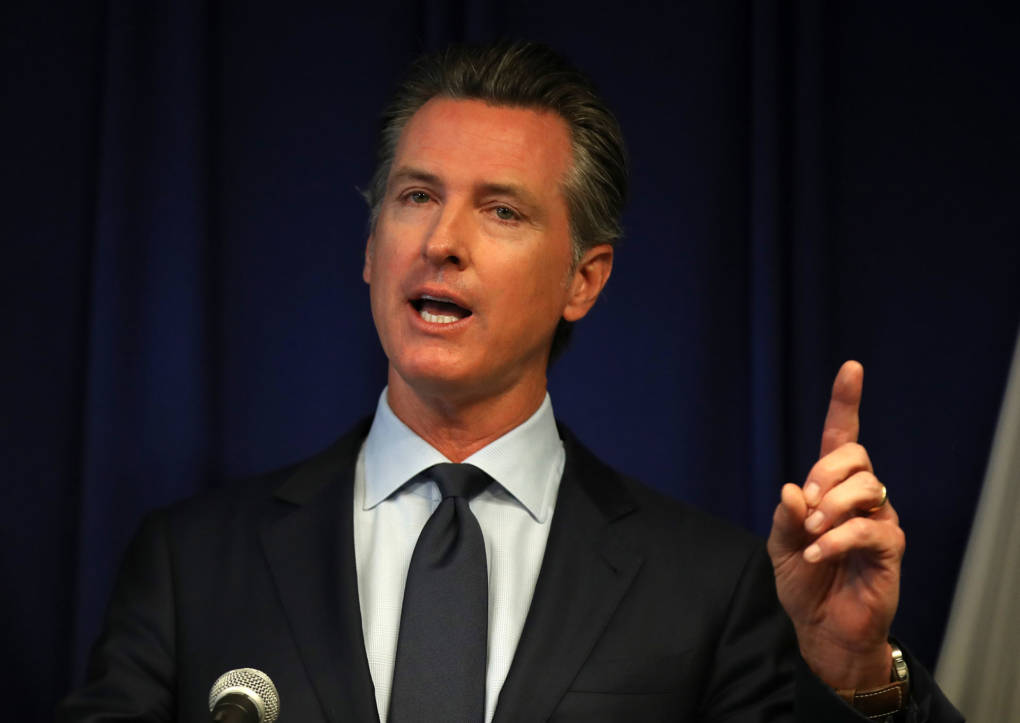
"caption": "California Gov. Gavin Newsom speaks during a news conference at the California Justice Department on Sept. 18, 2019 in Sacramento.",
"description": "California Gov. Gavin Newsom speaks during a news conference at the California Justice Department on Sept. 18, 2019, in Sacramento.",
"title": "gavin-newsom-1920",
"credit": "Justin Sullivan/Getty Images",
"status": "inherit",
"altTag": "California Gov. Gavin Newsom speaks during a news conference at the California Justice Department on Sept. 18, 2019, in Sacramento.",
"isLoading": false,
"fetchFailed": false
},
"news_11871367": {
"type": "attachments",
"id": "news_11871367",
"meta": {
"index": "attachments_1716263798",
"site": "news",
"id": "11871367",
"found": true
},
"parent": 11871330,
"imgSizes": {
"twentyfourteen-full-width": {
"file": "https://ww2.kqed.org/app/uploads/sites/10/2021/04/recalling_042721_finalTW-1038x576.png",
"width": 1038,
"mimeType": "image/png",
"height": 576
},
"thumbnail": {
"file": "https://ww2.kqed.org/app/uploads/sites/10/2021/04/recalling_042721_finalTW-160x112.png",
"width": 160,
"mimeType": "image/png",
"height": 112
},
"post-thumbnail": {
"file": "https://ww2.kqed.org/app/uploads/sites/10/2021/04/recalling_042721_finalTW-672x372.png",
"width": 672,
"mimeType": "image/png",
"height": 372
},
"kqedFullSize": {
"file": "https://ww2.kqed.org/app/uploads/sites/10/2021/04/recalling_042721_finalTW.png",
"width": 1921,
"height": 1349
},
"large": {
"file": "https://ww2.kqed.org/app/uploads/sites/10/2021/04/recalling_042721_finalTW-1020x716.png",
"width": 1020,
"mimeType": "image/png",
"height": 716
},
"1536x1536": {
"file": "https://ww2.kqed.org/app/uploads/sites/10/2021/04/recalling_042721_finalTW-1536x1079.png",
"width": 1536,
"mimeType": "image/png",
"height": 1079
},
"medium": {
"file": "https://ww2.kqed.org/app/uploads/sites/10/2021/04/recalling_042721_finalTW-800x562.png",
"width": 800,
"mimeType": "image/png",
"height": 562
}
},
"publishDate": 1619556459,
"modified": 1619556479,
"caption": null,
"description": null,
"title": "recalling_042721_finalTW",
"credit": null,
"status": "inherit",
"altTag": "A Mark Fiore highlighting the statement posted on Facebook by the founder of the recall Newsom petition, Orrin Heatlie, who wrote, \"Microchip illegal aliens. It works! Just ask animal control.\"",
"isLoading": false,
"fetchFailed": false
},
"news_11871245": {
"type": "attachments",
"id": "news_11871245",
"meta": {
"index": "attachments_1716263798",
"site": "news",
"id": "11871245",
"found": true
},
"parent": 11870959,
"imgSizes": {
"twentyfourteen-full-width": {
"file": "https://ww2.kqed.org/app/uploads/sites/10/2021/04/RS48060_004_SanFrancisco_NewsomBontaPressConference_03242021-qut-1038x576.jpg",
"width": 1038,
"mimeType": "image/jpeg",
"height": 576
},
"thumbnail": {
"file": "https://ww2.kqed.org/app/uploads/sites/10/2021/04/RS48060_004_SanFrancisco_NewsomBontaPressConference_03242021-qut-160x107.jpg",
"width": 160,
"mimeType": "image/jpeg",
"height": 107
},
"post-thumbnail": {
"file": "https://ww2.kqed.org/app/uploads/sites/10/2021/04/RS48060_004_SanFrancisco_NewsomBontaPressConference_03242021-qut-672x372.jpg",
"width": 672,
"mimeType": "image/jpeg",
"height": 372
},
"kqedFullSize": {
"file": "https://ww2.kqed.org/app/uploads/sites/10/2021/04/RS48060_004_SanFrancisco_NewsomBontaPressConference_03242021-qut.jpg",
"width": 1920,
"height": 1278
},
"large": {
"file": "https://ww2.kqed.org/app/uploads/sites/10/2021/04/RS48060_004_SanFrancisco_NewsomBontaPressConference_03242021-qut-1020x679.jpg",
"width": 1020,
"mimeType": "image/jpeg",
"height": 679
},
"1536x1536": {
"file": "https://ww2.kqed.org/app/uploads/sites/10/2021/04/RS48060_004_SanFrancisco_NewsomBontaPressConference_03242021-qut-1536x1022.jpg",
"width": 1536,
"mimeType": "image/jpeg",
"height": 1022
},
"medium": {
"file": "https://ww2.kqed.org/app/uploads/sites/10/2021/04/RS48060_004_SanFrancisco_NewsomBontaPressConference_03242021-qut-800x533.jpg",
"width": 800,
"mimeType": "image/jpeg",
"height": 533
}
},
"publishDate": 1619476077,
"modified": 1626132929,
"caption": "Gov. Gavin Newsom at a press conference in San Francisco on March 24, 2021.",
"description": "Gov. Gavin Newsom, pictured at a press conference in San Francisco on March 24, 2021.",
"title": "RS48060_004_SanFrancisco_NewsomBontaPressConference_03242021-qut",
"credit": "Beth LaBerge/KQED",
"status": "inherit",
"altTag": "Newsom speaking",
"isLoading": false,
"fetchFailed": false
},
"news_11870879": {
"type": "attachments",
"id": "news_11870879",
"meta": {
"index": "attachments_1716263798",
"site": "news",
"id": "11870879",
"found": true
},
"parent": 11870787,
"imgSizes": {
"twentyfourteen-full-width": {
"file": "https://ww2.kqed.org/app/uploads/sites/10/2021/04/RS48254_006_Oakland_SchoolReopening_03302021-qut-1038x576.jpg",
"width": 1038,
"mimeType": "image/jpeg",
"height": 576
},
"thumbnail": {
"file": "https://ww2.kqed.org/app/uploads/sites/10/2021/04/RS48254_006_Oakland_SchoolReopening_03302021-qut-160x107.jpg",
"width": 160,
"mimeType": "image/jpeg",
"height": 107
},
"post-thumbnail": {
"file": "https://ww2.kqed.org/app/uploads/sites/10/2021/04/RS48254_006_Oakland_SchoolReopening_03302021-qut-672x372.jpg",
"width": 672,
"mimeType": "image/jpeg",
"height": 372
},
"kqedFullSize": {
"file": "https://ww2.kqed.org/app/uploads/sites/10/2021/04/RS48254_006_Oakland_SchoolReopening_03302021-qut.jpg",
"width": 1920,
"height": 1280
},
"large": {
"file": "https://ww2.kqed.org/app/uploads/sites/10/2021/04/RS48254_006_Oakland_SchoolReopening_03302021-qut-1020x680.jpg",
"width": 1020,
"mimeType": "image/jpeg",
"height": 680
},
"1536x1536": {
"file": "https://ww2.kqed.org/app/uploads/sites/10/2021/04/RS48254_006_Oakland_SchoolReopening_03302021-qut-1536x1024.jpg",
"width": 1536,
"mimeType": "image/jpeg",
"height": 1024
},
"medium": {
"file": "https://ww2.kqed.org/app/uploads/sites/10/2021/04/RS48254_006_Oakland_SchoolReopening_03302021-qut-800x533.jpg",
"width": 800,
"mimeType": "image/jpeg",
"height": 533
}
},
"publishDate": 1619193380,
"modified": 1619222498,
"caption": "A sign in front of Sankofa United Elementary School in North Oakland on March 30, 2021 welcomes students back to the classroom.",
"description": null,
"title": "RS48254_006_Oakland_SchoolReopening_03302021-qut",
"credit": "Beth LaBerge/KQED",
"status": "inherit",
"altTag": null,
"isLoading": false,
"fetchFailed": false
},
"news_11870996": {
"type": "attachments",
"id": "news_11870996",
"meta": {
"index": "attachments_1716263798",
"site": "news",
"id": "11870996",
"found": true
},
"parent": 11870993,
"imgSizes": {
"thumbnail": {
"file": "https://ww2.kqed.org/app/uploads/sites/10/2021/04/Hwy1Reopen-160x105.jpg",
"width": 160,
"mimeType": "image/jpeg",
"height": 105
},
"post-thumbnail": {
"file": "https://ww2.kqed.org/app/uploads/sites/10/2021/04/Hwy1Reopen-672x372.jpg",
"width": 672,
"mimeType": "image/jpeg",
"height": 372
},
"kqedFullSize": {
"file": "https://ww2.kqed.org/app/uploads/sites/10/2021/04/Hwy1Reopen.jpg",
"width": 800,
"height": 523
}
},
"publishDate": 1619217758,
"modified": 1619223218,
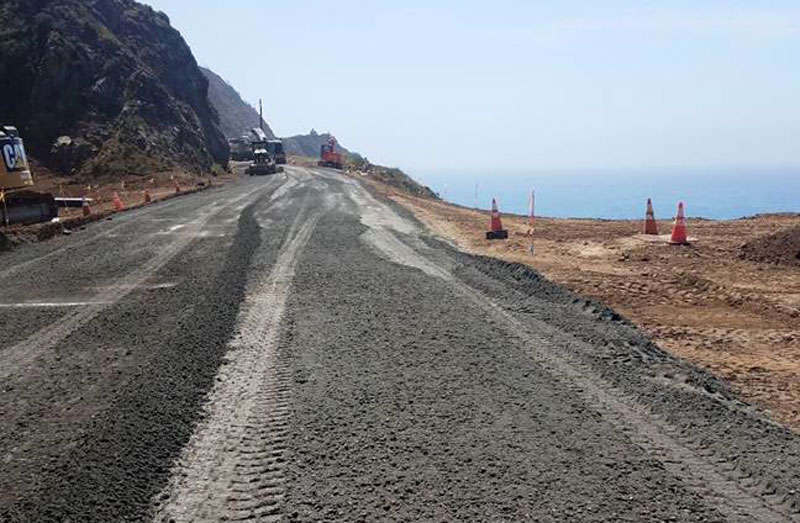
"caption": "Crews work to finish repairs on a section of Highway 1 near Rat Creek south of Big Sur, which washed away after winter storms in January. The section of road opened well ahead of schedule on Friday.",
"description": null,
"title": "Hwy1Reopen",
"credit": "Caltrans District 5/Twitter",
"status": "inherit",
"altTag": null,
"isLoading": false,
"fetchFailed": false
},
"news_11870911": {
"type": "attachments",
"id": "news_11870911",
"meta": {
"index": "attachments_1716263798",
"site": "news",
"id": "11870911",
"found": true
},
"parent": 11870905,
"imgSizes": {
"twentyfourteen-full-width": {
"file": "https://ww2.kqed.org/app/uploads/sites/10/2021/04/excitement_042321_final-1038x576.png",
"width": 1038,
"mimeType": "image/png",
"height": 576
},
"thumbnail": {
"file": "https://ww2.kqed.org/app/uploads/sites/10/2021/04/excitement_042321_final-160x106.png",
"width": 160,
"mimeType": "image/png",
"height": 106
},
"post-thumbnail": {
"file": "https://ww2.kqed.org/app/uploads/sites/10/2021/04/excitement_042321_final-672x372.png",
"width": 672,
"mimeType": "image/png",
"height": 372
},
"kqedFullSize": {
"file": "https://ww2.kqed.org/app/uploads/sites/10/2021/04/excitement_042321_final.png",
"width": 1920,
"height": 1275
},
"large": {
"file": "https://ww2.kqed.org/app/uploads/sites/10/2021/04/excitement_042321_final-1020x677.png",
"width": 1020,
"mimeType": "image/png",
"height": 677
},
"1536x1536": {
"file": "https://ww2.kqed.org/app/uploads/sites/10/2021/04/excitement_042321_final-1536x1020.png",
"width": 1536,
"mimeType": "image/png",
"height": 1020
},
"medium": {
"file": "https://ww2.kqed.org/app/uploads/sites/10/2021/04/excitement_042321_final-800x531.png",
"width": 800,
"mimeType": "image/png",
"height": 531
}
},
"publishDate": 1619201759,
"modified": 1619201811,
"caption": null,
"description": null,
"title": "excitement_042321_final",
"credit": null,
"status": "inherit",
"altTag": "A Mark Fiore cartoon designed to look like a fire danger sign that instead shows \"late-season rain excitement\" corresponding to the current megadrought in the West.",
"isLoading": false,
"fetchFailed": false
},
"news_11870893": {
"type": "attachments",
"id": "news_11870893",
"meta": {
"index": "attachments_1716263798",
"site": "news",
"id": "11870893",
"found": true
},
"parent": 11870889,
"imgSizes": {
"twentyfourteen-full-width": {
"file": "https://ww2.kqed.org/app/uploads/sites/10/2021/04/GettyImages-1204346065-1-1024x576.jpg",
"width": 1024,
"mimeType": "image/jpeg",
"height": 576
},
"thumbnail": {
"file": "https://ww2.kqed.org/app/uploads/sites/10/2021/04/GettyImages-1204346065-1-160x130.jpg",
"width": 160,
"mimeType": "image/jpeg",
"height": 130
},
"post-thumbnail": {
"file": "https://ww2.kqed.org/app/uploads/sites/10/2021/04/GettyImages-1204346065-1-672x372.jpg",
"width": 672,
"mimeType": "image/jpeg",
"height": 372
},
"kqedFullSize": {
"file": "https://ww2.kqed.org/app/uploads/sites/10/2021/04/GettyImages-1204346065-1.jpg",
"width": 1024,
"height": 833
},
"large": {
"file": "https://ww2.kqed.org/app/uploads/sites/10/2021/04/GettyImages-1204346065-1-1020x830.jpg",
"width": 1020,
"mimeType": "image/jpeg",
"height": 830
},
"medium": {
"file": "https://ww2.kqed.org/app/uploads/sites/10/2021/04/GettyImages-1204346065-1-800x651.jpg",
"width": 800,
"mimeType": "image/jpeg",
"height": 651
}
},
"publishDate": 1619198137,
"modified": 1619199664,
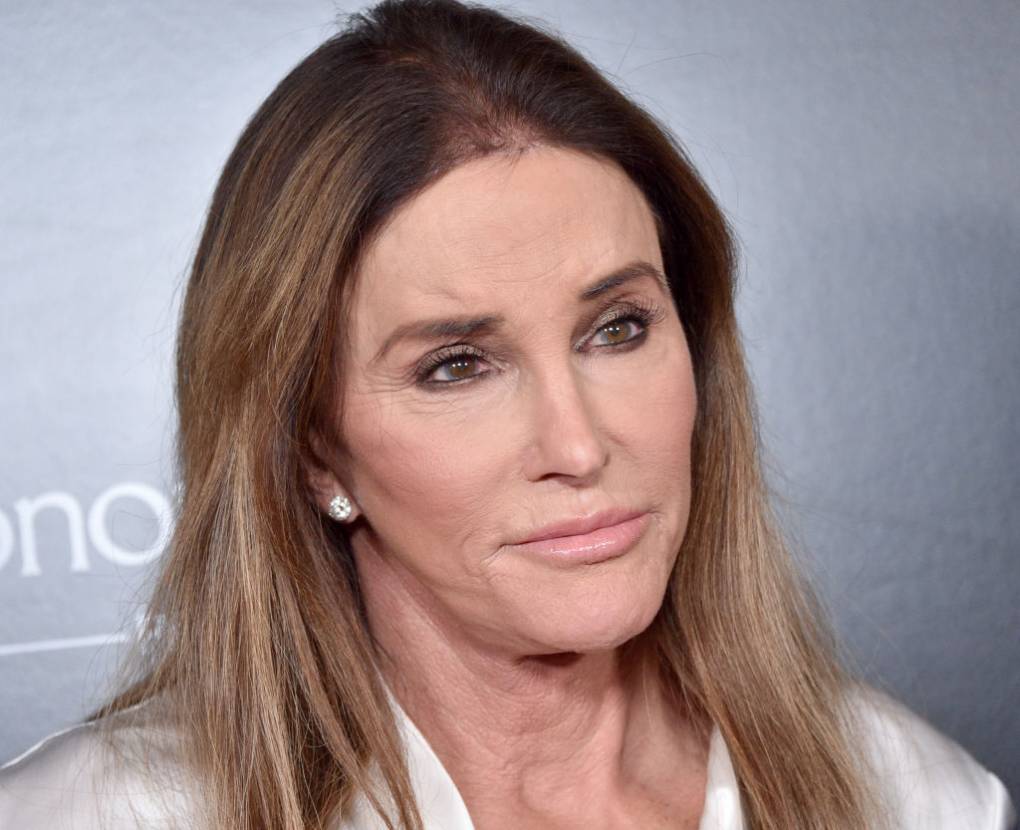
"caption": "Olympic hero, reality TV personality and transgender rights activist Caitlyn Jenner, pictured here in February 2020 in West Hollywood, announced her bid for governor on Friday. ",
"description": null,
"title": "HSH Prince Albert II Of Monaco Hosts 60th Anniversary Party For The Monte-Carlo TV Festival - Arrivals",
"credit": "Gregg DeGuire/Getty Images",
"status": "inherit",
"altTag": null,
"isLoading": false,
"fetchFailed": false
},
"news_11870606": {
"type": "attachments",
"id": "news_11870606",
"meta": {
"index": "attachments_1716263798",
"site": "news",
"id": "11870606",
"found": true
},
"parent": 11870600,
"imgSizes": {
"twentyfourteen-full-width": {
"file": "https://ww2.kqed.org/app/uploads/sites/10/2021/04/1920_RS8413_reservoir-full-1038x576.jpg",
"width": 1038,
"mimeType": "image/jpeg",
"height": 576
},
"thumbnail": {
"file": "https://ww2.kqed.org/app/uploads/sites/10/2021/04/1920_RS8413_reservoir-full-160x90.jpg",
"width": 160,
"mimeType": "image/jpeg",
"height": 90
},
"post-thumbnail": {
"file": "https://ww2.kqed.org/app/uploads/sites/10/2021/04/1920_RS8413_reservoir-full-672x372.jpg",
"width": 672,
"mimeType": "image/jpeg",
"height": 372
},
"kqedFullSize": {
"file": "https://ww2.kqed.org/app/uploads/sites/10/2021/04/1920_RS8413_reservoir-full-scaled.jpg",
"width": 2560,
"height": 1440
},
"2048x2048": {
"file": "https://ww2.kqed.org/app/uploads/sites/10/2021/04/1920_RS8413_reservoir-full-2048x1152.jpg",
"width": 2048,
"mimeType": "image/jpeg",
"height": 1152
},
"large": {
"file": "https://ww2.kqed.org/app/uploads/sites/10/2021/04/1920_RS8413_reservoir-full-1020x574.jpg",
"width": 1020,
"mimeType": "image/jpeg",
"height": 574
},
"1536x1536": {
"file": "https://ww2.kqed.org/app/uploads/sites/10/2021/04/1920_RS8413_reservoir-full-1536x864.jpg",
"width": 1536,
"mimeType": "image/jpeg",
"height": 864
},
"full-width": {
"file": "https://ww2.kqed.org/app/uploads/sites/10/2021/04/1920_RS8413_reservoir-full-1920x1080.jpg",
"width": 1920,
"mimeType": "image/jpeg",
"height": 1080
},
"medium": {
"file": "https://ww2.kqed.org/app/uploads/sites/10/2021/04/1920_RS8413_reservoir-full-800x450.jpg",
"width": 800,
"mimeType": "image/jpeg",
"height": 450
}
},
"publishDate": 1619043596,
"modified": 1619043680,
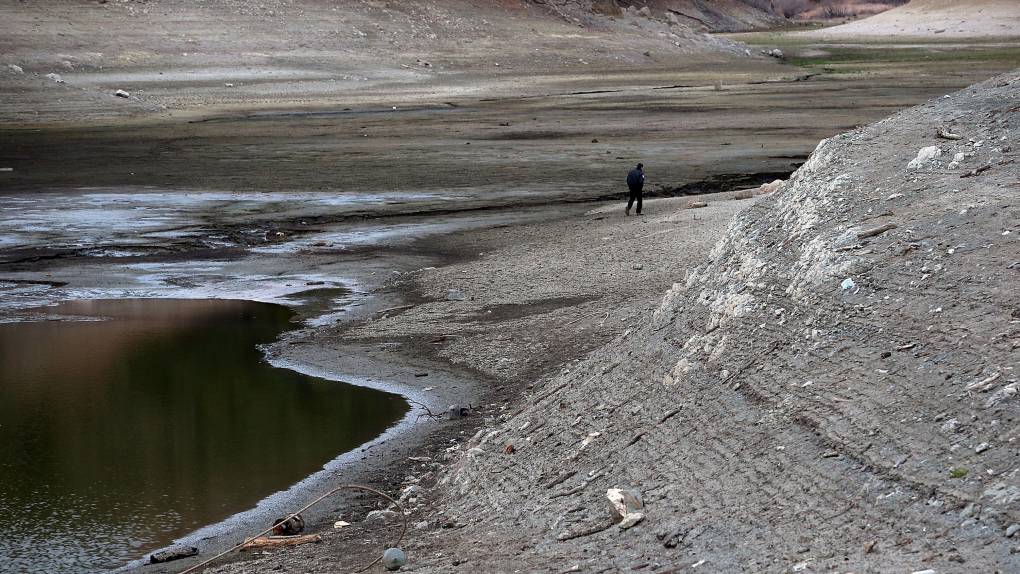
"caption": "A security guard walks the perimeter of the Almaden Reservoir on January 28, 2014 in San Jose, California. At the time, California was in its third straight year of drought conditions. ",
"description": null,
"title": "California Drought Dries Up Bay Area Reservoirs",
"credit": "Justin Sullivan/Getty Images",
"status": "inherit",
"altTag": null,
"isLoading": false,
"fetchFailed": false
},
"news_11869710": {
"type": "attachments",
"id": "news_11869710",
"meta": {
"index": "attachments_1716263798",
"site": "news",
"id": "11869710",
"found": true
},
"parent": 11869694,
"imgSizes": {
"twentyfourteen-full-width": {
"file": "https://ww2.kqed.org/app/uploads/sites/10/2021/04/RS48565_GettyImages-1232164082-qut-1038x576.jpg",
"width": 1038,
"mimeType": "image/jpeg",
"height": 576
},
"thumbnail": {
"file": "https://ww2.kqed.org/app/uploads/sites/10/2021/04/RS48565_GettyImages-1232164082-qut-160x107.jpg",
"width": 160,
"mimeType": "image/jpeg",
"height": 107
},
"post-thumbnail": {
"file": "https://ww2.kqed.org/app/uploads/sites/10/2021/04/RS48565_GettyImages-1232164082-qut-672x372.jpg",
"width": 672,
"mimeType": "image/jpeg",
"height": 372
},
"kqedFullSize": {
"file": "https://ww2.kqed.org/app/uploads/sites/10/2021/04/RS48565_GettyImages-1232164082-qut.jpg",
"width": 1920,
"height": 1280
},
"large": {
"file": "https://ww2.kqed.org/app/uploads/sites/10/2021/04/RS48565_GettyImages-1232164082-qut-1020x680.jpg",
"width": 1020,
"mimeType": "image/jpeg",
"height": 680
},
"1536x1536": {
"file": "https://ww2.kqed.org/app/uploads/sites/10/2021/04/RS48565_GettyImages-1232164082-qut-1536x1024.jpg",
"width": 1536,
"mimeType": "image/jpeg",
"height": 1024
},
"medium": {
"file": "https://ww2.kqed.org/app/uploads/sites/10/2021/04/RS48565_GettyImages-1232164082-qut-800x533.jpg",
"width": 800,
"mimeType": "image/jpeg",
"height": 533
}
},
"publishDate": 1618528838,
"modified": 1618531413,
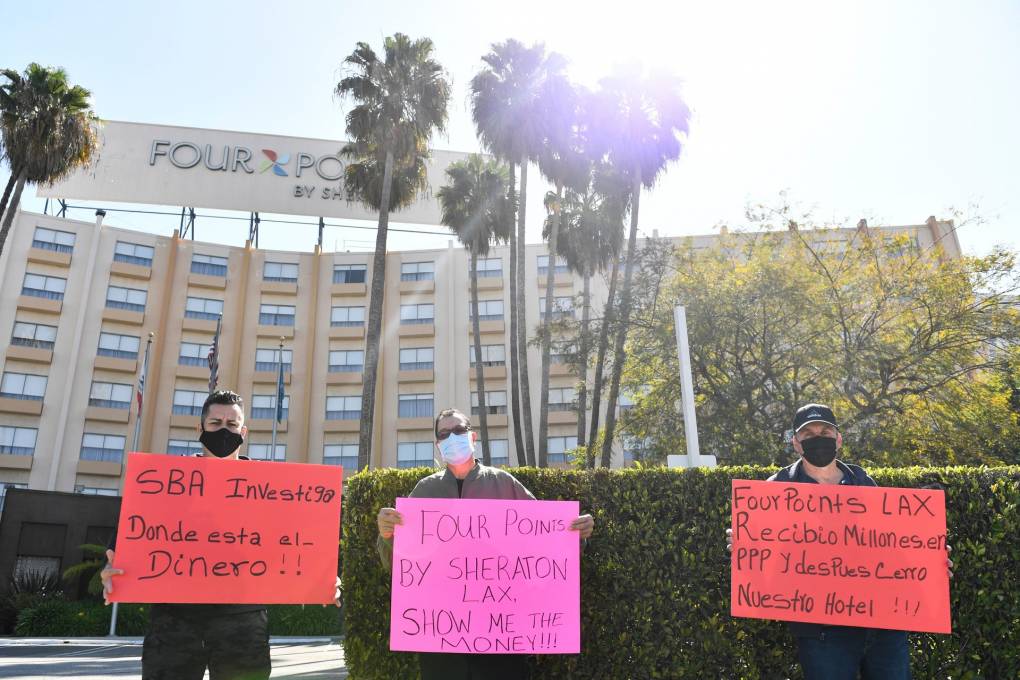
"caption": "Laid-off employees and workers with Unite Here 11 protest outside the closed Four Points by Sheraton LAX hotel as they call for an investigation by the U.S. Small Business Administration into the use of Paycheck Protection Program loan funds on April 7, 2021 in Los Angeles. A bill lawmakers passed on Thursday would require some laid-off hospitality workers to be offered their jobs back.",
"description": "Laid-off employees and workers with Unite Here 11 protest outside the closed Four Points by Sheraton LAX hotel as they call for an investigation by the US Small Business Administration into the use of Paycheck Protection Program loan funds on April 7, 2021 in Los Angeles. A bill lawmakers passed on Thursday would require some laid-off hospitality workers to be offered their jobs back.",
"title": "US-WORKERS-HOTEL-LOAN",
"credit": "Patrick T. Fallon/AFP via Getty Images",
"status": "inherit",
"altTag": null,
"isLoading": false,
"fetchFailed": false
},
"news_11869279": {
"type": "attachments",
"id": "news_11869279",
"meta": {
"index": "attachments_1716263798",
"site": "news",
"id": "11869279",
"found": true
},
"parent": 11869265,
"imgSizes": {
"twentyfourteen-full-width": {
"file": "https://ww2.kqed.org/app/uploads/sites/10/2021/04/GettyImages-1306576537-1038x576.jpg",
"width": 1038,
"mimeType": "image/jpeg",
"height": 576
},
"thumbnail": {
"file": "https://ww2.kqed.org/app/uploads/sites/10/2021/04/GettyImages-1306576537-160x113.jpg",
"width": 160,
"mimeType": "image/jpeg",
"height": 113
},
"post-thumbnail": {
"file": "https://ww2.kqed.org/app/uploads/sites/10/2021/04/GettyImages-1306576537-672x372.jpg",
"width": 672,
"mimeType": "image/jpeg",
"height": 372
},
"kqedFullSize": {
"file": "https://ww2.kqed.org/app/uploads/sites/10/2021/04/GettyImages-1306576537-scaled.jpg",
"width": 2560,
"height": 1802
},
"2048x2048": {
"file": "https://ww2.kqed.org/app/uploads/sites/10/2021/04/GettyImages-1306576537-2048x1441.jpg",
"width": 2048,
"mimeType": "image/jpeg",
"height": 1441
},
"large": {
"file": "https://ww2.kqed.org/app/uploads/sites/10/2021/04/GettyImages-1306576537-1020x718.jpg",
"width": 1020,
"mimeType": "image/jpeg",
"height": 718
},
"1536x1536": {
"file": "https://ww2.kqed.org/app/uploads/sites/10/2021/04/GettyImages-1306576537-1536x1081.jpg",
"width": 1536,
"mimeType": "image/jpeg",
"height": 1081
},
"full-width": {
"file": "https://ww2.kqed.org/app/uploads/sites/10/2021/04/GettyImages-1306576537-1920x1351.jpg",
"width": 1920,
"mimeType": "image/jpeg",
"height": 1351
},
"medium": {
"file": "https://ww2.kqed.org/app/uploads/sites/10/2021/04/GettyImages-1306576537-800x563.jpg",
"width": 800,
"mimeType": "image/jpeg",
"height": 563
}
},
"publishDate": 1618343086,
"modified": 1618434942,
"caption": "A dose of the new one-shot Johnson & Johnson COVID-19 vaccine is prepared at a vaccination event March 11, 2021 in Los Angeles, California. ",
"description": "A dose of the new one-shot Johnson & Johnson COVID-19 vaccine is prepared at a vaccination event March 11, 2021 in Los Angeles, California.",
"title": "California Health Officials Host Johnson & Johnson Vaccination Event In Los Angeles",
"credit": "Mario Tama/Getty Images",
"status": "inherit",
"altTag": null,
"isLoading": false,
"fetchFailed": false
},
"news_11868268": {
"type": "attachments",
"id": "news_11868268",
"meta": {
"index": "attachments_1716263798",
"site": "news",
"id": "11868268",
"found": true
},
"parent": 11868242,
"imgSizes": {
"twentyfourteen-full-width": {
"file": "https://ww2.kqed.org/app/uploads/sites/10/2021/04/GettyImages-1311148803-1038x576.jpg",
"width": 1038,
"mimeType": "image/jpeg",
"height": 576
},
"thumbnail": {
"file": "https://ww2.kqed.org/app/uploads/sites/10/2021/04/GettyImages-1311148803-160x107.jpg",
"width": 160,
"mimeType": "image/jpeg",
"height": 107
},
"post-thumbnail": {
"file": "https://ww2.kqed.org/app/uploads/sites/10/2021/04/GettyImages-1311148803-672x372.jpg",
"width": 672,
"mimeType": "image/jpeg",
"height": 372
},
"kqedFullSize": {
"file": "https://ww2.kqed.org/app/uploads/sites/10/2021/04/GettyImages-1311148803-scaled.jpg",
"width": 2560,
"height": 1709
},
"2048x2048": {
"file": "https://ww2.kqed.org/app/uploads/sites/10/2021/04/GettyImages-1311148803-2048x1367.jpg",
"width": 2048,
"mimeType": "image/jpeg",
"height": 1367
},
"large": {
"file": "https://ww2.kqed.org/app/uploads/sites/10/2021/04/GettyImages-1311148803-1020x681.jpg",
"width": 1020,
"mimeType": "image/jpeg",
"height": 681
},
"1536x1536": {
"file": "https://ww2.kqed.org/app/uploads/sites/10/2021/04/GettyImages-1311148803-1536x1025.jpg",
"width": 1536,
"mimeType": "image/jpeg",
"height": 1025
},
"full-width": {
"file": "https://ww2.kqed.org/app/uploads/sites/10/2021/04/GettyImages-1311148803-1920x1282.jpg",
"width": 1920,
"mimeType": "image/jpeg",
"height": 1282
},
"medium": {
"file": "https://ww2.kqed.org/app/uploads/sites/10/2021/04/GettyImages-1311148803-800x534.jpg",
"width": 800,
"mimeType": "image/jpeg",
"height": 534
}
},
"publishDate": 1617739714,
"modified": 1673481219,
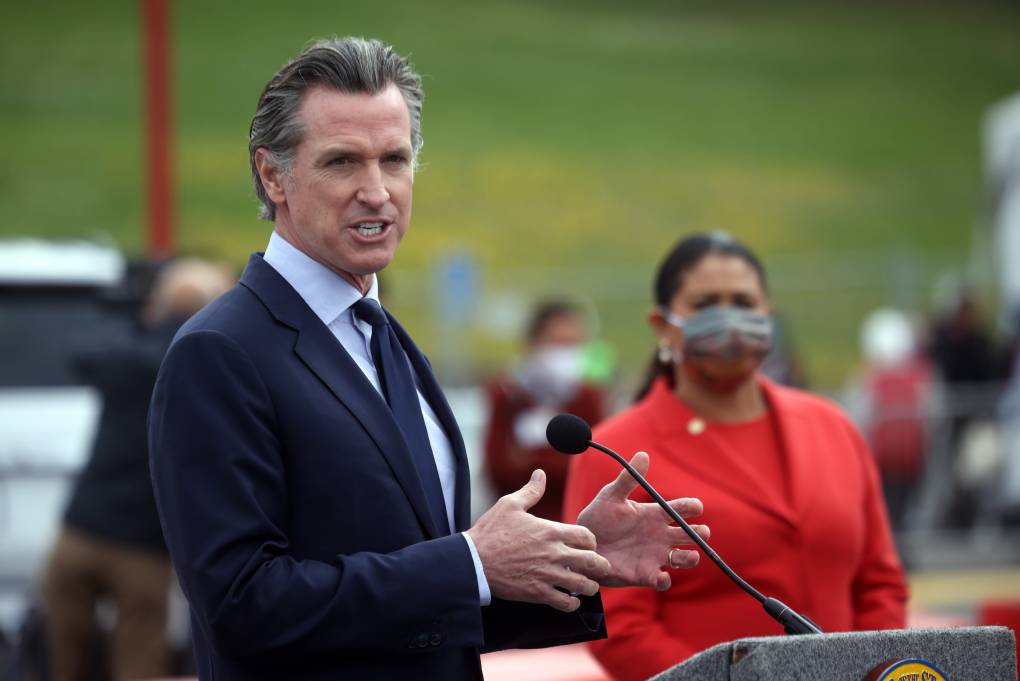
"caption": "Gov. Gavin Newsom speaks during a news conference after touring the vaccination clinic at City College of San Francisco with San Francisco Mayor London Breed (in red) on April 6, 2021, in San Francisco.",
"description": "California Gov. Gavin Newsom (L) speaks during a news conference after touring the vaccination clinic at City College of San Francisco with San Francisco Mayor London Breed (R) on April 06, 2021 in San Francisco, California. California Gov. Gavin Newsom announced that the state of California has administered over 20 million vaccinations and currently has the lowest positivity rate in the United States. The governor also announced that California is on track for a full reopening by June 15th with continued mask wearing and people getting vaccinated.",
"title": "Newsom-Breed-CCSF",
"credit": "Justin Sullivan/Getty Images",
"status": "inherit",
"altTag": "A man wearing a business suit stands in front of a microphone gesturing with his hands. Behind him is an African American woman wearing a mask and a red business suit outdoors.",
"isLoading": false,
"fetchFailed": false
},
"news_11868692": {
"type": "attachments",
"id": "news_11868692",
"meta": {
"index": "attachments_1716263798",
"site": "news",
"id": "11868692",
"found": true
},
"parent": 11868687,
"imgSizes": {
"twentyfourteen-full-width": {
"file": "https://ww2.kqed.org/app/uploads/sites/10/2021/04/RS45101_010_KQED_SantaRosa_GlassIncident_09282020-qut-1038x576.jpg",
"width": 1038,
"mimeType": "image/jpeg",
"height": 576
},
"thumbnail": {
"file": "https://ww2.kqed.org/app/uploads/sites/10/2021/04/RS45101_010_KQED_SantaRosa_GlassIncident_09282020-qut-160x107.jpg",
"width": 160,
"mimeType": "image/jpeg",
"height": 107
},
"post-thumbnail": {
"file": "https://ww2.kqed.org/app/uploads/sites/10/2021/04/RS45101_010_KQED_SantaRosa_GlassIncident_09282020-qut-672x372.jpg",
"width": 672,
"mimeType": "image/jpeg",
"height": 372
},
"kqedFullSize": {
"file": "https://ww2.kqed.org/app/uploads/sites/10/2021/04/RS45101_010_KQED_SantaRosa_GlassIncident_09282020-qut.jpg",
"width": 1920,
"height": 1280
},
"large": {
"file": "https://ww2.kqed.org/app/uploads/sites/10/2021/04/RS45101_010_KQED_SantaRosa_GlassIncident_09282020-qut-1020x680.jpg",
"width": 1020,
"mimeType": "image/jpeg",
"height": 680
},
"1536x1536": {
"file": "https://ww2.kqed.org/app/uploads/sites/10/2021/04/RS45101_010_KQED_SantaRosa_GlassIncident_09282020-qut-1536x1024.jpg",
"width": 1536,
"mimeType": "image/jpeg",
"height": 1024
},
"medium": {
"file": "https://ww2.kqed.org/app/uploads/sites/10/2021/04/RS45101_010_KQED_SantaRosa_GlassIncident_09282020-qut-800x533.jpg",
"width": 800,
"mimeType": "image/jpeg",
"height": 533
}
},
"publishDate": 1617916766,
"modified": 1617916783,
"caption": "Santa Rosa and Petaluma fire crews work to put out a fire at a home on White Oak Drive in the Oakmont neighborhood in east Santa Rosa on Sept. 28, 2020.",
"description": "Santa Rosa and Petaluma fire crews work to put out a fire at a home on White Oak Drive in the Oakmont neighborhood in east Santa Rosa on Sept. 28, 2020.",
"title": "RS45101_010_KQED_SantaRosa_GlassIncident_09282020-qut",
"credit": "Beth LaBerge/KQED",
"status": "inherit",
"altTag": null,
"isLoading": false,
"fetchFailed": false
}
},
"audioPlayerReducer": {
"postId": "stream_live",
"isPaused": true,
"isPlaying": false,
"pfsActive": false,
"pledgeModalIsOpen": true,
"playerDrawerIsOpen": false,
"liveAudioPlayStartedAt": 0,
"liveAudioPlayContext": ""
},
"authorsReducer": {
"byline_news_11870889": {
"type": "authors",
"id": "byline_news_11870889",
"meta": {
"override": true
},
"slug": "byline_news_11870889",
"name": "Michael Blood\u003cbr>Associated Press",
"isLoading": false
},
"byline_news_11870600": {
"type": "authors",
"id": "byline_news_11870600",
"meta": {
"override": true
},
"slug": "byline_news_11870600",
"name": "Kathleen Ronayne and John Antczak \u003cbr> Associated Press",
"isLoading": false
},
"byline_news_11869694": {
"type": "authors",
"id": "byline_news_11869694",
"meta": {
"override": true
},
"slug": "byline_news_11869694",
"name": "Adam Beam\u003cbr />Associated Press",
"isLoading": false
},
"byline_news_11869265": {
"type": "authors",
"id": "byline_news_11869265",
"meta": {
"override": true
},
"slug": "byline_news_11869265",
"name": "Kathleen Ronayne and Janie Har\u003cbr />Associated Press",
"isLoading": false
},
"byline_news_11868687": {
"type": "authors",
"id": "byline_news_11868687",
"meta": {
"override": true
},
"slug": "byline_news_11868687",
"name": "Don Thompson\u003cbr>Associated Press ",
"isLoading": false
},
"gmarzorati": {
"type": "authors",
"id": "227",
"meta": {
"index": "authors_1716337520",
"id": "227",
"found": true
},
"name": "Guy Marzorati",
"firstName": "Guy",
"lastName": "Marzorati",
"slug": "gmarzorati",
"email": "gmarzorati@KQED.org",
"display_author_email": true,
"staff_mastheads": [
"news"
],
"title": "Correspondent",
"bio": "Guy Marzorati is a correspondent on KQED's California Politics and Government Desk, based in San Jose. A graduate of Santa Clara University, Guy joined KQED in 2013. He reports on state and local politics and produces KQED's digital voter guide.",
"avatar": "https://secure.gravatar.com/avatar/e7038b8dbfd55b104369b76b1cd0b9de?s=600&d=blank&r=g",
"twitter": "guymarzorati",
"facebook": null,
"instagram": null,
"linkedin": null,
"sites": [
{
"site": "",
"roles": [
"editor"
]
},
{
"site": "news",
"roles": [
"editor"
]
},
{
"site": "science",
"roles": [
"editor"
]
},
{
"site": "forum",
"roles": [
"editor"
]
},
{
"site": "elections",
"roles": [
"editor"
]
},
{
"site": "liveblog",
"roles": [
"editor"
]
}
],
"headData": {
"title": "Guy Marzorati | KQED",
"description": "Correspondent",
"ogImgSrc": "https://secure.gravatar.com/avatar/e7038b8dbfd55b104369b76b1cd0b9de?s=600&d=blank&r=g",
"twImgSrc": "https://secure.gravatar.com/avatar/e7038b8dbfd55b104369b76b1cd0b9de?s=600&d=blank&r=g"
},
"isLoading": false,
"link": "/author/gmarzorati"
},
"kqednewsstaffandwires": {
"type": "authors",
"id": "237",
"meta": {
"index": "authors_1716337520",
"id": "237",
"found": true
},
"name": "KQED News Staff and Wires",
"firstName": "KQED News Staff and Wires",
"lastName": null,
"slug": "kqednewsstaffandwires",
"email": "onlinenewsstaff@kqed.org",
"display_author_email": false,
"staff_mastheads": [],
"title": null,
"bio": null,
"avatar": "https://secure.gravatar.com/avatar/72295af8ebbfbd19a4948f5271285664?s=600&d=blank&r=g",
"twitter": null,
"facebook": null,
"instagram": null,
"linkedin": null,
"sites": [
{
"site": "arts",
"roles": [
"contributor"
]
},
{
"site": "news",
"roles": [
"contributor"
]
},
{
"site": "lowdown",
"roles": [
"author"
]
},
{
"site": "stateofhealth",
"roles": [
"contributor"
]
},
{
"site": "food",
"roles": [
"author"
]
}
],
"headData": {
"title": "KQED News Staff and Wires | KQED",
"description": null,
"ogImgSrc": "https://secure.gravatar.com/avatar/72295af8ebbfbd19a4948f5271285664?s=600&d=blank&r=g",
"twImgSrc": "https://secure.gravatar.com/avatar/72295af8ebbfbd19a4948f5271285664?s=600&d=blank&r=g"
},
"isLoading": false,
"link": "/author/kqednewsstaffandwires"
},
"scottshafer": {
"type": "authors",
"id": "255",
"meta": {
"index": "authors_1716337520",
"id": "255",
"found": true
},
"name": "Scott Shafer",
"firstName": "Scott",
"lastName": "Shafer",
"slug": "scottshafer",
"email": "sshafer@kqed.org",
"display_author_email": false,
"staff_mastheads": [
"news"
],
"title": "KQED Contributor",
"bio": "Scott Shafer is a senior editor with the KQED Politics and Government desk. He is co-host of Political Breakdown, the award-winning radio show and podcast with a personal take on the world of politics. Scott came to KQED in 1998 to host the statewide\u003cem> California Report\u003c/em>. Prior to that he had extended stints in politics and government\u003cem>.\u003c/em> He uses that inside experience at KQED in his, reporting, hosting and analysis for the politics desk. Scott collaborated \u003cem>Political Breakdown a\u003c/em>nd on \u003cem>The Political Mind of Jerry Brown, \u003c/em>an eight-part series about the life and extraordinary political career of the former governor. For fun, he plays water polo with the San Francisco Tsunami.",
"avatar": "https://secure.gravatar.com/avatar/a62ebae45b79d7aed1a39a0e3bf68104?s=600&d=blank&r=g",
"twitter": "scottshafer",
"bluesky": null,
"facebook": null,
"instagram": null,
"linkedin": null,
"sites": [
{
"site": "news",
"roles": [
"editor"
]
},
{
"site": "stateofhealth",
"roles": [
"author"
]
},
{
"site": "science",
"roles": [
"author"
]
},
{
"site": "forum",
"roles": [
"subscriber"
]
},
{
"site": "liveblog",
"roles": [
"author"
]
}
],
"headData": {
"title": "Scott Shafer | KQED",
"description": "KQED Contributor",
"ogImgSrc": "https://secure.gravatar.com/avatar/a62ebae45b79d7aed1a39a0e3bf68104?s=600&d=blank&r=g",
"twImgSrc": "https://secure.gravatar.com/avatar/a62ebae45b79d7aed1a39a0e3bf68104?s=600&d=blank&r=g"
},
"isLoading": false,
"link": "/author/scottshafer"
},
"adembosky": {
"type": "authors",
"id": "3205",
"meta": {
"index": "authors_1716337520",
"id": "3205",
"found": true
},
"name": "April Dembosky",
"firstName": "April",
"lastName": "Dembosky",
"slug": "adembosky",
"email": "adembosky@kqed.org",
"display_author_email": false,
"staff_mastheads": [
"news",
"science"
],
"title": "KQED Health Correspondent",
"bio": "April Dembosky is the health correspondent for KQED News and a regular contributor to NPR. She specializes in covering altered states of mind, from postpartum depression to methamphetamine-induced psychosis to the insanity defense. Her investigative series on insurance companies sidestepping mental health laws won multiple awards, including first place in beat reporting from the national Association of Health Care Journalists. She is the recipient of numerous other prizes and fellowships, including a national Edward R. Murrow award for investigative reporting, a Society of Professional Journalists award for long-form storytelling, and a Carter Center Fellowship for Mental Health Journalism.\r\n\r\nDembosky reported and produced \u003cem>Soundtrack of Silence\u003c/em>, an audio documentary about music and memory that is currently being made into a feature film by Paramount Pictures.\r\n\r\nBefore joining KQED in 2013, Dembosky covered technology and Silicon Valley for \u003cem>The Financial Times of London,\u003c/em> and contributed business and arts stories to \u003cem>Marketplace \u003c/em>and \u003cem>The New York Times.\u003c/em> She got her undergraduate degree in philosophy from Smith College and her master's in journalism from the University of California, Berkeley. She is a classically trained violinist and proud alum of the first symphony orchestra at Burning Man.",
"avatar": "https://secure.gravatar.com/avatar/ef92999be4ceb9ea60701e7dc276f813?s=600&d=blank&r=g",
"twitter": "adembosky",
"facebook": null,
"instagram": null,
"linkedin": null,
"sites": [
{
"site": "arts",
"roles": [
"author"
]
},
{
"site": "news",
"roles": [
"editor"
]
},
{
"site": "futureofyou",
"roles": [
"author"
]
},
{
"site": "stateofhealth",
"roles": [
"editor"
]
},
{
"site": "science",
"roles": [
"editor"
]
},
{
"site": "forum",
"roles": [
"editor"
]
}
],
"headData": {
"title": "April Dembosky | KQED",
"description": "KQED Health Correspondent",
"ogImgSrc": "https://secure.gravatar.com/avatar/ef92999be4ceb9ea60701e7dc276f813?s=600&d=blank&r=g",
"twImgSrc": "https://secure.gravatar.com/avatar/ef92999be4ceb9ea60701e7dc276f813?s=600&d=blank&r=g"
},
"isLoading": false,
"link": "/author/adembosky"
},
"markfiore": {
"type": "authors",
"id": "3236",
"meta": {
"index": "authors_1716337520",
"id": "3236",
"found": true
},
"name": "Mark Fiore",
"firstName": "Mark",
"lastName": "Fiore",
"slug": "markfiore",
"email": "mark@markfiore.com",
"display_author_email": false,
"staff_mastheads": [
"news"
],
"title": "KQED News Cartoonist",
"bio": "\u003ca href=\"http://www.MarkFiore.com\">MarkFiore.com\u003c/a> | \u003ca href=\"https://twitter.com/markfiore\">Follow on Twitter\u003c/a> | \u003ca href=\"https://www.facebook.com/pages/Mark-Fiore-Animated-Political-Cartoons/94451707396?ref=bookmarks\">Facebook\u003c/a> | \u003ca href=\"mailto:mark@markfiore.com\">email\u003c/a>\r\n\r\nPulitzer Prize-winner, Mark Fiore, who the Wall Street Journal has called “the undisputed guru of the form,” creates animated political cartoons in San Francisco, where his work has been featured regularly on the San Francisco Chronicle’s web site, SFGate.com. His work has appeared on Newsweek.com, Slate.com, CBSNews.com, MotherJones.com, DailyKos.com and NPR’s web site. Fiore’s political animation has appeared on CNN, Frontline, Bill Moyers Journal, Salon.com and cable and broadcast outlets across the globe.\r\n\r\nBeginning his professional life by drawing traditional political cartoons for newspapers, Fiore’s work appeared in publications ranging from the Washington Post to the Los Angeles Times. In the late 1990s, he began to experiment with animating political cartoons and, after a short stint at the San Jose Mercury News as their staff cartoonist, Fiore devoted all his energies to animation.\r\nGrowing up in California, Fiore also spent a good portion of his life in the backwoods of Idaho. It was this combination that shaped him politically. Mark majored in political science at Colorado College, where, in a perfect send-off for a cartoonist, he received his diploma in 1991 as commencement speaker Dick Cheney smiled approvingly.\r\nMark Fiore was awarded the Pulitzer Prize for political cartooning in 2010, a Robert F. Kennedy Journalism Award in 2004 and has twice received an Online Journalism Award for commentary from the Online News Association (2002, 2008). Fiore has received two awards for his work in new media from the National Cartoonists Society (2001, 2002), and in 2006 received The James Madison Freedom of Information Award from The Society of Professional Journalists.",
"avatar": "https://secure.gravatar.com/avatar/fc4e2a612b15b67bad0c6f0e1db4ca9b?s=600&d=blank&r=g",
"twitter": "MarkFiore",
"facebook": null,
"instagram": "https://www.instagram.com/markfiore/?hl=en",
"linkedin": null,
"sites": [
{
"site": "arts",
"roles": [
"contributor"
]
},
{
"site": "news",
"roles": [
"editor"
]
},
{
"site": "futureofyou",
"roles": [
"editor"
]
},
{
"site": "science",
"roles": [
"editor"
]
}
],
"headData": {
"title": "Mark Fiore | KQED",
"description": "KQED News Cartoonist",
"ogImgSrc": "https://secure.gravatar.com/avatar/fc4e2a612b15b67bad0c6f0e1db4ca9b?s=600&d=blank&r=g",
"twImgSrc": "https://secure.gravatar.com/avatar/fc4e2a612b15b67bad0c6f0e1db4ca9b?s=600&d=blank&r=g"
},
"isLoading": false,
"link": "/author/markfiore"
},
"dkatayama": {
"type": "authors",
"id": "7240",
"meta": {
"index": "authors_1716337520",
"id": "7240",
"found": true
},
"name": "Devin Katayama",
"firstName": "Devin",
"lastName": "Katayama",
"slug": "dkatayama",
"email": "dkatayama@kqed.org",
"display_author_email": true,
"staff_mastheads": [
"news"
],
"title": "Editor of Talent and Development",
"bio": "Devin Katayama is former Editor of Talent and Development for KQED. He supported our internship program and on-call staff by looking for equitable opportunities to improve the newsroom.\r\n\r\nHe previously hosted The Bay and American Suburb podcasts from KQED News. Prior to returning to the Bay Area in 2015, Devin was the education reporter for WFPL in Louisville and worked as a producer with radio stations in Chicago and Portland, OR. His work has appeared on NPR’s \u003cem>Morning Edition, All Things Considered, The Takeaway\u003c/em> and \u003cem>Here and Now.\u003c/em>\r\n\r\nDevin earned his MA in Journalism from Columbia College Chicago, where he was a Follett Fellow and the recipient of the 2011 Studs Terkel Community Media Workshop Scholarship for his story on Chicago's homeless youth. He won WBUR's 2014 Daniel Schorr award and a regional RTNDA Edward R. Murrow Award for his documentary \"At Risk\" that looked at issues facing some of Louisville's students. Devin has also received numerous local awards from the Associated Press and the Society of Professional Journalists.",
"avatar": "https://secure.gravatar.com/avatar/d0d2978a31002fb2de107921a8e18405?s=600&d=blank&r=g",
"twitter": "RadioDevin",
"facebook": null,
"instagram": null,
"linkedin": null,
"sites": [
{
"site": "arts",
"roles": []
},
{
"site": "news",
"roles": [
"author"
]
},
{
"site": "stateofhealth",
"roles": [
"author"
]
},
{
"site": "forum",
"roles": [
"editor"
]
},
{
"site": "perspectives",
"roles": [
"editor"
]
}
],
"headData": {
"title": "Devin Katayama | KQED",
"description": "Editor of Talent and Development",
"ogImgSrc": "https://secure.gravatar.com/avatar/d0d2978a31002fb2de107921a8e18405?s=600&d=blank&r=g",
"twImgSrc": "https://secure.gravatar.com/avatar/d0d2978a31002fb2de107921a8e18405?s=600&d=blank&r=g"
},
"isLoading": false,
"link": "/author/dkatayama"
},
"ecruzguevarra": {
"type": "authors",
"id": "8654",
"meta": {
"index": "authors_1716337520",
"id": "8654",
"found": true
},
"name": "Ericka Cruz Guevarra",
"firstName": "Ericka",
"lastName": "Cruz Guevarra",
"slug": "ecruzguevarra",
"email": "ecruzguevarra@kqed.org",
"display_author_email": true,
"staff_mastheads": [
"news"
],
"title": "Producer, The Bay Podcast",
"bio": "Ericka Cruz Guevarra is host of \u003ca href=\"https://www.kqed.org/podcasts/thebay\">\u003cem>The Bay\u003c/em>\u003c/a> podcast at KQED. Before host, she was the show’s producer. Her work in that capacity includes a three-part reported series on policing in Vallejo, which won a 2020 excellence in journalism award from the Society of Professional Journalists. Ericka has worked as a breaking news reporter at Oregon Public Broadcasting, helped produce the Code Switch podcast, and was KQED’s inaugural Raul Ramirez Diversity Fund intern. She’s also an alumna of NPR’s Next Generation Radio program. Send her an email if you have strong feelings about whether Fairfield and Suisun City are the Bay. Ericka is represented by SAG-AFTRA.",
"avatar": "https://secure.gravatar.com/avatar/accefc1de4bafc7e234b69bcb9b6f6536c130fd84709bc3069ef11a78787e1bb?s=600&d=blank&r=g",
"twitter": "NotoriousECG",
"bluesky": null,
"facebook": null,
"instagram": null,
"linkedin": null,
"sites": [
{
"site": "arts",
"roles": [
"subscriber"
]
},
{
"site": "news",
"roles": [
"editor",
"manage_categories"
]
},
{
"site": "futureofyou",
"roles": [
"subscriber"
]
},
{
"site": "stateofhealth",
"roles": [
"subscriber"
]
},
{
"site": "science",
"roles": [
"editor"
]
},
{
"site": "forum",
"roles": [
"subscriber"
]
}
],
"headData": {
"title": "Ericka Cruz Guevarra | KQED",
"description": "Producer, The Bay Podcast",
"ogImgSrc": "https://secure.gravatar.com/avatar/accefc1de4bafc7e234b69bcb9b6f6536c130fd84709bc3069ef11a78787e1bb?s=600&d=blank&r=g",
"twImgSrc": "https://secure.gravatar.com/avatar/accefc1de4bafc7e234b69bcb9b6f6536c130fd84709bc3069ef11a78787e1bb?s=600&d=blank&r=g"
},
"isLoading": false,
"link": "/author/ecruzguevarra"
},
"amontecillo": {
"type": "authors",
"id": "11649",
"meta": {
"index": "authors_1716337520",
"id": "11649",
"found": true
},
"name": "Alan Montecillo",
"firstName": "Alan",
"lastName": "Montecillo",
"slug": "amontecillo",
"email": "amontecillo@kqed.org",
"display_author_email": false,
"staff_mastheads": [
"news"
],
"title": "KQED Contributor",
"bio": "Alan Montecillo is the senior editor of \u003cem>\u003ca href=\"http://kqed.org/thebay\">The Bay\u003c/a>, \u003c/em> KQED's local news podcast. Before moving to the Bay Area, he worked as a senior talk show producer for WILL in Champaign-Urbana, Illinois and at Oregon Public Broadcasting in Portland, Oregon. He has won journalism awards from the Society of Professional Journalists Northern California, the Public Media Journalists Association, The Signal Awards, and has also received a regional Edward R. Murrow award. Alan is a Filipino American from Hong Kong and a graduate of Reed College.",
"avatar": "https://secure.gravatar.com/avatar/268f53a2066899ea9efdd8a5900218b17c822d9862cbc9326cccec53ef41d349?s=600&d=blank&r=g",
"twitter": "alanmontecillo",
"bluesky": null,
"facebook": null,
"instagram": null,
"linkedin": null,
"sites": [
{
"site": "",
"roles": [
"editor"
]
},
{
"site": "news",
"roles": [
"editor",
"manage_categories"
]
}
],
"headData": {
"title": "Alan Montecillo | KQED",
"description": "KQED Contributor",
"ogImgSrc": "https://secure.gravatar.com/avatar/268f53a2066899ea9efdd8a5900218b17c822d9862cbc9326cccec53ef41d349?s=600&d=blank&r=g",
"twImgSrc": "https://secure.gravatar.com/avatar/268f53a2066899ea9efdd8a5900218b17c822d9862cbc9326cccec53ef41d349?s=600&d=blank&r=g"
},
"isLoading": false,
"link": "/author/amontecillo"
}
},
"pagesReducer": {
"news_tag_gavin-newsom": {
"type": "terms",
"id": "news_16",
"meta": {
"index": "terms_1716263798",
"site": "news",
"id": "16",
"score": 8.937016
},
"featImg": null,
"name": "Gavin Newsom",
"description": null,
"taxonomy": "tag",
"headData": {
"twImgId": null,
"twTitle": null,
"ogTitle": null,
"ogImgId": null,
"twDescription": null,
"description": null,
"title": "Gavin Newsom Archives | KQED News",
"ogDescription": null
},
"ttid": 16,
"slug": "gavin-newsom",
"isLoading": false,
"title": "Gavin Newsom",
"pageMeta": {
"site": "news",
"WpPageTemplate": "page-topic-editorial",
"currentPage": 61
},
"blocks": [
{
"blockName": "kqed/post-list",
"attrs": {
"layout": "cardArticle2",
"query": "posts/news?tag=gavin-newsom",
"seeMore": false,
"paginated": true,
"page": 61
}
},
{
"blockName": "kqed/ad"
}
]
}
},
"pfsSessionReducer": {},
"postsReducer": {
"stream_live": {
"type": "live",
"id": "stream_live",
"audioUrl": "https://streams.kqed.org/kqedradio",
"title": "Live Stream",
"excerpt": "Live Stream information currently unavailable.",
"link": "/radio",
"featImg": "",
"label": {
"name": "KQED Live",
"link": "/"
}
},
"stream_kqedNewscast": {
"type": "posts",
"id": "stream_kqedNewscast",
"audioUrl": "https://www.kqed.org/.stream/anon/radio/RDnews/newscast.mp3?_=1",
"title": "KQED Newscast",
"featImg": "",
"label": {
"name": "88.5 FM",
"link": "/"
}
},
"news_11871957": {
"type": "posts",
"id": "news_11871957",
"meta": {
"index": "posts_1716263798",
"site": "news",
"id": "11871957",
"score": null,
"sort": [
1619918354000
]
},
"parent": 0,
"labelTerm": {
"site": "news"
},
"blocks": [],
"publishDate": 1619918354,
"format": "standard",
"disqusTitle": "Newsom: Recall Pushed by 'Extreme Right Wingers' Must Be Defeated",
"title": "Newsom: Recall Pushed by 'Extreme Right Wingers' Must Be Defeated",
"headTitle": "KQED News",
"content": "\u003cp>Only days after a recall campaign aimed at Gov. Gavin Newsom \u003ca href=\"https://www.kqed.org/news/11870959/newsom-recall-campaign-officially-has-enough-valid-signatures-to-force-election\">passed its highest hurdle yet toward making the ballot\u003c/a>, California Democrats used their annual party convention to rally grassroots activists around fighting what many described as a Republican power grab.\u003c/p>\n\u003cp>In a prerecorded speech for the convention, held virtually, Newsom spent most of his three-minute remarks reminding Democrats of all the COVID-19 problems California inherited from the Trump administration and the steps he took to protect the state from the deadly pandemic.\u003c/p>\n\u003cp>\"Donald Trump did everything in his power to ignore the real realities of COVID-19, California,\" Newsom said. \"We took a completely different path, one paved by data, health and science.\"\u003c/p>\n\u003cp>Newsom, who critics say in fact let politics, not data, drive his pandemic-related decisions to reopen the economy and schools, pushed back against his critics who he claimed are trying to reverse California's progressive policies.\u003c/p>\n\u003cp>\"National Republicans and extreme right-wingers, they're not sitting back,\" he said. \"They're throwing everything they can at their recall power grab, all in hopes — all in hopes — of rolling back all the important progress we have made together. And we can't let them win. If we place our faith over fear, perseverance and optimism over hate and division, the power — it's in our hands.\"\u003c/p>\n\u003cp>[ad fullwidth]\u003c/p>\n\u003cp>Newsom was followed by Vice President Harris, whose speech capped an afternoon of speakers by recalling how she and Newsom both were elected to offices in California in 2003, calling him \"our friend and governor.\"\u003c/p>\n\u003cp>\"I've seen firsthand what a leader he is and how he really does put his heart into his work on behalf of the people of California, and President Joe Biden and I support him 100%,\" Harris said, telling the convention that \"because of your hard work, we're going to keep Gov. Gavin Newsom in Sacramento and help Democrats everywhere win in 2022.\"\u003c/p>\n\u003cp>Harris, who never said the word \"Republican,\" touted the Biden administration's $2 trillion American Jobs Plan, stressing the importance of investing in access to affordable broadband, clean drinking water, clean energy and what she called \"the care infrastructure,\" which includes affordable child care.\u003c/p>\n\u003cp>[aside postID=\"news_11870960\" label=\"Recall history\"]\u003c/p>\n\u003cp>Earlier Saturday, former Gov. Jerry Brown appeared in a short, folksy video shot at his ranch in Colusa County. Without mentioning Newsom, Brown said, \"Yeah, we got rid of Trump but we still got lots of problems.\"\u003c/p>\n\u003cp>The Newsom recall is expected to be one of the highest-profile political events in this off political year, and it's already attracting international media attention based in part on the entry of transgender reality TV star Caitlyn Jenner into the race to replace Newsom.\u003c/p>\n\u003cp>The governor is also using the recall to raise large sums of money to fight it. The campaigns for and against the recall are not subject to campaign contribution limits, and Newsom is taking full advantage of that, accepting donations as large as $250,000.\u003c/p>\n\u003cp>The election, expected to occur later this year, likely in November, will be just the second time in state history that voters will determine whether a sitting governor should be booted out before a regularly scheduled election. Gov. Gray Davis, who lost his recall and was replaced by Arnold Schwarzenegger, was the first in 2003.\u003c/p>\n\u003cp>https://twitter.com/Caitlyn_Jenner/status/1387147498783916034?ref_src=twsrc%5Egoogle%7Ctwcamp%5Eserp%7Ctwgr%5Etweet\u003c/p>\n\u003cp>Participants at the convention included the party's most active members, and conventions like this are considered one of the best ways to build momentum and excitement among party members. The lack of in-person interaction makes that goal a bit more elusive as caucuses gather in virtual chat rooms to chew over issues and organizing strategies.\u003c/p>\n\u003cp>Prerecorded speeches from House Speaker Nancy Pelosi, Harris, Newsom and other party luminaries simply lacked the excitement of live speeches, with no standing ovations, chanting or unscripted moments. The only live reaction came from online viewers adding their comments in the chat.\u003c/p>\n\u003cp>Former California Democratic Party Chair John Burton, known for his obscenity-laden comments didn't disappoint, urging delegates to defeat the recall and \"teach Republicans that they can't fuck with us.\"\u003c/p>\n\u003cp>Unlike past years' Democratic conventions, this one did not feature a controversial and divisive run for party chair. Recent chair races have led to bitter divisions between the party's most liberal members and those that hew more toward the center. Current chair Rusty Hicks, \u003ca href=\"https://www.kqed.org/news/11751703/california-democrats-elect-l-a-labor-leader-as-party-chair\">who took over the party in 2019\u003c/a> when the previous chair, Eric Bauman, resigned in a scandal, had solid support from labor and other key elements of the Democratic Party and did not face a serious challenge.\u003c/p>\n\u003cp>He easily defeated former State Superintendent of Public Instruction Delaine Eastin by better than two to one to win another term as party chair.\u003c/p>\n\u003cp>https://twitter.com/scottshafer/status/1388628464975048707\u003c/p>\n\u003cp>In addition to focusing on the recall, speakers urged Democrats to get vaccinated, while also touting steps Newsom and the Legislature have taken to help small businesses and entrepreneurs struggling to stay afloat. Other touchstone issues included combating gun violence, climate change, hate crimes against the Asian community and racism within the criminal justice system.\u003c/p>\n\u003cp>Recorded videos sprinkled throughout the convention livestream included many featuring front-line workers, small business owners and others thanking Newsom for supporting them during the pandemic, an apparent effort to undermine Republican messages blaming Newsom for failure to lead during the health crisis.\u003c/p>\n\u003cp>As California emerges from the pandemic — the state now has one of the very lowest COVID-19 rates in the nation — look for party activists and politicians to also emerge from Zoom and head to the streets for what is likely to be a very nasty recall campaign later this year.\u003c/p>\n\u003cp>\u003c/p>\n\u003cp>\u003cem>KQED's Holly McDede contributed to this report.\u003c/em>\u003c/p>\n\n",
"disqusIdentifier": "11871957 https://ww2.kqed.org/news/?p=11871957",
"disqusUrl": "https://ww2.kqed.org/news/2021/05/01/newsom-recall-pushed-by-extreme-right-wingers-must-be-defeated/",
"stats": {
"hasVideo": false,
"hasChartOrMap": false,
"hasAudio": false,
"hasPolis": false,
"wordCount": 976,
"hasGoogleForm": false,
"hasGallery": false,
"hasHearkenModule": false,
"iframeSrcs": [],
"paragraphCount": 24
},
"modified": 1620070423,
"excerpt": "Gov. Gavin Newsom, who critics say in fact let politics, not data, drive his pandemic-related decisions to reopen the economy and schools, pushed back against his critics who he claimed are trying to reverse progressive California's policies.",
"headData": {
"twImgId": "",
"twTitle": "",
"ogTitle": "",
"ogImgId": "",
"twDescription": "",
"description": "Gov. Gavin Newsom, who critics say in fact let politics, not data, drive his pandemic-related decisions to reopen the economy and schools, pushed back against his critics who he claimed are trying to reverse progressive California's policies.",
"title": "Newsom: Recall Pushed by 'Extreme Right Wingers' Must Be Defeated | KQED",
"ogDescription": "",
"schema": {
"@context": "https://schema.org",
"@type": "NewsArticle",
"headline": "Newsom: Recall Pushed by 'Extreme Right Wingers' Must Be Defeated",
"datePublished": "2021-05-01T18:19:14-07:00",
"dateModified": "2021-05-03T12:33:43-07:00",
"image": "https://cdn.kqed.org/wp-content/uploads/2020/02/KQED-OG-Image@1x.png",
"isAccessibleForFree": "True",
"publisher": {
"@type": "NewsMediaOrganization",
"@id": "https://www.kqed.org/#organization",
"name": "KQED",
"logo": "https://cdn.kqed.org/wp-content/uploads/2020/02/KQED-OG-Image@1x.png",
"url": "https://www.kqed.org",
"sameAs": [
"https://www.facebook.com/KQED",
"https://twitter.com/KQED",
"https://www.instagram.com/kqed/",
"https://www.tiktok.com/@kqedofficial",
"https://www.linkedin.com/company/kqed",
"https://www.youtube.com/channel/UCeC0IOo7i1P_61zVUWbJ4nw"
]
}
}
},
"guestAuthors": [],
"slug": "newsom-recall-pushed-by-extreme-right-wingers-must-be-defeated",
"status": "publish",
"path": "/news/11871957/newsom-recall-pushed-by-extreme-right-wingers-must-be-defeated",
"audioTrackLength": null,
"parsedContent": [
{
"type": "contentString",
"content": "\u003cdiv class=\"post-body\">\u003cp>\u003cp>Only days after a recall campaign aimed at Gov. Gavin Newsom \u003ca href=\"https://www.kqed.org/news/11870959/newsom-recall-campaign-officially-has-enough-valid-signatures-to-force-election\">passed its highest hurdle yet toward making the ballot\u003c/a>, California Democrats used their annual party convention to rally grassroots activists around fighting what many described as a Republican power grab.\u003c/p>\n\u003cp>In a prerecorded speech for the convention, held virtually, Newsom spent most of his three-minute remarks reminding Democrats of all the COVID-19 problems California inherited from the Trump administration and the steps he took to protect the state from the deadly pandemic.\u003c/p>\n\u003cp>\"Donald Trump did everything in his power to ignore the real realities of COVID-19, California,\" Newsom said. \"We took a completely different path, one paved by data, health and science.\"\u003c/p>\n\u003cp>Newsom, who critics say in fact let politics, not data, drive his pandemic-related decisions to reopen the economy and schools, pushed back against his critics who he claimed are trying to reverse California's progressive policies.\u003c/p>\n\u003cp>\"National Republicans and extreme right-wingers, they're not sitting back,\" he said. \"They're throwing everything they can at their recall power grab, all in hopes — all in hopes — of rolling back all the important progress we have made together. And we can't let them win. If we place our faith over fear, perseverance and optimism over hate and division, the power — it's in our hands.\"\u003c/p>\n\u003cp>\u003c/p>\u003c/div>",
"attributes": {
"named": {},
"numeric": []
}
},
{
"type": "component",
"content": "",
"name": "ad",
"attributes": {
"named": {
"label": "fullwidth"
},
"numeric": [
"fullwidth"
]
}
},
{
"type": "contentString",
"content": "\u003cdiv class=\"post-body\">\u003cp>\u003c/p>\n\u003cp>Newsom was followed by Vice President Harris, whose speech capped an afternoon of speakers by recalling how she and Newsom both were elected to offices in California in 2003, calling him \"our friend and governor.\"\u003c/p>\n\u003cp>\"I've seen firsthand what a leader he is and how he really does put his heart into his work on behalf of the people of California, and President Joe Biden and I support him 100%,\" Harris said, telling the convention that \"because of your hard work, we're going to keep Gov. Gavin Newsom in Sacramento and help Democrats everywhere win in 2022.\"\u003c/p>\n\u003cp>Harris, who never said the word \"Republican,\" touted the Biden administration's $2 trillion American Jobs Plan, stressing the importance of investing in access to affordable broadband, clean drinking water, clean energy and what she called \"the care infrastructure,\" which includes affordable child care.\u003c/p>\n\u003cp>\u003c/p>\u003c/div>",
"attributes": {
"named": {},
"numeric": []
}
},
{
"type": "component",
"content": "",
"name": "aside",
"attributes": {
"named": {
"postid": "news_11870960",
"label": "Recall history "
},
"numeric": []
}
},
{
"type": "contentString",
"content": "\u003cdiv class=\"post-body\">\u003cp>\u003c/p>\n\u003cp>Earlier Saturday, former Gov. Jerry Brown appeared in a short, folksy video shot at his ranch in Colusa County. Without mentioning Newsom, Brown said, \"Yeah, we got rid of Trump but we still got lots of problems.\"\u003c/p>\n\u003cp>The Newsom recall is expected to be one of the highest-profile political events in this off political year, and it's already attracting international media attention based in part on the entry of transgender reality TV star Caitlyn Jenner into the race to replace Newsom.\u003c/p>\n\u003cp>The governor is also using the recall to raise large sums of money to fight it. The campaigns for and against the recall are not subject to campaign contribution limits, and Newsom is taking full advantage of that, accepting donations as large as $250,000.\u003c/p>\n\u003cp>The election, expected to occur later this year, likely in November, will be just the second time in state history that voters will determine whether a sitting governor should be booted out before a regularly scheduled election. Gov. Gray Davis, who lost his recall and was replaced by Arnold Schwarzenegger, was the first in 2003.\u003c/p>\u003c/p>\u003c/div>",
"attributes": {
"named": {},
"numeric": []
}
},
{
"type": "component",
"content": "",
"name": "singleTwitterStatus",
"attributes": {
"named": {
"id": "1387147498783916034"
},
"numeric": []
}
},
{
"type": "contentString",
"content": "\u003cdiv class=\"post-body\">\u003cp>\n\u003cp>Participants at the convention included the party's most active members, and conventions like this are considered one of the best ways to build momentum and excitement among party members. The lack of in-person interaction makes that goal a bit more elusive as caucuses gather in virtual chat rooms to chew over issues and organizing strategies.\u003c/p>\n\u003cp>Prerecorded speeches from House Speaker Nancy Pelosi, Harris, Newsom and other party luminaries simply lacked the excitement of live speeches, with no standing ovations, chanting or unscripted moments. The only live reaction came from online viewers adding their comments in the chat.\u003c/p>\n\u003cp>Former California Democratic Party Chair John Burton, known for his obscenity-laden comments didn't disappoint, urging delegates to defeat the recall and \"teach Republicans that they can't fuck with us.\"\u003c/p>\n\u003cp>Unlike past years' Democratic conventions, this one did not feature a controversial and divisive run for party chair. Recent chair races have led to bitter divisions between the party's most liberal members and those that hew more toward the center. Current chair Rusty Hicks, \u003ca href=\"https://www.kqed.org/news/11751703/california-democrats-elect-l-a-labor-leader-as-party-chair\">who took over the party in 2019\u003c/a> when the previous chair, Eric Bauman, resigned in a scandal, had solid support from labor and other key elements of the Democratic Party and did not face a serious challenge.\u003c/p>\n\u003cp>He easily defeated former State Superintendent of Public Instruction Delaine Eastin by better than two to one to win another term as party chair.\u003c/p>\u003c/p>\u003c/div>",
"attributes": {
"named": {},
"numeric": []
}
},
{
"type": "component",
"content": "",
"name": "singleTwitterStatus",
"attributes": {
"named": {
"id": "1388628464975048707"
},
"numeric": []
}
},
{
"type": "contentString",
"content": "\u003cdiv class=\"post-body\">\u003cp>\n\u003cp>In addition to focusing on the recall, speakers urged Democrats to get vaccinated, while also touting steps Newsom and the Legislature have taken to help small businesses and entrepreneurs struggling to stay afloat. Other touchstone issues included combating gun violence, climate change, hate crimes against the Asian community and racism within the criminal justice system.\u003c/p>\n\u003cp>Recorded videos sprinkled throughout the convention livestream included many featuring front-line workers, small business owners and others thanking Newsom for supporting them during the pandemic, an apparent effort to undermine Republican messages blaming Newsom for failure to lead during the health crisis.\u003c/p>\n\u003cp>As California emerges from the pandemic — the state now has one of the very lowest COVID-19 rates in the nation — look for party activists and politicians to also emerge from Zoom and head to the streets for what is likely to be a very nasty recall campaign later this year.\u003c/p>\n\u003cp>\u003c/p>\n\u003cp>\u003cem>KQED's Holly McDede contributed to this report.\u003c/em>\u003c/p>\n\n\u003c/div>\u003c/p>",
"attributes": {
"named": {},
"numeric": []
}
}
],
"link": "/news/11871957/newsom-recall-pushed-by-extreme-right-wingers-must-be-defeated",
"authors": [
"255"
],
"categories": [
"news_8",
"news_13"
],
"tags": [
"news_29417",
"news_27626",
"news_16",
"news_30",
"news_61",
"news_17827",
"news_28988",
"news_17968",
"news_21509"
],
"featImg": "news_11784774",
"label": "news"
},
"news_11871330": {
"type": "posts",
"id": "news_11871330",
"meta": {
"index": "posts_1716263798",
"site": "news",
"id": "11871330",
"score": null,
"sort": [
1619554699000
]
},
"guestAuthors": [],
"slug": "the-recalls-founding-father",
"title": "The Recall's Founding Father",
"publishDate": 1619554699,
"format": "standard",
"headTitle": "The Recall’s Founding Father | KQED",
"labelTerm": {
"term": 18515,
"site": "news"
},
"content": "\u003cp>The campaign to recall Gov. Gavin Newsom has \u003ca href=\"http://bit.ly/fiorerecallsignatures\">submitted enough valid signatures\u003c/a> to force a recall election.\u003c/p>\n\u003cp>Despite the high-minded talk from the recall campaign that this is not about politicians but is about “democracy in action,” there is no denying an \u003ca href=\"https://www.latimes.com/california/story/2021-01-23/recall-newsom-effort-qanon-antivaxxer-extremist-ties\">underlying strain of anti-democratic Trumpism\u003c/a> and \u003ca href=\"https://www.sacbee.com/news/politics-government/capitol-alert/article249991184.html\">far-right views\u003c/a> among some of the primary recall supporters.\u003c/p>\n\u003cp>Of course, with over a million-and-a-half recall signatures, not everyone who wants to recall Newsom is a right-wing extremist.\u003c/p>\n\u003cp>And even worse for the governor, way more people know about his dinner at The French Laundry than know about the \u003ca href=\"https://www.sfchronicle.com/politics/article/Facebook-banned-Gavin-Newsom-recall-organizer-16113017.php\">social media postings of Orrin Heatlie\u003c/a>, the recall drive’s official proponent and primary leader.\u003c/p>\n\u003cp>In a 2019 Facebook post, Heatlie wrote, “Microchip all illegal immigrants. It works! Just ask animal control! Process photograph, identify, and implant!”\u003c/p>\n\u003cp>[ad fullwidth]\u003c/p>\n\u003cp>\u003c/p>\n",
"blocks": [],
"excerpt": "Fewer people know about the social media postings of Orrin Heatlie, the recall drive's primary leader, than know about Gavin Newsom's pandemic dinner at the French Laundry. ",
"status": "publish",
"parent": 0,
"modified": 1721157181,
"stats": {
"hasAudio": false,
"hasVideo": false,
"hasChartOrMap": false,
"iframeSrcs": [],
"hasGoogleForm": false,
"hasGallery": false,
"hasHearkenModule": false,
"hasPolis": false,
"paragraphCount": 7,
"wordCount": 148
},
"headData": {
"title": "The Recall's Founding Father | KQED",
"description": "Fewer people know about the social media postings of Orrin Heatlie, the recall drive's primary leader, than know about Gavin Newsom's pandemic dinner at the French Laundry. ",
"ogTitle": "",
"ogDescription": "",
"ogImgId": "",
"twTitle": "",
"twDescription": "",
"twImgId": "",
"schema": {
"@context": "https://schema.org",
"@type": "NewsArticle",
"headline": "The Recall's Founding Father",
"datePublished": "2021-04-27T13:18:19-07:00",
"dateModified": "2024-07-16T12:13:01-07:00",
"image": "https://cdn.kqed.org/wp-content/uploads/2020/02/KQED-OG-Image@1x.png",
"isAccessibleForFree": "True",
"publisher": {
"@type": "NewsMediaOrganization",
"@id": "https://www.kqed.org/#organization",
"name": "KQED",
"logo": "https://cdn.kqed.org/wp-content/uploads/2020/02/KQED-OG-Image@1x.png",
"url": "https://www.kqed.org",
"sameAs": [
"https://www.facebook.com/KQED",
"https://twitter.com/KQED",
"https://www.instagram.com/kqed/",
"https://www.tiktok.com/@kqedofficial",
"https://www.linkedin.com/company/kqed",
"https://www.youtube.com/channel/UCeC0IOo7i1P_61zVUWbJ4nw"
]
}
}
},
"sticky": false,
"path": "/news/11871330/the-recalls-founding-father",
"audioTrackLength": null,
"parsedContent": [
{
"type": "contentString",
"content": "\u003cdiv class=\"post-body\">\u003cp>\u003cp>The campaign to recall Gov. Gavin Newsom has \u003ca href=\"http://bit.ly/fiorerecallsignatures\">submitted enough valid signatures\u003c/a> to force a recall election.\u003c/p>\n\u003cp>Despite the high-minded talk from the recall campaign that this is not about politicians but is about “democracy in action,” there is no denying an \u003ca href=\"https://www.latimes.com/california/story/2021-01-23/recall-newsom-effort-qanon-antivaxxer-extremist-ties\">underlying strain of anti-democratic Trumpism\u003c/a> and \u003ca href=\"https://www.sacbee.com/news/politics-government/capitol-alert/article249991184.html\">far-right views\u003c/a> among some of the primary recall supporters.\u003c/p>\n\u003cp>Of course, with over a million-and-a-half recall signatures, not everyone who wants to recall Newsom is a right-wing extremist.\u003c/p>\n\u003cp>And even worse for the governor, way more people know about his dinner at The French Laundry than know about the \u003ca href=\"https://www.sfchronicle.com/politics/article/Facebook-banned-Gavin-Newsom-recall-organizer-16113017.php\">social media postings of Orrin Heatlie\u003c/a>, the recall drive’s official proponent and primary leader.\u003c/p>\n\u003cp>In a 2019 Facebook post, Heatlie wrote, “Microchip all illegal immigrants. It works! Just ask animal control! Process photograph, identify, and implant!”\u003c/p>\n\u003cp>\u003c/p>\u003c/div>",
"attributes": {
"named": {},
"numeric": []
}
},
{
"type": "component",
"content": "",
"name": "ad",
"attributes": {
"named": {
"label": "fullwidth"
},
"numeric": [
"fullwidth"
]
}
},
{
"type": "contentString",
"content": "\u003cdiv class=\"post-body\">\u003cp>\u003c/p>\n\u003cp>\u003c/p>\n\u003c/div>\u003c/p>",
"attributes": {
"named": {},
"numeric": []
}
}
],
"link": "/news/11871330/the-recalls-founding-father",
"authors": [
"3236"
],
"series": [
"news_18515"
],
"categories": [
"news_13"
],
"tags": [
"news_16",
"news_20949",
"news_28988",
"news_21509"
],
"featImg": "news_11871367",
"label": "news_18515"
},
"news_11870959": {
"type": "posts",
"id": "news_11870959",
"meta": {
"index": "posts_1716263798",
"site": "news",
"id": "11870959",
"score": null,
"sort": [
1619476197000
]
},
"parent": 0,
"labelTerm": {
"site": "news",
"term": 72
},
"blocks": [],
"publishDate": 1619476197,
"format": "audio",
"disqusTitle": "Newsom Recall Campaign Officially Has Enough Valid Signatures to Force Election",
"title": "Newsom Recall Campaign Officially Has Enough Valid Signatures to Force Election",
"headTitle": "The California Report | KQED News",
"content": "\u003cp>The campaign to recall Gov. Gavin Newsom from office has submitted enough valid signatures to force an election later this year, according to updated totals from county election officials released on Monday.\u003c/p>\n\u003cp>By clearing the threshold of 1,495,709 valid voter signatures, the campaign has set the stage for the political event of the year: just the second gubernatorial recall election in California history and a direct challenge to the Democratic leadership of the nation’s largest state.\u003c/p>\n\u003cp>\"Today is not about the politicians, it's about the people and it's about democracy in action,\" said Randy Economy, senior adviser to the recall campaign.\u003c/p>\n\u003cp>As of Monday, counties reported 1,626,042 valid signatures in support of the recall election.\u003c/p>\n\u003cp>“This now triggers the next phase of the recall process, a 30-business-day period in which voters may submit written requests to county Registrars of Voters to remove their names from the recall petition,” said Secretary of State Shirley Weber in a statement. “A recall election will be held unless a sufficient number of signatures are withdrawn.\"\u003c/p>\n\u003cp>[ad fullwidth]\u003c/p>\n\u003cp>A KQED analysis of the Secretary of State's data found strong support for the recall petition in the Gold Country counties of Amador, Calaveras and Tuolumne, where 18-19% of registered voters signed on.\u003c/p>\n\u003cp>Support for the recall petition was among the lowest in the Bay Area counties of Marin (where 1.5% of registered voters signed the petition), San Francisco (1.8%), San Mateo (2.0%), Alameda (2.7%) and Santa Clara (4.7%).\u003c/p>\n\u003cp>With the recall now heading to the ballot, opponents of Newsom will have to shape an argument for replacing him that can win over voters in deep blue California, where Newsom won 62% of the vote against Republican John Cox three years ago.\u003c/p>\n\u003cp>\"The people of California were locked down by Gov. Newsom,\" Economy added. \"His constant demand to make this about him and his edicts and his way or the highway I think is the thing that actually was his demise.\"\u003c/p>\n\u003cp>Just 40% of likely voters support recalling the governor, according to polling released last month by the Public Policy Institute of California, with 56% of likely voters opposed.\u003c/p>\n\u003cp>And Newsom’s job approval ratings have remained remarkably steady for more than a year in most polls.\u003c/p>\n\u003cp>“This election will be about two different visions for California,\" said Juan Rodriguez, campaign manager for the campaign opposing the recall.\u003c/p>\n\u003cp>\"The Republican recall – backed by partisan, pro-Trump, and far-right forces – threatens our values as Californians and seeks to undo the important progress we’ve made under Gov. Newsom - fighting COVID, supporting families who are struggling, protecting our environment, common-sense gun safety laws. There’s simply too much at stake – we will win.”\u003c/p>\n\u003cp>Despite their confidence, Newsom and his political advisers acknowledge that any ballot challenge needs to be taken seriously — after all, the campaign to qualify an election also began as a long shot. In February 2020, former Yolo County Sheriff’s Deputy Orrin Heatlie filed a recall petition that criticized a litany of Newsom positions, from immigration and taxation to water policy and the death penalty.\u003c/p>\n\u003cfigure id=\"attachment_11865133\" class=\"wp-caption aligncenter\" style=\"max-width: 2560px\">\u003cimg class=\"size-full wp-image-11865133\" src=\"https://ww2.kqed.org/app/uploads/sites/10/2021/03/GettyImages-1231447209-scaled.jpg\" alt=\"\" width=\"2560\" height=\"1707\" srcset=\"https://ww2.kqed.org/app/uploads/sites/10/2021/03/GettyImages-1231447209-scaled.jpg 2560w, https://ww2.kqed.org/app/uploads/sites/10/2021/03/GettyImages-1231447209-800x534.jpg 800w, https://ww2.kqed.org/app/uploads/sites/10/2021/03/GettyImages-1231447209-1020x680.jpg 1020w, https://ww2.kqed.org/app/uploads/sites/10/2021/03/GettyImages-1231447209-160x107.jpg 160w, https://ww2.kqed.org/app/uploads/sites/10/2021/03/GettyImages-1231447209-1536x1024.jpg 1536w, https://ww2.kqed.org/app/uploads/sites/10/2021/03/GettyImages-1231447209-2048x1366.jpg 2048w, https://ww2.kqed.org/app/uploads/sites/10/2021/03/GettyImages-1231447209-1920x1281.jpg 1920w\" sizes=\"(max-width: 2560px) 100vw, 2560px\">\u003cfigcaption class=\"wp-caption-text\">A man signs a petition as activists gather signatures in a recall effort against Gov. Gavin Newsom near Pasadena City Hall on Feb. 28, 2021. \u003ccite>(David McNew/AFP via Getty Images)\u003c/cite>\u003c/figcaption>\u003c/figure>\n\u003cp>When Newsom received national plaudits for his early handling of the COVID-19 pandemic, the push to remove the governor seemed destined to follow a handful of earlier recall attempts into obscurity.\u003c/p>\n\u003cp>But on Nov. 6, a Sacramento Superior Court judge granted the recall campaign a four-month extension to collect signatures, moving the deadline to March 17 as California entered its worst months of the pandemic.\u003c/p>\n\u003cp>Coincidentally, that night, Newsom attended a dinner at the upscale French Laundry restaurant in the Napa Valley, ignoring his own guidance to avoid gatherings with mixed households. The dinner, when revealed, combined with increased frustration over school and business closures, propelled a surge in voter signatures.\u003c/p>\n\u003cp>[aside label=\"More on the recall effort\" tag=\"newsom-recall\"]The milestone reached Monday by the recall campaign is an early step in the long process toward an election that will likely take place toward the end of 2021.\u003c/p>\n\u003cp>Election officials in all 58 counties have until the end of the month to finish processing signatures. More than 100,000 petitions are still awaiting review. Secretary of State Weber has now kicked off a required 30-day period for voters to withdraw their name from the recall petition.\u003c/p>\n\u003cp>Former state Senate President Pro Tem Don Perata has launched a political action committee to contact voters and convince them to remove their names, though the identity of petition signers is not publicly available.\u003c/p>\n\u003cp>“There will be a variety of different hunches, and some data, some science and a lot of probably prayers and late-night hours, that we can mail to a couple million people and ask them, 'Did you really know what you were doing?' ” Perata said in an interview.\u003c/p>\n\u003cp>When the withdrawal window ends, Weber will determine if enough signatures remain to proceed with the election. After that, the Department of Finance and state legislative committees will likely spend the remainder of the summer analyzing the election’s costs. That would leave Lt. Gov. Eleni Kounalakis to set the election for 60 to 80 days later, likely in November or December.\u003c/p>\n\u003cp>Whenever the date is, all voters will be mailed a ballot just as they were for the November presidential election. That could drive up costs for county election officials in charge of putting on the election, said Kim Alexander, president of the California Voter Foundation.\u003c/p>\n\u003cp>\"The registrars are anticipating that it could cost as much as $400 million to conduct this special recall election later this year,\" she said. \"Given the cost of mailing everybody a ballot as well as providing in-person voting options, that seems about right.\"\u003c/p>\n\u003cp>Last year, the federal government picked up the tab for many of the voting services offered by California counties.\u003c/p>\n\u003cp>\"We don't see that money out there this time, for this election and yet those costs are going to continue to be high,\" added Alexander.\u003c/p>\n\u003cp>Several Republicans have already announced their intention to run for governor, including former San Diego Mayor Kevin Faulconer, businessman Cox and a real wildcard — reality TV star Caitlyn Jenner, who \u003ca href=\"https://www.kqed.org/news/11870889/caitlyn-jenner-announces-run-for-california-governor\" target=\"_blank\" rel=\"noopener noreferrer\">announced her candidacy\u003c/a> on Friday.\u003c/p>\n\u003cp>[ad floatright]\u003c/p>\n\u003cp>\u003cem>This post has been updated.\u003c/em>\u003c/p>\n\n",
"disqusIdentifier": "11870959 https://ww2.kqed.org/news/?p=11870959",
"disqusUrl": "https://ww2.kqed.org/news/2021/04/26/newsom-recall-campaign-officially-has-enough-valid-signatures-to-force-election/",
"stats": {
"hasVideo": false,
"hasChartOrMap": false,
"hasAudio": false,
"hasPolis": false,
"wordCount": 1096,
"hasGoogleForm": false,
"hasGallery": false,
"hasHearkenModule": false,
"iframeSrcs": [],
"paragraphCount": 30
},
"modified": 1619625393,
"excerpt": "An update posted Monday shows county election officials have validated enough voter signatures to force a recall election of Gov. Gavin Newsom later this year.",
"headData": {
"twImgId": "",
"twTitle": "",
"ogTitle": "",
"ogImgId": "",
"twDescription": "",
"description": "An update posted Monday shows county election officials have validated enough voter signatures to force a recall election of Gov. Gavin Newsom later this year.",
"title": "Newsom Recall Campaign Officially Has Enough Valid Signatures to Force Election | KQED",
"ogDescription": "",
"schema": {
"@context": "https://schema.org",
"@type": "NewsArticle",
"headline": "Newsom Recall Campaign Officially Has Enough Valid Signatures to Force Election",
"datePublished": "2021-04-26T15:29:57-07:00",
"dateModified": "2021-04-28T08:56:33-07:00",
"image": "https://cdn.kqed.org/wp-content/uploads/2020/02/KQED-OG-Image@1x.png",
"isAccessibleForFree": "True",
"publisher": {
"@type": "NewsMediaOrganization",
"@id": "https://www.kqed.org/#organization",
"name": "KQED",
"logo": "https://cdn.kqed.org/wp-content/uploads/2020/02/KQED-OG-Image@1x.png",
"url": "https://www.kqed.org",
"sameAs": [
"https://www.facebook.com/KQED",
"https://twitter.com/KQED",
"https://www.instagram.com/kqed/",
"https://www.tiktok.com/@kqedofficial",
"https://www.linkedin.com/company/kqed",
"https://www.youtube.com/channel/UCeC0IOo7i1P_61zVUWbJ4nw"
]
}
}
},
"guestAuthors": [],
"slug": "newsom-recall-campaign-officially-has-enough-valid-signatures-to-force-election",
"status": "publish",
"audioUrl": "https://traffic.omny.fm/d/clips/0af137ef-751e-4b19-a055-aaef00d2d578/ffca7e9f-6831-41c5-bcaf-aaef00f5a073/bd3c47f7-ea45-46b2-a35e-ad170104e9f4/audio.mp3",
"path": "/news/11870959/newsom-recall-campaign-officially-has-enough-valid-signatures-to-force-election",
"audioDuration": 73000,
"audioTrackLength": null,
"parsedContent": [
{
"type": "contentString",
"content": "\u003cdiv class=\"post-body\">\u003cp>\u003cp>The campaign to recall Gov. Gavin Newsom from office has submitted enough valid signatures to force an election later this year, according to updated totals from county election officials released on Monday.\u003c/p>\n\u003cp>By clearing the threshold of 1,495,709 valid voter signatures, the campaign has set the stage for the political event of the year: just the second gubernatorial recall election in California history and a direct challenge to the Democratic leadership of the nation’s largest state.\u003c/p>\n\u003cp>\"Today is not about the politicians, it's about the people and it's about democracy in action,\" said Randy Economy, senior adviser to the recall campaign.\u003c/p>\n\u003cp>As of Monday, counties reported 1,626,042 valid signatures in support of the recall election.\u003c/p>\n\u003cp>“This now triggers the next phase of the recall process, a 30-business-day period in which voters may submit written requests to county Registrars of Voters to remove their names from the recall petition,” said Secretary of State Shirley Weber in a statement. “A recall election will be held unless a sufficient number of signatures are withdrawn.\"\u003c/p>\n\u003cp>\u003c/p>\u003c/div>",
"attributes": {
"named": {},
"numeric": []
}
},
{
"type": "component",
"content": "",
"name": "ad",
"attributes": {
"named": {
"label": "fullwidth"
},
"numeric": [
"fullwidth"
]
}
},
{
"type": "contentString",
"content": "\u003cdiv class=\"post-body\">\u003cp>\u003c/p>\n\u003cp>A KQED analysis of the Secretary of State's data found strong support for the recall petition in the Gold Country counties of Amador, Calaveras and Tuolumne, where 18-19% of registered voters signed on.\u003c/p>\n\u003cp>Support for the recall petition was among the lowest in the Bay Area counties of Marin (where 1.5% of registered voters signed the petition), San Francisco (1.8%), San Mateo (2.0%), Alameda (2.7%) and Santa Clara (4.7%).\u003c/p>\n\u003cp>With the recall now heading to the ballot, opponents of Newsom will have to shape an argument for replacing him that can win over voters in deep blue California, where Newsom won 62% of the vote against Republican John Cox three years ago.\u003c/p>\n\u003cp>\"The people of California were locked down by Gov. Newsom,\" Economy added. \"His constant demand to make this about him and his edicts and his way or the highway I think is the thing that actually was his demise.\"\u003c/p>\n\u003cp>Just 40% of likely voters support recalling the governor, according to polling released last month by the Public Policy Institute of California, with 56% of likely voters opposed.\u003c/p>\n\u003cp>And Newsom’s job approval ratings have remained remarkably steady for more than a year in most polls.\u003c/p>\n\u003cp>“This election will be about two different visions for California,\" said Juan Rodriguez, campaign manager for the campaign opposing the recall.\u003c/p>\n\u003cp>\"The Republican recall – backed by partisan, pro-Trump, and far-right forces – threatens our values as Californians and seeks to undo the important progress we’ve made under Gov. Newsom - fighting COVID, supporting families who are struggling, protecting our environment, common-sense gun safety laws. There’s simply too much at stake – we will win.”\u003c/p>\n\u003cp>Despite their confidence, Newsom and his political advisers acknowledge that any ballot challenge needs to be taken seriously — after all, the campaign to qualify an election also began as a long shot. In February 2020, former Yolo County Sheriff’s Deputy Orrin Heatlie filed a recall petition that criticized a litany of Newsom positions, from immigration and taxation to water policy and the death penalty.\u003c/p>\n\u003cfigure id=\"attachment_11865133\" class=\"wp-caption aligncenter\" style=\"max-width: 2560px\">\u003cimg class=\"size-full wp-image-11865133\" src=\"https://ww2.kqed.org/app/uploads/sites/10/2021/03/GettyImages-1231447209-scaled.jpg\" alt=\"\" width=\"2560\" height=\"1707\" srcset=\"https://ww2.kqed.org/app/uploads/sites/10/2021/03/GettyImages-1231447209-scaled.jpg 2560w, https://ww2.kqed.org/app/uploads/sites/10/2021/03/GettyImages-1231447209-800x534.jpg 800w, https://ww2.kqed.org/app/uploads/sites/10/2021/03/GettyImages-1231447209-1020x680.jpg 1020w, https://ww2.kqed.org/app/uploads/sites/10/2021/03/GettyImages-1231447209-160x107.jpg 160w, https://ww2.kqed.org/app/uploads/sites/10/2021/03/GettyImages-1231447209-1536x1024.jpg 1536w, https://ww2.kqed.org/app/uploads/sites/10/2021/03/GettyImages-1231447209-2048x1366.jpg 2048w, https://ww2.kqed.org/app/uploads/sites/10/2021/03/GettyImages-1231447209-1920x1281.jpg 1920w\" sizes=\"(max-width: 2560px) 100vw, 2560px\">\u003cfigcaption class=\"wp-caption-text\">A man signs a petition as activists gather signatures in a recall effort against Gov. Gavin Newsom near Pasadena City Hall on Feb. 28, 2021. \u003ccite>(David McNew/AFP via Getty Images)\u003c/cite>\u003c/figcaption>\u003c/figure>\n\u003cp>When Newsom received national plaudits for his early handling of the COVID-19 pandemic, the push to remove the governor seemed destined to follow a handful of earlier recall attempts into obscurity.\u003c/p>\n\u003cp>But on Nov. 6, a Sacramento Superior Court judge granted the recall campaign a four-month extension to collect signatures, moving the deadline to March 17 as California entered its worst months of the pandemic.\u003c/p>\n\u003cp>Coincidentally, that night, Newsom attended a dinner at the upscale French Laundry restaurant in the Napa Valley, ignoring his own guidance to avoid gatherings with mixed households. The dinner, when revealed, combined with increased frustration over school and business closures, propelled a surge in voter signatures.\u003c/p>\n\u003cp>\u003c/p>\u003c/div>",
"attributes": {
"named": {},
"numeric": []
}
},
{
"type": "component",
"content": "",
"name": "aside",
"attributes": {
"named": {
"label": "More on the recall effort ",
"tag": "newsom-recall"
},
"numeric": []
}
},
{
"type": "contentString",
"content": "\u003cdiv class=\"post-body\">\u003cp>The milestone reached Monday by the recall campaign is an early step in the long process toward an election that will likely take place toward the end of 2021.\u003c/p>\n\u003cp>Election officials in all 58 counties have until the end of the month to finish processing signatures. More than 100,000 petitions are still awaiting review. Secretary of State Weber has now kicked off a required 30-day period for voters to withdraw their name from the recall petition.\u003c/p>\n\u003cp>Former state Senate President Pro Tem Don Perata has launched a political action committee to contact voters and convince them to remove their names, though the identity of petition signers is not publicly available.\u003c/p>\n\u003cp>“There will be a variety of different hunches, and some data, some science and a lot of probably prayers and late-night hours, that we can mail to a couple million people and ask them, 'Did you really know what you were doing?' ” Perata said in an interview.\u003c/p>\n\u003cp>When the withdrawal window ends, Weber will determine if enough signatures remain to proceed with the election. After that, the Department of Finance and state legislative committees will likely spend the remainder of the summer analyzing the election’s costs. That would leave Lt. Gov. Eleni Kounalakis to set the election for 60 to 80 days later, likely in November or December.\u003c/p>\n\u003cp>Whenever the date is, all voters will be mailed a ballot just as they were for the November presidential election. That could drive up costs for county election officials in charge of putting on the election, said Kim Alexander, president of the California Voter Foundation.\u003c/p>\n\u003cp>\"The registrars are anticipating that it could cost as much as $400 million to conduct this special recall election later this year,\" she said. \"Given the cost of mailing everybody a ballot as well as providing in-person voting options, that seems about right.\"\u003c/p>\n\u003cp>Last year, the federal government picked up the tab for many of the voting services offered by California counties.\u003c/p>\n\u003cp>\"We don't see that money out there this time, for this election and yet those costs are going to continue to be high,\" added Alexander.\u003c/p>\n\u003cp>Several Republicans have already announced their intention to run for governor, including former San Diego Mayor Kevin Faulconer, businessman Cox and a real wildcard — reality TV star Caitlyn Jenner, who \u003ca href=\"https://www.kqed.org/news/11870889/caitlyn-jenner-announces-run-for-california-governor\" target=\"_blank\" rel=\"noopener noreferrer\">announced her candidacy\u003c/a> on Friday.\u003c/p>\n\u003cp>\u003c/p>\u003c/div>",
"attributes": {
"named": {},
"numeric": []
}
},
{
"type": "component",
"content": "",
"name": "ad",
"attributes": {
"named": {
"label": "floatright"
},
"numeric": [
"floatright"
]
}
},
{
"type": "contentString",
"content": "\u003cdiv class=\"post-body\">\u003cp>\u003c/p>\n\u003cp>\u003cem>This post has been updated.\u003c/em>\u003c/p>\n\n\u003c/div>\u003c/p>",
"attributes": {
"named": {},
"numeric": []
}
}
],
"link": "/news/11870959/newsom-recall-campaign-officially-has-enough-valid-signatures-to-force-election",
"authors": [
"227"
],
"programs": [
"news_72"
],
"categories": [
"news_8",
"news_13"
],
"tags": [
"news_18538",
"news_27626",
"news_16",
"news_28988",
"news_17968",
"news_21509"
],
"featImg": "news_11871245",
"label": "news_72"
},
"news_11870787": {
"type": "posts",
"id": "news_11870787",
"meta": {
"index": "posts_1716263798",
"site": "news",
"id": "11870787",
"score": null,
"sort": [
1619424050000
]
},
"parent": 0,
"labelTerm": {
"site": "news"
},
"blocks": [],
"publishDate": 1619424050,
"format": "standard",
"disqusTitle": "Will California Lawmakers Allow Distance Learning to Continue Next Year?",
"title": "Will California Lawmakers Allow Distance Learning to Continue Next Year?",
"headTitle": "KQED News",
"content": "\u003cp>California schools have moved to reopen at a lunch-line pace this year.\u003c/p>\n\u003cp>Despite billions of dollars funneled from the state Capitol, the share of districts offering full-time, in-person learning ranks among the lowest in the U.S.\u003c/p>\n\u003cp>But as more districts begin opening their doors, typically in a hybrid format, state lawmakers are turning their focus to next school year as part of the annual state budget process.\u003c/p>\n\u003cp>And despite declarations from Gov. Gavin Newsom, state legislators, school officials and teachers unions that classroom instruction is the best form of education for most students, many of those involved in budget discussions say the state’s spending plan could once again allow for distance or hybrid learning in the fall.\u003c/p>\n\u003cp>That possibility is a reflection of the fact that the COVID-19 pandemic may have forever changed the way school is taught in the state. After more than a year of remote instruction, some families have \u003ca href=\"https://www.kqed.org/news/11869776/were-not-a-monolith-some-black-and-brown-parents-in-oakland-feel-conflicted-as-in-person-learning-returns\" target=\"_blank\" rel=\"noopener noreferrer\">come to prefer that setup for their children.\u003c/a>[pullquote align=\"right\" size=\"medium\" citation=\"Kevin Gordon, president of Capitol Advisors\"]'What we're hearing very broadly from schools all across the state is that they do want to have some level of flexibility to continue to provide distance learning for some families.'[/pullquote]\"What we're hearing very broadly from schools all across the state is that they do want to have some level of flexibility to continue to provide distance learning for some families,\" said Kevin Gordon, president of Capitol Advisors, a lobbying firm representing hundreds of California school districts.\u003c/p>\n\u003cp>But any continuation of distance learning in the fall would also be a political risk for Newsom, who has been criticized for the slow pace of California's school reopening and will likely face a recall election toward the end of the year.\u003c/p>\n\u003cp>And districts acknowledge the need for some limits on distance learning in the state budget, Gordon said, to ensure that the goal of full-time, in-person instruction is not diluted through local deliberations and negotiations with labor unions.\u003c/p>\n\u003cp>\"I think there is a genuine fear and I think a legitimate fear that if the Legislature doesn't have some guardrails on a future distance learning strategy, that there are going to be different kinds of pressure that would water down the effort to get kids back into an in-person instruction approach,\" he said.\u003c/p>\n\u003cp>That delicate balance has been elusive during this current school year. In June, Newsom \u003ca href=\"https://leginfo.legislature.ca.gov/faces/billTextClient.xhtml?bill_id=201920200SB98\" target=\"_blank\" rel=\"noopener noreferrer\">signed a budget bill\u003c/a> that authorized distance learning and lowered the requirement for instructional minutes.\u003c/p>\n\u003cp>As California's coronavirus caseload waxed and waned over the last year, the budget ensured that decisions over whether to open classrooms would ultimately be left to local school boards, who frequently \u003ca href=\"https://www.kqed.org/news/11861466/sfusd-isnt-alone-escalating-pressures-facing-lawmakers-in-school-reopening-debate-across-bay-area\" target=\"_blank\" rel=\"noopener noreferrer\">faced competing pressures\u003c/a> from parents and teachers unions, often resulting in gridlock.\u003c/p>\n\u003cp>Despite \u003ca href=\"https://www.kqed.org/news/11863208/california-legislature-approves-plan-to-reopen-schools\" target=\"_blank\" rel=\"noopener noreferrer\">billions in state incentive grants to reopen classrooms\u003c/a>, just 17% of California districts have so far returned to full in-person learning, \u003ca href=\"https://www.returntolearntracker.net/\" target=\"_blank\" rel=\"noopener noreferrer\">the 10th-lowest mark among states in the U.S.\u003c/a>, according to data gathered by the American Enterprise Institute and the College Crisis Initiative of Davidson College earlier this month.\u003c/p>\n\u003cp>Now, Newsom and legislators must again decide whether to give districts such deference in the state's next spending plan, which the Legislature must pass before June 15 — although pieces of the budget can be adopted later in the summer.\u003c/p>\n\u003cp>A return to pre-pandemic rules would mean only students approved for independent study or those in non-classroom-based charter schools could enroll in distance learning.\u003c/p>\n\u003cp>Newsom's press office \u003ca href=\"https://twitter.com/GovPressOffice/status/1383835528500445185\" target=\"_blank\" rel=\"noopener noreferrer\">tweeted this week\u003c/a> that the governor did not include an extension of this year's distance learning allowance in his initial 2021-2022 budget proposal unveiled in January.\u003c/p>\n\u003cp>https://twitter.com/GovPressOffice/status/1383835528500445185\u003c/p>\n\u003cp>\"It's up to the democratic process to confirm the Gov’s position, in spring budget negotiations w the Leg[islature],\" the tweet stated.\u003c/p>\n\u003cp>But recently, Newsom has only gone so far as to say he expects a return to in-person instruction in the fall.\u003c/p>\n\u003cp>\"Mandates are often not looked upon as favorably as you would like to think,\" he said earlier this month during a visit to a Santa Rosa elementary school.\u003c/p>\n\u003cp>And while some Democrats, \u003ca href=\"https://www.sfchronicle.com/education/article/Newsom-California-schools-should-fully-reopen-in-16101323.php\" target=\"_blank\" rel=\"noopener noreferrer\">including state Sen. Scott Wiener, \u003c/a>D-San Francisco, have called for an end to distance learning in the fall, others are taking a wait-and-see approach.\u003c/p>\n\u003cp>[aside label=\"related coverage\" tag=\"school-reopening\"]\"It’s our goal to take a hard look at the time we do the budget as to what the circumstances are of the pandemic at that point, and decide if there’s tweaks or changes that we want to make,\" said state Sen. John Laird, D-Santa Cruz, chair of the Senate's budget subcommittee on education.\u003c/p>\n\u003cp>The state's largest teachers union, the California Teachers Association, is also calling for legislators to preserve the option of distance learning in the budget and leave the final decision to local school districts.\u003c/p>\n\u003cp>\"It has to be a community-based decision where everyone comes together to decide on what's best for them,\" said E. Toby Boyd, the union's president.\u003c/p>\n\u003cp>While the recall campaign has made shuttered schools a key part of its attack on Newsom, key Republicans in the state Legislature share the CTA's desire for\u003ca href=\"https://www.kqed.org/news/11863474/local-control-in-reopening-debate-puts-scrutiny-on-elected-school-boards\" target=\"_blank\" rel=\"noopener noreferrer\"> local control\u003c/a> over decisions to reopen in the fall.\u003c/p>\n\u003cp>\"I think ultimately the healthiest way to proceed is to give the school districts the ability to make the choices that best meet the needs of their region or their district,\" said state Sen. Rosilicie Ochoa Bogh, R-Yucaipa, the lone Republican on the budget education subcommittee.\u003c/p>\n\u003cp>\"We don't know what the health environment will be in the fall,\" she added. \"I think it's our responsibility to make sure that we have accommodations for families that can't or won't vaccinate.\"\u003c/p>\n\u003cp>[ad fullwidth]\u003c/p>\n\u003cp>For parent advocates pushing for a full return to classroom learning, the idea of local decision-making conjures up the prospect of repeating what happened this spring, when prolonged negotiations resulted in something less than a full return to the pre-pandemic school schedule.\u003c/p>\n\u003cp>Large Bay Area districts such as San Francisco, Oakland and Fremont have opted to pass up millions of dollars in state funding by not returning all elementary and some older students to class, a requirement of the incentive bill.\u003c/p>\n\u003cp>\"If the state allows so much flexibility that it’s really up to the districts, then we’re going to see this huge variation with what children are actually able to access in terms of high-quality, in-person instruction,\" said Meredith Willa Dodson, co-founder of Decreasing the Distance, a school reopening advocacy group in San Francisco created during the pandemic.\u003c/p>\n\u003cp>Dodson said her group is scrambling to shift its lobbying efforts to the state Capitol before budget negotiations move into high gear after Newsom releases his revised budget in May.\u003c/p>\n\u003cp>“Since we’ve been around, we haven’t even approached thinking about state advocacy until the last few weeks,\" she said.\u003c/p>\n\u003cp>[ad floatright]\u003c/p>\n",
"disqusIdentifier": "11870787 https://ww2.kqed.org/news/?p=11870787",
"disqusUrl": "https://ww2.kqed.org/news/2021/04/26/will-california-lawmakers-allow-distance-learning-to-continue-next-year/",
"stats": {
"hasVideo": false,
"hasChartOrMap": false,
"hasAudio": false,
"hasPolis": false,
"wordCount": 1192,
"hasGoogleForm": false,
"hasGallery": false,
"hasHearkenModule": false,
"iframeSrcs": [],
"paragraphCount": 31
},
"modified": 1619463440,
"excerpt": "Gov. Gavin Newsom and legislators must decide whether to include an allowance for distance learning in the June state budget. ",
"headData": {
"twImgId": "",
"twTitle": "",
"ogTitle": "",
"ogImgId": "",
"twDescription": "",
"description": "Gov. Gavin Newsom and legislators must decide whether to include an allowance for distance learning in the June state budget. ",
"title": "Will California Lawmakers Allow Distance Learning to Continue Next Year? | KQED",
"ogDescription": "",
"schema": {
"@context": "https://schema.org",
"@type": "NewsArticle",
"headline": "Will California Lawmakers Allow Distance Learning to Continue Next Year?",
"datePublished": "2021-04-26T01:00:50-07:00",
"dateModified": "2021-04-26T11:57:20-07:00",
"image": "https://cdn.kqed.org/wp-content/uploads/2020/02/KQED-OG-Image@1x.png",
"isAccessibleForFree": "True",
"publisher": {
"@type": "NewsMediaOrganization",
"@id": "https://www.kqed.org/#organization",
"name": "KQED",
"logo": "https://cdn.kqed.org/wp-content/uploads/2020/02/KQED-OG-Image@1x.png",
"url": "https://www.kqed.org",
"sameAs": [
"https://www.facebook.com/KQED",
"https://twitter.com/KQED",
"https://www.instagram.com/kqed/",
"https://www.tiktok.com/@kqedofficial",
"https://www.linkedin.com/company/kqed",
"https://www.youtube.com/channel/UCeC0IOo7i1P_61zVUWbJ4nw"
]
}
}
},
"guestAuthors": [],
"slug": "will-california-lawmakers-allow-distance-learning-to-continue-next-year",
"status": "publish",
"path": "/news/11870787/will-california-lawmakers-allow-distance-learning-to-continue-next-year",
"audioTrackLength": null,
"parsedContent": [
{
"type": "contentString",
"content": "\u003cdiv class=\"post-body\">\u003cp>\u003cp>California schools have moved to reopen at a lunch-line pace this year.\u003c/p>\n\u003cp>Despite billions of dollars funneled from the state Capitol, the share of districts offering full-time, in-person learning ranks among the lowest in the U.S.\u003c/p>\n\u003cp>But as more districts begin opening their doors, typically in a hybrid format, state lawmakers are turning their focus to next school year as part of the annual state budget process.\u003c/p>\n\u003cp>And despite declarations from Gov. Gavin Newsom, state legislators, school officials and teachers unions that classroom instruction is the best form of education for most students, many of those involved in budget discussions say the state’s spending plan could once again allow for distance or hybrid learning in the fall.\u003c/p>\n\u003cp>That possibility is a reflection of the fact that the COVID-19 pandemic may have forever changed the way school is taught in the state. After more than a year of remote instruction, some families have \u003ca href=\"https://www.kqed.org/news/11869776/were-not-a-monolith-some-black-and-brown-parents-in-oakland-feel-conflicted-as-in-person-learning-returns\" target=\"_blank\" rel=\"noopener noreferrer\">come to prefer that setup for their children.\u003c/a>\u003c/p>\u003c/div>",
"attributes": {
"named": {},
"numeric": []
}
},
{
"type": "component",
"content": "'What we're hearing very broadly from schools all across the state is that they do want to have some level of flexibility to continue to provide distance learning for some families.'",
"name": "pullquote",
"attributes": {
"named": {
"align": "right",
"size": "medium",
"citation": "Kevin Gordon, president of Capitol Advisors",
"label": ""
},
"numeric": []
}
},
{
"type": "contentString",
"content": "\u003cdiv class=\"post-body\">\u003cp>\"What we're hearing very broadly from schools all across the state is that they do want to have some level of flexibility to continue to provide distance learning for some families,\" said Kevin Gordon, president of Capitol Advisors, a lobbying firm representing hundreds of California school districts.\u003c/p>\n\u003cp>But any continuation of distance learning in the fall would also be a political risk for Newsom, who has been criticized for the slow pace of California's school reopening and will likely face a recall election toward the end of the year.\u003c/p>\n\u003cp>And districts acknowledge the need for some limits on distance learning in the state budget, Gordon said, to ensure that the goal of full-time, in-person instruction is not diluted through local deliberations and negotiations with labor unions.\u003c/p>\n\u003cp>\"I think there is a genuine fear and I think a legitimate fear that if the Legislature doesn't have some guardrails on a future distance learning strategy, that there are going to be different kinds of pressure that would water down the effort to get kids back into an in-person instruction approach,\" he said.\u003c/p>\n\u003cp>That delicate balance has been elusive during this current school year. In June, Newsom \u003ca href=\"https://leginfo.legislature.ca.gov/faces/billTextClient.xhtml?bill_id=201920200SB98\" target=\"_blank\" rel=\"noopener noreferrer\">signed a budget bill\u003c/a> that authorized distance learning and lowered the requirement for instructional minutes.\u003c/p>\n\u003cp>As California's coronavirus caseload waxed and waned over the last year, the budget ensured that decisions over whether to open classrooms would ultimately be left to local school boards, who frequently \u003ca href=\"https://www.kqed.org/news/11861466/sfusd-isnt-alone-escalating-pressures-facing-lawmakers-in-school-reopening-debate-across-bay-area\" target=\"_blank\" rel=\"noopener noreferrer\">faced competing pressures\u003c/a> from parents and teachers unions, often resulting in gridlock.\u003c/p>\n\u003cp>Despite \u003ca href=\"https://www.kqed.org/news/11863208/california-legislature-approves-plan-to-reopen-schools\" target=\"_blank\" rel=\"noopener noreferrer\">billions in state incentive grants to reopen classrooms\u003c/a>, just 17% of California districts have so far returned to full in-person learning, \u003ca href=\"https://www.returntolearntracker.net/\" target=\"_blank\" rel=\"noopener noreferrer\">the 10th-lowest mark among states in the U.S.\u003c/a>, according to data gathered by the American Enterprise Institute and the College Crisis Initiative of Davidson College earlier this month.\u003c/p>\n\u003cp>Now, Newsom and legislators must again decide whether to give districts such deference in the state's next spending plan, which the Legislature must pass before June 15 — although pieces of the budget can be adopted later in the summer.\u003c/p>\n\u003cp>A return to pre-pandemic rules would mean only students approved for independent study or those in non-classroom-based charter schools could enroll in distance learning.\u003c/p>\n\u003cp>Newsom's press office \u003ca href=\"https://twitter.com/GovPressOffice/status/1383835528500445185\" target=\"_blank\" rel=\"noopener noreferrer\">tweeted this week\u003c/a> that the governor did not include an extension of this year's distance learning allowance in his initial 2021-2022 budget proposal unveiled in January.\u003c/p>\u003c/p>\u003c/div>",
"attributes": {
"named": {},
"numeric": []
}
},
{
"type": "component",
"content": "",
"name": "singleTwitterStatus",
"attributes": {
"named": {
"id": "1383835528500445185"
},
"numeric": []
}
},
{
"type": "contentString",
"content": "\u003cdiv class=\"post-body\">\u003cp>\n\u003cp>\"It's up to the democratic process to confirm the Gov’s position, in spring budget negotiations w the Leg[islature],\" the tweet stated.\u003c/p>\n\u003cp>But recently, Newsom has only gone so far as to say he expects a return to in-person instruction in the fall.\u003c/p>\n\u003cp>\"Mandates are often not looked upon as favorably as you would like to think,\" he said earlier this month during a visit to a Santa Rosa elementary school.\u003c/p>\n\u003cp>And while some Democrats, \u003ca href=\"https://www.sfchronicle.com/education/article/Newsom-California-schools-should-fully-reopen-in-16101323.php\" target=\"_blank\" rel=\"noopener noreferrer\">including state Sen. Scott Wiener, \u003c/a>D-San Francisco, have called for an end to distance learning in the fall, others are taking a wait-and-see approach.\u003c/p>\n\u003cp>\u003c/p>\u003c/div>",
"attributes": {
"named": {},
"numeric": []
}
},
{
"type": "component",
"content": "",
"name": "aside",
"attributes": {
"named": {
"label": "related coverage ",
"tag": "school-reopening"
},
"numeric": []
}
},
{
"type": "contentString",
"content": "\u003cdiv class=\"post-body\">\u003cp>\"It’s our goal to take a hard look at the time we do the budget as to what the circumstances are of the pandemic at that point, and decide if there’s tweaks or changes that we want to make,\" said state Sen. John Laird, D-Santa Cruz, chair of the Senate's budget subcommittee on education.\u003c/p>\n\u003cp>The state's largest teachers union, the California Teachers Association, is also calling for legislators to preserve the option of distance learning in the budget and leave the final decision to local school districts.\u003c/p>\n\u003cp>\"It has to be a community-based decision where everyone comes together to decide on what's best for them,\" said E. Toby Boyd, the union's president.\u003c/p>\n\u003cp>While the recall campaign has made shuttered schools a key part of its attack on Newsom, key Republicans in the state Legislature share the CTA's desire for\u003ca href=\"https://www.kqed.org/news/11863474/local-control-in-reopening-debate-puts-scrutiny-on-elected-school-boards\" target=\"_blank\" rel=\"noopener noreferrer\"> local control\u003c/a> over decisions to reopen in the fall.\u003c/p>\n\u003cp>\"I think ultimately the healthiest way to proceed is to give the school districts the ability to make the choices that best meet the needs of their region or their district,\" said state Sen. Rosilicie Ochoa Bogh, R-Yucaipa, the lone Republican on the budget education subcommittee.\u003c/p>\n\u003cp>\"We don't know what the health environment will be in the fall,\" she added. \"I think it's our responsibility to make sure that we have accommodations for families that can't or won't vaccinate.\"\u003c/p>\n\u003cp>\u003c/p>\u003c/div>",
"attributes": {
"named": {},
"numeric": []
}
},
{
"type": "component",
"content": "",
"name": "ad",
"attributes": {
"named": {
"label": "fullwidth"
},
"numeric": [
"fullwidth"
]
}
},
{
"type": "contentString",
"content": "\u003cdiv class=\"post-body\">\u003cp>\u003c/p>\n\u003cp>For parent advocates pushing for a full return to classroom learning, the idea of local decision-making conjures up the prospect of repeating what happened this spring, when prolonged negotiations resulted in something less than a full return to the pre-pandemic school schedule.\u003c/p>\n\u003cp>Large Bay Area districts such as San Francisco, Oakland and Fremont have opted to pass up millions of dollars in state funding by not returning all elementary and some older students to class, a requirement of the incentive bill.\u003c/p>\n\u003cp>\"If the state allows so much flexibility that it’s really up to the districts, then we’re going to see this huge variation with what children are actually able to access in terms of high-quality, in-person instruction,\" said Meredith Willa Dodson, co-founder of Decreasing the Distance, a school reopening advocacy group in San Francisco created during the pandemic.\u003c/p>\n\u003cp>Dodson said her group is scrambling to shift its lobbying efforts to the state Capitol before budget negotiations move into high gear after Newsom releases his revised budget in May.\u003c/p>\n\u003cp>“Since we’ve been around, we haven’t even approached thinking about state advocacy until the last few weeks,\" she said.\u003c/p>\n\u003cp>\u003c/p>\u003c/div>",
"attributes": {
"named": {},
"numeric": []
}
},
{
"type": "component",
"content": "",
"name": "ad",
"attributes": {
"named": {
"label": "floatright"
},
"numeric": [
"floatright"
]
}
},
{
"type": "contentString",
"content": "\u003cdiv class=\"post-body\">\u003cp>\u003c/p>\n\u003c/div>\u003c/p>",
"attributes": {
"named": {},
"numeric": []
}
}
],
"link": "/news/11870787/will-california-lawmakers-allow-distance-learning-to-continue-next-year",
"authors": [
"227"
],
"categories": [
"news_18540",
"news_8"
],
"tags": [
"news_2704",
"news_20013",
"news_16",
"news_17968",
"news_28267"
],
"featImg": "news_11870879",
"label": "news"
},
"news_11870993": {
"type": "posts",
"id": "news_11870993",
"meta": {
"index": "posts_1716263798",
"site": "news",
"id": "11870993",
"score": null,
"sort": [
1619218917000
]
},
"parent": 0,
"labelTerm": {
"site": "news"
},
"blocks": [],
"publishDate": 1619218917,
"format": "standard",
"disqusTitle": "Highway 1 South of Big Sur Reopens After Fix to Section That Collapsed in Winter Storms",
"title": "Highway 1 South of Big Sur Reopens After Fix to Section That Collapsed in Winter Storms",
"headTitle": "KQED News",
"content": "\u003cp>A section of California's scenic Highway 1 that collapsed during a winter storm reopened to traffic on Friday.\u003c/p>\n\u003cp>Gov. Gavin Newsom and work crews stood on the freshly paved and marked roadway to celebrate the reopening of the main artery south of Big Sur, which attracts millions of tourists each year.\u003c/p>\n\u003cp>\"There are few, if any, more iconic routes than Highway 1 – not just in California but anywhere in the world. What this road means to the local economy, to the people of this region and to all Californians is invaluable,\" Newsom said. \u003c/p>\n\u003cp>\"As we rebuild, we do so with the knowledge that the conditions that washed out this section of roadway will become more common in the future. We must fortify our infrastructure with climate resiliency in mind.\"\u003c/p>\n\u003cp>https://twitter.com/CaltransHQ/status/1385689410646073347?s=20\u003c/p>\n\u003cp>[ad fullwidth]\u003c/p>\n\u003cp>The highway has been closed since Jan. 28, when heavy rain unleashed torrents of mud and debris left over from a wildfire, washing a 150-foot chunk of roadway down into the sea. \u003c/p>\n\u003cp>Storms in 2017 caused slides that \u003ca href=\"https://www.kqed.org/news/11681140/highway-1-is-open-again-14-months-after-epic-slide\">closed off Big Sur for more than a year\u003c/a>.\u003c/p>\n\u003cfigure id=\"attachment_11871003\" class=\"wp-caption aligncenter\" style=\"max-width: 1920px\">\u003cimg src=\"https://ww2.kqed.org/app/uploads/sites/10/2021/04/RS48748_GettyImages-1230902619-qut.jpg\" alt=\"\" width=\"1920\" height=\"1162\" class=\"size-full wp-image-11871003\" srcset=\"https://ww2.kqed.org/app/uploads/sites/10/2021/04/RS48748_GettyImages-1230902619-qut.jpg 1920w, https://ww2.kqed.org/app/uploads/sites/10/2021/04/RS48748_GettyImages-1230902619-qut-800x484.jpg 800w, https://ww2.kqed.org/app/uploads/sites/10/2021/04/RS48748_GettyImages-1230902619-qut-1020x617.jpg 1020w, https://ww2.kqed.org/app/uploads/sites/10/2021/04/RS48748_GettyImages-1230902619-qut-160x97.jpg 160w, https://ww2.kqed.org/app/uploads/sites/10/2021/04/RS48748_GettyImages-1230902619-qut-1536x930.jpg 1536w\" sizes=\"(max-width: 1920px) 100vw, 1920px\">\u003cfigcaption class=\"wp-caption-text\">Workers assess the scene shortly after the section of Highway 1 collapsed into ocean near Big Sur last January. \u003ccite>(JOSH EDELSON/AFP via Getty Images)\u003c/cite>\u003c/figcaption>\u003c/figure>\n\u003cp>This time, crews began to fill the canyon below with compacted dirt in early March. They worked nearly 12-hour shifts, seven days a week, and were able to restore the roadway nearly two months ahead of schedule, aided by dry weather and increasingly longer days, the California Department of Transportation said.\u003c/p>\n\u003cp>After reopening, crews will replace the main drainage system above the fixed roadway to help withstand future debris flows, rising sea levels and coastal erosion, Caltrans said. \u003c/p>\n\u003cp>They will also work on landscaping and installing guardrails throughout the early summer.\u003c/p>\n\u003cp>\u003c/p>\n\u003cp>The work was estimated to cost $11.5 million, the agency said. \u003c/p>\n\n",
"disqusIdentifier": "11870993 https://ww2.kqed.org/news/?p=11870993",
"disqusUrl": "https://ww2.kqed.org/news/2021/04/23/highway-1-south-of-big-sur-reopens-after-fix-to-section-that-collapsed-in-winter-storms/",
"stats": {
"hasVideo": false,
"hasChartOrMap": false,
"hasAudio": false,
"hasPolis": false,
"wordCount": 318,
"hasGoogleForm": false,
"hasGallery": false,
"hasHearkenModule": false,
"iframeSrcs": [],
"paragraphCount": 12
},
"modified": 1619223219,
"excerpt": "Crews worked nearly 12-hour shifts, seven days a week since March, and were able to restore the roadway nearly two months ahead of schedule, Caltrans said.",
"headData": {
"twImgId": "",
"twTitle": "",
"ogTitle": "",
"ogImgId": "",
"twDescription": "",
"description": "Crews worked nearly 12-hour shifts, seven days a week since March, and were able to restore the roadway nearly two months ahead of schedule, Caltrans said.",
"title": "Highway 1 South of Big Sur Reopens After Fix to Section That Collapsed in Winter Storms | KQED",
"ogDescription": "",
"schema": {
"@context": "https://schema.org",
"@type": "NewsArticle",
"headline": "Highway 1 South of Big Sur Reopens After Fix to Section That Collapsed in Winter Storms",
"datePublished": "2021-04-23T16:01:57-07:00",
"dateModified": "2021-04-23T17:13:39-07:00",
"image": "https://cdn.kqed.org/wp-content/uploads/2020/02/KQED-OG-Image@1x.png",
"isAccessibleForFree": "True",
"publisher": {
"@type": "NewsMediaOrganization",
"@id": "https://www.kqed.org/#organization",
"name": "KQED",
"logo": "https://cdn.kqed.org/wp-content/uploads/2020/02/KQED-OG-Image@1x.png",
"url": "https://www.kqed.org",
"sameAs": [
"https://www.facebook.com/KQED",
"https://twitter.com/KQED",
"https://www.instagram.com/kqed/",
"https://www.tiktok.com/@kqedofficial",
"https://www.linkedin.com/company/kqed",
"https://www.youtube.com/channel/UCeC0IOo7i1P_61zVUWbJ4nw"
]
}
}
},
"guestAuthors": [],
"slug": "highway-1-south-of-big-sur-reopens-after-fix-to-section-that-collapsed-in-winter-storms",
"status": "publish",
"path": "/news/11870993/highway-1-south-of-big-sur-reopens-after-fix-to-section-that-collapsed-in-winter-storms",
"audioTrackLength": null,
"parsedContent": [
{
"type": "contentString",
"content": "\u003cdiv class=\"post-body\">\u003cp>\u003cp>A section of California's scenic Highway 1 that collapsed during a winter storm reopened to traffic on Friday.\u003c/p>\n\u003cp>Gov. Gavin Newsom and work crews stood on the freshly paved and marked roadway to celebrate the reopening of the main artery south of Big Sur, which attracts millions of tourists each year.\u003c/p>\n\u003cp>\"There are few, if any, more iconic routes than Highway 1 – not just in California but anywhere in the world. What this road means to the local economy, to the people of this region and to all Californians is invaluable,\" Newsom said. \u003c/p>\n\u003cp>\"As we rebuild, we do so with the knowledge that the conditions that washed out this section of roadway will become more common in the future. We must fortify our infrastructure with climate resiliency in mind.\"\u003c/p>\u003c/p>\u003c/div>",
"attributes": {
"named": {},
"numeric": []
}
},
{
"type": "component",
"content": "",
"name": "singleTwitterStatus",
"attributes": {
"named": {
"id": "1385689410646073347"
},
"numeric": []
}
},
{
"type": "contentString",
"content": "\u003cdiv class=\"post-body\">\u003cp>\n\u003cp>\u003c/p>\u003c/div>",
"attributes": {
"named": {},
"numeric": []
}
},
{
"type": "component",
"content": "",
"name": "ad",
"attributes": {
"named": {
"label": "fullwidth"
},
"numeric": [
"fullwidth"
]
}
},
{
"type": "contentString",
"content": "\u003cdiv class=\"post-body\">\u003cp>\u003c/p>\n\u003cp>The highway has been closed since Jan. 28, when heavy rain unleashed torrents of mud and debris left over from a wildfire, washing a 150-foot chunk of roadway down into the sea. \u003c/p>\n\u003cp>Storms in 2017 caused slides that \u003ca href=\"https://www.kqed.org/news/11681140/highway-1-is-open-again-14-months-after-epic-slide\">closed off Big Sur for more than a year\u003c/a>.\u003c/p>\n\u003cfigure id=\"attachment_11871003\" class=\"wp-caption aligncenter\" style=\"max-width: 1920px\">\u003cimg src=\"https://ww2.kqed.org/app/uploads/sites/10/2021/04/RS48748_GettyImages-1230902619-qut.jpg\" alt=\"\" width=\"1920\" height=\"1162\" class=\"size-full wp-image-11871003\" srcset=\"https://ww2.kqed.org/app/uploads/sites/10/2021/04/RS48748_GettyImages-1230902619-qut.jpg 1920w, https://ww2.kqed.org/app/uploads/sites/10/2021/04/RS48748_GettyImages-1230902619-qut-800x484.jpg 800w, https://ww2.kqed.org/app/uploads/sites/10/2021/04/RS48748_GettyImages-1230902619-qut-1020x617.jpg 1020w, https://ww2.kqed.org/app/uploads/sites/10/2021/04/RS48748_GettyImages-1230902619-qut-160x97.jpg 160w, https://ww2.kqed.org/app/uploads/sites/10/2021/04/RS48748_GettyImages-1230902619-qut-1536x930.jpg 1536w\" sizes=\"(max-width: 1920px) 100vw, 1920px\">\u003cfigcaption class=\"wp-caption-text\">Workers assess the scene shortly after the section of Highway 1 collapsed into ocean near Big Sur last January. \u003ccite>(JOSH EDELSON/AFP via Getty Images)\u003c/cite>\u003c/figcaption>\u003c/figure>\n\u003cp>This time, crews began to fill the canyon below with compacted dirt in early March. They worked nearly 12-hour shifts, seven days a week, and were able to restore the roadway nearly two months ahead of schedule, aided by dry weather and increasingly longer days, the California Department of Transportation said.\u003c/p>\n\u003cp>After reopening, crews will replace the main drainage system above the fixed roadway to help withstand future debris flows, rising sea levels and coastal erosion, Caltrans said. \u003c/p>\n\u003cp>They will also work on landscaping and installing guardrails throughout the early summer.\u003c/p>\n\u003cp>\u003c/p>\n\u003cp>The work was estimated to cost $11.5 million, the agency said. \u003c/p>\n\n\u003c/div>\u003c/p>",
"attributes": {
"named": {},
"numeric": []
}
}
],
"link": "/news/11870993/highway-1-south-of-big-sur-reopens-after-fix-to-section-that-collapsed-in-winter-storms",
"authors": [
"237"
],
"categories": [
"news_19906",
"news_8",
"news_1397"
],
"tags": [
"news_5369",
"news_18538",
"news_943",
"news_16",
"news_20116"
],
"featImg": "news_11870996",
"label": "news"
},
"news_11870905": {
"type": "posts",
"id": "news_11870905",
"meta": {
"index": "posts_1716263798",
"site": "news",
"id": "11870905",
"score": null,
"sort": [
1619202332000
]
},
"parent": 0,
"labelTerm": {
"site": "news",
"term": 18515
},
"blocks": [],
"publishDate": 1619202332,
"format": "standard",
"disqusTitle": "When It Rains, It Doesn't Pour Enough",
"title": "When It Rains, It Doesn't Pour Enough",
"headTitle": "Mark Fiore: Drawn to the Bay | KQED News",
"content": "\u003cp>Even though rain is in the forecast for the Bay Area, it's not expected to do much to end \u003ca href=\"http://bit.ly/fioredroughtnewsom\">drought conditions\u003c/a> in California and across the West.\u003c/p>\n\u003cp>And by \"drought conditions,\" I mean a \"\u003ca href=\"https://www.vox.com/2021/4/14/22382445/california-wildfires-2021-drought-megadrought-climate-change-gavin-newsom-new-mexico\">megadrought\u003c/a>\" that is having a huge impact on our corner of the world.\u003c/p>\n\u003cp>Enjoy the rain if you can, it might be the last we see for a while.\u003c/p>\n\u003cp>[ad fullwidth]\u003c/p>\n\u003cp>\u003c/p>\n",
"disqusIdentifier": "11870905 https://ww2.kqed.org/news/?p=11870905",
"disqusUrl": "https://ww2.kqed.org/news/2021/04/23/when-it-rains-it-doesnt-pour-enough/",
"stats": {
"hasVideo": false,
"hasChartOrMap": false,
"hasAudio": false,
"hasPolis": false,
"wordCount": 66,
"hasGoogleForm": false,
"hasGallery": false,
"hasHearkenModule": false,
"iframeSrcs": [],
"paragraphCount": 5
},
"modified": 1619202735,
"excerpt": "Even though rain is in the forecast for the Bay Area, it's not expected to do much to end drought conditions in California and across the West. ",
"headData": {
"twImgId": "",
"twTitle": "",
"ogTitle": "",
"ogImgId": "",
"twDescription": "",
"description": "Even though rain is in the forecast for the Bay Area, it's not expected to do much to end drought conditions in California and across the West. ",
"title": "When It Rains, It Doesn't Pour Enough | KQED",
"ogDescription": "",
"schema": {
"@context": "https://schema.org",
"@type": "NewsArticle",
"headline": "When It Rains, It Doesn't Pour Enough",
"datePublished": "2021-04-23T11:25:32-07:00",
"dateModified": "2021-04-23T11:32:15-07:00",
"image": "https://cdn.kqed.org/wp-content/uploads/2020/02/KQED-OG-Image@1x.png",
"isAccessibleForFree": "True",
"publisher": {
"@type": "NewsMediaOrganization",
"@id": "https://www.kqed.org/#organization",
"name": "KQED",
"logo": "https://cdn.kqed.org/wp-content/uploads/2020/02/KQED-OG-Image@1x.png",
"url": "https://www.kqed.org",
"sameAs": [
"https://www.facebook.com/KQED",
"https://twitter.com/KQED",
"https://www.instagram.com/kqed/",
"https://www.tiktok.com/@kqedofficial",
"https://www.linkedin.com/company/kqed",
"https://www.youtube.com/channel/UCeC0IOo7i1P_61zVUWbJ4nw"
]
}
}
},
"guestAuthors": [],
"slug": "when-it-rains-it-doesnt-pour-enough",
"status": "publish",
"path": "/news/11870905/when-it-rains-it-doesnt-pour-enough",
"audioTrackLength": null,
"parsedContent": [
{
"type": "contentString",
"content": "\u003cdiv class=\"post-body\">\u003cp>\u003cp>Even though rain is in the forecast for the Bay Area, it's not expected to do much to end \u003ca href=\"http://bit.ly/fioredroughtnewsom\">drought conditions\u003c/a> in California and across the West.\u003c/p>\n\u003cp>And by \"drought conditions,\" I mean a \"\u003ca href=\"https://www.vox.com/2021/4/14/22382445/california-wildfires-2021-drought-megadrought-climate-change-gavin-newsom-new-mexico\">megadrought\u003c/a>\" that is having a huge impact on our corner of the world.\u003c/p>\n\u003cp>Enjoy the rain if you can, it might be the last we see for a while.\u003c/p>\n\u003cp>\u003c/p>\u003c/div>",
"attributes": {
"named": {},
"numeric": []
}
},
{
"type": "component",
"content": "",
"name": "ad",
"attributes": {
"named": {
"label": "fullwidth"
},
"numeric": [
"fullwidth"
]
}
},
{
"type": "contentString",
"content": "\u003cdiv class=\"post-body\">\u003cp>\u003c/p>\n\u003cp>\u003c/p>\n\u003c/div>\u003c/p>",
"attributes": {
"named": {},
"numeric": []
}
}
],
"link": "/news/11870905/when-it-rains-it-doesnt-pour-enough",
"authors": [
"3236"
],
"series": [
"news_18515"
],
"categories": [
"news_19906"
],
"tags": [
"news_18022",
"news_17601",
"news_16",
"news_20949",
"news_29387",
"news_3"
],
"featImg": "news_11870911",
"label": "news_18515"
},
"news_11870889": {
"type": "posts",
"id": "news_11870889",
"meta": {
"index": "posts_1716263798",
"site": "news",
"id": "11870889",
"score": null,
"sort": [
1619199755000
]
},
"guestAuthors": [],
"slug": "caitlyn-jenner-announces-run-for-california-governor",
"title": "Caitlyn Jenner Announces Run for California Governor",
"publishDate": 1619199755,
"format": "standard",
"headTitle": "Caitlyn Jenner Announces Run for California Governor | KQED",
"labelTerm": {
"site": "news"
},
"content": "\u003cp>Caitlyn Jenner said Friday she will run for governor of California, injecting a jolt of celebrity into an emerging campaign that threatens to oust Democratic Gov. Gavin Newsom from office.\u003c/p>\n\u003cp>Jenner — an Olympic hero, reality TV personality and transgender rights activist — announced in a statement posted on Twitter and on an accompanying website that she has filed initial paperwork to run for the post.\u003c/p>\n\u003cp>Newsom, a first-term Democrat, is facing a likely recall election this year, though officials are still reviewing petition signatures required to qualify the recall for the ballot.[pullquote align=\"right\" size=\"medium\" citation=\"Caitlyn Jenner\"]‘For the past decade, we have seen the glimmer of the Golden State reduced by one-party rule that places politics over progress and special interests over people. Sacramento needs an honest leader with a clear vision.’[/pullquote]Jenner, a Republican, will join several other GOP candidates who have recently thrown their hats in the ring to replace Newsom.\u003c/p>\n\u003cp>In a statement, Jenner called herself “a proven winner” and the only candidate “who can put an end to Gavin Newsom’s disastrous time as governor.”\u003c/p>\n\u003cp>“I’m in,” she wrote \u003ca href=\"https://caitlynjenner.com/\">on her website\u003c/a>. “For the past decade, we have seen the glimmer of the Golden State reduced by one-party rule that places politics over progress and special interests over people. Sacramento needs an honest leader with a clear vision.”\u003c/p>\n\u003cp>The 71-year-old celebrity activist immediately stands out in a growing field that so far has failed to attract a nationally recognized contender. However, Jenner is untested as a candidate and little is known about her positions on critical issues facing the state, from the coronavirus pandemic to managing the economy.\u003c/p>\n\u003cp>With her fame and ability to attract publicity, she threatens to overshadow other GOP contenders.\u003c/p>\n\u003cp>It was notable that her announcement did not include a video, a common element in political campaign kickoffs. Instead, in her written statement, she referred only vaguely to cutting taxes, a “roadmap back to prosperity” and taking on special interests.\u003cbr>\nHer campaign did not respond to a request for an on-camera interview.\u003c/p>\n\u003cp>[ad fullwidth]In a People magazine interview last year, Jenner described herself as “economically conservative, socially progressive.”\u003c/p>\n\u003cp>In her statement on Friday, she said she was a “compassionate disrupter.”\u003c/p>\n\u003cp>Her run would come nearly two decades after the ascendancy of Arnold Schwarzenegger, another Republican who used his Hollywood fame as a springboard to California’s highest office in a 2003 recall election.\u003c/p>\n\u003cp>If the recall qualifies for the ballot, as is expected within days, voters would be asked two questions: first, whether Newsom should be removed from office. The second would be a list of replacement candidates to choose from, if more than 50% of voters support removing Newsom from office.\u003c/p>\n\u003cp>The effort has largely been fueled by criticism of Newsom’s handling of the pandemic, which shuttered schools and closed thousands of businesses.\u003c/p>\n\u003cp>[aside label=\"related coverage\" tag=\"newsom-recall\"]Other Republicans who have announced their intention to run include former San Diego Mayor Kevin Faulconer, former U.S. Rep. Doug Ose and businessman John Cox, who lost handily to Newsom in the 2018 governor’s race.\u003c/p>\n\u003cp>If the recall qualifies, Newsom would be forced to fend off rivals in the midst of a pandemic that has cost the state millions of jobs, cored government budgets and upended life for nearly 40 million residents.\u003c/p>\n\u003cp>He’s also been hit by the fallout from a multibillion-dollar fraud scandal at the state unemployment agency while weathering a \u003ca href=\"https://www.kqed.org/news/11847570/gov-newsom-went-to-party-violated-own-virus-rules\">public shaming\u003c/a> for dining out with friends and lobbyists at an exclusive San Francisco Bay Area restaurant last fall, while simultaneously telling residents to stay home for safety.\u003c/p>\n\u003cp>However, recent polling has suggested Newsom will likely hold his seat, and the sour public mood could shift as a growing number of schools and businesses reopen across the state. California also is likely to be the recipient of billions of dollars of federal recovery funds, which Newsom will dispense and could use to his political advantage.\u003c/p>\n\u003cp>Jenner made headlines in recent years with her ties to former President Donald Trump, who remains broadly unpopular in California outside his GOP base. Trump lost the heavily Democratic state to Joe Biden in November by more than 5 million votes.\u003c/p>\n\u003cp>Jenner supported Trump in 2016 but later criticized his administration’s reversal of a directive on transgender access to public school bathrooms. She also criticized Trump after he said transgender people would not be allowed to serve in the U.S. military.\u003c/p>\n\u003cp>In a statement, Newsom campaign spokesman Dan Newman said, “We always knew the … recall would be a ludicrous circus full of Trump supporters.”\u003c/p>\n\u003cp>\u003c/p>\n",
"blocks": [],
"excerpt": "The Olympic hero, reality TV personality and transgender rights activist — and Republican — announced Friday that she has filed initial paperwork to enter the race to replace embattled Gov. Gavin Newsom, who faces a recall challenge.\r\n",
"status": "publish",
"parent": 0,
"modified": 1738777522,
"stats": {
"hasAudio": false,
"hasVideo": false,
"hasChartOrMap": false,
"iframeSrcs": [],
"hasGoogleForm": false,
"hasGallery": false,
"hasHearkenModule": false,
"hasPolis": false,
"paragraphCount": 21,
"wordCount": 807
},
"headData": {
"title": "Caitlyn Jenner Announces Run for California Governor | KQED",
"description": "The Olympic hero, reality TV personality and transgender rights activist — and Republican — announced Friday that she has filed initial paperwork to enter the race to replace embattled Gov. Gavin Newsom, who faces a recall challenge.\r\n",
"ogTitle": "",
"ogDescription": "",
"ogImgId": "",
"twTitle": "",
"twDescription": "",
"twImgId": "",
"schema": {
"@context": "https://schema.org",
"@type": "NewsArticle",
"headline": "Caitlyn Jenner Announces Run for California Governor",
"datePublished": "2021-04-23T10:42:35-07:00",
"dateModified": "2025-02-05T09:45:22-08:00",
"image": "https://cdn.kqed.org/wp-content/uploads/2020/02/KQED-OG-Image@1x.png",
"isAccessibleForFree": "True",
"publisher": {
"@type": "NewsMediaOrganization",
"@id": "https://www.kqed.org/#organization",
"name": "KQED",
"logo": "https://cdn.kqed.org/wp-content/uploads/2020/02/KQED-OG-Image@1x.png",
"url": "https://www.kqed.org",
"sameAs": [
"https://www.facebook.com/KQED",
"https://twitter.com/KQED",
"https://www.instagram.com/kqed/",
"https://www.tiktok.com/@kqedofficial",
"https://www.linkedin.com/company/kqed",
"https://www.youtube.com/channel/UCeC0IOo7i1P_61zVUWbJ4nw"
]
}
}
},
"sticky": false,
"nprByline": "Michael Blood\u003cbr>Associated Press",
"path": "/news/11870889/caitlyn-jenner-announces-run-for-california-governor",
"audioTrackLength": null,
"parsedContent": [
{
"type": "contentString",
"content": "\u003cdiv class=\"post-body\">\u003cp>\u003cp>Caitlyn Jenner said Friday she will run for governor of California, injecting a jolt of celebrity into an emerging campaign that threatens to oust Democratic Gov. Gavin Newsom from office.\u003c/p>\n\u003cp>Jenner — an Olympic hero, reality TV personality and transgender rights activist — announced in a statement posted on Twitter and on an accompanying website that she has filed initial paperwork to run for the post.\u003c/p>\n\u003cp>Newsom, a first-term Democrat, is facing a likely recall election this year, though officials are still reviewing petition signatures required to qualify the recall for the ballot.\u003c/p>\u003c/div>",
"attributes": {
"named": {},
"numeric": []
}
},
{
"type": "component",
"content": "‘For the past decade, we have seen the glimmer of the Golden State reduced by one-party rule that places politics over progress and special interests over people. Sacramento needs an honest leader with a clear vision.’",
"name": "pullquote",
"attributes": {
"named": {
"align": "right",
"size": "medium",
"citation": "Caitlyn Jenner",
"label": ""
},
"numeric": []
}
},
{
"type": "contentString",
"content": "\u003cdiv class=\"post-body\">\u003cp>Jenner, a Republican, will join several other GOP candidates who have recently thrown their hats in the ring to replace Newsom.\u003c/p>\n\u003cp>In a statement, Jenner called herself “a proven winner” and the only candidate “who can put an end to Gavin Newsom’s disastrous time as governor.”\u003c/p>\n\u003cp>“I’m in,” she wrote \u003ca href=\"https://caitlynjenner.com/\">on her website\u003c/a>. “For the past decade, we have seen the glimmer of the Golden State reduced by one-party rule that places politics over progress and special interests over people. Sacramento needs an honest leader with a clear vision.”\u003c/p>\n\u003cp>The 71-year-old celebrity activist immediately stands out in a growing field that so far has failed to attract a nationally recognized contender. However, Jenner is untested as a candidate and little is known about her positions on critical issues facing the state, from the coronavirus pandemic to managing the economy.\u003c/p>\n\u003cp>With her fame and ability to attract publicity, she threatens to overshadow other GOP contenders.\u003c/p>\n\u003cp>It was notable that her announcement did not include a video, a common element in political campaign kickoffs. Instead, in her written statement, she referred only vaguely to cutting taxes, a “roadmap back to prosperity” and taking on special interests.\u003cbr>\nHer campaign did not respond to a request for an on-camera interview.\u003c/p>\n\u003cp>\u003c/p>\u003c/div>",
"attributes": {
"named": {},
"numeric": []
}
},
{
"type": "component",
"content": "",
"name": "ad",
"attributes": {
"named": {
"label": "fullwidth"
},
"numeric": [
"fullwidth"
]
}
},
{
"type": "contentString",
"content": "\u003cdiv class=\"post-body\">\u003cp>In a People magazine interview last year, Jenner described herself as “economically conservative, socially progressive.”\u003c/p>\n\u003cp>In her statement on Friday, she said she was a “compassionate disrupter.”\u003c/p>\n\u003cp>Her run would come nearly two decades after the ascendancy of Arnold Schwarzenegger, another Republican who used his Hollywood fame as a springboard to California’s highest office in a 2003 recall election.\u003c/p>\n\u003cp>If the recall qualifies for the ballot, as is expected within days, voters would be asked two questions: first, whether Newsom should be removed from office. The second would be a list of replacement candidates to choose from, if more than 50% of voters support removing Newsom from office.\u003c/p>\n\u003cp>The effort has largely been fueled by criticism of Newsom’s handling of the pandemic, which shuttered schools and closed thousands of businesses.\u003c/p>\n\u003cp>\u003c/p>\u003c/div>",
"attributes": {
"named": {},
"numeric": []
}
},
{
"type": "component",
"content": "",
"name": "aside",
"attributes": {
"named": {
"label": "related coverage ",
"tag": "newsom-recall"
},
"numeric": []
}
},
{
"type": "contentString",
"content": "\u003cdiv class=\"post-body\">\u003cp>Other Republicans who have announced their intention to run include former San Diego Mayor Kevin Faulconer, former U.S. Rep. Doug Ose and businessman John Cox, who lost handily to Newsom in the 2018 governor’s race.\u003c/p>\n\u003cp>If the recall qualifies, Newsom would be forced to fend off rivals in the midst of a pandemic that has cost the state millions of jobs, cored government budgets and upended life for nearly 40 million residents.\u003c/p>\n\u003cp>He’s also been hit by the fallout from a multibillion-dollar fraud scandal at the state unemployment agency while weathering a \u003ca href=\"https://www.kqed.org/news/11847570/gov-newsom-went-to-party-violated-own-virus-rules\">public shaming\u003c/a> for dining out with friends and lobbyists at an exclusive San Francisco Bay Area restaurant last fall, while simultaneously telling residents to stay home for safety.\u003c/p>\n\u003cp>However, recent polling has suggested Newsom will likely hold his seat, and the sour public mood could shift as a growing number of schools and businesses reopen across the state. California also is likely to be the recipient of billions of dollars of federal recovery funds, which Newsom will dispense and could use to his political advantage.\u003c/p>\n\u003cp>Jenner made headlines in recent years with her ties to former President Donald Trump, who remains broadly unpopular in California outside his GOP base. Trump lost the heavily Democratic state to Joe Biden in November by more than 5 million votes.\u003c/p>\n\u003cp>Jenner supported Trump in 2016 but later criticized his administration’s reversal of a directive on transgender access to public school bathrooms. She also criticized Trump after he said transgender people would not be allowed to serve in the U.S. military.\u003c/p>\n\u003cp>In a statement, Newsom campaign spokesman Dan Newman said, “We always knew the … recall would be a ludicrous circus full of Trump supporters.”\u003c/p>\n\u003cp>\u003c/p>\n\u003c/div>\u003c/p>",
"attributes": {
"named": {},
"numeric": []
}
}
],
"link": "/news/11870889/caitlyn-jenner-announces-run-for-california-governor",
"authors": [
"byline_news_11870889"
],
"categories": [
"news_8",
"news_13"
],
"tags": [
"news_19133",
"news_29125",
"news_16",
"news_28988",
"news_21509",
"news_2486"
],
"featImg": "news_11870893",
"label": "news"
},
"news_11870600": {
"type": "posts",
"id": "news_11870600",
"meta": {
"index": "posts_1716263798",
"site": "news",
"id": "11870600",
"score": null,
"sort": [
1619045121000
]
},
"guestAuthors": [],
"slug": "newsom-declares-drought-emergency-in-2-counties-as-state-sees-fourth-driest-year",
"title": "Newsom Declares Drought Emergency in 2 Counties as State Sees Fourth-Driest Year",
"publishDate": 1619045121,
"format": "standard",
"headTitle": "Newsom Declares Drought Emergency in 2 Counties as State Sees Fourth-Driest Year | KQED",
"labelTerm": {
"site": "news"
},
"content": "\u003cp>Standing in the dry, cracked bottom of what should have been a more watery Lake Mendocino, Gov. Gavin Newsom declared an emergency executive order Wednesday in two Northern California counties in response to drought conditions affecting much of the state and the West Coast.\u003c/p>\n\u003cp>The announcement affects Mendocino and Sonoma counties, where Newsom says drought conditions are especially bad, but it falls far short of a statewide declaration despite some regions seeking one. The state, which is now in its second year of drought conditions, is bracing for another devastating wildfire season after a winter with little precipitation. [pullquote size=\"medium\" align=\"right\" citation=\"Karla Nemeth, director of the California Department of Water Resources\"]‘If you’re in a different part of the state, you probably need to know that this will one day happen to you’[/pullquote]\u003c/p>\n\u003cp>“Oftentimes we overstate the word historic, but this is indeed an historic moment, certainly historic for this particular lake, Mendocino, which is at 43% of its capacity this time of year,” Newsom said, standing where 40 feet of lake water was supposed to be.\u003c/p>\n\u003cp>The order allows the state to prepare for the expected effects of the water shortage more quickly and to take swifter action in restricting and managing usage. State regulators have issued letters to roughly 700 vineyards, residential suppliers, farmers and others with water rights to the Russian River that they may have their water curtailed, said Grant Davis, general manager for Sonoma Water, which manages water in the region.\u003c/p>\n\u003cp>State officials at Wednesday’s briefing said the order could expand statewide, and likely will, given conditions.\u003c/p>\n\u003cp>[ad fullwidth]\u003c/p>\n\u003cp>“If you’re in a different part of the state, you probably need to know that this will one day happen to you,” said Karla Nemeth, director of the California Department of Water Resources.\u003c/p>\n\u003cp>The department says this is the fourth-driest year on record statewide, especially in the northern two-thirds of the state. But Newsom said urban Californians are also using 16% less water than they were at the start of the last major drought from 2012 to 2016, and he urged residents to conserve.\u003c/p>\n\u003cp>“We’ve barely been out of those drought conditions and here we are entering back into these drought conditions,” he said.[aside tag=\"drought, water, climate-change\" label=\"More Related Stories\"]\u003c/p>\n\u003cp>The Russian River watershed is unique in that it relies much more on falling precipitation as it is “geographically isolated” from larger water systems in the state, said Wade Crowfoot, the state’s natural resources secretary.\u003c/p>\n\u003cp>Farmers and leaders in Central Valley counties are pleading with the governor to declare a statewide emergency, saying they desperately need water.\u003c/p>\n\u003cp>Local water districts are already taking action against dry conditions, with the district serving a chunk of Marin County telling residents they’ll have to stop washing vehicles at home and filling backyard pools starting next month, or face fines.\u003c/p>\n\u003cp>Newsom said he’s not anticipating issuing mandates but added, “I am very clear that we’re gaming out everything.”\u003c/p>\n\u003cp>About three-quarters of the western United States is in what is called a megadrought, he said.\u003c/p>\n\u003cp>Last week, hundreds of farmers who rely on a massive irrigation project spanning the Oregon-California border were told they’ll get a fraction of the water deliveries they need as federal regulators attempt to balance agriculture against federally threatened and endangered fish species central to the heritage of several tribes.\u003c/p>\n\u003cp>\u003c/p>\n\u003cp>\u003cem>John Antczak reported from Los Angeles. AP writer Janie Har contributed from San Francisco.\u003c/em>\u003c/p>\n\n",
"blocks": [],
"excerpt": "Standing in what should have been a more watery Lake Mendocino, Gov. Gavin Newsom declared an emergency executive order in Mendocino and Sonoma counties in response to drought conditions affecting much of the state and the West Coast.",
"status": "publish",
"parent": 0,
"modified": 1726001071,
"stats": {
"hasAudio": false,
"hasVideo": false,
"hasChartOrMap": false,
"iframeSrcs": [],
"hasGoogleForm": false,
"hasGallery": false,
"hasHearkenModule": false,
"hasPolis": false,
"paragraphCount": 17,
"wordCount": 609
},
"headData": {
"title": "Newsom Declares Drought Emergency in 2 Counties as State Sees Fourth-Driest Year | KQED",
"description": "Standing in what should have been a more watery Lake Mendocino, Gov. Gavin Newsom declared an emergency executive order in Mendocino and Sonoma counties in response to drought conditions affecting much of the state and the West Coast.",
"ogTitle": "",
"ogDescription": "",
"ogImgId": "",
"twTitle": "",
"twDescription": "",
"twImgId": "",
"schema": {
"@context": "https://schema.org",
"@type": "NewsArticle",
"headline": "Newsom Declares Drought Emergency in 2 Counties as State Sees Fourth-Driest Year",
"datePublished": "2021-04-21T15:45:21-07:00",
"dateModified": "2024-09-10T13:44:31-07:00",
"image": "https://cdn.kqed.org/wp-content/uploads/2020/02/KQED-OG-Image@1x.png",
"isAccessibleForFree": "True",
"publisher": {
"@type": "NewsMediaOrganization",
"@id": "https://www.kqed.org/#organization",
"name": "KQED",
"logo": "https://cdn.kqed.org/wp-content/uploads/2020/02/KQED-OG-Image@1x.png",
"url": "https://www.kqed.org",
"sameAs": [
"https://www.facebook.com/KQED",
"https://twitter.com/KQED",
"https://www.instagram.com/kqed/",
"https://www.tiktok.com/@kqedofficial",
"https://www.linkedin.com/company/kqed",
"https://www.youtube.com/channel/UCeC0IOo7i1P_61zVUWbJ4nw"
]
}
}
},
"sticky": false,
"nprByline": "Kathleen Ronayne and John Antczak \u003cbr> Associated Press",
"path": "/news/11870600/newsom-declares-drought-emergency-in-2-counties-as-state-sees-fourth-driest-year",
"audioTrackLength": null,
"parsedContent": [
{
"type": "contentString",
"content": "\u003cdiv class=\"post-body\">\u003cp>\u003cp>Standing in the dry, cracked bottom of what should have been a more watery Lake Mendocino, Gov. Gavin Newsom declared an emergency executive order Wednesday in two Northern California counties in response to drought conditions affecting much of the state and the West Coast.\u003c/p>\n\u003cp>The announcement affects Mendocino and Sonoma counties, where Newsom says drought conditions are especially bad, but it falls far short of a statewide declaration despite some regions seeking one. The state, which is now in its second year of drought conditions, is bracing for another devastating wildfire season after a winter with little precipitation. \u003c/p>\u003c/div>",
"attributes": {
"named": {},
"numeric": []
}
},
{
"type": "component",
"content": "‘If you’re in a different part of the state, you probably need to know that this will one day happen to you’",
"name": "pullquote",
"attributes": {
"named": {
"size": "medium",
"align": "right",
"citation": "Karla Nemeth, director of the California Department of Water Resources",
"label": ""
},
"numeric": []
}
},
{
"type": "contentString",
"content": "\u003cdiv class=\"post-body\">\u003cp>\u003c/p>\n\u003cp>“Oftentimes we overstate the word historic, but this is indeed an historic moment, certainly historic for this particular lake, Mendocino, which is at 43% of its capacity this time of year,” Newsom said, standing where 40 feet of lake water was supposed to be.\u003c/p>\n\u003cp>The order allows the state to prepare for the expected effects of the water shortage more quickly and to take swifter action in restricting and managing usage. State regulators have issued letters to roughly 700 vineyards, residential suppliers, farmers and others with water rights to the Russian River that they may have their water curtailed, said Grant Davis, general manager for Sonoma Water, which manages water in the region.\u003c/p>\n\u003cp>State officials at Wednesday’s briefing said the order could expand statewide, and likely will, given conditions.\u003c/p>\n\u003cp>\u003c/p>\u003c/div>",
"attributes": {
"named": {},
"numeric": []
}
},
{
"type": "component",
"content": "",
"name": "ad",
"attributes": {
"named": {
"label": "fullwidth"
},
"numeric": [
"fullwidth"
]
}
},
{
"type": "contentString",
"content": "\u003cdiv class=\"post-body\">\u003cp>\u003c/p>\n\u003cp>“If you’re in a different part of the state, you probably need to know that this will one day happen to you,” said Karla Nemeth, director of the California Department of Water Resources.\u003c/p>\n\u003cp>The department says this is the fourth-driest year on record statewide, especially in the northern two-thirds of the state. But Newsom said urban Californians are also using 16% less water than they were at the start of the last major drought from 2012 to 2016, and he urged residents to conserve.\u003c/p>\n\u003cp>“We’ve barely been out of those drought conditions and here we are entering back into these drought conditions,” he said.\u003c/p>\u003c/div>",
"attributes": {
"named": {},
"numeric": []
}
},
{
"type": "component",
"content": "",
"name": "aside",
"attributes": {
"named": {
"tag": "drought, water, climate-change",
"label": "More Related Stories "
},
"numeric": []
}
},
{
"type": "contentString",
"content": "\u003cdiv class=\"post-body\">\u003cp>\u003c/p>\n\u003cp>The Russian River watershed is unique in that it relies much more on falling precipitation as it is “geographically isolated” from larger water systems in the state, said Wade Crowfoot, the state’s natural resources secretary.\u003c/p>\n\u003cp>Farmers and leaders in Central Valley counties are pleading with the governor to declare a statewide emergency, saying they desperately need water.\u003c/p>\n\u003cp>Local water districts are already taking action against dry conditions, with the district serving a chunk of Marin County telling residents they’ll have to stop washing vehicles at home and filling backyard pools starting next month, or face fines.\u003c/p>\n\u003cp>Newsom said he’s not anticipating issuing mandates but added, “I am very clear that we’re gaming out everything.”\u003c/p>\n\u003cp>About three-quarters of the western United States is in what is called a megadrought, he said.\u003c/p>\n\u003cp>Last week, hundreds of farmers who rely on a massive irrigation project spanning the Oregon-California border were told they’ll get a fraction of the water deliveries they need as federal regulators attempt to balance agriculture against federally threatened and endangered fish species central to the heritage of several tribes.\u003c/p>\n\u003cp>\u003c/p>\n\u003cp>\u003cem>John Antczak reported from Los Angeles. AP writer Janie Har contributed from San Francisco.\u003c/em>\u003c/p>\n\n\u003c/div>\u003c/p>",
"attributes": {
"named": {},
"numeric": []
}
}
],
"link": "/news/11870600/newsom-declares-drought-emergency-in-2-counties-as-state-sees-fourth-driest-year",
"authors": [
"byline_news_11870600"
],
"categories": [
"news_34165",
"news_19906",
"news_8"
],
"tags": [
"news_31711",
"news_18538",
"news_255",
"news_17601",
"news_16",
"news_18543",
"news_2062",
"news_21766"
],
"featImg": "news_11870606",
"label": "news"
},
"news_11869694": {
"type": "posts",
"id": "news_11869694",
"meta": {
"index": "posts_1716263798",
"site": "news",
"id": "11869694",
"score": null,
"sort": [
1618529141000
]
},
"guestAuthors": [],
"slug": "some-laid-off-workers-must-be-offered-their-jobs-back-under-bill-sent-to-newsom",
"title": "Some Laid-Off Workers Must Be Offered Their Jobs Back Under Bill Sent to Newsom",
"publishDate": 1618529141,
"format": "standard",
"headTitle": "Some Laid-Off Workers Must Be Offered Their Jobs Back Under Bill Sent to Newsom | KQED",
"labelTerm": {
"site": "news"
},
"content": "\u003cp>As more businesses reopen across California as coronavirus cases decline, the Legislature on Thursday passed a bill requiring some hotels and other hospitality companies to offer laid-off workers their jobs back.\u003c/p>\n\u003cp>Hospitality companies were some of the hardest hit by the state’s stay-at-home order, with no people to stay in hotels while empty office buildings and deserted airports needed fewer janitors and food service workers.\u003c/p>\n\u003cp>Gov. Gavin Newsom has been relaxing coronavirus restrictions as more people are getting vaccinated and the number of new cases declines. If things continue to improve, Newsom said he will lift all restrictions on June 15.\u003c/p>\n\u003cp>With companies preparing to resume normal operations, Democrats who control the Legislature said they wanted to make sure laid-off hospitality workers are first in line to get their old jobs back. \u003ca href=\"https://leginfo.legislature.ca.gov/faces/billNavClient.xhtml?bill_id=202120220SB93\">Senate Bill 93\u003c/a> requires hotels, private clubs and janitorial service companies to let their former employees know when their jobs are available again and give them five days to decide on whether they want to come back.\u003c/p>\n\u003cp>The Legislature passed a similar bill last year. But Newsom vetoed it, saying it was too broad and put too much of a burden on struggling businesses.\u003c/p>\n\u003cp>Lawmakers made revisions this year to change Newsom’s mind.\u003c/p>\n\u003cp>[ad fullwidth]\u003c/p>\n\u003cp>For one thing, the new bill only applies to workers who had their job for at least six months before the pandemic started and were laid off specifically because of the pandemic. Also, laid-off workers cannot file lawsuits to enforce the law. Instead, the Division of Labor Standards has “exclusive jurisdiction” to enforce it. And the bill will automatically expire on Dec. 31, 2024, unless lawmakers agree to extend it.\u003c/p>\n\u003cp>Newsom has not said if he will sign this bill into law. But lawmakers used the budget process to pass the bill, meaning the governor’s office was part of the negotiations.\u003c/p>\n\u003cp>[aside label='More Labor Coverage' tag='labor']The bill applies to hotels with 50 or more rooms, and event centers – including stadiums, arenas, racetracks and convention centers – that have at least 50,000 square feet or 1,000 seats used for public performances or meetings.\u003c/p>\n\u003cp>Businesses that don’t comply could be hit with fines of $500 per employee per day. \u003c/p>\n\u003cp>Assemblyman Heath Flora, R-Ripon, said most companies don’t need to be forced to rehire their former workers, saying many will be eager to do so because those workers are already trained.\u003c/p>\n\u003cp>“But to put the burden, to the fines, the fees, the liability on the employer is unacceptable,” Flora said on Monday during a debate on the bill in the Assembly.\u003c/p>\n\u003cp>Democrats said the the bill protects workers. State Sen. Nancy Skinner, D-Berkeley, said women lost more jobs and left the workforce in greater numbers than men during the pandemic.\u003c/p>\n\u003cp>“So you could also look at this bill as a very important bill to get women back in the workplace,” she said.\u003c/p>\n\u003cp>\u003c/p>\n",
"blocks": [],
"excerpt": "The bill lawmakers passed on Thursday applies to hospitality employees who had their jobs at least six months before the pandemic started and who lost their jobs because of it.",
"status": "publish",
"parent": 0,
"modified": 1722643811,
"stats": {
"hasAudio": false,
"hasVideo": false,
"hasChartOrMap": false,
"iframeSrcs": [],
"hasGoogleForm": false,
"hasGallery": false,
"hasHearkenModule": false,
"hasPolis": false,
"paragraphCount": 16,
"wordCount": 505
},
"headData": {
"title": "Some Laid-Off Workers Must Be Offered Their Jobs Back Under Bill Sent to Newsom | KQED",
"description": "The bill lawmakers passed on Thursday applies to hospitality employees who had their jobs at least six months before the pandemic started and who lost their jobs because of it.",
"ogTitle": "",
"ogDescription": "",
"ogImgId": "",
"twTitle": "",
"twDescription": "",
"twImgId": "",
"schema": {
"@context": "https://schema.org",
"@type": "NewsArticle",
"headline": "Some Laid-Off Workers Must Be Offered Their Jobs Back Under Bill Sent to Newsom",
"datePublished": "2021-04-15T16:25:41-07:00",
"dateModified": "2024-08-02T17:10:11-07:00",
"image": "https://cdn.kqed.org/wp-content/uploads/2020/02/KQED-OG-Image@1x.png",
"isAccessibleForFree": "True",
"publisher": {
"@type": "NewsMediaOrganization",
"@id": "https://www.kqed.org/#organization",
"name": "KQED",
"logo": "https://cdn.kqed.org/wp-content/uploads/2020/02/KQED-OG-Image@1x.png",
"url": "https://www.kqed.org",
"sameAs": [
"https://www.facebook.com/KQED",
"https://twitter.com/KQED",
"https://www.instagram.com/kqed/",
"https://www.tiktok.com/@kqedofficial",
"https://www.linkedin.com/company/kqed",
"https://www.youtube.com/channel/UCeC0IOo7i1P_61zVUWbJ4nw"
]
}
}
},
"sticky": false,
"nprByline": "Adam Beam\u003cbr />Associated Press",
"path": "/news/11869694/some-laid-off-workers-must-be-offered-their-jobs-back-under-bill-sent-to-newsom",
"audioTrackLength": null,
"parsedContent": [
{
"type": "contentString",
"content": "\u003cdiv class=\"post-body\">\u003cp>\u003cp>As more businesses reopen across California as coronavirus cases decline, the Legislature on Thursday passed a bill requiring some hotels and other hospitality companies to offer laid-off workers their jobs back.\u003c/p>\n\u003cp>Hospitality companies were some of the hardest hit by the state’s stay-at-home order, with no people to stay in hotels while empty office buildings and deserted airports needed fewer janitors and food service workers.\u003c/p>\n\u003cp>Gov. Gavin Newsom has been relaxing coronavirus restrictions as more people are getting vaccinated and the number of new cases declines. If things continue to improve, Newsom said he will lift all restrictions on June 15.\u003c/p>\n\u003cp>With companies preparing to resume normal operations, Democrats who control the Legislature said they wanted to make sure laid-off hospitality workers are first in line to get their old jobs back. \u003ca href=\"https://leginfo.legislature.ca.gov/faces/billNavClient.xhtml?bill_id=202120220SB93\">Senate Bill 93\u003c/a> requires hotels, private clubs and janitorial service companies to let their former employees know when their jobs are available again and give them five days to decide on whether they want to come back.\u003c/p>\n\u003cp>The Legislature passed a similar bill last year. But Newsom vetoed it, saying it was too broad and put too much of a burden on struggling businesses.\u003c/p>\n\u003cp>Lawmakers made revisions this year to change Newsom’s mind.\u003c/p>\n\u003cp>\u003c/p>\u003c/div>",
"attributes": {
"named": {},
"numeric": []
}
},
{
"type": "component",
"content": "",
"name": "ad",
"attributes": {
"named": {
"label": "fullwidth"
},
"numeric": [
"fullwidth"
]
}
},
{
"type": "contentString",
"content": "\u003cdiv class=\"post-body\">\u003cp>\u003c/p>\n\u003cp>For one thing, the new bill only applies to workers who had their job for at least six months before the pandemic started and were laid off specifically because of the pandemic. Also, laid-off workers cannot file lawsuits to enforce the law. Instead, the Division of Labor Standards has “exclusive jurisdiction” to enforce it. And the bill will automatically expire on Dec. 31, 2024, unless lawmakers agree to extend it.\u003c/p>\n\u003cp>Newsom has not said if he will sign this bill into law. But lawmakers used the budget process to pass the bill, meaning the governor’s office was part of the negotiations.\u003c/p>\n\u003cp>\u003c/p>\u003c/div>",
"attributes": {
"named": {},
"numeric": []
}
},
{
"type": "component",
"content": "",
"name": "aside",
"attributes": {
"named": {
"label": "More Labor Coverage ",
"tag": "labor"
},
"numeric": []
}
},
{
"type": "contentString",
"content": "\u003cdiv class=\"post-body\">\u003cp>The bill applies to hotels with 50 or more rooms, and event centers – including stadiums, arenas, racetracks and convention centers – that have at least 50,000 square feet or 1,000 seats used for public performances or meetings.\u003c/p>\n\u003cp>Businesses that don’t comply could be hit with fines of $500 per employee per day. \u003c/p>\n\u003cp>Assemblyman Heath Flora, R-Ripon, said most companies don’t need to be forced to rehire their former workers, saying many will be eager to do so because those workers are already trained.\u003c/p>\n\u003cp>“But to put the burden, to the fines, the fees, the liability on the employer is unacceptable,” Flora said on Monday during a debate on the bill in the Assembly.\u003c/p>\n\u003cp>Democrats said the the bill protects workers. State Sen. Nancy Skinner, D-Berkeley, said women lost more jobs and left the workforce in greater numbers than men during the pandemic.\u003c/p>\n\u003cp>“So you could also look at this bill as a very important bill to get women back in the workplace,” she said.\u003c/p>\n\u003cp>\u003c/p>\n\u003c/div>\u003c/p>",
"attributes": {
"named": {},
"numeric": []
}
}
],
"link": "/news/11869694/some-laid-off-workers-must-be-offered-their-jobs-back-under-bill-sent-to-newsom",
"authors": [
"byline_news_11869694"
],
"categories": [
"news_1758",
"news_8"
],
"tags": [
"news_18538",
"news_27350",
"news_21749",
"news_16",
"news_18543",
"news_6114",
"news_19904",
"news_17968",
"news_4569"
],
"featImg": "news_11869710",
"label": "news"
},
"news_11869265": {
"type": "posts",
"id": "news_11869265",
"meta": {
"index": "posts_1716263798",
"site": "news",
"id": "11869265",
"score": null,
"sort": [
1618344828000
]
},
"guestAuthors": [],
"slug": "california-bay-area-counties-pause-use-of-johnson-johnson-vaccine-following-federal-recommendation",
"title": "California, Bay Area Counties Pause Use of Johnson & Johnson Vaccine Following Federal Recommendation",
"publishDate": 1618344828,
"format": "standard",
"headTitle": "California, Bay Area Counties Pause Use of Johnson & Johnson Vaccine Following Federal Recommendation | KQED",
"labelTerm": {
"site": "news"
},
"content": "\u003cp>California state officials directed counties and other providers on Tuesday to \u003ca href=\"https://www.kqed.org/news/11869210/u-s-recommends-pausing-use-of-johnson-johnson-vaccine-over-blood-clot-concerns\">pause use of the Johnson & Johnson vaccine\u003c/a> as recommended by the Centers for Disease Control and Prevention and the Food and Drug Administration as agencies examine a possible and rare side effect that can cause blood clots.\u003c/p>\n\u003cp>On a visit to Butte County this morning, Gov. Gavin Newsom said that J&J vaccines represent about 4% of the state’s weekly allocation of vaccines from the federal government.\u003c/p>\n\u003cp>\u003cspan style=\"font-weight: 400\">“We are mindful that with the J&J, our ability to do as much as we had anticipated this week and over the next few weeks is impacted,” he said. “but our medium and long term goals are not.”\u003c/span>\u003c/p>\n\u003cp>The governor’s office also said on social media that the pause will not affect plans to open vaccination to all eligible teens and adults as scheduled on Thursday or its broader plan to reopen California’s economy in mid-June.\u003c/p>\n\u003cblockquote class=\"twitter-tweet\">\n\u003cp dir=\"ltr\" lang=\"en\">CA will follow CDC & FDA recommendations to temporarily pause use of the J&J COVID-19 vaccine, out of an abundance of caution.\u003c/p>\n\u003cp>Our vaccine allocations will not be significantly impacted.\u003c/p>\n\u003cp>Californians 16+ are eligible on April 15 and we remain set to fully reopen on June 15.\u003c/p>\n\u003cp>— Office of the Governor of California (@CAgovernor) \u003ca href=\"https://twitter.com/CAgovernor/status/1382016031275687943?ref_src=twsrc%5Etfw\">April 13, 2021\u003c/a>\u003c/p>\u003c/blockquote>\n\u003cp>Several Bay Area counties have already announced temporary halts to the use of the one-dose J&J vaccine. As of publication, this list includes San Francisco, Santa Clara, Alameda, Contra Costa, San Mateo, Sonoma, Alameda and Solano counties.\u003c/p>\n\u003cp>In Southern California, the city of Los Angeles has also announced its intention to pause the use of this vaccine.\u003c/p>\n\u003cp>The San Francisco COVID Command Center informed through its own statement that out of the 33,000 doses of the J&J vaccine that the city has administered so far, there are no reported cases of blood clotting.\u003c/p>\n\u003cp>“As this adverse event is reported to be extremely rare with just over six reported cases nationwide, we do not believe there is cause for immediate alarm,” city officials said, adding that anyone who has received the J&J vaccine should contact their care provider if they experience severe headache, abdominal pain, leg pain or shortness of breath within three weeks after vaccination.\u003c/p>\n\u003cp>Only 5% of the doses San Francisco received this week are of the J&J vaccine. Similarly, other counties have indicated that this vaccine makes up a very small proportion of their supplies.\u003c/p>\n\u003cp>In Marin County, J&J doses account for less than 3% of the county’s cumulative vaccine allocation, according to health officials. The county expects to use Pfizer and Moderna doses instead in its efforts to vaccinate harder-to-reach groups.\u003c/p>\n\u003cp>Similarly, Santa Clara County said in its own statement that it “anticipates being able to cover all scheduled appointments with the Pfizer or Moderna vaccines.”\u003c/p>\n\u003cp>[pullquote align=\"right\" size=\"medium\" citation=\"San Francisco COVID Command Center\"]‘The Pfizer and Moderna vaccines … are proven to be highly effective at preventing hospitalization or death from COVID-19.’[/pullquote]Contra Costa County, for its part, has made it clear that it does not plan to cancel any vaccination appointments, and residents who have already made an appointment should still show up to their vaccination time. The county also shared that it does not know of any cases of blood clots connected to the COVID-19 vaccines it has already administered.\u003c/p>\n\u003cp>However, the counties were clear in pointing out the safety of the other two vaccines. “The Pfizer and Moderna vaccines … are proven to be highly effective at preventing hospitalization or death from COVID-19,” said the San Francisco COVID Command Center.\u003c/p>\n\u003cp>The pause on J&J vaccines may now make it more difficult for public health officials to promote the use of this type of vaccine. Newsom and other high-profile California officials publicly received shots of the J&J vaccine in an attempt to demonstrate to the public that it was safe.\u003c/p>\n\u003cp>\u003cspan style=\"font-weight: 400\">“We’ve administered some 6.85 million doses of the J&J vaccine but you’ve had 6 recorded incidents of serious conditions,” Newsom said today. \u003c/span>\u003c/p>\n\u003cp>\u003cspan style=\"font-weight: 400\">“Six. That’s one in quite literally a million. I had the J&J vaccine. I had no side effects, whatsoever.”\u003c/span>\u003c/p>\n\u003cp>[aside postID=\"science_1972627\" hero=\"https://ww2.kqed.org/app/uploads/sites/35/2021/02/RS47031_GettyImages-1230936684-qut-1020x668.jpg\"]But production issues have plagued the vaccine. State public health officials last week warned of significant drops in shipments, from 575,000 J&J doses last week to 67,000 doses this week and 22,000 doses next week.\u003c/p>\n\u003cp>As a result, California will receive 2 million doses of all vaccine doses this week and 1.9 million doses next week, in addition to doses provided directly to pharmacies and community health clinics by the federal government.\u003c/p>\n\u003cp>The CDC and the FDA said Tuesday they were investigating clots in six women that emerged in the days after they were vaccinated, in combination with reduced platelet counts. Federal officials recommended pausing use of the vaccine until they know more.\u003c/p>\n\u003cp>More than 6.8 million doses of the J&J vaccine have been administered in the U.S., the vast majority with no or mild side effects.\u003c/p>\n\u003cp>[aside label ='Related Coverage' tag='vaccines,vaccine']A CDC committee will meet Wednesday to discuss the cases, and the FDA has also launched an investigation.\u003c/p>\n\u003cp>State epidemiologist Dr. Erica Pan also said California will convene a regional scientific safety workgroup to review information provided by the federal government. The review group created by California and joined by Nevada, Washington and Oregon, approved the J&J vaccine for use in the states on March 3. California got its first shipment of the shots that week.\u003c/p>\n\u003cp>Newsom, a Democrat, created the group amid fears that former President Donald Trump’s administration would politicize the approval process. The group reviewed the FDA’s approval of the shot and deemed it safe and effective.\u003c/p>\n\u003cp>\u003cem>This post has been updated and\u003c/em>\u003cem> includes reporting from KQED’s \u003ca href=\"https://www.kqed.org/author/katewolffe\">Kate Wolffe\u003c/a>, \u003ca href=\"https://www.kqed.org/author/parcuni\">Peter Arcuni\u003c/a> and \u003ca href=\"https://www.kqed.org/author/tgoldberg\">Ted Goldberg\u003c/a>.\u003c/em>\u003cbr>\n[ad fullwidth]\u003c/p>\n\u003cp>\u003c/p>\n",
"blocks": [],
"excerpt": "Several Bay Area counties have announced that they will pause the use of the Johnson & Johnson vaccine according to federal recommendations. However, counties do not expect this to impact vaccine supply.",
"status": "publish",
"parent": 0,
"modified": 1740699691,
"stats": {
"hasAudio": false,
"hasVideo": false,
"hasChartOrMap": false,
"iframeSrcs": [],
"hasGoogleForm": false,
"hasGallery": false,
"hasHearkenModule": false,
"hasPolis": false,
"paragraphCount": 28,
"wordCount": 1059
},
"headData": {
"title": "California, Bay Area Counties Pause Use of Johnson & Johnson Vaccine Following Federal Recommendation | KQED",
"description": "Several Bay Area counties have announced that they will pause the use of the Johnson & Johnson vaccine according to federal recommendations. However, counties do not expect this to impact vaccine supply.",
"ogTitle": "",
"ogDescription": "",
"ogImgId": "",
"twTitle": "",
"twDescription": "",
"twImgId": "",
"schema": {
"@context": "https://schema.org",
"@type": "NewsArticle",
"headline": "California, Bay Area Counties Pause Use of Johnson & Johnson Vaccine Following Federal Recommendation",
"datePublished": "2021-04-13T13:13:48-07:00",
"dateModified": "2025-02-27T15:41:31-08:00",
"image": "https://cdn.kqed.org/wp-content/uploads/2020/02/KQED-OG-Image@1x.png",
"isAccessibleForFree": "True",
"publisher": {
"@type": "NewsMediaOrganization",
"@id": "https://www.kqed.org/#organization",
"name": "KQED",
"logo": "https://cdn.kqed.org/wp-content/uploads/2020/02/KQED-OG-Image@1x.png",
"url": "https://www.kqed.org",
"sameAs": [
"https://www.facebook.com/KQED",
"https://twitter.com/KQED",
"https://www.instagram.com/kqed/",
"https://www.tiktok.com/@kqedofficial",
"https://www.linkedin.com/company/kqed",
"https://www.youtube.com/channel/UCeC0IOo7i1P_61zVUWbJ4nw"
]
}
}
},
"sticky": false,
"nprByline": "Kathleen Ronayne and Janie Har\u003cbr />Associated Press",
"path": "/news/11869265/california-bay-area-counties-pause-use-of-johnson-johnson-vaccine-following-federal-recommendation",
"audioTrackLength": null,
"parsedContent": [
{
"type": "contentString",
"content": "\u003cdiv class=\"post-body\">\u003cp>\u003cp>California state officials directed counties and other providers on Tuesday to \u003ca href=\"https://www.kqed.org/news/11869210/u-s-recommends-pausing-use-of-johnson-johnson-vaccine-over-blood-clot-concerns\">pause use of the Johnson & Johnson vaccine\u003c/a> as recommended by the Centers for Disease Control and Prevention and the Food and Drug Administration as agencies examine a possible and rare side effect that can cause blood clots.\u003c/p>\n\u003cp>On a visit to Butte County this morning, Gov. Gavin Newsom said that J&J vaccines represent about 4% of the state’s weekly allocation of vaccines from the federal government.\u003c/p>\n\u003cp>\u003cspan style=\"font-weight: 400\">“We are mindful that with the J&J, our ability to do as much as we had anticipated this week and over the next few weeks is impacted,” he said. “but our medium and long term goals are not.”\u003c/span>\u003c/p>\n\u003cp>The governor’s office also said on social media that the pause will not affect plans to open vaccination to all eligible teens and adults as scheduled on Thursday or its broader plan to reopen California’s economy in mid-June.\u003c/p>\n\u003cblockquote class=\"twitter-tweet\">\n\u003cp dir=\"ltr\" lang=\"en\">CA will follow CDC & FDA recommendations to temporarily pause use of the J&J COVID-19 vaccine, out of an abundance of caution.\u003c/p>\n\u003cp>Our vaccine allocations will not be significantly impacted.\u003c/p>\n\u003cp>Californians 16+ are eligible on April 15 and we remain set to fully reopen on June 15.\u003c/p>\n\u003cp>— Office of the Governor of California (@CAgovernor) \u003ca href=\"https://twitter.com/CAgovernor/status/1382016031275687943?ref_src=twsrc%5Etfw\">April 13, 2021\u003c/a>\u003c/p>\u003c/blockquote>\n\u003cp>Several Bay Area counties have already announced temporary halts to the use of the one-dose J&J vaccine. As of publication, this list includes San Francisco, Santa Clara, Alameda, Contra Costa, San Mateo, Sonoma, Alameda and Solano counties.\u003c/p>\n\u003cp>In Southern California, the city of Los Angeles has also announced its intention to pause the use of this vaccine.\u003c/p>\n\u003cp>The San Francisco COVID Command Center informed through its own statement that out of the 33,000 doses of the J&J vaccine that the city has administered so far, there are no reported cases of blood clotting.\u003c/p>\n\u003cp>“As this adverse event is reported to be extremely rare with just over six reported cases nationwide, we do not believe there is cause for immediate alarm,” city officials said, adding that anyone who has received the J&J vaccine should contact their care provider if they experience severe headache, abdominal pain, leg pain or shortness of breath within three weeks after vaccination.\u003c/p>\n\u003cp>Only 5% of the doses San Francisco received this week are of the J&J vaccine. Similarly, other counties have indicated that this vaccine makes up a very small proportion of their supplies.\u003c/p>\n\u003cp>In Marin County, J&J doses account for less than 3% of the county’s cumulative vaccine allocation, according to health officials. The county expects to use Pfizer and Moderna doses instead in its efforts to vaccinate harder-to-reach groups.\u003c/p>\n\u003cp>Similarly, Santa Clara County said in its own statement that it “anticipates being able to cover all scheduled appointments with the Pfizer or Moderna vaccines.”\u003c/p>\n\u003cp>\u003c/p>\u003c/div>",
"attributes": {
"named": {},
"numeric": []
}
},
{
"type": "component",
"content": "‘The Pfizer and Moderna vaccines … are proven to be highly effective at preventing hospitalization or death from COVID-19.’",
"name": "pullquote",
"attributes": {
"named": {
"align": "right",
"size": "medium",
"citation": "San Francisco COVID Command Center",
"label": ""
},
"numeric": []
}
},
{
"type": "contentString",
"content": "\u003cdiv class=\"post-body\">\u003cp>Contra Costa County, for its part, has made it clear that it does not plan to cancel any vaccination appointments, and residents who have already made an appointment should still show up to their vaccination time. The county also shared that it does not know of any cases of blood clots connected to the COVID-19 vaccines it has already administered.\u003c/p>\n\u003cp>However, the counties were clear in pointing out the safety of the other two vaccines. “The Pfizer and Moderna vaccines … are proven to be highly effective at preventing hospitalization or death from COVID-19,” said the San Francisco COVID Command Center.\u003c/p>\n\u003cp>The pause on J&J vaccines may now make it more difficult for public health officials to promote the use of this type of vaccine. Newsom and other high-profile California officials publicly received shots of the J&J vaccine in an attempt to demonstrate to the public that it was safe.\u003c/p>\n\u003cp>\u003cspan style=\"font-weight: 400\">“We’ve administered some 6.85 million doses of the J&J vaccine but you’ve had 6 recorded incidents of serious conditions,” Newsom said today. \u003c/span>\u003c/p>\n\u003cp>\u003cspan style=\"font-weight: 400\">“Six. That’s one in quite literally a million. I had the J&J vaccine. I had no side effects, whatsoever.”\u003c/span>\u003c/p>\n\u003cp>\u003c/p>\u003c/div>",
"attributes": {
"named": {},
"numeric": []
}
},
{
"type": "component",
"content": "",
"name": "aside",
"attributes": {
"named": {
"postid": "science_1972627",
"hero": "https://ww2.kqed.org/app/uploads/sites/35/2021/02/RS47031_GettyImages-1230936684-qut-1020x668.jpg",
"label": ""
},
"numeric": []
}
},
{
"type": "contentString",
"content": "\u003cdiv class=\"post-body\">\u003cp>But production issues have plagued the vaccine. State public health officials last week warned of significant drops in shipments, from 575,000 J&J doses last week to 67,000 doses this week and 22,000 doses next week.\u003c/p>\n\u003cp>As a result, California will receive 2 million doses of all vaccine doses this week and 1.9 million doses next week, in addition to doses provided directly to pharmacies and community health clinics by the federal government.\u003c/p>\n\u003cp>The CDC and the FDA said Tuesday they were investigating clots in six women that emerged in the days after they were vaccinated, in combination with reduced platelet counts. Federal officials recommended pausing use of the vaccine until they know more.\u003c/p>\n\u003cp>More than 6.8 million doses of the J&J vaccine have been administered in the U.S., the vast majority with no or mild side effects.\u003c/p>\n\u003cp>\u003c/p>\u003c/div>",
"attributes": {
"named": {},
"numeric": []
}
},
{
"type": "component",
"content": "",
"name": "aside",
"attributes": {
"named": {
"label": "Related Coverage ",
"tag": "vaccines,vaccine"
},
"numeric": []
}
},
{
"type": "contentString",
"content": "\u003cdiv class=\"post-body\">\u003cp>A CDC committee will meet Wednesday to discuss the cases, and the FDA has also launched an investigation.\u003c/p>\n\u003cp>State epidemiologist Dr. Erica Pan also said California will convene a regional scientific safety workgroup to review information provided by the federal government. The review group created by California and joined by Nevada, Washington and Oregon, approved the J&J vaccine for use in the states on March 3. California got its first shipment of the shots that week.\u003c/p>\n\u003cp>Newsom, a Democrat, created the group amid fears that former President Donald Trump’s administration would politicize the approval process. The group reviewed the FDA’s approval of the shot and deemed it safe and effective.\u003c/p>\n\u003cp>\u003cem>This post has been updated and\u003c/em>\u003cem> includes reporting from KQED’s \u003ca href=\"https://www.kqed.org/author/katewolffe\">Kate Wolffe\u003c/a>, \u003ca href=\"https://www.kqed.org/author/parcuni\">Peter Arcuni\u003c/a> and \u003ca href=\"https://www.kqed.org/author/tgoldberg\">Ted Goldberg\u003c/a>.\u003c/em>\u003cbr>\n\u003c/p>\u003c/div>",
"attributes": {
"named": {},
"numeric": []
}
},
{
"type": "component",
"content": "",
"name": "ad",
"attributes": {
"named": {
"label": "fullwidth"
},
"numeric": [
"fullwidth"
]
}
},
{
"type": "contentString",
"content": "\u003cdiv class=\"post-body\">\u003cp>\u003c/p>\n\u003cp>\u003c/p>\n\u003c/div>\u003c/p>",
"attributes": {
"named": {},
"numeric": []
}
}
],
"link": "/news/11869265/california-bay-area-counties-pause-use-of-johnson-johnson-vaccine-following-federal-recommendation",
"authors": [
"byline_news_11869265"
],
"categories": [
"news_457",
"news_8",
"news_356"
],
"tags": [
"news_18538",
"news_1467",
"news_27350",
"news_28801",
"news_27626",
"news_16",
"news_29348",
"news_3729",
"news_38",
"news_18188",
"news_981"
],
"featImg": "news_11869279",
"label": "news"
},
"news_11868615": {
"type": "posts",
"id": "news_11868615",
"meta": {
"index": "posts_1716263798",
"site": "news",
"id": "11868615",
"score": null,
"sort": [
1617962447000
]
},
"guestAuthors": [],
"slug": "what-californias-june-15-reopening-goal-means",
"title": "What California’s June 15 ‘Reopening’ Goal Means",
"publishDate": 1617962447,
"format": "audio",
"headTitle": "What California’s June 15 ‘Reopening’ Goal Means | KQED",
"labelTerm": {},
"content": "\u003cp>On Tuesday, Gov. Gavin Newsom announced that California’s economy will ‘reopen’ by June 15, as long as there’s enough vaccine supply for everyone 16 and older and COVID-19 hospitalizations across the state remain low.\u003c/p>\n\u003cp>This doesn’t mean all precautions — like the state’s mask mandate — will get scrapped. But it is a big step towards businesses and public spaces operating like they were before the pandemic.\u003c/p>\n\u003cp>So what’s it going to take to stay on track for “reopening” by June 15?\u003c/p>\n\u003cp>\u003cb>Guest: \u003c/b>\u003ca href=\"https://twitter.com/adembosky/\">April Dembosky\u003c/a>, KQED health correspondent\u003c/p>\n\u003cp>Episode transcript \u003ca href=\"https://bit.ly/3t8oNnW\">here\u003c/a>.\u003c/p>\n\u003cp>[ad fullwidth]\u003c/p>\n\u003cp>\u003c!-- iframe plugin v.4.3 wordpress.org/plugins/iframe/ -->\u003cbr>\n\u003ciframe loading=\"lazy\" frameborder=\"0\" height=\"200\" scrolling=\"no\" src=\"https://playlist.megaphone.fm?e=KQINC7407093377&light=true\" width=\"100%\" class=\"iframe-class\">\u003c/iframe>\u003c/p>\n\u003cp>\u003c/p>\n\u003cp>\u003ci>Subscribe to \u003c/i>\u003ca href=\"https://www.kqed.org/news/tag/the-bay\">\u003ci>The Bay\u003c/i>\u003c/a>\u003ci> to hear more local Bay Area stories like this one. New episodes are released Monday, Wednesday and Friday at 3 a.m. Find The Bay on \u003c/i>\u003ca href=\"https://podcasts.apple.com/us/podcast/the-bay/id1350043452?mt=2\">\u003ci>Apple Podcasts\u003c/i>\u003c/a>\u003ci>, \u003c/i>\u003ca href=\"https://open.spotify.com/show/4BIKBKIujizLHlIlBNaAqQ\">\u003ci>Spotify\u003c/i>\u003c/a>\u003ci>, \u003c/i>\u003ca href=\"https://www.stitcher.com/podcast/kqed/the-bay\">\u003ci>Stitcher\u003c/i>\u003c/a>\u003ci>, NPR One or via \u003c/i>\u003ca href=\"https://www.amazon.com/KQED-The-Bay-Flash-Briefing/dp/B07H6YYV23\">\u003ci>Alexa\u003c/i>\u003c/a>.\u003c/p>\n\n",
"blocks": [],
"excerpt": null,
"status": "publish",
"parent": 0,
"modified": 1723498420,
"stats": {
"hasAudio": true,
"hasVideo": false,
"hasChartOrMap": false,
"iframeSrcs": [],
"hasGoogleForm": false,
"hasGallery": false,
"hasHearkenModule": false,
"hasPolis": false,
"paragraphCount": 9,
"wordCount": 147
},
"headData": {
"title": "What California’s June 15 ‘Reopening’ Goal Means | KQED",
"description": "On Tuesday, Gov. Gavin Newsom announced that California’s economy will ‘reopen’ by June 15, as long as there’s enough vaccine supply for everyone 16 and older and COVID-19 hospitalizations across the state remain low. This doesn’t mean all precautions — like the state’s mask mandate — will get scrapped. But it is a big step towards businesses and public spaces operating like they were before the pandemic. So what’s it going to take to stay on track for “reopening” by June 15? Guest: April Dembosky, KQED health correspondent Episode transcript here. Subscribe to The Bay to hear more local Bay",
"ogTitle": "",
"ogDescription": "",
"ogImgId": "",
"twTitle": "",
"twDescription": "",
"twImgId": "",
"schema": {
"@context": "https://schema.org",
"@type": "NewsArticle",
"headline": "What California’s June 15 ‘Reopening’ Goal Means",
"datePublished": "2021-04-09T03:00:47-07:00",
"dateModified": "2024-08-12T14:33:40-07:00",
"image": "https://cdn.kqed.org/wp-content/uploads/2020/02/KQED-OG-Image@1x.png",
"isAccessibleForFree": "True",
"publisher": {
"@type": "NewsMediaOrganization",
"@id": "https://www.kqed.org/#organization",
"name": "KQED",
"logo": "https://cdn.kqed.org/wp-content/uploads/2020/02/KQED-OG-Image@1x.png",
"url": "https://www.kqed.org",
"sameAs": [
"https://www.facebook.com/KQED",
"https://twitter.com/KQED",
"https://www.instagram.com/kqed/",
"https://www.tiktok.com/@kqedofficial",
"https://www.linkedin.com/company/kqed",
"https://www.youtube.com/channel/UCeC0IOo7i1P_61zVUWbJ4nw"
]
}
}
},
"source": "The Bay",
"sourceUrl": "https://www.kqed.org/podcasts/thebay",
"audioUrl": "https://www.podtrac.com/pts/redirect.mp3/traffic.megaphone.fm/KQINC7407093377.mp3",
"sticky": false,
"path": "/news/11868615/what-californias-june-15-reopening-goal-means",
"audioTrackLength": null,
"parsedContent": [
{
"type": "contentString",
"content": "\u003cdiv class=\"post-body\">\u003cp>\u003cp>On Tuesday, Gov. Gavin Newsom announced that California’s economy will ‘reopen’ by June 15, as long as there’s enough vaccine supply for everyone 16 and older and COVID-19 hospitalizations across the state remain low.\u003c/p>\n\u003cp>This doesn’t mean all precautions — like the state’s mask mandate — will get scrapped. But it is a big step towards businesses and public spaces operating like they were before the pandemic.\u003c/p>\n\u003cp>So what’s it going to take to stay on track for “reopening” by June 15?\u003c/p>\n\u003cp>\u003cb>Guest: \u003c/b>\u003ca href=\"https://twitter.com/adembosky/\">April Dembosky\u003c/a>, KQED health correspondent\u003c/p>\n\u003cp>Episode transcript \u003ca href=\"https://bit.ly/3t8oNnW\">here\u003c/a>.\u003c/p>\n\u003cp>\u003c/p>\u003c/div>",
"attributes": {
"named": {},
"numeric": []
}
},
{
"type": "component",
"content": "",
"name": "ad",
"attributes": {
"named": {
"label": "fullwidth"
},
"numeric": [
"fullwidth"
]
}
},
{
"type": "contentString",
"content": "\u003cdiv class=\"post-body\">\u003cp>\u003c/p>\n\u003cp>\u003c!-- iframe plugin v.4.3 wordpress.org/plugins/iframe/ -->\u003cbr>\n\u003ciframe loading=\"lazy\" frameborder=\"0\" height=\"200\" scrolling=\"no\" src=\"https://playlist.megaphone.fm?e=KQINC7407093377&light=true\" width=\"100%\" class=\"iframe-class\">\u003c/iframe>\u003c/p>\n\u003cp>\u003c/p>\n\u003cp>\u003ci>Subscribe to \u003c/i>\u003ca href=\"https://www.kqed.org/news/tag/the-bay\">\u003ci>The Bay\u003c/i>\u003c/a>\u003ci> to hear more local Bay Area stories like this one. New episodes are released Monday, Wednesday and Friday at 3 a.m. Find The Bay on \u003c/i>\u003ca href=\"https://podcasts.apple.com/us/podcast/the-bay/id1350043452?mt=2\">\u003ci>Apple Podcasts\u003c/i>\u003c/a>\u003ci>, \u003c/i>\u003ca href=\"https://open.spotify.com/show/4BIKBKIujizLHlIlBNaAqQ\">\u003ci>Spotify\u003c/i>\u003c/a>\u003ci>, \u003c/i>\u003ca href=\"https://www.stitcher.com/podcast/kqed/the-bay\">\u003ci>Stitcher\u003c/i>\u003c/a>\u003ci>, NPR One or via \u003c/i>\u003ca href=\"https://www.amazon.com/KQED-The-Bay-Flash-Briefing/dp/B07H6YYV23\">\u003ci>Alexa\u003c/i>\u003c/a>.\u003c/p>\n\n\u003c/div>\u003c/p>",
"attributes": {
"named": {},
"numeric": []
}
}
],
"link": "/news/11868615/what-californias-june-15-reopening-goal-means",
"authors": [
"7240",
"3205",
"8654",
"11649"
],
"programs": [
"news_28779"
],
"categories": [
"news_457",
"news_33520"
],
"tags": [
"news_27504",
"news_16",
"news_27881",
"news_22598"
],
"featImg": "news_11868268",
"label": "source_news_11868615"
},
"news_11868687": {
"type": "posts",
"id": "news_11868687",
"meta": {
"index": "posts_1716263798",
"site": "news",
"id": "11868687",
"score": null,
"sort": [
1617917906000
]
},
"guestAuthors": [],
"slug": "ahead-of-wildfire-season-newsom-plans-536-million-for-california-forests",
"title": "Ahead of Wildfire Season, Newsom Plans $536 Million for California Forests",
"publishDate": 1617917906,
"format": "standard",
"headTitle": "Ahead of Wildfire Season, Newsom Plans $536 Million for California Forests | KQED",
"labelTerm": {
"site": "news"
},
"content": "\u003cp>California will authorize $536 million for wildfire mitigation and forest management projects before the worst of the fire season strikes later this year, Gov. Gavin Newsom and legislative leaders said Thursday.\u003c/p>\n\u003cp>That more than doubles $200 million in recent annual spending, advocates said, and wildfire preparedness grants were dropped entirely last year when the state prematurely anticipated a pandemic-driven budget shortfall.\u003c/p>\n\u003cp>Armed now with an unexpected multi-billion-dollar surplus, lawmakers plan to add the money to this fiscal year’s budget before considering even more in the new spending plan that takes effect July 1. [pullquote size='medium' align='right' citation='Gov. Gavin Newsom and other Democrats said in a statement']‘With California facing another extremely dry year, it is critical that we get a head start on reducing our fire risk.’[/pullquote]\u003c/p>\n\u003cp>“With California facing another extremely dry year, it is critical that we get a head start on reducing our fire risk,” Newsom and his fellow Democrats who lead the Assembly and Senate said in a joint statement.\u003c/p>\n\u003cp>They’re rushing to thin forests, build fuel breaks around vulnerable communities and allow for planned burns before a dry winter turns into a tinder-dry summer. Last year’s record-setting wildfire season charred more than 4% of the state while destroying nearly 10,500 buildings and killing 33 people.\u003c/p>\n\u003cp>Earlier this month, the governor used his emergency powers to authorize nearly $81 million to hire nearly 1,400 additional firefighters. In January, Newsom proposed spending $323 million this spring on forest health and fire prevention projects, with another $1 billion in next year’s budget.\u003c/p>\n\u003cp>Lawmakers said Thursday’s agreement expands on the governor’s plan with more short- and long-term spending on vegetation management on both public and private land, clearing space around homes and making them less vulnerable to wildfires, fire prevention grants and prevention workforce training. It also includes economic stimulus for the hard-hit forestry economy. [ad fullwidth]\u003c/p>\n\u003cp>And the leaders said they recognize that fires burn in grasslands and chaparral as well as forests, so the package includes all types of fire-prone terrain and vegetation, with incentives for prevention efforts to protect areas with larger numbers of residents.\u003c/p>\n\u003cp>The new plan is in Assembly and Senate budget bills to be considered in coming days.\u003c/p>\n\u003cp>“A $500 million appropriation would be huge and they’ll need to do substantially more than that again for next year,” said Paul Mason, vice president of policy and incentives at the Pacific Forest Trust, a nonprofit land trust and think tank that promotes forest conservation. “It will need to be in the billions.” [aside tag=\"wildfires\" label=\"more coverage\"]\u003c/p>\n\u003cp>Besides devoting some of the budget windfall to fire preparedness, he said lawmakers should find a stable funding source for future years.\u003c/p>\n\u003cp>“Just as it took us a century to create the fire problems we have right now, it’s going to take us many years to restore resilience to the forest landscape in California,” Mason said.\u003c/p>\n\u003cp>Lawmakers have already mostly divvied up what Newsom said in January would be a $15 billion one-time surplus, with most of it going to schools and a state economic stimulus package that includes $600 payments to millions of low- to moderate-income Californians.\u003c/p>\n\u003cp>But the state expects another $26 billion in aid from the federal government with few limits on how it can be spent. Mason said Democratic President Biden’s new administration should also invest more in forest projects, given that more than half of California’s forestland is federally owned.\u003c/p>\n\u003cp>State officials said they hope to get federal disaster prevention grants to match money that the state will spend on making homes less vulnerable to wildfires.\u003c/p>\n\u003cp>\u003c/p>\n",
"blocks": [],
"excerpt": "State officials are rushing to thin forests, build fuel breaks around vulnerable communities and allow for planned burns before a dry winter turns into a tinder-dry summer. Last year’s record-setting wildfire season charred more than 4% of the state.",
"status": "publish",
"parent": 0,
"modified": 1722644491,
"stats": {
"hasAudio": false,
"hasVideo": false,
"hasChartOrMap": false,
"iframeSrcs": [],
"hasGoogleForm": false,
"hasGallery": false,
"hasHearkenModule": false,
"hasPolis": false,
"paragraphCount": 16,
"wordCount": 641
},
"headData": {
"title": "Ahead of Wildfire Season, Newsom Plans $536 Million for California Forests | KQED",
"description": "State officials are rushing to thin forests, build fuel breaks around vulnerable communities and allow for planned burns before a dry winter turns into a tinder-dry summer. Last year’s record-setting wildfire season charred more than 4% of the state.",
"ogTitle": "",
"ogDescription": "",
"ogImgId": "",
"twTitle": "",
"twDescription": "",
"twImgId": "",
"schema": {
"@context": "https://schema.org",
"@type": "NewsArticle",
"headline": "Ahead of Wildfire Season, Newsom Plans $536 Million for California Forests",
"datePublished": "2021-04-08T14:38:26-07:00",
"dateModified": "2024-08-02T17:21:31-07:00",
"image": "https://cdn.kqed.org/wp-content/uploads/2020/02/KQED-OG-Image@1x.png",
"isAccessibleForFree": "True",
"publisher": {
"@type": "NewsMediaOrganization",
"@id": "https://www.kqed.org/#organization",
"name": "KQED",
"logo": "https://cdn.kqed.org/wp-content/uploads/2020/02/KQED-OG-Image@1x.png",
"url": "https://www.kqed.org",
"sameAs": [
"https://www.facebook.com/KQED",
"https://twitter.com/KQED",
"https://www.instagram.com/kqed/",
"https://www.tiktok.com/@kqedofficial",
"https://www.linkedin.com/company/kqed",
"https://www.youtube.com/channel/UCeC0IOo7i1P_61zVUWbJ4nw"
]
}
}
},
"sticky": false,
"nprByline": "Don Thompson\u003cbr>Associated Press ",
"path": "/news/11868687/ahead-of-wildfire-season-newsom-plans-536-million-for-california-forests",
"audioTrackLength": null,
"parsedContent": [
{
"type": "contentString",
"content": "\u003cdiv class=\"post-body\">\u003cp>\u003cp>California will authorize $536 million for wildfire mitigation and forest management projects before the worst of the fire season strikes later this year, Gov. Gavin Newsom and legislative leaders said Thursday.\u003c/p>\n\u003cp>That more than doubles $200 million in recent annual spending, advocates said, and wildfire preparedness grants were dropped entirely last year when the state prematurely anticipated a pandemic-driven budget shortfall.\u003c/p>\n\u003cp>Armed now with an unexpected multi-billion-dollar surplus, lawmakers plan to add the money to this fiscal year’s budget before considering even more in the new spending plan that takes effect July 1. \u003c/p>\u003c/div>",
"attributes": {
"named": {},
"numeric": []
}
},
{
"type": "component",
"content": "‘With California facing another extremely dry year, it is critical that we get a head start on reducing our fire risk.’",
"name": "pullquote",
"attributes": {
"named": {
"size": "medium",
"align": "right",
"citation": "Gov. Gavin Newsom and other Democrats said in a statement",
"label": ""
},
"numeric": []
}
},
{
"type": "contentString",
"content": "\u003cdiv class=\"post-body\">\u003cp>\u003c/p>\n\u003cp>“With California facing another extremely dry year, it is critical that we get a head start on reducing our fire risk,” Newsom and his fellow Democrats who lead the Assembly and Senate said in a joint statement.\u003c/p>\n\u003cp>They’re rushing to thin forests, build fuel breaks around vulnerable communities and allow for planned burns before a dry winter turns into a tinder-dry summer. Last year’s record-setting wildfire season charred more than 4% of the state while destroying nearly 10,500 buildings and killing 33 people.\u003c/p>\n\u003cp>Earlier this month, the governor used his emergency powers to authorize nearly $81 million to hire nearly 1,400 additional firefighters. In January, Newsom proposed spending $323 million this spring on forest health and fire prevention projects, with another $1 billion in next year’s budget.\u003c/p>\n\u003cp>Lawmakers said Thursday’s agreement expands on the governor’s plan with more short- and long-term spending on vegetation management on both public and private land, clearing space around homes and making them less vulnerable to wildfires, fire prevention grants and prevention workforce training. It also includes economic stimulus for the hard-hit forestry economy. \u003c/p>\u003c/div>",
"attributes": {
"named": {},
"numeric": []
}
},
{
"type": "component",
"content": "",
"name": "ad",
"attributes": {
"named": {
"label": "fullwidth"
},
"numeric": [
"fullwidth"
]
}
},
{
"type": "contentString",
"content": "\u003cdiv class=\"post-body\">\u003cp>\u003c/p>\n\u003cp>And the leaders said they recognize that fires burn in grasslands and chaparral as well as forests, so the package includes all types of fire-prone terrain and vegetation, with incentives for prevention efforts to protect areas with larger numbers of residents.\u003c/p>\n\u003cp>The new plan is in Assembly and Senate budget bills to be considered in coming days.\u003c/p>\n\u003cp>“A $500 million appropriation would be huge and they’ll need to do substantially more than that again for next year,” said Paul Mason, vice president of policy and incentives at the Pacific Forest Trust, a nonprofit land trust and think tank that promotes forest conservation. “It will need to be in the billions.” \u003c/p>\u003c/div>",
"attributes": {
"named": {},
"numeric": []
}
},
{
"type": "component",
"content": "",
"name": "aside",
"attributes": {
"named": {
"tag": "wildfires",
"label": "more coverage "
},
"numeric": []
}
},
{
"type": "contentString",
"content": "\u003cdiv class=\"post-body\">\u003cp>\u003c/p>\n\u003cp>Besides devoting some of the budget windfall to fire preparedness, he said lawmakers should find a stable funding source for future years.\u003c/p>\n\u003cp>“Just as it took us a century to create the fire problems we have right now, it’s going to take us many years to restore resilience to the forest landscape in California,” Mason said.\u003c/p>\n\u003cp>Lawmakers have already mostly divvied up what Newsom said in January would be a $15 billion one-time surplus, with most of it going to schools and a state economic stimulus package that includes $600 payments to millions of low- to moderate-income Californians.\u003c/p>\n\u003cp>But the state expects another $26 billion in aid from the federal government with few limits on how it can be spent. Mason said Democratic President Biden’s new administration should also invest more in forest projects, given that more than half of California’s forestland is federally owned.\u003c/p>\n\u003cp>State officials said they hope to get federal disaster prevention grants to match money that the state will spend on making homes less vulnerable to wildfires.\u003c/p>\n\u003cp>\u003c/p>\n\u003c/div>\u003c/p>",
"attributes": {
"named": {},
"numeric": []
}
}
],
"link": "/news/11868687/ahead-of-wildfire-season-newsom-plans-536-million-for-california-forests",
"authors": [
"byline_news_11868687"
],
"categories": [
"news_19906",
"news_8"
],
"tags": [
"news_16",
"news_4463"
],
"featImg": "news_11868692",
"label": "news"
}
},
"podcastsReducer": {
"isFetching": false,
"fetchFailed": false,
"hasFetched": false,
"podcasts": {}
},
"radioProgramsReducer": {
"isFetching": false,
"fetchFailed": false,
"hasFetched": false,
"radioPrograms": {}
},
"radioSearchSegmentsReducer": {},
"programsReducer": {
"all-things-considered": {
"id": "all-things-considered",
"title": "All Things Considered",
"info": "Every weekday, \u003cem>All Things Considered\u003c/em> hosts Robert Siegel, Audie Cornish, Ari Shapiro, and Kelly McEvers present the program's trademark mix of news, interviews, commentaries, reviews, and offbeat features. Michel Martin hosts on the weekends.",
"airtime": "MON-FRI 1pm-2pm, 4:30pm-6:30pm\u003cbr />SAT-SUN 5pm-6pm",
"imageSrc": "https://cdn.kqed.org/wp-content/uploads/2024/04/All-Things-Considered-Podcast-Tile-360x360-1.jpg",
"officialWebsiteLink": "https://www.npr.org/programs/all-things-considered/",
"meta": {
"site": "news",
"source": "npr"
},
"link": "/radio/program/all-things-considered"
},
"american-suburb-podcast": {
"id": "american-suburb-podcast",
"title": "American Suburb: The Podcast",
"tagline": "The flip side of gentrification, told through one town",
"info": "Gentrification is changing cities across America, forcing people from neighborhoods they have long called home. Call them the displaced. Now those priced out of the Bay Area are looking for a better life in an unlikely place. American Suburb follows this migration to one California town along the Delta, 45 miles from San Francisco. But is this once sleepy suburb ready for them?",
"imageSrc": "https://cdn.kqed.org/wp-content/uploads/2024/04/American-Suburb-Podcast-Tile-703x703-1.jpg",
"officialWebsiteLink": "/news/series/american-suburb-podcast",
"meta": {
"site": "news",
"source": "kqed",
"order": 19
},
"link": "/news/series/american-suburb-podcast/",
"subscribe": {
"npr": "https://rpb3r.app.goo.gl/RBrW",
"apple": "https://itunes.apple.com/WebObjects/MZStore.woa/wa/viewPodcast?mt=2&id=1287748328",
"tuneIn": "https://tunein.com/radio/American-Suburb-p1086805/",
"rss": "https://ww2.kqed.org/news/series/american-suburb-podcast/feed/podcast",
"google": "https://podcasts.google.com/feed/aHR0cHM6Ly9mZWVkcy5tZWdhcGhvbmUuZm0vS1FJTkMzMDExODgxNjA5"
}
},
"baycurious": {
"id": "baycurious",
"title": "Bay Curious",
"tagline": "Exploring the Bay Area, one question at a time",
"info": "KQED’s new podcast, Bay Curious, gets to the bottom of the mysteries — both profound and peculiar — that give the Bay Area its unique identity. And we’ll do it with your help! You ask the questions. You decide what Bay Curious investigates. And you join us on the journey to find the answers.",
"imageSrc": "https://cdn.kqed.org/wp-content/uploads/2024/04/Bay-Curious-Podcast-Tile-703x703-1.jpg",
"imageAlt": "KQED Bay Curious",
"officialWebsiteLink": "/news/series/baycurious",
"meta": {
"site": "news",
"source": "kqed",
"order": 3
},
"link": "/podcasts/baycurious",
"subscribe": {
"apple": "https://podcasts.apple.com/us/podcast/bay-curious/id1172473406",
"npr": "https://www.npr.org/podcasts/500557090/bay-curious",
"rss": "https://ww2.kqed.org/news/category/bay-curious-podcast/feed/podcast",
"amazon": "https://music.amazon.com/podcasts/9a90d476-aa04-455d-9a4c-0871ed6216d4/bay-curious",
"stitcher": "https://www.stitcher.com/podcast/kqed/bay-curious",
"spotify": "https://open.spotify.com/show/6O76IdmhixfijmhTZLIJ8k"
}
},
"bbc-world-service": {
"id": "bbc-world-service",
"title": "BBC World Service",
"info": "The day's top stories from BBC News compiled twice daily in the week, once at weekends.",
"airtime": "MON-FRI 9pm-10pm, TUE-FRI 1am-2am",
"imageSrc": "https://cdn.kqed.org/wp-content/uploads/2024/04/BBC-World-Service-Podcast-Tile-360x360-1.jpg",
"officialWebsiteLink": "https://www.bbc.co.uk/sounds/play/live:bbc_world_service",
"meta": {
"site": "news",
"source": "BBC World Service"
},
"link": "/radio/program/bbc-world-service",
"subscribe": {
"apple": "https://itunes.apple.com/us/podcast/global-news-podcast/id135067274?mt=2",
"tuneIn": "https://tunein.com/radio/BBC-World-Service-p455581/",
"rss": "https://podcasts.files.bbci.co.uk/p02nq0gn.rss"
}
},
"californiareport": {
"id": "californiareport",
"title": "The California Report",
"tagline": "California, day by day",
"info": "KQED’s statewide radio news program providing daily coverage of issues, trends and public policy decisions.",
"imageSrc": "https://cdn.kqed.org/wp-content/uploads/2024/04/The-California-Report-Podcast-Tile-703x703-1.jpg",
"imageAlt": "KQED The California Report",
"officialWebsiteLink": "/californiareport",
"meta": {
"site": "news",
"source": "kqed",
"order": 8
},
"link": "/californiareport",
"subscribe": {
"apple": "https://podcasts.apple.com/us/podcast/kqeds-the-california-report/id79681292",
"amazon": "https://music.amazon.com/podcasts/26099305-72af-4542-9dde-ac1807fe36d5/kqed-s-the-california-report",
"npr": "https://www.npr.org/podcasts/432285393/the-california-report",
"stitcher": "https://www.stitcher.com/podcast/kqedfm-kqeds-the-california-report-podcast-8838",
"rss": "https://ww2.kqed.org/news/tag/tcram/feed/podcast"
}
},
"californiareportmagazine": {
"id": "californiareportmagazine",
"title": "The California Report Magazine",
"tagline": "Your state, your stories",
"info": "Every week, The California Report Magazine takes you on a road trip for the ears: to visit the places and meet the people who make California unique. The in-depth storytelling podcast from the California Report.",
"airtime": "FRI 4:30pm-5pm, 6:30pm-7pm, 11pm-11:30pm",
"imageSrc": "https://cdn.kqed.org/wp-content/uploads/2024/04/The-California-Report-Magazine-Podcast-Tile-703x703-1.jpg",
"imageAlt": "KQED The California Report Magazine",
"officialWebsiteLink": "/californiareportmagazine",
"meta": {
"site": "news",
"source": "kqed",
"order": 10
},
"link": "/californiareportmagazine",
"subscribe": {
"apple": "https://podcasts.apple.com/us/podcast/the-california-report-magazine/id1314750545",
"google": "https://podcasts.google.com/feed/aHR0cHM6Ly9mZWVkcy5tZWdhcGhvbmUuZm0vS1FJTkM3NjkwNjk1OTAz",
"npr": "https://www.npr.org/podcasts/564733126/the-california-report-magazine",
"stitcher": "https://www.stitcher.com/podcast/kqed/the-california-report-magazine",
"rss": "https://ww2.kqed.org/news/tag/tcrmag/feed/podcast"
}
},
"city-arts": {
"id": "city-arts",
"title": "City Arts & Lectures",
"info": "A one-hour radio program to hear celebrated writers, artists and thinkers address contemporary ideas and values, often discussing the creative process. Please note: tapes or transcripts are not available",
"imageSrc": "https://ww2.kqed.org/radio/wp-content/uploads/sites/50/2018/05/cityartsandlecture-300x300.jpg",
"officialWebsiteLink": "https://www.cityarts.net/",
"airtime": "SUN 1pm-2pm, TUE 10pm, WED 1am",
"meta": {
"site": "news",
"source": "City Arts & Lectures"
},
"link": "https://www.cityarts.net",
"subscribe": {
"tuneIn": "https://tunein.com/radio/City-Arts-and-Lectures-p692/",
"rss": "https://www.cityarts.net/feed/"
}
},
"closealltabs": {
"id": "closealltabs",
"title": "Close All Tabs",
"tagline": "Your irreverent guide to the trends redefining our world",
"info": "Close All Tabs breaks down how digital culture shapes our world through thoughtful insights and irreverent humor.",
"imageSrc": "https://cdn.kqed.org/wp-content/uploads/2025/02/CAT_2_Tile-scaled.jpg",
"imageAlt": "KQED Close All Tabs",
"officialWebsiteLink": "/podcasts/closealltabs",
"meta": {
"site": "news",
"source": "kqed",
"order": 1
},
"link": "/podcasts/closealltabs",
"subscribe": {
"apple": "https://podcasts.apple.com/us/podcast/close-all-tabs/id214663465",
"rss": "https://feeds.megaphone.fm/KQINC6993880386",
"amazon": "https://music.amazon.com/podcasts/92d9d4ac-67a3-4eed-b10a-fb45d45b1ef2/close-all-tabs",
"spotify": "https://open.spotify.com/show/6LAJFHnGK1pYXYzv6SIol6?si=deb0cae19813417c"
}
},
"code-switch-life-kit": {
"id": "code-switch-life-kit",
"title": "Code Switch / Life Kit",
"info": "\u003cem>Code Switch\u003c/em>, which listeners will hear in the first part of the hour, has fearless and much-needed conversations about race. Hosted by journalists of color, the show tackles the subject of race head-on, exploring how it impacts every part of society — from politics and pop culture to history, sports and more.\u003cbr />\u003cbr />\u003cem>Life Kit\u003c/em>, which will be in the second part of the hour, guides you through spaces and feelings no one prepares you for — from finances to mental health, from workplace microaggressions to imposter syndrome, from relationships to parenting. The show features experts with real world experience and shares their knowledge. Because everyone needs a little help being human.\u003cbr />\u003cbr />\u003ca href=\"https://www.npr.org/podcasts/510312/codeswitch\">\u003cem>Code Switch\u003c/em> offical site and podcast\u003c/a>\u003cbr />\u003ca href=\"https://www.npr.org/lifekit\">\u003cem>Life Kit\u003c/em> offical site and podcast\u003c/a>\u003cbr />",
"airtime": "SUN 9pm-10pm",
"imageSrc": "https://cdn.kqed.org/wp-content/uploads/2024/04/Code-Switch-Life-Kit-Podcast-Tile-360x360-1.jpg",
"meta": {
"site": "radio",
"source": "npr"
},
"link": "/radio/program/code-switch-life-kit",
"subscribe": {
"apple": "https://podcasts.apple.com/podcast/1112190608?mt=2&at=11l79Y&ct=nprdirectory",
"google": "https://podcasts.google.com/feed/aHR0cHM6Ly93d3cubnByLm9yZy9yc3MvcG9kY2FzdC5waHA_aWQ9NTEwMzEy",
"spotify": "https://open.spotify.com/show/3bExJ9JQpkwNhoHvaIIuyV",
"rss": "https://feeds.npr.org/510312/podcast.xml"
}
},
"commonwealth-club": {
"id": "commonwealth-club",
"title": "Commonwealth Club of California Podcast",
"info": "The Commonwealth Club of California is the nation's oldest and largest public affairs forum. As a non-partisan forum, The Club brings to the public airwaves diverse viewpoints on important topics. The Club's weekly radio broadcast - the oldest in the U.S., dating back to 1924 - is carried across the nation on public radio stations and is now podcasting. Our website archive features audio of our recent programs, as well as selected speeches from our long and distinguished history. This podcast feed is usually updated twice a week and is always un-edited.",
"airtime": "THU 10pm, FRI 1am",
"imageSrc": "https://cdn.kqed.org/wp-content/uploads/2024/04/Commonwealth-Club-Podcast-Tile-360x360-1.jpg",
"officialWebsiteLink": "https://www.commonwealthclub.org/podcasts",
"meta": {
"site": "news",
"source": "Commonwealth Club of California"
},
"link": "/radio/program/commonwealth-club",
"subscribe": {
"apple": "https://itunes.apple.com/us/podcast/commonwealth-club-of-california-podcast/id976334034?mt=2",
"google": "https://podcasts.google.com/feed/aHR0cDovL3d3dy5jb21tb253ZWFsdGhjbHViLm9yZy9hdWRpby9wb2RjYXN0L3dlZWtseS54bWw",
"tuneIn": "https://tunein.com/radio/Commonwealth-Club-of-California-p1060/"
}
},
"forum": {
"id": "forum",
"title": "Forum",
"tagline": "The conversation starts here",
"info": "KQED’s live call-in program discussing local, state, national and international issues, as well as in-depth interviews.",
"airtime": "MON-FRI 9am-11am, 10pm-11pm",
"imageSrc": "https://cdn.kqed.org/wp-content/uploads/2024/04/Forum-Podcast-Tile-703x703-1.jpg",
"imageAlt": "KQED Forum with Mina Kim and Alexis Madrigal",
"officialWebsiteLink": "/forum",
"meta": {
"site": "news",
"source": "kqed",
"order": 9
},
"link": "/forum",
"subscribe": {
"apple": "https://podcasts.apple.com/us/podcast/kqeds-forum/id73329719",
"google": "https://podcasts.google.com/feed/aHR0cHM6Ly9mZWVkcy5tZWdhcGhvbmUuZm0vS1FJTkM5NTU3MzgxNjMz",
"npr": "https://www.npr.org/podcasts/432307980/forum",
"stitcher": "https://www.stitcher.com/podcast/kqedfm-kqeds-forum-podcast",
"rss": "https://feeds.megaphone.fm/KQINC9557381633"
}
},
"freakonomics-radio": {
"id": "freakonomics-radio",
"title": "Freakonomics Radio",
"info": "Freakonomics Radio is a one-hour award-winning podcast and public-radio project hosted by Stephen Dubner, with co-author Steve Levitt as a regular guest. It is produced in partnership with WNYC.",
"imageSrc": "https://ww2.kqed.org/news/wp-content/uploads/sites/10/2018/05/freakonomicsRadio.png",
"officialWebsiteLink": "http://freakonomics.com/",
"airtime": "SUN 1am-2am, SAT 3pm-4pm",
"meta": {
"site": "radio",
"source": "WNYC"
},
"link": "/radio/program/freakonomics-radio",
"subscribe": {
"npr": "https://rpb3r.app.goo.gl/4s8b",
"apple": "https://itunes.apple.com/us/podcast/freakonomics-radio/id354668519",
"tuneIn": "https://tunein.com/podcasts/WNYC-Podcasts/Freakonomics-Radio-p272293/",
"rss": "https://feeds.feedburner.com/freakonomicsradio"
}
},
"fresh-air": {
"id": "fresh-air",
"title": "Fresh Air",
"info": "Hosted by Terry Gross, \u003cem>Fresh Air from WHYY\u003c/em> is the Peabody Award-winning weekday magazine of contemporary arts and issues. One of public radio's most popular programs, Fresh Air features intimate conversations with today's biggest luminaries.",
"airtime": "MON-FRI 7pm-8pm",
"imageSrc": "https://cdn.kqed.org/wp-content/uploads/2024/04/Fresh-Air-Podcast-Tile-360x360-1.jpg",
"officialWebsiteLink": "https://www.npr.org/programs/fresh-air/",
"meta": {
"site": "radio",
"source": "npr"
},
"link": "/radio/program/fresh-air",
"subscribe": {
"npr": "https://rpb3r.app.goo.gl/4s8b",
"apple": "https://itunes.apple.com/WebObjects/MZStore.woa/wa/viewPodcast?s=143441&mt=2&id=214089682&at=11l79Y&ct=nprdirectory",
"tuneIn": "https://tunein.com/radio/Fresh-Air-p17/",
"rss": "https://feeds.npr.org/381444908/podcast.xml"
}
},
"here-and-now": {
"id": "here-and-now",
"title": "Here & Now",
"info": "A live production of NPR and WBUR Boston, in collaboration with stations across the country, Here & Now reflects the fluid world of news as it's happening in the middle of the day, with timely, in-depth news, interviews and conversation. Hosted by Robin Young, Jeremy Hobson and Tonya Mosley.",
"airtime": "MON-THU 11am-12pm",
"imageSrc": "https://cdn.kqed.org/wp-content/uploads/2024/04/Here-And-Now-Podcast-Tile-360x360-1.jpg",
"officialWebsiteLink": "http://www.wbur.org/hereandnow",
"meta": {
"site": "news",
"source": "npr"
},
"link": "/radio/program/here-and-now",
"subsdcribe": {
"apple": "https://itunes.apple.com/WebObjects/MZStore.woa/wa/viewPodcast?mt=2&id=426698661",
"tuneIn": "https://tunein.com/radio/Here--Now-p211/",
"rss": "https://feeds.npr.org/510051/podcast.xml"
}
},
"hidden-brain": {
"id": "hidden-brain",
"title": "Hidden Brain",
"info": "Shankar Vedantam uses science and storytelling to reveal the unconscious patterns that drive human behavior, shape our choices and direct our relationships.",
"imageSrc": "https://ww2.kqed.org/radio/wp-content/uploads/sites/50/2018/05/hiddenbrain.jpg",
"officialWebsiteLink": "https://www.npr.org/series/423302056/hidden-brain",
"airtime": "SUN 7pm-8pm",
"meta": {
"site": "news",
"source": "NPR"
},
"link": "/radio/program/hidden-brain",
"subscribe": {
"apple": "https://itunes.apple.com/us/podcast/hidden-brain/id1028908750?mt=2",
"tuneIn": "https://tunein.com/podcasts/Science-Podcasts/Hidden-Brain-p787503/",
"rss": "https://feeds.npr.org/510308/podcast.xml"
}
},
"how-i-built-this": {
"id": "how-i-built-this",
"title": "How I Built This with Guy Raz",
"info": "Guy Raz dives into the stories behind some of the world's best known companies. How I Built This weaves a narrative journey about innovators, entrepreneurs and idealists—and the movements they built.",
"imageSrc": "https://ww2.kqed.org/news/wp-content/uploads/sites/10/2018/05/howIBuiltThis.png",
"officialWebsiteLink": "https://www.npr.org/podcasts/510313/how-i-built-this",
"airtime": "SUN 7:30pm-8pm",
"meta": {
"site": "news",
"source": "npr"
},
"link": "/radio/program/how-i-built-this",
"subscribe": {
"npr": "https://rpb3r.app.goo.gl/3zxy",
"apple": "https://itunes.apple.com/us/podcast/how-i-built-this-with-guy-raz/id1150510297?mt=2",
"tuneIn": "https://tunein.com/podcasts/Arts--Culture-Podcasts/How-I-Built-This-p910896/",
"rss": "https://feeds.npr.org/510313/podcast.xml"
}
},
"hyphenacion": {
"id": "hyphenacion",
"title": "Hyphenación",
"tagline": "Where conversation and cultura meet",
"info": "What kind of no sabo word is Hyphenación? For us, it’s about living within a hyphenation. Like being a third-gen Mexican-American from the Texas border now living that Bay Area Chicano life. Like Xorje! Each week we bring together a couple of hyphenated Latinos to talk all about personal life choices: family, careers, relationships, belonging … everything is on the table. ",
"imageSrc": "https://cdn.kqed.org/wp-content/uploads/2025/03/Hyphenacion_FinalAssets_PodcastTile.png",
"imageAlt": "KQED Hyphenación",
"officialWebsiteLink": "/podcasts/hyphenacion",
"meta": {
"site": "news",
"source": "kqed",
"order": 15
},
"link": "/podcasts/hyphenacion",
"subscribe": {
"apple": "https://podcasts.apple.com/us/podcast/hyphenaci%C3%B3n/id1191591838",
"spotify": "https://open.spotify.com/show/2p3Fifq96nw9BPcmFdIq0o?si=39209f7b25774f38",
"youtube": "https://www.youtube.com/c/kqedarts",
"amazon": "https://music.amazon.com/podcasts/6c3dd23c-93fb-4aab-97ba-1725fa6315f1/hyphenaci%C3%B3n",
"rss": "https://feeds.megaphone.fm/KQINC2275451163"
}
},
"jerrybrown": {
"id": "jerrybrown",
"title": "The Political Mind of Jerry Brown",
"tagline": "Lessons from a lifetime in politics",
"info": "The Political Mind of Jerry Brown brings listeners the wisdom of the former Governor, Mayor, and presidential candidate. Scott Shafer interviewed Brown for more than 40 hours, covering the former governor's life and half-century in the political game – and Brown has some lessons he'd like to share. ",
"imageSrc": "https://cdn.kqed.org/wp-content/uploads/2024/04/The-Political-Mind-of-Jerry-Brown-Podcast-Tile-703x703-1.jpg",
"imageAlt": "KQED The Political Mind of Jerry Brown",
"officialWebsiteLink": "/podcasts/jerrybrown",
"meta": {
"site": "news",
"source": "kqed",
"order": 18
},
"link": "/podcasts/jerrybrown",
"subscribe": {
"npr": "https://www.npr.org/podcasts/790253322/the-political-mind-of-jerry-brown",
"apple": "https://itunes.apple.com/us/podcast/id1492194549",
"rss": "https://ww2.kqed.org/news/series/jerrybrown/feed/podcast/",
"tuneIn": "http://tun.in/pjGcK",
"stitcher": "https://www.stitcher.com/podcast/kqed/the-political-mind-of-jerry-brown",
"spotify": "https://open.spotify.com/show/54C1dmuyFyKMFttY6X2j6r?si=K8SgRCoISNK6ZbjpXrX5-w",
"amazon": "https://music.amazon.com/podcasts/44420f75-3b0e-4301-ab3b-16da6b09e543/the-political-mind-of-jerry-brown"
}
},
"latino-usa": {
"id": "latino-usa",
"title": "Latino USA",
"airtime": "MON 1am-2am, SUN 6pm-7pm",
"info": "Latino USA, the radio journal of news and culture, is the only national, English-language radio program produced from a Latino perspective.",
"imageSrc": "https://ww2.kqed.org/radio/wp-content/uploads/sites/50/2018/04/latinoUsa.jpg",
"officialWebsiteLink": "http://latinousa.org/",
"meta": {
"site": "news",
"source": "npr"
},
"link": "/radio/program/latino-usa",
"subscribe": {
"npr": "https://rpb3r.app.goo.gl/xtTd",
"apple": "https://itunes.apple.com/WebObjects/MZStore.woa/wa/viewPodcast?s=143441&mt=2&id=79681317&at=11l79Y&ct=nprdirectory",
"tuneIn": "https://tunein.com/radio/Latino-USA-p621/",
"rss": "https://feeds.npr.org/510016/podcast.xml"
}
},
"marketplace": {
"id": "marketplace",
"title": "Marketplace",
"info": "Our flagship program, helmed by Kai Ryssdal, examines what the day in money delivered, through stories, conversations, newsworthy numbers and more. Updated Monday through Friday at about 3:30 p.m. PT.",
"airtime": "MON-FRI 4pm-4:30pm, MON-WED 6:30pm-7pm",
"imageSrc": "https://cdn.kqed.org/wp-content/uploads/2024/04/Marketplace-Podcast-Tile-360x360-1.jpg",
"officialWebsiteLink": "https://www.marketplace.org/",
"meta": {
"site": "news",
"source": "American Public Media"
},
"link": "/radio/program/marketplace",
"subscribe": {
"apple": "https://itunes.apple.com/WebObjects/MZStore.woa/wa/viewPodcast?s=143441&mt=2&id=201853034&at=11l79Y&ct=nprdirectory",
"tuneIn": "https://tunein.com/radio/APM-Marketplace-p88/",
"rss": "https://feeds.publicradio.org/public_feeds/marketplace-pm/rss/rss"
}
},
"masters-of-scale": {
"id": "masters-of-scale",
"title": "Masters of Scale",
"info": "Masters of Scale is an original podcast in which LinkedIn co-founder and Greylock Partner Reid Hoffman sets out to describe and prove theories that explain how great entrepreneurs take their companies from zero to a gazillion in ingenious fashion.",
"airtime": "Every other Wednesday June 12 through October 16 at 8pm (repeats Thursdays at 2am)",
"imageSrc": "https://cdn.kqed.org/wp-content/uploads/2024/04/Masters-of-Scale-Podcast-Tile-360x360-1.jpg",
"officialWebsiteLink": "https://mastersofscale.com/",
"meta": {
"site": "radio",
"source": "WaitWhat"
},
"link": "/radio/program/masters-of-scale",
"subscribe": {
"apple": "http://mastersofscale.app.link/",
"rss": "https://rss.art19.com/masters-of-scale"
}
},
"mindshift": {
"id": "mindshift",
"title": "MindShift",
"tagline": "A podcast about the future of learning and how we raise our kids",
"info": "The MindShift podcast explores the innovations in education that are shaping how kids learn. Hosts Ki Sung and Katrina Schwartz introduce listeners to educators, researchers, parents and students who are developing effective ways to improve how kids learn. We cover topics like how fed-up administrators are developing surprising tactics to deal with classroom disruptions; how listening to podcasts are helping kids develop reading skills; the consequences of overparenting; and why interdisciplinary learning can engage students on all ends of the traditional achievement spectrum. This podcast is part of the MindShift education site, a division of KQED News. KQED is an NPR/PBS member station based in San Francisco. You can also visit the MindShift website for episodes and supplemental blog posts or tweet us \u003ca href=\"https://twitter.com/MindShiftKQED\">@MindShiftKQED\u003c/a> or visit us at \u003ca href=\"/mindshift\">MindShift.KQED.org\u003c/a>",
"imageSrc": "https://cdn.kqed.org/wp-content/uploads/2024/04/Mindshift-Podcast-Tile-703x703-1.jpg",
"imageAlt": "KQED MindShift: How We Will Learn",
"officialWebsiteLink": "/mindshift/",
"meta": {
"site": "news",
"source": "kqed",
"order": 12
},
"link": "/podcasts/mindshift",
"subscribe": {
"apple": "https://podcasts.apple.com/us/podcast/mindshift-podcast/id1078765985",
"google": "https://podcasts.google.com/feed/aHR0cHM6Ly9mZWVkcy5tZWdhcGhvbmUuZm0vS1FJTkM1NzY0NjAwNDI5",
"npr": "https://www.npr.org/podcasts/464615685/mind-shift-podcast",
"stitcher": "https://www.stitcher.com/podcast/kqed/stories-teachers-share",
"spotify": "https://open.spotify.com/show/0MxSpNYZKNprFLCl7eEtyx"
}
},
"morning-edition": {
"id": "morning-edition",
"title": "Morning Edition",
"info": "\u003cem>Morning Edition\u003c/em> takes listeners around the country and the world with multi-faceted stories and commentaries every weekday. Hosts Steve Inskeep, David Greene and Rachel Martin bring you the latest breaking news and features to prepare you for the day.",
"airtime": "MON-FRI 3am-9am",
"imageSrc": "https://cdn.kqed.org/wp-content/uploads/2024/04/Morning-Edition-Podcast-Tile-360x360-1.jpg",
"officialWebsiteLink": "https://www.npr.org/programs/morning-edition/",
"meta": {
"site": "news",
"source": "npr"
},
"link": "/radio/program/morning-edition"
},
"onourwatch": {
"id": "onourwatch",
"title": "On Our Watch",
"tagline": "Deeply-reported investigative journalism",
"info": "For decades, the process for how police police themselves has been inconsistent – if not opaque. In some states, like California, these proceedings were completely hidden. After a new police transparency law unsealed scores of internal affairs files, our reporters set out to examine these cases and the shadow world of police discipline. On Our Watch brings listeners into the rooms where officers are questioned and witnesses are interrogated to find out who this system is really protecting. Is it the officers, or the public they've sworn to serve?",
"imageSrc": "https://cdn.kqed.org/wp-content/uploads/2024/04/On-Our-Watch-Podcast-Tile-703x703-1.jpg",
"imageAlt": "On Our Watch from NPR and KQED",
"officialWebsiteLink": "/podcasts/onourwatch",
"meta": {
"site": "news",
"source": "kqed",
"order": 11
},
"link": "/podcasts/onourwatch",
"subscribe": {
"apple": "https://podcasts.apple.com/podcast/id1567098962",
"google": "https://podcasts.google.com/feed/aHR0cHM6Ly9mZWVkcy5ucHIub3JnLzUxMDM2MC9wb2RjYXN0LnhtbD9zYz1nb29nbGVwb2RjYXN0cw",
"npr": "https://rpb3r.app.goo.gl/onourwatch",
"spotify": "https://open.spotify.com/show/0OLWoyizopu6tY1XiuX70x",
"tuneIn": "https://tunein.com/radio/On-Our-Watch-p1436229/",
"stitcher": "https://www.stitcher.com/show/on-our-watch",
"rss": "https://feeds.npr.org/510360/podcast.xml"
}
},
"on-the-media": {
"id": "on-the-media",
"title": "On The Media",
"info": "Our weekly podcast explores how the media 'sausage' is made, casts an incisive eye on fluctuations in the marketplace of ideas, and examines threats to the freedom of information and expression in America and abroad. For one hour a week, the show tries to lift the veil from the process of \"making media,\" especially news media, because it's through that lens that we see the world and the world sees us",
"airtime": "SUN 2pm-3pm, MON 12am-1am",
"imageSrc": "https://ww2.kqed.org/radio/wp-content/uploads/sites/50/2018/04/onTheMedia.png",
"officialWebsiteLink": "https://www.wnycstudios.org/shows/otm",
"meta": {
"site": "news",
"source": "wnyc"
},
"link": "/radio/program/on-the-media",
"subscribe": {
"apple": "https://itunes.apple.com/us/podcast/on-the-media/id73330715?mt=2",
"tuneIn": "https://tunein.com/radio/On-the-Media-p69/",
"rss": "http://feeds.wnyc.org/onthemedia"
}
},
"pbs-newshour": {
"id": "pbs-newshour",
"title": "PBS NewsHour",
"info": "Analysis, background reports and updates from the PBS NewsHour putting today's news in context.",
"airtime": "MON-FRI 3pm-4pm",
"imageSrc": "https://cdn.kqed.org/wp-content/uploads/2024/04/PBS-News-Hour-Podcast-Tile-360x360-1.jpg",
"officialWebsiteLink": "https://www.pbs.org/newshour/",
"meta": {
"site": "news",
"source": "pbs"
},
"link": "/radio/program/pbs-newshour",
"subscribe": {
"apple": "https://itunes.apple.com/us/podcast/pbs-newshour-full-show/id394432287?mt=2",
"tuneIn": "https://tunein.com/radio/PBS-NewsHour---Full-Show-p425698/",
"rss": "https://www.pbs.org/newshour/feeds/rss/podcasts/show"
}
},
"perspectives": {
"id": "perspectives",
"title": "Perspectives",
"tagline": "KQED's series of daily listener commentaries since 1991",
"info": "KQED's series of daily listener commentaries since 1991.",
"imageSrc": "https://cdn.kqed.org/wp-content/uploads/2025/01/Perspectives_Tile_Final.jpg",
"imageAlt": "KQED Perspectives",
"officialWebsiteLink": "/perspectives/",
"meta": {
"site": "radio",
"source": "kqed",
"order": 14
},
"link": "/perspectives",
"subscribe": {
"apple": "https://podcasts.apple.com/us/podcast/id73801135",
"npr": "https://www.npr.org/podcasts/432309616/perspectives",
"rss": "https://ww2.kqed.org/perspectives/category/perspectives/feed/",
"google": "https://podcasts.google.com/feed/aHR0cHM6Ly93dzIua3FlZC5vcmcvcGVyc3BlY3RpdmVzL2NhdGVnb3J5L3BlcnNwZWN0aXZlcy9mZWVkLw"
}
},
"planet-money": {
"id": "planet-money",
"title": "Planet Money",
"info": "The economy explained. Imagine you could call up a friend and say, Meet me at the bar and tell me what's going on with the economy. Now imagine that's actually a fun evening.",
"airtime": "SUN 3pm-4pm",
"imageSrc": "https://ww2.kqed.org/radio/wp-content/uploads/sites/50/2018/04/planetmoney.jpg",
"officialWebsiteLink": "https://www.npr.org/sections/money/",
"meta": {
"site": "news",
"source": "npr"
},
"link": "/radio/program/planet-money",
"subscribe": {
"npr": "https://rpb3r.app.goo.gl/M4f5",
"apple": "https://itunes.apple.com/us/podcast/planet-money/id290783428?mt=2",
"tuneIn": "https://tunein.com/podcasts/Business--Economics-Podcasts/Planet-Money-p164680/",
"rss": "https://feeds.npr.org/510289/podcast.xml"
}
},
"politicalbreakdown": {
"id": "politicalbreakdown",
"title": "Political Breakdown",
"tagline": "Politics from a personal perspective",
"info": "Political Breakdown is a new series that explores the political intersection of California and the nation. Each week hosts Scott Shafer and Marisa Lagos are joined with a new special guest to unpack politics -- with personality — and offer an insider’s glimpse at how politics happens.",
"airtime": "THU 6:30pm-7pm",
"imageSrc": "https://cdn.kqed.org/wp-content/uploads/2024/04/Political-Breakdown-2024-Podcast-Tile-703x703-1.jpg",
"imageAlt": "KQED Political Breakdown",
"officialWebsiteLink": "/podcasts/politicalbreakdown",
"meta": {
"site": "radio",
"source": "kqed",
"order": 5
},
"link": "/podcasts/politicalbreakdown",
"subscribe": {
"apple": "https://podcasts.apple.com/us/podcast/political-breakdown/id1327641087",
"amazon": "https://music.amazon.com/podcasts/e0c2d153-ad36-4c8d-901d-f1da6a724824/political-breakdown",
"npr": "https://www.npr.org/podcasts/572155894/political-breakdown",
"stitcher": "https://www.stitcher.com/podcast/kqed/political-breakdown",
"spotify": "https://open.spotify.com/show/07RVyIjIdk2WDuVehvBMoN",
"rss": "https://ww2.kqed.org/news/tag/political-breakdown/feed/podcast"
}
},
"possible": {
"id": "possible",
"title": "Possible",
"info": "Possible is hosted by entrepreneur Reid Hoffman and writer Aria Finger. Together in Possible, Hoffman and Finger lead enlightening discussions about building a brighter collective future. The show features interviews with visionary guests like Trevor Noah, Sam Altman and Janette Sadik-Khan. Possible paints an optimistic portrait of the world we can create through science, policy, business, art and our shared humanity. It asks: What if everything goes right for once? How can we get there? Each episode also includes a short fiction story generated by advanced AI GPT-4, serving as a thought-provoking springboard to speculate how humanity could leverage technology for good.",
"airtime": "SUN 2pm",
"imageSrc": "https://cdn.kqed.org/wp-content/uploads/2024/04/Possible-Podcast-Tile-360x360-1.jpg",
"officialWebsiteLink": "https://www.possible.fm/",
"meta": {
"site": "news",
"source": "Possible"
},
"link": "/radio/program/possible",
"subscribe": {
"apple": "https://podcasts.apple.com/us/podcast/possible/id1677184070",
"spotify": "https://open.spotify.com/show/730YpdUSNlMyPQwNnyjp4k"
}
},
"pri-the-world": {
"id": "pri-the-world",
"title": "PRI's The World: Latest Edition",
"info": "Each weekday, host Marco Werman and his team of producers bring you the world's most interesting stories in an hour of radio that reminds us just how small our planet really is.",
"airtime": "MON-FRI 2pm-3pm",
"imageSrc": "https://cdn.kqed.org/wp-content/uploads/2024/04/The-World-Podcast-Tile-360x360-1.jpg",
"officialWebsiteLink": "https://www.pri.org/programs/the-world",
"meta": {
"site": "news",
"source": "PRI"
},
"link": "/radio/program/pri-the-world",
"subscribe": {
"apple": "https://itunes.apple.com/us/podcast/pris-the-world-latest-edition/id278196007?mt=2",
"tuneIn": "https://tunein.com/podcasts/News--Politics-Podcasts/PRIs-The-World-p24/",
"rss": "http://feeds.feedburner.com/pri/theworld"
}
},
"radiolab": {
"id": "radiolab",
"title": "Radiolab",
"info": "A two-time Peabody Award-winner, Radiolab is an investigation told through sounds and stories, and centered around one big idea. In the Radiolab world, information sounds like music and science and culture collide. Hosted by Jad Abumrad and Robert Krulwich, the show is designed for listeners who demand skepticism, but appreciate wonder. WNYC Studios is the producer of other leading podcasts including Freakonomics Radio, Death, Sex & Money, On the Media and many more.",
"airtime": "SUN 12am-1am, SAT 2pm-3pm",
"imageSrc": "https://ww2.kqed.org/radio/wp-content/uploads/sites/50/2018/04/radiolab1400.png",
"officialWebsiteLink": "https://www.wnycstudios.org/shows/radiolab/",
"meta": {
"site": "science",
"source": "WNYC"
},
"link": "/radio/program/radiolab",
"subscribe": {
"apple": "https://itunes.apple.com/us/podcast/radiolab/id152249110?mt=2",
"tuneIn": "https://tunein.com/radio/RadioLab-p68032/",
"rss": "https://feeds.wnyc.org/radiolab"
}
},
"reveal": {
"id": "reveal",
"title": "Reveal",
"info": "Created by The Center for Investigative Reporting and PRX, Reveal is public radios first one-hour weekly radio show and podcast dedicated to investigative reporting. Credible, fact based and without a partisan agenda, Reveal combines the power and artistry of driveway moment storytelling with data-rich reporting on critically important issues. The result is stories that inform and inspire, arming our listeners with information to right injustices, hold the powerful accountable and improve lives.Reveal is hosted by Al Letson and showcases the award-winning work of CIR and newsrooms large and small across the nation. In a radio and podcast market crowded with choices, Reveal focuses on important and often surprising stories that illuminate the world for our listeners.",
"airtime": "SAT 4pm-5pm",
"imageSrc": "https://ww2.kqed.org/radio/wp-content/uploads/sites/50/2018/04/reveal300px.png",
"officialWebsiteLink": "https://www.revealnews.org/episodes/",
"meta": {
"site": "news",
"source": "npr"
},
"link": "/radio/program/reveal",
"subscribe": {
"apple": "https://itunes.apple.com/us/podcast/reveal/id886009669",
"tuneIn": "https://tunein.com/radio/Reveal-p679597/",
"rss": "http://feeds.revealradio.org/revealpodcast"
}
},
"rightnowish": {
"id": "rightnowish",
"title": "Rightnowish",
"tagline": "Art is where you find it",
"info": "Rightnowish digs into life in the Bay Area right now… ish. Journalist Pendarvis Harshaw takes us to galleries painted on the sides of liquor stores in West Oakland. We'll dance in warehouses in the Bayview, make smoothies with kids in South Berkeley, and listen to classical music in a 1984 Cutlass Supreme in Richmond. Every week, Pen talks to movers and shakers about how the Bay Area shapes what they create, and how they shape the place we call home.",
"imageSrc": "https://cdn.kqed.org/wp-content/uploads/2024/04/Rightnowish-Podcast-Tile-500x500-1.jpg",
"imageAlt": "KQED Rightnowish with Pendarvis Harshaw",
"officialWebsiteLink": "/podcasts/rightnowish",
"meta": {
"site": "arts",
"source": "kqed",
"order": 16
},
"link": "/podcasts/rightnowish",
"subscribe": {
"npr": "https://www.npr.org/podcasts/721590300/rightnowish",
"rss": "https://ww2.kqed.org/arts/programs/rightnowish/feed/podcast",
"apple": "https://podcasts.apple.com/us/podcast/rightnowish/id1482187648",
"stitcher": "https://www.stitcher.com/podcast/kqed/rightnowish",
"google": "https://podcasts.google.com/feed/aHR0cHM6Ly9mZWVkcy5tZWdhcGhvbmUuZm0vS1FJTkMxMjU5MTY3NDc4",
"spotify": "https://open.spotify.com/show/7kEJuafTzTVan7B78ttz1I"
}
},
"science-friday": {
"id": "science-friday",
"title": "Science Friday",
"info": "Science Friday is a weekly science talk show, broadcast live over public radio stations nationwide. Each week, the show focuses on science topics that are in the news and tries to bring an educated, balanced discussion to bear on the scientific issues at hand. Panels of expert guests join host Ira Flatow, a veteran science journalist, to discuss science and to take questions from listeners during the call-in portion of the program.",
"airtime": "FRI 11am-1pm",
"imageSrc": "https://cdn.kqed.org/wp-content/uploads/2024/04/Science-Friday-Podcast-Tile-360x360-1.jpg",
"officialWebsiteLink": "https://www.wnycstudios.org/shows/science-friday",
"meta": {
"site": "news",
"source": "npr"
},
"link": "/radio/program/science-friday",
"subscribe": {
"apple": "https://itunes.apple.com/WebObjects/MZStore.woa/wa/viewPodcast?s=143441&mt=2&id=73329284&at=11l79Y&ct=nprdirectory",
"tuneIn": "https://tunein.com/radio/Science-Friday-p394/",
"rss": "http://feeds.wnyc.org/science-friday"
}
},
"snap-judgment": {
"id": "snap-judgment",
"title": "Snap Judgment",
"tagline": "Real stories with killer beats",
"info": "The Snap Judgment radio show and podcast mixes real stories with killer beats to produce cinematic, dramatic radio. Snap's musical brand of storytelling dares listeners to see the world through the eyes of another. This is storytelling... with a BEAT!! Snap first aired on public radio stations nationwide in July 2010. Today, Snap Judgment airs on over 450 public radio stations and is brought to the airwaves by KQED & PRX.",
"airtime": "SAT 1pm-2pm, 9pm-10pm",
"imageSrc": "https://cdn.kqed.org/wp-content/uploads/2024/05/Snap-Judgment-Podcast-Tile-703x703-1.jpg",
"imageAlt": "KQED Snap Judgment",
"officialWebsiteLink": "https://snapjudgment.org",
"meta": {
"site": "arts",
"source": "kqed",
"order": 4
},
"link": "https://snapjudgment.org",
"subscribe": {
"apple": "https://podcasts.apple.com/us/podcast/snap-judgment/id283657561",
"npr": "https://www.npr.org/podcasts/449018144/snap-judgment",
"stitcher": "https://www.pandora.com/podcast/snap-judgment/PC:241?source=stitcher-sunset",
"spotify": "https://open.spotify.com/show/3Cct7ZWmxHNAtLgBTqjC5v",
"rss": "https://snap.feed.snapjudgment.org/"
}
},
"soldout": {
"id": "soldout",
"title": "SOLD OUT: Rethinking Housing in America",
"tagline": "A new future for housing",
"info": "Sold Out: Rethinking Housing in America",
"imageSrc": "https://cdn.kqed.org/wp-content/uploads/2024/04/Sold-Out-Podcast-Tile-703x703-1.jpg",
"imageAlt": "KQED Sold Out: Rethinking Housing in America",
"officialWebsiteLink": "/podcasts/soldout",
"meta": {
"site": "news",
"source": "kqed",
"order": 13
},
"link": "/podcasts/soldout",
"subscribe": {
"npr": "https://www.npr.org/podcasts/911586047/s-o-l-d-o-u-t-a-new-future-for-housing",
"apple": "https://podcasts.apple.com/us/podcast/introducing-sold-out-rethinking-housing-in-america/id1531354937",
"rss": "https://feeds.megaphone.fm/soldout",
"spotify": "https://open.spotify.com/show/38dTBSk2ISFoPiyYNoKn1X",
"stitcher": "https://www.stitcher.com/podcast/kqed/sold-out-rethinking-housing-in-america",
"tunein": "https://tunein.com/radio/SOLD-OUT-Rethinking-Housing-in-America-p1365871/"
}
},
"spooked": {
"id": "spooked",
"title": "Spooked",
"tagline": "True-life supernatural stories",
"info": "",
"imageSrc": "https://cdn.kqed.org/wp-content/uploads/2024/10/Spooked-Podcast-Tile-703x703-1.jpg",
"imageAlt": "KQED Spooked",
"officialWebsiteLink": "https://spookedpodcast.org/",
"meta": {
"site": "news",
"source": "kqed",
"order": 7
},
"link": "https://spookedpodcast.org/",
"subscribe": {
"apple": "https://podcasts.apple.com/us/podcast/spooked/id1279361017",
"npr": "https://www.npr.org/podcasts/549547848/snap-judgment-presents-spooked",
"spotify": "https://open.spotify.com/show/76571Rfl3m7PLJQZKQIGCT",
"rss": "https://feeds.simplecast.com/TBotaapn"
}
},
"tech-nation": {
"id": "tech-nation",
"title": "Tech Nation Radio Podcast",
"info": "Tech Nation is a weekly public radio program, hosted by Dr. Moira Gunn. Founded in 1993, it has grown from a simple interview show to a multi-faceted production, featuring conversations with noted technology and science leaders, and a weekly science and technology-related commentary.",
"airtime": "FRI 10pm",
"imageSrc": "https://cdn.kqed.org/wp-content/uploads/2024/04/Tech-Nation-Radio-Podcast-Tile-360x360-1.jpg",
"officialWebsiteLink": "http://technation.podomatic.com/",
"meta": {
"site": "science",
"source": "Tech Nation Media"
},
"link": "/radio/program/tech-nation",
"subscribe": {
"rss": "https://technation.podomatic.com/rss2.xml"
}
},
"ted-radio-hour": {
"id": "ted-radio-hour",
"title": "TED Radio Hour",
"info": "The TED Radio Hour is a journey through fascinating ideas, astonishing inventions, fresh approaches to old problems, and new ways to think and create.",
"airtime": "SUN 3pm-4pm, SAT 10pm-11pm",
"imageSrc": "https://ww2.kqed.org/radio/wp-content/uploads/sites/50/2018/04/tedRadioHour.jpg",
"officialWebsiteLink": "https://www.npr.org/programs/ted-radio-hour/?showDate=2018-06-22",
"meta": {
"site": "news",
"source": "npr"
},
"link": "/radio/program/ted-radio-hour",
"subscribe": {
"npr": "https://rpb3r.app.goo.gl/8vsS",
"apple": "https://itunes.apple.com/WebObjects/MZStore.woa/wa/viewPodcast?s=143441&mt=2&id=523121474&at=11l79Y&ct=nprdirectory",
"tuneIn": "https://tunein.com/radio/TED-Radio-Hour-p418021/",
"rss": "https://feeds.npr.org/510298/podcast.xml"
}
},
"thebay": {
"id": "thebay",
"title": "The Bay",
"tagline": "Local news to keep you rooted",
"info": "Host Devin Katayama walks you through the biggest story of the day with reporters and newsmakers.",
"imageSrc": "https://cdn.kqed.org/wp-content/uploads/2024/04/The-Bay-Podcast-Tile-703x703-1.jpg",
"imageAlt": "KQED The Bay",
"officialWebsiteLink": "/podcasts/thebay",
"meta": {
"site": "radio",
"source": "kqed",
"order": 2
},
"link": "/podcasts/thebay",
"subscribe": {
"apple": "https://podcasts.apple.com/us/podcast/the-bay/id1350043452",
"amazon": "https://music.amazon.com/podcasts/d800ea4c-7a2c-42f2-b861-edaf78a5db0b/the-bay",
"npr": "https://www.npr.org/podcasts/586725995/the-bay",
"stitcher": "https://www.stitcher.com/podcast/kqed/the-bay",
"spotify": "https://open.spotify.com/show/4BIKBKIujizLHlIlBNaAqQ",
"rss": "https://feeds.megaphone.fm/KQINC8259786327"
}
},
"thelatest": {
"id": "thelatest",
"title": "The Latest",
"tagline": "Trusted local news in real time",
"info": "",
"imageSrc": "https://cdn.kqed.org/wp-content/uploads/2025/05/The-Latest-2025-Podcast-Tile-703x703-1.jpg",
"imageAlt": "KQED The Latest",
"officialWebsiteLink": "/thelatest",
"meta": {
"site": "news",
"source": "kqed",
"order": 6
},
"link": "/thelatest",
"subscribe": {
"apple": "https://podcasts.apple.com/us/podcast/the-latest-from-kqed/id1197721799",
"npr": "https://www.npr.org/podcasts/1257949365/the-latest-from-k-q-e-d",
"spotify": "https://open.spotify.com/show/5KIIXMgM9GTi5AepwOYvIZ?si=bd3053fec7244dba",
"rss": "https://feeds.megaphone.fm/KQINC9137121918"
}
},
"theleap": {
"id": "theleap",
"title": "The Leap",
"tagline": "What if you closed your eyes, and jumped?",
"info": "Stories about people making dramatic, risky changes, told by award-winning public radio reporter Judy Campbell.",
"imageSrc": "https://cdn.kqed.org/wp-content/uploads/2024/04/The-Leap-Podcast-Tile-703x703-1.jpg",
"imageAlt": "KQED The Leap",
"officialWebsiteLink": "/podcasts/theleap",
"meta": {
"site": "news",
"source": "kqed",
"order": 17
},
"link": "/podcasts/theleap",
"subscribe": {
"apple": "https://podcasts.apple.com/us/podcast/the-leap/id1046668171",
"npr": "https://www.npr.org/podcasts/447248267/the-leap",
"stitcher": "https://www.stitcher.com/podcast/kqed/the-leap",
"spotify": "https://open.spotify.com/show/3sSlVHHzU0ytLwuGs1SD1U",
"rss": "https://ww2.kqed.org/news/programs/the-leap/feed/podcast"
}
},
"the-moth-radio-hour": {
"id": "the-moth-radio-hour",
"title": "The Moth Radio Hour",
"info": "Since its launch in 1997, The Moth has presented thousands of true stories, told live and without notes, to standing-room-only crowds worldwide. Moth storytellers stand alone, under a spotlight, with only a microphone and a roomful of strangers. The storyteller and the audience embark on a high-wire act of shared experience which is both terrifying and exhilarating. Since 2008, The Moth podcast has featured many of our favorite stories told live on Moth stages around the country. For information on all of our programs and live events, visit themoth.org.",
"airtime": "SAT 8pm-9pm and SUN 11am-12pm",
"imageSrc": "https://ww2.kqed.org/radio/wp-content/uploads/sites/50/2018/04/theMoth.jpg",
"officialWebsiteLink": "https://themoth.org/",
"meta": {
"site": "arts",
"source": "prx"
},
"link": "/radio/program/the-moth-radio-hour",
"subscribe": {
"apple": "https://itunes.apple.com/us/podcast/the-moth-podcast/id275699983?mt=2",
"tuneIn": "https://tunein.com/radio/The-Moth-p273888/",
"rss": "http://feeds.themoth.org/themothpodcast"
}
},
"the-new-yorker-radio-hour": {
"id": "the-new-yorker-radio-hour",
"title": "The New Yorker Radio Hour",
"info": "The New Yorker Radio Hour is a weekly program presented by the magazine's editor, David Remnick, and produced by WNYC Studios and The New Yorker. Each episode features a diverse mix of interviews, profiles, storytelling, and an occasional burst of humor inspired by the magazine, and shaped by its writers, artists, and editors. This isn't a radio version of a magazine, but something all its own, reflecting the rich possibilities of audio storytelling and conversation. Theme music for the show was composed and performed by Merrill Garbus of tUnE-YArDs.",
"airtime": "SAT 10am-11am",
"imageSrc": "https://cdn.kqed.org/wp-content/uploads/2024/04/The-New-Yorker-Podcast-Tile-360x360-1.jpg",
"officialWebsiteLink": "https://www.wnycstudios.org/shows/tnyradiohour",
"meta": {
"site": "arts",
"source": "WNYC"
},
"link": "/radio/program/the-new-yorker-radio-hour",
"subscribe": {
"apple": "https://itunes.apple.com/us/podcast/id1050430296",
"tuneIn": "https://tunein.com/podcasts/WNYC-Podcasts/New-Yorker-Radio-Hour-p803804/",
"rss": "https://feeds.feedburner.com/newyorkerradiohour"
}
},
"the-sam-sanders-show": {
"id": "the-sam-sanders-show",
"title": "The Sam Sanders Show",
"info": "One of public radio's most dynamic voices, Sam Sanders helped launch The NPR Politics Podcast and hosted NPR's hit show It's Been A Minute. Now, the award-winning host returns with something brand new, The Sam Sanders Show. Every week, Sam Sanders and friends dig into the culture that shapes our lives: what's driving the biggest trends, how artists really think, and even the memes you can't stop scrolling past. Sam is beloved for his way of unpacking the world and bringing you up close to fresh currents and engaging conversations. The Sam Sanders Show is smart, funny and always a good time.",
"airtime": "FRI 12-1pm AND SAT 11am-12pm",
"imageSrc": "https://cdn.kqed.org/wp-content/uploads/2025/11/The-Sam-Sanders-Show-Podcast-Tile-400x400-1.jpg",
"officialWebsiteLink": "https://www.kcrw.com/shows/the-sam-sanders-show/latest",
"meta": {
"site": "arts",
"source": "KCRW"
},
"link": "https://www.kcrw.com/shows/the-sam-sanders-show/latest",
"subscribe": {
"rss": "https://feed.cdnstream1.com/zjb/feed/download/ac/28/59/ac28594c-e1d0-4231-8728-61865cdc80e8.xml"
}
},
"the-splendid-table": {
"id": "the-splendid-table",
"title": "The Splendid Table",
"info": "\u003cem>The Splendid Table\u003c/em> hosts our nation's conversations about cooking, sustainability and food culture.",
"imageSrc": "https://cdn.kqed.org/wp-content/uploads/2024/04/The-Splendid-Table-Podcast-Tile-360x360-1.jpg",
"officialWebsiteLink": "https://www.splendidtable.org/",
"airtime": "SUN 10-11 pm",
"meta": {
"site": "radio",
"source": "npr"
},
"link": "/radio/program/the-splendid-table"
},
"this-american-life": {
"id": "this-american-life",
"title": "This American Life",
"info": "This American Life is a weekly public radio show, heard by 2.2 million people on more than 500 stations. Another 2.5 million people download the weekly podcast. It is hosted by Ira Glass, produced in collaboration with Chicago Public Media, delivered to stations by PRX The Public Radio Exchange, and has won all of the major broadcasting awards.",
"airtime": "SAT 12pm-1pm, 7pm-8pm",
"imageSrc": "https://ww2.kqed.org/radio/wp-content/uploads/sites/50/2018/04/thisAmericanLife.png",
"officialWebsiteLink": "https://www.thisamericanlife.org/",
"meta": {
"site": "news",
"source": "wbez"
},
"link": "/radio/program/this-american-life",
"subscribe": {
"apple": "https://itunes.apple.com/WebObjects/MZStore.woa/wa/viewPodcast?s=143441&mt=2&id=201671138&at=11l79Y&ct=nprdirectory",
"rss": "https://www.thisamericanlife.org/podcast/rss.xml"
}
},
"tinydeskradio": {
"id": "tinydeskradio",
"title": "Tiny Desk Radio",
"info": "We're bringing the best of Tiny Desk to the airwaves, only on public radio.",
"airtime": "SUN 8pm and SAT 9pm",
"imageSrc": "https://cdn.kqed.org/wp-content/uploads/2025/04/300x300-For-Member-Station-Logo-Tiny-Desk-Radio-@2x.png",
"officialWebsiteLink": "https://www.npr.org/series/g-s1-52030/tiny-desk-radio",
"meta": {
"site": "news",
"source": "npr"
},
"link": "/radio/program/tinydeskradio",
"subscribe": {
"rss": "https://feeds.npr.org/g-s1-52030/rss.xml"
}
},
"wait-wait-dont-tell-me": {
"id": "wait-wait-dont-tell-me",
"title": "Wait Wait... Don't Tell Me!",
"info": "Peter Sagal and Bill Kurtis host the weekly NPR News quiz show alongside some of the best and brightest news and entertainment personalities.",
"airtime": "SUN 10am-11am, SAT 11am-12pm, SAT 6pm-7pm",
"imageSrc": "https://cdn.kqed.org/wp-content/uploads/2024/04/Wait-Wait-Podcast-Tile-300x300-1.jpg",
"officialWebsiteLink": "https://www.npr.org/programs/wait-wait-dont-tell-me/",
"meta": {
"site": "news",
"source": "npr"
},
"link": "/radio/program/wait-wait-dont-tell-me",
"subscribe": {
"npr": "https://rpb3r.app.goo.gl/Xogv",
"apple": "https://itunes.apple.com/WebObjects/MZStore.woa/wa/viewPodcast?s=143441&mt=2&id=121493804&at=11l79Y&ct=nprdirectory",
"tuneIn": "https://tunein.com/radio/Wait-Wait-Dont-Tell-Me-p46/",
"rss": "https://feeds.npr.org/344098539/podcast.xml"
}
},
"weekend-edition-saturday": {
"id": "weekend-edition-saturday",
"title": "Weekend Edition Saturday",
"info": "Weekend Edition Saturday wraps up the week's news and offers a mix of analysis and features on a wide range of topics, including arts, sports, entertainment, and human interest stories. The two-hour program is hosted by NPR's Peabody Award-winning Scott Simon.",
"airtime": "SAT 5am-10am",
"imageSrc": "https://cdn.kqed.org/wp-content/uploads/2024/04/Weekend-Edition-Podcast-Tile-360x360-1.jpg",
"officialWebsiteLink": "https://www.npr.org/programs/weekend-edition-saturday/",
"meta": {
"site": "news",
"source": "npr"
},
"link": "/radio/program/weekend-edition-saturday"
},
"weekend-edition-sunday": {
"id": "weekend-edition-sunday",
"title": "Weekend Edition Sunday",
"info": "Weekend Edition Sunday features interviews with newsmakers, artists, scientists, politicians, musicians, writers, theologians and historians. The program has covered news events from Nelson Mandela's 1990 release from a South African prison to the capture of Saddam Hussein.",
"airtime": "SUN 5am-10am",
"imageSrc": "https://cdn.kqed.org/wp-content/uploads/2024/04/Weekend-Edition-Podcast-Tile-360x360-1.jpg",
"officialWebsiteLink": "https://www.npr.org/programs/weekend-edition-sunday/",
"meta": {
"site": "news",
"source": "npr"
},
"link": "/radio/program/weekend-edition-sunday"
}
},
"racesReducer": {},
"racesGenElectionReducer": {},
"racesGenElection2026Reducer": {},
"radioSchedulesReducer": {},
"listsReducer": {
"posts/news?tag=gavin-newsom": {
"isFetching": false,
"latestQuery": {
"from": 720,
"size": 12
},
"vitalsOnly": false,
"totalRequested": 12,
"isLoading": false,
"isLoadingMore": true,
"total": {
"value": 1221,
"relation": "eq"
},
"items": [
"news_11871957",
"news_11871330",
"news_11870959",
"news_11870787",
"news_11870993",
"news_11870905",
"news_11870889",
"news_11870600",
"news_11869694",
"news_11869265",
"news_11868615",
"news_11868687"
],
"complete": true
}
},
"recallGuideReducer": {
"intros": {},
"policy": {},
"candidates": {}
},
"savedArticleReducer": {
"articles": [],
"status": {}
},
"newslettersReducer": {
"isFetching": false,
"fetchFailed": false,
"hasFetched": false,
"newsletters": {},
"isSubscribing": false,
"isUnsubscribing": false,
"subscribedNewsletters": {}
},
"termsReducer": {
"about": {
"name": "About",
"type": "terms",
"id": "about",
"slug": "about",
"link": "/about",
"taxonomy": "site"
},
"arts": {
"name": "Arts & Culture",
"grouping": [
"arts",
"pop",
"trulyca"
],
"description": "KQED Arts provides daily in-depth coverage of the Bay Area's music, art, film, performing arts, literature and arts news, as well as cultural commentary and criticism.",
"type": "terms",
"id": "arts",
"slug": "arts",
"link": "/arts",
"taxonomy": "site"
},
"artschool": {
"name": "Art School",
"parent": "arts",
"type": "terms",
"id": "artschool",
"slug": "artschool",
"link": "/artschool",
"taxonomy": "site"
},
"bayareabites": {
"name": "KQED food",
"grouping": [
"food",
"bayareabites",
"checkplease"
],
"parent": "food",
"type": "terms",
"id": "bayareabites",
"slug": "bayareabites",
"link": "/food",
"taxonomy": "site"
},
"bayareahiphop": {
"name": "Bay Area Hiphop",
"type": "terms",
"id": "bayareahiphop",
"slug": "bayareahiphop",
"link": "/bayareahiphop",
"taxonomy": "site"
},
"campaign21": {
"name": "Campaign 21",
"type": "terms",
"id": "campaign21",
"slug": "campaign21",
"link": "/campaign21",
"taxonomy": "site"
},
"careers": {
"name": "Careers",
"type": "terms",
"id": "careers",
"slug": "careers",
"link": "/careers",
"taxonomy": "site"
},
"checkplease": {
"name": "KQED food",
"grouping": [
"food",
"bayareabites",
"checkplease"
],
"parent": "food",
"type": "terms",
"id": "checkplease",
"slug": "checkplease",
"link": "/food",
"taxonomy": "site"
},
"education": {
"name": "Education",
"grouping": [
"education"
],
"type": "terms",
"id": "education",
"slug": "education",
"link": "/education",
"taxonomy": "site"
},
"elections": {
"name": "Elections",
"type": "terms",
"id": "elections",
"slug": "elections",
"link": "/elections",
"taxonomy": "site"
},
"events": {
"name": "Events",
"type": "terms",
"id": "events",
"slug": "events",
"link": "/events",
"taxonomy": "site"
},
"event": {
"name": "Event",
"alias": "events",
"type": "terms",
"id": "event",
"slug": "event",
"link": "/event",
"taxonomy": "site"
},
"filmschoolshorts": {
"name": "Film School Shorts",
"type": "terms",
"id": "filmschoolshorts",
"slug": "filmschoolshorts",
"link": "/filmschoolshorts",
"taxonomy": "site"
},
"food": {
"name": "KQED food",
"grouping": [
"food",
"bayareabites",
"checkplease"
],
"type": "terms",
"id": "food",
"slug": "food",
"link": "/food",
"taxonomy": "site"
},
"forum": {
"name": "Forum",
"relatedContentQuery": "posts/forum?",
"parent": "news",
"type": "terms",
"id": "forum",
"slug": "forum",
"link": "/forum",
"taxonomy": "site"
},
"futureofyou": {
"name": "Future of You",
"grouping": [
"science",
"futureofyou"
],
"parent": "science",
"type": "terms",
"id": "futureofyou",
"slug": "futureofyou",
"link": "/futureofyou",
"taxonomy": "site"
},
"jpepinheart": {
"name": "KQED food",
"relatedContentQuery": "posts/food,bayareabites,checkplease",
"parent": "food",
"type": "terms",
"id": "jpepinheart",
"slug": "jpepinheart",
"link": "/food",
"taxonomy": "site"
},
"liveblog": {
"name": "Live Blog",
"type": "terms",
"id": "liveblog",
"slug": "liveblog",
"link": "/liveblog",
"taxonomy": "site"
},
"livetv": {
"name": "Live TV",
"parent": "tv",
"type": "terms",
"id": "livetv",
"slug": "livetv",
"link": "/livetv",
"taxonomy": "site"
},
"lowdown": {
"name": "The Lowdown",
"relatedContentQuery": "posts/lowdown?",
"parent": "news",
"type": "terms",
"id": "lowdown",
"slug": "lowdown",
"link": "/lowdown",
"taxonomy": "site"
},
"mindshift": {
"name": "Mindshift",
"parent": "news",
"description": "MindShift explores the future of education by highlighting the innovative – and sometimes counterintuitive – ways educators and parents are helping all children succeed.",
"type": "terms",
"id": "mindshift",
"slug": "mindshift",
"link": "/mindshift",
"taxonomy": "site"
},
"news": {
"name": "News",
"grouping": [
"news",
"forum"
],
"type": "terms",
"id": "news",
"slug": "news",
"link": "/news",
"taxonomy": "site"
},
"newsletters": {
"name": "newsletters",
"type": "terms",
"id": "newsletters",
"slug": "newsletters",
"link": "/newsletters",
"taxonomy": "site"
},
"perspectives": {
"name": "Perspectives",
"parent": "radio",
"type": "terms",
"id": "perspectives",
"slug": "perspectives",
"link": "/perspectives",
"taxonomy": "site"
},
"podcasts": {
"name": "Podcasts",
"type": "terms",
"id": "podcasts",
"slug": "podcasts",
"link": "/podcasts",
"taxonomy": "site"
},
"pop": {
"name": "Pop",
"parent": "arts",
"type": "terms",
"id": "pop",
"slug": "pop",
"link": "/pop",
"taxonomy": "site"
},
"pressroom": {
"name": "Pressroom",
"type": "terms",
"id": "pressroom",
"slug": "pressroom",
"link": "/pressroom",
"taxonomy": "site"
},
"quest": {
"name": "Quest",
"parent": "science",
"type": "terms",
"id": "quest",
"slug": "quest",
"link": "/quest",
"taxonomy": "site"
},
"radio": {
"name": "Radio",
"grouping": [
"forum",
"perspectives"
],
"description": "Listen to KQED Public Radio – home of Forum and The California Report – on 88.5 FM in San Francisco, 89.3 FM in Sacramento, 88.3 FM in Santa Rosa and 88.1 FM in Martinez.",
"type": "terms",
"id": "radio",
"slug": "radio",
"link": "/radio",
"taxonomy": "site"
},
"root": {
"name": "KQED",
"image": "https://ww2.kqed.org/app/uploads/2020/02/KQED-OG-Image@1x.png",
"imageWidth": 1200,
"imageHeight": 630,
"headData": {
"title": "KQED | News, Radio, Podcasts, TV | Public Media for Northern California",
"description": "KQED provides public radio, television, and independent reporting on issues that matter to the Bay Area. We’re the NPR and PBS member station for Northern California."
},
"type": "terms",
"id": "root",
"slug": "root",
"link": "/root",
"taxonomy": "site"
},
"science": {
"name": "Science",
"grouping": [
"science",
"futureofyou"
],
"description": "KQED Science brings you award-winning science and environment coverage from the Bay Area and beyond.",
"type": "terms",
"id": "science",
"slug": "science",
"link": "/science",
"taxonomy": "site"
},
"stateofhealth": {
"name": "State of Health",
"parent": "science",
"type": "terms",
"id": "stateofhealth",
"slug": "stateofhealth",
"link": "/stateofhealth",
"taxonomy": "site"
},
"support": {
"name": "Support",
"type": "terms",
"id": "support",
"slug": "support",
"link": "/support",
"taxonomy": "site"
},
"thedolist": {
"name": "The Do List",
"parent": "arts",
"type": "terms",
"id": "thedolist",
"slug": "thedolist",
"link": "/thedolist",
"taxonomy": "site"
},
"trulyca": {
"name": "Truly CA",
"grouping": [
"arts",
"pop",
"trulyca"
],
"parent": "arts",
"type": "terms",
"id": "trulyca",
"slug": "trulyca",
"link": "/trulyca",
"taxonomy": "site"
},
"tv": {
"name": "TV",
"type": "terms",
"id": "tv",
"slug": "tv",
"link": "/tv",
"taxonomy": "site"
},
"voterguide": {
"name": "Voter Guide",
"parent": "elections",
"alias": "elections",
"type": "terms",
"id": "voterguide",
"slug": "voterguide",
"link": "/voterguide",
"taxonomy": "site"
},
"guiaelectoral": {
"name": "Guia Electoral",
"parent": "elections",
"alias": "elections",
"type": "terms",
"id": "guiaelectoral",
"slug": "guiaelectoral",
"link": "/guiaelectoral",
"taxonomy": "site"
},
"news_tag_gavin-newsom": {
"isLoading": true
},
"news_16": {
"type": "terms",
"id": "news_16",
"meta": {
"index": "terms_1716263798",
"site": "news",
"id": "16",
"found": true
},
"relationships": {},
"featImg": null,
"name": "Gavin Newsom",
"description": null,
"taxonomy": "tag",
"headData": {
"twImgId": null,
"twTitle": null,
"ogTitle": null,
"ogImgId": null,
"twDescription": null,
"description": null,
"title": "Gavin Newsom Archives | KQED News",
"ogDescription": null
},
"ttid": 16,
"slug": "gavin-newsom",
"isLoading": false,
"link": "/news/tag/gavin-newsom"
},
"source_news_11868615": {
"type": "terms",
"id": "source_news_11868615",
"meta": {
"override": true
},
"name": "The Bay",
"link": "https://www.kqed.org/podcasts/thebay",
"isLoading": false
},
"news_8": {
"type": "terms",
"id": "news_8",
"meta": {
"index": "terms_1716263798",
"site": "news",
"id": "8",
"found": true
},
"relationships": {},
"featImg": null,
"name": "News",
"description": null,
"taxonomy": "category",
"headData": {
"twImgId": null,
"twTitle": null,
"ogTitle": null,
"ogImgId": null,
"twDescription": null,
"description": null,
"title": "News Archives | KQED News",
"ogDescription": null
},
"ttid": 8,
"slug": "news",
"isLoading": false,
"link": "/news/category/news"
},
"news_13": {
"type": "terms",
"id": "news_13",
"meta": {
"index": "terms_1716263798",
"site": "news",
"id": "13",
"found": true
},
"relationships": {},
"name": "Politics",
"slug": "politics",
"taxonomy": "category",
"description": null,
"featImg": null,
"headData": {
"title": "Politics | KQED News",
"description": null,
"ogTitle": null,
"ogDescription": null,
"ogImgId": null,
"twTitle": null,
"twDescription": null,
"twImgId": null
},
"ttid": 13,
"isLoading": false,
"link": "/news/category/politics"
},
"news_27626": {
"type": "terms",
"id": "news_27626",
"meta": {
"index": "terms_1716263798",
"site": "news",
"id": "27626",
"found": true
},
"relationships": {},
"featImg": null,
"name": "featured-news",
"description": null,
"taxonomy": "tag",
"headData": {
"twImgId": null,
"twTitle": null,
"ogTitle": null,
"ogImgId": null,
"twDescription": null,
"description": null,
"title": "featured-news Archives | KQED News",
"ogDescription": null
},
"ttid": 27643,
"slug": "featured-news",
"isLoading": false,
"link": "/news/tag/featured-news"
},
"news_30": {
"type": "terms",
"id": "news_30",
"meta": {
"index": "terms_1716263798",
"site": "news",
"id": "30",
"found": true
},
"relationships": {},
"featImg": null,
"name": "Jerry Brown",
"description": null,
"taxonomy": "tag",
"headData": {
"twImgId": null,
"twTitle": null,
"ogTitle": null,
"ogImgId": null,
"twDescription": null,
"description": null,
"title": "Jerry Brown Archives | KQED News",
"ogDescription": null
},
"ttid": 30,
"slug": "jerry-brown",
"isLoading": false,
"link": "/news/tag/jerry-brown"
},
"news_61": {
"type": "terms",
"id": "news_61",
"meta": {
"index": "terms_1716263798",
"site": "news",
"id": "61",
"found": true
},
"relationships": {},
"name": "Kamala Harris",
"slug": "kamala-harris",
"taxonomy": "tag",
"description": "Browse all our stories on Vice President Kamala Harris, including archive coverage of her accomplishments — and controversies — during her time in Bay Area and California politics before 2020.\r\n\r\nThe Oakland-born, Berkeley-raised Harris was San Francisco district attorney from 2004–10, California attorney general from 2011–17 and United States senator for California from 2017–21. In 2020, she became the first woman, the first Black woman and the first South Asian woman to be elected to vice president.",
"featImg": null,
"headData": {
"title": "Kamala Harris Archives | KQED News",
"description": "Browse all our stories on Vice President Kamala Harris, including archive coverage of her accomplishments — and controversies — during her time in Bay Area and California politics before 2020. The Oakland-born, Berkeley-raised Harris was San Francisco district attorney from 2004–10, California attorney general from 2011–17 and United States senator for California from 2017–21. In 2020, she became the first woman, the first Black woman and the first South Asian woman to be elected to vice president.",
"ogTitle": null,
"ogDescription": null,
"ogImgId": null,
"twTitle": null,
"twDescription": null,
"twImgId": null
},
"ttid": 62,
"isLoading": false,
"link": "/news/tag/kamala-harris"
},
"news_28988": {
"type": "terms",
"id": "news_28988",
"meta": {
"index": "terms_1716263798",
"site": "news",
"id": "28988",
"found": true
},
"relationships": {},
"featImg": null,
"name": "Newsom Recall",
"description": "KQED's coverage of the 2021 recall election.",
"taxonomy": "tag",
"headData": {
"twImgId": null,
"twTitle": null,
"ogTitle": null,
"ogImgId": null,
"twDescription": null,
"description": "KQED's coverage of the 2021 recall election.",
"title": "Newsom Recall Archives | KQED News",
"ogDescription": null
},
"ttid": 29005,
"slug": "newsom-recall",
"isLoading": false,
"link": "/news/tag/newsom-recall"
},
"news_17968": {
"type": "terms",
"id": "news_17968",
"meta": {
"index": "terms_1716263798",
"site": "news",
"id": "17968",
"found": true
},
"relationships": {},
"name": "Politics",
"slug": "politics",
"taxonomy": "tag",
"description": null,
"featImg": null,
"headData": {
"title": "Politics | KQED News",
"description": null,
"ogTitle": null,
"ogDescription": null,
"ogImgId": null,
"twTitle": null,
"twDescription": null,
"twImgId": null
},
"ttid": 18002,
"isLoading": false,
"link": "/news/tag/politics"
},
"news_21509": {
"type": "terms",
"id": "news_21509",
"meta": {
"index": "terms_1716263798",
"site": "news",
"id": "21509",
"found": true
},
"relationships": {},
"featImg": null,
"name": "recall",
"description": null,
"taxonomy": "tag",
"headData": {
"twImgId": null,
"twTitle": null,
"ogTitle": null,
"ogImgId": null,
"twDescription": null,
"description": null,
"title": "recall Archives | KQED News",
"ogDescription": null
},
"ttid": 21526,
"slug": "recall",
"isLoading": false,
"link": "/news/tag/recall"
},
"news_18515": {
"type": "terms",
"id": "news_18515",
"meta": {
"index": "terms_1716263798",
"site": "news",
"id": "18515",
"found": true
},
"relationships": {},
"featImg": "https://ww2.kqed.org/app/uploads/sites/10/2015/09/DrawnBayHeader.jpg",
"name": "Mark Fiore: Drawn to the Bay",
"description": "\"Mark Fiore: Drawn to the Bay\" is a look at the Bay Area through the eyes of a longtime local cartoonist. Sometimes current, sometimes quirky, always interesting and engaging, you can find Drawn to the Bay here and on KQED’s Facebook, Twitter and Instagram feeds Monday through Friday. Mark Fiore is a Pulitzer Prize-winning political animator and cartoonist who hatched in California before the Intertubes were even invented.\r\n",
"taxonomy": "series",
"headData": {
"twImgId": null,
"twTitle": null,
"ogTitle": null,
"ogImgId": null,
"twDescription": null,
"description": "\"Mark Fiore: Drawn to the Bay\" is a look at the Bay Area through the eyes of a longtime local cartoonist. Sometimes current, sometimes quirky, always interesting and engaging, you can find Drawn to the Bay here and on KQED’s Facebook, Twitter and Instagram feeds Monday through Friday. Mark Fiore is a Pulitzer Prize-winning political animator and cartoonist who hatched in California before the Intertubes were even invented.",
"title": "Mark Fiore: Drawn to the Bay Archives | KQED News",
"ogDescription": null
},
"ttid": 18549,
"slug": "mark-fiore-drawn-to-the-bay",
"isLoading": false,
"link": "/news/series/mark-fiore-drawn-to-the-bay"
},
"news_20949": {
"type": "terms",
"id": "news_20949",
"meta": {
"index": "terms_1716263798",
"site": "news",
"id": "20949",
"found": true
},
"relationships": {},
"featImg": null,
"name": "mark-fiore-drawn-to-the-bay-featured",
"description": null,
"taxonomy": "tag",
"headData": {
"twImgId": null,
"twTitle": null,
"ogTitle": null,
"ogImgId": null,
"twDescription": null,
"description": null,
"title": "mark-fiore-drawn-to-the-bay-featured Archives | KQED News",
"ogDescription": null
},
"ttid": 20966,
"slug": "mark-fiore-drawn-to-the-bay-featured",
"isLoading": false,
"link": "/news/tag/mark-fiore-drawn-to-the-bay-featured"
},
"news_72": {
"type": "terms",
"id": "news_72",
"meta": {
"index": "terms_1716263798",
"site": "news",
"id": "72",
"found": true
},
"relationships": {},
"featImg": "https://ww2.kqed.org/app/uploads/sites/10/2014/10/TCR-2-Logo-Web-Banners-03.png",
"name": "The California Report",
"description": null,
"taxonomy": "program",
"headData": {
"twImgId": null,
"twTitle": null,
"ogTitle": null,
"ogImgId": null,
"twDescription": null,
"description": null,
"title": "The California Report Archives | KQED News",
"ogDescription": null
},
"ttid": 6969,
"slug": "the-california-report",
"isLoading": false,
"link": "/news/program/the-california-report"
},
"news_18538": {
"type": "terms",
"id": "news_18538",
"meta": {
"index": "terms_1716263798",
"site": "news",
"id": "18538",
"found": true
},
"relationships": {},
"featImg": null,
"name": "California",
"description": null,
"taxonomy": "tag",
"headData": {
"twImgId": null,
"twTitle": null,
"ogTitle": null,
"ogImgId": null,
"twDescription": null,
"description": null,
"title": "California Archives | KQED News",
"ogDescription": null
},
"ttid": 31,
"slug": "california",
"isLoading": false,
"link": "/news/tag/california"
},
"news_18540": {
"type": "terms",
"id": "news_18540",
"meta": {
"index": "terms_1716263798",
"site": "news",
"id": "18540",
"found": true
},
"relationships": {},
"featImg": null,
"name": "Education",
"description": null,
"taxonomy": "category",
"headData": {
"twImgId": null,
"twTitle": null,
"ogTitle": null,
"ogImgId": null,
"twDescription": null,
"description": null,
"title": "Education Archives | KQED News",
"ogDescription": null
},
"ttid": 2595,
"slug": "education",
"isLoading": false,
"link": "/news/category/education"
},
"news_2704": {
"type": "terms",
"id": "news_2704",
"meta": {
"index": "terms_1716263798",
"site": "news",
"id": "2704",
"found": true
},
"relationships": {},
"featImg": null,
"name": "California Legislature",
"description": null,
"taxonomy": "tag",
"headData": {
"twImgId": null,
"twTitle": null,
"ogTitle": null,
"ogImgId": null,
"twDescription": null,
"description": null,
"title": "California Legislature Archives | KQED News",
"ogDescription": null
},
"ttid": 2722,
"slug": "california-legislature",
"isLoading": false,
"link": "/news/tag/california-legislature"
},
"news_20013": {
"type": "terms",
"id": "news_20013",
"meta": {
"index": "terms_1716263798",
"site": "news",
"id": "20013",
"found": true
},
"relationships": {},
"featImg": null,
"name": "education",
"description": null,
"taxonomy": "tag",
"headData": {
"twImgId": null,
"twTitle": null,
"ogTitle": null,
"ogImgId": null,
"twDescription": null,
"description": null,
"title": "education Archives | KQED News",
"ogDescription": null
},
"ttid": 20030,
"slug": "education",
"isLoading": false,
"link": "/news/tag/education"
},
"news_28267": {
"type": "terms",
"id": "news_28267",
"meta": {
"index": "terms_1716263798",
"site": "news",
"id": "28267",
"found": true
},
"relationships": {},
"featImg": null,
"name": "school reopening",
"description": null,
"taxonomy": "tag",
"headData": {
"twImgId": null,
"twTitle": null,
"ogTitle": null,
"ogImgId": null,
"twDescription": null,
"description": null,
"title": "school reopening Archives | KQED News",
"ogDescription": null
},
"ttid": 28284,
"slug": "school-reopening",
"isLoading": false,
"link": "/news/tag/school-reopening"
},
"news_19906": {
"type": "terms",
"id": "news_19906",
"meta": {
"index": "terms_1716263798",
"site": "news",
"id": "19906",
"found": true
},
"relationships": {},
"featImg": null,
"name": "Environment",
"description": null,
"taxonomy": "category",
"headData": {
"twImgId": null,
"twTitle": null,
"ogTitle": null,
"ogImgId": null,
"twDescription": null,
"description": null,
"title": "Environment Archives | KQED News",
"ogDescription": null
},
"ttid": 19923,
"slug": "environment",
"isLoading": false,
"link": "/news/category/environment"
},
"news_1397": {
"type": "terms",
"id": "news_1397",
"meta": {
"index": "terms_1716263798",
"site": "news",
"id": "1397",
"found": true
},
"relationships": {},
"featImg": null,
"name": "Transportation",
"description": null,
"taxonomy": "category",
"headData": {
"twImgId": null,
"twTitle": null,
"ogTitle": null,
"ogImgId": null,
"twDescription": null,
"description": null,
"title": "Transportation Archives | KQED News",
"ogDescription": null
},
"ttid": 1409,
"slug": "transportation",
"isLoading": false,
"link": "/news/category/transportation"
},
"news_5369": {
"type": "terms",
"id": "news_5369",
"meta": {
"index": "terms_1716263798",
"site": "news",
"id": "5369",
"found": true
},
"relationships": {},
"featImg": null,
"name": "Big Sur",
"description": null,
"taxonomy": "tag",
"headData": {
"twImgId": null,
"twTitle": null,
"ogTitle": null,
"ogImgId": null,
"twDescription": null,
"description": null,
"title": "Big Sur Archives | KQED News",
"ogDescription": null
},
"ttid": 5391,
"slug": "big-sur",
"isLoading": false,
"link": "/news/tag/big-sur"
},
"news_943": {
"type": "terms",
"id": "news_943",
"meta": {
"index": "terms_1716263798",
"site": "news",
"id": "943",
"found": true
},
"relationships": {},
"featImg": null,
"name": "Caltrans",
"description": null,
"taxonomy": "tag",
"headData": {
"twImgId": null,
"twTitle": null,
"ogTitle": null,
"ogImgId": null,
"twDescription": null,
"description": null,
"title": "Caltrans Archives | KQED News",
"ogDescription": null
},
"ttid": 953,
"slug": "caltrans",
"isLoading": false,
"link": "/news/tag/caltrans"
},
"news_20116": {
"type": "terms",
"id": "news_20116",
"meta": {
"index": "terms_1716263798",
"site": "news",
"id": "20116",
"found": true
},
"relationships": {},
"featImg": null,
"name": "Highway 1",
"description": null,
"taxonomy": "tag",
"headData": {
"twImgId": null,
"twTitle": null,
"ogTitle": null,
"ogImgId": null,
"twDescription": null,
"description": null,
"title": "Highway 1 Archives | KQED News",
"ogDescription": null
},
"ttid": 20133,
"slug": "highway-1",
"isLoading": false,
"link": "/news/tag/highway-1"
},
"news_18022": {
"type": "terms",
"id": "news_18022",
"meta": {
"index": "terms_1716263798",
"site": "news",
"id": "18022",
"found": true
},
"relationships": {},
"featImg": null,
"name": "California Drought",
"description": null,
"taxonomy": "tag",
"headData": {
"twImgId": null,
"twTitle": null,
"ogTitle": null,
"ogImgId": null,
"twDescription": null,
"description": null,
"title": "California Drought Archives | KQED News",
"ogDescription": null
},
"ttid": 18056,
"slug": "california-drought",
"isLoading": false,
"link": "/news/tag/california-drought"
},
"news_17601": {
"type": "terms",
"id": "news_17601",
"meta": {
"index": "terms_1716263798",
"site": "news",
"id": "17601",
"found": true
},
"relationships": {},
"featImg": null,
"name": "Drought",
"description": null,
"taxonomy": "tag",
"headData": {
"twImgId": null,
"twTitle": null,
"ogTitle": null,
"ogImgId": null,
"twDescription": null,
"description": null,
"title": "Drought Archives | KQED News",
"ogDescription": null
},
"ttid": 17635,
"slug": "drought",
"isLoading": false,
"link": "/news/tag/drought"
},
"news_29387": {
"type": "terms",
"id": "news_29387",
"meta": {
"index": "terms_1716263798",
"site": "news",
"id": "29387",
"found": true
},
"relationships": {},
"featImg": null,
"name": "megadrought",
"description": null,
"taxonomy": "tag",
"headData": {
"twImgId": null,
"twTitle": null,
"ogTitle": null,
"ogImgId": null,
"twDescription": null,
"description": null,
"title": "megadrought Archives | KQED News",
"ogDescription": null
},
"ttid": 29404,
"slug": "megadrought",
"isLoading": false,
"link": "/news/tag/megadrought"
},
"news_3": {
"type": "terms",
"id": "news_3",
"meta": {
"index": "terms_1716263798",
"site": "news",
"id": "3",
"found": true
},
"relationships": {},
"featImg": null,
"name": "weather",
"description": null,
"taxonomy": "tag",
"headData": {
"twImgId": null,
"twTitle": null,
"ogTitle": null,
"ogImgId": null,
"twDescription": null,
"description": null,
"title": "weather Archives | KQED News",
"ogDescription": null
},
"ttid": 3,
"slug": "weather",
"isLoading": false,
"link": "/news/tag/weather"
},
"news_19133": {
"type": "terms",
"id": "news_19133",
"meta": {
"index": "terms_1716263798",
"site": "news",
"id": "19133",
"found": true
},
"relationships": {},
"featImg": null,
"name": "Arts",
"description": null,
"taxonomy": "tag",
"headData": {
"twImgId": null,
"twTitle": null,
"ogTitle": null,
"ogImgId": null,
"twDescription": null,
"description": null,
"title": "Arts Archives | KQED News",
"ogDescription": null
},
"ttid": 19150,
"slug": "arts",
"isLoading": false,
"link": "/news/tag/arts"
},
"news_29125": {
"type": "terms",
"id": "news_29125",
"meta": {
"index": "terms_1716263798",
"site": "news",
"id": "29125",
"found": true
},
"relationships": {},
"featImg": null,
"name": "california governor",
"description": null,
"taxonomy": "tag",
"headData": {
"twImgId": null,
"twTitle": null,
"ogTitle": null,
"ogImgId": null,
"twDescription": null,
"description": null,
"title": "california governor Archives | KQED News",
"ogDescription": null
},
"ttid": 29142,
"slug": "california-governor",
"isLoading": false,
"link": "/news/tag/california-governor"
},
"news_2486": {
"type": "terms",
"id": "news_2486",
"meta": {
"index": "terms_1716263798",
"site": "news",
"id": "2486",
"found": true
},
"relationships": {},
"featImg": null,
"name": "transgender",
"description": null,
"taxonomy": "tag",
"headData": {
"twImgId": null,
"twTitle": null,
"ogTitle": null,
"ogImgId": null,
"twDescription": null,
"description": null,
"title": "transgender Archives | KQED News",
"ogDescription": null
},
"ttid": 2501,
"slug": "transgender",
"isLoading": false,
"link": "/news/tag/transgender"
},
"news_34165": {
"type": "terms",
"id": "news_34165",
"meta": {
"index": "terms_1716263798",
"site": "news",
"id": "34165",
"found": true
},
"relationships": {},
"name": "Climate",
"slug": "climate",
"taxonomy": "category",
"description": null,
"featImg": null,
"headData": {
"title": "Climate Archives | KQED News",
"description": null,
"ogTitle": null,
"ogDescription": null,
"ogImgId": null,
"twTitle": null,
"twDescription": null,
"twImgId": null
},
"ttid": 34182,
"isLoading": false,
"link": "/news/category/climate"
},
"news_31711": {
"type": "terms",
"id": "news_31711",
"meta": {
"index": "terms_1716263798",
"site": "news",
"id": "31711",
"found": true
},
"relationships": {},
"name": "#water",
"slug": "water",
"taxonomy": "tag",
"description": null,
"featImg": null,
"headData": {
"title": "#water | KQED News",
"description": null,
"ogTitle": null,
"ogDescription": null,
"ogImgId": null,
"twTitle": null,
"twDescription": null,
"twImgId": null
},
"ttid": 31728,
"isLoading": false,
"link": "/news/tag/water"
},
"news_255": {
"type": "terms",
"id": "news_255",
"meta": {
"index": "terms_1716263798",
"site": "news",
"id": "255",
"found": true
},
"relationships": {},
"featImg": null,
"name": "climate change",
"description": null,
"taxonomy": "tag",
"headData": {
"twImgId": null,
"twTitle": null,
"ogTitle": null,
"ogImgId": null,
"twDescription": null,
"description": null,
"title": "climate change Archives | KQED News",
"ogDescription": null
},
"ttid": 263,
"slug": "climate-change",
"isLoading": false,
"link": "/news/tag/climate-change"
},
"news_18543": {
"type": "terms",
"id": "news_18543",
"meta": {
"index": "terms_1716263798",
"site": "news",
"id": "18543",
"found": true
},
"relationships": {},
"featImg": null,
"name": "Health",
"description": null,
"taxonomy": "tag",
"headData": {
"twImgId": null,
"twTitle": null,
"ogTitle": null,
"ogImgId": null,
"twDescription": null,
"description": null,
"title": "Health Archives | KQED News",
"ogDescription": null
},
"ttid": 466,
"slug": "health",
"isLoading": false,
"link": "/news/tag/health"
},
"news_2062": {
"type": "terms",
"id": "news_2062",
"meta": {
"index": "terms_1716263798",
"site": "news",
"id": "2062",
"found": true
},
"relationships": {},
"featImg": null,
"name": "Mendocino",
"description": null,
"taxonomy": "tag",
"headData": {
"twImgId": null,
"twTitle": null,
"ogTitle": null,
"ogImgId": null,
"twDescription": null,
"description": null,
"title": "Mendocino Archives | KQED News",
"ogDescription": null
},
"ttid": 2077,
"slug": "mendocino",
"isLoading": false,
"link": "/news/tag/mendocino"
},
"news_21766": {
"type": "terms",
"id": "news_21766",
"meta": {
"index": "terms_1716263798",
"site": "news",
"id": "21766",
"found": true
},
"relationships": {},
"featImg": null,
"name": "Sonoma",
"description": null,
"taxonomy": "tag",
"headData": {
"twImgId": null,
"twTitle": null,
"ogTitle": null,
"ogImgId": null,
"twDescription": null,
"description": null,
"title": "Sonoma Archives | KQED News",
"ogDescription": null
},
"ttid": 21783,
"slug": "sonoma",
"isLoading": false,
"link": "/news/tag/sonoma"
},
"news_1758": {
"type": "terms",
"id": "news_1758",
"meta": {
"index": "terms_1716263798",
"site": "news",
"id": "1758",
"found": true
},
"relationships": {},
"featImg": null,
"name": "Economy",
"description": null,
"taxonomy": "category",
"headData": {
"twImgId": null,
"twTitle": null,
"ogTitle": null,
"ogImgId": null,
"twDescription": null,
"description": "Full coverage of the economy",
"title": "Economy Archives | KQED News",
"ogDescription": null
},
"ttid": 2648,
"slug": "economy",
"isLoading": false,
"link": "/news/category/economy"
},
"news_27350": {
"type": "terms",
"id": "news_27350",
"meta": {
"index": "terms_1716263798",
"site": "news",
"id": "27350",
"found": true
},
"relationships": {},
"featImg": null,
"name": "coronavirus",
"description": null,
"taxonomy": "tag",
"headData": {
"twImgId": null,
"twTitle": null,
"ogTitle": null,
"ogImgId": null,
"twDescription": null,
"description": null,
"title": "coronavirus Archives | KQED News",
"ogDescription": null
},
"ttid": 27367,
"slug": "coronavirus",
"isLoading": false,
"link": "/news/tag/coronavirus"
},
"news_21749": {
"type": "terms",
"id": "news_21749",
"meta": {
"index": "terms_1716263798",
"site": "news",
"id": "21749",
"found": true
},
"relationships": {},
"featImg": null,
"name": "employment",
"description": null,
"taxonomy": "tag",
"headData": {
"twImgId": null,
"twTitle": null,
"ogTitle": null,
"ogImgId": null,
"twDescription": null,
"description": null,
"title": "employment Archives | KQED News",
"ogDescription": null
},
"ttid": 21766,
"slug": "employment",
"isLoading": false,
"link": "/news/tag/employment"
},
"news_6114": {
"type": "terms",
"id": "news_6114",
"meta": {
"index": "terms_1716263798",
"site": "news",
"id": "6114",
"found": true
},
"relationships": {},
"featImg": null,
"name": "hotels",
"description": null,
"taxonomy": "tag",
"headData": {
"twImgId": null,
"twTitle": null,
"ogTitle": null,
"ogImgId": null,
"twDescription": null,
"description": null,
"title": "hotels Archives | KQED News",
"ogDescription": null
},
"ttid": 6138,
"slug": "hotels",
"isLoading": false,
"link": "/news/tag/hotels"
},
"news_19904": {
"type": "terms",
"id": "news_19904",
"meta": {
"index": "terms_1716263798",
"site": "news",
"id": "19904",
"found": true
},
"relationships": {},
"name": "Labor",
"slug": "labor",
"taxonomy": "tag",
"description": null,
"featImg": null,
"headData": {
"title": "Labor | KQED News",
"description": null,
"ogTitle": null,
"ogDescription": null,
"ogImgId": null,
"twTitle": null,
"twDescription": null,
"twImgId": null
},
"ttid": 19921,
"isLoading": false,
"link": "/news/tag/labor"
},
"news_4569": {
"type": "terms",
"id": "news_4569",
"meta": {
"index": "terms_1716263798",
"site": "news",
"id": "4569",
"found": true
},
"relationships": {},
"featImg": null,
"name": "Workers",
"description": null,
"taxonomy": "tag",
"headData": {
"twImgId": null,
"twTitle": null,
"ogTitle": null,
"ogImgId": null,
"twDescription": null,
"description": null,
"title": "Workers Archives | KQED News",
"ogDescription": null
},
"ttid": 4588,
"slug": "workers",
"isLoading": false,
"link": "/news/tag/workers"
},
"news_457": {
"type": "terms",
"id": "news_457",
"meta": {
"index": "terms_1716263798",
"site": "news",
"id": "457",
"found": true
},
"relationships": {},
"featImg": null,
"name": "Health",
"description": null,
"taxonomy": "category",
"headData": {
"twImgId": null,
"twTitle": null,
"ogTitle": null,
"ogImgId": null,
"twDescription": null,
"description": null,
"title": "Health Archives | KQED News",
"ogDescription": null
},
"ttid": 16998,
"slug": "health",
"isLoading": false,
"link": "/news/category/health"
},
"news_356": {
"type": "terms",
"id": "news_356",
"meta": {
"index": "terms_1716263798",
"site": "news",
"id": "356",
"found": true
},
"relationships": {},
"featImg": null,
"name": "Science",
"description": null,
"taxonomy": "category",
"headData": {
"twImgId": null,
"twTitle": null,
"ogTitle": null,
"ogImgId": null,
"twDescription": null,
"description": null,
"title": "Science Archives | KQED News",
"ogDescription": null
},
"ttid": 364,
"slug": "science",
"isLoading": false,
"link": "/news/category/science"
},
"news_1467": {
"type": "terms",
"id": "news_1467",
"meta": {
"index": "terms_1716263798",
"site": "news",
"id": "1467",
"found": true
},
"relationships": {},
"featImg": null,
"name": "Contra Costa County",
"description": null,
"taxonomy": "tag",
"headData": {
"twImgId": null,
"twTitle": null,
"ogTitle": null,
"ogImgId": null,
"twDescription": null,
"description": null,
"title": "Contra Costa County Archives | KQED News",
"ogDescription": null
},
"ttid": 1479,
"slug": "contra-costa-county",
"isLoading": false,
"link": "/news/tag/contra-costa-county"
},
"news_28801": {
"type": "terms",
"id": "news_28801",
"meta": {
"index": "terms_1716263798",
"site": "news",
"id": "28801",
"found": true
},
"relationships": {},
"name": "COVID vaccines",
"slug": "covid-vaccines",
"taxonomy": "tag",
"description": null,
"featImg": null,
"headData": {
"title": "COVID vaccines | KQED News",
"description": null,
"ogTitle": null,
"ogDescription": null,
"ogImgId": null,
"twTitle": null,
"twDescription": null,
"twImgId": null
},
"ttid": 28818,
"isLoading": false,
"link": "/news/tag/covid-vaccines"
},
"news_29348": {
"type": "terms",
"id": "news_29348",
"meta": {
"index": "terms_1716263798",
"site": "news",
"id": "29348",
"found": true
},
"relationships": {},
"featImg": null,
"name": "johnson & johnson",
"description": null,
"taxonomy": "tag",
"headData": {
"twImgId": null,
"twTitle": null,
"ogTitle": null,
"ogImgId": null,
"twDescription": null,
"description": null,
"title": "johnson & johnson Archives | KQED News",
"ogDescription": null
},
"ttid": 29365,
"slug": "johnson-johnson",
"isLoading": false,
"link": "/news/tag/johnson-johnson"
},
"news_3729": {
"type": "terms",
"id": "news_3729",
"meta": {
"index": "terms_1716263798",
"site": "news",
"id": "3729",
"found": true
},
"relationships": {},
"featImg": null,
"name": "Marin County",
"description": null,
"taxonomy": "tag",
"headData": {
"twImgId": null,
"twTitle": null,
"ogTitle": null,
"ogImgId": null,
"twDescription": null,
"description": null,
"title": "Marin County Archives | KQED News",
"ogDescription": null
},
"ttid": 3747,
"slug": "marin-county",
"isLoading": false,
"link": "/news/tag/marin-county"
},
"news_38": {
"type": "terms",
"id": "news_38",
"meta": {
"index": "terms_1716263798",
"site": "news",
"id": "38",
"found": true
},
"relationships": {},
"featImg": null,
"name": "San Francisco",
"description": null,
"taxonomy": "tag",
"headData": {
"twImgId": null,
"twTitle": null,
"ogTitle": null,
"ogImgId": null,
"twDescription": null,
"description": null,
"title": "San Francisco Archives | KQED News",
"ogDescription": null
},
"ttid": 58,
"slug": "san-francisco",
"isLoading": false,
"link": "/news/tag/san-francisco"
},
"news_18188": {
"type": "terms",
"id": "news_18188",
"meta": {
"index": "terms_1716263798",
"site": "news",
"id": "18188",
"found": true
},
"relationships": {},
"featImg": null,
"name": "Santa Clara County",
"description": null,
"taxonomy": "tag",
"headData": {
"twImgId": null,
"twTitle": null,
"ogTitle": null,
"ogImgId": null,
"twDescription": null,
"description": null,
"title": "Santa Clara County Archives | KQED News",
"ogDescription": null
},
"ttid": 18222,
"slug": "santa-clara-county",
"isLoading": false,
"link": "/news/tag/santa-clara-county"
},
"news_981": {
"type": "terms",
"id": "news_981",
"meta": {
"index": "terms_1716263798",
"site": "news",
"id": "981",
"found": true
},
"relationships": {},
"name": "Vaccines",
"slug": "vaccines",
"taxonomy": "tag",
"description": null,
"featImg": null,
"headData": {
"title": "Vaccines | KQED News",
"description": null,
"ogTitle": null,
"ogDescription": null,
"ogImgId": null,
"twTitle": null,
"twDescription": null,
"twImgId": null
},
"ttid": 991,
"isLoading": false,
"link": "/news/tag/vaccines"
},
"news_28779": {
"type": "terms",
"id": "news_28779",
"meta": {
"index": "terms_1716263798",
"site": "news",
"id": "28779",
"found": true
},
"relationships": {},
"featImg": null,
"name": "The Bay",
"description": null,
"taxonomy": "program",
"headData": {
"twImgId": null,
"twTitle": null,
"ogTitle": null,
"ogImgId": null,
"twDescription": null,
"description": "The Bay is a daily news and culture program from KQED that covers the latest headlines, trends, and stories that matter to the Bay Area.",
"title": "The Bay Area Archives | KQED",
"ogDescription": null
},
"ttid": 28796,
"slug": "the-bay",
"isLoading": false,
"link": "/news/program/the-bay"
},
"news_33520": {
"type": "terms",
"id": "news_33520",
"meta": {
"index": "terms_1716263798",
"site": "news",
"id": "33520",
"found": true
},
"relationships": {},
"featImg": null,
"name": "Podcast",
"description": null,
"taxonomy": "category",
"headData": {
"twImgId": null,
"twTitle": null,
"ogTitle": null,
"ogImgId": null,
"twDescription": null,
"description": null,
"title": "Podcast Archives | KQED News",
"ogDescription": null
},
"ttid": 33537,
"slug": "podcast",
"isLoading": false,
"link": "/news/category/podcast"
},
"news_27504": {
"type": "terms",
"id": "news_27504",
"meta": {
"index": "terms_1716263798",
"site": "news",
"id": "27504",
"found": true
},
"relationships": {},
"featImg": null,
"name": "covid-19",
"description": null,
"taxonomy": "tag",
"headData": {
"twImgId": null,
"twTitle": null,
"ogTitle": null,
"ogImgId": null,
"twDescription": null,
"description": null,
"title": "covid-19 Archives | KQED News",
"ogDescription": null
},
"ttid": 27521,
"slug": "covid-19",
"isLoading": false,
"link": "/news/tag/covid-19"
},
"news_27881": {
"type": "terms",
"id": "news_27881",
"meta": {
"index": "terms_1716263798",
"site": "news",
"id": "27881",
"found": true
},
"relationships": {},
"featImg": null,
"name": "reopening",
"description": null,
"taxonomy": "tag",
"headData": {
"twImgId": null,
"twTitle": null,
"ogTitle": null,
"ogImgId": null,
"twDescription": null,
"description": null,
"title": "reopening Archives | KQED News",
"ogDescription": null
},
"ttid": 27898,
"slug": "reopening",
"isLoading": false,
"link": "/news/tag/reopening"
},
"news_22598": {
"type": "terms",
"id": "news_22598",
"meta": {
"index": "terms_1716263798",
"site": "news",
"id": "22598",
"found": true
},
"relationships": {},
"featImg": null,
"name": "The Bay",
"description": "\u003cimg class=\"alignnone size-medium wp-image-11638190\" src=\"https://ww2.kqed.org/news/wp-content/uploads/sites/10/2018/02/TheBay_1200x6301.png\" alt=\"\" />\r\n\u003cbr/>\r\n\r\nEvery good story starts local. So that’s where we start. \u003ci>The Bay\u003c/i> is storytelling for daily news. KQED host Devin Katayama talks with reporters to help us make sense of what’s happening in the Bay Area. One story. One conversation. One idea.\r\n\r\n\u003cstrong>Subscribe to The Bay:\u003c/strong>\r\n\r\n\u003ca href=\"https://itunes.apple.com/us/podcast/the-bay/id1350043452?mt=2\">\u003cimg src=\"https://ww2.kqed.org/news/wp-content/uploads/sites/10/2018/01/Listen_on_Apple_Podcasts_sRGB_US-e1515635079510.png\" />\u003c/a>",
"taxonomy": "tag",
"headData": {
"twImgId": null,
"twTitle": null,
"ogTitle": null,
"ogImgId": null,
"twDescription": null,
"description": "Every good story starts local. So that’s where we start. The Bay is storytelling for daily news. KQED host Devin Katayama talks with reporters to help us make sense of what’s happening in the Bay Area. One story. One conversation. One idea. Subscribe to The Bay:",
"title": "The Bay Archives | KQED News",
"ogDescription": null
},
"ttid": 22615,
"slug": "the-bay",
"isLoading": false,
"link": "/news/tag/the-bay"
},
"news_4463": {
"type": "terms",
"id": "news_4463",
"meta": {
"index": "terms_1716263798",
"site": "news",
"id": "4463",
"found": true
},
"relationships": {},
"featImg": null,
"name": "wildfires",
"description": null,
"taxonomy": "tag",
"headData": {
"twImgId": null,
"twTitle": null,
"ogTitle": null,
"ogImgId": null,
"twDescription": null,
"description": null,
"title": "wildfires Archives | KQED News",
"ogDescription": null
},
"ttid": 4482,
"slug": "wildfires",
"isLoading": false,
"link": "/news/tag/wildfires"
}
},
"userPermissionsReducer": {
"wpLoggedIn": false
},
"eventsReducer": {},
"fssReducer": {},
"tvDailyScheduleReducer": {},
"tvWeeklyScheduleReducer": {},
"tvPrimetimeScheduleReducer": {},
"tvMonthlyScheduleReducer": {},
"userAccountReducer": {
"user": {
"email": null,
"emailStatus": "EMAIL_UNVALIDATED",
"loggedStatus": "LOGGED_OUT",
"loggingChecked": false,
"articles": [],
"firstName": null,
"lastName": null,
"phoneNumber": null,
"fetchingMembership": false,
"membershipError": false,
"memberships": [
{
"id": null,
"startDate": null,
"firstName": null,
"lastName": null,
"familyNumber": null,
"memberNumber": null,
"memberSince": null,
"expirationDate": null,
"pfsEligible": false,
"isSustaining": false,
"membershipLevel": "Prospect",
"membershipStatus": "Non Member",
"lastGiftDate": null,
"renewalDate": null,
"lastDonationAmount": null
}
]
},
"authModal": {
"isOpen": false,
"view": "LANDING_VIEW"
},
"error": null
},
"youthMediaReducer": {},
"checkPleaseReducer": {
"filterData": {
"region": {
"key": "Restaurant Region",
"filters": [
"Any Region"
]
},
"cuisine": {
"key": "Restaurant Cuisine",
"filters": [
"Any Cuisine"
]
}
},
"restaurantDataById": {},
"restaurantIdsSorted": [],
"error": null
},
"userAgentReducer": {
"userAgent": "Mozilla/5.0 AppleWebKit/537.36 (KHTML, like Gecko; compatible; ClaudeBot/1.0; +claudebot@anthropic.com)",
"isBot": true
},
"requestOutcomesReducer": {
"notFound": []
}
}