window.__IS_SSR__=true
window.__INITIAL_STATE__={
"attachmentsReducer": {
"audio_0": {
"type": "attachments",
"id": "audio_0",
"imgSizes": {
"kqedFullSize": {
"file": "https://ww2.kqed.org/news/wp-content/themes/KQED-unified/img/audio_bgs/background0.jpg"
}
}
},
"audio_1": {
"type": "attachments",
"id": "audio_1",
"imgSizes": {
"kqedFullSize": {
"file": "https://ww2.kqed.org/news/wp-content/themes/KQED-unified/img/audio_bgs/background1.jpg"
}
}
},
"audio_2": {
"type": "attachments",
"id": "audio_2",
"imgSizes": {
"kqedFullSize": {
"file": "https://ww2.kqed.org/news/wp-content/themes/KQED-unified/img/audio_bgs/background2.jpg"
}
}
},
"audio_3": {
"type": "attachments",
"id": "audio_3",
"imgSizes": {
"kqedFullSize": {
"file": "https://ww2.kqed.org/news/wp-content/themes/KQED-unified/img/audio_bgs/background3.jpg"
}
}
},
"audio_4": {
"type": "attachments",
"id": "audio_4",
"imgSizes": {
"kqedFullSize": {
"file": "https://ww2.kqed.org/news/wp-content/themes/KQED-unified/img/audio_bgs/background4.jpg"
}
}
},
"placeholder": {
"type": "attachments",
"id": "placeholder",
"imgSizes": {
"thumbnail": {
"file": "https://cdn.kqed.org/wp-content/uploads/2024/12/KQED-Default-Image-816638274-2000x1333-1-160x107.jpg",
"width": 160,
"height": 107,
"mimeType": "image/jpeg"
},
"medium": {
"file": "https://cdn.kqed.org/wp-content/uploads/2024/12/KQED-Default-Image-816638274-2000x1333-1-800x533.jpg",
"width": 800,
"height": 533,
"mimeType": "image/jpeg"
},
"medium_large": {
"file": "https://cdn.kqed.org/wp-content/uploads/2024/12/KQED-Default-Image-816638274-2000x1333-1-768x512.jpg",
"width": 768,
"height": 512,
"mimeType": "image/jpeg"
},
"large": {
"file": "https://cdn.kqed.org/wp-content/uploads/2024/12/KQED-Default-Image-816638274-2000x1333-1-1020x680.jpg",
"width": 1020,
"height": 680,
"mimeType": "image/jpeg"
},
"1536x1536": {
"file": "https://cdn.kqed.org/wp-content/uploads/2024/12/KQED-Default-Image-816638274-2000x1333-1-1536x1024.jpg",
"width": 1536,
"height": 1024,
"mimeType": "image/jpeg"
},
"fd-lrg": {
"file": "https://cdn.kqed.org/wp-content/uploads/2024/12/KQED-Default-Image-816638274-2000x1333-1-1536x1024.jpg",
"width": 1536,
"height": 1024,
"mimeType": "image/jpeg"
},
"fd-med": {
"file": "https://cdn.kqed.org/wp-content/uploads/2024/12/KQED-Default-Image-816638274-2000x1333-1-1020x680.jpg",
"width": 1020,
"height": 680,
"mimeType": "image/jpeg"
},
"fd-sm": {
"file": "https://cdn.kqed.org/wp-content/uploads/2024/12/KQED-Default-Image-816638274-2000x1333-1-800x533.jpg",
"width": 800,
"height": 533,
"mimeType": "image/jpeg"
},
"post-thumbnail": {
"file": "https://cdn.kqed.org/wp-content/uploads/2024/12/KQED-Default-Image-816638274-2000x1333-1-672x372.jpg",
"width": 672,
"height": 372,
"mimeType": "image/jpeg"
},
"twentyfourteen-full-width": {
"file": "https://cdn.kqed.org/wp-content/uploads/2024/12/KQED-Default-Image-816638274-2000x1333-1-1038x576.jpg",
"width": 1038,
"height": 576,
"mimeType": "image/jpeg"
},
"xxsmall": {
"file": "https://cdn.kqed.org/wp-content/uploads/2024/12/KQED-Default-Image-816638274-2000x1333-1-160x107.jpg",
"width": 160,
"height": 107,
"mimeType": "image/jpeg"
},
"xsmall": {
"file": "https://cdn.kqed.org/wp-content/uploads/2024/12/KQED-Default-Image-816638274-2000x1333-1-672x372.jpg",
"width": 672,
"height": 372,
"mimeType": "image/jpeg"
},
"small": {
"file": "https://cdn.kqed.org/wp-content/uploads/2024/12/KQED-Default-Image-816638274-2000x1333-1-672x372.jpg",
"width": 672,
"height": 372,
"mimeType": "image/jpeg"
},
"xlarge": {
"file": "https://cdn.kqed.org/wp-content/uploads/2024/12/KQED-Default-Image-816638274-2000x1333-1-1020x680.jpg",
"width": 1020,
"height": 680,
"mimeType": "image/jpeg"
},
"full-width": {
"file": "https://cdn.kqed.org/wp-content/uploads/2024/12/KQED-Default-Image-816638274-2000x1333-1-1920x1280.jpg",
"width": 1920,
"height": 1280,
"mimeType": "image/jpeg"
},
"guest-author-32": {
"file": "https://cdn.kqed.org/wp-content/uploads/2025/01/KQED-Default-Image-816638274-1333x1333-1-160x160.jpg",
"width": 32,
"height": 32,
"mimeType": "image/jpeg"
},
"guest-author-50": {
"file": "https://cdn.kqed.org/wp-content/uploads/2025/01/KQED-Default-Image-816638274-1333x1333-1-160x160.jpg",
"width": 50,
"height": 50,
"mimeType": "image/jpeg"
},
"guest-author-64": {
"file": "https://cdn.kqed.org/wp-content/uploads/2025/01/KQED-Default-Image-816638274-1333x1333-1-160x160.jpg",
"width": 64,
"height": 64,
"mimeType": "image/jpeg"
},
"guest-author-96": {
"file": "https://cdn.kqed.org/wp-content/uploads/2025/01/KQED-Default-Image-816638274-1333x1333-1-160x160.jpg",
"width": 96,
"height": 96,
"mimeType": "image/jpeg"
},
"guest-author-128": {
"file": "https://cdn.kqed.org/wp-content/uploads/2025/01/KQED-Default-Image-816638274-1333x1333-1-160x160.jpg",
"width": 128,
"height": 128,
"mimeType": "image/jpeg"
},
"detail": {
"file": "https://cdn.kqed.org/wp-content/uploads/2025/01/KQED-Default-Image-816638274-1333x1333-1-160x160.jpg",
"width": 160,
"height": 160,
"mimeType": "image/jpeg"
},
"kqedFullSize": {
"file": "https://cdn.kqed.org/wp-content/uploads/2024/12/KQED-Default-Image-816638274-2000x1333-1.jpg",
"width": 2000,
"height": 1333
}
}
},
"news_11835052": {
"type": "attachments",
"id": "news_11835052",
"meta": {
"index": "attachments_1716263798",
"site": "news",
"id": "11835052",
"found": true
},
"parent": 11834950,
"imgSizes": {
"apple_news_ca_landscape_5_5": {
"file": "https://ww2.kqed.org/app/uploads/sites/10/2020/08/SF-For-Rent-Home-1044x783.jpg",
"width": 1044,
"mimeType": "image/jpeg",
"height": 783
},
"apple_news_ca_square_4_0": {
"file": "https://ww2.kqed.org/app/uploads/sites/10/2020/08/SF-For-Rent-Home-470x470.jpg",
"width": 470,
"mimeType": "image/jpeg",
"height": 470
},
"twentyfourteen-full-width": {
"file": "https://ww2.kqed.org/app/uploads/sites/10/2020/08/SF-For-Rent-Home-1038x576.jpg",
"width": 1038,
"mimeType": "image/jpeg",
"height": 576
},
"thumbnail": {
"file": "https://ww2.kqed.org/app/uploads/sites/10/2020/08/SF-For-Rent-Home-160x107.jpg",
"width": 160,
"mimeType": "image/jpeg",
"height": 107
},
"post-thumbnail": {
"file": "https://ww2.kqed.org/app/uploads/sites/10/2020/08/SF-For-Rent-Home-672x372.jpg",
"width": 672,
"mimeType": "image/jpeg",
"height": 372
},
"kqedFullSize": {
"file": "https://ww2.kqed.org/app/uploads/sites/10/2020/08/SF-For-Rent-Home.jpg",
"width": 1920,
"height": 1280
},
"apple_news_ca_landscape_4_7": {
"file": "https://ww2.kqed.org/app/uploads/sites/10/2020/08/SF-For-Rent-Home-632x474.jpg",
"width": 632,
"mimeType": "image/jpeg",
"height": 474
},
"large": {
"file": "https://ww2.kqed.org/app/uploads/sites/10/2020/08/SF-For-Rent-Home-1020x680.jpg",
"width": 1020,
"mimeType": "image/jpeg",
"height": 680
},
"apple_news_ca_landscape_4_0": {
"file": "https://ww2.kqed.org/app/uploads/sites/10/2020/08/SF-For-Rent-Home-536x402.jpg",
"width": 536,
"mimeType": "image/jpeg",
"height": 402
},
"apple_news_ca_portrait_12_9": {
"file": "https://ww2.kqed.org/app/uploads/sites/10/2020/08/SF-For-Rent-Home-1122x1280.jpg",
"width": 1122,
"mimeType": "image/jpeg",
"height": 1280
},
"medium": {
"file": "https://ww2.kqed.org/app/uploads/sites/10/2020/08/SF-For-Rent-Home-800x533.jpg",
"width": 800,
"mimeType": "image/jpeg",
"height": 533
},
"apple_news_ca_portrait_4_0": {
"file": "https://ww2.kqed.org/app/uploads/sites/10/2020/08/SF-For-Rent-Home-354x472.jpg",
"width": 354,
"mimeType": "image/jpeg",
"height": 472
},
"apple_news_ca_portrait_9_7": {
"file": "https://ww2.kqed.org/app/uploads/sites/10/2020/08/SF-For-Rent-Home-840x1120.jpg",
"width": 840,
"mimeType": "image/jpeg",
"height": 1120
},
"apple_news_ca_landscape_12_9": {
"file": "https://ww2.kqed.org/app/uploads/sites/10/2020/08/SF-For-Rent-Home-1832x1280.jpg",
"width": 1832,
"mimeType": "image/jpeg",
"height": 1280
},
"apple_news_ca_square_9_7": {
"file": "https://ww2.kqed.org/app/uploads/sites/10/2020/08/SF-For-Rent-Home-1104x1104.jpg",
"width": 1104,
"mimeType": "image/jpeg",
"height": 1104
},
"1536x1536": {
"file": "https://ww2.kqed.org/app/uploads/sites/10/2020/08/SF-For-Rent-Home-1536x1024.jpg",
"width": 1536,
"mimeType": "image/jpeg",
"height": 1024
},
"apple_news_ca_portrait_4_7": {
"file": "https://ww2.kqed.org/app/uploads/sites/10/2020/08/SF-For-Rent-Home-414x552.jpg",
"width": 414,
"mimeType": "image/jpeg",
"height": 552
},
"apple_news_ca_square_12_9": {
"file": "https://ww2.kqed.org/app/uploads/sites/10/2020/08/SF-For-Rent-Home-1472x1280.jpg",
"width": 1472,
"mimeType": "image/jpeg",
"height": 1280
},
"apple_news_ca_portrait_5_5": {
"file": "https://ww2.kqed.org/app/uploads/sites/10/2020/08/SF-For-Rent-Home-687x916.jpg",
"width": 687,
"mimeType": "image/jpeg",
"height": 916
},
"apple_news_ca_square_4_7": {
"file": "https://ww2.kqed.org/app/uploads/sites/10/2020/08/SF-For-Rent-Home-550x550.jpg",
"width": 550,
"mimeType": "image/jpeg",
"height": 550
},
"apple_news_ca_landscape_9_7": {
"file": "https://ww2.kqed.org/app/uploads/sites/10/2020/08/SF-For-Rent-Home-1376x1032.jpg",
"width": 1376,
"mimeType": "image/jpeg",
"height": 1032
},
"apple_news_ca_square_5_5": {
"file": "https://ww2.kqed.org/app/uploads/sites/10/2020/08/SF-For-Rent-Home-912x912.jpg",
"width": 912,
"mimeType": "image/jpeg",
"height": 912
}
},
"publishDate": 1598374855,
"modified": 1623372777,
"caption": "A 'For Rent' sign on a house in the Mission District of San Francisco on March 31, 2020.",
"description": "A 'For Rent' sign on a house in the Mission District of San Francisco on Tuesday, March 31, 2020.",
"title": "SF-For-Rent-Home",
"credit": "Beth LaBerge/KQED",
"status": "inherit",
"altTag": "A 'For Rent' sign on a house in the Mission District of San Francisco on Tuesday, March 31, 2020.",
"isLoading": false,
"fetchFailed": false
},
"news_11877599": {
"type": "attachments",
"id": "news_11877599",
"meta": {
"index": "attachments_1716263798",
"site": "news",
"id": "11877599",
"found": true
},
"parent": 11877588,
"imgSizes": {
"twentyfourteen-full-width": {
"file": "https://ww2.kqed.org/app/uploads/sites/10/2021/06/RS49760_GettyImages-1233292764-qut-1038x576.jpg",
"width": 1038,
"mimeType": "image/jpeg",
"height": 576
},
"thumbnail": {
"file": "https://ww2.kqed.org/app/uploads/sites/10/2021/06/RS49760_GettyImages-1233292764-qut-160x107.jpg",
"width": 160,
"mimeType": "image/jpeg",
"height": 107
},
"post-thumbnail": {
"file": "https://ww2.kqed.org/app/uploads/sites/10/2021/06/RS49760_GettyImages-1233292764-qut-672x372.jpg",
"width": 672,
"mimeType": "image/jpeg",
"height": 372
},
"kqedFullSize": {
"file": "https://ww2.kqed.org/app/uploads/sites/10/2021/06/RS49760_GettyImages-1233292764-qut.jpg",
"width": 1920,
"height": 1280
},
"large": {
"file": "https://ww2.kqed.org/app/uploads/sites/10/2021/06/RS49760_GettyImages-1233292764-qut-1020x680.jpg",
"width": 1020,
"mimeType": "image/jpeg",
"height": 680
},
"1536x1536": {
"file": "https://ww2.kqed.org/app/uploads/sites/10/2021/06/RS49760_GettyImages-1233292764-qut-1536x1024.jpg",
"width": 1536,
"mimeType": "image/jpeg",
"height": 1024
},
"medium": {
"file": "https://ww2.kqed.org/app/uploads/sites/10/2021/06/RS49760_GettyImages-1233292764-qut-800x533.jpg",
"width": 800,
"mimeType": "image/jpeg",
"height": 533
}
},
"publishDate": 1623363203,
"modified": 1623364998,
"caption": "A clerk shows a customer a California-legal, featureless AR-15 style rifle on display for sale at a gun show at the Orange County Fairgrounds on June 5, 2021 in Costa Mesa.",
"description": "A clerk shows a customer a California legal, featureless AR-15 style rifle on display for sale at a gun show at the Orange County Fairgrounds on June 5, 2021 in Costa Mesa.",
"title": "US-WEAPONRY-ARMS-GUN SHOW",
"credit": "Patrick T. Fallon/AFP via Getty Images",
"status": "inherit",
"altTag": null,
"isLoading": false,
"fetchFailed": false
},
"news_11877006": {
"type": "attachments",
"id": "news_11877006",
"meta": {
"index": "attachments_1716263798",
"site": "news",
"id": "11877006",
"found": true
},
"parent": 11877000,
"imgSizes": {
"twentyfourteen-full-width": {
"file": "https://ww2.kqed.org/app/uploads/sites/10/2021/06/RS49414_028_SanRafael_ProjectHomekey_05172021-qut-1038x576.jpg",
"width": 1038,
"mimeType": "image/jpeg",
"height": 576
},
"thumbnail": {
"file": "https://ww2.kqed.org/app/uploads/sites/10/2021/06/RS49414_028_SanRafael_ProjectHomekey_05172021-qut-160x107.jpg",
"width": 160,
"mimeType": "image/jpeg",
"height": 107
},
"post-thumbnail": {
"file": "https://ww2.kqed.org/app/uploads/sites/10/2021/06/RS49414_028_SanRafael_ProjectHomekey_05172021-qut-672x372.jpg",
"width": 672,
"mimeType": "image/jpeg",
"height": 372
},
"kqedFullSize": {
"file": "https://ww2.kqed.org/app/uploads/sites/10/2021/06/RS49414_028_SanRafael_ProjectHomekey_05172021-qut.jpg",
"width": 1920,
"height": 1280
},
"large": {
"file": "https://ww2.kqed.org/app/uploads/sites/10/2021/06/RS49414_028_SanRafael_ProjectHomekey_05172021-qut-1020x680.jpg",
"width": 1020,
"mimeType": "image/jpeg",
"height": 680
},
"1536x1536": {
"file": "https://ww2.kqed.org/app/uploads/sites/10/2021/06/RS49414_028_SanRafael_ProjectHomekey_05172021-qut-1536x1024.jpg",
"width": 1536,
"mimeType": "image/jpeg",
"height": 1024
},
"medium": {
"file": "https://ww2.kqed.org/app/uploads/sites/10/2021/06/RS49414_028_SanRafael_ProjectHomekey_05172021-qut-800x533.jpg",
"width": 800,
"mimeType": "image/jpeg",
"height": 533
}
},
"publishDate": 1623094574,
"modified": 1623263695,
"caption": "Letta “Oneka” Glover sits in a common area of an office building in San Rafael that is converted into a temporary shelter for people experiencing homelessness on May 17, 2021.",
"description": null,
"title": "RS49414_028_SanRafael_ProjectHomekey_05172021-qut",
"credit": "Beth LaBerge/KQED",
"status": "inherit",
"altTag": null,
"isLoading": false,
"fetchFailed": false
},
"news_11864612": {
"type": "attachments",
"id": "news_11864612",
"meta": {
"index": "attachments_1716263798",
"site": "news",
"id": "11864612",
"found": true
},
"parent": 11864577,
"imgSizes": {
"twentyfourteen-full-width": {
"file": "https://ww2.kqed.org/app/uploads/sites/10/2021/03/GettyImages-1306399364-1024x576.jpg",
"width": 1024,
"mimeType": "image/jpeg",
"height": 576
},
"thumbnail": {
"file": "https://ww2.kqed.org/app/uploads/sites/10/2021/03/GettyImages-1306399364-160x118.jpg",
"width": 160,
"mimeType": "image/jpeg",
"height": 118
},
"post-thumbnail": {
"file": "https://ww2.kqed.org/app/uploads/sites/10/2021/03/GettyImages-1306399364-672x372.jpg",
"width": 672,
"mimeType": "image/jpeg",
"height": 372
},
"kqedFullSize": {
"file": "https://ww2.kqed.org/app/uploads/sites/10/2021/03/GettyImages-1306399364.jpg",
"width": 1024,
"height": 758
},
"large": {
"file": "https://ww2.kqed.org/app/uploads/sites/10/2021/03/GettyImages-1306399364-1020x755.jpg",
"width": 1020,
"mimeType": "image/jpeg",
"height": 755
},
"medium": {
"file": "https://ww2.kqed.org/app/uploads/sites/10/2021/03/GettyImages-1306399364-800x592.jpg",
"width": 800,
"mimeType": "image/jpeg",
"height": 592
}
},
"publishDate": 1615597698,
"modified": 1623090334,
"caption": "Gov. Gavin Newsom on March 10, 2021, while visiting a mobile COVID-19 vaccination center in South Gate, California.",
"description": null,
"title": "California Governor Newsom Delivers Remarks At Southern California Vaccination Site",
"credit": "Mario Tama/Getty Images",
"status": "inherit",
"altTag": null,
"isLoading": false,
"fetchFailed": false
},
"news_11876780": {
"type": "attachments",
"id": "news_11876780",
"meta": {
"index": "attachments_1716263798",
"site": "news",
"id": "11876780",
"found": true
},
"parent": 11876704,
"imgSizes": {
"thumbnail": {
"file": "https://ww2.kqed.org/app/uploads/sites/10/2021/06/GettyImages-1232601824-160x86.jpg",
"width": 160,
"mimeType": "image/jpeg",
"height": 86
},
"post-thumbnail": {
"file": "https://ww2.kqed.org/app/uploads/sites/10/2021/06/GettyImages-1232601824-672x372.jpg",
"width": 672,
"mimeType": "image/jpeg",
"height": 372
},
"kqedFullSize": {
"file": "https://ww2.kqed.org/app/uploads/sites/10/2021/06/GettyImages-1232601824.jpg",
"width": 1024,
"height": 550
},
"large": {
"file": "https://ww2.kqed.org/app/uploads/sites/10/2021/06/GettyImages-1232601824-1020x548.jpg",
"width": 1020,
"mimeType": "image/jpeg",
"height": 548
},
"medium": {
"file": "https://ww2.kqed.org/app/uploads/sites/10/2021/06/GettyImages-1232601824-800x430.jpg",
"width": 800,
"mimeType": "image/jpeg",
"height": 430
}
},
"publishDate": 1622845458,
"modified": 1622845533,
"caption": "Los Angeles County Regional Food Bank workers help distribute food to some 2,000 vehicles expected to arrive in Willowbrook on April 29, 2021, part of an ongoing effort to help people affected by the coronavirus pandemic.",
"description": null,
"title": "US-HEALTH-VIRUS-FOOD",
"credit": "Frederic J. Brown/AFP via Getty Images",
"status": "inherit",
"altTag": null,
"isLoading": false,
"fetchFailed": false
},
"news_11876636": {
"type": "attachments",
"id": "news_11876636",
"meta": {
"index": "attachments_1716263798",
"site": "news",
"id": "11876636",
"found": true
},
"parent": 11876617,
"imgSizes": {
"twentyfourteen-full-width": {
"file": "https://ww2.kqed.org/app/uploads/sites/10/2021/06/RS49636_GettyImages-980583408-qut-1038x576.jpg",
"width": 1038,
"mimeType": "image/jpeg",
"height": 576
},
"thumbnail": {
"file": "https://ww2.kqed.org/app/uploads/sites/10/2021/06/RS49636_GettyImages-980583408-qut-160x110.jpg",
"width": 160,
"mimeType": "image/jpeg",
"height": 110
},
"post-thumbnail": {
"file": "https://ww2.kqed.org/app/uploads/sites/10/2021/06/RS49636_GettyImages-980583408-qut-672x372.jpg",
"width": 672,
"mimeType": "image/jpeg",
"height": 372
},
"kqedFullSize": {
"file": "https://ww2.kqed.org/app/uploads/sites/10/2021/06/RS49636_GettyImages-980583408-qut.jpg",
"width": 1920,
"height": 1315
},
"large": {
"file": "https://ww2.kqed.org/app/uploads/sites/10/2021/06/RS49636_GettyImages-980583408-qut-1020x699.jpg",
"width": 1020,
"mimeType": "image/jpeg",
"height": 699
},
"1536x1536": {
"file": "https://ww2.kqed.org/app/uploads/sites/10/2021/06/RS49636_GettyImages-980583408-qut-1536x1052.jpg",
"width": 1536,
"mimeType": "image/jpeg",
"height": 1052
},
"medium": {
"file": "https://ww2.kqed.org/app/uploads/sites/10/2021/06/RS49636_GettyImages-980583408-qut-800x548.jpg",
"width": 800,
"mimeType": "image/jpeg",
"height": 548
}
},
"publishDate": 1622766284,
"modified": 1622766680,
"caption": "California will continue allowing restaurants to sell takeout alcohol and keep expanded outdoor dining through the end of the year, Gov. Newsom said Thursday.",
"description": null,
"title": "San Francisco Proposes Ban On Plastic Straws",
"credit": "Justin Sullivan/Getty Images",
"status": "inherit",
"altTag": null,
"isLoading": false,
"fetchFailed": false
},
"news_11876313": {
"type": "attachments",
"id": "news_11876313",
"meta": {
"index": "attachments_1716263798",
"site": "news",
"id": "11876313",
"found": true
},
"parent": 11876312,
"imgSizes": {
"twentyfourteen-full-width": {
"file": "https://ww2.kqed.org/app/uploads/sites/10/2021/06/IMG_1938-1038x576.jpeg",
"width": 1038,
"mimeType": "image/jpeg",
"height": 576
},
"thumbnail": {
"file": "https://ww2.kqed.org/app/uploads/sites/10/2021/06/IMG_1938-160x107.jpeg",
"width": 160,
"mimeType": "image/jpeg",
"height": 107
},
"post-thumbnail": {
"file": "https://ww2.kqed.org/app/uploads/sites/10/2021/06/IMG_1938-672x372.jpeg",
"width": 672,
"mimeType": "image/jpeg",
"height": 372
},
"kqedFullSize": {
"file": "https://ww2.kqed.org/app/uploads/sites/10/2021/06/IMG_1938.jpeg",
"width": 1620,
"height": 1080
},
"large": {
"file": "https://ww2.kqed.org/app/uploads/sites/10/2021/06/IMG_1938-1020x680.jpeg",
"width": 1020,
"mimeType": "image/jpeg",
"height": 680
},
"1536x1536": {
"file": "https://ww2.kqed.org/app/uploads/sites/10/2021/06/IMG_1938-1536x1024.jpeg",
"width": 1536,
"mimeType": "image/jpeg",
"height": 1024
},
"medium": {
"file": "https://ww2.kqed.org/app/uploads/sites/10/2021/06/IMG_1938-800x533.jpeg",
"width": 800,
"mimeType": "image/jpeg",
"height": 533
}
},
"publishDate": 1622658997,
"modified": 1622659296,
"caption": "Activists from across California staged a 'die-in' at Gov. Gavin Newsom's home to bring attention to what they see as a lack of equitable COVID-19 relief for immigrant workers.",
"description": null,
"title": "IMG_1938",
"credit": "Courtesy of Brooke Anderson (@MovementPhotographer)",
"status": "inherit",
"altTag": null,
"isLoading": false,
"fetchFailed": false
},
"news_11876039": {
"type": "attachments",
"id": "news_11876039",
"meta": {
"index": "attachments_1716263798",
"site": "news",
"id": "11876039",
"found": true
},
"parent": 11876037,
"imgSizes": {
"twentyfourteen-full-width": {
"file": "https://ww2.kqed.org/app/uploads/sites/10/2021/05/firefighter_pardon-1038x576.jpg",
"width": 1038,
"mimeType": "image/jpeg",
"height": 576
},
"thumbnail": {
"file": "https://ww2.kqed.org/app/uploads/sites/10/2021/05/firefighter_pardon-160x90.jpg",
"width": 160,
"mimeType": "image/jpeg",
"height": 90
},
"post-thumbnail": {
"file": "https://ww2.kqed.org/app/uploads/sites/10/2021/05/firefighter_pardon-672x372.jpg",
"width": 672,
"mimeType": "image/jpeg",
"height": 372
},
"kqedFullSize": {
"file": "https://ww2.kqed.org/app/uploads/sites/10/2021/05/firefighter_pardon.jpg",
"width": 1182,
"height": 665
},
"large": {
"file": "https://ww2.kqed.org/app/uploads/sites/10/2021/05/firefighter_pardon-1020x574.jpg",
"width": 1020,
"mimeType": "image/jpeg",
"height": 574
},
"medium": {
"file": "https://ww2.kqed.org/app/uploads/sites/10/2021/05/firefighter_pardon-800x450.jpg",
"width": 800,
"mimeType": "image/jpeg",
"height": 450
}
},
"publishDate": 1622321347,
"modified": 1622573206,
"caption": "Bounchan Keola (left) and Kao Ta Saelee (right) were pardoned by Gov. Gavin Newsom on May 28, 2021, along with more than a dozen other people.",
"description": null,
"title": "firefighter_pardon",
"credit": "Image courtesy of Asian Law Caucus",
"status": "inherit",
"altTag": null,
"isLoading": false,
"fetchFailed": false
},
"news_11875791": {
"type": "attachments",
"id": "news_11875791",
"meta": {
"index": "attachments_1716263798",
"site": "news",
"id": "11875791",
"found": true
},
"parent": 11875786,
"imgSizes": {
"twentyfourteen-full-width": {
"file": "https://ww2.kqed.org/app/uploads/sites/10/2021/05/jackpot_052821_final-1038x576.png",
"width": 1038,
"mimeType": "image/png",
"height": 576
},
"thumbnail": {
"file": "https://ww2.kqed.org/app/uploads/sites/10/2021/05/jackpot_052821_final-160x108.png",
"width": 160,
"mimeType": "image/png",
"height": 108
},
"post-thumbnail": {
"file": "https://ww2.kqed.org/app/uploads/sites/10/2021/05/jackpot_052821_final-672x372.png",
"width": 672,
"mimeType": "image/png",
"height": 372
},
"kqedFullSize": {
"file": "https://ww2.kqed.org/app/uploads/sites/10/2021/05/jackpot_052821_final.png",
"width": 1920,
"height": 1295
},
"large": {
"file": "https://ww2.kqed.org/app/uploads/sites/10/2021/05/jackpot_052821_final-1020x688.png",
"width": 1020,
"mimeType": "image/png",
"height": 688
},
"1536x1536": {
"file": "https://ww2.kqed.org/app/uploads/sites/10/2021/05/jackpot_052821_final-1536x1036.png",
"width": 1536,
"mimeType": "image/png",
"height": 1036
},
"medium": {
"file": "https://ww2.kqed.org/app/uploads/sites/10/2021/05/jackpot_052821_final-800x540.png",
"width": 800,
"mimeType": "image/png",
"height": 540
}
},
"publishDate": 1622200403,
"modified": 1622200510,
"caption": null,
"description": null,
"title": "jackpot_052821_final",
"credit": null,
"status": "inherit",
"altTag": "A Mark Fiore cartoon about California's vaccine cash giveaway showing a lottery type scratcher card that reads: Play the real vaccine jackpot, get vaccinated and win it all. Winnings include everything from \"hug friends & family\" to \"prevent variants\" to \"stay alive & earn your own damn money.\"",
"isLoading": false,
"fetchFailed": false
},
"news_11873705": {
"type": "attachments",
"id": "news_11873705",
"meta": {
"index": "attachments_1716263798",
"site": "news",
"id": "11873705",
"found": true
},
"parent": 11873677,
"imgSizes": {
"twentyfourteen-full-width": {
"file": "https://ww2.kqed.org/app/uploads/sites/10/2021/05/RS48059_003_SanFrancisco_NewsomBontaPressConference_03242021-qut-1038x576.jpg",
"width": 1038,
"mimeType": "image/jpeg",
"height": 576
},
"thumbnail": {
"file": "https://ww2.kqed.org/app/uploads/sites/10/2021/05/RS48059_003_SanFrancisco_NewsomBontaPressConference_03242021-qut-160x107.jpg",
"width": 160,
"mimeType": "image/jpeg",
"height": 107
},
"post-thumbnail": {
"file": "https://ww2.kqed.org/app/uploads/sites/10/2021/05/RS48059_003_SanFrancisco_NewsomBontaPressConference_03242021-qut-672x372.jpg",
"width": 672,
"mimeType": "image/jpeg",
"height": 372
},
"kqedFullSize": {
"file": "https://ww2.kqed.org/app/uploads/sites/10/2021/05/RS48059_003_SanFrancisco_NewsomBontaPressConference_03242021-qut.jpg",
"width": 1920,
"height": 1278
},
"large": {
"file": "https://ww2.kqed.org/app/uploads/sites/10/2021/05/RS48059_003_SanFrancisco_NewsomBontaPressConference_03242021-qut-1020x679.jpg",
"width": 1020,
"mimeType": "image/jpeg",
"height": 679
},
"1536x1536": {
"file": "https://ww2.kqed.org/app/uploads/sites/10/2021/05/RS48059_003_SanFrancisco_NewsomBontaPressConference_03242021-qut-1536x1022.jpg",
"width": 1536,
"mimeType": "image/jpeg",
"height": 1022
},
"medium": {
"file": "https://ww2.kqed.org/app/uploads/sites/10/2021/05/RS48059_003_SanFrancisco_NewsomBontaPressConference_03242021-qut-800x533.jpg",
"width": 800,
"mimeType": "image/jpeg",
"height": 533
}
},
"publishDate": 1621017733,
"modified": 1621027502,
"caption": "Gov. Gavin Newsom speaks at a press conference to introduce his nominee for California attorney general, Assemblyman Rob Bonta, at the International Hotel Manilatown Center in San Francisco on March 24, 2021.",
"description": null,
"title": "RS48059_003_SanFrancisco_NewsomBontaPressConference_03242021-qut",
"credit": "Beth LaBerge/KQED",
"status": "inherit",
"altTag": null,
"isLoading": false,
"fetchFailed": false
},
"news_11875032": {
"type": "attachments",
"id": "news_11875032",
"meta": {
"index": "attachments_1716263798",
"site": "news",
"id": "11875032",
"found": true
},
"parent": 11875020,
"imgSizes": {
"twentyfourteen-full-width": {
"file": "https://ww2.kqed.org/app/uploads/sites/10/2021/05/GettyImages-480340717-1038x576.jpg",
"width": 1038,
"mimeType": "image/jpeg",
"height": 576
},
"thumbnail": {
"file": "https://ww2.kqed.org/app/uploads/sites/10/2021/05/GettyImages-480340717-160x107.jpg",
"width": 160,
"mimeType": "image/jpeg",
"height": 107
},
"post-thumbnail": {
"file": "https://ww2.kqed.org/app/uploads/sites/10/2021/05/GettyImages-480340717-672x372.jpg",
"width": 672,
"mimeType": "image/jpeg",
"height": 372
},
"kqedFullSize": {
"file": "https://ww2.kqed.org/app/uploads/sites/10/2021/05/GettyImages-480340717-scaled.jpg",
"width": 2560,
"height": 1707
},
"2048x2048": {
"file": "https://ww2.kqed.org/app/uploads/sites/10/2021/05/GettyImages-480340717-2048x1365.jpg",
"width": 2048,
"mimeType": "image/jpeg",
"height": 1365
},
"large": {
"file": "https://ww2.kqed.org/app/uploads/sites/10/2021/05/GettyImages-480340717-1020x680.jpg",
"width": 1020,
"mimeType": "image/jpeg",
"height": 680
},
"1536x1536": {
"file": "https://ww2.kqed.org/app/uploads/sites/10/2021/05/GettyImages-480340717-1536x1024.jpg",
"width": 1536,
"mimeType": "image/jpeg",
"height": 1024
},
"full-width": {
"file": "https://ww2.kqed.org/app/uploads/sites/10/2021/05/GettyImages-480340717-1920x1280.jpg",
"width": 1920,
"mimeType": "image/jpeg",
"height": 1280
},
"medium": {
"file": "https://ww2.kqed.org/app/uploads/sites/10/2021/05/GettyImages-480340717-800x533.jpg",
"width": 800,
"mimeType": "image/jpeg",
"height": 533
}
},
"publishDate": 1621882586,
"modified": 1621883664,
"caption": "Pump jacks are seen at dawn in an oil field over the Monterey Shale formation in Kern County on March 24, 2014. Gov. Gavin Newsom has set ambitious goals for weaning his state off oil, including calling for an end to oil production by 2045.",
"description": "Pump jacks are seen at dawn in an oil field over the Monterey Shale formation in Kern County on March 24, 2014. Gov. Gavin Newsom has set ambitious goals for weaning his state off oil, including calling for an end to oil production by 2045.",
"title": "Fracking In California Under Spotlight As Some Local Municipalities Issue Bans",
"credit": "David McNew/Getty Images",
"status": "inherit",
"altTag": "Pump jacks draw oil in a field over the Monterey Shale formation ear Lost Hills, California in 2014. It is the late afternoon and the sky is painted a fierce orange.",
"isLoading": false,
"fetchFailed": false
},
"news_11874631": {
"type": "attachments",
"id": "news_11874631",
"meta": {
"index": "attachments_1716263798",
"site": "news",
"id": "11874631",
"found": true
},
"parent": 11874603,
"imgSizes": {
"twentyfourteen-full-width": {
"file": "https://ww2.kqed.org/app/uploads/sites/10/2021/05/RS49225_GettyImages-145777855-qut-1038x576.jpg",
"width": 1038,
"mimeType": "image/jpeg",
"height": 576
},
"thumbnail": {
"file": "https://ww2.kqed.org/app/uploads/sites/10/2021/05/RS49225_GettyImages-145777855-qut-160x102.jpg",
"width": 160,
"mimeType": "image/jpeg",
"height": 102
},
"post-thumbnail": {
"file": "https://ww2.kqed.org/app/uploads/sites/10/2021/05/RS49225_GettyImages-145777855-qut-672x372.jpg",
"width": 672,
"mimeType": "image/jpeg",
"height": 372
},
"kqedFullSize": {
"file": "https://ww2.kqed.org/app/uploads/sites/10/2021/05/RS49225_GettyImages-145777855-qut.jpg",
"width": 1920,
"height": 1229
},
"large": {
"file": "https://ww2.kqed.org/app/uploads/sites/10/2021/05/RS49225_GettyImages-145777855-qut-1020x653.jpg",
"width": 1020,
"mimeType": "image/jpeg",
"height": 653
},
"1536x1536": {
"file": "https://ww2.kqed.org/app/uploads/sites/10/2021/05/RS49225_GettyImages-145777855-qut-1536x983.jpg",
"width": 1536,
"mimeType": "image/jpeg",
"height": 983
},
"medium": {
"file": "https://ww2.kqed.org/app/uploads/sites/10/2021/05/RS49225_GettyImages-145777855-qut-800x512.jpg",
"width": 800,
"mimeType": "image/jpeg",
"height": 512
}
},
"publishDate": 1621561581,
"modified": 1621630116,
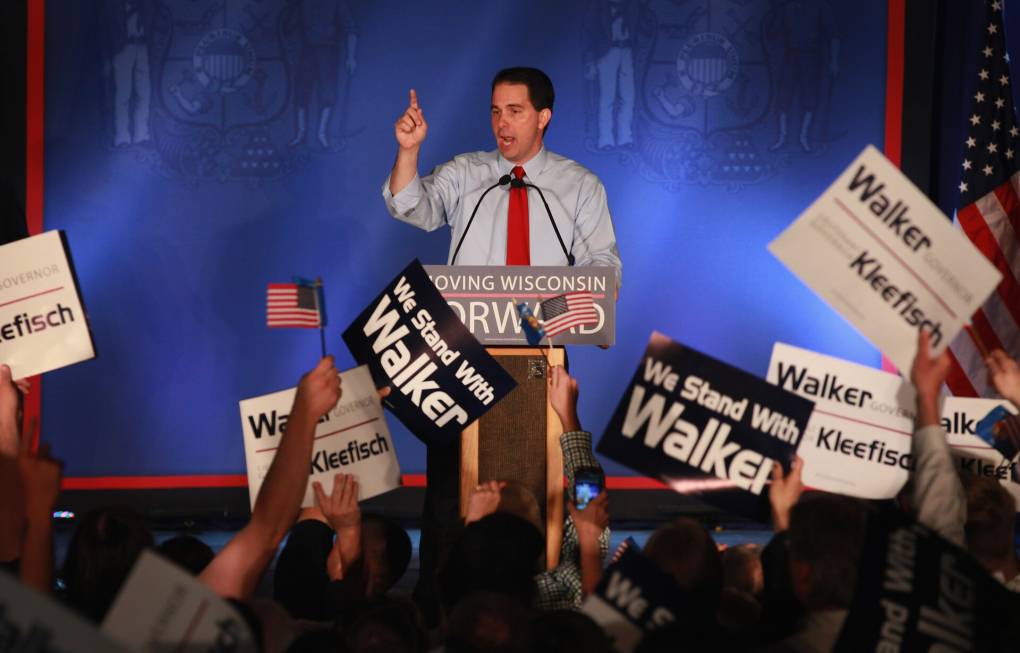
"caption": "Wisconsin Gov. Scott Walker greets supporters at an election-night rally June 5, 2012 in Waukesha, Wisconsin. ",
"description": null,
"title": "Wisconsin Gov. Walker Holds Recall Election Night Gathering",
"credit": "Scott Olson/Getty Images",
"status": "inherit",
"altTag": null,
"isLoading": false,
"fetchFailed": false
}
},
"audioPlayerReducer": {
"postId": "stream_live",
"isPaused": true,
"isPlaying": false,
"pfsActive": false,
"pledgeModalIsOpen": true,
"playerDrawerIsOpen": false,
"liveAudioPlayStartedAt": 0,
"liveAudioPlayContext": ""
},
"authorsReducer": {
"byline_news_11877588": {
"type": "authors",
"id": "byline_news_11877588",
"meta": {
"override": true
},
"slug": "byline_news_11877588",
"name": "Don Thompson \u003cbr> The Associated Press",
"isLoading": false
},
"byline_news_11876617": {
"type": "authors",
"id": "byline_news_11876617",
"meta": {
"override": true
},
"slug": "byline_news_11876617",
"name": "Olga R. Rodriguez and Kathleen Ronayne \u003cbr> The Associated Press",
"isLoading": false
},
"byline_news_11875020": {
"type": "authors",
"id": "byline_news_11875020",
"meta": {
"override": true
},
"slug": "byline_news_11875020",
"name": "Kathleen Ronayne\u003cbr />The Associated Press",
"isLoading": false
},
"gmarzorati": {
"type": "authors",
"id": "227",
"meta": {
"index": "authors_1716337520",
"id": "227",
"found": true
},
"name": "Guy Marzorati",
"firstName": "Guy",
"lastName": "Marzorati",
"slug": "gmarzorati",
"email": "gmarzorati@KQED.org",
"display_author_email": true,
"staff_mastheads": [
"news"
],
"title": "Correspondent",
"bio": "Guy Marzorati is a correspondent on KQED's California Politics and Government Desk, based in San Jose. A graduate of Santa Clara University, Guy joined KQED in 2013. He reports on state and local politics and produces KQED's digital voter guide.",
"avatar": "https://secure.gravatar.com/avatar/e7038b8dbfd55b104369b76b1cd0b9de?s=600&d=blank&r=g",
"twitter": "guymarzorati",
"facebook": null,
"instagram": null,
"linkedin": null,
"sites": [
{
"site": "",
"roles": [
"editor"
]
},
{
"site": "news",
"roles": [
"editor"
]
},
{
"site": "science",
"roles": [
"editor"
]
},
{
"site": "forum",
"roles": [
"editor"
]
},
{
"site": "elections",
"roles": [
"editor"
]
},
{
"site": "liveblog",
"roles": [
"editor"
]
}
],
"headData": {
"title": "Guy Marzorati | KQED",
"description": "Correspondent",
"ogImgSrc": "https://secure.gravatar.com/avatar/e7038b8dbfd55b104369b76b1cd0b9de?s=600&d=blank&r=g",
"twImgSrc": "https://secure.gravatar.com/avatar/e7038b8dbfd55b104369b76b1cd0b9de?s=600&d=blank&r=g"
},
"isLoading": false,
"link": "/author/gmarzorati"
},
"tychehendricks": {
"type": "authors",
"id": "259",
"meta": {
"index": "authors_1716337520",
"id": "259",
"found": true
},
"name": "Tyche Hendricks",
"firstName": "Tyche",
"lastName": "Hendricks",
"slug": "tychehendricks",
"email": "thendricks@kqed.org",
"display_author_email": true,
"staff_mastheads": [
"news"
],
"title": "KQED Senior Editor, Immigration",
"bio": "\u003cspan style=\"font-weight: 400;\">Tyche Hendricks is KQED’s senior editor for immigration, leading coverage of the policy and politics that affect California’s immigrant communities. Her work for KQED’s radio and online audiences is also carried on NPR and other national outlets. She has been recognized with awards from the Radio and Television News Directors Association, the Society for Professional Journalists; the Education Writers Association; the Best of the West and the National Federation of Community Broadcasters. Before joining KQED in 2010, Tyche spent more than a dozen years as a newspaper reporter, notably at the \u003c/span>\u003ci>\u003cspan style=\"font-weight: 400;\">San Francisco Chronicle\u003c/span>\u003c/i>\u003cspan style=\"font-weight: 400;\">. At different times she has covered criminal justice, government and politics and urban planning. Tyche has taught in the MFA Creative Writing program at the University of San Francisco and at UC Berkeley’s Graduate School of Journalism, where she was co-director of a national immigration symposium for professional journalists. She is the author of \u003c/span>\u003ci>\u003cspan style=\"font-weight: 400;\">The Wind Doesn't Need a Passport: Stories from the U.S.-Mexico Borderlands\u003c/span>\u003c/i>\u003cspan style=\"font-weight: 400;\"> (University of California Press). \u003c/span>",
"avatar": "https://secure.gravatar.com/avatar/b8ee458e2731c2d43df86882ce17267e?s=600&d=blank&r=g",
"twitter": "tychehendricks",
"facebook": null,
"instagram": null,
"linkedin": null,
"sites": [
{
"site": "news",
"roles": [
"editor"
]
},
{
"site": "stateofhealth",
"roles": [
"editor"
]
}
],
"headData": {
"title": "Tyche Hendricks | KQED",
"description": "KQED Senior Editor, Immigration",
"ogImgSrc": "https://secure.gravatar.com/avatar/b8ee458e2731c2d43df86882ce17267e?s=600&d=blank&r=g",
"twImgSrc": "https://secure.gravatar.com/avatar/b8ee458e2731c2d43df86882ce17267e?s=600&d=blank&r=g"
},
"isLoading": false,
"link": "/author/tychehendricks"
},
"markfiore": {
"type": "authors",
"id": "3236",
"meta": {
"index": "authors_1716337520",
"id": "3236",
"found": true
},
"name": "Mark Fiore",
"firstName": "Mark",
"lastName": "Fiore",
"slug": "markfiore",
"email": "mark@markfiore.com",
"display_author_email": false,
"staff_mastheads": [
"news"
],
"title": "KQED News Cartoonist",
"bio": "\u003ca href=\"http://www.MarkFiore.com\">MarkFiore.com\u003c/a> | \u003ca href=\"https://twitter.com/markfiore\">Follow on Twitter\u003c/a> | \u003ca href=\"https://www.facebook.com/pages/Mark-Fiore-Animated-Political-Cartoons/94451707396?ref=bookmarks\">Facebook\u003c/a> | \u003ca href=\"mailto:mark@markfiore.com\">email\u003c/a>\r\n\r\nPulitzer Prize-winner, Mark Fiore, who the Wall Street Journal has called “the undisputed guru of the form,” creates animated political cartoons in San Francisco, where his work has been featured regularly on the San Francisco Chronicle’s web site, SFGate.com. His work has appeared on Newsweek.com, Slate.com, CBSNews.com, MotherJones.com, DailyKos.com and NPR’s web site. Fiore’s political animation has appeared on CNN, Frontline, Bill Moyers Journal, Salon.com and cable and broadcast outlets across the globe.\r\n\r\nBeginning his professional life by drawing traditional political cartoons for newspapers, Fiore’s work appeared in publications ranging from the Washington Post to the Los Angeles Times. In the late 1990s, he began to experiment with animating political cartoons and, after a short stint at the San Jose Mercury News as their staff cartoonist, Fiore devoted all his energies to animation.\r\nGrowing up in California, Fiore also spent a good portion of his life in the backwoods of Idaho. It was this combination that shaped him politically. Mark majored in political science at Colorado College, where, in a perfect send-off for a cartoonist, he received his diploma in 1991 as commencement speaker Dick Cheney smiled approvingly.\r\nMark Fiore was awarded the Pulitzer Prize for political cartooning in 2010, a Robert F. Kennedy Journalism Award in 2004 and has twice received an Online Journalism Award for commentary from the Online News Association (2002, 2008). Fiore has received two awards for his work in new media from the National Cartoonists Society (2001, 2002), and in 2006 received The James Madison Freedom of Information Award from The Society of Professional Journalists.",
"avatar": "https://secure.gravatar.com/avatar/fc4e2a612b15b67bad0c6f0e1db4ca9b?s=600&d=blank&r=g",
"twitter": "MarkFiore",
"facebook": null,
"instagram": "https://www.instagram.com/markfiore/?hl=en",
"linkedin": null,
"sites": [
{
"site": "arts",
"roles": [
"contributor"
]
},
{
"site": "news",
"roles": [
"editor"
]
},
{
"site": "futureofyou",
"roles": [
"editor"
]
},
{
"site": "science",
"roles": [
"editor"
]
}
],
"headData": {
"title": "Mark Fiore | KQED",
"description": "KQED News Cartoonist",
"ogImgSrc": "https://secure.gravatar.com/avatar/fc4e2a612b15b67bad0c6f0e1db4ca9b?s=600&d=blank&r=g",
"twImgSrc": "https://secure.gravatar.com/avatar/fc4e2a612b15b67bad0c6f0e1db4ca9b?s=600&d=blank&r=g"
},
"isLoading": false,
"link": "/author/markfiore"
},
"korr": {
"type": "authors",
"id": "11200",
"meta": {
"index": "authors_1716337520",
"id": "11200",
"found": true
},
"name": "Katie Orr",
"firstName": "Katie",
"lastName": "Orr",
"slug": "korr",
"email": "korr@kqed.org",
"display_author_email": false,
"staff_mastheads": [],
"title": "KQED Contributor",
"bio": "Katie Orr was a Sacramento-based reporter for KQED's Politics and Government Desk, covering the state Capitol and a variety of issues including women in politics, voting and elections and legislation. Prior to joining KQED in 2016, Katie was state government reporter for Capital Public Radio in Sacramento. She's also worked for KPBS in San Diego, where she covered City Hall.\r\n\r\nKatie received her masters degree in political science from San Diego State University and holds a Bachelors degree in broadcast journalism from Arizona State University.\r\n\r\nIn 2015 Katie won a national Clarion Award for a series of stories she did on women in California politics. She's been honored by the Society for Professional Journalists and, in 2013, was named by \u003cem>The Washington Post\u003c/em> as one of the country's top state Capitol reporters. She's also reported for the award-winning documentary series \u003cem>The View from Here \u003c/em>and was part of the team that won national PRNDI and Gabriel Awards in 2015. She lives in Sacramento with her husband. Twitter: @1KatieOrr",
"avatar": "https://secure.gravatar.com/avatar/41a40b25845adc78f50808670860449e?s=600&d=blank&r=g",
"twitter": "1katieorr",
"facebook": null,
"instagram": null,
"linkedin": null,
"sites": [
{
"site": "news",
"roles": [
"subscriber"
]
},
{
"site": "stateofhealth",
"roles": [
"author"
]
},
{
"site": "forum",
"roles": [
"author"
]
}
],
"headData": {
"title": "Katie Orr | KQED",
"description": "KQED Contributor",
"ogImgSrc": "https://secure.gravatar.com/avatar/41a40b25845adc78f50808670860449e?s=600&d=blank&r=g",
"twImgSrc": "https://secure.gravatar.com/avatar/41a40b25845adc78f50808670860449e?s=600&d=blank&r=g"
},
"isLoading": false,
"link": "/author/korr"
},
"lsarah": {
"type": "authors",
"id": "11626",
"meta": {
"index": "authors_1716337520",
"id": "11626",
"found": true
},
"name": "Lakshmi Sarah",
"firstName": "Lakshmi",
"lastName": "Sarah",
"slug": "lsarah",
"email": "lsarah@kqed.org",
"display_author_email": false,
"staff_mastheads": [],
"title": "Digital Producer",
"bio": "Lakshmi Sarah is an educator, author and journalist with a focus on innovative storytelling. She has worked with newspapers, radio and magazines from Ahmedabad, India to Los Angeles, California. She has written and produced for Die Zeit, Global Voices, AJ+, KQED, Fusion Media Group and the New York Times.",
"avatar": "https://secure.gravatar.com/avatar/652dcaecd8b28826fc17a8b2d6bb4e93?s=600&d=blank&r=g",
"twitter": "lakitalki",
"facebook": null,
"instagram": "https://www.instagram.com/laki.talki/",
"linkedin": "https://www.linkedin.com/in/lakisarah/",
"sites": [
{
"site": "arts",
"roles": []
},
{
"site": "news",
"roles": []
},
{
"site": "bayareabites",
"roles": []
},
{
"site": "science",
"roles": []
}
],
"headData": {
"title": "Lakshmi Sarah | KQED",
"description": "Digital Producer",
"ogImgSrc": "https://secure.gravatar.com/avatar/652dcaecd8b28826fc17a8b2d6bb4e93?s=600&d=blank&r=g",
"twImgSrc": "https://secure.gravatar.com/avatar/652dcaecd8b28826fc17a8b2d6bb4e93?s=600&d=blank&r=g"
},
"isLoading": false,
"link": "/author/lsarah"
},
"ebaldassari": {
"type": "authors",
"id": "11652",
"meta": {
"index": "authors_1716337520",
"id": "11652",
"found": true
},
"name": "Erin Baldassari",
"firstName": "Erin",
"lastName": "Baldassari",
"slug": "ebaldassari",
"email": "ebaldassari@KQED.org",
"display_author_email": true,
"staff_mastheads": [
"news"
],
"title": "Staff Writer",
"bio": "Erin Baldassari covers housing for KQED. She's a former print journalist and most recently worked as the transportation reporter for the \u003cem>Mercury News\u003c/em> and \u003cem>East Bay Times. \u003c/em>There, she focused on how the Bay Area’s housing shortage has changed the way people move around the region. She also served on the \u003cem>East Bay Times\u003c/em>’ 2017 Pulitzer Prize-winning team for coverage of the Ghost Ship Fire in Oakland. Prior to that, Erin worked as a breaking news and general assignment reporter for a variety of outlets in the Bay Area and the greater Boston area. A Tufts University alumna, Erin grew up in the foothills of the Sierra Nevada mountains and in Sonoma County. She is a life-long KQED listener.",
"avatar": "https://secure.gravatar.com/avatar/5e95cad64a8ca08288082212e199d2b0cbeb4fd8e8ef5339395f361032bbe005?s=600&d=blank&r=g",
"twitter": "e_baldi",
"bluesky": null,
"facebook": null,
"instagram": null,
"linkedin": null,
"sites": [
{
"site": "news",
"roles": [
"edit_others_posts",
"editor"
]
},
{
"site": "science",
"roles": [
"editor"
]
},
{
"site": "liveblog",
"roles": [
"editor"
]
}
],
"headData": {
"title": "Erin Baldassari | KQED",
"description": "Staff Writer",
"ogImgSrc": "https://secure.gravatar.com/avatar/5e95cad64a8ca08288082212e199d2b0cbeb4fd8e8ef5339395f361032bbe005?s=600&d=blank&r=g",
"twImgSrc": "https://secure.gravatar.com/avatar/5e95cad64a8ca08288082212e199d2b0cbeb4fd8e8ef5339395f361032bbe005?s=600&d=blank&r=g"
},
"isLoading": false,
"link": "/author/ebaldassari"
},
"ccabreralomeli": {
"type": "authors",
"id": "11708",
"meta": {
"index": "authors_1716337520",
"id": "11708",
"found": true
},
"name": "Carlos Cabrera-Lomelí",
"firstName": "Carlos",
"lastName": "Cabrera-Lomelí",
"slug": "ccabreralomeli",
"email": "ccabreralomeli@KQED.org",
"display_author_email": true,
"staff_mastheads": [
"news"
],
"title": "Community Reporter",
"bio": "Carlos Cabrera-Lomelí is a community reporter with KQED's digital engagement team. He also reports and co-produces for KQED's bilingual news hub KQED en Español. He grew up in San Francisco's Mission District and has previously worked with Univision, 48 Hills and REFORMA in Mexico City.",
"avatar": "https://secure.gravatar.com/avatar/c309be9665e484f887b818c89e273ecc673004f426f36b24d00a4d813a2e0518?s=600&d=blank&r=g",
"twitter": "@LomeliCabrera",
"bluesky": null,
"facebook": null,
"instagram": null,
"linkedin": null,
"sites": [
{
"site": "arts",
"roles": [
"editor"
]
},
{
"site": "news",
"roles": [
"editor"
]
},
{
"site": "about",
"roles": [
"editor"
]
},
{
"site": "science",
"roles": [
"editor"
]
},
{
"site": "perspectives",
"roles": [
"editor"
]
},
{
"site": "elections",
"roles": [
"editor"
]
},
{
"site": "liveblog",
"roles": [
"contributor"
]
}
],
"headData": {
"title": "Carlos Cabrera-Lomelí | KQED",
"description": "Community Reporter",
"ogImgSrc": "https://secure.gravatar.com/avatar/c309be9665e484f887b818c89e273ecc673004f426f36b24d00a4d813a2e0518?s=600&d=blank&r=g",
"twImgSrc": "https://secure.gravatar.com/avatar/c309be9665e484f887b818c89e273ecc673004f426f36b24d00a4d813a2e0518?s=600&d=blank&r=g"
},
"isLoading": false,
"link": "/author/ccabreralomeli"
}
},
"pagesReducer": {
"news_tag_gavin-newsom": {
"type": "terms",
"id": "news_16",
"meta": {
"index": "terms_1716263798",
"site": "news",
"id": "16",
"score": 8.937016
},
"featImg": null,
"name": "Gavin Newsom",
"description": null,
"taxonomy": "tag",
"headData": {
"twImgId": null,
"twTitle": null,
"ogTitle": null,
"ogImgId": null,
"twDescription": null,
"description": null,
"title": "Gavin Newsom Archives | KQED News",
"ogDescription": null
},
"ttid": 16,
"slug": "gavin-newsom",
"isLoading": false,
"title": "Gavin Newsom",
"pageMeta": {
"site": "news",
"WpPageTemplate": "page-topic-editorial",
"currentPage": 59
},
"blocks": [
{
"blockName": "kqed/post-list",
"attrs": {
"layout": "cardArticle2",
"query": "posts/news?tag=gavin-newsom",
"seeMore": false,
"paginated": true,
"page": 59
}
},
{
"blockName": "kqed/ad"
}
]
}
},
"pfsSessionReducer": {},
"postsReducer": {
"stream_live": {
"type": "live",
"id": "stream_live",
"audioUrl": "https://streams.kqed.org/kqedradio",
"title": "Live Stream",
"excerpt": "Live Stream information currently unavailable.",
"link": "/radio",
"featImg": "",
"label": {
"name": "KQED Live",
"link": "/"
}
},
"stream_kqedNewscast": {
"type": "posts",
"id": "stream_kqedNewscast",
"audioUrl": "https://www.kqed.org/.stream/anon/radio/RDnews/newscast.mp3?_=1",
"title": "KQED Newscast",
"featImg": "",
"label": {
"name": "88.5 FM",
"link": "/"
}
},
"news_11877600": {
"type": "posts",
"id": "news_11877600",
"meta": {
"index": "posts_1716263798",
"site": "news",
"id": "11877600",
"score": null,
"sort": [
1623371826000
]
},
"guestAuthors": [],
"slug": "thousands-of-renters-and-landlords-await-state-aid-as-eviction-moratorium-set-to-expire",
"title": "Thousands of Renters and Landlords Await State Aid as Eviction Moratorium Set to Expire",
"publishDate": 1623371826,
"format": "image",
"headTitle": "Thousands of Renters and Landlords Await State Aid as Eviction Moratorium Set to Expire | KQED",
"labelTerm": {
"site": "news"
},
"content": "\u003cp>Only a fraction of California’s rent relief money has gotten into the hands of people who need it, prompting the state to make improvements to its slow-moving system.\u003c/p>\n\u003cp>A little more than 2% of people who have started or sent in applications to California’s rent relief program have received aid. And far fewer people have applied to the program than expected, state officials said Thursday.\u003c/p>\n\u003cp>[aside postID=news_11864513 hero='https://ww2.kqed.org/app/uploads/sites/10/2021/03/pexels-karolina-grabowska-4386433-1020x638.jpg']The program, called \u003ca href=\"https://housing.ca.gov/covid_rr/\" target=\"_blank\" rel=\"noopener noreferrer\">Housing Is Key\u003c/a>, rolled out in March to provide financial relief to tenants who have fallen behind on rent due to pandemic-related job losses.\u003c/p>\n\u003cp>As of Monday, the program had assisted 4,074 households out of about 190,000 with nearly $36,737,000 in aid distributed, according to the state’s Department of Housing and Community Development (HCD). More than half of the 190,000 applicants started their applications but then abandoned them without completing them, HCD officials said.\u003c/p>\n\u003cp>The state has received applications for $543 million in rent relief, which is a little more than a third of the $1.4 billion that’s available, officials from HCD said. Those figures don’t include $1.2 billion in rent relief that cities and counties are distributing through their own programs.\u003c/p>\n\u003cp>Jackie Lowery lives in Antioch with her extended family. Her husband, son and daughter-in-law all lost their jobs on the same day last March, right after the pandemic hit. Now they owe about $11,000 in back rent.\u003c/p>\n\u003cp>“It’s just really scary right now,” Lowery said. “My grandbabies — they’re 6 years old — they need a roof over their head. The whole family does. Everyone does.”\u003c/p>\n\u003cp>[pullquote size=\"medium\" align=\"right\" citation=\"Jason Elliott, Gov. Gavin Newsom's senior counselor on housing\"]‘Our most important priority is making sure the significant amount of federal rental assistance we have gets into the pockets of people who are entitled to it, and who need it.’[/pullquote]Lowery said her husband submitted his application in March but still hasn’t received word about whether or not it’s been approved.\u003c/p>\n\u003cp>“We have heard absolutely nothing back yet,” she said.\u003c/p>\n\u003cp>Jessica Hayes, a program specialist at HCD, said the delays are due to problems with the department’s anti-fraud system and to ensure there were no duplicate payments. They first prioritized the people with the lowest incomes but have started expanding the program to more people, she said.\u003c/p>\n\u003cp>And, Hayes said, they’re adding more staff.\u003c/p>\n\u003cp>“We’ve been able to increase the number of households that we’re processing through the application each week,” she said, “and we expect that to continue to ramp up.”\u003c/p>\n\u003cp>[aside postID=news_11869250 hero='https://ww2.kqed.org/app/uploads/sites/10/2021/04/RS48524_005_KQED_HousingisKey_04142021-qut-1020x680.jpg']But Hayes also said that far fewer people have applied to the system than anticipated. Applicants have complained of a clunky and cumbersome system and the \u003ca href=\"https://www.kqed.org/news/11869250/a-discriminatory-barrier-californias-rent-relief-website-lacks-translations-advocates-say\" target=\"_blank\" rel=\"noopener noreferrer\">lack of translation for non-English speakers\u003c/a> as inhibiting people from applying. In response to those concerns, HCD Director Gustavo Velasquez said the state streamlined the application, making it more user friendly, and has added more languages, as well.\u003c/p>\n\u003cp>When the program launched, the application was only available in English and Spanish. It’s now available in simplified Chinese, Korean, Vietnamese and Tagalog.\u003c/p>\n\u003cp>“We have a redesigned application,” Velasquez said. “We have changed the flow of information required so that it is easier to understand and follow.”\u003c/p>\n\u003cp>Lowery said that before the redesign it took her two days just to complete her husband’s rent relief application, which she helped him type out. That’s because she had to search for a number of documents — including proof of income, their lease and proof that he had a COVID-related hardship — and that all took time.\u003c/p>\n\u003cp>[ad fullwidth]\u003c/p>\n\u003cp>“If you don’t have your things together and you don’t have all your information, it could literally take almost a week,” just to complete the application, she said.\u003c/p>\n\u003cp>Now, the state is requiring fewer documents while meeting legal requirements to protect against fraud, Velasquez said. People will have to declare, under penalty of perjury, that they meet the requirements. Now though, people should be able to fill out the application in under an hour, he said.\u003c/p>\n\u003cp>HCD has also made the website more mobile friendly so that people can complete the work on their phones, without having to use a laptop, he said. And, they’ve created a paper application for people who are not tech savvy. The application will eventually be available for download on the website. In the meantime, people who want a paper application can call the state’s rent relief line at 1-833-430-2122.\u003c/p>\n\u003cp>[aside label='Latest Housing News' tag='housing']In addition to the $2.6 billion approved in December during the second round of federal stimulus, the American Rescue Plan passed in March allocated another $2.6 billion to California for past and future rent relief.\u003c/p>\n\u003cp>The governor has also proposed another \u003ca href=\"https://www.gov.ca.gov/2021/05/14/california-roars-back-governor-newsom-presents-100-billion-california-comeback-plan/\" target=\"_blank\" rel=\"noopener noreferrer\">$2 billion to pay for past-due utility bills\u003c/a>, said Jason Elliott, Gov. Gavin Newsom’s senior counselor on housing.\u003c/p>\n\u003cp>“Our most important priority is making sure the significant amount of federal rental assistance we have gets into the pockets of people who are entitled to it, and who need it,” he said. “We need to increase the amount of money we’re making available to individual renters and landlords.”\u003c/p>\n\u003cp>The state’s eviction moratorium \u003ca href=\"https://www.kqed.org/news/11871848/housing-advocates-push-sacramento-to-extend-eviction-moratorium\" target=\"_blank\" rel=\"noopener noreferrer\">expires on June 30\u003c/a>, but advocates for low-income renters are urging legislators to extend it.\u003c/p>\n\u003cp>\u003c/p>\n",
"blocks": [],
"excerpt": "The state has streamlined its rent relief application process as hundreds of thousands of people wait on aid and millions in relief goes unspent. ",
"status": "publish",
"parent": 0,
"modified": 1738785454,
"stats": {
"hasAudio": false,
"hasVideo": false,
"hasChartOrMap": false,
"iframeSrcs": [],
"hasGoogleForm": false,
"hasGallery": false,
"hasHearkenModule": false,
"hasPolis": false,
"paragraphCount": 25,
"wordCount": 994
},
"headData": {
"title": "Thousands of Renters and Landlords Await State Aid as Eviction Moratorium Set to Expire | KQED",
"description": "The state has streamlined its rent relief application process as hundreds of thousands of people wait on aid and millions in relief goes unspent. ",
"ogTitle": "",
"ogDescription": "",
"ogImgId": "",
"twTitle": "",
"twDescription": "",
"twImgId": "",
"schema": {
"@context": "https://schema.org",
"@type": "NewsArticle",
"headline": "Thousands of Renters and Landlords Await State Aid as Eviction Moratorium Set to Expire",
"datePublished": "2021-06-10T17:37:06-07:00",
"dateModified": "2025-02-05T11:57:34-08:00",
"image": "https://cdn.kqed.org/wp-content/uploads/2020/02/KQED-OG-Image@1x.png",
"isAccessibleForFree": "True",
"publisher": {
"@type": "NewsMediaOrganization",
"@id": "https://www.kqed.org/#organization",
"name": "KQED",
"logo": "https://cdn.kqed.org/wp-content/uploads/2020/02/KQED-OG-Image@1x.png",
"url": "https://www.kqed.org",
"sameAs": [
"https://www.facebook.com/KQED",
"https://twitter.com/KQED",
"https://www.instagram.com/kqed/",
"https://www.tiktok.com/@kqedofficial",
"https://www.linkedin.com/company/kqed",
"https://www.youtube.com/channel/UCeC0IOo7i1P_61zVUWbJ4nw"
]
}
}
},
"sticky": false,
"excludeFromSiteSearch": "Include",
"articleAge": "0",
"path": "/news/11877600/thousands-of-renters-and-landlords-await-state-aid-as-eviction-moratorium-set-to-expire",
"audioTrackLength": null,
"parsedContent": [
{
"type": "contentString",
"content": "\u003cdiv class=\"post-body\">\u003cp>\u003cp>Only a fraction of California’s rent relief money has gotten into the hands of people who need it, prompting the state to make improvements to its slow-moving system.\u003c/p>\n\u003cp>A little more than 2% of people who have started or sent in applications to California’s rent relief program have received aid. And far fewer people have applied to the program than expected, state officials said Thursday.\u003c/p>\n\u003cp>\u003c/p>\u003c/div>",
"attributes": {
"named": {},
"numeric": []
}
},
{
"type": "component",
"content": "",
"name": "aside",
"attributes": {
"named": {
"postid": "news_11864513",
"hero": "https://ww2.kqed.org/app/uploads/sites/10/2021/03/pexels-karolina-grabowska-4386433-1020x638.jpg",
"label": ""
},
"numeric": []
}
},
{
"type": "contentString",
"content": "\u003cdiv class=\"post-body\">\u003cp>The program, called \u003ca href=\"https://housing.ca.gov/covid_rr/\" target=\"_blank\" rel=\"noopener noreferrer\">Housing Is Key\u003c/a>, rolled out in March to provide financial relief to tenants who have fallen behind on rent due to pandemic-related job losses.\u003c/p>\n\u003cp>As of Monday, the program had assisted 4,074 households out of about 190,000 with nearly $36,737,000 in aid distributed, according to the state’s Department of Housing and Community Development (HCD). More than half of the 190,000 applicants started their applications but then abandoned them without completing them, HCD officials said.\u003c/p>\n\u003cp>The state has received applications for $543 million in rent relief, which is a little more than a third of the $1.4 billion that’s available, officials from HCD said. Those figures don’t include $1.2 billion in rent relief that cities and counties are distributing through their own programs.\u003c/p>\n\u003cp>Jackie Lowery lives in Antioch with her extended family. Her husband, son and daughter-in-law all lost their jobs on the same day last March, right after the pandemic hit. Now they owe about $11,000 in back rent.\u003c/p>\n\u003cp>“It’s just really scary right now,” Lowery said. “My grandbabies — they’re 6 years old — they need a roof over their head. The whole family does. Everyone does.”\u003c/p>\n\u003cp>\u003c/p>\u003c/div>",
"attributes": {
"named": {},
"numeric": []
}
},
{
"type": "component",
"content": "‘Our most important priority is making sure the significant amount of federal rental assistance we have gets into the pockets of people who are entitled to it, and who need it.’",
"name": "pullquote",
"attributes": {
"named": {
"size": "medium",
"align": "right",
"citation": "Jason Elliott, Gov. Gavin Newsom's senior counselor on housing",
"label": ""
},
"numeric": []
}
},
{
"type": "contentString",
"content": "\u003cdiv class=\"post-body\">\u003cp>Lowery said her husband submitted his application in March but still hasn’t received word about whether or not it’s been approved.\u003c/p>\n\u003cp>“We have heard absolutely nothing back yet,” she said.\u003c/p>\n\u003cp>Jessica Hayes, a program specialist at HCD, said the delays are due to problems with the department’s anti-fraud system and to ensure there were no duplicate payments. They first prioritized the people with the lowest incomes but have started expanding the program to more people, she said.\u003c/p>\n\u003cp>And, Hayes said, they’re adding more staff.\u003c/p>\n\u003cp>“We’ve been able to increase the number of households that we’re processing through the application each week,” she said, “and we expect that to continue to ramp up.”\u003c/p>\n\u003cp>\u003c/p>\u003c/div>",
"attributes": {
"named": {},
"numeric": []
}
},
{
"type": "component",
"content": "",
"name": "aside",
"attributes": {
"named": {
"postid": "news_11869250",
"hero": "https://ww2.kqed.org/app/uploads/sites/10/2021/04/RS48524_005_KQED_HousingisKey_04142021-qut-1020x680.jpg",
"label": ""
},
"numeric": []
}
},
{
"type": "contentString",
"content": "\u003cdiv class=\"post-body\">\u003cp>But Hayes also said that far fewer people have applied to the system than anticipated. Applicants have complained of a clunky and cumbersome system and the \u003ca href=\"https://www.kqed.org/news/11869250/a-discriminatory-barrier-californias-rent-relief-website-lacks-translations-advocates-say\" target=\"_blank\" rel=\"noopener noreferrer\">lack of translation for non-English speakers\u003c/a> as inhibiting people from applying. In response to those concerns, HCD Director Gustavo Velasquez said the state streamlined the application, making it more user friendly, and has added more languages, as well.\u003c/p>\n\u003cp>When the program launched, the application was only available in English and Spanish. It’s now available in simplified Chinese, Korean, Vietnamese and Tagalog.\u003c/p>\n\u003cp>“We have a redesigned application,” Velasquez said. “We have changed the flow of information required so that it is easier to understand and follow.”\u003c/p>\n\u003cp>Lowery said that before the redesign it took her two days just to complete her husband’s rent relief application, which she helped him type out. That’s because she had to search for a number of documents — including proof of income, their lease and proof that he had a COVID-related hardship — and that all took time.\u003c/p>\n\u003cp>\u003c/p>\u003c/div>",
"attributes": {
"named": {},
"numeric": []
}
},
{
"type": "component",
"content": "",
"name": "ad",
"attributes": {
"named": {
"label": "fullwidth"
},
"numeric": [
"fullwidth"
]
}
},
{
"type": "contentString",
"content": "\u003cdiv class=\"post-body\">\u003cp>\u003c/p>\n\u003cp>“If you don’t have your things together and you don’t have all your information, it could literally take almost a week,” just to complete the application, she said.\u003c/p>\n\u003cp>Now, the state is requiring fewer documents while meeting legal requirements to protect against fraud, Velasquez said. People will have to declare, under penalty of perjury, that they meet the requirements. Now though, people should be able to fill out the application in under an hour, he said.\u003c/p>\n\u003cp>HCD has also made the website more mobile friendly so that people can complete the work on their phones, without having to use a laptop, he said. And, they’ve created a paper application for people who are not tech savvy. The application will eventually be available for download on the website. In the meantime, people who want a paper application can call the state’s rent relief line at 1-833-430-2122.\u003c/p>\n\u003cp>\u003c/p>\u003c/div>",
"attributes": {
"named": {},
"numeric": []
}
},
{
"type": "component",
"content": "",
"name": "aside",
"attributes": {
"named": {
"label": "Latest Housing News ",
"tag": "housing"
},
"numeric": []
}
},
{
"type": "contentString",
"content": "\u003cdiv class=\"post-body\">\u003cp>In addition to the $2.6 billion approved in December during the second round of federal stimulus, the American Rescue Plan passed in March allocated another $2.6 billion to California for past and future rent relief.\u003c/p>\n\u003cp>The governor has also proposed another \u003ca href=\"https://www.gov.ca.gov/2021/05/14/california-roars-back-governor-newsom-presents-100-billion-california-comeback-plan/\" target=\"_blank\" rel=\"noopener noreferrer\">$2 billion to pay for past-due utility bills\u003c/a>, said Jason Elliott, Gov. Gavin Newsom’s senior counselor on housing.\u003c/p>\n\u003cp>“Our most important priority is making sure the significant amount of federal rental assistance we have gets into the pockets of people who are entitled to it, and who need it,” he said. “We need to increase the amount of money we’re making available to individual renters and landlords.”\u003c/p>\n\u003cp>The state’s eviction moratorium \u003ca href=\"https://www.kqed.org/news/11871848/housing-advocates-push-sacramento-to-extend-eviction-moratorium\" target=\"_blank\" rel=\"noopener noreferrer\">expires on June 30\u003c/a>, but advocates for low-income renters are urging legislators to extend it.\u003c/p>\n\u003cp>\u003c/p>\n\u003c/div>\u003c/p>",
"attributes": {
"named": {},
"numeric": []
}
}
],
"link": "/news/11877600/thousands-of-renters-and-landlords-await-state-aid-as-eviction-moratorium-set-to-expire",
"authors": [
"11652"
],
"categories": [
"news_6266",
"news_8"
],
"tags": [
"news_3921",
"news_21883",
"news_27701",
"news_16",
"news_1775",
"news_20967"
],
"featImg": "news_11835052",
"label": "news"
},
"news_11877588": {
"type": "posts",
"id": "news_11877588",
"meta": {
"index": "posts_1716263798",
"site": "news",
"id": "11877588",
"score": null,
"sort": [
1623363952000
]
},
"guestAuthors": [],
"slug": "california-appeals-stone-cold-ideologue-judges-ruling-upending-states-assault-weapons-ban",
"title": "California Appeals 'Stone Cold Ideologue' Judge's Ruling Upending State's Assault Weapons Ban",
"publishDate": 1623363952,
"format": "audio",
"headTitle": "California Appeals ‘Stone Cold Ideologue’ Judge’s Ruling Upending State’s Assault Weapons Ban | KQED",
"labelTerm": {
"site": "news"
},
"content": "\u003cp>Gov. Gavin Newsom denounced in starkly personal terms a federal judge’s upending of the state’s restrictions on assault weapons as officials announced the filing Thursday of a formal notice that they will appeal the decision.\u003c/p>\n\u003cp>They described last week’s ruling by U.S. District Judge Roger Benitez as an outlier that conflicts with at least six other federal decisions upholding assault weapons laws in California and elsewhere, a ruling that is designed to get the issue before a recently more conservative U.S. Supreme Court.\u003c/p>\n\u003cp>Newsom, the son of a judge, denounced Benitez as “a stone cold ideologue. He is a wholly owned subsidiary of the gun lobby of the National Rifle Association.” \u003c/p>\n\u003cp>The state already is appealing the same judge’s 2017 ruling against the state’s nearly two-decade-old ban on the sales and purchases of magazines holding more than 10 bullets, and his ruling last year blocking a 2019 California law requiring background checks for anyone buying ammunition.\u003c/p>\n\u003cp>“We need to call this federal judge out. He will continue to do damage, mark my word,” Newsom said. “This is a very focused agenda to work through this judge, where the decision’s already made before it’s even presented, who writes ‘press releases’ on behalf of the gun lobby.”\u003c/p>\n\u003cp>[ad fullwidth]\u003c/p>\n\u003cp>Gun owners’ rights groups have made no secret of their effort to get firearms restrictions before the nation’s high court.\u003c/p>\n\u003cp>But the Firearms Policy Coalition, which led plaintiffs who won at the trial level, condemned the governor’s “outrageous and callous personal attacks” on the judge.\u003c/p>\n\u003cp>“Newsom’s verbal assaults on a long-respected member of the judiciary shows his deep and continuing disrespect for the rule of law, the judiciary, the Constitution, and the human rights of California citizens,” the group said. \u003c/p>\n\u003cp>Benitez was appointed by Republican President George W. Bush. Newsom, a Democrat, also assailed Republicans who don’t support gun restrictions.\u003c/p>\n\u003cp>A three-judge appeals court panel agreed with Benitez on his ammunition magazine ruling, but the decision is being reconsidered by a larger appellate panel.\u003c/p>\n\u003cp>Attorney General Rob Bonta filed the three-page notice of appeal and plans to ask the 9th U.S. Circuit Court of Appeals for a stay so the current 32-year assault weapons ban will remain in effect throughout the appeals process.\u003c/p>\n\u003cfigure id=\"attachment_11877597\" class=\"wp-caption aligncenter\" style=\"max-width: 1920px\">\u003cimg loading=\"lazy\" decoding=\"async\" src=\"https://ww2.kqed.org/app/uploads/sites/10/2021/06/RS48088_032_SanFrancisco_NewsomBontaPressConference_03242021-qut.jpg\" alt=\"\" width=\"1920\" height=\"1278\" class=\"size-full wp-image-11877597\" srcset=\"https://cdn.kqed.org/wp-content/uploads/sites/10/2021/06/RS48088_032_SanFrancisco_NewsomBontaPressConference_03242021-qut.jpg 1920w, https://cdn.kqed.org/wp-content/uploads/sites/10/2021/06/RS48088_032_SanFrancisco_NewsomBontaPressConference_03242021-qut-800x533.jpg 800w, https://cdn.kqed.org/wp-content/uploads/sites/10/2021/06/RS48088_032_SanFrancisco_NewsomBontaPressConference_03242021-qut-1020x679.jpg 1020w, https://cdn.kqed.org/wp-content/uploads/sites/10/2021/06/RS48088_032_SanFrancisco_NewsomBontaPressConference_03242021-qut-160x107.jpg 160w, https://cdn.kqed.org/wp-content/uploads/sites/10/2021/06/RS48088_032_SanFrancisco_NewsomBontaPressConference_03242021-qut-1536x1022.jpg 1536w\" sizes=\"(max-width: 1920px) 100vw, 1920px\">\u003cfigcaption class=\"wp-caption-text\">California Attorney General Rob Bonta speaks during a press conference on March 24, 2021, with Gov. Gavin Newsom in the background. \u003ccite>(Beth LaBerge/KQED)\u003c/cite>\u003c/figcaption>\u003c/figure>\n\u003cp>Benitez ruled on Friday that the state’s definition of illegal military-style rifles violates the U.S. Constitution because it deprives law-abiding Californians of weapons commonly allowed in most other states. \u003c/p>\n\u003cp>Critics of the ruling, including Bonta and Newsom, were particularly upset with the judge’s comparison of assault weapons to a common tool: “Like the Swiss Army knife, the popular AR-15 rifle is a perfect combination of home defense weapon and homeland defense equipment. Good for both home and battle,” the judge wrote.\u003c/p>\n\u003cp>“Pocket knives were not intended to kill as many people as possible,” said Mattie Scott, Brady California state president, whose 24-year-old son was killed with an assault weapon in 1996.\u003c/p>\n\u003cp>State officials announced their appeal at San Francisco General Hospital, a Level I Trauma Center, where trauma surgeon Dr. Andre Campbell vividly described the damage that can be done by a high-speed rifle round fired from an assault weapon.\u003c/p>\n\u003cp>“An AR-15 is a weapon of mass destruction … used in warfare,” Campbell said. It “causes absolute devastation to the human body. It is as if a bomb went off in the tissues of the patient.”\u003c/p>\n\u003cp>[aside label='Gun Control' tag='gun-control']California first banned specific brands of weapons in 1989 after a mass shooting at a Stockton elementary school killed five children and injured more than two dozen others. The state has updated the law several times since then and overall has some of the nation’s strictest firearms laws.\u003c/p>\n\u003cp>As a result, “we have one of the lowest gun death rates in the entire country,” said Robyn Thomas, executive director of the Giffords Law Center to Prevent Gun Violence.\u003c/p>\n\u003cp>The Firearms Policy Coalition said it will oppose any stay of Benitez’s order. It had argued in part that assault weapons are no more deadly than some other weapons that are not banned by the state. \u003c/p>\n\u003cp>“The State’s desire to continue imposing its ban should not be allowed to prevail over the fundamental rights of law-abiding gun owners,” the group said.\u003c/p>\n\u003cp>Newsom and Bonta are longtime supporters of what they term commonsense gun restrictions. The governor likely faces a recall election this fall largely driven by his handling of the coronavirus pandemic. Bonta took office in April to fill a vacancy and faces several more conservative challengers in next year’s election.\u003c/p>\n\u003cp>Their move was backed earlier by 10 Democratic state lawmakers who said the restrictions help control gun violence.\u003c/p>\n\u003cp>Democrats who control the state Assembly on Thursday revived for future consideration a bill that would raise taxes on the sale of guns and ammunition. \u003c/p>\n\u003cp>The bill requires a two-thirds vote because it would raise taxes, and last week it failed to muster enough votes. It would impose a 10% tax on the sales price of handguns and an 11% tax on the sales price of rifles, precursor parts and ammunition, using the money for gun violence prevention and recovery programs.\u003c/p>\n\u003cp>\u003c/p>\n\u003cp>\u003cem>Adam Beam of The Associated Press contributed to this story.\u003c/em>\u003c/p>\n\n",
"blocks": [],
"excerpt": "Gov. Gavin Newsom denounced in starkly personal terms a federal judge's overturning of California's restrictions on assault weapons as officials announced they will appeal the decision.",
"status": "publish",
"parent": 0,
"modified": 1722643804,
"stats": {
"hasAudio": false,
"hasVideo": false,
"hasChartOrMap": false,
"iframeSrcs": [],
"hasGoogleForm": false,
"hasGallery": false,
"hasHearkenModule": false,
"hasPolis": false,
"paragraphCount": 27,
"wordCount": 963
},
"headData": {
"title": "California Appeals 'Stone Cold Ideologue' Judge's Ruling Upending State's Assault Weapons Ban | KQED",
"description": "Gov. Gavin Newsom denounced in starkly personal terms a federal judge's overturning of California's restrictions on assault weapons as officials announced they will appeal the decision.",
"ogTitle": "",
"ogDescription": "",
"ogImgId": "",
"twTitle": "",
"twDescription": "",
"twImgId": "",
"schema": {
"@context": "https://schema.org",
"@type": "NewsArticle",
"headline": "California Appeals 'Stone Cold Ideologue' Judge's Ruling Upending State's Assault Weapons Ban",
"datePublished": "2021-06-10T15:25:52-07:00",
"dateModified": "2024-08-02T17:10:04-07:00",
"image": "https://cdn.kqed.org/wp-content/uploads/2020/02/KQED-OG-Image@1x.png",
"isAccessibleForFree": "True",
"publisher": {
"@type": "NewsMediaOrganization",
"@id": "https://www.kqed.org/#organization",
"name": "KQED",
"logo": "https://cdn.kqed.org/wp-content/uploads/2020/02/KQED-OG-Image@1x.png",
"url": "https://www.kqed.org",
"sameAs": [
"https://www.facebook.com/KQED",
"https://twitter.com/KQED",
"https://www.instagram.com/kqed/",
"https://www.tiktok.com/@kqedofficial",
"https://www.linkedin.com/company/kqed",
"https://www.youtube.com/channel/UCeC0IOo7i1P_61zVUWbJ4nw"
]
}
}
},
"audioUrl": "https://www.kqed.org/.stream/anon/radio/RDnews/2021/06/LagosSilerGunControlRuling2Way.mp3",
"sticky": false,
"nprByline": "Don Thompson \u003cbr> The Associated Press",
"path": "/news/11877588/california-appeals-stone-cold-ideologue-judges-ruling-upending-states-assault-weapons-ban",
"audioDuration": 233000,
"audioTrackLength": null,
"parsedContent": [
{
"type": "contentString",
"content": "\u003cdiv class=\"post-body\">\u003cp>\u003cp>Gov. Gavin Newsom denounced in starkly personal terms a federal judge’s upending of the state’s restrictions on assault weapons as officials announced the filing Thursday of a formal notice that they will appeal the decision.\u003c/p>\n\u003cp>They described last week’s ruling by U.S. District Judge Roger Benitez as an outlier that conflicts with at least six other federal decisions upholding assault weapons laws in California and elsewhere, a ruling that is designed to get the issue before a recently more conservative U.S. Supreme Court.\u003c/p>\n\u003cp>Newsom, the son of a judge, denounced Benitez as “a stone cold ideologue. He is a wholly owned subsidiary of the gun lobby of the National Rifle Association.” \u003c/p>\n\u003cp>The state already is appealing the same judge’s 2017 ruling against the state’s nearly two-decade-old ban on the sales and purchases of magazines holding more than 10 bullets, and his ruling last year blocking a 2019 California law requiring background checks for anyone buying ammunition.\u003c/p>\n\u003cp>“We need to call this federal judge out. He will continue to do damage, mark my word,” Newsom said. “This is a very focused agenda to work through this judge, where the decision’s already made before it’s even presented, who writes ‘press releases’ on behalf of the gun lobby.”\u003c/p>\n\u003cp>\u003c/p>\u003c/div>",
"attributes": {
"named": {},
"numeric": []
}
},
{
"type": "component",
"content": "",
"name": "ad",
"attributes": {
"named": {
"label": "fullwidth"
},
"numeric": [
"fullwidth"
]
}
},
{
"type": "contentString",
"content": "\u003cdiv class=\"post-body\">\u003cp>\u003c/p>\n\u003cp>Gun owners’ rights groups have made no secret of their effort to get firearms restrictions before the nation’s high court.\u003c/p>\n\u003cp>But the Firearms Policy Coalition, which led plaintiffs who won at the trial level, condemned the governor’s “outrageous and callous personal attacks” on the judge.\u003c/p>\n\u003cp>“Newsom’s verbal assaults on a long-respected member of the judiciary shows his deep and continuing disrespect for the rule of law, the judiciary, the Constitution, and the human rights of California citizens,” the group said. \u003c/p>\n\u003cp>Benitez was appointed by Republican President George W. Bush. Newsom, a Democrat, also assailed Republicans who don’t support gun restrictions.\u003c/p>\n\u003cp>A three-judge appeals court panel agreed with Benitez on his ammunition magazine ruling, but the decision is being reconsidered by a larger appellate panel.\u003c/p>\n\u003cp>Attorney General Rob Bonta filed the three-page notice of appeal and plans to ask the 9th U.S. Circuit Court of Appeals for a stay so the current 32-year assault weapons ban will remain in effect throughout the appeals process.\u003c/p>\n\u003cfigure id=\"attachment_11877597\" class=\"wp-caption aligncenter\" style=\"max-width: 1920px\">\u003cimg loading=\"lazy\" decoding=\"async\" src=\"https://ww2.kqed.org/app/uploads/sites/10/2021/06/RS48088_032_SanFrancisco_NewsomBontaPressConference_03242021-qut.jpg\" alt=\"\" width=\"1920\" height=\"1278\" class=\"size-full wp-image-11877597\" srcset=\"https://cdn.kqed.org/wp-content/uploads/sites/10/2021/06/RS48088_032_SanFrancisco_NewsomBontaPressConference_03242021-qut.jpg 1920w, https://cdn.kqed.org/wp-content/uploads/sites/10/2021/06/RS48088_032_SanFrancisco_NewsomBontaPressConference_03242021-qut-800x533.jpg 800w, https://cdn.kqed.org/wp-content/uploads/sites/10/2021/06/RS48088_032_SanFrancisco_NewsomBontaPressConference_03242021-qut-1020x679.jpg 1020w, https://cdn.kqed.org/wp-content/uploads/sites/10/2021/06/RS48088_032_SanFrancisco_NewsomBontaPressConference_03242021-qut-160x107.jpg 160w, https://cdn.kqed.org/wp-content/uploads/sites/10/2021/06/RS48088_032_SanFrancisco_NewsomBontaPressConference_03242021-qut-1536x1022.jpg 1536w\" sizes=\"(max-width: 1920px) 100vw, 1920px\">\u003cfigcaption class=\"wp-caption-text\">California Attorney General Rob Bonta speaks during a press conference on March 24, 2021, with Gov. Gavin Newsom in the background. \u003ccite>(Beth LaBerge/KQED)\u003c/cite>\u003c/figcaption>\u003c/figure>\n\u003cp>Benitez ruled on Friday that the state’s definition of illegal military-style rifles violates the U.S. Constitution because it deprives law-abiding Californians of weapons commonly allowed in most other states. \u003c/p>\n\u003cp>Critics of the ruling, including Bonta and Newsom, were particularly upset with the judge’s comparison of assault weapons to a common tool: “Like the Swiss Army knife, the popular AR-15 rifle is a perfect combination of home defense weapon and homeland defense equipment. Good for both home and battle,” the judge wrote.\u003c/p>\n\u003cp>“Pocket knives were not intended to kill as many people as possible,” said Mattie Scott, Brady California state president, whose 24-year-old son was killed with an assault weapon in 1996.\u003c/p>\n\u003cp>State officials announced their appeal at San Francisco General Hospital, a Level I Trauma Center, where trauma surgeon Dr. Andre Campbell vividly described the damage that can be done by a high-speed rifle round fired from an assault weapon.\u003c/p>\n\u003cp>“An AR-15 is a weapon of mass destruction … used in warfare,” Campbell said. It “causes absolute devastation to the human body. It is as if a bomb went off in the tissues of the patient.”\u003c/p>\n\u003cp>\u003c/p>\u003c/div>",
"attributes": {
"named": {},
"numeric": []
}
},
{
"type": "component",
"content": "",
"name": "aside",
"attributes": {
"named": {
"label": "Gun Control ",
"tag": "gun-control"
},
"numeric": []
}
},
{
"type": "contentString",
"content": "\u003cdiv class=\"post-body\">\u003cp>California first banned specific brands of weapons in 1989 after a mass shooting at a Stockton elementary school killed five children and injured more than two dozen others. The state has updated the law several times since then and overall has some of the nation’s strictest firearms laws.\u003c/p>\n\u003cp>As a result, “we have one of the lowest gun death rates in the entire country,” said Robyn Thomas, executive director of the Giffords Law Center to Prevent Gun Violence.\u003c/p>\n\u003cp>The Firearms Policy Coalition said it will oppose any stay of Benitez’s order. It had argued in part that assault weapons are no more deadly than some other weapons that are not banned by the state. \u003c/p>\n\u003cp>“The State’s desire to continue imposing its ban should not be allowed to prevail over the fundamental rights of law-abiding gun owners,” the group said.\u003c/p>\n\u003cp>Newsom and Bonta are longtime supporters of what they term commonsense gun restrictions. The governor likely faces a recall election this fall largely driven by his handling of the coronavirus pandemic. Bonta took office in April to fill a vacancy and faces several more conservative challengers in next year’s election.\u003c/p>\n\u003cp>Their move was backed earlier by 10 Democratic state lawmakers who said the restrictions help control gun violence.\u003c/p>\n\u003cp>Democrats who control the state Assembly on Thursday revived for future consideration a bill that would raise taxes on the sale of guns and ammunition. \u003c/p>\n\u003cp>The bill requires a two-thirds vote because it would raise taxes, and last week it failed to muster enough votes. It would impose a 10% tax on the sales price of handguns and an 11% tax on the sales price of rifles, precursor parts and ammunition, using the money for gun violence prevention and recovery programs.\u003c/p>\n\u003cp>\u003c/p>\n\u003cp>\u003cem>Adam Beam of The Associated Press contributed to this story.\u003c/em>\u003c/p>\n\n\u003c/div>\u003c/p>",
"attributes": {
"named": {},
"numeric": []
}
}
],
"link": "/news/11877588/california-appeals-stone-cold-ideologue-judges-ruling-upending-states-assault-weapons-ban",
"authors": [
"byline_news_11877588"
],
"categories": [
"news_6188",
"news_8",
"news_13"
],
"tags": [
"news_3606",
"news_3607",
"news_18538",
"news_16",
"news_2795",
"news_18939",
"news_17968",
"news_3674"
],
"featImg": "news_11877599",
"label": "news"
},
"news_11877000": {
"type": "posts",
"id": "news_11877000",
"meta": {
"index": "posts_1716263798",
"site": "news",
"id": "11877000",
"score": null,
"sort": [
1623243608000
]
},
"guestAuthors": [],
"slug": "californias-homekey-is-revolutionizing-homeless-housing-but-can-it-last",
"title": "Faster, Cheaper: How California Is Revolutionizing Homeless Housing — And Why It Might Not Last",
"publishDate": 1623243608,
"format": "standard",
"headTitle": "Faster, Cheaper: How California Is Revolutionizing Homeless Housing — And Why It Might Not Last | KQED",
"labelTerm": {
"site": "news"
},
"content": "\u003cp>When Letta “Oneka” Glover checked into the shelter in San Rafael, she was exhausted.\u003c/p>\n\u003cp>She’s 50 and has bad knees, a condition made worse by sleeping in her car. That’s where she was living in February when she heard about the new shelter on Kerner Boulevard. She moved in a week later.\u003c/p>\n\u003cp>“It was relief,” Glover said. “I felt like I could kind of let my shoulders down, you know, and not have to be so on guard about everything.”\u003c/p>\n\u003cp>[aside label=\"More Stories From KQED's Homekey Series\" postID=\"news_11877585,news_11876745\"]This shelter isn’t like others, where she’s stayed. It’s tucked into the third floor of an office building that was once home to a legal services company. But instead of desks and chairs inside the offices, there are cots. The old lobby is now a shared work space, with computers for residents to search for jobs and housing. Large windows line a common room, with views of Mount Tamalpais.\u003c/p>\n\u003cp>Usually, temporary shelters are built in factories or warehouses, said Paul Fordham, deputy executive director of Homeward Bound of Marin, which is operating the shelter until it can be converted into permanent housing.\u003c/p>\n\u003cp>“But there’s so much light here,” he said. “It’s a very dignified, nice space to rebuild your life.”\u003c/p>\n\u003cp>The site is one of 94 projects funded through \u003ca href=\"https://www.hcd.ca.gov/grants-funding/active-funding/homekey.shtml\">Homekey\u003c/a>, a statewide program that’s created nearly 6,000 new units of housing. While the majority are hotel and motel conversions, they also include tiny homes and former vacation rentals, a college dormitory and single-family houses.\u003c/p>\n\u003cp>\u003c!-- iframe plugin v.4.3 wordpress.org/plugins/iframe/ -->\u003cbr>\n\u003ciframe loading=\"lazy\" title=\"Project Homekey Sites\" aria-label=\"Map\" id=\"datawrapper-chart-x4dU5\" src=\"https://datawrapper.dwcdn.net/x4dU5/11/\" scrolling=\"no\" frameborder=\"0\" style=\"border: none;\" width=\"800\" height=\"852\" class=\"iframe-class\">\u003c/iframe>\u003c/p>\n\u003cp>Though Homekey is barely a year old, Gov. Gavin Newsom is proposing a massive $7 billion, 46,000-unit expansion of the program. Half of the funding would be dedicated to housing for people with acute behavioral and mental health needs. It’s all part of his \u003ca href=\"https://www.kqed.org/news/11873157/newsom-wants-12-billion-to-house-californias-homeless-residents-calling-situation-unacceptable\">$12 billion proposal\u003c/a> to combat homelessness over the next two years.\u003c/p>\n\u003cp>Policy experts, service providers and others who work on homelessness in California have lauded Homekey as a monumental step in creating desperately needed new subsidized housing for the state’s more than \u003ca href=\"https://files.hudexchange.info/reports/published/CoC_PopSub_State_CA_2020.pdf\" target=\"_blank\" rel=\"noopener noreferrer\">161,000 homeless residents\u003c/a>. But they’re only cautiously optimistic about its future.\u003c/p>\n\u003cp>Many of the projects will need additional money to convert to permanent housing, and they’ll also need ongoing funding to pay for services that are often critical for keeping people housed.\u003c/p>\n\u003cp>“It’s a great concept,” said Ellen Hammerle, Catholic Charities’ chief programs officer. “My concern is that we need to sustain it.”\u003c/p>\n\u003cp>And, this new housing will need to produce a visible reduction in chronic homelessness, said Andrew Hening, co-founder of the nonprofit Opening Doors Marin. It’s an issue voters say is one of their \u003ca href=\"https://www.mercurynews.com/2021/05/04/bay-area-residents-are-fed-up-with-the-homelessness-crisis/\" target=\"_blank\" rel=\"noopener noreferrer\">top concerns\u003c/a>.\u003c/p>\n\u003cp>“From the public’s perception of this issue, if we don’t solve chronic homelessness, then it’s going to feel like nothing has been accomplished,” Hening said.\u003c/p>\n\u003ch3>A ‘Herculean’ Task\u003c/h3>\n\u003cp>The idea of converting existing buildings into housing for people experiencing homelessness had been bandied about for years, said Jason Elliott, Newsom’s senior counselor on housing. But it had never been tried at this scale.\u003c/p>\n\u003cp>When the coronavirus pandemic hit California, Newsom’s administration first launched \u003ca href=\"https://www.kqed.org/news/11838323/heres-how-california-is-turning-hotels-into-housing-for-formerly-homeless-people\" target=\"_blank\" rel=\"noopener noreferrer\">Project Roomkey\u003c/a>, an effort to temporarily house some 23,000 homeless seniors and medically vulnerable people in hotels and motels across the state.\u003c/p>\n\u003cp>But \u003ca href=\"https://www.kqed.org/news/11847782/thousands-of-homeless-people-were-placed-in-hotels-due-to-covid-19-now-many-are-homeless-again\" target=\"_blank\" rel=\"noopener noreferrer\">where would they all go\u003c/a> once those hotels close? Homekey was one answer.\u003c/p>\n\u003cp>“So the question is,” Elliott said, “how do you get housing open as quickly and cost effectively as possible?”\u003c/p>\n\u003cp>Homekey \u003ca href=\"https://www.gov.ca.gov/2020/06/30/governor-newsom-visits-project-roomkey-site-in-bay-area-to-announce-homekey-the-next-phase-in-states-covid-19-response-to-protect-homeless-californians/\" target=\"_blank\" rel=\"noopener noreferrer\">launched\u003c/a> in June 2020. To pay for it, the state relied on \u003ca href=\"https://www.gov.ca.gov/2020/12/29/governor-newsom-announces-major-homekey-milestone-all-94-sites-closing-escrow-ahead-of-deadline/\" target=\"_blank\" rel=\"noopener noreferrer\">$750 million\u003c/a> in federal CARES Act funding and nearly $100 million in state general funds and \u003ca href=\"https://www.latimes.com/california/story/2021-04-27/behested-payments-newsom-top-donors\" target=\"_blank\" rel=\"noopener noreferrer\">philanthropic donations\u003c/a>. The federal money, however, had to be spent by the end of 2020.\u003c/p>\n\u003cp>That meant cities and counties had to identify and evaluate sites, find service providers and development partners, get the projects approved and close escrow — all within a matter of months.\u003c/p>\n\u003cfigure id=\"attachment_11877008\" class=\"wp-caption aligncenter\" style=\"max-width: 1920px\">\u003ca href=\"https://ww2.kqed.org/app/uploads/sites/10/2021/06/RS49392_006_SanRafael_ProjectHomekey_05172021-qut.jpg\">\u003cimg loading=\"lazy\" decoding=\"async\" class=\"size-full wp-image-11877008\" src=\"https://ww2.kqed.org/app/uploads/sites/10/2021/06/RS49392_006_SanRafael_ProjectHomekey_05172021-qut.jpg\" alt=\"\" width=\"1920\" height=\"1280\" srcset=\"https://cdn.kqed.org/wp-content/uploads/sites/10/2021/06/RS49392_006_SanRafael_ProjectHomekey_05172021-qut.jpg 1920w, https://cdn.kqed.org/wp-content/uploads/sites/10/2021/06/RS49392_006_SanRafael_ProjectHomekey_05172021-qut-800x533.jpg 800w, https://cdn.kqed.org/wp-content/uploads/sites/10/2021/06/RS49392_006_SanRafael_ProjectHomekey_05172021-qut-1020x680.jpg 1020w, https://cdn.kqed.org/wp-content/uploads/sites/10/2021/06/RS49392_006_SanRafael_ProjectHomekey_05172021-qut-160x107.jpg 160w, https://cdn.kqed.org/wp-content/uploads/sites/10/2021/06/RS49392_006_SanRafael_ProjectHomekey_05172021-qut-1536x1024.jpg 1536w\" sizes=\"auto, (max-width: 1920px) 100vw, 1920px\">\u003c/a>\u003cfigcaption class=\"wp-caption-text\">Chris Parra sits in a communal dining area in a former office building in San Rafael that was recently converted into a temporary shelter for people experiencing homelessness. \u003ccite>(Beth LaBerge/KQED)\u003c/cite>\u003c/figcaption>\u003c/figure>\n\u003cp>The timeline was “Herculean,” said Ashley Hart McIntyre, Marin County’s homelessness policy analyst. But it also helped the projects quickly clear hurdles that typically take years to overcome: The state Legislature waived some environmental reviews to speed projects along, and there was less time for community opposition.\u003c/p>\n\u003cp>Already, the program has become a national model, said Diane Yentel, the president and CEO of the National Low Income Housing Coalition. In the \u003ca href=\"https://www.congress.gov/bill/117th-congress/house-bill/1319/text\" target=\"_blank\" rel=\"noopener noreferrer\">latest round of federal stimulus\u003c/a>, approved in March, Congress allocated $5 billion for states to create new affordable housing, including \u003ca href=\"https://www.washingtonpost.com/us-policy/2021/04/08/homeless-hud-marcia-fudge/\" target=\"_blank\" rel=\"noopener noreferrer\">hotel and motel conversions\u003c/a>.\u003c/p>\n\u003cp>“I don’t think we would have been able to be successful in getting Congress to put that $5 billion forward for this purpose if we hadn’t had states like California take that first step,” Yentel said.\u003c/p>\n\u003cp>Many city and county officials also say Homekey helped overcome some of the bureaucracy that’s come to define \u003ca href=\"https://www.auditor.ca.gov/reports/2020-112/index.html\" target=\"_blank\" rel=\"noopener noreferrer\">California’s disjointed approach\u003c/a> to addressing homelessness. A \u003ca href=\"https://www.auditor.ca.gov/reports/2020-112/index.html\" target=\"_blank\" rel=\"noopener noreferrer\">scathing audit\u003c/a> published earlier this year found there are nine state agencies administering 41 separate programs.\u003c/p>\n\u003cp>[ad fullwidth]Mike Walsh, deputy director at the Riverside County Housing Authority, said his agency was able to apply to one large pot of money that was then used for multiple projects, including one for LGBTQ+ youth in downtown Riverside and another for immigrant farmworker communities in Oasis, Mecca and Thermal. To him, that was a big deal.\u003c/p>\n\u003cp>“It really allows us to be creative and come up with different types of projects,” he said. “That level of flexibility under one program creates efficiency without having to say, ‘OK, we apply for this bucket of money for the farmworkers, and this bucket of money for the LGBTQ youth.’ ”\u003c/p>\n\u003ch3>Hidden Costs\u003c/h3>\n\u003cp>In addition to the speed and flexibility of the initiative, Newsom’s administration has touted Homekey’s comparatively low cost. They \u003ca href=\"https://www.hcd.ca.gov/policy-research/plans-reports/docs/hcd100_homekeyreport_v18.pdf\" target=\"_blank\" rel=\"noopener noreferrer\">frequently highlight\u003c/a> the average amount of CARES Act funding spent on each of Homekey’s nearly 6,000 housing units — $129,254 — pointing out that it’s well below the \u003ca href=\"https://ternercenter.berkeley.edu/wp-content/uploads/pdfs/LIHTC_Construction_Costs_March_2020.pdf\" target=\"_blank\" rel=\"noopener noreferrer\">statewide average of $480,000 per unit\u003c/a> for new affordable housing construction.\u003c/p>\n\u003cp>But that lower per-unit cost belies two important caveats: Most of the projects required city and county matching funds, bringing the total average development cost to $226,000, according to data from the state’s Department of Housing and Community Development. And many of the projects — like the Kerner Boulevard office building in San Rafael — will need additional funding to convert from temporary to permanent housing, which means the full costs are not yet known.\u003c/p>\n\u003cp>In the case of the Kerner Boulevard site, nonprofit developer Eden Housing is planning to apply for roughly $24 million in federal and state funding, plus a private loan, that will go toward seismic and Americans With Disabilities Act upgrades, as well as new interior walls, kitchenettes and bathrooms, said Andrea Osgood, the nonprofit’s vice president of real estate development.\u003c/p>\n\u003cfigure id=\"attachment_11877009\" class=\"wp-caption alignleft\" style=\"max-width: 800px\">\u003ca href=\"https://ww2.kqed.org/app/uploads/sites/10/2021/06/RS49433_047_SanRafael_ProjectHomekey_05172021-qut.jpg\">\u003cimg loading=\"lazy\" decoding=\"async\" class=\"size-medium wp-image-11877009\" src=\"https://ww2.kqed.org/app/uploads/sites/10/2021/06/RS49433_047_SanRafael_ProjectHomekey_05172021-qut-800x533.jpg\" alt=\"\" width=\"800\" height=\"533\" srcset=\"https://cdn.kqed.org/wp-content/uploads/sites/10/2021/06/RS49433_047_SanRafael_ProjectHomekey_05172021-qut-800x533.jpg 800w, https://cdn.kqed.org/wp-content/uploads/sites/10/2021/06/RS49433_047_SanRafael_ProjectHomekey_05172021-qut-1020x680.jpg 1020w, https://cdn.kqed.org/wp-content/uploads/sites/10/2021/06/RS49433_047_SanRafael_ProjectHomekey_05172021-qut-160x107.jpg 160w, https://cdn.kqed.org/wp-content/uploads/sites/10/2021/06/RS49433_047_SanRafael_ProjectHomekey_05172021-qut-1536x1024.jpg 1536w, https://cdn.kqed.org/wp-content/uploads/sites/10/2021/06/RS49433_047_SanRafael_ProjectHomekey_05172021-qut.jpg 1920w\" sizes=\"auto, (max-width: 800px) 100vw, 800px\">\u003c/a>\u003cfigcaption class=\"wp-caption-text\">The outside of a former office building in San Rafael that was recently converted into a temporary shelter for people experiencing homelessness. \u003ccite>(Beth LaBerge/KQED)\u003c/cite>\u003c/figcaption>\u003c/figure>\n\u003cp>With 41 units and a total development cost of around $31 million, including the initial Homekey funding, the final per-unit cost comes in at around $756,000 — a price comparable to new construction.\u003c/p>\n\u003cp>Still, Osgood said, Homekey’s real benefit is that it allowed her organization to quickly break through some of the biggest barriers affordable housing projects face: the permitting process and neighborhood opposition. Getting the building meant it could then be used to leverage other federal and state funding.\u003c/p>\n\u003cp>By comparison, Eden is working on another affordable housing project in San Rafael that will break ground around the same time as the Kerner Boulevard location. Osgood says she’s been working on that project for around seven years.\u003c/p>\n\u003cp>“The Homekey money really helped us secure the opportunity and the building, and then operate it as a shelter in this interim phase,” Osgood said. “Just being able to have that site and also feel secure that housing is going to happen there — it’s huge.”[pullquote align=\"right\" size=\"medium\" citation=\"Letta “Oneka” Glover, Homekey housing recipient\"]‘It was relief. I felt like I could kind of let my shoulders down, you know, and not have to be so on guard about everything.’[/pullquote]Oneka Glover has already moved out of the Kerner Boulevard shelter and into another nearby transitional housing program, which she said she really likes.\u003c/p>\n\u003cp>The dorms are smaller and more private. There’s a garden. The kitchen has more food options and is open all day. And there are a ton of services onsite, she said.\u003c/p>\n\u003cp>“Sometimes, when I go out for the day, I can’t wait to get back,” Glover said, “because I feel like I’m coming home, you know? Even though it’s not my home, I just feel safe.”\u003c/p>\n\u003cp>Ultimately, her goal is to move into a place that will be home. And that’s the goal of Homekey: to provide permanent housing for more people like her.\u003c/p>\n\u003cp>The case of Kerner Boulevard, however, shows that creating it often takes time and can be complicated.\u003c/p>\n\u003cp>Other projects have a more straightforward path. Many of the hotel conversions won’t require as large of an investment, because they’ll only need kitchenettes installed.\u003c/p>\n\u003cp>And some won’t need any additional funding. In Oakland, Bay Area Community Services purchased 17 single-family houses that will be used as group homes, with an average per-unit cost of around $102,000.\u003c/p>\n\u003cp>“Most of the homes were move-in ready,” said Jamie Almanza, the nonprofit’s CEO. “We were able to acquire all the homes within a three-month span of time, and then we did very minor improvements as needed.”\u003c/p>\n\u003ch3>Homekey’s Future\u003c/h3>\n\u003cp>But buying the building is only the first step, and it’s still unclear where ongoing funding for onsite services and maintenance will come from.\u003c/p>\n\u003cp>“I have the same question that many others in the field have, which is what’s a sustainable source of funding?” said Dr. Margot Kushel, director of the Center for Vulnerable Populations at UCSF. “Because it’s not a one-time expense. A one-time expense is necessary, but not sufficient.”\u003c/p>\n\u003cp>The state required all of the applicants to submit plans for how they would pay for up to five years of operations. And, it’s also funding up to two years of operating expenses for some projects.\u003c/p>\n\u003cp>But, once that funding expires, there aren’t many places for service providers to apply to get the money they would need to keep operating, said Catholic Charities’ Ellen Hammerle.\u003c/p>\n\u003cp>“So, we’re kind of in a creative process at the moment,” Hammerle said. “I would say, ‘It’s developing.’ ”\u003c/p>\n\u003cfigure id=\"attachment_11877004\" class=\"wp-caption aligncenter\" style=\"max-width: 1920px\">\u003ca href=\"https://ww2.kqed.org/app/uploads/sites/10/2021/06/RS49418_032_SanRafael_ProjectHomekey_05172021-qut.jpg\">\u003cimg loading=\"lazy\" decoding=\"async\" class=\"size-full wp-image-11877004\" src=\"https://ww2.kqed.org/app/uploads/sites/10/2021/06/RS49418_032_SanRafael_ProjectHomekey_05172021-qut.jpg\" alt=\"\" width=\"1920\" height=\"1280\" srcset=\"https://cdn.kqed.org/wp-content/uploads/sites/10/2021/06/RS49418_032_SanRafael_ProjectHomekey_05172021-qut.jpg 1920w, https://cdn.kqed.org/wp-content/uploads/sites/10/2021/06/RS49418_032_SanRafael_ProjectHomekey_05172021-qut-800x533.jpg 800w, https://cdn.kqed.org/wp-content/uploads/sites/10/2021/06/RS49418_032_SanRafael_ProjectHomekey_05172021-qut-1020x680.jpg 1020w, https://cdn.kqed.org/wp-content/uploads/sites/10/2021/06/RS49418_032_SanRafael_ProjectHomekey_05172021-qut-160x107.jpg 160w, https://cdn.kqed.org/wp-content/uploads/sites/10/2021/06/RS49418_032_SanRafael_ProjectHomekey_05172021-qut-1536x1024.jpg 1536w\" sizes=\"auto, (max-width: 1920px) 100vw, 1920px\">\u003c/a>\u003cfigcaption class=\"wp-caption-text\">Resident Daunte Floyd Beauchamp stands in his dorm room at an office space in San Rafael that was recently converted into a temporary shelter for people experiencing homelessness. \u003ccite>(Beth LaBerge/KQED)\u003c/cite>\u003c/figcaption>\u003c/figure>\n\u003cp>Jason Elliott, Newsom’s housing adviser, said it was better to act quickly to get the money out the door and buy the buildings than wait for all the details to be worked out.\u003c/p>\n\u003cp>“This is a challenge that every affordable housing project faces at some level and in some time frame,” Elliott said. “But, I’d rather answer those questions with people under roofs than with them living under overpasses.”\u003c/p>\n\u003cp>But, Kushel says there is a danger in moving too quickly — that speed could come at the cost of equity.\u003c/p>\n\u003cp>As the state looks to expand Homekey, Kushel said special attention must be paid to ensure Homekey doesn’t perpetuate the systems that have failed so many people of color, particularly African Americans. Black people make up \u003ca href=\"https://www.census.gov/quickfacts/CA\" target=\"_blank\" rel=\"noopener noreferrer\">6.5% of the general population\u003c/a> in California, but \u003ca href=\"https://files.hudexchange.info/reports/published/CoC_PopSub_State_CA_2020.pdf\" target=\"_blank\" rel=\"noopener noreferrer\">31% of its homeless population\u003c/a>.\u003c/p>\n\u003cp>As part of the application process, cities and counties had to explain how their proposed projects would address inequities in their communities. But it’s unclear whether the approved projects actually do.\u003c/p>\n\u003cp>[pullquote align=\"right\" size=\"medium\" citation=\"Dr. Margot Kushel, director of the UCSF Center for Vulnerable Populations\"]‘It has been so hard to separate the homelessness crisis from all of the impacts of structural racism.’[/pullquote]The state doesn’t yet have racial demographic data on who is benefiting from Homekey, said Housing and Community Development Department’s Zack Olmstead. But, he expects to have more data this summer.\u003c/p>\n\u003cp>“It has been so hard to separate the homelessness crisis from all of the impacts of structural racism,” Kushel said. “And I worry if we’re not being really intentional about it, you could wind up unintentionally replicating the racism or the disparities that we see.”\u003c/p>\n\u003cp>And, Kushel says, in the rush to house people quickly, there’s also the risk of leaving out people who need housing the most. People who have been homeless for years will need the most help transitioning into housing.\u003c/p>\n\u003cp>“The people with the biggest impairments might not be able to walk through the door on the first day,” Kushel said.\u003c/p>\n\u003cp>Newsom’s office agrees. In his proposal to expand Homekey, the governor proposed $3.5 billion for board and care homes and other types of clinical residential facilities to specifically target people with acute behavioral and mental health needs.\u003c/p>\n\u003cp>“We’re looking to make meaningful and sustainable change,” Elliott said. “The way to do that is through housing.”\u003c/p>\n\u003cp>\u003cem>KQED staff reporters Molly Solomon and Adhiti Bandlamudi contributed to this story. \u003c/em>\u003c/p>\n\u003cp>[ad floatright]\u003c/p>\n",
"blocks": [],
"excerpt": "In less than a year, California's Homekey program created nearly 6,000 units of housing for people experiencing homelessness — the state's largest-ever expansion of homeless housing in a single year. But supporters are wondering if can be sustained.",
"status": "publish",
"parent": 0,
"modified": 1740518031,
"stats": {
"hasAudio": false,
"hasVideo": false,
"hasChartOrMap": true,
"iframeSrcs": [
"https://datawrapper.dwcdn.net/x4dU5/11/"
],
"hasGoogleForm": false,
"hasGallery": false,
"hasHearkenModule": false,
"hasPolis": false,
"paragraphCount": 58,
"wordCount": 2424
},
"headData": {
"title": "Faster, Cheaper: How California Is Revolutionizing Homeless Housing — And Why It Might Not Last | KQED",
"description": "In less than a year, California's Homekey program created nearly 6,000 units of housing for people experiencing homelessness — the state's largest-ever expansion of homeless housing in a single year. But supporters are wondering if can be sustained.",
"ogTitle": "",
"ogDescription": "",
"ogImgId": "",
"twTitle": "",
"twDescription": "",
"twImgId": "",
"schema": {
"@context": "https://schema.org",
"@type": "NewsArticle",
"headline": "Faster, Cheaper: How California Is Revolutionizing Homeless Housing — And Why It Might Not Last",
"datePublished": "2021-06-09T06:00:08-07:00",
"dateModified": "2025-02-25T13:13:51-08:00",
"image": "https://cdn.kqed.org/wp-content/uploads/2020/02/KQED-OG-Image@1x.png",
"isAccessibleForFree": "True",
"publisher": {
"@type": "NewsMediaOrganization",
"@id": "https://www.kqed.org/#organization",
"name": "KQED",
"logo": "https://cdn.kqed.org/wp-content/uploads/2020/02/KQED-OG-Image@1x.png",
"url": "https://www.kqed.org",
"sameAs": [
"https://www.facebook.com/KQED",
"https://twitter.com/KQED",
"https://www.instagram.com/kqed/",
"https://www.tiktok.com/@kqedofficial",
"https://www.linkedin.com/company/kqed",
"https://www.youtube.com/channel/UCeC0IOo7i1P_61zVUWbJ4nw"
]
}
}
},
"audioUrl": "https://traffic.omny.fm/d/clips/0af137ef-751e-4b19-a055-aaef00d2d578/ffca7e9f-6831-41c5-bcaf-aaef00f5a073/f910db2c-2c24-4b7c-bef6-ad4201221d1f/audio.mp3",
"sticky": false,
"path": "/news/11877000/californias-homekey-is-revolutionizing-homeless-housing-but-can-it-last",
"audioTrackLength": null,
"parsedContent": [
{
"type": "contentString",
"content": "\u003cdiv class=\"post-body\">\u003cp>\u003cp>When Letta “Oneka” Glover checked into the shelter in San Rafael, she was exhausted.\u003c/p>\n\u003cp>She’s 50 and has bad knees, a condition made worse by sleeping in her car. That’s where she was living in February when she heard about the new shelter on Kerner Boulevard. She moved in a week later.\u003c/p>\n\u003cp>“It was relief,” Glover said. “I felt like I could kind of let my shoulders down, you know, and not have to be so on guard about everything.”\u003c/p>\n\u003cp>\u003c/p>\u003c/div>",
"attributes": {
"named": {},
"numeric": []
}
},
{
"type": "component",
"content": "",
"name": "aside",
"attributes": {
"named": {
"label": "More Stories From KQED's Homekey Series ",
"postid": "news_11877585,news_11876745"
},
"numeric": []
}
},
{
"type": "contentString",
"content": "\u003cdiv class=\"post-body\">\u003cp>This shelter isn’t like others, where she’s stayed. It’s tucked into the third floor of an office building that was once home to a legal services company. But instead of desks and chairs inside the offices, there are cots. The old lobby is now a shared work space, with computers for residents to search for jobs and housing. Large windows line a common room, with views of Mount Tamalpais.\u003c/p>\n\u003cp>Usually, temporary shelters are built in factories or warehouses, said Paul Fordham, deputy executive director of Homeward Bound of Marin, which is operating the shelter until it can be converted into permanent housing.\u003c/p>\n\u003cp>“But there’s so much light here,” he said. “It’s a very dignified, nice space to rebuild your life.”\u003c/p>\n\u003cp>The site is one of 94 projects funded through \u003ca href=\"https://www.hcd.ca.gov/grants-funding/active-funding/homekey.shtml\">Homekey\u003c/a>, a statewide program that’s created nearly 6,000 new units of housing. While the majority are hotel and motel conversions, they also include tiny homes and former vacation rentals, a college dormitory and single-family houses.\u003c/p>\n\u003cp>\u003c!-- iframe plugin v.4.3 wordpress.org/plugins/iframe/ -->\u003cbr>\n\u003ciframe loading=\"lazy\" title=\"Project Homekey Sites\" aria-label=\"Map\" id=\"datawrapper-chart-x4dU5\" src=\"https://datawrapper.dwcdn.net/x4dU5/11/\" scrolling=\"no\" frameborder=\"0\" style=\"border: none;\" width=\"800\" height=\"852\" class=\"iframe-class\">\u003c/iframe>\u003c/p>\n\u003cp>Though Homekey is barely a year old, Gov. Gavin Newsom is proposing a massive $7 billion, 46,000-unit expansion of the program. Half of the funding would be dedicated to housing for people with acute behavioral and mental health needs. It’s all part of his \u003ca href=\"https://www.kqed.org/news/11873157/newsom-wants-12-billion-to-house-californias-homeless-residents-calling-situation-unacceptable\">$12 billion proposal\u003c/a> to combat homelessness over the next two years.\u003c/p>\n\u003cp>Policy experts, service providers and others who work on homelessness in California have lauded Homekey as a monumental step in creating desperately needed new subsidized housing for the state’s more than \u003ca href=\"https://files.hudexchange.info/reports/published/CoC_PopSub_State_CA_2020.pdf\" target=\"_blank\" rel=\"noopener noreferrer\">161,000 homeless residents\u003c/a>. But they’re only cautiously optimistic about its future.\u003c/p>\n\u003cp>Many of the projects will need additional money to convert to permanent housing, and they’ll also need ongoing funding to pay for services that are often critical for keeping people housed.\u003c/p>\n\u003cp>“It’s a great concept,” said Ellen Hammerle, Catholic Charities’ chief programs officer. “My concern is that we need to sustain it.”\u003c/p>\n\u003cp>And, this new housing will need to produce a visible reduction in chronic homelessness, said Andrew Hening, co-founder of the nonprofit Opening Doors Marin. It’s an issue voters say is one of their \u003ca href=\"https://www.mercurynews.com/2021/05/04/bay-area-residents-are-fed-up-with-the-homelessness-crisis/\" target=\"_blank\" rel=\"noopener noreferrer\">top concerns\u003c/a>.\u003c/p>\n\u003cp>“From the public’s perception of this issue, if we don’t solve chronic homelessness, then it’s going to feel like nothing has been accomplished,” Hening said.\u003c/p>\n\u003ch3>A ‘Herculean’ Task\u003c/h3>\n\u003cp>The idea of converting existing buildings into housing for people experiencing homelessness had been bandied about for years, said Jason Elliott, Newsom’s senior counselor on housing. But it had never been tried at this scale.\u003c/p>\n\u003cp>When the coronavirus pandemic hit California, Newsom’s administration first launched \u003ca href=\"https://www.kqed.org/news/11838323/heres-how-california-is-turning-hotels-into-housing-for-formerly-homeless-people\" target=\"_blank\" rel=\"noopener noreferrer\">Project Roomkey\u003c/a>, an effort to temporarily house some 23,000 homeless seniors and medically vulnerable people in hotels and motels across the state.\u003c/p>\n\u003cp>But \u003ca href=\"https://www.kqed.org/news/11847782/thousands-of-homeless-people-were-placed-in-hotels-due-to-covid-19-now-many-are-homeless-again\" target=\"_blank\" rel=\"noopener noreferrer\">where would they all go\u003c/a> once those hotels close? Homekey was one answer.\u003c/p>\n\u003cp>“So the question is,” Elliott said, “how do you get housing open as quickly and cost effectively as possible?”\u003c/p>\n\u003cp>Homekey \u003ca href=\"https://www.gov.ca.gov/2020/06/30/governor-newsom-visits-project-roomkey-site-in-bay-area-to-announce-homekey-the-next-phase-in-states-covid-19-response-to-protect-homeless-californians/\" target=\"_blank\" rel=\"noopener noreferrer\">launched\u003c/a> in June 2020. To pay for it, the state relied on \u003ca href=\"https://www.gov.ca.gov/2020/12/29/governor-newsom-announces-major-homekey-milestone-all-94-sites-closing-escrow-ahead-of-deadline/\" target=\"_blank\" rel=\"noopener noreferrer\">$750 million\u003c/a> in federal CARES Act funding and nearly $100 million in state general funds and \u003ca href=\"https://www.latimes.com/california/story/2021-04-27/behested-payments-newsom-top-donors\" target=\"_blank\" rel=\"noopener noreferrer\">philanthropic donations\u003c/a>. The federal money, however, had to be spent by the end of 2020.\u003c/p>\n\u003cp>That meant cities and counties had to identify and evaluate sites, find service providers and development partners, get the projects approved and close escrow — all within a matter of months.\u003c/p>\n\u003cfigure id=\"attachment_11877008\" class=\"wp-caption aligncenter\" style=\"max-width: 1920px\">\u003ca href=\"https://ww2.kqed.org/app/uploads/sites/10/2021/06/RS49392_006_SanRafael_ProjectHomekey_05172021-qut.jpg\">\u003cimg loading=\"lazy\" decoding=\"async\" class=\"size-full wp-image-11877008\" src=\"https://ww2.kqed.org/app/uploads/sites/10/2021/06/RS49392_006_SanRafael_ProjectHomekey_05172021-qut.jpg\" alt=\"\" width=\"1920\" height=\"1280\" srcset=\"https://cdn.kqed.org/wp-content/uploads/sites/10/2021/06/RS49392_006_SanRafael_ProjectHomekey_05172021-qut.jpg 1920w, https://cdn.kqed.org/wp-content/uploads/sites/10/2021/06/RS49392_006_SanRafael_ProjectHomekey_05172021-qut-800x533.jpg 800w, https://cdn.kqed.org/wp-content/uploads/sites/10/2021/06/RS49392_006_SanRafael_ProjectHomekey_05172021-qut-1020x680.jpg 1020w, https://cdn.kqed.org/wp-content/uploads/sites/10/2021/06/RS49392_006_SanRafael_ProjectHomekey_05172021-qut-160x107.jpg 160w, https://cdn.kqed.org/wp-content/uploads/sites/10/2021/06/RS49392_006_SanRafael_ProjectHomekey_05172021-qut-1536x1024.jpg 1536w\" sizes=\"auto, (max-width: 1920px) 100vw, 1920px\">\u003c/a>\u003cfigcaption class=\"wp-caption-text\">Chris Parra sits in a communal dining area in a former office building in San Rafael that was recently converted into a temporary shelter for people experiencing homelessness. \u003ccite>(Beth LaBerge/KQED)\u003c/cite>\u003c/figcaption>\u003c/figure>\n\u003cp>The timeline was “Herculean,” said Ashley Hart McIntyre, Marin County’s homelessness policy analyst. But it also helped the projects quickly clear hurdles that typically take years to overcome: The state Legislature waived some environmental reviews to speed projects along, and there was less time for community opposition.\u003c/p>\n\u003cp>Already, the program has become a national model, said Diane Yentel, the president and CEO of the National Low Income Housing Coalition. In the \u003ca href=\"https://www.congress.gov/bill/117th-congress/house-bill/1319/text\" target=\"_blank\" rel=\"noopener noreferrer\">latest round of federal stimulus\u003c/a>, approved in March, Congress allocated $5 billion for states to create new affordable housing, including \u003ca href=\"https://www.washingtonpost.com/us-policy/2021/04/08/homeless-hud-marcia-fudge/\" target=\"_blank\" rel=\"noopener noreferrer\">hotel and motel conversions\u003c/a>.\u003c/p>\n\u003cp>“I don’t think we would have been able to be successful in getting Congress to put that $5 billion forward for this purpose if we hadn’t had states like California take that first step,” Yentel said.\u003c/p>\n\u003cp>Many city and county officials also say Homekey helped overcome some of the bureaucracy that’s come to define \u003ca href=\"https://www.auditor.ca.gov/reports/2020-112/index.html\" target=\"_blank\" rel=\"noopener noreferrer\">California’s disjointed approach\u003c/a> to addressing homelessness. A \u003ca href=\"https://www.auditor.ca.gov/reports/2020-112/index.html\" target=\"_blank\" rel=\"noopener noreferrer\">scathing audit\u003c/a> published earlier this year found there are nine state agencies administering 41 separate programs.\u003c/p>\n\u003cp>\u003c/p>\u003c/div>",
"attributes": {
"named": {},
"numeric": []
}
},
{
"type": "component",
"content": "",
"name": "ad",
"attributes": {
"named": {
"label": "fullwidth"
},
"numeric": [
"fullwidth"
]
}
},
{
"type": "contentString",
"content": "\u003cdiv class=\"post-body\">\u003cp>Mike Walsh, deputy director at the Riverside County Housing Authority, said his agency was able to apply to one large pot of money that was then used for multiple projects, including one for LGBTQ+ youth in downtown Riverside and another for immigrant farmworker communities in Oasis, Mecca and Thermal. To him, that was a big deal.\u003c/p>\n\u003cp>“It really allows us to be creative and come up with different types of projects,” he said. “That level of flexibility under one program creates efficiency without having to say, ‘OK, we apply for this bucket of money for the farmworkers, and this bucket of money for the LGBTQ youth.’ ”\u003c/p>\n\u003ch3>Hidden Costs\u003c/h3>\n\u003cp>In addition to the speed and flexibility of the initiative, Newsom’s administration has touted Homekey’s comparatively low cost. They \u003ca href=\"https://www.hcd.ca.gov/policy-research/plans-reports/docs/hcd100_homekeyreport_v18.pdf\" target=\"_blank\" rel=\"noopener noreferrer\">frequently highlight\u003c/a> the average amount of CARES Act funding spent on each of Homekey’s nearly 6,000 housing units — $129,254 — pointing out that it’s well below the \u003ca href=\"https://ternercenter.berkeley.edu/wp-content/uploads/pdfs/LIHTC_Construction_Costs_March_2020.pdf\" target=\"_blank\" rel=\"noopener noreferrer\">statewide average of $480,000 per unit\u003c/a> for new affordable housing construction.\u003c/p>\n\u003cp>But that lower per-unit cost belies two important caveats: Most of the projects required city and county matching funds, bringing the total average development cost to $226,000, according to data from the state’s Department of Housing and Community Development. And many of the projects — like the Kerner Boulevard office building in San Rafael — will need additional funding to convert from temporary to permanent housing, which means the full costs are not yet known.\u003c/p>\n\u003cp>In the case of the Kerner Boulevard site, nonprofit developer Eden Housing is planning to apply for roughly $24 million in federal and state funding, plus a private loan, that will go toward seismic and Americans With Disabilities Act upgrades, as well as new interior walls, kitchenettes and bathrooms, said Andrea Osgood, the nonprofit’s vice president of real estate development.\u003c/p>\n\u003cfigure id=\"attachment_11877009\" class=\"wp-caption alignleft\" style=\"max-width: 800px\">\u003ca href=\"https://ww2.kqed.org/app/uploads/sites/10/2021/06/RS49433_047_SanRafael_ProjectHomekey_05172021-qut.jpg\">\u003cimg loading=\"lazy\" decoding=\"async\" class=\"size-medium wp-image-11877009\" src=\"https://ww2.kqed.org/app/uploads/sites/10/2021/06/RS49433_047_SanRafael_ProjectHomekey_05172021-qut-800x533.jpg\" alt=\"\" width=\"800\" height=\"533\" srcset=\"https://cdn.kqed.org/wp-content/uploads/sites/10/2021/06/RS49433_047_SanRafael_ProjectHomekey_05172021-qut-800x533.jpg 800w, https://cdn.kqed.org/wp-content/uploads/sites/10/2021/06/RS49433_047_SanRafael_ProjectHomekey_05172021-qut-1020x680.jpg 1020w, https://cdn.kqed.org/wp-content/uploads/sites/10/2021/06/RS49433_047_SanRafael_ProjectHomekey_05172021-qut-160x107.jpg 160w, https://cdn.kqed.org/wp-content/uploads/sites/10/2021/06/RS49433_047_SanRafael_ProjectHomekey_05172021-qut-1536x1024.jpg 1536w, https://cdn.kqed.org/wp-content/uploads/sites/10/2021/06/RS49433_047_SanRafael_ProjectHomekey_05172021-qut.jpg 1920w\" sizes=\"auto, (max-width: 800px) 100vw, 800px\">\u003c/a>\u003cfigcaption class=\"wp-caption-text\">The outside of a former office building in San Rafael that was recently converted into a temporary shelter for people experiencing homelessness. \u003ccite>(Beth LaBerge/KQED)\u003c/cite>\u003c/figcaption>\u003c/figure>\n\u003cp>With 41 units and a total development cost of around $31 million, including the initial Homekey funding, the final per-unit cost comes in at around $756,000 — a price comparable to new construction.\u003c/p>\n\u003cp>Still, Osgood said, Homekey’s real benefit is that it allowed her organization to quickly break through some of the biggest barriers affordable housing projects face: the permitting process and neighborhood opposition. Getting the building meant it could then be used to leverage other federal and state funding.\u003c/p>\n\u003cp>By comparison, Eden is working on another affordable housing project in San Rafael that will break ground around the same time as the Kerner Boulevard location. Osgood says she’s been working on that project for around seven years.\u003c/p>\n\u003cp>“The Homekey money really helped us secure the opportunity and the building, and then operate it as a shelter in this interim phase,” Osgood said. “Just being able to have that site and also feel secure that housing is going to happen there — it’s huge.”\u003c/p>\u003c/div>",
"attributes": {
"named": {},
"numeric": []
}
},
{
"type": "component",
"content": "‘It was relief. I felt like I could kind of let my shoulders down, you know, and not have to be so on guard about everything.’",
"name": "pullquote",
"attributes": {
"named": {
"align": "right",
"size": "medium",
"citation": "Letta “Oneka” Glover, Homekey housing recipient",
"label": ""
},
"numeric": []
}
},
{
"type": "contentString",
"content": "\u003cdiv class=\"post-body\">\u003cp>Oneka Glover has already moved out of the Kerner Boulevard shelter and into another nearby transitional housing program, which she said she really likes.\u003c/p>\n\u003cp>The dorms are smaller and more private. There’s a garden. The kitchen has more food options and is open all day. And there are a ton of services onsite, she said.\u003c/p>\n\u003cp>“Sometimes, when I go out for the day, I can’t wait to get back,” Glover said, “because I feel like I’m coming home, you know? Even though it’s not my home, I just feel safe.”\u003c/p>\n\u003cp>Ultimately, her goal is to move into a place that will be home. And that’s the goal of Homekey: to provide permanent housing for more people like her.\u003c/p>\n\u003cp>The case of Kerner Boulevard, however, shows that creating it often takes time and can be complicated.\u003c/p>\n\u003cp>Other projects have a more straightforward path. Many of the hotel conversions won’t require as large of an investment, because they’ll only need kitchenettes installed.\u003c/p>\n\u003cp>And some won’t need any additional funding. In Oakland, Bay Area Community Services purchased 17 single-family houses that will be used as group homes, with an average per-unit cost of around $102,000.\u003c/p>\n\u003cp>“Most of the homes were move-in ready,” said Jamie Almanza, the nonprofit’s CEO. “We were able to acquire all the homes within a three-month span of time, and then we did very minor improvements as needed.”\u003c/p>\n\u003ch3>Homekey’s Future\u003c/h3>\n\u003cp>But buying the building is only the first step, and it’s still unclear where ongoing funding for onsite services and maintenance will come from.\u003c/p>\n\u003cp>“I have the same question that many others in the field have, which is what’s a sustainable source of funding?” said Dr. Margot Kushel, director of the Center for Vulnerable Populations at UCSF. “Because it’s not a one-time expense. A one-time expense is necessary, but not sufficient.”\u003c/p>\n\u003cp>The state required all of the applicants to submit plans for how they would pay for up to five years of operations. And, it’s also funding up to two years of operating expenses for some projects.\u003c/p>\n\u003cp>But, once that funding expires, there aren’t many places for service providers to apply to get the money they would need to keep operating, said Catholic Charities’ Ellen Hammerle.\u003c/p>\n\u003cp>“So, we’re kind of in a creative process at the moment,” Hammerle said. “I would say, ‘It’s developing.’ ”\u003c/p>\n\u003cfigure id=\"attachment_11877004\" class=\"wp-caption aligncenter\" style=\"max-width: 1920px\">\u003ca href=\"https://ww2.kqed.org/app/uploads/sites/10/2021/06/RS49418_032_SanRafael_ProjectHomekey_05172021-qut.jpg\">\u003cimg loading=\"lazy\" decoding=\"async\" class=\"size-full wp-image-11877004\" src=\"https://ww2.kqed.org/app/uploads/sites/10/2021/06/RS49418_032_SanRafael_ProjectHomekey_05172021-qut.jpg\" alt=\"\" width=\"1920\" height=\"1280\" srcset=\"https://cdn.kqed.org/wp-content/uploads/sites/10/2021/06/RS49418_032_SanRafael_ProjectHomekey_05172021-qut.jpg 1920w, https://cdn.kqed.org/wp-content/uploads/sites/10/2021/06/RS49418_032_SanRafael_ProjectHomekey_05172021-qut-800x533.jpg 800w, https://cdn.kqed.org/wp-content/uploads/sites/10/2021/06/RS49418_032_SanRafael_ProjectHomekey_05172021-qut-1020x680.jpg 1020w, https://cdn.kqed.org/wp-content/uploads/sites/10/2021/06/RS49418_032_SanRafael_ProjectHomekey_05172021-qut-160x107.jpg 160w, https://cdn.kqed.org/wp-content/uploads/sites/10/2021/06/RS49418_032_SanRafael_ProjectHomekey_05172021-qut-1536x1024.jpg 1536w\" sizes=\"auto, (max-width: 1920px) 100vw, 1920px\">\u003c/a>\u003cfigcaption class=\"wp-caption-text\">Resident Daunte Floyd Beauchamp stands in his dorm room at an office space in San Rafael that was recently converted into a temporary shelter for people experiencing homelessness. \u003ccite>(Beth LaBerge/KQED)\u003c/cite>\u003c/figcaption>\u003c/figure>\n\u003cp>Jason Elliott, Newsom’s housing adviser, said it was better to act quickly to get the money out the door and buy the buildings than wait for all the details to be worked out.\u003c/p>\n\u003cp>“This is a challenge that every affordable housing project faces at some level and in some time frame,” Elliott said. “But, I’d rather answer those questions with people under roofs than with them living under overpasses.”\u003c/p>\n\u003cp>But, Kushel says there is a danger in moving too quickly — that speed could come at the cost of equity.\u003c/p>\n\u003cp>As the state looks to expand Homekey, Kushel said special attention must be paid to ensure Homekey doesn’t perpetuate the systems that have failed so many people of color, particularly African Americans. Black people make up \u003ca href=\"https://www.census.gov/quickfacts/CA\" target=\"_blank\" rel=\"noopener noreferrer\">6.5% of the general population\u003c/a> in California, but \u003ca href=\"https://files.hudexchange.info/reports/published/CoC_PopSub_State_CA_2020.pdf\" target=\"_blank\" rel=\"noopener noreferrer\">31% of its homeless population\u003c/a>.\u003c/p>\n\u003cp>As part of the application process, cities and counties had to explain how their proposed projects would address inequities in their communities. But it’s unclear whether the approved projects actually do.\u003c/p>\n\u003cp>\u003c/p>\u003c/div>",
"attributes": {
"named": {},
"numeric": []
}
},
{
"type": "component",
"content": "‘It has been so hard to separate the homelessness crisis from all of the impacts of structural racism.’",
"name": "pullquote",
"attributes": {
"named": {
"align": "right",
"size": "medium",
"citation": "Dr. Margot Kushel, director of the UCSF Center for Vulnerable Populations",
"label": ""
},
"numeric": []
}
},
{
"type": "contentString",
"content": "\u003cdiv class=\"post-body\">\u003cp>The state doesn’t yet have racial demographic data on who is benefiting from Homekey, said Housing and Community Development Department’s Zack Olmstead. But, he expects to have more data this summer.\u003c/p>\n\u003cp>“It has been so hard to separate the homelessness crisis from all of the impacts of structural racism,” Kushel said. “And I worry if we’re not being really intentional about it, you could wind up unintentionally replicating the racism or the disparities that we see.”\u003c/p>\n\u003cp>And, Kushel says, in the rush to house people quickly, there’s also the risk of leaving out people who need housing the most. People who have been homeless for years will need the most help transitioning into housing.\u003c/p>\n\u003cp>“The people with the biggest impairments might not be able to walk through the door on the first day,” Kushel said.\u003c/p>\n\u003cp>Newsom’s office agrees. In his proposal to expand Homekey, the governor proposed $3.5 billion for board and care homes and other types of clinical residential facilities to specifically target people with acute behavioral and mental health needs.\u003c/p>\n\u003cp>“We’re looking to make meaningful and sustainable change,” Elliott said. “The way to do that is through housing.”\u003c/p>\n\u003cp>\u003cem>KQED staff reporters Molly Solomon and Adhiti Bandlamudi contributed to this story. \u003c/em>\u003c/p>\n\u003cp>\u003c/p>\u003c/div>",
"attributes": {
"named": {},
"numeric": []
}
},
{
"type": "component",
"content": "",
"name": "ad",
"attributes": {
"named": {
"label": "floatright"
},
"numeric": [
"floatright"
]
}
},
{
"type": "contentString",
"content": "\u003cdiv class=\"post-body\">\u003cp>\u003c/p>\n\u003c/div>\u003c/p>",
"attributes": {
"named": {},
"numeric": []
}
}
],
"link": "/news/11877000/californias-homekey-is-revolutionizing-homeless-housing-but-can-it-last",
"authors": [
"11652"
],
"categories": [
"news_6266",
"news_8"
],
"tags": [
"news_3921",
"news_27626",
"news_16",
"news_4020",
"news_1775",
"news_28146"
],
"featImg": "news_11877006",
"label": "news"
},
"news_11876747": {
"type": "posts",
"id": "news_11876747",
"meta": {
"index": "posts_1716263798",
"site": "news",
"id": "11876747",
"score": null,
"sort": [
1623006606000
]
},
"guestAuthors": [],
"slug": "as-the-pandemic-wains-newsoms-emergency-powers-remain-in-place",
"title": "As the Pandemic Wanes, Newsom's Emergency Powers Remain in Place",
"publishDate": 1623006606,
"format": "audio",
"headTitle": "As the Pandemic Wanes, Newsom’s Emergency Powers Remain in Place | KQED",
"labelTerm": {
"term": 72,
"site": "news"
},
"content": "\u003cp>There have been vanishingly few upsides to the COVID-19 pandemic, but take-out cocktails might be one of them. Last week in San Francisco, Gov. Gavin Newsom announced his decision to allow restaurants to keep offering cocktails to-go and be able to maintain expanded outdoor seating through the end of the year.\u003c/p>\n\u003cp>“To allow these businesses to expand their footprint and expand their opportunity to recover from this pandemic,” Newsom said. “And, moreover, to create new business opportunities in the future.”\u003c/p>\n\u003cp>The move is just one of dozens Newsom has taken on his own, without legislative approval, since the beginning of the pandemic.\u003c/p>\n\u003cp>The governor \u003ca href=\"https://www.kqed.org/forum/2010101876241/california-governor-newsom-declares-state-of-emergency-for-coronavirus\">declared a state of emergency\u003c/a> in California on March 4, 2020, which gave him wide latitude to act alone on issues he believed would help protect the state and its residents during the crisis. For instance, Newsom implemented a statewide \u003ca href=\"https://www.kqed.org/science/1959566/california-gov-gavin-newsom-orders-state-to-shelter-in-place\">stay-at-home order\u003c/a>, \u003ca href=\"https://www.kqed.org/news/11807102/newsom-authorizes-california-cities-to-stop-evictions-tenant-advocates-say-more-is-needed\">urged cities to halt the eviction of renters\u003c/a> affected by COVID-19 and spent hundreds of millions of dollars with \u003ca href=\"https://www.kqed.org/news/11813179/state-lawmakers-want-more-say-in-californias-covid-19-response\">limited legislative oversight\u003c/a>. Newsom has issued 58 executive orders to alter or suspend hundreds of laws because of the virus.\u003c/p>\n\u003cp>Loyola Law School professor Jessica Levinson said Newsom was appropriately aggressive as the virus spread.\u003c/p>\n\u003cp>[ad fullwidth]\u003c/p>\n\u003cp>“You can’t say when we have exponential growth in a pandemic, I think we should all convene and talk about it and go through the committee process and vote,” she said.\u003c/p>\n\u003cp>But the state will reopen on June 15. Capacity restrictions, physical distancing and mask mandates for the fully vaccinated will largely be lifted. Levinson said it may be time for Newsom’s emergency powers to be lifted along with them.\u003c/p>\n\u003cp>“The whole idea behind separation of powers is we don’t trust anyone that much, that we don’t want to give the so-called sovereign, the governor, too much power because they’ll just keep taking and taking and taking,” Levinson said. “Are we there? No. But are we at the place where we have to say if we can resume life as normal, then we can resume our government as normal? Yes.”\u003c/p>\n\u003cp>Republicans in California have long thought Newsom should give up his emergency powers. Gubernatorial candidates Kevin Faulconer and John Cox, both hoping to replace Newsom in the upcoming recall election, each criticized him for keeping the state of emergency in place. State Sen. Melissa Melendez, R-Lake Elsinore, told San Diego television station \u003ca href=\"https://www.kusi.com/sen-melendezs-bill-may-end-state-of-emergency-and-gov-newsoms-emergency-powers/\">KUSI\u003c/a> last February that while some safety protocols should remain, it was time for the state of emergency to end. She introduced \u003ca href=\"https://leginfo.legislature.ca.gov/faces/billTextClient.xhtml?bill_id=202120220SCR5\">legislation\u003c/a> at the end of 2020 to do just that.\u003c/p>\n\u003cp>“Take away this kind of one-man rule over the state and allow counties to determine what is best for their county,” Melendez said, “whether that is opening schools or opening businesses.”\u003c/p>\n\u003cp>Melendez’s measure quickly stalled in the Democratic-controlled Senate. Newsom has largely \u003ca href=\"https://www.bgdailynews.com/news/state/court-upholds-california-governors-use-of-emergency-powers/article_28fadf7d-5f2b-58b8-a30a-9762d6ad795e.html\">beaten any legal challenges\u003c/a> to his authority, with the exception of limits placed on indoor religious services. And legislative Democrats have not been in any hurry to reclaim their power. \u003ca href=\"https://www.kqed.org/news/11873575/anthony-rendon-on-the-state-budget-and-newsoms-executive-powers\">Assembly Speaker Anthony Rendon\u003c/a>, D-Lakewood, told KQED he thinks things will soon go back to normal.\u003c/p>\n\u003cp>“When the state reopens on June 15, we anticipate that a lot of that stuff will recede. We, the Assembly and the Legislature more generally, obviously, we think we have a role in governance. And, yeah, if the emergency goes away, it’s time for the emergency powers to go away.”\u003c/p>\n\u003cp>However, there’s currently no vote scheduled in either the Assembly or the Senate to end the state of emergency.\u003c/p>\n\u003cp>Newsom could end it himself. In fact, the \u003ca href=\"https://leginfo.legislature.ca.gov/faces/codes_displaySection.xhtml?sectionNum=8629&lawCode=GOV\">law requires him\u003c/a> to “at the earliest possible date that conditions warrant.” However, at a \u003ca href=\"https://www.youtube.com/watch?v=QDiNAF0ISrM\">news conference\u003c/a> last week, Newsom said variants of the virus are still spreading that, combined with varying vaccination rates in other states and countries, could require him to issue new restrictions in the future. His office further asserts the state of emergency gives the state access to federal money needed to continue critical COVID-related services, like vaccinations, testing and contact tracing.\u003c/p>\n\u003cp>So for now, at least, he will keep the state of emergency in place past June 15. And that means his emergency powers will stay in place, too.\u003c/p>\n\u003cp>\u003c/p>\n\u003cp>\u003cem>Reporting from the Associated Press was used in this report.\u003c/em>\u003c/p>\n\n",
"blocks": [],
"excerpt": "Gov. Gavin Newsom has had almost total authority during the pandemic. But is it time to hand back some control?",
"status": "publish",
"parent": 0,
"modified": 1721157315,
"stats": {
"hasAudio": false,
"hasVideo": false,
"hasChartOrMap": false,
"iframeSrcs": [],
"hasGoogleForm": false,
"hasGallery": false,
"hasHearkenModule": false,
"hasPolis": false,
"paragraphCount": 18,
"wordCount": 754
},
"headData": {
"title": "As the Pandemic Wanes, Newsom's Emergency Powers Remain in Place | KQED",
"description": "Gov. Gavin Newsom has had almost total authority during the pandemic. But is it time to hand back some control?",
"ogTitle": "",
"ogDescription": "",
"ogImgId": "",
"twTitle": "",
"twDescription": "",
"twImgId": "",
"schema": {
"@context": "https://schema.org",
"@type": "NewsArticle",
"headline": "As the Pandemic Wanes, Newsom's Emergency Powers Remain in Place",
"datePublished": "2021-06-06T12:10:06-07:00",
"dateModified": "2024-07-16T12:15:15-07:00",
"image": "https://cdn.kqed.org/wp-content/uploads/2020/02/KQED-OG-Image@1x.png",
"isAccessibleForFree": "True",
"publisher": {
"@type": "NewsMediaOrganization",
"@id": "https://www.kqed.org/#organization",
"name": "KQED",
"logo": "https://cdn.kqed.org/wp-content/uploads/2020/02/KQED-OG-Image@1x.png",
"url": "https://www.kqed.org",
"sameAs": [
"https://www.facebook.com/KQED",
"https://twitter.com/KQED",
"https://www.instagram.com/kqed/",
"https://www.tiktok.com/@kqedofficial",
"https://www.linkedin.com/company/kqed",
"https://www.youtube.com/channel/UCeC0IOo7i1P_61zVUWbJ4nw"
]
}
}
},
"audioUrl": "https://traffic.omny.fm/d/clips/0af137ef-751e-4b19-a055-aaef00d2d578/ffca7e9f-6831-41c5-bcaf-aaef00f5a073/df6afad3-fd30-4196-a7ef-ad400102c643/audio.mp3",
"sticky": false,
"path": "/news/11876747/as-the-pandemic-wains-newsoms-emergency-powers-remain-in-place",
"audioDuration": 245000,
"audioTrackLength": null,
"parsedContent": [
{
"type": "contentString",
"content": "\u003cdiv class=\"post-body\">\u003cp>\u003cp>There have been vanishingly few upsides to the COVID-19 pandemic, but take-out cocktails might be one of them. Last week in San Francisco, Gov. Gavin Newsom announced his decision to allow restaurants to keep offering cocktails to-go and be able to maintain expanded outdoor seating through the end of the year.\u003c/p>\n\u003cp>“To allow these businesses to expand their footprint and expand their opportunity to recover from this pandemic,” Newsom said. “And, moreover, to create new business opportunities in the future.”\u003c/p>\n\u003cp>The move is just one of dozens Newsom has taken on his own, without legislative approval, since the beginning of the pandemic.\u003c/p>\n\u003cp>The governor \u003ca href=\"https://www.kqed.org/forum/2010101876241/california-governor-newsom-declares-state-of-emergency-for-coronavirus\">declared a state of emergency\u003c/a> in California on March 4, 2020, which gave him wide latitude to act alone on issues he believed would help protect the state and its residents during the crisis. For instance, Newsom implemented a statewide \u003ca href=\"https://www.kqed.org/science/1959566/california-gov-gavin-newsom-orders-state-to-shelter-in-place\">stay-at-home order\u003c/a>, \u003ca href=\"https://www.kqed.org/news/11807102/newsom-authorizes-california-cities-to-stop-evictions-tenant-advocates-say-more-is-needed\">urged cities to halt the eviction of renters\u003c/a> affected by COVID-19 and spent hundreds of millions of dollars with \u003ca href=\"https://www.kqed.org/news/11813179/state-lawmakers-want-more-say-in-californias-covid-19-response\">limited legislative oversight\u003c/a>. Newsom has issued 58 executive orders to alter or suspend hundreds of laws because of the virus.\u003c/p>\n\u003cp>Loyola Law School professor Jessica Levinson said Newsom was appropriately aggressive as the virus spread.\u003c/p>\n\u003cp>\u003c/p>\u003c/div>",
"attributes": {
"named": {},
"numeric": []
}
},
{
"type": "component",
"content": "",
"name": "ad",
"attributes": {
"named": {
"label": "fullwidth"
},
"numeric": [
"fullwidth"
]
}
},
{
"type": "contentString",
"content": "\u003cdiv class=\"post-body\">\u003cp>\u003c/p>\n\u003cp>“You can’t say when we have exponential growth in a pandemic, I think we should all convene and talk about it and go through the committee process and vote,” she said.\u003c/p>\n\u003cp>But the state will reopen on June 15. Capacity restrictions, physical distancing and mask mandates for the fully vaccinated will largely be lifted. Levinson said it may be time for Newsom’s emergency powers to be lifted along with them.\u003c/p>\n\u003cp>“The whole idea behind separation of powers is we don’t trust anyone that much, that we don’t want to give the so-called sovereign, the governor, too much power because they’ll just keep taking and taking and taking,” Levinson said. “Are we there? No. But are we at the place where we have to say if we can resume life as normal, then we can resume our government as normal? Yes.”\u003c/p>\n\u003cp>Republicans in California have long thought Newsom should give up his emergency powers. Gubernatorial candidates Kevin Faulconer and John Cox, both hoping to replace Newsom in the upcoming recall election, each criticized him for keeping the state of emergency in place. State Sen. Melissa Melendez, R-Lake Elsinore, told San Diego television station \u003ca href=\"https://www.kusi.com/sen-melendezs-bill-may-end-state-of-emergency-and-gov-newsoms-emergency-powers/\">KUSI\u003c/a> last February that while some safety protocols should remain, it was time for the state of emergency to end. She introduced \u003ca href=\"https://leginfo.legislature.ca.gov/faces/billTextClient.xhtml?bill_id=202120220SCR5\">legislation\u003c/a> at the end of 2020 to do just that.\u003c/p>\n\u003cp>“Take away this kind of one-man rule over the state and allow counties to determine what is best for their county,” Melendez said, “whether that is opening schools or opening businesses.”\u003c/p>\n\u003cp>Melendez’s measure quickly stalled in the Democratic-controlled Senate. Newsom has largely \u003ca href=\"https://www.bgdailynews.com/news/state/court-upholds-california-governors-use-of-emergency-powers/article_28fadf7d-5f2b-58b8-a30a-9762d6ad795e.html\">beaten any legal challenges\u003c/a> to his authority, with the exception of limits placed on indoor religious services. And legislative Democrats have not been in any hurry to reclaim their power. \u003ca href=\"https://www.kqed.org/news/11873575/anthony-rendon-on-the-state-budget-and-newsoms-executive-powers\">Assembly Speaker Anthony Rendon\u003c/a>, D-Lakewood, told KQED he thinks things will soon go back to normal.\u003c/p>\n\u003cp>“When the state reopens on June 15, we anticipate that a lot of that stuff will recede. We, the Assembly and the Legislature more generally, obviously, we think we have a role in governance. And, yeah, if the emergency goes away, it’s time for the emergency powers to go away.”\u003c/p>\n\u003cp>However, there’s currently no vote scheduled in either the Assembly or the Senate to end the state of emergency.\u003c/p>\n\u003cp>Newsom could end it himself. In fact, the \u003ca href=\"https://leginfo.legislature.ca.gov/faces/codes_displaySection.xhtml?sectionNum=8629&lawCode=GOV\">law requires him\u003c/a> to “at the earliest possible date that conditions warrant.” However, at a \u003ca href=\"https://www.youtube.com/watch?v=QDiNAF0ISrM\">news conference\u003c/a> last week, Newsom said variants of the virus are still spreading that, combined with varying vaccination rates in other states and countries, could require him to issue new restrictions in the future. His office further asserts the state of emergency gives the state access to federal money needed to continue critical COVID-related services, like vaccinations, testing and contact tracing.\u003c/p>\n\u003cp>So for now, at least, he will keep the state of emergency in place past June 15. And that means his emergency powers will stay in place, too.\u003c/p>\n\u003cp>\u003c/p>\n\u003cp>\u003cem>Reporting from the Associated Press was used in this report.\u003c/em>\u003c/p>\n\n\u003c/div>\u003c/p>",
"attributes": {
"named": {},
"numeric": []
}
}
],
"link": "/news/11876747/as-the-pandemic-wains-newsoms-emergency-powers-remain-in-place",
"authors": [
"11200"
],
"programs": [
"news_72"
],
"categories": [
"news_8",
"news_13"
],
"tags": [
"news_27350",
"news_27504",
"news_27626",
"news_16",
"news_28988",
"news_21509"
],
"featImg": "news_11864612",
"label": "news_72"
},
"news_11876704": {
"type": "posts",
"id": "news_11876704",
"meta": {
"index": "posts_1716263798",
"site": "news",
"id": "11876704",
"score": null,
"sort": [
1622850002000
]
},
"guestAuthors": [],
"slug": "essential-for-everyone-food-aid-bill-for-undocumented-californians-gains-momentum",
"title": "‘Essential for Everyone’: Food Aid Bill for Undocumented Californians Gains Momentum",
"publishDate": 1622850002,
"format": "standard",
"headTitle": "‘Essential for Everyone’: Food Aid Bill for Undocumented Californians Gains Momentum | KQED",
"labelTerm": {},
"content": "\u003cp>A bill to offer food assistance benefits to undocumented immigrants gained momentum in the California Legislature this week, and its backers are now hoping funds for the initiative survive the budget negotiations underway between lawmakers and Gov. Gavin Newsom.\u003c/p>\n\u003cp>The bill, known as the Food For All Act (\u003ca href=\"https://leginfo.legislature.ca.gov/faces/billTextClient.xhtml?bill_id=202120220SB464\">SB 464\u003c/a>), would benefit low-income unauthorized immigrants and others who don’t qualify for federally funded \u003ca href=\"https://www.cdss.ca.gov/inforesources/calfresh\">CalFresh\u003c/a> food aid because of their immigration status.[pullquote align=\"right\" size=\"medium\" citation=\"State Sen. Melissa Hurtado, D-Sanger\"]‘It’s beyond time that we do the right thing and make sure that food is accessible to all.’[/pullquote]Advocates say as many as 1 million California residents could qualify, including immigrants with humanitarian protections such as Deferred Action for Childhood Arrivals (DACA) or Temporary Protected Status (TPS). And, they say, many undocumented immigrants are essential workers who should be recognized for their contributions to the state during the COVID-19 pandemic.\u003c/p>\n\u003cp>Benyamin Chao, public benefits policy coordinator with the California Immigrant Policy Center, said the bill is especially important because the number of families facing hunger spiked during the pandemic, amid devastating job losses and a lack of universally available public assistance.\u003c/p>\n\u003cp>“The bottom line is that food is essential for everyone,” said Chao. “It’s essential for Californians to live a full and healthy life, regardless of your income, your race or ethnicity, or your immigration status.”\u003c/p>\n\u003cp>Chao, 25, whose family came to the U.S. from the Southeast Asian nation of Brunei when he was a small child, was once an undocumented immigrant himself — and he said he knows firsthand why expanded food aid is needed.\u003c/p>\n\u003cp>[ad fullwidth]\u003c/p>\n\u003cp>Although he eventually became a legal permanent resident after marrying a U.S. citizen, Chao said the rest of his family is still undocumented.\u003c/p>\n\u003cp>“My family was always at risk of food insecurity,” he said. “I have a single mother. She had to work extra hard to put food on the table. … She’s a caregiver for the elderly. It’s very hard work, working seven days a week.”\u003c/p>\n\u003cp>After college, when Chao was still looking for a job, his partner applied for CalFresh and received a $200-a-month benefit. Chao said the security it gave them was a game-changer, allowing him to spend a little more on clothing and transportation for job interviews.\u003c/p>\n\u003cp>“It helped me invest in myself because I wasn’t focused so much on spending money on food,” he said. “I was able to invest in ways where I could begin to not just survive, but to thrive.”\u003c/p>\n\u003cp>Chao celebrated on Tuesday when the state Senate passed SB 464 on a party-line vote of 31 to 9. The same day, Democratic leaders in both houses included funding for the program in their joint budget package — with $5 million for the upcoming 2021-22 budget year, and a proposal to steadily increase that funding to $550 million within three years.\u003c/p>\n\u003cp>The bill and the funding would expand the \u003ca href=\"http://calfresh.guide/california-food-assistance-program-cfap/\">California Food Assistance Program\u003c/a>, which provides food aid to roughly 35,000 legal immigrants and refugees who have been excluded from receiving federal food stamps since the passage of a 1990s federal welfare reform law.\u003c/p>\n\u003cp>Meanwhile, as of June 2020, \u003ca href=\"https://www.ppic.org/publication/the-calfresh-food-assistance-program/\">4.8 million Californians\u003c/a> received assistance from CalFresh, the state’s primary food stamp program, which is funded by the federal government. That’s a nearly 20% increase from just before the pandemic, according to the Public Policy Institute of California.\u003c/p>\n\u003cp>The Senate’s analysis of the bill said the combined effects of the pandemic, wildfires and other disasters “have had a staggering effect on food security across the state.” It cited a U.S. Census Bureau finding that, as of February, nearly 30% of California households with children were food insecure.\u003c/p>\n\u003cp>[aside label=\"related coverage\" tag=\"food-assistance\"]Several Republican state senators contacted by KQED did not respond to a request for comment about their opposition to the bill, but the state Republican Party, \u003ca href=\"https://cagop.my.salesforce.com/sfc/p/#3i000000CsCG/a/3i000000CcJw/n51HS0ybBBUItXs68wA_ydonniApC3HK0BlfOmBXDLM\">as it states in its platform\u003c/a>, opposes giving any social benefits to people who do not have a legal right to be in the state.\u003c/p>\n\u003cp>State Sen. Melissa Hurtado, D-Sanger, who sponsored the bill, said immigrant farmworkers in her Central Valley district — many of them undocumented — have long faced hunger and poverty. But seeing them risk their health during the pandemic to harvest food for other people, she said, pushed her to take action to expand the social safety net to all Californians.\u003c/p>\n\u003cp>“Food security is not just about someone’s legal status,” said Hurtado. “It’s about mankind, and making sure that we protect one another in a time of challenges.”\u003c/p>\n\u003cp>The state Assembly also passed a related bill this week, \u003ca href=\"https://leginfo.legislature.ca.gov/faces/billTextClient.xhtml?bill_id=202120220AB221\">AB 221\u003c/a>, by an overwhelming majority. And Hurtado said she is encouraged that leaders in both houses are backing expanded food aid, even as Newsom did not include funding for it in his May budget proposal.\u003c/p>\n\u003cp>So, as lawmakers begin negotiating with the governor to work out a final agreement before the Legislature’s June 15 deadline to pass a budget, Hurtado said she’ll be speaking out to make her case for why Newsom should support the expansion.\u003c/p>\n\u003cp>\u003c/p>\n\u003cp>“It shows that we’re compassionate and we’re leading the nation,” she said. “It’s about good health. And it’s also about prosperity and opportunity. And we all deserve a shot at that. It’s beyond time that we do the right thing and make sure that food is accessible to all.”\u003c/p>\n\n",
"blocks": [],
"excerpt": "With state budget negotiations underway, 'Food For All' advocates are pushing the governor to expand food aid programs to all residents in need, regardless of immigration status.",
"status": "publish",
"parent": 0,
"modified": 1721156008,
"stats": {
"hasAudio": false,
"hasVideo": false,
"hasChartOrMap": false,
"iframeSrcs": [],
"hasGoogleForm": false,
"hasGallery": false,
"hasHearkenModule": false,
"hasPolis": false,
"paragraphCount": 21,
"wordCount": 969
},
"headData": {
"title": "‘Essential for Everyone’: Food Aid Bill for Undocumented Californians Gains Momentum | KQED",
"description": "With state budget negotiations underway, 'Food For All' advocates are pushing the governor to expand food aid programs to all residents in need, regardless of immigration status.",
"ogTitle": "",
"ogDescription": "",
"ogImgId": "",
"twTitle": "",
"twDescription": "",
"twImgId": "",
"schema": {
"@context": "https://schema.org",
"@type": "NewsArticle",
"headline": "‘Essential for Everyone’: Food Aid Bill for Undocumented Californians Gains Momentum",
"datePublished": "2021-06-04T16:40:02-07:00",
"dateModified": "2024-07-16T11:53:28-07:00",
"image": "https://cdn.kqed.org/wp-content/uploads/2020/02/KQED-OG-Image@1x.png",
"isAccessibleForFree": "True",
"publisher": {
"@type": "NewsMediaOrganization",
"@id": "https://www.kqed.org/#organization",
"name": "KQED",
"logo": "https://cdn.kqed.org/wp-content/uploads/2020/02/KQED-OG-Image@1x.png",
"url": "https://www.kqed.org",
"sameAs": [
"https://www.facebook.com/KQED",
"https://twitter.com/KQED",
"https://www.instagram.com/kqed/",
"https://www.tiktok.com/@kqedofficial",
"https://www.linkedin.com/company/kqed",
"https://www.youtube.com/channel/UCeC0IOo7i1P_61zVUWbJ4nw"
]
}
}
},
"source": "Food",
"sourceUrl": "/food/",
"audioUrl": "https://traffic.omny.fm/d/clips/0af137ef-751e-4b19-a055-aaef00d2d578/ffca7e9f-6831-4[…]f-aaef00f5a073/5aa5505a-6ee6-4af2-936c-ad3c010ef1c5/audio.mp3",
"sticky": false,
"path": "/news/11876704/essential-for-everyone-food-aid-bill-for-undocumented-californians-gains-momentum",
"audioTrackLength": null,
"parsedContent": [
{
"type": "contentString",
"content": "\u003cdiv class=\"post-body\">\u003cp>\u003cp>A bill to offer food assistance benefits to undocumented immigrants gained momentum in the California Legislature this week, and its backers are now hoping funds for the initiative survive the budget negotiations underway between lawmakers and Gov. Gavin Newsom.\u003c/p>\n\u003cp>The bill, known as the Food For All Act (\u003ca href=\"https://leginfo.legislature.ca.gov/faces/billTextClient.xhtml?bill_id=202120220SB464\">SB 464\u003c/a>), would benefit low-income unauthorized immigrants and others who don’t qualify for federally funded \u003ca href=\"https://www.cdss.ca.gov/inforesources/calfresh\">CalFresh\u003c/a> food aid because of their immigration status.\u003c/p>\u003c/div>",
"attributes": {
"named": {},
"numeric": []
}
},
{
"type": "component",
"content": "‘It’s beyond time that we do the right thing and make sure that food is accessible to all.’",
"name": "pullquote",
"attributes": {
"named": {
"align": "right",
"size": "medium",
"citation": "State Sen. Melissa Hurtado, D-Sanger",
"label": ""
},
"numeric": []
}
},
{
"type": "contentString",
"content": "\u003cdiv class=\"post-body\">\u003cp>Advocates say as many as 1 million California residents could qualify, including immigrants with humanitarian protections such as Deferred Action for Childhood Arrivals (DACA) or Temporary Protected Status (TPS). And, they say, many undocumented immigrants are essential workers who should be recognized for their contributions to the state during the COVID-19 pandemic.\u003c/p>\n\u003cp>Benyamin Chao, public benefits policy coordinator with the California Immigrant Policy Center, said the bill is especially important because the number of families facing hunger spiked during the pandemic, amid devastating job losses and a lack of universally available public assistance.\u003c/p>\n\u003cp>“The bottom line is that food is essential for everyone,” said Chao. “It’s essential for Californians to live a full and healthy life, regardless of your income, your race or ethnicity, or your immigration status.”\u003c/p>\n\u003cp>Chao, 25, whose family came to the U.S. from the Southeast Asian nation of Brunei when he was a small child, was once an undocumented immigrant himself — and he said he knows firsthand why expanded food aid is needed.\u003c/p>\n\u003cp>\u003c/p>\u003c/div>",
"attributes": {
"named": {},
"numeric": []
}
},
{
"type": "component",
"content": "",
"name": "ad",
"attributes": {
"named": {
"label": "fullwidth"
},
"numeric": [
"fullwidth"
]
}
},
{
"type": "contentString",
"content": "\u003cdiv class=\"post-body\">\u003cp>\u003c/p>\n\u003cp>Although he eventually became a legal permanent resident after marrying a U.S. citizen, Chao said the rest of his family is still undocumented.\u003c/p>\n\u003cp>“My family was always at risk of food insecurity,” he said. “I have a single mother. She had to work extra hard to put food on the table. … She’s a caregiver for the elderly. It’s very hard work, working seven days a week.”\u003c/p>\n\u003cp>After college, when Chao was still looking for a job, his partner applied for CalFresh and received a $200-a-month benefit. Chao said the security it gave them was a game-changer, allowing him to spend a little more on clothing and transportation for job interviews.\u003c/p>\n\u003cp>“It helped me invest in myself because I wasn’t focused so much on spending money on food,” he said. “I was able to invest in ways where I could begin to not just survive, but to thrive.”\u003c/p>\n\u003cp>Chao celebrated on Tuesday when the state Senate passed SB 464 on a party-line vote of 31 to 9. The same day, Democratic leaders in both houses included funding for the program in their joint budget package — with $5 million for the upcoming 2021-22 budget year, and a proposal to steadily increase that funding to $550 million within three years.\u003c/p>\n\u003cp>The bill and the funding would expand the \u003ca href=\"http://calfresh.guide/california-food-assistance-program-cfap/\">California Food Assistance Program\u003c/a>, which provides food aid to roughly 35,000 legal immigrants and refugees who have been excluded from receiving federal food stamps since the passage of a 1990s federal welfare reform law.\u003c/p>\n\u003cp>Meanwhile, as of June 2020, \u003ca href=\"https://www.ppic.org/publication/the-calfresh-food-assistance-program/\">4.8 million Californians\u003c/a> received assistance from CalFresh, the state’s primary food stamp program, which is funded by the federal government. That’s a nearly 20% increase from just before the pandemic, according to the Public Policy Institute of California.\u003c/p>\n\u003cp>The Senate’s analysis of the bill said the combined effects of the pandemic, wildfires and other disasters “have had a staggering effect on food security across the state.” It cited a U.S. Census Bureau finding that, as of February, nearly 30% of California households with children were food insecure.\u003c/p>\n\u003cp>\u003c/p>\u003c/div>",
"attributes": {
"named": {},
"numeric": []
}
},
{
"type": "component",
"content": "",
"name": "aside",
"attributes": {
"named": {
"label": "related coverage ",
"tag": "food-assistance"
},
"numeric": []
}
},
{
"type": "contentString",
"content": "\u003cdiv class=\"post-body\">\u003cp>Several Republican state senators contacted by KQED did not respond to a request for comment about their opposition to the bill, but the state Republican Party, \u003ca href=\"https://cagop.my.salesforce.com/sfc/p/#3i000000CsCG/a/3i000000CcJw/n51HS0ybBBUItXs68wA_ydonniApC3HK0BlfOmBXDLM\">as it states in its platform\u003c/a>, opposes giving any social benefits to people who do not have a legal right to be in the state.\u003c/p>\n\u003cp>State Sen. Melissa Hurtado, D-Sanger, who sponsored the bill, said immigrant farmworkers in her Central Valley district — many of them undocumented — have long faced hunger and poverty. But seeing them risk their health during the pandemic to harvest food for other people, she said, pushed her to take action to expand the social safety net to all Californians.\u003c/p>\n\u003cp>“Food security is not just about someone’s legal status,” said Hurtado. “It’s about mankind, and making sure that we protect one another in a time of challenges.”\u003c/p>\n\u003cp>The state Assembly also passed a related bill this week, \u003ca href=\"https://leginfo.legislature.ca.gov/faces/billTextClient.xhtml?bill_id=202120220AB221\">AB 221\u003c/a>, by an overwhelming majority. And Hurtado said she is encouraged that leaders in both houses are backing expanded food aid, even as Newsom did not include funding for it in his May budget proposal.\u003c/p>\n\u003cp>So, as lawmakers begin negotiating with the governor to work out a final agreement before the Legislature’s June 15 deadline to pass a budget, Hurtado said she’ll be speaking out to make her case for why Newsom should support the expansion.\u003c/p>\n\u003cp>\u003c/p>\n\u003cp>“It shows that we’re compassionate and we’re leading the nation,” she said. “It’s about good health. And it’s also about prosperity and opportunity. And we all deserve a shot at that. It’s beyond time that we do the right thing and make sure that food is accessible to all.”\u003c/p>\n\n\u003c/div>\u003c/p>",
"attributes": {
"named": {},
"numeric": []
}
}
],
"link": "/news/11876704/essential-for-everyone-food-aid-bill-for-undocumented-californians-gains-momentum",
"authors": [
"259"
],
"categories": [
"news_24114",
"news_1169",
"news_8",
"news_13"
],
"tags": [
"news_22578",
"news_2704",
"news_27698",
"news_23122",
"news_19994",
"news_16",
"news_20202",
"news_27660",
"news_244"
],
"featImg": "news_11876780",
"label": "source_news_11876704"
},
"news_11876617": {
"type": "posts",
"id": "news_11876617",
"meta": {
"index": "posts_1716263798",
"site": "news",
"id": "11876617",
"score": null,
"sort": [
1622766689000
]
},
"parent": 0,
"labelTerm": {},
"blocks": [],
"publishDate": 1622766689,
"format": "audio",
"disqusTitle": "California to Allow Sale of To-Go Cocktails Through 2021",
"title": "California to Allow Sale of To-Go Cocktails Through 2021",
"headTitle": "The California Report | KQED News",
"content": "\u003cp>There's one pandemic change that Californians are sure to toast: The to-go cocktail. \u003c/p>\n\u003cp>Gov. Gavin Newsom announced Thursday that the state will continue allowing restaurants to sell takeout alcohol and keep expanded outdoor dining through the end of the year. Restaurants turned to takeout and outdoor dining during the past year as coronavirus restrictions severely limited indoor service. \u003c/p>\n\u003cp>\"I'm very excited about this and I think this is a good thing for our economic recovery. It's also a good thing for our public health because what occurs is more people will still be outside,\" Newsom said during a news conference outside Tommy's Mexican Restaurant in San Francisco.\u003c/p>\n\u003cp>The extensions come as California plans to lift most business restrictions and social distancing rules on June 15, allowing restaurants to resume indoor service at full capacity. Even so, maintaining outdoor dining could help the state control virus spread, Newsom said. \u003c/p>\n\u003cp>The California Department of Alcoholic Beverage Control relaxed regulations in March 2020 to let restaurants sell alcohol to go, right around the time Newsom imposed the nation's first statewide stay-at-home order, shuttering restaurants for in-person dining. Since then, restaurants have been allowed to sell pre-packaged alcohol like bottles of beer and wine as well as pre-mixed cocktails ordered with food.\u003c/p>\n\u003cp>[ad fullwidth]\u003c/p>\n\u003cp>In May, as the state began allowing outdoor service to resume, the department made it easier for restaurants to expand outdoor dining by offering temporary catering authorizations. That allowed restaurants to continue to sell alcohol in off-premises locations like sidewalks and adjacent parking lots where many set up tables. The department has issued more than 10,000 of those licenses, said Newsom spokeswoman Amelia Matier.\u003c/p>\n\u003cp>Local governments also play a big role in determining how restaurants operate outdoor dining, and Newsom sent officials a letter Thursday urging them to continue allowing outdoor dining in places such as sidewalks and parking lots that aren't zoned for eating.\u003c/p>\n\u003cp>https://twitter.com/GuyMarzorati/status/1400538382007103490?s=20\u003c/p>\n\u003cp>In San Francisco, \"parklets\" that expand open-air dining onto streets and roadways have popped up all over the city. Mayor London Breed, who joined Newsom, called outdoor dining \"the one bright light we had\" during the pandemic. She's now fighting with the city's board of supervisors over a permanent expansion of such outdoor services. \u003c/p>\n\u003cp>\"It's bringing life to the city like never before,\" she said. \"As far as I'm concerned, they're here to stay.\"\u003c/p>\n\u003cp>Lawmakers could permanently extend the allowance of to-go cocktails through a bill by state Sen. Bill Dodd, a Napa Democrat. He said his proposal would boost income for struggling restaurants and give customers greater choice. \u003c/p>\n\u003cp>Newsom, who owns wineries and restaurants, praised the industry for its resilience and innovation during the pandemic. But restaurants struggled amid the stop-and-start restrictions that often varied by county. Even now, counties with the lowest virus transmission rates can only allow indoor dining at 75% capacity if all patrons are fully vaccinated. Nearly a third of California restaurants permanently closed during the pandemic, the California Restaurant Association told lawmakers last month.\u003c/p>\n\u003cp>All capacity restrictions will lift June 15, but now employers say they're struggling to find workers. As of May, restaurant employment was down by a quarter from pre-pandemic levels.\u003c/p>\n\u003cp>The chairwoman of the California Republican Party said Newsom's announcement, which she called a photo op, came too late for restaurants forced to close and workers who lost wages. \u003c/p>\n\u003cp>\u003c/p>\n\u003cp>\"California's restaurant industry suffered more than most under Gavin Newsom's overbearing shutdowns,\" Jessica Millan Patterson said in a statement.\u003c/p>\n\n",
"disqusIdentifier": "11876617 https://ww2.kqed.org/news/?p=11876617",
"disqusUrl": "https://ww2.kqed.org/news/2021/06/03/california-to-allow-sale-of-to-go-cocktails-through-2021/",
"stats": {
"hasVideo": false,
"hasChartOrMap": false,
"hasAudio": false,
"hasPolis": false,
"wordCount": 608,
"hasGoogleForm": false,
"hasGallery": false,
"hasHearkenModule": false,
"iframeSrcs": [],
"paragraphCount": 16
},
"modified": 1622831222,
"excerpt": "Gov. Gavin Newsom announced Thursday that the state will continue allowing restaurants to sell takeout alcohol and keep expanded outdoor dining through the end of the year.",
"headData": {
"twImgId": "",
"twTitle": "",
"ogTitle": "",
"ogImgId": "",
"twDescription": "",
"description": "Gov. Gavin Newsom announced Thursday that the state will continue allowing restaurants to sell takeout alcohol and keep expanded outdoor dining through the end of the year.",
"title": "California to Allow Sale of To-Go Cocktails Through 2021 | KQED",
"ogDescription": "",
"schema": {
"@context": "https://schema.org",
"@type": "NewsArticle",
"headline": "California to Allow Sale of To-Go Cocktails Through 2021",
"datePublished": "2021-06-03T17:31:29-07:00",
"dateModified": "2021-06-04T11:27:02-07:00",
"image": "https://cdn.kqed.org/wp-content/uploads/2020/02/KQED-OG-Image@1x.png",
"isAccessibleForFree": "True",
"publisher": {
"@type": "NewsMediaOrganization",
"@id": "https://www.kqed.org/#organization",
"name": "KQED",
"logo": "https://cdn.kqed.org/wp-content/uploads/2020/02/KQED-OG-Image@1x.png",
"url": "https://www.kqed.org",
"sameAs": [
"https://www.facebook.com/KQED",
"https://twitter.com/KQED",
"https://www.instagram.com/kqed/",
"https://www.tiktok.com/@kqedofficial",
"https://www.linkedin.com/company/kqed",
"https://www.youtube.com/channel/UCeC0IOo7i1P_61zVUWbJ4nw"
]
}
}
},
"guestAuthors": [],
"slug": "california-to-allow-sale-of-to-go-cocktails-through-2021",
"status": "publish",
"sourceUrl": "/food/",
"audioUrl": "https://traffic.omny.fm/d/clips/0af137ef-751e-4b19-a055-aaef00d2d578/ffca7e9f-6831-41c5-bcaf-aaef00f5a073/9fb0fbf7-58e8-4c8c-bc77-ad3d00f8f9d7/audio.mp3",
"nprByline": "Olga R. Rodriguez and Kathleen Ronayne \u003cbr> The Associated Press",
"source": "Food",
"path": "/news/11876617/california-to-allow-sale-of-to-go-cocktails-through-2021",
"audioDuration": 112000,
"audioTrackLength": null,
"parsedContent": [
{
"type": "contentString",
"content": "\u003cdiv class=\"post-body\">\u003cp>\u003cp>There's one pandemic change that Californians are sure to toast: The to-go cocktail. \u003c/p>\n\u003cp>Gov. Gavin Newsom announced Thursday that the state will continue allowing restaurants to sell takeout alcohol and keep expanded outdoor dining through the end of the year. Restaurants turned to takeout and outdoor dining during the past year as coronavirus restrictions severely limited indoor service. \u003c/p>\n\u003cp>\"I'm very excited about this and I think this is a good thing for our economic recovery. It's also a good thing for our public health because what occurs is more people will still be outside,\" Newsom said during a news conference outside Tommy's Mexican Restaurant in San Francisco.\u003c/p>\n\u003cp>The extensions come as California plans to lift most business restrictions and social distancing rules on June 15, allowing restaurants to resume indoor service at full capacity. Even so, maintaining outdoor dining could help the state control virus spread, Newsom said. \u003c/p>\n\u003cp>The California Department of Alcoholic Beverage Control relaxed regulations in March 2020 to let restaurants sell alcohol to go, right around the time Newsom imposed the nation's first statewide stay-at-home order, shuttering restaurants for in-person dining. Since then, restaurants have been allowed to sell pre-packaged alcohol like bottles of beer and wine as well as pre-mixed cocktails ordered with food.\u003c/p>\n\u003cp>\u003c/p>\u003c/div>",
"attributes": {
"named": {},
"numeric": []
}
},
{
"type": "component",
"content": "",
"name": "ad",
"attributes": {
"named": {
"label": "fullwidth"
},
"numeric": [
"fullwidth"
]
}
},
{
"type": "contentString",
"content": "\u003cdiv class=\"post-body\">\u003cp>\u003c/p>\n\u003cp>In May, as the state began allowing outdoor service to resume, the department made it easier for restaurants to expand outdoor dining by offering temporary catering authorizations. That allowed restaurants to continue to sell alcohol in off-premises locations like sidewalks and adjacent parking lots where many set up tables. The department has issued more than 10,000 of those licenses, said Newsom spokeswoman Amelia Matier.\u003c/p>\n\u003cp>Local governments also play a big role in determining how restaurants operate outdoor dining, and Newsom sent officials a letter Thursday urging them to continue allowing outdoor dining in places such as sidewalks and parking lots that aren't zoned for eating.\u003c/p>\u003c/p>\u003c/div>",
"attributes": {
"named": {},
"numeric": []
}
},
{
"type": "component",
"content": "",
"name": "singleTwitterStatus",
"attributes": {
"named": {
"id": "1400538382007103490"
},
"numeric": []
}
},
{
"type": "contentString",
"content": "\u003cdiv class=\"post-body\">\u003cp>\n\u003cp>In San Francisco, \"parklets\" that expand open-air dining onto streets and roadways have popped up all over the city. Mayor London Breed, who joined Newsom, called outdoor dining \"the one bright light we had\" during the pandemic. She's now fighting with the city's board of supervisors over a permanent expansion of such outdoor services. \u003c/p>\n\u003cp>\"It's bringing life to the city like never before,\" she said. \"As far as I'm concerned, they're here to stay.\"\u003c/p>\n\u003cp>Lawmakers could permanently extend the allowance of to-go cocktails through a bill by state Sen. Bill Dodd, a Napa Democrat. He said his proposal would boost income for struggling restaurants and give customers greater choice. \u003c/p>\n\u003cp>Newsom, who owns wineries and restaurants, praised the industry for its resilience and innovation during the pandemic. But restaurants struggled amid the stop-and-start restrictions that often varied by county. Even now, counties with the lowest virus transmission rates can only allow indoor dining at 75% capacity if all patrons are fully vaccinated. Nearly a third of California restaurants permanently closed during the pandemic, the California Restaurant Association told lawmakers last month.\u003c/p>\n\u003cp>All capacity restrictions will lift June 15, but now employers say they're struggling to find workers. As of May, restaurant employment was down by a quarter from pre-pandemic levels.\u003c/p>\n\u003cp>The chairwoman of the California Republican Party said Newsom's announcement, which she called a photo op, came too late for restaurants forced to close and workers who lost wages. \u003c/p>\n\u003cp>\u003c/p>\n\u003cp>\"California's restaurant industry suffered more than most under Gavin Newsom's overbearing shutdowns,\" Jessica Millan Patterson said in a statement.\u003c/p>\n\n\u003c/div>\u003c/p>",
"attributes": {
"named": {},
"numeric": []
}
}
],
"link": "/news/11876617/california-to-allow-sale-of-to-go-cocktails-through-2021",
"authors": [
"byline_news_11876617"
],
"programs": [
"news_72"
],
"categories": [
"news_24114",
"news_8"
],
"tags": [
"news_20353",
"news_18538",
"news_27350",
"news_333",
"news_16",
"news_17968"
],
"featImg": "news_11876636",
"label": "source_news_11876617"
},
"news_11876312": {
"type": "posts",
"id": "news_11876312",
"meta": {
"index": "posts_1716263798",
"site": "news",
"id": "11876312",
"score": null,
"sort": [
1622679459000
]
},
"guestAuthors": [],
"slug": "activists-stage-die-in-at-newsom-residence-to-demand-more-relief-for-immigrant-workers",
"title": "Activists Stage 'Die-in' at Newsom Residence to Demand More Relief for Immigrant Workers",
"publishDate": 1622679459,
"format": "standard",
"headTitle": "Activists Stage ‘Die-in’ at Newsom Residence to Demand More Relief for Immigrant Workers | KQED",
"labelTerm": {
"site": "news"
},
"content": "\u003cp>Activists held a die-in on the street in front of Gov. Gavin Newsom’s Sacramento home early Wednesday to demand COVID-19 relief for undocumented workers who they say are largely excluded from unemployment benefits.\u003c/p>\n\u003cp>Fifty-eight people, mostly immigrant workers and activists from across California, laid down in the street to bring attention to the disproportionate share of pandemic-related deaths borne by workers and their families in sectors the state identified as the most high-risk for COVID-19 spread, including agriculture, warehouses and restaurants.\u003c/p>\n\u003cp>In 10 industries in California, the first 10 months of the pandemic \u003ca href=\"https://clc.ucmerced.edu/sites/clc.ucmerced.edu/files/page/documents/fact_sheet_-_the_pandemics_toll_on_california_workers_in_high_risk_industries.pdf\">saw a 30% increase in deaths\u003c/a> of essential workers in those industries compared to the previous year, according to a study from the UC Merced Community and Labor Center.\u003c/p>\n\u003cp>[pullquote size=\"medium\" align=\"right\" citation=\"Mirna Bueso, undocumented worker\"]‘We are not asking for charity, we are asking to get back what we have given to this state.’[/pullquote]\u003c/p>\n\u003cp>“As an immigrant, I’ve seen how we’ve been excluded from all the benefits the government has provided to workers,” said Mirna Bueso, 45, who worked two part-time jobs, one at a warehouse and one at a restaurant before losing both jobs during the pandemic. Bueso, who lives in San Francisco, was unemployed for eight months but did not qualify for assistance because she is undocumented. Through an employment agency she was eventually able to find work a couple of days a week, but work is still unstable.\u003c/p>\n\u003cp>Bueso said she is not afraid of identifying herself as undocumented, because she contributes to the state and federal governments by paying her taxes.\u003c/p>\n\u003cp>“We are also part of this state. We pay taxes. We pay them in each of our paychecks,” she said. “Even if they don’t let us qualify for certain benefits.”\u003c/p>\n\u003cp>“Every week, charges are taxed on our income for unemployment, disability benefits and social security … but we don’t get to see that. We are not asking for charity, we are asking to get back what we have given to this state.”\u003c/p>\n\u003cp>[ad fullwidth]\u003c/p>\n\u003cp>Bueso has been volunteering at food banks as a way to feed her family. Last year, she received $1,000 from a nonprofit organization providing assistance to undocumented immigrant workers, but given the cost of living in San Francisco, the money hasn’t gone far.\u003c/p>\n\u003cp>“We [essential immigrant workers] should not be feeling so unprotected as we are now. We don’t have a guarantee … if we lose our employment, we are practically left with nothing, in the streets, because many of us have been evicted from the places we live because we owe more than eight months in rent,” Bueso said.\u003c/p>\n\u003cp>The state Legislature is currently in the final stages of deciding how to spend a $75 billion budget surplus. Some believe the surplus should include more support for immigrant workers.\u003c/p>\n\u003cp>“The issue of political will is always a question, but financially it’s viable,” said Lucas Zucker, policy and communications director for Central Coast Alliance United for a Sustainable Economy, which organized the protest. “The rich have gotten richer in this pandemic.”\u003c/p>\n\u003cp>[aside postID=news_11862122]Zucker said the state of New York has shown leadership on the issue with its establishment of an \u003ca href=\"https://access.nyc.gov/programs/excluded-workers-fund/\" target=\"_blank\" rel=\"noopener noreferrer\">excluded workers fund\u003c/a>, which is a direct payment for low-income workers who don’t qualify for other benefits. Zucker said he’d like to see that same kind of leadership in California.\u003c/p>\n\u003cp>“In terms of the recovery, California’s recovery won’t be complete if families are still left behind,” he said.\u003c/p>\n\u003cp>Bueso said that through today’s action, she would like to see the inclusion of immigrant workers in the state budget “because we are essential parts in the state’s economy.” The current plan doesn’t include workers like Bueso, she said, even though “we are a fundamental part of the state’s economy.”\u003c/p>\n\u003cp>Gov. Gavin Newsom’s office did not respond to a request for comment.\u003c/p>\n\u003cp>This year, undocumented workers were for the first time eligible for the California Earned Income Tax Credit, a tax credit for Californians who earn up to $30,000 and which may provide as much as $3,027 depending on the number of dependents in a family. But since those benefits are dependent on an undocumented worker filing taxes with an Individual Taxpayer Identification Number (ITIN), and since getting one \u003ca href=\"https://www.kqed.org/news/11874637/the-stimulus-gap-why-many-undocumented-immigrants-arent-getting-the-golden-state-stimulus-theyre-entitled-to\">can itself be an ordeal\u003c/a>, advocates say this means an unknown number of undocumented workers are still left out of California’s current stimulus plan.\u003c/p>\n\u003cp>“Too many of our families lost our entire life savings, went thousands of dollars in debt, or risked our lives in deadly jobs to make ends meet, while the rich continued to get richer,” said Jennifer Alejo of Trabajadores Unidos Workers United, who helped lead the die-in.\u003c/p>\n\u003cp>\u003c/p>\n",
"blocks": [],
"excerpt": "'We pay taxes ... We are not asking for charity, we are asking to get back what we have given to this state,' said one undocumented worker.",
"status": "publish",
"parent": 0,
"modified": 1739493729,
"stats": {
"hasAudio": false,
"hasVideo": false,
"hasChartOrMap": false,
"iframeSrcs": [],
"hasGoogleForm": false,
"hasGallery": false,
"hasHearkenModule": false,
"hasPolis": false,
"paragraphCount": 20,
"wordCount": 849
},
"headData": {
"title": "Activists Stage 'Die-in' at Newsom Residence to Demand More Relief for Immigrant Workers | KQED",
"description": "'We pay taxes ... We are not asking for charity, we are asking to get back what we have given to this state,' said one undocumented worker.",
"ogTitle": "",
"ogDescription": "",
"ogImgId": "",
"twTitle": "",
"twDescription": "",
"twImgId": "",
"schema": {
"@context": "https://schema.org",
"@type": "NewsArticle",
"headline": "Activists Stage 'Die-in' at Newsom Residence to Demand More Relief for Immigrant Workers",
"datePublished": "2021-06-02T17:17:39-07:00",
"dateModified": "2025-02-13T16:42:09-08:00",
"image": "https://cdn.kqed.org/wp-content/uploads/2020/02/KQED-OG-Image@1x.png",
"isAccessibleForFree": "True",
"publisher": {
"@type": "NewsMediaOrganization",
"@id": "https://www.kqed.org/#organization",
"name": "KQED",
"logo": "https://cdn.kqed.org/wp-content/uploads/2020/02/KQED-OG-Image@1x.png",
"url": "https://www.kqed.org",
"sameAs": [
"https://www.facebook.com/KQED",
"https://twitter.com/KQED",
"https://www.instagram.com/kqed/",
"https://www.tiktok.com/@kqedofficial",
"https://www.linkedin.com/company/kqed",
"https://www.youtube.com/channel/UCeC0IOo7i1P_61zVUWbJ4nw"
]
}
}
},
"sticky": false,
"path": "/news/11876312/activists-stage-die-in-at-newsom-residence-to-demand-more-relief-for-immigrant-workers",
"audioTrackLength": null,
"parsedContent": [
{
"type": "contentString",
"content": "\u003cdiv class=\"post-body\">\u003cp>\u003cp>Activists held a die-in on the street in front of Gov. Gavin Newsom’s Sacramento home early Wednesday to demand COVID-19 relief for undocumented workers who they say are largely excluded from unemployment benefits.\u003c/p>\n\u003cp>Fifty-eight people, mostly immigrant workers and activists from across California, laid down in the street to bring attention to the disproportionate share of pandemic-related deaths borne by workers and their families in sectors the state identified as the most high-risk for COVID-19 spread, including agriculture, warehouses and restaurants.\u003c/p>\n\u003cp>In 10 industries in California, the first 10 months of the pandemic \u003ca href=\"https://clc.ucmerced.edu/sites/clc.ucmerced.edu/files/page/documents/fact_sheet_-_the_pandemics_toll_on_california_workers_in_high_risk_industries.pdf\">saw a 30% increase in deaths\u003c/a> of essential workers in those industries compared to the previous year, according to a study from the UC Merced Community and Labor Center.\u003c/p>\n\u003cp>\u003c/p>\u003c/div>",
"attributes": {
"named": {},
"numeric": []
}
},
{
"type": "component",
"content": "‘We are not asking for charity, we are asking to get back what we have given to this state.’",
"name": "pullquote",
"attributes": {
"named": {
"size": "medium",
"align": "right",
"citation": "Mirna Bueso, undocumented worker",
"label": ""
},
"numeric": []
}
},
{
"type": "contentString",
"content": "\u003cdiv class=\"post-body\">\u003cp>\u003c/p>\n\u003cp>“As an immigrant, I’ve seen how we’ve been excluded from all the benefits the government has provided to workers,” said Mirna Bueso, 45, who worked two part-time jobs, one at a warehouse and one at a restaurant before losing both jobs during the pandemic. Bueso, who lives in San Francisco, was unemployed for eight months but did not qualify for assistance because she is undocumented. Through an employment agency she was eventually able to find work a couple of days a week, but work is still unstable.\u003c/p>\n\u003cp>Bueso said she is not afraid of identifying herself as undocumented, because she contributes to the state and federal governments by paying her taxes.\u003c/p>\n\u003cp>“We are also part of this state. We pay taxes. We pay them in each of our paychecks,” she said. “Even if they don’t let us qualify for certain benefits.”\u003c/p>\n\u003cp>“Every week, charges are taxed on our income for unemployment, disability benefits and social security … but we don’t get to see that. We are not asking for charity, we are asking to get back what we have given to this state.”\u003c/p>\n\u003cp>\u003c/p>\u003c/div>",
"attributes": {
"named": {},
"numeric": []
}
},
{
"type": "component",
"content": "",
"name": "ad",
"attributes": {
"named": {
"label": "fullwidth"
},
"numeric": [
"fullwidth"
]
}
},
{
"type": "contentString",
"content": "\u003cdiv class=\"post-body\">\u003cp>\u003c/p>\n\u003cp>Bueso has been volunteering at food banks as a way to feed her family. Last year, she received $1,000 from a nonprofit organization providing assistance to undocumented immigrant workers, but given the cost of living in San Francisco, the money hasn’t gone far.\u003c/p>\n\u003cp>“We [essential immigrant workers] should not be feeling so unprotected as we are now. We don’t have a guarantee … if we lose our employment, we are practically left with nothing, in the streets, because many of us have been evicted from the places we live because we owe more than eight months in rent,” Bueso said.\u003c/p>\n\u003cp>The state Legislature is currently in the final stages of deciding how to spend a $75 billion budget surplus. Some believe the surplus should include more support for immigrant workers.\u003c/p>\n\u003cp>“The issue of political will is always a question, but financially it’s viable,” said Lucas Zucker, policy and communications director for Central Coast Alliance United for a Sustainable Economy, which organized the protest. “The rich have gotten richer in this pandemic.”\u003c/p>\n\u003cp>\u003c/p>\u003c/div>",
"attributes": {
"named": {},
"numeric": []
}
},
{
"type": "component",
"content": "",
"name": "aside",
"attributes": {
"named": {
"postid": "news_11862122",
"label": ""
},
"numeric": []
}
},
{
"type": "contentString",
"content": "\u003cdiv class=\"post-body\">\u003cp>Zucker said the state of New York has shown leadership on the issue with its establishment of an \u003ca href=\"https://access.nyc.gov/programs/excluded-workers-fund/\" target=\"_blank\" rel=\"noopener noreferrer\">excluded workers fund\u003c/a>, which is a direct payment for low-income workers who don’t qualify for other benefits. Zucker said he’d like to see that same kind of leadership in California.\u003c/p>\n\u003cp>“In terms of the recovery, California’s recovery won’t be complete if families are still left behind,” he said.\u003c/p>\n\u003cp>Bueso said that through today’s action, she would like to see the inclusion of immigrant workers in the state budget “because we are essential parts in the state’s economy.” The current plan doesn’t include workers like Bueso, she said, even though “we are a fundamental part of the state’s economy.”\u003c/p>\n\u003cp>Gov. Gavin Newsom’s office did not respond to a request for comment.\u003c/p>\n\u003cp>This year, undocumented workers were for the first time eligible for the California Earned Income Tax Credit, a tax credit for Californians who earn up to $30,000 and which may provide as much as $3,027 depending on the number of dependents in a family. But since those benefits are dependent on an undocumented worker filing taxes with an Individual Taxpayer Identification Number (ITIN), and since getting one \u003ca href=\"https://www.kqed.org/news/11874637/the-stimulus-gap-why-many-undocumented-immigrants-arent-getting-the-golden-state-stimulus-theyre-entitled-to\">can itself be an ordeal\u003c/a>, advocates say this means an unknown number of undocumented workers are still left out of California’s current stimulus plan.\u003c/p>\n\u003cp>“Too many of our families lost our entire life savings, went thousands of dollars in debt, or risked our lives in deadly jobs to make ends meet, while the rich continued to get richer,” said Jennifer Alejo of Trabajadores Unidos Workers United, who helped lead the die-in.\u003c/p>\n\u003cp>\u003c/p>\n\u003c/div>\u003c/p>",
"attributes": {
"named": {},
"numeric": []
}
}
],
"link": "/news/11876312/activists-stage-die-in-at-newsom-residence-to-demand-more-relief-for-immigrant-workers",
"authors": [
"11626",
"11708"
],
"categories": [
"news_1758",
"news_457",
"news_1169",
"news_34551",
"news_8",
"news_13"
],
"tags": [
"news_18538",
"news_27350",
"news_27504",
"news_16",
"news_20611",
"news_20202",
"news_19904",
"news_17968",
"news_244",
"news_631"
],
"featImg": "news_11876313",
"label": "news"
},
"news_11876037": {
"type": "posts",
"id": "news_11876037",
"meta": {
"index": "posts_1716263798",
"site": "news",
"id": "11876037",
"score": null,
"sort": [
1622326139000
]
},
"guestAuthors": [],
"slug": "newsom-pardons-formerly-incarcerated-firefighters",
"title": "Newsom Pardons Formerly Incarcerated Firefighters",
"publishDate": 1622326139,
"format": "standard",
"headTitle": "Newsom Pardons Formerly Incarcerated Firefighters | KQED",
"labelTerm": {
"site": "news"
},
"content": "\u003cp>Gov. Gavin Newsom on Friday pardoned more than a dozen people, including two formerly incarcerated firefighters who faced deportation.[pullquote size=\"medium\" align=\"right\" citation=\"Bounchan Keola\"]‘Being a Californian means believing that people can turn their lives around and deserve second chances but also that we are tied together and owe a duty to serve one another.’[/pullquote]\u003c/p>\n\u003cp>The pardon will make those two men, who were in U.S. Immigration and Customs Enforcement custody, safe from potential deportation, according to Anoop Prasad, senior staff attorney at the Asian Law Caucus, which represented them.\u003c/p>\n\u003cp>Newsom announced pardons for 14 people, commuted sentences for 13 others and granted medical reprieves for eight state prisoners, most of them in their 60s or 70s, who are considered to be at high medical risk.\u003c/p>\n\u003cp>Those pardoned included Kao Ta Saelee and Bounchan Keola, who were born in Laos but came to the U.S. as young children. Each spent more than two decades in prison for crimes committed when they were teenagers. “They both went home for the first time since they were teenagers,” Prasad said.\u003c/p>\n\u003cp>“Their stories reflect the stories of a lot of Southeast Asian refugees and just a lot of people in prison in general,” he added.\u003c/p>\n\u003cp>[ad fullwidth]\u003c/p>\n\u003cp>https://twitter.com/aaaj_alc/status/1398438631296036865?s=20\u003c/p>\n\u003cp>Both helped fight devastating California wildfires and Keola suffered a serious neck injury when a tree fell on him last fall. “Both of them fought on the front lines of some of the worst wildfires in California history,” Prasad said. After being released from prison, however, they were eligible for deportation and each spent months in federal detention facilities.\u003c/p>\n\u003cp>Newsom said each man has demonstrated that he is living “an upright life” and both presented evidence that because of their convictions, they faced deportation and permanent separation from their families in California, Newsom said. [aside postID=news_11848154]“Now with the pardon, it eliminates the criminal conviction, which forms the basis for their deportation order, so they’re safe from deportation and can remain in California with their families,” Prasad said.\u003c/p>\n\u003cp>Prasad said it also means they can continue working as firefighters, something which both of them have said they wanted to do.\u003c/p>\n\u003cp>In a statement issued by the Asian Law Caucus, Keola said: “Being a Californian means believing that people can turn their lives around and deserve second chances but also that we are tied together and owe a duty to serve one another. I have tried my best to earn that second chance and am thankful that the governor recognized that with a pardon today.”\u003c/p>\n\u003cp>“I cannot express how grateful I am to have received a pardon and to finally be safe from the threat of deportation and permanent separation from my family,” Saelee said in a statement. He spent nearly a year in federal detention in Louisiana before being freed last week. “California is the only home I have ever known.”\u003c/p>\n\u003cp>A bill in the state Legislature, \u003ca href=\"https://leginfo.legislature.ca.gov/faces/billTextClient.xhtml?bill_id=202120220AB937\" target=\"_blank\" rel=\"noopener noreferrer\">The VISION Act\u003c/a>, would prohibit any state or local agency from aiding in immigration enforcement, including arrests, detentions and deportations. Courts also would be barred from using immigration status as a factor in denying probation. Prasad said the legislation would protect other firefighters and people like Saelee and Keola. “We need to stop this policy of reporting everyone to ICE using our California prison system,” he said.\u003c/p>\n\u003cp>The California Constitution gives the governor authority to grant clemency. A commutation reduces the length of a prison sentence. A pardon would effectively do the same, but it also restores certain civil rights for people who have already completed their sentences.\u003c/p>\n\u003cp>\u003c/p>\n\u003cp>\u003cem>This story includes additional reporting from KQED’s Natalia Navarro and The Associated Press.\u003c/em>\u003c/p>\n\n",
"blocks": [],
"excerpt": "The pardon will make those two men, Kao Ta Saelee and Bounchan Keola, who were in ICE custody, safe from potential deportation.",
"status": "publish",
"parent": 0,
"modified": 1723498407,
"stats": {
"hasAudio": false,
"hasVideo": false,
"hasChartOrMap": false,
"iframeSrcs": [],
"hasGoogleForm": false,
"hasGallery": false,
"hasHearkenModule": false,
"hasPolis": false,
"paragraphCount": 15,
"wordCount": 640
},
"headData": {
"title": "Newsom Pardons Formerly Incarcerated Firefighters | KQED",
"description": "The pardon will make those two men, Kao Ta Saelee and Bounchan Keola, who were in ICE custody, safe from potential deportation.",
"ogTitle": "",
"ogDescription": "",
"ogImgId": "",
"twTitle": "",
"twDescription": "",
"twImgId": "",
"schema": {
"@context": "https://schema.org",
"@type": "NewsArticle",
"headline": "Newsom Pardons Formerly Incarcerated Firefighters",
"datePublished": "2021-05-29T15:08:59-07:00",
"dateModified": "2024-08-12T14:33:27-07:00",
"image": "https://cdn.kqed.org/wp-content/uploads/2020/02/KQED-OG-Image@1x.png",
"isAccessibleForFree": "True",
"publisher": {
"@type": "NewsMediaOrganization",
"@id": "https://www.kqed.org/#organization",
"name": "KQED",
"logo": "https://cdn.kqed.org/wp-content/uploads/2020/02/KQED-OG-Image@1x.png",
"url": "https://www.kqed.org",
"sameAs": [
"https://www.facebook.com/KQED",
"https://twitter.com/KQED",
"https://www.instagram.com/kqed/",
"https://www.tiktok.com/@kqedofficial",
"https://www.linkedin.com/company/kqed",
"https://www.youtube.com/channel/UCeC0IOo7i1P_61zVUWbJ4nw"
]
}
}
},
"sticky": false,
"path": "/news/11876037/newsom-pardons-formerly-incarcerated-firefighters",
"audioTrackLength": null,
"parsedContent": [
{
"type": "contentString",
"content": "\u003cdiv class=\"post-body\">\u003cp>\u003cp>Gov. Gavin Newsom on Friday pardoned more than a dozen people, including two formerly incarcerated firefighters who faced deportation.\u003c/p>\u003c/div>",
"attributes": {
"named": {},
"numeric": []
}
},
{
"type": "component",
"content": "‘Being a Californian means believing that people can turn their lives around and deserve second chances but also that we are tied together and owe a duty to serve one another.’",
"name": "pullquote",
"attributes": {
"named": {
"size": "medium",
"align": "right",
"citation": "Bounchan Keola",
"label": ""
},
"numeric": []
}
},
{
"type": "contentString",
"content": "\u003cdiv class=\"post-body\">\u003cp>\u003c/p>\n\u003cp>The pardon will make those two men, who were in U.S. Immigration and Customs Enforcement custody, safe from potential deportation, according to Anoop Prasad, senior staff attorney at the Asian Law Caucus, which represented them.\u003c/p>\n\u003cp>Newsom announced pardons for 14 people, commuted sentences for 13 others and granted medical reprieves for eight state prisoners, most of them in their 60s or 70s, who are considered to be at high medical risk.\u003c/p>\n\u003cp>Those pardoned included Kao Ta Saelee and Bounchan Keola, who were born in Laos but came to the U.S. as young children. Each spent more than two decades in prison for crimes committed when they were teenagers. “They both went home for the first time since they were teenagers,” Prasad said.\u003c/p>\n\u003cp>“Their stories reflect the stories of a lot of Southeast Asian refugees and just a lot of people in prison in general,” he added.\u003c/p>\n\u003cp>\u003c/p>\u003c/div>",
"attributes": {
"named": {},
"numeric": []
}
},
{
"type": "component",
"content": "",
"name": "ad",
"attributes": {
"named": {
"label": "fullwidth"
},
"numeric": [
"fullwidth"
]
}
},
{
"type": "contentString",
"content": "\u003cdiv class=\"post-body\">\u003cp>\u003c/p>\u003c/p>\u003c/div>",
"attributes": {
"named": {},
"numeric": []
}
},
{
"type": "component",
"content": "",
"name": "singleTwitterStatus",
"attributes": {
"named": {
"id": "1398438631296036865"
},
"numeric": []
}
},
{
"type": "contentString",
"content": "\u003cdiv class=\"post-body\">\u003cp>\n\u003cp>Both helped fight devastating California wildfires and Keola suffered a serious neck injury when a tree fell on him last fall. “Both of them fought on the front lines of some of the worst wildfires in California history,” Prasad said. After being released from prison, however, they were eligible for deportation and each spent months in federal detention facilities.\u003c/p>\n\u003cp>Newsom said each man has demonstrated that he is living “an upright life” and both presented evidence that because of their convictions, they faced deportation and permanent separation from their families in California, Newsom said. \u003c/p>\u003c/div>",
"attributes": {
"named": {},
"numeric": []
}
},
{
"type": "component",
"content": "",
"name": "aside",
"attributes": {
"named": {
"postid": "news_11848154",
"label": ""
},
"numeric": []
}
},
{
"type": "contentString",
"content": "\u003cdiv class=\"post-body\">\u003cp>“Now with the pardon, it eliminates the criminal conviction, which forms the basis for their deportation order, so they’re safe from deportation and can remain in California with their families,” Prasad said.\u003c/p>\n\u003cp>Prasad said it also means they can continue working as firefighters, something which both of them have said they wanted to do.\u003c/p>\n\u003cp>In a statement issued by the Asian Law Caucus, Keola said: “Being a Californian means believing that people can turn their lives around and deserve second chances but also that we are tied together and owe a duty to serve one another. I have tried my best to earn that second chance and am thankful that the governor recognized that with a pardon today.”\u003c/p>\n\u003cp>“I cannot express how grateful I am to have received a pardon and to finally be safe from the threat of deportation and permanent separation from my family,” Saelee said in a statement. He spent nearly a year in federal detention in Louisiana before being freed last week. “California is the only home I have ever known.”\u003c/p>\n\u003cp>A bill in the state Legislature, \u003ca href=\"https://leginfo.legislature.ca.gov/faces/billTextClient.xhtml?bill_id=202120220AB937\" target=\"_blank\" rel=\"noopener noreferrer\">The VISION Act\u003c/a>, would prohibit any state or local agency from aiding in immigration enforcement, including arrests, detentions and deportations. Courts also would be barred from using immigration status as a factor in denying probation. Prasad said the legislation would protect other firefighters and people like Saelee and Keola. “We need to stop this policy of reporting everyone to ICE using our California prison system,” he said.\u003c/p>\n\u003cp>The California Constitution gives the governor authority to grant clemency. A commutation reduces the length of a prison sentence. A pardon would effectively do the same, but it also restores certain civil rights for people who have already completed their sentences.\u003c/p>\n\u003cp>\u003c/p>\n\u003cp>\u003cem>This story includes additional reporting from KQED’s Natalia Navarro and The Associated Press.\u003c/em>\u003c/p>\n\n\u003c/div>\u003c/p>",
"attributes": {
"named": {},
"numeric": []
}
}
],
"link": "/news/11876037/newsom-pardons-formerly-incarcerated-firefighters",
"authors": [
"11626"
],
"categories": [
"news_1169",
"news_6188",
"news_8",
"news_13"
],
"tags": [
"news_18123",
"news_24253",
"news_212",
"news_16",
"news_21027",
"news_2842"
],
"featImg": "news_11876039",
"label": "news"
},
"news_11875786": {
"type": "posts",
"id": "news_11875786",
"meta": {
"index": "posts_1716263798",
"site": "news",
"id": "11875786",
"score": null,
"sort": [
1622222997000
]
},
"guestAuthors": [],
"slug": "you-may-already-be-a-winner",
"title": "You May Already Be a Winner!",
"publishDate": 1622222997,
"format": "aside",
"headTitle": "You May Already Be a Winner! | KQED",
"labelTerm": {
"term": 18515,
"site": "news"
},
"content": "\u003cp>\u003ca href=\"https://ww2.kqed.org/app/uploads/sites/10/2021/05/jackpot_052821_final.png\">\u003cimg loading=\"lazy\" decoding=\"async\" class=\"alignnone size-full wp-image-11875791\" src=\"https://ww2.kqed.org/app/uploads/sites/10/2021/05/jackpot_052821_final.png\" alt=\"A Mark Fiore cartoon about California's vaccine cash giveaway showing a lottery type scratcher card that reads: Play the real vaccine jackpot, get vaccinated and win it all. Winnings include everything from "hug friends & family" to "prevent variants" to "stay alive & earn your own damn money."\" width=\"1920\" height=\"1295\" srcset=\"https://cdn.kqed.org/wp-content/uploads/sites/10/2021/05/jackpot_052821_final.png 1920w, https://cdn.kqed.org/wp-content/uploads/sites/10/2021/05/jackpot_052821_final-800x540.png 800w, https://cdn.kqed.org/wp-content/uploads/sites/10/2021/05/jackpot_052821_final-1020x688.png 1020w, https://cdn.kqed.org/wp-content/uploads/sites/10/2021/05/jackpot_052821_final-160x108.png 160w, https://cdn.kqed.org/wp-content/uploads/sites/10/2021/05/jackpot_052821_final-1536x1036.png 1536w\" sizes=\"auto, (max-width: 1920px) 100vw, 1920px\">\u003c/a>\u003c/p>\n\u003cp>As an incentive for more people to get inoculated, California is offering \u003ca href=\"http://bit.ly/fiorevaccinejackpot\">$116.5 million in cash prizes\u003c/a> for people who are vaccinated.\u003c/p>\n\u003cp>I would think not dying of COVID-19 would be enough incentive, but people are funny that way.\u003c/p>\n\u003cp>In a state swimming in a huge budget surplus, why not throw a few million out there to win over the vaccine hesitant and vax procrastinators?\u003c/p>\n\u003cp>[ad fullwidth]\u003c/p>\n\u003cp>\u003c/p>\n",
"blocks": [],
"excerpt": "As an incentive for more people to get inoculated, California is offering over $116.5 million in cash prizes for people who are vaccinated. ",
"status": "publish",
"parent": 0,
"modified": 1740699426,
"stats": {
"hasAudio": false,
"hasVideo": false,
"hasChartOrMap": false,
"iframeSrcs": [],
"hasGoogleForm": false,
"hasGallery": false,
"hasHearkenModule": false,
"hasPolis": false,
"paragraphCount": 6,
"wordCount": 69
},
"headData": {
"title": "You May Already Be a Winner! | KQED",
"description": "As an incentive for more people to get inoculated, California is offering over $116.5 million in cash prizes for people who are vaccinated. ",
"ogTitle": "",
"ogDescription": "",
"ogImgId": "",
"twTitle": "",
"twDescription": "",
"twImgId": "",
"schema": {
"@context": "https://schema.org",
"@type": "NewsArticle",
"headline": "You May Already Be a Winner!",
"datePublished": "2021-05-28T10:29:57-07:00",
"dateModified": "2025-02-27T15:37:06-08:00",
"image": "https://cdn.kqed.org/wp-content/uploads/2020/02/KQED-OG-Image@1x.png",
"isAccessibleForFree": "True",
"publisher": {
"@type": "NewsMediaOrganization",
"@id": "https://www.kqed.org/#organization",
"name": "KQED",
"logo": "https://cdn.kqed.org/wp-content/uploads/2020/02/KQED-OG-Image@1x.png",
"url": "https://www.kqed.org",
"sameAs": [
"https://www.facebook.com/KQED",
"https://twitter.com/KQED",
"https://www.instagram.com/kqed/",
"https://www.tiktok.com/@kqedofficial",
"https://www.linkedin.com/company/kqed",
"https://www.youtube.com/channel/UCeC0IOo7i1P_61zVUWbJ4nw"
]
}
}
},
"sticky": false,
"path": "/news/11875786/you-may-already-be-a-winner",
"audioTrackLength": null,
"parsedContent": [
{
"type": "contentString",
"content": "\u003cdiv class=\"post-body\">\u003cp>\u003cp>\u003ca href=\"https://ww2.kqed.org/app/uploads/sites/10/2021/05/jackpot_052821_final.png\">\u003cimg loading=\"lazy\" decoding=\"async\" class=\"alignnone size-full wp-image-11875791\" src=\"https://ww2.kqed.org/app/uploads/sites/10/2021/05/jackpot_052821_final.png\" alt=\"A Mark Fiore cartoon about California's vaccine cash giveaway showing a lottery type scratcher card that reads: Play the real vaccine jackpot, get vaccinated and win it all. Winnings include everything from "hug friends & family" to "prevent variants" to "stay alive & earn your own damn money."\" width=\"1920\" height=\"1295\" srcset=\"https://cdn.kqed.org/wp-content/uploads/sites/10/2021/05/jackpot_052821_final.png 1920w, https://cdn.kqed.org/wp-content/uploads/sites/10/2021/05/jackpot_052821_final-800x540.png 800w, https://cdn.kqed.org/wp-content/uploads/sites/10/2021/05/jackpot_052821_final-1020x688.png 1020w, https://cdn.kqed.org/wp-content/uploads/sites/10/2021/05/jackpot_052821_final-160x108.png 160w, https://cdn.kqed.org/wp-content/uploads/sites/10/2021/05/jackpot_052821_final-1536x1036.png 1536w\" sizes=\"auto, (max-width: 1920px) 100vw, 1920px\">\u003c/a>\u003c/p>\n\u003cp>As an incentive for more people to get inoculated, California is offering \u003ca href=\"http://bit.ly/fiorevaccinejackpot\">$116.5 million in cash prizes\u003c/a> for people who are vaccinated.\u003c/p>\n\u003cp>I would think not dying of COVID-19 would be enough incentive, but people are funny that way.\u003c/p>\n\u003cp>In a state swimming in a huge budget surplus, why not throw a few million out there to win over the vaccine hesitant and vax procrastinators?\u003c/p>\n\u003cp>\u003c/p>\u003c/div>",
"attributes": {
"named": {},
"numeric": []
}
},
{
"type": "component",
"content": "",
"name": "ad",
"attributes": {
"named": {
"label": "fullwidth"
},
"numeric": [
"fullwidth"
]
}
},
{
"type": "contentString",
"content": "\u003cdiv class=\"post-body\">\u003cp>\u003c/p>\n\u003cp>\u003c/p>\n\u003c/div>\u003c/p>",
"attributes": {
"named": {},
"numeric": []
}
}
],
"link": "/news/11875786/you-may-already-be-a-winner",
"authors": [
"3236"
],
"series": [
"news_18515"
],
"categories": [
"news_457",
"news_13"
],
"tags": [
"news_29120",
"news_27350",
"news_28801",
"news_27504",
"news_16",
"news_20949",
"news_27660",
"news_981"
],
"featImg": "news_11875791",
"label": "news_18515"
},
"news_11875264": {
"type": "posts",
"id": "news_11875264",
"meta": {
"index": "posts_1716263798",
"site": "news",
"id": "11875264",
"score": null,
"sort": [
1622001652000
]
},
"guestAuthors": [],
"slug": "new-poll-shows-support-idling-for-newsom-recall-effort",
"title": "New Poll Shows Support Idling for Newsom Recall Effort",
"publishDate": 1622001652,
"format": "standard",
"headTitle": "New Poll Shows Support Idling for Newsom Recall Effort | KQED",
"labelTerm": {
"site": "news"
},
"content": "\u003cp>Support for the recall of Gov. Gavin Newsom has stagnated over the last few months, with a clear majority of voters still saying they oppose removing the first-term governor from office, a new poll shows.\u003c/p>\n\u003cp>According to the survey from the \u003ca href=\"http://www.ppic.org/publication/ppic-statewide-survey-californians-and-their-government-may-2021/\">Public Policy Institute of California\u003c/a>, about 40% of likely voters think Newsom should be recalled, a rate that hasn’t budged since March.\u003c/p>\n\u003cp>The poll also found 57% of likely voters say they will reject the recall effort on the ballot this fall, and vote to keep Newsom in office. Just 3% of voters say they are undecided.\u003c/p>\n\u003cp>PPIC President and CEO Mark Baldassare, who ran the survey, said views on the recall are largely split along party lines, “with most Democrats saying that they want to keep him, most Republicans saying that they want to have him removed, and independents are divided.”\u003c/p>\n\u003cp>And, Baldassare noted, since there are far more registered Democrats than Republicans in California, recall proponents have a lot of ground to make up if they want to be successful.\u003c/p>\n\u003cp>[ad fullwidth]\u003c/p>\n\u003cp>Regionally, support for the recall is highest in the conservative Inland Empire counties of Riverside and San Bernardino (56%) and lowest in the nine-county San Francisco Bay Area and Los Angeles regions (both at 32%).\u003c/p>\n\u003cp>[aside label=\"related coverage\" tag=\"recall\"]Driven in large part by criticism over Newsom’s handling of the pandemic, the recall effort gathered steam over the winter amid surging coronavirus cases and ongoing restrictions. In late April, the campaign officially gathered \u003ca href=\"https://www.kqed.org/news/11870959/newsom-recall-campaign-officially-has-enough-valid-signatures-to-force-election\">enough valid signatures\u003c/a> to force an election later this year, likely in November.\u003c/p>\n\u003cp>It will mark just the second time in state history that voters will decide if a sitting governor should be booted out of office before a regularly scheduled election. The first recall happened in 2003, when Gov. Gray Davis was replaced by Arnold Schwarzenegger.\u003c/p>\n\u003cp>The PPIC poll found that California’s markedly improving coronavirus rates, and increasing number of vaccinations — a dramatic turnaround from earlier this year — are likely working in Newsom’s favor. Overall, 55% of Californians say they approve of his overall performance as governor, while 64% specifically approve of his handling of the pandemic. And a full 75% of Californians think the state is doing an excellent or good job of distributing COVID-19 vaccines.\u003c/p>\n\u003cp>“There is increasing optimism that the worst is over with the COVID crisis,” Baldassare said, noting that more than 8 in 10 Californians believe the worst of the pandemic is behind them. There are, he added, “increasingly positive ratings of the state’s handling of the vaccine and increasingly positive perceptions about the future of the national economy.”\u003c/p>\n\u003cp>Despite that rosy outlook, the poll confirmed that distribution of the vaccine remains uneven, with just 56% of Black people and 60% of Latinos saying they had received at least one dose, as compared to 72% of whites and 80% of Asian Americans.\u003c/p>\n\u003cp>“That’s an area that needs more work in our state, because we’re not seeing the kind of equal distribution that we need to,” Baldassare said.\u003c/p>\n\u003cp>A majority of voters surveyed also expressed concern about California’s widening income gap, the poll found, with solid majorities of Republicans, Democrats and independent/no party preference voters saying the divide between rich and poor is growing wider. A larger percentage of Democrats, however, say the state should do more to address the issue.\u003c/p>\n\u003cp>\u003c/p>\n\u003cp>PPIC polled 1,705 California adult residents in English and Spanish by phone between May 9 and May 18. The poll has a margin of error of +/-3.2%.\u003c/p>\n\n",
"blocks": [],
"excerpt": "The new PPIC poll finds no increase in support for a recall of Gov. Gavin Newsom.",
"status": "publish",
"parent": 0,
"modified": 1722644479,
"stats": {
"hasAudio": false,
"hasVideo": false,
"hasChartOrMap": false,
"iframeSrcs": [],
"hasGoogleForm": false,
"hasGallery": false,
"hasHearkenModule": false,
"hasPolis": false,
"paragraphCount": 16,
"wordCount": 615
},
"headData": {
"title": "New Poll Shows Support Idling for Newsom Recall Effort | KQED",
"description": "The new PPIC poll finds no increase in support for a recall of Gov. Gavin Newsom.",
"ogTitle": "",
"ogDescription": "",
"ogImgId": "",
"twTitle": "",
"twDescription": "",
"twImgId": "",
"schema": {
"@context": "https://schema.org",
"@type": "NewsArticle",
"headline": "New Poll Shows Support Idling for Newsom Recall Effort",
"datePublished": "2021-05-25T21:00:52-07:00",
"dateModified": "2024-08-02T17:21:19-07:00",
"image": "https://cdn.kqed.org/wp-content/uploads/2020/02/KQED-OG-Image@1x.png",
"isAccessibleForFree": "True",
"publisher": {
"@type": "NewsMediaOrganization",
"@id": "https://www.kqed.org/#organization",
"name": "KQED",
"logo": "https://cdn.kqed.org/wp-content/uploads/2020/02/KQED-OG-Image@1x.png",
"url": "https://www.kqed.org",
"sameAs": [
"https://www.facebook.com/KQED",
"https://twitter.com/KQED",
"https://www.instagram.com/kqed/",
"https://www.tiktok.com/@kqedofficial",
"https://www.linkedin.com/company/kqed",
"https://www.youtube.com/channel/UCeC0IOo7i1P_61zVUWbJ4nw"
]
}
}
},
"sticky": false,
"path": "/news/11875264/new-poll-shows-support-idling-for-newsom-recall-effort",
"audioTrackLength": null,
"parsedContent": [
{
"type": "contentString",
"content": "\u003cdiv class=\"post-body\">\u003cp>\u003cp>Support for the recall of Gov. Gavin Newsom has stagnated over the last few months, with a clear majority of voters still saying they oppose removing the first-term governor from office, a new poll shows.\u003c/p>\n\u003cp>According to the survey from the \u003ca href=\"http://www.ppic.org/publication/ppic-statewide-survey-californians-and-their-government-may-2021/\">Public Policy Institute of California\u003c/a>, about 40% of likely voters think Newsom should be recalled, a rate that hasn’t budged since March.\u003c/p>\n\u003cp>The poll also found 57% of likely voters say they will reject the recall effort on the ballot this fall, and vote to keep Newsom in office. Just 3% of voters say they are undecided.\u003c/p>\n\u003cp>PPIC President and CEO Mark Baldassare, who ran the survey, said views on the recall are largely split along party lines, “with most Democrats saying that they want to keep him, most Republicans saying that they want to have him removed, and independents are divided.”\u003c/p>\n\u003cp>And, Baldassare noted, since there are far more registered Democrats than Republicans in California, recall proponents have a lot of ground to make up if they want to be successful.\u003c/p>\n\u003cp>\u003c/p>\u003c/div>",
"attributes": {
"named": {},
"numeric": []
}
},
{
"type": "component",
"content": "",
"name": "ad",
"attributes": {
"named": {
"label": "fullwidth"
},
"numeric": [
"fullwidth"
]
}
},
{
"type": "contentString",
"content": "\u003cdiv class=\"post-body\">\u003cp>\u003c/p>\n\u003cp>Regionally, support for the recall is highest in the conservative Inland Empire counties of Riverside and San Bernardino (56%) and lowest in the nine-county San Francisco Bay Area and Los Angeles regions (both at 32%).\u003c/p>\n\u003cp>\u003c/p>\u003c/div>",
"attributes": {
"named": {},
"numeric": []
}
},
{
"type": "component",
"content": "",
"name": "aside",
"attributes": {
"named": {
"label": "related coverage ",
"tag": "recall"
},
"numeric": []
}
},
{
"type": "contentString",
"content": "\u003cdiv class=\"post-body\">\u003cp>Driven in large part by criticism over Newsom’s handling of the pandemic, the recall effort gathered steam over the winter amid surging coronavirus cases and ongoing restrictions. In late April, the campaign officially gathered \u003ca href=\"https://www.kqed.org/news/11870959/newsom-recall-campaign-officially-has-enough-valid-signatures-to-force-election\">enough valid signatures\u003c/a> to force an election later this year, likely in November.\u003c/p>\n\u003cp>It will mark just the second time in state history that voters will decide if a sitting governor should be booted out of office before a regularly scheduled election. The first recall happened in 2003, when Gov. Gray Davis was replaced by Arnold Schwarzenegger.\u003c/p>\n\u003cp>The PPIC poll found that California’s markedly improving coronavirus rates, and increasing number of vaccinations — a dramatic turnaround from earlier this year — are likely working in Newsom’s favor. Overall, 55% of Californians say they approve of his overall performance as governor, while 64% specifically approve of his handling of the pandemic. And a full 75% of Californians think the state is doing an excellent or good job of distributing COVID-19 vaccines.\u003c/p>\n\u003cp>“There is increasing optimism that the worst is over with the COVID crisis,” Baldassare said, noting that more than 8 in 10 Californians believe the worst of the pandemic is behind them. There are, he added, “increasingly positive ratings of the state’s handling of the vaccine and increasingly positive perceptions about the future of the national economy.”\u003c/p>\n\u003cp>Despite that rosy outlook, the poll confirmed that distribution of the vaccine remains uneven, with just 56% of Black people and 60% of Latinos saying they had received at least one dose, as compared to 72% of whites and 80% of Asian Americans.\u003c/p>\n\u003cp>“That’s an area that needs more work in our state, because we’re not seeing the kind of equal distribution that we need to,” Baldassare said.\u003c/p>\n\u003cp>A majority of voters surveyed also expressed concern about California’s widening income gap, the poll found, with solid majorities of Republicans, Democrats and independent/no party preference voters saying the divide between rich and poor is growing wider. A larger percentage of Democrats, however, say the state should do more to address the issue.\u003c/p>\n\u003cp>\u003c/p>\n\u003cp>PPIC polled 1,705 California adult residents in English and Spanish by phone between May 9 and May 18. The poll has a margin of error of +/-3.2%.\u003c/p>\n\n\u003c/div>\u003c/p>",
"attributes": {
"named": {},
"numeric": []
}
}
],
"link": "/news/11875264/new-poll-shows-support-idling-for-newsom-recall-effort",
"authors": [
"11200"
],
"categories": [
"news_8",
"news_13"
],
"tags": [
"news_28801",
"news_16",
"news_28988",
"news_347"
],
"featImg": "news_11873705",
"label": "news"
},
"news_11875020": {
"type": "posts",
"id": "news_11875020",
"meta": {
"index": "posts_1716263798",
"site": "news",
"id": "11875020",
"score": null,
"sort": [
1621887356000
]
},
"guestAuthors": [],
"slug": "california-plans-to-wean-off-oil-by-2045-some-environmentalists-say-itll-be-too-late-by-then",
"title": "California Plans to Wean Itself Off Oil by 2045. Some Environmentalists Say It'll Be Too Late by Then",
"publishDate": 1621887356,
"format": "standard",
"headTitle": "California Plans to Wean Itself Off Oil by 2045. Some Environmentalists Say It’ll Be Too Late by Then | KQED",
"labelTerm": {
"site": "news"
},
"content": "\u003cp>California has some of the most ambitious environmental goals in the country. One of them is transitioning away from oil, including a ban on the sale of new gas-powered cars by 2035 and the end of oil production a decade later.\u003c/p>\n\u003cp>But in the short term, environmentalists are anxiously awaiting a rulemaking process in one of Gov. Gavin Newsom’s agencies. They say it will show how committed the Democrat is to meaningful action during his governorship.\u003c/p>\n\u003cblockquote class=\"twitter-tweet\">\n\u003cp dir=\"ltr\" lang=\"en\">NEW: California is now the first state to declare an end to oil extraction in the country.\u003c/p>\n\u003cp>Today, we’re announcing that we will phase out all oil extraction — as part of a world-leading effort to achieve carbon neutrality — and ban fracking by 2024.\u003c/p>\n\u003cp>— Gavin Newsom (@GavinNewsom) \u003ca href=\"https://twitter.com/GavinNewsom/status/1385671067147005953?ref_src=twsrc%5Etfw\">April 23, 2021\u003c/a>\u003c/p>\u003c/blockquote>\n\u003cp>At issue is whether California should impose a buffer zone between oil drilling sites and homes, schools or hospitals. Despite its reputation as a climate leader, California has no statewide limit, unlike other oil-producing states including Pennsylvania and Colorado. Even Texas bans wells within 467 feet of a property line.\u003c/p>\n\u003cp>California environmentalists want a 2,500-foot space, which would be the largest of any state.\u003c/p>\n\u003cp>These groups point to studies that show living near active drilling sites can elevate the risk of birth defects, cancer, respiratory problems and other health issues. That’s in addition to loud sounds and foul smells. It’s not clear how far the agency will go and whether any rules would apply to new drilling, existing wells or both.\u003c/p>\n\u003cp>[aside postID=\"science_1973279\" hero=\"https://ww2.kqed.org/app/uploads/sites/35/2021/03/RS47842_GettyImages-81078516-qut-1020x680.jpg\"]The agency’s direction holds political implications for Newsom as he faces an \u003ca href=\"https://www.kqed.org/news/11874233/shirley-weber-appointed-by-gov-newsom-now-oversees-his-recall-election\">expected recall election\u003c/a> in the fall. Unions typically friendly with Newsom that represent workers are aligned with the powerful oil industry, which says a statewide rule on so-called setbacks would cost jobs and raise fuel prices.\u003c/p>\n\u003cp>That leaves Newsom stuck between two important Democratic voting blocs — labor and environmentalists — whose support he needs this year and, if he survives, in his 2022 reelection bid.\u003c/p>\n\u003cp>“How he moves is going to motivate and encourage voters or discourage them,” said Gladys Limon, executive director of the \u003ca href=\"https://caleja.org/\">California Environmental Justice Alliance\u003c/a>. “It will set the direction in which communities will move in for the next election.”\u003cbr>\n[ad fullwidth]\u003c/p>\n\u003ch3>Oil in a Blue State\u003c/h3>\n\u003cp>In 2019, Newsom’s first year as governor, he changed the name and focus of California’s oil and gas agency. The Division of Oil, Gas and Geothermal Resources is now the\u003ca href=\"https://www.conservation.ca.gov/calgem\"> Geologic Energy Management Division\u003c/a>, or CalGEM, and Newsom made health and safety a part of its mission.\u003c/p>\n\u003cp>Newsom specifically told the agency to consider prohibiting oil and gas activities near homes, schools, hospitals and parks.\u003c/p>\n\u003cp>[pullquote align=\"right\" size=\"medium\" citation=\"Kevin Slagle, WSPA\"]‘A one-size-fits-all approach like that we think would be bad public policy and almost by definition it doesn’t take into account the science, data and what is really happening on the ground in a particular location.’[/pullquote]\u003cbr>\nEighteen months later, regulators are still deliberating, and last year they approved nearly 300 new oil and gas permits within 2,500 feet of homes, schools and health care facilities, according to Earthjustice, an environmental law group.\u003c/p>\n\u003cp>Regulators delayed a planned release of the draft rules in December and now say they’ll come this spring, though no date has been set. Even then, the rules won’t be final, though they will signal the direction Newsom’s administration wants to move.\u003c/p>\n\u003cp>Oil has long posed a political conundrum for ruling Democrats in California, the seventh-largest oil-producing state. Former Gov. Jerry Brown, hailed internationally as a climate champion, faced pushback at home for not taking on the industry more aggressively. In the Legislature, efforts to establish setbacks have repeatedly failed.\u003c/p>\n\u003cp>The \u003ca href=\"https://www.wspa.org/\">Western States Petroleum Association\u003c/a> opposes a statewide mandate, saying such rules should be decided at the local level and based on health and environmental concerns specific to the area. It has an ally in the State Building and Construction Trades Council, a major union.\u003c/p>\n\u003cp>“A one-size-fits-all approach like that we think would be bad public policy and almost by definition it doesn’t take into account the science, data and what is really happening on the ground in a particular location,” said Kevin Slagle, WSPA’s vice president of strategic communications.\u003c/p>\n\u003cp>He pointed to the group’s support for a Kern County process that requires every drilling project be evaluated for setback needs.\u003c/p>\n\u003ch3>For Newsom, A Delicate Balancing act\u003c/h3>\n\u003cp>[pullquote align=\"right\" size=\"medium\" citation=\" Ann Alexander, Litigator for the Natural Resources Defense Council\"]‘They can’t wait decades to get the oil wells out of their backyard.’[/pullquote]An estimated 2 million Californians live within 2,500 feet of an active oil well, according to\u003ca href=\"https://www.vision-ca.org/\"> Voices in Solidarity Against Oil in Neighborhoods\u003c/a>. Most active wells are in Los Angeles and Kern counties.\u003c/p>\n\u003cp>“They can’t wait decades to get the oil wells out of their backyard,” said Ann Alexander, a senior attorney with the \u003ca href=\"https://www.nrdc.org/\">Natural Resources Defense Council\u003c/a>.\u003c/p>\n\u003cp>If Newsom doesn’t go far enough, some environmentalists could rethink their political support.\u003c/p>\n\u003cp>Earlier this spring, some discussed supporting an alterative recall candidate, said RL Miller, the former head of the California Democratic Party’s environmental caucus. That was before Newsom announced a 2024 ban on fracking — the process of extracting oil and gas embedded in rock deep underground — and called on state regulators to explore an end to oil production by 2045.\u003c/p>\n\u003cp>Miller supports Newsom, and many climate groups have endorsed him, if only because they see no viable alternative.\u003c/p>\n\u003cp>Meanwhile, the unions representing workers who rely on jobs related to the oil industry say a mandated buffer zone would risk good-paying jobs and raise the price of fuel.\u003c/p>\n\u003cp>The State Building & Construction Trades Council of California, a powerful force in Sacramento, represents about 100,000 people with industry-related jobs including laying pipes and electrical and ironwork, said President Robbie Hunter.\u003c/p>\n\u003cp>[aside label ='Related Coverage' tag='climate-change']WSPA spent more than $1.3 million lobbying at the state Capitol in the first three months of the year. The state Building and Construction Trades Council spent $87,000. Meanwhile, the Natural Resources Defense Council spent $59,000, and the California Environmental Justice Alliance spent $13,500, according to state campaign finance filings.\u003c/p>\n\u003cp>The building trades union opposes the recall, Hunter said. But that won’t stop his members from pushing Newsom and his administration to see their point of view. He charged environmentalists with holding “extreme opinions.”\u003c/p>\n\u003cp>For now, no prominent Democrats are challenging Newsom, but that could change if he appears more at risk as the election nears.\u003c/p>\n\u003cp>He is not directly involved in writing the regulations. The oil regulator is working with 15 public health experts and has taken more than 40,000 comments to inform its decision. But Newsom is ultimately in control of the agency’s direction, noted Danny Cullenward, an energy economist and lawyer who studies carbon emissions.\u003c/p>\n\u003cp>“The ball really is in the governor’s court right now,” he said.\u003c/p>\n\u003cp>\u003cem>Associated Press reporter Adam Beam contributed to this story.\u003c/em>\u003cbr>\n[ad fullwidth]\u003c/p>\n\u003cp>[ad floatright]\u003c/p>\n",
"blocks": [],
"excerpt": "Gov. Gavin Newsom has set ambitious goals to wean California off oil, including calling for an end to oil production by 2045. But environmentalists want more action faster.",
"status": "publish",
"parent": 0,
"modified": 1726001068,
"stats": {
"hasAudio": false,
"hasVideo": false,
"hasChartOrMap": false,
"iframeSrcs": [],
"hasGoogleForm": false,
"hasGallery": false,
"hasHearkenModule": false,
"hasPolis": false,
"paragraphCount": 32,
"wordCount": 1259
},
"headData": {
"title": "California Plans to Wean Itself Off Oil by 2045. Some Environmentalists Say It'll Be Too Late by Then | KQED",
"description": "Gov. Gavin Newsom has set ambitious goals to wean California off oil, including calling for an end to oil production by 2045. But environmentalists want more action faster.",
"ogTitle": "California Plans to Wean Itself Off Oil by 2045. Some Environmentalists Say It'll Be Too Late by Then",
"ogDescription": "",
"ogImgId": "",
"twTitle": "California Plans to Wean Itself Off Oil by 2045. Some Environmentalists Say It'll Be Too Late by Then",
"twDescription": "",
"twImgId": "",
"schema": {
"@context": "https://schema.org",
"@type": "NewsArticle",
"headline": "California Plans to Wean Itself Off Oil by 2045. Some Environmentalists Say It'll Be Too Late by Then",
"datePublished": "2021-05-24T13:15:56-07:00",
"dateModified": "2024-09-10T13:44:28-07:00",
"image": "https://cdn.kqed.org/wp-content/uploads/2020/02/KQED-OG-Image@1x.png",
"isAccessibleForFree": "True",
"publisher": {
"@type": "NewsMediaOrganization",
"@id": "https://www.kqed.org/#organization",
"name": "KQED",
"logo": "https://cdn.kqed.org/wp-content/uploads/2020/02/KQED-OG-Image@1x.png",
"url": "https://www.kqed.org",
"sameAs": [
"https://www.facebook.com/KQED",
"https://twitter.com/KQED",
"https://www.instagram.com/kqed/",
"https://www.tiktok.com/@kqedofficial",
"https://www.linkedin.com/company/kqed",
"https://www.youtube.com/channel/UCeC0IOo7i1P_61zVUWbJ4nw"
]
}
}
},
"sticky": false,
"nprByline": "Kathleen Ronayne\u003cbr />The Associated Press",
"path": "/news/11875020/california-plans-to-wean-off-oil-by-2045-some-environmentalists-say-itll-be-too-late-by-then",
"audioTrackLength": null,
"parsedContent": [
{
"type": "contentString",
"content": "\u003cdiv class=\"post-body\">\u003cp>\u003cp>California has some of the most ambitious environmental goals in the country. One of them is transitioning away from oil, including a ban on the sale of new gas-powered cars by 2035 and the end of oil production a decade later.\u003c/p>\n\u003cp>But in the short term, environmentalists are anxiously awaiting a rulemaking process in one of Gov. Gavin Newsom’s agencies. They say it will show how committed the Democrat is to meaningful action during his governorship.\u003c/p>\n\u003cblockquote class=\"twitter-tweet\">\n\u003cp dir=\"ltr\" lang=\"en\">NEW: California is now the first state to declare an end to oil extraction in the country.\u003c/p>\n\u003cp>Today, we’re announcing that we will phase out all oil extraction — as part of a world-leading effort to achieve carbon neutrality — and ban fracking by 2024.\u003c/p>\n\u003cp>— Gavin Newsom (@GavinNewsom) \u003ca href=\"https://twitter.com/GavinNewsom/status/1385671067147005953?ref_src=twsrc%5Etfw\">April 23, 2021\u003c/a>\u003c/p>\u003c/blockquote>\n\u003cp>At issue is whether California should impose a buffer zone between oil drilling sites and homes, schools or hospitals. Despite its reputation as a climate leader, California has no statewide limit, unlike other oil-producing states including Pennsylvania and Colorado. Even Texas bans wells within 467 feet of a property line.\u003c/p>\n\u003cp>California environmentalists want a 2,500-foot space, which would be the largest of any state.\u003c/p>\n\u003cp>These groups point to studies that show living near active drilling sites can elevate the risk of birth defects, cancer, respiratory problems and other health issues. That’s in addition to loud sounds and foul smells. It’s not clear how far the agency will go and whether any rules would apply to new drilling, existing wells or both.\u003c/p>\n\u003cp>\u003c/p>\u003c/div>",
"attributes": {
"named": {},
"numeric": []
}
},
{
"type": "component",
"content": "",
"name": "aside",
"attributes": {
"named": {
"postid": "science_1973279",
"hero": "https://ww2.kqed.org/app/uploads/sites/35/2021/03/RS47842_GettyImages-81078516-qut-1020x680.jpg",
"label": ""
},
"numeric": []
}
},
{
"type": "contentString",
"content": "\u003cdiv class=\"post-body\">\u003cp>The agency’s direction holds political implications for Newsom as he faces an \u003ca href=\"https://www.kqed.org/news/11874233/shirley-weber-appointed-by-gov-newsom-now-oversees-his-recall-election\">expected recall election\u003c/a> in the fall. Unions typically friendly with Newsom that represent workers are aligned with the powerful oil industry, which says a statewide rule on so-called setbacks would cost jobs and raise fuel prices.\u003c/p>\n\u003cp>That leaves Newsom stuck between two important Democratic voting blocs — labor and environmentalists — whose support he needs this year and, if he survives, in his 2022 reelection bid.\u003c/p>\n\u003cp>“How he moves is going to motivate and encourage voters or discourage them,” said Gladys Limon, executive director of the \u003ca href=\"https://caleja.org/\">California Environmental Justice Alliance\u003c/a>. “It will set the direction in which communities will move in for the next election.”\u003cbr>\n\u003c/p>\u003c/div>",
"attributes": {
"named": {},
"numeric": []
}
},
{
"type": "component",
"content": "",
"name": "ad",
"attributes": {
"named": {
"label": "fullwidth"
},
"numeric": [
"fullwidth"
]
}
},
{
"type": "contentString",
"content": "\u003cdiv class=\"post-body\">\u003cp>\u003c/p>\n\u003ch3>Oil in a Blue State\u003c/h3>\n\u003cp>In 2019, Newsom’s first year as governor, he changed the name and focus of California’s oil and gas agency. The Division of Oil, Gas and Geothermal Resources is now the\u003ca href=\"https://www.conservation.ca.gov/calgem\"> Geologic Energy Management Division\u003c/a>, or CalGEM, and Newsom made health and safety a part of its mission.\u003c/p>\n\u003cp>Newsom specifically told the agency to consider prohibiting oil and gas activities near homes, schools, hospitals and parks.\u003c/p>\n\u003cp>\u003c/p>\u003c/div>",
"attributes": {
"named": {},
"numeric": []
}
},
{
"type": "component",
"content": "‘A one-size-fits-all approach like that we think would be bad public policy and almost by definition it doesn’t take into account the science, data and what is really happening on the ground in a particular location.’",
"name": "pullquote",
"attributes": {
"named": {
"align": "right",
"size": "medium",
"citation": "Kevin Slagle, WSPA",
"label": ""
},
"numeric": []
}
},
{
"type": "contentString",
"content": "\u003cdiv class=\"post-body\">\u003cp>\u003cbr>\nEighteen months later, regulators are still deliberating, and last year they approved nearly 300 new oil and gas permits within 2,500 feet of homes, schools and health care facilities, according to Earthjustice, an environmental law group.\u003c/p>\n\u003cp>Regulators delayed a planned release of the draft rules in December and now say they’ll come this spring, though no date has been set. Even then, the rules won’t be final, though they will signal the direction Newsom’s administration wants to move.\u003c/p>\n\u003cp>Oil has long posed a political conundrum for ruling Democrats in California, the seventh-largest oil-producing state. Former Gov. Jerry Brown, hailed internationally as a climate champion, faced pushback at home for not taking on the industry more aggressively. In the Legislature, efforts to establish setbacks have repeatedly failed.\u003c/p>\n\u003cp>The \u003ca href=\"https://www.wspa.org/\">Western States Petroleum Association\u003c/a> opposes a statewide mandate, saying such rules should be decided at the local level and based on health and environmental concerns specific to the area. It has an ally in the State Building and Construction Trades Council, a major union.\u003c/p>\n\u003cp>“A one-size-fits-all approach like that we think would be bad public policy and almost by definition it doesn’t take into account the science, data and what is really happening on the ground in a particular location,” said Kevin Slagle, WSPA’s vice president of strategic communications.\u003c/p>\n\u003cp>He pointed to the group’s support for a Kern County process that requires every drilling project be evaluated for setback needs.\u003c/p>\n\u003ch3>For Newsom, A Delicate Balancing act\u003c/h3>\n\u003cp>\u003c/p>\u003c/div>",
"attributes": {
"named": {},
"numeric": []
}
},
{
"type": "component",
"content": "‘They can’t wait decades to get the oil wells out of their backyard.’",
"name": "pullquote",
"attributes": {
"named": {
"align": "right",
"size": "medium",
"citation": " Ann Alexander, Litigator for the Natural Resources Defense Council",
"label": ""
},
"numeric": []
}
},
{
"type": "contentString",
"content": "\u003cdiv class=\"post-body\">\u003cp>An estimated 2 million Californians live within 2,500 feet of an active oil well, according to\u003ca href=\"https://www.vision-ca.org/\"> Voices in Solidarity Against Oil in Neighborhoods\u003c/a>. Most active wells are in Los Angeles and Kern counties.\u003c/p>\n\u003cp>“They can’t wait decades to get the oil wells out of their backyard,” said Ann Alexander, a senior attorney with the \u003ca href=\"https://www.nrdc.org/\">Natural Resources Defense Council\u003c/a>.\u003c/p>\n\u003cp>If Newsom doesn’t go far enough, some environmentalists could rethink their political support.\u003c/p>\n\u003cp>Earlier this spring, some discussed supporting an alterative recall candidate, said RL Miller, the former head of the California Democratic Party’s environmental caucus. That was before Newsom announced a 2024 ban on fracking — the process of extracting oil and gas embedded in rock deep underground — and called on state regulators to explore an end to oil production by 2045.\u003c/p>\n\u003cp>Miller supports Newsom, and many climate groups have endorsed him, if only because they see no viable alternative.\u003c/p>\n\u003cp>Meanwhile, the unions representing workers who rely on jobs related to the oil industry say a mandated buffer zone would risk good-paying jobs and raise the price of fuel.\u003c/p>\n\u003cp>The State Building & Construction Trades Council of California, a powerful force in Sacramento, represents about 100,000 people with industry-related jobs including laying pipes and electrical and ironwork, said President Robbie Hunter.\u003c/p>\n\u003cp>\u003c/p>\u003c/div>",
"attributes": {
"named": {},
"numeric": []
}
},
{
"type": "component",
"content": "",
"name": "aside",
"attributes": {
"named": {
"label": "Related Coverage ",
"tag": "climate-change"
},
"numeric": []
}
},
{
"type": "contentString",
"content": "\u003cdiv class=\"post-body\">\u003cp>WSPA spent more than $1.3 million lobbying at the state Capitol in the first three months of the year. The state Building and Construction Trades Council spent $87,000. Meanwhile, the Natural Resources Defense Council spent $59,000, and the California Environmental Justice Alliance spent $13,500, according to state campaign finance filings.\u003c/p>\n\u003cp>The building trades union opposes the recall, Hunter said. But that won’t stop his members from pushing Newsom and his administration to see their point of view. He charged environmentalists with holding “extreme opinions.”\u003c/p>\n\u003cp>For now, no prominent Democrats are challenging Newsom, but that could change if he appears more at risk as the election nears.\u003c/p>\n\u003cp>He is not directly involved in writing the regulations. The oil regulator is working with 15 public health experts and has taken more than 40,000 comments to inform its decision. But Newsom is ultimately in control of the agency’s direction, noted Danny Cullenward, an energy economist and lawyer who studies carbon emissions.\u003c/p>\n\u003cp>“The ball really is in the governor’s court right now,” he said.\u003c/p>\n\u003cp>\u003cem>Associated Press reporter Adam Beam contributed to this story.\u003c/em>\u003cbr>\n\u003c/p>\u003c/div>",
"attributes": {
"named": {},
"numeric": []
}
},
{
"type": "component",
"content": "",
"name": "ad",
"attributes": {
"named": {
"label": "fullwidth"
},
"numeric": [
"fullwidth"
]
}
},
{
"type": "contentString",
"content": "\u003cdiv class=\"post-body\">\u003cp>\u003c/p>\n\u003cp>\u003c/p>\u003c/div>",
"attributes": {
"named": {},
"numeric": []
}
},
{
"type": "component",
"content": "",
"name": "ad",
"attributes": {
"named": {
"label": "floatright"
},
"numeric": [
"floatright"
]
}
},
{
"type": "contentString",
"content": "\u003cdiv class=\"post-body\">\u003cp>\u003c/p>\n\u003c/div>\u003c/p>",
"attributes": {
"named": {},
"numeric": []
}
}
],
"link": "/news/11875020/california-plans-to-wean-off-oil-by-2045-some-environmentalists-say-itll-be-too-late-by-then",
"authors": [
"byline_news_11875020"
],
"categories": [
"news_34165",
"news_8",
"news_356"
],
"tags": [
"news_28708",
"news_19204",
"news_255",
"news_16",
"news_3111",
"news_4198"
],
"featImg": "news_11875032",
"label": "news"
},
"news_11874603": {
"type": "posts",
"id": "news_11874603",
"meta": {
"index": "posts_1716263798",
"site": "news",
"id": "11874603",
"score": null,
"sort": [
1621625114000
]
},
"guestAuthors": [],
"slug": "how-to-survive-a-recall-lessons-from-an-advisor-to-wisconsin-governor-scott-walker",
"title": "How to Survive a Recall: Lessons From an Adviser to Wisconsin Gov. Scott Walker",
"publishDate": 1621625114,
"format": "audio",
"headTitle": "How to Survive a Recall: Lessons From an Adviser to Wisconsin Gov. Scott Walker | KQED",
"labelTerm": {
"site": "news"
},
"content": "\u003cp>A rising star in his party overcomes intense opposition from across the political aisle to survive a nationally watched recall election and bolster his resume.\u003c/p>\n\u003cp>It’s a story arc California Gov. Gavin Newsom would welcome as he faces a recall election in the fall — and it’s what happened in Wisconsin nearly a decade ago, when Republican Gov. Scott Walker defeated a recall attempt in the Badger State.\u003c/p>\n\u003cp>Republican consultant Liz Mair was an adviser to Walker during the 2012 campaign, and recently analyzed Newsom’s prospects of keeping his job.\u003c/p>\n\u003cp>“I do think that he will survive recall,” Mair \u003ca href=\"https://www.kqed.org/news/11874587/liz-mair-on-the-newsom-and-walker-recalls-and-why-devin-nunes-is-suing-her\">told KQED’s Political Breakdown\u003c/a>. “I just think that he is going to survive it by a much narrower margin than what he wants and what a lot of people are predicting.”\u003c/p>\n\u003cp>LISTEN TO FULL INTERVIEW HERE:\u003cbr>\n\u003c!-- iframe plugin v.4.3 wordpress.org/plugins/iframe/ -->\u003cbr>\n\u003ciframe loading=\"lazy\" frameborder=\"0\" height=\"200\" scrolling=\"no\" src=\"https://playlist.megaphone.fm?p=KQINC9796326111\" width=\"100%\" class=\"iframe-class\">\u003c/iframe>\u003c/p>\n\u003ch3>Fear the Parents\u003c/h3>\n\u003cp>A key similarity between the two recall campaigns, Mair said, is the groundswell of frustration among parents of school kids.\u003c/p>\n\u003cp>“In both instances you had this undercurrent of fairly deep parental anger at certain sorts of institutions and organizations impacting state government,” she said.\u003c/p>\n\u003cp>In Wisconsin, Walker pushed through cuts to bargaining rights and benefits for public workers within weeks of taking office in 2011 as a way to reduce the state’s budget deficit.\u003c/p>\n\u003cp>[aside label=\"More recall coverage\" tag=\"newsom-recall\"]Democrats and allies in organized labor held massive rallies in response at the state Capitol, and eventually qualified the recall petition.\u003c/p>\n\u003cp>“We had a lot of parents who had been forced to take sick leave, unpaid time off, all of these kinds of things, because their teachers basically closed the schools, didn’t teach and went to Madison and went to the Capitol to protest and demonstrate against Scott Walker,” Mair said. “I want to say [that] accounted for like minimum 5% to 10% of Walker’s support.”\u003c/p>\n\u003cp>“In California, I suspect you’ve got a similar undercurrent, but I think that’s going to be more pointed at Newsom and not working in his favor,” Mair added.\u003c/p>\n\u003cp>California has been among the slowest states in the country to fully reopen schools. But polling has been mixed on assigning blame to Newsom: A late-April \u003ca href=\"https://www.ppic.org/publication/ppic-statewide-survey-californians-and-education-april-2021/\" target=\"_blank\" rel=\"noopener noreferrer\">poll\u003c/a> from the Public Policy Institute of California found that 57% of Californians approve of Newsom’s handling of schools, while a \u003ca href=\"https://escholarship.org/uc/item/1m66w3d9\" target=\"_blank\" rel=\"noopener noreferrer\">survey\u003c/a> from the UC Berkeley Institute of Governmental Studies in May found just 31% of voters think the governor is doing a good or excellent job handing schools.\u003c/p>\n\u003cp>And there are two factors around schools that could work in Newsom’s favor: his apparent willingness to \u003ca href=\"https://www.kqed.org/news/11873813/newsom-proposes-a-return-to-in-person-learning-beginning-next-school-year\" target=\"_blank\" rel=\"noopener noreferrer\">buck teachers unions and end most distance learning\u003c/a> options for next year, and the state’s \u003ca href=\"https://www.kqed.org/news/11873677/newsom-unveils-revised-budget-proposal-touting-historic-windfall\">enormous budget surplus\u003c/a>, which will \u003ca href=\"https://www.kqed.org/news/11873432/newsom-proposes-universal-transitional-kindergarten-new-programs-for-low-income-students\">benefit schools\u003c/a>.\u003c/p>\n\u003ch3>Breaking the Seal\u003c/h3>\n\u003cp>Before 2012, no Wisconsin governor had faced a recall vote. Mair said the Walker campaign benefited from voter hesitance.\u003c/p>\n\u003cp>“We did actually have people who had not voted for Scott Walker when he was first elected, who then voted in our favor on the recall,” Mair said. “They just felt that it wasn’t right to cut the guy off midterm. That just wasn’t something that was done.”\u003c/p>\n\u003cp>California, of course, has been through the recall ringer.\u003c/p>\n\u003cp>“Once you’ve had the experience of doing a recall … you can kind of imagine doing it again — whether it’s ziplining [or] skydiving,” Mair said. “I suspect that this sort of mentality and psychology of voters is going to be a little bit different.”\u003c/p>\n\u003cp>[ad fullwidth]\u003c/p>\n\u003ch3>Expectations Matter\u003c/h3>\n\u003cp>In all likelihood, Mair said, the Newsom recall could be heading toward a similar conclusion to the 2012 challenge to Walker. Both governors \u003ca href=\"https://law.marquette.edu/poll/2012/01/25/walker-and-obama-have-single-digit-leads-in-marquette-law-school-poll/\" target=\"_blank\" rel=\"noopener noreferrer\">entered their recall campaigns\u003c/a> with \u003ca href=\"https://www.kqed.org/news/11873005/statewide-poll-finds-good-news-for-newsom-bad-news-for-gop-opponents\" target=\"_blank\" rel=\"noopener noreferrer\">positive approval numbers\u003c/a>, despite facing pitched anger from the opposing political party.\u003c/p>\n\u003cp>“I wouldn’t be terribly surprised if the percentage that Walker won and stayed up by [53%] looks very similar to what Newsom ends up winning and stayed up by,” Mair said.\u003c/p>\n\u003cp>The difference, argues the veteran GOP consultant, is a matter of expectations. Walker entered the bruising recall fight in a swing state that hadn’t voted for a Republican president in decades, less than two years after he had scraped out a victory to take office.\u003c/p>\n\u003cp>[pullquote size=\"medium\" align=\"right\" citation=\"Liz Mair, Republican consultant\"]‘Once you’ve had the experience of doing a recall … you can kind of imagine doing it again — whether it’s ziplining [or] skydiving.’[/pullquote]Newsom cruised into office with 62% of the vote in 2018, in a state where Republicans make up less than a quarter of the electorate.\u003c/p>\n\u003cp>“Walker’s margin was not huge,” Mair said. “We were perfectly satisfied with it — it was basically what we anticipated the whole way through based on what we were seeing.”\u003c/p>\n\u003cp>And it was success in the expectations game, Mair said, that launched Walker’s star. After defeating the recall, Walker won reelection in 2014 and was seen as a leading contender for president in 2016 before his campaign flamed out. Newsom’s potential margin of victory this fall could determine his outlook for reelection in 2022 and beyond.\u003c/p>\n\u003cp>“If [Newsom] wins decisively on the recall, I do agree that could help him a lot in 2022,” Mair said. “But if he comes out with like 52% of the vote or something, that could be a real drag going into 2022.”\u003c/p>\n\u003cp>“So I just think, you know, the psychology of the campaign teams is also going to be a little bit different,” she added. “And ultimately that does have an effect on how candidates perform.”\u003c/p>\n\u003cp>\u003c/p>\n",
"blocks": [],
"excerpt": "Republican consultant Liz Mair recently analyzed Newsom's prospects of keeping his job as the California governor faces a recall election in the fall.",
"status": "publish",
"parent": 0,
"modified": 1722644485,
"stats": {
"hasAudio": true,
"hasVideo": false,
"hasChartOrMap": false,
"iframeSrcs": [],
"hasGoogleForm": false,
"hasGallery": false,
"hasHearkenModule": false,
"hasPolis": false,
"paragraphCount": 27,
"wordCount": 998
},
"headData": {
"title": "How to Survive a Recall: Lessons From an Adviser to Wisconsin Gov. Scott Walker | KQED",
"description": "Republican consultant Liz Mair recently analyzed Newsom's prospects of keeping his job as the California governor faces a recall election in the fall.",
"ogTitle": "",
"ogDescription": "",
"ogImgId": "",
"twTitle": "",
"twDescription": "",
"twImgId": "",
"schema": {
"@context": "https://schema.org",
"@type": "NewsArticle",
"headline": "How to Survive a Recall: Lessons From an Adviser to Wisconsin Gov. Scott Walker",
"datePublished": "2021-05-21T12:25:14-07:00",
"dateModified": "2024-08-02T17:21:25-07:00",
"image": "https://cdn.kqed.org/wp-content/uploads/2020/02/KQED-OG-Image@1x.png",
"isAccessibleForFree": "True",
"publisher": {
"@type": "NewsMediaOrganization",
"@id": "https://www.kqed.org/#organization",
"name": "KQED",
"logo": "https://cdn.kqed.org/wp-content/uploads/2020/02/KQED-OG-Image@1x.png",
"url": "https://www.kqed.org",
"sameAs": [
"https://www.facebook.com/KQED",
"https://twitter.com/KQED",
"https://www.instagram.com/kqed/",
"https://www.tiktok.com/@kqedofficial",
"https://www.linkedin.com/company/kqed",
"https://www.youtube.com/channel/UCeC0IOo7i1P_61zVUWbJ4nw"
]
}
}
},
"audioUrl": "https://www.podtrac.com/pts/redirect.mp3/traffic.megaphone.fm/KQINC8681613321.mp3?updated=1621553058",
"sticky": false,
"path": "/news/11874603/how-to-survive-a-recall-lessons-from-an-advisor-to-wisconsin-governor-scott-walker",
"audioDuration": null,
"audioTrackLength": null,
"parsedContent": [
{
"type": "contentString",
"content": "\u003cdiv class=\"post-body\">\u003cp>\u003cp>A rising star in his party overcomes intense opposition from across the political aisle to survive a nationally watched recall election and bolster his resume.\u003c/p>\n\u003cp>It’s a story arc California Gov. Gavin Newsom would welcome as he faces a recall election in the fall — and it’s what happened in Wisconsin nearly a decade ago, when Republican Gov. Scott Walker defeated a recall attempt in the Badger State.\u003c/p>\n\u003cp>Republican consultant Liz Mair was an adviser to Walker during the 2012 campaign, and recently analyzed Newsom’s prospects of keeping his job.\u003c/p>\n\u003cp>“I do think that he will survive recall,” Mair \u003ca href=\"https://www.kqed.org/news/11874587/liz-mair-on-the-newsom-and-walker-recalls-and-why-devin-nunes-is-suing-her\">told KQED’s Political Breakdown\u003c/a>. “I just think that he is going to survive it by a much narrower margin than what he wants and what a lot of people are predicting.”\u003c/p>\n\u003cp>LISTEN TO FULL INTERVIEW HERE:\u003cbr>\n\u003c!-- iframe plugin v.4.3 wordpress.org/plugins/iframe/ -->\u003cbr>\n\u003ciframe loading=\"lazy\" frameborder=\"0\" height=\"200\" scrolling=\"no\" src=\"https://playlist.megaphone.fm?p=KQINC9796326111\" width=\"100%\" class=\"iframe-class\">\u003c/iframe>\u003c/p>\n\u003ch3>Fear the Parents\u003c/h3>\n\u003cp>A key similarity between the two recall campaigns, Mair said, is the groundswell of frustration among parents of school kids.\u003c/p>\n\u003cp>“In both instances you had this undercurrent of fairly deep parental anger at certain sorts of institutions and organizations impacting state government,” she said.\u003c/p>\n\u003cp>In Wisconsin, Walker pushed through cuts to bargaining rights and benefits for public workers within weeks of taking office in 2011 as a way to reduce the state’s budget deficit.\u003c/p>\n\u003cp>\u003c/p>\u003c/div>",
"attributes": {
"named": {},
"numeric": []
}
},
{
"type": "component",
"content": "",
"name": "aside",
"attributes": {
"named": {
"label": "More recall coverage ",
"tag": "newsom-recall"
},
"numeric": []
}
},
{
"type": "contentString",
"content": "\u003cdiv class=\"post-body\">\u003cp>Democrats and allies in organized labor held massive rallies in response at the state Capitol, and eventually qualified the recall petition.\u003c/p>\n\u003cp>“We had a lot of parents who had been forced to take sick leave, unpaid time off, all of these kinds of things, because their teachers basically closed the schools, didn’t teach and went to Madison and went to the Capitol to protest and demonstrate against Scott Walker,” Mair said. “I want to say [that] accounted for like minimum 5% to 10% of Walker’s support.”\u003c/p>\n\u003cp>“In California, I suspect you’ve got a similar undercurrent, but I think that’s going to be more pointed at Newsom and not working in his favor,” Mair added.\u003c/p>\n\u003cp>California has been among the slowest states in the country to fully reopen schools. But polling has been mixed on assigning blame to Newsom: A late-April \u003ca href=\"https://www.ppic.org/publication/ppic-statewide-survey-californians-and-education-april-2021/\" target=\"_blank\" rel=\"noopener noreferrer\">poll\u003c/a> from the Public Policy Institute of California found that 57% of Californians approve of Newsom’s handling of schools, while a \u003ca href=\"https://escholarship.org/uc/item/1m66w3d9\" target=\"_blank\" rel=\"noopener noreferrer\">survey\u003c/a> from the UC Berkeley Institute of Governmental Studies in May found just 31% of voters think the governor is doing a good or excellent job handing schools.\u003c/p>\n\u003cp>And there are two factors around schools that could work in Newsom’s favor: his apparent willingness to \u003ca href=\"https://www.kqed.org/news/11873813/newsom-proposes-a-return-to-in-person-learning-beginning-next-school-year\" target=\"_blank\" rel=\"noopener noreferrer\">buck teachers unions and end most distance learning\u003c/a> options for next year, and the state’s \u003ca href=\"https://www.kqed.org/news/11873677/newsom-unveils-revised-budget-proposal-touting-historic-windfall\">enormous budget surplus\u003c/a>, which will \u003ca href=\"https://www.kqed.org/news/11873432/newsom-proposes-universal-transitional-kindergarten-new-programs-for-low-income-students\">benefit schools\u003c/a>.\u003c/p>\n\u003ch3>Breaking the Seal\u003c/h3>\n\u003cp>Before 2012, no Wisconsin governor had faced a recall vote. Mair said the Walker campaign benefited from voter hesitance.\u003c/p>\n\u003cp>“We did actually have people who had not voted for Scott Walker when he was first elected, who then voted in our favor on the recall,” Mair said. “They just felt that it wasn’t right to cut the guy off midterm. That just wasn’t something that was done.”\u003c/p>\n\u003cp>California, of course, has been through the recall ringer.\u003c/p>\n\u003cp>“Once you’ve had the experience of doing a recall … you can kind of imagine doing it again — whether it’s ziplining [or] skydiving,” Mair said. “I suspect that this sort of mentality and psychology of voters is going to be a little bit different.”\u003c/p>\n\u003cp>\u003c/p>\u003c/div>",
"attributes": {
"named": {},
"numeric": []
}
},
{
"type": "component",
"content": "",
"name": "ad",
"attributes": {
"named": {
"label": "fullwidth"
},
"numeric": [
"fullwidth"
]
}
},
{
"type": "contentString",
"content": "\u003cdiv class=\"post-body\">\u003cp>\u003c/p>\n\u003ch3>Expectations Matter\u003c/h3>\n\u003cp>In all likelihood, Mair said, the Newsom recall could be heading toward a similar conclusion to the 2012 challenge to Walker. Both governors \u003ca href=\"https://law.marquette.edu/poll/2012/01/25/walker-and-obama-have-single-digit-leads-in-marquette-law-school-poll/\" target=\"_blank\" rel=\"noopener noreferrer\">entered their recall campaigns\u003c/a> with \u003ca href=\"https://www.kqed.org/news/11873005/statewide-poll-finds-good-news-for-newsom-bad-news-for-gop-opponents\" target=\"_blank\" rel=\"noopener noreferrer\">positive approval numbers\u003c/a>, despite facing pitched anger from the opposing political party.\u003c/p>\n\u003cp>“I wouldn’t be terribly surprised if the percentage that Walker won and stayed up by [53%] looks very similar to what Newsom ends up winning and stayed up by,” Mair said.\u003c/p>\n\u003cp>The difference, argues the veteran GOP consultant, is a matter of expectations. Walker entered the bruising recall fight in a swing state that hadn’t voted for a Republican president in decades, less than two years after he had scraped out a victory to take office.\u003c/p>\n\u003cp>\u003c/p>\u003c/div>",
"attributes": {
"named": {},
"numeric": []
}
},
{
"type": "component",
"content": "‘Once you’ve had the experience of doing a recall … you can kind of imagine doing it again — whether it’s ziplining [or] skydiving.’",
"name": "pullquote",
"attributes": {
"named": {
"size": "medium",
"align": "right",
"citation": "Liz Mair, Republican consultant",
"label": ""
},
"numeric": []
}
},
{
"type": "contentString",
"content": "\u003cdiv class=\"post-body\">\u003cp>Newsom cruised into office with 62% of the vote in 2018, in a state where Republicans make up less than a quarter of the electorate.\u003c/p>\n\u003cp>“Walker’s margin was not huge,” Mair said. “We were perfectly satisfied with it — it was basically what we anticipated the whole way through based on what we were seeing.”\u003c/p>\n\u003cp>And it was success in the expectations game, Mair said, that launched Walker’s star. After defeating the recall, Walker won reelection in 2014 and was seen as a leading contender for president in 2016 before his campaign flamed out. Newsom’s potential margin of victory this fall could determine his outlook for reelection in 2022 and beyond.\u003c/p>\n\u003cp>“If [Newsom] wins decisively on the recall, I do agree that could help him a lot in 2022,” Mair said. “But if he comes out with like 52% of the vote or something, that could be a real drag going into 2022.”\u003c/p>\n\u003cp>“So I just think, you know, the psychology of the campaign teams is also going to be a little bit different,” she added. “And ultimately that does have an effect on how candidates perform.”\u003c/p>\n\u003cp>\u003c/p>\n\u003c/div>\u003c/p>",
"attributes": {
"named": {},
"numeric": []
}
}
],
"link": "/news/11874603/how-to-survive-a-recall-lessons-from-an-advisor-to-wisconsin-governor-scott-walker",
"authors": [
"227"
],
"categories": [
"news_8"
],
"tags": [
"news_29125",
"news_23394",
"news_16",
"news_28988",
"news_17968"
],
"featImg": "news_11874631",
"label": "news"
}
},
"podcastsReducer": {
"isFetching": false,
"fetchFailed": false,
"hasFetched": false,
"podcasts": {}
},
"radioProgramsReducer": {
"isFetching": false,
"fetchFailed": false,
"hasFetched": false,
"radioPrograms": {}
},
"radioSearchSegmentsReducer": {},
"programsReducer": {
"all-things-considered": {
"id": "all-things-considered",
"title": "All Things Considered",
"info": "Every weekday, \u003cem>All Things Considered\u003c/em> hosts Robert Siegel, Audie Cornish, Ari Shapiro, and Kelly McEvers present the program's trademark mix of news, interviews, commentaries, reviews, and offbeat features. Michel Martin hosts on the weekends.",
"airtime": "MON-FRI 1pm-2pm, 4:30pm-6:30pm\u003cbr />SAT-SUN 5pm-6pm",
"imageSrc": "https://cdn.kqed.org/wp-content/uploads/2024/04/All-Things-Considered-Podcast-Tile-360x360-1.jpg",
"officialWebsiteLink": "https://www.npr.org/programs/all-things-considered/",
"meta": {
"site": "news",
"source": "npr"
},
"link": "/radio/program/all-things-considered"
},
"american-suburb-podcast": {
"id": "american-suburb-podcast",
"title": "American Suburb: The Podcast",
"tagline": "The flip side of gentrification, told through one town",
"info": "Gentrification is changing cities across America, forcing people from neighborhoods they have long called home. Call them the displaced. Now those priced out of the Bay Area are looking for a better life in an unlikely place. American Suburb follows this migration to one California town along the Delta, 45 miles from San Francisco. But is this once sleepy suburb ready for them?",
"imageSrc": "https://cdn.kqed.org/wp-content/uploads/2024/04/American-Suburb-Podcast-Tile-703x703-1.jpg",
"officialWebsiteLink": "/news/series/american-suburb-podcast",
"meta": {
"site": "news",
"source": "kqed",
"order": 19
},
"link": "/news/series/american-suburb-podcast/",
"subscribe": {
"npr": "https://rpb3r.app.goo.gl/RBrW",
"apple": "https://itunes.apple.com/WebObjects/MZStore.woa/wa/viewPodcast?mt=2&id=1287748328",
"tuneIn": "https://tunein.com/radio/American-Suburb-p1086805/",
"rss": "https://ww2.kqed.org/news/series/american-suburb-podcast/feed/podcast",
"google": "https://podcasts.google.com/feed/aHR0cHM6Ly9mZWVkcy5tZWdhcGhvbmUuZm0vS1FJTkMzMDExODgxNjA5"
}
},
"baycurious": {
"id": "baycurious",
"title": "Bay Curious",
"tagline": "Exploring the Bay Area, one question at a time",
"info": "KQED’s new podcast, Bay Curious, gets to the bottom of the mysteries — both profound and peculiar — that give the Bay Area its unique identity. And we’ll do it with your help! You ask the questions. You decide what Bay Curious investigates. And you join us on the journey to find the answers.",
"imageSrc": "https://cdn.kqed.org/wp-content/uploads/2024/04/Bay-Curious-Podcast-Tile-703x703-1.jpg",
"imageAlt": "KQED Bay Curious",
"officialWebsiteLink": "/news/series/baycurious",
"meta": {
"site": "news",
"source": "kqed",
"order": 3
},
"link": "/podcasts/baycurious",
"subscribe": {
"apple": "https://podcasts.apple.com/us/podcast/bay-curious/id1172473406",
"npr": "https://www.npr.org/podcasts/500557090/bay-curious",
"rss": "https://ww2.kqed.org/news/category/bay-curious-podcast/feed/podcast",
"amazon": "https://music.amazon.com/podcasts/9a90d476-aa04-455d-9a4c-0871ed6216d4/bay-curious",
"stitcher": "https://www.stitcher.com/podcast/kqed/bay-curious",
"spotify": "https://open.spotify.com/show/6O76IdmhixfijmhTZLIJ8k"
}
},
"bbc-world-service": {
"id": "bbc-world-service",
"title": "BBC World Service",
"info": "The day's top stories from BBC News compiled twice daily in the week, once at weekends.",
"airtime": "MON-FRI 9pm-10pm, TUE-FRI 1am-2am",
"imageSrc": "https://cdn.kqed.org/wp-content/uploads/2024/04/BBC-World-Service-Podcast-Tile-360x360-1.jpg",
"officialWebsiteLink": "https://www.bbc.co.uk/sounds/play/live:bbc_world_service",
"meta": {
"site": "news",
"source": "BBC World Service"
},
"link": "/radio/program/bbc-world-service",
"subscribe": {
"apple": "https://itunes.apple.com/us/podcast/global-news-podcast/id135067274?mt=2",
"tuneIn": "https://tunein.com/radio/BBC-World-Service-p455581/",
"rss": "https://podcasts.files.bbci.co.uk/p02nq0gn.rss"
}
},
"californiareport": {
"id": "californiareport",
"title": "The California Report",
"tagline": "California, day by day",
"info": "KQED’s statewide radio news program providing daily coverage of issues, trends and public policy decisions.",
"imageSrc": "https://cdn.kqed.org/wp-content/uploads/2024/04/The-California-Report-Podcast-Tile-703x703-1.jpg",
"imageAlt": "KQED The California Report",
"officialWebsiteLink": "/californiareport",
"meta": {
"site": "news",
"source": "kqed",
"order": 8
},
"link": "/californiareport",
"subscribe": {
"apple": "https://podcasts.apple.com/us/podcast/kqeds-the-california-report/id79681292",
"amazon": "https://music.amazon.com/podcasts/26099305-72af-4542-9dde-ac1807fe36d5/kqed-s-the-california-report",
"npr": "https://www.npr.org/podcasts/432285393/the-california-report",
"stitcher": "https://www.stitcher.com/podcast/kqedfm-kqeds-the-california-report-podcast-8838",
"rss": "https://ww2.kqed.org/news/tag/tcram/feed/podcast"
}
},
"californiareportmagazine": {
"id": "californiareportmagazine",
"title": "The California Report Magazine",
"tagline": "Your state, your stories",
"info": "Every week, The California Report Magazine takes you on a road trip for the ears: to visit the places and meet the people who make California unique. The in-depth storytelling podcast from the California Report.",
"airtime": "FRI 4:30pm-5pm, 6:30pm-7pm, 11pm-11:30pm",
"imageSrc": "https://cdn.kqed.org/wp-content/uploads/2024/04/The-California-Report-Magazine-Podcast-Tile-703x703-1.jpg",
"imageAlt": "KQED The California Report Magazine",
"officialWebsiteLink": "/californiareportmagazine",
"meta": {
"site": "news",
"source": "kqed",
"order": 10
},
"link": "/californiareportmagazine",
"subscribe": {
"apple": "https://podcasts.apple.com/us/podcast/the-california-report-magazine/id1314750545",
"google": "https://podcasts.google.com/feed/aHR0cHM6Ly9mZWVkcy5tZWdhcGhvbmUuZm0vS1FJTkM3NjkwNjk1OTAz",
"npr": "https://www.npr.org/podcasts/564733126/the-california-report-magazine",
"stitcher": "https://www.stitcher.com/podcast/kqed/the-california-report-magazine",
"rss": "https://ww2.kqed.org/news/tag/tcrmag/feed/podcast"
}
},
"city-arts": {
"id": "city-arts",
"title": "City Arts & Lectures",
"info": "A one-hour radio program to hear celebrated writers, artists and thinkers address contemporary ideas and values, often discussing the creative process. Please note: tapes or transcripts are not available",
"imageSrc": "https://ww2.kqed.org/radio/wp-content/uploads/sites/50/2018/05/cityartsandlecture-300x300.jpg",
"officialWebsiteLink": "https://www.cityarts.net/",
"airtime": "SUN 1pm-2pm, TUE 10pm, WED 1am",
"meta": {
"site": "news",
"source": "City Arts & Lectures"
},
"link": "https://www.cityarts.net",
"subscribe": {
"tuneIn": "https://tunein.com/radio/City-Arts-and-Lectures-p692/",
"rss": "https://www.cityarts.net/feed/"
}
},
"closealltabs": {
"id": "closealltabs",
"title": "Close All Tabs",
"tagline": "Your irreverent guide to the trends redefining our world",
"info": "Close All Tabs breaks down how digital culture shapes our world through thoughtful insights and irreverent humor.",
"imageSrc": "https://cdn.kqed.org/wp-content/uploads/2025/02/CAT_2_Tile-scaled.jpg",
"imageAlt": "KQED Close All Tabs",
"officialWebsiteLink": "/podcasts/closealltabs",
"meta": {
"site": "news",
"source": "kqed",
"order": 1
},
"link": "/podcasts/closealltabs",
"subscribe": {
"apple": "https://podcasts.apple.com/us/podcast/close-all-tabs/id214663465",
"rss": "https://feeds.megaphone.fm/KQINC6993880386",
"amazon": "https://music.amazon.com/podcasts/92d9d4ac-67a3-4eed-b10a-fb45d45b1ef2/close-all-tabs",
"spotify": "https://open.spotify.com/show/6LAJFHnGK1pYXYzv6SIol6?si=deb0cae19813417c"
}
},
"code-switch-life-kit": {
"id": "code-switch-life-kit",
"title": "Code Switch / Life Kit",
"info": "\u003cem>Code Switch\u003c/em>, which listeners will hear in the first part of the hour, has fearless and much-needed conversations about race. Hosted by journalists of color, the show tackles the subject of race head-on, exploring how it impacts every part of society — from politics and pop culture to history, sports and more.\u003cbr />\u003cbr />\u003cem>Life Kit\u003c/em>, which will be in the second part of the hour, guides you through spaces and feelings no one prepares you for — from finances to mental health, from workplace microaggressions to imposter syndrome, from relationships to parenting. The show features experts with real world experience and shares their knowledge. Because everyone needs a little help being human.\u003cbr />\u003cbr />\u003ca href=\"https://www.npr.org/podcasts/510312/codeswitch\">\u003cem>Code Switch\u003c/em> offical site and podcast\u003c/a>\u003cbr />\u003ca href=\"https://www.npr.org/lifekit\">\u003cem>Life Kit\u003c/em> offical site and podcast\u003c/a>\u003cbr />",
"airtime": "SUN 9pm-10pm",
"imageSrc": "https://cdn.kqed.org/wp-content/uploads/2024/04/Code-Switch-Life-Kit-Podcast-Tile-360x360-1.jpg",
"meta": {
"site": "radio",
"source": "npr"
},
"link": "/radio/program/code-switch-life-kit",
"subscribe": {
"apple": "https://podcasts.apple.com/podcast/1112190608?mt=2&at=11l79Y&ct=nprdirectory",
"google": "https://podcasts.google.com/feed/aHR0cHM6Ly93d3cubnByLm9yZy9yc3MvcG9kY2FzdC5waHA_aWQ9NTEwMzEy",
"spotify": "https://open.spotify.com/show/3bExJ9JQpkwNhoHvaIIuyV",
"rss": "https://feeds.npr.org/510312/podcast.xml"
}
},
"commonwealth-club": {
"id": "commonwealth-club",
"title": "Commonwealth Club of California Podcast",
"info": "The Commonwealth Club of California is the nation's oldest and largest public affairs forum. As a non-partisan forum, The Club brings to the public airwaves diverse viewpoints on important topics. The Club's weekly radio broadcast - the oldest in the U.S., dating back to 1924 - is carried across the nation on public radio stations and is now podcasting. Our website archive features audio of our recent programs, as well as selected speeches from our long and distinguished history. This podcast feed is usually updated twice a week and is always un-edited.",
"airtime": "THU 10pm, FRI 1am",
"imageSrc": "https://cdn.kqed.org/wp-content/uploads/2024/04/Commonwealth-Club-Podcast-Tile-360x360-1.jpg",
"officialWebsiteLink": "https://www.commonwealthclub.org/podcasts",
"meta": {
"site": "news",
"source": "Commonwealth Club of California"
},
"link": "/radio/program/commonwealth-club",
"subscribe": {
"apple": "https://itunes.apple.com/us/podcast/commonwealth-club-of-california-podcast/id976334034?mt=2",
"google": "https://podcasts.google.com/feed/aHR0cDovL3d3dy5jb21tb253ZWFsdGhjbHViLm9yZy9hdWRpby9wb2RjYXN0L3dlZWtseS54bWw",
"tuneIn": "https://tunein.com/radio/Commonwealth-Club-of-California-p1060/"
}
},
"forum": {
"id": "forum",
"title": "Forum",
"tagline": "The conversation starts here",
"info": "KQED’s live call-in program discussing local, state, national and international issues, as well as in-depth interviews.",
"airtime": "MON-FRI 9am-11am, 10pm-11pm",
"imageSrc": "https://cdn.kqed.org/wp-content/uploads/2024/04/Forum-Podcast-Tile-703x703-1.jpg",
"imageAlt": "KQED Forum with Mina Kim and Alexis Madrigal",
"officialWebsiteLink": "/forum",
"meta": {
"site": "news",
"source": "kqed",
"order": 9
},
"link": "/forum",
"subscribe": {
"apple": "https://podcasts.apple.com/us/podcast/kqeds-forum/id73329719",
"google": "https://podcasts.google.com/feed/aHR0cHM6Ly9mZWVkcy5tZWdhcGhvbmUuZm0vS1FJTkM5NTU3MzgxNjMz",
"npr": "https://www.npr.org/podcasts/432307980/forum",
"stitcher": "https://www.stitcher.com/podcast/kqedfm-kqeds-forum-podcast",
"rss": "https://feeds.megaphone.fm/KQINC9557381633"
}
},
"freakonomics-radio": {
"id": "freakonomics-radio",
"title": "Freakonomics Radio",
"info": "Freakonomics Radio is a one-hour award-winning podcast and public-radio project hosted by Stephen Dubner, with co-author Steve Levitt as a regular guest. It is produced in partnership with WNYC.",
"imageSrc": "https://ww2.kqed.org/news/wp-content/uploads/sites/10/2018/05/freakonomicsRadio.png",
"officialWebsiteLink": "http://freakonomics.com/",
"airtime": "SUN 1am-2am, SAT 3pm-4pm",
"meta": {
"site": "radio",
"source": "WNYC"
},
"link": "/radio/program/freakonomics-radio",
"subscribe": {
"npr": "https://rpb3r.app.goo.gl/4s8b",
"apple": "https://itunes.apple.com/us/podcast/freakonomics-radio/id354668519",
"tuneIn": "https://tunein.com/podcasts/WNYC-Podcasts/Freakonomics-Radio-p272293/",
"rss": "https://feeds.feedburner.com/freakonomicsradio"
}
},
"fresh-air": {
"id": "fresh-air",
"title": "Fresh Air",
"info": "Hosted by Terry Gross, \u003cem>Fresh Air from WHYY\u003c/em> is the Peabody Award-winning weekday magazine of contemporary arts and issues. One of public radio's most popular programs, Fresh Air features intimate conversations with today's biggest luminaries.",
"airtime": "MON-FRI 7pm-8pm",
"imageSrc": "https://cdn.kqed.org/wp-content/uploads/2024/04/Fresh-Air-Podcast-Tile-360x360-1.jpg",
"officialWebsiteLink": "https://www.npr.org/programs/fresh-air/",
"meta": {
"site": "radio",
"source": "npr"
},
"link": "/radio/program/fresh-air",
"subscribe": {
"npr": "https://rpb3r.app.goo.gl/4s8b",
"apple": "https://itunes.apple.com/WebObjects/MZStore.woa/wa/viewPodcast?s=143441&mt=2&id=214089682&at=11l79Y&ct=nprdirectory",
"tuneIn": "https://tunein.com/radio/Fresh-Air-p17/",
"rss": "https://feeds.npr.org/381444908/podcast.xml"
}
},
"here-and-now": {
"id": "here-and-now",
"title": "Here & Now",
"info": "A live production of NPR and WBUR Boston, in collaboration with stations across the country, Here & Now reflects the fluid world of news as it's happening in the middle of the day, with timely, in-depth news, interviews and conversation. Hosted by Robin Young, Jeremy Hobson and Tonya Mosley.",
"airtime": "MON-THU 11am-12pm",
"imageSrc": "https://cdn.kqed.org/wp-content/uploads/2024/04/Here-And-Now-Podcast-Tile-360x360-1.jpg",
"officialWebsiteLink": "http://www.wbur.org/hereandnow",
"meta": {
"site": "news",
"source": "npr"
},
"link": "/radio/program/here-and-now",
"subsdcribe": {
"apple": "https://itunes.apple.com/WebObjects/MZStore.woa/wa/viewPodcast?mt=2&id=426698661",
"tuneIn": "https://tunein.com/radio/Here--Now-p211/",
"rss": "https://feeds.npr.org/510051/podcast.xml"
}
},
"hidden-brain": {
"id": "hidden-brain",
"title": "Hidden Brain",
"info": "Shankar Vedantam uses science and storytelling to reveal the unconscious patterns that drive human behavior, shape our choices and direct our relationships.",
"imageSrc": "https://ww2.kqed.org/radio/wp-content/uploads/sites/50/2018/05/hiddenbrain.jpg",
"officialWebsiteLink": "https://www.npr.org/series/423302056/hidden-brain",
"airtime": "SUN 7pm-8pm",
"meta": {
"site": "news",
"source": "NPR"
},
"link": "/radio/program/hidden-brain",
"subscribe": {
"apple": "https://itunes.apple.com/us/podcast/hidden-brain/id1028908750?mt=2",
"tuneIn": "https://tunein.com/podcasts/Science-Podcasts/Hidden-Brain-p787503/",
"rss": "https://feeds.npr.org/510308/podcast.xml"
}
},
"how-i-built-this": {
"id": "how-i-built-this",
"title": "How I Built This with Guy Raz",
"info": "Guy Raz dives into the stories behind some of the world's best known companies. How I Built This weaves a narrative journey about innovators, entrepreneurs and idealists—and the movements they built.",
"imageSrc": "https://ww2.kqed.org/news/wp-content/uploads/sites/10/2018/05/howIBuiltThis.png",
"officialWebsiteLink": "https://www.npr.org/podcasts/510313/how-i-built-this",
"airtime": "SUN 7:30pm-8pm",
"meta": {
"site": "news",
"source": "npr"
},
"link": "/radio/program/how-i-built-this",
"subscribe": {
"npr": "https://rpb3r.app.goo.gl/3zxy",
"apple": "https://itunes.apple.com/us/podcast/how-i-built-this-with-guy-raz/id1150510297?mt=2",
"tuneIn": "https://tunein.com/podcasts/Arts--Culture-Podcasts/How-I-Built-This-p910896/",
"rss": "https://feeds.npr.org/510313/podcast.xml"
}
},
"hyphenacion": {
"id": "hyphenacion",
"title": "Hyphenación",
"tagline": "Where conversation and cultura meet",
"info": "What kind of no sabo word is Hyphenación? For us, it’s about living within a hyphenation. Like being a third-gen Mexican-American from the Texas border now living that Bay Area Chicano life. Like Xorje! Each week we bring together a couple of hyphenated Latinos to talk all about personal life choices: family, careers, relationships, belonging … everything is on the table. ",
"imageSrc": "https://cdn.kqed.org/wp-content/uploads/2025/03/Hyphenacion_FinalAssets_PodcastTile.png",
"imageAlt": "KQED Hyphenación",
"officialWebsiteLink": "/podcasts/hyphenacion",
"meta": {
"site": "news",
"source": "kqed",
"order": 15
},
"link": "/podcasts/hyphenacion",
"subscribe": {
"apple": "https://podcasts.apple.com/us/podcast/hyphenaci%C3%B3n/id1191591838",
"spotify": "https://open.spotify.com/show/2p3Fifq96nw9BPcmFdIq0o?si=39209f7b25774f38",
"youtube": "https://www.youtube.com/c/kqedarts",
"amazon": "https://music.amazon.com/podcasts/6c3dd23c-93fb-4aab-97ba-1725fa6315f1/hyphenaci%C3%B3n",
"rss": "https://feeds.megaphone.fm/KQINC2275451163"
}
},
"jerrybrown": {
"id": "jerrybrown",
"title": "The Political Mind of Jerry Brown",
"tagline": "Lessons from a lifetime in politics",
"info": "The Political Mind of Jerry Brown brings listeners the wisdom of the former Governor, Mayor, and presidential candidate. Scott Shafer interviewed Brown for more than 40 hours, covering the former governor's life and half-century in the political game – and Brown has some lessons he'd like to share. ",
"imageSrc": "https://cdn.kqed.org/wp-content/uploads/2024/04/The-Political-Mind-of-Jerry-Brown-Podcast-Tile-703x703-1.jpg",
"imageAlt": "KQED The Political Mind of Jerry Brown",
"officialWebsiteLink": "/podcasts/jerrybrown",
"meta": {
"site": "news",
"source": "kqed",
"order": 18
},
"link": "/podcasts/jerrybrown",
"subscribe": {
"npr": "https://www.npr.org/podcasts/790253322/the-political-mind-of-jerry-brown",
"apple": "https://itunes.apple.com/us/podcast/id1492194549",
"rss": "https://ww2.kqed.org/news/series/jerrybrown/feed/podcast/",
"tuneIn": "http://tun.in/pjGcK",
"stitcher": "https://www.stitcher.com/podcast/kqed/the-political-mind-of-jerry-brown",
"spotify": "https://open.spotify.com/show/54C1dmuyFyKMFttY6X2j6r?si=K8SgRCoISNK6ZbjpXrX5-w",
"amazon": "https://music.amazon.com/podcasts/44420f75-3b0e-4301-ab3b-16da6b09e543/the-political-mind-of-jerry-brown"
}
},
"latino-usa": {
"id": "latino-usa",
"title": "Latino USA",
"airtime": "MON 1am-2am, SUN 6pm-7pm",
"info": "Latino USA, the radio journal of news and culture, is the only national, English-language radio program produced from a Latino perspective.",
"imageSrc": "https://ww2.kqed.org/radio/wp-content/uploads/sites/50/2018/04/latinoUsa.jpg",
"officialWebsiteLink": "http://latinousa.org/",
"meta": {
"site": "news",
"source": "npr"
},
"link": "/radio/program/latino-usa",
"subscribe": {
"npr": "https://rpb3r.app.goo.gl/xtTd",
"apple": "https://itunes.apple.com/WebObjects/MZStore.woa/wa/viewPodcast?s=143441&mt=2&id=79681317&at=11l79Y&ct=nprdirectory",
"tuneIn": "https://tunein.com/radio/Latino-USA-p621/",
"rss": "https://feeds.npr.org/510016/podcast.xml"
}
},
"marketplace": {
"id": "marketplace",
"title": "Marketplace",
"info": "Our flagship program, helmed by Kai Ryssdal, examines what the day in money delivered, through stories, conversations, newsworthy numbers and more. Updated Monday through Friday at about 3:30 p.m. PT.",
"airtime": "MON-FRI 4pm-4:30pm, MON-WED 6:30pm-7pm",
"imageSrc": "https://cdn.kqed.org/wp-content/uploads/2024/04/Marketplace-Podcast-Tile-360x360-1.jpg",
"officialWebsiteLink": "https://www.marketplace.org/",
"meta": {
"site": "news",
"source": "American Public Media"
},
"link": "/radio/program/marketplace",
"subscribe": {
"apple": "https://itunes.apple.com/WebObjects/MZStore.woa/wa/viewPodcast?s=143441&mt=2&id=201853034&at=11l79Y&ct=nprdirectory",
"tuneIn": "https://tunein.com/radio/APM-Marketplace-p88/",
"rss": "https://feeds.publicradio.org/public_feeds/marketplace-pm/rss/rss"
}
},
"masters-of-scale": {
"id": "masters-of-scale",
"title": "Masters of Scale",
"info": "Masters of Scale is an original podcast in which LinkedIn co-founder and Greylock Partner Reid Hoffman sets out to describe and prove theories that explain how great entrepreneurs take their companies from zero to a gazillion in ingenious fashion.",
"airtime": "Every other Wednesday June 12 through October 16 at 8pm (repeats Thursdays at 2am)",
"imageSrc": "https://cdn.kqed.org/wp-content/uploads/2024/04/Masters-of-Scale-Podcast-Tile-360x360-1.jpg",
"officialWebsiteLink": "https://mastersofscale.com/",
"meta": {
"site": "radio",
"source": "WaitWhat"
},
"link": "/radio/program/masters-of-scale",
"subscribe": {
"apple": "http://mastersofscale.app.link/",
"rss": "https://rss.art19.com/masters-of-scale"
}
},
"mindshift": {
"id": "mindshift",
"title": "MindShift",
"tagline": "A podcast about the future of learning and how we raise our kids",
"info": "The MindShift podcast explores the innovations in education that are shaping how kids learn. Hosts Ki Sung and Katrina Schwartz introduce listeners to educators, researchers, parents and students who are developing effective ways to improve how kids learn. We cover topics like how fed-up administrators are developing surprising tactics to deal with classroom disruptions; how listening to podcasts are helping kids develop reading skills; the consequences of overparenting; and why interdisciplinary learning can engage students on all ends of the traditional achievement spectrum. This podcast is part of the MindShift education site, a division of KQED News. KQED is an NPR/PBS member station based in San Francisco. You can also visit the MindShift website for episodes and supplemental blog posts or tweet us \u003ca href=\"https://twitter.com/MindShiftKQED\">@MindShiftKQED\u003c/a> or visit us at \u003ca href=\"/mindshift\">MindShift.KQED.org\u003c/a>",
"imageSrc": "https://cdn.kqed.org/wp-content/uploads/2024/04/Mindshift-Podcast-Tile-703x703-1.jpg",
"imageAlt": "KQED MindShift: How We Will Learn",
"officialWebsiteLink": "/mindshift/",
"meta": {
"site": "news",
"source": "kqed",
"order": 12
},
"link": "/podcasts/mindshift",
"subscribe": {
"apple": "https://podcasts.apple.com/us/podcast/mindshift-podcast/id1078765985",
"google": "https://podcasts.google.com/feed/aHR0cHM6Ly9mZWVkcy5tZWdhcGhvbmUuZm0vS1FJTkM1NzY0NjAwNDI5",
"npr": "https://www.npr.org/podcasts/464615685/mind-shift-podcast",
"stitcher": "https://www.stitcher.com/podcast/kqed/stories-teachers-share",
"spotify": "https://open.spotify.com/show/0MxSpNYZKNprFLCl7eEtyx"
}
},
"morning-edition": {
"id": "morning-edition",
"title": "Morning Edition",
"info": "\u003cem>Morning Edition\u003c/em> takes listeners around the country and the world with multi-faceted stories and commentaries every weekday. Hosts Steve Inskeep, David Greene and Rachel Martin bring you the latest breaking news and features to prepare you for the day.",
"airtime": "MON-FRI 3am-9am",
"imageSrc": "https://cdn.kqed.org/wp-content/uploads/2024/04/Morning-Edition-Podcast-Tile-360x360-1.jpg",
"officialWebsiteLink": "https://www.npr.org/programs/morning-edition/",
"meta": {
"site": "news",
"source": "npr"
},
"link": "/radio/program/morning-edition"
},
"onourwatch": {
"id": "onourwatch",
"title": "On Our Watch",
"tagline": "Deeply-reported investigative journalism",
"info": "For decades, the process for how police police themselves has been inconsistent – if not opaque. In some states, like California, these proceedings were completely hidden. After a new police transparency law unsealed scores of internal affairs files, our reporters set out to examine these cases and the shadow world of police discipline. On Our Watch brings listeners into the rooms where officers are questioned and witnesses are interrogated to find out who this system is really protecting. Is it the officers, or the public they've sworn to serve?",
"imageSrc": "https://cdn.kqed.org/wp-content/uploads/2024/04/On-Our-Watch-Podcast-Tile-703x703-1.jpg",
"imageAlt": "On Our Watch from NPR and KQED",
"officialWebsiteLink": "/podcasts/onourwatch",
"meta": {
"site": "news",
"source": "kqed",
"order": 11
},
"link": "/podcasts/onourwatch",
"subscribe": {
"apple": "https://podcasts.apple.com/podcast/id1567098962",
"google": "https://podcasts.google.com/feed/aHR0cHM6Ly9mZWVkcy5ucHIub3JnLzUxMDM2MC9wb2RjYXN0LnhtbD9zYz1nb29nbGVwb2RjYXN0cw",
"npr": "https://rpb3r.app.goo.gl/onourwatch",
"spotify": "https://open.spotify.com/show/0OLWoyizopu6tY1XiuX70x",
"tuneIn": "https://tunein.com/radio/On-Our-Watch-p1436229/",
"stitcher": "https://www.stitcher.com/show/on-our-watch",
"rss": "https://feeds.npr.org/510360/podcast.xml"
}
},
"on-the-media": {
"id": "on-the-media",
"title": "On The Media",
"info": "Our weekly podcast explores how the media 'sausage' is made, casts an incisive eye on fluctuations in the marketplace of ideas, and examines threats to the freedom of information and expression in America and abroad. For one hour a week, the show tries to lift the veil from the process of \"making media,\" especially news media, because it's through that lens that we see the world and the world sees us",
"airtime": "SUN 2pm-3pm, MON 12am-1am",
"imageSrc": "https://ww2.kqed.org/radio/wp-content/uploads/sites/50/2018/04/onTheMedia.png",
"officialWebsiteLink": "https://www.wnycstudios.org/shows/otm",
"meta": {
"site": "news",
"source": "wnyc"
},
"link": "/radio/program/on-the-media",
"subscribe": {
"apple": "https://itunes.apple.com/us/podcast/on-the-media/id73330715?mt=2",
"tuneIn": "https://tunein.com/radio/On-the-Media-p69/",
"rss": "http://feeds.wnyc.org/onthemedia"
}
},
"pbs-newshour": {
"id": "pbs-newshour",
"title": "PBS NewsHour",
"info": "Analysis, background reports and updates from the PBS NewsHour putting today's news in context.",
"airtime": "MON-FRI 3pm-4pm",
"imageSrc": "https://cdn.kqed.org/wp-content/uploads/2024/04/PBS-News-Hour-Podcast-Tile-360x360-1.jpg",
"officialWebsiteLink": "https://www.pbs.org/newshour/",
"meta": {
"site": "news",
"source": "pbs"
},
"link": "/radio/program/pbs-newshour",
"subscribe": {
"apple": "https://itunes.apple.com/us/podcast/pbs-newshour-full-show/id394432287?mt=2",
"tuneIn": "https://tunein.com/radio/PBS-NewsHour---Full-Show-p425698/",
"rss": "https://www.pbs.org/newshour/feeds/rss/podcasts/show"
}
},
"perspectives": {
"id": "perspectives",
"title": "Perspectives",
"tagline": "KQED's series of daily listener commentaries since 1991",
"info": "KQED's series of daily listener commentaries since 1991.",
"imageSrc": "https://cdn.kqed.org/wp-content/uploads/2025/01/Perspectives_Tile_Final.jpg",
"imageAlt": "KQED Perspectives",
"officialWebsiteLink": "/perspectives/",
"meta": {
"site": "radio",
"source": "kqed",
"order": 14
},
"link": "/perspectives",
"subscribe": {
"apple": "https://podcasts.apple.com/us/podcast/id73801135",
"npr": "https://www.npr.org/podcasts/432309616/perspectives",
"rss": "https://ww2.kqed.org/perspectives/category/perspectives/feed/",
"google": "https://podcasts.google.com/feed/aHR0cHM6Ly93dzIua3FlZC5vcmcvcGVyc3BlY3RpdmVzL2NhdGVnb3J5L3BlcnNwZWN0aXZlcy9mZWVkLw"
}
},
"planet-money": {
"id": "planet-money",
"title": "Planet Money",
"info": "The economy explained. Imagine you could call up a friend and say, Meet me at the bar and tell me what's going on with the economy. Now imagine that's actually a fun evening.",
"airtime": "SUN 3pm-4pm",
"imageSrc": "https://ww2.kqed.org/radio/wp-content/uploads/sites/50/2018/04/planetmoney.jpg",
"officialWebsiteLink": "https://www.npr.org/sections/money/",
"meta": {
"site": "news",
"source": "npr"
},
"link": "/radio/program/planet-money",
"subscribe": {
"npr": "https://rpb3r.app.goo.gl/M4f5",
"apple": "https://itunes.apple.com/us/podcast/planet-money/id290783428?mt=2",
"tuneIn": "https://tunein.com/podcasts/Business--Economics-Podcasts/Planet-Money-p164680/",
"rss": "https://feeds.npr.org/510289/podcast.xml"
}
},
"politicalbreakdown": {
"id": "politicalbreakdown",
"title": "Political Breakdown",
"tagline": "Politics from a personal perspective",
"info": "Political Breakdown is a new series that explores the political intersection of California and the nation. Each week hosts Scott Shafer and Marisa Lagos are joined with a new special guest to unpack politics -- with personality — and offer an insider’s glimpse at how politics happens.",
"airtime": "THU 6:30pm-7pm",
"imageSrc": "https://cdn.kqed.org/wp-content/uploads/2024/04/Political-Breakdown-2024-Podcast-Tile-703x703-1.jpg",
"imageAlt": "KQED Political Breakdown",
"officialWebsiteLink": "/podcasts/politicalbreakdown",
"meta": {
"site": "radio",
"source": "kqed",
"order": 5
},
"link": "/podcasts/politicalbreakdown",
"subscribe": {
"apple": "https://podcasts.apple.com/us/podcast/political-breakdown/id1327641087",
"amazon": "https://music.amazon.com/podcasts/e0c2d153-ad36-4c8d-901d-f1da6a724824/political-breakdown",
"npr": "https://www.npr.org/podcasts/572155894/political-breakdown",
"stitcher": "https://www.stitcher.com/podcast/kqed/political-breakdown",
"spotify": "https://open.spotify.com/show/07RVyIjIdk2WDuVehvBMoN",
"rss": "https://ww2.kqed.org/news/tag/political-breakdown/feed/podcast"
}
},
"possible": {
"id": "possible",
"title": "Possible",
"info": "Possible is hosted by entrepreneur Reid Hoffman and writer Aria Finger. Together in Possible, Hoffman and Finger lead enlightening discussions about building a brighter collective future. The show features interviews with visionary guests like Trevor Noah, Sam Altman and Janette Sadik-Khan. Possible paints an optimistic portrait of the world we can create through science, policy, business, art and our shared humanity. It asks: What if everything goes right for once? How can we get there? Each episode also includes a short fiction story generated by advanced AI GPT-4, serving as a thought-provoking springboard to speculate how humanity could leverage technology for good.",
"airtime": "SUN 2pm",
"imageSrc": "https://cdn.kqed.org/wp-content/uploads/2024/04/Possible-Podcast-Tile-360x360-1.jpg",
"officialWebsiteLink": "https://www.possible.fm/",
"meta": {
"site": "news",
"source": "Possible"
},
"link": "/radio/program/possible",
"subscribe": {
"apple": "https://podcasts.apple.com/us/podcast/possible/id1677184070",
"spotify": "https://open.spotify.com/show/730YpdUSNlMyPQwNnyjp4k"
}
},
"pri-the-world": {
"id": "pri-the-world",
"title": "PRI's The World: Latest Edition",
"info": "Each weekday, host Marco Werman and his team of producers bring you the world's most interesting stories in an hour of radio that reminds us just how small our planet really is.",
"airtime": "MON-FRI 2pm-3pm",
"imageSrc": "https://cdn.kqed.org/wp-content/uploads/2024/04/The-World-Podcast-Tile-360x360-1.jpg",
"officialWebsiteLink": "https://www.pri.org/programs/the-world",
"meta": {
"site": "news",
"source": "PRI"
},
"link": "/radio/program/pri-the-world",
"subscribe": {
"apple": "https://itunes.apple.com/us/podcast/pris-the-world-latest-edition/id278196007?mt=2",
"tuneIn": "https://tunein.com/podcasts/News--Politics-Podcasts/PRIs-The-World-p24/",
"rss": "http://feeds.feedburner.com/pri/theworld"
}
},
"radiolab": {
"id": "radiolab",
"title": "Radiolab",
"info": "A two-time Peabody Award-winner, Radiolab is an investigation told through sounds and stories, and centered around one big idea. In the Radiolab world, information sounds like music and science and culture collide. Hosted by Jad Abumrad and Robert Krulwich, the show is designed for listeners who demand skepticism, but appreciate wonder. WNYC Studios is the producer of other leading podcasts including Freakonomics Radio, Death, Sex & Money, On the Media and many more.",
"airtime": "SUN 12am-1am, SAT 2pm-3pm",
"imageSrc": "https://ww2.kqed.org/radio/wp-content/uploads/sites/50/2018/04/radiolab1400.png",
"officialWebsiteLink": "https://www.wnycstudios.org/shows/radiolab/",
"meta": {
"site": "science",
"source": "WNYC"
},
"link": "/radio/program/radiolab",
"subscribe": {
"apple": "https://itunes.apple.com/us/podcast/radiolab/id152249110?mt=2",
"tuneIn": "https://tunein.com/radio/RadioLab-p68032/",
"rss": "https://feeds.wnyc.org/radiolab"
}
},
"reveal": {
"id": "reveal",
"title": "Reveal",
"info": "Created by The Center for Investigative Reporting and PRX, Reveal is public radios first one-hour weekly radio show and podcast dedicated to investigative reporting. Credible, fact based and without a partisan agenda, Reveal combines the power and artistry of driveway moment storytelling with data-rich reporting on critically important issues. The result is stories that inform and inspire, arming our listeners with information to right injustices, hold the powerful accountable and improve lives.Reveal is hosted by Al Letson and showcases the award-winning work of CIR and newsrooms large and small across the nation. In a radio and podcast market crowded with choices, Reveal focuses on important and often surprising stories that illuminate the world for our listeners.",
"airtime": "SAT 4pm-5pm",
"imageSrc": "https://ww2.kqed.org/radio/wp-content/uploads/sites/50/2018/04/reveal300px.png",
"officialWebsiteLink": "https://www.revealnews.org/episodes/",
"meta": {
"site": "news",
"source": "npr"
},
"link": "/radio/program/reveal",
"subscribe": {
"apple": "https://itunes.apple.com/us/podcast/reveal/id886009669",
"tuneIn": "https://tunein.com/radio/Reveal-p679597/",
"rss": "http://feeds.revealradio.org/revealpodcast"
}
},
"rightnowish": {
"id": "rightnowish",
"title": "Rightnowish",
"tagline": "Art is where you find it",
"info": "Rightnowish digs into life in the Bay Area right now… ish. Journalist Pendarvis Harshaw takes us to galleries painted on the sides of liquor stores in West Oakland. We'll dance in warehouses in the Bayview, make smoothies with kids in South Berkeley, and listen to classical music in a 1984 Cutlass Supreme in Richmond. Every week, Pen talks to movers and shakers about how the Bay Area shapes what they create, and how they shape the place we call home.",
"imageSrc": "https://cdn.kqed.org/wp-content/uploads/2024/04/Rightnowish-Podcast-Tile-500x500-1.jpg",
"imageAlt": "KQED Rightnowish with Pendarvis Harshaw",
"officialWebsiteLink": "/podcasts/rightnowish",
"meta": {
"site": "arts",
"source": "kqed",
"order": 16
},
"link": "/podcasts/rightnowish",
"subscribe": {
"npr": "https://www.npr.org/podcasts/721590300/rightnowish",
"rss": "https://ww2.kqed.org/arts/programs/rightnowish/feed/podcast",
"apple": "https://podcasts.apple.com/us/podcast/rightnowish/id1482187648",
"stitcher": "https://www.stitcher.com/podcast/kqed/rightnowish",
"google": "https://podcasts.google.com/feed/aHR0cHM6Ly9mZWVkcy5tZWdhcGhvbmUuZm0vS1FJTkMxMjU5MTY3NDc4",
"spotify": "https://open.spotify.com/show/7kEJuafTzTVan7B78ttz1I"
}
},
"science-friday": {
"id": "science-friday",
"title": "Science Friday",
"info": "Science Friday is a weekly science talk show, broadcast live over public radio stations nationwide. Each week, the show focuses on science topics that are in the news and tries to bring an educated, balanced discussion to bear on the scientific issues at hand. Panels of expert guests join host Ira Flatow, a veteran science journalist, to discuss science and to take questions from listeners during the call-in portion of the program.",
"airtime": "FRI 11am-1pm",
"imageSrc": "https://cdn.kqed.org/wp-content/uploads/2024/04/Science-Friday-Podcast-Tile-360x360-1.jpg",
"officialWebsiteLink": "https://www.wnycstudios.org/shows/science-friday",
"meta": {
"site": "news",
"source": "npr"
},
"link": "/radio/program/science-friday",
"subscribe": {
"apple": "https://itunes.apple.com/WebObjects/MZStore.woa/wa/viewPodcast?s=143441&mt=2&id=73329284&at=11l79Y&ct=nprdirectory",
"tuneIn": "https://tunein.com/radio/Science-Friday-p394/",
"rss": "http://feeds.wnyc.org/science-friday"
}
},
"snap-judgment": {
"id": "snap-judgment",
"title": "Snap Judgment",
"tagline": "Real stories with killer beats",
"info": "The Snap Judgment radio show and podcast mixes real stories with killer beats to produce cinematic, dramatic radio. Snap's musical brand of storytelling dares listeners to see the world through the eyes of another. This is storytelling... with a BEAT!! Snap first aired on public radio stations nationwide in July 2010. Today, Snap Judgment airs on over 450 public radio stations and is brought to the airwaves by KQED & PRX.",
"airtime": "SAT 1pm-2pm, 9pm-10pm",
"imageSrc": "https://cdn.kqed.org/wp-content/uploads/2024/05/Snap-Judgment-Podcast-Tile-703x703-1.jpg",
"imageAlt": "KQED Snap Judgment",
"officialWebsiteLink": "https://snapjudgment.org",
"meta": {
"site": "arts",
"source": "kqed",
"order": 4
},
"link": "https://snapjudgment.org",
"subscribe": {
"apple": "https://podcasts.apple.com/us/podcast/snap-judgment/id283657561",
"npr": "https://www.npr.org/podcasts/449018144/snap-judgment",
"stitcher": "https://www.pandora.com/podcast/snap-judgment/PC:241?source=stitcher-sunset",
"spotify": "https://open.spotify.com/show/3Cct7ZWmxHNAtLgBTqjC5v",
"rss": "https://snap.feed.snapjudgment.org/"
}
},
"soldout": {
"id": "soldout",
"title": "SOLD OUT: Rethinking Housing in America",
"tagline": "A new future for housing",
"info": "Sold Out: Rethinking Housing in America",
"imageSrc": "https://cdn.kqed.org/wp-content/uploads/2024/04/Sold-Out-Podcast-Tile-703x703-1.jpg",
"imageAlt": "KQED Sold Out: Rethinking Housing in America",
"officialWebsiteLink": "/podcasts/soldout",
"meta": {
"site": "news",
"source": "kqed",
"order": 13
},
"link": "/podcasts/soldout",
"subscribe": {
"npr": "https://www.npr.org/podcasts/911586047/s-o-l-d-o-u-t-a-new-future-for-housing",
"apple": "https://podcasts.apple.com/us/podcast/introducing-sold-out-rethinking-housing-in-america/id1531354937",
"rss": "https://feeds.megaphone.fm/soldout",
"spotify": "https://open.spotify.com/show/38dTBSk2ISFoPiyYNoKn1X",
"stitcher": "https://www.stitcher.com/podcast/kqed/sold-out-rethinking-housing-in-america",
"tunein": "https://tunein.com/radio/SOLD-OUT-Rethinking-Housing-in-America-p1365871/"
}
},
"spooked": {
"id": "spooked",
"title": "Spooked",
"tagline": "True-life supernatural stories",
"info": "",
"imageSrc": "https://cdn.kqed.org/wp-content/uploads/2024/10/Spooked-Podcast-Tile-703x703-1.jpg",
"imageAlt": "KQED Spooked",
"officialWebsiteLink": "https://spookedpodcast.org/",
"meta": {
"site": "news",
"source": "kqed",
"order": 7
},
"link": "https://spookedpodcast.org/",
"subscribe": {
"apple": "https://podcasts.apple.com/us/podcast/spooked/id1279361017",
"npr": "https://www.npr.org/podcasts/549547848/snap-judgment-presents-spooked",
"spotify": "https://open.spotify.com/show/76571Rfl3m7PLJQZKQIGCT",
"rss": "https://feeds.simplecast.com/TBotaapn"
}
},
"tech-nation": {
"id": "tech-nation",
"title": "Tech Nation Radio Podcast",
"info": "Tech Nation is a weekly public radio program, hosted by Dr. Moira Gunn. Founded in 1993, it has grown from a simple interview show to a multi-faceted production, featuring conversations with noted technology and science leaders, and a weekly science and technology-related commentary.",
"airtime": "FRI 10pm",
"imageSrc": "https://cdn.kqed.org/wp-content/uploads/2024/04/Tech-Nation-Radio-Podcast-Tile-360x360-1.jpg",
"officialWebsiteLink": "http://technation.podomatic.com/",
"meta": {
"site": "science",
"source": "Tech Nation Media"
},
"link": "/radio/program/tech-nation",
"subscribe": {
"rss": "https://technation.podomatic.com/rss2.xml"
}
},
"ted-radio-hour": {
"id": "ted-radio-hour",
"title": "TED Radio Hour",
"info": "The TED Radio Hour is a journey through fascinating ideas, astonishing inventions, fresh approaches to old problems, and new ways to think and create.",
"airtime": "SUN 3pm-4pm, SAT 10pm-11pm",
"imageSrc": "https://ww2.kqed.org/radio/wp-content/uploads/sites/50/2018/04/tedRadioHour.jpg",
"officialWebsiteLink": "https://www.npr.org/programs/ted-radio-hour/?showDate=2018-06-22",
"meta": {
"site": "news",
"source": "npr"
},
"link": "/radio/program/ted-radio-hour",
"subscribe": {
"npr": "https://rpb3r.app.goo.gl/8vsS",
"apple": "https://itunes.apple.com/WebObjects/MZStore.woa/wa/viewPodcast?s=143441&mt=2&id=523121474&at=11l79Y&ct=nprdirectory",
"tuneIn": "https://tunein.com/radio/TED-Radio-Hour-p418021/",
"rss": "https://feeds.npr.org/510298/podcast.xml"
}
},
"thebay": {
"id": "thebay",
"title": "The Bay",
"tagline": "Local news to keep you rooted",
"info": "Host Devin Katayama walks you through the biggest story of the day with reporters and newsmakers.",
"imageSrc": "https://cdn.kqed.org/wp-content/uploads/2024/04/The-Bay-Podcast-Tile-703x703-1.jpg",
"imageAlt": "KQED The Bay",
"officialWebsiteLink": "/podcasts/thebay",
"meta": {
"site": "radio",
"source": "kqed",
"order": 2
},
"link": "/podcasts/thebay",
"subscribe": {
"apple": "https://podcasts.apple.com/us/podcast/the-bay/id1350043452",
"amazon": "https://music.amazon.com/podcasts/d800ea4c-7a2c-42f2-b861-edaf78a5db0b/the-bay",
"npr": "https://www.npr.org/podcasts/586725995/the-bay",
"stitcher": "https://www.stitcher.com/podcast/kqed/the-bay",
"spotify": "https://open.spotify.com/show/4BIKBKIujizLHlIlBNaAqQ",
"rss": "https://feeds.megaphone.fm/KQINC8259786327"
}
},
"thelatest": {
"id": "thelatest",
"title": "The Latest",
"tagline": "Trusted local news in real time",
"info": "",
"imageSrc": "https://cdn.kqed.org/wp-content/uploads/2025/05/The-Latest-2025-Podcast-Tile-703x703-1.jpg",
"imageAlt": "KQED The Latest",
"officialWebsiteLink": "/thelatest",
"meta": {
"site": "news",
"source": "kqed",
"order": 6
},
"link": "/thelatest",
"subscribe": {
"apple": "https://podcasts.apple.com/us/podcast/the-latest-from-kqed/id1197721799",
"npr": "https://www.npr.org/podcasts/1257949365/the-latest-from-k-q-e-d",
"spotify": "https://open.spotify.com/show/5KIIXMgM9GTi5AepwOYvIZ?si=bd3053fec7244dba",
"rss": "https://feeds.megaphone.fm/KQINC9137121918"
}
},
"theleap": {
"id": "theleap",
"title": "The Leap",
"tagline": "What if you closed your eyes, and jumped?",
"info": "Stories about people making dramatic, risky changes, told by award-winning public radio reporter Judy Campbell.",
"imageSrc": "https://cdn.kqed.org/wp-content/uploads/2024/04/The-Leap-Podcast-Tile-703x703-1.jpg",
"imageAlt": "KQED The Leap",
"officialWebsiteLink": "/podcasts/theleap",
"meta": {
"site": "news",
"source": "kqed",
"order": 17
},
"link": "/podcasts/theleap",
"subscribe": {
"apple": "https://podcasts.apple.com/us/podcast/the-leap/id1046668171",
"npr": "https://www.npr.org/podcasts/447248267/the-leap",
"stitcher": "https://www.stitcher.com/podcast/kqed/the-leap",
"spotify": "https://open.spotify.com/show/3sSlVHHzU0ytLwuGs1SD1U",
"rss": "https://ww2.kqed.org/news/programs/the-leap/feed/podcast"
}
},
"the-moth-radio-hour": {
"id": "the-moth-radio-hour",
"title": "The Moth Radio Hour",
"info": "Since its launch in 1997, The Moth has presented thousands of true stories, told live and without notes, to standing-room-only crowds worldwide. Moth storytellers stand alone, under a spotlight, with only a microphone and a roomful of strangers. The storyteller and the audience embark on a high-wire act of shared experience which is both terrifying and exhilarating. Since 2008, The Moth podcast has featured many of our favorite stories told live on Moth stages around the country. For information on all of our programs and live events, visit themoth.org.",
"airtime": "SAT 8pm-9pm and SUN 11am-12pm",
"imageSrc": "https://ww2.kqed.org/radio/wp-content/uploads/sites/50/2018/04/theMoth.jpg",
"officialWebsiteLink": "https://themoth.org/",
"meta": {
"site": "arts",
"source": "prx"
},
"link": "/radio/program/the-moth-radio-hour",
"subscribe": {
"apple": "https://itunes.apple.com/us/podcast/the-moth-podcast/id275699983?mt=2",
"tuneIn": "https://tunein.com/radio/The-Moth-p273888/",
"rss": "http://feeds.themoth.org/themothpodcast"
}
},
"the-new-yorker-radio-hour": {
"id": "the-new-yorker-radio-hour",
"title": "The New Yorker Radio Hour",
"info": "The New Yorker Radio Hour is a weekly program presented by the magazine's editor, David Remnick, and produced by WNYC Studios and The New Yorker. Each episode features a diverse mix of interviews, profiles, storytelling, and an occasional burst of humor inspired by the magazine, and shaped by its writers, artists, and editors. This isn't a radio version of a magazine, but something all its own, reflecting the rich possibilities of audio storytelling and conversation. Theme music for the show was composed and performed by Merrill Garbus of tUnE-YArDs.",
"airtime": "SAT 10am-11am",
"imageSrc": "https://cdn.kqed.org/wp-content/uploads/2024/04/The-New-Yorker-Podcast-Tile-360x360-1.jpg",
"officialWebsiteLink": "https://www.wnycstudios.org/shows/tnyradiohour",
"meta": {
"site": "arts",
"source": "WNYC"
},
"link": "/radio/program/the-new-yorker-radio-hour",
"subscribe": {
"apple": "https://itunes.apple.com/us/podcast/id1050430296",
"tuneIn": "https://tunein.com/podcasts/WNYC-Podcasts/New-Yorker-Radio-Hour-p803804/",
"rss": "https://feeds.feedburner.com/newyorkerradiohour"
}
},
"the-sam-sanders-show": {
"id": "the-sam-sanders-show",
"title": "The Sam Sanders Show",
"info": "One of public radio's most dynamic voices, Sam Sanders helped launch The NPR Politics Podcast and hosted NPR's hit show It's Been A Minute. Now, the award-winning host returns with something brand new, The Sam Sanders Show. Every week, Sam Sanders and friends dig into the culture that shapes our lives: what's driving the biggest trends, how artists really think, and even the memes you can't stop scrolling past. Sam is beloved for his way of unpacking the world and bringing you up close to fresh currents and engaging conversations. The Sam Sanders Show is smart, funny and always a good time.",
"airtime": "FRI 12-1pm AND SAT 11am-12pm",
"imageSrc": "https://cdn.kqed.org/wp-content/uploads/2025/11/The-Sam-Sanders-Show-Podcast-Tile-400x400-1.jpg",
"officialWebsiteLink": "https://www.kcrw.com/shows/the-sam-sanders-show/latest",
"meta": {
"site": "arts",
"source": "KCRW"
},
"link": "https://www.kcrw.com/shows/the-sam-sanders-show/latest",
"subscribe": {
"rss": "https://feed.cdnstream1.com/zjb/feed/download/ac/28/59/ac28594c-e1d0-4231-8728-61865cdc80e8.xml"
}
},
"the-splendid-table": {
"id": "the-splendid-table",
"title": "The Splendid Table",
"info": "\u003cem>The Splendid Table\u003c/em> hosts our nation's conversations about cooking, sustainability and food culture.",
"imageSrc": "https://cdn.kqed.org/wp-content/uploads/2024/04/The-Splendid-Table-Podcast-Tile-360x360-1.jpg",
"officialWebsiteLink": "https://www.splendidtable.org/",
"airtime": "SUN 10-11 pm",
"meta": {
"site": "radio",
"source": "npr"
},
"link": "/radio/program/the-splendid-table"
},
"this-american-life": {
"id": "this-american-life",
"title": "This American Life",
"info": "This American Life is a weekly public radio show, heard by 2.2 million people on more than 500 stations. Another 2.5 million people download the weekly podcast. It is hosted by Ira Glass, produced in collaboration with Chicago Public Media, delivered to stations by PRX The Public Radio Exchange, and has won all of the major broadcasting awards.",
"airtime": "SAT 12pm-1pm, 7pm-8pm",
"imageSrc": "https://ww2.kqed.org/radio/wp-content/uploads/sites/50/2018/04/thisAmericanLife.png",
"officialWebsiteLink": "https://www.thisamericanlife.org/",
"meta": {
"site": "news",
"source": "wbez"
},
"link": "/radio/program/this-american-life",
"subscribe": {
"apple": "https://itunes.apple.com/WebObjects/MZStore.woa/wa/viewPodcast?s=143441&mt=2&id=201671138&at=11l79Y&ct=nprdirectory",
"rss": "https://www.thisamericanlife.org/podcast/rss.xml"
}
},
"tinydeskradio": {
"id": "tinydeskradio",
"title": "Tiny Desk Radio",
"info": "We're bringing the best of Tiny Desk to the airwaves, only on public radio.",
"airtime": "SUN 8pm and SAT 9pm",
"imageSrc": "https://cdn.kqed.org/wp-content/uploads/2025/04/300x300-For-Member-Station-Logo-Tiny-Desk-Radio-@2x.png",
"officialWebsiteLink": "https://www.npr.org/series/g-s1-52030/tiny-desk-radio",
"meta": {
"site": "news",
"source": "npr"
},
"link": "/radio/program/tinydeskradio",
"subscribe": {
"rss": "https://feeds.npr.org/g-s1-52030/rss.xml"
}
},
"wait-wait-dont-tell-me": {
"id": "wait-wait-dont-tell-me",
"title": "Wait Wait... Don't Tell Me!",
"info": "Peter Sagal and Bill Kurtis host the weekly NPR News quiz show alongside some of the best and brightest news and entertainment personalities.",
"airtime": "SUN 10am-11am, SAT 11am-12pm, SAT 6pm-7pm",
"imageSrc": "https://cdn.kqed.org/wp-content/uploads/2024/04/Wait-Wait-Podcast-Tile-300x300-1.jpg",
"officialWebsiteLink": "https://www.npr.org/programs/wait-wait-dont-tell-me/",
"meta": {
"site": "news",
"source": "npr"
},
"link": "/radio/program/wait-wait-dont-tell-me",
"subscribe": {
"npr": "https://rpb3r.app.goo.gl/Xogv",
"apple": "https://itunes.apple.com/WebObjects/MZStore.woa/wa/viewPodcast?s=143441&mt=2&id=121493804&at=11l79Y&ct=nprdirectory",
"tuneIn": "https://tunein.com/radio/Wait-Wait-Dont-Tell-Me-p46/",
"rss": "https://feeds.npr.org/344098539/podcast.xml"
}
},
"weekend-edition-saturday": {
"id": "weekend-edition-saturday",
"title": "Weekend Edition Saturday",
"info": "Weekend Edition Saturday wraps up the week's news and offers a mix of analysis and features on a wide range of topics, including arts, sports, entertainment, and human interest stories. The two-hour program is hosted by NPR's Peabody Award-winning Scott Simon.",
"airtime": "SAT 5am-10am",
"imageSrc": "https://cdn.kqed.org/wp-content/uploads/2024/04/Weekend-Edition-Podcast-Tile-360x360-1.jpg",
"officialWebsiteLink": "https://www.npr.org/programs/weekend-edition-saturday/",
"meta": {
"site": "news",
"source": "npr"
},
"link": "/radio/program/weekend-edition-saturday"
},
"weekend-edition-sunday": {
"id": "weekend-edition-sunday",
"title": "Weekend Edition Sunday",
"info": "Weekend Edition Sunday features interviews with newsmakers, artists, scientists, politicians, musicians, writers, theologians and historians. The program has covered news events from Nelson Mandela's 1990 release from a South African prison to the capture of Saddam Hussein.",
"airtime": "SUN 5am-10am",
"imageSrc": "https://cdn.kqed.org/wp-content/uploads/2024/04/Weekend-Edition-Podcast-Tile-360x360-1.jpg",
"officialWebsiteLink": "https://www.npr.org/programs/weekend-edition-sunday/",
"meta": {
"site": "news",
"source": "npr"
},
"link": "/radio/program/weekend-edition-sunday"
}
},
"racesReducer": {},
"racesGenElectionReducer": {},
"racesGenElection2026Reducer": {},
"radioSchedulesReducer": {},
"listsReducer": {
"posts/news?tag=gavin-newsom": {
"isFetching": false,
"latestQuery": {
"from": 696,
"size": 12
},
"vitalsOnly": false,
"totalRequested": 12,
"isLoading": false,
"isLoadingMore": true,
"total": {
"value": 1221,
"relation": "eq"
},
"items": [
"news_11877600",
"news_11877588",
"news_11877000",
"news_11876747",
"news_11876704",
"news_11876617",
"news_11876312",
"news_11876037",
"news_11875786",
"news_11875264",
"news_11875020",
"news_11874603"
],
"complete": true
}
},
"recallGuideReducer": {
"intros": {},
"policy": {},
"candidates": {}
},
"savedArticleReducer": {
"articles": [],
"status": {}
},
"newslettersReducer": {
"isFetching": false,
"fetchFailed": false,
"hasFetched": false,
"newsletters": {},
"isSubscribing": false,
"isUnsubscribing": false,
"subscribedNewsletters": {}
},
"termsReducer": {
"about": {
"name": "About",
"type": "terms",
"id": "about",
"slug": "about",
"link": "/about",
"taxonomy": "site"
},
"arts": {
"name": "Arts & Culture",
"grouping": [
"arts",
"pop",
"trulyca"
],
"description": "KQED Arts provides daily in-depth coverage of the Bay Area's music, art, film, performing arts, literature and arts news, as well as cultural commentary and criticism.",
"type": "terms",
"id": "arts",
"slug": "arts",
"link": "/arts",
"taxonomy": "site"
},
"artschool": {
"name": "Art School",
"parent": "arts",
"type": "terms",
"id": "artschool",
"slug": "artschool",
"link": "/artschool",
"taxonomy": "site"
},
"bayareabites": {
"name": "KQED food",
"grouping": [
"food",
"bayareabites",
"checkplease"
],
"parent": "food",
"type": "terms",
"id": "bayareabites",
"slug": "bayareabites",
"link": "/food",
"taxonomy": "site"
},
"bayareahiphop": {
"name": "Bay Area Hiphop",
"type": "terms",
"id": "bayareahiphop",
"slug": "bayareahiphop",
"link": "/bayareahiphop",
"taxonomy": "site"
},
"campaign21": {
"name": "Campaign 21",
"type": "terms",
"id": "campaign21",
"slug": "campaign21",
"link": "/campaign21",
"taxonomy": "site"
},
"careers": {
"name": "Careers",
"type": "terms",
"id": "careers",
"slug": "careers",
"link": "/careers",
"taxonomy": "site"
},
"checkplease": {
"name": "KQED food",
"grouping": [
"food",
"bayareabites",
"checkplease"
],
"parent": "food",
"type": "terms",
"id": "checkplease",
"slug": "checkplease",
"link": "/food",
"taxonomy": "site"
},
"education": {
"name": "Education",
"grouping": [
"education"
],
"type": "terms",
"id": "education",
"slug": "education",
"link": "/education",
"taxonomy": "site"
},
"elections": {
"name": "Elections",
"type": "terms",
"id": "elections",
"slug": "elections",
"link": "/elections",
"taxonomy": "site"
},
"events": {
"name": "Events",
"type": "terms",
"id": "events",
"slug": "events",
"link": "/events",
"taxonomy": "site"
},
"event": {
"name": "Event",
"alias": "events",
"type": "terms",
"id": "event",
"slug": "event",
"link": "/event",
"taxonomy": "site"
},
"filmschoolshorts": {
"name": "Film School Shorts",
"type": "terms",
"id": "filmschoolshorts",
"slug": "filmschoolshorts",
"link": "/filmschoolshorts",
"taxonomy": "site"
},
"food": {
"name": "KQED food",
"grouping": [
"food",
"bayareabites",
"checkplease"
],
"type": "terms",
"id": "food",
"slug": "food",
"link": "/food",
"taxonomy": "site"
},
"forum": {
"name": "Forum",
"relatedContentQuery": "posts/forum?",
"parent": "news",
"type": "terms",
"id": "forum",
"slug": "forum",
"link": "/forum",
"taxonomy": "site"
},
"futureofyou": {
"name": "Future of You",
"grouping": [
"science",
"futureofyou"
],
"parent": "science",
"type": "terms",
"id": "futureofyou",
"slug": "futureofyou",
"link": "/futureofyou",
"taxonomy": "site"
},
"jpepinheart": {
"name": "KQED food",
"relatedContentQuery": "posts/food,bayareabites,checkplease",
"parent": "food",
"type": "terms",
"id": "jpepinheart",
"slug": "jpepinheart",
"link": "/food",
"taxonomy": "site"
},
"liveblog": {
"name": "Live Blog",
"type": "terms",
"id": "liveblog",
"slug": "liveblog",
"link": "/liveblog",
"taxonomy": "site"
},
"livetv": {
"name": "Live TV",
"parent": "tv",
"type": "terms",
"id": "livetv",
"slug": "livetv",
"link": "/livetv",
"taxonomy": "site"
},
"lowdown": {
"name": "The Lowdown",
"relatedContentQuery": "posts/lowdown?",
"parent": "news",
"type": "terms",
"id": "lowdown",
"slug": "lowdown",
"link": "/lowdown",
"taxonomy": "site"
},
"mindshift": {
"name": "Mindshift",
"parent": "news",
"description": "MindShift explores the future of education by highlighting the innovative – and sometimes counterintuitive – ways educators and parents are helping all children succeed.",
"type": "terms",
"id": "mindshift",
"slug": "mindshift",
"link": "/mindshift",
"taxonomy": "site"
},
"news": {
"name": "News",
"grouping": [
"news",
"forum"
],
"type": "terms",
"id": "news",
"slug": "news",
"link": "/news",
"taxonomy": "site"
},
"newsletters": {
"name": "newsletters",
"type": "terms",
"id": "newsletters",
"slug": "newsletters",
"link": "/newsletters",
"taxonomy": "site"
},
"perspectives": {
"name": "Perspectives",
"parent": "radio",
"type": "terms",
"id": "perspectives",
"slug": "perspectives",
"link": "/perspectives",
"taxonomy": "site"
},
"podcasts": {
"name": "Podcasts",
"type": "terms",
"id": "podcasts",
"slug": "podcasts",
"link": "/podcasts",
"taxonomy": "site"
},
"pop": {
"name": "Pop",
"parent": "arts",
"type": "terms",
"id": "pop",
"slug": "pop",
"link": "/pop",
"taxonomy": "site"
},
"pressroom": {
"name": "Pressroom",
"type": "terms",
"id": "pressroom",
"slug": "pressroom",
"link": "/pressroom",
"taxonomy": "site"
},
"quest": {
"name": "Quest",
"parent": "science",
"type": "terms",
"id": "quest",
"slug": "quest",
"link": "/quest",
"taxonomy": "site"
},
"radio": {
"name": "Radio",
"grouping": [
"forum",
"perspectives"
],
"description": "Listen to KQED Public Radio – home of Forum and The California Report – on 88.5 FM in San Francisco, 89.3 FM in Sacramento, 88.3 FM in Santa Rosa and 88.1 FM in Martinez.",
"type": "terms",
"id": "radio",
"slug": "radio",
"link": "/radio",
"taxonomy": "site"
},
"root": {
"name": "KQED",
"image": "https://ww2.kqed.org/app/uploads/2020/02/KQED-OG-Image@1x.png",
"imageWidth": 1200,
"imageHeight": 630,
"headData": {
"title": "KQED | News, Radio, Podcasts, TV | Public Media for Northern California",
"description": "KQED provides public radio, television, and independent reporting on issues that matter to the Bay Area. We’re the NPR and PBS member station for Northern California."
},
"type": "terms",
"id": "root",
"slug": "root",
"link": "/root",
"taxonomy": "site"
},
"science": {
"name": "Science",
"grouping": [
"science",
"futureofyou"
],
"description": "KQED Science brings you award-winning science and environment coverage from the Bay Area and beyond.",
"type": "terms",
"id": "science",
"slug": "science",
"link": "/science",
"taxonomy": "site"
},
"stateofhealth": {
"name": "State of Health",
"parent": "science",
"type": "terms",
"id": "stateofhealth",
"slug": "stateofhealth",
"link": "/stateofhealth",
"taxonomy": "site"
},
"support": {
"name": "Support",
"type": "terms",
"id": "support",
"slug": "support",
"link": "/support",
"taxonomy": "site"
},
"thedolist": {
"name": "The Do List",
"parent": "arts",
"type": "terms",
"id": "thedolist",
"slug": "thedolist",
"link": "/thedolist",
"taxonomy": "site"
},
"trulyca": {
"name": "Truly CA",
"grouping": [
"arts",
"pop",
"trulyca"
],
"parent": "arts",
"type": "terms",
"id": "trulyca",
"slug": "trulyca",
"link": "/trulyca",
"taxonomy": "site"
},
"tv": {
"name": "TV",
"type": "terms",
"id": "tv",
"slug": "tv",
"link": "/tv",
"taxonomy": "site"
},
"voterguide": {
"name": "Voter Guide",
"parent": "elections",
"alias": "elections",
"type": "terms",
"id": "voterguide",
"slug": "voterguide",
"link": "/voterguide",
"taxonomy": "site"
},
"guiaelectoral": {
"name": "Guia Electoral",
"parent": "elections",
"alias": "elections",
"type": "terms",
"id": "guiaelectoral",
"slug": "guiaelectoral",
"link": "/guiaelectoral",
"taxonomy": "site"
},
"news_tag_gavin-newsom": {
"isLoading": true
},
"news_16": {
"type": "terms",
"id": "news_16",
"meta": {
"index": "terms_1716263798",
"site": "news",
"id": "16",
"found": true
},
"relationships": {},
"featImg": null,
"name": "Gavin Newsom",
"description": null,
"taxonomy": "tag",
"headData": {
"twImgId": null,
"twTitle": null,
"ogTitle": null,
"ogImgId": null,
"twDescription": null,
"description": null,
"title": "Gavin Newsom Archives | KQED News",
"ogDescription": null
},
"ttid": 16,
"slug": "gavin-newsom",
"isLoading": false,
"link": "/news/tag/gavin-newsom"
},
"source_news_11876704": {
"type": "terms",
"id": "source_news_11876704",
"meta": {
"override": true
},
"name": "Food",
"link": "/food/",
"isLoading": false
},
"source_news_11876617": {
"type": "terms",
"id": "source_news_11876617",
"meta": {
"override": true
},
"name": "Food",
"link": "/food/",
"isLoading": false
},
"news_6266": {
"type": "terms",
"id": "news_6266",
"meta": {
"index": "terms_1716263798",
"site": "news",
"id": "6266",
"found": true
},
"relationships": {},
"featImg": null,
"name": "Housing",
"description": null,
"taxonomy": "category",
"headData": {
"twImgId": null,
"twTitle": null,
"ogTitle": null,
"ogImgId": null,
"twDescription": null,
"description": null,
"title": "Housing Archives | KQED News",
"ogDescription": null
},
"ttid": 6290,
"slug": "housing",
"isLoading": false,
"link": "/news/category/housing"
},
"news_8": {
"type": "terms",
"id": "news_8",
"meta": {
"index": "terms_1716263798",
"site": "news",
"id": "8",
"found": true
},
"relationships": {},
"featImg": null,
"name": "News",
"description": null,
"taxonomy": "category",
"headData": {
"twImgId": null,
"twTitle": null,
"ogTitle": null,
"ogImgId": null,
"twDescription": null,
"description": null,
"title": "News Archives | KQED News",
"ogDescription": null
},
"ttid": 8,
"slug": "news",
"isLoading": false,
"link": "/news/category/news"
},
"news_3921": {
"type": "terms",
"id": "news_3921",
"meta": {
"index": "terms_1716263798",
"site": "news",
"id": "3921",
"found": true
},
"relationships": {},
"featImg": null,
"name": "affordable housing",
"description": null,
"taxonomy": "tag",
"headData": {
"twImgId": null,
"twTitle": null,
"ogTitle": null,
"ogImgId": null,
"twDescription": null,
"description": null,
"title": "affordable housing Archives | KQED News",
"ogDescription": null
},
"ttid": 3940,
"slug": "affordable-housing",
"isLoading": false,
"link": "/news/tag/affordable-housing"
},
"news_21883": {
"type": "terms",
"id": "news_21883",
"meta": {
"index": "terms_1716263798",
"site": "news",
"id": "21883",
"found": true
},
"relationships": {},
"featImg": null,
"name": "eviction",
"description": null,
"taxonomy": "tag",
"headData": {
"twImgId": null,
"twTitle": null,
"ogTitle": null,
"ogImgId": null,
"twDescription": null,
"description": null,
"title": "eviction Archives | KQED News",
"ogDescription": null
},
"ttid": 21900,
"slug": "eviction",
"isLoading": false,
"link": "/news/tag/eviction"
},
"news_27701": {
"type": "terms",
"id": "news_27701",
"meta": {
"index": "terms_1716263798",
"site": "news",
"id": "27701",
"found": true
},
"relationships": {},
"featImg": null,
"name": "eviction moratorium",
"description": null,
"taxonomy": "tag",
"headData": {
"twImgId": null,
"twTitle": null,
"ogTitle": null,
"ogImgId": null,
"twDescription": null,
"description": null,
"title": "eviction moratorium Archives | KQED News",
"ogDescription": null
},
"ttid": 27718,
"slug": "eviction-moratorium",
"isLoading": false,
"link": "/news/tag/eviction-moratorium"
},
"news_1775": {
"type": "terms",
"id": "news_1775",
"meta": {
"index": "terms_1716263798",
"site": "news",
"id": "1775",
"found": true
},
"relationships": {},
"featImg": null,
"name": "housing",
"description": null,
"taxonomy": "tag",
"headData": {
"twImgId": null,
"twTitle": null,
"ogTitle": null,
"ogImgId": null,
"twDescription": null,
"description": null,
"title": "housing Archives | KQED News",
"ogDescription": null
},
"ttid": 1790,
"slug": "housing",
"isLoading": false,
"link": "/news/tag/housing"
},
"news_20967": {
"type": "terms",
"id": "news_20967",
"meta": {
"index": "terms_1716263798",
"site": "news",
"id": "20967",
"found": true
},
"relationships": {},
"featImg": null,
"name": "Rent",
"description": null,
"taxonomy": "tag",
"headData": {
"twImgId": null,
"twTitle": null,
"ogTitle": null,
"ogImgId": null,
"twDescription": null,
"description": null,
"title": "Rent Archives | KQED News",
"ogDescription": null
},
"ttid": 20984,
"slug": "rent",
"isLoading": false,
"link": "/news/tag/rent"
},
"news_6188": {
"type": "terms",
"id": "news_6188",
"meta": {
"index": "terms_1716263798",
"site": "news",
"id": "6188",
"found": true
},
"relationships": {},
"featImg": null,
"name": "Law and Justice",
"description": null,
"taxonomy": "category",
"headData": {
"twImgId": null,
"twTitle": null,
"ogTitle": null,
"ogImgId": null,
"twDescription": null,
"description": null,
"title": "Law and Justice Archives | KQED News",
"ogDescription": null
},
"ttid": 6212,
"slug": "law-and-justice",
"isLoading": false,
"link": "/news/category/law-and-justice"
},
"news_13": {
"type": "terms",
"id": "news_13",
"meta": {
"index": "terms_1716263798",
"site": "news",
"id": "13",
"found": true
},
"relationships": {},
"name": "Politics",
"slug": "politics",
"taxonomy": "category",
"description": null,
"featImg": null,
"headData": {
"title": "Politics | KQED News",
"description": null,
"ogTitle": null,
"ogDescription": null,
"ogImgId": null,
"twTitle": null,
"twDescription": null,
"twImgId": null
},
"ttid": 13,
"isLoading": false,
"link": "/news/category/politics"
},
"news_3606": {
"type": "terms",
"id": "news_3606",
"meta": {
"index": "terms_1716263798",
"site": "news",
"id": "3606",
"found": true
},
"relationships": {},
"featImg": null,
"name": "assault weapons",
"description": null,
"taxonomy": "tag",
"headData": {
"twImgId": null,
"twTitle": null,
"ogTitle": null,
"ogImgId": null,
"twDescription": null,
"description": null,
"title": "assault weapons Archives | KQED News",
"ogDescription": null
},
"ttid": 3624,
"slug": "assault-weapons",
"isLoading": false,
"link": "/news/tag/assault-weapons"
},
"news_3607": {
"type": "terms",
"id": "news_3607",
"meta": {
"index": "terms_1716263798",
"site": "news",
"id": "3607",
"found": true
},
"relationships": {},
"featImg": null,
"name": "assault weapons ban",
"description": null,
"taxonomy": "tag",
"headData": {
"twImgId": null,
"twTitle": null,
"ogTitle": null,
"ogImgId": null,
"twDescription": null,
"description": null,
"title": "assault weapons ban Archives | KQED News",
"ogDescription": null
},
"ttid": 3625,
"slug": "assault-weapons-ban",
"isLoading": false,
"link": "/news/tag/assault-weapons-ban"
},
"news_18538": {
"type": "terms",
"id": "news_18538",
"meta": {
"index": "terms_1716263798",
"site": "news",
"id": "18538",
"found": true
},
"relationships": {},
"featImg": null,
"name": "California",
"description": null,
"taxonomy": "tag",
"headData": {
"twImgId": null,
"twTitle": null,
"ogTitle": null,
"ogImgId": null,
"twDescription": null,
"description": null,
"title": "California Archives | KQED News",
"ogDescription": null
},
"ttid": 31,
"slug": "california",
"isLoading": false,
"link": "/news/tag/california"
},
"news_2795": {
"type": "terms",
"id": "news_2795",
"meta": {
"index": "terms_1716263798",
"site": "news",
"id": "2795",
"found": true
},
"relationships": {},
"featImg": null,
"name": "gun control",
"description": null,
"taxonomy": "tag",
"headData": {
"twImgId": null,
"twTitle": null,
"ogTitle": null,
"ogImgId": null,
"twDescription": null,
"description": null,
"title": "gun control Archives | KQED News",
"ogDescription": null
},
"ttid": 2813,
"slug": "gun-control",
"isLoading": false,
"link": "/news/tag/gun-control"
},
"news_18939": {
"type": "terms",
"id": "news_18939",
"meta": {
"index": "terms_1716263798",
"site": "news",
"id": "18939",
"found": true
},
"relationships": {},
"featImg": null,
"name": "mass shootings",
"description": null,
"taxonomy": "tag",
"headData": {
"twImgId": null,
"twTitle": null,
"ogTitle": null,
"ogImgId": null,
"twDescription": null,
"description": null,
"title": "mass shootings Archives | KQED News",
"ogDescription": null
},
"ttid": 18956,
"slug": "mass-shootings",
"isLoading": false,
"link": "/news/tag/mass-shootings"
},
"news_17968": {
"type": "terms",
"id": "news_17968",
"meta": {
"index": "terms_1716263798",
"site": "news",
"id": "17968",
"found": true
},
"relationships": {},
"name": "Politics",
"slug": "politics",
"taxonomy": "tag",
"description": null,
"featImg": null,
"headData": {
"title": "Politics | KQED News",
"description": null,
"ogTitle": null,
"ogDescription": null,
"ogImgId": null,
"twTitle": null,
"twDescription": null,
"twImgId": null
},
"ttid": 18002,
"isLoading": false,
"link": "/news/tag/politics"
},
"news_3674": {
"type": "terms",
"id": "news_3674",
"meta": {
"index": "terms_1716263798",
"site": "news",
"id": "3674",
"found": true
},
"relationships": {},
"featImg": null,
"name": "Rob Bonta",
"description": null,
"taxonomy": "tag",
"headData": {
"twImgId": null,
"twTitle": null,
"ogTitle": null,
"ogImgId": null,
"twDescription": null,
"description": null,
"title": "Rob Bonta Archives | KQED News",
"ogDescription": null
},
"ttid": 3692,
"slug": "rob-bonta",
"isLoading": false,
"link": "/news/tag/rob-bonta"
},
"news_27626": {
"type": "terms",
"id": "news_27626",
"meta": {
"index": "terms_1716263798",
"site": "news",
"id": "27626",
"found": true
},
"relationships": {},
"featImg": null,
"name": "featured-news",
"description": null,
"taxonomy": "tag",
"headData": {
"twImgId": null,
"twTitle": null,
"ogTitle": null,
"ogImgId": null,
"twDescription": null,
"description": null,
"title": "featured-news Archives | KQED News",
"ogDescription": null
},
"ttid": 27643,
"slug": "featured-news",
"isLoading": false,
"link": "/news/tag/featured-news"
},
"news_4020": {
"type": "terms",
"id": "news_4020",
"meta": {
"index": "terms_1716263798",
"site": "news",
"id": "4020",
"found": true
},
"relationships": {},
"name": "Homelessness",
"slug": "homelessness",
"taxonomy": "tag",
"description": null,
"featImg": null,
"headData": {
"title": "Homelessness | KQED News",
"description": null,
"ogTitle": null,
"ogDescription": null,
"ogImgId": null,
"twTitle": null,
"twDescription": null,
"twImgId": null,
"metaRobotsNoIndex": "index"
},
"ttid": 4039,
"isLoading": false,
"link": "/news/tag/homelessness"
},
"news_28146": {
"type": "terms",
"id": "news_28146",
"meta": {
"index": "terms_1716263798",
"site": "news",
"id": "28146",
"found": true
},
"relationships": {},
"featImg": null,
"name": "project roomkey",
"description": null,
"taxonomy": "tag",
"headData": {
"twImgId": null,
"twTitle": null,
"ogTitle": null,
"ogImgId": null,
"twDescription": null,
"description": null,
"title": "project roomkey Archives | KQED News",
"ogDescription": null
},
"ttid": 28163,
"slug": "project-roomkey",
"isLoading": false,
"link": "/news/tag/project-roomkey"
},
"news_72": {
"type": "terms",
"id": "news_72",
"meta": {
"index": "terms_1716263798",
"site": "news",
"id": "72",
"found": true
},
"relationships": {},
"featImg": "https://ww2.kqed.org/app/uploads/sites/10/2014/10/TCR-2-Logo-Web-Banners-03.png",
"name": "The California Report",
"description": null,
"taxonomy": "program",
"headData": {
"twImgId": null,
"twTitle": null,
"ogTitle": null,
"ogImgId": null,
"twDescription": null,
"description": null,
"title": "The California Report Archives | KQED News",
"ogDescription": null
},
"ttid": 6969,
"slug": "the-california-report",
"isLoading": false,
"link": "/news/program/the-california-report"
},
"news_27350": {
"type": "terms",
"id": "news_27350",
"meta": {
"index": "terms_1716263798",
"site": "news",
"id": "27350",
"found": true
},
"relationships": {},
"featImg": null,
"name": "coronavirus",
"description": null,
"taxonomy": "tag",
"headData": {
"twImgId": null,
"twTitle": null,
"ogTitle": null,
"ogImgId": null,
"twDescription": null,
"description": null,
"title": "coronavirus Archives | KQED News",
"ogDescription": null
},
"ttid": 27367,
"slug": "coronavirus",
"isLoading": false,
"link": "/news/tag/coronavirus"
},
"news_27504": {
"type": "terms",
"id": "news_27504",
"meta": {
"index": "terms_1716263798",
"site": "news",
"id": "27504",
"found": true
},
"relationships": {},
"featImg": null,
"name": "covid-19",
"description": null,
"taxonomy": "tag",
"headData": {
"twImgId": null,
"twTitle": null,
"ogTitle": null,
"ogImgId": null,
"twDescription": null,
"description": null,
"title": "covid-19 Archives | KQED News",
"ogDescription": null
},
"ttid": 27521,
"slug": "covid-19",
"isLoading": false,
"link": "/news/tag/covid-19"
},
"news_28988": {
"type": "terms",
"id": "news_28988",
"meta": {
"index": "terms_1716263798",
"site": "news",
"id": "28988",
"found": true
},
"relationships": {},
"featImg": null,
"name": "Newsom Recall",
"description": "KQED's coverage of the 2021 recall election.",
"taxonomy": "tag",
"headData": {
"twImgId": null,
"twTitle": null,
"ogTitle": null,
"ogImgId": null,
"twDescription": null,
"description": "KQED's coverage of the 2021 recall election.",
"title": "Newsom Recall Archives | KQED News",
"ogDescription": null
},
"ttid": 29005,
"slug": "newsom-recall",
"isLoading": false,
"link": "/news/tag/newsom-recall"
},
"news_21509": {
"type": "terms",
"id": "news_21509",
"meta": {
"index": "terms_1716263798",
"site": "news",
"id": "21509",
"found": true
},
"relationships": {},
"featImg": null,
"name": "recall",
"description": null,
"taxonomy": "tag",
"headData": {
"twImgId": null,
"twTitle": null,
"ogTitle": null,
"ogImgId": null,
"twDescription": null,
"description": null,
"title": "recall Archives | KQED News",
"ogDescription": null
},
"ttid": 21526,
"slug": "recall",
"isLoading": false,
"link": "/news/tag/recall"
},
"news_24114": {
"type": "terms",
"id": "news_24114",
"meta": {
"index": "terms_1716263798",
"site": "news",
"id": "24114",
"found": true
},
"relationships": {},
"featImg": null,
"name": "Food",
"description": null,
"taxonomy": "category",
"headData": {
"twImgId": null,
"twTitle": null,
"ogTitle": null,
"ogImgId": null,
"twDescription": null,
"description": null,
"title": "Food Archives | KQED News",
"ogDescription": null
},
"ttid": 24131,
"slug": "food",
"isLoading": false,
"link": "/news/category/food"
},
"news_1169": {
"type": "terms",
"id": "news_1169",
"meta": {
"index": "terms_1716263798",
"site": "news",
"id": "1169",
"found": true
},
"relationships": {},
"featImg": null,
"name": "Immigration",
"description": null,
"taxonomy": "category",
"headData": {
"twImgId": null,
"twTitle": null,
"ogTitle": null,
"ogImgId": null,
"twDescription": null,
"description": null,
"title": "Immigration Archives | KQED News",
"ogDescription": null
},
"ttid": 1180,
"slug": "immigration",
"isLoading": false,
"link": "/news/category/immigration"
},
"news_22578": {
"type": "terms",
"id": "news_22578",
"meta": {
"index": "terms_1716263798",
"site": "news",
"id": "22578",
"found": true
},
"relationships": {},
"featImg": null,
"name": "CalFresh",
"description": null,
"taxonomy": "tag",
"headData": {
"twImgId": null,
"twTitle": null,
"ogTitle": null,
"ogImgId": null,
"twDescription": null,
"description": null,
"title": "CalFresh Archives | KQED News",
"ogDescription": null
},
"ttid": 22595,
"slug": "calfresh",
"isLoading": false,
"link": "/news/tag/calfresh"
},
"news_2704": {
"type": "terms",
"id": "news_2704",
"meta": {
"index": "terms_1716263798",
"site": "news",
"id": "2704",
"found": true
},
"relationships": {},
"featImg": null,
"name": "California Legislature",
"description": null,
"taxonomy": "tag",
"headData": {
"twImgId": null,
"twTitle": null,
"ogTitle": null,
"ogImgId": null,
"twDescription": null,
"description": null,
"title": "California Legislature Archives | KQED News",
"ogDescription": null
},
"ttid": 2722,
"slug": "california-legislature",
"isLoading": false,
"link": "/news/tag/california-legislature"
},
"news_27698": {
"type": "terms",
"id": "news_27698",
"meta": {
"index": "terms_1716263798",
"site": "news",
"id": "27698",
"found": true
},
"relationships": {},
"featImg": null,
"name": "essential workers",
"description": null,
"taxonomy": "tag",
"headData": {
"twImgId": null,
"twTitle": null,
"ogTitle": null,
"ogImgId": null,
"twDescription": null,
"description": null,
"title": "essential workers Archives | KQED News",
"ogDescription": null
},
"ttid": 27715,
"slug": "essential-workers",
"isLoading": false,
"link": "/news/tag/essential-workers"
},
"news_23122": {
"type": "terms",
"id": "news_23122",
"meta": {
"index": "terms_1716263798",
"site": "news",
"id": "23122",
"found": true
},
"relationships": {},
"featImg": null,
"name": "food assistance",
"description": null,
"taxonomy": "tag",
"headData": {
"twImgId": null,
"twTitle": null,
"ogTitle": null,
"ogImgId": null,
"twDescription": null,
"description": null,
"title": "food assistance Archives | KQED News",
"ogDescription": null
},
"ttid": 23139,
"slug": "food-assistance",
"isLoading": false,
"link": "/news/tag/food-assistance"
},
"news_19994": {
"type": "terms",
"id": "news_19994",
"meta": {
"index": "terms_1716263798",
"site": "news",
"id": "19994",
"found": true
},
"relationships": {},
"featImg": null,
"name": "food stamps",
"description": null,
"taxonomy": "tag",
"headData": {
"twImgId": null,
"twTitle": null,
"ogTitle": null,
"ogImgId": null,
"twDescription": null,
"description": null,
"title": "food stamps Archives | KQED News",
"ogDescription": null
},
"ttid": 20011,
"slug": "food-stamps",
"isLoading": false,
"link": "/news/tag/food-stamps"
},
"news_20202": {
"type": "terms",
"id": "news_20202",
"meta": {
"index": "terms_1716263798",
"site": "news",
"id": "20202",
"found": true
},
"relationships": {},
"featImg": null,
"name": "immigration",
"description": null,
"taxonomy": "tag",
"headData": {
"twImgId": null,
"twTitle": null,
"ogTitle": null,
"ogImgId": null,
"twDescription": null,
"description": null,
"title": "immigration Archives | KQED News",
"ogDescription": null
},
"ttid": 20219,
"slug": "immigration",
"isLoading": false,
"link": "/news/tag/immigration"
},
"news_27660": {
"type": "terms",
"id": "news_27660",
"meta": {
"index": "terms_1716263798",
"site": "news",
"id": "27660",
"found": true
},
"relationships": {},
"featImg": null,
"name": "pandemic",
"description": null,
"taxonomy": "tag",
"headData": {
"twImgId": null,
"twTitle": null,
"ogTitle": null,
"ogImgId": null,
"twDescription": null,
"description": null,
"title": "pandemic Archives | KQED News",
"ogDescription": null
},
"ttid": 27677,
"slug": "pandemic",
"isLoading": false,
"link": "/news/tag/pandemic"
},
"news_244": {
"type": "terms",
"id": "news_244",
"meta": {
"index": "terms_1716263798",
"site": "news",
"id": "244",
"found": true
},
"relationships": {},
"featImg": null,
"name": "undocumented immigrants",
"description": null,
"taxonomy": "tag",
"headData": {
"twImgId": null,
"twTitle": null,
"ogTitle": null,
"ogImgId": null,
"twDescription": null,
"description": null,
"title": "undocumented immigrants Archives | KQED News",
"ogDescription": null
},
"ttid": 252,
"slug": "undocumented-immigrants",
"isLoading": false,
"link": "/news/tag/undocumented-immigrants"
},
"news_20353": {
"type": "terms",
"id": "news_20353",
"meta": {
"index": "terms_1716263798",
"site": "news",
"id": "20353",
"found": true
},
"relationships": {},
"name": "alcohol",
"slug": "alcohol",
"taxonomy": "tag",
"description": null,
"featImg": null,
"headData": {
"title": "alcohol | KQED News",
"description": null,
"ogTitle": null,
"ogDescription": null,
"ogImgId": null,
"twTitle": null,
"twDescription": null,
"twImgId": null,
"metaRobotsNoIndex": "noindex"
},
"ttid": 20370,
"isLoading": false,
"link": "/news/tag/alcohol"
},
"news_333": {
"type": "terms",
"id": "news_333",
"meta": {
"index": "terms_1716263798",
"site": "news",
"id": "333",
"found": true
},
"relationships": {},
"featImg": null,
"name": "Food",
"description": null,
"taxonomy": "tag",
"headData": {
"twImgId": null,
"twTitle": null,
"ogTitle": null,
"ogImgId": null,
"twDescription": null,
"description": null,
"title": "Food Archives | KQED News",
"ogDescription": null
},
"ttid": 341,
"slug": "food",
"isLoading": false,
"link": "/news/tag/food"
},
"news_1758": {
"type": "terms",
"id": "news_1758",
"meta": {
"index": "terms_1716263798",
"site": "news",
"id": "1758",
"found": true
},
"relationships": {},
"featImg": null,
"name": "Economy",
"description": null,
"taxonomy": "category",
"headData": {
"twImgId": null,
"twTitle": null,
"ogTitle": null,
"ogImgId": null,
"twDescription": null,
"description": "Full coverage of the economy",
"title": "Economy Archives | KQED News",
"ogDescription": null
},
"ttid": 2648,
"slug": "economy",
"isLoading": false,
"link": "/news/category/economy"
},
"news_457": {
"type": "terms",
"id": "news_457",
"meta": {
"index": "terms_1716263798",
"site": "news",
"id": "457",
"found": true
},
"relationships": {},
"featImg": null,
"name": "Health",
"description": null,
"taxonomy": "category",
"headData": {
"twImgId": null,
"twTitle": null,
"ogTitle": null,
"ogImgId": null,
"twDescription": null,
"description": null,
"title": "Health Archives | KQED News",
"ogDescription": null
},
"ttid": 16998,
"slug": "health",
"isLoading": false,
"link": "/news/category/health"
},
"news_34551": {
"type": "terms",
"id": "news_34551",
"meta": {
"index": "terms_1716263798",
"site": "news",
"id": "34551",
"found": true
},
"relationships": {},
"name": "Labor",
"slug": "labor",
"taxonomy": "category",
"description": "We examine worker safety, workplace regulation, employment trends and union organizing.",
"featImg": null,
"headData": {
"title": "Labor | KQED News",
"description": "We examine worker safety, workplace regulation, employment trends and union organizing.",
"ogTitle": null,
"ogDescription": null,
"ogImgId": null,
"twTitle": null,
"twDescription": null,
"twImgId": null
},
"ttid": 34568,
"isLoading": false,
"link": "/news/category/labor"
},
"news_20611": {
"type": "terms",
"id": "news_20611",
"meta": {
"index": "terms_1716263798",
"site": "news",
"id": "20611",
"found": true
},
"relationships": {},
"featImg": null,
"name": "immigrant",
"description": null,
"taxonomy": "tag",
"headData": {
"twImgId": null,
"twTitle": null,
"ogTitle": null,
"ogImgId": null,
"twDescription": null,
"description": null,
"title": "immigrant Archives | KQED News",
"ogDescription": null
},
"ttid": 20628,
"slug": "immigrant",
"isLoading": false,
"link": "/news/tag/immigrant"
},
"news_19904": {
"type": "terms",
"id": "news_19904",
"meta": {
"index": "terms_1716263798",
"site": "news",
"id": "19904",
"found": true
},
"relationships": {},
"name": "Labor",
"slug": "labor",
"taxonomy": "tag",
"description": null,
"featImg": null,
"headData": {
"title": "Labor | KQED News",
"description": null,
"ogTitle": null,
"ogDescription": null,
"ogImgId": null,
"twTitle": null,
"twDescription": null,
"twImgId": null
},
"ttid": 19921,
"isLoading": false,
"link": "/news/tag/labor"
},
"news_631": {
"type": "terms",
"id": "news_631",
"meta": {
"index": "terms_1716263798",
"site": "news",
"id": "631",
"found": true
},
"relationships": {},
"featImg": null,
"name": "unemployment",
"description": null,
"taxonomy": "tag",
"headData": {
"twImgId": null,
"twTitle": null,
"ogTitle": null,
"ogImgId": null,
"twDescription": null,
"description": null,
"title": "unemployment Archives | KQED News",
"ogDescription": null
},
"ttid": 640,
"slug": "unemployment",
"isLoading": false,
"link": "/news/tag/unemployment"
},
"news_18123": {
"type": "terms",
"id": "news_18123",
"meta": {
"index": "terms_1716263798",
"site": "news",
"id": "18123",
"found": true
},
"relationships": {},
"featImg": null,
"name": "deportation",
"description": null,
"taxonomy": "tag",
"headData": {
"twImgId": null,
"twTitle": null,
"ogTitle": null,
"ogImgId": null,
"twDescription": null,
"description": null,
"title": "deportation Archives | KQED News",
"ogDescription": null
},
"ttid": 18157,
"slug": "deportation",
"isLoading": false,
"link": "/news/tag/deportation"
},
"news_24253": {
"type": "terms",
"id": "news_24253",
"meta": {
"index": "terms_1716263798",
"site": "news",
"id": "24253",
"found": true
},
"relationships": {},
"featImg": null,
"name": "detention",
"description": null,
"taxonomy": "tag",
"headData": {
"twImgId": null,
"twTitle": null,
"ogTitle": null,
"ogImgId": null,
"twDescription": null,
"description": null,
"title": "detention Archives | KQED News",
"ogDescription": null
},
"ttid": 24270,
"slug": "detention",
"isLoading": false,
"link": "/news/tag/detention"
},
"news_212": {
"type": "terms",
"id": "news_212",
"meta": {
"index": "terms_1716263798",
"site": "news",
"id": "212",
"found": true
},
"relationships": {},
"featImg": null,
"name": "Fire",
"description": null,
"taxonomy": "tag",
"headData": {
"twImgId": null,
"twTitle": null,
"ogTitle": null,
"ogImgId": null,
"twDescription": null,
"description": null,
"title": "Fire Archives | KQED News",
"ogDescription": null
},
"ttid": 220,
"slug": "fire",
"isLoading": false,
"link": "/news/tag/fire"
},
"news_21027": {
"type": "terms",
"id": "news_21027",
"meta": {
"index": "terms_1716263798",
"site": "news",
"id": "21027",
"found": true
},
"relationships": {},
"featImg": null,
"name": "ICE",
"description": null,
"taxonomy": "tag",
"headData": {
"twImgId": null,
"twTitle": null,
"ogTitle": null,
"ogImgId": null,
"twDescription": null,
"description": null,
"title": "ICE Archives | KQED News",
"ogDescription": null
},
"ttid": 21044,
"slug": "ice",
"isLoading": false,
"link": "/news/tag/ice"
},
"news_2842": {
"type": "terms",
"id": "news_2842",
"meta": {
"index": "terms_1716263798",
"site": "news",
"id": "2842",
"found": true
},
"relationships": {},
"featImg": null,
"name": "incarceration",
"description": null,
"taxonomy": "tag",
"headData": {
"twImgId": null,
"twTitle": null,
"ogTitle": null,
"ogImgId": null,
"twDescription": null,
"description": null,
"title": "incarceration Archives | KQED News",
"ogDescription": null
},
"ttid": 2860,
"slug": "incarceration",
"isLoading": false,
"link": "/news/tag/incarceration"
},
"news_18515": {
"type": "terms",
"id": "news_18515",
"meta": {
"index": "terms_1716263798",
"site": "news",
"id": "18515",
"found": true
},
"relationships": {},
"featImg": "https://ww2.kqed.org/app/uploads/sites/10/2015/09/DrawnBayHeader.jpg",
"name": "Mark Fiore: Drawn to the Bay",
"description": "\"Mark Fiore: Drawn to the Bay\" is a look at the Bay Area through the eyes of a longtime local cartoonist. Sometimes current, sometimes quirky, always interesting and engaging, you can find Drawn to the Bay here and on KQED’s Facebook, Twitter and Instagram feeds Monday through Friday. Mark Fiore is a Pulitzer Prize-winning political animator and cartoonist who hatched in California before the Intertubes were even invented.\r\n",
"taxonomy": "series",
"headData": {
"twImgId": null,
"twTitle": null,
"ogTitle": null,
"ogImgId": null,
"twDescription": null,
"description": "\"Mark Fiore: Drawn to the Bay\" is a look at the Bay Area through the eyes of a longtime local cartoonist. Sometimes current, sometimes quirky, always interesting and engaging, you can find Drawn to the Bay here and on KQED’s Facebook, Twitter and Instagram feeds Monday through Friday. Mark Fiore is a Pulitzer Prize-winning political animator and cartoonist who hatched in California before the Intertubes were even invented.",
"title": "Mark Fiore: Drawn to the Bay Archives | KQED News",
"ogDescription": null
},
"ttid": 18549,
"slug": "mark-fiore-drawn-to-the-bay",
"isLoading": false,
"link": "/news/series/mark-fiore-drawn-to-the-bay"
},
"news_29120": {
"type": "terms",
"id": "news_29120",
"meta": {
"index": "terms_1716263798",
"site": "news",
"id": "29120",
"found": true
},
"relationships": {},
"featImg": null,
"name": "anti-vaxxers",
"description": null,
"taxonomy": "tag",
"headData": {
"twImgId": null,
"twTitle": null,
"ogTitle": null,
"ogImgId": null,
"twDescription": null,
"description": null,
"title": "anti-vaxxers Archives | KQED News",
"ogDescription": null
},
"ttid": 29137,
"slug": "anti-vaxxers",
"isLoading": false,
"link": "/news/tag/anti-vaxxers"
},
"news_28801": {
"type": "terms",
"id": "news_28801",
"meta": {
"index": "terms_1716263798",
"site": "news",
"id": "28801",
"found": true
},
"relationships": {},
"name": "COVID vaccines",
"slug": "covid-vaccines",
"taxonomy": "tag",
"description": null,
"featImg": null,
"headData": {
"title": "COVID vaccines | KQED News",
"description": null,
"ogTitle": null,
"ogDescription": null,
"ogImgId": null,
"twTitle": null,
"twDescription": null,
"twImgId": null
},
"ttid": 28818,
"isLoading": false,
"link": "/news/tag/covid-vaccines"
},
"news_20949": {
"type": "terms",
"id": "news_20949",
"meta": {
"index": "terms_1716263798",
"site": "news",
"id": "20949",
"found": true
},
"relationships": {},
"featImg": null,
"name": "mark-fiore-drawn-to-the-bay-featured",
"description": null,
"taxonomy": "tag",
"headData": {
"twImgId": null,
"twTitle": null,
"ogTitle": null,
"ogImgId": null,
"twDescription": null,
"description": null,
"title": "mark-fiore-drawn-to-the-bay-featured Archives | KQED News",
"ogDescription": null
},
"ttid": 20966,
"slug": "mark-fiore-drawn-to-the-bay-featured",
"isLoading": false,
"link": "/news/tag/mark-fiore-drawn-to-the-bay-featured"
},
"news_981": {
"type": "terms",
"id": "news_981",
"meta": {
"index": "terms_1716263798",
"site": "news",
"id": "981",
"found": true
},
"relationships": {},
"name": "Vaccines",
"slug": "vaccines",
"taxonomy": "tag",
"description": null,
"featImg": null,
"headData": {
"title": "Vaccines | KQED News",
"description": null,
"ogTitle": null,
"ogDescription": null,
"ogImgId": null,
"twTitle": null,
"twDescription": null,
"twImgId": null
},
"ttid": 991,
"isLoading": false,
"link": "/news/tag/vaccines"
},
"news_347": {
"type": "terms",
"id": "news_347",
"meta": {
"index": "terms_1716263798",
"site": "news",
"id": "347",
"found": true
},
"relationships": {},
"featImg": null,
"name": "PPIC",
"description": null,
"taxonomy": "tag",
"headData": {
"twImgId": null,
"twTitle": null,
"ogTitle": null,
"ogImgId": null,
"twDescription": null,
"description": null,
"title": "PPIC Archives | KQED News",
"ogDescription": null
},
"ttid": 355,
"slug": "ppic",
"isLoading": false,
"link": "/news/tag/ppic"
},
"news_34165": {
"type": "terms",
"id": "news_34165",
"meta": {
"index": "terms_1716263798",
"site": "news",
"id": "34165",
"found": true
},
"relationships": {},
"name": "Climate",
"slug": "climate",
"taxonomy": "category",
"description": null,
"featImg": null,
"headData": {
"title": "Climate Archives | KQED News",
"description": null,
"ogTitle": null,
"ogDescription": null,
"ogImgId": null,
"twTitle": null,
"twDescription": null,
"twImgId": null
},
"ttid": 34182,
"isLoading": false,
"link": "/news/category/climate"
},
"news_356": {
"type": "terms",
"id": "news_356",
"meta": {
"index": "terms_1716263798",
"site": "news",
"id": "356",
"found": true
},
"relationships": {},
"featImg": null,
"name": "Science",
"description": null,
"taxonomy": "category",
"headData": {
"twImgId": null,
"twTitle": null,
"ogTitle": null,
"ogImgId": null,
"twDescription": null,
"description": null,
"title": "Science Archives | KQED News",
"ogDescription": null
},
"ttid": 364,
"slug": "science",
"isLoading": false,
"link": "/news/category/science"
},
"news_28708": {
"type": "terms",
"id": "news_28708",
"meta": {
"index": "terms_1716263798",
"site": "news",
"id": "28708",
"found": true
},
"relationships": {},
"featImg": null,
"name": "california oil",
"description": null,
"taxonomy": "tag",
"headData": {
"twImgId": null,
"twTitle": null,
"ogTitle": null,
"ogImgId": null,
"twDescription": null,
"description": null,
"title": "california oil Archives | KQED News",
"ogDescription": null
},
"ttid": 28725,
"slug": "california-oil",
"isLoading": false,
"link": "/news/tag/california-oil"
},
"news_19204": {
"type": "terms",
"id": "news_19204",
"meta": {
"index": "terms_1716263798",
"site": "news",
"id": "19204",
"found": true
},
"relationships": {},
"featImg": null,
"name": "climate",
"description": null,
"taxonomy": "tag",
"headData": {
"twImgId": null,
"twTitle": null,
"ogTitle": null,
"ogImgId": null,
"twDescription": null,
"description": null,
"title": "climate Archives | KQED News",
"ogDescription": null
},
"ttid": 19221,
"slug": "climate",
"isLoading": false,
"link": "/news/tag/climate"
},
"news_255": {
"type": "terms",
"id": "news_255",
"meta": {
"index": "terms_1716263798",
"site": "news",
"id": "255",
"found": true
},
"relationships": {},
"featImg": null,
"name": "climate change",
"description": null,
"taxonomy": "tag",
"headData": {
"twImgId": null,
"twTitle": null,
"ogTitle": null,
"ogImgId": null,
"twDescription": null,
"description": null,
"title": "climate change Archives | KQED News",
"ogDescription": null
},
"ttid": 263,
"slug": "climate-change",
"isLoading": false,
"link": "/news/tag/climate-change"
},
"news_3111": {
"type": "terms",
"id": "news_3111",
"meta": {
"index": "terms_1716263798",
"site": "news",
"id": "3111",
"found": true
},
"relationships": {},
"featImg": null,
"name": "oil",
"description": null,
"taxonomy": "tag",
"headData": {
"twImgId": null,
"twTitle": null,
"ogTitle": null,
"ogImgId": null,
"twDescription": null,
"description": null,
"title": "oil Archives | KQED News",
"ogDescription": null
},
"ttid": 3129,
"slug": "oil",
"isLoading": false,
"link": "/news/tag/oil"
},
"news_4198": {
"type": "terms",
"id": "news_4198",
"meta": {
"index": "terms_1716263798",
"site": "news",
"id": "4198",
"found": true
},
"relationships": {},
"featImg": null,
"name": "oil and gas",
"description": null,
"taxonomy": "tag",
"headData": {
"twImgId": null,
"twTitle": null,
"ogTitle": null,
"ogImgId": null,
"twDescription": null,
"description": null,
"title": "oil and gas Archives | KQED News",
"ogDescription": null
},
"ttid": 4217,
"slug": "oil-and-gas",
"isLoading": false,
"link": "/news/tag/oil-and-gas"
},
"news_29125": {
"type": "terms",
"id": "news_29125",
"meta": {
"index": "terms_1716263798",
"site": "news",
"id": "29125",
"found": true
},
"relationships": {},
"featImg": null,
"name": "california governor",
"description": null,
"taxonomy": "tag",
"headData": {
"twImgId": null,
"twTitle": null,
"ogTitle": null,
"ogImgId": null,
"twDescription": null,
"description": null,
"title": "california governor Archives | KQED News",
"ogDescription": null
},
"ttid": 29142,
"slug": "california-governor",
"isLoading": false,
"link": "/news/tag/california-governor"
},
"news_23394": {
"type": "terms",
"id": "news_23394",
"meta": {
"index": "terms_1716263798",
"site": "news",
"id": "23394",
"found": true
},
"relationships": {},
"featImg": null,
"name": "elections",
"description": null,
"taxonomy": "tag",
"headData": {
"twImgId": null,
"twTitle": null,
"ogTitle": null,
"ogImgId": null,
"twDescription": null,
"description": null,
"title": "elections Archives | KQED News",
"ogDescription": null
},
"ttid": 23411,
"slug": "elections",
"isLoading": false,
"link": "/news/tag/elections"
}
},
"userPermissionsReducer": {
"wpLoggedIn": false
},
"eventsReducer": {},
"fssReducer": {},
"tvDailyScheduleReducer": {},
"tvWeeklyScheduleReducer": {},
"tvPrimetimeScheduleReducer": {},
"tvMonthlyScheduleReducer": {},
"userAccountReducer": {
"user": {
"email": null,
"emailStatus": "EMAIL_UNVALIDATED",
"loggedStatus": "LOGGED_OUT",
"loggingChecked": false,
"articles": [],
"firstName": null,
"lastName": null,
"phoneNumber": null,
"fetchingMembership": false,
"membershipError": false,
"memberships": [
{
"id": null,
"startDate": null,
"firstName": null,
"lastName": null,
"familyNumber": null,
"memberNumber": null,
"memberSince": null,
"expirationDate": null,
"pfsEligible": false,
"isSustaining": false,
"membershipLevel": "Prospect",
"membershipStatus": "Non Member",
"lastGiftDate": null,
"renewalDate": null,
"lastDonationAmount": null
}
]
},
"authModal": {
"isOpen": false,
"view": "LANDING_VIEW"
},
"error": null
},
"youthMediaReducer": {},
"checkPleaseReducer": {
"filterData": {
"region": {
"key": "Restaurant Region",
"filters": [
"Any Region"
]
},
"cuisine": {
"key": "Restaurant Cuisine",
"filters": [
"Any Cuisine"
]
}
},
"restaurantDataById": {},
"restaurantIdsSorted": [],
"error": null
},
"userAgentReducer": {
"userAgent": "Mozilla/5.0 AppleWebKit/537.36 (KHTML, like Gecko; compatible; ClaudeBot/1.0; +claudebot@anthropic.com)",
"isBot": true
},
"requestOutcomesReducer": {
"notFound": []
}
}