window.__IS_SSR__=true
window.__INITIAL_STATE__={
"attachmentsReducer": {
"audio_0": {
"type": "attachments",
"id": "audio_0",
"imgSizes": {
"kqedFullSize": {
"file": "https://ww2.kqed.org/news/wp-content/themes/KQED-unified/img/audio_bgs/background0.jpg"
}
}
},
"audio_1": {
"type": "attachments",
"id": "audio_1",
"imgSizes": {
"kqedFullSize": {
"file": "https://ww2.kqed.org/news/wp-content/themes/KQED-unified/img/audio_bgs/background1.jpg"
}
}
},
"audio_2": {
"type": "attachments",
"id": "audio_2",
"imgSizes": {
"kqedFullSize": {
"file": "https://ww2.kqed.org/news/wp-content/themes/KQED-unified/img/audio_bgs/background2.jpg"
}
}
},
"audio_3": {
"type": "attachments",
"id": "audio_3",
"imgSizes": {
"kqedFullSize": {
"file": "https://ww2.kqed.org/news/wp-content/themes/KQED-unified/img/audio_bgs/background3.jpg"
}
}
},
"audio_4": {
"type": "attachments",
"id": "audio_4",
"imgSizes": {
"kqedFullSize": {
"file": "https://ww2.kqed.org/news/wp-content/themes/KQED-unified/img/audio_bgs/background4.jpg"
}
}
},
"placeholder": {
"type": "attachments",
"id": "placeholder",
"imgSizes": {
"thumbnail": {
"file": "https://cdn.kqed.org/wp-content/uploads/2024/12/KQED-Default-Image-816638274-2000x1333-1-160x107.jpg",
"width": 160,
"height": 107,
"mimeType": "image/jpeg"
},
"medium": {
"file": "https://cdn.kqed.org/wp-content/uploads/2024/12/KQED-Default-Image-816638274-2000x1333-1-800x533.jpg",
"width": 800,
"height": 533,
"mimeType": "image/jpeg"
},
"medium_large": {
"file": "https://cdn.kqed.org/wp-content/uploads/2024/12/KQED-Default-Image-816638274-2000x1333-1-768x512.jpg",
"width": 768,
"height": 512,
"mimeType": "image/jpeg"
},
"large": {
"file": "https://cdn.kqed.org/wp-content/uploads/2024/12/KQED-Default-Image-816638274-2000x1333-1-1020x680.jpg",
"width": 1020,
"height": 680,
"mimeType": "image/jpeg"
},
"1536x1536": {
"file": "https://cdn.kqed.org/wp-content/uploads/2024/12/KQED-Default-Image-816638274-2000x1333-1-1536x1024.jpg",
"width": 1536,
"height": 1024,
"mimeType": "image/jpeg"
},
"fd-lrg": {
"file": "https://cdn.kqed.org/wp-content/uploads/2024/12/KQED-Default-Image-816638274-2000x1333-1-1536x1024.jpg",
"width": 1536,
"height": 1024,
"mimeType": "image/jpeg"
},
"fd-med": {
"file": "https://cdn.kqed.org/wp-content/uploads/2024/12/KQED-Default-Image-816638274-2000x1333-1-1020x680.jpg",
"width": 1020,
"height": 680,
"mimeType": "image/jpeg"
},
"fd-sm": {
"file": "https://cdn.kqed.org/wp-content/uploads/2024/12/KQED-Default-Image-816638274-2000x1333-1-800x533.jpg",
"width": 800,
"height": 533,
"mimeType": "image/jpeg"
},
"post-thumbnail": {
"file": "https://cdn.kqed.org/wp-content/uploads/2024/12/KQED-Default-Image-816638274-2000x1333-1-672x372.jpg",
"width": 672,
"height": 372,
"mimeType": "image/jpeg"
},
"twentyfourteen-full-width": {
"file": "https://cdn.kqed.org/wp-content/uploads/2024/12/KQED-Default-Image-816638274-2000x1333-1-1038x576.jpg",
"width": 1038,
"height": 576,
"mimeType": "image/jpeg"
},
"xxsmall": {
"file": "https://cdn.kqed.org/wp-content/uploads/2024/12/KQED-Default-Image-816638274-2000x1333-1-160x107.jpg",
"width": 160,
"height": 107,
"mimeType": "image/jpeg"
},
"xsmall": {
"file": "https://cdn.kqed.org/wp-content/uploads/2024/12/KQED-Default-Image-816638274-2000x1333-1-672x372.jpg",
"width": 672,
"height": 372,
"mimeType": "image/jpeg"
},
"small": {
"file": "https://cdn.kqed.org/wp-content/uploads/2024/12/KQED-Default-Image-816638274-2000x1333-1-672x372.jpg",
"width": 672,
"height": 372,
"mimeType": "image/jpeg"
},
"xlarge": {
"file": "https://cdn.kqed.org/wp-content/uploads/2024/12/KQED-Default-Image-816638274-2000x1333-1-1020x680.jpg",
"width": 1020,
"height": 680,
"mimeType": "image/jpeg"
},
"full-width": {
"file": "https://cdn.kqed.org/wp-content/uploads/2024/12/KQED-Default-Image-816638274-2000x1333-1-1920x1280.jpg",
"width": 1920,
"height": 1280,
"mimeType": "image/jpeg"
},
"guest-author-32": {
"file": "https://cdn.kqed.org/wp-content/uploads/2025/01/KQED-Default-Image-816638274-1333x1333-1-160x160.jpg",
"width": 32,
"height": 32,
"mimeType": "image/jpeg"
},
"guest-author-50": {
"file": "https://cdn.kqed.org/wp-content/uploads/2025/01/KQED-Default-Image-816638274-1333x1333-1-160x160.jpg",
"width": 50,
"height": 50,
"mimeType": "image/jpeg"
},
"guest-author-64": {
"file": "https://cdn.kqed.org/wp-content/uploads/2025/01/KQED-Default-Image-816638274-1333x1333-1-160x160.jpg",
"width": 64,
"height": 64,
"mimeType": "image/jpeg"
},
"guest-author-96": {
"file": "https://cdn.kqed.org/wp-content/uploads/2025/01/KQED-Default-Image-816638274-1333x1333-1-160x160.jpg",
"width": 96,
"height": 96,
"mimeType": "image/jpeg"
},
"guest-author-128": {
"file": "https://cdn.kqed.org/wp-content/uploads/2025/01/KQED-Default-Image-816638274-1333x1333-1-160x160.jpg",
"width": 128,
"height": 128,
"mimeType": "image/jpeg"
},
"detail": {
"file": "https://cdn.kqed.org/wp-content/uploads/2025/01/KQED-Default-Image-816638274-1333x1333-1-160x160.jpg",
"width": 160,
"height": 160,
"mimeType": "image/jpeg"
},
"kqedFullSize": {
"file": "https://cdn.kqed.org/wp-content/uploads/2024/12/KQED-Default-Image-816638274-2000x1333-1.jpg",
"width": 2000,
"height": 1333
}
}
},
"news_11914104": {
"type": "attachments",
"id": "news_11914104",
"meta": {
"index": "attachments_1716263798",
"site": "news",
"id": "11914104",
"found": true
},
"parent": 11914102,
"imgSizes": {
"twentyfourteen-full-width": {
"file": "https://ww2.kqed.org/app/uploads/sites/10/2022/05/image1-1038x576.png",
"width": 1038,
"mimeType": "image/png",
"height": 576
},
"thumbnail": {
"file": "https://ww2.kqed.org/app/uploads/sites/10/2022/05/image1-160x90.png",
"width": 160,
"mimeType": "image/png",
"height": 90
},
"post-thumbnail": {
"file": "https://ww2.kqed.org/app/uploads/sites/10/2022/05/image1-672x372.png",
"width": 672,
"mimeType": "image/png",
"height": 372
},
"kqedFullSize": {
"file": "https://ww2.kqed.org/app/uploads/sites/10/2022/05/image1.png",
"width": 1920,
"height": 1080
},
"large": {
"file": "https://ww2.kqed.org/app/uploads/sites/10/2022/05/image1-1020x574.png",
"width": 1020,
"mimeType": "image/png",
"height": 574
},
"1536x1536": {
"file": "https://ww2.kqed.org/app/uploads/sites/10/2022/05/image1-1536x864.png",
"width": 1536,
"mimeType": "image/png",
"height": 864
},
"medium": {
"file": "https://ww2.kqed.org/app/uploads/sites/10/2022/05/image1-800x450.png",
"width": 800,
"mimeType": "image/png",
"height": 450
}
},
"publishDate": 1652479614,
"modified": 1652479614,
"caption": null,
"description": null,
"title": "image1",
"credit": null,
"status": "inherit",
"altTag": null,
"isLoading": false,
"fetchFailed": false
},
"news_11914079": {
"type": "attachments",
"id": "news_11914079",
"meta": {
"index": "attachments_1716263798",
"site": "news",
"id": "11914079",
"found": true
},
"parent": 11914073,
"imgSizes": {
"twentyfourteen-full-width": {
"file": "https://ww2.kqed.org/app/uploads/sites/10/2022/05/RS51457_022_SanFrancisco_NewsomRecallEvent_09142021-qut-1038x576.jpg",
"width": 1038,
"mimeType": "image/jpeg",
"height": 576
},
"thumbnail": {
"file": "https://ww2.kqed.org/app/uploads/sites/10/2022/05/RS51457_022_SanFrancisco_NewsomRecallEvent_09142021-qut-160x107.jpg",
"width": 160,
"mimeType": "image/jpeg",
"height": 107
},
"post-thumbnail": {
"file": "https://ww2.kqed.org/app/uploads/sites/10/2022/05/RS51457_022_SanFrancisco_NewsomRecallEvent_09142021-qut-672x372.jpg",
"width": 672,
"mimeType": "image/jpeg",
"height": 372
},
"kqedFullSize": {
"file": "https://ww2.kqed.org/app/uploads/sites/10/2022/05/RS51457_022_SanFrancisco_NewsomRecallEvent_09142021-qut.jpg",
"width": 1920,
"height": 1280
},
"large": {
"file": "https://ww2.kqed.org/app/uploads/sites/10/2022/05/RS51457_022_SanFrancisco_NewsomRecallEvent_09142021-qut-1020x680.jpg",
"width": 1020,
"mimeType": "image/jpeg",
"height": 680
},
"1536x1536": {
"file": "https://ww2.kqed.org/app/uploads/sites/10/2022/05/RS51457_022_SanFrancisco_NewsomRecallEvent_09142021-qut-1536x1024.jpg",
"width": 1536,
"mimeType": "image/jpeg",
"height": 1024
},
"medium": {
"file": "https://ww2.kqed.org/app/uploads/sites/10/2022/05/RS51457_022_SanFrancisco_NewsomRecallEvent_09142021-qut-800x533.jpg",
"width": 800,
"mimeType": "image/jpeg",
"height": 533
}
},
"publishDate": 1652472112,
"modified": 1654653766,
"caption": "Gov. Gavin Newsom, pictured in San Francisco in 2021, unveiled his latest spending proposal for the coming fiscal year on Friday.",
"description": null,
"title": "RS51457_022_SanFrancisco_NewsomRecallEvent_09142021-qut",
"credit": "Beth LaBerge/KQED",
"status": "inherit",
"altTag": "A man in a black business suit and blue tie stands in front of a podium.",
"isLoading": false,
"fetchFailed": false
},
"news_11914062": {
"type": "attachments",
"id": "news_11914062",
"meta": {
"index": "attachments_1716263798",
"site": "news",
"id": "11914062",
"found": true
},
"parent": 11914051,
"imgSizes": {
"twentyfourteen-full-width": {
"file": "https://ww2.kqed.org/app/uploads/sites/10/2022/05/Screen-Shot-2022-05-13-at-11.48.57-AM-922x576.png",
"width": 922,
"mimeType": "image/png",
"height": 576
},
"thumbnail": {
"file": "https://ww2.kqed.org/app/uploads/sites/10/2022/05/Screen-Shot-2022-05-13-at-11.48.57-AM-160x118.png",
"width": 160,
"mimeType": "image/png",
"height": 118
},
"post-thumbnail": {
"file": "https://ww2.kqed.org/app/uploads/sites/10/2022/05/Screen-Shot-2022-05-13-at-11.48.57-AM-672x372.png",
"width": 672,
"mimeType": "image/png",
"height": 372
},
"kqedFullSize": {
"file": "https://ww2.kqed.org/app/uploads/sites/10/2022/05/Screen-Shot-2022-05-13-at-11.48.57-AM.png",
"width": 922,
"height": 682
},
"medium": {
"file": "https://ww2.kqed.org/app/uploads/sites/10/2022/05/Screen-Shot-2022-05-13-at-11.48.57-AM-800x592.png",
"width": 800,
"mimeType": "image/png",
"height": 592
}
},
"publishDate": 1652467816,
"modified": 1652467953,
"caption": "Gov. Gavin Newsom announcing California's record-breaking budget surplus, on May 13, 2022. ",
"description": null,
"title": "Screen Shot 2022-05-13 at 11.48.57 AM",
"credit": "Courtesy of Youtube",
"status": "inherit",
"altTag": "Gov. Gavin Newsom speaking behind a podium.",
"isLoading": false,
"fetchFailed": false
},
"news_11913702": {
"type": "attachments",
"id": "news_11913702",
"meta": {
"index": "attachments_1716263798",
"site": "news",
"id": "11913702",
"found": true
},
"parent": 11913701,
"imgSizes": {
"twentyfourteen-full-width": {
"file": "https://ww2.kqed.org/app/uploads/sites/10/2022/05/GettyImages-157284610-1038x576.jpg",
"width": 1038,
"mimeType": "image/jpeg",
"height": 576
},
"thumbnail": {
"file": "https://ww2.kqed.org/app/uploads/sites/10/2022/05/GettyImages-157284610-160x107.jpg",
"width": 160,
"mimeType": "image/jpeg",
"height": 107
},
"post-thumbnail": {
"file": "https://ww2.kqed.org/app/uploads/sites/10/2022/05/GettyImages-157284610-672x372.jpg",
"width": 672,
"mimeType": "image/jpeg",
"height": 372
},
"kqedFullSize": {
"file": "https://ww2.kqed.org/app/uploads/sites/10/2022/05/GettyImages-157284610-scaled.jpg",
"width": 2560,
"height": 1707
},
"2048x2048": {
"file": "https://ww2.kqed.org/app/uploads/sites/10/2022/05/GettyImages-157284610-2048x1365.jpg",
"width": 2048,
"mimeType": "image/jpeg",
"height": 1365
},
"large": {
"file": "https://ww2.kqed.org/app/uploads/sites/10/2022/05/GettyImages-157284610-1020x680.jpg",
"width": 1020,
"mimeType": "image/jpeg",
"height": 680
},
"1536x1536": {
"file": "https://ww2.kqed.org/app/uploads/sites/10/2022/05/GettyImages-157284610-1536x1024.jpg",
"width": 1536,
"mimeType": "image/jpeg",
"height": 1024
},
"full-width": {
"file": "https://ww2.kqed.org/app/uploads/sites/10/2022/05/GettyImages-157284610-1920x1280.jpg",
"width": 1920,
"mimeType": "image/jpeg",
"height": 1280
},
"medium": {
"file": "https://ww2.kqed.org/app/uploads/sites/10/2022/05/GettyImages-157284610-800x533.jpg",
"width": 800,
"mimeType": "image/jpeg",
"height": 533
}
},
"publishDate": 1652208625,
"modified": 1652233183,
"caption": "California lawmakers aim to eliminate so-called \"hidden\" court fees, but Gavin Newsom only wants them reduced.",
"description": null,
"title": "GettyImages-157284610",
"credit": "ftwitty via Getty Images",
"status": "inherit",
"altTag": null,
"isLoading": false,
"fetchFailed": false
},
"news_11913227": {
"type": "attachments",
"id": "news_11913227",
"meta": {
"index": "attachments_1716263798",
"site": "news",
"id": "11913227",
"found": true
},
"parent": 11913160,
"imgSizes": {
"twentyfourteen-full-width": {
"file": "https://ww2.kqed.org/app/uploads/sites/10/2022/05/GettyImages-1238478977-1024x576.jpg",
"width": 1024,
"mimeType": "image/jpeg",
"height": 576
},
"thumbnail": {
"file": "https://ww2.kqed.org/app/uploads/sites/10/2022/05/GettyImages-1238478977-160x110.jpg",
"width": 160,
"mimeType": "image/jpeg",
"height": 110
},
"post-thumbnail": {
"file": "https://ww2.kqed.org/app/uploads/sites/10/2022/05/GettyImages-1238478977-672x372.jpg",
"width": 672,
"mimeType": "image/jpeg",
"height": 372
},
"kqedFullSize": {
"file": "https://ww2.kqed.org/app/uploads/sites/10/2022/05/GettyImages-1238478977.jpg",
"width": 1024,
"height": 707
},
"large": {
"file": "https://ww2.kqed.org/app/uploads/sites/10/2022/05/GettyImages-1238478977-1020x704.jpg",
"width": 1020,
"mimeType": "image/jpeg",
"height": 704
},
"medium": {
"file": "https://ww2.kqed.org/app/uploads/sites/10/2022/05/GettyImages-1238478977-800x552.jpg",
"width": 800,
"mimeType": "image/jpeg",
"height": 552
}
},
"publishDate": 1651701571,
"modified": 1651701633,
"caption": "Gov. Gavin Newsom speaks at a press conference on Feb. 9, 2022, in Oakland.",
"description": null,
"title": "Governor Gavin Newsom",
"credit": "Aric Crabb/MediaNews Group/East Bay Times via Getty Images",
"status": "inherit",
"altTag": "Gov. Gavin Newsom pointing his finger.",
"isLoading": false,
"fetchFailed": false
},
"news_11913017": {
"type": "attachments",
"id": "news_11913017",
"meta": {
"index": "attachments_1716263798",
"site": "news",
"id": "11913017",
"found": true
},
"parent": 11913011,
"imgSizes": {
"twentyfourteen-full-width": {
"file": "https://ww2.kqed.org/app/uploads/sites/10/2022/05/RS55674_GettyImages-1240412755-qut-1038x576.jpg",
"width": 1038,
"mimeType": "image/jpeg",
"height": 576
},
"thumbnail": {
"file": "https://ww2.kqed.org/app/uploads/sites/10/2022/05/RS55674_GettyImages-1240412755-qut-160x107.jpg",
"width": 160,
"mimeType": "image/jpeg",
"height": 107
},
"post-thumbnail": {
"file": "https://ww2.kqed.org/app/uploads/sites/10/2022/05/RS55674_GettyImages-1240412755-qut-672x372.jpg",
"width": 672,
"mimeType": "image/jpeg",
"height": 372
},
"kqedFullSize": {
"file": "https://ww2.kqed.org/app/uploads/sites/10/2022/05/RS55674_GettyImages-1240412755-qut.jpg",
"width": 1920,
"height": 1280
},
"large": {
"file": "https://ww2.kqed.org/app/uploads/sites/10/2022/05/RS55674_GettyImages-1240412755-qut-1020x680.jpg",
"width": 1020,
"mimeType": "image/jpeg",
"height": 680
},
"1536x1536": {
"file": "https://ww2.kqed.org/app/uploads/sites/10/2022/05/RS55674_GettyImages-1240412755-qut-1536x1024.jpg",
"width": 1536,
"mimeType": "image/jpeg",
"height": 1024
},
"medium": {
"file": "https://ww2.kqed.org/app/uploads/sites/10/2022/05/RS55674_GettyImages-1240412755-qut-800x533.jpg",
"width": 800,
"mimeType": "image/jpeg",
"height": 533
}
},
"publishDate": 1651603329,
"modified": 1654546851,
"caption": "Abortion-rights supporters rally in front of the US Supreme Court on May 2, 2022, after a draft opinion was released indicating that the court is likely to overturn Roe V. Wade, the landmark 1973 decision that guaranteed federal protections for abortion.",
"description": null,
"title": "roe v. wade",
"credit": "Amanda Andrade-Rhoades/Washington Post via Getty Images",
"status": "inherit",
"altTag": "A woman holds large sign saying 'you can't stop abortion' along with other protesters with supreme court building in background",
"isLoading": false,
"fetchFailed": false
},
"news_11910262": {
"type": "attachments",
"id": "news_11910262",
"meta": {
"index": "attachments_1716263798",
"site": "news",
"id": "11910262",
"found": true
},
"parent": 11910239,
"imgSizes": {
"twentyfourteen-full-width": {
"file": "https://ww2.kqed.org/app/uploads/sites/10/2022/04/GettyImages-1239726872-1-1024x576.jpg",
"width": 1024,
"mimeType": "image/jpeg",
"height": 576
},
"thumbnail": {
"file": "https://ww2.kqed.org/app/uploads/sites/10/2022/04/GettyImages-1239726872-1-160x107.jpg",
"width": 160,
"mimeType": "image/jpeg",
"height": 107
},
"post-thumbnail": {
"file": "https://ww2.kqed.org/app/uploads/sites/10/2022/04/GettyImages-1239726872-1-672x372.jpg",
"width": 672,
"mimeType": "image/jpeg",
"height": 372
},
"kqedFullSize": {
"file": "https://ww2.kqed.org/app/uploads/sites/10/2022/04/GettyImages-1239726872-1.jpg",
"width": 1024,
"height": 682
},
"large": {
"file": "https://ww2.kqed.org/app/uploads/sites/10/2022/04/GettyImages-1239726872-1-1020x679.jpg",
"width": 1020,
"mimeType": "image/jpeg",
"height": 679
},
"medium": {
"file": "https://ww2.kqed.org/app/uploads/sites/10/2022/04/GettyImages-1239726872-1-800x533.jpg",
"width": 800,
"mimeType": "image/jpeg",
"height": 533
}
},
"publishDate": 1649095458,
"modified": 1649096631,
"caption": "A group of women console each other at the scene of a mass shooting in Sacramento, on Sunday, April 3, 2022. The family was grieving for a victim who died in the shooting named Sergio Harris, of Sacramento. Six people are dead and 12 others are injured after a shooting broke out early Sunday morning. Sacramento Police Chief Kathy Lester said there were no suspects in custody yet. The shooting happened in the vicinity of the 1000 block of K Street in downtown Sacramento. ",
"description": null,
"title": "Sacramento mass shooting",
"credit": "Jose Carlos Fajardo/MediaNews Group/East Bay Times via Getty Images",
"status": "inherit",
"altTag": null,
"isLoading": false,
"fetchFailed": false
},
"news_11910130": {
"type": "attachments",
"id": "news_11910130",
"meta": {
"index": "attachments_1716263798",
"site": "news",
"id": "11910130",
"found": true
},
"parent": 11910083,
"imgSizes": {
"twentyfourteen-full-width": {
"file": "https://ww2.kqed.org/app/uploads/sites/10/2022/04/RS54926_025_KQED_CesarChavezDayUFWRally_03312022-qut-1038x576.jpg",
"width": 1038,
"mimeType": "image/jpeg",
"height": 576
},
"thumbnail": {
"file": "https://ww2.kqed.org/app/uploads/sites/10/2022/04/RS54926_025_KQED_CesarChavezDayUFWRally_03312022-qut-160x107.jpg",
"width": 160,
"mimeType": "image/jpeg",
"height": 107
},
"post-thumbnail": {
"file": "https://ww2.kqed.org/app/uploads/sites/10/2022/04/RS54926_025_KQED_CesarChavezDayUFWRally_03312022-qut-672x372.jpg",
"width": 672,
"mimeType": "image/jpeg",
"height": 372
},
"kqedFullSize": {
"file": "https://ww2.kqed.org/app/uploads/sites/10/2022/04/RS54926_025_KQED_CesarChavezDayUFWRally_03312022-qut.jpg",
"width": 1920,
"height": 1280
},
"large": {
"file": "https://ww2.kqed.org/app/uploads/sites/10/2022/04/RS54926_025_KQED_CesarChavezDayUFWRally_03312022-qut-1020x680.jpg",
"width": 1020,
"mimeType": "image/jpeg",
"height": 680
},
"1536x1536": {
"file": "https://ww2.kqed.org/app/uploads/sites/10/2022/04/RS54926_025_KQED_CesarChavezDayUFWRally_03312022-qut-1536x1024.jpg",
"width": 1536,
"mimeType": "image/jpeg",
"height": 1024
},
"medium": {
"file": "https://ww2.kqed.org/app/uploads/sites/10/2022/04/RS54926_025_KQED_CesarChavezDayUFWRally_03312022-qut-800x533.jpg",
"width": 800,
"mimeType": "image/jpeg",
"height": 533
}
},
"publishDate": 1648844091,
"modified": 1648856725,
"caption": "Louie Gutierrez (left) and Roberto Hernandez rally in support of United Farm Workers on César Chávez Street in San Francisco on March 31, 2022, during a César Chávez Day demonstration calling on Gov. Gavin Newsom to sign a bill that would give farmworkers the option to vote by mail in union elections.",
"description": null,
"title": "RS54926_025_KQED_CesarChavezDayUFWRally_03312022-qut",
"credit": "Beth LaBerge/KQED",
"status": "inherit",
"altTag": "Smiling demonstrators, one wearing a straw fedora and colorful beaded necklace and the other a striped, multicolored facemask, hold signs reading 'I'm ready to march for the governor's signature.'",
"isLoading": false,
"fetchFailed": false
},
"news_11909677": {
"type": "attachments",
"id": "news_11909677",
"meta": {
"index": "attachments_1716263798",
"site": "news",
"id": "11909677",
"found": true
},
"parent": 11909668,
"imgSizes": {
"twentyfourteen-full-width": {
"file": "https://ww2.kqed.org/app/uploads/sites/10/2022/03/oilfree_032922_final-1038x576.png",
"width": 1038,
"mimeType": "image/png",
"height": 576
},
"thumbnail": {
"file": "https://ww2.kqed.org/app/uploads/sites/10/2022/03/oilfree_032922_final-160x107.png",
"width": 160,
"mimeType": "image/png",
"height": 107
},
"post-thumbnail": {
"file": "https://ww2.kqed.org/app/uploads/sites/10/2022/03/oilfree_032922_final-672x372.png",
"width": 672,
"mimeType": "image/png",
"height": 372
},
"kqedFullSize": {
"file": "https://ww2.kqed.org/app/uploads/sites/10/2022/03/oilfree_032922_final.png",
"width": 1920,
"height": 1282
},
"large": {
"file": "https://ww2.kqed.org/app/uploads/sites/10/2022/03/oilfree_032922_final-1020x681.png",
"width": 1020,
"mimeType": "image/png",
"height": 681
},
"1536x1536": {
"file": "https://ww2.kqed.org/app/uploads/sites/10/2022/03/oilfree_032922_final-1536x1026.png",
"width": 1536,
"mimeType": "image/png",
"height": 1026
},
"medium": {
"file": "https://ww2.kqed.org/app/uploads/sites/10/2022/03/oilfree_032922_final-800x534.png",
"width": 800,
"mimeType": "image/png",
"height": 534
}
},
"publishDate": 1648587488,
"modified": 1648587591,
"caption": null,
"description": null,
"title": "oilfree_032922_final",
"credit": null,
"status": "inherit",
"altTag": "Cartoon: Governor Gavin Newsom in a tie with the left side a picture of clean energy, solar and wind as he says, \"we're building a clean, oil-free future.\" On the dark, sooty right side of the cartoon, filled with cars, Newsom says, \"but first, let's make gas cheaper and encourage driving.\"",
"isLoading": false,
"fetchFailed": false
},
"news_11909464": {
"type": "attachments",
"id": "news_11909464",
"meta": {
"index": "attachments_1716263798",
"site": "news",
"id": "11909464",
"found": true
},
"parent": 11909454,
"imgSizes": {
"twentyfourteen-full-width": {
"file": "https://ww2.kqed.org/app/uploads/sites/10/2022/03/Vithea-Yung-w-family-1038x576.png",
"width": 1038,
"mimeType": "image/png",
"height": 576
},
"thumbnail": {
"file": "https://ww2.kqed.org/app/uploads/sites/10/2022/03/Vithea-Yung-w-family-160x90.png",
"width": 160,
"mimeType": "image/png",
"height": 90
},
"post-thumbnail": {
"file": "https://ww2.kqed.org/app/uploads/sites/10/2022/03/Vithea-Yung-w-family-672x372.png",
"width": 672,
"mimeType": "image/png",
"height": 372
},
"kqedFullSize": {
"file": "https://ww2.kqed.org/app/uploads/sites/10/2022/03/Vithea-Yung-w-family.png",
"width": 2196,
"height": 1235
},
"2048x2048": {
"file": "https://ww2.kqed.org/app/uploads/sites/10/2022/03/Vithea-Yung-w-family-2048x1152.png",
"width": 2048,
"mimeType": "image/png",
"height": 1152
},
"large": {
"file": "https://ww2.kqed.org/app/uploads/sites/10/2022/03/Vithea-Yung-w-family-1020x574.png",
"width": 1020,
"mimeType": "image/png",
"height": 574
},
"1536x1536": {
"file": "https://ww2.kqed.org/app/uploads/sites/10/2022/03/Vithea-Yung-w-family-1536x864.png",
"width": 1536,
"mimeType": "image/png",
"height": 864
},
"full-width": {
"file": "https://ww2.kqed.org/app/uploads/sites/10/2022/03/Vithea-Yung-w-family-1920x1080.png",
"width": 1920,
"mimeType": "image/png",
"height": 1080
},
"medium": {
"file": "https://ww2.kqed.org/app/uploads/sites/10/2022/03/Vithea-Yung-w-family-800x450.png",
"width": 800,
"mimeType": "image/png",
"height": 450
}
},
"publishDate": 1648304919,
"modified": 1648493655,
"caption": "Vithea Yung, in blue, is visited by siblings on Jan. 18, 2017, at the California Health Care Facility in Stockton, shortly after the prison softball accident that paralyzed him. His siblings are, from left, Molleca Snun, Vaesnar Snun, Vincent Snun and Terry Honoré.",
"description": null,
"title": "Vithea Yung w family",
"credit": "Courtesy of Vithea Yung",
"status": "inherit",
"altTag": "Four siblings stand around a fifth sibling in blue holding hands",
"isLoading": false,
"fetchFailed": false
},
"news_11909405": {
"type": "attachments",
"id": "news_11909405",
"meta": {
"index": "attachments_1716263798",
"site": "news",
"id": "11909405",
"found": true
},
"parent": 11909366,
"imgSizes": {
"twentyfourteen-full-width": {
"file": "https://ww2.kqed.org/app/uploads/sites/10/2022/03/MARQUEE-926-1038x576.jpeg",
"width": 1038,
"mimeType": "image/jpeg",
"height": 576
},
"thumbnail": {
"file": "https://ww2.kqed.org/app/uploads/sites/10/2022/03/MARQUEE-926-160x90.jpeg",
"width": 160,
"mimeType": "image/jpeg",
"height": 90
},
"post-thumbnail": {
"file": "https://ww2.kqed.org/app/uploads/sites/10/2022/03/MARQUEE-926-672x372.jpeg",
"width": 672,
"mimeType": "image/jpeg",
"height": 372
},
"kqedFullSize": {
"file": "https://ww2.kqed.org/app/uploads/sites/10/2022/03/MARQUEE-926.jpeg",
"width": 1920,
"height": 1080
},
"large": {
"file": "https://ww2.kqed.org/app/uploads/sites/10/2022/03/MARQUEE-926-1020x574.jpeg",
"width": 1020,
"mimeType": "image/jpeg",
"height": 574
},
"1536x1536": {
"file": "https://ww2.kqed.org/app/uploads/sites/10/2022/03/MARQUEE-926-1536x864.jpeg",
"width": 1536,
"mimeType": "image/jpeg",
"height": 864
},
"medium": {
"file": "https://ww2.kqed.org/app/uploads/sites/10/2022/03/MARQUEE-926-800x450.jpeg",
"width": 800,
"mimeType": "image/jpeg",
"height": 450
}
},
"publishDate": 1648250566,
"modified": 1648250566,
"caption": null,
"description": null,
"title": "MARQUEE 926",
"credit": null,
"status": "inherit",
"altTag": null,
"isLoading": false,
"fetchFailed": false
},
"news_11909104": {
"type": "attachments",
"id": "news_11909104",
"meta": {
"index": "attachments_1716263798",
"site": "news",
"id": "11909104",
"found": true
},
"parent": 11909103,
"imgSizes": {
"twentyfourteen-full-width": {
"file": "https://ww2.kqed.org/app/uploads/sites/10/2022/03/RS54120_008_KQED_GasStationSF_03082022-qut-1038x576.jpg",
"width": 1038,
"mimeType": "image/jpeg",
"height": 576
},
"thumbnail": {
"file": "https://ww2.kqed.org/app/uploads/sites/10/2022/03/RS54120_008_KQED_GasStationSF_03082022-qut-160x107.jpg",
"width": 160,
"mimeType": "image/jpeg",
"height": 107
},
"post-thumbnail": {
"file": "https://ww2.kqed.org/app/uploads/sites/10/2022/03/RS54120_008_KQED_GasStationSF_03082022-qut-672x372.jpg",
"width": 672,
"mimeType": "image/jpeg",
"height": 372
},
"kqedFullSize": {
"file": "https://ww2.kqed.org/app/uploads/sites/10/2022/03/RS54120_008_KQED_GasStationSF_03082022-qut.jpg",
"width": 1920,
"height": 1278
},
"large": {
"file": "https://ww2.kqed.org/app/uploads/sites/10/2022/03/RS54120_008_KQED_GasStationSF_03082022-qut-1020x679.jpg",
"width": 1020,
"mimeType": "image/jpeg",
"height": 679
},
"1536x1536": {
"file": "https://ww2.kqed.org/app/uploads/sites/10/2022/03/RS54120_008_KQED_GasStationSF_03082022-qut-1536x1022.jpg",
"width": 1536,
"mimeType": "image/jpeg",
"height": 1022
},
"medium": {
"file": "https://ww2.kqed.org/app/uploads/sites/10/2022/03/RS54120_008_KQED_GasStationSF_03082022-qut-800x533.jpg",
"width": 800,
"mimeType": "image/jpeg",
"height": 533
}
},
"publishDate": 1648080664,
"modified": 1648080886,
"caption": "A Circle K gas station on Potrero Avenue and 17th Street in San Francisco on March 8, 2022, where regular gasoline was $5.69 a gallon — and has since gone up. ",
"description": null,
"title": "RS54120_008_KQED_GasStationSF_03082022-qut",
"credit": "Beth LaBerge/KQED",
"status": "inherit",
"altTag": "Passersby walk past a gas station, where the cheapest gas is $5.69 a gallon.",
"isLoading": false,
"fetchFailed": false
}
},
"audioPlayerReducer": {
"postId": "stream_live",
"isPaused": true,
"isPlaying": false,
"pfsActive": false,
"pledgeModalIsOpen": true,
"playerDrawerIsOpen": false,
"liveAudioPlayStartedAt": 0,
"liveAudioPlayContext": ""
},
"authorsReducer": {
"byline_news_11914051": {
"type": "authors",
"id": "byline_news_11914051",
"meta": {
"override": true
},
"slug": "byline_news_11914051",
"name": "\u003ca href=\"https://calmatters.org/author/ben-christopher/\">Ben Christopher\u003c/a>",
"isLoading": false
},
"byline_news_11913701": {
"type": "authors",
"id": "byline_news_11913701",
"meta": {
"override": true
},
"slug": "byline_news_11913701",
"name": "\u003ca>Jeanne Kuang\u003c/a>",
"isLoading": false
},
"byline_news_11913160": {
"type": "authors",
"id": "byline_news_11913160",
"meta": {
"override": true
},
"slug": "byline_news_11913160",
"name": "Michael R. Blood\u003cbr>Associated Press",
"isLoading": false
},
"byline_news_11913011": {
"type": "authors",
"id": "byline_news_11913011",
"meta": {
"override": true
},
"slug": "byline_news_11913011",
"name": "\u003ca href=\"https://calmatters.org/author/emilyhoeven/\">Emily Hoeven\u003c/a>",
"isLoading": false
},
"byline_news_11910239": {
"type": "authors",
"id": "byline_news_11910239",
"meta": {
"override": true
},
"slug": "byline_news_11910239",
"name": "Adam Beam and Kathleen Ronayne\u003cp>The Associated Press",
"isLoading": false
},
"byline_news_11910083": {
"type": "authors",
"id": "byline_news_11910083",
"meta": {
"override": true
},
"slug": "byline_news_11910083",
"name": "\u003ca href=\"https://calmatters.org/author/melissa-montalvo/\">Melissa Montalvo\u003c/a>",
"isLoading": false
},
"byline_news_11909103": {
"type": "authors",
"id": "byline_news_11909103",
"meta": {
"override": true
},
"slug": "byline_news_11909103",
"name": "Adam Beam\u003cbr>Associated Press",
"isLoading": false
},
"kqed": {
"type": "authors",
"id": "236",
"meta": {
"index": "authors_1716337520",
"id": "236",
"found": true
},
"name": "KQED News Staff",
"firstName": "KQED News Staff",
"lastName": null,
"slug": "kqed",
"email": "faq@kqed.org",
"display_author_email": false,
"staff_mastheads": [],
"title": null,
"bio": null,
"avatar": "https://secure.gravatar.com/avatar/ef0e801a68c4c54afa9180db14084167?s=600&d=blank&r=g",
"twitter": null,
"facebook": null,
"instagram": null,
"linkedin": null,
"sites": [
{
"site": "arts",
"roles": [
"contributor"
]
},
{
"site": "news",
"roles": [
"editor"
]
},
{
"site": "futureofyou",
"roles": [
"author"
]
}
],
"headData": {
"title": "KQED News Staff | KQED",
"description": null,
"ogImgSrc": "https://secure.gravatar.com/avatar/ef0e801a68c4c54afa9180db14084167?s=600&d=blank&r=g",
"twImgSrc": "https://secure.gravatar.com/avatar/ef0e801a68c4c54afa9180db14084167?s=600&d=blank&r=g"
},
"isLoading": false,
"link": "/author/kqed"
},
"tychehendricks": {
"type": "authors",
"id": "259",
"meta": {
"index": "authors_1716337520",
"id": "259",
"found": true
},
"name": "Tyche Hendricks",
"firstName": "Tyche",
"lastName": "Hendricks",
"slug": "tychehendricks",
"email": "thendricks@kqed.org",
"display_author_email": true,
"staff_mastheads": [
"news"
],
"title": "KQED Senior Editor, Immigration",
"bio": "\u003cspan style=\"font-weight: 400;\">Tyche Hendricks is KQED’s senior editor for immigration, leading coverage of the policy and politics that affect California’s immigrant communities. Her work for KQED’s radio and online audiences is also carried on NPR and other national outlets. She has been recognized with awards from the Radio and Television News Directors Association, the Society for Professional Journalists; the Education Writers Association; the Best of the West and the National Federation of Community Broadcasters. Before joining KQED in 2010, Tyche spent more than a dozen years as a newspaper reporter, notably at the \u003c/span>\u003ci>\u003cspan style=\"font-weight: 400;\">San Francisco Chronicle\u003c/span>\u003c/i>\u003cspan style=\"font-weight: 400;\">. At different times she has covered criminal justice, government and politics and urban planning. Tyche has taught in the MFA Creative Writing program at the University of San Francisco and at UC Berkeley’s Graduate School of Journalism, where she was co-director of a national immigration symposium for professional journalists. She is the author of \u003c/span>\u003ci>\u003cspan style=\"font-weight: 400;\">The Wind Doesn't Need a Passport: Stories from the U.S.-Mexico Borderlands\u003c/span>\u003c/i>\u003cspan style=\"font-weight: 400;\"> (University of California Press). \u003c/span>",
"avatar": "https://secure.gravatar.com/avatar/b8ee458e2731c2d43df86882ce17267e?s=600&d=blank&r=g",
"twitter": "tychehendricks",
"facebook": null,
"instagram": null,
"linkedin": null,
"sites": [
{
"site": "news",
"roles": [
"editor"
]
},
{
"site": "stateofhealth",
"roles": [
"editor"
]
}
],
"headData": {
"title": "Tyche Hendricks | KQED",
"description": "KQED Senior Editor, Immigration",
"ogImgSrc": "https://secure.gravatar.com/avatar/b8ee458e2731c2d43df86882ce17267e?s=600&d=blank&r=g",
"twImgSrc": "https://secure.gravatar.com/avatar/b8ee458e2731c2d43df86882ce17267e?s=600&d=blank&r=g"
},
"isLoading": false,
"link": "/author/tychehendricks"
},
"markfiore": {
"type": "authors",
"id": "3236",
"meta": {
"index": "authors_1716337520",
"id": "3236",
"found": true
},
"name": "Mark Fiore",
"firstName": "Mark",
"lastName": "Fiore",
"slug": "markfiore",
"email": "mark@markfiore.com",
"display_author_email": false,
"staff_mastheads": [
"news"
],
"title": "KQED News Cartoonist",
"bio": "\u003ca href=\"http://www.MarkFiore.com\">MarkFiore.com\u003c/a> | \u003ca href=\"https://twitter.com/markfiore\">Follow on Twitter\u003c/a> | \u003ca href=\"https://www.facebook.com/pages/Mark-Fiore-Animated-Political-Cartoons/94451707396?ref=bookmarks\">Facebook\u003c/a> | \u003ca href=\"mailto:mark@markfiore.com\">email\u003c/a>\r\n\r\nPulitzer Prize-winner, Mark Fiore, who the Wall Street Journal has called “the undisputed guru of the form,” creates animated political cartoons in San Francisco, where his work has been featured regularly on the San Francisco Chronicle’s web site, SFGate.com. His work has appeared on Newsweek.com, Slate.com, CBSNews.com, MotherJones.com, DailyKos.com and NPR’s web site. Fiore’s political animation has appeared on CNN, Frontline, Bill Moyers Journal, Salon.com and cable and broadcast outlets across the globe.\r\n\r\nBeginning his professional life by drawing traditional political cartoons for newspapers, Fiore’s work appeared in publications ranging from the Washington Post to the Los Angeles Times. In the late 1990s, he began to experiment with animating political cartoons and, after a short stint at the San Jose Mercury News as their staff cartoonist, Fiore devoted all his energies to animation.\r\nGrowing up in California, Fiore also spent a good portion of his life in the backwoods of Idaho. It was this combination that shaped him politically. Mark majored in political science at Colorado College, where, in a perfect send-off for a cartoonist, he received his diploma in 1991 as commencement speaker Dick Cheney smiled approvingly.\r\nMark Fiore was awarded the Pulitzer Prize for political cartooning in 2010, a Robert F. Kennedy Journalism Award in 2004 and has twice received an Online Journalism Award for commentary from the Online News Association (2002, 2008). Fiore has received two awards for his work in new media from the National Cartoonists Society (2001, 2002), and in 2006 received The James Madison Freedom of Information Award from The Society of Professional Journalists.",
"avatar": "https://secure.gravatar.com/avatar/fc4e2a612b15b67bad0c6f0e1db4ca9b?s=600&d=blank&r=g",
"twitter": "MarkFiore",
"facebook": null,
"instagram": "https://www.instagram.com/markfiore/?hl=en",
"linkedin": null,
"sites": [
{
"site": "arts",
"roles": [
"contributor"
]
},
{
"site": "news",
"roles": [
"editor"
]
},
{
"site": "futureofyou",
"roles": [
"editor"
]
},
{
"site": "science",
"roles": [
"editor"
]
}
],
"headData": {
"title": "Mark Fiore | KQED",
"description": "KQED News Cartoonist",
"ogImgSrc": "https://secure.gravatar.com/avatar/fc4e2a612b15b67bad0c6f0e1db4ca9b?s=600&d=blank&r=g",
"twImgSrc": "https://secure.gravatar.com/avatar/fc4e2a612b15b67bad0c6f0e1db4ca9b?s=600&d=blank&r=g"
},
"isLoading": false,
"link": "/author/markfiore"
},
"mlagos": {
"type": "authors",
"id": "3239",
"meta": {
"index": "authors_1716337520",
"id": "3239",
"found": true
},
"name": "Marisa Lagos",
"firstName": "Marisa",
"lastName": "Lagos",
"slug": "mlagos",
"email": "mlagos@kqed.org",
"display_author_email": false,
"staff_mastheads": [
"news"
],
"title": "KQED Contributor",
"bio": "Marisa Lagos is a correspondent for KQED’s California Politics and Government Desk and co-hosts the award-winning show and podcast, Political Breakdown. At KQED, Lagos also conducts reporting, analysis and investigations into state, local and national politics for radio, TV, online and onstage. In 2022, she and co-host, Scott Shafer, moderated the only gubernatorial debate in California. In 2020, the \u003ci>Washington Post\u003c/i> named her one of the top political journalists in California; she was nominated for a Peabody and won several other awards for her work investigating the 2017 California wildfires. She has worked at the \u003ci>San Francisco Chronicle\u003c/i>, \u003ci>San Francisco Examiner\u003c/i> and \u003ci>Los Angeles Times\u003c/i>. A UC Santa Barbara graduate, she lives in San Francisco with her two sons and husband.",
"avatar": "https://secure.gravatar.com/avatar/a261a0d3696fc066871ef96b85b5e7d2?s=600&d=blank&r=g",
"twitter": "@mlagos",
"facebook": null,
"instagram": null,
"linkedin": null,
"sites": [
{
"site": "arts",
"roles": [
"author"
]
},
{
"site": "news",
"roles": [
"editor"
]
},
{
"site": "science",
"roles": [
"editor"
]
},
{
"site": "forum",
"roles": [
"author"
]
},
{
"site": "liveblog",
"roles": [
"author"
]
}
],
"headData": {
"title": "Marisa Lagos | KQED",
"description": "KQED Contributor",
"ogImgSrc": "https://secure.gravatar.com/avatar/a261a0d3696fc066871ef96b85b5e7d2?s=600&d=blank&r=g",
"twImgSrc": "https://secure.gravatar.com/avatar/a261a0d3696fc066871ef96b85b5e7d2?s=600&d=blank&r=g"
},
"isLoading": false,
"link": "/author/mlagos"
}
},
"pagesReducer": {
"news_tag_gavin-newsom": {
"type": "terms",
"id": "news_16",
"meta": {
"index": "terms_1716263798",
"site": "news",
"id": "16",
"score": 8.936995
},
"featImg": null,
"name": "Gavin Newsom",
"description": null,
"taxonomy": "tag",
"headData": {
"twImgId": null,
"twTitle": null,
"ogTitle": null,
"ogImgId": null,
"twDescription": null,
"description": null,
"title": "Gavin Newsom Archives | KQED News",
"ogDescription": null
},
"ttid": 16,
"slug": "gavin-newsom",
"isLoading": false,
"title": "Gavin Newsom",
"pageMeta": {
"site": "news",
"WpPageTemplate": "page-topic-editorial",
"currentPage": 48
},
"blocks": [
{
"blockName": "kqed/post-list",
"attrs": {
"layout": "cardArticle2",
"query": "posts/news?tag=gavin-newsom",
"seeMore": false,
"paginated": true,
"page": 48
}
},
{
"blockName": "kqed/ad"
}
]
}
},
"pfsSessionReducer": {},
"postsReducer": {
"stream_live": {
"type": "live",
"id": "stream_live",
"audioUrl": "https://streams.kqed.org/kqedradio",
"title": "Live Stream",
"excerpt": "Live Stream information currently unavailable.",
"link": "/radio",
"featImg": "",
"label": {
"name": "KQED Live",
"link": "/"
}
},
"stream_kqedNewscast": {
"type": "posts",
"id": "stream_kqedNewscast",
"audioUrl": "https://www.kqed.org/.stream/anon/radio/RDnews/newscast.mp3?_=1",
"title": "KQED Newscast",
"featImg": "",
"label": {
"name": "88.5 FM",
"link": "/"
}
},
"news_11914102": {
"type": "posts",
"id": "news_11914102",
"meta": {
"index": "posts_1716263798",
"site": "news",
"id": "11914102",
"score": null,
"sort": [
1652484957000
]
},
"guestAuthors": [],
"slug": "covid-19-update-pandemic-inc-this-week-in-ca-news",
"title": "COVID-19 Update | \"Pandemic, Inc.\" | This Week in CA News",
"publishDate": 1652484957,
"format": "video",
"headTitle": "COVID-19 Update | “Pandemic, Inc.” | This Week in CA News | KQED",
"labelTerm": {
"term": 7052,
"site": "news"
},
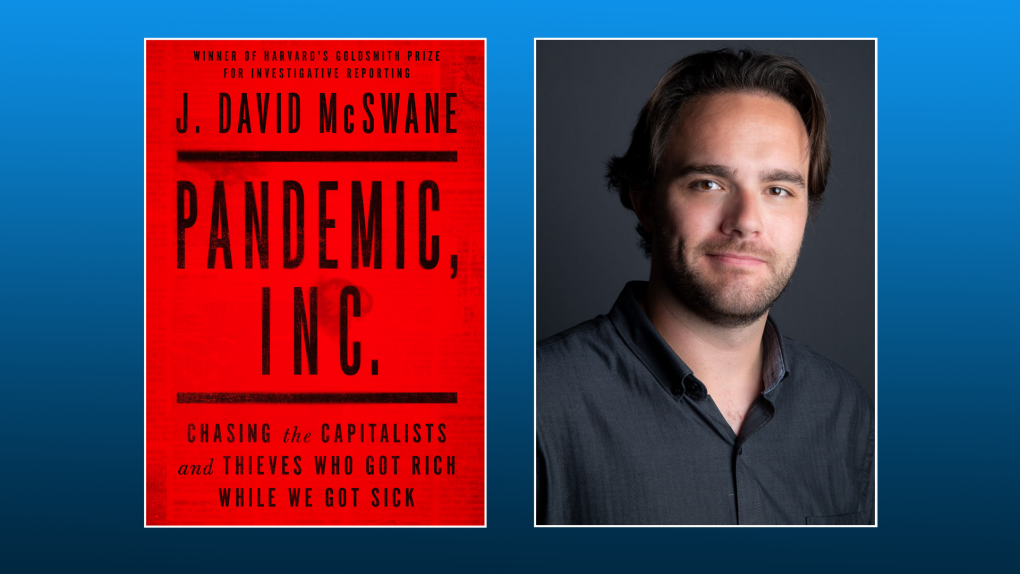
"content": "\u003cp>\u003cb>COVID-19 Uptick in California\u003cbr>\n\u003c/b>\u003cspan style=\"font-weight: 400\">Coronavirus cases are climbing again, with May’s case rates about double that of early April. Counties in the San Francisco Bay Area are showing some of the highest levels of infections in the entire state, according to The New York Times. UCSF Department of Medicine\u003c/span> \u003cspan style=\"font-weight: 400\">Chair \u003c/span>\u003cb>Dr. Bob Wachter\u003c/b>\u003cspan style=\"font-weight: 400\"> gives us an update on COVID-19 cases and talks about his own close call with the virus.\u003c/span>\u003c/p>\n\u003cp>\u003cb>“Pandemic, Inc.”\u003cbr>\n\u003c/b>\u003cb>J. David McSwane\u003c/b>\u003cspan>, ProPublica investigative reporter and author of “Pandemic, Inc.: Chasing the Capitalists and Thieves Who Got Rich While We Got Sick,” shares his probe into how certain companies made huge profits off the COVID-19 pandemic.\u003c/span>\u003c/p>\n\u003cp>\u003cb>This Week in California News and Politics\u003cbr>\n\u003c/b>\u003cspan style=\"font-weight: 400\">We look at how California continues to respond to the potential fall of Roe v. Wade and how the leaked U.S. Supreme Court draft ruling could affect midterm elections, as well as what’s in the revised state budget that boasts a whopping $97 billion surplus.\u003c/span>\u003c/p>\n\u003cp>\u003cspan style=\"font-weight: 400\">Guests: \u003c/span>\u003c/p>\n\u003cul>\n\u003cli style=\"font-weight: 400\">\u003cspan style=\"font-weight: 400\">Guy Marzorati, KQED politics and government reporter\u003c/span>\u003c/li>\n\u003cli style=\"font-weight: 400\">\u003cspan style=\"font-weight: 400\">Seema Mehta, Los Angeles Times political writer\u003c/span>\u003c/li>\n\u003c/ul>\n\u003cp>\u003cb>Something Beautiful: East Bay Depot for Creative Reuse\u003cbr>\n\u003c/b>\u003cspan style=\"font-weight: 400\">The East Bay Depot for Creative Reuse was started by two teachers in 1977 and, to this day, works to keep solid waste out of landfills by turning castoffs into a treasure trove of materials for arts, crafts and other projects. \u003c/span>\u003c/p>\n\u003cp>[ad fullwidth]\u003c/p>\u003cp>\u003c/p>\n",
"blocks": [],
"excerpt": null,
"status": "publish",
"parent": 0,
"modified": 1726005726,
"stats": {
"hasAudio": false,
"hasVideo": false,
"hasChartOrMap": false,
"iframeSrcs": [],
"hasGoogleForm": false,
"hasGallery": false,
"hasHearkenModule": false,
"hasPolis": false,
"paragraphCount": 7,
"wordCount": 240
},
"headData": {
"title": "COVID-19 Update | \"Pandemic, Inc.\" | This Week in CA News | KQED",
"description": "COVID-19 Uptick in California Coronavirus cases are climbing again, with May’s case rates about double that of early April. Counties in the San Francisco Bay Area are showing some of the highest levels of infections in the entire state, according to The New York Times. UCSF Department of Medicine Chair Dr. Bob Wachter gives us an update on COVID-19 cases and talks about his own close call with the virus. “Pandemic, Inc.” J. David McSwane, ProPublica investigative reporter and author of “Pandemic, Inc.: Chasing the Capitalists and Thieves Who Got Rich While We Got Sick,” shares his probe into how",
"ogTitle": "",
"ogDescription": "",
"ogImgId": "",
"twTitle": "",
"twDescription": "",
"twImgId": "",
"schema": {
"@context": "https://schema.org",
"@type": "NewsArticle",
"headline": "COVID-19 Update | \"Pandemic, Inc.\" | This Week in CA News",
"datePublished": "2022-05-13T16:35:57-07:00",
"dateModified": "2024-09-10T15:02:06-07:00",
"image": "https://cdn.kqed.org/wp-content/uploads/2020/02/KQED-OG-Image@1x.png",
"isAccessibleForFree": "True",
"publisher": {
"@type": "NewsMediaOrganization",
"@id": "https://www.kqed.org/#organization",
"name": "KQED",
"logo": "https://cdn.kqed.org/wp-content/uploads/2020/02/KQED-OG-Image@1x.png",
"url": "https://www.kqed.org",
"sameAs": [
"https://www.facebook.com/KQED",
"https://twitter.com/KQED",
"https://www.instagram.com/kqed/",
"https://www.tiktok.com/@kqedofficial",
"https://www.linkedin.com/company/kqed",
"https://www.youtube.com/channel/UCeC0IOo7i1P_61zVUWbJ4nw"
]
}
}
},
"videoEmbed": "https://youtu.be/Ao7UeFssE6g",
"sticky": false,
"excludeFromSiteSearch": "Include",
"path": "/news/11914102/covid-19-update-pandemic-inc-this-week-in-ca-news",
"audioTrackLength": null,
"parsedContent": [
{
"type": "contentString",
"content": "\u003cdiv class=\"post-body\">\u003cp>\u003cp>\u003cb>COVID-19 Uptick in California\u003cbr>\n\u003c/b>\u003cspan style=\"font-weight: 400\">Coronavirus cases are climbing again, with May’s case rates about double that of early April. Counties in the San Francisco Bay Area are showing some of the highest levels of infections in the entire state, according to The New York Times. UCSF Department of Medicine\u003c/span> \u003cspan style=\"font-weight: 400\">Chair \u003c/span>\u003cb>Dr. Bob Wachter\u003c/b>\u003cspan style=\"font-weight: 400\"> gives us an update on COVID-19 cases and talks about his own close call with the virus.\u003c/span>\u003c/p>\n\u003cp>\u003cb>“Pandemic, Inc.”\u003cbr>\n\u003c/b>\u003cb>J. David McSwane\u003c/b>\u003cspan>, ProPublica investigative reporter and author of “Pandemic, Inc.: Chasing the Capitalists and Thieves Who Got Rich While We Got Sick,” shares his probe into how certain companies made huge profits off the COVID-19 pandemic.\u003c/span>\u003c/p>\n\u003cp>\u003cb>This Week in California News and Politics\u003cbr>\n\u003c/b>\u003cspan style=\"font-weight: 400\">We look at how California continues to respond to the potential fall of Roe v. Wade and how the leaked U.S. Supreme Court draft ruling could affect midterm elections, as well as what’s in the revised state budget that boasts a whopping $97 billion surplus.\u003c/span>\u003c/p>\n\u003cp>\u003cspan style=\"font-weight: 400\">Guests: \u003c/span>\u003c/p>\n\u003cul>\n\u003cli style=\"font-weight: 400\">\u003cspan style=\"font-weight: 400\">Guy Marzorati, KQED politics and government reporter\u003c/span>\u003c/li>\n\u003cli style=\"font-weight: 400\">\u003cspan style=\"font-weight: 400\">Seema Mehta, Los Angeles Times political writer\u003c/span>\u003c/li>\n\u003c/ul>\n\u003cp>\u003cb>Something Beautiful: East Bay Depot for Creative Reuse\u003cbr>\n\u003c/b>\u003cspan style=\"font-weight: 400\">The East Bay Depot for Creative Reuse was started by two teachers in 1977 and, to this day, works to keep solid waste out of landfills by turning castoffs into a treasure trove of materials for arts, crafts and other projects. \u003c/span>\u003c/p>\n\u003cp>\u003c/p>\u003c/div>",
"attributes": {
"named": {},
"numeric": []
}
},
{
"type": "component",
"content": "",
"name": "ad",
"attributes": {
"named": {
"label": "fullwidth"
},
"numeric": [
"fullwidth"
]
}
},
{
"type": "contentString",
"content": "\u003cdiv class=\"post-body\">\u003cp>\u003c/p>\u003cp>\u003c/p>\n\u003c/div>\u003c/p>",
"attributes": {
"named": {},
"numeric": []
}
}
],
"link": "/news/11914102/covid-19-update-pandemic-inc-this-week-in-ca-news",
"authors": [
"236"
],
"programs": [
"news_7052"
],
"categories": [
"news_223",
"news_457",
"news_13"
],
"tags": [
"news_18538",
"news_27504",
"news_16",
"news_23289",
"news_18543",
"news_20297",
"news_19177",
"news_4052",
"news_23688",
"news_26089",
"news_922"
],
"featImg": "news_11914104",
"label": "news_7052"
},
"news_11914073": {
"type": "posts",
"id": "news_11914073",
"meta": {
"index": "posts_1716263798",
"site": "news",
"id": "11914073",
"score": null,
"sort": [
1652473169000
]
},
"guestAuthors": [],
"slug": "california-has-nearly-100-billion-extra-dollars-to-spend-newsom-wants-to-offset-inflation",
"title": "California Has Nearly $100 Billion Extra to Spend — Newsom Wants to Offset Inflation",
"publishDate": 1652473169,
"format": "standard",
"headTitle": "California Has Nearly $100 Billion Extra to Spend — Newsom Wants to Offset Inflation | KQED",
"labelTerm": {
"site": "news"
},
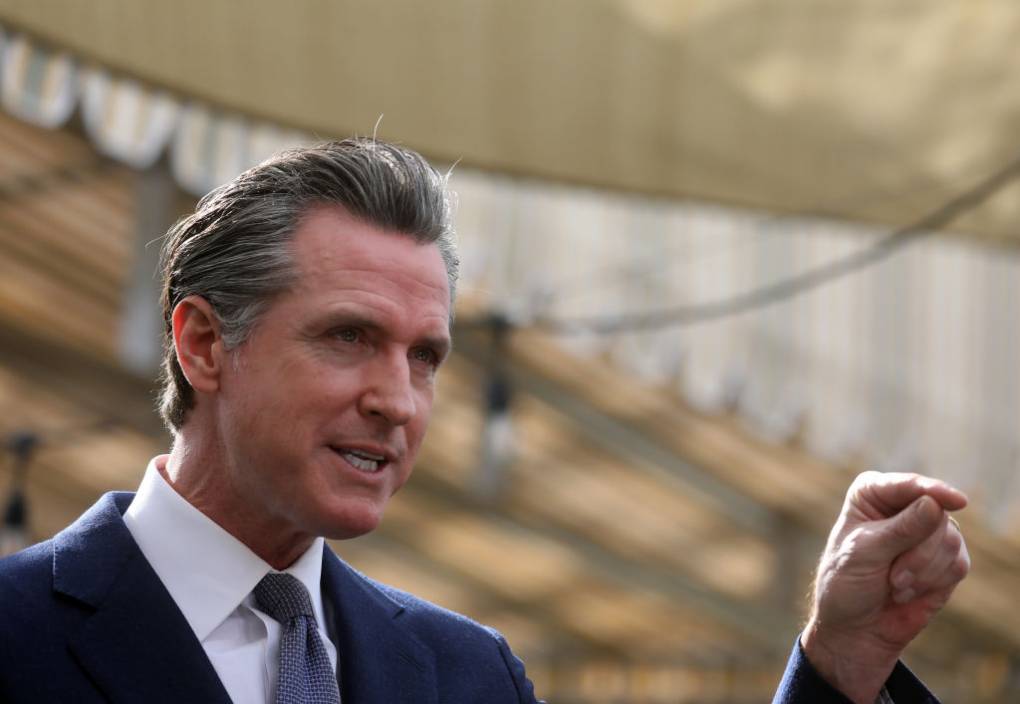
"content": "\u003cp>California is flush with nearly $100 billion in extra cash for the fiscal year that will begin in July, but Gov. Gavin Newsom says he sees economic storms ahead, and wants to spend that money on programs that will help the state and its residents weather an uncertain future.\u003c/p>\n\u003cp>About half of that extra money is up for grabs — the other half is automatically earmarked for state programs like schools. The governor, in his \u003ca href=\"https://www.ebudget.ca.gov/FullBudgetSummary.pdf\">revised budget proposal\u003c/a> unveiled Friday, is proposing to spend nearly all the discretionary surplus on one-time programs, including paying down debt, softening the blow families are feeling from rising costs, addressing climate challenges including drought and wildfires and expanding reproductive health care access as abortion is under attack elsewhere.\u003c/p>\n\u003cp>“Perhaps the most important thing right now in people’s minds, understandably, is how do I lower costs?” Newsom said in presenting his budget plan. “What are we going to do to ease that stress, ease that burden? And that’s why we’re proposing $18.1 billion to put back in the pockets of millions and millions, tens of millions of Californians.”\u003c/p>\n\u003cp>The core of that inflation relief package — sending California car owners $400 cash rebates — is likely to be a sticking point with Democratic lawmakers, who want to see a broader, means-based refund that does not only benefit vehicle owners.\u003c/p>\n\u003cp>“I am confident we will land quickly on an agreement,” Newsom said when pressed on the differences between his proposal and what legislative leaders have put forth. “I don’t see a lot of daylight between these proposals. It’s simply a question of how.”\u003c/p>\n\u003cp>[ad fullwidth]\u003c/p>\n\u003cp>But perhaps as a carrot for lawmakers, Newsom’s proposal also includes other help for struggling Californians. He’s asking lawmakers to expand the emergency rental assistance program created during the pandemic by $2.7 billion; put $1.4 billion toward unpaid utility bills and $750 million to make public transit free for three months; and provide $1,500 stipends to health care workers as an incentive to stick with their jobs in hospitals and nursing homes.\u003c/p>\n\u003cp>In making his pitch, Newsom noted that California coffers continue to swell — despite inflation and pandemic-induced economic contractions — because of the state’s progressive tax structure, which relies heavily on capital gains taxes from wealthy residents. He said that nearly 10% of income taxes next year will come from capital gains — similar to the percentage in 2000, just before the stock market crashed and the state had to make deep cuts to programs like schools and social services.\u003c/p>\n\u003cp>“The question is, what would they have done in the state of California … knowing what was going to come in late 2000, 2001, 2002, 2003? If they knew the economic realities, the macroeconomic realities of the markets and the volatility that was going to ensue and all the cuts that had to come from that?” Newsom said. “And so we’ve been very mindful of that.”\u003c/p>\n\u003ch2>Expanding access to abortion services\u003c/h2>\n\u003cp>As part of that one-time spending, Newsom took aim at Republican leaders in other states that are working to ban abortion access and curb LGBTQ+ rights. He wants to spend $125 million of the budget surplus on expanding access to abortion services, including for people who will come here from other states. The largest chunk of that money — $40 million — would be handed out as grants to health care providers to offset the costs of abortions for lower- and middle-income people.\u003c/p>\n\u003cp>He framed California as the truly abortion-rights state.\u003c/p>\n\u003cp>“I think there’s a lot of folks out there that, you know, that are pro-conception to birth. But they fall wholly short of being pro-life,” he said. “Because if you’re pro-life, you’d support prenatal care. You’d support infant health, you’d support child care and preschool. If you’re pro-life, you’d believe in science. You’d believe in climate change … you’d actually support commonsense gun safety. You would be expanding after-school and preschool programs.”\u003c/p>\n\u003cp>Newsom’s also trying to appeal to businesses located in states like Texas and Florida that have passed homophobic and transphobic laws. His administration will give “additional consideration to companies that relocate from states that have enacted anti-LGBTQ+ and reproductive rights laws,” if they apply for the state’s CalCompetes Tax Credit, he said.\u003c/p>\n\u003cp>Among the other increased investments Newsom highlighted Friday:\u003c/p>\n\u003cul>\n\u003cli>$19 billion more than his January proposal for public schools — money that will help offset declining enrollment and provide flexible block grants to districts.\u003c/li>\n\u003cli>Nearly $300 million in new funds for children’s mental health screening and services, including suicide response and prevention.\u003c/li>\n\u003cli>$193 million in new money for public safety, including money for a fentanyl task force at the attorney general’s office and for cracking down on cartel fentanyl trafficking at the southern border.\u003c/li>\n\u003cli>Nearly $3 billion in new money to combat homelessness, including $700 million for crisis response and interim housing and $65 million to build his proposed new CARE courts.\u003c/li>\n\u003cli>$9.5 billion in new money for climate resilience, totaling $47 billion over two years — that total includes $7.2 billion for drought resilience, some earmarked for farmers.\u003c/li>\n\u003c/ul>\n\u003cp>As happens every year, Newsom’s May proposal is really the starting point for negotiations with lawmakers. San Francisco Democrat Phil Ting, who chairs the Assembly Budget Committee, said lawmakers will be pushing back on Newsom’s plan to send cash to car owners.\u003c/p>\n\u003cp>“I think we’re looking at potentially a straight cash rebate going to people who really have been hit the hardest — people who need it the most,” Ting said.\u003c/p>\n\u003cp>As for infrastructure, Ting says one need stands above the rest: housing.\u003c/p>\n\u003cp>“And so I think one of the best things we could do for our economy, but also for our state, is give money to affordable housing that is ready to be built right now,” Ting said.\u003c/p>\n\u003cp>And not all Democratic lawmakers support using a large portion of the budget surplus on one-time rebates and expenditures to temporarily offset the impact of inflation.\u003c/p>\n\u003cp>State Sen. Scott Wiener, D-San Francisco, says Newsom and the Legislature should use the state’s extraordinary surplus to address long-term problems facing California.\u003c/p>\n\u003cp>“We have so many needs in the state and we have so many one-time expenditures we could make to shore up our infrastructure and make people’s lives better, not just for a month or two, which is what a rebate would do, but to make people’s lives better for decades to come,” Wiener said.\u003c/p>\n\u003cp>[ad floatright]\u003c/p>\n\u003cp>“There are schools in California that don’t have functioning restrooms. We have water systems that are failing. We have so many needs that are indisputably good investments that will benefit Californians for many years to come. That should be our focus,” he added.\u003c/p>\n\n",
"blocks": [],
"excerpt": "California is flush with extra cash. But Gov. Gavin Newsom says he sees economic storms ahead, and wants to spend that money on programs that will help the state and its residents weather an uncertain future.",
"status": "publish",
"parent": 0,
"modified": 1721133329,
"stats": {
"hasAudio": false,
"hasVideo": false,
"hasChartOrMap": false,
"iframeSrcs": [],
"hasGoogleForm": false,
"hasGallery": false,
"hasHearkenModule": false,
"hasPolis": false,
"paragraphCount": 23,
"wordCount": 1218
},
"headData": {
"title": "California Has Nearly $100 Billion Extra to Spend — Newsom Wants to Offset Inflation | KQED",
"description": "California is flush with extra cash. But Gov. Gavin Newsom says he sees economic storms ahead, and wants to spend that money on programs that will help the state and its residents weather an uncertain future.",
"ogTitle": "",
"ogDescription": "",
"ogImgId": "",
"twTitle": "",
"twDescription": "",
"twImgId": "",
"schema": {
"@context": "https://schema.org",
"@type": "NewsArticle",
"headline": "California Has Nearly $100 Billion Extra to Spend — Newsom Wants to Offset Inflation",
"datePublished": "2022-05-13T13:19:29-07:00",
"dateModified": "2024-07-16T05:35:29-07:00",
"image": "https://cdn.kqed.org/wp-content/uploads/2020/02/KQED-OG-Image@1x.png",
"isAccessibleForFree": "True",
"publisher": {
"@type": "NewsMediaOrganization",
"@id": "https://www.kqed.org/#organization",
"name": "KQED",
"logo": "https://cdn.kqed.org/wp-content/uploads/2020/02/KQED-OG-Image@1x.png",
"url": "https://www.kqed.org",
"sameAs": [
"https://www.facebook.com/KQED",
"https://twitter.com/KQED",
"https://www.instagram.com/kqed/",
"https://www.tiktok.com/@kqedofficial",
"https://www.linkedin.com/company/kqed",
"https://www.youtube.com/channel/UCeC0IOo7i1P_61zVUWbJ4nw"
]
}
}
},
"sticky": false,
"excludeFromSiteSearch": "Include",
"path": "/news/11914073/california-has-nearly-100-billion-extra-dollars-to-spend-newsom-wants-to-offset-inflation",
"audioTrackLength": null,
"parsedContent": [
{
"type": "contentString",
"content": "\u003cdiv class=\"post-body\">\u003cp>\u003cp>California is flush with nearly $100 billion in extra cash for the fiscal year that will begin in July, but Gov. Gavin Newsom says he sees economic storms ahead, and wants to spend that money on programs that will help the state and its residents weather an uncertain future.\u003c/p>\n\u003cp>About half of that extra money is up for grabs — the other half is automatically earmarked for state programs like schools. The governor, in his \u003ca href=\"https://www.ebudget.ca.gov/FullBudgetSummary.pdf\">revised budget proposal\u003c/a> unveiled Friday, is proposing to spend nearly all the discretionary surplus on one-time programs, including paying down debt, softening the blow families are feeling from rising costs, addressing climate challenges including drought and wildfires and expanding reproductive health care access as abortion is under attack elsewhere.\u003c/p>\n\u003cp>“Perhaps the most important thing right now in people’s minds, understandably, is how do I lower costs?” Newsom said in presenting his budget plan. “What are we going to do to ease that stress, ease that burden? And that’s why we’re proposing $18.1 billion to put back in the pockets of millions and millions, tens of millions of Californians.”\u003c/p>\n\u003cp>The core of that inflation relief package — sending California car owners $400 cash rebates — is likely to be a sticking point with Democratic lawmakers, who want to see a broader, means-based refund that does not only benefit vehicle owners.\u003c/p>\n\u003cp>“I am confident we will land quickly on an agreement,” Newsom said when pressed on the differences between his proposal and what legislative leaders have put forth. “I don’t see a lot of daylight between these proposals. It’s simply a question of how.”\u003c/p>\n\u003cp>\u003c/p>\u003c/div>",
"attributes": {
"named": {},
"numeric": []
}
},
{
"type": "component",
"content": "",
"name": "ad",
"attributes": {
"named": {
"label": "fullwidth"
},
"numeric": [
"fullwidth"
]
}
},
{
"type": "contentString",
"content": "\u003cdiv class=\"post-body\">\u003cp>\u003c/p>\n\u003cp>But perhaps as a carrot for lawmakers, Newsom’s proposal also includes other help for struggling Californians. He’s asking lawmakers to expand the emergency rental assistance program created during the pandemic by $2.7 billion; put $1.4 billion toward unpaid utility bills and $750 million to make public transit free for three months; and provide $1,500 stipends to health care workers as an incentive to stick with their jobs in hospitals and nursing homes.\u003c/p>\n\u003cp>In making his pitch, Newsom noted that California coffers continue to swell — despite inflation and pandemic-induced economic contractions — because of the state’s progressive tax structure, which relies heavily on capital gains taxes from wealthy residents. He said that nearly 10% of income taxes next year will come from capital gains — similar to the percentage in 2000, just before the stock market crashed and the state had to make deep cuts to programs like schools and social services.\u003c/p>\n\u003cp>“The question is, what would they have done in the state of California … knowing what was going to come in late 2000, 2001, 2002, 2003? If they knew the economic realities, the macroeconomic realities of the markets and the volatility that was going to ensue and all the cuts that had to come from that?” Newsom said. “And so we’ve been very mindful of that.”\u003c/p>\n\u003ch2>Expanding access to abortion services\u003c/h2>\n\u003cp>As part of that one-time spending, Newsom took aim at Republican leaders in other states that are working to ban abortion access and curb LGBTQ+ rights. He wants to spend $125 million of the budget surplus on expanding access to abortion services, including for people who will come here from other states. The largest chunk of that money — $40 million — would be handed out as grants to health care providers to offset the costs of abortions for lower- and middle-income people.\u003c/p>\n\u003cp>He framed California as the truly abortion-rights state.\u003c/p>\n\u003cp>“I think there’s a lot of folks out there that, you know, that are pro-conception to birth. But they fall wholly short of being pro-life,” he said. “Because if you’re pro-life, you’d support prenatal care. You’d support infant health, you’d support child care and preschool. If you’re pro-life, you’d believe in science. You’d believe in climate change … you’d actually support commonsense gun safety. You would be expanding after-school and preschool programs.”\u003c/p>\n\u003cp>Newsom’s also trying to appeal to businesses located in states like Texas and Florida that have passed homophobic and transphobic laws. His administration will give “additional consideration to companies that relocate from states that have enacted anti-LGBTQ+ and reproductive rights laws,” if they apply for the state’s CalCompetes Tax Credit, he said.\u003c/p>\n\u003cp>Among the other increased investments Newsom highlighted Friday:\u003c/p>\n\u003cul>\n\u003cli>$19 billion more than his January proposal for public schools — money that will help offset declining enrollment and provide flexible block grants to districts.\u003c/li>\n\u003cli>Nearly $300 million in new funds for children’s mental health screening and services, including suicide response and prevention.\u003c/li>\n\u003cli>$193 million in new money for public safety, including money for a fentanyl task force at the attorney general’s office and for cracking down on cartel fentanyl trafficking at the southern border.\u003c/li>\n\u003cli>Nearly $3 billion in new money to combat homelessness, including $700 million for crisis response and interim housing and $65 million to build his proposed new CARE courts.\u003c/li>\n\u003cli>$9.5 billion in new money for climate resilience, totaling $47 billion over two years — that total includes $7.2 billion for drought resilience, some earmarked for farmers.\u003c/li>\n\u003c/ul>\n\u003cp>As happens every year, Newsom’s May proposal is really the starting point for negotiations with lawmakers. San Francisco Democrat Phil Ting, who chairs the Assembly Budget Committee, said lawmakers will be pushing back on Newsom’s plan to send cash to car owners.\u003c/p>\n\u003cp>“I think we’re looking at potentially a straight cash rebate going to people who really have been hit the hardest — people who need it the most,” Ting said.\u003c/p>\n\u003cp>As for infrastructure, Ting says one need stands above the rest: housing.\u003c/p>\n\u003cp>“And so I think one of the best things we could do for our economy, but also for our state, is give money to affordable housing that is ready to be built right now,” Ting said.\u003c/p>\n\u003cp>And not all Democratic lawmakers support using a large portion of the budget surplus on one-time rebates and expenditures to temporarily offset the impact of inflation.\u003c/p>\n\u003cp>State Sen. Scott Wiener, D-San Francisco, says Newsom and the Legislature should use the state’s extraordinary surplus to address long-term problems facing California.\u003c/p>\n\u003cp>“We have so many needs in the state and we have so many one-time expenditures we could make to shore up our infrastructure and make people’s lives better, not just for a month or two, which is what a rebate would do, but to make people’s lives better for decades to come,” Wiener said.\u003c/p>\n\u003cp>\u003c/p>\u003c/div>",
"attributes": {
"named": {},
"numeric": []
}
},
{
"type": "component",
"content": "",
"name": "ad",
"attributes": {
"named": {
"label": "floatright"
},
"numeric": [
"floatright"
]
}
},
{
"type": "contentString",
"content": "\u003cdiv class=\"post-body\">\u003cp>\u003c/p>\n\u003cp>“There are schools in California that don’t have functioning restrooms. We have water systems that are failing. We have so many needs that are indisputably good investments that will benefit Californians for many years to come. That should be our focus,” he added.\u003c/p>\n\n\u003c/div>\u003c/p>",
"attributes": {
"named": {},
"numeric": []
}
}
],
"link": "/news/11914073/california-has-nearly-100-billion-extra-dollars-to-spend-newsom-wants-to-offset-inflation",
"authors": [
"3239"
],
"categories": [
"news_8",
"news_13"
],
"tags": [
"news_18538",
"news_16",
"news_17968"
],
"featImg": "news_11914079",
"label": "news"
},
"news_11914051": {
"type": "posts",
"id": "news_11914051",
"meta": {
"index": "posts_1716263798",
"site": "news",
"id": "11914051",
"score": null,
"sort": [
1652469056000
]
},
"parent": 0,
"labelTerm": {
"site": "news",
"term": 18481
},
"blocks": [],
"publishDate": 1652469056,
"format": "standard",
"disqusTitle": "Newsom: California Has Record-Smashing $97.5 Billion Budget Surplus",
"title": "Newsom: California Has Record-Smashing $97.5 Billion Budget Surplus",
"headTitle": "CALmatters | KQED News",
"content": "\u003cp>“Simply without precedent.”\u003c/p>\n\u003cp>Gov. Gavin Newsom is \u003ca href=\"https://calmatters.org/politics/2021/03/newsom-jargon-pandemic-economy/\">a man of many superlatives\u003c/a>, but even he seemed to struggle today to adequately describe just how much extra cash the state of California will have to spend in the coming year’s budget: $97.5 billion.\u003c/p>\n\u003cp>In a press conference in Sacramento, Newsom unveiled his \u003ca href=\"https://www.gov.ca.gov/2022/05/13/governor-newsom-presents-300-7-billion-blueprint-paving-the-california-way-forward/\">latest record spending proposal\u003c/a> for the coming fiscal year. Riding a superheating economy and drawing disproportionately from the state’s highest earners, the state is now projected to have a surplus bigger than California — or any state — has ever had, and significantly more than the $76 billion that the governor predicted in January.\u003c/p>\n\u003cp>Roughly half of the surplus is required by law to be spent on education. That leaves “only” roughly $49 billion in discretionary money, and the governor wants to reserve 99% of that for one-time spending: $18.1 billion \u003ca href=\"https://www.gov.ca.gov/2022/05/12/governor-newsom-proposes-18-1-billion-inflation-relief-package/\">to provide financial relief\u003c/a> for Californians buffeted by inflation, plus $37 billion for infrastructure investments, including $5.6 billion for education facility upgrades, and an extra $2.3 billion for the ongoing fight against COVID-19.\u003c/p>\n\u003cp>A \u003ca href=\"https://ebudget.ca.gov/FullBudgetSummary.pdf\">few of the other big numbers\u003c/a> that Newsom mentioned today:\u003c/p>\n\u003cul>\n\u003cli>$128.3 billion in education spending, from transitional kindergarten through high school, a record-breaking sum that works out to $22,850 per student.\u003c/li>\n\u003cli>Another $23 billion will be parked into the state’s rainy day fund, to be drawn upon the next time the economy slows\u003c/li>\n\u003cli>$2.5 billion for housing, including $500 million to fund the conversion of vacant malls and storefronts into homes\u003c/li>\n\u003cli>An extra $3.4 billion to pay down state employee retirement debt\u003c/li>\n\u003c/ul>\n\u003cp>The massive windfall that the state is sitting on, coupled with the state’s progressive tax system is a sign of “the concentration of wealth and success in the hands of a few that are enjoying abundance in historic and unprecedented ways,” Newsom said. “I am proud of California’s progressive tax system…and we’re the beneficiary of that.”\u003c/p>\n\u003cp>[ad fullwidth]\u003c/p>\n\u003cp>Now the ball is in the state Legislature’s court as lawmakers decide where they agree with the governor and which priorities they want to haggle over before the June 15 deadline to pass a final, balanced budget for the fiscal year that starts July 1.\u003c/p>\n\u003cp>Today’s “May revise” rollout is part of the annual call-and-response between the governor’s office and the Legislature over how to spend your tax dollars. Each year, the governor sets the negotiations in motion in January with a \u003ca href=\"https://calmatters.org/politics/2022/01/california-budget-newsom/\">preliminary budget proposal\u003c/a>. This year, Newsom’s proffer included a record surge in K-12 education spending, along with multi-billion dollar proposals to ramp up the state’s wildfire prevention projects, convert more vacant hotels into housing for the homeless and open up Medi-Cal, the state’s health insurance program for the poor, to all undocumented immigrants.\u003c/p>\n\u003cp>What Newsom unveiled today is a retake on that earlier budget blueprint, but freshened up with new estimates of the state’s fiscal future. Tack on the extra surplus money and you end up with a new record-high total: $300.7 billion.\u003c/p>\n\u003cp>\u003c!-- iframe plugin v.4.3 wordpress.org/plugins/iframe/ -->\u003cbr>\n\u003ciframe src=\"https://flo.uri.sh/visualisation/9979834/embed#?secret=2LNgNb0NXP%C2%A0\" width=\"800\" height=\"600\" scrolling=\"yes\" class=\"iframe-class\" frameborder=\"0\">\u003c/iframe>\u003c/p>\n\u003cp>When discussing money on the scale of the California state budget, it’s easy to lose perspective. But to be clear, even by Golden State standards, that is an astounding amount of money.\u003c/p>\n\u003cp>What a difference two years makes. In May 2020, with the state still weathering the first surge of COVID-19, the governor’s Department of Finance projected a \u003ca href=\"https://calmatters.org/economy/2020/05/newsom-economic-forecast-criticism-california-model-recession-budget/\">$54 billion deficit and a year of Great Depression-level unemployment rates\u003c/a>. Neither came to pass, just the opposite: Boosted by rosy \u003ca href=\"https://calmatters.org/california-divide/2021/01/california-budget-depends-on-staggering-wealth-gap/\">economic conditions for the state’s highest earners\u003c/a> and a massive influx of cash from the federal government, \u003ca href=\"https://calmatters.org/politics/2021/01/newsoms-record-breaking-budget-proposal/\">state coffers have been overflowing\u003c/a> for the last two years.\u003c/p>\n\u003cp>For the governor and Democratic leadership in the Assembly and Senate, having to divvy up billions of new dollars during an election year is a good problem to have. But on financial aid to struggling families, the scale of the state’s drought response, \u003ca href=\"https://www.latimes.com/california/newsletter/2022-05-13/california-politics-newsletter-gambling-taxes-will-dominate-november-ballot-ca-politics\">what to do about the sky-high price of gasoline\u003c/a> and other pressing policy conundrums, not everyone is on the same page.\u003c/p>\n\u003cp>[aside label=\"related coverage\" tag=\"california-budget\"]Assembly Speaker Anthony Rendon kept his cards close to his chest in a statement, simply heralding his Democratic “teammates” in the Senate. “We know how to work together to present Governor Gavin Newsom with a budget he can be proud to sign by the constitutional deadline,” he said.\u003c/p>\n\u003cp>The\u003ca href=\"https://cssrc.us/sites/default/files/Caucus%202022%20Wilk%20May%20Revise%20Budget%20Priorities.pdf?utm_source=CalMatters+Newsletters&utm_campaign=ebdd812119-WHATMATTERS&utm_medium=email&utm_term=0_faa7be558d-ebdd812119-150256405&mc_cid=ebdd812119&mc_eid=498adde128\"> Republican minority in the Legislature\u003c/a> is so diminished that Democrats don’t need their support to pass a budget. But that isn’t stopping GOP lawmakers from weighing in, if only to \u003ca href=\"https://www.cagop.org/s/blog/ca-dems-ignore-the-obvious-MCZ2N2HI7YLFCAHEWHK6DQ7YEG3Q\">provide voters with a clear contrast\u003c/a> as Election Day approaches.\u003c/p>\n\u003cp>“Newsom specializes in grand announcements and flashy sounding proposals, but he rarely follows through with effective solutions that actually help California families,” GOP Assembly leader James Gallagher from Chico said in a statement. “As Californians struggle to fill their tank and put food on the table, Democrats fail to provide any real solutions to cut costs.”\u003c/p>\n\u003cp>Here are other highlights from the governor’s latest spending plan:\u003c/p>\n\u003ch3>Cash for Californians\u003c/h3>\n\u003cp>If the average Californian hears anything about today’s announcement it’s probably this: The governor wants to send $400 to most of the state’s car owners.\u003c/p>\n\u003cp>That’s been the governor’s idea to help drivers bear the cost of historically elevated gas prices. In the face of pushback from environmentalists, he also wants to throw in $750 million to entice transit agencies to make bus and rail travel free for three months. And lest he be accused to throwing money at those who don’t need it, the proposal is limited to drivers whose car are worth under an unspecified cap.\u003c/p>\n\u003cp>Despite all that, there’s some distance between this proposal and the Legislature’s, where Democratic leaders \u003ca href=\"https://www.latimes.com/california/story/2022-03-18/california-senate-assembly-weigh-refund-possibilities-amid-rising-gas-costs#:~:text=Gavin%20Newsom's%20proposal%20to%20offer,each%20California%20taxpayer%20and%20dependent.\">want to send cash rebates to Californians\u003c/a> making less than $250,000, car owners or not. And it’s even further still from the GOP plan, which is simply to \u003ca href=\"https://calmatters.org/newsletters/whatmatters/2022/04/california-gas-rebate/\">suspend the state gas tax\u003c/a>.\u003c/p>\n\u003cp>“I have all the confidence in the world we’ll be able to square those modest differences and we’ll come around to a number and a strategy that’s in the best interests of Californians,” Newsom said.\u003c/p>\n\u003cp>Today’s announcement also answered another big question left unaddressed by the January proposal: Will an obscure amendment inserted into the California Constitution in 1979 compel the state to reroute some of the state’s extra cash back to taxpayers?\u003c/p>\n\u003cp>The answer, at least for now, appears to be no.\u003c/p>\n\u003cp>The constitutional provision in question, the \u003ca href=\"https://calmatters.org/politics/2021/05/newsom-tax-rebate/\">Gann Limit\u003c/a>, was approved by voters during the heyday of the state’s conservative “tax revolt” and capped per-person state spending to its 1978 level, after adjusting for inflation. Anything left over has to be sent back to taxpayers and school districts. With the state’s coffers as full as they are, the January budget blueprint projected that the state would breach the cap.\u003c/p>\n\u003cp>But with more spending on exempt types of expenditure, including infrastructure, the current plan is now $2.6 billion below that ceiling.\u003c/p>\n\u003ch3 id=\"h-eat-your-heart-out-texas\">‘Eat your heart out, Texas’\u003c/h3>\n\u003cp>Budgets, as the cliche goes, are statements of values. Newsom clearly values \u003ca href=\"https://calmatters.org/newsletters/whatmatters/2022/02/california-crime-abortion-guns/\">decrying the state of Texas\u003c/a> and its right-wing government.\u003c/p>\n\u003cp>Among the policies-cum-anti-Texas-digs that Newsom rolled out today were a revision of the state’s business relocation tax credit program to provide “additional consideration” for businesses relocating from states with anti-abortion and “anti-LGBTQ+” laws.\u003c/p>\n\u003cp>The context, only barely unspoken, is that Texas has recently passed a law that effectively \u003ca href=\"https://capitol.texas.gov/tlodocs/87R/billtext/pdf/SB00008F.pdf\">bans most abortions\u003c/a> and introduced a policy that treats gender-confirming care for transgender kids \u003ca href=\"https://www.npr.org/2022/05/13/1098779201/texas-supreme-court-transgender-gender-affirming-child-abuse\">as child abuse\u003c/a>.\u003c/p>\n\u003cp>Newsom’s budget plan also include an additional \u003ca href=\"https://www.gov.ca.gov/2022/05/11/governor-newsom-proposes-reproductive-health-package-to-strengthen-protections-expand-access-and-welcome-businesses-from-anti-abortion-states/\">$125 million to expand access to abortions\u003c/a> and fund research into reproductive health.\u003c/p>\n\u003cp>“I do want to make a deep point here: California is a pro-life state,” Newsom said, appropriating a term used by the anti-abortion movement to tout his proposed spending on expanded preschool, health insurance access and gun-violence reduction programs.\u003c/p>\n\u003cp>He also chided Arizona, Florida and Texas for having COVID death rates higher than California’s: “There are a lot of folks out there that are pro- conception to birth but that fall wholly short of being pro-life.”\u003c/p>\n\u003cp>[ad floatright]\u003c/p>\n\u003cp>\u003cem>CalMatters reporter Grace Gedye contributed to this story.\u003c/em>\u003c/p>\n\n",
"disqusIdentifier": "11914051 https://ww2.kqed.org/news/?p=11914051",
"disqusUrl": "https://ww2.kqed.org/news/2022/05/13/newsom-california-has-record-smashing-97-5-billion-budget-surplus/",
"stats": {
"hasVideo": false,
"hasChartOrMap": true,
"hasAudio": false,
"hasPolis": false,
"wordCount": 1489,
"hasGoogleForm": false,
"hasGallery": false,
"hasHearkenModule": false,
"iframeSrcs": [
"https://flo.uri.sh/visualisation/9979834/embed#"
],
"paragraphCount": 34
},
"modified": 1652473252,
"excerpt": "Newsom unveiled a revised budget plan of just over $300 billion for the next fiscal year, the highest in state history, resulting from surging tax revenues through the winter and spring.",
"headData": {
"twImgId": "",
"twTitle": "",
"ogTitle": "",
"ogImgId": "",
"twDescription": "",
"description": "Newsom unveiled a revised budget plan of just over $300 billion for the next fiscal year, the highest in state history, resulting from surging tax revenues through the winter and spring.",
"title": "Newsom: California Has Record-Smashing $97.5 Billion Budget Surplus | KQED",
"ogDescription": "",
"schema": {
"@context": "https://schema.org",
"@type": "NewsArticle",
"headline": "Newsom: California Has Record-Smashing $97.5 Billion Budget Surplus",
"datePublished": "2022-05-13T12:10:56-07:00",
"dateModified": "2022-05-13T13:20:52-07:00",
"image": "https://cdn.kqed.org/wp-content/uploads/2020/02/KQED-OG-Image@1x.png",
"isAccessibleForFree": "True",
"publisher": {
"@type": "NewsMediaOrganization",
"@id": "https://www.kqed.org/#organization",
"name": "KQED",
"logo": "https://cdn.kqed.org/wp-content/uploads/2020/02/KQED-OG-Image@1x.png",
"url": "https://www.kqed.org",
"sameAs": [
"https://www.facebook.com/KQED",
"https://twitter.com/KQED",
"https://www.instagram.com/kqed/",
"https://www.tiktok.com/@kqedofficial",
"https://www.linkedin.com/company/kqed",
"https://www.youtube.com/channel/UCeC0IOo7i1P_61zVUWbJ4nw"
]
}
}
},
"guestAuthors": [],
"slug": "newsom-california-has-record-smashing-97-5-billion-budget-surplus",
"status": "publish",
"nprByline": "\u003ca href=\"https://calmatters.org/author/ben-christopher/\">Ben Christopher\u003c/a>",
"excludeFromSiteSearch": "Include",
"showOnAuthorArchivePages": "No",
"path": "/news/11914051/newsom-california-has-record-smashing-97-5-billion-budget-surplus",
"audioTrackLength": null,
"parsedContent": [
{
"type": "contentString",
"content": "\u003cdiv class=\"post-body\">\u003cp>\u003cp>“Simply without precedent.”\u003c/p>\n\u003cp>Gov. Gavin Newsom is \u003ca href=\"https://calmatters.org/politics/2021/03/newsom-jargon-pandemic-economy/\">a man of many superlatives\u003c/a>, but even he seemed to struggle today to adequately describe just how much extra cash the state of California will have to spend in the coming year’s budget: $97.5 billion.\u003c/p>\n\u003cp>In a press conference in Sacramento, Newsom unveiled his \u003ca href=\"https://www.gov.ca.gov/2022/05/13/governor-newsom-presents-300-7-billion-blueprint-paving-the-california-way-forward/\">latest record spending proposal\u003c/a> for the coming fiscal year. Riding a superheating economy and drawing disproportionately from the state’s highest earners, the state is now projected to have a surplus bigger than California — or any state — has ever had, and significantly more than the $76 billion that the governor predicted in January.\u003c/p>\n\u003cp>Roughly half of the surplus is required by law to be spent on education. That leaves “only” roughly $49 billion in discretionary money, and the governor wants to reserve 99% of that for one-time spending: $18.1 billion \u003ca href=\"https://www.gov.ca.gov/2022/05/12/governor-newsom-proposes-18-1-billion-inflation-relief-package/\">to provide financial relief\u003c/a> for Californians buffeted by inflation, plus $37 billion for infrastructure investments, including $5.6 billion for education facility upgrades, and an extra $2.3 billion for the ongoing fight against COVID-19.\u003c/p>\n\u003cp>A \u003ca href=\"https://ebudget.ca.gov/FullBudgetSummary.pdf\">few of the other big numbers\u003c/a> that Newsom mentioned today:\u003c/p>\n\u003cul>\n\u003cli>$128.3 billion in education spending, from transitional kindergarten through high school, a record-breaking sum that works out to $22,850 per student.\u003c/li>\n\u003cli>Another $23 billion will be parked into the state’s rainy day fund, to be drawn upon the next time the economy slows\u003c/li>\n\u003cli>$2.5 billion for housing, including $500 million to fund the conversion of vacant malls and storefronts into homes\u003c/li>\n\u003cli>An extra $3.4 billion to pay down state employee retirement debt\u003c/li>\n\u003c/ul>\n\u003cp>The massive windfall that the state is sitting on, coupled with the state’s progressive tax system is a sign of “the concentration of wealth and success in the hands of a few that are enjoying abundance in historic and unprecedented ways,” Newsom said. “I am proud of California’s progressive tax system…and we’re the beneficiary of that.”\u003c/p>\n\u003cp>\u003c/p>\u003c/div>",
"attributes": {
"named": {},
"numeric": []
}
},
{
"type": "component",
"content": "",
"name": "ad",
"attributes": {
"named": {
"label": "fullwidth"
},
"numeric": [
"fullwidth"
]
}
},
{
"type": "contentString",
"content": "\u003cdiv class=\"post-body\">\u003cp>\u003c/p>\n\u003cp>Now the ball is in the state Legislature’s court as lawmakers decide where they agree with the governor and which priorities they want to haggle over before the June 15 deadline to pass a final, balanced budget for the fiscal year that starts July 1.\u003c/p>\n\u003cp>Today’s “May revise” rollout is part of the annual call-and-response between the governor’s office and the Legislature over how to spend your tax dollars. Each year, the governor sets the negotiations in motion in January with a \u003ca href=\"https://calmatters.org/politics/2022/01/california-budget-newsom/\">preliminary budget proposal\u003c/a>. This year, Newsom’s proffer included a record surge in K-12 education spending, along with multi-billion dollar proposals to ramp up the state’s wildfire prevention projects, convert more vacant hotels into housing for the homeless and open up Medi-Cal, the state’s health insurance program for the poor, to all undocumented immigrants.\u003c/p>\n\u003cp>What Newsom unveiled today is a retake on that earlier budget blueprint, but freshened up with new estimates of the state’s fiscal future. Tack on the extra surplus money and you end up with a new record-high total: $300.7 billion.\u003c/p>\n\u003cp>\u003c!-- iframe plugin v.4.3 wordpress.org/plugins/iframe/ -->\u003cbr>\n\u003ciframe src=\"https://flo.uri.sh/visualisation/9979834/embed#?secret=2LNgNb0NXP%C2%A0\" width=\"800\" height=\"600\" scrolling=\"yes\" class=\"iframe-class\" frameborder=\"0\">\u003c/iframe>\u003c/p>\n\u003cp>When discussing money on the scale of the California state budget, it’s easy to lose perspective. But to be clear, even by Golden State standards, that is an astounding amount of money.\u003c/p>\n\u003cp>What a difference two years makes. In May 2020, with the state still weathering the first surge of COVID-19, the governor’s Department of Finance projected a \u003ca href=\"https://calmatters.org/economy/2020/05/newsom-economic-forecast-criticism-california-model-recession-budget/\">$54 billion deficit and a year of Great Depression-level unemployment rates\u003c/a>. Neither came to pass, just the opposite: Boosted by rosy \u003ca href=\"https://calmatters.org/california-divide/2021/01/california-budget-depends-on-staggering-wealth-gap/\">economic conditions for the state’s highest earners\u003c/a> and a massive influx of cash from the federal government, \u003ca href=\"https://calmatters.org/politics/2021/01/newsoms-record-breaking-budget-proposal/\">state coffers have been overflowing\u003c/a> for the last two years.\u003c/p>\n\u003cp>For the governor and Democratic leadership in the Assembly and Senate, having to divvy up billions of new dollars during an election year is a good problem to have. But on financial aid to struggling families, the scale of the state’s drought response, \u003ca href=\"https://www.latimes.com/california/newsletter/2022-05-13/california-politics-newsletter-gambling-taxes-will-dominate-november-ballot-ca-politics\">what to do about the sky-high price of gasoline\u003c/a> and other pressing policy conundrums, not everyone is on the same page.\u003c/p>\n\u003cp>\u003c/p>\u003c/div>",
"attributes": {
"named": {},
"numeric": []
}
},
{
"type": "component",
"content": "",
"name": "aside",
"attributes": {
"named": {
"label": "related coverage ",
"tag": "california-budget"
},
"numeric": []
}
},
{
"type": "contentString",
"content": "\u003cdiv class=\"post-body\">\u003cp>Assembly Speaker Anthony Rendon kept his cards close to his chest in a statement, simply heralding his Democratic “teammates” in the Senate. “We know how to work together to present Governor Gavin Newsom with a budget he can be proud to sign by the constitutional deadline,” he said.\u003c/p>\n\u003cp>The\u003ca href=\"https://cssrc.us/sites/default/files/Caucus%202022%20Wilk%20May%20Revise%20Budget%20Priorities.pdf?utm_source=CalMatters+Newsletters&utm_campaign=ebdd812119-WHATMATTERS&utm_medium=email&utm_term=0_faa7be558d-ebdd812119-150256405&mc_cid=ebdd812119&mc_eid=498adde128\"> Republican minority in the Legislature\u003c/a> is so diminished that Democrats don’t need their support to pass a budget. But that isn’t stopping GOP lawmakers from weighing in, if only to \u003ca href=\"https://www.cagop.org/s/blog/ca-dems-ignore-the-obvious-MCZ2N2HI7YLFCAHEWHK6DQ7YEG3Q\">provide voters with a clear contrast\u003c/a> as Election Day approaches.\u003c/p>\n\u003cp>“Newsom specializes in grand announcements and flashy sounding proposals, but he rarely follows through with effective solutions that actually help California families,” GOP Assembly leader James Gallagher from Chico said in a statement. “As Californians struggle to fill their tank and put food on the table, Democrats fail to provide any real solutions to cut costs.”\u003c/p>\n\u003cp>Here are other highlights from the governor’s latest spending plan:\u003c/p>\n\u003ch3>Cash for Californians\u003c/h3>\n\u003cp>If the average Californian hears anything about today’s announcement it’s probably this: The governor wants to send $400 to most of the state’s car owners.\u003c/p>\n\u003cp>That’s been the governor’s idea to help drivers bear the cost of historically elevated gas prices. In the face of pushback from environmentalists, he also wants to throw in $750 million to entice transit agencies to make bus and rail travel free for three months. And lest he be accused to throwing money at those who don’t need it, the proposal is limited to drivers whose car are worth under an unspecified cap.\u003c/p>\n\u003cp>Despite all that, there’s some distance between this proposal and the Legislature’s, where Democratic leaders \u003ca href=\"https://www.latimes.com/california/story/2022-03-18/california-senate-assembly-weigh-refund-possibilities-amid-rising-gas-costs#:~:text=Gavin%20Newsom's%20proposal%20to%20offer,each%20California%20taxpayer%20and%20dependent.\">want to send cash rebates to Californians\u003c/a> making less than $250,000, car owners or not. And it’s even further still from the GOP plan, which is simply to \u003ca href=\"https://calmatters.org/newsletters/whatmatters/2022/04/california-gas-rebate/\">suspend the state gas tax\u003c/a>.\u003c/p>\n\u003cp>“I have all the confidence in the world we’ll be able to square those modest differences and we’ll come around to a number and a strategy that’s in the best interests of Californians,” Newsom said.\u003c/p>\n\u003cp>Today’s announcement also answered another big question left unaddressed by the January proposal: Will an obscure amendment inserted into the California Constitution in 1979 compel the state to reroute some of the state’s extra cash back to taxpayers?\u003c/p>\n\u003cp>The answer, at least for now, appears to be no.\u003c/p>\n\u003cp>The constitutional provision in question, the \u003ca href=\"https://calmatters.org/politics/2021/05/newsom-tax-rebate/\">Gann Limit\u003c/a>, was approved by voters during the heyday of the state’s conservative “tax revolt” and capped per-person state spending to its 1978 level, after adjusting for inflation. Anything left over has to be sent back to taxpayers and school districts. With the state’s coffers as full as they are, the January budget blueprint projected that the state would breach the cap.\u003c/p>\n\u003cp>But with more spending on exempt types of expenditure, including infrastructure, the current plan is now $2.6 billion below that ceiling.\u003c/p>\n\u003ch3 id=\"h-eat-your-heart-out-texas\">‘Eat your heart out, Texas’\u003c/h3>\n\u003cp>Budgets, as the cliche goes, are statements of values. Newsom clearly values \u003ca href=\"https://calmatters.org/newsletters/whatmatters/2022/02/california-crime-abortion-guns/\">decrying the state of Texas\u003c/a> and its right-wing government.\u003c/p>\n\u003cp>Among the policies-cum-anti-Texas-digs that Newsom rolled out today were a revision of the state’s business relocation tax credit program to provide “additional consideration” for businesses relocating from states with anti-abortion and “anti-LGBTQ+” laws.\u003c/p>\n\u003cp>The context, only barely unspoken, is that Texas has recently passed a law that effectively \u003ca href=\"https://capitol.texas.gov/tlodocs/87R/billtext/pdf/SB00008F.pdf\">bans most abortions\u003c/a> and introduced a policy that treats gender-confirming care for transgender kids \u003ca href=\"https://www.npr.org/2022/05/13/1098779201/texas-supreme-court-transgender-gender-affirming-child-abuse\">as child abuse\u003c/a>.\u003c/p>\n\u003cp>Newsom’s budget plan also include an additional \u003ca href=\"https://www.gov.ca.gov/2022/05/11/governor-newsom-proposes-reproductive-health-package-to-strengthen-protections-expand-access-and-welcome-businesses-from-anti-abortion-states/\">$125 million to expand access to abortions\u003c/a> and fund research into reproductive health.\u003c/p>\n\u003cp>“I do want to make a deep point here: California is a pro-life state,” Newsom said, appropriating a term used by the anti-abortion movement to tout his proposed spending on expanded preschool, health insurance access and gun-violence reduction programs.\u003c/p>\n\u003cp>He also chided Arizona, Florida and Texas for having COVID death rates higher than California’s: “There are a lot of folks out there that are pro- conception to birth but that fall wholly short of being pro-life.”\u003c/p>\n\u003cp>\u003c/p>\u003c/div>",
"attributes": {
"named": {},
"numeric": []
}
},
{
"type": "component",
"content": "",
"name": "ad",
"attributes": {
"named": {
"label": "floatright"
},
"numeric": [
"floatright"
]
}
},
{
"type": "contentString",
"content": "\u003cdiv class=\"post-body\">\u003cp>\u003c/p>\n\u003cp>\u003cem>CalMatters reporter Grace Gedye contributed to this story.\u003c/em>\u003c/p>\n\n\u003c/div>\u003c/p>",
"attributes": {
"named": {},
"numeric": []
}
}
],
"link": "/news/11914051/newsom-california-has-record-smashing-97-5-billion-budget-surplus",
"authors": [
"byline_news_11914051"
],
"categories": [
"news_1758",
"news_13"
],
"tags": [
"news_29447",
"news_402",
"news_16"
],
"affiliates": [
"news_18481"
],
"featImg": "news_11914062",
"label": "news_18481"
},
"news_11913701": {
"type": "posts",
"id": "news_11913701",
"meta": {
"index": "posts_1716263798",
"site": "news",
"id": "11913701",
"score": null,
"sort": [
1652214648000
]
},
"guestAuthors": [],
"slug": "california-may-chop-late-fees-that-add-hundreds-of-dollars-to-traffic-tickets",
"title": "California May Chop Late Fees That Add Hundreds of Dollars to Traffic Tickets",
"publishDate": 1652214648,
"format": "standard",
"headTitle": "California May Chop Late Fees That Add Hundreds of Dollars to Traffic Tickets | KQED",
"labelTerm": {},
"content": "\u003cp>California is poised this year to make changes to what some call “hidden” court fees: hundreds of dollars often tacked onto traffic tickets and minor violations that can increase their cost nearly tenfold. But so far, state officials disagree on how far to go.\u003c/p>\n\u003cp>Known as civil assessments, the fees are imposed on hundreds of thousands of Californians as a penalty for failing to pay a ticket by a deadline or failing to appear in court on a charge.\u003c/p>\n\u003cp>The vast majority of the fees are issued in traffic or infraction cases. A fine can be imposed each time a deadline is missed.\u003c/p>\n\u003cp>A $300 maximum fine can be added for violations as minor as jaywalking and on tickets that originally cost as little as $35, according to Debt Free Justice California, a coalition of organizations, policy experts and legal advocates opposing “unfair ways the criminal legal system drains wealth from vulnerable communities.”[aside label=\"More Stories on Traffic Fees\" postID=\"news_11913570,news_11895338\"]California has one of the highest late fees in the nation, the coalition says. The group says the fees trap lower-income Californians in a cycle of ballooning debt to the courts.\u003c/p>\n\u003cp>Money collected from the extra charges bolsters court coffers, leading advocates to accuse the state of paying for its judicial system by charging those who can least afford it.\u003c/p>\n\u003cp>The fees generate nearly $100 million annually, and the courts retain more than half.\u003c/p>\n\u003cp>In Riverside County, the fees that the court system kept made up 14% of its budget, according to a report published by the coalition this year.\u003c/p>\n\u003cp>The report gave as an example a San Lorenzo resident who is a CalWorks recipient and mother who could not afford to pay for traffic violations. She was charged late fees on traffic citations five times since 2009, amounting to more than $1,500 of debt, about double the cost of the original tickets.\u003c/p>\n\u003cp>It made her ineligible for a driver’s license for 13 years, the report said.\u003c/p>\n\u003cp>“They were trying to take all of this money away from us,” she said, “but we didn’t have any in the first place.”\u003c/p>\n\u003cp>Civil assessment fees are disproportionately borne by people of color, who are overrepresented in traffic stops compared to their share of the population, the report said.\u003c/p>\n\u003cp>In January advocates sued San Mateo County Superior Court, challenging its practice of automatically charging the $300 maximum fee in all traffic cases with a missed deadline.\u003c/p>\n\u003cp>Gov. Gavin Newsom in his January budget proposed halving the fees, to a maximum of $150, and spending $50 million to backfill court budgets.\u003c/p>\n\u003cp>The proposal by some lawmakers and the Debt Free Justice coalition to eliminate the fees entirely could cost about twice as much. Senate leaders endorsed that plan in their budget proposals last month, as they announced an unprecedented $68 billion projected budget surplus.\u003c/p>\n\u003cp>[ad fullwidth]\u003c/p>\n\u003ch2>Too poor for tickets\u003c/h2>\n\u003cp>The coalition said it hopes Newsom will back full elimination of fees when he unveils his revised budget proposal this week. H.D. Palmer, a spokesperson for Newsom’s Department of Finance, declined to comment.\u003c/p>\n\u003cp>The Judicial Council, which governs the court system, has supported making changes to civil assessments. In a 2017 report, a commission of court officials recommended limiting the use of civil assessments or letting fines be converted to community service.\u003c/p>\n\u003cp>“We’re grateful for the efforts of both the Governor’s administration and the Legislature to reform the system and provide necessary backfill funding for the judicial branch,” said Martin Hoshino, administrative director of the Judicial Council, in an email. “We support the Governor’s proposal and are committed to working with him and with legislative leaders in the coming weeks as they finalize the state budget.”\u003c/p>\n\u003cp>The proposals come after the state eliminated dozens of court fines and fees over the past two years that advocates said disproportionately affected lower-income criminal defendants. The state repealed charges such as the cost of a public defender, drug testing, and probation and supervision services.\u003c/p>\n\u003cp>Newsom also signed a law last year that limits the state’s use of wage garnishments to claw back those debts and another that expanded a pilot program allowing Californians to ask the courts to reduce ticket fines they can’t afford to pay.\u003c/p>\n\u003cp>Last year a bill to eliminate civil assessments passed the state Senate but was gutted in the Assembly. The Debt Free Justice coalition said at the time it couldn’t get Newsom to agree to a deal to eliminate the fees.\u003c/p>\n\u003cp>Newsom’s administration told lawmakers the fee should be reduced but remain to motivate defendants to come to court.\u003c/p>\n\u003cp>“We feel the 50% reduction strikes a balance of providing immediate fiscal relief for all Californians and also preserving the viability of the civil assessment being used as a tool to keep individuals accountable, to compel individuals to appear in court proceedings,” Mark Jimenez, principal program budget analyst at the Department of Finance, told a Senate budget subcommittee in February.\u003c/p>\n\u003cp>Jimenez said the penalties are an alternative to issuing warrants to demand court attendance.[pullquote size=\"medium\" align=\"right\" citation=\"San José Sen. Dave Cortese\"]‘If they don’t have the money … how is that any incentive to come in?’[/pullquote]But senators were unconvinced that the fees were an effective motivator for those too poor to pay traffic tickets.\u003c/p>\n\u003cp>“If they don’t have the money … how is that any incentive to come in?” said Sen. Dave Cortese, a Democrat representing San José. “You either have it or you don’t.”\u003c/p>\n\u003cp>The coalition surveyed 200 Californians with recent traffic citations for its report; seventy-three percent said they did not know they would be issued a late fee for failing to appear or to pay, and 38% said extra fees would not have helped them make a timely payment.\u003c/p>\n\u003cp>Advocates suggested text messages would be more effective at getting defendants with demanding work schedules to court.\u003c/p>\n\u003cp>\u003cem>This article is part of the California Divide project, a collaboration among newsrooms examining income inequality and economic survival in California.\u003c/em>\u003c/p>\n\u003cp>\u003c/p>\n",
"blocks": [],
"excerpt": "Gov. Gavin Newsom wants to reduce by half a $300 penalty California courts tack onto traffic and minor citations — but lawmakers want it gone completely.",
"status": "publish",
"parent": 0,
"modified": 1721125663,
"stats": {
"hasAudio": false,
"hasVideo": false,
"hasChartOrMap": false,
"iframeSrcs": [],
"hasGoogleForm": false,
"hasGallery": false,
"hasHearkenModule": false,
"hasPolis": false,
"paragraphCount": 29,
"wordCount": 1049
},
"headData": {
"title": "California May Chop Late Fees That Add Hundreds of Dollars to Traffic Tickets | KQED",
"description": "Gov. Gavin Newsom wants to reduce by half a $300 penalty California courts tack onto traffic and minor citations — but lawmakers want it gone completely.",
"ogTitle": "",
"ogDescription": "",
"ogImgId": "",
"twTitle": "",
"twDescription": "",
"twImgId": "",
"schema": {
"@context": "https://schema.org",
"@type": "NewsArticle",
"headline": "California May Chop Late Fees That Add Hundreds of Dollars to Traffic Tickets",
"datePublished": "2022-05-10T13:30:48-07:00",
"dateModified": "2024-07-16T03:27:43-07:00",
"image": "https://cdn.kqed.org/wp-content/uploads/2020/02/KQED-OG-Image@1x.png",
"isAccessibleForFree": "True",
"publisher": {
"@type": "NewsMediaOrganization",
"@id": "https://www.kqed.org/#organization",
"name": "KQED",
"logo": "https://cdn.kqed.org/wp-content/uploads/2020/02/KQED-OG-Image@1x.png",
"url": "https://www.kqed.org",
"sameAs": [
"https://www.facebook.com/KQED",
"https://twitter.com/KQED",
"https://www.instagram.com/kqed/",
"https://www.tiktok.com/@kqedofficial",
"https://www.linkedin.com/company/kqed",
"https://www.youtube.com/channel/UCeC0IOo7i1P_61zVUWbJ4nw"
]
}
}
},
"source": "CALMATTERS",
"sourceUrl": "https://calmatters.org/",
"sticky": false,
"nprByline": "\u003ca>Jeanne Kuang\u003c/a>",
"excludeFromSiteSearch": "Include",
"showOnAuthorArchivePages": "No",
"path": "/news/11913701/california-may-chop-late-fees-that-add-hundreds-of-dollars-to-traffic-tickets",
"audioTrackLength": null,
"parsedContent": [
{
"type": "contentString",
"content": "\u003cdiv class=\"post-body\">\u003cp>\u003cp>California is poised this year to make changes to what some call “hidden” court fees: hundreds of dollars often tacked onto traffic tickets and minor violations that can increase their cost nearly tenfold. But so far, state officials disagree on how far to go.\u003c/p>\n\u003cp>Known as civil assessments, the fees are imposed on hundreds of thousands of Californians as a penalty for failing to pay a ticket by a deadline or failing to appear in court on a charge.\u003c/p>\n\u003cp>The vast majority of the fees are issued in traffic or infraction cases. A fine can be imposed each time a deadline is missed.\u003c/p>\n\u003cp>A $300 maximum fine can be added for violations as minor as jaywalking and on tickets that originally cost as little as $35, according to Debt Free Justice California, a coalition of organizations, policy experts and legal advocates opposing “unfair ways the criminal legal system drains wealth from vulnerable communities.”\u003c/p>\u003c/div>",
"attributes": {
"named": {},
"numeric": []
}
},
{
"type": "component",
"content": "",
"name": "aside",
"attributes": {
"named": {
"label": "More Stories on Traffic Fees ",
"postid": "news_11913570,news_11895338"
},
"numeric": []
}
},
{
"type": "contentString",
"content": "\u003cdiv class=\"post-body\">\u003cp>California has one of the highest late fees in the nation, the coalition says. The group says the fees trap lower-income Californians in a cycle of ballooning debt to the courts.\u003c/p>\n\u003cp>Money collected from the extra charges bolsters court coffers, leading advocates to accuse the state of paying for its judicial system by charging those who can least afford it.\u003c/p>\n\u003cp>The fees generate nearly $100 million annually, and the courts retain more than half.\u003c/p>\n\u003cp>In Riverside County, the fees that the court system kept made up 14% of its budget, according to a report published by the coalition this year.\u003c/p>\n\u003cp>The report gave as an example a San Lorenzo resident who is a CalWorks recipient and mother who could not afford to pay for traffic violations. She was charged late fees on traffic citations five times since 2009, amounting to more than $1,500 of debt, about double the cost of the original tickets.\u003c/p>\n\u003cp>It made her ineligible for a driver’s license for 13 years, the report said.\u003c/p>\n\u003cp>“They were trying to take all of this money away from us,” she said, “but we didn’t have any in the first place.”\u003c/p>\n\u003cp>Civil assessment fees are disproportionately borne by people of color, who are overrepresented in traffic stops compared to their share of the population, the report said.\u003c/p>\n\u003cp>In January advocates sued San Mateo County Superior Court, challenging its practice of automatically charging the $300 maximum fee in all traffic cases with a missed deadline.\u003c/p>\n\u003cp>Gov. Gavin Newsom in his January budget proposed halving the fees, to a maximum of $150, and spending $50 million to backfill court budgets.\u003c/p>\n\u003cp>The proposal by some lawmakers and the Debt Free Justice coalition to eliminate the fees entirely could cost about twice as much. Senate leaders endorsed that plan in their budget proposals last month, as they announced an unprecedented $68 billion projected budget surplus.\u003c/p>\n\u003cp>\u003c/p>\u003c/div>",
"attributes": {
"named": {},
"numeric": []
}
},
{
"type": "component",
"content": "",
"name": "ad",
"attributes": {
"named": {
"label": "fullwidth"
},
"numeric": [
"fullwidth"
]
}
},
{
"type": "contentString",
"content": "\u003cdiv class=\"post-body\">\u003cp>\u003c/p>\n\u003ch2>Too poor for tickets\u003c/h2>\n\u003cp>The coalition said it hopes Newsom will back full elimination of fees when he unveils his revised budget proposal this week. H.D. Palmer, a spokesperson for Newsom’s Department of Finance, declined to comment.\u003c/p>\n\u003cp>The Judicial Council, which governs the court system, has supported making changes to civil assessments. In a 2017 report, a commission of court officials recommended limiting the use of civil assessments or letting fines be converted to community service.\u003c/p>\n\u003cp>“We’re grateful for the efforts of both the Governor’s administration and the Legislature to reform the system and provide necessary backfill funding for the judicial branch,” said Martin Hoshino, administrative director of the Judicial Council, in an email. “We support the Governor’s proposal and are committed to working with him and with legislative leaders in the coming weeks as they finalize the state budget.”\u003c/p>\n\u003cp>The proposals come after the state eliminated dozens of court fines and fees over the past two years that advocates said disproportionately affected lower-income criminal defendants. The state repealed charges such as the cost of a public defender, drug testing, and probation and supervision services.\u003c/p>\n\u003cp>Newsom also signed a law last year that limits the state’s use of wage garnishments to claw back those debts and another that expanded a pilot program allowing Californians to ask the courts to reduce ticket fines they can’t afford to pay.\u003c/p>\n\u003cp>Last year a bill to eliminate civil assessments passed the state Senate but was gutted in the Assembly. The Debt Free Justice coalition said at the time it couldn’t get Newsom to agree to a deal to eliminate the fees.\u003c/p>\n\u003cp>Newsom’s administration told lawmakers the fee should be reduced but remain to motivate defendants to come to court.\u003c/p>\n\u003cp>“We feel the 50% reduction strikes a balance of providing immediate fiscal relief for all Californians and also preserving the viability of the civil assessment being used as a tool to keep individuals accountable, to compel individuals to appear in court proceedings,” Mark Jimenez, principal program budget analyst at the Department of Finance, told a Senate budget subcommittee in February.\u003c/p>\n\u003cp>Jimenez said the penalties are an alternative to issuing warrants to demand court attendance.\u003c/p>\u003c/div>",
"attributes": {
"named": {},
"numeric": []
}
},
{
"type": "component",
"content": "‘If they don’t have the money … how is that any incentive to come in?’",
"name": "pullquote",
"attributes": {
"named": {
"size": "medium",
"align": "right",
"citation": "San José Sen. Dave Cortese",
"label": ""
},
"numeric": []
}
},
{
"type": "contentString",
"content": "\u003cdiv class=\"post-body\">\u003cp>But senators were unconvinced that the fees were an effective motivator for those too poor to pay traffic tickets.\u003c/p>\n\u003cp>“If they don’t have the money … how is that any incentive to come in?” said Sen. Dave Cortese, a Democrat representing San José. “You either have it or you don’t.”\u003c/p>\n\u003cp>The coalition surveyed 200 Californians with recent traffic citations for its report; seventy-three percent said they did not know they would be issued a late fee for failing to appear or to pay, and 38% said extra fees would not have helped them make a timely payment.\u003c/p>\n\u003cp>Advocates suggested text messages would be more effective at getting defendants with demanding work schedules to court.\u003c/p>\n\u003cp>\u003cem>This article is part of the California Divide project, a collaboration among newsrooms examining income inequality and economic survival in California.\u003c/em>\u003c/p>\n\u003cp>\u003c/p>\n\u003c/div>\u003c/p>",
"attributes": {
"named": {},
"numeric": []
}
}
],
"link": "/news/11913701/california-may-chop-late-fees-that-add-hundreds-of-dollars-to-traffic-tickets",
"authors": [
"byline_news_11913701"
],
"categories": [
"news_8"
],
"tags": [
"news_4090",
"news_22772",
"news_6412",
"news_16",
"news_20517"
],
"affiliates": [
"news_18481"
],
"featImg": "news_11913702",
"label": "source_news_11913701"
},
"news_11913160": {
"type": "posts",
"id": "news_11913160",
"meta": {
"index": "posts_1716263798",
"site": "news",
"id": "11913160",
"score": null,
"sort": [
1651702085000
]
},
"parent": 0,
"labelTerm": {
"site": "news",
"term": 72
},
"blocks": [],
"publishDate": 1651702085,
"format": "audio",
"disqusTitle": "Newsom: Democrats Need 'Counteroffensive' in Fight to Protect Abortion and Other Key Rights",
"title": "Newsom: Democrats Need 'Counteroffensive' in Fight to Protect Abortion and Other Key Rights",
"headTitle": "The California Report | KQED News",
"content": "\u003cp>Gov. Gavin Newsom faulted his own political party Wednesday for setbacks in the nation's culture wars, urging Democrats to launch a vocal “counteroffensive” to protect what he called fundamental rights, including abortion and same-sex marriage.\u003c/p>\n\u003cp>At an appearance at a Planned Parenthood office near downtown Los Angeles, Newsom warned that the U.S. Supreme Court's conservative majority was in a position to unravel decades of court rulings that could redefine what it means to live in America. He said the Democratic Party has been too passive in response.\u003c/p>\n\u003cp>Earlier this week, \u003ca href=\"https://www.politico.com/news/2022/05/02/supreme-court-abortion-draft-opinion-00029473\">a draft of a Supreme Court opinion\u003c/a> leaked to Politico suggested that the court’s conservative majority is on the verge of overturning Roe v. Wade, the landmark 1973 decision legalizing abortion.\u003c/p>\n\u003cp>“This Supreme Court is poised to roll back constitutionally protected rights, and don’t think for a second — don’t think for a second — this is where they stop,” Newsom said.\u003c/p>\n\u003cp>“They are coming after you,” he added. “You think for a second same-sex marriage is safe in the United States? If privacy is not constitutionally protected, this opens up a panoply of issues.”\u003c/p>\n\u003cp>[ad fullwidth]\u003c/p>\n\u003cp>In a midterm election year when the president's party typically loses seats in Congress, and with Biden's approval ratings sagging, Newsom said he was hopeful Democratic voters would become energized amid the fight over abortion rights. California is a heavily Democratic state, but Republicans are hoping anger over rising crime rates, homelessness and inflation will help their party make inroads.\u003c/p>\n\u003cp>Earlier in the day, Newsom's campaign released a new television ad, spotlighting his efforts to protect abortion rights and linking his leading Republican rival, state Sen. Brian Dahle, to former Republican President Donald Trump. He employed a similar strategy against Republicans last year, when he easily survived a recall election that could have removed him from office.\u003c/p>\n\u003cp>https://twitter.com/GavinNewsom/status/1521881364823379969\u003c/p>\n\u003cp>“Elections do have consequences, and we saw that with Donald Trump,” Newsom said at the Planned Parenthood office. “Wake up, America. Wake up to who you are electing.”\u003c/p>\n\u003cp>With much at stake, Newsom railed against members of his own party, saying they had been largely absent as rights were being eroded.\u003c/p>\n\u003cp>[aside label=\"related coverage\" tag=\"abortion\"]He alluded to recent battles across the country, including over a Texas law that bans abortions after as early as six weeks, and a Florida law that forbids classroom instruction on sexual orientation and gender identity in kindergarten through third grade.\u003c/p>\n\u003cp>“Where is the Democratic Party?” Newsom asked. “Why aren't we standing up more firmly? More resolutely? Why aren't we calling this out?”\u003c/p>\n\u003cp>The Republicans, he added, “are winning.”\u003c/p>\n\u003cp>Newsom appeared to spare President Biden from criticism, noting he was dealing with global crises. He also said House Speaker Nancy Pelosi is “delivering,” but added that important legislation “is just not getting through the door” in the Senate.\u003c/p>\n\u003cp>If the Supreme Court overturns Roe, \u003ca href=\"https://www.guttmacher.org/abortion-rights-supreme-court\">at least 26 states\u003c/a> are likely to outlaw abortions, according to the Guttmacher Institute, an abortion-rights advocacy group.\u003c/p>\n\u003cp>Newsom said states that were restricting abortion rights were imposing “state-sponsored birth,” but failing to provide child care, paid family leave and other services that “actually strengthen the family.”\u003c/p>\n\u003cp>“They claim to be pro-life,” he said. “They're pro-birth. That's all.”\u003c/p>\n\u003cp>When asked what he would say to a woman in California or elsewhere fearful of losing abortion rights, Newsom answered, “You matter. We care. We have your back. We love you.”\u003c/p>\n\u003cp>California is making plans to become an abortion “sanctuary,” where reproductive rights would be expansively protected and patients could travel from other states for services. Already home to some of the most expansive abortion protections in the country, California lawmakers \u003ca href=\"https://apnews.com/article/california-reproductive-rights-state-governments-fcfe3d2b24fe6fe502d01d72a891f1c6\">vowed to go further\u003c/a> on Tuesday by becoming one of the first to guarantee a right to an abortion in a state constitution.\u003c/p>\n\u003cp>The state already uses taxpayer money to pay for some abortions through its Medicaid program. And it requires private insurance companies to cover abortions while stopping them from charging things like copays and deductibles for the procedure.\u003c/p>\n\u003cp>The constitutional amendment, which has yet to be introduced in the Legislature, would make it much harder to repeal California's abortion protections should the political winds change and future lawmakers seek to impose restrictions. Democrats also believe it would shield the state from any adverse state court decisions or federal abortion bans that could happen if Republicans were to take control of Congress after the midterm elections this fall.\u003c/p>\n\u003cp>\u003c/p>\n\u003cp>“We've always had the right to protect our constituents more than the federal government. That is the foundation of the American system,” said Democratic Assemblymember Rebecca Bauer-Kahan, an attorney and chair of the Assembly Select Committee on Reproductive Health.\u003c/p>\n\n",
"disqusIdentifier": "11913160 https://ww2.kqed.org/news/?p=11913160",
"disqusUrl": "https://ww2.kqed.org/news/2022/05/04/newsom-democrats-need-counter-offensive-in-fight-to-protect-abortion-and-other-privacy-rights/",
"stats": {
"hasVideo": false,
"hasChartOrMap": false,
"hasAudio": false,
"hasPolis": false,
"wordCount": 839,
"hasGoogleForm": false,
"hasGallery": false,
"hasHearkenModule": false,
"iframeSrcs": [],
"paragraphCount": 23
},
"modified": 1652222076,
"excerpt": "Amid a leaked draft Supreme Court ruling overturning Roe. v. Wade, the governor urged Democrats to fight harder to protect fundamental rights — and launched a reelection ad highlighting his unwavering support for abortion.",
"headData": {
"twImgId": "",
"twTitle": "",
"ogTitle": "",
"ogImgId": "",
"twDescription": "",
"description": "Amid a leaked draft Supreme Court ruling overturning Roe. v. Wade, the governor urged Democrats to fight harder to protect fundamental rights — and launched a reelection ad highlighting his unwavering support for abortion.",
"title": "Newsom: Democrats Need 'Counteroffensive' in Fight to Protect Abortion and Other Key Rights | KQED",
"ogDescription": "",
"schema": {
"@context": "https://schema.org",
"@type": "NewsArticle",
"headline": "Newsom: Democrats Need 'Counteroffensive' in Fight to Protect Abortion and Other Key Rights",
"datePublished": "2022-05-04T15:08:05-07:00",
"dateModified": "2022-05-10T15:34:36-07:00",
"image": "https://cdn.kqed.org/wp-content/uploads/2020/02/KQED-OG-Image@1x.png",
"isAccessibleForFree": "True",
"publisher": {
"@type": "NewsMediaOrganization",
"@id": "https://www.kqed.org/#organization",
"name": "KQED",
"logo": "https://cdn.kqed.org/wp-content/uploads/2020/02/KQED-OG-Image@1x.png",
"url": "https://www.kqed.org",
"sameAs": [
"https://www.facebook.com/KQED",
"https://twitter.com/KQED",
"https://www.instagram.com/kqed/",
"https://www.tiktok.com/@kqedofficial",
"https://www.linkedin.com/company/kqed",
"https://www.youtube.com/channel/UCeC0IOo7i1P_61zVUWbJ4nw"
]
}
}
},
"guestAuthors": [],
"slug": "newsom-democrats-need-counter-offensive-in-fight-to-protect-abortion-and-other-privacy-rights",
"status": "publish",
"audioUrl": "https://traffic.omny.fm/d/clips/0af137ef-751e-4b19-a055-aaef00d2d578/ffca7e9f-6831-41c5-bcaf-aaef00f5a073/fc6b365d-3e3a-4543-8eb6-ae8c0104627f/audio.mp3",
"nprByline": "Michael R. Blood\u003cbr>Associated Press",
"excludeFromSiteSearch": "Include",
"showOnAuthorArchivePages": "No",
"path": "/news/11913160/newsom-democrats-need-counter-offensive-in-fight-to-protect-abortion-and-other-privacy-rights",
"audioTrackLength": null,
"parsedContent": [
{
"type": "contentString",
"content": "\u003cdiv class=\"post-body\">\u003cp>\u003cp>Gov. Gavin Newsom faulted his own political party Wednesday for setbacks in the nation's culture wars, urging Democrats to launch a vocal “counteroffensive” to protect what he called fundamental rights, including abortion and same-sex marriage.\u003c/p>\n\u003cp>At an appearance at a Planned Parenthood office near downtown Los Angeles, Newsom warned that the U.S. Supreme Court's conservative majority was in a position to unravel decades of court rulings that could redefine what it means to live in America. He said the Democratic Party has been too passive in response.\u003c/p>\n\u003cp>Earlier this week, \u003ca href=\"https://www.politico.com/news/2022/05/02/supreme-court-abortion-draft-opinion-00029473\">a draft of a Supreme Court opinion\u003c/a> leaked to Politico suggested that the court’s conservative majority is on the verge of overturning Roe v. Wade, the landmark 1973 decision legalizing abortion.\u003c/p>\n\u003cp>“This Supreme Court is poised to roll back constitutionally protected rights, and don’t think for a second — don’t think for a second — this is where they stop,” Newsom said.\u003c/p>\n\u003cp>“They are coming after you,” he added. “You think for a second same-sex marriage is safe in the United States? If privacy is not constitutionally protected, this opens up a panoply of issues.”\u003c/p>\n\u003cp>\u003c/p>\u003c/div>",
"attributes": {
"named": {},
"numeric": []
}
},
{
"type": "component",
"content": "",
"name": "ad",
"attributes": {
"named": {
"label": "fullwidth"
},
"numeric": [
"fullwidth"
]
}
},
{
"type": "contentString",
"content": "\u003cdiv class=\"post-body\">\u003cp>\u003c/p>\n\u003cp>In a midterm election year when the president's party typically loses seats in Congress, and with Biden's approval ratings sagging, Newsom said he was hopeful Democratic voters would become energized amid the fight over abortion rights. California is a heavily Democratic state, but Republicans are hoping anger over rising crime rates, homelessness and inflation will help their party make inroads.\u003c/p>\n\u003cp>Earlier in the day, Newsom's campaign released a new television ad, spotlighting his efforts to protect abortion rights and linking his leading Republican rival, state Sen. Brian Dahle, to former Republican President Donald Trump. He employed a similar strategy against Republicans last year, when he easily survived a recall election that could have removed him from office.\u003c/p>\u003c/p>\u003c/div>",
"attributes": {
"named": {},
"numeric": []
}
},
{
"type": "component",
"content": "",
"name": "singleTwitterStatus",
"attributes": {
"named": {
"id": "1521881364823379969"
},
"numeric": []
}
},
{
"type": "contentString",
"content": "\u003cdiv class=\"post-body\">\u003cp>\n\u003cp>“Elections do have consequences, and we saw that with Donald Trump,” Newsom said at the Planned Parenthood office. “Wake up, America. Wake up to who you are electing.”\u003c/p>\n\u003cp>With much at stake, Newsom railed against members of his own party, saying they had been largely absent as rights were being eroded.\u003c/p>\n\u003cp>\u003c/p>\u003c/div>",
"attributes": {
"named": {},
"numeric": []
}
},
{
"type": "component",
"content": "",
"name": "aside",
"attributes": {
"named": {
"label": "related coverage ",
"tag": "abortion"
},
"numeric": []
}
},
{
"type": "contentString",
"content": "\u003cdiv class=\"post-body\">\u003cp>He alluded to recent battles across the country, including over a Texas law that bans abortions after as early as six weeks, and a Florida law that forbids classroom instruction on sexual orientation and gender identity in kindergarten through third grade.\u003c/p>\n\u003cp>“Where is the Democratic Party?” Newsom asked. “Why aren't we standing up more firmly? More resolutely? Why aren't we calling this out?”\u003c/p>\n\u003cp>The Republicans, he added, “are winning.”\u003c/p>\n\u003cp>Newsom appeared to spare President Biden from criticism, noting he was dealing with global crises. He also said House Speaker Nancy Pelosi is “delivering,” but added that important legislation “is just not getting through the door” in the Senate.\u003c/p>\n\u003cp>If the Supreme Court overturns Roe, \u003ca href=\"https://www.guttmacher.org/abortion-rights-supreme-court\">at least 26 states\u003c/a> are likely to outlaw abortions, according to the Guttmacher Institute, an abortion-rights advocacy group.\u003c/p>\n\u003cp>Newsom said states that were restricting abortion rights were imposing “state-sponsored birth,” but failing to provide child care, paid family leave and other services that “actually strengthen the family.”\u003c/p>\n\u003cp>“They claim to be pro-life,” he said. “They're pro-birth. That's all.”\u003c/p>\n\u003cp>When asked what he would say to a woman in California or elsewhere fearful of losing abortion rights, Newsom answered, “You matter. We care. We have your back. We love you.”\u003c/p>\n\u003cp>California is making plans to become an abortion “sanctuary,” where reproductive rights would be expansively protected and patients could travel from other states for services. Already home to some of the most expansive abortion protections in the country, California lawmakers \u003ca href=\"https://apnews.com/article/california-reproductive-rights-state-governments-fcfe3d2b24fe6fe502d01d72a891f1c6\">vowed to go further\u003c/a> on Tuesday by becoming one of the first to guarantee a right to an abortion in a state constitution.\u003c/p>\n\u003cp>The state already uses taxpayer money to pay for some abortions through its Medicaid program. And it requires private insurance companies to cover abortions while stopping them from charging things like copays and deductibles for the procedure.\u003c/p>\n\u003cp>The constitutional amendment, which has yet to be introduced in the Legislature, would make it much harder to repeal California's abortion protections should the political winds change and future lawmakers seek to impose restrictions. Democrats also believe it would shield the state from any adverse state court decisions or federal abortion bans that could happen if Republicans were to take control of Congress after the midterm elections this fall.\u003c/p>\n\u003cp>\u003c/p>\n\u003cp>“We've always had the right to protect our constituents more than the federal government. That is the foundation of the American system,” said Democratic Assemblymember Rebecca Bauer-Kahan, an attorney and chair of the Assembly Select Committee on Reproductive Health.\u003c/p>\n\n\u003c/div>\u003c/p>",
"attributes": {
"named": {},
"numeric": []
}
}
],
"link": "/news/11913160/newsom-democrats-need-counter-offensive-in-fight-to-protect-abortion-and-other-privacy-rights",
"authors": [
"byline_news_11913160"
],
"programs": [
"news_72"
],
"categories": [
"news_8",
"news_13"
],
"tags": [
"news_866",
"news_18538",
"news_30879",
"news_16",
"news_17968",
"news_31046",
"news_23688"
],
"featImg": "news_11913227",
"label": "news_72"
},
"news_11913011": {
"type": "posts",
"id": "news_11913011",
"meta": {
"index": "posts_1716263798",
"site": "news",
"id": "11913011",
"score": null,
"sort": [
1651604802000
]
},
"parent": 0,
"labelTerm": {},
"blocks": [],
"publishDate": 1651604802,
"format": "standard",
"disqusTitle": "California Will 'Fight Like Hell' to Protect Abortion Rights If Roe V. Wade Overturned, Newsom Says",
"title": "California Will 'Fight Like Hell' to Protect Abortion Rights If Roe V. Wade Overturned, Newsom Says",
"headTitle": "KQED News",
"content": "\u003cp>\u003cem>\u003cstrong>Update Friday, June 24: The decision in Dobbs v. Jackson Women’s Health Organization was announced on June 24, overturning Roe v. Wade and eliminating the constitutional right to an abortion.\u003c/strong>\u003c/em>\u003c/p>\n\u003cp>\u003cem>\u003cstrong>California guarantees the right to abortion in statute and the state constitution. Our state’s abortion laws are the strongest in the United States. Both officials and abortion providers have made it very clear that \u003ca href=\"https://www.kqed.org/news/11917111/even-without-roe-v-wade-abortion-is-still-legal-in-california-heres-what-you-need-to-know\">abortion access in California will not change\u003c/a> because of the U.S. Supreme Court’s decision. \u003ca class=\"c-link\" tabindex=\"-1\" href=\"https://www.kqed.org/news/11917776/supreme-court-overturns-roe-v-wade\" target=\"_blank\" rel=\"noopener noreferrer\" data-stringify-link=\"https://www.kqed.org/news/11917776/supreme-court-overturns-roe-v-wade\" data-sk=\"tooltip_parent\" data-remove-tab-index=\"true\">Read more about the overturning of Roe v. Wade\u003c/a>.\u003c/strong>\u003c/em>\u003c/p>\n\u003cp>\u003cem>Original story continues:\u003c/em>\u003c/p>\n\u003cp>“California will not sit back. We are going to fight like hell.”\u003c/p>\n\u003cp>That was \u003ca href=\"https://twitter.com/GavinNewsom/status/1521299313808216064\">Gov. Gavin Newsom’s initial response\u003c/a> to \u003ca href=\"https://www.politico.com/news/2022/05/02/supreme-court-abortion-draft-opinion-00029473\">Politico’s explosive Monday-night publication\u003c/a> of a draft \u003ca href=\"https://www.politico.com/f/?id=00000180-874f-dd36-a38c-c74f98520000\">U.S. Supreme Court majority opinion\u003c/a> that suggests justices are poised to strike down Roe v. Wade, the landmark 1973 ruling that guaranteed the federal constitutional right to an abortion.\u003c/p>\n\u003cp>[ad fullwidth]\u003c/p>\n\u003cp>Hours later, Newsom and the Democratic leaders of the state Legislature announced plans to introduce an amendment “\u003ca href=\"https://www.gov.ca.gov/2022/05/02/following-draft-scotus-opinion-legislative-leaders-and-governor-newsom-announce-constitutional-amendment-to-enshrine-the-right-to-choose-in-california/\">to enshrine the right to choose in our state constitution\u003c/a> so that there is no doubt as to the right to abortion in this state.” For the amendment to be incorporated into the constitution, it would need to be passed by two-thirds of lawmakers in both the Assembly and Senate and approved by voters.\u003c/p>\n\u003cp>“California will not stand idly by as women across America are stripped of their rights, and the progress so many have fought for gets erased,” said Newsom and Senate President Pro Tempore Toni G. Atkins (D-San Diego) and Assembly Speaker Anthony Rendon (D-Lakewood) in a statement. “We know we can’t trust the Supreme Court to protect reproductive rights, so California will build a firewall around this right in our state constitution. Women will remain protected here.”\u003c/p>\n\u003cp>Politico acknowledged the draft opinion has many caveats: It represents only the opinion of Justice Samuel Alito, who wrote the draft for the majority. It’s far from final — the draft was written in February, and the court isn’t expected to issue a final ruling until June or July. And vote breakdowns can change: Although four other Republican-appointed justices reportedly voted to back Alito in private conferences while three Democratic-appointed justices are working on dissents and Chief Justice John Roberts remains undecided, that lineup could shift in the final opinion.\u003c/p>\n\u003cp>The draft ruling — the first to be released in the court’s modern history while a case is still pending — could supercharge an election season that’s getting into full swing with \u003ca href=\"https://calmatters.org/california-voter-guide-2022/\">the June 7 primary\u003c/a> just a month away, raising the stakes in already competitive seats.\u003c/p>\n\u003cp>In his \u003ca href=\"https://www.youtube.com/watch?v=5K6DnQwAsRQ\">first campaign video of 2022\u003c/a>, released Monday, Newsom strolls through a redwood forest while pledging to “always lead the California way.”\u003c/p>\n\u003cp>One prong of that plan: \u003ca href=\"https://calmatters.org/newsletters/whatmatters/2021/12/california-abortion-newsom/\">Making California a “sanctuary”\u003c/a> for out-of-state patients seeking abortion, including by helping cover the cost of the procedure, transportation, lodging, child care, food and lost wages. At the local level, \u003ca href=\"https://www.sfchronicle.com/health/article/Santa-Clara-seeks-funding-for-out-of-state-17141880.php\">two Santa Clara County supervisors are seeking $3 million\u003c/a> to help out-of-state women access abortion care.\u003c/p>\n\u003cp>The Supreme Court overturning Roe v. Wade could result in 26 states immediately banning or severely limiting abortions — making California the closest no-ban state within driving distance for as many as 1.4 million women, a nearly 3,000% increase from current levels, \u003ca href=\"https://states.guttmacher.org/#california\">according to abortion-rights supporter Guttmacher Institute\u003c/a>.\u003c/p>\n\u003cp>No state does more to protect abortion access, \u003ca href=\"https://calmatters.org/explainers/abortion-in-california-laws/\">as CalMatters’ Kristen Hwang reports in this comprehensive explainer\u003c/a>.\u003c/p>\n\u003cp>[aside postID=news_11912134 hero='https://ww2.kqed.org/app/uploads/sites/10/2022/04/GettyImages-1145542990-1020x680.jpg']And it’s seeking to go even further. California \u003ca href=\"https://www.kqed.org/news/11912134/we-fill-the-gaps-california-preps-to-be-a-haven-for-abortion-rights\">clinics that provide abortions are building new facilities closer to transit hubs\u003c/a> and training more staff. And a package of 13 abortion-rights bills moving through the Legislature would expand the number of providers, provide financial assistance to people traveling to California to terminate their pregnancies, and legally protect the doctors who treat them.\u003c/p>\n\u003cp>All of those bills have \u003ca href=\"https://twitter.com/ProChoiceCA/status/1520119180959256576?s=20&t=eH8nDyLAafxLb9XW_NiLpw\">cleared their first legislative hurdle\u003c/a>, though some faced \u003ca href=\"https://calmatters.org/newsletters/whatmatters/2022/04/abortion-rights-covid-protests/\">intense opposition from anti-abortion rights protesters\u003c/a>.\u003c/p>\n\u003cp>As the news sank in Monday night, some prominent California Republicans slammed the leak — California Republican National Committee member Harmeet Dhillon deemed it “\u003ca href=\"https://twitter.com/pnjaban/status/1521322833695023104\">terrorism against the Court and against our nation\u003c/a>” — while Democrats promised to defend abortion rights.\u003c/p>\n\u003cp>“It’s time for Congress to get off the sidelines,” said U.S. Sen. Alex Padilla. “We must protect the fundamental right to choose.”\u003c/p>\n\u003cp>Jodi Hicks, president and CEO of Planned Parenthood Affiliates of California, vowed to continue serving Californians and those traveling to California from states that have enacted abortion restrictions.\u003c/p>\n\u003cp>\u003c/p>\n\u003cp>“This is the nightmare scenario we in the reproductive health, rights, and justice space have been sounding the alarm about,” Hicks said. “To Californians, and people who may seek care here due to hostile bans in their home state, know this: Planned Parenthood health centers across California will remain open.”\u003c/p>\n\n",
"disqusIdentifier": "11913011 https://ww2.kqed.org/news/?p=11913011",
"disqusUrl": "https://ww2.kqed.org/news/2022/05/03/california-will-fight-like-hell-to-protect-abortion-rights-if-roe-v-wade-overturned-newsom-says/",
"stats": {
"hasVideo": false,
"hasChartOrMap": false,
"hasAudio": false,
"hasPolis": false,
"wordCount": 897,
"hasGoogleForm": false,
"hasGallery": false,
"hasHearkenModule": false,
"iframeSrcs": [],
"paragraphCount": 21
},
"modified": 1656092314,
"excerpt": "With a leaked draft opinion showing the US Supreme Court poised to overturn Roe v. Wade, Gov. Gavin Newsom and legislative leaders vow to strengthen abortion rights in California.",
"headData": {
"twImgId": "",
"twTitle": "",
"ogTitle": "",
"ogImgId": "",
"twDescription": "",
"description": "With a leaked draft opinion showing the US Supreme Court poised to overturn Roe v. Wade, Gov. Gavin Newsom and legislative leaders vow to strengthen abortion rights in California.",
"title": "California Will 'Fight Like Hell' to Protect Abortion Rights If Roe V. Wade Overturned, Newsom Says | KQED",
"ogDescription": "",
"schema": {
"@context": "https://schema.org",
"@type": "NewsArticle",
"headline": "California Will 'Fight Like Hell' to Protect Abortion Rights If Roe V. Wade Overturned, Newsom Says",
"datePublished": "2022-05-03T12:06:42-07:00",
"dateModified": "2022-06-24T10:38:34-07:00",
"image": "https://cdn.kqed.org/wp-content/uploads/2020/02/KQED-OG-Image@1x.png",
"isAccessibleForFree": "True",
"publisher": {
"@type": "NewsMediaOrganization",
"@id": "https://www.kqed.org/#organization",
"name": "KQED",
"logo": "https://cdn.kqed.org/wp-content/uploads/2020/02/KQED-OG-Image@1x.png",
"url": "https://www.kqed.org",
"sameAs": [
"https://www.facebook.com/KQED",
"https://twitter.com/KQED",
"https://www.instagram.com/kqed/",
"https://www.tiktok.com/@kqedofficial",
"https://www.linkedin.com/company/kqed",
"https://www.youtube.com/channel/UCeC0IOo7i1P_61zVUWbJ4nw"
]
}
}
},
"guestAuthors": [],
"slug": "california-will-fight-like-hell-to-protect-abortion-rights-if-roe-v-wade-overturned-newsom-says",
"status": "publish",
"sourceUrl": "https://calmatters.org/",
"nprByline": "\u003ca href=\"https://calmatters.org/author/emilyhoeven/\">Emily Hoeven\u003c/a>",
"excludeFromSiteSearch": "Include",
"source": "CalMatters",
"showOnAuthorArchivePages": "No",
"path": "/news/11913011/california-will-fight-like-hell-to-protect-abortion-rights-if-roe-v-wade-overturned-newsom-says",
"audioTrackLength": null,
"parsedContent": [
{
"type": "contentString",
"content": "\u003cdiv class=\"post-body\">\u003cp>\u003cp>\u003cem>\u003cstrong>Update Friday, June 24: The decision in Dobbs v. Jackson Women’s Health Organization was announced on June 24, overturning Roe v. Wade and eliminating the constitutional right to an abortion.\u003c/strong>\u003c/em>\u003c/p>\n\u003cp>\u003cem>\u003cstrong>California guarantees the right to abortion in statute and the state constitution. Our state’s abortion laws are the strongest in the United States. Both officials and abortion providers have made it very clear that \u003ca href=\"https://www.kqed.org/news/11917111/even-without-roe-v-wade-abortion-is-still-legal-in-california-heres-what-you-need-to-know\">abortion access in California will not change\u003c/a> because of the U.S. Supreme Court’s decision. \u003ca class=\"c-link\" tabindex=\"-1\" href=\"https://www.kqed.org/news/11917776/supreme-court-overturns-roe-v-wade\" target=\"_blank\" rel=\"noopener noreferrer\" data-stringify-link=\"https://www.kqed.org/news/11917776/supreme-court-overturns-roe-v-wade\" data-sk=\"tooltip_parent\" data-remove-tab-index=\"true\">Read more about the overturning of Roe v. Wade\u003c/a>.\u003c/strong>\u003c/em>\u003c/p>\n\u003cp>\u003cem>Original story continues:\u003c/em>\u003c/p>\n\u003cp>“California will not sit back. We are going to fight like hell.”\u003c/p>\n\u003cp>That was \u003ca href=\"https://twitter.com/GavinNewsom/status/1521299313808216064\">Gov. Gavin Newsom’s initial response\u003c/a> to \u003ca href=\"https://www.politico.com/news/2022/05/02/supreme-court-abortion-draft-opinion-00029473\">Politico’s explosive Monday-night publication\u003c/a> of a draft \u003ca href=\"https://www.politico.com/f/?id=00000180-874f-dd36-a38c-c74f98520000\">U.S. Supreme Court majority opinion\u003c/a> that suggests justices are poised to strike down Roe v. Wade, the landmark 1973 ruling that guaranteed the federal constitutional right to an abortion.\u003c/p>\n\u003cp>\u003c/p>\u003c/div>",
"attributes": {
"named": {},
"numeric": []
}
},
{
"type": "component",
"content": "",
"name": "ad",
"attributes": {
"named": {
"label": "fullwidth"
},
"numeric": [
"fullwidth"
]
}
},
{
"type": "contentString",
"content": "\u003cdiv class=\"post-body\">\u003cp>\u003c/p>\n\u003cp>Hours later, Newsom and the Democratic leaders of the state Legislature announced plans to introduce an amendment “\u003ca href=\"https://www.gov.ca.gov/2022/05/02/following-draft-scotus-opinion-legislative-leaders-and-governor-newsom-announce-constitutional-amendment-to-enshrine-the-right-to-choose-in-california/\">to enshrine the right to choose in our state constitution\u003c/a> so that there is no doubt as to the right to abortion in this state.” For the amendment to be incorporated into the constitution, it would need to be passed by two-thirds of lawmakers in both the Assembly and Senate and approved by voters.\u003c/p>\n\u003cp>“California will not stand idly by as women across America are stripped of their rights, and the progress so many have fought for gets erased,” said Newsom and Senate President Pro Tempore Toni G. Atkins (D-San Diego) and Assembly Speaker Anthony Rendon (D-Lakewood) in a statement. “We know we can’t trust the Supreme Court to protect reproductive rights, so California will build a firewall around this right in our state constitution. Women will remain protected here.”\u003c/p>\n\u003cp>Politico acknowledged the draft opinion has many caveats: It represents only the opinion of Justice Samuel Alito, who wrote the draft for the majority. It’s far from final — the draft was written in February, and the court isn’t expected to issue a final ruling until June or July. And vote breakdowns can change: Although four other Republican-appointed justices reportedly voted to back Alito in private conferences while three Democratic-appointed justices are working on dissents and Chief Justice John Roberts remains undecided, that lineup could shift in the final opinion.\u003c/p>\n\u003cp>The draft ruling — the first to be released in the court’s modern history while a case is still pending — could supercharge an election season that’s getting into full swing with \u003ca href=\"https://calmatters.org/california-voter-guide-2022/\">the June 7 primary\u003c/a> just a month away, raising the stakes in already competitive seats.\u003c/p>\n\u003cp>In his \u003ca href=\"https://www.youtube.com/watch?v=5K6DnQwAsRQ\">first campaign video of 2022\u003c/a>, released Monday, Newsom strolls through a redwood forest while pledging to “always lead the California way.”\u003c/p>\n\u003cp>One prong of that plan: \u003ca href=\"https://calmatters.org/newsletters/whatmatters/2021/12/california-abortion-newsom/\">Making California a “sanctuary”\u003c/a> for out-of-state patients seeking abortion, including by helping cover the cost of the procedure, transportation, lodging, child care, food and lost wages. At the local level, \u003ca href=\"https://www.sfchronicle.com/health/article/Santa-Clara-seeks-funding-for-out-of-state-17141880.php\">two Santa Clara County supervisors are seeking $3 million\u003c/a> to help out-of-state women access abortion care.\u003c/p>\n\u003cp>The Supreme Court overturning Roe v. Wade could result in 26 states immediately banning or severely limiting abortions — making California the closest no-ban state within driving distance for as many as 1.4 million women, a nearly 3,000% increase from current levels, \u003ca href=\"https://states.guttmacher.org/#california\">according to abortion-rights supporter Guttmacher Institute\u003c/a>.\u003c/p>\n\u003cp>No state does more to protect abortion access, \u003ca href=\"https://calmatters.org/explainers/abortion-in-california-laws/\">as CalMatters’ Kristen Hwang reports in this comprehensive explainer\u003c/a>.\u003c/p>\n\u003cp>\u003c/p>\u003c/div>",
"attributes": {
"named": {},
"numeric": []
}
},
{
"type": "component",
"content": "",
"name": "aside",
"attributes": {
"named": {
"postid": "news_11912134",
"hero": "https://ww2.kqed.org/app/uploads/sites/10/2022/04/GettyImages-1145542990-1020x680.jpg",
"label": ""
},
"numeric": []
}
},
{
"type": "contentString",
"content": "\u003cdiv class=\"post-body\">\u003cp>And it’s seeking to go even further. California \u003ca href=\"https://www.kqed.org/news/11912134/we-fill-the-gaps-california-preps-to-be-a-haven-for-abortion-rights\">clinics that provide abortions are building new facilities closer to transit hubs\u003c/a> and training more staff. And a package of 13 abortion-rights bills moving through the Legislature would expand the number of providers, provide financial assistance to people traveling to California to terminate their pregnancies, and legally protect the doctors who treat them.\u003c/p>\n\u003cp>All of those bills have \u003ca href=\"https://twitter.com/ProChoiceCA/status/1520119180959256576?s=20&t=eH8nDyLAafxLb9XW_NiLpw\">cleared their first legislative hurdle\u003c/a>, though some faced \u003ca href=\"https://calmatters.org/newsletters/whatmatters/2022/04/abortion-rights-covid-protests/\">intense opposition from anti-abortion rights protesters\u003c/a>.\u003c/p>\n\u003cp>As the news sank in Monday night, some prominent California Republicans slammed the leak — California Republican National Committee member Harmeet Dhillon deemed it “\u003ca href=\"https://twitter.com/pnjaban/status/1521322833695023104\">terrorism against the Court and against our nation\u003c/a>” — while Democrats promised to defend abortion rights.\u003c/p>\n\u003cp>“It’s time for Congress to get off the sidelines,” said U.S. Sen. Alex Padilla. “We must protect the fundamental right to choose.”\u003c/p>\n\u003cp>Jodi Hicks, president and CEO of Planned Parenthood Affiliates of California, vowed to continue serving Californians and those traveling to California from states that have enacted abortion restrictions.\u003c/p>\n\u003cp>\u003c/p>\n\u003cp>“This is the nightmare scenario we in the reproductive health, rights, and justice space have been sounding the alarm about,” Hicks said. “To Californians, and people who may seek care here due to hostile bans in their home state, know this: Planned Parenthood health centers across California will remain open.”\u003c/p>\n\n\u003c/div>\u003c/p>",
"attributes": {
"named": {},
"numeric": []
}
}
],
"link": "/news/11913011/california-will-fight-like-hell-to-protect-abortion-rights-if-roe-v-wade-overturned-newsom-says",
"authors": [
"byline_news_11913011"
],
"categories": [
"news_6188",
"news_8",
"news_13"
],
"tags": [
"news_866",
"news_30251",
"news_18538",
"news_27626",
"news_16",
"news_17968",
"news_23688",
"news_201",
"news_1172"
],
"featImg": "news_11913017",
"label": "source_news_11913011"
},
"news_11910239": {
"type": "posts",
"id": "news_11910239",
"meta": {
"index": "posts_1716263798",
"site": "news",
"id": "11910239",
"score": null,
"sort": [
1649010263000
]
},
"parent": 0,
"labelTerm": {
"site": "news"
},
"blocks": [],
"publishDate": 1649010263,
"format": "standard",
"disqusTitle": "Second Suspect Arrested in Sacramento Mass Shooting",
"title": "Second Suspect Arrested in Sacramento Mass Shooting",
"headTitle": "KQED News",
"content": "\u003cp>\u003cem>Updated 10:45 a.m. Tuesday\u003c/em>\u003c/p>\n\u003cp>Sacramento police arrested a second suspect in association with the mass shooting that killed six people and confirmed he is the brother of the first suspect, Dandre Martin. The suspect's brother, Smiley Martin, 27, was arrested while being hospitalized for injuries sustained from the gunfire.\u003c/p>\n\u003cp>According to a police statement, Martin will be booked for possession of a firearm by a prohibited person and possession of a machine gun when his health condition improves enough to be jailed.\u003c/p>\n\u003cp>Police booked Dandre Martin, 26, on Monday as a “related suspect\" on assault and illegal firearms charges. In addition to the six victims who lost their lives over the weekend, a dozen others were wounded along with Smiley Martin, as at least two shooters fired more than 100 rounds, sending people running for safety. Detectives and SWAT team members found one handgun during searches of three homes in the area.\u003c/p>\n\u003cp>Earlier on Monday, the Sacramento County coroner identified the three women who were killed as Johntaya Alexander, 21; Melinda Davis, 57; and Yamile Martinez-Andrade, 21. The three male victims were identified as Sergio Harris, 38; Joshua Hoye-Lucchesi, 32; and Devazia Turner, 29.\u003c/p>\n\u003cp>[ad fullwidth]\u003c/p>\n\u003cp class=\"Component-root-0-2-209 Component-p-0-2-200\">An additional 12 people were injured in the shooting that occurred before dawn Sunday when multiple shooters fired amid crowds in the capital city's \u003ca class=\"\" href=\"https://apnews.com/article/shootings-california-sacramento-11cb51080857646dea8f890c965ce97b\">second mass shooting in five weeks\u003c/a>, according to Sacramento Police Chief Kathy Lester.\u003c/p>\n\u003cp class=\"Component-root-0-2-209 Component-p-0-2-200\">Sgt. Zach Eaton, a police department spokesperson, said investigators believe there were at least two shooters.\u003c/p>\n\u003cp class=\"Component-root-0-2-209 Component-p-0-2-200\">The suspects were still at large, and authorities said they had found a stolen handgun and were reviewing video footage posted to social media that showed what appeared to be an altercation before the gunfire erupted.\u003c/p>\n\u003cp class=\"Component-root-0-2-209 Component-p-0-2-200\">Detectives were trying to determine the sequence of events before the shooting, and Eaton said they “don’t know if that fight actually led to the shooting.”\u003c/p>\n\u003cp class=\"Component-root-0-2-71 Component-p-0-2-62\">A police camera captured part of the shooting, Lester said, and investigators have located hundreds of pieces of evidence amid a scene that Lester described as “really complex and complicated” — so much so that the bodies of the victims remained on the street hours later.\u003c/p>\n\u003cp>https://twitter.com/GavinNewsom/status/1510642712042635278\u003c/p>\n\u003cp class=\"Component-root-0-2-209 Component-p-0-2-200\">The crime scene stretched across multiple city blocks, with dozens of blue and yellow evidence markers dotting the pavement. At least four of the wounded battled life-threatening gunshot injuries in hospitals, officials said.\u003c/p>\n\u003cp class=\"Component-root-0-2-209 Component-p-0-2-200\">Kelsey Schar was staying on the fourth floor of The Citizen Hotel when she said she heard gunshots and saw flashes in the dark. She walked to the window and “saw a guy running and just shooting,” Schar told The Associated Press in an interview.\u003c/p>\n\u003cp>\u003cem>\u003cstrong>The Sacramento Police Department is asking any witnesses with information about the incident to contact the dispatch center at (916) 808-5471 or Sacramento Valley Crime Stoppers at (916) 443-HELP (4357). Sacramento police says callers can remain anonymous. Anonymous tips also can be submitted using the free “P3 Tips” smartphone app. \u003ca href=\"https://sacramentopdca.evidence.com/axon/citizen/public/april3shooting\">Photos or videos can be sent to Sacramento police here.\u003c/a>\u003c/strong>\u003c/em>\u003c/p>\n\u003cp class=\"Component-root-0-2-209 Component-p-0-2-200\">Her friend, Madalyn Woodard, said she saw a crowd in the street scatter amid the gunfire and a \"girl\" who appeared to have been shot in the arm lying on the ground. Security guards from a nearby nightclub rushed to help the person with what looked like napkins to try to stanch the bleeding.\u003c/p>\n\u003cp class=\"Component-root-0-2-209 Component-p-0-2-200\">A video posted on Twitter showed people running through the street amid the sounds of rapid gunfire.\u003c/p>\n\u003cp class=\"Component-root-0-2-209 Component-p-0-2-200\">The area where the violence occurred on the outskirts of the city’s main entertainment district is packed with restaurants and bars. Nightclubs close at 2 a.m. and it’s normal for streets to be full of people at that hour.\u003c/p>\n\u003cp class=\"Component-root-0-2-209 Component-p-0-2-200\">The district is anchored by the Golden 1 Center, which attracts big-name concerts and is home to the NBA’s Sacramento Kings, who are hosting a game Sunday night against the Golden State Warriors. City officials have invested heavily in the area to promote development, and police said there would be extra patrols downtown ahead of the basketball game.\u003c/p>\n\u003cp>https://twitter.com/Mayor_Steinberg/status/1510679178768642050\u003c/p>\n\u003cp class=\"Component-root-0-2-209 Component-p-0-2-200\">“This morning our city has a broken heart,” Sacramento Mayor Darrell Steinberg said. “We don’t know all the facts but we know there were mass casualties in a very short amount of time.”\u003c/p>\n\u003cp class=\"Component-root-0-2-209 Component-p-0-2-200\">Officers were patrolling the area near the shooting site two blocks from the State Capitol at about 2 a.m. when they heard gunfire and rushed to the scene, Lester told reporters. They found a large crowd gathered and six people dead in the street.\u003c/p>\n\u003cp class=\"Component-root-0-2-209 Component-p-0-2-200\">Twelve other people also were shot and wounded in the melee. Police urged witnesses or anyone with recordings of the shooting to contact police.\u003c/p>\n\u003cp class=\"Component-root-0-2-209 Component-p-0-2-200\">“We’re asking for the public’s help in helping us to identify the suspects in this,” Lester said.\u003c/p>\n\u003cp class=\"Component-root-0-2-209 Component-p-0-2-200\">Pop duo Aly & AJ performed Saturday at Sacramento’s Crest Theatre and their tour bus was caught in the gunfire, \u003ca class=\"\" href=\"https://twitter.com/alyandaj/status/1510687551748640769?s=20&t=Js6qaUKCWwZUU0Kp56uffw\" target=\"_blank\" rel=\"noopener noreferrer\">the musicians said on Twitter.\u003c/a> No one in their touring group was hurt, the tweet said.\u003c/p>\n\u003cp class=\"Component-root-0-2-209 Component-p-0-2-200\">Sunday’s violence marked the third time in the U.S. this year that at least six people have been killed in a mass shooting, according to a database compiled by The Associated Press, USA Today and Northeastern University. Again, it was the second mass shooting in Sacramento in the last five weeks.\u003c/p>\n\u003cp class=\"Component-root-0-2-209 Component-p-0-2-200\">\u003ca class=\"\" href=\"https://apnews.com/article/religion-shootings-california-sacramento-deef0853340fd340cc656a9542678c02\">On Feb. 28, a father killed \u003c/a>his three daughters, a chaperone and himself in a church during a weekly supervised visitation. David Mora, 39, was armed with a homemade semiautomatic rifle-style weapon, even though he was under a restraining order that prohibited him from possessing a firearm.\u003c/p>\n\u003cp class=\"Component-root-0-2-209 Component-p-0-2-200\">Councilmember Katie Valenzuela, who represents the area where the shooting happened, said she’s fielded phone calls reporting many violent incidents in her district during her 15 months in office.\u003c/p>\n\u003cp class=\"Component-root-0-2-209 Component-p-0-2-200\">Valenzuela cried at a news conference as she told reporters that the latest phone call woke her up at 2:30 a.m. Sunday with details about the latest tragedy.\u003c/p>\n\u003cp>https://twitter.com/NickMiller510/status/1510681588291436545\u003c/p>\n\u003cp class=\"Component-root-0-2-209 Component-p-0-2-200\">“I’m heartbroken and I’m outraged,” she said. “Our community deserves better than this.”\u003c/p>\n\u003cp class=\"Component-root-0-2-209 Component-p-0-2-200\">The city’s downtown development effort was working until the pandemic hit and forced many businesses to close, according to Grant Gorman, a bartender who lives near the place the shooting happened.\u003c/p>\n\u003cp class=\"Component-root-0-2-209 Component-p-0-2-200\">“Just when we were reaching some semblance of it being a bustling downtown area that was safe and we had a bunch of open businesses to go to, the pandemic hit it and just crushed it,” Gorman said.\u003c/p>\n\u003cp class=\"Component-root-0-2-209 Component-p-0-2-200\">Steinberg, the mayor, said in recent years it “has been a very difficult time in downtown Sacramento and Sacramento as a whole.”\u003c/p>\n\u003cp class=\"Component-root-0-2-209 Component-p-0-2-200\">He added that the shooting “gives pause to our entire community” but urged people to continue visiting the area despite the recent violence.\u003c/p>\n\u003cp class=\"Component-root-0-2-209 Component-p-0-2-200\">California Gov. Gavin Newsom said in a statement that his administration was working closely with law enforcement officials.\u003c/p>\n\u003cp class=\"Component-root-0-2-209 Component-p-0-2-200\">“What we do know at this point is that another mass casualty shooting has occurred, leaving families with lost loved ones, multiple individuals injured and a community in grief,” he said.\u003c/p>\n\u003cp class=\"Component-root-0-2-209 Component-p-0-2-200\">Kay Harris, 32, told AP she was asleep when one of her family members called to say they thought her brother Sergio Harris had been killed. She said she thought he had been at the London nightclub, which is near the shooting.\u003c/p>\n\u003cp class=\"Component-root-0-2-209 Component-p-0-2-200\">Harris said she has been to the club a few times and described it as a place for “the younger crowd.” She spent the morning circling the block waiting for news.\u003c/p>\n\u003cp class=\"Component-root-0-2-209 Component-p-0-2-200\">“Very much so a senseless, violent act,” she said.\u003c/p>\n\u003cp class=\"Component-root-0-2-209 Component-p-0-2-200\">Pamela Harris, Sergio Harris’s mother, told \u003ca class=\"\" href=\"https://www.sacbee.com/news/local/article260065985.html\" target=\"_blank\" rel=\"noopener noreferrer\">The Sacramento Bee\u003c/a> the family had not heard from him yet.\u003c/p>\n\u003cp class=\"Component-root-0-2-209 Component-p-0-2-200\">“We just want to know what happened to him,” Pamela Harris told the newspaper. “Not knowing anything is just hard to face.”\u003c/p>\n\u003cp class=\"Component-root-0-2-209 Component-p-0-2-200\">Berry Accius, a community activist, said he came to the scene shortly after the shooting happened.\u003c/p>\n\u003cp class=\"Component-root-0-2-209 Component-p-0-2-200\">“The first thing I saw was like victims. I saw a young girl with a whole bunch of blood in her body, a girl taking off glass from her, a young girl screaming, saying, ‘They killed my sister.’ A mother running up, ‘Where’s my son, has my son been shot?’” he said.\u003c/p>\n\u003cp>[ad floatright]\u003c/p>\n\u003cp class=\"Component-root-0-2-209 Component-p-0-2-200\">\u003cem>Associated Press writers David Klepper in Providence, Rhode Island, and Stefanie Dazio in Los Angeles contributed to this report.\u003c/em>\u003c/p>\n\n",
"disqusIdentifier": "11910239 https://ww2.kqed.org/news/?p=11910239",
"disqusUrl": "https://ww2.kqed.org/news/2022/04/03/police-say-6-dead-10-injured-in-sacramento-shooting/",
"stats": {
"hasVideo": false,
"hasChartOrMap": false,
"hasAudio": false,
"hasPolis": false,
"wordCount": 1466,
"hasGoogleForm": false,
"hasGallery": false,
"hasHearkenModule": false,
"iframeSrcs": [],
"paragraphCount": 8
},
"modified": 1649187272,
"excerpt": "Sacramento police arrested a second suspect in association with the mass shooting and confirmed he is the brother of the first suspect, Dandre Martin. Smiley Martin, 27, was arrested while being hospitalized for injuries sustained from the gunfire.",
"headData": {
"twImgId": "",
"twTitle": "",
"ogTitle": "",
"ogImgId": "",
"twDescription": "",
"description": "Sacramento police arrested a second suspect in association with the mass shooting and confirmed he is the brother of the first suspect, Dandre Martin. Smiley Martin, 27, was arrested while being hospitalized for injuries sustained from the gunfire.",
"title": "Second Suspect Arrested in Sacramento Mass Shooting | KQED",
"ogDescription": "",
"schema": {
"@context": "https://schema.org",
"@type": "NewsArticle",
"headline": "Second Suspect Arrested in Sacramento Mass Shooting",
"datePublished": "2022-04-03T11:24:23-07:00",
"dateModified": "2022-04-05T12:34:32-07:00",
"image": "https://cdn.kqed.org/wp-content/uploads/2020/02/KQED-OG-Image@1x.png",
"isAccessibleForFree": "True",
"publisher": {
"@type": "NewsMediaOrganization",
"@id": "https://www.kqed.org/#organization",
"name": "KQED",
"logo": "https://cdn.kqed.org/wp-content/uploads/2020/02/KQED-OG-Image@1x.png",
"url": "https://www.kqed.org",
"sameAs": [
"https://www.facebook.com/KQED",
"https://twitter.com/KQED",
"https://www.instagram.com/kqed/",
"https://www.tiktok.com/@kqedofficial",
"https://www.linkedin.com/company/kqed",
"https://www.youtube.com/channel/UCeC0IOo7i1P_61zVUWbJ4nw"
]
}
}
},
"guestAuthors": [],
"slug": "police-say-6-dead-10-injured-in-sacramento-shooting",
"status": "publish",
"nprByline": "Adam Beam and Kathleen Ronayne\u003cp>The Associated Press",
"excludeFromSiteSearch": "Include",
"showOnAuthorArchivePages": "No",
"path": "/news/11910239/police-say-6-dead-10-injured-in-sacramento-shooting",
"audioTrackLength": null,
"parsedContent": [
{
"type": "contentString",
"content": "\u003cdiv class=\"post-body\">\u003cp>\u003cp>\u003cem>Updated 10:45 a.m. Tuesday\u003c/em>\u003c/p>\n\u003cp>Sacramento police arrested a second suspect in association with the mass shooting that killed six people and confirmed he is the brother of the first suspect, Dandre Martin. The suspect's brother, Smiley Martin, 27, was arrested while being hospitalized for injuries sustained from the gunfire.\u003c/p>\n\u003cp>According to a police statement, Martin will be booked for possession of a firearm by a prohibited person and possession of a machine gun when his health condition improves enough to be jailed.\u003c/p>\n\u003cp>Police booked Dandre Martin, 26, on Monday as a “related suspect\" on assault and illegal firearms charges. In addition to the six victims who lost their lives over the weekend, a dozen others were wounded along with Smiley Martin, as at least two shooters fired more than 100 rounds, sending people running for safety. Detectives and SWAT team members found one handgun during searches of three homes in the area.\u003c/p>\n\u003cp>Earlier on Monday, the Sacramento County coroner identified the three women who were killed as Johntaya Alexander, 21; Melinda Davis, 57; and Yamile Martinez-Andrade, 21. The three male victims were identified as Sergio Harris, 38; Joshua Hoye-Lucchesi, 32; and Devazia Turner, 29.\u003c/p>\n\u003cp>\u003c/p>\u003c/div>",
"attributes": {
"named": {},
"numeric": []
}
},
{
"type": "component",
"content": "",
"name": "ad",
"attributes": {
"named": {
"label": "fullwidth"
},
"numeric": [
"fullwidth"
]
}
},
{
"type": "contentString",
"content": "\u003cdiv class=\"post-body\">\u003cp>\u003c/p>\n\u003cp class=\"Component-root-0-2-209 Component-p-0-2-200\">An additional 12 people were injured in the shooting that occurred before dawn Sunday when multiple shooters fired amid crowds in the capital city's \u003ca class=\"\" href=\"https://apnews.com/article/shootings-california-sacramento-11cb51080857646dea8f890c965ce97b\">second mass shooting in five weeks\u003c/a>, according to Sacramento Police Chief Kathy Lester.\u003c/p>\n\u003cp class=\"Component-root-0-2-209 Component-p-0-2-200\">Sgt. Zach Eaton, a police department spokesperson, said investigators believe there were at least two shooters.\u003c/p>\n\u003cp class=\"Component-root-0-2-209 Component-p-0-2-200\">The suspects were still at large, and authorities said they had found a stolen handgun and were reviewing video footage posted to social media that showed what appeared to be an altercation before the gunfire erupted.\u003c/p>\n\u003cp class=\"Component-root-0-2-209 Component-p-0-2-200\">Detectives were trying to determine the sequence of events before the shooting, and Eaton said they “don’t know if that fight actually led to the shooting.”\u003c/p>\n\u003cp class=\"Component-root-0-2-71 Component-p-0-2-62\">A police camera captured part of the shooting, Lester said, and investigators have located hundreds of pieces of evidence amid a scene that Lester described as “really complex and complicated” — so much so that the bodies of the victims remained on the street hours later.\u003c/p>\u003c/p>\u003c/div>",
"attributes": {
"named": {},
"numeric": []
}
},
{
"type": "component",
"content": "",
"name": "singleTwitterStatus",
"attributes": {
"named": {
"id": "1510642712042635278"
},
"numeric": []
}
},
{
"type": "contentString",
"content": "\u003cdiv class=\"post-body\">\u003cp>\n\u003cp class=\"Component-root-0-2-209 Component-p-0-2-200\">The crime scene stretched across multiple city blocks, with dozens of blue and yellow evidence markers dotting the pavement. At least four of the wounded battled life-threatening gunshot injuries in hospitals, officials said.\u003c/p>\n\u003cp class=\"Component-root-0-2-209 Component-p-0-2-200\">Kelsey Schar was staying on the fourth floor of The Citizen Hotel when she said she heard gunshots and saw flashes in the dark. She walked to the window and “saw a guy running and just shooting,” Schar told The Associated Press in an interview.\u003c/p>\n\u003cp>\u003cem>\u003cstrong>The Sacramento Police Department is asking any witnesses with information about the incident to contact the dispatch center at (916) 808-5471 or Sacramento Valley Crime Stoppers at (916) 443-HELP (4357). Sacramento police says callers can remain anonymous. Anonymous tips also can be submitted using the free “P3 Tips” smartphone app. \u003ca href=\"https://sacramentopdca.evidence.com/axon/citizen/public/april3shooting\">Photos or videos can be sent to Sacramento police here.\u003c/a>\u003c/strong>\u003c/em>\u003c/p>\n\u003cp class=\"Component-root-0-2-209 Component-p-0-2-200\">Her friend, Madalyn Woodard, said she saw a crowd in the street scatter amid the gunfire and a \"girl\" who appeared to have been shot in the arm lying on the ground. Security guards from a nearby nightclub rushed to help the person with what looked like napkins to try to stanch the bleeding.\u003c/p>\n\u003cp class=\"Component-root-0-2-209 Component-p-0-2-200\">A video posted on Twitter showed people running through the street amid the sounds of rapid gunfire.\u003c/p>\n\u003cp class=\"Component-root-0-2-209 Component-p-0-2-200\">The area where the violence occurred on the outskirts of the city’s main entertainment district is packed with restaurants and bars. Nightclubs close at 2 a.m. and it’s normal for streets to be full of people at that hour.\u003c/p>\n\u003cp class=\"Component-root-0-2-209 Component-p-0-2-200\">The district is anchored by the Golden 1 Center, which attracts big-name concerts and is home to the NBA’s Sacramento Kings, who are hosting a game Sunday night against the Golden State Warriors. City officials have invested heavily in the area to promote development, and police said there would be extra patrols downtown ahead of the basketball game.\u003c/p>\u003c/p>\u003c/div>",
"attributes": {
"named": {},
"numeric": []
}
},
{
"type": "component",
"content": "",
"name": "singleTwitterStatus",
"attributes": {
"named": {
"id": "1510679178768642050"
},
"numeric": []
}
},
{
"type": "contentString",
"content": "\u003cdiv class=\"post-body\">\u003cp>\n\u003cp class=\"Component-root-0-2-209 Component-p-0-2-200\">“This morning our city has a broken heart,” Sacramento Mayor Darrell Steinberg said. “We don’t know all the facts but we know there were mass casualties in a very short amount of time.”\u003c/p>\n\u003cp class=\"Component-root-0-2-209 Component-p-0-2-200\">Officers were patrolling the area near the shooting site two blocks from the State Capitol at about 2 a.m. when they heard gunfire and rushed to the scene, Lester told reporters. They found a large crowd gathered and six people dead in the street.\u003c/p>\n\u003cp class=\"Component-root-0-2-209 Component-p-0-2-200\">Twelve other people also were shot and wounded in the melee. Police urged witnesses or anyone with recordings of the shooting to contact police.\u003c/p>\n\u003cp class=\"Component-root-0-2-209 Component-p-0-2-200\">“We’re asking for the public’s help in helping us to identify the suspects in this,” Lester said.\u003c/p>\n\u003cp class=\"Component-root-0-2-209 Component-p-0-2-200\">Pop duo Aly & AJ performed Saturday at Sacramento’s Crest Theatre and their tour bus was caught in the gunfire, \u003ca class=\"\" href=\"https://twitter.com/alyandaj/status/1510687551748640769?s=20&t=Js6qaUKCWwZUU0Kp56uffw\" target=\"_blank\" rel=\"noopener noreferrer\">the musicians said on Twitter.\u003c/a> No one in their touring group was hurt, the tweet said.\u003c/p>\n\u003cp class=\"Component-root-0-2-209 Component-p-0-2-200\">Sunday’s violence marked the third time in the U.S. this year that at least six people have been killed in a mass shooting, according to a database compiled by The Associated Press, USA Today and Northeastern University. Again, it was the second mass shooting in Sacramento in the last five weeks.\u003c/p>\n\u003cp class=\"Component-root-0-2-209 Component-p-0-2-200\">\u003ca class=\"\" href=\"https://apnews.com/article/religion-shootings-california-sacramento-deef0853340fd340cc656a9542678c02\">On Feb. 28, a father killed \u003c/a>his three daughters, a chaperone and himself in a church during a weekly supervised visitation. David Mora, 39, was armed with a homemade semiautomatic rifle-style weapon, even though he was under a restraining order that prohibited him from possessing a firearm.\u003c/p>\n\u003cp class=\"Component-root-0-2-209 Component-p-0-2-200\">Councilmember Katie Valenzuela, who represents the area where the shooting happened, said she’s fielded phone calls reporting many violent incidents in her district during her 15 months in office.\u003c/p>\n\u003cp class=\"Component-root-0-2-209 Component-p-0-2-200\">Valenzuela cried at a news conference as she told reporters that the latest phone call woke her up at 2:30 a.m. Sunday with details about the latest tragedy.\u003c/p>\u003c/p>\u003c/div>",
"attributes": {
"named": {},
"numeric": []
}
},
{
"type": "component",
"content": "",
"name": "singleTwitterStatus",
"attributes": {
"named": {
"id": "1510681588291436545"
},
"numeric": []
}
},
{
"type": "contentString",
"content": "\u003cdiv class=\"post-body\">\u003cp>\n\u003cp class=\"Component-root-0-2-209 Component-p-0-2-200\">“I’m heartbroken and I’m outraged,” she said. “Our community deserves better than this.”\u003c/p>\n\u003cp class=\"Component-root-0-2-209 Component-p-0-2-200\">The city’s downtown development effort was working until the pandemic hit and forced many businesses to close, according to Grant Gorman, a bartender who lives near the place the shooting happened.\u003c/p>\n\u003cp class=\"Component-root-0-2-209 Component-p-0-2-200\">“Just when we were reaching some semblance of it being a bustling downtown area that was safe and we had a bunch of open businesses to go to, the pandemic hit it and just crushed it,” Gorman said.\u003c/p>\n\u003cp class=\"Component-root-0-2-209 Component-p-0-2-200\">Steinberg, the mayor, said in recent years it “has been a very difficult time in downtown Sacramento and Sacramento as a whole.”\u003c/p>\n\u003cp class=\"Component-root-0-2-209 Component-p-0-2-200\">He added that the shooting “gives pause to our entire community” but urged people to continue visiting the area despite the recent violence.\u003c/p>\n\u003cp class=\"Component-root-0-2-209 Component-p-0-2-200\">California Gov. Gavin Newsom said in a statement that his administration was working closely with law enforcement officials.\u003c/p>\n\u003cp class=\"Component-root-0-2-209 Component-p-0-2-200\">“What we do know at this point is that another mass casualty shooting has occurred, leaving families with lost loved ones, multiple individuals injured and a community in grief,” he said.\u003c/p>\n\u003cp class=\"Component-root-0-2-209 Component-p-0-2-200\">Kay Harris, 32, told AP she was asleep when one of her family members called to say they thought her brother Sergio Harris had been killed. She said she thought he had been at the London nightclub, which is near the shooting.\u003c/p>\n\u003cp class=\"Component-root-0-2-209 Component-p-0-2-200\">Harris said she has been to the club a few times and described it as a place for “the younger crowd.” She spent the morning circling the block waiting for news.\u003c/p>\n\u003cp class=\"Component-root-0-2-209 Component-p-0-2-200\">“Very much so a senseless, violent act,” she said.\u003c/p>\n\u003cp class=\"Component-root-0-2-209 Component-p-0-2-200\">Pamela Harris, Sergio Harris’s mother, told \u003ca class=\"\" href=\"https://www.sacbee.com/news/local/article260065985.html\" target=\"_blank\" rel=\"noopener noreferrer\">The Sacramento Bee\u003c/a> the family had not heard from him yet.\u003c/p>\n\u003cp class=\"Component-root-0-2-209 Component-p-0-2-200\">“We just want to know what happened to him,” Pamela Harris told the newspaper. “Not knowing anything is just hard to face.”\u003c/p>\n\u003cp class=\"Component-root-0-2-209 Component-p-0-2-200\">Berry Accius, a community activist, said he came to the scene shortly after the shooting happened.\u003c/p>\n\u003cp class=\"Component-root-0-2-209 Component-p-0-2-200\">“The first thing I saw was like victims. I saw a young girl with a whole bunch of blood in her body, a girl taking off glass from her, a young girl screaming, saying, ‘They killed my sister.’ A mother running up, ‘Where’s my son, has my son been shot?’” he said.\u003c/p>\n\u003cp>\u003c/p>\u003c/div>",
"attributes": {
"named": {},
"numeric": []
}
},
{
"type": "component",
"content": "",
"name": "ad",
"attributes": {
"named": {
"label": "floatright"
},
"numeric": [
"floatright"
]
}
},
{
"type": "contentString",
"content": "\u003cdiv class=\"post-body\">\u003cp>\u003c/p>\n\u003cp class=\"Component-root-0-2-209 Component-p-0-2-200\">\u003cem>Associated Press writers David Klepper in Providence, Rhode Island, and Stefanie Dazio in Los Angeles contributed to this report.\u003c/em>\u003c/p>\n\n\u003c/div>\u003c/p>",
"attributes": {
"named": {},
"numeric": []
}
}
],
"link": "/news/11910239/police-say-6-dead-10-injured-in-sacramento-shooting",
"authors": [
"byline_news_11910239"
],
"categories": [
"news_8"
],
"tags": [
"news_27626",
"news_16",
"news_21721",
"news_17827",
"news_95",
"news_1102"
],
"featImg": "news_11910262",
"label": "news"
},
"news_11910083": {
"type": "posts",
"id": "news_11910083",
"meta": {
"index": "posts_1716263798",
"site": "news",
"id": "11910083",
"score": null,
"sort": [
1648844999000
]
},
"parent": 0,
"labelTerm": {},
"blocks": [],
"publishDate": 1648844999,
"format": "standard",
"disqusTitle": "'Why Can't We Have the Same Rights?': Farmworkers Ask Newsom to Sign Bill Allowing Union Voting by Mail",
"title": "'Why Can't We Have the Same Rights?': Farmworkers Ask Newsom to Sign Bill Allowing Union Voting by Mail",
"headTitle": "CALmatters | KQED News",
"content": "\u003cp>On Thursday — César Chávez Day — a group of about 50 farmworkers, advocates and community members gathered in Fresno to march in honor of the late labor leader and to once again ask Gov. Gavin Newsom to sign a bill that would make it easier for farmworkers to vote in union elections.\u003c/p>\n\u003cp>“Farmworkers are asking what could be more important than meeting with farmworkers on César Chávez Day,” said Elizabeth Strater, director of strategic campaigns for the United Farm Workers, in a recent interview with The Bee. On Wednesday, Newsom’s office confirmed that he and his family were on vacation in Central and South America.\u003c/p>\n\u003cp>The march was part of a series of events organized by the UFW and its foundation in 13 rural and urban California cities — including San Francisco, San Jose and Berkeley — in which farmworkers gathered to raise awareness about the Agricultural Labor Relations Voting Choice Act, \u003ca href=\"https://leginfo.legislature.ca.gov/faces/billTextClient.xhtml?bill_id=202120220AB2183\">AB 2183\u003c/a>, a bill that would give farmworkers the option to vote by mail in union elections.\u003c/p>\n\u003cp>Among those marching in Fresno on Thursday were San Joaquin Valley elected officials: Santos Garcia, the mayor of Madera; and Jose Sigala, a councilmember from Tulare currently running for state Assembly for the 33rd District.\u003c/p>\n\u003cp>“I’m here to lend support to this legislation,” said Sigala. “Hopefully, the governor sees not only this action but the action across the state.”\u003c/p>\n\u003cfigure id=\"attachment_11910131\" class=\"wp-caption aligncenter\" style=\"max-width: 1920px\">\u003cimg class=\"wp-image-11910131 size-full\" src=\"https://ww2.kqed.org/app/uploads/sites/10/2022/04/RS54924_033_KQED_CesarChavezDayUFWRally_03312022-qut.jpg\" alt=\"A man and a woman in focus amid other demonstrators, slightly blurred, wear red facemasks reading 'Cesar Chavez' in black with the black UFW phoenix symbol, and hold signs black-and-white signs reading 'Support Farm Workers: I'm ready to march for the governor's signature.'\" width=\"1920\" height=\"1280\" srcset=\"https://ww2.kqed.org/app/uploads/sites/10/2022/04/RS54924_033_KQED_CesarChavezDayUFWRally_03312022-qut.jpg 1920w, https://ww2.kqed.org/app/uploads/sites/10/2022/04/RS54924_033_KQED_CesarChavezDayUFWRally_03312022-qut-800x533.jpg 800w, https://ww2.kqed.org/app/uploads/sites/10/2022/04/RS54924_033_KQED_CesarChavezDayUFWRally_03312022-qut-1020x680.jpg 1020w, https://ww2.kqed.org/app/uploads/sites/10/2022/04/RS54924_033_KQED_CesarChavezDayUFWRally_03312022-qut-160x107.jpg 160w, https://ww2.kqed.org/app/uploads/sites/10/2022/04/RS54924_033_KQED_CesarChavezDayUFWRally_03312022-qut-1536x1024.jpg 1536w\" sizes=\"(max-width: 1920px) 100vw, 1920px\">\u003cfigcaption class=\"wp-caption-text\">Augustin and Elvia Ramirez listen to speakers on Cesar Chavez Street in San Francisco on March 31, 2022, during a demonstration in support of a bill to allow farmworkers to vote by mail in union elections. \u003ccite>(Beth LaBerge/KQED)\u003c/cite>\u003c/figcaption>\u003c/figure>\n\u003cp>The coordinated marches took place less than a year after the \u003ca href=\"https://account.sacbee.com/paywall/subscriber-only?resume=254452908&intcid=ab_archive\">UFW organized a march to the French Laundry\u003c/a> — a reference to the pricey meal Newsom had with lobbyists as he asked other Californians to avoid mixed groups and indoor settings during the coronavirus pandemic — after Newsom vetoed an initial version of the bill, AB 616, last September.\u003c/p>\n\u003cp>[pullquote size=\"medium\" align=\"right\" citation=\"Lourdes Cardenas, farmworker and union member from Fresno\"]'[Newsom] asked for votes by mail. That's why he's still in office. Why can't we have the same rights?'[/pullquote]Labor leaders, Assemblymembers and farmworkers say they are hopeful that the governor will sign the legislation into law this year.\u003c/p>\n\u003cp>“I hope it passes,” said Anthony Arano, a Fresno-area resident who came out to support the march. “Latinos need to be heard. We’re part of this country, too.”\u003c/p>\n\u003ch2>Legislators 'hopeful' governor will sign bill\u003c/h2>\n\u003cp>Last year, Assemblymember Mark Stone, a Democrat from Santa Cruz, authored AB 616, \u003ca href=\"https://www.fresnobee.com/news/local/article257348102.html\">a bill that would allow California farmworkers to vote for a union by mail\u003c/a> instead of in-person secret ballot elections conducted on a grower’s property.\u003c/p>\n\u003cp>Farmworker advocates said farmworkers feel intimidated during union elections, which, under the state’s Agricultural Labor Relations Act, currently take place directly on growers’ property.\u003c/p>\n\u003cp>The bill is “pretty straightforward,” said Strater. “It’s to extend to farmworkers a more modernized, flexible choice when it comes to how they vote under union elections.”\u003c/p>\n\u003cp>Currently other nonagricultural unions covered by the National Labor Relations Act — the federal labor law that excludes farmworkers and domestic workers — already have alternative voting options during a union election.\u003c/p>\n\u003cp>[ad fullwidth]\u003c/p>\n\u003cp>Agriculture grower associations opposed the bill, and the California Chamber of Commerce included the legislation on its “job killer” list.\u003c/p>\n\u003cp>Union officials said they had been trying to meet with Newsom for months to discuss the bill prior to his veto and called the veto hypocritical since the governor was able to avoid recall in part due to the vote-by-mail option during the pandemic.\u003c/p>\n\u003cp>“He asked for votes by mail. That’s why he’s still in office,” said Lourdes Cardenas, a farmworker and union member from Fresno during Thursday’s march. “Why can’t we have the same rights?”\u003c/p>\n\u003cp>Legislators are confident that the bill will be signed this time around and have garnered even more support for the proposed legislation.\u003c/p>\n\u003cp>“This is something that the Legislature finds very important. We have a lot of co-authors. We’ve generated a lot of interest among legislators,” said Stone in an interview with The Bee on Tuesday.\u003c/p>\n\u003cfigure id=\"attachment_11910134\" class=\"wp-caption aligncenter\" style=\"max-width: 1920px\">\u003cimg class=\"wp-image-11910134 size-full\" src=\"https://ww2.kqed.org/app/uploads/sites/10/2022/04/RS54928_037_KQED_CesarChavezDayUFWRally_03312022-qut.jpg\" alt=\"Chesa Boudin, a white man with a trim beard and trim haircut with a receding hairline, wears a dark suit, light blue shirt, and blue tie, with a star-shaped lapel pin, and smiles slightly as he holds a sign reading 'Support Farm Workers: I'm ready to march for the governor's signature.' He walks alongside a man wearing a bright orange vest, a ball cap, and sunglasses who is also smiling. Many people around the two are smiling (and others are masked), and a man behind Boudin holds up a cellphone horizontally, as if he might be filming or photographing the DA.\" width=\"1920\" height=\"1280\" srcset=\"https://ww2.kqed.org/app/uploads/sites/10/2022/04/RS54928_037_KQED_CesarChavezDayUFWRally_03312022-qut.jpg 1920w, https://ww2.kqed.org/app/uploads/sites/10/2022/04/RS54928_037_KQED_CesarChavezDayUFWRally_03312022-qut-800x533.jpg 800w, https://ww2.kqed.org/app/uploads/sites/10/2022/04/RS54928_037_KQED_CesarChavezDayUFWRally_03312022-qut-1020x680.jpg 1020w, https://ww2.kqed.org/app/uploads/sites/10/2022/04/RS54928_037_KQED_CesarChavezDayUFWRally_03312022-qut-160x107.jpg 160w, https://ww2.kqed.org/app/uploads/sites/10/2022/04/RS54928_037_KQED_CesarChavezDayUFWRally_03312022-qut-1536x1024.jpg 1536w\" sizes=\"(max-width: 1920px) 100vw, 1920px\">\u003cfigcaption class=\"wp-caption-text\">San Francisco District Attorney Chesa Boudin (wearing tie) joins a demonstration in support of a bill to allow farmworkers to vote by mail in union elections on César Chávez Day on March 31, 2022. \u003ccite>(Beth LaBerge/KQED)\u003c/cite>\u003c/figcaption>\u003c/figure>\n\u003cp>Fifty legislators have co-signed this year’s version of the voting rights bill.\u003c/p>\n\u003cp>“I’m very hopeful that what we put on the governor’s desk this year, he’ll sign,” Stone said.\u003c/p>\n\u003cp>The proposed legislation would allow farmworkers to vote either in an all-mail election or a more traditional polling-place type of election.\u003c/p>\n\u003cp>Stone’s office and the UFW, who are co-sponsors of the bill, say they have been working with Newsom’s office on the suggested changes he detailed in his veto letter.\u003c/p>\n\u003ch2>Will the bill spur renewed UFW organizing?\u003c/h2>\n\u003cp>While Strater said she hopes that the legislation will spur more union election activity, critics of the union aren’t as confident.\u003c/p>\n\u003cp>[aside label='Related Coverage' tag='farmworkers']William Gould, an outspoken critic of the union who has served on state and federal labor relations boards, told The Bee in January that nobody is organizing the farmworkers.\u003c/p>\n\u003cp>“Even if this bill is reintroduced, I doubt that that’s going to change appreciably,” he said.\u003c/p>\n\u003cp>Last year, the Agricultural Labor Relations Board received only one request for union representation, from a cannabis farm in Southern California.\u003c/p>\n\u003cp>But Strater said that “with organizing work, there are no shortcuts.”\u003c/p>\n\u003cp>AB 2183 will “certainly empower” workers to come together, form committees, and organize themselves, said Strater, and it will “level the playing field between the workers and their employers.”\u003c/p>\n\u003cp>If passed, Strater said, the new bill will show farmworkers that the “final hurdle” of a union election vote “is not going to be so impossibly high.”\u003c/p>\n\u003cp>\u003cem>Melissa Montalvo is a reporter with The Fresno Bee and a Report for America corps member. This article is part of \u003ca href=\"https://calmatters.org/projects/the-california-divide/\">The California Divide\u003c/a>, a collaboration among newsrooms examining income inequity and economic survival in California.\u003c/em>\u003c/p>\n\u003cp>[ad floatright]\u003c/p>\n",
"disqusIdentifier": "11910083 https://ww2.kqed.org/news/?p=11910083",
"disqusUrl": "https://ww2.kqed.org/news/2022/04/01/why-cant-we-have-the-same-rights-farmworkers-ask-newsom-to-sign-bill-allowing-union-voting-by-mail/",
"stats": {
"hasVideo": false,
"hasChartOrMap": false,
"hasAudio": false,
"hasPolis": false,
"wordCount": 1110,
"hasGoogleForm": false,
"hasGallery": false,
"hasHearkenModule": false,
"iframeSrcs": [],
"paragraphCount": 31
},
"modified": 1648856727,
"excerpt": "Farmworkers and their supporters marched in 13 California cities Thursday, asking Gov. Gavin Newsom to sign a bill that would make voting easier in union elections.\r\n",
"headData": {
"twImgId": "",
"twTitle": "",
"ogTitle": "",
"ogImgId": "",
"twDescription": "",
"description": "Farmworkers and their supporters marched in 13 California cities Thursday, asking Gov. Gavin Newsom to sign a bill that would make voting easier in union elections.\r\n",
"title": "'Why Can't We Have the Same Rights?': Farmworkers Ask Newsom to Sign Bill Allowing Union Voting by Mail | KQED",
"ogDescription": "",
"schema": {
"@context": "https://schema.org",
"@type": "NewsArticle",
"headline": "'Why Can't We Have the Same Rights?': Farmworkers Ask Newsom to Sign Bill Allowing Union Voting by Mail",
"datePublished": "2022-04-01T13:29:59-07:00",
"dateModified": "2022-04-01T16:45:27-07:00",
"image": "https://cdn.kqed.org/wp-content/uploads/2020/02/KQED-OG-Image@1x.png",
"isAccessibleForFree": "True",
"publisher": {
"@type": "NewsMediaOrganization",
"@id": "https://www.kqed.org/#organization",
"name": "KQED",
"logo": "https://cdn.kqed.org/wp-content/uploads/2020/02/KQED-OG-Image@1x.png",
"url": "https://www.kqed.org",
"sameAs": [
"https://www.facebook.com/KQED",
"https://twitter.com/KQED",
"https://www.instagram.com/kqed/",
"https://www.tiktok.com/@kqedofficial",
"https://www.linkedin.com/company/kqed",
"https://www.youtube.com/channel/UCeC0IOo7i1P_61zVUWbJ4nw"
]
}
}
},
"guestAuthors": [],
"slug": "why-cant-we-have-the-same-rights-farmworkers-ask-newsom-to-sign-bill-allowing-union-voting-by-mail",
"status": "publish",
"sourceUrl": "https://calmatters.org/",
"nprByline": "\u003ca href=\"https://calmatters.org/author/melissa-montalvo/\">Melissa Montalvo\u003c/a>",
"excludeFromSiteSearch": "Include",
"source": "Calmatters",
"showOnAuthorArchivePages": "No",
"path": "/news/11910083/why-cant-we-have-the-same-rights-farmworkers-ask-newsom-to-sign-bill-allowing-union-voting-by-mail",
"audioTrackLength": null,
"parsedContent": [
{
"type": "contentString",
"content": "\u003cdiv class=\"post-body\">\u003cp>\u003cp>On Thursday — César Chávez Day — a group of about 50 farmworkers, advocates and community members gathered in Fresno to march in honor of the late labor leader and to once again ask Gov. Gavin Newsom to sign a bill that would make it easier for farmworkers to vote in union elections.\u003c/p>\n\u003cp>“Farmworkers are asking what could be more important than meeting with farmworkers on César Chávez Day,” said Elizabeth Strater, director of strategic campaigns for the United Farm Workers, in a recent interview with The Bee. On Wednesday, Newsom’s office confirmed that he and his family were on vacation in Central and South America.\u003c/p>\n\u003cp>The march was part of a series of events organized by the UFW and its foundation in 13 rural and urban California cities — including San Francisco, San Jose and Berkeley — in which farmworkers gathered to raise awareness about the Agricultural Labor Relations Voting Choice Act, \u003ca href=\"https://leginfo.legislature.ca.gov/faces/billTextClient.xhtml?bill_id=202120220AB2183\">AB 2183\u003c/a>, a bill that would give farmworkers the option to vote by mail in union elections.\u003c/p>\n\u003cp>Among those marching in Fresno on Thursday were San Joaquin Valley elected officials: Santos Garcia, the mayor of Madera; and Jose Sigala, a councilmember from Tulare currently running for state Assembly for the 33rd District.\u003c/p>\n\u003cp>“I’m here to lend support to this legislation,” said Sigala. “Hopefully, the governor sees not only this action but the action across the state.”\u003c/p>\n\u003cfigure id=\"attachment_11910131\" class=\"wp-caption aligncenter\" style=\"max-width: 1920px\">\u003cimg class=\"wp-image-11910131 size-full\" src=\"https://ww2.kqed.org/app/uploads/sites/10/2022/04/RS54924_033_KQED_CesarChavezDayUFWRally_03312022-qut.jpg\" alt=\"A man and a woman in focus amid other demonstrators, slightly blurred, wear red facemasks reading 'Cesar Chavez' in black with the black UFW phoenix symbol, and hold signs black-and-white signs reading 'Support Farm Workers: I'm ready to march for the governor's signature.'\" width=\"1920\" height=\"1280\" srcset=\"https://ww2.kqed.org/app/uploads/sites/10/2022/04/RS54924_033_KQED_CesarChavezDayUFWRally_03312022-qut.jpg 1920w, https://ww2.kqed.org/app/uploads/sites/10/2022/04/RS54924_033_KQED_CesarChavezDayUFWRally_03312022-qut-800x533.jpg 800w, https://ww2.kqed.org/app/uploads/sites/10/2022/04/RS54924_033_KQED_CesarChavezDayUFWRally_03312022-qut-1020x680.jpg 1020w, https://ww2.kqed.org/app/uploads/sites/10/2022/04/RS54924_033_KQED_CesarChavezDayUFWRally_03312022-qut-160x107.jpg 160w, https://ww2.kqed.org/app/uploads/sites/10/2022/04/RS54924_033_KQED_CesarChavezDayUFWRally_03312022-qut-1536x1024.jpg 1536w\" sizes=\"(max-width: 1920px) 100vw, 1920px\">\u003cfigcaption class=\"wp-caption-text\">Augustin and Elvia Ramirez listen to speakers on Cesar Chavez Street in San Francisco on March 31, 2022, during a demonstration in support of a bill to allow farmworkers to vote by mail in union elections. \u003ccite>(Beth LaBerge/KQED)\u003c/cite>\u003c/figcaption>\u003c/figure>\n\u003cp>The coordinated marches took place less than a year after the \u003ca href=\"https://account.sacbee.com/paywall/subscriber-only?resume=254452908&intcid=ab_archive\">UFW organized a march to the French Laundry\u003c/a> — a reference to the pricey meal Newsom had with lobbyists as he asked other Californians to avoid mixed groups and indoor settings during the coronavirus pandemic — after Newsom vetoed an initial version of the bill, AB 616, last September.\u003c/p>\n\u003cp>\u003c/p>\u003c/div>",
"attributes": {
"named": {},
"numeric": []
}
},
{
"type": "component",
"content": "'[Newsom] asked for votes by mail. That's why he's still in office. Why can't we have the same rights?'",
"name": "pullquote",
"attributes": {
"named": {
"size": "medium",
"align": "right",
"citation": "Lourdes Cardenas, farmworker and union member from Fresno",
"label": ""
},
"numeric": []
}
},
{
"type": "contentString",
"content": "\u003cdiv class=\"post-body\">\u003cp>Labor leaders, Assemblymembers and farmworkers say they are hopeful that the governor will sign the legislation into law this year.\u003c/p>\n\u003cp>“I hope it passes,” said Anthony Arano, a Fresno-area resident who came out to support the march. “Latinos need to be heard. We’re part of this country, too.”\u003c/p>\n\u003ch2>Legislators 'hopeful' governor will sign bill\u003c/h2>\n\u003cp>Last year, Assemblymember Mark Stone, a Democrat from Santa Cruz, authored AB 616, \u003ca href=\"https://www.fresnobee.com/news/local/article257348102.html\">a bill that would allow California farmworkers to vote for a union by mail\u003c/a> instead of in-person secret ballot elections conducted on a grower’s property.\u003c/p>\n\u003cp>Farmworker advocates said farmworkers feel intimidated during union elections, which, under the state’s Agricultural Labor Relations Act, currently take place directly on growers’ property.\u003c/p>\n\u003cp>The bill is “pretty straightforward,” said Strater. “It’s to extend to farmworkers a more modernized, flexible choice when it comes to how they vote under union elections.”\u003c/p>\n\u003cp>Currently other nonagricultural unions covered by the National Labor Relations Act — the federal labor law that excludes farmworkers and domestic workers — already have alternative voting options during a union election.\u003c/p>\n\u003cp>\u003c/p>\u003c/div>",
"attributes": {
"named": {},
"numeric": []
}
},
{
"type": "component",
"content": "",
"name": "ad",
"attributes": {
"named": {
"label": "fullwidth"
},
"numeric": [
"fullwidth"
]
}
},
{
"type": "contentString",
"content": "\u003cdiv class=\"post-body\">\u003cp>\u003c/p>\n\u003cp>Agriculture grower associations opposed the bill, and the California Chamber of Commerce included the legislation on its “job killer” list.\u003c/p>\n\u003cp>Union officials said they had been trying to meet with Newsom for months to discuss the bill prior to his veto and called the veto hypocritical since the governor was able to avoid recall in part due to the vote-by-mail option during the pandemic.\u003c/p>\n\u003cp>“He asked for votes by mail. That’s why he’s still in office,” said Lourdes Cardenas, a farmworker and union member from Fresno during Thursday’s march. “Why can’t we have the same rights?”\u003c/p>\n\u003cp>Legislators are confident that the bill will be signed this time around and have garnered even more support for the proposed legislation.\u003c/p>\n\u003cp>“This is something that the Legislature finds very important. We have a lot of co-authors. We’ve generated a lot of interest among legislators,” said Stone in an interview with The Bee on Tuesday.\u003c/p>\n\u003cfigure id=\"attachment_11910134\" class=\"wp-caption aligncenter\" style=\"max-width: 1920px\">\u003cimg class=\"wp-image-11910134 size-full\" src=\"https://ww2.kqed.org/app/uploads/sites/10/2022/04/RS54928_037_KQED_CesarChavezDayUFWRally_03312022-qut.jpg\" alt=\"Chesa Boudin, a white man with a trim beard and trim haircut with a receding hairline, wears a dark suit, light blue shirt, and blue tie, with a star-shaped lapel pin, and smiles slightly as he holds a sign reading 'Support Farm Workers: I'm ready to march for the governor's signature.' He walks alongside a man wearing a bright orange vest, a ball cap, and sunglasses who is also smiling. Many people around the two are smiling (and others are masked), and a man behind Boudin holds up a cellphone horizontally, as if he might be filming or photographing the DA.\" width=\"1920\" height=\"1280\" srcset=\"https://ww2.kqed.org/app/uploads/sites/10/2022/04/RS54928_037_KQED_CesarChavezDayUFWRally_03312022-qut.jpg 1920w, https://ww2.kqed.org/app/uploads/sites/10/2022/04/RS54928_037_KQED_CesarChavezDayUFWRally_03312022-qut-800x533.jpg 800w, https://ww2.kqed.org/app/uploads/sites/10/2022/04/RS54928_037_KQED_CesarChavezDayUFWRally_03312022-qut-1020x680.jpg 1020w, https://ww2.kqed.org/app/uploads/sites/10/2022/04/RS54928_037_KQED_CesarChavezDayUFWRally_03312022-qut-160x107.jpg 160w, https://ww2.kqed.org/app/uploads/sites/10/2022/04/RS54928_037_KQED_CesarChavezDayUFWRally_03312022-qut-1536x1024.jpg 1536w\" sizes=\"(max-width: 1920px) 100vw, 1920px\">\u003cfigcaption class=\"wp-caption-text\">San Francisco District Attorney Chesa Boudin (wearing tie) joins a demonstration in support of a bill to allow farmworkers to vote by mail in union elections on César Chávez Day on March 31, 2022. \u003ccite>(Beth LaBerge/KQED)\u003c/cite>\u003c/figcaption>\u003c/figure>\n\u003cp>Fifty legislators have co-signed this year’s version of the voting rights bill.\u003c/p>\n\u003cp>“I’m very hopeful that what we put on the governor’s desk this year, he’ll sign,” Stone said.\u003c/p>\n\u003cp>The proposed legislation would allow farmworkers to vote either in an all-mail election or a more traditional polling-place type of election.\u003c/p>\n\u003cp>Stone’s office and the UFW, who are co-sponsors of the bill, say they have been working with Newsom’s office on the suggested changes he detailed in his veto letter.\u003c/p>\n\u003ch2>Will the bill spur renewed UFW organizing?\u003c/h2>\n\u003cp>While Strater said she hopes that the legislation will spur more union election activity, critics of the union aren’t as confident.\u003c/p>\n\u003cp>\u003c/p>\u003c/div>",
"attributes": {
"named": {},
"numeric": []
}
},
{
"type": "component",
"content": "",
"name": "aside",
"attributes": {
"named": {
"label": "Related Coverage ",
"tag": "farmworkers"
},
"numeric": []
}
},
{
"type": "contentString",
"content": "\u003cdiv class=\"post-body\">\u003cp>William Gould, an outspoken critic of the union who has served on state and federal labor relations boards, told The Bee in January that nobody is organizing the farmworkers.\u003c/p>\n\u003cp>“Even if this bill is reintroduced, I doubt that that’s going to change appreciably,” he said.\u003c/p>\n\u003cp>Last year, the Agricultural Labor Relations Board received only one request for union representation, from a cannabis farm in Southern California.\u003c/p>\n\u003cp>But Strater said that “with organizing work, there are no shortcuts.”\u003c/p>\n\u003cp>AB 2183 will “certainly empower” workers to come together, form committees, and organize themselves, said Strater, and it will “level the playing field between the workers and their employers.”\u003c/p>\n\u003cp>If passed, Strater said, the new bill will show farmworkers that the “final hurdle” of a union election vote “is not going to be so impossibly high.”\u003c/p>\n\u003cp>\u003cem>Melissa Montalvo is a reporter with The Fresno Bee and a Report for America corps member. This article is part of \u003ca href=\"https://calmatters.org/projects/the-california-divide/\">The California Divide\u003c/a>, a collaboration among newsrooms examining income inequity and economic survival in California.\u003c/em>\u003c/p>\n\u003cp>\u003c/p>\u003c/div>",
"attributes": {
"named": {},
"numeric": []
}
},
{
"type": "component",
"content": "",
"name": "ad",
"attributes": {
"named": {
"label": "floatright"
},
"numeric": [
"floatright"
]
}
},
{
"type": "contentString",
"content": "\u003cdiv class=\"post-body\">\u003cp>\u003c/p>\n\u003c/div>\u003c/p>",
"attributes": {
"named": {},
"numeric": []
}
}
],
"link": "/news/11910083/why-cant-we-have-the-same-rights-farmworkers-ask-newsom-to-sign-bill-allowing-union-voting-by-mail",
"authors": [
"byline_news_11910083"
],
"categories": [
"news_1758",
"news_1169",
"news_8",
"news_13"
],
"tags": [
"news_18538",
"news_885",
"news_18269",
"news_16",
"news_19904",
"news_17968",
"news_884",
"news_1602"
],
"affiliates": [
"news_18481"
],
"featImg": "news_11910130",
"label": "source_news_11910083"
},
"news_11909668": {
"type": "posts",
"id": "news_11909668",
"meta": {
"index": "posts_1716263798",
"site": "news",
"id": "11909668",
"score": null,
"sort": [
1648590875000
]
},
"parent": 0,
"labelTerm": {
"site": "news",
"term": 18515
},
"blocks": [],
"publishDate": 1648590875,
"format": "aside",
"disqusTitle": "Oil-Free Future, Emphasis on 'Future'",
"title": "Oil-Free Future, Emphasis on 'Future'",
"headTitle": "Mark Fiore: Drawn to the Bay | KQED News",
"content": "\u003cp>\u003ca href=\"https://ww2.kqed.org/app/uploads/sites/10/2022/03/oilfree_032922_final.png\">\u003cimg class=\"alignnone size-full wp-image-11909677\" src=\"https://ww2.kqed.org/app/uploads/sites/10/2022/03/oilfree_032922_final.png\" alt=\"Cartoon: Governor Gavin Newsom in a tie with the left side a picture of clean energy, solar and wind as he says, "we're building a clean, oil-free future." On the dark, sooty right side of the cartoon, filled with cars, Newsom says, "but first, let's make gas cheaper and encourage driving."\" width=\"1920\" height=\"1282\" srcset=\"https://ww2.kqed.org/app/uploads/sites/10/2022/03/oilfree_032922_final.png 1920w, https://ww2.kqed.org/app/uploads/sites/10/2022/03/oilfree_032922_final-800x534.png 800w, https://ww2.kqed.org/app/uploads/sites/10/2022/03/oilfree_032922_final-1020x681.png 1020w, https://ww2.kqed.org/app/uploads/sites/10/2022/03/oilfree_032922_final-160x107.png 160w, https://ww2.kqed.org/app/uploads/sites/10/2022/03/oilfree_032922_final-1536x1026.png 1536w\" sizes=\"(max-width: 1920px) 100vw, 1920px\">\u003c/a>To help California drivers struggling with high gasoline prices, Gov. Gavin Newsom last week \u003ca href=\"https://bit.ly/fiorenewsomgascards\">proposed sending $400 debit cards to vehicle owners across the state\u003c/a> (and up to $800 to households that own more than one) — while simultaneously espousing the state's \"\u003ca href=\"https://www.gov.ca.gov/2022/03/23/governor-newsom-proposes-11-billion-relief-package-for-californians-facing-higher-gas-prices/\">oil-free future.\u003c/a>\"\u003c/p>\n\u003cp>Wait, what?\u003c/p>\n\u003cp>There's no doubt that rising gas prices have hurt people who rely on their cars to do — or get to — their jobs, and inflationary pressures typically have greater impact on people with lower incomes.\u003c/p>\n\u003cp>But the governor's proposal doesn't include any income cap, so wealthy people would get that cash-for-gas as well.\u003c/p>\n\u003cp>The Atlantic's Annie Lowrey correctly calls this misguided proposal \"\u003ca href=\"https://www.theatlantic.com/ideas/archive/2022/03/gavin-newsom-gas-prices-plan/629378/\">universal basic income for cars.\u003c/a>\"\u003c/p>\n\u003cp>Which makes it even more surprising that this idea is coming from a governor who is purportedly determined to get the state to kick its fossil fuel habit.\u003c/p>\n\u003cp>[ad fullwidth]\u003c/p>\n\u003cp>\u003c/p>\n",
"disqusIdentifier": "11909668 https://ww2.kqed.org/news/?p=11909668",
"disqusUrl": "https://ww2.kqed.org/news/2022/03/29/oil-free-future-emphasis-on-future/",
"stats": {
"hasVideo": false,
"hasChartOrMap": false,
"hasAudio": false,
"hasPolis": false,
"wordCount": 152,
"hasGoogleForm": false,
"hasGallery": false,
"hasHearkenModule": false,
"iframeSrcs": [],
"paragraphCount": 8
},
"modified": 1648591890,
"excerpt": "To help consumers struggling with high gasoline prices, Gov. Newsom recently proposed sending $400 debit cards to car owners across California, while simultaneously espousing the state's \"oil-free future.\"",
"headData": {
"twImgId": "",
"twTitle": "",
"ogTitle": "",
"ogImgId": "",
"twDescription": "",
"description": "To help consumers struggling with high gasoline prices, Gov. Newsom recently proposed sending $400 debit cards to car owners across California, while simultaneously espousing the state's "oil-free future."",
"title": "Oil-Free Future, Emphasis on 'Future' | KQED",
"ogDescription": "",
"schema": {
"@context": "https://schema.org",
"@type": "NewsArticle",
"headline": "Oil-Free Future, Emphasis on 'Future'",
"datePublished": "2022-03-29T14:54:35-07:00",
"dateModified": "2022-03-29T15:11:30-07:00",
"image": "https://cdn.kqed.org/wp-content/uploads/2020/02/KQED-OG-Image@1x.png",
"isAccessibleForFree": "True",
"publisher": {
"@type": "NewsMediaOrganization",
"@id": "https://www.kqed.org/#organization",
"name": "KQED",
"logo": "https://cdn.kqed.org/wp-content/uploads/2020/02/KQED-OG-Image@1x.png",
"url": "https://www.kqed.org",
"sameAs": [
"https://www.facebook.com/KQED",
"https://twitter.com/KQED",
"https://www.instagram.com/kqed/",
"https://www.tiktok.com/@kqedofficial",
"https://www.linkedin.com/company/kqed",
"https://www.youtube.com/channel/UCeC0IOo7i1P_61zVUWbJ4nw"
]
}
}
},
"guestAuthors": [],
"slug": "oil-free-future-emphasis-on-future",
"status": "publish",
"excludeFromSiteSearch": "Include",
"path": "/news/11909668/oil-free-future-emphasis-on-future",
"audioTrackLength": null,
"parsedContent": [
{
"type": "contentString",
"content": "\u003cdiv class=\"post-body\">\u003cp>\u003cp>\u003ca href=\"https://ww2.kqed.org/app/uploads/sites/10/2022/03/oilfree_032922_final.png\">\u003cimg class=\"alignnone size-full wp-image-11909677\" src=\"https://ww2.kqed.org/app/uploads/sites/10/2022/03/oilfree_032922_final.png\" alt=\"Cartoon: Governor Gavin Newsom in a tie with the left side a picture of clean energy, solar and wind as he says, "we're building a clean, oil-free future." On the dark, sooty right side of the cartoon, filled with cars, Newsom says, "but first, let's make gas cheaper and encourage driving."\" width=\"1920\" height=\"1282\" srcset=\"https://ww2.kqed.org/app/uploads/sites/10/2022/03/oilfree_032922_final.png 1920w, https://ww2.kqed.org/app/uploads/sites/10/2022/03/oilfree_032922_final-800x534.png 800w, https://ww2.kqed.org/app/uploads/sites/10/2022/03/oilfree_032922_final-1020x681.png 1020w, https://ww2.kqed.org/app/uploads/sites/10/2022/03/oilfree_032922_final-160x107.png 160w, https://ww2.kqed.org/app/uploads/sites/10/2022/03/oilfree_032922_final-1536x1026.png 1536w\" sizes=\"(max-width: 1920px) 100vw, 1920px\">\u003c/a>To help California drivers struggling with high gasoline prices, Gov. Gavin Newsom last week \u003ca href=\"https://bit.ly/fiorenewsomgascards\">proposed sending $400 debit cards to vehicle owners across the state\u003c/a> (and up to $800 to households that own more than one) — while simultaneously espousing the state's \"\u003ca href=\"https://www.gov.ca.gov/2022/03/23/governor-newsom-proposes-11-billion-relief-package-for-californians-facing-higher-gas-prices/\">oil-free future.\u003c/a>\"\u003c/p>\n\u003cp>Wait, what?\u003c/p>\n\u003cp>There's no doubt that rising gas prices have hurt people who rely on their cars to do — or get to — their jobs, and inflationary pressures typically have greater impact on people with lower incomes.\u003c/p>\n\u003cp>But the governor's proposal doesn't include any income cap, so wealthy people would get that cash-for-gas as well.\u003c/p>\n\u003cp>The Atlantic's Annie Lowrey correctly calls this misguided proposal \"\u003ca href=\"https://www.theatlantic.com/ideas/archive/2022/03/gavin-newsom-gas-prices-plan/629378/\">universal basic income for cars.\u003c/a>\"\u003c/p>\n\u003cp>Which makes it even more surprising that this idea is coming from a governor who is purportedly determined to get the state to kick its fossil fuel habit.\u003c/p>\n\u003cp>\u003c/p>\u003c/div>",
"attributes": {
"named": {},
"numeric": []
}
},
{
"type": "component",
"content": "",
"name": "ad",
"attributes": {
"named": {
"label": "fullwidth"
},
"numeric": [
"fullwidth"
]
}
},
{
"type": "contentString",
"content": "\u003cdiv class=\"post-body\">\u003cp>\u003c/p>\n\u003cp>\u003c/p>\n\u003c/div>\u003c/p>",
"attributes": {
"named": {},
"numeric": []
}
}
],
"link": "/news/11909668/oil-free-future-emphasis-on-future",
"authors": [
"3236"
],
"series": [
"news_18515"
],
"categories": [
"news_1758",
"news_19906",
"news_8",
"news_13"
],
"tags": [
"news_255",
"news_641",
"news_16",
"news_30877",
"news_20949",
"news_30764"
],
"featImg": "news_11909677",
"label": "news_18515"
},
"news_11909454": {
"type": "posts",
"id": "news_11909454",
"meta": {
"index": "posts_1716263798",
"site": "news",
"id": "11909454",
"score": null,
"sort": [
1648309177000
]
},
"guestAuthors": [],
"slug": "ice-grants-reprieve-to-incarcerated-man-in-california-prison-who-feared-deportation-to-cambodia",
"title": "ICE Grants Reprieve to Incarcerated Man in California Prison Who Feared Deportation to Cambodia",
"publishDate": 1648309177,
"format": "standard",
"headTitle": "ICE Grants Reprieve to Incarcerated Man in California Prison Who Feared Deportation to Cambodia | KQED",
"labelTerm": {
"site": "news"
},
"content": "\u003cp>When Vithea Yung was a teenager in Long Beach in the 1990s, he joined a gang. As a Cambodian refugee whose family was shattered by the genocidal Khmer Rouge regime, it gave him a sense of security. But at 16, pursued by members of a rival gang, he fired a gun and killed someone.\u003c/p>\n\u003cp>Yung was tried as an adult, convicted of murder and sent to prison with a sentence of 35 years to life. Now 25 years on, the California \u003ca href=\"https://www.cdcr.ca.gov/bph/parole-suitability-hearings-overview/what-to-expect-after-a-parole-suitability-hearing/\">parole board has approved Yung’s release\u003c/a>, based on the work he’s done to rehabilitate himself and help fellow incarcerated people.\u003c/p>\n\u003cp>Until late Friday, it seemed as if Yung faced the possibility of being released from prison only to be locked up again, this time by U.S. Immigration and Customs Enforcement. Yung feared he’d be deported to Cambodia, a country his family fled when he was 3 years old. [pullquote size=\"medium\" align=\"right\" citation=\"Anoop Prasad, lawyer, Asian Law Caucus\"]‘As long as California is relying on ICE to act with decency and compassion, we have a problem, because ICE has a proven track record across administrations of acting with cruelty. We need a systemic solution.’[/pullquote]\u003c/p>\n\u003cp>And for Yung, the stakes were high. In 2017, he suffered a spinal cord injury during a prison softball game and since then has been paralyzed from the neck down, requiring round-the-clock care and assistance with the basic functions of daily living. He lives in a skilled nursing facility in the Los Angeles area that’s under contract with the state prison system.\u003c/p>\n\u003cp>But on Friday afternoon, an ICE spokesperson said that an immigration detainer, requesting California prison officials turn Yung over to ICE, had been dropped months earlier, on November 18.\u003c/p>\n\u003cp>[ad fullwidth]\u003c/p>\n\u003cp>The spokesperson, who would not agree to be identified because he was not authorized to speak about the case, said ICE makes custody determinations on a case-by-case basis, “considering the merits and factors of each case while adhering to current agency priorities, guidelines and legal mandates.”\u003c/p>\n\u003cp>The news came as a surprise to Yung’s supporters, who had held a rally in Los Angeles Friday morning calling on California officials not to cooperate with ICE.\u003c/p>\n\u003cp>“We’re relieved it was dropped and he’s not going to be transferred to ICE and he’ll receive the care he needs after leaving prison,” said Anoop Prasad, Yung’s lawyer with the Asian Law Caucus in San Francisco. “But it’s such a nerve-racking process. It shouldn’t require community outrage and rallies to get ICE to step in and do the basic, humane thing.”\u003c/p>\n\u003cp>Prasad said the California Department of Corrections and Rehabilitation has a policy of notifying incarcerated people if an immigration detainer is dropped, but that didn’t happen here. Even in recent weeks, Yung’s CDCR counselor had told him the hold was still on file, Prasad said.\u003c/p>\n\u003cp>Through his sister, Yung said he won’t feel confident that ICE isn’t going to detain him until he sees it in writing.\u003c/p>\n\u003ch2>Immigrants funneled from prison to ICE detention\u003c/h2>\n\u003cp>The state prison system hands over hundreds of inmates to ICE each year. Between Jan. 1, 2020, and Nov. 30, 2021, the CDCR made 2,600 transfers to ICE, according to data obtained from the agency by the Asian Law Caucus.\u003c/p>\n\u003cp>And advocates say Yung’s case highlights an injustice: If he had been born in the U.S. or had become a naturalized U.S. citizen, then when he completed his sentence that would have settled his debt to society and he would go free. But as a lawful permanent resident, or “green card” holder, his felony record meant he could be deported.\u003c/p>\n\u003cp>Yung’s sister Terry Honoré said she was terrified at the thought that her quadriplegic brother could be sent to Cambodia to fend for himself.\u003c/p>\n\u003cp>“I just don’t know how that would work,” she said. “It was really scary.”\u003c/p>\n\u003cp>Advocates also feared that Yung’s health could deteriorate in immigration detention, since ICE has been sued over inadequate care for people with disabilities.\u003c/p>\n\u003cp>“The level of medical neglect at baseline in ICE facilities is horrific,” said Prasad.\u003c/p>\n\u003cp>He added that given how seriously injured Yung is, there’s no plausible argument he could pose a danger to society.\u003c/p>\n\u003cp>The Asian Prisoner Support Committee and other advocacy groups are pushing for passage of the \u003ca href=\"http://www.iceoutofca.org/ca-values-act-sb54-408546.html\">Vision Act\u003c/a>, a bill in the state Senate that would block jail and prison officials from honoring ICE detainers for most inmates, like Yung, when they’re released.\u003c/p>\n\u003cp>Scores of people turned out for the \u003ca href=\"https://twitter.com/sg_chambita/status/1507435056456880128\">Los Angeles rally Friday\u003c/a> to push for that bill, AB 937, and support Yung.\u003c/p>\n\u003cp>Gov. Gavin Newsom has until April 12 to review Yung’s parole. Unless he moves to block it, Yung will be released from prison and paroled to the care of his family. But advocates want Newsom to go further and \u003ca href=\"https://www.kqed.org/news/11827617/state-lawmakers-urge-newsom-to-stop-transferring-people-in-prison-to-ice-in-pandemic\">stop transfers from California prisons to ICE\u003c/a>.\u003c/p>\n\u003cp>In a statement, CDCR press secretary Dana Simas said the prison system notifies ICE of anyone they’re holding who might be a foreign national. ICE then determines their immigration status and decides whether to put an immigration “hold” or detainer on the person. [aside postID=news_11827388]“CDCR responds to detainers from all law enforcement agencies,” she said.\u003c/p>\n\u003cp>Simas did not respond to requests for comment about Yung’s case.\u003c/p>\n\u003cp>In 2020, another Cambodian refugee, Chanthon Bun, was released from San Quentin despite being told that ICE had a detainer for him. But neither ICE nor CDCR explained why \u003ca href=\"https://www.kqed.org/news/11827388/cambodian-refugee-leaves-san-quentin-with-covid-19-but-avoids-ice-detention\">he was not transferred to immigration detention\u003c/a>.\u003c/p>\n\u003ch2>\u003cstrong>Should rehabilitation affect deportation decisions?\u003c/strong>\u003c/h2>\n\u003cp>Yung is proud of the work he did to become a better person in the two decades before his accident. He enrolled in prison support groups and restorative justice programs, pursued his high school diploma, became a teacher’s aide and joined sports teams.\u003c/p>\n\u003cp>“I tried to rehabilitate myself,” he said in a Zoom interview with KQED. “I took classes. I did everything that it took before I went to my parole board hearing. It shocked them a little bit because I did everything before they even asked me to do it.”\u003c/p>\n\u003cp>Yung’s efforts might have played a role in ICE’s decision to revoke the detainer, though the circumstances of that decision remain unclear.\u003c/p>\n\u003cp>Last September, Homeland Security Secretary Alejandro Mayorkas issued \u003ca href=\"https://www.ice.gov/doclib/news/guidelines-civilimmigrationlaw.pdf\">guidelines allowing ICE to use discretion\u003c/a> about whom to prioritize for detention and deportation. Mayorkas said ICE should focus on people who pose a “current threat” to national security, border security or public safety.\u003c/p>\n\u003cp>But on Tuesday, a \u003ca href=\"https://thehill.com/policy/national-security/599216-judge-blocks-dhs-memo-narrowing-ice-deportation-focus\">federal judge in Ohio partially blocked that guidance\u003c/a>. U.S. District Court Judge Michael Newman, a Trump appointee, ruled the agency can’t ignore people whose criminal convictions subject them to mandatory detention.\u003c/p>\n\u003ch2>\u003cstrong>Permanent residency isn’t ‘real permanence’\u003c/strong>\u003c/h2>\n\u003cp>Before Yung’s family fled Cambodia’s killing fields, two older siblings died of starvation and both of his parents were locked up by the Khmer Rouge. When his mother got out, she and the children made their way to a refugee camp and eventually to California.[pullquote size=\"medium\" align=\"right\" citation=\"Terry Honoré, Vithea Yung's sister\"]‘We came here with the understanding that we escaped the war and we are American.’[/pullquote]Honoré said her parents didn’t understand that even though they became permanent residents, real permanence depended on becoming naturalized U.S. citizens.\u003c/p>\n\u003cp>“No one ever explained that to us,” she said. “We came here with the understanding that we escaped the war and we are American. Our card says that we are legal residents, you know, permanent residents.”\u003c/p>\n\u003cp>Now she’s become a supporter of the Vision Act, hoping others don’t have to go through her brother’s experience.\u003c/p>\n\u003cp>Prasad said thousands of people — fully 10% of the state prison population — also are subject to ICE detainers, and few will get the attention Yung’s case has received.\u003c/p>\n\u003cp>[ad floatright]\u003c/p>\n\u003cp>“As long as California is relying on ICE to act with decency and compassion, we have a problem, because ICE has a proven track record across administrations of acting with cruelty,” he said. “We need a systemic solution.”\u003c/p>\n\n",
"blocks": [],
"excerpt": "Paralyzed in a prison softball accident, Vithea Yung feared he'd be turned over to immigration authorities, rather than released by California prison officials. But ICE now says it has dropped its request to detain him.",
"status": "publish",
"parent": 0,
"modified": 1738715737,
"stats": {
"hasAudio": false,
"hasVideo": false,
"hasChartOrMap": false,
"iframeSrcs": [],
"hasGoogleForm": false,
"hasGallery": false,
"hasHearkenModule": false,
"hasPolis": false,
"paragraphCount": 35,
"wordCount": 1452
},
"headData": {
"title": "ICE Grants Reprieve to Incarcerated Man in California Prison Who Feared Deportation to Cambodia | KQED",
"description": "Paralyzed in a prison softball accident, Vithea Yung feared he'd be turned over to immigration authorities, rather than released by California prison officials. But ICE now says it has dropped its request to detain him.",
"ogTitle": "",
"ogDescription": "",
"ogImgId": "",
"twTitle": "",
"twDescription": "",
"twImgId": "",
"schema": {
"@context": "https://schema.org",
"@type": "NewsArticle",
"headline": "ICE Grants Reprieve to Incarcerated Man in California Prison Who Feared Deportation to Cambodia",
"datePublished": "2022-03-26T08:39:37-07:00",
"dateModified": "2025-02-04T16:35:37-08:00",
"image": "https://cdn.kqed.org/wp-content/uploads/2020/02/KQED-OG-Image@1x.png",
"isAccessibleForFree": "True",
"publisher": {
"@type": "NewsMediaOrganization",
"@id": "https://www.kqed.org/#organization",
"name": "KQED",
"logo": "https://cdn.kqed.org/wp-content/uploads/2020/02/KQED-OG-Image@1x.png",
"url": "https://www.kqed.org",
"sameAs": [
"https://www.facebook.com/KQED",
"https://twitter.com/KQED",
"https://www.instagram.com/kqed/",
"https://www.tiktok.com/@kqedofficial",
"https://www.linkedin.com/company/kqed",
"https://www.youtube.com/channel/UCeC0IOo7i1P_61zVUWbJ4nw"
]
}
}
},
"audioUrl": "https://traffic.omny.fm/d/clips/0af137ef-751e-4b19-a055-aaef00d2d578/ffca7e9f-6831-41c5-bcaf-aaef00f5a073/7936e15e-901a-4b8b-8440-ae670120aa5b/audio.mp3",
"sticky": false,
"excludeFromSiteSearch": "Include",
"path": "/news/11909454/ice-grants-reprieve-to-incarcerated-man-in-california-prison-who-feared-deportation-to-cambodia",
"audioTrackLength": null,
"parsedContent": [
{
"type": "contentString",
"content": "\u003cdiv class=\"post-body\">\u003cp>\u003cp>When Vithea Yung was a teenager in Long Beach in the 1990s, he joined a gang. As a Cambodian refugee whose family was shattered by the genocidal Khmer Rouge regime, it gave him a sense of security. But at 16, pursued by members of a rival gang, he fired a gun and killed someone.\u003c/p>\n\u003cp>Yung was tried as an adult, convicted of murder and sent to prison with a sentence of 35 years to life. Now 25 years on, the California \u003ca href=\"https://www.cdcr.ca.gov/bph/parole-suitability-hearings-overview/what-to-expect-after-a-parole-suitability-hearing/\">parole board has approved Yung’s release\u003c/a>, based on the work he’s done to rehabilitate himself and help fellow incarcerated people.\u003c/p>\n\u003cp>Until late Friday, it seemed as if Yung faced the possibility of being released from prison only to be locked up again, this time by U.S. Immigration and Customs Enforcement. Yung feared he’d be deported to Cambodia, a country his family fled when he was 3 years old. \u003c/p>\u003c/div>",
"attributes": {
"named": {},
"numeric": []
}
},
{
"type": "component",
"content": "‘As long as California is relying on ICE to act with decency and compassion, we have a problem, because ICE has a proven track record across administrations of acting with cruelty. We need a systemic solution.’",
"name": "pullquote",
"attributes": {
"named": {
"size": "medium",
"align": "right",
"citation": "Anoop Prasad, lawyer, Asian Law Caucus",
"label": ""
},
"numeric": []
}
},
{
"type": "contentString",
"content": "\u003cdiv class=\"post-body\">\u003cp>\u003c/p>\n\u003cp>And for Yung, the stakes were high. In 2017, he suffered a spinal cord injury during a prison softball game and since then has been paralyzed from the neck down, requiring round-the-clock care and assistance with the basic functions of daily living. He lives in a skilled nursing facility in the Los Angeles area that’s under contract with the state prison system.\u003c/p>\n\u003cp>But on Friday afternoon, an ICE spokesperson said that an immigration detainer, requesting California prison officials turn Yung over to ICE, had been dropped months earlier, on November 18.\u003c/p>\n\u003cp>\u003c/p>\u003c/div>",
"attributes": {
"named": {},
"numeric": []
}
},
{
"type": "component",
"content": "",
"name": "ad",
"attributes": {
"named": {
"label": "fullwidth"
},
"numeric": [
"fullwidth"
]
}
},
{
"type": "contentString",
"content": "\u003cdiv class=\"post-body\">\u003cp>\u003c/p>\n\u003cp>The spokesperson, who would not agree to be identified because he was not authorized to speak about the case, said ICE makes custody determinations on a case-by-case basis, “considering the merits and factors of each case while adhering to current agency priorities, guidelines and legal mandates.”\u003c/p>\n\u003cp>The news came as a surprise to Yung’s supporters, who had held a rally in Los Angeles Friday morning calling on California officials not to cooperate with ICE.\u003c/p>\n\u003cp>“We’re relieved it was dropped and he’s not going to be transferred to ICE and he’ll receive the care he needs after leaving prison,” said Anoop Prasad, Yung’s lawyer with the Asian Law Caucus in San Francisco. “But it’s such a nerve-racking process. It shouldn’t require community outrage and rallies to get ICE to step in and do the basic, humane thing.”\u003c/p>\n\u003cp>Prasad said the California Department of Corrections and Rehabilitation has a policy of notifying incarcerated people if an immigration detainer is dropped, but that didn’t happen here. Even in recent weeks, Yung’s CDCR counselor had told him the hold was still on file, Prasad said.\u003c/p>\n\u003cp>Through his sister, Yung said he won’t feel confident that ICE isn’t going to detain him until he sees it in writing.\u003c/p>\n\u003ch2>Immigrants funneled from prison to ICE detention\u003c/h2>\n\u003cp>The state prison system hands over hundreds of inmates to ICE each year. Between Jan. 1, 2020, and Nov. 30, 2021, the CDCR made 2,600 transfers to ICE, according to data obtained from the agency by the Asian Law Caucus.\u003c/p>\n\u003cp>And advocates say Yung’s case highlights an injustice: If he had been born in the U.S. or had become a naturalized U.S. citizen, then when he completed his sentence that would have settled his debt to society and he would go free. But as a lawful permanent resident, or “green card” holder, his felony record meant he could be deported.\u003c/p>\n\u003cp>Yung’s sister Terry Honoré said she was terrified at the thought that her quadriplegic brother could be sent to Cambodia to fend for himself.\u003c/p>\n\u003cp>“I just don’t know how that would work,” she said. “It was really scary.”\u003c/p>\n\u003cp>Advocates also feared that Yung’s health could deteriorate in immigration detention, since ICE has been sued over inadequate care for people with disabilities.\u003c/p>\n\u003cp>“The level of medical neglect at baseline in ICE facilities is horrific,” said Prasad.\u003c/p>\n\u003cp>He added that given how seriously injured Yung is, there’s no plausible argument he could pose a danger to society.\u003c/p>\n\u003cp>The Asian Prisoner Support Committee and other advocacy groups are pushing for passage of the \u003ca href=\"http://www.iceoutofca.org/ca-values-act-sb54-408546.html\">Vision Act\u003c/a>, a bill in the state Senate that would block jail and prison officials from honoring ICE detainers for most inmates, like Yung, when they’re released.\u003c/p>\n\u003cp>Scores of people turned out for the \u003ca href=\"https://twitter.com/sg_chambita/status/1507435056456880128\">Los Angeles rally Friday\u003c/a> to push for that bill, AB 937, and support Yung.\u003c/p>\n\u003cp>Gov. Gavin Newsom has until April 12 to review Yung’s parole. Unless he moves to block it, Yung will be released from prison and paroled to the care of his family. But advocates want Newsom to go further and \u003ca href=\"https://www.kqed.org/news/11827617/state-lawmakers-urge-newsom-to-stop-transferring-people-in-prison-to-ice-in-pandemic\">stop transfers from California prisons to ICE\u003c/a>.\u003c/p>\n\u003cp>In a statement, CDCR press secretary Dana Simas said the prison system notifies ICE of anyone they’re holding who might be a foreign national. ICE then determines their immigration status and decides whether to put an immigration “hold” or detainer on the person. \u003c/p>\u003c/div>",
"attributes": {
"named": {},
"numeric": []
}
},
{
"type": "component",
"content": "",
"name": "aside",
"attributes": {
"named": {
"postid": "news_11827388",
"label": ""
},
"numeric": []
}
},
{
"type": "contentString",
"content": "\u003cdiv class=\"post-body\">\u003cp>“CDCR responds to detainers from all law enforcement agencies,” she said.\u003c/p>\n\u003cp>Simas did not respond to requests for comment about Yung’s case.\u003c/p>\n\u003cp>In 2020, another Cambodian refugee, Chanthon Bun, was released from San Quentin despite being told that ICE had a detainer for him. But neither ICE nor CDCR explained why \u003ca href=\"https://www.kqed.org/news/11827388/cambodian-refugee-leaves-san-quentin-with-covid-19-but-avoids-ice-detention\">he was not transferred to immigration detention\u003c/a>.\u003c/p>\n\u003ch2>\u003cstrong>Should rehabilitation affect deportation decisions?\u003c/strong>\u003c/h2>\n\u003cp>Yung is proud of the work he did to become a better person in the two decades before his accident. He enrolled in prison support groups and restorative justice programs, pursued his high school diploma, became a teacher’s aide and joined sports teams.\u003c/p>\n\u003cp>“I tried to rehabilitate myself,” he said in a Zoom interview with KQED. “I took classes. I did everything that it took before I went to my parole board hearing. It shocked them a little bit because I did everything before they even asked me to do it.”\u003c/p>\n\u003cp>Yung’s efforts might have played a role in ICE’s decision to revoke the detainer, though the circumstances of that decision remain unclear.\u003c/p>\n\u003cp>Last September, Homeland Security Secretary Alejandro Mayorkas issued \u003ca href=\"https://www.ice.gov/doclib/news/guidelines-civilimmigrationlaw.pdf\">guidelines allowing ICE to use discretion\u003c/a> about whom to prioritize for detention and deportation. Mayorkas said ICE should focus on people who pose a “current threat” to national security, border security or public safety.\u003c/p>\n\u003cp>But on Tuesday, a \u003ca href=\"https://thehill.com/policy/national-security/599216-judge-blocks-dhs-memo-narrowing-ice-deportation-focus\">federal judge in Ohio partially blocked that guidance\u003c/a>. U.S. District Court Judge Michael Newman, a Trump appointee, ruled the agency can’t ignore people whose criminal convictions subject them to mandatory detention.\u003c/p>\n\u003ch2>\u003cstrong>Permanent residency isn’t ‘real permanence’\u003c/strong>\u003c/h2>\n\u003cp>Before Yung’s family fled Cambodia’s killing fields, two older siblings died of starvation and both of his parents were locked up by the Khmer Rouge. When his mother got out, she and the children made their way to a refugee camp and eventually to California.\u003c/p>\u003c/div>",
"attributes": {
"named": {},
"numeric": []
}
},
{
"type": "component",
"content": "‘We came here with the understanding that we escaped the war and we are American.’",
"name": "pullquote",
"attributes": {
"named": {
"size": "medium",
"align": "right",
"citation": "Terry Honoré, Vithea Yung's sister",
"label": ""
},
"numeric": []
}
},
{
"type": "contentString",
"content": "\u003cdiv class=\"post-body\">\u003cp>Honoré said her parents didn’t understand that even though they became permanent residents, real permanence depended on becoming naturalized U.S. citizens.\u003c/p>\n\u003cp>“No one ever explained that to us,” she said. “We came here with the understanding that we escaped the war and we are American. Our card says that we are legal residents, you know, permanent residents.”\u003c/p>\n\u003cp>Now she’s become a supporter of the Vision Act, hoping others don’t have to go through her brother’s experience.\u003c/p>\n\u003cp>Prasad said thousands of people — fully 10% of the state prison population — also are subject to ICE detainers, and few will get the attention Yung’s case has received.\u003c/p>\n\u003cp>\u003c/p>\u003c/div>",
"attributes": {
"named": {},
"numeric": []
}
},
{
"type": "component",
"content": "",
"name": "ad",
"attributes": {
"named": {
"label": "floatright"
},
"numeric": [
"floatright"
]
}
},
{
"type": "contentString",
"content": "\u003cdiv class=\"post-body\">\u003cp>\u003c/p>\n\u003cp>“As long as California is relying on ICE to act with decency and compassion, we have a problem, because ICE has a proven track record across administrations of acting with cruelty,” he said. “We need a systemic solution.”\u003c/p>\n\n\u003c/div>\u003c/p>",
"attributes": {
"named": {},
"numeric": []
}
}
],
"link": "/news/11909454/ice-grants-reprieve-to-incarcerated-man-in-california-prison-who-feared-deportation-to-cambodia",
"authors": [
"259"
],
"categories": [
"news_1169",
"news_6188",
"news_8"
],
"tags": [
"news_30864",
"news_1629",
"news_22883",
"news_18123",
"news_16",
"news_21027",
"news_20202",
"news_20463"
],
"featImg": "news_11909464",
"label": "news"
},
"news_11909366": {
"type": "posts",
"id": "news_11909366",
"meta": {
"index": "posts_1716263798",
"site": "news",
"id": "11909366",
"score": null,
"sort": [
1648254140000
]
},
"guestAuthors": [],
"slug": "rep-adam-schiff-state-sen-sydney-kamlager-this-week-in-california-news",
"title": "Rep. Adam Schiff | State Sen. Sydney Kamlager | This Week in California News",
"publishDate": 1648254140,
"format": "video",
"headTitle": "Rep. Adam Schiff | State Sen. Sydney Kamlager | This Week in California News | KQED",
"labelTerm": {
"term": 7052,
"site": "news"
},
"content": "\u003cp>\u003cb>U.S. Response to War in Ukraine\u003cbr>\n\u003c/b>\u003cspan style=\"font-weight: 400\">This week, President Joe Biden traveled to Europe for emergency summits with other world leaders. He announced plans to ship liquified natural gas to Europe to reduce dependence on Russian oil and gas as well as more sanctions. We get reaction from California Congressmember Adam Schiff, D-Burbank, on how the U.S. is responding to the conflict in Ukraine.\u003c/span>\u003c/p>\n\u003cp>\u003cspan style=\"font-weight: 400\">Guest:\u003c/span>\u003c/p>\n\u003cul>\n\u003cli style=\"font-weight: 400\">\u003cspan style=\"font-weight: 400\">U.S. Rep. Adam Schiff, D-Calif.\u003c/span>\u003c/li>\n\u003c/ul>\n\u003cp> \u003c/p>\n\u003cp>\u003cb>California Cryptocurrency Bill\u003cbr>\n\u003c/b>\u003cspan style=\"font-weight: 400\">What if you could pay your state taxes using digital money? Colorado Gov. \u003c/span>\u003cspan style=\"font-weight: 400\">Jared Polis says his state will begin to accept cryptocurrency payments for state taxes and fees as early as this summer. Here\u003c/span>\u003cspan style=\"font-weight: 400\"> in the Golden State\u003c/span>\u003cspan style=\"font-weight: 400\">, \u003c/span>\u003cspan style=\"font-weight: 400\">State Sen. Sydney Kamlager has introduced a bill that aims to do something similar. \u003c/span>\u003c/p>\n\u003cp>\u003cspan style=\"font-weight: 400\">Guest:\u003c/span>\u003c/p>\n\u003cul>\n\u003cli style=\"font-weight: 400\">\u003cspan style=\"font-weight: 400\">State Sen. Sydney Kamlager, D-Los Angeles\u003c/span>\u003c/li>\n\u003c/ul>\n\u003cp> \u003c/p>\n\u003cp>[ad fullwidth]\u003c/p>\n\u003cp>\u003cb>This Week in California News and Politics\u003c/b>\u003cspan style=\"font-weight: 400\">\u003cbr>\n\u003c/span>\u003cspan style=\"font-weight: 400\">This week, Gov. Gavin Newsom proposed an $11 billion package to offset the burden of gas prices that have been rising over the past several weeks. His plan would send up to two $400 payments to registered vehicle owners and includes grants and reduced fares for public transit users. We also discuss international attempts to regulate high-tech companies, and the Los Angeles mayor’s race.\u003c/span>\u003c/p>\n\u003cp>\u003cspan style=\"font-weight: 400\">Guests:\u003c/span>\u003c/p>\n\u003cul>\n\u003cli style=\"font-weight: 400\">\u003cspan style=\"font-weight: 400\">Jeremy B. White, Politico California politics reporter\u003c/span>\u003c/li>\n\u003cli style=\"font-weight: 400\">\u003cspan style=\"font-weight: 400\">Rachael Myrow, KQED Silicon Valley News Desk senior editor\u003c/span>\u003c/li>\n\u003c/ul>\n\u003cp> \u003c/p>\n\u003cp>\u003c/p>\n\u003cp>\u003cb>Something Beautiful: Happy Hollow Park and Zoo\u003cbr>\n\u003c/b>\u003cspan style=\"font-weight: 400\">In this week’s Something Beautiful, we visit Happy Hollow, a small zoo and amusement park in San Jose that features rides for young children.\u003c/span>\u003c/p>\n\n",
"blocks": [],
"excerpt": null,
"status": "publish",
"parent": 0,
"modified": 1722645198,
"stats": {
"hasAudio": false,
"hasVideo": false,
"hasChartOrMap": false,
"iframeSrcs": [],
"hasGoogleForm": false,
"hasGallery": false,
"hasHearkenModule": false,
"hasPolis": false,
"paragraphCount": 9,
"wordCount": 269
},
"headData": {
"title": "Rep. Adam Schiff | State Sen. Sydney Kamlager | This Week in California News | KQED",
"description": "U.S. Response to War in Ukraine This week, President Joe Biden traveled to Europe for emergency summits with other world leaders. He announced plans to ship liquified natural gas to Europe to reduce dependence on Russian oil and gas as well as more sanctions. We get reaction from California Congressmember Adam Schiff, D-Burbank, on how the U.S. is responding to the conflict in Ukraine. Guest: U.S. Rep. Adam Schiff, D-Calif. California Cryptocurrency Bill What if you could pay your state taxes using digital money? Colorado Gov. Jared Polis says his state will begin to accept cryptocurrency payments for state",
"ogTitle": "",
"ogDescription": "",
"ogImgId": "",
"twTitle": "",
"twDescription": "",
"twImgId": "",
"schema": {
"@context": "https://schema.org",
"@type": "NewsArticle",
"headline": "Rep. Adam Schiff | State Sen. Sydney Kamlager | This Week in California News",
"datePublished": "2022-03-25T17:22:20-07:00",
"dateModified": "2024-08-02T17:33:18-07:00",
"image": "https://cdn.kqed.org/wp-content/uploads/2020/02/KQED-OG-Image@1x.png",
"isAccessibleForFree": "True",
"publisher": {
"@type": "NewsMediaOrganization",
"@id": "https://www.kqed.org/#organization",
"name": "KQED",
"logo": "https://cdn.kqed.org/wp-content/uploads/2020/02/KQED-OG-Image@1x.png",
"url": "https://www.kqed.org",
"sameAs": [
"https://www.facebook.com/KQED",
"https://twitter.com/KQED",
"https://www.instagram.com/kqed/",
"https://www.tiktok.com/@kqedofficial",
"https://www.linkedin.com/company/kqed",
"https://www.youtube.com/channel/UCeC0IOo7i1P_61zVUWbJ4nw"
]
}
}
},
"videoEmbed": "https://www.youtube.com/embed/KLccuIP250o",
"sticky": false,
"templateType": "standard",
"featuredImageType": "standard",
"excludeFromSiteSearch": "Include",
"path": "/news/11909366/rep-adam-schiff-state-sen-sydney-kamlager-this-week-in-california-news",
"audioTrackLength": null,
"parsedContent": [
{
"type": "contentString",
"content": "\u003cdiv class=\"post-body\">\u003cp>\u003cp>\u003cb>U.S. Response to War in Ukraine\u003cbr>\n\u003c/b>\u003cspan style=\"font-weight: 400\">This week, President Joe Biden traveled to Europe for emergency summits with other world leaders. He announced plans to ship liquified natural gas to Europe to reduce dependence on Russian oil and gas as well as more sanctions. We get reaction from California Congressmember Adam Schiff, D-Burbank, on how the U.S. is responding to the conflict in Ukraine.\u003c/span>\u003c/p>\n\u003cp>\u003cspan style=\"font-weight: 400\">Guest:\u003c/span>\u003c/p>\n\u003cul>\n\u003cli style=\"font-weight: 400\">\u003cspan style=\"font-weight: 400\">U.S. Rep. Adam Schiff, D-Calif.\u003c/span>\u003c/li>\n\u003c/ul>\n\u003cp> \u003c/p>\n\u003cp>\u003cb>California Cryptocurrency Bill\u003cbr>\n\u003c/b>\u003cspan style=\"font-weight: 400\">What if you could pay your state taxes using digital money? Colorado Gov. \u003c/span>\u003cspan style=\"font-weight: 400\">Jared Polis says his state will begin to accept cryptocurrency payments for state taxes and fees as early as this summer. Here\u003c/span>\u003cspan style=\"font-weight: 400\"> in the Golden State\u003c/span>\u003cspan style=\"font-weight: 400\">, \u003c/span>\u003cspan style=\"font-weight: 400\">State Sen. Sydney Kamlager has introduced a bill that aims to do something similar. \u003c/span>\u003c/p>\n\u003cp>\u003cspan style=\"font-weight: 400\">Guest:\u003c/span>\u003c/p>\n\u003cul>\n\u003cli style=\"font-weight: 400\">\u003cspan style=\"font-weight: 400\">State Sen. Sydney Kamlager, D-Los Angeles\u003c/span>\u003c/li>\n\u003c/ul>\n\u003cp> \u003c/p>\n\u003cp>\u003c/p>\u003c/div>",
"attributes": {
"named": {},
"numeric": []
}
},
{
"type": "component",
"content": "",
"name": "ad",
"attributes": {
"named": {
"label": "fullwidth"
},
"numeric": [
"fullwidth"
]
}
},
{
"type": "contentString",
"content": "\u003cdiv class=\"post-body\">\u003cp>\u003c/p>\n\u003cp>\u003cb>This Week in California News and Politics\u003c/b>\u003cspan style=\"font-weight: 400\">\u003cbr>\n\u003c/span>\u003cspan style=\"font-weight: 400\">This week, Gov. Gavin Newsom proposed an $11 billion package to offset the burden of gas prices that have been rising over the past several weeks. His plan would send up to two $400 payments to registered vehicle owners and includes grants and reduced fares for public transit users. We also discuss international attempts to regulate high-tech companies, and the Los Angeles mayor’s race.\u003c/span>\u003c/p>\n\u003cp>\u003cspan style=\"font-weight: 400\">Guests:\u003c/span>\u003c/p>\n\u003cul>\n\u003cli style=\"font-weight: 400\">\u003cspan style=\"font-weight: 400\">Jeremy B. White, Politico California politics reporter\u003c/span>\u003c/li>\n\u003cli style=\"font-weight: 400\">\u003cspan style=\"font-weight: 400\">Rachael Myrow, KQED Silicon Valley News Desk senior editor\u003c/span>\u003c/li>\n\u003c/ul>\n\u003cp> \u003c/p>\n\u003cp>\u003c/p>\n\u003cp>\u003cb>Something Beautiful: Happy Hollow Park and Zoo\u003cbr>\n\u003c/b>\u003cspan style=\"font-weight: 400\">In this week’s Something Beautiful, we visit Happy Hollow, a small zoo and amusement park in San Jose that features rides for young children.\u003c/span>\u003c/p>\n\n\u003c/div>\u003c/p>",
"attributes": {
"named": {},
"numeric": []
}
}
],
"link": "/news/11909366/rep-adam-schiff-state-sen-sydney-kamlager-this-week-in-california-news",
"authors": [
"236"
],
"programs": [
"news_7052"
],
"categories": [
"news_1758",
"news_457",
"news_6188",
"news_28250",
"news_8",
"news_13",
"news_248"
],
"tags": [
"news_20716",
"news_26650",
"news_19105",
"news_16",
"news_717",
"news_9",
"news_20297",
"news_19177",
"news_4",
"news_17968",
"news_2011",
"news_20279",
"news_18541",
"news_30632",
"news_26723"
],
"featImg": "news_11909405",
"label": "news_7052"
},
"news_11909103": {
"type": "posts",
"id": "news_11909103",
"meta": {
"index": "posts_1716263798",
"site": "news",
"id": "11909103",
"score": null,
"sort": [
1648080834000
]
},
"parent": 0,
"labelTerm": {
"site": "news"
},
"blocks": [],
"publishDate": 1648080834,
"format": "standard",
"disqusTitle": "Newsom Proposes Sending $400 Debit Cards to All California Car Owners to Ease Pain at the Pump",
"title": "Newsom Proposes Sending $400 Debit Cards to All California Car Owners to Ease Pain at the Pump",
"headTitle": "KQED News",
"content": "\u003cp>Californians shouldering the nation's highest gas prices could soon receive $400 debit cards per vehicle — up to $800 — to help pay for fuel under a proposal introduced by Gov. Gavin Newsom on Wednesday.\u003c/p>\n\u003cp>Gas prices have soared in recent weeks, the result of pandemic-induced inflation and Russia's invasion of Ukraine. State governments across the country have been debating what to do about it, with the most popular choices being slashing fuel taxes or offering rebates to taxpayers. Last week, the governors of \u003ca href=\"https://apnews.com/article/russia-ukraine-business-europe-larry-hogan-maryland-e1d44e2f740af04dd34a4800f52ca36d\">Maryland\u003c/a> and \u003ca href=\"https://apnews.com/article/business-georgia-76a36e2c10744641cf444b3bb0dc99ef\">Georgia\u003c/a> signed laws temporarily suspending their state's gas taxes, while Georgia on Wednesday also offered \u003ca href=\"https://apnews.com/article/business-lifestyle-georgia-personal-taxes-tax-refunds-752338917f9983dafebd2acd6a886ab3\">$1.1 billion in refunds\u003c/a> to taxpayers in a separate action.\u003c/p>\n\u003cp>California's average gas prices hit a new state record on Wednesday at $5.88 per gallon, more than $2 higher than it was a year ago, \u003ca href=\"https://gasprices.aaa.com/?state=CA\">according to AAA\u003c/a>. California has the second-highest gas tax in the country at $0.51 per gallon. But the state's Democratic leaders have been wary of suspending the gas tax over concern that oil companies won't pass along the savings to drivers.\u003c/p>\n\u003cp>Instead, they want to send money \u003ca href=\"https://apnews.com/article/business-california-legislature-sacramento-gavin-newsom-483802c13cc4729dcc51860ef1bc6893\">directly to taxpayers\u003c/a>.\u003c/p>\n\u003cp>[aside label=\"related coverage\" tag=\"gas-prices\"]The governor's office says the average California driver spends about $300 per year on gas taxes. The proposed $400 debit card would go to everyone who has a car registered with the state — including the uber-rich, people living in the country illegally, and even drivers who own vehicles that don't use gasoline. Owners with multiple registered vehicles could receive up to two cards.\u003c/p>\n\u003cp>[ad fullwidth]\u003c/p>\n\u003cp>For people who don't have cars, Newsom wants the state to pay for their bus or train fare for three months. His proposal would give $750 million to transit and rail agencies, which Newsom said would be enough to give free rides to 3 million people per day. About $1.1 billion would pay to pause scheduled inflationary increases for diesel and fuel taxes this summer, and another $500 million would pay for projects that promote biking and walking.\u003c/p>\n\u003cp>“This package is also focused on protecting people from volatile gas prices, and advancing clean transportation,” Newsom said.\u003c/p>\n\u003cp>Newsom's plan must be approved by the Legislature, where Democrats dominate both the Assembly and the Senate. Democratic leaders, however, don't like the idea of giving money to rich people. They have been discussing their own rebate proposal, one that would give $200 rebates to every taxpayer, and their children, who have taxable income less than $125,000 for single filers and $250,000 for joint filers. That means a family of five would get $1,000 while a single parent with two children would get $600.\u003c/p>\n\u003cp>“The Senate is focused on ensuring that state money is targeted to those who actually need relief and we look forward to working with Gov. Newsom, Speaker Rendon and our Legislative colleagues to quickly develop a proposal that delivers for struggling Californians,” said state Senate President Pro Tempore Toni Atkins, a Democrat from San Diego.\u003c/p>\n\u003cp>A spokesperson for Democratic Assembly Speaker Anthony Rendon called Newsom’s idea “consistent with the Speaker’s goal of providing targeted financial relief to Californians most in need,” but stressed that the idea is “in the very early stages.”\u003c/p>\n\u003cp>Newsom's plan is similar to a separate proposal floated last week by more moderate Democrats in the state Assembly that would give every taxpayer $400, regardless of income. Assemblymember Cottie Petrie-Norris, a Democrat from Laguna Beach who supports that plan, on Wednesday urged the Legislature and Newsom to act quickly.\u003c/p>\n\u003cp>\"The contours of the governor's proposal are a little different than what we proposed, but I would be very happy to support this,\" she said.\u003c/p>\n\u003cp>The governor's office said Newsom would be willing to negotiate with lawmakers about who can get the money, a process that could take some time to sort out.\u003c/p>\n\u003cp>Republicans favor a temporary suspension of the state's gas tax, arguing it's the quickest way to offer relief. Rebates like the ones Newsom is proposing take time to deliver, with the governor's office saying people could see the money by July.\u003c/p>\n\u003cp>\u003c/p>\n\u003cp>“People need relief now,” said Assembly Republican Leader James Gallagher. “We've got now, like, four different competing plans amongst the Democrats. These guys are going to negotiate against themselves for weeks to months and who knows what we're going to get.”\u003c/p>\n\n",
"disqusIdentifier": "11909103 https://ww2.kqed.org/news/?p=11909103",
"disqusUrl": "https://ww2.kqed.org/news/2022/03/23/california-car-owners-could-get-up-to-800-to-ease-pain-at-the-pump-newsom-says/",
"stats": {
"hasVideo": false,
"hasChartOrMap": false,
"hasAudio": false,
"hasPolis": false,
"wordCount": 769,
"hasGoogleForm": false,
"hasGallery": false,
"hasHearkenModule": false,
"iframeSrcs": [],
"paragraphCount": 17
},
"modified": 1648149825,
"excerpt": "Under the proposal, drivers could receive $400 debit cards per vehicle — up to $800 for multiple vehicles — in addition to free rides on public transit, to help shoulder California's soaring gas prices. ",
"headData": {
"twImgId": "",
"twTitle": "",
"ogTitle": "",
"ogImgId": "",
"twDescription": "",
"description": "Under the proposal, drivers could receive $400 debit cards per vehicle — up to $800 for multiple vehicles — in addition to free rides on public transit, to help shoulder California's soaring gas prices. ",
"title": "Newsom Proposes Sending $400 Debit Cards to All California Car Owners to Ease Pain at the Pump | KQED",
"ogDescription": "",
"schema": {
"@context": "https://schema.org",
"@type": "NewsArticle",
"headline": "Newsom Proposes Sending $400 Debit Cards to All California Car Owners to Ease Pain at the Pump",
"datePublished": "2022-03-23T17:13:54-07:00",
"dateModified": "2022-03-24T12:23:45-07:00",
"image": "https://cdn.kqed.org/wp-content/uploads/2020/02/KQED-OG-Image@1x.png",
"isAccessibleForFree": "True",
"publisher": {
"@type": "NewsMediaOrganization",
"@id": "https://www.kqed.org/#organization",
"name": "KQED",
"logo": "https://cdn.kqed.org/wp-content/uploads/2020/02/KQED-OG-Image@1x.png",
"url": "https://www.kqed.org",
"sameAs": [
"https://www.facebook.com/KQED",
"https://twitter.com/KQED",
"https://www.instagram.com/kqed/",
"https://www.tiktok.com/@kqedofficial",
"https://www.linkedin.com/company/kqed",
"https://www.youtube.com/channel/UCeC0IOo7i1P_61zVUWbJ4nw"
]
}
}
},
"guestAuthors": [],
"slug": "california-car-owners-could-get-up-to-800-to-ease-pain-at-the-pump-newsom-says",
"status": "publish",
"nprByline": "Adam Beam\u003cbr>Associated Press",
"excludeFromSiteSearch": "Include",
"showOnAuthorArchivePages": "No",
"path": "/news/11909103/california-car-owners-could-get-up-to-800-to-ease-pain-at-the-pump-newsom-says",
"audioTrackLength": null,
"parsedContent": [
{
"type": "contentString",
"content": "\u003cdiv class=\"post-body\">\u003cp>\u003cp>Californians shouldering the nation's highest gas prices could soon receive $400 debit cards per vehicle — up to $800 — to help pay for fuel under a proposal introduced by Gov. Gavin Newsom on Wednesday.\u003c/p>\n\u003cp>Gas prices have soared in recent weeks, the result of pandemic-induced inflation and Russia's invasion of Ukraine. State governments across the country have been debating what to do about it, with the most popular choices being slashing fuel taxes or offering rebates to taxpayers. Last week, the governors of \u003ca href=\"https://apnews.com/article/russia-ukraine-business-europe-larry-hogan-maryland-e1d44e2f740af04dd34a4800f52ca36d\">Maryland\u003c/a> and \u003ca href=\"https://apnews.com/article/business-georgia-76a36e2c10744641cf444b3bb0dc99ef\">Georgia\u003c/a> signed laws temporarily suspending their state's gas taxes, while Georgia on Wednesday also offered \u003ca href=\"https://apnews.com/article/business-lifestyle-georgia-personal-taxes-tax-refunds-752338917f9983dafebd2acd6a886ab3\">$1.1 billion in refunds\u003c/a> to taxpayers in a separate action.\u003c/p>\n\u003cp>California's average gas prices hit a new state record on Wednesday at $5.88 per gallon, more than $2 higher than it was a year ago, \u003ca href=\"https://gasprices.aaa.com/?state=CA\">according to AAA\u003c/a>. California has the second-highest gas tax in the country at $0.51 per gallon. But the state's Democratic leaders have been wary of suspending the gas tax over concern that oil companies won't pass along the savings to drivers.\u003c/p>\n\u003cp>Instead, they want to send money \u003ca href=\"https://apnews.com/article/business-california-legislature-sacramento-gavin-newsom-483802c13cc4729dcc51860ef1bc6893\">directly to taxpayers\u003c/a>.\u003c/p>\n\u003cp>\u003c/p>\u003c/div>",
"attributes": {
"named": {},
"numeric": []
}
},
{
"type": "component",
"content": "",
"name": "aside",
"attributes": {
"named": {
"label": "related coverage ",
"tag": "gas-prices"
},
"numeric": []
}
},
{
"type": "contentString",
"content": "\u003cdiv class=\"post-body\">\u003cp>The governor's office says the average California driver spends about $300 per year on gas taxes. The proposed $400 debit card would go to everyone who has a car registered with the state — including the uber-rich, people living in the country illegally, and even drivers who own vehicles that don't use gasoline. Owners with multiple registered vehicles could receive up to two cards.\u003c/p>\n\u003cp>\u003c/p>\u003c/div>",
"attributes": {
"named": {},
"numeric": []
}
},
{
"type": "component",
"content": "",
"name": "ad",
"attributes": {
"named": {
"label": "fullwidth"
},
"numeric": [
"fullwidth"
]
}
},
{
"type": "contentString",
"content": "\u003cdiv class=\"post-body\">\u003cp>\u003c/p>\n\u003cp>For people who don't have cars, Newsom wants the state to pay for their bus or train fare for three months. His proposal would give $750 million to transit and rail agencies, which Newsom said would be enough to give free rides to 3 million people per day. About $1.1 billion would pay to pause scheduled inflationary increases for diesel and fuel taxes this summer, and another $500 million would pay for projects that promote biking and walking.\u003c/p>\n\u003cp>“This package is also focused on protecting people from volatile gas prices, and advancing clean transportation,” Newsom said.\u003c/p>\n\u003cp>Newsom's plan must be approved by the Legislature, where Democrats dominate both the Assembly and the Senate. Democratic leaders, however, don't like the idea of giving money to rich people. They have been discussing their own rebate proposal, one that would give $200 rebates to every taxpayer, and their children, who have taxable income less than $125,000 for single filers and $250,000 for joint filers. That means a family of five would get $1,000 while a single parent with two children would get $600.\u003c/p>\n\u003cp>“The Senate is focused on ensuring that state money is targeted to those who actually need relief and we look forward to working with Gov. Newsom, Speaker Rendon and our Legislative colleagues to quickly develop a proposal that delivers for struggling Californians,” said state Senate President Pro Tempore Toni Atkins, a Democrat from San Diego.\u003c/p>\n\u003cp>A spokesperson for Democratic Assembly Speaker Anthony Rendon called Newsom’s idea “consistent with the Speaker’s goal of providing targeted financial relief to Californians most in need,” but stressed that the idea is “in the very early stages.”\u003c/p>\n\u003cp>Newsom's plan is similar to a separate proposal floated last week by more moderate Democrats in the state Assembly that would give every taxpayer $400, regardless of income. Assemblymember Cottie Petrie-Norris, a Democrat from Laguna Beach who supports that plan, on Wednesday urged the Legislature and Newsom to act quickly.\u003c/p>\n\u003cp>\"The contours of the governor's proposal are a little different than what we proposed, but I would be very happy to support this,\" she said.\u003c/p>\n\u003cp>The governor's office said Newsom would be willing to negotiate with lawmakers about who can get the money, a process that could take some time to sort out.\u003c/p>\n\u003cp>Republicans favor a temporary suspension of the state's gas tax, arguing it's the quickest way to offer relief. Rebates like the ones Newsom is proposing take time to deliver, with the governor's office saying people could see the money by July.\u003c/p>\n\u003cp>\u003c/p>\n\u003cp>“People need relief now,” said Assembly Republican Leader James Gallagher. “We've got now, like, four different competing plans amongst the Democrats. These guys are going to negotiate against themselves for weeks to months and who knows what we're going to get.”\u003c/p>\n\n\u003c/div>\u003c/p>",
"attributes": {
"named": {},
"numeric": []
}
}
],
"link": "/news/11909103/california-car-owners-could-get-up-to-800-to-ease-pain-at-the-pump-newsom-says",
"authors": [
"byline_news_11909103"
],
"categories": [
"news_1758",
"news_8",
"news_13"
],
"tags": [
"news_641",
"news_16"
],
"featImg": "news_11909104",
"label": "news"
}
},
"podcastsReducer": {
"isFetching": false,
"fetchFailed": false,
"hasFetched": false,
"podcasts": {}
},
"radioProgramsReducer": {
"isFetching": false,
"fetchFailed": false,
"hasFetched": false,
"radioPrograms": {}
},
"radioSearchSegmentsReducer": {},
"programsReducer": {
"all-things-considered": {
"id": "all-things-considered",
"title": "All Things Considered",
"info": "Every weekday, \u003cem>All Things Considered\u003c/em> hosts Robert Siegel, Audie Cornish, Ari Shapiro, and Kelly McEvers present the program's trademark mix of news, interviews, commentaries, reviews, and offbeat features. Michel Martin hosts on the weekends.",
"airtime": "MON-FRI 1pm-2pm, 4:30pm-6:30pm\u003cbr />SAT-SUN 5pm-6pm",
"imageSrc": "https://cdn.kqed.org/wp-content/uploads/2024/04/All-Things-Considered-Podcast-Tile-360x360-1.jpg",
"officialWebsiteLink": "https://www.npr.org/programs/all-things-considered/",
"meta": {
"site": "news",
"source": "npr"
},
"link": "/radio/program/all-things-considered"
},
"american-suburb-podcast": {
"id": "american-suburb-podcast",
"title": "American Suburb: The Podcast",
"tagline": "The flip side of gentrification, told through one town",
"info": "Gentrification is changing cities across America, forcing people from neighborhoods they have long called home. Call them the displaced. Now those priced out of the Bay Area are looking for a better life in an unlikely place. American Suburb follows this migration to one California town along the Delta, 45 miles from San Francisco. But is this once sleepy suburb ready for them?",
"imageSrc": "https://cdn.kqed.org/wp-content/uploads/2024/04/American-Suburb-Podcast-Tile-703x703-1.jpg",
"officialWebsiteLink": "/news/series/american-suburb-podcast",
"meta": {
"site": "news",
"source": "kqed",
"order": 19
},
"link": "/news/series/american-suburb-podcast/",
"subscribe": {
"npr": "https://rpb3r.app.goo.gl/RBrW",
"apple": "https://itunes.apple.com/WebObjects/MZStore.woa/wa/viewPodcast?mt=2&id=1287748328",
"tuneIn": "https://tunein.com/radio/American-Suburb-p1086805/",
"rss": "https://ww2.kqed.org/news/series/american-suburb-podcast/feed/podcast",
"google": "https://podcasts.google.com/feed/aHR0cHM6Ly9mZWVkcy5tZWdhcGhvbmUuZm0vS1FJTkMzMDExODgxNjA5"
}
},
"baycurious": {
"id": "baycurious",
"title": "Bay Curious",
"tagline": "Exploring the Bay Area, one question at a time",
"info": "KQED’s new podcast, Bay Curious, gets to the bottom of the mysteries — both profound and peculiar — that give the Bay Area its unique identity. And we’ll do it with your help! You ask the questions. You decide what Bay Curious investigates. And you join us on the journey to find the answers.",
"imageSrc": "https://cdn.kqed.org/wp-content/uploads/2024/04/Bay-Curious-Podcast-Tile-703x703-1.jpg",
"imageAlt": "KQED Bay Curious",
"officialWebsiteLink": "/news/series/baycurious",
"meta": {
"site": "news",
"source": "kqed",
"order": 3
},
"link": "/podcasts/baycurious",
"subscribe": {
"apple": "https://podcasts.apple.com/us/podcast/bay-curious/id1172473406",
"npr": "https://www.npr.org/podcasts/500557090/bay-curious",
"rss": "https://ww2.kqed.org/news/category/bay-curious-podcast/feed/podcast",
"amazon": "https://music.amazon.com/podcasts/9a90d476-aa04-455d-9a4c-0871ed6216d4/bay-curious",
"stitcher": "https://www.stitcher.com/podcast/kqed/bay-curious",
"spotify": "https://open.spotify.com/show/6O76IdmhixfijmhTZLIJ8k"
}
},
"bbc-world-service": {
"id": "bbc-world-service",
"title": "BBC World Service",
"info": "The day's top stories from BBC News compiled twice daily in the week, once at weekends.",
"airtime": "MON-FRI 9pm-10pm, TUE-FRI 1am-2am",
"imageSrc": "https://cdn.kqed.org/wp-content/uploads/2024/04/BBC-World-Service-Podcast-Tile-360x360-1.jpg",
"officialWebsiteLink": "https://www.bbc.co.uk/sounds/play/live:bbc_world_service",
"meta": {
"site": "news",
"source": "BBC World Service"
},
"link": "/radio/program/bbc-world-service",
"subscribe": {
"apple": "https://itunes.apple.com/us/podcast/global-news-podcast/id135067274?mt=2",
"tuneIn": "https://tunein.com/radio/BBC-World-Service-p455581/",
"rss": "https://podcasts.files.bbci.co.uk/p02nq0gn.rss"
}
},
"californiareport": {
"id": "californiareport",
"title": "The California Report",
"tagline": "California, day by day",
"info": "KQED’s statewide radio news program providing daily coverage of issues, trends and public policy decisions.",
"imageSrc": "https://cdn.kqed.org/wp-content/uploads/2024/04/The-California-Report-Podcast-Tile-703x703-1.jpg",
"imageAlt": "KQED The California Report",
"officialWebsiteLink": "/californiareport",
"meta": {
"site": "news",
"source": "kqed",
"order": 8
},
"link": "/californiareport",
"subscribe": {
"apple": "https://podcasts.apple.com/us/podcast/kqeds-the-california-report/id79681292",
"amazon": "https://music.amazon.com/podcasts/26099305-72af-4542-9dde-ac1807fe36d5/kqed-s-the-california-report",
"npr": "https://www.npr.org/podcasts/432285393/the-california-report",
"stitcher": "https://www.stitcher.com/podcast/kqedfm-kqeds-the-california-report-podcast-8838",
"rss": "https://ww2.kqed.org/news/tag/tcram/feed/podcast"
}
},
"californiareportmagazine": {
"id": "californiareportmagazine",
"title": "The California Report Magazine",
"tagline": "Your state, your stories",
"info": "Every week, The California Report Magazine takes you on a road trip for the ears: to visit the places and meet the people who make California unique. The in-depth storytelling podcast from the California Report.",
"airtime": "FRI 4:30pm-5pm, 6:30pm-7pm, 11pm-11:30pm",
"imageSrc": "https://cdn.kqed.org/wp-content/uploads/2024/04/The-California-Report-Magazine-Podcast-Tile-703x703-1.jpg",
"imageAlt": "KQED The California Report Magazine",
"officialWebsiteLink": "/californiareportmagazine",
"meta": {
"site": "news",
"source": "kqed",
"order": 10
},
"link": "/californiareportmagazine",
"subscribe": {
"apple": "https://podcasts.apple.com/us/podcast/the-california-report-magazine/id1314750545",
"google": "https://podcasts.google.com/feed/aHR0cHM6Ly9mZWVkcy5tZWdhcGhvbmUuZm0vS1FJTkM3NjkwNjk1OTAz",
"npr": "https://www.npr.org/podcasts/564733126/the-california-report-magazine",
"stitcher": "https://www.stitcher.com/podcast/kqed/the-california-report-magazine",
"rss": "https://ww2.kqed.org/news/tag/tcrmag/feed/podcast"
}
},
"city-arts": {
"id": "city-arts",
"title": "City Arts & Lectures",
"info": "A one-hour radio program to hear celebrated writers, artists and thinkers address contemporary ideas and values, often discussing the creative process. Please note: tapes or transcripts are not available",
"imageSrc": "https://ww2.kqed.org/radio/wp-content/uploads/sites/50/2018/05/cityartsandlecture-300x300.jpg",
"officialWebsiteLink": "https://www.cityarts.net/",
"airtime": "SUN 1pm-2pm, TUE 10pm, WED 1am",
"meta": {
"site": "news",
"source": "City Arts & Lectures"
},
"link": "https://www.cityarts.net",
"subscribe": {
"tuneIn": "https://tunein.com/radio/City-Arts-and-Lectures-p692/",
"rss": "https://www.cityarts.net/feed/"
}
},
"closealltabs": {
"id": "closealltabs",
"title": "Close All Tabs",
"tagline": "Your irreverent guide to the trends redefining our world",
"info": "Close All Tabs breaks down how digital culture shapes our world through thoughtful insights and irreverent humor.",
"imageSrc": "https://cdn.kqed.org/wp-content/uploads/2025/02/CAT_2_Tile-scaled.jpg",
"imageAlt": "KQED Close All Tabs",
"officialWebsiteLink": "/podcasts/closealltabs",
"meta": {
"site": "news",
"source": "kqed",
"order": 1
},
"link": "/podcasts/closealltabs",
"subscribe": {
"apple": "https://podcasts.apple.com/us/podcast/close-all-tabs/id214663465",
"rss": "https://feeds.megaphone.fm/KQINC6993880386",
"amazon": "https://music.amazon.com/podcasts/92d9d4ac-67a3-4eed-b10a-fb45d45b1ef2/close-all-tabs",
"spotify": "https://open.spotify.com/show/6LAJFHnGK1pYXYzv6SIol6?si=deb0cae19813417c"
}
},
"code-switch-life-kit": {
"id": "code-switch-life-kit",
"title": "Code Switch / Life Kit",
"info": "\u003cem>Code Switch\u003c/em>, which listeners will hear in the first part of the hour, has fearless and much-needed conversations about race. Hosted by journalists of color, the show tackles the subject of race head-on, exploring how it impacts every part of society — from politics and pop culture to history, sports and more.\u003cbr />\u003cbr />\u003cem>Life Kit\u003c/em>, which will be in the second part of the hour, guides you through spaces and feelings no one prepares you for — from finances to mental health, from workplace microaggressions to imposter syndrome, from relationships to parenting. The show features experts with real world experience and shares their knowledge. Because everyone needs a little help being human.\u003cbr />\u003cbr />\u003ca href=\"https://www.npr.org/podcasts/510312/codeswitch\">\u003cem>Code Switch\u003c/em> offical site and podcast\u003c/a>\u003cbr />\u003ca href=\"https://www.npr.org/lifekit\">\u003cem>Life Kit\u003c/em> offical site and podcast\u003c/a>\u003cbr />",
"airtime": "SUN 9pm-10pm",
"imageSrc": "https://cdn.kqed.org/wp-content/uploads/2024/04/Code-Switch-Life-Kit-Podcast-Tile-360x360-1.jpg",
"meta": {
"site": "radio",
"source": "npr"
},
"link": "/radio/program/code-switch-life-kit",
"subscribe": {
"apple": "https://podcasts.apple.com/podcast/1112190608?mt=2&at=11l79Y&ct=nprdirectory",
"google": "https://podcasts.google.com/feed/aHR0cHM6Ly93d3cubnByLm9yZy9yc3MvcG9kY2FzdC5waHA_aWQ9NTEwMzEy",
"spotify": "https://open.spotify.com/show/3bExJ9JQpkwNhoHvaIIuyV",
"rss": "https://feeds.npr.org/510312/podcast.xml"
}
},
"commonwealth-club": {
"id": "commonwealth-club",
"title": "Commonwealth Club of California Podcast",
"info": "The Commonwealth Club of California is the nation's oldest and largest public affairs forum. As a non-partisan forum, The Club brings to the public airwaves diverse viewpoints on important topics. The Club's weekly radio broadcast - the oldest in the U.S., dating back to 1924 - is carried across the nation on public radio stations and is now podcasting. Our website archive features audio of our recent programs, as well as selected speeches from our long and distinguished history. This podcast feed is usually updated twice a week and is always un-edited.",
"airtime": "THU 10pm, FRI 1am",
"imageSrc": "https://cdn.kqed.org/wp-content/uploads/2024/04/Commonwealth-Club-Podcast-Tile-360x360-1.jpg",
"officialWebsiteLink": "https://www.commonwealthclub.org/podcasts",
"meta": {
"site": "news",
"source": "Commonwealth Club of California"
},
"link": "/radio/program/commonwealth-club",
"subscribe": {
"apple": "https://itunes.apple.com/us/podcast/commonwealth-club-of-california-podcast/id976334034?mt=2",
"google": "https://podcasts.google.com/feed/aHR0cDovL3d3dy5jb21tb253ZWFsdGhjbHViLm9yZy9hdWRpby9wb2RjYXN0L3dlZWtseS54bWw",
"tuneIn": "https://tunein.com/radio/Commonwealth-Club-of-California-p1060/"
}
},
"forum": {
"id": "forum",
"title": "Forum",
"tagline": "The conversation starts here",
"info": "KQED’s live call-in program discussing local, state, national and international issues, as well as in-depth interviews.",
"airtime": "MON-FRI 9am-11am, 10pm-11pm",
"imageSrc": "https://cdn.kqed.org/wp-content/uploads/2024/04/Forum-Podcast-Tile-703x703-1.jpg",
"imageAlt": "KQED Forum with Mina Kim and Alexis Madrigal",
"officialWebsiteLink": "/forum",
"meta": {
"site": "news",
"source": "kqed",
"order": 9
},
"link": "/forum",
"subscribe": {
"apple": "https://podcasts.apple.com/us/podcast/kqeds-forum/id73329719",
"google": "https://podcasts.google.com/feed/aHR0cHM6Ly9mZWVkcy5tZWdhcGhvbmUuZm0vS1FJTkM5NTU3MzgxNjMz",
"npr": "https://www.npr.org/podcasts/432307980/forum",
"stitcher": "https://www.stitcher.com/podcast/kqedfm-kqeds-forum-podcast",
"rss": "https://feeds.megaphone.fm/KQINC9557381633"
}
},
"freakonomics-radio": {
"id": "freakonomics-radio",
"title": "Freakonomics Radio",
"info": "Freakonomics Radio is a one-hour award-winning podcast and public-radio project hosted by Stephen Dubner, with co-author Steve Levitt as a regular guest. It is produced in partnership with WNYC.",
"imageSrc": "https://ww2.kqed.org/news/wp-content/uploads/sites/10/2018/05/freakonomicsRadio.png",
"officialWebsiteLink": "http://freakonomics.com/",
"airtime": "SUN 1am-2am, SAT 3pm-4pm",
"meta": {
"site": "radio",
"source": "WNYC"
},
"link": "/radio/program/freakonomics-radio",
"subscribe": {
"npr": "https://rpb3r.app.goo.gl/4s8b",
"apple": "https://itunes.apple.com/us/podcast/freakonomics-radio/id354668519",
"tuneIn": "https://tunein.com/podcasts/WNYC-Podcasts/Freakonomics-Radio-p272293/",
"rss": "https://feeds.feedburner.com/freakonomicsradio"
}
},
"fresh-air": {
"id": "fresh-air",
"title": "Fresh Air",
"info": "Hosted by Terry Gross, \u003cem>Fresh Air from WHYY\u003c/em> is the Peabody Award-winning weekday magazine of contemporary arts and issues. One of public radio's most popular programs, Fresh Air features intimate conversations with today's biggest luminaries.",
"airtime": "MON-FRI 7pm-8pm",
"imageSrc": "https://cdn.kqed.org/wp-content/uploads/2024/04/Fresh-Air-Podcast-Tile-360x360-1.jpg",
"officialWebsiteLink": "https://www.npr.org/programs/fresh-air/",
"meta": {
"site": "radio",
"source": "npr"
},
"link": "/radio/program/fresh-air",
"subscribe": {
"npr": "https://rpb3r.app.goo.gl/4s8b",
"apple": "https://itunes.apple.com/WebObjects/MZStore.woa/wa/viewPodcast?s=143441&mt=2&id=214089682&at=11l79Y&ct=nprdirectory",
"tuneIn": "https://tunein.com/radio/Fresh-Air-p17/",
"rss": "https://feeds.npr.org/381444908/podcast.xml"
}
},
"here-and-now": {
"id": "here-and-now",
"title": "Here & Now",
"info": "A live production of NPR and WBUR Boston, in collaboration with stations across the country, Here & Now reflects the fluid world of news as it's happening in the middle of the day, with timely, in-depth news, interviews and conversation. Hosted by Robin Young, Jeremy Hobson and Tonya Mosley.",
"airtime": "MON-THU 11am-12pm",
"imageSrc": "https://cdn.kqed.org/wp-content/uploads/2024/04/Here-And-Now-Podcast-Tile-360x360-1.jpg",
"officialWebsiteLink": "http://www.wbur.org/hereandnow",
"meta": {
"site": "news",
"source": "npr"
},
"link": "/radio/program/here-and-now",
"subsdcribe": {
"apple": "https://itunes.apple.com/WebObjects/MZStore.woa/wa/viewPodcast?mt=2&id=426698661",
"tuneIn": "https://tunein.com/radio/Here--Now-p211/",
"rss": "https://feeds.npr.org/510051/podcast.xml"
}
},
"hidden-brain": {
"id": "hidden-brain",
"title": "Hidden Brain",
"info": "Shankar Vedantam uses science and storytelling to reveal the unconscious patterns that drive human behavior, shape our choices and direct our relationships.",
"imageSrc": "https://ww2.kqed.org/radio/wp-content/uploads/sites/50/2018/05/hiddenbrain.jpg",
"officialWebsiteLink": "https://www.npr.org/series/423302056/hidden-brain",
"airtime": "SUN 7pm-8pm",
"meta": {
"site": "news",
"source": "NPR"
},
"link": "/radio/program/hidden-brain",
"subscribe": {
"apple": "https://itunes.apple.com/us/podcast/hidden-brain/id1028908750?mt=2",
"tuneIn": "https://tunein.com/podcasts/Science-Podcasts/Hidden-Brain-p787503/",
"rss": "https://feeds.npr.org/510308/podcast.xml"
}
},
"how-i-built-this": {
"id": "how-i-built-this",
"title": "How I Built This with Guy Raz",
"info": "Guy Raz dives into the stories behind some of the world's best known companies. How I Built This weaves a narrative journey about innovators, entrepreneurs and idealists—and the movements they built.",
"imageSrc": "https://ww2.kqed.org/news/wp-content/uploads/sites/10/2018/05/howIBuiltThis.png",
"officialWebsiteLink": "https://www.npr.org/podcasts/510313/how-i-built-this",
"airtime": "SUN 7:30pm-8pm",
"meta": {
"site": "news",
"source": "npr"
},
"link": "/radio/program/how-i-built-this",
"subscribe": {
"npr": "https://rpb3r.app.goo.gl/3zxy",
"apple": "https://itunes.apple.com/us/podcast/how-i-built-this-with-guy-raz/id1150510297?mt=2",
"tuneIn": "https://tunein.com/podcasts/Arts--Culture-Podcasts/How-I-Built-This-p910896/",
"rss": "https://feeds.npr.org/510313/podcast.xml"
}
},
"hyphenacion": {
"id": "hyphenacion",
"title": "Hyphenación",
"tagline": "Where conversation and cultura meet",
"info": "What kind of no sabo word is Hyphenación? For us, it’s about living within a hyphenation. Like being a third-gen Mexican-American from the Texas border now living that Bay Area Chicano life. Like Xorje! Each week we bring together a couple of hyphenated Latinos to talk all about personal life choices: family, careers, relationships, belonging … everything is on the table. ",
"imageSrc": "https://cdn.kqed.org/wp-content/uploads/2025/03/Hyphenacion_FinalAssets_PodcastTile.png",
"imageAlt": "KQED Hyphenación",
"officialWebsiteLink": "/podcasts/hyphenacion",
"meta": {
"site": "news",
"source": "kqed",
"order": 15
},
"link": "/podcasts/hyphenacion",
"subscribe": {
"apple": "https://podcasts.apple.com/us/podcast/hyphenaci%C3%B3n/id1191591838",
"spotify": "https://open.spotify.com/show/2p3Fifq96nw9BPcmFdIq0o?si=39209f7b25774f38",
"youtube": "https://www.youtube.com/c/kqedarts",
"amazon": "https://music.amazon.com/podcasts/6c3dd23c-93fb-4aab-97ba-1725fa6315f1/hyphenaci%C3%B3n",
"rss": "https://feeds.megaphone.fm/KQINC2275451163"
}
},
"jerrybrown": {
"id": "jerrybrown",
"title": "The Political Mind of Jerry Brown",
"tagline": "Lessons from a lifetime in politics",
"info": "The Political Mind of Jerry Brown brings listeners the wisdom of the former Governor, Mayor, and presidential candidate. Scott Shafer interviewed Brown for more than 40 hours, covering the former governor's life and half-century in the political game – and Brown has some lessons he'd like to share. ",
"imageSrc": "https://cdn.kqed.org/wp-content/uploads/2024/04/The-Political-Mind-of-Jerry-Brown-Podcast-Tile-703x703-1.jpg",
"imageAlt": "KQED The Political Mind of Jerry Brown",
"officialWebsiteLink": "/podcasts/jerrybrown",
"meta": {
"site": "news",
"source": "kqed",
"order": 18
},
"link": "/podcasts/jerrybrown",
"subscribe": {
"npr": "https://www.npr.org/podcasts/790253322/the-political-mind-of-jerry-brown",
"apple": "https://itunes.apple.com/us/podcast/id1492194549",
"rss": "https://ww2.kqed.org/news/series/jerrybrown/feed/podcast/",
"tuneIn": "http://tun.in/pjGcK",
"stitcher": "https://www.stitcher.com/podcast/kqed/the-political-mind-of-jerry-brown",
"spotify": "https://open.spotify.com/show/54C1dmuyFyKMFttY6X2j6r?si=K8SgRCoISNK6ZbjpXrX5-w",
"amazon": "https://music.amazon.com/podcasts/44420f75-3b0e-4301-ab3b-16da6b09e543/the-political-mind-of-jerry-brown"
}
},
"latino-usa": {
"id": "latino-usa",
"title": "Latino USA",
"airtime": "MON 1am-2am, SUN 6pm-7pm",
"info": "Latino USA, the radio journal of news and culture, is the only national, English-language radio program produced from a Latino perspective.",
"imageSrc": "https://ww2.kqed.org/radio/wp-content/uploads/sites/50/2018/04/latinoUsa.jpg",
"officialWebsiteLink": "http://latinousa.org/",
"meta": {
"site": "news",
"source": "npr"
},
"link": "/radio/program/latino-usa",
"subscribe": {
"npr": "https://rpb3r.app.goo.gl/xtTd",
"apple": "https://itunes.apple.com/WebObjects/MZStore.woa/wa/viewPodcast?s=143441&mt=2&id=79681317&at=11l79Y&ct=nprdirectory",
"tuneIn": "https://tunein.com/radio/Latino-USA-p621/",
"rss": "https://feeds.npr.org/510016/podcast.xml"
}
},
"marketplace": {
"id": "marketplace",
"title": "Marketplace",
"info": "Our flagship program, helmed by Kai Ryssdal, examines what the day in money delivered, through stories, conversations, newsworthy numbers and more. Updated Monday through Friday at about 3:30 p.m. PT.",
"airtime": "MON-FRI 4pm-4:30pm, MON-WED 6:30pm-7pm",
"imageSrc": "https://cdn.kqed.org/wp-content/uploads/2024/04/Marketplace-Podcast-Tile-360x360-1.jpg",
"officialWebsiteLink": "https://www.marketplace.org/",
"meta": {
"site": "news",
"source": "American Public Media"
},
"link": "/radio/program/marketplace",
"subscribe": {
"apple": "https://itunes.apple.com/WebObjects/MZStore.woa/wa/viewPodcast?s=143441&mt=2&id=201853034&at=11l79Y&ct=nprdirectory",
"tuneIn": "https://tunein.com/radio/APM-Marketplace-p88/",
"rss": "https://feeds.publicradio.org/public_feeds/marketplace-pm/rss/rss"
}
},
"masters-of-scale": {
"id": "masters-of-scale",
"title": "Masters of Scale",
"info": "Masters of Scale is an original podcast in which LinkedIn co-founder and Greylock Partner Reid Hoffman sets out to describe and prove theories that explain how great entrepreneurs take their companies from zero to a gazillion in ingenious fashion.",
"airtime": "Every other Wednesday June 12 through October 16 at 8pm (repeats Thursdays at 2am)",
"imageSrc": "https://cdn.kqed.org/wp-content/uploads/2024/04/Masters-of-Scale-Podcast-Tile-360x360-1.jpg",
"officialWebsiteLink": "https://mastersofscale.com/",
"meta": {
"site": "radio",
"source": "WaitWhat"
},
"link": "/radio/program/masters-of-scale",
"subscribe": {
"apple": "http://mastersofscale.app.link/",
"rss": "https://rss.art19.com/masters-of-scale"
}
},
"mindshift": {
"id": "mindshift",
"title": "MindShift",
"tagline": "A podcast about the future of learning and how we raise our kids",
"info": "The MindShift podcast explores the innovations in education that are shaping how kids learn. Hosts Ki Sung and Katrina Schwartz introduce listeners to educators, researchers, parents and students who are developing effective ways to improve how kids learn. We cover topics like how fed-up administrators are developing surprising tactics to deal with classroom disruptions; how listening to podcasts are helping kids develop reading skills; the consequences of overparenting; and why interdisciplinary learning can engage students on all ends of the traditional achievement spectrum. This podcast is part of the MindShift education site, a division of KQED News. KQED is an NPR/PBS member station based in San Francisco. You can also visit the MindShift website for episodes and supplemental blog posts or tweet us \u003ca href=\"https://twitter.com/MindShiftKQED\">@MindShiftKQED\u003c/a> or visit us at \u003ca href=\"/mindshift\">MindShift.KQED.org\u003c/a>",
"imageSrc": "https://cdn.kqed.org/wp-content/uploads/2024/04/Mindshift-Podcast-Tile-703x703-1.jpg",
"imageAlt": "KQED MindShift: How We Will Learn",
"officialWebsiteLink": "/mindshift/",
"meta": {
"site": "news",
"source": "kqed",
"order": 12
},
"link": "/podcasts/mindshift",
"subscribe": {
"apple": "https://podcasts.apple.com/us/podcast/mindshift-podcast/id1078765985",
"google": "https://podcasts.google.com/feed/aHR0cHM6Ly9mZWVkcy5tZWdhcGhvbmUuZm0vS1FJTkM1NzY0NjAwNDI5",
"npr": "https://www.npr.org/podcasts/464615685/mind-shift-podcast",
"stitcher": "https://www.stitcher.com/podcast/kqed/stories-teachers-share",
"spotify": "https://open.spotify.com/show/0MxSpNYZKNprFLCl7eEtyx"
}
},
"morning-edition": {
"id": "morning-edition",
"title": "Morning Edition",
"info": "\u003cem>Morning Edition\u003c/em> takes listeners around the country and the world with multi-faceted stories and commentaries every weekday. Hosts Steve Inskeep, David Greene and Rachel Martin bring you the latest breaking news and features to prepare you for the day.",
"airtime": "MON-FRI 3am-9am",
"imageSrc": "https://cdn.kqed.org/wp-content/uploads/2024/04/Morning-Edition-Podcast-Tile-360x360-1.jpg",
"officialWebsiteLink": "https://www.npr.org/programs/morning-edition/",
"meta": {
"site": "news",
"source": "npr"
},
"link": "/radio/program/morning-edition"
},
"onourwatch": {
"id": "onourwatch",
"title": "On Our Watch",
"tagline": "Deeply-reported investigative journalism",
"info": "For decades, the process for how police police themselves has been inconsistent – if not opaque. In some states, like California, these proceedings were completely hidden. After a new police transparency law unsealed scores of internal affairs files, our reporters set out to examine these cases and the shadow world of police discipline. On Our Watch brings listeners into the rooms where officers are questioned and witnesses are interrogated to find out who this system is really protecting. Is it the officers, or the public they've sworn to serve?",
"imageSrc": "https://cdn.kqed.org/wp-content/uploads/2024/04/On-Our-Watch-Podcast-Tile-703x703-1.jpg",
"imageAlt": "On Our Watch from NPR and KQED",
"officialWebsiteLink": "/podcasts/onourwatch",
"meta": {
"site": "news",
"source": "kqed",
"order": 11
},
"link": "/podcasts/onourwatch",
"subscribe": {
"apple": "https://podcasts.apple.com/podcast/id1567098962",
"google": "https://podcasts.google.com/feed/aHR0cHM6Ly9mZWVkcy5ucHIub3JnLzUxMDM2MC9wb2RjYXN0LnhtbD9zYz1nb29nbGVwb2RjYXN0cw",
"npr": "https://rpb3r.app.goo.gl/onourwatch",
"spotify": "https://open.spotify.com/show/0OLWoyizopu6tY1XiuX70x",
"tuneIn": "https://tunein.com/radio/On-Our-Watch-p1436229/",
"stitcher": "https://www.stitcher.com/show/on-our-watch",
"rss": "https://feeds.npr.org/510360/podcast.xml"
}
},
"on-the-media": {
"id": "on-the-media",
"title": "On The Media",
"info": "Our weekly podcast explores how the media 'sausage' is made, casts an incisive eye on fluctuations in the marketplace of ideas, and examines threats to the freedom of information and expression in America and abroad. For one hour a week, the show tries to lift the veil from the process of \"making media,\" especially news media, because it's through that lens that we see the world and the world sees us",
"airtime": "SUN 2pm-3pm, MON 12am-1am",
"imageSrc": "https://ww2.kqed.org/radio/wp-content/uploads/sites/50/2018/04/onTheMedia.png",
"officialWebsiteLink": "https://www.wnycstudios.org/shows/otm",
"meta": {
"site": "news",
"source": "wnyc"
},
"link": "/radio/program/on-the-media",
"subscribe": {
"apple": "https://itunes.apple.com/us/podcast/on-the-media/id73330715?mt=2",
"tuneIn": "https://tunein.com/radio/On-the-Media-p69/",
"rss": "http://feeds.wnyc.org/onthemedia"
}
},
"pbs-newshour": {
"id": "pbs-newshour",
"title": "PBS NewsHour",
"info": "Analysis, background reports and updates from the PBS NewsHour putting today's news in context.",
"airtime": "MON-FRI 3pm-4pm",
"imageSrc": "https://cdn.kqed.org/wp-content/uploads/2024/04/PBS-News-Hour-Podcast-Tile-360x360-1.jpg",
"officialWebsiteLink": "https://www.pbs.org/newshour/",
"meta": {
"site": "news",
"source": "pbs"
},
"link": "/radio/program/pbs-newshour",
"subscribe": {
"apple": "https://itunes.apple.com/us/podcast/pbs-newshour-full-show/id394432287?mt=2",
"tuneIn": "https://tunein.com/radio/PBS-NewsHour---Full-Show-p425698/",
"rss": "https://www.pbs.org/newshour/feeds/rss/podcasts/show"
}
},
"perspectives": {
"id": "perspectives",
"title": "Perspectives",
"tagline": "KQED's series of daily listener commentaries since 1991",
"info": "KQED's series of daily listener commentaries since 1991.",
"imageSrc": "https://cdn.kqed.org/wp-content/uploads/2025/01/Perspectives_Tile_Final.jpg",
"imageAlt": "KQED Perspectives",
"officialWebsiteLink": "/perspectives/",
"meta": {
"site": "radio",
"source": "kqed",
"order": 14
},
"link": "/perspectives",
"subscribe": {
"apple": "https://podcasts.apple.com/us/podcast/id73801135",
"npr": "https://www.npr.org/podcasts/432309616/perspectives",
"rss": "https://ww2.kqed.org/perspectives/category/perspectives/feed/",
"google": "https://podcasts.google.com/feed/aHR0cHM6Ly93dzIua3FlZC5vcmcvcGVyc3BlY3RpdmVzL2NhdGVnb3J5L3BlcnNwZWN0aXZlcy9mZWVkLw"
}
},
"planet-money": {
"id": "planet-money",
"title": "Planet Money",
"info": "The economy explained. Imagine you could call up a friend and say, Meet me at the bar and tell me what's going on with the economy. Now imagine that's actually a fun evening.",
"airtime": "SUN 3pm-4pm",
"imageSrc": "https://ww2.kqed.org/radio/wp-content/uploads/sites/50/2018/04/planetmoney.jpg",
"officialWebsiteLink": "https://www.npr.org/sections/money/",
"meta": {
"site": "news",
"source": "npr"
},
"link": "/radio/program/planet-money",
"subscribe": {
"npr": "https://rpb3r.app.goo.gl/M4f5",
"apple": "https://itunes.apple.com/us/podcast/planet-money/id290783428?mt=2",
"tuneIn": "https://tunein.com/podcasts/Business--Economics-Podcasts/Planet-Money-p164680/",
"rss": "https://feeds.npr.org/510289/podcast.xml"
}
},
"politicalbreakdown": {
"id": "politicalbreakdown",
"title": "Political Breakdown",
"tagline": "Politics from a personal perspective",
"info": "Political Breakdown is a new series that explores the political intersection of California and the nation. Each week hosts Scott Shafer and Marisa Lagos are joined with a new special guest to unpack politics -- with personality — and offer an insider’s glimpse at how politics happens.",
"airtime": "THU 6:30pm-7pm",
"imageSrc": "https://cdn.kqed.org/wp-content/uploads/2024/04/Political-Breakdown-2024-Podcast-Tile-703x703-1.jpg",
"imageAlt": "KQED Political Breakdown",
"officialWebsiteLink": "/podcasts/politicalbreakdown",
"meta": {
"site": "radio",
"source": "kqed",
"order": 5
},
"link": "/podcasts/politicalbreakdown",
"subscribe": {
"apple": "https://podcasts.apple.com/us/podcast/political-breakdown/id1327641087",
"amazon": "https://music.amazon.com/podcasts/e0c2d153-ad36-4c8d-901d-f1da6a724824/political-breakdown",
"npr": "https://www.npr.org/podcasts/572155894/political-breakdown",
"stitcher": "https://www.stitcher.com/podcast/kqed/political-breakdown",
"spotify": "https://open.spotify.com/show/07RVyIjIdk2WDuVehvBMoN",
"rss": "https://ww2.kqed.org/news/tag/political-breakdown/feed/podcast"
}
},
"possible": {
"id": "possible",
"title": "Possible",
"info": "Possible is hosted by entrepreneur Reid Hoffman and writer Aria Finger. Together in Possible, Hoffman and Finger lead enlightening discussions about building a brighter collective future. The show features interviews with visionary guests like Trevor Noah, Sam Altman and Janette Sadik-Khan. Possible paints an optimistic portrait of the world we can create through science, policy, business, art and our shared humanity. It asks: What if everything goes right for once? How can we get there? Each episode also includes a short fiction story generated by advanced AI GPT-4, serving as a thought-provoking springboard to speculate how humanity could leverage technology for good.",
"airtime": "SUN 2pm",
"imageSrc": "https://cdn.kqed.org/wp-content/uploads/2024/04/Possible-Podcast-Tile-360x360-1.jpg",
"officialWebsiteLink": "https://www.possible.fm/",
"meta": {
"site": "news",
"source": "Possible"
},
"link": "/radio/program/possible",
"subscribe": {
"apple": "https://podcasts.apple.com/us/podcast/possible/id1677184070",
"spotify": "https://open.spotify.com/show/730YpdUSNlMyPQwNnyjp4k"
}
},
"pri-the-world": {
"id": "pri-the-world",
"title": "PRI's The World: Latest Edition",
"info": "Each weekday, host Marco Werman and his team of producers bring you the world's most interesting stories in an hour of radio that reminds us just how small our planet really is.",
"airtime": "MON-FRI 2pm-3pm",
"imageSrc": "https://cdn.kqed.org/wp-content/uploads/2024/04/The-World-Podcast-Tile-360x360-1.jpg",
"officialWebsiteLink": "https://www.pri.org/programs/the-world",
"meta": {
"site": "news",
"source": "PRI"
},
"link": "/radio/program/pri-the-world",
"subscribe": {
"apple": "https://itunes.apple.com/us/podcast/pris-the-world-latest-edition/id278196007?mt=2",
"tuneIn": "https://tunein.com/podcasts/News--Politics-Podcasts/PRIs-The-World-p24/",
"rss": "http://feeds.feedburner.com/pri/theworld"
}
},
"radiolab": {
"id": "radiolab",
"title": "Radiolab",
"info": "A two-time Peabody Award-winner, Radiolab is an investigation told through sounds and stories, and centered around one big idea. In the Radiolab world, information sounds like music and science and culture collide. Hosted by Jad Abumrad and Robert Krulwich, the show is designed for listeners who demand skepticism, but appreciate wonder. WNYC Studios is the producer of other leading podcasts including Freakonomics Radio, Death, Sex & Money, On the Media and many more.",
"airtime": "SUN 12am-1am, SAT 2pm-3pm",
"imageSrc": "https://ww2.kqed.org/radio/wp-content/uploads/sites/50/2018/04/radiolab1400.png",
"officialWebsiteLink": "https://www.wnycstudios.org/shows/radiolab/",
"meta": {
"site": "science",
"source": "WNYC"
},
"link": "/radio/program/radiolab",
"subscribe": {
"apple": "https://itunes.apple.com/us/podcast/radiolab/id152249110?mt=2",
"tuneIn": "https://tunein.com/radio/RadioLab-p68032/",
"rss": "https://feeds.wnyc.org/radiolab"
}
},
"reveal": {
"id": "reveal",
"title": "Reveal",
"info": "Created by The Center for Investigative Reporting and PRX, Reveal is public radios first one-hour weekly radio show and podcast dedicated to investigative reporting. Credible, fact based and without a partisan agenda, Reveal combines the power and artistry of driveway moment storytelling with data-rich reporting on critically important issues. The result is stories that inform and inspire, arming our listeners with information to right injustices, hold the powerful accountable and improve lives.Reveal is hosted by Al Letson and showcases the award-winning work of CIR and newsrooms large and small across the nation. In a radio and podcast market crowded with choices, Reveal focuses on important and often surprising stories that illuminate the world for our listeners.",
"airtime": "SAT 4pm-5pm",
"imageSrc": "https://ww2.kqed.org/radio/wp-content/uploads/sites/50/2018/04/reveal300px.png",
"officialWebsiteLink": "https://www.revealnews.org/episodes/",
"meta": {
"site": "news",
"source": "npr"
},
"link": "/radio/program/reveal",
"subscribe": {
"apple": "https://itunes.apple.com/us/podcast/reveal/id886009669",
"tuneIn": "https://tunein.com/radio/Reveal-p679597/",
"rss": "http://feeds.revealradio.org/revealpodcast"
}
},
"rightnowish": {
"id": "rightnowish",
"title": "Rightnowish",
"tagline": "Art is where you find it",
"info": "Rightnowish digs into life in the Bay Area right now… ish. Journalist Pendarvis Harshaw takes us to galleries painted on the sides of liquor stores in West Oakland. We'll dance in warehouses in the Bayview, make smoothies with kids in South Berkeley, and listen to classical music in a 1984 Cutlass Supreme in Richmond. Every week, Pen talks to movers and shakers about how the Bay Area shapes what they create, and how they shape the place we call home.",
"imageSrc": "https://cdn.kqed.org/wp-content/uploads/2024/04/Rightnowish-Podcast-Tile-500x500-1.jpg",
"imageAlt": "KQED Rightnowish with Pendarvis Harshaw",
"officialWebsiteLink": "/podcasts/rightnowish",
"meta": {
"site": "arts",
"source": "kqed",
"order": 16
},
"link": "/podcasts/rightnowish",
"subscribe": {
"npr": "https://www.npr.org/podcasts/721590300/rightnowish",
"rss": "https://ww2.kqed.org/arts/programs/rightnowish/feed/podcast",
"apple": "https://podcasts.apple.com/us/podcast/rightnowish/id1482187648",
"stitcher": "https://www.stitcher.com/podcast/kqed/rightnowish",
"google": "https://podcasts.google.com/feed/aHR0cHM6Ly9mZWVkcy5tZWdhcGhvbmUuZm0vS1FJTkMxMjU5MTY3NDc4",
"spotify": "https://open.spotify.com/show/7kEJuafTzTVan7B78ttz1I"
}
},
"science-friday": {
"id": "science-friday",
"title": "Science Friday",
"info": "Science Friday is a weekly science talk show, broadcast live over public radio stations nationwide. Each week, the show focuses on science topics that are in the news and tries to bring an educated, balanced discussion to bear on the scientific issues at hand. Panels of expert guests join host Ira Flatow, a veteran science journalist, to discuss science and to take questions from listeners during the call-in portion of the program.",
"airtime": "FRI 11am-1pm",
"imageSrc": "https://cdn.kqed.org/wp-content/uploads/2024/04/Science-Friday-Podcast-Tile-360x360-1.jpg",
"officialWebsiteLink": "https://www.wnycstudios.org/shows/science-friday",
"meta": {
"site": "news",
"source": "npr"
},
"link": "/radio/program/science-friday",
"subscribe": {
"apple": "https://itunes.apple.com/WebObjects/MZStore.woa/wa/viewPodcast?s=143441&mt=2&id=73329284&at=11l79Y&ct=nprdirectory",
"tuneIn": "https://tunein.com/radio/Science-Friday-p394/",
"rss": "http://feeds.wnyc.org/science-friday"
}
},
"snap-judgment": {
"id": "snap-judgment",
"title": "Snap Judgment",
"tagline": "Real stories with killer beats",
"info": "The Snap Judgment radio show and podcast mixes real stories with killer beats to produce cinematic, dramatic radio. Snap's musical brand of storytelling dares listeners to see the world through the eyes of another. This is storytelling... with a BEAT!! Snap first aired on public radio stations nationwide in July 2010. Today, Snap Judgment airs on over 450 public radio stations and is brought to the airwaves by KQED & PRX.",
"airtime": "SAT 1pm-2pm, 9pm-10pm",
"imageSrc": "https://cdn.kqed.org/wp-content/uploads/2024/05/Snap-Judgment-Podcast-Tile-703x703-1.jpg",
"imageAlt": "KQED Snap Judgment",
"officialWebsiteLink": "https://snapjudgment.org",
"meta": {
"site": "arts",
"source": "kqed",
"order": 4
},
"link": "https://snapjudgment.org",
"subscribe": {
"apple": "https://podcasts.apple.com/us/podcast/snap-judgment/id283657561",
"npr": "https://www.npr.org/podcasts/449018144/snap-judgment",
"stitcher": "https://www.pandora.com/podcast/snap-judgment/PC:241?source=stitcher-sunset",
"spotify": "https://open.spotify.com/show/3Cct7ZWmxHNAtLgBTqjC5v",
"rss": "https://snap.feed.snapjudgment.org/"
}
},
"soldout": {
"id": "soldout",
"title": "SOLD OUT: Rethinking Housing in America",
"tagline": "A new future for housing",
"info": "Sold Out: Rethinking Housing in America",
"imageSrc": "https://cdn.kqed.org/wp-content/uploads/2024/04/Sold-Out-Podcast-Tile-703x703-1.jpg",
"imageAlt": "KQED Sold Out: Rethinking Housing in America",
"officialWebsiteLink": "/podcasts/soldout",
"meta": {
"site": "news",
"source": "kqed",
"order": 13
},
"link": "/podcasts/soldout",
"subscribe": {
"npr": "https://www.npr.org/podcasts/911586047/s-o-l-d-o-u-t-a-new-future-for-housing",
"apple": "https://podcasts.apple.com/us/podcast/introducing-sold-out-rethinking-housing-in-america/id1531354937",
"rss": "https://feeds.megaphone.fm/soldout",
"spotify": "https://open.spotify.com/show/38dTBSk2ISFoPiyYNoKn1X",
"stitcher": "https://www.stitcher.com/podcast/kqed/sold-out-rethinking-housing-in-america",
"tunein": "https://tunein.com/radio/SOLD-OUT-Rethinking-Housing-in-America-p1365871/"
}
},
"spooked": {
"id": "spooked",
"title": "Spooked",
"tagline": "True-life supernatural stories",
"info": "",
"imageSrc": "https://cdn.kqed.org/wp-content/uploads/2024/10/Spooked-Podcast-Tile-703x703-1.jpg",
"imageAlt": "KQED Spooked",
"officialWebsiteLink": "https://spookedpodcast.org/",
"meta": {
"site": "news",
"source": "kqed",
"order": 7
},
"link": "https://spookedpodcast.org/",
"subscribe": {
"apple": "https://podcasts.apple.com/us/podcast/spooked/id1279361017",
"npr": "https://www.npr.org/podcasts/549547848/snap-judgment-presents-spooked",
"spotify": "https://open.spotify.com/show/76571Rfl3m7PLJQZKQIGCT",
"rss": "https://feeds.simplecast.com/TBotaapn"
}
},
"tech-nation": {
"id": "tech-nation",
"title": "Tech Nation Radio Podcast",
"info": "Tech Nation is a weekly public radio program, hosted by Dr. Moira Gunn. Founded in 1993, it has grown from a simple interview show to a multi-faceted production, featuring conversations with noted technology and science leaders, and a weekly science and technology-related commentary.",
"airtime": "FRI 10pm",
"imageSrc": "https://cdn.kqed.org/wp-content/uploads/2024/04/Tech-Nation-Radio-Podcast-Tile-360x360-1.jpg",
"officialWebsiteLink": "http://technation.podomatic.com/",
"meta": {
"site": "science",
"source": "Tech Nation Media"
},
"link": "/radio/program/tech-nation",
"subscribe": {
"rss": "https://technation.podomatic.com/rss2.xml"
}
},
"ted-radio-hour": {
"id": "ted-radio-hour",
"title": "TED Radio Hour",
"info": "The TED Radio Hour is a journey through fascinating ideas, astonishing inventions, fresh approaches to old problems, and new ways to think and create.",
"airtime": "SUN 3pm-4pm, SAT 10pm-11pm",
"imageSrc": "https://ww2.kqed.org/radio/wp-content/uploads/sites/50/2018/04/tedRadioHour.jpg",
"officialWebsiteLink": "https://www.npr.org/programs/ted-radio-hour/?showDate=2018-06-22",
"meta": {
"site": "news",
"source": "npr"
},
"link": "/radio/program/ted-radio-hour",
"subscribe": {
"npr": "https://rpb3r.app.goo.gl/8vsS",
"apple": "https://itunes.apple.com/WebObjects/MZStore.woa/wa/viewPodcast?s=143441&mt=2&id=523121474&at=11l79Y&ct=nprdirectory",
"tuneIn": "https://tunein.com/radio/TED-Radio-Hour-p418021/",
"rss": "https://feeds.npr.org/510298/podcast.xml"
}
},
"thebay": {
"id": "thebay",
"title": "The Bay",
"tagline": "Local news to keep you rooted",
"info": "Host Devin Katayama walks you through the biggest story of the day with reporters and newsmakers.",
"imageSrc": "https://cdn.kqed.org/wp-content/uploads/2024/04/The-Bay-Podcast-Tile-703x703-1.jpg",
"imageAlt": "KQED The Bay",
"officialWebsiteLink": "/podcasts/thebay",
"meta": {
"site": "radio",
"source": "kqed",
"order": 2
},
"link": "/podcasts/thebay",
"subscribe": {
"apple": "https://podcasts.apple.com/us/podcast/the-bay/id1350043452",
"amazon": "https://music.amazon.com/podcasts/d800ea4c-7a2c-42f2-b861-edaf78a5db0b/the-bay",
"npr": "https://www.npr.org/podcasts/586725995/the-bay",
"stitcher": "https://www.stitcher.com/podcast/kqed/the-bay",
"spotify": "https://open.spotify.com/show/4BIKBKIujizLHlIlBNaAqQ",
"rss": "https://feeds.megaphone.fm/KQINC8259786327"
}
},
"thelatest": {
"id": "thelatest",
"title": "The Latest",
"tagline": "Trusted local news in real time",
"info": "",
"imageSrc": "https://cdn.kqed.org/wp-content/uploads/2025/05/The-Latest-2025-Podcast-Tile-703x703-1.jpg",
"imageAlt": "KQED The Latest",
"officialWebsiteLink": "/thelatest",
"meta": {
"site": "news",
"source": "kqed",
"order": 6
},
"link": "/thelatest",
"subscribe": {
"apple": "https://podcasts.apple.com/us/podcast/the-latest-from-kqed/id1197721799",
"npr": "https://www.npr.org/podcasts/1257949365/the-latest-from-k-q-e-d",
"spotify": "https://open.spotify.com/show/5KIIXMgM9GTi5AepwOYvIZ?si=bd3053fec7244dba",
"rss": "https://feeds.megaphone.fm/KQINC9137121918"
}
},
"theleap": {
"id": "theleap",
"title": "The Leap",
"tagline": "What if you closed your eyes, and jumped?",
"info": "Stories about people making dramatic, risky changes, told by award-winning public radio reporter Judy Campbell.",
"imageSrc": "https://cdn.kqed.org/wp-content/uploads/2024/04/The-Leap-Podcast-Tile-703x703-1.jpg",
"imageAlt": "KQED The Leap",
"officialWebsiteLink": "/podcasts/theleap",
"meta": {
"site": "news",
"source": "kqed",
"order": 17
},
"link": "/podcasts/theleap",
"subscribe": {
"apple": "https://podcasts.apple.com/us/podcast/the-leap/id1046668171",
"npr": "https://www.npr.org/podcasts/447248267/the-leap",
"stitcher": "https://www.stitcher.com/podcast/kqed/the-leap",
"spotify": "https://open.spotify.com/show/3sSlVHHzU0ytLwuGs1SD1U",
"rss": "https://ww2.kqed.org/news/programs/the-leap/feed/podcast"
}
},
"the-moth-radio-hour": {
"id": "the-moth-radio-hour",
"title": "The Moth Radio Hour",
"info": "Since its launch in 1997, The Moth has presented thousands of true stories, told live and without notes, to standing-room-only crowds worldwide. Moth storytellers stand alone, under a spotlight, with only a microphone and a roomful of strangers. The storyteller and the audience embark on a high-wire act of shared experience which is both terrifying and exhilarating. Since 2008, The Moth podcast has featured many of our favorite stories told live on Moth stages around the country. For information on all of our programs and live events, visit themoth.org.",
"airtime": "SAT 8pm-9pm and SUN 11am-12pm",
"imageSrc": "https://ww2.kqed.org/radio/wp-content/uploads/sites/50/2018/04/theMoth.jpg",
"officialWebsiteLink": "https://themoth.org/",
"meta": {
"site": "arts",
"source": "prx"
},
"link": "/radio/program/the-moth-radio-hour",
"subscribe": {
"apple": "https://itunes.apple.com/us/podcast/the-moth-podcast/id275699983?mt=2",
"tuneIn": "https://tunein.com/radio/The-Moth-p273888/",
"rss": "http://feeds.themoth.org/themothpodcast"
}
},
"the-new-yorker-radio-hour": {
"id": "the-new-yorker-radio-hour",
"title": "The New Yorker Radio Hour",
"info": "The New Yorker Radio Hour is a weekly program presented by the magazine's editor, David Remnick, and produced by WNYC Studios and The New Yorker. Each episode features a diverse mix of interviews, profiles, storytelling, and an occasional burst of humor inspired by the magazine, and shaped by its writers, artists, and editors. This isn't a radio version of a magazine, but something all its own, reflecting the rich possibilities of audio storytelling and conversation. Theme music for the show was composed and performed by Merrill Garbus of tUnE-YArDs.",
"airtime": "SAT 10am-11am",
"imageSrc": "https://cdn.kqed.org/wp-content/uploads/2024/04/The-New-Yorker-Podcast-Tile-360x360-1.jpg",
"officialWebsiteLink": "https://www.wnycstudios.org/shows/tnyradiohour",
"meta": {
"site": "arts",
"source": "WNYC"
},
"link": "/radio/program/the-new-yorker-radio-hour",
"subscribe": {
"apple": "https://itunes.apple.com/us/podcast/id1050430296",
"tuneIn": "https://tunein.com/podcasts/WNYC-Podcasts/New-Yorker-Radio-Hour-p803804/",
"rss": "https://feeds.feedburner.com/newyorkerradiohour"
}
},
"the-sam-sanders-show": {
"id": "the-sam-sanders-show",
"title": "The Sam Sanders Show",
"info": "One of public radio's most dynamic voices, Sam Sanders helped launch The NPR Politics Podcast and hosted NPR's hit show It's Been A Minute. Now, the award-winning host returns with something brand new, The Sam Sanders Show. Every week, Sam Sanders and friends dig into the culture that shapes our lives: what's driving the biggest trends, how artists really think, and even the memes you can't stop scrolling past. Sam is beloved for his way of unpacking the world and bringing you up close to fresh currents and engaging conversations. The Sam Sanders Show is smart, funny and always a good time.",
"airtime": "FRI 12-1pm AND SAT 11am-12pm",
"imageSrc": "https://cdn.kqed.org/wp-content/uploads/2025/11/The-Sam-Sanders-Show-Podcast-Tile-400x400-1.jpg",
"officialWebsiteLink": "https://www.kcrw.com/shows/the-sam-sanders-show/latest",
"meta": {
"site": "arts",
"source": "KCRW"
},
"link": "https://www.kcrw.com/shows/the-sam-sanders-show/latest",
"subscribe": {
"rss": "https://feed.cdnstream1.com/zjb/feed/download/ac/28/59/ac28594c-e1d0-4231-8728-61865cdc80e8.xml"
}
},
"the-splendid-table": {
"id": "the-splendid-table",
"title": "The Splendid Table",
"info": "\u003cem>The Splendid Table\u003c/em> hosts our nation's conversations about cooking, sustainability and food culture.",
"imageSrc": "https://cdn.kqed.org/wp-content/uploads/2024/04/The-Splendid-Table-Podcast-Tile-360x360-1.jpg",
"officialWebsiteLink": "https://www.splendidtable.org/",
"airtime": "SUN 10-11 pm",
"meta": {
"site": "radio",
"source": "npr"
},
"link": "/radio/program/the-splendid-table"
},
"this-american-life": {
"id": "this-american-life",
"title": "This American Life",
"info": "This American Life is a weekly public radio show, heard by 2.2 million people on more than 500 stations. Another 2.5 million people download the weekly podcast. It is hosted by Ira Glass, produced in collaboration with Chicago Public Media, delivered to stations by PRX The Public Radio Exchange, and has won all of the major broadcasting awards.",
"airtime": "SAT 12pm-1pm, 7pm-8pm",
"imageSrc": "https://ww2.kqed.org/radio/wp-content/uploads/sites/50/2018/04/thisAmericanLife.png",
"officialWebsiteLink": "https://www.thisamericanlife.org/",
"meta": {
"site": "news",
"source": "wbez"
},
"link": "/radio/program/this-american-life",
"subscribe": {
"apple": "https://itunes.apple.com/WebObjects/MZStore.woa/wa/viewPodcast?s=143441&mt=2&id=201671138&at=11l79Y&ct=nprdirectory",
"rss": "https://www.thisamericanlife.org/podcast/rss.xml"
}
},
"tinydeskradio": {
"id": "tinydeskradio",
"title": "Tiny Desk Radio",
"info": "We're bringing the best of Tiny Desk to the airwaves, only on public radio.",
"airtime": "SUN 8pm and SAT 9pm",
"imageSrc": "https://cdn.kqed.org/wp-content/uploads/2025/04/300x300-For-Member-Station-Logo-Tiny-Desk-Radio-@2x.png",
"officialWebsiteLink": "https://www.npr.org/series/g-s1-52030/tiny-desk-radio",
"meta": {
"site": "news",
"source": "npr"
},
"link": "/radio/program/tinydeskradio",
"subscribe": {
"rss": "https://feeds.npr.org/g-s1-52030/rss.xml"
}
},
"wait-wait-dont-tell-me": {
"id": "wait-wait-dont-tell-me",
"title": "Wait Wait... Don't Tell Me!",
"info": "Peter Sagal and Bill Kurtis host the weekly NPR News quiz show alongside some of the best and brightest news and entertainment personalities.",
"airtime": "SUN 10am-11am, SAT 11am-12pm, SAT 6pm-7pm",
"imageSrc": "https://cdn.kqed.org/wp-content/uploads/2024/04/Wait-Wait-Podcast-Tile-300x300-1.jpg",
"officialWebsiteLink": "https://www.npr.org/programs/wait-wait-dont-tell-me/",
"meta": {
"site": "news",
"source": "npr"
},
"link": "/radio/program/wait-wait-dont-tell-me",
"subscribe": {
"npr": "https://rpb3r.app.goo.gl/Xogv",
"apple": "https://itunes.apple.com/WebObjects/MZStore.woa/wa/viewPodcast?s=143441&mt=2&id=121493804&at=11l79Y&ct=nprdirectory",
"tuneIn": "https://tunein.com/radio/Wait-Wait-Dont-Tell-Me-p46/",
"rss": "https://feeds.npr.org/344098539/podcast.xml"
}
},
"weekend-edition-saturday": {
"id": "weekend-edition-saturday",
"title": "Weekend Edition Saturday",
"info": "Weekend Edition Saturday wraps up the week's news and offers a mix of analysis and features on a wide range of topics, including arts, sports, entertainment, and human interest stories. The two-hour program is hosted by NPR's Peabody Award-winning Scott Simon.",
"airtime": "SAT 5am-10am",
"imageSrc": "https://cdn.kqed.org/wp-content/uploads/2024/04/Weekend-Edition-Podcast-Tile-360x360-1.jpg",
"officialWebsiteLink": "https://www.npr.org/programs/weekend-edition-saturday/",
"meta": {
"site": "news",
"source": "npr"
},
"link": "/radio/program/weekend-edition-saturday"
},
"weekend-edition-sunday": {
"id": "weekend-edition-sunday",
"title": "Weekend Edition Sunday",
"info": "Weekend Edition Sunday features interviews with newsmakers, artists, scientists, politicians, musicians, writers, theologians and historians. The program has covered news events from Nelson Mandela's 1990 release from a South African prison to the capture of Saddam Hussein.",
"airtime": "SUN 5am-10am",
"imageSrc": "https://cdn.kqed.org/wp-content/uploads/2024/04/Weekend-Edition-Podcast-Tile-360x360-1.jpg",
"officialWebsiteLink": "https://www.npr.org/programs/weekend-edition-sunday/",
"meta": {
"site": "news",
"source": "npr"
},
"link": "/radio/program/weekend-edition-sunday"
}
},
"racesReducer": {},
"racesGenElectionReducer": {},
"racesGenElection2026Reducer": {},
"radioSchedulesReducer": {},
"listsReducer": {
"posts/news?tag=gavin-newsom": {
"isFetching": false,
"latestQuery": {
"from": 564,
"size": 12
},
"vitalsOnly": false,
"totalRequested": 12,
"isLoading": false,
"isLoadingMore": true,
"total": {
"value": 1221,
"relation": "eq"
},
"items": [
"news_11914102",
"news_11914073",
"news_11914051",
"news_11913701",
"news_11913160",
"news_11913011",
"news_11910239",
"news_11910083",
"news_11909668",
"news_11909454",
"news_11909366",
"news_11909103"
],
"complete": true
}
},
"recallGuideReducer": {
"intros": {},
"policy": {},
"candidates": {}
},
"savedArticleReducer": {
"articles": [],
"status": {}
},
"newslettersReducer": {
"isFetching": false,
"fetchFailed": false,
"hasFetched": false,
"newsletters": {},
"isSubscribing": false,
"isUnsubscribing": false,
"subscribedNewsletters": {}
},
"termsReducer": {
"about": {
"name": "About",
"type": "terms",
"id": "about",
"slug": "about",
"link": "/about",
"taxonomy": "site"
},
"arts": {
"name": "Arts & Culture",
"grouping": [
"arts",
"pop",
"trulyca"
],
"description": "KQED Arts provides daily in-depth coverage of the Bay Area's music, art, film, performing arts, literature and arts news, as well as cultural commentary and criticism.",
"type": "terms",
"id": "arts",
"slug": "arts",
"link": "/arts",
"taxonomy": "site"
},
"artschool": {
"name": "Art School",
"parent": "arts",
"type": "terms",
"id": "artschool",
"slug": "artschool",
"link": "/artschool",
"taxonomy": "site"
},
"bayareabites": {
"name": "KQED food",
"grouping": [
"food",
"bayareabites",
"checkplease"
],
"parent": "food",
"type": "terms",
"id": "bayareabites",
"slug": "bayareabites",
"link": "/food",
"taxonomy": "site"
},
"bayareahiphop": {
"name": "Bay Area Hiphop",
"type": "terms",
"id": "bayareahiphop",
"slug": "bayareahiphop",
"link": "/bayareahiphop",
"taxonomy": "site"
},
"campaign21": {
"name": "Campaign 21",
"type": "terms",
"id": "campaign21",
"slug": "campaign21",
"link": "/campaign21",
"taxonomy": "site"
},
"careers": {
"name": "Careers",
"type": "terms",
"id": "careers",
"slug": "careers",
"link": "/careers",
"taxonomy": "site"
},
"checkplease": {
"name": "KQED food",
"grouping": [
"food",
"bayareabites",
"checkplease"
],
"parent": "food",
"type": "terms",
"id": "checkplease",
"slug": "checkplease",
"link": "/food",
"taxonomy": "site"
},
"education": {
"name": "Education",
"grouping": [
"education"
],
"type": "terms",
"id": "education",
"slug": "education",
"link": "/education",
"taxonomy": "site"
},
"elections": {
"name": "Elections",
"type": "terms",
"id": "elections",
"slug": "elections",
"link": "/elections",
"taxonomy": "site"
},
"events": {
"name": "Events",
"type": "terms",
"id": "events",
"slug": "events",
"link": "/events",
"taxonomy": "site"
},
"event": {
"name": "Event",
"alias": "events",
"type": "terms",
"id": "event",
"slug": "event",
"link": "/event",
"taxonomy": "site"
},
"filmschoolshorts": {
"name": "Film School Shorts",
"type": "terms",
"id": "filmschoolshorts",
"slug": "filmschoolshorts",
"link": "/filmschoolshorts",
"taxonomy": "site"
},
"food": {
"name": "KQED food",
"grouping": [
"food",
"bayareabites",
"checkplease"
],
"type": "terms",
"id": "food",
"slug": "food",
"link": "/food",
"taxonomy": "site"
},
"forum": {
"name": "Forum",
"relatedContentQuery": "posts/forum?",
"parent": "news",
"type": "terms",
"id": "forum",
"slug": "forum",
"link": "/forum",
"taxonomy": "site"
},
"futureofyou": {
"name": "Future of You",
"grouping": [
"science",
"futureofyou"
],
"parent": "science",
"type": "terms",
"id": "futureofyou",
"slug": "futureofyou",
"link": "/futureofyou",
"taxonomy": "site"
},
"jpepinheart": {
"name": "KQED food",
"relatedContentQuery": "posts/food,bayareabites,checkplease",
"parent": "food",
"type": "terms",
"id": "jpepinheart",
"slug": "jpepinheart",
"link": "/food",
"taxonomy": "site"
},
"liveblog": {
"name": "Live Blog",
"type": "terms",
"id": "liveblog",
"slug": "liveblog",
"link": "/liveblog",
"taxonomy": "site"
},
"livetv": {
"name": "Live TV",
"parent": "tv",
"type": "terms",
"id": "livetv",
"slug": "livetv",
"link": "/livetv",
"taxonomy": "site"
},
"lowdown": {
"name": "The Lowdown",
"relatedContentQuery": "posts/lowdown?",
"parent": "news",
"type": "terms",
"id": "lowdown",
"slug": "lowdown",
"link": "/lowdown",
"taxonomy": "site"
},
"mindshift": {
"name": "Mindshift",
"parent": "news",
"description": "MindShift explores the future of education by highlighting the innovative – and sometimes counterintuitive – ways educators and parents are helping all children succeed.",
"type": "terms",
"id": "mindshift",
"slug": "mindshift",
"link": "/mindshift",
"taxonomy": "site"
},
"news": {
"name": "News",
"grouping": [
"news",
"forum"
],
"type": "terms",
"id": "news",
"slug": "news",
"link": "/news",
"taxonomy": "site"
},
"newsletters": {
"name": "newsletters",
"type": "terms",
"id": "newsletters",
"slug": "newsletters",
"link": "/newsletters",
"taxonomy": "site"
},
"perspectives": {
"name": "Perspectives",
"parent": "radio",
"type": "terms",
"id": "perspectives",
"slug": "perspectives",
"link": "/perspectives",
"taxonomy": "site"
},
"podcasts": {
"name": "Podcasts",
"type": "terms",
"id": "podcasts",
"slug": "podcasts",
"link": "/podcasts",
"taxonomy": "site"
},
"pop": {
"name": "Pop",
"parent": "arts",
"type": "terms",
"id": "pop",
"slug": "pop",
"link": "/pop",
"taxonomy": "site"
},
"pressroom": {
"name": "Pressroom",
"type": "terms",
"id": "pressroom",
"slug": "pressroom",
"link": "/pressroom",
"taxonomy": "site"
},
"quest": {
"name": "Quest",
"parent": "science",
"type": "terms",
"id": "quest",
"slug": "quest",
"link": "/quest",
"taxonomy": "site"
},
"radio": {
"name": "Radio",
"grouping": [
"forum",
"perspectives"
],
"description": "Listen to KQED Public Radio – home of Forum and The California Report – on 88.5 FM in San Francisco, 89.3 FM in Sacramento, 88.3 FM in Santa Rosa and 88.1 FM in Martinez.",
"type": "terms",
"id": "radio",
"slug": "radio",
"link": "/radio",
"taxonomy": "site"
},
"root": {
"name": "KQED",
"image": "https://ww2.kqed.org/app/uploads/2020/02/KQED-OG-Image@1x.png",
"imageWidth": 1200,
"imageHeight": 630,
"headData": {
"title": "KQED | News, Radio, Podcasts, TV | Public Media for Northern California",
"description": "KQED provides public radio, television, and independent reporting on issues that matter to the Bay Area. We’re the NPR and PBS member station for Northern California."
},
"type": "terms",
"id": "root",
"slug": "root",
"link": "/root",
"taxonomy": "site"
},
"science": {
"name": "Science",
"grouping": [
"science",
"futureofyou"
],
"description": "KQED Science brings you award-winning science and environment coverage from the Bay Area and beyond.",
"type": "terms",
"id": "science",
"slug": "science",
"link": "/science",
"taxonomy": "site"
},
"stateofhealth": {
"name": "State of Health",
"parent": "science",
"type": "terms",
"id": "stateofhealth",
"slug": "stateofhealth",
"link": "/stateofhealth",
"taxonomy": "site"
},
"support": {
"name": "Support",
"type": "terms",
"id": "support",
"slug": "support",
"link": "/support",
"taxonomy": "site"
},
"thedolist": {
"name": "The Do List",
"parent": "arts",
"type": "terms",
"id": "thedolist",
"slug": "thedolist",
"link": "/thedolist",
"taxonomy": "site"
},
"trulyca": {
"name": "Truly CA",
"grouping": [
"arts",
"pop",
"trulyca"
],
"parent": "arts",
"type": "terms",
"id": "trulyca",
"slug": "trulyca",
"link": "/trulyca",
"taxonomy": "site"
},
"tv": {
"name": "TV",
"type": "terms",
"id": "tv",
"slug": "tv",
"link": "/tv",
"taxonomy": "site"
},
"voterguide": {
"name": "Voter Guide",
"parent": "elections",
"alias": "elections",
"type": "terms",
"id": "voterguide",
"slug": "voterguide",
"link": "/voterguide",
"taxonomy": "site"
},
"guiaelectoral": {
"name": "Guia Electoral",
"parent": "elections",
"alias": "elections",
"type": "terms",
"id": "guiaelectoral",
"slug": "guiaelectoral",
"link": "/guiaelectoral",
"taxonomy": "site"
},
"news_tag_gavin-newsom": {
"isLoading": true
},
"news_16": {
"type": "terms",
"id": "news_16",
"meta": {
"index": "terms_1716263798",
"site": "news",
"id": "16",
"found": true
},
"relationships": {},
"featImg": null,
"name": "Gavin Newsom",
"description": null,
"taxonomy": "tag",
"headData": {
"twImgId": null,
"twTitle": null,
"ogTitle": null,
"ogImgId": null,
"twDescription": null,
"description": null,
"title": "Gavin Newsom Archives | KQED News",
"ogDescription": null
},
"ttid": 16,
"slug": "gavin-newsom",
"isLoading": false,
"link": "/news/tag/gavin-newsom"
},
"source_news_11913701": {
"type": "terms",
"id": "source_news_11913701",
"meta": {
"override": true
},
"name": "CALMATTERS",
"link": "https://calmatters.org/",
"isLoading": false
},
"source_news_11913011": {
"type": "terms",
"id": "source_news_11913011",
"meta": {
"override": true
},
"name": "CalMatters",
"link": "https://calmatters.org/",
"isLoading": false
},
"source_news_11910083": {
"type": "terms",
"id": "source_news_11910083",
"meta": {
"override": true
},
"name": "Calmatters",
"link": "https://calmatters.org/",
"isLoading": false
},
"news_7052": {
"type": "terms",
"id": "news_7052",
"meta": {
"index": "terms_1716263798",
"site": "news",
"id": "7052",
"found": true
},
"relationships": {
"ogImgId": {
"data": {
"type": "attachments",
"id": "news_117396"
}
}
},
"featImg": "https://ww2.kqed.org/app/uploads/sites/10/2014/10/KQED-Newsroom-Logo-Web-Banners-051.png",
"name": "KQED Newsroom",
"description": null,
"taxonomy": "program",
"headData": {
"twImgId": null,
"twTitle": null,
"ogTitle": "KQED Newsroom",
"ogImgId": "news_117396",
"twDescription": null,
"description": "KQED Newsroom airs every Friday on KQED-9",
"title": "KQED Newsroom | KQED Arts",
"ogDescription": "KQED Newsroom is our weekly show highlighting the issues that matter most to the people of Northern California."
},
"ttid": 7078,
"slug": "kqed-newsroom",
"isLoading": false,
"link": "/news/program/kqed-newsroom"
},
"news_223": {
"type": "terms",
"id": "news_223",
"meta": {
"index": "terms_1716263798",
"site": "news",
"id": "223",
"found": true
},
"relationships": {},
"featImg": null,
"name": "Arts and Culture",
"description": null,
"taxonomy": "category",
"headData": {
"twImgId": null,
"twTitle": null,
"ogTitle": null,
"ogImgId": null,
"twDescription": null,
"description": null,
"title": "Arts and Culture Archives | KQED News",
"ogDescription": null
},
"ttid": 231,
"slug": "arts-and-culture",
"isLoading": false,
"link": "/news/category/arts-and-culture"
},
"news_457": {
"type": "terms",
"id": "news_457",
"meta": {
"index": "terms_1716263798",
"site": "news",
"id": "457",
"found": true
},
"relationships": {},
"featImg": null,
"name": "Health",
"description": null,
"taxonomy": "category",
"headData": {
"twImgId": null,
"twTitle": null,
"ogTitle": null,
"ogImgId": null,
"twDescription": null,
"description": null,
"title": "Health Archives | KQED News",
"ogDescription": null
},
"ttid": 16998,
"slug": "health",
"isLoading": false,
"link": "/news/category/health"
},
"news_13": {
"type": "terms",
"id": "news_13",
"meta": {
"index": "terms_1716263798",
"site": "news",
"id": "13",
"found": true
},
"relationships": {},
"name": "Politics",
"slug": "politics",
"taxonomy": "category",
"description": null,
"featImg": null,
"headData": {
"title": "Politics | KQED News",
"description": null,
"ogTitle": null,
"ogDescription": null,
"ogImgId": null,
"twTitle": null,
"twDescription": null,
"twImgId": null
},
"ttid": 13,
"isLoading": false,
"link": "/news/category/politics"
},
"news_18538": {
"type": "terms",
"id": "news_18538",
"meta": {
"index": "terms_1716263798",
"site": "news",
"id": "18538",
"found": true
},
"relationships": {},
"featImg": null,
"name": "California",
"description": null,
"taxonomy": "tag",
"headData": {
"twImgId": null,
"twTitle": null,
"ogTitle": null,
"ogImgId": null,
"twDescription": null,
"description": null,
"title": "California Archives | KQED News",
"ogDescription": null
},
"ttid": 31,
"slug": "california",
"isLoading": false,
"link": "/news/tag/california"
},
"news_27504": {
"type": "terms",
"id": "news_27504",
"meta": {
"index": "terms_1716263798",
"site": "news",
"id": "27504",
"found": true
},
"relationships": {},
"featImg": null,
"name": "covid-19",
"description": null,
"taxonomy": "tag",
"headData": {
"twImgId": null,
"twTitle": null,
"ogTitle": null,
"ogImgId": null,
"twDescription": null,
"description": null,
"title": "covid-19 Archives | KQED News",
"ogDescription": null
},
"ttid": 27521,
"slug": "covid-19",
"isLoading": false,
"link": "/news/tag/covid-19"
},
"news_23289": {
"type": "terms",
"id": "news_23289",
"meta": {
"index": "terms_1716263798",
"site": "news",
"id": "23289",
"found": true
},
"relationships": {},
"featImg": null,
"name": "Guy Marzorati",
"description": null,
"taxonomy": "tag",
"headData": {
"twImgId": null,
"twTitle": null,
"ogTitle": null,
"ogImgId": null,
"twDescription": null,
"description": null,
"title": "Guy Marzorati Archives | KQED News",
"ogDescription": null
},
"ttid": 23306,
"slug": "guy-marzorati",
"isLoading": false,
"link": "/news/tag/guy-marzorati"
},
"news_18543": {
"type": "terms",
"id": "news_18543",
"meta": {
"index": "terms_1716263798",
"site": "news",
"id": "18543",
"found": true
},
"relationships": {},
"featImg": null,
"name": "Health",
"description": null,
"taxonomy": "tag",
"headData": {
"twImgId": null,
"twTitle": null,
"ogTitle": null,
"ogImgId": null,
"twDescription": null,
"description": null,
"title": "Health Archives | KQED News",
"ogDescription": null
},
"ttid": 466,
"slug": "health",
"isLoading": false,
"link": "/news/tag/health"
},
"news_20297": {
"type": "terms",
"id": "news_20297",
"meta": {
"index": "terms_1716263798",
"site": "news",
"id": "20297",
"found": true
},
"relationships": {},
"featImg": "https://ww2.kqed.org/app/uploads/sites/10/2014/10/KQED-Newsroom-Logo-Web-Banners-051.png",
"name": "KQED Newsroom Full Episodes",
"description": null,
"taxonomy": "tag",
"headData": {
"twImgId": null,
"twTitle": null,
"ogTitle": null,
"ogImgId": null,
"twDescription": null,
"description": null,
"title": "KQED Newsroom Full Episodes Archives | KQED News",
"ogDescription": null
},
"ttid": 20314,
"slug": "kqed-newsroom-episode",
"isLoading": false,
"link": "/news/tag/kqed-newsroom-episode"
},
"news_19177": {
"type": "terms",
"id": "news_19177",
"meta": {
"index": "terms_1716263798",
"site": "news",
"id": "19177",
"found": true
},
"relationships": {},
"featImg": null,
"name": "kqed-newsroom-featured",
"description": null,
"taxonomy": "tag",
"headData": {
"twImgId": null,
"twTitle": null,
"ogTitle": null,
"ogImgId": null,
"twDescription": null,
"description": null,
"title": "kqed-newsroom-featured Archives | KQED News",
"ogDescription": null
},
"ttid": 19194,
"slug": "kqed-newsroom-featured",
"isLoading": false,
"link": "/news/tag/kqed-newsroom-featured"
},
"news_4052": {
"type": "terms",
"id": "news_4052",
"meta": {
"index": "terms_1716263798",
"site": "news",
"id": "4052",
"found": true
},
"relationships": {},
"featImg": null,
"name": "Los Angeles Times",
"description": null,
"taxonomy": "tag",
"headData": {
"twImgId": null,
"twTitle": null,
"ogTitle": null,
"ogImgId": null,
"twDescription": null,
"description": null,
"title": "Los Angeles Times Archives | KQED News",
"ogDescription": null
},
"ttid": 4071,
"slug": "los-angeles-times",
"isLoading": false,
"link": "/news/tag/los-angeles-times"
},
"news_23688": {
"type": "terms",
"id": "news_23688",
"meta": {
"index": "terms_1716263798",
"site": "news",
"id": "23688",
"found": true
},
"relationships": {},
"featImg": null,
"name": "roe v. wade",
"description": null,
"taxonomy": "tag",
"headData": {
"twImgId": null,
"twTitle": null,
"ogTitle": null,
"ogImgId": null,
"twDescription": null,
"description": null,
"title": "roe v. wade Archives | KQED News",
"ogDescription": null
},
"ttid": 23705,
"slug": "roe-v-wade",
"isLoading": false,
"link": "/news/tag/roe-v-wade"
},
"news_26089": {
"type": "terms",
"id": "news_26089",
"meta": {
"index": "terms_1716263798",
"site": "news",
"id": "26089",
"found": true
},
"relationships": {},
"name": "seema mehta",
"slug": "seema-mehta",
"taxonomy": "tag",
"description": null,
"featImg": null,
"headData": {
"title": "seema mehta | KQED News",
"description": null,
"ogTitle": null,
"ogDescription": null,
"ogImgId": null,
"twTitle": null,
"twDescription": null,
"twImgId": null,
"metaRobotsNoIndex": "noindex"
},
"ttid": 26106,
"isLoading": false,
"link": "/news/tag/seema-mehta"
},
"news_922": {
"type": "terms",
"id": "news_922",
"meta": {
"index": "terms_1716263798",
"site": "news",
"id": "922",
"found": true
},
"relationships": {},
"featImg": null,
"name": "ucsf",
"description": null,
"taxonomy": "tag",
"headData": {
"twImgId": null,
"twTitle": null,
"ogTitle": null,
"ogImgId": null,
"twDescription": null,
"description": null,
"title": "ucsf Archives | KQED News",
"ogDescription": null
},
"ttid": 932,
"slug": "ucsf",
"isLoading": false,
"link": "/news/tag/ucsf"
},
"news_8": {
"type": "terms",
"id": "news_8",
"meta": {
"index": "terms_1716263798",
"site": "news",
"id": "8",
"found": true
},
"relationships": {},
"featImg": null,
"name": "News",
"description": null,
"taxonomy": "category",
"headData": {
"twImgId": null,
"twTitle": null,
"ogTitle": null,
"ogImgId": null,
"twDescription": null,
"description": null,
"title": "News Archives | KQED News",
"ogDescription": null
},
"ttid": 8,
"slug": "news",
"isLoading": false,
"link": "/news/category/news"
},
"news_17968": {
"type": "terms",
"id": "news_17968",
"meta": {
"index": "terms_1716263798",
"site": "news",
"id": "17968",
"found": true
},
"relationships": {},
"name": "Politics",
"slug": "politics",
"taxonomy": "tag",
"description": null,
"featImg": null,
"headData": {
"title": "Politics | KQED News",
"description": null,
"ogTitle": null,
"ogDescription": null,
"ogImgId": null,
"twTitle": null,
"twDescription": null,
"twImgId": null
},
"ttid": 18002,
"isLoading": false,
"link": "/news/tag/politics"
},
"news_1758": {
"type": "terms",
"id": "news_1758",
"meta": {
"index": "terms_1716263798",
"site": "news",
"id": "1758",
"found": true
},
"relationships": {},
"featImg": null,
"name": "Economy",
"description": null,
"taxonomy": "category",
"headData": {
"twImgId": null,
"twTitle": null,
"ogTitle": null,
"ogImgId": null,
"twDescription": null,
"description": "Full coverage of the economy",
"title": "Economy Archives | KQED News",
"ogDescription": null
},
"ttid": 2648,
"slug": "economy",
"isLoading": false,
"link": "/news/category/economy"
},
"news_29447": {
"type": "terms",
"id": "news_29447",
"meta": {
"index": "terms_1716263798",
"site": "news",
"id": "29447",
"found": true
},
"relationships": {},
"featImg": null,
"name": "budget surplus",
"description": null,
"taxonomy": "tag",
"headData": {
"twImgId": null,
"twTitle": null,
"ogTitle": null,
"ogImgId": null,
"twDescription": null,
"description": null,
"title": "budget surplus Archives | KQED News",
"ogDescription": null
},
"ttid": 29464,
"slug": "budget-surplus",
"isLoading": false,
"link": "/news/tag/budget-surplus"
},
"news_402": {
"type": "terms",
"id": "news_402",
"meta": {
"index": "terms_1716263798",
"site": "news",
"id": "402",
"found": true
},
"relationships": {},
"featImg": null,
"name": "California budget",
"description": null,
"taxonomy": "tag",
"headData": {
"twImgId": null,
"twTitle": null,
"ogTitle": null,
"ogImgId": null,
"twDescription": null,
"description": null,
"title": "California budget Archives | KQED News",
"ogDescription": null
},
"ttid": 410,
"slug": "california-budget",
"isLoading": false,
"link": "/news/tag/california-budget"
},
"news_18481": {
"type": "terms",
"id": "news_18481",
"meta": {
"index": "terms_1716263798",
"site": "news",
"id": "18481",
"found": true
},
"relationships": {},
"featImg": null,
"name": "CALmatters",
"description": null,
"taxonomy": "affiliate",
"headData": {
"twImgId": null,
"twTitle": null,
"ogTitle": null,
"ogImgId": null,
"twDescription": null,
"description": null,
"title": "CALmatters Archives | KQED Arts",
"ogDescription": null
},
"ttid": 18515,
"slug": "calmatters",
"isLoading": false,
"link": "/news/affiliate/calmatters"
},
"news_4090": {
"type": "terms",
"id": "news_4090",
"meta": {
"index": "terms_1716263798",
"site": "news",
"id": "4090",
"found": true
},
"relationships": {},
"featImg": null,
"name": "Bay Area Traffic",
"description": null,
"taxonomy": "tag",
"headData": {
"twImgId": null,
"twTitle": null,
"ogTitle": null,
"ogImgId": null,
"twDescription": null,
"description": "KQED's Bay Area Traffic is your go-to source for the latest updates on traffic conditions. We share real-time traffic reports to help commuters stay informed.",
"title": "Bay Area Traffic Archives | KQED News",
"ogDescription": null
},
"ttid": 4109,
"slug": "bay-area-traffic",
"isLoading": false,
"link": "/news/tag/bay-area-traffic"
},
"news_22772": {
"type": "terms",
"id": "news_22772",
"meta": {
"index": "terms_1716263798",
"site": "news",
"id": "22772",
"found": true
},
"relationships": {},
"featImg": null,
"name": "CALmatters",
"description": null,
"taxonomy": "tag",
"headData": {
"twImgId": null,
"twTitle": null,
"ogTitle": null,
"ogImgId": null,
"twDescription": null,
"description": null,
"title": "CALmatters Archives | KQED News",
"ogDescription": null
},
"ttid": 22789,
"slug": "calmatters",
"isLoading": false,
"link": "/news/tag/calmatters"
},
"news_6412": {
"type": "terms",
"id": "news_6412",
"meta": {
"index": "terms_1716263798",
"site": "news",
"id": "6412",
"found": true
},
"relationships": {},
"featImg": null,
"name": "Dave Cortese",
"description": null,
"taxonomy": "tag",
"headData": {
"twImgId": null,
"twTitle": null,
"ogTitle": null,
"ogImgId": null,
"twDescription": null,
"description": null,
"title": "Dave Cortese Archives | KQED News",
"ogDescription": null
},
"ttid": 6436,
"slug": "dave-cortese",
"isLoading": false,
"link": "/news/tag/dave-cortese"
},
"news_20517": {
"type": "terms",
"id": "news_20517",
"meta": {
"index": "terms_1716263798",
"site": "news",
"id": "20517",
"found": true
},
"relationships": {},
"featImg": null,
"name": "transportation",
"description": null,
"taxonomy": "tag",
"headData": {
"twImgId": null,
"twTitle": null,
"ogTitle": null,
"ogImgId": null,
"twDescription": null,
"description": null,
"title": "transportation Archives | KQED News",
"ogDescription": null
},
"ttid": 20534,
"slug": "transportation",
"isLoading": false,
"link": "/news/tag/transportation"
},
"news_72": {
"type": "terms",
"id": "news_72",
"meta": {
"index": "terms_1716263798",
"site": "news",
"id": "72",
"found": true
},
"relationships": {},
"featImg": "https://ww2.kqed.org/app/uploads/sites/10/2014/10/TCR-2-Logo-Web-Banners-03.png",
"name": "The California Report",
"description": null,
"taxonomy": "program",
"headData": {
"twImgId": null,
"twTitle": null,
"ogTitle": null,
"ogImgId": null,
"twDescription": null,
"description": null,
"title": "The California Report Archives | KQED News",
"ogDescription": null
},
"ttid": 6969,
"slug": "the-california-report",
"isLoading": false,
"link": "/news/program/the-california-report"
},
"news_866": {
"type": "terms",
"id": "news_866",
"meta": {
"index": "terms_1716263798",
"site": "news",
"id": "866",
"found": true
},
"relationships": {},
"featImg": null,
"name": "abortion",
"description": null,
"taxonomy": "tag",
"headData": {
"twImgId": null,
"twTitle": null,
"ogTitle": null,
"ogImgId": null,
"twDescription": null,
"description": null,
"title": "abortion Archives | KQED News",
"ogDescription": null
},
"ttid": 876,
"slug": "abortion",
"isLoading": false,
"link": "/news/tag/abortion"
},
"news_30879": {
"type": "terms",
"id": "news_30879",
"meta": {
"index": "terms_1716263798",
"site": "news",
"id": "30879",
"found": true
},
"relationships": {},
"name": "Election 2022",
"slug": "election-2022",
"taxonomy": "tag",
"description": null,
"featImg": null,
"headData": {
"title": "Election 2022 | KQED News",
"description": null,
"ogTitle": null,
"ogDescription": null,
"ogImgId": null,
"twTitle": null,
"twDescription": null,
"twImgId": null
},
"ttid": 30896,
"isLoading": false,
"link": "/news/tag/election-2022"
},
"news_31046": {
"type": "terms",
"id": "news_31046",
"meta": {
"index": "terms_1716263798",
"site": "news",
"id": "31046",
"found": true
},
"relationships": {},
"featImg": null,
"name": "reproductive rights",
"description": null,
"taxonomy": "tag",
"headData": {
"twImgId": null,
"twTitle": null,
"ogTitle": null,
"ogImgId": null,
"twDescription": null,
"description": null,
"title": "reproductive rights Archives | KQED News",
"ogDescription": null
},
"ttid": 31063,
"slug": "reproductive-rights",
"isLoading": false,
"link": "/news/tag/reproductive-rights"
},
"news_6188": {
"type": "terms",
"id": "news_6188",
"meta": {
"index": "terms_1716263798",
"site": "news",
"id": "6188",
"found": true
},
"relationships": {},
"featImg": null,
"name": "Law and Justice",
"description": null,
"taxonomy": "category",
"headData": {
"twImgId": null,
"twTitle": null,
"ogTitle": null,
"ogImgId": null,
"twDescription": null,
"description": null,
"title": "Law and Justice Archives | KQED News",
"ogDescription": null
},
"ttid": 6212,
"slug": "law-and-justice",
"isLoading": false,
"link": "/news/category/law-and-justice"
},
"news_30251": {
"type": "terms",
"id": "news_30251",
"meta": {
"index": "terms_1716263798",
"site": "news",
"id": "30251",
"found": true
},
"relationships": {},
"featImg": null,
"name": "abortion access",
"description": null,
"taxonomy": "tag",
"headData": {
"twImgId": null,
"twTitle": null,
"ogTitle": null,
"ogImgId": null,
"twDescription": null,
"description": null,
"title": "abortion access Archives | KQED News",
"ogDescription": null
},
"ttid": 30268,
"slug": "abortion-access",
"isLoading": false,
"link": "/news/tag/abortion-access"
},
"news_27626": {
"type": "terms",
"id": "news_27626",
"meta": {
"index": "terms_1716263798",
"site": "news",
"id": "27626",
"found": true
},
"relationships": {},
"featImg": null,
"name": "featured-news",
"description": null,
"taxonomy": "tag",
"headData": {
"twImgId": null,
"twTitle": null,
"ogTitle": null,
"ogImgId": null,
"twDescription": null,
"description": null,
"title": "featured-news Archives | KQED News",
"ogDescription": null
},
"ttid": 27643,
"slug": "featured-news",
"isLoading": false,
"link": "/news/tag/featured-news"
},
"news_201": {
"type": "terms",
"id": "news_201",
"meta": {
"index": "terms_1716263798",
"site": "news",
"id": "201",
"found": true
},
"relationships": {},
"featImg": null,
"name": "SCOTUS",
"description": null,
"taxonomy": "tag",
"headData": {
"twImgId": null,
"twTitle": null,
"ogTitle": null,
"ogImgId": null,
"twDescription": null,
"description": null,
"title": "SCOTUS Archives | KQED News",
"ogDescription": null
},
"ttid": 209,
"slug": "scotus",
"isLoading": false,
"link": "/news/tag/scotus"
},
"news_1172": {
"type": "terms",
"id": "news_1172",
"meta": {
"index": "terms_1716263798",
"site": "news",
"id": "1172",
"found": true
},
"relationships": {},
"featImg": null,
"name": "U.S. Supreme Court",
"description": null,
"taxonomy": "tag",
"headData": {
"twImgId": null,
"twTitle": null,
"ogTitle": null,
"ogImgId": null,
"twDescription": null,
"description": null,
"title": "U.S. Supreme Court Archives | KQED News",
"ogDescription": null
},
"ttid": 1183,
"slug": "u-s-supreme-court",
"isLoading": false,
"link": "/news/tag/u-s-supreme-court"
},
"news_21721": {
"type": "terms",
"id": "news_21721",
"meta": {
"index": "terms_1716263798",
"site": "news",
"id": "21721",
"found": true
},
"relationships": {},
"featImg": null,
"name": "mass shooting",
"description": null,
"taxonomy": "tag",
"headData": {
"twImgId": null,
"twTitle": null,
"ogTitle": null,
"ogImgId": null,
"twDescription": null,
"description": null,
"title": "mass shooting Archives | KQED News",
"ogDescription": null
},
"ttid": 21738,
"slug": "mass-shooting",
"isLoading": false,
"link": "/news/tag/mass-shooting"
},
"news_95": {
"type": "terms",
"id": "news_95",
"meta": {
"index": "terms_1716263798",
"site": "news",
"id": "95",
"found": true
},
"relationships": {},
"featImg": null,
"name": "Sacramento",
"description": null,
"taxonomy": "tag",
"headData": {
"twImgId": null,
"twTitle": null,
"ogTitle": null,
"ogImgId": null,
"twDescription": null,
"description": null,
"title": "Sacramento Archives | KQED News",
"ogDescription": null
},
"ttid": 411,
"slug": "sacramento",
"isLoading": false,
"link": "/news/tag/sacramento"
},
"news_1102": {
"type": "terms",
"id": "news_1102",
"meta": {
"index": "terms_1716263798",
"site": "news",
"id": "1102",
"found": true
},
"relationships": {},
"featImg": null,
"name": "shooting",
"description": null,
"taxonomy": "tag",
"headData": {
"twImgId": null,
"twTitle": null,
"ogTitle": null,
"ogImgId": null,
"twDescription": null,
"description": null,
"title": "shooting Archives | KQED News",
"ogDescription": null
},
"ttid": 1113,
"slug": "shooting",
"isLoading": false,
"link": "/news/tag/shooting"
},
"news_1169": {
"type": "terms",
"id": "news_1169",
"meta": {
"index": "terms_1716263798",
"site": "news",
"id": "1169",
"found": true
},
"relationships": {},
"featImg": null,
"name": "Immigration",
"description": null,
"taxonomy": "category",
"headData": {
"twImgId": null,
"twTitle": null,
"ogTitle": null,
"ogImgId": null,
"twDescription": null,
"description": null,
"title": "Immigration Archives | KQED News",
"ogDescription": null
},
"ttid": 1180,
"slug": "immigration",
"isLoading": false,
"link": "/news/category/immigration"
},
"news_885": {
"type": "terms",
"id": "news_885",
"meta": {
"index": "terms_1716263798",
"site": "news",
"id": "885",
"found": true
},
"relationships": {},
"featImg": null,
"name": "Cesar Chavez",
"description": null,
"taxonomy": "tag",
"headData": {
"twImgId": null,
"twTitle": null,
"ogTitle": null,
"ogImgId": null,
"twDescription": null,
"description": null,
"title": "Cesar Chavez Archives | KQED News",
"ogDescription": null
},
"ttid": 895,
"slug": "cesar-chavez",
"isLoading": false,
"link": "/news/tag/cesar-chavez"
},
"news_18269": {
"type": "terms",
"id": "news_18269",
"meta": {
"index": "terms_1716263798",
"site": "news",
"id": "18269",
"found": true
},
"relationships": {},
"featImg": null,
"name": "farmworkers",
"description": null,
"taxonomy": "tag",
"headData": {
"twImgId": null,
"twTitle": null,
"ogTitle": null,
"ogImgId": null,
"twDescription": null,
"description": null,
"title": "farmworkers Archives | KQED News",
"ogDescription": null
},
"ttid": 18303,
"slug": "farmworkers",
"isLoading": false,
"link": "/news/tag/farmworkers"
},
"news_19904": {
"type": "terms",
"id": "news_19904",
"meta": {
"index": "terms_1716263798",
"site": "news",
"id": "19904",
"found": true
},
"relationships": {},
"name": "Labor",
"slug": "labor",
"taxonomy": "tag",
"description": null,
"featImg": null,
"headData": {
"title": "Labor | KQED News",
"description": null,
"ogTitle": null,
"ogDescription": null,
"ogImgId": null,
"twTitle": null,
"twDescription": null,
"twImgId": null
},
"ttid": 19921,
"isLoading": false,
"link": "/news/tag/labor"
},
"news_884": {
"type": "terms",
"id": "news_884",
"meta": {
"index": "terms_1716263798",
"site": "news",
"id": "884",
"found": true
},
"relationships": {},
"featImg": null,
"name": "UFW",
"description": null,
"taxonomy": "tag",
"headData": {
"twImgId": null,
"twTitle": null,
"ogTitle": null,
"ogImgId": null,
"twDescription": null,
"description": null,
"title": "UFW Archives | KQED News",
"ogDescription": null
},
"ttid": 894,
"slug": "ufw",
"isLoading": false,
"link": "/news/tag/ufw"
},
"news_1602": {
"type": "terms",
"id": "news_1602",
"meta": {
"index": "terms_1716263798",
"site": "news",
"id": "1602",
"found": true
},
"relationships": {},
"featImg": null,
"name": "united farm workers",
"description": null,
"taxonomy": "tag",
"headData": {
"twImgId": null,
"twTitle": null,
"ogTitle": null,
"ogImgId": null,
"twDescription": null,
"description": null,
"title": "united farm workers Archives | KQED News",
"ogDescription": null
},
"ttid": 1614,
"slug": "united-farm-workers",
"isLoading": false,
"link": "/news/tag/united-farm-workers"
},
"news_18515": {
"type": "terms",
"id": "news_18515",
"meta": {
"index": "terms_1716263798",
"site": "news",
"id": "18515",
"found": true
},
"relationships": {},
"featImg": "https://ww2.kqed.org/app/uploads/sites/10/2015/09/DrawnBayHeader.jpg",
"name": "Mark Fiore: Drawn to the Bay",
"description": "\"Mark Fiore: Drawn to the Bay\" is a look at the Bay Area through the eyes of a longtime local cartoonist. Sometimes current, sometimes quirky, always interesting and engaging, you can find Drawn to the Bay here and on KQED’s Facebook, Twitter and Instagram feeds Monday through Friday. Mark Fiore is a Pulitzer Prize-winning political animator and cartoonist who hatched in California before the Intertubes were even invented.\r\n",
"taxonomy": "series",
"headData": {
"twImgId": null,
"twTitle": null,
"ogTitle": null,
"ogImgId": null,
"twDescription": null,
"description": "\"Mark Fiore: Drawn to the Bay\" is a look at the Bay Area through the eyes of a longtime local cartoonist. Sometimes current, sometimes quirky, always interesting and engaging, you can find Drawn to the Bay here and on KQED’s Facebook, Twitter and Instagram feeds Monday through Friday. Mark Fiore is a Pulitzer Prize-winning political animator and cartoonist who hatched in California before the Intertubes were even invented.",
"title": "Mark Fiore: Drawn to the Bay Archives | KQED News",
"ogDescription": null
},
"ttid": 18549,
"slug": "mark-fiore-drawn-to-the-bay",
"isLoading": false,
"link": "/news/series/mark-fiore-drawn-to-the-bay"
},
"news_19906": {
"type": "terms",
"id": "news_19906",
"meta": {
"index": "terms_1716263798",
"site": "news",
"id": "19906",
"found": true
},
"relationships": {},
"featImg": null,
"name": "Environment",
"description": null,
"taxonomy": "category",
"headData": {
"twImgId": null,
"twTitle": null,
"ogTitle": null,
"ogImgId": null,
"twDescription": null,
"description": null,
"title": "Environment Archives | KQED News",
"ogDescription": null
},
"ttid": 19923,
"slug": "environment",
"isLoading": false,
"link": "/news/category/environment"
},
"news_255": {
"type": "terms",
"id": "news_255",
"meta": {
"index": "terms_1716263798",
"site": "news",
"id": "255",
"found": true
},
"relationships": {},
"featImg": null,
"name": "climate change",
"description": null,
"taxonomy": "tag",
"headData": {
"twImgId": null,
"twTitle": null,
"ogTitle": null,
"ogImgId": null,
"twDescription": null,
"description": null,
"title": "climate change Archives | KQED News",
"ogDescription": null
},
"ttid": 263,
"slug": "climate-change",
"isLoading": false,
"link": "/news/tag/climate-change"
},
"news_641": {
"type": "terms",
"id": "news_641",
"meta": {
"index": "terms_1716263798",
"site": "news",
"id": "641",
"found": true
},
"relationships": {},
"featImg": null,
"name": "gas prices",
"description": null,
"taxonomy": "tag",
"headData": {
"twImgId": null,
"twTitle": null,
"ogTitle": null,
"ogImgId": null,
"twDescription": null,
"description": null,
"title": "gas prices Archives | KQED News",
"ogDescription": null
},
"ttid": 650,
"slug": "gas-prices",
"isLoading": false,
"link": "/news/tag/gas-prices"
},
"news_30877": {
"type": "terms",
"id": "news_30877",
"meta": {
"index": "terms_1716263798",
"site": "news",
"id": "30877",
"found": true
},
"relationships": {},
"featImg": null,
"name": "inflation",
"description": null,
"taxonomy": "tag",
"headData": {
"twImgId": null,
"twTitle": null,
"ogTitle": null,
"ogImgId": null,
"twDescription": null,
"description": null,
"title": "inflation Archives | KQED News",
"ogDescription": null
},
"ttid": 30894,
"slug": "inflation",
"isLoading": false,
"link": "/news/tag/inflation"
},
"news_20949": {
"type": "terms",
"id": "news_20949",
"meta": {
"index": "terms_1716263798",
"site": "news",
"id": "20949",
"found": true
},
"relationships": {},
"featImg": null,
"name": "mark-fiore-drawn-to-the-bay-featured",
"description": null,
"taxonomy": "tag",
"headData": {
"twImgId": null,
"twTitle": null,
"ogTitle": null,
"ogImgId": null,
"twDescription": null,
"description": null,
"title": "mark-fiore-drawn-to-the-bay-featured Archives | KQED News",
"ogDescription": null
},
"ttid": 20966,
"slug": "mark-fiore-drawn-to-the-bay-featured",
"isLoading": false,
"link": "/news/tag/mark-fiore-drawn-to-the-bay-featured"
},
"news_30764": {
"type": "terms",
"id": "news_30764",
"meta": {
"index": "terms_1716263798",
"site": "news",
"id": "30764",
"found": true
},
"relationships": {},
"featImg": null,
"name": "rising gas prices",
"description": null,
"taxonomy": "tag",
"headData": {
"twImgId": null,
"twTitle": null,
"ogTitle": null,
"ogImgId": null,
"twDescription": null,
"description": null,
"title": "rising gas prices Archives | KQED News",
"ogDescription": null
},
"ttid": 30781,
"slug": "rising-gas-prices",
"isLoading": false,
"link": "/news/tag/rising-gas-prices"
},
"news_30864": {
"type": "terms",
"id": "news_30864",
"meta": {
"index": "terms_1716263798",
"site": "news",
"id": "30864",
"found": true
},
"relationships": {},
"name": "Cambodia",
"slug": "cambodia",
"taxonomy": "tag",
"description": null,
"featImg": null,
"headData": {
"title": "Cambodia | KQED News",
"description": null,
"ogTitle": null,
"ogDescription": null,
"ogImgId": null,
"twTitle": null,
"twDescription": null,
"twImgId": null,
"metaRobotsNoIndex": "noindex"
},
"ttid": 30881,
"isLoading": false,
"link": "/news/tag/cambodia"
},
"news_1629": {
"type": "terms",
"id": "news_1629",
"meta": {
"index": "terms_1716263798",
"site": "news",
"id": "1629",
"found": true
},
"relationships": {},
"featImg": null,
"name": "CDCR",
"description": null,
"taxonomy": "tag",
"headData": {
"twImgId": null,
"twTitle": null,
"ogTitle": null,
"ogImgId": null,
"twDescription": null,
"description": null,
"title": "CDCR Archives | KQED News",
"ogDescription": null
},
"ttid": 1641,
"slug": "cdcr",
"isLoading": false,
"link": "/news/tag/cdcr"
},
"news_22883": {
"type": "terms",
"id": "news_22883",
"meta": {
"index": "terms_1716263798",
"site": "news",
"id": "22883",
"found": true
},
"relationships": {},
"featImg": null,
"name": "citizenship",
"description": null,
"taxonomy": "tag",
"headData": {
"twImgId": null,
"twTitle": null,
"ogTitle": null,
"ogImgId": null,
"twDescription": null,
"description": null,
"title": "citizenship Archives | KQED News",
"ogDescription": null
},
"ttid": 22900,
"slug": "citizenship",
"isLoading": false,
"link": "/news/tag/citizenship"
},
"news_18123": {
"type": "terms",
"id": "news_18123",
"meta": {
"index": "terms_1716263798",
"site": "news",
"id": "18123",
"found": true
},
"relationships": {},
"featImg": null,
"name": "deportation",
"description": null,
"taxonomy": "tag",
"headData": {
"twImgId": null,
"twTitle": null,
"ogTitle": null,
"ogImgId": null,
"twDescription": null,
"description": null,
"title": "deportation Archives | KQED News",
"ogDescription": null
},
"ttid": 18157,
"slug": "deportation",
"isLoading": false,
"link": "/news/tag/deportation"
},
"news_21027": {
"type": "terms",
"id": "news_21027",
"meta": {
"index": "terms_1716263798",
"site": "news",
"id": "21027",
"found": true
},
"relationships": {},
"featImg": null,
"name": "ICE",
"description": null,
"taxonomy": "tag",
"headData": {
"twImgId": null,
"twTitle": null,
"ogTitle": null,
"ogImgId": null,
"twDescription": null,
"description": null,
"title": "ICE Archives | KQED News",
"ogDescription": null
},
"ttid": 21044,
"slug": "ice",
"isLoading": false,
"link": "/news/tag/ice"
},
"news_20202": {
"type": "terms",
"id": "news_20202",
"meta": {
"index": "terms_1716263798",
"site": "news",
"id": "20202",
"found": true
},
"relationships": {},
"featImg": null,
"name": "immigration",
"description": null,
"taxonomy": "tag",
"headData": {
"twImgId": null,
"twTitle": null,
"ogTitle": null,
"ogImgId": null,
"twDescription": null,
"description": null,
"title": "immigration Archives | KQED News",
"ogDescription": null
},
"ttid": 20219,
"slug": "immigration",
"isLoading": false,
"link": "/news/tag/immigration"
},
"news_20463": {
"type": "terms",
"id": "news_20463",
"meta": {
"index": "terms_1716263798",
"site": "news",
"id": "20463",
"found": true
},
"relationships": {},
"featImg": null,
"name": "refugee",
"description": null,
"taxonomy": "tag",
"headData": {
"twImgId": null,
"twTitle": null,
"ogTitle": null,
"ogImgId": null,
"twDescription": null,
"description": null,
"title": "refugee Archives | KQED News",
"ogDescription": null
},
"ttid": 20480,
"slug": "refugee",
"isLoading": false,
"link": "/news/tag/refugee"
},
"news_28250": {
"type": "terms",
"id": "news_28250",
"meta": {
"index": "terms_1716263798",
"site": "news",
"id": "28250",
"found": true
},
"relationships": {},
"featImg": null,
"name": "Local",
"description": null,
"taxonomy": "category",
"headData": {
"twImgId": null,
"twTitle": null,
"ogTitle": null,
"ogImgId": null,
"twDescription": null,
"description": null,
"title": "Local Archives | KQED News",
"ogDescription": null
},
"ttid": 28267,
"slug": "local",
"isLoading": false,
"link": "/news/category/local"
},
"news_248": {
"type": "terms",
"id": "news_248",
"meta": {
"index": "terms_1716263798",
"site": "news",
"id": "248",
"found": true
},
"relationships": {},
"featImg": null,
"name": "Technology",
"description": null,
"taxonomy": "category",
"headData": {
"twImgId": null,
"twTitle": null,
"ogTitle": null,
"ogImgId": null,
"twDescription": null,
"description": null,
"title": "Technology Archives | KQED News",
"ogDescription": null
},
"ttid": 256,
"slug": "technology",
"isLoading": false,
"link": "/news/category/technology"
},
"news_20716": {
"type": "terms",
"id": "news_20716",
"meta": {
"index": "terms_1716263798",
"site": "news",
"id": "20716",
"found": true
},
"relationships": {},
"featImg": null,
"name": "Adam Schiff",
"description": null,
"taxonomy": "tag",
"headData": {
"twImgId": null,
"twTitle": null,
"ogTitle": null,
"ogImgId": null,
"twDescription": null,
"description": null,
"title": "Adam Schiff Archives | KQED News",
"ogDescription": null
},
"ttid": 20733,
"slug": "adam-schiff",
"isLoading": false,
"link": "/news/tag/adam-schiff"
},
"news_26650": {
"type": "terms",
"id": "news_26650",
"meta": {
"index": "terms_1716263798",
"site": "news",
"id": "26650",
"found": true
},
"relationships": {},
"featImg": null,
"name": "California State Legislature",
"description": null,
"taxonomy": "tag",
"headData": {
"twImgId": null,
"twTitle": null,
"ogTitle": null,
"ogImgId": null,
"twDescription": null,
"description": null,
"title": "California State Legislature Archives | KQED News",
"ogDescription": null
},
"ttid": 26667,
"slug": "california-state-legislature",
"isLoading": false,
"link": "/news/tag/california-state-legislature"
},
"news_19105": {
"type": "terms",
"id": "news_19105",
"meta": {
"index": "terms_1716263798",
"site": "news",
"id": "19105",
"found": true
},
"relationships": {},
"featImg": null,
"name": "gas tax",
"description": null,
"taxonomy": "tag",
"headData": {
"twImgId": null,
"twTitle": null,
"ogTitle": null,
"ogImgId": null,
"twDescription": null,
"description": null,
"title": "gas tax Archives | KQED News",
"ogDescription": null
},
"ttid": 19122,
"slug": "gas-tax",
"isLoading": false,
"link": "/news/tag/gas-tax"
},
"news_717": {
"type": "terms",
"id": "news_717",
"meta": {
"index": "terms_1716263798",
"site": "news",
"id": "717",
"found": true
},
"relationships": {},
"featImg": null,
"name": "Joe Biden",
"description": null,
"taxonomy": "tag",
"headData": {
"twImgId": null,
"twTitle": null,
"ogTitle": null,
"ogImgId": null,
"twDescription": null,
"description": null,
"title": "Joe Biden Archives | KQED News",
"ogDescription": null
},
"ttid": 726,
"slug": "joe-biden",
"isLoading": false,
"link": "/news/tag/joe-biden"
},
"news_9": {
"type": "terms",
"id": "news_9",
"meta": {
"index": "terms_1716263798",
"site": "news",
"id": "9",
"found": true
},
"relationships": {},
"featImg": null,
"name": "KQED",
"description": null,
"taxonomy": "tag",
"headData": {
"twImgId": null,
"twTitle": null,
"ogTitle": null,
"ogImgId": null,
"twDescription": null,
"description": null,
"title": "KQED Archives | KQED News",
"ogDescription": null
},
"ttid": 150,
"slug": "kqed",
"isLoading": false,
"link": "/news/tag/kqed"
},
"news_4": {
"type": "terms",
"id": "news_4",
"meta": {
"index": "terms_1716263798",
"site": "news",
"id": "4",
"found": true
},
"relationships": {},
"featImg": null,
"name": "los angeles",
"description": null,
"taxonomy": "tag",
"headData": {
"twImgId": null,
"twTitle": null,
"ogTitle": null,
"ogImgId": null,
"twDescription": null,
"description": null,
"title": "los angeles Archives | KQED News",
"ogDescription": null
},
"ttid": 4,
"slug": "los-angeles",
"isLoading": false,
"link": "/news/tag/los-angeles"
},
"news_2011": {
"type": "terms",
"id": "news_2011",
"meta": {
"index": "terms_1716263798",
"site": "news",
"id": "2011",
"found": true
},
"relationships": {},
"featImg": null,
"name": "Rachael Myrow",
"description": null,
"taxonomy": "tag",
"headData": {
"twImgId": null,
"twTitle": null,
"ogTitle": null,
"ogImgId": null,
"twDescription": null,
"description": null,
"title": "Rachael Myrow Archives | KQED News",
"ogDescription": null
},
"ttid": 2026,
"slug": "rachael-myrow-2",
"isLoading": false,
"link": "/news/tag/rachael-myrow-2"
},
"news_20279": {
"type": "terms",
"id": "news_20279",
"meta": {
"index": "terms_1716263798",
"site": "news",
"id": "20279",
"found": true
},
"relationships": {},
"featImg": null,
"name": "Russia",
"description": null,
"taxonomy": "tag",
"headData": {
"twImgId": null,
"twTitle": null,
"ogTitle": null,
"ogImgId": null,
"twDescription": null,
"description": null,
"title": "Russia Archives | KQED News",
"ogDescription": null
},
"ttid": 20296,
"slug": "russia",
"isLoading": false,
"link": "/news/tag/russia"
},
"news_18541": {
"type": "terms",
"id": "news_18541",
"meta": {
"index": "terms_1716263798",
"site": "news",
"id": "18541",
"found": true
},
"relationships": {},
"featImg": null,
"name": "San Jose",
"description": null,
"taxonomy": "tag",
"headData": {
"twImgId": null,
"twTitle": null,
"ogTitle": null,
"ogImgId": null,
"twDescription": null,
"description": null,
"title": "San Jose Archives | KQED News",
"ogDescription": null
},
"ttid": 91,
"slug": "san-jose",
"isLoading": false,
"link": "/news/tag/san-jose"
},
"news_30632": {
"type": "terms",
"id": "news_30632",
"meta": {
"index": "terms_1716263798",
"site": "news",
"id": "30632",
"found": true
},
"relationships": {},
"featImg": null,
"name": "Something Beautiful",
"description": null,
"taxonomy": "tag",
"headData": {
"twImgId": null,
"twTitle": null,
"ogTitle": null,
"ogImgId": null,
"twDescription": null,
"description": null,
"title": "Something Beautiful Archives | KQED News",
"ogDescription": null
},
"ttid": 30649,
"slug": "something-beautiful",
"isLoading": false,
"link": "/news/tag/something-beautiful"
},
"news_26723": {
"type": "terms",
"id": "news_26723",
"meta": {
"index": "terms_1716263798",
"site": "news",
"id": "26723",
"found": true
},
"relationships": {},
"featImg": null,
"name": "ukraine",
"description": null,
"taxonomy": "tag",
"headData": {
"twImgId": null,
"twTitle": null,
"ogTitle": null,
"ogImgId": null,
"twDescription": null,
"description": null,
"title": "ukraine Archives | KQED News",
"ogDescription": null
},
"ttid": 26740,
"slug": "ukraine",
"isLoading": false,
"link": "/news/tag/ukraine"
}
},
"userPermissionsReducer": {
"wpLoggedIn": false
},
"eventsReducer": {},
"fssReducer": {},
"tvDailyScheduleReducer": {},
"tvWeeklyScheduleReducer": {},
"tvPrimetimeScheduleReducer": {},
"tvMonthlyScheduleReducer": {},
"userAccountReducer": {
"user": {
"email": null,
"emailStatus": "EMAIL_UNVALIDATED",
"loggedStatus": "LOGGED_OUT",
"loggingChecked": false,
"articles": [],
"firstName": null,
"lastName": null,
"phoneNumber": null,
"fetchingMembership": false,
"membershipError": false,
"memberships": [
{
"id": null,
"startDate": null,
"firstName": null,
"lastName": null,
"familyNumber": null,
"memberNumber": null,
"memberSince": null,
"expirationDate": null,
"pfsEligible": false,
"isSustaining": false,
"membershipLevel": "Prospect",
"membershipStatus": "Non Member",
"lastGiftDate": null,
"renewalDate": null,
"lastDonationAmount": null
}
]
},
"authModal": {
"isOpen": false,
"view": "LANDING_VIEW"
},
"error": null
},
"youthMediaReducer": {},
"checkPleaseReducer": {
"filterData": {
"region": {
"key": "Restaurant Region",
"filters": [
"Any Region"
]
},
"cuisine": {
"key": "Restaurant Cuisine",
"filters": [
"Any Cuisine"
]
}
},
"restaurantDataById": {},
"restaurantIdsSorted": [],
"error": null
},
"userAgentReducer": {
"userAgent": "Mozilla/5.0 AppleWebKit/537.36 (KHTML, like Gecko; compatible; ClaudeBot/1.0; +claudebot@anthropic.com)",
"isBot": true
},
"requestOutcomesReducer": {
"notFound": []
}
}