window.__IS_SSR__=true
window.__INITIAL_STATE__={
"attachmentsReducer": {
"audio_0": {
"type": "attachments",
"id": "audio_0",
"imgSizes": {
"kqedFullSize": {
"file": "https://ww2.kqed.org/news/wp-content/themes/KQED-unified/img/audio_bgs/background0.jpg"
}
}
},
"audio_1": {
"type": "attachments",
"id": "audio_1",
"imgSizes": {
"kqedFullSize": {
"file": "https://ww2.kqed.org/news/wp-content/themes/KQED-unified/img/audio_bgs/background1.jpg"
}
}
},
"audio_2": {
"type": "attachments",
"id": "audio_2",
"imgSizes": {
"kqedFullSize": {
"file": "https://ww2.kqed.org/news/wp-content/themes/KQED-unified/img/audio_bgs/background2.jpg"
}
}
},
"audio_3": {
"type": "attachments",
"id": "audio_3",
"imgSizes": {
"kqedFullSize": {
"file": "https://ww2.kqed.org/news/wp-content/themes/KQED-unified/img/audio_bgs/background3.jpg"
}
}
},
"audio_4": {
"type": "attachments",
"id": "audio_4",
"imgSizes": {
"kqedFullSize": {
"file": "https://ww2.kqed.org/news/wp-content/themes/KQED-unified/img/audio_bgs/background4.jpg"
}
}
},
"placeholder": {
"type": "attachments",
"id": "placeholder",
"imgSizes": {
"thumbnail": {
"file": "https://cdn.kqed.org/wp-content/uploads/2024/12/KQED-Default-Image-816638274-2000x1333-1-160x107.jpg",
"width": 160,
"height": 107,
"mimeType": "image/jpeg"
},
"medium": {
"file": "https://cdn.kqed.org/wp-content/uploads/2024/12/KQED-Default-Image-816638274-2000x1333-1-800x533.jpg",
"width": 800,
"height": 533,
"mimeType": "image/jpeg"
},
"medium_large": {
"file": "https://cdn.kqed.org/wp-content/uploads/2024/12/KQED-Default-Image-816638274-2000x1333-1-768x512.jpg",
"width": 768,
"height": 512,
"mimeType": "image/jpeg"
},
"large": {
"file": "https://cdn.kqed.org/wp-content/uploads/2024/12/KQED-Default-Image-816638274-2000x1333-1-1020x680.jpg",
"width": 1020,
"height": 680,
"mimeType": "image/jpeg"
},
"1536x1536": {
"file": "https://cdn.kqed.org/wp-content/uploads/2024/12/KQED-Default-Image-816638274-2000x1333-1-1536x1024.jpg",
"width": 1536,
"height": 1024,
"mimeType": "image/jpeg"
},
"fd-lrg": {
"file": "https://cdn.kqed.org/wp-content/uploads/2024/12/KQED-Default-Image-816638274-2000x1333-1-1536x1024.jpg",
"width": 1536,
"height": 1024,
"mimeType": "image/jpeg"
},
"fd-med": {
"file": "https://cdn.kqed.org/wp-content/uploads/2024/12/KQED-Default-Image-816638274-2000x1333-1-1020x680.jpg",
"width": 1020,
"height": 680,
"mimeType": "image/jpeg"
},
"fd-sm": {
"file": "https://cdn.kqed.org/wp-content/uploads/2024/12/KQED-Default-Image-816638274-2000x1333-1-800x533.jpg",
"width": 800,
"height": 533,
"mimeType": "image/jpeg"
},
"post-thumbnail": {
"file": "https://cdn.kqed.org/wp-content/uploads/2024/12/KQED-Default-Image-816638274-2000x1333-1-672x372.jpg",
"width": 672,
"height": 372,
"mimeType": "image/jpeg"
},
"twentyfourteen-full-width": {
"file": "https://cdn.kqed.org/wp-content/uploads/2024/12/KQED-Default-Image-816638274-2000x1333-1-1038x576.jpg",
"width": 1038,
"height": 576,
"mimeType": "image/jpeg"
},
"xxsmall": {
"file": "https://cdn.kqed.org/wp-content/uploads/2024/12/KQED-Default-Image-816638274-2000x1333-1-160x107.jpg",
"width": 160,
"height": 107,
"mimeType": "image/jpeg"
},
"xsmall": {
"file": "https://cdn.kqed.org/wp-content/uploads/2024/12/KQED-Default-Image-816638274-2000x1333-1-672x372.jpg",
"width": 672,
"height": 372,
"mimeType": "image/jpeg"
},
"small": {
"file": "https://cdn.kqed.org/wp-content/uploads/2024/12/KQED-Default-Image-816638274-2000x1333-1-672x372.jpg",
"width": 672,
"height": 372,
"mimeType": "image/jpeg"
},
"xlarge": {
"file": "https://cdn.kqed.org/wp-content/uploads/2024/12/KQED-Default-Image-816638274-2000x1333-1-1020x680.jpg",
"width": 1020,
"height": 680,
"mimeType": "image/jpeg"
},
"full-width": {
"file": "https://cdn.kqed.org/wp-content/uploads/2024/12/KQED-Default-Image-816638274-2000x1333-1-1920x1280.jpg",
"width": 1920,
"height": 1280,
"mimeType": "image/jpeg"
},
"guest-author-32": {
"file": "https://cdn.kqed.org/wp-content/uploads/2025/01/KQED-Default-Image-816638274-1333x1333-1-160x160.jpg",
"width": 32,
"height": 32,
"mimeType": "image/jpeg"
},
"guest-author-50": {
"file": "https://cdn.kqed.org/wp-content/uploads/2025/01/KQED-Default-Image-816638274-1333x1333-1-160x160.jpg",
"width": 50,
"height": 50,
"mimeType": "image/jpeg"
},
"guest-author-64": {
"file": "https://cdn.kqed.org/wp-content/uploads/2025/01/KQED-Default-Image-816638274-1333x1333-1-160x160.jpg",
"width": 64,
"height": 64,
"mimeType": "image/jpeg"
},
"guest-author-96": {
"file": "https://cdn.kqed.org/wp-content/uploads/2025/01/KQED-Default-Image-816638274-1333x1333-1-160x160.jpg",
"width": 96,
"height": 96,
"mimeType": "image/jpeg"
},
"guest-author-128": {
"file": "https://cdn.kqed.org/wp-content/uploads/2025/01/KQED-Default-Image-816638274-1333x1333-1-160x160.jpg",
"width": 128,
"height": 128,
"mimeType": "image/jpeg"
},
"detail": {
"file": "https://cdn.kqed.org/wp-content/uploads/2025/01/KQED-Default-Image-816638274-1333x1333-1-160x160.jpg",
"width": 160,
"height": 160,
"mimeType": "image/jpeg"
},
"kqedFullSize": {
"file": "https://cdn.kqed.org/wp-content/uploads/2024/12/KQED-Default-Image-816638274-2000x1333-1.jpg",
"width": 2000,
"height": 1333
}
}
},
"news_11927873": {
"type": "attachments",
"id": "news_11927873",
"meta": {
"index": "attachments_1716263798",
"site": "news",
"id": "11927873",
"found": true
},
"parent": 11927871,
"imgSizes": {
"twentyfourteen-full-width": {
"file": "https://ww2.kqed.org/app/uploads/sites/10/2022/10/KQEDLive_MayorBreed-1038x576.jpg",
"width": 1038,
"mimeType": "image/jpeg",
"height": 576
},
"thumbnail": {
"file": "https://ww2.kqed.org/app/uploads/sites/10/2022/10/KQEDLive_MayorBreed-160x106.jpg",
"width": 160,
"mimeType": "image/jpeg",
"height": 106
},
"post-thumbnail": {
"file": "https://ww2.kqed.org/app/uploads/sites/10/2022/10/KQEDLive_MayorBreed-672x372.jpg",
"width": 672,
"mimeType": "image/jpeg",
"height": 372
},
"kqedFullSize": {
"file": "https://ww2.kqed.org/app/uploads/sites/10/2022/10/KQEDLive_MayorBreed.jpg",
"width": 1920,
"height": 1277
},
"large": {
"file": "https://ww2.kqed.org/app/uploads/sites/10/2022/10/KQEDLive_MayorBreed-1020x678.jpg",
"width": 1020,
"mimeType": "image/jpeg",
"height": 678
},
"1536x1536": {
"file": "https://ww2.kqed.org/app/uploads/sites/10/2022/10/KQEDLive_MayorBreed-1536x1022.jpg",
"width": 1536,
"mimeType": "image/jpeg",
"height": 1022
},
"medium": {
"file": "https://ww2.kqed.org/app/uploads/sites/10/2022/10/KQEDLive_MayorBreed-800x532.jpg",
"width": 800,
"mimeType": "image/jpeg",
"height": 532
}
},
"publishDate": 1665033918,
"modified": 1665078831,
"caption": "Mayor London Breed speaks to KQED Political Breakdown hosts Scott Shafer and Marisa Lagos on stage at KQED's live event space, The Commons, on Tuesday, Oct. 5, 2022.",
"description": null,
"title": "KQEDLive_MayorBreed",
"credit": "Alain McLaughlin/KQED",
"status": "inherit",
"altTag": "Mayor London Breed sits in a red chair on a stage, wearing black framed glasses, holding her hand up with her pointer finger up as if to articulate a point. The backs of two chairs can be seen at either side of her, out of focus, in the foreground.",
"isLoading": false,
"fetchFailed": false
},
"news_11923751": {
"type": "attachments",
"id": "news_11923751",
"meta": {
"index": "attachments_1716263798",
"site": "news",
"id": "11923751",
"found": true
},
"parent": 11923680,
"imgSizes": {
"twentyfourteen-full-width": {
"file": "https://ww2.kqed.org/app/uploads/sites/10/2022/08/IMG_0768-1038x576.jpg",
"width": 1038,
"mimeType": "image/jpeg",
"height": 576
},
"thumbnail": {
"file": "https://ww2.kqed.org/app/uploads/sites/10/2022/08/IMG_0768-160x120.jpg",
"width": 160,
"mimeType": "image/jpeg",
"height": 120
},
"post-thumbnail": {
"file": "https://ww2.kqed.org/app/uploads/sites/10/2022/08/IMG_0768-672x372.jpg",
"width": 672,
"mimeType": "image/jpeg",
"height": 372
},
"kqedFullSize": {
"file": "https://ww2.kqed.org/app/uploads/sites/10/2022/08/IMG_0768-scaled.jpg",
"width": 2560,
"height": 1920
},
"2048x2048": {
"file": "https://ww2.kqed.org/app/uploads/sites/10/2022/08/IMG_0768-2048x1536.jpg",
"width": 2048,
"mimeType": "image/jpeg",
"height": 1536
},
"large": {
"file": "https://ww2.kqed.org/app/uploads/sites/10/2022/08/IMG_0768-1020x765.jpg",
"width": 1020,
"mimeType": "image/jpeg",
"height": 765
},
"1536x1536": {
"file": "https://ww2.kqed.org/app/uploads/sites/10/2022/08/IMG_0768-1536x1152.jpg",
"width": 1536,
"mimeType": "image/jpeg",
"height": 1152
},
"full-width": {
"file": "https://ww2.kqed.org/app/uploads/sites/10/2022/08/IMG_0768-1920x1440.jpg",
"width": 1920,
"mimeType": "image/jpeg",
"height": 1440
},
"medium": {
"file": "https://ww2.kqed.org/app/uploads/sites/10/2022/08/IMG_0768-800x600.jpg",
"width": 800,
"mimeType": "image/jpeg",
"height": 600
}
},
"publishDate": 1661551090,
"modified": 1661551090,
"caption": null,
"description": null,
"title": "IMG_0768",
"credit": null,
"status": "inherit",
"altTag": null,
"isLoading": false,
"fetchFailed": false
},
"news_11923342": {
"type": "attachments",
"id": "news_11923342",
"meta": {
"index": "attachments_1716263798",
"site": "news",
"id": "11923342",
"found": true
},
"title": "Drug related deaths are up on the West Coast",
"publishDate": 1661312825,
"status": "inherit",
"parent": 11923303,
"modified": 1731978560,
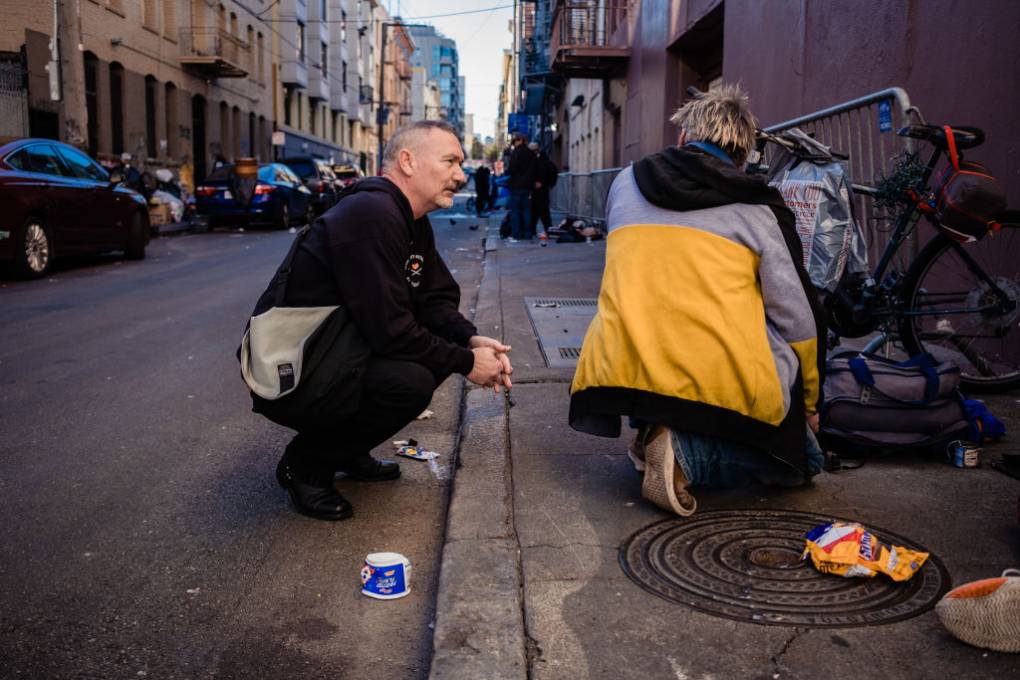
"caption": "Paul Harkin, director of harm reduction at GLIDE, hands out Narcan, fentanyl detection packets and tinfoil to drug users in an alley in San Francisco's Tenderloin neighborhood on Feb. 3, 2020.",
"credit": "Nick Otto for the Washington Post via Getty Images",
"altTag": "A man crouches down to speak to another person kneeling on the sidewalk in an alley.",
"description": null,
"imgSizes": {
"medium": {
"file": "https://cdn.kqed.org/wp-content/uploads/sites/10/2022/08/GettyImages-1201746556-800x534.jpg",
"width": 800,
"height": 534,
"mimeType": "image/jpeg"
},
"large": {
"file": "https://cdn.kqed.org/wp-content/uploads/sites/10/2022/08/GettyImages-1201746556-1020x680.jpg",
"width": 1020,
"height": 680,
"mimeType": "image/jpeg"
},
"thumbnail": {
"file": "https://cdn.kqed.org/wp-content/uploads/sites/10/2022/08/GettyImages-1201746556-160x107.jpg",
"width": 160,
"height": 107,
"mimeType": "image/jpeg"
},
"post-thumbnail": {
"file": "https://cdn.kqed.org/wp-content/uploads/sites/10/2022/08/GettyImages-1201746556-672x372.jpg",
"width": 672,
"height": 372,
"mimeType": "image/jpeg"
},
"twentyfourteen-full-width": {
"file": "https://cdn.kqed.org/wp-content/uploads/sites/10/2022/08/GettyImages-1201746556-1024x576.jpg",
"width": 1024,
"height": 576,
"mimeType": "image/jpeg"
},
"kqedFullSize": {
"file": "https://cdn.kqed.org/wp-content/uploads/sites/10/2022/08/GettyImages-1201746556.jpg",
"width": 1024,
"height": 683
}
},
"isLoading": false,
"fetchFailed": false
},
"news_11923134": {
"type": "attachments",
"id": "news_11923134",
"meta": {
"index": "attachments_1716263798",
"site": "news",
"id": "11923134",
"found": true
},
"parent": 11923129,
"imgSizes": {
"twentyfourteen-full-width": {
"file": "https://ww2.kqed.org/app/uploads/sites/10/2022/08/RS57923_20220821_121740-1038x576.jpg",
"width": 1038,
"mimeType": "image/jpeg",
"height": 576
},
"thumbnail": {
"file": "https://ww2.kqed.org/app/uploads/sites/10/2022/08/RS57923_20220821_121740-160x120.jpg",
"width": 160,
"mimeType": "image/jpeg",
"height": 120
},
"post-thumbnail": {
"file": "https://ww2.kqed.org/app/uploads/sites/10/2022/08/RS57923_20220821_121740-672x372.jpg",
"width": 672,
"mimeType": "image/jpeg",
"height": 372
},
"kqedFullSize": {
"file": "https://ww2.kqed.org/app/uploads/sites/10/2022/08/RS57923_20220821_121740.jpg",
"width": 1920,
"height": 1440
},
"large": {
"file": "https://ww2.kqed.org/app/uploads/sites/10/2022/08/RS57923_20220821_121740-1020x765.jpg",
"width": 1020,
"mimeType": "image/jpeg",
"height": 765
},
"1536x1536": {
"file": "https://ww2.kqed.org/app/uploads/sites/10/2022/08/RS57923_20220821_121740-1536x1152.jpg",
"width": 1536,
"mimeType": "image/jpeg",
"height": 1152
},
"medium": {
"file": "https://ww2.kqed.org/app/uploads/sites/10/2022/08/RS57923_20220821_121740-800x600.jpg",
"width": 800,
"mimeType": "image/jpeg",
"height": 600
}
},
"publishDate": 1661198638,
"modified": 1661206117,
"caption": "San Francisco District Attorney Brooke Jenkins embraces a supporter from Mothers Against Drug Deaths at a City Hall rally to raise awareness for fentanyl deaths in San Francisco on Aug. 21.",
"description": null,
"title": "RS57923_20220821_121740",
"credit": "Joe Fitzgerald Rodriguez/KQED",
"status": "inherit",
"altTag": "two women hug at a rally in front of city hall, with news cameras all around",
"isLoading": false,
"fetchFailed": false
},
"news_11922334": {
"type": "attachments",
"id": "news_11922334",
"meta": {
"index": "attachments_1716263798",
"site": "news",
"id": "11922334",
"found": true
},
"parent": 11922301,
"imgSizes": {
"twentyfourteen-full-width": {
"file": "https://ww2.kqed.org/app/uploads/sites/10/2022/08/Needle-1038x576.jpg",
"width": 1038,
"mimeType": "image/jpeg",
"height": 576
},
"thumbnail": {
"file": "https://ww2.kqed.org/app/uploads/sites/10/2022/08/Needle-160x105.jpg",
"width": 160,
"mimeType": "image/jpeg",
"height": 105
},
"post-thumbnail": {
"file": "https://ww2.kqed.org/app/uploads/sites/10/2022/08/Needle-672x372.jpg",
"width": 672,
"mimeType": "image/jpeg",
"height": 372
},
"kqedFullSize": {
"file": "https://ww2.kqed.org/app/uploads/sites/10/2022/08/Needle.jpg",
"width": 1980,
"height": 1301
},
"large": {
"file": "https://ww2.kqed.org/app/uploads/sites/10/2022/08/Needle-1020x670.jpg",
"width": 1020,
"mimeType": "image/jpeg",
"height": 670
},
"1536x1536": {
"file": "https://ww2.kqed.org/app/uploads/sites/10/2022/08/Needle-1536x1009.jpg",
"width": 1536,
"mimeType": "image/jpeg",
"height": 1009
},
"full-width": {
"file": "https://ww2.kqed.org/app/uploads/sites/10/2022/08/Needle-1920x1262.jpg",
"width": 1920,
"mimeType": "image/jpeg",
"height": 1262
},
"medium": {
"file": "https://ww2.kqed.org/app/uploads/sites/10/2022/08/Needle-800x526.jpg",
"width": 800,
"mimeType": "image/jpeg",
"height": 526
}
},
"publishDate": 1660263326,
"modified": 1661200290,
"caption": "A syringe is seen discarded near a homeless encampment along Berry St. south of Market Street in San Francisco on Tuesday November 1, 2016.",
"description": "A syringe is seen discarded near a homeless encampment along Berry St. south of Market Street in San Francisco, California, on Tuesday November 1, 2016.",
"title": "Needle",
"credit": "Michael Macor/San Francisco Chronicle via Getty Images",
"status": "inherit",
"altTag": "A syringe is seen discarded near a homeless encampment along Berry St. south of Market Street in San Francisco, California, on Tuesday November 1, 2016.",
"isLoading": false,
"fetchFailed": false
},
"news_11912393": {
"type": "attachments",
"id": "news_11912393",
"meta": {
"index": "attachments_1716263798",
"site": "news",
"id": "11912393",
"found": true
},
"parent": 11910405,
"imgSizes": {
"twentyfourteen-full-width": {
"file": "https://ww2.kqed.org/app/uploads/sites/10/2022/04/RS54387_003_KQED_IyanaSpruellHotelWhitcomb_03142022-qut-1-1038x576.jpg",
"width": 1038,
"mimeType": "image/jpeg",
"height": 576
},
"thumbnail": {
"file": "https://ww2.kqed.org/app/uploads/sites/10/2022/04/RS54387_003_KQED_IyanaSpruellHotelWhitcomb_03142022-qut-1-160x107.jpg",
"width": 160,
"mimeType": "image/jpeg",
"height": 107
},
"post-thumbnail": {
"file": "https://ww2.kqed.org/app/uploads/sites/10/2022/04/RS54387_003_KQED_IyanaSpruellHotelWhitcomb_03142022-qut-1-672x372.jpg",
"width": 672,
"mimeType": "image/jpeg",
"height": 372
},
"kqedFullSize": {
"file": "https://ww2.kqed.org/app/uploads/sites/10/2022/04/RS54387_003_KQED_IyanaSpruellHotelWhitcomb_03142022-qut-1.jpg",
"width": 1920,
"height": 1280
},
"large": {
"file": "https://ww2.kqed.org/app/uploads/sites/10/2022/04/RS54387_003_KQED_IyanaSpruellHotelWhitcomb_03142022-qut-1-1020x680.jpg",
"width": 1020,
"mimeType": "image/jpeg",
"height": 680
},
"1536x1536": {
"file": "https://ww2.kqed.org/app/uploads/sites/10/2022/04/RS54387_003_KQED_IyanaSpruellHotelWhitcomb_03142022-qut-1-1536x1024.jpg",
"width": 1536,
"mimeType": "image/jpeg",
"height": 1024
},
"medium": {
"file": "https://ww2.kqed.org/app/uploads/sites/10/2022/04/RS54387_003_KQED_IyanaSpruellHotelWhitcomb_03142022-qut-1-800x533.jpg",
"width": 800,
"mimeType": "image/jpeg",
"height": 533
}
},
"publishDate": 1651093731,
"modified": 1651276574,
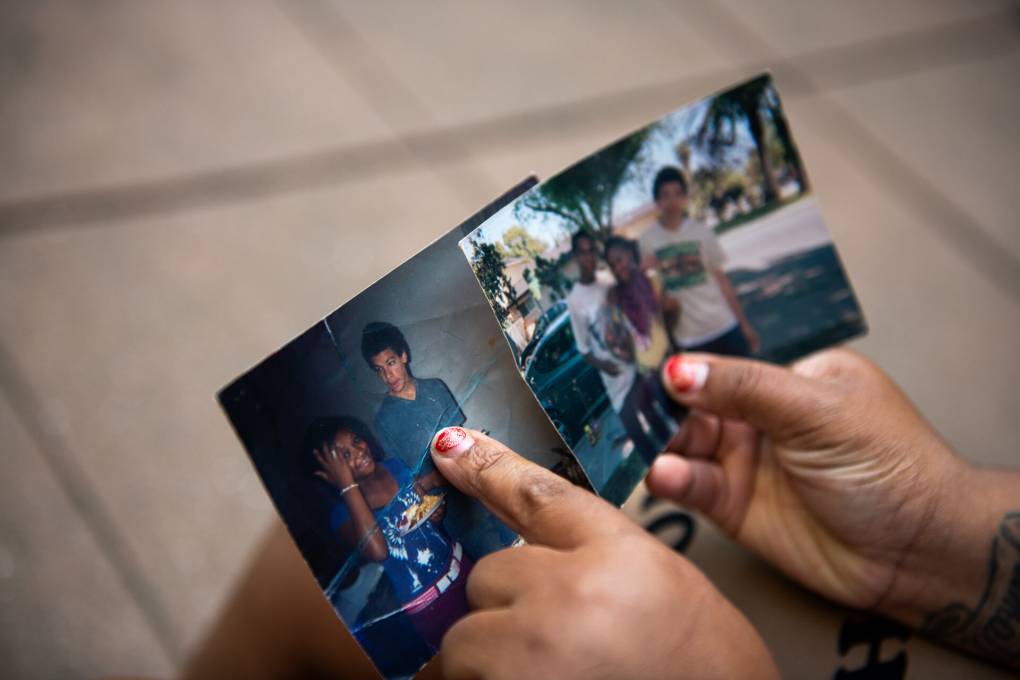
"caption": "Iyana Spruell points to her cousin Sterling Ulrich in a photo of them as teens in Merced, outside her home in San Francisco's Tenderloin neighborhood, March 14, 2022. Spruell had reconnected with Ulrich last summer, only months before Ulrich died of an overdose at the Hotel Whitcomb in November.",
"description": "Iyana Spruell points to her cousin Sterling Ulrich in a photo of them both in their early teenage years in Merced, California. She's outside of her home in San Francisco's Tenderloin neighborhood on March 14, 2022. Iyana had recently reconnected with her cousin Sterling Ulrich.",
"title": "hotel whitcomb",
"credit": "Beth LaBerge/KQED",
"status": "inherit",
"altTag": "Hands with chocolate skin and chipped red fingernail polish hold two photos. One photo shows the woman and her cousin as teenagers. In the photo, her cousin appears male, with dark hair and a blue shirt. The other photo is a blurry image of three young people in dark pants and white shirts.",
"isLoading": false,
"fetchFailed": false
},
"news_11911105": {
"type": "attachments",
"id": "news_11911105",
"meta": {
"index": "attachments_1716263798",
"site": "news",
"id": "11911105",
"found": true
},
"parent": 11911092,
"imgSizes": {
"twentyfourteen-full-width": {
"file": "https://ww2.kqed.org/app/uploads/sites/10/2022/04/RS54292_004_KQED_RachelMcLeanHarmReduction_03102022-qut-1038x576.jpg",
"width": 1038,
"mimeType": "image/jpeg",
"height": 576
},
"thumbnail": {
"file": "https://ww2.kqed.org/app/uploads/sites/10/2022/04/RS54292_004_KQED_RachelMcLeanHarmReduction_03102022-qut-160x107.jpg",
"width": 160,
"mimeType": "image/jpeg",
"height": 107
},
"post-thumbnail": {
"file": "https://ww2.kqed.org/app/uploads/sites/10/2022/04/RS54292_004_KQED_RachelMcLeanHarmReduction_03102022-qut-672x372.jpg",
"width": 672,
"mimeType": "image/jpeg",
"height": 372
},
"kqedFullSize": {
"file": "https://ww2.kqed.org/app/uploads/sites/10/2022/04/RS54292_004_KQED_RachelMcLeanHarmReduction_03102022-qut.jpg",
"width": 1920,
"height": 1280
},
"large": {
"file": "https://ww2.kqed.org/app/uploads/sites/10/2022/04/RS54292_004_KQED_RachelMcLeanHarmReduction_03102022-qut-1020x680.jpg",
"width": 1020,
"mimeType": "image/jpeg",
"height": 680
},
"1536x1536": {
"file": "https://ww2.kqed.org/app/uploads/sites/10/2022/04/RS54292_004_KQED_RachelMcLeanHarmReduction_03102022-qut-1536x1024.jpg",
"width": 1536,
"mimeType": "image/jpeg",
"height": 1024
},
"medium": {
"file": "https://ww2.kqed.org/app/uploads/sites/10/2022/04/RS54292_004_KQED_RachelMcLeanHarmReduction_03102022-qut-800x533.jpg",
"width": 800,
"mimeType": "image/jpeg",
"height": 533
}
},
"publishDate": 1649944201,
"modified": 1650487863,
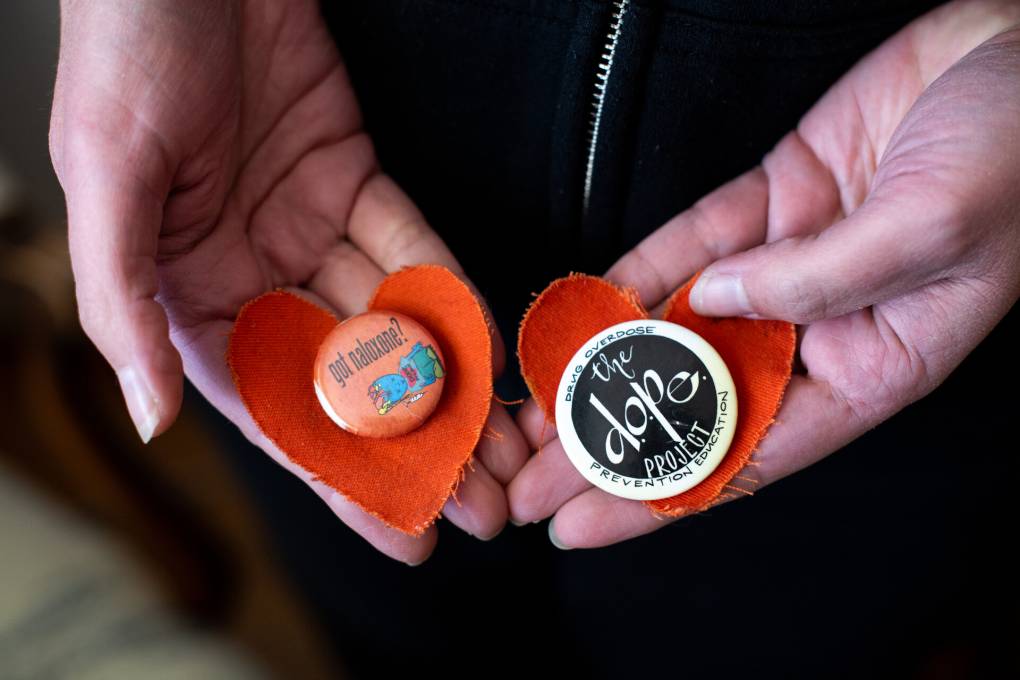
"caption": "Rachel McLean holds two pins on orange fabric hearts from the memorial for Pete Morse, at her home on March 10, 2022.",
"description": null,
"title": "harm reduction",
"credit": "Beth LaBerge/KQED",
"status": "inherit",
"altTag": "Two hands hold orange hearts with pins on them. One pin is orange and says, \"got naloxone?\" The other is black with a white border and reads, \"The Dope Project.\"",
"isLoading": false,
"fetchFailed": false
},
"news_11788936": {
"type": "attachments",
"id": "news_11788936",
"meta": {
"index": "attachments_1716263798",
"site": "news",
"id": "11788936",
"found": true
},
"parent": 11788921,
"imgSizes": {
"apple_news_ca_landscape_5_5": {
"file": "https://ww2.kqed.org/app/uploads/sites/10/2019/11/IMG_20191127_153031-e1574905962967-1044x783.jpg",
"width": 1044,
"mimeType": "image/jpeg",
"height": 783
},
"apple_news_ca_square_4_0": {
"file": "https://ww2.kqed.org/app/uploads/sites/10/2019/11/IMG_20191127_153031-e1574905962967-470x470.jpg",
"width": 470,
"mimeType": "image/jpeg",
"height": 470
},
"twentyfourteen-full-width": {
"file": "https://ww2.kqed.org/app/uploads/sites/10/2019/11/IMG_20191127_153031-e1574905962967-1038x576.jpg",
"width": 1038,
"mimeType": "image/jpeg",
"height": 576
},
"thumbnail": {
"file": "https://ww2.kqed.org/app/uploads/sites/10/2019/11/IMG_20191127_153031-e1574905962967-160x126.jpg",
"width": 160,
"mimeType": "image/jpeg",
"height": 126
},
"post-thumbnail": {
"file": "https://ww2.kqed.org/app/uploads/sites/10/2019/11/IMG_20191127_153031-e1574905962967-672x372.jpg",
"width": 672,
"mimeType": "image/jpeg",
"height": 372
},
"kqedFullSize": {
"file": "https://ww2.kqed.org/app/uploads/sites/10/2019/11/IMG_20191127_153031-e1574906000177.jpg",
"width": 1920,
"height": 1510
},
"apple_news_ca_landscape_4_7": {
"file": "https://ww2.kqed.org/app/uploads/sites/10/2019/11/IMG_20191127_153031-e1574905962967-632x474.jpg",
"width": 632,
"mimeType": "image/jpeg",
"height": 474
},
"large": {
"file": "https://ww2.kqed.org/app/uploads/sites/10/2019/11/IMG_20191127_153031-e1574905962967-1020x802.jpg",
"width": 1020,
"mimeType": "image/jpeg",
"height": 802
},
"complete_open_graph": {
"file": "https://ww2.kqed.org/app/uploads/sites/10/2019/11/IMG_20191127_153031-e1574905962967-1200x944.jpg",
"width": 1200,
"mimeType": "image/jpeg",
"height": 944
},
"apple_news_ca_landscape_4_0": {
"file": "https://ww2.kqed.org/app/uploads/sites/10/2019/11/IMG_20191127_153031-e1574905962967-536x402.jpg",
"width": 536,
"mimeType": "image/jpeg",
"height": 402
},
"apple_news_ca_portrait_12_9": {
"file": "https://ww2.kqed.org/app/uploads/sites/10/2019/11/IMG_20191127_153031-e1574905962967-1122x1496.jpg",
"width": 1122,
"mimeType": "image/jpeg",
"height": 1496
},
"medium": {
"file": "https://ww2.kqed.org/app/uploads/sites/10/2019/11/IMG_20191127_153031-e1574905962967-800x629.jpg",
"width": 800,
"mimeType": "image/jpeg",
"height": 629
},
"apple_news_ca_portrait_4_0": {
"file": "https://ww2.kqed.org/app/uploads/sites/10/2019/11/IMG_20191127_153031-e1574905962967-354x472.jpg",
"width": 354,
"mimeType": "image/jpeg",
"height": 472
},
"apple_news_ca_portrait_9_7": {
"file": "https://ww2.kqed.org/app/uploads/sites/10/2019/11/IMG_20191127_153031-e1574905962967-840x1120.jpg",
"width": 840,
"mimeType": "image/jpeg",
"height": 1120
},
"apple_news_ca_landscape_12_9": {
"file": "https://ww2.kqed.org/app/uploads/sites/10/2019/11/IMG_20191127_153031-e1574905962967-1832x1374.jpg",
"width": 1832,
"mimeType": "image/jpeg",
"height": 1374
},
"apple_news_ca_square_9_7": {
"file": "https://ww2.kqed.org/app/uploads/sites/10/2019/11/IMG_20191127_153031-e1574905962967-1104x1104.jpg",
"width": 1104,
"mimeType": "image/jpeg",
"height": 1104
},
"apple_news_ca_portrait_4_7": {
"file": "https://ww2.kqed.org/app/uploads/sites/10/2019/11/IMG_20191127_153031-e1574905962967-414x552.jpg",
"width": 414,
"mimeType": "image/jpeg",
"height": 552
},
"apple_news_ca_square_12_9": {
"file": "https://ww2.kqed.org/app/uploads/sites/10/2019/11/IMG_20191127_153031-e1574905962967-1472x1472.jpg",
"width": 1472,
"mimeType": "image/jpeg",
"height": 1472
},
"apple_news_ca_portrait_5_5": {
"file": "https://ww2.kqed.org/app/uploads/sites/10/2019/11/IMG_20191127_153031-e1574905962967-687x916.jpg",
"width": 687,
"mimeType": "image/jpeg",
"height": 916
},
"full-width": {
"file": "https://ww2.kqed.org/app/uploads/sites/10/2019/11/IMG_20191127_153031-e1574905962967-1920x1510.jpg",
"width": 1920,
"mimeType": "image/jpeg",
"height": 1510
},
"apple_news_ca_square_4_7": {
"file": "https://ww2.kqed.org/app/uploads/sites/10/2019/11/IMG_20191127_153031-e1574905962967-550x550.jpg",
"width": 550,
"mimeType": "image/jpeg",
"height": 550
},
"apple_news_ca_landscape_9_7": {
"file": "https://ww2.kqed.org/app/uploads/sites/10/2019/11/IMG_20191127_153031-e1574905962967-1376x1032.jpg",
"width": 1376,
"mimeType": "image/jpeg",
"height": 1032
},
"apple_news_ca_square_5_5": {
"file": "https://ww2.kqed.org/app/uploads/sites/10/2019/11/IMG_20191127_153031-e1574905962967-912x912.jpg",
"width": 912,
"mimeType": "image/jpeg",
"height": 912
}
},
"publishDate": 1574905810,
"modified": 1639852660,
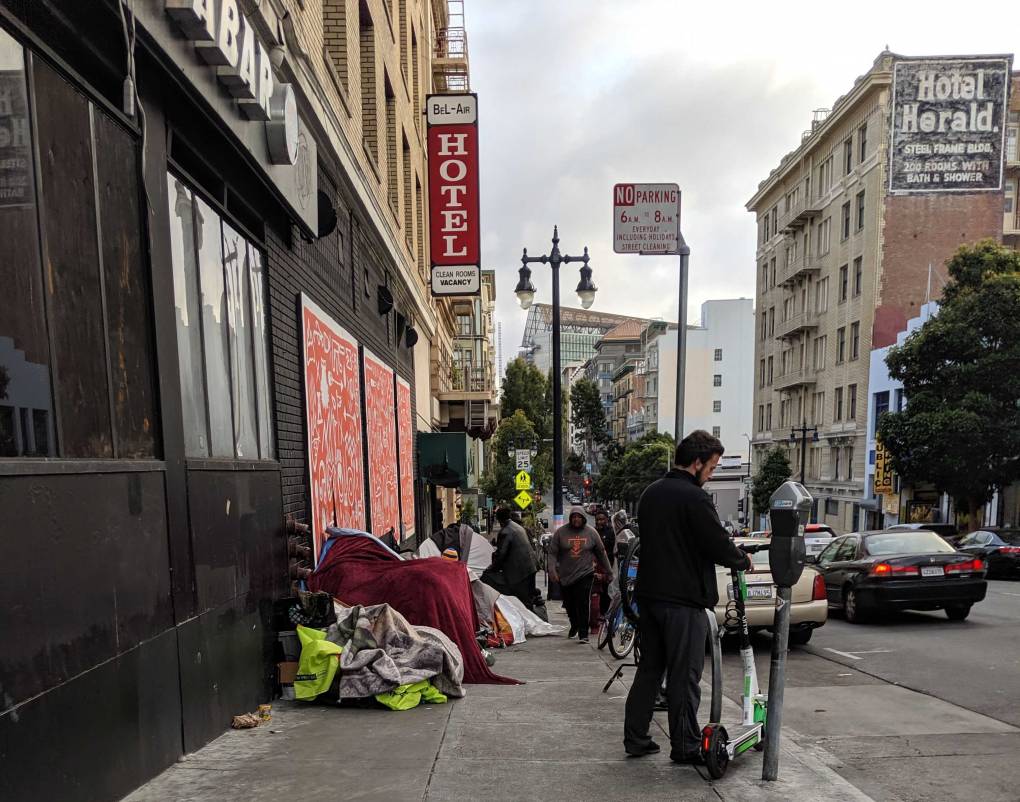
"caption": "A makeshift tent encampment on Ellis Street in San Francisco's Tenderloin neighborhood in Nov. 2019.",
"description": "Tents line Ellis Street in San Francisco's Tenderloin District, where homeless residents have made a makeshift camp.",
"title": "IMG_20191127_153031",
"credit": "Sruti Mamidanna/KQED",
"status": "inherit",
"altTag": "A man with a scooter stands on a sidewalk with a line of tents in the background.",
"isLoading": false,
"fetchFailed": false
},
"news_11896576": {
"type": "attachments",
"id": "news_11896576",
"meta": {
"index": "attachments_1716263798",
"site": "news",
"id": "11896576",
"found": true
},
"parent": 11896575,
"imgSizes": {
"twentyfourteen-full-width": {
"file": "https://ww2.kqed.org/app/uploads/sites/10/2021/11/gettyimages-1232507520-1ee3fcdc8cc3a0935b8136a4e9052df109c84e35-1038x576.jpg",
"width": 1038,
"mimeType": "image/jpeg",
"height": 576
},
"thumbnail": {
"file": "https://ww2.kqed.org/app/uploads/sites/10/2021/11/gettyimages-1232507520-1ee3fcdc8cc3a0935b8136a4e9052df109c84e35-160x120.jpg",
"width": 160,
"mimeType": "image/jpeg",
"height": 120
},
"post-thumbnail": {
"file": "https://ww2.kqed.org/app/uploads/sites/10/2021/11/gettyimages-1232507520-1ee3fcdc8cc3a0935b8136a4e9052df109c84e35-672x372.jpg",
"width": 672,
"mimeType": "image/jpeg",
"height": 372
},
"kqedFullSize": {
"file": "https://ww2.kqed.org/app/uploads/sites/10/2021/11/gettyimages-1232507520-1ee3fcdc8cc3a0935b8136a4e9052df109c84e35-scaled.jpg",
"width": 2560,
"height": 1920
},
"2048x2048": {
"file": "https://ww2.kqed.org/app/uploads/sites/10/2021/11/gettyimages-1232507520-1ee3fcdc8cc3a0935b8136a4e9052df109c84e35-2048x1536.jpg",
"width": 2048,
"mimeType": "image/jpeg",
"height": 1536
},
"large": {
"file": "https://ww2.kqed.org/app/uploads/sites/10/2021/11/gettyimages-1232507520-1ee3fcdc8cc3a0935b8136a4e9052df109c84e35-1020x765.jpg",
"width": 1020,
"mimeType": "image/jpeg",
"height": 765
},
"1536x1536": {
"file": "https://ww2.kqed.org/app/uploads/sites/10/2021/11/gettyimages-1232507520-1ee3fcdc8cc3a0935b8136a4e9052df109c84e35-1536x1152.jpg",
"width": 1536,
"mimeType": "image/jpeg",
"height": 1152
},
"full-width": {
"file": "https://ww2.kqed.org/app/uploads/sites/10/2021/11/gettyimages-1232507520-1ee3fcdc8cc3a0935b8136a4e9052df109c84e35-1920x1440.jpg",
"width": 1920,
"mimeType": "image/jpeg",
"height": 1440
},
"medium": {
"file": "https://ww2.kqed.org/app/uploads/sites/10/2021/11/gettyimages-1232507520-1ee3fcdc8cc3a0935b8136a4e9052df109c84e35-800x600.jpg",
"width": 800,
"mimeType": "image/jpeg",
"height": 600
}
},
"publishDate": 1637187159,
"modified": 1637281377,
"caption": "A bag of assorted pills and prescription drugs dropped off for disposal is displayed during the Drug Enforcement Administration 20th National Prescription Drug Take Back Day at Watts Healthcare on April 24, 2021, in Los Angeles.",
"description": "A bag of assorted pills and prescription drugs dropped off for disposal is displayed during the Drug Enforcement Administration (DEA) 20th National Prescription Drug Take Back Day at Watts Healthcare on April 24, 2021 in Los Angeles, California. - According to the Centers for Disease Control and Prevention, the US has seen an increase in drug overdose deaths during the Covid-19 pandemic, accelerating significantly during the first months of the public health emergency, including deaths from opioids and counterfeit pills containing fentanyl. (Photo by Patrick T. FALLON / AFP) (Photo by PATRICK T. FALLON/AFP via Getty Images)",
"title": "A bag of assorted pills and prescription drugs dropped off for disposal is displayed during the Drug Enforcement Administration's 20th National Prescription Drug Take Back Day earlier this year in Los Angeles. According to the Centers for Disease Control and Prevention, more than 100,000 people died of a drug overdose from April 2020 to April 2021.",
"credit": "Patrick T. Fallon/ AFP via Getty Images",
"status": "inherit",
"altTag": "A bag of assorted pills and prescription drugs.",
"isLoading": false,
"fetchFailed": false
},
"news_11896377": {
"type": "attachments",
"id": "news_11896377",
"meta": {
"index": "attachments_1716263798",
"site": "news",
"id": "11896377",
"found": true
},
"parent": 11896375,
"imgSizes": {
"twentyfourteen-full-width": {
"file": "https://ww2.kqed.org/app/uploads/sites/10/2021/11/RS51781_023_Oakland_HighlandHospitalBridgeProgram_10062021-qut-1038x576.jpg",
"width": 1038,
"mimeType": "image/jpeg",
"height": 576
},
"thumbnail": {
"file": "https://ww2.kqed.org/app/uploads/sites/10/2021/11/RS51781_023_Oakland_HighlandHospitalBridgeProgram_10062021-qut-160x107.jpg",
"width": 160,
"mimeType": "image/jpeg",
"height": 107
},
"post-thumbnail": {
"file": "https://ww2.kqed.org/app/uploads/sites/10/2021/11/RS51781_023_Oakland_HighlandHospitalBridgeProgram_10062021-qut-672x372.jpg",
"width": 672,
"mimeType": "image/jpeg",
"height": 372
},
"kqedFullSize": {
"file": "https://ww2.kqed.org/app/uploads/sites/10/2021/11/RS51781_023_Oakland_HighlandHospitalBridgeProgram_10062021-qut.jpg",
"width": 1920,
"height": 1280
},
"large": {
"file": "https://ww2.kqed.org/app/uploads/sites/10/2021/11/RS51781_023_Oakland_HighlandHospitalBridgeProgram_10062021-qut-1020x680.jpg",
"width": 1020,
"mimeType": "image/jpeg",
"height": 680
},
"1536x1536": {
"file": "https://ww2.kqed.org/app/uploads/sites/10/2021/11/RS51781_023_Oakland_HighlandHospitalBridgeProgram_10062021-qut-1536x1024.jpg",
"width": 1536,
"mimeType": "image/jpeg",
"height": 1024
},
"medium": {
"file": "https://ww2.kqed.org/app/uploads/sites/10/2021/11/RS51781_023_Oakland_HighlandHospitalBridgeProgram_10062021-qut-800x533.jpg",
"width": 800,
"mimeType": "image/jpeg",
"height": 533
}
},
"publishDate": 1637093141,
"modified": 1637283726,
"caption": "A Highland Hospital substance use counselor in Oakland speaks with a patient about taking the medication Narcan — used to reverse opioid overdoses — on Oct. 6, 2021.",
"description": null,
"title": "RS51781_023_Oakland_HighlandHospitalBridgeProgram_10062021-qut",
"credit": "Beth LaBerge/KQED",
"status": "inherit",
"altTag": "A patient in a blue sweatshirt slumps in a chair while talking to a doctor.",
"isLoading": false,
"fetchFailed": false
},
"news_11895034": {
"type": "attachments",
"id": "news_11895034",
"meta": {
"index": "attachments_1716263798",
"site": "news",
"id": "11895034",
"found": true
},
"parent": 11894981,
"imgSizes": {
"twentyfourteen-full-width": {
"file": "https://ww2.kqed.org/app/uploads/sites/10/2021/11/NPR-fentanyl-1-1038x576.jpg",
"width": 1038,
"mimeType": "image/jpeg",
"height": 576
},
"thumbnail": {
"file": "https://ww2.kqed.org/app/uploads/sites/10/2021/11/NPR-fentanyl-1-160x120.jpg",
"width": 160,
"mimeType": "image/jpeg",
"height": 120
},
"post-thumbnail": {
"file": "https://ww2.kqed.org/app/uploads/sites/10/2021/11/NPR-fentanyl-1-672x372.jpg",
"width": 672,
"mimeType": "image/jpeg",
"height": 372
},
"kqedFullSize": {
"file": "https://ww2.kqed.org/app/uploads/sites/10/2021/11/NPR-fentanyl-1.jpg",
"width": 1219,
"height": 915
},
"large": {
"file": "https://ww2.kqed.org/app/uploads/sites/10/2021/11/NPR-fentanyl-1-1020x766.jpg",
"width": 1020,
"mimeType": "image/jpeg",
"height": 766
},
"medium": {
"file": "https://ww2.kqed.org/app/uploads/sites/10/2021/11/NPR-fentanyl-1-800x600.jpg",
"width": 800,
"mimeType": "image/jpeg",
"height": 600
}
},
"publishDate": 1635980830,
"modified": 1636035093,
"caption": "Registered nurse Louise Bisby is part of Street Overdose Response Team (SORT), the city's mobile outreach team that aims to help people who recently overdosed with a broad range of support services, from treatment to housing. SORT, a collaboration between the city's health and fire departments, aims to deliver support and care directly following an overdose.",
"description": "Registered nurse Louise Bisby is part of Street Overdose Response Teams (SORT), the city's mobile outreach team that aims to help people who recently overdosed with a broad range of support services, from treatment to housing.",
"title": "NPR fentanyl 1",
"credit": "Rachel Bujalski for NPR",
"status": "inherit",
"altTag": "A woman closes the back doors of a van after taking out some equipment. The van is parked on the street in front of a row of houses.",
"isLoading": false,
"fetchFailed": false
},
"news_11890993": {
"type": "attachments",
"id": "news_11890993",
"meta": {
"index": "attachments_1716263798",
"site": "news",
"id": "11890993",
"found": true
},
"parent": 11890421,
"imgSizes": {
"twentyfourteen-full-width": {
"file": "https://ww2.kqed.org/app/uploads/sites/10/2021/10/fentanylteststrips_annelisefinney-1038x576.jpg",
"width": 1038,
"mimeType": "image/jpeg",
"height": 576
},
"thumbnail": {
"file": "https://ww2.kqed.org/app/uploads/sites/10/2021/10/fentanylteststrips_annelisefinney-160x120.jpg",
"width": 160,
"mimeType": "image/jpeg",
"height": 120
},
"post-thumbnail": {
"file": "https://ww2.kqed.org/app/uploads/sites/10/2021/10/fentanylteststrips_annelisefinney-672x372.jpg",
"width": 672,
"mimeType": "image/jpeg",
"height": 372
},
"kqedFullSize": {
"file": "https://ww2.kqed.org/app/uploads/sites/10/2021/10/fentanylteststrips_annelisefinney-scaled-e1633393136850.jpg",
"width": 1920,
"height": 1440
},
"2048x2048": {
"file": "https://ww2.kqed.org/app/uploads/sites/10/2021/10/fentanylteststrips_annelisefinney-2048x1536.jpg",
"width": 2048,
"mimeType": "image/jpeg",
"height": 1536
},
"large": {
"file": "https://ww2.kqed.org/app/uploads/sites/10/2021/10/fentanylteststrips_annelisefinney-1020x765.jpg",
"width": 1020,
"mimeType": "image/jpeg",
"height": 765
},
"1536x1536": {
"file": "https://ww2.kqed.org/app/uploads/sites/10/2021/10/fentanylteststrips_annelisefinney-1536x1152.jpg",
"width": 1536,
"mimeType": "image/jpeg",
"height": 1152
},
"full-width": {
"file": "https://ww2.kqed.org/app/uploads/sites/10/2021/10/fentanylteststrips_annelisefinney-1920x1440.jpg",
"width": 1920,
"mimeType": "image/jpeg",
"height": 1440
},
"medium": {
"file": "https://ww2.kqed.org/app/uploads/sites/10/2021/10/fentanylteststrips_annelisefinney-800x600.jpg",
"width": 800,
"mimeType": "image/jpeg",
"height": 600
}
},
"publishDate": 1633389057,
"modified": 1633550442,
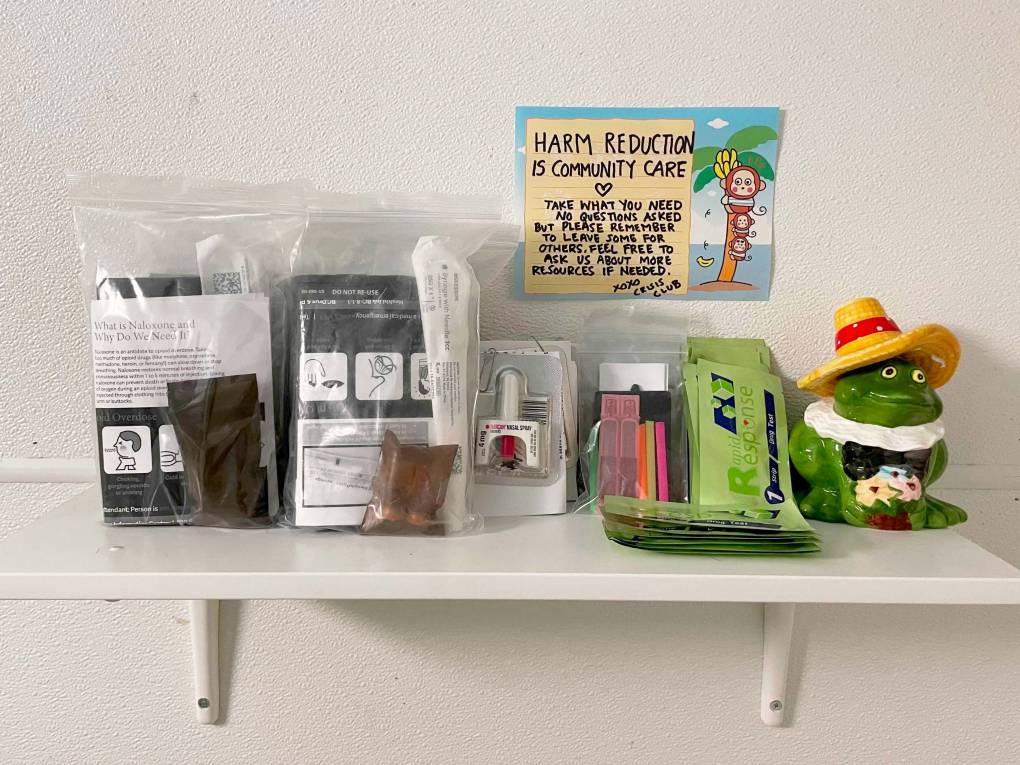
"caption": "A shelf in the restroom of Crisis Club Art Gallery in Oakland, which offers free fentanyl testing strips among other harm reduction supplies.",
"description": "The shelf in the restroom of Crisis Club Gallery in Oakland, where fentanyl test strips are offered at no expense. Co-owner Niko Nada said that having testing strips available at the gallery was nonnegotiable.",
"title": "fentanylteststrips_annelisefinney",
"credit": "Annelise Finney/KQED",
"status": "inherit",
"altTag": "Fentanyl testing strips on a bathroom shelf, next to other health-safety products.",
"isLoading": false,
"fetchFailed": false
}
},
"audioPlayerReducer": {
"postId": "stream_live",
"isPaused": true,
"isPlaying": false,
"pfsActive": false,
"pledgeModalIsOpen": true,
"playerDrawerIsOpen": false,
"liveAudioPlayStartedAt": 0,
"liveAudioPlayContext": ""
},
"authorsReducer": {
"byline_news_11922301": {
"type": "authors",
"id": "byline_news_11922301",
"meta": {
"override": true
},
"slug": "byline_news_11922301",
"name": "Ana B. Ibarra",
"isLoading": false
},
"byline_news_11896575": {
"type": "authors",
"id": "byline_news_11896575",
"meta": {
"override": true
},
"slug": "byline_news_11896575",
"name": "\u003ca href=\"https://www.npr.org/people/935764762/brian-mann\">Brian Mann\u003c/a>",
"isLoading": false
},
"byline_news_11894981": {
"type": "authors",
"id": "byline_news_11894981",
"meta": {
"override": true
},
"slug": "byline_news_11894981",
"name": "\u003ca href=\"https://www.npr.org/people/2101350/eric-westervelt\">Eric Westervelt\u003c/a>",
"isLoading": false
},
"dmarks": {
"type": "authors",
"id": "182",
"meta": {
"index": "authors_1716337520",
"id": "182",
"found": true
},
"name": "David Marks",
"firstName": "David",
"lastName": "Marks",
"slug": "dmarks",
"email": "dmarks@kqed.org",
"display_author_email": false,
"staff_mastheads": [],
"title": "KQED Editor",
"bio": "David Marks is a senior digital editor for KQED News. \u003c/a>Reach him at dmarks@kqed.org.",
"avatar": "https://secure.gravatar.com/avatar/b88bd6227ce6cb96ae33fefaf42b2a29?s=600&d=mm&r=g",
"twitter": "divadskram",
"facebook": null,
"instagram": null,
"linkedin": null,
"sites": [
{
"site": "news",
"roles": []
},
{
"site": "science",
"roles": []
},
{
"site": "perspectives",
"roles": []
},
{
"site": "liveblog",
"roles": []
}
],
"headData": {
"title": "David Marks | KQED",
"description": "KQED Editor",
"ogImgSrc": "https://secure.gravatar.com/avatar/b88bd6227ce6cb96ae33fefaf42b2a29?s=600&d=mm&r=g",
"twImgSrc": "https://secure.gravatar.com/avatar/b88bd6227ce6cb96ae33fefaf42b2a29?s=600&d=mm&r=g"
},
"isLoading": false,
"link": "/author/dmarks"
},
"kqed": {
"type": "authors",
"id": "236",
"meta": {
"index": "authors_1716337520",
"id": "236",
"found": true
},
"name": "KQED News Staff",
"firstName": "KQED News Staff",
"lastName": null,
"slug": "kqed",
"email": "faq@kqed.org",
"display_author_email": false,
"staff_mastheads": [],
"title": null,
"bio": null,
"avatar": "https://secure.gravatar.com/avatar/ef0e801a68c4c54afa9180db14084167?s=600&d=blank&r=g",
"twitter": null,
"facebook": null,
"instagram": null,
"linkedin": null,
"sites": [
{
"site": "arts",
"roles": [
"contributor"
]
},
{
"site": "news",
"roles": [
"editor"
]
},
{
"site": "futureofyou",
"roles": [
"author"
]
}
],
"headData": {
"title": "KQED News Staff | KQED",
"description": null,
"ogImgSrc": "https://secure.gravatar.com/avatar/ef0e801a68c4c54afa9180db14084167?s=600&d=blank&r=g",
"twImgSrc": "https://secure.gravatar.com/avatar/ef0e801a68c4c54afa9180db14084167?s=600&d=blank&r=g"
},
"isLoading": false,
"link": "/author/kqed"
},
"lesleymcclurg": {
"type": "authors",
"id": "11229",
"meta": {
"index": "authors_1716337520",
"id": "11229",
"found": true
},
"name": "Lesley McClurg",
"firstName": "Lesley",
"lastName": "McClurg",
"slug": "lesleymcclurg",
"email": "lmcclurg@KQED.org",
"display_author_email": false,
"staff_mastheads": [
"news",
"science"
],
"title": "KQED Health Correspondent",
"bio": "Lesley McClurg is a health correspondent and fill-in host whose work is regularly rebroadcast on NPR and PBS programs. She’s earned multiple regional Emmy awards, a national and a regional Edward R. Murrow award, and was named Best Beat Reporter by the Association of Health Care Journalists. The Society of Professional Journalists has recognized her work several times, and the Society of Environmental Journalists spotlighted her coverage of California’s historic drought.\r\n\r\nBefore joining KQED in 2016, Lesley covered food and sustainability for Capital Public Radio, environmental issues for Colorado Public Radio, and reported for KUOW and KCTS 9 in Seattle. Away from the newsroom, she loves skiing with her daughter, mountain biking with her partner, and playing with Ollie, the family’s goldendoodle. On deadline, she runs almost entirely on chocolate chips.\r\n\r\n ",
"avatar": "https://secure.gravatar.com/avatar/bab49e972ea10c774fe0f5e29dba1722b158f7c0d58a360923d1389d380b2978?s=600&d=blank&r=g",
"twitter": "lesleywmcclurg",
"bluesky": null,
"facebook": null,
"instagram": null,
"linkedin": null,
"sites": [
{
"site": "arts",
"roles": [
"author"
]
},
{
"site": "news",
"roles": [
"editor"
]
},
{
"site": "futureofyou",
"roles": [
"editor"
]
},
{
"site": "stateofhealth",
"roles": [
"author"
]
},
{
"site": "science",
"roles": [
"editor"
]
},
{
"site": "quest",
"roles": [
"subscriber"
]
},
{
"site": "forum",
"roles": [
"administrator"
]
},
{
"site": "liveblog",
"roles": [
"author"
]
}
],
"headData": {
"title": "Lesley McClurg | KQED",
"description": "KQED Health Correspondent",
"ogImgSrc": "https://secure.gravatar.com/avatar/bab49e972ea10c774fe0f5e29dba1722b158f7c0d58a360923d1389d380b2978?s=600&d=blank&r=g",
"twImgSrc": "https://secure.gravatar.com/avatar/bab49e972ea10c774fe0f5e29dba1722b158f7c0d58a360923d1389d380b2978?s=600&d=blank&r=g"
},
"isLoading": false,
"link": "/author/lesleymcclurg"
},
"kevinstark": {
"type": "authors",
"id": "11608",
"meta": {
"index": "authors_1716337520",
"id": "11608",
"found": true
},
"name": "Kevin Stark",
"firstName": "Kevin",
"lastName": "Stark",
"slug": "kevinstark",
"email": "kstark@kqed.org",
"display_author_email": true,
"staff_mastheads": [
"science"
],
"title": "Senior Editor",
"bio": "Kevin is a senior editor for KQED Science, managing the station's health and climate desks. His journalism career began in the Pacific Northwest, and he later became a lead reporter for the San Francisco Public Press. His work has appeared in Pacific Standard magazine, the Energy News Network, the Center for Investigative Reporting's Reveal and WBEZ in Chicago. Kevin joined KQED in 2019, and has covered issues related to energy, wildfire, climate change and the environment.",
"avatar": "https://secure.gravatar.com/avatar/365aaa4b597d3a8374f67504ff0facd323d7906e8eb4be0a7efd2427408e802c?s=600&d=blank&r=g",
"twitter": "starkkev",
"bluesky": null,
"facebook": null,
"instagram": null,
"linkedin": null,
"sites": [
{
"site": "",
"roles": [
"editor"
]
},
{
"site": "news",
"roles": [
"editor"
]
},
{
"site": "science",
"roles": [
"administrator"
]
}
],
"headData": {
"title": "Kevin Stark | KQED",
"description": "Senior Editor",
"ogImgSrc": "https://secure.gravatar.com/avatar/365aaa4b597d3a8374f67504ff0facd323d7906e8eb4be0a7efd2427408e802c?s=600&d=blank&r=g",
"twImgSrc": "https://secure.gravatar.com/avatar/365aaa4b597d3a8374f67504ff0facd323d7906e8eb4be0a7efd2427408e802c?s=600&d=blank&r=g"
},
"isLoading": false,
"link": "/author/kevinstark"
},
"hmcdede": {
"type": "authors",
"id": "11635",
"meta": {
"index": "authors_1716337520",
"id": "11635",
"found": true
},
"name": "Holly McDede",
"firstName": "Holly",
"lastName": "McDede",
"slug": "hmcdede",
"email": "hmcdede@KQED.org",
"display_author_email": false,
"staff_mastheads": [],
"title": "KQED Contributor",
"bio": null,
"avatar": "https://secure.gravatar.com/avatar/999d9bf31bb3a2f0511932d99526cb3e?s=600&d=blank&r=g",
"twitter": null,
"facebook": null,
"instagram": null,
"linkedin": null,
"sites": [
{
"site": "arts",
"roles": [
"editor"
]
},
{
"site": "news",
"roles": [
"edit_others_posts",
"editor"
]
},
{
"site": "science",
"roles": [
"editor"
]
},
{
"site": "forum",
"roles": [
"editor"
]
},
{
"site": "perspectives",
"roles": [
"administrator"
]
}
],
"headData": {
"title": "Holly McDede | KQED",
"description": "KQED Contributor",
"ogImgSrc": "https://secure.gravatar.com/avatar/999d9bf31bb3a2f0511932d99526cb3e?s=600&d=blank&r=g",
"twImgSrc": "https://secure.gravatar.com/avatar/999d9bf31bb3a2f0511932d99526cb3e?s=600&d=blank&r=g"
},
"isLoading": false,
"link": "/author/hmcdede"
},
"jrodriguez": {
"type": "authors",
"id": "11690",
"meta": {
"index": "authors_1716337520",
"id": "11690",
"found": true
},
"name": "Joe Fitzgerald Rodriguez",
"firstName": "Joe",
"lastName": "Fitzgerald Rodriguez",
"slug": "jrodriguez",
"email": "jrodriguez@kqed.org",
"display_author_email": true,
"staff_mastheads": [
"news"
],
"title": "Reporter and Producer",
"bio": "Joe Fitzgerald Rodriguez is a reporter and digital producer for KQED covering politics. Joe most recently wrote for the \u003cem>San Francisco Examiner\u003c/em> as a political columnist covering The City. He was raised in San Francisco and has spent his reporting career in his beloved, foggy, city by the bay. Joe was 12-years-old when he conducted his first interview in journalism, grilling former San Francisco Mayor Willie Brown for the Marina Middle School newspaper, \u003cem>The Penguin Press, \u003c/em>and he continues to report on the San Francisco Bay Area to this day.",
"avatar": "https://secure.gravatar.com/avatar/2247beb0564c1e9c62228d5649d2edac?s=600&d=blank&r=g",
"twitter": "FitztheReporter",
"facebook": null,
"instagram": "https://www.instagram.com/fitzthereporter/",
"linkedin": null,
"sites": [
{
"site": "",
"roles": [
"editor"
]
},
{
"site": "arts",
"roles": [
"editor"
]
},
{
"site": "news",
"roles": [
"editor"
]
},
{
"site": "science",
"roles": [
"editor"
]
},
{
"site": "elections",
"roles": [
"editor"
]
},
{
"site": "liveblog",
"roles": [
"editor"
]
}
],
"headData": {
"title": "Joe Fitzgerald Rodriguez | KQED",
"description": "Reporter and Producer",
"ogImgSrc": "https://secure.gravatar.com/avatar/2247beb0564c1e9c62228d5649d2edac?s=600&d=blank&r=g",
"twImgSrc": "https://secure.gravatar.com/avatar/2247beb0564c1e9c62228d5649d2edac?s=600&d=blank&r=g"
},
"isLoading": false,
"link": "/author/jrodriguez"
},
"ccabreralomeli": {
"type": "authors",
"id": "11708",
"meta": {
"index": "authors_1716337520",
"id": "11708",
"found": true
},
"name": "Carlos Cabrera-Lomelí",
"firstName": "Carlos",
"lastName": "Cabrera-Lomelí",
"slug": "ccabreralomeli",
"email": "ccabreralomeli@KQED.org",
"display_author_email": true,
"staff_mastheads": [
"news"
],
"title": "Community Reporter",
"bio": "Carlos Cabrera-Lomelí is a community reporter with KQED's digital engagement team. He also reports and co-produces for KQED's bilingual news hub KQED en Español. He grew up in San Francisco's Mission District and has previously worked with Univision, 48 Hills and REFORMA in Mexico City.",
"avatar": "https://secure.gravatar.com/avatar/c309be9665e484f887b818c89e273ecc673004f426f36b24d00a4d813a2e0518?s=600&d=blank&r=g",
"twitter": "@LomeliCabrera",
"bluesky": null,
"facebook": null,
"instagram": null,
"linkedin": null,
"sites": [
{
"site": "arts",
"roles": [
"editor"
]
},
{
"site": "news",
"roles": [
"editor"
]
},
{
"site": "about",
"roles": [
"editor"
]
},
{
"site": "science",
"roles": [
"editor"
]
},
{
"site": "perspectives",
"roles": [
"editor"
]
},
{
"site": "elections",
"roles": [
"editor"
]
},
{
"site": "liveblog",
"roles": [
"contributor"
]
}
],
"headData": {
"title": "Carlos Cabrera-Lomelí | KQED",
"description": "Community Reporter",
"ogImgSrc": "https://secure.gravatar.com/avatar/c309be9665e484f887b818c89e273ecc673004f426f36b24d00a4d813a2e0518?s=600&d=blank&r=g",
"twImgSrc": "https://secure.gravatar.com/avatar/c309be9665e484f887b818c89e273ecc673004f426f36b24d00a4d813a2e0518?s=600&d=blank&r=g"
},
"isLoading": false,
"link": "/author/ccabreralomeli"
},
"afinney": {
"type": "authors",
"id": "11772",
"meta": {
"index": "authors_1716337520",
"id": "11772",
"found": true
},
"name": "Annelise Finney",
"firstName": "Annelise",
"lastName": "Finney",
"slug": "afinney",
"email": "afinney@kqed.org",
"display_author_email": true,
"staff_mastheads": [
"news"
],
"title": "Reporter",
"bio": "Annelise reports on reparations in California and East Bay politics. She co-produced the Sunday Music Drop, a limited-term radio series featuring Bay Area musicians that aired between Sept 2022 and Oct 2024. She joined KQED in 2021 as a general assignment reporter and is an alumna of KALW's Audio Academy. She was born and raised in the East Bay. She is currently away from KQED completing a year-long reporting project in Berlin, Germany as a Alexander Von Humboldt German Chancellor Fellow.",
"avatar": "https://secure.gravatar.com/avatar/5fded66cae47704cdfc5021cde0f3aa4?s=600&d=blank&r=g",
"twitter": null,
"facebook": null,
"instagram": null,
"linkedin": null,
"sites": [
{
"site": "news",
"roles": [
"editor"
]
},
{
"site": "liveblog",
"roles": [
"author"
]
}
],
"headData": {
"title": "Annelise Finney | KQED",
"description": "Reporter",
"ogImgSrc": "https://secure.gravatar.com/avatar/5fded66cae47704cdfc5021cde0f3aa4?s=600&d=blank&r=g",
"twImgSrc": "https://secure.gravatar.com/avatar/5fded66cae47704cdfc5021cde0f3aa4?s=600&d=blank&r=g"
},
"isLoading": false,
"link": "/author/afinney"
}
},
"pagesReducer": {
"news_tag_fentanyl": {
"type": "terms",
"id": "news_23051",
"meta": {
"index": "terms_1716263798",
"site": "news",
"id": "23051",
"score": 9.304576
},
"featImg": null,
"name": "fentanyl",
"description": null,
"taxonomy": "tag",
"headData": {
"twImgId": null,
"twTitle": null,
"ogTitle": null,
"ogImgId": null,
"twDescription": null,
"description": null,
"title": "fentanyl Archives | KQED News",
"ogDescription": null
},
"ttid": 23068,
"slug": "fentanyl",
"isLoading": false,
"title": "fentanyl",
"pageMeta": {
"site": "news",
"WpPageTemplate": "page-topic-editorial",
"currentPage": 5
},
"blocks": [
{
"blockName": "kqed/post-list",
"attrs": {
"layout": "cardArticle2",
"query": "posts/news?tag=fentanyl",
"seeMore": false,
"paginated": true,
"page": 5
}
},
{
"blockName": "kqed/ad"
}
]
}
},
"pfsSessionReducer": {},
"postsReducer": {
"stream_live": {
"type": "live",
"id": "stream_live",
"audioUrl": "https://streams.kqed.org/kqedradio",
"title": "Live Stream",
"excerpt": "Live Stream information currently unavailable.",
"link": "/radio",
"featImg": "",
"label": {
"name": "KQED Live",
"link": "/"
}
},
"stream_kqedNewscast": {
"type": "posts",
"id": "stream_kqedNewscast",
"audioUrl": "https://www.kqed.org/.stream/anon/radio/RDnews/newscast.mp3?_=1",
"title": "KQED Newscast",
"featImg": "",
"label": {
"name": "88.5 FM",
"link": "/"
}
},
"news_11927871": {
"type": "posts",
"id": "news_11927871",
"meta": {
"index": "posts_1716263798",
"site": "news",
"id": "11927871",
"score": null,
"sort": [
1665034930000
]
},
"guestAuthors": [],
"slug": "from-fixing-homelessness-to-arresting-fentanyl-dealers-sf-mayor-breed-bemoans-city-halls-red-tape-this-bureaucracy-has-really-tested-my-patience",
"title": "From Fixing Homelessness to Arresting Fentanyl Dealers, SF Mayor Breed Bemoans City Hall Red Tape",
"publishDate": 1665034930,
"format": "standard",
"headTitle": "From Fixing Homelessness to Arresting Fentanyl Dealers, SF Mayor Breed Bemoans City Hall Red Tape | KQED",
"labelTerm": {
"site": "news"
},
"content": "\u003cp>San Francisco needs the ability to more easily place residents with mental illness in restrictive conservatorships, with less red tape, to ease its homelessness crisis.\u003c/p>\n\u003cp>That’s according to San Francisco Mayor London Breed, who joined KQED Political Breakdown hosts Scott Shafer and Marisa Lagos at a KQED Live event Wednesday night.\u003c/p>\n\u003cp>Throughout the night, Breed answered wide-ranging questions covering new policies against drug dealers announced by her district attorney appointee, her own accomplishments on tackling city homelessness, and her much-maligned use of prewritten resignation letters for her city commission appointees.\u003c/p>\n\u003cp>Summing up her time as mayor, Breed said, “This bureaucracy has really tested my patience for getting results.”\u003c/p>\n\u003cp>Breed also dismissed the critiques that requiring her commission appointees to write undated letters of resignation allowed her undue influence over them.\u003c/p>\n\u003cp>[ad fullwidth]\u003c/p>\n\u003cp>‘“This is a real insider political thing,” she said. “The people who care about this are the people who, in most cases, just want to mess with me over something.”\u003c/p>\n\u003cp>The Board of Supervisors are planning \u003ca href=\"https://sfbos.org/sites/default/files/gao101122_agenda.pdf\">a hearing on those letters next Tuesday\u003c/a>.\u003c/p>\n\u003cp>And while Breed isn’t on this year’s ballot in San Francisco, her appointees certainly are up for election: District Attorney Brooke Jenkins, for instance, and District 6 Supervisor Matt Dorsey.\u003c/p>\n\u003cp>So while San Francisco voters won’t weigh in on Breed directly, they’ll certainly vote on her policies.\u003c/p>\n\u003ch2>On Gov. Gavin Newsom’s CARE Court\u003c/h2>\n\u003cp>On stage at KQED’s venue, The Commons, Lagos and Shafer pressed Breed on her view of Gov. Gavin Newsom’s new CARE Court program. The governor signed the Community Assistance, Recovery and Empowerment (CARE) Act into law last month, creating a program of court-ordered treatment plans for people deemed to be suffering from severe mental illness.\u003c/p>\n\u003cp>People with mental disorders who decline those plans could be placed under a conservatorship and ordered to comply. But Breed said that doesn’t go far enough.\u003c/p>\n\u003cp>“I think that the challenge is, we need more and I think we need to be bold,” Breed said. “And we need to have an honest conversation about people, some people who can get help and maybe be stabilized and be better and get OK. And there are others who need to be in a locked mental health facility who sometimes are violent.”\u003c/p>\n\u003cp>Breed said that the complaints about old-style mental health facilities miss that modern society now has more evidence-based treatment of mental illnesses.\u003c/p>\n\u003cp>https://www.youtube.com/watch?v=j_yS_grDCMc\u003c/p>\n\u003cp>\u003cem>Watch the full interview with Mayor London Breed and KQED Political Breakdown hosts Scott Shafer and Marisa Lagos on YouTube. \u003c/em>\u003c/p>\n\u003cp>She also bemoaned \u003ca href=\"https://www.kqed.org/news/11742865/should-s-f-be-able-to-compel-mentally-ill-homeless-people-into-treatment\">a conservatorship law authored by state Sen. Scott Wiener\u003c/a>, which was approved in 2018, as being too onerous. It requires eight psychiatric holds before a person can be conserved by the state.\u003c/p>\n\u003cp>“That threshold needs to be lowered,” Breed said.\u003c/p>\n\u003cp>Changing the city’s approach may even be more useful than the $1 billion annually the city now spends on homelessness.\u003c/p>\n\u003cp>“It’s not about the money,” Breed said (though she did defend the city’s record on homelessness, saying San Francisco saw a 15% reduction in unsheltered homelessness in the past year, and a reduction in homelessness by 3.5%, even as other Bay Area cities saw no reduction).\u003c/p>\n\u003cp>She framed her view in personal terms: A man she knew who was kind to his community, who gave flowers to women he knew and lived in a senior home, began to develop dementia and “get violent,” Breed said. She tried to get him stabilized, to take his medication but, ultimately, could not legally force him to. He’s now homeless on the streets of San Francisco.\u003c/p>\n\u003cp>“So why is that OK to say that he has rights to say ‘I don’t want help’?” she said.\u003c/p>\n\u003cp>“We know he has dementia. We know he’s never been this kind of person before. So he needs to be cared for, differently.”\u003c/p>\n\u003ch2>Breed on prewritten resignation letters for her appointees\u003c/h2>\n\u003cp>Breed has come under fire recently \u003ca href=\"https://sfstandard.com/politics/mayor-breed-to-end-practice-of-making-appointees-sign-undated-resignation-letters-in-face-of-legislative-action/\">after the San Francisco Standard revealed she required prewritten resignation letters\u003c/a> from many of her appointees to city commissions, like the police commission or San Francisco Municipal Transportation Agency board.\u003c/p>\n\u003cp>Since those commissioners are supposed to exercise their independent judgment and expertise, the City Attorney’s Office advised Breed to end the practice, saying the prewritten resignation letters could threaten appointees’ independence and show “undue influence.” The appointees often vote on controversial issues, like the election of a police commission president.\u003c/p>\n\u003cp>Onstage at KQED, Shafer began to introduce the letters situation, when Breed interrupted.\u003c/p>\n\u003cp>“You gonna talk about my letters?” Breed asked Shafer playfully. “Why are we focused on that when there are so many important things to be focused on?”\u003c/p>\n\u003cp>Breed said the practice of having prewritten resignation letters was inspired by a port commissioner, Mel Murphy, \u003ca href=\"https://www.sfchronicle.com/bayarea/matier-ross/article/S-F-Port-Commissioner-Mel-Murphy-pressured-to-6180332.php\">who would not resign when Mayor Ed Lee asked him to\u003c/a>, which affected port commission business. That’s happened to her, she said.\u003c/p>\n\u003cp>That’s “part of why we did what we did, and I take full responsibility for it, because it was my decision. It was not an illegal thing to do. But it was necessary if I ever needed to use it,” Breed said.\u003c/p>\n\u003cp>Breed then turned things around on Shafer and asked him, “Why do you think it’s so important?”\u003c/p>\n\u003cp>Shafer, reflecting the advice from the City Attorney’s Office, said, “Because it implies that you want to have a level of control, when their job is to oversee these departments and be independent.”\u003c/p>\n\u003cp>Breed said, “I do want to have a level of control. That’s not even a question, because I’m held accountable for it.”\u003c/p>\n\u003cp>She later added, “Commissioners aren’t even elected. The buck stops with me.”\u003c/p>\n\u003ch2>Breed on fentanyl dealers\u003c/h2>\n\u003cp>Former DA Chesa Boudin was recalled, in part, for his more progressive approach to prosecutions, sometimes sending those arrested for drug dealing to diversion courts. Still, critics have taken Breed, and new DA Jenkins, to task for \u003ca href=\"https://48hills.org/2022/08/sf-da-seeks-return-to-the-failed-approach-of-the-war-on-drugs/\">their more hard-line approach to drug dealers and drug users\u003c/a>.\u003c/p>\n\u003cp>Speaking to that, Breed told Shafer and Lagos that her lived experience lets her easily shake off critics. She grew up in housing projects in the Fillmore neighborhood, where drug addiction and death touched her family. Other would-be “saviors,” she said, don’t know that life.\u003c/p>\n\u003cp>“A lot of my experiences of who I am shaped my policy. But also how unapologetic I am,” she said. “It’s why I’m not afraid to stand up for what I believe in even if it’s controversial.”\u003c/p>\n\u003cp>In December last year, Breed notoriously complained about the “bullshit that has destroyed our city,” when announcing \u003ca href=\"https://www.sfchronicle.com/bayarea/article/A-month-after-S-F-Mayor-Breed-s-tough-talk-on-16771411.php\">a police crackdown in the Tenderloin, which, debatably, may never have materialized\u003c/a>. Shafer asked Breed about the motivation behind those comments.\u003c/p>\n\u003cp>“I think that came about because I was angry. I was frustrated,” Breed said. She said she made the comments after speaking with immigrant families in the Tenderloin, who told her about violent encounters in the neighborhood through tears.\u003c/p>\n\u003cp>“Why do people who deal drugs have more rights than people who try to get up and go to work every day and take their children to school?” Breed asked. The crowd at KQED applauded.\u003c/p>\n\u003cp>Shafer pushed back and asked, “Do they, though? Have more rights?”\u003c/p>\n\u003cp>Breed said she wanted to talk about “the reality of the situation,” and that there are many people who come from Honduras dealing drugs. The San Francisco Public Defender’s Office, in turn, has argued \u003ca href=\"https://sfstandard.com/criminal-justice/sf-police-chief-defends-officer-accused-of-targeting-latinos-in-tenderloin-drug-busts/\">police are racially profiling by arresting mostly Latino drug dealers\u003c/a>.\u003c/p>\n\u003cp>https://twitter.com/FitzTheReporter/status/1577843894443642880\u003c/p>\n\u003cp>“It’s nothing racial profile about this, we all know it, it’s the reality, it’s what you see, it’s what’s out there,” she said. “So we have people advocating for folks who are selling fentanyl that’s killing people. But what about the kid that got ahold of some fentanyl by accident and died? What about the families?”\u003c/p>\n\u003cp>“So for me, we can’t just, you know, throw our hands up and say, ‘People have rights,’” Breed said.\u003c/p>\n\u003ch2>Breed on SFPD arrest rates\u003c/h2>\n\u003cp>Stories abound in local media about San Francisco Police Department officers \u003ca href=\"https://www.sfchronicle.com/bayarea/article/S-F-supervisor-questions-police-chief-about-16921936.php\">failing to make arrests\u003c/a>. That phenomenon has been blamed on dwindling police staff (which led to \u003ca href=\"https://www.sfchronicle.com/sf/article/S-F-Mayor-Breed-s-14-billion-budget-would-17212579.php\">raises for police in San Francisco’s recent budget\u003c/a>), and low morale under former DA Chesa Boudin.\u003c/p>\n\u003cp>But some critics of the SFPD \u003ca href=\"https://www.sfchronicle.com/sf/bayarea/heatherknight/article/SF-police-crime-16931399.php\">alleged officers were on an unofficial work stoppage\u003c/a> to undermine Boudin and his progressive policies, which police often criticized.\u003c/p>\n\u003cp>Onstage at KQED, Lagos asked Breed, “Do you think the police purposefully undermined the former DA?”\u003c/p>\n\u003cp>“You know, I’m not going to guess what someone did or didn’t do,” Breed said.\u003c/p>\n\u003cp>Even though Boudin sometimes disagreed with the mayor and the police department on prosecution policy, she said, it shouldn’t stop officers from fulfilling their oath.\u003c/p>\n\u003cp>“You swear to serve and protect,” she said, “and if you do that, you can’t deliberately try to undermine someone because you don’t like who that person is. You have to do your responsibility based on the oath that you take. And I think, if that were the case, it’s really unfortunate. And in some cases, some of those people should not be wearing the uniform.”\u003c/p>\n\u003cp>Still, she said, the police department needs support as it’s short more than 500 officers.\u003c/p>\n\u003cp>[ad floatright]\u003c/p>\n\u003cp>“Building up this department is going to take some time,” she said.\u003c/p>\n\n",
"blocks": [],
"excerpt": "In a KQED Live conversation with KQED's Scott Shafer and Melissa Lagos, Breed defended her record on homelessness, fentanyl dealers and prewritten resignation letters for commission appointees, saying, 'This bureaucracy has really tested my patience.'",
"status": "publish",
"parent": 0,
"modified": 1725925226,
"stats": {
"hasAudio": false,
"hasVideo": true,
"hasChartOrMap": false,
"iframeSrcs": [],
"hasGoogleForm": false,
"hasGallery": false,
"hasHearkenModule": false,
"hasPolis": false,
"paragraphCount": 51,
"wordCount": 1711
},
"headData": {
"title": "From Fixing Homelessness to Arresting Fentanyl Dealers, SF Mayor Breed Bemoans City Hall Red Tape | KQED",
"description": "In a KQED Live conversation with KQED's Scott Shafer and Melissa Lagos, Breed defended her record on homelessness, fentanyl dealers and prewritten resignation letters for commission appointees, saying, 'This bureaucracy has really tested my patience.'",
"ogTitle": "",
"ogDescription": "",
"ogImgId": "",
"twTitle": "",
"twDescription": "",
"twImgId": "",
"schema": {
"@context": "https://schema.org",
"@type": "NewsArticle",
"headline": "From Fixing Homelessness to Arresting Fentanyl Dealers, SF Mayor Breed Bemoans City Hall Red Tape",
"datePublished": "2022-10-05T22:42:10-07:00",
"dateModified": "2024-09-09T16:40:26-07:00",
"image": "https://cdn.kqed.org/wp-content/uploads/2020/02/KQED-OG-Image@1x.png",
"isAccessibleForFree": "True",
"publisher": {
"@type": "NewsMediaOrganization",
"@id": "https://www.kqed.org/#organization",
"name": "KQED",
"logo": "https://cdn.kqed.org/wp-content/uploads/2020/02/KQED-OG-Image@1x.png",
"url": "https://www.kqed.org",
"sameAs": [
"https://www.facebook.com/KQED",
"https://twitter.com/KQED",
"https://www.instagram.com/kqed/",
"https://www.tiktok.com/@kqedofficial",
"https://www.linkedin.com/company/kqed",
"https://www.youtube.com/channel/UCeC0IOo7i1P_61zVUWbJ4nw"
]
}
}
},
"sticky": false,
"excludeFromSiteSearch": "Include",
"path": "/news/11927871/from-fixing-homelessness-to-arresting-fentanyl-dealers-sf-mayor-breed-bemoans-city-halls-red-tape-this-bureaucracy-has-really-tested-my-patience",
"audioTrackLength": null,
"parsedContent": [
{
"type": "contentString",
"content": "\u003cdiv class=\"post-body\">\u003cp>\u003cp>San Francisco needs the ability to more easily place residents with mental illness in restrictive conservatorships, with less red tape, to ease its homelessness crisis.\u003c/p>\n\u003cp>That’s according to San Francisco Mayor London Breed, who joined KQED Political Breakdown hosts Scott Shafer and Marisa Lagos at a KQED Live event Wednesday night.\u003c/p>\n\u003cp>Throughout the night, Breed answered wide-ranging questions covering new policies against drug dealers announced by her district attorney appointee, her own accomplishments on tackling city homelessness, and her much-maligned use of prewritten resignation letters for her city commission appointees.\u003c/p>\n\u003cp>Summing up her time as mayor, Breed said, “This bureaucracy has really tested my patience for getting results.”\u003c/p>\n\u003cp>Breed also dismissed the critiques that requiring her commission appointees to write undated letters of resignation allowed her undue influence over them.\u003c/p>\n\u003cp>\u003c/p>\u003c/div>",
"attributes": {
"named": {},
"numeric": []
}
},
{
"type": "component",
"content": "",
"name": "ad",
"attributes": {
"named": {
"label": "fullwidth"
},
"numeric": [
"fullwidth"
]
}
},
{
"type": "contentString",
"content": "\u003cdiv class=\"post-body\">\u003cp>\u003c/p>\n\u003cp>‘“This is a real insider political thing,” she said. “The people who care about this are the people who, in most cases, just want to mess with me over something.”\u003c/p>\n\u003cp>The Board of Supervisors are planning \u003ca href=\"https://sfbos.org/sites/default/files/gao101122_agenda.pdf\">a hearing on those letters next Tuesday\u003c/a>.\u003c/p>\n\u003cp>And while Breed isn’t on this year’s ballot in San Francisco, her appointees certainly are up for election: District Attorney Brooke Jenkins, for instance, and District 6 Supervisor Matt Dorsey.\u003c/p>\n\u003cp>So while San Francisco voters won’t weigh in on Breed directly, they’ll certainly vote on her policies.\u003c/p>\n\u003ch2>On Gov. Gavin Newsom’s CARE Court\u003c/h2>\n\u003cp>On stage at KQED’s venue, The Commons, Lagos and Shafer pressed Breed on her view of Gov. Gavin Newsom’s new CARE Court program. The governor signed the Community Assistance, Recovery and Empowerment (CARE) Act into law last month, creating a program of court-ordered treatment plans for people deemed to be suffering from severe mental illness.\u003c/p>\n\u003cp>People with mental disorders who decline those plans could be placed under a conservatorship and ordered to comply. But Breed said that doesn’t go far enough.\u003c/p>\n\u003cp>“I think that the challenge is, we need more and I think we need to be bold,” Breed said. “And we need to have an honest conversation about people, some people who can get help and maybe be stabilized and be better and get OK. And there are others who need to be in a locked mental health facility who sometimes are violent.”\u003c/p>\n\u003cp>Breed said that the complaints about old-style mental health facilities miss that modern society now has more evidence-based treatment of mental illnesses.\u003c/p>\u003c/p>\u003cp>\u003cspan class='utils-parseShortcode-shortcodes-__youtubeShortcode__embedYoutube'>\n \u003cspan class='utils-parseShortcode-shortcodes-__youtubeShortcode__embedYoutubeInside'>\n \u003ciframe\n loading='lazy'\n class='utils-parseShortcode-shortcodes-__youtubeShortcode__youtubePlayer'\n type='text/html'\n src='//www.youtube.com/embed/j_yS_grDCMc'\n title='//www.youtube.com/embed/j_yS_grDCMc'\n allowfullscreen='true'\n style='border:0;'>\u003c/iframe>\n \u003c/span>\n \u003c/span>\u003c/p>\u003cp>\u003cp>\u003cem>Watch the full interview with Mayor London Breed and KQED Political Breakdown hosts Scott Shafer and Marisa Lagos on YouTube. \u003c/em>\u003c/p>\n\u003cp>She also bemoaned \u003ca href=\"https://www.kqed.org/news/11742865/should-s-f-be-able-to-compel-mentally-ill-homeless-people-into-treatment\">a conservatorship law authored by state Sen. Scott Wiener\u003c/a>, which was approved in 2018, as being too onerous. It requires eight psychiatric holds before a person can be conserved by the state.\u003c/p>\n\u003cp>“That threshold needs to be lowered,” Breed said.\u003c/p>\n\u003cp>Changing the city’s approach may even be more useful than the $1 billion annually the city now spends on homelessness.\u003c/p>\n\u003cp>“It’s not about the money,” Breed said (though she did defend the city’s record on homelessness, saying San Francisco saw a 15% reduction in unsheltered homelessness in the past year, and a reduction in homelessness by 3.5%, even as other Bay Area cities saw no reduction).\u003c/p>\n\u003cp>She framed her view in personal terms: A man she knew who was kind to his community, who gave flowers to women he knew and lived in a senior home, began to develop dementia and “get violent,” Breed said. She tried to get him stabilized, to take his medication but, ultimately, could not legally force him to. He’s now homeless on the streets of San Francisco.\u003c/p>\n\u003cp>“So why is that OK to say that he has rights to say ‘I don’t want help’?” she said.\u003c/p>\n\u003cp>“We know he has dementia. We know he’s never been this kind of person before. So he needs to be cared for, differently.”\u003c/p>\n\u003ch2>Breed on prewritten resignation letters for her appointees\u003c/h2>\n\u003cp>Breed has come under fire recently \u003ca href=\"https://sfstandard.com/politics/mayor-breed-to-end-practice-of-making-appointees-sign-undated-resignation-letters-in-face-of-legislative-action/\">after the San Francisco Standard revealed she required prewritten resignation letters\u003c/a> from many of her appointees to city commissions, like the police commission or San Francisco Municipal Transportation Agency board.\u003c/p>\n\u003cp>Since those commissioners are supposed to exercise their independent judgment and expertise, the City Attorney’s Office advised Breed to end the practice, saying the prewritten resignation letters could threaten appointees’ independence and show “undue influence.” The appointees often vote on controversial issues, like the election of a police commission president.\u003c/p>\n\u003cp>Onstage at KQED, Shafer began to introduce the letters situation, when Breed interrupted.\u003c/p>\n\u003cp>“You gonna talk about my letters?” Breed asked Shafer playfully. “Why are we focused on that when there are so many important things to be focused on?”\u003c/p>\n\u003cp>Breed said the practice of having prewritten resignation letters was inspired by a port commissioner, Mel Murphy, \u003ca href=\"https://www.sfchronicle.com/bayarea/matier-ross/article/S-F-Port-Commissioner-Mel-Murphy-pressured-to-6180332.php\">who would not resign when Mayor Ed Lee asked him to\u003c/a>, which affected port commission business. That’s happened to her, she said.\u003c/p>\n\u003cp>That’s “part of why we did what we did, and I take full responsibility for it, because it was my decision. It was not an illegal thing to do. But it was necessary if I ever needed to use it,” Breed said.\u003c/p>\n\u003cp>Breed then turned things around on Shafer and asked him, “Why do you think it’s so important?”\u003c/p>\n\u003cp>Shafer, reflecting the advice from the City Attorney’s Office, said, “Because it implies that you want to have a level of control, when their job is to oversee these departments and be independent.”\u003c/p>\n\u003cp>Breed said, “I do want to have a level of control. That’s not even a question, because I’m held accountable for it.”\u003c/p>\n\u003cp>She later added, “Commissioners aren’t even elected. The buck stops with me.”\u003c/p>\n\u003ch2>Breed on fentanyl dealers\u003c/h2>\n\u003cp>Former DA Chesa Boudin was recalled, in part, for his more progressive approach to prosecutions, sometimes sending those arrested for drug dealing to diversion courts. Still, critics have taken Breed, and new DA Jenkins, to task for \u003ca href=\"https://48hills.org/2022/08/sf-da-seeks-return-to-the-failed-approach-of-the-war-on-drugs/\">their more hard-line approach to drug dealers and drug users\u003c/a>.\u003c/p>\n\u003cp>Speaking to that, Breed told Shafer and Lagos that her lived experience lets her easily shake off critics. She grew up in housing projects in the Fillmore neighborhood, where drug addiction and death touched her family. Other would-be “saviors,” she said, don’t know that life.\u003c/p>\n\u003cp>“A lot of my experiences of who I am shaped my policy. But also how unapologetic I am,” she said. “It’s why I’m not afraid to stand up for what I believe in even if it’s controversial.”\u003c/p>\n\u003cp>In December last year, Breed notoriously complained about the “bullshit that has destroyed our city,” when announcing \u003ca href=\"https://www.sfchronicle.com/bayarea/article/A-month-after-S-F-Mayor-Breed-s-tough-talk-on-16771411.php\">a police crackdown in the Tenderloin, which, debatably, may never have materialized\u003c/a>. Shafer asked Breed about the motivation behind those comments.\u003c/p>\n\u003cp>“I think that came about because I was angry. I was frustrated,” Breed said. She said she made the comments after speaking with immigrant families in the Tenderloin, who told her about violent encounters in the neighborhood through tears.\u003c/p>\n\u003cp>“Why do people who deal drugs have more rights than people who try to get up and go to work every day and take their children to school?” Breed asked. The crowd at KQED applauded.\u003c/p>\n\u003cp>Shafer pushed back and asked, “Do they, though? Have more rights?”\u003c/p>\n\u003cp>Breed said she wanted to talk about “the reality of the situation,” and that there are many people who come from Honduras dealing drugs. The San Francisco Public Defender’s Office, in turn, has argued \u003ca href=\"https://sfstandard.com/criminal-justice/sf-police-chief-defends-officer-accused-of-targeting-latinos-in-tenderloin-drug-busts/\">police are racially profiling by arresting mostly Latino drug dealers\u003c/a>.\u003c/p>\u003c/p>\u003c/div>",
"attributes": {
"named": {},
"numeric": []
}
},
{
"type": "component",
"content": "",
"name": "singleTwitterStatus",
"attributes": {
"named": {
"id": "1577843894443642880"
},
"numeric": []
}
},
{
"type": "contentString",
"content": "\u003cdiv class=\"post-body\">\u003cp>\n\u003cp>“It’s nothing racial profile about this, we all know it, it’s the reality, it’s what you see, it’s what’s out there,” she said. “So we have people advocating for folks who are selling fentanyl that’s killing people. But what about the kid that got ahold of some fentanyl by accident and died? What about the families?”\u003c/p>\n\u003cp>“So for me, we can’t just, you know, throw our hands up and say, ‘People have rights,’” Breed said.\u003c/p>\n\u003ch2>Breed on SFPD arrest rates\u003c/h2>\n\u003cp>Stories abound in local media about San Francisco Police Department officers \u003ca href=\"https://www.sfchronicle.com/bayarea/article/S-F-supervisor-questions-police-chief-about-16921936.php\">failing to make arrests\u003c/a>. That phenomenon has been blamed on dwindling police staff (which led to \u003ca href=\"https://www.sfchronicle.com/sf/article/S-F-Mayor-Breed-s-14-billion-budget-would-17212579.php\">raises for police in San Francisco’s recent budget\u003c/a>), and low morale under former DA Chesa Boudin.\u003c/p>\n\u003cp>But some critics of the SFPD \u003ca href=\"https://www.sfchronicle.com/sf/bayarea/heatherknight/article/SF-police-crime-16931399.php\">alleged officers were on an unofficial work stoppage\u003c/a> to undermine Boudin and his progressive policies, which police often criticized.\u003c/p>\n\u003cp>Onstage at KQED, Lagos asked Breed, “Do you think the police purposefully undermined the former DA?”\u003c/p>\n\u003cp>“You know, I’m not going to guess what someone did or didn’t do,” Breed said.\u003c/p>\n\u003cp>Even though Boudin sometimes disagreed with the mayor and the police department on prosecution policy, she said, it shouldn’t stop officers from fulfilling their oath.\u003c/p>\n\u003cp>“You swear to serve and protect,” she said, “and if you do that, you can’t deliberately try to undermine someone because you don’t like who that person is. You have to do your responsibility based on the oath that you take. And I think, if that were the case, it’s really unfortunate. And in some cases, some of those people should not be wearing the uniform.”\u003c/p>\n\u003cp>Still, she said, the police department needs support as it’s short more than 500 officers.\u003c/p>\n\u003cp>\u003c/p>\u003c/div>",
"attributes": {
"named": {},
"numeric": []
}
},
{
"type": "component",
"content": "",
"name": "ad",
"attributes": {
"named": {
"label": "floatright"
},
"numeric": [
"floatright"
]
}
},
{
"type": "contentString",
"content": "\u003cdiv class=\"post-body\">\u003cp>\u003c/p>\n\u003cp>“Building up this department is going to take some time,” she said.\u003c/p>\n\n\u003c/div>\u003c/p>",
"attributes": {
"named": {},
"numeric": []
}
}
],
"link": "/news/11927871/from-fixing-homelessness-to-arresting-fentanyl-dealers-sf-mayor-breed-bemoans-city-halls-red-tape-this-bureaucracy-has-really-tested-my-patience",
"authors": [
"11690"
],
"categories": [
"news_6266",
"news_8",
"news_13"
],
"tags": [
"news_31298",
"news_24162",
"news_23051",
"news_4020",
"news_6931",
"news_6553",
"news_17968",
"news_38"
],
"featImg": "news_11927873",
"label": "news"
},
"news_11923680": {
"type": "posts",
"id": "news_11923680",
"meta": {
"index": "posts_1716263798",
"site": "news",
"id": "11923680",
"score": null,
"sort": [
1661559139000
]
},
"guestAuthors": [],
"slug": "aimee-allison-sf-news-and-politics",
"title": "Aimee Allison | SF News and Politics",
"publishDate": 1661559139,
"format": "video",
"headTitle": "Aimee Allison | SF News and Politics | KQED",
"labelTerm": {
"term": 7052,
"site": "news"
},
"content": "\u003cp>\u003cb>San Francisco News and Politics \u003c/b>\u003cb>\u003cbr>\n\u003c/b>\u003cspan style=\"font-weight: 400\">Overdoses due to fentanyl have become one of the most pressing public health concerns in the United States. In San Francisco alone, roughly 1,300 people died from drug overdoses in 2020 \u003c/span>\u003cspan style=\"font-weight: 400\">and 2021 — almost twice the toll of the COVID-19 pandemic, according to The San Francisco Chronicle. We analyze what California is doing to combat the overdose crisis and why Gov. Gavin Newsom vetoed a bill this week to create more safe injection sites, along with other stories from this week.\u003c/span>\u003c/p>\n\u003cp>\u003cspan style=\"font-weight: 400\">Guests:\u003c/span>\u003c/p>\n\u003cul>\n\u003cli style=\"font-weight: 400\">\u003cspan style=\"font-weight: 400\">Joe Fitzgerald Rodriguez, KQED political reporter\u003c/span>\u003c/li>\n\u003cli style=\"font-weight: 400\">\u003cspan style=\"font-weight: 400\">Trisha Thadani, San Francisco Chronicle city hall reporter\u003c/span>\u003c/li>\n\u003c/ul>\n\u003cp>\u003cb>Women in Politics With Aimee Allison\u003cbr>\n\u003c/b>\u003cspan style=\"font-weight: 400\">Friday is Women’s Equality Day and a day to celebrate women earning the right to vote. According to the Center for American Women and Politics, there are now about 10 million more women registered to vote than men, and, in presidential elections, more women than men are casting ballots. The number of women running for elected office also continues to grow. We discuss what this trend means for fall elections and for the future of our country with \u003c/span>\u003cb>Aimee Allison\u003c/b>\u003cspan style=\"font-weight: 400\">, founder of She the People.\u003c/span>\u003c/p>\n\u003cp>\u003cb>Something Beautiful: Chapel of the Chimes\u003c/b>\u003cb>\u003cbr>\n\u003c/b>\u003cspan style=\"font-weight: 400\">At the turn of the 20th century, a streetcar station in Oakland was transformed into a labyrinth of gardens, fountains and stained glass windows. The current structure, designed by Julia Morgan with Moorish and Gothic influences, is the final resting place of famous icons such as blues singer John Lee Hooker, and Al Davis, late owner of the Oakland Raiders.\u003c/span>\u003c/p>\n\u003cp>[ad fullwidth]\u003c/p>\u003cp>\u003c/p>\n",
"blocks": [],
"excerpt": null,
"status": "publish",
"parent": 0,
"modified": 1721157470,
"stats": {
"hasAudio": false,
"hasVideo": false,
"hasChartOrMap": false,
"iframeSrcs": [],
"hasGoogleForm": false,
"hasGallery": false,
"hasHearkenModule": false,
"hasPolis": false,
"paragraphCount": 6,
"wordCount": 266
},
"headData": {
"title": "Aimee Allison | SF News and Politics | KQED",
"description": "San Francisco News and Politics Overdoses due to fentanyl have become one of the most pressing public health concerns in the United States. In San Francisco alone, roughly 1,300 people died from drug overdoses in 2020 and 2021 — almost twice the toll of the COVID-19 pandemic, according to The San Francisco Chronicle. We analyze what",
"ogTitle": "",
"ogDescription": "",
"ogImgId": "",
"twTitle": "",
"twDescription": "",
"twImgId": "",
"schema": {
"@context": "https://schema.org",
"@type": "NewsArticle",
"headline": "Aimee Allison | SF News and Politics",
"datePublished": "2022-08-26T17:12:19-07:00",
"dateModified": "2024-07-16T12:17:50-07:00",
"image": "https://cdn.kqed.org/wp-content/uploads/2020/02/KQED-OG-Image@1x.png",
"isAccessibleForFree": "True",
"publisher": {
"@type": "NewsMediaOrganization",
"@id": "https://www.kqed.org/#organization",
"name": "KQED",
"logo": "https://cdn.kqed.org/wp-content/uploads/2020/02/KQED-OG-Image@1x.png",
"url": "https://www.kqed.org",
"sameAs": [
"https://www.facebook.com/KQED",
"https://twitter.com/KQED",
"https://www.instagram.com/kqed/",
"https://www.tiktok.com/@kqedofficial",
"https://www.linkedin.com/company/kqed",
"https://www.youtube.com/channel/UCeC0IOo7i1P_61zVUWbJ4nw"
]
}
}
},
"videoEmbed": "https://youtu.be/yBQ1h83ktus",
"sticky": false,
"excludeFromSiteSearch": "Include",
"path": "/news/11923680/aimee-allison-sf-news-and-politics",
"audioTrackLength": null,
"parsedContent": [
{
"type": "contentString",
"content": "\u003cdiv class=\"post-body\">\u003cp>\u003cp>\u003cb>San Francisco News and Politics \u003c/b>\u003cb>\u003cbr>\n\u003c/b>\u003cspan style=\"font-weight: 400\">Overdoses due to fentanyl have become one of the most pressing public health concerns in the United States. In San Francisco alone, roughly 1,300 people died from drug overdoses in 2020 \u003c/span>\u003cspan style=\"font-weight: 400\">and 2021 — almost twice the toll of the COVID-19 pandemic, according to The San Francisco Chronicle. We analyze what California is doing to combat the overdose crisis and why Gov. Gavin Newsom vetoed a bill this week to create more safe injection sites, along with other stories from this week.\u003c/span>\u003c/p>\n\u003cp>\u003cspan style=\"font-weight: 400\">Guests:\u003c/span>\u003c/p>\n\u003cul>\n\u003cli style=\"font-weight: 400\">\u003cspan style=\"font-weight: 400\">Joe Fitzgerald Rodriguez, KQED political reporter\u003c/span>\u003c/li>\n\u003cli style=\"font-weight: 400\">\u003cspan style=\"font-weight: 400\">Trisha Thadani, San Francisco Chronicle city hall reporter\u003c/span>\u003c/li>\n\u003c/ul>\n\u003cp>\u003cb>Women in Politics With Aimee Allison\u003cbr>\n\u003c/b>\u003cspan style=\"font-weight: 400\">Friday is Women’s Equality Day and a day to celebrate women earning the right to vote. According to the Center for American Women and Politics, there are now about 10 million more women registered to vote than men, and, in presidential elections, more women than men are casting ballots. The number of women running for elected office also continues to grow. We discuss what this trend means for fall elections and for the future of our country with \u003c/span>\u003cb>Aimee Allison\u003c/b>\u003cspan style=\"font-weight: 400\">, founder of She the People.\u003c/span>\u003c/p>\n\u003cp>\u003cb>Something Beautiful: Chapel of the Chimes\u003c/b>\u003cb>\u003cbr>\n\u003c/b>\u003cspan style=\"font-weight: 400\">At the turn of the 20th century, a streetcar station in Oakland was transformed into a labyrinth of gardens, fountains and stained glass windows. The current structure, designed by Julia Morgan with Moorish and Gothic influences, is the final resting place of famous icons such as blues singer John Lee Hooker, and Al Davis, late owner of the Oakland Raiders.\u003c/span>\u003c/p>\n\u003cp>\u003c/p>\u003c/div>",
"attributes": {
"named": {},
"numeric": []
}
},
{
"type": "component",
"content": "",
"name": "ad",
"attributes": {
"named": {
"label": "fullwidth"
},
"numeric": [
"fullwidth"
]
}
},
{
"type": "contentString",
"content": "\u003cdiv class=\"post-body\">\u003cp>\u003c/p>\u003cp>\u003c/p>\n\u003c/div>\u003c/p>",
"attributes": {
"named": {},
"numeric": []
}
}
],
"link": "/news/11923680/aimee-allison-sf-news-and-politics",
"authors": [
"236"
],
"programs": [
"news_7052"
],
"categories": [
"news_457",
"news_28250",
"news_13"
],
"tags": [
"news_21962",
"news_30678",
"news_26003",
"news_30249",
"news_2587",
"news_30879",
"news_23394",
"news_23051",
"news_29524",
"news_16",
"news_3424",
"news_24074"
],
"featImg": "news_11923751",
"label": "news_7052"
},
"news_11923303": {
"type": "posts",
"id": "news_11923303",
"meta": {
"index": "posts_1716263798",
"site": "news",
"id": "11923303",
"score": null,
"sort": [
1661299869000
]
},
"guestAuthors": [],
"slug": "sf-health-groups-determined-to-forge-ahead-with-safe-consumption-site-despite-newsoms-veto",
"title": "SF Health Groups Determined to Forge Ahead With Safe Consumption Site, Despite Newsom's Veto",
"publishDate": 1661299869,
"format": "standard",
"headTitle": "SF Health Groups Determined to Forge Ahead With Safe Consumption Site, Despite Newsom’s Veto | KQED",
"labelTerm": {
"site": "news"
},
"content": "\u003cp>San Francisco health clinic leaders are livid with Gov. Gavin Newsom over \u003ca href=\"https://www.kqed.org/science/1980034/california-allows-supervised-illicit-drug-use-to-prevent-overdoses\">his veto Monday of a safe-drug-consumption bill\u003c/a> that would have piloted sites where people could use illegal drugs under the supervision of health care workers.\u003c/p>\n\u003cp>“Newsom owns every overdose death in San Francisco, Oakland and Los Angeles,” said Vitka Eisen, CEO of HealthRIGHT 360, a San Francisco community health care nonprofit, referencing the three cities that would have participated in the pilot program.\u003c/p>\n\u003cp>Despite Newsom’s veto, HealthRIGHT 360 and the San Francisco AIDS Foundation say they will move to set up at least one safe consumption site in the city. [pullquote size=\"medium\" align=\"right\" citation=\"David Chiu, SF city attorney\"]‘Every day we don’t act, two more people will die tragically on our streets.’[/pullquote]\u003c/p>\n\u003cp>“We are ready, we’ve done the work,” said Laura Thomas, director of harm reduction policy at the SF AIDS Foundation, the city’s largest provider of harm-reduction services.\u003c/p>\n\u003cp>It’s unclear when a site would open, however, as the groups still need to find a location and seek out funding to run it.\u003c/p>\n\u003cp>If Newsom had signed SB 57, it would have provided legal protections for health care workers who operate the sites. But the two organizations are confident they can run the clinic without interference from law enforcement, after City Attorney David Chiu on Monday pledged his support for such a site.\u003c/p>\n\u003cp>“The tragedies on our streets have to stop,” Chiu told KQED. “We have to stop the deaths.”\u003c/p>\n\u003cp>“Every day we don’t act, two more people will die tragically on our streets,” he added. “Overdose prevention programs have been proven in over 100 places around the world. There have been 22 studies of these sites that have found that they reduce deaths and improve access to care while not increasing public safety issues to the surrounding community.”\u003c/p>\n\u003cp>\u003ca href=\"https://sf.gov/resource/2020/ocme-accidental-overdose-reports\">More than 1,700 people have fatally overdosed in San Francisco\u003c/a> since 2020, often after inadvertently consuming fentanyl, a synthetic opioid up to 50 times stronger than heroin, according to the latest figures from San Francisco’s medical examiner — far outpacing the number of residents in the city who have died from COVID-19.\u003c/p>\n\u003cp>Federal law still prohibits operating, owning or renting a location for the purpose of using illegal drugs. But the U.S. Department of Justice has allowed two supervised consumption sites to operate in New York, and \u003ca href=\"https://apnews.com/article/business-health-new-york-c4e6d999583d7b7abce2189fba095011\">Attorney General Merrick Garland’s office has said it is “evaluating” the idea\u003c/a> and talking with regulators about “appropriate guardrails.”\u003c/p>\n\u003cp>San Francisco wouldn’t fund or operate a site in the city, Chiu told KQED. But he wouldn’t stop one either, he said, pointing to the model currently in operation in New York, where city leaders authorized the \u003ca href=\"https://www.nytimes.com/2021/11/30/nyregion/supervised-injection-sites-nyc.html\">New York Harm Reduction Educators and Washington Heights Corner Project to run two sites\u003c/a>.\u003c/p>\n\u003cp>Newsom’s veto message said the unlimited number of sites authorized by SB 57 could create a “world of unintended consequences” and exacerbate current drug problems.[aside label=\"related coverage\" tag=\"fentanyl\"]Jerry Brown vetoed a similar bill in 2018.\u003c/p>\n\u003cp>Newsom, however, still voiced some support for the idea, but in a more limited form, and directed the state’s health agency to study the issue through a working group.\u003c/p>\n\u003cp>But many local leaders say that’s too little, too late.\u003c/p>\n\u003cp>“We don’t need a working group,” said state Sen. Scott Wiener, a San Francisco Democrat who introduced the legislation. The state, he said “lost a huge opportunity” to address one of its most deadly problems.\u003c/p>\n\u003cp>“This coalition has been working to get state legislation passed that does nothing more than give permission to cities to open these sites,” Wiener told KQED. “It’s just very, very devastating to have yet another gubernatorial veto as so many people die on our streets, two people a day in San Francisco alone.”\u003cbr>\n\u003ci>\u003cbr>\n\u003c/i>In Newsom’s veto statement, the governor said he first wanted to see “strong, engaged local leadership and well-documented, vetted, and thoughtful operational and sustainability plans” before throwing his support behind these sites.\u003c/p>\n\u003cp>That statement, in particular, seems to have hit a nerve with San Francisco community health organizers.\u003c/p>\n\u003cp>The AIDS Foundation’s Thomas called it “disingenuous and insulting.”\u003c/p>\n\u003cp>“It clearly wasn’t motivated by a desire to save lives,” she said.\u003c/p>\n\u003cp>“We spent 20 months working on this bill in the Legislature,” Thomas added. “Multiple meetings with the governor’s staff. They never raised any concerns. There was no substance to any of the concerns he raised in the veto. It was entirely a political maneuver.”\u003c/p>\n\u003cp>[ad fullwidth]\u003c/p>\n\u003cp>\u003c/p>\n",
"blocks": [],
"excerpt": "HealthRIGHT 360 and the San Francisco AIDS Foundation say they will move to set up at least one safe consumption site in San Francisco, after City Attorney David Chiu voiced his support for them.",
"status": "publish",
"parent": 0,
"modified": 1726005635,
"stats": {
"hasAudio": false,
"hasVideo": false,
"hasChartOrMap": false,
"iframeSrcs": [],
"hasGoogleForm": false,
"hasGallery": false,
"hasHearkenModule": false,
"hasPolis": false,
"paragraphCount": 22,
"wordCount": 826
},
"headData": {
"title": "SF Health Groups Determined to Forge Ahead With Safe Consumption Site, Despite Newsom's Veto | KQED",
"description": "HealthRIGHT 360 and the San Francisco AIDS Foundation say they will move to set up at least one safe consumption site in San Francisco, after City Attorney David Chiu voiced his support for them.",
"ogTitle": "",
"ogDescription": "",
"ogImgId": "",
"twTitle": "",
"twDescription": "",
"twImgId": "",
"schema": {
"@context": "https://schema.org",
"@type": "NewsArticle",
"headline": "SF Health Groups Determined to Forge Ahead With Safe Consumption Site, Despite Newsom's Veto",
"datePublished": "2022-08-23T17:11:09-07:00",
"dateModified": "2024-09-10T15:00:35-07:00",
"image": "https://cdn.kqed.org/wp-content/uploads/2020/02/KQED-OG-Image@1x.png",
"isAccessibleForFree": "True",
"publisher": {
"@type": "NewsMediaOrganization",
"@id": "https://www.kqed.org/#organization",
"name": "KQED",
"logo": "https://cdn.kqed.org/wp-content/uploads/2020/02/KQED-OG-Image@1x.png",
"url": "https://www.kqed.org",
"sameAs": [
"https://www.facebook.com/KQED",
"https://twitter.com/KQED",
"https://www.instagram.com/kqed/",
"https://www.tiktok.com/@kqedofficial",
"https://www.linkedin.com/company/kqed",
"https://www.youtube.com/channel/UCeC0IOo7i1P_61zVUWbJ4nw"
]
}
}
},
"sticky": false,
"excludeFromSiteSearch": "Include",
"path": "/news/11923303/sf-health-groups-determined-to-forge-ahead-with-safe-consumption-site-despite-newsoms-veto",
"audioTrackLength": null,
"parsedContent": [
{
"type": "contentString",
"content": "\u003cdiv class=\"post-body\">\u003cp>\u003cp>San Francisco health clinic leaders are livid with Gov. Gavin Newsom over \u003ca href=\"https://www.kqed.org/science/1980034/california-allows-supervised-illicit-drug-use-to-prevent-overdoses\">his veto Monday of a safe-drug-consumption bill\u003c/a> that would have piloted sites where people could use illegal drugs under the supervision of health care workers.\u003c/p>\n\u003cp>“Newsom owns every overdose death in San Francisco, Oakland and Los Angeles,” said Vitka Eisen, CEO of HealthRIGHT 360, a San Francisco community health care nonprofit, referencing the three cities that would have participated in the pilot program.\u003c/p>\n\u003cp>Despite Newsom’s veto, HealthRIGHT 360 and the San Francisco AIDS Foundation say they will move to set up at least one safe consumption site in the city. \u003c/p>\u003c/div>",
"attributes": {
"named": {},
"numeric": []
}
},
{
"type": "component",
"content": "‘Every day we don’t act, two more people will die tragically on our streets.’",
"name": "pullquote",
"attributes": {
"named": {
"size": "medium",
"align": "right",
"citation": "David Chiu, SF city attorney",
"label": ""
},
"numeric": []
}
},
{
"type": "contentString",
"content": "\u003cdiv class=\"post-body\">\u003cp>\u003c/p>\n\u003cp>“We are ready, we’ve done the work,” said Laura Thomas, director of harm reduction policy at the SF AIDS Foundation, the city’s largest provider of harm-reduction services.\u003c/p>\n\u003cp>It’s unclear when a site would open, however, as the groups still need to find a location and seek out funding to run it.\u003c/p>\n\u003cp>If Newsom had signed SB 57, it would have provided legal protections for health care workers who operate the sites. But the two organizations are confident they can run the clinic without interference from law enforcement, after City Attorney David Chiu on Monday pledged his support for such a site.\u003c/p>\n\u003cp>“The tragedies on our streets have to stop,” Chiu told KQED. “We have to stop the deaths.”\u003c/p>\n\u003cp>“Every day we don’t act, two more people will die tragically on our streets,” he added. “Overdose prevention programs have been proven in over 100 places around the world. There have been 22 studies of these sites that have found that they reduce deaths and improve access to care while not increasing public safety issues to the surrounding community.”\u003c/p>\n\u003cp>\u003ca href=\"https://sf.gov/resource/2020/ocme-accidental-overdose-reports\">More than 1,700 people have fatally overdosed in San Francisco\u003c/a> since 2020, often after inadvertently consuming fentanyl, a synthetic opioid up to 50 times stronger than heroin, according to the latest figures from San Francisco’s medical examiner — far outpacing the number of residents in the city who have died from COVID-19.\u003c/p>\n\u003cp>Federal law still prohibits operating, owning or renting a location for the purpose of using illegal drugs. But the U.S. Department of Justice has allowed two supervised consumption sites to operate in New York, and \u003ca href=\"https://apnews.com/article/business-health-new-york-c4e6d999583d7b7abce2189fba095011\">Attorney General Merrick Garland’s office has said it is “evaluating” the idea\u003c/a> and talking with regulators about “appropriate guardrails.”\u003c/p>\n\u003cp>San Francisco wouldn’t fund or operate a site in the city, Chiu told KQED. But he wouldn’t stop one either, he said, pointing to the model currently in operation in New York, where city leaders authorized the \u003ca href=\"https://www.nytimes.com/2021/11/30/nyregion/supervised-injection-sites-nyc.html\">New York Harm Reduction Educators and Washington Heights Corner Project to run two sites\u003c/a>.\u003c/p>\n\u003cp>Newsom’s veto message said the unlimited number of sites authorized by SB 57 could create a “world of unintended consequences” and exacerbate current drug problems.\u003c/p>\u003c/div>",
"attributes": {
"named": {},
"numeric": []
}
},
{
"type": "component",
"content": "",
"name": "aside",
"attributes": {
"named": {
"label": "related coverage ",
"tag": "fentanyl"
},
"numeric": []
}
},
{
"type": "contentString",
"content": "\u003cdiv class=\"post-body\">\u003cp>Jerry Brown vetoed a similar bill in 2018.\u003c/p>\n\u003cp>Newsom, however, still voiced some support for the idea, but in a more limited form, and directed the state’s health agency to study the issue through a working group.\u003c/p>\n\u003cp>But many local leaders say that’s too little, too late.\u003c/p>\n\u003cp>“We don’t need a working group,” said state Sen. Scott Wiener, a San Francisco Democrat who introduced the legislation. The state, he said “lost a huge opportunity” to address one of its most deadly problems.\u003c/p>\n\u003cp>“This coalition has been working to get state legislation passed that does nothing more than give permission to cities to open these sites,” Wiener told KQED. “It’s just very, very devastating to have yet another gubernatorial veto as so many people die on our streets, two people a day in San Francisco alone.”\u003cbr>\n\u003ci>\u003cbr>\n\u003c/i>In Newsom’s veto statement, the governor said he first wanted to see “strong, engaged local leadership and well-documented, vetted, and thoughtful operational and sustainability plans” before throwing his support behind these sites.\u003c/p>\n\u003cp>That statement, in particular, seems to have hit a nerve with San Francisco community health organizers.\u003c/p>\n\u003cp>The AIDS Foundation’s Thomas called it “disingenuous and insulting.”\u003c/p>\n\u003cp>“It clearly wasn’t motivated by a desire to save lives,” she said.\u003c/p>\n\u003cp>“We spent 20 months working on this bill in the Legislature,” Thomas added. “Multiple meetings with the governor’s staff. They never raised any concerns. There was no substance to any of the concerns he raised in the veto. It was entirely a political maneuver.”\u003c/p>\n\u003cp>\u003c/p>\u003c/div>",
"attributes": {
"named": {},
"numeric": []
}
},
{
"type": "component",
"content": "",
"name": "ad",
"attributes": {
"named": {
"label": "fullwidth"
},
"numeric": [
"fullwidth"
]
}
},
{
"type": "contentString",
"content": "\u003cdiv class=\"post-body\">\u003cp>\u003c/p>\n\u003cp>\u003c/p>\n\u003c/div>\u003c/p>",
"attributes": {
"named": {},
"numeric": []
}
}
],
"link": "/news/11923303/sf-health-groups-determined-to-forge-ahead-with-safe-consumption-site-despite-newsoms-veto",
"authors": [
"11608"
],
"categories": [
"news_457",
"news_8",
"news_356"
],
"tags": [
"news_27626",
"news_23051",
"news_16",
"news_18543",
"news_24074"
],
"featImg": "news_11923342",
"label": "news"
},
"news_11923129": {
"type": "posts",
"id": "news_11923129",
"meta": {
"index": "posts_1716263798",
"site": "news",
"id": "11923129",
"score": null,
"sort": [
1661206403000
]
},
"parent": 0,
"labelTerm": {
"site": "news"
},
"blocks": [],
"publishDate": 1661206403,
"format": "standard",
"disqusTitle": "SF Political Leaders Speak at Rally Opposing Safe Injection Sites, Even as Many Privately Say They Support Them",
"title": "SF Political Leaders Speak at Rally Opposing Safe Injection Sites, Even as Many Privately Say They Support Them",
"headTitle": "KQED News",
"content": "\u003cp>San Franciscans rallied against fentanyl Sunday at an event marking National Fentanyl Prevention and Awareness Day — but even as they stood at City Hall in unity over a broader shared goal, opinions split over a bill that would allow the city to create safe injection sites for drug users.\u003c/p>\n\u003cp>The rally was hosted by Mothers Against Drug Deaths, an advocacy group that favors stricter penalties for drug users; group members argue that supervised injection sites will worsen addictions. But local officials are mostly in favor of the sites, arguing that pilot programs in the country and a growing body of science show \u003ca href=\"https://www.npr.org/sections/health-shots/2018/09/07/645609248/whats-the-evidence-that-supervised-drug-injection-sites-save-lives\">they prevent deaths among drug users\u003c/a>.\u003c/p>\n\u003cp>Notably, even District Attorney Brooke Jenkins, who has billed herself as tough on crime, has said she’s in favor of such spaces.\u003c/p>\n\u003cp>[aside label=\"Related Stories\" postID=\"news_11922301,news_11691210,news_11911092\"]Safe injection sites, which are controversial because they allow drugs to be consumed on-site under the supervision of health care workers, may soon be a reality in California. Senate Bill 57, authored by state Sen. Scott Wiener, D-San Francisco, would allow a pilot program for safe injection sites to move forward in San Francisco, Oakland and Los Angeles. Several elected leaders who took part in Sunday’s event said they support the bill.\u003c/p>\n\u003cp>Gov. Gavin Newsom is expected to announce his decision either to sign or veto the bill on Monday, timing that the rally’s organizers used to deliver their message against it.\u003c/p>\n\u003cp>[ad fullwidth]\u003c/p>\n\u003cp>San Franciscan Tanya Tilghman told the crowd her son became addicted to drugs after seeking prescription drug treatment for his attention-deficit/hyperactivity disorder. Their family’s life soon spiraled into chaos, she said, including an incident where her son held himself hostage in North Beach until more than 15 SFPD officers managed to talk him down.\u003c/p>\n\u003cp>Her experience sharpened her opposition to SB 57.\u003c/p>\n\u003cp>“I am a mother, and I do kind of have an idea. Maybe we shouldn’t be passing SB 57 and funding it. Maybe we should take the money and put it into residential treatment programs and rehabilitation,” said Tilghman, one of several speakers at the rally who spoke out against the bill. She said putting government resources toward such sites was akin to “saying that it is OK to use illegal drugs.”\u003c/p>\n\u003cfigure id=\"attachment_11923138\" class=\"wp-caption aligncenter\" style=\"max-width: 1920px\">\u003ca href=\"https://ww2.kqed.org/app/uploads/sites/10/2022/08/RS57926_20220821_111507.jpg\">\u003cimg class=\"size-full wp-image-11923138\" src=\"https://ww2.kqed.org/app/uploads/sites/10/2022/08/RS57926_20220821_111507.jpg\" alt=\"a line of women prepare to speak on the steps of San Francisco City Hall at a rally against fentanyl deaths\" width=\"1920\" height=\"1440\" srcset=\"https://ww2.kqed.org/app/uploads/sites/10/2022/08/RS57926_20220821_111507.jpg 1920w, https://ww2.kqed.org/app/uploads/sites/10/2022/08/RS57926_20220821_111507-800x600.jpg 800w, https://ww2.kqed.org/app/uploads/sites/10/2022/08/RS57926_20220821_111507-1020x765.jpg 1020w, https://ww2.kqed.org/app/uploads/sites/10/2022/08/RS57926_20220821_111507-160x120.jpg 160w, https://ww2.kqed.org/app/uploads/sites/10/2022/08/RS57926_20220821_111507-1536x1152.jpg 1536w\" sizes=\"(max-width: 1920px) 100vw, 1920px\">\u003c/a>\u003cfigcaption class=\"wp-caption-text\">Moms Against Drug Deaths hold a City Hall rally to raise awareness for fentanyl deaths in San Francisco on Aug. 21. \u003ccite>(Joe Fitzgerald Rodriguez/KQED)\u003c/cite>\u003c/figcaption>\u003c/figure>\n\u003cp>City officials who spoke at the rally — including Supervisors Rafael Mandelman and Matt Dorsey in addition to Jenkins — said they support the group's larger aim: to prevent drug deaths. But all three also told KQED they back supervised injection sites.\u003c/p>\n\u003cp>Mandelman, for his part, said speaking at a rally held by Mothers Against Drug Deaths was natural for him as he pushes for more ways to ease suffering on San Francisco streets — even if he does believe in safe injection sites.\u003c/p>\n\u003cp>“We don't have to agree on everything,” he said, “but we're real strong allies around a whole bunch of stuff.”\u003c/p>\n\u003ch2>Walking a fine political line\u003c/h2>\n\u003cp>Jenkins might be in a more sensitive political position as she runs to keep the seat to which she was appointed following the recall of her predecessor, Chesa Boudin. Perhaps in recognition of that, she walked a particularly fine line at the rally.\u003c/p>\n\u003cp>At the podium, Jenkins promised Mothers Against Drug Deaths her support of their broader efforts to curb drug use, and promoted her \u003ca href=\"https://www.sfdistrictattorney.org/press-release/district-attorney-brooke-jenkins-announces-new-policy-to-hold-drug-dealers-accountable-revokes-misdemeanor-plea-offers-for-fentanyl-dealers/\">newly announced policy to revoke misdemeanor plea deals for fentanyl dealers\u003c/a>. She avoided the topic of supervised consumption sites in her speech, while advocates who spoke touched on it repeatedly.\u003c/p>\n\u003cp>“Drug sales is not a victimless crime. And I think today really tells the story of how many people have been victims of this illegal conduct,” Jenkins told the crowd of about 50 people. “Yes, we are in a war against fentanyl. We are in a war against making sure that our children don't get what looks like candy in their hands, but that will kill them.”\u003c/p>\n\u003cp>But when asked if she supports SB 57, Jenkins told KQED in an interview that she does support safe injection sites.\u003c/p>\n\u003cp>“I agree with safe injection sites, safe consumption sites. We need to be saving lives. We're in a different universe right now. You know, 10 years ago, we didn't have as lethal a drug as fentanyl on the market,” she said.[pullquote align=\"right\" size=\"medium\" citation=\"Brooke Jenkins, San Francisco district attorney\"]'I agree with safe injection sites, safe consumption sites. We need to be saving lives.'[/pullquote]Appearing at a rally championed by a group so staunchly against safe consumption sites may be a natural choice for a district attorney who has branded herself as a bastion of law and order, and depends on supporters who value that punishment-focused message. In public statements made against former DA Chesa Boudin, Jenkins criticized his policies as sending a message that San Francisco wouldn’t prosecute crime.\u003c/p>\n\u003cp>Yet she also needs the support of politicos like Mayor London Breed, who has been a longtime champion of legalizing safe injection sites, and Sen. Wiener, who authored the safe injection sites bill and also endorsed Jenkins. Breed appointed Jenkins as district attorney after Boudin was recalled in June.\u003c/p>\n\u003cp>Breed believes in safe injection sites so strongly, she touted them in her \u003ca href=\"https://sfmayor.org/mayor-london-n-breeds-2020-inauguration-speech\">2020 inauguration speech\u003c/a>.\u003c/p>\n\u003cp>“We are working to open meth sobering centers, safe injection sites and managed alcohol facilities so we can stop walking by addiction spilling out on our streets, and start treating it like the health care issue that it is,” Breed said at the steps of City Hall in 2020.\u003c/p>\n\u003cp>Jason McDaniel, associate professor of political science at San Francisco State University, said navigating those differing viewpoints may test Jenkins’ relationships with major supporters.\u003c/p>\n\u003cp>“It is perhaps risky to create the possibility of daylight between her view and important supporters,” McDaniel said. “I think it is a recognition that this is a difficult issue.”\u003c/p>\n\u003ch2>Painful personal histories\u003c/h2>\n\u003cp>It’s also an issue that has affected a growing number of families. There were \u003ca href=\"https://sf.gov/resource/2020/ocme-accidental-overdose-reports\">641 accidental drug overdose deaths in San Francisco in 2021, and more than 300 so far this year\u003c/a>, according to the Office of the Chief Medical Examiner. The majority of those overdoses came from fentanyl use.\u003c/p>\n\u003cp>Keneda Gibson of Oakland, who spoke at the San Francisco rally Sunday, said her younger brother fell into drug addiction after being treated for gunshot wounds with opiates. The medical system failed him, she said, and he found himself in San Francisco seeking drugs.\u003c/p>\n\u003cp>“He had gone to seek heroin in the streets,” she said.\u003c/p>\n\u003cp>At one point, she said, someone mistakenly informed her family that he had died. They searched in San Francisco and Oakland looking for John Doe's who fit his description. Her family mourned him. It was only later that someone reached out and said they had found him alive. But his quality of life and his drug addiction were still daunting, she said, and sent her family into a depression.\u003c/p>\n\u003cp>When asked if she supported SB 57, Gibson said, “I think that Governor Newsom is absolutely insane for even considering such an idea.”\u003c/p>\n\u003cfigure id=\"attachment_11923139\" class=\"wp-caption aligncenter\" style=\"max-width: 1920px\">\u003ca href=\"https://ww2.kqed.org/app/uploads/sites/10/2022/08/RS57927_20220821_105401.jpg\">\u003cimg class=\"size-full wp-image-11923139\" src=\"https://ww2.kqed.org/app/uploads/sites/10/2022/08/RS57927_20220821_105401.jpg\" alt='a sign that reads \"What has fentanyl stolen from you?\"' width=\"1920\" height=\"1440\" srcset=\"https://ww2.kqed.org/app/uploads/sites/10/2022/08/RS57927_20220821_105401.jpg 1920w, https://ww2.kqed.org/app/uploads/sites/10/2022/08/RS57927_20220821_105401-800x600.jpg 800w, https://ww2.kqed.org/app/uploads/sites/10/2022/08/RS57927_20220821_105401-1020x765.jpg 1020w, https://ww2.kqed.org/app/uploads/sites/10/2022/08/RS57927_20220821_105401-160x120.jpg 160w, https://ww2.kqed.org/app/uploads/sites/10/2022/08/RS57927_20220821_105401-1536x1152.jpg 1536w\" sizes=\"(max-width: 1920px) 100vw, 1920px\">\u003c/a>\u003cfigcaption class=\"wp-caption-text\">A sign produced by Moms Against Drug Deaths at a City Hall rally to raise awareness for fentanyl deaths in San Francisco on Aug. 21. \u003ccite>(Joe Fitzgerald Rodriguez/KQED)\u003c/cite>\u003c/figcaption>\u003c/figure>\n\u003cp>Gibson hopes California studies the use of psychedelics to aid those suffering from addiction. (Studying the broader benefits of psychedelics is another effort by Sen. Wiener, in the form of \u003ca href=\"https://www.marijuanamoment.net/california-senator-gives-up-psychedelics-reform-push-for-2022-after-bill-gutted-by-key-committee/\">Senate Bill 519\u003c/a>.)\u003c/p>\n\u003cp>Safe consumption sites have long been controversial because they allow drugs to be consumed on-site.\u003c/p>\n\u003cp>Yet because safe consumption sites are usually staffed with medical professionals and social workers — people who can connect drug users to services and administer lifesaving treatments if someone overdoses — the sites have been hailed by proponents for saving lives and for allowing opportunities for drug users to end the cycle of addiction. \u003ca href=\"https://www.sfchronicle.com/projects/2022/supervised-drug-use-sites/\">Two such sites opened in New York City last year\u003c/a> to much fanfare, and more than 100 sites exist around the world. San Francisco has considered the use of safe consumption sites for close to a decade.\u003c/p>\n\u003cp>Ellen Grantz, a co-founder of Mothers Against Drug Deaths, told KQED she believes SB 57 is “premature at best.” The group would prefer the state focus on committing more resources to preventing the epidemic of drug use, instead.\u003c/p>\n\u003cp>“The reality is that there are people who are trying to get clean. They actually have appointments with treatment intake, but they're being turned away from their appointment because there isn't enough staff,” Grantz said. “So before doing something else around helping people to use a safe consumption site, we want these treatment issues to be addressed.”\u003c/p>\n\u003cp>Two years later, Jenkins appeared on those same steps with a group that decries the use of safe injection sites. The day before they met at City Hall’s steps, Grantz of Mothers Against Drug Deaths praised Jenkins for agreeing to appear at their event.\u003c/p>\n\u003cp>“We're super excited to have her, also talking about what her role is in helping to address the fentanyl situation and the drug overdose situation,” Grantz said.\u003c/p>\n\u003cp>[ad floatright]\u003c/p>\n\u003cp>\u003cem>Annelise Finney contributed to this report.\u003c/em>\u003c/p>\n\n",
"disqusIdentifier": "11923129 https://ww2.kqed.org/news/?p=11923129",
"disqusUrl": "https://ww2.kqed.org/news/2022/08/22/sf-political-leaders-speak-at-rally-opposing-safe-injection-sites-even-as-many-privately-say-they-support-them/",
"stats": {
"hasVideo": false,
"hasChartOrMap": false,
"hasAudio": false,
"hasPolis": false,
"wordCount": 1605,
"hasGoogleForm": false,
"hasGallery": false,
"hasHearkenModule": false,
"iframeSrcs": [],
"paragraphCount": 36
},
"modified": 1661206403,
"excerpt": "At a rally the day before Gov. Newsom is expected to sign or veto a bill allowing safe injection sites to move forward, an advocacy group and elected officials came together to speak out against fentanyl deaths — despite opposing views on the proposed legislation. ",
"headData": {
"twImgId": "",
"twTitle": "",
"ogTitle": "",
"ogImgId": "",
"twDescription": "",
"description": "At a rally the day before Gov. Newsom is expected to sign or veto a bill allowing safe injection sites to move forward, an advocacy group and elected officials came together to speak out against fentanyl deaths — despite opposing views on the proposed legislation. ",
"title": "SF Political Leaders Speak at Rally Opposing Safe Injection Sites, Even as Many Privately Say They Support Them | KQED",
"ogDescription": "",
"schema": {
"@context": "https://schema.org",
"@type": "NewsArticle",
"headline": "SF Political Leaders Speak at Rally Opposing Safe Injection Sites, Even as Many Privately Say They Support Them",
"datePublished": "2022-08-22T15:13:23-07:00",
"dateModified": "2022-08-22T15:13:23-07:00",
"image": "https://cdn.kqed.org/wp-content/uploads/2020/02/KQED-OG-Image@1x.png",
"isAccessibleForFree": "True",
"publisher": {
"@type": "NewsMediaOrganization",
"@id": "https://www.kqed.org/#organization",
"name": "KQED",
"logo": "https://cdn.kqed.org/wp-content/uploads/2020/02/KQED-OG-Image@1x.png",
"url": "https://www.kqed.org",
"sameAs": [
"https://www.facebook.com/KQED",
"https://twitter.com/KQED",
"https://www.instagram.com/kqed/",
"https://www.tiktok.com/@kqedofficial",
"https://www.linkedin.com/company/kqed",
"https://www.youtube.com/channel/UCeC0IOo7i1P_61zVUWbJ4nw"
]
}
}
},
"guestAuthors": [],
"slug": "sf-political-leaders-speak-at-rally-opposing-safe-injection-sites-even-as-many-privately-say-they-support-them",
"status": "publish",
"excludeFromSiteSearch": "Include",
"path": "/news/11923129/sf-political-leaders-speak-at-rally-opposing-safe-injection-sites-even-as-many-privately-say-they-support-them",
"audioTrackLength": null,
"parsedContent": [
{
"type": "contentString",
"content": "\u003cdiv class=\"post-body\">\u003cp>\u003cp>San Franciscans rallied against fentanyl Sunday at an event marking National Fentanyl Prevention and Awareness Day — but even as they stood at City Hall in unity over a broader shared goal, opinions split over a bill that would allow the city to create safe injection sites for drug users.\u003c/p>\n\u003cp>The rally was hosted by Mothers Against Drug Deaths, an advocacy group that favors stricter penalties for drug users; group members argue that supervised injection sites will worsen addictions. But local officials are mostly in favor of the sites, arguing that pilot programs in the country and a growing body of science show \u003ca href=\"https://www.npr.org/sections/health-shots/2018/09/07/645609248/whats-the-evidence-that-supervised-drug-injection-sites-save-lives\">they prevent deaths among drug users\u003c/a>.\u003c/p>\n\u003cp>Notably, even District Attorney Brooke Jenkins, who has billed herself as tough on crime, has said she’s in favor of such spaces.\u003c/p>\n\u003cp>\u003c/p>\u003c/div>",
"attributes": {
"named": {},
"numeric": []
}
},
{
"type": "component",
"content": "",
"name": "aside",
"attributes": {
"named": {
"label": "Related Stories ",
"postid": "news_11922301,news_11691210,news_11911092"
},
"numeric": []
}
},
{
"type": "contentString",
"content": "\u003cdiv class=\"post-body\">\u003cp>Safe injection sites, which are controversial because they allow drugs to be consumed on-site under the supervision of health care workers, may soon be a reality in California. Senate Bill 57, authored by state Sen. Scott Wiener, D-San Francisco, would allow a pilot program for safe injection sites to move forward in San Francisco, Oakland and Los Angeles. Several elected leaders who took part in Sunday’s event said they support the bill.\u003c/p>\n\u003cp>Gov. Gavin Newsom is expected to announce his decision either to sign or veto the bill on Monday, timing that the rally’s organizers used to deliver their message against it.\u003c/p>\n\u003cp>\u003c/p>\u003c/div>",
"attributes": {
"named": {},
"numeric": []
}
},
{
"type": "component",
"content": "",
"name": "ad",
"attributes": {
"named": {
"label": "fullwidth"
},
"numeric": [
"fullwidth"
]
}
},
{
"type": "contentString",
"content": "\u003cdiv class=\"post-body\">\u003cp>\u003c/p>\n\u003cp>San Franciscan Tanya Tilghman told the crowd her son became addicted to drugs after seeking prescription drug treatment for his attention-deficit/hyperactivity disorder. Their family’s life soon spiraled into chaos, she said, including an incident where her son held himself hostage in North Beach until more than 15 SFPD officers managed to talk him down.\u003c/p>\n\u003cp>Her experience sharpened her opposition to SB 57.\u003c/p>\n\u003cp>“I am a mother, and I do kind of have an idea. Maybe we shouldn’t be passing SB 57 and funding it. Maybe we should take the money and put it into residential treatment programs and rehabilitation,” said Tilghman, one of several speakers at the rally who spoke out against the bill. She said putting government resources toward such sites was akin to “saying that it is OK to use illegal drugs.”\u003c/p>\n\u003cfigure id=\"attachment_11923138\" class=\"wp-caption aligncenter\" style=\"max-width: 1920px\">\u003ca href=\"https://ww2.kqed.org/app/uploads/sites/10/2022/08/RS57926_20220821_111507.jpg\">\u003cimg class=\"size-full wp-image-11923138\" src=\"https://ww2.kqed.org/app/uploads/sites/10/2022/08/RS57926_20220821_111507.jpg\" alt=\"a line of women prepare to speak on the steps of San Francisco City Hall at a rally against fentanyl deaths\" width=\"1920\" height=\"1440\" srcset=\"https://ww2.kqed.org/app/uploads/sites/10/2022/08/RS57926_20220821_111507.jpg 1920w, https://ww2.kqed.org/app/uploads/sites/10/2022/08/RS57926_20220821_111507-800x600.jpg 800w, https://ww2.kqed.org/app/uploads/sites/10/2022/08/RS57926_20220821_111507-1020x765.jpg 1020w, https://ww2.kqed.org/app/uploads/sites/10/2022/08/RS57926_20220821_111507-160x120.jpg 160w, https://ww2.kqed.org/app/uploads/sites/10/2022/08/RS57926_20220821_111507-1536x1152.jpg 1536w\" sizes=\"(max-width: 1920px) 100vw, 1920px\">\u003c/a>\u003cfigcaption class=\"wp-caption-text\">Moms Against Drug Deaths hold a City Hall rally to raise awareness for fentanyl deaths in San Francisco on Aug. 21. \u003ccite>(Joe Fitzgerald Rodriguez/KQED)\u003c/cite>\u003c/figcaption>\u003c/figure>\n\u003cp>City officials who spoke at the rally — including Supervisors Rafael Mandelman and Matt Dorsey in addition to Jenkins — said they support the group's larger aim: to prevent drug deaths. But all three also told KQED they back supervised injection sites.\u003c/p>\n\u003cp>Mandelman, for his part, said speaking at a rally held by Mothers Against Drug Deaths was natural for him as he pushes for more ways to ease suffering on San Francisco streets — even if he does believe in safe injection sites.\u003c/p>\n\u003cp>“We don't have to agree on everything,” he said, “but we're real strong allies around a whole bunch of stuff.”\u003c/p>\n\u003ch2>Walking a fine political line\u003c/h2>\n\u003cp>Jenkins might be in a more sensitive political position as she runs to keep the seat to which she was appointed following the recall of her predecessor, Chesa Boudin. Perhaps in recognition of that, she walked a particularly fine line at the rally.\u003c/p>\n\u003cp>At the podium, Jenkins promised Mothers Against Drug Deaths her support of their broader efforts to curb drug use, and promoted her \u003ca href=\"https://www.sfdistrictattorney.org/press-release/district-attorney-brooke-jenkins-announces-new-policy-to-hold-drug-dealers-accountable-revokes-misdemeanor-plea-offers-for-fentanyl-dealers/\">newly announced policy to revoke misdemeanor plea deals for fentanyl dealers\u003c/a>. She avoided the topic of supervised consumption sites in her speech, while advocates who spoke touched on it repeatedly.\u003c/p>\n\u003cp>“Drug sales is not a victimless crime. And I think today really tells the story of how many people have been victims of this illegal conduct,” Jenkins told the crowd of about 50 people. “Yes, we are in a war against fentanyl. We are in a war against making sure that our children don't get what looks like candy in their hands, but that will kill them.”\u003c/p>\n\u003cp>But when asked if she supports SB 57, Jenkins told KQED in an interview that she does support safe injection sites.\u003c/p>\n\u003cp>“I agree with safe injection sites, safe consumption sites. We need to be saving lives. We're in a different universe right now. You know, 10 years ago, we didn't have as lethal a drug as fentanyl on the market,” she said.\u003c/p>\u003c/div>",
"attributes": {
"named": {},
"numeric": []
}
},
{
"type": "component",
"content": "'I agree with safe injection sites, safe consumption sites. We need to be saving lives.'",
"name": "pullquote",
"attributes": {
"named": {
"align": "right",
"size": "medium",
"citation": "Brooke Jenkins, San Francisco district attorney",
"label": ""
},
"numeric": []
}
},
{
"type": "contentString",
"content": "\u003cdiv class=\"post-body\">\u003cp>Appearing at a rally championed by a group so staunchly against safe consumption sites may be a natural choice for a district attorney who has branded herself as a bastion of law and order, and depends on supporters who value that punishment-focused message. In public statements made against former DA Chesa Boudin, Jenkins criticized his policies as sending a message that San Francisco wouldn’t prosecute crime.\u003c/p>\n\u003cp>Yet she also needs the support of politicos like Mayor London Breed, who has been a longtime champion of legalizing safe injection sites, and Sen. Wiener, who authored the safe injection sites bill and also endorsed Jenkins. Breed appointed Jenkins as district attorney after Boudin was recalled in June.\u003c/p>\n\u003cp>Breed believes in safe injection sites so strongly, she touted them in her \u003ca href=\"https://sfmayor.org/mayor-london-n-breeds-2020-inauguration-speech\">2020 inauguration speech\u003c/a>.\u003c/p>\n\u003cp>“We are working to open meth sobering centers, safe injection sites and managed alcohol facilities so we can stop walking by addiction spilling out on our streets, and start treating it like the health care issue that it is,” Breed said at the steps of City Hall in 2020.\u003c/p>\n\u003cp>Jason McDaniel, associate professor of political science at San Francisco State University, said navigating those differing viewpoints may test Jenkins’ relationships with major supporters.\u003c/p>\n\u003cp>“It is perhaps risky to create the possibility of daylight between her view and important supporters,” McDaniel said. “I think it is a recognition that this is a difficult issue.”\u003c/p>\n\u003ch2>Painful personal histories\u003c/h2>\n\u003cp>It’s also an issue that has affected a growing number of families. There were \u003ca href=\"https://sf.gov/resource/2020/ocme-accidental-overdose-reports\">641 accidental drug overdose deaths in San Francisco in 2021, and more than 300 so far this year\u003c/a>, according to the Office of the Chief Medical Examiner. The majority of those overdoses came from fentanyl use.\u003c/p>\n\u003cp>Keneda Gibson of Oakland, who spoke at the San Francisco rally Sunday, said her younger brother fell into drug addiction after being treated for gunshot wounds with opiates. The medical system failed him, she said, and he found himself in San Francisco seeking drugs.\u003c/p>\n\u003cp>“He had gone to seek heroin in the streets,” she said.\u003c/p>\n\u003cp>At one point, she said, someone mistakenly informed her family that he had died. They searched in San Francisco and Oakland looking for John Doe's who fit his description. Her family mourned him. It was only later that someone reached out and said they had found him alive. But his quality of life and his drug addiction were still daunting, she said, and sent her family into a depression.\u003c/p>\n\u003cp>When asked if she supported SB 57, Gibson said, “I think that Governor Newsom is absolutely insane for even considering such an idea.”\u003c/p>\n\u003cfigure id=\"attachment_11923139\" class=\"wp-caption aligncenter\" style=\"max-width: 1920px\">\u003ca href=\"https://ww2.kqed.org/app/uploads/sites/10/2022/08/RS57927_20220821_105401.jpg\">\u003cimg class=\"size-full wp-image-11923139\" src=\"https://ww2.kqed.org/app/uploads/sites/10/2022/08/RS57927_20220821_105401.jpg\" alt='a sign that reads \"What has fentanyl stolen from you?\"' width=\"1920\" height=\"1440\" srcset=\"https://ww2.kqed.org/app/uploads/sites/10/2022/08/RS57927_20220821_105401.jpg 1920w, https://ww2.kqed.org/app/uploads/sites/10/2022/08/RS57927_20220821_105401-800x600.jpg 800w, https://ww2.kqed.org/app/uploads/sites/10/2022/08/RS57927_20220821_105401-1020x765.jpg 1020w, https://ww2.kqed.org/app/uploads/sites/10/2022/08/RS57927_20220821_105401-160x120.jpg 160w, https://ww2.kqed.org/app/uploads/sites/10/2022/08/RS57927_20220821_105401-1536x1152.jpg 1536w\" sizes=\"(max-width: 1920px) 100vw, 1920px\">\u003c/a>\u003cfigcaption class=\"wp-caption-text\">A sign produced by Moms Against Drug Deaths at a City Hall rally to raise awareness for fentanyl deaths in San Francisco on Aug. 21. \u003ccite>(Joe Fitzgerald Rodriguez/KQED)\u003c/cite>\u003c/figcaption>\u003c/figure>\n\u003cp>Gibson hopes California studies the use of psychedelics to aid those suffering from addiction. (Studying the broader benefits of psychedelics is another effort by Sen. Wiener, in the form of \u003ca href=\"https://www.marijuanamoment.net/california-senator-gives-up-psychedelics-reform-push-for-2022-after-bill-gutted-by-key-committee/\">Senate Bill 519\u003c/a>.)\u003c/p>\n\u003cp>Safe consumption sites have long been controversial because they allow drugs to be consumed on-site.\u003c/p>\n\u003cp>Yet because safe consumption sites are usually staffed with medical professionals and social workers — people who can connect drug users to services and administer lifesaving treatments if someone overdoses — the sites have been hailed by proponents for saving lives and for allowing opportunities for drug users to end the cycle of addiction. \u003ca href=\"https://www.sfchronicle.com/projects/2022/supervised-drug-use-sites/\">Two such sites opened in New York City last year\u003c/a> to much fanfare, and more than 100 sites exist around the world. San Francisco has considered the use of safe consumption sites for close to a decade.\u003c/p>\n\u003cp>Ellen Grantz, a co-founder of Mothers Against Drug Deaths, told KQED she believes SB 57 is “premature at best.” The group would prefer the state focus on committing more resources to preventing the epidemic of drug use, instead.\u003c/p>\n\u003cp>“The reality is that there are people who are trying to get clean. They actually have appointments with treatment intake, but they're being turned away from their appointment because there isn't enough staff,” Grantz said. “So before doing something else around helping people to use a safe consumption site, we want these treatment issues to be addressed.”\u003c/p>\n\u003cp>Two years later, Jenkins appeared on those same steps with a group that decries the use of safe injection sites. The day before they met at City Hall’s steps, Grantz of Mothers Against Drug Deaths praised Jenkins for agreeing to appear at their event.\u003c/p>\n\u003cp>“We're super excited to have her, also talking about what her role is in helping to address the fentanyl situation and the drug overdose situation,” Grantz said.\u003c/p>\n\u003cp>\u003c/p>\u003c/div>",
"attributes": {
"named": {},
"numeric": []
}
},
{
"type": "component",
"content": "",
"name": "ad",
"attributes": {
"named": {
"label": "floatright"
},
"numeric": [
"floatright"
]
}
},
{
"type": "contentString",
"content": "\u003cdiv class=\"post-body\">\u003cp>\u003c/p>\n\u003cp>\u003cem>Annelise Finney contributed to this report.\u003c/em>\u003c/p>\n\n\u003c/div>\u003c/p>",
"attributes": {
"named": {},
"numeric": []
}
}
],
"link": "/news/11923129/sf-political-leaders-speak-at-rally-opposing-safe-injection-sites-even-as-many-privately-say-they-support-them",
"authors": [
"11690"
],
"categories": [
"news_8"
],
"tags": [
"news_31298",
"news_23051",
"news_16",
"news_25113",
"news_24074",
"news_1217"
],
"featImg": "news_11923134",
"label": "news"
},
"news_11922301": {
"type": "posts",
"id": "news_11922301",
"meta": {
"index": "posts_1716263798",
"site": "news",
"id": "11922301",
"score": null,
"sort": [
1660263402000
]
},
"guestAuthors": [],
"slug": "newsom-may-soon-approve-supervised-drug-injection-sites-how-will-they-work",
"title": "Newsom May Soon Approve Supervised Drug Injection Sites. How Will They Work?",
"publishDate": 1660263402,
"format": "standard",
"headTitle": "Newsom May Soon Approve Supervised Drug Injection Sites. How Will They Work? | KQED",
"labelTerm": {
"term": 18481,
"site": "news"
},
"content": "\u003cp>Establishing supervised drug injection sites has been a long-standing goal for some progressive California leaders looking to address the burgeoning overdose crisis. Efforts to launch such programs have come close, but never to the finish line.\u003c/p>\n\u003cp>Now, as the latest legislation seeking to sanction these sites heads to the governor’s desk, proponents are gearing up to make these injection sites a reality — and, they hope, a success — in the Golden State.\u003c/p>\n\u003cp>Senate Bill 57 would authorize these overdose prevention pilot programs in Oakland, San Francisco and Los Angeles, which would operate through Jan. 1, 2028.\u003c/p>\n\u003cp>While former \u003ca href=\"https://www.kqed.org/news/11695653/brown-rejects-supervised-injection-site-for-san-francisco\">Gov. Jerry Brown rejected similar legislation in 2018\u003c/a>, supporters are hopeful Gov. Gavin Newsom will sign this one after he said he was open to the idea during his campaign for governor.\u003c/p>\n\u003cp>“We have been engaging with the governor’s office for the past four years on this measure. We haven’t heard that he’s not going to sign it, so we’re hopeful that he’ll stick to his word from 2018,” said Jeannette Zanipatin, California state director of the Drug Policy Alliance, an advocacy group that works to decriminalize drugs and a co-sponsor of the bill.\u003c/p>\n\u003cp>[ad fullwidth]\u003c/p>\n\u003cp>Alex Stack, a spokesperson for the governor’s office, said they don’t comment on pending legislation.\u003c/p>\n\u003cp>But if Newsom does sign it, what exactly would these sites look like? Who would be responsible for staffing them and how will they be funded? The details and logistics will be left to local officials.[pullquote align=\"right\" size=\"medium\" citation=\"State Senator Scott Wiener\"]‘They are asking us to help them address the escalations and crisis of overdose deaths that we’re experiencing in California’[/pullquote]Because San Francisco has been considering this idea for almost a decade, it would likely be the first city ready to launch a program in early 2023, Zanipatin said. Supervised injection sites could cost a couple of million dollars per year to run, and cities and counties that choose to establish these programs will have to find their own source of funding.\u003c/p>\n\u003cp>Last year, New York City became the first to establish supervised injection sites in the U.S. Cities in other countries have operated such centers for years, including \u003ca href=\"http://www.vch.ca/public-health/harm-reduction/supervised-consumption-sites\">Vancouver\u003c/a>, \u003ca href=\"https://www.eluniversal.com.mx/english/mexicali-offers-safe-spot-for-heroin-addicts\">Mexicali\u003c/a> and \u003ca href=\"https://ssir.org/articles/entry/Wary_of_an_Opioid_Epidemic_Europe_Pushes_Safe_Sites_for_Drug_Use#\">Barcelona\u003c/a>. The Vancouver site is often \u003ca href=\"https://www.rti.org/impact/cost-benefit-analysis-opening-safe-consumption-site-san-francisco\">referenced as a model\u003c/a> — with about 1,700 individuals using it each month, the center is credited with \u003ca href=\"https://www.thelancet.com/journals/lancet/article/PIIS0140-6736(10)62353-7/fulltext\">reducing overdose deaths\u003c/a> in its neighborhood and city. Switzerland was the first country to open a supervised injection site in 1986.\u003c/p>\n\u003cp>The goal of these programs, supporters say, is to provide drug users a safe, hygienic space where they can get clean needles and administer their own drugs under the supervision of trained staff. Staff members would monitor users and be ready to administer overdose reversal medications if needed, which could ultimately save lives. Medical groups in support of these programs have pointed out injection sites could also \u003ca href=\"https://www.aafp.org/pubs/afp/issues/2022/0500/p454.html\">help reduce the risk of Hepatitis C and HIV infections\u003c/a> associated with intravenous drug use.\u003c/p>\n\u003cp>Sen. Scott Wiener, author of the bill, said the jurisdictions that would pilot the programs asked to be included in the bill. “They are asking us to help them address the escalations and crisis of overdose deaths that we’re experiencing in California,” Wiener, a San Francisco Democrat, said during an Aug. 1 legislative hearing.\u003c/p>\n\u003cp>Those in opposition to Wiener’s bill, including Republican legislators and law enforcement groups, argue these programs are a type of addiction maintenance that normalize illegal behavior.\u003c/p>\n\u003cp>Before setting up their overdose prevention programs, the cities and counties must provide local health and law enforcement officials the opportunity to weigh in. Once set up, these centers must make referrals to substance-use-disorder treatment programs and other social services if the user wishes to access them. The bill would also protect people from criminal charges for using the sites.\u003c/p>\n\u003cp>The overdose crisis has become one of the most pressing public health issues, with deaths and emergency room visits spiking in recent years, in large part due to the infiltration of the synthetic opioid fentanyl. Overdose deaths from fentanyl jumped from 1,603 in 2019 to 3,946 in 2020, and then to 5,722 in 2021, according to the \u003ca href=\"https://skylab.cdph.ca.gov/ODdash/?tab=Home\">California Opioid Overdose Surveillance Dashboard\u003c/a>.\u003c/p>\n\u003cp>\u003c!-- iframe plugin v.4.3 wordpress.org/plugins/iframe/ -->\u003cbr>\n\u003ciframe loading=\"lazy\" src=\"https://e.infogram.com/d37b51d7-b97d-4947-b813-0653e3bf0ff7?src=embed\" title=\"overdose deaths - all drugs\" width=\"550\" height=\"820\" scrolling=\"no\" frameborder=\"0\" style=\"border:none;\" allowfullscreen=\"allowfullscreen\" class=\"iframe-class\">\u003c/iframe>\u003c/p>\n\u003cp>California’s second swing at this policy comes as the \u003ca href=\"https://www.whitehouse.gov/ondcp/briefing-room/2022/03/28/president-biden-calls-for-increased-funding-to-address-addiction-and-the-overdose-epidemic/\">Biden administration is also embracing “harm reduction” strategies\u003c/a> — which focus on keeping drug users alive and safe rather than punishing them. Needle exchange programs and programs that distribute the overdose reversal drug naloxone are some examples.\u003c/p>\n\u003cp>Among those urging the governor to veto the bill is the Senate Republican Caucus. “Fueling the drug epidemic with drug dens and needle supplies is like pouring gasoline on a forest fire. It merely worsens the problem,” the caucus wrote in an \u003ca href=\"https://cssrc.us/sites/default/files/SB%2057%20%28Wiener%29%20Senate%20Republican%20Caucus%20Veto%20Letter%20FINAL.pdf\">Aug. 1 letter to Newsom\u003c/a>.\u003c/p>\n\u003cp>Law enforcement organizations have stated their opposition to the bill, saying it sends the wrong message to the public and fails to address addiction at its root.\u003c/p>\n\u003cp>Wiener and supporters of the bill say supervised injection sites will not solve the overdose crisis. Rather, the goal is to prevent deaths.\u003c/p>\n\u003cp>Opponents have also raised concerns about the bill not providing a “cognizable strategy for figuring out how to get the addict to the injection site,” John Lovell, a lobbyist with the California Narcotic Officers’ Association, said during last week’s hearing. “What injection sites do is there is a magnet effect so that people come into the area,” but that doesn’t mean they will actually go inside the facility, he said.\u003c/p>\n\u003cp>Laura Thomas, director of HIV and harm reduction policy at the San Francisco AIDS Foundation, another co-sponsor of the bill, said she doesn’t think getting people into these centers will be a challenge. “Overwhelmingly, people would prefer to use in a clean space. No one wants to be using drugs on the sidewalk. If we give people a better option they will use it,” she said.\u003c/p>\n\u003cp>An often-referenced \u003ca href=\"https://www.ncbi.nlm.nih.gov/pmc/articles/PMC2885552/\">survey of 602 injection drug users in San Francisco\u003c/a> showed that 85% would use a supervised injection site. About 75% of them said they would use it at least three days per week.\u003cspan style=\"font-weight: 400\">[aside label=\"Related Stories\" postID=\"news_11909484,news_11910405,news_11922249\" align=\"left\"]\u003c/span>The idea, according to supporters, is to build trust with people who come in, prompting them to spread the word and eventually link people to treatment when they are ready. These centers often look like a clinic, and people usually go through a brief interview when they first walk in.\u003c/p>\n\u003cp>Thomas said that while it would be ideal for such centers to be open 24/7, realistically, hours of operation would be dependent on funding. That same San Francisco study showed that 62% of the drug users surveyed preferred a supervised injection site to be open from 8 a.m. to 4 p.m.\u003c/p>\n\u003cp>Funding could prove to be a challenge in the long term. In New York City, where two safe injection sites opened last fall, \u003ca href=\"https://www.npr.org/2022/06/04/1103114131/supervised-injection-sites-in-nyc-have-saved-lives-but-officials-wont-provide-fu\">the city and state do not pay for them\u003c/a>. The nonprofits running the programs seek private donations, making it difficult for the centers to extend their hours or expand into other neighborhoods.\u003c/p>\n\u003cp>A supervised injection site in San Francisco is \u003ca href=\"https://www.rti.org/impact/cost-benefit-analysis-opening-safe-consumption-site-san-francisco\">estimated to cost about $2.6 million a year\u003c/a>, according to RTI International, a nonprofit research institute.\u003c/p>\n\u003cp>Thomas said California community organizations that already work in the field of substance use disorders would be best-equipped to run the programs, but funding should come from public health departments because they are a public benefit.\u003c/p>\n\u003cp>Some of the cities and counties included in the bill have potential public funding streams. For example, Los Angeles County \u003ca href=\"https://ceo.lacounty.gov/wp-content/uploads/2021/06/Updated_MeasureJ_Report-Revised-06.14.21.pdf\">voters in 2020 passed Measure J\u003c/a>, which allows the county to use at least 10% of its locally generated, unrestricted funding for community investment programs, which could include overdose prevention programs.\u003c/p>\n\u003cp>“We’re also hoping that these pilot projects serve as a catalyst and identify some private-public partnerships,” Zanipatin said.\u003c/p>\n\u003cp>[ad floatright]\u003c/p>\n\u003cp>\u003ca href=\"https://calmatters.org/addiction/2022/08/supervised-injection-sites/\">This story first appeared in CalMatters.\u003c/a>\u003c/p>\n\n",
"blocks": [],
"excerpt": "Local officials will have much discretion in how they run injection sites if Newson signs the legislation",
"status": "publish",
"parent": 0,
"modified": 1726005652,
"stats": {
"hasAudio": false,
"hasVideo": false,
"hasChartOrMap": true,
"iframeSrcs": [
"https://e.infogram.com/d37b51d7-b97d-4947-b813-0653e3bf0ff7"
],
"hasGoogleForm": false,
"hasGallery": false,
"hasHearkenModule": false,
"hasPolis": false,
"paragraphCount": 30,
"wordCount": 1383
},
"headData": {
"title": "Newsom May Soon Approve Supervised Drug Injection Sites. How Will They Work? | KQED",
"description": "Local officials will have much discretion in how they run injection sites if Newson signs the legislation",
"ogTitle": "",
"ogDescription": "",
"ogImgId": "",
"twTitle": "",
"twDescription": "",
"twImgId": "",
"schema": {
"@context": "https://schema.org",
"@type": "NewsArticle",
"headline": "Newsom May Soon Approve Supervised Drug Injection Sites. How Will They Work?",
"datePublished": "2022-08-11T17:16:42-07:00",
"dateModified": "2024-09-10T15:00:52-07:00",
"image": "https://cdn.kqed.org/wp-content/uploads/2020/02/KQED-OG-Image@1x.png",
"isAccessibleForFree": "True",
"publisher": {
"@type": "NewsMediaOrganization",
"@id": "https://www.kqed.org/#organization",
"name": "KQED",
"logo": "https://cdn.kqed.org/wp-content/uploads/2020/02/KQED-OG-Image@1x.png",
"url": "https://www.kqed.org",
"sameAs": [
"https://www.facebook.com/KQED",
"https://twitter.com/KQED",
"https://www.instagram.com/kqed/",
"https://www.tiktok.com/@kqedofficial",
"https://www.linkedin.com/company/kqed",
"https://www.youtube.com/channel/UCeC0IOo7i1P_61zVUWbJ4nw"
]
}
}
},
"sticky": false,
"nprByline": "Ana B. Ibarra",
"excludeFromSiteSearch": "Include",
"showOnAuthorArchivePages": "No",
"path": "/news/11922301/newsom-may-soon-approve-supervised-drug-injection-sites-how-will-they-work",
"audioTrackLength": null,
"parsedContent": [
{
"type": "contentString",
"content": "\u003cdiv class=\"post-body\">\u003cp>\u003cp>Establishing supervised drug injection sites has been a long-standing goal for some progressive California leaders looking to address the burgeoning overdose crisis. Efforts to launch such programs have come close, but never to the finish line.\u003c/p>\n\u003cp>Now, as the latest legislation seeking to sanction these sites heads to the governor’s desk, proponents are gearing up to make these injection sites a reality — and, they hope, a success — in the Golden State.\u003c/p>\n\u003cp>Senate Bill 57 would authorize these overdose prevention pilot programs in Oakland, San Francisco and Los Angeles, which would operate through Jan. 1, 2028.\u003c/p>\n\u003cp>While former \u003ca href=\"https://www.kqed.org/news/11695653/brown-rejects-supervised-injection-site-for-san-francisco\">Gov. Jerry Brown rejected similar legislation in 2018\u003c/a>, supporters are hopeful Gov. Gavin Newsom will sign this one after he said he was open to the idea during his campaign for governor.\u003c/p>\n\u003cp>“We have been engaging with the governor’s office for the past four years on this measure. We haven’t heard that he’s not going to sign it, so we’re hopeful that he’ll stick to his word from 2018,” said Jeannette Zanipatin, California state director of the Drug Policy Alliance, an advocacy group that works to decriminalize drugs and a co-sponsor of the bill.\u003c/p>\n\u003cp>\u003c/p>\u003c/div>",
"attributes": {
"named": {},
"numeric": []
}
},
{
"type": "component",
"content": "",
"name": "ad",
"attributes": {
"named": {
"label": "fullwidth"
},
"numeric": [
"fullwidth"
]
}
},
{
"type": "contentString",
"content": "\u003cdiv class=\"post-body\">\u003cp>\u003c/p>\n\u003cp>Alex Stack, a spokesperson for the governor’s office, said they don’t comment on pending legislation.\u003c/p>\n\u003cp>But if Newsom does sign it, what exactly would these sites look like? Who would be responsible for staffing them and how will they be funded? The details and logistics will be left to local officials.\u003c/p>\u003c/div>",
"attributes": {
"named": {},
"numeric": []
}
},
{
"type": "component",
"content": "‘They are asking us to help them address the escalations and crisis of overdose deaths that we’re experiencing in California’",
"name": "pullquote",
"attributes": {
"named": {
"align": "right",
"size": "medium",
"citation": "State Senator Scott Wiener",
"label": ""
},
"numeric": []
}
},
{
"type": "contentString",
"content": "\u003cdiv class=\"post-body\">\u003cp>Because San Francisco has been considering this idea for almost a decade, it would likely be the first city ready to launch a program in early 2023, Zanipatin said. Supervised injection sites could cost a couple of million dollars per year to run, and cities and counties that choose to establish these programs will have to find their own source of funding.\u003c/p>\n\u003cp>Last year, New York City became the first to establish supervised injection sites in the U.S. Cities in other countries have operated such centers for years, including \u003ca href=\"http://www.vch.ca/public-health/harm-reduction/supervised-consumption-sites\">Vancouver\u003c/a>, \u003ca href=\"https://www.eluniversal.com.mx/english/mexicali-offers-safe-spot-for-heroin-addicts\">Mexicali\u003c/a> and \u003ca href=\"https://ssir.org/articles/entry/Wary_of_an_Opioid_Epidemic_Europe_Pushes_Safe_Sites_for_Drug_Use#\">Barcelona\u003c/a>. The Vancouver site is often \u003ca href=\"https://www.rti.org/impact/cost-benefit-analysis-opening-safe-consumption-site-san-francisco\">referenced as a model\u003c/a> — with about 1,700 individuals using it each month, the center is credited with \u003ca href=\"https://www.thelancet.com/journals/lancet/article/PIIS0140-6736(10)62353-7/fulltext\">reducing overdose deaths\u003c/a> in its neighborhood and city. Switzerland was the first country to open a supervised injection site in 1986.\u003c/p>\n\u003cp>The goal of these programs, supporters say, is to provide drug users a safe, hygienic space where they can get clean needles and administer their own drugs under the supervision of trained staff. Staff members would monitor users and be ready to administer overdose reversal medications if needed, which could ultimately save lives. Medical groups in support of these programs have pointed out injection sites could also \u003ca href=\"https://www.aafp.org/pubs/afp/issues/2022/0500/p454.html\">help reduce the risk of Hepatitis C and HIV infections\u003c/a> associated with intravenous drug use.\u003c/p>\n\u003cp>Sen. Scott Wiener, author of the bill, said the jurisdictions that would pilot the programs asked to be included in the bill. “They are asking us to help them address the escalations and crisis of overdose deaths that we’re experiencing in California,” Wiener, a San Francisco Democrat, said during an Aug. 1 legislative hearing.\u003c/p>\n\u003cp>Those in opposition to Wiener’s bill, including Republican legislators and law enforcement groups, argue these programs are a type of addiction maintenance that normalize illegal behavior.\u003c/p>\n\u003cp>Before setting up their overdose prevention programs, the cities and counties must provide local health and law enforcement officials the opportunity to weigh in. Once set up, these centers must make referrals to substance-use-disorder treatment programs and other social services if the user wishes to access them. The bill would also protect people from criminal charges for using the sites.\u003c/p>\n\u003cp>The overdose crisis has become one of the most pressing public health issues, with deaths and emergency room visits spiking in recent years, in large part due to the infiltration of the synthetic opioid fentanyl. Overdose deaths from fentanyl jumped from 1,603 in 2019 to 3,946 in 2020, and then to 5,722 in 2021, according to the \u003ca href=\"https://skylab.cdph.ca.gov/ODdash/?tab=Home\">California Opioid Overdose Surveillance Dashboard\u003c/a>.\u003c/p>\n\u003cp>\u003c!-- iframe plugin v.4.3 wordpress.org/plugins/iframe/ -->\u003cbr>\n\u003ciframe loading=\"lazy\" src=\"https://e.infogram.com/d37b51d7-b97d-4947-b813-0653e3bf0ff7?src=embed\" title=\"overdose deaths - all drugs\" width=\"550\" height=\"820\" scrolling=\"no\" frameborder=\"0\" style=\"border:none;\" allowfullscreen=\"allowfullscreen\" class=\"iframe-class\">\u003c/iframe>\u003c/p>\n\u003cp>California’s second swing at this policy comes as the \u003ca href=\"https://www.whitehouse.gov/ondcp/briefing-room/2022/03/28/president-biden-calls-for-increased-funding-to-address-addiction-and-the-overdose-epidemic/\">Biden administration is also embracing “harm reduction” strategies\u003c/a> — which focus on keeping drug users alive and safe rather than punishing them. Needle exchange programs and programs that distribute the overdose reversal drug naloxone are some examples.\u003c/p>\n\u003cp>Among those urging the governor to veto the bill is the Senate Republican Caucus. “Fueling the drug epidemic with drug dens and needle supplies is like pouring gasoline on a forest fire. It merely worsens the problem,” the caucus wrote in an \u003ca href=\"https://cssrc.us/sites/default/files/SB%2057%20%28Wiener%29%20Senate%20Republican%20Caucus%20Veto%20Letter%20FINAL.pdf\">Aug. 1 letter to Newsom\u003c/a>.\u003c/p>\n\u003cp>Law enforcement organizations have stated their opposition to the bill, saying it sends the wrong message to the public and fails to address addiction at its root.\u003c/p>\n\u003cp>Wiener and supporters of the bill say supervised injection sites will not solve the overdose crisis. Rather, the goal is to prevent deaths.\u003c/p>\n\u003cp>Opponents have also raised concerns about the bill not providing a “cognizable strategy for figuring out how to get the addict to the injection site,” John Lovell, a lobbyist with the California Narcotic Officers’ Association, said during last week’s hearing. “What injection sites do is there is a magnet effect so that people come into the area,” but that doesn’t mean they will actually go inside the facility, he said.\u003c/p>\n\u003cp>Laura Thomas, director of HIV and harm reduction policy at the San Francisco AIDS Foundation, another co-sponsor of the bill, said she doesn’t think getting people into these centers will be a challenge. “Overwhelmingly, people would prefer to use in a clean space. No one wants to be using drugs on the sidewalk. If we give people a better option they will use it,” she said.\u003c/p>\n\u003cp>An often-referenced \u003ca href=\"https://www.ncbi.nlm.nih.gov/pmc/articles/PMC2885552/\">survey of 602 injection drug users in San Francisco\u003c/a> showed that 85% would use a supervised injection site. About 75% of them said they would use it at least three days per week.\u003cspan style=\"font-weight: 400\">\u003c/p>\u003c/div>",
"attributes": {
"named": {},
"numeric": []
}
},
{
"type": "component",
"content": "",
"name": "aside",
"attributes": {
"named": {
"label": "Related Stories ",
"postid": "news_11909484,news_11910405,news_11922249",
"align": "left"
},
"numeric": []
}
},
{
"type": "contentString",
"content": "\u003cdiv class=\"post-body\">\u003cp>\u003c/span>The idea, according to supporters, is to build trust with people who come in, prompting them to spread the word and eventually link people to treatment when they are ready. These centers often look like a clinic, and people usually go through a brief interview when they first walk in.\u003c/p>\n\u003cp>Thomas said that while it would be ideal for such centers to be open 24/7, realistically, hours of operation would be dependent on funding. That same San Francisco study showed that 62% of the drug users surveyed preferred a supervised injection site to be open from 8 a.m. to 4 p.m.\u003c/p>\n\u003cp>Funding could prove to be a challenge in the long term. In New York City, where two safe injection sites opened last fall, \u003ca href=\"https://www.npr.org/2022/06/04/1103114131/supervised-injection-sites-in-nyc-have-saved-lives-but-officials-wont-provide-fu\">the city and state do not pay for them\u003c/a>. The nonprofits running the programs seek private donations, making it difficult for the centers to extend their hours or expand into other neighborhoods.\u003c/p>\n\u003cp>A supervised injection site in San Francisco is \u003ca href=\"https://www.rti.org/impact/cost-benefit-analysis-opening-safe-consumption-site-san-francisco\">estimated to cost about $2.6 million a year\u003c/a>, according to RTI International, a nonprofit research institute.\u003c/p>\n\u003cp>Thomas said California community organizations that already work in the field of substance use disorders would be best-equipped to run the programs, but funding should come from public health departments because they are a public benefit.\u003c/p>\n\u003cp>Some of the cities and counties included in the bill have potential public funding streams. For example, Los Angeles County \u003ca href=\"https://ceo.lacounty.gov/wp-content/uploads/2021/06/Updated_MeasureJ_Report-Revised-06.14.21.pdf\">voters in 2020 passed Measure J\u003c/a>, which allows the county to use at least 10% of its locally generated, unrestricted funding for community investment programs, which could include overdose prevention programs.\u003c/p>\n\u003cp>“We’re also hoping that these pilot projects serve as a catalyst and identify some private-public partnerships,” Zanipatin said.\u003c/p>\n\u003cp>\u003c/p>\u003c/div>",
"attributes": {
"named": {},
"numeric": []
}
},
{
"type": "component",
"content": "",
"name": "ad",
"attributes": {
"named": {
"label": "floatright"
},
"numeric": [
"floatright"
]
}
},
{
"type": "contentString",
"content": "\u003cdiv class=\"post-body\">\u003cp>\u003c/p>\n\u003cp>\u003ca href=\"https://calmatters.org/addiction/2022/08/supervised-injection-sites/\">This story first appeared in CalMatters.\u003c/a>\u003c/p>\n\n\u003c/div>\u003c/p>",
"attributes": {
"named": {},
"numeric": []
}
}
],
"link": "/news/11922301/newsom-may-soon-approve-supervised-drug-injection-sites-how-will-they-work",
"authors": [
"byline_news_11922301"
],
"categories": [
"news_457",
"news_6188",
"news_8",
"news_13"
],
"tags": [
"news_30249",
"news_23051",
"news_16",
"news_18543",
"news_29747",
"news_24074",
"news_1217"
],
"affiliates": [
"news_18481"
],
"featImg": "news_11922334",
"label": "news_18481"
},
"news_11910405": {
"type": "posts",
"id": "news_11910405",
"meta": {
"index": "posts_1716263798",
"site": "news",
"id": "11910405",
"score": null,
"sort": [
1651755686000
]
},
"guestAuthors": [],
"slug": "staff-at-a-san-francisco-hotel-battle-an-overdose-crisis",
"title": "Staff at a San Francisco Hotel Battle an Overdose Crisis",
"publishDate": 1651755686,
"format": "standard",
"headTitle": "Staff at a San Francisco Hotel Battle an Overdose Crisis | KQED",
"labelTerm": {
"site": "news"
},
"content": "\u003cp>\u003cspan style=\"font-weight: 400\">Iyana Spruell had not seen her older cousin, Sterling Ulrich, for about a decade when they reconnected last summer. \u003c/span>\u003c/p>\n\u003cp>After exchanging messages, the cousins learned they lived only blocks apart in San Francisco. Spruell lived in the Tenderloin, and Ulrich lived in the neighborhood, on Market Street. Lacking a home, Ulrich had found shelter at Hotel Whitcomb when it opened for unhoused people during the pandemic, under a statewide program called Project Roomkey.\u003c/p>\n\u003cp>Ulrich and Spruell soon met up, drinking wine and reminiscing about the fun they had growing up together in Merced. As a kid, Ulrich had idolized Marilyn Monroe’s style and dreamed of being famous in Hollywood, Spruell said.\u003c/p>\n\u003cp>Ulrich was loving, stylish and unique.\u003c/p>\n\u003cp>When the cousins were younger, Spruell recalled, “[Ulrich] would dress me up, fix my hair, and say I need to be more girly. Let my hair down and just be you.”\u003c/p>\n\u003cfigure id=\"attachment_11910434\" class=\"wp-caption alignnone\" style=\"max-width: 800px\">\u003cimg loading=\"lazy\" decoding=\"async\" class=\"size-medium wp-image-11910434\" src=\"https://ww2.kqed.org/app/uploads/sites/10/2022/04/RS54386_005_KQED_IyanaSpruellHotelWhitcomb_03142022-qut-1-800x533.jpg\" alt=\"\" width=\"800\" height=\"533\" srcset=\"https://cdn.kqed.org/wp-content/uploads/sites/10/2022/04/RS54386_005_KQED_IyanaSpruellHotelWhitcomb_03142022-qut-1-800x533.jpg 800w, https://cdn.kqed.org/wp-content/uploads/sites/10/2022/04/RS54386_005_KQED_IyanaSpruellHotelWhitcomb_03142022-qut-1-1020x680.jpg 1020w, https://cdn.kqed.org/wp-content/uploads/sites/10/2022/04/RS54386_005_KQED_IyanaSpruellHotelWhitcomb_03142022-qut-1-160x107.jpg 160w, https://cdn.kqed.org/wp-content/uploads/sites/10/2022/04/RS54386_005_KQED_IyanaSpruellHotelWhitcomb_03142022-qut-1-1536x1024.jpg 1536w, https://cdn.kqed.org/wp-content/uploads/sites/10/2022/04/RS54386_005_KQED_IyanaSpruellHotelWhitcomb_03142022-qut-1.jpg 1920w\" sizes=\"(max-width: 800px) 100vw, 800px\">\u003cfigcaption class=\"wp-caption-text\">Iyana Spruell sits outside her home in San Francisco’s Tenderloin neighborhood on March 14, 2022. \u003ccite>(Beth LaBerge/KQED)\u003c/cite>\u003c/figcaption>\u003c/figure>\n\u003cp>During a meetup last year, Spruell says, Ulrich talked briefly about using drugs to feel happy, before quickly changing the subject to how nice it felt to be together again.\u003c/p>\n\u003cp>The reunited cousins didn’t have long to bond.\u003c/p>\n\u003cp>Last November, Ulrich fatally overdosed on meth and fentanyl at Hotel Whitcomb.\u003c/p>\n\u003cp>“I couldn’t believe it,” Spruell said. When she found out, she called Ulrich’s sister, and “when we talked on the phone, she started crying, and I started screaming.”\u003c/p>\n\u003ch2>Hotel staff on the front lines of the city’s fentanyl crisis\u003c/h2>\n\u003cp>\u003cspan style=\"font-weight: 400\">About 400 unhoused people stay\u003c/span>\u003cspan style=\"font-weight: 400\">\u003cb> \u003c/b>at Hotel Whitcomb, and many deal with substance use disorders. That reality has meant staff who work at the hotel are fighting to keep guests alive. \u003c/span>\u003c/p>\n\u003cp>Eldridge Cruse is a supervisor at Hotel Whitcomb; he works for \u003ca href=\"https://www.fivekeyshomefree.org/about\">Five Keys Schools and Programs\u003c/a>, the nonprofit overseeing the hotel. Cruse says he’s seen more deaths up close in the last two years than in his entire life.\u003c/p>\n\u003cp>“It’s frightening, it’s upsetting, it’s disturbing, to see human life hang in the balance,” he said. “You don’t know if this person is going to make it, if they’re going to come back.”\u003c/p>\n\u003cp>[pullquote size='small' citation='Eldridge Cruse, supervisor, Five Keys Schools and Programs']‘People want to believe that when you give people Narcan it’s a magic pill. It’s magical sometimes, but it all depends on when we catch it.’[/pullquote]At 27, \u003cspan style=\"font-weight: 400\">Sterling Ulrich was \u003c/span>one of the youngest people to die at Hotel Whitcomb in the last two years. At least 18 people fatally overdosed there from April 2020, when it opened, to April 2022, according to preliminary data from the San Francisco Medical Examiner’s Office. That’s a more than a quarter of all overdose deaths in hotels that were opened during the pandemic to house vulnerable San Franciscans.\u003c/p>\n\u003cp>By contrast, zero people have fatally overdosed in Alameda County’s Project Roomkey hotels, according to the Alameda County Health Care Services Agency.\u003c/p>\n\u003ch2>The risks of using drugs alone\u003c/h2>\n\u003cp>San Francisco Department of Public Health officials knew early in the pandemic that people likely would fatally overdose at the city-run Project Roomkey hotels, known as shelter-in-place hotels. People who use drugs are at greater risk of dying when no one is around to administer Narcan, the brand name for naloxone, a medication used to reverse overdoses.\u003c/p>\n\u003cp>“There was a great deal of worry. We didn’t see any surprising number of overdoses because we had an expectation that there would be a risk. A lot of steps were taken to mitigate that,” said Barry Zevin, medical director of street medicine and shelter health for the San Francisco Department of Public Health.\u003cbr>\n\u003c!-- iframe plugin v.4.3 wordpress.org/plugins/iframe/ -->\u003cbr>\n\u003ciframe loading=\"lazy\" title=\"SF Overdose Deaths in Shelter-in-Place Hotels\" aria-label=\"Map\" id=\"datawrapper-chart-h77Th\" src=\"https://datawrapper.dwcdn.net/h77Th/13/\" scrolling=\"no\" frameborder=\"0\" style=\"border: none;\" width=\"800\" height=\"600\" class=\"iframe-class\">\u003c/iframe>\u003c/p>\n\u003cp>SFDPH, the DOPE Project, and the San Francisco AIDS Foundation partnered to provide Narcan inside the hotels as well as training on how to use it. Hotel staff also regularly conduct wellness checks to look in on guests who use substances.\u003c/p>\n\u003cp>Cruse said he tries to reassure staff who feel responsible when they try to reverse overdoses but don’t succeed.\u003c/p>\n\u003cp>“Someone came to me one time and said, ‘I didn’t do enough,'” he said. He told his colleague, “‘No, you’re not to take on that burden that you didn’t do enough. You did everything that you could.'”\u003c/p>\n\u003cfigure id=\"attachment_11910420\" class=\"wp-caption alignright\" style=\"max-width: 1920px\">\u003ca href=\"https://ww2.kqed.org/app/uploads/sites/10/2022/04/RS47790_005_SanFrancisco_IntentionalCommunity_03122021-qut.jpg\">\u003cimg loading=\"lazy\" decoding=\"async\" class=\"size-full wp-image-11910420\" src=\"https://ww2.kqed.org/app/uploads/sites/10/2022/04/RS47790_005_SanFrancisco_IntentionalCommunity_03122021-qut.jpg\" alt='Three people sit around a rectangular wooden dining room table. On the table is a lamp with a brass base and a white lampshade. Zarineh Agnew sits on the left side of the table, a white-skinned woman with blond hair, wearing a white tank and brown cardigan. On the right is Eldridge Cruse, a man with black skin and short hair, wearing a long-sleeved, bright blue shirt with \"five keys\" lettered in black down his left arm. Bert Perla is at the head of the table, a man with white skin and an almost-bald haricut, wearing a brown hoodie. The kitchen is in the background, with white cupboards and a mirror framed in a Mexican style, with a pounded silver frame.' width=\"1920\" height=\"1280\" srcset=\"https://cdn.kqed.org/wp-content/uploads/sites/10/2022/04/RS47790_005_SanFrancisco_IntentionalCommunity_03122021-qut.jpg 1920w, https://cdn.kqed.org/wp-content/uploads/sites/10/2022/04/RS47790_005_SanFrancisco_IntentionalCommunity_03122021-qut-800x533.jpg 800w, https://cdn.kqed.org/wp-content/uploads/sites/10/2022/04/RS47790_005_SanFrancisco_IntentionalCommunity_03122021-qut-1020x680.jpg 1020w, https://cdn.kqed.org/wp-content/uploads/sites/10/2022/04/RS47790_005_SanFrancisco_IntentionalCommunity_03122021-qut-160x107.jpg 160w, https://cdn.kqed.org/wp-content/uploads/sites/10/2022/04/RS47790_005_SanFrancisco_IntentionalCommunity_03122021-qut-1536x1024.jpg 1536w\" sizes=\"(max-width: 1920px) 100vw, 1920px\">\u003c/a>\u003cfigcaption class=\"wp-caption-text\">Eldridge Cruse chats with friends Bert Perla and Zarineh Agnew, in San Francisco on March 12, 2021. \u003ccite>(Beth LaBerge/KQED)\u003c/cite>\u003c/figcaption>\u003c/figure>\n\u003cp>Fentanyl, which is up to 50 times stronger than heroin, can kill rapidly.\u003c/p>\n\u003cp>“People want to believe that when you give people Narcan it’s a magic pill. It’s magical sometimes, but it all depends on when we catch it,” Cruse said.\u003c/p>\n\u003cp>Earlier this year, a team of researchers at UCSF found that \u003ca href=\"https://jamanetwork.com/journals/jamanetworkopen/fullarticle/2789907#zoi220083r15\">overdose mortality rates in San Francisco during the first year of the pandemic were lower\u003c/a> for residents of shelter-in-place hotels than for people who were unhoused and not staying at these hotels.\u003c/p>\n\u003cp>But for staff who work at these sites, overdoses are traumatic, whether they’re fatal and not.\u003c/p>\n\u003ch2>Grief and trauma for staff battling the city’s overdose crisis\u003c/h2>\n\u003cp>Earlier this year, Meg O’Neil left her job as the director of housing services at Five Keys. She says one reason was the emotional toll of the job. She estimated that, since Hotel Whitcomb opened in April 2020, staff have used Narcan at least 1,000 times to respond to drug overdoses. O’Neil added that the numbers are hard to track. Because fentanyl is so powerful, staff often need to use more than one dose of Narcan to reverse overdoses.\u003c/p>\n\u003cp>“I just need space to do some healing around that,” she said. “It’s really scary to basically be an EMT but with people you know really well.”\u003c/p>\n\u003cp>O’Neil said staff also are dealing with many of the same challenges as the people they serve, such as substance use disorder and homelessness.\u003c/p>\n\u003cp>“[Staff] are coming out of incarceration, coming out of substance use or are newly in recovery,” she said. “We have staff members who are unhoused and we have people who can’t find a safe place to stay.”\u003c/p>\n\u003cp>Some of the staff commute from as far away as Modesto or Sacramento, unable to afford to live in the cities where they work.\u003c/p>\n\u003cp>Besieged in their own lives and on the job, staff, too, have relapsed, and some have fatally overdosed.\u003c/p>\n\u003cp>[pullquote size='small' citation='Monique LeSarre, executive director, Rafiki Coalition for Health and Wellness']‘[Staff are] reviving people, [people] who then turn around and die the next day. Their own mental health is suffering. It’s really unethical, really, really, really unethical, to not provide the appropriate level of support.’[/pullquote]Hotel staff like Laverne Taylor can relate to the guests. She says she was addicted to drugs as a teenager, and lived on the street. She remembers getting high just to stay warm.\u003c/p>\n\u003cp>Taylor was in and out of prison before receiving a life sentence for murder. After serving 26 years behind bars, she was released in 2019 when then-Gov. Jerry Brown commuted her sentence. Soon after that, she was working at Hotel Whitcomb.\u003c/p>\n\u003cp>Taylor says her heart broke watching guests struggle to adjust to living inside after years on the streets.\u003c/p>\n\u003cp>“You had people you took off the street, literally, and you put them all in a [three]-star hotel,” Taylor said. “You’d see the room and it was like it was demolished, tents in there. We couldn’t understand. ‘Why do you have a tent in there?'”\u003c/p>\n\u003cp>She said some people needed help even for mundane tasks like turning on showers, or using television remote controls.\u003c/p>\n\u003cp>Taylor has used CPR on guests more than a dozen times, and has attempted to revive people after overdoses — usually successfully, but sometimes not.\u003c/p>\n\u003cp>She was working at Hotel Whitcomb the day Sterling Ulrich died. She’d grown close to Ulrich, who was just beginning to open up around staff.\u003c/p>\n\u003cp>When Taylor heard the emergency call on the hotel radio along with Ulrich’s name, her heart started racing. When she found Ulrich, she began CPR, tag-teaming the mouth breathing and chest compressions with another colleague, until it became clear that they couldn’t save Ulrich.\u003c/p>\n\u003cp>“It’s like a scene from a bad movie where people are trying, and trying, and trying until someone pulls them off,” Taylor said.\u003c/p>\n\u003ch2>Staff need ongoing counseling for trauma\u003c/h2>\n\u003cp>Soon after Hotel Whitcomb opened to vulnerable residents, an organization called the Harm Reduction Therapy Center began providing counseling for staff who were seeing overdoses.\u003c/p>\n\u003cfigure id=\"attachment_11912400\" class=\"wp-caption alignright\" style=\"max-width: 800px\">\u003cimg loading=\"lazy\" decoding=\"async\" class=\"size-medium wp-image-11912400\" src=\"https://ww2.kqed.org/app/uploads/sites/10/2022/04/Merlin-1-1-1-800x536.jpg\" alt=\"\" width=\"800\" height=\"536\" srcset=\"https://cdn.kqed.org/wp-content/uploads/sites/10/2022/04/Merlin-1-1-1-800x536.jpg 800w, https://cdn.kqed.org/wp-content/uploads/sites/10/2022/04/Merlin-1-1-1-1020x683.jpg 1020w, https://cdn.kqed.org/wp-content/uploads/sites/10/2022/04/Merlin-1-1-1-160x107.jpg 160w, https://cdn.kqed.org/wp-content/uploads/sites/10/2022/04/Merlin-1-1-1-1536x1028.jpg 1536w, https://cdn.kqed.org/wp-content/uploads/sites/10/2022/04/Merlin-1-1-1-2048x1371.jpg 2048w, https://cdn.kqed.org/wp-content/uploads/sites/10/2022/04/Merlin-1-1-1-1920x1285.jpg 1920w\" sizes=\"(max-width: 800px) 100vw, 800px\">\u003cfigcaption class=\"wp-caption-text\">Harm Reduction Therapy Center’s leadership team at a holiday gathering. Left to right: Nathan Kamps-Hughes, program coordinator and staff therapist; Abigail McMorrow, staff therapist; Maurice Byrd, director of training and business operations; Maxx Malloy, staff therapist; Irina Alexander, staff therapist; Jason Brown, program coordinator and staff therapist; and Anna Berg, director of programs. \u003ccite>(Courtesy Anna Berg)\u003c/cite>\u003c/figcaption>\u003c/figure>\n\u003cp>Anna Berg is a clinical social worker for the center. She says Hotel Whitcomb became a microcosm of the city’s multiple social crises. The same mental health and substance use issues playing out every day on the streets were now happening under one roof, and seeing that took a toll on staff. \u003cspan style=\"font-weight: 400\">She said staff there need longterm support \u003c/span>\u003cspan style=\"font-weight: 400\">rather than only after overdoses and other emergencies.\u003c/span>\u003c/p>\n\u003cp>She said staff trauma has been a major unintended consequence of these hotels.\u003c/p>\n\u003cp>\u003cspan style=\"font-weight: 400\">“Seeing somebody go through a trauma is still a trauma — these repeated exposures that staff are having to incredibly traumatic events where it’s life or death and you feel responsible for that, even if you’re not,” she said. \u003c/span>\u003c/p>\n\u003cp>\u003cspan style=\"font-weight: 400\">Brandi Marshall took a job with Five Keys in November specifically to address the need for staff support. She says it’s hard to work at Hotel Whitcomb, where guests continue to use lethal drugs after overdosing. \u003c/span>\u003c/p>\n\u003cp>Marshall served in the military, and volunteered to go back to Iraq soon after the Sept. 11, 2001, terrorist attacks. She said because of the trauma she experienced seeing people die while in the military, she knows how to block out some of the emotional aspects of her job at the hotel.\u003c/p>\n\u003cp>“I have mastered that art from Iraq,” she said. “[My co-workers] really absorb a lot, coming out of prison. They absorb all of what is happening around them.”\u003c/p>\n\u003cp>Monique LeSarre, executive director at Rafiki Coalition for Health and Wellness, a nonprofit aimed at reducing health inequities in underserved communities, said her therapists have counseled Hotel Whitcomb staff in crisis.\u003c/p>\n\u003cp>“[Staff are] reviving people, [people] who then turn around and die the next day,” said LeSarre. “Their own mental health is suffering. It’s really unethical, really, really, really unethical, to not provide the appropriate level of support.”\u003c/p>\n\u003cfigure id=\"attachment_11912408\" class=\"wp-caption alignnone\" style=\"max-width: 800px\">\u003cimg loading=\"lazy\" decoding=\"async\" class=\"size-medium wp-image-11912408\" src=\"https://ww2.kqed.org/app/uploads/sites/10/2022/04/RS53885_010_KQED_HotelWhitcomb_Dawn_02182022-qut-800x533.jpg\" alt=\"\" width=\"800\" height=\"533\" srcset=\"https://cdn.kqed.org/wp-content/uploads/sites/10/2022/04/RS53885_010_KQED_HotelWhitcomb_Dawn_02182022-qut-800x533.jpg 800w, https://cdn.kqed.org/wp-content/uploads/sites/10/2022/04/RS53885_010_KQED_HotelWhitcomb_Dawn_02182022-qut-1020x680.jpg 1020w, https://cdn.kqed.org/wp-content/uploads/sites/10/2022/04/RS53885_010_KQED_HotelWhitcomb_Dawn_02182022-qut-160x107.jpg 160w, https://cdn.kqed.org/wp-content/uploads/sites/10/2022/04/RS53885_010_KQED_HotelWhitcomb_Dawn_02182022-qut-1536x1024.jpg 1536w, https://cdn.kqed.org/wp-content/uploads/sites/10/2022/04/RS53885_010_KQED_HotelWhitcomb_Dawn_02182022-qut.jpg 1920w\" sizes=\"(max-width: 800px) 100vw, 800px\">\u003cfigcaption class=\"wp-caption-text\">Dawn Koch, a guest at Hotel Whitcomb, talks to a Five Keys staff member (not pictured) at the Hotel Whitcomb in San Francisco on Feb. 18, 2022. \u003ccite>(Beth LaBerge/KQED)\u003c/cite>\u003c/figcaption>\u003c/figure>\n\u003cp>LeSarre said she sought funding for mental health support from the San Francisco Department of Homelessness and Supportive Housing. But, she said, the agency turned down the grant proposal.\u003c/p>\n\u003cp>When asked about this, Denny Machuca-Grebe, a spokesperson with the agency, responded in a written statement.\u003c/p>\n\u003cp>“As agencies that day in and day out provide support and services for individuals with many challenges around mental health, substance use and housing, we are very attuned to how difficult it could be to serve vulnerable communities while caring for ourselves as individuals,” he wrote.\u003c/p>\n\u003cp>Machuca-Grebe did not respond to KQED’s question about any efforts that might be underway to support the mental health of staff at shelter-in-place hotels.\u003c/p>\n\u003cp>He said to connect with Five Keys for steps the nonprofit has taken to support their staff.\u003c/p>\n\u003cp>Marshall says she and other employees are beginning to open up more about some of the trauma they’re facing. Five Keys has started support groups for employees, including a group for women. At first only one or two people would attend these sessions. Now, dozens of people show up, Marshall said, talking about everything from their own children who have passed away to reversing overdoses.\u003c/p>\n\u003ch2>Steps toward stability\u003c/h2>\n\u003cp>Dawn Koch has lived at Hotel Whitcomb since last August, and she wants to start a group for residents living at the hotel to support each other. She carries Narcan with her everywhere, and says building a sense of community is an important part of harm reduction, too.\u003c/p>\n\u003cp>“There’s too many people that are so lost they don’t even know themselves anymore. Unless you have somebody to help you from that point, you feel like you’re always lost,” she said.\u003c/p>\n\u003cp>“I’ve really seen too many people here one minute and then gone the next,” she said.\u003c/p>\n\u003cp>\u003cspan style=\"font-weight: 400\">Teddy Melendez, another resident at the hotel, uses fentanyl at the curb so people are nearby to save him if he overdoses. People regularly gather in crowds outside the hotel and use drugs. \u003c/span>\u003c/p>\n\u003cp>Melendez said he’s been using less fentanyl because he’s taking medication to reduce cravings and ease withdrawal pain.\u003c/p>\n\u003cp>“I want to have my own spot, have my own apartment. For me to do that, I have to stop using,” he said.\u003c/p>\n\u003cp>San Francisco officials plan to end the city’s emergency hotel program in September. So far, \u003ca href=\"https://hsh.sfgov.org/covid-19/sip-guest-exits-and-program-wind-down/\">a little more than half of guests who are considered eligible for housing through the program have found it\u003c/a>, and it’s mostly permanent housing. Eligibility is based on a number of factors, such as a person’s health or how long they’ve been unhoused.\u003c/p>\n\u003cp>Eldridge Cruse, the hotel supervisor, tells staff to focus on the overdoses they’ve reversed rather than the people they couldn’t save.\u003c/p>\n\u003cp>“You’ve got to have an X-ray vision or cameras in every room, and monitor every room to catch what’s going on. But you can’t,” Cruse said. “We were dealt the hand, and we played it the best we could. No loss of life is acceptable. But we couldn’t stop what was going to happen. We couldn’t.”\u003c/p>\n\u003cp>\u003cem>This article was produced as a project for the USC Annenberg Center for Health Journalism’s 2021 Data Fellowship. \u003c/em>\u003c/p>\n\u003cp>[ad fullwidth]\u003c/p>\n\u003cp>[ad floatright]\u003c/p>\n",
"blocks": [],
"excerpt": "Staff at city-run hotels for people who are unhoused are not getting the mental health support they need for a job that requires trying, and sometimes failing, to reverse overdoses.",
"status": "publish",
"parent": 0,
"modified": 1721133199,
"stats": {
"hasAudio": false,
"hasVideo": false,
"hasChartOrMap": true,
"iframeSrcs": [
"https://datawrapper.dwcdn.net/h77Th/13/"
],
"hasGoogleForm": false,
"hasGallery": false,
"hasHearkenModule": false,
"hasPolis": false,
"paragraphCount": 65,
"wordCount": 2524
},
"headData": {
"title": "Staff at a San Francisco Hotel Battle an Overdose Crisis | KQED",
"description": "Staff at city-run hotels for people who are unhoused are not getting the mental health support they need for a job that requires trying, and sometimes failing, to reverse overdoses.",
"ogTitle": "",
"ogDescription": "",
"ogImgId": "",
"twTitle": "",
"twDescription": "",
"twImgId": "",
"schema": {
"@context": "https://schema.org",
"@type": "NewsArticle",
"headline": "Staff at a San Francisco Hotel Battle an Overdose Crisis",
"datePublished": "2022-05-05T06:01:26-07:00",
"dateModified": "2024-07-16T05:33:19-07:00",
"image": "https://cdn.kqed.org/wp-content/uploads/2020/02/KQED-OG-Image@1x.png",
"isAccessibleForFree": "True",
"publisher": {
"@type": "NewsMediaOrganization",
"@id": "https://www.kqed.org/#organization",
"name": "KQED",
"logo": "https://cdn.kqed.org/wp-content/uploads/2020/02/KQED-OG-Image@1x.png",
"url": "https://www.kqed.org",
"sameAs": [
"https://www.facebook.com/KQED",
"https://twitter.com/KQED",
"https://www.instagram.com/kqed/",
"https://www.tiktok.com/@kqedofficial",
"https://www.linkedin.com/company/kqed",
"https://www.youtube.com/channel/UCeC0IOo7i1P_61zVUWbJ4nw"
]
}
}
},
"sticky": false,
"excludeFromSiteSearch": "Include",
"path": "/news/11910405/staff-at-a-san-francisco-hotel-battle-an-overdose-crisis",
"audioTrackLength": null,
"parsedContent": [
{
"type": "contentString",
"content": "\u003cdiv class=\"post-body\">\u003cp>\u003cp>\u003cspan style=\"font-weight: 400\">Iyana Spruell had not seen her older cousin, Sterling Ulrich, for about a decade when they reconnected last summer. \u003c/span>\u003c/p>\n\u003cp>After exchanging messages, the cousins learned they lived only blocks apart in San Francisco. Spruell lived in the Tenderloin, and Ulrich lived in the neighborhood, on Market Street. Lacking a home, Ulrich had found shelter at Hotel Whitcomb when it opened for unhoused people during the pandemic, under a statewide program called Project Roomkey.\u003c/p>\n\u003cp>Ulrich and Spruell soon met up, drinking wine and reminiscing about the fun they had growing up together in Merced. As a kid, Ulrich had idolized Marilyn Monroe’s style and dreamed of being famous in Hollywood, Spruell said.\u003c/p>\n\u003cp>Ulrich was loving, stylish and unique.\u003c/p>\n\u003cp>When the cousins were younger, Spruell recalled, “[Ulrich] would dress me up, fix my hair, and say I need to be more girly. Let my hair down and just be you.”\u003c/p>\n\u003cfigure id=\"attachment_11910434\" class=\"wp-caption alignnone\" style=\"max-width: 800px\">\u003cimg loading=\"lazy\" decoding=\"async\" class=\"size-medium wp-image-11910434\" src=\"https://ww2.kqed.org/app/uploads/sites/10/2022/04/RS54386_005_KQED_IyanaSpruellHotelWhitcomb_03142022-qut-1-800x533.jpg\" alt=\"\" width=\"800\" height=\"533\" srcset=\"https://cdn.kqed.org/wp-content/uploads/sites/10/2022/04/RS54386_005_KQED_IyanaSpruellHotelWhitcomb_03142022-qut-1-800x533.jpg 800w, https://cdn.kqed.org/wp-content/uploads/sites/10/2022/04/RS54386_005_KQED_IyanaSpruellHotelWhitcomb_03142022-qut-1-1020x680.jpg 1020w, https://cdn.kqed.org/wp-content/uploads/sites/10/2022/04/RS54386_005_KQED_IyanaSpruellHotelWhitcomb_03142022-qut-1-160x107.jpg 160w, https://cdn.kqed.org/wp-content/uploads/sites/10/2022/04/RS54386_005_KQED_IyanaSpruellHotelWhitcomb_03142022-qut-1-1536x1024.jpg 1536w, https://cdn.kqed.org/wp-content/uploads/sites/10/2022/04/RS54386_005_KQED_IyanaSpruellHotelWhitcomb_03142022-qut-1.jpg 1920w\" sizes=\"(max-width: 800px) 100vw, 800px\">\u003cfigcaption class=\"wp-caption-text\">Iyana Spruell sits outside her home in San Francisco’s Tenderloin neighborhood on March 14, 2022. \u003ccite>(Beth LaBerge/KQED)\u003c/cite>\u003c/figcaption>\u003c/figure>\n\u003cp>During a meetup last year, Spruell says, Ulrich talked briefly about using drugs to feel happy, before quickly changing the subject to how nice it felt to be together again.\u003c/p>\n\u003cp>The reunited cousins didn’t have long to bond.\u003c/p>\n\u003cp>Last November, Ulrich fatally overdosed on meth and fentanyl at Hotel Whitcomb.\u003c/p>\n\u003cp>“I couldn’t believe it,” Spruell said. When she found out, she called Ulrich’s sister, and “when we talked on the phone, she started crying, and I started screaming.”\u003c/p>\n\u003ch2>Hotel staff on the front lines of the city’s fentanyl crisis\u003c/h2>\n\u003cp>\u003cspan style=\"font-weight: 400\">About 400 unhoused people stay\u003c/span>\u003cspan style=\"font-weight: 400\">\u003cb> \u003c/b>at Hotel Whitcomb, and many deal with substance use disorders. That reality has meant staff who work at the hotel are fighting to keep guests alive. \u003c/span>\u003c/p>\n\u003cp>Eldridge Cruse is a supervisor at Hotel Whitcomb; he works for \u003ca href=\"https://www.fivekeyshomefree.org/about\">Five Keys Schools and Programs\u003c/a>, the nonprofit overseeing the hotel. Cruse says he’s seen more deaths up close in the last two years than in his entire life.\u003c/p>\n\u003cp>“It’s frightening, it’s upsetting, it’s disturbing, to see human life hang in the balance,” he said. “You don’t know if this person is going to make it, if they’re going to come back.”\u003c/p>\n\u003cp>\u003c/p>\u003c/div>",
"attributes": {
"named": {},
"numeric": []
}
},
{
"type": "component",
"content": "‘People want to believe that when you give people Narcan it’s a magic pill. It’s magical sometimes, but it all depends on when we catch it.’",
"name": "pullquote",
"attributes": {
"named": {
"size": "small",
"citation": "Eldridge Cruse, supervisor, Five Keys Schools and Programs",
"label": ""
},
"numeric": []
}
},
{
"type": "contentString",
"content": "\u003cdiv class=\"post-body\">\u003cp>At 27, \u003cspan style=\"font-weight: 400\">Sterling Ulrich was \u003c/span>one of the youngest people to die at Hotel Whitcomb in the last two years. At least 18 people fatally overdosed there from April 2020, when it opened, to April 2022, according to preliminary data from the San Francisco Medical Examiner’s Office. That’s a more than a quarter of all overdose deaths in hotels that were opened during the pandemic to house vulnerable San Franciscans.\u003c/p>\n\u003cp>By contrast, zero people have fatally overdosed in Alameda County’s Project Roomkey hotels, according to the Alameda County Health Care Services Agency.\u003c/p>\n\u003ch2>The risks of using drugs alone\u003c/h2>\n\u003cp>San Francisco Department of Public Health officials knew early in the pandemic that people likely would fatally overdose at the city-run Project Roomkey hotels, known as shelter-in-place hotels. People who use drugs are at greater risk of dying when no one is around to administer Narcan, the brand name for naloxone, a medication used to reverse overdoses.\u003c/p>\n\u003cp>“There was a great deal of worry. We didn’t see any surprising number of overdoses because we had an expectation that there would be a risk. A lot of steps were taken to mitigate that,” said Barry Zevin, medical director of street medicine and shelter health for the San Francisco Department of Public Health.\u003cbr>\n\u003c!-- iframe plugin v.4.3 wordpress.org/plugins/iframe/ -->\u003cbr>\n\u003ciframe loading=\"lazy\" title=\"SF Overdose Deaths in Shelter-in-Place Hotels\" aria-label=\"Map\" id=\"datawrapper-chart-h77Th\" src=\"https://datawrapper.dwcdn.net/h77Th/13/\" scrolling=\"no\" frameborder=\"0\" style=\"border: none;\" width=\"800\" height=\"600\" class=\"iframe-class\">\u003c/iframe>\u003c/p>\n\u003cp>SFDPH, the DOPE Project, and the San Francisco AIDS Foundation partnered to provide Narcan inside the hotels as well as training on how to use it. Hotel staff also regularly conduct wellness checks to look in on guests who use substances.\u003c/p>\n\u003cp>Cruse said he tries to reassure staff who feel responsible when they try to reverse overdoses but don’t succeed.\u003c/p>\n\u003cp>“Someone came to me one time and said, ‘I didn’t do enough,'” he said. He told his colleague, “‘No, you’re not to take on that burden that you didn’t do enough. You did everything that you could.'”\u003c/p>\n\u003cfigure id=\"attachment_11910420\" class=\"wp-caption alignright\" style=\"max-width: 1920px\">\u003ca href=\"https://ww2.kqed.org/app/uploads/sites/10/2022/04/RS47790_005_SanFrancisco_IntentionalCommunity_03122021-qut.jpg\">\u003cimg loading=\"lazy\" decoding=\"async\" class=\"size-full wp-image-11910420\" src=\"https://ww2.kqed.org/app/uploads/sites/10/2022/04/RS47790_005_SanFrancisco_IntentionalCommunity_03122021-qut.jpg\" alt='Three people sit around a rectangular wooden dining room table. On the table is a lamp with a brass base and a white lampshade. Zarineh Agnew sits on the left side of the table, a white-skinned woman with blond hair, wearing a white tank and brown cardigan. On the right is Eldridge Cruse, a man with black skin and short hair, wearing a long-sleeved, bright blue shirt with \"five keys\" lettered in black down his left arm. Bert Perla is at the head of the table, a man with white skin and an almost-bald haricut, wearing a brown hoodie. The kitchen is in the background, with white cupboards and a mirror framed in a Mexican style, with a pounded silver frame.' width=\"1920\" height=\"1280\" srcset=\"https://cdn.kqed.org/wp-content/uploads/sites/10/2022/04/RS47790_005_SanFrancisco_IntentionalCommunity_03122021-qut.jpg 1920w, https://cdn.kqed.org/wp-content/uploads/sites/10/2022/04/RS47790_005_SanFrancisco_IntentionalCommunity_03122021-qut-800x533.jpg 800w, https://cdn.kqed.org/wp-content/uploads/sites/10/2022/04/RS47790_005_SanFrancisco_IntentionalCommunity_03122021-qut-1020x680.jpg 1020w, https://cdn.kqed.org/wp-content/uploads/sites/10/2022/04/RS47790_005_SanFrancisco_IntentionalCommunity_03122021-qut-160x107.jpg 160w, https://cdn.kqed.org/wp-content/uploads/sites/10/2022/04/RS47790_005_SanFrancisco_IntentionalCommunity_03122021-qut-1536x1024.jpg 1536w\" sizes=\"(max-width: 1920px) 100vw, 1920px\">\u003c/a>\u003cfigcaption class=\"wp-caption-text\">Eldridge Cruse chats with friends Bert Perla and Zarineh Agnew, in San Francisco on March 12, 2021. \u003ccite>(Beth LaBerge/KQED)\u003c/cite>\u003c/figcaption>\u003c/figure>\n\u003cp>Fentanyl, which is up to 50 times stronger than heroin, can kill rapidly.\u003c/p>\n\u003cp>“People want to believe that when you give people Narcan it’s a magic pill. It’s magical sometimes, but it all depends on when we catch it,” Cruse said.\u003c/p>\n\u003cp>Earlier this year, a team of researchers at UCSF found that \u003ca href=\"https://jamanetwork.com/journals/jamanetworkopen/fullarticle/2789907#zoi220083r15\">overdose mortality rates in San Francisco during the first year of the pandemic were lower\u003c/a> for residents of shelter-in-place hotels than for people who were unhoused and not staying at these hotels.\u003c/p>\n\u003cp>But for staff who work at these sites, overdoses are traumatic, whether they’re fatal and not.\u003c/p>\n\u003ch2>Grief and trauma for staff battling the city’s overdose crisis\u003c/h2>\n\u003cp>Earlier this year, Meg O’Neil left her job as the director of housing services at Five Keys. She says one reason was the emotional toll of the job. She estimated that, since Hotel Whitcomb opened in April 2020, staff have used Narcan at least 1,000 times to respond to drug overdoses. O’Neil added that the numbers are hard to track. Because fentanyl is so powerful, staff often need to use more than one dose of Narcan to reverse overdoses.\u003c/p>\n\u003cp>“I just need space to do some healing around that,” she said. “It’s really scary to basically be an EMT but with people you know really well.”\u003c/p>\n\u003cp>O’Neil said staff also are dealing with many of the same challenges as the people they serve, such as substance use disorder and homelessness.\u003c/p>\n\u003cp>“[Staff] are coming out of incarceration, coming out of substance use or are newly in recovery,” she said. “We have staff members who are unhoused and we have people who can’t find a safe place to stay.”\u003c/p>\n\u003cp>Some of the staff commute from as far away as Modesto or Sacramento, unable to afford to live in the cities where they work.\u003c/p>\n\u003cp>Besieged in their own lives and on the job, staff, too, have relapsed, and some have fatally overdosed.\u003c/p>\n\u003cp>\u003c/p>\u003c/div>",
"attributes": {
"named": {},
"numeric": []
}
},
{
"type": "component",
"content": "‘[Staff are] reviving people, [people] who then turn around and die the next day. Their own mental health is suffering. It’s really unethical, really, really, really unethical, to not provide the appropriate level of support.’",
"name": "pullquote",
"attributes": {
"named": {
"size": "small",
"citation": "Monique LeSarre, executive director, Rafiki Coalition for Health and Wellness",
"label": ""
},
"numeric": []
}
},
{
"type": "contentString",
"content": "\u003cdiv class=\"post-body\">\u003cp>Hotel staff like Laverne Taylor can relate to the guests. She says she was addicted to drugs as a teenager, and lived on the street. She remembers getting high just to stay warm.\u003c/p>\n\u003cp>Taylor was in and out of prison before receiving a life sentence for murder. After serving 26 years behind bars, she was released in 2019 when then-Gov. Jerry Brown commuted her sentence. Soon after that, she was working at Hotel Whitcomb.\u003c/p>\n\u003cp>Taylor says her heart broke watching guests struggle to adjust to living inside after years on the streets.\u003c/p>\n\u003cp>“You had people you took off the street, literally, and you put them all in a [three]-star hotel,” Taylor said. “You’d see the room and it was like it was demolished, tents in there. We couldn’t understand. ‘Why do you have a tent in there?'”\u003c/p>\n\u003cp>She said some people needed help even for mundane tasks like turning on showers, or using television remote controls.\u003c/p>\n\u003cp>Taylor has used CPR on guests more than a dozen times, and has attempted to revive people after overdoses — usually successfully, but sometimes not.\u003c/p>\n\u003cp>She was working at Hotel Whitcomb the day Sterling Ulrich died. She’d grown close to Ulrich, who was just beginning to open up around staff.\u003c/p>\n\u003cp>When Taylor heard the emergency call on the hotel radio along with Ulrich’s name, her heart started racing. When she found Ulrich, she began CPR, tag-teaming the mouth breathing and chest compressions with another colleague, until it became clear that they couldn’t save Ulrich.\u003c/p>\n\u003cp>“It’s like a scene from a bad movie where people are trying, and trying, and trying until someone pulls them off,” Taylor said.\u003c/p>\n\u003ch2>Staff need ongoing counseling for trauma\u003c/h2>\n\u003cp>Soon after Hotel Whitcomb opened to vulnerable residents, an organization called the Harm Reduction Therapy Center began providing counseling for staff who were seeing overdoses.\u003c/p>\n\u003cfigure id=\"attachment_11912400\" class=\"wp-caption alignright\" style=\"max-width: 800px\">\u003cimg loading=\"lazy\" decoding=\"async\" class=\"size-medium wp-image-11912400\" src=\"https://ww2.kqed.org/app/uploads/sites/10/2022/04/Merlin-1-1-1-800x536.jpg\" alt=\"\" width=\"800\" height=\"536\" srcset=\"https://cdn.kqed.org/wp-content/uploads/sites/10/2022/04/Merlin-1-1-1-800x536.jpg 800w, https://cdn.kqed.org/wp-content/uploads/sites/10/2022/04/Merlin-1-1-1-1020x683.jpg 1020w, https://cdn.kqed.org/wp-content/uploads/sites/10/2022/04/Merlin-1-1-1-160x107.jpg 160w, https://cdn.kqed.org/wp-content/uploads/sites/10/2022/04/Merlin-1-1-1-1536x1028.jpg 1536w, https://cdn.kqed.org/wp-content/uploads/sites/10/2022/04/Merlin-1-1-1-2048x1371.jpg 2048w, https://cdn.kqed.org/wp-content/uploads/sites/10/2022/04/Merlin-1-1-1-1920x1285.jpg 1920w\" sizes=\"(max-width: 800px) 100vw, 800px\">\u003cfigcaption class=\"wp-caption-text\">Harm Reduction Therapy Center’s leadership team at a holiday gathering. Left to right: Nathan Kamps-Hughes, program coordinator and staff therapist; Abigail McMorrow, staff therapist; Maurice Byrd, director of training and business operations; Maxx Malloy, staff therapist; Irina Alexander, staff therapist; Jason Brown, program coordinator and staff therapist; and Anna Berg, director of programs. \u003ccite>(Courtesy Anna Berg)\u003c/cite>\u003c/figcaption>\u003c/figure>\n\u003cp>Anna Berg is a clinical social worker for the center. She says Hotel Whitcomb became a microcosm of the city’s multiple social crises. The same mental health and substance use issues playing out every day on the streets were now happening under one roof, and seeing that took a toll on staff. \u003cspan style=\"font-weight: 400\">She said staff there need longterm support \u003c/span>\u003cspan style=\"font-weight: 400\">rather than only after overdoses and other emergencies.\u003c/span>\u003c/p>\n\u003cp>She said staff trauma has been a major unintended consequence of these hotels.\u003c/p>\n\u003cp>\u003cspan style=\"font-weight: 400\">“Seeing somebody go through a trauma is still a trauma — these repeated exposures that staff are having to incredibly traumatic events where it’s life or death and you feel responsible for that, even if you’re not,” she said. \u003c/span>\u003c/p>\n\u003cp>\u003cspan style=\"font-weight: 400\">Brandi Marshall took a job with Five Keys in November specifically to address the need for staff support. She says it’s hard to work at Hotel Whitcomb, where guests continue to use lethal drugs after overdosing. \u003c/span>\u003c/p>\n\u003cp>Marshall served in the military, and volunteered to go back to Iraq soon after the Sept. 11, 2001, terrorist attacks. She said because of the trauma she experienced seeing people die while in the military, she knows how to block out some of the emotional aspects of her job at the hotel.\u003c/p>\n\u003cp>“I have mastered that art from Iraq,” she said. “[My co-workers] really absorb a lot, coming out of prison. They absorb all of what is happening around them.”\u003c/p>\n\u003cp>Monique LeSarre, executive director at Rafiki Coalition for Health and Wellness, a nonprofit aimed at reducing health inequities in underserved communities, said her therapists have counseled Hotel Whitcomb staff in crisis.\u003c/p>\n\u003cp>“[Staff are] reviving people, [people] who then turn around and die the next day,” said LeSarre. “Their own mental health is suffering. It’s really unethical, really, really, really unethical, to not provide the appropriate level of support.”\u003c/p>\n\u003cfigure id=\"attachment_11912408\" class=\"wp-caption alignnone\" style=\"max-width: 800px\">\u003cimg loading=\"lazy\" decoding=\"async\" class=\"size-medium wp-image-11912408\" src=\"https://ww2.kqed.org/app/uploads/sites/10/2022/04/RS53885_010_KQED_HotelWhitcomb_Dawn_02182022-qut-800x533.jpg\" alt=\"\" width=\"800\" height=\"533\" srcset=\"https://cdn.kqed.org/wp-content/uploads/sites/10/2022/04/RS53885_010_KQED_HotelWhitcomb_Dawn_02182022-qut-800x533.jpg 800w, https://cdn.kqed.org/wp-content/uploads/sites/10/2022/04/RS53885_010_KQED_HotelWhitcomb_Dawn_02182022-qut-1020x680.jpg 1020w, https://cdn.kqed.org/wp-content/uploads/sites/10/2022/04/RS53885_010_KQED_HotelWhitcomb_Dawn_02182022-qut-160x107.jpg 160w, https://cdn.kqed.org/wp-content/uploads/sites/10/2022/04/RS53885_010_KQED_HotelWhitcomb_Dawn_02182022-qut-1536x1024.jpg 1536w, https://cdn.kqed.org/wp-content/uploads/sites/10/2022/04/RS53885_010_KQED_HotelWhitcomb_Dawn_02182022-qut.jpg 1920w\" sizes=\"(max-width: 800px) 100vw, 800px\">\u003cfigcaption class=\"wp-caption-text\">Dawn Koch, a guest at Hotel Whitcomb, talks to a Five Keys staff member (not pictured) at the Hotel Whitcomb in San Francisco on Feb. 18, 2022. \u003ccite>(Beth LaBerge/KQED)\u003c/cite>\u003c/figcaption>\u003c/figure>\n\u003cp>LeSarre said she sought funding for mental health support from the San Francisco Department of Homelessness and Supportive Housing. But, she said, the agency turned down the grant proposal.\u003c/p>\n\u003cp>When asked about this, Denny Machuca-Grebe, a spokesperson with the agency, responded in a written statement.\u003c/p>\n\u003cp>“As agencies that day in and day out provide support and services for individuals with many challenges around mental health, substance use and housing, we are very attuned to how difficult it could be to serve vulnerable communities while caring for ourselves as individuals,” he wrote.\u003c/p>\n\u003cp>Machuca-Grebe did not respond to KQED’s question about any efforts that might be underway to support the mental health of staff at shelter-in-place hotels.\u003c/p>\n\u003cp>He said to connect with Five Keys for steps the nonprofit has taken to support their staff.\u003c/p>\n\u003cp>Marshall says she and other employees are beginning to open up more about some of the trauma they’re facing. Five Keys has started support groups for employees, including a group for women. At first only one or two people would attend these sessions. Now, dozens of people show up, Marshall said, talking about everything from their own children who have passed away to reversing overdoses.\u003c/p>\n\u003ch2>Steps toward stability\u003c/h2>\n\u003cp>Dawn Koch has lived at Hotel Whitcomb since last August, and she wants to start a group for residents living at the hotel to support each other. She carries Narcan with her everywhere, and says building a sense of community is an important part of harm reduction, too.\u003c/p>\n\u003cp>“There’s too many people that are so lost they don’t even know themselves anymore. Unless you have somebody to help you from that point, you feel like you’re always lost,” she said.\u003c/p>\n\u003cp>“I’ve really seen too many people here one minute and then gone the next,” she said.\u003c/p>\n\u003cp>\u003cspan style=\"font-weight: 400\">Teddy Melendez, another resident at the hotel, uses fentanyl at the curb so people are nearby to save him if he overdoses. People regularly gather in crowds outside the hotel and use drugs. \u003c/span>\u003c/p>\n\u003cp>Melendez said he’s been using less fentanyl because he’s taking medication to reduce cravings and ease withdrawal pain.\u003c/p>\n\u003cp>“I want to have my own spot, have my own apartment. For me to do that, I have to stop using,” he said.\u003c/p>\n\u003cp>San Francisco officials plan to end the city’s emergency hotel program in September. So far, \u003ca href=\"https://hsh.sfgov.org/covid-19/sip-guest-exits-and-program-wind-down/\">a little more than half of guests who are considered eligible for housing through the program have found it\u003c/a>, and it’s mostly permanent housing. Eligibility is based on a number of factors, such as a person’s health or how long they’ve been unhoused.\u003c/p>\n\u003cp>Eldridge Cruse, the hotel supervisor, tells staff to focus on the overdoses they’ve reversed rather than the people they couldn’t save.\u003c/p>\n\u003cp>“You’ve got to have an X-ray vision or cameras in every room, and monitor every room to catch what’s going on. But you can’t,” Cruse said. “We were dealt the hand, and we played it the best we could. No loss of life is acceptable. But we couldn’t stop what was going to happen. We couldn’t.”\u003c/p>\n\u003cp>\u003cem>This article was produced as a project for the USC Annenberg Center for Health Journalism’s 2021 Data Fellowship. \u003c/em>\u003c/p>\n\u003cp>\u003c/p>\u003c/div>",
"attributes": {
"named": {},
"numeric": []
}
},
{
"type": "component",
"content": "",
"name": "ad",
"attributes": {
"named": {
"label": "fullwidth"
},
"numeric": [
"fullwidth"
]
}
},
{
"type": "contentString",
"content": "\u003cdiv class=\"post-body\">\u003cp>\u003c/p>\n\u003cp>\u003c/p>\u003c/div>",
"attributes": {
"named": {},
"numeric": []
}
},
{
"type": "component",
"content": "",
"name": "ad",
"attributes": {
"named": {
"label": "floatright"
},
"numeric": [
"floatright"
]
}
},
{
"type": "contentString",
"content": "\u003cdiv class=\"post-body\">\u003cp>\u003c/p>\n\u003c/div>\u003c/p>",
"attributes": {
"named": {},
"numeric": []
}
}
],
"link": "/news/11910405/staff-at-a-san-francisco-hotel-battle-an-overdose-crisis",
"authors": [
"11635"
],
"categories": [
"news_457",
"news_8"
],
"tags": [
"news_27626",
"news_23051",
"news_29524",
"news_30252",
"news_22661",
"news_28146",
"news_38"
],
"featImg": "news_11912393",
"label": "news"
},
"news_11911092": {
"type": "posts",
"id": "news_11911092",
"meta": {
"index": "posts_1716263798",
"site": "news",
"id": "11911092",
"score": null,
"sort": [
1650499316000
]
},
"guestAuthors": [],
"slug": "from-the-underground-to-public-health-policy-a-history-of-harm-reduction-in-san-francisco",
"title": "From the Underground to Public Health Policy: A History of Harm Reduction in San Francisco",
"publishDate": 1650499316,
"format": "standard",
"headTitle": "From the Underground to Public Health Policy: A History of Harm Reduction in San Francisco | KQED",
"labelTerm": {
"site": "news"
},
"content": "\u003cp>It was 1998, and San Francisco was in the midst of a heroin overdose crisis. Rachel McLean was an outreach worker in the Haight, and she says it felt like a war zone.\u003c/p>\n\u003cp>When youth in the neighborhood fatally overdosed, outreach workers would host memorials by a bench in Golden Gate Park’s Panhandle.\u003c/p>\n\u003cp>They’d order pizza, tell stories, make zines and write poetry. But then came one three-week stretch with a new overdose death each week.\u003c/p>\n\u003cp>“And by the time we got to the third memorial, no one could even talk about what they loved and remembered about that person because it was just too much,” McLean said. “And I remember a bunch of kids were like, ‘You know, ‘eff this, I’m just going to go and get high.'”\u003c/p>\n\u003cp>Heroin prices had dropped and the purity had doubled. From 1997 to 2000, 384 people died from heroin-related causes in San Francisco, making it the city’s single-largest cause of accidental death.\u003c/p>\n\u003cp>[ad fullwidth]\u003c/p>\n\u003cp>In 2000, the San Francisco Health Commission made harm reduction — a philosophy that advocates for making it safer to use drugs rather than criminalizing those who do — an official public health policy. It’s an approach with roots spanning from the Summer of Love in 1967, to the beginning of the AIDS pandemic in the 1980s, to the present-day fight to open sites in San Francisco for people to use drugs safely.\u003c/p>\n\u003cfigure id=\"attachment_11911094\" class=\"wp-caption alignright\" style=\"max-width: 800px\">\u003cimg loading=\"lazy\" decoding=\"async\" class=\"size-medium wp-image-11911094\" src=\"https://ww2.kqed.org/app/uploads/sites/10/2022/04/RS54198_007_KQED_VitkaEisenHealthRight360_03092022-qut-800x533.jpg\" alt=\"\" width=\"800\" height=\"533\" srcset=\"https://cdn.kqed.org/wp-content/uploads/sites/10/2022/04/RS54198_007_KQED_VitkaEisenHealthRight360_03092022-qut-800x533.jpg 800w, https://cdn.kqed.org/wp-content/uploads/sites/10/2022/04/RS54198_007_KQED_VitkaEisenHealthRight360_03092022-qut-1020x680.jpg 1020w, https://cdn.kqed.org/wp-content/uploads/sites/10/2022/04/RS54198_007_KQED_VitkaEisenHealthRight360_03092022-qut-160x107.jpg 160w, https://cdn.kqed.org/wp-content/uploads/sites/10/2022/04/RS54198_007_KQED_VitkaEisenHealthRight360_03092022-qut-1536x1024.jpg 1536w, https://cdn.kqed.org/wp-content/uploads/sites/10/2022/04/RS54198_007_KQED_VitkaEisenHealthRight360_03092022-qut.jpg 1920w\" sizes=\"(max-width: 800px) 100vw, 800px\">\u003cfigcaption class=\"wp-caption-text\">Vitka Eisen, president and CEO of HealthRIGHT 360, poses for a portrait at the medical clinic in San Francisco on March 9, 2022. HealthRIGHT 360 is a health care provider for lower-income and otherwise marginalized Californians. \u003ccite>(Beth LaBerge/KQED)\u003c/cite>\u003c/figcaption>\u003c/figure>\n\u003ch2>Inside a ‘hippie’ clinic, health care was a right\u003c/h2>\n\u003cp>The Haight Ashbury Free Medical Clinic opened its doors in 1967, committed to an ethos where health care was a right, not a privilege. Tens of thousands of flower children and teenage runaways were flocking to San Francisco to “drop out” of everyday society and experiment with drugs, sex and rock ‘n’ roll.\u003c/p>\n\u003cp>The clinic offered people who used drugs health care at a time when the city’s health department worried compassion would encourage the hippies to stay. It provided a safe space for people dealing with bad trips and heroin withdrawal and, later, for veterans returning from Vietnam with post-traumatic stress disorder.\u003c/p>\n\u003cp>Founder Dr. David Smith said it was illegal for physicians to treat people with substance use disorder with prescription drugs in the 1960s. Clinic volunteers were so worried police would shut the clinic down if people used drugs inside that the door was painted to read: “No dealing!/No holding drugs/No using drugs/No alcohol/No pets/Any of these can close the clinic/We Love You.”\u003c/p>\n\u003cp>When the Summer of Love ended, many people went home, but generations of people searching for meaning stayed behind in San Francisco, where the hard drugs moved in and people’s health care needs overwhelmed the clinic.\u003c/p>\n\u003cfigure id=\"attachment_11611310\" class=\"wp-caption alignright\" style=\"max-width: 355px\">\u003cimg loading=\"lazy\" decoding=\"async\" class=\"size-full wp-image-11611310\" src=\"https://ww2.kqed.org/app/uploads/sites/10/2017/08/RS26138_Detox-Door-Trimed-2-DSC_0018-qut.jpg\" alt=\"\" width=\"355\" height=\"800\" srcset=\"https://cdn.kqed.org/wp-content/uploads/sites/10/2017/08/RS26138_Detox-Door-Trimed-2-DSC_0018-qut.jpg 355w, https://cdn.kqed.org/wp-content/uploads/sites/10/2017/08/RS26138_Detox-Door-Trimed-2-DSC_0018-qut-160x361.jpg 160w, https://cdn.kqed.org/wp-content/uploads/sites/10/2017/08/RS26138_Detox-Door-Trimed-2-DSC_0018-qut-240x541.jpg 240w\" sizes=\"(max-width: 355px) 100vw, 355px\">\u003cfigcaption class=\"wp-caption-text\">This painted door marked the entrance to the Haight Ashbury Free Medical Clinic. \u003ccite>(Courtesy of David Smith archives)\u003c/cite>\u003c/figcaption>\u003c/figure>\n\u003cp>“More than three years of life in the Haight, once the flower pot of America, now shattered into fragments of terror and despair, a ‘behavioral sink’ of pathologies feeding off the pill and the needle,” read a 1971 New York Times piece.\u003c/p>\n\u003cp>Still, the philosophy of the clinic — not only that health care is a right but also that addiction can be treated with medicine — persisted.\u003c/p>\n\u003cp>“It was harm reduction before there was such a term. It was never like, ‘When are you going to get your shit together?’ It was always, ‘Hey, can I see what’s going on?'” said Vitka Eisen, who was a patient at the Haight Ashbury Free Medical Clinic, as it was called in the 1980s.\u003c/p>\n\u003cp>The clinic smelled of patchouli, and a counselor walked around in a leather fringe jacket, Eisen recalled. She would go to the clinic before visiting her family in New York because she didn’t want to be strung out on heroin when she went to see them. She’d pick up a “kick pack” of medicine to fight stomach cramping and nausea, and to help her sleep during withdrawal.\u003c/p>\n\u003cp>“After the seventh or eighth time, I was like, ‘I can’t do this anymore,’” she said.\u003c/p>\n\u003cp>She got treatment at Walden House, an addiction and mental health treatment program in San Francisco, and said she never used drugs again. Now she runs the treatment provider HealthRIGHT 360, the umbrella organization that includes what is known today as the Haight Ashbury Free Clinics.\u003c/p>\n\u003ch2>‘Carrying bleach was like having aspirin’\u003c/h2>\n\u003cp>The philosophy of harm reduction spread internationally when activists and caregivers sought ways to reduce suffering and health risks during the AIDS crisis in the ’80s. Volunteers handed out clean needles and encouraged cleaning needles with bleach.\u003c/p>\n\u003cp>Maia Szalavitz, the author of “Undoing Drugs: The Untold Story of Harm Reduction and the Future of Addiction,” says she was addicted to cocaine and heroin at the time. She was unaware that sharing needles put her at risk of contracting HIV until 1986, when she met Maureen Gammon with the San Francisco-based group Mid-City Consortium to Combat AIDS.\u003c/p>\n\u003cfigure id=\"attachment_11911096\" class=\"wp-caption alignright\" style=\"max-width: 800px\">\u003cimg loading=\"lazy\" decoding=\"async\" class=\"size-medium wp-image-11911096\" src=\"https://ww2.kqed.org/app/uploads/sites/10/2022/04/Maia-wig-85-or-86-1-800x846.jpeg\" alt=\"\" width=\"800\" height=\"846\" srcset=\"https://cdn.kqed.org/wp-content/uploads/sites/10/2022/04/Maia-wig-85-or-86-1-800x846.jpeg 800w, https://cdn.kqed.org/wp-content/uploads/sites/10/2022/04/Maia-wig-85-or-86-1-1020x1079.jpeg 1020w, https://cdn.kqed.org/wp-content/uploads/sites/10/2022/04/Maia-wig-85-or-86-1-160x169.jpeg 160w, https://cdn.kqed.org/wp-content/uploads/sites/10/2022/04/Maia-wig-85-or-86-1-1452x1536.jpeg 1452w, https://cdn.kqed.org/wp-content/uploads/sites/10/2022/04/Maia-wig-85-or-86-1.jpeg 1859w\" sizes=\"(max-width: 800px) 100vw, 800px\">\u003cfigcaption class=\"wp-caption-text\">Maia Szalavitz, author of ‘Undoing Drugs: The Untold Story of Harm Reduction and the Future of Addiction,’ in the 1980s. \u003ccite>(Courtesy of Maia Szalavitz)\u003c/cite>\u003c/figcaption>\u003c/figure>\n\u003cp>“She told me I shouldn’t share, but if you have to share, clean the needle with bleach and then with water,” Szalavitz said. “Shooting up is a pretty compulsive thing, so I immediately incorporated this into my compulsive routine and she probably saved my life.”\u003c/p>\n\u003cp>Gammon said carrying bleach was as common as having aspirin.\u003c/p>\n\u003cp>“People just had [bleach], and it was not unusual to go into a corner store or taqueria or bar and ask for a bottle of beach and be able to get it,” Gammon said.\u003c/p>\n\u003ch2>Inside the Ambassador Hotel\u003c/h2>\n\u003cp>The AIDS crisis also forged a new generation of physicians, said Joshua Bamberger, an associate clinical professor of family and community medicine at UCSF.\u003c/p>\n\u003cp>He began his residency at San Francisco General Hospital in 1989, and said all his energy and focus went into caring for men who were dying of AIDS.\u003c/p>\n\u003cp>“Much of my work was really holding men in my arms as they died,” he said. “And as awful as that was, it also created an era of physicians and other healers who bonded over the important things in medicine, which isn’t necessarily slinging medication but providing love and care for people who are really suffering.”\u003c/p>\n\u003cp>Some hospices refused to take in people who had a history of drug use, or had clauses saying they’d only accept people on the condition they’d been sober for six months before being referred. But the people who needed to be referred often had two or three months left to live.\u003c/p>\n\u003cp>So, many people found refuge at the Ambassador Hotel, an SRO in the Tenderloin run by gay rights activist Hank Wilson beginning in 1978. It became one of the few places where AIDS patients who used drugs could live without having to die on the streets. In the 1996 documentary “Life and Death at the Ambassador Hotel,” the site is described as a model in harm-reduction housing.\u003c/p>\n\u003cp>“The Ambassador was sort of a de facto AIDS hospital,” said Bamberger, who did rounds there, providing care alongside community members and friends of those dying. “When treatment options were limited, and [people] didn’t have a home, the Ambassador was a place where they could land.”\u003c/p>\n\u003cp>https://www.youtube.com/watch?v=5XiwqOu_R7I\u003c/p>\n\u003cp>Val Robb, a nurse at the Ambassador Hotel, said she had to learn the culture of the people who stayed there. Many people who used drugs were distrustful of a health care system that considered them not worth treating.\u003c/p>\n\u003cp>“I started speaking the language more, which is, ‘Let me work out a deal. You need me to do this. I want you to do that,'” Robb said. “I need you to go to the doctor. If you go to the doctor, if you let them examine you, then let’s get you some codeine. It wasn’t like, ‘I’m Nurse Nancy doing this thing for you.'”\u003c/p>\n\u003cp>There were times Robb had to go against what she knew about health, such as offering guests cigarettes if they would let her examine them. But she said she still had to draw the line.\u003c/p>\n\u003cp>“Another guy, he says, ‘Val, I’m trying to get high, and my partner couldn’t hit the vein. Can’t you?’ I said, ‘No, I’m a nurse with kids and a license, I can’t do that,'” she recalled.\u003c/p>\n\u003cp>It took years before the city approved or funded some of the harm-reduction practices happening underground. The AIDS crisis hit its peak in San Francisco in 1992, and the following year Mayor Frank Jordan declared a state of emergency and announced that San Francisco would back a program to give clean needles to people who used drugs.\u003c/p>\n\u003ch2>‘Call it Lazarus in a hypodermic’\u003c/h2>\n\u003cp>Meanwhile, naloxone, the medication used to reverse overdoses, was still only widely available in medical settings. Rachel McLean, the outreach worker, said she and others attended a conference on drug policy reform in 1999 where an Italian man gave a presentation on naloxone.\u003c/p>\n\u003cp>“None of us could even understand what he was saying because his accent was so strong. But we understood that he said that in Italy, community health workers give out naloxone on the street,” she said. “And all of us, our minds were just blown by that.”\u003c/p>\n\u003cp>At the conference, Dan Bigg with the Chicago Recovery Alliance brought a duffle bag full of naloxone.\u003c/p>\n\u003cp>“And people would just come and take it, and that’s how underground naloxone started in San Francisco,” McLean said.\u003c/p>\n\u003cfigure id=\"attachment_11911104\" class=\"wp-caption alignnone\" style=\"max-width: 800px\">\u003cimg loading=\"lazy\" decoding=\"async\" class=\"size-medium wp-image-11911104\" src=\"https://ww2.kqed.org/app/uploads/sites/10/2022/04/Screenshot-2022-04-14-at-06.42.10-800x454.png\" alt=\"\" width=\"800\" height=\"454\" srcset=\"https://cdn.kqed.org/wp-content/uploads/sites/10/2022/04/Screenshot-2022-04-14-at-06.42.10-800x454.png 800w, https://cdn.kqed.org/wp-content/uploads/sites/10/2022/04/Screenshot-2022-04-14-at-06.42.10-1020x579.png 1020w, https://cdn.kqed.org/wp-content/uploads/sites/10/2022/04/Screenshot-2022-04-14-at-06.42.10-160x91.png 160w, https://cdn.kqed.org/wp-content/uploads/sites/10/2022/04/Screenshot-2022-04-14-at-06.42.10.png 1522w\" sizes=\"(max-width: 800px) 100vw, 800px\">\u003cfigcaption class=\"wp-caption-text\">Naloxone education material used in San Francisco from the Massachusetts Department of Public Health. \u003ccite>(Courtesy of Joshua Bamberger)\u003c/cite>\u003c/figcaption>\u003c/figure>\n\u003cp>\u003cspan style=\"font-weight: 400\">“It’s a mission that’s part Che Guevara, part Mother Teresa. The guerrillas aren’t doctors. Nonphysicians, obviously, are barred by law from handing out prescription drugs — it’s a felony that can carry up to 10 years in federal prison,” reads a 2003 article from A.C. Thompson in The San Francisco Bay Guardian on a visit to a San Francisco needle exchange site where volunteers were distributing naloxone. \u003c/span>\u003c/p>\n\u003cp>Critics said providing people who used drugs with naloxone, more commonly known by the brand name Narcan, would encourage drug use. Clinicians worried about \u003ca href=\"https://papers.ssrn.com/sol3/papers.cfm?abstract_id=286850\">liability\u003c/a> if people had an adverse reaction to the naloxone, or if they died even after naloxone was used.\u003c/p>\n\u003cp>While studying at San Francisco State University in the same year as the conference on drug policy reform, McLean was assigned to write a paper analyzing a public health problem. She drafted some ideas based on the knowledge she had absorbed from the community, and proposed opening safe injection rooms, testing drug supplies and training people who inject drugs in administering naloxone.\u003c/p>\n\u003cp>She presented the paper to members of a so-called “heroin subcommittee” created by the city to address overdose deaths, and members included the ideas in their final recommendations.\u003c/p>\n\u003cfigure id=\"attachment_11911100\" class=\"wp-caption alignright\" style=\"max-width: 800px\">\u003cimg loading=\"lazy\" decoding=\"async\" class=\"size-medium wp-image-11911100\" src=\"https://ww2.kqed.org/app/uploads/sites/10/2022/04/RS54296_009_KQED_RachelMcLeanHarmReduction_03102022-qut-800x533.jpg\" alt=\"\" width=\"800\" height=\"533\" srcset=\"https://cdn.kqed.org/wp-content/uploads/sites/10/2022/04/RS54296_009_KQED_RachelMcLeanHarmReduction_03102022-qut-800x533.jpg 800w, https://cdn.kqed.org/wp-content/uploads/sites/10/2022/04/RS54296_009_KQED_RachelMcLeanHarmReduction_03102022-qut-1020x680.jpg 1020w, https://cdn.kqed.org/wp-content/uploads/sites/10/2022/04/RS54296_009_KQED_RachelMcLeanHarmReduction_03102022-qut-160x107.jpg 160w, https://cdn.kqed.org/wp-content/uploads/sites/10/2022/04/RS54296_009_KQED_RachelMcLeanHarmReduction_03102022-qut-1536x1024.jpg 1536w, https://cdn.kqed.org/wp-content/uploads/sites/10/2022/04/RS54296_009_KQED_RachelMcLeanHarmReduction_03102022-qut.jpg 1920w\" sizes=\"(max-width: 800px) 100vw, 800px\">\u003cfigcaption class=\"wp-caption-text\">Rachel McLean looks through her archive of flyers, zines, educational information, and research on harm reduction at her home on March 10, 2022. A photo of friend and colleague Pete Morse can be seen, as can a zine about Matty Luv, singer of the San Francisco punk band Hickey, who passed away from a heroin overdose in 2002. \u003ccite>(Beth LaBerge/KQED)\u003c/cite>\u003c/figcaption>\u003c/figure>\n\u003cp>Soon after turning in her paper, McLean graduated from college, quit her job as an outreach worker and went to Mexico for three months, burned out by the trauma. But she would sometimes wake up at night to scribble notes about what an overdose prevention program would look like.\u003c/p>\n\u003cp>“The fire was still there,” she said.\u003c/p>\n\u003cp class=\"p1\">Members of the heroin subcommittee ended up calling McLean. They remembered her recommendations from several years before and asked McLean if she would implement some of her ideas.\u003c/p>\n\u003cp>With a $30,000 annual budget, the Drug Overdose Prevention and Education (DOPE) Project began in a makeshift office in McLean’s kitchen in 2002. She started making phone calls to overdose prevention workers, and put together a curriculum to teach drug and alcohol treatment providers, sheriffs and deputies, the probation department, homeless shelter staff, and others how to reverse overdoses through rescue breathing. Without naloxone widely available, rescue breathing was something anyone could do to reverse overdoses, with some training.\u003c/p>\n\u003ch2>Heroin overdose deaths plummet\u003c/h2>\n\u003cp>Alex Kral, then a researcher with the Urban Health Study at UCSF, conducted a pilot study with other researchers in 2001 to 2002, training 24 people to use naloxone. There were 20 overdoses during the study. Trainees reversed all of them, 15 with naloxone, and most of those with an additional rescue method. The researchers presented the findings to the county’s public health director.\u003c/p>\n\u003cp>“We said, ‘Look … you’ve got people dying of overdoses and you’re not able to do anything about that,'” said Kral, who is now an epidemiologist with the nonprofit health research institute RTI International. “‘Why don’t you do something about it?’ And [the director] said, ‘Yeah, let’s do it.'”\u003c/p>\n\u003cp>One year later, the San Francisco Department of Public Health partnered with the DOPE Project to distribute naloxone at syringe-exchange programs, SROs, reentry programs and other sites in the community.\u003c/p>\n\u003cp>Joshua Bamberger, who oversaw the program with San Francisco’s DPH, said heroin overdose deaths dropped “unbelievably down,” plummeting from a peak of 155 in 1995 to 10 in 2010.\u003c/p>\n\u003cfigure id=\"attachment_11911101\" class=\"wp-caption alignright\" style=\"max-width: 800px\">\u003cimg loading=\"lazy\" decoding=\"async\" class=\"size-medium wp-image-11911101\" src=\"https://ww2.kqed.org/app/uploads/sites/10/2022/04/RS54290_003_KQED_RachelMcLeanHarmReduction_03102022-qut-800x533.jpg\" alt=\"\" width=\"800\" height=\"533\" srcset=\"https://cdn.kqed.org/wp-content/uploads/sites/10/2022/04/RS54290_003_KQED_RachelMcLeanHarmReduction_03102022-qut-800x533.jpg 800w, https://cdn.kqed.org/wp-content/uploads/sites/10/2022/04/RS54290_003_KQED_RachelMcLeanHarmReduction_03102022-qut-1020x680.jpg 1020w, https://cdn.kqed.org/wp-content/uploads/sites/10/2022/04/RS54290_003_KQED_RachelMcLeanHarmReduction_03102022-qut-160x107.jpg 160w, https://cdn.kqed.org/wp-content/uploads/sites/10/2022/04/RS54290_003_KQED_RachelMcLeanHarmReduction_03102022-qut-1536x1024.jpg 1536w, https://cdn.kqed.org/wp-content/uploads/sites/10/2022/04/RS54290_003_KQED_RachelMcLeanHarmReduction_03102022-qut.jpg 1920w\" sizes=\"(max-width: 800px) 100vw, 800px\">\u003cfigcaption class=\"wp-caption-text\">An altar includes a candle from a memorial for Pete Morse on the mantel of Rachel McLean’s home on March 10, 2022. \u003ccite>(Beth LaBerge/KQED)\u003c/cite>\u003c/figcaption>\u003c/figure>\n\u003cp>“Nothing’s gonna reduce death to the extent that getting 10,000 doses of naloxone out there in San Francisco in the early 2000s will ever do,” Bamberger said.\u003c/p>\n\u003cp>McLean, who now works for the state health department, still keeps a picture on her mantel of Pete Morse, who was at the forefront of bringing naloxone to the streets of San Francisco. He died of a drug overdose in 2007.\u003c/p>\n\u003cp>“I think about him all the time. I want to make sure that his contributions are remembered,” McLean said. “I don’t want to say that it broke my heart the most because I don’t want to compare it to all of the other deaths, but it’s still with me.”\u003c/p>\n\u003ch2>The fentanyl overdose crisis\u003c/h2>\n\u003cp>Naloxone has become a key tool in reducing overdose deaths nationwide. For years, it helped stave off the worst of the opioid crisis in San Francisco. But geography also helped for a time. On the West Coast, black tar heroin was the most common type of heroin, and that black color made it more difficult to hide white-powdered fentanyl inside.\u003c/p>\n\u003cp>Still, the number of people who injected drugs in San Francisco — mostly heroin — more than doubled early in this century, from 10,158 in 2005 to 22,000 in 2012.\u003c/p>\n\u003cp>By 2017, fentanyl had crept in to begin its rampage. That year, the city reported 36 deaths linked to fentanyl. That jumped to 90 in 2018. In 2020, the number of fentanyl-related deaths skyrocketed to 518.\u003c/p>\n\u003cp>An estimated 650 people overdosed and died in San Francisco last year, a spike driven by fentanyl, according to data from the San Francisco Medical Examiner’s Office.\u003c/p>\n\u003cfigure id=\"attachment_11911293\" class=\"wp-caption alignnone\" style=\"max-width: 800px\">\u003cimg loading=\"lazy\" decoding=\"async\" class=\"size-medium wp-image-11911293\" src=\"https://ww2.kqed.org/app/uploads/sites/10/2022/04/n3ivi-sf-overdose-deaths-from-fentanyl-and-other-drugs-nbsp-__2_-1-800x384.png\" alt=\"\" width=\"800\" height=\"384\" srcset=\"https://cdn.kqed.org/wp-content/uploads/sites/10/2022/04/n3ivi-sf-overdose-deaths-from-fentanyl-and-other-drugs-nbsp-__2_-1-800x384.png 800w, https://cdn.kqed.org/wp-content/uploads/sites/10/2022/04/n3ivi-sf-overdose-deaths-from-fentanyl-and-other-drugs-nbsp-__2_-1-1020x489.png 1020w, https://cdn.kqed.org/wp-content/uploads/sites/10/2022/04/n3ivi-sf-overdose-deaths-from-fentanyl-and-other-drugs-nbsp-__2_-1-160x77.png 160w, https://cdn.kqed.org/wp-content/uploads/sites/10/2022/04/n3ivi-sf-overdose-deaths-from-fentanyl-and-other-drugs-nbsp-__2_-1-1536x737.png 1536w, https://cdn.kqed.org/wp-content/uploads/sites/10/2022/04/n3ivi-sf-overdose-deaths-from-fentanyl-and-other-drugs-nbsp-__2_-1.png 1626w\" sizes=\"(max-width: 800px) 100vw, 800px\">\u003cfigcaption class=\"wp-caption-text\">Data on fentanyl-related and non-fentanyl-related overdose deaths from the San Francisco Department of Public Health and San Francisco Medical Examiner’s Office. \u003ccite>(Chart by Matthew Green/KQED)\u003c/cite>\u003c/figcaption>\u003c/figure>\n\u003cp>“I lost so many people to just fentanyl,” said Joel Webber, who goes by Turtle. He sat on a curb recently near Hotel Whitcomb, a city-run hotel on Market Street. People regularly gather nearby to use or sell drugs.\u003c/p>\n\u003cp>Webber said he received methadone treatment for 22 years, then started using fentanyl when he stopped his methadone treatment.\u003c/p>\n\u003cp>“If I could, I would blow up every f—ing fentanyl lab up with a button and end it. I’d get sick, but I’ll take it,” Webber said. “I just want it gone.”\u003c/p>\n\u003cp>Drugs like fentanyl are unlikely to disappear, and that means the city will need to try new strategies to prevent overdoses. A river of naloxone is not enough to confront the crisis, said Keith Humphreys, an addiction researcher at Stanford University School of Medicine.\u003c/p>\n\u003cp>One dose of naloxone often is not enough to reverse a fentanyl overdose.\u003c/p>\n\u003cp>“Maybe we can’t make fentanyl use safe,” he said. “Let’s say you make it twice as safe. It’s still just so deadly it just overwhelms the capacity of what we know how to do.”\u003c/p>\n\u003ch2>Community and trauma in harm-reduction work\u003c/h2>\n\u003cp>In 2021, President Joe Biden became the first president to make expanding harm reduction one of his drug-policy priorities. But people still argue that harm reduction encourages drug use. Several city leaders in San Francisco have criticized an overreliance on harm-reduction services and a lack of abstinence-based treatment options.\u003c/p>\n\u003cfigure id=\"attachment_11911102\" class=\"wp-caption alignnone\" style=\"max-width: 800px\">\u003cimg loading=\"lazy\" decoding=\"async\" class=\"size-medium wp-image-11911102\" src=\"https://ww2.kqed.org/app/uploads/sites/10/2022/04/RS54382_TheDopeProjectSF2020-qut-800x534.jpg\" alt=\"\" width=\"800\" height=\"534\" srcset=\"https://cdn.kqed.org/wp-content/uploads/sites/10/2022/04/RS54382_TheDopeProjectSF2020-qut-800x534.jpg 800w, https://cdn.kqed.org/wp-content/uploads/sites/10/2022/04/RS54382_TheDopeProjectSF2020-qut-1020x681.jpg 1020w, https://cdn.kqed.org/wp-content/uploads/sites/10/2022/04/RS54382_TheDopeProjectSF2020-qut-160x107.jpg 160w, https://cdn.kqed.org/wp-content/uploads/sites/10/2022/04/RS54382_TheDopeProjectSF2020-qut-1536x1025.jpg 1536w, https://cdn.kqed.org/wp-content/uploads/sites/10/2022/04/RS54382_TheDopeProjectSF2020-qut.jpg 1920w\" sizes=\"(max-width: 800px) 100vw, 800px\">\u003cfigcaption class=\"wp-caption-text\">Kristen Marshall and the Dope Project team pose for a portrait during Overdose Awareness Day in 2020. The event gathers providers and community members to hold space for those lost and celebrate people still with them. \u003ccite>(Courtesy of Kristen Marshall)\u003c/cite>\u003c/figcaption>\u003c/figure>\n\u003cp>Kristen Marshall was the program manager for the DOPE Project until last winter.\u003c/p>\n\u003cp>“When you do this work, it’s your life, even if you try to fight it. It’s a lot of grief, it’s a lot of pain, it’s a lot of trauma. And that breaks a person down,” she said. “It feels really hard for me as someone who is in this position when suddenly people are like, ‘Well, this is your job. If overdose prevention is your job, what do you do? Harm reduction must not work.'”\u003c/p>\n\u003cp>Still, because of the vast supply of naloxone in the community, people are reversing more drug overdoses, many fentanyl-related, in San Francisco than ever before. The DOPE Project reported 81 overdose reversals in 2006. In the year 2021 alone, the group reported 8,985 reversals. Many of those overdoses were reversed by people who use drugs. In comparison, San Francisco police, who by then were carrying naloxone, reversed 144 overdoses in 2021.\u003c/p>\n\u003cfigure id=\"attachment_11911286\" class=\"wp-caption alignnone\" style=\"max-width: 800px\">\u003cimg loading=\"lazy\" decoding=\"async\" class=\"size-medium wp-image-11911286\" src=\"https://ww2.kqed.org/app/uploads/sites/10/2022/04/xHw1R-narcan-refills-and-reversals-in-san-francisco-800x581.png\" alt=\"\" width=\"800\" height=\"581\" srcset=\"https://cdn.kqed.org/wp-content/uploads/sites/10/2022/04/xHw1R-narcan-refills-and-reversals-in-san-francisco-800x581.png 800w, https://cdn.kqed.org/wp-content/uploads/sites/10/2022/04/xHw1R-narcan-refills-and-reversals-in-san-francisco-1020x740.png 1020w, https://cdn.kqed.org/wp-content/uploads/sites/10/2022/04/xHw1R-narcan-refills-and-reversals-in-san-francisco-160x116.png 160w, https://cdn.kqed.org/wp-content/uploads/sites/10/2022/04/xHw1R-narcan-refills-and-reversals-in-san-francisco-1536x1115.png 1536w, https://cdn.kqed.org/wp-content/uploads/sites/10/2022/04/xHw1R-narcan-refills-and-reversals-in-san-francisco.png 1634w\" sizes=\"(max-width: 800px) 100vw, 800px\">\u003cfigcaption class=\"wp-caption-text\">Reporting data from the Drug Overdose Prevention and Education Project, as documented in a San Francisco Department of Public Health report. \u003ccite>(Chart by Matthew Green/KQED)\u003c/cite>\u003c/figcaption>\u003c/figure>\n\u003cp>Marshall said the larger question she keeps asking herself is what happens after overdoses are reversed.\u003c/p>\n\u003cp>“So they go to treatment, then what? Where’s their housing? So they go right back outside,” she said.\u003c/p>\n\u003cp>She believes overdose prevention efforts will inevitably fall short until root causes such as poverty, racism and isolation are addressed.\u003c/p>\n\u003cp>“We’re giving people Narcan and saying, ‘Live, live, live, live — you have to live,’” she said. “The question that I want to ask everyone is, ‘What are we living for? What is there for people to grasp?’”\u003c/p>\n\u003cp>[ad floatright]\u003c/p>\n\u003cp>\u003cem>This reporting was produced as a project for the USC Annenberg Center for Health Journalism’s 2021 Data Fellowship. KQED’s Kate Wolffe contributed to this story. \u003c/em>\u003c/p>\n\n",
"blocks": [],
"excerpt": "The use of Narcan to reverse drug overdoses in San Francisco began as an underground movement more than two decades ago. It's part of a long history of harm reduction that stretches from the Summer of Love in 1967 to today's fentanyl crisis.",
"status": "publish",
"parent": 0,
"modified": 1726005742,
"stats": {
"hasAudio": false,
"hasVideo": true,
"hasChartOrMap": false,
"iframeSrcs": [],
"hasGoogleForm": false,
"hasGallery": false,
"hasHearkenModule": false,
"hasPolis": false,
"paragraphCount": 71,
"wordCount": 3410
},
"headData": {
"title": "From the Underground to Public Health Policy: A History of Harm Reduction in San Francisco | KQED",
"description": "The use of Narcan to reverse drug overdoses in San Francisco began as an underground movement more than two decades ago. It's part of a long history of harm reduction that stretches from the Summer of Love in 1967 to today's fentanyl crisis.",
"ogTitle": "",
"ogDescription": "",
"ogImgId": "",
"twTitle": "",
"twDescription": "",
"twImgId": "",
"schema": {
"@context": "https://schema.org",
"@type": "NewsArticle",
"headline": "From the Underground to Public Health Policy: A History of Harm Reduction in San Francisco",
"datePublished": "2022-04-20T17:01:56-07:00",
"dateModified": "2024-09-10T15:02:22-07:00",
"image": "https://cdn.kqed.org/wp-content/uploads/2020/02/KQED-OG-Image@1x.png",
"isAccessibleForFree": "True",
"publisher": {
"@type": "NewsMediaOrganization",
"@id": "https://www.kqed.org/#organization",
"name": "KQED",
"logo": "https://cdn.kqed.org/wp-content/uploads/2020/02/KQED-OG-Image@1x.png",
"url": "https://www.kqed.org",
"sameAs": [
"https://www.facebook.com/KQED",
"https://twitter.com/KQED",
"https://www.instagram.com/kqed/",
"https://www.tiktok.com/@kqedofficial",
"https://www.linkedin.com/company/kqed",
"https://www.youtube.com/channel/UCeC0IOo7i1P_61zVUWbJ4nw"
]
}
}
},
"sticky": false,
"excludeFromSiteSearch": "Include",
"path": "/news/11911092/from-the-underground-to-public-health-policy-a-history-of-harm-reduction-in-san-francisco",
"audioTrackLength": null,
"parsedContent": [
{
"type": "contentString",
"content": "\u003cdiv class=\"post-body\">\u003cp>\u003cp>It was 1998, and San Francisco was in the midst of a heroin overdose crisis. Rachel McLean was an outreach worker in the Haight, and she says it felt like a war zone.\u003c/p>\n\u003cp>When youth in the neighborhood fatally overdosed, outreach workers would host memorials by a bench in Golden Gate Park’s Panhandle.\u003c/p>\n\u003cp>They’d order pizza, tell stories, make zines and write poetry. But then came one three-week stretch with a new overdose death each week.\u003c/p>\n\u003cp>“And by the time we got to the third memorial, no one could even talk about what they loved and remembered about that person because it was just too much,” McLean said. “And I remember a bunch of kids were like, ‘You know, ‘eff this, I’m just going to go and get high.'”\u003c/p>\n\u003cp>Heroin prices had dropped and the purity had doubled. From 1997 to 2000, 384 people died from heroin-related causes in San Francisco, making it the city’s single-largest cause of accidental death.\u003c/p>\n\u003cp>\u003c/p>\u003c/div>",
"attributes": {
"named": {},
"numeric": []
}
},
{
"type": "component",
"content": "",
"name": "ad",
"attributes": {
"named": {
"label": "fullwidth"
},
"numeric": [
"fullwidth"
]
}
},
{
"type": "contentString",
"content": "\u003cdiv class=\"post-body\">\u003cp>\u003c/p>\n\u003cp>In 2000, the San Francisco Health Commission made harm reduction — a philosophy that advocates for making it safer to use drugs rather than criminalizing those who do — an official public health policy. It’s an approach with roots spanning from the Summer of Love in 1967, to the beginning of the AIDS pandemic in the 1980s, to the present-day fight to open sites in San Francisco for people to use drugs safely.\u003c/p>\n\u003cfigure id=\"attachment_11911094\" class=\"wp-caption alignright\" style=\"max-width: 800px\">\u003cimg loading=\"lazy\" decoding=\"async\" class=\"size-medium wp-image-11911094\" src=\"https://ww2.kqed.org/app/uploads/sites/10/2022/04/RS54198_007_KQED_VitkaEisenHealthRight360_03092022-qut-800x533.jpg\" alt=\"\" width=\"800\" height=\"533\" srcset=\"https://cdn.kqed.org/wp-content/uploads/sites/10/2022/04/RS54198_007_KQED_VitkaEisenHealthRight360_03092022-qut-800x533.jpg 800w, https://cdn.kqed.org/wp-content/uploads/sites/10/2022/04/RS54198_007_KQED_VitkaEisenHealthRight360_03092022-qut-1020x680.jpg 1020w, https://cdn.kqed.org/wp-content/uploads/sites/10/2022/04/RS54198_007_KQED_VitkaEisenHealthRight360_03092022-qut-160x107.jpg 160w, https://cdn.kqed.org/wp-content/uploads/sites/10/2022/04/RS54198_007_KQED_VitkaEisenHealthRight360_03092022-qut-1536x1024.jpg 1536w, https://cdn.kqed.org/wp-content/uploads/sites/10/2022/04/RS54198_007_KQED_VitkaEisenHealthRight360_03092022-qut.jpg 1920w\" sizes=\"(max-width: 800px) 100vw, 800px\">\u003cfigcaption class=\"wp-caption-text\">Vitka Eisen, president and CEO of HealthRIGHT 360, poses for a portrait at the medical clinic in San Francisco on March 9, 2022. HealthRIGHT 360 is a health care provider for lower-income and otherwise marginalized Californians. \u003ccite>(Beth LaBerge/KQED)\u003c/cite>\u003c/figcaption>\u003c/figure>\n\u003ch2>Inside a ‘hippie’ clinic, health care was a right\u003c/h2>\n\u003cp>The Haight Ashbury Free Medical Clinic opened its doors in 1967, committed to an ethos where health care was a right, not a privilege. Tens of thousands of flower children and teenage runaways were flocking to San Francisco to “drop out” of everyday society and experiment with drugs, sex and rock ‘n’ roll.\u003c/p>\n\u003cp>The clinic offered people who used drugs health care at a time when the city’s health department worried compassion would encourage the hippies to stay. It provided a safe space for people dealing with bad trips and heroin withdrawal and, later, for veterans returning from Vietnam with post-traumatic stress disorder.\u003c/p>\n\u003cp>Founder Dr. David Smith said it was illegal for physicians to treat people with substance use disorder with prescription drugs in the 1960s. Clinic volunteers were so worried police would shut the clinic down if people used drugs inside that the door was painted to read: “No dealing!/No holding drugs/No using drugs/No alcohol/No pets/Any of these can close the clinic/We Love You.”\u003c/p>\n\u003cp>When the Summer of Love ended, many people went home, but generations of people searching for meaning stayed behind in San Francisco, where the hard drugs moved in and people’s health care needs overwhelmed the clinic.\u003c/p>\n\u003cfigure id=\"attachment_11611310\" class=\"wp-caption alignright\" style=\"max-width: 355px\">\u003cimg loading=\"lazy\" decoding=\"async\" class=\"size-full wp-image-11611310\" src=\"https://ww2.kqed.org/app/uploads/sites/10/2017/08/RS26138_Detox-Door-Trimed-2-DSC_0018-qut.jpg\" alt=\"\" width=\"355\" height=\"800\" srcset=\"https://cdn.kqed.org/wp-content/uploads/sites/10/2017/08/RS26138_Detox-Door-Trimed-2-DSC_0018-qut.jpg 355w, https://cdn.kqed.org/wp-content/uploads/sites/10/2017/08/RS26138_Detox-Door-Trimed-2-DSC_0018-qut-160x361.jpg 160w, https://cdn.kqed.org/wp-content/uploads/sites/10/2017/08/RS26138_Detox-Door-Trimed-2-DSC_0018-qut-240x541.jpg 240w\" sizes=\"(max-width: 355px) 100vw, 355px\">\u003cfigcaption class=\"wp-caption-text\">This painted door marked the entrance to the Haight Ashbury Free Medical Clinic. \u003ccite>(Courtesy of David Smith archives)\u003c/cite>\u003c/figcaption>\u003c/figure>\n\u003cp>“More than three years of life in the Haight, once the flower pot of America, now shattered into fragments of terror and despair, a ‘behavioral sink’ of pathologies feeding off the pill and the needle,” read a 1971 New York Times piece.\u003c/p>\n\u003cp>Still, the philosophy of the clinic — not only that health care is a right but also that addiction can be treated with medicine — persisted.\u003c/p>\n\u003cp>“It was harm reduction before there was such a term. It was never like, ‘When are you going to get your shit together?’ It was always, ‘Hey, can I see what’s going on?'” said Vitka Eisen, who was a patient at the Haight Ashbury Free Medical Clinic, as it was called in the 1980s.\u003c/p>\n\u003cp>The clinic smelled of patchouli, and a counselor walked around in a leather fringe jacket, Eisen recalled. She would go to the clinic before visiting her family in New York because she didn’t want to be strung out on heroin when she went to see them. She’d pick up a “kick pack” of medicine to fight stomach cramping and nausea, and to help her sleep during withdrawal.\u003c/p>\n\u003cp>“After the seventh or eighth time, I was like, ‘I can’t do this anymore,’” she said.\u003c/p>\n\u003cp>She got treatment at Walden House, an addiction and mental health treatment program in San Francisco, and said she never used drugs again. Now she runs the treatment provider HealthRIGHT 360, the umbrella organization that includes what is known today as the Haight Ashbury Free Clinics.\u003c/p>\n\u003ch2>‘Carrying bleach was like having aspirin’\u003c/h2>\n\u003cp>The philosophy of harm reduction spread internationally when activists and caregivers sought ways to reduce suffering and health risks during the AIDS crisis in the ’80s. Volunteers handed out clean needles and encouraged cleaning needles with bleach.\u003c/p>\n\u003cp>Maia Szalavitz, the author of “Undoing Drugs: The Untold Story of Harm Reduction and the Future of Addiction,” says she was addicted to cocaine and heroin at the time. She was unaware that sharing needles put her at risk of contracting HIV until 1986, when she met Maureen Gammon with the San Francisco-based group Mid-City Consortium to Combat AIDS.\u003c/p>\n\u003cfigure id=\"attachment_11911096\" class=\"wp-caption alignright\" style=\"max-width: 800px\">\u003cimg loading=\"lazy\" decoding=\"async\" class=\"size-medium wp-image-11911096\" src=\"https://ww2.kqed.org/app/uploads/sites/10/2022/04/Maia-wig-85-or-86-1-800x846.jpeg\" alt=\"\" width=\"800\" height=\"846\" srcset=\"https://cdn.kqed.org/wp-content/uploads/sites/10/2022/04/Maia-wig-85-or-86-1-800x846.jpeg 800w, https://cdn.kqed.org/wp-content/uploads/sites/10/2022/04/Maia-wig-85-or-86-1-1020x1079.jpeg 1020w, https://cdn.kqed.org/wp-content/uploads/sites/10/2022/04/Maia-wig-85-or-86-1-160x169.jpeg 160w, https://cdn.kqed.org/wp-content/uploads/sites/10/2022/04/Maia-wig-85-or-86-1-1452x1536.jpeg 1452w, https://cdn.kqed.org/wp-content/uploads/sites/10/2022/04/Maia-wig-85-or-86-1.jpeg 1859w\" sizes=\"(max-width: 800px) 100vw, 800px\">\u003cfigcaption class=\"wp-caption-text\">Maia Szalavitz, author of ‘Undoing Drugs: The Untold Story of Harm Reduction and the Future of Addiction,’ in the 1980s. \u003ccite>(Courtesy of Maia Szalavitz)\u003c/cite>\u003c/figcaption>\u003c/figure>\n\u003cp>“She told me I shouldn’t share, but if you have to share, clean the needle with bleach and then with water,” Szalavitz said. “Shooting up is a pretty compulsive thing, so I immediately incorporated this into my compulsive routine and she probably saved my life.”\u003c/p>\n\u003cp>Gammon said carrying bleach was as common as having aspirin.\u003c/p>\n\u003cp>“People just had [bleach], and it was not unusual to go into a corner store or taqueria or bar and ask for a bottle of beach and be able to get it,” Gammon said.\u003c/p>\n\u003ch2>Inside the Ambassador Hotel\u003c/h2>\n\u003cp>The AIDS crisis also forged a new generation of physicians, said Joshua Bamberger, an associate clinical professor of family and community medicine at UCSF.\u003c/p>\n\u003cp>He began his residency at San Francisco General Hospital in 1989, and said all his energy and focus went into caring for men who were dying of AIDS.\u003c/p>\n\u003cp>“Much of my work was really holding men in my arms as they died,” he said. “And as awful as that was, it also created an era of physicians and other healers who bonded over the important things in medicine, which isn’t necessarily slinging medication but providing love and care for people who are really suffering.”\u003c/p>\n\u003cp>Some hospices refused to take in people who had a history of drug use, or had clauses saying they’d only accept people on the condition they’d been sober for six months before being referred. But the people who needed to be referred often had two or three months left to live.\u003c/p>\n\u003cp>So, many people found refuge at the Ambassador Hotel, an SRO in the Tenderloin run by gay rights activist Hank Wilson beginning in 1978. It became one of the few places where AIDS patients who used drugs could live without having to die on the streets. In the 1996 documentary “Life and Death at the Ambassador Hotel,” the site is described as a model in harm-reduction housing.\u003c/p>\n\u003cp>“The Ambassador was sort of a de facto AIDS hospital,” said Bamberger, who did rounds there, providing care alongside community members and friends of those dying. “When treatment options were limited, and [people] didn’t have a home, the Ambassador was a place where they could land.”\u003c/p>\u003c/p>\u003cp>\u003cspan class='utils-parseShortcode-shortcodes-__youtubeShortcode__embedYoutube'>\n \u003cspan class='utils-parseShortcode-shortcodes-__youtubeShortcode__embedYoutubeInside'>\n \u003ciframe\n loading='lazy'\n class='utils-parseShortcode-shortcodes-__youtubeShortcode__youtubePlayer'\n type='text/html'\n src='//www.youtube.com/embed/5XiwqOu_R7I'\n title='//www.youtube.com/embed/5XiwqOu_R7I'\n allowfullscreen='true'\n style='border:0;'>\u003c/iframe>\n \u003c/span>\n \u003c/span>\u003c/p>\u003cp>\u003cp>Val Robb, a nurse at the Ambassador Hotel, said she had to learn the culture of the people who stayed there. Many people who used drugs were distrustful of a health care system that considered them not worth treating.\u003c/p>\n\u003cp>“I started speaking the language more, which is, ‘Let me work out a deal. You need me to do this. I want you to do that,'” Robb said. “I need you to go to the doctor. If you go to the doctor, if you let them examine you, then let’s get you some codeine. It wasn’t like, ‘I’m Nurse Nancy doing this thing for you.'”\u003c/p>\n\u003cp>There were times Robb had to go against what she knew about health, such as offering guests cigarettes if they would let her examine them. But she said she still had to draw the line.\u003c/p>\n\u003cp>“Another guy, he says, ‘Val, I’m trying to get high, and my partner couldn’t hit the vein. Can’t you?’ I said, ‘No, I’m a nurse with kids and a license, I can’t do that,'” she recalled.\u003c/p>\n\u003cp>It took years before the city approved or funded some of the harm-reduction practices happening underground. The AIDS crisis hit its peak in San Francisco in 1992, and the following year Mayor Frank Jordan declared a state of emergency and announced that San Francisco would back a program to give clean needles to people who used drugs.\u003c/p>\n\u003ch2>‘Call it Lazarus in a hypodermic’\u003c/h2>\n\u003cp>Meanwhile, naloxone, the medication used to reverse overdoses, was still only widely available in medical settings. Rachel McLean, the outreach worker, said she and others attended a conference on drug policy reform in 1999 where an Italian man gave a presentation on naloxone.\u003c/p>\n\u003cp>“None of us could even understand what he was saying because his accent was so strong. But we understood that he said that in Italy, community health workers give out naloxone on the street,” she said. “And all of us, our minds were just blown by that.”\u003c/p>\n\u003cp>At the conference, Dan Bigg with the Chicago Recovery Alliance brought a duffle bag full of naloxone.\u003c/p>\n\u003cp>“And people would just come and take it, and that’s how underground naloxone started in San Francisco,” McLean said.\u003c/p>\n\u003cfigure id=\"attachment_11911104\" class=\"wp-caption alignnone\" style=\"max-width: 800px\">\u003cimg loading=\"lazy\" decoding=\"async\" class=\"size-medium wp-image-11911104\" src=\"https://ww2.kqed.org/app/uploads/sites/10/2022/04/Screenshot-2022-04-14-at-06.42.10-800x454.png\" alt=\"\" width=\"800\" height=\"454\" srcset=\"https://cdn.kqed.org/wp-content/uploads/sites/10/2022/04/Screenshot-2022-04-14-at-06.42.10-800x454.png 800w, https://cdn.kqed.org/wp-content/uploads/sites/10/2022/04/Screenshot-2022-04-14-at-06.42.10-1020x579.png 1020w, https://cdn.kqed.org/wp-content/uploads/sites/10/2022/04/Screenshot-2022-04-14-at-06.42.10-160x91.png 160w, https://cdn.kqed.org/wp-content/uploads/sites/10/2022/04/Screenshot-2022-04-14-at-06.42.10.png 1522w\" sizes=\"(max-width: 800px) 100vw, 800px\">\u003cfigcaption class=\"wp-caption-text\">Naloxone education material used in San Francisco from the Massachusetts Department of Public Health. \u003ccite>(Courtesy of Joshua Bamberger)\u003c/cite>\u003c/figcaption>\u003c/figure>\n\u003cp>\u003cspan style=\"font-weight: 400\">“It’s a mission that’s part Che Guevara, part Mother Teresa. The guerrillas aren’t doctors. Nonphysicians, obviously, are barred by law from handing out prescription drugs — it’s a felony that can carry up to 10 years in federal prison,” reads a 2003 article from A.C. Thompson in The San Francisco Bay Guardian on a visit to a San Francisco needle exchange site where volunteers were distributing naloxone. \u003c/span>\u003c/p>\n\u003cp>Critics said providing people who used drugs with naloxone, more commonly known by the brand name Narcan, would encourage drug use. Clinicians worried about \u003ca href=\"https://papers.ssrn.com/sol3/papers.cfm?abstract_id=286850\">liability\u003c/a> if people had an adverse reaction to the naloxone, or if they died even after naloxone was used.\u003c/p>\n\u003cp>While studying at San Francisco State University in the same year as the conference on drug policy reform, McLean was assigned to write a paper analyzing a public health problem. She drafted some ideas based on the knowledge she had absorbed from the community, and proposed opening safe injection rooms, testing drug supplies and training people who inject drugs in administering naloxone.\u003c/p>\n\u003cp>She presented the paper to members of a so-called “heroin subcommittee” created by the city to address overdose deaths, and members included the ideas in their final recommendations.\u003c/p>\n\u003cfigure id=\"attachment_11911100\" class=\"wp-caption alignright\" style=\"max-width: 800px\">\u003cimg loading=\"lazy\" decoding=\"async\" class=\"size-medium wp-image-11911100\" src=\"https://ww2.kqed.org/app/uploads/sites/10/2022/04/RS54296_009_KQED_RachelMcLeanHarmReduction_03102022-qut-800x533.jpg\" alt=\"\" width=\"800\" height=\"533\" srcset=\"https://cdn.kqed.org/wp-content/uploads/sites/10/2022/04/RS54296_009_KQED_RachelMcLeanHarmReduction_03102022-qut-800x533.jpg 800w, https://cdn.kqed.org/wp-content/uploads/sites/10/2022/04/RS54296_009_KQED_RachelMcLeanHarmReduction_03102022-qut-1020x680.jpg 1020w, https://cdn.kqed.org/wp-content/uploads/sites/10/2022/04/RS54296_009_KQED_RachelMcLeanHarmReduction_03102022-qut-160x107.jpg 160w, https://cdn.kqed.org/wp-content/uploads/sites/10/2022/04/RS54296_009_KQED_RachelMcLeanHarmReduction_03102022-qut-1536x1024.jpg 1536w, https://cdn.kqed.org/wp-content/uploads/sites/10/2022/04/RS54296_009_KQED_RachelMcLeanHarmReduction_03102022-qut.jpg 1920w\" sizes=\"(max-width: 800px) 100vw, 800px\">\u003cfigcaption class=\"wp-caption-text\">Rachel McLean looks through her archive of flyers, zines, educational information, and research on harm reduction at her home on March 10, 2022. A photo of friend and colleague Pete Morse can be seen, as can a zine about Matty Luv, singer of the San Francisco punk band Hickey, who passed away from a heroin overdose in 2002. \u003ccite>(Beth LaBerge/KQED)\u003c/cite>\u003c/figcaption>\u003c/figure>\n\u003cp>Soon after turning in her paper, McLean graduated from college, quit her job as an outreach worker and went to Mexico for three months, burned out by the trauma. But she would sometimes wake up at night to scribble notes about what an overdose prevention program would look like.\u003c/p>\n\u003cp>“The fire was still there,” she said.\u003c/p>\n\u003cp class=\"p1\">Members of the heroin subcommittee ended up calling McLean. They remembered her recommendations from several years before and asked McLean if she would implement some of her ideas.\u003c/p>\n\u003cp>With a $30,000 annual budget, the Drug Overdose Prevention and Education (DOPE) Project began in a makeshift office in McLean’s kitchen in 2002. She started making phone calls to overdose prevention workers, and put together a curriculum to teach drug and alcohol treatment providers, sheriffs and deputies, the probation department, homeless shelter staff, and others how to reverse overdoses through rescue breathing. Without naloxone widely available, rescue breathing was something anyone could do to reverse overdoses, with some training.\u003c/p>\n\u003ch2>Heroin overdose deaths plummet\u003c/h2>\n\u003cp>Alex Kral, then a researcher with the Urban Health Study at UCSF, conducted a pilot study with other researchers in 2001 to 2002, training 24 people to use naloxone. There were 20 overdoses during the study. Trainees reversed all of them, 15 with naloxone, and most of those with an additional rescue method. The researchers presented the findings to the county’s public health director.\u003c/p>\n\u003cp>“We said, ‘Look … you’ve got people dying of overdoses and you’re not able to do anything about that,'” said Kral, who is now an epidemiologist with the nonprofit health research institute RTI International. “‘Why don’t you do something about it?’ And [the director] said, ‘Yeah, let’s do it.'”\u003c/p>\n\u003cp>One year later, the San Francisco Department of Public Health partnered with the DOPE Project to distribute naloxone at syringe-exchange programs, SROs, reentry programs and other sites in the community.\u003c/p>\n\u003cp>Joshua Bamberger, who oversaw the program with San Francisco’s DPH, said heroin overdose deaths dropped “unbelievably down,” plummeting from a peak of 155 in 1995 to 10 in 2010.\u003c/p>\n\u003cfigure id=\"attachment_11911101\" class=\"wp-caption alignright\" style=\"max-width: 800px\">\u003cimg loading=\"lazy\" decoding=\"async\" class=\"size-medium wp-image-11911101\" src=\"https://ww2.kqed.org/app/uploads/sites/10/2022/04/RS54290_003_KQED_RachelMcLeanHarmReduction_03102022-qut-800x533.jpg\" alt=\"\" width=\"800\" height=\"533\" srcset=\"https://cdn.kqed.org/wp-content/uploads/sites/10/2022/04/RS54290_003_KQED_RachelMcLeanHarmReduction_03102022-qut-800x533.jpg 800w, https://cdn.kqed.org/wp-content/uploads/sites/10/2022/04/RS54290_003_KQED_RachelMcLeanHarmReduction_03102022-qut-1020x680.jpg 1020w, https://cdn.kqed.org/wp-content/uploads/sites/10/2022/04/RS54290_003_KQED_RachelMcLeanHarmReduction_03102022-qut-160x107.jpg 160w, https://cdn.kqed.org/wp-content/uploads/sites/10/2022/04/RS54290_003_KQED_RachelMcLeanHarmReduction_03102022-qut-1536x1024.jpg 1536w, https://cdn.kqed.org/wp-content/uploads/sites/10/2022/04/RS54290_003_KQED_RachelMcLeanHarmReduction_03102022-qut.jpg 1920w\" sizes=\"(max-width: 800px) 100vw, 800px\">\u003cfigcaption class=\"wp-caption-text\">An altar includes a candle from a memorial for Pete Morse on the mantel of Rachel McLean’s home on March 10, 2022. \u003ccite>(Beth LaBerge/KQED)\u003c/cite>\u003c/figcaption>\u003c/figure>\n\u003cp>“Nothing’s gonna reduce death to the extent that getting 10,000 doses of naloxone out there in San Francisco in the early 2000s will ever do,” Bamberger said.\u003c/p>\n\u003cp>McLean, who now works for the state health department, still keeps a picture on her mantel of Pete Morse, who was at the forefront of bringing naloxone to the streets of San Francisco. He died of a drug overdose in 2007.\u003c/p>\n\u003cp>“I think about him all the time. I want to make sure that his contributions are remembered,” McLean said. “I don’t want to say that it broke my heart the most because I don’t want to compare it to all of the other deaths, but it’s still with me.”\u003c/p>\n\u003ch2>The fentanyl overdose crisis\u003c/h2>\n\u003cp>Naloxone has become a key tool in reducing overdose deaths nationwide. For years, it helped stave off the worst of the opioid crisis in San Francisco. But geography also helped for a time. On the West Coast, black tar heroin was the most common type of heroin, and that black color made it more difficult to hide white-powdered fentanyl inside.\u003c/p>\n\u003cp>Still, the number of people who injected drugs in San Francisco — mostly heroin — more than doubled early in this century, from 10,158 in 2005 to 22,000 in 2012.\u003c/p>\n\u003cp>By 2017, fentanyl had crept in to begin its rampage. That year, the city reported 36 deaths linked to fentanyl. That jumped to 90 in 2018. In 2020, the number of fentanyl-related deaths skyrocketed to 518.\u003c/p>\n\u003cp>An estimated 650 people overdosed and died in San Francisco last year, a spike driven by fentanyl, according to data from the San Francisco Medical Examiner’s Office.\u003c/p>\n\u003cfigure id=\"attachment_11911293\" class=\"wp-caption alignnone\" style=\"max-width: 800px\">\u003cimg loading=\"lazy\" decoding=\"async\" class=\"size-medium wp-image-11911293\" src=\"https://ww2.kqed.org/app/uploads/sites/10/2022/04/n3ivi-sf-overdose-deaths-from-fentanyl-and-other-drugs-nbsp-__2_-1-800x384.png\" alt=\"\" width=\"800\" height=\"384\" srcset=\"https://cdn.kqed.org/wp-content/uploads/sites/10/2022/04/n3ivi-sf-overdose-deaths-from-fentanyl-and-other-drugs-nbsp-__2_-1-800x384.png 800w, https://cdn.kqed.org/wp-content/uploads/sites/10/2022/04/n3ivi-sf-overdose-deaths-from-fentanyl-and-other-drugs-nbsp-__2_-1-1020x489.png 1020w, https://cdn.kqed.org/wp-content/uploads/sites/10/2022/04/n3ivi-sf-overdose-deaths-from-fentanyl-and-other-drugs-nbsp-__2_-1-160x77.png 160w, https://cdn.kqed.org/wp-content/uploads/sites/10/2022/04/n3ivi-sf-overdose-deaths-from-fentanyl-and-other-drugs-nbsp-__2_-1-1536x737.png 1536w, https://cdn.kqed.org/wp-content/uploads/sites/10/2022/04/n3ivi-sf-overdose-deaths-from-fentanyl-and-other-drugs-nbsp-__2_-1.png 1626w\" sizes=\"(max-width: 800px) 100vw, 800px\">\u003cfigcaption class=\"wp-caption-text\">Data on fentanyl-related and non-fentanyl-related overdose deaths from the San Francisco Department of Public Health and San Francisco Medical Examiner’s Office. \u003ccite>(Chart by Matthew Green/KQED)\u003c/cite>\u003c/figcaption>\u003c/figure>\n\u003cp>“I lost so many people to just fentanyl,” said Joel Webber, who goes by Turtle. He sat on a curb recently near Hotel Whitcomb, a city-run hotel on Market Street. People regularly gather nearby to use or sell drugs.\u003c/p>\n\u003cp>Webber said he received methadone treatment for 22 years, then started using fentanyl when he stopped his methadone treatment.\u003c/p>\n\u003cp>“If I could, I would blow up every f—ing fentanyl lab up with a button and end it. I’d get sick, but I’ll take it,” Webber said. “I just want it gone.”\u003c/p>\n\u003cp>Drugs like fentanyl are unlikely to disappear, and that means the city will need to try new strategies to prevent overdoses. A river of naloxone is not enough to confront the crisis, said Keith Humphreys, an addiction researcher at Stanford University School of Medicine.\u003c/p>\n\u003cp>One dose of naloxone often is not enough to reverse a fentanyl overdose.\u003c/p>\n\u003cp>“Maybe we can’t make fentanyl use safe,” he said. “Let’s say you make it twice as safe. It’s still just so deadly it just overwhelms the capacity of what we know how to do.”\u003c/p>\n\u003ch2>Community and trauma in harm-reduction work\u003c/h2>\n\u003cp>In 2021, President Joe Biden became the first president to make expanding harm reduction one of his drug-policy priorities. But people still argue that harm reduction encourages drug use. Several city leaders in San Francisco have criticized an overreliance on harm-reduction services and a lack of abstinence-based treatment options.\u003c/p>\n\u003cfigure id=\"attachment_11911102\" class=\"wp-caption alignnone\" style=\"max-width: 800px\">\u003cimg loading=\"lazy\" decoding=\"async\" class=\"size-medium wp-image-11911102\" src=\"https://ww2.kqed.org/app/uploads/sites/10/2022/04/RS54382_TheDopeProjectSF2020-qut-800x534.jpg\" alt=\"\" width=\"800\" height=\"534\" srcset=\"https://cdn.kqed.org/wp-content/uploads/sites/10/2022/04/RS54382_TheDopeProjectSF2020-qut-800x534.jpg 800w, https://cdn.kqed.org/wp-content/uploads/sites/10/2022/04/RS54382_TheDopeProjectSF2020-qut-1020x681.jpg 1020w, https://cdn.kqed.org/wp-content/uploads/sites/10/2022/04/RS54382_TheDopeProjectSF2020-qut-160x107.jpg 160w, https://cdn.kqed.org/wp-content/uploads/sites/10/2022/04/RS54382_TheDopeProjectSF2020-qut-1536x1025.jpg 1536w, https://cdn.kqed.org/wp-content/uploads/sites/10/2022/04/RS54382_TheDopeProjectSF2020-qut.jpg 1920w\" sizes=\"(max-width: 800px) 100vw, 800px\">\u003cfigcaption class=\"wp-caption-text\">Kristen Marshall and the Dope Project team pose for a portrait during Overdose Awareness Day in 2020. The event gathers providers and community members to hold space for those lost and celebrate people still with them. \u003ccite>(Courtesy of Kristen Marshall)\u003c/cite>\u003c/figcaption>\u003c/figure>\n\u003cp>Kristen Marshall was the program manager for the DOPE Project until last winter.\u003c/p>\n\u003cp>“When you do this work, it’s your life, even if you try to fight it. It’s a lot of grief, it’s a lot of pain, it’s a lot of trauma. And that breaks a person down,” she said. “It feels really hard for me as someone who is in this position when suddenly people are like, ‘Well, this is your job. If overdose prevention is your job, what do you do? Harm reduction must not work.'”\u003c/p>\n\u003cp>Still, because of the vast supply of naloxone in the community, people are reversing more drug overdoses, many fentanyl-related, in San Francisco than ever before. The DOPE Project reported 81 overdose reversals in 2006. In the year 2021 alone, the group reported 8,985 reversals. Many of those overdoses were reversed by people who use drugs. In comparison, San Francisco police, who by then were carrying naloxone, reversed 144 overdoses in 2021.\u003c/p>\n\u003cfigure id=\"attachment_11911286\" class=\"wp-caption alignnone\" style=\"max-width: 800px\">\u003cimg loading=\"lazy\" decoding=\"async\" class=\"size-medium wp-image-11911286\" src=\"https://ww2.kqed.org/app/uploads/sites/10/2022/04/xHw1R-narcan-refills-and-reversals-in-san-francisco-800x581.png\" alt=\"\" width=\"800\" height=\"581\" srcset=\"https://cdn.kqed.org/wp-content/uploads/sites/10/2022/04/xHw1R-narcan-refills-and-reversals-in-san-francisco-800x581.png 800w, https://cdn.kqed.org/wp-content/uploads/sites/10/2022/04/xHw1R-narcan-refills-and-reversals-in-san-francisco-1020x740.png 1020w, https://cdn.kqed.org/wp-content/uploads/sites/10/2022/04/xHw1R-narcan-refills-and-reversals-in-san-francisco-160x116.png 160w, https://cdn.kqed.org/wp-content/uploads/sites/10/2022/04/xHw1R-narcan-refills-and-reversals-in-san-francisco-1536x1115.png 1536w, https://cdn.kqed.org/wp-content/uploads/sites/10/2022/04/xHw1R-narcan-refills-and-reversals-in-san-francisco.png 1634w\" sizes=\"(max-width: 800px) 100vw, 800px\">\u003cfigcaption class=\"wp-caption-text\">Reporting data from the Drug Overdose Prevention and Education Project, as documented in a San Francisco Department of Public Health report. \u003ccite>(Chart by Matthew Green/KQED)\u003c/cite>\u003c/figcaption>\u003c/figure>\n\u003cp>Marshall said the larger question she keeps asking herself is what happens after overdoses are reversed.\u003c/p>\n\u003cp>“So they go to treatment, then what? Where’s their housing? So they go right back outside,” she said.\u003c/p>\n\u003cp>She believes overdose prevention efforts will inevitably fall short until root causes such as poverty, racism and isolation are addressed.\u003c/p>\n\u003cp>“We’re giving people Narcan and saying, ‘Live, live, live, live — you have to live,’” she said. “The question that I want to ask everyone is, ‘What are we living for? What is there for people to grasp?’”\u003c/p>\n\u003cp>\u003c/p>\u003c/div>",
"attributes": {
"named": {},
"numeric": []
}
},
{
"type": "component",
"content": "",
"name": "ad",
"attributes": {
"named": {
"label": "floatright"
},
"numeric": [
"floatright"
]
}
},
{
"type": "contentString",
"content": "\u003cdiv class=\"post-body\">\u003cp>\u003c/p>\n\u003cp>\u003cem>This reporting was produced as a project for the USC Annenberg Center for Health Journalism’s 2021 Data Fellowship. KQED’s Kate Wolffe contributed to this story. \u003c/em>\u003c/p>\n\n\u003c/div>\u003c/p>",
"attributes": {
"named": {},
"numeric": []
}
}
],
"link": "/news/11911092/from-the-underground-to-public-health-policy-a-history-of-harm-reduction-in-san-francisco",
"authors": [
"11635"
],
"categories": [
"news_457",
"news_28250",
"news_8",
"news_356"
],
"tags": [
"news_27626",
"news_28199",
"news_23051",
"news_18543",
"news_30252",
"news_30965",
"news_21150"
],
"featImg": "news_11911105",
"label": "news"
},
"news_11899726": {
"type": "posts",
"id": "news_11899726",
"meta": {
"index": "posts_1716263798",
"site": "news",
"id": "11899726",
"score": null,
"sort": [
1639792415000
]
},
"guestAuthors": [],
"slug": "sf-mayor-breed-declares-state-of-emergency-in-tenderloin",
"title": "SF Mayor Breed Declares State of Emergency in Tenderloin",
"publishDate": 1639792415,
"format": "standard",
"headTitle": "SF Mayor Breed Declares State of Emergency in Tenderloin | KQED",
"labelTerm": {
"site": "news"
},
"content": "\u003cp style=\"text-align: left\">San Francisco Mayor London Breed on Friday declared a state of emergency in the beleaguered Tenderloin neighborhood, a move she said will allow the city to avoid bureaucratic red tape in efforts to address both a \u003ca href=\"https://www.kqed.org/news/11896375/the-difference-between-life-and-death-how-some-california-emergency-rooms-are-working-to-stem-the-overdose-crisis\">drug overdose crisis\u003c/a> and acts of violence and crime in the neighborhood.\u003c/p>\n\u003cp>Breed said \u003ca href=\"https://sfmayor.org/article/mayor-london-breed-declares-state-emergency-tenderloin\">the declaration\u003c/a> will give the city authority to “waive certain laws,” making it easier to move people off the streets and into new, temporary drug and mental health treatment sites in the neighborhood.\u003c/p>\n\u003cp>“Too many people are dying in this city, too many people are sprawled over our streets,” Breed said at a press conference at City Hall on Friday afternoon. “There are a number of things that this city is going to do to address public safety, and part of that is a police response. … But the other part is being aggressive about getting people into services and support, and not allowing what has happened on our streets to continue.”\u003c/p>\n\u003cp>Last year, 712 people in San Francisco died of drug overdoses, compared with 257 people who died of COVID-19, according to data released by the city’s Office of the Chief Medical Examiner.\u003c/p>\n\u003cp>“We have over 600 [overdose deaths] and counting this year,” Breed said, noting that a significant percentage of them have occurred in the Tenderloin and SoMa neighborhoods. “When we look at the conditions on our streets, it’s heartbreaking.”\u003c/p>\n\u003cp>[ad fullwidth]\u003c/p>\n\u003cp>The data also shows stark racial disparities, with \u003ca href=\"https://www.sfchronicle.com/sf/article/San-Francisco-s-overdose-epidemic-16434757.php\">Black San Franciscans nearly six times more likely than people of other races in the city to die of accidental overdoses\u003c/a> — a discrepancy health officials attribute to deep-seated structural racism.\u003c/p>\n\u003cp>“Among the effects of structural racism are years of unjust drug policies that punish rather than offer care, unaffordable housing, poverty, inequitable access to effective treatments for opioid-use disorder, and discriminatory practices in the healthcare system,” a city Department of Public Health spokesperson \u003ca href=\"https://www.kqed.org/news/11896375/the-difference-between-life-and-death-how-some-california-emergency-rooms-are-working-to-stem-the-overdose-crisis\">told KQED in an email last month\u003c/a>.\u003c/p>\n\u003cp>[aside label=\"related coverage\" tag=\"tenderloin\"]“We are losing over two people a day to drug overdoses, mostly to fentanyl, and mostly in the Tenderloin and SoMa,” said Supervisor Matt Haney, who represents the district, in a statement on Friday. “This is a public health emergency demanding a crisis level response.”\u003c/p>\n\u003cp>The emergency declaration must be ratified by the Board of Supervisors within a week, and won’t take effect for longer than 90 days, according to the mayor’s office.\u003c/p>\n\u003cp>The move comes just days after Breed and Police Chief Bill Scott announced \u003ca href=\"https://www.kqed.org/news/11899060/vowing-to-end-reign-of-criminals-destroying-our-city-sf-mayor-breed-announces-latest-tenderloin-crackdown\">a new public safety strategy\u003c/a> calling for a “tough love” approach to the Tenderloin, one that involves putting more police officers on the street, giving them greater access to real-time surveillance and generally being, in the mayor’s own words, “less tolerant of all the bulls— that has destroyed our city.”\u003c/p>\n\u003cp>Putting more police on the street will require more funding — a move that comes roughly a year and a half since Breed championed a plan to \u003ca href=\"https://www.kqed.org/news/11862094/sf-mayor-breed-unveils-plan-for-reinvesting-120-million-from-police-into-black-communities\">divert $120 million\u003c/a> away from law enforcement. Increased patrols in the Tenderloin, Chief Scott said earlier this week, would also mean an end to ignoring public drug use.\u003c/p>\n\u003cp>In response to a string of \u003ca href=\"https://www.kqed.org/news/11897148/rash-of-organized-weekend-robberies-target-luxury-stores-across-the-bay-area\">organized mass shoplifting incidents\u003c/a> in neighboring Union Square last month that drew national media attention — much to the consternation of city leaders — police have flooded the area, driving down thefts by some 80%, while racking up roughly 8,000 hours in officer overtime at a cost of more than $850,000, the department told KQED.\u003c/p>\n\u003cp>Asked if he supported a surge of police in his own district, Haney said public health services should take priority.\u003c/p>\n\u003cp>“I wasn’t here today to support an influx of cops,” he said after Breed’s announcement. “I was here today to support an influx of social workers and public health professionals and treatment facilities and confronting this deadly epidemic as the public health epidemic that it is.”\u003c/p>\n\u003cp>“I don’t believe in incarcerating people for being addicted to drugs,” Haney added. “If people feel like somebody who’s coming up to them to help them with their addiction has a pair of handcuffs and is also thinking about maybe locking them up in a cell, that person is not going to seek help.”\u003c/p>\n\u003cp>In making her case Friday, Breed hearkened back to the \u003ca href=\"https://www.kqed.org/forum/2010101876065/san-francisco-declares-coronavirus-state-of-emergency\">state of emergency\u003c/a> she declared for the city at the onset of the COVID-19 pandemic, in February 2020. Breed said that move — which allowed San Francisco health officials to rapidly set up a COVID-19 command center, among other precautionary actions — was a major reason the city has one of the lowest COVID-19-related death rates in the country.\u003c/p>\n\u003cp>“We have to meet people where they are,” Breed said Friday. “We can’t wait for something to be set up. We can’t wait for something to go through a layered process. We have to move quickly.”\u003c/p>\n\u003cp>But among local community activists, reaction to Breed’s declaration has been mixed, at best.\u003c/p>\n\u003cp>Jennifer Friedenbach, executive director of the Coalition on Homelessness, slammed the mayor’s strategy.\u003c/p>\n\u003cp>“It’s really clear that Mayor Breed is vilifying and degrading people who are living in poverty,” she said, calling it a shortsighted political response to the “misleading flood of media hysteria around crime.”\u003c/p>\n\u003cp>“It’s clear that she’s going to be going after unhoused people. She’s going to be enforcing sit-lie laws. She’s going to go after substance users,” Friedenbach added. “What we believe is going to happen with this increase in police presence, it’s going to disproportionately impact Black and Brown unhoused community members who are, due to a lack of dignified housing options, forced to live out their private lives in public spaces.”\u003c/p>\n\u003cp>Pointing to\u003ca href=\"https://ballotpedia.org/San_Francisco,_California,_Proposition_C,_Gross_Receipts_Tax_for_Homelessness_Services_(November_2018)\"> Proposition C\u003c/a>, the 2018 voter-approved measure that directs hundreds of millions of dollars a year to pay for services for unhoused people in the city, Friedenbach said Breed was already “sitting on very carefully crafted solutions to these issues that the community has been calling for, with feedback and expertise from unhoused community members themselves.”\u003c/p>\n\u003cp>Instead, she said, the mayor is relying on an overused tough-on-crime approach that will punish rather than help people most in need, and do little to address the root causes of the problem.\u003c/p>\n\u003cp>“There’s nothing new,” Friedenbach said of Breed’s strategy. “This is not changing course. This is literally doing a tried and failed policy that’s already failed.”\u003c/p>\n\u003cp>[ad floatright]\u003c/p>\n\u003cp>\u003cem>This story includes reporting from KQED’s Juan Carlos Lara, Matthew Green and Alex Emslie.\u003c/em>\u003c/p>\n\n",
"blocks": [],
"excerpt": "Breed said the declaration will give the city authority to waive zoning and planning codes to quickly open a \"temporary linkage site\" aimed at helping people with substance use and other mental health issues get off the street and receive services.",
"status": "publish",
"parent": 0,
"modified": 1726005866,
"stats": {
"hasAudio": false,
"hasVideo": false,
"hasChartOrMap": false,
"iframeSrcs": [],
"hasGoogleForm": false,
"hasGallery": false,
"hasHearkenModule": false,
"hasPolis": false,
"paragraphCount": 26,
"wordCount": 1175
},
"headData": {
"title": "SF Mayor Breed Declares State of Emergency in Tenderloin | KQED",
"description": "Breed said the declaration will give the city authority to waive zoning and planning codes to quickly open a "temporary linkage site" aimed at helping people with substance use and other mental health issues get off the street and receive services.",
"ogTitle": "",
"ogDescription": "",
"ogImgId": "",
"twTitle": "",
"twDescription": "",
"twImgId": "",
"schema": {
"@context": "https://schema.org",
"@type": "NewsArticle",
"headline": "SF Mayor Breed Declares State of Emergency in Tenderloin",
"datePublished": "2021-12-17T17:53:35-08:00",
"dateModified": "2024-09-10T15:04:26-07:00",
"image": "https://cdn.kqed.org/wp-content/uploads/2020/02/KQED-OG-Image@1x.png",
"isAccessibleForFree": "True",
"publisher": {
"@type": "NewsMediaOrganization",
"@id": "https://www.kqed.org/#organization",
"name": "KQED",
"logo": "https://cdn.kqed.org/wp-content/uploads/2020/02/KQED-OG-Image@1x.png",
"url": "https://www.kqed.org",
"sameAs": [
"https://www.facebook.com/KQED",
"https://twitter.com/KQED",
"https://www.instagram.com/kqed/",
"https://www.tiktok.com/@kqedofficial",
"https://www.linkedin.com/company/kqed",
"https://www.youtube.com/channel/UCeC0IOo7i1P_61zVUWbJ4nw"
]
}
}
},
"sticky": false,
"excludeFromSiteSearch": "Include",
"path": "/news/11899726/sf-mayor-breed-declares-state-of-emergency-in-tenderloin",
"audioTrackLength": null,
"parsedContent": [
{
"type": "contentString",
"content": "\u003cdiv class=\"post-body\">\u003cp>\u003cp style=\"text-align: left\">San Francisco Mayor London Breed on Friday declared a state of emergency in the beleaguered Tenderloin neighborhood, a move she said will allow the city to avoid bureaucratic red tape in efforts to address both a \u003ca href=\"https://www.kqed.org/news/11896375/the-difference-between-life-and-death-how-some-california-emergency-rooms-are-working-to-stem-the-overdose-crisis\">drug overdose crisis\u003c/a> and acts of violence and crime in the neighborhood.\u003c/p>\n\u003cp>Breed said \u003ca href=\"https://sfmayor.org/article/mayor-london-breed-declares-state-emergency-tenderloin\">the declaration\u003c/a> will give the city authority to “waive certain laws,” making it easier to move people off the streets and into new, temporary drug and mental health treatment sites in the neighborhood.\u003c/p>\n\u003cp>“Too many people are dying in this city, too many people are sprawled over our streets,” Breed said at a press conference at City Hall on Friday afternoon. “There are a number of things that this city is going to do to address public safety, and part of that is a police response. … But the other part is being aggressive about getting people into services and support, and not allowing what has happened on our streets to continue.”\u003c/p>\n\u003cp>Last year, 712 people in San Francisco died of drug overdoses, compared with 257 people who died of COVID-19, according to data released by the city’s Office of the Chief Medical Examiner.\u003c/p>\n\u003cp>“We have over 600 [overdose deaths] and counting this year,” Breed said, noting that a significant percentage of them have occurred in the Tenderloin and SoMa neighborhoods. “When we look at the conditions on our streets, it’s heartbreaking.”\u003c/p>\n\u003cp>\u003c/p>\u003c/div>",
"attributes": {
"named": {},
"numeric": []
}
},
{
"type": "component",
"content": "",
"name": "ad",
"attributes": {
"named": {
"label": "fullwidth"
},
"numeric": [
"fullwidth"
]
}
},
{
"type": "contentString",
"content": "\u003cdiv class=\"post-body\">\u003cp>\u003c/p>\n\u003cp>The data also shows stark racial disparities, with \u003ca href=\"https://www.sfchronicle.com/sf/article/San-Francisco-s-overdose-epidemic-16434757.php\">Black San Franciscans nearly six times more likely than people of other races in the city to die of accidental overdoses\u003c/a> — a discrepancy health officials attribute to deep-seated structural racism.\u003c/p>\n\u003cp>“Among the effects of structural racism are years of unjust drug policies that punish rather than offer care, unaffordable housing, poverty, inequitable access to effective treatments for opioid-use disorder, and discriminatory practices in the healthcare system,” a city Department of Public Health spokesperson \u003ca href=\"https://www.kqed.org/news/11896375/the-difference-between-life-and-death-how-some-california-emergency-rooms-are-working-to-stem-the-overdose-crisis\">told KQED in an email last month\u003c/a>.\u003c/p>\n\u003cp>\u003c/p>\u003c/div>",
"attributes": {
"named": {},
"numeric": []
}
},
{
"type": "component",
"content": "",
"name": "aside",
"attributes": {
"named": {
"label": "related coverage ",
"tag": "tenderloin"
},
"numeric": []
}
},
{
"type": "contentString",
"content": "\u003cdiv class=\"post-body\">\u003cp>“We are losing over two people a day to drug overdoses, mostly to fentanyl, and mostly in the Tenderloin and SoMa,” said Supervisor Matt Haney, who represents the district, in a statement on Friday. “This is a public health emergency demanding a crisis level response.”\u003c/p>\n\u003cp>The emergency declaration must be ratified by the Board of Supervisors within a week, and won’t take effect for longer than 90 days, according to the mayor’s office.\u003c/p>\n\u003cp>The move comes just days after Breed and Police Chief Bill Scott announced \u003ca href=\"https://www.kqed.org/news/11899060/vowing-to-end-reign-of-criminals-destroying-our-city-sf-mayor-breed-announces-latest-tenderloin-crackdown\">a new public safety strategy\u003c/a> calling for a “tough love” approach to the Tenderloin, one that involves putting more police officers on the street, giving them greater access to real-time surveillance and generally being, in the mayor’s own words, “less tolerant of all the bulls— that has destroyed our city.”\u003c/p>\n\u003cp>Putting more police on the street will require more funding — a move that comes roughly a year and a half since Breed championed a plan to \u003ca href=\"https://www.kqed.org/news/11862094/sf-mayor-breed-unveils-plan-for-reinvesting-120-million-from-police-into-black-communities\">divert $120 million\u003c/a> away from law enforcement. Increased patrols in the Tenderloin, Chief Scott said earlier this week, would also mean an end to ignoring public drug use.\u003c/p>\n\u003cp>In response to a string of \u003ca href=\"https://www.kqed.org/news/11897148/rash-of-organized-weekend-robberies-target-luxury-stores-across-the-bay-area\">organized mass shoplifting incidents\u003c/a> in neighboring Union Square last month that drew national media attention — much to the consternation of city leaders — police have flooded the area, driving down thefts by some 80%, while racking up roughly 8,000 hours in officer overtime at a cost of more than $850,000, the department told KQED.\u003c/p>\n\u003cp>Asked if he supported a surge of police in his own district, Haney said public health services should take priority.\u003c/p>\n\u003cp>“I wasn’t here today to support an influx of cops,” he said after Breed’s announcement. “I was here today to support an influx of social workers and public health professionals and treatment facilities and confronting this deadly epidemic as the public health epidemic that it is.”\u003c/p>\n\u003cp>“I don’t believe in incarcerating people for being addicted to drugs,” Haney added. “If people feel like somebody who’s coming up to them to help them with their addiction has a pair of handcuffs and is also thinking about maybe locking them up in a cell, that person is not going to seek help.”\u003c/p>\n\u003cp>In making her case Friday, Breed hearkened back to the \u003ca href=\"https://www.kqed.org/forum/2010101876065/san-francisco-declares-coronavirus-state-of-emergency\">state of emergency\u003c/a> she declared for the city at the onset of the COVID-19 pandemic, in February 2020. Breed said that move — which allowed San Francisco health officials to rapidly set up a COVID-19 command center, among other precautionary actions — was a major reason the city has one of the lowest COVID-19-related death rates in the country.\u003c/p>\n\u003cp>“We have to meet people where they are,” Breed said Friday. “We can’t wait for something to be set up. We can’t wait for something to go through a layered process. We have to move quickly.”\u003c/p>\n\u003cp>But among local community activists, reaction to Breed’s declaration has been mixed, at best.\u003c/p>\n\u003cp>Jennifer Friedenbach, executive director of the Coalition on Homelessness, slammed the mayor’s strategy.\u003c/p>\n\u003cp>“It’s really clear that Mayor Breed is vilifying and degrading people who are living in poverty,” she said, calling it a shortsighted political response to the “misleading flood of media hysteria around crime.”\u003c/p>\n\u003cp>“It’s clear that she’s going to be going after unhoused people. She’s going to be enforcing sit-lie laws. She’s going to go after substance users,” Friedenbach added. “What we believe is going to happen with this increase in police presence, it’s going to disproportionately impact Black and Brown unhoused community members who are, due to a lack of dignified housing options, forced to live out their private lives in public spaces.”\u003c/p>\n\u003cp>Pointing to\u003ca href=\"https://ballotpedia.org/San_Francisco,_California,_Proposition_C,_Gross_Receipts_Tax_for_Homelessness_Services_(November_2018)\"> Proposition C\u003c/a>, the 2018 voter-approved measure that directs hundreds of millions of dollars a year to pay for services for unhoused people in the city, Friedenbach said Breed was already “sitting on very carefully crafted solutions to these issues that the community has been calling for, with feedback and expertise from unhoused community members themselves.”\u003c/p>\n\u003cp>Instead, she said, the mayor is relying on an overused tough-on-crime approach that will punish rather than help people most in need, and do little to address the root causes of the problem.\u003c/p>\n\u003cp>“There’s nothing new,” Friedenbach said of Breed’s strategy. “This is not changing course. This is literally doing a tried and failed policy that’s already failed.”\u003c/p>\n\u003cp>\u003c/p>\u003c/div>",
"attributes": {
"named": {},
"numeric": []
}
},
{
"type": "component",
"content": "",
"name": "ad",
"attributes": {
"named": {
"label": "floatright"
},
"numeric": [
"floatright"
]
}
},
{
"type": "contentString",
"content": "\u003cdiv class=\"post-body\">\u003cp>\u003c/p>\n\u003cp>\u003cem>This story includes reporting from KQED’s Juan Carlos Lara, Matthew Green and Alex Emslie.\u003c/em>\u003c/p>\n\n\u003c/div>\u003c/p>",
"attributes": {
"named": {},
"numeric": []
}
}
],
"link": "/news/11899726/sf-mayor-breed-declares-state-of-emergency-in-tenderloin",
"authors": [
"182"
],
"categories": [
"news_457",
"news_6266",
"news_8"
],
"tags": [
"news_27626",
"news_23051",
"news_18543",
"news_4020",
"news_6931",
"news_3181"
],
"featImg": "news_11788936",
"label": "news"
},
"news_11896575": {
"type": "posts",
"id": "news_11896575",
"meta": {
"index": "posts_1716263798",
"site": "news",
"id": "11896575",
"score": null,
"sort": [
1637192084000
]
},
"parent": 0,
"labelTerm": {},
"blocks": [],
"publishDate": 1637192084,
"format": "standard",
"disqusTitle": "'A Cry for Help': Drug Overdose Death Toll Reaches 100,000 in the U.S. for the First Time",
"title": "'A Cry for Help': Drug Overdose Death Toll Reaches 100,000 in the U.S. for the First Time",
"headTitle": "KQED News",
"content": "\u003cdiv class=\"storyMajorUpdateDate\">\u003cem>Updated 9:05 a.m. Wednesday\u003c/em>\u003c/div>\n\u003cdiv>\u003c/div>\n\u003cp>More than 100,000 people died over a 12-month period from drug overdoses for the first time in U.S. history, according to new data from the Centers for Disease Control and Prevention.\u003c/p>\n\u003cp>\"To all those families who have mourned a loved one and to all those people who are facing addiction or are in recovery: you are in our hearts,\" President Biden said in \u003ca href=\"https://www.whitehouse.gov/briefing-room/statements-releases/2021/11/17/statement-by-president-joe-biden-on-surpassing-100000-american-overdose-deaths-in-the-past-year/\">a statement issued by the White House\u003c/a>. \"Together, we will turn the tide on this epidemic.\"[pullquote size='medium' align='right' citation='Dr. Rahul Gupta, head of the White House Office of National Drug Control Policy']'An overdose is a cry for help. For far too many people, that cry goes unanswered. This requires a whole lot of government response and evidence-based strategies.'[/pullquote]\"This tragic milestone represents an increase of 28.5%\" over the same period just a year earlier, said Dr. Deb Houry with the CDC in a call with reporters Wednesday.\u003c/p>\n\u003cp>Dr. Rahul Gupta, who heads the White House Office of National Drug Control Policy, called the surge in drug fatalities \"unacceptable.\"\u003c/p>\n\u003cp>\"An overdose is a cry for help,\" Gupta said during the press conference. \"For far too many people, that cry goes unanswered. This requires a whole lot of government response and evidence-based strategies.\"\u003c/p>\n\u003cp>Experts blame the continuing surge on the spread of more dangerous street drugs and on disruptions to drug treatment programs caused by the pandemic.\u003c/p>\n\u003cp>\"[Overdoses] are driven both by fentanyl and also by methamphetamines,\" said Dr. Nora Volkow, who heads the National Institute on Drug Abuse, part of the National Institutes of Health.\u003c/p>\n\u003cp>She predicted the surge of fatalities would continue because of the spread of more dangerous street drugs.\u003c/p>\n\u003cp>\"They are among the most addictive drugs that we know of and the most lethal,\" Volkow said.\u003c/p>\n\u003cp>In recent years, Mexican drug cartels have pivoted to manufacturing and distributing fentanyl and methamphetamines, which are cheaper to produce and can be shipped in small quantities that are difficult to detect.\u003c/p>\n\u003cp>Anne Milgram, head of the Drug Enforcement Administration, acknowledged Wednesday that efforts to slow trafficking of these drugs haven't worked.\u003c/p>\n\u003cp>\"This year alone DEA has seized enough fentanyl to provide every member of the U.S. population with a lethal dose,\" Milgram said. \"We are still seizing more fentanyl each and every day.\"[aside postID='news_11894981,news_11896375,news_11881276' label='Related Posts']The Biden administration is calling on Congress to approve more than $10 billion in funding for drug treatment and interdiction programs. The White House also asked states to relax rules that complicate access to Naloxone, a medication that can reverse overdoses caused by fentanyl and other opioids.\u003c/p>\n\u003cp>But the Biden administration has sent mixed signals on how committed it is to following science-based \"harm reduction\" strategies proven to help keep people with addiction alive.\u003c/p>\n\u003cp>In an interview last month with NPR, Health and Human Services \u003ca href=\"https://www.npr.org/2021/10/27/1049245787/biden-hhs-tackle-drug-overdose-deaths\">Secretary Xavier Becerra initially signaled that the federal government would drop opposition to safe drug injection and consumption sites\u003c/a>.\u003c/p>\n\u003cp>\"We're not going to say, 'But you can't do these other type of supervised consumption programs that you think work or that evidence shows work,'\" Becerra said.\u003c/p>\n\u003cp>But HHS officials quickly walked back that statement and say the question of whether people with substance use disorder should be allowed to use drugs under medical supervision will be decided by the courts.\u003c/p>\n\u003cp>The DEA has also drawn fire in recent weeks for taking a tough stance with \u003ca href=\"https://www.npr.org/sections/health-shots/2021/11/08/1053579556/dea-suboxone-subutex-pharmacies-addiction\">pharmacies that distribute buprenorphine\u003c/a>, another medication with a strong track record of helping people with addiction avoid relapse and overdose.\u003c/p>\n\u003cdiv class=\"fullattribution\">Copyright 2021 NPR. To see more, visit npr.org.\u003cimg src=\"https://www.google-analytics.com/__utm.gif?utmac=UA-5828686-4&utmdt=Drug+overdose+deaths+in+the+U.S.+have+topped+100%2C000+for+the+first+time&utme=8(APIKey)9(MDAxOTAwOTE4MDEyMTkxMDAzNjczZDljZA004)\">\u003c/div>\n\u003cp>[ad fullwidth]\u003c/p>\n\u003cp>\u003c/p>\n",
"disqusIdentifier": "11896575 https://ww2.kqed.org/news/?p=11896575",
"disqusUrl": "https://ww2.kqed.org/news/2021/11/17/a-cry-for-help-drug-overdose-death-toll-reaches-100000-in-the-u-s-for-the-first-time/",
"stats": {
"hasVideo": false,
"hasChartOrMap": false,
"hasAudio": false,
"hasPolis": false,
"wordCount": 617,
"hasGoogleForm": false,
"hasGallery": false,
"hasHearkenModule": false,
"iframeSrcs": [],
"paragraphCount": 18
},
"modified": 1637281421,
"excerpt": "The Biden administration scrambles to respond as new data from the Centers for Disease Control and Prevention show overdose deaths surged to more than 100,000 fatalities.",
"headData": {
"twImgId": "",
"twTitle": "",
"ogTitle": "",
"ogImgId": "",
"twDescription": "",
"description": "The Biden administration scrambles to respond as new data from the Centers for Disease Control and Prevention show overdose deaths surged to more than 100,000 fatalities.",
"title": "'A Cry for Help': Drug Overdose Death Toll Reaches 100,000 in the U.S. for the First Time | KQED",
"ogDescription": "",
"schema": {
"@context": "https://schema.org",
"@type": "NewsArticle",
"headline": "'A Cry for Help': Drug Overdose Death Toll Reaches 100,000 in the U.S. for the First Time",
"datePublished": "2021-11-17T15:34:44-08:00",
"dateModified": "2021-11-18T16:23:41-08:00",
"image": "https://cdn.kqed.org/wp-content/uploads/2020/02/KQED-OG-Image@1x.png",
"isAccessibleForFree": "True",
"publisher": {
"@type": "NewsMediaOrganization",
"@id": "https://www.kqed.org/#organization",
"name": "KQED",
"logo": "https://cdn.kqed.org/wp-content/uploads/2020/02/KQED-OG-Image@1x.png",
"url": "https://www.kqed.org",
"sameAs": [
"https://www.facebook.com/KQED",
"https://twitter.com/KQED",
"https://www.instagram.com/kqed/",
"https://www.tiktok.com/@kqedofficial",
"https://www.linkedin.com/company/kqed",
"https://www.youtube.com/channel/UCeC0IOo7i1P_61zVUWbJ4nw"
]
}
}
},
"guestAuthors": [],
"slug": "a-cry-for-help-drug-overdose-death-toll-reaches-100000-in-the-u-s-for-the-first-time",
"status": "publish",
"nprApiLink": "http://api.npr.org/query?id=1056484849&apiKey=MDAxOTAwOTE4MDEyMTkxMDAzNjczZDljZA004",
"nprStoryDate": "Wed, 17 Nov 2021 11:11:00 -0500",
"excludeFromSiteSearch": "Include",
"nprLastModifiedDate": "Wed, 17 Nov 2021 15:24:18 -0500",
"nprHtmlLink": "https://www.npr.org/2021/11/17/1056484849/drug-overdose-deaths-100000-us?ft=nprml&f=1056484849",
"nprAudio": "https://ondemand.npr.org/anon.npr-mp3/npr/me/2021/11/20211117_me_drug_deaths_100k.mp3?orgId=1&topicId=1003&d=255&p=3&story=1056484849&ft=nprml&f=1056484849",
"nprImageAgency": "AFP via Getty Images",
"source": "NPR",
"nprAudioM3u": "http://api.npr.org/m3u/11056519359-d020ba.m3u?orgId=1&topicId=1003&d=255&p=3&story=1056484849&ft=nprml&f=1056484849",
"nprStoryId": "1056484849",
"sourceUrl": "https://www.npr.org/",
"nprByline": "\u003ca href=\"https://www.npr.org/people/935764762/brian-mann\">Brian Mann\u003c/a>",
"nprImageCredit": "Patrick T. Fallon",
"nprRetrievedStory": "1",
"nprPubDate": "Wed, 17 Nov 2021 15:24:00 -0500",
"path": "/news/11896575/a-cry-for-help-drug-overdose-death-toll-reaches-100000-in-the-u-s-for-the-first-time",
"audioUrl": "https://ondemand.npr.org/anon.npr-mp3/npr/me/2021/11/20211117_me_drug_deaths_100k.mp3?orgId=1&topicId=1003&d=255&p=3&story=1056484849&ft=nprml&f=1056484849",
"audioTrackLength": null,
"parsedContent": [
{
"type": "contentString",
"content": "\u003cdiv class=\"post-body\">\u003cp>\u003cdiv class=\"storyMajorUpdateDate\">\u003cem>Updated 9:05 a.m. Wednesday\u003c/em>\u003c/div>\n\u003cdiv>\u003c/div>\n\u003cp>More than 100,000 people died over a 12-month period from drug overdoses for the first time in U.S. history, according to new data from the Centers for Disease Control and Prevention.\u003c/p>\n\u003cp>\"To all those families who have mourned a loved one and to all those people who are facing addiction or are in recovery: you are in our hearts,\" President Biden said in \u003ca href=\"https://www.whitehouse.gov/briefing-room/statements-releases/2021/11/17/statement-by-president-joe-biden-on-surpassing-100000-american-overdose-deaths-in-the-past-year/\">a statement issued by the White House\u003c/a>. \"Together, we will turn the tide on this epidemic.\"\u003c/p>\u003c/div>",
"attributes": {
"named": {},
"numeric": []
}
},
{
"type": "component",
"content": "'An overdose is a cry for help. For far too many people, that cry goes unanswered. This requires a whole lot of government response and evidence-based strategies.'",
"name": "pullquote",
"attributes": {
"named": {
"size": "medium",
"align": "right",
"citation": "Dr. Rahul Gupta, head of the White House Office of National Drug Control Policy",
"label": ""
},
"numeric": []
}
},
{
"type": "contentString",
"content": "\u003cdiv class=\"post-body\">\u003cp>\"This tragic milestone represents an increase of 28.5%\" over the same period just a year earlier, said Dr. Deb Houry with the CDC in a call with reporters Wednesday.\u003c/p>\n\u003cp>Dr. Rahul Gupta, who heads the White House Office of National Drug Control Policy, called the surge in drug fatalities \"unacceptable.\"\u003c/p>\n\u003cp>\"An overdose is a cry for help,\" Gupta said during the press conference. \"For far too many people, that cry goes unanswered. This requires a whole lot of government response and evidence-based strategies.\"\u003c/p>\n\u003cp>Experts blame the continuing surge on the spread of more dangerous street drugs and on disruptions to drug treatment programs caused by the pandemic.\u003c/p>\n\u003cp>\"[Overdoses] are driven both by fentanyl and also by methamphetamines,\" said Dr. Nora Volkow, who heads the National Institute on Drug Abuse, part of the National Institutes of Health.\u003c/p>\n\u003cp>She predicted the surge of fatalities would continue because of the spread of more dangerous street drugs.\u003c/p>\n\u003cp>\"They are among the most addictive drugs that we know of and the most lethal,\" Volkow said.\u003c/p>\n\u003cp>In recent years, Mexican drug cartels have pivoted to manufacturing and distributing fentanyl and methamphetamines, which are cheaper to produce and can be shipped in small quantities that are difficult to detect.\u003c/p>\n\u003cp>Anne Milgram, head of the Drug Enforcement Administration, acknowledged Wednesday that efforts to slow trafficking of these drugs haven't worked.\u003c/p>\n\u003cp>\"This year alone DEA has seized enough fentanyl to provide every member of the U.S. population with a lethal dose,\" Milgram said. \"We are still seizing more fentanyl each and every day.\"\u003c/p>\u003c/div>",
"attributes": {
"named": {},
"numeric": []
}
},
{
"type": "component",
"content": "",
"name": "aside",
"attributes": {
"named": {
"postid": "news_11894981,news_11896375,news_11881276",
"label": "Related Posts "
},
"numeric": []
}
},
{
"type": "contentString",
"content": "\u003cdiv class=\"post-body\">\u003cp>The Biden administration is calling on Congress to approve more than $10 billion in funding for drug treatment and interdiction programs. The White House also asked states to relax rules that complicate access to Naloxone, a medication that can reverse overdoses caused by fentanyl and other opioids.\u003c/p>\n\u003cp>But the Biden administration has sent mixed signals on how committed it is to following science-based \"harm reduction\" strategies proven to help keep people with addiction alive.\u003c/p>\n\u003cp>In an interview last month with NPR, Health and Human Services \u003ca href=\"https://www.npr.org/2021/10/27/1049245787/biden-hhs-tackle-drug-overdose-deaths\">Secretary Xavier Becerra initially signaled that the federal government would drop opposition to safe drug injection and consumption sites\u003c/a>.\u003c/p>\n\u003cp>\"We're not going to say, 'But you can't do these other type of supervised consumption programs that you think work or that evidence shows work,'\" Becerra said.\u003c/p>\n\u003cp>But HHS officials quickly walked back that statement and say the question of whether people with substance use disorder should be allowed to use drugs under medical supervision will be decided by the courts.\u003c/p>\n\u003cp>The DEA has also drawn fire in recent weeks for taking a tough stance with \u003ca href=\"https://www.npr.org/sections/health-shots/2021/11/08/1053579556/dea-suboxone-subutex-pharmacies-addiction\">pharmacies that distribute buprenorphine\u003c/a>, another medication with a strong track record of helping people with addiction avoid relapse and overdose.\u003c/p>\n\u003cdiv class=\"fullattribution\">Copyright 2021 NPR. To see more, visit npr.org.\u003cimg src=\"https://www.google-analytics.com/__utm.gif?utmac=UA-5828686-4&utmdt=Drug+overdose+deaths+in+the+U.S.+have+topped+100%2C000+for+the+first+time&utme=8(APIKey)9(MDAxOTAwOTE4MDEyMTkxMDAzNjczZDljZA004)\">\u003c/div>\n\u003cp>\u003c/p>\u003c/div>",
"attributes": {
"named": {},
"numeric": []
}
},
{
"type": "component",
"content": "",
"name": "ad",
"attributes": {
"named": {
"label": "fullwidth"
},
"numeric": [
"fullwidth"
]
}
},
{
"type": "contentString",
"content": "\u003cdiv class=\"post-body\">\u003cp>\u003c/p>\n\u003cp>\u003c/p>\n\u003c/div>\u003c/p>",
"attributes": {
"named": {},
"numeric": []
}
}
],
"link": "/news/11896575/a-cry-for-help-drug-overdose-death-toll-reaches-100000-in-the-u-s-for-the-first-time",
"authors": [
"byline_news_11896575"
],
"categories": [
"news_457",
"news_8"
],
"tags": [
"news_22221",
"news_26003",
"news_23051",
"news_3163",
"news_30252"
],
"featImg": "news_11896576",
"label": "source_news_11896575"
},
"news_11896375": {
"type": "posts",
"id": "news_11896375",
"meta": {
"index": "posts_1716263798",
"site": "news",
"id": "11896375",
"score": null,
"sort": [
1637157647000
]
},
"guestAuthors": [],
"slug": "the-difference-between-life-and-death-how-some-california-emergency-rooms-are-working-to-stem-the-overdose-crisis",
"title": "'The Difference Between Life and Death': How Some California Emergency Rooms Are Working to Stem the Overdose Crisis",
"publishDate": 1637157647,
"format": "audio",
"headTitle": "‘The Difference Between Life and Death’: How Some California Emergency Rooms Are Working to Stem the Overdose Crisis | KQED",
"labelTerm": {
"site": "news"
},
"content": "\u003cp>Inside Saint Francis Memorial Hospital’s frenetic emergency room, near San Francisco’s Tenderloin neighborhood, Dr. Joanne Sun quickly scans the medical record of her fourth overdose patient of the day.\u003c/p>\n\u003cp>“It seems to me that people are mainly overdosing on fentanyl,” said Sun, the hospital’s emergency department director. “A lot of times they don’t even realize that what they bought off the street was fentanyl. Their intent was actually to do crystal or cocaine.”[pullquote align=\"right\" size=\"medium\" citation=\"Dr. Joanne Sun, St. Francis Memorial Hospital Emergency Department\"]‘I definitely see us as a stabilizer. That’s first and foremost. We make sure you’re stable. But then I also think of us as a bridge towards social services.’[/pullquote]Fentanyl is a synthetic opioid that’s up to 100 times stronger than morphine, and is now commonly mixed in street drugs.\u003c/p>\n\u003cp>“I think the pandemic has made everything worse in terms of mental health,” Sun said. “And unfortunately, drugs are going to be a crutch.”\u003c/p>\n\u003cp>Almost on cue, an older Black man with bloodshot eyes is wheeled through the ambulance bay. He says he intended to smoke crack, but overdosed after unknowingly inhaling fentanyl.\u003c/p>\n\u003cp>\u003ca href=\"https://www.sfchronicle.com/sf/article/San-Francisco-s-overdose-epidemic-16434757.php\">Black people who use drugs in San Francisco are nearly six times more likely than people of other races there to die of accidental overdoses\u003c/a>, according to data recently compiled by The San Francisco Chronicle.\u003c/p>\n\u003cp>That discrepancy can be directly attributed to structural racism, according to the city’s Department of Public Health. “Among the effects of structural racism are years of unjust drug policies that punish rather than offer care, unaffordable housing, poverty, inequitable access to effective treatments for opioid use disorder, and discriminatory practices in the healthcare system,” a department spokesperson said in an email.\u003c/p>\n\u003cp>San Francisco has one of the nation’s highest overdose rates, with a related death rate more than triple those in Los Angeles and New York. To put that in context, \u003ca href=\"https://www.cdc.gov/nchs/nvss/vsrr/drug-overdose-data.htm,\">nearly three times as many people in this city died from drug overdoses\u003c/a> than from COVID-19 last year.\u003c/p>\n\u003cfigure id=\"attachment_11896391\" class=\"wp-caption aligncenter\" style=\"max-width: 1920px\">\u003cimg loading=\"lazy\" decoding=\"async\" class=\"wp-image-11896391 size-full\" src=\"https://ww2.kqed.org/app/uploads/sites/10/2021/11/RS51214_010_SanFrancisco_StFrancisER_08262021-qut.jpg\" alt=\"A woman with a white lab coat and face mask standing at a computer.\" width=\"1920\" height=\"1280\" srcset=\"https://cdn.kqed.org/wp-content/uploads/sites/10/2021/11/RS51214_010_SanFrancisco_StFrancisER_08262021-qut.jpg 1920w, https://cdn.kqed.org/wp-content/uploads/sites/10/2021/11/RS51214_010_SanFrancisco_StFrancisER_08262021-qut-800x533.jpg 800w, https://cdn.kqed.org/wp-content/uploads/sites/10/2021/11/RS51214_010_SanFrancisco_StFrancisER_08262021-qut-1020x680.jpg 1020w, https://cdn.kqed.org/wp-content/uploads/sites/10/2021/11/RS51214_010_SanFrancisco_StFrancisER_08262021-qut-160x107.jpg 160w, https://cdn.kqed.org/wp-content/uploads/sites/10/2021/11/RS51214_010_SanFrancisco_StFrancisER_08262021-qut-1536x1024.jpg 1536w\" sizes=\"auto, (max-width: 1920px) 100vw, 1920px\">\u003cfigcaption class=\"wp-caption-text\">Dr. Joanne Sun, who heads Saint Francis Memorial Hospital’s Emergency Department in San Francisco, on Aug. 26, 2021. \u003ccite>(Beth LaBerge/ KQED)\u003c/cite>\u003c/figcaption>\u003c/figure>\n\u003ch3>Shifting treatment from jails to hospitals\u003c/h3>\n\u003cp>For decades, authorities have punished people who do drugs, even as the statistics have overwhelmingly demonstrated that such an approach is simply not effective in stemming drug use.\u003c/p>\n\u003cp>More than \u003ca href=\"https://www.cdc.gov/nchs/nvss/vsrr/drug-overdose-data.htm\">93,000 people in the United States died from drug overdoses \u003c/a>last year — an average of about \u003ca href=\"https://www.cdc.gov/nchs/nvss/vsrr/drug-overdose-data.htm\">250 people a day\u003c/a> — the highest one-year death toll on record. That includes the most deaths to date from overdoses of synthetic opioids, like fentanyl, as well as stimulants, like cocaine.[aside label=\"related coverage\" tag=\"drug-overdose\"]The dire situation is pushing policymakers to switch gears and increasingly recognize addiction as a disease requiring medical attention that should be treated in hospitals rather than jails.\u003c/p>\n\u003cp>“I see us as a bridge,” said Sun. “I definitely see us as a stabilizer. That’s first and foremost. We make sure you’re stable. But then I also think of us as a bridge towards social services.”\u003c/p>\n\u003cp>Treating addiction in hospitals, however, is actually still rare and relatively new. Historically, \u003ca href=\"https://www.fda.gov/drugs/information-drug-class/information-about-medication-assisted-treatment-mat\">ER docs have not dispensed evidence-based treatment\u003c/a> designed to relieve opioid withdrawal symptoms. Until a few years ago, standard practice was to offer patients something to settle their nerves or relieve diarrhea. And then once stabilized, patients were often sent on their way.\u003c/p>\n\u003cp>“Essentially you would get handed a piece of paper, and that was your referral to your treatment and good luck,” said Christian Hailozian, a substance use navigator at Highland Hospital in Oakland. “That was essentially it: ‘Please don’t come back to the emergency department.’ That was kind of the way that patients were treated.”\u003c/p>\n\u003cp>It was an approach that yielded overburdened ERs with revolving doors.\u003c/p>\n\u003cfigure id=\"attachment_11896383\" class=\"wp-caption aligncenter\" style=\"max-width: 1920px\">\u003cimg loading=\"lazy\" decoding=\"async\" class=\"wp-image-11896383 size-full\" src=\"https://ww2.kqed.org/app/uploads/sites/10/2021/11/RS51227_023_SanFrancisco_StFrancisER_08262021-qut.jpg\" alt=\"An EMT pushing a gurney through a hospital hallway.\" width=\"1920\" height=\"1280\" srcset=\"https://cdn.kqed.org/wp-content/uploads/sites/10/2021/11/RS51227_023_SanFrancisco_StFrancisER_08262021-qut.jpg 1920w, https://cdn.kqed.org/wp-content/uploads/sites/10/2021/11/RS51227_023_SanFrancisco_StFrancisER_08262021-qut-800x533.jpg 800w, https://cdn.kqed.org/wp-content/uploads/sites/10/2021/11/RS51227_023_SanFrancisco_StFrancisER_08262021-qut-1020x680.jpg 1020w, https://cdn.kqed.org/wp-content/uploads/sites/10/2021/11/RS51227_023_SanFrancisco_StFrancisER_08262021-qut-160x107.jpg 160w, https://cdn.kqed.org/wp-content/uploads/sites/10/2021/11/RS51227_023_SanFrancisco_StFrancisER_08262021-qut-1536x1024.jpg 1536w\" sizes=\"auto, (max-width: 1920px) 100vw, 1920px\">\u003cfigcaption class=\"wp-caption-text\">An EMT brings a patient into the Saint Francis Memorial Hospital ER in San Francisco on Aug. 26, 2021. \u003ccite>(Beth LaBerge/ KQED)\u003c/cite>\u003c/figcaption>\u003c/figure>\n\u003cp>\u003ca href=\"https://cabridge.org/\">California Bridge\u003c/a>, a statewide program developed in 2018, is designed to break this cycle by medically treating opioid withdrawal symptoms inside the ER rather than sending patients elsewhere for treatment, and losing that rare opportunity for face-to-face contact.\u003c/p>\n\u003cp>“The program creates a seamless continuum of care from the acute ER crisis to outpatient treatment,” said Dr. Andrew Herring, the medical director of Highland’s substance use disorder treatment program. “When you’re dealing with something as tenuous as treatment for opioid use disorder, it’s really the difference between life and death.”\u003c/p>\n\u003cp>The program, which started as a pilot at eight hospitals across the state, performed so well that the state invested another $20 million last fall to expand the model.\u003c/p>\n\u003cp>“Patients with addiction come into the ED,” said Skye Christensen, a spokesperson for the program. “They are going to show up there. But how\u003ci> \u003c/i>they’re treated and whether or not they’re provided with ongoing care is central to whether they come back requiring more in-depth hospital resources.”\u003c/p>\n\u003ch3>Breaking the cycle\u003c/h3>\n\u003cp>On a recent morning, a woman named Sonia arrived at Highland’s ER, her nose running and clothes drenched with sweat. (Her last name is not being used because of the stigma of addiction.)\u003c/p>\n\u003cp>“I’ve been sick, throwing up from both ends,” Sonia said, her voice shaky. “Last night I blacked out playing bingo.”\u003c/p>\n\u003cp>An ER doctor quickly determined she was in opioid withdrawal and dispensed a low dose of buprenorphine, also known by the brand name Suboxone. Almost immediately, Sonia brightened up.\u003c/p>\n\u003cp>The small white pills, one of three medications approved in the U.S. to treat opioid addiction, work by easing withdrawal symptoms and cravings for 24 to 48 hours, a crucial window meant to demonstrate to patients that kicking their habit is possible.\u003c/p>\n\u003cfigure id=\"attachment_11896386\" class=\"wp-caption aligncenter\" style=\"max-width: 1920px\">\u003cimg loading=\"lazy\" decoding=\"async\" class=\"wp-image-11896386 size-full\" src=\"https://ww2.kqed.org/app/uploads/sites/10/2021/11/RS51809_051_Oakland_HighlandHospitalBridgeProgram_10062021-qut.jpg\" alt=\"A man with a hat lies on a hospital bed, looking at a doctor in blue scrubs.\" width=\"1920\" height=\"1280\" srcset=\"https://cdn.kqed.org/wp-content/uploads/sites/10/2021/11/RS51809_051_Oakland_HighlandHospitalBridgeProgram_10062021-qut.jpg 1920w, https://cdn.kqed.org/wp-content/uploads/sites/10/2021/11/RS51809_051_Oakland_HighlandHospitalBridgeProgram_10062021-qut-800x533.jpg 800w, https://cdn.kqed.org/wp-content/uploads/sites/10/2021/11/RS51809_051_Oakland_HighlandHospitalBridgeProgram_10062021-qut-1020x680.jpg 1020w, https://cdn.kqed.org/wp-content/uploads/sites/10/2021/11/RS51809_051_Oakland_HighlandHospitalBridgeProgram_10062021-qut-160x107.jpg 160w, https://cdn.kqed.org/wp-content/uploads/sites/10/2021/11/RS51809_051_Oakland_HighlandHospitalBridgeProgram_10062021-qut-1536x1024.jpg 1536w\" sizes=\"auto, (max-width: 1920px) 100vw, 1920px\">\u003cfigcaption class=\"wp-caption-text\">Dr. Monish Ullal administers buprenorphine to patient Jay Flohr at the Bridge substance use clinic at Highland Hospital in Oakland on Oct. 6, 2021. \u003ccite>(Beth LaBerge/ KQED)\u003c/cite>\u003c/figcaption>\u003c/figure>\n\u003cp>“[Buprenorphine] lowers mortality risk by about 50%,” said Dr. Monish Ullal, an internal medicine and substance use expert at Highland. “There’s very little in medicine that has that big of an impact on a person’s chances of dying.”\u003cbr>\n\u003cb>\u003c/b>\u003cbr>\nStudies show that patients who receive opioid medications, like buprenorphine, in the ER are twice as likely to remain in treatment a month later than those who only receive treatment referrals. Despite that rate of efficacy, \u003ca href=\"https://jamanetwork.com/journals/jamanetworkopen/fullarticle/2765704\">only 3% of ER doctors in the U.S. are trained to dispense the drug\u003c/a>, according to a 2020 Yale School of Medicine survey.[pullquote align=\"right\" size=\"medium\" citation=\"Christian Hailozian, substance use navigator at Highland Hospital\"]‘Just letting them know it’s OK. We got you. That extra kind of hand-holding that these patients need to really start that journey of recovery.’[/pullquote]One reason for the slow adoption: Many patients and doctors are skeptical of an opioid alternative that may have to be taken on a daily basis.\u003c/p>\n\u003cp>“Patients will ask, ‘How long am I going to stay on this medication?’” said Ullal. “‘How soon can I get off?’ And then doctors are asking, too, ‘Aren’t you just replacing one drug for another? They’re stuck on the buprenorphine, too.’”\u003c/p>\n\u003cp>But that’s the case for treating many diseases, Ullal counters, like high cholesterol or high blood pressure.\u003c/p>\n\u003cp>“People will start taking those medicines and not bat an eye when they take it for the rest of their lives because there’s benefit from the medicines and the benefits outweigh the risks,” he said. “And I would say it’s the same thing with this medication.”\u003c/p>\n\u003ch3>Treating a substance use disorder for what it is\u003c/h3>\n\u003cp>Ullal says adopting this approach is treating a substance use disorder for what it is: a brain disease that requires specific medication. And now, California Bridge is training ER doctors across the state to dispense buprenorphine on demand.\u003c/p>\n\u003cp>A man named Drew, one of Highland’s more regular overdose patients, credits opioid alternatives like buprenorphine and methadone for saving his life. The 36-year-old, with a shaved head and a long scar across his nose, has injected heroin and ingested methamphetamine for 18 years. He says he lives on the streets and has long been estranged from his family — his mom intermittently calls jails and hospitals in Alameda County to make sure he’s still alive.\u003c/p>\n\u003cp>“I’m not going to lie. I would have definitely stayed using drugs. I wouldn’t see the point or put myself through the withdrawals,” said Drew, who recently enrolled in an in-patient substance use program. “The option of buprenorphine is helping a lot of people like me get off drugs. Because it’s pure hell for me. I experience withdrawals for like forever.”\u003c/p>\n\u003cfigure id=\"attachment_11896380\" class=\"wp-caption aligncenter\" style=\"max-width: 1920px\">\u003cimg loading=\"lazy\" decoding=\"async\" class=\"wp-image-11896380 size-full\" src=\"https://ww2.kqed.org/app/uploads/sites/10/2021/11/RS51210_006_SanFrancisco_StFrancisER_08262021-qut.jpg\" alt=\"A woman wearing a face mask and holding a clipboard speaks with a doctor dressed in blue scrubs.\" width=\"1920\" height=\"1280\" srcset=\"https://cdn.kqed.org/wp-content/uploads/sites/10/2021/11/RS51210_006_SanFrancisco_StFrancisER_08262021-qut.jpg 1920w, https://cdn.kqed.org/wp-content/uploads/sites/10/2021/11/RS51210_006_SanFrancisco_StFrancisER_08262021-qut-800x533.jpg 800w, https://cdn.kqed.org/wp-content/uploads/sites/10/2021/11/RS51210_006_SanFrancisco_StFrancisER_08262021-qut-1020x680.jpg 1020w, https://cdn.kqed.org/wp-content/uploads/sites/10/2021/11/RS51210_006_SanFrancisco_StFrancisER_08262021-qut-160x107.jpg 160w, https://cdn.kqed.org/wp-content/uploads/sites/10/2021/11/RS51210_006_SanFrancisco_StFrancisER_08262021-qut-1536x1024.jpg 1536w\" sizes=\"auto, (max-width: 1920px) 100vw, 1920px\">\u003cfigcaption class=\"wp-caption-text\">Substance use navigator Monique Randolph confers with an ER doctor at Saint Francis Memorial Hospital in San Francisco on Aug. 26, 2021. \u003ccite>(Beth LaBerge/ KQED)\u003c/cite>\u003c/figcaption>\u003c/figure>\n\u003cp>The road to recovery is long and fraught, and it often takes a very dedicated person to help those who use drugs break their addiction — the reason why each patient in the California Bridge program is assigned a substance use navigator to help ensure a transfer to long-term treatment after they leave the ER.\u003c/p>\n\u003cp>\u003ca href=\"https://www.recoverynowlc.com/recovery-assistance.html\">Nearly 40% of hospitals across the state are now staffed with a navigator\u003c/a>, and the program has a goal of staffing every acute-care hospital with one by 2025.\u003c/p>\n\u003cp>“Just letting them know it’s OK,” said Hailozian, the substance use navigator from Highland. “We got you. That extra kind of hand-holding that these patients need to really start that journey of recovery. You have a disease, we’re here to help you.”\u003c/p>\n\u003cp>Hailozian offers various forms of assistance, from helping a patient get signed up for health insurance to filling a prescription or connecting them to a treatment facility.\u003c/p>\n\u003cp>Monique Randolph, a substance use navigator at St. Francis Hospital, notes that the personal connection is key.\u003c/p>\n\u003cp>“I want somebody to be able to walk in that door and not feel alone,” she said. “And not feel judged and kind of know, ‘Hey, I can relate.’”\u003c/p>\n\u003cp>[ad fullwidth]\u003c/p>\n\u003cp>[ad floatright]\u003c/p>\n",
"blocks": [],
"excerpt": "With overdose deaths skyrocketing in California and beyond, policymakers are increasingly prioritizing drug treatment programs in hospitals over traditional, more punitive approaches like incarceration. ",
"status": "publish",
"parent": 0,
"modified": 1738095734,
"stats": {
"hasAudio": false,
"hasVideo": false,
"hasChartOrMap": false,
"iframeSrcs": [],
"hasGoogleForm": false,
"hasGallery": false,
"hasHearkenModule": false,
"hasPolis": false,
"paragraphCount": 36,
"wordCount": 1808
},
"headData": {
"title": "'The Difference Between Life and Death': How Some California Emergency Rooms Are Working to Stem the Overdose Crisis | KQED",
"description": "With overdose deaths skyrocketing in California and beyond, policymakers are increasingly prioritizing drug treatment programs in hospitals over traditional, more punitive approaches like incarceration. ",
"ogTitle": "",
"ogDescription": "",
"ogImgId": "",
"twTitle": "",
"twDescription": "",
"twImgId": "",
"schema": {
"@context": "https://schema.org",
"@type": "NewsArticle",
"headline": "'The Difference Between Life and Death': How Some California Emergency Rooms Are Working to Stem the Overdose Crisis",
"datePublished": "2021-11-17T06:00:47-08:00",
"dateModified": "2025-01-28T12:22:14-08:00",
"image": "https://cdn.kqed.org/wp-content/uploads/2020/02/KQED-OG-Image@1x.png",
"isAccessibleForFree": "True",
"publisher": {
"@type": "NewsMediaOrganization",
"@id": "https://www.kqed.org/#organization",
"name": "KQED",
"logo": "https://cdn.kqed.org/wp-content/uploads/2020/02/KQED-OG-Image@1x.png",
"url": "https://www.kqed.org",
"sameAs": [
"https://www.facebook.com/KQED",
"https://twitter.com/KQED",
"https://www.instagram.com/kqed/",
"https://www.tiktok.com/@kqedofficial",
"https://www.linkedin.com/company/kqed",
"https://www.youtube.com/channel/UCeC0IOo7i1P_61zVUWbJ4nw"
]
}
}
},
"audioUrl": "https://traffic.omny.fm/d/clips/0af137ef-751e-4b19-a055-aaef00d2d578/ffca7e9f-6831-41c5-bcaf-aaef00f5a073/f16ab865-7f75-46f2-a21b-ade2016d5f6f/audio.mp3",
"sticky": false,
"excludeFromSiteSearch": "Include",
"path": "/news/11896375/the-difference-between-life-and-death-how-some-california-emergency-rooms-are-working-to-stem-the-overdose-crisis",
"audioTrackLength": null,
"parsedContent": [
{
"type": "contentString",
"content": "\u003cdiv class=\"post-body\">\u003cp>\u003cp>Inside Saint Francis Memorial Hospital’s frenetic emergency room, near San Francisco’s Tenderloin neighborhood, Dr. Joanne Sun quickly scans the medical record of her fourth overdose patient of the day.\u003c/p>\n\u003cp>“It seems to me that people are mainly overdosing on fentanyl,” said Sun, the hospital’s emergency department director. “A lot of times they don’t even realize that what they bought off the street was fentanyl. Their intent was actually to do crystal or cocaine.”\u003c/p>\u003c/div>",
"attributes": {
"named": {},
"numeric": []
}
},
{
"type": "component",
"content": "‘I definitely see us as a stabilizer. That’s first and foremost. We make sure you’re stable. But then I also think of us as a bridge towards social services.’",
"name": "pullquote",
"attributes": {
"named": {
"align": "right",
"size": "medium",
"citation": "Dr. Joanne Sun, St. Francis Memorial Hospital Emergency Department",
"label": ""
},
"numeric": []
}
},
{
"type": "contentString",
"content": "\u003cdiv class=\"post-body\">\u003cp>Fentanyl is a synthetic opioid that’s up to 100 times stronger than morphine, and is now commonly mixed in street drugs.\u003c/p>\n\u003cp>“I think the pandemic has made everything worse in terms of mental health,” Sun said. “And unfortunately, drugs are going to be a crutch.”\u003c/p>\n\u003cp>Almost on cue, an older Black man with bloodshot eyes is wheeled through the ambulance bay. He says he intended to smoke crack, but overdosed after unknowingly inhaling fentanyl.\u003c/p>\n\u003cp>\u003ca href=\"https://www.sfchronicle.com/sf/article/San-Francisco-s-overdose-epidemic-16434757.php\">Black people who use drugs in San Francisco are nearly six times more likely than people of other races there to die of accidental overdoses\u003c/a>, according to data recently compiled by The San Francisco Chronicle.\u003c/p>\n\u003cp>That discrepancy can be directly attributed to structural racism, according to the city’s Department of Public Health. “Among the effects of structural racism are years of unjust drug policies that punish rather than offer care, unaffordable housing, poverty, inequitable access to effective treatments for opioid use disorder, and discriminatory practices in the healthcare system,” a department spokesperson said in an email.\u003c/p>\n\u003cp>San Francisco has one of the nation’s highest overdose rates, with a related death rate more than triple those in Los Angeles and New York. To put that in context, \u003ca href=\"https://www.cdc.gov/nchs/nvss/vsrr/drug-overdose-data.htm,\">nearly three times as many people in this city died from drug overdoses\u003c/a> than from COVID-19 last year.\u003c/p>\n\u003cfigure id=\"attachment_11896391\" class=\"wp-caption aligncenter\" style=\"max-width: 1920px\">\u003cimg loading=\"lazy\" decoding=\"async\" class=\"wp-image-11896391 size-full\" src=\"https://ww2.kqed.org/app/uploads/sites/10/2021/11/RS51214_010_SanFrancisco_StFrancisER_08262021-qut.jpg\" alt=\"A woman with a white lab coat and face mask standing at a computer.\" width=\"1920\" height=\"1280\" srcset=\"https://cdn.kqed.org/wp-content/uploads/sites/10/2021/11/RS51214_010_SanFrancisco_StFrancisER_08262021-qut.jpg 1920w, https://cdn.kqed.org/wp-content/uploads/sites/10/2021/11/RS51214_010_SanFrancisco_StFrancisER_08262021-qut-800x533.jpg 800w, https://cdn.kqed.org/wp-content/uploads/sites/10/2021/11/RS51214_010_SanFrancisco_StFrancisER_08262021-qut-1020x680.jpg 1020w, https://cdn.kqed.org/wp-content/uploads/sites/10/2021/11/RS51214_010_SanFrancisco_StFrancisER_08262021-qut-160x107.jpg 160w, https://cdn.kqed.org/wp-content/uploads/sites/10/2021/11/RS51214_010_SanFrancisco_StFrancisER_08262021-qut-1536x1024.jpg 1536w\" sizes=\"auto, (max-width: 1920px) 100vw, 1920px\">\u003cfigcaption class=\"wp-caption-text\">Dr. Joanne Sun, who heads Saint Francis Memorial Hospital’s Emergency Department in San Francisco, on Aug. 26, 2021. \u003ccite>(Beth LaBerge/ KQED)\u003c/cite>\u003c/figcaption>\u003c/figure>\n\u003ch3>Shifting treatment from jails to hospitals\u003c/h3>\n\u003cp>For decades, authorities have punished people who do drugs, even as the statistics have overwhelmingly demonstrated that such an approach is simply not effective in stemming drug use.\u003c/p>\n\u003cp>More than \u003ca href=\"https://www.cdc.gov/nchs/nvss/vsrr/drug-overdose-data.htm\">93,000 people in the United States died from drug overdoses \u003c/a>last year — an average of about \u003ca href=\"https://www.cdc.gov/nchs/nvss/vsrr/drug-overdose-data.htm\">250 people a day\u003c/a> — the highest one-year death toll on record. That includes the most deaths to date from overdoses of synthetic opioids, like fentanyl, as well as stimulants, like cocaine.\u003c/p>\u003c/div>",
"attributes": {
"named": {},
"numeric": []
}
},
{
"type": "component",
"content": "",
"name": "aside",
"attributes": {
"named": {
"label": "related coverage ",
"tag": "drug-overdose"
},
"numeric": []
}
},
{
"type": "contentString",
"content": "\u003cdiv class=\"post-body\">\u003cp>The dire situation is pushing policymakers to switch gears and increasingly recognize addiction as a disease requiring medical attention that should be treated in hospitals rather than jails.\u003c/p>\n\u003cp>“I see us as a bridge,” said Sun. “I definitely see us as a stabilizer. That’s first and foremost. We make sure you’re stable. But then I also think of us as a bridge towards social services.”\u003c/p>\n\u003cp>Treating addiction in hospitals, however, is actually still rare and relatively new. Historically, \u003ca href=\"https://www.fda.gov/drugs/information-drug-class/information-about-medication-assisted-treatment-mat\">ER docs have not dispensed evidence-based treatment\u003c/a> designed to relieve opioid withdrawal symptoms. Until a few years ago, standard practice was to offer patients something to settle their nerves or relieve diarrhea. And then once stabilized, patients were often sent on their way.\u003c/p>\n\u003cp>“Essentially you would get handed a piece of paper, and that was your referral to your treatment and good luck,” said Christian Hailozian, a substance use navigator at Highland Hospital in Oakland. “That was essentially it: ‘Please don’t come back to the emergency department.’ That was kind of the way that patients were treated.”\u003c/p>\n\u003cp>It was an approach that yielded overburdened ERs with revolving doors.\u003c/p>\n\u003cfigure id=\"attachment_11896383\" class=\"wp-caption aligncenter\" style=\"max-width: 1920px\">\u003cimg loading=\"lazy\" decoding=\"async\" class=\"wp-image-11896383 size-full\" src=\"https://ww2.kqed.org/app/uploads/sites/10/2021/11/RS51227_023_SanFrancisco_StFrancisER_08262021-qut.jpg\" alt=\"An EMT pushing a gurney through a hospital hallway.\" width=\"1920\" height=\"1280\" srcset=\"https://cdn.kqed.org/wp-content/uploads/sites/10/2021/11/RS51227_023_SanFrancisco_StFrancisER_08262021-qut.jpg 1920w, https://cdn.kqed.org/wp-content/uploads/sites/10/2021/11/RS51227_023_SanFrancisco_StFrancisER_08262021-qut-800x533.jpg 800w, https://cdn.kqed.org/wp-content/uploads/sites/10/2021/11/RS51227_023_SanFrancisco_StFrancisER_08262021-qut-1020x680.jpg 1020w, https://cdn.kqed.org/wp-content/uploads/sites/10/2021/11/RS51227_023_SanFrancisco_StFrancisER_08262021-qut-160x107.jpg 160w, https://cdn.kqed.org/wp-content/uploads/sites/10/2021/11/RS51227_023_SanFrancisco_StFrancisER_08262021-qut-1536x1024.jpg 1536w\" sizes=\"auto, (max-width: 1920px) 100vw, 1920px\">\u003cfigcaption class=\"wp-caption-text\">An EMT brings a patient into the Saint Francis Memorial Hospital ER in San Francisco on Aug. 26, 2021. \u003ccite>(Beth LaBerge/ KQED)\u003c/cite>\u003c/figcaption>\u003c/figure>\n\u003cp>\u003ca href=\"https://cabridge.org/\">California Bridge\u003c/a>, a statewide program developed in 2018, is designed to break this cycle by medically treating opioid withdrawal symptoms inside the ER rather than sending patients elsewhere for treatment, and losing that rare opportunity for face-to-face contact.\u003c/p>\n\u003cp>“The program creates a seamless continuum of care from the acute ER crisis to outpatient treatment,” said Dr. Andrew Herring, the medical director of Highland’s substance use disorder treatment program. “When you’re dealing with something as tenuous as treatment for opioid use disorder, it’s really the difference between life and death.”\u003c/p>\n\u003cp>The program, which started as a pilot at eight hospitals across the state, performed so well that the state invested another $20 million last fall to expand the model.\u003c/p>\n\u003cp>“Patients with addiction come into the ED,” said Skye Christensen, a spokesperson for the program. “They are going to show up there. But how\u003ci> \u003c/i>they’re treated and whether or not they’re provided with ongoing care is central to whether they come back requiring more in-depth hospital resources.”\u003c/p>\n\u003ch3>Breaking the cycle\u003c/h3>\n\u003cp>On a recent morning, a woman named Sonia arrived at Highland’s ER, her nose running and clothes drenched with sweat. (Her last name is not being used because of the stigma of addiction.)\u003c/p>\n\u003cp>“I’ve been sick, throwing up from both ends,” Sonia said, her voice shaky. “Last night I blacked out playing bingo.”\u003c/p>\n\u003cp>An ER doctor quickly determined she was in opioid withdrawal and dispensed a low dose of buprenorphine, also known by the brand name Suboxone. Almost immediately, Sonia brightened up.\u003c/p>\n\u003cp>The small white pills, one of three medications approved in the U.S. to treat opioid addiction, work by easing withdrawal symptoms and cravings for 24 to 48 hours, a crucial window meant to demonstrate to patients that kicking their habit is possible.\u003c/p>\n\u003cfigure id=\"attachment_11896386\" class=\"wp-caption aligncenter\" style=\"max-width: 1920px\">\u003cimg loading=\"lazy\" decoding=\"async\" class=\"wp-image-11896386 size-full\" src=\"https://ww2.kqed.org/app/uploads/sites/10/2021/11/RS51809_051_Oakland_HighlandHospitalBridgeProgram_10062021-qut.jpg\" alt=\"A man with a hat lies on a hospital bed, looking at a doctor in blue scrubs.\" width=\"1920\" height=\"1280\" srcset=\"https://cdn.kqed.org/wp-content/uploads/sites/10/2021/11/RS51809_051_Oakland_HighlandHospitalBridgeProgram_10062021-qut.jpg 1920w, https://cdn.kqed.org/wp-content/uploads/sites/10/2021/11/RS51809_051_Oakland_HighlandHospitalBridgeProgram_10062021-qut-800x533.jpg 800w, https://cdn.kqed.org/wp-content/uploads/sites/10/2021/11/RS51809_051_Oakland_HighlandHospitalBridgeProgram_10062021-qut-1020x680.jpg 1020w, https://cdn.kqed.org/wp-content/uploads/sites/10/2021/11/RS51809_051_Oakland_HighlandHospitalBridgeProgram_10062021-qut-160x107.jpg 160w, https://cdn.kqed.org/wp-content/uploads/sites/10/2021/11/RS51809_051_Oakland_HighlandHospitalBridgeProgram_10062021-qut-1536x1024.jpg 1536w\" sizes=\"auto, (max-width: 1920px) 100vw, 1920px\">\u003cfigcaption class=\"wp-caption-text\">Dr. Monish Ullal administers buprenorphine to patient Jay Flohr at the Bridge substance use clinic at Highland Hospital in Oakland on Oct. 6, 2021. \u003ccite>(Beth LaBerge/ KQED)\u003c/cite>\u003c/figcaption>\u003c/figure>\n\u003cp>“[Buprenorphine] lowers mortality risk by about 50%,” said Dr. Monish Ullal, an internal medicine and substance use expert at Highland. “There’s very little in medicine that has that big of an impact on a person’s chances of dying.”\u003cbr>\n\u003cb>\u003c/b>\u003cbr>\nStudies show that patients who receive opioid medications, like buprenorphine, in the ER are twice as likely to remain in treatment a month later than those who only receive treatment referrals. Despite that rate of efficacy, \u003ca href=\"https://jamanetwork.com/journals/jamanetworkopen/fullarticle/2765704\">only 3% of ER doctors in the U.S. are trained to dispense the drug\u003c/a>, according to a 2020 Yale School of Medicine survey.\u003c/p>\u003c/div>",
"attributes": {
"named": {},
"numeric": []
}
},
{
"type": "component",
"content": "‘Just letting them know it’s OK. We got you. That extra kind of hand-holding that these patients need to really start that journey of recovery.’",
"name": "pullquote",
"attributes": {
"named": {
"align": "right",
"size": "medium",
"citation": "Christian Hailozian, substance use navigator at Highland Hospital",
"label": ""
},
"numeric": []
}
},
{
"type": "contentString",
"content": "\u003cdiv class=\"post-body\">\u003cp>One reason for the slow adoption: Many patients and doctors are skeptical of an opioid alternative that may have to be taken on a daily basis.\u003c/p>\n\u003cp>“Patients will ask, ‘How long am I going to stay on this medication?’” said Ullal. “‘How soon can I get off?’ And then doctors are asking, too, ‘Aren’t you just replacing one drug for another? They’re stuck on the buprenorphine, too.’”\u003c/p>\n\u003cp>But that’s the case for treating many diseases, Ullal counters, like high cholesterol or high blood pressure.\u003c/p>\n\u003cp>“People will start taking those medicines and not bat an eye when they take it for the rest of their lives because there’s benefit from the medicines and the benefits outweigh the risks,” he said. “And I would say it’s the same thing with this medication.”\u003c/p>\n\u003ch3>Treating a substance use disorder for what it is\u003c/h3>\n\u003cp>Ullal says adopting this approach is treating a substance use disorder for what it is: a brain disease that requires specific medication. And now, California Bridge is training ER doctors across the state to dispense buprenorphine on demand.\u003c/p>\n\u003cp>A man named Drew, one of Highland’s more regular overdose patients, credits opioid alternatives like buprenorphine and methadone for saving his life. The 36-year-old, with a shaved head and a long scar across his nose, has injected heroin and ingested methamphetamine for 18 years. He says he lives on the streets and has long been estranged from his family — his mom intermittently calls jails and hospitals in Alameda County to make sure he’s still alive.\u003c/p>\n\u003cp>“I’m not going to lie. I would have definitely stayed using drugs. I wouldn’t see the point or put myself through the withdrawals,” said Drew, who recently enrolled in an in-patient substance use program. “The option of buprenorphine is helping a lot of people like me get off drugs. Because it’s pure hell for me. I experience withdrawals for like forever.”\u003c/p>\n\u003cfigure id=\"attachment_11896380\" class=\"wp-caption aligncenter\" style=\"max-width: 1920px\">\u003cimg loading=\"lazy\" decoding=\"async\" class=\"wp-image-11896380 size-full\" src=\"https://ww2.kqed.org/app/uploads/sites/10/2021/11/RS51210_006_SanFrancisco_StFrancisER_08262021-qut.jpg\" alt=\"A woman wearing a face mask and holding a clipboard speaks with a doctor dressed in blue scrubs.\" width=\"1920\" height=\"1280\" srcset=\"https://cdn.kqed.org/wp-content/uploads/sites/10/2021/11/RS51210_006_SanFrancisco_StFrancisER_08262021-qut.jpg 1920w, https://cdn.kqed.org/wp-content/uploads/sites/10/2021/11/RS51210_006_SanFrancisco_StFrancisER_08262021-qut-800x533.jpg 800w, https://cdn.kqed.org/wp-content/uploads/sites/10/2021/11/RS51210_006_SanFrancisco_StFrancisER_08262021-qut-1020x680.jpg 1020w, https://cdn.kqed.org/wp-content/uploads/sites/10/2021/11/RS51210_006_SanFrancisco_StFrancisER_08262021-qut-160x107.jpg 160w, https://cdn.kqed.org/wp-content/uploads/sites/10/2021/11/RS51210_006_SanFrancisco_StFrancisER_08262021-qut-1536x1024.jpg 1536w\" sizes=\"auto, (max-width: 1920px) 100vw, 1920px\">\u003cfigcaption class=\"wp-caption-text\">Substance use navigator Monique Randolph confers with an ER doctor at Saint Francis Memorial Hospital in San Francisco on Aug. 26, 2021. \u003ccite>(Beth LaBerge/ KQED)\u003c/cite>\u003c/figcaption>\u003c/figure>\n\u003cp>The road to recovery is long and fraught, and it often takes a very dedicated person to help those who use drugs break their addiction — the reason why each patient in the California Bridge program is assigned a substance use navigator to help ensure a transfer to long-term treatment after they leave the ER.\u003c/p>\n\u003cp>\u003ca href=\"https://www.recoverynowlc.com/recovery-assistance.html\">Nearly 40% of hospitals across the state are now staffed with a navigator\u003c/a>, and the program has a goal of staffing every acute-care hospital with one by 2025.\u003c/p>\n\u003cp>“Just letting them know it’s OK,” said Hailozian, the substance use navigator from Highland. “We got you. That extra kind of hand-holding that these patients need to really start that journey of recovery. You have a disease, we’re here to help you.”\u003c/p>\n\u003cp>Hailozian offers various forms of assistance, from helping a patient get signed up for health insurance to filling a prescription or connecting them to a treatment facility.\u003c/p>\n\u003cp>Monique Randolph, a substance use navigator at St. Francis Hospital, notes that the personal connection is key.\u003c/p>\n\u003cp>“I want somebody to be able to walk in that door and not feel alone,” she said. “And not feel judged and kind of know, ‘Hey, I can relate.’”\u003c/p>\n\u003cp>\u003c/p>\u003c/div>",
"attributes": {
"named": {},
"numeric": []
}
},
{
"type": "component",
"content": "",
"name": "ad",
"attributes": {
"named": {
"label": "fullwidth"
},
"numeric": [
"fullwidth"
]
}
},
{
"type": "contentString",
"content": "\u003cdiv class=\"post-body\">\u003cp>\u003c/p>\n\u003cp>\u003c/p>\u003c/div>",
"attributes": {
"named": {},
"numeric": []
}
},
{
"type": "component",
"content": "",
"name": "ad",
"attributes": {
"named": {
"label": "floatright"
},
"numeric": [
"floatright"
]
}
},
{
"type": "contentString",
"content": "\u003cdiv class=\"post-body\">\u003cp>\u003c/p>\n\u003c/div>\u003c/p>",
"attributes": {
"named": {},
"numeric": []
}
}
],
"link": "/news/11896375/the-difference-between-life-and-death-how-some-california-emergency-rooms-are-working-to-stem-the-overdose-crisis",
"authors": [
"11229"
],
"categories": [
"news_457",
"news_8",
"news_356"
],
"tags": [
"news_26003",
"news_30249",
"news_27626",
"news_23051",
"news_23654",
"news_22774"
],
"featImg": "news_11896377",
"label": "news"
},
"news_11894981": {
"type": "posts",
"id": "news_11894981",
"meta": {
"index": "posts_1716263798",
"site": "news",
"id": "11894981",
"score": null,
"sort": [
1635984632000
]
},
"guestAuthors": [],
"slug": "how-san-franciscos-street-overdose-response-team-is-trying-to-bring-clinical-care-to-the-streets",
"title": "San Francisco's Street Overdose Response Team Is Trying to Bring Clinical Care to the Streets",
"publishDate": 1635984632,
"format": "standard",
"headTitle": "San Francisco’s Street Overdose Response Team Is Trying to Bring Clinical Care to the Streets | KQED",
"labelTerm": {
"term": 253,
"site": "news"
},
"content": "\u003cp>It’s a sun-filled, fall day and Nicholas is strapped to an ambulance gurney near 8th and Market streets in downtown San Francisco, dazed and barely conscious. Plastic IV tubes snake around his left hand where L-O-V-E is tattooed just below his knuckles.\u003c/p>\n\u003cp>“Nicholas, try to wake up a little bit for me, come on,” paramedic Paula Fartash coaxes, as she unsuccessfully tries to rouse him.\u003c/p>\n\u003cp>Nicholas (we’re not using his last name because of the stigma of addiction) tells Fartash that when he started getting high in nearby U.N. Plaza park, he assumed he was smoking his drug of choice.\u003c/p>\n\u003cp>[ad fullwidth]\u003c/p>\n\u003cp>“This gentleman thought that he was doing meth,” the veteran San Francisco Fire Department paramedic says. “And turned out he was actually doing fentanyl as well,” the synthetic opioid many times more powerful than heroin. “So he walked over to someone and they gave him some Narcan.”\u003c/p>\n\u003cp>That’s the brand name for naloxone, the emergency nasal spray drug used to try to reverse an otherwise potentially fatal overdose. That someone who administered a life-saving antidote was a nearby volunteer and street cleaner carrying Narcan, \u003ca href=\"https://harmreduction.org/our-work/action/dope-project-san-francisco/\">part of a city-supported program\u003c/a>.\u003c/p>\n\u003cfigure id=\"attachment_11895057\" class=\"wp-caption alignnone\" style=\"max-width: 1224px\">\u003cimg loading=\"lazy\" decoding=\"async\" class=\"wp-image-11895057 size-full\" src=\"https://ww2.kqed.org/app/uploads/sites/10/2021/11/NPR-fentanyl-9.jpg\" alt=\"The inside of an ambulance, where only the arm and tattooed hand and a bit of the torso of someone who is receiving care is visible. The person receiving care has many tattoos.\" width=\"1224\" height=\"816\" srcset=\"https://cdn.kqed.org/wp-content/uploads/sites/10/2021/11/NPR-fentanyl-9.jpg 1224w, https://cdn.kqed.org/wp-content/uploads/sites/10/2021/11/NPR-fentanyl-9-800x533.jpg 800w, https://cdn.kqed.org/wp-content/uploads/sites/10/2021/11/NPR-fentanyl-9-1020x680.jpg 1020w, https://cdn.kqed.org/wp-content/uploads/sites/10/2021/11/NPR-fentanyl-9-160x107.jpg 160w\" sizes=\"auto, (max-width: 1224px) 100vw, 1224px\">\u003cfigcaption class=\"wp-caption-text\">A man named Nicholas gets care in an ambulance after overdosing in San Francisco’s Civic Center. He told members of the emergency response team that when he started getting high, he assumed he was smoking meth. However, it turned out that he was unknowingly consuming fentanyl as well. \u003ccite>(Rachel Bujalski for NPR)\u003c/cite>\u003c/figcaption>\u003c/figure>\n\u003ch3>San Francisco has among the highest per capita drug overdose death rates of any city in the U.S.\u003c/h3>\n\u003cp>Faced with a stunning rise in drug overdose deaths the last few years, the vast majority tied to fentanyl, San Francisco has launched mobile teams made up of paramedics and nurses. The new Street Overdose Response Team (SORT), a collaboration between the city’s health and fire departments, aims to deliver a broad range of support and care directly following an overdose.[aside postID=\"news_11890421\" hero=\"https://ww2.kqed.org/app/uploads/sites/10/2021/10/fentanylteststrips_annelisefinney-1020x765.jpg\"]“Fentanyl is a game changer,” \u003ca href=\"https://sfmayor.org/article/mayor-london-breed-announces-new-director-behavioral-health-services-and-mental-health-sf\">Dr. Hillary Kunins\u003c/a>, the city’s director of behavioral and mental health services, says of the opioid that’s 80 to 100 times stronger than morphine. “It requires a new way of thinking and resourcing.” It also, she says, “requires people to learn to work across disciplines and sometimes across organizations.”\u003c/p>\n\u003cp>Kunins previously led New York City’s response to its overdose and substance abuse crisis. She concedes they aren’t sure what combination of tools, ultimately, will work best here to not only reduce fentanyl- and other drug-related deaths but also to boost treatment success rates.\u003c/p>\n\u003cp>So the street overdose pilot project is part of a broad and ambitious strategy of interventions across city agencies.\u003c/p>\n\u003cp>“There is no single approach that’s going to solve this complex problem,” Kunins says. “What’s exciting and important about the work is that it is really part of a movement across the country to rethink how we address people who are at risk of overdose, who have ongoing other challenges: mental health, housing, food. And we must do this work to scale.”\u003c/p>\n\u003ch3>\u003cstrong>Fentanyl forced city officials to change how they approached harm reduction\u003c/strong>\u003c/h3>\n\u003cp>Capt. Michael Mason, a paramedic, is the fire department’s point person on the new program. As he races to the call for Nicholas’s overdose, he’s simultaneously coordinating with other paramedics.\u003c/p>\n\u003cp>“So starting directly at the scene of this overdose, we can start trying to direct this guy’s care in the best direction possible,” Mason says.[aside postID=\"news_11874651\" hero=\"https://ww2.kqed.org/app/uploads/sites/10/2021/05/RS48996_006_MountainView_RobinDosskey_05122021-qut.jpg\"]That direct engagement could include helping to find a shelter bed, reaching out to friends or a doctor, helping with food or, most importantly, seeing if a person wants to start treatment with buprenorphine or suboxone, a medication-assisted therapy for opioid dependence.\u003c/p>\n\u003cp>“Get this individual suboxone, stabilize him at the [emergency department], by that afternoon they can be in a treatment program,” Mason says, “All in the context of a 911 incident.”\u003c/p>\n\u003cp>For many years San Francisco has championed a harm-reduction public health approach to lowering drug deaths and injury. The city, known for its relative tolerance of illicit drug use, was a trailblazer of clean syringe access and distribution of life-saving naloxone kits, as well as boosting access to the treatment drugs methadone and buprenorphine.\u003c/p>\n\u003cp>But when fentanyl hit hard here starting a few years ago, the overdose crisis spiraled and the city was forced to rethink its approach. Free Narcan and syringes weren’t enough.\u003c/p>\n\u003cp>“If fentanyl is in the drugs that you’re using, your risk of overdose triples,” Capt. Mason says, adding that the drug is now tainting most every street narcotic here: meth, cocaine, heroin and fake opioid pills.\u003c/p>\n\u003cfigure id=\"attachment_11895039\" class=\"wp-caption alignnone\" style=\"max-width: 1228px\">\u003cimg loading=\"lazy\" decoding=\"async\" class=\"wp-image-11895039 size-full\" src=\"https://ww2.kqed.org/app/uploads/sites/10/2021/11/NPR-fentanyl-3.jpg\" alt=\"A person knocks on the front door of an apartment on the second, outdoor floor of a multistory building.\" width=\"1228\" height=\"920\" srcset=\"https://cdn.kqed.org/wp-content/uploads/sites/10/2021/11/NPR-fentanyl-3.jpg 1228w, https://cdn.kqed.org/wp-content/uploads/sites/10/2021/11/NPR-fentanyl-3-800x599.jpg 800w, https://cdn.kqed.org/wp-content/uploads/sites/10/2021/11/NPR-fentanyl-3-1020x764.jpg 1020w, https://cdn.kqed.org/wp-content/uploads/sites/10/2021/11/NPR-fentanyl-3-160x120.jpg 160w\" sizes=\"auto, (max-width: 1228px) 100vw, 1228px\">\u003cfigcaption class=\"wp-caption-text\">San Francisco Department of Public Health nurses with the city’s new mobile outreach teams say following up with people who’ve recently survived a drug overdose is a key part of the program. \u003ccite>(Rachel Bujalski for NPR)\u003c/cite>\u003c/figcaption>\u003c/figure>\n\u003ch3>Surviving an overdose\u003c/h3>\n\u003cp>Pandemic isolation and lockdowns — people using alone with no one to administer life-saving Narcan — only partially explain the historic rise in overdose deaths here.\u003c/p>\n\u003cp>The \u003ca href=\"https://sf.gov/resource/2020/ocme-accidental-overdose-reports\">drug death rate, in fact, had been trending higher\u003c/a> well before that, city medical examiner data show. In mid-2018 the numbers began to skyrocket, reaching 441 deaths in 2019. And in 2020, \u003ca href=\"https://sf.gov/data/covid-19-cases-and-deaths#total-cases-and-deaths\">a whopping 712 people fatally overdosed\u003c/a>, more than double the number of people here who died from COVID-19 during that same period.\u003c/p>\n\u003cp>The vast majority of those deaths — almost three-quarters —involved fentanyl.\u003c/p>\n\u003cp>The death toll would have been even higher if not for \u003ca href=\"https://harmreduction.org/our-work/action/dope-project-san-francisco/\">the wide availability of Narcan here\u003c/a>. Well over 3,000 people said they used Narcan in the city in 2020, a self-reported figure. Officials say the real figure is probably far higher.\u003c/p>\n\u003cp>But health and fire department officials here, Mason says, noticed something else important: Almost half of all who died of an overdose were treated or revived by a paramedic crew in the days or weeks before their deaths, a big signal they were headed for repeat trouble.\u003c/p>\n\u003cp>“Surviving a nonfatal overdose is one of the best predictors of future mortality. Anyone who survives a nonfatal overdose is a huge red flag for us, and that is what this program is about,” he says.\u003c/p>\n\u003cp>A key goal is trying to bring the clinic to the patients: rapid, face-to-face follow-up outreach on the street.\u003c/p>\n\u003cp>“We go out, we look for them, we say, ‘Hey, let’s talk about yesterday,'” says city health department nurse practitioner Kevin Lagor, as he drives through the Tenderloin neighborhood, where many of his clients live. He’s a program lead with SORT’s outreach arm.\u003c/p>\n\u003cp>The goal is to reach back out within 24 to 72 hours of an overdose to try to assist the person with everything from housing to treatment.\u003c/p>\n\u003cp>“That could be providing medical care to address their mental illness. Maybe they’re out of their meds, or maybe they want to start something to address their substance use disorder,” he says. “Just kind of, basically, meeting them where they are and seeing what they need and how we can help them.”\u003c/p>\n\u003cp>But to meet them where they are, the nurse teams first have to find them.\u003c/p>\n\u003cp>It’s a huge challenge. Many of them are unhoused, living in tents on the street or in and out of shelters.\u003c/p>\n\u003cp>The overdose and substance use disorder crisis is directly linked to the city’s epic struggles with homelessness and related challenges including mental illness. Almost 30% of all overdose deaths here are among people experiencing homelessness or people “with no fixed address.” \u003ca href=\"https://www.npr.org/2020/10/19/924146486/removing-cops-from-behavioral-crisis-calls-we-need-to-change-the-model\">SORT collaborates closely with the city’s other programs\u003c/a>, including street medicine and new mental health and homeless street crisis response units.\u003c/p>\n\u003cfigure id=\"attachment_11895030\" class=\"wp-caption aligncenter\" style=\"max-width: 1224px\">\u003cimg loading=\"lazy\" decoding=\"async\" class=\"wp-image-11895030 size-full\" src=\"https://ww2.kqed.org/app/uploads/sites/10/2021/11/NPR-fentanyl-5.jpg\" alt=\"A person stands in the middle of a crosswalk looking up the street and at a row of tents on each sidewalk.\" width=\"1224\" height=\"918\" srcset=\"https://cdn.kqed.org/wp-content/uploads/sites/10/2021/11/NPR-fentanyl-5.jpg 1224w, https://cdn.kqed.org/wp-content/uploads/sites/10/2021/11/NPR-fentanyl-5-800x600.jpg 800w, https://cdn.kqed.org/wp-content/uploads/sites/10/2021/11/NPR-fentanyl-5-1020x765.jpg 1020w, https://cdn.kqed.org/wp-content/uploads/sites/10/2021/11/NPR-fentanyl-5-160x120.jpg 160w\" sizes=\"auto, (max-width: 1224px) 100vw, 1224px\">\u003cfigcaption class=\"wp-caption-text\">People live in tents that line a side street in the Tenderloin District. More than 40% of all drug overdoses are in the Tenderloin and neighboring SoMa districts, according to city data. \u003ccite>(Rachel Bujalski for NPR)\u003c/cite>\u003c/figcaption>\u003c/figure>\n\u003cp>City data shows that men were almost four times more likely to die of an accidental overdose than women. And unhoused people, older San Franciscans and communities of color were disproportionately affected by the death rate: Almost a quarter of all overdose deaths were among Black San Franciscans, who make up just under 6% of the city’s population.\u003c/p>\n\u003cp>More than 40% of all overdose deaths in the last year have been concentrated in two neighborhoods: the South of Market area and the Tenderloin, according to data from the city and county chief medical examiner’s office. Those areas make up just 7% of the city’s population.\u003c/p>\n\u003cp>While drug deaths hit every sector of society, many who overdosed were found in city-funded hotel rooms for unhoused residents and in apartment buildings for those with low incomes.\u003c/p>\n\u003cp>“We have to remember that this is a social crisis at the intersection, particularly in San Francisco, of a housing crisis, of a mental health crisis, of people living at the margins of society,” says Dr. Dan Ciccarone, a professor and researcher at University of California, San Francisco.\u003c/p>\n\u003cp>Open-air drug use and dealing in the Tenderloin, an area long challenged by poverty, homelessness and addiction crises, has only worsened during the pandemic. It’s common, day or night, to see people smoking or shooting up opioids or nodding out from drug use.\u003c/p>\n\u003cp>One 32-year-old man named Neil (we’re not using his last name because of the stigma of addiction) says he’s been living on the streets, mainly in the Tenderloin, for three years now.\u003c/p>\n\u003cp>He says he uses fentanyl “to take the edge off” of his depression and chronic stomach pain. He occasionally sells drugs, he says, to get money to support his habit. He soon crushes a small amount of fentanyl into a piece of tinfoil and begins to smoke the drug.\u003c/p>\n\u003cfigure id=\"attachment_11895055\" class=\"wp-caption alignnone\" style=\"max-width: 1229px\">\u003cimg loading=\"lazy\" decoding=\"async\" class=\"wp-image-11895055 size-full\" src=\"https://ww2.kqed.org/app/uploads/sites/10/2021/11/NPR-fentanyl-6.jpg\" alt=\"Two people wearing face masks stand outside a white van parked alongside a mural as they look through papers and plastic bags in their hands. It looks like early morning.\" width=\"1229\" height=\"921\" srcset=\"https://cdn.kqed.org/wp-content/uploads/sites/10/2021/11/NPR-fentanyl-6.jpg 1229w, https://cdn.kqed.org/wp-content/uploads/sites/10/2021/11/NPR-fentanyl-6-800x600.jpg 800w, https://cdn.kqed.org/wp-content/uploads/sites/10/2021/11/NPR-fentanyl-6-1020x764.jpg 1020w, https://cdn.kqed.org/wp-content/uploads/sites/10/2021/11/NPR-fentanyl-6-160x120.jpg 160w\" sizes=\"auto, (max-width: 1229px) 100vw, 1229px\">\u003cfigcaption class=\"wp-caption-text\">City public health department nurses Kevin Lagor and Louise Bisby, part of new mobile outreach teams, get supplies out of their SUV to bring to people who have recently survived a drug overdose. \u003ccite>(Rachel Bujalski for NPR)\u003c/cite>\u003c/figcaption>\u003c/figure>\n\u003ch3>Follow-up work by nurses is full of challenges\u003c/h3>\n\u003cp>On a recent day, nurse Lagor has half a dozen clients listed on his clipboard. He can’t find a single person.\u003c/p>\n\u003cp>“So we’ll just kind of keep following up with the staff at the shelter,” he says in the lobby of one facility, having been unable to find a client.\u003c/p>\n\u003cp>The same happens at a makeshift tent encampment behind a local Best Buy.\u003c/p>\n\u003cp>Outside another shelter, Lagor and his team strike out again trying to find a young man they thought they were making progress with. They’d recently written him a prescription for a supply of buprenorphine.\u003c/p>\n\u003cp>“He hasn’t been here in a couple of days,” Lagor says, disappointed.\u003c/p>\n\u003cp>“It is a bad sign. Sometimes folks disappear for a couple days and then resurface,” he says. “Then they disappear, or it just falls apart.”\u003c/p>\n\u003cp>And when it all falls apart, it can hit Lagor and the rest of his team hard.\u003c/p>\n\u003cp>“It’s a lot of death and they’re not strangers. You know, we’ve had a couple of deaths this week and we’ve, we shed tears together,” Lagor says. “It’s hard not to care about someone when you’re really trying to help them.”\u003c/p>\n\u003cp>Addiction and public health experts say these mobile, nonpolice teams mark a much-needed pivot for the city.\u003c/p>\n\u003cp>“It’s bold and it’s innovative. I like it,” says Ciccarone, a professor of medicine at UC San Francisco and a leading expert on drug use, people who use drugs and heroin. “We need to bring in some innovations here because fentanyl is a wild card and it has caught us all by surprise. That’s what we need to do in a crisis situation: Think creatively.”\u003c/p>\n\u003cp>But Ciccarone cautions that the ravages of fentanyl and its complex stew of related challenges mean the city needs to scale up this new street overdose response program and continue to try to break down obstacles to treatment that include bureaucratic silos, turf battles and funding woes.\u003c/p>\n\u003cp>“It’s definitely not enough,” he says. “We have to make sure that harm reduction is adequately funded, that our mental health system, our substance treatment system, our housing systems are adequately funded.”\u003c/p>\n\u003cp>So far, just two months since the program’s launch, 10% of those encountered by the SORT teams who’ve overdosed are now getting medication-assisted treatment for opioid use disorder. That includes buprenorphine or suboxone in collaboration with city’s street medicine nurses.\u003c/p>\n\u003cp>“I’m proud of that number,” Capt. Mason says, “and I very much look forward to increasing that.”\u003c/p>\n\u003cp>To get that number even higher, the fire department has applied to the state EMS agency to allow paramedics to more easily administer and prescribe those treatment drugs directly in the field.\u003c/p>\n\u003cp>Despite a recent slight drop in monthly fatalities the city looks to end 2021 with \u003ca href=\"https://sf.gov/sites/default/files/2021-10/2021%2010_OCME%20Overdose%20Report.pdf\">more than 700 overdose deaths for the second year in a row.\u003c/a> Unfortunately, Kunins, the city’s director of behavioral health services, says San Francisco is “on track to continue this really tragic loss of life.”\u003c/p>\n\u003cfigure id=\"attachment_11895040\" class=\"wp-caption alignnone\" style=\"max-width: 1224px\">\u003cimg loading=\"lazy\" decoding=\"async\" class=\"wp-image-11895040 size-full\" src=\"https://ww2.kqed.org/app/uploads/sites/10/2021/11/NPR-fentanyl-8.jpg\" alt=\"A uniformed man in black pants, black boots, and a white short-sleeved shirt with a red-and-yellow insignia sewn on the sleeve opens the back door of an ambulance parked in the middle of a street.\" width=\"1224\" height=\"918\" srcset=\"https://cdn.kqed.org/wp-content/uploads/sites/10/2021/11/NPR-fentanyl-8.jpg 1224w, https://cdn.kqed.org/wp-content/uploads/sites/10/2021/11/NPR-fentanyl-8-800x600.jpg 800w, https://cdn.kqed.org/wp-content/uploads/sites/10/2021/11/NPR-fentanyl-8-1020x765.jpg 1020w, https://cdn.kqed.org/wp-content/uploads/sites/10/2021/11/NPR-fentanyl-8-160x120.jpg 160w\" sizes=\"auto, (max-width: 1224px) 100vw, 1224px\">\u003cfigcaption class=\"wp-caption-text\">Fire Department Capt. Michael Mason with the city’s Street Overdose Response Team arrives at the scene of a reported drug overdose in downtown San Francisco. \u003ccite>(Rachel Bujalski for NPR)\u003c/cite>\u003c/figcaption>\u003c/figure>\n\u003ch3>Paramedics on the team look for small victories\u003c/h3>\n\u003cp>Back on the street, another call comes in from the 911 dispatcher for a possible overdose. A middle-aged woman has been found slumped over in a McDonald’s bathroom across town in the Fillmore district.\u003c/p>\n\u003cp>Capt. Mason’s occasional staccato siren squawks aren’t working on a handful of drivers and pedestrians in heavy rush-hour traffic. So he hits his lights and sirens full bore.\u003c/p>\n\u003cp>When they arrive, the woman tells the paramedics she has relapsed after several months of sobriety.\u003c/p>\n\u003cp>The heroin she bought, Mason says, was likely laced with fentanyl. Narcan saved her.\u003c/p>\n\u003cp>Inside the ambulance, Mason says, the woman handed paramedics a crumpled, greasy brown fast-food bag and asked that they get rid of it.\u003c/p>\n\u003cp>“There were some clean syringes in there and what appeared to be small bags of heroin,” he says.\u003c/p>\n\u003cp>Mason finds out she was already part of a medication-assisted treatment program using suboxone. He says she told them that she wants to get sober again.\u003c/p>\n\u003cp>“She was feeling extreme shame from experiencing a relapse,” he says. “Substance use disorder impacts millions of Americans. There’s no shame in having a relapse.”\u003c/p>\n\u003cp>He hopes she restarts her suboxone treatment quickly.\u003c/p>\n\u003cp>“As for today,” Mason says, “and as for surrendering those items and requesting they be disposed of, my hat’s off to her.”\u003c/p>\n\u003cp>The paramedics and nurses involved in this pilot project are dedicated to this difficult work. But all say working across multiple city agencies, treatment centers, health providers and nonprofits can be exhausting.\u003c/p>\n\u003cp>“It’s complicated,” Mason says with a sigh, “it takes work from dozens of folks in a single encounter.”\u003c/p>\n\u003cp>How does he handle the strain of 12-hour shifts filled racing from overdose to overdose, including to some who seemingly don’t want help and others who don’t survive?\u003c/p>\n\u003cp>“For my own mental health, I have to kind of remain an optimistic warrior,” he says, driving his fire department pickup through rush hour traffic. “There’s a quote in the Talmud that says — I won’t get it exactly right — but essentially says, ‘You don’t have to end this work, but you do have to start it.'”\u003c/p>\n\u003cp>[ad fullwidth]\u003c/p>\n\u003cp>[ad floatright]\u003c/p>\n",
"blocks": [],
"excerpt": "Facing an unprecedented increase in overdose deaths, specifically due to fentanyl, emergency response teams in San Francisco are working together to offer a broad range of support directly following an overdose.",
"status": "publish",
"parent": 0,
"modified": 1740518021,
"stats": {
"hasAudio": false,
"hasVideo": false,
"hasChartOrMap": false,
"iframeSrcs": [],
"hasGoogleForm": false,
"hasGallery": false,
"hasHearkenModule": false,
"hasPolis": false,
"paragraphCount": 68,
"wordCount": 2804
},
"headData": {
"title": "San Francisco's Street Overdose Response Team Is Trying to Bring Clinical Care to the Streets | KQED",
"description": "Facing an unprecedented increase in overdose deaths, specifically due to fentanyl, emergency response teams in San Francisco are working together to offer a broad range of support directly following an overdose.",
"ogTitle": "San Francisco's Street Overdose Response Team is Trying to Bring Clinical Care to the Streets",
"ogDescription": "",
"ogImgId": "",
"twTitle": "San Francisco's Street Overdose Response Team is Trying to Bring Clinical Care to the Streets",
"twDescription": "",
"twImgId": "",
"schema": {
"@context": "https://schema.org",
"@type": "NewsArticle",
"headline": "San Francisco's Street Overdose Response Team Is Trying to Bring Clinical Care to the Streets",
"datePublished": "2021-11-03T17:10:32-07:00",
"dateModified": "2025-02-25T13:13:41-08:00",
"image": "https://cdn.kqed.org/wp-content/uploads/2020/02/KQED-OG-Image@1x.png",
"isAccessibleForFree": "True",
"publisher": {
"@type": "NewsMediaOrganization",
"@id": "https://www.kqed.org/#organization",
"name": "KQED",
"logo": "https://cdn.kqed.org/wp-content/uploads/2020/02/KQED-OG-Image@1x.png",
"url": "https://www.kqed.org",
"sameAs": [
"https://www.facebook.com/KQED",
"https://twitter.com/KQED",
"https://www.instagram.com/kqed/",
"https://www.tiktok.com/@kqedofficial",
"https://www.linkedin.com/company/kqed",
"https://www.youtube.com/channel/UCeC0IOo7i1P_61zVUWbJ4nw"
]
}
}
},
"sticky": false,
"nprByline": "\u003ca href=\"https://www.npr.org/people/2101350/eric-westervelt\">Eric Westervelt\u003c/a>",
"excludeFromSiteSearch": "Include",
"path": "/news/11894981/how-san-franciscos-street-overdose-response-team-is-trying-to-bring-clinical-care-to-the-streets",
"audioTrackLength": null,
"parsedContent": [
{
"type": "contentString",
"content": "\u003cdiv class=\"post-body\">\u003cp>\u003cp>It’s a sun-filled, fall day and Nicholas is strapped to an ambulance gurney near 8th and Market streets in downtown San Francisco, dazed and barely conscious. Plastic IV tubes snake around his left hand where L-O-V-E is tattooed just below his knuckles.\u003c/p>\n\u003cp>“Nicholas, try to wake up a little bit for me, come on,” paramedic Paula Fartash coaxes, as she unsuccessfully tries to rouse him.\u003c/p>\n\u003cp>Nicholas (we’re not using his last name because of the stigma of addiction) tells Fartash that when he started getting high in nearby U.N. Plaza park, he assumed he was smoking his drug of choice.\u003c/p>\n\u003cp>\u003c/p>\u003c/div>",
"attributes": {
"named": {},
"numeric": []
}
},
{
"type": "component",
"content": "",
"name": "ad",
"attributes": {
"named": {
"label": "fullwidth"
},
"numeric": [
"fullwidth"
]
}
},
{
"type": "contentString",
"content": "\u003cdiv class=\"post-body\">\u003cp>\u003c/p>\n\u003cp>“This gentleman thought that he was doing meth,” the veteran San Francisco Fire Department paramedic says. “And turned out he was actually doing fentanyl as well,” the synthetic opioid many times more powerful than heroin. “So he walked over to someone and they gave him some Narcan.”\u003c/p>\n\u003cp>That’s the brand name for naloxone, the emergency nasal spray drug used to try to reverse an otherwise potentially fatal overdose. That someone who administered a life-saving antidote was a nearby volunteer and street cleaner carrying Narcan, \u003ca href=\"https://harmreduction.org/our-work/action/dope-project-san-francisco/\">part of a city-supported program\u003c/a>.\u003c/p>\n\u003cfigure id=\"attachment_11895057\" class=\"wp-caption alignnone\" style=\"max-width: 1224px\">\u003cimg loading=\"lazy\" decoding=\"async\" class=\"wp-image-11895057 size-full\" src=\"https://ww2.kqed.org/app/uploads/sites/10/2021/11/NPR-fentanyl-9.jpg\" alt=\"The inside of an ambulance, where only the arm and tattooed hand and a bit of the torso of someone who is receiving care is visible. The person receiving care has many tattoos.\" width=\"1224\" height=\"816\" srcset=\"https://cdn.kqed.org/wp-content/uploads/sites/10/2021/11/NPR-fentanyl-9.jpg 1224w, https://cdn.kqed.org/wp-content/uploads/sites/10/2021/11/NPR-fentanyl-9-800x533.jpg 800w, https://cdn.kqed.org/wp-content/uploads/sites/10/2021/11/NPR-fentanyl-9-1020x680.jpg 1020w, https://cdn.kqed.org/wp-content/uploads/sites/10/2021/11/NPR-fentanyl-9-160x107.jpg 160w\" sizes=\"auto, (max-width: 1224px) 100vw, 1224px\">\u003cfigcaption class=\"wp-caption-text\">A man named Nicholas gets care in an ambulance after overdosing in San Francisco’s Civic Center. He told members of the emergency response team that when he started getting high, he assumed he was smoking meth. However, it turned out that he was unknowingly consuming fentanyl as well. \u003ccite>(Rachel Bujalski for NPR)\u003c/cite>\u003c/figcaption>\u003c/figure>\n\u003ch3>San Francisco has among the highest per capita drug overdose death rates of any city in the U.S.\u003c/h3>\n\u003cp>Faced with a stunning rise in drug overdose deaths the last few years, the vast majority tied to fentanyl, San Francisco has launched mobile teams made up of paramedics and nurses. The new Street Overdose Response Team (SORT), a collaboration between the city’s health and fire departments, aims to deliver a broad range of support and care directly following an overdose.\u003c/p>\u003c/div>",
"attributes": {
"named": {},
"numeric": []
}
},
{
"type": "component",
"content": "",
"name": "aside",
"attributes": {
"named": {
"postid": "news_11890421",
"hero": "https://ww2.kqed.org/app/uploads/sites/10/2021/10/fentanylteststrips_annelisefinney-1020x765.jpg",
"label": ""
},
"numeric": []
}
},
{
"type": "contentString",
"content": "\u003cdiv class=\"post-body\">\u003cp>“Fentanyl is a game changer,” \u003ca href=\"https://sfmayor.org/article/mayor-london-breed-announces-new-director-behavioral-health-services-and-mental-health-sf\">Dr. Hillary Kunins\u003c/a>, the city’s director of behavioral and mental health services, says of the opioid that’s 80 to 100 times stronger than morphine. “It requires a new way of thinking and resourcing.” It also, she says, “requires people to learn to work across disciplines and sometimes across organizations.”\u003c/p>\n\u003cp>Kunins previously led New York City’s response to its overdose and substance abuse crisis. She concedes they aren’t sure what combination of tools, ultimately, will work best here to not only reduce fentanyl- and other drug-related deaths but also to boost treatment success rates.\u003c/p>\n\u003cp>So the street overdose pilot project is part of a broad and ambitious strategy of interventions across city agencies.\u003c/p>\n\u003cp>“There is no single approach that’s going to solve this complex problem,” Kunins says. “What’s exciting and important about the work is that it is really part of a movement across the country to rethink how we address people who are at risk of overdose, who have ongoing other challenges: mental health, housing, food. And we must do this work to scale.”\u003c/p>\n\u003ch3>\u003cstrong>Fentanyl forced city officials to change how they approached harm reduction\u003c/strong>\u003c/h3>\n\u003cp>Capt. Michael Mason, a paramedic, is the fire department’s point person on the new program. As he races to the call for Nicholas’s overdose, he’s simultaneously coordinating with other paramedics.\u003c/p>\n\u003cp>“So starting directly at the scene of this overdose, we can start trying to direct this guy’s care in the best direction possible,” Mason says.\u003c/p>\u003c/div>",
"attributes": {
"named": {},
"numeric": []
}
},
{
"type": "component",
"content": "",
"name": "aside",
"attributes": {
"named": {
"postid": "news_11874651",
"hero": "https://ww2.kqed.org/app/uploads/sites/10/2021/05/RS48996_006_MountainView_RobinDosskey_05122021-qut.jpg",
"label": ""
},
"numeric": []
}
},
{
"type": "contentString",
"content": "\u003cdiv class=\"post-body\">\u003cp>That direct engagement could include helping to find a shelter bed, reaching out to friends or a doctor, helping with food or, most importantly, seeing if a person wants to start treatment with buprenorphine or suboxone, a medication-assisted therapy for opioid dependence.\u003c/p>\n\u003cp>“Get this individual suboxone, stabilize him at the [emergency department], by that afternoon they can be in a treatment program,” Mason says, “All in the context of a 911 incident.”\u003c/p>\n\u003cp>For many years San Francisco has championed a harm-reduction public health approach to lowering drug deaths and injury. The city, known for its relative tolerance of illicit drug use, was a trailblazer of clean syringe access and distribution of life-saving naloxone kits, as well as boosting access to the treatment drugs methadone and buprenorphine.\u003c/p>\n\u003cp>But when fentanyl hit hard here starting a few years ago, the overdose crisis spiraled and the city was forced to rethink its approach. Free Narcan and syringes weren’t enough.\u003c/p>\n\u003cp>“If fentanyl is in the drugs that you’re using, your risk of overdose triples,” Capt. Mason says, adding that the drug is now tainting most every street narcotic here: meth, cocaine, heroin and fake opioid pills.\u003c/p>\n\u003cfigure id=\"attachment_11895039\" class=\"wp-caption alignnone\" style=\"max-width: 1228px\">\u003cimg loading=\"lazy\" decoding=\"async\" class=\"wp-image-11895039 size-full\" src=\"https://ww2.kqed.org/app/uploads/sites/10/2021/11/NPR-fentanyl-3.jpg\" alt=\"A person knocks on the front door of an apartment on the second, outdoor floor of a multistory building.\" width=\"1228\" height=\"920\" srcset=\"https://cdn.kqed.org/wp-content/uploads/sites/10/2021/11/NPR-fentanyl-3.jpg 1228w, https://cdn.kqed.org/wp-content/uploads/sites/10/2021/11/NPR-fentanyl-3-800x599.jpg 800w, https://cdn.kqed.org/wp-content/uploads/sites/10/2021/11/NPR-fentanyl-3-1020x764.jpg 1020w, https://cdn.kqed.org/wp-content/uploads/sites/10/2021/11/NPR-fentanyl-3-160x120.jpg 160w\" sizes=\"auto, (max-width: 1228px) 100vw, 1228px\">\u003cfigcaption class=\"wp-caption-text\">San Francisco Department of Public Health nurses with the city’s new mobile outreach teams say following up with people who’ve recently survived a drug overdose is a key part of the program. \u003ccite>(Rachel Bujalski for NPR)\u003c/cite>\u003c/figcaption>\u003c/figure>\n\u003ch3>Surviving an overdose\u003c/h3>\n\u003cp>Pandemic isolation and lockdowns — people using alone with no one to administer life-saving Narcan — only partially explain the historic rise in overdose deaths here.\u003c/p>\n\u003cp>The \u003ca href=\"https://sf.gov/resource/2020/ocme-accidental-overdose-reports\">drug death rate, in fact, had been trending higher\u003c/a> well before that, city medical examiner data show. In mid-2018 the numbers began to skyrocket, reaching 441 deaths in 2019. And in 2020, \u003ca href=\"https://sf.gov/data/covid-19-cases-and-deaths#total-cases-and-deaths\">a whopping 712 people fatally overdosed\u003c/a>, more than double the number of people here who died from COVID-19 during that same period.\u003c/p>\n\u003cp>The vast majority of those deaths — almost three-quarters —involved fentanyl.\u003c/p>\n\u003cp>The death toll would have been even higher if not for \u003ca href=\"https://harmreduction.org/our-work/action/dope-project-san-francisco/\">the wide availability of Narcan here\u003c/a>. Well over 3,000 people said they used Narcan in the city in 2020, a self-reported figure. Officials say the real figure is probably far higher.\u003c/p>\n\u003cp>But health and fire department officials here, Mason says, noticed something else important: Almost half of all who died of an overdose were treated or revived by a paramedic crew in the days or weeks before their deaths, a big signal they were headed for repeat trouble.\u003c/p>\n\u003cp>“Surviving a nonfatal overdose is one of the best predictors of future mortality. Anyone who survives a nonfatal overdose is a huge red flag for us, and that is what this program is about,” he says.\u003c/p>\n\u003cp>A key goal is trying to bring the clinic to the patients: rapid, face-to-face follow-up outreach on the street.\u003c/p>\n\u003cp>“We go out, we look for them, we say, ‘Hey, let’s talk about yesterday,'” says city health department nurse practitioner Kevin Lagor, as he drives through the Tenderloin neighborhood, where many of his clients live. He’s a program lead with SORT’s outreach arm.\u003c/p>\n\u003cp>The goal is to reach back out within 24 to 72 hours of an overdose to try to assist the person with everything from housing to treatment.\u003c/p>\n\u003cp>“That could be providing medical care to address their mental illness. Maybe they’re out of their meds, or maybe they want to start something to address their substance use disorder,” he says. “Just kind of, basically, meeting them where they are and seeing what they need and how we can help them.”\u003c/p>\n\u003cp>But to meet them where they are, the nurse teams first have to find them.\u003c/p>\n\u003cp>It’s a huge challenge. Many of them are unhoused, living in tents on the street or in and out of shelters.\u003c/p>\n\u003cp>The overdose and substance use disorder crisis is directly linked to the city’s epic struggles with homelessness and related challenges including mental illness. Almost 30% of all overdose deaths here are among people experiencing homelessness or people “with no fixed address.” \u003ca href=\"https://www.npr.org/2020/10/19/924146486/removing-cops-from-behavioral-crisis-calls-we-need-to-change-the-model\">SORT collaborates closely with the city’s other programs\u003c/a>, including street medicine and new mental health and homeless street crisis response units.\u003c/p>\n\u003cfigure id=\"attachment_11895030\" class=\"wp-caption aligncenter\" style=\"max-width: 1224px\">\u003cimg loading=\"lazy\" decoding=\"async\" class=\"wp-image-11895030 size-full\" src=\"https://ww2.kqed.org/app/uploads/sites/10/2021/11/NPR-fentanyl-5.jpg\" alt=\"A person stands in the middle of a crosswalk looking up the street and at a row of tents on each sidewalk.\" width=\"1224\" height=\"918\" srcset=\"https://cdn.kqed.org/wp-content/uploads/sites/10/2021/11/NPR-fentanyl-5.jpg 1224w, https://cdn.kqed.org/wp-content/uploads/sites/10/2021/11/NPR-fentanyl-5-800x600.jpg 800w, https://cdn.kqed.org/wp-content/uploads/sites/10/2021/11/NPR-fentanyl-5-1020x765.jpg 1020w, https://cdn.kqed.org/wp-content/uploads/sites/10/2021/11/NPR-fentanyl-5-160x120.jpg 160w\" sizes=\"auto, (max-width: 1224px) 100vw, 1224px\">\u003cfigcaption class=\"wp-caption-text\">People live in tents that line a side street in the Tenderloin District. More than 40% of all drug overdoses are in the Tenderloin and neighboring SoMa districts, according to city data. \u003ccite>(Rachel Bujalski for NPR)\u003c/cite>\u003c/figcaption>\u003c/figure>\n\u003cp>City data shows that men were almost four times more likely to die of an accidental overdose than women. And unhoused people, older San Franciscans and communities of color were disproportionately affected by the death rate: Almost a quarter of all overdose deaths were among Black San Franciscans, who make up just under 6% of the city’s population.\u003c/p>\n\u003cp>More than 40% of all overdose deaths in the last year have been concentrated in two neighborhoods: the South of Market area and the Tenderloin, according to data from the city and county chief medical examiner’s office. Those areas make up just 7% of the city’s population.\u003c/p>\n\u003cp>While drug deaths hit every sector of society, many who overdosed were found in city-funded hotel rooms for unhoused residents and in apartment buildings for those with low incomes.\u003c/p>\n\u003cp>“We have to remember that this is a social crisis at the intersection, particularly in San Francisco, of a housing crisis, of a mental health crisis, of people living at the margins of society,” says Dr. Dan Ciccarone, a professor and researcher at University of California, San Francisco.\u003c/p>\n\u003cp>Open-air drug use and dealing in the Tenderloin, an area long challenged by poverty, homelessness and addiction crises, has only worsened during the pandemic. It’s common, day or night, to see people smoking or shooting up opioids or nodding out from drug use.\u003c/p>\n\u003cp>One 32-year-old man named Neil (we’re not using his last name because of the stigma of addiction) says he’s been living on the streets, mainly in the Tenderloin, for three years now.\u003c/p>\n\u003cp>He says he uses fentanyl “to take the edge off” of his depression and chronic stomach pain. He occasionally sells drugs, he says, to get money to support his habit. He soon crushes a small amount of fentanyl into a piece of tinfoil and begins to smoke the drug.\u003c/p>\n\u003cfigure id=\"attachment_11895055\" class=\"wp-caption alignnone\" style=\"max-width: 1229px\">\u003cimg loading=\"lazy\" decoding=\"async\" class=\"wp-image-11895055 size-full\" src=\"https://ww2.kqed.org/app/uploads/sites/10/2021/11/NPR-fentanyl-6.jpg\" alt=\"Two people wearing face masks stand outside a white van parked alongside a mural as they look through papers and plastic bags in their hands. It looks like early morning.\" width=\"1229\" height=\"921\" srcset=\"https://cdn.kqed.org/wp-content/uploads/sites/10/2021/11/NPR-fentanyl-6.jpg 1229w, https://cdn.kqed.org/wp-content/uploads/sites/10/2021/11/NPR-fentanyl-6-800x600.jpg 800w, https://cdn.kqed.org/wp-content/uploads/sites/10/2021/11/NPR-fentanyl-6-1020x764.jpg 1020w, https://cdn.kqed.org/wp-content/uploads/sites/10/2021/11/NPR-fentanyl-6-160x120.jpg 160w\" sizes=\"auto, (max-width: 1229px) 100vw, 1229px\">\u003cfigcaption class=\"wp-caption-text\">City public health department nurses Kevin Lagor and Louise Bisby, part of new mobile outreach teams, get supplies out of their SUV to bring to people who have recently survived a drug overdose. \u003ccite>(Rachel Bujalski for NPR)\u003c/cite>\u003c/figcaption>\u003c/figure>\n\u003ch3>Follow-up work by nurses is full of challenges\u003c/h3>\n\u003cp>On a recent day, nurse Lagor has half a dozen clients listed on his clipboard. He can’t find a single person.\u003c/p>\n\u003cp>“So we’ll just kind of keep following up with the staff at the shelter,” he says in the lobby of one facility, having been unable to find a client.\u003c/p>\n\u003cp>The same happens at a makeshift tent encampment behind a local Best Buy.\u003c/p>\n\u003cp>Outside another shelter, Lagor and his team strike out again trying to find a young man they thought they were making progress with. They’d recently written him a prescription for a supply of buprenorphine.\u003c/p>\n\u003cp>“He hasn’t been here in a couple of days,” Lagor says, disappointed.\u003c/p>\n\u003cp>“It is a bad sign. Sometimes folks disappear for a couple days and then resurface,” he says. “Then they disappear, or it just falls apart.”\u003c/p>\n\u003cp>And when it all falls apart, it can hit Lagor and the rest of his team hard.\u003c/p>\n\u003cp>“It’s a lot of death and they’re not strangers. You know, we’ve had a couple of deaths this week and we’ve, we shed tears together,” Lagor says. “It’s hard not to care about someone when you’re really trying to help them.”\u003c/p>\n\u003cp>Addiction and public health experts say these mobile, nonpolice teams mark a much-needed pivot for the city.\u003c/p>\n\u003cp>“It’s bold and it’s innovative. I like it,” says Ciccarone, a professor of medicine at UC San Francisco and a leading expert on drug use, people who use drugs and heroin. “We need to bring in some innovations here because fentanyl is a wild card and it has caught us all by surprise. That’s what we need to do in a crisis situation: Think creatively.”\u003c/p>\n\u003cp>But Ciccarone cautions that the ravages of fentanyl and its complex stew of related challenges mean the city needs to scale up this new street overdose response program and continue to try to break down obstacles to treatment that include bureaucratic silos, turf battles and funding woes.\u003c/p>\n\u003cp>“It’s definitely not enough,” he says. “We have to make sure that harm reduction is adequately funded, that our mental health system, our substance treatment system, our housing systems are adequately funded.”\u003c/p>\n\u003cp>So far, just two months since the program’s launch, 10% of those encountered by the SORT teams who’ve overdosed are now getting medication-assisted treatment for opioid use disorder. That includes buprenorphine or suboxone in collaboration with city’s street medicine nurses.\u003c/p>\n\u003cp>“I’m proud of that number,” Capt. Mason says, “and I very much look forward to increasing that.”\u003c/p>\n\u003cp>To get that number even higher, the fire department has applied to the state EMS agency to allow paramedics to more easily administer and prescribe those treatment drugs directly in the field.\u003c/p>\n\u003cp>Despite a recent slight drop in monthly fatalities the city looks to end 2021 with \u003ca href=\"https://sf.gov/sites/default/files/2021-10/2021%2010_OCME%20Overdose%20Report.pdf\">more than 700 overdose deaths for the second year in a row.\u003c/a> Unfortunately, Kunins, the city’s director of behavioral health services, says San Francisco is “on track to continue this really tragic loss of life.”\u003c/p>\n\u003cfigure id=\"attachment_11895040\" class=\"wp-caption alignnone\" style=\"max-width: 1224px\">\u003cimg loading=\"lazy\" decoding=\"async\" class=\"wp-image-11895040 size-full\" src=\"https://ww2.kqed.org/app/uploads/sites/10/2021/11/NPR-fentanyl-8.jpg\" alt=\"A uniformed man in black pants, black boots, and a white short-sleeved shirt with a red-and-yellow insignia sewn on the sleeve opens the back door of an ambulance parked in the middle of a street.\" width=\"1224\" height=\"918\" srcset=\"https://cdn.kqed.org/wp-content/uploads/sites/10/2021/11/NPR-fentanyl-8.jpg 1224w, https://cdn.kqed.org/wp-content/uploads/sites/10/2021/11/NPR-fentanyl-8-800x600.jpg 800w, https://cdn.kqed.org/wp-content/uploads/sites/10/2021/11/NPR-fentanyl-8-1020x765.jpg 1020w, https://cdn.kqed.org/wp-content/uploads/sites/10/2021/11/NPR-fentanyl-8-160x120.jpg 160w\" sizes=\"auto, (max-width: 1224px) 100vw, 1224px\">\u003cfigcaption class=\"wp-caption-text\">Fire Department Capt. Michael Mason with the city’s Street Overdose Response Team arrives at the scene of a reported drug overdose in downtown San Francisco. \u003ccite>(Rachel Bujalski for NPR)\u003c/cite>\u003c/figcaption>\u003c/figure>\n\u003ch3>Paramedics on the team look for small victories\u003c/h3>\n\u003cp>Back on the street, another call comes in from the 911 dispatcher for a possible overdose. A middle-aged woman has been found slumped over in a McDonald’s bathroom across town in the Fillmore district.\u003c/p>\n\u003cp>Capt. Mason’s occasional staccato siren squawks aren’t working on a handful of drivers and pedestrians in heavy rush-hour traffic. So he hits his lights and sirens full bore.\u003c/p>\n\u003cp>When they arrive, the woman tells the paramedics she has relapsed after several months of sobriety.\u003c/p>\n\u003cp>The heroin she bought, Mason says, was likely laced with fentanyl. Narcan saved her.\u003c/p>\n\u003cp>Inside the ambulance, Mason says, the woman handed paramedics a crumpled, greasy brown fast-food bag and asked that they get rid of it.\u003c/p>\n\u003cp>“There were some clean syringes in there and what appeared to be small bags of heroin,” he says.\u003c/p>\n\u003cp>Mason finds out she was already part of a medication-assisted treatment program using suboxone. He says she told them that she wants to get sober again.\u003c/p>\n\u003cp>“She was feeling extreme shame from experiencing a relapse,” he says. “Substance use disorder impacts millions of Americans. There’s no shame in having a relapse.”\u003c/p>\n\u003cp>He hopes she restarts her suboxone treatment quickly.\u003c/p>\n\u003cp>“As for today,” Mason says, “and as for surrendering those items and requesting they be disposed of, my hat’s off to her.”\u003c/p>\n\u003cp>The paramedics and nurses involved in this pilot project are dedicated to this difficult work. But all say working across multiple city agencies, treatment centers, health providers and nonprofits can be exhausting.\u003c/p>\n\u003cp>“It’s complicated,” Mason says with a sigh, “it takes work from dozens of folks in a single encounter.”\u003c/p>\n\u003cp>How does he handle the strain of 12-hour shifts filled racing from overdose to overdose, including to some who seemingly don’t want help and others who don’t survive?\u003c/p>\n\u003cp>“For my own mental health, I have to kind of remain an optimistic warrior,” he says, driving his fire department pickup through rush hour traffic. “There’s a quote in the Talmud that says — I won’t get it exactly right — but essentially says, ‘You don’t have to end this work, but you do have to start it.'”\u003c/p>\n\u003cp>\u003c/p>\u003c/div>",
"attributes": {
"named": {},
"numeric": []
}
},
{
"type": "component",
"content": "",
"name": "ad",
"attributes": {
"named": {
"label": "fullwidth"
},
"numeric": [
"fullwidth"
]
}
},
{
"type": "contentString",
"content": "\u003cdiv class=\"post-body\">\u003cp>\u003c/p>\n\u003cp>\u003c/p>\u003c/div>",
"attributes": {
"named": {},
"numeric": []
}
},
{
"type": "component",
"content": "",
"name": "ad",
"attributes": {
"named": {
"label": "floatright"
},
"numeric": [
"floatright"
]
}
},
{
"type": "contentString",
"content": "\u003cdiv class=\"post-body\">\u003cp>\u003c/p>\n\u003c/div>\u003c/p>",
"attributes": {
"named": {},
"numeric": []
}
}
],
"link": "/news/11894981/how-san-franciscos-street-overdose-response-team-is-trying-to-bring-clinical-care-to-the-streets",
"authors": [
"byline_news_11894981"
],
"categories": [
"news_457",
"news_6266",
"news_28250",
"news_8"
],
"tags": [
"news_28991",
"news_25703",
"news_25968",
"news_26003",
"news_25959",
"news_23051",
"news_29524",
"news_18543",
"news_4020",
"news_38"
],
"affiliates": [
"news_253"
],
"featImg": "news_11895034",
"label": "news_253"
},
"news_11890421": {
"type": "posts",
"id": "news_11890421",
"meta": {
"index": "posts_1716263798",
"site": "news",
"id": "11890421",
"score": null,
"sort": [
1633525227000
]
},
"guestAuthors": [],
"slug": "informed-consent-to-reduce-harm-some-bay-area-venues-are-providing-fentanyl-testing-strips-to-patrons",
"title": "'Informed Consent': To Reduce Harm, Some Bay Area Venues Are Providing Fentanyl Testing Strips to Patrons",
"publishDate": 1633525227,
"format": "standard",
"headTitle": "‘Informed Consent’: To Reduce Harm, Some Bay Area Venues Are Providing Fentanyl Testing Strips to Patrons | KQED",
"labelTerm": {
"site": "news"
},
"content": "\u003cp>\u003cem>Jump to resources:\u003c/em>\u003c/p>\n\u003cul>\n\u003cli>\u003cstrong>\u003ca href=\"#help\">Where to find fentanyl testing strips in the Bay Area\u003c/a>\u003c/strong>\u003c/li>\n\u003cli>\u003cstrong>\u003ca href=\"#prevention\">How to spot and prevent a fentanyl overdose\u003c/a>\u003c/strong>\u003c/li>\n\u003c/ul>\n\u003cp>Almost a year has passed since Crisis Club Gallery, a community space in Oakland, opened its doors, something that makes co-owner Niko Nada very proud.\u003c/p>\n\u003cp>“It took a few months of getting a bunch of kids who didn’t know about construction to do construction,” Nada said. “We built all these walls, we laid everything.”\u003c/p>\n\u003cp>Among other things, the group set up a shelf in the bathroom with a supply of fentanyl testing strips — small pieces of paper that can be used to identify whether a substance contains fentanyl. Anyone who comes into the gallery can take as many strips as they need.\u003c/p>\n\u003cp>On the shelf are also safe snorting and injection kits, and other products meant to help people who use drugs do so in the safest way possible.\u003c/p>\n\u003cp>[ad fullwidth]\u003c/p>\n\u003cp>Having this available at the gallery was nonnegotiable, said Nada, who uses “they/them” pronouns.\u003c/p>\n\u003cp>“Some places don’t want to stock these things because they think that is promoting drug use in their establishment,” they explained.\u003c/p>\n\u003cp>But Nada acknowledges that drug use is a part of many people’s lives, and has seen how lack of access to clean supplies or information can make the experience much more dangerous.\u003c/p>\n\u003cfigure id=\"attachment_11890996\" class=\"wp-caption aligncenter\" style=\"max-width: 1920px\">\u003cimg loading=\"lazy\" decoding=\"async\" class=\"wp-image-11890996\" src=\"https://ww2.kqed.org/app/uploads/sites/10/2021/10/Image-from-iOS-10-scaled.jpg\" alt=\"A person stands leaning their shoulder against the plate-glass storefront of an art gallery, ankles crossed.\" width=\"1920\" height=\"1440\" srcset=\"https://cdn.kqed.org/wp-content/uploads/sites/10/2021/10/Image-from-iOS-10-scaled.jpg 2560w, https://cdn.kqed.org/wp-content/uploads/sites/10/2021/10/Image-from-iOS-10-800x600.jpg 800w, https://cdn.kqed.org/wp-content/uploads/sites/10/2021/10/Image-from-iOS-10-1020x765.jpg 1020w, https://cdn.kqed.org/wp-content/uploads/sites/10/2021/10/Image-from-iOS-10-160x120.jpg 160w, https://cdn.kqed.org/wp-content/uploads/sites/10/2021/10/Image-from-iOS-10-1536x1152.jpg 1536w, https://cdn.kqed.org/wp-content/uploads/sites/10/2021/10/Image-from-iOS-10-2048x1536.jpg 2048w, https://cdn.kqed.org/wp-content/uploads/sites/10/2021/10/Image-from-iOS-10-1920x1440.jpg 1920w\" sizes=\"(max-width: 1920px) 100vw, 1920px\">\u003cfigcaption class=\"wp-caption-text\">Niko Nada stands outside Crisis Club Gallery in Oakland. Nada believes in a harm-reduction approach to help those who use drugs stay as safe as possible. \u003ccite>(Annelise Finney/KQED)\u003c/cite>\u003c/figcaption>\u003c/figure>\n\u003cp>The highly addictive synthetic opioid fentanyl is about 50 to 100 times more potent than morphine. It is often mixed with other drugs, like ketamine, ecstasy, cocaine and heroin to increase potency.\u003c/p>\n\u003cp>Nada also knows there is now much more fentanyl circulating throughout the Bay Area and the country than there used to be, resulting in an exponential spike in overdoses in recent years.\u003c/p>\n\u003cp>NPR recently \u003ca href=\"https://www.npr.org/2021/07/05/1013203805/party-drugs-are-being-increasingly-laced-with-fentanyl\">reported a rise in the use of drugs that are mixed with fentanyl\u003c/a>, with users often consuming it unknowingly, creating a serious health risk. The spike in availability is particularly pronounced in Northern California, where local \u003ca href=\"https://www.npr.org/2021/09/27/1040899776/dea-public-safety-alert-fake-prescription-drugs-fentanyl\">Drug Enforcement Administration agents already have seized roughly 163 pounds of fentanyl\u003c/a> in pill and powder form so far this year — a 155% increase over last year, the agency said.\u003c/p>\n\u003cp>The Bay Area, in particular, has been hit hard by the drug. In Alameda County, fentanyl overdoses jumped from 14 to 62 in just two years. Santa Clara County saw the region’s biggest fentanyl overdose rate increase, from just 11 cases in 2018 to 72 in 2020.\u003c/p>\n\u003cp>[aside postID=\"news_11874651\" hero=\"https://ww2.kqed.org/app/uploads/sites/10/2021/05/RS48996_006_MountainView_RobinDosskey_05122021-qut.jpg\"]\u003c/p>\n\u003cp>And in San Francisco, 396 overdoses from the drug were reported in 2020, a sixfold increase over those reported two years earlier. According to the county’s medical examiner, just over two-thirds of the city’s total overdose deaths this year have involved fentanyl.\u003c/p>\n\u003cp>Fentanyl testing strips are easy to use and effective, explained Dr. Hannah Snyder, an assistant professor at UCSF and director of the California Bridge program, which focuses on providing health care for people who use drugs.\u003c/p>\n\u003cp>When people want to use fentanyl testing strips, she said, “they can take a tiny amount out of whatever their drug is. Maybe it’s the edge off of a pill or residue.” That residue can then be mixed with a small amount of water and dipped in the testing strip. After a few minutes of drying, if two lines appear, that signifies a negative result. Just one line, however, means there is likely some trace of fentanyl in the other drug.\u003c/p>\n\u003cp>“It’s not a perfect test,” Snyder said, “but that’s really important so a person can say, ‘This is a drug that I think is too high-risk for me to take,’ or ‘This is a drug that I want to take with other people around me to make sure I’m safe.'”\u003c/p>\n\u003cp>Testing also allows people to make the decisions that can help reduce harm, she added.\u003c/p>\n\u003cp>Hospitals, health clinics and emergency departments are making these supplies available, too. But according to Nada, venues like galleries and bars can play a big role in increasing the rate of testing.\u003c/p>\n\u003cp>“[Business owners] have the resources to have a space that can be an influence,” said Nada, whose gallery receives testing supplies through a network of friends.\u003c/p>\n\u003cp>“In places like bars or clubs where drugs are around, whether we are acknowledging [it] or not, [we can be] the nudge in someone’s mental shoulder to be like, ‘Hey, take care of this.'”\u003c/p>\n\u003cp>[pullquote align=\"right\" size=\"medium\" citation=\"Alison Heller, co-founder of FentCheck\"]‘We’re trying to normalize. If you’re going to do drugs, test them first so you can have some informed consent before you ingest.’[/pullquote]Along with helping to run the gallery, Nada works a few days a week at Telegraph Beer Garden in Oakland, which also offers fentanyl testing strips. The bar receives the strips from FentCheck, an organization run by volunteers that supplies them to around 30 establishments in San Francisco and the East Bay.\u003c/p>\n\u003cp>“We’re trying to normalize. If you’re going to do drugs, test them first so you can have some informed consent before you ingest, and then you can make a plan,” said \u003ca href=\"https://oaklandside.org/2021/07/06/fentanyl-test-fentcheck-will-make-drug-use-safer/\">Alison Heller\u003c/a>, an Oakland resident who launched the project last year after months of extensive community outreach.\u003c/p>\n\u003cp>Heller said people who occasionally use party drugs like ecstasy or ketamine “don’t think this applies to them. Fentanyl feels to them very much like a heroin issue or cocaine issue.”\u003c/p>\n\u003cp>But those occasional users are especially vulnerable to unknowingly consuming fentanyl, she said.\u003c/p>\n\u003cp>And although fentanyl testing strips are usually available at harm-reduction clinics, not everybody knows about those sites, or feels comfortable going to them, Heller added. Providing them at clubs, bars and other nighttime venues, she said, is a way of offering them “where the community goes, and destigmatizing the process.”\u003c/p>\n\u003cp>Heller said she hopes making test strips easily accessible in social venues will have as much of a positive impact as did offering condoms in bars during the AIDS crisis in the 1980s.\u003c/p>\n\u003cp>“[Condoms do] not incentivize having sex in the bar bathroom, nor do fentanyl tests incentivize drug use in the venue,” she said.\u003c/p>\n\u003ch3>\u003cb>Available resources\u003c/b>\u003c/h3>\n\u003cp>\u003ca id=\"help\">\u003c/a>\u003cstrong>Where can you find testing strips in the Bay Area?\u003c/strong>\u003c/p>\n\u003cp>\u003cem>The following is a list of some of the establishments that offer fentanyl testing strips through FentCheck. The complete list \u003ca href=\"https://fentcheck.org/get-strips\">is available on the FentCheck website\u003c/a>:\u003c/em>\u003c/p>\n\u003cul>\n\u003cli>\u003cstrong>Beauty Bar\u003c/strong>: 2299 Mission Street, San Francisco\u003c/li>\n\u003cli>\u003cstrong>The Sycamore\u003c/strong>: 2140 Mission Street, San Francisco\u003c/li>\n\u003cli>\u003cstrong>Royal Cuckoo Market\u003c/strong>: 3368 19th Street, San Francisco\u003c/li>\n\u003cli>\u003cstrong>Bender’s Bar & Grill\u003c/strong>: 806 South Van Ness Avenue, San Francisco\u003c/li>\n\u003cli>\u003cstrong>Crisis Club Gallery\u003c/strong>: 5887 San Pablo Avenue, Oakland\u003c/li>\n\u003cli>\u003cstrong>Telegraph Beer Garden\u003c/strong>: 2318 Telegraph Avenue, Oakland\u003c/li>\n\u003cli>\u003cstrong>Ghost Town\u003c/strong>: 1960 Adeline Street, Oakland\u003c/li>\n\u003cli>\u003cstrong>King Kog Bicycle Shop\u003c/strong>: 327 17th Street, Oakland\u003c/li>\n\u003cli>\u003cstrong>Oakland Glow Studio\u003c/strong>: 4454 Piedmont Avenue, Unit A, Oakland\u003c/li>\n\u003cli>\u003cstrong>The Avenue\u003c/strong>: 4822 Telegraph Avenue, Oakland\u003c/li>\n\u003c/ul>\n\u003cp>\u003ca id=\"prevention\">\u003c/a>\u003cstrong>What can be done to prevent an overdose from turning fatal?\u003c/strong>\u003c/p>\n\u003cp>\u003ca href=\"https://www.facebook.com/SCCOverdosePrevention/\">Fatal opioid overdoses can be prevented\u003c/a> with a drug called \u003ca href=\"https://www.drugabuse.gov/publications/drugfacts/naloxone\">naloxone\u003c/a> (also known by the brand name Narcan), which temporarily attaches to opioid receptors and reverses and blocks the effects of other opioids. According to the \u003ca href=\"https://www.nih.gov/\">National Institutes of Health\u003c/a>, naloxone very rarely causes any serious side effects.\u003c/p>\n\u003cp>A number of Bay Area counties, including San Francisco and Santa Clara, provide \u003ca href=\"https://bhsd.sccgov.org/information-resources/opioid-overdose-prevention-project/rescue-and-training\">free naloxone/Narcan kits and training for how to use them\u003c/a> and for how \u003ca href=\"https://harmreduction.org/our-work/action/dope-project-san-francisco/\">to recognize signs of an overdose\u003c/a>.\u003c/p>\n\u003cp>\u003ca href=\"https://nabp.pharmacy/news/news-releases/california-pharmacists-may-now-dispense-naloxone-without-prescription/\">Pharmacists in California also are permitted to provide naloxone\u003c/a> without a doctor’s prescription.\u003c/p>\n\u003cp>Additionally, medication-assisted treatment for opioid addiction is widely available. Emergency doctors can prescribe FDA-approved drugs that treat opioid dependence and can arrange for patients to follow up at outpatient centers.\u003c/p>\n\u003cp>\u003cstrong>What are common signs of an overdose?\u003c/strong>\u003c/p>\n\u003cp>Someone may be overdosing if they’re acting groggy and lethargic or are barely able to stand, and if slow breathing grows irregular or even stops altogether. Very constricted pupils in someone’s eyes — known as “pinpoint pupils” — that don’t expand when exposed to light also are a common sign of an overdose.\u003c/p>\n\u003cp>[ad floatright]\u003c/p>\n\u003cp>\u003cem>This post includes reporting from Mohar Chatterjee and KQED’s Julie Small.\u003c/em>\u003c/p>\n\n",
"blocks": [],
"excerpt": "As more fentanyl overdoses are reported in the Bay Area and beyond, a growing number of venues are offering fentanyl testing strips that can help patrons find out what's in the drugs they consume.",
"status": "publish",
"parent": 0,
"modified": 1726006186,
"stats": {
"hasAudio": false,
"hasVideo": false,
"hasChartOrMap": false,
"iframeSrcs": [],
"hasGoogleForm": false,
"hasGallery": false,
"hasHearkenModule": false,
"hasPolis": false,
"paragraphCount": 40,
"wordCount": 1456
},
"headData": {
"title": "'Informed Consent': To Reduce Harm, Some Bay Area Venues Are Providing Fentanyl Testing Strips to Patrons | KQED",
"description": "As more fentanyl overdoses are reported in the Bay Area and beyond, a growing number of venues are offering fentanyl testing strips that can help patrons find out what's in the drugs they consume.",
"ogTitle": "",
"ogDescription": "",
"ogImgId": "",
"twTitle": "",
"twDescription": "",
"twImgId": "",
"schema": {
"@context": "https://schema.org",
"@type": "NewsArticle",
"headline": "'Informed Consent': To Reduce Harm, Some Bay Area Venues Are Providing Fentanyl Testing Strips to Patrons",
"datePublished": "2021-10-06T06:00:27-07:00",
"dateModified": "2024-09-10T15:09:46-07:00",
"image": "https://cdn.kqed.org/wp-content/uploads/2020/02/KQED-OG-Image@1x.png",
"isAccessibleForFree": "True",
"publisher": {
"@type": "NewsMediaOrganization",
"@id": "https://www.kqed.org/#organization",
"name": "KQED",
"logo": "https://cdn.kqed.org/wp-content/uploads/2020/02/KQED-OG-Image@1x.png",
"url": "https://www.kqed.org",
"sameAs": [
"https://www.facebook.com/KQED",
"https://twitter.com/KQED",
"https://www.instagram.com/kqed/",
"https://www.tiktok.com/@kqedofficial",
"https://www.linkedin.com/company/kqed",
"https://www.youtube.com/channel/UCeC0IOo7i1P_61zVUWbJ4nw"
]
}
}
},
"sticky": false,
"path": "/news/11890421/informed-consent-to-reduce-harm-some-bay-area-venues-are-providing-fentanyl-testing-strips-to-patrons",
"audioTrackLength": null,
"parsedContent": [
{
"type": "contentString",
"content": "\u003cdiv class=\"post-body\">\u003cp>\u003cp>\u003cem>Jump to resources:\u003c/em>\u003c/p>\n\u003cul>\n\u003cli>\u003cstrong>\u003ca href=\"#help\">Where to find fentanyl testing strips in the Bay Area\u003c/a>\u003c/strong>\u003c/li>\n\u003cli>\u003cstrong>\u003ca href=\"#prevention\">How to spot and prevent a fentanyl overdose\u003c/a>\u003c/strong>\u003c/li>\n\u003c/ul>\n\u003cp>Almost a year has passed since Crisis Club Gallery, a community space in Oakland, opened its doors, something that makes co-owner Niko Nada very proud.\u003c/p>\n\u003cp>“It took a few months of getting a bunch of kids who didn’t know about construction to do construction,” Nada said. “We built all these walls, we laid everything.”\u003c/p>\n\u003cp>Among other things, the group set up a shelf in the bathroom with a supply of fentanyl testing strips — small pieces of paper that can be used to identify whether a substance contains fentanyl. Anyone who comes into the gallery can take as many strips as they need.\u003c/p>\n\u003cp>On the shelf are also safe snorting and injection kits, and other products meant to help people who use drugs do so in the safest way possible.\u003c/p>\n\u003cp>\u003c/p>\u003c/div>",
"attributes": {
"named": {},
"numeric": []
}
},
{
"type": "component",
"content": "",
"name": "ad",
"attributes": {
"named": {
"label": "fullwidth"
},
"numeric": [
"fullwidth"
]
}
},
{
"type": "contentString",
"content": "\u003cdiv class=\"post-body\">\u003cp>\u003c/p>\n\u003cp>Having this available at the gallery was nonnegotiable, said Nada, who uses “they/them” pronouns.\u003c/p>\n\u003cp>“Some places don’t want to stock these things because they think that is promoting drug use in their establishment,” they explained.\u003c/p>\n\u003cp>But Nada acknowledges that drug use is a part of many people’s lives, and has seen how lack of access to clean supplies or information can make the experience much more dangerous.\u003c/p>\n\u003cfigure id=\"attachment_11890996\" class=\"wp-caption aligncenter\" style=\"max-width: 1920px\">\u003cimg loading=\"lazy\" decoding=\"async\" class=\"wp-image-11890996\" src=\"https://ww2.kqed.org/app/uploads/sites/10/2021/10/Image-from-iOS-10-scaled.jpg\" alt=\"A person stands leaning their shoulder against the plate-glass storefront of an art gallery, ankles crossed.\" width=\"1920\" height=\"1440\" srcset=\"https://cdn.kqed.org/wp-content/uploads/sites/10/2021/10/Image-from-iOS-10-scaled.jpg 2560w, https://cdn.kqed.org/wp-content/uploads/sites/10/2021/10/Image-from-iOS-10-800x600.jpg 800w, https://cdn.kqed.org/wp-content/uploads/sites/10/2021/10/Image-from-iOS-10-1020x765.jpg 1020w, https://cdn.kqed.org/wp-content/uploads/sites/10/2021/10/Image-from-iOS-10-160x120.jpg 160w, https://cdn.kqed.org/wp-content/uploads/sites/10/2021/10/Image-from-iOS-10-1536x1152.jpg 1536w, https://cdn.kqed.org/wp-content/uploads/sites/10/2021/10/Image-from-iOS-10-2048x1536.jpg 2048w, https://cdn.kqed.org/wp-content/uploads/sites/10/2021/10/Image-from-iOS-10-1920x1440.jpg 1920w\" sizes=\"(max-width: 1920px) 100vw, 1920px\">\u003cfigcaption class=\"wp-caption-text\">Niko Nada stands outside Crisis Club Gallery in Oakland. Nada believes in a harm-reduction approach to help those who use drugs stay as safe as possible. \u003ccite>(Annelise Finney/KQED)\u003c/cite>\u003c/figcaption>\u003c/figure>\n\u003cp>The highly addictive synthetic opioid fentanyl is about 50 to 100 times more potent than morphine. It is often mixed with other drugs, like ketamine, ecstasy, cocaine and heroin to increase potency.\u003c/p>\n\u003cp>Nada also knows there is now much more fentanyl circulating throughout the Bay Area and the country than there used to be, resulting in an exponential spike in overdoses in recent years.\u003c/p>\n\u003cp>NPR recently \u003ca href=\"https://www.npr.org/2021/07/05/1013203805/party-drugs-are-being-increasingly-laced-with-fentanyl\">reported a rise in the use of drugs that are mixed with fentanyl\u003c/a>, with users often consuming it unknowingly, creating a serious health risk. The spike in availability is particularly pronounced in Northern California, where local \u003ca href=\"https://www.npr.org/2021/09/27/1040899776/dea-public-safety-alert-fake-prescription-drugs-fentanyl\">Drug Enforcement Administration agents already have seized roughly 163 pounds of fentanyl\u003c/a> in pill and powder form so far this year — a 155% increase over last year, the agency said.\u003c/p>\n\u003cp>The Bay Area, in particular, has been hit hard by the drug. In Alameda County, fentanyl overdoses jumped from 14 to 62 in just two years. Santa Clara County saw the region’s biggest fentanyl overdose rate increase, from just 11 cases in 2018 to 72 in 2020.\u003c/p>\n\u003cp>\u003c/p>\u003c/div>",
"attributes": {
"named": {},
"numeric": []
}
},
{
"type": "component",
"content": "",
"name": "aside",
"attributes": {
"named": {
"postid": "news_11874651",
"hero": "https://ww2.kqed.org/app/uploads/sites/10/2021/05/RS48996_006_MountainView_RobinDosskey_05122021-qut.jpg",
"label": ""
},
"numeric": []
}
},
{
"type": "contentString",
"content": "\u003cdiv class=\"post-body\">\u003cp>\u003c/p>\n\u003cp>And in San Francisco, 396 overdoses from the drug were reported in 2020, a sixfold increase over those reported two years earlier. According to the county’s medical examiner, just over two-thirds of the city’s total overdose deaths this year have involved fentanyl.\u003c/p>\n\u003cp>Fentanyl testing strips are easy to use and effective, explained Dr. Hannah Snyder, an assistant professor at UCSF and director of the California Bridge program, which focuses on providing health care for people who use drugs.\u003c/p>\n\u003cp>When people want to use fentanyl testing strips, she said, “they can take a tiny amount out of whatever their drug is. Maybe it’s the edge off of a pill or residue.” That residue can then be mixed with a small amount of water and dipped in the testing strip. After a few minutes of drying, if two lines appear, that signifies a negative result. Just one line, however, means there is likely some trace of fentanyl in the other drug.\u003c/p>\n\u003cp>“It’s not a perfect test,” Snyder said, “but that’s really important so a person can say, ‘This is a drug that I think is too high-risk for me to take,’ or ‘This is a drug that I want to take with other people around me to make sure I’m safe.'”\u003c/p>\n\u003cp>Testing also allows people to make the decisions that can help reduce harm, she added.\u003c/p>\n\u003cp>Hospitals, health clinics and emergency departments are making these supplies available, too. But according to Nada, venues like galleries and bars can play a big role in increasing the rate of testing.\u003c/p>\n\u003cp>“[Business owners] have the resources to have a space that can be an influence,” said Nada, whose gallery receives testing supplies through a network of friends.\u003c/p>\n\u003cp>“In places like bars or clubs where drugs are around, whether we are acknowledging [it] or not, [we can be] the nudge in someone’s mental shoulder to be like, ‘Hey, take care of this.'”\u003c/p>\n\u003cp>\u003c/p>\u003c/div>",
"attributes": {
"named": {},
"numeric": []
}
},
{
"type": "component",
"content": "‘We’re trying to normalize. If you’re going to do drugs, test them first so you can have some informed consent before you ingest.’",
"name": "pullquote",
"attributes": {
"named": {
"align": "right",
"size": "medium",
"citation": "Alison Heller, co-founder of FentCheck",
"label": ""
},
"numeric": []
}
},
{
"type": "contentString",
"content": "\u003cdiv class=\"post-body\">\u003cp>Along with helping to run the gallery, Nada works a few days a week at Telegraph Beer Garden in Oakland, which also offers fentanyl testing strips. The bar receives the strips from FentCheck, an organization run by volunteers that supplies them to around 30 establishments in San Francisco and the East Bay.\u003c/p>\n\u003cp>“We’re trying to normalize. If you’re going to do drugs, test them first so you can have some informed consent before you ingest, and then you can make a plan,” said \u003ca href=\"https://oaklandside.org/2021/07/06/fentanyl-test-fentcheck-will-make-drug-use-safer/\">Alison Heller\u003c/a>, an Oakland resident who launched the project last year after months of extensive community outreach.\u003c/p>\n\u003cp>Heller said people who occasionally use party drugs like ecstasy or ketamine “don’t think this applies to them. Fentanyl feels to them very much like a heroin issue or cocaine issue.”\u003c/p>\n\u003cp>But those occasional users are especially vulnerable to unknowingly consuming fentanyl, she said.\u003c/p>\n\u003cp>And although fentanyl testing strips are usually available at harm-reduction clinics, not everybody knows about those sites, or feels comfortable going to them, Heller added. Providing them at clubs, bars and other nighttime venues, she said, is a way of offering them “where the community goes, and destigmatizing the process.”\u003c/p>\n\u003cp>Heller said she hopes making test strips easily accessible in social venues will have as much of a positive impact as did offering condoms in bars during the AIDS crisis in the 1980s.\u003c/p>\n\u003cp>“[Condoms do] not incentivize having sex in the bar bathroom, nor do fentanyl tests incentivize drug use in the venue,” she said.\u003c/p>\n\u003ch3>\u003cb>Available resources\u003c/b>\u003c/h3>\n\u003cp>\u003ca id=\"help\">\u003c/a>\u003cstrong>Where can you find testing strips in the Bay Area?\u003c/strong>\u003c/p>\n\u003cp>\u003cem>The following is a list of some of the establishments that offer fentanyl testing strips through FentCheck. The complete list \u003ca href=\"https://fentcheck.org/get-strips\">is available on the FentCheck website\u003c/a>:\u003c/em>\u003c/p>\n\u003cul>\n\u003cli>\u003cstrong>Beauty Bar\u003c/strong>: 2299 Mission Street, San Francisco\u003c/li>\n\u003cli>\u003cstrong>The Sycamore\u003c/strong>: 2140 Mission Street, San Francisco\u003c/li>\n\u003cli>\u003cstrong>Royal Cuckoo Market\u003c/strong>: 3368 19th Street, San Francisco\u003c/li>\n\u003cli>\u003cstrong>Bender’s Bar & Grill\u003c/strong>: 806 South Van Ness Avenue, San Francisco\u003c/li>\n\u003cli>\u003cstrong>Crisis Club Gallery\u003c/strong>: 5887 San Pablo Avenue, Oakland\u003c/li>\n\u003cli>\u003cstrong>Telegraph Beer Garden\u003c/strong>: 2318 Telegraph Avenue, Oakland\u003c/li>\n\u003cli>\u003cstrong>Ghost Town\u003c/strong>: 1960 Adeline Street, Oakland\u003c/li>\n\u003cli>\u003cstrong>King Kog Bicycle Shop\u003c/strong>: 327 17th Street, Oakland\u003c/li>\n\u003cli>\u003cstrong>Oakland Glow Studio\u003c/strong>: 4454 Piedmont Avenue, Unit A, Oakland\u003c/li>\n\u003cli>\u003cstrong>The Avenue\u003c/strong>: 4822 Telegraph Avenue, Oakland\u003c/li>\n\u003c/ul>\n\u003cp>\u003ca id=\"prevention\">\u003c/a>\u003cstrong>What can be done to prevent an overdose from turning fatal?\u003c/strong>\u003c/p>\n\u003cp>\u003ca href=\"https://www.facebook.com/SCCOverdosePrevention/\">Fatal opioid overdoses can be prevented\u003c/a> with a drug called \u003ca href=\"https://www.drugabuse.gov/publications/drugfacts/naloxone\">naloxone\u003c/a> (also known by the brand name Narcan), which temporarily attaches to opioid receptors and reverses and blocks the effects of other opioids. According to the \u003ca href=\"https://www.nih.gov/\">National Institutes of Health\u003c/a>, naloxone very rarely causes any serious side effects.\u003c/p>\n\u003cp>A number of Bay Area counties, including San Francisco and Santa Clara, provide \u003ca href=\"https://bhsd.sccgov.org/information-resources/opioid-overdose-prevention-project/rescue-and-training\">free naloxone/Narcan kits and training for how to use them\u003c/a> and for how \u003ca href=\"https://harmreduction.org/our-work/action/dope-project-san-francisco/\">to recognize signs of an overdose\u003c/a>.\u003c/p>\n\u003cp>\u003ca href=\"https://nabp.pharmacy/news/news-releases/california-pharmacists-may-now-dispense-naloxone-without-prescription/\">Pharmacists in California also are permitted to provide naloxone\u003c/a> without a doctor’s prescription.\u003c/p>\n\u003cp>Additionally, medication-assisted treatment for opioid addiction is widely available. Emergency doctors can prescribe FDA-approved drugs that treat opioid dependence and can arrange for patients to follow up at outpatient centers.\u003c/p>\n\u003cp>\u003cstrong>What are common signs of an overdose?\u003c/strong>\u003c/p>\n\u003cp>Someone may be overdosing if they’re acting groggy and lethargic or are barely able to stand, and if slow breathing grows irregular or even stops altogether. Very constricted pupils in someone’s eyes — known as “pinpoint pupils” — that don’t expand when exposed to light also are a common sign of an overdose.\u003c/p>\n\u003cp>\u003c/p>\u003c/div>",
"attributes": {
"named": {},
"numeric": []
}
},
{
"type": "component",
"content": "",
"name": "ad",
"attributes": {
"named": {
"label": "floatright"
},
"numeric": [
"floatright"
]
}
},
{
"type": "contentString",
"content": "\u003cdiv class=\"post-body\">\u003cp>\u003c/p>\n\u003cp>\u003cem>This post includes reporting from Mohar Chatterjee and KQED’s Julie Small.\u003c/em>\u003c/p>\n\n\u003c/div>\u003c/p>",
"attributes": {
"named": {},
"numeric": []
}
}
],
"link": "/news/11890421/informed-consent-to-reduce-harm-some-bay-area-venues-are-providing-fentanyl-testing-strips-to-patrons",
"authors": [
"11772",
"11708"
],
"categories": [
"news_457",
"news_6188",
"news_28250",
"news_8"
],
"tags": [
"news_21167",
"news_25703",
"news_25959",
"news_23051",
"news_29524",
"news_18543",
"news_59"
],
"featImg": "news_11890993",
"label": "news"
}
},
"podcastsReducer": {
"isFetching": false,
"fetchFailed": false,
"hasFetched": false,
"podcasts": {}
},
"radioProgramsReducer": {
"isFetching": false,
"fetchFailed": false,
"hasFetched": false,
"radioPrograms": {}
},
"radioSearchSegmentsReducer": {},
"programsReducer": {
"all-things-considered": {
"id": "all-things-considered",
"title": "All Things Considered",
"info": "Every weekday, \u003cem>All Things Considered\u003c/em> hosts Robert Siegel, Audie Cornish, Ari Shapiro, and Kelly McEvers present the program's trademark mix of news, interviews, commentaries, reviews, and offbeat features. Michel Martin hosts on the weekends.",
"airtime": "MON-FRI 1pm-2pm, 4:30pm-6:30pm\u003cbr />SAT-SUN 5pm-6pm",
"imageSrc": "https://cdn.kqed.org/wp-content/uploads/2024/04/All-Things-Considered-Podcast-Tile-360x360-1.jpg",
"officialWebsiteLink": "https://www.npr.org/programs/all-things-considered/",
"meta": {
"site": "news",
"source": "npr"
},
"link": "/radio/program/all-things-considered"
},
"american-suburb-podcast": {
"id": "american-suburb-podcast",
"title": "American Suburb: The Podcast",
"tagline": "The flip side of gentrification, told through one town",
"info": "Gentrification is changing cities across America, forcing people from neighborhoods they have long called home. Call them the displaced. Now those priced out of the Bay Area are looking for a better life in an unlikely place. American Suburb follows this migration to one California town along the Delta, 45 miles from San Francisco. But is this once sleepy suburb ready for them?",
"imageSrc": "https://cdn.kqed.org/wp-content/uploads/2024/04/American-Suburb-Podcast-Tile-703x703-1.jpg",
"officialWebsiteLink": "/news/series/american-suburb-podcast",
"meta": {
"site": "news",
"source": "kqed",
"order": 19
},
"link": "/news/series/american-suburb-podcast/",
"subscribe": {
"npr": "https://rpb3r.app.goo.gl/RBrW",
"apple": "https://itunes.apple.com/WebObjects/MZStore.woa/wa/viewPodcast?mt=2&id=1287748328",
"tuneIn": "https://tunein.com/radio/American-Suburb-p1086805/",
"rss": "https://ww2.kqed.org/news/series/american-suburb-podcast/feed/podcast",
"google": "https://podcasts.google.com/feed/aHR0cHM6Ly9mZWVkcy5tZWdhcGhvbmUuZm0vS1FJTkMzMDExODgxNjA5"
}
},
"baycurious": {
"id": "baycurious",
"title": "Bay Curious",
"tagline": "Exploring the Bay Area, one question at a time",
"info": "KQED’s new podcast, Bay Curious, gets to the bottom of the mysteries — both profound and peculiar — that give the Bay Area its unique identity. And we’ll do it with your help! You ask the questions. You decide what Bay Curious investigates. And you join us on the journey to find the answers.",
"imageSrc": "https://cdn.kqed.org/wp-content/uploads/2024/04/Bay-Curious-Podcast-Tile-703x703-1.jpg",
"imageAlt": "KQED Bay Curious",
"officialWebsiteLink": "/news/series/baycurious",
"meta": {
"site": "news",
"source": "kqed",
"order": 3
},
"link": "/podcasts/baycurious",
"subscribe": {
"apple": "https://podcasts.apple.com/us/podcast/bay-curious/id1172473406",
"npr": "https://www.npr.org/podcasts/500557090/bay-curious",
"rss": "https://ww2.kqed.org/news/category/bay-curious-podcast/feed/podcast",
"amazon": "https://music.amazon.com/podcasts/9a90d476-aa04-455d-9a4c-0871ed6216d4/bay-curious",
"stitcher": "https://www.stitcher.com/podcast/kqed/bay-curious",
"spotify": "https://open.spotify.com/show/6O76IdmhixfijmhTZLIJ8k"
}
},
"bbc-world-service": {
"id": "bbc-world-service",
"title": "BBC World Service",
"info": "The day's top stories from BBC News compiled twice daily in the week, once at weekends.",
"airtime": "MON-FRI 9pm-10pm, TUE-FRI 1am-2am",
"imageSrc": "https://cdn.kqed.org/wp-content/uploads/2024/04/BBC-World-Service-Podcast-Tile-360x360-1.jpg",
"officialWebsiteLink": "https://www.bbc.co.uk/sounds/play/live:bbc_world_service",
"meta": {
"site": "news",
"source": "BBC World Service"
},
"link": "/radio/program/bbc-world-service",
"subscribe": {
"apple": "https://itunes.apple.com/us/podcast/global-news-podcast/id135067274?mt=2",
"tuneIn": "https://tunein.com/radio/BBC-World-Service-p455581/",
"rss": "https://podcasts.files.bbci.co.uk/p02nq0gn.rss"
}
},
"californiareport": {
"id": "californiareport",
"title": "The California Report",
"tagline": "California, day by day",
"info": "KQED’s statewide radio news program providing daily coverage of issues, trends and public policy decisions.",
"imageSrc": "https://cdn.kqed.org/wp-content/uploads/2024/04/The-California-Report-Podcast-Tile-703x703-1.jpg",
"imageAlt": "KQED The California Report",
"officialWebsiteLink": "/californiareport",
"meta": {
"site": "news",
"source": "kqed",
"order": 8
},
"link": "/californiareport",
"subscribe": {
"apple": "https://podcasts.apple.com/us/podcast/kqeds-the-california-report/id79681292",
"amazon": "https://music.amazon.com/podcasts/26099305-72af-4542-9dde-ac1807fe36d5/kqed-s-the-california-report",
"npr": "https://www.npr.org/podcasts/432285393/the-california-report",
"stitcher": "https://www.stitcher.com/podcast/kqedfm-kqeds-the-california-report-podcast-8838",
"rss": "https://ww2.kqed.org/news/tag/tcram/feed/podcast"
}
},
"californiareportmagazine": {
"id": "californiareportmagazine",
"title": "The California Report Magazine",
"tagline": "Your state, your stories",
"info": "Every week, The California Report Magazine takes you on a road trip for the ears: to visit the places and meet the people who make California unique. The in-depth storytelling podcast from the California Report.",
"airtime": "FRI 4:30pm-5pm, 6:30pm-7pm, 11pm-11:30pm",
"imageSrc": "https://cdn.kqed.org/wp-content/uploads/2024/04/The-California-Report-Magazine-Podcast-Tile-703x703-1.jpg",
"imageAlt": "KQED The California Report Magazine",
"officialWebsiteLink": "/californiareportmagazine",
"meta": {
"site": "news",
"source": "kqed",
"order": 10
},
"link": "/californiareportmagazine",
"subscribe": {
"apple": "https://podcasts.apple.com/us/podcast/the-california-report-magazine/id1314750545",
"google": "https://podcasts.google.com/feed/aHR0cHM6Ly9mZWVkcy5tZWdhcGhvbmUuZm0vS1FJTkM3NjkwNjk1OTAz",
"npr": "https://www.npr.org/podcasts/564733126/the-california-report-magazine",
"stitcher": "https://www.stitcher.com/podcast/kqed/the-california-report-magazine",
"rss": "https://ww2.kqed.org/news/tag/tcrmag/feed/podcast"
}
},
"city-arts": {
"id": "city-arts",
"title": "City Arts & Lectures",
"info": "A one-hour radio program to hear celebrated writers, artists and thinkers address contemporary ideas and values, often discussing the creative process. Please note: tapes or transcripts are not available",
"imageSrc": "https://ww2.kqed.org/radio/wp-content/uploads/sites/50/2018/05/cityartsandlecture-300x300.jpg",
"officialWebsiteLink": "https://www.cityarts.net/",
"airtime": "SUN 1pm-2pm, TUE 10pm, WED 1am",
"meta": {
"site": "news",
"source": "City Arts & Lectures"
},
"link": "https://www.cityarts.net",
"subscribe": {
"tuneIn": "https://tunein.com/radio/City-Arts-and-Lectures-p692/",
"rss": "https://www.cityarts.net/feed/"
}
},
"closealltabs": {
"id": "closealltabs",
"title": "Close All Tabs",
"tagline": "Your irreverent guide to the trends redefining our world",
"info": "Close All Tabs breaks down how digital culture shapes our world through thoughtful insights and irreverent humor.",
"imageSrc": "https://cdn.kqed.org/wp-content/uploads/2025/02/CAT_2_Tile-scaled.jpg",
"imageAlt": "KQED Close All Tabs",
"officialWebsiteLink": "/podcasts/closealltabs",
"meta": {
"site": "news",
"source": "kqed",
"order": 1
},
"link": "/podcasts/closealltabs",
"subscribe": {
"apple": "https://podcasts.apple.com/us/podcast/close-all-tabs/id214663465",
"rss": "https://feeds.megaphone.fm/KQINC6993880386",
"amazon": "https://music.amazon.com/podcasts/92d9d4ac-67a3-4eed-b10a-fb45d45b1ef2/close-all-tabs",
"spotify": "https://open.spotify.com/show/6LAJFHnGK1pYXYzv6SIol6?si=deb0cae19813417c"
}
},
"code-switch-life-kit": {
"id": "code-switch-life-kit",
"title": "Code Switch / Life Kit",
"info": "\u003cem>Code Switch\u003c/em>, which listeners will hear in the first part of the hour, has fearless and much-needed conversations about race. Hosted by journalists of color, the show tackles the subject of race head-on, exploring how it impacts every part of society — from politics and pop culture to history, sports and more.\u003cbr />\u003cbr />\u003cem>Life Kit\u003c/em>, which will be in the second part of the hour, guides you through spaces and feelings no one prepares you for — from finances to mental health, from workplace microaggressions to imposter syndrome, from relationships to parenting. The show features experts with real world experience and shares their knowledge. Because everyone needs a little help being human.\u003cbr />\u003cbr />\u003ca href=\"https://www.npr.org/podcasts/510312/codeswitch\">\u003cem>Code Switch\u003c/em> offical site and podcast\u003c/a>\u003cbr />\u003ca href=\"https://www.npr.org/lifekit\">\u003cem>Life Kit\u003c/em> offical site and podcast\u003c/a>\u003cbr />",
"airtime": "SUN 9pm-10pm",
"imageSrc": "https://cdn.kqed.org/wp-content/uploads/2024/04/Code-Switch-Life-Kit-Podcast-Tile-360x360-1.jpg",
"meta": {
"site": "radio",
"source": "npr"
},
"link": "/radio/program/code-switch-life-kit",
"subscribe": {
"apple": "https://podcasts.apple.com/podcast/1112190608?mt=2&at=11l79Y&ct=nprdirectory",
"google": "https://podcasts.google.com/feed/aHR0cHM6Ly93d3cubnByLm9yZy9yc3MvcG9kY2FzdC5waHA_aWQ9NTEwMzEy",
"spotify": "https://open.spotify.com/show/3bExJ9JQpkwNhoHvaIIuyV",
"rss": "https://feeds.npr.org/510312/podcast.xml"
}
},
"commonwealth-club": {
"id": "commonwealth-club",
"title": "Commonwealth Club of California Podcast",
"info": "The Commonwealth Club of California is the nation's oldest and largest public affairs forum. As a non-partisan forum, The Club brings to the public airwaves diverse viewpoints on important topics. The Club's weekly radio broadcast - the oldest in the U.S., dating back to 1924 - is carried across the nation on public radio stations and is now podcasting. Our website archive features audio of our recent programs, as well as selected speeches from our long and distinguished history. This podcast feed is usually updated twice a week and is always un-edited.",
"airtime": "THU 10pm, FRI 1am",
"imageSrc": "https://cdn.kqed.org/wp-content/uploads/2024/04/Commonwealth-Club-Podcast-Tile-360x360-1.jpg",
"officialWebsiteLink": "https://www.commonwealthclub.org/podcasts",
"meta": {
"site": "news",
"source": "Commonwealth Club of California"
},
"link": "/radio/program/commonwealth-club",
"subscribe": {
"apple": "https://itunes.apple.com/us/podcast/commonwealth-club-of-california-podcast/id976334034?mt=2",
"google": "https://podcasts.google.com/feed/aHR0cDovL3d3dy5jb21tb253ZWFsdGhjbHViLm9yZy9hdWRpby9wb2RjYXN0L3dlZWtseS54bWw",
"tuneIn": "https://tunein.com/radio/Commonwealth-Club-of-California-p1060/"
}
},
"forum": {
"id": "forum",
"title": "Forum",
"tagline": "The conversation starts here",
"info": "KQED’s live call-in program discussing local, state, national and international issues, as well as in-depth interviews.",
"airtime": "MON-FRI 9am-11am, 10pm-11pm",
"imageSrc": "https://cdn.kqed.org/wp-content/uploads/2024/04/Forum-Podcast-Tile-703x703-1.jpg",
"imageAlt": "KQED Forum with Mina Kim and Alexis Madrigal",
"officialWebsiteLink": "/forum",
"meta": {
"site": "news",
"source": "kqed",
"order": 9
},
"link": "/forum",
"subscribe": {
"apple": "https://podcasts.apple.com/us/podcast/kqeds-forum/id73329719",
"google": "https://podcasts.google.com/feed/aHR0cHM6Ly9mZWVkcy5tZWdhcGhvbmUuZm0vS1FJTkM5NTU3MzgxNjMz",
"npr": "https://www.npr.org/podcasts/432307980/forum",
"stitcher": "https://www.stitcher.com/podcast/kqedfm-kqeds-forum-podcast",
"rss": "https://feeds.megaphone.fm/KQINC9557381633"
}
},
"freakonomics-radio": {
"id": "freakonomics-radio",
"title": "Freakonomics Radio",
"info": "Freakonomics Radio is a one-hour award-winning podcast and public-radio project hosted by Stephen Dubner, with co-author Steve Levitt as a regular guest. It is produced in partnership with WNYC.",
"imageSrc": "https://ww2.kqed.org/news/wp-content/uploads/sites/10/2018/05/freakonomicsRadio.png",
"officialWebsiteLink": "http://freakonomics.com/",
"airtime": "SUN 1am-2am, SAT 3pm-4pm",
"meta": {
"site": "radio",
"source": "WNYC"
},
"link": "/radio/program/freakonomics-radio",
"subscribe": {
"npr": "https://rpb3r.app.goo.gl/4s8b",
"apple": "https://itunes.apple.com/us/podcast/freakonomics-radio/id354668519",
"tuneIn": "https://tunein.com/podcasts/WNYC-Podcasts/Freakonomics-Radio-p272293/",
"rss": "https://feeds.feedburner.com/freakonomicsradio"
}
},
"fresh-air": {
"id": "fresh-air",
"title": "Fresh Air",
"info": "Hosted by Terry Gross, \u003cem>Fresh Air from WHYY\u003c/em> is the Peabody Award-winning weekday magazine of contemporary arts and issues. One of public radio's most popular programs, Fresh Air features intimate conversations with today's biggest luminaries.",
"airtime": "MON-FRI 7pm-8pm",
"imageSrc": "https://cdn.kqed.org/wp-content/uploads/2024/04/Fresh-Air-Podcast-Tile-360x360-1.jpg",
"officialWebsiteLink": "https://www.npr.org/programs/fresh-air/",
"meta": {
"site": "radio",
"source": "npr"
},
"link": "/radio/program/fresh-air",
"subscribe": {
"npr": "https://rpb3r.app.goo.gl/4s8b",
"apple": "https://itunes.apple.com/WebObjects/MZStore.woa/wa/viewPodcast?s=143441&mt=2&id=214089682&at=11l79Y&ct=nprdirectory",
"tuneIn": "https://tunein.com/radio/Fresh-Air-p17/",
"rss": "https://feeds.npr.org/381444908/podcast.xml"
}
},
"here-and-now": {
"id": "here-and-now",
"title": "Here & Now",
"info": "A live production of NPR and WBUR Boston, in collaboration with stations across the country, Here & Now reflects the fluid world of news as it's happening in the middle of the day, with timely, in-depth news, interviews and conversation. Hosted by Robin Young, Jeremy Hobson and Tonya Mosley.",
"airtime": "MON-THU 11am-12pm",
"imageSrc": "https://cdn.kqed.org/wp-content/uploads/2024/04/Here-And-Now-Podcast-Tile-360x360-1.jpg",
"officialWebsiteLink": "http://www.wbur.org/hereandnow",
"meta": {
"site": "news",
"source": "npr"
},
"link": "/radio/program/here-and-now",
"subsdcribe": {
"apple": "https://itunes.apple.com/WebObjects/MZStore.woa/wa/viewPodcast?mt=2&id=426698661",
"tuneIn": "https://tunein.com/radio/Here--Now-p211/",
"rss": "https://feeds.npr.org/510051/podcast.xml"
}
},
"hidden-brain": {
"id": "hidden-brain",
"title": "Hidden Brain",
"info": "Shankar Vedantam uses science and storytelling to reveal the unconscious patterns that drive human behavior, shape our choices and direct our relationships.",
"imageSrc": "https://ww2.kqed.org/radio/wp-content/uploads/sites/50/2018/05/hiddenbrain.jpg",
"officialWebsiteLink": "https://www.npr.org/series/423302056/hidden-brain",
"airtime": "SUN 7pm-8pm",
"meta": {
"site": "news",
"source": "NPR"
},
"link": "/radio/program/hidden-brain",
"subscribe": {
"apple": "https://itunes.apple.com/us/podcast/hidden-brain/id1028908750?mt=2",
"tuneIn": "https://tunein.com/podcasts/Science-Podcasts/Hidden-Brain-p787503/",
"rss": "https://feeds.npr.org/510308/podcast.xml"
}
},
"how-i-built-this": {
"id": "how-i-built-this",
"title": "How I Built This with Guy Raz",
"info": "Guy Raz dives into the stories behind some of the world's best known companies. How I Built This weaves a narrative journey about innovators, entrepreneurs and idealists—and the movements they built.",
"imageSrc": "https://ww2.kqed.org/news/wp-content/uploads/sites/10/2018/05/howIBuiltThis.png",
"officialWebsiteLink": "https://www.npr.org/podcasts/510313/how-i-built-this",
"airtime": "SUN 7:30pm-8pm",
"meta": {
"site": "news",
"source": "npr"
},
"link": "/radio/program/how-i-built-this",
"subscribe": {
"npr": "https://rpb3r.app.goo.gl/3zxy",
"apple": "https://itunes.apple.com/us/podcast/how-i-built-this-with-guy-raz/id1150510297?mt=2",
"tuneIn": "https://tunein.com/podcasts/Arts--Culture-Podcasts/How-I-Built-This-p910896/",
"rss": "https://feeds.npr.org/510313/podcast.xml"
}
},
"hyphenacion": {
"id": "hyphenacion",
"title": "Hyphenación",
"tagline": "Where conversation and cultura meet",
"info": "What kind of no sabo word is Hyphenación? For us, it’s about living within a hyphenation. Like being a third-gen Mexican-American from the Texas border now living that Bay Area Chicano life. Like Xorje! Each week we bring together a couple of hyphenated Latinos to talk all about personal life choices: family, careers, relationships, belonging … everything is on the table. ",
"imageSrc": "https://cdn.kqed.org/wp-content/uploads/2025/03/Hyphenacion_FinalAssets_PodcastTile.png",
"imageAlt": "KQED Hyphenación",
"officialWebsiteLink": "/podcasts/hyphenacion",
"meta": {
"site": "news",
"source": "kqed",
"order": 15
},
"link": "/podcasts/hyphenacion",
"subscribe": {
"apple": "https://podcasts.apple.com/us/podcast/hyphenaci%C3%B3n/id1191591838",
"spotify": "https://open.spotify.com/show/2p3Fifq96nw9BPcmFdIq0o?si=39209f7b25774f38",
"youtube": "https://www.youtube.com/c/kqedarts",
"amazon": "https://music.amazon.com/podcasts/6c3dd23c-93fb-4aab-97ba-1725fa6315f1/hyphenaci%C3%B3n",
"rss": "https://feeds.megaphone.fm/KQINC2275451163"
}
},
"jerrybrown": {
"id": "jerrybrown",
"title": "The Political Mind of Jerry Brown",
"tagline": "Lessons from a lifetime in politics",
"info": "The Political Mind of Jerry Brown brings listeners the wisdom of the former Governor, Mayor, and presidential candidate. Scott Shafer interviewed Brown for more than 40 hours, covering the former governor's life and half-century in the political game – and Brown has some lessons he'd like to share. ",
"imageSrc": "https://cdn.kqed.org/wp-content/uploads/2024/04/The-Political-Mind-of-Jerry-Brown-Podcast-Tile-703x703-1.jpg",
"imageAlt": "KQED The Political Mind of Jerry Brown",
"officialWebsiteLink": "/podcasts/jerrybrown",
"meta": {
"site": "news",
"source": "kqed",
"order": 18
},
"link": "/podcasts/jerrybrown",
"subscribe": {
"npr": "https://www.npr.org/podcasts/790253322/the-political-mind-of-jerry-brown",
"apple": "https://itunes.apple.com/us/podcast/id1492194549",
"rss": "https://ww2.kqed.org/news/series/jerrybrown/feed/podcast/",
"tuneIn": "http://tun.in/pjGcK",
"stitcher": "https://www.stitcher.com/podcast/kqed/the-political-mind-of-jerry-brown",
"spotify": "https://open.spotify.com/show/54C1dmuyFyKMFttY6X2j6r?si=K8SgRCoISNK6ZbjpXrX5-w",
"amazon": "https://music.amazon.com/podcasts/44420f75-3b0e-4301-ab3b-16da6b09e543/the-political-mind-of-jerry-brown"
}
},
"latino-usa": {
"id": "latino-usa",
"title": "Latino USA",
"airtime": "MON 1am-2am, SUN 6pm-7pm",
"info": "Latino USA, the radio journal of news and culture, is the only national, English-language radio program produced from a Latino perspective.",
"imageSrc": "https://ww2.kqed.org/radio/wp-content/uploads/sites/50/2018/04/latinoUsa.jpg",
"officialWebsiteLink": "http://latinousa.org/",
"meta": {
"site": "news",
"source": "npr"
},
"link": "/radio/program/latino-usa",
"subscribe": {
"npr": "https://rpb3r.app.goo.gl/xtTd",
"apple": "https://itunes.apple.com/WebObjects/MZStore.woa/wa/viewPodcast?s=143441&mt=2&id=79681317&at=11l79Y&ct=nprdirectory",
"tuneIn": "https://tunein.com/radio/Latino-USA-p621/",
"rss": "https://feeds.npr.org/510016/podcast.xml"
}
},
"marketplace": {
"id": "marketplace",
"title": "Marketplace",
"info": "Our flagship program, helmed by Kai Ryssdal, examines what the day in money delivered, through stories, conversations, newsworthy numbers and more. Updated Monday through Friday at about 3:30 p.m. PT.",
"airtime": "MON-FRI 4pm-4:30pm, MON-WED 6:30pm-7pm",
"imageSrc": "https://cdn.kqed.org/wp-content/uploads/2024/04/Marketplace-Podcast-Tile-360x360-1.jpg",
"officialWebsiteLink": "https://www.marketplace.org/",
"meta": {
"site": "news",
"source": "American Public Media"
},
"link": "/radio/program/marketplace",
"subscribe": {
"apple": "https://itunes.apple.com/WebObjects/MZStore.woa/wa/viewPodcast?s=143441&mt=2&id=201853034&at=11l79Y&ct=nprdirectory",
"tuneIn": "https://tunein.com/radio/APM-Marketplace-p88/",
"rss": "https://feeds.publicradio.org/public_feeds/marketplace-pm/rss/rss"
}
},
"masters-of-scale": {
"id": "masters-of-scale",
"title": "Masters of Scale",
"info": "Masters of Scale is an original podcast in which LinkedIn co-founder and Greylock Partner Reid Hoffman sets out to describe and prove theories that explain how great entrepreneurs take their companies from zero to a gazillion in ingenious fashion.",
"airtime": "Every other Wednesday June 12 through October 16 at 8pm (repeats Thursdays at 2am)",
"imageSrc": "https://cdn.kqed.org/wp-content/uploads/2024/04/Masters-of-Scale-Podcast-Tile-360x360-1.jpg",
"officialWebsiteLink": "https://mastersofscale.com/",
"meta": {
"site": "radio",
"source": "WaitWhat"
},
"link": "/radio/program/masters-of-scale",
"subscribe": {
"apple": "http://mastersofscale.app.link/",
"rss": "https://rss.art19.com/masters-of-scale"
}
},
"mindshift": {
"id": "mindshift",
"title": "MindShift",
"tagline": "A podcast about the future of learning and how we raise our kids",
"info": "The MindShift podcast explores the innovations in education that are shaping how kids learn. Hosts Ki Sung and Katrina Schwartz introduce listeners to educators, researchers, parents and students who are developing effective ways to improve how kids learn. We cover topics like how fed-up administrators are developing surprising tactics to deal with classroom disruptions; how listening to podcasts are helping kids develop reading skills; the consequences of overparenting; and why interdisciplinary learning can engage students on all ends of the traditional achievement spectrum. This podcast is part of the MindShift education site, a division of KQED News. KQED is an NPR/PBS member station based in San Francisco. You can also visit the MindShift website for episodes and supplemental blog posts or tweet us \u003ca href=\"https://twitter.com/MindShiftKQED\">@MindShiftKQED\u003c/a> or visit us at \u003ca href=\"/mindshift\">MindShift.KQED.org\u003c/a>",
"imageSrc": "https://cdn.kqed.org/wp-content/uploads/2024/04/Mindshift-Podcast-Tile-703x703-1.jpg",
"imageAlt": "KQED MindShift: How We Will Learn",
"officialWebsiteLink": "/mindshift/",
"meta": {
"site": "news",
"source": "kqed",
"order": 12
},
"link": "/podcasts/mindshift",
"subscribe": {
"apple": "https://podcasts.apple.com/us/podcast/mindshift-podcast/id1078765985",
"google": "https://podcasts.google.com/feed/aHR0cHM6Ly9mZWVkcy5tZWdhcGhvbmUuZm0vS1FJTkM1NzY0NjAwNDI5",
"npr": "https://www.npr.org/podcasts/464615685/mind-shift-podcast",
"stitcher": "https://www.stitcher.com/podcast/kqed/stories-teachers-share",
"spotify": "https://open.spotify.com/show/0MxSpNYZKNprFLCl7eEtyx"
}
},
"morning-edition": {
"id": "morning-edition",
"title": "Morning Edition",
"info": "\u003cem>Morning Edition\u003c/em> takes listeners around the country and the world with multi-faceted stories and commentaries every weekday. Hosts Steve Inskeep, David Greene and Rachel Martin bring you the latest breaking news and features to prepare you for the day.",
"airtime": "MON-FRI 3am-9am",
"imageSrc": "https://cdn.kqed.org/wp-content/uploads/2024/04/Morning-Edition-Podcast-Tile-360x360-1.jpg",
"officialWebsiteLink": "https://www.npr.org/programs/morning-edition/",
"meta": {
"site": "news",
"source": "npr"
},
"link": "/radio/program/morning-edition"
},
"onourwatch": {
"id": "onourwatch",
"title": "On Our Watch",
"tagline": "Deeply-reported investigative journalism",
"info": "For decades, the process for how police police themselves has been inconsistent – if not opaque. In some states, like California, these proceedings were completely hidden. After a new police transparency law unsealed scores of internal affairs files, our reporters set out to examine these cases and the shadow world of police discipline. On Our Watch brings listeners into the rooms where officers are questioned and witnesses are interrogated to find out who this system is really protecting. Is it the officers, or the public they've sworn to serve?",
"imageSrc": "https://cdn.kqed.org/wp-content/uploads/2024/04/On-Our-Watch-Podcast-Tile-703x703-1.jpg",
"imageAlt": "On Our Watch from NPR and KQED",
"officialWebsiteLink": "/podcasts/onourwatch",
"meta": {
"site": "news",
"source": "kqed",
"order": 11
},
"link": "/podcasts/onourwatch",
"subscribe": {
"apple": "https://podcasts.apple.com/podcast/id1567098962",
"google": "https://podcasts.google.com/feed/aHR0cHM6Ly9mZWVkcy5ucHIub3JnLzUxMDM2MC9wb2RjYXN0LnhtbD9zYz1nb29nbGVwb2RjYXN0cw",
"npr": "https://rpb3r.app.goo.gl/onourwatch",
"spotify": "https://open.spotify.com/show/0OLWoyizopu6tY1XiuX70x",
"tuneIn": "https://tunein.com/radio/On-Our-Watch-p1436229/",
"stitcher": "https://www.stitcher.com/show/on-our-watch",
"rss": "https://feeds.npr.org/510360/podcast.xml"
}
},
"on-the-media": {
"id": "on-the-media",
"title": "On The Media",
"info": "Our weekly podcast explores how the media 'sausage' is made, casts an incisive eye on fluctuations in the marketplace of ideas, and examines threats to the freedom of information and expression in America and abroad. For one hour a week, the show tries to lift the veil from the process of \"making media,\" especially news media, because it's through that lens that we see the world and the world sees us",
"airtime": "SUN 2pm-3pm, MON 12am-1am",
"imageSrc": "https://ww2.kqed.org/radio/wp-content/uploads/sites/50/2018/04/onTheMedia.png",
"officialWebsiteLink": "https://www.wnycstudios.org/shows/otm",
"meta": {
"site": "news",
"source": "wnyc"
},
"link": "/radio/program/on-the-media",
"subscribe": {
"apple": "https://itunes.apple.com/us/podcast/on-the-media/id73330715?mt=2",
"tuneIn": "https://tunein.com/radio/On-the-Media-p69/",
"rss": "http://feeds.wnyc.org/onthemedia"
}
},
"pbs-newshour": {
"id": "pbs-newshour",
"title": "PBS NewsHour",
"info": "Analysis, background reports and updates from the PBS NewsHour putting today's news in context.",
"airtime": "MON-FRI 3pm-4pm",
"imageSrc": "https://cdn.kqed.org/wp-content/uploads/2024/04/PBS-News-Hour-Podcast-Tile-360x360-1.jpg",
"officialWebsiteLink": "https://www.pbs.org/newshour/",
"meta": {
"site": "news",
"source": "pbs"
},
"link": "/radio/program/pbs-newshour",
"subscribe": {
"apple": "https://itunes.apple.com/us/podcast/pbs-newshour-full-show/id394432287?mt=2",
"tuneIn": "https://tunein.com/radio/PBS-NewsHour---Full-Show-p425698/",
"rss": "https://www.pbs.org/newshour/feeds/rss/podcasts/show"
}
},
"perspectives": {
"id": "perspectives",
"title": "Perspectives",
"tagline": "KQED's series of daily listener commentaries since 1991",
"info": "KQED's series of daily listener commentaries since 1991.",
"imageSrc": "https://cdn.kqed.org/wp-content/uploads/2025/01/Perspectives_Tile_Final.jpg",
"imageAlt": "KQED Perspectives",
"officialWebsiteLink": "/perspectives/",
"meta": {
"site": "radio",
"source": "kqed",
"order": 14
},
"link": "/perspectives",
"subscribe": {
"apple": "https://podcasts.apple.com/us/podcast/id73801135",
"npr": "https://www.npr.org/podcasts/432309616/perspectives",
"rss": "https://ww2.kqed.org/perspectives/category/perspectives/feed/",
"google": "https://podcasts.google.com/feed/aHR0cHM6Ly93dzIua3FlZC5vcmcvcGVyc3BlY3RpdmVzL2NhdGVnb3J5L3BlcnNwZWN0aXZlcy9mZWVkLw"
}
},
"planet-money": {
"id": "planet-money",
"title": "Planet Money",
"info": "The economy explained. Imagine you could call up a friend and say, Meet me at the bar and tell me what's going on with the economy. Now imagine that's actually a fun evening.",
"airtime": "SUN 3pm-4pm",
"imageSrc": "https://ww2.kqed.org/radio/wp-content/uploads/sites/50/2018/04/planetmoney.jpg",
"officialWebsiteLink": "https://www.npr.org/sections/money/",
"meta": {
"site": "news",
"source": "npr"
},
"link": "/radio/program/planet-money",
"subscribe": {
"npr": "https://rpb3r.app.goo.gl/M4f5",
"apple": "https://itunes.apple.com/us/podcast/planet-money/id290783428?mt=2",
"tuneIn": "https://tunein.com/podcasts/Business--Economics-Podcasts/Planet-Money-p164680/",
"rss": "https://feeds.npr.org/510289/podcast.xml"
}
},
"politicalbreakdown": {
"id": "politicalbreakdown",
"title": "Political Breakdown",
"tagline": "Politics from a personal perspective",
"info": "Political Breakdown is a new series that explores the political intersection of California and the nation. Each week hosts Scott Shafer and Marisa Lagos are joined with a new special guest to unpack politics -- with personality — and offer an insider’s glimpse at how politics happens.",
"airtime": "THU 6:30pm-7pm",
"imageSrc": "https://cdn.kqed.org/wp-content/uploads/2024/04/Political-Breakdown-2024-Podcast-Tile-703x703-1.jpg",
"imageAlt": "KQED Political Breakdown",
"officialWebsiteLink": "/podcasts/politicalbreakdown",
"meta": {
"site": "radio",
"source": "kqed",
"order": 5
},
"link": "/podcasts/politicalbreakdown",
"subscribe": {
"apple": "https://podcasts.apple.com/us/podcast/political-breakdown/id1327641087",
"amazon": "https://music.amazon.com/podcasts/e0c2d153-ad36-4c8d-901d-f1da6a724824/political-breakdown",
"npr": "https://www.npr.org/podcasts/572155894/political-breakdown",
"stitcher": "https://www.stitcher.com/podcast/kqed/political-breakdown",
"spotify": "https://open.spotify.com/show/07RVyIjIdk2WDuVehvBMoN",
"rss": "https://ww2.kqed.org/news/tag/political-breakdown/feed/podcast"
}
},
"possible": {
"id": "possible",
"title": "Possible",
"info": "Possible is hosted by entrepreneur Reid Hoffman and writer Aria Finger. Together in Possible, Hoffman and Finger lead enlightening discussions about building a brighter collective future. The show features interviews with visionary guests like Trevor Noah, Sam Altman and Janette Sadik-Khan. Possible paints an optimistic portrait of the world we can create through science, policy, business, art and our shared humanity. It asks: What if everything goes right for once? How can we get there? Each episode also includes a short fiction story generated by advanced AI GPT-4, serving as a thought-provoking springboard to speculate how humanity could leverage technology for good.",
"airtime": "SUN 2pm",
"imageSrc": "https://cdn.kqed.org/wp-content/uploads/2024/04/Possible-Podcast-Tile-360x360-1.jpg",
"officialWebsiteLink": "https://www.possible.fm/",
"meta": {
"site": "news",
"source": "Possible"
},
"link": "/radio/program/possible",
"subscribe": {
"apple": "https://podcasts.apple.com/us/podcast/possible/id1677184070",
"spotify": "https://open.spotify.com/show/730YpdUSNlMyPQwNnyjp4k"
}
},
"pri-the-world": {
"id": "pri-the-world",
"title": "PRI's The World: Latest Edition",
"info": "Each weekday, host Marco Werman and his team of producers bring you the world's most interesting stories in an hour of radio that reminds us just how small our planet really is.",
"airtime": "MON-FRI 2pm-3pm",
"imageSrc": "https://cdn.kqed.org/wp-content/uploads/2024/04/The-World-Podcast-Tile-360x360-1.jpg",
"officialWebsiteLink": "https://www.pri.org/programs/the-world",
"meta": {
"site": "news",
"source": "PRI"
},
"link": "/radio/program/pri-the-world",
"subscribe": {
"apple": "https://itunes.apple.com/us/podcast/pris-the-world-latest-edition/id278196007?mt=2",
"tuneIn": "https://tunein.com/podcasts/News--Politics-Podcasts/PRIs-The-World-p24/",
"rss": "http://feeds.feedburner.com/pri/theworld"
}
},
"radiolab": {
"id": "radiolab",
"title": "Radiolab",
"info": "A two-time Peabody Award-winner, Radiolab is an investigation told through sounds and stories, and centered around one big idea. In the Radiolab world, information sounds like music and science and culture collide. Hosted by Jad Abumrad and Robert Krulwich, the show is designed for listeners who demand skepticism, but appreciate wonder. WNYC Studios is the producer of other leading podcasts including Freakonomics Radio, Death, Sex & Money, On the Media and many more.",
"airtime": "SUN 12am-1am, SAT 2pm-3pm",
"imageSrc": "https://ww2.kqed.org/radio/wp-content/uploads/sites/50/2018/04/radiolab1400.png",
"officialWebsiteLink": "https://www.wnycstudios.org/shows/radiolab/",
"meta": {
"site": "science",
"source": "WNYC"
},
"link": "/radio/program/radiolab",
"subscribe": {
"apple": "https://itunes.apple.com/us/podcast/radiolab/id152249110?mt=2",
"tuneIn": "https://tunein.com/radio/RadioLab-p68032/",
"rss": "https://feeds.wnyc.org/radiolab"
}
},
"reveal": {
"id": "reveal",
"title": "Reveal",
"info": "Created by The Center for Investigative Reporting and PRX, Reveal is public radios first one-hour weekly radio show and podcast dedicated to investigative reporting. Credible, fact based and without a partisan agenda, Reveal combines the power and artistry of driveway moment storytelling with data-rich reporting on critically important issues. The result is stories that inform and inspire, arming our listeners with information to right injustices, hold the powerful accountable and improve lives.Reveal is hosted by Al Letson and showcases the award-winning work of CIR and newsrooms large and small across the nation. In a radio and podcast market crowded with choices, Reveal focuses on important and often surprising stories that illuminate the world for our listeners.",
"airtime": "SAT 4pm-5pm",
"imageSrc": "https://ww2.kqed.org/radio/wp-content/uploads/sites/50/2018/04/reveal300px.png",
"officialWebsiteLink": "https://www.revealnews.org/episodes/",
"meta": {
"site": "news",
"source": "npr"
},
"link": "/radio/program/reveal",
"subscribe": {
"apple": "https://itunes.apple.com/us/podcast/reveal/id886009669",
"tuneIn": "https://tunein.com/radio/Reveal-p679597/",
"rss": "http://feeds.revealradio.org/revealpodcast"
}
},
"rightnowish": {
"id": "rightnowish",
"title": "Rightnowish",
"tagline": "Art is where you find it",
"info": "Rightnowish digs into life in the Bay Area right now… ish. Journalist Pendarvis Harshaw takes us to galleries painted on the sides of liquor stores in West Oakland. We'll dance in warehouses in the Bayview, make smoothies with kids in South Berkeley, and listen to classical music in a 1984 Cutlass Supreme in Richmond. Every week, Pen talks to movers and shakers about how the Bay Area shapes what they create, and how they shape the place we call home.",
"imageSrc": "https://cdn.kqed.org/wp-content/uploads/2024/04/Rightnowish-Podcast-Tile-500x500-1.jpg",
"imageAlt": "KQED Rightnowish with Pendarvis Harshaw",
"officialWebsiteLink": "/podcasts/rightnowish",
"meta": {
"site": "arts",
"source": "kqed",
"order": 16
},
"link": "/podcasts/rightnowish",
"subscribe": {
"npr": "https://www.npr.org/podcasts/721590300/rightnowish",
"rss": "https://ww2.kqed.org/arts/programs/rightnowish/feed/podcast",
"apple": "https://podcasts.apple.com/us/podcast/rightnowish/id1482187648",
"stitcher": "https://www.stitcher.com/podcast/kqed/rightnowish",
"google": "https://podcasts.google.com/feed/aHR0cHM6Ly9mZWVkcy5tZWdhcGhvbmUuZm0vS1FJTkMxMjU5MTY3NDc4",
"spotify": "https://open.spotify.com/show/7kEJuafTzTVan7B78ttz1I"
}
},
"science-friday": {
"id": "science-friday",
"title": "Science Friday",
"info": "Science Friday is a weekly science talk show, broadcast live over public radio stations nationwide. Each week, the show focuses on science topics that are in the news and tries to bring an educated, balanced discussion to bear on the scientific issues at hand. Panels of expert guests join host Ira Flatow, a veteran science journalist, to discuss science and to take questions from listeners during the call-in portion of the program.",
"airtime": "FRI 11am-1pm",
"imageSrc": "https://cdn.kqed.org/wp-content/uploads/2024/04/Science-Friday-Podcast-Tile-360x360-1.jpg",
"officialWebsiteLink": "https://www.wnycstudios.org/shows/science-friday",
"meta": {
"site": "news",
"source": "npr"
},
"link": "/radio/program/science-friday",
"subscribe": {
"apple": "https://itunes.apple.com/WebObjects/MZStore.woa/wa/viewPodcast?s=143441&mt=2&id=73329284&at=11l79Y&ct=nprdirectory",
"tuneIn": "https://tunein.com/radio/Science-Friday-p394/",
"rss": "http://feeds.wnyc.org/science-friday"
}
},
"snap-judgment": {
"id": "snap-judgment",
"title": "Snap Judgment",
"tagline": "Real stories with killer beats",
"info": "The Snap Judgment radio show and podcast mixes real stories with killer beats to produce cinematic, dramatic radio. Snap's musical brand of storytelling dares listeners to see the world through the eyes of another. This is storytelling... with a BEAT!! Snap first aired on public radio stations nationwide in July 2010. Today, Snap Judgment airs on over 450 public radio stations and is brought to the airwaves by KQED & PRX.",
"airtime": "SAT 1pm-2pm, 9pm-10pm",
"imageSrc": "https://cdn.kqed.org/wp-content/uploads/2024/05/Snap-Judgment-Podcast-Tile-703x703-1.jpg",
"imageAlt": "KQED Snap Judgment",
"officialWebsiteLink": "https://snapjudgment.org",
"meta": {
"site": "arts",
"source": "kqed",
"order": 4
},
"link": "https://snapjudgment.org",
"subscribe": {
"apple": "https://podcasts.apple.com/us/podcast/snap-judgment/id283657561",
"npr": "https://www.npr.org/podcasts/449018144/snap-judgment",
"stitcher": "https://www.pandora.com/podcast/snap-judgment/PC:241?source=stitcher-sunset",
"spotify": "https://open.spotify.com/show/3Cct7ZWmxHNAtLgBTqjC5v",
"rss": "https://snap.feed.snapjudgment.org/"
}
},
"soldout": {
"id": "soldout",
"title": "SOLD OUT: Rethinking Housing in America",
"tagline": "A new future for housing",
"info": "Sold Out: Rethinking Housing in America",
"imageSrc": "https://cdn.kqed.org/wp-content/uploads/2024/04/Sold-Out-Podcast-Tile-703x703-1.jpg",
"imageAlt": "KQED Sold Out: Rethinking Housing in America",
"officialWebsiteLink": "/podcasts/soldout",
"meta": {
"site": "news",
"source": "kqed",
"order": 13
},
"link": "/podcasts/soldout",
"subscribe": {
"npr": "https://www.npr.org/podcasts/911586047/s-o-l-d-o-u-t-a-new-future-for-housing",
"apple": "https://podcasts.apple.com/us/podcast/introducing-sold-out-rethinking-housing-in-america/id1531354937",
"rss": "https://feeds.megaphone.fm/soldout",
"spotify": "https://open.spotify.com/show/38dTBSk2ISFoPiyYNoKn1X",
"stitcher": "https://www.stitcher.com/podcast/kqed/sold-out-rethinking-housing-in-america",
"tunein": "https://tunein.com/radio/SOLD-OUT-Rethinking-Housing-in-America-p1365871/"
}
},
"spooked": {
"id": "spooked",
"title": "Spooked",
"tagline": "True-life supernatural stories",
"info": "",
"imageSrc": "https://cdn.kqed.org/wp-content/uploads/2024/10/Spooked-Podcast-Tile-703x703-1.jpg",
"imageAlt": "KQED Spooked",
"officialWebsiteLink": "https://spookedpodcast.org/",
"meta": {
"site": "news",
"source": "kqed",
"order": 7
},
"link": "https://spookedpodcast.org/",
"subscribe": {
"apple": "https://podcasts.apple.com/us/podcast/spooked/id1279361017",
"npr": "https://www.npr.org/podcasts/549547848/snap-judgment-presents-spooked",
"spotify": "https://open.spotify.com/show/76571Rfl3m7PLJQZKQIGCT",
"rss": "https://feeds.simplecast.com/TBotaapn"
}
},
"tech-nation": {
"id": "tech-nation",
"title": "Tech Nation Radio Podcast",
"info": "Tech Nation is a weekly public radio program, hosted by Dr. Moira Gunn. Founded in 1993, it has grown from a simple interview show to a multi-faceted production, featuring conversations with noted technology and science leaders, and a weekly science and technology-related commentary.",
"airtime": "FRI 10pm",
"imageSrc": "https://cdn.kqed.org/wp-content/uploads/2024/04/Tech-Nation-Radio-Podcast-Tile-360x360-1.jpg",
"officialWebsiteLink": "http://technation.podomatic.com/",
"meta": {
"site": "science",
"source": "Tech Nation Media"
},
"link": "/radio/program/tech-nation",
"subscribe": {
"rss": "https://technation.podomatic.com/rss2.xml"
}
},
"ted-radio-hour": {
"id": "ted-radio-hour",
"title": "TED Radio Hour",
"info": "The TED Radio Hour is a journey through fascinating ideas, astonishing inventions, fresh approaches to old problems, and new ways to think and create.",
"airtime": "SUN 3pm-4pm, SAT 10pm-11pm",
"imageSrc": "https://ww2.kqed.org/radio/wp-content/uploads/sites/50/2018/04/tedRadioHour.jpg",
"officialWebsiteLink": "https://www.npr.org/programs/ted-radio-hour/?showDate=2018-06-22",
"meta": {
"site": "news",
"source": "npr"
},
"link": "/radio/program/ted-radio-hour",
"subscribe": {
"npr": "https://rpb3r.app.goo.gl/8vsS",
"apple": "https://itunes.apple.com/WebObjects/MZStore.woa/wa/viewPodcast?s=143441&mt=2&id=523121474&at=11l79Y&ct=nprdirectory",
"tuneIn": "https://tunein.com/radio/TED-Radio-Hour-p418021/",
"rss": "https://feeds.npr.org/510298/podcast.xml"
}
},
"thebay": {
"id": "thebay",
"title": "The Bay",
"tagline": "Local news to keep you rooted",
"info": "Host Devin Katayama walks you through the biggest story of the day with reporters and newsmakers.",
"imageSrc": "https://cdn.kqed.org/wp-content/uploads/2024/04/The-Bay-Podcast-Tile-703x703-1.jpg",
"imageAlt": "KQED The Bay",
"officialWebsiteLink": "/podcasts/thebay",
"meta": {
"site": "radio",
"source": "kqed",
"order": 2
},
"link": "/podcasts/thebay",
"subscribe": {
"apple": "https://podcasts.apple.com/us/podcast/the-bay/id1350043452",
"amazon": "https://music.amazon.com/podcasts/d800ea4c-7a2c-42f2-b861-edaf78a5db0b/the-bay",
"npr": "https://www.npr.org/podcasts/586725995/the-bay",
"stitcher": "https://www.stitcher.com/podcast/kqed/the-bay",
"spotify": "https://open.spotify.com/show/4BIKBKIujizLHlIlBNaAqQ",
"rss": "https://feeds.megaphone.fm/KQINC8259786327"
}
},
"thelatest": {
"id": "thelatest",
"title": "The Latest",
"tagline": "Trusted local news in real time",
"info": "",
"imageSrc": "https://cdn.kqed.org/wp-content/uploads/2025/05/The-Latest-2025-Podcast-Tile-703x703-1.jpg",
"imageAlt": "KQED The Latest",
"officialWebsiteLink": "/thelatest",
"meta": {
"site": "news",
"source": "kqed",
"order": 6
},
"link": "/thelatest",
"subscribe": {
"apple": "https://podcasts.apple.com/us/podcast/the-latest-from-kqed/id1197721799",
"npr": "https://www.npr.org/podcasts/1257949365/the-latest-from-k-q-e-d",
"spotify": "https://open.spotify.com/show/5KIIXMgM9GTi5AepwOYvIZ?si=bd3053fec7244dba",
"rss": "https://feeds.megaphone.fm/KQINC9137121918"
}
},
"theleap": {
"id": "theleap",
"title": "The Leap",
"tagline": "What if you closed your eyes, and jumped?",
"info": "Stories about people making dramatic, risky changes, told by award-winning public radio reporter Judy Campbell.",
"imageSrc": "https://cdn.kqed.org/wp-content/uploads/2024/04/The-Leap-Podcast-Tile-703x703-1.jpg",
"imageAlt": "KQED The Leap",
"officialWebsiteLink": "/podcasts/theleap",
"meta": {
"site": "news",
"source": "kqed",
"order": 17
},
"link": "/podcasts/theleap",
"subscribe": {
"apple": "https://podcasts.apple.com/us/podcast/the-leap/id1046668171",
"npr": "https://www.npr.org/podcasts/447248267/the-leap",
"stitcher": "https://www.stitcher.com/podcast/kqed/the-leap",
"spotify": "https://open.spotify.com/show/3sSlVHHzU0ytLwuGs1SD1U",
"rss": "https://ww2.kqed.org/news/programs/the-leap/feed/podcast"
}
},
"the-moth-radio-hour": {
"id": "the-moth-radio-hour",
"title": "The Moth Radio Hour",
"info": "Since its launch in 1997, The Moth has presented thousands of true stories, told live and without notes, to standing-room-only crowds worldwide. Moth storytellers stand alone, under a spotlight, with only a microphone and a roomful of strangers. The storyteller and the audience embark on a high-wire act of shared experience which is both terrifying and exhilarating. Since 2008, The Moth podcast has featured many of our favorite stories told live on Moth stages around the country. For information on all of our programs and live events, visit themoth.org.",
"airtime": "SAT 8pm-9pm and SUN 11am-12pm",
"imageSrc": "https://ww2.kqed.org/radio/wp-content/uploads/sites/50/2018/04/theMoth.jpg",
"officialWebsiteLink": "https://themoth.org/",
"meta": {
"site": "arts",
"source": "prx"
},
"link": "/radio/program/the-moth-radio-hour",
"subscribe": {
"apple": "https://itunes.apple.com/us/podcast/the-moth-podcast/id275699983?mt=2",
"tuneIn": "https://tunein.com/radio/The-Moth-p273888/",
"rss": "http://feeds.themoth.org/themothpodcast"
}
},
"the-new-yorker-radio-hour": {
"id": "the-new-yorker-radio-hour",
"title": "The New Yorker Radio Hour",
"info": "The New Yorker Radio Hour is a weekly program presented by the magazine's editor, David Remnick, and produced by WNYC Studios and The New Yorker. Each episode features a diverse mix of interviews, profiles, storytelling, and an occasional burst of humor inspired by the magazine, and shaped by its writers, artists, and editors. This isn't a radio version of a magazine, but something all its own, reflecting the rich possibilities of audio storytelling and conversation. Theme music for the show was composed and performed by Merrill Garbus of tUnE-YArDs.",
"airtime": "SAT 10am-11am",
"imageSrc": "https://cdn.kqed.org/wp-content/uploads/2024/04/The-New-Yorker-Podcast-Tile-360x360-1.jpg",
"officialWebsiteLink": "https://www.wnycstudios.org/shows/tnyradiohour",
"meta": {
"site": "arts",
"source": "WNYC"
},
"link": "/radio/program/the-new-yorker-radio-hour",
"subscribe": {
"apple": "https://itunes.apple.com/us/podcast/id1050430296",
"tuneIn": "https://tunein.com/podcasts/WNYC-Podcasts/New-Yorker-Radio-Hour-p803804/",
"rss": "https://feeds.feedburner.com/newyorkerradiohour"
}
},
"the-sam-sanders-show": {
"id": "the-sam-sanders-show",
"title": "The Sam Sanders Show",
"info": "One of public radio's most dynamic voices, Sam Sanders helped launch The NPR Politics Podcast and hosted NPR's hit show It's Been A Minute. Now, the award-winning host returns with something brand new, The Sam Sanders Show. Every week, Sam Sanders and friends dig into the culture that shapes our lives: what's driving the biggest trends, how artists really think, and even the memes you can't stop scrolling past. Sam is beloved for his way of unpacking the world and bringing you up close to fresh currents and engaging conversations. The Sam Sanders Show is smart, funny and always a good time.",
"airtime": "FRI 12-1pm AND SAT 11am-12pm",
"imageSrc": "https://cdn.kqed.org/wp-content/uploads/2025/11/The-Sam-Sanders-Show-Podcast-Tile-400x400-1.jpg",
"officialWebsiteLink": "https://www.kcrw.com/shows/the-sam-sanders-show/latest",
"meta": {
"site": "arts",
"source": "KCRW"
},
"link": "https://www.kcrw.com/shows/the-sam-sanders-show/latest",
"subscribe": {
"rss": "https://feed.cdnstream1.com/zjb/feed/download/ac/28/59/ac28594c-e1d0-4231-8728-61865cdc80e8.xml"
}
},
"the-splendid-table": {
"id": "the-splendid-table",
"title": "The Splendid Table",
"info": "\u003cem>The Splendid Table\u003c/em> hosts our nation's conversations about cooking, sustainability and food culture.",
"imageSrc": "https://cdn.kqed.org/wp-content/uploads/2024/04/The-Splendid-Table-Podcast-Tile-360x360-1.jpg",
"officialWebsiteLink": "https://www.splendidtable.org/",
"airtime": "SUN 10-11 pm",
"meta": {
"site": "radio",
"source": "npr"
},
"link": "/radio/program/the-splendid-table"
},
"this-american-life": {
"id": "this-american-life",
"title": "This American Life",
"info": "This American Life is a weekly public radio show, heard by 2.2 million people on more than 500 stations. Another 2.5 million people download the weekly podcast. It is hosted by Ira Glass, produced in collaboration with Chicago Public Media, delivered to stations by PRX The Public Radio Exchange, and has won all of the major broadcasting awards.",
"airtime": "SAT 12pm-1pm, 7pm-8pm",
"imageSrc": "https://ww2.kqed.org/radio/wp-content/uploads/sites/50/2018/04/thisAmericanLife.png",
"officialWebsiteLink": "https://www.thisamericanlife.org/",
"meta": {
"site": "news",
"source": "wbez"
},
"link": "/radio/program/this-american-life",
"subscribe": {
"apple": "https://itunes.apple.com/WebObjects/MZStore.woa/wa/viewPodcast?s=143441&mt=2&id=201671138&at=11l79Y&ct=nprdirectory",
"rss": "https://www.thisamericanlife.org/podcast/rss.xml"
}
},
"tinydeskradio": {
"id": "tinydeskradio",
"title": "Tiny Desk Radio",
"info": "We're bringing the best of Tiny Desk to the airwaves, only on public radio.",
"airtime": "SUN 8pm and SAT 9pm",
"imageSrc": "https://cdn.kqed.org/wp-content/uploads/2025/04/300x300-For-Member-Station-Logo-Tiny-Desk-Radio-@2x.png",
"officialWebsiteLink": "https://www.npr.org/series/g-s1-52030/tiny-desk-radio",
"meta": {
"site": "news",
"source": "npr"
},
"link": "/radio/program/tinydeskradio",
"subscribe": {
"rss": "https://feeds.npr.org/g-s1-52030/rss.xml"
}
},
"wait-wait-dont-tell-me": {
"id": "wait-wait-dont-tell-me",
"title": "Wait Wait... Don't Tell Me!",
"info": "Peter Sagal and Bill Kurtis host the weekly NPR News quiz show alongside some of the best and brightest news and entertainment personalities.",
"airtime": "SUN 10am-11am, SAT 11am-12pm, SAT 6pm-7pm",
"imageSrc": "https://cdn.kqed.org/wp-content/uploads/2024/04/Wait-Wait-Podcast-Tile-300x300-1.jpg",
"officialWebsiteLink": "https://www.npr.org/programs/wait-wait-dont-tell-me/",
"meta": {
"site": "news",
"source": "npr"
},
"link": "/radio/program/wait-wait-dont-tell-me",
"subscribe": {
"npr": "https://rpb3r.app.goo.gl/Xogv",
"apple": "https://itunes.apple.com/WebObjects/MZStore.woa/wa/viewPodcast?s=143441&mt=2&id=121493804&at=11l79Y&ct=nprdirectory",
"tuneIn": "https://tunein.com/radio/Wait-Wait-Dont-Tell-Me-p46/",
"rss": "https://feeds.npr.org/344098539/podcast.xml"
}
},
"weekend-edition-saturday": {
"id": "weekend-edition-saturday",
"title": "Weekend Edition Saturday",
"info": "Weekend Edition Saturday wraps up the week's news and offers a mix of analysis and features on a wide range of topics, including arts, sports, entertainment, and human interest stories. The two-hour program is hosted by NPR's Peabody Award-winning Scott Simon.",
"airtime": "SAT 5am-10am",
"imageSrc": "https://cdn.kqed.org/wp-content/uploads/2024/04/Weekend-Edition-Podcast-Tile-360x360-1.jpg",
"officialWebsiteLink": "https://www.npr.org/programs/weekend-edition-saturday/",
"meta": {
"site": "news",
"source": "npr"
},
"link": "/radio/program/weekend-edition-saturday"
},
"weekend-edition-sunday": {
"id": "weekend-edition-sunday",
"title": "Weekend Edition Sunday",
"info": "Weekend Edition Sunday features interviews with newsmakers, artists, scientists, politicians, musicians, writers, theologians and historians. The program has covered news events from Nelson Mandela's 1990 release from a South African prison to the capture of Saddam Hussein.",
"airtime": "SUN 5am-10am",
"imageSrc": "https://cdn.kqed.org/wp-content/uploads/2024/04/Weekend-Edition-Podcast-Tile-360x360-1.jpg",
"officialWebsiteLink": "https://www.npr.org/programs/weekend-edition-sunday/",
"meta": {
"site": "news",
"source": "npr"
},
"link": "/radio/program/weekend-edition-sunday"
}
},
"racesReducer": {},
"racesGenElectionReducer": {},
"racesGenElection2026Reducer": {},
"radioSchedulesReducer": {},
"listsReducer": {
"posts/news?tag=fentanyl": {
"isFetching": false,
"latestQuery": {
"from": 48,
"size": 12
},
"vitalsOnly": false,
"totalRequested": 12,
"isLoading": false,
"isLoadingMore": true,
"total": {
"value": 70,
"relation": "eq"
},
"items": [
"news_11927871",
"news_11923680",
"news_11923303",
"news_11923129",
"news_11922301",
"news_11910405",
"news_11911092",
"news_11899726",
"news_11896575",
"news_11896375",
"news_11894981",
"news_11890421"
],
"complete": true
}
},
"recallGuideReducer": {
"intros": {},
"policy": {},
"candidates": {}
},
"savedArticleReducer": {
"articles": [],
"status": {}
},
"newslettersReducer": {
"isFetching": false,
"fetchFailed": false,
"hasFetched": false,
"newsletters": {},
"isSubscribing": false,
"isUnsubscribing": false,
"subscribedNewsletters": {}
},
"termsReducer": {
"about": {
"name": "About",
"type": "terms",
"id": "about",
"slug": "about",
"link": "/about",
"taxonomy": "site"
},
"arts": {
"name": "Arts & Culture",
"grouping": [
"arts",
"pop",
"trulyca"
],
"description": "KQED Arts provides daily in-depth coverage of the Bay Area's music, art, film, performing arts, literature and arts news, as well as cultural commentary and criticism.",
"type": "terms",
"id": "arts",
"slug": "arts",
"link": "/arts",
"taxonomy": "site"
},
"artschool": {
"name": "Art School",
"parent": "arts",
"type": "terms",
"id": "artschool",
"slug": "artschool",
"link": "/artschool",
"taxonomy": "site"
},
"bayareabites": {
"name": "KQED food",
"grouping": [
"food",
"bayareabites",
"checkplease"
],
"parent": "food",
"type": "terms",
"id": "bayareabites",
"slug": "bayareabites",
"link": "/food",
"taxonomy": "site"
},
"bayareahiphop": {
"name": "Bay Area Hiphop",
"type": "terms",
"id": "bayareahiphop",
"slug": "bayareahiphop",
"link": "/bayareahiphop",
"taxonomy": "site"
},
"campaign21": {
"name": "Campaign 21",
"type": "terms",
"id": "campaign21",
"slug": "campaign21",
"link": "/campaign21",
"taxonomy": "site"
},
"careers": {
"name": "Careers",
"type": "terms",
"id": "careers",
"slug": "careers",
"link": "/careers",
"taxonomy": "site"
},
"checkplease": {
"name": "KQED food",
"grouping": [
"food",
"bayareabites",
"checkplease"
],
"parent": "food",
"type": "terms",
"id": "checkplease",
"slug": "checkplease",
"link": "/food",
"taxonomy": "site"
},
"education": {
"name": "Education",
"grouping": [
"education"
],
"type": "terms",
"id": "education",
"slug": "education",
"link": "/education",
"taxonomy": "site"
},
"elections": {
"name": "Elections",
"type": "terms",
"id": "elections",
"slug": "elections",
"link": "/elections",
"taxonomy": "site"
},
"events": {
"name": "Events",
"type": "terms",
"id": "events",
"slug": "events",
"link": "/events",
"taxonomy": "site"
},
"event": {
"name": "Event",
"alias": "events",
"type": "terms",
"id": "event",
"slug": "event",
"link": "/event",
"taxonomy": "site"
},
"filmschoolshorts": {
"name": "Film School Shorts",
"type": "terms",
"id": "filmschoolshorts",
"slug": "filmschoolshorts",
"link": "/filmschoolshorts",
"taxonomy": "site"
},
"food": {
"name": "KQED food",
"grouping": [
"food",
"bayareabites",
"checkplease"
],
"type": "terms",
"id": "food",
"slug": "food",
"link": "/food",
"taxonomy": "site"
},
"forum": {
"name": "Forum",
"relatedContentQuery": "posts/forum?",
"parent": "news",
"type": "terms",
"id": "forum",
"slug": "forum",
"link": "/forum",
"taxonomy": "site"
},
"futureofyou": {
"name": "Future of You",
"grouping": [
"science",
"futureofyou"
],
"parent": "science",
"type": "terms",
"id": "futureofyou",
"slug": "futureofyou",
"link": "/futureofyou",
"taxonomy": "site"
},
"jpepinheart": {
"name": "KQED food",
"relatedContentQuery": "posts/food,bayareabites,checkplease",
"parent": "food",
"type": "terms",
"id": "jpepinheart",
"slug": "jpepinheart",
"link": "/food",
"taxonomy": "site"
},
"liveblog": {
"name": "Live Blog",
"type": "terms",
"id": "liveblog",
"slug": "liveblog",
"link": "/liveblog",
"taxonomy": "site"
},
"livetv": {
"name": "Live TV",
"parent": "tv",
"type": "terms",
"id": "livetv",
"slug": "livetv",
"link": "/livetv",
"taxonomy": "site"
},
"lowdown": {
"name": "The Lowdown",
"relatedContentQuery": "posts/lowdown?",
"parent": "news",
"type": "terms",
"id": "lowdown",
"slug": "lowdown",
"link": "/lowdown",
"taxonomy": "site"
},
"mindshift": {
"name": "Mindshift",
"parent": "news",
"description": "MindShift explores the future of education by highlighting the innovative – and sometimes counterintuitive – ways educators and parents are helping all children succeed.",
"type": "terms",
"id": "mindshift",
"slug": "mindshift",
"link": "/mindshift",
"taxonomy": "site"
},
"news": {
"name": "News",
"grouping": [
"news",
"forum"
],
"type": "terms",
"id": "news",
"slug": "news",
"link": "/news",
"taxonomy": "site"
},
"newsletters": {
"name": "newsletters",
"type": "terms",
"id": "newsletters",
"slug": "newsletters",
"link": "/newsletters",
"taxonomy": "site"
},
"perspectives": {
"name": "Perspectives",
"parent": "radio",
"type": "terms",
"id": "perspectives",
"slug": "perspectives",
"link": "/perspectives",
"taxonomy": "site"
},
"podcasts": {
"name": "Podcasts",
"type": "terms",
"id": "podcasts",
"slug": "podcasts",
"link": "/podcasts",
"taxonomy": "site"
},
"pop": {
"name": "Pop",
"parent": "arts",
"type": "terms",
"id": "pop",
"slug": "pop",
"link": "/pop",
"taxonomy": "site"
},
"pressroom": {
"name": "Pressroom",
"type": "terms",
"id": "pressroom",
"slug": "pressroom",
"link": "/pressroom",
"taxonomy": "site"
},
"quest": {
"name": "Quest",
"parent": "science",
"type": "terms",
"id": "quest",
"slug": "quest",
"link": "/quest",
"taxonomy": "site"
},
"radio": {
"name": "Radio",
"grouping": [
"forum",
"perspectives"
],
"description": "Listen to KQED Public Radio – home of Forum and The California Report – on 88.5 FM in San Francisco, 89.3 FM in Sacramento, 88.3 FM in Santa Rosa and 88.1 FM in Martinez.",
"type": "terms",
"id": "radio",
"slug": "radio",
"link": "/radio",
"taxonomy": "site"
},
"root": {
"name": "KQED",
"image": "https://ww2.kqed.org/app/uploads/2020/02/KQED-OG-Image@1x.png",
"imageWidth": 1200,
"imageHeight": 630,
"headData": {
"title": "KQED | News, Radio, Podcasts, TV | Public Media for Northern California",
"description": "KQED provides public radio, television, and independent reporting on issues that matter to the Bay Area. We’re the NPR and PBS member station for Northern California."
},
"type": "terms",
"id": "root",
"slug": "root",
"link": "/root",
"taxonomy": "site"
},
"science": {
"name": "Science",
"grouping": [
"science",
"futureofyou"
],
"description": "KQED Science brings you award-winning science and environment coverage from the Bay Area and beyond.",
"type": "terms",
"id": "science",
"slug": "science",
"link": "/science",
"taxonomy": "site"
},
"stateofhealth": {
"name": "State of Health",
"parent": "science",
"type": "terms",
"id": "stateofhealth",
"slug": "stateofhealth",
"link": "/stateofhealth",
"taxonomy": "site"
},
"support": {
"name": "Support",
"type": "terms",
"id": "support",
"slug": "support",
"link": "/support",
"taxonomy": "site"
},
"thedolist": {
"name": "The Do List",
"parent": "arts",
"type": "terms",
"id": "thedolist",
"slug": "thedolist",
"link": "/thedolist",
"taxonomy": "site"
},
"trulyca": {
"name": "Truly CA",
"grouping": [
"arts",
"pop",
"trulyca"
],
"parent": "arts",
"type": "terms",
"id": "trulyca",
"slug": "trulyca",
"link": "/trulyca",
"taxonomy": "site"
},
"tv": {
"name": "TV",
"type": "terms",
"id": "tv",
"slug": "tv",
"link": "/tv",
"taxonomy": "site"
},
"voterguide": {
"name": "Voter Guide",
"parent": "elections",
"alias": "elections",
"type": "terms",
"id": "voterguide",
"slug": "voterguide",
"link": "/voterguide",
"taxonomy": "site"
},
"guiaelectoral": {
"name": "Guia Electoral",
"parent": "elections",
"alias": "elections",
"type": "terms",
"id": "guiaelectoral",
"slug": "guiaelectoral",
"link": "/guiaelectoral",
"taxonomy": "site"
},
"news_tag_fentanyl": {
"isLoading": true
},
"news_23051": {
"type": "terms",
"id": "news_23051",
"meta": {
"index": "terms_1716263798",
"site": "news",
"id": "23051",
"found": true
},
"relationships": {},
"featImg": null,
"name": "fentanyl",
"description": null,
"taxonomy": "tag",
"headData": {
"twImgId": null,
"twTitle": null,
"ogTitle": null,
"ogImgId": null,
"twDescription": null,
"description": null,
"title": "fentanyl Archives | KQED News",
"ogDescription": null
},
"ttid": 23068,
"slug": "fentanyl",
"isLoading": false,
"link": "/news/tag/fentanyl"
},
"source_news_11896575": {
"type": "terms",
"id": "source_news_11896575",
"meta": {
"override": true
},
"name": "NPR",
"link": "https://www.npr.org/",
"isLoading": false
},
"news_6266": {
"type": "terms",
"id": "news_6266",
"meta": {
"index": "terms_1716263798",
"site": "news",
"id": "6266",
"found": true
},
"relationships": {},
"featImg": null,
"name": "Housing",
"description": null,
"taxonomy": "category",
"headData": {
"twImgId": null,
"twTitle": null,
"ogTitle": null,
"ogImgId": null,
"twDescription": null,
"description": null,
"title": "Housing Archives | KQED News",
"ogDescription": null
},
"ttid": 6290,
"slug": "housing",
"isLoading": false,
"link": "/news/category/housing"
},
"news_8": {
"type": "terms",
"id": "news_8",
"meta": {
"index": "terms_1716263798",
"site": "news",
"id": "8",
"found": true
},
"relationships": {},
"featImg": null,
"name": "News",
"description": null,
"taxonomy": "category",
"headData": {
"twImgId": null,
"twTitle": null,
"ogTitle": null,
"ogImgId": null,
"twDescription": null,
"description": null,
"title": "News Archives | KQED News",
"ogDescription": null
},
"ttid": 8,
"slug": "news",
"isLoading": false,
"link": "/news/category/news"
},
"news_13": {
"type": "terms",
"id": "news_13",
"meta": {
"index": "terms_1716263798",
"site": "news",
"id": "13",
"found": true
},
"relationships": {},
"name": "Politics",
"slug": "politics",
"taxonomy": "category",
"description": null,
"featImg": null,
"headData": {
"title": "Politics | KQED News",
"description": null,
"ogTitle": null,
"ogDescription": null,
"ogImgId": null,
"twTitle": null,
"twDescription": null,
"twImgId": null
},
"ttid": 13,
"isLoading": false,
"link": "/news/category/politics"
},
"news_31298": {
"type": "terms",
"id": "news_31298",
"meta": {
"index": "terms_1716263798",
"site": "news",
"id": "31298",
"found": true
},
"relationships": {},
"name": "Brooke Jenkins",
"slug": "brooke-jenkins",
"taxonomy": "tag",
"description": null,
"featImg": null,
"headData": {
"title": "Brooke Jenkins | KQED News",
"description": null,
"ogTitle": null,
"ogDescription": null,
"ogImgId": null,
"twTitle": null,
"twDescription": null,
"twImgId": null,
"metaRobotsNoIndex": "index"
},
"ttid": 31315,
"isLoading": false,
"link": "/news/tag/brooke-jenkins"
},
"news_24162": {
"type": "terms",
"id": "news_24162",
"meta": {
"index": "terms_1716263798",
"site": "news",
"id": "24162",
"found": true
},
"relationships": {},
"featImg": null,
"name": "Chesa Boudin",
"description": null,
"taxonomy": "tag",
"headData": {
"twImgId": null,
"twTitle": null,
"ogTitle": null,
"ogImgId": null,
"twDescription": null,
"description": null,
"title": "Chesa Boudin Archives | KQED News",
"ogDescription": null
},
"ttid": 24179,
"slug": "chesa-boudin",
"isLoading": false,
"link": "/news/tag/chesa-boudin"
},
"news_4020": {
"type": "terms",
"id": "news_4020",
"meta": {
"index": "terms_1716263798",
"site": "news",
"id": "4020",
"found": true
},
"relationships": {},
"name": "Homelessness",
"slug": "homelessness",
"taxonomy": "tag",
"description": null,
"featImg": null,
"headData": {
"title": "Homelessness | KQED News",
"description": null,
"ogTitle": null,
"ogDescription": null,
"ogImgId": null,
"twTitle": null,
"twDescription": null,
"twImgId": null,
"metaRobotsNoIndex": "index"
},
"ttid": 4039,
"isLoading": false,
"link": "/news/tag/homelessness"
},
"news_6931": {
"type": "terms",
"id": "news_6931",
"meta": {
"index": "terms_1716263798",
"site": "news",
"id": "6931",
"found": true
},
"relationships": {},
"featImg": null,
"name": "London Breed",
"description": null,
"taxonomy": "tag",
"headData": {
"twImgId": null,
"twTitle": null,
"ogTitle": null,
"ogImgId": null,
"twDescription": null,
"description": null,
"title": "London Breed Archives | KQED News",
"ogDescription": null
},
"ttid": 6955,
"slug": "london-breed",
"isLoading": false,
"link": "/news/tag/london-breed"
},
"news_6553": {
"type": "terms",
"id": "news_6553",
"meta": {
"index": "terms_1716263798",
"site": "news",
"id": "6553",
"found": true
},
"relationships": {},
"featImg": null,
"name": "Matt Dorsey",
"description": null,
"taxonomy": "tag",
"headData": {
"twImgId": null,
"twTitle": null,
"ogTitle": null,
"ogImgId": null,
"twDescription": null,
"description": null,
"title": "Matt Dorsey Archives | KQED News",
"ogDescription": null
},
"ttid": 6577,
"slug": "matt-dorsey",
"isLoading": false,
"link": "/news/tag/matt-dorsey"
},
"news_17968": {
"type": "terms",
"id": "news_17968",
"meta": {
"index": "terms_1716263798",
"site": "news",
"id": "17968",
"found": true
},
"relationships": {},
"name": "Politics",
"slug": "politics",
"taxonomy": "tag",
"description": null,
"featImg": null,
"headData": {
"title": "Politics | KQED News",
"description": null,
"ogTitle": null,
"ogDescription": null,
"ogImgId": null,
"twTitle": null,
"twDescription": null,
"twImgId": null
},
"ttid": 18002,
"isLoading": false,
"link": "/news/tag/politics"
},
"news_38": {
"type": "terms",
"id": "news_38",
"meta": {
"index": "terms_1716263798",
"site": "news",
"id": "38",
"found": true
},
"relationships": {},
"featImg": null,
"name": "San Francisco",
"description": null,
"taxonomy": "tag",
"headData": {
"twImgId": null,
"twTitle": null,
"ogTitle": null,
"ogImgId": null,
"twDescription": null,
"description": null,
"title": "San Francisco Archives | KQED News",
"ogDescription": null
},
"ttid": 58,
"slug": "san-francisco",
"isLoading": false,
"link": "/news/tag/san-francisco"
},
"news_7052": {
"type": "terms",
"id": "news_7052",
"meta": {
"index": "terms_1716263798",
"site": "news",
"id": "7052",
"found": true
},
"relationships": {
"ogImgId": {
"data": {
"type": "attachments",
"id": "news_117396"
}
}
},
"featImg": "https://ww2.kqed.org/app/uploads/sites/10/2014/10/KQED-Newsroom-Logo-Web-Banners-051.png",
"name": "KQED Newsroom",
"description": null,
"taxonomy": "program",
"headData": {
"twImgId": null,
"twTitle": null,
"ogTitle": "KQED Newsroom",
"ogImgId": "news_117396",
"twDescription": null,
"description": "KQED Newsroom airs every Friday on KQED-9",
"title": "KQED Newsroom | KQED Arts",
"ogDescription": "KQED Newsroom is our weekly show highlighting the issues that matter most to the people of Northern California."
},
"ttid": 7078,
"slug": "kqed-newsroom",
"isLoading": false,
"link": "/news/program/kqed-newsroom"
},
"news_457": {
"type": "terms",
"id": "news_457",
"meta": {
"index": "terms_1716263798",
"site": "news",
"id": "457",
"found": true
},
"relationships": {},
"featImg": null,
"name": "Health",
"description": null,
"taxonomy": "category",
"headData": {
"twImgId": null,
"twTitle": null,
"ogTitle": null,
"ogImgId": null,
"twDescription": null,
"description": null,
"title": "Health Archives | KQED News",
"ogDescription": null
},
"ttid": 16998,
"slug": "health",
"isLoading": false,
"link": "/news/category/health"
},
"news_28250": {
"type": "terms",
"id": "news_28250",
"meta": {
"index": "terms_1716263798",
"site": "news",
"id": "28250",
"found": true
},
"relationships": {},
"featImg": null,
"name": "Local",
"description": null,
"taxonomy": "category",
"headData": {
"twImgId": null,
"twTitle": null,
"ogTitle": null,
"ogImgId": null,
"twDescription": null,
"description": null,
"title": "Local Archives | KQED News",
"ogDescription": null
},
"ttid": 28267,
"slug": "local",
"isLoading": false,
"link": "/news/category/local"
},
"news_21962": {
"type": "terms",
"id": "news_21962",
"meta": {
"index": "terms_1716263798",
"site": "news",
"id": "21962",
"found": true
},
"relationships": {},
"featImg": null,
"name": "aimee allison",
"description": null,
"taxonomy": "tag",
"headData": {
"twImgId": null,
"twTitle": null,
"ogTitle": null,
"ogImgId": null,
"twDescription": null,
"description": null,
"title": "aimee allison Archives | KQED News",
"ogDescription": null
},
"ttid": 21979,
"slug": "aimee-allison",
"isLoading": false,
"link": "/news/tag/aimee-allison"
},
"news_30678": {
"type": "terms",
"id": "news_30678",
"meta": {
"index": "terms_1716263798",
"site": "news",
"id": "30678",
"found": true
},
"relationships": {},
"featImg": null,
"name": "Black women",
"description": null,
"taxonomy": "tag",
"headData": {
"twImgId": null,
"twTitle": null,
"ogTitle": null,
"ogImgId": null,
"twDescription": null,
"description": null,
"title": "Black women Archives | KQED News",
"ogDescription": null
},
"ttid": 30695,
"slug": "black-women",
"isLoading": false,
"link": "/news/tag/black-women"
},
"news_26003": {
"type": "terms",
"id": "news_26003",
"meta": {
"index": "terms_1716263798",
"site": "news",
"id": "26003",
"found": true
},
"relationships": {},
"featImg": null,
"name": "drug overdose",
"description": null,
"taxonomy": "tag",
"headData": {
"twImgId": null,
"twTitle": null,
"ogTitle": null,
"ogImgId": null,
"twDescription": null,
"description": null,
"title": "drug overdose Archives | KQED News",
"ogDescription": null
},
"ttid": 26020,
"slug": "drug-overdose",
"isLoading": false,
"link": "/news/tag/drug-overdose"
},
"news_30249": {
"type": "terms",
"id": "news_30249",
"meta": {
"index": "terms_1716263798",
"site": "news",
"id": "30249",
"found": true
},
"relationships": {},
"featImg": null,
"name": "drug overdoses",
"description": null,
"taxonomy": "tag",
"headData": {
"twImgId": null,
"twTitle": null,
"ogTitle": null,
"ogImgId": null,
"twDescription": null,
"description": null,
"title": "drug overdoses Archives | KQED News",
"ogDescription": null
},
"ttid": 30266,
"slug": "drug-overdoses",
"isLoading": false,
"link": "/news/tag/drug-overdoses"
},
"news_2587": {
"type": "terms",
"id": "news_2587",
"meta": {
"index": "terms_1716263798",
"site": "news",
"id": "2587",
"found": true
},
"relationships": {},
"featImg": null,
"name": "drugs",
"description": null,
"taxonomy": "tag",
"headData": {
"twImgId": null,
"twTitle": null,
"ogTitle": null,
"ogImgId": null,
"twDescription": null,
"description": null,
"title": "drugs Archives | KQED News",
"ogDescription": null
},
"ttid": 2603,
"slug": "drugs",
"isLoading": false,
"link": "/news/tag/drugs"
},
"news_30879": {
"type": "terms",
"id": "news_30879",
"meta": {
"index": "terms_1716263798",
"site": "news",
"id": "30879",
"found": true
},
"relationships": {},
"name": "Election 2022",
"slug": "election-2022",
"taxonomy": "tag",
"description": null,
"featImg": null,
"headData": {
"title": "Election 2022 | KQED News",
"description": null,
"ogTitle": null,
"ogDescription": null,
"ogImgId": null,
"twTitle": null,
"twDescription": null,
"twImgId": null
},
"ttid": 30896,
"isLoading": false,
"link": "/news/tag/election-2022"
},
"news_23394": {
"type": "terms",
"id": "news_23394",
"meta": {
"index": "terms_1716263798",
"site": "news",
"id": "23394",
"found": true
},
"relationships": {},
"featImg": null,
"name": "elections",
"description": null,
"taxonomy": "tag",
"headData": {
"twImgId": null,
"twTitle": null,
"ogTitle": null,
"ogImgId": null,
"twDescription": null,
"description": null,
"title": "elections Archives | KQED News",
"ogDescription": null
},
"ttid": 23411,
"slug": "elections",
"isLoading": false,
"link": "/news/tag/elections"
},
"news_29524": {
"type": "terms",
"id": "news_29524",
"meta": {
"index": "terms_1716263798",
"site": "news",
"id": "29524",
"found": true
},
"relationships": {},
"featImg": null,
"name": "Fentanyl overdoses",
"description": null,
"taxonomy": "tag",
"headData": {
"twImgId": null,
"twTitle": null,
"ogTitle": null,
"ogImgId": null,
"twDescription": null,
"description": null,
"title": "Fentanyl overdoses Archives | KQED News",
"ogDescription": null
},
"ttid": 29541,
"slug": "fentanyl-overdoses",
"isLoading": false,
"link": "/news/tag/fentanyl-overdoses"
},
"news_16": {
"type": "terms",
"id": "news_16",
"meta": {
"index": "terms_1716263798",
"site": "news",
"id": "16",
"found": true
},
"relationships": {},
"featImg": null,
"name": "Gavin Newsom",
"description": null,
"taxonomy": "tag",
"headData": {
"twImgId": null,
"twTitle": null,
"ogTitle": null,
"ogImgId": null,
"twDescription": null,
"description": null,
"title": "Gavin Newsom Archives | KQED News",
"ogDescription": null
},
"ttid": 16,
"slug": "gavin-newsom",
"isLoading": false,
"link": "/news/tag/gavin-newsom"
},
"news_3424": {
"type": "terms",
"id": "news_3424",
"meta": {
"index": "terms_1716263798",
"site": "news",
"id": "3424",
"found": true
},
"relationships": {},
"featImg": null,
"name": "nonprofits",
"description": null,
"taxonomy": "tag",
"headData": {
"twImgId": null,
"twTitle": null,
"ogTitle": null,
"ogImgId": null,
"twDescription": null,
"description": null,
"title": "nonprofits Archives | KQED News",
"ogDescription": null
},
"ttid": 3442,
"slug": "nonprofits",
"isLoading": false,
"link": "/news/tag/nonprofits"
},
"news_24074": {
"type": "terms",
"id": "news_24074",
"meta": {
"index": "terms_1716263798",
"site": "news",
"id": "24074",
"found": true
},
"relationships": {},
"featImg": null,
"name": "safe injection sites",
"description": null,
"taxonomy": "tag",
"headData": {
"twImgId": null,
"twTitle": null,
"ogTitle": null,
"ogImgId": null,
"twDescription": null,
"description": null,
"title": "safe injection sites Archives | KQED News",
"ogDescription": null
},
"ttid": 24091,
"slug": "safe-injection-sites",
"isLoading": false,
"link": "/news/tag/safe-injection-sites"
},
"news_356": {
"type": "terms",
"id": "news_356",
"meta": {
"index": "terms_1716263798",
"site": "news",
"id": "356",
"found": true
},
"relationships": {},
"featImg": null,
"name": "Science",
"description": null,
"taxonomy": "category",
"headData": {
"twImgId": null,
"twTitle": null,
"ogTitle": null,
"ogImgId": null,
"twDescription": null,
"description": null,
"title": "Science Archives | KQED News",
"ogDescription": null
},
"ttid": 364,
"slug": "science",
"isLoading": false,
"link": "/news/category/science"
},
"news_27626": {
"type": "terms",
"id": "news_27626",
"meta": {
"index": "terms_1716263798",
"site": "news",
"id": "27626",
"found": true
},
"relationships": {},
"featImg": null,
"name": "featured-news",
"description": null,
"taxonomy": "tag",
"headData": {
"twImgId": null,
"twTitle": null,
"ogTitle": null,
"ogImgId": null,
"twDescription": null,
"description": null,
"title": "featured-news Archives | KQED News",
"ogDescription": null
},
"ttid": 27643,
"slug": "featured-news",
"isLoading": false,
"link": "/news/tag/featured-news"
},
"news_18543": {
"type": "terms",
"id": "news_18543",
"meta": {
"index": "terms_1716263798",
"site": "news",
"id": "18543",
"found": true
},
"relationships": {},
"featImg": null,
"name": "Health",
"description": null,
"taxonomy": "tag",
"headData": {
"twImgId": null,
"twTitle": null,
"ogTitle": null,
"ogImgId": null,
"twDescription": null,
"description": null,
"title": "Health Archives | KQED News",
"ogDescription": null
},
"ttid": 466,
"slug": "health",
"isLoading": false,
"link": "/news/tag/health"
},
"news_25113": {
"type": "terms",
"id": "news_25113",
"meta": {
"index": "terms_1716263798",
"site": "news",
"id": "25113",
"found": true
},
"relationships": {},
"featImg": null,
"name": "Rafael Mandelman",
"description": null,
"taxonomy": "tag",
"headData": {
"twImgId": null,
"twTitle": null,
"ogTitle": null,
"ogImgId": null,
"twDescription": null,
"description": null,
"title": "Rafael Mandelman Archives | KQED News",
"ogDescription": null
},
"ttid": 25130,
"slug": "rafael-mandelman",
"isLoading": false,
"link": "/news/tag/rafael-mandelman"
},
"news_1217": {
"type": "terms",
"id": "news_1217",
"meta": {
"index": "terms_1716263798",
"site": "news",
"id": "1217",
"found": true
},
"relationships": {},
"featImg": null,
"name": "Scott Wiener",
"description": null,
"taxonomy": "tag",
"headData": {
"twImgId": null,
"twTitle": null,
"ogTitle": null,
"ogImgId": null,
"twDescription": null,
"description": null,
"title": "Scott Wiener Archives | KQED News",
"ogDescription": null
},
"ttid": 1229,
"slug": "scott-wiener",
"isLoading": false,
"link": "/news/tag/scott-wiener"
},
"news_6188": {
"type": "terms",
"id": "news_6188",
"meta": {
"index": "terms_1716263798",
"site": "news",
"id": "6188",
"found": true
},
"relationships": {},
"featImg": null,
"name": "Law and Justice",
"description": null,
"taxonomy": "category",
"headData": {
"twImgId": null,
"twTitle": null,
"ogTitle": null,
"ogImgId": null,
"twDescription": null,
"description": null,
"title": "Law and Justice Archives | KQED News",
"ogDescription": null
},
"ttid": 6212,
"slug": "law-and-justice",
"isLoading": false,
"link": "/news/category/law-and-justice"
},
"news_29747": {
"type": "terms",
"id": "news_29747",
"meta": {
"index": "terms_1716263798",
"site": "news",
"id": "29747",
"found": true
},
"relationships": {},
"featImg": null,
"name": "overdose deaths",
"description": null,
"taxonomy": "tag",
"headData": {
"twImgId": null,
"twTitle": null,
"ogTitle": null,
"ogImgId": null,
"twDescription": null,
"description": null,
"title": "overdose deaths Archives | KQED News",
"ogDescription": null
},
"ttid": 29764,
"slug": "overdose-deaths",
"isLoading": false,
"link": "/news/tag/overdose-deaths"
},
"news_18481": {
"type": "terms",
"id": "news_18481",
"meta": {
"index": "terms_1716263798",
"site": "news",
"id": "18481",
"found": true
},
"relationships": {},
"featImg": null,
"name": "CALmatters",
"description": null,
"taxonomy": "affiliate",
"headData": {
"twImgId": null,
"twTitle": null,
"ogTitle": null,
"ogImgId": null,
"twDescription": null,
"description": null,
"title": "CALmatters Archives | KQED Arts",
"ogDescription": null
},
"ttid": 18515,
"slug": "calmatters",
"isLoading": false,
"link": "/news/affiliate/calmatters"
},
"news_30252": {
"type": "terms",
"id": "news_30252",
"meta": {
"index": "terms_1716263798",
"site": "news",
"id": "30252",
"found": true
},
"relationships": {},
"featImg": null,
"name": "Naloxone",
"description": null,
"taxonomy": "tag",
"headData": {
"twImgId": null,
"twTitle": null,
"ogTitle": null,
"ogImgId": null,
"twDescription": null,
"description": null,
"title": "Naloxone Archives | KQED News",
"ogDescription": null
},
"ttid": 30269,
"slug": "naloxone",
"isLoading": false,
"link": "/news/tag/naloxone"
},
"news_22661": {
"type": "terms",
"id": "news_22661",
"meta": {
"index": "terms_1716263798",
"site": "news",
"id": "22661",
"found": true
},
"relationships": {},
"featImg": null,
"name": "overdose",
"description": null,
"taxonomy": "tag",
"headData": {
"twImgId": null,
"twTitle": null,
"ogTitle": null,
"ogImgId": null,
"twDescription": null,
"description": null,
"title": "overdose Archives | KQED News",
"ogDescription": null
},
"ttid": 22678,
"slug": "overdose",
"isLoading": false,
"link": "/news/tag/overdose"
},
"news_28146": {
"type": "terms",
"id": "news_28146",
"meta": {
"index": "terms_1716263798",
"site": "news",
"id": "28146",
"found": true
},
"relationships": {},
"featImg": null,
"name": "project roomkey",
"description": null,
"taxonomy": "tag",
"headData": {
"twImgId": null,
"twTitle": null,
"ogTitle": null,
"ogImgId": null,
"twDescription": null,
"description": null,
"title": "project roomkey Archives | KQED News",
"ogDescription": null
},
"ttid": 28163,
"slug": "project-roomkey",
"isLoading": false,
"link": "/news/tag/project-roomkey"
},
"news_28199": {
"type": "terms",
"id": "news_28199",
"meta": {
"index": "terms_1716263798",
"site": "news",
"id": "28199",
"found": true
},
"relationships": {},
"featImg": null,
"name": "featured-science",
"description": null,
"taxonomy": "tag",
"headData": {
"twImgId": null,
"twTitle": null,
"ogTitle": null,
"ogImgId": null,
"twDescription": null,
"description": null,
"title": "featured-science Archives | KQED News",
"ogDescription": null
},
"ttid": 28216,
"slug": "featured-science",
"isLoading": false,
"link": "/news/tag/featured-science"
},
"news_30965": {
"type": "terms",
"id": "news_30965",
"meta": {
"index": "terms_1716263798",
"site": "news",
"id": "30965",
"found": true
},
"relationships": {},
"featImg": null,
"name": "Narcan",
"description": null,
"taxonomy": "tag",
"headData": {
"twImgId": null,
"twTitle": null,
"ogTitle": null,
"ogImgId": null,
"twDescription": null,
"description": null,
"title": "Narcan Archives | KQED News",
"ogDescription": null
},
"ttid": 30982,
"slug": "narcan",
"isLoading": false,
"link": "/news/tag/narcan"
},
"news_21150": {
"type": "terms",
"id": "news_21150",
"meta": {
"index": "terms_1716263798",
"site": "news",
"id": "21150",
"found": true
},
"relationships": {},
"name": "Summer of Love",
"slug": "summer-of-love",
"taxonomy": "tag",
"description": null,
"featImg": null,
"headData": {
"title": "Summer of Love | KQED News",
"description": null,
"ogTitle": null,
"ogDescription": null,
"ogImgId": null,
"twTitle": null,
"twDescription": null,
"twImgId": null,
"metaRobotsNoIndex": "noindex"
},
"ttid": 21167,
"isLoading": false,
"link": "/news/tag/summer-of-love"
},
"news_3181": {
"type": "terms",
"id": "news_3181",
"meta": {
"index": "terms_1716263798",
"site": "news",
"id": "3181",
"found": true
},
"relationships": {},
"featImg": null,
"name": "Tenderloin",
"description": null,
"taxonomy": "tag",
"headData": {
"twImgId": null,
"twTitle": null,
"ogTitle": null,
"ogImgId": null,
"twDescription": null,
"description": null,
"title": "Tenderloin Archives | KQED News",
"ogDescription": null
},
"ttid": 3199,
"slug": "tenderloin",
"isLoading": false,
"link": "/news/tag/tenderloin"
},
"news_22221": {
"type": "terms",
"id": "news_22221",
"meta": {
"index": "terms_1716263798",
"site": "news",
"id": "22221",
"found": true
},
"relationships": {},
"featImg": null,
"name": "cdc",
"description": null,
"taxonomy": "tag",
"headData": {
"twImgId": null,
"twTitle": null,
"ogTitle": null,
"ogImgId": null,
"twDescription": null,
"description": null,
"title": "cdc Archives | KQED News",
"ogDescription": null
},
"ttid": 22238,
"slug": "cdc",
"isLoading": false,
"link": "/news/tag/cdc"
},
"news_3163": {
"type": "terms",
"id": "news_3163",
"meta": {
"index": "terms_1716263798",
"site": "news",
"id": "3163",
"found": true
},
"relationships": {},
"featImg": null,
"name": "methamphetamines",
"description": null,
"taxonomy": "tag",
"headData": {
"twImgId": null,
"twTitle": null,
"ogTitle": null,
"ogImgId": null,
"twDescription": null,
"description": null,
"title": "methamphetamines Archives | KQED News",
"ogDescription": null
},
"ttid": 3181,
"slug": "methamphetamines",
"isLoading": false,
"link": "/news/tag/methamphetamines"
},
"news_23654": {
"type": "terms",
"id": "news_23654",
"meta": {
"index": "terms_1716263798",
"site": "news",
"id": "23654",
"found": true
},
"relationships": {},
"featImg": null,
"name": "Highland Hospital",
"description": null,
"taxonomy": "tag",
"headData": {
"twImgId": null,
"twTitle": null,
"ogTitle": null,
"ogImgId": null,
"twDescription": null,
"description": null,
"title": "Highland Hospital Archives | KQED News",
"ogDescription": null
},
"ttid": 23671,
"slug": "highland-hospital",
"isLoading": false,
"link": "/news/tag/highland-hospital"
},
"news_22774": {
"type": "terms",
"id": "news_22774",
"meta": {
"index": "terms_1716263798",
"site": "news",
"id": "22774",
"found": true
},
"relationships": {},
"featImg": null,
"name": "opioids",
"description": null,
"taxonomy": "tag",
"headData": {
"twImgId": null,
"twTitle": null,
"ogTitle": null,
"ogImgId": null,
"twDescription": null,
"description": null,
"title": "opioids Archives | KQED News",
"ogDescription": null
},
"ttid": 22791,
"slug": "opioids",
"isLoading": false,
"link": "/news/tag/opioids"
},
"news_28991": {
"type": "terms",
"id": "news_28991",
"meta": {
"index": "terms_1716263798",
"site": "news",
"id": "28991",
"found": true
},
"relationships": {},
"featImg": null,
"name": "addiction treatment",
"description": null,
"taxonomy": "tag",
"headData": {
"twImgId": null,
"twTitle": null,
"ogTitle": null,
"ogImgId": null,
"twDescription": null,
"description": null,
"title": "addiction treatment Archives | KQED News",
"ogDescription": null
},
"ttid": 29008,
"slug": "addiction-treatment",
"isLoading": false,
"link": "/news/tag/addiction-treatment"
},
"news_25703": {
"type": "terms",
"id": "news_25703",
"meta": {
"index": "terms_1716263798",
"site": "news",
"id": "25703",
"found": true
},
"relationships": {},
"featImg": null,
"name": "drug abuse",
"description": null,
"taxonomy": "tag",
"headData": {
"twImgId": null,
"twTitle": null,
"ogTitle": null,
"ogImgId": null,
"twDescription": null,
"description": null,
"title": "drug abuse Archives | KQED News",
"ogDescription": null
},
"ttid": 25720,
"slug": "drug-abuse",
"isLoading": false,
"link": "/news/tag/drug-abuse"
},
"news_25968": {
"type": "terms",
"id": "news_25968",
"meta": {
"index": "terms_1716263798",
"site": "news",
"id": "25968",
"found": true
},
"relationships": {},
"featImg": null,
"name": "drug addiction",
"description": null,
"taxonomy": "tag",
"headData": {
"twImgId": null,
"twTitle": null,
"ogTitle": null,
"ogImgId": null,
"twDescription": null,
"description": null,
"title": "drug addiction Archives | KQED News",
"ogDescription": null
},
"ttid": 25985,
"slug": "drug-addiction",
"isLoading": false,
"link": "/news/tag/drug-addiction"
},
"news_25959": {
"type": "terms",
"id": "news_25959",
"meta": {
"index": "terms_1716263798",
"site": "news",
"id": "25959",
"found": true
},
"relationships": {},
"featImg": null,
"name": "drug treatment",
"description": null,
"taxonomy": "tag",
"headData": {
"twImgId": null,
"twTitle": null,
"ogTitle": null,
"ogImgId": null,
"twDescription": null,
"description": null,
"title": "drug treatment Archives | KQED News",
"ogDescription": null
},
"ttid": 25976,
"slug": "drug-treatment",
"isLoading": false,
"link": "/news/tag/drug-treatment"
},
"news_253": {
"type": "terms",
"id": "news_253",
"meta": {
"index": "terms_1716263798",
"site": "news",
"id": "253",
"found": true
},
"relationships": {},
"featImg": null,
"name": "NPR",
"description": null,
"taxonomy": "affiliate",
"headData": {
"twImgId": null,
"twTitle": null,
"ogTitle": null,
"ogImgId": null,
"twDescription": null,
"description": "KQED is the NPR station for the Bay Area, providing award-winning news, programming, and community engagement.",
"title": "NPR Archives - Get the Latest News and Reports from California | KQED",
"ogDescription": null
},
"ttid": 7083,
"slug": "npr",
"isLoading": false,
"link": "/news/affiliate/npr"
},
"news_21167": {
"type": "terms",
"id": "news_21167",
"meta": {
"index": "terms_1716263798",
"site": "news",
"id": "21167",
"found": true
},
"relationships": {},
"name": "Affordable Health Care Act",
"slug": "affordable-health-care-act",
"taxonomy": "tag",
"description": null,
"featImg": null,
"headData": {
"title": "Affordable Health Care Act | KQED News",
"description": null,
"ogTitle": null,
"ogDescription": null,
"ogImgId": null,
"twTitle": null,
"twDescription": null,
"twImgId": null,
"metaRobotsNoIndex": "noindex"
},
"ttid": 21184,
"isLoading": false,
"link": "/news/tag/affordable-health-care-act"
},
"news_59": {
"type": "terms",
"id": "news_59",
"meta": {
"index": "terms_1716263798",
"site": "news",
"id": "59",
"found": true
},
"relationships": {},
"featImg": null,
"name": "night life",
"description": null,
"taxonomy": "tag",
"headData": {
"twImgId": null,
"twTitle": null,
"ogTitle": null,
"ogImgId": null,
"twDescription": null,
"description": null,
"title": "night life Archives | KQED News",
"ogDescription": null
},
"ttid": 60,
"slug": "night-life",
"isLoading": false,
"link": "/news/tag/night-life"
}
},
"userPermissionsReducer": {
"wpLoggedIn": false
},
"eventsReducer": {},
"fssReducer": {},
"tvDailyScheduleReducer": {},
"tvWeeklyScheduleReducer": {},
"tvPrimetimeScheduleReducer": {},
"tvMonthlyScheduleReducer": {},
"userAccountReducer": {
"user": {
"email": null,
"emailStatus": "EMAIL_UNVALIDATED",
"loggedStatus": "LOGGED_OUT",
"loggingChecked": false,
"articles": [],
"firstName": null,
"lastName": null,
"phoneNumber": null,
"fetchingMembership": false,
"membershipError": false,
"memberships": [
{
"id": null,
"startDate": null,
"firstName": null,
"lastName": null,
"familyNumber": null,
"memberNumber": null,
"memberSince": null,
"expirationDate": null,
"pfsEligible": false,
"isSustaining": false,
"membershipLevel": "Prospect",
"membershipStatus": "Non Member",
"lastGiftDate": null,
"renewalDate": null,
"lastDonationAmount": null
}
]
},
"authModal": {
"isOpen": false,
"view": "LANDING_VIEW"
},
"error": null
},
"youthMediaReducer": {},
"checkPleaseReducer": {
"filterData": {
"region": {
"key": "Restaurant Region",
"filters": [
"Any Region"
]
},
"cuisine": {
"key": "Restaurant Cuisine",
"filters": [
"Any Cuisine"
]
}
},
"restaurantDataById": {},
"restaurantIdsSorted": [],
"error": null
},
"userAgentReducer": {
"userAgent": "Mozilla/5.0 AppleWebKit/537.36 (KHTML, like Gecko; compatible; ClaudeBot/1.0; +claudebot@anthropic.com)",
"isBot": true
},
"requestOutcomesReducer": {
"notFound": []
}
}